/




Текст
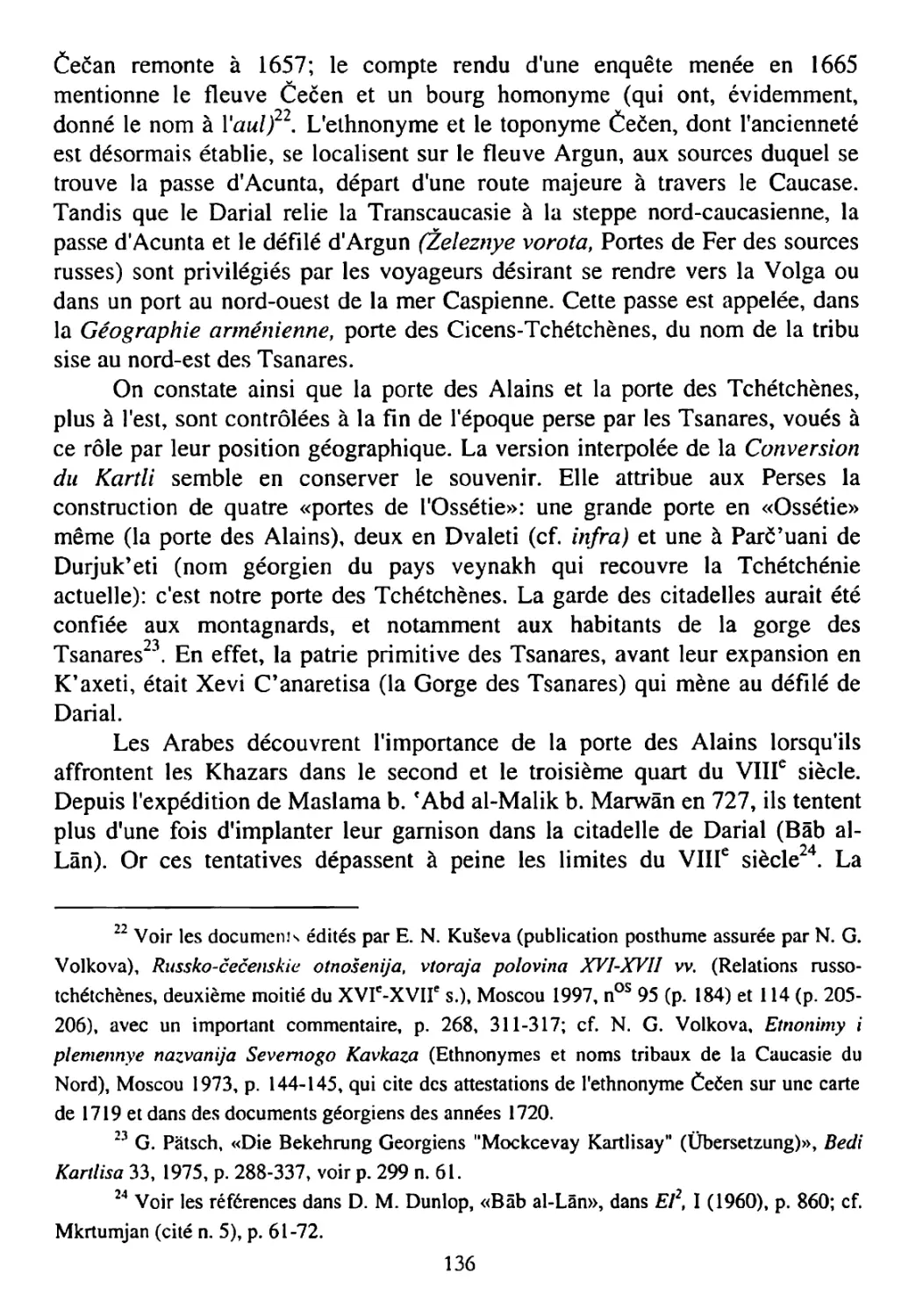
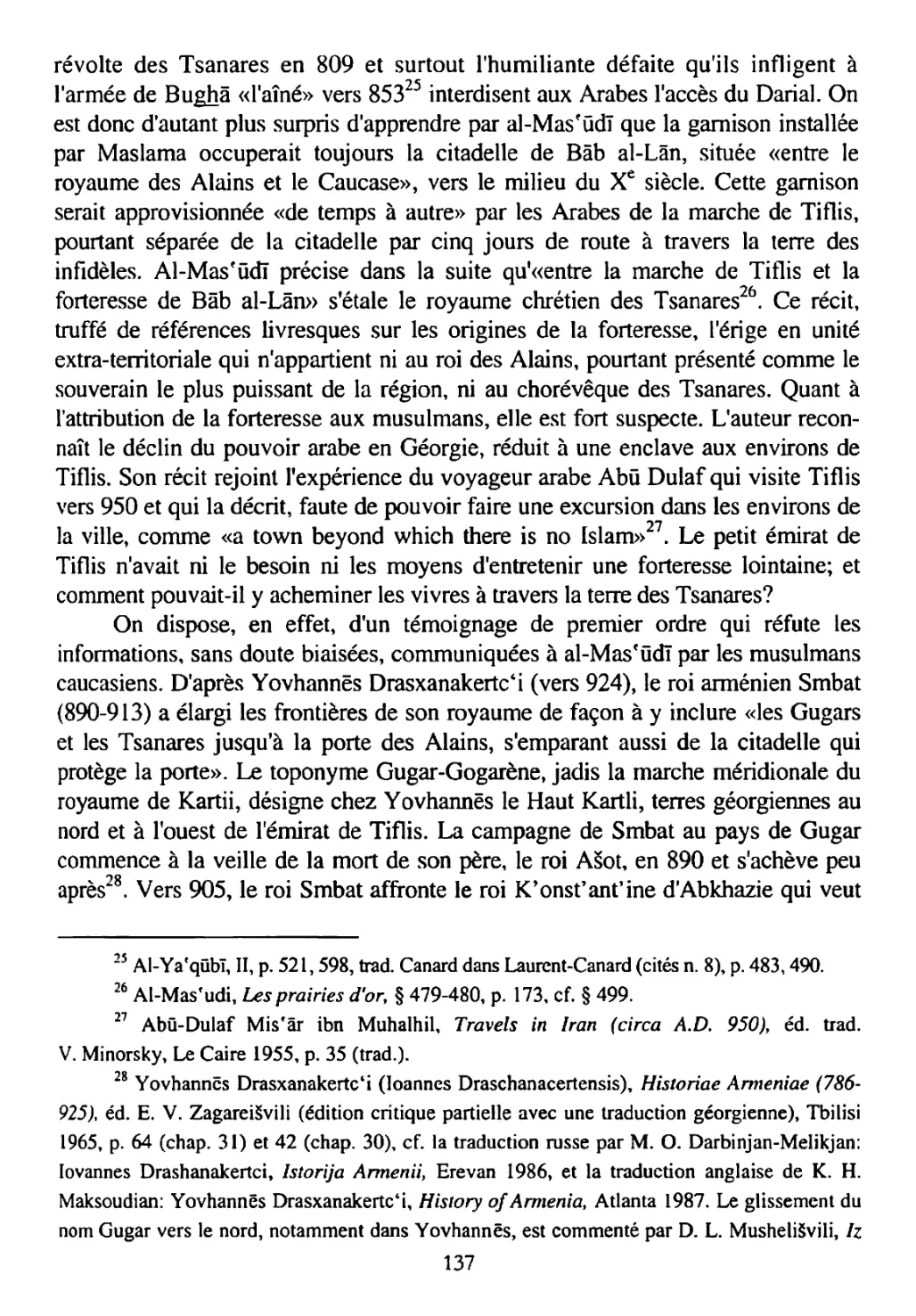
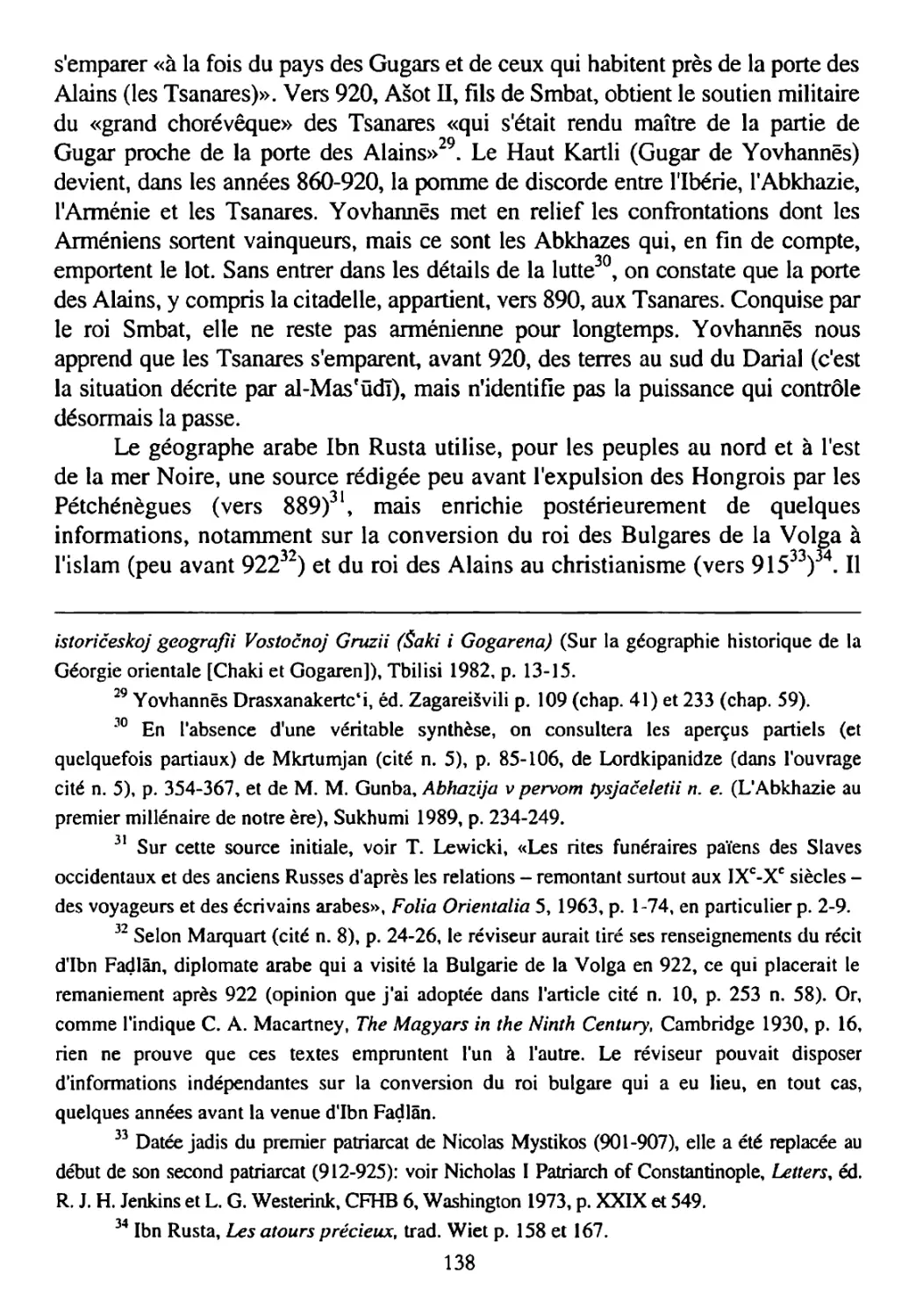
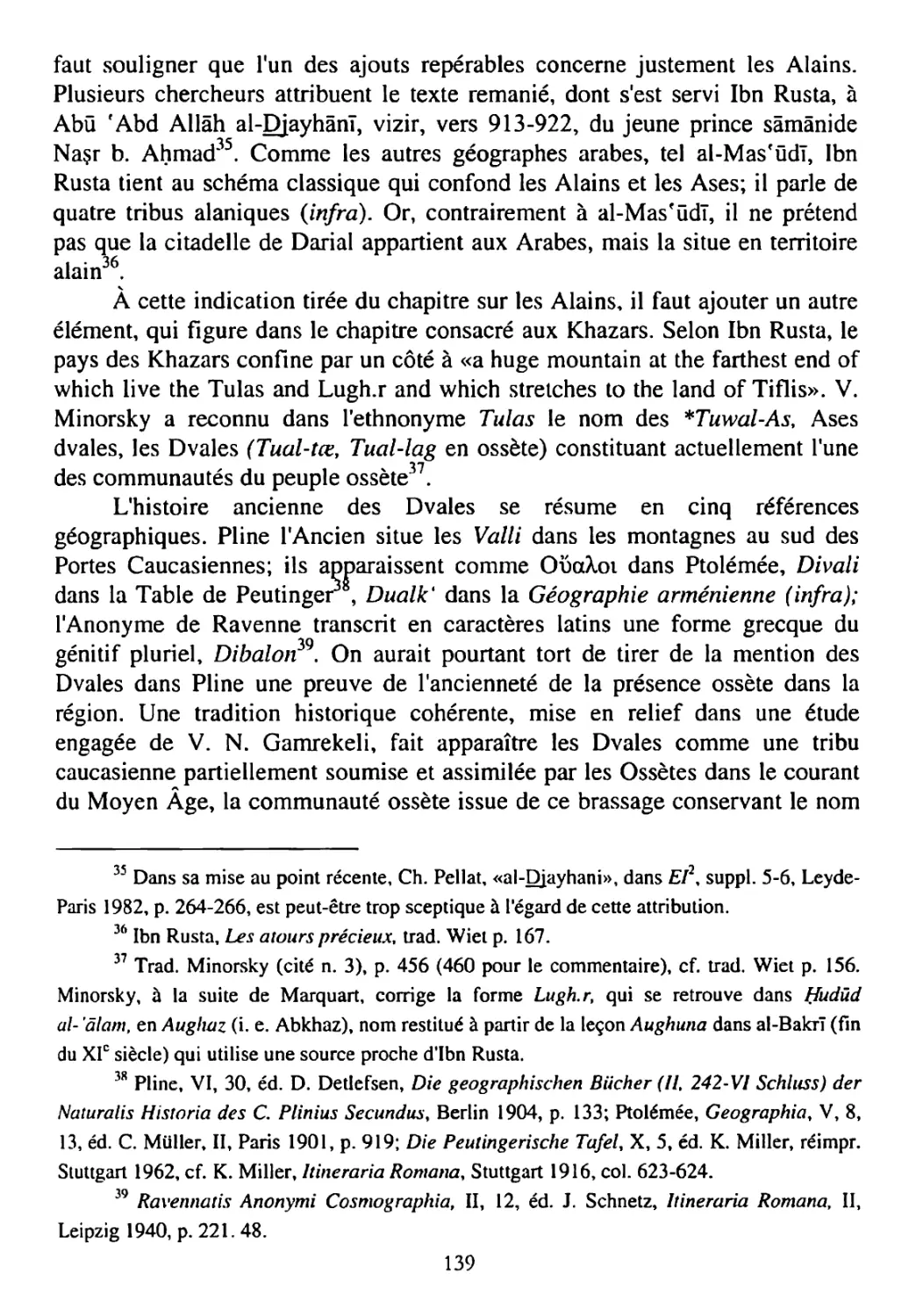
ПРОЕКТ jXlPECC
отэлмыслл « до аоллощ(ии<а
2002 ЙГАД111КАИКАЭ
РОССИЙСКАЯ АКАДЕМИЯ НАУК И ПРАВИТЕЛЬСТВО РЕСПУБЛИКИ
СЕВЕРНАЯ ОСЕТИЯ-АЛАНИЯ
ВЛАДИКАВКАЗСКИЙ НАУЧНЫЙ UEHTP
ЦЕНТР СКИФО-АЛАНСКИХ ИССЛЕДОВАНИЙ им. В. И. АБАЕВА
INSTITUT NATIONALISES I \NGL’ES ET CIVILISATIONS ORIENTALES
CENTRE D’ÉTUDES RUSSES ET EURASIENNES
NARTAMONGÆ
Revue
d’Etudes Alano-Ossétiques:
Epopée, Mythologie & Eangage
The Journal
of Alano-Ossetic Studies:
Epic, Mythology & Eanguage
2003
Vol. Il
№ 1-2
Paris - Vladikavkaz/Dzæwdzyqæw
РОССИЙСКАЯ АКАДЕМИЯ НАУК И ПРАВИТЕЛЬСТВО РЕСПУБЛИКИ
СЕВЕРНАЯ ОСЕТИЯ - АЛАНИЯ
ВЛАДИКАВКАЗСКИЙ НАУЧНЫЙ ЦЕНТР
ЦЕНТР СКИФО-АЛАНСКИХ ИССЛЕДОВАНИЙ им. В. И. АБАЕВА
INSTITUT NATIONAL DES LANGUES ET CIVILISATIONS ORIENTALES
CENTRE D’ÉTUDES RUSSES ET EURASIENNES
NARTAMONGÆ
Журнал
Алано-Осетинских Исследований:
Эпос, Мифология и Язык
Allon-Iron
Irtasænty Zurnal:
Epos, Mifologi œmœ Æsvgag
2003
Vol. II
№ 1-2
Dzæwdzyqæw/Vladikavka'z - Paris
The Abaev Centre for Scytho-Alanic Studies
is a new academic institution devoted to the scholarly study of Culture, History and Langu.-^c^ of Ancient
Iranian Nomads of Eurasia. It was established in its present form by the Russian Academy of Sciences as a
part of its North Ossetian Branch in Vladikavkaz.
The Abaev Centre’s Periodical,
NARTAMONGÆ
The Journal of Alano-Ossctic Studies:
Epic, Mythology & Language,
is published twice a year in collaboration with the Centre d’Etudcs russes et eurasiennes of Institut
National des Langues et Civilisations Orientales, Paris.
Current rates for subscriptions for the volume (calendar year):
Institutions S 50 p.a.
Private individuals S 40 p.a.
(Please add S 12.00 postage for non-Russian addresses)
Single issues of the NARTAMONGÆ may be purchased for S 25.00. For further information on how to pay
or for any other questions, please contact:
RUSSIAN FEDERATION, 362040, Republic of North Ossetia-Alania, VL/VDIKAVKAZ, Prospect
Mira,10. The Abaev Centre for Scytho-Alanic Studies
© Центр скифо-аланских исследований ВИЦ РАН, 2003
© 11злате.\ьспю*‘Проекг-Пресс’’,2()03
NARTAMONGÆ
The Journal of Alano-Ossetic Studies:
Epic, Mythology & Language
Rédacteurs en chef — General Editors
Главные редакторы
François CORNILLOT
( INALCO, Paris)
Vitali GUSALOV
(The Abaev Centre for Scytho-Alanic Studies, Vladikavkaz)
Rédacteurs - Editors
Редакторы
Agusti ALEMANY
(Universitat Autônoma de Barcelona)
Yuri DZITTSOITY
(South Ossetian State University)
Conseil Scientifique International - International Scientific Board -
МелсЬународнъгй наушсый совет
Françoise BADER (Е.Р.Н.Е, Paris)
Georges CHARACHIDZÉ (Institut de France)
Gadzi GAMZATOV (Russian Academy of Sciences)
Askold IVANTCHIK (Russian Academy of Sciences)
Nikolas KAZANSKY (Russian Academy of Sciences)
Jean KELLENS (Collège de France)
Alexander LUBOTSKY (Leiden University)
Antonio PANAINO (Universita’ degli studi di Bologna)
Adriano ROSSI (Istituto Universitario Orientale, Napoli)
Felix SLANOV (The Aryâna- Company, Moscow)
Yuri VOROTNIKOV (Russian Academy of Sciences)
CONTENTS
СОДЕРЖАНИЕ
SOMMAIRE
Sir Harold IF Bailey. Ossetic (Nartæ) 7
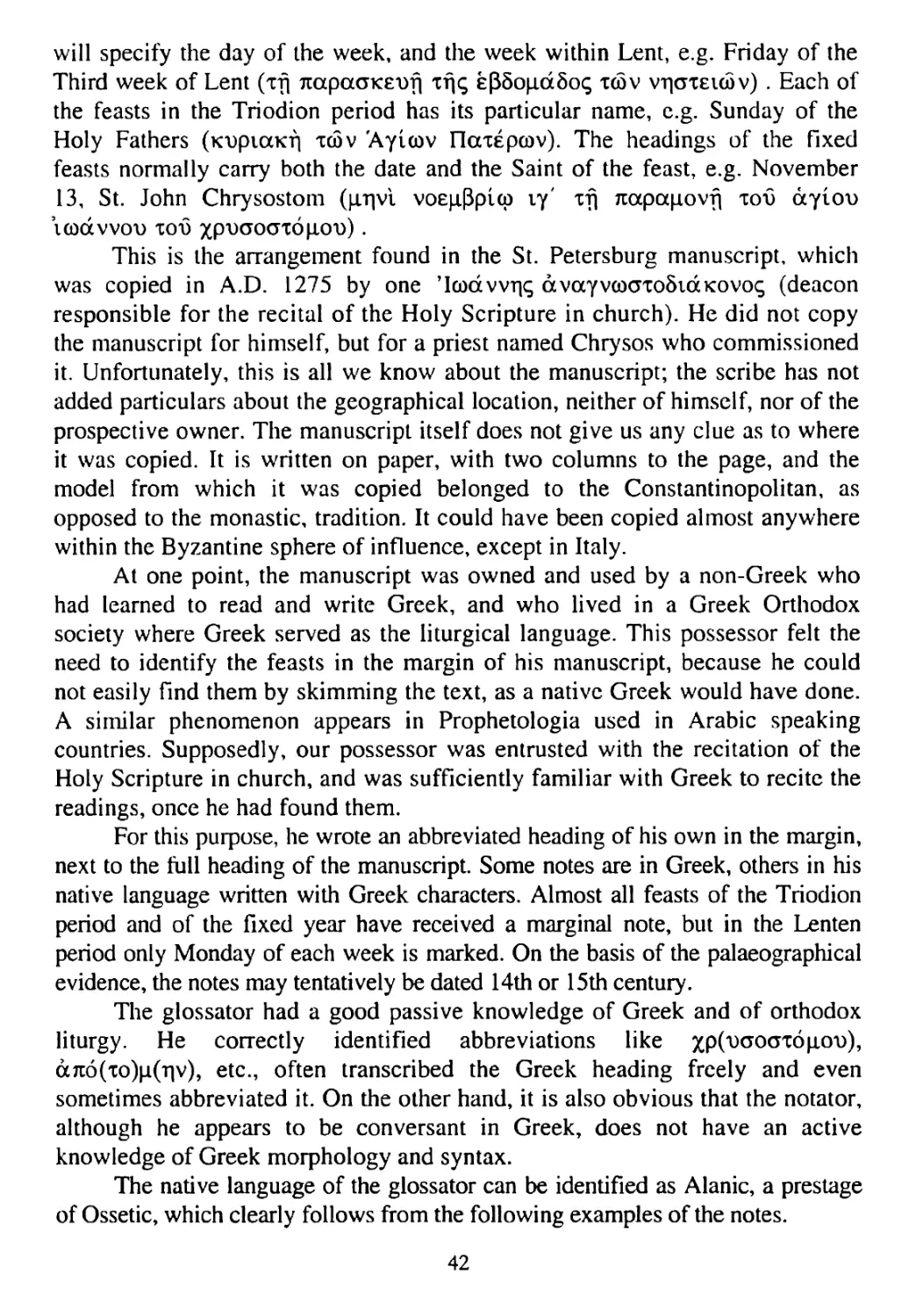
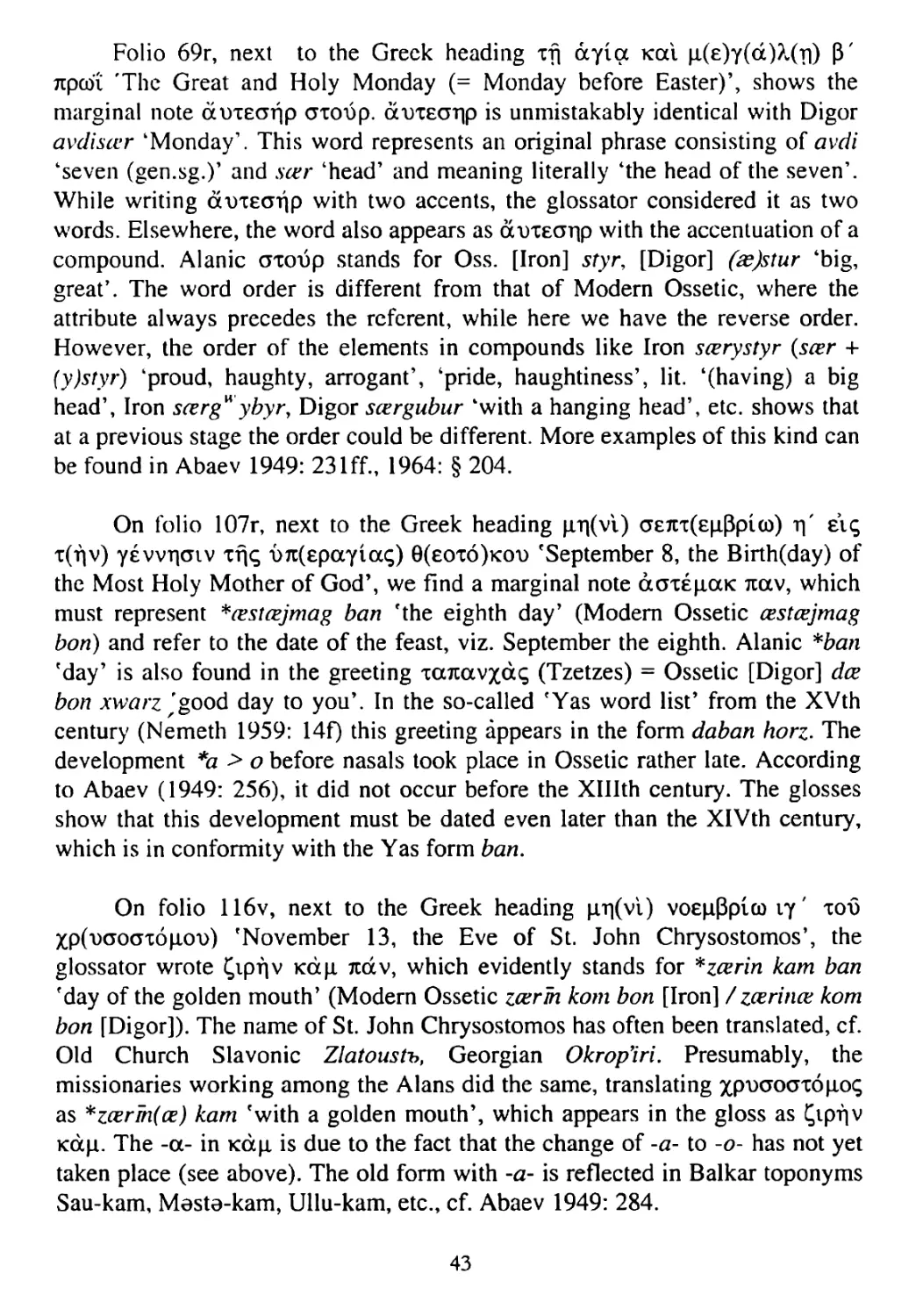
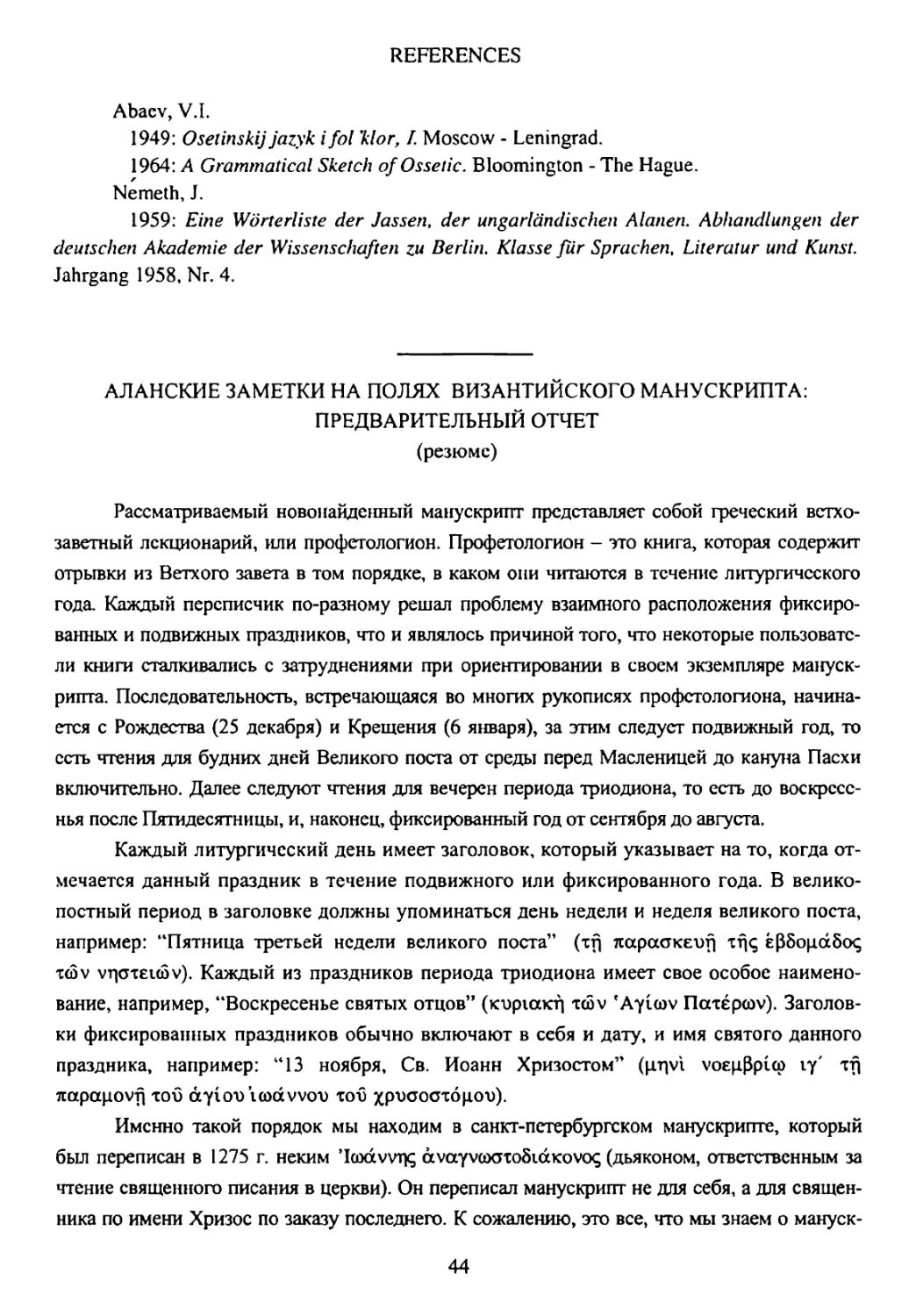
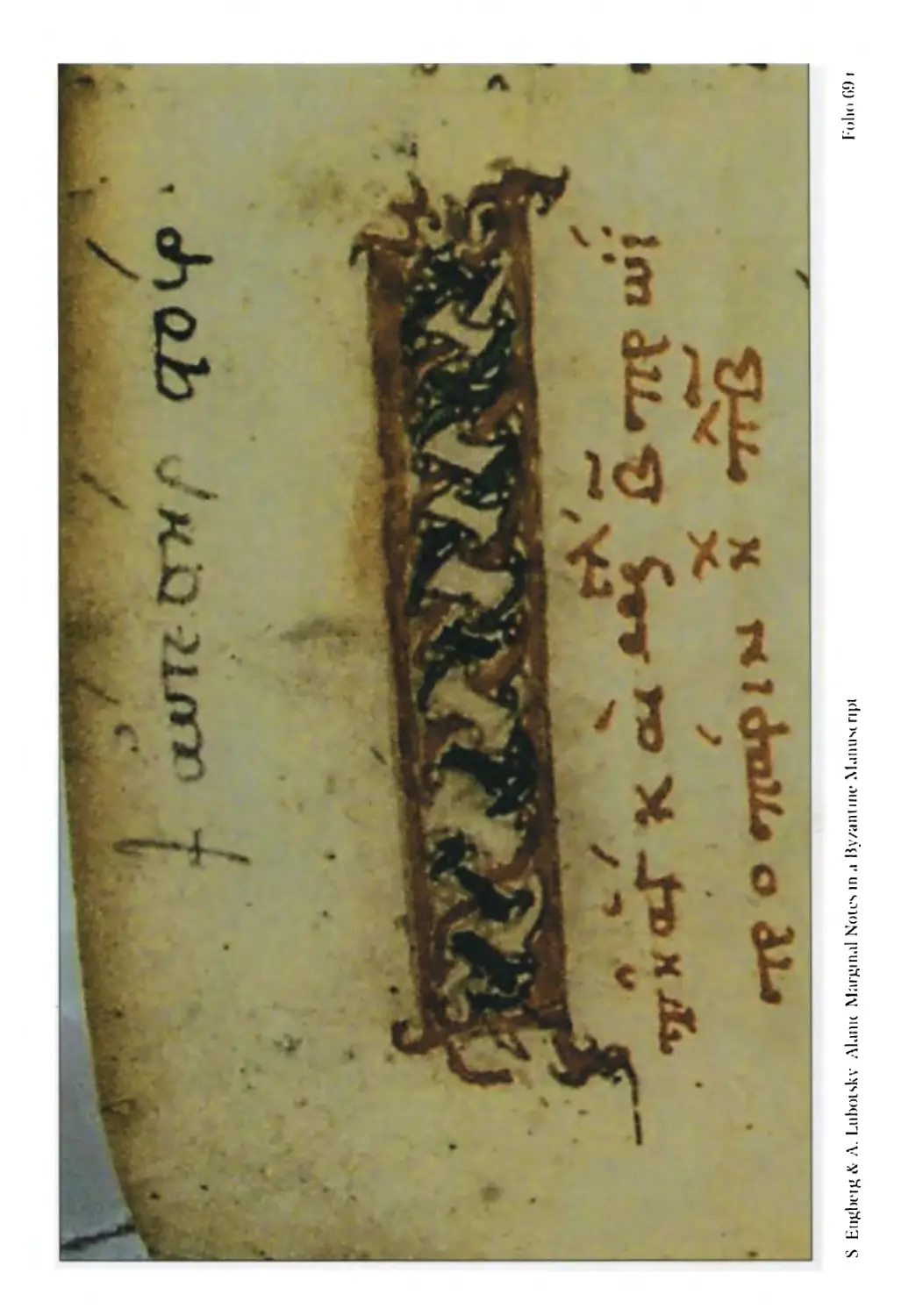
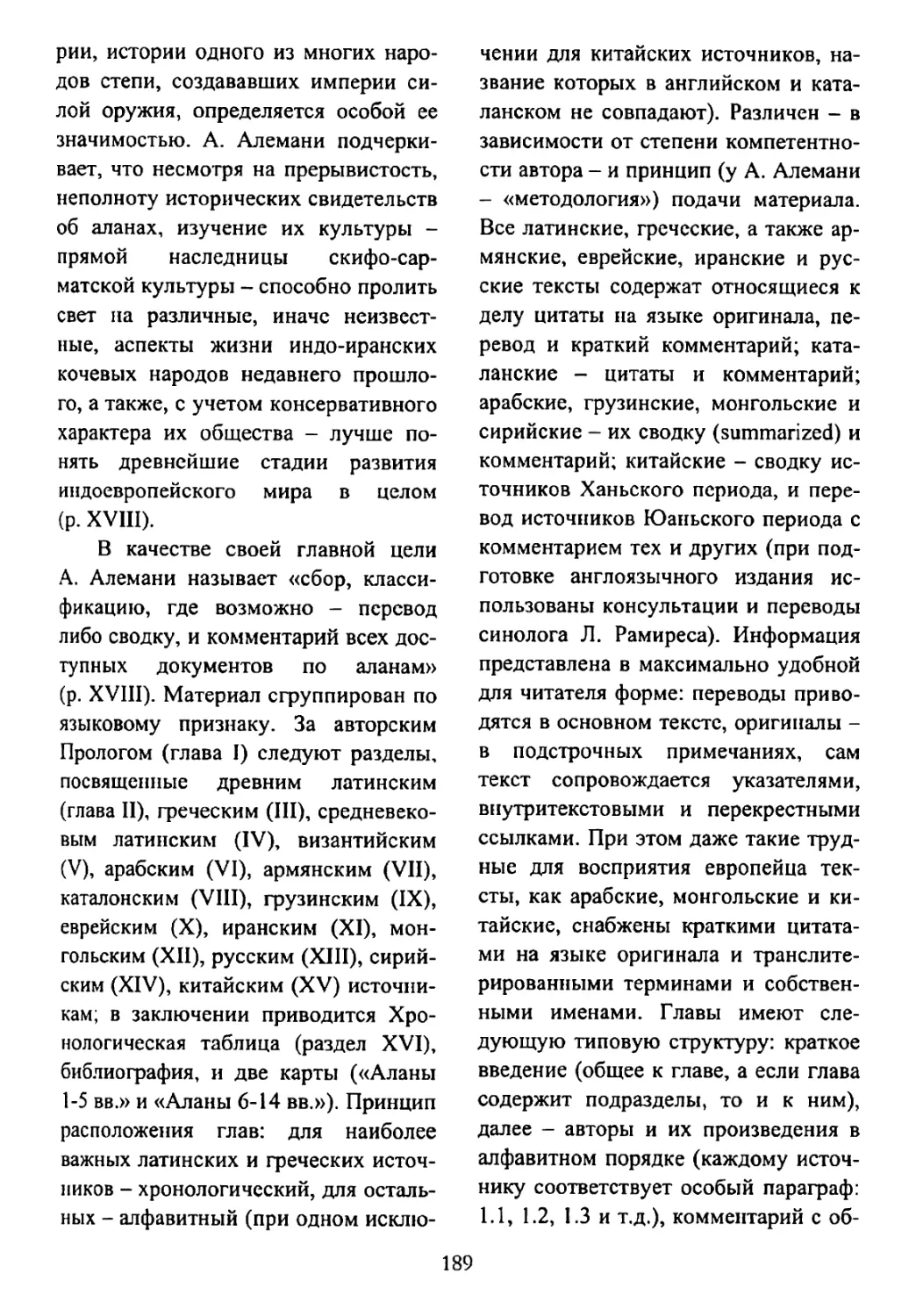
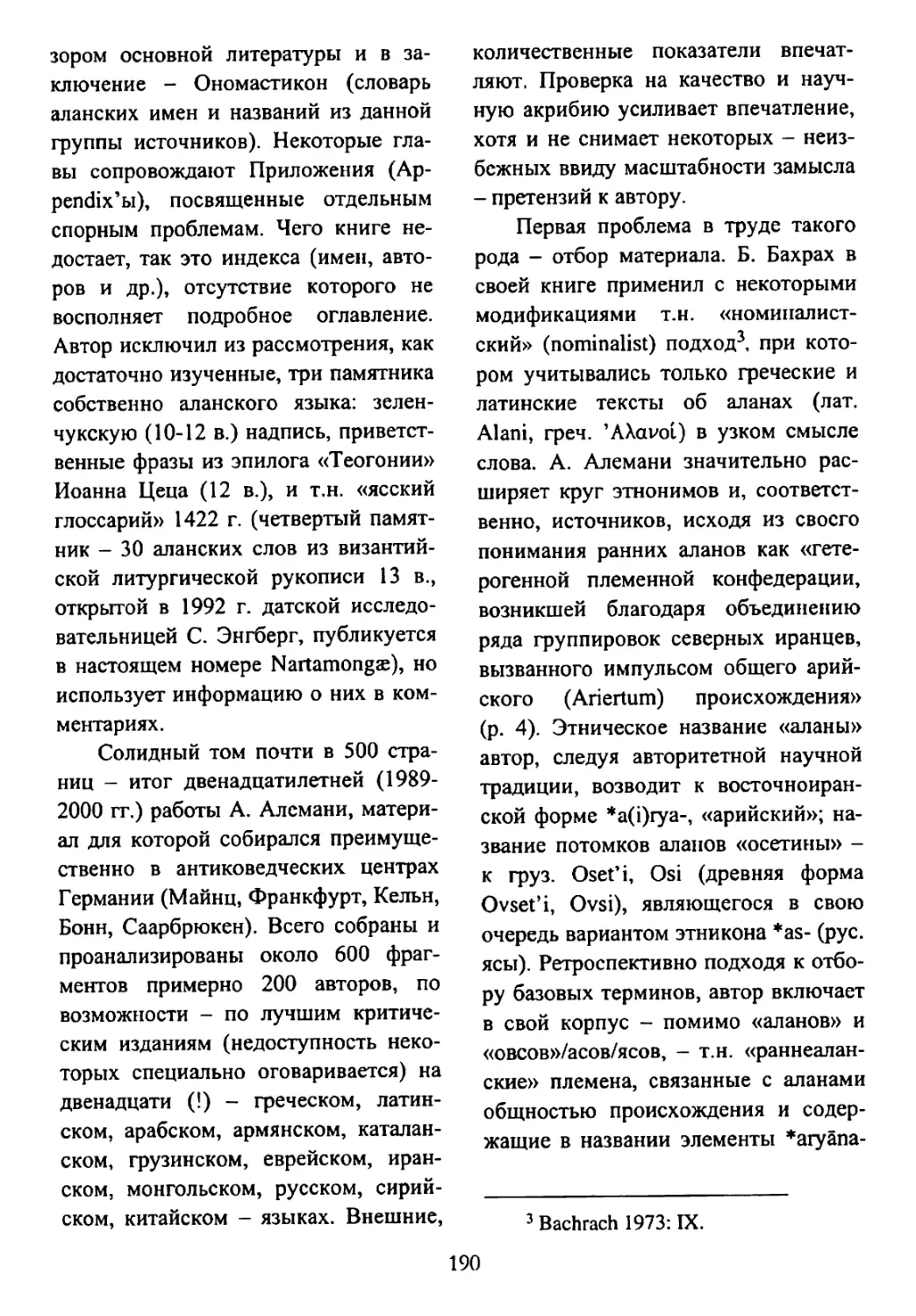
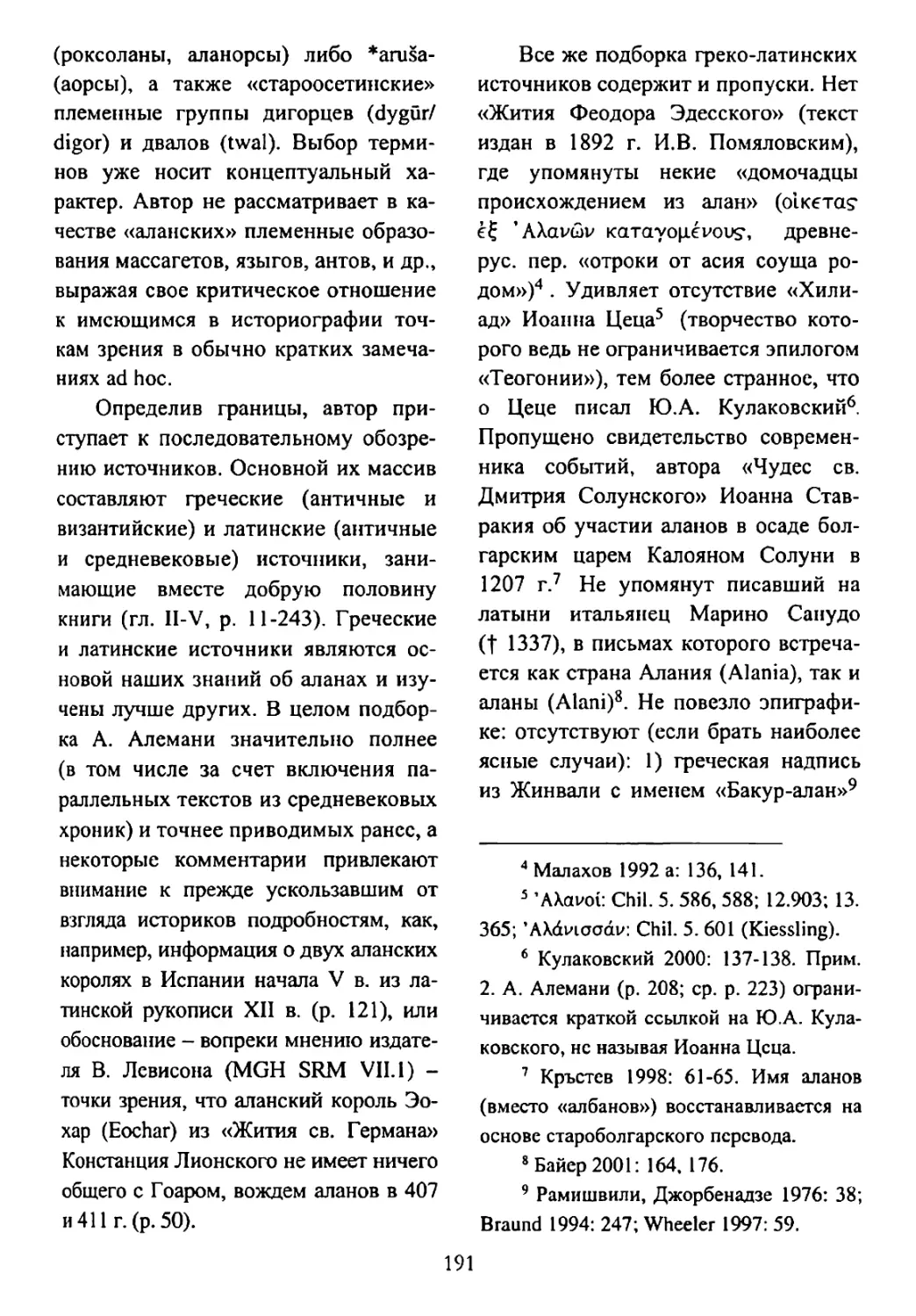
5. Engberg, A. Hubotsky. Alanic Marginal Notes in a Byzantine Manuscript:
A Preliminary Report 41
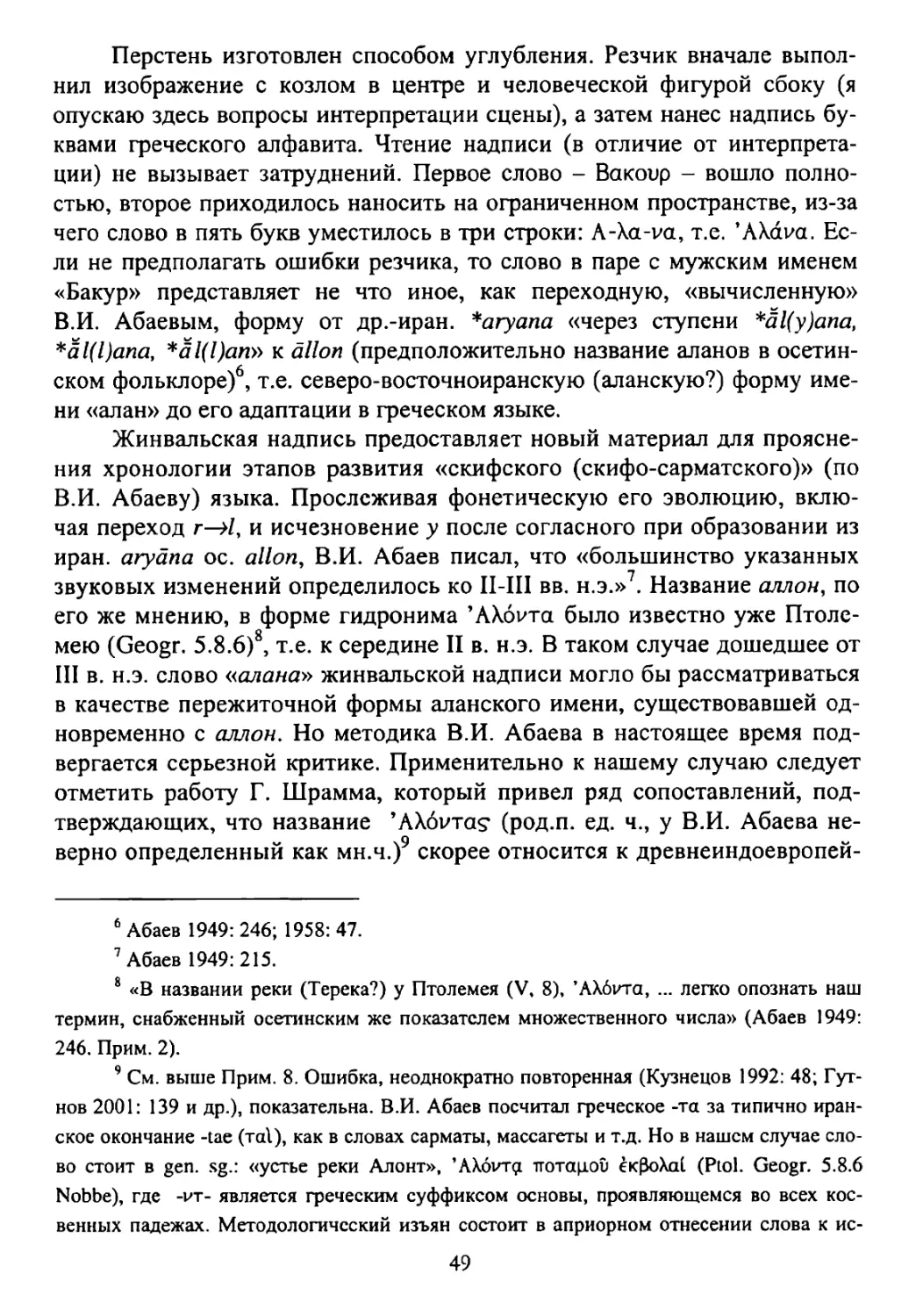
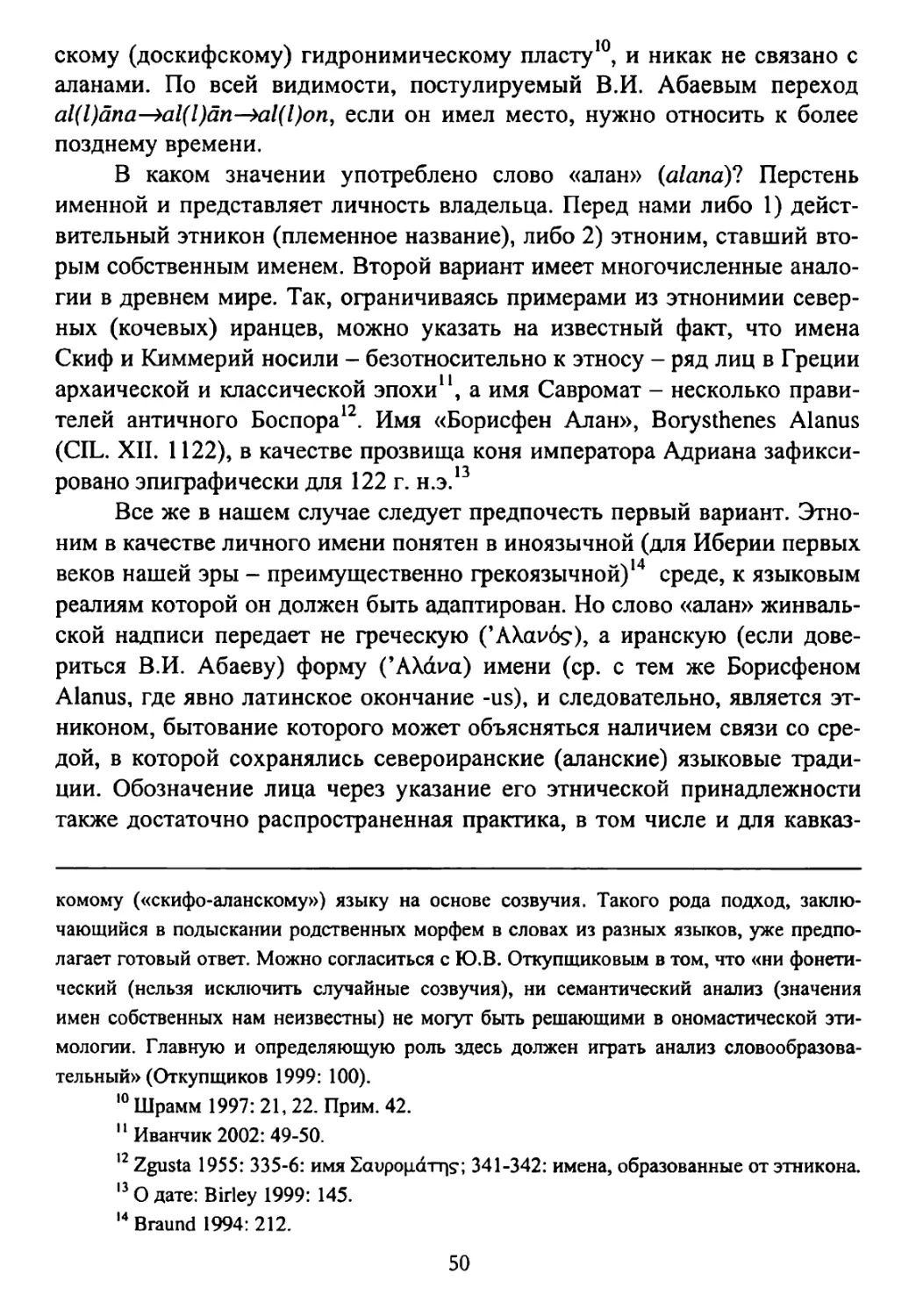
С. Перевалов. Бакур-алан из древней Иберии 47
Fr. Comillot. Du titre ossète ^44zraux sources de l’Iran 57
A. Christel. Le lexique des couleurs en ossète - (pré)histoire d’un champ
lexical 85
Я. Лебединский. GALLIA ULTERIOR: К вопросу об Аланском королев¬
стве на Луаре 107
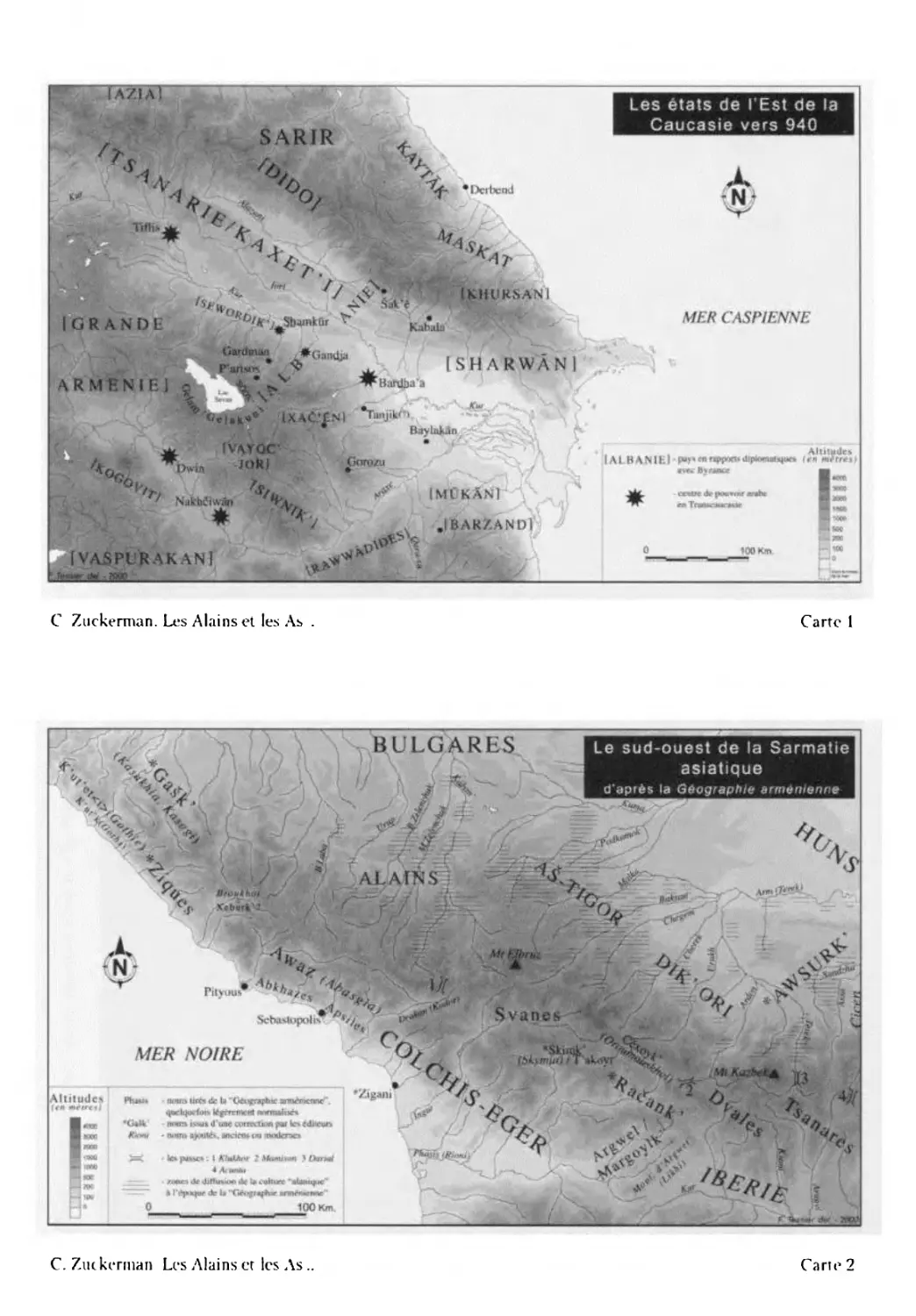
С. Zuckerman. Les Alains et les As dans le Haut Moyen Age 127
P. Ognibene. Jâbâ and Subà’âtâj’s Military Expedition to the West: Sources of
the first Struggle between the Alans and the Mongols 163
С. Перевалов (рец.). Аланский мир от Испании до Китая 187
Selected Nartæ Tales 199
NARTAMONGÆ
2003
Vol. II, N 1-2
Sir Harold W. BAILEY
OSSETIC (NARTÆ)*
Nartæ tales of the Caucasus relate feats of heroes and hence may be
called ‘epic’. Here the following synthesis is based almost entirely on the
Nartæ texts recorded from oral recitation in the North Iranian Saka dialects of
Ossetia. The Ossetes live on both sides of the main Caucasian mountain chain
with two capital cities Dzœuœdzy qœu (russ. Vladikavkaz) and Tskhinval.
The word Saka is here used in the widest Achaemenian sense, as it is used in
the Old Persian inscriptions. There they call Saka all the nomad tribes to their
north extending from the Ister river (the Danube) to the laxartes (the Syr-Daryâ).
In this sense, the names in Greek and Latin, the dialects of ancient Tumshuq,
Khotan and Kanchak with the loan-words in Old Indian inscriptions, the modem
Iranian dialects of the Pamirs, especially the Wakhi of Wakhân, and the two dia¬
lects Digoron and Iron of the Ossetic amalgam of Sarm, Alan and Arsi peoples of
Iriston form part of the otherwise lost northern Iranian Saka language.
A striking example of early Saka is the Khotan Saka ndma-tsuta- ‘come
to a name’ in the sense of ‘famous’ to which Ossetic Digoron nom-dzud, non-
dzud, and Iron nom-dzyd ‘famous’ exactly correspond both in origin and
meaning, and which has not yet been found elsewhere.
Since the Nartæ tales retain features of archaic language which cannot be
explained from modem Ossetic, which is attested, apart from the brief quotation of
loannes Tzetzes (c. 1110 - c. 1180) and the twelfth-century inscription of Zelen-
cuk, only at the end of the eighteenth century, it is important to know the older
Saka words before attempting explanation by what may be superficial similarities
in indigenous Caucasian languages which are in contact with the Ossetes, or more
remotely in Arabic or Turkish or Mongol. In reverse it is desirable to remember
that North Iranian words occur in Georgian and Mingrelian, and especially in
Chechen and Ingush, and in Armenian.
* Re-published from: Traditions of Heroic and Epic Poetry, (Hatto A.T. ed.). Volume
One: The Traditions (London: MHRA, 1980) by permission of the Trustees of the Ancient In¬
dia and Iran Trust.
7
Tales of the Nartæ are recorded also in the north-western Caucasian lan¬
guages Qabard, Adyge, Ubykh, Abkhaz, Abaza, and less precisely in the cen¬
tral-northern Chechen and Ingush, and still less precisely in the north-eastern
Avar of Daghestan; there are also tales in the Turkish of the Caucasus.
The Nartæ name itself, an archaic word (here called ‘dialectal epic’)
with -rt- retained, is an excellent illustration of the importance of this wider
Saka knowledge. The Digoron forms Nartæ, Nart, oblique Nartœmœ and
Nartmœ, superessive Nartbœl exclude the plural suffix -tœ. The word is then
from *nrtab ‘hero’. The same word is in the older Khotan Saka nadaun- from
*nrtavan- ‘possessor of force, hero’, with nominative singular node from
*nrtâ(vâ)h, nominative plural nadauna from *nrtdvanah, and genitive singular
nadauna from *nrtaunah, derived from the nrta- of the verbal base nar- ‘to be
skilful, active, virile’.
Before one can date the origins of these modem Ossetic Nartæ oral tales
there are a few facts to cite.
1. The name Soslan of one of the chief heroes is found as the name of
David Soslan, consort of Queen Tamar of Georgia who died in A.D. 1212, be¬
fore the Mongol devastation. Politically the Alans, one of the ancestral peoples
of the Ossetes, were powerful to the north of the Caucasus till the eleventh cen¬
tury. They had intermarried with the Arab Muslim state of Al-SarTr ‘the Master
of the Throne’, the region of the Avar Qoi-su. This name Soslan is a dialectal
epic form with -an, distinct from Digoron and Iron. In the same way Digoron
uezdon, jezdon, Iron uœzdan ‘noble’ has also this dialectal -an in Iron.
2. The name of the Alan princess (tikin Sat'inik in the History of the Ar¬
menian historian Movsês Xorenac'i) is in some way related to that of the chief
female Nartæ, lady Satana.
3. day, Iron duy ‘horse-racing, especially at funerals (xisti doy) ' is from
North Iranian *dauga- ‘running’, from either *dau-ga- or *daug-a-, whence it
passed to Turkish, attested in A.D. 598 in Menandros Protektor (fragment 42),
as 8Ô£ia among the Tourkoi (the true Turks). It is represented in later Turkish
by yoy.
4. The Chechen elta ‘patron of hunting’ preserves part of the Ossetic
name Eltayan used of a giant in the Nartæ tales. In the same way a part of the
Ossetic name of the ruler of the Underworld Barastur is preserved in the Ingus
and Chechen Ëster, EStur, Estr, and Eter, the name of the ‘lord of the dead’.
The name Eltayan is dialectal epic with initial e- (not je-) and final -an, from
older *vr6ragna- ‘the slayer of the strong man’ in a dialectal form distinct from
both Digoron and Iron. Armenian Vahagn is also from North Iranian. It has
been an error to look for Turkish here.
8
5. The Nartæ name Üœrxtœnœg, later Üœxtœnœg, and with substitute
suffix -aka- for the second part also Ûœrxæg and Üœlxœg, is the older form of
the Iranian name attested as early as the fifth century as Vaxt'ank, Vaxt'ank in
the History of Lazar P‘arpec‘i, and in Georgian legends of the early sixth¬
century hero Vaxt’ang Gorgasal.
6. The title лакабар pakat'ar occurs in the twelfth-century inscription of
the Zelcncuk valley in the Kuban region. It corresponds to the Alan title in Al-
Mas'üdT (ob. A.D. 956) by'yr for *bayatar, and in the Georgian Chronicle
baqat'ar in the name Os-baqat'ar ‘the Ossetic hero’. It is to be interpreted
from *baka- ‘true, sure’ (cognate with Ossetic bœgu, bœgudær ‘sure, heroic’,
Turfan Persian bg ‘sure’, Parthian ’bg ‘insecure’) and *a0ra- ‘violent, hero’
from ad- ‘to be violent’, attested in the loan-word Kuchi etre and Agni atra-
‘hero’. The word came into Turkish as Orkhon Turkish byatur (with -ur from
Iranian -r, older -ra-, as in Turkish Babur from Iranian ba/ira-, later Babr ‘ti¬
ger’). It was brought back from Turkish to Persian as bahâdur, and even late
Sanskrit as bahadura-. From this secondary Turkish, Ossetic then has taken
Digoron bœyatær, Iron bceyatyr, and metathetic qœbatyr. The title was widely
known in Byzantine Greek рауатоор, poyoroup, Old Slavonic bogatyri, Hun¬
garian bâtor, and Mongol bayatar, later bdtar.
The Ossetic Nartæ tales are centred upon five main families, the Nartæ
giving their name to the whole tradition. Their genealogical table can be set out
in seven generations as follows:
Suassæ
1
Dzylæu
Boræ
1
Uærxtænæg
1
Bolat-bærzæj
1
Æxsaræ
Æxsærtæg
1
Subælci
Oræzmæg Satana Xæmic
I I Batraz
Ajsana Ænænom daughters Soslan (sister)
(Æmzor) læppu I
Qajtar Bajtar Eræxcau
9
The mother of Oræzmæg and Xæmic is called both Dzerassæ and Sa-
sana. Two daughters of Oræzmæg are named, one Agunda and the other
Mæsty-ælyyst (‘angry curse’). Three wives of Soslan are cited Beduxa,
Agundæ, and Acyruxs.
The basis of the Nartæ system is the Ustur Xædzarœ ‘the Great House’,
and the names of the Nartæ are all epithets of their functions in the House. A
selection of the names in the Nartæ tales is set out first with their likely mean¬
ings. The names are not common nouns in the Ossetic dialects, and fairly cer¬
tainly belong to an earlier tradition.
1. Oræzmæg is modified to Uoræzjnœg, Uoruzmæg. Uruzmæg and Iron
Ûryzmæg. This Oræzmæg is plain older *ava-razmaka- ‘director’, which is as¬
sured by Oræzmæg's position as director and chief of the Nartæ family of his
generation. He is the ‘chief, a ‘handsome man’ in build and appearance une¬
qualled, surpassing others in ability and intelligence. From him his dependants
are called Uoræzjnœgetæ, Iron Üryzmægtœ ‘men of Orazmag’. He is old with
a white beard. With his half-sister and wife Satana he is Master of the Great
House. He is ‘our chief Uruzjnœg’. He has a folklore quarrel with Satana for
her ‘senseless words’. Together they own storehouses from which they on oc¬
casion feed the hungry Nartæ men.
2. Satana, half-sister and wife of Oræzmæg, is the ‘lady’ with the archaic
title æxsijnæ, æfsijnæ (rather two dialect forms of one older word than two
words with different preverbs). She is the ‘Lady of the House’ in this precise
phrase xædzary 'fsin Satana. Her title is rendered into Qabard by g°ai'e ‘mis¬
tress of house, princess’. The word Nartæ is placed before her title. She is ‘our
darling lady’. The name is the feminine of the masculine title, older sâtar-,
‘ruler’, of which her title æxsijnæ is a translation. A similar derivative gave the
name Sat'inik to the Alan princess (tikin) in the History of Movsës Xorenac‘i
(-ik is a common Armenian borrowed suffix to names).
Here too fits the name Sasana, mother of Oræzmæg and Xæmic, hence
an earlier Lady of the House. The base sâs- has given the Persian name Sâsân,
the Pontic Saka name Eaoaç, the name Sasa- on the Indo-Parthian coin, Nisa
Parthian ssn, ssnk, ssn-bwxt and the name Sâsân among Sahro’s children in the
Ves it Râmën poem. The Abkhaz word S'as'a ‘lady’ is thence a Caucasian loan¬
word. The high position of the Lady of the House is shown also by the Avestan
nmânô.padnï-, West Iranian bân-bisn, Armenian loan-word bam-bisn ‘queen’,
Zoroastrian Pahlavi katak-bânük, Paste mêrmana.
3. Ajsana, Ajsæna, Asæna, a dialectal epic word with its three long â-
sounds, as in Satana, is the name of Oræzmæg’s son, who is called also
10
Æmzor, the Iron equivalent of Digoron Aznaur-. This aznaur- is Georgian
aznaur ‘well-born’ from Zor. Pahl, âznâvar ‘noble’. Ajsana is the jenceg ‘fos¬
terling’ of the smith Kurdalægon. Assuming two dialect changes, plausible
here in a proper name, Ajsana may be older *arzânaka- ‘growing child, boy’,
the Khotan Saka alysânaa- ‘boy’ and ‘king’s son’, from arz-, raz- ‘to grow’.
Variation of -z- and -s- is known. As son of Oræzmæg he is ‘son of the House’,
both as *arzânaka- and as âznâvar ‘bom into the high family of the Great
House’. There is also a man’s name Azn.
4. Xœmic, Iron Xœnvyc, Ingus gen. sing. Xamci, is the ‘lover of women’
(us iiarzag), possessing a magic tooth, the sight of which no woman can resist.
He marries a woman of the Becentœ ‘dwarfs’, for which he suffers much badi¬
nage. His epithet would fittingly be ‘the seducer’, which would lead straight to
*ham-ici- with Digoron xicœ ‘amorous seduction’, Iron in æm-xîc. Such a word
is known in the Old Indian Rigvedic v/суа ‘having seduced’ (10.10.6) in the
story of Yama and his sister YamT, from vi and ic-ya.
5. Ûærxtœnœg, Ûœxtœnœg, Üœrxæg, Üœlxœg, is the name of Subælci’s
father and elsewhere the ancestor of the Nartæ, the grandfather of Batraz. The
head of the Great House is the ‘commander’ or ‘solemn speaker’. The base is
vark- or varg- familiar in the Avestan varaxoôra- ‘solemn ritual utterance’ of
the priests hostile to the Zoroastrians.
6. Soslan, called also Digoron Sozuruqo, Sozruqo, Iron Sozyryqo,
Chechen Soska Solsa, is the name of one of the two chief heroes of the genera¬
tion next to Oræzmæg. His character is very fully sketched in the tales. A
prominent feature of his is expressed in the epithet næræmon ‘violently virile-
minded’ from *nara-mâna-, like *narya-manah-, Avestan naire.manah- mod¬
em Nareman ‘manly-minded’. His father is called Sosœg œldar ‘chief Sosæg’
from the same base sos- (or soz-) for which a meaning ‘high-spirited’ may be
claimed. Soslan has a folklore birth story, but as a hero of the Great House his
name should be heroic.
7. Batraz, Batœraz, Iron Batyr az, and variants Batradz, Batyradz, InguS
Patriz, and Totraz, Totyraz and variant Totradz, Totyradz, Qabard Totres, Toty-
res, are the two names of the young fighting heroes of the Nartæ. Batraz is son
of Xæmic and Totraz is son of Albeg of the Albegatæ family. Both names
show a second component -râz, comparable to the Khotan Saka -râysa-
(=râza-) ‘directing, showing’. The first components are then bâta- ‘feats of
valour’ and tota- ‘feats of strength’.
8. Sirdon, Iron Syrdon, Ingus Sirtta and Turkish Sirdan (retaining the
earlier -âna-) is given as father both Bætæg and Gætæg, and a second name
11
Natar-Uatar and Uætær-Nætær, the variation of these names probably indicat¬
ing dialectal epic words. The name Bœtœg / Gœtœg may show the two treat¬
ments of initial й- as b- or g-, hence the name is from *vata-, an older Iranian
word signifying both ‘small’ as in Khotan-Saka bata- ‘small’ and Zor. Pahl.
vaccak ‘child’ from *vatacaka-, and ‘bad’ as in Zor. Pahl, vata- ‘bad’, Persian
bad. Sirdon is the bane, but also the butt of the Nartæ heroes, a trickster of the
Great House. His name is likely therefore to express this activity. In sird- one
may see a denominative base ser-: sir- from sai- ‘to cheat’, a common develop¬
ment, connected with sâi-, Digoron sajun ‘to cheat’, possibly influenced also
by the Saka verb /er- found in Khotan Saka jsïr-: jsïda- ‘to cheat’, whence the
loanword tser- in Tokhar of Kuci. The Ossetic dzer- is cited below in the sense
of ‘to seize’ and might be this same word without pejorative meaning.
9. Borœ is the name of an unimportant actor in a few tales, and it occurs
in a list, but is mainly the name of the family Borœtœ, Boriatæ, Boirœtœ,
Burtœ, with an adjective buron ‘rich’, and the feminine name Borœyœntœ,
daughter of Burœfœmyg. The -bor- is also in the name Narty Aborquayijy
Burœfœmyg. The Borœtœ are the rich Nartæ family, the qœzdyg nœrton тук-
kag. Borœfœrnug is the rich man par excellence. In a Russian text occurs the
dyadic name Buron-bogac ‘Buron the rich’ where buron is glossed by Russian
bogac. This bôr ‘riches’ has various cognates from bau- ‘to abound, be rich’. It
is not to be confused with bôr ‘yellow’ (older *balva) or bôr ‘food’ (older
*barva-).
10. Xuareldar, Xualerdar, Xuarildar, Iron Xorœldar, Xory ‘Idar, is the
patron of com and fruitfulness, named from Digoron xuar, Iron xor ‘corn’ from
the base hvar- of ‘eating’, with the second component œldar ‘lord, owner’. His
son is called Bor-xuar ali, Iron Bur-xor ali (inflected aliji, alijy). Digoron xvar,
Iron jœu is ‘millet’. The same bôr ‘food’ occurs in Zor. Pahl, bôr, bôrak as in
the phrase pit ut bôr corresponding to Avestan baourva- and pitu- (Ya§t 17.1).
The base barva- is in Old Indian bharvati ‘to chew’. In the son’s name, ali is
rather a word for ‘prince’ than the Muslim name ‘Ali, hence a cognate of the
œl- of œldar and the âla- of the family name Alœgatœ. The son Bor-xuar ali
was slain by Batraz who boasted of the deed before the Üacamongæ Bowl,
whereupon in folklore fashion Xuareldar blighted the crops.
11. Acœ of the Acœtœ family is the father of Acœmœz who plays the
magical flute. The father's name has many variants. We find Aci furt, Ûazi furt,
Üazi furt, Uaziji furt, Uazimi furt, Uaci furt, Iron Acœjy saq (‘brave’) fyrt, in
Russian script Acamaz syn slavnogo Uaza, Qabard Asa, Karaëai Turkish Aci-
mez son of Aci, and Ecemej son of Ecej. The name of the son is Acœti Acœmœz,
Qabard ASamez, Asemez, Adyge ai'mez, Abadzekh aimez. A longer phrase oc¬
12
curs in Abkhaz Bzyb dialect aç’an r-ah ‘the prince of the Aç’an family’, trans¬
lated into Russian by vladetel 'Acanov.
In the Qabard tales the father has the dyadic epithet Russian Asa naibolee
nogucij ‘Asa the exceedingly strong’. This same Russian mogucij helps to
ender also Ossetic Digoron йас-axœssœn congebœl ‘on his powerful-carrying
irms’. The family are then named the ‘strong ones’.
This same йас, ас ‘strong’ is also the first component of the name of
Aciemiez with the familiar maz- ‘great’, hence a compound with sequent adjec¬
tive meaning ‘great in strength’, formed like such a name as AptapâÇqç in
Strabo, and like a later name Mihr-mas with the other word mas- ‘great’. Note
how йас and ac alternate in the name of the Bowl Uacamongœ and Acamongœ,
and in the feminine name Üaciroxs and Iron Acyruxs. A similar maz- can be
detected also in the name in Cerkes Batmozo ‘great in feats of heroism’. The
heroine Üadz-æftauæ consented to wed the son of Acæmæz.
12. K’armœgon is the name of a witch to whom in gratitude Oræzmæg
distributed some of the booty. (The ejective k’- and the aspirated k’- are both
used to replace the older Iranian k-, but at times the ejective k’- may replace the
older sk-, as in k’abaz, k'abozœ, Iron k’abaz ‘branch’, cognate with Greek
oKÔnoç, Latin scopa ‘small branch’). The witch is the ‘performer of magic’
expressed by kar- ‘to do magic’ as in Ossetic kælæn, and Old Indian krtyâ-,
Lithuanian kçkas, Old Russian cary ‘magic’. The name is thus *karmaka- with
the feminine suffix of names -on from -and-.
13. Beduxa, Beduya, Qabard Bidox, Badax, Bodex, is the name of one of
the beautiful heroines (rœsuyd], wife of Soslan. On Soslan’s visit to the Dcel-
zænxœ ‘Underworld’ it was Beduxa who explained to him the surprising sights
he had met. She gave him also the healing leaves of the Aza-tree which he had
gone there to seek.
Derived from the base in Digoron bedun, bedujun, participle bett, bitt
‘appear, have influence’ the name bedux- would mean ‘illustrious, wonderful’,
or possibly ‘influential’, the former more suiting a lady, Soslan’s wife. The fi¬
nal -a occurs in other women’s names as in Agunda, Akula, Elda, Satana, Sa-
sana, Xorceska, as well as in the men’s names Ajsana and Bayodza. This may
be preferred to the derivation from *baga-duxtâ ‘daughter of the distributary
deity’, which gave Persian be-duxt and be-luft for the planet Venus. From a
similar verb sah- ‘to appear’ the Zor. PahlavT has sahik ‘wonderful’ and Per¬
sian has sahi used of majestic women and of lofty trees.
14. Becentœ is the name of the family of dwarfs. There are variant forms
of the name: Iron Bycentce, Bysentœ, Bysenontœ, Bdzentœ, in Russian Been,
13
Bicenatœ, and most modified Psœltœ. From this becen- came the feminine with
suffix -on Becenon, Bycenon, BySenon and Bycenton. A dwarf gives his sister
to Xæmic as wife. The dwarf is called Digoron Ulink’œ ‘cubit-high’, and he
has also the Cerkes name (in Russian script) Aceko, that is, in Cerkes a ‘the’
with c’dk’u ‘small’. The syllable bec-, bye- is then clearly a dialectal epic word
meaning ‘small’, and connected with Digoron bitzeu, biddzeu, bicceu ‘child’
(not found in Iron), and further from the vata- ‘small’ in Khotan Saka bata-
‘small’. The ulin- of the name Ulink’œ is the dialectal epic word beside
Digoron œrinœ, Iron cerin ‘elbow’.
15. Gelaxsardton, Gelexsœrtan, Celœxsœrtan, Celœxsœrton, Cilœxsœrt-
ton, Celœxsar, Celœsxan, Celœxsœrtœg, Jelœxsœrdton, Gelœxsœrton, Qabard
Dzilaxstan, Dzolaqsten, Gylaxstan, Karacai Turkish Giljaxsyrtan, has the usual
marks of the dialectal epic name. He is one of the warlike heroes. The second
component œxsœrt is normal replacement of older xsadra- ‘dominion, warrior¬
ship’, which is known also in the family name Æxsærtœgkatœ. The first com¬
ponent with its dilectal c-, /- is the older word carya- ‘warlike’ in Avestan
cirya- glossed by Zor. Pahl, kârëcârik and maintained in the Turkish loan-word
carik, carl ‘troop of warriors’.
16. Maryuz, Iron Mœryüdz is the name of the rich man with vast herds of
horses and cattle on the plains and in the meadows. With the suffix -uz, -üdz
the word is from older marga- ‘meadow, wood’, as in Avestan тагзуа-,
Sogd.Manichaean mry ‘meadow, wood’ and Sogd. Buddhist mry’ ‘plain’,
mryyh ‘forest’, Persian тагу. The name Bayodza is formed by similar suffix
from bâga- ‘plot of land, garden’ suiting his possession of an enclosure called
keyog (këy- < *kayya-) with a folklore apple-tree.
17. Sqœl-becœn, Sqæl-beson is a hero possessing a magic cuirass, but his
wife in folklore fashion was seduced into cutting off some of the knobs,
whereby it ceased to make the wearer invulnerable. The name therefore clearly
contains a dialectal epic word sqœl, like the Digoron œsqœr, Iron zyœr ‘ar¬
mour’, both also abnormal forms, and a second component bec-, bes- with ad¬
jectival suffixes *-œn and -on. This is the word found in Khotan Saka besa-
‘shield’, from older *belsa- (*vrtsa-) of the base var- used widely of defensive
armour. The hero's name is then a description from his special dress.
18. Qœncœrgœs, Qœndzœrgœs is the name of a winged seven-headed gi¬
ant. He captured the Nartæ Alæg and made him into a herdsman. The same
story is told of Uon. The second component is well known: cœrgœs ‘eagle’,
Sogd. erks, Avestan with unpalatalized initial kahrkâsa-, Zor. Pahl, karkâs,
Persian kargas, named from the base kark- ‘to strike’ with the suffix of animals
14
•âsa- (as in Digoron robas ‘fox’)- The first component can then be recognized
as from gan- ‘to seize’ used of the raptor bird called in Khotan Saka uysgana-
‘vukure’, Persian zayan.
19. Xorceska is called in Digoron xori kizgœ Xorceska ‘Xorceska daugh¬
ter of the (lady) Sun’. The second component -ceska- is dialectal epic and to be
compared with Khotan Saka jïskâ- ‘girl’.
20. Subœlci, Iron Sybœlcy, Cybœlc, Qabard Sybyl'si, Turkish Sibil'ci, is a
young rider, the son in old age of Uærxtænæg. The second component contains
ba-lci by suffix -i from *balci- ‘riding’, Digoron, Iron bale, with an adjectival
first component in which may be concealed *sui- beside sura- ‘strong’, Khotan
Saka siira-, as also in Avestan sura-.
21. Selæn, Sela, Iron Silæm, Silain is the name of the ancestral dog,
called in Digoron kujti sær Sela ‘Sela chief of dogs’. This name *selama- from
older *saramya- belongs with Old Indian Rigvedic sarâmâ- ancestress of dogs,
where the Indian tradition has 5- in place of older -s-, as found also in the
Atharva-veda word sîkatâ- ‘sand’, Digoron sigit, Khotan Saka siyatâ-, Old Per¬
sian Oikâ-. The Old Indian adjective sârameya- was used for ‘dog’.
22. Kœntæ belongs in a somewhat confused tradition of a ruler called in
Digoron Kœnti sær Xuœndonœ, Kœnti Xujændag, Iron Kancy sær Xüændon
beside the fuller Kœnty sær Xujændon œldar, which is found also with the titles
maligk and maligk paddzax ‘king emperor’ in place of œldar.
The word Kœntæ is ambiguous, being either singular as in the Iron gen.
sing. Kancy, or plural in -lœ. As indicated by the Russian translation gen. plur.
Kantov, the word kœntæ may also be collective singular for plural. In the name,
the word sær ‘chief’ may be absent.
There is an Ossetic word kœnt ‘building’, cognate with the various words
Khotan Saka kanthâ-, Sogd. kndh ‘city’, and a loan-word from the north-west
of India in Panini’s kanthâ. In the name here, Kœntæ may be the same word, so
that in Kœnti sær ‘the chief of the Kœntæ' would resemble the old Greek title
xoXiapxoç.
A quite different word is introduced in the Iron phrase Kœfty sær Xiijœn-
don. This same Kaftisar occurs in the Russian book NEON, where the name is
placed on the Aq dengiz with the city Taman, hence on the Azov Sea. In one
story Kœfty sær Xujændon comes from the Underworld to visit the dying
Soslan.
With the change from Kœnti, Kancy to Kœfty a new interpretation has
been introduced. The name has been taken as the genitive plural of kœf ‘fish’.
In the story there is then reference to the smell of fish (kœfty smag). The lord
15
has kœfdzautœ ‘fishermen’. The Glossary of NK 1946, 581 explains kœfty,
kœsœgty barduag ‘the ruling genius of fishes’, hence the proposal to translate
kœfty sœr (which is not attested in Digoron) by ‘ruler of fishes’. But this is the
modernized replacement of a difficult older phrase.
In Xuœndonœ I see the personal name of the ruler of the Kœntœ. The
forms vary with Xuœndonœ and Xujœndag. Here the two different suffixes -on,
-once and -ag are the usual adjectival suffixes as in Digoron xuœnxon, and
xuœnxag ‘mountainous’. The form in -ag excludes the word don ‘water’. In
xuœnd-, xujœnd- one would expect to see a participle in -ant- to a base hau-:
hu-. For a ruler’s name this points at once to the words Avestan hvdista- ‘most
excellent’, Khotan Saka hvâçta- ‘chief, TumSuq Saka hvesta-, Sogd. xwystr
‘superior’, ywystk ‘revered’, Munjânî xusci, xuskye, Ossetic Digoron xestœr
‘superior’, xestag ‘the portion of a superior’, Iron xistœr. To this will belong
the Kusân Saka name Huviska-.
23. Zevœg, Zivœg is the seventh son of a Nartæ who in folklore fashion
either sits at all times in the ashes or is a boy without legs. He gains all his
wishes by direct prayer to the Autocrat of Autocrats. He marries a daughter of
Boræfæmug the rich man. The name is identical with the Iron zivœg, to which
Digoron responds with zinadœ ‘indolent’, cognate with Khotan Saka ysïta-
‘indolent’.
24. Sœuuaj, Sœuaj, Iron Sœua, in Russian Suaj, Qabard Sauej is the he¬
roic boy. His father’s name is in the phrase K’antdzi furt Sœuuaj, К’and furt
Sœuaj, Qabard Sauej son of Kanz, but also (from Ossetic) Dcenz, beside
Bzedux Dzandeko Sevaj. He is for his persistence permitted to join a Nartæ
expedition. He is called Digoron mink’ij. Iron cysyl, gycyl ‘small one’, but
also Iron qœbatyr ‘hero’, Qabard translated in Russian as doblestnyj ‘splen¬
did’. No Nartæ is more ‘virile’ than he. His impetuosity is demonstrated. He
fails to win Üadz-æftauæ as his bride since she prefers the son of Acæ, Acæti
Acæmæz, but he weds the daughter Agunda of Oræzmæg and so ends the
vendetta between them. The horse of Sæuuaj is called in Turkish Getnuda and
in Qabard Dzamidez, glossed by ‘trusty bay’, which I have not seen in Os¬
setic. The variation in dialectal epic names (as above under Celæxsærdton)
indicates that the horse is named the ‘swift runner’ from the base cam- ‘to
move fast’, from which Khotan Saka has its word tcamü for ‘locust’, the swift
leaping insect.
For Sœuuaj a connexion with Khotan Saka sau-: su- ‘to cause to move
(fast)’ hence ‘to throw, place’ of any violent motion from older ‘to move fast’
would suit his character within the Great House. Then the two explanations by
‘violent young man’ and ‘ugly one’ from Qabard are secondary.
16
25. Sopia, Sofia is the name of a tomb. The fuller phrase is sopiajy
zæbpadz, sofiajy zæbpadz, and sofja-zæbpadz ‘the tomb of Sopia’ to which
the dying Batraz is invited. Metri causa there occurs also sofijy. A place
near the village of Kazbek on the Georgian Military Road has been pro¬
posed as its site.
Sofia is a variant to the name Safa the ‘genius of the hearth’ who has a
house (xœdzar) in the sky. Since both the hearth in the floor and the tomb can
be thought of as an enclosed space or box, the word sopia, sofia, sofia, safa
recalls at once the base of the widespread Iranian sapatâ- ‘box’ in Persian
sabad, the Armenian loan-word sapata-, Syriac spt'-. Khotan Saka savâ-, loc.
sing, savaya ‘box’, Yidgha savdQ KalaSa loan-word saved-, East Turkish
savdyc, Russian loan-word sapëtka ‘basket’.
At a later stage of the Nartæ tradition it was thought that the Byzantine
churh of Hagia Sophia was alluded to, through a superficial similarity of
sound. The sopia was even placed in Arabia in the phrase Mediny sofia ‘the
tomb in Medinah’.
26. Dzerassæ, daughter of Donbettyr, one of the great lovers, was wooed
by Gætæg dony xicau ‘possessor of the water’ at the river, and gave birth to
Satana. But Dzerassæ is the lover of Æxsærtæg, at whose death she utters a
lament called yarængæ, Iron qaræg, a technical term. In the folklore form of a
dove she seizes and carries off the apple of the Nartæ.
Her name recalls the word dzera ‘raptor’ bird of prey. Both as impetuous
lover and as folklore plunderer she may be the dzerassæ ‘raptrix’ with a name
assimilated to the bird names formed by the suffix -dsa-. Another name in -
assa is that of the first ancestor of the Nartæ Suassa which I have found only in
a Russian text. It could be interpreted similarly as *s(a)uasa- from the sau-: su-
in Khotan Saka süra- ‘strong’.
27. The names Agunda and Akula vary for the same person, so that one
would like to find a single origin for both. There are several heroines so named
and they have regularly the epithet ræsuyd ‘beautiful’. If this is, as likely, a dy¬
adic phrase the two names will derive from â-kau- ‘to be beautiful’ with the
participial suffix -ant- and the suffix -la- with the -a common in feminine
names. This (s)kau- has given West Iranian skôh ‘beauty’, and more remotely
Gothic skauni- ‘beautiful’. As bringing these names within the tradition of the
Great House this seems more satisfactory than isolating Agunda from Akula by
calling in Greek "bciKivôoç, Zor. Pahl, yâkand.
The name Agunda itself has several variants, Digoron Agundæ, Iron
Agündœ, Cerkes Akuenda, Qabard Aximuda, and an uncertain Abadzex
Aguard, Ubyx G°endaps'oza ‘the beautiful’.
17
These names have been treated at some length to show that the Iranian
ecarchic system offers a consistent interpretation in all these cases.
The heroes of the Nartæ tales are characterized by many epithets. Within
their social system of the Great House, the Ustur Xædzarœ, they are the Iron
uœzdan, Digoron uezdon, jezdon ‘nobles’, against the sau lœg ‘black man’,
their inferiors, and the xumœtœg ‘common man’. They have a pride of birth,
they are nœrton igurd ‘of Nartæ birth’. They recognize each other as friends
and kinsmen.
The following epithets distinguish the Nartæ heroes. They are accord¬
ingly distinguished, select, intelligent heroes, most sure (bœgudœrtæ), marked
out, beloved chiefs, good chiefs, the one honoured chief, excellent, handsome,
strong, most able, beautiful, sound, powerful, protective, goodly, optimales, old
(as meaning valiant), and the best heroes.
The family names in the Nartæ tradition also fit into the Great House.
Five are worthy of special notice. The first family is that of the Æxsœrtægkatœ,
of which the meaning has never been obscured. It is reported that the
Æxsœrtægkatœ family was few in men, but mighty in œxsarœ ‘prowess’. The
two words œxsærtœg and œxsarœ belong by different development to the one
older word xsadra-. The brother of Æxsœrtœg was called Æxsarœ, Iron Æxsar,
Æxsal, Æxsœltær, and Yxsart. In various forms this family name occurs in
other Caucasian sources as Chechen and Ingus drxstua, erstxo and Turkish
surtuk, a case important as showing the secondary origin in Chechen and Ingus.
The second family has an ancestor Borœ and the family name Boriatœ,
Borœtœ, beside also Iron Burtœ in a double phrase Burtœ œmœ Borœtœ. It is
the rich family possessing bor ‘wealth’.
The third family name is Alœgatœ with the personal name Alæg. From
this the Georgian folk tales took Alg- in the geographical name Alget’-i ‘the
land of the Alg people’, as they had made Alanet’-i ‘land of the Alans’. Alæg is
not important in the Nartæ epic. He is carried off by the giant Qæn-cœrgœs to
be a herdsman, and rescued by Batraz, who in this story is his grandson though
elsewhere Batraz is son of Xæmic son of Æxsærtæg. The Alœgatœ family is
said to be rich and prosperous, possessing a Great House. The basic âla- is
likely to be a later form of *arya- ‘wealth’, Zor. Pahl. ër.
Just as in heroic times, according to Hesiod (Merkelbach-West (1967),
fragment 203), three ancient Greek families were by simpliste technique said to
be distinctively marked, the Aiakids by аХкг| ‘force’, the Amuthaonids by voûç
‘intelligence’ and the Atreids by tiXoûtoç ‘wealth’, so a tradition of uncertain
date claimed heroic ability for the Æxsærtægkatæ, intelligence for the Alægatæ
and riches for the Boriatæ.
18
The fourth family Acœtœ is that of Acœ father of Acæmæz, the cultured
hero, player of the magic flute.
The fifth family is the Astœ in one tale in Digoron. Here one ifiay wish to
see the As- derived from older Arsi-, and retained elsewhere in Digoron Asi,
Iron Asy, with adjective asiag, whence the Georgians made Os, and Ovs (the
source of the name Ossetia).
The sense of power or force was recognized in the Greek phrase
àXicf|£VT£ç ’AXavoi ‘powerful Alans’ (Dionysios Periegetes 305), which could
serve as gloss both to Acæ-tœ and As-tce.
There are in the basic sources some doublets, though they are eliminated
from the edited sequences. Thus both Üærxtænæg and Üærxæg are the father
of Subælci, being two forms of the same name, but they are also called twin
brothers. Soslan is the son of Sosæg, Chechen Soska Solsa, Ingus Sioska Solsa.
This hero is also called Sozuruqo (probably through Ccrkcs with qo ‘son’). The
names were then made into two brothers. Xæmic is father of Batraz, but Batraz
is also called the grandson of Alæg and Uon. The story of the death of Totraz is
told also of Totraz’s son Alimbeg. Of heroines of the two names Akula and
Agunda similar tales are told.
II
The Nartæ tales have been handed down in a form of composition called
in Digoron kadœngœ, Iron kadæg glossed by ‘a song with musical accompani¬
ment’ by Vsevolod Miller in his dictionary and in the Ossetic-Russian diction¬
ary. The word kadœngœ is known also in the Georgian loan-word k’adag-i
‘herald’ and k‘adageba ‘announcement’.
For my Digoron informant the title of the performer was kadœngæ-zarœg
‘singer of the work’ rather than the colourless kadœngœ-gœnœg ‘maker of the
work’.
The kadœngœ are usually in prose in their published form, but some are
in verse as in the Narti Acœmœzi zar ‘the song of the Nartæ Acæmæz’. One
text has a page of prose introduction to six following pages of verse (IAS, 5,
87-93). A song to Satana is placed within the story of Acæmæz’s wedding.
The kadœngœ is accompanied by the two-stringed fiddle fœndur. Iron
fœndyr, played with a bow. The strings are of the hairs of a horse’s tail. There
existed also the duuadæs-tœnon fœndyr ‘the twelve-stringed harp’. The name
fœndur is first found in Greek TtàvÔovpoç, <pàv8ovpoç (with other variants), and
occurs in other Caucasian languages. Pictures can be seen in B. A. Galaev,
Osetinskie narodnye pesni (Moscow, 1964), and in V. Abaev, Iz osetinskogo
eposa, 1939.
19
Two professional fazdarng^-singers are described, one Kertibi in the Pa-
myatniki osetinskogo tvorchestva, 2 (1927), preface ix-xiii, and the other Ilik’o
in V. Abaev, Iz osetinskogo eposa, 5.
The first is as follows. The singer Kertibi, son of Kelemet of the
Kertibitæ family, 1834-1914, was bom in Uæqæc in Digoria and lived there till
his death. He is described as taking an active part in the life of Digoria, familiar
with agriculture and horse-breeding, and greatly sought after as an adviser.
Then of the singer Kertibi, Dzagurti Gubadi wrote: Popular tales he knew in
very great quantity; he had got them partly from his mother, partly from the old
men. Most he got to know in childhood and youth. In his own narratives
Kertibi gave much of the earlier history of the Ossetes, but especially of the
rule of the Qabards in the North Caucasus. He usually recited his tales in win¬
ter, accompanied by his playing on the fcendur. His tales, since he was a master
of the Ossetic Digoron language, were always rich in content, the style was ex¬
ceptionally light. When Kertibi recited, the whole village of Uæqæc gathered
into the village meeting-place, not only the older men, but also women and
children. These were particularly numerous when he played the fœndur. So
fascinatingly did Kertibi recite that the people never tired for whole days, but
regretted when weariness induced him to shorten the recital. Kertibi especially
loved to celebrate the Nartæ heroes Soslan, Xæmic, Batraz, Oræzmæg, Marguz
and Sirdon. When Dzagurti Gubadi wished in 1910 to complete the collection
of Kertibi’s repertoire he found him too old; he had, he said, forgotten them.
Of Mæryity Eprejy fyrt Ilik’o, Professor Abaev reported the following.
Iliko Margiev, forty-eight years old (in 1939), enjoys the reputation of being one
of the best narrators of Southern Ossetia. His repertoire is extensive and varied.
His speech flows smoothly, freely and unforced. Picturesqueness and vivacity
appear characteristic traits of his narrative. One feels that at the time of narration
he himself experiences, together with his heroes, all the misadventures, their
grief and joy. Within the story he changes suddenly from past time to the historic
present and always very successfully and to the point, so that the exposition of
events is animated and his hearers’ attention excited. Nartæ tales he cannot only
narrate but also sing, accompanied by playing on the fœndyr. The tales and the
stories he heard from his father Epre and his grandfather Qandua.
Ossetic singers of kadængœ still live on in Ossetia.
Ill
The world of the Nartæ epic embraces the whole life of the heroic fami¬
lies. But there is a twofold background. There is on the one hand the concept of
wide horizons and vast-extending journeys, beside on the other hand the lim¬
20
ited mentality of the village. There is the raiding of large herds of cattle, horses
and bovine cattle, in hostile lands and the search for pasture land among ene¬
mies, while the aged ancestor Alæg has only one cow. The dwellings are those
of a Caucasian village even to the existence of the seven-storeyed tower. The
Lady of the House discovers the making of beer from observation of plant and
bird in true village folklore fashion. But Oræzmæg and Satana own store¬
houses which can alleviate a famine among the Nartæ.
To understand the tales a knowledge of Nartæ social structure is neces¬
sary, ranging from the distribution of booty from raids to the small village plots
of land. There is too a religious cult in Nartæ life. The heroic and the anti¬
heroic, the tragic and the grimly humorous alternate. The main heroes stand out
with marked individuality, but the lower characters, servants, fishermen and
youths, often have no names, like the protagonists in folk tales.
The Nartæ have the concept of the Great Village and of the Great House.
This is the type of rule that the Greeks saw as peculiarly Persian and called oi-
karkhia. The Great House has the Director and the House-Mistress with the
sons or dependants as functionaries. These sons have in Ossetic the dialectal
epic name of guppur, Iron güppyr, the vïsô.puOra- of the A vesta. Only Ajsana
however is a genetic son of Oræzmæg the Director of the House. The later
generation is called the ‘after generation’.
Kinship terms are extensive and include nostæ ‘daughter-in-law’, fa-
jnostæ ‘brother’s wife’ and æmigir ‘fellow-wife’. Xæmic has two wives, but
brings home third wife the Auari ræsuyd ‘the beauty of Avaria’ whom his for¬
mer wives slay. Fosterage is frequent, but is expressed by Turkish terms
(jenceq, Iron æmcek, and qari). The Georgian Geographer Vakhusht, writing in
1745, reported that the nobles (gvarian-) of Ossetia were qmian- ‘possessed of
çma-servants’. There was friction between the old (zærond) and the younger
generation (fœsë-vœd).
Social classes seem to be rigid. The Nartæ of the three families
Boriatæ, Æxsærtægkatæ and Alægatæ with the families of the Acætæ and
Astæ reveal the Nartæ as üezdon, jezdon, Iron üæzdan originally a pastoral¬
ist term ‘fattener of cattle’, but through ‘promoter, protector’ has become
simply ‘lord or noble’. They are contrasted with the sau læg ‘black man’ in
the sense of inferior. Sirdon whose father was no Nartæ is a sau læg.
Soslan’s intimate friend Saulægi furt Mærœzduxt, that is, Mæræzduxt son of
Saulæg, has a name meaning ‘wage-paid’ connected with Sogdian mr’z,
Turkish loan-word maraz ‘wages’. The ‘noseless Saulæg’ is a type of deep
misfortune. The kævdæs-ard son ‘bom in a manger’ implies low birth. The
ordinary man is the xumætæg.
21
To be bom into the Great House meant high rank. For this high birth the
word â-zan- was used in various Iranian languages. The Zor. Pahl, âznâvar
‘noble’ used of warriors passed to Georgian as aznaur-i beside the negative u-
azn-o, whence, in Ossetic, Digoron has aznaurtœ and Iron Æmzoratæ of the
family and Æmzor as a personal name, a name of Oræzmæg’s son Ajsana. The
name Azn of the Nartæ is the word âzna- preserved in Avestan âsna- and Tur-
fan Iranian plural âznân, glossed by Sogdian âzât, and Armenian loan-word
azniu ‘noble’. The family is called mugkag ‘the seeded’ from mugœ ‘seed’, as
elsewhere in Iranian *niarta-tauxma- ‘mortal seed’ means ‘mankind’, in Turfan
Parthian mrdwhm *mard5hm, Persian mardum, older in Sogdian mrtxm 'k.
The guppur ‘sons of the House’ from older *visas-pudra-, Turfan Par¬
thian vis-puhr, Sinâ loan-word gus-pur, is used in the word with suffix -gin:
guppurgintœ, gubburgintœ, and in the compound guppursartœ. Iron guppyr-
sartœ to express the group.
Another term for the group of younger men is Digoron iuonœx-sœrtœ
‘the youths’ equivalent to Iron qal fœsivœd ‘bold descendants’. The iuonœx- is
a derivative of the older yuvan- ‘young’. The ‘lord’ or ‘master’ is called œldar,
and the heroines tend to be daughters of œldar. It is part of the name of the
Nartæ Sajnœg œldar. The term ‘village lord’ (yœu-œldar) occurs, containing
the older territorial name gava- of the Avesta.
The other end of the social scale is the slave. For this status the word
used is uacar, a loan-word connected with West Iranian vâcâr ‘market’. A
folklore tale of Batraz tells of him selling himself during a famine to an œldar
‘lord’, but his indignant departure when the œldar calls him œlxyd ‘purchased’.
The tales report the carrying off of boys and girls from the Chechen and Nogai
tribes. Satana has in her house а йасаг gumiry ‘giant slave’ whom she sends to
repel an unwelcome guest.
Birth in a Nartæ family is all-important, but to have a name is a religious
necessity since otherwise the unnamed one can have no funeral cult (xist).
Oræzmæg’s unnamed son (œnœnom lœppu), killed by accident on Oræzmæg’s
dagger among his kin the Donbettærtæ, returned from the Underworld by per¬
mission of Barastær lord of the dead to seek his father Oræzmæg and beseech
him for a portion of the funeral cult.
Of the lower classes there are only a few names. The two heralds
(fedeuœg) are Sibeka of the Lower Ward (sinx) and Tærazon (or Cærazon) of the
Upper Ward. Two doorkeepers Tula and Tulabeg appear. There are Mæcyqo and
Tepsyqo, two servants of Safa. But in the background are unnamed servants,
fishermen, herdsmen, messengers, general servants. At a feast Sirdon acts as
cupbearer. The wretched plight of Batraz’s grandfather Bolat as herdsman of the
22
giant’s horses and of Alæg as shepherd of Qæn-cærgæs is strongly expressed.
Equally bad is the fate of Ûærxæg labouring in the mine for the people of the
Underworld. Twelve hired men serve the giant Mukara; at his mother’s funeral
rite Sirdon has hired servants, bakers of bread and brewers of beer.
The public life of the Nartæ is conceived on the village model. They as¬
semble for public business as a group of old men (zærond, cognate of Greek
yépovreç , hence a gcrousia), at the nixœs, Iron nyxas, the ground set apart for
discussion, where they sit in a circle on stone seats. The K'art'vel language of
Rac'a has made sanaxso from the Ossetic word, for the same concept, and
other words in various Caucasian languages attest the practice.
After a raiding expedition, called a bale, at times lasting several years
during which time the raiders were not in touch with their homes, the cattle
called fonsikond were driven to the place called Iron üarœn fœz ‘the plain of
distribution’, an act of great significance in heroic times.
Public too was the sport and dancing. The ‘play’ (yazun) on horseback
was the act of the rider called jigit in Turkish. For dancing Ossetic had the
three words semun, serun, and kafun. The dance on their fellows’ shoulders is
mentioned, a feat still performed in Ossetia. Feastings are evidently a cause of
much rejoicing. The feast (mijnasæ) may last a week, as at the wedding of
Acæmæz. The fezonœg (meat on the spit) and bægæni (beer) are favoured food,
but the Nartæ had also the drink called rong, a name surviving in Swanetian
rang for a honey drink. They knew also œluton ‘boiled ale’ and sænæ ‘wine’.
The Nartæ are settled in three separate wards (sinx. Iron syx, possibly the
old word sayana-, Armenian loan-word sên) called Upper, Middle and Lower.
A place near their settlement is called Fœs-nart Xuzæ-dzægat, Iron Fæs-nart
Xus-dzægat, similar to the name Xuzmæ-dzægat in a story of the Terk-Tork.
Within their region they have the usual houses, towers with courtyard and cul¬
tivated fields. The kesenœ towers occur in other Caucasian languages, and
buru, bru, Iron byru ‘enclosure’ gave the Ingus burn and the Avar burav as the
name of Dzæuædzy qæu (Vladikavkaz); it recalls the Khotan Saka prüva-
‘fortress’, Kroraina pirova.
Five public halls of the Nartæ are listed: Ancient Hall, Great Hall of the
Alægatæ, Oath-taking Hall of the Borætæ, the Communal Hall and the Assem¬
bly Hall.
Two displays of riches appear. The Dzyly mælikk ‘the king of Dzyl’ at
sacrifices and funeral feasts is seated on a chair of honour with the skin of a
white bear beneath his feet, one young Nartæ behind him and two at his side
keeping off the flies. The rich Maryuz has vast fields and lavish establish¬
ments.
23
IV
The World of the Nartæ
The Nartæ are greatly occupied with the world around them, which they
reduced to an intelligible whole. The tales assume this background.
1. Magic plays a large part in the tales. The general term was kcelcen, de¬
rivative of the base kar-, Æfsati, patron of the wild animals, gave a magic flute
to his friend Acæ of the Acætæ family who in turn gave it to his son Acæmæz.
Cerek has a magic breastplate, Bidas a magic helmet. Xæmic has a magic tooth
irresistible to women. The Borætæ have a magic ass which springs upon a
woman whom a hero has cursed.
The most dangerous magic is in the wheel called Digoron iuojnoni, uo-
jnoni, ojnoni calx and Marsug, Iron Marsœg, Malsœg, Barsæg, Balcœg. The
full phrase is Barsœdzy calx meaning either ‘wheel of Barsæg’ or the ‘wheel
which is Barsæg’. Two glosses are offered: ‘animate wheel’ and a ‘powerful
man’. He is called the chief Barsæg. The insulted daughter of the (lady) Sun
persuades the wheel to attack Soslan.
The other Caucasian languages render this name by Qabard zan-serx,
Cerkes dzan-carox, Sapsug ccijân-kusârx (ku ‘cart’) where the first component
means ‘sharp’. This is like a gloss to Digoron iuojnon indicating the older form
*vi-vayana- with adjectival -on from vai- ‘to cut’. The name barsæg is then
likely to have been *barsaka- ‘cutting, sharp’. The replacement of this epithet
by Digoron uæl-arvon Marsug ‘the celestial Marsug’ and by a Byzantine-
induced fid iuane, Iron fyd juane ‘father John’ is the same treatment of an un¬
known early word which was noticed with sopia above. One will think of the
Turkish Su-day ‘water mountain’ for the old city name Sogdaia.
The most important magical possession of the Nartæ however is the
Bowl which reveals the hero. This cup or bowl was called iron arnongœ
nuazœn ‘the Aryana- cup of demonstration’ in a tale of how Sæua took the cup
from the Terk and Turk, and gave it to the Nartæ. Thereafter it was called
Narty arnongœ nuazeen. The glossator called the cup qalac ‘large cup’ and des¬
sag k'os ‘marvellous vessel’, where the k’os is in Khotan Saka küsa-.
The bowl is called in Digoron üaeantongœ, üaei arnongœ and uacia-
mongee, Iron üaeantongœ and acamongœ. Its peculiar property was that a man
spoke truth about his many feats and the liquor rose untouched to the speaker’s
mouth, but otherwise remained unmoved or rose partially. Batraz’s feats con¬
vinced the Bowl. The Bowl was called also nart-amongœ and narti uacia-
mongœ.
The contents were beer (bœgœni). The Cerkes tales however used their word
sane of the liquor in the Bowl, which is glossed by both ‘mead’ and ‘wine’.
24
The meaning of the epithet nart-amongœ is clearly ‘revealing the hero’,
and in üacamongœ the same meaning of the verb amonun ‘to show’ indicates
the meaning ‘revealing the force’ of the hero, with йас, like йассе ‘strong,
strength’.
Other ancestral treasures (called by the name xœznatœ from Arabic
khaznah) are three pieces of cloth intended as prizes for the young men, the
fœsivœd. They were all claimed successfully by Xæmic for his son Batraz who
proved himself the boldest, the most modest at table and the most moral in
family life.
With magic the witches also appear, both friendly and hostile. They are
called ‘sitters in the inner chamber’. A second witch can reverse the magic of
the first. The witches possess a magic whip, a stroke of which can transform
into animal shape. Other shape-shifting occurs when Sirdon changes into an
old man and then into an old woman; Soslan becomes a whirlwind; Xuareldar
becomes a bubble in a vessel of beer; Satana becomes a mist.
The magic which occurs in ancient epic of talking animals is found here
also in the Nartæ tales. Batraz, Soslan, Oræzmæg, Æmzor, Acæmæz and Sæua
all talk to their horses. Soslan dying calls upon birds and beasts, and knows the
language of them all.
Lots are used by the Nartæ which they trust, but Sirdon is able to falsify
them when the Nartæ in bad times seek a leader to take them and their fam¬
ished herds to an enemy’s grounds.
2. The Nartæ view of the world influences their tales greatly. They had a
threefold division into ‘the sky above’, the ‘earth’s face’ and the ‘part below
the earth’. The beings of the sky above are called Üœlimontœ and those below
the earth Dœlimontœ (mon ‘dwelling’). These three regions are contiguous.
Batraz can move into the sky and dwell with the celestial smith Kurd-alægon.
The genii called izœd, idauœg, and xueau can descend to earth, as when they
visit the birthplace of Soslan and come to the assistance of Acæmæz. Mountain
tops are the favoured dwellings of the genii. Æfsati for example dwells on
Mount Adaj.
These genii are departmental. Fœlvœra is protector of domestic cattle,
Æfsati patron of the wild beasts, Safa patron of the hearth-chain. Byzantine
names, Georgios as Uas-kergi, Theodoras as Totur, and Elias as Elia have been
associated with the more archaic izœd. The genii in the tales mingle among the
Nartæ, they share their tables and their food and drink.
3. The religious beliefs of the Nartæ are prominent. Just as the monster
bird Iranian paskuc has through Georgian become the Ossetic p’ak'undzœ, so
the Iranian original of the Digoron dziuarœ, Iron dzüar, has been influenced by
25
the Georgian Jvar-i,Cerkes dzuôr, Chechen z’ara. The Georgian Jvar- resem¬
bles Georgian gvar-‘family’ with gvarian- ‘noble’, from Iranian gôhr, so that
behind Georgian Jvar- we may see Iranian *JavaOra- with the meaning of Os¬
setic Digoron dziuaræ ‘thick, firm, broad’ in the compounds dziuar-vœsqœ
‘broad-shoulder’ and dziuar-sar lædzæg ‘broad-headed staff (base gau- ‘to in¬
crease in size’). The word is used for the Greek oravpôç "thick thing, trunk’
used for the Christian cross. The Persians in their Christian texts used simply
ddr ‘wood’. The concept has been dechristianized in Ossetic.
In the Nartæ tales the dzuar is a shrine and the supernatural being who
inhabits it. It is then little more than a sacred object. When Batraz’s wife is de¬
nounced by the dzuar in a shrine, Batraz undertakes to punish the dzuar who
flees from his shrine to the supernatural beings called Ûacillatœ, thence to the
Safatæ, until the Tutyrtœ effect a reconciliation. There are references to the xu-
cauy dzuar ‘the Autocrat’s holy being’, the Narty styr dzuar ‘the Nartæ’s great
holy being’, and it occurs in the plural dzuœrttœ.
The heroic world cannot exist without its smith. In Ossetic the name of
the smith (kurd) is handed down in a variety of forms. The basic form will be
Kurd-alægon, but there are also Kurd-alæg, Kurd-alæurgon, Kurd-alauærgon,
Turkish Alaugan. The smith is the worker with fire, hence in the Great House
system the epithet is likely to suit. Evidently a word âla- or âra- from older
â0ra- ‘fire’ suits as part of his name. Then alæg is here from *йвгака-, and
alægon is from *â0rakâna-. The -urgon may contain a word for working. The
personal name of Alæg of the Alægatæ family and Old Indian ulkd ‘torch’
hardly belong here.
The genii receive the epithet Нас, with variants uas, uas, Cerkes loan¬
word aussi, Ingus has a forgotten god vac. The non-religious meaning ‘strong’
is primary. The Digoron uaeœ occurs in reference to a powerful light. As a per¬
sonal name Uacæ alternates with aeæ in the name Acætæ ‘the strong family’.
Infected by the Byzantine word hagios, the word üaeæ may have been modi¬
fied in sense. Note the doubling of the epithet in Üacæ Üas-kergi ‘the strong
genius Georgios’.
A group of genii who live in the waters is called Digoron Donbettær,
Donbeitir, Iron Donbettyr. The first component is plain don ‘water’. The sec¬
ond component originally will have been Iranian, later forgotten. If it is from
older *badra- as in Avestan hubaôra- ‘lucky’ the bettœr are the lucky ones,
that is the rich ones or the lords of the waters. They are kinsmen of Satana and
hence belong to the older stratum. The Byzantine connexion with Georgian
P’et’re, Greek IIÉTpoç cannot be original.
The highest being in the Nartæ religion is called Digoron xueau, Iron хй-
cau from an older Saka *hva0yava- modified from *hvatavya- by shifted um¬
26
laut, which in turn gave Sogd. xwt ’w *xvatav, Zor. Pahl, xvatâv, equivalent to
Greek айгокрйтспр. It gave the Persian xudâ used in Muslim times to render
A llâh.
The Nartæ lord is called xucauti xucau 'autocrat of autocrats’, a kind of
superlative. He is the ‘autocrat of the blue sky’. The Nartæ call upon him and
the xucau fulfils all their prayers. At Batraz’s burial the.rucau comes and sheds
three tears, which become three famous shrines.
The technical word for offering is Digoron kovun, kuvd, kuftitœ, Iron ku-
vyn, kuvd. with the victim called kosart, Iron kusart ( kaus- ‘to slaughter’). For
sacrifice there are also the two words Digoron fceqqau and nivond. Supplication
is made on the kuveen k’upp ‘the hill of offering’.
The oath is an important sanction, called in Digoron ard, üasxœ and
somi.
The word fames, fam, Iron fam, adjective feernug, Iron fesrnyg expresses
all welfare and prosperity. A hero prays to Fama for a good Nartæ wife.
Üærxæg hopes to secure fam for his sons by performing a kuvd offering; they
are famy gurdtee ‘bom out of the fam'. Digoron has also two other words for
‘fortune’ fes and amond.
Blessing and cursing have their place in the Nartæ tales. The horse is de¬
voted to his dead owner by a ceremony bœx-fesldist for which ritual texts are
preserved. The same fœldesun is used of devoting a person to an evil fate. Thus
Sirdon is devoted to be in the Underworld the servant of Soslan by the youths
of the Borætæ family. Similarly Soslan’s sisterîs son devoted Barsæg to be the
body-servant of Soslan in the Underworld, a reflection of a custom attested in
Ossetia as when Mitdziev was sentenced in this life to attendance upon Kele-
met of the Tugan family.
4. Death, suicide and burial form part of the tales. Death is called a law
(feetk). There is a macabre scene at the death of Soslan slain by the Barsæg
wheel. Batraz refused to enter the tomb till the xucau attended the burial. The
world of the dead is a zindonœ ‘guard-house, prison' (*zaina-dâna-, as in Per¬
sian zên-dân, with zên ‘watching’, not zën ‘weapon’ or zïn ‘life’) ruled by
Barastur with a porter Aminon. The name Digoron Barastur, Barastœr, Baras-
dur, Baruastur, Baruasteer, Iron Barastyr will express his function as lord of
the world of the dead. This was var- in the Avestan in a phrase atjrai var, in
Turfan Parthian 'hrywr *ahrë-var, and Zor. Pahl, anrâk var. Ossetic bara- may
stand for this var- and the second component star will be ‘the strong one,
master’ (comparable to the second component stura- in proper names in the
Avesta). The second component -stur, -steer has been taken into Chechen and
Ingus as ester, estur, estr and eter ‘lord of the dead’. The fuller phrase is Ingus
dela-eStr ‘the god EStr’.
27
Suicide is several times reported. Sozyryko was saved by Cilæxsærdton,
Æxsærtæg destroys himself. Batyradz in one story falls on his own sword.
Beduya, the first wife of Soslan, slays herself with her scissors, but is resusci¬
tated by Soslan. Elda the younger wife of Oræzmæg dies through drinking an
overdose of a sour drink.
Burial was in an ingæn, an archaic word which is hankana- in the A vesta.
The zœbpadz ‘earth dwelling’ is surmounted by a monument (cirt, Iron cyrt,
InguS curt). In the story of Uas-tyrdzi burying the two brothers Æxsar and
Æxsærtæg the cyrt was built of lime and stone with a handsome tower (galuari)
all around. Sirdon prophesied that they would bury him in the Assembly place
(nyxas). In the Underworld tales the hero is conceived as alive in his tomb.
Thus Soslan destroyed Sirdon from his tomb. Soslan’s avenger Eræxcau calls
to Soslan in his tomb that he has slain the Balsæg wheel. Barastur’s consent is
necessary to leave the Underworld, and return before midnight is compulsory,
a common folklore feature.
5. Customs of social intercourse include the courteous greetings accord¬
ing to an æydau ‘practice’ which is not to be infringed. The vendetta is a pow¬
erful sanction. It is called simply blood (tog) and the avenger is ‘the man of
blood’ (toggin). The son of Totraz feels compelled to avenge his father on
Soslan. The vendetta of Oræzmæg and K’andz is adjusted by the marriage of
Oræzmæg's daughter to Sæuuaj son of K’andz.
Punishments include the threat of enslavement. The guilty wives of
Xæmic who caused the death of his third wife are bound to the tails of wild
horses and broken up, then are burned.
On the other hand the infringements of ethics in Soslan’s Underworld vi¬
sions are trivial village faults.
Raiding and hunting form a large part of the life of the Nartæ heroes, the
normal life of epic heroes. The expedition could last several years. These expe¬
ditions start at the Assembly ground of the Nartæ. The younger men serve the
elder as their attendants. The unnamed son of Oræzmæg challenges Oræzmæg
to an expedition which leads to a great cattle raid.
6. The world had had earlier inhabitants than the Nartæ, who form the
fifth generation. They conceived a series of ‘earth-beings’ listed as creations of
the xucau. A dwarf of the Kæmbædatæ family instructed Xæmic in the knowl¬
edge of earlier generations. He knew five stages, the gumiritæ, the üadmiritæ,
the eliatæ (replaced in a Glossary by üæjyg), the kæmbædatæ and the fifth the
Nartæ men. All these four names are likely to have Saka origins but with later
contamination. The first name is Digoron gurneri, gumeritæ, gumiritæ, gæmeri,
gumeræ, gumerag læg, Iron gümir, gümiry, gümirytæ, to which Georgian
28
gmir-i ‘hero’ is related. The word gumiry is glossed by tyx-gœnœg ‘acting
with force’. Elsewhere it will be proposed that the Saka base is *vi-mira-
‘huge’ rather than a Biblical connexion with Armenian gamir-k' ‘Cappado¬
cians’ and related names.
The second name Digoron uadmeritœ, Iron ûadmiritœ is likely to have a
first component vâta- ‘strong’. The third name eliatæ will originally have
meant ‘lord’ with the Chechen loan-word ela, eli, Batsbi ala, al, Ingus ala
‘prince’. This is the ali in the name Bor-xuar-ali, not here affected by the Byz¬
antine Elias, Digoron Uacella, Iron Uacilla.
The fourth name Kœmbœdatœ and Kambadatce is the dwarf family evi¬
dently expressing the small size by the word kamba- ‘little’.
The Digoron word üœjug, üœjgutæ, Iron üæjig, üœjyg, üœjgutæ refers to the
giants, deadly enemies of the Nartæ. Horror stories depict them eating Nartæ cap¬
tives. They are so huge that the Nartæ take refuge in a giant’s skull. Oræzmæg es¬
capes from a giant’s cave in a sheep’s skin Polyphemos-style. The son of a giant,
Alæf, joins in a Nartæ dance and is mutilated by Batraz. The giants live in the land
beyond the mountains, the fæs-xonx. To reach them it is necessary to pass the
clashing mountains, a folklore touch. The giants have captive Nartæ as herdsmen
and captive women who assist the hero. The hugeness, violence and savagery of
the ûæjug is the chief characteristic. One giant is called Tuxi furt ‘son of force’.
The name is therefore clearly another derivative of the base which gave Avestan
vira- in hvïra-, Old Indian vayas-, Latin üïrës ‘force’. The phrase Iron üœjgûtœ
œmæ üængütæ combines the ‘violent and the young’ (üœngütæ from older yuvan-)
like the men in Virgil, Aeneid 6.771 qui iuuenes quantas ostentant aspice uires.
The Tokhara A used wir, plural wire, for ‘youthful’. Comparisons with Armenian
Наук, Hayastan, older Iranian vayu- ‘wind’, and Sogd. w’ywk ‘hunter’ (for which
the giants are not known) are out of place.
7. The career of the Nartæ Soslan has been selected here to illustrate the
Nartæ hero. Space does not allow a life of more than one. Soslan is one of the
most active and most abundantly described.
Soslan’s birth is of folklore, though he is called also Sosæg’s son, in
Chechen Soska Solsa. His name is shown by the second syllable -ân to be dia¬
lectal epic. In Digoron this name is often replaced by Sozuruqo, Sozruqo, Iron
Sozyryko (with probably Cerkes -qo ‘son’). Satana causes excitement to a
shepherd or a horse-herd, whereby Soslan is bom out of a stone. He becomes
Satana’s ‘son whom I have not bom’, nor is he a son of Oræzmæg, but in one
variant tale Oræzmæg is the father. Here Oræzmæg visits a cave and is be¬
witched by a malevolent woman dwelling in the cave. Here too Soslan is bom
out of a rock.
29
The genii come to the birth of Soslan to bestow gifts. Soon grown up he
seeks adventures to test his powers. He meets the k’obor lœg ‘strong man’ of
Güm, they fight, and at the end enter into a compact of sworn brotherhood.
Soslan has also another intimate friend Saulægi fuit Mæræzduxt.
Soslan shows his violence and force by compelling his enemies to yield up
their beards to make him a fur coat, sewn for him by the women of his foes. He
defeats the giant Mukara by cunning and strength. By causing the death of Sir-
don’s son he incurs Sirdon’s undying enmity. Beduxa, his first wife, after death
interprets the Underworld visions to Soslan when he descends to seek the plant
Aza. By trickery, advised by Satana, whereby he covered his armour with bells
and terrified Totraz’s horse, he shot Totraz from behind. For a time Totraz was
suspected of cowardice, but was cleared and honourably buried. Satana, when
Soslan is absent, is attacked by foes and thrown into the Lake of the Underworld
Prison. Drawn back by a message, Soslan follows her and delivers her from the
Prison. In one tale Satana is to remain for ever in the Prison as punishment for
her aid to Soslan in all his evil deeds. For his second wife he wedded Agunda the
Beautiful. His death was brought about by the rejected daughter of the (lady) Sun
through the Barsæg wheel. But Soslan’s death is avenged by his sister’s son
Eræxcau who captured the wheel. Meantime Totradzi furt Alibeg awaits Soslan
in the Underworld to slay him to avenge his father.
Soslan the great Nartæ is therefore an ambivalent hero. He has many
epithets. He is virile-minded (nœrœmon), famous, rover, the Nartæ’s mainte¬
nance and support, most distinguished, heroic, light and bold man, mountain
ruffian (in the opinion of Akula the Beautiful), intelligent, well-born (xuœrz-
igurd). His wonderful feats are mentioned. He is skilled in playing the feendyr
fiddle. The rainbow, a mythic or folklore touch, is called Soslan’s bow. He is a
friend (limœri) and sworn brother to the Strong man of Gum. In appearance he
is broad-shouldered with a black mark between his shoulders, large-necked,
fiery-eyed. But he has also defects, he has crooked knees, bent legs, eyes like a
sieve, two pupils to the eye and a beard like the quill of a porcupine (these last
features are the witness of Totraz’s hostile mother). His enemies styled him
forsworn and untrustworthy.
8. The whole life of a village community can be deduced from the tales.
Here only a few details can find place. In village fashion the hero and heroine
are seen at humble tasks. Üærxæg waters his horse, is assaulted by the sons of
Soppar, his son Subælci is slain, but revivified. Satana washes clothes, is seen
by the herdsman and Soslan is bom from the stone. Axsæ-budæ’s lady wife sits
carding wool and spinning. The despondent Oræzmæg falls upon his chair and
smashes it. Alæg has one cow. Oræzmæg and Satana have storehouses suffi-
30
cient to save the starving Nartæ. The old men at the Assembly place make their
decisions which are called tcerxon given at the tœrxondonœ ‘place of the deci¬
sion’, interesting as the derivative of tark-, whence came also the title adopted
by the Turks as tarxan, and known also as a royal title and name in Sogdian
tarxôn. The Turkish title was written ttarkana in Khotan.
9. The feelings of the Nartæ heroes are abundantly shown in the tales. It will
suffice to notice their fear of ridicule which is a powerful check upon the hero.
Amorous seduction is also frequently introduced. Grief at the death of a relative is
made vivid in the laments. Dzerassæ at the loss of her husband Æxsærtæg pulls
out her hair, tears her cheeks and utters a qarœg ‘lament’ which the mountains
echo. The mental qualities are constantly brought forward.
10. The dress and its materials, wool, silk, felt, and leather, are noted.
The elegance of the sons of Boræfæmyg is shown by their Khorasan hats of
lamb-skin, shirts of wool, leggings and boots of goat-skin. But as in all epic
sources the hero’s armour, both offensive and defensive, takes a large place.
The various metals are worked, gold, silver, iron, steel, copper, lead, œryau
(possibly tin) and, with these, crystal and ivory.
11. Geography has evident interest for the narrators. Many actual places
are named, but there is also a list of archaic geographical names of which the
precise meaning has been lost. These old names are important as indicating a
possible date for the formation of the Nartæ epic and so claim elucidation here.
Iron Agür has variants in Digoron Argan-Aurgen, Agez-biaurgen,
Auolyan œma Beuolyan, Ajgez æma Aguzni (gen. sing.). This name may be the
Ogur, the tribal group whence part of the Hungarians came. The Armenian
historian Movsës Dasxuranc'i mentioned the Houn Honagour, which is else¬
where Honogur. If the Digoron Aguzni (gen. sing, of Aguznœ or Aguzn) is old
it would be the Oyuz Turks.
Four names are associated with artefacts. The first is xaxiag xax idonœ,
Iron xax xœrx idon, with a variant xœx for xax. That is the ‘bridle of the Xax
(Xœrx, Xœx) land’. In the Geography ascribed to Movsës Xorenac'i two names
are handed down in Gars-k' K'out'-k\ interpreted as *kars- and *gout\ The
first is likely to stand for the name found in Byzantine Kaoaxia, replacing
older Kepicérai, in Persian Kasak, Old Russian Kasogi, Ossetic Kæsæg, adjec¬
tive kæsgon, Swanetian тэ-kSag, ‘the Cerkes' or ‘Circassians’. The second
name is then one of the many forms of the name of the Goths, in the Parthian
text of the inscription of Shâhpur I, line 3 gwt, in the Greek text FovGOcuv. The
Goths were in the Crimea till many centuries later when the last of the Gothic
nobles entered the Russian nobility.
31
The second name is in the phrase babiag avd œftaugi ‘the seven saddle¬
cloths of Bâb’. Here may be the adjective to the Arabic seventh-century al-
Bâb.Bâb al-abwâb, al-Bâb wa 'l-abwâb, that is Darband (not Bâbilï ‘Baby¬
lon’).
The third name is in the phrase angusag ævdust sary ‘the ornamented
saddle of Angus-’. This may be taken as a form of Angust’-i, modem Ongustie,
later Ingus, who are called by the Georgians yliywi, by the Ossetes qulya, by the
Avars yalyaj living to the east of Dzæuægi yæu.
The fourth name is in the phrase andiag nimœt ‘the felt cloth of Andi’, in
which can be seen the present Andi, Avar 'andi- of the Andi Qoi-su. but if old
could refer to the ’Avtcu.
A name xati, adjective xatiag, adverb xatiagau ‘in Xatiag language’ is a
folk-lore term used of a language which the young Nartæ do not know and
which is known to only a few of the older Nartæ. It occurs as a magical lan¬
guage, as when xatiag œvzagœj is glossed by kalmy œvzagœj ‘in serpent’s lan¬
guage’. The noun occurs in the phrase xati nici zydta ‘no one (of the young
men) knew Xati’, when they heard a talk between Oræzmæg and Sozyryqo xa¬
tiagau ‘in Xatiag language’.
In the sixth century the fortissimo gens (according to Jordanes) in the
steppe land of Skuthia on the Pontic Sea was called by the Byzantine historian
AKÜTipoi. These Akatiroi were later confused with the Khazar (xazar, xazir) of
the north-eastern shore of the Pontic Sea as far as the Kuban region.
If the Zoroastrian htwl of the Bahrnan Yast is read Hatur or Xatur, it has
suffered the same confusion, since it is glossed by Pazand Azar and by Parsi
Persian Xâsâr. The Ravenna geographer has also identified Agaziri with the
Khazar. A second case of htwl in the phrase W htwl kwstk’n *ut Xatur kôstakân
is uncertain in meaning. An Iranian hatura- or xatura- would mean ‘nomad’ if
connected with Ossetic Saka xœtun ‘to roam, range’; the Nartæ are called
xœtœg lœg ‘nomad men’. To compare Akatiroi would show the familiar prefix
a- in ethnic names (as Mardi, Amardi and the rest). In Ossetic xati, xatiag the
final -r would then have been dropped at an earlier stage, as a final -X is
dropped in Ossetic uari ‘falcon’. Neither the Haiti of Anatolia in the second
millennium before our era nor the Xatây of the Liao dynasty (from A.D. 907),
the Kitan, are here in question.
The name sxuali occurs in a phrase sxualijy mœligk ‘king of Sxuali'. The
Nartæ propose to drive their cattle in time of drought to the lands of this mœlik,
although they fear his hostility. A comparison of Digoron, Iron uari ‘falcon’,
Digoron uare-cavd, Iron uari-cavd ‘struck by the falcon’ with the Zor. Pahl.
varis, Komi (Ziryen) varis establishes that Ossetic has dropped a final -s. This
has occurred also in sxuali, in which one will see the equivalent of xvalis- in
32
the Russian name of the Caspian Sea xvalisïskoe more (xvalijskoe, xvalmskoe).
The Byzantine name was XoaXûrai, XoâXtrai, Xœkiârat. The Armenian loan¬
word xolozmik is nearer to the Old Persian huvarazmiya, Persian xvârazm,
older Greek Xopaopioi. If sxuali is thus ‘Chorasmian’, the Nartæ were ranging
north of the Caspian Sea.
Two names wrongly assumed to be geographical are zaliag, zariag and
Digoron zauti, Iron zalty. In these the zar-, zal- should be traced to *jaOra-
‘poisonous’ and zar- ‘age-old’ used respectively of the snake and the snows.
The whole of nature surrounding the Nartæ, the animals, birds, beasts
and fish, and the plants, is in the background of the tales. Of the animals the
horse plays a great part. It is not originally an animal of the mountains; just as
the ‘cart’ ucerdun, Iron uærdon, as loan-word in Abkhaz a-warden, and
Chechen warda, Ingus worda, with Sogdian wrtn, Persian gardün, belongs to
the plains.
In colour the horses are grey, white, and black, and the Turkish qulon in
Digoron, Iron qulon ‘of varied colour’ occurs as gloss to the Iranian ærfœn
(Armenian loan-word erp’n). Breeds of horses are cited, one fine breed is
called Digoron œfsorq, œfsory, Iron æfsury, œvsury (with abnormal dialect
forms), and a second breed is saulox. The untamed horse is emillœg, Iron je-
mylyk derived like the Armenian loan-word amehi ‘wild’ from Iranian *a-
midryaka-.
The favourite horses of the Nartæ have names. Oræzmæg's horse is
called Ærfæn and Mœtran. But the name Ærfœn is also the name of the horses
of Sozuruqo, Soslan, and Xæmic. Xæmic has also a horse called Durdura. In
the Turkish tale Alaugan's horse is called Gemuda given to Sauej, in Qabard
Sauej’s horse is called Dzamidez. Another horse of Oræzmæg is called Cer-
cena. The genius Uas-tyrdzi rides the horse Dzindzalasa. There is a Qabard
horse called tx°o-z'ije, tx°o ‘bay colour’).
The common word for horse in Ossetic is bœx in which is preserved a de¬
rivative of the base vak- ‘to move swiftly’ in the form *vaxa- ‘swift’, as tœx
‘stream’ from tak- ‘to flow’. It may be connected with Khotan Saka baji
meaning probably ‘horse’ from *vaci- ‘swift’. If the Chechen beq'a, plural
boq ïj ‘foal’ is connected, it will derive from Iranian. The racehorse is doyon,
Iron duyon ‘ridden in the doy', Iron duy ‘(funeral) races’.
The birds enter at times into the tales in folklore fashion. Satâna and
Soslan speak to the birds.
The one plant of importance in the tales is the Aza for which Soslan visits
the Underworld on a mission from the Seven Giants. It has the power of resus¬
citation. It is expected to grow in the Giants' fortress. The name aza-bœlasœ
‘the Aza tree’ has probably a Saka name, possibly the adjectival -a suffix to the
33
verb azun ‘to care for, treat’. Persian has an âzâ ‘mastic’, perhaps in some un¬
certain way to be connected here.
V
The aesthetic quality of the Nartæ texts can only be rightly judged by the
speakers of Ossetic. I have however had two emphatic expressions of critical
value. My Digoron informant Bajtuyanti Barasbi and also Professor Vaso
Abaev both approved highly of the narratives in Pamyatniki osetinskogo tvor-
chestva, II (Digoron). Professor Abaev wrote highly also of the Iron reciter
Ilik’o. B. Barasbi found the texts in Iron adætnon sfœldystad, V (1941), in poor
style.
The modernized Narty Kaddzytæ (1946) in prose, and Narty Kaddzytæ
(1949) in verse, are edited texts based upon earlier records from the narrators
themselves. They give a cyclic story through the generations, contradictions are
absent, and variants passed over.
The direct records from narrators are in both prose and verse. In length
they differ greatly, some occupy several printed pages, others fill only a page
or a little more. The song of Sozyryqo of the Borætæ family has one page of
introduction, then continues in six pages of verse.
The long tale Acæmæz æmæ Agundæ-rœsuyd ‘Acamaz and Agunda the
Beautiful’ contains two songs. This is the song to the House:
О Good House, the House with eight angles and four nooks; such it is,
securely based, the beams fetched from the Rich Valley, the rafters from the
Valley of Fortune, its hearth-chain sent from heaven. The chief is Oræzmæg of
the Nartæ and the House Lady is Satana. The attendant is truly Soslan, the
younger sons are the Nartæ’s later generation. Ah, my wish would be they
should live long, may they have (strong) paws like the bears, may they have
(strong) horns like the stag of the Black Wood, may they have young like the
birds; and merrily may they live, these our beloved younger sons!
The following prose tale of Soslan from Pamyatniki osetinskogo tvor-
chestva, II, 16-18, will suffice to indicate the style:
Soslan and Alibeg son of Totradz.
Soslan was getting booty in cattle from the Upper Road and lucky herds
on the Lower Road. Once Soslan went hunting, he ranged and nowhere found
anything. One day where he was, he ascended the Five Peaks mountain and
thence looked out to the plain of Qum. He was looking and there appeared a
34
black spot, behind it goes, as it were, a furrow of a plough making the black
mark. Soslan looked at it long, saying ‘What can it be?’ Then he started to¬
wards it and came up with it, and the man was still travelling asleep upon his
horse's back, and his lance drags in the ground, digging in it to the extent of a
plough’s furrow.
Soslan set upon him, saying 'The xueau (autocrat) has brought me booty
in cattle’. He drew his ceny-sword, he struck him with all his force, and then
fell backwards. Once more Soslan set upon him and he raised his bow to his
forehead, loosed the arrow upon him, and he made one small wound on his
forehead. The sleeping man, half-awake, rubbed himself, saying ‘These midges
will not let me sleep’, and opened his eyes.
Soslan, on his part, was no longer bold, he was afraid. The man pulled up
his horse and attacked Soslan’s horse against its breast. Soslan fell backwards
from his horse and drew back the length of a measure, making a line with his
shoulder. After a long time he set himself to rights.
The horseman from his travelling strap loosed his lance, and he struck
between Soslan’s saddle and his saddle-cloth, and forced him behind the sad¬
dle, saying ‘See, what kind of a mountain sparrow has the xueau given me ?’
Soslan drew out his snake's tongue, began to beseech him, and he sent him to
the ground. They began to question each other, and began to know each other.
To him Alibeg son of Totradz said ‘So you are he whom 1 have long sought
before ? If you are Soslan, then you killed my six brothers and now there is no
way but to kill you’.
Soslan began to beg ‘Let me go home, there are still some affairs of
mine, and those I will settle. I will intrust the women to someone. I will give
the Nartæ oath that this day next week I will come to you at the mound of
Xæran below Üarpp’.
People of old were wont to be true to their word, and Alibeg son of To¬
tradz trusted him, and he let him go and thereupon each went his way to his
home. Soslan with shoulders high and head bent went in to the Lady of the
House and told her that he had given the oath to Alibeg.
The Lady said to him, ‘If it please the xueau, then he will do nothing to
you. Go and get me enough wolf-skins to make a coat. Then what pleases the
xueau, that will happen’. Soslan went out to the thorny brakes on the Terek
river and there he killed many wolves; he brought them to the Lady. She made
from them a coat by the day of the following week.
When the day of their meeting arrived, the Lady fastened upon his
horse's neck a hundred large and a hundred small bells, put the w'olf-skin on his
shoulder and instructed him ‘Go, be first at the Xæran mound and leave your
horse, but listen for the coming of Alibeg. 1 will change myself into a cloudy
35
mass and will hide you. When Alibeg comes, he will shout to you "Soslan,
where are you?" Three times say nothing to him. When he turns towards home,
then get upon your horse, show your courage, and yourself, and do not spare’.
Soslan hid as the Lady instructed him.
At that time Alibeg son of Totradz arrived and shouted ‘Soslan, where
are you? Fail not your promise’. When he answered nothing to him, he struck
his horse. ‘So you have broken your oath’, he said. He turned his face towards
home.
Soslan threw himself on his horse and said to him ‘See, here I am. Break
not your oath. Wait for me’. The smell of the wolf-skin reached the nose of
Alibeg’s horse, and he took hold of the reins (he fled). Moreover the hundreds
of bells of every sound poured out their noise. The horse turned from side to
side, it would come no nearer, and would not be stopped. Alibeg son of
Totradz first pulled the bridle to the ears, and he tore off the mane, then when
he did not stop, he broke his neck and the horse died under him.
Then Soslan shot him full of arrows in his back, and he died. He heaped
the booty on his horse and so he came to the Great Road. There a man with
twelve mules was bringing fuel to the son of Totradz. When Soslan knew that
he was servant of Alibeg, he said to him ‘Go to the Urunduq Lady and say to
her “Your reward for good news is for me: your son has slain Soslan. Make
ready to wear mourning at the funeral ceremony”. These beasts leave with me’.
The man left the mules with Soslan, he began to run, he came to the
Urunduq Lady and repeated his message. The Urunduq Lady asked him,
‘Where are your beasts?’. (He replied) ‘The horse of the man who was coming
to you to get the reward for good news was worn out, and he drives them
quietly here’. ‘Like what was the man?’ the Urunduq Lady asked him again.
He said to her ‘Shoulders high, head bent, bulging forehead, with penetrating
eye, on one shoulder a written sign, on the other a cross; between the shoulders
a dark star, a broad-eyed man, he sat upon a yellow я/ам-horse’. ‘So my fire
has become cold. It is surely Soslan himself and again my only young son he
has surely slain’, she said, and uttered a lamentation. The man was no longer
bold, and he turned back, on his own track he returned. He ran to the road, and
where is the horseman and where are the mules? Soslan had driven them to his
home.
The men wished to pursue him. The Urunduq Lady said to them ‘Of my
sons not one was wounded in the back, but it was not for this one to die from
wounding in front. Look if he is wounded behind. Then he is a coward, and
bury him. He is not worthy to be buried in the (Nartæ) Cemetery. Otherwise, if
he is wounded in front, then he died in the qazauat (heroic fight); bring him to
his brothers, and bury him among them’. They went in pursuit and saw the
36
body of the horse, then they knew that it was ill luck caused by the horse and
they bore him to the (Nartæ) Cemetery. They buried him with honour.
The vocabulary of the Nartæ tales is archaic, requiring elaborate
glossaries. The proper names also are from an older stratum than the modem
Digoron and Iron. Etymologizings of the popular type naturally occur.
The themes recurring in the Nartæ tales are copiously varied. They cover
both village life and the lives of the heroes. Thus the tales allude briefly to
fighting, whether in duels or in groups, with giants or in Batraz’s case with the
genii, sieges, horse and cattle raiding, slaves, expeditions called bale of from
one to seven years, hunting, horse-racing, captivity and escape, armies, field¬
camping, death in the waterless desert, underworld visit, underworld captivity
and escape, visit to the sky, the visible appearance of the xucau, the domestic
occasions of the hero’s wife-seeking by himself or by proxies, marriage
procession, feasting, gifts, friendship, death, suicide, funeral feast, demand of
tax or tribute, servants, dependants, the Great House, visit to rich houses,
castaway child in a box, Oræzmæg’s sea journey in a box, barbarous customs,
Xæmic’s wives tied to the tails of horses, Ceregiqo and Buræfæmyg’s
daughter, Batraz and Boræfæmug’s woman, the indolence of Zevæg, the
clashing mountains, a fur-coat of beards, Batraz’s fall to earth, games with
knuckle-bones, praise of old Nartæ customs, metallic limbs and unfinished
tempering.
The Nartæ tales receive a slight poetic tinge in the many similes. These
are usually short, no more than a comparison of two things. Here is a list of
selected similes. The shout of a hero, the crack of a whip and the noise of a
shot are like thunder. The birth of an exceptional child, the son of Oræzmæg,
reaches Safa in the sky like thunder. A sword flashes like the sky’s girdle, the
rainbow. The blood of an enraged hero is like boiling milk. Poor racehorses are
like draught oxen. The sea is like a seething cauldron. Batraz descends from
the sky like an eagle of the mountains. The eagle seizes the small bird as Batraz
seizes the giant’s son. The giant’s son shakes like a dry stalk. Arrows speed
like flies. Arrows are like falling snow. The points of arrows are like
porcupine’s quills. The riders cross a river like an arrow. The giant rocks the
cave like a cradle. The dwarf hunter turns over the carcase of the stag like a
butterfly or a leaf. A horse is turned like a top. Two mountains on the way to
the giants’ land clash together like two rams. Agunda’s stag-drawn silver coach
moves like the wind. A roast on the spit cooks with a roar of a river. The
falling of rocks is like a dish cooked with flour. Oræzmæg’s unnamed son is
bright like the kœrkusœg flower (unknown). A face is all white like a piece of
white cloth. A face is bright like the sun and shimmers like the morning mist.
37
Hair is like winter snow, the glance warmed the heart like the autumn sun, and
the eyes were like jewels. A beard is like the porcupine’s quill. Dust clouds are
like the black mist of rain. The steam of hot food is like the grey morning mist.
In matters of violence the giant is caught on the sword's point like a top. The
giant’s head is taken off him like the head of a small bird. An arrow-shot youth
rolls like a sheaf. The giant’s son perishes like a cup of water. A raging man is
like a man pursuing an enemy. The giant’s son flees like a wounded deer. The
feats of Batraz are like the sun’s brilliance. Ceregiqo revenges himself on
Boræfæmug’s daughter like one winnowing corn. The troops of Agür are
broken like gravel. In battle a body is pierced like a sieve. The sparks from a
horse’s hooves are like the shining sky and the clods thrown up are like ravens.
A drop of blood is like red silk. A man without a horse is like a wingless bird.
In distress the spirit (uod) is narrower than a hair. A sword cuts an anvil like
curds. The giant’s lips are like a scoop. A round saddle is like the carcase of a
duck. A horse is clean like an egg-shell. The young men move like geese one
behind the other. The woman entered the water like a duck. All these similes
are largely close to the earth.
One longer simile occurs. The youthful hero asks how fine he looks on
his horse. They reply ‘As the early morning sun is beautiful upon the morning
dew-drop on the green grass of spring, so are you fine on your horse’s neck’;
‘as moonlight strikes down upon the mountains, so are you fine upon your
horse’; or ‘as in the spring’s warmth the dew-drop is beautiful upon the grass,
so are you fine on your horse’s back’. A somewhat shorter simile is ‘As the
sun’s ray is beautiful upon the mountain, so is your armour; as the spring dew¬
drop is fair on the new grass, so is your sword’.
The negated metaphor has been found four times, as follows. ‘It was not
a dark mist, it was the dust of horses racing’. ‘It was not the morning star, it
was Acæmæz the son of Acæ’. ‘It was not a ball of black mist, it was the grey
horse of Alimbeg of the Alægatæ family’. ‘It was not the black raven, it was
clods thrown up by the horse’s hooves’.
Formulae and clichés are frequent. The phrase for despondency takes a
variety of forms: ‘With shoulder high and head bent’, in four variants. The file
of walkers is footstep upon footstep. A lord is amazed to find trespassers where
no bird dare fly nor ant creep. To leave the Underworld the horseshoes are
reversed to deceive the other inmates. A child is rejected as a servant by a ruler
because the qumiz, fermented milk, is still moist upon his lips. Of a journey, its
distance is known only to the xueau. There are fixed formulae for prayers.
Humour, especially in relation to Sirdon, is savage. Soslan in the
Underworld, as being too virile, is thrown into the Underworld lake. At his
mother’s long deferred funeral feast Sirdon arranges for his tables to be
38
overturned, and so excuses himself to his guests. Batraz falling through seven
storeys of a tower into a tub of water is more humorous than mythic.
Folklore elements have been cited variously earlier. They are such cases
as Oræzmæg’s quarrels with Satana, the dog selan, the invention of beer,
talking animals, nameless servants, magic. Underworld visions of village-like
life, Soslan’s birth from a stone, the rainbow as Soslan’s bow, the child’s swift
growth in the cradle, resuscitations, rejuvenations, the invention of the fœndur,
the bird messengers, metallic limbs, Soslan’s coat of beards, magic talk in the
xatiag language, the stag-drawn coach, the name Ulink’œ ‘cubit-size’ for the
dwarf and Tuxi furt ‘son of strength’ for a giant.
All these features contrast sharply with the heroic fighting, war,
expeditions, funeral games and love-making.
Myth has left a few traces, as in the daughter of the Lady Sun, Xorceska',
in Batraz guest of the smith Kurd-alægon in the sky; and his descent; the
Chechen Elta and Eltayan. The xueau is a celestified autocrat like the Master of
the Great House, with the genii as his attendants like an earthly court.
Though rather obscure the geographical archaic names Agur, Aguznœ,
Babiag, Xati, Sxuali, Astœ would suit a period between 500 and 700 of our era.
Since nomadic customs have remained from the first record almost unchanged
they do not suffice to give a date. The Skuthai (Scythians) of Herodotos are
similar in their nomadic life, but do not seem to have precise identity with
Nartæ traditions. The Nartæ treasures of three pieces of cloth, and the
Üacamongæ Bowl are peculiarly of the Nartæ. The autocrator of the Greeks
seems to be rendered in the word xueau.
Highly archaic are on the other hand the ard ‘oath’, which is a normal
development from a form rtâ- (prominent in early Iranian texts), and the izœd
‘spirit, genius, angel’, which has developed from older yazata- ‘recipient of
worship’, equally familiar in the oldest Indian texts. The word kovun ‘to make
offerings’ may belong with the rare Old Indian kubh-.
The epic quality of the Nartæ tales can be best seen in the careers of the
heroes and the heroines. It is notable that the heroines stand out with distinctive
names, Satana, Dzerassæ, Agundæ, Akula and Elda, each with a distinct character.
They thus contrast with the many nameless Nartæ who move about at the
assembly-place, the Nixæs, and attend the mijnasœ feasts, before a still dimmer
background of servants.
There are two types of Hero. One is the fighting, vehement man,
protector of the Nartæ people. The other is found in Acæmæz who shows
incipient artistic traits, as a musician and lover.
The story of the Nartæ ends in their destruction. In one tale they are over¬
whelmed by the xueau beneath a mountain.
39
SHORT BIBLIOGRAPHY OF TEXTS AND STUDIES
Schiefner, A., Osselische Sagen und Marchen (St Petersburg, 1868)
Miller, Vsevolod, Osetinskie etyudy, I-III (Moscow, 1881-85)
Miller, Vsevolod and R. von Stackelberg, Fiinf osselische Erzahlungen ini digorischen
Dialekt (St Petersburg, 1891)
Miller, Vsevolod, Digorskie skazaniya (Moscow, 1891)
Pamyatniki osetinskogo tvorchestva, I (1925); II (1927); III (1928) (Vladikavkaz)
Narty kaddzytæ (Cxinval, 1929); (Dzæudzyqæw, 1946, 1949); 2nd ed. (Ordjonikidze,
1975) (=NK)
Abaev, V., Iz osetinskogo eposa (Moscow-Leningrad, 1939)
Xussar Irystony fol'klor (Stalinir, 1940)
Iron adœmon sfœldystad, V (Ordjonikidze, 1941) (= IAS, 5)
Abaev, V., Osetinskiy yazyk i fol'klor, I (Moscow-Leningrad, 1949)
Narty, epos osetinskogo naroda (Moscow, 1957) (= NEON)
Iron adœmy sfœldystad, I-II (Ordjonikidze, 1961) (with large bibliography) (= IAS, I)
Bgazhba, Kh. S., Abkhazskie skazki (Sukhumi, 1965)
Salakaya, Sh. Kh., Abkhazskiy narodnyy geroicheskiy epos (Tbilisi, 1960)
Hübschmann, H., ‘Sage und Glaube der Osseten5, Zeitschrift der Deutschen
Morgenlandischen Gesellschaft, 41 (1887), 539-67 (translation from Miller, Osetinskie etyudy)
Alborov, B. A., Termin (пагГ (Vladikavkaz, 1930)
Abaev, V., О sobstvennykh imenakh nartovskogo eposa (Moscow, 1934)
Dumézil, G., Légendes sur les Nartes (Paris, 1930) (with bibliography)
Bleichsteiner, R., ‘Rossweihe und Pferdeopfer im Totenkult der kaukasischen Vôlker’,
Wiener Beitràge zur Kulturgeschichte und Linguistik, 4 (Salzburg-Leipzig, 1936)
Bailey, H. W., Journal of the Royal Asiatic Society, 1953, 109 ff. (a note, now
superseded, on the name Nart)
Dumézil, G., Le livre des héros (Paris, 1965) (with preface of 1959), translation of
Narty Kaddzytæ, 1946
Dumézil, G., Mythe et épopée (Paris, 1968), 441-575
Galaev, B. A., Osetinskie narodnye pesni (Moscow, 1964)
Petrosian, A. A. (editor), Skazaniya о nartakh, epos narodov Kavkaza (Moscow, 1969)
Gadagatl', A. M., Narty, Adygskiy epos (1969, 1970, Maikop)
Meremkulov, V. and Salakaya, Sh. Kh., Narty, Abazinskiy narodnyy epos (Cerkessk, 1975)
Salakaya, Sh. Kh., Abkhazskiy Nartskiy epos (Tbilisi, 1976)
Petrosian, A. A. (editor), Narty, Adygskiy geroicheskiy epos (Moscow, 1974)
40
NARTAMONGÆ
2003
Vol. II, N 1-2
Sysse ENGBERG
Alexander LUBOTSKY
ALANIC MARGINAL NOTES IN A BYZANTINE MANUSCRIPT:
A PRELIMINARY REPORT
In 1992, while studying the Byzantine liturgical manuscripts in the
Library of the Academy of Sciences in St. Petersburg, one of the authors
(Sysse Engberg) discovered a manuscript with some thirty marginal notes. The
notes were written in Greek characters, but the language of the majority of
them was not Greek. Back in Copenhagen, Engberg showed the glosses to her
colleagues, who suspected that they were written in an Iranian language,
possibly in a pre-stage of Ossetic. The specialists in Ossetic, however, strongly
doubted this attribution, and Engberg put some of the glosses on the web
(«Linguist-list») with a request to the linguists of the world to help her to identify
the language. It is in this way that the glosses have come to the attention of the
other author (Alexander Lubotsky), who could confirm the pre-Ossetic
provenance of the glosses. The two authors are currently preparing an edition of all
these marginal notes with an extensive commentary on the language,
palaeography, and liturgical context. We hope that the edition will be published in
the near future, and this short note serves as a preliminary report.
The manuscript in question is a Greek Old Testament lectionary, or
Prophetologion. The Prophetologion is a book which contains the Old Testament
lections in the order in which they are read during the liturgical year. Individual
scribes have found different solutions to the problem of the chronological
arrangement of the fixed and the movable feasts in relation to each other, a fact
that explains why some of the users of the book have had difficulty in finding their
way about their manuscript. An arrangement found in many Prophetologion
manuscripts begins with Christmas (December 25) and Epiphany (January 6),
followed by the movable year, i.e. the readings for the weekdays of Lent from
Wednesday before Carnival, up to and including Easter Eve. Then come the
readings for vespers of the Triodion period, i.e. until Sunday after Pentecost, and
finally the fixed year, from September to August.
Each liturgical day has a heading which tells when the particular feast
occurs during the movable or the fixed year. In the Lenten period, the heading
41
will specify the day of the week, and the week within Lent, e.g. Friday of the
Third week of Lent (тг, ларасткЕит) Tfjç èp5o|idôoç -cœv vtigteudv) . Each of
the feasts in the Triodion period has its particular name, c.g. Sunday of the
Holy Fathers (кирьакг] xcôv Ayiœv natépcov). The headings of the fixed
feasts normally carry both the date and the Saint of the feast, e.g. November
13, St. John Chrysostom (piT|vi voE|i(3pi.a> Vf' Tfj napapovp toû à у too
tcùdvvov той хроооатоцои).
This is the arrangement found in the St. Petersburg manuscript, which
was copied in A.D. 1275 by one ’lœavvriç àvayvcùCTOÔtdKOVoç (deacon
responsible for the recital of the Holy Scripture in church). He did not copy
the manuscript for himself, but for a priest named Chrysos who commissioned
it. Unfortunately, this is all we know about the manuscript; the scribe has not
added particulars about the geographical location, neither of himself, nor of the
prospective owner. The manuscript itself does not give us any clue as to where
it was copied. It is written on paper, with two columns to the page, and the
model from which it was copied belonged to the Constantinopolitan, as
opposed to the monastic, tradition. It could have been copied almost anywhere
within the Byzantine sphere of influence, except in Italy.
At one point, the manuscript was owned and used by a non-Greek who
had learned to read and write Greek, and who lived in a Greek Orthodox
society where Greek served as the liturgical language. This possessor felt the
need to identify the feasts in the margin of his manuscript, because he could
not easily find them by skimming the text, as a native Greek would have done.
A similar phenomenon appears in Prophetologia used in Arabic speaking
countries. Supposedly, our possessor was entrusted with the recitation of the
Holy Scripture in church, and was sufficiently familiar with Greek to recite the
readings, once he had found them.
For this purpose, he wrote an abbreviated heading of his own in the margin,
next to the full heading of the manuscript. Some notes are in Greek, others in his
native language written with Greek characters. Almost all feasts of the Triodion
period and of the fixed year have received a marginal note, but in the Lenten
period only Monday of each week is marked. On the basis of the palaeographical
evidence, the notes may tentatively be dated 14th or 15th century.
The glossator had a good passive knowledge of Greek and of orthodox
liturgy. He correctly identified abbreviations like xp('UGOOTÔpov),
àrtô(ro)p(riv), etc., often transcribed the Greek heading freely and even
sometimes abbreviated it. On the other hand, it is also obvious that the notator,
although he appears to be conversant in Greek, does not have an active
knowledge of Greek morphology and syntax.
The native language of the glossator can be identified as Alanic, a prestage
of Ossetic, which clearly follows from the following examples of the notes.
42
Folio 69r, next to the Greek heading тр àyia как |i(e)y(d)?v(r)) P'
драп 'The Great and Holy Monday (= Monday before Easter)’, shows the
marginal note аитеапр отобр. аитеотр is unmistakably identical with Digor
avdiscer ‘Monday’. This word represents an original phrase consisting of avdi
‘seven (gen.sg.)’ and seer ‘head’ and meaning literally ‘the head of the seven’.
While writing dvTEcrqp with two accents, the glossator considered it as two
words. Elsewhere, the word also appears as avTEcnp with the accentuation of a
compound. Alanic о wop stands for Oss. [Iron] styr, [Digor] (æjstur ‘big,
great’. The word order is different from that of Modern Ossetic, where the
attribute always precedes the referent, while here we have the reverse order.
However, the order of the elements in compounds like Iron særystyr (sœr +
(y)styr) ‘proud, haughty, arrogant’, ‘pride, haughtiness’, lit. ‘(having) a big
head’, Iron scerg" ybyr, Digor særgubur ‘with a hanging head’, etc. shows that
at a previous stage the order could be different. More examples of this kind can
be found in Abaev 1949: 23Iff., 1964: § 204.
On folio 107r, next to the Greek heading pr|(vi) оеят(ецРр1.ю) t|' eïç
r(f|v) yévvT|oiv rfjç ôtt(Epayiaç) 0(eotô)kov 'September 8, the Birth(day) of
the Most Holy Mother of God’, we find a marginal note аотёцак ttav, which
must represent *æstœjmag ban 'the eighth day’ (Modem Ossetic œstæjmag
bon) and refer to the date of the feast, viz. September the eighth. Alanic *ban
'day’ is also found in the greeting -rarcavxàç (Tzetzes) = Ossetic [Digor] dœ
bon xwarz z'good day to you’. In the so-called 'Yas word list’ from the XVth
century (Nemeth 1959: 14f) this greeting appears in the form daban horz. The
development *a > о before nasals took place in Ossetic rather late. According
to Abaev (1949: 256), it did not occur before the XHIth century. The glosses
show that this development must be dated even later than the XIVth century,
which is in conformity with the Yas form ban.
On folio 116v, next to the Greek heading pr|(vi) voEpPpiœ vy' too
хр(кооотбцоо) 'November 13, the Eve of St. John Chrysostomos’, the
glossator wrote Çipf|v кар nâv, which evidently stands for *zœrin кат ban
'day of the golden mouth’ (Modern Ossetic zœrih кот bon [Iron] / zœrinæ кот
bon [Digor]). The name of St. John Chrysostomos has often been translated, cf.
Old Church Slavonic Zlatoust, Georgian Okropïri. Presumably, the
missionaries working among the Alans did the same, translating xp'üooatôpoç
as *zærîn(œ) кат 'with a golden mouth’, which appears in the gloss as Çtpfjv
K(k|i. The -a- in кар is due to the fact that the change of -a- to -o- has not yet
taken place (see above). The old form with -a- is reflected in Balkar toponyms
Sau-kam, Maste-kam, Ullu-kam, etc., cf. Abaev 1949: 284.
43
REFERENCES
Abaev, V.L
1949: Osetinskij jazyk ifol 'klor, I. Moscow - Leningrad.
1964: A Grammatical Sketch of Ossetic. Bloomington - The Hague.
Nemeth, J.
1959: Eine Worterliste der Jassen, der ungarlandischen Alanen. Abhandlungen der
deutschen Akademie der Wissenschaften zu Berlin. Klasse fur Sprachen, Literatur und Kunst.
Jahrgang 1958, Nr. 4.
АЛАНСКИЕ ЗАМЕТКИ НА ПОЛЯХ ВИЗАНТИЙСКОГО МАНУСКРИПТА:
ПРЕДВАРИТЕЛЬНЫЙ ОТЧЕТ
(резюме)
Рассматриваемый новонайдеиный манускрипт представляет собой греческий ветхо¬
заветный лскционарий, или профетологион. Профетологион - это книга, которая содержит
отрывки из Ветхого завета в том порядке, в каком они читаются в течение литургического
года. Каждый переписчик по-разному решал проблему взаимного расположения фиксиро¬
ванных и подвижных праздников, что и являлось причиной того, что некоторые пользовате¬
ли книги сталкивались с затруднениями при ориентировании в своем экземпляре мануск¬
рипта. Последовательность, встречающаяся во многих рукописях профстологиона, начина¬
ется с Рождества (25 декабря) и Крещения (6 января), за этим следует подвижный год, то
сеть чтения для будних дней Великого поста от среды перед Масленицей до кануна Пасхи
включительно. Далее следуют чтения для вечерен периода триодиона, то есть до воскресе¬
нья после Пятидесятницы, и, наконец, фиксированный год от сентября до августа.
Каждый литургический день имеет заголовок, который указывает на то, когда от¬
мечается данный праздник в течение подвижного или фиксированного года. В велико¬
постный период в заголовке должны упоминаться день недели и неделя великого поста,
например: “Пятница третьей недели великого поста” (тц ларасткЕоц Tfjç ÉpSopdôoç
Tov vî|QT£Uûv). Каждый из праздников периода триодиона имеет свое особое наимено¬
вание, например, “Воскресенье святых отцов” (коргакц xœv 'Ayieov Патершу). Заголов¬
ки фиксированных праздников обычно включают в себя и дату, и имя святого данного
праздника, например: “13 ноября, Св. Иоанн Хризостом” (ppvi voepPpicp iy' ifj
napapovfj топ otylouicoavvou тоб хриооотброи).
Именно такой порядок мы находим в санкт-петербургском манускрипте, который
был переписан в 1275 г. неким ’laxxvvriç avayvaxHoSiaKovog (дьяконом, ответственным за
чтение священного писания в церкви). Он переписал манускрипт не для себя, а для священ¬
ника по имени Хризос по заказу последнего. К сожалению, это все, что мы знаем о мануск¬
44
рипте; переписчик не добавил никаких подробностей ни о географическом местоположении,
ни о себе, ни о предполагаемом владельце. Сам манускрипт также нс даст нам ключа для
ответа на вопрос, где он был составлен. Он написан на бумаге, в два столбца на странице, и
образец, с которого он был копирован, принадлежал к константинопольской традиции, от¬
личной от монастырской. Он мог быть переписан почти везде в пределах сферы влияния
Византии, за исключением Италии.
В какой-то период манускриптом владел и пользовался нсгрск, выучившийся чи¬
тать и писать по-гречески и живший в греко-православном обществе, где греческий
служил языком литургии. У этого владельца возникла потребность идентифицировать
праздники на полях своего манускрипта, поскольку он не мог легко находить их посред¬
ством беглого прочтения текста, как это делал бы природный грек. Сходный феномен
наблюдается в профстологионах, использовавшихся в арабоговорящих странах. Предпо¬
ложительно нашему владельцу вменялось в обязанность читать священное писание в
церкви, и он достаточно хорошо владел греческим языком, чтобы зачитывать нужные
места после того, как они им были найдены.
С этой целью он приписал свои собственные сокращенные заголовки на полях
сразу после полных заголовков, имевшихся в манускрипте. Некоторые заметки сделаны
по-гречески, другие - на его родном языке греческими буквами. Почти все праздники
периода триодиона и фиксированного года снабжены маргиналиями, однако в великопо¬
стный период отмечены лишь понедельники каждой недели. На основании палеографи¬
ческих данных заметки могут быть датированы XIV или XV столетием.
Глоссатор обладал хорошим пассивным знанием греческого языка и православной
литургии. Он правильно идентифицировал такие сокращения, как xp(doootÔ|iou),
àrc6(To)p(r|v) и др., часто свободно транскрибировал греческие заголовки, а иногда даже
сокращал их. С другой стороны, очевидно и то, что автор заметок, хотя и был, по всей
видимости, сведущ в греческом языке, не имел активных знаний в области греческой
морфологии и синтаксиса.
Родной язык глоссатора может быть идентифицирован как аланский, предшественник
осетинского, что ясно следует из приводимых в настоящей публикации примеров.
ANNOTATIONS MARGINALES ALANIQUES SUR UN MANUSCRIT BYZANTIN:
COMPTE RENDU PRELIMINAIRE
(résumé)
Récemment retrouvé, le manuscrit en question se présente comme un lectionnaire
vétérotestamentaire grec, en l’espèce, un prophetologion (prophétologe), c’est-à-dire un livre
constitué d’extraits de l’Ancien testament reproduits dans l’ordre où ils sont cités au cours de
45
Vannée liturgique. Les copistes avaient chacun leur façon de résoudre le problème de la
disposition chronologique des fêtes mobiles et des fêtes fixes les unes par rapport aux autres, ce
qui explique que certains utilisateurs du livre aient eu quelque difficulté à s’y retrouver dans
leurs manuscrits respectifs. Une solution adoptée dans bon nombre de manuscrits du
prophetologion consiste à prendre Noël (25 décembre) et l’Epiphanie (6 janvier) pour point de
départ, puis à passer à l’année mobile, c’est-à-dire aux lectures destinées aux vêpres des jours
de semaine du Carême, depuis le mardi précédant le Camaval jusques et y compris la veillée
pascale. Viennent ensuite les lectures pour les vêpres de la période du Triodion, laquelle s'étend
jusqu’au premier dimanche après la Pentecôte, et enfin l’année fixe de septembre à août. Chaque
jour liturgique comporte normalement une rubrique précisant où la fête correspondante se situe dans
l’année mobile ou l’année fixe; mais, durant le Carême, lesdites rubriques spécifient en outre de
quel jour de la semaine et de quelle semaine du Carême il s’agit, par ex., Vendredi de la troisième
semaine du Carême (rfi лараокеоп rf]ç épôopdôoç xœv vqGTEtœv). Chacune des fêtes de la
période du Triodion a un nom particulier, par ex., Dimanche des Saints-Pères (кирюскт) xœv
'ÂyicDv nazépeov). En règle générale, les rubriques des fêtes fixes portent à la fois la date et le nom
du saint célébré: par ex. Novembre 13, saint Jean Chrysostome (pî]vi voepPpiœ ty' xf| ларацоир
toû àyiovïcûdvvo'ü toû xP^^^ôpov).
Telle est la disposition qu’on peut trouver dans le manuscrit de Saint-Petersbourg,
lequel a été copié en 1275 par un certain lôannes anagnôstodiakonos (i.e. Jean le diacre en
charge de la lecture des Saintes Ecritures). Ce dernier n’a pas réalisé cette copie pour lui-même
mais pour un prêtre nommé Chrysos qui lui en avait passé commande. C’est malheureusement
tout ce qu’on sait de ce manuscrit. Celui-ci ne nous livre aucune information particulière,
notamment quant à sa provenance géographique. Ecrit sur papier, il comporte deux colonnes
par page et le modèle qu’il reproduit relève de la tradition proprement constantinopolitaine, qui
différait fondamentalement de celle des monastères. Ce modèle a pu être copié presque partout
dans la sphère d’influence byzantine, sauf en Italie.
Il se trouve que, à un moment donné, le manuscrit de Saint-Pétersbourg a appartenu et
servi à un non-Grec sachant lire et écrire le grec et intégré à une communauté orthodoxe ayant
le grec pour langue liturgique. Ce détenteur non-hellénique du manuscrit éprouva le besoin d’y
identifier les fêtes par des notes marginales, visiblement parce qu’il avait du mal à les repérer
en parcourant prestement des yeux les textes correspondants, comme eût pu le faire un Grec de
naissance. C’est pourquoi il inscrivit en abrégé ses propres rubriques dans la marge, juste à la
suite de celles qui figuraient en toutes lettres dans le manuscrit. Certaines de ses annotations
sont en grec, d’autres, en caractères grecs, dans sa langue maternelle. Un examen
paléographique permet de les dater du XIV ou XVèmc siècle.
Même s’il avait une bonne connaissance passive de la langue grecque et de la liturgie
orthodoxe, Г auteur de ces gloses ne maîtrisait, de toute évidence, ni la morphologie, ni la
syntaxe hellénique. Ainsi que le montrent clairement les exemples cités dans ce compte rendu
préliminaire, sa langue maternelle peut être identifiée comme l’alanique, état antérieur de
l’ossète.
46
NARTAMONGÆ
2003
Vol. II, N 1-2
C.M. ПЕРЕВАЛОВ
БАКУР-АЛАН ИЗ ДРЕВНЕЙ ИБЕРИИ*
Вещь, о которой пойдет речь, происходит из раскопок могильника
Жинвали (Грузия) позднеантичного времени. Это сердоликовый перстень
с изображением, выполненным техникой инталья, и надписью, прорезан¬
ной по верхнему краю миндалевидного камня. Находке более четверти
века, но подробному анализу она, насколько мне известно, не подверга¬
лась. В настоящей публикации главное внимание уделено надписи, пред¬
ставляющей особый интерес для изучения древних аланов.
Первое сообщение о находке появилось в 1976 г. в отчете о работе
новостроечных экспедиций, сделанном Р.М. Рамишвили и В.А. Джорбе-
надзе. В селе Жинвали на правом берегу р. Арагви (XXV участок, рас¬
копщики В.В. Чихладзе и В.В. Николайшвили) в 1974 г. был исследован
многоярусный могильник, включающий 25 погребений разных периодов.
При этом «в погребении позднеармазского (т.с. позднеантичного) време¬
ни (№ 18) выявлен именной перстень с резным сердоликом-интальей
овальной формы. На поверхности камня вместе с характерным сюжетом
из круга Диониса вырезана греческая надпись “Бакур ...”»* 1. Отточие за¬
меняет ту часть надписи, которую авторы публикации не смогли про¬
честь. Несколькими годами позже дополнительную, но чересчур общую,
информацию о Жинвальском могильнике привели сами раскопщики
В.В. Чихладзе и В.В. Николайшвили; в отношении надписи не сказано
ничего нового, более того - убрано отточие, так что она приобрела форму
«Бакур»2. Публиковалась ли в дальнейшем инталья авторами раскопок,
мне не известно.
’ Работа написана при поддержке РГНФ, проект 01-01-41001а/Ю.
1 Рамишвили, Джорбснадзс 1976: 37.
2 Чихладзе, Николайшвили 1980: 169.
47
Произошедшее в 90-е гг. XX века свертывание связей с грузинскими
учеными отрицательно сказалось на состоянии кавказоведческой науки в
России. Сложилась ненормальная ситуация, когда работы грузинских ар¬
хеологов оказались более доступны для ученых западных стран, чем
бывшего СССР3. Так и с фотографией жинвальского перстня мне удалось
ознакомиться только по публикации в книге английского антиковеда
Д. Браунда «Древняя Грузия» (1994)4. Ее автор, собиравший материал в
Грузии, датировал находку предположительно III веком н.э. (probably of
the third century A.D.). Что касается самой надписи, то Д. Браунд, хотя и при¬
вел полный ее текст - Bakour Alana, заинтересовался - подобно его грузин¬
ским коллегам - только именем «Бакур», которое в древности носили не¬
сколько представителей царской фамилии Картли (античная Иберия).
Публикация фотографии жинвальской интальи нашла отклик в ре¬
цензии Э. Уилера на книгу Д. Браунда. Американский историк обратил
внимание на второе слово надписи Bakour Alana (англ. Bakur the Alan). По
его мнению, надпись свидетельствует о раннем проникновении сармато¬
аланского элемента в иберийское общество - тезис, весьма неохотно прини¬
маемый представителями национальной грузинской историографии5.
Обратимся к самой жинвальской находке (см. прорисовку с фото¬
графии отпечатка камня из книги Д. Браунда).
3 Об этом: Дударев 2001: 46.
4 Braund 1994: 247. Pl. 20.
3 Wheeler 1997: 59: The role of the Ossetians (descendants of the Sarmatian Alans) in
Georgia can be seen to have ancient precedents. ...Georgian scholars (to my knowledge) do not
emphasize Iranian influence from the north. To же: Wheeler 1999: 219.
48
S Eiigbcrg & A. Luboiskv Alunit Margin.il Notes in a Byzanimv Manuscript
Folio 69 i
C Zuckerman. Les Alainset les As .
Carte 1
C. Zuckcnnan Les Alains et les As ..
Cane 2
Перстень изготовлен способом углубления. Резчик вначале выпол¬
нил изображение с козлом в центре и человеческой фигурой сбоку (я
опускаю здесь вопросы интерпретации сцены), а затем нанес надпись бу¬
квами греческого алфавита. Чтение надписи (в отличие от интерпрета¬
ции) не вызывает затруднений. Первое слово - Вакоир - вошло полно¬
стью, второе приходилось наносить на ограниченном пространстве, из-за
чего слово в пять букв уместилось в три строки: A-Xa-va, т.е. ’AXdua. Ес¬
ли не предполагать ошибки резчика, то слово в паре с мужским именем
«Бакур» представляет не что иное, как переходную, «вычисленную»
В.И. Абаевым, форму от др.-иран. *агуапа «через ступени *al(y)ana,
*al(l)ana, *al(l)an» к âllon (предположительно название аланов в осетин¬
ском фольклоре)6, т.е. северо-восточноиранскую (аланскую?) форму име¬
ни «алан» до его адаптации в греческом языке.
Жинвальская надпись предоставляет новый материал для проясне¬
ния хронологии этапов развития «скифского (скифо-сарматского)» (по
В.И. Абаеву) языка. Прослеживая фонетическую его эволюцию, вклю¬
чая переход г—Я, и исчезновение у после согласного при образовании из
иран. aryâna ос. allon, В.И. Абаев писал, что «большинство указанных
звуковых изменений определилось ко П-Ш вв. н.э.»7. Название аллон, по
его же мнению, в форме гидронима ’АХоита было известно уже Птоле¬
мею (Geogr. 5.8.6)8 9, т.е. к середине II в. н.э. В таком случае дошедшее от
III в. н.э. слово налана» жинвальской надписи могло бы рассматриваться
в качестве пережиточной формы аланского имени, существовавшей од¬
новременно с аллон. Но методика В.И. Абаева в настоящее время под¬
вергается серьезной критике. Применительно к нашему случаю следует
отметить работу Г. Шрамма, который привел ряд сопоставлений, под¬
тверждающих, что название ’AXôvtqç (род.п. ед. ч., у В.И. Абаева не-
верно определенный как мн.ч.) скорее относится к древнеиндоевропеи-
6 Абаев 1949: 246; 1958: 47.
7 Абаев 1949: 215.
8 «В названии реки (Терека?) у Птолемея (V, 8), ’АХбита, ... легко опознать наш
термин, снабженный осетинским же показателем множественного числа» (Абаев 1949:
246. Прим. 2).
9 См. выше Прим. 8. Ошибка, неоднократно повторенная (Кузнецов 1992: 48; Гут-
нов 2001: 139 и др.), показательна. В.И. Абаев посчитал греческое -та за типично иран¬
ское окончание Чае (та1), как в словах сарматы, массагеты и т.д. Но в нашем случае сло¬
во стоит в gen. sg.: «устье реки Алонт», ’AXôvtçl лотарюи бк|ЗоХа( (Ptol. Geogr. 5.8.6
Nobbe), где -vt- является греческим суффиксом основы, проявляющемся во всех кос¬
венных падежах. Методологический изъян состоит в априорном отнесении слова к ис¬
49
скому (доскифскому) гидронимическому пласту10, и никак не связано с
аланами. По всей видимости, постулируемый В.И. Абаевым переход
al(l)âna—>al(l)ân—>al(l)on, если он имел место, нужно относить к более
позднему времени.
В каком значении употреблено слово «алан» (alana)? Перстень
именной и представляет личность владельца. Перед нами либо 1) дейст¬
вительный этникон (племенное название), либо 2) этноним, ставший вто¬
рым собственным именем. Второй вариант имеет многочисленные анало¬
гии в древнем мире. Так, ограничиваясь примерами из этнонимии север¬
ных (кочевых) иранцев, можно указать на известный факт, что имена
Скиф и Киммерий носили - безотносительно к этносу - ряд лиц в Греции
архаической и классической эпохи11, а имя Савромат - несколько прави¬
телей античного Боспора12. Имя «Борисфен Алан», Borysthenes Alanus
(CIL. XII. 1122), в качестве прозвища коня императора Адриана зафикси¬
ровано эпиграфически для 122 г. н.э.13
Все же в нашем случае следует предпочесть первый вариант. Этно¬
ним в качестве личного имени понятен в иноязычной (для Иберии первых
веков нашей эры - преимущественно грекоязычной)14 среде, к языковым
реалиям которой он должен быть адаптирован. Но слово «алан» жинваль¬
ской надписи передает не греческую (’AXavôç), а иранскую (если дове¬
риться В.И. Абаеву) форму (’AXdva) имени (ср. с тем же Борисфеном
Alanus, где явно латинское окончание -us), и следовательно, является эт-
никоном, бытование которого может объясняться наличием связи со сре¬
дой, в которой сохранялись североиранские (аланские) языковые тради¬
ции. Обозначение лица через указание его этнической принадлежности
также достаточно распространенная практика, в том числе и для кавказ¬
комому («скифо-аланскому») языку на основе созвучия. Такого рода подход, заклю¬
чающийся в подыскании родственных морфем в словах из разных языков, уже предпо¬
лагает готовый ответ. Можно согласиться с Ю.В. Откупщиковым в том, что «ни фонети¬
ческий (нельзя исключить случайные созвучия), ни семантический анализ (значения
имен собственных нам неизвестны) не могут быть решающими в ономастической эти¬
мологии. Главную и определяющую роль здесь должен играть анализ словообразова¬
тельный» (Откупщиков 1999: 100).
10 Шрамм 1997:21,22. Прим. 42.
" Иванчик 2002:49-50.
12 Zgusta 1955: 335-6: имя Еаироцатгр; 341-342: имена, образованные от этникона.
13 О дате: Birley 1999: 145.
14 Braund 1994: 212.
50
ского региона. В хронологической близости с жинвальским перстнем
стоит найденная в Риме эпитафия иберийского принца Амазаспа, участ¬
ника восточного похода Траяна, в которой погребенный (f 115 г.) назван
«ибер, сын ибера» (IGR 1.192).
Что же до имени Бакур, весьма распространенного среди иберий¬
ской знати, то его носили несколько близких по времени «Бакуру-алану»
исторических персонажей. Руфин в «Церковной истории»15 называет
«Бакурия» (Bacurius)16, царя иберов (gentis ipsius rex) и командира двор¬
цовой гвардии (comes domesticorum) римского императора, некогда зани¬
мавшего пост начальника Палестинской границы (dux Palaestini limitis) и
иерусалимского собеседника Руфина (Ruf. НЕ. 1.11, cf. Soc. 1.20.20)17.
Многие отождествляют его с другим, упоминаемым Аммианом Марцел-
лином (31.12.16) Бакурием, командиром отряда лучников (tribunus sagitta¬
riorum) в римской армии под Адрианополем в 378 г., которого Зосим
(4.57.3) считает (по ошибке?) «родом из Армении» (ёХкшр pèv
’Appeinas то yévos1).
Помимо античных авторов имя Бакур часто встречается в грузинских
(как и вообще в закавказских) источниках18 19. Примечательно, что это имя час¬
то сопровождает иранский контекст, и историки трактуют его (по созвучию?)
как аналог иранскому имени Пакор™. Первый христианский царь Картли, Ба-
15 Руфин, византийский автор, перевел в 401-402 гт. с греческого на латинский
«Церковную историю» Евсевия Кесарийского (Памфила), добавив к ней две - X и XI -
книги сочинения Геласия Кесарийского (Никитин 1986: 52-53). Книга Руфина издана:
PL. Т. 21. Col. 465-540. Русский перевод А.И. Малеина эпизода обращения в христиан¬
ство Грузии (Иверии) - в SC В.В. Латышева (ВДИ. 1949. № 4. С. 243-245). О связи вер¬
сии Руфина с грузинской традицией: Thelamon 1972.
16 Bacurius - латинская форма имени «Бакур». Греческая встречается у Феофана:
Тайта ' РоифХго? саторес пара той аитой PaaiXéw? tûv ’ I pripwv Ваккоир1ои àKT)Koûç
(Holder 1896. Sp. 325. Bac-urius).
17 Варианты и хронология возможной карьеры Бакурия/Бакура: PLRE I: 144;
Braund 1994: 246-247; Никитин 1986: 53.
18 У К. Туманова (Toumanoff 1963: Index) указаны семь персонажей с именами
Bak’ar, Bakurean (Bacurid), Bacurius. См. его же комментарий к фамилии Bacureani
(Toumanoff 1963: 481. Not. 189а). Царя Иберии Бакура знает Моисей Хоренский (III. 54).
Моисей Каланкатваци (1.26) упоминает среди участников Алуэнского собора 488 г. (Ал¬
бания) «старшину» общины Бакура (Тревер 1959:296).
19 Тревер 1953: 226; Меликишвили 1959: 379. Передача в имени Бакур/Пакор на¬
чального звука б через п, возможно, говорит о посредничестве греческого языка, в кото¬
51
кар (Бакур) I20, согласно Леонти Мровели (Leon.Mrov. 130), являлся сыном
Мириама, основателя Хосроидской (персидской по происхождению) дина¬
стии. Согласно Аммиану Марцеллину (27.12; 30.2), в 360-370-е гг., уже после
Бакара I, в Иберии правили два брата: Савромак - вассал Рима, и Аспакур
(Aspacures: Amm.Marc. 27.12.17) - вассал Ирана. Скорее всего, того же Аспа-
кура (явно иранское имя) Леонти Мровели (Leon.Mrov. 129-137) называет Ва-
раз-Бакур21. С учетом такого контекста само имя Бакура-алана включает его
носителя в круг представлений о мире древних иранцев.
Строить версии о социальном статусе Бакура-алана, не имея дополни¬
тельных данных, непродуктивно. Авторы раскопок кратко сообщают, что
«погребения, выявленные в 1974 г., в основном принадлежат рядовым чле¬
нам общества»22, но наш случай требует индивидуального подхода. К тому
же нельзя исключить, что перстень - даже если найден in situ - перед тем,
как попасть в могилу, поменял (может быть, и не раз) своего владельца.
Обнаружение перстня, принадлежащего алану, именно в Арагвской
долине, на полпути между Крестовым перевалом и столицей Иберии
Мцхетой, симптоматично. Жинвальский могильник, в 60 км к северу от
Тбилиси, расположен на древней «Каспийской (Дарьяльской) дороге»
(Caspiae via) - основной магистрали, по которой осуществлялись алан¬
ские набеги с севера в страны Закавказья. Возможно, что какая-то группа
аланов (наемников?) осела в этом регионе уже в III в. н.э., хотя археоло¬
гические находки, как принято считать, фиксируют присутствие аланско¬
го элемента только с раннего средневековья (VI в. н.э.)23 24. Показательно,
что именно в Арагвской долине царь Картли Бакур I встретил упорное
сопротивление со стороны кавказцев при утверждении христианства (КЦ,
130; Leon.Mrov. 130) .
О некоторых вопросах исторического характера в связи с жинваль¬
ской надписью.
ром буква (3 уже в позднеантичную эпоху выражала спирант в, а нс смычный б. Ср. имя
Biipoç для Verus у писателя II в.н.э. Арриана (Ekt. 3).
20 Bakur представляет более древнюю (more ancient) форму имени Вак’аг
(Toumanoff 1963: 461. Not. 106).
21 За отождествление Аспакура и Вараз-Бакура: Toumanoff 1963: 461; PLRE I: 144
(Bacurius... perhaps related to Aspacures).
22 Чихладзе, Николайшвили 1980: 169.
23 Дзаттиаты 1986: 46-47; 1992: 72; Кузнецов 1992: 180-181; Ковалевская 1992: 31.
Р.Г.Дзаттиаты я обязан полезной информацией относительно находок в этом районе
Грузии.
24 Меликишвили 1959: 27, 130, 431; Гамкрели 1961: 75.
52
Получил письменное подтверждение факт присутствия аланского
элемента в иберийском обществе уже в III в. н.э. (если подтвердится да¬
тировка). Предыдущие эпиграфические памятники, - в частности, армаз-
ская билингва (II в. н.э.) с иранскими (не обязательно аланскими) имена¬
ми представителей иберийской знати, - допускали различные толкования.
Г. Ньоли в своем недавнем исследовании ставил под сомнение факт столь
раннего проникновения аланов в Иберию через Дарьяльский путь. «Гор¬
ная цепь, на которой располагались аланские ворота, - пишет он, - в це¬
лом была эффективной преградой. Аланы... все-таки не уходили на дру¬
гую (южную - С.П.) сторону Кавказа»25. Находка перстня с аланским
именем по «ту сторону Кавказа», почти в центре древней Иберии, види¬
мо, потребует пересмотра этой позиции.
Думаю, что уточнению подлежит и датировка аланских памятников
по «эту», северную сторону Кавказа. М.П. Абрамова относит формирова¬
ние археологической культуры северокавказских алан ко времени после
гуннского нашествия, т.е. не ранее конца IV в., ссылаясь при этом на то,
что письменные источники «не дают достаточно точных сведений о лока¬
лизации северокавказских алан в III-IV вв.... Никаких данных об оседлых
аланах Кавказа III-IV вв. в сведениях античных авторов не имеется»26.
М.П. Абрамова не обратила внимания на эпиграфические сведения. В
раннесасанидских надписях Шапура I (RGDS: не позже 262 г.) и Картира
(KKZ) Дарьяльский проход назван «Аланскими воротами»27 на северной
границе владений шаханшаха Ирана. Г. Ньоли делает из этого естествен¬
ный вывод: «в сасанидских надписях второй половины III века появление
имени алан свидетельствует об их господстве в землях, расположенных за
пределами прохода»28, т.е. на Владикавказской равнине. Полагаю, о том
же косвенно свидетельствует жинвальская находка. Если говорить не о
господстве, а о появлении аланов у северного входа в Дарьяльское уще¬
лье, то дата может быть отодвинута как минимум ко времени первого из¬
25 Ньоли 2002: 34.
26 Абрамова 1997: 138. Т.А. Габуев говорит «о середине III в. н.э., как о дате при¬
хода основной массы алан в Центральное Предкавказье» (Габуев 1999: 63). Ссылаясь
при этом на надпись Картира (в пер. В.Г. Луконина), он ошибочно включает в текст
надписи название страны «Алания» (Габуев 1999: 65).
27 Ньоли 2002: 19-26. Ср.: Гаджиев 2003: 102, с библиографией, касающейся чте¬
ния спорного (аланские либо албанские ворота) места в надписях.
28 Ньоли 2002: 24. О том же: Alemany 2000: 344: The words «up to the Gate of the
Alans» highlight a situation which was recorded for the first time in Sasanian inscriptions...
Beyond, in the North, lay the territories of indomitable peoples.
53
вестного по источникам прохода аланов через Дарьял в ходе иберо¬
парфянской войны 35 г. (Jos. AJ 18.97). При датировке археологических
памятников Северного Кавказа следует учитывать показания имеющихся
античных письменных источников, а в случае необходимости уточнять
значение термина “аланы”, используемого археологами.
ЛИТЕРАТУРА
Абаев В.И. 1949. Осетинские этнические термины iron, alien // Осетинский язык и
фольклор. М.; Л.
Абаев В.И. 1958. Историко-этимолоппсский словарь осетинского языка. М.; Л. T. I.
Абрамова М.П. 1997. Ранние аланы Северного Кавказа III-V вв. н.э. М.
Габуев Т.А. 1999. Ранняя история алан (по данным письменных источников).
Владикавказ.
Гаджиев М.С. 2003. Гемма-печать царя Албании Асвагена И ВДИ. № 1.
Гамкрсли В.Н. 1961. Двалы и Двалетия в I-XV вв. н.э. Тбилиси.
Гутнов Ф.Х. 2001. Ранние аланы. Проблемы этносоциальной истории. Владикавказ.
Дзаттиаты Р.Г. 1986. К проблеме алан в Закавказье // XIV Крупновские чтения по
археологии Северного Кавказа. Тез. докл. Орджоникидзе.
Дзаттиаты Р.Г. 1992. Алано-сасанидскис отношения по материалам археологиче¬
ских раскопок в Южной Осетии // Аланы и Кавказ (Alanica-II). Владикавказ; Цхинвал.
Дударев С.Л. 2001. “Старые и новые” открытия грузинских археологов и актуаль¬
ные вопросы археологии Кавказа раннего железа И Третья Кубанская археологическая
конференция. Тез.докл. Краснодар; Анапа.
Иванчик А.И. 2002. Кем были “скифские” лучники на аттических вазах эпохи ар¬
хаики? // ВДИ. № 3.
Ковалевская В.Б. 1992. Методические приемы выделения аланских древностей I
тыс. н.э. в Закавказье // Аланы и Кавказ. Владикавказ; Цхинвал.
Кузнецов В.А. 1992. Очерки истории алан. 2-е изд. Владикавказ.
Меликишвили Г.А. 1959. К истории древней Грузии. Тбилиси.
Никитин В. 1986. Святая раноапостольная Нина и Крещение Грузии // ЖМП. № 3.
Ньоли Г. 2002 [1996]. Название алан в сасанидских надписях: лингвистические и
исторические размышления по поводу противопоставления Ирана внешнего и Ирана
внутреннего/ Пер. с ит. П. Оньибене. Владикавказ.
Откупщиков Ю.В. 1999. Древнейшая греческая ономастика Северного Причерно¬
морья // Боспорский феномен: греческая культура на периферии античного мира. Мат.
междунар. науч. конф. дек. 1999. Спб.
54
Рамишвили Р.М., Джорбенадзе В.А. 1976. Археологические исследования в зоне
строительства Жинвальского гидротехнического комплекса // Археологические иссле¬
дования на новостройках Грузинской ССР. Тб.
Тревер К.В. 1953. Очерки по истории культуры древней Армении (II в. до н.э. - IV
в. н.э.). М.; Л.
Тревер К.В. 1959. Очерки по истории и культуре кавказской Албании (IV в. до
н.э. - VII в. н.э.). М.; Л.
Чихладзе В.В., Николайшвили В.В. 1980. Жинвальский могильник (по материалам
1974 г.) // Жинвальская экспедиция (Мат. П науч, сессии) / Ред. Р.М.Рамишвили. Тбилиси.
Шрамм Г. 1997. Реки Северного Причерноморья. Историко-филологическое ис¬
следование их названий в ранних веках. М.
Alemany А. 2000. Sources on the Alans: A Critical Compilation. Leiden; Boston; Kôln.
Birley A.R. 1999. Hadrian: the restless emperor. L.; N.Y.
Braund D. 1994. Georgia in Antiquity. A History of Colchis and Transcaucasian Iberia
550 BC - AD 562 Oxford.
Holder A. 1896. Alt-Celtischer Sprachschatz. Bd. I. Leipzig.
Thelamon F. 1972. Histoire et structure mythique: la conversion des Ibères H Revue
historique. № 502.
Toumanoff C. 1963. Studies in Christian Caucasian History. Georgetown. [Washington]
Wheeler E.L. 1997. A New Book on Ancient Georgia: A Critical Discussion H The An¬
nual of the Society for the Study of Caucasica. 6-7. 1994-96.
Wheeler E.L. 1999. From Pityus to Zeugma: The northern sector of the eastern frontier
1983-1996 // Roman Frontier Studies. Proceedings of the XVIIth International Congress of
Roman Frontier Studies. Zalau.
Zgusta L. 1955. Die Personennamen Griechischer Stadte der Nôrdlichen Schwarz-
meerküste. Die ethnischen Verhaltnisse, namentlich das Verhaltnis der Skythen und Sarmaten,
im Lichte der Namenforschung. Praha.
СОКРАЩЕНИЯ
BB
ВДИ
ЖМП
PA
CIL
IGR
PL
- Византийский временник. M.
- Вестник древней истории. М.
- Журнал Московской Патриархии. М.
- Российская археология. М.
- Corpus Inscriptionum Latinarum.
- Inscriptiones Graecae ad res Romanas pertinentes. Paris, 1906-1927.
- Patrologiae cursus completus. Series Latina / Ed. J.P.Migne. Parisii, 1844-
1865.
55
PLRE - Jones A.H.M., Martindale J.R., Morris J. The Prosopography of the Later
Roman Empire. Vol. 1. A.D. 260-395. Cambridge, 1975.
SC - Латышев B.B. Scythica et Caucasica. Известия древних писателей
греческих и латинских о Скифии и Кавказе. СПб., 1893-1906. T. I-I1.
BAKOUR THE ALAN FROM ANCIENT IBERIA
In 1974 in the course of the excavation of Zhinvali cemetery in Transcaucasian Georgia
(ancient Iberia), at the juncture of the two branches of the Aragvi River, 60 km north of Tbilisi,
a seal-stone in intaglio was found (see: Ramishvili and Jorbenadze 1976; Braund 1994: 247).
The intaglio dates probably back to the 3rd century A.D., and bears a picture of a ritual scene
and a Greek inscription reading Bakour Alana, i.e. Bakour the Alan.
The word alana is the OIran. form of the ethnic name alan, according to the V.I.
Abaev’s theory of evolution: *aryana—t*al(y)ana—>*al(l)ana—>*al(l)an—talion. V.I. Abaev
thought the change alan to Ossetic form allon took place before mid-2nd c. A.D., but the Zhin¬
vali seal-stone speaks for the form alana to be live yet in 3rd century. Second word, Bakour
was a regular name among the Iberian supreme aristocracy: there were several persons from
the mediaeval Karlli king-list, named Bak'ar (ancient form: Bakur), and an Iberian by name
Василия occupied high military posts in Roman service between 378 and 394 A.D. (Amm.
Marc. 31.12.16; Ruf. HE 1.11). The last Bacurius may be Aspacures (Amm.Marc. 27.12.17),
and Georgian name Bakour associated with Iranic Pacorus, so that name could be understood
(or misunderstood) as being of Iranic origin.
None of the known persons could be identified as Bakur the Alan. Who was the owner
of the seal, remains an enigma. Ancient Aragvi (or Darial) road, called in antiquity the Caspian
via. linked Iberia and North Caucasus. This route was often used by the Alanic invaders in or¬
der to pass from the North Caucasus into Transcaucasian countries for the booty. Perhaps, one
of these Alans settled at Zhinvali in Ancient Iberia.
56
NARTAMONGÆ
2003
Vol. II, N 1-2
François CORNILLOT
DU TITRE OSSETE ÆLDAR AUX SOURCES DE L’IRAN
Première partie
Les secrets oubliés de VÆldar des Ossètes
Il semble définitivement admis aujourd’hui que le vieux titre ossète
d'Ældar « seigneur, prince » ne pose plus aucun problème, ni du point de vue
étymologique, ni sur le plan sémantique.
Mais est-ce bien certain ?
En son temps, Abaev l’avait rapproché d’une série d’anthroponymes
attestés à Tanais à partir du Ilème siècle de notre ère : Ardaro.s, Ardariskos,
Ardarakos '. D’ailleurs, bien avant lui, dès 1886, Vsevolod Miller avait déjà
mis en évidence la totale identité existant entre la base ardar- d'Ardaros1 2 et la
variante digor œrdar du terme.
Il en découlait nécessairement que celui-ci devait avoir des racines
steppo-iraniennes. C’est là ce qui avait tout naturellement amené Abaev à
s’engager résolument sur une voie ossète pour les retrouver : à partir du verbe
composé arm daryn « protéger (litt.: tenir sa main -ou son bras- au-dessus
1 V.I. Abaev, «Osetinskij social'nyj termin Ældar», Izvestija Severo-Osetinskogo
naucno-issledovatel'skogo instituta, 1968, t. XXVII, p. 23. Abaev s’y réfère à T. N. Knipovié,
Tanais, M.L., 1949, p. 151. Mais ces trois formes avaient d’abord été citées par
M. Vasmer (Untersuchungen über die ûliesten Wohnsitze der Slaven. I. Die Iranier in Südrussland,
Leipzig, 1923, p. 33). 11 importe, par ailleurs, de signaler que l’anthroponyme Ardaros et ses dérivés
n’apparaissent pas qu’à Tanais mais également à Panticapée, Gorgippie, Théodosie.
2 C’est du reste Miller qui fut le premier à chercher à déterminer l’origine du mot ; il
proposait de rattacher Ardarakos au verbe ossète œrdaryn [ardarun] «montrer, permettre,
tendre qch. à qn, tenir » (Zurnal Ministerstva Narodnogo Prosvescenija (désormais ZMNP)
1886, Okl., p. 245) : une suggestion qui n’emporta l’adhésion ni de Vasmer (loc. cil.), ni de la
recherche ultérieure. Il est vrai que l’idée de dissocier de la base d'Ardar-os une forme qui en
paraissait si clairement dérivée à l’aide de l’un des suffixes les plus répandus dans les langues
iraniennes avait de quoi surprendre.
57
de) », il avait reconstruit un prototype *œrm-dar « protecteur » ayant abouti à
*œr-dar de la même façon que, par exemple, *œrm-xud « moufle (litt. : bonnet
de main) » s’est simplifié en œrxud.
L’auteur de la seconde tentative de décryptement étymologique (ou,
plutôt, de la troisième en comptant Miller) fut, en l’espèce, le célèbre iraniste
britannique H.W. Bailey. En 1959, il reconstruisit pour œldar un prototype
*arya-dâra signifiant, selon lui, « possédant richesse ou autorité »3. Or, comme
l’a bien montré peu de temps après Abaev, cette solution n’est pas recevable,
ne serait-ce que du point de vue phonétique : le labdacisme scytho-sace est
attesté dès l’époque d’Hérodote4. Si, donc, œldar procédait réellement d'*arya-
dâra, son état antérieur ne pourrait être qu’*aldar et non la base attestée, au
début de notre ère, dans l’anthroponyme nord-pontique Ardar-os et ses dérivés.
Par ailleurs, la variante œrdar (la seule prise en considération par Miller) étant
encore présente dans la langue, même si elle y est presque entièrement
supplantée par la variante œldar, il est clair que le -/- de celle-ci résulte
simplement d’une dissimilation ayant affecté le premier -r- de celle-là.
Force nous est donc de reconnaître aussi bien la validité des objections
d’Abaev vis-à-vis de l’étymologie de Bailey que l’ingéniosité de celle qu’il
avait proposée lui-même antérieurement. Et, pourtant, on ne peut s’empêcher
de penser que, dans la mesure où cette dernière recourt à un modèle emprunté à
la langue moderne (en l’occurrence, la locution arm daryn « protéger») pour
expliquer un terme scytho-sace, elle reste vulnérable : autant il est légitime
d’expliquer l’ossète par le vieil-iranien, autant il est risqué de reconstruire un
prototype vieil-iranien - fût-il steppo-iranien - à partir d’un syntagme
strictement ossète. Cela semble d’autant plus problématique que le titre
d’œrdar/œldar est particulièrement fréquent dans les textes de l’épopée des
Nartes : sachant dans quelles profondeurs mythologiques celle-ci s’enracine,
n’est-il pas légitime de revendiquer pour une telle désignation du « seigneur »
et du « prince » une origine beaucoup plus antique et prestigieuse?
Avant de tenter de remonter à la forme mère vieil-iranienne dont doit
procéder l’appellatif d’œrdar/œldar, il est indispensable d’examiner ses
3 H.W. Bailey, « Iranian arya- and daha- », Transactions of the Philological Society,
1959, p. 74-75.
4 V.I. Abaev, « Osctinskij social’nyj terrain Ældar», Izvestija Severo-Osetinskogo
naucno-issledovatel’skogo instiluta, 1968, t. XXVII, p. 23. Ajoutons que, selon toute
vraisemblance, le labdacisme scytho-sace remonte à une époque nettement plus ancienne.
58
nombreuses occurrences dans l'épopée ; on peut ainsi constater que celles-ci se
laissent tout naturellement répartir en deux catégories :
- la première est réservée à des figures divines ou, tout au moins,
surhumaines ;
- la seconde, la plus fournie, regroupe les emplois où le terme est (ou censé
être) appliqué à des êtres humains, désignés comme «seigneurs» ou «princes».
Chapitre I - Les attributaires divins du titre d’œldar
1. Æfsafî
A tout seigneur tout honneur. Commençons par celui que la tradition
ossète tient pour le dieu le plus ancien et le plus vénérable : Æfsatf. C’est sans
doute en raison de ce caractère notoirement antique qu’il a droit à un traitement
particulier. Il peut être appelé simplement par son nom additionné du titre
d’œldar : Æfsatî-Ældar « Æfsatî-le-Seigneur », ce qui est la norme5 6. Mais on
1’honore aussi d’une appellation prestigieuse qui, nous le verrons, remonte à une
époque encore plus reculée : Ældar-Xwarz-Æfsaiï «le Seigneur-Bon-Æfsatï».
On se souvient que, au tout début du siècle dernier, Marr avait rapproché
le nom de ce dieu Æfsatî ainsi que ses répliques caucasiques (tout
particulièrement le svanc Apsat’ « dieu de la chasse ») d’une forme archaïque
Aspac’ (alias Aswac”), encore attestée alors dans certaines régions d’Arménie,
et qu’il avait judicieusement identifiée comme le prototype dont procède
l’appellation usuelle de Dieu (Astwac') dans la langue du pays. Non content de
démontrer l’indéniable parenté étymologique existant entre toutes ces formes,
il avait de plus mis en lumière la connexion qui les reliait au nom du dieu
thrace Sabazios. Mais, dans toute l’ardeur de la passion qui occupait alors son
esprit, il avait cru pouvoir mettre cette brillante découverte au service de sa
fameuse théorie japhétique en rattachant tous ces théonymes au socle non-
indo-européen où se trouve ancré le groupe des langues caucasiques7.
5 Ce dont témoigne Kosta Xetagurov (Byt gornyx osetin, Stalinir 1939, p.63) : « Parmi
les habitants du ciel, en est-il un qui soit plus ancien qu’Æftatî'l (Fsatîjœ zœronddœr
dawdzytcem keem T ?).
6 Comme le prouvent, par exemple, les noms des dieux Xwar-œldar et Sosit'g-irldtir
dont il sera question plus bas.
7 Cf. N. Ja. Marr, « Frako-armjanskij Sabad'ios-Aswac’ i svanskoe bozestvo oxoty »,
Bulletin de Г Académie Impériale de Saint-Pétersbourg, 1912, p. 827-830. Voir à ce sujet,
F. Comillot, «L’aube scythique du monde slave», (désormais L’aube scythique), Slovo,
№ 14, Paris, 1994, p. 142-143, et «Les racines mythiques de l’appellation des Nattes»
(désonnais Les racines mythiques), Nartamongœ, 1,1, Vladikakaz-Paris. 2002, p. 17.
59
En réalité, toutes ces formes remontent à un seul et même prototype vieil-
iranien, le titre de Wispati « le Maître de maison, le Seigneur (du clan) divin ».
C’est là en effet ce qui s’impose à l’esprit dès l’instant où l’on se rend compte
que ce qu’elles ont toutes en commun, c’est d’avoir subi l'aphérèse scytho-
sace, laquelle, en l'espèce, a abouti à amputer leur prototype Wispati de son wi-
initial. Sans doute le bien-fondé d’une telle induction pourrait-il sembler
quelque peu problématique si celle-ci ne s’appuyait que sur le collationnement
des formes mentionnées par Marr. Mais il se trouve qu’il existait depuis
toujours un élément supplémentaire qui en garantit la validité. Un appellatif
slave ressortissant à une zone apparemment bien éloignée du Caucase et dont
l’importance avait échappé au célèbre linguiste : le vieux-slave (et diachro-
niquement panslave) gospod’ «le Seigneur (divin)», comportant une variante
ospod’ attestée chez les Slaves orientaux.
C’est l’observation de ce théonyme gospod' (que, depuis Bemeker, on
avait pris jusqu’alors l’habitude de ramener au même prototype indo-européen
*ghosti-potis «maître de maison hospitalier envers les étrangers» que le latin
hospes/hospitis > *hosti-potis «même sens»8), et surtout de sa variante ospod’,
qui nous a permis, en 1994, de reconstituer le processus complexe dont sont
issus, d’une part, tous les théonymes jadis rapprochés par Marr, qui leur prêtait
une origine japhétique, et, de l’autre, les formes jumelles slaves ospod’ et
gospod’.
Il est indispensable de revoir brièvement ici ce processus. L’action de
l’aphérèse scytho-sace ayant privé Wispati de son segment wi- initial, le
nouveau prototype *Spati ainsi produit a connu trois types de traitement
différents :
I) soit le maintien maximal de son état *Spati initial, selon deux
procédures successives :
8 En dépit des réticences parfaitement justifiées de Meillet (cf. Bulletin de la Société
Linguistique de Paris [BSL], XXVI, 2, p. 3) et malgré le gros problème que posait la téméraire
pétition de principe que constituait la «reconstruction» d’un prototype slave *gostbpodb dont
gospodb était supposé représenter une sorte de version contractée par l’usage permanent du
titre et où le -d-, inexplicable au regard de la phonologie historique slave, était justifié par une
nouvelle pétition de principe (cf. Erich Bemeker, Slavisches etymologisches Worterbuch, I,
Heidelberg, 1903, p. 336-337 ; R. Trautmann, Baltisch-slavisches Worterbuch, I, Gottingen,
1923, p. 208 ; E. Frankel, Zeitschrift fur vergleichende Sprachforschung auf dem Gebiet der
indogermanischen Sprachen. Berlin, 1921,50, p. 216).
60
a) le gel pur et simple aboutissant, en ossète, à ce qu’on peut appeler
« l’effet Sidœmon ». Il s’agit, en l’espèce, du réflexe alano-ossétique d’un
anthroponyme particulièrement prestigieux, Spitamâna- [litt. :] « fils de
Spitama », attesté en Asie centrale au IVème siècle avant J.-C. ; tel était, en
effet, selon Arrien, le nom du commandant de la cavalerie sogdienne qui
affronta l’armée d’Alexandre : sous la plume de l’illustre historien, ce nom
apparaît sous la forme de Spitaménès {Znnapévriç), ce quj est tout à fait
normal, compte tenu des traditions alors en vigueur dans le monde hellénique
pour la transcription des appellations iraniennes : tout se passait comme si on
y avait pris l’habitude de chercher inconsciemment à reconnaître des
éléments constitutifs typiquement grecs dans les formes étrangères. Cela avait
déjà été le cas avec la dénomination perse de Haxâmanis, le fondateur de la
dynastie des Achéménides: les transcripteurs officiels grecs en avait fait
Achat-mène s ( ’Axaipévriç), un composé dont le premier membre reproduisait
le radical du nom des Achéens (’A/ai-oi) et le second le segment -menés,
bien connu de l’onomastique grecque, témoin le dynastonyme Kléoménès
(KAsopévtjç), porté par plusieurs rois de Sparte et généralement compris
comme signifiant « à l’esprit glorieux ». Moyennant une très légère
adaptation, la forme originale vieux-perse Haxâmanis s’était ainsi trouvée
métamorphosée en une véritable « appellation contrôlée » grecque dont la
charge sémantique non seulement ne posait plus aucun problème à l’Hellène
moyen, mais encore ne pouvait que flatter son oreille puisqu’elle suggérait
que le porteur de ce nom prestigieux avait « l’esprit achéen ». Il est donc
hautement probable que le vocalisme du nom iranien du commandant de la
cavalerie sogdienne mentionné par Arrien n’était pas conforme à celui de la
transcription Spitaménès reproduite par ce dernier, mais correspondait
exactement à ce que reflète la forme authentiquement vieil-iranienne de
Г anthroponyme : Spitamâna.
En tant qu’aboutissement de Spitamâna, la forme ossète Sidœmon
procède selon toute vraisemblance d’un chaînon intermédiaire proto-alanique
*Sfidœmon, antérieur à la métathèse sf (issu de sp) > fs. Le résultat de ce
premier type de réaction conservatoire se révéla décevant : il entraîna la chute
du f par suite de son assimilation au s qui le précédait9.
’ Cf. aussi, en face du v.-ir. *spâna- « graisse », l’ossète soj/sojnœ « graisse » ou, en
face de v.-ir. (avest.) spill- « pou » l’ossète syst/sistœ « pou », dont la base [sys-] apparaît
additionnée du même formant -t/-tce que, par ex., les mots mys-t/mis-tœ « souris » ou cœs-
t/cas-tæ « œil ».
61
C’est ainsi que, pour rester fidèle au prototype *Spati/Sfati, on a abouti à
la base *Sat(i)-, dont il sera question plus bas à propos de Satinik et de Satana.
Sans doute est-ce le constat de cet échec - ressenti, en l’occurrence, comme
une atteinte à l’intégrité du nom d’une divinité majeure - qui provoqua la
généralisation de l’autre méthode, à savoir la métathèse sf> fs dont il va être
question dans le paragraphe b suivant.
Mais, avant d’aborder ce point, il est indispensable de préciser ici que la
description qui vient d’être présentée du phénomène qualifié plus haut d’« effet
Sidœmon » ne correspond pas au contenu de l’explication qu’en a proposée en
son temps Abaev et dont le bien-fondé n’a jamais été remis en cause jusqu’ici
par personne (y compris l’auteur de la présente étude10). Le meilleur moyen de
se la remettre en mémoire est de relire le passage de son dictionnaire
étymologique où il expose son point de vue sur la question, précisément sous la
rubrique « Sidœmon » (lÈSOJa, III, p. 103): «Mais si le groupe sp se trouve en
début de mot, alors deux variantes sont possibles. Ou bien, dans ce cas aussi, le
groupe sp donne fs, mais alors apparaît une voyelle prothétique œ : cf., par ex.,
v.-ir. spâda- «armée» > oss. œfsad. Ou bien, se retrouvant en position initiale,
la fricative/n’est plus protégée par une voyelle prothétique et, dès lors, tombe,
ce qui débouche sur la correspondance v.-ir. sp- > oss. s- : cf., par ex., v.-ir.
spis- « pou » > oss. sistœ [etc.]11 ».
La validité de cette démonstration peut être à présent examinée dans le
cadre de l’exposé de la seconde procédure à laquelle ont recouru les lointains
ancêtres des Ossètes pour conserver le mieux possible l’état du nouveau
prototype *Spati/Sfati issu de l’aphérèse du segment wi- du théonyme vieil-
iranien Wispati. Il s’agit, en l’occurrence, de:
b) la métathèse sf (issu de sp) > fs qui a transformé le prototype
*Spati/Sfati en Fsati.
Ne voyons-nous pas apparaître ici un premier point faible de
l’argumentation d’Abaev ? Car enfin le prototype Fsati est
incontestablement la forme normale de l’aboutissement du nom du dieu
Wispati dans le dialecte iron12, à la différence de la variante Æfsati, tenue
pour la seule à être authentiquement digor. Comment admettre que la
fricative f, fût condamnée à disparaître à l’initiale en l’absence d’une
10 Cf. F. Comillot, L’aube scythique, p. 123-124.
11 A propos de sistœ, voir plus haut, note 9.
12 Cf., par ex., sous la plume de Kosta Xetagurov, Byt gomyx osetin, Stalinir 1939,
p.64 : Avd lœppüjy zîlync Fsatijy alfars, zalmy syftœ tîlync... « Sept jeunes gens marchent
autour de Fsati, ils agitent des feuilles de bardane... ».
62
voyelle prothétique, alors que tout prouve qu’elle n’a eu apparemment
aucun problème pour s’y maintenir ?13
Une deuxième objection se présente à l’esprit. Il serait une erreur de
croire que tous les idiomes scytho-saces partageassent avec les ancêtres des
Ossètes la pratique de la métathèse s/(issu de sp) > fs. Ce n’était même pas le
cas de tous les dialectes alaniques14. L’étude des langues pamiro-iraniennes est
particulièrement instructive de ce point de vue : elle montre que le groupe sp y
est resté à l’abri de ladite métathèse15, mais qu’il y a, lui aussi, connu trois
types de traitement. C’est là ce qui ressort nettement de l’examen des différents
aboutissements du v.-ir. (av.) spis- « pou » dans cette aire linguistique. Le
groupe sp initial s’y est :
- tantôt maintenu en l’état : c’est le cas de yidgha spüo, sanglechi spal,
iskaâmi spal ;
- tantôt trouvé renforcé par l’épenthèse d’une voyelle anaptyctique : c’est
ce dont témoignent munji sqpaya, Sugni sipag, iskasmi sepul, sepal (à côté de
spal), yagnabi sipus ;
- tantôt trouvé réduit à s-/s par la chute du -p-, visiblement passé au
préalable à ayant abouti à -v-, puis à -H'-16: c’est le cas du wakhi sis ;
n’est-ce pas là exactement le propre de « l’effet Sidœmon » ? Et si ce wakhi siS
« pou » apparaît comme l’exact correspondant de l’ossète syst/sistœ (< sys-
13 En fait, il est clair que, une fois réalisée la métathèse portant le/à l’initiale, celui-ci
ne pouvait absolument plus disparaître : c’est là ce que reconnaît implicitement Abaev lui-
même lorsque, dans son grand dictionnaire étymologique, il classe, par ex ., sous la lettre /
l’entrée “fsadyn/afsadun « rassasier » (ÏÈSOJa, 1,479) alors que le même mot est cité à la page
suivante en tant que fsadyn/afsadun. N’est-ce pas là la preuve que, qu’elle soit prononcée ou
non, exprimée graphiquement ou non, la voyelle prothétique æ- reste toujours potentiellement
présente et active, interdisant par là même la chute du/initial du groupe liminaire fs issu de sf ?
14 C’est là ce que prouve, notamment le nom de l’Alain Aspar ainsi qu’une phrase
alanique citée au Xllème siècle par Tzetzès dans sa Théogonie: ranayxéç péctpiXt
yaivà (c’est-à-dire: da ban xarz ma sfince xstnœ). Voir à ce sujet L’aube scythique, p.
156-160.
15 Peut-être justement parce que. comme l’indique l’appellation de leur groupe
linguistique, les ancêtres des locuteurs de ces langues s’étaient réfugiés dans le Pamir pour fuir
l’occupation et l’annexion de leur patrie originelle par Darius (cf., à ce sujet, F. Comillot,
« L’origine du nom des Scythes », Indo-Iranian Journal 23 (1981), p. 29-39), et que, pour cette
raison, ils s’étalent trouvés définitivement coupés du massif linguistique dont participaient les
ancêtres saces des Alains.
16 Selon le processus décrit dans L’aube scythique (p. 87) à propos de la genèse du
prototype sarmate *swûkâ > emprunté par le slave commun oriental : v.ir. spâkâ- « chienne » >
*sjakâ > *svâkâ > *swâkâ > *swükâ, restitué en slave com. or. sous la forme de *souka,
aboutissant tout à fait régulièrement à suka.
63
t/sis-tœ)[\ n’est-ce pas la preuve que l’ossète sys-t/sis-tœ ne remonte pas à un
hypothétique chaînon intermédiaire *fsiS, mais au prototype inchangé
*spis/sfis ?17 18 Tout comme Sidœmon remonte à *Sfidœmon et la base *Sat[i] à
*Sfati, issu de *Spati, lequel résulte de l’aphérèse subie par le théonyme
Wispati.
II) soit l’apparition d’une voyelle anaptyctique donnant naissance à une
forme *Sdpati/Sapati, rapidement passée à *Sobadi/Sabadi du fait de la
sonorisation des sourdes intervocaliques : telle est la version originale du nom
du dieu Sabazios que le monde hellénique a d’abord rendu par la transcription
Sebadi-os/Sabadi-os, avant de lui substituer une variante Sebazi-os/Sabazi-os
rendant compte de la palatalisation de son d- ;19
III) soit l’apparition d’une voyelle prothétique faisant successivement
aboutir *Spati :
a) à un état initial *Aspati, dont procède, d’une part, l’arménien
Aspac'/Aswac' (auquel remonte Astwac' « Dieu »), de l’autre, par métathèse,
l’ossète Æfsatïainsi que, notamment, le svane Apsat' « dieu de la chasse » ;
b) à un état résultant de la sonorisation du t- intervocalique : c’est celui
du prototype scythique *Aspadi que présuppose le slave commun *Ospodb
« Seigneur divin »
17 Cf. plus haut, note 9.
18 Au demeurant, Ш « pou » n’est pas le seul exemple de ce type de traitement en
wakhi. On y trouve aussi, entre autres, le mot sac « chienne », issu du v.ir. spâcî- selon le
processus décrit plus haut (n. 16) : v.ir. spâcî- « chienne » > *sfacî> *svâcï > *swâcï > sâc. Le
témoignage du wakhi est du plus grand intérêt dans la mesure où il est la seule langue iranienne
à avoir conservé la mémoire lexicale des Scythes : dans le * nom du bonnet, le skîd, porté
traditionnellement par ses locuteurs masculins. A cela s’ajoute qu’il est l’unique idiome
pamiro-iranien à avoir refusé jusqu’au bout la « normalisation » confessionnelle imposée par
l’Empire perse après les conquêtes de Darius en Asie centrale : à la différence des langues
voisines, issues du sace (y compris le khotano-saka), qui ont dû rebaptiser le soleil d’après le
nom d’Ahura Mazdâ, il a conservé sa propre appellation (yïr issu du v.ir. hwar-) de cet astre
que l’occupant perse ne voulait manifestement voir nulle part -ni surtout entendre-associé à
Mithra (voir, à ce sujet, F. Comillot, « L’origine du nom des Scythes », Indo-lranian Journal
23 (1981), p. 36-37). Signalons enfin que, dans son tout à fait remarquable dictionnaire
étymologique du wakhi, LM. Steblin-Kaminskij (Ètimologiceskij slovar’ vaxanskogo jazyka,
Saint-Pétersbourg, 1999, pp. 30 [§ 51], 327 et 330) ramène directement les mots sac
« chien(ne) » et SiS « pou » aux prototypes aryens [i.e. indo-iraniens] respectifs *svâcï et
*svisa, c’est-à-dire en faisant apparemment l’économie de ce qui semblait être jusqu’ici un
« passage obligé » paniranien : le stade sp- < sv-.
19 Cf. L'aube scythique, p. 147-151.
64
Dans la mesure où l’exposé qui précède, de même que ce qui va suivre,
concerne uniquement la variante ospod’ (< ospodb), il importe ici de rappeler
brièvement les destinées qui ont amené le prototype vieil-iranien wispati- à
aboutir, chez les Slaves, à gospod’ (< gospodb). Si l’action de l’aphérèse -de
wi- dans le cas qui nous occupe - a été très étendue dans l’espace steppo-
iranien, elle n’y a pas été généralisée, de sorte que certaines zones de
l’immense aire scytho-sace n’en ont pas été concernées : le wi- resté en place a
donc subi le traitement usuel à l’aube du moyen-iranien, à savoir le passage de
wi- à gu-. Il en est ainsi, par exemple, de l’appellation du célèbre roi parthe
Gondophamès qui, au premier siècle de notre ère, fonda un immense empire
qui s’étendait du Seistân jusqu’au nord-ouest de l’Inde. La version originale de
son nom, dans sa langue, était Gundafarr, issu du vieil-iranien *Win-
da(t)xwarnah («qui obtient le xwamah »). Et, pour faire bonne mesure, on
peut encore citer son titre royal guspuhr, issu d’un wispuhr antérieur. Or
d’après une légende précoce, l’un des trois Rois Mages, Gaspar, n’aurait été
autre que Gundafarr. Et c’est l’observation de cette forme Gaspar qui nous a
permis, en 1994, de conclure qu’elle ne pouvait représenter qu’un reflet
alphacisant de guspuhr, le titre royal de Gundafarr. C’est de là qu’est née l’idée
d’une grande division du monde scytho-sace en deux zones : l’une,
méridionale, dite non-alphacisante, où le и demeurait inchangé, l’autre,
septentrionale, dire alphacisante, où le и aboutissait à a. La variante gaspar
avait donc nécessairement transité par un milieu alphacisant.
Or il se trouve que ce qui vient d’être dit du wi- de wispuhr peut l’être
tout aussi bien du wi- de Wispati : il est devenu gu- en milieu non-alphacisant
et ga- en milieu alphacisant. Aussi, dans la zone pratiquant l’alphacisme,
l’appellatif Wispati est-il devenu directement *Gaspadi (car à l’époque du
passage de wi- à gu/ga, le -t- intervocalique s’était forcément déjà sonorisé)
Et comme les Scythes Royaux étaient alphacisants et que les ancêtres des
Slaves, qui, étant les sujets à part entière du souverain scythe, leur avaient déjà
emprunté leur variante *Aspadi (aphérétique-alphacisante), ils ont également
adopté, sous la forme parfaitement régulière de Gospodb, la variante *Gaspadi
(non-aphérétique-alphacisante), parvenue chez eux à la faveur des migrations
de certains Saces septentrionaux tardifs, tels que les Roxolans ou les Alains
septentrionaux. C’est d’ailleurs, selon toute vraisemblance, parmi ces derniers
que se trouvaient les vecteurs de la variante Gaspar du titre royal de
Gondophamès-Gundafarr20.
20 Cf. L'aube scythique, p. 77-83. Il est intéressant de noter que le nom de l’Alain Aspar
(cf. plus haut, n. 14) est indissociable de la forme Gaspar : il représente l’équivalent
alphacisant de la variante aphérétique de wispuhr (*aspu[h]r).
65
Après cette digression nécessaire, nous pouvons reprendre le fil de
notre réflexion sur le prototype scythique *Aspadi que présuppose le slave
Ospodb.
On ne peut qu’être frappé par la double convergence qui se manifeste
entre ce prototype scythique *Aspadi dont procède le réflexe slave Ospodb et
l’antique désignation arménienne de Dieu, Aspac\< *Aspati) :
- d’une part, ils présentent la même base non-métathétique (Aspat- et non
Apsat-), qui les différencie notamment du théonyme Æfsatï et de ses réflexes
caucasiens ;
- d’autre part, il apparaît que cette base diachroniquement une se trouve
en connexion intime avec leur réflexe du vieil-iranien Baga : cela est vrai aussi
bien pour l’arménien ancien Baga spécialisé dans l’acception de Dieu suprê¬
me, mais en fait réservé à Miûra, que pour le slave ancien Bogb qui, avant
d’être appliqué au Dieu du christianisme, le fut au dieu suprême Svarog, dont
le nom remonte à *SJarag, l’appellation du Miôra scytho-sace; il n’est possible
d’en douter ni pour l’arménien, ni pour le slave21. Et cela d’autant moins que
cette convergence qui se manifeste aussi nettement chez eux entre leurs
réflexes respectifs <ï*Aspati et de Baga ne fait que refléter un modèle iranien:
la coalescence frappante qui se manifeste déjà, dans l’Iran antique, précisément
entre le théonyme Wispati « le Seigneur divin », qui fut indubitablement une
épiclèse primordiale de Miôra (celui-ci apparaît comme le seul réel attributaire
divin de ce titre dans l’Avesta22) et le nom de Baga qui, en dépit de tous les
efforts du mazdéisme officiel, servit longtemps de seconde appellation de
Mv&ra dans la religion populaire.
En fait, il apparaît clairement que l’étonnante similitude qui se
manifeste ainsi entre les religions arménienne et slave antiques ne peut
s’expliquer que par la présence, entre elles, d’un corps central, le monde
scythique, dont elles constituaient comme deux ailes qui pouvaient d’autant
plus facilement rester étrangères l’une à l’autre que c’est exclusivement lui
qui constituait la source de leur vie et de leur autonomie. C’est justement
dans la mesure où il constituait le centre dont elles étaient la périphérie qu’il
formait avec elles un immense continuum qui s’étendait de la Mésopotamie
septentrionale jusqu’au Pripet et aux Carpathes. Et, à mi-chemin entre ces
deux extrêmes, il y avait le Caucase, qui faisait certainement partie
21 Voir à ce sujet F. Comillot, Les racines mythiques, p. 64-65 et Feu 4, p. 47.
22 Voir notamment Yt 10, 112. Cf. L’aube scythique. p. 245-246 et « Le Feu des
Scythes et le Prince des Slaves (deuxième partie) » [désormais Feu 2], Slovo, N° 16,
p. 134 et 191.
66
intégrante de cet élément central puisqu’il doit son nom ou, plutôt, les deux
variantes de son nom, aux Scythes23.
Et ce n’est certes pas un hasard si, dans la chaîne onomastique qui
s’étend d’un bout à l’autre de ce vaste ensemble hautement cohérent en
assurant la jonction entre les théonymes Aspac’ et Ospod’, le maillon central
est constitué par le nom d’Æfsati, le dieu le plus ancien, aux dires des Ossètes
qui procèdent des Alains, lesquels, n’étant ici que des nouveaux venus, ont
certes tenu à associer l’Ancêtre à leur famille divine, mais comme on le fait
d’une pièce rapportée. N’est-ce pas là une preuve, non seulement philologique,
mais aussi géographique, au sein de ce Caucase que son double nom scythe
dédiait si totalement à Miûra, n’est-ce pas là la preuve que c’est nécessaire¬
ment à ce dernier, et à lui seul, que renvoie la figure à la fois majestueuse et
effacée, puissante et marginale que la tradition ossète a fini par prêter à
l’attributaire divin du nom d’Æfsatï.
Il n’en reste pas moins que ce dieu aux contours un peu flous
représente effectivement, nous en aurons bientôt la confirmation, l’un des
aboutissements, dans l’épopée des Nartes, de ce qui fut sans doute la figure
majeure du panthéon de l’Iran antique, qu’il fût « classique » ou steppo-
iranien : Miûra24.
L’un des aboutissements du dieu Miûra? Serait-ce à dire qu’il y en a un autre?
C’est ce que nous allons bientôt voir.
2. Sosæg-ældar
On sait que Soslan est sans doute la figure légendaire la plus populaire du
peuple ossète et que, de nos jours encore, une tradition religieuse étonnamment
persistante vénère un peu partout des vestiges de son passage sur la terre des
ancêtres, notamment des rocs, des tombeaux, des sites remarquables qu’il est
censé avoir marqués de sa présence.
Sans doute chacun se souvient-il aussi des circonstances surnaturelles de
sa venue au monde et du rôle étonnant qu’y a joué le personnage désigné par
l’appellation de Sosœg-œldar, mais il semble indispensable de les rappeler
brièvement ici.
23 Les formes Kaukasos (< *KawukaSa < *Kaufa-Hukasa « la Montagne du Bienfaiteur
[=Miôra]) et (< *Kourukafe < *Kaufa-Waruka5a < * « la Montagne de l’Elargisseur [=Miôra]),
cf. F. Comillot, «Le Feu des Scythes et le Prince des Slaves (troisième partie)» [désormais Feu 3],
Slovo, № 18-19, p. 209 ; Les racines mythiques, p. 16 n. 17, Feu 4, p. 43-44.
24 Abstraction faite, bien sûr, de tous les efforts déployés par le clergé mazdéen pour
éradiquer son culte.
67
En dépit des divergences ponctuelles qu’on peut observer entre les
nombreuses versions de la naissance miraculeuse de Soslan, on y retrouve
toujours le même canevas. La belle Satana se tient, plus ou moins dévêtue
(parfois entièrement nue), au bord d’un cours d’eau. Un berger, qui se trouve
sur l’autre rive, se sent pris d’un tel désir pour elle qu’il ne peut retenir une
émission séminale : celle-ci est si puissante que, franchissant la rivière, elle
atteint presque son but. Mais, esquivée par sa destinataire, elle achève sa
course sur une pierre qui s’en trouve fécondée, devenant de ce fait une
authentique mère porteuse vis-à-vis de Satana. Aussi cette dernière prend-elle
le plus grand soin de la pierre désormais enceinte et, lorsque la grossesse arrive
à terme, elle prie le forgeron céleste Kurdalægon de venir avec ses instruments
pour permettre à l’enfant de naître.
Dans la plupart des versions du mythe, ladite pierre est désignée par son
nom: Sos-dor « la pierre Sos ».
Il se trouve que ce nom a un sens bien établi : le digor sos (iron sus)
signifie « creux, caverneux ». Sos-dor veut donc dire « la Pierre creuse » ; mais
« creuse » au sens de vide à l’intérieur ; autrement dit, le contraire de
« pleine », ce qui réfère clairement à la situation de vacuité qui la caractérisait
avant sa fécondation. Il semble donc préférable d’essayer de trouver pour Sos
une traduction rendant mieux compte de l’état qu’il décrit.
Il existe, dans certaines région de France, un terme mieux approprié,
utilisé à l’origine par les pasteurs provençaux et appliqué aux jeunes femelles
n’ayant jamais été pleines : la bête répondant à cette définition y est dite vacive
(prov.[fém.] vacivo, cf. lat. vacivus « vide »). La pierre Sos sera désormais pour
nous, par analogie, « la Pierre Vacive ».
Pour la tradition populaire ossète, il est clair depuis toujours que le nom
de Soslan est indissociable de celui de la pierre Sos. C’est là ce que prouve sans
équivoque la véritable définition qui revient de loin en loin comme un leitmotiv
dans les textes : « le Narte Soslan, né de la pierre Sos (Sos-dorœj igurd narti
Soslan)25.
Mais, de façon assez inattendue, Abaev s’est inscrit en faux contre cette
étymologie. Convaincu que l’onomastique de l’épopée des Nartes porte les
stigmates d’une importante influence turco-mongole, il a appliqué à
l’appellation de Soslan le même traitement qu’à celles de Xamic, Batraz,
Eltagan, Sajnag etc., sans oublier le nom des Nartes eux-même26. C’est ainsi
25 Cf. Narty. Oseiinskij geroiceskij èpos, III, Moscou 1991, p. 23. Cf. aussi V.I. Abaev,
lÈSOJa, I, 376.
26 On se souvient que, selon lui, Nartæ doit se déchiffrer à partir du mongol nar « le soleil » et
signifie « les enfants du soleil ». Voir à ce sujet F. Comillot, Les racines mythiques, p. 64-65.
68
qu’il rapproche la dénomination de Soslan des formes nogaï suslan « avoir un
air terrible » et sush « renfrogné, menaçant », voire du mongol sôlsy jeve
« brave, courageux (litt. ayant une importante bile) »27
Bailey, quant à lui, perçoit une nette filiation du nom de Soslan par
rapport à celui de Sosœg œldar, qu’il interprète comme signifiant « le chef
Sosæg (chief Sosœg) » en précisant qu’il procède « de la même base sos- (ou
soz-) pour laquelle on peut revendiquer le sens de high-spirited (« de haute
valeur spirituelle »)28. Mais il ne voit apparemment pas de lien direct entre ces
anthroponymes et l’appellation de la pierre Sos. Il ne lui prête même, semble-t-
il, aucune attention.
Et pourtant, compte tenu de l’extrême importance du mythologème de la
naissance merveilleuse de Soslan, il est essentiel de chercher à percer le
mystère de l’origine et de la valeur sémantique de ces formes manifestement
connexes que sont les noms de Sos, de Sosœg et de Soslan. Cela l’est d’autant
plus que c’est là le seul moyen qui nous est donné de préciser l’identité réelle
de Sosœg-œldar, lequel pourrait bien s’avérer être un dieu de toute première
grandeur.
Il importe donc de commencer par l’examen de l’appellation de la
« Pierre Vacive » : Sos. La forme usuelle de ce nom relève du digor. Son
équivalent iron est süs. Abstraction faite de tout contexte épique, ces deux
variantes existent authentiquement dans la langue sous la forme du couple
traditionnellement noté (selon l’ordre iron/digor) süs/sos. Ainsi qu’il ressort du
champ sémantique qu’Abaev leur assigne dans son monumental dictionnaire
étymologique (lÈSOJa, III, 173) ils signifient: 1) creux (vide à l’intérieur),
poreux ; 2) poumon. Et sur le plan étymologique, ils se rattachent aux v.ir. (av.)
suS, pehlevi sus, et persan SuS « poumon » (loc. cit.).
De son côté, Benveniste, dans un passage remarquable de ses Études sur
la langue ossète consacré à l’association fréquente des désignations du
« poumon » aux notions de « léger » et de « flottant » dans les langues indo-
européennes, avait mentionné (dès 1959) ce couple süs/sos (sous la forme
sus/sos) en soulignant judicieusement qu’il présupposait une base initiale
*sauS-29.
On perçoit bien ainsi la place centrale que vient occuper le couple ossète
süs/sos « 1) vide à l’intérieur, 2) poumon » dans l’articulation de toutes ces
acceptions puisqu’il lui fournit en quelque sorte le chaînon manquant pour
27 lÈSOJa, III, 139.
28 Bailey, « Ossetic », Traditions of Heroic ans Epic Poetry (A.T. Hatto ed.), vol. I,
London 1980, p. 240.
29 Benveniste, Études..., p. 41
69
expliciter l’ensemble du raisonnement qui la sous-tend, à savoir : c’est dans la
mesure où il est « vide à l’intérieur » (et donc rempli d’air) que le poumon peut
être qualifié de « léger » et de « flottant ».
Tel est donc le point de départ de la démarche étymologique qui pourrait
éventuellement nous mener du nom de la «Pierre Vacive», Sos, à celui de
Soslan en passant par Sosœg, le premier membre de l’appellation du père de ce
dernier.
Sosœg n’apparaissant jamais seul, toute la difficulté de l’opération
consiste à déterminer sa fonction en tant que premier membre du composé qu’il
semble constituer avec Ældar. S’agit-il, en l’espèce, d’un véritable composé ou
de la forme figée de ce qui n’était initialement rien de plus que la simple
association d’un titre au nom de son porteur, comme c’est le cas dans les
ensembles du type Batraz-Ældar ou Æfsatï-Ældarl
Fort heureusement, nous disposons, pour nous aider, d’un autre composé
comportant la forme sosœg (dans son vocalisme iron susœg)'. nom-susœg qu’on
traduit généralement par « au nom secret, dont le nom est secret »,
conformément à la valeur sémantique que lui prête Abaev dans son
dictionnaire russe-ossète30.
Avant de tenter de reconstituer le cheminement mental qui est censé
avoir conduit la forme susœg/sosœg à passer du sens de « vide à l’intérieur »,
propre à la base süs/sos sur laquelle elle est bâtie, à l’acception de « secret », il
importe d’abord de déterminer la fonction de susœg dans le composé nom-
susœg, un composé qui, remarquons-le au passage, se présente comme un
« exocentrique à séquence progressive » selon notre terminologie31, ce qui
n’est nullement insignifiant car il s’agit là d’un type de composition archaïque
qui, plongeant ses racines dans les profondeurs des temps scytho-saces,
remonte à une époque bien antérieure à notre ère.
Pour apercevoir ce que représente susœg dans le composé nom-susœg,
il est particulièrement utile de le confronter avec d’autres dérivés
comportant le même suffixe. Soulignant qu’il ne reste en ossète qu’un petit
nombre de mots présentant ce suffixe -œg, Abaev en propose, dans son
Précis de grammaire ossète, une brève liste dont nous ne retiendrons que
trois exemples32 :
30 Russko-osetinskij slovar’, Ordjonikidze, 1950, s. v. « anonim ».
31 Ainsi que le souligne à juste titre Gershevitch dans sa grammaire du sogdien
manichéen en recourant à l’expression « bahuvrïhi inversé » (cf. Ilya Gershevitch, A Grammar
ofManichaan Sogdian, Oxford, 1954, p. 252).
32 B.I. Abaev, Gramaticeskij ocerk osetinskogo jazyka, Ordjonikidze, 1959, p. 110,
§ 169, IL
70
- œxsœrœg «écureuil», dérivé de œxsœr/œxsœrœ «noisette»
- œxsïnœg «pigeon», dérivé de œxsïn «gris sombre»33
- galïwœg «gaucher», dérivé de galîw/galew «gauche».
Ne voit-on pas se dégager très clairement ici le rapport intime qui unit le
dérivé en -œg au terme dont il procède : l’écureuil est désigné d’après sa
nourriture préférée, le pigeon d’après sa couleur (cf. le français grisard,
appellation du goéland rayé et du blaireau) et le gaucher, il va de soi, d’après sa
main directrice.
Il en résulte que, dans nom-susœg, la charge sémantique du mot susœg
conserve nécessairement toute la force du lien qui unit celui-ci à la base süs/sos
dont il dérive et qu’en conséquence, il faut nécessairement tenir compte de ce
lien pour déterminer la signification de l’ensemble constitué par les deux
éléments du composé : autrement dit, la recherche de cette signification ne doit
s’effectuer qu’à partir de l’acception première de ladite base süs/sos, à savoir
« vide à l’intérieur ». Sous cet éclairage, la plénitude du sens de l’ensemble
nom-susœg peut être définie comme exprimant « au nom se trouvant dans un
vide à l’intérieur de la connaissance », ce qui, on le voit, devrait plutôt
déboucher sur une traduction telle que « au nom ignoré » ou « au nom
inconnu », correspondant exactement, cette fois à « anonyme ».
Notre analyse de nom-susœg ne peut que nous inciter à conclure que
l’ensemble Sosœg-œldar n’a rien de commun avec un tel type de composé et
qu’il ne représente en fait que le produit figé de l’association d’un titre au nom
de son porteur.
Il est clair à présent qu’une telle certitude ne peut que faire mieux
ressortir l’importance du lien qui rattache le nom de Sosœg à la pierre Sos.
Et c’est ici que les observations qui viennent d’être faites à propos des
trois dérivés à suffixe -œg examinés plus haut vont se révéler utiles. En effet, il
doit nécessairement exister, entre le nom de Sosœg et celui de la pierre Sos, la
même relation intense que celle qui a été constatée entre l’écureuil œxsœrœg
(« le noisettard »34) et ses noisettes, entre le pigeon œxsïnœg (« le grisard ») et
33 On se souvient que cette forme œxsïn « gris sombre » est l’aboutissement, en ossète,
du vieil-iranien axsaina- « sombre », celui-là même qui fut originellement appliqué à la mer
Noire et que les Grecs ont d’abord restitué dans leur langue par (Pontos) Axeinos signifiant
« (Mer) Inhospitalière » avant de modifier ce nom en (Pontos) Euxeinos « (Mer) Hospi¬
talière » : leur « Pont-Euxin ».
34 i.e. « le mangeur de noisettes », sur le modèle de charognard « mangeur de
charognes ».
71
sa couleur grise, ainsi qu’entre le gaucher galîwœg et sa main gauche.
Autrement dit, si, d’après l’ancestral système de représentations reflété par la
langue des Ossètes, le propre de l’écureuil est de manger des noisettes, celui du
pigeon, d’être gris sombre et celui du gaucher de privilégier sa main gauche
dans son activité, le propre de Sosœg, vis-à-vis de la pierre Sos, est de faire en
sorte qu’elle ne soit plus « vide à l’intérieur », qu’elle ne soit plus « vacive »,
bref, qu’elle ne soit plus sos. Aussi le nom de Sosœg ne peut-il que signifier
« Vacivard, au sens de Fécondateur de Vacives ».
Et l’ensemble Sosœg-œldar désigne simplement « le Seigneur-
Vacivard ».
Avant de nous intéresser de plus près à l’identité de cet Inséminateur peu
commun, il convient évidemment de chercher à déterminer la place qui revient
à Soslan dans cet étrange jeu de miroirs axé sur le mot Sos et la notion de
Vacive.
Pour mettre en évidence le lien qui rattache le nom de Soslan à la forme
Sos et à la notion qii’elle recouvre, il est indispensable de commencer par
scruter le plus attentivement possible le passé du vieil-iranien, ce qui ne peut
que nous amener à constater que, abstraction faite de l’avestique sus-
«poumon» dont il a déjà été parlé, il n’existe aucun autre indice sur lequel
ancrer la suite de notre investigation. Il ne nous reste plus dès lors qu’à nous
tourner vers le vieil-indien dans l’espoir d’y découvrir les linéaments d’une
piste susceptible de nous permettre de reconstruire le prototype recherché tel
qu’il a dû être à l’époque de la communauté indo-iranienne.
Nous y trouvons d’abord:
- su$i (fém.) «trou, vide, gouffre», d’où «creux ou sillon dans le crochet
d’un serpent»;
puis le dérivé, suffixé par -ra:
- susira (noté aussi subira) «perforé, percé, creux»,
d’où (m.) «bambou, canne ayant une bonne sève»
et (n.) «creux, cavité, vide»
puis le dérivé (par allongement de la voyelle initiale [v/ddhi]):
- sa и sir a (noté aussi soupira) [m.] «cavité dentaire, carie»
et, enfin, dérivé de ce dernier:
- Éausirya (noté aussi sau$irya) [n.] «cavité»
Ce sont les deux dernières formes citées qui présentent pour nous un
intérêt tout à fait exceptionnel, car nous allons voir qu’elle nous permettent de
72
reconstruire les deux prototypes indo-iraniens auxquels remonte non seulement
la forme Soslan, utilisée jusqu’ici, mais aussi sa variante Sosyryko (alias
Sosryko, alias Sozyryko, alias Sozryko)
Pour respecter le bon ordre morphologique, commençons par la seconde
de ces variantes puisqu’il va se révéler que la base iranienne dont elle procède
est la réplique du premier des deux dérivés vieil-indiens mentionnés ci-dessus:
sausira.
- Le substantif masculin vieil-indien saisira «cavité»
Il procède sans aucun doute d’un prototype indo-iranien **sausira-
« cavité », dont le réflexe vieil-iranien a dû être d’abord * sausira-, puis
*sausira-, * s au s ara-1’5, passant à *saus9ra /*saus ri, débouchant régulièrement
- par suite d’une monophtongaison (au > o) et d’une sibilisation (s > s)
accompagnée d’une chute de la voyelle réduite - sur une base *sos[o]rd
/sos[i]ri en scytho-sace tardif, d’où elle est parvenue inchangée en ossète par
l’intermédiaire de l’alanique.
La valeur sémantique de cette base est exactement celle du prototype
indo-iranien (**sausira-) reconstruit et de sa réplique dûment attestée en vieil-
indien (sausira), à savoir « cavité ».
La variante Sosryko du nom de Soslan ne nous est pas parvenue sous sa
forme initiale. Elle résultait assurément de l’adjonction, à sa base *so$ro /sosri,
d’un suffixe patronymique iranien originellement terminé par le segment -ka-,
mais celui-ci s’est trouvé diachroniquement masqué par un équivalent
provenant de l’environnement linguistique dans lequel furent immergés les
ancêtres des Ossètes à partir de leur installation dans leur nouvelle patrie. Il est
clair, cependant, que certains parlers vernaculaires adyghéens du voisinage de
cette dernière connaissant un suffixe patronymique -ko, nous sommes en droit
de reconstruire le prototype *Sos[i]ri- + ko> *Sos[i]rt-ko ayant régulièrement
abouti aux variantes Sosryko et Sosyryko, et signifiant « le fils de la Cavité »
- Le substantif neutre vieil-indien sausirya « cavité »
Il présuppose nécessairement une forme mère indo-iranienne **sausirya-
« cavité », laquelle n’a pu aboutir initialement, en vieil-iranien, qu’à un réflexe
35 Cette évolution vocalique est induite de l’examen de ce qui paraît être une ten¬
dance naturelle du vieil-iranien par rapport au vieil-indien : le «glissement vers le a» qui
semble particulièrement net pour le groupe -ara- en face de -ira-: cf., notamment, v.-ir. (av.)
zaranya- «en or» en face de v.-i. hiranya «id.», v.-ir. (av.) sarah- «tête» en face de v.-i. siras
«id.».
73
*sausirya-, passé ensuite à *sausorya-, puis, de là, par l’effet du labdacisme, à
un prototype scytho-sace ancien, *sausola-l*saus3la- débouchant régulièrement
—par suite d’une monophtongaison {au > o) et d’une sibilisation (s > 5)
accompagnée d’une chute de la voyelle réduite - sur une base *sosla- en
scytho-sace tardif, d’où elle est parvenue inchangée en ossète par
l’intermédiaire de l’alanique
La valeur sémantique de cette base est exactement celle du prototype
indo-iranien (**sausirya-) reconstruit et de sa réplique dûment attestée en vieil-
indien (sausirya), à savoir « cavité ».
La forme initiale du nom de Soslan résulte de l’adjonction, à cette base,
du suffixe patronymique -âna-, qui est non seulement le plus répandu et le plus
ancien du monde iranien, mais, de surcroît, remonte directement aux temps
indo-iraniens: ce qui nous donne le prototype *Sosla- + -âna- > *Soslâna ayant
régulièrement abouti à Soslan et signifiant « le fils de la Cavité».
Ainsi qu’on peut le constater, la validité de cette étymologie se trouve
garantie par l'existence, d’une part, en vieil-indien, d’une dualité de forme - le
couple formé par les paronymes-synonymes sausira/ sausirya «cavité» - et,
d’autre part, en ossète, d’une dualité analogue constituée par les deux variantes
du nom d’un même personnage : Sosryko!Soslan. Dès l’instant où, à partir de
ce couple d’aval iranien, il a été possible de mettre au jour un couple d’amont
vieil-indien approprié et de reconstruire leur prototype commun indo-iranien, le
succès de leur analyse croisée se trouvait assuré.
Après cette enquête onomastique, il est indispensable, à présent, de se
livrer à une réflexion sur le personnage de Soslan. Il y a bien longtemps qu’a
été mise en évidence l’étonnante ressemblance que le récit de la venue au
monde de Soslan présente avec le mythe de Mithra pétrogène (netpoysvriç) ou
saxigène {saxigenus) « né de la roche ». Le principal mérite en revient à
Vsevolod Miller. C’est lui qui a attiré l’attention des chercheurs sur certaines
représentations du dieu inspirées par le culte mithriaque, notamment celles où
l’on peut le voir déjà surgi de la roche jusqu’à mi-corps. C’est également lui
qui a sorti des oubliettes de ce qui était considéré comme la littérature mineure
antique un texte du plus haut intérêt présentant de troublantes analogies avec le
récit de la naissance de Soslan36. Il s’agit d’un passage que le Pseudo-Plutarque
(que nous appellerons désormais Para-Plutarque pour éviter la connotation
péjorative que véhicule le préfixe pseudo-: il ne la mérite nullement) a consacré
36 Cf. ÈMNP, mai 1885, p. 89
74
à ГАгахе dans son pittoresque et fascinant traité Des noms de fleuves et de
montagnes (XXIII, 4). Le voici, dans la traduction de Dumézil :
Près de ГАгахе se trouve une montagne appelée Diorphos. Elle doit son
nom à Diorphos dont on rapporte l’histoire suivante. Mithras, qui voulait avoir
un fils, mais détestait l’engeance des femmes, prit son plaisir sur une pierre. La
pierre devint enceinte et, dans le délai ordinaire, mit au monde un fils qui fut
nommé Diorphos. Devenu adulte, il provoqua Arès à un concours de vaillance
et fut tué. La providence divine le transforma dans la montagne qui porte son
37
nom.
Le Para-Plutarque passe en général pour être un de ces auteurs
fantaisistes et quelque peu irresponsables qui rassemblent anecdotes et potins
de toutes sortes pour meubler les loisirs de l’oisif ou piquer la curiosité des
curieux. Il s’agit, en réalité, d’un auteur qui a l’art de relever certains détails
essentiels, dont il ne comprend peut-être même pas la portée (mais n’est-ce pas
là le propre de l’intuition?). C’est ainsi que, dans le passage du même ouvrage
où il est question de l’origine de l’appellation du Caucase (V, 3), il nous
signale, juste avant d’aborder l’histoire de Pométhée, que ce massif mythique
portait jadis le nom de Lit de Borée parce que c’était là que Borée, enflammé
de désir, avait conduit la fille d’Arktouros et, dans une montagne appelée
Niphantès, l’avait rendue enceinte d’un fils...
Détail futile, inutile, dénué de tout intérêt, diront certains. Justement pas,
car il ressort de cette entrée en matière apparemment embrouillée que le nom
originel du Caucase était Niphantès. Or il se trouve que c’est à cause de ce nom
que les hellénophones cultivés (qu’ils fussent grecs ou non) finirent par
s’imaginer détenir la clef sémantique de l’appellation définitive du Caucase -
Kaukasos-, laquelle est d’origine scythe, on l’a vu (cf. n. 23). Inconsciem¬
ment, ils décomposaient cette forme Niphantès en Niph-phantès, ce qui
équivalait pour eux à Nipho-phantès (*Nupo<pàvrr|ç) « brillant de neige ». A
telle enseigne que, lorsque Pline l’Ancien recueillit une variante dite « scythe »
- et, de fait, authentiquement scythe, elle aussi - du prestigieux oronyme
Kaukasos, à savoir Croucasis (« Croucase »), il ne se donna même pas la pei¬
ne d’en chercher la traduction. Il était persuadé de la connaître. Et il se con¬
tenta d’en proposer un équivalent latin : nive candidus « blanc-brillant de
neige »37 38.
37 G. Dumézil, Romans de Scythie et d’alentour. Paris, 1978, p. 97-98.
38 Cf. F. Comillot, « Le Feu des Scythes et le Prince des Slaves (quatrième partie) »
(désormais Feu 4), Slovo, № 20-21, Paris, 1998, pp. 28-36.
75
Mais c’est un présent sans doute plus somptueux encore que nous fait le
même auteur dans le passage qui nous intéresse. Il nous révèle en effet la cause
de la triste fin de Diorphos : devenu adulte, il défia Arès. Il suffit de comparer
cette précision avec l’élément correspondant de l’histoire de Soslan : en
éconduisant grossièrement la fille de Balsæg qui lui demandait de l’épouser, il
l’a gravement offensée, certes, mais il a surtout suscité l’ire du père de celle-ci.
Or Balsæg a deux particularités essentielles et redoutables : il est wœlarvon
« céleste », mais céleste au sens plein, c’est-à-dire qu’il réside vraiment dans le
ciel, avec toute sa famille, y compris sa fille, et à cela s’ajoute qu’il détient
l’arme absolue : la fameuse roue de Balsæg qui, projetée du haut du ciel,
coupe impitoyablement tout ce qui se trouve sur sa route. Et, au bout de la
route, il y a toujours la cible, la victime, désignée par Balsæg.
Quel rapport avec Arès ? - pourraient s’étonner certains. Il y a déjà, bien
sûr, l’aspect résolument guerrier du personnage et l’efficacité proprement
foudroyante de son armement. Mais ce n’est pas tout. Il y a aussi son nom. Ou,
tout au moins, deux de ses noms. Car ses noms sont nombreux, tout en
présentant entre eux un air de famille : Balsæg, Barsæg, Malsæg... Marsœg,
Marsug. Sachant que toutes ces formes portent un suffixe, n’apparaît-il pas
clairement que les deux dernières sont de véritable sosies de l’appellation du
dieu romain de la guerre ? S’agit-il là d’un emprunt ? La présence des variantes
débutant par bal-, bar-, mal- semble l’exclure.
Quoi qu’il en soit, ce n’est pas là, pour le moment, l’objet principal de
notre démarche. Car le plus important, pour nous, c’est qu’il semble à présent
hautement probable que, si Para-Plutarque mentionne le dieu Arès dans ce
contexte, ce ne peut être par hasard mais bien parce que ses informateurs ont
dû utiliser devant lui le prototype des variantes Marsœg et Marsug
(*Marsaka ?) dans lequel il a fort logiquement - compte tenu du caractère
guerrier de l’épisode - identifié le Mars romain, ce qui l’a amené à écrire le
nom d’Arès.
Mais il y à encore, dans ce texte, quelque chose de beaucoup plus
important, pour nous, en tout cas, c’est la présence de Mithras. Ce n’est certes
pas nouveau. On ne peut pas ne pas l’y voir. Mais pourquoi semble-t-il
totalement absent de la version ossète de l’épisode ?
Le moment est venu d’apporter une précision importante ou, tout au
moins de rappeler un détail essentiel : dans certaines variantes, l’inséminateur
de la « Pierre Vacive » n’est pas un simple berger, mais Wastyrdzi lui-même.
Cela est un point d’autant plus déterminant pour nous que la dernière phrase de
la conclusion de notre récente étude intitulée Les racines mythiques de
76
I 'appellation des Nartes39désigne le dieu Miûra comme « le seul prototype
authentique de Wastyrdzi et l’unique modèle dont il procède ».
La même question se repose immédiatement et avec encore plus
d’insistance : pourquoi, dans la majorité des variantes, le dieu Wastyrdzi est-il
remplacé par un berger ? Il semble qu’à cette question, il n’y ait qu’une
réponse : comme cela est souvent le cas chez les peuples caucasiens, la société
ossète est marquée par un puissant tabou sur l’inceste. Les mariages n’y sont
possibles qu’entre individus situés au-delà du septième degré de parenté l’un
par rapport à l’autre. Un tabou si puissant qu’il engendrait traditionnellement
un interdit portant sur la mention même de l’inceste. Or il est de notoriété
publique depuis toujours que Satana est la fille de Wastyrdzi.
Comme on s’en souvient peut-être, le point 1 consacré, plus haut, à
Æfsati et désignant celui-ci comme « l’un des aboutissements du dieu Mi-ôra »
dans l’épopée des Nartes se terminait par une question qui n’était pas
innocente: «L’un des aboutissements du dieu Miûra ? Serait-ce à dire qu’il y
en a un autre?»
C’est bien de cela qu’il s’agit à présent : il n’est pas impossible
désormais que nous soyons amenés à constater la présence, dans le panthéon
des Nartes, de deux dieux - Wastyrdzi et Æfsati- procédant d’un seul et même
Miûra.
Disons tout de suite que nous abordons ici un sujet à ce point essentiel
qu’il nous sera indispensable d’y revenir de façon plus approfondie dans la
suite de cette étude. Mais il n’en est pas moins nécessaire de présenter ici trois
éléments qui militent très nettement en faveur de la thèse de l’identité
originelle de Wastyrdzi et à'Æfsati:
1. Nul ne peut douter du fait que Satana est la fille de Wastyrdzi. Point
n’est besoin de rappeler ici les circonstances très particulières de sa conception
et de sa venue au monde. Or il se trouve qu’un examen attentif des consé¬
quences qu’a dû nécessairement entraîner le premier type de traitement («le gel
pur et simple») connu par le prototype *Spati résultant de l’aphérèse du
segment initial de Wispati nous conduit aux conclusion suivantes : « l’effet
Sidœmon » qui en a résulté ayant débouché sur la forme *Sati, il est sûr que,
avec le temps, un problème d’identification allait se poser. Car, sous cette
forme, détaché à ce point du théonyme original, ce nouveau prototype était très
vulnérable. C’est là ce que prouvent les deux vocables qui se présentent
39 Voir à ce sujet F. Comillot, Les racines mythiques, p. 66-69
77
apparemment comme les seuls aboutissement de -pati- (le second membre de
wispatï) dans la langue moderne : d’une part, fajnûst/fajnostæ « belle-sœur
(épouse du beau-frère) », c’est-à-dire faj-nostœ, issu de pati-snausa-* « (litt.)
belle-sœur du maître (i.e. du mari) » ; d’autre part, fæjjaw « berger », issu de
*pati-payavan- « (litt.) maître-gardien »40.
Autrement dit, abandonné à son triste sort, le nouveau prototype *Sati
était condamné à disparaître. Mais avant d’en arriver là, il a pu laisser deux
traces tout à fait considérables : les noms de Satana et de Satinik41. Seulement,
la condition impérative pour que ceux-ci ne suivissent pas l’exemple de -pati-
(le premier membre de fajnüst-fajnostœ et de fæjjaw « berger ») —et, partant,
fussent à l’abri du cheminement -pati- > faj> faj voire fæj— était de renoncer
au souvenir même du -i final de *Sati, lequel eût été, sinon, immanquablement
métamorphosé en Say7Sæj> Saj//Saj,
Dans les deux cas, la langue a eu recours au suffixe -âna- (féminin : -
ânâ- ou -ânï-), soit :
a) *S[fjat-ânâ > Sat-ânâ
b) *S[f]at-ânikâ > Sat-ânikâ > Sat-âinikâ > Satinik ,
moyennant, dans ce dernier, l’adjonction d’un second suffixe, le même
que dans l’avestique nairikâ- «jeune épouse», dérivé de nairï- « id. » ou
kainikâ- «jeune fille », dérivé de kainî- « id. ».
Et, dans les deux cas, les formes ainsi obtenues signifient «fille de *Sfati
alias *Asfati alias *Æfsatï», ce qui prouve bien que Satana et Satinik sont un
seul personnage mythique, d’origine notoirement divine, la seconde étant une
sorte d’avatar historique de la première.
Si donc Satana, la fille de Wâstyrdzi se révèle être aussi celle
d'Æfsatï, n’est pas là la preuve irréfragable —en particulier parce que, s’il
est vrai qu’elle s’est évanouie de la mémoire des hommes, elle est restée
gravée dans la mémoire des mots— de la coïncidence originelle de
Wâstyrdzi et d'Æfsatî ?
40 Cf., respectivement, lÈSOJa, 1,417 et 1,431.
41 On se souvient que Satinik, fille du roi des Alains, s’est rendue célèbre, au Ilème
siècle, en s’offrant aux regards d’ArtaSes, roi d’Arménie, pour obtenir de ce dernier la
libération de son frère retenu prisonnier. Cf., à ce propos L'aube scythique, p. 152-156, en
tenant compte de l’évolution intervenue depuis lors (1994) dans la présentation de la genèse
des formes Satana et Satinik (voir plus haut, la note 10 et le passage correspondant dans le
corps du texte qui y renvoie).
78
2. Un second indice, d’ordre également linguistique, ne fait que
confirmer cette identité. On se souvient qu’au début de ce chapitre, il a été
souligné que, à côté de l’appellation d’Æfsatï-Ældar, qui représente la norme
en ossète depuis fort longtemps, il s’en était conservé une, d’origine infiniment
plus ancienne, Ældar-Xwarz-Æfsatï « le Seigneur-Bon-Æfsatï ». Infiniment
plus ancienne car elle reproduit un schéma conforme à la séquence progressive
(déterminé-déterminant, qui est la norme en français, par exemple), alors que
l’ordre usuel et quasi impératif, en ossète comme dans beaucoup d’autres
langues, obéit au schéma inverse, la séquence anticipatrice. Or il se trouve que
la séquence progressive est hautement caractéristique du scythique. C’est ce
qu’on trouve, par exemple, dans le composé Pantikapa, reflété par le grec
Pantikapès, qui, désignant un cours d’eau, exprimait la notion «passage (panti-)
du poisson (-кара) » . Ce nom fut appliqué non seulement à un fleuve de Scythie,
affluent du Borysthène, mais aussi au Bosphore cimmérien, l’actuel détroit de
Kertch, où se trouvait justement la ville qui lui devait son nom, Pantikapée
(< scyth. Pantikapaja) « la ville du passage (panti-) du poisson (-кара)42».
C’est de cette même séquence progressive que relèvent les deux noms
scythes du Caucase, les formes Kaukasos (< *KawukaSa < *Kaufa-Huka$a « le
Mont du Bienfaiteur [=Miôra]) et Croucasis (< * Kourukaso < *Kaufa-
WarukaSa < *«le Mont de l’Elargisseur [=Miûra]). Il est d’ailleurs parti¬
culièrement intéressant de confronter la première d’entre elles avec
l’appellation avestique du mythique Mont Hukairya dont Г A vesta nous dit que
Miûra surgit tous les jours à l’aurore, « précédant le soleil immortel au cheval
rapide » (Ya§t 10, 13)43 ; en effet, du point de vue étymologique, son nom se
confond totalement avec celui du Mont Hukasa constituant le deuxième
membre du syntagme *Kaufa-Hukasa qui se trouve à la base de la forme
scythe *Kawukasa reflétée par le Kaukasos grec : les formes Hukairya et
Hukasa sont rigoureusement synonymes et de même origine. La première est
un dérivé de *Hukara «Bienfaiteur» et la seconde un dérivé d’un parfait
synonyme, le composé déterminatif verbal *Hukrt/Hukas « Bienfaiteur л44.
Or, dans l’Avesta, l’appellation globale du « Mont du Bienfaiteur », telle
qu’elle est consacrée par l’usage, est Hukairïm baræô (« le *bénéfactoral [i.e.
du bienfaiteur] Mont ») c’est-à-dire qu’elle relève de la séquence anticipatrice,
42 II s’agissait, en fait, du poisson Kara, l’un des motifs les plus sacrés de la religion
iranienne primitive, que les Scythes avaient beaucoup mieux conservée que l'Iran
« classique ». Cf. Feu 3, p. 200-202.
43 Voir à ce propos Feu 2, p. 171-173.
44 Cf., à ce propos, Feu 2, p. 165,171-173, et Feu 3, p. 200-202.
79
tandis que, chez les Scythes, l’équivalent, *Kaufa-Hukasa, ressortit à la
progressive : « le Mont du Bienfaiteur ».
Ce n’est donc pas un hasard si le nom de ГÆldar-Xwarz-Æfsatï « le
Scigneur-Bon-Æfsatï » se trouve associé par un lien syntagmatique aussi visible
aux deux dénominations scythes du Caucase. Ce qui s’exprime ainsi apparaît, en
fait, comme un véritable marqueur qui ne peut que confirmer la validité de ce qui a
été dit plus haut à son propos: il ressortit à cet immense continuum scythe qui allait
de la Mésopotamie septentrionale jusqu’aux Carpates et au Pripet. Il est donc
pratiquement certain que, constituant un véritable trait d’union entre les variantes
arménienne (Aspac’f scythe (Aspati >Aspadï) et slave (Ospodb), il ne portait, tout
comme eux, aucune trace de la métathèse sp > fs. Aussi est-ce très
vraisemblablement l’arrivée de forts contingents d’Alains niétathétiques dans son
domaine qui a fini par le contaminer.
3. 11 est d’usage aujourd’hui de présenter Æfsatï comme le dieu de la
chasse. « le Maître des bêtes sauvages », mais c’est là, en quelque sorte, le
résultat d’une vision du monde moderne, c’est-à-dire gauchie par l’évolution et
le progrès. Il faut se souvenir que, il y a bien longtemps, aux premiers temps de
la communauté indo-iranienne (IVème millénaire), à part le bétail des
éleveurs, le cheval - de trait et de char, uniquement - et le chien, il y avait
surtout les animaux « sauvages » qui avaient constitué depuis toujours
l’ordinaire de l’humanité. Aussi est-il plus juste de dire qa'Æfsatï était «le
maître des animaux» en général, des domestiques comme des sauvages45. La
fonction première d'Æfsatï, c’était de procurer à l’homme les animaux en
général : il y avait donc, d’une part, ceux qu’il avait déjà donnés à l’homme et
qui restaient un don de lui, même si l’homme n’avait plus à les demander,
puisqu’il en disposait déjà, d’autre part, ceux dont l’homme ne disposait pas,
les bêtes dites sauvages (du latin silvaticus «de la forêt»), et qui étaient
qualifiés de «bétail à' Æfsatï (Æfsatïjy fos)». Quand l’homme parvenait à
obtenir des représentants de cette seconde catégorie, ce ne pouvait être que
l’effet de la bienveillance du dieu. Aussi fallait-il toujours le prier pour obtenir
le don de bêtes volontairement prélevées par lui sur son troupeau, puis le
remercier à haute et intelligible voix sans oublier de prélever pour lui sur le
45 Voir, à ce sujet, l’excellent commentaire de T. A. Xamicaeva (Narty, Kniga 3. Moscou.
1991, p. 88), qui cite les paroles d’un hymne de louange traditionnellement adressé à Æ/sntf lors des
solennités et où il est dit notamment: «O Æfsati, dieu des bêtes sauvages et des animaux
domestiques... Rassasie-nous et fais-nous don de tes innombrables troupes et troupeaux de brebis!
Toi, notre consolateur et le protecteur de nos animaux domestiques et de notre vie!».
80
gibier « le morceau d’Æfsatï (Æfsatïjy kœrdïx) » afin de le remettre à la
première personne rencontrée. Telle est, encore tout empreinte de représen¬
tations mésolithiques, la vision du monde dont est encore imprégné de nos
jours un vocable étonnant, conservé par la langue ossète: le mot etnlyk/emellek
«cheval indompté, sauvage» que Bailey, avec cette intuition supérieure qui est
l’apanage des grands linguistes, a rattaché au vieil-iranien atniûryaka- «non-
mithriaque»46, c’est-à-dire, selon la mentalité qui vient d'être évoquée, «non
encore donné à l’homme par Miûra ».
N’est-il pas clair que ce cheval non encore procuré par le Wispati
Miûra prouve que le dieu qui procure les chevaux à l’homme est bien le
Wispati Miôra et que, de ce fait, il se révèle ici totalement identifié au
Wispati/Aspati Æfsatï.
Mais ce don du cheval ne nous rappelle-il pas quelque chose ? N’y
aurait-il pas, dans l’épopée des Nartes, un autre dieu célèbre pour le don du
cheval ?
N’est-ce pas aussi Wastyrdzi, « l’Inséminateur de Vacives » qui, entré
par effraction dans la crypte du sépulcre de Sasana pour la violer, non sans
l’avoir au préalable ressuscitée et métamorphosée en une jeune beauté, a non
seulement donné ainsi aux hommes sa fille Satana/Sfatana (dont le nom prouve
qu’elle est aussi celle & Æfsatï), mais aussi un chien, qualifié de «chef des
chiens» et, surtout, un cheval désigné comme « le chef des chevaux»?
Il semble bien que nous assistions ici à la coalescence de deux reflets
d’un même dieu : le premier, le plus ancien, est indissociable de l’aire
scythique et plus spécialement de la zone du Caucase, l’autre est arrivé dans les
bagages des tribus alaniques lorsque celles-ci ont dû abandonner leur ancienne
patrie d’Asie centrale pour trouver un nouveau territoire plus à l’ouest.
46 Cf. H.W. Bailey, « Ossetic (Nartii) », Traditions of Heroic and Epic Poetry, (Hatto
A.T. ed.), vol. 1, The Traditions, Londres 1989, p. 260.
81
BIBLIOGRAPHIE
Abaev V.I., Gramaticeskij ocerk osetinskogo jazyka, Ordjonikidze, 1959.
— Istoriko-ètimologiceskij slovar' osetinskogo jazyka [abrégé lÈSOJa], vol. I à IV,
Moscou-Léningad, 1958 - 1973 - 1979 - 1989.
— « Osetinskij social’nyj termin Ældar », Izvestija Severo-Osetinskogo naucno-
issledovatel'skogo instituta, 1968, t. XXVII.
— Russko-osetinskij slovar', Ordjonikidze, 1950
Bemeker E., Slavisches etymologisches Worterbuch, I, Heidelberg, 1903..
Bailey H.W., « Iranian arya- and daha- », Transactions of the Philological Society,
1959, p. 71-75.
— « Ossetic (Narta) », Traditions of Heroic and Epic Poetry, (Hatto A.T. ed.), vol. 1,
The Traditions, Londres 1989, p. 236 à 267.
Benveniste E., Études sur la langue ossète [abrégé Etudes], Paris, 1959
Comillot F., « L’aube scythique du monde slave » (abrégé : L'aube scythique), Slovo,
№ 14, Paris, 1994, p. 77 à 259.
— « Le Feu des Scythes et le Prince des Slaves (première partie) » [abrégé : Feu /],
Slovo, № 15, Paris, 199, p. 43 à 95.
— « Le Feu des Scythes et le Prince des Slaves (deuxième partie) » [abrégé : Feu 2],
Slovo, № 16, Paris, 1996, p. 131 à 215.
— « Le Feu des Scythes et le Prince des Slaves (troisième partie) » [abrégé : Feu3],
Slovo, № 18-19, Paris 1998, p. 41 à 218.
— « Le Feu des Scythes et le Prince des Slaves (quatrième partie) » (abrégé : Feu4),
Slovo, № 20-21, Paris, 1999, p. 27 à 127.
— « Le Feu des Scythes et le Prince des Slaves (cinquième partie) » (abrégé: Feu5),
Slovo, № 24-25, Paris, 2000, p. 69 à 152.
— « Les racines mythiques de l’appellation des Nartes » (abrégé : Les racines
mythiques), Nartamongœ, 1,1, Vladikakaz-Paris, 2002, p. 11 à 76.
— « L’origine du nom des Scythes », Indo-Iranian Journal 23 (1981), p. 29-39.
Dumézil G., Romans de Scythie et d'alentour, Paris, 1978
Frankel E., Zeitschrift fur vergleichende Spachforschung auf dem Gebiet der
indoge rmanischen Sprachen, Berlin, 1921, 50.
Gershevitch I., A Grammar of Manichœan Sogdian, Oxford, 1954.
Knipoviè T. N., Tanais, Moscou-Léningrad, 1949.
Marr N. Ja., « Frako-armjanskij Sabad’ios-Aswac’ i svanskoe bojestvo oxoty»,
Bulletin de Г Académie Impériale de Saint-Pétersbourg, 1912, p. 827-830.
Miller V., Zurnal Ministerstva Narodnogo Prosvescenija (2MNP), 1885, Maj.
— iurnal Ministerstva Narodnogo Prosvescenija (ÈMNP), 1886, Oktjabr’.
Narty. Osetinskij geroiceskij èpos, Moscou 1991, 3 vol.
82
Steblin-Kaminskij LM., Ètimologiceskij slovar' vaxanskogo jazyka, Saint-Pétersbourg, 1999.
Trautmann R., Baltisch-slavisches Wôrterbuch, I, Gottingen, 1923.
Vasmer M., Untersuchungen über die dltesten Wohnsitze der Slaven. I. Die Iranier in
Südrussland, Leipzig, 1923.
Xetagurov Kosta, Byt gomyx osetin, Stalinir 1939.
FROM OSSETIC TITLE ÆLDAR TO THE SOURCES OF IRAN’S CULTURE
(First Part)
In Abaev’s opinion the etymology of the ossetic title ældar < ærdar « lord » was
definitely discovered. He reconstructed a prototype *ærm-dar > ær-dar « protector ». But in
reality one has reason to lend to it a much older origin. By paying attention to its occurrences
in the Nartæ epic one easily may divide them in two categories : divine and human beings.
Among the divine bearers of that title one has to mention at first Æfsatî whose name
comes from old-iranian Wispati « heavenly Lord » : deprived of its initial segment W7- by the
Sako-Scythian apheresis, this form was at first reduced to *Spati whence it later could evolute in
several ways, as for example : a) the tendancy to maintain it unchanged by passing on sp- to
whereafter the -f- fell off : Spati > Sfati > *Sati (that is the new basis on which was built the name
of Satana and Satinik), or b) the appearance of a prothetic a- : Spati > *Aspati. That is the variant
wherefrom originate old-arm. Aspac ’ «God», oriental common-slav. Ospodb «divine Lord» and
ossetic Æfsatî resulting from the metathesis (sp > fs) that affected the original form *Asfati.
Besides Æfsatî one has to mention an other bearer of the title Ældar : Sosœg-Ældar.
It concerns Soslan’s father who begot that son one day when at the only sight of Satana
silting on a stone by the other side of a big river he got so excited that he from afar
fecundated just the stone, but not her. There is undoubtedly an etymological link between
the respective appellations of that stone (Sos), Sosæg-Ældar and Soslan. After a short and
unsuccessful investigation on Old-Iranian’s side it is worth trying on Old-Indian’s: there
are two very precious words to bring to light - the twin forms sausira/ sau^irya «cavity»
- which enable us to understand the origin of the two variants of Soslan’s name
(Sosryko!Soslan). It appears to signify « Son of the Cavity » that is to say « Son of the Sos-
stone », wherefrom now clearly follows the meaning of Sosæg-Ældar's name: «Lord
Fecundatorof the Sar-stone».
83
ОТ ОСЕТИНСКОГО ТИТУЛА /ЕЛДАР ДО ИСТОКОВ
ИРАНСКОЙ КУЛЬТУРЫ
(первая часть)
В.И. Абаев в свое время предложил этимологию слова Æjiàap (< Æpdap): ис¬
ходя из глагола arm daryn. он реконструировал этимон œrm-dar «покровитель», от¬
куда œr-dar. Однако происхождение этого термина по-видимому уходит в более
отдаленные времена. Изучая его встречаемость в нартовском эпосе, можно устано¬
вить, что она разбивается на две категории, касающихся либо божественных или
сверхъестественных существ, либо людей.
Первым среди божественных носителей титула следует упомянуть Æfsatï, на¬
звание которого происходит от древнеиранского термина Wispati «Господь». Ли¬
шившись - в силу т.н. скифо-сакской аферезы - начального звена Wi- и оказавшись
таким образом сокращенным в Spati, этот термин подвергся впоследствии несколь¬
ким типам эволюции, среди которых особую роль сыграли два варианта: 1) даль¬
нейшее сохранение основы Spati, но с переходом Sp- в Sf-, что привело к отпадению
(Spati > Sfati > Sati): именно к этому варианту восходят имена Satana и Satinik; 2)
появление протетического гласного a- (Spati > Aspati), о чем свидетельствуют сле¬
дующие теонимы: армянский Aspac’ «Бог», восточно-праславянский Осподь и отме¬
ченный метатезой -sp- > -fs- осетинский Æfsatï.
Вторым ведущим божественным носителем титула œldar является Sosœg
œldar, отец Сослана, который был произведен на свет Sos-камнем, оплодотворенным
издали Sosœg-œldar'ом, возгоревшимся вожделением при виде полуобнаженной Са¬
таны, сидевшей у воды на противоположной стороне большой реки. Не подлежит
сомнению, что между названиями Sos-камня, Sosœg-œldar'я. и Soslan 'а существует
тесная этимологическая связь. При отсутствии подходящих опорных пунктов в
древнеиранском стоит обратиться к древнеиндийскому. Там можно найти парные
термины sausira/sau.yirya «полость», индо-иранский праобраз которых (**sausira!
sausirya) объясняет двойное имя героя и позволяет раскрыть его значение: «сын по¬
лости», т.с. «сын Sos-камня», откуда следует, что имя Sosœg-œldar'a может только
означать «оплодотворитель Sos-камня»...
84
NARTAMONGÆ
2003
Vol. II, N 1-2
Alain CHRISTOL
LE LEXIQUE des COULEURS en OSSÈTE -
(PRE)HISTOIRE d’un CHAMP LEXICAL
1. Les noms de couleur en ossète
Quand on consulte un dictionnaire russe-ossète, on s’aperçoit qu’une
relation d’équivalence, terme à terme, existe entre les deux langues; chaque
couleur du russe a son équivalent ossète. A s’en tenir aux couleurs
fondamentales, on peut donner le tableau suivant:
-couleur —»
+ luminosité
—»
—>
+ couleur
+ luminosité
УРС «blanc»
î
БУР «jaune»
(СЫРХ-БЫН БУР)
«orange»
î
IITjÆX «gris»
(ФА1НЫК-ХУЫЗ)
IfbÆX «vert»
(ЮЕРДЖГ-ХУЫЗ)
СЫРХ «rouge»
î
САУ «noir»
IfbÆX «bleu»
(ÆPB-ХУЫЗ)
(EÆJIOH-ХУЫЗ)
(ФИОЛЕТОН)
«violet»
- luminosité
- couleur —>
—>
—>
- luminosité
+ couleur
De ce tableau il ressort que pour certaines zones du spectre il y a
concurrence entre un terme générique (hyperonyme) et un terme spécialisé
(hyponyme), en particulier pour ce qu’on traduit en français par vert, gris ou
bleu, trois couleurs qui peuvent être rendues par oss. цъаех/с’аех, comme nous
l’avons montré ailleurs*.
1 Dans une brève étude sur les couleurs dans l’épopée des Nartes: Christol 2001.
85
Dans ce tableau, les hyperonymes sont des vocables primaires, non
motivés pour les locuteurs qui ignorent tout de l’histoire de la langue. Il n’en
va pas de même pour les hyponymes qui se réfèrent à un type, c’est-à-dire à un
réfèrent qui est considéré comme la réalisation la plus pure de la couleur parmi
les êtres réels. On a ainsi des composés dont le second terme est хуыз
«couleur»:
кжрдаег-хуыз
æpe-хуыз
баглон-хуыз
фгенык-хуыз
«vert» = «de la couleur de l’herbe (кзердаег)»;
«bleu» = «de la couleur du ciel (арв)»;
«bleu» = «de la couleur du pigeon (бзелон)»;
«gris» = «de la couleur de la cendre (фаенык)».
Même si dans d’autres langues, iraniennes ou turques, l’adjectif «bleu»
est dérivé du nom du ciel ou de celui du pigeon, le parallélisme lexical entre le
russe et l’ossète pour l’expression d’une des nuances de bleu, le ‘bleu pigeon’
(голубой «bleu», de голубь «pigeon») est tel qu’ un emprunt est probable.
Pour фиолетон «violet» (= russe фиолетовый), l’emprunt est certain,
avec simple substitution de suffixe, puisque le nom ossète de la violette est
зерв-дидингег = «fleur (couleur) du ciel (арв)»2.
Une autre matrice dérivationnelle est employée pour «orange», qui se
définit comme «jaune-rouge» сырхбын бур, littéralement «jaune sur fond
(бын) rouge». Cette association de deux noms de couleur pour désigner une
zone frontière est connue ailleurs, comme en français pour bleu-vert, gris-
bleu, etc.
2. Histoire du lexique ossète
2.1. Les Iraniens de Scythie et leurs voisins
Les contacts entre les Iraniens d’Europe et le Caucase sont anciens; au
VIIe siècle (av. JC), les Scythes ont traversé le Caucase lors de leurs
incursions en Asie Mineure, en compagnie des Cimmériens; il est plus
difficile de dater leur installation permanente dans le piémont caucasien,
condition nécessaire pour que s’instaurent le bilinguisme et des échanges
culturels conséquents.
D’autre part, on admet, depuis longtemps, qu’il y a eu des conctacts
culturels entre les Iraniens et leurs voisins du nord, de la steppe ou de la
forêt.
2 Le ciel a ici une couleur beaucoup plus foncée que celle de notre bleu ciel.
86
2.2. Chronologie des emprunts
Grâce aux travaux de V.I. Abaev et de ses successeurs on peut dresser
une liste des emprunts lexicaux entre le scythique et les langues caucasiennes
d’une part, entre le scythique et ce que nous appellerons les «langues des
steppes» de l’autre.
Il semble qu’on puisse définir trois grandes époques dans les emprunts:
(a) Emprunts d’âge indo-iranien ou iranien commun, qui ne sont pas
spécifiques au domaine scythique. Il existe en effet des mots communs à
Г indo-iranien et au finno-ougrien3.
(b) Pendant près de deux millénaires, les Iraniens d’Europe occupent une
position dominante, culturelle aussi bien que politique, et les peuples de la steppe
leur font de nombreux emprunts; le cas est net pour les Hongrois, qui ont été en
contact avec les Alains, avant de partir vers l’ouest au Ville s.4; plusieurs dizaines
de mots hongrois sont empruntés à l’iranien scythique. Par contre, l’ossète n’a
guère fait d’emprunts aux langues ougriennes. La situation devait être la même
pour les Bulgares, qui ont pénétré en Scythie européenne dès le IVe s. ap. JC,
puisqu’on admet la présence de Turks bulgares chez les Huns5; malheureusement,
notre connaissance limitée du bulgare ancien ne permet pas de préciser
l’importance des emprunts que cette langue a faits au scythique6.
3 Collinder (1955. 128-141); pour l’époque indo-européenne, on peut citer le nom du
sel; pour «miel», le sens de l’emprunt reste incertain. Les emprunts possibles ou probables à
l’indo-iranien sont beaucoup plus nombreux: Joki (1973, 247-350) cite 222 mots finno-
ougriens qui pourraient avoir été empruntés, de l’indo-iranien à l’iranien scythique.
4 Ces contacts se sont poursuivis, ou ont repris, sur le territoire de la Hongrie, entre Hongrois
et lasses; ces derniers, qui parlaient un dialecte ossète, sont arrivés au moment des invasions
mongoles; mais la présence d’autres éléments iranophones, arrivés antérieurement, ne peut être
exclue; on sait que les Sarmates avaient suivi la voie du Danube pour pénétrer en Pannonie.
5 Le mot ossète cyxt (dg. ciyd) a été considéré comme un emprunt au bulgare (tchouvache
coyat «fromage»). Mais une étymologie iranienne n’est pas exclue: *tikta «aiguisé, aigre» (Abaev I,
328), ce qui suggérerait un emprunt en sens inverse, mot scythique en bulgare.
Comme emprunts possibles au finno-ougrien, Abaev cite les noms de métaux œvzist
«argent» (1,123) et œrxuy «cuivre» (1,186); il s’agit là de termes techniques, qui ont pu se répandre
grâce aux déplacements des forgerons itinérants. Les noms de métaux sont un bon exemple des
multiples influences qui se sont exercées sur les peuples caucasiens: Christol 1986,10-15.
6 Le prestige de l’iranien apparaît dans le nom du plus célèbre des chefs bulgares,
Asparoukh (Vile s.). Le premier terme est *aspa- «cheval"; pour le second, il faut
probablement distinguer les formes en *-ruka/-ruga («blanc», de i.e. *leuk") et celles en
*-urga (’Àcntovpyoç), où le second membre est issu de *ugra «puissant» (sur ce nom: Comillot
1994, 110-111; autre analyse: Roux 1984, 76).
87
(c) Avec l’apparition de nouvelles tribus turcophones et surtout avec la
conquête mongole, l’élément iranien disparaît des steppes et ne survit que dans
quelques vallées caucasiennes. La perte de la suprématie politique est
définitive et la langue s’ouvre largement aux emprunts turcs, géorgiens,
caucasiques du NO. puis russes.
2.3. Entre steppes et Caucase
Le double voisinage, avec les nomades de la steppe et avec les
sédentaires de la montagne, conduit à poser une question: parmi les traits qui
s'expliquent mal par l’évolution interne d’une langue iranienne, quels sont
ceux qui résultent des contacts avec les peuples de la steppe? quels sont ceux
qui ont des parallèles caucasiens évidents?
Pour répondre à cette question, il a paru intéressant d’étudier un champ
lexical largement ouvert aux influences extérieures, celui des couleurs.
3. Le champ lexical des couleurs
Le lexique des couleurs a un certain nombre de propriétés spécifiques;
d’abord, le référent, en l’occurrence le spectre lumineux, est un continuum et
une approche empirique ne permet pas d’établir une série d’unités sémantiques
discrètes; chacun sait que la frontière entre le rouge et l’orange, entre le bleu et
le vert est floue; qu’à un lexème d’une langue A peuvent correspondre
plusieurs lexèmes d’une langue B; c’est ainsi que fr. bleu se traduira en russe
par голубой ou синий, selon les contextes.
3.7. Les couleurs fondamentales
Toutes les langues possèdent une série de vocables primaires, immotivés
au moins en synchronie, qui désignent les couleurs fondamentales.
L’enquête typologique montre que le découpage du spectre lumineux en
unités signifiantes varie d’une langue à l’autre, qu’il peut exister, en
synchronie, plusieurs systèmes concurrents, selon le contexte d’énonciation,
entre la simple identification d’un objet et la description poétique, entre les
besoins de la vie quotidienne et ceux d’une activité professionnelle, peinture,
teinture ou élevage de chevaux.
Si on en croit les enquêtes typologiques, les langues disposent toutes
d’un vocable primaire pour «rouge»; il n’en va pas de même pour la distinction
88
entre «bleu» et «vert», «bleu» et «gris», «jaune» et «vert», «orange» et
«jaune», etc.7 * * * Il.
3.2. Le triangle des couleurs
Le lexique des couleurs ne constitue donc pas un ensemble homogène, né
du découpage du spectre en unités signifiantes; il se construit à partir d’une
double opposition:
- «noir» <=> «blanc», c’est-à-dire [absence de couleur par défaut de
luminosité] <=> [absence de couleur par excès de luminosité].
- «rouge» <=> «noir + blanc», c’est-à-dire [couleur au sens propre] <=>
[absence de couleur].
On obtient ainsi (cf. § 1) un triangle dont les 3 sommets sont «noir»,
«blanc» et «rouge». La couleur centrale se définit négativement par rapport à
ces trois formes marquées. Et ce n’est pas seulement théorique; Pastoureau
(2000, 39-41) a montré qu’au Moyen Age, le vert, appelé aussi médius color,
était perçu comme une teinte neutre, s’opposant au blanc (pureté et innocence),
au noir (pénitence et affliction) et au rouge (sang, martyr, amour divin); c’était
donc la couleur des vêtements des jours de travail et des gens du commun.
Mais, ainsi défini, le vert a un champ mal délimité, il peut couvrir une
large zone du spectre, du gris au bleu; et ce n’est pas un hasard si certaines
langues n’ont qu’un terme pour désigner ce domaine intermédiaire, c’est-à-dire
quatre couleurs fondamentales (type III de Berlin & Kay), où un seul terme
suffit à représenter tout ce qui, dans le triangle des couleurs, ne correspond pas
à un des sommets, c’est-à dire à un des termes marqués dans la double
opposition de luminosité et de couleur.
Là où «jaune» a une désignation autonome (type IV), il arrive
fréquemment que gris, vert et bleu soient représentés par un seul lexème de
premier niveau; c’est le cas en ossète (цъжх, § 5) et dans certaines langues
turques (kôk, § 6).
7 L’ouvrage fondamental sur ce point est celui de Berlin et Kay (1969); dans la même
ligne: Kay & McDaniel 1978. L’enquête de Berlin & Kay se fonde sur un corpus d’une
centaine de langues et porte sur les vocables primaires, à l’exclusion des formes suffixées, des
formes réservées à certains champs lexicaux (blond, brun) et des termes rares des langues
techniques.
Il en ressort un ordre dominant dans l’acquisition des noms de couleur (cf. Shields
1979, 142): rouge => vert => jaune (/=> jaune => vert) => bleu => violet/rose/orange/gris.
En fait, les données utilisées par Berlin & Kay ne sont pas toujours fiables; c’est le cas
pour le grec homérique (Irwin 1974, 221-222). Nous avons essayé de contrôler les contextes
d’emplois à partir de textes, même si les corpus traités sont de dimension restreinte.
89
Si le jaune est souvent la première couleur centrale à recevoir une
désignation primaire autonome, cela s’explique par le fait qu’il se trouve sur
l’axe de l’incandescence (§ 4.3), entre le début de la malléabilité (rouge) et la
fin du processus d’échauffement (blanc).
Pour «bleu», la situation est différente; ce que ne perçoivent pas certains
peuples, c’est l’unité chromatique que nous décelons entre un bleu ciel et un
bleu marine; le second est pour eux une variante du noir et on rencontre
souvent des termes qui doivent se traduire tantôt par «bleu», tantôt par «noir»,
comme skt nîla ou gr. tcuàveoç. Au contraire, le bleu clair est souvent perçu
comme une nuance du vert et sera donc exprimé par le même terme, ainsi en
turk, kôk qualifie aussi bien l’herbe que le ciel (§ 6.1).
3.3. Une structure arborescente
Les trois couleurs, noir, blanc et rouge, sont présentes dans le lexique de
toutes les langues. En indo-européen, «rouge» est la seule couleur qui ait un
étymon commun à l’ensemble de la famille (*Hireudh-). Au cours de leur
histoire, les langues enrichissent leur lexique en intégrant des termes nouveaux,
soit dans l’intervalle «jaune» <=> «rouge» («orange»), soit dans l’intervalle
«rouge» <=> «bleu» («violet»). Ces termes peuvent être empruntés à des
langues voisines; ils sont plus souvent issus des langues techniques; on a alors
un simple changement de niveau: un hyponyme, variante spécialisée
(technique) d’un hyperonyme (langue courante), acquiert le statut
d’hyperonyme, ce qui entraîne un nouveau découpage du spectre et une
modification du lexique de premier niveau (couleurs fondamentales).
Le vocabulaire de la couleur doit donc être représenté sous une forme
arborescente, avec plusieurs niveaux structurels. Dans certains contextes, le
premier niveau lexical, celui des hyperonymes rouge, bleu, jaune, etc., fournit
l’information souhaitée. Pour prendre un exemple, là où il n’y a que deux
livres, l’un bleu, l’autre rouge, le locuteur se contentera du terme générique
rouge, pertinent dans ce contexte, et ne cherchera pas à préciser rouge clair,
rouge foncé, carmin, bordeaux, etc. Au contraire, si le choix doit se faire entre
plusieurs objets rouges, le recours aux hyponymes (second niveau lexical) sera
indispensable pour l’identification du référent.
D’autres niveaux seront nécessaires dans les domaines techniques, par
exemple pour un assortiment de tissus rouges ou pour la description d’une fleur
ou d’un animal8. 8
8 A titre d’exemple, voici une description des variétés de rouge pour les élytres des
coccinelles (Le Monde, 29-30 avril 2001, p. 19): «Du pourpre des betteraves à l’orangé de la
soupe à la tomate, en passant par le rouge vif du sang».
90
3.4. Diachronie
Si on se place dans une perspective diachronique, on constate que le
lexique des couleurs, dans les langues réelles, est le résultat d’une longue
élaboration, étalée sur plusieurs siècles et qui porte sur les structures lexicales
autant, sinon plus, que sur une analyse physique du référent, en l’occurrence le
spectre lumineux.
Un autre trait du lexique des couleurs est son instabilité, le renouvelle¬
ment des formes est rapide; l’exemple du français est clair: parmi les couleurs
fondamentales, blanc, jaune et bleu sont des emprunts au germanique; rouge,
vert et noir sont issus d’étymons latins, *rubius, viridis et niger^.
4. Le rouge
Le rouge est la couleur par excellence et s’oppose à la fois au blanc,
absence de couleur par saturation de la lumière, et au noir, absence de couleur
par absence de lumière.
4.1. Les matrices étymologiques du rouge
L’évolution sémantique, pour un lexème donné dans une langue donnée,
est imprévisible, tant sont nombreux les facteurs, internes ou externes à la
langue, qui interviennent dans cette évolution. Mais si on raisonne en termes de
statistique, on constate que certaines évolutions ont une probabilité plus grande
que d’autres.
Pour «rouge», les orientations principales sont les suivantes:
(a) Le rouge est la couleur par excellence,
(b) Le rouge est désigné par la technique de fabrication, coquillage
(murex pourpre), larve d’insecte parasite du chêne kermès (cochenille), plante
(garance)9 10,
(c) Le rouge est défini comme la couleur du métal chauffé.
Comme exemple du type (a), on peut citer le russe (§'4.5).
9 Le premier, dérivé de *H/reudh, est d’attestation tardive en latin, où «rouge» se dit ruber (cf.
gr. epvOpôç «rouge», skt nidhira «sang»); les deux autres sont sans étymologie claire.
10 Les «pantalons de garance» de l’armée française d’avant la guerre de 14 sont bien
connus. Skt. mânjiçtfia, Pali maùjettha «rouge brun» (Mahâvagga VIII,29; Milindapaüha 61,
etc.) sont dérivés de mafljiçthâ, nom d’une rubiacée indienne de la famille de la garance (angl.
madder).
91
Les autres langues slaves relèvent du type (b), avec adjectif dérivé du
nom du «ver», vieux slave чрьвь «ver» => чрьвенъ «rouge», même
étymologie pour s.-cr. crven, pol. czerwony, ukr. червонш, etc.11.
La matrice (3) est liée à l’axe de l’incandescence [rouge <=> jaune <=>
blanc]: une même racine peut fournir la désignation de deux ou trois de ces
couleurs. Les langues indo-iraniennes anciennes, ainsi que l’ossète et certaines
langues caucasiques, recourent à ce type de dérivation.
4.2. Le fer rouge
Un informateur tcherkesse définit ainsi la couleur rouge:
(1) «Rouge (pXa.z): c’est la couleur (s’e) que prend le fer (y’a.sî) quand
on le met dans le feu (mas’îe) et qu’on Гу laisse longtemps. Tout ce qui a cette
couleur est dit rouge (pXa.z)» (Abzakh П.З, n°2617)
La racine pXa signifie «chauffer au rouge (à blanc)»12.
En avar (Caucase NE), 6arlapa6/ba‘arab «brun, rouge» est très
probablement apparenté au verbe баг!аризе/Ьа’arize «chauffer» (cf. 6arlap-
бакъ «soleil brillant»).
En tchouvache (turk bulgare), хёрле/ xërle «rouge» est dérivé de xëp-/
xër- «chauffer, devenir rouge, être trempé (métal)», d’où хёртне тимёр «fer
rouge»13.
En ossète, сырх/ syrx «rouge» est la couleur du métal chauffé:
(2) Байдыдтой таевд кэгнын хзейрзеджытзе cæ фаетты бырынчъытае,
сырх зынг-иу cæ скодтой (NK 135).
«Les diables se mirent à chauffer les pointes de leurs flèches, ils les
chauffèrent au rouge».
Le prototype indo-iranien de сырх est *sukra, adjectif formé sur *suk
«brûler».
11 Ce ver est la cochenille; la dérivation est celle de fr. vermeil, du lat. vermiculus
«vermisseau» (cf. Mollard-Desfour 2000, 227 et 402); on la retrouve en persan: qirm «ver» ->
qirmîzi «rouge»; sogdien kyrm «serpent» => krm’yr «rouge» (yagnobi kîmir).
D’où, par emprunt, français cramoisi et, avec un autre cheminement, kermès, nom du
chêne dont la galle renferme les insectes secrétant le colorant rouge.
12 Le suffixe -z se retrouve dans fa.i «blanc».
La même racine signifie «regarder», mais il s’agit plutôt d’une convergence accidentelle
que d’une connexion ancienne entre le feu et la vision, comme le montre l’abkhaz où pS
«regarder» (pSa.^a «beau») est distinct de p5’ «roux» (q’a.pS' «rouge»).
13 Le suffixe *-l/il se retrouve dans plusieurs noms de couleur (Serebrennikov, Gadiieva
117), dont yaSll «vert» (§ 6.1), dérivé de *yâ5 «humide, frais, vert, jeune» (Bazin 1991,60-61).
92
4.3. Indo-iranien *£uë/k
La racine indo-iranienne *suc/k n’a pas de correspondant hors de cette
famille14.
En sanskrit, le verbe socati signifie «brûler, briller»; l’adjectif dérivé
sukra (ou sukla) signifie «brillant, pur, blanc». En védique, sukra qualifie la
lumière, le feu, le soleil, mais aussi l’or:
(3) sukrebhih pipise hiranyaih ... (RVII, 33,9)
«(le dieu)... s’est paré d’ors brillants»15
En avestique, suxra qualifie le feu; on a ainsi, avec construction
étymologique (saok- «être enflammé»):
(4) a0rqm-ëa suxrqm saocintqm (V. 2,8)
«et le feu brûlant d’une flamme claire/ rouge»
L’adjectif est attesté en gathique:
(5) 0wâ â0râ suxrâ Mazda /vaghâu vï data rqnaiiâ (Yasna 31,19; même
formule, 51,9)
«par ton feu rougeoyant, ô Mazdâ, au moment (du don) de la bonne
(opulence)...» (TVA 117)16
L’association entre suxra et le feu explique comment on est passé du sens
«lumineux» à celui de «rouge», sens qu’a pris l’adjectif dans les langues
iraniennes, moyennes, pehl. swhl ([suxr], Nyberg 11,182), ou modernes, kurde sûr
(sorani), sor (kurmandji), persan surx, balochi suhr, pashto sur, oss. сырх, etc.
En ossète, сыгьзжрин «or» (dg. сугьззеринзе) associe le nom iranien de l’or
*zaranya (skt hfranya) à un premier élément issu de *sauk- (судзын, dg. содзун.
«brûler», pft сыгьд-, digor сугьд-). Cette épithète, qui pouvait signifier «brillant»
ou «pur» (cf. сыгьджг «propre, pur, saint»), s’est banalisée au point de se souder au
nom de l’or. Pour Abaev (Ш, 190), le premier terme est сырх «rouge» et il glose le
composé «or rouge» (красное золото), avec référence aux langues turques, où l’or
est souvent qualifié de qizil «rouge» (Bazin 1972,335).
14 LIV 294 pose *keuk «aufflammen, erglühen», mais la seule forme qui pourrait être
apparentée est grec kukvoç «cygne». L’isolement de cette racine laisse le choix entre deux
explications, l’emprunt à une langue inconnue, formulation élégante de notre ignorance, ou le
téléscopage de deux racines de sens proche, *kweit (skt sveta «blanc», vx si. свкть «lumière»)
et *leuk (skt rocati «briller», gr. Xeukôç «blanc», etc.).
Une base *keu- rendrait compte de véd. sona «rouge», épithète du feu (RV 10,20,9), du
soma (9,97,13) ou de la robe de chevaux (3,35,3, etc.).
15 Même épithète, RV VIII, 65,11 : éukrâm hîranyam.
16 Causatif: saocaiiat «il enflamme» (Y 32,14).
93
4.4 Le feu et le rouge
Si on en juge par les emplois védiques et avestiques, la racine *suc/k est
volontiers associée au feu; la couleur des flammes, dans un brasier, oscille
entre le blanc lumineux et le rouge sombre, en passant par tous les tons du
jaune. Visiblement, on a eu un décrochage sémantique entre indien et iranien;
la première langue retient le blanc, la seconde le rouge17.
Oss. ypc «blanc» (dg. yopc: Narty I, 133) est issu de i.-ir. *aru§a (Abaev
IV, 19; Cheung 2002, 233); ce thème a connu l’évolution sémantique de
*sukra, mais inversée; en védique, arusa «rouge» est le qualificatif d’Agni, le
feu divinisé, des flammes, du soleil, de l’aurore, du soma; sur la même base, on
a aruna «rouge, brun rouge», qui qualifie l’aurore, le soleil, des vaches ou des
chevaux.
En iranien, *aru§a signifie «blanc», d’où avestique aurusa (opposé à
sâma «noir»). Il ne semble pas exister de racine *aru- dont ces adjectifs
seraient dérivés; peut-être faut-il y voir le thème I (*Hier-u) de la racine dont le
degré zéro radical, élargi par *-dh-, se retrouve dans *Hirudh-r6 «rouge»18.
4.5. Le rouge et la beauté
La position privilégiée du rouge, la couleur par excellence, explique
pourquoi, dans des civilisations différentes, la même base peut signifier
«rouge» et «beau»19. En russe, красный a signifié «coloré» (краска «couleur,
teinture», (по)красить «peindre, teindre») puis «beau», sens conservé dans des
mots comme красноречие «éloquence» ou des expressions comme лето
красное «bel été». Dans la langue contemporaine, красный signifie «rouge»
(красное знамя «drapeau rouge», красный крест «croix rouge», etc.)20 et
«beau» est exprimé par l’intensif прекрасный.
17 Pour «blanc», les langues iraniennnes recourent plutôt à la racine *svait- «brillen> (skt
sveta): av. spaêta, pehl. spët(spyt), persan safêd, kurde sipï; sogd. 'sp’yt’k (BST 144, etc.;
TSP3.16, etc.) = fspaitâk], yagnobi sïpçta, etc. L’ossète se singularise donc en recourant à une
autre base.
18 Cette étymologie se heurte à une objection, le suffixe -nô- s’ajoute normalement à un
degré zéro radical; il est vrai qu’on a skt. yajna «sacrifice», en face de ista «offert en sacrifice».
19 En Chine, le rouge est «la couleur de la joie et de la chance»; Gemet, in Meyersor
1957,297.
20 Au XIVe s., un quartier neuf de Pskov a été appelé красьное городьце «beau bourg»
(Materialy I, 558); de la même façon, la place de Moscou nommée «Belle Place» (Красная
Площадь) est aujourd’hui la «Place Rouge».
94
Bien avant la Révolution, les drapeaux des Cosaques d’Ukraine étaient
rouges (червонп корогви, Dumy 82) et les étoffes rouges, vêtements des
riches (Dumy 113), accompagnaient le défunt dans sa tombe (Dumy 96).
Cette spécificité du rouge est ancienne. Dans le monde indo-européen, le
rouge est le trait distinctif des guerriers, c’est-à-dire de la classe qui attache le
plus d’importance au paraître. Pour l’antiquité, on connaît les connotations de
la pourpre, le seul colorant à la fois stable et brillant qu’ait connu l’antiquité,
colorant à haute valeur symbolique; c’est de pourpre qu’étaient teints le voile
de la mariée ou le manteau des généraux à Rome (Gerschel 1966). Encore
aujourd’hui en anglais, purple patch correspond à ce que le français appelle
«morceau de bravoure».
5. Ossète цъзех
Comme le montre le tableau du § 1, l’adjectif ossète цъжх/ c’æx occupe
une large zone sur le spectre; en russe, il se traduit par синий «bleu sombre»,
голубой «bleu clair», серый «gris» et зеленый «vert»; mais cette polysémie
ne semble pas avoir posé de problèmes aux poètes épiques.
Cet adjectif n’a pas d’étymologie à l’intérieur de l’iranien, comme la
plupart des mots à glottalisée; il s’agit probablement d’un emprunt à une
langue caucasienne du NO (Bielmeier 1977, 280)21.
5.7. Le champ lexical de цыех
Dans le Cycle des Nartes, l’adjectif цъжх peut qualifier:
- les loups:
(6) цжмжй цъжх биржгътж дж фосжй къадджр давой (NK 68)
«pour que les loups gris volent moins de brebis dans ton troupeau...»
- l’acier (жндон):
(7) Батрадз цъжх зендон сси (NK 203)
«(après la trempe de son corps métallique dans l’eau de la mer), Batraz
devint acier bleu»
(8) cay болатжй жмж цъжх болатжй дж авджн (Narty 146, dial, digor)
«d’acier noir et d’acier gris est ton berceau»22
21 La couleur «bleu ciel» se traduit en tcherkesse par we.g°; le premier terme se retrouve
dans wa.se «ciel».
22 Болат est un emprunt oriental (Abaev I, 265), qui concurrence les termes anciens
аендон «acier» et жфсжн «fer».
95
- les flammes:
(9) цъжх-цъжхид арт гуылфгентэе каены, Батрадз сырх зынг сси (NK 259)
«les flammes bleues du feu font des tourbillons, Batraz devient rouge feu»
[Avec redoublement intensif de l’adjectif et suffixe -ид].
- l’herbe:
(10) Иу ран Сослан цъжх наеууыл хуыссы - цъ®х кагрджгыл
хуыссыс (109)
[russe: «на зеленой траве ... спит Сослан ...» (Narty П, 147)]
«Quelque part, Soslan dort dans une prairie verte - tu dors sur l’herbe
verte»
(11) æ 6æx 6a ... хезуй цъжх кжрдгегбад (Narty 131, dial, digor)
«et son cheval paît sur l’herbe verte»
- le ciel de l’aube:
(12) Алчи yæ ад фзендагтаг, ад хзецагнгарз, райсом боны цъ®х
ржвдзаей куыд pauæya, афт® (NK 111)
«Que chacun de vous, avec son équipement de voyage, avec ses armes,
se présente demain, aux premières lueurs du jour»
- l’eau de la mer:
(13) цы уыдзынагн ацы ран, доны цъ®хы йетт®м®? (NK 36)
«Que vais-je devenir dans cet endroit, au milieu du bleu de la mer?»
(14) цъ®х-цъ®хид денджызы дон æracæfi мигь фестад (NK 190)
«l’eau bleue de la mer se transforma entièrement en vapeur (nuage)»
[Pour le redoublement intensif de l’adjectif, voir (9)]
5.2. Parallèles typologiques
L’ossète n’est pas isolé à l’intérieur du monde iranien; avec des
signifiants d’origine différente, on retrouve le même découpage du spectre. En
balochi, sabz représente «any bright colour, blue, green, grey; skin of dark
brown colour» (Collett 1986,108).
En pashto, Sïn se traduit par «bleu» ou «vert»: sïn bag «jardin vert», sïn
kawatar «pigeon bleu», non asmân Sïn dey «aujourd’hui le ciel est bleu»; mais
il existe aussi des hyponymes pour «bleu», âbi (âb «eau») ou asmâni (asmân
«ciel»), et pour «vert», zaryûn.
La même structure sémantique se retrouve en bourouchaski (Morin &
Tiffou 1982, 372), langue en contact étroit avec le monde indo-iranien. Pour le
96
domaine [bleu <-> vert], il existe un terme générique isqam, avec une forme
spécialisée toq «vert»; comme en breton (ce sont les auteurs qui font la
comparaison), l’herbe reste isqam, dans un emploi mécanique qui n'a pas suivi
l’enrichissement du lexique. Dans le dialecte du Hounza (374-375), «vert» est
jut siqam, c’est-à-dire «siqam de l’herbe» et s’oppose à ayas siqam «bleu»,
c’est-à-dire «siqam du ciel».
6. Les langues turques
6.1. Kôk
En turk ancien, la même base kôk signifie à la fois «ciel» et «bleu (clair/
foncé)» ou «gris». Pour le sens de «ciel», il s’agit sans doute d’une forme
substantivée à partir d’expressions comme kôk qalïq (vieil uigur), kôk tagri
«ciel bleu» (Orkhon)23;
(15) üza kôk tagri asra yagiz yer kilmtukda (K.T El)
«Quand, en haut, le ciel bleu et, en bas, la terre sombre furent créés ...»24
L’adjectif kôk qualifie le fer (kôk temür «fer bleu"); chez Kâshgharî (XIe
s.), kend kôki «ville verte» désigne les faubourgs d’une ville, caractérisés par
leur végétation (Clauson 1972,708).
Dès le vieux turc, on voit apparaître une désignation spécifique pour le
vert, construite à partir d’un adjectif yaS25, dont le dérivé est yasil, de *yas-sil
«de la couleur de la végétation nouvelle» selon Clauson (1972, 978), présent
dans les langues modernes, y compris en tchouvache (yesël «vert»);
(16) Ешёл курак хушшинче сатт-сара чечек ÿceT (Krueger 1961,213)
«Au milieu de la verdure (litt. des plantes vertes), pousse une fleur d’une
grande beauté»
Le balkar est une langue turque parlée au centre du Grand Caucase, au
voisinage des Ossètes auxquels les Balkars ont fait de nombreux emprunts; il
distingue кёк (kôk) «bleu» et джашил «vert» (dérivé de джаш «jeune»); on
aura donc джашил кырдык «herbe verte»26 mais, souvenir d’un découpage
plus ancien du spectre, кёк désigne l’herbe verte de printemps:
23 L’adjectif kôk a été emprunté par les Mongols et on le retrouve dans la désignation de
la divinité suprême du paganisme mongol, Kôke Mongke Tilrjri «Ciel Eternel Bleu».
24 Inscription de Kültegin(VIir s.): Tekin 1968, 232; Clauson 1972, 708.
23 Le sens ancien est «humide, frais» et sert pour l’herbe nouvelle (yas ot). le bois vert
(yaS otun), etc., puis pour désigner la saison du renouveau et enfin l’année d’âge (Bazin 1991,
60-61).
26 Ce nom de l’herbe est emprunté à l’ossète ка:рдаег (ir. *kart, cf. кшрдын «couper»).
97
(17) малла кёкге кетиб бичен ашамайдыла (KBRSI338)
malla kôkgc ketib bicen asamaydtla
«les troupeaux ayant pénétré dans l’herbe verte ne mangent plus de foin"
Ce même adjectif qualifie ce que nous appelons le ‘thé vert’, кёк шай
(oss. цъжх цай), les «yeux bleus» (кёк кёзле) et les «pigeons gris-bleu» (кёк
кёгурчун).
6.2. Tchouvache kàvak
L’adjectif tchouvache кавак/ kàvak est l’équivalent phonétique régulier
de kôk27 mais le champ sémantique en est différent; il va du bleu au gris-blanc.
Contrairement à oss. цъжх, il ne peut servir pour le vert, qui a une expression
propre ешёл (supra).
Comme tout nom de couleur, kàvak se définit par les référents qu’il est
susceptible de qualifier:
(a) «bleu»
En tchouvache, пёлёт signifie «ciel» et «nuage» (turk buht); кавак пёлёт
peut signifier aussi bien «ciel bleu», sans nuage (г. голубое небо) que «nuage
d’orage», bleu-noir (г. тёмно-синяя туча). C’est le premier sens qu’on a dans
cette énigme:
(18) кавак хирте кёмёл выртать
«dans un champ bleu est répandu de l’argent» [= le ciel et les étoiles]
(19) KàeaK Kyç «yeux bleus»28 - кавак çbipna «mûre (ronce)» (çbipna
«baie»).
(b) «gris"(r. серый)
(20) кавак кашкар «loup gris»
(c) «gris/ blanc» (г. седой)
(21) KàeaK cyc «cheveux gris/ blanc» (personnes âgées) — кавак сухая
«barbe blanche»29.
(d) couleur des pigeons (г. сизый)
(22) кавакарчан кавак та 4ëxeç xypa (Chuvash Songs 32.1)
«le pigeon est gris/ bleu et l’hirondelle est noire».
27 Rasânen 1949, 93; Egorov 1954, 102; de même, таватга «quatre» (turk dort) ou
тавар «sel» (turk tüz).
28 On a aussi чакар Kyç-ла «aux yeux gris-bleu» (Chuvash songs n°39.2); чакар signifie
«clair, gris, bleu ciel».
29 Dans les langues turques, ak sakal «barbe blanche» désigne un ancien, donc une
autorité, en kirghiz, le juge tribal, etc.
98
Deux noms d’oiseaux sont dérivés de cet adjectif, directement: кавакал/
kâvakal «canard»30 et, avec l’intermédiaire du verbe кавак-ар/ kàvak-ar-
«devenir bleu» (Krueger, p. 181), кавакарчан/ kâvakarcàn «pigeon» (20).
On ne peut exclure que kàvak et kôk soient formés sur la même base que
l’indo-iranien *kapauta, soit *kaw/p- «bleu sombre», mais la langue d’origine
reste inconnue.
7. Le pigeon et sa couleur
Plusieurs langues considèrent le pigeon comme un type chromatique.
C’est quelque peu surprenant car le référent n’a pas de couleur fixe; elle varie
selon les espèces et selon les individus, pigeons et tourterelles peuvent être
blancs, gris, beiges, gris bleu ou bleu foncé avec des reflets rouges.
A titre d’exemple, voici une description du ramier:
«Sa tête est gris plomb. Son cou passe du vert métallique au rose. Les
côtés du cou sont ornés d’une tache blanche. La poitrine est grise avec des
reflets pourpres. La partie dorsale est bleu-gris»31.
Malgré cette diversité chromatique, certaines langues, et en particulier
l’indo-iranien et le slave32, on fait du pigeon un type, avec deux matrices
étroitement associées; d’une part le pigeon est défini comme un «oiseau bleu»;
d’autre part les objets bleus sont définis comme étant «couleur pigeon».
7.1. Le pigeon ossète
Le nom ossète moderne du pigeon, баелон (§ 1), est formé sur un thème
*bal- qu’on retrouve, avec une suffixation différente, en baltique, dans le
lituanien balandis; si on admet le rapprochement avec skt. bâla «enfant»,
suggéré par V.I. Abaev (I, 249), il s’agit d’une désignation hypocoristique du
pigeon comme petit oiseau; sinon la base *bàl- reste isolée.
L’ossète a un autre terme, гехсинаег/ æxsinæg «pigeon», qui est
conforme à la matrice morpho-sémantique [bleu <=> pigeon]; c’est un dérivé
de æxcHH «bleu sombre», adjectif conservé dans le seul dialecte digor33.
311 Eren (1982,31) rejette l’interprétation de ce dernier terme comme une onomatopée
(Egorov) et le dérive de kàvak.
Le mâle se distingue de la femelle par la couleur de sa tête, d’où les dénominations
comme français col vert ou turc yeçil ba§ «tête verte».
31 Petite Encyclopédie des Oiseaux, Paris, Baudouin, 1989, p. 86.
32 On ne peut exclure une influence iranienne sur le domaine slave.
33 De *axsaina: Bailey (Asica 6), qui cite khot. asnai «dove».
Shugnan: xîn «bleu, gris bleu», à côté de kabût «gris» (< persan) et nïli «bleu foncé»
(skt nîla); cf. Cheung 2002, 169.
99
(23) æMæ йыл бады æpræ ‘хсинзеджы (NK 6)
«et trois colombes viennent s’y poser»
[ces colombes sont celles qui viennent voler la pomme des Nartes]
7.2. Vieux perse axsaina
Dans une inscription perse de Darius (DSf), qui donne la liste et l’origine
géographique des matériaux utilisés pour la construction du palais de Suse,
l’adjectif axSaina qualifie le kâsaka:
(24) kâsaka hya kapautaka utâ sikabrus hya idâ karta hauv hacâ sugudâ
abariya (37)
«le kâsaka kapautaka et la cornaline, qui ont été travaillés ici, ont été
apportés de Sogdiane»
(25) kâsaka hya axsaina hauv hacâ uvârazmiyâ abariya (DSf 39)
«le kâsaka axsaina a été apporté de Chorasmie»
Il y a donc deux sortes de kâsaka, qui se distinguent par leur couleur;
selon R. G. Kent34, il s’agit du «lapis-lazuli» et de la «turquoise». La Sogdiane,
plus exactement le Badakhshan, était la principale source d’approvisionnement
en lapis-lazuli pour la Mésopotamie, l’Iran et l’Inde antiques. Mais le doute
subsiste sur l’identité de kâsaka hya axsaina, et donc sur la place de l’adjectif
sur le spectre.
En avestique, axsaëna est attesté deux fois, pour qualifier un ours (Aogtn.
79) et un boeuf (Vidêvdât 22.4); le sens proposé est «dunkelfarbig»
(Bartholomae); le fait qu’il s’agisse d’animaux dans les deux cas ne permet pas
d’en préciser la localisation chromatique. Pour l’ours, il ne peut s’agir que
d’une couleur sombre, entre brun et noir.
L’étymologie de *ax§aina est incertaine; on y a vu un composé privatif
formé sur une racine *x§ai «briller»35, racine dont serait dérivé oss. (ге)хсид/
(æ)xsid (dg. жхсед/ æxsed), habituellement en composition cæy-зехсид «aube,
aurore» (cæy «matin»), изгер-жхсид «crépuscule» (изаер «soir»)36.
Le nom germanique du pigeon (all. Taube (f), îsl. dufa, angl. dove) pourrait être
apparenté au thème qui signifie «noip> en celtique (irl. dub, gall, du): Kluge 723. On poserait
alors une base *dheubh.
34 Old Persian 1953,144.
35 Abaev I, 220. I.-e. *k<w,wei(-t) «briller»: skt. sveta «brillant, blanc», slave свЬтъ/
s vêtu «lumière».
36 Abaev IV, 233, où авхсин n’est plus mentionné.
100
Duchesne-Guillemin (1960, 96) propose une autre explication, il s’agirait
d’un dérivé à suffixe de matière *-aina sur une base *axSa, attestée en sanskrit
dans le terme rare akça «vitriol bleu»37.
7.3. Le ‘bleupigeon’ - iranien *kapauta
En vieux perse (supra), kapauta est une couleur, différente de axsaina. En
persan, kabûd «bleu sombre» (г. синий) est apparenté à i-ir. *kapauta
«pigeon», attesté dès le véda dans kapôta, nom d’oiseau qu’on traduit par
«ramier, colombe, pigeon», mais dans un contexte peu éclairant:
(26) kapota iva garbhadhim «comme un pigeon sur son nid»38
En moyen-perse, le nom du pigeon kpwîl [kabôtar] est dérivé de kpwt
[kabôd] «gris-bleu"; le mot est conservé en persan (kabûtar), balochi (kawtar)
et, avec un autre suffixe, kurde kevok (<*kapauka)39.
L’absence de correspondant hors du domaine indo-iranien et
d’étymologie satisfaisante, à l’intérieur de l’iranien, suggère que ce terme
technique est un emprunt à une source inconnue. En conséquence, on ne peut
savoir si le terme a désigné d’abord une couleur «bleu/gris sombre» ou d’abord
un oiseau, le pigeon.
7.4. Où le pigeon n ’est pas de la couleur du pigeon
En russe, l’adjectif голубой, dérivé de голубь «pigeon», signifie «bleu
clair»; c’est l’adjectif employé pour le ciel bleu; il s’oppose à синий «bleu
sombre». Ce glissement sémantique, du sombre au clair, peut s’expliquer par la
différence d’intensité du bleu du ciel entre le domaine iranien et la Russie du
centre ou du nord. Paradoxalement la couleur du pigeon n’est pas голубой,
mais сизый «bleu, bleuâtre».
37 Etymologie admise par Hinz 1973,122 (avec renvoi à Bailey, JRAS 1951,194).
38 RV 1,30,4, dans une comparaison entre l’oiseau et Indra qui se jette sur le soma. En
X, 165,1 sqq., kapdta désigne un oiseau de mauvais présage, qui n’est peut-être pas un pigeon:
«Le messager de Yama, dans l’hymne X,165, qui au vers 1 l'appelle aussi le messager
de Ninti (la destruction), est un oiseau qui annonce la mort et dont on cherche à détourner la
fatale influence» (Bergaigne, Religion Védique 1,92).
” Sogd. kpwt’yèh (SCE 163,175).
Yagnobi: kupuè «pigeon» et küputa «vert» (cf. sogd. kp’wt «bleu»); kabut «bleu, gris,
vert» est emprunté au tajik; Andreev, M.S., PcSécrcva, E.M., 1957. Jagnobskie teksty, Moskva,
ss. w.
101
(27)... вьется стая пугливых, сизых, вольных голубей
«... tournoie un vol de pigeons peureux, gris bleu, libres»
[Lermontov, cité par Coyaud 1991, 74].
7.5. Slave синий
L’adjectif синий, qui désigne un bleu sombre, fait partie d’un micro¬
système construit à partir d’une initiale си-, avec divers suffixes: сизый
«bleu(âtre)», сивый «gris-blanc». Le champ sémantique de ces adjectifs
correspond à la zone centrale du triangle des couleurs.
Un micro-système présente souvent des anomalies par rapport à
l’étymologie; le locuteur tend à harmoniser, au niveau morphologique, des
formes qu’il perçoit comme étroitement liées au niveau sémantique; cet effort
de cohérence rend plus difficile la tâche de l’historien de la langue dans sa
recherche de l’étymologie.
Pour l’adjectif синий, Vasmer (III, 624) rapproche сивый «gris», сиять
«rayonner, briller» (солнце сияет «le soleil brille»); hors du slave, et avec
d’autres suffixes: lit. sÿvas «de pelage clair» ou skt. syâma «noir». Cet
ensemble de formes ne donne pas une impression d’homogénéité chromatique
et la sémantique d’une base hypothétique *sï- reste incertaine.
Vasmer signale également l’homophonie de синий avec une base finno-
ougrienne, fin. sini «bleu», etc.40 Si les formes finno-ougriennes sont
empruntées à l’iranien (Joki 1973, 314), il en va de même pour синий,
emprunté à l’iranien scythique *ax§aina/ axsïn41.
7.6. La couleur du Pont-Euxin
Les Ossètes ont conservé le nom de «Mer Noire» pour désigner le Pont,
mais en remplaçant аехсин (< *axsaina) par l’adjectif qui signifie «noir» dans
la langue moderne, soit Cay Денджыз, avec le nom de la mer emprunté au
turc. Les Russes ont calqué la désignation scythique de cette mer intérieure,
soit Черное Море.
Que cette désignation soit ancienne on en a la preuve dans le nom grec
du Pont-Euxin; *axsaina «noir» a été hellénisé, par étymologie populaire, en
qÇeivoç «inhospitalier», puis par euphémisme, en ev^eivoç «hospitalier».
40 Cf. sinisilmainen «aux yeux bleus» (silma «oeil»), sinikello «campanule» (kello
«cloche»).
41 Hypothèse déjà envisagée en 1938 par Mikkola, cité par Vasmer.
102
Pour les Turcs, le Pont s’appelle Kara Deniz, mais l’adjectif kara «noir»
signifiait aussi «nord» (de Planhol 1967, 107); comme le Pont est au nord de
l’Anatolie, l’adjectif a été jugé pertinent et on a créé par symétrie Ak Deniz
«Mer Blanche = méridionale», pour désigner la Méditerranée.
Le paradoxe est que, pour les observateurs grecs des siècles classiques, le
Pont-Euxin avait des eaux plus claires que la mer Egée. L’école d’Aristote
(Problèmes 23,5) avait constaté cette différence:
(30) 5ià tî f| OàXarra Хаикотера f| ev tcû flovrco fj f] èv tco Aiyaitp;
«Pourquoi la mer est-elle plus claire dans le Pont que dans l’Egée?»
et tenté de la justifier. L’explication proposée se fonde sur la qualité et la
couleur de l’air, qui se reflète dans la mer42:
(31) àfjp flapi tôv ITôvtov naxùç как Xcvkôç, ô Sè èv тй Aiyaicp
Küàvovç.
«l’air autour du Pont est épais et clair, celui de l’Egée est bleu sombre»
La ‘Mer Blanche’ des Grecs était donc la ‘Mer Noire’ des Scythes.
8. Conclusion
De cette étude sur le lexique des couleurs en ossète, on peut tirer
plusieurs conclusions.
En premier lieu, on constate que les noms fondamentaux blanc, noir et
rouge, ceux qui correspondent aux trois sommets du triangle des couleurs (§ 1)
ont une étymologie indo-iranienne, respectivement *aru§a (§ 4.4), *syâva
(Abaev III, 43) et *suxra (§ 4.3).
Pour les autres couleurs, les formes témoignent d’un enrichissement
progressif; бур «jaune» relève d’un substrat eurasien (Abaev 1,271), tandis que
цъжх est plutôt un emprunt caucasien (Bielmeier 1977, 280). On a vu que les
désignations du gris, du vert et du bleu étaient des composés récents, construits à
partir d’un type, respectivement la cendre, l’herbe et le ciel ou le pigeon (§ 1).
Un des traits remarquables du lexique des couleurs en ossète est l’emploi d’un
adjectif unique (iibæx) pour la zone centrale du triangle des couleurs, polysémie qui
ne semble pas avoir gêné les conteurs épiques (Christol 2001,10-11).
Le champ lexical de цъжх est très proche de celui de kôk dans les
langues turques (§ 6.1). Ce n’est sans doute pas un hasard; il s’agit plutôt d’un
trait commun à un domaine culturel, qui transcende les variations de langue,
celui des peuples de la steppe.
42 Pour les couleurs de la mer chez les Grecs, voir Christol 2002.
103
BIBLIOGRAPHIE
Abréviations
Abaev I, П, III, IV: Abaev, VJ., Istoriko-ètimologiceskij slovar osetinskogo jazyka,
Moscou/ Leningrad. I (1958), II (1973), III (1979), IV (1989).
Abzakh: Paris. Catherine, Batouka, Nyaz, Dictionnaire abzakh (tcherkesse occidental)
IL Phrases et textes illustratifs, 4 vol., Paris/ Louvain: SELAF/ Peeters, 1987-1995.
BST: The Buddhist sogdian texts of the British Library, ed. by D. N. Mackenzie, (Acta
Iranica 10), Leyden: E. J. Brill, 1976.
Chuvash Songs: Vikâr, Laszlô, and Berecki, Gabor, Chuvash folksongs, Budapest:
Akadémiai Kiado, 1979.
Dumy: Scherer, Marie, Les Dumy ukrainiennes, Paris: Klinckieck, 1947.
LA = Ирон Аргъаеуттае [Contes ossètes], textes réunis et commentés par Sh. Djykkaity,
Ordjonikidze: Ir, 1983.
IPA: Ирон прозагйы антологи [Anthologie de la prose ossète], Cxinvali: Iriston, 1969.
KBRSL: Tenisev, È. R. et Sujucev, X.J., Карачасво-балкарско-русский словарь,
Moscou: Russkij Jazyk, 1989.
Kosta = Khetagurov, Kosta/ Хетагуров, Коста Л., Осетинская лира [La lyre ossète],
Vladikavkaz: Ir, 1970.
Kluge: Kluge, Friedrich, Etymologisches Worterbuch der deutschen Sprache, 22.
Auflage vdllig neuarbeitet von E. Seebold, Berlin: de Gruyter.
Materialy = Sreznevskij, I. L, Материалы для словаря дрсвнсрусскаго языка
[matériaux pour un dictionnaire de la langue russe ancienne], I-III, Saint-Petersbourg, 1893-
1903 (reprod. Moscou, 1958).
LH = Dumézil, Georges, Le livre des Héros. Légendes sur les Nartes, Paris: Gallimard,
1966.
Narty: Нарты - Ирон адаемы героикон эпос [Les Nartes - Epopée héroïque des
Ossètes], Moscou: Nauka, 1990.
NK = Нартские сказания/ Нарты Кадджытае (Légendes des Nartes], Dzaudjikau
(Vladikavkaz), 1946.
TSP: Textes sogdiens de Paris, Paris: Paul Geuthner, 1940.
Vasmer: Vasmer, Max. Этимологичссий словарь русского языка, Moscou: Progress,
I-IV, 1964-1973 - trad, russe, avec des compléments par O. N. Trubachev, de Vasmer, Max,
Russisches Etymologisches Worterbuch, LUI, 1953- 1958.
Livres et articles
Bailey, Sir Harold, 1974. The range of the color zar- in Khotan Saka texts», in: Ph.
Gignoux & A. Tafazzoli(ed.), Memorial Jean de Menasce, Louvain, 369-374.
104
Bazin, Louis, 1972. «Les noms turcs de Гог», Langues et techniques ... Mélanges A.-G.
Haudricourt, Paris: Klincksieck, 327-337.
Bazin, Louis, 1991. Les systèmes chronologiques dans le monde turc ancien, Paris/
Budapest: CNRS/ Akadémiai Kiadô.
Berlin, Brent & Kay, Paul, 1969. Basic color terms: their universality and evolution.
Berkeley: Univ, of California Press.
Bielmeier, Roland, 1977. Historische Untersuchungen zum Erb- und Lehnwortschatz-
anteil im ossetischen Grundwortschatz, Frankfurt/Bem/Las Vegas: Peter Lang.
Bielmeier, Roland, 1994. Sprachkontakte nôrdlich und südlich des Kaukasus. In R.
Bielmeier und R.Stempel (Eds.), Indogermanica et Caucasica - Festschrift fur K.H.Schmidt
zum 65. Geburtstag, Berlin/ New York: W. de Gruyter, 427-446.
Cheung, Johnny, 2002. Studies in the historical development of the Ossetic vocalism,
Wiesbaden: Dr. L. Reichert Verlag.
Christol, Alain, 1986. «Notes abkhaz 3: pomme et étoile». Revue des Etudes
Géorgiennes et Caucasiennes 2,1-20.
Christol, Alain, 2001. «Les couleurs dans l’épopée des Nartes», Bulletin de
Г Association Ossète en France, n° 10, 6-13.
Christol, Alain, 2002. «Les couleurs de la mer», dans: L. Villard (éd.), Couleurs et
vision dans l'antiquité classique, Rouen: Publications de l’Université, 29-44.
Clauson, Sir Gerard, 1972. An etymological dictionary of P re-thirteen th-century
Turkish, Oxford: Clarendon Press.
Collinder, B., Fenno-Ugric vocabulary, Stockholm, 1955.
Collett, N. A., 1986. A grammar, phrase book and vocabulary of Baluchi, Abingdon:
Burgess & Son.
Comillot, François, «Le feu et le prince des Slaves», Slovo 15 (1994), 43-95 - 16
(1995-1996), 131-215.
Coyaud, Maurice, 1991. Faune et flore dans la poésie russe, Paris: PAF.
Duchesne-Guillemin, Jacques, 1960. «Miettes iraniennes». Hommage G.Dumézil,
Bruxelles, 96-103.
Egorov, V. G., 1954. Современный чувашский литературный язык в сравнительно-
историческом освещении [Le tchouvache littéraire contemporain, dans une perspective
historico-comparative], Tcheboksary.
Eren, Hasan, 1982. «Remarks on V.G.Egorov’s etymological dictionary of the Chuvash
language», in: A. R6na-Tas (éd.), Studies in Chuvash etymology (Studia Uralo-altaica 17),
Szeged.
Hinz, Walther, 1973. Neue Wege im altpersischen, Wiesbaden: O. Harrassowitz.
Irwin, Eleanor, 1974. Colour terms in Greek poetry, Toronto: Hakkert.
Joki, A., 1973. Uralierund Indogermanen, Helsinki.
Kay, Paul & McDaniel, Chad, 1978. «The linguistic significance of the meanings of
basic color terms», Language 54,610-646.
105
Imart, G., 1981. Le Kirghiz, Aix-en-Provence: Publ. de l’Université.
Krueger, J.R., 1961. Chuvash manual. La Haye: Mouton & Co.
Kouznetsov, Vladimir, et Lebedynsky, Jaroslav, 1997. Les Alains, Paris: Errances.
Lebedynsky, Jaroslav, 2001. Les Scythes, Paris: Errances.
Meyerson, Ignace (ed.), 1957. Problèmes de la couleur, Paris: Bibliothèque de ГЕРНЕ
(VIe section).
Mollard-Desfour, Annie, 2000. Le dictionnaire des mots et expressions de couleur - Le
rouge, Paris: CNRS.
Musaev, K. M., 1984. Лексикология тюркских языков, Moscou: Nauka.
Pastoureau, Michel, 2000. Bleu, histoire d’une couleur, Paris: Seuil.
Planhol, Xavier de, 1967. «Noirs et blancs: Sur un contraste social en Asie Centrale»,
Journal Asiatique 255, 107-116.
Rasânen, Martti, 1949. Materialen zur Lautgeschichte der Türkischen Sprachen (Studia
Orientalia 15), Helsinki.
Roux, Jean-Paul, 1984. Histoire des Turcs, Paris, Fayard.
Serebrennikov, B.A., Gadzieva N.Z., 1986. Сравнительно-историческая грамматика
тюркских языков [Grammaire historique et comparative des langues turques], Moscou:
Nauka.
Tekin, Talat, 1968. A grammar of Orkhon Turkic, Bloomington/ La Haye: Indiana
University/ Mouton & C°.
Tiffou, Etienne & Morin, Yves-Charles, 1982. «Etude sur les couleurs en
Bourouchaski», Journal Asiatique 270, 363-383.
SUMMARY
Field studies have shown the complexity of colour-term systems: colour-terms are or¬
ganized on several levels, the first level includes basic terms, white, black, red, etc. Colour¬
terms are liable to frequent renewals; efforts for a higher precision cause speakers to create
new words, most of them being bound to the use of a new technique.
The present paper deals with colours in Ossetic: among the words used for the first level
color-terms, some are inherited from Indo-Iranian, as surx «red» or urs «white». More useful
for the study of contacts between Alans and their neighbours is c’œx «green, grey, blue», the
semantic fields of which has close parallels in old Turkish (kok «sky, blue, green») and in
Chuvash (kàvak «blue, grey»). Oss. œxsinæg «pigeon» is a «blue (cexsiri) bird» and the same
pattern («pigeon» <=> «blue») is found in Russian and in Turkish and could be inherited from
Scythian times.
106
NARTAMONGÆ
2003
Vol. II, N 1-2
Ярослав ЛЕБЕДИНСКИЙ
GALLIA ULTERIOR:
к вопросу об Аланском королевстве на Луаре
31 декабря 406 г. большое число алан, а также вандалы, свевы-
квады и небольшие объединения других «варваров» по льду перешли за¬
мерзший Рейн и проникли на территорию Галлии. Аланы были разделены
на две группы, одну из них возглавлял Респендиал, другую - Гоар. Сразу
же после перехода через Рейн Гоар вступил в союз с римлянами. После
ухода большинства завоевателей, включая и людей Респендиала, в Испа¬
нию в 409 г. аланы Гоара остались в Галлии (возможно, что другие аланы
пришли в Галлию позже, вместе с вестготами). Источники спорадически
сообщают об их действиях вместе с другими союзниками в нескольких
регионах. Сам Гоар принял непосредственное участие в узурпации власти
в Майнце Иовином, основной военной опорой которого были подчинен¬
ные Гоару аланы и бургунды короля Гундахара. В 415 г. в Базасе аланы
покинули армию вестготов, опустошавших Аквитанию, и перешли в стан
«римлян» [1]. В последующие 25 лет источники хранят молчание, воз¬
можно потому, что аланы оказались на втором плане, уступив место на¬
емникам из гуннов, широко использовавшихся Аэцием в 420-430 гг. Во
всяком случае, сведения о них появляются вновь только в 440 г. и свиде¬
тельствуют об окончательном обосновании компактных групп алан, ру¬
ководимых собственными правителями или королями, в различных ре¬
гионах Галлии: на северо-западе, в северной части средней Луары и се¬
вернее города Орлеан, а также на юго-востоке, неподалеку от Баланса.
Данное размещение войск осуществлялось в соответствии с широкомас¬
штабным планом верховного главнокомандующего Западной империи
Аэция, направленным на укрепление обороноспособности в границах
Галлии; в рамках этого же плана позже, в 443 г., в Сапаудии были разме¬
щены бургунды. Эти меры были направлены одновременно против вос¬
станий багаудов, в результате которых отдельные регионы добились поч-
107
ти полной независимости, и против волнений и возможных нападений
вестготов - «федератов» Аквитании.
Все вышеизложенное достаточно хорошо известно и является пред¬
метом исследования многочисленных трудов, в частности классического
труда Б. Бахраха, посвященного истории алан на Западе [2]. Задача же
данной статьи несколько иная: нам бы хотелось, возвращаясь к наиболее
полно освещенному документальными данными вопросу о расселении
алан на северо-западе, рассмотреть несколько конкретных положений,
которые, на наш взгляд, продолжают оставаться проблематичными, а
именно: каковы были в точности условия размещения алан? Откуда при¬
шли эти аланы и кто их возглавлял? Сколько их было? Каковы были гра¬
ницы и статут их территории? Как функционировала их экономика? Не¬
которые из перечисленных вопросов остаются вне внимания практически
всех исследователей, а общепринятые ответы на другие требуют серьез¬
ной проверки.
Появление алан
Единственным источником, содержащим сведения о расселении
алан и выделении им земельных наделов, является Хроника Галлий. Сам
этот факт упоминается в Хронике дважды, однако недвусмысленно ука¬
зывает только на группировку из Баланса и ее главу по имени Самбида.
В 440 г.: «Пустующие земли вокруг города Баланса розданы для
распределения между аланами под командованием Самбиды» (глава 124).
Несмотря на то, что выдвигались и другие предположения [3], речь, вне
всякого сомнения, идет о городе Балансе на Роне на юго-востоке Фран¬
ции, доминировавшем над стратегически важными трактами.
В 442 г: «Аланы, которым патрицием Аэцием были переданы земли
Gallia Ulterior для распределения их между ними и местными жителями,
подчиняют непокорных оружием и, изгнав хозяев, силой завладевают зе¬
мельными наделами» (глава 127).
Это второе упоминание общепринято считать свидетельством о ро¬
ждении Аланского королевства на северо-западе Галлии, однако при
ближайшем рассмотрении не все так очевидно. Термин Gallia Ulterior не
имеет точного географического содержания. В классическую эпоху этот
термин употреблялся в значении «заальпийская Галлия», т.е. Галлия, ле¬
жащая за пределами Альп (по отношению к Италии), иными словами, не¬
посредственно Галлия. В конце концов, этот отрывок Хроники Галлий
вполне мог бы являться продолжением первого и относиться к той же
108
группе алан, т.е. группе Самбиды: будучи расселенными в окрестностях
Баланса в 440 г., они могли выселить два года спустя галло-римских зем¬
левладельцев, так как дележ земель тянулся слишком долго. В этом слу¬
чае упомянутые выше события не имели бы отношения к расселению
других алан на северо-западе Галлии, имевшему место примерно в это же
время.
Однако мы не станем останавливаться на последней гипотезе, по¬
скольку, несмотря ни на что, логично предположить, что два упоминания
алан в Хронике Галлий действительно касаются двух различных групп
алан, расселенных в Галлии Аэцием. Тем не менее перед нами пример
того, как отдельные давно признанные интерпретации древних источни¬
ков могут подменять оригинальные тексты, не подвергаясь более сомне¬
нию и пересмотру. Как бы то ни было, о деятельности алан на северо-
западе Галлии сообщается несколько позже: между 445 и 448 гг. Аэций
отдал им на откуп восставшую Арморику, которую спасло только свое¬
временное вмешательство епископа г. Осер (Auxerre) Германа (события
эти известны в подробностях из Vita Germant, записанного около 480 г.).
Эти же аланы сыграли важную роль при вторжении Аттилы в Галлию в
451 г. Благодаря Иордану (Getica, XXXVII) мы узнаем, что резиденция их
короля размещалась в это время в Орлеане. Понятие Gallia Ulterior в
представлении летописца V в. должно, без сомнения, пониматься как
«Галлия выше Луары», Галлия, расположенная к северу от Луары (в VI в.
Григорий Турский все еще неточно употребляет этот термин для обозна¬
чения Северной Галлии (История франков, II, 9). Это толкование под¬
тверждается Иорданом (Getica, XLII), упоминающим алан, «живущих за
Луарой» (trans flumen Ligeris).
Откуда же пришли аланы, проживавшие на Луаре? По мнению
большинства авторов, речь идет о группе алан, уже находившейся в Гал¬
лии и переселенной Аэцием в соответствии с его стратегическим планом
[2, стр. 62]. В период событий в Арморике королем этих алан был Эохар
(Eochar), который, по некоторым предположениям, был не кем иным, как
Гоаром 406-411 гг. (см. ниже об осторожности подхода к подобному ото¬
ждествлению). В таком случае аланы на Луаре были вторым, если не
третьим поколением населения, интегрированного римлянами в течение
нескольких десятилетий. Тем не менее следует учесть по меньшей мере
еще две другие возможности: Ю. Кулаковский, вероятно, считал, что ала¬
ны на Луаре были аланами Самбиды, переселенными спустя несколько
лет после их первоначального размещения в Валентинуа [4, стр. 106-107].
Можно также допустить, что Аэцию пришлось принять алан из Панно¬
нии, выселенных в момент передачи контроля над этим регионом гуннам;
109
при этом, если точные условия этой передачи не совсем ясны, то извест¬
но, что произошла она не позднее 433-435 гг., то есть на 15-20 лет раньше
поселения алан Самбиды и Эохара в галльских провинциях. Таким обра¬
зом, наиболее реально считать, что последние уже находились в Галлии
до 440-442 гг. и были в большинстве своем потомками Гоара. Что же ка¬
сается аланского населения Gallia Ulterior, то проще всего представить
себе вслед за Б. Бахрахом, что оно неизменно оставалось на севере (севе¬
ро-востоке) Галлии со времени событий 406 и 411 гт., однако сведений о
нем в период с 411 по 442 гг. не сохранилось.
Статут королевства «федератов»?
Положение алан, проживавших в Gallia Ulterior, в корне отличалось
от положения небольших вспомогательных отрядов сарматов, размещен¬
ных ранее в разных уголках Галлии. Эти сарматы входили в категорию
«Gentiles» (что можно перевести как «иноземцы»), подобную германским
летам (Laeti), и были разделены на небольшие гарнизоны, интегрирован¬
ные в римские оборонительные войска [5, гл. II, б].
Аланы же на Луаре формировали компактное, имевшее собствен¬
ную территорию население. Они имели своего короля, и С. Перевалов
справедливо напомнил недавно о важности этого критерия для отличия
«варваров», имевших статус gens «нации, народа», от подневольных
групп, входивших в состав более могущественных племен [1, стр. 182]
Следовательно, похоже, что их положение ближе к положению вестготов
и бургундов. Последние имели юридический статус федератов (foederati).
Они были расселены на римской территории на основании foedus, пакта,
оговаривавшего обязанности сторон: «варвары» наделялись землей (юри¬
дически остававшейся частью неделимой империи), получали вознаграж¬
дение и т.д., в обмен на что должны были защищать вверенную им терри¬
торию. Только в 475 г., накануне развала Западной империи, foedus,
ставший чистой фикцией, был упразднен, и независимость Вестготского
и Бургундского королевств была признана императором Юлием Непосом.
Сходство статуса алан и бургундов тем более убедительно, что расселе¬
ние их было практически одновременным и наверняка имело единую
юридическую основу, введенную Римом.
Существовал ли подобный договор при расселении алан в Gallia
Ulterior и в Валентинуа? В источниках нет на это прямых указаний, хотя
очевидно, что расселение алан было возможно только в соответствии с
официальным распоряжением римских властей - в данном случае Аэция,
110
обладавшего реальной властью на Западе. Во всяком случае, если foedus
существовал, то был он заключен, вероятно, задолго до 440-442 гг. и вос¬
ходил по времени к появлению в Галлии войск Гоара. Вряд ли аланские
войска могли оставаться в стране на протяжении 40 лет без какого-либо
на это юридического основания.
Следует подчеркнуть, что королевство алан не было независимым,
точнее, как и другие «римско-варварские» королевства Галлии, оно имело
двойную структуру. Аланы, будучи иностранцами, на которых римское
право не распространялось, решали свои внутренние проблемы по собст¬
венному усмотрению. В то же время они должны были подчиняться во¬
енным указаниям Рима - как, например, король Эохар, отправившийся
усмирять армориканский бунт, а затем даровавший святому Герману
«прощение» при условии, что оно будет утверждено императором или
Аэцием (но не было!). При этом неизбежно возникала проблема после¬
дующего конфликта между аланами и галло-римским населением занятой
ими местности, остававшимся приверженным имперской власти и импер¬
скому праву. Первый и самый серьезный такой конфликт 442 г. разре¬
шился выселением непокорных землевладельцев, что было одобрено или
по меньшей мере не осуждено Аэцием: для этого реалиста стратегические
задачи были важнее юридических принципов.
Численность
Известно, что число «варваров», участвовавших в Великом пересе¬
лении народов, часто преувеличенное, на самом деле было довольно
скромным: не более нескольких десятков тысяч человек (80 000 душ вме¬
сте с рабами во время отступления вандалов и их союзников алан в Аф¬
рику в 429 г.). Какова же была численность алан, живших к северу от
Луары? Было ли их больше или меньше, чем, например, «остатков бур-
гундов», прибывших в 443 г. в Сапаудию после почти полного их истреб¬
ления гуннами в 437 г.?
Ни один из древних авторов не дает определенного ответа на этот
вопрос. Мы располагаем только косвенными указаниями. Например, вы¬
селение галло-римских землевладельцев аланами может означать, что по¬
следние нуждались в земле (ниже мы рассмотрим, для каких целей) и,
значит, должны были прокормить относительно многочисленное населе¬
ние. Аланы предположительно вели «анти-партизанскую» войну против
багаудов и, несомненно, сдерживали вестготов, будораживших юг Луары,
- это тоже наводит на мысль о немалых резервах. Однако наиболее важ¬
111
ным фактором является, возможно, то, что Аэций поручил им подавление
армориканского мятежа. Разумеется, речь шла о почти профессиональных
воинах, скорее всего имевших дело с плохо вооруженными бунтарями,
тем не менее для восстановления контроля над целым регионом и устра¬
нения возможности его отделения необходимо было обладать значитель¬
ным контингентом. Просьба о посредничестве, направленная арморикан-
цами святому Герману, указывает на то, что они опасались не отдельных
карательных рейдов, а полного разрушения своей страны. К тому же в
Vita Germani в образной форме говорится, что всадники Эохара «заполо¬
нили дороги» [4, стр. 108- 109].
Наконец, аланы Луары сыграли первостепенную роль при вторже¬
нии Аттилы в Галлию в 451 г. Король гуннов надеялся, что король алан
Сангибан, резиденция которого находилась в Орлеане, сдаст ему этот го¬
род, имевший ключевое значение для перехода через Луару и территории
вестготов в Аквитании. Аланы, остававшиеся в лагере римлян или вновь
к нему примкнувшие, располагались в центре войск Аэция во время бит¬
вы при Mauriacum («Каталаунские поля»), Иордан (Getica, XXXVIII) ут¬
верждает, что этот боевой порядок был избран для предотвращения изме¬
ны алан, однако подобный метод представляется несколько рискованным.
Не объясняется ли такой выбор скорее решением противопоставить алан¬
скую кавалерию войскам, находившимся под личным командованием Ат¬
тилы в центре армии гуннов? В любом случае аланы являлись одним из
крупных подразделений в составе армии Аэция, что еще раз говорит в
пользу их многочисленности.
Определить их число хотя бы приблизительно гораздо сложнее.
Обычно принято считать, что один воин приходился у « варваров » при¬
мерно на 5 человек (понятно, что реальное соотношение варьировалось в
зависимости от обстоятельств). Сколько же требовалось аланских воинов,
чтобы восстановить контроль над Арморикой или остановить элитные
войска Аттилы в битве при Mauriacum? Нам остается прибегнуть к наше¬
му воображению, по возможности оставаясь при этом в рамках реально¬
го. Контингент в 1000 человек кажется явно заниженным. Цифра 10 000,
вероятно, будет завышенной (по Аммиану Марцеллину XXXI, 12,3, ссы¬
лающемуся на сведения римских разведчиков, такова была общая чис¬
ленность войска вестготов при роковом сражении под Андрианополем в
378 г.). Правдоподобным может быть среднее этих двух чисел, но, конеч¬
но, в зависимости от того, представим ли мы себе, что группировка Эоха¬
ра и Сангибана состояла из двух, пяти или семи тысяч воинов, мы прихо¬
дим к очень разным оценкам общей численности алан в Gallia Ulterior.
десять, двадцать или тридцать пять тысяч человек! Каково бы ни было их
112
реальное число, все-таки их было меньше - во всяком случае после сра¬
жений с гуннами в 451 г. и вестготами в 452-453 гг. — «критической мас¬
сы», необходимой для сохранения Аланского королевства и последующе¬
го его преобразования в политическую структуру, способную просущест¬
вовать так же долго, как Вестготское или Бургундское королевства.
Территория алан
Земли в Галлии, переданные вестготам, бургундам и аланам, не
полностью совпадали с римским административно-территориальным де¬
лением. В случае с аланами Gallia Ulterior этот факт еще более осложняет
определение географических границ их королевства.
При этом нам известны два факта: с одной стороны, в 451 г. рези¬
денция короля Сангибана находилась в Орлеане, что логически означает,
что город находился на его территории. С другой стороны, если аланы
были направлены в 445-448 гг. усмирять армориканских сепаратистов, то,
возможно, их королевство граничило с Арморикой. К сожалению, Армо¬
рика - это еще одно весьма расплывчатое географическое понятие: рим¬
ская Арморика не была ни четко очерченной римской провинцией, ни
Арморикой в современном смысле слова, соответствующем полуострову
Бретань. Этот термин кельтского происхождения (are-morica, регион
«напротив моря») покрывал значительную часть северо-западной Галлии,
и власть dux tractus armoricani распространялась на несколько граничив¬
ших провинций. Vita Germani поясняет, что после встречи с Германом
Эохар отвел свои войска в их прежнее расположение.., однако не уточня¬
ет, где именно оно находилось.
В отсутствие археологических данных (см. ниже) последним источ¬
ником информации является топонимия, но и ее использование затрудни¬
тельно. Нам известно, что в Галлии, и в особенности к северу от Орлеана,
названия ряда населенных пунктов могут восходить к латинским именам
Alani, Alania и их дериватам. Некоторые французские лингвисты оспори¬
ли эту точку зрения и предложили другое объяснение их происхождения
(кельтское, германское и т.д.); другие специалисты, напротив, опублико¬
вали избыточно длинные и не очень надежные списки якобы аланских
топонимов [2, стр. 137-140; 5, прцл. 4; 6, стр. 75-82; 7]. Поражает концен¬
трация подобных топонимов на северо-западе Галлии, часть из них дей¬
ствительно может восходить к этнониму алан - или к собственному име¬
ни, вошедшему в обиход в период раннего средневековья (однако частота
таких имен в этом регионе может быть и напоминанием о более раннем
113
присутствии алан). Возможно, к этому перечню следует добавить такие
топонимы, как Gohier и Gohory, которые могли быть образованы от антро¬
понима Гоар. Случаи названий рек, содержащих корни дан- и дон-, не очень
прозрачны, так как, похоже, этот корень существовал и в кельтском языке.
Ограничиваясь наиболее убедительными топонимами типа Аллен,
Алланвиль, Аланкур (Allaines, Allainville, Alaincourt), можно попытаться
использовать их расположение для воссоздания примерной карты если не
королевства алан, то хотя бы тех зон, где их присутствие было наиболее
значительным и основательным. Очень приблизительными границами
этой зоны могли быть реки Сена, Луара и Сарт. Несколько топонимов
встречаются также на юге Нормандии.
Правители: Эохар/Гоар и Сангибан
Нам известны два аланских короля Gallia Ulterior - Эохар (конец
сороковых годов V в.) и Сангибан (451г.). Они должны были обладать
тем же статусом, что, скажем, бургундские правители, которые по тради¬
ции одновременно были королями и военными предводителями своего
народа, а также представителями власти Рима. Неизвестно, наделял ли
их Рим особым официальным титулом; источники называют их только
«королями алан» (rex Alanorum). Несомненно, эти два исторических
лица правили одно за другим, хотя и не исключено, что аланы могли
иметь несколько правителей одновременно. Ничто не указывает на их воз¬
можное родство.
Эохар предстает в Vita Germani как «свирепый король алан»,
одержимый «присущими “варварам” алчностью и корыстолюбием», что
не мешает ему, судя по одной очень живо описанной сцене, пойти на
уступку Герману [4, стр. 108-110]. Суть, однако, не в том, что портрет
этот несколько карикатурен, а в том, насколько он совпадает с описани¬
ем Гоара, пришедшего в Галлию в 406 г. С лингвистической точки зре¬
ния это вполне возможно: помимо того, что Гоар фигурирует в несколь¬
ких изданиях Vita Germani под именем Эохар, обе формы, а также их
варианты, могут восходить к одному и тому же аланскому прототипу
*Goar или *Goxar [5, прил. 3]. Однако идентичность имени еще не озна¬
чает идентичности личности. Е. Демужо (E. Demougeot) замечает, что
если речь в данном случае идет об одном и том же человеке, то во время
похода в Арморику он должен был быть уже довольно пожилым (если
предположить, что ему было 25 лет в 406 г., то в 446 г. ему должно было
исполниться 65) [8, том 2, стр. 502, прим. 109]. Именно преклонным
114
возрастом объясняет Б. Бахрах замещение Эохара / Гоара Сангибаном не
позднее 451 г.: согласно Аммиану Марцеллину (XXXI, 2, 22), аланы не¬
одобрительно относились к «дряхлеющим старикам», однако это, ко¬
нечно, не более, чем гипотеза [2, стр. 65]. К тому же это имя не было из
ряда вон выходящим, и оно вполне могло быть распространено как сре¬
ди алан, так и среди готов: кроме святого Гоара, родившегося в VI в. в
Аквитании, до нас дошли также сведения о Гоаре - готе из Далматин
(Прокопий, Война с готами, IV, 27). Следовательно, следует сохранять
критический подход к этому вопросу. Совершенно не исключено, что
королем алан Луары около 445 г. действительно был постаревший Гоар,
завершавший там свою долгую карьеру союзника Рима. Однако нельзя
считать это достоверным фактом, и тем более не следует создавать, по¬
добно отдельным авторам, некую «сагу о Гоаре», приписывая ему кроме
событий 406, 411 и 440 гг., эпизоды, в которых его присутствие никем
не удостоверяется, как, например, осада Базаса в 415 г. - это уже работа
писателей-романистов, а не историков.
Что же касается Сангибана, то он появляется на исторической сце¬
не - к тому же в роли потенциального предателя! - только во время на¬
шествия гуннов 451 г. Тот факт, что он имел резиденцию в Орлеане, по¬
добно королю вестготов в Тулузе, указывает на начало «романизации»
алан, может быть, на создание некого «варварского двора», подобного
тем, что существовали в эту эпоху при германских королях, или на ис¬
пользование аланским двором продолжавшей действовать римской адми¬
нистрации.
Образ жизни алан в Gallia Ulterior
Следуя французской традиции, подпитанной враждебными предрас¬
судками в отношении «варваров», историки и романисты представили
алан Gallia Ulterior жалкими примитивными кочевниками. Однако этот
образ далек от действительности, и доводов в пользу данного утвержде¬
ния несколько.
Эти аланы никак не могли сохранить образ жизни своих предков из
украино-русских степей предшествовавшего столетия. Их непрерывные
миграции на запад, длительное общение с римскими властями и сама
стратегическая цель их размещения в Gallia ulterior превратили их в со¬
общества военных поселенцев. Они наверняка не восстановили свою тра¬
диционную экономику в местах своего расположения в различных частях
Галлии. Трудно представить себе, чтобы они занимались экстенсивным
115
животноводством и перемещались в кибитках между полями галло¬
римских земледельцев даже по большой Босской низменности (Веаисе)
между Орлеаном и Парижем. Иными словами, маловероятно, чтобы ала¬
ны были кочевниками (к тому же часть северо-кавказских алан переходи¬
ла к оседлому образу жизни уже в период гуннского нашествия, о чем
свидетельствует археологический материал городищ типа Зильгинского в
Северной Осетии, а венгерские сарматы или сармато-аланы были полно¬
стью оседлыми).
Факт изгнания в 442 г. галло-римских землевладельцев означает,
что аланы заняли их место в качестве хозяев этих земель. Интересно,
что немногие авторы задавались вопросом, как же эти земли исполь¬
зовались. В обширных площадях аланы несомненно нуждались для
содержания крупных лошадиных табунов, обязательных для попол¬
нения кавалерии. Возможно, некоторые из них еще вели полукочевой
образ жизни, занимаясь перегонным животноводством. В остальном
же разве не более убедительно предположение о том, что аланы кон¬
фисковывали земли или для того, чтобы их возделывать, или, скорее
всего, для того, чтобы они возделывались подневольной и зависимой
рабочей силой? Размещением аланской знати в галло-романских villae
можно объяснить такие топонимы, как Алланвиль (Allainville < Alani
villa) или Аланкур (Alaincourt < Alani curia).
Доходы от эксплуатации земельных участков, несомненно, дополня
лись жалованием, назначенным Римом в денежной или натуральной форме,
а также случайной военной добычей. Естественно, операции по поддержа¬
нию порядка против багаудов нс сулили военных трофеев, этим объясняется
«жадность», с которой Эохар стремился к богатствам Арморики.
Военный аспект
Как уже отмечалось выше, аланы Gallia ulterior представляли собой
военизированные колонии, расселенные из стратегических соображений в
ключевых стратегических зонах. Если они и имели различные источники
доходов, тем не менее основной причиной их присутствия была именно их
военная целесообразность; всякий взрослый мужчина должен был иметь при
себе оружие и мог быть мобилизован для ведения обычного наблюдения
(удалось ли аланам покончить с деятельностью багаудов на их территории,
или угроза по-прежнему сохранялась?) или для особых военных операций, i
Крупная военная операция в Арморике, например, должна была потребовать I
почти всеобщей мобилизации.
116
Можно с полной уверенностью утверждать, что аланы, населявшие
Gallia ulterior, как и все их соотечественники, были наездниками. Мы не
располагаем большими сведениями, однако возможно, что, по старой
сармато-аланской традиции, - кстати, перенятой римской армией и раз¬
ными германскими народами, - аланская знать сражалась в латах и была
вооружена длинными копьями (contus). Эта гипотеза подкрепляется упо¬
минанием в Vita Germani «закованной в железо кавалерии» (eques
ferratus) Эохара.
Довольно вольное воспроизведение облика аланского воина, проти¬
востоящего багауду, было опубликовано в 1986 г. [9]. На нем изображен
всадник, защищенный чешуйчатой кольчугой в сарматском «катафрак-
тарном» стиле начала нашей эры (допустим...) и шлемом типа
Spangenhelm (правдоподобно). Он вооружен коротким мечом и целится
дротиком в своего противника; скорее можно было бы представить себе
длинный меч (spat ha), наподобие тех, что носили все «варвары» и позд¬
ние римляне, и длинное копье. В специальной западной литературе ши¬
роко распространено мнение о том, что дротик был обычным оружием
аланских всадников; возможно, это связано с ошибочным переводом тер¬
мина contus.
Яркое своеобразие?
По-видимому, в культурном плане аланы Луары, являвшиеся вто¬
рым или третьим поколением алан в Галлии, сохранили свое своеобразие.
Если верить Vita Germani, то король Эохар был язычником, «поклонни¬
ком идолов». Эта терминология означает, что он не был «еретиком»-
арианцем, как готы и бургунды, а исповедовал традиционную аланскую
религию, наверняка так же, как и весь его народ. Кроме того, в начале
встречи Герман обратился к нему через переводчика. Это может означать,
что в 440-450 гг. аланы Луары еще сохраняли свой собственный язык и
что существовали переводчики, обеспечивавшие контакты между алан¬
ским и галло-римским населением.
Подобная консервативность объясняется, несомненно, тем, что ала¬
ны переселились в Галлию вместе с семьями как полноценный «народ» в
миниатюре. По причинам, связанным с их юридическим статусом (теоре¬
тически браки между римскими гражданами и «варварами» были запре¬
щены), а также с их образом жизни, они, должно быть, в большинстве
случаев вступали в эндогамные браки, что способствовало сохранению их
обычаев.
117
Таинственное исчезновение
Существует множество гипотез о судьбе алан Gallia Ulterior во вто¬
рой половине V в. Последние сведения о них после 451 г. и битвы при
Mauriacum датируются 452-453 гг. Григорий Турский (История франков,
II, 7) сообщает, что король вестготов Торисмонд «одержал победу в сра¬
жении с аланами»; эта же информация, датируемая 453 г., содержится в
Consularia Italica, где говорится, что «Торисмонд, король готов, после
смерти отца своего [при Mauriacum в 451 г.] победил в войне с аланами».
Другая трактовка тех же событий предлагается в Getica (XLIII) Иордана;
согласно ей Торисмонд якобы проник на территорию алан, чтобы сра¬
зиться там с ... гуннами Аттилы, вернувшимися, чтобы покорить алан,
«обосновавшихся выше Луары»; эта вторая кампания Аттилы, которую
следовало бы отнести к периоду между 451 г. и 453 г. - годом его смерти,
- единодушно признана специалистами маловероятной. В 452 г. Аттила
был в Италии, и о возвращении гуннских войск в Галлию после сражения
при Mauriacum не сохранилось никаких сведений. Иордан, несомненно,
ошибся в интерпретации событий. Важно то, что последнее недвусмыс¬
ленное упоминание в античных источниках алан на Луаре касается втор¬
жения вестготов на их территорию и вероятного сражения между двумя
народами, проигранного аланами. При этом северной границей Вестгот¬
ского королевства была по-прежнему Луара, а Орлеан остался «рим¬
ским».
Были предприняты попытки найти следы алан на фоне разных со¬
бытий в 460-х гг. и даже позже, но дело в том, что фактически они не по¬
являются более как независимая группировка и вопрос об аланских коро¬
лях в районе Луары более не стоит. Похоже, что Ю. Кулаковский отожде¬
ствляет алан Gallia Ulterior с аланами, восставшими в Галлии летом
461 г., затем разграбившими Северную Италию и побежденными в 464 г.
в Бергамо (Bergamo), где был убит их король Беоргор (Beorgor) [4, стр.
111-112]. Однако вторжение в Италию легче поддается объяснению, если
иметь в виду алан, расселенных в Балансе в 440 г.
Вероятнее всего, сражения, сначала против гуннов в 451 г., затем
против вестготов в 453 г., значительно ослабили алан, число которых ста¬
ло недостаточным для поддержания собственных социальных и полити¬
ческих структур и своего культурного своеобразия. Дата смерти Санги¬
бана неизвестна, но, возможно, что у него не было преемника (в Испании
аланы, потерпевшие поражения от вестготов в 418 г. и потерявшие в бою
своего короля Аддака, не стали избирать нового правителя и предпочли
примкнуть к вандалам). Аланские воины, несомненно, состояли на служ¬
ив
бе у последних римских генералов в Галлии Эгидия, Павла, наконец,
«властителя римлян» Сиагрия, который правил остаточной территорией
между Соммой, Луарой и независимой Арморикой вплоть до победы
франков в 486 г. Это вытекает из странного псевдо-генеалогического спи¬
ска VI-VII вв., согласно которому «Allanius» является предком «римских
властителей» Эгидия, Павла и Сиагрия: считали ли аланы Луары этих
правителей преемниками собственных королей [2, стр. 85]? Вероятно, по¬
сле 486 г. потомки алан Эохара и Сангибана слились с новой руководя¬
щей элитой франков и с галло-римским населением.
Возможно, группы алан несколько сместились к северу и западу, то
есть на территорию современной Нормандии и Бретани. Как будет пока¬
зано ниже, некоторые археологические находки, сделанные в Нормандии,
могут содержать сармато-аланские элементы. Что же касается Бретани,
Б. Бахрах обобщил данные нескольких весьма неоднородных элементов
(текст средневековой бретонской летописи, который невозможно прове¬
рить; несколько топонимов, частоту употребления имени Алан среди пер¬
вых бретонских правителей; развитие бретонской кавалерии) [2, стр.
77-93]. Если логически можно допустить, что аланы ассимилировались с
Armorici, находившимися в это время под властью кельтских вождей, вы¬
тесненных из Великобритании под натиском саксов, то считать, что аланы
могли оказать значительное влияние на создание Бретонского королевства
в период раннего средневековья, было бы явным преувеличением.
Парадоксы археологии
Приведенные выше данные о численности и яркой культурной са¬
мобытности алан Луары находятся в любопытном противоречии с прак¬
тически полным отсутствием их археологических следов. Однако проти¬
воречие это только кажущееся: Аланское королевство просуществовало
очень недолго; для сравнения напомним, что в Нормандии практически
не сохранилось следов колонизации IX-X вв. скандинавами («викинга¬
ми»), хотя она и была гораздо более массовой и длительной. Кроме того,
прежняя территория проживания алан, особенно в районе La Beauce, мало
урбанизирована, и археологические открытия на глубине, превышающей
плодородный слой почвы, могут быть только случайными.
В 1930 г. Л. Франше (L. Franchet) предложил считать аланскими ряд
бронзовых предметов, обнаруженных к западу от Орлеана, и находящих¬
ся в настоящее время в Вандомском музее [10, стр. 70-82, 109-117]. Одна¬
ко эти якобы «кавказские бронзовые предметы» являются гораздо более
119
поздними: в настоящее время их датируют VII в. Декор их сочетает эле¬
менты самого разного происхождения, в которых не распознается ника¬
кого специфического аланского влияния. Впоследствии специалист по
культуре периода Меровингов Е. Салин, изучив еще раз находки, пришел
к осторожному заключению о том, что нельзя исключить возможность
принадлежности этих бронзовых предметов «потомкам алан, более или
менее смешанным с галло-римлянами и более или менее подверженным
восточным влияниям» (в эпоху Меровингов в Орлеане существовали по¬
селения сирийцев) [11, том I]. Все это звучит не очень убедительно.
Во всей северо-западной Галлии только в Нормандии, неподалеку
от города Кан, были обнаружены следы пребывания «варваров» V в., со¬
стоящие из элементов вероятного аланского происхождения, смешанных
с типичными восточно-германскими элементами. В особенности это касает¬
ся «сокровищ Эрана», часть из которых имеет «близнецов» в аланском нек¬
рополе Лучистое в Крыму [12, стр. 11-15, 67-77], и некоторых захоронений
Сен-Мартен-де-Фонтенэ (деформированные черепа, предметы «дунайского»
стиля) [13, 14]. Конечно, эти данные не позволяют говорить о принадлежно¬
сти найденных находок аланам Gallia Ulterior или их потомкам.
Однако ничто не мешает мечтать о возможном открытии если и не
захоронения короля Эохара или Сангибана (может быть, разграбленного
коренными жителями после ослабления алан!), то хотя бы скромной мо¬
гилы, характер и содержимое которой указывали бы на вероятность ее
аланского происхождения.
(Перевод с французского Лоры А рис-Джанаевой)
ЛИТЕРАТУРА:
[1] : S. Pérévalov, «Bazas 414: la rupture de l’alliance alano-gothique», Dialogues
d'histoire ancienne 26/1, Besançon, 2000.
[2] : B. Bachrach, A History of the Alans in the West, Minneapolis, 1973.
[3] : M. Lc Glay, Rome, Paris, 1992.
[41: JO.А. Куликовский, Избранные труды no истории Аланов и Сарматии, СПб, 2000.
[5J: I. Lebedynsky, Les Sarmates, Paris, 2002.
[6] : B.A. Ковалевская, «Аланы в Западной Европе», Аланы, Западная Европа и Ви¬
зантия, Владикавказ, 1992.
[7] : G. Taverdet, Les coteaux des Sarmates, Association bourguignonne de
dialectologie et d’onomastique, Dijon, 1994.
[8] : E. Demougeot, La formation de l'Europe et les invasions barbares, Paris, 1969
(t. 1), 1979(t.2).
120
[9] : T. Newark, Warlords, London, 1986.
[10] : L. Franchet, «Une colonie scytho-alaine en Orléanais au Ve siècle», Revue
scientifique LXVIII, Paris, 1930.
[11 ]: E. Salin, La civilisation mérovingienne, Paris, 1950-1959.
[12] : Archéologie de la mer Noire, la Crimée à l’époque des Grandes Invasions, Musée
de Normandie, Caen, 1997.
[13] : Attila, les influences danubiennes à l’ouest de l’Europe au Ve siècle, Musée de
Normandie, Caen, 1990.
[14] : C. Pilet, A ciel ouvert, treize siècles de vie - la nécropole de Saint-Martin-de-
Fontenay, Paris, 1987.
«GALLIA ULTERIOR»
1-7: Наиболее правдоподобные «аланские» топонимы. 1: Alaincourt; 2: Allainville-
en-Drouais; 3: Allainville-aux-Bois; 4: Courtalain; 5: Allaines-Mervilliers; 6: Allainville-en-
Beauce; 7: Langeais (Alangaviense в VI в.).
8-11 и 12-13: Другие возможные «аланские» топонимы. 8: La Lain ville; 9: Alençon;
10: Aulaines; 11: Allonville; 12: Gohory (Gohere в 1133 г., Gohoriacum в 1210 г.); 13:
Gohier (de monte Goherii в 1090-1125 гт.).
A-В: Археологические находки. A: Saint-Martin-de-Fontenay; В: Airan.
121
Мнимые «аланские» бронзовые предметы из окрестностей г. Вандом;
по Е. Salin, 1950.
Золотые украшения V в. Слева: Эран (Франция, Нормандия).
Справа: Лучистое (Украина, Крым), аланский некрополь.
122
Деформированный женский череп из могилы 300 Ссн-Жсрмсн-дэ-Фонтснэ
(Франция, Нормандия); вторая половина V в.
GALLIA ULTERIOR:
Questions sur le royaume alain de la Loire
De nombreux Alains passèrent le Rhin gelé le 31 décembre 406 en compagnie des
Vandales et Quades. Ceux commandés par Goar restèrent en Gaule du Nord-Est après le départ
du gros des envahisseurs pour l’Espagne. A partir de 440, des groupes d’Alains furent installés
dans le Valentinois et au nord de la Loire dans le cadre des plans stratégiques du généralissime
romain Aetius. L’article porte sur les questions concrètes, souvent négligées, que pose le plus
important de ces établissements - celui de la Loire.
L’arrivée des Alains. La Chronique des Gaules, qui mentionne l’implantation en 440
du groupe de Valence, signale deux ans plus tard (442) l’expulsion de propriétaires fonsiers
gallo-romains par des Alains en Gallia Ulterior. Ce nom ne renvoie pas à une province ou
région définie. Il est malgré tout probable que les Alains de 442 sont ceux signalés ensuite en
Gaule du Nord et Nord-Ouest vers 445-48 (leur roi «Eochar» est chargé de réprimer la révolte
de l’Armorique) puis en 451 (leur roi Sangiban réside à Orléans). La Gallia Ulterior devait
être, au Ve siècle, la Gaule au nord de la Loire.
Les antécédents des Alains de la Loire sont inconnus. La théorie la plus économique
voit en eux des descendants des Alains entrés en Gaule en 406, probablement ceux de Goar
demeurés durant plusieurs décennies en Gaule du Nord-Est.
123
Un statut de royaume «fédéré»? Contrairement aux petites colonies sarmates de
Gentiles éparpillées en Gaule, ces Alains de la Loire occupaient un territoire compact et
avaient leur(s) propre(s) roi(s). Ils bénéficiaient probablement d’un foedus. d’un pacte
analogue à ceux que Rome avait conclus avec les Wisigoths et Burgondes. Pour autant, leur
territoire demeurait une partie de l’empire et leur action militaire était planifiée par le pouvoir
romain.
Les effectifs. On ne peut estimer les effectifs des Alains qu’à partir de la puissance
militaire qu’on les voit déployer en 445-48, où ils sont chargés de contrôler la vaste Armorica
romaine, plus étendue que la Bretagne actuelle, et en 451 où ils forment le centre du dispositif
romain contre Attila à la bataille de Mauriacum. Un effectif de 1000 guerriers paraît très
insuffisant, un effectif de 10000 peut-être excessif. La vérité doit être entre les deux, mais il est
difficile de la cerner de plus près. Le nombre total d’Alains des deux sexes devait représenter
cinq fois celui des combattants - peut-être entre 10000 et 35000 personnes.
Le territoire alain. Les sources et les données toponymiques (à utiliser avec prudence)
suggèrent un territoire alain situé au nord de la loire, dans l’Orléanais et la Beauce, avec
comme limites extrêmes les cours de la Loire, de la Seine et de la Sarthe. Orléans était, en 451,
la résidence du roi alain Sangiban.
Les rois. Les sources évoquent deux rois sans doute successifs: Eochar et Sangiban.
«Eochar» pourrait être le «Goar» de 406. L’installation de Sangiban à Orléans, si elle était
permanente, pourrait impliquer l’existence d’une Cour et l’utilisation par le pouvoir alain de
l’administration romaine.
Le mode de vie des Alains en Gallia Ulterior. Les Alains de Gaule s’étaient
certainement sédentarisés. La confiscation des domaines gallo-romains leur a permis de
s’emparer des revenus agricoles de la région, complétés par le butin de guerre et sans doute par
une solde.
Aspects militaires. La principale raison d’être du royaume alain de la Loire était son
utilité militaire. Les Alains fournissaient une cavalerie, dont des «cataphractaires» ou lanciers
cuirassés, arme d’élite de l’époque.
Une forte identité? La conservation du particularisme alain (religion, langue,
onomastique...) doit s’expliquer par leur endogamie.
Une disparition mystérieuse. Après la guerre qui les aurait opposés en 452-53 aux
Wisigoths d’Aquitaine, les Alains de la Loire disparaissent des sources. Leur sort demeure
mystérieux. Le plus probable est que, décimés par les combats de 451 et 452-53, ils n’ont pu
maintenir leurs propres structures et leur culture distincte et se sont assimilés, dans la deuxième
moitié du Ve siècle, aux nouveaux conquérants francs et à la population indigène. Le rôle qu’ils ont
pu jouer dans la formation de la Bretagne armoricaine médiévale est très mal documenté.
Le paradoxe archéologique. Il n'y a pas de trace archéologique sûre du royaume alain
de la Loire. Les «Bronzes du Vendômois», anciennement identifiés comme «alains» du Ve
siècle, sont bien postérieurs. Les trouvailles faites dans la plaine de Caen (Airan, Saint-Martin
de Fontenay...) ne peuvent être rattachées spécifiquement aux Alains de Gallia Ulterior.
124
GALLIA ULTERIOR:
Questions about lhe Alanic Kingdom on the Loire River
During the last day of 406 A.D., two groups of Alans mixed with Germanic Vandals
and Suevians crossed the Rhine river and invaded Gaul. One of them entered Spain in A.D.
409, but lhe other, under king Goar, stayed in Gaul and cooperated with Roman forces. From
440 on, compact Alanic settlements are mentioned near Valence (South-Eastern Gaul) and on
the Loire river (North and North-Western Gaul). These facts are well known, but this article
deals with more concrete questions related to the northern Alanic settlement on the Loire:
Which were the conditions of its creation? Where did these Alans come from? Which were the
boundaries and status of their territory? How did their economics function?
Appearance and military activity of the Alans. Distinct data about Alanic settlements
are found in the Chronica Gallica. Under 440 A.D., it reports that Alans under their leader
Sambida were settled near the city of Valence. Two years later (442 A.D.), Gallo-Roman land¬
owners in Gallia Ulterior were expelled by Alans settled in this ill-defined region. This could
refer either to the Valence group, or, more probably, to a new settlement in Northern Gaul.
Anyway, Constance of Lyon, in his Vita Germani, records that the Roman Generalissimo Ae-
lius sent the Alans, led by lheir king «Eochar», to crush down the rebellion of the Armoricans
about A.D. 445-48. We know from Jordanes (Get. XXXVIII) about the residence of the Alanic
king Sangibanus in Orleans. His Alans fought on the Roman side at the battle of Mauriacum
(«Catalaunian Fields») in 451.
A status of federate kingdom? Unlike the small units of Sarmatian Gentiles in Gaul, the
Alans of the Loire had a special juridical status. They were ruled by their king and were proba¬
bly «federates» (Foederati) of the Romans. Their rights were based on a pact (foedus) accor¬
ding to which they got lands in exchange for military service. Supreme military command was
retained by Rome. The Alans were used to control the region and quell the Bacaudae revolts.
Number. There is no data about the number of lhe Alans. Indirect information is given
by the military capacity they showed against the Armoricans in 445-48 and the Huns in 451.
1000 warriors would have been too few, an estimation of 10000 would probably be too high.
Territory of the Alans. We have no data about the territory or limits of the Alanic king¬
dom, except that the residence of king Sangiban in 451 was the town of Orleans on the middle
Loire. Toponymy points to the North-North-West of Gaul, where there seems to be a number
of place names related to the name of the Alans, beetween the rivers Loire, Seine and Sarthe.
Rulers. Two kings - Eochar and Sangiban - are mentioned by the sources in the Loire
area. Many scholars think that «Eochar» is likely to be the «Goar» of 406-411, although doubt
remains. The Alanic kings were both political and military rulers.
Way of life. Before coming to Gaul, most Alans were nomads. In Gaul, they probably had to
give up pastoralism and adopt a sedentary, agricultural way of life (perhaps they used slaves to work
on their estates). Some part of their income consisted in Roman pay and in booty.
125
Military aspects. The main raison d'etre of the Alanic colonists was to serve Roman
strategic purposes. We may suppose that their military speciality was heavy armoured cavalry
(cataphracts) armed with long lances (contus).
A strong identity? The Alans stayed in Gaul during 2-3 generations and kept their
pecularilies: Iranian onomastic, language, religion, social organization. This conservation of
their ethnic identity may be explained by endogamy.
Mysterious disappearance. Abrupt disappearance of the Loire Alans in the second half
of the 5'11 century was the result of the collapse of the Alanic kingdom after its defeat by the
Wisigoths in 452-53. Some of the Alans were assimilated later by the Franks and by the «Ar¬
morican» population of North-Western Gaul.
An archaeological paradox. Alanic remains in Gaul, especially North of the Loire, are
miseric. Some former identifications are rejected now (e.g. the so-called «Caucasian bronzes»
of the Vendome region). Others - which reflect mixed Sarmato-Alanic and Eastern Germanic
influences - were found North of the Alan territory, in Normandy, near the city of Caen.
126
NARTAMONGÆ
2003
Vol. II, N 1-2
Constantin ZUCKERMAN
LES ALAINS ET LES AS DANS LE HAUT MOYEN ÂGE*
«L'existence des Osses est un des faits les plus
remarquables dans l'histoire».
F. Dubois de Montpéreux,
Voyage autour du Caucase, IV, Paris 1840, p. 320.
Partant d'un passage corrompu, et par conséquent négligé, du Livre des
cérémonies de la cour byzantine ainsi que des indications mal comprises de la
Lettre anonyme de Cambridge, on tente d'établir la place, sur la carte mais
aussi sur l'échiquier politique de la Caucasie, d’un État méconnu, l’Asia, pays
des Ases. Traditionnellement intégré par les savants au royaume d'Alanie, il se
présente ici comme une entité politique indépendante. Une nouvelle analyse
des données de la Géographie arménienne clarifie la distinction géographique
et tribale entre les Alains et les Ases: elle situe les premiers à l'ouest des
seconds, à l'inverse d'un schéma récent. Elle jette aussi une nouvelle lumière
sur les origines de l'avatar moderne des Ases, le peuple des Ossètes.
L L'Azia du Livre des cérémonies
Le Livre des cérémonies de la cour byzantine, rédigé dans sa partie
essentielle en 946 sous la houlette de l'empereur Constantin VII Porphy¬
* A la demande de la rédaction, je réunie dans cet article les parties relatives aux Alains
et aux As d'une étude plus vaste qui, de par son lieu de publication (voir infra, n. 2), risque
d'échapper aux spécialistes des antiquités caucasiennes.
127
rogénète, renseigne sur les rapports diplomatiques entre Byzance et les pays du
Caucase. Le chapitre II, 48, qui décrit le protocole des échanges épistolaires
avec les puissances étrangères, contient une liste des destinataires caucasiens
des lettres expédiées par la chancellerie impériale*. La liste commence par
l'Arménie et l'Ibérie, dont on dénombre plusieurs potentats régionaux, se
poursuit par l'Alanie, soumise à un exousiokratôr, et par l'Abasgie, soumise à
un exousiastès, puis répertorie les archontes de neuf autres pays. Ce répertoire
est l'unique témoignage des liens diplomatiques entre Byzance et les pays,
souvent minuscules, de l'est du Caucase: le domaine montagneux des
Rawwâdides, la Tsanarie, la Didonie, le Shïrwân. le Khursân. le Barzand, le
Müqân. Il montre, entre autres, que lors de l'interrègne consécutif à la
disparition du dernier des Sâdjides (929), les marches septentrionales
d'Azerbaïdjan affirment leur indépendance, notamment par des liens avec
Byzance, jusqu'à ce que le Musâfiride Marzubân b. Muhammad rétablisse, en
942-943, l'unité de l'émirat et fasse disparaitre les «États» de Barzand et de
Müqân de même que, provisoirement, la principauté rawwâdide indépendante1 2.
Le neuvième pays sur la liste, Azia, fait un cas à part. Il apparaît par
ailleurs dans un passage qui est manifestement corrompu:
eiç tôv apxovra tou Sap0âv, ovaveç Kcivrat pécov ’AXaviaç tcai TÇavapiaç-
eiç toùç apxovraç ’ AÇiaç, èv œeiatv ai Kaaregïat rcvXav
À l’archonte du Sarban, qui siègent (pl.) entre Alanie et Tsanarie
Aux archontes d'Azia, dans lequel sont les Portes Caspiennes
Le Eappàv ne peut être que Shïrwân (Sharwân), principauté côtière au
sud de Derbend, qui monte brièvement en puissance dans le second quart du Xe
siècle3. Shïrwân est le grand voisin septentrional de Müqân et de Barzand. Ses
1 Constantin Porphyrogénète, De cerimoniis, éd. J. J. Reiske, réimpr. Bonn 1829, p.
688. Sur le circonstances de la rédaction du traité et la date du chapitre, voir C. Zuckerman,
«Le voyage d’Olga et la première ambassade espagnole à Constantinople en 946», Travaux et
Mémoires 13,2000, p. 647-672, aux p. 669-672.
2 Pour une analyse détaillée de la liste et l'identification des états qu'elle mentionne, voir
C. Zuckerman, «À propos du livre des cérémonies, II, 48: I. Les destinataires des lettres
impériales en Caucasie de l'Est. II. Le problème d’Azia/Asia, le pays des Ases. III. L’Albanie
caucasienne au Xe siècle». Travaux et Mémoires 13,2000, p. 531-594, aux p. 532-539.
3 Sur le ShTrwân. voir V. Minorskij, Istorija Sirvana i Derbenda X-Xl vekov, Moscou
1963 (traduction, revue et corrigée par l'auteur, de V. Minorsky, A History of Sharvân and
Darband in the IQth-llth Centuries, Cambridge 1958), p. 106 s. (qui ne tient pas compte de
notre passage).
128
voisins du nord-ouest sont les Dido. Peu avant la visite en Caucasie du
géographe arabe al-Mas'üdï (vers 942), le ShTrwânshâh Muhammad b. Yazïd
s'empare de la principauté montagneuse de Khursân4. Quant à la Tsanarie des
sources arméniennes et arabes ainsi que du Livre des cérémonies, elle s’étend à
l'époque de Constantin Porphyrogénète à la Kakheti de la Chronique
géorgienne, bien au-delà du territoire tribal initial des Tsanares au sud de la
passe de Darial5. Néanmoins, l'indication que ShTrwân se trouve entre l’Alanie
et la Tsanarie n’a pas de sens: ni l’un ni l'autre de ces pays n'a avec lui de
frontière commune6.
On aurait pourtant tort d'imputer à l’auteur de la liste cette erreur
géographique grossière. La notice sur ShTrwân ne tient pas grammaticalement.
Le manque d'agencement entre la première partie au singulier (eiç tôv ap%ovra
tou EapPav) et la seconde au pluriel (oïnveç Keïvrai) montre que le texte est
4 Al-Mas’üdï, Les prairies d'or, trad. Barbier de Meynard et Pavet de Courteille, revue
par Ch. Pellat, I, Paris 1962, § 446, p. 161. Selon la Chronique de Shïrwân, 9, trad. Minorskij
(cité n. 3), p. 49, le règne de Muhammad b. Yazïd commence en 948, ce qui amène Minorskij à
conclure (p. 84-85) que la notice sur les conquêtes de ce prince a été insérée par al-Mas’üdï
lors d’une révision tardive de son ouvrage, rédigé primitivement en 943. Or l'indication
explicite d’al-Mas’üdï (§ 444, p. 160) que Muhammad b. Yazïd est le ShTrwânshâh en 332 h.
(942/943) invalide cette hypothèse. C'est donc la Chronique de Shïrwân qui se trompe sur la
chronologie du règne, auquel elle est postérieure de plus d'un siècle. La conquête de Khursân
par Muhammad b. Yazïd date de ca 942 au plus tard.
5 Voir G. G. Mkrtumjan, Gruzinskoe feodal’noe knjazestvo Kahetii v VJ1I-X1 vv. i ego
vzaimootnosenija s Armeniej (La principauté féodale géorgienne de K’axeti aux Vllf-Xf
siècles et ses rapports avec l'Arménie), Erevan 1983, en particulier p. 50-89; cf. M. D.
Lordkipanidze, «Kaheti», dans Ocerki istorii Gruzii (Aperçu de l'histoire de la Géorgie), II,
Tbilisi 1988, p. 251-269.
6 L. Vivien de Saint-Martin, Études de géographie ancienne et ethnographie
asiatique, II, Paris 1852, p. 244-246, oppose cette observation à J. Saint-Martin, Mémoires
historiques et géographiques sur l'Arménie, II, Paris 1819, p. 310, qui a identifié Eap0av à
Shïrwân. Il attribue, pour sa part, le nom «Sarba» à une implantation montagneuse des
Serbes, inconnue par ailleurs. S. Runciman, The Emperor Romanus Lecapenus and his
Reign, Cambridge 1929, p. 171, identifie Zappdv au Sarir, puissante principauté au nord
du Daghestan (identification qu'il prête, à tort, à Vivien de Saint-Martin); sur la carte qui
accompagne son ouvrage, il s'efforce d'insérer le Sarir entre l'Alanie et la Tsanarie. H.
Grégoire, «L'origine et le nom des Croates et leur prétendue patrie caucasienne». Nouvelle
Clio 4, 1952, p. 322-323, admet l’équation EapPdv = Shïrwân et propose «de corriger <
’Akaviaq en > ’Akpaviaç pour que tout soit en ordre». Or cette solution, comme celle de
Runciman, fait fi de la géographie.
129
corrompu. La notice suivante, consacrée à l'Azia, est mal formulée elle
aussi: eiç toùç ap%ovraç AÇiaç (féminin), èv ф (masculin/neutre) eioiv ai
KaanEîat jrûXai. Ces incohérences, géographique et grammaticale, trouvent
une solution économique si l'on reconnaît qu'une partie de la description de
l'Azia a été déplacée. Il faut reconstruire la notice ainsi: ciç roùç apxovraç
AÇlaç, oïtiveç KEÏvrat péaov AXaviaç Kai TÇavapiaç, èv ф sioiv ai
Kacraeiat TtvXat («Aux chefs de l'Azia qui siègent entre l'Alanie et la
Tsanarie, à l'endroit où sont les Portes Caspiennes»). On imagine aussi
aisément l'origine de la corruption. La phrase ovuveç keivtoi jiégov
’AXaviaç Kai TÇavapiaç, omise par un copiste ou ajoutée après coup dans le
mémento préparé en vue de la composition du Livre des cérémonies, a dû
être inscrite en marge ou au-dessus de la ligne, puis attachée à la notice
précédente quand le texte a été recopié.
La localisation de l'Azia sur le Darial (Portes Caspiennes) a été bien
reconnue par L. Vivien de Saint-Martin7. J. Marquart indique, d'après W.
Tomaschek, que «die Alanen hatten ihr Berggebiet südlich von Kasbek
A/cù/ia, nbrdlich davon AÇia genannt», optant lui aussi pour le Darial8. Pour
S. Runciman, en revanche, ce serait plutôt «some unidentified country» près de
la passe de Derbend (appelée également Portes Caspiennes)9. Mais au-delà des
hypothèses, le Livre des cérémonies atteste l'existence d'un pays souverain,
l’Azia, près des Portes Caspiennes; si l'on accepte notre conjecture textuelle, ce
pays est précisément localisé entre Alanie et Tsanarie, donc sur le Darial. Qui
plus est, à cette unique mention du pays d'Azia dans un texte byzantin s'ajoute
une autre, dans un texte hébraïque strictement contemporain, qui montre que le
Livre des cérémonies n'est pas le seul témoin des contacts de ce pays caucasien
avec Byzance.
7 Voir Vivien de Saint-Martin, infra n. 96.
8 J. Marquart, Osteuropüische und ostasiatische Streijzüge, Leipzig 1903, p. 168, ajoute,
agacé, que Tomaschek, selon son habitude, ne cite pas la source qui fait apparaître Ax<oxia. Ce
toponyme figure dans un acte du patriarcat de Constantinople de 1364, éd. Fr. Miklosich et J.
Müller, Acta et diplomata graeca medii aevi sacra et profana, I, n° 221, p. 477, qui mentionne
les droits du métropolite d'Alanie en Alania, Kaukasia et Akhôkhia, mais ne donne aucume
indication quant à la localisation des régions citées. Curieusement, J. Laurent et M. Canard,
L'Arménie entre Byzance et l'islam depuis la conquête arabe jusqu'en 886, Lisbonne 1980, p.
64 (n. 83), renversent la localisation respective d’Azia et d'Akhôkhia — «les Alains appelaient
Azia la partie de leur territoire qui était au sud du Caucase et Akhôkhia celle qui était au nord»
- tout en renvoyant pour ces informations à Tomaschek et Marquart.
9 Runciman (cité n. 6), p. 171-172.
130
2. Azia = Asia de la «Lettre anonyme de Cambridge»
La Lettre anonyme de Cambridge, un écrit hébraïque fragmentaire
provenant de la Géniza du Caire, a été rédigée à Constantinople durant l'hiver
949/950. Dans un bref aperçu de l'histoire de la Khazarie, elle mentionne à
deux reprises le pays d'Asia. La première référence remonte à l'époque du roi
khazar Benjamin, aux alentours de l'an 900. Le roi de Macédoine (Byzance),
irrité par la conversion des Khazars au judaïsme (peu après 861), aurait dressé
contre eux plusieurs de leurs voisins dont, en premier lieu, le roi d'Asia. Mais
Benjamin a pu repousser les attaques ennemies grâce à l'aide décisive de son
allié, le roi des Alains (fol. IIr, 1. 4-9). La Lettre anonyme se termine par une
liste des pays en guerre avec les Khazars à l'époque de sa rédaction, un demi-
siècle après Benjamin, et le pays d'Asia y figure toujours en première position
(fol.ir, 1.23)10.
L'identité de l'Asia a suscité plusieurs hypothèses. On a envisagé de
l’identifier au pays des Oghuz, puissante tribu turque installée à l'est de la
Khazarie, mais les études postérieures ont montré que les Oghuz figurent
dans la Lettre sous le nom de Turcs11. O. Pritsak voit dans l'Asia le pays des
Burtas, situé par les géographes arabes entre la Bulgarie de la Volga et la
Khazarie. Il s’appuie sur une étymologie du nom Burtas qui serait *furt-as,
Ases du fleuve. Mais l'hypothèse de Pritsak se heurte au témoignage
unanime des sources orientales, contemporaines de la Lettre, qui présentent
les Burtas comme sujets et compagnons d'armes des Khazars12. Il est
difficile de les transformer en ennemis jurés de la Khazarie sur la foi d'une
10 N. Golb (édition et traduction anglaise) et O. Pritsak (commentaire), Khazarian
Hebrew Documents of the Tenth Century, Ithaca-Londres 1982, p. 73-156, voir p. 112-114,
120 pour les passages cités et p. 137 sur la chronologie du règne de Benjamin; C. Zuckerman,
«On the Date of the Khazars' Conversion to Judaism and the Chronology of the Kings of the Rus
Oleg and Igor. A Study of the Anonymous Khazar Letter from the Genizah of Cairo», REB 53,
1995, p. 237-270, en particulier p. 254. Sur la date de la Lettre, voir ID. (cité n. 1), p. 660.
11 La première hypothèse appartient à P. K. Kokovcov, Evrejsk.o~hazarsk.aja perepiska v
X veke (Correspondance judéo-khazare au Xe siècle), Leningrad 1932, p. 117 n. 1; contra, en
dernier lieu, Pritsak (cité n. 10), p. 133-134.
12 Ibn Rusta (Ibn Rusteh), Les atours précieux, trad. G. Wiet, Le Caire 1955, p. 157:
«Les Burdas sont soumis au prince des Khazars, auquel ils fournissent 10 000 cavaliers»; de
même dans Hudûd al- 'âlam, 50, trad. Minorsky p. 162, avec le commentaire, p. 462-465, où
d'autres témoignages, notamment celui d'al-Mas'üdï, sont cités. Un aperçu des sources arabes
sur les Burtas figure dans B. N. Zahoder, Kaspijskij svod svedenij о Vostocnoj Evrope (Le
corpus caspeen des données sur l'Europe de l'Est), I, Moscou 1962, p. 230-252.
131
construction étymologique qui reste toujours à démontrer (sauf si l'auteur y
a depuis lors renoncé)13.
Une analyse approfondie du problème d'Asia est due à M. L Artamonov
qui avance deux hypothèses sur l'identité du pays14. La première, retenue par
l'auteur, s'appuie sur le rapprochement (qui remonte à Schechter, premier
éditeur de la Lettre) entre Asia et jasy, ethnie attestée par les chroniques russes
dans la steppe du Don. Le témoignage des chroniques porte surtout sur le XIIe
siècle, mais Artamonov établit un lien entre les jasy et la population, en grande
partie d'origine caucasienne, qui habitait la même région aux VIIIe-Xe siècles et
qui est désignée par les archéologues comme porteuse de la culture de Saltovo.
Les «Saltoviens» seraient le peuple d'Asia. Reste à expliquer leur hostilité à
l'égard des Khazars. Saltovo étant, en effet, la principale culture archéologique
de l’état khazar, Artamonov songe à une querelle intestine. Les «Saltoviens»
auraient trahi les Khazars; ils se seraient alliés avec leurs ennemis, les
Pétchénègues, provoquant une action punitive d'une cruauté inouïe. Les
Khazars auraient exterminé leurs sujets infidèles «de façon planifiée et tenace,
dans la détermination de n'en laisser pas un seul». La fuite de quelques
«Saltoviens» chez les Pétchénègues expliquerait leur réapparition, après la
chute du kaghanat khazar, sous le nom de jasy.
Le raisonnement d'Artamonov pose le problème bien réel de l'origine des
jasy, voire de l'élément caucasien dans la culture de Saltovo; nous y
reviendrons. Pour le reste, il est fort contestable. On n’a aucun témoignage sur
une guerre civile qui aurait opposé les «maîtres» khazars à la principale
composante ethnique de leur état. En outre, ce scénario s'écarte radicalement
des données de la Lettre anonyme qu'il est censé expliquer. L'Asia de la Lettre
13 Pritsak (cité n. 10), p. 134, renvoie à son article, «The Khazar Kingdom's Conversion
to Judaism», Harvard Ukrainian Studies 2, 1978, p. 261-281, où la justification de
l'étymologie furt-as (p. 264) est pourtant reportée à son ouvrage à paraître (toujours non paru).
Récusé par A. P. Novosel'cev, Hazarskoe gosudarstvo i ego roi' v istorii Vostocnoj Evropy i
Kavkaza (L'état khazar et son rôle dans l'histoire de l'Europe de l'Est et de la Caucasie),
Moscou 1990, p. 195, le schéma de Pritsak a été admis, à tort, par G. E. Afanas'ev, Donskie
alany (Les Alains du Don), Moscou 1993, notamment p. 13, et par moi-même (article cité n.
10, p. 254). Dans une préface à l'ouvrage récent d'O. B. Bubenok, Jasy i brodniki v stepjah
Vostocnoj Evropy (VI-nacalo XIII vv.j, Kiev 1997, Pritsak semble être favorable à une nouvelle
étymologie du nom Burtas, trop complexe et trop peu probante pour être exposée ici, voir p. 4
(préface de Pritsak) et 130-133 (étymologie de Bubenok).
14 M. I. Artamonov, Istorija Hazar (Histoire des Khazars), Leningrad 1962, p. 356-360;
cf. A. V. Gadlo, Etniceskaja istorija Severnogo Kavkaza X-XIH vv. (Histoire ethnique de la
Caucasie du Nord au Х^-ХПР s.), Saint-Pétersbourg 1994, p. 20-22.
132
se présente comme un ennemi extérieur et non pas comme un sujet rebelle; les
hostilités entre l'Asia et la Khazarie ne se résument pas à une campagne
d'extermination, mais persistent pendant au moins un demi-siècle.
M. Artamonov n'était pas, semble-t-il, lui-même entièrement convaincu
par la localisation de l'Asia à l'intérieur du kaghanat khazar, car après l’avoir
défendue, il a développé un schéma alternatif. La seconde hypothèse
d'Artamonov part du fait, bien connu des caucasologues, que Ptolémée
mentionne une tribu d'Asaioi à côté des Alains dans la steppe Pontique, tandis
que nombre de sources des XIIle-XVc siècles citent l'ethnonyme As comme un
autre nom des Alains (infra). Plusieurs savants en concluent que les Ases, une
tribu d'origine iranienne, a été absorbée par les Alains, tribu plus puissante
appartenant au même groupe ethnique, au début du Moyen Âge. Artamonov ne
conteste pas cette version. Néanmoins, il fait remarquer que si l'on pouvait
situer les Ases de la Lettre anonyme au nord du Caucase, à côté des Alains, on
aurait l'explication de l'engagement décisif de ces derniers contre le pays
d'Asia. En tant que voisins les plus proches, les Alains étaient bien placés pour
intervenir pour le compte des Khazars, renforçant du même coup leur propre
prédominance dans la région. Si l'auteur récuse, en fin de compte, l'hypothèse
d'une Asia caucasienne, c'est «parce que nous n'avons aucune donnée sur un tel
degré d'autonomie des Ases du Caucase du Nord au Xe siècle qui aurait permis
de leur reconnaître une politique extérieure indépendante des Alains».
La seconde hypothèse d'Artamonov fait honneur à son intuition
historique, car le Livre des cérémonies apporte les données que ce savant
appelait, pour ainsi dire, de ses vœux. Nul ne peut désormais douter de
l'existence, à l'époque que décrit la Lettre de Cambridge, de l'État d'Azia/Asia
à l'est de l'Alanie, ni de la réalité des échanges diplomatiques entre l’Azia et
l’Empire. L'intrigue byzantine, source de l'hostilité des Ases à l'égard de la
Khazarie, remonte, selon la chronologie suggérée par la Lettre, au règne de
Léon VI (886-912). La localisation de l'Azia «entre l'Alanie et la Tsanarie»
écarte l'identification du peuple d'Asia aux Ases-jasy de la steppe du Don, avec
les graves contradictions internes qu'elle aurait impliquées.
Il faut désormais, en bousculant les idées reçues, scinder l'entité unique
«Alains» (l'État comme l'ethnie) en Alanie d'une part et Asia d'autre part. Cette
dichotomie est confirmée, pour une époque antérieure, par d'autres sources, en
premier lieu par la Géographie arménienne (infra). Quant aux jasy, S. A.
Pletneva, auteur des études fondamentales sur l'archéologie de la steppe,
rapproche la composante caucasienne de la culture de Saltovo de la variante
orientale de la culture dite alanique du nord du Caucase. Elle en conclut qu'une
partie de la population de l'est de l'Alanie, fuyant les armées arabes qui
traversent le Caucase à plusieurs reprises dans le second tiers du VIIIe siècle,
133
trouve refuge sur le Don15. La précision apportée par Pletneva concernant le
point de départ de la migration des «Saltoviens» explique le nom des jasy. Ce
qu'elle considère comme Alanie orientale est l'Asia, pays des Ases. Les jasy
tardifs ont conservé le nom de la tribu dont ils sont issus.
3. L'Azia, maîtresse des Portes Caspiennes
Le Livre des cérémonies fait suivre la mention des «chefs de l'Azia»
d’une précision géographique: ils «siègent entre l’Alanie et la Tsanarie, à
l'endroit où sont les Portes Caspiennes». Inutile d’insister sur le fait que les
Portes Caspiennes désignent ici, selon l'usage attesté chez Procope et bien
d'autres auteurs, la passe de Darial. La localisation du pays «à l'endroit» des
portes avertit le lecteur que cette passe cruciale appartient aux chefs de l'Azia.
Cette indication peut surprendre. Le défilé de Darial, principal axe transversal
au centre de la chaîne du Caucase, a été fortifié et gardé depuis l'Antiquilé par
les puissances transcaucasiennes désireuses d'en interdire l'accès aux nomades
septentrionaux16. Son passage sous l’emprise des Ases bousculerait l'équilibre
traditionnel des pouvoirs. Un aperçu des témoignages sur le statut de Darial à
l'époque de Constantin Porphyrogénète nous convainc, cependant, de
l'exactitude de ces informations. Le traité géographique d’Ibn Rusta (vers 920)
et Г Histoire de l'Arménie de Yovhannës Drasxanakertc'i (vers 924) les
confirment de façon décisive.
La passe montagneuse connue des auteurs classiques comme Portes des
Sarmates, portae Caucasiae, portae Iberiae ou portae Caspiae apparaît,
semble-t-il, sous le nom de «Porte des Alains» (Alanan dar ou Dar-e Alan =
Darial) dès les premières inscriptions sassanides17. Les incursions dévastatrices
menées par les Alains en Transcaucasie depuis le Ier siècle ap. J.-C. ont, certes,
mérité cette commémoration toponymique. Pour une époque plus proche du
15 S. A. Pletneva, Ot kocevij к gorodam (Des campements des nomades aux villes),
Moscou 1967, p. 71 s., voir surtout la carte, p. 89 (tab. 23,3).
16 Voir J. Marquart, EranSahr nach der Géographie des Ps. Moses Xorenac'i,
Abhandlungen der Kôniglichen Gesellschaft der Wissenschaften zu Gôttingen, Philologisch-
historische Klasse III, 2, Berlin 1901, p. 94-107.
17 C'est la thèse défendue par Gh. Gnoli, «Il nome degli Alani nelle iscrizioni sassanidi:
considerazioni linguistiche e storiche sul tema dell'opposizione tra Iran estemo e Iran intemo»,
dans II Caucaso: cemiera fra culture dal Mediterraneo alla Persia, Settimane di studio del
Centro italiano di studi sull'alto medioevo43, Spolète 1996. p. 831-866; l'auteur réunit dans ses
notes une vaste bibliographie sur les Alains.
134
Livre des cérémonies, on dispose du témoignage d'une source aussi précieuse
que la Géographie arménienne. Ce traité anonyme, attribué jadis à Movsës
Xorenac'i et aujourd'hui à Anania §irakac‘i, décrit la situation ethnique au
Caucase dans le troisième quart du VIIe siècle (infra). Il nous est parvenu en
deux versions, une longue et une abrégée mais toujours utile pour
l'établissement du texte. La version longue parle des «Tsanares à qui
(appartiennent) la porte des Alains ainsi qu’une autre porte qui s'appelle
K'cek'en d'après un peuple homonyme»18.
Ce témoignage mérite une brève digression. Dans la dernière édition du
traité, due à S. T. Eremyan, les mystérieux K'cek'en sont devenus Celk'an,
prenant le nom d'une tribu convertie par sainte Nino un peu au nord de Mcxeta.
Par le seul fait d'une nouvelle ponctuation, contestable, les Tsanares se voient
ôter le contrôle de la porte des *Celk‘an19. Mais ce remaniement devient inutile
si l'on retient la leçon Cicen du plus ancien parmi les manuscrits de la version
abrégée conservés à Maténadaran20. La porte des Cicen, comme la porte des
Alains, est nommée d'après le peuple dont elle bloque l'entrée et qui est celui
des Tchétchènes. On a cru pouvoir affirmer, certes, que le nom de Tchétchènes
a été donné aux peuples veynakh par les Russes d'après le «nom de l’aul
"Ùecen”' [fondé par les Avars venus du Daghestan dans les années 1650,
C. Z.] sur la rivière Argun où eut lieu, en 1732, le premier combat entre un
détachement russe et les indigènes»21. Or une série de documents
diplomatiques, publiés récemment, corrige cette idée reçue. Le premier contact
entre la cour russe et la petite communauté montagneuse qui se définit comme
18 Géographie de Moïse de Corène d'après Ptolémée, éd. trad. A. Soukry, Venise 1881,
p. 26 de la partie arménienne.
19 S. T. Eremyan, «"AJxarhac'oyc'i" skzbnakan bnagri verakangnman p‘orj», Patma-
banasirakan Mandés, 1972, 4, p. 209-230; 1973, 1, p. 238-252; 2, p. 261-274, voir p. 269.
Eremyan déplace les Celk'an vers le nord-est par rapport à leur localisation traditionnelle - cf.
la carte de R. Hewsen dans Thomson (infra n. 164), p. LIV - vers le confluent de l'Aragvi
Blanche et de l'Aragvi des PJaves, près du village de Zinvani, pour les rapprocher d'une petite
passe montaneuse: S. T. Eremjan, «Rasselenie gorskih narodov Kavkaza po Ptolemeju i
"Armjanskoj geografii" VIT v.», dans Trudy VII mezdunarodnogo kongressa antropologiceskih
i etnograficeskih пайк, VIII, Moscou 1970, p. 400-409, voir p. 405-406. Dans sa traduction
anglaise du texte, Hewsen (infra n. 79), p. 55-57 et 116 n. 71, maintient la bonne ponctuation
mais adopte la conection Celk'an. Tout en croyant s'aligner sur Eremyan, il identifie la porte
des Celk'an au col de la Croix (Krestovyj pereval), la sortie sud de la passe de Darial qui se
trouve à 40 km environ vers le nord-ouest de l'endroit indiqué pour cette porte par Eremyan.
20 Eremyan (cité n. 19), p. 269 n. 87, cf. Hewsen (infra n. 59), p. 3.
21 A. Bennigsen, «Ceëcns», dans El2; II (1965), p. 18(-19).
135
Cecan remonte à 1657; le compte rendu d'une enquête menée en 1665
mentionne le fleuve Cecen et un bourg homonyme (qui ont, évidemment,
donné le nom à Vaul)22. L'ethnonyme et le toponyme Ceëen, dont l'ancienneté
est désormais établie, se localisent sur le fleuve Argun, aux sources duquel se
trouve la passe d'Acunta, départ d'une route majeure à travers le Caucase.
Tandis que le Darial relie la Transcaucasie à la steppe nord-caucasienne, la
passe d'Acunta et le défilé d'Argun (Zeleznye vorota, Portes de Fer des sources
russes) sont privilégiés par les voyageurs désirant se rendre vers la Volga ou
dans un port au nord-ouest de la mer Caspienne. Cette passe est appelée, dans
la Géographie arménienne, porte des Cicens-Tchétchènes, du nom de la tribu
sise au nord-est des Tsanares.
On constate ainsi que la porte des Alains et la porte des Tchétchènes,
plus à l'est, sont contrôlées à la fin de l'époque perse par les Tsanares, voués à
ce rôle par leur position géographique. La version interpolée de la Conversion
du Kartli semble en conserver le souvenir. Elle attribue aux Perses la
construction de quatre «portes de l'Ossétie»: une grande porte en «Ossétie»
même (la porte des Alains), deux en Dvaleti (cf. infra) et une à Parc’uani de
Durjuk’eti (nom géorgien du pays veynakh qui recouvre la Tchétchénie
actuelle): c'est notre porte des Tchétchènes. La garde des citadelles aurait été
confiée aux montagnards, et notamment aux habitants de la gorge des
Tsanares23. En effet, la patrie primitive des Tsanares, avant leur expansion en
K’axeti, était Xevi C’anaretisa (la Gorge des Tsanares) qui mène au défilé de
Darial.
Les Arabes découvrent l'importance de la porte des Alains lorsqu’ils
affrontent les Khazars dans le second et le troisième quart du VIIIe siècle.
Depuis l’expédition de Maslama b. 'Abd al-Malik b. Marwân en 727, ils tentent
plus d'une fois d'implanter leur garnison dans la citadelle de Darial (Bâb al-
Lân). Or ces tentatives dépassent à peine les limites du VIIIe siècle24. La
22 Voir les document édités par E. N. KuSeva (publication posthume assurée par N. G.
Volkova), Russko-cecenskie otnosenija, vtoraja polovina XVI-XVII w. (Relations russo-
tchétchènes, deuxième moitié du XVI'-XVII' s.), Moscou 1997, nos 95 (p. 184) et 114 (p. 205-
206), avec un important commentaire, p. 268, 311-317; cf. N. G. Volkova, Etnonimy i
plemennye nazvanija Sevemogo Kavkaza (Ethnonymes et noms tribaux de la Caucasie du
Nord), Moscou 1973, p. 144-145, qui cite des attestations de l'ethnonyme Ceéen sur une carte
de 1719 et dans des documents géorgiens des années 1720.
23 G. Patsch, «Die Bekehrung Géorgiens "Mockcevay Kartlisay" (Übersetzung)», Bedi
Kartlisa 33, 1975, p. 288-337, voir p. 299 n. 61.
24 Voir les références dans D. M. Dunlop, «Bâb al-Lân», dans El2, I (1960), p. 860; cf.
Mkrtumjan (cité n. 5), p. 61-72.
136
révolte des Tsanares en 809 et surtout l'humiliante défaite qu'ils infligent à
l'armée de Bughâ «l'aîné» vers 85325 interdisent aux Arabes l'accès du Darial. On
est donc d'autant plus surpris d'apprendre par al-Mas'ûdï que la garnison installée
par Maslama occuperait toujours la citadelle de Bâb al-Lân, située «entre le
royaume des Alains et le Caucase», vers le milieu du Xe siècle. Cette garnison
serait approvisionnée «de temps à autre» par les Arabes de la marche de Tiflis,
pourtant séparée de la citadelle par cinq jours de route à travers la terre des
infidèles. Al-Mas'üdï précise dans la suite qu'«entre la marche de Tiflis et la
forteresse de Bâb al-Lân» s'étale le royaume chrétien des Tsanares26. Ce récit,
truffé de références livresques sur les origines de la forteresse, l'érige en unité
extra-territoriale qui n'appartient ni au roi des Alains, pourtant présenté comme le
souverain le plus puissant de la région, ni au chorévêque des Tsanares. Quant à
l'attribution de la forteresse aux musulmans, elle est fort suspecte. L'auteur recon¬
naît le déclin du pouvoir arabe en Géorgie, réduit à une enclave aux environs de
Tiflis. Son récit rejoint l'expérience du voyageur arabe Abû Dulaf qui visite Tiflis
vers 950 et qui la décrit, faute de pouvoir faire une excursion dans les environs de
la ville, comme «a town beyond which there is no Islam»27. Le petit émirat de
Tiflis n'avait ni le besoin ni les moyens d'entretenir une forteresse lointaine; et
comment pouvait-il y acheminer les vivres à travers la terre des Tsanares?
On dispose, en effet, d'un témoignage de premier ordre qui réfute les
informations, sans doute biaisées, communiquées à al-Mas'üdï par les musulmans
caucasiens. D'après Yovhannës Drasxanakertc‘i (vers 924), le roi arménien Smbat
(890-913) a élargi les frontières de son royaume de façon à y inclure «les Gugars
et les Tsanares jusqu'à la porte des Alains, s'emparant aussi de la citadelle qui
protège la porte». Le toponyme Gugar-Gogarène, jadis la marche méridionale du
royaume de Kartii, désigne chez Yovhannës le Haut Kartli, terres géorgiennes au
nord et à l'ouest de l'émirat de Tiflis. La campagne de Smbat au pays de Gugar
commence à la veille de la mort de son père, le roi ASot, en 890 et s’achève peu
après28. Vers 905, le roi Smbat affronte le roi K’onst’ant’ine d’Abkhazie qui veut
25 Al-Ya'qûbî, II, p. 521,598, trad. Canard dans Laurent-Canard (cités n. 8), p. 483,490.
26 Al-Mas’udi, Les prairies d'or, § 479-480, p. 173, cf. § 499.
27 Abû-Dulaf Mis'âr ibn Muhalhil, Travels in Iran (circa A.D. 950), éd. trad.
V. Minorsky, Le Caire 1955, p. 35 (trad.).
28 Yovhannës Drasxanakertc'i (Joannes Draschanacertensis), Historiae Armeniae (786-
925), éd. E. V. ZagareiSvili (édition critique partielle avec une traduction géorgienne), Tbilisi
1965, p. 64 (chap. 31) et 42 (chap. 30), cf. la traduction russe par M. O. Darbinjan-Melikjan:
lovannes Drashanakertci, Istorija Armenii, Erevan 1986, et la traduction anglaise de K. H.
Maksoudian: Yovhannës Drasxanakertc'i, History of Armenia, Atlanta 1987. Le glissement du
nom Gugar vers le nord, notamment dans Yovhannës, est commenté par D. L. Musheliïvili, Iz
137
s'emparer «à la fois du pays des Gugars et de ceux qui habitent près de la porte des
Alains (les Tsanares)». Vers 920, Asot II, fils de Smbat, obtient le soutien militaire
du «grand chorévêque» des Tsanares «qui s'était rendu maître de la partie de
Gugar proche de la porte des Alains»* 29. Le Haut Kartli (Gugar de Yovhannês)
devient, dans les années 860-920, la pomme de discorde entre l'Ibérie, l'Abkhazie,
l'Arménie et les Tsanares. Yovhannês met en relief les confrontations dont les
Arméniens sortent vainqueurs, mais ce sont les Abkhazes qui, en fin de compte,
emportent le lot. Sans entrer dans les détails de la lutte30, on constate que la porte
des Alains, y compris la citadelle, appartient, vers 890, aux Tsanares. Conquise par
le roi Smbat, elle ne reste pas arménienne pour longtemps. Yovhannês nous
apprend que les Tsanares s’emparent, avant 920, des terres au sud du Darial (c'est
la situation décrite par al-Mas'ûdï), mais n'identifie pas la puissance qui contrôle
désormais la passe.
Le géographe arabe Ibn Rusta utilise, pour les peuples au nord et à l'est
de la mer Noire, une source rédigée peu avant l'expulsion des Hongrois par les
Pétchénègues (vers 889)31, mais enrichie postérieurement de quelques
informations, notamment sur la conversion du roi des Bulgares de la Volga à
l'islam (peu avant 92232) et du roi des Alains au christianisme (vers 91533 34) . Il
istoriceskoj geografîi Vostocnoj Gruzii (Saki i Gogarena) (Sur la géographie historique de la
Géorgie orientale [Chaki et Gogaren]), Tbilisi 1982, p. 13-15.
29 Yovhannês Drasxanakertc‘i, éd. Zagareisvili p. 109 (chap. 41) et 233 (chap. 59).
30 En l'absence d’une véritable synthèse, on consultera les aperçus partiels (et
quelquefois partiaux) de Mkrtumjan (cité n. 5), p. 85-106, de Lordkipanidze (dans l'ouvrage
cité n. 5), p. 354-367, et de M. M. Gunba, Abhazija v pervom tysjaceletii n. e. (L'Abkhazie au
premier millénaire de notre ère), Sukhumi 1989, p. 234-249.
31 Sur cette source initiale, voir T. Lewicki, «Les rites funéraires païens des Slaves
occidentaux et des anciens Russes d'après les relations - remontant surtout aux IXC-XC siècles -
des voyageurs et des écrivains arabes», Folia Orientalia 5, 1963, p. 1-74, en particulier p. 2-9.
32 Selon Marquart (cité n. 8), p. 24-26, le réviseur aurait tiré ses renseignements du récit
d’Ibn Fadlân, diplomate arabe qui a visité la Bulgarie de la Volga en 922, ce qui placerait le
remaniement après 922 (opinion que j'ai adoptée dans l'article cité n. 10, p. 253 n. 58). Or,
comme l'indique C. A. Macartney, The Magyars in the Ninth Century, Cambridge 1930, p. 16,
rien ne prouve que ces textes empruntent l'un à l'autre. Le réviseur pouvait disposer
d’informations indépendantes sur la conversion du roi bulgare qui a eu lieu, en tout cas,
quelques années avant la venue d'Ibn Fadlân.
33 Datée jadis du premier patriarcat de Nicolas Mystikos (901-907), elle a été replacée au
début de son second patriarcat (912-925): voir Nicholas 1 Patriarch of Constantinople, Letters, éd.
R. J. H. Jenkins et L. G. Westerink, CFHB 6, Washington 1973, p. XXIX et 549.
34 Ibn Rusta, Les atours précieux, trad. Wiet p. 158 et 167.
138
faut souligner que l'un des ajouts repérables concerne justement les Alains.
Plusieurs chercheurs attribuent le texte remanié, dont s'est servi Ibn Rusta, à
Abû 'Abd Allah al-DjayhânT. vizir, vers 913-922, du jeune prince sâmânide
Na§r b. Ahmad35. Comme les autres géographes arabes, tel al-Mas'üdT, Ibn
Rusta tient au schéma classique qui confond les Alains et les Ases; il parle de
quatre tribus alaniques (infra). Or, contrairement à al-Mas'üdï, il ne prétend
pas que la citadelle de Darial appartient aux Arabes, mais la situe en territoire
alain36.
À cette indication tirée du chapitre sur les Alains, il faut ajouter un autre
élément, qui figure dans le chapitre consacré aux Khazars. Selon Ibn Rusta, le
pays des Khazars confine par un côté à «a huge mountain at the farthest end of
which live the Tulas and Lugh.r and which stretches to the land of Tiflis». V.
Minorsky a reconnu dans l’ethnonyme Tulas le nom des *Tuwal-As, Ases
dvales, les Dvales (Tual-tœ, Tual-lag en ossète) constituant actuellement l'une
des communautés du peuple ossète37.
L'histoire ancienne des Dvales se résume en cinq références
géographiques. Pline l'Ancien situe les Valli dans les montagnes au sud des
Portes Caucasiennes; ils apparaissent comme OvaXoi dans Ptolémée, Divali
dans la Table de Peutinger3 , Dualk' dans la Géographie arménienne (infra);
l'Anonyme de Ravenne transcrit en caractères latins une forme grecque du
génitif pluriel, Dibalon39. On aurait pourtant tort de tirer de la mention des
Dvales dans Pline une preuve de l'ancienneté de la présence ossète dans la
région. Une tradition historique cohérente, mise en relief dans une étude
engagée de V. N. Gamrekeli, fait apparaître les Dvales comme une tribu
caucasienne partiellement soumise et assimilée par les Ossètes dans le courant
du Moyen Âge, la communauté ossète issue de ce brassage conservant le nom
35 Dans sa mise au point récente. Ch. Pellat, «al-Diavhani». dans El2, suppl. 5-6, Leyde-
Paris 1982, p. 264-266, est peut-être trop sceptique à l'égard de cette attribution.
36 Ibn Rusta, Les atours précieux, trad. Wiet p. 167.
37 Trad. Minorsky (cité n. 3), p. 456 (460 pour le commentaire), cf. trad. Wiet p. 156.
Minorsky, à la suite de Marquait, corrige la forme Lugh.r, qui se retrouve dans Hudüd
al- alant, en Auglutz (i. e. Abkhaz), nom restitué à partir de la leçon Aughuna dans al-Bakrï (fin
du XIe siècle) qui utilise une source proche d'Ibn Rusta.
38 Pline, VI, 30, éd. D. Detlefsen, Die geographischen Bûcher (II. 242-Vl Schluss) der
Naturalis Historia des C. Plinius Secundus, Berlin 1904, p. 133; Ptolémée, Geographia, V, 8,
13, éd. C. Müller, II, Paris 1901, p. 919; Die Peutingerische Tafel, X, 5, éd. K. Miller, réimpr.
Stuttgart 1962, cf. K. Miller, Itineraria Rontana, Stuttgart 1916, col. 623-624.
39 Ravennatis Anonymi Cosmographia, II, 12, éd. J. Schnetz, Itineraria Romana, II,
Leipzig 1940, p. 221.48.
139
du peuple conquis. Une autre partie de la tribu se résorbe dans le peuple
géorgien40. Ce double processus est entièrement achevé à l'époque du prince
Wakhoucht, géographe et historien géorgien du milieu du XVIIIe siècle. Le
Dvaleti qu'il connaît fait partie du territoire des Ossètes. Il se réduit sur sa carte
au vallon montagneux de Naro-Mamison, la partie la plus septentrionale,
entièrement «ossétisée», de l'ancien Dvaleti41.
Le traité d'Ibn Rusta apporte le premier témoignage sur la domination des
Ases (= Ossètes) au nord du Dvaleti. Il est à mettre en rapport avec celui du
Mémorial des éristaves (vers 1410), texte géorgien qui garde le souvenir de la
lutte entre la population dvale du Magran Dvaleti et les conquérants ossètes
venus, à une époque perçue comme ancienne, d’«au-delà de la montagne de
Zakha»42 43. La montagne de Zaqa (Zakki sur la carte) sépare le Magran Dvaleti
du «Dwaléthi» de Wakhoucht. Ce dernier (le vallon de Naro-Mamison) se
présente ainsi comme la base de l’expansion des Ossètes sur le versant sud de
la chaîne caucasienne. Le prince Wakhoucht signale, par ailleurs, qu'en plus du
territoire marqué comme Dvaleti sur sa carte, deux vallées, Throuso et Khéwi
(Xevi C’anaretisa - la Gorge des Tsanares) appartenaient jadis au Dvaleti, mais
lui ont été soustraites par les rois de Kartli. Wakhoucht parle toujours du
Dvaleti ossète; ses données, difficiles à dater, témoignent de l'expansion
territoriale, temporaire, des Ases du Dvaleti dans la région de Darial (= la
Gorge des Tsanares).
Les témoignages de toutes origines réunis dans ce chapitre forgent un
tableau historique cohérent. Ainsi l'attribution de la passe de Darial à l'Azia
dans le Livre des cérémonies trouve un écho dans Ibn Rusta qui en concède le
contrôle aux Alains et même, dans une certaine mesure, dans al-Mas'üdï qui en
40 V. N. Gamrekeli, Dvaly i Dvaletija VI-XV vv. n. e. (Les Dvales et le Dvaleti aux Ier-
XVe siècles de notre ère), Tbilisi 1961; cf. déjà W. Tomaschek, «Divali», dans RE V, 1 (1903),
col. 1231 (cité par Gamrekeli). Gamrekeli a tort de retarder le début de la pénétration ossète en
Dvaleti jusqu'au XIIIe siècle (cf. infra); cf. l'aperçu mesuré de V. A. Kuznecov, Ocerki istorii
alan2 (Aperçu de l’histoire des Alains), Vladikavkaz 1992, p. 181-185, qui omet pourtant
d'utiliser le témoignage dïbn Rusta.
41 Description géographique de la Géorgie par le Tsarewitch Wakhoucht, éd. trad.
M.-F. Brosset, Saint-Pétersbourg 1842, carte n° 3 (Karthli au N. du Kour). Le pays historique
des Dvales, tel qu’il est marqué sur notre carte 2 et tel qu'il apparaît encore dans le Mémorial
des éristaves (infra), s'étend davantage vers le sud.
42 Pamjatnik eristavov, trad. S. S. Kakabadze, Tbilisi 1979, p. 21. Le texte, fondé sur
une tradition orale, rejette cet épisode loin dans le passé; Kakabadze, p. 15, le situe au IXe
siècle, mais cette datation demeure hypothétique.
43 Wakhoucht (cité n. 41), p. 429.
140
fait une entité territoriale à part. Les Ases ont dû profiter des guerres entre
Smbat et les émirs d'Azerbaïdjan (depuis 893) et de l'implication des Tsanares
en K’axeti pour établir une tête de pont dans le défilé de Darial, tout proche du
vallon de Naro-Mamison, où il faut situer les Ases du Dvaleti (*Tuwal-As) que
nous fait connaître le réviseur de la source d’Ibn Rusta (al-Djavhânï?).
Les données sur la poussée des Ases vers le sud sont à mettre en parallèle
avec les indications de la Lettre anonyme de Cambridge sur la politique menée
par l'Asia au nord de la chaîne Caucasienne. Ce petit pays ose affronter, depuis
900 environ, le puissant kaghanat khazar. À n'en pas douter, il vit alors son
heure de gloire: tous les témoignages explicites sur son existence étatique
appartiennent à la première moitié du Xe siècle. Et si les auteurs arabes,
beaucoup moins bien informés, certes, sur la Caucasie du Nord que sur la
Transcaucasie, ignorent l'Asia, c'est qu'il s’agit, nous le verrons, d'un État
rudimentaire - et probablement assez éphémère -, dirigé par plusieurs chefs
tribaux. Par opposition au roi des Alains, allié du kaghanat, ceux-ci adoptent
une politique anti-khazare et deviennent ainsi des alliés naturels de Byzance.
Les divisions tribales traditionnelles (infra) de l'espace «alanique» expliquent
ces politiques divergentes.
4. Les Alains, les *Digor et les *Awsurk‘ de la Géographie
arménienne
La dichotomie politique entre les deux États de la Caucasie
septentrionale, l'Alanie à l'ouest et l'Asie à l'est, repose sur une division tribale.
Ni l'Alanie ni l'Asie ne sont pourtant constituées d'une seule tribu. Le protocole
du Livre des cérémonies prévoit, en effet, que les lettres impériales soient
adressées à une pluralité de chefs (ap/ovrcç) de l'Asie en l'absence d'un
pouvoir central44. Ces divisions remontent à plusieurs siècles avant l'époque de
Constantin Porphyrogénète. La composition tribale de chacune des deux entités
politiques peut être établie grâce au témoignage précis et détaillé de la
Géographie arménienne, à condition d'en reprendre l'analyse.
L'histoire des Ases (’'Aotot) dans les sources écrites commence en Asie
centrale au IIe siècle av. J.-C.; celle des Alains, au sud-est de la mer d'Aral,
dans les premières décennies de notre ère45. Mais nul besoin pour nous de
44 Cf. Marquart (cité n. 8), p. 168. Le cas d'Azia n'est pas unique. Une pluralité
d'archontes est aussi signalée pour la Tsanarie (supra) ainsi que pour les Hongrois («Turcs») et
les Pétchénègues (éd. Reiske p. 691).
45 La bibliographie utile est réunie par Gnoli (cité n. 17).
141
remonter si haut et de suivre les deux peuples sur les chemins de leurs
migrations. Un bon point de départ pour l'étude de leur histoire médiévale est
l'aperçu des peuples de la Sarmatie dans la Géographie de Ptolémée. L'un des
peuples dominants de la Sarmatie européenne (à l'ouest du Don) est les Alains,
situés au nord et à l'ouest de la Méotide. Les ’Aoaioi appartiennent aux tribus
de la Sarmatie asiatique (à l'est du Don). Ils figurent au troisième rang (sur
quatre) des tribus rangées du nord au sud, ce qui suggère une localisation plutôt
méridionale, à l'est de la Méotide, voire dans la steppe de la Caucasie du
Nord46 47.
Deux siècles après Ptolémée, Ammien Marcellin attribue aux Alains un
territoire beaucoup plus étendu vers l'est, mais fait remarquer que ce peuple,
ayant affaibli par des victoires fréquentes les nations voisines, leur a
graduellement imposé son nom (paulatim nationes conterminas crebritate
victoriarum attritas ad gentilitatem sui vocabuli traxerunt). Pour Ammien, ce
nom recouvre plusieurs tribus qu'il renonce à recenser (Halani, quorum gentes
varias nunc recensere non refert)41. La confédération alanique est écrasée par
les Huns au début des années 370 et intégrée, dans sa majorité, dans leur vaste
empire48. Une partie des Alains est repoussée vers l'Europe occidentale, jusqu’à
l'Afrique du Nord qu'ils envahissent en compagnie des Vandales49. Une autre
partie recule vers le sud. Abandonnant la steppe Pontique ainsi que les plaines
au nord du Kuban et du Terek aux Huns et à leurs satellites, cette population
trouve refuge dans les vallées montagneuses des pentes nord du Caucase50. La
position des Ases dans le tableau de Ptolémée les destine à faire partie de ce
groupe.
46 Ptolémée, Geographia, III, 5, 7 et 9-10; V, 8, 10, éd. Millier, I, Paris 1883, p. 423-
429; II, p. 915. Certains savants rapprochent le nom des Ossètes de ceux des ’Octioi et des
’OoiXoi dans la Sarmatie européenne de Ptolémée (III, 5, 10, p. 426 et 430), oubliant" que le a
initial de l'ethnonyme As ne se transforme en о que lors du passage par le géorgien.
47 Ammien Marcellin, XXXI, 2, 13-17, éd. W. Seyfarth. II, Leipzig 1978, p. 164-165.
48 Ammien Marcellin, XXXI, 3, 1, éd. Seyfarth, II, p. 166.
49 Voir B. S. Bachrach, A History of the Alans in the West, Minneapolis 1973.
50 La chronologie et les étapes de la pénétration des Alains en Caucasie du Nord font
l’objet de débats dont on trouve un aperçu récent dans M. P. Abramova, Central'noe
Predkavkaz'e v sarmatskoe vremja (III v. do n. e. - IV v. n. e.) (Central Ciscaucasia
[Predkavkaz'e] in the Sarmatian Period [3rd century B.C.-4th century A.D.]), Moscou 1993,
surtout p. 169 s. L’auteur va jusqu’à affirmer, p. 201, que «l'ethnonyme Alains des auteurs
classiques et celui des sources du haut Moyen Age désignent deux entités ethniques
différentes»: le brassage entre les Alains et «le substrat caucasien» (populations autochtones du
piémont ciscaucasien) engendrerait une ethnie nouvelle.
142
Le premier à parler des Alains dans leur nouvel habitat caucasien est
Procope de Césarée. Ils voisinent, selon lui, à l'ouest avec les Ziques, les
Abasges et les Bpoù%ot; à l'est, leur territoire s'étend jusqu'aux Portes
Caspiennes (la passe de Darial)51. Ce sont les voisins septentrionaux de la
Lazique byzantine et de l'Ibérie perse. Les brèves références aux Alains dans
Procope manifestent une apparente contradiction. D'une part, le roi de Lazique,
Goubazès, les engage pour la cause impériale, à côté de leurs voisins les Huns
Sabeires, en tant qu'«alliés des Romains de longue date»52. D'autre part, ils font
partie, toujours en compagnie des Huns Sabeires, de l'armée perse qui envahit
la Lazique par l'Ibérie. Les Alains sont alors décrits comme alliés des Perses
qui font souvent la guerre aux Romains et autres ennemis de la Perse, sans que
Procope fasse état d'une défection ou d'un changement de camp53. Ménandre le
Protecteur donne des Alains une image tout aussi contradictoire. Il les présente,
certes, comme des alliés fidèles de Byzance, qui lui ouvrent les cols
montagneux de l'ouest du Caucase pour ses échanges diplomatiques avec les
Avars et les Turcs. Leur chef (fiyoû|ievoç/ftyép©v) Sarosios (ou Saroès), attesté
au pouvoir entre 557 et 573, est toujours fidèle à la cause impériale54.
Néanmoins le traité de paix byzantino-perse de 561-562 stipule, selon
Ménandre, un engagement de la Perse d'interdire les incursions des Huns et des
Alains, par les passes de Derbend et de Darial, dans le territoire de l’Empire;
une dizaine d'années plus tard, après l'abrogation du traité, les Sabeires et les
Alains à la solde du roi perse attaquent Byzance par l'Albanie (donc par
Derbend) et sont défaits par les troupes impériales55.
La double allégeance des Alains dans le récit de Procope a été
commentée par V. B. Kovalevskaja qui l'a mise en rapport avec les données de
l'archéologie. Celles-ci font apparaître la prépondérance de l’apport matériel
byzantin en Alanie occidentale, tandis que les traces de l'influence perse se font
remarquer dans la partie orientale du pays. Mme Kovalevskaja en a déduit une
division politique entre l'Alanie de l’Ouest et l’Alanie de l'Est, chaque entité
choisissant son camp en fonction de sa situation géographique56. On pourrait
51 Procope, Bella VIII, 3, 4; 4, 1, éd. J. Haury, réimpression assurée par G. Wirth, И,
Leipzig 1963, p. 496 et 500.
52 Procope. Bella II, 29,15 et 29, éd. Haury, I, p. 291-294.
” Procope, Bella VIII, 1,4; 3,4; 8, 28-38, éd. Haury. II, p. 488,496, 523-525.
54 Ménandre, fragm. 4 et 22 (FHG) = fragm. 5,1 et 10,5 éd. Blockley p. 48, 126; cf.
PLRE, III, p. 1115, j. n. Saroes.
55 Ménandre, fragm. 11 et 42 (FHG) = fragm. 6,1 et 18,5 éd. Blockley p. 70, cf. p. 162,
où Blockley récuse, avec raison, la correction de AXavâv en AXPavôv.
56 V. B. Deopik [Kovalevskaja], «Severokavkazskie alany», dans Ocerki istorii SSSR.
143
citer, à l'appui de cette analyse, l'explication fournie par Procope pour le cas
analogue des Huns Sabeires: ce vaste peuple (ëGvoç) n'ayant pas de pouvoir
central, ses différents chefs choisissent leurs propres alliances57. Nos auteurs
présentent les Alains comme un peuple (aùrôvopov ëGvoç dans Procope), mais
aussi comme un groupement de tribus (та ’AÀavucà ë0vr] dans Ménandre)58.
L'indication d'Ammien Marcellin concernant l'extension du nom des Alains
aux tribus soumises explique cet usage.
La composition tribale et les limites territoriales des deux entités
«alaniques» ressortent des données fournies, un siècle après Procope et
Ménandre, par la Géographie arménienne. Rappelons qu'il existe de ce traité
une version longue, conservée par un manuscrit unique, et une version abrégée
dont les manuscrits se comptent par dizaines. Une reconstruction de l'archétype
mettant à profit les bonnes leçons de la version abrégée a été tentée par S. T.
Eremyan, qui a aussi proposé maintes conjectures textuelles pertinentes;
malheureusement, l’éditeur a souvent cédé à la tentation de corriger le texte au
lieu de l'expliquer. En revanche, la récente traduction anglaise du traité due à
R. H. Hewsen met commodément les deux versions en regard et marque une
tendance heureuse à se rapprocher de nouveau du texte transmis59. C'est la
version longue, découverte il y a un peu plus d'un siècle, qui fournit une
description détaillée de la Caucasie du Nord60. Notre analyse du passage
concernant les Alains et les Ases entérine la nouvelle ponctuation établie par
R. H. Hewsen.
Les deux pentes de la chaîne Caucasienne appartiennent, selon le schéma
géographique classique, à la Sarmatie asiatique dont le Caucase marque la
limite méridionale. L'auteur du traité énumère simultanément les peuples sis au
nord et au sud de la crête. Une identification partielle de ces peuples a été
tentée, après d'autres, par J. Marquait, puis, de façon systématique, par S. T.
Eremyan et par R. H. Hewsen61. Nous empruntons à ces commentaires leurs
conclusions les plus fiables. Un principe essentiel - qui n'a pas toujours été
Krisis rabovladel'ceskoj sistemy i zarozdenie feodalizma na terrilorii SSSR, III- IX vu. (Aperçu
de l'histoire de l’URSS: la crise du système esclavagiste et la naissance du féodalisme sur le
territoire de l'URSS, ПГ-1ХС siècles), Moscou 1958, p. 616-632, voir p.619-621.
57 Procope, Bella VIII, 11, 23-24, éd. Haury, II, p. 538.
5* Procope, Bella VIII, 3,4, éd. Haury, II, p. 496; Ménandre, fragm. 43 (FHG) = fragm.
19,1 éd. Blockley p. 174.
59 R. H. Hewsen, The Geography of Ananias of Sirak (Asxarhac'oycf, Beihefte zum
Tübinger Atlas des Vorderen Orients, В 77, Wiesbaden 1992, p. 55-57 et les notes.
60 éd. trad. A. Soukry, p. 26 de la partie arménienne.
61 Marquart (cité n. 8), p. 169-172; Eremyan et Hewsen. cités infra.
144
appliqué par Eremyan - consiste à respecter l'ordre géographique des
peuples indiqué par leur division en groupes. La présentation est annoncée
«d'ouest en est» (i mtic‘ yels koysf1, et cette indication fait comprendre que,
lorsqu'un groupe de peuples est localisé «après» ou «plus loin» (yet, apa)
par rapport au précédent, il est à chercher plus à l'est. La localisation d'un
peuple reste quelquefois hypothétique à l'intérieur de son groupe, mais elle
ne dépasse en aucun cas les limites des groupes voisins. Nous allons nous
intéresser à trois groupes de peuples, en conservant l'ordre du traité. Les
résultats de notre enquête sont reportés sur la carte 2.
Le premier groupe consiste en «un peuple/tribu (azg) des Alains62 63,
Astigor, qui est au sud; habitent avec eux les Xeburk' et les K'ut'etk" [<et les
Siyimk' > ajoute la version abrégée] et les Argwel et les Mardoyl [Margoylk'
dans la version abrégée] et les T'akoyr et les Alains»64.
a. - La forme Astigor se décompose en As-Tigor. On reconnaît dans sa
première composante l'ethnonyme As et, dans la seconde, le nom Digor qui
désigne jusqu'à nos jours la communauté occidentale du peuple ossète65. La
précision que les *As-Digor sont «une tribu des Alains» vient les distinguer des
*Digor (Dik'ori) du pays d'Ardoz qui figurent dans le groupe suivant. La
localisation bien indiquée de ces derniers permettra de situer les premiers sur la
carte, en plein accord avec la remarque de l'auteur plaçant les *As-Digor au sud
des Alains proprement dit, relégués en fin de la liste. Il faudra aussi élucider
l'apparition des *As-Digor en tête du groupe et en position dominante: les
autres peuples «habitent avec eux».
b. - Le nom Xêburk' serait à rapprocher de celui de Bpouxoi, peuple
situé par Procope entre les Abasges et les Alains, sur la frontière de la
62 Et non pas «from east to west», comme le traduit Hcwsen (cité n. 59), p. 55.
63 «Des Albanais» dans le texte; la correction - que Hewsen introduit dans sa traduction
sans la noter - a été défendue par V. Miller, Osetinskie etjudy (Études ossètes), III, Ucenyc
zapiski Imperatorskogo Moskovskogo Univcrsiteta, Otdel istoriko-filologiëeskij, 8, Moscou
1887 (réimpr. Vladikavkaz 1992), p. 110-111. La confusion entre l'Alanie et l'Albanie
caucasienne est courante, cf. infra n. 77.
64 L'appartenance des Alains au premier groupe ressort de la ponctuation établie par
Hewsen (cité n. 59), p. 55. Que le lecteur russophone, qui utilise une traduction fondée sur le
texte d'Eremyan - par exemple, R. A. Gabrieljan, Armjano-alanskie otnosenija (l-X vv.),
Erevan 1989, p. 32 et 38-39 - soit averti que ce texte est ponctué différemment et comporte des
corrections inutiles.
65 Cette observation qui remonte à Miller (cité n. 63), p. 106, a été reprise par tous les
commentateurs.
145
Zékhie66. La localisation indiquée par Procope est confirmée par le Périple
anonyme de la mer Noire qui appelle Bpoùxœv le fleuve qui figurait comme
Borgys dans le Périple d'Arrien (sur la frontière actuelle entre l'Abkhazie et la
Russie)67.
c. - Les ICut'êtk* sont, d’après Marquait, les habitants du K'uV-ëti, pays
des K'uPk* mentionnés au début du chapitre sur la Sarmatie asiatique comme
un des peuples sis entre les Bulgares de la plaine de Kuban et la mer Noire. Ils
figurent entre les Garsk* (Kasak, Kaoaxia du De administrando imperîo) et les
Swank* (Suani), derrière le pays côtier d'Abaza (Abasgie). Fr. Westberg a
reconnu en K*ut*(k*) les Goths surnommés par Procope Tetraxites (ou
Trapézites)68, que les vestiges archéologiques situent, aux Ve-VIIe siècles, sur
la bande côtière entre la ville moderne de Novorossijsk au nord et Lazarevskoe
au sud69. A. V. Gadlo oppose à cette identification le fait que l'auteur de la
Géographie, lorsqu’il parle des Goths en Europe, utilise la forme Gudk' et non
66 Procope, Bella VIII, 4, 1, éd. Haury, II, p. 500. Selon Marquart (cité n. 8), p. 171, le
nom Xeburk* serait dérivé de celui du village de Chebi, à l'extrémité nord-est du canton de
Raca, et désignerait l'ensemble du canton; cependant, le canton de Raèa figure sous son propre
nom dans le troisième groupe (infra). Eremyan (cité n. 19), p. 268 n. 69, transplante les
Xeburk* au Daghestan, au mépris de l'ordre géographique de l’exposé.
67 éd. A. Diller. The Tradition of the Minor Greek Geographers. Oxford 1952, p. 129:
eiç BpouxoVTa rcoxapov, forme dont on tire le nominatif Bpou%œv. Le rédacteur du Périple
anonyme (ou de sa source) s'est sans doute trompé dans l’analyse de la forme: Bpoû/cûv
яотарод ne signifie pas autre chose que le fleuve des Bpoùxot.
68 Procope, Bella VIII, 4, 9 - 5, 5 et 18, 22-23, éd. Haury, II, p. 501-504 et 593-584; voir
Fr. Westberg, «Beitràge zur Klarung orientalischer Quellen über Osteuropa», Bulletin de
Г Académie Impériale des Sciences de St.-Pétersbourg, 5e série, 11, 1899 [1900], p. 211-245,
275-314, à la p. 309, mentionné par Marquart (cité n. 13), p. 171 n. 5. Selon Eremyan (cité n.
19), p. 263 et 268, les K*ut*k*t qu'il corrige en K'urt*k\ seraient les Kurtatincy, communauté
ossète habitant la vallée de Kurtaüli à l’ouest de Darial, tandis que le nom des K'ut'etk* serait
dérivé de celui de la petite chaîne montagneuse de Kudaro, en Ossétie du Sud. Or
l'appartenance des K'uPetk* au premier groupe, le plus occidental, s'oppose à l'hypothèse
d'Eremyan qui les place beaucoup trop à l'est.
69 Voir M. Kazanski, Les Goths (ГГ-У1ГГ siècles après J.-C.), Paris 1991, p. 124-126; cf.
A. V. P'jankov, A. A. Storcevoj, «Raskopki srednevckovogo mogil'nika Bzid I», dans
Arheologiceskie raskopki na Kubani v 1989-1990 godax, Ejsk 1992, p. 63- 65, sur la nécropole
de Bzid I, près de Lazarevskoe, attribuée aux Goths par M. M. Kazanskij (Kazanski) et A. V.
Mastykova, «Germanskie elementy v kul'ture naselenija Severnogo Kavkaza v epohu Velikogo
pereselenija narodov», Istoriko-arheologiceskij al'manah 4, 1998, p. 102-135, à la p. 102.
146
pas K‘ut‘k‘10. Cependant, le lien entre les Goths caucasiens et les Goths
européens ne devient apparent que si les informations sur les premiers
viennent, comme pour les seconds, d'une source écrite grecque, ce qui n'est pas
le cas. L'ethnonyme Goth a la forme Guti en géorgien70 71. Au passage en
arménien, le g s'assourdit et devient k‘ (ce phénomène phonétique bien connu
explique aussi la divergence des formes As-Tigor et Dik'ori); l’ethnonyme
*Gut‘ se transforme alors en K‘ut‘, K‘ut‘k‘ au pluriel, et le nom du pays, *Gut‘-êti,
en K‘ut‘-ëti. Cette analyse apporte la première indication que les noms des ethnies
du nord du Caucase sont passés dans la Géographie arménienne par
l'intermédiaire du géorgien (par transmission orale plutôt qu'à travers une source
écrite), ce qui n'est guère surprenant et sera confirmé par la suite.
d.e.f.g. - Les Siyimk', dont le nom est conservé dans la version abrégée,
sont les habitants de Eicupia, pays soumis, selon Procope, aux rois des Lazes et
situé dans l'arrière-pays de la Lazique près de la Sotzanza-Souanie72. Argwel et
Mardoyl/Margoylk' correspondent au canton d'Argveti, alias Margvi, sur la
frontière entre l'Ibérie et la Lazique. T'akoyr est T'akveri, au nord-ouest
d'Argveti73. Ce toponyme est attesté pour la première fois dans un texte grec
contemporain de la Géographie arménienne. Anastase l'apocrisiaire,
compagnon d'exil de Maxime le Confesseur, raconte dans une lettre qu’il a été
transféré, en août 662, vers une forteresse du pays de Thakyria, près de l'Ibérie
(rr]ç Xayopévriç ©OKUpiaç zcXqoiov ’ipepiaç)74. D'après Eremyan, les noms
70 Géographie arménienne, éd. Soukry p. 11, cf. p. 16 de la partie arménienne; cf. A. V.
Gadlo, Etniceskaja istorija Severnogo Kavkaza IV-X w. (Histoire ethnique de la Caucasie du
Nord, IV'-X* s.), Leningrad 1979, p. 75-79. Il faut signaler que Gadlo récuse la localisation des
Goths-Tetraxites sur la côte est de la mer Noire, qui fait pourtant l'unanimité parmi les
historiens et les archéologues.
71 Kartlis cxovreba, éd. S. Q’auxéiSvili, I, Tbilisi 1955, p. 68. Je remercie M. Kasradze
pour la vérification et la transcription.
72 Procope, Bella VIII, 2, 23, éd. Haury p. 494: pcrà 8è aùroùç ката tt]v peaôyaiav
ÏKUgia [c'est la leçon des manuscrits que les éditeurs corrigent, inutilement, en ZKupvia] те
ка! Eovavia èori; cf. Eremyan (cité n. 19), p. 268 n. 81. Hewsen (cité n. 59), p. 246 (n. 81 A),
traduit la phrase: «Skymia, "in the interior, back of [i. e. east of - R.H.H.] Souania"», mais en
réalité l’indication рета Ôè aùroùç («back of») se rapporte aux habitants de la Lazique, pays
mentionné juste avant la phrase citée, et non pas à la Souanie. La carte de Hewsen (p. 56)
indique, néanmoins, Skymia- *Skiwmik‘ au sud (et non pas à l'est) de la Souanie.
73 Marquait (cité n. 8), p. 171; Eremyan (cité n. 19), p. 268.
74 R. Devreesse, «La lettre d'Anastase l'apocrisiaire sur la mort de S. Maxime le Con¬
fesseur et de ses compagnons d'exil. Texte grec inédit». An. Boll. 73, 1955, p. 5-16, voir p. 12.
147
T‘ü£oyr-T‘akueri et Skymia^Skiwrnik' désignent la même contrée, correspon¬
dant au canton géorgien de Lec‘xumi75.
h. - Les Alains, éclipsés par les *As-Digor, viennent en demière position.
Au début du même chapitre, on lit que le fleuve Dpakon - aujourd’hui
Kodor76,- qui sépare l’Abasgie et la Lazique, descend du pays d’Alanie77. Cette
indication implique l'extension de l'Alanie sur la pente sud du Caucase.
Surprenante au premier abord, elle se trouve pourtant confirmée par la lettre
d’Anastase l'apocrisiaire (fin 665). Tandis que Maxime est interné dans la
forteresse de Skhèmaris, «près du peuple que Гоп appelle les Alains», Anastase
est d’abord placé dans le fort de Boukolous au pays de Mèsiana (Mesimiana ou
Misimiana dans la traduction latine d’Anastase le bibliothécaire), dans la région
limitrophe (èv xoiç pcQopioiç) des Alains. Très vite, il est relégué au pays de
Thakyria, tandis que le fort de Boukolous est «saisi par les Alains qui,
désormais, le détiennent»78 79. Le chef des Lazes transfère ensuite Anastase dans
la forteresse de Phoustas, ad partes Apsiliae et Misimianae19. Phoustas
apparaît, cependant, comme une ville d’Alanie dans le récit de la mission de
l'apôtre André, rédigé au début du IXe siècle80. Le pays de Misimianie est
localisé dans le cours supérieur et au sud-est du fleuve Kodor, entre la Lazique,
son grand voisin du sud-ouest, et l'Apsilie au nord-ouest; c'est là que l’on
75 Quelle que soit la distinction à l’origine, (Skymia)-Letchkhoumi est manifestement
identique à (Thakyria)-Thacwer dans Wakhoucht (cité n. 41), p. 349.
76 Miller (cité n. 63), p. 110-111 ; Eremyan (cité n. 19), p. 264 n. 38-39. Hewsen (cité n.
59), p. 58 et 112 (n. 32), suit l’avis exprimé par Eremyan dans une étude antérieure (citée n.
102, voir la carte) et identifie Drukon à Eguri/Ingur. Or, outre les considérations de Miller,
cette identification est contredite par la nouvelle localisation de Zigani, une ville de la Lazique
selon la Géographie arménienne V, 19, à l'embouchure du fleuve Okumi (= Zèganis), à une
vingtaine de kilomètres au nord d'Ingur: voir N. A. BerdzeniSvili cité par V. Lekvinadze,
«"Pontijskij limes”», Vestnik drevnej istorii 1969, 2, p. 75-93, à la p. 82 n. 26; cf. C.
Zuckerman, «The Early Byzantine Strongholds in Eastern Pontus», TM 11, 1991, p. 527-553,
en particulier p. 534 et la carte, p*. 539. La frontière de la Lazique avec l’Abasgie à l’époque de
la Géographie arménienne passe au nord de Zigani, donc par Kodor et non par Ingur. Hewsen,
ibid., p. 127, cf. p. 58, situe Zigani sur le Phasis, sans faire état de sa nouvelle localisation.
77 Comme dans le cas cité supra (n. 63), il y a confusion entre Alanie et Albanie.
78 Anastasii apocrisiarii epistula, 2, éd. Devreesse (supra n. 74), p. 11.
79 Ibid., 4, p. 13 (le passage est conservé uniquement en traduction d’Anastase le
bibliothécaire).
80 Epiphanius, De vita et actibus et morte... primi vocati inter apostolos Andreae, PG
120, col. 244A: Simon et André partent eiç LaXaviav (sic!) Kai eiç Oovaxav nôXiv, où ils
accomplissent des miracles, puis s’en vont en Abasgie.
148
localise, avec plus ou moins de certitude, Boukolous et Phoustas81. D’après
Agathias, Boukolous (appelée Boukhloos) est, en 556, une place forte
misimienne située sur la frontière de la Lazique; les Misimiens prêtent alors à
l'officier impérial Sôtèrikhos le dessein d'en transmettre le contrôle aux
Alains82. Un siècle plus tard, les Alains imposent ce transfert par la force des
armes, sans appui de l'Empire. Ils contrôlent désormais, des deux cotés de la
crête, la grande voie commerciale qui passe par le col de Klukhor. Pour l'auteur
de la Géographie, l'Alanie s'étend donc, à travers la chaîne du Caucase,
jusqu'aux sources du Kodor, tandis que le nom de Misimianie ne figure pas
dans le traité.
Le deuxième groupe comporte un seul peuple: «Sont plus loin (en yet) les
Dik'ori(n) au pays d'Ardoz dans les montagnes du Caucase, d'où sort le fleuve
Arm(n) qui, en allant vers le nord par les vastes plaines, se jette dans l'At(i)l.»
La forme Dik‘ori reproduit le nom géorgien du pays des Digors, Digori,
transmis par le prince Wakhoucht (cf. supra le toponyme K‘ut‘eti transformé
en nom du peuple)83. Le fleuve Arm(n) ne peut être que le Terek, bien que
celui-ci ne se jette pas dans la Volga (Atil) mais dans la mer Caspienne. La
description du fleuve et, surtout, l'indication fournie par la tradition ossète
orale permettent de situer le pays d’Ardoz dans la vallée d'Urukh (un affluent
du Terek), dans la partie occidentale de l'actuelle Ossétie du Nord et dans l'est
de la Kabardino-Balkarie84.
Tous les commentateurs s'accordent à reconnaître dans les formes
(As-)Tigor et Dik'or le même ethnonyme, Digor. Si la Géographie arménienne
distingue deux entités digoriennes, c'est que la première est, comme le précise
le texte, un «peuple des Alains», tandis que la seconde ne l’est manifestement
pas. Or les terres habitées par les deux parties de la tribu divisée sont forcément
contiguës. Les As-Tigor se trouveraient donc à l'ouest du pays d'Ardoz. Ce
voisinage donne un sens à l'indication du traité selon laquelle les As-Tigor sont
le «peuple des Alains... qui est au sud». La chaîne du Caucase étant orientée du
nord-ouest au sud-est, la tribu la plus orientale des Alains, en l’occurrence les
*As-Digor, apparaît comme la plus méridionale.
81 Voir Ju. N. Voronov, Tajna Cebeïdinskoj doliny (Le secret de la vallée de Tsebelda),
Moscou 1975. p. 150 et passim.
82 Agathias, Historiae, III, 15,9, éd. R. Keydell, CFHB 2, Berlin 1967, p. 104.
83 Wakhoucht (cité n. 41), carte 5 (Iméréthi), situe la contrée de Digori au nord de
Radcha, ce qui correspond, pour l’essentiel, à la localisation retenue sur notre carte.
84 Cette localisation ressort des informations recueillies par Volkova (citée n. 22),
p. 111. Elle apparaît nettement mieux fondée que celle, proposée jadis par Miller, situant le
pays d’Ardoz dans la vallée de Vladikavkaz (infra n. 100).
149
Le troisième groupe, situé «dans les mêmes montagnes, après le peuple
ardosien», comporte «les Dajank' [Gacank' dans la version abrégée], les
Dualk', les Cëxoyk', les Purk‘ [Ap'urk'] et les Canark' à qui (appartiennent) la
porte des Alains ainsi qu'une autre porte qui s'appelle K'cek'en [Cicen] d'après
un peuple homonyme».
a. - Les Dajank', ou mieux Gacank', sont, d'après Eremyan, les habitants
du canton de Raca contigu à Argveti et à T'akveri. L'ordre de l'exposé se
maintient de l'ouest à l'est.
b. - On a déjà parlé des Dvales, de même que des Tsanares et des Cicen-
Tchétchènes.
c. - Le nom de Cëxoyk' a été rapproché par Eremyan de celui de
Sac‘xumet‘i (canton au nord-ouest du Kartli), de Lec‘xumi (= Skymie) ainsi
que de C'xumi (la ville de Sukhumi en Abkhazie); cette série toponymique se
rapporte au peuple autrefois puissant des Môo%ot ou Méoxot (Muski des textes
assyriens)85, dont les derniers descendants n'ont survécu que dans la haute
montagne. La Table de Peutinger et VAnonyme de Ravenne signalent les
Musetice/Micetiton comme voisins des Dvales86. Selon Procope, les Mégx°i
reconnaissent la suzeraineté des rois d'Ibérie; sis au pied des pics inaccessibles
de la chaîne Caucasienne, ils tirent leur prospérité de l'agriculture87. Le récit de
l'ambassade de Zémarque chez les Turcs, dans Ménandre le Protecteur,
témoigne d'une autre activité de cette tribu. Lorsque l'ambassadeur byzantin
s'approche, sur son chemin de retour, du pays des Alains, il redoute une attaque
des ’Opopoùoxoi, Moûox°l des montagnes, qui ne sont autres que le peuple
montagnard décrit par Procope88. Les Mécxot savent donc traverser les
montagnes, sans doute par le col de Mamison (environ 80 km à l'ouest de
Darial), pour lancer des raids au nord du Caucase. La position géographique
des MÉox°i correspond à la région où il convient de situer les Cëxoyk'.
d. - Quant aux Purk', ou mieux Ap'urk', une conjecture heureuse a
permis à Eremyan de rétablir leur vraie identité. Il suffit d'une correction très
légère sur le plan paléographique pour transformer Ap'urk' en Awsurk', à
prononcer Ôsurk', ce qui correspond à l'ethnonyme O(v)s, forme géorgienne
du nom As, avec le suffixe géorgien ur, suivi de l'indicateur arménien du
85 Eremyan (cité n. 19), p. 269 (Cëxoyk' est corrigé en C'xoymk' dans le texte); Hewsen
(cité n. 59), p. 116 (n. 67).
86 Mêmes références que dans les n. 38-39.
87 Procope, Bella VIII, 2,24-26, éd. Haury p. 494.
88 Ménandre, fragm. 21 (FHG) = fragm. 10,4 éd. Blockley (p. 124). Blockley récuse, à tort
selon nous, l'analyse du nom comme ’Opo-poûoxoL
150
pluriel к'89. Eremyan situe cependant les *Awsurk‘ à l'est des Tsanares, au sud
des Dvales. Cette hypothèse présente l'inconvénient de placer l'ensemble des
peuples du troisième groupe au sud de la crête, et donc au sud des *Digor du
pays d'Ardoz, sans que l'on trouve parmi eux la tribu située «après le (c'est-à-
dire à l'est du) peuple ardosien». Par ailleurs, le témoignage décisif du Livre
des cérémonies - écarté par Eremyan90 - situe l'Azia au nord de la Tsanarie. La
vraie place des *Awsurk‘ est à l'est du pays d'Ardoz, dans la vallée de
Vladikavkaz et dans le bassin du fleuve As(s)a, auquel les Ases ont sans doute
donné leur nom.
L'ethnonyme As apparaît dans la Géographie arménienne deux fois: dans
le nom As-Tigor, puis sous la forme *Awsurk‘. Dans le premier cas, l'auteur
tient à souligner que les Digor associés aux Alains sont des Ases. Cette
indication, non répétée à propos des Digor du pays d'Ardoz, vaut évidemment
pour les deux parties de la tribu digorienne divisée. Cette scission tient
probablement aux contraintes de relief qui ont aussi contribué à délimiter le
territoire de l'Ossétie du Nord actuelle. Enfin, les *Awsurk‘, Ases non
digoriens, se situent à l'est du pays d'Ardoz. La partie centrale de la Caucasie
du Nord se trouve ainsi divisée en quatre unités tribales: les Alains, les *A.s-
Digor qui sont une tribu des Alains, les (As)-*Digor qui ne sont pas liés aux
Alains et les *Awsurk‘. Ce constat nous ramène à l'indication d'Ibn Rusta selon
laquelle «les Alains comprennent quatre tribus, dont la plus noble, celle dans
laquelle on choisit le prince, se nomme D.khsas». Ses quatre tribus alaniques -
Ibn Rusta ne distingue pas les Alains et les Ases - sont les quatre tribus situées
sur le même territoire dans la Géographie arménienne91.
Les données de la Géographie arménienne se recoupent avec celles des
sources grecques. Les Alains et la partie occidentale des Ases digoriens,
devenue «un peuple des Alains», composent l'Alanie alliée à l'empire de
Justinien. L'autre partie des Ases digoriens et les Ases «tout court» (*Awsurk‘)
s'allient à l'est avec la Perse. Les archontes de l'Azia, à l'époque de Constantin
89 Eremyan (cité n. 19), p. 269 et n. 84.
90 Eremyan renvoie, certes, à De cer., II, 48, dans «Rasselenie» (cité n. 19), p. 406, mais
croit que «Constantin Porphyrogénète fait mention de la montagne mythique Aséa au
Caucase».
91 Ibn Rusta, Les atours précieux, trad. Wiet p. 167. Marquart (cité n. 8), p. 165-167, a
reconnu l'ethnonyme As dans la dernière partie du nom D.khsas; Minorsky (cité n. 12), p. 445
n. 5, propose, non sans hésitation, de corriger *D.khs-As en *Rukhs-As, en citant comme
parallèle l'ethnonyme Roxsalani; cf. Gadlo (cité n. 14), p. 19. Toute correction serait en fait très
hasardeuse.
151
Porphyrogénète, sont sans doute les chefs des deux dernières formations
tribales auxquels s'ajoute(nt) le(s) chef(s) des Ases du Dvaleti. Si les textes
byzantins ne parlent que des Alains et de l'Alanie - le Livre des cérémonies est
le seul à mentionner l’Azia -, c'est qu'ils appliquent à la totalité des
ressortissants de l'ancienne confédération alanique le nom de la tribu
occidentale avec laquelle Byzance est en contact via la Lazique et l’Abasgie.
Selon la même logique, les sources géorgiennes appliquent à cet ensemble le
nom des Ases (Oses), voisins de la Géorgie.
Aux indications des sources écrites, il convient d’ajouter les résultats des
recherches archéologiques. Les fouilles menées au nord du Caucase depuis la
fin du siècle dernier ont dégagé une culture originale, attribuée aux Alains mais
appartenant également aux Ases, dont la diffusion permet de délimiter leur
territoire commun avec une précision qu'on ne trouve pas dans les textes92. Une
série de sépultures richissimes découvertes dans la vallée de Kislovodsk (sur le
Podkumok) a permis d'y localiser le centre politique de l'Alanie occidentale
associé au nom du roi Sarosios. C'est là qu'il convient de situer les *As-Digor
qui apparaissent dans la Géographie arménienne en position dominante et qui
seraient, selon nous, la plus noble des quatre tribus alaniques dans Ibn Rusta.
Quant au lien possible entre les divisions tribales et les deux variantes des
antiquités «alaniques» distinguées par certains archéologues, l'occidentale
(dans le cours supérieur du Kuban, du Kuma et de leurs affluents) et l'orientale
(dans le bassin du haut Terek et de ses affluents), ce problème dépasse nos
compétences.
5. Les Ases, les Alains, les Ossètes
La position des Alains et des Ases sur notre carte ne devrait pas
surprendre. Louis Vivien de Saint-Martin a réuni, dans un mémoire publié en
1850, des données aboutissant au même dispositif93. Il cite notamment deux
92 V. A. Kuznecov, «Alanskaja kul'tura Central'nogo Kavkaza i ее lokal’nye varianty v
V-XIII vekax», Sovetskaja arheologija 1973, 2, p. 60-74, voir la carte p. 65 (l'article révise sur
plusieurs points la monographie du même auteur, Alanskie plemena Sevemogo Kavkaza [Les
tribus alaniques du Caucase du Nord], Materialy i issledovanija po arheologii SSSR, 106,
Moscou 1962); V. B. Kovalevskaja, Kavkaz i alany (Le Caucase et les Alains), Moscou 1984,
voir la carte p. 14-15. Notre carte 2 tient compte de la diffusion des antiquités «alaniques»
indiquée par ces deux auteurs.
93 L. Vivien de Saint-Martin, Études de géographie ancienne et ethnographie asiatique,
I, Paris 1850, p. 105-180.
152
cartes, celle du père Archangelo Lamberti, parue en 1654, et celle de Joseph-
Nicolas Delisle, dessinée à Saint-Pétersbourg en 1738 et imprimée à Paris en
176594, qui font apparaître l'Alanie à l'ouest du mont Elbruz, là où nous venons
de localiser la tribu des Alains. La carte de Delisle étant fondée sur les
renseignements et les matériaux fournis par le prince géorgien Wakhoucht, il
va de soi que la Description de la Géorgie due à Wakhoucht situe le pays
d'Alaneth «à l'ouest du Souaneth, au nord de Bedia»95. Vivien de Saint-Martin
cite les voyageurs témoignant que le pays des Kabardins et des Balkars, à l'est
de l'EIbruz et à l’ouest de l’Ossétie actuelle, est appelé par les peuples voisins
Ossétie et que ses habitants sont appelés Asi, les nouveaux venus héritant du
nom des anciens occupants. Enfin, il met pleinement en valeur le témoignage
du Livre des cérémonies pour conclure que «l'Osséthi et l'Alanéthi actuels de la
géographie géorgienne nous représentent exactement dans leur position
respective le pays des Azes et celui des Alains de Constantin Porphy¬
rogénète»96.
Loin de pouvoir donner, avec les moyens de son temps, un schéma
adéquat de l'histoire des Alains et des Ases, L. Vivien de Saint-Martin a
cependant le grand mérite d'avoir distingué ces deux peuples ainsi que les États
qu'ils ont créés au Moyen Âge97. Malheureusement, son livre, imprimé en 65
exemplaires seulement98, a eu peu d'écho dans le monde savant. Il est resté
94 A. Lamberti, Relatione della Colchide hoggi detta Mengrellia, Naples 1654 (carte en
dépliant); J.-N. De l'Isle, Carte Générale de la Géorgie et de l'Arménie, Paris, Lattré, 1766; cf.
W. E. D. Allen, «Two Georgian maps of the first half of the eighteenth century», Imago Mundi
10,1953, p. 99-121, en particulier p. 99-100.
95 Wakhoucht (cité n. 41), p. 413.
96 Vivien de Saint-Martin (cité n. 6), p. 249.
97 Confronté aux indications contradictoires des sources tardives, dont certaines
distinguent les Alains et les Ases et d'autres les présentent comme deux noms du même peuple,
Vivien de Saint-Martin a adopté sous l'influence de F. Dubois de Montpéreux, grand passionné
de l'histoire ossète, la théorie d’une double migration des Ases vers le Caucase. La première
vague remonterait au VIIe siècle avant notre ère; ces migrants, passant au sud de la mer
Caspienne, puis par l’Azerbaïdjan et le bas Araxe, seraient les Ases qui ont toujours gardé leur
identité propre. La seconde vague, plus tardive, passant au nord de la mer Caspienne, aurait
amené les Ases qui se sont assimilés aux Alains.
98 Vivien de Saint-Martin (cité n. 6) se défend, dans une brève préface, d’avoir la
«pensée puérile d'ajouter à notre livre, par une rareté calculée, un prix factice en dehors de la
valeur propre qu'on lui voudra bien reconnaître»; il avait envisagé de le tirer à cent
exemplaires, mais «une circonstance purement accidentelle» (de nature non indiquée) a réduit
leur nombre.
153
inconnu de Vsévolod Miller, le père des études ossètes en Russie, qui ignorait
aussi le témoignage du Livre des cérémonies". Ce fait aide à comprendre la
tournure que les études ossètes ont prise, en grande partie sous l'impulsion de
Miller, à l'encontre de ce que l'on vient d'exposer.
Miller possédait une connaissance inégalable de l’Ossétie et de son
peuple. Les données cartographiques et les témoignages des voyageurs situant
l'Alanie et l'Ossétie respectivement à l'ouest et à l’est de l'Elbruz ne lui ont pas
échappé. Miller a aussi tenu compte de la version longue de la Géographie
arménienne, publiée sept ans avant son étude, et on lui doit plusieurs
observations utiles sur ce texte (citées supra). Ne disposant, cependant, que de
traductions inadéquates, il en a tiré un dispositif ethnique quasi surréaliste: les
Alains à l'ouest aux sources du Kuban, les Ases plus à l'est, puis les Alains
encore plus à l'est, dans le pays d'Ardoz que Miller situait dans la vallée de
Vladikavkaz99 100. Cette alternance des peuples n'a fait que renforcer Miller dans
sa conviction intime, héritée des pionniers de l'histoire ossète, Potocki et
Klaproth, que les noms Ases et Alains sont deux appellations de la même
ethnie101.
L'Alanie occidentale, pourtant reconnue par Miller, disparaît dans
certains travaux postérieurs. Ainsi, sur la carte d'Eremyan (1963), suivie de
près par Hewsen, le territoire des Alains (identifiés aux Ossètes) est marqué à
l'est du mont Elbruz102. Pour Ju. S. Gaglojti, «l'Alanie commence à l’est des
sources du Kuban et de l'Elbruz»103. En revanche, les archéologues spécialistes
de la culture «alanique» ont toujours reconnu à l'Alanie sa partie occidentale.
V. A. Kuznecov, qui a étudié aux sources mêmes du Kuban les ruines de la
99 L'ignorance de Miller, qui n'était pas byzantiniste, se comprend mieux que l'omission
de ce témoignage-clé par Ju. Kulakovskij dans son recueil des données des auteurs classiques
et byzantins intéressant l'histoire des Alains: Alany po svedenÿam klassiceskih i vizantijskih
pisatelej, Kiev 1899. Le passage a ainsi échappé aux chercheurs dont la connaissance des
sources byzantines se limite à Kulakovskij.
100 Miller (cité n. 63), p. 10-11 et 102-116. Miller ignorait évidemment la Lettre de
Cambridge, éditée pour la première fois en 1913, l'année de sa mort.
1,11 Pour un aperçu, un peu confus, des traductions et commentaires du chapitre de la
Géographie arménienne consacré à la Sarmatie asiatique, voir Ju. S. Gaglojti, Alany i voprosy
etnogeneza ose tin (Les Alains et les questions de la formation du peuple ossète), Tbilisi 1966,
p. 155-166.
102 S. T. Eremyan, Hayastane est «Asxarhac'oyc» (L’Arménie selon la «Géographie
[arménienne]»), Erevan 1963 (carte en dépliant); Hewsen (cité n. 59), p. 56.
103 Gaglojti (cité n. 101), p. 147.
154
capitale de l'Alanie médiévale104, a aussi reconnu la distinction initiale entre les
Alains et les Ases, deux peuples qui auraient fusionné, selon lui, vers le début
du Moyen Âge. Cependant, ce savant a attribué l'Alanie occidentale (ainsi que
la variante occidentale de la culture alanique) aux Ases, et la partie orientale
aux Alains, à l'inverse du schéma préconisé par le Livre des cérémonies105.
La confusion des idées due à l'exploitation inadéquate, voire à l'oubli, des
principaux témoignages écrits relatifs à l'histoire médiévale de la Caucasie du
Nord explique la démarche adoptée dans cet article. Chaque source a dû être
expliquée dans son contexte propre. Les résultats de notre enquête montrent à
l'évidence que les Alains et les Ases, distingués au VIIe siècle par la
Géographie arménienne, gardent, malgré un parcours entrecroisé, leur identité
distincte, au moins jusqu'au milieu du Xe siècle.
La même distinction se maintient dans les siècles suivants. Si nous
abordons, pour terminer, cette période tardive, c'est parce que la thèse d'une
identité entre les Alains et les Ases ou de leur fusion à l’époque des grandes
invasions repose sur trois témoignages qui ne sont pas antérieurs au XIIIe
siècle. Ils doivent être replacés à leur tour dans un contexte qui permette
d'apprécier leur valeur.
L'Historia Mongalorum de Jean de Plan Carpin, inspirée de son voyage
chez les Mongols en 1245-1247, est le premier texte à établir l'équation Alani
sive Assi. Celle-ci figure dans une liste de peuples qui identifie par ailleurs les
Abkhazes aux Géorgiens (Obesi sive Georgiani)106 107. Guillaume de Rubrouck,
qui se rend dans l'Empire mongol en 1253-1255 et qui connaît le récit de Jean
de Plan Carpin, décrit sa rencontre avec les «Alains qui s'appellent là-bas Aas»
(Alani qui ibi dicuntur Aas) et maintient l'équation Alani sive Aas101. Enfin, le
104 On lui doit une étude fondamentale de ce site, Niènij Arhyz de son nom moderne:
V. A. Kuznecov, Niznij Arhyz vX-XII vv„ Stavropol 1993.
105 Kuznecov (cité n. 40), p. 30 et passim. Dans une étude parue antérieurement, mais
qui reflète, comme me l'indique l'auteur dans une lettre datée du 14 juillet 1996, l'état actuel de
sa pensée, il n'insiste plus sur cette localisation, considérant désormais les Ases et les Alains
comme deux appellations du même peuple: voir Id., «Durgulel' Velikij i Niznij Arhyz», dans
Metodika issledovanija i interpretacija arheologiàeskih materialov Severnogo Kavkaza (La
méthode de recherche et l’interprétation des matériaux archéologiques de la Caucasie du Nord),
Ordzhonikidze 1988, p. 76-91, voir p. 77.
106 Giovanni di Pian di Carpine, Storia dei Mongoli, VII, 9, éd. P. Daffînà, C. Leonardi,
M. C. Lungarotti, E. Menestô, L. Petech, Spolète 1989, p. 290.
107 Willelmus de Rubruc, Itinerarium, XI, 1 et XIV, 3, éd. A. van den Wyngaert, Sinica
franciscana, I: Itinera et relationes fratrum minorum saeculi XIII et XIV, Karachi-Florence
1929, p. 191 et 199, cf. p. 150.
155
Vénitien losaphat Barbara, qui rédige vers 1490 les mémoires de son séjour à
Tana (dans les bouches du Don) en 1436-1452, parle des terres dévastées des
Alains «qui s'appellent dans leur langue As» (Alani, li quali nela lor lengua se
chiamano As). Il répète plus loin l'identification As zoè Alani'™.
En revanche, le géographe arabe Ibn Sa’ïd, contemporain de Jean de Plan
Carpin et de Guillaume de Rubrouck, fait une nette distinction entre les Alains,
établis en grand nombre à l'est des Abkhazes, et leurs voisins les Ases. Les deux
peuples seraient, selon lui, des Turcs convertis au christianisme108 109 110. La localisation
des Alains par rapport aux Abkhazes s'accorde avec le dispositif ethnique - les
Alains à l'ouest, les Ases à l'est - de la Géographie arménienne. Tout aussi im¬
portant est le témoignage de Jean de Gaillefontain, archevêque de Sulthanyeh, qui
a rédigé en 1404 un mémoire sur les chrétiens orientaux. Cet ecclésiastique, bien
informé grâce à son long séjour en Orient, distingue, sur une liste générale des
peuples, les Ases et les Alains (Assi, Alani); par ailleurs, il signale trois peuples
montagnards comme voisins des Géorgiens (loriani): Sunt etiam in confinibus
ipsorum in montibus Duelli, Allani, Assi etc.'10 Personne ne peut douter, à la
lecture du Monument des éristaves (supra), que les Dvales, bien que coincés entre
les Géorgiens au sud et les Ases au nord, gardent toujours, au XIVe siècle, une
identité ethnique propre. Nul besoin donc d'assimiler les Ases aux Alains.
La contradiction entre les deux groupes de témoignages est due en partie
à l'influence de la tradition littéraire. Confrontés à un peuple inconnu des
auteurs latins comme les Ases, les voyageurs occidentaux cherchent à lui
«coller» une identité à laquelle ils peuvent se repérer. Mais il est aussi vrai que
la distinction entre les deux peuples ne devait pas être évidente pour un
observateur de passage. Comme la frontière politique est décalée par rapport à
la frontière tribale - les Ases digoriens deviennent dans la Géographie
arménienne «une tribu des Alains» -, Guillaume de Rubrouck n'a peut-être pas
tort lorsqu'il identifie comme Alains les Ases rencontrés dans le camp d'un chef
mongol. Une carte chinoise des conquêtes mongoles, imprimée en 1331,
introduit, en effet, l'ethnonyme combiné A-lan-a-sz, typique des peuples
108 losaphat Barbaro, Viaggio alla Tana, 7 et 42, éd. trad. E. C. Skrzinskaja, Barbaro i
Kontarini о Rossii, Leningrad 1971, p. 115 et 128.
109 Ibn Sa'ïd est cité par Abou '1-Fidâ' (Aboul-Feda), Géographie, trad. M. Reinaud, II,
Paris 1848, p. 286-287. L'auteur se trompe, certes, en présentant les Alains et les Ases comme
des Turcs; il prête, d'ailleurs, la même origine aux Russes.
110 A. Kern, «Der "Libellus de Notitia Orbis" lohannes' III. (de Galonifontibus?) O. P.
Erzbischofs von Sulthanyeh», Archivant Fratrum Praedicatorum 8, 1938, p. 82-123, voir p.
108 et 113; cf. L. Tardy, «The Caucasian Peoples and Their Neighbours in 1404», Acta
Orientalia Academiae Scientiarum Hungaricae 32,1978, p. 83-111, en particulier p. 93-94.
156
mixtes111. On aperçoit, à cette époque tardive, une tendance à la fusion qu'il
serait pourtant absurde de transposer au premier millénaire de notre ère et qui
est vouée, par ailleurs, à rester inachevée.
Les invasions mongoles des XIIF-XIV® siècles provoquent un remaniement
de la carte ethnique de la Caucasie septentrionale. Les formations étatiques des
Alains et des Ases, de plus en plus morcelées et durement éprouvées dans la lutte
contre les Mongols, se réduisent comme une peau de chagrin112. Leur déclin
favorise l'expansion vers le sud-est des tribus adygues voisines, les Kasogues des
sources médiévales, dont sont issus les Circassiens et les Kabardiens*13. Ces
ethnies s'emparent des régions fertiles au nord et à l'est de l'Alanie historique,
formant ainsi barrage entre les Alains à l'ouest et les Ases à l'est. Les deux peuples,
voisins depuis plus d'un millénaire, se trouvent ainsi séparés.
Les voyageurs qui se rendent au XVIIe siècle en Mingrélie (la partie
côtière de la Géorgie actuelle) signalent la présence, dans les montagnes au
nord-est de la côte, d'un petit peuple nommé Alains. Selon le père Lamberti
(vers 1654), les voisins de la Mingrélie (gli Abcassi, gli Alani, i Suani, i
Caraccioli, i Gichi, & i Circassi) ne sont chrétiens que de nom114. Une
génération après, le père Joseph-Marie Zampi, missionnaire catholique comme
Lamberti, qualifie les Abcas [Abkhazes], les Alanes et les Gighes [Ziques]
d’infidèles; ils seraient voisins de l'église de Saint-Georges dans l'évêché de
Bediel, proche de la mer Noire. La Relation du Père Zampi sur les mœurs des
Mingréliens est conservée dans les mémoires de Jean Chardin, qui s'est rendu
en Mingrélie en 1672 et qui décrit les «Allanes» - identifiés aux Alains des
auteurs anciens - comme un des peuples qui «confinent avec la Colchide». La
carte de Chardin situe les Alains au nord-(est) du fleuve Kodor, à l'endroit
exact où ils ont effectué la percée en Misimianie mille ans auparavant
111 La carte est reproduite, traduite et commentée par E. Bretschncider, Notices of the
Medieval Geography and History of Central and Western Asia, Londres 1876, p. 184-189 (et
les cartes en dépliant); cf. Id., Medieval Researches from Eastern Asiatic Sources. II, Londres
1888, p. 84-90. L'éditeur, pour sa part, admet la thèse d'une identité entre les Alains et les Ases.
112 Voir Kuznecov (cité n. 40), p. 329-351.
1,3 E. N. KuSeva, Narody Sevemogo Kavkaza i ih svjaz' s Rossiej (vtoraja polovina XVI
- 30-e gody XVII veka) (Les peuples du Caucase du Nord et leur lien avec la Russie, deuxième
moitié du XVIe s.-les années 30 du XVIIe s.), Moscou 1963, en particulier p. 162-168; cf. Ch.
Lemercier-Quelquejay, «La structure sociale, politique et religieuse du Caucase du Nord au
XVIe siècle», Cahiers du monde russe et soviétique 25, 1984, p. 125-148, qui signale, p. 133,
l'absence de toute référence aux Ossètes dans les sources de l’époque; A. M. Nekrasov,
Mezdunarodnye olnosenija i narody Zapadnogo Kavkaza (poslednjaja cetvert' XV-pervaja
polovina XVI v.) (Les relations internationales et les peuples de l'ouest de Caucase, dernier
quart du XVe s. -première moitié du XVIe s.), Moscou 1990 (avec une riche bibliographie).
114 Lamberti (cité n. 94), p. 2, cf. p. 189.
157
(supra)115. Enfin, le comte Jean Potocki, lors d'un voyage en Caucasie en 1797,
apprend que les derniers Alains, réduits au nombre d'un millier d'âmes, siègent
dans une vallée proche des Souanes; ce nom historique excite sa curiosité, mais
il se trouve dans l'impossibilité de se rendre sur les lieux116. Dommage!
Potocki est le dernier à témoigner de la survie du peuple des Alains.
Pour Vsévolod Miller, les Alains de Potocki ne sont pas les descendants
des porteurs historiques de ce nom, mais «une branche de la tribu turque qui
habite le Karacaj»; pour Volkova, ces Alains sont en réalité des Abazins
(Abkhazes) qui ont migré dans les montagnes117. Rien n'autorise un
scepticisme pareil. La belle carte des abords de la mer Noire, publiée en 1769
par Robert de Vaugondy, ancien cartographe du roi de Pologne, distingue
nettement les Abazins (Malaia Abazy et Abazincy Bakoancy) des Alains qu'elle
situe au nord du col de Klukhor118. Les témoignages successifs sur la présence
des Alains en ce lieu précis permettent d'affirmer que le «millier d'âmes» de
Potocki représente en effet le dernier vestige de la grande tribu qui faisait jadis
la loi dans la steppe pontique.
Tandis que le peuple des Alains s'éteint dans les montagnes de Mingrélie,
les Ases, connus désormais sous leur nom géorgien d'Ossètes, retrouvent un
second souffle. Le pouvoir russe, de plus en plus présent depuis la fin du
XVIIIe siècle, soulage la pression exercée sur eux par les princes de Kabarda;
la politique des princes géorgiens, désireux de peupler leurs terres avec les
colons ossètes, favorise leur implantation au nord de la Géorgie. Les
républiques actuelles d'Ossétie du Nord (au sein de la Fédération Russe) et
d'Ossétie du Sud (partie rebelle de la Géorgie) témoignent de cette renaissance
spectaculaire. Leur histoire moderne ne nous concerne guère ici, sinon au
travers d'une anecdote récente: une décision souveraine des instances
dirigeantes de la République d'Ossétie du Nord vient de transformer le nom du
pays en Alanie. L'amalgame de deux peuples, que l'Histoire n'a pas produit,
s'est produit par l'amalgame des deux histoires.
115 Voyages du chevalier Chardin, en Perse, et autres lieux de l'Orient (nouvelle
édition), I, Amsterdam 1735, p. 55 et 111 (pour la Relation du père Zampi) et la carte au début
du volume. Les témoignages de Lamberti, de Chardin et d'autres sont cités, d'après les
traductions russes, par A. N. Karsanov, «Kavkazskie alany-asy v pis'mennyh istoënikah
pozdnego srednevekov'ja (XIV-XVIÏI vv.), dans Alany: istorija i kul’tura (Les Alains: histoire
et culture), Alanica III, Vladikavkaz 1995, p. 403-408.
116 J. Potocki, Voyage dans les steps d'Astrakhan et du Caucase, I, Paris 1829 (édition
annotée par J. Klaproth), p. 146-147 et 180-181.
117 Miller (cité n. 63), p. 113-116; Volkova (citée n. 22).
118 (D.) Robert de Vaugondy, Carte des environs de la mer Noire où se trouvent
l'Ukrayne, la petite Tartarie, la Circasie, la Géorgie et les confins de la Russie Européenne et
de la Turquie, Paris, chés l'Auteur, 1769.
158
АЛАНЫ И АСЫ В РАННЕМ СРЕДНЕВЕКОВЬЕ
«Книга церемоний византийского двора», составленная в основном в 946 г. под
руководством императора Константина VII Багрянородного, посвящает одну из глав (II,
48) правилам обмена посланиями с иностранными дворами и в частности дает список
кавказских корреспондентов Византии. В нем фигурируют, естественно, Алания и ос¬
новные христианские страны Закавказья, а также такие государственные образования,
как (по всей вероятности) владения Раввадидов, Цанария, Дидо, Ширван, Хурсан, Бар-
занд и Мукан. Но наиболее подробно локализована страна Азия, помещенная «там, где
Кавказские ворота», или, если следовать предложенной нами (и принятой в готовящемся
критическом издании «Книги церемоний») необходимой поправке к тексту, - «между
Аланией и Цанарисй, там, где Кавказские ворота». Таким образом, страна Азия поме¬
щается в Дарьялс и к северу от Дарьяла, ибо к югу граница Цанарии подходила к самому
проходу.
«Анонимное хазарское послание из Генизы» (ныне доступное в русском переводе
новейшего издания, осуществленного Н. Голбом и О. Прицаком) было написано в Кон¬
стантинополе зимой 949/50 гт. хазарином-иудеем для Хасдая ибн Шапрута, придворного
врача калифа Кордовы и виднейшей фигуры испанского иудаизма своей эпохи. Автор
послания излагает недавнюю историю Хазарии и описывает современное се положение.
Основным союзником Хазарии в описываемую эпоху является царь аланов, а один из ее
наиболее упорных недругов - страна Асия. Она фигурирует не только в списке врагов
Хазарии на период составления послания, но и среди стран, нападавших по наущению
Византии на Хазарию после ее обращения в иудаизм (ок. 861 г.), т.е. в последней трети 9
- начале 10 в. Нет сомнения, что Азия «Книги церемоний» и Асия «Анонимного посла¬
ния», двух единовременных константинопольских текстов, - это одна и та же страна.
Являясь, согласно первому источнику, (юго-)восточной соседкой Алании, она ведет,
согласно второму, внешнюю политику, противоположную аланской. «Анонимное по¬
слание» подтверждает показание «Книги церемоний» о сношениях Асии с Византией, а
главное - о существовании в первой половине 10 в. двух независимых государственных
образований, Алании и Асии, расположенных непосредственно к северу от Кавказского
хребта.
Указание «Книги церемоний» на принадлежность Дарьяльского прохода («Кав¬
казских ворот») Асии требует объяснения. Контроль над перевалами традиционно при¬
надлежал державам и племенам Закавказья. Дарьял был укреплен еще Сасанидами, а
после падения их державы хорошо осведомленная «Армянская география» (ок. 665 г.)
приписывает цанарам владение «Воротами алан» и «Воротами чеченцев». «Ворота че¬
ченцев» (названные, как указывает текст, по имени соседнего народа) - это «Железные
ворота» позднейших русских источников, которые ведут в Аргунское ущелье, т. е.
159
именно туда, где недавно опубликованные документы Посольского приказа середины 17
в. впервые фиксируют современных чеченцев. Незамеченные данные «Армянской гео¬
графии» свидетельствуют о том, что одноименный народ проживал в том же ущелье и
ровно на тысячелетие раньше. Однако нас интересует собственно Дарьял. На протяже¬
нии 8 в., в ходе долгой борьбы с хазарами, арабы неоднократно пытаются установить
там гарнизон, но этим попыткам явно кладет конец цанарское восстание 809 г., а главное
- унизительное поражение, нанесенное цанарами ок. 853 г. войску Буги «Старшего». В
90-х годах 9 в. армянский царь Смбат захватывает (согласно свидетельству современни¬
ка, патриарха Иоанна Драшанакертского) земли цанар до самых Аланских ворот, вклю¬
чая и крепость, которая их защищала. Очевидно, что к тому времени она вновь принад¬
лежала цанарам. В последующие десятилетия территория к югу от Дарьяла становится
яблоком раздора между Арменией, Цанарией-Кахетией и Абхазией, которая в ходе сво¬
ей восточной экспансии сю в конце концов и овладевает. Однако источники, описы¬
вающие эту борьбу, больше не упоминают о проходе и крепости. Явным анахронизмом
звучит сообщение аль-Мас'уди о том, что Дарьяльская крепость была занята арабским
гарнизоном, получавшим снабжение из Тифлиса через территории цанар. Как известно,
посетивший Закавказье ок. 942 г. аль-Мас'уди до Тифлиса не добрался, а побывавший
там ок. 950 г. арабский путешественник Абу Дулаф не решился на экскурсию вне го¬
родских стен, отметив, что «за этим городом кончается ислам». Так что есть все основа¬
ния сомневаться в способности слабеющего эмирата захватить и поддерживать далекую
крепость, а потому и в достоверности информаторов аль-Мас'уди. Гораздо более досто¬
верным выглядит сообщение «Книги церемоний», относящее Кавказские ворота к Асии,
а объяснение ему следует искать у Ибн Русты, который указывает, что одной из границ
Хазарии является огромная гора, на дальнем конце которой живут Tulas и Lugh.r и ко¬
торая тянется до страны тифлисской. В названии живущего за огромной горой (Казбе¬
ком) народа Tulas В. Минорский опознал форму *Tuwal-As и отнес ее к «асам» Двале-
тии, одному из компонентов современного осетинского народа. Само же название вос¬
ходит к имени древнего кавказского народа двалов, известного еще Плинию и «погло¬
щенного» в средневековье осетинами и грузинами. Географический трактат Ибн Русты
(ок. 920 г.) содержит, по-видимому, первое свидетельство о проникновении асов в Два-
летию, а гораздо более поздняя грузинская «География» Вахушти сохраняет память о
том, что некогда двалам-осетинам принадлежали еще и два «кантона», Трусо и Хеви,
непосредственно прилегающие с юга к Дарьяльскому проходу (ко времени составления
«Географии» эти местности были у них отобраны картлийскими царями). Из этих отры¬
вочных данных следует, по-видимому, заключить, что, обосновавшись в стране двалов,
асы выходят к Дарьяльскому проходу и к середине 10 в. в значительной степени его
контролируют.
Изначальная локализация асов к северу от Дарьяльского прохода находит под¬
тверждение в исключительно точном описании народов по обе стороны Кавказского
хребта, содержащемся в пространной версии «Армянской географии». Этот пассаж не¬
160
однократно переводился и комментировался, однако старые переводы страдают неточ¬
ностями, а новые, основанные на работах С. Т. Еремяна, отражают тенденцию этого ис¬
следователя к иногда чересчур свободной правке текста источника. В имеющихся ком¬
ментариях собрано много полезных наблюдений, но они часто игнорируют указание
автора, что он дает описание народов с запада на восток: названные им народы распола¬
гались комментаторами по созвучию имен с известными племенами на всем протяжении
Кавказского хребта, без учета их места в описании. Мы постарались уточнить перевод
текста, свести поправки к минимуму, а главное строго следовать в локализации племен
порядку авторского описания. Результаты нашего анализа наглядно представлены на
карте. К наиболее западной группе принадлежат «AS-Tigor [асы-дигорцы], народ аланов,
расположенный к югу», равно как и упомянутые последними в группе сами аланы. Вто¬
рая, более восточная группа состоит из одних Dikori - дигорцев, которые не охарактери¬
зованы здесь как народ или племя аланов. Наконец, к третьей, наиболее восточной из
интересующих нас групп, принадлежит народ «Aputk» (к - показатель мн. числа в армян¬
ском). Путем палеографически легкой поправки Еремян восстановил форму «Awsur-k»,
где первые две буквы читаются как б. Так фонетически восстанавливается форма
ô(v)s-ur, состоящая из «огрузиненного» наименования асов (овсы) и грузинского суф¬
фикса -иг- (есть и другие основания полагать, что информатор автора «Армянской гео¬
графии» о Кавказе был грузином). Все эти народы располагаются в указанном порядке к
северу от Кавказского хребта, от моря до Дарьяла и до реки Ассы, причем наиболее за¬
падным (и северным) являются собственно аланы, к югу (точнее юго-востоку) от них
асы-дигорцы, затем другая группа дигорцев (хоть они в этот раз и не охарактеризованы
как асы, нет сомнения в том, что в этническом плане они не отличаются от предыдущих)
и, наконец, непосредственно знакомые грузинам асы-овсы. Это те четыре аланских пле¬
мени, о которых говорит Ибн-Руста, представляющий себе, кстати, как и другие араб¬
ские географы, все западное Предкавказье как страну аланов. Однако при ближайшем
рассмотрении оказывается, что в этом традиционно воспринимаемом как аланский ареа¬
ле доминирует племя асов, которое состоит из двух племенных компонентов и делится
на три группы. Наиболее западная часть асов-дигорцев объединена с аланами и, по¬
скольку они названы первыми, вероятно, занимает в 7 в. доминирующую позицию в
союзе аланских племен. Восточная же часть (асов-)дигорцев и «собственно» асы, нахо¬
дящиеся далее к востоку, в союзе с аланами не состоят, и с ними-то как раз и следует
связать ту Асию первой половины 10 в., которая находится в оппозиции к Алании. По¬
литическое деление «аланского» ареала на западную (тяготеющую к Византии) и вос¬
точную (тяготеющую к Персии) части прекрасно просматривается и в источниках 6 в.;
благодаря «Армянской географии» мы можем установить его племенную основу.
Разделение между аланами и асами просматривается и в позднейших источниках.
Часто высказываемый тезис о слиянии этих двух племен в раннем средневековье (и во¬
обще об их слиянии) явно не состоятелен. Этот вывод несколько осложняет картину эт¬
ногенеза, сводимую иногда к непосредственному происхождению современных осетин
161
от аланов. Ибо древний народ асиев, ставший известным во 2 в. до н. э. как один из за¬
воевателей Согдии и Бактрии, имеет свою историю, которая пересекается с аланской в 1
или 2 в. н. э., а более тесно лишь в 5-6 вв., когда небольшая часть выбитых гуннами из
причерноморских и прикаспийских степей алан восстанавливает аланскую государст¬
венность в западном Предкавказье. Именно тогда занимающие центральное Предкавка¬
зье асии-асы в части своей вступают с ними в союз, а в части своей им противостоят.
Политическая раскладка, впрочем, наверняка менялась в течение столетий и обобщать
картину, даваемую источниками середины 10 в., было бы неосмотрительно. Однако
трудно сомневаться в том, что именно асы населяли территорию современной Осетии и
оставили своим потомкам имя асов-осов.
SUMMARY
Two mid-10th century sources, the Book of Ceremonies of the Emperor Constantine VII
Porphyrogenitus and the Anonymous Khazar Letter from the Genizah of Cairo, mention a
country of Azia or Asia, allied to Byzantium and localised (in the former text) between Alania
and Tsanaria, at the Caspian Gates (Darial). This study investigates the political situation in the
Central Caucasus in the first half of the 10lh century, marked as it would seem by the expansion
of Asia to the ancient Dvaletia, and then traces lhe history of the As tribe(s) back to the
mid-7,h century, when the Armenian Geography (ca. 665) provides a detailed description of the
region. A new translation and commentary of the relevant passage of the text produces a clear
distinction between the Alans in the most western part of the Northern Caucasus, their allies
As-Digor located to the east, lhe Digors (part of the same tribe that was not allied with the
Alans) farther to the east and the *Awsuk-k’ (As) to the north of the Darial. A survey of the
medieval evidence on the Alan and As tribes, known from the Antiquity and no doubt pushed
to the northern slopes of Caucasus by the Hunnic invasion, shows that, though often allied,
they always kept their distinct identities.
162
NARTAMONGÆ
2003
Vol. II, N 1-2
Paolo OGNIBENE
JÀBÀ AND SÜBÀ’ÀTÀI’S
MILITARY EXPEDITION TO THE WEST:
Sources of the first Struggle between the Alans and the Mongols
§ 1. During the thirteenth century, advancing towards the West, the
Mongols fought against a number of peoples including the Alans. Known to
the Mongols as Asud (As-ud, plural of Д5), the Alans were partially forced out
to the Far East during the 1230s. Hereabouts their presence was also noticed by
John of Plano Carpini1 and William of Rubruck2 in Mongolia, and by Giovanni
de' Marignolli3 in China. Thanks to their military skill, about thirty thousand
1 /.../ Ab illis vero quos redire permittunt, petunt eorum filios aut fratres, quos ulterius num-
quam dimittunt, sicut actum est de filis lerozlai el de quondam alio duce Alanorum et aliis pluribus"
[Historia Mongalonim, ch. VII, § 5,1.49-52]; ”/.../ Terrorum nomina quos vicerunt sunt hec: Kytai,
Naimani, Solangi, Karakytai sive nigri Kytai, Canana, Tumat, Voyrat, Karaniti, Huygur, Sumoal,
Merkiti, Mecriti, Sarihuyur, Bascart id est Magna Hungaria, Kergis, Cosmir, Sarraceni, Bisermini,
Turcomani, Byleri id est Magna Bulgaria, Corala, Comuchi, Burithabet, Parossiti, Cassi, Alani sive
Assi, Obesi sive Georgiani, Nestoriani, Armeni, Kangit, Comani, Brutachi qui sunt ludei, Mordui,
Torci, Gazari, Samogedi, Perses, Tati, India Minor sive Ethiopia, Circassi, Ruteni, Baldac, Sarti.
Alie terre sunt plures, sed eorum nomina ignoramus. Vidimus etiam viros et mulieres fere de omni¬
bus tenis superius nominatis" [Historia Mongalorum, ch. VII, § 9,1. 100-110]. The quotations are
from Giovanni di Pian di Carpine, HM : 286, 289-290. See also the following quota¬
tions from John of Plano Carpini referring to the Alans: HM ch. V, § 26, 1. 321-324; ch. IX,
§ 12,1.171-175; ch. IX, § 20,1. 251-258.
2 /.J tunc affluit magna multitude Christianorum Hungarorum, Alanorum Rutenorum Geor-
gianorum Hermenorum, qui omnes non videbant sacramentum ex quo fuerant capti..." [Itinerarium,
ch. XXX : 280]. See also: Itinerarium, ch. X : 191; ch. XI : 191-192, ch. XIV : 199; ch. XVIII:
209-211; ch. XIX : 211; ch. XXVII : 315. Cf.: Guglielmo di Rubruck, It.
3 Giovanni d e’ M a r i g n о 11 i, R. : “Z./Summi etiam principes sui imperii tocius plus
quam triginta millia qui vocantur Alani et totum gubemant imperium orientis sunt christiani, re vel
nomine, et dicunt se sclavos Pape, parati mori pro Franquis; sic enim vocant nos, non a Francia sed
a Franquia. Horum primus Apostulus fuit frater lohannes dictus de Monte Corvino, qui primo miles,
iudex et doctor Friderici Imperatoris post 72 annos factus frater Minor doctissimus et scientissi-
mus..." (pag. 526). The Alans are also mentioned in the Relatio on page 543.
163
Alans entered the imperial guard in Peking4 during the Yüan dynasty5. There,
at the beginning of the fourteenth century, they were present at the missionary
Monte Corvino’s preaching6 and in 1336 they sent Pope Benedictus XII (1334—
1342) a letter of subordination to the Church in Rome7. By this time, more than
a hundred years had passed since the first struggle between the Mongols and
the Alans. Between 1220 and 1223, in fact, noyan Jaba8 and ba'atur Süba'atai9,
4Pere g r i n о di Castello. Ep.: ‘7.../ item quidam christiani boni qui dicuntur
Alani XXX milibus a Rege maximo stipendio accipientes ipsi et familie eorum ad fr. lohannem
recurrunt. Et ipse eos confortât et prédicat". See also P e I I i о t (1914): 623-644; Cordier
(1921): 420-423.
5 The Yiian dinasty reigned in China from 1271 to 1368. It followed the Sông dinasty
(960-1279) and preceded the Ming dinasty (1368-1644).
6 Giovanni di Monte Corvin o, Ep. ; W y n g a e г t ( 1924).
7 From Toghan Temur’s (cin. Shùn Di) letter of 1336 to the Pope: “/.../ Nos mittimus
nuntium nostrum Andream Francum cum quindecim sociis ad Papam, Dominum christianorum
in Franchiam ultra septem maria, ubi sol occidit, ad aperiendam viam nunciis saepe mittendis
per nos ad Papam et per Papam ad nos, et ad rogandum ipsum Papam, ut mittat nobis suam
benedictionem et in orationibus sanctis semper memoriam faciat de nobis. Et quod Alanos ser-
vitores nostros, filios suos Christianos, habeat recommendatos. Item quod adducant nobis ab
occasu solis equos et alia mirabilia. Scripta in Cambalec in anno Rati, mense sexto, terlia die
lunationis". The Alans say: ”/.../ Hoc autem Sanctitate Vestrae sit notum, quod longo tempore
fuimus informati in fide catholica, et salubriter gubemati, et consolati plurimum per legatum
vestrum fratrem lohannem, valentem, sanctum, et sufficientem virum, qui tamen mortus est
ante octo annos L.J Quare supplicamus sapientiae vestrae, quod mittatis nobis bonum, suffi¬
cientem ac sapientem legatum, qui curam habeat de animabus nostris et quod cito veniat /.../ et
ideo recomendatis nos sibi, filios vestros, et fratres, et fideles alios, qui sunt in imperio eius".
Cf : W y n g a e r t (1929): LXXXIII; Wadding (1733) : 209-214; Golubovich (1923):
250- 251.
8 Mongolian noyan (pl. noyacl). He appears for the first time in The Secret History of the
Mongols in § 146, where he is said to be a servant of Tôdôgà, the Taycfud [manaqarôï üdür
Sorqan-sïra Jaba qoyar Tayïcï'ud-un Tôdôgâ-yin haran aqsat tada qoyar bâr iraba-gü, Cf.: P e 1
I i о t (1949): 42]. The name Jabala (in Mongolian Jâbâ means "arrow head") was given to him
by Cinggis qayan because during the Koiten battle he had hit the horse Jdbala with an arrow.
His real name was Jïrqo'adaï [Jïrqo'adaï naràtü aju'u mün jabàlajü aman caqan qula-yï mïnu
aman nïru’u qarbuqsan-u tula Jaba narüyitcü jâbàlâyâ ïmayï ka'an. Jaba naràyitëu dârgâda mïnu
yabu ka'an jarlïq bolba. Jaba Tayïcfud-aca irajü nôkôcâksân yosun tayimü, P c 11 i о t (1949): 43].
9 Süba’atai was one of the most valiant Mongolian commanders. He fought in every
front, from China to Central Asia and to Russia: [P S R L (1962) : 785]. In the Secret History of
the Mongols, he is mentioned for the first time in § 120 where he is described as one of Jalma’s
younger brothers [Jalmà-yin dâ'ü Ca’urqan Süba’âtâi-ba'atur Uriangqan-aèa qaqadaju Jâlmâtür
nüyilan iràba, P e 11 i о t (1949) : 3 1 ]. Cf: L i d d e 11 Hart (1971), Yuan shi, § 121, K a 1 u-
164
leading an army of approximately 20,000 people, had begun the expedition to
the West that, starting from Samarkand through the Caucasus to the steppe in
the Southern Ukraine10.
Jàba and Süba'atai’s expedition and their following struggles against
many peoples have already been studied11. However, so far as we know, there
is not a detailed work that gives an exhaustive report of the passages related to
the expedition from the different sources. Also, there is no analysis of this
military expedition as a whole.
The aim of this work, therefore, is to analyse some of the passages that
refer to an episode of the expedition that has not been given the right attention:
the first struggle between the Mongols and the Alans. In addition, this analysis
is also supposed to help clear up some problems, such as the chronological or¬
der of the events and the route followed by the Mongolian troops.
- There are many different sources referring to Jaba and Süba'atai’s expe¬
dition to the West, but generally they can be divided into three main categories.
The first group of sources is concerned with the initial purpose of the mission,
that is to say the pursuit of ‘Ala1 al-Din Muhammad Hwarazm Sah. The second
group focuses on the further mission's expansion which brought the Mongols
across the Caucasus to the battle on the Kalka river against the Russian-Qipcaq
coalition. The third group, alternatively, offers a more ‘neutral’ point of view, as¬
suming that the expedition is only a single episode within a wider frame: the Mon¬
gols’ presence in a territory ranging from Indo-China to the Adriatic Sea coasts.
z y n s к i (1978) : 123-134. The Mongolian term "ba'atur" refers to the old Turkish *bagatur,
Cf. Cagathaic batur and Kalmyk батар "strong" etc.; this term passed to Russian as бога¬
тырь, in Ucrainian богатир, in Polish bohatyr, in Ungarian bator "brave". Cf.: Vasmer
(1986). In Ossetic we find bœyatyr / bœyatœr, in Iron often with metathesis qœbatyr. Cf.:
Abaev (1958).
10 According to (juwaynï, the aim of the mission was just to pursue the Sultan 'Ala'al-
Dïn Muhammad, 6 u w a y n ï, GK : 170; according to RaSTd al-DTn the expedition had been
planned by Cinggis qayan since 1207 and it was seen as one of his son Joci’s task, R a s î d al
- D î n, SI: 229. See also The Secret History of the Mongols § 262.
11 Jabir and Siiba’atai’s expedition to the Transcaucasia was studied by Georg Altunian
[A 11 u n i a n (1911)] and by Edmond Schütz [Schütz (1973) : 252-273]; nevertheless, in
his introduction to The Secret History of the Mongols by John of Plano Carpini (pag. 14, nota
5) Luciano Petech complains about the lacking of a recent and exhaustive analysis of the expe¬
dition to the Southern Russia. He does not consider sufficient the two pages written by B.
Spuler [S p u 1 e r (1965): 12-14], and those written by G. Vernadsky [Vernadsky (1948):
235-239]. In my opinion a good answer to this requirement can be found in V. K. Romanov’s
articles in the 80s.
165
§ 2. Jaba and Süba'atai’s expedition and their progress to the west starts
from Samarkand in 122012. Therefore, this year is considered the lower limit
for the events we are going to analyse. Only Sayang Secen traces the Corasmia
war back to a date earlier than the traditional one which places the beginning of
the military campaign in 1219, in Fargânâ. However, the difference in time
between the two dates is so substantial as to make his point of view unaccept¬
able13. All the different sources agree on the fact that Jabâ and Sübâ’atâi had an
army of about 20-30 thousand people. There is a well-known quotation from
Târïh-e gehân gosâ by ôuwaynï, where Cinggis qayan entrusts Jabâ (here
called Yeme) and Süba'atai with 30,000 people; "each of them is worth 1,000
soldiers of the Sultan’s army as a wolf is to a flock of sheep or as a burning
coal is to a bush of dry cane”14. Ouwaynï does not mention Tuyuëar, the un¬
fortunate Qonqirat commander, who died along the walls of Nisapur15. But
from other sources we know that at the beginning of the expedition Tuyuëar
had a leading role as important as Jâba and Süba'atai’s16. Abu’l-Gâzï, in
§acara-i tiirk, underlines twice that the number of soldiers under Jaba,
Süba'atai and Tuyuëar’s leadership is 30,000, and that at the death of the latter
his soldiers join Jabâ’s troops17. The Armenian chronicler Vardan, names
20,000 people, called Mugal or Tatar who left Cin and Macin country18. Rus-
sutana and Johannes’s letters to the Pope in Rome - the first documents that
appeared in the western countries referring to the Mongols - mention 25,000
12 Samarkand fell after five days of fighting the 10th of Muharram / 19th of March.
13 Sayang Secen, GOM: 86 (Mongolian text): 87 (German).
l4Guwayni,GK: 170.
13 According to Abu ’1-ûâzî in Herat. /.../ During the fighting Tuyuëar was killed by an
arrow thrown from the fort and his troops joined noyan Jaba's ones. Abu’l-Gâzï Baha¬
dur H â n, HMT: 118. HMT2: 126.
16 /.../ In this time Cinggis qayan had sent his commanders Jaba noyan, Sübâ’atâi
Ba’atur and Tuyuëar, the Qonqirat to pursue the Sultan Mohammed. Abu ’l-G âzï Baha¬
dur H â n, HMT: 115, HMT2: 122.
17 /.../ (Cinggis qayan) stayed in person to assiégé Balh and sent the noyan Jaba,
Süba’atai ba’atur and Tuyuëar the Qonqirat, pursuing the Sultan, each of them with 10,000
soldiers.
Abu’l-Gâzï Bahadur H ân, HMT: 115, HMT2 : 122. /.../ The noyan Jabâ, sent by
Cinggis qayan at his arrival in the Maverannahr, to pursue the Sultan Mohammed Hwarezm£ah
with 30,000 soldiers, came from the Yssut tribe that descended from Centai Otëijin. A bu ’I -
Gâzï B a h â d u r H â n, HMT: 66, HMT2:70.
18 /.../ In year 669 unknown troops, which spoke an unknown language and were called
Mugal or Tatar, left Cin and Maëin’s country and, in number of 20,000, they penetrate into
Gugar valleys. Patkanov (1873): 2.
166
dead soldiers among the Mongolian troops. This number is undoubtly exagger¬
ated and more likely can be explained by a desire to justify the fact that no
troops had been sent to the Holy Land19. Also Abu’l-Fidâ in his Annals men¬
tions that 20,000 people set out from Samarkand and pursue Hwârazm §ah20.
There are many statements about the number of Mongolian pursuers (we
quoted only some of them), and this is why all the historians dealing with these
events, from the ancient times to today are of the same opinion. René Grousset,
for example, mentions 25,000 people21. It seems rather interesting to read the
related passage from the The Secret History of the Mongols [monyol-un niyuca
tobêiyan]22. We consider § 262 in Pelliot’s edition (1949). Here we do not find
any reference either to the number of soldiers, or to Jaba, but we find some in¬
formation about Süba'atai who is supposed to conquer 11 countries and 11
peoples23. In this work, the Corasmia war is talked about from § 257 to § 263.
This means that § 262 essentially describes Jâba and Sübâ'àtài's expedition in
the early 20s of the thirteenth century. Furthermore, Süba’atài receives the or¬
der of the expedition from Cinggis qayan who, as we know, dies in 1227. If we
19 /.../ illi mali homines Tartan intraverunt terram nostram et multa damna intulerunt
genti nostre, et interfecerunt sex milia de nostris et nos non cavcbamus ob ipsis, quia crede-
bamos eos Christianos esse; sed postea quam intelleximus eos non esse bonos Christianos,
collectis viribus insurreximus in eos et interfecimus viginti quinque milia de illis et cepimus
multos ex illis et reliquos fugavimus de terra nostra...; M G H Epist. XIII s. (1873), № 251 :
178; /.../ cum prepararemus nos magnifiée in armis et equis, victualibus et personis venire ad
succursum Christianorum et liberationem sepulcri, Tartari, cruce precedente eos, intraverunt
terram nostram et sic sub specie Christiane religionis deceperunt nos et usque ad sex milia in¬
terfecerunt de nostris. Set postquam intelleximus eos non esse veros Christianos nos cum gratia
vestra et auxilio sancte crucis insurreximus in eos, et interfecimus de eis usque ad viginti quin¬
que milia equitum, et quosdam de ipsis cepimus aliosque fugavimus de finibus nostris, et ista
fuit causa, quare non potuimus adimplere mandatum vestrum factum per lagatum MGH
Epist. XIII s. (1873), № 252; 179.
20 Abu’l-Fidâ, An: 95(Arabic text and French translation).
21 Grousset (I960): 306-308.
22 The Secret History of the Mongols reached us in a Chinese version Yiian chao bishi
and in a Mongolian transcript that used Chinese characters only for their phonetic value.
There are many translations among which: H a e n i s c h (1948); H e i s s i g (1981); Kozin
(1941).
23 /.../ Basa Süba*ütai-ba’atur-ï ümaksi Qanglïn Kibca’ut Bajïgït Orusut Majarat Asut
Sasut Sàrkàsüt KaSimir Bolar Karàl anà harban nikàn ayïmaq qarïn irgàn-tür gürtâlà Idil Jayaq
usutan mürât kàtülün Kivamàn Karman balaqasun-tur gürtâlà Sübà’atâi-ba’atur-ï ayala’ulba.
P e H i о t ( 1949) : 108; see also: L u b s a n D a n z a n. At: 228.
167
draw attention to the fact that a considerable number of peoples the Mon¬
gols could not get familiar with, is listed in this passage of the The Secret
History of the Mongols, we realize that the subject of this description can
not be only the first expedition. The events which are herein described, in
fact, seem more likely to be related to Siiba’atai’s expedition to the West in
1229 (when Jaba having already died soon after the first expedition) after
the quriltai and the election of Ôgodâi. § 270 clearly states that Süba’âtâi
has some difficulties when he tries to subdue the peoples against whom he
had been sent by Cinggis qayan. It is probable that two different events are
mixed together in this passage: Jaba and Siiba’atai’s expedition in 1220,
ended whilst Cinggis qayan was still alive, and Siiba’atai’s expedition to the
West in 1229. All this shows that the first expedition to the West did not
signify anything exceptional to the Mongols and thereby was not given
great attention in the Secret History.
§ 3. ‘Alâ’al-Dïn Muhammad ends his life on a little island in the Caspian
Sea at the beginning of 122124. There is no agreement of opinions either about
the movements of the Mongolian troops pursuing him or about the exact date.
To understand the problem, it is enough to analyse the dates which have been
proposed for the Mongols appearance in Transcaucasia25. Some sources trace
the Mongols presence back to 120826. However, apart from Mkhit’ar Ayriva-
nec’i and Grigor Aknerc’i, whose suggestions (in 1211-122027 and 121428 re¬
spectively) are in contrast with the belief commonly shared, because during
this period the Mongols were located far away from the Caucasus, the more
24 I..J This island is called by the historians Asukun, or island of the Absukun sea, that
is to say the Caspian sea. Absukun was a sea village which worked as a port for the town of
Jurjan in the Mazendaran. O h s s о n (1824) : 191; /... /А b u ’1 - F i d a. An: 95; corresponding
now with the peninsula of Gumish tepe, H о w о r t h (1876): 82.
25 Writing in the first half of the XIX century Klaproth thought that the Mongols had
reached Georgia for the first time in 1225-1226 [Klaproth (1833) : 7]. According to Petit
de la Croix instead it was in 1222 [Petit delaCroix (1711) : 418]. Deguignes states the
passage through the Caucasus in 1223 [Deguignes (1757) : 53].
26 Cf : Chronica Albrici monachi Trium Fontium a monacho novi monasterii Hoiensis
interpolata: /.../ dicit episcopus Cuviniensis de Armenia, quod Tartari hoc anno primum bel-
lum fecerunt in maiori Armenia et ceciderunt de christianis 27000, et de Tartari veto 63000. Qui
vénérant sine uxoribus, unde recedentes non fuerunt postea visi usque ad annos 20. MGH SS
(1874): 889.1.27-29; according to Bezzola these events refer to 1248, B e z zo 1 a (1974): 59
27 M x i t’a r A y r i v a n e c’i, PH : 65.
28 AIM (1962) : 103;Grigor Aknerc’ i,PT':22.
168
reliable series of sources mention 1220 or 122129. In his article Zavoevanie
Armenii Mongol'skimi vojskami, professor Galstyan considers the year 1220 as
the most exact date of the Mongols appearance. He also assumes that only one
struggle took place by the end of that year30. Whether there was more than one
struggle or not, it is still a difficult question to be solved because it is possible
to support different conclusions depending on the sources analysed31. It is
clear, however, that the point of view is different in every case. In Ganjakec’i’s
opinion, the Mongols ’’take with them their women, children and their things
and move towards Derbent with the intention of returning to their houses”32
because they do not dare to face the newly founded army, which had been as¬
sembled by George IV LaSa. On the other hand, § 121 in the Yilan shi33, tells us
that Süba’atai had already asked for and obtained Cinggis qayan’s permission
to attack the Qipcaq. That means that their passage through the Caucasus had
been planned long before. The struggle against the Georgians and the passage
through Armenia Maior are documented by some western chronicles also34.
29 1220 year according to Kirakos Ganjakec’i and Vardan; Kirakos Ganjakec’i,
PH: 190; P a t к a n о v (1874) : I; P a t к a n о v (1873): 2; 1220-21 year according to Geor¬
gian chronicle: В г о s s e t (1849), 1: 492.
30 According to Manandyan there were two struggles: one in December 1220 in the
Khunan valley and the other in January 1221 near Kotman, Manandyan (1952) : 181-183;
according to Babayan there were three fights. The first in the Agstefy region at the end of De¬
cember 1220; the second on the Kotman in January 1221, and the third in the Khunan region in
1222, Babayan (1964) : 169, 173, 180; according to Galstyan, on the contrary, the tenus
Kotman and Khunan refer to the same place (=Vardan says that the Mongols came to the
Gugar’s valley from Aghuan [P a t к a n о v (1873) : 2] and Kirakos Ganjakec’i calls this place
"valley of Khunan" [Kirakos Ganjakec’i, PH : 191] ) and therefore there was only
one struggle. Cf.: Galstyan (1977) : 158-177.
31 According to Ibn al-Atïr there were three fights with the Georgians Ibn a 1 - A t T r,
KT2: 155-160; according to RaSTd ad-DTn the fights were two Raâïd a 1 - D ï n, SI: 227-229;
one fight according to Kirakos Ga njakec’i, PH : 201-204; Patkanov (1873) : 3.
32 Kirakos Ganjakec’i, PH : 191.
33 Уйап s/n §121 :2975-2998.
34 The information about the Mongols in the western chronicles before the military
campaign in 1237 against Russia are very rare. Bezzola makes a good outline [B e z z о 1 a
(1974)]. In the Flores temporum auctore frater ord. minorum [MGH SS (1879) : 226-250]
1201 year we read: eodem anno Tartari sub montibus Indie in regione tartarea constituti
occiderunt dominum suum David regem Indie, filium Iohannis presbiteri et ad depopulacionem
aliarum gencium processerunt."; Ex annalibus islandicis [M G H SS (1892) : 252-268] 1202
year: "/.../ Hofuz Tartaror."; Annales Pegavienses [M G H SS (1858) : 230-270] 1202 year:
"/.../ hoc anno, ut a pleribus traditur, regnum tartarorum inicium habuit, qui sub montibus Indie
169
Andrea Dandulo's Chronica referring to the years 1221-1222 tells us that the
Mongols have destroyed Georgia and they have passed to Armenia Maior35.
The Annales Marbacenses, referring to 1222, mention a strong army who left
Persia, proceed through the neighbouring territories and suddenly disappear in
order to go back to its own lands36.
According to Ibn al-Aflr, the Mongols leave Transcaucasia in the late
1221, early 1222. In the month of Ramadan 618 (19th October - 17th Novem¬
ber 1221), in fact, they are still in the Arran37. The Mongols’ passage through
the Caucasus38 is characterised by two difficult moments which are mentioned
by all the chroniclers’ accounts. In both situations the Mongols show great
cunning in overcoming the obstacles. The first difficult episode takes place
when the Mongols address the Sirvansâh in order to obtain the permission to
cross the mountain ridge. Only Ganjakec’i tells us that they fail to pass through
in regione qui dicitur tartara constitute dominum suum regem Indie David nomine, filium Io¬
hannis presbiteri occidentes, ad depopulacionem aliarum terrarum processerunt.”; Annales
colmarienses minores [M G H SS (1861) : 189-193] 1221 year: "/.../ Tartari Ungariam
vastaverunt"; Gilberli chronicon pontificum et imperatorum romanorum, Continuatio IV [M G
H SS (1879) : 117-140], Catalogus pontificum et imperatorum romanorum, ex casinensi, ut
videtur, sumplus, a pluribus continuants [M G H SS (1869): 359-370] 1227 year: ’’/.../sub isto
[Gregorius IX] etiam exivit quendam maledicta gens, que vocatur Tartari”; Ex Iohannis de
Columpna mari historiarum [M G H SS (1879) : 266-284]: "/.../ qualiter gens tartarorum erum¬
pens primo David potentissimun Indie regem subito agressi vicerunt, deinde circumstantes
agressi provincias sue subiecerunt dicioni, maxime regione persarum".
35 Tartari Georgian! vastare ceperunt; deinde intraverunt maiorem Armeniam, ubi
est mons Ariruth, ubi requievit archa Noe, in cuius radice est prima civitas, quam edificavit
Noe... Andreae Danduli ducis Venetiarum chronica per extensum descripta [R 1 S : 289, 1.6-
7]. It is also interesting to read the passage on page 299 (1, 13-14) where it is said that the suc¬
cessor of Cinggis, here called Octota, send a 10,000 soldiers under the leadership of Gebesa-
gada to explore the different Asian peoples: "/.../ Hic cogitans Asiam sibi subicere, premisit X
equitum ad explorandum gencium varietates et vires, eisque prefecit Gebesagada..."
36 /.../ De terra persarum exercitus magnus valde et fortis egressus de finibus suis, per
adiacentes sibi provincias transitum fecit /.../ in brevi reversi sunt ad propria... Annales Marba¬
censes//MGH S S (1861): 142-180.
37Ibn al-Atïr, KT2: 158.
38 According to Ganjakec’i the Mongols first penetrate into Transcaucasia coming from
the north, through Derbent. Schiitz explains this assumption that differs from all the others with
the sudden appearence of the Mongols. /.../ In 669, following the Armenian chronology /.../ a
large number of well-equipped soldiers appeared suddenly and passed through Derbent gates to
Albania in order to move to Armenia and Georgia. They quickly reached Tiflis and again re¬
turned back to Albania in the environs of amchor... P a t к a n о v (1874) : 1-2; S c h ü t z
(1973) ; 255-256.
170
Derbent and are compelled to force their way through the mountains "filling
the gorges with wood, stones, their own possessions, their horses and also the
military engines"39. Ibn al-Atïr, who also in this case is the main source, gives
us the most well-known version. He states that the Mongols, under the pretext
of negotiating peace, obtain from the Sirvansah 10 of his notables. After killing
one of them and threatening to kill the others, they force the notables to show
them the right way40. Abu ’1-Gâzï and RasTd al-DTn confirm this story (both
accounts more or less matching) while Ouwayni simply mentions a device used
by the Mongols41. Regarding the killing of one of the ambassadors sent by the
àirvansâh to negotiate peace, it is necessary to accept the evidence of the facts
even if this is not the typical behavior of the Mongols. Certainly there are cases
we know of in which the Mongols have broken their promises. It is enough to
recall, for instance, the famous episode of the battle on the Kalka river against
the Prince Mstislav Kievskij, the Princes Andrej and Aleksandr Dubrovskij42,
or to remember the occasion in 1246 concerning the Golden Horde with Mi¬
khail Cemigovskij43. Nevertheless, rarely do we find a case in which the Mon¬
39/.../ The people who controlled Derbent did not let the Mongols pass. Therefore these
latter passed across the Caucasus mountains, using difficult passages, filling the ravines with
wood, stones, throwing their own things and their horses and their military engines... P a t -
k a n о v ( 1874) :4;Kirakos Ganjakec’i, PH : 191.
40 /.../The Tartars wanted to pass across the gorge, but they failed and sent some ambas¬
sadors to the SirvanSah, who controlled the Sirvan gorge, asking for his ambassadors in order
to negotiate peace. The SirvanSah sent 10 of his most important people. The Mongols killed
one of them and told the others "if you show us the way, we will have pity on you, otherwise
we will kill you as we have just killed this one"... Tisenhausen (1884); 25.
41 /.../ After taking Hal, the Mongols took Nakhiàcvan. They conquered and devastated
Afghanistan and moved towards Sirvan. At Semahi the Mongols captured 10 guides and after
killing one of them, they threatened the others with death unless they were shown the right
way. Then they continued their march, passing through Derbent. Abu’l-Gâzi Bahadur
H 3 n, HMT : 121, HMT2: 129-130; /.../ He (the SirvanSah) sent 10 of the noblest men in his
country. The Mongols killed one of them and told the others: "if you show us the way to Der¬
bent we’ll have pity on you, otherwise we will kill you all”... R a s î d a 1 - D ï n, SI: 228-229;
/.../ Therefore they went to the Arran and captured Bailaqan. Then they went on passing
through Sirvan and they reached Darband; within living memory no army had never gone
along that way before, but using a device the Mongols could pass... 6 u way n i, G К : 175.
42 They surrendered themselves with the promise to be set free on payment of a ransom.
Nevertheless, they were choked under the wooden boards where the Mongols sat to have
lunch. JVP5 (1950): 63.
43 P L D R (1981) : 228-235. Mikhail, amongst other things, was responsible for the
killing of some Mongolian ambassadors.
171
gols kill an ambassador44. Therefore, the Armenian chronicler’s account,
though to a certain extent more ‘romantic’ than the other, is closer to the image
of the Mongols we are familiar with.
The second time that the Mongols meet with difficulties occurs when
they enter the Alans' territories. The sources describe this area as 'densely
populated'45. Moreover, Ibn al-Atir tells us that by this time the Alans are al¬
ready acquainted with the Mongols, so they were not taken by surprise. Ac¬
cording to Ibn al-Atir, before the struggle with the Alans, the Mongols had
robbed and murdered a certain number of Lezghins46.
It is not clear whether the Mongols are led into an ambush in the Alan
territory by the Sirvan guides or not, but according to Ibn al-Afir’s account, it
seems that the Mongols sistematically attack all the peoples they come across
and therefore the struggle against the Alans can be seen as a standard behav¬
ior47. On the other hand, the Alans succeded in forming an anti-Mongolian
coalition whereby the Alanian troops joined with the Lezghins and the Qipcaq.
No single party won the battle48 and Abu ’1-Gâzï simply states that the Mon¬
gols have been stopped by the Alan-Qipcaq coalition49. It is at this point that
Mongolian diplomacy comes into play. Separate negotiations with the Qipcaq
begin and in part due to the shared ethnic group and religious beliefs, but
largely thanks to the expensive gifts received, the Qipcaq leave the Alans.
44 In the report of the battle on the Kalka river, the Mongols tell the Russians (through
the second embassy): /.../ а есте послушали Половьчь, а послы наша есте избили, а идете
противу нас, ть вы пойдите, а мы васъ не заяли, да всЪмъ богь. NPS (1950) : 62.
45 T i s e n h a u sen (1884) : 25; R a Sîd a 1 - DTn, SI: 229.
46 /.../ After Crossing the Sirvan gorge, the Tartars moved through those regions which
were inhabited by many different peoples, among which the Alans, the Lezghins and some
Turkish tribes. The Tartars robbed and killed many Lezghins who were in part Muslims and in
part infidels... Tiscnhausen (1884): 25. Cf. A b u ’1 - F i d â:... /.../ Abu '1 - F i d â,
An: 96.
47 /.../ By attacking the inhabitants of every country they came across, the Mongols
reached the Alans, who were in large number and had already heard about them... T i s e n -
hausen (1884) : 25; according to Karamzin (who follows Deguignes), the Sirvan guides
bring the Mongols to the ambush laid by the Alans, the Qipdaq and peoples of the mountains;
Karamzin (1988) : 141; D eg u i g nes(1757): 60.
48 /.../ The Alans made any efforts; they assembled together a large number of Qipcaq
and faced Tartars. But there was no winner... Tisenhausen (1884) : 25; R a 5 î d a 1-
D T n, SI: 229.
49 /.../ The Mongols were stopped by the QipCaq together with the Alans. Abu ’1-G â -
zï Bahadur Hân,HMT:121, HMT2:130.
172
Consequently, these latter are heavily defeated by the Mongols in 122250. After
liquidating the Alans, the Mongols turn their attention to the Qipcaq who fail¬
ing to offer sufficient resitance to the enemy are largely slaughtered51. A small
number of the Qipcaq seek refuge in the Russian territories, this being the way
the news about the struggle between the Mongols and the Alans in the Cauca¬
sus reaches Russia. The following brief remark: «слышахом бо яко многы
страны поплЬниша ясы обезы касогы и половьчь безбожьныхъ множьство
избита» is mentioned in 11 different chronicles without consistently variation
as a passage from “Bitva na reke Kalke' (= the battle on the Kalka river52).
50 /.../ Then the Tartars sent word to the Qipcaq: “we belong to the same race while
these Alans are not one of you. Therefore there is no reason why you help them. Your faith is
different from their and we promise we will not attack you. On the contrary, we will give you
as much money and clothing as you like. Let us see about the Alans”. The Qipcaq agreed on
the money and clothing; they received what had been stated and left the Alans alone. Only at
this point the Tartars attacked them and after defeating and slaughtering them they made many
prisoners... Tisenhausen (1884) : 25; /.../Then the Mongols told the Qipcaq: “we are of
the same tribe and come from the same race, while the Alans are strangers to you. Let’s come
to an agreement in order not to harm each other. We will give you as much gold and clothing
as you like, but you leave us the Alans. The Mongols sent the Qipcaq many things. The Qipcaq
returned back. Then the Alans were defeated and all what had been willed by the fate about
killing and sack, was accomplished by the Mongols... Ra Hd al-D T n, SI : 229; /.../
Sübà’âtai bagatur sends the Qipcaq rich gifts by an ambassador who had to tell them that the
Mongols are their brothers while the Alans are only strangers. So the Qipcaq shouldn’t help the
Alans but instead follow the Mongols. The Qipdaq accepted Siiba’atai’s proposal and left the
Alans. When the Mongols saw that their enemy was weakened by this betrayal, they attacked
and defeated them and made many slaves... Abu ’1-G âzï Bahadur H â n, HMT : 121,
HMT2 : 130.
51 /.../ (the Mongols) dashed at the Qipcaq, who had quietly gone away after the peace
treaty. The Qipcaq realized what was happening only when it was late. The Mongols penetrated
the lands, attacked the Qipèaq and took from them twice the amount given. Heard about it, the
Qipëaq who lived far ran away without any struggles. Some of them hid among the marshes,
other hid in the mountains and others ran to the Russian territory... Tisenhausen (1884) :
25 - 26: the fact that the Polovcy ran away without fighting is in contrast with the Russian ver¬
sion, PSRL (1962) : 740; /.../ The Qipcaq, trusting the peace treaty, spread everywhere in their
land. The Mongols suddenly attacked them, killed everyone they found and took back all what
had given them before. The Qipcaq who survived, ran to the Russian country... R a § ï d al-D I n,
SI : 229; Abu ’1-Gâzï does not mention any struggle against the Qipcaq.
52 NPS (1950) : 61; PSRL (1962) : 446; PSRL (1922) : 338; PSRL (1862) : 89; PSRL
(1856) : 129; PSRL (1908) : 259: PSRL (1910) : 151; PSRL (1978) : 83; PSRL (1977) : 62;
PSRL (1921) : 87; PSRL ( 19102) : 69; the Jasy appear for the first time in the Russian chroni¬
cles in 6473 (965) when they are defeated by Svjatoslav : “В лЪто 6473. иде Святославъ на
173
The Qipëaq ask the Russian Princes for support. The Polovcy’s defeat is syn-
thetised in the well known sentence from the Russian chronicle: “Юрьгии
Кончакови 61 болвше всихъ Половць не може стати противоу лицю и
бЪгающи же емоу и мнози избЪни быша до р!ки Днепра"* 51 * 53. And even
more notorious is their request for help: "наши землю днесь отъяли, а ваша
заутро възята будеть"54. The battle that takes place on the Kalka river55 has
been deeply analysed by the Russian historians; firstly in 1879 by Ilovajskij,
secondly by Sverdlov in 1963 and finally by Romanov in the 80s56 in a series
Козары. слышавше же Козари. изидоша противу. съ княземъ своимъ Каганомъ. и състу-
пишася бит[ися]. и б[ы]вши брани. одолЪ Святославъ Козаромъ. и градъ ихъ и БЪлу Вежю
вся. [и] Ясы победи и КасогьГ. From: PLDR (1978), (Old Russian text) : 79 (Modem Rus¬
sian); the Polovcy appear for the first time in 6562 (1054) year. Cf.: Povest' vremennykh let
[PLDR (1978): 176 (Old Russian text): 177 (Modem Russian)]: приходи болушь с половьци.
и створи Всеволодъ миръ с ними, и возвратишасд вспдть... The Polovcy carried out 11
raids in the Russian territory during the 1 l’h century, 29 raids during 12th century and 7 raids
during the 13,h century. The term Obezy refers to the Abkhazy (more general to the Georgians)
who are also mentioned in the Russian chronicles; the term Kasogy refers to the Cherkes, who
are mentioned in the Povest ’ vremennykh let referring to 6473 : PLDR (1978) : 78; according
to Vasmer it is possible to explain the ethnic name with the Ossetic Kœsœg “Cherkes”, a short
form of *Cœrkœsœg from cœrgœs “eagle”; on the contrary Abaev says that the origin of the
term is not clear [Abaev (1958)]; the adjective Kasoziskyj appears in the Povest' 6530 year
(= 1022): Povest' vremennykh let : 5530 (1022) слышавъ же cc князь касожьскый Редедя;
P L D R (1978) : 160-161, and in the Slovo о polku Igoreve: зарЪза Редедю прЪдъ Касожь-
скыми (Р.А. Косожьскыми), 5 P1 (1986) : 13.
51 PSRL(19622): 740.
54PStfL(19622) : 740.
55 "It is likely to be the Kal’cik, a little river which is a tributary of the Kal’mius. The
struggle took place at a distance of 224 km from the Aleksandrovskaja krepost’, not far from
today’s Marjupol'. This distance is based on a calculation of the average march of an army
riding horses who covers about 32 km a day. And it is also calculated considering that the dis¬
tance between Aleksandrovskaja krepost and the Kal'cik river is 196 versty and that one versta
is 1,0668 km. [Romanov (1983) : 22].
56 The account of the battle on the Kalka river was analysed by D. 1. Ilovajskij [Ilovaj¬
skij (1879)], M. V. Sverdlov [Sverdlov (1963) : 142-143] and in particular by V. K. Ro¬
manov in [R о m a n о v (1983); Romano v (1981) : 79-104]; this report, which consists of
three basic versions contained in the ïpat'evskaja lelopis', Lavrent'evskaja lelopis' and
Novgorodskaja pervaja lelopis' starsego izvoda is mentioned in 21 chronicles: N P S (1950) :
61-65; PSRL (19622) : 740-745; PSRL (1962): 445-447; PSRL (1848) : 28 (Novgorod¬
skaja celvertaja letopis1) : 177-178 (Pskovskaja pervaja letopis’), P S R L, (1851) : 10 (Pskov-
skaja vtoraja letopis') : 172-173 (Sofijskaja pervaja lelopis^; PSRL (1856) : 129-133
(Voskresenskaja letopis’), PSRL (1862) : 89-92; PSRL (1863) : 27-28 (Rogozskij letopisec)
: 335- 343 (Tverskaja letopis'); PSRL (1889) : 49-50; PSRL (1910) : 151-153; PSRL
174
of pieces. The currently accepted date for the battle is 122357. This year is
therefore the higher temporal limit of the events we have analysed so far. After
the battle on the Kalka, the Mongols move towards Great Bulgaria which they
reach at the end of 620, according to Ibn al-Affr. Here they are driven back by
the enemy58; they fight the Kangli and in 1224 finally join Cinggis qayan on
the Syr Dar’ja... Cinggis qayan spends this summer on the Irty§ and by 122559
is already back in the Tuula forest where he organizes his last military cam¬
paign against the Tunguts.
§ 4. Analysis of the sources brings us to the conclusion that Jaba and
Siiba’atai’s expedition begins in 1220 and brings the Mongols to Transcaucasia
by the end of the same year60. The Caucasus is crossed only once, in 122261.
(1908) : 259-261; PSR L (1910,) : 69-71; PSRL (1921) : 87-91; PSRL (1965) : 30 (Vladi-
mirskij letopisec); PSRL (1968) : 68; P S R L (1977) : 62-64 (Kholmogorskaja letopis'); P S
R L (1978) : 83 (Piskarevskij letopisec); P S R L( 1980) : 120 (Volynskaja kratkaja letopis*).
57 The sources do not state the same date for the struggle between the Russians and the
Mongols. The Chronicon Lyvoniae suggests 1222 while the Novgorodskaja pervaja letopis'
gives 1224. At the moment the historians’ position on this subject is the following: Gitermann
gives two possible dates, June, 16th 1224 and May, 30th 1223 but he does not say which date
is the most reliable one [Gitermann (1980) : 80], V. V. Kargalov traces the struggle back
to May, 31st 1223, taking in consideration the reconstruction of the movements of Jaba and
Sübà'atüi’s troops. But in doing so, the Russian pursuing of the Tartars would have lasted only
8 days instead of 12 days [Kargalov (1967) : 64], Ilovajskij suggests May, 31st 1223 and
his reconstruction of the events analyses only the Russian sources [Ilovajskij (1879) :
704]; also Cerepnin [C e r e p n i n (1977) : 189), Lemercier-Quelqucjay [Lemerc ier-Q
u e 1 q u e j a y (1971) : 26], and Tikhvinskij [Tikhvinskij (1977) : 7] agree on May, 31st
1223 as the date of the struggle. Philips and Sacharov only say that the struggle took place in
spring 1223 (Philips (1979) : 56; Sacharov (1963) : 67], Spuler suggests June, 16th
1223 [Spuler (1985) : 25], Tikhomirov does not discuss the problem of the year, but he
points out a mistake of the Lav rent1evskaja letopis1, which refers to May, 30th as St Jeremia’s
day that instead was the following day, May, 31st [Tikhomirov (1951) : 241 -242], Ham-
bis, Grousset and Bussagli agree on May, 31st 1222 [Hambis(1961): 120; Grousset
(1960) : 309; Bussagli (1988) : 42].
58 /.../ The inhabitants prepared some ambushes in different places, they attacked them
and by letting them reach the ambush place, they took the enemies in the rear... Tisenhau-
s e n (1884) : 24; See Smirnov’s work for an outline of the Mongolian military movements
against the Bulgarija of Volga [S m i r n о v (1951)].
59 P e 11 i о t (1949), §264: 108.
60 Therefore, every proposal which suggests the arrival of the Mongols in Transcaucasia
in the mid-twenties of the 13th century is to be rejected.
61 It is difficult to accept Gandjakec’i’s assumption about a twice crossing of the Cauca¬
sus [P a t к a n о v (1874): 1].
175
The Mongols fight and defeat the Alans. In the same year the Qipcaq are also
defeated. In 1223 the Russian-Qipèaq coalition is slaughtered on the Kalka
river62. In 1224 Jâbâ and Siiba’atai’s troops join Cinggis qayan’s hordes. The
chronology of the struggle against the Alans is supported on one hand, by the
eastern sources that witness the Mongols’ presence in Arran in the late autumn
of 1221 and on the other hand by the Russian sources that mention the battle on
the Kalka river in the spring of 1223. Any attempt to displace this date (1222)
inevitably leads to the invalidation of both the Arabic-Persian group of sources
and the Russian ones respectively.
BIBLIOGRAPHY
A : Primary materials
1. A b u ‘1 - F i d â, al-Malik al-Mu’ayyad ‘Imâd al-Dîn
[An] = /Abou Ч-Fedâ/ Resume de l’histoire des Croisades tiré des Annales d’Abou 4-
Fedâ // RHC ( 1872), pp. 1 -186.
2. Abu 4 - G â z î Bahâdur Hân
[HMT] = /Aboul-Ghazi Behadour Khan ! Histoire des Mogols et des Ta tare s, publiée.
62 The attempt to trace the battle on the Kalka river back to 1222 (which is based on the
Chronicon Lyvoniae's dating of the struggle against the Polovcy in 1221 /.../ Eodem anno [i.e.
1221] fuerunt Tartari in terra Valvorum paganorum, qui Parthi a quibusdam dicuntur /.../ et
pugnaverunt Tartari cum eis et debellaverunt eos et percusserunt omnes in ore gladii, ad alii
fugerunt ad Ruthenos, petentes auxilium ab eis. Et pervenit verbum per universam Rusciam, ut
pugnarent cum Tartaris, et exiverunt reges de tota Ruscia contra Tartaros et non valuerunt pug-
nare cum eis, et fugerunt coram eis. Etcecidit rex magnus Mistoslawe de Kywa cum
quadraginta milibus virorum, qui abstabant ei. Sed et alter rex Galatie Mysteslawe per fugam
evasit. Et de regibus aliis ceciderunt in eodem bello circiter quinquagintaet persecuti sunt eos
sex diebus, et interfecerunt ex eis plures quam centum milia virirum, quorum numerum deus
solus novit, el ceteri fugerunt... M G H SS (1874 : 316) and on the Armenian chronicles sug¬
gestion of only one struggle against the Georgians at the end of 1220 is in contrast with the
chronology of the Arabian-Persian sources. And it is also in contrast with the Russian chroni¬
cles (Ipat'evskaja and Lavrent’evskaja), especially NPS which states the struggle in year
1224.
176
traduite et annotée par le Baron Desmaisons, t. 1 : Texte, Imprimerie de Г Académie Impériale
des Sciences, Vass. Ostr. 9° lign. № 12, St. Pétersbourg, 1874, pp. II + 386.
[HMT2] = Idem, t. 2, Traduction, 1874, pp. 393.
3. Giovanni de’Marignolli
[R] = Relatio fr. Iohannis de Marignolli H W y n g a e r t ( 1929), pp. 524-560.
4. Giovanni di Monte Corvino
[Ep] = Epistolae loh. De Monte Corvino //Wyngaert (1929), pp. 340-355.
5. Giovanni di Pian del Carpine
[HM] = Storia dei Mongoli, a cura di P. Daffïnà, C. Leonardi, M. C. Lungarotti, E. Me-
nestô, L. Petech, CISAM, Spoleto, 1989, pp. 524.
6. Grigor Aknerc’i
[PT’] = Patmut'iwn T'at'arac\ paran srboc* Yakobeanc’, Erowsalem, 1974, pp. 82.
7. Guglielmo di Rubruck
[V] = Viaggio nellïmpero dei Mongoli 1253-1255, a cura di C. Kappler - R. Kappler,
Lucarini, Roma, 1987.
[It] = Itinerarium Willelmi de Rubruc //Wyngaert (1929), pp. 164-332.
8. 6 u way n i, ’Alâ’ al-Dïn ’Ata Malik
[HWC] = / Juwayni / The History of the World Conqueror, translation by John Andrew
Boyle, Manchester, 1958.
[T] = Târîh-e gehân gosâ, Mirzâ Mohammad Ebn 'Abd al-Wahhâb-e Qazwini (ed.),
Gibb Memorial Series, A. R. XVI, 1, 2, 3, 1969.
[GK] =/Juvaini/ Gengis Khan, traduzione di Gian Roberto Scarcia, Mondadori, Milano,
1991, pp. 839.
9. KirakosGanjakec’i
[PH] = Patmut'iwn Hayoc', Tiflis, 1910.
[I] = Iz istorii Kirakosa Gandzakeci //Patkanov (1874), pp. 1-140.
10.1 b n a 1-A tï r, ’Izz al-Dîn
[KT] = Extrait du Kemal-altevarikh // R H C (1872), t. 1, pp. 187-744.
[KT2]=Mew, // R H C (1887), t. 2/1, pp. 1-180.
11. Lubsan Danzan
[At] = Altan Tobci, perevod s mongol’skogo, wedenie, kommentariji, priloienija N. P.
^astinoj, Nauka, Moskva, 1973, pp. 403. (Pamjatniki pis’mennosti vostoka, X)
12. Mkhit'ar Ayrivanec’i
[PH] = Patmut'iwn Hayoc', Moskva, 1962.
177
13. Peregrino di Castello
[Ep] = Epistula fr. Peregrini Episcopi Zaytunensis//W y n g a e r t (1929), pp. 365-368.
14. Rasïd a 1 - D ï n, Fadi Allah Tabib
[SI] = Sbomik letopisej, t. 1 /2, perevod s persidskogo 0.1. Smimovoj, primecanija В. I.
Pankratova i О. I. Smirnovoj, redakcija prof. A. A. Semenova, AN SSSR, Moskva-Leningrad,
1952, pp. 315.
[GT] = (jâmï al-Tawârih, pod red. A. A. RomaSkcvic, A. A. Khctagurova, I, Moskva, 1965.
15. Sayang Scôcn
[GOM] = / Ssanang Ssetsen / Geschichte der Ost-Mongolen und ihres Fiirstenhauses [Er-
deni-yin tobèi = Der Knopf der Kostbarkeit], verfasst von - Chuntaioschi der Ordus; aus dem Mon-
golischen übersetzt, und mit dem Originaltexte, nebst Anmerkungen, Erlauterungen und Citaten aus
andem unedirten Originalwerken herausgegeben von Isaac Jacob Schmidt, Doctor der Philosophie,
Ehrenmitgliede der Asiatischen Gesellschaft in Paris und correspondirendem Mitgliede der Kaiser¬
lichen Academie der Wissenschaften in St. Petersburg. Auf allerhochsten Befehl, St. Petersburg,
gedruckt bei N. Gretsch, Leipzig, bei Carl Cnobloch, 1829, pp. 24+511.
16. A IM [Armjanskie istocniki о Mongolakh}
(1962) Armj'anskie istocniki о Mongolakh, izvlecenija iz rukopisej XIII-XIV w., per¬
evod c drevnearmjanskogo, predislovie i primeëanija A. G. Galstjana, Vostoënaja Literature,
Moskva, pp. 155.
17. В г о s s e l, M. F.
(1849) Histoire de la Géorgie depuis l’antiquité jusqu’au XIX siècle, Sankt Petersburg.
18. D u l a u г i e r, M. E.
(1858) Les mongols d'après les historiens arméniens, fragments traduits sur les textes
originaux par —, professeur à l'école impériale des langues orientales vivantes, premier fas¬
cicule, extrait de Guiragos, Paris, Imprimerie Impériale, pp. 139 (extrait N* 3 de l'année 1858
du Journal Asiatique).
19. H ae n i s c h, E.
(1948) Die geheime Geschichte der Mongolen, Leipzig.
20. H e i s s i g, W.
(1981) Die geheime Geschichte der Mongolen, Düsseldorf / Kôln.
21. Ko z i n, S.A.
(1941) Sokrovennoe skazanie. Mongol'skaja khronika 1240 goda, pod red. -, 1, Lenin¬
grad, (Trudy Instituta vostokovedenija XXXIV).
(1973) Storia segreta dei Mongoli [Monyol-un niyuca tobôiyan], a cura di — , trad, di
M. Olsufieva, introduzione di F. Maraini, Longanesi, Milano.
178
22. MGH Epist.XIIIsaec.
( 1883) Monumenta Germaniae Historiette, Epistulae XIII saeculi, t. 1, Berolini apud
Weidmannos.
23. M G H SS [Monumenta Germaniae Historica Scriptores, Hannover]
( 1858), Monumenta Germaniae Historica Scriptores, t l6, pp. 780 (Annales Pegavienses,
pp. 230-270).
(1861), idem, t. 17, pp. 908 (Annales Colmarienses minores, pp. 189-193; Annales
Marbacenses, pp. 142-180).
(1869), idem, t. 22, pp. 564 (Catalogus pontificum et imperatorum romanorum, ex casi-
nensi, ut videtur, sumptus, a pluribus continuatus, pp. 359-370).
(1874), idem, t. 23, pp.1038 (Chronica Albrici monachi Trium Fontium a monacho novi
monasterii Hoiensis interpolata, a cura di P. Scheffer-Boichorst, pp. 631-950; Chronicon
Lyvoniae, pp. 231-332).
(1879), idem, t. 24, pp. 916 (Flore temporum auctore fratre ord. Minorum, pp. 226-250;
Gilbert! chronicon pontificum et imperatorum romanorum, pp. 117-140; Ex Iohannis de Co-
lumpna mari historiarum, pp. 266-284 ).
(1892), idem, t. 29, pp. 647 (Ex annalibus islandicis, pp. 252-268).
24. N P S
(1950) Novgorodskaja pervaja letopis' star se go izvoda, Moskva-Leningrad.
25. O h s s о n, A. C. M. d'
( 1824) Histoire des Mongols depuis Tchinguiz-Khan jusqu 'à Timour Bey ou Tamerlan,
l. 1, Paris.
26. P a t k a n о v, K. P.
(1873) Istorija mongolov po armjanskim istoenikam, vypusk pervyj, zakljucajuSëij v
sebe izvlecenija iz trudov Vardana, Stefana Orbeliana i Konetablja Sembata, perevod i objas-
nenija -, Tipografija Imperatorskoj Akademii Nauk (V.O.91. № 12), Sankt Petersburg, pp.
VIII + 100.
(1874) Idem, vypusk vtoroj, zakljucajuScij v sebe izvlecenija iz istoriii Kirakosa
Gandzakeci, pp. VIII+140.
27. P e 11 i о t, P.
(1949) Histoire secrète des Mongols, restitution du texte mongol et traduction française
des chapitres I a VI, Librairie d'Amérique et d'Orient Adrien-Maisonneuve, Paris.
28. P L D R [Pamjatniki Literatury Drevnej Rusi, Moskva]
(1978), Pamjatniki Literatury Drevnej Rusi XI-XII vv., a cura di L. A. Dmitriev, D. S.
Likhacev, Khudozestvennaja literatura, Moskva.
179
(1981), idem, XIII v., a cura di L. A. Dmitriev, D. S. Likhaéev, KhudoZestvennaja li¬
terature, pp. 646.
29. P S R L [Polnoe Sobranie Russkikh Letopisej, <1914, SPb; <1923 Pg; M]
(1962), Polnoe Sobranie Russkikh Letopisej, t. 1, Lavrent'evskaja letopis'.
(19622), idem, t. 2, Ipat’cvskaja letopis’.
(1848), idem, t. 4, Novgorodskija i Pskovskija letopisi.
(1851), idem, t. 5, Pskovskija i Sofijskija letopisi.
(1856), idem, L 7, Letopis' po voskresenskomu spisku.
(1862), idem, t. 9, Patriarsaja ili Nikonovskaja letopis’.
(1863), idem. t. 15, Tverskaja letopis’, Rogozskij letopisec.
(1889), idem, t. 16, Letopis’ Avraamki.
(1910), idem, t 20/1, L’vovskaja letopis’.
(1908), idem, t. 21/1, Kniga stepennaja carskogo Rodoslavija.
(19101), idem, t. 23, Ermolinskaja letopis’.
(1921), àtem,t.24, Tipografskaja letopis’.
(1965), idem, t. 30, Vladimirskij letopisec, Arkhivskaja letopis’ i drugie.
(1968), idem, t. 31, Mazurinskij letopisec.
(1977), idem, t. 33, Kholmogorskaja letopis’ i drugie.
(1978), idem, t. 33, Piskarevskij letopisec i drugie.
(1980), idem, t. 35, Volynskaja kratkaja letopis' i drugie.
30. R H C [Recueil des Historiens des Crosaides, Paris]
(1872) Recueil des Historiens des Crosaides, publié par les soins de l'Académie des in¬
scriptions et belles-lettres. Historiens orientaux, tome premier, Paris, Imprimerie nationale, pp.
LXX1 +865.
(1887) idem, publié par les soins de l’Académie des inscriptions et belles-lettres. Histo¬
riens orientaux, t. 2/1, Paris, Imprimerie nationale, pp. IV + 394.
31. R I S [Rerum Italiacrum Scriptores, Bologna]
(1938) Rerum Italiacrum Scriptores, Raccolta degli storici italiani dal cinquecento al
mille cinquecento ordinata da L. A. Muratori, t. 12/1, nuova edizione riveduta ampliata e cor-
retta con la direzione di Giosuè Carducci, Vittorio Fiorini, Pietro Fedele, Zanichelli, Bologna,
pp. CXII + 683 (Andreae Danduli ducis venetiarum chronica per estensum descripta aa. 46-
1280, a cura di Ester Paslorello, pp. 1-327.
32. S P I [Slovo о polku Igoreve]
(1986) 800 let Slovu о polku Igoreve, a cura di I. I. Skljarevskij, Sovetskij pisatel', Mo¬
skva, pp. 576.
33. T i s e n h a u s e n, V. G.
180
(1884) Sbornik materialov, otnosjascikhsja k istorii Zolotoj Ordy, t. 1, pod red. —, Sankt
Petersburg.
(1941) idem, t. 2, a cura di A. A. Romaskevic, Moskva-Leningrad.
34. Wadding, L.
(1733) Annales Minorum sen trium ordinum a s. Francisco institutoruni auctore A. R.
P. Luca Waddingo Hiberno S. T. lectore jubilato & ordinis chronologo. Tomus Septimus, editio
secunda, locupletior, accuratior. Opera et studio r.mi p. Joseph! Mariae Fonseca ab Ebora, S. T.
Leet. jub. s. & u. inquisit. consultons, S. C. consister vot. Episcop, examinât, ord. min. in cis-
mont. fam. tarn oserv. quam refor. & discale, comiss. gen. & c., Romac, typis Rochi Bemabô,
superiorum permissu, cum privilegio Summi Ponteficis, pp. 632.
35. W y n g a e r t, A. van den
(1929) Itinera et relationes fratrum minorum saeculi XIII et XIV, Apud Collegium S.
Bonavcnturae, Ad Claras Aquas (Quaracchi); [Itinerarium Willelmi de Rubruc, pp. 164-332;
Epistolae loh. de Monte Corvino, pp. 340-355; Epistula fr. Peregrini Episcopi Zaytunensis, pp.
365-368; Relatio fr. Iohannis de Marignolli, pp. 524-560].
B: Secondary Materials
36. Abaev,V. 1.
(1958) Istoriko-etimologiceskij slovar' osetinskogo jazyka, t. 1, Akademija Nauk SSSR,
Moskva-Leningrad, pp. 655.
37. A 11 u n i a n, G.
(1911) Die Mongolen und ihre Erobe rungen in kaukasischen und kleinasiatischen
Landem im XIII Jahrhundert, E. Ebering, Berlin, pp. 55 (Phil. Fak. Inaug. Diss., 17 mai 1911).
38. B a b a y a n, L. О.
(1964) Social'no-ekonomiceskaja i politiceskaja istorija Armenii XIII-XIV vekov,
Erevan.
39. B e z z о 1 a, G. A.
( 1974) Die Mongolen in abendlandischer Sicht, Francke Verlag, Bem und München.
40. B u s s a g 1 i M.
(1988) I Mongoli // Dossier Storia, 18, pp. 50.
41. Cahun, L.
(1896) Introduction à l'histoire de l'Asie. Turcs et Mongols des origines à 1405 par —,
conservateur adjoint à la bibliothèque Mazarine, 5, rue de Mézières, Armand Colin & C.. Edit¬
eurs Libraires de la Société des gens de Lettres, Paris, pp. ХП 1 + 519.
181
42. С е г e p n i n, L. V.
(1977) Mongolo-tatary na Rusi // Mongolo-tatary v Azii i Evrope, Nauka, Moskva, pp.
179-203.
43. C о г d i e r, H.
(1885) Dictionnaire bibliographique des ouvrages relatifs à l'empire chinois par —,
chargé de cours à l’école des langues orientales vivantes, t. 2, Ernest Leroux éditeur libraire de
la Société Asiatique de Paris, de l’Ecole des langues orientales vivantes etc., 28 rue Bonaparte,
Paris, pp. 875-1408.
(1921) Histoire générale de la Chine et de ses relations avec les pays étrangers depuis
les temps les plus anciens jusqu ’à la chute de la dynastie mandchoue, t. 2, Paris.
44. D e g u i g n e s, M. J.
(1757) Histoire générale des Huns, des Turcs, des Mongols et des autres Tartares Oc¬
cidentaux &. c., avant et depuis Jesus-Christ jusqu'à présent', précédée d’un Introduction con¬
tenant des Tables Chronol. & Historiques des Princes qui out régné dans l'Asie. Ouvrage tiré
des livres chinois & des Manuscrits Orientaux de la Bibliothèque du Roi par —, de Г Académie
Royale des Inscriptions et Belles-Lettres, Censeur Royal, Interprète du Roi pour les Langues
Orientées et Membre de la Société Royale de Londres. Suite des Mémoires de l’Académie
Royale des Inscriptions et Belles-Lettres, chez Desaint & Saillant, rue S. Jean-de-Beauvais,
avec approbation & privilège du Roi, t. Ill, Paris, pp.VIII + 542.
45. G a 1 s t y a n, A.
(1977) Zavoevanie Armenii mongol’skimi vojskami //Tikhvinskij (1977), pp.
159-178.
46. G i t e г m a n n, V.
(1980) Storia della Russia, t. 1, trad, di Sanna, G., La Nuova Italia, Firenze, pp. 1004
(Strumenti. Ristampe anastatiche / 3) [Geschichte Russlands, Büchergilde Gutenberg, Zurich,
1944-49].
47. G о 1 u b о v i c h, G.
(1923) Biblioteca bio-bibliografica della Terra Santa e dell'Oriente Francescano, t. 4,
Collegio di S. Bonaventura, Quaracchi presso Firenze, pp. VIII + 503.
48. G г о u s s e t, R.
(1960) L'empire des steppes, Payot, Paris, pp. 651.
49. H a m b i s, H.
( 1961 ) Z Mongoli, Sansoni, Firenze, pp. 231. [Les Mongols].
50. Howorth H. H.
(1876) History of the Mongols from the IX to the XIX Century, part I: the Mongols
182
proper and the Kalmuks by —, F. S. A. with two Maps by E. G. Ravenstein, F. R. G. S., Long¬
mans Green & Co. London, pp. XXVIII + 743.
51. Hu ng, W.
(1951) The Transmission of the Book known as the Secret History of the Mongols //
HJAsSt, 14, 3/4, pp. 433-492.
52. К a 1 u z y n s к i, S.
(1970) Tajna historia mongolow. Anonimna kronika mongolska z XIII w., War¬
szawa.
(1978) Tytulatura mongolska w tajnej historii Mongolow // Przeglad Orientalistyczny.
1978/11 (106), pp. 123-134.
53. Karamzin, N.M.
(1988) Istorija gosudarstva rossijskago, t. 1, Kniga, Moskva.
54. K a r g a 1 о v, V. V.
(1967) Vnesne-politiceskie faktory razvilija féodal *noj Rusi: féodal*naja Rus* i kocev-
niki, Vyssaja Skola, Moskva, pp. 264.
55. Klaproth, H.J.
(1833) Aperçu des enterprises des Mongols en Géorgie et en Arménie, Paris.
56. K u n i k, A. A.
(1854) O priznanii 1223 goda vremenem bitvy pri Kalke i! Ucenye Zapiski Akademii
Nauk po 2 i 3 otdelenijam, Sankt-Petersburg.
57. K u z n e c о v, V. A.
(1971) Alanija v X-XllI vv., Ir, Ordjonikidze, pp. 245.
58.11 о v a j s к i j, D. I.
(1879) Kalkskoe poboisëe U Russkaja Stanna, XXV, pp. 691-706.
59.1 v a n о v, A. I.
(1914) Pokhody Mongolov na Rossiju po oficial'noj kitajskoj istorii Juan-Si U Zapiski
razrjada voennoj arkheologii i arkheografii imperatorskago russkago voenno-istoriceskago
oscestva, pp. 14-22.
60. L a v r о v, L. I.
(1965) NaSestvie mongolov na Sevemyj Kavkaz H Istorija SSSR, N°5.
61. Lemercier-QueIquejay, C.
(1971) La pace mongola, trans, by Brilli Cattarini, S., Mursia, Milano, pp. 120, (Prob¬
lem! di storia 13) [La paix mongole, Flammarion, Paris, 1970].
62. Liddell H art, B. H.
(1971) Jenghiz Khan and Sabutai H Great Captains Unveiled, Nachdruck Bath.
183
63. M a n a n d y a n, A. Ja.
(1952) t. 4, Kriticeskij obzor istorii armjanskogo naroda, Erevan.
64. M e n e s t ô, E.
(1989) La tradizione manoscritta //Giovanni di Pian di Carpine, HM,
pp. 100-216.
(1989) Le edizioni //Giovanni di Pian di Carpine, HM, pp. 217-223.
65. P e 11 i о t, P.
(1914) Chrétiens d’Asie Centrale et d’Extrême Orient H T'oung Pao, pp. 623-644.
66. P e t i t de la C г о i x, F.
(1711) Histoire du grand Genghizcan, Premier Empereur des Anciens Mongols et Tar-
tares, Paris, 1 vol. in 12°. (P i 11 e r i, F. Istoria del gran Genghizcan, primo Imperadore degli
antichi Mongoli e Tartari, Venezia, 1737).
67. P h i 1 i p s, E. D.
(1979) L'impero dei Mongoli, trans, by Gallo, A., Newton-Compton, Roma, pp. 160
(Paperbacks civiltà scomparse / 37) [The Mongols, 1969].
68. P г i s e 1 к о v, M. D.
(1940) Istorija russkogo letopisanija, Moskva-Leningrad.
69. R a c h e w i 11 z, I de
(1972) Index to the Secret History of the Mongols, Bloomington (Ind.), (Uralic and Al¬
taic Series. № 121).
70. R о m a n о v, V. K.
(1983) Bitva pri reke Kalke, Avtoreferat, MGU, Moskva, pp. 24.
(1981) Idejno-istoriôeskoe osmyslcnie kalkskoj bitvy v russkom letopisanii // Kulikov-
skaja bitva v literature i iskusstve, Nauka, Moskva, pp. 79-104.
71. S ac h ar о v, A. N.
(1963) La Rus’ ed i Mongoli // Rassegna Sovietica, 4 / 1963, pp. 56-75 [Rus’ i ее
kul’tura v XIII-XV vv. H Ocerki russkoj kuTtury XIII-XV vv., Moskva, 1969].
72. S c h ü t z, E.
(1973) Tatarensturme in Gebirgsgelande // Central Asiatic Journal, XVII, pp. 253-273.
73. S m i r n о v, A. P.
(1951) Vblzskie Bulgary, Moskva.
74. S p u 1 e r, B.
(1965) Die Goldene Horde: die Mongolen in Russland 1223-1502, 2, ergànzte Aufl.,
Wiesbaden.
(1985) Die Mongolen in Iran, Brill, Leiden.
184
75. S tree t, J. C.
(1957) The Language of the Secret History of the Mongols, New Haven (Conn.).
76. S v e rd 1 о v, M. B.
(1963) К voprosu о letopisnykh istocnikakh povesti о bitve na Kalkc // Vestnik Lenin-
gradskogo Gosudarstvennogo Universiteta, serija istorii, jazyka i literatury, 2, vyp. 1.
77. T i k h о m i r о v, M. N.
(1951) Gde i kogda bylo napisano slovo о pogibeli russkoj zemli // Trudy Otdela
Drevne-Russkoj Literatury, 8, pp. 235-244.
78. T i k h v i n s k i j, S. L.
(1977) Mongolo-tatary v Azii i Evrope // Sbornik statej pod red.—, Nauka, Moskva.
(1977) Tataro-mongol'skie zavoevanija v Azii i Evrope // Mongolo-tatary v Azii i Ev¬
rope, pp. 3-21.
79. To 1 s to v, S. P.
(1948) Po sledam drevnekhorezmijskoj civilizacii, Moskva-Leningrad.
80. V a n e e v, Z. N.
(1959) Srednevekovaja Alanija, Gosizdat Jugo-Osetii, Stalinir, pp. 184.
81. V a s m e r, M.
( 1986) ! Maks Fasmer / Etimologiceskij slovar' russkogo jazyka, t. 1, Progress, Moskva,
pp. 577 [Russisches etymologisches Worterbuch, Heidelberg, 1950].
82. V e r n a d s k y, G.
(1948) Kievian Russia, New Haven and London.
(1953) The Mongols and Russia, New Haven.
83. W y n g a e r L A. van den
(1924) Jean de Mont Corvin, O. F. M. premier évêque de Khanbaliq (Pe-King) 1247-
1328, Lille.
ВОЕННАЯ ЭКСПЕДИЦИЯ ДЖЭБЭ И СУБЭДЭЯ НА ЗАПАД:
ИСТОЧНИКИ ПО ПЕРВОМУ СРАЖЕНИЮ МЕЖДУ АЛАНАМИ И МОНГОЛАМИ
После падения Самарканда в марте 1220 года Чингисхан собирает монгольское
войско под командованием Джэбэ, Субэдэя и Тугучара и отправляет его преследовать
’Ала’-ал-Дин Мухаммад Хварезмшаха. Это войско не успевает настигнуть Хварезмшаха,
так как он умирает в начале 1221 года на одном из островов Каспийского моря; тогда,
получив разрешение Чингисхана, монголы продолжают свой путь в западном направле¬
185
нии и достигают Закавказья. Согласно Ибн ал-Атиру, монголы покидают Закавказье в
конце 1221 или в начале 1222 года, поскольку в месяце рамадан 618 года (19 октября -
17 ноября 1221 года) они еще находятся в Арране. Продвигаясь на север, монгольское
войско сражается с алано-половецкой коалицией, но только после отступничества по¬
ловцев им удается победить аланов (1222 г.). Оставив позади Кавказ, монголы побежда¬
ют и половцев. Некоторым половцам, бежавшим в Русь, удается получить поддержку
русских. Русско-половецкая коалиция побеждается на реке Калке в 1223 году.
Цель настоящей работы - помочь прояснить хронологию алано-монгольского
сражения, основываясь на систематическом сравнении монгольских, арабских, персид¬
ских и армянских источников, с одной стороны, с русскими и западными источниками, с
другой стороны. Для того, чтобы подтвердить, что монголы под командованием Джэбэ и
Субэдэя прошли через Кавказ один только раз с юга на север в 1222 году, в статье также
рассматривается маршрут, проделанный данным войском.
186
NARTAMONGÆ
2003
Vol. II, N 1-2
АЛАНСКИИ МИР ОТ ИСПАНИИ ДО КИТАЯ*
Alemany Agusti. Sources on the Alans: A Critical
Compilation. Leiden; Boston; Kôln: Brill, 2000. 464 p.
(Handbuch der Orientalistik: Abt. 8, Zentralasien; 5).
Готовя к переизданию в 2000 го¬
ду сборник трудов Ю.А. Кулаковско-
го, автор этих строк писал, что «Ала¬
ны» Кулаковского «до сего дня оста¬
ются лучшим собранием античных и
средневековых текстов по теме»* 1.
Время быстро потребовало корректи¬
ровки такой оценки. По примечатель¬
ному совпадению в том же 2000 году
вышел в свет новый свод источников
по аланам, безусловно превзошедшей
предыдущий. Более того, рискну ска¬
зать, что в труде А. Алемани мы по¬
лучили своего рода «книгу века»,
лучшее из того, что было написано в
XX веке по аланам. Появился наконец
столь необходимый vademecum, не¬
хватка которого десятилетиями сдер¬
живала развитие этой отрасли науки.
Высокие оценки работе А. Але¬
мани уже озвучены. Известный ира¬
нист Рюдигер Шмитт в Предисловии
Рецснзионная статья написана
при поддержке РГНФ, проект 01-01-
41001а/Ю.
1 Перевалов 2000 б: 41.
к книге назвал ее «введением в пле¬
нительный мир аланских исследова¬
ний» (Foreword, p. XV). Характери¬
стика верна, но требует разъяснения.
Почему именно книга А. Алемани?
История немыслима без источни¬
ков. Источники мировой истории не¬
исчерпаемы и это обстоятельство ве¬
дет ко все более углубляющейся спе¬
циализации в целях максимально
полного охвата материала. Любая но¬
вая дисциплина, претендующая на
статус научной, нуждается в собст¬
венном своде источников. Если гово¬
рить о Европе, эта задача была осоз¬
нана в большинстве национальных
историографий в XVIII-XIX вв., когда
стали возникать общества, занимав¬
шиеся - как правило при дотации пра¬
вительств - публикациями историче¬
ских документов, обычно в рамках
больших серий: в Италии - Rerum
Italicarum Scriptores (1723-1751), в
Германии - Monumenta Germaniae
Historica (1819-), во Франции - École
des Chartes (1821-), в Англии - Rerum
Britannicarum medii aevi scriptores
(1858-1896). Аналоги этим сводам
187
ныне имеются почти во всех европей¬
ских странах. Ввиду сориентирован¬
ное™ тогдашней, постренессансной,
науки на античность, преимущест¬
венное внимание уделялось изданию
и комментированию текстов по древ¬
ней и средневековой истории. Имен¬
но в процессе собирания и скрупу¬
лезного, основанного на филигран¬
ной технике чтения и изощренной
критике, изучения документов скла¬
дывался собственно исторический
метод, а сама история переходила от
любительства к подлинной науке,
конституировалась как особая про¬
фессия, со своими предметом, прие¬
мами исследования, профессиональ¬
ной этикой, профессиональными
учреждениями.
Аланистика долгое время всего
этого была лишена. Не было сводного
собрания источников, не было книг
типа «Введение в специальность».
«Просто удивительно, - отмечает
Р. Шмитт, - что столь исчерпывающий
во всех различных аспектах культуры
и истории аланов - как восточных,
так и западных - свод, основанный на
всей совокупности материала от са¬
мых древних до самых поздних ис¬
точников на всех языках, до сих пор
не был составлен» (Foreword, p. XIV).
Две работы, хотя бы частично вос¬
полнявшие пробел, называют как
Р. Шмитт, так и А. Алемани: столетней
давности сводку русского ученого
Ю.А. Кулаковского «Аланы по сведе¬
ниям классических и византийских
писателей» (Киев, 1899)2 и моногра¬
2 Переиздана: Кулаковский 2000:43-164.
фию американского историка Б.С.
Бахраха «История аланов на Западе»
(Миннеаполис, 1973). Относительно
краткая работа Ю.А. Кулаковского,
отмечает А. Алемани, учитывает
лишь западную (греко-латинскую)
традицию; монография Б. Бахраха
ограничена периодом до Великого
переселения народов (конец IV в.), а
некоторым выводам автора недостает
фундированное™ и чувства меры.
Стоит также заметить, что для обоих
историков - антиковеда и византини¬
ста Ю.А. Кулаковского, и медиевиста
Б.С. Бахраха - обращение к аланской
теме было эпизодом - достаточно яр¬
ким, чтобы оставить след в изучении
аланов, но недостаточно длительным,
чтобы сформировалось профессио¬
нальное, методически оправданное,
отаошение к предмету аланских ис¬
следований, коими до сих пор, за не¬
многими исключениями, занимались
и занимаются не имеющие источни¬
коведческой подготовки люди.
Автор рецензируемой книги Агу-
сти Алемани - филолог-классик по
специальности, на момент выхода
книги в свет - преподаватель
(Assistent Lecturer), а ныне - профес¬
сор греческой филологии в автоном¬
ном Барселонском университете. В
первоначальном виде его исследова¬
ние представляло докторскую (Ph.D.)
диссертацию, защищенную в 1997 г.
на каталанском языке в том же Барсе¬
лонском университете; расширенный
вариант диссертации, переведенный
на международный английский язык,
опубликован ныне как монография.
Обращение автора к аланской исто-
188
рии, истории одного из многих наро¬
дов степи, создававших империи си¬
лой оружия, определяется особой ее
значимостью. А. Алемани подчерки¬
вает, что несмотря на прерывистость,
неполноту исторических свидетельств
об аланах, изучение их культуры -
прямой наследницы скифо-сар¬
матской культуры - способно пролить
свет на различные, иначе неизвест¬
ные, аспекты жизни индо-иранских
кочевых народов недавнего прошло¬
го, а также, с учетом консервативного
характера их общества - лучше по¬
нять древнейшие стадии развития
индоевропейского мира в целом
(p. XVIII).
В качестве своей главной цели
А. Алемани называет «сбор, класси¬
фикацию, где возможно - перевод
либо сводку, и комментарий всех дос¬
тупных документов по аланам»
(p. XVIII). Материал сгруппирован по
языковому признаку. За авторским
Прологом (глава I) следуют разделы,
посвященные древним латинским
(глава II), греческим (III), средневеко¬
вым латинским (IV), византийским
(V), арабским (VI), армянским (VII),
каталонским (VIII), грузинским (IX),
еврейским (X), иранским (XI), мон¬
гольским (XII), русским (XIII), сирий¬
ским (XIV), китайским (XV) источни¬
кам; в заключении приводится Хро¬
нологическая таблица (раздел XVI),
библиография, и две карты («Аланы
1-5 вв.» и «Аланы 6-14 вв.»). Принцип
расположения глав: для наиболее
важных латинских и греческих источ¬
ников - хронологический, для осталь¬
ных - алфавитный (при одном исклю¬
чении для китайских источников, на¬
звание которых в английском и ката¬
ланском не совпадают). Различен - в
зависимости от степени компетентно¬
сти автора - и принцип (у А. Алемани
- «методология») подачи материала.
Все латинские, греческие, а также ар¬
мянские, еврейские, иранские и рус¬
ские тексты содержат относящиеся к
делу цитаты на языке оригинала, пе¬
ревод и краткий комментарий; ката¬
ланские - цитаты и комментарий;
арабские, грузинские, монгольские и
сирийские - их сводку (summarized) и
комментарий; китайские - сводку ис¬
точников Ханьского периода, и пере¬
вод источников Юаньского периода с
комментарием тех и других (при под¬
готовке англоязычного издания ис¬
пользованы консультации и переводы
синолога Л. Рамиреса). Информация
представлена в максимально удобной
для читателя форме: переводы приво¬
дятся в основном тексте, оригиналы -
в подстрочных примечаниях, сам
текст сопровождается указателями,
внутритекстовыми и перекрестными
ссылками. При этом даже такие труд¬
ные для восприятия европейца тек¬
сты, как арабские, монгольские и ки¬
тайские, снабжены краткими цитата¬
ми на языке оригинала и транслите¬
рированными терминами и собствен¬
ными именами. Главы имеют сле¬
дующую типовую структуру: краткое
введение (общее к главе, а если глава
содержит подразделы, то и к ним),
далее - авторы и их произведения в
алфавитном порядке (каждому источ¬
нику соответствует особый параграф:
1.1, 1.2, 1.3 и т.д.), комментарий с об¬
189
зором основной литературы и в за¬
ключение - Ономастикой (словарь
аланских имен и названий из данной
группы источников). Некоторые гла¬
вы сопровождают Приложения (Ар-
pendix’bi), посвященные отдельным
спорным проблемам. Чего книге не¬
достает, так это индекса (имен, авто¬
ров и др.), отсутствие которого не
восполняет подробное оглавление.
Автор исключил из рассмотрения, как
достаточно изученные, три памятника
собственно аланского языка: зелен-
чукскую (10-12 в.) надпись, приветст¬
венные фразы из эпилога «Теогонии»
Иоанна Цеца (12 в.), и т.н. «ясский
глоссарий» 1422 г. (четвертый памят¬
ник - 30 аланских слов из византий¬
ской литургической рукописи 13 в.,
открытой в 1992 г. датской исследо¬
вательницей С. Энгберг, публикуется
в настоящем номере Nartamongæ), но
использует информацию о них в ком¬
ментариях.
Солидный том почти в 500 стра¬
ниц - итог двенадцатилетней (1989-
2000 гг.) работы А. Алемани, матери¬
ал для которой собирался преимуще¬
ственно в антиковедческих центрах
Германии (Майнц, Франкфурт, Кельн,
Бонн, Саарбрюкен). Всего собраны и
проанализированы около 600 фраг¬
ментов примерно 200 авторов, по
возможности - по лучшим критиче¬
ским изданиям (недоступность неко¬
торых специально оговаривается) на
двенадцати (!) - греческом, латин¬
ском, арабском, армянском, каталан¬
ском, грузинском, еврейском, иран¬
ском, монгольском, русском, сирий¬
ском, китайском - языках. Внешние,
количественные показатели впечат¬
ляют. Проверка на качество и науч¬
ную акрибию усиливает впечатление,
хотя и не снимает некоторых - неиз¬
бежных ввиду масштабности замысла
- претензий к автору.
Первая проблема в труде такого
рода - отбор материала. Б. Бахрах в
своей книге применил с некоторыми
модификациями т.н. «номиналист¬
ский» (nominalist) подход3, при кото¬
ром учитывались только греческие и
латинские тексты об аланах (лат.
Alani, греч. ’AXavol) в узком смысле
слова. А. Алемани значительно рас¬
ширяет круг этнонимов и, соответст¬
венно, источников, исходя из своего
понимания ранних аланов как «гете¬
рогенной племенной конфедерации,
возникшей благодаря объединению
ряда группировок северных иранцев,
вызванного импульсом общего арий¬
ского (Ariertum) происхождения»
(р. 4). Этническое название «аланы»
автор, следуя авторитетной научной
традиции, возводит к восточноиран¬
ской форме *a(i)rya-, «арийский»; на¬
звание потомков аланов «осетины» -
к груз. Oset’i, Osi (древняя форма
Ovset’i, Ovsi), являющегося в свою
очередь вариантом этникона *as- (рус.
ясы). Ретроспективно подходя к отбо¬
ру базовых терминов, автор включает
в свой корпус - помимо «аланов» и
«овсов»/асов/ясов, - т.н. «раннеалан¬
ские» племена, связанные с аланами
общностью происхождения и содер¬
жащие в названии элементы *aryâna-
3 Bachrach 1973: IX.
190
(роксоланы, аланорсы) либо *arusa-
(аорсы), а также «староосетинские»
племенные группы дигорцев (dygür/
digor) и двалов (twal). Выбор терми¬
нов уже носит концептуальный ха¬
рактер. Автор не рассматривает в ка¬
честве «аланских» племенные образо¬
вания массагетов, языгов, антов, и др.,
выражая свое критическое отношение
к имеющимся в историографии точ¬
кам зрения в обычно кратких замеча¬
ниях ad hoc.
Определив границы, автор при¬
ступает к последовательному обозре¬
нию источников. Основной их массив
составляют греческие (античные и
византийские) и латинские (античные
и средневековые) источники, зани¬
мающие вместе добрую половину
книги (гл. II-V, р. 11-243). Греческие
и латинские источники являются ос¬
новой наших знаний об аланах и изу¬
чены лучше других. В целом подбор¬
ка А. Алемани значительно полнее
(в том числе за счет включения па¬
раллельных текстов из средневековых
хроник) и точнее приводимых ранее, а
некоторые комментарии привлекают
внимание к прежде ускользавшим от
взгляда историков подробностям, как,
например, информация о двух аланских
королях в Испании начала V в. из ла¬
тинской рукописи XII в. (р. 121), или
обоснование - вопреки мнению издате¬
ля В. Левисона (MGH SRM VII. 1) -
точки зрения, что аланский король Эо-
хар (Eochar) из «Жития св. Германа»
Констанция Лионского не имеет ничего
общего с Гоаром, вождем аланов в 407
и 411 г. (р. 50).
Все же подборка греко-латинских
источников содержит и пропуски. Нет
«Жития Феодора Эдесского» (текст
издан в 1892 г. И.В. Помяловским),
где упомянуты некие «домочадцы
происхождением из алан» (оскетад
’AXavôv KCLTayopévoug, древне¬
рус. пер. «отроки от асия соуща ро¬
дом»)4 . Удивляет отсутствие «Хили-
ад» Иоанна Цеца5 (творчество кото¬
рого ведь не ограничивается эпилогом
«Теогонии»), тем более странное, что
о Цеце писал Ю.А. Кулаковский6.
Пропущено свидетельство современ¬
ника событий, автора «Чудес св.
Дмитрия Солунского» Иоанна Став-
ракия об участии аланов в осаде бол¬
гарским царем Калояном Солуни в
1207 г.7 Не упомянут писавший на
латыни итальянец Марино Санудо
(f 1337), в письмах которого встреча¬
ется как страна Алания (Alania), так и
аланы (Alani)8. Не повезло эпиграфи¬
ке: отсутствуют (если брать наиболее
ясные случаи): I) греческая надпись
из Жинвали с именем «Бакур-алан»9
4 Малахов 1992 а: 136, 141.
5 ’AXavoi: Chil. 5. 586, 588; 12.903; 13.
365; ’AXdviooàv: Chil. 5. 601 (Kiessling).
6 Кулаковский 2000: 137-138. Прим.
2. А. Алемани (р. 208; ср. р. 223) ограни¬
чивается краткой ссылкой на Ю.А. Кула-
ковского, нс называя Иоанна Цсца.
7 Кръстев 1998: 61-65. Имя аланов
(вместо «албанов») восстанавливается на
основе староболгарского перевода.
8 Байер 2001: 164, 176.
9 Рамишвили, Джорбенадзе 1976: 38;
Braund 1994: 247; Wheeler 1997: 59.
191
(см. статью в этом же номере); 2) ла¬
тинская карьерная надпись М. Гиррия
Фронтона Нерация Пансы с предпо¬
лагаемой (как и в случае с учтенным в
книге этниконом AXa[uiKOç]) реститу¬
цией слова A[lanos]10 и 3) печать ви¬
зантийского (X в.?) времени с надпи¬
сью «Гавриил, эксусиократор Алании»
(Г а|Зр1Г|Х е£оиаюкр[а]тора
AAavtaç), изданную Г. Шлюм-берже
(1884)11 . Нет сюжета с легендарной
родословной народа бриттов от Ала¬
на, которую приводит Ненний (VIII
в.) в «Истории бриттов» (Nennius. 7;
17; 18). Признаться, хотелось бы по¬
лучить разъяснение (хотя бы в Ар-
pendix’e) скепсису автора (р. 39) о
возможной причастности аланов к
формированию образа короля Артура
и всей Артурианы12. Встречаются по¬
марки либо спорные утверждения.
Так, в комментарии к аланскому на¬
бегу 135 г. правильно указано, что
аланы прошли через контролируемые
Фарасманом Иберским «Каспийские
ворота» (р. 84), коими может быть
только Дарьял (см. р. 24), а на карте
(«Аланы 1-5 вв.») их маршрут прохо¬
дит через Дербент. Мнение автора о
том, что в поэме Павлина Пелльского
10 Torelli 1968: 173; Dabrowa 1980:
387; Halfmann 1986: 39-51.
11 Schlumberger 1884; Кузнецов 1992:
238. Рис. 50. Малахов (1995: 376-378)
считает имя Гавриил христианским име¬
нем «царя овсов» Дургулеля (XI в.), из¬
вестного по грузинским источникам.
12 Из последних работ на эту тему:
Littleton, Malcor 2000; Reid 2001.
(Eucharisticos v. 346 qq.) фигурирует
аланский король (р. 67-68), не учиты¬
вает аргументы в пользу короля готов
Атаульфа13.
К западным источникам относят¬
ся каталонские литературные источ¬
ники XIV в. (гл. VIII). Собственно,
речь идет об одном произведении -
«Хронике» Рамона Мунтанера (1265-
1336), каталонского авантюриста, ос¬
тавившего сведения о пребывании
крупного отряда каталонцев (альму-
гаваров) во главе с Рожсром де Флор
на службе у византийского императо¬
ра Андроника II Палеолога и их стыч¬
ках в 1304-1306 гг. с аланскими наем¬
никами под предводительством Гир¬
тона (Girgon, caps dels alans: Muntaner
215; Гесоруои^: Pach. Hist. 11.21).
Несколько замечаний относи¬
тельно русских (последние из евро¬
пейских) источников (гл. XIII). При¬
знавая необходимость более глубоко¬
го, нежели в его труде, их изучения,
автор в виде исключения располагает
материал (практически задействована
только летописная традиция) не по
произведениям, а по событиям
(р. 379. Not. 3). При этом пропущено
свидетельство Ипатьевской летописи
(1182 г.) о женитьбе Мстислава, сына
князя Святослава Всеволодовича на
«ясыне»14. Не упомянуто важное ме¬
сто из древнерусского (XI-XII вв.)
перевода «Иудейской войны» (=греч.
AJ 7.244) Иосифа Флавия: «Язык же
13 Перевалов 2000 а: 16-27; Perevalov
2000: 175-193; Littleton, Malcor 2000: 243.
14 Малахов 1992 6: 134.
192
ясскый ведомо есть...»15. Кстати, в
древнерусской литературе (вероятно,
через посредничество болгарской ли¬
тературной традиции) помимо этно¬
нима «ясы» встречаются и «аланы»
(аланесъ, алане, алапи, алени), как
например - в Слове «О похвале свя¬
тей Богородице Кирилла Филосо¬
фа»16. Отсутствует известное место
паннонской версии «Жития Констан¬
тина Философа» (ЖК XVI) об имею¬
щих письменность народах, среди них
«соугди» (сугды, сугдеи)17, в которых
видят аланов крымского г. Сугдеи18.
Безусловным достижением А. Але¬
мани является систематизация вос¬
точных (неевропейских) источников.
Все-таки аланами (если говорить о
крупных исследовательских работах)
занимались преимущественно спе¬
циалисты по европейской истории. В
свое время Ю.А. Кулаковский писал о
возможности «значительного попол¬
нения сведений о древних судьбах
алан из грузинских, армянских и
арабских источников», а также китай¬
ских19. Кое-что за истекшие сто лет
было сделано В.Ф. Минорским, В.В.
Бартольдом, Г.В. Цулая, Р.А. Габрие¬
лян, но это были отдельные, мало свя¬
занные друг с другом исследования.
А. Алемани включил данные восточ-
15 Малахов 1992 в: 81-85.
16 Малахов 1992 в: 81.
17Супрун, Калюта 1981: 240.
18 Флоря 1981: 136. Прим. 4; Берн¬
штейн 1984: 65; Байер 2001: 95-96, 383-
384.
19 Кулаковский 2000: 44-45.
пых источников в сводный труд и тем
придал ему необходимую полноту и
завершенность. Здесь я ограничусь
беглыми замечаниями по поводу
«восточных» глав.
Арабские источники (гл. VI). Гео¬
графическая арабская литература IX-
X вв. недостаточно детализирована,
отсутствуют специальные параграфы
для таких авторов, как ал-Хваризми,
Сухраб, ал-Фаргани, ал-Баттани20; нет
книги знаменитого сицилийского гео¬
графа XII в. ал-Идриси21. А. Алемани
критически оценивает историческую
достоверность ранних армянских ис¬
точников (гл. VII) и в этой связи при¬
зывает «с осторожностью» относить¬
ся к работам Р. Габриелян (р. 278.
Not. 1). В главе о грузинских источни¬
ках (IX), как представляется, недоста¬
точное внимание уделено свидетель¬
ствам об осетинском - по линии Ца-
разоновых (Cærazontæ) - происхож¬
дении Давида-Сослана22, который от¬
несен автором к Багратидам (р. 321,
323). Отсутствует знаменитая Нузаль-
ская надпись, возможно из-за того,
что А. Алемани склоняется к поздней
ее датировке23; нет «Хроники
(Памятника) ксанских эриставов»
20 См.: Калинина 1988.
21 См.: Коновалова 1999.
22 Абаев 1990: 408-422; Тогошвили
1990: 10-48.
23 См.: Alemany 2002: 83. Not. 6. Да¬
тировку Нузальской надписи серединой
XVIII века доказывает: Салагаева 1984:
104-154.
193
(XV в.)24. Из еврейских источников
(гл. X) основное внимание уделено
Кембриджскому документу (текст
Шехтера), который автор датирует
XII в. Важное место занимают иран¬
ские источники (гл. XI), в которые
А. Алемани включает армазскую (греко¬
арамейскую) билингву, найденную в
1940 г. и выполненную арамейским
письмом, но на языке, который раз¬
ные исследователи считают средне¬
иранским, древнегрузинским либо
собственно арамейским. В спорном
вопросе относительно чтения соот¬
ветствующего места в надписях Ша-
пура I (243-272) и Картира, А. Алема¬
ни берет сторону тех, кто принимает
чтение «Аланские (вместо «Албан¬
ских») ворота» (р. 344). Из классиче¬
ской персидской литературы наи¬
большее внимание уделено поэме
«Шахнамэ» Фирдоуси (нач. XI в.);
есть и хорошо знакомый нашему чи¬
тателю Низами (XII в.). А. Алемани
отмечает, что включение историче¬
ских аланов в «древние мифические
эпизоды произошло вследствие их
значимости для тогдашней кавказской
политики» (р. 351). Монгольские ис¬
точники (гл. XII) - это, прежде всего,
«Сокровенное сказание» (XIII в.) о
великих завоевательных походах на
Запад, и данные ламаистской исто¬
риографии XVII в. об аланах (Asud)
на монгольской службе в позднем
средневековье (XV-XVI вв.). Сирий¬
ские источники (гл. XIV) представле¬
ны литературными, главным образом
24 Гаглойти 1995: 169-200.
- теологическими, текстами, создан¬
ными на восточноарамейском диалек¬
те христианского населения г. Эдесса
(Осроэна) в III-XIV вв.; интерес пред¬
ставляет упоминание (хотя и сомни¬
тельной ценности) аланов среди шес¬
ти письменных народов (p. 390)25.
Наконец, самые восточные источники
- китайские (гл. XV) - делятся на два
подраздела: эпохи Хань (т.е. 206 г. до
н.э. - 220 г.н.э.) и Юань (1264-1368
гг.). Значение китайских источников
велико: они расширяют пространство
аланской истории вплоть до Желтого
моря и придают ей евразийское зву¬
чание. Корреляция античных и китай¬
ских свидетельств о европейских на¬
родах крайне затруднена ввиду значи¬
тельных отличий в восприятии мира
носителями той и другой цивилиза¬
ций; в свое время попытку синтеза
такого рода предпринял Ф. Теггарт
(1939)26, но у историков до сих пор
нет согласия по большинству отожде¬
ствлений. Осторожен в выводах и
А. Алемани. Он скептически оцени¬
вает популярную теорию о связи усу-
ней китайских летописей с алапами, и
единственным внушающим доверие
свидетельством об аланах Ханьской
эпохи считает второе название страны
Янцай - Алан (но не Аланляо)
(р. 401). В систему приведены сохра¬
нившиеся в официальных хрониках
Юаньской (монгольского происхож¬
дения) династии подробные данные о
25 Дополнительно см.: Пигулевская
1962: 336-339.
26Teggart 1939.
194
пребывании значительного аланского
(кит. Asu, монг. Asud) контингента на
службе у монголов с биографиями
аланских (асских) военачальников.
А. Алемани не написал «Заключе¬
ния»: для книг такого рода оно необяза¬
тельно. Предсказания относительно бу¬
дущего книги уже делаются другими
учеными. Р. Шмитт выразил уверен¬
ность в том, что отныне «частые и пло¬
дотворные дискуссии об аланах займут
достойное место в ориенталистике»
(Foreword, p. XV). Возможно, со време¬
нем с книги А. Алемани будут вести
отсчет новому этапу в развитии алано-
всдсния - она тою стоит. В любом слу¬
чае следует ожидать оживления источ¬
никоведческой работы, новых поисков,
находок и открытий. Резервы пополне¬
ния наших знаний есть и немалые: по¬
мимо отмеченных выше, назову свиде¬
тельство писавшего на новом верхнене¬
мецком Ганса Шильтбергера (между
1416 и 1427 гг.) о языке яссов (Yessen),
который «язычники называют асе» (AsB
или Afïs), т.е. аланов27, и недостаточно
изученную средневековую картографи¬
ческую традицию28. Делать такого рода
добавления теперь несравненно легче,
поскольку есть труд, которому обеспе¬
чено место основного пособия по ала¬
нам на многие годы вперед. И - конечно
же, напрашивается пожелание, чтобы
европейские исследователи народов
России чаще обращались к русскоязыч¬
ной литературе, содержащей нужные
для них сведения.
Пафос книги состоит в утвержде¬
нии примата конкретного материала
над обобщениями. Все же хотелось
бы предложить один, пусть предвари¬
тельный, вывод общего порядка. Он
состоит в том, что при всех различиях
собранный А. Алемани материал ха¬
рактеризует «единство в многообра¬
зии» аланского мира (конечно, mutatis
mutandis) от Испании до Китая на
протяжении полутора тысяч лет.
С.М. Перевалов
27 Байер 2001: 234.
28 Из последних работ: Чекин 1999.
195
ЛИТЕРАТУРА:
Абаев В.И. 1990. Происхождение осетинских фамильных имен Cærazontæ и
Æghuzatæ // Абаев В.И. Избранные труды: Религия, фольклор, литература. Влади¬
кавказ.
Байер Х.-Ф. 2001. История крымских готов как интерпретация Сказания Матфея о
городе Феодоро. Екатеринбург.
Бернштейн С.Б. 1984. Константин-философ и Мефодий. М.
Гаглойти Ю.С. 1995. Алано-Георгика. Сведения грузинских источников об Осетии
и осетинах. Памятник эриставов // Дарьял. № 1.
Калинина Т.М. 1988. Сведения ранних ученых Арабского халифата. Тексты, пере¬
вод, комментарий. М.
Коновалова И.Г. 1999. Восточная Европа в сочинении ал-Идриси. М.
Кръстев Л. 1998. Чудесата на св. Димитьр Солунски и участието на алани и кумани
при обсадата на Солун в 1207 г. // История. София. Г. 6. Бр. 4/5.
Кузнецов В.А. 1992. Очерки истории алан. 2-е изд. Владикавказ.
Кулаковский Ю.А. 2000. Избранные труды по истории аланов и Сарматии. Спб.
Малахов С.Н. 1992 а. Малоизвестное свидетельство об аланах в Житии Феодора
Эдесского // Аланы: Западная Европа и Византия. Владикавказ.
Малахов С.Н. 1992 б. Ясская «генеалогия» сына Андрея Боголюбского и проблема
русско-аланских связей в XII в. // Аланы и Кавказ. Владикавказ; Цхинвал.
Малахов С.Н. 1992 в. Еще раз о «печенежском» происхождении ясов в древне¬
русском переводе Иосифа Флавия // Проблемы этнографии осетин. Вып. 2. Влади¬
кавказ.
Малахов С.Н. 1995. Алано-византийские заметки. I // Аланы: история и культура.
Владикавказ.
Ненний. 1984. История бриттов // Гальфрид Монмутский. История бриттов. Жизнь
Мерлина. М.
196
Перевалов С.М. 2000 а. Вазат, 414 г.: разрыв алано-готского союза // Вестник древ¬
ней истории. № 3.
Перевалов С.М. 2000 б. Ю.А. Кулаковский и его труды по истории аланов // Кула¬
ковский Ю.А. Избранные труды по истории аланов и Сарматии. Спб.
Пигулевская Н.В. 1962. К вопросу о “письменных” народах древности // Древний
мир. Сб. ст. Академику В.В. Струве. М.
Рамишвили Р.М., Джорбенадзе В.А. 1976. Археологические исследования в зоне
строительства Жинвальского гидротехнического комплекса И Археологические исследо¬
вания на новостройках Грузинской ССР. Тбилиси.
Салагаева З.М. 1984. От Нузальской надписи к роману. Орджоникидзе.
Супрун А.Е., Калюта А.М. 1981. Введение в славянскую филологию. Минск.
Тогошвили Г.Д. 1990. Сослан-Давид. Владикавказ.
Флоря Б.Н. 1981. Сказания о начале славянской письменности / Вступ. ст., пер. и
комм. Б.Н. Флори. М.
Чекин А.С. 1999. Картография христианского средневековья. VTII-XIII вв. Тексты,
перевод, комментарий. М.
Alemany А. 2002. The “Alanic” Title *Bayâtar H Nartamongæ. The Journal of Alano-
Ossetic Studies: Epic, Mythology and Language. Vol. I. № 1.
Bachrach B.S. 1973. A History of the Alans in the West. Minneapolis.
Braund D. 1994. Georgia in Antiquity. Oxford.
Dabrowa E. 1980. Le limes anatolien et la frontière caucasienne au temps des Flaviens И
Klio. Bd. 62.2.
Halfmann H. 1986. Die Alanen und die romische Ostpolitik unter Vespasian И Epi-
graphica Anatolica. 8.
Littleton C. Scott, Malcor Linda A. 2000. From Scythia to Camelot. A radical Reasses-
ment of the Legends of King Arthur, the Knights of the Round Table, and the Holy Grail.
N.Y.; L.
Perevalov S.M. 2000. Bazas 414: la rupture de l'alliance alano-gothique H Dialogues
d’histoire ancienne. 26.1.
Reid H. 2001. Arthur the Dragon King. The Barbaric Roots of Britain’s Greatest Le¬
gend. L.
Schlumberger J. 1884. Sigillographie de l’empire Byzantin. Paris.
197
Teggart F.J. 1939. Rome and the China. A Study of Correlation in Historical Events. Ber¬
keley.
Torelli M. 1968. The cursus honorum of M. Hirrius Fronto Neratius Pansa // Journal of
Roman Studies. 58.
Vita Germani episcopi Autissiodorensis auctore Constantio / Ed. W. Levison // Monu¬
menta Germaniae Historica. Scriptorum rerum Merovingicarum. T. VII. Pars 1. Hannoverae;
Lipsiae, 1919.
Wheeler E.L. 1997. A New Book on Ancient Georgia: A Critical Discussion // The An¬
nual of the Society for the Study of Caucasica. 1994-96. 6-7.
198
SELECTED NARTÆ TALES
Translated by Walter MAY
ЮСй
ITÆÆXÆ’GAND HIS SONS
THE BIRTH OF ÆX.MR AND ÆXSÆRTÆG
was in those days among the eldest of the Nartæ. To him were
born two sons, twins. One came at the first cock-crow, the other before the
morning star Bonvæmon had appeared in the sky, at the second cock-crow. The
rays of the risen Sun glanced into the hearts of Wærxæg, and he felt how dear to
him were these two new-born babes. So that the day of their birth should bring
the newcomers happiness, prepared a feast, consisting of game caught in
the hunt, to regale his guests.
IFtfTXdg invited the heavenly smith Kiiyrdalagon, and the ruler of the deep
seas Donbettyr and highly-esteemed Nartæ, Boræ and others, were called to that rich
feast. Knyrda/ægon took a fancy to ïVærxags sons and named them so: the elder he
called Æxsar, and the younger Æxsærtæg.
Why did he give them these names? Speaking of a brave man one says
«æxsar». The first brother was such a brave young fellow, and so received that
name. But the second brother was even bolder, and so he was called «æxsærtæg)
which means «bravest».
To celebrate the naming of the new-born, Kiiyrdalægon presented Wærxæg
with a magic flute udævd^ which he had forged himself from tempered steel at his
199
heavenly forge. The Nartæ placed wonderful flute udavd^wx the festive table, and
it began to play on its own accord, merrily and resoundingly:
«Take a cup of mead!
Take a cup of mead!
Drink it down indeed!
To please the God!»
For seven days and seven nights guests feasted, and when the
feast was over Kwyrdalœgon leapt onto the crest of a fiery storm-cloud, and like
wide-winged Pak'und%œy flew off them to the heavens. Donbettyr changed into a
pearly, fiery fish, and disappeared into the sea depths. The Nartæ, as befits those
who spend their life on campaign, went off on a dangerous expedition.
Æxsar and Æxsœrtœg grew with each passing hour. In one day grew they two
inches, in a night a whole hand’s breadth! They were a mischievous pair. They
made for themselves bows and arrows, and there was not a bird who could fly
over their heads. They shot them down immediately, and they fell like stones to
the earth. The whole world soon knew that the Nart Wœrxœg had two gallant
grown-up twin sons Æxwrand Æxsartag.
ÆXSAR’S SWORD
Æxsar and Æxsartag soon grew up, and there came the day when they
decided to go on campaign for a year. They made all their gear ready, and set off
on the road. They came to a place where the road divided into three, and agreed
thus: «We shall take one side-road each, and the middle road will be our place of
meeting. Let us both put one of our own arrows we have beneath this stone by
the wayside. Whoever returns, let him come to this stone and see whether his
brother’s arrow is still there».
Æxsar and Æxsartag then parted, travelling different roads. A year passed
by, and Æxsartag returned to the agreed spot, lifted the stone and saw that
Æxsar? s arrow still lay there, covered with moss and mould. Æxsartag was at once
disturbed. What had happened to his brother? He set out at once on the road
which Æxsar had taken. He travelled a long time through forest and field, and
over mountains, and towards evening he came to the Black Ravine. There he
stayed for the night, and saw in his dream that his brother had been taken
prisoner.
At once Æxsærtæg jumped up and went on further. Again he travelled all day,
and towards evening he came to the White Ravine. He rested once more for the
200
night in a forest grove, and had only just fallen asleep when he saw the same troubled
dream as on the first night. Again he jumped up, and still full of alarm he went on
further. From morning till eve he travelled, and now before him he saw the Red
Ravine. But how could he help feeling hungry after such long travels? He could not
sleep but went in search through the whole grove, hoping to find some wild game to
shoot. Suddenly he saw a lake, and on the shore stood a tent. In the tent from time to
time some strange incomprehensible light appeared, and then disappeared.
«That tent is put there for some purpose,» he thought, «maybe I can find
out here what has happened to my brother?»
He stepped a little nearer to the strange tent and began to peer ahead
through the flap. He saw that inside the tent an iron door had been made on the
floor, which opened and closed by itself, and each time it opened a light was seen
nearby. Æixsœrtœg was amazed. What kind of wonder was this? The next time the
light appeared, he loosed an arrow in that direction. Straightway he then heard a
piercing cry - such a shriek that the trees bent down, and the lake seethed up and
hurled waves ashore, and the beasts sleeping for the night in the grove were
scared, and began to run away, bumping into one another in their haste. A little
time passed, and all grew still. The lake gathered its waves together, the trees
straightened up, and beasts quietly returned to their rest.
It began to grow light. As soon as dawn became clear, Æxsœrtœg saw an old
woman come out of the tent. She had one crooked eye quite sighdess, and in the
other seeing eye stuck the arrow he had shot. She was moaning and groaning.
Ætxsœrtœg came nearer and saw that she carried his brother’s towel in her hand. He
asked straightway:
«Who are you, old woman? How do you come to have my brother’s towel
in your hand?»
«Ah, young man, I don’t know who you are, but if you call yourself Æxsafs
brother, then you are my brother as well. I am one of the Nartæ. When he set out
for the under-water dwellers, the he left me his towel and said sternly
«Take care of it, my sister. If blood appears on it, that means that I am in
difficulties, but if no blood appears, then you need not worry about me!» I have
just seen blood on the towel. That means that he is in great trouble, your brother
Æxsar, and he has probably fallen prisoner in the hands of the Rycenagta. Now I
have been blinded, and I don’t know what I can do».
«Is there no remedy that would give you back the sight of one eye at least?»
asked ÆLxsœrtœg.
«If someone gathered some drops of morning dew and mixed them with
doe’s milk, and sprinkled it on my wound, then I should see!»
Æxsœrtœg ran off into the forest, caught a young deer and milked it, and
mixed with it some fresh dew-drops. Then he gently removed the arrow from the
201
woman’s eye, and poured into the wound the prepared mixture. She at once began
to see again, and was happy to make out Æxsartag.
«How do you think my brother fell prisoner to the Bycenagtdï» Æxsœrtœg
then asked her.
«I will tell you all, from the beginning, as far as I know it. The Bycenagta
went out hunting, and suddenly the gates of the sky opened, and out fell a piece of
heavenly ore, right on the head of the eldest Rycenag, and passed right through
him. The Bycenagta carried off that piece of heavenly ore with them, below the
water. Æxsar heard about this, and thought that he would take this piece of ore
from them. When he came they must have surrounded him, tied him up and
carried him off prisoner with them. Just today I was making plans what to do,
when because of your blow I was unable».
«But to whom among the Nartæ do you belong, and why do you call
yourself one of our women? To whom are you sister? Then afterwards explain
why when I looked at your tent at night there appeared and disappeared a strange
light?»
«I am W'œrxags sister, but have lived here for a long time. My husband was
a table-companion of the Sun, and he presented him with a white stone. That
stone I hung around my neck every night, and it lighted up my path. The light you
saw was the light from it!»
«Where, then, has your husband gone?» enquired Æxsartag.
The old lady pointed to the iron door, lying in the ground:
«That door leads to an underground cave, and at evening, on Saturdays, it
opens. The Byeenagta come to catch at least one person living on Earth’s surface.
If they don’t succeed, one of them dies. So it was they once took my husband, but
what happened to him I do not know, just as I do not really know what has
happened to Æxsar».
Æxsartag and the old woman waited till Saturday evening came. When
the door to the underworld opened, Æxsartag put his shoulder under it to
prevent it closing, then gave a great heave, and tore it out, together with the
hinges, and flung it aside. After that he and the old lady went into the cavern
and saw with horror that a man lay bound with arms and legs spread out, and
from his beard and moustaches was woven a rope-like ladder which stretched
up to the surface.
«There he is — my husband, the master of my head!» cried his wife.
Æxsartag drew his sword and cut the man’s bonds, and then cut short his
beard and whiskers. The man stood up and thanked Æxsartag. Then they went
together into the cavern, and suddenly saw Æxsar* standing as it were crucified,
with his back to the cavern wall, while the Bycenagta were shooting arrows at him,
and then began attacking him with their swords. Seeing this, Æxsartag fell on
202
them in a fury, and began to hew them down, while sister and her
husband chased those who fled, and killed them.
Thus Æxsartag freed his twin brother Æxsar.
«You and your husband go along home together, and Æxsartag and I will
come to you later!» said Æxsar.
The husband and wife went off together, while the brothers looked for the
store-room where the Bycenagta kept the ore. They found this heavenly ore at last
where the Bycenagta had hidden it, and carried it off to the smith of the gods,
Knyrdalagon, and from it he made for Æxsar a two-edged sword. Such a sword it
was, that from a single blow any stone or any metal would fall apart, while the
blade itself was never blunted.
When Æxsar and Æxsartag descended to earth again from Kwyrdalagon's
forge, they found the Bysenagta's chief, Kfarmag> waiting for them with more men.
Æxsartag at once engagend them in a furious battle. But K’armag struck Æxsartag
such a cunning blow that he fell senseless to the ground, and sword dropped from
his hand. Just then one of the servants of Donbettyr appeared and whispered to
Æxsar: «Smear your blade with this fish-fat, and you will overcome your enemies!»
Æxsar at once smeared his sword with the fish-fat, and then when K’armag
raised his sword to strike him, Æxsar parried the blow, and K’armags blade
shattered into tiny fragments, like little tin-tacks.
Æxsar went on to slay all his Bysenag opponents, to the last one. The Don¬
bettyr servant, who advised Æxsar how to avoid defeat, then carried Æxsartag off
to the Milky Lake, and bathed him in its healing waters, where he immediately
recovered consciousness.
The word about Æxsafs wonderful sword flew round among all the Nartæ.
They all gathered to see, and stood in amaze before that wonderous weapon.
Since that time, whenever difficulties faced the Nartæ Æxsar went into attack in
the vanguard with his wonder-working sword against their enemies. For its
invincible durability it received the name «Æxsargard», which means «Æxsafs
sword».
After Æxsafs death, his eldest son inherited his sword. Since then it has
been a Nart custom that the eldest son receives his father's sword, and the
youngest son inherits his horse.
THE NARTÆ’S APPLE
An apple-tree grew in the Nartæ’s orchard. Like heavenly azure its blossoms
shone, but each day only one apple grew ripe on it. That was a golden apple, and
it gleamed like fire. It had also life-giving powers, and cured people from all kinds
203
of diseases, and healed all kinds of wounds. Only from death it could not save
one. The whole day such an apple grew ripe but during the night somebody stole
it. The Nartæ went on guard in turn, every night, but nobody ever saw anyone
thieving the apple, though it continued to disappear each night.
It came to U^œrxœgs turn to stand on guard in the orchard. He called his
sons Æwand Æxsœrtœg, and said to them:
«Go, my sons, and protect the golden apple. All my hopes are set on you. If
you do not preserve it, then you know what will happen. All three Nartæ clans
will gather here, a man from each of the three families. One of them will cut off
your heads, the second will cut off your arms, and the third will stick on a stake
the head of one of you and the arm of another, and I shall remain alone in my old
age with none to protect me nor feed me!»
«Have no fear, father, we shall guard the golden apple tree!» his sons re¬
plied.
«Get along then. I know that you are afraid of nothing, only I myself am
afraid that you should not guard the apple well,» said their father.
The fence round the orchard was of reindeer anders, and it was so high that
not even a bird could fly over it. The brothers sat under the magic tree, had their
supper, and the younger one, Æxsœrtœg, said to the elder one, Æxsar.
«We shall stand guard by turns. You lie down now, and sleep till midnight.
From midnight it will be your turn to watch».
Æxsar agreed, laid down, and slept. He awoke at midnight and said to his
brother:
«May god forgive me, Æxsœrtœg, but have I not overslept?!»
«No, it is not midnight yet, sleep on a Little!» said Æxsœrtœg.
Æxsar was glad to hear that and slept again. Then at about the hour when
night begins to change to day, some kind of bird, it seemed, flew to the tree.
The apple was suddenly lit up, and Æxsœrtœg saw a pigeon near the magic
apple. She plucked the apple-stem, and Æxsœrtœg straightway shot arrow at her, so
that half of her wing fell to the earth, and the pigeon, covered in blood flew un¬
evenly lower, and let the apple fall to the ground. Then Æxsœrtœg woke up Æxsar.
«You see these drops of blood?» he said to his brother. «I shot a pigeon in
our apple-tree. She flew off, and see, here is half her wing! Very low, only just
above the earth she flew, leaving a trail of blood. I must follow that track. I must
catch her, or die in the attempt. There’s nothing else left for me to do!»
Æxsœrtœg carefully bound up his victim’s half-wing in a silken handkerchief,
put the apple in his bosom, and when it grew quite light he said to Æxsar :
«I am off to seek that fatal bird. What do you say to that?»
«I shall come with you, wherever you go!» replied Æxsar. So the brothers
followed the bloody trail which led them to the sea-shore.
204
«It goes on into the water!» said Æxsar, and Æxsœrtœg replied:
«I shall go to the bottom of the sea. Wait for me here. If the waves throw
up bloody foam on the shore - that means I am no longer in the land of the liv¬
ing, and you had better return home. If the waves throw up white foam, then wait
for me here, wait just a year!»
«Very well,» answered Æxsar, and remained on the shore.
Then Æxsœrtœg pulled up the ends of his overcoat and stepped into the wa¬
ter, and down to the bottom he went...
THE BEAUTY DZERASSÆ
Æxsœrtœg found himself in the house of the Donbettyrtœ.
The walls of the house were of mother-of-pearl, the floor of blue crystal,
and the morning star shone through the ceiling.
Æxsœrtœg stepped across the threshold, and there he saw seven brothers sit¬
ting, and along with them two sisters, one more beautiful than the other. Like gold
glittered and gleamed the maiden’s fair hair.
«Good day to you!» Æxsœrtœg greeted them, «May happiness ever fill your
home!»
«May you be blessed by a kindly fate!» one of the seven brothers, and sister
pair replied. They rose and made place for him to be seated. The three who were
older than he sat on one side, the four who were younger on the other. They
looked Æxsœrtœg up and down, and said:
«None like you have ever been in our home before, and never will be. We
should be joyful at your coming, and greet you with honour, but we cannot do so
now since we are in mourning».
«God save you from all sorrow. What woe is troubling you?»
The eldest brother answered him so:
«We have three sisters, and one of them has been going into the Nartæ’s or¬
chard, and it has ended badly for her. There each day a golden apple grows ripe.
At night our sister changed into a pigeon, and stole it away. More than once we
told her that the Nartæ youths were bold, and no birds dare fly over their heads,
so don’t go after any more apples. But she did not listen to us. The Nartæ Æxsar
and Æxsœrtœg were guarding the apple-tree last night, and wounded our sister fa¬
tally, may they cut each other down with their swords!»
They had only just pronounced this name when a groan was heard from the
adjoining chamber.
«Who is that groaning?» enquired Æxsœrtœg.
«It is our Dzerassæ, of whom we have told you,» they replied.
205
«Is there any remedy which will cure her?» asked Æxsartag,
«There is such a remedy!» answered one of the brothers, «If anyone can put
back the missing half of her wing in its proper place she will be cured, and her life
will be saved, if not she will surely die!»
«How would you reward anyone who cured your sister?»
«We should give our beloved sister D^erassa to him in marriage! The gods
have decreed that only such a one should she mart)'».
Then Æxsartag boldly told the brothers the truth:
«I am Wtoxags son, Æxsartag is my name. The half-wing of your sister is in
my keeping. I was the one who wounded her, and I will be the one to cure her.
Bring her in here, I beg you!»
The brothers’ faces all lit up with happiness, and they answered Æxsar-tag.
«Our sister D^erassa is seriously ill, and we cannot move her out here to you.
You yourself must cross the threshold of her chamber».
Then Æxsartag stepped across the threshold.
Décrassa was lying on her bed, and her golden hair fell over her shoulders
and down onto the floor. The sun was laughing on her face, and the moon was
shining upon her breasts. She turned towards Æxsartag, and he could not help
smiling with happiness. He took from his belt the silk handkerchief, and laid the
half wing on D^erassa’s wound. Then he gave her the golden apple from his
bosom, and she ate it, and straightway she became seven times more lovely than
before.
The seven brothers and her two sisters were all so glad, that they happily
gave D^erassa to Æxsartag as his bride. One day then another and so on for a
week the wedding-feast lasted for Æxsartag and for D^erassa, the daughter of Don-
bettyr. They fit one another like the sun and the moon among their guests at the
festive board...
Day followed day, week followed week. Æxsartag and his beautiful bride
D^erassa lived in the underwater land of the Donbetiyrta,
Then came the time when Æxsartag remembered how his brother was still
waiting for him, and he grew sad. He then said to D^erassa:
«I cannot live here any longer. I must go to meet my brother, and then re¬
turn home!»
«If you have a home of your own, then we must hasten there. It is not good
for me to remain here any longer!»
She was already with child, and wished for it to be born in her husband’s
home, as custom demanded.
In the hour of farewell, Décrassa took a strand of golden hair from her plait, and
bound it round herself and Æxsartag, and at once they became one big fish, shining
with scales of mother-of-pearl, and thus they swam up to the surface of the sea...
206
* * *
In the dark forest, on the sea-shore, Æxsar built himself a tent of animal
skins, and awaited news of his brother. Once he saw that the waves cast up white
foam on the shore, and he was very glad. «Alive and well, my brother will soon
return happily to me! I shall go hunting for wild game, and maybe I shall be back
in time for his return». So off he went to the hunt...
* * *
«Where are my two sons? Shall I never see them again?» so said old Wærxag,
and grief bent his head, and his great power was broken.
But the Nartæ youths were glad that Æxsar and Æxsærtæg did not return,
since they were always and everywhere superior to them, and made them obey.
They did not hesitate to mock at ll^ærxægy and made him always take the cattle out
to pasture as their shepherd, to insult him. Wærxæg grew angry at this. More than
once he deliberately drove some of the cattle into the sea, and drowned them, or
prodded them over the edge of an abyss, and they broke their necks. He remained
in the wilds, and didn’t go to the villages of the Nartæ, and all the same he suf¬
fered more, because of his absent sons...
* * *
Æxsærtæg and "Dyerassæ came from the bottom of the sea and saw on the
shore a tent made of skins. They looked inside, but Æxsar was off hunting, and
the tent was empty. When D^rassæ entered the tent, all inside was lit up by the
radiance of her face. Such a fine tent it was, that she said to Æxsærtæg.
«I cannot leave this place until I have sat and rested here awhile».
«Very well», replied Æixsærtæg, «you sit here meanwhile, and I’ll go and look
for my brother».
So Æxsærtæg went off to the forest to find his brother. In the meantime his
brother returned home to his tent, and so the two brothers missed each other...
THE DEATH OF ÆXSAK AND ÆXSÆRTÆG
Æxsar returned to his tent, and on entering caught sight there of D^erassæ,
and said to himself:
«Oh, God of gods! Do not take what happiness you have given us, neither
on the road, nor at home! How could I expect that Æxsærtæg would not only re¬
turn alive, but also bring his bride to my tent?»
207
D^erassa glanced at Æxsar, and took him for her husband. Those fair-haired,
tall, bright-eyed, wide-shouldered twin brothers were as like as two peas, so much
that even mother Earth and the gods in heaven could not distinguish one from
the other.
«Why have you been so long away?» asked Dzerassæ.
Æxsar did not answer.
«What is wrong with you? Don’t you recognize your own wife? Did we not
live a whole year together beneath the sea, with the Donbettyrtœ?»
Thus Æxsar was convinced that before him sat his brother’s wife.
Dzerassæ, taking Æxsar for her husband, gathered her things for the night,
and began to cling to him, but saw at once that he turned away from her, dis¬
tressed.
The time came to lie down and sleep. Silently Æxsar spread his felt cloak
out, and they lay on that, covering themselves with Æxsærtægs cloak. Æxsar drew
his sword and placed it between himself and Dzerassæ. This so infuriated her that
she, being deeply offended, rose from the bed, and sat further away with a bitter-
sad look on her face.
Some time after, towards morning, the tent-flap opened, and in stepped
Æxsœrtœg. He had shot a deer, and had brought a tree branches and all, to make a fire.
When he cought sight of Dzerassæ sitting with an offended look on her face,
and his brother sleeping under his cloak, then jealousy crept into his soul. What if
Æxsar had taken advantage of his wife Dzerassæ? Why did she look so distressed?
He took an arrow from his quiver, and shot it up into the sky:
«Oh, God!» he prayed, «let my arrow soar like two, and return as one, and
pierce that place where he touched my wife!»
The arrow soared away, then turned point downwards fell and struck Æx¬
sar ’s little finger, and immediately he died.
Further distressed, Dzerassæ told Æxsœrtœg all exactly as it had happened,
and he was siezed by despair. Because of him and his suspicion, his innocent
brother had died! He straightway drew his sword, and placing the haft on his
brother’s breast, and the pointed blade at his own heart, he leaned heavily for¬
wards upon his sword. The point pierced his breast, and thus Æxsœrtœg died...
DZERASSÆ’S LAMENT
And then Dzerassæ tore her hair,
Beat with her fists on brow and knees,
Scratched her cheeks, and cried in despair:
«Oh, woe is me! Black days are these!
208
Because of me brothers have died.
Because of me their blood was shed!»
She moaned and groaned, lamented, cried,
And mountains echoed her woe o’erhead.
Wild beasts in sorrow silent fell,
On hearing her pitiful sad lament.
Her tears on blood-stained cheeks did swell,
Went streaming, gleaming, never spent.
Her sorrow floated like a cloud
Above twin corpses as they lay.
Her warm tears fell, like a funeral shroud,
But nought could wash her woe away.
She sat between them. Till midnight came,
Above the corpse of Æxsar the bold.
From midnight till morning, just the same,
Above Æxsœrtœg, his flesh grown cold...
«What shall I do with these poor dead men?
Let ravens come, peck out their eyes?
Let foxes come, and gnaw at them,
And tear their pallid cheeks likewise?
I should make each of them a grave,
But how can I do so alone?
How bury them here, beside the wave,
Where all is stern, unyielding stone?..»
Just then W'astyrdfy a great spirit on a three-legged horse, and with a hunting
hound, descended from the heavens to the earth. He then appeared before her,
and said:
«O D%erassa\ Sun of Suns! Ornament of the Universe. My lovely world, and
the beauty of the Earth! Long since I have followed in your tracks, and here I see
you in great sorrow. What has happened to you?»
«How could I not be sorrowful?» replied Décrassa, «I have been the cause of
the death of these two brothers, and I do not know how I am going to bury them
here!»
«O woman!» replied Wastyrd^ «I could of course bury them both, but if I
do, then you must become my wife!»
D^erassa straightway answered:
«Why should I not become your wife, when you have buried them?»
Hearing this, U7astyrd% lightly struck the earth with the handle of his whip,
and the bodies of the two brothers sank into the cavity in the ground. Then there
209
arose a tomb of stones united by mortar above their grave. Then above the risen
tomb a beautiful palace arose. Wastyrdzi then turned to D^erassa and said:
«Well, now all is accomplished, and we can go...»
«Wait here a moment while I go and wash my face and hands on the sea¬
shore. How can I go with you like this? The blood has dried on my cheeks and
fingers...» so Décrassa answered him.
Wastyrdzi took her words as true, and off she ran to the sea-shore. She
threw herself into the watery waves, and sank below into her father’s domain, the
realm of Donbettyr,
Wastyrdzi waited and waited, and what kind of thoughts and wishes did
not run through his head? «Where is that woman, then? The lovely Dzerassæ
has disappeared! She has deceived me, and I shall not forget such deception.
Just wait awhile, and woe to your hearthstone!» swore Wastyrdzi. «In this world
I may not be able to catch you, but how will you escape me in the Land of the
Dead?»
Wastyrdzi flew in a frenzy, leapt on his three-legged horse, and called his
hunting hound, and galloped off along the sea-shore hunting.
THE BIRTH OF IFYRyZMÆG AND XÆMYC
Dzerassæ lived beneath the waters in the home of her parents - the Donbet-
tyrtœ. When her mother knew that D^erassa was expecting a child, she said to her:
«Go now, my daughter, into the land of the Nartæ. Whoever is not born in
their country, they will never recognize as their own».
So the poor woman did as her mother had advised. With bowed head she
set out on her long journey.
«Even if I reach a Nartæ village, who will take me in?» she thought.
Soon she came to such a village. D^erassa went near the square, the meeting
place of the respected Nartæ elders. As is incumbent upon a bride, she bowed her
head, and did not turn her back upon the old men.
The Nartæ elders were surprised.
«Who is she, then? She showed us deep respect, as though she were one of
our newly-weds. But all our young wives are here in the village - there are none
who according to the custom or because of some offence or the other would go
back to their parent’s home, to stay with them!»
Then the elders said to the young Nartæ:
«Go to our women, and tell them to find out who is this young woman
stranger, who comes as our guest».
So the young Nartæ went to the Nartæ women and said to them:
210
«Listen, young wives of ours, well-mannered and silent before your elders,
ask this newcomer why she too is silent before us - is she one of our brides? You,
our respected older wives and mothers, find out if she too is a respected mother,
and get to know her name, where she is from, and tell it to us!»
The young wives began to surround D^erassa and question her:
«Who are you, and what are you?» they clamoured.
But Dzerassæ did not answer, and thought to herself: «If I tell them who 1
am, my answer will not be heard by the elders from my own lips, and may not be
believed!»
Then the mothers, seeing that she did not answer the young wives went up
to her and asked her:
«What brings you, say, to the land of the Nartæ?»
Dzerassæ answered:
«Don’t all ask me questions at once. If you wish to know who 1 am, and
where I come from, let one of you speak, and I will answen>.
Then one of the most respected mothers took her on one side:
«My sunshine, tell me, what brings you here. They all trust me here in this
village, and you may trust me too!»
Then Dzerassæ glanced at the elderly mother and answered:
«It is awkward for me to even mention my name, and where I come from.
It is shameful for me» to stand on Nartæ land, before you young Nartæ wives and
respected mothers. One thing only I would ask of you; take me to the entrance to
my husband’s family tower».
«But you see, there are many such towers here. Who was he then, whose
name and home you seek?»
«It is against custom to pronounce it before you», replied Dyerassa* «but
there is no other way out for me, so despite that, I must tell it to you. My husband
was Æxftzrteg, and I beg you lead me only to the ground floor of his tower, where
the cattle lives in winter».
Then the women told the young Nartæ whose bride she was, and they re¬
peated it to the elders, sitting on the village square:
«This woman comes to us from those relatives of ours for whom we have
been waiting for so long».
The elders were glad to hear this news, and replied:
«Let it be so, then. If we have not heard from them so long, then nonethe¬
less we shall learn from her what has happened to them. Only do not take her to
old Wœrxœgs tower, but to the top-most chamber in Æxsartags bastion!»
When Dzerassæ standing nearby heard this she said to the women:
«It is not fitting for me to be there. Soon will come the time when I shall
show you a new shoot off your family tree. Meanwhile it were better and qui¬
211
eter for me to be not at the top of the tall tower, but in the shady cattle-staD
below».
So the women led her to the stall down below in the tower, and there she
gave birth to twin sons. Wyiy^mœg and Xœmyc they named them.
HOW 1FYRYZMÆG AND XÆMYC
FOUND THEIR GRANDFATHER IPÆRXÆG
By day two fingers, by night a handsbreadth grew her twin sons. But when
they went out of doors for the first time from their home, and stood out on the
street playing, and shooting their bows, all the Nartæ youngsters hid wherever
they could from the whistling of arrows.
At that time K’ulbadagus, a prophetess, sent her only daughter to the spring
to fetch some water.
As soon as Xamyc saw the girl, he shot an arrow at her, which smashed the
jug to smithereens, and tore her dress to pieces.
Crying and sobbing bitterly she returned home.
«What happened to you, for goodness sake? Why did you return home so
soon, and where is the water I sent you for?»
«That mischievous young devil Xœmyc shot an arrow at me, and broke the
jug to bits, and tore my dress to rags».
Her mother gave her another jug, and warned her:
«Go again, my daughter, and don’t come back without water. May the milk I
fed you on as a babe fill you with some of my sharp words. If you can’t answer
back to such a young rascal, may you not have much luck in your life!»
The girl had only just stepped out of the house, when Xœnyc again shot an
arrow at her.
«How easy it is to test your strength out on me!» shouted the girl. «Any little
bird of the forest is stronger than I. But if you are a bold young fellow, better go
and find your old grandfather Warxag, who has withered away, wandering after
the Nartæ’s cattle!»
Having heard these offensive words, both lods broke their bows and arrows
in a frenzy, and roaring and shouting like highway thieves, they burst into their
house and told their mother:
«We are going to the meeting-place of the elders on the square. We have
heard that our grandfather Warxœg is still alive. We want to go and find him. The
elders may tell where he is».
They arrived on the square, where elders from all three Nartæ families gath¬
ered, and some of the younger Nartæ too.
212
Wyiy^mæg and Xænyc bowed to the elders and said:
«May fortune smile on your council!»
«May it smile on you as well» - was the reply.
«We have heard that our father’s father, Wœrxæg, is still alive, and pastures
Nartæ cattle. We beg you to show us where we may find him!»
«Let some of the younger boys go with you and show you the wap.
The lads led them to the pasture. As Wyry^niæg and Xæmyc strode towards
their grandfather, the earth trembled beneath their feet, and stones fell from the
cliff-sides.
From far away Wærxæg heard the thunderous steps of Wyry^mæg and his
brother Xærnyc.
«What a wonder is this?» thought he, «Æxwr and Æxsærtæg are no longer in
the land of the living, but it seems to me I hear them!»
Suddenly he saw the youngsters, and called:
«Hey, who are you then?»
They answered him back:
«We are the twin sons of Æxsærtæg).
«Come nearer, come nearer to me. Only by feeling your limbs, and how you
are made, can I tell who you are, and recognize you as my grandsons or not».
and Xænyc came up to the old man and embraced him, and then
Wærxæg fell silent, while with the tips of his fingers he felt their wrists and knee
joints. Tears began to flow from his eyes:
«My sons Æxsar and Æxsærtæg have perished, but I am happy that our breed
has not passed away». Thus he recognized his grandsons.
Wærxæg then led the youngsters back to his old tower. First they climbed
upstairs to the chambers at the top, but saw that they could not enter for all the
rubbish there accumulated.
Then one brother took a wooden shovel, and the other took a broom, and
they cleared away the rubbish and swept the rooms. All was shining bright when
they finished, and everyone saw that the tower was seven times more beautiful
than before.
Supporting their old grandfather by the armpits, they led him out into the
courtyard, and there they trimmed his shaggy hair and beard and whiskers.
Then they stuck his stick into the rubbish outside and made him urinate on
it. And they saw that the foam went upwards.
They gaped at each other in surprise and said, one to the other:
«Yes, indeed, he’s still quite young, our granddad! He can still work, and
manage to feed our mother». They escorted him back to the hearth, sat him on a
stool, and then said to him:
«We are your sons, and from now on we shall live with you!»
213
While they were doing all this, Décrassa stayed in the upper part of the
Æxsœrtœggatœ’s tower.
Now, having found their grandfather, and put all things in order, they set off to
meet their mother again. They took her with them to the old tower of their grandfa¬
ther Warxag, and old Warxœg, when he saw Dzerassæ, took her to be his wife.
WYRYZMÆG AND SATANA
THE BIRTH OF SATANA
A year had passed since the marriage of Wœrxœg and Dzerassæ. Then Warxag
died, and Dzerassæ lived after that only a year or so more. Before her death she
called her two sons to her and said to them:
«When I die you must stand guard over my corpse for the first three nights,
because I am under the threat of a powerful being, who has sworn to give me no
peace in the Land of the Dead».
Then she died, and they placed her body in a vault.
The first night came, Wyryqnag put on his armour, took his bow and ar¬
rows, stood at the entrance to the vault and kept guard, till morning came. He did
the same on the second night as well. On the third night Xamyc said to his brother
Wyry^mag.
«Our mother brought us up together, so let me stand guard tonight over her
dead corpse».
Wyry^rnag answered his brother thus:
«If I could have been sure of you, then not I but you, as the younger son,
should have stood guard over our mother’s body all the three nights!»
Xamyc was offended by Wyry^mags sharp words, but he put on his armour,
took his bow and arrows, and set off for the vault. There he stood on guard — and
how could it be otherwise? But soon, from the Nartæ village he caught sounds of
merriment and feasting, the songs and dancing of wedding celebrations. Then
with disappointment he thought:
«Let the one who listens to a dead person die too! Who would want the
dead corpse of my mother? Let’s go and join in the dances, and have some fun at
the wedding-feast!»
But no sooner had he left the vault than its walls were lit up, and Wastyrd%
entered. He tapped D^erassa with his magic felt whip, and she became alive, and
seven times more beautiful then she had been. But when he left, he touched her
again with magic whip, and all the life left her body again, and D^erassa slept the
deep sleep of the dead.
214
Nearly a year passed by. Sharp-eared Syrdon passed Durasses" s vault, and
heard a baby crying there. He went straight off to the meeting-place on the square,
where the three Nartæ families convened:
«Peace upon this meeting, and a good morning to you all!»
«May you meet with a happy fate this day, Syrdon\»
Then Syrdon told the elders of what he had heard:
«A miracle has happened in the Nartæ cemetery: a new-born babe is crying
there!»
At the head of the elders, in the seat of honour sat Wyry^mag. Having heard
Syrdoiïs words he thought to himself: "My light-minded brother obviously did not
guard my mother well on the third night...”
He jumped up, and quickly went to the burial-ground. There he entered
D%erassa?s vault where her corpse lay, and at once saw nearby a newly-born baby
girl. He took her home with him, and they named her Satana.
She was so wise and beautiful that in the light of her face the night became
day, and the words she uttered were straighter than a sunbeam, and sharper than a
sword.
HOW SATANA BECAME IFYRYZÀfÆG’S WIFE
became a grown man and took as his wife a beauty named Elda,
from the Nartæ family Alagata.
Meanwhile Satana had been growing up also. In one month she grew by a
year, in one year she grew by three. She became such a beauty’ as had never been
seen before among the Nartæ girls. Slender was she, bright-eyed as an angel, and
when she turned round, she was like an arrow in flight. Her voice was like night¬
ingale’s song, and she when answered you her words were as caressing as a
mother’s. Her hands were hospitable and generous. The bread she baked was such
that one crumb would satisfy your hunger, and make you as drunk as alutony the
ale, which the Nartæ so much loved to drink.
The time came for her to get married, and she thought to herself: «I should take a
husband, but how am I to know who is fated to be myr mate?» She looked around on
the earth, she looked on high in the sky, but among the earthly^ souls, and even among
the heavenly spirits she found none more valorous and wise than Wyy^mœg.
She simply could not disobey her heart’s choice. «Either I shall become the
wife of Wyiyymœg' or I shall not become anyone’s wife!» So she said to herself. But
it is easy to propose, and not so easy to dispose, as the saying goes.
To confess her desire to Wyiytqnœg she did not dare, and to tell him through
the lips of another she had no intention.
215
What’s to be done? She must put a bold face on things and somehow
broach the desired subject, so she spoke thus to Wyiyrçmœg
«Wyryymœg does anyone cast his wealth and possessions to the winds? Is it
not a pity to give me in marriage to some other family? You must become my
husband. There is no other way out!»
Wyiy^mœgs ears rang with shame, the hair on his head stood on end.
«You can forget that at once!» he answered her, «Have you no conscience?
If I did so, how could I show the Nartæ my face?»
Time passed by, not long, not short, and Wyiy^mœg was preparing to go on a
distant AzZr-campaign. He would be away for a whole year.
Then he said to his young wife Eldar.
«When I return, people will come to our house to meet me, and greet me,
and congratulate me on a safe return from the Wr-campaign. See that you are in
good time, and have everything ready to make our guests properly welcome, and
prepare the necessary food and drink!»
So the year ran on towards its end. The time for Wyiy^mœg to return drew
near. Elda began to make honeyed mead for the guests. But when she poured the
ferment in, it just would not brew properly. So, what could she do? Elda did not
know that Satana had with her heavenly wisdom and earthly magic prevented the
mead from fermenting. In her distress she ran to Satana and told her trouble:
«My dear girl from my husband’s family! It is time for me to prepare a
feast for my husband’s guests, who will come on his return, but my mead will
not ferment. If I do not prepare food and drink, my husband will see how
helpless I am, and will beat me for it! He will be so angry - and that’s worse
that death for me!»
«But what business is that of mine?» replied Satana indifferendy.
Elda ran to and from between the unfermented mead and Satana.
«What can I do now? Ah, woe is me!» she cried, «my soul is hanging by a
single hair. My death-hour is drawing near!»
Satana had brought her to the brink of despair, and was convinced that she
feared Wyry^mœgs anger more than anything.
«Listen, my beautiful Elda», she said, «I want to play a joke on your husband
when he returns. Lend me your wedding-dress and veil for one night, and I’ll
make some new ferment for the mead, so that it will brew at once, and be ready».
The young wife agreed to this, and Satana made some ferment from malt
and hops, and the mead brewed up straight away.
Wyryymœg returned safely. His Nartæ guests came to welcome him. At the
feast they praised the mead, and congratulated him on his return. The horns of
mead went round, aH drank their fill, and all was well. Wyry^mœg too drank his fill,
and when the guests had all departed went to his room.
216
Satana at once slipped on Elda’s wedding gown and veil, and entered his
chamber, and he took her for his wife.
«Young lady of the Alœgatœp he said, «you have become more beautiful than
you were on our first night!»
«That so happens with all young brides in our family», answered Satana qui¬
etly, and not in the least disturbed...
Dawn was approaching, but again with her heavenly wisdom and earthly
magic, Satana lighted up the moon and stars on the chamber ceiling, so that still
seemed night.
«Is it not time to rise?» asked Wyiyyrnag,
«No, dawn is a long way off yet!» answered Satana, «Look, the moon and
stars are still shining!»...
Meanwhile Rida, having cleared the guest-room after the feasting, and put
everything in order, went to enter her husband’s chamber. She tapped on door,
but it was locked, and no one came to open it. After a while she came again and
tapped the door. Again no answer. She ran all round the house in despair, then
third time she came and knocked. No one answered... She was in such a fit of de¬
spair that her heart broke, and she fell dying on the floor.
Satana^ hearing the knocking, and after it the silence, felt that FJdas soul had
departed from her body. She made a gesture and wiped the Moon and stars from
the ceiling, and the spell was broken.
Full daylight was here, and Wyiy^mœg urged her:
«Come get up, daylight is here already!»
When he saw Satana standing before him, he was dumbfounded:
«Is that really you, Satana?» he queried dubiously.
«Well, who else then passed the night with you?» she replied.
What could he do now?
They buried Elda with all the usual honours...
* * *
«You have shamed me, Satana», Wyiy^mag reproached her. «How shall I live
with you in front of the Nartæ? What sort of face can I put upon things? They will
cry shame on us both!»
«People’s abuse lasts only two or three days!» answered Satana, «It is no
great shame. Do as I say, and it will soon be forgotten. Go and sit back to front
on your donkey, and trot three times round the meeting-place on the square, and
afterwards tell me what the old counsellors sitting there have said».
was amazed, but did as Satana suggested.
217
When the elders first saw that he rode his ass the wrong way, both they and
the younger men simply burst their sides a-laughing. Some rolled helplessly on the
ground in their mirth. But when he passed still back to front the second time, only
the merriest ones mocked at him, and many others did not even glance at him
again, and a few even said that Wyiy%mag> once their leader, had gone out of his
wits it seemed. The third time he passed, not a single one smiled, and among the
many respected elders sitting there, one said:
«He is not doing this for nothing: most likely Wyiyqnag has a few very
clever schemes up his sleeve!»
Wyiy^mœg returned home and told Satana all that occurred.
«There, you see», she said, «it will be just the same with our personal affair.
At first they will sneer at us, but they will soon get used to it all!»
So it turned out, and thus Satana became the wife of Wyry^mœg.
THE NAMELESS SON OF ITYRYZMÆG
A year of famine came to the land of the Nartæ. The grain did not sprout,
the grass did not grow, but withered away. The Nartæ were dying of hunger, they
grew down-hearted, and lost faith in their own powers. The famous young Nartæ,
so brave previously, became so powerless, that they lay day and night dazed upon
the meeting-place on the square, and if they woke up, all they spoke about were
the glorious feats they had performed, the dangers they had overcome when they
had driven the fat catde off from their enemies’ pastures. About their good
swords, glorious bows and arrows, they said not a word.
Syrdon had an impudent bitch, and it so happened, that all that time she ran
about on the village square, and jumped above the heads of the sleeping Nartæ,
licked some of their mouths, gnawed some of their sandals, and bit through some
of their belts - it was simply pitiful to see all that.
Once Wyry^mœg came to the square, and there he saw how it looked more
like a battle-field. There lay the brave youths, lean and hungry-looking, while
Syrdon s insolent bitch played all her dirty and loathsome tricks on them. Anger
flared up in his bosom, he threw his ivory walking-stick at the bitch, but it struck
on a stone, and was broken in pieces. He gathered the broken fragments in a fury,
and returned home. There he threw down the broken bits onto the floor, and
slumped down with all the weight of his body in his armchair, also made of ivory,
and that fell to pieces as well.
«Why are your brows so black and stormy? Why did you slump down so
angrily on your armchair and break it, my dear husband, master of my head?»
asked Satana. «What has happened to you? Who has offended you, and made you
look so furious?»
218
«Nobody has offended me», replied Wyry^mag sadly. «But how my heart
aches when I see that our young Nartæ have entirely lost all their honour! As soon
as they began to lie about the meeting-place on the village square, then Syrdon’s
impudent bitch came along, jumping over their heads, even the bravest of our fa¬
mous youths, licking some of their mouths, gnawing at some of their sandals,
biting through some of their belts... All of them dozing and sleeping, and none
has the strength, or the will to drive her away. My dear mistress, I would not
grudge my life, if only I could see our Nartæ well-fed and satisfied, so that the
warm blood flowed swiftly through their veins again».
«Don’t be down-hearted!» replied Satana. «Go and call them all! Our store¬
room is full of food and drink... I shall feed them all, as though they were but one
man!»
Then Satana led Wyy'qnag to their pantry. One cupboard was full of
cheesepies, in the other up to the ceiling were stored up heaps of beef and mutton
shoulder-blades and thighs, while in the third were stacked up bottles full of vari¬
ous beverages.
«You sec, when the Nartæ had plenty, and were feasting, they sent home to
me my honoured share, and I stored it all up carefully, and now it will serve a
good purpose!» said Satana.
The clouds of worry dissolved from Wyiyçmœgs brow, and he said to Satana
in pleased tones:
«Yes, there is even more than enough food here for all. They couldn’t eat
half of it in a whole year. Make ready for a feast, my mistress!»
Then Wyiy^niœg called the village herald, fed him up to the ears, and ordered
him: «Go and cry with all your might, and tell the Nartæ: «Those who can walk
should come to our feast themselves, and those who can’t — let them be carried by
others. If anyone has a baby still in its cradle, let them bring baby, cradle, and all !
of the Æïxsœrtaggatœ calls all Nartæ to join in his feast!»
So the village-crier went around the village and cried aloud:
«Oh Nartæ, those who can walk, should come themselves. Those who can’t
- let them be carried by others. If anyone has a baby in a cradle, let them bring
baby, cradle and all! Wyry^mag of the Æixsœrtœggatœ is giving a feast and calls you to
join in!»
Having heard the news, the Nartæ floded into home. AU, from
the smallest to the greatest, from the youngest to the eldest gathered together.
Tables were set up and fiUed with food and drink, and day after day the company
kept up the feast.
Meanwhile the fire began to get low on the hearth, Wyry'qnœg rose from his
chair and went into the yard to chop some logs. Just as he was bending to pick the
chopped pieces up, a huge shaggy-feathered eagle flew out from the Black
219
mountain, seized him in his talons, and flew off with him in its clutches to finally
place him on a single pillar of rock amidst the sea - no mountains, no trees,
nought living to be seen around. Then Wyiyymœg began to name himself a most
unhappy man, uncertain about his future.
All day he sat on the pillar, glancing around. Evening came, darkness began
to gather, when suddenly he saw that from beneath the water, from beneath a
submerged rock, somehow light was breaking through.
«Come what may, 1 must know what kind of a wonder that is», said NtyryZ’
mag to himself. He slipped down from his pillar, slid into the water, moved the
huge rock aside, and saw a door there before him. He opened this door, and there
stood three maidens, each one more beautiful and slender than the other, who
came running to greet him.
«May you come to us hale and hearty Wyiyymag. May you come to us
sound, dear relative of ours. Come in, and be our guest!» said the maidens smiling
gaily and gladly.
So he entered the house and saw a respectful old lady there.
«May there be good fortune in this house!» he greeted her.
«Be well, and happy, and be welcome!» said the old lady, and invited him to
sit in an armchair.
Wyiy^mœg sat down, looked around, and noticed that the floor was of blue
glass beneath his feet, that the walls were studded with mother-of-pearl, and that
the morning star was shining from the ceiling.
He was amazed at all this. What a wonder it was, right in the ocean depths.
Of course, he soon understood that he had chanced upon some relations of his,
the Donbettyrta.
Then Wyry^mag noticed a little boy who was running around, so light and
swift he ran, that Wyiy'qnag could not follow him. He loved to look at this little
fellow, and happiness filled his old heart.
«Happy is the man who has you for a son!» he thought to himself.
«Was it sunshine, or heavy rain which brought you to our land?» asked the
old lady kindly. «We have been waiting to see you for so long!»
straightway felt bolder, and thought that he would not die after
all, if on the ocean bed he had found relatives, eager to see him. And he began to
tell them how he had come to their land. Meanwhile the maidens served the table
for him. The host brought in a well-fed ram, and asked Wyiy^mag himself to slay
it. The fire was blown up, and Wyry^mag had barely time to look round once
more, before the table was set in front of him, full of good things to eat.
To begin the feast, Wyiy^mag according to Nartæ custom, raised a piece of
meat on the point of his dagger, and said a prayer. When he had finished, he then,
220
once more in accordance with custom, turned towards the little boy, and said
kindly «Come to me, sunny-boy, and taste the offering-meat!»
Holding the meat on the dagger-blade, Wyryymœg stretched it out towards
the little fellow. He came running quickly to take it, then stumbled and fell right
on the point of the dagger. The sharp blade penetrated his litde heart, and like a
beautiful cut mountain lily, he fell. He trembled a time or two, and then his young
spirit flew away...
Deep sorrow seized Wyry^mag, and all the Donbettyrtœ family. The maidens
carried away his corpse into the next room.
«Why am I so unlucky, why has such a woe fallen on my head!» thought Wy-
Then, seeing that he did not touch the food, the old lady said: «Help your¬
self, Wyiy^mœg. What has happened cannot be righted — all fulfils the will of God!»
But Wyty'qnag simply could not eat. He rose upset, bid them farewell, and
returned by the way he had come. On leaving the house he heard how all the
women were bewailing the loss of the litde child.
No sooner had Wytyynag climbed back onto his lonely pillar, than the
enormous black eagle appeared in the sky, swooped down and once more took
him in his talons, and carried him back all the long way to his home. There he
collected the chopped firewood, and entering the dining hall, saw that the feast
was still in full swing, and nobody had noticed neither his absence nor returning.
He sat down in the place, and turning to the company asked:
«What kind of story would you like to hear from me? Old or new?»
«We have heard lots of old ones already», said his guests, «now we should
like to hear something new!»
«Does anybody remember how I came out?» - asked he. «When the fire be¬
gan to get low on the hearth, I rose from my chair and went into the yard to chop
some logs. Just as I was bending to pick the chopped pieces up, a huge shaggy-
feathered eagle from the Black mountain seized me in his talons, and flew off with
me in its clutches. For a long time he bore me over the sea, far from the shore,
and finally placed me on a single pillar of rock. There were no other cliffs nearby,
only sea all round - no mountains, no trees, nought living to be seen, and the only
moving thing was blue water below. Evening came, darkness began to gather,
when suddenly I saw that from beneath the water, from beneath a submerged
rock, somehow light was breaking through».
«Come what may, I must know what kind of a wonder that is», I said to
myself and slipped down from the pillar, slid into the water, moved the huge rock
aside, and saw a door there before me. I opened this door, and there stood three
maidens, each one more beautiful and slender than the other, who came running
to greet me. «Come in and be our guest!» said to me the maidens. There were also
221
a respectful old lady and a young boy there. I looked around and saw that the
floor was of blue glass and the walls were studded with mother-of-pearl, and that
the morning star was shining from the ceiling.
They served a table for me and I raised a piece of meat on the point of my
dagger, and said a prayer. When I had finished, I then, in accordance with custom,
turned towards the little boy, and asked him to come to me and taste the offering¬
meat! He came running quickly to take it, then stumbled and fell right on the
point of the dagger.
Deep sorrow seized the host family and me myself. I did not touch the
food. I rose, bid them farewell, and returned by the way I had come. Than the
enormous black eagle appeared in the sky, swooped down and once more took
me in his talons, and carried me back all the long way to my home».
In the next room among the women, Satana was sitting. She heard
Wyry^niœgb story, and began to tear her hair, and to scratch her cheeks, and to
bemoan her lot:
«Glorious men, best of the best, you deeply respected elders, do not judge
me, I beg of you, that I speak before you in tears. In my parental Donbettyrtœ home
I left a secret treasure. My husband was away on campaign when he was born and
did not know about it. I gave him to be brought up by my relations in my father’s
home. But there Wyry^mag found him, and with his own hand sent our immature
son into the land of the Dead. How shall we live now? Who take care of us in our
old age?»
Everyone felt sad and silent on hearing her mournful plaint, and quiedy they
arose and went home to their houses.
Since then Wyiy^mœg was pining. He went about with bowed head and
hunched shoulders, and did not smile when someone smiled at him, and did not
speek when someone addressed him.
There was a blue-grey stone at the meeting place on the village square - the
stone of oblivion. Anyone who lay on that stone immedistely forgot his sorrow.
made a habit of lying himself face down on that stone, and not to arise
all day long. Then the elders used to come to him and say:
«Nart Wyiy^mœg, glorious among the glorious! You must not be so sad, and
waste away with grief. Could such a griveous thing happen to anybody but you!»
To hear these words he cheered up, and sooner he became his former self.
* * *
The dolorous 'Donbettyrtœ buried the body of the little boy in the earth, but
his soul flew off to the land of the Dead, and the ruler of that land, ftarastyr, set
222
the little fellow on his knee. But the lad was troubled, because nobody on earth
remembered about him.
«What is worrying you?» asked Barastyr, and the lad replied:
«Many years have passed since I came to the land of the Dead, and my fa¬
ther ïïtyyynœg, who finds time to bother about others, even about strangers, has
no times to pay me tribute, and I am completely forgotten. He has not given a
funeral feast, and not raised a memorial stone for me, and I am lonely and lost
here among the dead. I beg you, Barastyr, release me for a little while from this
land of the Dead. I only want to prepare with my own hands all that is necessary
for the funeral feast that should be held in memory of me since a year has elapsed
after my death, and I give my word that I shall return at once».
«I do not wish to offend you, but I cannot do what you ask», replied Baras-
tyr. «If any of the others knew that I let you go, then none of them would stay
here. It is hard enough to hold them here now, in the land of the Dead, so how
could I hold them then?»
«I can help you there», said the youngster. «I shall turn the shoes on my
horse Gee-gee round the opposite way, and when the dead ones miss me, and
rush to the gates of the land of the Dead, then you can tell them; ‘Just look at
these horse tracks - if he has gone out of these gates, then I have no power to
hold you, but if the tracks lead back into this land, there is no way out for you!»
To this Barastyr agreed.
The lad shod his horse Gee-gee, as he proposed, and galloped off out of the
land of the Dead. When the dead no longer saw him in their midst, they flocked
to the gates, where they met the gate-keeper.
«Where are you all going?» asked Aminon, the guardian of the gates.
«If anyone can leave here, then nobody will stay!» shouted the crowd. «First
of all make sure what has happened!» he replied. «Look at the horse’s tracks, and
you will see that no one has left here!»
The dead ones looked and saw that the tracks led into the land of the Dead,
and then they all calmed down, and each one returned to his place without further
trouble.
But the boy, the foster-child of the Donbettyrta, the son of who
had never received a name, galloped afar up to the Nartæ village, to the old home
of the Æxsarteggate, and loudly called for the master of the house to appear.
«I am looking for Wyry^mœg», said the young rider. «Will he not come with
me on campaign? Tell him, please, that I shall wait for him at the Memorial
Mound at the village pasture».
Satana returned back to the house and said: «Oh, my dear husband, some¬
one is making fun of you. At front door there is a youngster hardly seen from be¬
223
hind the pommel and he invites you to campaign. He says he will be waiting for
you at the Memorial Mound at the village pasture».
«Hurry up, mistress!» he replied. «Put out my breast-plates for my journey.
Of course, if anyone sees me going on campaign with a young led, they will laugh
at me. But I cannot break my word. While I have eyes to look out under my
brows, I shall always act honourably, and honestly. All my life I have never re¬
fused any comrade to go on campaign, and shall not do so now!»
But Satana did not want Wyry^mœg to go with that bold young lad. When
evening came she baked three round honey-cakes, and prayed:
«O God of Gods, my God! If you have created me for some reason, then I
ask you to show me your favour! Send down this night on earth all the snow and
rain that you have prepared for the next seven years, and whip up some whirl¬
winds and hurricanes, and I hope that the bold youngster who is worthy of death
will find it this night, but my old man will remain at home».
She had only just finished praying, when the heavens clouded over with
heavy rain, and then snow fell so thick that no one had ever seen anything like it
before. The ancient glaciers swept from the mountains, the whirlwinds wheeled
and roared above the earth and blinded everybody who tried to go to the next-
door neighbour.
But all the same, before daylight Wyy^mag saddled his old dapple-grey steed
Ærfœn, and went off on the road, pushing his way through the thick snowflakes,
the ice and the drifts. Far away he saw that through the morning mist and snow
rose the village pasture Memory Mound, like a black mountain.
Wyry^nœg rode up to the mound, and saw there a young lad lying asleep,
with his saddle under his head, on a spread-out horse-blanket, covered over with a
felt cloak, and all around him the field was green. You could find place for seven
thrashing floors, and there his horse Gee-gee was browsing.
«Whether that is a heavenly spirit, or an angel, all the same, that’s something
wonderful!» said he quietly to himself.
On his faithful Ærfœn he climbed the mound, and adressed him: «Hey,
youngster, arise! The road is long, and the day is short. We must be on our way!»
The young lad jumped up quickly, armed himself with his weapons, strad¬
dled his steed, and off they went. Wyry^mag rode ahead on his dapple-grey Æ.rfœn>
and behind him the youngster on his Gee-gee, They pushed ahead, and every pass¬
ing hour the blizzard grew bolder. Wyiy^mags steed thrust aside the mounds of
snow with his powerful chest, protected with a breast-plate, but it became more
and more difficult for him move forward, and he stumbled. Meanwhile the youth
followed in his tracks, and where he passed, the snow melted, and black earth ap¬
peared. Wyry^magz dapple-grey started to choke for breath, and then the young¬
ster said:
224
«I will ride ahead. From this day let it be not shame, should a youngster ride
in front of an elder».
As he became the leader, the breath of this horse melted the snow around
him making the road wide enough for seven thrashing floors and Æ.rfan was
treading over a black earth.
So they rode on, was it a long way or a short one? Wyry^njag said:
«Now my lad, we must take counsel. Where shall we go? What enemies shall
we attack?»
«Take me to a land where you have never been before on a campaign!»
«I have not found the way across the sea, therefore beyond the sea alone
remains one land where I have not been. It is called Terk-Turh», answered
«There is not a richer land on earth. There are so many sheep and cattle, so
many horses, that once they start out on the road, no shepherd or herdsman can
turn them back. But it is not easy to get there. One must sail across a stormy sea,
and then conquer those who keep watch over the cattle. First the shepherds and
herdsmen of Terk-Turk^ then an iron stallion, a wolf with iron teeth, and a hawk
with an iron beak!»
«That is the land where we shall go!» declared the youngster.
«Let us try out our luck there. Maybe something will fall into our hands!»
They reached the shores of the stormy sea, and began to swim across on
their horses. Like fishes their steeds swam, and bore them across to the further
shore. They came out of the water onto dry land. Then the youngster carefully
bathed his horse, and smeared him with magic glue that sticks well without
water, and made him roll in the nearby gravel. Then he smeared him again and
made him roll in the sand on the shore. Gee-gee, his steed, became enormous,
like a mountain. Then our two riders went on and found the herd of horses
belonging to the Terk-Turks. Then the youngster made hasts and dug two holes
- one for himself, and another for Wyiy^mag and his horse. Going up to Wy-
ry^rnœg, he said to him:
«Look, Wyty^magp my horse will now fight with the iron stallion. At first
they will kick each other with their hind legs, and their iron hooves will strike each
other, and send off sparks, and set the earth slight. Take care, whatever you do,
not to look out of your hole then, or terrible misfortune will overtake you! Next
they will bite each other, and kick with their forelegs, and such a blast of fury will
arise from their stormy breathing, that it will carry away the topmost hands-
breadth of the earth. Do not move from your hole then, or your dust and ashes
will blow over the hills and dales. When the time comes to act, I myself will tell
you».
Then the two horses began to fight, neither sparing the other, the iron stal¬
lion and the youngster’s horse Gee-gee, From the clash of their iron hooves came
225
such sparks, that the earth took flame. Wyiyynag could not restrain his inquisitive¬
ness, and glanced out of his hole, and his long beard caught alight at once. The
youngster skilfully extinguished the flames, and said to him:
«From now on there will be a new custom: all will wear their beards as short
as yours has now become!»
Then the iron stallion and the youngster’s steed began to bare their teeth
and bite, and to kick with their forelegs. Such a blast arose, that it stripped the
first handsbreadth of soil from the earth. Again Wyry%mœg could not control his
inquisitiveness, and looked out of his hole, and the blast blew off the top of his
skull and carried it quickly away.
«So now my dear elder is left with no top to his head!» said the youngster,
and sprang out of his hole, run after the top of Wyry^mags skull, which the blast
had carried away. He overtook the wind, seized the skull, and brought it back.
Placing it above Wyiy%mœ£$ brow, he said: «From this time on the Nartæ will no
longer remove the top half of their heads!»
But before that any Nart could take off the top of his head in order to shave
it more easily, and could then put it back on again.
The horses had still not finished their fight, when a wolf with iron teeth in
his jaws came to the aid of the iron stallion. Then the youth shot an arrow at him,
and may it be so with all who curse you, the wolf died on the spot. The youngster
cut off one of his ears and hid it in his tunic. Then a hawk with an iron beak came
to aid the iron stallion. Again the youngster showed his skill, and shot an arrow at
the hawk. He had only waved his wings once, then he fell down dead upon the
ground. The youngster cut off his head, and hid that in his tunic too.
But still neither of the horses could defeat the other. More than once the
iron stallion bit at the neck of Gee-gee with his iron teeth, but then gravel and sand
filled his mouth, and he could not sink his teeth in. At last Gee-gee began to come
out on top of the iron stallion who sank on his knees to the earth. The youngster
grabbed his saddle, flung it on the stallion, and bestrode him, calling out:
«Неу, Wyiy%ma£ Quickly drive the herd of Terk-Turk horses off home,
while I ride to inform their owners that their herd is gone».
«While nobody is pursuing us, better both go together on the same road
home!» answered
«My honour will not allow me to sneak off with such rich booty, without
letting the owners know!» replied the youngster.
At that time there was a feast among the people of Terk-Turk, and suddenly
they saw a youngster gallop up on the iron stallion.
He came to the feasting-place and cried:
«Alarming news, people of Teré-TurÆ! All your herd of horses all your
riches, they are driving offi>.
226
The younger Terk-Turk heard this alarming news, and informed their elders.
The eldest said:
«That fellow probably seeks for something to eat and drink. Invite him in,
and we shall welcome him as guest».
The younger Terk-Turk ran to the lad and invited him into the horse where
the feast was, and where the elders were sitting. He looked round the festive
board, and then took out the head of the hawk, and the ear of the wolf from his
tunic pocket. The head he threw where the elders were feasting, and the ear he
threw where the young Terk-Turks were eating. To the elders he said:
«You didn’t have enough cunning heads, dear elders! Here, take this one!»
Then he turned to the younger ones, and said:
«You didn’t have enough sharp ears. Here, take this one. As for your iron
stallion, he is tied up in the stall!»
The feasters were all gripped by great agitation. They understood that they
had been robbed of their faithful guards. While they were recovering for a mo¬
ment from the shock, the young lad went to the stall, leaped upon the iron stal¬
lion, and off he went at full gallop, to overtake Wyiyynag with the herd of horses.
He passed over the outskirts and saw there a gray-haired old lady, sitting
between six burial mounds, weeping and moaning, and addressing herself to each
of the burial mounds in turn.
«What kind of wonder is this?» thought the youngster.
At once the old lady, pointing at the burial mounds, said to him:
«I had seven sons. Six of them have departed into the land of the Dead.
When enemies tried to seize the herds of the Terk-Turk^ they died defending them,
and their honour. Only one son remains to me. I know that he will gallop in
pursuit of you who have driven off our horses. But your skill and bearing are
obvious. You are so brave, but my son, who will be in front of all the others, will
attack you. But spare him, for my sake, for the sake of a widowed mother, and do
not slay him. Give him a light wound, and throw him by the wayside, so that
others galloping after to attack you, do not trample him in the dust. May my only
remaining son, my only support in old age, find in you a protector. So that all may
be thus, be my milk-son, and let him be your milk-brother. Take my breast
between your lips, then swear to me your oath».
The young led leapt down from the iron stallion, took the old woman’s
breast between his lips, and then gave her his solemn word that means the firm
promise of a Nart, that he would not cause her son any harm. The old woman
thanked him, and told him what her son looked like, so that he might recognize
him at once.
Again he bestraddled the iron stallion, and set off at a gallop to overtake
Wyiy^mag and the herd. When they met they guided the horses across the stormy
227
sea to the other side, then further still, untill they heard a rider galloping after
them.
«You drive on ahead, Wyiy^mag, and preserve the booty, while I will try to
restrain the followers». So they agreed.
«Hey, you son-of-a-bitch, dirty dog that you are!» cried the rider from afar,
as he galloped up nearer and nearer. «Do you know whose herd you have driven
off? If you are a man, don’t try to run away from me!» Then the arrows began to
buzz like flies around the ears of the youngster. He turn shouted back his answer:
«I may not touch you. I have named your mother my milk-mother, I have
taken her breast between my lips, and given her my sacred word to preserve you.
Do not hinder me then, let me go my way!»
The persecutor did not obey him. Taking aim with one arrow after another,
with passionate curses he drew nearer and nearer. Then the Nart youth shot one
arrow at him. That arrow, not touching his body, but catching in his clothing, tore
him from his saddle, and hurled him to the earth. In vain he tried to tear the
arrow from the ground where it was stuck, but to no avail.
Meanwhile the other followers galloped up, and all together began to tug
the arrow to release him, but they could not move it. In the end they had to slash
his clothes from him with their swords, and only then could they set him on his
feet again. Then they all set upon the young Nart, and the battle began. Terk-Turks
hit out and hewed at the young Nart, but he slew half of them, and so much
blood was spilt, that it washed their corpses away. Those who remained alive un¬
derstood that they could not defeat such a warrior, and they returned home.
Wyiyynag and the youngster successfully drove their booty home to the
Nartæ’s village, and stopped at the place where spoil was divided. Then the
youngster said to
«You are the eldest, therefore it falls to your lot to divide the spoil be¬
tween us!»
«But why should I divide the spoil which you have won?» replied Wyry^mœg.
Then the youngster chose a white bull and set it aside, tied with a silken cord. All
the remaining booty he divided into three lots, and thus he adressed Wyiy^mag
«The first lot goes to you, Wyryynag as the eldest. The second, as my com¬
rade on the compaign, to you also. The third is my lot, which I present to you
with respects. The white bull remains. Take it and arrange for me a yearly memo¬
rial feast. To all the dead you pay your respects, but to me, your nameless son,
whom you placed in the home of the Donbettyrtœ, and with your own hands sent to
the land of the Dead, only to me you never gave a funeral feast, nor celebrated my
memory!»
With that he jumped upon his own steed Gee-gee, waved a hand in farewell
to Wyiy^mag and galloped off to the land of the Dead.
228
Tears streamed down Wyiy^magz cheeks, and he cried to his departing son:
«Glance back at me, if only once!» But his son did not look back thinking to him¬
self that his time was running out.
So Wyy^mœg sadly drove the booty home, and there said to Satancr.
«Oh, dear mistress of our house! I have been on campaign with that same
youngster who was your joy and happiness in life, and who you could not see
enough of while he was alive!»
Hearing that, Satana went galloping off after her son. For a long time she
rode and rode, and gradually began to overtake him, and cried:
«Oh, you who were my joy and delight on earth, you whom I could not see
enough of when you were alive. Look back I beg, just one glance, just one my
son, just look at me!»
Her son did not look back, but called to her:
«The sun goes down, my time is running out, and I hasten to the land of the
Dead, in order to keep my word!»
Satana, unhappy mother as she was, understood that he could not stay, even
for a moment, so she, prayed:
«Oh, God of Gods, my God! You can see into a mother’s heart? Let it be
so, that this eve on the mountain snows the sun’s rays should remain a little
longer, the cold sun of the Dead!»
The youngster reached the gates of the land of the Dead, and cried to the
door-keeper Atninotr.
«Hey, open up the gates!»
«You arc late, the sun has set already!» replied Aniinon.
«No, it is still not dark! See, on the mountain snows the rays of the sun of
the Dead are still shining!» and turning, he pointed to the mountains. The gate¬
keeper opened the gates, and at that very moment Satana saw her son. The edges
of his garments gleamed, and for a second she saw his face, as the gates were
closing behind him. But she hastened forward, and threw her gold ring after him,
which itself bounced up and fell straight upon her son’s finger. With that ring he
returned to the land of the Dead, this bold son of Wyry^mœg, and took his place
on the knee of the God Rarastyr,
When Satana returned home, they slew the white bull and arranged a great
funeral feast in honour of their son. All the remaining horses and cattle they
distributed among the poorer Nartæ.
229