/


Текст
                    OceanofPDF.com

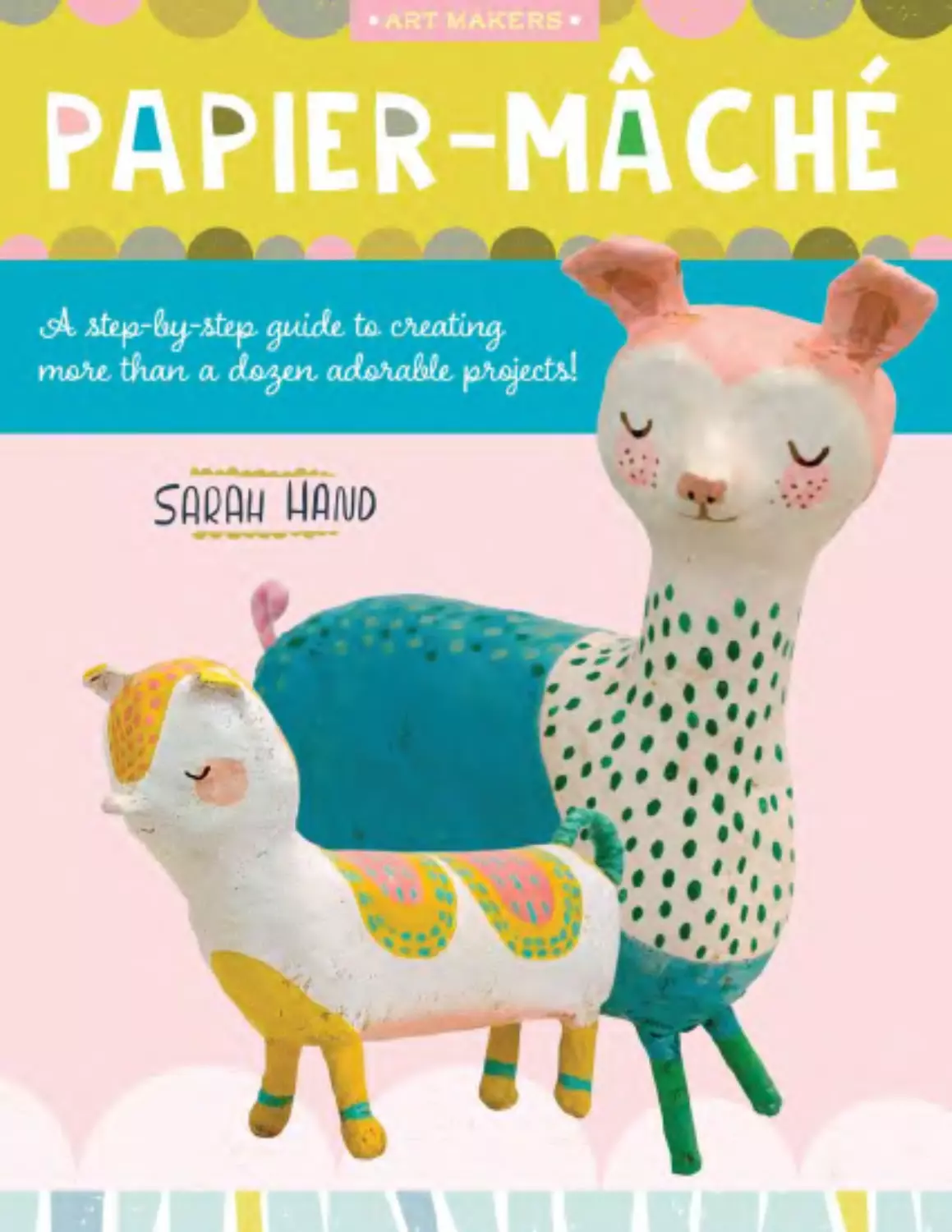
PAPIER-MÂCHÉ
A step-by-step guide to creating more than a dozen adorable
projects!
OceanofPDF.com

Table of Contents
Introduction
Tools & Materials
Techniques, Recipes & Drying
Finishing & Painting
Step-by-Step Projects
Planter
Hook
Wall Pocket Pal
Robin
Giant Ice-Cream Cones
Holiday & Everyday Ornaments
Pet Portrait
Birds on a String
Your Biggest Fan
Pins
Bangle Bracelets
Crown
Chunky Beaded Necklace
About the Artist

OceanofPDF.com

Introduction
“I haven’t done papier-mâché since elementary school!” say most of my
adult students at the beginning of a new class.
It was the same for me. Papier-mâché and I became reacquainted when I
was 30. I made a hilarious collaborative puppet show for my friends and
created all of the puppets. I needed a very specific character, so I decided to
papier-mâché it. It was poorly done; I used wire, which isn’t my ideal
sculpting material, and paper towel with a bumpy texture to create the
papier-mâché. But there was something to it. . . something lumpy and silly,
something charming.
After digging a little deeper into papier-mâché, I began teaching it, first to
children and later to adults. I was so nervous before my first adult class. I
thought the students would expect sculpting fundamentals and professional
skills, and those were not things that I could offer!
Fortunately, my fears went away quickly. That class made the cutest things,
including a sculpture of a penguin standing on an iceberg. Over the years,
my students have created beloved pets, their favorite foods, narwhals, panda
bears, and even a giant bottle of hot sauce!
Papier-mâché is a wonky art. It’s off kilter and askew. . . perhaps a little
kooky. That’s where the charm lies. It’s possible to achieve sculpting
perfection—symmetry, smoothness, accuracy—but that’s not my approach.
Using the humblest of materials, I hope to teach you to delight in the
chunky, the lumpy, and the fanciful.
I do believe that anyone can make the projects in this book. You don’t need
drawing skills to make papier-mâché sculptures. I find that I can get caught

up in perfectionism when I’m painting or drawing, but when I put papier-
mâché sculpting materials on my table, my hands take over and my brain
chills out. This happens with my students too. There is an intuitive aspect to
the sculpting process. Often, the materials will help you determine the
shape of your sculpture. Follow their lead! Curiosity is the most important
thing.
Jumping in and making the projects in the book that intrigue you first will
teach you the most. Once you learn the basic approach, you’ll have
everything you need to sculpt your own projects. All of the techniques can
be translated into different ideas, sizes, and inspirations you may have.
Making inspires ideas, so you might find yourself trying one of the projects
in this book and wondering if you could take another approach to make
something different that only you could imagine. That’s how it works—you
just have to begin.
Let’s start together!

OceanofPDF.com

Tools & Materials
Papier-mâché is an extremely accessible art form—you may already have
most of the supplies you need to make the projects in this book! Here I’ve
provided a rundown of the necessary items, including specific ones for
some projects.

PAPER
Newspaper and newsprint or packing paper are essential to papier-mâché
and armature building (the structure underneath the sculpting material that’s
used for support and strength), so keep a pile on hand at all times.
Newspapers are ideal—they’re cheap or free and abundant! If you don’t get
a newspaper at your home, ask around and find someone who will give you
theirs. Newspaper can also be used to protect your work surface from messy
paste and paint.
Brown paper bags work well for papier-mâché. They dry super strong and
build up quickly. You will find that some have a sheen—that’s a sizing in
the paper that can make the bags a little less absorbent. To fix that, crumple
them up a few times to soften the paper before tearing.
Scott® Blue shop towels are extra-strong, very absorbent paper towels sold
in hardware and automotive stores. They build up quickly and have a lot of
stretch. Unlike other papers, shop towels have some give, so you can get
them to hug the curves of your armature. They can be a little fiddly and
wrinkly, but if you take your time, you can achieve a nice, smooth effect
with blue shop towels. One roll will be more than enough for many small
projects.

MAKING PASTE
You will need the following supplies to make paste.
Whisk: a must for lump-free paste!
Bowl: Use a heatproof metal or ceramic bowl if you’re making
cornstarch paste (here), or a plastic bowl for flour paste (see here for
more on both types of paste). Use a mixing bowl even if you’re
making a smaller amount of paste; it gives you room to whisk without
flinging flour all over the place.
Pot or tea kettle: for boiling water. I use an electric tea kettle, but a pot
of water on the stove works just as well.
Measuring cup
All-purpose flour or cornstarch

OTHER MATERIALS
Masking tape: ScotchTM is my preferred brand, and I like to use a 1-inch
width, but you can also find wider rolls. You want a tape that’s super sticky
and strong. The tape is an integral part of the sculpting process, so
experiment with different brands and see what works best for you.
Other materials you will need for armature building include:
Packing paper
Bubble wrap
Plastic bags from the grocery store
Hot glue
Cardboard: Use cardboard that’s free of food and grease—so no pizza
boxes. Some suggestions include:
Corrugated cardboard from recycled boxes
Thin chipboard from cereal and other food boxes
Thicker chipboard from the backs of sketch pads and notepads
Pencil and eraser
Aluminum foil: Foil is a superb sculpting material. Make sure to use
regular foil, not heavy duty, as it can be a little hard on your hands.
Ruler
Craft knife or box cutter: Cutting cardboard can quickly dull a blade;
make sure to have extra.
Awl or a sharp, thick needle: An awl works best and is easier on your
hands.
Scissors

Wire: My favorite is the green floral wire you can find at any craft store. I
like to have 18- and 22-gauge on hand.
Wire cutters
Sandpaper/sanding sponge blocks (medium grit)
Pliers

PAINTING MATERIALS
Paintbrushes: Have a selection, including a wide, soft, flat brush and a
couple of different sizes of round brushes. If you don’t have paint markers,
a small detail brush makes a great alternative.
Gesso
Paints: Acrylic is the best paint for papier-mâché. It’s permanent when dry,
which makes it easy to layer without it turning muddy. The plastic quality
of acrylic paint also adds some extra protection and sealer to your papier-
mâché. Any kind of acrylic paint works well, from 2-ounce bottles of craft
acrylics to the fanciest artist-quality tubes.
Acrylic paint pens: These are not required for the projects in this book, but
I use them a lot because they make it easier to control certain details, like
eyes and little dots and lines. If you find yourself curious about acrylic paint
pens and are open to buying new art supplies, here’s some information:
Buy one or two and see how you like them before you commit to a
whole set. A white one is really nice to have too.
There are many brands out there. Just make sure you’re getting water-
based pens, not oil-based (those are the smelly ones).
There are different sizes of nibs, but medium and fine are my go-tos.
I mainly use Sharpie® brand and POSCA.
Mod Podge® Hard Coat: My favorite sealer, this product dries quickly
with a satin finish and cures to become water resistant. It goes on milky but
dries clear. It self-levels, so you don’t see brushstrokes, and it provides a
wonderful protective finish.
Other finishes/sealers: If you don’t have access to Mod Podge Hard Coat
or you’d like a different sheen, there are lots of sealers to try. Matte, gloss,
satin, spray, brush-on —from artist-grade to the ones from the craft store,
they’re all good. If you use spray sealers, make sure you do it outdoors with

plenty of ventilation. For liquid sealers, apply with a soft brush, which
leaves a smoother finish.

EVEN MORE STUFF
Cutting mat: to protect your work surface when you cut cardboard.
Water jar: for glue brushes and paintbrushes.
Parchment paper: for drying sculptures in the oven.
Palette or paper plates: for mixing paint.
Thin dowels or skewers: Make sure they are at least 1⁄4 inch thick. Bamboo
skewers used for cooking are great.
Wooden blocks or wood slices for stands: You can buy wood slices and
blocks at craft and hardware stores. If you’re super handy, you can make
your own wood slices from branches and a saw—but watch those fingers!
Pipe cleaners or chenille stems: Chenille stems from the craft store come
in many colors. If you like the fluffy look of cotton pipe cleaners, they can
be found at tobacco stores and online. You can dye them with watered-
down paint or ink for a fun way to customize your work!
Pin backs: I use 1-inch pin backs, but there are many sizes available to suit
your pin designs.
Beads: You can use any beads for projects like “Birds on a String” (here),
but I like 6/0 glass seed beads because you can thread a thick waxed cord
through them without using a needle.
Glitter: If you like sparkle, use it wherever you want! If you can’t stand the
mess, it’s totally optional.
Collage paper: This can be anything you have on hand, including
scrapbook paper, old book pages, and origami paper.
Felt for pin backing: Really, any thick fabric that won’t ravel works well.

Clean, plastic, recyclable containers: These are used in the planter project
(here). I like to keep containers that have interesting shapes.
Cups or lids for glue and sealer: I decant my glues and sealers into small
containers so that I don’t contaminate the whole jar. Plastic lids and other
small containers that you’d normally recycle are perfect. If any remnants of

glue dry in your containers, you can peel out the glue and reuse the
container.
Waxed thread: linen or polyester. Waxed linen thread can be found in most
jewelry-supply sections of craft stores, and waxed polyester thread is found
in the upholstery section of fabric stores.
Foam core board: The dollar store is a great place for this.
Wooden plaques: Plaques that you find in craft stores come in many fun
shapes and are relatively inexpensive.
Ribbon or fabric strips: These are for the cuffs of papier-mâché figures’
clothing. I like to tear strips of fabric for a frayed look, but ribbon gives you
a more finished look. The look is up to you!
Empty tape rolls: for bracelets!
Leather cord or ribbon: for beaded necklaces.
Bells: These can be found at most craft stores.
Boxes/box lids: for the “Wall Pocket Pal” project shown here.
Metal hook with two prongs
Craft foam
Tacky glue
Drill and bits
OceanofPDF.com

Techniques, Recipes & Drying
We discussed the tools you need for papier-mâché (here). Now let’s learn
how to use them!
Armature building An armature is the structure underneath sculpting
material that’s used for support and strength. Papier-mâché requires an
armature, to which the paper and paste adhere. Simple materials make up
our papier-mâché armatures.
Cardboard cutting A cutting mat protects your work surface when cutting
cardboard. Use a box cutter or craft knife and go slow. If you’re cutting a
straight line, it’s helpful to use a metal ruler as a guide. Watch your fingers
and use sharp blades!
Cardboard loosening Corrugated cardboard is great, but sometimes it
needs more flexibility. Just roll it up backward and forward to loosen it up.
Make sure you’re rolling with the corrugated lines parallel to your roll; this
will soften your cardboard and make it easier to manipulate.

CRUMPLING PAPER & TAPING
This is my most-used technique. It’s intuitive, and once you have the hang
of it, you’ll find you can make anything! It’s just what it sounds like:
Simply crumple paper and tape it into shape. Keep the crumple a little loose
(not crushed into the tightest ball you can make) so that you can shape it as
you tape. This technique works best if you build up the sculpture with
components of crumpled and taped shapes, and then tape them together.
Taping to hold pieces together Use long pieces to join two parts of your
sculpture. Make sure to press the tape down well along the contours of the
sculpture.
Taping for strength Tape is an important part of the papier-mâché-making
process and is used for strength and cohesion. If you view the armature as
the skeleton, think of the tape as the muscle that keeps everything protected
and strong. Cover your sculpture completely!

Taping for stickability Tape also makes a better surface for the papier-
mâché to stick to. Taping over plastic, foil, or wire helps the papier-mâché
stick much better and prevents wire from rusting. Taping paper and
cardboard prevents the papier-mâché from getting soggy.
Taping to fix holes and dips Sometimes your armature will have a dent or
dip that you want to fill out. It’s an easy fix: Crumple a bit of tape about the
size of the spot you want to fill, stick it on, and tape over it.

SCULPTING WITH FOIL
Foil is an accessible and easy-to-use material for sculpting. It works
wonderfully for the parts of your armature that must be strong, like legs and
other supports. Because it can be bent and curved, foil also gives you a lot
of control over the shapes you want to make. It can be a little sharp and
pokey on the hands, but if you're careful, you’ll be fine.
To shape my foil armature, I tear off a sheet of foil and squish it down (like
crumpling paper), and then use my fingers to pinch it into shape. You can
roll the foil between the palm of your hand and a table to apply more
pressure. You can rub it against a tabletop to make a dense, flat surface. You
can make long, snakelike shapes, and then bend them to your will. Think of
foil as super-thick, easy-to-bend wire!
If you squeeze down your foil and it ends up too big, just open it back up
and tear a little bit off until you get to the size that you need. One thing to
remember: whatever you sculpt out of foil must be substantial enough to

hold its own shape. Once you have formed shapes that you like, hot glue
them to the rest of your armature. Make sure to add tape over everything!

PAPER TEARING
The only hard and fast rule I have for papier-mâché is about the paper. No
matter the paper choice, you must tear it—don’t cut it. Tearing it gives the
paper feathery edges that melt into each other and create a unified-looking
outer shell. Cut paper creates hard edges that distract from the finished
piece. Trust me on this one!
How big and what size should the torn pieces be? A good rule of thumb is
the larger the sculpture, the larger the pieces of paper you need. The smaller
the project, the smaller the pieces of torn paper. You will need to
experiment with this. You may find that the paper needs to be torn into
smaller pieces if you aren’t able to smooth and manipulate it onto the
armature.
Should you use strips? Squares? It doesn't matter! Tear the paper however
you like and try it out. Mix up the shapes you tear. The important thing is to

cover the armature with layers of torn paper and paste to create a strong
shell.
Experiment with types of paper to see which one you love. You can use
more than one type of paper on a sculpture!

MAKING PASTE
Paper and paste are necessary for making papier-mâché. Together, they
form the outer shell of your sculpture and serve as a strong exoskeleton to
keep all of the parts of your armature unified. I use traditional homemade
paste and have included two recipes for you to try. These pastes are tried
and true and I use them all the time with my students and in my own work.
I hope you’ll try both and see which one you like better.

FLOUR + WATER
Making paste from flour and water is easy, quick, and cheap, and it uses materials you
usually have on hand. It dries hard and strong and is so easy to whip up.
STEP 1
Measure 2 cups water into a mixing bowl.
STEP 2
Whisk in 11⁄2 cups flour, a little at a time until the paste has the consistency of
pancake batter—not too thin, but not doughy! It should be smooth.
Tip
If the flour-and-water mixture looks foamy and bubbly, it’s too thin and needs
more flour. Slowly whisk it in.

CORNSTARCH + WATER
Cornstarch paste is a smooth, refined paste that’s thicker than the one made from
flour and water. It requires a bit more work to make, but it’s still fast and easy.
STEP 1
Measure 1 cup cornstarch into a metal or ceramic mixing bowl.
STEP 2
Whisk in 1 cup tap water and dissolve the cornstarch. It will look like milk.
STEP 3
Boil about 6 cups water.
STEP 4
Remove from heat and slowly, carefully, and quickly whisk the water into the dissolved
cornstarch. It should thicken and become translucent. Keep whisking until the
mixture has a thick, goopy, uniform texture. Let the mixture cool to a safe temperature
before using it.
Tip
If the mixture gets too stiff, slowly whisk in more hot water, a little at a time, until
you get a thick but not chunky consistency.

USING PAPIER-MÂCHÉ
Now that we have torn paper and a bowl of paste, it's time to papier-mâché!
Dip a piece of torn paper into the paste. When you lift the paper out of the
paste, keep holding it over the bowl and, using your other hand, squeegee it
off between your first and second fingers. The paper should be soaked
through with paste but not dripping. Be generous here—don’t use paper
that’s too dry. Your sculpture will end up weaker and less smooth.

Tip
If your hands aren’t messy, you’re probably not using enough paste! Dig in there!
Now, smooth that piece of paper onto your armature. Repeat, overlapping
the edges of the papers, until you have one layer completed. I recommend
two layers minimum. You can add the next layer on top of the first wet
layer; there’s no need to dry in between layers.

Tip
When making multiple layers, use one type of paper and switch to another for the next
layer so that you know when you’ve completely covered each layer.

DRYING
Your sculptures must be completely dry before you prime and paint them. If
they aren’t dry, the paint will not stick and the sculpture may mold. If it
feels cool to the touch, there’s probably a bit of moisture underneath, so let
it dry longer. When in doubt, give it more time.
Tip
If you don’t place parchment paper under your sculpture, it will stick to the pan!
Air drying Set your sculpture in a safe spot and turn a fan on it. Make sure
to rotate it, and keep the air circulating until your art is dry. It will take
about 24 hours to dry.
Oven drying Smaller sculptures can be dried in the oven. But take note!
Only oven dry sculptures made from foil and paper; if you’ve used a plastic

bottle or Styrofoam, do not use the oven, as these materials can melt and
give off fumes.
Set the oven very low—170 to 200° Fahrenheit, maximum. Place
parchment paper on a cookie sheet and set your sculpture(s) on it. Bake in
the oven for about an hour, turning halfway through for even drying. Don’t
leave your sculpture in the oven for too long or it may turn the paper brittle.
If the sculpture isn’t completely dry after an hour, give it another half-hour
or hour. It can work well to get the drying process started in the oven, and
then finish in front of a fan.
DRILLING
Place a protective piece of wood underneath if you need to drill a hole in something.
Keep a firm grip on the item to be drilled, and watch your fingers! Tip If you don’t place
parchment paper under your sculpture, it will stick to the pan!
OceanofPDF.com

Finishing & Painting
SANDING
I often sand my sculptures before painting them. Sanding for papier-mâché
isn’t like sanding wood—you must use a light touch. Also, sand only to take
off little chunks of paste or to tone down wrinkled, folded bits. Be careful
when doing this or you’ll sand right down to the armature. Take a soft
approach with a sanding sponge.
GESSOING
Gesso is an acrylic-based primer that’s applied as a first coat. It prepares the
surface to receive paint well. I recommend gessoing all of your sculptures
before painting. Papier-mâché is still absorbent after it dries, so putting
gesso on first protects the papier-mâché and helps your paint go on better.
The flat, white color of gesso will help make your colors pop! Gesso comes
in gray, black, and clear too. I like white for bright colors, but I sometimes
use clear gesso for more transparency.
PAINTING
You don’t have to be a master painter to paint a sculpture. Keep it simple
and use colors you love. If you’re not super confident with your art skills,
feel free to draw your design on the gessoed sculpture as a guideline for
your paint. Papier-mâché looks so charming with a simple paint job—
there’s no need to make it overly complicated. And remember that if you
mess up, just let the paint dry and then you can paint over it. That’s the
beauty of acrylic. Make it fun and don’t stress!

Layering paint This simply means adding a layer of paint, letting it dry,
and then painting another layer or decorative pattern on top using a different
color. Acrylic is perfect for this because it dries quickly and you can layer
and layer and layer until you achieve your vision.
Sanding away to reveal If you like the distressed look or just want a bit
more texture in your painting, try this: Paint something using one color and
let it dry completely. Then paint another color on top of that one. Let it dry
completely. Take a sanding sponge of medium grit and gently and gingerly
sand bits of your top layer away. The underlayer will peek through and add
surprising bits of color here and there. This takes a little longer, but it’s a

fun way to experiment. And if you scuff all the way down to the papier-
mâché, know that you can repaint and try again.
Lumpy surfaces Painting on a lumpy surface is part of the papier-mâché
process. No matter how much you smooth down and sand your papier-
mâché, its very nature is to be lumpy! That’s what we love about it, but it
can make painted details a bit fiddly to achieve. My advice is to take it slow
and make sure your paint has a consistency that easily flows off the brush
without dripping. You can experiment by slowly adding a little water to the
paint color you’re using to get the right consistency.
Paint pens Using paint pens is fun and easy. Make sure to shake them well
before use! I think they work best for final details.

SEALING
This is your last step! Sealing not only gives your art a professional look, it
also adds strength and longevity to your sculptures. Before you seal
anything, make certain the paint is totally dry.
When using a brush-on sealer, make sure to cover your work surface.
Using a soft, flat brush, brush your sculpture with just enough medium to
cover and seal it without drips. You may have to seal one side of your work,
let it dry, and then seal the other side. Work in stages if you need to. Don’t
hurry this final, important step.
Spray finish Make sure to apply this outside in a well-ventilated spot.
Follow the directions on your spray for the best results.
Now, let’s get started!
OceanofPDF.com

Planter
If you’re a plant mom or dad, you might need more room for your little
babies. Instead of buying new planters, make your own from recycled
containers. You can make these to match your home décor, whether it’s
elegant, monochromatic, colorful, or goofy (that’s my style!). If you don’t
have a green thumb, you can fill your planters with cute fake plants,
pencils, or doodads.
TOOLS & MATERIALS
Plastic recycled containers, such as bottles and jars
Permanent marker
Box cutter, craft knife, or scissors
Aluminum foil
Hot-glue gun
Paste
Paper (paper bags or another strong brown kraft paper are ideal)
Masking tape
Sandpaper
Sealer
Gesso
Paint and pens

Rummage through your recycling and grab any plastic containers that have an
appealing shape. Make sure they aren’t too small; you don’t want to squish your
plants! Clean your containers with soap and water, and let them dry.

STEP 1
Give the plastic container you’ve chosen a good, long look. Does its shape
inspire you? Turn it sideways and right side up. See if its shape suggests an
object, a figure, or an animal. Now make some rough sketches to visualize
how to add sculpted details to your vessel. (Mine’s going to be a cute
animal!)

STEP 2
Use a permanent marker to mark where you’ll cut the planter from your
plastic container.

STEP 3
Cut the planter from the plastic container. Be careful—plastic is slippery!
Place tape around the plastic container to help the papier-mâché adhere and
prevent the plastic from melting when you hot glue it later.

STEP 4
Sculpt using the aluminum foil. First, form anything that will go on the
body of the animal, such as ears, tail, and so on.
Add ears and a tail made from squished and pinched foil, tape them, and hot
glue them on. Place tape around anything you attach.

STEP 5
To make legs, squish the foil so that it’s super dense and strong. Tape up the
legs and hot glue them to the container, ensuring that they can hold up the
container and that all feet touch the surface beneath them.

STEP 6
Get that paste and papier-mâché ready! Brown paper bags are the best
choice for this project, but either kind of paste will do. Before you mix, add
1 tablespoon of white glue or Mod Podge Hard Coat per 1 cup of paste.
This makes the paste a bit more durable, which is ideal since the planter
will get wet.

STEP 7
Add at least two layers of papier-mâché to the entire planter, using smaller
pieces for details. Add a third layer where the legs meet the body. Create a
finished edge on the lip of the planter by folding 1⁄4 inch of papier-mâché
over the edge.
Let dry completely by setting the planter in front of a fan for 24 to 48 hours.
Do not place the planter in the oven or it may melt.

STEP 8
Sand the planter if necessary.

STEP 9
Paint water-resistant Mod Podge Hard Coat or another waterproof but
paintable sealer on your sculpture. Let it dry overnight.

STEP 10
Add gesso and let it dry.

STEP 11
Paint the planter.

STEP 12
Add details using paint pens. Let dry completely.

STEP 13
Apply two coats of sealer, letting the first layer dry before adding the
second. Don’t forget to add sealer to the papier-mâché you folded over the
inside of the planter lip as well. It should hold up fairly well over time if
you add sufficient sealer.
Let the sealer cure according to the manufacturer instructions. It’s worth the
wait to protect your wonderful piece of art!

STEP 14
Plant your friends!

Tip
Another less-complicated option is to make just a face instead of the animal’s entire
body. Simply cut the container to size and add facial features using foil and tape.

OceanofPDF.com

Hook
I don’t know about you, but I always need more hooks in my life. Keys,
scarves, cardigans—they all need somewhere to hang out! Let’s make
something cute to store your stuff. You will use a store-bought hook for the
base and add papier-mâché to bring a bit of fun to a standard organizational
tool.
TOOLS & MATERIALS
Hook with two side-by-side screw holes
Corrugated cardboard
Craft knife
Hot-glue gun
Awl or scissors
Strong, thin wire
Masking tape
Paper (brown paper bags and shop towels)
Paste
Sandpaper
Gesso
Paint and paint pens
Sealer
Optional: thick felt or craft foam

STEP 1
Gather your supplies and draw the design for your hook onto a piece of
corrugated cardboard. I've made the head and shoulders of a rabbit, and I’ll
secure the hook to the base of my design (the rabbit’s shoulders). The wall-
plate part of the hook is about 1 inch wide, and I’ve decided to make the
base of my rabbit character 3 inches wide.
Cut out the cardboard design; then trace the shape onto another piece of
cardboard and cut it out so that you have two designs.

STEP 2
Trace the wall-plate part of the hook onto one of the cardboard cutouts, and
cut the bottom part from the cardboard. This will make the finished hook
look less lumpy. Set aside.

STEP 3
Hot glue the other shape to the back of the hook plate. If glue gets into the
holes of the metal hook, wipe it out with a scrap of cardboard.

STEP 4
Using an awl or a pair of pointy scissors, poke through the holes of the plate
to the cardboard.

STEP 5
Thread a piece of strong wire through the holes of the hook, toward the
front. Leave a small loop of wire on the back, as shown.

STEP 6
Twist the cut ends together securely and turn the twisted wire up; then
secure with hot glue.

STEP 7
Hot glue the two cutout shapes together, with the hook plate and twisted
wire ends between the cutouts.

STEP 8
Apply masking tape to the entire object. Make sure the edges have a neat,
clean edge.

STEP 9
Tear up the paper and make paste. Then apply two layers of papier-mâché
to the entire object. It doesn’t need to bear the weight of what you hang
from the hook—but do make it strong!
Notice that I used two different papers in this project. I do this when I feel
the properties of one paper will work better than another. Here, because of
the stretchiness of the shop towels, I’ve used them on the tight curves of the
rabbit’s ears, with brown paper bags elsewhere.

STEP 10
Sand the papier-mâchéd part of the hook after it dries. If there is any paste
residue on the metal hooks, use a damp paper towel to wipe it off. It should
come off easily.

STEP 11
Gesso the whole object, except for the hooks.

STEP 12
Get out your paints, brushes, and paint pens, and start painting the
personality on your hook buddy. Keep a damp paper towel handy to wipe
off any stray paint that gets on the hooks.

STEP 13
Add details with paint pens.

STEP 14
Seal with the finish of your choice. It’s a good idea to use several layers of
sealer if you plan to use the hook often.

STEP 15
This step is optional, but it will give your project a nice finish! Because the
hook won’t be mounted flat against the wall and will tend to lean forward a
bit, it’s a good idea to add a bumper at the bottom. Simply cut a small strip
of thick felt or craft foam and glue it under the hook loop on the back using
craft glue.

STEP 16
Hang it up! Hammer a nail into the wall where you want your hook, and
then hang the hook with the wire loop. It should feel secure enough for
hanging keys and lightweight articles of clothing.

OceanofPDF.com

Wall Pocket Pal
Need cute storage? Whip up this sweet wall pocket! It’s perfect for keeping
business cards at the ready or storing all the bits and bobs that you collect
on nature walks.
TOOLS & MATERIALS
Small box or box lid (such as the lid from a box of markers)
Corrugated cardboard
Craft knife
Hot-glue gun
Wire and wire cutter
Masking tape
Paper (brown paper bags)
Paste
Sandpaper
Acrylic paint and paint pens
Sealer

STEP 1
Trace the back of your small box onto a piece of cardboard. Reserve the
box for step 3.

STEP 2
Draw your animal pal using the shape you just traced; then cut it out with a
craft knife. You can make this as simple or as detailed as you wish. I like to
add legs!

STEP 3
Use a hot-glue gun to glue the box to the cardboard shape you just cut out.
Use a hot-glue gun to glue the box (open side up) to the cardboard shape
you just cut out.

STEP 4
Make a hook by cutting a piece of wire and shaping it as shown in the
photo. Hot glue the two prongs to the upper-back area of the cardboard.

STEP 5
Cover the entire animal shape with masking tape, including inside the box.
Add a little extra tape to the glued part of the hook on the back; you need it
to be strong.

STEP 6
Use two layers of material from a brown paper bag to papier-mâché the
entire shape. Let it dry completely.

STEP 7
Lightly sand any sharp bits.

STEP 8
Gesso your animal, and let it dry.

STEP 9
Paint larger areas with acrylic.

STEP 10
Add details with acrylic paint pens. Seal and let dry.

STEP 11
Hang your pal and let it store things in the cutest possible way!

OceanofPDF.com

Robin
Whether you make a realistic-looking bird or something more fanciful, a
papier-mâché bird will look amazing perched in your home. These are quite
addicting to make, so be warned: You may end up with an entire flock!
TOOLS & MATERIALS
Packing paper or newspaper
Masking tape
Hot-glue gun
Aluminum foil
Scissors
Thin cardboard
18- to 20-gauge floral wire
Pliers
Paste
Sandpaper
Gesso
Paint and paint pens
Sealer

STEP 1
Pick a bird from nature or your imagination that you’d like to recreate. Then
crumple up some paper to form the shape of the bird’s body. Cover the bird
with masking tape, ensuring that it keeps its shape.

STEP 2
Use the same method to create the bird’s head. As you shape the head, use
the bird’s body for reference and shape the head until it looks proportionate
with the body. Then tape it securely.
Hot glue the bird’s head to the body to hold them in place.

STEP 3
Use at least four vertical strips of tape to attach the bird’s head to the body.
Then add tape around the neck to form a strong, smooth attachment.

STEP 4
Pinch and squish a small piece of foil into a beak shape. If you make it too
big at first, just uncrumple the foil and tear away some of it; then redo the
beak until it is the right size.

STEP 5
On a hard surface, such as a table, rub the base of the beak to smooth and
flatten. This creates a good surface for gluing the beak to the head in the
next step.

STEP 6
Hot glue the beak to the bird’s head; then add tape over the beak.

STEP 7
Cut a tail feather from thin cardboard—any triangular shape works.

STEP 8
Hot glue the tail feather to the bird. Gluing it under the end of the body
ensures that it flips upward in a sassy way!
Then tape the tail feather and the spot where it attaches to the body to
smoothly join the two.

STEP 9
Draw a wing on thin cardboard and cut it out. Then trace that wing onto
another piece of cardboard and cut it out so that the wings are identical.

STEP 10
Cover the wings with tape.

STEP 11
Apply hot glue to the top third of each wing and place both wings on the
bird’s body, as shown. This lets the wings stand away from the body a little
bit, which looks adorable!

STEP 12
Each bird leg will consist of four pieces of wire. Tape the wires in a little
bundle, leaving about 3⁄4 inch free on one end for the toes. Make two legs.
How long should they be? It’s your choice, but keep in mind that you’ll
need 3⁄4 inch for the bird toes at one end and 1 inch at the top to glue to the
body.

STEP 13
Use pliers to bend the wire out for the toes—three in front and one in back.
Set the legs aside. You will papier-mâché the legs and body separately and
attach the legs to the bird when everything is dry.

STEP 14
Make paste and tear up paper. Using a long strip of paper dipped in paste,
wrap each bird leg starting just above the toes, all the way to the top of the
leg. Then papier-mâché the beak and the unattached parts of the wings.
Wrap the paper around the wing, all the way up to where it is glued down.
It’s helpful to get these parts done first, as they are the most complex. Then
papier-mâché the rest of the bird.

STEP 15
Let the papier-mâché dry; then sand the bird.

STEP 16
To attach the legs, use pointy scissors to make two holes in the underbelly
of the bird. Don’t worry—he can’t feel it! Make the holes toward the
middle back, leaving about 1 inch or so between them. Add a little hot glue
in the holes and stick the legs in, feet forward!

STEP 17
Gesso the whole bird. Make sure to get under the wings!

STEP 18
Painting birds is so much fun! The multiple steps and layers take a bit of
time, but the results are worth it.
First, paint the base colors. Let them dry. Then paint the beak and add
feathers. Light dabs and lines with a small brush make lovely feather
textures. Layer until you’re happy.

STEP 19
Check that your bird is balanced and has a solid stance. Adjust the toe wires
if necessary.

STEP 20
Add the eyes using paint markers for better control. I also added red cheeks
because I love the way they look. Let dry completely.

STEP 21
Seal and let dry.
Tip
I like to use a paint marker to paint the toe wires.

STEP 22
Display your bird and never give it away because you love it too much.

OceanofPDF.com

Giant Ice-Cream Cones
Do we need giant ice-cream cones? Probably not. But do we want them?
Yes! This is a completely frivolous project—but also utterly wonderful. I
love the paint possibilities with ice cream. You can paint sprinkles, various
flavors, and so on.
Ice cream is fun to start with, but using the techniques in this book, you can
also make your own favorite food in a giant size. My students have made
giant cheeseburgers, a huge taco with a mustache, a massive cupcake, an
extra-large bottle of hot sauce. What larger-than-life food would you like to
make?
TOOLS & MATERIALS
Large piece of cardboard, such as the side of a box
Craft knife and scissors
Hot-glue gun
Masking tape
Plastic grocery bag
Recyclable items, such as newspaper, bubble wrap, and paper
Paper
Paste
Gesso
Paint
Glue
Sealer
Optional: sandpaper
Optional: construction paper

STEP 1
Draw a curved line on the piece of cardboard, as shown. I’ve used a 17” x
19” piece of cardboard, but any size will work.

STEP 2
Cut away the excess cardboard.

STEP 3
Roll the cardboard back and forth a bit to make it flexible.

STEP 4
Curve the cardboard into a cone shape. This might be tough, but go ahead
and beat up the cardboard to get it really flexible.
Once you have the right shape with a 1-inch overlap, run a bead of hot glue
along the length of the seam and carefully hold it together until it dries.

STEP 5
Reinforce the seam with tape, as shown.
Tip
If you want to bulk up the shape of the ice-cream cone, stuff it. I’ve used bubble wrap
and plastic shopping bags.

STEP 6
Now make the ice cream! You can make as many scoops as you like. Fill
the plastic grocery bag with recyclable items, such as plastic bags, bubble
wrap, crumpled paper, and so on. Make the bag very full, as you’ll crumple
it down a bit when you add tape.

STEP 7
Tape the handles of the bag together to close it. My bag has a distinctive
scoop shape, which I like, so I’ve kept it that way. If you want a rounder
shape, squash and mold it with your hands, and then add tape.

STEP 8
Tape the bag. Instead of fully encasing it, I recommend keeping space
between the strips of tape.
Then add long strips of tape from the top of the bag/scoop to the cone to
attach the scoop to the cone. Don’t pull the tape too tight to avoid distorting
the scoop shape.
Tip
If you are making multiple scoops of ice cream, use long pieces of tape to attach
them as you build up the cone.

STEP 9
If your ice cream will feature a face, like mine, make a nose out of a bit of
crumpled tape and place it on the scoop.

STEP 10
It’s papier-mâché time! Because this is a large sculpture, you will need to
use big pieces of paper to cover it. Tear your preferred paper. I’ve used
packing paper, but paper bags also make a great choice.
Now make your preferred paste; I’ve used cornstarch.
Then papier-mâché that ice-cream cone! The size might make this
awkward, so if you prefer, papier-mâché one side at a time, letting the
sculpture dry between sides. Use at least two layers of papier-mâché—or
more if preferred.
Let everything dry; then sand down the sculpture, if you like.

STEP 11
Gesso and let it dry. You can set the sculpture in front of a fan to speed up
the drying process.

STEP 12
Add paint! I’ve started with a waffle pattern on the cone consisting of light
and dark brown. Paint the cone first so that the paint on the ice-cream cone
can drip down the cone. Let the paint dry.

STEP 13
Pick your ice-cream flavor. Is it a real flavor or one that you’ve created
from your imagination? Are there chunks of fruit, cookies, or chocolate
chips in it? Paint the base color first, and add details and flavors afterward.

STEP 14
If your cone will have a face, add it now. Let the paint dry completely.

STEP 15
To add sprinkles, I started with a single hole punch and made lots of small,
round sprinkles. After putting them on the scoop, I decided I wanted
something a bit bolder, so I’ve used a paper shredder to make strips of
colored paper. I’ve snipped them down to sprinkle size.
Brush a coat of white glue or Mod Podge Hard Coat on the top of the scoop,
and then add as many sprinkles as you like! Let the glue dry, and then seal
with the sealer of your choice, if you wish.

Tip
Instead of sprinkles, consider adding a hot-fudge toupee!

OceanofPDF.com

Holiday & Everyday Ornaments
Ornaments are just tiny sculptures as far as I’m concerned! And they aren’t
only for decorating trees; I love to add a funny personalized ornament to
gifts too.
You can make these ornaments with a theme in mind: animals, family
members, fruits, veggies. . . you name it! I’ll walk you through how to
make a Pembroke Welsh Corgi, but feel free to use these techniques to
make ideas of your own. I’ve included a few other ornaments as inspiration.
Tip
These sculptures are small, so keep the details simple or adding papier-mâché to
them will be very frustrating!

TOOLS & MATERIALS
Aluminum foil
Hot-glue gun
Chipboard
Masking tape
Paste
Paper
Sandpaper
Scissors
Gesso
Wire and wire cutter
Pliers
Awl or thick needle
Paint pens
Sealer
Pipe cleaners

STEP 1
Decide what you want to make. I’m making a Corgi because I adore them,
but this tutorial will work for almost any pet or four-legged animal!
Using small bits of foil, make a body—sort of a tube-ish blob. You don’t
want realistic anatomy here; the simpler, the more fun these things are.
Make a round head and a pointy snout.

STEP 2
Hot glue the snout to the head and the head to the body.

STEP 3
Draw pointy ears on chipboard, including an approximately 1⁄4-inch tab at
the bottom where you will add glue. Cut out the ears and fold along the
lines you added at the bottom. Hot glue the ears to the Corgi’s head.

STEP 4
Cover the entire ornament with masking tape.

Shown here are some other ornaments I made using tha fail-and-hot-glue method: an apple, a
peanut, and a bunny!

STEP 5
Make paste using flour and water, and tear up your paper (any kind you
like; shop towels are great because they are thick enough that you will only
need one layer). Then papier-mâché your ornament.

STEP 6
Let your ornament dry, or to bake it in the oven, place it on a parchment-
covered cookie sheet, bake for about an hour at 170 degrees Celsius/340
degrees Fahrenheit, turning halfway through. Make sure to check on the
ornament while baking.

STEP 7
Sand off any crusted glue or bits that poke out.

STEP 8
To make holes for adding pipe-cleaner legs, use very pointy scissors and
carefully poke four holes where the legs should go. The holes need to be big
enough for pipe cleaners, but not much larger than that.

STEP 9
Gesso your ornament.

STEP 10
To make the hanging loop, cut a small piece of wire (about 11⁄2 inches).
Bend the wire in half, and then crimp the two cut ends by squeezing them
together with pliers. Then, using an awl or a thick needle, make a hole for
the hanging loop.

STEP 11
Add a bit of hot glue to the hole and press the ends of the wire loop in.
Immediately wipe off any hot glue that collects at the base of the loop.

STEP 12
Paint your little buddies and add details with paint pens. Indulge in details
here— these are small pieces and they’re quick to decorate. They look great
in bright colors, and everything I make gets a face!

STEP 13
Seal and let dry.

STEP 14
Now let’s add some legs. Cut your pipe cleaner legs to any length you like.
I love bending a little foot too. Add a bit of hot glue to each hole and stick
the legs in.

STEP 15
My other ornaments have various bits of wire for arms and legs too. Use
whatever you happen to have on hand. To personalize your ornament, you
can use the flag-making technique from the “Your Biggest Fan” project
(here) and add a name to it.

Look at these fun friends! You can tie string or ribbon loops for hanging, or
use your homemade ornaments as a gift topper. I can’t think of anything
that wouldn’t be better with an ornament added to it!
OceanofPDF.com

Pet Portrait
This project is a bit more complicated and requires some planning, but it’s
well worth the extra effort. Follow the steps and take your time, and you
will have a perfect masterpiece of your pet, already framed! You can even
try making a whole portrait wall of your pets. You won’t want to stop at just
one!
TOOLS & MATERIALS
Wooden plaque of any size and shape
Two pieces of corrugated cardboard or foam-core board (these should be larger
than the wooden plaque)
Ruler
Pencil
Craft knife
Hot-glue gun
Masking tape
Aluminum foil
Paste
Paper
Parchment paper
Sandpaper
Gesso
Paint
Sealer

STEP 1
You will need to make two layers for this project: a base layer consisting of
a frame and your pet, as well as another frame on top.
For the top layer, trace around the wooden plaque onto the cardboard. Then
use a ruler to measure 1⁄4 inch in all the way around, and mark the lines with
a pencil. This is the margin where the frame will overlap with the edges of
the board.
Now measure 1 inch out from the traced line all the way around, following
the shape. Connect the marks.
Cut out the inside section first; then cut around the outside.

STEP 2
To form the base layer, trace the inside and outside of the frame you cut out
in step 1. Then draw your little buddy inside the frame you drew, keeping
some space around the pet.
Cut around the pet and remove the extra piece of cardboard.

STEP 3
Hot glue the base layer of cardboard (the frame and the pet) to the wooden
plaque. Press down until the glue is set.

STEP 4
Hot glue the back of the top frame; then line it up with the inner frame and
hold until set.

STEP 5
Use the hot glue gun to “caulk” and seal any gaps between the frame and
the board.

STEP 6
Apply tape to seal the edges of the frame and around where the cardboard is
glued to the plaque on the back.

STEP 7
To give your portrait a bit of dimension, create a little nose made from foil.
Use hot glue to attach it and place tape over it.
Tip
Use the point of a pencil to wedge the papier-mâché into tight spots if necessary.

STEP 8
Prepare your paste and paper. Then apply at least two layers of papier-
mâché to the portrait, making sure to encase the outer edges of the frame
and the edges of the plaque on the back.
Place the portrait on parchment paper and dry in the oven for about 1 hour.

STEP 9
Gently sand off any wrinkles, folds, and paste on the back of the portrait.

STEP 10
Thoroughly apply gesso, working on one side at a time and letting it dry
completely.

STEP 11
Draw your pet again on the papier-mâché shape, blocking in where you
want to place the main colors in the image.

STEP 12
Now add paint, starting with the background. Let it dry.

STEP 13
Now paint your pet using a reference photo if you like. Include details to
bring your friend to life, such as whiskers, fur texture, and clothes. Then let
the paint dry completely.

STEP 14
Paint the back of the piece as well!
Once the paint is completely dry, use any sealer that you life. I’ve kept the
portrait matte except for a glossy finish on the nose and frame.

Tip
These portraits are light, so to hang them, you can use VELCRO® strips or any other
hanging hardware you like.
OceanofPDF.com

Birds on a String
This project was inspired by strings of sewn fabric birds that I’ve always
admired. These look super sweet hanging in a little corner that needs
brightening up, and adding a bell and beads makes this a lovely decoration
or gift. It’s a simple project but one that will take a bit of time since you’ll
need to make multiple birds. Work on this project over a few days and it
will come together beautifully.
TOOLS & MATERIALS
Corrugated cardboard
Wire
Aluminum foil
Masking tape
Hot-glue gun
Paste
Paper (I like shop towels)
Sandpaper
Gesso
Paint
Sealer
Pliers
Waxed thread
Bells and beads
Embroidery needle

STEP 1
Use corrugated cardboard to make a template for your birds. Keep it simple
— we’re looking for the idea of a bird rather than lots of realistic detail.
Trace the template onto the cardboard as many times as you like. I made
seven birds. Make sure the lines on the cardboard are vertical so that you
can do the next step.

STEP 2
Place a piece of wire through the middle of each cardboard bird shape.
Using the tunnels that are built into corrugated cardboard makes this
simple. This will help later when you string the birds together.

STEP 3
Pad the sides of the bird shapes with crumpled-up bits of foil until the birds
look a little chunky. How full you make them is up to you! Attach the foil
using masking tape.

STEP 4
Now make beaks and tail feathers using cardboard. This is a great way to
use up any scraps of cardboard you have leftover from the previous step.
For the beak, I cut out a small triangle. For the tail, I cut out a larger triangle
and snipped off the top point. To give the birds their own personalities, you
can eyeball this so that each bird looks a little different.

STEP 5
Hot glue the beaks and tails to the birds, and add tape.

STEP 6
Make paste using flour and water, and tear up shop towels. They work best
for this project because they can quickly build up a thick layer. Then papier-
mâché the birds using a light touch on the beak to maintain its point.

STEP 7
Let the birds dry in front of a fan or in the oven. I like to put parchment
paper on a cookie sheet and line up my birds and bake them for about an
hour at 170 degrees Celsius/ 340 degrees Fahrenheit. Flip halfway through
baking so that the birds dry on all sides. Keep an eye on your birds during
baking—you don’t want to scorch them! Then sand off any rough spots.

STEP 8
Gesso the birds and let them dry. Keep the wires in the birds!

STEP 9
Paint your birds. You’ve got so many options here: rainbow, monochrome,
ombré. . . You can paint them any way you like. I painted mine using
greenish-blue tones. Make sure to paint wings on each bird. Add eyes, and
don’t forget to paint the beaks too!

STEP 10
Once the paint is fully dry, seal the birds. I used a satin finish. Let dry
completely.

STEP 11
It’s time to remove the wires! Jiggle them a little in case any paste, paint, or
sealer has the wires stuck; then gently remove them. Using a pair of pliers
to grip the wire may make this easier.

STEP 12
Now we string them! Get a long piece of strong thread. I've used waxed
linen thread because it’s strong, not slippery, and easy to string beads onto
without a needle.
Start at the bottom and tie your bell securely.

STEP 13
Thread the beads onto the waxed thread. To create even spacing, use the
same number of beads between each bird. (I used 20.)
Now add a bird. Thread a large embroidery needle onto your string and
guide it through the bird using the channel you created with the wires,
bottom to top. Remove the needle.
Add beads to your waxed string. Continue stringing each bird and the beads
until you’ve added all of the birds. Add one last layer of beads too!

STEP 14
Tie the thread in a knot. Create a loop for hanging, and there you have it: a
seriously cute, handmade decoration!
OceanofPDF.com

Your Biggest Fan
Sometimes you need a little extra encouragement, so why not make your
own portable fan?This little buddy will always know what to say to lift your
spirits.
TOOLS & MATERIALS
Aluminum foil
Masking tape
Scissors
Hot-glue gun
Dowels
Paper (I like shop towels)
Paste
Sandpaper
Gesso
Paint and paint pens
Sealer
Pipe cleaner
Round slice of wood
Drill
Paper
Wire
Glue
Binder clip
Pliers
Optional: tiny stamps

STEP 1
Sculpt a small (around 5 inches tall) figure out of aluminum foil. Cover it
with masking tape.

STEP 2
Poke holes for the legs (I like to use small, sharp scissors), and hot glue
dowels in them.

STEP 3
Cover the whole figure with two layers of papier-mâché. Let it dry.
Tip
Shop towels work well for this project.

STEP 4
Lightly sand and gesso the entire figure, including the legs if you plan to
paint them.

STEP 5
Paint your pal and add details with paint pens, taking your time with the
small details. Seal the figure.

STEP 6
Paint a cotton pipe cleaner (see here) the same color as the shirt of your pal.
The pipe cleaner will form the arms.

STEP 7
Mark where the legs will go on the wooden stand.

STEP 8
Use a drill bit that will accommodate dowel legs to drill holes in the stand.
Then drill a hole at shoulder height through the entire body of the figure.

STEP 9
Stamp or write encouraging messages on the paper.

STEP 10
Cut the message into the shape of a flag. Fold the paper around a piece of
wire and glue it in place. Use a binder clip to hold the paper and wire
together until the glue dries.

STEP 11
Thread the pipe cleaner arms through the hole you drilled at shoulder
height; then wrap the pipe cleaner around the wire flagpole and squeeze
with pliers to secure. Arrange the figure’s other arm any way you like.

STEP 12
Keep your new friend nearby, or better yet, make a whole cheering section!
OceanofPDF.com

Pins
Papier-mâché pins are quick and simple to make. Simple shapes are best—
think animals, houses, hearts, ovals, and so on. Create a whole batch and go
wild decorating them. Get out all that glitter, collage paper, and even googly
eyes! Pins are fun to wear and they make great gifts!
TOOLS & MATERIALS
Corrugated cardboard
Craft knife
Masking tape
Paste
Torn paper (any kind)
Sandpaper
Gesso
Paint, collage paper, sequins, glitter, pompoms, googly eyes, and so on
Sealer
Felt
Hot-glue gun
Pin backs or safety pins

STEP 1
Sketch the shapes of your pins onto cardboard; then cut them out with a
sharp craft knife.

STEP 2
Cover the shapes, including the edges, with masking tape.

STEP 3
Gather paste and torn paper, and add at least one layer of papier-mâché to
each pin. Let dry completely.

STEP 4
Lightly sand the pins to remove any sharp bits of paper, and wipe away the
dust. Apply a thin coat of gesso on all sides, and let it dry.

STEP 5
Decorate! Think of these pins as little canvases. Paint, collage, pencil,
glitter, googly eyes—use whatever you’ve got! Once the pins are decorated,
apply the sealer of your choice and let it dry.

STEP 6
Cut a piece of felt to go on the back of each pin.

STEP 7
Use a hot-glue gun to attach a pin back or safety pin to each piece of felt.

STEP 8
Cut a piece of felt big enough to cover each pin back, glue it down, and
glue the whole thing to the back of each papier-mâché pin.

STEP 9
Wear your pins and be the envy of all your friends and loved ones!
OceanofPDF.com

Bangle Bracelets
If you’ve been doing all of the projects in this book, you will find yourself
with a few empty tape rolls—but don’t recycle them yet! There’s a fun way
to repurpose them into something cute and wearable.
These bangle bracelets are one of the simplest projects in this book. They
feature a tie so that you can adjust the size and are the perfect way to use up
leftover bits of fabric or ribbon. Make an armful of these to match every
outfit in your closet, and have fun!
TOOLS & MATERIALS
Scissors
Empty masking tape rolls
Masking tape
Paste
Shop towels
Sandpaper
Gesso
Paint
Sealer
Ribbon, leather cord, or scraps of fabric to tie the bracelets

STEP 1
Using strong scissors, cut about 2 inches from each empty tape roll.

STEP 2
Leave the cut edges straight or carefully round off the corner edges.
Another option is not to cut the roll at all to create a more traditional bangle
bracelet.

STEP 3
Using very pointy scissors, make a hole in each end of the tape roll. Bore
out the hole until it’s the right size, as shown. Trim the fuzzy bits of
cardboard.

STEP 4
Cover the entire roll with tape, including the holes you made.

STEP 5
Gather paste and strips of shop towels; then papier-mâché the bangles,
wrapping at least two layers of strips around the tape rolls. You want them
to be strong but flexible! Don’t worry about the holes you made in step 3;
you’ll uncover them later.
Let the bangles dry in the oven or in front of a fan.

STEP 6
Sand the bangles.

STEP 7
Using your sharp scissors, probe the areas where you poked the holes, and
then bore them out again, gently, until you break through the papier-mâché.
Trim off any bits of paper.

STEP 8
Apply gesso all over and let dry.

STEP 9
Add paint! I like simple designs like the ones shown here, but you may love
to add lots of detail. You can decorate your bracelets any way you like!

STEP 10
Seal. Go super glossy if you like shine, or use a satin or even a dramatic
matte finish. Make sure to use at least two coats of sealer to help protect
your bangles as you wear them.

STEP 11
Using your choice of fabric, ribbon, or cord, cut 8-inch strips. You can trim
down as needed later.
String the fabric or ribbon through the holes in the bangles. You may need
to use scissors to help push it through.

STEP 12
Tie the fabric or ribbon, either in a bow or a nice knot. You can pull the tie
to make the bracelet a little tighter; papier-mâché has a little give. Just don’t
pull it too tight!
Now stack your bracelets and wear them all!

Variations
Instead of cutting the tape roll, make it a more traditional bangle. You can add
extra layers of papier-mâché to thicken the bracelet if it doesn’t fit.
Use a wider or thinner tape roll for variety.

OceanofPDF.com

Crown
Whether they’re for special occasions or costumes, crowns are magical and
fun for anyone to wear. Make a crown for someone special in your life—or
for yourself!
This project can be as simple or as complicated as you like. If you want
something majestic and minimal, paint your crown with metallic paint. If
you want to go full-on fun, paint it with many colors or add glitter, glue, or
collage. Either way, you’ll end up with a custom headpiece that broadcasts
your ruling style to all of your subjects...I mean, friends.
TOOLS & MATERIALS
Craft knife or scissors
Corrugated cardboard
Ruler
Paper
Paste
Parchment or wax paper
Gesso
Paint and other decorative items
Optional: sealer

STEP 1
Cut a length of corrugated cardboard, as shown in the photo. The strip must
be long enough to fit around your head comfortably. Don’t make it overly
snug, as adding papier-mâché will thicken the strip. You should be able to
fit at least one finger comfortably between the crown and your head. If it’s
too loose after you papier-mâché it, I’ll show you how to make it fit just
right. Cut the length so that the short edges butt up against each other,
without overlapping.

STEP 2
Roll your cardboard strip back and forth a few times on both sides to make
it flexible.

STEP 3
Divide your crown in half lengthwise. I’ve drawn a line through the middle,
dividing it into two halves of 2 inches wide each. Now my band measures
24 inches long and 4 inches deep.

STEP 4
Mark every 3 inches along the strip, and draw lines across the strip at each
mark.

STEP 5
Now mark 11⁄2 inches between each 3-inch section at the top edge of the
strip.

STEP 6
Connect the lines in each side section to meet in the middle and form the
points of the crown.

STEP 7
Use a craft knife and ruler or a strong pair of scissors to cut away the
triangles you don’t need.

STEP 8
Place the ends of the crown snugly together, without overlapping, and tape
well, inside and out.

STEP 9
Now you’re ready to papier-mâché the inside and outside of the crown.
Prepare your paper (any kind) and your paste (any kind). Wrap strips
around the points as well, and make sure the bottom edge is finished with
papier-mâché. I’ve found that one layer is sufficient, but you can add as
many layers as you’d like.
Tip
As you papier-mâché the crown, it will likely sag and flatten out of its nice circular
shape. That’s OK; you will reshape it before it dries.

STEP 10
To dry the crown, place it on parchment or wax paper, and shape it back
into a circle as well as you can. Now you can let it air dry or dry in the oven
for 30 minutes.
Ensure that the crown is completely dry, and then sand it if you like.

STEP 11
Add gesso!

STEP 12
Add paint! Is your crown simple and regal, or do you want to break out the
glitter? I’ve added a plethora of rainbows to my crown, but you could paint
a name on it or encrust it with rhinestones or bottle caps.
Let the paint dry and seal the crown if necessary.

Tip
If the crown is too loose, you can glue a small strip of craft foam to the inside. Let it
dry before you pop the crown on your head.

OceanofPDF.com

Chunky Beaded Necklace
If you like dramatic jewelry, this project is for you. Simple shapes and
layered, textured paint make this necklace super fun to create and even
better to wear.
TOOLS & MATERIALS
Aluminum foil
Masking tape
Dowels
Paste
Paper
Sandpaper and sanding sponge
Paper towel
Gesso
Paint and paint pens
Sealer
Leather cord, ribbon, or strip of fabric

STEP 1
Begin by doodling a few shapes for your beads. Plan to make a handful of
beads so that you have options and can play with their configuration when
you string them.

STEP 2
Easy to shape, strong, and lightweight for wearing, aluminum foil will form
the base of these beads. Tear a piece of foil and crumple it in the middle to
divide it in half. Very lightly tape a dowel to the center of the foil, ensuring
that the dowel hangs off both sides of the foil. Repeat for each bead.

STEP 3
Squish and pinch the foil into the bead shapes you want, working with half
of each bead at a time. You can roll the beads on a hard surface to compress
and shape the foil. Make sure to keep the dowels in the centers of the beads.

STEP 4
Place masking tape around each bead, ensuring that a bit of tape is stuck to
each dowel as well so that the beads don’t move around as you work on
them.

STEP 5
Once you’re happy with your beads, it’s time to papier-mâché them! Make
your paste and tear up some paper. Use small pieces of paper so that they
adhere to the beads. Go slow and really rub down the paper as you place at
least two layers on each bead. Cover the whole area of each bead so that the
foil doesn’t show. Let the beads dry.

STEP 6
Sand off any sharp bits or lumps that need smoothing; then wipe off the
dust with a paper towel.

STEP 7
Gesso the beads and let them dry. They will dry best if standing. You can
stick the dowels in a piece of Styrofoam, set them in a jar if they’re long
enough, or prop them up so that the bead doesn’t rest on the table.

STEP 8
Add paint! These beads are big and bold, so choose a pleasing color
scheme. Let’s add a bit of texture to the beads too.
Begin by underpainting each bead; then let this layer dry completely. I've
used shades of green and then added my final color scheme of light pinks,
blues, ivory, and white. Let this layer dry thoroughly as well.

STEP 9
Remove the dowels to prepare for the next step. Hold a bead gently but
firmly in one hand and use the other hand to twist each dowel to loosen the
bead.

STEP 10
This step is optional, but weathering the paint will give the beads added
interest and depth. Take your sanding sponge and, with a light touch, scuff
the beads so that elements of the underpainting are revealed. You can
choose to weather them very lightly or take a lot of the outer paint layer off.
If you don’t like how it looks, just repaint and let dry! Wipe off the scuffed
paint with soft paper towel.

STEP 11
If you want to add patterns to your beads, now is the time. You can use
paint pens or a fine paintbrush with paint. Take your time with small details.
Dots and stripes make excellent choices, but you can experiment with
anything!
Tip
You may want to slide the beads back onto their dowels while you work on this step.

STEP 12
Seal those baubles! Extra layers of sealer are important here to keep your
necklace durable and the paint from chipping with wear. Let each layer dry
before adding another one—three layers are ideal!
Tip
Add extra sealer to the areas around the holes in the beads too.

STEP 13
Play around with the arrangement of the beads to decide on their
configuration. Then cut a piece of leather cord, fabric, or ribbon long
enough for stringing the beads, knotting, and fitting over your head.
Now, string the beads. If you use leather cord, you can slide it through the
holes in the beads, but you will need a large needle with a big eye if you use
fabric or ribbon.

STEP 14
Make a simple knot in the string and pop the necklace over your head. Be
the envy of everyone you know!
OceanofPDF.com

About the Artist
Sarah Hand is a papier-mâche
artist, an illustrator, and an art
teacher. A puppet show she
created when she was 30
inspired her to pursue the art of
papier-mâche in earnest. This
messy, fun medium was an
undiscovered well of inspiration
for Sarah. Creating creatures,
dolls, and puppets led her to
teach the magic of papier-
mâche to children and adults
alike.
Sarah has taught for more than
15 years at the Virginia Museum
of Fine Arts, the Visual Arts
Center of Richmond, Studio Two Three, art retreats, and online. Her
work has been featured in Somerset Studio magazine, and she has
had many solo art exhibits.
When she’s not elbows deep in paste and paper, you can find Sarah
painting, drawing, and dreaming up stories and images for picture
books.
Sarah lives and creates in Richmond, Virginia, with her husband,
Phil, and their three-legged cat, Roger.

DEDICATION
For Phil, for believing in me forever.
And for my mom, who has always encouraged my creativity.

ALSO AVAILABLE FROM WALTER FOSTER PUBLISHING
Art Makers: Polymer Clay for Beginners
978-1 -63322-632-6

The Grown-Up's Guide to Crafting with Kids
978-1 -63322-860-3

The Grown-Up's Guide to Painting with Kids
978-1 -63322-854-2
OceanofPDF.com

© 2021 Quarto Publishing Group USA Inc.
Artwork and text © 2021 Sarah Hand
First published in 2021 by Walter Foster Publishing, an imprint of The
Quarto Group. 26391 Crown Valley Parkway, Suite 220, Mission Viejo, CA
92691, USA.
T (949) 380-7510 F (949) 380-7575 www.QuartoKnows.com
All rights reserved. No part of this book may be reproduced in any form without written permission
of the copyright owners. All images in this book have been reproduced with the knowledge and prior
consent of the artists concerned, and no responsibility is accepted by producer, publisher, or printer
for any infringement of copyright or otherwise, arising from the contents of this publication. Every
effort has been made to ensure that credits accurately comply with information supplied. We
apologize for any inaccuracies that may have occurred and will resolve inaccurate or missing
information in a subsequent reprinting of the book.
Walter Foster Publishing titles are also available at discount for retail, wholesale, promotional, and
bulk purchase. For details, contact the Special Sales Manager by email at specialsales@quarto.com
or by mail at The Quarto Group, Attn: Special Sales Manager, 100 Cummings Center, Suite 265D,
Beverly, MA 01915, USA.
ISBN: 978-1-63322 -892 -4
Digital edition published in 2021
eISBN: 978-1 -63322 -893 -1
10987654321

OceanofPDF.com