/
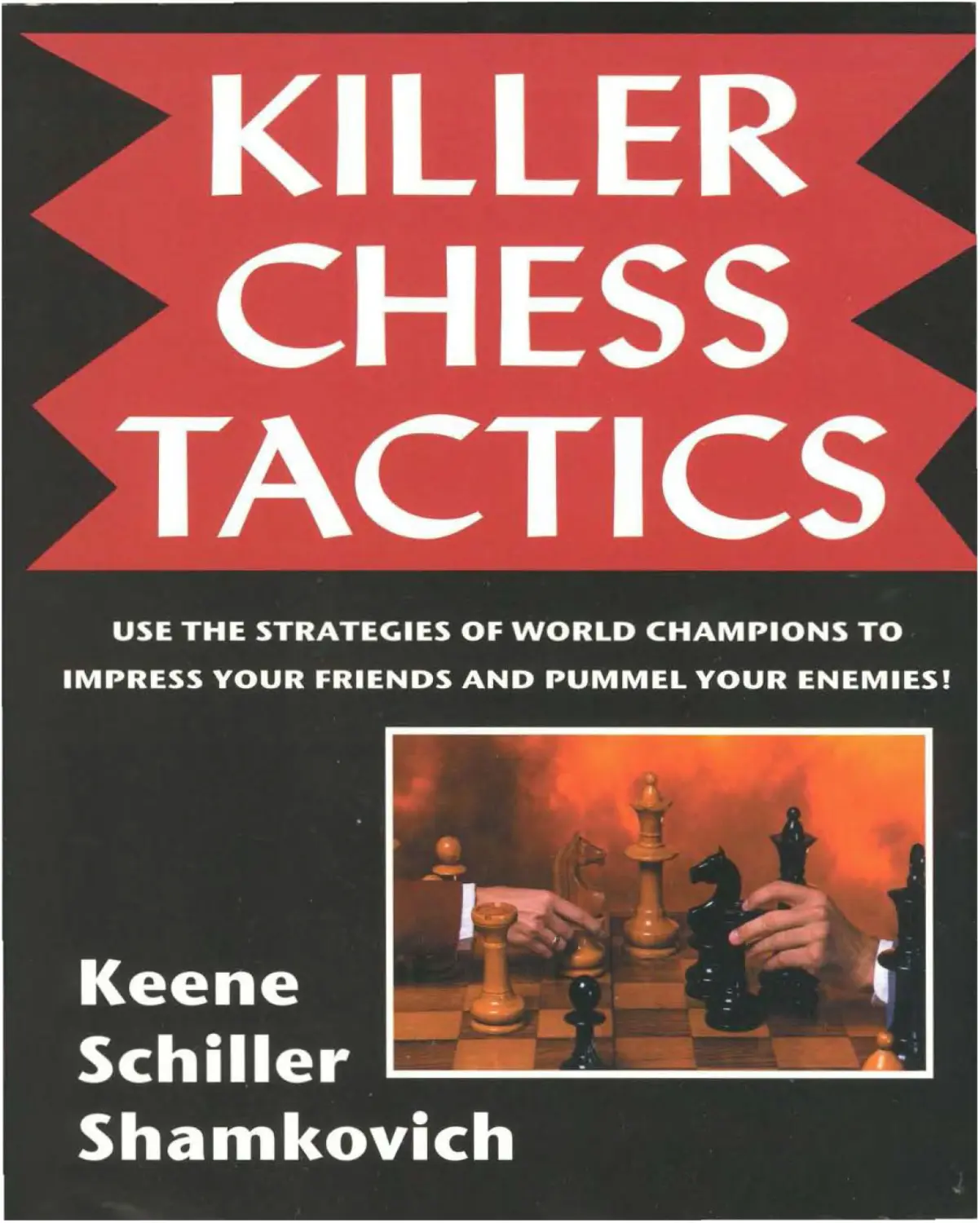


Автор: Keene R. Shantkovich L. Schiller E.
Теги: chess chess parties chess championships chess combinations chess review
Год: 2003


Текст
ABOUT THE AUTHORS
RAYMOND KEENE
Grandmaster Raymond Keene, multiple tournament winner, and former British Champion, is
the world's most prolific chess writer, with more than 100 books to his credit. Considered one of the
strongest players around and one of the top theoreticians, Keene is well known for his many best
selling chess titles, and for his co-authorship with World Champion Garry Kasparov and Eric Schiller
on Batsford Chess Openings-the all-time best-selling reference work on chess openings.
Keene was the first British player to achieve a ELD.E. Grandmaster norm, was a member of
eight Olympic chess teams, was a medal winner in the chess Olympiad, and was awarded the title of
Officer of the British Empire by Queen Elizabeth II for his services to chess. He has been the chess
correspondent for The Spectator, London since 1977, and Thames Television since 1986. He also
writes The London Times' daily chess column.
ERIC SCHILLER
Eric Schiller, widely considered one of the world's foremost chess analysts, writers, and teachers, is
internationally recognized for his definitive works on openings. He is the author of 100 chess books
including Cardoza Publishing's series on openings, Gambit Chess Openings, World Champion Openings,
Standard Chess Openings, and Unorthodox Chess Openings
-
an exhaustive opening library of more
than 2500 pages.
Schiller is a National and Life Master, and International organizer (F.I.D.E.), and the official
trainer for many of America's top young players. He has recently been reappointed as official coach of
America's best players under 18 to represent the United States at the Chess World Championships. He
has also presided over world championship matches dating back to 1983.
Schiller's web site is www. ericschiller.com. He is the senior editor of the free online chess magazine,
www.chesscity.com.
LEONID SHAMKOVICH
Grandmaster Leonid Shamkovich was born in Russia in 1923 and has lived in the United States
since 1976. Shamkovich, a former U.S. Open Champion and two-time Russian Champion, is one of
the most respected authorities on chess sacrifices and tactics. He quickly became a powerful force in
American chess by winning the U.S. Open and many major tournaments. Shamkovich has written
on the subject of chess tactics and opening theory for over forty years, and his work has appeared in
every major chess journal. He has also served as an assistant or trainer for many of the very best chess
players.
Rayntond Keene
Eric Schiller
Leonid Shantkovich
Cardoza Publishing
FREE ONLINE CHESS MAGAZINE
www.chesscity.com
Go online and visit OUf free chess magazine, which includes articles, columns, gossip and
more. The web's most interesting and informative chess magazine is free to you from Cardoza
Publishing!
Chess City is a sprawling metropolis of chess information, a magazine with the latest news
and analysis, where you can find gOSSip, trivia, and many fun features. Travel around the world
to visit the most fascinating chess competitions, preview books long before they hit the shelves
and read informative columns on openings, middlegames, endings, tactics, strategies, mates, and
much more.
Chess City is the newest and most exciting chess website on the World Wide Web. You'll be
able to catch up on the latest news and find out where the tournaments are, get secret tips from
top professionals and trainers, read about the exploits of the Whiz Kids, and delve into the history
and personalities of the chess world. View games online with commentary by Cardoza authors, or
download chess games annotated with words, not heiroglyphics.
Copyright ©2003 by Raymond Keene, Eric Schiller, and Leonid Shamkovich
- All Rights Reserved
-
First Edition
Library of Congress Catalog Card No: 2003100600
ISBN: 1-58042-111-3
CARDOZA PUBLISHING
P.O. Box 1500 Cooper Station, New York, NY 10276
email: cardozapub@aol.com
(800) 577-WINS
www.cardozapub.com
TABLE OF CONTENT S
ABOUT THE AUTHORS
2
INTRODUCTION
11
INTRODUCTION TO TACTICS
13
OVERVIEW OF TACTICS
15
TYPES OF TACTICS
17
TACTICS FOR ATTACKING PIECES
19
Discovered Attack
I.
Discovered Check
20
Windmill
21
Smothered Mate
22
Fork
23
The Knight Fork
23
The Family Fork
2.
The Bishop Fork
26
The Rook Fork
27
The Queen Fork
28
The King Fork
28
Interference
2'
Pin
30
Absolute Pin
31
Relative Pin
33
Tenninal Pin
35
St. Andrew's Cross
35
Oblique Cross
36
Triple Pin
37
Removing the Defender
37
Trapping Pieces
38
Trapped Knight
38
Trapped Bishop
38
Trapped Rook
39
Trapped Queen
40
Trapped King
41
X-Ray Attack and Skewer
42
TACTICS FOR ATTACKING THE KING
45
Destroying the Barrier
45
Double Check
47
Pursuit
48
Perpetual Check
48
Harassment
49
TACTICS FOR CONTROLLING SQUARES
51
Blocking
51
Choke
52
Clearance
53
Square Clearance
57
Rank Clearance
58
File Clearance
58
Diagonal Clearance
59
Deflection
59
Decoy
61
MISCELLANEOUS TACTICS
63
Desperado
63
Intermezzo
63
Overloading
66
Promotion
67
Underprornotion
67
Rook Lift
68
TACTICS IN ACTION
71
Paul Morphy
71
Wilhelm Steinitz
76
Emanuel Lasker
82
Jose Raul Capablanca
86
Alexander Alekhine
91
Max Euwe
97
Mikhail Botvinnik
101
Vasily Smyslov
106
Mikhail Tal
111
Tigran Petrosian
116
Boris Spassky
121
Bobby Fischer
123
Anatoly Karpov
126
Garry Kasparov
128
V ladimir Kramnik
134
TACTICS QUIZZES
137
SOLUTIONS TO THE TACTICS QUIZZES
157
INTRODUCTION TO COMBINATIONS
201
WHAT IS A COMBINATION?
203
COMBINATIONS IN ACTION
205
Paul Morphy
Find the Win!
Wilhelm Steinitz
205
215
216
Find the Win!
227
Emanuel Lasker
228
Find the Win!
230
Jose Raul Capablanca
Find the Win!
Alexander Alekhine
Find the Win!
Max Euwe
241
248
249
259
260
Find the Win!
270
Mikhail Botvinnik
271
Find the Win!
283
Vasily Smyslov
Find the Win!
284
296
Mikhail Tal
Find the Win!
Tigran Petrosian
Find the Win!
Boris Spassky
Find the Win!
Bobby Fischer
297
307
308
317
318
329
330
Find the Win!
339
Anatoly Karpov
340
Find the Win!
354
Garry Kasparov
355
Find the Win!
367
Vladimir Kramnik
368
Find the Win!
386
KEYS TO THE COMBINATIONS
387
FULL SOLUTIONS TO THE COMBINATION CHALLENGES
389
WHERE TO GO FROM HERE
407
INDEX OF GAMES AND EXERCISES
409
Introduction
Killer Chess Tactics is the guide you need to defeat your opponents at the chessboard. In this book you'll see
how the very best players, the World Chess Champions, use tactics
to
achieve victories in the small battles
that make up an overall chess game. From common pins and forks to subtle artistic combinations, you will
encounter all the weapons found in arsenals of professional chess players.
From Paul Morphy, the unofficial world champion, to present-day champion Vladimir Kramnik, each of
the 15 players who CQuid claim to have been the best of their era have displayed remarkable tactical skills in
numerous games.
The firs[ part of this book covers basic chess tactics. These are the fundamental building blocks of successful
chess achievement. Use tactics to achieve goals as part of your overall winning snategy. You have to master the
art of tactical warfare if you wam to succeed in chess! This first half of the book is an updated version of World
Champion Tactics by Leonid Shamkovich and Eric Schiller. We've added [he accomplishments and contributions
of the 14th World Champion, Vladimir Kramnik, who won his tide by defeating Garry Kasparov in a match
in 2000.
In the second half of the book we put a variety of tactics into linle bundles called "combinations." Successful
combinations not only bring rewards in terms of chess victories, but they also have an artistic quality tha( is
appreciated in the chess world. Indeed, combinations have often been awarded the special prizes, sometimes
quite hefty sums. You might think that the combinations highlighted are achievable only once you have reached
the level of master or beyond. In fact, it is possible
to
improve your combinational skills by studying the best
examples of the great chess masters. And that's just what we will be doing! This second half of the book is a
revised and updated version of World Champion Combinatiom, by Raymond Keene and Eric Schiller.
When you start looking at a game or position, first concentrate on the moves in bold. These are the moves
actually played in the game, or part of announced checkmates. Then go back and examine all the sidelines
and variations, because they contain important examples of tactics. Sometimes, this can involve quite a lot of
different branches. Going over the moves with a chessboard is a lot easier than doing it in your head! Depending
on your level of chess skill, you may be able to follow the shorter branches without a chessboard, but for the
longer ones you really should set up and play through the positions.
Throughout the book you'll find quizzes to test your knowledge of the basic tactics and artistic
combinations. We've added a rating system so that you can check your results and see how you would fare in
the chess community at large. Remember, tactics and combinations can be learned. If you thoroughly study
material in this book your skills are certain (0 improve considerably. When you're playing a game, always look
for the tactical devices you have learned from this book and put them to use whenever the possibilities arise.
Before long, you'll walk into every game armed with killer chess tactics!
11
Introduction to Tactics
Tactics are the means to an end. In order to capture a piece, we might arrange things so that the target piece
is incapable of moving, and will remain in place until our attacking forces arrive. To do that. we can use a tactic
called a "pin." The arsenal of a [OP player is filled with many tactia. Some are used [Q attack pieces; others are
used in a direct assault against an enemy king.
We will introduce each of the essential chess tactics, showing the power of each one as used by the World
Champions themselves. Each secdon dearly explains the important concepts of the tactic.
The second part examines complete games and selected positions from the games of the World Champions.
These are spectacular battles, with tactical blows aJl over the board. This gives the student an opportunity [0 see
tactics at work in their natural environmem.
At the end you will find a set of quizzes, followed by the solutions. You can practice your tactics by working
out the complete solutions to each position, and then compare your answers to the correct solutions. We've
provided a chart showing you how your result compares with that of other chess players. from beginning to
professional. The real purpose. however. is to measure your results so that you can return to sections where you
need more work mastering the basic tactics.
12
Overview of Tactics
A chess tactic is a maneuver that is designed to achieve a specific goal. It does not necessarily involve
attacking an enemy piece.
A tactic creates one or more threats that did not exist before the tactical move is made.
The crucial tactics explored in this book are:
Fork
Pin
Discovered Check
Discovered Attack
Deflection
Decoy
Interference
X-Ray Clearance
Blocking
Intermezzo
Desperado
Trapping a Piece
Overloading
Pursuit
Removing rhe Defender
Promotion
Rook Lift
13
Types of Tactics
Before we get into a discussion of each of the tactics. let's review some terms that are often used to describe
and classify them. Several authors offer precise definitions, bur they rarely agree wim each other and sometimes
the meaning of one author's words changes when we think in terms of another author's definitions. While we
are not lobbying for out own definitions, which we formulated specifically for this book, we do want you to
understand what we mean when we use a technical term.
When you attack a piece you threaten to capture it. A threat is made when. on the next turn, a player can
make a move mat results in a position ma[ is benee than the one you had before. This may involve the capture
of enemy forces, control of important squares, or damage to enemy pawn structure.
8
7
6
5
4
3
2
a
b
c
d
e
f
g
h
A double attack takes place when two enemy pieces are threatened with capture on the same move. Many
tactics are based on this concept. If a combination is made up of a series of tactics, men the double attack can
be said to be a feature mat many tactics have in common. In the following diagram, the White bishop attacks
the Black queen and the Black rook.
8
7
6
5
4
3
2
1
a
b
c
d
e
15
f
g
h
KI LLER CH ESS TACTICS
CARDOZA PUBLISH ING
•
The term double threat is used when the attacker has two different threats as a result of the move. One of
the threats is not a capture however, but something else, such as checkmate.
8
7
6
5
4
3
2
1
a b c
d
e
f
g
h
The White rook attacks the Black knight, and also threatens l.Re8, checkmate.
We use the expression mating threat when the threat is to checkmate the enemy king in one or more moves,
where there would be no way for the enemy to escape if it were still our turn. The idea is that if the opponent
doesn't stop the threat, the game will be won.
Consider the following position.
8
7
6
5
4
3
2
1
a b c
d
e
f
g
h
White has two mating threats. If it is White to move, there is the pleasant choice of l.Qg7# and 1.Qf8#.
That's simple enough. Black can capture the knight at e6 with the queen, bishop or knight. The first two options
allow the checkmate, but taking with the knight parries both threats. Black also has a mating threat, however,
and can carry it out right away!
l . . . Qxa3+!! forces Black to try 2.bxa3, since 2.Ba2 is checkmated by 2 ... Nb3#.
16
TYPES OF TACTICS
8
7
6
5
4
3
2
1
a
b
c
d
Black has two different mating threats! 2 . . .Nc2+;
e
f
g
h
3.Ka2 Bxe6# is the
most poetic. removing the White
knight at last. but 2 ..Nb3+; 3.Ka2 Nxcl# is also good.
.
You may have noticed that [he first move, 1...Qxa3+, was marked with a double exclamation point (!!),
which means "a brilliant move". This is one of six symbols we use to comment on the value of a move without
having to repeat the same words all of the time.
!! means brilliant move of great artistic merit
! means strong move (usually also the best move)
!? means interesting or provocative move, though it might not be best
?I means dubious move, implying that there are better options
? means weak move
?? means horrible blunder
Many different tactics were involved in these variations, but to understand the concept of the mating threat
all you need to know is that from the very first move, checkmate was inevitable.
Closely related to the mating threat is the drawing threat. One player threatens, not to checkmate the
opposing king, but to reach a technicaHy drawn position, which might be a drawn endgame or perpetual
check.
A forced move is a move that must be made in order ro avoid immediate disaster. The international symbol
for such a move is a small square, and many players use the term "box" to describe a forced move.
A forced move makes calculation of variations easier to carry out, because alternative strategies for the
opponent can be easily dismissed. On the other hand, many moves that seem forced, especially recaplUres, need
not be played immediately. See the intennezzo topic later to learn how you can sometimes postpone a move
that your opponent expected you to play right away.
Now let us move on to the individual tactics and acquire the tools that will let us build up winning positions.
From this point onward we will use games played by the World Champions to illustrate the tactics.
17
Tactics for Attacking Pieces
In this section you will learn the ten basic tactics for attacking enemy forces:
Discovered Attack
Discovered Check
WmdmiU
Smothered Mate
Fork
Interference
Pin
Removing the Defender
Trapping a Piece
X-Ray Attack
DISCOVERED ATTACK
The discovered attack is the weaker sibling of the discovered check, which we'll meet next. In each case
your attack takes place when a piece standing between the attacker and the enemy target moves away. In a
discovered attack, the piece that finds itself under 3nack is not the mighry king, bur a less valuable piece. That
doesn't mean it can't be valuable! On the contrary, discovered attacks are much more common than discovered
checks. They can also bring the enemy to their knees, as you can see below.
19
KI LLER CH ESS TACTICS
CARDOZA PUBLISH ING
•
EUWE VS. THOMAS
HASTINGS, 1934
8
7
6
5
4
3
2
1
a
b c
d
e
f
g
h
Euwe uses a discovered attack to force a quick win. He retreats the bishop from f7 to d5, uncovering an
attack on the rook at f8 by the rook at f2. At the same time, the queen at e4 is attacked. Black must capture one
of the attackers, but can't ward off both.
26.Bd5! Bxd5. Or 26... Rxf2; 27.Qg8#. 27.Rxf8+ Bg8; 28.Rxg8#.
DISCOV E RE D C H EC K
All tactics can b e powerful, but a discovered check is usually the most powerful of all! This monster can
demolish the enemy position quickly. The poor victim's resignation or checkmate is almost inevitable.
A discovered check takes place when a piece is moved, causing the enemy king to be attacked by another
piece, which p reviously had an obstructed view.
A discovered attack can involve a check, but that doesn't make it a discovered check. A discovered check
occurs only if the piece that is not moved gives check as a result of another piece getting out of the way.
GERASIMOV VS. SMYSLOV
Moscow,
1935
8
7
6
5
4
3
2
1
a b c
d
e
f
g
h
The future World Champion demonstrated the power of the discovered check with 21 . . . Bh2+!; 22.Khl
20
TACTIC S FOR ATTACKI N G P I E C E S
BxeS+ and White resigned, because after 23.Kgl the bishop returns to h 2 with check, retreats t o c 7 with
another discovered check and grabs the enemy queen. This repeated use of discovered checks is the theme
behind the windmill combination we'll cover later on.
Sometimes a player can be tortured by repeated discovered checks, in a tactic known as a windmill. This
horrible fate leaves the victim squirming helplessly as pieces fall off the board.
WI N D M I L L
The windmill involves repeated use of a discovered check to win material. The piece that is moved, giving
discovered check, captures a piece. It then returns to the scene of the crime, also with check, before engaging in
a feeding frenzy. The windmill is at the heart of many famous combinations.
TORRE VS. LASKER
Moscow,
1925
8
7
6
5
4
3
2
1
a b c
d
e
f
g
h
The last move, 25.Bf6!! offered up the queen. After 2S . . . QxhS; 26.Rxg7+ the windmill goes into motion.
26 ... Kh8; 27.Rxf7+ Kg8; 28.Rg7+ Kh8; 29.R:xb7+ Kg8; 30.Rg7+ Kh8.
8
7
6
5
4
3
2
a b c
d
e
f
g
h
The rook could also grab the a-pawn, but that would only open a line for the Black rook on the a-file.
Instead, it is time to switch directions and pick off the queen. 31.RgS+ Kh7; 32.R:xhS Kg6; 33.Rh3 Kxf6;
34.R:xh6+ KgS; 3S.Rh3.
21
KILLER C H ESS TACTICS
•
CARDOZA PUBLISHING
8
7
6
5
4
3
2
1
a b c
d e
f
g
h
The carnage is complete and White had an easy win in the endgame, thanks to the extra pawns.
SM OTH E RE D M ATE
The smothered mate is carried out by surrounding the enemy king with his own pieces, and delivering
checkmate with a knight.
MORPHY VS. AMATEUR
PARIS, 1859
8
7
6
5
4
3
1
a b c
d e
f
g
h
Starting with a discovered check, White arranges the entombment of the Black king, who is buried alive.
20.Nc5+1 Kb8; 21.Nd7+ Kc8; 22.Nb6+! A discovered double check, which also attacks the rook at a8.
But the rook must not be captured, for it is part of the plan leading to smothered mate. 22 Kb8; 23.Qc8+!!
.•.
Rxc8; 24.Nd7#.
22
TACT I C S FO R ATTAC K I N G P I E C E S
FO RK
A fork is a move that attacks two pieces at once. Since the opponent can move only one piece at each turn,
one of the two attacked pieces must be left to its fate. Sometimes you read that forks are only a p roperty of
knights and pawns, and another term is used when the attacker is a bishop, rook, queen or king. That is a rather
artificial and useless distinction. Even if you want to distinguish short range and long range operations, the king
would have to be included with the pawn and knight.
The Knight Fork
The knight fork is especially frequent at c7, where it gives check to the king and attacks a rook at aB.
TAL VS. PETROSIAN
CANDIDATES TOURNAMENT, YUGOSLAVIA 1959
1
2
3
4
5
6
7
8
a b c
d e
f
g
h
White has all sorts of available tactics here. Tal found the cleanest kill, attacking the enemy queen and
forcing an exchange that led to a classic king and rook fork.
17.Qc7 Qxc7; 18.Nxc7+ Kd8; 19.NxaB and White won. When a queen and king are both involved, then
we have an example of a royal fork.
KASPAROV VS. TIMMAN
VSB TOURNAMENT, AMSTERDAM, 1 994
8
7
6
5
4
3
2
1
a b c
d e
f
g
h
25.Ne7+ Kg7; 26.Nxd5. White had won enough material to secure victory, and the game didn't last long.
23
KI LLER CHESS TACTICS
CARDOZA PUBLISH ING
•
The Family Fork
One of the juiciest forks is the family fork, which targets a queen, king, and rook.
SMYSLOV VS. KAMYSHOV
Moscow
8
7
6
5
4
3
2
1
CI1Y CHAMPIONSHIP, 1945
11.;:-;:-:."=/
a b c
d
e
f
g
h
Black did not dare capture the bishop, as that would have allowed 16.Nxg6+ with a family fork.
a b c
d
e
f
g
h
Another very common fork is at f6 (for Black) or f3 (for White), when the enemy has castled on the
kingside. Here are two examples.
24
TACTICS FOR ATTACK I N G P I E C E S
KASPAROV VS. TIMMAN
�TCH, PRAGUE, 1998
8
7
6
5
4
3
2
1
a b c
d e
f
g h
White wins material using a fork. 21.Rxd7! Bxd7; 22.Nxf6+ Kg7; 23.Nxd7.
8
7
6
5
4
3
2
1
w=,',__ , __ ,
'
a b c
d e
f
g h
White is a piece ahead, and Black soon resigned.
ALONY VS. BOTVINNIK
ThL AVIV OLYMPIAD, 1964
8
7
6
5
4
3
2
1
a
b c
d e
25
f
g
h
KI LLER CHESS TACTICS
CARDOZA PUBLISH ING
•
Because the White king at gl and queen at d2 can each be attacked by a Black knight at f3, Black was able
to steal a pawn with 15 Bxh3!
...
8
7
6
5
4
3
1
a b c
d
e
f
g
h
The bishop cannot be captured because of 16...Nf3+, and White had no time to get rid of the knight with
16.Bxd4 because of 16...exd4; 17.gxh3 dxc3; 18.bxc3 Bxc3 and Black still has an extra pawn. Alony tried 16.b4,
which led to an interesting battle but in the end Botvinnik p revailed.
The Bishop Fork
The bishop's ability to operate at long range makes it possible to fork two pieces on distant areas of the
board.
ALEKHINE VS. GAD JOS
DOSSELDORF, 1908
8
7
6
5
4
3
2
1
a b c
d
e
f
g
h
Alekhine moved his bishop into forking position with a preliminary queen sacrifice. 32.Qxe7 Qxe7;
33.Bxd5+.
26
TACT I C S FOR ATTACK I N G P I E C E S
8
7
6
5
4
3
2
1
a b c
d e
f
g h
The simultaneous attack at gS and as (and the pawn at c4, though that isn't relevant) wins White more
material. After 33 Kf8; 34.Bxa8, White had a rook and two bishops for the queen, and won without
difficulty.
34 . . . Qh4; 35.Bg2 Rxbl; 36.Rxbl Qxg4; 37.h3 Qg3; 38.Bd4 Qxf4; 39.Bxa7 Qd6; 40.Ral. Black
••.
resigned.
The Rook Fork
The rook can create a double attack in two ways. It can attack two pieces on the same straight line, or can
attack one piece on a rank and another on a fi le. When it is really lucky, it can attack three, or even in very rare
cases, four pieces at once!
LASKER VS. SHOWALTER
MATCH, NEW YORK, 1 892/93
8
7
6
5
4
3
2
1
a b c
d e
f
g h
Lasker used a super rook fork with the help of a later knight fork to bring his opponent down. 37.Rxd5+!
This attacks king, rook and bishop, none of which are adequately protected. 37 Ke6. 37...Rxd5; 3S.Rxd5+
Ke6; 39.Rxb5 was out of the question.
38.Nxb5! Rxd5; 39.Nc7+. Knight fork! 39 ... Kd6; 40.Nxd5 Black resigned.
.•.
27
KI LLER C HESS TACTICS
•
CARDOZA PUBLISH ING
The Queen Fork
With the ability to work on ranks, files, and diagonals, the queen has many opportunities to create forks. In
the tricky queen vs. rook endgame, the win often comes by way of a fork. In the opening, a fork at e4 or e5 can
snare one of the rooks in the corner.
SPASSKY VS. KINZEL
VARNA OLYMPIAD, 1962
21.QxeS+ picked off the rook at h8 and the game ended a few moves later.
The King Fork
The king operates only at close range. He sort of waddles around and hits things with his elbows. Enemy
pieces can only be knocked down when there is a real crowd around the attacking king. The king forks are
usually seen in the endgame, when it safe for the monarch to take an active role in the game. The king cannot
attack a queen, for it would have to walk into check to do so. It can, however, attack all the other pieces, though
it must approach from a safe angle . The king fork is most common in the endgame when used against pawns.
PORTISCH VS. SMYSLOV
HOOGOVENS TOURNAMENT, 1972
8
7
6
5
4
3
2
1
a b c
d e
28
f
g
h
TACTICS FO R ATTACK I N G P I E C E S
White's king attacks two pawns, at b 6 and c5, but the attack i s not effective because the pawn at b 6 is
defended. Portisch quickly forced the capitulation of the former World Champion with 40.a5!
The b-pawn cannot be defended, so 40 bxa5 was forced, but after 41.Kxc5, Black resigned. The White
king will pick off the weak Black pawns.
• • •
INTE RF E RE N C E
The interference tactic places a piece on a line (rank, file, or diagonal) so that it interrupts the communication
of enemy pieces. Interference can be a simple tactic, as in the following position.
PORTISCH VS . FISCHER
2ND PIATIGORSKY Cup, 1966
8
7
6
5
4
3
2
1
a b c
d
e
f
g
h
The rook at e4 is defended by his colleague, but because Black has a pawn at f4, interference is possible at
e3. 28 Ne3!
•••
8
7
6
5
4
3
2
1
a b c
d
e
f
g
h
This wins material, and leads to victory after a few more moves.
29.Rlxe3 fxe3; 30.Rxe3 Qxa2. White doesn't have enough compensation, and the game didn't last long.
31.Rf3+ Ke8; 32.Bg7 Qc4; 33.hxg5 hxg5; 34.Rm+ Kd7; 35.Ra8 Kc6. White resigned.
29
KI LLER C H ESS TACTICS
CARDOZA PUBLISHING
•
PIN
A pin is one of the most powerful weapons in all of chess. The simple pin is at the heart of many of the
most complicated combinations. A piece is pinned when it cannot move off of the line on which it is attacked,
if the result of moving would lead to the loss of a more important piece, which is a relative pin, or check to the
king, which is an absolute pin. The basic method of exploiting a pin is to add as much pressure as possible to
the pin.
SPRIDONOV VS. KASPAROV
EUROPEAN TEAM CHAMPIONSHIP, 1980
8
7
6
5
4
3
2
1
a b c
d
e
f
g
h
The pin at f2 (for White) or f7 (for Black) is one of the most powerful tactics. Here it leads to a crucial
deflection.
35 ... g3!; 36... Rfl. 36.Qd4 Qxd4; 37.Rxd4 Rb2 is a winning fork that is also a skewer. 38.Kfl loses to a
double deflection. 38 ...f3! The bishop cannot move, so the pawn is forced to abandon g2. 39.gxf3 (39.Bxf3
Rxf2+; 40.Kel Rxf3!; 41.gxf3 Nxf3+ finishes with a fork.) 39.g2+! The threat of the pawn promotion deflects
the king from the bishop. 36.gxfl+; 37.Rxf2. The rook is pinned, so the back rank is exposed.
37...Rbl+; 38.Bfl. The bishop is now pinned. 38.Qe3! The queen is deflected, and the c-pawn is
lost. 39.Qxe3. 39.Qa5 Rb2; 40.Qc7+ Nd7 runs out of checks, and the penalty is the rook at f2. 39 ...fxe3;
40.Rc2.
30
TACT I C S FOR ATTACKI N G P I E C E S
8
7
6
5
4
3
2
1
a b c
d
e
f
g
h
The pawn seems to be defended. 40.Nxc4! White resigned. After 41.Rxc4 e2 Black gets a new queen.
Absolute Pin
An absolute pin is a pin against the king and a consequence of the rules. Moving the attacked piece cannot
break these pins. A player may not move in such a way as to leave the king in check at the conclusion of the
move. Absolute pins play a major role in the opening, where they are used to tie down enemy pieces and prevent
them from advancing.
BUDZINSKY VS. MORPHY
PARIS, 1859
1.e4 e5; 2.£4 exf4; 3.Bc4 d5; 4.Bxd5 Nf6; 5.Nc3 Bb4; 6.d3.
8
7
6
5
4
3
2
1
a b c
d
e
f
g
h
This creates an absolute pin at c3. Because the knight cannot move, the bishop at d5 and pawn at e4 have
less support.
6 ... Nxd5; 7.exd5 0-0; 8.Qf3 Re8+; 9.Nge2.
31
KI LLER CH ESS TACTICS
CARDOZA PUBLISHING
•
8
7
6
5
4
3
2
1
a b c
d
e
f
g
h
A second absolute pin is added, this time along the e-file. Remember that the knight is not really p rotected
by its colleague at c3, because that piece is also pinned by the bishop at b4.
9 Bxc3+; 10.bxc3 Qh4+; 1 l.g3. Black ignores the threat to the queen and continues the attack.
.••
1 1 ...Bg4.
8
7
6
5
4
3
2
1
a b c
d
e
f
g
h
Black exploits the pin on e2 by adding one at f3. If the queen moves, then Black wins material by capturing
fi rst at g3, then at e2. White actually resigned here, but let's consider what might have happened. 12.Qf2.
(12.gxh4 Bxf3 wins either the rook at hI or the knight at e2.) 12...fXg3; 13.hxg3 Qxhl+; 14.Kd2 shows yet
another pin being exploited - this time on the h-file. 13 ... Rxe2+; 14.Qxe2 Bxe2; 15.Kxe2 g2; 16.Rgl Qxh2;
17.Be3 Nd7 with a queen and two pawns for a mere rook.
32
TACT I C S FOR ATTAC K I N G P I EC E S
Relative Pin
The relative pin involves a pin against a piece other than the king. The pinned piece can move, but only at
the cost of exposing a piece of greater value to attack. The most common relative pin involves a White bishop
at g5, Black knight at f6, and Black queen at dB. The power of this pin is seen in many openings, including one
named after Botvinnik himself, the Botvinnik Variation of the Semi-Slav Defense. If 13.Qg2 Rxg2; 14.Qxe2,
Black has the devastating discovered check 14 ...g2+! If the piece at the rear of the pin is unprotected, it is known
as a skewer. See the section on X-ray and Skewer below.
DENKER VS. BOTVINNIK
UNITED STATES VS. SOVIET UNION, RADIO MATCH, 1945
l.d4 d5; 2.c4 e6; 3.Nc3 c6; 4.Nf3 Nf6; 5.Bg5.
8
7
6
5
4
3
2
1
a b c
d
e
f
g
h
The Botvinnik Variation of the Semi-Slav Defense is crucially concerned with this pin and its consequences.
It leads to wild complications early in the game, all because of the pressure on the kingside.
5 dxc4. Black boldly accepts the pawn. 6.e4. White threatens to exploit the pin by advancing the e-pawn
to e5. 6 b5. Black ignores the threat, hanging on to the pawn.
••.
•••
7.e5 h6!
8
7
6
5
4
3
2
1
a b c
d
e
f
g
h
This key move pushes back the bishop, breaking the pin.
S.Bh4 g5; 9.Nxg5! White sacrifices a knight to re-establish the pin. 9 ...hxg5; lO.Bxg5.
33
KI LLER CHESS TACTICS
•
CARDOZA PUBLISHING
White has renewed the pin and will win the knight.
10 Nbd7; 1 l.exf6 Bb7. The stage is now set for a complicated middlegame. Let's see how Botvinnik
continued the game, using a flurry of tactics. 12.Be2 Qb6; 13.0-0 0-0-0; 14.a4 b4!; 15.Ne4 c5;
•••
16.Qbl!
8
7
6
5
4
3
2
1
a b c
d
e
f
g
h
White removes his queen from the dangerous d-file, where the Black rook is stationed, and also protects his
Knight at e4.
16 Qc7. Black is wasting no time, and aiming for direct attack, already threatening mate at h2. 17.Ng3.
White defends against the mate by retreating the knight, which is now pinned to h2.
17 . . . cxd4; 18.Bxc4. The bishop cannot be captured because of the absolute pin ReI. Instead, Botvinnik
adjusts his sights, with a new target at g2. 18 ... Qc6. White replied 19.£3 and for the rest you'll have to wait f or
the quiz section. White did not last long!
•••
34
TACTI C S FOR ATTACK I N G P I EC E S
Terminal Pin
There is one pin that doesn't clearly fit either the class of absolute pin or the class of relative pin. This is a pin
not against a king, but against a mating square. It might be called a terminal pin, because moving the pinned
piece will terminate the game. We saw an example of it in the previous game, after move 17 by White.
DENKER VS. BOTVINNIK
UNITED STATES VS. SOVIET UNION, RAnIO MATCH, 1945
8
7
6
5
4
3
2
a b c
d
e
f
g
h
There is a terminal pin against the knight at g3, because of the threatened mate at h2.
St.
Andrew's Cross
The St. Andrew's Cross involves two pins, one against the enemy king and another against a second piece.
It has been seen in a number of games, and is hard to anticipate.
CAPABLANCA VS. ALEKHINE
WORLD CHAMPIONSHIP, 1927
8
7
6
5
4
3
2
1
a b c
d
e
f
g
h
Capablanca, as White, resigned, because if he blocked the check with 67.Qg2, then 67 ... Qhl
checkmate.
35
IS
KI LLER CH ESS TACTICS
CARDOZA PUBLISHING
•
8
7
6
5
4
3
2
1
a b c
d
e
f
g
h
The king pin is on the fl-h3 diagonal, while the pin against the queen at a8 is on the hI-a8 diagonal.
Oblique Cross
The oblique cross also involves a diagonal pin, but has a rank or fi le pin as its partner.
ALAPIN VS. ALEKHINE
ST. PETERSBURG INTERNATIONAL, RUSSIA, 1914
8
7
6
5
4
3
2
1
a b c
d
e
f
g
h
White resigned, because if the Black queen is captured, then the Black rook delivers mate at h2.
36
TACT I C S FOR ATTACK I N G P I E C E S
Triple Pin
ALEKHINE VS. CERCLE DE MONTMORTE
BLINDFOLD SIMULTANEOUS ExHIBITION, PARIS, FRANCE, 1925
8
7
6
5
4
3
2
1
a b c
d
e
f
g
h
The knight is pinned three times. The rook at el applies a pin on the e-file. Its compatriot at h7 uses the
seventh rank. The queen applies the pressure along the h4-d8 diagonal.
REMOVI N G TH E D E F E N D E R
The tactic of removing the defender is a simple and logical concept. If a piece is defended, the elimination
of the guardian can lead to the win of material. This tactic is very common in all stages of the game, and is often
part of the battle for the initiative in the opening. Consider the standard Spanish Game, also known as the Ruy
Lopez.
1.e4 e5; 2.Nf3 Ne6; 3.Bh5.
8
B �.I..�.��B
�t��'{�f��f
�
�'.....,�
: ,.....,�,.....,�
� �
!a
� � �
��
: ��
3
�
�
�
..
� �
3
�%"0,i�
�%"0,i�
��f'0,i'!
��f'0
�
2
1
ft �.lE ft �.lE
�.lE ft �;m
�4Sg�f�r'''/�'§
a b c
d
e
f
g
h
The idea of removing the defender is at the heart of this opening strategy. White threatens to captu re the
knight and then the pawn at e5. Although this fails for tactical reasons at the moment, since 4.Bxc6 dxc6;
5.Nxe5 can be met by 5 ... Qd4, the threat awakens after 3 a6; 4.Ba4 Nf6; 5.0-0, which is the normal
continuation.
•••
37
KI LLER CH ESS TACTICS
•
CARDOZA PUBLISHING
TRAP P I N G P I E C E S
When a piece has n o escape route, it is trapped. If a king is trapped and i n check, the result is checkmate.
When the trapped piece is something other than the king, the piece may be captured. It may also be left to rot,
having no significant role in the game.
Trapped Knight
The knight is easy to trap at the edge of the board because it has very few moves. In the corner, there are only
two possible escape squares, and they are easily covered. The king can trap a knight all by himself.
MORPHY vs. BOTTIN
PARIS, 1858
8
7
6
5
4
3
2
a b c
d
e
f
g
h
Black's knight is trapped and White wins. The game lasted just a few more moves before Black acknowledged
defeat. 27.g4 Kg6; 28.Kg2 h5; 29.h3. Black resigned.
Trapped Bishop
The bishop has a greater range than the knight, but can still be trapped in squares near the corner. To trap
a bishop, you must take away all but one of the available diagonals. On the edge of the board, there are never
more than two available diagonals, so you just need to close one of them. In the corner of the board, the bishop
has only a single diagonal.
38
TACT I C S FOR ATTACK I N G P I EC E S
CORZO VS. CAPABlANCA
HAVANA, 1902
a b c
d
e
f
g
h
White had just played Bxh7, and Black responded by advancing the g-pawn to g6. The bishop is trapped at
h7, and cannot escape. In such cases White usually sacrifices it for the remaining kingside pawns, but this did
not achieve enough compensation in the present game.
Trapped Rook
The rook is a little harder to trap than the bishop. It is possible, however, to use a minor piece to close the
lines, since then a sacrifi ce of the exchange can be forced.
KASPAROV VS. KORCHNOI
WORLD CHAMPIONSHIP SEMIFINAL, LONDON, 1983
8
7
6
5
4
3
2
1
a b c
d
e
f
g
h
The rook at a7 is trapped , and if the queen moves to allow the rook to retreat, the bishop at b2 falls.
22 Qe8. Of course not 22... Qb8??; 23.Nec6! 23.Rxh2 Qxe7; 24.Nc6. The fork wins the exchange.
24 Qc5; 25.Nxa7 Qxa7; 26.e5 and the game didn't last long.
26 Ng8; 27.Be3 QaS; 28.QxaS RxaS; 29.£4 Ne7; 30.Rd2 and Black resigned.
••.
•••
•••
39
KI LLER CHESS TACTICS
•
CARDOZA PUBLISHING
Trapped Queen
Trapping the ultra-mobile queen is no easy task. She can slip and slide and do everything except jump over
pieces, which would be an unsuitable motion for a lady.
RENMAN VS. KASPAROV
EUROPEAN ThAM CHAMPIONSHIP, SKARA, 1980
8
7
6
5
4
3
2
1
a b c
d
e
f
g
h
White's pawn at b4 should prevent Black from using the c5 square for the knight, threatening a fork at b3.
Unfortunately, the position of the White queen lets Kasparov play it anyway.
23 Nc5!; 24.Rc2. 24. bxc5 dxc5 leaves the queen with no retreat. 24 e5. The queen must retreat and the
e-pawn falls. 25.Qdl.
•..
•..
8
7
6
4
5
3
2
1
a b c
d
e
f
g
h
25 ...Ncxe4; 26.Nxe4 Bxe4; 27.Bxe4 Nxe4 and Kasparov went on to win.
40
TACTIC S FOR ATTACKIN G P I E C E S
Trapped King
When a king is trapped, then all that is needed is a check to finish it off. That's checkmate! The most famous
trapped king example is the smothered mate. An enemy knight suffocates the king, who is surrounded by
friendly forces.
Here is an example from Morphy:
MORPHY VS. AMATEUR
CAsUAL GAME, PARIS MARCH 1859
8
7
6
5
4
3
2
1
a b c
d
e
f
g
h
Starting with a discovered check, White arranges the entombment of the Black king, who is buried alive.
20.Nc5+! Kb8; 21 .Nd7+ Kc8; 22.Nb6+! A discovered double check, which also attacks the rook at aB. But
the rook must not be captured, for it is part of the plan leading to smothered mate.
22 Kb8; 23.Qc8+!!
•••
a b c
d
e
f
g
h
This is the key position of a smothered mate. Black must capture the queen with the rook, because the
knight at b6 protects her. 23...Rxc8; 24.Nd7#.
41
KI LLER CH ESS TACTICS
•
CARDOZA PUBLISH ING
8
7
6
5
4
3
2
1
a b c
d
e
f
g
h
Smothered mate is one of the most embarrassing mates. No one likes to get caught in this compromising
position!
X-RAY ATTAC K AN D SKEWE R
The x-ray attack, also known as a skewer, turns a line of enemy pieces into shish kabob. One piece sees
right through an enemy piece, exerting control over a more distant square, where the unsuspecting enemy piece
gets snared. Since only the knight can jump over a friendly piece, you'd think this would be a knight tactic,
but it isn't. In fact, the knight, along with the king and pawn, are not able to execute an x-ray. Queens, rooks,
and bishops are the only ones allowed to participate in this tactic. A pin against an unprotected piece is called a
skewer, and the terms are sometimes used interchangeably. The unique effect x-ray comes when four pieces are
involved: two enemy targets and two cooperating friendly pieces.
FISCHER VS . BISGUIER
UNITED STATES CHAMPIONSHIP, 1963/64
8
7
6
5
4
3
2
1
a b c
d
e
f
The focus of the x-ray is at d7. 34.Rxd3 Qxd3; 35.Qxd7.
42
g
h
TACTICS FOR ATTACK I N G P I E C E S
8
7
6
5
4
3
1
a b c
d
e
f
g
h
Black resigned. Although White has only an extra pawn, Black is forced to exchange queens. 35 . .Qxd7;
36.Rxd7. The endgame is a simple win. The rook can go after weak pawns, the king can get to fS, and the
bishop can get to b6 and set up further exchanges.
The true x-ray is rare, but skewers are common. A skewer is just a pin where the rear piece is unprotected.
The next example may seem a bit familiar.
.
KASPAROV VS. TIMMAN
VSB TOURNAMENT, AMSTERDAM, 1994
8
7
6
5
4
3
2
1
a b c
d
e
f
g
h
24.Re5! skewers the king queen and rook. And if the bishop at d6 captures the rook, we have the position
seen at the bottom of page 25!
43
Tactics for Attacking the King
DESTROYING THE BARRIER
The destruction of an enemy pawn barrier is a strategic goal. which is onen accomplished by a special tactic
designed for the demolition of the pawn suucture. The tactic usually consists of more than one move, because
a barrier has more than one pawn. Usually twO or more defenders must be swept aside in order to get at the
enemy king.
BIRD VS. MORPHY
LoNDON,
1858
8
7
6
5
4
3
2
a
b
c
d
e
f
g
h
Black has only twO pawns for the rook, but the queenside is filled with attacking possibilities. Morphy offers
the queen to destroy the barrier.
18...Qa3!!; 19.c3. 19.bxa3?? would of course lead to mate by 19...Bxa3#. 19...Qxa2; 20.M! Bird defends
persistently. offering an exchange of queens. Morphy has placed his hope in a long-term attack and does not
mind the material deficit. ZO
•••
Qat.; 21.Kc2 Qa4•.
45
KI LLER C H ESS TACTICS
CAR DOZA PUBLISHING
•
8
7
6
5
4
3
2
1
a b c
d
e
f
g
h
The White king cannot escape from the queenside jail.
22.Kh2? 22.Kc1 was forced, trying to get a draw by perpetual check. Black would continue with 22...a5!
with a powerful attack, a sample line going 23.Qc2 Qa3+; 24.Qb2 (24.Kd2 axb4; 25.Ral bxc3+; 26.Ke3 Bf4+!;
27.Kxf4 Qd6+; 28.Ke3 Qh6# is a pretty line).
8
7
6
5
4
3
2
1
a b c
d
e
f
g
h
24... axb4!; 25.Qxa3. (25.cxb4 Qa4! keeps the queens on the board, and after the fall of the pawn at b4 the
king will be stripped of his defenders and eventually checkmated.) 25...bxa3. Black, with four pawns for the
rook, continues to have unpleasant threats based on a combination of ... Rb2, ... Rb3, ...Bf4+, and...a2. 26.Be3
Rb3; 27.Kd2 Rb2+; 28.Ke1 a2; 29.Ral.
The rook at hI is overworked because it must remain on the first rank to meet Black's ... RbI+ can be
countered by Kf2. This allows Black to play 29...Bxh2. Five pawns for the rook, and plenty of threats remain!
30.KdI c5; 31.Bc1! (31.dxc5 Bd7 and the bishop will come to a4, so White must try 32.Rxa2 Rxa2; 33.Rxh2
but 33...Bb5 is a difficult endgame for White.) 31...RbI; 32.Rxa2 Bf4; 33.Kc2 and Black is forced to play
33...Rxc1+; 34.Rxc1 Bxc1; 35.Kxc1 with a lost game.
22... Bxb4!
46
TACT I C S FOR ATTAC K I N G T H E K I N G
8
7
6
5
4
3
2
1
a b c
d
e
f
g
h
Black demolishes the pawn barrier to open up lines for the heavy pieces. 23.cx:b4 Rxb4+; 24.Qxb4. White
has no choice. 24.Kc1 Qal+; 25.Kc2 Qb2#. 24 Qxb4+; 25.Kc2. White has two rooks and a bishop for the
queen and seven pawns, but material is a secondary consideration as the attack continues.
25 e3! A clearance opens up the bl-h7 diagonal. 26.Bxe3 B£5+; 27.Rd3. White loses a bishop after
27.Bd3 Qc4+; 28.Kb2 Bxd3 and it only gets worse: 29.Rd2 Qb4+; 30.Kc1 Qbl#. 27 Qc4+; 28.Kdl Qa2+!
The king is forced back to the first rank, because otherwise the bishop at e2 falls, and its companion is also
doomed.
29.Kdl. Now White will have to part with his rook on hI. 29 ... Qbl +. White resigned. Black will just take
the rook and the h2-pawn after which he has a commanding lead in material.
•••
..•
••.
DOU B LE C H E C K
A double check involves two pieces simultaneously attacking the enemy king. A queen or rook can never
head this type of check; if they did the enemy king would already be in check. Nor can it involve a pawn, unless
the pawn is involved in a capture. So the most common double checks are delivered by minor pieces. A double
check is always a discovered check, which makes sense because a player can only move one piece on a turn, and
the enemy king cannot be in check when it is the player's turn to move.
LASKER VS. MARSHALL
ST. PETERSBURG INTERNATIONAL, RUSSIA, 1914
Marshall had resigned a move earlier, but had he continued he would not have been able to avoid this
position. White promotes the pawn to a queen and executes a double check and mate.
8
7
6
5
4
3
2
1
a b c
d
e
47
f
g
h
KI LLER CH ESS TACTICS
CARDOZA PUBLISH ING
•
PU RS U IT
Pursuit is a tactic used to save a lost game. It involves attacking an enemy piece relentlessly. While the piece
cannot be captured, the enemy must move it at each turn, and therefore can do nothing to try to win the game.
If a piece can escape the pursuit, the tactic fails. The most common form of pursuit is perpetual check.
P E RPETUAL C H EC K
In a perpetual check, the king cannot avoid a check no matter where it moves. The game ends i n a draw,
because inevitably a three-fold repetition or 50-move rule draw will arise.
PORTISCH VS. KASPAROV
ALEKHlNE MEMORIAL, Moscow, 1971
8
7
6
5
4
3
2
a b c
d
e
f
g
h
Black forces a draw by perpetual check.
42 Rxd2; 43.Qxd2. White must capture,
as otherwise there is mate at h2. 43 Qf3+; 44.Qg2. 44.Rg2
Qf1 +; 45.Rg 1 Qf3+ will lead to a quick repetition, otherwise 44 Ng3+! The knight is sacrificed, but all Black
needs is the queen. 45.hxg3.
•.•
•••
•••
8
7
6
5
4
3
2
a b c
d
e
f
g
h
45 Qh5+; 46.Qh2 Qf3+; 47.Rg2 Qdl+; 48.Qgl Qh5+; 49.Rh2 Qf3+. Draw agreed. White just can't
•••
stop the checks.
48
TACT I C S FOR ATTACK I N G TH E K I N G
HARASS M E NT
When the target i s a piece other than the king, you can use the term harassment. In this case a piece
value than the attacker is threatened move after move. While perpetual check is not uncommon,
examples of harassment are extremely rare in the games of the World Champions. Instead, here is an example
from the 1991 British Championship. It was the last round game, with White needing just a draw to claim the
title.
of greater
HODGSON VS . NORWOOD
BRITISH CHAMPIONSHIP, 1991
l.d4 g6; 2.h4 Nf6; 3.BgS Bg7; 4.Nd2 e5; 5.d cxd4; 6.cxd4.
1
2
3
4
5
6
7
8
a b c
d
e
f
g
h
Early in the game, Black embarks on an ambitious adventure. 6 ... Qb6? The queen will be harassed mer
cilessly. 7.Ne41! This looks like a terrible blunder, but it isn't. 7 . . Qb4+. Doesn't Black just win the knight?
8.Bd2! Qxe4; 9.Rel. Now she has no choice but to give up her life, because if she moves away, White captures
the bishop with checkmate! 9 . . Qxcl 10.Bxcl Ne6 l 1 .Nf3. Hodgson offered a draw here, and Black was in no
position to decline. So Hodgson became champion.
.
.
49
Tactics for Controlling Squares
BLOCKING
The block is a device thac places a piece on a square so that an enemy pawn stationed in front of it cannot
advance. This takes advantage of the unique character of pawn captures. Since a pawn cannot capture a piece
standing right in front of it. and cannot move forward onto an occupied square, it is Huck in place. This is a
tactic mostly used in defense, but it is sometimes seen in spectacular combinations. The most famous example
is the following.
FISCHER VS. BENKO
UNITED STATES CHAMPIONSHIP,
1963
8
7
6
5
4
3
2
a
b
c
d
e
g
h
White would love to advance the pawn to e5 and deliver checkmate at h7, but Black is ready [Q reply with
...
f5, dosing the crucial diagonal. Fischer applies a block [0 eliminate that
plan.
19. Rf61! The rook must not be captured because then 20.e5! would win. 19
Kg8; 20.e5 h6. 20.Bxf6
••.
1I.Qxh7#. 21.N.21
51
KI LLER C HESS TACTICS
CARDOZA PUBLISHING
•
8
7
6
5
4
3
2
1
a b c
d
e
f
g
h
There is no defense, so Black resigned. 21...Bxf6 allows 22. Qxh6 after which mate cannot be avoided.
C H O KE
The idea behind the choke is that a piece will take away a flight square from the enemy king. A flight square
is like a backdoor though which the king can escape. Shut the door! The choke is applied so that other pieces
can come in and finish the mating attack.
EUWE VS. FISCHER
NEW YORK 1957
8
7
6
5
4
3
2
1
a b c
d
e
f
g
h
Black has just captured a bishop at c2 and anticipates White's recapture with the queen. Instead, Euwe
mates young Fischer.
19.Ncxd5. The knight at d5 chokes the e7 square, and Qh8# is available. 19 . .Rxd5; 20.Nxd5. Black
resigned. If the knight is captured then Qh8 is checkmate.
Our next example is a little more i nvolved. White does not have the advantage of open files to use in the
attack.
.
52
TACTIC S FOR CONTROL L I N G S Q UA R E S
TAL vs. TIMMAN
SKOPJE CHESS OLYMPIAD, 1972
8
7
6
5
4
3
2
a b c
d
e
f
g
h
Tal needed to get the knight to g5, where it would attack the bishop at e6, and remove fl as a flight square
for the enemy king. The problem is that Black has a pawn at f6 guarding the square. The pawn also guards the
knight at e5. There is no time to lose, because Timman might be able to thwart Tal 's plan if allowed to play
... Nxf3+. So Tal played 1 8.Rxe5!! and after 1 8 . . . fxe5, the knight reached its goal with '19.NgS.
8
7
6
5
4
3
2
a b c
d
e
f
g
h
There is now the immediate threat of 20.Nxe6, and also a threat of 20.Bxg7 followed by 21.Qxh7 +. This
would not have a great effect if the Black king could escape via fl, but the choke prevents that.
Timman tried 19 . . Bf6 but afer 20.Nxe6 realized that he had a hopeless position and resigned.
.
C L EARA N C E
Many times you will find that some of your own forces are just in the way of your attack. Clearance is the
tactic used to move them aside so that other pieces can make use of a square or line. As part of a combination,
the move that clears the square is accompanied by threats, but the basic tactic of gaining access to a critical
square by getting a piece out of the way can be seen in simpler forms, too.
53
KILLER CH ESS TACTICS
CARDOZA PUBLISH ING
•
KASPAROV VS. I{JORTH
WORLD JUNIOR CHAMPIONSHIP, 1980
8
7
6
5
4
3
2
1
a
b c
d
e
f
g
h
White has an extra exchange, but with only one open file it is no match for Black's queenside pawns. White
opens lines with a tremendous clearance, throwing caution and pawns to the wind.
22.e6! What is surprising about this move is that it seems to contribute nothing to the task of deflecting the
bishop from f7. In fact, however, it opens up the d5-square so that the White pawn can chase the bishop from
the key square.
22 Bxe6; 23.d5 Qb5. 23 ... Rc5 creates a nice pin against the pawn, but 24.Rxf7! gives Black no time to
exploit it. 23.g6 drives the queen back. 24.Qh4 with the threat of Qd8+, and the bishop is still under assault.
24...Rh4! A new threat is created at h7 while the queen is defended so that the pin on the d-pawn dissolves.
24 ... Qc5+. 24.Qxd5; 25.Qxh7 + Kf8; 26.Rd4 pins the queen to d8. That square is not the destination of
the rook, however! 26 ...Qc5 pins the rook and eliminates the possibility of Rd8+. The rook doesn't have to
participate, however, just sit and watch. 27.Qh8+ Ke7; 28.Qd8#.
25.M Bxd5. This is playable, because the rook at f2 is pinned. White unpins by creating a new and deadly
pin! 26.Rd4! This breaks the pin at f2 while exploiting the pin along the 5th rank. 26.Rd7. The only move.
•••
8
7
6
5
4
3
2
1
a b c
d
e
f
g
h
Kasparov played 27.Rf5 and Black resigned. The bishop is lost.
Our next example comes from Tal, the wizard of tactical play.
54
TACTI C S FOR CONTRO LL I N G S Q UA R E S
TAL VS. TOLUSH
SOVIET CHAMPIONSHIP, 1957
S
7
6
5
4
3
2
1
a b c
d
e
f
g
h
To attack, you need to use as many pieces as possible. White has a queen, bishop, and a pair of rooks in
attacking position. Black defends with two knights, and potentially two rooks and a queen on the seventh rank.
To win, White needs the assistance of the knight and bishop on the queenside. The knight wants to go to e4,
and the bishop needs the diagonal to be open. White must clear the e4 square to accomplish these goals. The
fact that the bishop is hanging is simply of no significance.
30.e5! Rxe5. The other captures lose quickly. 30...fxg5; 31.Bxg6 hxg6 (31...Nxg6; 32.Qxh7+ Kf8;
33.Qxg6) 32.Qh8+ Kf7; 33.Rh7+ Nxh7; 34.Qxh7+ Kf8; 35.Rfl+ Bf5; 36.gxf5 and mate follows in six moves
or less. 30...dxe5; 31.Bxg6 hxg6; 32.Qh8+ Kf7; 33.Rh7+ Nxh7; 34.Qxh7+ Kf8; 35.Bh6#. 30...fxe5 is not on
because of the pin, as 31.Bxd8 snares the queen and checkmates shortly thereafter.
31.Bxg6.
s nmi1ii'&
7
6
5
4
3
2
1
a b c
d
e
f
g
h
The bishop enters with devastating effect. Neither bishop can be captured. 31...hxg6; 32.Qh8+ Kf7;
33.Rh7+ Ke8 (33... Nxh7; 34.Qxd8 Nxg5; 35.Qc7+) 34.Bh6 with a winning pin. Or 31...Rxg5; 32.Bxh7+.
55
KI LLER CH ESS TACTICS
•
CARDOZA PUBLISHING
8
7
6
5
4
3
1
a b c
d
e
f
g h
32...Nxh7; 33.Qxh7+ Kf8; 34.Ne4 Rg8; 35.Rf ! Rb7; 36.Qh6+ Rbg7; 37.Nxf6 w raps things up in a few
moves.
Consider the flight of the king instead. It too must be rejected. 32... Kf7 which meets with the vigorous
33.Ne4 Rxd5; 34.Bg8+! Kxg8; 35.Nxf6+ and 36.Nxd5 with a winning position.
So Tolush chose 31. Rb7; hoping to defend along the seventh rank. Tal replied 32.Ne4.
•.
8
7
6
5
4
3
1
a b c
d
e
f
g h
Both of the minor pieces are major players in the attack. Black has nothing better than capturing at g5.
32 fxg5. 32...Rxg5; 33.Nxg5 fxg5; 34.Bf5 is clearly better for White, but not nearly as bad as the position
Black gets in the game. 33.Rfl Rxe4. There wasn't much choice. 33...Nxg6; 34.Nf6+ forces Black to give up
the queen for the knight.
34.Bxe4 Rg7; 35.Rf6 Bxg4. Black could have pushed the c-pawn to open some lines against the White
king , but it wouldn't have changed the final outcome. 36.Rhfl Nd7; 37.Rxd6. The weak pawns are mowed
down.
37 ... Qe7; 3S.Rxa6 KhS; 39.Bxh7 NbS. 39... Rxh7 loses to 40.Ra8+. 40.B5+. The discovered check
allows the bishop to transfer to e6. 40 ...KgS; 41.Be6+ Bxe6; 42.Rxe6. Black resigned.
••.
56
TACTI C S FOR CONTROLLI N G S Q UA R E S
SQUARE C L EARA N C E
KASPAROV VS. MARTINOVIC
BAKU, 1980
8
7
6
5
4
3
2
a b e
d e
f
g h
The knight at d7 is the key to the position. It is under attack from the rook at dl, and is presently protected
only by the queen. A clearance is required.
25.Nc41 Rc7. 25...bxc4?; 26.Bxc4 Qf6; 27.Rxd7 is not just an extra pawn for White. 27...Rb8; 28.Na5
Be8; 29.Rc7 Rxb4; 30.Nxc6! Rb7; 31.Nxe7+ and the knight cannot be captured, so White is a piece up.
26.Nd6. The fork at e8 and b7 is significant, because the bishop, though bad, helps guard the queens ide.
After 26...Rb8; 27.axb5 cxb5; 28.Nxb7 Rbxb7; 29.Qa2! it was all over but the shouting.
29...Nb8 saved the pawn but the rook at b7 runs out of room. 30.Na5! Qxa2; 31.Rxa2 Ra7. Saving Black's
queenside is beyond the power of mere mortals. 31 ...Rd7 is met by 32.Rd5.
8
7
6
5
4
3
2
a b e d e
f
g h
32.c6! Discovered attack on the rook. 32 ... Ra8; 33.Rc2! An excellent move. Kasparov gives up the b-pawn
for access to d8. Black accepts the decoy.
33... Bxb4. 33... Nf6; 34.Bc5 Bxc5+; 35.Rxc5 wins the e-pawn. 34.Rd8+ Kg7; 35.Bb6. Black is forced into
an unfavorable liquidation.
35...Bxa5; 36.Bxa5 Rxc6; 37.Rxb8 Rxb8; 38.Rxc6 b4; 39.Bc7. Black resigned, as the pawns start to
fall.
57
K ILLER CH ESS TACTICS
CARDOZA PUBLISHI NG
•
RAN K C LEARA N C E
The rank clearance is somewhat rare, but it is an effective tactic when the opportunity arises. Our example
was seen earlier in the section on the oblique cross.
ALAPIN VS. ALEKHINE
ST. PETERSBURG INTERNATIONAL, 1914
8
7
6
5
4
3
2
a b c
d
e
f
g
h
White resigned, because if the Black queen is captured, then the second rank is cleared and the Black rook
delivers mate at h2.
F I L E C LEARA N C E
KARPOV VS. SALOV
LINARES, 1993
White would give anything to get one of the rooks to h8 and deliver mate. The investment of a queen is a
small price to pay.
8
7
6
5
4
3
2
1
a b c
d
e
f
g
h
33.Qxg61! This brilliant sacrifice ends the game. There is no defense, for example 33...hxg6; 34.Rh4 and
mate next.
58
TACTI C S FOR CONTROLLI N G S Q UA R E S
DIAG O NAL C LEARA N C E
KASPAROV VS. SMIRIN
SOVIET CHAMPIONSHIP, 1988
8
7
6
5
4
3
2
a b c
d
e
f
g
h
39.Rxh6!! Clearance of e6 so that Be6 can be played. 39 Bxh6; 40.Be6+ Kh8; 41.Qf6+. Black resigned.
•••
If 41...Bg7, then 42.Qh4+ Bh6; 43.Qxh6#
DEFLECTI O N
A deflection is exactly what the term implies. A piece is forced to leave its post, and the defensive formation
falls apart.
MORPHY VS. JOUNOUD
PARIS, 1858
8
7
6
5
4
3
a
b c
d
e
f
g
h
16.Nc7+! Qxc7. The king has no legal alternative, so the capture is forced. The deflection of the queen
leaves the bishop at e6 unguarded.
17.Qxe6+. Black resigned, because of the triple attack on the king, rook and pawn at d6. The game might
have concluded 17... Ne7; lS.Bxe7 Qxe7; 19.QxgS+ Kd7; 20.QxaS with two extra rooks and checkmate in the
near future.
The goal may be to remove a defender, or a blockader, as in the next position.
59
KI LLER C HESS TACTICS
•
CARDOZA PUBLISHING
BOTVINNIK VS. CAPABLANCA
AVRO TOURNAMENT, 1938
8
7
6
5
4
3
2
a b c
d
e
f
g
h
30.Ba3l! Qxa3. Or 30 ... QeB; 3 1 . Qc7+ KgB; 32.Be7 Ng4; 33.Qd7. 31.NhS+ phS.
3 1 ...Kh6 also loses. 32.Nxf6 Qc 1+; 33.Kf2 Qd2+; 34.Kg3 Qxc3+; 35.Kh4 Qxd4+; 36.Ng4+.
3 1 ...KhB walks into 32.Qxf6+ KgB; 33.Qg7#.
32.Qg5+ Kf8; 33.Qxf6+ Kg8; 34.e71
8
7
6
5
4
3
2
a b c
d
e
f
g
h
There is nothing to fear from checks!
34 ... Qc1 +; 3S.Kfl Qc2+. Black fares no better on 3S ... Qd2+; 36.Kg3 Qe1 +. 36 ... Qxc3+; 37.Kh4 Qe l +;
3B.Kxh5 and there are no more checks. 37.Kh3 Qxc3+ is met by the winning move 3B.g3! 36.Kg3 Qd3+j
37.Kh4 Qe4+; 38.KxhS Qe2+; 39.Kh4 Qe4+; 40.g4 Qe1+; 41.KhS. Black resigned.
60
TACTIC S FOR CONTROLLI N G S Q UA R E S
DECOY
The decoy is the reverse deflection. The idea here is to lure a piece into a trap, to place it on a square where
it will be subject to attack as part of a tactical combiRation.
FISCHER VS . SHOCRON
MAR DEL PLATA, 1959
8
7
6
5
4
3
2
1
a
b c
d
e
f
g
h
White starts with a decoy sacrifice, intended to draw the enemy pawn from f7 to e6. 39.Rxe6! Q.c8. Black
replies with a pin, hoping to be able to capture at e6 with the queen. Note that Rxg6+ is not a threat now
because the rook protects the queen on the eighth rank.
On 39 ... fxe6; 40.Qxe6+ Kf8; 4 1 .Qxe5 Kf7, White has the tremendous deflection 42.Bd7! The threat is
Be6+. 42 ... Qxd7; 43.Qxb8 Qd3; 44.Qe5 is a winning position for White.
40.Bd7!1 A brilliant decoy, bringing the queen to d7, when Rxg6+ wins the queen via a discovered attack.
Black resigned.
61
Miscellaneous Tactics
DESPERADO
A piece in a desperate situation can become a desperado. A desperado is a move by a piece that is going to
be captured anyway. Instead of standing in place awaiting the fatal blow, the piece makes an exit with a Sourish
and inflicts serious damage on the opponent.
KASPAROV VS. PRIBYL
EUROPEAN ThAM CHAMPIONSHIP,
1980
8
7
6
5
4
3
2
a
b
c
d
e
f
g
h
In this position White is naturally tempted [Q capture the c-pawn since the pawn at b6 is pinned. However,
25.Qxc5? would allow Black a powerful desperado with 2S . . . Qxg2+! sacrificing the queen for a pawn before
capturing the White queen. Kasparov avoided the trap and simply continued 2S.Rd6, winning without
difficulty.
INTERMEZZO
The concept of an in-between move has been one of the joys of chess since the early days. There is
something especiaHy pleasing ahout being able to ignore an opponent's threat to create one of your own. The
chess literature has many terms for this concept, including the German "zwischenzug" (rsvi*shen*t5uug) and
English "in between move". both of which are somewhat awkward. I prefer the Italian term, intenneuo. which
is elegant and easy to pronounce. Sometimes the tactic is described as an intermediate move, which engenders
confusion between the tactic and the evaluation of a move as recommended for beginners or more advanced
players.
By any name, the intermezzo is one of the most exquisite and highly prized of tactics. It requires a very
disciplined mind to rememeber that a caprure need not be followed by an immediate recapture when one is
available. The intermezzo is the tactic most frequently overlooked, even by top professionals.
63
KILLER CHESS TACTICS
CARDOZA PUBLISH ING
•
KASPAROV VS. SHORT
THESSALONIKI OLYMPIAD, 1988
8
7
6
5
4
3
2
1
a b c
d
e
f
g
h
The bishop at h6 seems to be trapped and is under attack by the rook at c6.
23.Ng31 Black resigned. 23 ... Bxg4; 24.Bxg5! An intermezzo that sets up a pin. 24... Rxg5 (24 ... Bxh3;
25.Bxe7.) 25.Qxg5 Kf8; 26.f6! Bxf6; 27.fXg4! The final pin wins.
An intermezzo can take place even in the opening, as the following example shows.
GELLER VS. PETROSIAN
SOVIET SPARTAKIAD, 1963
8
7
6
5
4
3
2
1
a b c
d
e
f
g
h
Black has just captured at e5, the culmination of a faulty plan that created a structural mess. Petrosian must
have expected White to recapture; otherwise the pawn can advance to a permanent home at e4. Geller found
an amazing intermezzo.
1 l.Bh511 Ng6. This is Black's only chance for survival. 1 1 ...e4 gets smashed on the diagonals. 1 2.Ne5!
attacks the queen and the knight at c6 cannot do anything about it because of the pin. 1 2 ... Qd6; 13.Bf4! The
threat of discovered attack against the Black queen leaves her with no useful moves. 1 1 ...exd4; 1 2.Nxd4 Qd6
(1 2 ... a6; 1 3. Bxc6 Nxc6; 1 4.Nxe6 would force Black to give up the queen. 1 4... Qxe6; 1 5.Rxe6+ Bxe6; 1 6.Qe2
Kd7; 1 7.Re l Re8 seems to hang in, but the bishop at e6 is pinned so that 1 8.Nxd5 can be played.) 13.Nxc6
Nxc6; 1 4.Bf4 Qd7; 1 5 .Qxd5. 12.Nxe5 Ngxe5; 13.Rxe5!
64
M I S C EL LAN E O U S TACTI C S
This can be safely played because of the pin at c6. Now the e-pawn is pinned, so Nxd5 becomes a threat.
B ... a6. 1 3 ... Be7; 1 4.Qf3 Bf6 ( l4 ... Bb7; 1 5.Rae l ) ; 1 5.Nxd5 Bxe5; 1 6.Nf6+. 13 ... Bd6; 14.Rxe6+ wins,
because of 14 ... Qxe6; 1 5.Bxc6+ Bd7; 1 6.Bxa8 c6; 1 7.Qh5+ and Black cannot regain the piece without dropping
more pawns, and may run into immediate devastation on the e-file.
14.Bxc6 Qxc6; 15.Nxd5.
a b c
d
e
f
g
h
Black's position is a mess, but Petrosian manages to hang on somehow. 15 ... Bd7; 16.Bg51 The Black king
is choked and cannot flee. Survival will cost material.
16 ...Bd6; 17.Qh5+ KfB. 1 7... g6 fails to 1 8.Qe2 Bxe5; 1 9.Qxe5 with a double attack at h8 and c7.
18.Qf3+ Kg8; 19.Rxe6.
65
KI LLER CH ESS TACTICS
CARDOZA PUBLISHING
•
White has won two pawns and the attack is far from over. The game actually dragged out to the end of time
control, which is rather surprising. 19 ... Rf8; 20.Ne7+ Bxe7; 21.Qxc6 Bxc6; 22.Rxe7 1ed to an endgame where
the bishops of opposite colors stood in the way of immediate victory, though Geller did prevail in the end.
OVE RLOA D I N G
Overloading a piece means that the piece is given more defensive work than it can possibly handle. When
a piece is overloaded, a simple decoy or deflection can remove it from the defense of a key square. You should
always examine your opponent's pieces to see if any of them are overworked.
SMYSLOV VS. KOTOV
Moscow CHAMPIONSHIP, 1943
1
2
3
4
5
6
7
8
a
b c d
e
f
g
h
This is a position from our featured game by Smyslov. The rook at f7 is overloaded, having to defend both
minor pieces. White won by capturing the bishop with the rook from h7, since if Black captures with the rook,
then White picks off the knight at f6 with check, and the rook at g7 would also fall.
66
M IS C ELLAN EOU S TACT I C S
PRO M OTI O N
Promoting a pawn to a queen is a central concept in the endgame. Usually the key to victory is getting the
pawn to the last rank before the opponent manages to get a new queen. This concept is simple enough, but
there are some twists, for example promoting to a piece other than the queen, which we will deal with a little
later on.
FISCHER VS. BERLINER
NEW YORK, 1960
8
7
6
5
4
3
2
1
a
b c
d
e
f
g
h
Promoting the pawn is White's goal. Fischer ignored the attack on his rook and played 36.Bc7. Black
resigned here. If each side captures a rook, the White pawn cannot be prevented from promoting to a queen at
dS after the bishop moves from dB. The chain of pawns keeps Black's bishop from getting back to attack d7. If,
for example, White didn't have a pawn at b3, Black could play ... Ba4.
Underpromotion
Never neglect the possibility of underpromotion (promoting a pawn to something other than a queen)
a tactic in the endgame. The underpromotion theme can be trivial and can be easy to overlook, or it can be
buried deep in an artistic study. Underpromotion can involve replacing the pawn with a rook, bishop, or knight
but only underpromotion to a knight, giving check, is common.
as
67
KI LLER CH ESS TACTICS
CARDOZA PUBLISH ING
•
ROO K LIFT
The rook lift is a tactic that brings a rook into an attacking position by moving vertically up a rank, usually
to the third rank, and then over to whichever file is most useful. The obvious advantages of the active rook
sometimes inspires beginners to open the game by advancing a rook pawn two squares, just so the rook can
be lifted. This is a faulty strategy, however, because early in the game the pivot squares at a3, h3, a6, and h6
are usually under the observation of enemy bishops. The rook lift should be used in the middlegame, not the
opening. In our example, Steinitz falls victim to a rook lift tactic.
BLACKBURNE VS. STEINITZ
LoNDON, 1883
8
7
6
5
4
3
1
a b c
d
e
f
g
h
23.Rd3! The entry of another rook into the attack along the third rank is decisive. 23 Rxe6; 24.Rh3 Qe7.
There is no defense to Qh6+ and Qxh7, for example, 24 ... Re7; 25.Qh6+ Kg8; 26.Rhf3! Nb6; 27.Ne4.
25.Qh6+ Kg8; 26.Rf8+! Qxf'8; 27.Qxh7#. A powerful demonstration of Blackburne's positional
understanding and attacking skills.
The classic rook lift is illustrated in the next example, from a very famous game by Lasker.
..•
LASKER VS. BAUER
AMSTERDAM, 1889
8
7
6
5
4
3
2
1
a b c
d
e
68
f
g
h
M I S C EL LA N EO U S TACT I C S
Lasker has sacrificed two pieces for a pair o f pawns, but a rook lift wins the material back, an d more.
19.Rf3 e5. The only defense. Now the Black queen can come to h6. 20. Rh3+ Qh6; 21.Rxh6+ Kxh6.
8
7
6
5
4
3
a b c
d
e
f
g
h
22.Qd7. This fork wins one of the bishops, and the game is now decisively in White's favor. 22...Bf6;
23.Qxb7. White won without difficulty. The whole game is presented in the combinations section (p. 228) .
69
Tactics in Action
Let's take a look at how the World Champions used tactics throughout the game. We'll present one complete
game for each of our champions, showing the tactics influencing the game from start to finish!
PAU L M O RPHY
MORPHY VS. AMATEUR
NEW ORLEANS, 1858
l .e4 e5; 2.Nf3 Ne6; 3.Be4 Nf6; 4.d4.
8
7
6
5
4
3
2
1
a b c
d
e
f
g
h
This approach to the Two Knight's Defense is a clearance operation, intended to get the Black pawn off of
e5 so that White's pawn can advance.
4 ... exd4; 5.Ng5. A two-fold attack on f7. S ... dS. A standard formula for reducing pressure on the diagonal.
If White captures with the bishop, then Black can capture the bishop with the knight, eliminating the powerful
attacker. 5 ... Ne5!? blocks the e-pawn, defends f7, and also attacks the bishop at c4, so what is wrong with it?
Nothing, really. 6.Bb3 keeps up the pressure at f7, and White threatens to remove the defender with 7.f4. For
example 6 ... h6; 7.f4.
71
KI LLER C HESS TACTICS
CARDOZA PUBLISH ING
•
7
6
4
3
2
l ����d��
a b c d e f g h
(7.Qxd4 Qe7 could lead to an interference tactic with 8.Ne6 fxe6; 9.Qxe5 with material equality, but
9 ... Qb4+ is a good reply since on 1 0.Nc3? Bd6; I 1 .Qb5 Nxe4 Black has won a pawn.) 7...hxg5; 8.fxe5 Nxe4;
9.Qxd4 Nc5; 1 0.Nc3 d6 and Black had the advantage in Pfleger vs. Spassky, Hastings 1 965. Had Morphy tried
his plan against Spassky, he might have been in for a rough ride!
6.exd5.
a b c
d
e
f
g h
Later, players came to realize that Black had to play 6 ... Na5 here. 6 ... Nxd5. This loses, as Black's king
becomes too exposed. Although this looks like the famous "Fried Liver" Attack, which is 4.Ng5 d5; 5.exdS
Nxd5; 6.Nxf7, here the open e-file is really useful, and adds fuel to the attack.
7.0-0 Be7.
72
TACTICS I N ACTION
a b c
d
e
f
g h
Black has no chance for survival now, as the White pieces close in for the kill.
8.Nxf'7. The fork of the queen and rook forces Black to capture the knight. Part of the barrier has been
destroyed, and Black's king will get dragged to e6 where it will shortly die of exposure. 8 ...Kxf7; 9.Qf3+.
A double attack against the king and the knight at dS. 9 Ke6.
.••
9 ... Ke8; 1 O.BxdS NeS; I l .Qe4 still leaves Black in trouble on the e-file, and the castling privilege is gone.
IO.Nc3.
73
KILLER C HESS TACTICS
CARDOZA PUBLISHING
•
8
7
6
5
4
3
2
a b c
d
e
f
g h
A deflection. Black's d-pawn is drawn away from its post, opening up the d-file. Black can't decline, since
d5 is under a three-fold attack.
10...dxc3; 1 l.Re1+ Ne5.
a b c
d
e
f
g h
Players, whether human or computer, often don't appreciate the long term pressure that results from a pin.
White plans to pile on with Bf4, and then doubling rooks on the e-file, or even sacrifice one rook at e5 to bring
the other one to e 1 quickly.
12.Bf4 Bf6; 13.Bxe5 Bxe5.
74
TACTICS I N ACTIO N
7
6
5
4
3
2
a b c
d
e
f
g
h
Black has two extra pieces, but they, the rooks, bishop and queen, do not participate in the defense. Powerful
pins against the knight at d5 and bishop at e5 render the Black king helpless.
14.RxeS+ KxeS. Now it will be White's rook, queen and bishop against Black's bare king-not a fair
fight.
lS.Re1+ Kd4; 16.BxdS.
8
7
6
5
4
3
2
1
a b c
d
e
f
g h
Black's king has nowhere to run.
16 ... Re8; 1 7.Qd3+ Kc5; 1 8.b4+. Not 1 8.Qxc3+ Kd6. Now 1 8 ... Kd6 allows 1 9.Bf3 mate. 1 8 ... Kxb4.
18 ... Kb6; 1 9.Qd4+ Ka6; 20.b5+ leads to a mate similar to the game. 19.Qc4+. Checkmate is now forced.
19 KaS; 20.Qxc3+ Ka4; 21 .Qb3+ KaS; 22.Qa3+ KbS; 23.Rbl#.
...
75
KI LLER CH ESS TACTICS
CARDOZA PUBLISHING
•
8
7
6
5
4
3
2
1
a b c
d
e
f
g h
Black is finally checkmated. Impressed? Now consider that Morphy was playing six opponents in
simultaneous exhibition, and was blindfolded!
a
WI L H E L M STE I N ITZ
STEINITZ vs. PILHAL
VIENNA, 1 862
l.e4 es; 2.Nf3 Nc6; 3.Bc4 Bcs; 4.b4.
7
6
4
3
2
a b c
d
e
f
g h
The Evans Gambit, launched with this move, involves a decoy. The bishop is brought to b4, where it can be
attacked by a pawn. 4 Bxb4; S.d.
••.
76
TACTICS I N ACTION
The immediate threat against the bishop i s only part o f the story. The move also prepares for a n eventual
advance of the d-pawn. S ... BaS; 6.0-0 Nf6; 7.d4.
8
7
6
5
4
3
2
1
a
b c
d e
f
g h
Black's pawn at d5 is under a double attack from the pawn and the knight.
7... exd4; 8.Ba3.
8
7
6
5
4
3
2
1
a
b c
d e
f
g
h
Steinitz applies a choke, depriving the enemy king of the crucial flight square to the kingside. Castling is
illegal.
8. .d6. Black erects a barrier along the a3-fS diagonal. 9.eS. The pawn at e5 forks the knight at f6 and pawn
at d6. White can now try to destroy the barrier at d6.
now
.
77
KI LLER CH ESS TACTICS
•
CARDOZA PU BLISH ING
8
7
6
5
4
3
2
1
a b c
d e
f
g h
9 dxe5. 9 ... Nxe5 forks the bishop at c4 and knight at f3, but 1 0.Nxe5 dxe5; 1 1 .Qb3 Qd7; 12.Re1 is
strong, according to Russian analysis. Black has also tried 9 ... Ne4, 9 ... d5 and 9 . Ng4, but none of these succeed
in reducing White's pressure.
1 O.Qb3. The battery of queen and bishop threatens to destroy the pawn at fl. The king will have a hard time
escaping. White has no other immediate threat, but this is enough to force Black into an awkward defense.
lO ... Qd7. On 1 0 ... Rffl White could capture the enemy rook, but the bishop is stronger, and White can
increase the pressure with 1 1 .Ng5, renewing the threat at fl. The knight also attacks the pawn at h7, a small
fork. The h-pawn is defended, of course. Still, it means that the knight at f6 is paralyzed, required to defend the
pawn. 1 1 ...Qd7; 12.Re 1 dxc3; 1 3.Nxc3 Bxc3; 14.Qxc3 leaves White three pawns down, but Black is already
lost. The threat is the removal of the defender of the rook at f8. If the king is forced to move to the d-file, then
White can capture the rook for free.
..•
..
8
7
6
5
4
3
2
1
a b c
d e
f
g h
The Black rook at f8 and pawns at e5, fl, and h7 are under attack. Each is defended, for the moment, bur
White can play Bb4, pinning the knight, which is the only defender of the e-pawn that is an important defender
of the e-file. The sacrifice of three pawns turns out to be justified. 1 4 ... Nd4; 1 5.Rxe5+ Ne6 defends against
previous threats, but the e6-square is attacked by three pieces, and another rook can come to the e-file. 1 6.Rael
increases the pressure on the e-file, and Black has no defense, for example 1 6... Qd8, which lends the support of
the bishop to e6, loses because White can add even more fuel to the fire with 17.Qh3.
This is a double attack on the pawn at e6 and pawn at h7. The knight at e6 is attacked by five pieces, and
defended only by two. Black's position quickly falls apart, for example 1 7 ... h6 is mated in seven moves.
78
TACTI C S I N ACTION
8
7
6
5
4
3
2
a b c
d
e
f
g h
l S.Bxe6 Qe7; 1 9.Bd7+. The discovered attack on the Black queen is combined with a check, but this is not
a discovered check, because that requires a piece which was not moved to give check. 1 9 ... Bxd7; 20.Rxe7 + KdS;
21.Qxd7+! A queen sacrifice sets up a finish where the knight at g5 delivers the final blow.
8
7
6
5
4
3
2
a b c
d
e
f
g h
2 1 ...Nxd7; 22.Nxf7+. A fine deflection, aimed at removing the rook from the Sth rank. (White could have
used 22.ReS+, which deflects the rook from the defense of e7, while also decoying it to a square where it will
be captured. 22 ... RxeS; 23.Nxf7 + KcS; 24.RxeS#.) 22 ... KcS (22 ... Rxf7; 23.ReS#.); 23.ReS+ RxeS; 24.RxeS#.
Returning to the game, we see that Black's choice, capturing at e5 with the pawn, restores the choke, as the king
can no longer cross fS.
Now let's get back to the actual game.
1 l .Rel .
79
KI LLER CH ESS TACTICS
CARDOZA PUBLISH ING
•
8
7
6
5
4
3
2
a b c
d
e
f
g h
The pin on the e-file weakens support of d4, and creates long-term threats against the enemy king.
1 1 ...Qf5; 12.BbS!
8
7
6
5
4
3
2
a b c
d
e
f
g h
Another pin, this time against the knight that is supporting the e-pawn. White threatens 13.Rxe5+, winning
the queen.
12 ...Nd7. An ugly move, but the pin mu�t be broken and the pawn at e5 requires additional support.
13.QdS. This fine move adds pressure to e5 and c6 simultaneously.
13 ... Bxc3; 14.Nxc3 dxc3.
8
7
6
5
4
3
a b c
d
e
80
f
g h
TACT I C S I N ACTION
Although the pawn at e5 is defended b y three pieces and attacked b y three pieces, it is actually lost because
whenever one of the Black knights moves, the pin on the other knight will be reactivated.
15.Nxe5 Ne7; 16.Nxd7!
This is a discovered attack against the Black queen. Of course the queen can now capture its undefended
White counterpart, but there are more tactics in store.
16 Qxd5. Black would be checkmated in any case. The most prolonged suffering would be 1 6... c6;
1 7.Rxe7+ Kd8; 1 8 .Qxf5 cxb 5; 1 9.Nb6!! Bxf5; 20.Rd l + Bd3; 2 1 . Rxd3#.
•••
17.Nf6+.
a b c
d
e
Forking the king and queen. 17 ... Kf8; 18.Bxe7#.
81
f
g h
KI LLER CH ESS TACTICS
CARDOZA PUBLISH I NG
•
E MAN U E L LASK E R
LASKER VS. MARSHALL
ST. PETERSBURG INTERNATIONAL, 1914
1.e4 e5; 2.Nf3 Nf6; 3.Nxe5 d6; 4.Nf3 Nxe4; 5.Qe2.
This variation of the Russian Game features a pin on the e-file. It is not considered very strong, because
Black can arrange for an early exchange of queens and head for a level endgame. Lasker, always a practical
competitor, knew that the swashbuckling Marshall was unlikely to follow this course.
5 ...Qe7; 6.d3 Nf6; 7.BgS.
8
7
6
5
4
3
2
1
a b c
d
e
f
g
h
The pin against the knight is not very significant because Black could easily release the tension by exchanging
queens.
7...Be6?! Stubbornly keeping queens on the board. 7 ... Qxe2+; 8.Bxe2 Be7 would have been tediously equal.
8.Nc3 Nbd7; 9.0-0-0 h6. The advance of the h-pawn and g-pawn is a standard method for combating a
pin. The bishop is driven back to g3, but Black accepts a weakened kingside. In this game, the weakness of the
kingside is not critical, as both sides are castling queenside.
lO.Bh4 gS; 1 l.Bg3.
82
TACTICS I N ACTION
8
7
6
5
4
3
2
a b c
d
e
f
g h
The pin has been broken, and for the moment there are no tactical threats. Marshall could safely castle here,
but since the bishop at g3 is trapped, decides to eliminate it.
1l ...Nh5; 12.d4 Nxg3; 13.hxg3. There is a small pin here. The pawn at h6 cannot leave the h-file since
the rook at h8 would be lost. Although the queen also defends gS, Marshall decides to advance the g-pawn.
13
...
g4?!
8
7
6
5
4
3
2
1
a b c
d
e
f
g h
Too ambitious. 14.Nh4. Retreating to d2 would have been much wiser. After all, the queenside is going to
be the arena, and this horse has wandered far away. Fortunately for Lasker, he doesn't need it. 14 ... d5? Marshall
wanted to prevent the advance of White's e-pawn, which would have driven away the bishop and allowed an
exchange of queens, which is unfavorable for Black now that the kingside pawn structure is weakened. 14 ... Nb6
was suggested by Tarrasch; l S.dS Bd7; 1 6.Qxe7+ Bxe7 is not too bad for Black; despite the kings ide pawn
structure weakness, because Black has the bishop pair as compensation.
15.Qb5! This is a double attack, because in addition to the vulnerable pawn at b7, Black must also worry
about the threat of NxdS. The tactic is used to bring the queen to the queenside, where the future battle will
take place. 15 . 0-0-0; 16.Qa5. The queen attacks vulnerable points at a7, c7 and dS. Only Qxa7 is a threat,
however. If White were to foolishly grab the d-pawn with the knight, then Black has ... QgS +! 16 ... a6.
..
83
KI LLER CH ESS TACTICS
CARDOZA PUBLISHING
•
8
7
6
5
4
3
2
1
a b c
d
e
f
g h
17.Bxa6. Destruction of the barrier. The sacrifice is not really part of a combination, but is more of an
investment. No forced win is immediately evident, but the weak position of the Black king must be exploited
sooner or later. 17...bxa6; 18.Qxa6+ Kb8; 19.NbS.
8
7
6
5
4
3
2
1
a b c
d
e
f
g h
The knight attacks both a7 and c7, and the c3-square is cleared so that a rook can join the attack on the
third rank.
19 ...Nb6; 20.Rd3. This is a rook lift. Rooks often travel horiwntally along the third rank.
8
7
6
5
4
3
2
1
a b c
d
e
20 QgS+.
•••
84
f
g h
TACTICS I N ACTION
There is an important alternative to consider. 2 0 ... Nc4; 2 1 .Re 1 sets a nasty pin on the e-file. (2 1 . Rb3 Qg5+;
22.Khl Nd2+ forks the king and rook, and worse, the rook will fall with check. 23.Kal Nxb3+; 24.cxb3 Bd6.
White has insufficient attacking material.) 2 1 ...Rd6. (2 1 ...Qg5+ doesn't work now. 22.Kb l Bd6; 23.Rxe6! fxe6;
24.Na7. White has the mating threat Nc6#.) 22.Qa7 + Kc8; 23.Nf5! This fork is made possible by the pin on
the e-file. 23 ... Qg5+; 24.Kb l Rc6; 25.Qa8+ Kd7; 26.Na7 has a mating threat ofQc8, and also attacks the rook.
After 26... Qxf5; 27.Qxc6+ Kd8; 28.Re2 White has a material advantage and threatens Rb3.
21.Kbl Bd6; 22.Rb3. Lasker sets up a pin against the knight at b6. 22...Rhe8; 23.a4 Bf5; 24.Na7.
Threatening a fork at c6. 24...Bd7.
8
7
6
5
4
3
2
a b c
no
d
e
f
g h
25.a5. The pin is exploited with the assistance of the a-pawn. 25 ... Qd2; 26.axb6 Re1+; 27.Ka2. There is
need to worry about the rook at h i . 27 c6.
.•.
8
7
6
5
4
3
2
a b c
d
e
f
g h
28.Nb5! An excellent deflection. Facing the threat of29.Qa7 + and subsequent checkmate, Marshall decides
to grab the knight. 28 cxb5. 28 ... Rh8; 29.Nxd6 was another way to go down. 29.Qa7+.
••.
85
KI LLER C H ESS TACTICS
CARDOZA PUBLISHING
•
8
7
6
5
4
3
2
1
a b c
d
e
f
g h
Black resigned, because of 29 ... Kc8; 30.b7+ Kc7; 3 1 .b8Q+ when the pawn promotes with discovered
double check! 3 1 ... Kc6; 32.Qab6#.
lOSE RAU L CAPA B LA N CA
CAPABLANCA vs. ZUBAREV
Moscow INTERNATIONAL, 1925
l.d4 dS; 2.c4 e6; 3.Nf3 dxc4. An old move order to reach the Queen's Gambit Accepted, one which is
returning to favor these days. 4.e4 cS; S.dS exdS; 6.exdS Nf6; 7.Bxc4 Bd6; 8.0-0 0-0; 9.BgS Bg4; lO.Nc3
Nbd7.
8
7
6
5
4
3
1
a b c
d
e
f
g
h
Both sides have developed the majority of their pieces. Each has pinned an enemy knight to a queen. It is
White's turn to move, however, and Capablanca uses a fork to put more pressure on the knight at f6.
1 l.Ne4 Qc7? A terrible move. If White captures the bishop at d6, then Black has blockaded the weak d
pawn and has chances to win it. Capablanca has no interest in that exchange, however. Instead, he gives up
the bishop pair to damage the pawn barrier protecting Black's king. 1 1 ... Be5 is correct. The bishop cannot be
captured because the knight at f3 is pinned. 12.Nxe5 Bxd l ; 13 .Nxd7 Qxd7; 1 4.Bxf6 gets two pieces for the
queen, but that is not enough. Black would retreat the bishop from d l to a safer square on the kingside. Of
course, Black would not fall for 1 4 ...gxf6; 1 5.Nxf6+ with a fork that results in an extra piece and pawn.
86
TACTICS I N ACTION
12.BrlG NrlG. 1 2. . . Bxh2+ i s an intermezzo that fails after 13 .Khl Nxf6. Some commentators have
suggested 1 4.d6 but that is a mistake because after 1 4... QdB; 1 5.Nxf6+ ( 1 5.Nxc5 Qxd6; 1 6.Qxd6 Bxd6;
17.Nxb7 is relatively better, but 1 7... Bf4 is better for Black, who has the bishop pair) 1 5 ... Qxf6; 1 6.Kxh2, there
is a fork. 1 6 ... Qf4+ wins the bishop at c4, and Black retains a one pawn advantage. 14.Nxf6+! is best.
13.NrlG+ gxf6.
8
7
6
5
4
3
2
a b c
d
e
f
g
h
Black threatens 1 4... Bxh2+, because the knight at f3 is pinned. 14.h3. White not only saves the pawn at h2,
but also drives back the pinning bishop. 14 ... Bh5; 15.Rel Rfe8; 16.Qb3. The pin is broken at last.
16 ... a6; 17.a4 Bg6; 18.Bd3. This move is primarily a clearance, liberating c4 for use by the knight, which
can get there via d2. White has no intention of exchanging at g6, which would allow Black to repair the damage
to the kingside pawn structure. 18 ... Qd7?! I B ... RadB was more logical. I B Bf4 is another reasonable try, taking
d2 away from the knight. 19.Nd2 Re7.
•.•
8
7
6
5
4
3
2
1
a b c
d
e
f
g
h
Black plans to double rooks on the e-file, taking control of critical squares. White's rooks can be used to
attack weak pawns, using a rook lift at e3, so it makes sense to try to get them off the board. 1 9 ... Rxe 1 +; 20.Rxe 1
Bxd3; 21.Qxd3 Qxa4 wins a pawn, but 22.Nc4 threatens a fork at b6, as well as the bishop at d6. Black can
play 22... Qb5, pinning the knight. White defends the queen with 23.Re3, renewing the threat of Nxd6, and
lifting the rook to the third rank where it can work on the kingside. The bishop is overworked, because it must
block the pawn, guard g3, and support c5. If it retreats to c7, White can cut off the diagonal by advancing the
d-pawn to d6.
20.Bxg6 fxg6. 20 ... hxg6; 2 1 .Ne4 is similar, but even worse for Black because of 2 1 ...Kg7; 22.Qf3 f5;
87
KI LLER CHESS TACTICS
•
CARDOZA PUBLISH ING
23.Nxc5! Bxc5 and the fork 24.Qc3+ regain the piece with a pawn advantage. 2 4... Kg8; 25.Qxc5 Rxe lt;
26.Rxe l Qxa4 picks up the pawn but allows the deadly infiltration 27.Qe7, and the d-pawn will be escorted to
d8. 27 ... Qa5; 28.d6 Rd8; 29.Rc l ! The interference move 30.Rc7 is threatened, when pawns at f7 and b7 will
also be under attack.
21.Ne4.
8
7
6
5
4
3
2
1
a b c
d
e
f
g h
White has improved Black's pawn structure, but Capablanca has a deadly threat of a fork at f6. The knight
at e4 forks the f-pawn, the c-pawn and the bishop at d6. The bishop is now blocking the passed d-pawn, and
Black would prefer to hang on to it. But the bishop is the only defender of the pawn at c5! Even though the
bishop and pawn are defended, the fork lays the groundwork for additional tactics.
2 1 ...Kg7; 22.Qc3. The weakling at f6 is now pinned. Black has nothing better than to use the bishop to
defend it, leaving the pawn at c5 defenseless.
22... Be5.
8
7
6
5
4
3
2
a b c
d
e
f
g h
The queen and bishop are skewered, so Black will regain the pawn. 23.Qxc5 Bxb2; 24.Ng5.
88
TACT I C S I N ACTI O N
8
7
6
5
4
3
2
a b c
d e
f
g h
A discovered attack on the rook at e7 allows the knight to gain entrance to e6. 24 ... Rae8; 25.Ne6+ Kfi;
26.Rabl Be5.
8
7
6
5
4
3
2
a b c d e
f
g h
This has control of greater space and a passed pawn, but the winning strategy is not simple. With the e-file
blocked, one might be tempted to double rooks on the b-file that runs into a nasty pin, so Capablanca found
a better plan.
27.Qc4. 27.Rb6 Bc7 works because the knight is pinned on the e-file. If 28.Rxb7?! then Black wins the
exchange with 28 ... Bh2+, a discovered attack. 29.Kxh2 Qxb7. 27 Rc8; 28.Qb3.
.••
8
7
6
5
4
3
2
a b c d e
89
f
g h
KI LLER CH ESS TACTICS
CARDOZA PUBLISHING
•
28...Bb8. 28 ... Rc3 should be met by retreating the queen to a2. The tempting 29.Qxb7? Qxb7; 30.Rxb7
Rxb7; 3 1 .Nd8+ Kg7; 32.Nxb7 amounts to nothing after 32... Rd3, for example 33.Nc5 Rxd5; 34.Nxa6 Ra5
and the a-pawn drops.
29.g3 Qd6; 30.Nf4! Capablanca clears e6 for use by the rook. 30 ... Rce8; 31.Re6!
8
7
6
5
4
3
2
1
a b c
d
e
f
g
h
The rook attacks the queen, rook and f-pawn simultaneously. The blockader of the d-pawn is driven back,
since Black can hardly afford to exchange at e6.
31... Qd7. 3 1 . ..Rxe6; 32.dxe6+ Kg7; 33.Qxb7+ with Qd7 to follow. 32.Rxe7+! New circumstances require
new tactics. The rook accomplished its mission by clearing d6. Now the d-pawn can advance with discovered
check.
32...Kxe7. 32 ... Rxe7; 33.d6+ wins too much material. 33.Qxb7! White attacks both queen and a-pawn.
The knight at f4 is vulnerable, and Black quickly takes advantage of an opportunity to get rid of it.
33 ...Bxf4; 34.Rel+.
8
7
6
5
4
3
2
a b c
d
e
f
g
h
This may have come as a surprising intermezzo because Black can retreat the bishop to the relative safety of
e5. 34.gxf4 Qxb7; 35.Rxb7+ Kd6; 36.Rxh7 Re4 gives Black excellent drawing chances.
34 ... Be5; 35.d6+! Because the bishop and queen are pinned, Black must use the king to capture the d-pawn.
That would place the king on the same file as the queen, and White would play Rd l+, x-raying the king to get
at the Black queen. The decoy must be left alone. Even so, it achieves a goal, clearing the a2-g8 diagonal.
35 ... Ke6; 36.Qb3+ Kf5. The only legal move. 37.Qd3+.
90
TACTI C S I N ACTION
8
7
6
5
4
3
2
1
a b c
d
e
f
g
h
37... Kg5. 37 ... Ke6; 38.Qc4+ KfS?? (38 ... Kxd6 transposes to the game.) 39.Qg4#. 38.Qe3+ Kf5; 39.Qe4+.
39.g4+ Ke6; 40.Qb3+ would have been a little faster. 39 Ke6; 40.Qc4+ Kxd6; 41 .Rd1 +. The x-ray wraps
things up quickly.
.••
8
7
6
5
4
3
2
1
a
b c
d
e
f
g
h
41. Ke7; 42.Rxd7+ Kxd7. Black's rook and bishop are no match for the queen. 43.Qxa6 Rb8; 44.Qa7+
45.Qxh7 Rb2; 46.Qxg6. Black resigned.
••
Ke6;
ALEXAN D E R ALE KH I N E
ALEKHINE VS. MAROCZY
INTERNATIONAL CHESS TOURNAMENT, BLED, 1931
This game is particularly fascinating for several reasons. Long considered a classic, it has been commented
on by many scholars, and the players themselves. Yet even after almost 70 years, some of the tactics have still not
been properly described and evaluated. We take some pleasure in presenting our revisionist view here, with the
usual caveat that there may be even more to be discovered.
l.d4 d5; 2.c4 e6; 3.Nc3 Nf6; 4.Bg5 Be7; 5.e3 Nbd7; 6.Nf3 0-0; 7.Rc1 h6; 8.Bh4 c6; 9.Bd3 a6;
10.0-0 dxc4; 1 l.Bxc4 c5?!; 12.a4 Qa5; 13.Qe2 cxd4; 14.exd4 Nb6.
91
KILLER CHESS TACTICS
•
CARDOZA PUBLISHING
8
7
6
5
4
3
2
a b c d e
f
g
h
The opening has followed the path of the stodgy old Orthodox Defense to the Queen's Gambit. White has
an isolated pawn at d4, which is somewhat weak but also offers tactical possibilities. Maroczy has attacked the
a-pawn with both knight and queen. Alekhine makes no effort to save it, but goes instead for an attack. Alekhine
had the luxury of a 5-point lead after 23 rounds of the super-tournament, and could afford to take chances.
15.Bd3! Bd7. 1 5 ... Nxa4; 1 6.Nxa4 (Alekhine preferred 1 6.Ne4, which threatens to remove important
defenders of the kingside and also destroy, or at least weaken, the pawn barrier protecting the Black king, but
the position after 1 6... Nd5; 1 7.Bxe7 Nxe7 remains unclear.) 1 6 ... Qxa4; 1 7.Rc7 is very good for White, who can
even afford to sacrifice the exchange with 17 ... Bd6; 1 8.Bxf6 since 1 8 ...gxf6; 1 9.Qe3 Kg7. ( 1 9 ... Bxc7? is again
wrong because of 20.Qxh6 f5; 2 1 .Ng5 and mate cannot be avoided.) 1 8 ... Bxc7? is even worse. 1 9.Qe4 sets up
a mating threat that can only be defended by 1 9 ...g6 but then 20.Qh4 h5; 2 1 .Qg5 wins. 16.Ne5.
8
7
6
5
4
3
2
a b c d e
f
g
h
The mating threat of exchanging at f6 followed by Qe4 remains in force.
16 ... Rfd8. The a-pawn is still taboo. 1 6... Bxa4; 1 7.Bxf6 Bxf6; 1 8.Qe4 Rfd8 gives the Black king an escape
path via f8, but White has a surprising resource on the other side of the board, 19.b4! Decoy or deflection? At
first it is hard to see the point of the pawn sacrifice. The key is actually the infiltration of the rook to the seventh
rank at c7. However, there are holes in the traditional analysis. 1 9 ... Qxb4; 20.Qh7+ Kf8; 2 1 .Nxa4.
92
TACTICS I N ACTIO N
8
7
6
5
4
3
2
1
a b c
d
e
f
g
h
This is a fascinating position. Commentators have stopped here, assuming that White will get a rook to c7
after the knight at a4 is taken. Black has a way of complicating matters that has so far gone unnoticed. 2 1 ... Bxe5!
The bishop removes one of the attackers and simultaneously guards c7! (2 1 ... Nxa4; 22.Rc7 leads to checkmate.)
22.Nxb6 qualifies as a desperado, but there are plenty of desperate characters here, and Black responds in kind.
22 ... Bxh2+!; 23.Kxh2 Qxb6. Black is down a piece, but has three pawns. 24.Qh8+ Ke7; 25.Qxg7 Rxd4 and
White cannot play 26.Rb l because of26... Qd6+, winning the bishop.
17.f4!?
8
7
6
5
4
3
2
1
a b c
d
e
f
g
h
White would have liked to exploit the pin with Ng4 immediately, but Maroczy had planned 17.Ng4 Nfd5;
18.Nxd5 Nxd5; 1 9.Bxe7 Nxe7 and there are enough Black pieces to defend the king.
17 Be8; 18.Ng4! Typical Alekhine, sacrificing a pawn for the attack. 18,..Rxd4. Accepting the sacrifice
is risky, but how could Black decline, when the alternatives seemed so dangerous? 1 8 ... Nxg4; 1 9.Bxe7 Rd7;
20.Bc5! White wins a piece when the knight at g4 cannot retreat, because then the Black queen suffers the fate
of a trapped piece after 2 1 .b4! 1 8 ... Nbd5; 1 9.Nxd5 Nxd5. ( 1 9 ... Rxd5; 20.Bxf6 Bxf6; 2 1 .Nxf6+ gxf6 destroys
the pawn barrier and White can use the interference, 22.f5 to cut off the Black queen and rook from the defense.
Black would be in serious trouble.) 20.Qe4 has been suggested as giving White a strong position, but how much
compensation does White really have after 20 ... Bxh4; 2 1 .Qh7+ Kf8?
••.
19.Bxf6 Bxf6; 20.Nxf6+ gxf6; 21.Ne4!
93
KILLER CH ESS TACTICS
CARDOZA PU B LISH ING
•
8
7
6
5
4
3
2
1
a b c
d
e
f
g
h
The pawn barrier has been weakened, and f6 is now the focus of White's attention. We can see a variety of
tactical themes at work. There is the threat of a fork at f6, and a rook lift is available on either the c-file or f-file to
bring additional force to bear. The advance of White's f-pawn can be used to create a block and an interference
simultaneously.
21. RadS? 2 1 ...Nd7 allows the powerful blow 22.f5! This is a block, and interference, and in some senses
a clearance because the opening of the f-file is an additional goal. 22 ... e5 keeps things closed but also cuts off all
of Black's pieces, except the knight at d7, from the defense of the king. (22 ... exf5; 23.Ng3 keeps the Black king
in a state of perpetual nervousness, and the f-pawns may fall quickly.) 23.Rf3 is a strong reply. True, Black's king
can evacuate via fS, but then the pawn at h6 will eventually fall and the White h-pawn will have a clear vista to
the promotion square. 23 ... Qxa4; 24.Rg3+ KfS; 25.Nxf6! Nxf6; 26.Qxe5.
The sacrifice of the knight clears the e-file and the Black king cannot escape. Black has an extra piece, but
can't hold on to it. 26 ... Ng4; 27.QhS+ Ke7; 2S.h3 rounds up the knight. 2 1 ...f5 is the correct defense. Alekhine
would have had to find the most precise continuation, worked out by analysts as 22.Nc5, threatening a fork
with Nb3.
..
8
7
6
5
4
3
2
1
a b c
d
e
f
g
h
22 ... Qb4. (22 ... Bxa4; 23.Rf3 and if the king tries to run with 23 ... KfS. White can try the sacrifice 24.Nxe6t
forking king and rook, so acceptance is mandatory. 24 ... fxe6; 25.Qxe6 threatening Rc7 and Rg3, each with
deadly threats.) 23.Qe5 (23.Nxe6 fxe6; 24.Qxe6+ BO; 25.Qxf5 Rd6 and Black survives.) 23 ... Nd5 was the
only move considered by the analysis (23 ... Rd5 also comes into consideration, for example 24.Qe3 Nxa4 and
here one has to be rather skeptical of 25.Nxe6 fxe6; 26.Qxe6+ BO because the bishop at d3 hangs.) 24.Rf3
94
TACTICS I N ACTION
was
shown to be a strong reply, though Black may be able to hang in with 24...Nxf4; 25.Rg3+ Kf8; 26.Qg7+
(26.Bxf5 is just ignored with 26...Rad8 when it is Black who has attacking chances.) 26 ... Ke7; 27.Qxh6 Bc6!
Perhaps Alekhine's conception turns out to be flawed, or perhaps we have missed something and future
analysts will rehabilitate the variation. Time will tell. Back to the game, which continued
22.Nxf6+ KfB.
8
7
6
5
4
3
2
a b c
d
e
f
g
h
Black's king is a little vulnerable, but it is not easy to see how the attack can be furthered. The tactics really
fly now! 22 ... Kh8 has been dismissed unfairly. 23.Qg4 threatens mate at g8, so Black must move the bishop.
23. . Bc6! (23 ... Bxa4; 24.Qh4 also allows the same defense, and here it is even stronger. 24 ... Qg5! taking
advantage of the pin on the pawn at f4. 25 .fxg5 Rxh4; 26.Be4 Bb5!?; 27.Rf2 hxg5; 28.g3 Rh6; 29.Ng4 Rh5;
30.Rxf7 and the rook can still be trapped with Bg6.) 24.Qh4 Qg5! gives Black a good game. 25.fxg5 Rxh4;
26.g6 fxg6; 27.Bxg6 Rxa4 leaves White a pawn down with nothing to show for it.
23.Nh7+1 The direct attack commences. There are no pins, forks, skewers in sight, but underlying the
attack is a whole series of instructive diversions, interferences and other tactics.
23".Ke7. 23 ... Kg8; 24.Qg4+ Kh8; 25.Qh4 h5! (25 ... Rxd3; 26.Qxh6 is deadly.) 26.Qf6+ Kg8; 27.b4! is a
premonition of what takes place in the game. 27 ... Qd5 takes away d5 from the Black knight, and 28.Qe7 Qd6;
29.Qg5+ leads to mate in two, now that the queen has left the fifth rank. 24.£5 R8d6.
.
8
7
6
5
4
3
2
a b c
d
e
f
g
h
24 ... Rxd3 loses to 25.f6+! An interference is used. The Black king is forced to the d-file, so the rook at d3
falls with check 25.MI White could not launch the attack immediately with 25.Qh5 because of 1 5 ... Qd2!
25,..Qxb4. Or, as Alekhine demonstrated, 25 ... Rxb4; 26.Qh5 e5. This is necessary, as otherwise the pawn
gets to f6 with check and a discovered attack against the enemy queen. 27.f6+! Kd8; 28.Qxh6! Alekhine would
95
KI LLER CH ESS TACTICS
CARDOZA PUBLISHING
•
willingly part with the bishop to get access to f8. 28 ... Rxd3; 29.Qf8 Rd7. It is clear now why the other rook
had to be deflected from the d-file, where it could assist in the defense. 30.RcS! White interferes with the Black
queen's path to a defensive post at dS. In addition, should the knight eventually move, it cuts off a check from
b6.
Finally, it deflects the queen. 30 ... Qxa4; 3 1 .RxeS Rc7. A discovered defense! The queen at a4 protects the
bishop. 32.Rfe 1 wins the pinned bishop.
26.Qe5. White spins a mating web, with f6+ and Nf8# threatened. 26 Nd7. 26 ... Rc6; 27.Rxc6 Bxc6;
28.fxe6 fxe6; 29.Bg6! Nd7; 30.Qc7 has been considered winning for White, as Rf7 is coming. What has been
overlooked, however, is that the rook at f1 can be pinned! 30 ... Rdl . Black now threatens to remove the defender
with ... QcS+, so White must capture the rook. 3 1 .Rxdl .
••.
8
7
6
5
4
3
2
1
a b c
d
e
f
g
h
The analysts fail to see a big discovered attack coming. 3 1 ...QcS+; 32.Khl Bxg2+!; 33.Kxg2 Qxc7. Black
has a decisive material advantage.
27.Qh8. A different mate is looming: f6+ followed by Qxe8#. 27 ... Rxd3? 27 ... Rc6 is the best defense as
suggested by Maroczy. 28.Rxc6 bxc6; 29.fxe6 fxe6; 30.Nf6! Nxf6; 3 1 . Qxf6 + Kd7; 32.Qxh6 Qxa4; (32 ... Rxd3?;
33.Qh7+) 33.Bxa6. The bishop cannot be captured because then White will fork at g7, grabbing the rook.
White has a more secure king, connected passed pawns, and a better bishop, which should be enough of an
advantage to win. 27... Qb6 sets up a discovered check, but 28.aS! puts a stop to that plan.
8
7
6
5
4
3
2
1
a b c
d
e
f
g
h
28.f6+. Alekhine announced mate in two. 28 Kd8. 28 ...Nxf6; 29.Qxf6+ Kd7; 30.Nf8#. 29.Qxe8+! The
decoy completes the tactical devastation. 29 Kxe8; 30.Rc8#.
•••
•••
96
TACTICS I N ACTION
MAX E UWE
EUWE vs. ALEKHINE
WORLD CHAMPIONSHIP MATCH, 1935
l.d4 Nf6; 2.e4 g6; 3.Nc3 d5; 4.Qb3 dxe4; 5.Qxe4 Bg7; 6.e4 0-0; 7.Nf'3 a6; B.Bf4!?
8
7
6
5
4
3
2
1
a
b c
d
e
f
g
h
This approach to the Hungarian Variation of the Gruenfeld Defense is quite rare these days, because 8.e5 is
normally seen. In this, the 1 2m game of the match, it is seen in World Championship competition.
S b5. A bit rash. The odd-looking 8 ... c6 is considered stronger. 9.Qxe7. The idea behind this strange
sacrifice is that the White queen may become trapped, lacking any clear escape path.
9 QeB. 9 . b4 undermines the support of e4 but allows the knight to get into the attack after l O.Na4
Nxe4; 1 1 .Nb6 when Black must lose material. 10.Be2 Ne6. Will the queen become a trapped piece? That is
certainly Alekhine's intention. l 1 .d5 Nb4. Threatening a fork at c2.
.••
••.
..
12.0-0.
8
7
6
5
4
3
2
1
a
b c
d
e
f
g
h
Black gets two pawns and the initiative for a knight with an ambitious sacrifice, but will it be enough? Black
was already down a pawn.
12 Nxe4!?; 13.Nxe4 Nxd5; 14.Qcl .
•••
97
KI LLER CH ESS TACTICS
•
CARDOZA PUBLISHING
8
7
6
5
4
3
2
1
a b c
d
e
f
g
h
At the moment, Black has j ust a single pawn for the piece. The pawn at b2 is pinned, and perhaps the e
pawn and f-pawn can be advanced. Black can develop quickly, and if the rook at a1 can be kept out of play, he
would have some compensation.
14 Bf5?! The obvious move, but capturing at f4, removing the defender of the b-pawn, would have been
wiser. 1 4 ...Nxf4!; 1 5.Qxf4 Bxb2; 1 6.Rad1 Bg7 would have provided more counterplay. Two pawns, the bishop
pair and a central pawn roller are not quite worth a piece, but at this point Black is j ust looking to maximize
chances in a desperate situation.
15.Ng3 Re8; 16.Qd2 Nxf4; 17.Qxf4 Be2. White's rooks are now active, and taking the b-pawn is out of
the question because of the double-attack on the bishop at 5. 17 ... Bxb2; 1 8.Nxf5 and now 1 8 ... Bxa1 ; 1 9.Nh6t
gives White three pieces for a rook and two pawns. 1 9.Qh6 forces mate, the main threat being Ng5 and Qxh7#.
Instead, Black can try 1 8 . . . gx5, but White has 1 9.Rab1 followed by the win of the f-pawn and probably a
mating attack in the near future. Once the bishop retreats, a rook lift via b3 is possible.
..•
18.Qb4!
8
7
6
5
4
3
2
1
a b c
d
e
f
g
h
White uses the mighty queen to defend the lowly pawn, but it is worth it.
18 ...Qd8; 19.Nel. Euwe is willing to retreat and maneuver as needed to hang on to his pawns. The pieces
will re-emerge to take up attacking positions a little later.
19 ... Ba4; 20.Rbl. Finally, the pin is broken. 20...Bd4.
98
TACTICS I N ACTION
8
7
6
5
4
3
2
1
a b c
d
e
f
g
h
This sets a little trap involving a trapped piece.
21.Nf3! 2 1 .b3 entombs the bishop at a4, but Black has 2 1 ...a5!; 22.Qa3 (22.Qd2? loses the queen to
a discovered attack: 22 ... Bxf2+!) 22 ... Bc5; 23.b4!? (23.Qb2 Bd4 repeating the position and earning a draw;
23.Qc1 Bxf2+; 24.Rxf2 Rxc 1 ; 25.Rxc1 was an acceptable alternative, since the bishop at a4 is trapped. After
25 ... Qd2; 26.Rdl Qxa2; 27.bxa4 Qxa4 White has a rook and three pieces for a queen and four pawns. The
pawns are healthy, and Black has enough counterplay to render a verdict on the position difficult.) 23 ... Bxb4;
24.Qe3 Qd5 and Black has significant counterplay.
21. Bc5; 22.Qh4! White's Queen returns to an active position. 22 ...Bc2; 23.Rhcl.
••
8
7
6
5
4
3
2
1
a b c
d
e
f
g
h
23 .f6. Since the bishop at c2 has nowhere to run, Alekhine tries to save some material by tactical means.
24.Bc4+! The bishop uses the interference and double attack tactics simultaneously. Black must capture, but
..
White gets to give a check, which buys time to grab the bishop at c2. 24.Rxc2 gives Black the discovered check
24 ... Bxf2+; 25.Rxf2 Rxc2 though White is still winning after 26.Qe4.
99
KILLER CH ESS TACTICS
CARDOZA PUBLISHING
•
24...bxe4; 25.Qxe4+ Kg7; 26.Qxe2.
8
7
6
5
4
3
2
a b c
d
e
f
g
h
26 Qa5. 26 ... Bxf2+ doesn't work anymore, because White can just capture with the queen. 27.Qe2 e5.
27 ... Qxa2; 28.Rxc5 Rxc5; 29.Qxe7+ is a triple attack that wins a rook. 28.a3. Threatening b4, with a fork.
28 Be7. The bishop retreats, but now the e-pawn is pinned, enabling 29.Nd4! The knights have
tremendous power when they work together in the vicinity of an enemy king. At the moment, e6 is the
threatened fork.
29 Rxc1; 30.Rxc1 Kh8. One fork evaded, but another one exists. 31.Ne6! Qe7; 32.Qxa6 Re8; 33.Nfl.
White guards against back rank threats. Now the capture at e7 becomes a possibility. 33.Nxe7 Qxcl +; 34.Nfl
Rf8 keeps the game going for a while. 33 Rb8; 34.Nxe7! From the other edge of the board, the White queen
threatens mate with Qxf6!
..•
•.•
•••
..•
34 Qxe7; 35.Re8+ Rxc8; 36.Qxe8+.
••.
8
7
6
5
4
3
2
a b c
d
e
f
g
h
Alekhine resigned, a full piece down and missing a pawn as well.
100
TACTICS I N ACTIO N
M I KHAI L B OTVI N N I K
RAUZER VS. BOTVINNIK
8TH SOVIET CHAMPIONSHIP, LENINGRAD, 1933
l.e4 e5; 2.Nf3 Ne6; 3.d4 cxd4; 4.Nxd4 Nf6; 5.Nc3 d6; 6.Be2 g6. The game has transposed to the
Classical Variation of the Sicilian Defense. Rauzer would become famous for a quite different approach to the
Dragon, but one that is not possible with this move order. 7.Be3 Bg7; 8.Nb3 Be6; 9.f4 0-0.
8
7
6
5
4
3
2
1
a b c
d
e
f
g
h
Borvinnik was no stranger to this variation throughout his career.
10.0-0. 1 0.g4 dS; l 1 .fS! ( l 1 .eS allows the intermezzo 1 1 ...d4! This was seen in a 1 936 game berween
Levenfish and Borvinnik.) 1 1 ...Bc8; 1 2.exdS Nb4; 13.d6! ( l 3.fxg6 hxg6; 1 4.Bf3 Bxg4! The overworked White
queen has to defend c2 and f3, which is more than one woman can bear. I S.Bxg4 Nxg4; 1 6.Qxg4 Nxc2+ wins
material with a triple fork.) 1 3 ... Qxd6; 1 4.BcS Qf4; I S.RfI Qxh2; 1 6.Bxb4 Nxg4! Forcing a draw by perpetual
check is the best Black can do. 1 7.Bxg4 Qg3+; 1 8 .RfL. Qg l +; 1 9.Rfl Qg3+; 20.RfL. Qg l + with a draw in
Alekhine vs. Borvinnik, from the strong international tournament at Nottingham, 1936.
10 Na5; 1 l.Nxa5. The great Siegbert Tarrasch recommended I 1 .Nd4, while the swashbuckling Rudolf
Spealmann suggested l 1 .fS , but in each case, Black can retreat with 1 1 .. Bd7.
1 l Qxa5; 12.Bf3. White overprotects e4 and sets up a discovered attack with eS.
•..
.••
12...Be4; 13.Rel.
8
7
6
5
4
3
2
1
a b c
d
e
101
f
g
h
KILLER CH ESS TACTICS
CARDOZA PUBLISHING
•
13 Rfd8! Botvinnik prepares the classical Sicilian break with ...d5. White has four pieces controlling that
square, but the knight at c3 does not dare leave its post if the Dragon bishop at g7 awakens. 14.Qd.2. White
•••
may use an exchanging tactic typical of such positions, with Nd5 offering a trade of queens while also attacking
f6 and e7, in each case with check. In addition, the dl square is now cleared for the rook at a l .
1 4 Qe7. Botvinnik avoids the exchange o f queens while keeping an eye o n e 5 . This seems to diminish
the control of d5, but there is a trick: IS.Rae!. Botvinnik preferred 1 5 .Qf2, but 1 5 ... Nd7 would have been a
strong reply. IS eS!? The central counterattack begins. 16.h3. 1 6.fxe5 dxe5; 1 7.Qf2 was given by Botvinnik,
but Black can get some counterplay with 1 7 ... b5; 1 8.b3 b4!
.••
..•
16...dS!
8
7
6
5
4
3
2
a b c
d
e
f
g
h
Both sides have a lot of firepower in the center. White thought that the attack on the bishop at c4 would
result in a retreat. Instead, this intermezzo, threatening a fork after the pawn advances to d4, turns the tables.
17.exdS. Or, 17.bxc4 d4; 1 8.Nd5 with a counter-fork at f6 and c7. Then Black has 1 8 ... dxe3! This is
stronger than an exchange of knights. ( 1 8 ... Nxd5; 1 9.cxd5 dxe3; 20.Rxe3. Taking with the queen returns to the
main branch. 20 ... exf4; 2 1 .Rb3 is a little better for White, but the bishops of opposite colors and weakness of
White's dark squares give Black chances, too.) 1 9.Qxe3 ( 1 9.Rxe3 Qxc4!? is promising for Black. There is a nasty
pin on the d-file.) 1 9 ... Nxd5; 20.cxd5 exf4; 2 1 .Qd3 is nothing special for White.
17 e4!
•.•
8
7
6
5
4
3
2
a b c
d
e
f
g
h
This was the move that Botvinnik planned, overlooked by Rauzer, 18.hxe4. Tarrasch and other analysts
explored the captures at e4, but neither worked out well. We have reason to believe they missed something.
102
TACTICS I N ACTION
1 8.Nxe4 NxdS; 1 9.Kh l at least gets the king off the dangerously exposed a7-b l diagonal. ( 1 9.bxc4 Nxe3;
20.Qxe3?? Bd4 with a killer pin. 1 9.Qf2 Nxe3; 20.Rxe3 Be6 maintains the threat of ... Bd4.) 1 9 ...Nxe3;
20.Qxe3 Bd4; 2 1 .Qd2 Bb2 uses a discovered attack to get at the rook on c l , but let's not forget that the bishop
at c4 is hanging. Besides, the dark-squared bishop is the guardian of the holes on the kingside. 22.Qb4 (22.Qe3
invites a repetition with 22 ... Bd4.) 22 ... Bxc l .
8
7
6
5
4
3
2
1
a b c
d
e
f
g
h
23.Nf6+! A fine intermezzo, exploiting the departure of the Dragon bishop. 23 ... Kh8; 24.Qc3! Ignoring
the bishop, White sets up a discovered check threat, which can easily lead to checkmate. Black has only one
defense. 24 ... Bd2. Black forks White's remaining heavy artillery, and at the moment enjoys the advantage of an
extra rook.
White simply maintains the pin. After all, the rook on a8 is not exactly doing anything of importance.
25.Qb2 Be6. The retreat of the bishop gives Black control of c3, so a discovered check is met by the interposition
of a piece there. White's rook is still under attack, too. 26.NdS+! Back the other way! The knight goes after the
Black queen. 26 ... Bc3. The only reasonable try. 27.Nxc3. The knight has traveled from f6 to c3, but retains
its power of discovered check, this time with the threat ofNbS+, winning the queen at c7. 27 ... Kg8. No more
checks, but the knight races back to f6!; 28.Ne4 Qxf4; 29.Nf6+ Kf8.
8
7
6
5
4
3
2
1
a b c
d
e
f
g
h
Botvinnik writes that White hasn't achieved anything here. Really? 30.NdS! The threat is mate in one with
Qh8 . Black's queen is also attacked. He cannot capture with the bishop because that deflects it to dS, opening
the e-file and enabling the same checkmating move. Black must capture with the rook. 30 ... RxdS; 3 1 .Qh8+
Ke7; 32.Qxa8. For the moment, material is even, but White is going to get one of the queenside pawns. For
103
KI LLER CH ESS TACTICS
•
CARDOZA PUBLISHING
example 32... Qb4!?; 33.Ral Qc3; 34.Rgl and the kingside is rock solid. The Black rook must move and then
pawns start to fall.
Less worthy of analysis is 1 8.Bxe4 Nxe4; 1 9.Nxe4 BxdS; 20.Qd3 Qc6; 2 1 .Bf2 Re8. The knight is not
pinned on the e-file, but the pin on the diagonal is critical. Botvinnik was right, there is nothing for White
here. 22.Nd6 Rxe 1 +; 23.Rxe1 Bxg2; 24.Ne4! The interference on the diagonal forces Black to part with the
bishop pair. 24 ... Bxe4; 2S.Qxe4 Qxe4; 26.Rxe4 with a probable draw after Black guards the seventh rank with
26 ... Bf6.
The game followed a different path. 18... exf3; 19.c5 Qa5.
8
7
6
5
4
3
2
1
a b c
d
e
f
g h
This is a critical position. White has an imposing pair of central pawns, but they are weak and require
the attention of many of White's pieces. Because of the pin on the knight at c3, Black actually threatens to
grab the pawn with the knight immediately. Rauzer remedied this by supporting the queen, but the Soviet
analyst Grigoriyev, as a member of the j ury considering this game for the brilliancy prize, found a better plan.
20.Redl?
20.Qd3 was the move that stood up for three decades before Botvinnik himself found 20 ...b6! White's pawn
roller crumbles, no matter which pawn is captured 2 1 .cxb6 axb6; 22.d6 fxg2; 23.Kxg2 Qa3 is fully playable for
Black because White's extra pawn is meaningless given the weakness of every single White pawn.
A simple demonstration of the danger is 24.Bxb6?? Rxd6 with a fork. 2S.Bd4 (2S.Qe3 Rxb6; 26.Qxb6
Qxc3 nets two pieces for the rook and the pawns are still weak.) 2S ... NhS Black has a discovered attack at d4
and a potential fork at f4.
The alternative capture 2 1 .gxf3 bxcS; 22.Rcdl is nevertheless better than the line chosen in the game,
because g4 is not available to the Black knight. Botvinnik's evaluation of the position as roughly level might be
a bit optimistic.
20. Ng4!
..
104
TACT I C S I N ACTION
8
7
6
5
4
3
2
1
a b c
d
e
f
g
h
The discovered attack at c3 moves the knight into an excellent position, attacking the bishop and threatening
to advance the f-pawn.
21.Bd4. 21 .Ne4 leads to a long forcing variation resulting in a winning endgame for Black. 2 1 ...Qxd2;
22.Bxd2 Bd4+; 23.Khl fxg2+; 24.Kxg2 Rxd5; 25 .h3 Nf6; 26.Nxf6+ Bxf6; 27.Be3 Rxd l ; 28.Rxd l Re8. White's
pawns are simply too weak.
21 ... f'2+. This is an exploitation of the overloaded bishop, which cannot cope with threats at c3 and f2
simultaneo usly.
22.Kf1. 22.Khl Rxd5 is utterly hopeless, as White's position is just a pin cushion. 22... Qa6+; 23.Qe2.
23.Qd3 Bxd4!; 24.Qxa6 would not be bad if Black were obliged to capture at a6. There is an intermezzo,
however. 24 ...Nxh2+!; 25.Ke2 flQ+! The deflection takes the rook away from the bishop at d4. 26.Rxfl bxa6.
Black is up a piece.
23...Bxd4; 24.Rxd4.
8
7
6
5
4
3
2
1
a b c
d
e
f
g
h
White is almost out of the woods. The pawns are still weak but in an endgame the king can safely march to
c4. Capturing at h2 was probably what White expected, but Botvinnik played a stronger move.
24... Qf6!
105
KI LLER CH ESS TACTICS
CARDOZA PUB LISHING
•
8
7
6
5
4
3
2
1
a b c
d
e
f
g
h
The rook and f-pawn are forked, and the queen can maneuver to h4.
25.Rcdl. 25.Qd3 ReB; 26.g3 (26.Re4? Rxe4; 27.Nxe4 Qxf4 would win quickly.) 26 ... Re3; 27.Qd2 Rae8
leads to a touchdown at e l . 25 Qh4; 26.Qd3 Re8. There is no rush in going after the h-pawn. Botvinnik will
•••
take it when the time is right.
27.Re4 f5!; 28.Re6 N:xh2+!; 29.Ke2 Qxf4.
8
7
6
5
4
3
2
1
a b c
d
e
f
g
h
Rauzer had seen enough and resigned. The end would come in the form of 30.Rfl Nxfl ; 3 1 .Kxfl Rxe6;
32.dxe6 Qe5; 33.Kxf2 Qxc5+; 34.Kfl ReB with a hopeless position.
VASI LY S MYS LOV
Seventh World Champion (1957-1958)
Smyslov lost his first challenge match against Botvinnik in 1 954, but rebounded to wrest the title from him
three years later. He is still a strong active Grandmaster who plays regularly in international competition. His
talents outside of chess include operatic singing!
Known primarily as a positional player, Smyslov's best tactics usually arise in the late middlegame, after
he has situated his forces on the best possible squares. This game was played during the Second World War,
when there wasn't much chess activity. The Moscow Championship of 1 943 was one of the strongest wartime
tournaments, and it was quite a success for Smyslov, who defeated both Botvinnik and Alexander Kotov, one of
the top Russian players and theoreticians at the time.
106
TACTICS I N ACTION
SMYSLOV VS . KOTOV
Moscow CHAMPIONSHIP, SOVIET UNION, 1943
1.e4 c5; 2.Nc3 Nc6; 3.g3 g6; 4.Bg2 Bg7; 5.d3 d6; 6.Nf3 e6; 7.Bg5 Nge7; s.Qd2 h6; 9.Be3 e5; 10.0-0
BeG; 11.Nei Qd7.
8
7
6
5
4
3
2
1
a b c
d
e
f
g
h
The opening has proceeded slowly, for a Sicilian Defense. Smyslov has a preference for the Closed Sicilian,
which has a clear strategic contour and does not allow Black counterplay against the pawn at e4, which is
thoroughly defended. White's next move is intended to prepare the advance of the b-pawn. Smyslov wants to
resolve the queenside before undertaking kingside operations.
12.a3! Bh3. Black decides to get rid of the light-squared bishops. This only makes sense in the context of
a kingside attack, but as we shall see, it is White who has aspirations on that flank. 13.£4 Nd4; 14.Rhl exf4;
IS.Bxf4 Bxg2; 16.Qxg2 0-0.
8
7
6
5
4
3
2
1
a b c
d
e
f
g
h
The game has opened up a bit, and that sets the stage for tactical operations, which are hard to carry out in
closed positions. The f-file, as-h I diagonal and c1-h6 diagonal are potential staging areas.
17.g4. The point of this move is not a kingside pawn storm, but rather greater control of f5. The presence
of the queen on the g-file, where the Black monarch resides, gives rise to tactical possibilities involving pins and
discovered checks, once the g-pawn moves out of the way. White already thinks in terms of placing a knight at
f5.
17... RadS; IS.KhI Ne6. Black has marshaled all of his forces in defense of the kingside. This makes
107
KILLER C H ESS TACTICS
CARDOZA PUBLISHING
•
Smyslov's task very difficult. On the one hand, he needn't worry about queenside counterplay, for the moment.
On the other hand, how to get past all those defenders? 19.Bd2 d5. The standard Sicilian break in the center
gives Black a roughly equal game.
20.NS.
8
7
6
5
4
3
2
1
a b c
d
e
f
g
h
Black should reduce White's attacking options by capturing at e4. If White recaptures with the knight, then
control of f5 is lessened. Taking with the pawn leaves e4 weak and opens the d-file, which presently belongs to
Black.
20 d4?; 21.Ne2 Ne6; 22.Qh3 K.h7; 23.Ng3 £6. Preventing both threats, 24.g5 and 24.Bxh6 Bxh6;
25.g5, but weakening the Kingside. Instead the quiet 23 ... Qc7 seems acceptable.
.•.
8
7
6
5
4
3
2
1
IC"n,,;"""'.
a b c
d
e
f
g
h
24.Nf5! This is a positional sacrifice, which gives rise to many tactical possibilities. Black can't refuse the
offer, because the pawn at h6 is under assault.
24 gxf5. 24... g5 gives Black a permanently terrible bishop and White can play slowly, doubling rooks on
the f-file, before launching a major attack. 25.gxf5 Ne7; 26.Rgl NeB. 26... Rh8; 27.Bxh6! Bxh6 (27... Kg8;
28.Rxg7+ Qxg7; 29.Rgl) 28.Rg6! Qg7; 29.Rxg7+ Kxg7; 30.Qg3+ (the decisive double threat) and 3 1 .Qxc7.
26 ...b5; 27.Rxg7+!! removes the crucial defender at g7. 27 ... Qxg7 (27 ... Kxg7; 28 .Rg l + Kf7; 29.Qh5+ Ke7;
30.Rg7+ wins.) 28.Rgl drives the queen away from the h-pawn, and White wins.
27.Rg6. The rook moves into a triple attack, targeting two pawns and the bishop. The pressure at f6 is
not significant now, because the f-pawn is well defended, but can become a factor later in some circumstances.
White is also ready to double rooks on the only open file.
•.•
108
TACTICS I N ACTION
8
7
6
5
4
3
2
1
a b c
d
e
f
g
h
27... Rf7; 28.Rbgl Kg8. One pin is broken, but now the bishop cannot move. White can capture the h
pawn with three different pieces. 29.Rxh6. There is a mating threat at h8, thanks to the pin on the bishop.
29 Kffi. The king tries to flee to the queenside. If this can be accomplished, Black will be able to mount a
counterattack on the h-file. The king must be confined to the center. 30.Rh7 Ke7. 30 ... NeS follows the advice
•.•
that one should exchange a piece which is not involved in defense for an attacker or potential attacker. 3 1 .NxeS
fxeS; 32.Bh6 is, however, impossible to meet. 32 ... Bxh6; 33.Qxh6+ Ke7. If Black simply interposes a piece then
f6 wins. 34.Rxf7+ Kxf7; 3S.Qh7 + and mate in rwo.
31.Qh5! Kd6.
8
7
6
5
4
3
2
1
a b c
d
e
f
g
h
3 1 ... Rc8 makes room for the king, but Smyslov was prepared with 32.NgS! The decoy removes an important
defender of the king. 32 ... fxgS; 33.BxgS+ and now the king can run or the knight can be interposed.
The first plan leads to 33 ... Kd6; 34.Bf4+ Ke7; 3S.f6+! The pawn can be
captured by four different Black pieces, but each capture loses.
a) 3S ... Kxf6; 36. Rg6+ Ke7; 37.BgS+ Nf6; 38.Rxf6! Rxf6; 39.Rxg7+ etc.
b) 3S ... Bxf6; 36.Qxf7+ Kd8; 37.Qxd7#
c) 3S ... Rxf6 36.Rgxg7+ Nxg7; 37.Rxg7+ and White wins.
d) 3S ... Nxf6 36.Bxf6+ Kxf6 and Rgxg7 follows.
The other plan doesn't work out any better: 33 ... Nf6; 34.Rxg7! A deflection, because the rook is drawn
away from the knight, and a decoy, because at g7 the rook will be more vulnerable. 34 ... Rxg7; 3S.Bxf6+Kxf6;
36.Qh6+ is a fork which wins the rook and more.
109
KI LLER CH ESS TACTICS
CARDOZA PUB LISH ING
•
8
7
6
5
4
3
2
1
a b c
d
e
f
g
h
32 ... NeS. The block provides only temporary safery, because White can still open up the position. 32... Ke7
loses to 33.Ng5! fXg5 ; 34.Bxg5+ Kd6; 35.Bf4+ Ke7; 36.f6+
as
in the previous note.
33.BxeS+ fxeS; 34.£6!
8
7
6
5
4
3
2
1
a b c
d
e
f
g
h
Smyslov himself noted the importance of pinning and interference themes, which come together to make
this the decisive blow in the game.
34...Nxf6. The knight interferes with the defense of e5. 34 ... Bxf6 drops the rook to 35.Rxf7. 34 ... Rxf6;
35.Rgxg7 Nxg7; 36.Qxe5+ Kc6; 37.Qxf6+ Kb5; 38.Rxg7 is a simple win. 3S.QxeS+ Kc6.
8
7
6
5
4
3
2
1
a b c
d
e
110
f
g
h
TACTICS I N ACTION
White is still down a piece for two pawns, but the rook is overloaded at fl, having to defend both g7 and
f6.
36.Rhxg7! KbS. The pawn at d4 has three defenders, but they are all out of commission. The pawn at c5
is pinned, the queen at d7 must protect the rook at fl, and Black's other rook can't do anything.
37.Nxd4+! Kb6. 37... Qxd4; 38.Qxd4 cxd4; 39.Rxfl is hopeless for Black. 38.b4!
8
7
6
5
4
3
2
1
a b c
d
e
f
g
h
The threat of checkmate with Qxc5 and Qa5 effectively ends the game.
38...Re8; 39.Rxf7 Qxf7; 40.Qd6+! Re6; 41.Nxe6 Nxe4; 42.bxeS+. Black resigned.
M I KHAI L TAL
SPASSKY VS. TAL
INTERNATIONAL TOURNAMENT, 'fALLIN 1973
Two former World Champions meet in an important tournament contest. Spassky takes up one of his
favorite weapons, the Leningrad Variation, against Tal's Nimzo-Indian. Spassky is one of the Leningraders who
gave the variation its reputation. Tal was well prepared. The middlegame tactics come fast and furious, and Tal's
magical abilities carry the day.
l.d4 Nf6; 2.e4 e6; 3.Nc3 Bb4; 4.BgS h6; S.Bh4 eS; 6.dS bS!?
8
7
6
5
4
3
2
1
a b c
d
e
111
f
g
h
KI LLER CHESS TACTICS
CARDOZA P U B LISHING
•
A gambit in the style of the then popular Benko Gambit. From a tactical standpoint, it must be noted that
the key to the position is a pair of pins!
7.dxe6. The challenge is accepted. 7 fxe6; 8.cxbS dS. Black has a mobile pawn center. The threat is 9 ... d4,
exploiting the pin. S ... QaS adds pressure to the pin but allows the devastation of the kingside pawn barrier with
9.Bxf6 gxf6. After 1 0.Qc2 Kf7; 1 1 .e3 a6; 12.Bd3 Bb7; 13 .Nge2! White eventually won in Spassky vs. Posner,
Canada 1 9 7 1 .
9.e3 0-0; 10.Ne?! An obvious move but a poor one. Tal noted that 1 0.Bd3 d4; I l .exd4 cxd4; 1 2.a3 was
better for White, though a draw was the eventual conclusion in Spassky vs. Unzicker, from the European Team
Championship of the same year.
10 ... QaS. 1 0 ... Nbd7; I l .Bd3 eS; 12.BfS e4 is far too ambitious and Spassky himself refuted it. 13.Be6t
forks gS and dS. 13 ... KhS; 14.BxdS NxdS; I S.BxdS Nxc3 ; 1 6.bxc3 Bxc3 +; 1 7.Nd2 RxdS didn't bring enough
for the queen. I S . Rcl BaS; 1 9.0-0 NeS; 20.QhS Bxd2; 2 1 .QxeS Bxc l ; 22.Rxcl Bb7; 23.h4. Black resigned.
Spassky vs. Liebert, Sochi 1 967.
1 1 .Bxf6! There is no longer a pin, and Black must act before the knight gets to e4. 11 Rxf6; 12.Qd.2. The
queen should have stayed on the first rank, protecting the rook and enabling the advance of the a-pawn to a3.
By walking into a pin, Tal is given tactical opportunities. 12 ... a6! Opening new lines. 13.bxa6. 13.b6 was better,
keeping the a-file closed and, if Black captures the pawn, reducing the power of the pin on the knight at c3.
•.•
•.•
13 Ne6; 14.Be2.
•..
1
2
3
4
5
6
7
8
a b c
d
e
f
g
h
Now the fireworks begin.
14 d4!! A fantastic conception, typical of Tal. He plans to sacrifice an exchange on the next move. The
power of the pin on the knight at c3 is so great that material investment is a minor concern. 1S.exd4 Rxf3!
Black removes the defender of the pawn at d4. 16.Bxf3. Ah, but the bishop at f3 now pins the knight at c6,
which is under attack. Tal pays the frightened steed no heed and continues the attack.
.••
16 ...cxd4.
112
TACTICS I N ACTI O N
8
7
6
5
4
3
2
1
a b c
d
e
f
g
h
17.0-0. 1 7.Bxc6 fails to dxc3 with nasty business on the a5-el diagonal. White must get the king off that
line.
17 ... dxc3; 18.bxc3 Bxc3. The fork of the queen and the rook at a l is j ust part of the story. Black has three
minor pieces, all of which can be used to create threats. The White rooks sit passively. 19.Qd6. Spassky relied
on this to save the rook at a l . Tal had seen more deeply into the position.
19 ...Rxa6. 19 ... Bxa l ; 20.Qxc6 wins material. 20.Bxc6.
8
7
6
5
4
3
2
1
a b c
d
e
f
g
h
20...Bb4! The bishop retreats to remove the defender of the White bishop, which is pinned. Tal wins two
pieces for a rook, but White gets a little counterplay so he has to be careful.
21.Qb8! Rxc6; 22.Rac1. The x-ray along the c-file can, fortunately, be blocked. 22...Bc5; 23.Rc2. The
threat of doubling rooks looks very dangerous 23 ... Qa4!
113
KI LLER CHESS TACTICS
CARDOZA PUBLISHING
•
8
7
6
5
4
3
2
1
a b c
d
e
f
g
h
Cataloging the pins and threats in this position might take a while! White could double rooks, but that
walks into a bishop sacrifice and a crushing discovered attack.
24.Qb3. White didn't have much choice but to defend the rook. 24.Rfc 1 ? loses instantly to 24 ... Bxf2t!
Black wins one of the rooks. 24.Rd2 threatens a back rank check which forks king and bishop, but Black blocks
with 24 ... Bd4 and can support the bishop with ... e5.
24...Qf4! Tal was certainly not going to exchange queens, but which square should the queen go to?
24 ... Qe4; 25.Rfc 1 Bb7 leads to another tactical flurry. 26.Qxb7 Bxf2+!; 27.KfI (27.Kxf2 Rxc2+; 28.Rxc2
Qxb7; 27.Kh I loses spectacularly to 27 ... Rxc2!!; 28.Qxe4 Rxc 1 + and mates.) 27 ... Qd3+; 28.Kxf2 Rxc2t;
29.Rxc2 Qxc2+; 30.Kg3 Qxa2 gives Black an extra pawn. Tal saw all this, but was not convinced that the
endgame is winnable. Indeed, it is unlikely that White would have any serious losing chances.
25.Qg3. Another attempt to get queens off the board. 25.Qf3!? might have been considered, though Black
is clearly better after 25 ... Qc7; 26.Rfc1 Bb7; 27.h3 Qb6 where the bishops will be very powerful. 25 ... Qf5! The
only move, keeping control of c5 and f2, which are flashpoints for tactics.
26.Rfcl. More pressure on the c-file. Tal's queen has done a remarkable job of attacking and defending,
using just the right squares. Still, the rest of the pieces must be made more comfortable.
8
7
6
5
4
3
2
1
a b c
d
e
f
g
h
26 ... Bb7. This not only defends c6, but also sets up later threats on the long diagonal. 27.Qf3. White
dearly wants to exchange queens, but that is simply out of the question. 27.Qb8+ forks the king and bishop and
seems to win a piece, but after 27 ... Kh7; 28.Qxb7 a rude awakening comes via 28 ... Bxf2+!; 29.KfI (29.Rxf2
Rxc 1 +; 30.RfI Rxf1#) 29 . . . Rxc2; 30.Rxc2 Qxc2 and it is Black who emerges with the extra piece.
114
TACTICS I N ACTION
27 Qg5; 28.Qh3. 28.Qg3? meets a familiar fate: 28 . . .Bxf2+!; 29.Qxf2 (29.Kxf2 Rxc2+; 30.Rxc2 Qf5+)
29 .. Qxc1 +! Black wins a rook or gets into a totally lost endgame. 28 ... Rc7! The bishop on b7 turns into a
monster, supporting a mate threat at g2. 29.g3.
•••
.
8
7
6
5
4
3
2
1
a b c
d
e
f
g
h
29.Qxe6+ Rf7; 30.g3 Bxf2+! is deadly, because the rook at c2 must stay put to defend its colleague at d .
29 ...Bxf.2+! At long last, the key move actually appears on the board! 30.Kxf.2 Qf6+. A bit of sloppiness.
30 .. Qf5+ was better, because the queen could maneuver to e4 and end the game more quickly. Still, the win is
.
clear.
31.Kel Qe5+; 32.Kfl Ba6+; 33.Kgl Qd4+; 34.Kg2 Qe4+. Finally the queen crawls to the right square.
8
7
6
5
4
3
1
a b c
d
e
f
g
h
35.Kgl. 35.Kh3 Rxc2; 36.Qxc2 Bf1 +; 37.Rxfl Qxc2 is not worth contesting. 35 ...Bh7. The naked White
king is defenseless on the diagonal. The rook at c2 can't move off the rank without allowing mate at g2.
36.h4 Qh1+; 37.m 00+; 38.Ke2 Qe4+.
115
KI LLER CH ESS TACTICS
CARDOZA PUB LISHING
•
8
7
6
5
4
3
1
a b c
d
e
f
g
h
Spassky resigned. He could have continued to time control with 39.Qe3 Ba6+; 40.Kd2 Rd7+ but it was
hardly worth the bother.
TIG RAN P ETROSIAN
PETROSIAN VS. TAIMANOV
22ND SOVIET CHAMPIONSHIP, Moscow, 1955
l.d4 Nf6; 2.c4 e6; 3.NB d5; 4.Nc3 c6; 5.e3 Nbd7; 6.Bd3 Bb4!?; 7.0-0 0-0; 8.Qc2.
8
7
6
5
4
3
1
a b c
d
e
f
g
h
Taimanov changes his mind and retreats his bishop. If he wants the bishop on d6, he should capture at c4
first, before White has a chance to protect the pawn with b3.
8 ...Bd6? 8 ... dxc4 is considered stronger. 9.Bxc4 Bd6 and Black is ready for ... e5; 9.b3! dxc4. 9 ... e5?! is no
longer playable; I O.cxd5 cxd5; I l .Nb5! 10.bxc4 e5; 1 l.Bb2 Re8; 12.Ne4!
116
TACTICS I N ACTION
8
7
6
5
4
3
2
1
a b c
d
e
f
g
h
White blocks the advance of Black's e-pawn, and forces the exchange of knights, which reduces Black's
defensive capability.
12...Nxe4; 13.Bxe4 h6. Petrosian thought that 1 3 ... g6 was the lesser of the evils, but 1 4.Bd3! ( 14.Radl
Qe7; lS.Rfe l fS; 16.dxeS Bb4 was unclear, according to Petrosian.) 14 ... Qe7; l S .cS! Bc7; 1 6.Bc4 was proposed
as an improvement by Novotelnov. The pin on the f-pawn is annoying. For example, Black cannot play ... h6
because of Qxg6+! 13 ... g6?; 1 4.Bd3! Qe7; l S.cS Bc7; 1 6.Bc4! Novotelnov. 14.Radl exd4; 15.Bh7+! The
intermezzo is the key to White's plan. The bishop gets away from e4. l S.Rxd4 would have allowed Black to
attack the bishop and defend h7 in one stroke with l S ... Nf6!
15 ...Kh8; 16.Rxd4.
8
7
6
5
4
3
2
1
a b c
d
e
f
g
h
This is an extended rook lift. The rook will operate along the fourth rank, rather than the third. Black
usually can control squares on the fourth rank easily, so this tactic is much rarer than the normal rook lift.
16...Bc5. Petrosian liked 16 ... Be7 but 1 7.NeS Rf8; 1 8.Nxd7! Bxd7; 1 9.Rfdl applies a crushing pin that
wins a piece. 16 ... Qe7 avoids pins, yet also fails to satisfy after 1 7.Re4 Qf8; 1 8.Rh4, threatening to exploit the
pin on the g-pawn with Rxh6. 1 8 ... NeS.
117
KILLER CH ESS TACTICS
•
CARDOZA PU BLISH ING
8
7
6
5
4
3
2
a b c
d
e
f
g
h
This interferes with the diagonal, but there is a hidden pin on the h-file. There are three plans to consider,
and each is ripe with tactical possibilities.
White might exchange pieces in the center with 1 9.NxeS BxeS; 20.BxeS RxeS; 2 1 .Qb2, attacking the rook
at eS, and now 2 1 ... Qe7; 22.Bb l ! sets up a threat of Qc2, with strong pressure on the kingside. 22 .. .f6; 23.Rdl
prepares to use a deflection check at dB, if necessary, but 23 ... Be6; 24.Qc2 fS is about even.
1 9.NgS? is given by Ken Smith, but he only considers capturing the knight and the advance of the f-pawn.
There is a third line which is far more complicated. 1 9 ...hxgS? invites mate in two. 20.BgB+ is a discovered
check that will be followed by mate at h7. One logical defense is 1 9 ... fS, which is met by 20.Bg6! The knight
is pinned, remember!
20 ...Re7 (20 ...Nxg6; 2 1 . Rxh6+ KgB; 22.Rxg6 BeS; 23.cS Bxb2; 24.Qc4+! The threat of Qh4 is
overwhelming.) 2 1 .cS! Bc7; 22.BxeS! BxeS; 23.Qc4! Black has only one defense to the threatened check at
0. 23 ... Be6 avoids immediate disaster, but 24.Nxe6 Qf6; 2S.Nxg7! Qxg6; 26.NhS retains White's material
advantage. The most interesting reply is 1 9 ... Qe7!? Black uses a counter-pin against the White pieces on the
kingside; 20.f4 is the threat that Smith pointed out, but the weakness at e3 is too great. 20 ... BcS unleashes a
fury of tactics. 2 1 .BxeS Bxe3+; 22.Khl f6 gets terminated by 23.BgB!!
8
7
6
5
4
3
2
a b c
d
e
f
g
h
Black can only defend h7 with 23 .. .fS but then the pin on all three kingside pawns proves fatal after 24.Bf7!
Or 20 ... Ng4; 2 1 . Be4 f6 and White no longer has any real compensation for the piece.
The last option, 1 9.Nd4!?, prevents Black from guarding the kingside with .. .fS and therefore deserves
consideration. 1 9 ... Nxc4 exploits the overworked queen, which needs to guard c4 and h7. 20.NfS BxfS;
118
TACTICS I N ACTION
21.Rxh6 Nxb2; 22.RhS keeps the attack going. Even though the bishop at f5 attacks two White pieces, neither
can be safely captured. 22 ... g6; 23.Bxg6+ Kg7; 24.BxfS gives White considerable compensation for the piece
because the knight at b2 is trapped. 24 ... BeS; 2S.Bd7! White opens up the path to h7, while attacking the rook
at e8, and should win.
Black might try 1 9 ...g6, but that can be met by a strong sacrifice. 20.Bxg6 fxg6; 2 1 .f4 drives away the
defender of g6, and the kingside falls quickly. 1 9 ... Qe7; 20.Re4 sets a strong pin. 20 ...g6 traps the bishop, but
the price is too high. 21 .Bxg6 fxg6; 22.f4 turns the game in White's favor.
In any case, Black decided to play the bishop to cS.
8
7
6
5
4
3
2
1
a b c d e
f
g h
17.Rf4! The rook finds new employment at f4, attacking f7 and protecting c4. 17 ... Qe7. Black was not
about to allow White to pin with Rd1 . 18.Re4!
8
7
6
5
4
3
2
1
a b c
d e
f
g h
This is another shift that creates a self-interference on the diagonal. The queen is driven back to the first
rank, which makes h4 a safe square for the rook.
18 ... Qf8; 19.Rh4! The attacking formation we saw in the notes to Black's 1 6th move comes into play. The
difference is that the Black bishop is at cS here. This makes the defense far more difficult.
119
KI LLER CH ESS TACTICS
•
CARDOZA PUBLISHING
8
7
6
5
4
3
2
1
a b c
d e
f
g h
The immediate threat is Rxh6, and Black cannot block with 1 9 ... Nf6 because that does not prevent White
from playing 20.Rxh6, as 20 ... gxh6 allows 2 1 .Bxf6#.
19 £6. A diagonal is blocked, but a hole is created. 20.Bg6 Re7; 21.Rh5! The rook steps out of the way,
so that the knight can get to h4. Black cannot use the knight at d7 in defense now because the bishop at c5
would hang.
21...Bd6; 22.RdU Though we are well past the opening, the rook finally manages to develop with tempo,
on the square it was destined to occupy. 22 Be5.
..•
..•
8
7
6
5
4
3
2
1
a b c
d e
f
g
h
Black finally controls e5, but there is a different pin in the air. 23.Ba3! c5. The pin is blocked, but the attack
continues on the kingside. 24.Nh4!
120
TACTICS I N ACTION
8
7
6
5
4
3
a b c d e
f
g h
Black resigned, with good reason. 24 ... QgB; 25.Bxc5 Re6; 26.BO wins the rook and more, for example
26 ... Ra6; 27.Ng6+ Kh7; 2B.NfB+ KhB; 29.Qh7# If 24 ... QgB, Black has the powerful deflection 25.Bh7!
25 ... Qxh7; 26.Ng6+. A fork, which picks up the whole rook, and more. 26 ... KgB; 27.Nxe7 + KhB; 2B.Qxh7 +
Kxh7; 29.NxcB RxcB; 30.Rxd7 with an extra rook for White.
BORIS S PASS KY
SPASSKY VS. BRONSTEIN
SOVIET CHAMPIONSHIP, 1960
1.e4 e5; 2.f4 exf4; 3.Nf3 d5; 4.exd5 Bd6; 5.Nc3 Ne7; 6.d4 0-0; 7.Bd3 Nd7; 8.0-0 h6; 9.Ne4 Nxd5;
10.c4 Ne3; 1 l.Bxe3 fxe3; 12.c5 Be7; 13.Bc2 Re8; 14.Qd3.
8
7
6
5
4
3
a
b c
d e
f
g h
14 ..e2? 14 ... Nffi was necessary. Spassky wastes no time worrying about his rook. As long as one rook winds
the f-file, it will be enough.
15.Nd6!? 1 5.Rf2 is good enough, but Spassky wanted to win with style. 15 Nf8?
Too late! 1 5 ... Bxd6 was correct. The rook defends the e-pawn, and the Black king has a crawl space.
16.Qh7+ KfB; 1 7.cxd6 exflQ+; I B.Rxfl cxd6; 1 9.QhB+ Ke7; 20.Re 1 + can be met by 20 ... Ne5! because the
White queen is under attack. 2 1 .Qxg7 RgB; 22.Qxh6 eats a few pawns but Black can pin the d-pawn with
22 ..Qb6. The pin can be re-established with 23.Khl and White is a bit better after either 23 ... Qxb2; 24.dxe5
.
up on
.•.
.
121
KILLER CH ESS TACTICS
•
CARDOZA PUBLISHING
Qxc2; 25.exd6+ Kd7; 26.Ne5+ Ke8 (26... Kd8; 27.Qf6+ Ke8; 28.Qe7#) 27.Nx£1+! Kd7 (27 ...Kxf7; 28.Re7#)
28.Ne5+ Ke8; 29.d7 +! Bxd7; 30.Nc6+! and mate follows, or 23 ... Be6; 24.dxe5 d5 where the extra pawn and
vulnerable Black king provide compensation for the exchange.
16.Nxf7. Destroying the barrier is worth more than a rook! 16 ... exflQ+; 17.Rxfl.
8
7
6
5
4
3
2
1
a b c
d
e
f
g
h
Now the fun really begins.
17 Bf5. 17 ... Kx£1; 1 8.Ne5+ Kg8 leads to an elegant finish. 1 9.Qh7+!! Nxh7; 20.Bb3+ Qd5; 2 1 .Bxd5t
Be6; 22.Bxe6+ Kh8; 23.Ng6#. 17 ... Qd5 turns into shish-kabob after 1 8 .Bb3 when 1 8 ... Qxf7; 1 9. Bxf7+ Kxf7;
20.Qc4+ Kg6; 2 1 .Qg8 chokes the back alleys. Black cannot survive, for example, 2 1 ...Bf6; 22.Nh4+! Bxh4;
23.Q£1+ Kh7; 24.Qxe8 Ng6; 25.Rf7 with Black's three uncoordinated pieces proving no match for White's big
guns.
18.Qxf5. White has achieved material balance but the devastation of the kingside is just beginning.
18...Qd7.
1 8 ... Qc8 Ieads to a pile of interesting tactics. For example, White can play 19.Qd3 with 1 9 ... Kx£1; 20.NeSt
Kg8; 2 1 .Qh7+Nxh7; 22.Bb3+ Kh8; 23.Ng6# is the mate we saw earlier.
Or 1 9 ... Bf6; 20.N3e5 Bxe5; 2 1 .Nxe5 c6; 22.Bb3+ Ne6 (22 ... Kh8 is mated quickly. 23.Rxffl + Rxf8;
24.Ng6+ Kh7; 25.Nxf8+ Kh8; 26.Qh7#) 23.Qg6 Re7 loses to the lovely 24.Rf7! Rx£1; 25.Bxe6 Qf8; 26.Bxf7t
Kh8; 27.QfS and the knight gets to g6 unless Black gives up the queen at £1.
1 9.Bb3 is another plan. White sets up 19 ... Qxf5; 20.Nxh6+. The double check recovers the queen with a
material advantage for White. 20 ... Kh7; 2 1 .NxfS Bf6; 22.g4 gives White two pawns and a continuing attack for
the exchange. 19.Qf4 is more or less the same as the game.
19.Qf4 Bf6; 20.N3e5.
•..
122
TACTICS I N ACTION
8
7
6
5
4
3
a b c
d e
f
g h
20 Qe7. 20 ... Bxe5; 2 1 .Nxe5 Qe7; 22.Bb3+ Ne6 (22 ... Kh8; 23.Qg4 prepares Rf7.) 23.Ng6 Qd7; 24.Qe4
wins at least a piece, because Nf4 will bring enough force to bear at e6. Black can set up an attack on the pawn
at d4 but it is not enough. 24 ... Rad8; 25.Rf8+!! Rxf8; 26.Bxe6+ etc.
21.Bh3. The rest is forced. 21. Bxe5; 22.Nxe5+ Kh7; 23.Qe4+. Black resigned. 23 ...g6 gets demolished
by 24.Rxf8! Rxf8; 25.Qx:g6+ Kh8; 26.Qxh6+ Qh7; 27.Ng6#.
•••
••
BOBBY FISC H E R
FISCHER VS. STEINMEYER
UNITED STATFS CHAMPIONSHIP, NEW YORK, 1963
1.e4 c6; 2.d4 d5; 3.Nc3 dxe4; 4.Nxe4 Bf5; 5.Ng3 Bg6; 6.NB Nf6; 7.h4 h6; 8.Bd3 Bxd3; 9.Qxd3 e6;
lO.Bd2.
8
7
6
5
4
3
2
a b c
d
e
f
g
h
The quiet Classical Variation of the Caro-Kann is the last place you might expect to see tactical fireworks,
any opening could turn ugly at a moment's notice!
lO...Nbd7. 1 0 ... Qc7!?; 1 1 .c4 Nbd7; 12.Bc3 would have transposed to Fischer-Donner, Varna Olympiad
1962, a game with which Black was no doubt familiar, but Fischer got a very good position there and Steinmeyer
had a specific variation in mind.
11.0-0-0 Qc7; 12.c4 0-0-0. 1 2 ... Bd6 was preferred by Fischer, who gave further: 1 3.Ne4 (1 3.Ne2
0-0-0; 1 4.Kb l c5 with equal chances.) 1 3 ... Bf4! The removal of the dark squared bishops solves Black's
opening problems. 13.Bc3!
but in Fischer's hands,
123
KILLER CHESS TACTICS
•
CARDOZA PU B LISH ING
8
7
6
5
4
3
2
1
a b c
d
e
f
g
h
We are entering the middlegame now. White has a tiny edge in development and control of the center. Black
has a weakness at £7, but there doesn't seem to be any way to exploit it. Steinmeyer was no doubt familiar with
a game played in the Soviet Union in 1 96 1 , and was looking forward to a comfortable game.
13 ... Qf4+? 13 ... Bd6! is the correct move, overprotecting eS and preventing the incursion of the knight.
14.Ne4 Bf4+; l S.Kb l NeS! exploits the pin on the d-file to gain equality. 1 6.NxeS BxeS is playable because of
the pin on the d-pawn.
14.Kbl Nc5? Black can't resist testing the pin, but the move backfires once the White queen moves away,
creating a threat at cS. 14 ... Qc7 was best, admitting that the check was a mistake. Black loses a tempo, but
that's all. l S.Ne4 Nxe4; 1 6.Qxe4 Nf6; 1 7.Qe2 is just a little better for White, but now Black can play 17 ... Qf4
contesting the e4-square. 15.Qc2 Nce4.
8
7
6
5
4
3
2
1
a b c
d
e
f
g
h
This position had already been reached in Shamkovich vs. Goldberg, from the 1961 Moscow Championship,
where White continued ineffectively. l S ... Ncd7 meets a similar fate to that of the game: 1 6.NeS! NxeS; 17.dxe5
Nd7 (17 ... Ng4; 1 8.Rxd8+ Kxd8; 1 9.Rd 1 + Kc8; 20.Rd4 x-rays the queen and knight.) 1 8.Rd4 QxeS; 1 9.Rxd7!
as analyzed by Fischer himself. When the queen, under attack from the bishop at c3, retreats, the rook at d8 falls
with check and White has gained a piece for a pawn.
16.Ne5! 16.BaS was played in the above-mentioned game, and Steinmeyer no doubt was quite pleased with
the prospect of meeting that variation. But Fischer's improvement destroys the entire variation with the queen
check at f4. For the record, Shamkovich regained the advantage after 1 6 ... b6; 17.Nxe4 Nxe4; 1 8.Rhel when his
opponent went wrong with 1 8 .. .fS?!; 1 9.NeS Bd6; 20.Ng6! Qxf2; 2 1 .Re2 Qg3; 22.Nxh8 Rxh8; 23.Be l then
124
TACTIC S I N ACTION
broke through after 23 ... Qg4; 24.c5 bxc5; 25.Qc4 Kb7; 26.Rd3 Bc7; 27.Rc2 Nd6; 2B.Qxc5 Qe4; 29.Re3 Qd5;
30.Rxe6 Qxc5; 3 1 .dxc5 and went on to win the game.
Black could have done better with I B ...Nxf2; 1 9.Qxf2 ( 1 9.Bxb6 Nxd l ; 20.BxdB Ne3; 2 1 .Rxe3 Qxe3;
22.Ba5 Bd6; 23.c5 Bc7; 24.Bd2 Qe2 is better for Black) 19 ... bxa5; 20.d5 Bb4; 2 1 .Qxa7 Bxe 1 ; 22.QaB+ QbB;
23.Qxc6+ Qc7; 24.Rxe1 Qxc6; 25.dxc6 Kc7; 26.b3 RhfB; 27.Re5 a4! in a very complicated endgame.
8
7
6
5
4
3
2
1
a b c
d
e
f
g
h
16 ...Nxf2. 16 ... Nxg3 doesn't work. Fischer demonstrated the following lines: 17.fxg3 Qxg3; I B.Rd3 Qf4;
19.Rf3 Qe4; 20.Nx£7 when White wins material. 16 ... Nxc3+; 1 7.bxc3! RgB ( 1 7 ... Ng4; I B.Nh5! Qf5; 1 9.Qxf5
exf5; 20.Nxf7) IB.Rd3 h5; 1 9.Rf3 Qh6; 20.Nxf7 and the fork is even worse. 1 6 ... RgB is countered by the clever
retreat 17.Be l ! Nxg3.
17.Rdfl!
8
7
6
5
4
3
2
1
a b c
d
e
f
g
h
Black resigned, because of 17 ... Qxg3; IB.Rxf2 The threat is Rh3 or Rf3, trapping the queen. I B ... Qe3;
19.Re2 Qf4; 20.Nx£7 and the fork wins.
125
KI LLER CHESS TACTICS
•
CARDOZA PUBLISHING
ANATO LY KARPOV
KARPOV VS. GIK
Moscow, 1968
l.e4 e5; 2.Na d6; 3.d4 cxd4; 4.Nxd4 Nf6; 5.Nc3 g6; 6.Be3 Bg7; 7.a Ne6; 8.Be4 0-0; 9.Qd2 Qa5;
10.0-0-0.
8
7
6
5
4
3
2
1
a b c
d
e
f
g
h
In his youth Karpov had no fear of tactical brawls, and the Yugoslav Attack of the Sicilian Dragon was, at
the time, one of the wildest openings.
10 Bd7; l 1.h4 Ne5; 12.Bb3 Rfe8. Attacks on both wings are typical of the Dragon, and tactics usually
accompany the action. White will open the h-file, if possible, while Black plans to damage the barrier with an
exchange sacrifice at c3; 13.h5 Nxh5; 14.Bh6 Bxh6; 15.Qxh6 Rxc3; 16.bxc3 Qxc3.
•.•
8
7
6
5
4
3
2
1
a b c
d
e
f
g
h
The course of the middlegame has been charted. Each side will go after the enemy king, using all the tactical
devices at their disposal.
17.Ne2 Qe5. 1 7 ... Nd3+ is a trick that backfires. 1 8.Rxd3 Qal +; 1 9.Kd2 Qxh l grabs the exchange but the
kingside gets demolished. 20.Bxf7+! The king is deflected from the defense of h7. 20 ... Kxf7; 2 1 .Qxh7+ Kf6;
22.Nf4 and both d5 and g6 are under attack. Of course the knight cannot be captured because of the pin on
the h-file.
126
TACTI C S I N ACTION
18.g4 Nf6; 19.95. At first, this move seems strange, because it allows the knight to get back to hS and block
the file. White intends to remove the defender of the kingside by the most brutal means. 1 9 ...NhS; 20.RxhS!
This sacrifice was necessary, because Black had threats, too. 20.Ng3 runs into the spectacular 20 ... Bg4!; 2 1 .fXg4
Nxg4 and White's queen is trapped!
20 gxh5.
..•
8
7
6
5
4
3
2
1
a b c
d
e
f
g
h
White has disrupted the pawn barrier and the weak pawns on the h-file will surely fall. In the meantime,
Black has little to show on the queenside.
21.Rhl. White simply wants to get rid of the h-pawn and get at h7. 2 1...Qe3+; 22.Khl Qxf3. 22... Ng6;
23.Q:xhS NfB doesn't defend because f7 is loose. 22 ... Qxe2 gets mated. 23.QxhS e6; 24.Qxh7 + Kf8; 2S.Qh8+
Ke7; 26.Qf6+ Ke8; 27.Rh8#. 23.Rxh5 eG.
8
7
6
5
4
3
2
1
a b c
d
e
f
g
h
Black still has enough of a barrier to defend the king, but Karpov finds an amazing resource. 23 ... Qxe4
defends h7, but there are other tactical surprises in store for Black. 24.g6! The theme of the actual game is
reflected in this variation. 24 ... Qxg6 is the only defense, but White pins the queen with 2S.RgS.
24.g6! Nxg6?! Not 24 ...hxg6; 2S.Qh8#. 24 ... fXg6 was the best try. 2S.Q:xh7+ Kf8; 26.Qh8+ Ke7 (26... Kf7;
27.Rh7#) 27.Rh7+ Nf7; 28.Qxa8 Qxe2; 29.Qxb7 with the threat of Rxf7+ followed by Qxd7, with an extra
piece. Black can defend with 29 ... Qf1 +; 30.Kb2 Qf2 holding on to all the pieces. White has the exchange for a
pawn, and can keep the initiative with 3 1 .eS dxeSj 32.Qb4+ Ke8j 33.Qb8+ Ke7; 34.QxeS with some winning
chances if the c-pawn can get moving.
127
KI LLER C H ESS TACTICS
•
CARDOZA PUB LISH ING
25.Qxh7+ Kf8.
8
7
6
5
4
3
2
1
a b c
d
e
f
g
h
Black has two extra pawns, but Karpov has another shot, based on the pressure at £7.
26.Rf5!! The interference on the f-file forces Black to take desperate measures. 26 Qxb3+; 27.axb3 exf5.
There was no better defense, but the threat of check at h8 gives Karpov yet another tactic. 2B.Nf4! RdB. The
rook moves to a square where it can be defended by the king.
29.Qh6+ KeB; 30.Nxg6 fxg6; 31.Qxg6+ Ke7; 32.Qg5+ KeB; 33.exf5 ReS; 34.QgB+ Ke7; 35.Qg7+.
Black resigned, as defeat is the inevitable result of the advance of the f-pawn.
••.
G a rry Kaspa rov
KASPAROV VS. ANAND
TAL MEMORIAL, RIGA, LATVIA, 1995
l .e4 e5; 2.Nf3 Ne6; 3.Be4 Be5; 4.b4 Bxb4.
8
7
6
5
4
3
1
a b c d
e
f
g
h
The ancient Evans Gambit is rejuvenated in the hands of the World Champion. Tying together the old
opening and latest superstars seems a fitting way to end our survey of the tactics of the World Champions.
128
TACTI C S I N ACTION
S.d Be7; 6.d4 Na5; 7.Be2!? exd4; 8.Qxd4! A new approach at the time. 8 Nf6?! Black should create
.•.
some breathing room by advancing the d-pawn, for example 8 ... d6; 9.Qxg7 Bf6; 1 0.Qg3 Nc6; 1 1 .0-0 Qe7
with a more sold position for Black. Opposite wing castling is likely. 9.e5 Ne6. An intermezzo to get the knight
back to a useful square. 10.Qh4 Nd5; I l .Qg3.
8
7
6
5
4
3
1
a b c
d
e
f
g
h
1 1...g6. A necessary concession, weakening the dark squares. Castling was out of the question. 1 1 ... 0-0?!;
12.Bh6 g6 might be playable if White gives up the beautiful bishop for the rook, but Kasparov intended to
continue the attack with 13.h4!?
12.0-0 Nb6. Castling was still dangerous. 12 ... 0-0; 1 3.Bh6 Re8; 1 4.c4 Nb6; l S.Nc3 d6; 1 6.Rad 1 . The
pin ties down Black's position. 1 6 ... Nd7; 1 7.NgS! dxeS 0 7 ... NdxeS; 1 8.f4) ; 1 8.f4 was Kasparov's plan, the
point being that 1 8 ... BcS+; 1 9.Kh 1 Bd4; 20.fXeS BxeS, which forks the knight and queen, runs into the clever
reply 2 1 .Qf3!, since 2 1 . ..Qf6 leads to the win of the f-pawn after 22.Qe3! 13.e4.
8
7
6
5
4
3
2
1
a b c
d
e
f
g
h
If only Black could castle! 13 d6. 1 3 ... 0-0; 1 4.Bh6 Re8; l S.Nc3 d6 transposes to the note on 1 2... 0-0.
14.Rd l. The pin is established.
1 4 Nd7. 14 ... Be6; l S.cS (if l S.Qf4 Qc8!; 1 6.Bb2 Na4!, Black is in better shape, but not l S ... 0-0?;
16.Qh6 with White being clearly better) NdS; 1 6.exd6 cxd6; 1 7.Bc4 Bf6; 1 8.BgS dxcS; 1 9.Nc3 Nxc3;
20.Rxd8+ Bxd8; 2 1 . Re 1 ! 0-0; 22.Qd6!
•..
.•.
15.Bh6!
129
KI LLER CH ESS TACTICS
CARDOZA PUBLISHING
•
8
7
6
5
4
3
2
1
a b c
d
e
f
g
h
White has sacrificed one pawn and is willing to give up another at e5. Black is unable to castle, however, and
despite the cluster of Black pieces surrounding the king, has no real defense at f7.
15 ...Ncxe5. It doesn't matter which knight Black uses, in the end f7 is defended. Kasparov shows why
taking with the pawn would have been bad. 1 5 ... d.xe5; 1 6.Nc3 Bf8 and now instead of 17.Bg5 what is really
unclear after Be7; 1 8 .Nd5 f6!; 1 9.Bh6 Bf8; 20.Be3 Kf7. 17.Qh3! deserves attention: 1 7... Bxh6 (or 1 7 ... Qe7;
1 8 .Nd5 is terrible for Black) 1 8.Qxh6 f6; 1 9.Qg7 Rf8; 20.c5! with powerful pressure (threatening 2 1 .Bc4). If
1 8 ... Qe7; 1 9.Nd5 Qd6; 20.c5! Nxc5; 2 1 .Qg7 Rf8; 22.Nf6+ wins.
On the other hand, 17 .. .f6. Interposing the bishop would just give White two free tempi to get the knight
to d5. 1 8.Be3 Bg7; 1 9.c5! liberating the c4-square. 1 9 ... 0-0; 20.Bc4+ Kh8; 2 1 .Nh4! threatens to destroy the
barrier with a sacrifice at g6, so Black must defend 2 1 .. .Qe8 (21 . . .Ne7!?). 22.Nb5 sets up a fork at c7. Black
can try 22 .. .f5; 23.Nxc7 f4.
a b c
d
e
f
g
h
The counter-fork at f4 complicates matters greatly. White's best seems to be 24.Qg4 even though that walks
into the discovered attack 24. . .Nf6, which forces the queen to retreat with 25.Qe2. Black can keep up the attack
with 25 ... Bg4, which clears an escape path for the queen.
26.f3 Qb8; 27.Nxa8 fXe3; 28.fXg4 Qxa8; 29.g5! Nh5. After the tactics die down, White has the exchange
for a pawn. Black's position is very weak, and the pawn at e3 falls quickly. 30.Rd6 Nd4 can be countered
by 3 1 .Qxe3 as the fork 3 1 ...Nc2 can be handled with 32.Nxg6+ hxg6; 33.Qh3. Black can avoid disaster
by entering the endgame and creating a threat of capturing the c-pawn with check, forking the rook at d6.
33 ... Qc8!; 34.Qxc8 Rxc8; 35 .Rc1 Nd4; 36.Rfl Rxc5!?; 37.Rd8+ Kh7; 38.Bg8+ Kh8 with a draw by repetition.
130
TACTI C S I N ACTION
22.Nd5 Nxd5. Kasparov now planned the destructive intermezzo 23.Nxg6+! hxg6 and only then 24.Bxd5, after
which Black gets clobbered on the h-file, for example 24 ... Bh6; 25.Qh4 Qe7; 26.Qxh6+ Qh7; 27.Qxh7+ Kxh7;
28.c6! with a new threatened fork at b7. 28 ... bxc6; 29.Bxc6 is yet another fork, and Black must lose significant
material.
Returning to the game, Kasparov played 16.Nxe5.
8
7
6
5
4
3
2
1
a b c
d
e
f
g
h
16 ... Nxe5. This time the refutation of the pawn capture is simpler. 1 6... dxe5; 1 7.Nc3 c6, taking control
over the key square d5. The game may continue with 1 8.Ne4 Qc7; 1 9.Bg7 Rg8; 20.Rxd7!? Qxd7; 2 1 .Qxe5
Qe6; 22.Qd4 c5; 23.Qc3 Qxe4; 24.Bf3.
White has sufficient compensation for the exchange, that is, a great superiority for development.
16 ...Nxe5; 1 7.Nc3 Nd7; 1 8.Ne4 Bf8; 1 9.Qc3 Rg8; 20.Qe3 Qe7; 2 1 .Bg5 Qe6; 22.Bg4! f5; 23.Nxd6+,
mating in two moves.
8
7
6
5
4
3
2
1
a b c
d
e
f
g
h
19 ... cxd6. 1 9 ... Bxd6 isn't any better. 20.Bb5+ is tough to meet. 20 ... c6; 2 1 .Bf4 is a win because 2 1 ...cxb5
(21 ...Ke7; 22.Ne4 Bxf4; 23.Qxf4 and the threat at f6 dooms the Black queen.) 22.Bxd6 Nxd6; 23.Rxd6. Black
can't play 20 ... Bd7; 2 1 .Re 1 + Be5 (2 1 .. .Ne5; 22.Bc4 with the horrible threat of f4.) 22.Bg7 Rg8; 23.Bxd7+
Kxd7. (23 ... Qxd7; 24.Bxf6 wins a piece.) 24.Qh3+.
131
KI LLER CHESS TACTIC S
CARDOZA PUBLISHING
•
8
7
6
5
4
3
1
a b c
d
e
f
g
h
Black is left with a painful choice. 24 ... Kc6 is met by 25.Rac1 ! There are deadly consequences to White's
discovered check, unless the king finds shelter. 25 ... b6 (25 ... Rxg7; 26.Ne4+ forces mate.) 26.Qe6+ Nd6;
27.Nd5+ Kb7; 28 .Rxc7 + forces Black to get what he can for the queen with 28 ... Qxc7; 29.Nxc7 Kxc7 but after
30.Bxf6 Bxf6; 3 1 .Qxf6 Black doesn't have enough, and it is not easy to hold on to what he has.
The other plan is 24 ... Ke7; 25.Qxh7 Qd4; 26.Rac 1 ! (26.Ne4 Qxal ; 27.Rxal Bxa l ; 28.Qxg6 allows a clever
defense with 28 ... Rae8! because 29.Bxf6+ Kf8!! is a discovered attack against the White knight, which is pinned
to a back rank mate. White's queen and bishop are also attacked, and there are no checks to be given.) 26... Ng5;
27.Qxg6 Ne6 generates counterplay, because the bishop at g7 is pinned and apparently lost.
White has a win based on the fork at d5, which seems to be out of the question. It is just a matter of getting
the queen out of the way, and this needs a double deflection! 28.Rxe5!! Qxe5 (28 ... fxe5; 29.Qf6+ Kd7; 30.Qf7+
wins.) 29.Bxf6+!! A deflection and a decoy! 29 ... Qxf6; 30.Nd5+ Kd6; 3 1 .Qxf6 Kxd5; 32.Rd l +. Black will be
checkmated.
In any case, the game continued 20.Qe3!
8
7
6
5
4
3
1
a b c
d
e
f
g
h
The pin on the e-file is worth the bishop at h6. 20 ... Nxh6. 20 ... Qb6 might have been wiser. 2 1 .Bb5+ Bd7
(2 1 ...Kd8; 22.Qe2 Nxh6; 23.Nd5 is a fork that creates a mate threat at e7.); 22.Bxd7+ Kxd7; 23.Qh3+ f5;
24.Nd5 gives White an attack, according to Kasparov.
21.Qxh6 Bf8; 22.Qe3+! Back to the e-file!
132
TACT I C S I N ACTI O N
8
7
6
5
4
3
1
a b c
d
e
f
g
h
22 .. Kf7; 23.Nd5. White blocks the d-pawn, thereby suffocating Black's position, as well as preserving an
eventual threat of Bc4 followed by discovered check. 23 ... Be6?! 23 ... Bg7 looks appealing, but it fails. 24.Bc4
.
Be6; 2S.Bb3! Re8; 26.Nf4 dS; 27.Nxe6 Rxe6; 28.RxdS!
8
7
6
5
4
3
2
1
a b c
d
e
f
g
h
An amazing position reached in analysis by Kasparov. There is much to be discovered here. 28 ... Rxe3.
(28 ... Qb6; 29.Rd7+ Kf8; 30.Qxe6 Qxe6; 3 1 . Bxe6 gives White an extra rook.) 29.Rxd8+ discovered check, and
a new attack at a8. 29 ... Rxb3; 30.Rxa8 Rb2; 3 1 . Rxa7. White is up the exchange. 23 ... Bd7 was the best defense.
24.Racl Bc6; 2S.Bc4 Kg7; 26.Nf4 Bd7; 27.BdS is nevertheless very uncomfortable for Black.
Back to the game, the action continued with 24.Nf4! Qe7.
a b c
d
e
133
f
g
h
KILLER C H ESS TACTICS
CARDOZA PUBLISHING
•
Black is almost out of the woods, but Kasparov has a subtle but effective move which sets up an awesome
threat.
25.Rel! Black resigned. The basic threat is Bf3 followed by Nxe6 and then Bf5. 25 ... Bh6 (25 ... Bh6 dS;
26.Bf3 Bh6 is similar); 26.Bc4!! takes advantage of the pin on the e-file. 26 ... d5; 27.Bxd5 Rad8; 28.Nxe6!! Bxe3;
29.Nxd8+. Discovered check wins a rook and two pieces for the queen. 29 ... Kg7; 30.Ne6+ Kf7 (30 ... Kh6;
3 1 .Rxe3 threatens mate at h3. 3 1 ...g5; 32.Nxg5 is a discovered attack on the queen, and a fork is coming at f7.)
3 1 .Rxe3 Qd6; 32.Rcl continues the assault. 32 ... Qxd5; 33.Rc7+ Ke8; 34.Nf4+ Qe5; 35.Rxe5+ fxe5; 36.Rc8+
and White wins.
Vl a d i m i r Kra m n i k
KRAMNIK vs. BELYAVSKY
INVESTBANKA TOURNAMENT, BELGRADE, 1995
l.Nf3 d5; 2.g3 c6; 3.Bg2 Bg4; 4.0-0 Nd7; 5.d4 e6; 6.Nbd2 f5. Belyavsky steers the game into a Dutch
Defense. 7.c4 Bd6; 8.Qb3 Rb8. Black has to use the "Chigorin maneuver" to defend the pawn from the rear.
Normally the queen would be used but she has to keep an eye on the g5-square, because a knight on that square
could cause a lot of trouble.
8
7
6
5
4
3
2
1
a b c
d
e
f
g
h
9.Rel. It looks as though the rook won't have much work at e l , since the e-file isn't easy to open. Kramnik
uses a series of tactics to achieve the goal later in the game, and this move turns out to be essential. 9 Nh6.
Black doesn't mind putting the knight on h6, because White's bishop at c l is blocked. 10.cxd5 cxd5 1 1.h3! A
move that leads to a bold tactical plan. Grandmaster Jon Speelman had played it once before, but Kramnik was
not aware of that 1 994 game at the time this game was played.
1 1. Bh5 12.e4! A startling sacrifice. It seems that Black's control of e4 is nearly absolute. However, with the
Black king stuck in the center, opening the e-file is the most effective strategy. If Black captutes with the d-pawn,
there is immediate disaster at e6. Kramnik's move is a fork, a clearance sacrifice at d5, and, in the end, leads to
an opening of the file. 12 ...fxe4. 1 2 ... Bxf3; 1 3.Bxf3 fxe4 is no improvement. 1 4.Nxe4! gives up a knight, but
clears the path for the White queen, and the devastation on the e-file comes quickly. 14 ... dxe4; 1 5.Qxe6+ Qe7;
1 6.Rxe4 Qxe6; 17.Rxe6+ Be7; 1 8.Bxh6 gxh6; 1 9. Rae l and the pin wins! 13.Ng5! Kramnik originally intended
to sacrifice a knight at e4 right away, but then realized that the attack would be more effective after this sacrificial
offer. It must been a sutprise to his opponent, since the move seems to lose a knight.
•..
•.
134
TACT I C S I N ACTION
13...Bf7. I f Belyavsky had accepted the sacrifice, the game would have been even shorter, but n o less
brilliant. 13 ... QxgS; 14.Nxe4 Qe7; I S .BgS! White would make good use of the gS square! I S ... Qf8 ( I S ...Nf6
loses straightforwardly to 1 6.Nxf6+ gxf6; 1 7.Bxh6 and the lineup on the e-file allows White to play BxdS next
move, exploiting the pin. Black's king barrier will soon be destroyed.) 16.QxdS!! The power of the rook at e 1
is so great that the queen can be sacrificed for a mere pawn, j ust to open up the file. 1 6 ...exdS; 1 7.Nxd6 is
checkmate.
14.Ndxe4! The sacrifice is even more powerful with the knight at gS already in attacking position. White
is destroying the barrier of pawns that had protected the Black king. 14 ... dxe4 15.Nxe6! Although the e-file is
still technically closed because of the pawn at e4, that pawn will quickly be removed. The knight prevents Black
from castling on the kingside, a form of choke.
a b c
d
e
f
g
h
15 ... Bxe6. I S ... Qf6. 1 6.Rxe4 cannot be defended, as the king is trapped in the center. 16.Qxe6+ Qe7.
17.Rxe4! Finally the rook has its say, and the pin on the e-file proves decisive. 17 ... Kd8. 17 ... Qxe6; 1 8 .Rxe6+
Be7 isn't worth playing because the pin at e7 leads to the loss of another piece. 1 9.Bxh6 Kf7 ( 1 9 ... gxh6;
20.Rae l ) ; 20.Rxe7+ Kxe7; 2 1 . Bxg7 is an easy win. 18.Qd5.
135
KI LLER C HESS TACTICS
•
CARDOZA PUBLISHING
8
7
6
5
4
3
2
1
a b c
d e
f
g
h
Black resigned, unable to find any useful defense.
We've seen how the World Champions used tactics to earn valuable points in tournament play, and to
impress the crowd with dazzling fireworks. Now it is your turn. Imagine that you can somehow achieve the
positional advantages that make possible tactical victories. A long section of quizzes based on actual positions
from World Champion games awaits you in the next chapter.
136
Tactics Quizzes
Time for you to test yourself and see how much you have learned by studying the games of the World
Champions. You will be placed in the same position as Qur champions, and have to find the tactical means to
a victorious result!
Each of the quiz positions comes with a hint. Some of them are very easy; others require moves even masters
fail to spot. You should look at each diagram in terms of the [aedes presented in this book. Look for actual or
potential pins, forks, skewers, discovered attacks , discovered checks, etc. Whenever you see that the enemy king
may use an escape route, try to choke it. Demolish protective barriers as if they were mere tissues. In short, work
hard and have fun! In all positions, the world champion player is on the move, unless otherwise indicated.
(1) MORPHY VS. MORPHY
NEW ORLEANS, 1849
(2) MORPHY VS. AYERS
MOBIl.E, 1855
8
8
7
7
6
6
5
5
4
4
3
3
2
2
1
a
This is one of the earliest games we have for
Morphy, played against Alonzo Morphy. his father.
Many players would play Re I + here, but Morphy
notices action elsewhere [hat is more effective. Use
a deflection sacrifice to win quickly.
137
b
c
d
e
f
g
h
Find the discovered check that led to victory!
There are three of them, but only one works!
KILLER CHESS TACTICS
•
CARDOZA PUBLISHING
(3) SCHULTEN VS. MORPHY
(4) PAULSEN VS. MORPHY
NEW YORK, 1857
NEW YORK, 1 857
8
7
6
5
4
3
2
1
8
7
6
5
4
3
2
1
a b c
d
e
f
g h
a b c
You can pin the queen by bringing the bishop
to c4, but is that your best move? Morphy found
the killer move.
d
e
f
g h
This is one of Morphy's most famous
combinations. To solve it, you'll need to destroy
the barrier and then set up a discovered check. It
takes a few moves, but if you choose wisely, victory
is inevitable. Morphy even played a second-best
move at one point, so perfection is not needed.
(5) MORPHY VS. CARR
(6) MORPHY VS. JOUNOUD
BLINDFOLD GAME, 1858
PARIS, 1 858
8
7
6
5
4
3
2
1
8
7
6
5
4
3
2
1
a b c
d
e
f
a b c
g h
Decoy the king to an open file, then finish it
off in six moves or less.
138
d
e
f
g h
Black has an overworked queen. Make the
most ofid
TACT I C S QUIZZES
(7) MORPHY VS. CUNNINGHAM
(8) STEINITZ VS. DE VERE
BLINDFOLD GAME, 1859
PARIS, 1 867
8
7
6
5
4
3
2
1
8
7
6
5
4
3
2
1
II��"-"!'!'��
a b c
d e
f
g
h
a b c
White has already sacrificed a piece, and the
Black king can escape via e8 to a relatively safe
square at £7. White can take the b-pawn with
check and win another pawn, but there is a
stronger move, involving a decoy.
d e
f
g
h
Finding the best move here isn't rocket science.
The question is, can you identifY all of the relevant
tactics. When Steinitz played his move, De Vere
resigned!
(9) LASKER VS. CAPABLANCA
(10) EUWE VS. MAROCZY
ST. PETERSBURG, 1914
MATCH, AMSTERDAM, 1921
8
7
8
7
6
5
4
3
2
1
6
5
4
3
2
1
a b c
d e
f
g
h
a
How do you get the knight at c3 into the attack?
b c
d e
f
g
h
If the Black knight at f6 were a White one
instead, wouldn't that be nice. Make it so!
139
KILLER CHESS TACTICS
•
CARDOZA PUBLISHING
(11) CAPABLANCA VS. BOGOIJUBOW
(12) WALTER VS. LASKER
�TCH, LoNDON, 1922
MAEHRISCH OSTRAU, 1923
8
7
6
5
4
3
2
1
8
7
6
5
4
3
2
1
a b c
d e
f
g
h
a b c
The position is so blocked that White can't get
an attack going, and Black's a-pawn is flying down
the board. Capablanca found a way to open lines,
can you?
(13) CAPABLANCA VS. JANOWSKI
d e
f
g
h
Deflection leads to resignation.
(14) KUPCHIK VS. CAPABLANCA
NEW YORK, 1924
LAKE
HOPATON, 1926
8
7
6
5
4
3
1
a
The queen at g6 is almost trapped, and if it
retreats to e4 the bishop at d5 falls. Turn it into a
desperado and win!
140
b c d e
f
g
h
Use a small sacrifice to entrap a White rook,
then trap the other one!
TACT I C S Q UIZZES
(15) RETI vs. CAPABLANCA
(16) STAHLBERG VS. ALEKHINE
BERLIN, 1928
IlAMBURG OLYMPIAD, 1 930
8
7
6
5
4
3
2
1
7
6
5
4
3
2
a b c
d
e
f
g
h
a b c
White is attacking with queen and bishop, but
that is about it. Black doesn't seem to be attacking
at all. How quickly things can change! How did
Capablanca turn this game into a miniature?
d
e
f
g
h
White has almost all the pieces involved in the
defense, but the barrier still falls.
(17) NAEGELI vs. EUWE
(18) BOTVINNIK VS. SPIELMANN
BERN, 1932
Moscow, 1935
8
7
6
5
4
3
1
a b c
d e
f
g
h
a b c
What's the best discovered check?
d e
f
g
Trap the enemy queen!
141
h
K ILLER CHESS TACTICS
•
CARDOZA PUB LISHI NG
(19) LASKER VS. LEVEN FISH
(20) EUWE VS. TARTAKOWER
Moscow, 1 936
N0TI1NGHAM, 1 936
8
7
6
5
4
3
2
1
8
7
6
5
4
3
2
1
a b c
d e
f
g
h
a
b c d e
f
g
h
Forks are lying around all over the place. Pick
the right ones, make them happen, and win.
Most computers reject White's brilliant
destruction of the barrier, but Lasker had it all
worked out. Are you man, or machine?
(21) ALEKHINE VS. RESHEVSKY
(22) BOTVINNIK VS . CAPABLANCA
KEMER!, 1 937
ROTTERDAM, 1 938
8
7
8
7
6
5
4
3
2
1
6
5
4
3
2
1
a b c
d e
f
g
h
a b c
d e
f
g
h
This position has been analyzed many times,
but the tactics run deeper than many people have
appreciated. The key is the control of f8, as White
threatens Qf7+ and Qf8# if the square is not under
Black control. White has a few ways to proceed,
and Botvinnik didn't find the most efficient win.
Black must not be allowed to perpetually harass the
White king. So it is up to you: advance the pawn
or check at f7?
Use a decoy tactic to set up a clearance tactic,
and deliver checkmate.
142
TACT I C S Q UIZZES
(23) ALEKHINE vs. KIENINGER
(24) BOTVINNIK vs . RAGOZIN
POLAND, 1941
LENINGRAD (MATCH), 1 940
8
7
6
5
4
3
8
7
6
5
4
1
1
3
a b c
d e
f
g
a b c
h
Alekhine's queen is attacked. Did he spare a
thought for the lady? Should you?
d e
f
g
h
White wants to play Be2 and deliver checkmate,
but the pesky knight defends that square. How did
Botvinnik get rid of it?
(25) ALEKHINE vs. RETHY
(26) DENKER VS. BOTVINNIK
MUNICH, 1941
USA VS. SOVIET UNION, 1945
8
7
6
5
4
3
2
1
a b c
d e
f
g
a b c
h
White wins by creating a pin, and then clearing
the key square for another piece.
143
d e
f
g
h
The bishop at c5 already chokes the gl square,
so all you need to do is open the kingside.
KILLER CH ESS TACTICS
•
CARDOZA PUBLISHING
(27) SMYSLOV VS. KAMYSHOV
(28) PETROSIAN VS. KOROLKOV
Moscow CI1Y CHAMPIONSHIP, 1945
TBILISI, 1945
8
7
6
5
4
3
2
1
a b c
d e
f
g
h
II?'�i���'
a b c
This is a tough one, and computers can chew
on it for a while without finding the solution that
Smyslov found. The key is the e8 square. Forks play
a major part in the action. Start by setting a trap
that involves one.
d e
f
g
h
Here's an easy one. It's all about pins.
(29) SMYSLOV VS. RUDAKOWSKY
(30) SPASSKY VS. AFTONOV
SOVIET CHAMPIONSHIP, 1945
LENINGRAD, 1949
8
7
8
7
6
5
4
3
2
1
6
5
4
3
2
1
a b c
d e
f
g
h
a b c
Your task here is to crack the pawn barrier and
get your heavy pieces into position to wipe out the
kingside.
144
d e
f
g
h
The idle rooks place the entire defensive burden
on the queen at d8.
TACT I C S Q U IZZES
(31) BOTVINNIK VS. SMYSLOV
(32) EUWE VS . FISCHER
WORLD CHAMPIONSHIP, 1 954
NEW YORK, 1 957
8
7
8
7
6
5
4
3
2
1
6
5
4
3
2
1
a
b c
d e
f
g
h
a b c
A glance at the board shows Black with the
possibility of a discovered check, but the bishop
at b7 is not only under attack from its opposite
number at a8, it also is x-rayed from b 1 . Establish
Black's priorities and find the best move.
d e
f
g
h
Back has just captured a bishop at c2 and
anticipates White's recapture with the queen.
Instead, Euwe mates young Fischer.
(33) TAL VS . KLIAVINS
(34) TAL VS . NEI
LATVIAN TEAMS CHAMPIONSHIP, 1958
SOVIET UNION, 1958
8
7
6
5
4
3
7
6
5
4
3
1
1
a
b c d e
f
g
a b c
h
Material is even, and the Black king seems to
be safe. The hanging knight at b7 should give Black
the initiative, but Tal refused to retreat. What did
he do instead?
145
d e
f
g
h
Finish off the king by deflecting a key
defender.
KI LLER CHESS TACTICS
CARDOZA PUBLISHING
•
(36) PETROSIAN VS. NIELSEN
(35) NIEMALA VS. SPASSKY
RIGA, 1959
COPENHAGEN, 1960
8
7
6
5
4
3
2
1
8
7
6
5
4
3
2
1
a b c
d e
f
g
h
a b c
d e
f
h
g
Black could win eventually with the passive
Raa6, but by using a deflection Black can
consolidate his advantage more quickly. How did
Spassky do it?
Start with a decoy, trap a rook, and win with a
final fork.
(37) UNZICKER VS. TAL
(38) LETELIER VS. FISCHER
W. GERMANY VS. SOVIET UNION, 1960
LEIPZIG OLYMPIAD, 1960
3
8
7
6
5
4
3
1
1
8
7
6
5
4
a b c
d e
f
g
a b c
h
White expected Tal to retreat the bishop, but he
forced a win by relying on the power of the rook at
e8. How did he take advantage of the pile of pieces
on the e-file?
146
d
e
f
g
h
Three-time U.S. Champion, 1 7-year-old Bobby
Fischer treats this game like a veteran pro. The tail
end sacrifice is stupendous and amusing. First,
bring the White king a little closer to the center.
TACT I C S QUIZZES
(39) NYEZHMETDINOV vs. TAL
(40) PETROSIAN VS. PACHMAN
BAKU, 1961
BLED, 1 961
8
7
6
5
4
3
2
1
8
7
6
5
4
3
2
1
a b c
d e
f
g
h
a b c
d e
f
g
h
Remove a defender, pile pressure on a pin, use
a check to create a discovered attack, and force the
Black king to march into a pin!
Black's king is not well defended, but White is
only attacking with the queen. She packs quite a
punch!
(41) TAL vs. BOTVINNIK
(42) TAL VS. GHITESCU
WORLD CHAMPIONSHIP, 1961
MISKOLCZ, 1963
8
7
6
5
4
3
8
7
6
5
4
3
2
1
1
a b c
d e
f
g
a b c
h
A double-decoy earns you a promotion!
d e
f
g
h
Destroy the defenders of Black's king and win!
147
KI LLER C HESS TACTICS
•
CARDOZA PUBLISHING
(43) FISCHER VS. SUTTLES
(44) SPASSKY VS. LANGEWEG
UNITED STATES CHAMPIONSHIP, 1965
SOCHI, 1967
8
7
6
5
4
3
2
1
8
7
6
5
4
3
a b c
d e
f
g
h
a b c
Choke the king and complete the mating net as
quickly as possible.
d e
f
g
h
What is the best way to destroy the barrier?
(45) PETROSIAN VS. SPAS SKY
(46) LARSEN VS. TAL
WORLD CHAMPIONSHIP, 1969
CANDIDATES MATCH, 1969
8
7
8
7
6
5
4
3
2
1
6
5
4
3
2
1
a b c
d e
f
g
h
a b c
Use an interference to set up threats that White
simply cannot cope with.
148
d e
f
g
h
A wide open position, with White's pieces flung
to the distant corners of the universe. Can the two
Black pieces converge to deliver mate? The king has
three flight squares. Choke him down to one!
TACT I C S Q U I ZZES
(47) FISCHER VS. SCHWEBER
(48) ALBURT VS. TAL
BUENOS AIRES, 1970
SOVIET CHAMPIONSHIP, 1972
8
7
6
5
4
3
2
1
a
b c
d e
f
a b c d e
g h
f
g h
The previous moves saw White's rook capturing
at e4, and Black responding to a threatened pin
from f4 by taking the White queen at g3. Fischer
had no intention of recapturing, which would have
left him at a disadvantage after Black captures the
rook at e4. Instead, he had a shocking intermezzo.
What was it?
White just offered up the knight by capturing
a pawn at b5, appreciating that if Black captures,
the rook on e8 gets skewered. Tal responded with
an intermezzo that quickly turned the tide. What
was it?
(49) TAL VS. CASTRO
(50) PETROSIAN VS. ALBURT
INTERZONAL BIEL, 1 976
SOVIET CHAMPIONSHIP, 1977
8
7
8
7
6
5
4
3
2
1
6
5
4
3
2
1
a
b c
d e
f
a b c
g h
Black has two pawns for a piece. The pin on the
diagonal preserves the knight. White's bishop at c2
has no scope. Are things all that bad for Black? They
are indeed, and it is a double attack that brings White
a decisive advantage. Force the win!
149
d e
f
g h
The promotion of the pawn doesn't look very
promising right now, but you can change that
with one good move.
KILLER CH ESS TACTICS
•
CARDOZA PUBLISHING
(51) SIBAREVIC VS . KASPAROV
(52) KASPAROV VS. LIGTERINK
BANJA LUKA, 1979
MALTA OLYMPIAD, 1980
8
7
8
7
6
5
4
3
2
1
11. . . . . . .''',.,."./
6
5
4
3
1
a b c
d
f
e
a
h
g
b c
d
f
e
h
g
White has just captured at c5 and is a piece
ahead. Black can capture either White bishop, and
with the extra pawns can probably win in any case.
What is the best move?
That the knight will move, creating a discovered
attack, is taken for granted. But where?
(53) KASPAROV vs. KUUPERS
(54) KARPOV vs. ALBURT
DORTMUND, 1980
MALTA OLYMPIAD, 1980
8
7
6
5
4
3
2
1
8
7
6
5
4
3
2
1
a b c
d
e
f
g
a b c
h
The pin on the e-file can be used to obtain a
winning advantage. Remember, Black is up a pawn so
you have to be efficient!
150
d
e
f
g
h
How did Karpov destroy the wall? You'll
need to clear some territory.
TACT I C S Q U IZZES
(55) KAVALEK VS. KASPAROV
(56) TIMMAN VS. KASPAROV
BUGojNo, 1 982
BUGOjNo, 1 982
8
7
8
7
6
5
4
3
2
1
6
5
4
3
2
1
a
b c d e
f
g
h
a
Kasparov puts the knight to good use, setting
up a big fork.
b c
d e
f
g h
Black's queenside seems roomy enough, but
there is a way to trap a piece. Can you find it?
(57) ALBURT VS. KASPAROV
(58) NIKOLIC VS. KASPAROV
LUCERNE OLYMPIAD 1982
NIKSIC, 1983
8
7
6
5
4
3
2
a
b c
d e
f
g h
a b c
White's last move, 5 1 .Ke3, was a blunder and it
allows Kasparov to win by setting up a fork. How?
151
d e
f
Exploit a pin to win a pawn!
g h
KI LLER CH ESS TACTICS
•
CARDOZA PUBLISHING
(59) KASPAROV VS. IVANCHUK
(60) KARPOV VS. MALANIUK
SOVIET CHAMPIONSHIP, 1988
SOVIET CHAMPIONSHIP, 1988
8
7
6
5
4
3
8
7
6
5
4
3
a b c d e
f
g
h
a b c d e
f
g h
Take advantage of the hapless king to force mate.
If only the rook could get to h7!
(61) SMYSLOV VS. BLACKSTOCK
(62) KARPOV VS . NIKOLIC
LoNDON (LLOYD'S BANK), 1988
SKELLEFfEA, 1989
8
7
8
7
6
5
4
3
2
6
5
4
3
2
a b c d e
f
g h
a b c d e
Deflection opens a key line and enables a
checkmate.
152
f
g h
Black is threatening to grab the pawn at d7.
While the pawn stands, it can be put to good use!
What is your suggestion for White?
TACT I C S QU IZZE S
(63) KOVACEVIC VS. KRAMNIK
(64) FISCHER VS. SPASSKY
SOVIET UNION VS. YUGOSLAVIA, 1991
MATCH, SVETI STEFAN 1992
8
7
6
5
4
3
2
1
a b c
d
e
f
g
a b c
h
Set up a threat of checkmate in one move,
while opening a key line for the completion of the
attack.
d
e
f
g
h
Spassky took into account captures at a6 and
f6, but there was a destructive force he didn't
expect. What is it?
(65) SPASSKY VS. FISCHER
(66) BOLOGAN vs. KRAMNIK
SVETI STEFAN MATCH, 1992
CHALKIDIKI, 1 992
8
7
8
7
6
5
4
3
2
1
6
5
4
3
2
1
a b c
d
e
f
g
h
a b c
Decoy, fork, and set up a double attack. Just a
routine day at the office for Fischer. And for you?
Don't settle for slow methods!
153
d
e
f
g
h
Somebody is working too hard, and that leads
to disaster for White. What is the killer move?
KILLER CH ESS TACTICS
•
CARDOZA PUBLISHING
(67) KRAMNIK vs. UBILAVA
(68) CHABANON VS. KASPAROV
OVEIDO RAPID, 1992
FRENCH ThAM CHAMPIONSHIP, 1993
8
7
8
7
6
5
4
3
2
1
6
5
4
3
2
1
a b c
d e
f
g h
a b c d e
Find a way to trap White's queen!
Black's pieces are swarming around the enemy
position, but how do you break down the door
and get to the goodies?
(69) KASPAROV VS. SHORT
EUWE MEMORIAL,
(70) KARPOV VS. GEORGIEV
1994
TILBURG, 1994
8
7
8
7
6
5
4
3
2
1
6
5
4
3
2
1
a b c d e
f g h
f g h
a b c
White is piling on the pawn at e6, but has to
worry a little about Black's queenside counterplay.
Using a double attack, Kasparov manages to win
both e-pawns! How did he manage that?
154
d e
f
g h
The Black king has a rook, bishop and three
pawns as defenders, with the knight at d7 assisting.
White attacks with just queen and bishop, as the
bishop at a8 targets the knights. Nevertheless,
White can destroy the defense. How?
TACTI C S QUIZZES
(71) KARPOV VS. KRAMNIK
(72) LAUTIER VS. KARPOV
MONTE CARLo, 1994
LINARES, 1995
8
7
6
5
4
3
2
1
8
7
6
5
4
3
2
1
a b c
d
f
e
h
g
a b c
d
e
f
g
h
The pin on the rook at f2 is the key here. Find
the best way to exploit it.
Black has rwo advanced pawns for the piece.
Chart the fastest course to promotion!
(73) KRAMNIK VS. KARPOV
(74) DEEP BLUE VS. KASPAROV
DORTMUND, 1 997
MAN VS. MACHINE, 1997
8
7
6
5
4
3
2
1
8
7
6
5
4
3
1
a b c
d
e
f
g
h
a b c
Black's bishop sits at e7, but it is actually
involved in a lot of heavy labor. Too much, in fact.
How do you take advantage?
155
d
e
f
g
h
In the famous match against a supercomputer,
Kasparov resigned in a position that should have
been drawn. Can you find the correct plan,
involving perpetual check?
(75) HRACEK vs . KRAMNIK
PRAGUE, 2002
8
7
6
5
4
3
2
1
a b c
d
e
f
g
h
The win here starts with a deflection, continues with a pin, because White must avoid a threatened fork,
and concludes by exploiting that pin to win a piece. Put together all that you have learned, and see if you can
find Kramnik's brilliant conclusion.
156
Solutions to the Tactics Quizzes
Here you will find the answer to each of the quiz positions i n the previous chapter. We use the move
numbers of the actual games, in case you want to look them up later.
1. MORPHY vs. MORPHY
15.Bh5+!
15 ... Qxh5; 16.Re1+ Ne7.
7
6
5
4
3
2
a b c
d
e
f
g
a b c
h
d
e
f
g
h
Sometimes the possibility to play brilliantly
overcomes common sense. In the 1 9th century a
premium was put on artistic moves, so perhaps
Morphy was inclined to make things interesting.
17.Rhl. A little too fancy.
Simply capturing at e7 was most efficient.
17.Rxe7+ Kf8 tempts White to use the discovered
check immediately, but patience brings greater
rewards. 1 8.Rb I ! Qa6. Morphy could then have
destroyed the pawn barrier with a brilliant rook
sacrifice. 1 9.Rxf7+!! Kxf7; 20.Qd7+ Kf6; 2 1 .Be7+
Kg6; 22.Qe6+ Kh5; 23.g4#.
17 ... Qa6?? Black walks into mate in 6.
1 7 ... Qd7! How could Black miss this obvious
defense?; 1 8.Qxd7+ Kxd7; 1 9.Rxe7+ Kc8; 20.Rxf7
provides compensation for the pawn, but not much
more. 18.Rxe7+ Kf8; 19.Qd5 Qc4; 20.Rxf7+
The queen is deflected, and the White queen
now controls the d-file .. 1 5.Re l + Kd8 is not as easy
to crack.
Kg8; 21.Rf8#.
157
KILLER CH ESS TACTICS
CARDOZA PUBLISH ING
•
2 . MORPHY VS. AYERS
3. SCHULTEN VS. MORPHY
23.Kal +!
17 Rdl +!!
...
8
7
6
5
4
3
2
a b c
d
e
f
g
a b c
h
23.Ka3+ Kc7; 24.Qa5 + KcS; 25.Qxa7 doesn't
work now, because of 25 ... Qc5 +. 23.Kc2+ Kc7 pins
the White queen.
23 ... Kc7; 24.Qa5+ Kc8. 24 ... Kd7; 25.Qxa7+
Qc7; 26.Rb7 NeS; 27.RxeS Qxb7; 2S.RxdS+!
25.Qxa7 Nd7; 26.Bd2. Black resigned. A rook is
coming to c l . 26 ... Qc7 loses to 27.Qa6+ and mate
next.
d
e
f
g
h
The queen is deflected from its excellent
defensive post. 1 7 ... Bc4?? l S.Nf6# is discovered
checkmate!
18.Qxdl Bc4+. Caught in the crossfire on the
diagonals, White would have to give up the queen.
19.Qe2 Bxe2+; 20.Kxe2 f5 drives the knight back
to d2, and after 21.Nd2 Qf'l+; 22.Kdl Rxg7 White
has no reason to play on.
158
S O LUTIONS TO T H E TACT I C S Q U IZZE S
4. PAULSEN VS. MORPHY
5. MORPHY VS. CARR
17,..Qx£3!!
20.Bh6+!
8
7
6
5
4
3
2
1
8
7
6
5
4
3
2
1
a b c
d
e
f
g
h
18.gxf3 Rg6+; 19.Khl Bh3. The threat is
20 ... Bg2+; 2 1 .KgI Bxf3 mate. 20.Rdl Bg2+;
21.Kgl Bxf3+; 22.Kf1. Here Morphy actually
missed a quicker win.
22...Bg2+? 22 ... Rg2! threatens Rxh2 and Rh l#.
23.Qd3 Rxf2+; 24.KgI Rg2+; 25.Kh I RgI# would
be an elegant discovered checkmate! 23.Kgl Bh3+;
24.Khl Bxf2; 25.Qf1 . The only defense to the dual
mate threats of ... RgI and ... Bg2. 25 ... Bxfl and
Black went on to win.
a b c
d
f
e
h
g
The bishop was only in the way.
20 ...Kxh6; 21.Rh3+ Kg5; 22.Rh5+ Kf4;
23.Kf.2! The finishing touch. White will checkmate
with a lowly pawn. 23 ...Rg8; 24.g3+ Rxg3;
25.hxg3#.
6. MORPHY VS. JOUNOUD
1 6.Nc7+!
8
7
6
5
4
3
2
1
a b c
d
e
f
g
h
The knight must be captured, there lS no
alternative.
16 ... Qxc7; 17.Qxe6+. Black resigned. 1 7 ... Ne7;
1 8.Bxe7 Qxe7; 1 9.Qxg8+ etc.
159
KI LLER CHESS TACTICS
CARDOZA PUBLISHING
•
7. MORPHY VS. CUNNINGHAM
2 1.Bh5!
7A.
7B.
8
7
8
7
6
5
4
3
2
1
6
5
4
3
2
1
a b c
d
e
f
g
a b c
h
This is not an easy move to find, because it is
not immediately clear how capturing the bishop
worsens Black's position. It is a case of removing the
defender, since if Black captures, White will regain
the piece after a check at b6, and then the path to
victory is clear.
21...Ke8. 2 1 ...Bxb5 allows 22.Qxb6+ Ke8;
23.Qxb5+ Kf7; 24.dxe6+! Qxe6 (24 ... Kf8; 25.Rc8+
24... Kf6; 25.Rfe 1 is hopeless for Black.); 25.Rfe 1
Qf6; 26.Qd7+ Ne7; 27.Rc3. The rook lift threatens
Rf3, pinning and winning the Black queen, which
cannot run away now because the knight at e7
will be lost, for example 27 ... Qg5; 28.Qe6+! Kf8;
29.Rc8+. The deflection enables the checkmate.
29 ...Nxc8; 30.Qe8#. 22.dxe6.
d
e
f
g
h
A choke is applied to f7. Now Rc7+ will win.
The game continued 22 NfG. The pawn cannot
be captured because of the pin on the bishop at d7.
22 ... Bc6; 23.Bxc6+ bxc6; 24.Rxc6 is a simple win.
23.Rc8+. One final exploitation of the pin at d7
forces Black's capitulation.
160
.••
SOLUTI O N S TO TH E TACT I C S Q UIZZES
8. STEINITZ VS. DE VERE
9. LASKER VS. CAPABLANCA
16.exd5!
35.e5!
8
7
6
5
4
3
2
1
9A.
I��������� %�
8
7
a b c
d
e
f
g
6
5
4
3
2
1
h
The move is obvious enough, as White captures
pawn for free. De Vere resigned, but not because
of the pawn. Black has no defense against the threat
of d6 followed by Rxf7.
Let's look at some of the possibilities.
1 6...N f6; 1 7. BxgS wins at least a piece.
1 6... Qd6; 1 7.BxgS wins because the rook is
choked, and 17 ... f6 Ioses to 1 8.Ne4 QxdS; 1 9.QxdS
BxdS; 20.Nxf6.
1 6...h3!?; 1 7.Bf4 hg2; 18 . Rxe7 gxfl (Q) +
19.Bxfl Bxe7; 20.Bg3 NcS!; 2 1 .dxcS BxcS+; 22.Bf2
BxdS; 23.c4 Rxh2+; 24.Kg3 Rxd2; 2S.cxdS R8xdS.
Black's chances are slightly better. The main line is
IS.Kxg2 gxf4; 1 9.Rxe7 Bxe7; 20.Nf3 Nf6; 2 1 .c4
Rdg8+; 22.Kh 1 NhS which really gives Black serious
counter play. 23.Rf2 Ng3; 24. Kg2 Ne4+; 2S.KfI
Nxf2; 26.Kxf2 cS! for example 27.dxcS BxcS+;
2S.KfI Kc7; 29.BfS Rxh2!; 30.Nxh2 Rgl +; 3 1 . Ke2
Rg2+ draws. 27.dxc6 Bxc6; 28.dS BcS+; 29.Kfl Bd7
where White is in trouble.
a b c
d
e
f
g
h
a
This is a clearance move that liberates the d4
square for use by the knight. 35 ...dxe5; 36.Ne4.
The f6-square must be defended. 36 Nd5;
37.N6c5. A fork is applied to the rook and bishop,
but if the rook stays on the seventh rank, then a
new fork scoops up a piece. 37 ... Bc8. 37 ... Rc7;
38.Nxb7 Rxb7; 39.Nd6+ gives White an extra
rook. 38.Nxd7 Bxd7; 39.Rh7. White has the
exchange for a pawn, which might not be winning
except that Black's bishop is suffocated.
161
.••
K I LLER CHESS TACTICS
CARDOZA PUBLISHING
•
10. EUWE vs. MAROCZY
9B.
20.Rxf6!!
8
7
6
5
4
3
2
a b c
d
e
f
g h
39 ... Rf8; 40.Ral . Threatening a back rank
mate.
40 Kd8; 41.Ra8+ BeB defends, but 42.Nc5
•••
caused resignation as Black cannot defend against
the dual threats of Nc7+ and Ne6+.
The enemy knight is removed. 20 gxf6;
21.Nxe4. The threat is now Nxf6+.
21. Qe6. The pawn is defended, but the king
•••
•.
and queen are in an unfortunate alignment for
Black.
22.Rel. Re-establishing the threat, and now
Black has no useful defense. 22 bxc5; 23.Nxf6+
Kf7; 24.Qb7+. This intermezzo before capturing
the Black queen is the most efficient win.
•••
162
SOLUTIONS TO T H E TACT I C S QUIZZES
11. CAPABLANCA VS. BOGOIJUBOW
lIB.
42.c5!!
8
7
l iA.
6
5
4
3
2
1
8
7
6
5
4
3
2
1
a b c
a
b
c
d
e
f
g
h
Black must take the pawn, because otherwise it
grows into a queen in a few moves.
42 dxcS. 42 ... Nxc5; 43.Nxc5 dxc5; 44.Rxc5
and White has no problems coping with the a
pawns, and the d-pawn should win. 43.NxcS Nd2+.
43 ... Nxc5; 44.Rxc5 transposes to the previous note.
44.Kfl Ke7?! There was a better defense.
44 ...Nb l!; 45.Rc4! a3; 46.Ne6! Ke7! (46... a2;
47.Rc7+ Ke8; 48.d6 with a mating net.) 47.Rc7+
Kd6; 48.Rc6+ Ke7; 49.Rxa6 (49.Rc7+ Kd6 draws.)
49 ... Bxe6 It has been suggested that Black is okay
here, but that was on the assumption that White had
to take at e6 with the rook. 50.fxe6! (50.Rxe6+ Kd7;
5 1 .Ra6 a2; 52.Ke l and the king gets over in time.)
50 ...Nc3. Black wins the knight, but that doesn't
matter. 5 1 .Ra7+ Ke8; 52.Ke3! Rxe2+. (52 ... Nxe2;
53.d6 builds the mating net. 52 ... Nxe4; 53.Nd4! All
eyes remain on mate.) 53.Kd3 Rxe4; 54.Kxc3 and
Black cannot hold.
4S.Ke1 Nbl; 46.Rd3 a3?! and here Black should
have stuck to his plan, instead of belatedly switching
to the queenside advance. 46 ... Kd6!; 47.Nxa4 Rb4;
48.Nac3 Nxc3; 49.Nxc3 Bf7; 50.Kdl g6; 5 1 .Ke3
gxf5; 52.gxf5 Be8 with drawing chances, although
the kings ide pawns remain very weak. 47.d6+ Kd8.
d
e
f
g
h
At this point White is concentrating on mate
rather than a longwinded endgame. The idea is that
a knight at c6 would force the king off the queening
square.
48.Nd4! Rb6; 49.Nde6+ Bxe6; SO.fxe6 Rb8;
S l.e7+ Ke8; S2.Nxa6. Black resigned.
.••
163
12. WALTER VS. LASKER
21. .. Rxe2!
8
7
6
5
4
3
a b c
d
e
f
g
h
White resigned, because the rook cannot leave
the first rank without allowing ... Qf1 #. 22.Bd2.
22.Rdl Re l + 22 ... Nf4! and mate comes at g2 or
on the back rank.
KI LLER CH ESS TACTICS
CARDOZA PUBLISH I NG
•
13. CAPABLANCA VS. JANOWSKI
14. KUPCHIK vs. CAPABLANCA
39.Qxf6!
38 ... Rxb3!; 39.axb3 a2.
39.Bxg8 Nxg6; 40.Nxg6+ Kxg8 is also good for
White, who can take advantage of the overworked
bishop at b8 by 4 1 .NxeS but 4 1 ...RxeS; 42.RxeS
BxeS; 43.Rxa7 Rf7 is not over by any means.
14A.
8
7
39...gxf6; 40.Bxg8 Rxg8.
6
5
4
3
2
8
7
6
5
4
3
2
1
a
a b c
d e
f
g h
This is a more efficient path, because Black is
saddled with a terrible bishop at b8 and the seemingly
strong pawn at eS is actually vulnerable to 41.8 5;
42.Bxf4! The pin on the e-file adds to Black's woes.
42 ...Nec6; 43.Ng6+ Kh7; 44.Bxe5 Nxe5;
45.Rxe5 Bxe5; 46.Rxa7. Black resigned. The
b
c
d e
f
g
h
White resigned. The threat of the interference
... Bb 1 forces the White rook to sit in the corner.
40.Ra l . 40.Be1 Bb l ; 4 1 .Bxc3 Rxc3!; 42.Rxbl
(42.Rxc3 alQ) 42 ... axb l Q; 43.Rxb l Rxe3 is not
worth continuing. 40 ... Bb l ; 4 1 .Be l . Something
must be done about that c-pawn. 4 1 ...c2; 42.Bd2.
The c1-square is under control, for a moment.
42 ... Ba3!; 43.Bc1 Bxc 1 ; 44.Rxc1 Rc3. White's rooks
are paralyzed. 4S.Kgl Rd3; 46.Kf1 Rdl wins.
attacks at b7 and eS are just too much.
14B .
8
7
6
5
4
3
2
a b c
d e
f
A most amusing final position!
164
g h
SOLUT I O N S TO T H E TACT I C S Q U IZZES
15. RETI VS. CAPABLANCA
1 5 ... 0-0-0.
15B.
15A.
8
7
6
5
4
3
2
1
8
7
6
5
4
3
2
1
a b c d e
f
g
a b c
h
d e
f
g
h
16 ... Ne5. Now White's queen won't be able to
get back to defend the kingside.
17.Qdl. 1 7.Qd4 is suicide. 1 7 ... Nf3+!; 1 8.gxf3
( 1 8.Khl Nxd4) 1 8 ... Rg8+; 1 9. Qg4 Qxg4+; 20.fxg4
Rxg4#. 17 ...Ba. Anything to open the g-file!
18.gxf3 Qh3. White has no defense to threats like
1 9 ... Nxf3+ and 1 9 ... Rg8+, so Reti gave up.
Black is willing to give back a little material to
take the initiative. After White takes the rook Black
will have his queen bishop, knight, queen and rook
all aiming at White's king, which has no defenders.
16.Bxh8.
165
KILLER CHESS TACTICS
CARDOZA PUBLISHING
•
16. STAHLBERG VS. ALEKHINE
17. NAEGELI VS. EUWE
3 1 RxB!!
3 1 . ..Be4+!
...
8
7
8
7
6
5
4
3
2
1
6
5
4
3
1
a b c
d e
f
g
a b c
h
White resigned. 32.Rxf3 Qxe3 costs White
the queen because 33.Rxe3 allows 33 ... Rxf1# while
32.gxf3 drops the queen directly. If 32... Qxe3;
32.Qxg5 Rxf2; 33.Nf3 Bxf3 cleans up. 32.Qxf3 also
fails: 32... Nxf3; 33.Nxf3 Qe3 with a pin on the f-file
that can be exploited by advancing the e-pawn, and
in any case Black's material advantage is decisive.
d e
f
g
h
The discovered check doubles as an interference!
White resigned, faced with the inevitable loss of
material. 32.Kg3 Qxe5+ wins the rook.
166
SOLUTI O N S TO T H E TACT I C S QUIZZES
18. BOTVINNIK VS. SPIELMANN
9.Na4.
18B.
18A.
8
7
6
5
4
3
2
1
8
7
6
5
4
3
1
a
b c
d e
f
a
g h
9 ... Qxal. 9 ... Qa3; 1 0.Rc3 Qxa2 is similarly
refuted by 1 1 .Bc4. 10.Bc4 Bg4. 1 0 ... Qa3; l 1 .Rc3!
(l 1 .Ral ?? would be a blunder because of the fork
1 1 ...Nc2+ and the knight cannot be captured
because the rook is loose.) 1 1 ...Bg4; 12.Rxa3 Bxdl;
13.Bb5+ Nd7; 1 4.Kxdl with an extra piece for
White. l l .Na Bxf3; 12.gxf3.
b c
d
e
f
g h
Black resigned. The queen is trapped and can
only be liberated by 12 ...Nc2+ bur despite the
shattered pawns, the position after 1 3.Qxc2 Qxc2;
14.Rxc2 is hopeless for Black.
167
KILLER CHESS TACTICS
CARDOZA PUBLISHING
•
19. LASKER VS. LEVENFISH
34.Bxg6!
19A.
19B .
8
7
8
7
6
5
4
3
2
1
6
5
4
3
2
1
a b c
d
e
f
g
h
The computers prefer the retreat of the rook.
34.Rd2 Bxc3! allows an x-ray blast at d8, but
35.Qxd8+ Qxd8; 36.Rxd8+ Kg7 is better for Black,
because White has no targets and Black can use the
bishop pair effectively and advance the pawns.
34 fxg6; 35.Rh3. A rook is offered at c3, but
Black cannot bite. 35 ... Qd7. 35 ... Bxc3??; 36.Qh7+
Kf8; 37.Rf3+ Ke8; 38.Qf7# is too simple. 36.Rcg3.
•.•
a b c
d
e
f
g
h
Black threatens ... Bd5 and ... Qdl +. 36 ... Bd3.
Not best, but the alternatives also lose:
36 ... Be5 sets up the back rank check. 37.Rxg6+
checkmates first. 37... Kf7; 38.Qh7+ Kf8; 39.Rg8#.
36 ... Qf7; 37.Qxd8+ and the bishop at d4 falls,
protecting g l , if White doesn't checkmate or win the
enemy queen.
36 ... Qe8; 37.Qh7+ Kf8; 38.Rf3+ and Black's
army is forced to fall on their swords with 38 ... Bf6;
39.Rxf6+ Qf7; 40.Qxf7#.
36 ... Bg7; 37.Qh7 + Kf8; 38.Rf3+ Ke7;
39.Qxg7+ Kd6; 40.Rf7 wraps it up quickly, for
example 40 ... Qc6; 4 1 .Qd4+ Qd5; 42.Qb6+ forking
the king and rook. 42 ... Ke5 is the only way to save
the rook, but it drops the queen to 43.Re3+ Qe4;
44.Rxe4+ Kxe4; 45.Qxd8 and mate follows before
long. 36 ... Rf8; 37.Rxg6+ Bg7; 38.Qh7+ Kf7;
39.Rxg7+ wins.
37.Rxd3.
168
SOLUTIO N S TO T H E TACTICS Q U IZZES
20. EUWE vs. TARTAKOWER
19c.
21.e5!
20A.
a b c
d
e
f
g
h
Black resigned. Even Black's best defense fails to
a cute tactic. 37 ...KfS; 3S.QxdS+! QxdS; 39.RhS+!
The bishop at d4 is pinned, and cannot intervene.
In the endgame it will be free, but no match for
the rook with all of the poor pawns sitting on
light squares. 39 ... BxhS; 40.RxdS+ Kg7; 4 1 .RaS!;
41 .ReS as!; 42.Rxe6 Kf7; 43.Ra6 Bc3 is much more
difficult. 4 1 ...gS; 42.Rxa6 Kf7; 43.a4 Ke7; 44.aS
Kd7; 4S.RaS Bd4; 46.a6 Kc7; 47.ReS Kd7; 4S.RgS
wins the g-pawn and the rest is simple. Black cannot
play 48 ... Be3 because the bishop is overworked.
The most efficient win is 49.a7! forcing 49 ... Bxa7;
50.Rg7 + and the bishop goes.
a b c
d e
f
g
h
The double attack at b7 and f7 is already on
the board, and now the knight and f-pawn are
under assault. Moreover, there is the threat of the
pawn reaching e6. It must be eliminated! 21. fxe5;
22.Nxe5. The fork at d7 leads to the win of material.
22 Qxe7; 23.Nxf7 Nxf7; 24.Qxb7. The pawn that
was under attack drops, and then the seventh rank
becomes a killing ground. 24 Rd8; 25.Rxc7.
••
••.
•.•
169
KILLER CHESS TACTICS
•
20B.
CARDOZA PUBLISHING
22. BOTVINNIK VS . CAPABLANCA
34.Qf7+.
34.e7 was Botvinnik's choice.
a b c
d e
f
8
7
6
5
4
3
2
g h
Black's resignation would have been justified here.
25 Qe6; 26.Re7 Qf6; 27.Qd7! RfB. 27... Rxd7 gets
checkmated by 2S.ReS#. 28.Re8 Nd6; 29.Rxf8+
Kxf8; 30.Rd3 Qe5; 31.Kf1 h5; 32.Qxa7 and White
•..
won without difficulty.
21. ALEKHINE VS . RESHEVSKY
35.Rxb8+!
8 n�h
7
6
5
4
3
2
a
b c
a b c d e
f
g
h
The best plan is 34.Qf7 + KhS; 35.g3! Botvinnik
considered only Baum's recommendation of
advancing the pawn to e7, but that leads to perpetual
check. (35.e7 Qcl +; 36.Kf2 Qd2+; 37.Kg3 Qg5+;
3S.Kf3 Nd2+; 39.Ke2 Qg4+!; 40.Kxd2 Qxg2+;
4 1 .Kcl Qgl + ; 42.Kb2 Qxh2+; 43.Ka3 Qd6+;
44.Ka4 Qc6+; 45.Ka3 Qd6+; 46.Kb2 Qh2+ etc.)
35 ...Nxd4 (35 ... Nd2; 36.e7 Nf3+ is similar.) 36.e7
Nf3+; 37.Kf2 Qb2+; 3S.Kxf3 Qxc3+; 39.Kg2
Qd2+; 40.Kh3 and there are no more checks. So it is
mate in rwo, beating Botvinnik's line by four moves.
Of course any clear win is fine!
34 Qcl+; 35.Kfl Qc2+; 36.Kg3 Qd3+ ;
..•
37.Kh4 Qe4+; 38.Kxh5 Qe2+; 39.Kh4 Qe4+
(39 ... Qel +; 40.g3 Qe4+; 4 1 .g4 transposes); 40.g4
Qel+; 41.Kh5. White resigned, since it is mate
d e
f
in six: 4 1 ...h6; 42.Qg6+ KhS; 43.eSQ+ Qxe8;
44.QxeS+ Kg7; 45.Qe7+ KgS; 46.Kg6.
g h
The king is drawn to bS, where it is vulnerable to
a back rank mate. 35 ... Kxb8; 36.Qxe5+!! Reshevsky
resigned, because of 36 ... fxe5; 37.RfS+ and mate
follows.
170
SOLUT I O N S TO TH E TACT I C S QUIZZES
23. ALEKHINE vs. KIENINGER
25.gxf6!!
23c.
23A.
8
7
8
7
6
5
4
3
2
1
6
5
4
3
1
a
b c
d
e
f
g
a b c
h
The bishop at c3 is just dying for the knight to
get out of the way and enable a discovered check.
25 Qf7. If Black had captured the queen, a
nasty surprise would have been sprung by Alekhine:
25 ... Nxf3; 26.£7+ Ne5; 27.Rg8#. 26.Rhgl!!
..•
23B.
••.
6
5
4
3
2
1
b c
d
e
f
g
e
f
g
h
The Black queen is the first to leave the board,
because she cannot retreat without yielding control
of g8.
28 Qxg7. 28 ... Qe8; 29.Rg8+ Kh7; 30.Qg4
Q£7; 3 1 .Rg7+ etc. 29.fxg7+ Rxg7; 30.Rxg7 Kxg7;
31.£6+. Black resigned. 3 1 ...Kh8; 32.Nxd6 attacks
the bishop and threatens a fork at £7.
8
7
a
d
h
The queen is still taboo. 26 h6. 26 ... Nxf3 leads
.••
to an ignominious fate. 27.Rg8+ Qxg8; 28.£7+ Qg7;
29.Bxg7#. 27.Bxe5 Rxe5; 28.Rg7.
171
KI LLER CH ESS TACTICS
•
CARDOZA PUBLISHING
24. BOTVINNIK vs. RAGOZIN
26. DENKER VS. BOTVINNIK
57.e6!
22 Rxh2+!!
•••
8
7
8
7
6
5
4
3
2
1
6
5
4
3
2
1
a b c
d
e
f
g
a b c
h
25. ALEKHINE vs . RETHY
30.Qd7!
8
7
6
5
4
3
1
d
e
f
g
d
e
f
g
h
23.Kxh2 RhS+; 24. Qh4. 24.Bh4 drops the
queen to 24 ... Qxf4. 24 ... Rxh4+; 25.Bxh4 Qf4. The
bishop is trapped, so White resigned.
The advanced pawn is danger enough, but
White also threatens to capture the knight with the
queen and then deliver mate at e2. Black resigned
a b c
1�.o!!I!;��!'!o,
h
The Black queen is pinned, and there is a double
attack at e7 and c8. 30 ... ReS. 30 ...Rc7 loses to
3 1 . Qxc7 Qxc7; 32.Rd7+! Qxd7; 33.exd7 with a new
queen. 31.Qa4! The d7 square is made available to
the rook.
31. RdS; 32.RxdS. Black resigned. 32 ... Qxd8;
33.Qd7+ Qxd7; 34.exd7 is the same bad news.
•.
172
SOLUT I O N S TO T H E TACT I C S QU IZZES
27. SMYSLOV VS. KAMYSHOV
28. PETROSIAN VS. KOROLKOV
1 5.Bg6!
1 5.Bh3!
15 . . .Na6. Obviously the bishop could not be
captured because White would recapture with the
knight, setting up a family fork. 1 5 ... Bh3 is a clever
reply. 1 6.gxh3 Qg5+ seems to buy time to grab the
bishop at g6, but 1 7.Qg4! is the incredible reply.
17...Nxg4 ( 1 7... Qxg4+; I B.hxg4 hxg6; 1 9.Nxg6+
KgB; 20.Bxf6 gxf6; 2 1 .ReB+ Kg?; 22.NxhB
wins.) I B.Bb4+! The win comes from a surprising
queenside maneuver. I B ... Qe7; 1 9.Nxg4 and Black
cannot even take the bishop at b4 because of mate
at e8. 16.Qe2.
8
7
6
5
4
3
2
1
a b c
d
e
f
g
h
The e-pawn is lost.
8
7
6
5
4
3
2
1
15 ... Qe8; 16.Nxe6 b5; 17.Qb3. Now Black
simply blunders a piece, overlooking the pin, but it
hardly matters, since the rook at f8 could be taken at
will. 17 ...bxc4; 18.Qxb7 and White won.
IC=C,:�=�/
a b c
d
e
f
g
h
The mating plan is to move the knight and then
sacrifice the queen at eB to create a mating net.
16...Bh3; 17.Nf3! Black resigned because Black
cannot save the queen and stop White from playing
Qe?+ at the same time.
173
KILLER CH ESS TACTICS
•
CARDOZA P U B LISHING
29. SMYSLOV vs. RUDAKOWSKY
30. SPASSKY vs. AFTONOV
22.£6!
1 9.Rxd5!
8
7
6
5
4
3
1
a b c
d
f
e
g
a b c
h
The barriers start to fall.
22...gxf6; 23.Qh4! This was made possible by
blocking the diagonal at f6. 23 Rg8; 24.Nxf6. A little
fork at h7 and g8, but Black cannot afford to capture
the invader. 24 ... Rg7. 24 ... Bxf6; 25.Qxf6+ Rg7;
26.Rg3 Rcg8; 27.Rdl Qa3; 28.h4! Black is powerless
against the advancing h-pawn.
25.Rg3 Bxf6; 26.Qxf6. Black resigned. White
will bring the rook at a I , which has not yet moved,
into the game with devastating effect. 26 ... Rcg8;
27.Rdl Qa3; 28.h4 reaches the same position as the
previous note.
•.•
174
d e
f
g
h
The overworked Black queen is deftly exploited
to bring a rapid conclusion to the game. 19 Qxd5;
20.Qxe7+ Kg8; 21.Qxf6. Mate at g7 or a fork at
e7. Resignation was indeed the best choice.
•••
S O LUTIO N S TO TH E TACT I C S Q U IZZES
31. BOTVINNIK VS. SMYSLOV
32. EUWE VS. FISCHER
22."Bxa8
19.Ncxd5.
8
7
8
7
6
5
4
3
2
1
6
5
4
3
2
1
a b c
d
e
f
g
h
Smyslov parts with the queen, but keeps the
option of discovered check.
23.Rxb2 Nxg5+; 24.Kh2 Nf3+! The knight
returns to re-establish the discovered check. 25.Kh3
a b c
d
e
f
g
h
The knight at d5 chokes the e7 square, and Qh8#
is available.
19 ... Rxd5; 20.Nxd5. Black resigned. If the
knight is captured then Qh8 is checkmate.
Bxb2; 2G.Qxa7 Be4.
Black's three minor pieces are more than a match
for the king. If anything goes wrong, checking with
the knight can create a drawn position. 27.a4 Kg7;
28.Rdl Be5; 29.Qe7 ReS; 30.a5 Re2. Everybody
gets into the act! 31.Kg2 Nd4+; 32.Kf1.
The king tries to get out of the box, but that's
not going to happen.
32 ... Bf3; 33.Rbl NeG. Faced with the fork
on the queen and the a-pawn, White gave up. The
Black forces close in quickly, and the pawn at f2 is
sure to fall. 34.Qc7 Bd4; 35.Qxd6 Rxf2+; 36.Ke 1
Re2+; 37.Kfl Rh2 leads to the win o f the remaining
White forces.
175
KI LLER CH ESS TACTICS
CARDOZA PUBLISHING
•
33. TAL VS. KLIAVINS
34. TAL VS . NEI
22.Rxd5!
1 9.Rxe6+!!
8
7
6
5
4
3
2
1
8
7
6
5
4
3
2
a b c
d
e
f
a b c
g h
To Tal, such sacrifices were almost child's play.
Actually, it is hardly a sacrificed since Black can't take
either piece.
22 ... Bc6. The best practical chance. 22 ... Rxb7?
would lose to 23.Rxd7+ Rxd7; 24.Bxa8 with an extra
piece. 22... exd5; 23.Bb4+ forces 23 ... Ke8; 24.Re 1 +
Be6 when 25.Bxd5 is deadly, threatening discovered
check with Nd6+.
23.Bh4+ Ke8; 24.Rd8+ Rxd8; 25.Bxc6+. Black
d
e
f
g h
The pawn at f7 must give way.
19... fxe6. 1 9 ... Kd7; 20.Qxf7+ Kd8; 2 1 .Qxf6+
Kc8; 22.Bf5 Bd7; 23.Re7 wins.
20.Bg6+ Kd8; 21.Qxf6+. Black resigned. The
end is near. 2 1 ...Kd7; 22.Qf7+ Kd8; 23.Qxg8+
Kd7; 24.Qf7+ Kd8; 25.Qf8+ Kd7; 26.Be8+! Qxe8;
27.Qd6+ Kc8; 28.Qc7#.
resigned.
176
SOLUTIONS TO T H E TACT I C S Q U IZZES
36B.
35. NIEMALA VS. SPAS SKY
34 Rb8!!
•..
8
7
6
5
4
3
2
1
8
7
6
5
4
3
2
1
a b c
a
b c
d
e
f
g
d
e
f
g
h
h
The queen has to guard the rook at c5.
35.Rd5+. 35.Qxb8 Rxc5; 36.Bb4 Rc1 +; 37.Kg2
Qf5 wins quickly. 35 ...Kc8; 36.Rd8+. White uses
a deflection to maintain the initiative, but that is
all he can accomplish. 36 ...Kxd8; 37.Qxb8+ Kd7;
38.Qb5 Kc8; 39.Kg2 Rd6. White is lost now.
Black's extra pawn is a joke, and White now
delivers the final blow. 24 ... Qxg5; 25.Ne6+ is a
variation on the same theme. 25.Qb7 and Black
resigned. The rook has no escape: 25 ... Rd8;
26.Rxd8 Qxd8; 27.Ne6+.
40.Qb2 Qf7; 41.Qe5 Qf3+; 42.Kgl Qd1+;
43.Kg2 Qxd2. Black won.
36. PETROSIAN VS. NIELSEN
36c.
23.RxfB!
8
7
6
5
4
3
36A.
8
7
6
5
4
3
1
a b c d e f
Finally, the fork is achieved.
1
a
b c
d
e
f
g
h
This brings the king to f8. 23,..Kxf8. 23 ... Qxf8
drops the queen to the fork 24.Ne6+. 24.NxgS
hxg5.
177
g
h
KI LLER CH ESS TACTICS
CARDOZA PUBLISH ING
•
37. UNZICKER VS. TAL
39. NYEZHMETDINOV VS. TAL
23 Nxd5!; 24.Rxal Nxe3!
23.Nxf6+!
..•
The defender of the bishop falls.
23,..Qxf6; 24.Qd4! The pin is exploited.
24.,.Kf8; 2S.RxeS. Rf5 threatens a discovered attack
on the Black queen.
2S,..QdS. 25 ... Rd8; 26.Re8+!; 26.Rf5+.
Anyway! Now the discovery is on the rook at h8.
26,..gxf5; 27.QxhS+ Ke7. The only move. 2S.Qg7+
Ke6. Or 28 ... Ke8; 29.Qf7#. 29.gxf5+.
8
7
6
5
4
3
2
1
a b c
d
e
f
g
8
7
h
2S.Qxe3. White must take with the queen or
else the interference at e3 will leave the knight at e4
defenseless. 2S Bxe4; 26.Bxe4 dS. White resigned,
since the bishop is lost. 27.Rdl Rxe4; 28.Qxe4 dxe4;
29.Rxd8+ Rxd8 etc.
6
5
4
3
2
1
.••
a b c
38. LETELIER VS. FISCHER
21 Rxe3!; 22.Rxe3 Rxe3; 23.Kxe3.
8
7
'"=c,:'=�/.
a b c
d
e
f
g
e
f
g
h
Black resigned because the king must go to either
e5 or d6, and then Nf7+ forks king and queen.
••.
6
5
4
3
2
1
d
h
23 Qxf4+!! White resigned, because of the
••.
following finish. 24.Kf2. 24.Kxf4?? Bh6# mate.
24 ... Ng4+; 25.Kg2. 25.Ke2?? Qe3+; 26.Kd l Nf2+;
27.Kc2 Nd4# mate. 25 ... Ne3+; 26.Kf2 Nd4;
27.Qhl Ng4+; 28.KfI Nxf3 with more ugliness to
follow.
178
S O LUTI O N S TO TH E TACT I C S QUIZZES
40. PETROSIAN VS. PACHMAN
41. TAL VS. BOTVINNIK
1 9.Qxf6+!!
3 1.Rc8+!
40A.
8
7
6
5
4
3
2
1
8
7
6
5
4
3
2
1
a b c
a b c
d
e
f
..
e
f
g h
••
8
7
6
5
4
3
2
1
d
f
White brings the rook from dB to c8. 31. Rxc8.
Now the king is deflected from b8. 32.Ra8+!! Black
resigned, because the pawn will promote.
40B.
b c
e
g h
A fantastic sacrifice, one of Petros ian's best.
The king is decoyed to f6. 1 9 ... Kxf6; 20.BeS+ KgS.
20 . KfS; 2 1 .Ne3+ KgS; 22.Bg7 is similar. 21.Bg7.
a
d
g h
The Black king is doomed, so Pachman resigned.
The conclusion might have been: 2 1 ...NfS; 22.f4+
KhS; 23.B8#.
179
KI LLER C HESS TACTICS
CARDOZA PUBLISHING
•
42. TAL VS. GHITESCU
43. FISCHER VS. SUTTLES
35.Bxg6+!
33.Qf8!
8
7
8
7
6
5
4
3
2
1
6
5
4
3
2
1
a
b c
d
e
f
g
a
h
The bishop cannot be captured, and lives to offer
his life again.
35 ...KhS. 35 ...fxg6; 36.Qxg6+ Kh8; 37.Rxe5!
Rxe5; 38.Qf6+ Qg7; 39.Qxd8+ Re8; 40.Qc7! with a
winning position for White.
36.Bxf'7! Bd4+. Interference on the d-file,
but Tal sweeps it away. 36 ... Qxf7; 37.Ng6+ Kh7;
38.Nxe5. 37.Rxd4! Rxel+; 3S.Qxel Qxf'7;
39.Qe5+ Qg7; 40.Qxc5. Black resigned, lacking
any serious counter play.
b c
d
e
f
g
h
The Black king is trapped and the rook cannot
defend against mate, but Black's queen and knight
can't help. 33 ... Rg7; 34.RbS. Black cannot avoid
mate in seven. 34 ... g5; 35.QhS+ Kg6; 36.QeS+
00; 37.Rb7. Black resigned. The longest defense is
37... Kh6; 38.Qxe6+ Nf6; 39.fxg5+ Kh7; 40.Qxf7 +
Kh8; 41 .Qg7#.
180
SOLUT I O N S TO T H E TACT I C S QU IZZES
44. SPASSKY VS. LANGEWEG
45. PETROSIAN VS. SPASSKY
25.Bxg7!
38 . Bd3!
..
8
7
6
5
4
3
8
7
6
5
4
3
2
1
1
a b c
d
e
f
g
h
25 ... Qxd5!? 25 ... Qxc4; 26.Rg3! wins, for
example 26... Bxg7; 27.Rxg7+ Kh8; 28.Qh5 Qc1 +;
29.Rd l . 26.Nh6+! Kxg7; 27.Qg4+. Black resigned.
27... Kh8; 28.Qg8# or 27 ... Kxh6; 28.Rh3+ and mate
next move.
a b c
d
e
f
g
h
The pawn at d4 is under attack by the Black
queen, who can take it with check and win the
rook.
39.Nf5. 39.Bxd3 Qxd4+; 40.Kfl Nxd3!; 4 1 . Rc 1 .
White takes advantage of the pin on the knight, but
has no reply to 4 1 ...Re3! 39 Qg5 creates a new
threat of discovered attack on the White queen.
40.Ne3 Qh4+; 41.Kgl Bxf1. White resigned
since he is mated after 42.Nxfl Re2 while 42.Kxfl
is met by 42 ... Qh3+ and White must lose at least a
piece.
..•
181
KILLE R CH ESS TACTICS
CARDOZA PUBLISHING
•
46. LARSEN VS. TAL
47. FISCHER VS. SCHWEBER
35 Qc4!
24.Rxd4!!
...
47A.
8
7
6
5
4
3
7
6
5
4
3
2
1
a b c
d
e
f
g
h
a b c
By taking away c2 and c l , the queen limits
Black's exit to d2. In addition, White loses d4 as a
checking square.
36.Qb6 Qfl+; 37.Kd2 Re2+. The knight is lost,
but that is only a small part of the action. 38.Kc3
Qcl+; 39.Kd4 Qe3+; 40.Kc4 Rc2+ and Larsen
resigned, since the king would have to move to the
b-file, allowing ... Rxb2+ to win the queen at b6.
d
e
f
g
h
24. .,Qg4. Black had to offer the queen or else
lose even more material. 24 ... Qc7 runs into the pin
25.Bf4, while 24 ... Qxd3; 25.Bf4+ Ka8; 26.cxd3 is
a winning endgame, for example 26 ... Bf5; 27.Rcl
Rd7 (27... Rh7; 28.Rc7 Rxc7; 29.Bxc7 Re8; 30.g4!
Be6; 3 1 .h4 and White hangs on to the extra pawn.)
28.Bxh6! The back rank is too weak.
182
SOLUTI O N S TO T H E TACT I C S Q U IZZES
47B.
25.Rxg4 Bxg4; 26.Bxg6.
49. TAL VS. CASTRO
23.Nxe4! dxe4; 24.Qxe4.
8
7
8
7
6
5
4
3
2
1
6
5
4
3
2
1
a b c
d e
f
g
a b c
h
White has a bishop and two pawns for the
exchange, and the pawn at f6 is far advanced. The
game continued 26 RhgS; 27.Bh7 RhS; 2S.Bd3
..•
RdeS; 29.£1 Re7; 30.fBQ+ Rxf8; 31.Bb4
32.Bxe7 Rxe7; 33.f3. White won.
Rfi'7;
48. ALBURT VS. TAL
23 ...f4!
d e
f
g
f
g
h
White has returned the piece and material is, for
the moment, equal. The simultaneous attack on a7
and c6 proves decisive.
24...NgG. 24 ... g6 is pierced by a sharp pin.
2S.Bf4! 25.Qxc6. Another double attack, at bS and
d6. 25 ...QbS; 26.h3 Ne7; 27.Qe4 gG. 27... Ng6;
28.QfS immobilizes Black.
2S.Qf3. Black resigned. The bishop will come
to h6 and then the defender of f7 must flee.
8
7
6
5
4
3
2
1
a b c
d e
h
The rook is driven from e3, so that the bishop
can be captured with check without allowing White
to respond in kind.
24.Re5. 24.R3e2 Nxd3+; 2S.cxd3 cxbS is no
better. 24 ... Nxd3+; 25.cxd3 cxb5; 26.Rxb5 RbS.
White has not got enough pawns for the piece.
27.Ne5+ Kd6; 2S.Rxa5? Bh4+. The x-ray at e l
caused White t o resign.
183
KILLER CHESS TACTICS
CARDOZA PUBLISH ING
•
50. PETROSIAN VS. ALBURT
51. SIBAREVIC VS. KASPAROV
34.Rb8!
32... Qxe2!
50A.
8
7
6
5
4
3
2
1
8
7
6
5
4
3
2
1
a b c
a b c
d
e
f
g
h
34 ... Qd7. 34 ... Rxb8; 35.axb8Q
IS
pointless.
35.Rxa8 BxaS; 36.Nb6.
8
7
6
5
4
3
2
1
d
e
f
g
e
f
g
h
White resigned, because there is a threatened
mate at g2. 33.Qg3. 33.Rg l Bxg2+ is a discovered
attack that wins the queen. 33 ... Rxc5 wins the
bishop.
50B.
a b c
d
h
Finally the hammer blow is delivered. 36 ... Qb7.
One last hope-the mate at g2. 37.Qf3. Black resigned.
37 ... Qxf3; 38.gxf3 Bc6; 39.a8Q Bxa8; 40.Rxa8 wins.
184
SOLUT I O N S TO T H E TACT I C S Q U IZZES
52. KASPAROV VS. LIGTERINK
53. KASPAROV VS. KUlJPERS
22.Nc8!
24.NxfS.
8
7
8
7
6
5
4
3
2
1
6
5
4
3
2
1
a b c
d
e
f
g
h
a b c
White forks three Black pieces, the point being
that the capture allows a fork with a mating threat.
22 Nc6. 22 ... Rxc8 loses to 23.Qf5 when the threat
is Qxh7+ and Qh8#, so the rook at c8 falls, and the
knight at b8 as well.
22 ... Rc7; 23.Rxb8 Bf8 is a last desperate attempt
to save the game but it does not succeed. (23 ... Rcxc8;
24.Rxc8 Rxc8; 2S.QfS as in the previous note.)
24.Nxd6! White ignores the pin. 24 ... Rxb8; 2S.Nc4
wins a rook.
23.Nxa7 Nxa7; 24.Bd5. Black resigned. The
threat at f7 forces Black to choose between three
inadequate defenses. 24 ... Rf8. 24 ... Qc7; 2S.Qxf7+
Kh8; 26.Qxe8+ mates. 24 ... Bf6; 2S.Rb7 NbS;
26.Bxf7+ Kf8; 27.Bxe8 Kxe8; 28.Qe4+ wins. 2S.Rb7
Nc8; 26.Rfb I followed by Rb8 and R I b7 is not worth
playing, even in an Olympiad.
..•
185
d
e
f
g
h
Obvious enough. But after 24...Nxf5 you need
to capture with the correct piece.
25.Nxe6. White threatens to wipe out the
enemy army with Nxc7 +, a discovered check that
wins all of Black's pieces. 25 ...Nxe6.
26.Rxe6 Rxe6. Again, no choice because of the
discovered check threats. 27.Qxf5! There is no rush
to capture the rook. Kasparov just piles up on the
pinned piece. 27...Re8; 28.Rel. Black resigned,
because the rook at e6 is lost.
KI LLER C HESS TACTICS
CARDOZA PUBLISHING
•
54. KARPOV vs. ALBURT
27.c5!
54B.
54A.
8
7
6
5
4
3
2
8
7
6
5
4
3
2
a b c
d e
f
g
h
a b c
The pressure at d6 proves deadly. The clearance
allows White to make more threats, and the barrier
collapses in a few moves.
27 dxc5; 28.Bb5! The light squares provide
all the illumination needed for victory. 28 c6;
•••
•••
29.Bxc6.
d e
f
g
h
There is danger in the corner, and a simple
defense does not exist.
29...Bd4+.
29 ... Qa7;
30. Qxa7 +
Kxa7
(30 ... Nxa7; 3 1 .Rxb6+ Kc8; 32.Bxe8 Rxe8; 33.d6
wins.) 3 1 .axb6+ Nxb6; 32.Bd2! The path is cleared
for the rook at dl to get to the a-file, and the bishop
can be useful later at a5. 32 ... R8e7; 33.Ra l + Kb8;
34.Rxb6+ Kc7; 35.Rb7+ Kd6; 36.Rb8! Black may as
well resign, a piece down with a nasty check looming
at d8.
30.Nxd4 Nxd4; 31.axb6. Black can only delay
the inevitable, and after 31. .. Nf3+; 32.Rxf3 Re1+;
33.Rxe1 Alburt resigned.
186
S O LUTIO N S TO T H E TACTICS QUIZZES
55. KAVALEK VS . KASPAROV
56. TIMMAN VS. KASPAROV
27".Ncl.
16.b4.
56A.
8
7
6
5
4
3
2
1
8
7
6
5
4
3
a b c
d
e
f
g
h
1
a b c
White resigned, despite a material advantage.
The fork applies to the queen at b3, and the e2square, which checks the king and attacks the rook
at gl. 28.Qa4. 28.Bxc l drops the rook immediately
to 28 ... Qxgl and even though material is almost
even, White can't defend the king. 29.Be3 Qel +;
30.Bd2 Qe2 threatens Qd3#, and the Black king has
no room to run. 28 ... Ne2+; 29.Kb3 Nxgl; 30.Bxgl
Bc2+. Intermezzo! 3 1 .Ka3 Bxa4; 32.Bxh2 Bxdl and
there is no reason to continue.
d
e
f
g
h
If the knight retreats, the rook has nowhere to go
when attacked by the a-pawn.
I6 ... cxb3; I7.Bxb5. Black can't even take the
bishop, because then the knight at a5 falls. I7... e5.
This saves the knight, which is now protected by
the queen. The pawn at b3 is safe because of the
threatened fork, and there is an attack at a2, so the
game is not yet clear. I8.dxe6. Now the knight at d7
is under assault. I8 ... axb5.
187
KILLER CHESS TACTICS
CARDOZA PUBLISHING
•
56B.
57. ALBURT VS. KASPAROV
51. Re2+!
••
8
7
8
7
6
5
4
3
6
5
4
3
2
1
1
a b c
d
e
f
g
h
a b c
White should be winning easily here, but
Timman fails to make the most of his chances.
1 9.Qd5+; 1 9.cxd7 Nc4; 20.dxc8Q Qxc8; 21 .axb3?
Nxd2+; 22.Kxd2! would have given White a rook
and two knights for queen and pawn in a position
where the king could easily be kept safe from harm.
19 R£7. 19 ...Kh8 would have run into a
familiar checkmating pattern. 20.Rxh7+ Kxh7;
21 .Rh l + Bh6; 22.Bxh6. 20.axb3 Nf8; 21.Qxd6
Qe8. White should play Kb2 to secure the king, but
instead tries to find some way to win the game via
direct attack. After all, he is up the exchange and two
pawns, though one is being returned immediately.
Instead, Timman allowed Kasparov to get back into
the game, which was eventually drawn.
•••
d
e
f
g
h
52.Kd3. The rook cannot be captured because
of 52 ...Nd4+, forking the king and queen. 52 e4+;
53.Kc4. 53.Kc3 Rc2+!!; 54.Kxc2 Nd4+ achieves the
fork.
53 ... Rc2+; 54.Nc3. Black has blocked the check
but the knight gets pinned. 54 ... Bf6; 55.Qxe4
Rxc3+; 56.Kd5 Rc5+!; 57.Kxd6 Be5+. White
resigned. 58.Qxe5+ Rxe5; 59.Kxe5 leaves Black a
piece down. 58.Kd7 is met by 58 ... Rc7 +; 59.Ke8
Bd6 and the threat of ... Re7 mate is unstoppable.
.•.
188
SOLUTI O N S TO T H E TACT I C S Q U IZZES
58. NIKOLIC VS. KASPAROV
20 Bxe2!
.••
58A.
58B.
8
7
6
5
4
3
2
1
8
7
6
5
4
3
2
1
a
b c
d
e
f
g h
21 .Rel. 2 1 .Qxe2 drops the exchange to
2 1... Qxc5 but the position remains a little
complicated after 22.Nxc5 Rxe2; 23.Nxb7. Still,
with 23 ...Nd8; 24.Rxd4 Nxb7; 25.Bxb7 Rb8,
White wins one of the queenside pawns and should
Win.
2I d3. The bishop is secured and Black has a
clear advantage. The game continued 22.Qc3 Rad8;
a
b c
d
e
f
g h
Black is up a clear exchange. It took a long time,
but Kasparov eventually won.
.••
23.Nd2 Nd4; 24.Qxa5 h6; 25.Rc3 b6; 26.Qa6
Qg5; 27.Rxd3 Qg6; 28.Bfl Qxd3; 29.Qxd3
Bxd3; 30.Rxe8+ Rxe8; 31 .Bxd3 Re1+; 32.Bfl
RaI; 33.Nc4 b5; 34.Nd6 Rxa2; 35.Nxb5 Nxb5;
36.Bxb5 Rxb2.
189
KI LLER CH ESS TACTICS
CARDOZA PUBLISH ING
•
59. KASPAROV VS. IVANCHUK
60. KARPOV VS. MALANIUK
24.f6!
35.Bd5+!!
8
7
6
5
4
3
8
7
6
5
4
3
2
1
1
a b c
d
e
f
g
a b c
h
d
e
f
g
h
Black resigned. White threatens fxg7#, and the
bishop at c6 cannot capture at d5 because of the back
rank mate at e8.
35 ... cx:d5; 36.Qxd5+ Ke8; 37.Qe6+ Qe7;
38.Qxe7#.
61. SMYSLOV VS. BLACKSTOCK
62 . KARPOV VS. NIKOLIC
62.h5!
43.Re8+.
8
7
6
5
4
3
2
1
8
7
6
5
4
3
2
1
a b c
d
e
f
g
h
a b c
Black resigned, for if the g-pawn moves, Bf5+
is mate. The only try is a check, but it bounces.
62... Rb7+; 63.Kf8 Rb6. The White bishop prevents
a check at b8. Mate is unavoidable. 63 ... gxh5;
64.Bf5#. 63 ...g5; 64.Bf5#; 64.Bg8#.
d
e
f
g
h
This is a killer diversion. Black resigned on
the spot, because of 43 ... Rxe8; 44.clxe8Q+ Nxe8;
45.Qg6+ Ng7; 46.Qf7+ Kh7; 47.Qxd5. Or, equally
unpleasant, 43 ... Nxe8; 44.dxe8Q+ Rxe8; 45.Qg6+
Kh8; 46 .Qxe8+ Kg7; 47.Qf8+ Kh7; 48.Rh6#.
190
S O LUTIO N S TO T H E TACT I C S Q U IZZES
63. KOVACEVIC VS. KRAMNIK, 1991
64. FISCHER VS. SPAS SKY, 1992
36 . . . Bxc3
19.Nhxc5!
64A.
8
7
6
5
4
3
2
1
a b c
d
e
f
g
8
7
6
5
4
3
2
1
h
This threatens mate at e 1 , and also opens the
e-file. 37.bxc3 ReS+. White resigned
a b c
d
e
f
g
h
The barriers fall, and White wins by force.
19 ...BcS. 1 9 ... bxc5; 20.Rxa6+ Kd7; 2 1 .Nxc5+
Ke7; 22.Nxe6 g6; 23.Bc5+ Ke8; 24.Ra8 and White
wins the bishop. 20.Nxa6 fxeS; 21.Nb4+.
191
KILLER CH ESS TACTICS
•
CARDOZA PUBLISHING
65. SPASSKY VS. FISCHER, 1992
64B.
37 Ral+!!
...
a b c
d
e
f
g
h
Black resigned. One of the bishops must fall.
Let's consider all the legal replies. 2 1...Kc7. 2 1 ...Kb7;
22.Nd6+ Kc7; 23.Nf7 traps the rook at h8. 2 1 ... Kd7;
22.Rd l + Kc7; 23.Bxb6+ Kxb6; 24.Rxd8 Bf5;
25.Nd5+ Ka7; 26.Nd6 is a very pretty position-for
White! 2 1 ...Kb5; 22.Nd6+ Kxb4; 23.Ra3! The little
rook lift covers b3 so that checkmate can be delivered
by the c-pawn. 22.Ra7+ Bb7. (22 ... Kb8; 23.Nc6#);
23.Rxb7+! Kxb7; 24.Nd6+ Ka8; 25.Nf7 and the rook
goes.
192
a b c
d
e
f
g
h
This tactic seems to just lose the exchange, but
the threats just keep on coming. 37 ... Rb8 would
win eventually, but the sacrifice is more efficient.
38.Kxal Qa7+; 39.Khl Qxe3. The queen
attacks the rook and f-pawn, and also a triple attack
with a check at e l . 40.Kc2 b4. Spassky resigned.
Loss of further material is inevitable. 4 1 .Bd3 b3+;
42.Kc3 Ra8 and the rook can circle to d. In any
case, the pawns at f3 and h4 will be uprooted, and
more devastation would follow.
SOLUT I O N S TO T H E TACT I C S QUIZZES
66. BOlOGAN vs. KRAMNIK, 1992
67. KRAMNIK vs. UBIlAVA, 1992
35 . . . Rxh5!
20 Bh4!
...
8
7
6
5
4
3
2
1
8
7
6
5
4
3
2
1
a b
c d
e
f
g h
Kramnik exploits the overworked queen, so
that she cannot capture the rook without dropping
the rook at al . Black wins a bishop. 36.a7 Ra5! An
x-ray, so the rook must be captured. White's pawn
won't make it to the queening rank. 37.Qxa5 Bxa5
38.Rxa5 Ra8 39.Rb3 Qd8! 40.Ral . This allows
Kramnik to win with a simple tactic. 40.. . Rxa7.
White resigned.
a b
c d
e
f
g h
The queen has nowhere to run, and after
21.Qa4 Ndc5, White resigned. This was a rapid
game, which may explain how the future World
Champion fell for such a simple tactic.
193
K I LLER CHESS TACTI CS
CARDOZA PUBLISH I NG
•
68. CHABANON VS. KASPAROV, 1993
21. Nxfl!
.•
68B .
68A.
8
7
6
5
4
3
8
7
6
5
4
3
2
1
1
a b c
d
e
f
g
a b c
h
The demolition derby begins.
22.Rxfl Bxg2; 23.Kxg2 Bxfl; 24.Kxfl.
d
e
f
g
h
White has a bishop and knight for the rook, but
the king is defended by two minor pieces, and they
can't afford to move. 24 ... g5! If the knight moves,
then the pawn at d3 falls with check and nasty
consequences.
25.Qe4 gxf4; 26.gxf4 Qh4+. White resigned,
facing a hopeless situation after 27.Kfl Qh3+;
28.Qg2+. 28.Kgl Nf3+; 29.Kf2 Rxe4; 30.dxe4
Nxd2 with an extra queen. 28.Ke2 Nxd3; 29.Rgl+
Kf8 wins the queen. 28...Qxg2+; 29.Kxg2 Nxd3 and
more material will soon be lost.
194
S O LUTIO N S TO T H E TACTICS Q UIZZES
69. KASPAROV VS. SHORT, 1994
28.Qe4.
69B.
69A.
8
7
6
5
4
3
2
1
a b c
d
e
f
g
a b c
h
The threat at h7 is serious, so the pawn at e5
falls.
28 ... g6; 29.Qxe5. The weakling is pinned and
will be gobbled up after the rook gets to d6. There is
nothing Black can do about it.
d
e
f
g
h
32 ... Nc4; 33.Qxc3 Na3+; 34.Kcl Qd7; 35.Rc6
and the threat of Rc8+ is fatal.
29 ... Rb7; 30.Rd6 c3; 31.Bxe6+ Bxe6;
32.Rxe6. Black resigned. Kasparov provided the
following convincing conclusion:
195
KILLER CHESS TACTICS
CARDOZA PUBLISH I NG
•
70. KARPOV vs. GEORGIEV, 1994
29.Bxf7+!
70B .
70A.
8
7
6
5
4
3
2
1
8 11���l!=!I'-"
7
6
5
4
3
2
1
a b c
d
e
f
g
h
First the pawn at f7 is removed, and the
capturing rook is pinned by the queen.
29... Rxf'7; 30.Neg5!! A knight is sacrificed to get
the other knight to g8, when the pin is excruciating.
30 ...hxg5; 31.NxgS Rdf8.
a b c
d
e
f
g
h
The rook is defended, but the rook at f8 can't
defend both f7 and e8 for long.
32.Re8! Qxd6. Black's king is defended by
almost all the pieces, and has two extra bishops. It
isn't enough, because the rook at f8 is pinned, so f7
is not defended after all!; 33.Qxf7+ Kh8; 34.Ne6! A
final fork at f8 and g7 forced Black's resignation.
196
SOLUT I O N S TO T H E TACT I C S QUIZZES
71. KARPOV vs. KRAMNIK, 1994
72. LAUTIER vs. KARPOV, 1995
38 Rxh2!!
40 Rxbl !
...
.••
8
7
6
5
4
3
2
1
8
7
6
5
4
3
2
1
a b c
d e
f
g
a b c
h
White can only postpone the inevitable mate at
hI. The rook at f2 is powerless, since it is pinned.
After 39.Qd8+ Kxg7 40.Qd7+ Ne7, White
d
e
f
g
h
The exchange is sacrificed but the pawns march
forward. White resigned. 4 1 .Rxb l c3; 42.Rdl c2;
43.Rc1 d2 etc.
resigned.
39.Qd8+ Kxg7 40.Qd7+ Ne7. White resigned.
This was a rapid game, and Karpov was probably in
considerable time trouble.
197
KI LLER CHESS TACTICS
73. KRAMNIK VS. KARPOV, 1997
38.Rxg5!
CARDOZA PUBLISHING
•
74. DEEP BLUE VS. KASPAROV, 1997
45 ...Qe3!
74A.
8
7
6
5
4
3
2
8
7
a b c
d
e
f
g
6
5
4
3
2
h
Black's bishop is overworked. How do you take
advantage? 3S ... Bxg5 39.fSQ+ wins because the
bishop at g5 falls.
a b c
d
e
f
g
h
46. Qxd6. 46.Qd7+ KgS; 47.Qxd6 RfS;
4S.Qe6+ Kh7; 49.Qe7 (49.Ral Qxe4; 50.d6 Qd3+;
5 1 .Kgl Qxc3 wins) 49 ... RgS!; 50.Bf3 Qc1 +; 5 1 .Kf2
Qd2+; 52.Kgl Qc1 +; 53.Kf2 Qd2+; 54.Kgl Qc1 +;
5 5.Kh2 Qf4+; 56.Kgl Qc1 +; 57.Kf1. Qd2+ and
White cannot escape the checks.
46 ... ReB; 47.Bf3. 47.Qc7+ Re7; 4S.d6 Rxc7;
49.dxc7 Qf4+; 50.Kgl Qc1 +; 5 1 .Kh2 Qf4+; 52.g3
Qxe4; 53.cSQ Qe2+ draws. 47.Qe6+ Rxe6; 4S.fxe6+
Ke7; 49.Bg6 Qc1 +; 50.Ke2 e4; 5 1 .Bxe4 Qb2+;
52.Kfl Qc1 +; 53.Ke2 Qb2+; 54.KB Qxc3+.
47.h4!? is the critical line. Black must now play
47 ...h5! After 4S.Bf3 Qc1 +; 49.Kf2 Qd2+; 50.Be2
Qf4+ the king cannot find shelter.
47.Qd7+ Re7; 4S.Qxb5 Qxe4 is not a problem
for Black.
47 Qc1+; 4B.Kf2 Qd2+; 49.Be2. 49.Kgl
Qc1 +; 50.Kh2 Qf4+; 5 1 .g3 Qxf3; 52.Ra2 Qxf5;
53.Qc5 Qb l ; 54.Ra7+ KgS; 5 5.Qxb5 Qc2+;
56.Kgl Qdl + with perpetual check. 49... Qf4+;
..•
50.Ke1 Qc1+; 51.Bdl Qxc3+!; 52.Kf1 Qc1;
53.Ke2 Qb2+.
198
S O LUTIO N S TO T H E TACT I C S Q U IZZES
74B.
75. HRACEK vs . KRAMNIK, 2002
21. .Be3!!
.
8
7
6
5
4
3
2
1
a b c
d
e
f
g
8
7
6
5
4
3
2
1
h
a b c
54.Kel. 54.Kf3 loses to 54 ... Qc3+; 55.Kg4
Qe3!; 56.Qd7+ Re7; 57.Qxe7+ Kxe7 and White
cannot hold on to the remaining pieces.
54 ... Qc3+; 55.Kfl Qc1 with a draw.
d
e
f
g
h
The queen cannot capture the bishop, because of
mate at g2. 22.Qb2? is no good because of22 . . . Bd2.
The pin works because the White bishop at b4 can't
retreat because of its own pin! So, White played
22.Qc2 but after 22 . Rbc8, White had to shield
the queen by playing 23.Nc4. Then 23 . . . d5! won
the knight. White resigned, because after 24.exd5,
Black plays 24 . . . Rxc4! and White can't recapture
with the pawn at d3 because it is pinned by the Black
queen, while the queen can't capture because of the
checkmate at g2.
. .
199
KILLER CHESS TACTICS
•
CARDOZA PUBLISHING
Now that you have acquired skill in simple tactics, we'll look at puuing those tactics together in complicated
situations, creating "combinations." If you scored well on this quiz. then go ahead to the next chapter. If not.
review the sections on the themes that you missed. Don't worry if you didn't solve all the positions, only a
master could reasonably be expected to pull that of[ The following chart gives you some idea of your tactical
skill level.
70-75
You are a Master ofTactics! Congratulations!
65-69
You are nearing tactical mastery, but may have to
work a bit harder on each position, making sure
you examine all the tactical resources.
60-64
An excellent result. There are still some themes
that elude your search, but you should score well
in amateur tournaments
55-59
You SpOt a lot of tricks, but need to practice
solving tactical puzzles to reach the next level. You
win some games with your tactics, but let others
slipaway because you overlook resources.
50-54
Your tactics are good enough for tournament play,
but in most games you miss opportunities.
41-50
You need to work more on tactics. In dub play
you will win your share of games, but most
tournament players will find a way to swindle
you, no matter how good of a position you get in
the opening.
31-40
Reread the introductory chapters of this book
and then try to solve tactical puzzles as much as
you can. You wit! be vulnerable in dub play until
you learn to SpOt more tactics. Don't worry, your
tactical skills will improve as long as you work on
them.
21-30
You have the tactical skill ofan advanced beginner.
You have an idea of what to look for, but need
to study more games with commentaries to get a
better feel for how tactics work.
0-20
Your tactics are those of a scholasdc player, and
your goal is to learn more so that you can climb up
me chess ladder quickly.
200
Introduction to Combinations
The combination is the pinnacle ofchess an, a creative fantasy that involves bold sacrifices uncompromisingly
played in order to gain an advantage. Combinations bring chess players an adrenaline rush, and are the pride
and joy of every fan of the Royal Game. This book shows you the art of combination in the hands of the very
best players of all time, the World Champions. You can take what you learn and use the advice in your own
games [0 conquer any and all opposition.
Combinations are part of most great games of chess. but are also found in batdes that are otherwise
uninteresting. They are found in decisive victories, but also appear in drawn games and those that are lost
through subsequent errors. It is hard to visit a tournament and not see examples of combinative play. One of the
earliest goals of any aspiring chess player is to learn [0 spot and execute combinations.
There is a widespread notion that the faculty of devising combinations in chess cannot be acquired, but
depends rather on an inborn power of calculation and imagination. Every experienced player knows, however.
that this general opinion is wrong, and that most combinations, indeed. practically all of them, are cooked up
by recalling known elements. such as the famous bishop sacrifice on fl, or h7, which will not give the advanced
player much [0 think about. The idea that the power of combination can be developed by study really seems
very natural if you think about both of its components separately. You can learn to perform the necessary
mental gymnastics of calculation. As for the imagination, which furnishes the necessary ideas and surprises for
the combination, psychologists claim that it cannot offer anything absolutely new, but, contenting itself with
combining familiar elements, can be developed by increasing knowledge of such elements.
In order to bring the art of the combination into your own games, you will need to study the instructive
examples found throughout chess literature. The World Champions, those players who have climbed the highest
peaks of chess, have used combinations regularly throughout their careers. From Morphy to Kramnik. the great
players have launched combinations against opponents ranging from children [0 sophisticated computers.
Using the patterns they have studied, they create fresh and brilliant gems at the chessboard. If you [00 study the
classics, you'll find yourself composing similar masterpieces in your own battles.
201
What is a Combination?
It may come as a surprise that this common term, combination, has no agreed upon definition in chess.
Every chess player has the vague notion that a combination is a sequence of moves involving a successful
sacrifice, where the enemy is doomed to suffer some damage, whether material or positional. If we define the
term too tightly, then we may exclude many worthy examples of chess artistry. At the same time, if we allow any
sacrifice to count as a combination we will be opening the doors so wide that the honor of being dubbed a "fine
combination" will be diminished.
Rather than provide a technical definition, we will let the examples of combinations as played by the World
Champions enlighten
us.
To be sure, all of the combinations involve sacrifices, all leave the opponent with
limited options. and all wind up bringing some tangible advantage to their creator. Bur what sot( of advamage
is required to justify the award? � Dr. George Steiner wrote in "Fields af Force," printed in the NfflJ Yorkt'r back
in 1972: "Such key concepts as 'advamage' and 'sound sacrifice' are far too indeterminate, far tOO subjective and
historically fluid to be rigorously defined and formalized."
We agree with Dr. Steiner, and note further that a sacrifice is "sound" only after exhaustive investigation,
which often takes place over decades. Powerful computers can now be used to check the accuracy of combinations
and can often find tougher defenses or outright refutations. but in our opinion this does not lessen the artistic,
sporting, or instructional value of the game.
Indeed, you will find in our collection some examples where later research found flaws in the gems. but you
will. we are sure, find the combinations artistically satisfying and instructive in any event. � for the sporting
value, well, a win is a win, after all!
203
Combinations in Action
Paul Morphy
Paul Mo'phy (USA). Unofficial Wodd Champion (1857-1859)
Paul Morphy was the greatest player of his time and although he is not among the officially recognized
World Champions, it is only because the tide did not exist at the time. The New Orleans native lived from 1837
umii 1884, and his brief chess career has oudived him by over a century.
Morphy's rise is perhaps the most meteoric in chess history. When he went to Europe in 1858, he was not
considered a threat to the great players of his day. such as Howard Staunton and Adolph Anderssen. By the end
of the year he had blown away Anderssen and frightened off Staunton. He clearly demonstrated his dominalion
of the game, and then. as Bobby Fischer would do over a century later, he simply stopped playing.
Morphy is remembered especially for his brilliant wins, but in fact his games were not of the highest quality.
Defensive technique was terrible in the mid-191l1 century, and there was a strong, if unwritten, obligation to
accept any sacrifice thrown one's way.
One must keep in mind, however. that chess theory was still in its early stages. Morphy was ahead of his
time in his understanding of positional factors and his strategies were more in keeping with the demands ofthe
position than was usual at the time. Morphy understood that there were important general principles that had
to be followed if success was [0 come naturally at the board.
He realized that control of the center was a factor of major importance in the game. Morphy's openings
concentrated on the development of forces and the creation of open lines for anack. With those goals achieved,
opportunities for combinations would ptesent themselves.
So, while we admire the stunning achievements of his best known games, we must keep in mind that his
success was due in large part to the fact that his appreciation of the game and tactical prowess were so much
greater than that of his contemporaries. Morphy didn't need to dig deep into his tactical arsenal. Nevertheless,
he managed to whip up combinational finishes that were very impressive to chess fans of his time, and remain
entertaining even today.
Let's start with a couple of examples where his opponents functioned as punching bags.
(1) MORPHY VS. E. MORPHY
NEW ORLEANS. 1849
1.e4 e5; Z.Na Nc6; 3.8e4 8e5; 4.c3 d6; 5.0-0 Nf6; 6.d4 exd4?! This is a classic example ofa premature
7.cxd4 Bb6;
8.h3. A useful move, keeping Black from placing pressure on the White center with ...Bg4. 8... h6. Black reasons
that jfWhite could take "time out" for h3, he can do the same for ... h6. 8 ..0-0 would have been safer. 9.Nc3
0-0; 10.8e3 ReS. Black seeks counter play on the open file, but this leaves f7 weak.
capture in the center. White will obtain an ideal pawn center, and Black has no compensation.
.
205
KILLER CH ESS TACTICS
•
CARDOZA PUBLISH ING
l 1 .d5 Bxe3. Black fails to appreciate the power of the bishop at c4. I2.dxe6! Bb6. The bishop must retreat,
or Black will find himself a piece down! 13.e5. The point of this move is to weaken the coverage of eS by Black,
who now controls the square. Once the pawn captures, the control is lessened, and the square is only supported
by a rook. 13 ...dxe5; I4.Qb3 Re7.
8
7
6
5
4
3
2
1
a b c
d
e
f
g
h
Morphy now uses a combination to exploit the powerful pin on f7. I5.Bxf7+! Rx£7. Declining the sacrifice
would also have lost. I S ... Kh8; 1 6.Nh4 gS; 1 7.Ng6+ Kg7; 1 8.Nxe7 Qxe7; 1 9.BdS NxdS; 20.NxdS Qf7;
21 .Nxb6 axb6; 22.Qxf7+ Kxf7; 23.Rfc1 and Black is busted! I S ... Kf8; 1 6.Rfd l ! and White wins, for example:
1 6 ... dxc3; 1 7.cxb7 Rb8; 1 8.bxc8Q Qxc8; 1 9.Qc3. I 6.Nxe5 Qe8; I7.cx:b7. The pin is eternal, and Black is
lost. I7 ...Bxb7; I 8.RaeI Ba6. This wins the rook at fl , but it hardly matters. I9.Ng6! Qd8; 20.Re7! The final
exploitation of the pin. Black resigned.
(2) PAULSEN VS. MORPHY
NEW YORK Cny, 1 857
As a public relations effort Morphy's sixth game of his Finals Match with Louis Paulsen from New York,
1 8S7, could hardly have been better. In his very first serious tournament Morphy not only gained top prize,
but defeated his nearest rival, a European Master, by the score of five wins, two draws and only one loss,
including the following brilliant queen sacrifice. A game played in such circumstances would have been quite
sufficient to convince the chess fraternity of his day that Morphy's opponents were fated to perish from stunning
combinations.
Lasker, however, viewing Morphy's achievements from a more distant and objective standpoint, attributed
his success to the scientific application of logical principles, and his victories to a gradual development of forces
which crushed his opponent with cumulative effect. The combinative element would arise naturally from his
superior demonstration of chess generalship--it was not an untamed, demonic force, bursting wildly into flame
every time Morphy's hand reached out to touch a piece.
1.e4 e5; 2.Nf3 Ne6; 3.Nc3 Nf6; 4.Bb5 Be5 5.0-0 0-0.
206
COM B I N ATIO N S I N ACTION
8
7
6
5
4
3
2
1
a b c
d
e
f
g
h
6.Nxe5. Introducing a simple exchanging combination, known as the "fork trick." If Black plays 6 ... Nxe5,
White forks the bishop and knight with 7.d4. White stands better. 6...Re8; 7.Nxc6. Not bad, since it impairs
Black's queenside pawn structure, but the most incisive course is 7.Nf3 Nxe4; 8.d4 Nxc3; 9.bxc3 followed by
d4-d5.
7...dxc6; 8.Bc4. 8.Be2 is a better move. Black now has the opportunity oflaunching a powerful attack with
8... Ng4. 8 ...h5?! Of course Morphy does not fall for our old friend 8 ... Nxe4?; 9.Nxe4 Rxe4 which gets blown
away by 1 0.Bxf7+ and 1 1 . Qf3+. 9.Be2 Nxe4; 1 0.Nxe4 Rxe4; I 1.Bf3. Here Paulsen should have tried l 1 .c3
while his king bishop kept an eye d3.
1 1. ..Re6.
8
7
6
5
4
3
2
1
a
b c d
e
f
g
h
12.c3? The less ambitious 12.d3 is preferable. 12 ... Qd3! To a modern player, it seems only natural to
occupy this key square, simultaneously hamstringing White's development, but to Paulsen the move must have
come as something of a revelation. Interestingly, White still has chances for successful resistance, even after this
body-blow, a comment on the concealed resources of the chessboard.
13.h4 Bh6; 14.a4! hxa4; 15.Qxa4. The counter-idea emerges, but Paulsen implements it in a faulty
fashion, since he underestimates the combinative potential of Black's position. 15 ...Bd7; 16.Ra2? Pointless.
With 1 6.Qa6 White can, at once, repair much of the damage.
16 ...Rae8; 17.Qa6. We doubt if Paulsen, or anyone else present at the Congress, had the slightest inkling
ofthe shattering response Morphy had planned.
207
KILLER CHESS TACTICS
CARDOZA PUBLISHI NG
•
8
7
6
5
4
3
2
1
a b c
d e
f
g
h
17 ... Qxf3!! The million dollar public relations move. 18.gxf3 Rg6+; 19.KhI Bh3. The action arises quite
naturally from Black's superior, effective and concentrated development.
20.Rd1. Or 20.Rgl Bg2+; 2 1 .Rxg2 Re 1+. 20...Bg2+; 21.KgI Bxf3+; 22.Kfl Bg2+. Missing the more
speedy 22 ... Rg2. (23.d4 Rxh2!) 23.Qd3 Rxf2+; 24.Kgl Rg2+, followed by ... Rgl# as later discovered by
Steinitz. 23.KgI Bh3+. 23 ... Be4+; 24.Kfl Bf5; 25.Qe2 Bh3+; 26.Ke 1 Rgl# is quicker, as demonstrated by
Bauer.
24.KhI Bxf2; 25.Qfl Bxfl; 26.Rxfl Re2; 27.RaI Rh6; 28.d4 Be3. In many ways an undistinguished
game, both before and after the sacrifice, but Morphy's splendid conception on move 1 7 redeems alL 0-1.
(3) MORPHY VS . BURFORD
NEW ORLEANS, 1858
Morphy was particularly devastating against amateur players, which should not come as any surprise.
Sooner or later, less experienced players tend to play an unsound move, and then the master can exploit that to
win quickly. In the following game, the amateur plays well for a while, but then his pants fall down at a critical
moment.
1.e4 e5; 2.NS Ne6; 3.Be4 Be5; 4.b4 Bxb4; 5.c3 Ba5; 6.d4 exd4; 7.0-0 dxc3; 8.Ba3 d6; 9.Qb3 Nh6;
10.Nxc3 Bxc3?!; 1 l.Qxc3 0-0; 12.Radl Ng4; 13.h3 NgeS; 14.Nxe5 NxeS; 15.Be2.
8
7
6
5
4
3
2
1
a b c
d
e
f
g
h
IS ...f5? is a horrible positional blunder that weakens the diagonals towards his king. With his opponent
208
C O M B I N ATIONS I N ACTION
in possession of the bishop-pair he should have closed the position with 1 5 .. .f6. 16.f4 Nc6; 17.Bc4+ Kh8;
18.Bb2 Qe7; 19.Rdel Rf6 to make way for the queen. 20.exf5 Qf8.
8
7
6
5
4
3
2
1
a b c
d
e
f
g
h
21.Re8! The conclusion devised by Morphy is dazzling, but not difficult to see or to calculate. 21 ... Qxe8;
22.Qxf6 Qe7; 23.Qxg7+. Here Morphy could have crowned his combination with the simple 23.Qxe7 Nxe7;
24.f6. Instead he overcomplicates.
23... Qxg7; 24.£6.
8
7
6
5
4
3
2
1
a b c
d
e
f
g
h
24 ... Qxg2+. Not allowing Morphy the full glory of his magnificent, but somewhat unnecessary creation:
24... Qf8; 25.0+ Ne5; 26.fxe5 h5; 27.e6+ Kh7; 28.Bd3+ Kh6; 29.Rf6+ Kg5; 30.Rg6+ Kf4; 3 1 .Kf2 and mate by
g2-g3, or Rg4 in the case of ...h4. 25.Kxg2 Bxh3+; 26.Kxh3 h5; 27.Rgl. Black resigned.
209
KILLER C H ESS TACTICS
•
CARDOZA PUBLISHING
(4) MORPHY VS. ANDERSSEN
PARIS, 1858
The merit of Morphy's combination in the following game is enhanced, in our eyes, by the fact that his
demolished opponent was a master of the very first rank. Nevertheless, (as in the game Kolisch vs. Anderssen)
it is still surprising that Anderssen, an accomplished practitioner of the combinative vein, should succumb so
rapidly to a direct sacrificial onslaught. l.e4 c5; 2.d4 cxd4; 3.Nf3 Nc6; 4.Nxd4 e6; 5.Nb5 d6; 6.Bf4 e5;
7. Be3.
8
7
6
5
4
3
2
1
a b c
d
e
f
g
h
7 f5?! "To dare to embark on a counter-attack in such an exposed position is to challenge the logic of
•••
things," as Tartakover put it.
Over a century later, the first game of the candidates match between Fischer and Petrosian, Buenos Aires,
1 9 7 1 , went 7 ...Nf6; 8.BgS Be6; 9.N l c3 a6; 1 0.Bxf6 gxf6; I l .Na3 dS!; 1 2.exdS Bxa3; 1 3.bxa3 QaS. Black
obtained a good position, but later lost.
Szen vs. Anderssen, 2nd game of the London, 1 8S 1 , tournament saw yet another divergence: 7 ... a6; 8.NSc3
Be6; 9.NdS BxdS; 1 0.QxdS Nf6; I l .Qb3 dS; 1 2.Qxb7 Nb4; 13.Na3 Nxe4 with sharp play from which Szen
eventually won.
8.Nlc3 f4. 1t is too late for 8 ... a6, for example, 9.NdS axbS; 10.Bb6 followed by Nc7+ and the raider will
escape.
9.Nd5! It would be too degrading for Morphy to retreat, although the positional 9.Bc1 is by no means bad,
since Black has already wrecked his own pawn-structure. The combination launched by the text does, however,
possess the merit of being absolutely sound.
9 fxe3; lO.Nbc7+ Kf7. 1 0 ... Kd7 10ses to 1 1 . Qg4#!
•..
210
C O M B I N AT I O N S I N ACT I O N
8
7
6
5
4
3
2
1
a b c
d
e
f
g
h
l1.Qf3+?! This cavalier continuation is actually less convincing than I 1 .Nxa8 exfL+; 1 2.Kxf2 Qh4+; 1 3.g3
Qxe4; 1 4.Bg2, etc.
1l Nf6; 12.Bc4 Nd4. The only defensive possibility. To insert 1 2 ... exf2+; 1 3.Qxf2 would deprive Black
of this useful tempo and leave him with no defense against the discovered check.
•••
13.Nxf6+ d5!; 14.Bxd5+.
14 Kg6? Overlooking the possibility of a fresh sacrifice. Black could try to struggle on in an ending with
14 ... Qxd5; 1 5.Nfxd5+ Nxf3+; 1 6.gxf3 exf2+; 1 7.Kxf2 Bc5+; 1 8.Ke2 Rb8, but the best move is 1 4 ... Ke7! when
White, indeed, has a powerful attack, but also a bewildering number of pieces are themsleves under attack.
After 1 4 ... Ke7! there is a long forced line analyzed out by Zukertort and Maroczy: 1 5.Qh5 gxf6; 1 6.Qf7 + Kd6;
17.Nxa8 Nxc2+; 1 8.Ke2 Qe7. ( 1 8 ... Nxal; 1 9.Bxb7 Nc2; 20.fxe3! and 2 1 .Rd l +. But they overlook 20 ... Nd4!,
as pointed out by Vinay Bhat. Therefore, White should play 1 9.Rc 1 !). 1 9.Qxe7+ Bxe7; 20.Rac1 Nd4+; 2 1 .Kxe3
Bd7; 22.Rc7 Rxa8; 23.Rxb7. Here Zukertort and Maroczy give 23 ... Bc6, which is absurdly passive.
How much of this did Morphy see? We suspect very little, since the records reveal that he took less than
30 minutes for the whole game! In that case should he be censured for "missing" 1 1 . Nxa8? We can't agree
with Lasker. Lasker said that Morphy was an artist, not a butcher, and in the mid-nineteenth century butchery
had not yet become a necessity for the chess master. In 1 858 one did not lose rating points if one's brilliant
combination turned out to be less than sound.
15.Qh5+! Kxf6; 16.fxe3 Nxc2+. Premature desperation, although Black still loses after 1 6 ... Qxc7; 1 7.exd4!
Bb4+; 1 8.c3 Bxc3+; 1 9.Ke2 Ke7; 20.Rhf1 . 17.Ke2. Black resigned here, in view of 17 ... Qxc7; 1 8.Rhf1 + Ke7;
19.Rf7+ Kd6; 20.Rxc7 Kxc7; 2 1 .Rc 1 , etc.
••.
211
KILLER CH ESS TACTICS
•
CARDOZA PUBLISHING
(5) MORPHY VS . DUKE OF BRUNSWICK & COUNT ISOUARD
PARIS OPERA HOUSE, 1 858
This is one of the most famous games ever, played at the Paris Opera. While the fat lady was singing onstage,
Morphy was bringing his own little opera to a close with a stirring finale!
l.e4 e5; 2.Nf.3 d6.
3.d4 Bg4. This move has been largely retired. The popular plans today are a capture at d4, or a solid
position with ...Nd7. 4.dxe5 Bill? Black's best chance is to try The Albin-Blackburne Gambit with 4 ...Nd7!?
5.Qxf3 dxe5. The problem with this position, for Black, is that White has the bishop pair, a long-term asset.
6.Bc4 Nf6; 7.Qb3 Qe7.
8
7
6
5
4
'"=..Y'=·
3
2
1
a b c
d e
f
g
h
8.Nc3. If 8.Qxb7, then Black can escape into a (lost) ending with 8 ... Qb4+. Morphy just didn't feel like
capturing the pawn at b7. That would have taken the fun out of the game and deprived us of an imperishable
jewel of chessboard imagination.
8 c6; 9.Bg5 b5.
.•.
212
C O M B I N AT I O N S I N ACT I O N
10.Nxb5! That's more like it. Morphy sacrifices a knight for the b-pawn, instead o f capturing i t for free at
turn. 10 ... cxb5. The noble amateurs chivalrously accept everything, but l O ... Qb4+; 1 1. Qxb4 Bxb4+;
1 2.c3! is quickly decisive. I 1.Bxb5+ Nbd7.
his eighth
8
7
6
5
4
3
2
1
a
b
c
d e
f
g
h
12.0-0-0 RdS. Both knights are pinned, and Morphy now trades one pin for another. 13.Rxd7 Rxd7;
14.Rdl Qe6; 15.Bxd7+ Nxd7. Black has an extra piece, but White checkmates in two moves. 16.QbS+!
Nxb8; 17.RdS#.
213
KILLER CH ESS TACTICS
CARDOZA PUBLISHING
•
(6) MORPHY VS. LOEWENTHAL
LoNDON, 1859
Morphy's opponent in this game was one of the best known players and theoreticians of the mid-19th century.
He contributed many interesting new ideas in the opening, but his experiments often got him into trouble,
too. Here Morphy, who takes advantage of the only open pathway to the Black king, crushes a seemingly solid
opening plan.
1.e4 e5; 2.Nf3 Nc6; 3.Bc4 Bc5; 4.b4 Bxb4; 5.c3 Bc5; 6.0-0 d6; 7.d4 exd4; 8.cxd4 Bb6; 9.d5 Ne5;
10.Nxe5 dxe5; 1 l.Bb2 Qe7?; 12.Bb5+.
6
5
4
3
2
1
a b c
d
e
f
g
h
12 Bd7?; 13.Bxd7+ Kxd7; 14.Qg4+ f5; 15.Qxf5+ Ke8; 16.Bxe5. Black's resistance has been deplorable
••.
and he might well have resigned here.
16 Nh6; 17.Qf4 Kd7; 18.Nd2 Rae8; 19.Nc4 Bc5; 20.Radl Bd6; 21.Bxd6 cxd6; 22.Rbl b6; 23.Rfcl
Qf6; 24.Qe3 Ng4.
•.•
8
7
6
5
4
3
1
a b c
d
e
f
g
h
25.Nxb6+. Very pretty, but it is only a little extra icing on a cake long since baked. 25 axb6; 26.Rc7t
Kd8. Or 26 ... Kxc7; 27.Qxb6+ Kd7; 28.Qa7+ Kd8; 29.Rb8#. 27.Qxb6 Qxf2+; 28.Qxf2 Nxf'l.; 29.Ra7! .
Nh3+; 30.gxh3 Kc8; 31.1(£2. Black resigned.
.•.
214
C O M B I N AT I O N S I N ACT I O N
FI N D T H E WI N !
(1) DE RIVIERE VS. MORPHY
(2) MARACHE vs. MORPHY
PARIS, 1863
USA, 1857
8
7
6
5
4
3
2
8
7
6
5
4
3
1
a
b c
d e
f
g h
a b c d e
f
g
h
Black's pieces seem too far away to cause any
Black's pieces are starting to converge on the
problems, but Morphy manages to rip open the White king, and the passed c-pawn is a great asset.
position. How?
All that is irrelevant, really, because there is a quick
kill. What is it?
(3) MORPHY vs. DE RIVIERE
(4) MORPHY vs. MONGREDIEN
PARIS, 1858
PARIS, 1859
8
7
6
5
4
3
1
a
b c
d e
f
g h
a
b c
d e
f
g
h
Morphy does not fail to notice that the enemy
The back rank is weak. How does Morphy use a
queen has no place to run. How did he exploit it?
combination to exploit it?
215
KI LLER CH ESS TACTICS
CARDOZA PUBLISHING
•
Wil hel m Stei n itz
First Official World Champion (1886-1894)
Of all the World Champions, Steinitz has generally been the most underrated when it comes to the art of
combinative play. A firm believer that victory is best achieved through the accumulation of small advantages,
and one of the best defenders of his day, Steinitz advanced the technical foundations of chess strategy, but
was not generally inclined to flashy play. Nevertheless, he rarely failed to employ a combination when the
opportunity presented itself. Many of his games show both artistic creativity and instructional displays of
combinational skill.
Despite the great number of impressive combinations brought off by Steinitz, his sacrificial play somehow
lacks Morphy's charismatic luster. Possibly his combinations exhibited excessive conformity to a strategic theme;
for example, his mastery of an assault on the wing given a closed center was complete. Steinitz regarded himself
as the first great publicist of defensive and positional principles. In the combinational sphere, we might look
upon him as the pioneer of "consolidation in attack."
Steinitz reveals own attitude in the following passage from his Modern Chess Imtructor. "even the sound
combinations that involve great sacrifices very rarely present difficulties as great as the maintenance of the
balance of the position, and the strategy required in leading up to the final winning process." It is much harder
to play good positional chess, he maintains, than to spot a brilliant combination. He wrongly predicted that
brilliancies would become so commonplace as to be trivial, and scoffed at the idea that large prizes should be
offered for the most brilliant game in each tournament, as was often the case until rather recently.
That was Steinitis view in his mature years. Almost a quarter century before he won his World Championship
match, he was pounding out combinations that are still admired today. Let's take a look at a few.
(7) STEINITZ vs . MONGREDIEN
LONDON, 1862
August Mongredien, Morphy's victim in our last puzzle, was a fan of extravagant and eccentric openings,
which sometimes led to a very bad position early in the game. He was not a very skilled defender either. It is not
surprising that he fell prey to numerous combinations! Steinitz exploits his opponent's inferior play to establish
a strong position.
l.e4 dS; 2.exdS QxdS; 3.Nc3 Qd8; 4.d4 e6; S.NS Nf6; 6.Bd3 Be7; 7.0-0 0-0; 8.Be3 b6; 9.NeS
Bb7; 10.£4 Nbd7; 1 l.Qe2 NdS; 12.NxdS exdS; 13.Ra.
8
7
6
5
4
3
2
1
a b c
d
e
216
f
g
h
COM B I N AT I O N S I N ACT I O N
Threatening 1 4.Bxh7+ Kxh7; I S.Rh3+ Kg8; 1 6.QhS and White wins. 13 ...£5; 14.Rh3 g6; 15.g4 fxg4;
16.Rxh7! Nxe5. 1 6 ... Kxh7; 1 7.Qxg4 is just a transposition. 17.fxe5 Kxh7; 18.Qxg4 Rg8; 19.Qh5+ Kg7;
20.Qh6+ K£7; 21.Qh7+ Ke6; 22.Qh3+ K£7; 23.Rf1+ Ke8; 24.Qe6. The two quiet moves, during the
conduct of the attack, enhance the quality of Steinitz's conception. Mter the text, Black's king has no escape.
24...Rg7; 25.Bg5 Qd7; 26.Bxg6+ Rxg6; 27.Qxg6+ Kd8; 28.Rf8+. Black resigned, as it is mate in one.
(8) DUBOIS VS. STEINITZ
LONDON, 1862
In this game we see how murky the definition of a combination is. Although the latter portion of the game
does contain a minor tactical finesse, it is in the opening that the truly deep sacrifice takes place. Black's 8th
move invites White to win a lot of material. Old analysis of the combination is very weak. It is likely that Steinitz
had considered most of the main ideas seen in the analysis we present. We will never know, however, and the
failure to consider the most complicated lines perhaps robbed Steinitz of an even larger slice of immortality.
l.e4 e5; 2.NS Ne6; 3.Be4 Be5; 4.0-0 Nf6; 5.d3 d6; 6.Bg5 h6; 7.Bh4 g5; 8.Bg3 h5.
8
7
6
5
4
3
2
a b c
d
e
f
g
h
Did Steinitz have any idea what he might have gotten himself into with this move? The complications are
humungous, building on some long-published analysis and adding a bit of our own.
9.h4. We must diverge from the game to consider a spectacular combinational possibility.
9.NxgS is a sideline, not the actual game. The main line of the analysis is attributed to Loewenthal, but
it may well have represented the likely continuation. In the 19th century, players were socially encouraged to
accept sacrifices. To decline was considered downright dishonorable, unless the acceptance of the sacrifice would
lead to an almost immediate demise. Suicide was also dishonorable, and even illegal! So White would likely
have grabbed the pawn at gS, even though ... h4 traps the bishop. After all, the pawn at f7 would fall with a fork
against queen and rook.
9 ... h4 introduces some wonderful tactics. Whether it qualifies as a combination is unclear. Black sacrifices
the queen for a strong attack on the enemy king.
217
KI LLER CH ESS TACTICS
•
CARDOZA PUBLISHING
7
6
5
4
3
1
a b c
d
e
f
g
h
1 O.Nxf7 is now played. Black should reply 1 O ... hxg3! after 1 1 .Nxd8 Bg4; 12.Qd2 loses to 1 2... Nd4; 13.Nc3
(13.Bf7 + just delays the inevitable) 1 3 ... Nf3+; 14.gxf3 Bxf3; 1 5.hxg3 Rhl #. 1 1 . Nxh 8 is less greedy, though the
ethics of the game at the time more or less required White to accept the offer of the queen. How does Black
continue? Probably with 1 1 ...Bxf2+; 12.Khl Qe7, which transposes below to the next diagram. 1 2.Kh l .
Less effective is 1 0 ... Qe7; 1 1 .Nxh8 hxg3; 1 2.Khl! (1 2.Bf7+ is met by 12 ... Kd8; 13.Nd2 Bxf2+; 14.Khl
Ng4; 1 5.Nf3 Qf6 and Black wins, according to Loewenthal, who also points out 1 2.Nf7 Bxf2+; 1 3.Rxf2 gxf2+;
14.Kxf2 Ng4+; 1 5.Kg3 Qf6; 1 6.Qf3 Qg7) 12 ... Bxf2 with an exciting position.
6
5
4
3
2
a b c
d
e
f
g
h
13.Bf7+ Kd8; 14.Nd2 (14.hxg3 Ng4; 1 5.Qd2 Qf6 wins a piece. 1 6.Ng6 Qxf7; 1 7.Qg5+ Ke8; 1 8.Qh5 Ne7;
19.Qh8+ Ng8. Black has a clear advantage) 14 ... Ng4; 1 5.Nf3 Qf6; 1 6.Qd2 Be3!
Back to the actual game, where more fireworks are ready to explode!
218
C O M B I N AT I O N S I N ACT I O N
a b c
d
e
f
g h
9 ... Bg4; 10.c3 Qd7; 1 l .d4. Now the center explodes. 1 l ... exd4; 12.e5 dxe5; 13.Bxe5 Nxe5; 14.Nxe5
Qf5 .
8
7
6
5
4
3
1
a b c
d
e
f
g h
15.Nxg4. 1 5.Bxf7+ Kf8; 1 6.Qe l is preferred by Loewenthal, but after 1 6 ... Bd6; 1 7.Nxg4 hxg4; 1 8.Qe6
Qxe6; 1 9.Bxe6 gxh4, Black is still much better. 20.cxd4 Re8; 2 1 .Re 1 h3; 22.Nc3 h2+; 23.Khl g3; 24.fXg3
Bxg3; 25.Re2 Kg7; 26.Rfl Nh5; 27.Rf7+ Kg6; 28.Rf3 Bf4, and Black wins.
15 ... hxg4; 16.Bd3 Qd5; 17.b4 O-O-O! Black's king had to get out of the center, and the queenside is
where it belongs.
8
7
6
5
4
3
1
a b c
d
e
219
f
g h
KILLER CH ESS TACTICS
•
CARDOZA PUBLISH ING
18.e4. 1 8.bxc5 Rxh4; 19.c6?? Rdh8! and White is quickly checkmated. 18 Qe6; 19.bxeS R:xh4; 20.S
Rdh8; 21.fxg4 Qe8; 22.Qe2.
•..
8
6
5
4
3
2
a b c
d
e
f
g
h
Black is down a piece, but forces victory by exchanging queens! 22 ... Qe3+!; 23.Qxe3. Forced, or else it is
mate at h I . 23 ...dxe3; 24.g3 Rh1+; 2S.Kg2 R8h2+; 26.Kf3 Rxf1+; 27.BxfI. Rf2+; 28.Kxe3 RxfI. .
8
7
6
5
4
3
2
1
a
b c
d
e
f
g
h
After all those exchanges, material is even, but White can already give it up, because the pin on the knight
at b l cannot be broken, and the pawns are weak. 29.a4 Kd7; 30.Kd3 Nxg4; 31.Kc3. 3 I .Kc2 Ne3+; 32.Kd3
Nf5; 33.g4 Nh6; 34.Kc2 Nxg4 and the kingside pawns march forward. 31. ..Ne3; 32.Ra2. Desperation, but
Black was winning in any case. 32.Kd3 Nf5; 33.g4 Nh6, etc.
32 ...Rxbl; 33.Rd2+ Ke6; 34.Re2 Re1+; 3S.Kd2.
220
C O M B I N AT I O N S I N ACT I O N
8
7
6
5
4
3
2
1
a b c
d e
f
g h
Has Black blundered? Not at all. The king and pawn endgame is a simple win. Who needs the knight
anyway? 3S Re2+!; 36.Kxe3 Rxe2+; 37.Kxe2 5; 3S.Ke3 KxeS; 39.Kd3 f4. White resigned.
••.
(9) STEINITZ VS. MONGREDIEN
LONDON, 1863
Our friend Mongredien is the victim once again. The double-fianchetto strategy is flawed. It is too slow.
Steinitz purs the time to good use and develops quickly. His attack culminates in a fine combination.
l.e4 g6; 2.d4 Bg7; 3.d b6; 4.Be3 Bb7; S.Nd2 d6; 6.NgS eS; 7.dxeS dxeS; S.Be4 Ne7; 9.Qe2 0-0;
10.h4. Inaugurating the classic Steinitz attack down the h-file. IO Nd7; 1 1.hS Nf6; 12.hxg6 Nxg6; 13.00-0 eS; 14.NgS a6.
•••
8
7
6
5
4
3
1
a b c d e
f
g h
IS.Nxh7! The unfortunate Mongredien falls victim to the same combination that struck him down one
year previously. IS ...Nxh7; 16.Rxh7 Kxh7; 17.QhS+ KgS; IS.RhI ReS; 19.Qxg6 Qf6; 20.Bxf7+! The key
to White's plot, which has effectively exploited both of the traditional weak points at h7 and £7. 20 Qxf'7;
21.RhS+ KxhS; 22.Qxf'7. Black resigns, as 22 ... Rab8; 23.Qh5+ Kg8; 24.Qg6 is hopeless for Black.
•.•
221
KILLER CHESS TACTI CS
CARDOZA PUBLISH I NG
•
(10) ZUKERTORT vs. STEINITZ
WORLD CHAMPIONSHIP MATCH, 1886
This game was played in a contest for the tide of World Champion, the first match to be officially
recognized as a tide contest. The best known combination from this match is the present game. The isolated
d-pawn positions are known for their combinational opportunities, and the opening strategy was quite popular
for Black at the time.
l.d4 d5; 2.e4 e6; 3.Nc3 Nf6; 4.e3 e5; 5.Nf.3 Ne6; 6.a3 dxe4; 7.Bxe4 cxd4; 8.exd4 Be7; 9.0-0 0-0;
10.Be3 Bd7; 1 l.Qd3 Re8; 12.Rac1 Qa5; 13.Ba2 Rfd8; 14.Rfel Be8; 15.Bhl g6; 16.Qe2 Bf"8; 17.Redl
Bg7.
8
7
6
5
4
3
2
1
a b c
d
e
f
g
h
So far, play has followed in the typical fashion of an isolated d-pawn game. White attacks the kingside, Black
tries to exploit the weakness of the d-pawn. The position is a Tarrasch Defense in reverse. 18.Ba2 Ne7; 19.Qd2.
White threatens a cheap tactic: Nd5!
1 9 Qa6; 20.BgS Nf5; 21.g4? This creates major holes on the kingside, and White will suffer for it in the
end. White should have exchanged on f6 instead.
•..
21 Nxd4!
.•.
8
7
6
5
4
3
2
1
a b c
d
e
f
g
h
The sacrifice of the knight is temporary. 22.Nxd4 e5; 23.Nd5 Rxc1; 24.Qxc1 exd4; 25.Rxd4 Nxd5.
222
COM B I N ATIONS I N ACT I O N
8
7
6
5
4
3
2
1
a b c
d
e
f
g
h
26.Rxd5. 26.Bxd8 Bxd4; 27.Bxd5 Qd6 picks off one of the bishops. 26 Rxd5; 27.Bxd5 Qe2; 28.h3 h6.
28 ... Bxb2! was stronger, but Steinitz redeems himself in a few more moves. Yet, had he played this correct move,
we never would have seen the concluding combination! Thus we again see that imperfection sometimes lead to
artistry.
••.
29.Be4 Qf3; 30.Qe3 Qdl+; 31 .Kh2 Be6; 32.Be7.
8
7
6
5
4
3
2
1
a b c
d e
f
g
h
32 Be5+! A classic clean finish, offering a bishop to decoy the enemy queen to a square on which it will
be vulnerable. 33.f4. 33.Qxe5 Qhl +; 34.Kg3 Qg l +; 35.Kf4 (35.Kh4 Qxf2+; 36.Qg3 g5+; 37.Kh5 Qxg3;
38.Kxh6 Qh4#) 35 ... Qh2+ wins the queen. 33 Bxf4+; 34.Qxf4 Qhl+; 35.Kg3 Qgl +. White resigned.
•••
•••
(11) STEINITZ vs. CHIGORIN
WORLD CHAMPIONSHIP MATCH, 1892
As years went by, the Steinitzian attack slowed down a bit. In this game, we see a slow preparation for a
brutal assault. This is truly a nasty form of the Spanish Inquisition, as even Chigorin, master of the Black side
of the Spanish Game, finds to his discomfort.
l.e4 e5; 2.Nf3 Ne6; 3.Bb5 Nf6; 4.d3. The fashionable move now is 4.0-0, but there is nothing wrong
with this quiet reinforcement of the center, and 4.Qe2, as suggested by the Spanish Inquisitor Ruy Lopez
himself, is also well playable.
4 d6; 5.d g6. Instead of playing on the queenside with ... a6 ... b5, etc., Chigorin decides to operate along
King's Indian lines. We should recall that Chigorin was the prophet of this defense. 6.Nbd2 Bg7.
.•.
223
KI LLER CHESS TACTICS
CARDOZA PUBLISHING
•
7.Nfl. Delayed castling-typical of Steinitz's profoundly cerebral approach to the Lopez. 7 0-0; 8.Ba4.
Preparing to come round to c2, from which square the bishop will reinforce White's center.
8 Nd7. Chigorin seems to be organizing the break ... f5, but this plan is faulty. He should either have left
the f6-knight at its post and gone for immediate queenside expansion 8 ... a6; 9.Ne3 b5; 1 0.Bb3 Na5; 1 1.Bc2 c5,
or else he should have met 9.Ne3 in the game continuation, with ... Nb6, trying to get in ... d6-d5. 9.Ne3 Ne5;
10.Be2 Ne6; 1 l.h4! The familiar Steinitz treatment. 1 1. Ne7; 12.h5 d5; 13.hxg6.
•••
•••
••
8
7
6
5
4
3
2
1
a b c
d e
f
g
h
13 fxg6? A severe positional error, since capturing towards the center is usually the right way to go. Black
permanently weakens the a2-g8 diagonal on which his king is situated. After 13 ...hxg6, White has nothing
immediate. 14.exd5 Nxd5; 15.Nxd5 Qxd5; 16.Bb3 Qe6. White controls two powerful open lines towards the
Black king and, in view of Chigorin's lack of counter play, it only remains for Steinitz to mobilize the remainder
of his forces before the decisive attack will inevitably materialize.
17.Qe2 Bd7; 18.Be3 Kh8. A later World Champion, Max Euwe, commented: "He quits the line of the
bishop but steps directly into the line of the rook." 19.0-0-0 Rae8; 20.Qfl. A very fine move which prepares
to open two new avenues of attack. 20 a5. The wretched situation of Black's king leaves him curiously helpless
to defend against the coming onslaught. 21.d4 with the threat of 22.d5, so Black has no choice.
•••
•••
21. exd4; 22.Nxd4.
••
224
C O M B I N AT I O N S I N ACTION
8
7
6
5
4
3
2
1
a b c
d
e
f
g
h
22...Bxd4. An invitation to disaster, but there is no defense, for example, 22... Nxd4; 23.Rxh7 + Kxh7;
24 Qh l + or 22 ... Qe4; 23.Bc2 Qg4; 24.f3 Qg3; 25.Nf5 gxf5; 26.Rxd7 and White wins. 23.Rxd4! There are so
.
many threats at this point (even the simple Rdh4 will be deadly) that Black may as well grab at the exchange.
23 Nxd4.
•••
8
7
6
5
4
3
2
1
a b c
d
e
f
g
h
24.Rxh7+!! An elegant finish. Just as everyone was waiting for execution along the twin bishop diagonals
Steinitz reveals his true plans with this stunning surprise. 24 ... Kxh7; 25.Qhl+. A most original point of
departure for a mating attack along the h-file. 25 Kg7; 26.Bh6+ Kf6; 27.Qh4+ Ke5; 28.Qxd4+ Kf5;
29.Qf4+.
.••
225
KI LLER CHESS TACTICS
CARDOZA PUBLISHING
•
( 12) STEINITZ VS. VON BARDELEBEN
HAsTINGS, 1895
The most celebrated tournament of the 1 9th century took place in Hastings, England, in l S95. The Hastings
tradition continues even to this day, and has produced more than its share of brilliancies. Steinitz helped bring
the event fame with the following game, among the best known of his victories.
l.e4 e5; 2.Ne Ne6; 3.Be4 Be5; 4.c3 Nf6; 5.d4 exd4; 6.cxd4 Bb4+; 7.Nc3 d5?! Avoiding the complexities
of 7...Nxe4!?; S.O-O Bxc3; 9.d5 which was unknown territory in l S95. 8.exd5 Nxd5; 9.0-0 Be6; 10.Bg5
Be7.
8
7
6
5
4
3
1
a b c
d
e
f
g
h
1 1.Bxd5. An unexpected exchange, the point of which is to delay Black's castling. 1 l Bxd5; 12.Nxd5
Qxd5; 13.Bxe7 Nxe7; 14.Rel f6; 15.Qe2 Qd7; 16.Racl e6? Black had to try 1 6 ... Kf7! Black hasn't succeeded
•••
in stopping the advance of White's d-pawn, as Steinitz demonstrates with devastating creativity.
17.d5! cxd5; 18.Nd4 Kf7; 19.Ne6 Rhe8; 20.Qg4 g6; 21.Ng5+ Ke8.
8
7
6
5
4
3
1
a b c
d
e
f
g
h
22.Rxe7+! Kf8. The rook is immune, for example, 22 ... Kxe7; 23.Re l + Kd6; 24.Qb4+ Kc7; 25.Ne6+
KbS; 26.Qf4+. But how is White to win with every piece en prise and Black threatening mate? 23.OO+! KgB;
24.Rg7+! Black resigned. Mate is forced: 24 ... KhS; 25.Rxh7+ KgS; 26.Rg7+ KhS. (26 ... KfS loses to 27.Nh7+.)
27.Qh4+ Kxg7; 2S.Qh7+ KfS; 29.QhS+ Ke7; 30.Qg7+ KeS; 3 1 .QgS+ Ke7; 32.Qf7+ KdS; 33.QfS+ Qe8;
34.Nf7+ Kd7; 35.Qd6#.
226
CO M B I N ATIONS I N ACT I O N
FI N D TH E WI N !
(5) STEINITZ VS. SCOTT
(6) STEINITZ vs. BLACKBURNE
DUNDEE, 1867
LONDON, 1876
8
7
6
5
4
3
2
1
8
7
6
5
4
3
2
1
a b c
d
e
f
g
a b c
h
d
e
f
g
h
The lineup on the a3-f8 diagonal is the key
here.
The goal here is to liberate the square White so
desperately needs.
(7) STEINITZ VS. CHIGORIN
(8) REINER VS. STEINITZ
WORLD CHAMPIONSHIP MATCH, 1892
VIENNA, 1860
8
7
6
5
4
8
7
6
5
4
__n "ny,�CH
3
2
1
3
1
a
b c
d
e
f
g
a b c
h
The Black king looks well defended, and
White's chances appear to lie with his passed pawns.
However, things are not what they seem.
d
e
f
g
h
How does Black capitalize on the open files on
the kingside?
227
KI LLER CHESS TACTICS
•
CARDOZA PUBLISH I NG
E m a n u e l Las ker
Second World Champion (1894-1921)
Lasker was undisputed World Champion for over a quarter of a century, which is still a record. His tactical
ability was matched by abundant creativity, which, together, produced many fine games. His skill was such that
he was usually able to win a game by purely technical means, but from time to time, a memorable combination
also appeared on the chessboard.
Lasker had great confidence in his middlegame and endgame skills, and was not a deep strategist. He relied
on his opponent to make an error at some point, and didn't worry about maintaining an opening advantage
as White. His sense of danger was fantastic, and that same ability served him well in attack. His combinations
often seem to spring out of thin air. Studying the complete games, which contain the combinations, will help
you develop the sort of vision that lead Lasker to his greatest victories.
The scientific genius Albert Einstein knew Lasker well. Lasker was rather critical of Einstein's 'Theory of
Relativity', but that didn't carry over to personal relations. Indeed, Einstein wrote the foreword to Lasker's
biography. "What he really yearned for was some scientific understanding and that beauty peculiar to the
process of logical creation, a beauty from whose magic spell no one can escape who has ever felt its slightest
influence." Lasker's combinations, as we shall see, show that beauty in a brilliant light.
(13) LASKER VS. BAUER
AMSTERDAM, 1889
This is, perhaps, the most celebrated of Lasker's brilliancies. It is typical of his style. A quiet opening settles
into a meandering middlegame, where no clear strategy is displayed. The opponent's sense of danger is not
sufficiently acute, and one positional mistake gives rise to one of the most memorable combinations. 1.£4 d5;
2.e3 Nf6; 3.b3 e6; 4.Bb2 Be7; 5.Bd3. A crude move that limits White's strategic objectives to a kingside
attack. Black's task over the next few moves should be to obliterate this bishop. A somewhat artificial move, but
not entirely bad, because the c-pawn can advance to c4, and then the bishop can retreat to c2 or b I as needed.
5 ... b6; 6.Nf3 Bb7; 7.Nc3 Nbd7; 8.0-0 0-0. Black has a solid position and White has no real advantage.
9.Ne2?! Consistent with his plan of a kingside attack, but Black should have replied with 9 ...Nc5!, neutralizing
White's powerful light square bishop. His failure to do this results in a rapid deterioration of his prospects.
9 ... c5; 10.Ng3 Qc7.
228
C O MB I N ATIONS I N ACT I O N
8
7
6
5
4
3
2
a b c
d
e
f
g
h
l 1 .NeS. White grabs this square before the Black pawn advances to e5. l l ... NxeS. This also falls in too
readily with White's plans. He should have tried 1 1 ... d4!? to break the diagonal of White's b2 bishop. Wirh just
one move, Black invites disaster. Moving one of the rooks to c8 would have been better.
12.BxeS Qc6; 13.Qe2 a6. White has completed development and is ready to attack. The position of the
rook at al cannot be improved, for the moment. Lasker starts by eliminating one of the few defenders of the
Black king, but he doesn't part with Be5.
14.NhS NxhS. Unwittingly allowing the "double-bishop sac" combination. On the other hand, 14 ... Ne8
also loses spectacularly to 1 5.Bxg7!! lS.Bxh7+! Kxh7; 16.QxhS+ KgB.
8
7
6
5
4
3
2
a b c
d
e
f
g
h
17.Bxg7! This threatens mate at h8. 17 ... Kxg7. Or 17 .. .f6; 1 8.Rf3 Qe8; 19.Qh6 and White wins.
1 8 Qg4+ Kh7. Now rhe queen guards g2 and White can threaten the sideways equivalent of a back rank mate.
19.Rf3 eS. There is no recourse other than shedding the queen, but Lasker picks up a stray bishop as well. Now
at least the Black queen can come to h6. 20.Rh3+ Qh6; 21 .Rxh6+ Kxh6.
.
229
KI LLER CH ESS TACTICS
•
CARDOZA PUBLISHING
8
7
6
5
4
3
2
1
a b c
d
e
f
g
h
22.Qd7. The final point of the combination. Black should have stopped here and the final moves are not so
interesting. This wins one of the bishops, and the game now is decisively in White's favor.
22 ... Bf6; 23.Qxb7 Kg7; 24.Rfl Rab8; 25.Qd7 Rfd8; 26.Qg4+ Kf8; 27.fxe5 Bg7. 27... Bxe5; 28.Qh5
f6; 29.Qxe5 shows another method of exploiting the pin on the f-file. 28.e6 Rb7; 29.Qg6. White exploits the
pin in the maximally efficient way. 29 ... f6; 30.Rxf6+ Bxf6; 31.Qxf6+ Ke8; 32.Qh8+ Ke7; 33.Qg7+. Black
resigns. An impressive tactical display.
(14) PILLSBURY VS. LASKER
SAINT PETERSBURG, 1896
l.d4 d5; 2.e4 e6; 3.Nc3 Nf6; 4.Nf3 e5; 5.Bg5 cxd4; 6.Qxd4 Ne6; 7.Qh4?! Pillsbury later discovered
that capturing at f6 is stronger. 7...Be7; 8.0-0-0 Qa5; 9.e3 Bd7; 10.Kbl h6; 1 l.cxd5 exd5; 12.Nd4 0-0;
13.Bxf6 Bxf6; 14.Qh5 Nxd4; 15.exd4 Be6; 16.£4 Rae8; 17.£5.
8
7
6
5
4
3
2
1
a b c
d
e
f
g
h
Here Black invests an exchange to rip open a path to the enemy king. 17 ... Rxc3!; 18.fxe6. By continuing
with his counterattack, Pillsbury forces Lasker to reveal the full depth of his combination. The game could have
come to an abrupt and unspectacular conclusion after 1 8.bxc3 Qxc3; 1 9.fxe6 Rc8--winning. What is often
overlooked is that the loser of a brilliant game can deserve credit for offering resistance that demands the highest
quality of attack. 18 ...Ra3!1 A move that ranks with the best artistic achievements in chess.
19.exf7+ Rxf7; 20.bxa3 Since the a2-pawn is indefensible, Pillsbury is forced to accept. 20 . . . Qb6+.
230
C O M B IN ATIONS I N ACT I O N
8
7
6
5
4
3
1
a b c
d
e
f
g
h
21.BbS. 2 1 . Kc2 also loses: 2 1 ...Rc7+; 22.Kd2 Qxd4+; 23.Ke l Qc3+ etc. 21. .. QxbS+; 22.Kal Rc7;
23.Rdl Rc4; 24.Rhdl Rd. Treading the same path as its former colleague. 2S.Qf5 Qc4; 26.Kh2.
8
7
6
5
4
3
1
a b c
d
e
f
g
h
The combinations are not over yet! 26 ... Rxa3!!; 27.Qe6+. IfWhite takes the rook, then Black mates even
quicker with 27 ... Qc3+; 28.Ka4 bS+!; 29.KxbS Qc4+; 30.KaS Bd8#. 27...Kh7; 2S.Kxa3 Qd+; 29.Ka4 bS+!;
30.KxbS Qc4+; 31.KaS BdS+. White resigned.
231
KILLER CHESS TACTICS
CARDOZA PUBLISHING
•
(15) PORGES VS. LASKER
NUREMBERG, 1896
Lasker's games show a great deal of patience, and for this reason brilliant combinations are not as common
as in the case of other World Champions. Lasker was content to get a good position and build it, exploiting the
opponent's mistakes ruthlessly and efficiently. In this example, nothing much happens at the start of the game.
1.e4 e5; 2.Nf3 Nc6; 3.Bb5 Nf6; 4.0-0 Nxe4; 5.d4 Be7; 6.Qe2 Nd6; 7.Bxc6 bxc6; 8.dxe5 Nb7. Black's
queenside looks strange.
8
7
6
5
4
3
2
1
a b c
d
e
f
g
h
Nevertheless, White has no way to take advantage of it, and soon the pieces take up more natural posts.
9.b3. Porges tries a move that Lasker himself introduced! 9 ... 0-0; 10.Bb2 d5; 1 1 .exd6 cxd6; 12.Nbd2 ReS;
13.Rfel Bd7; 14.Ne4 d5; 15.Ned2. Lasker has achieved the first goal in the opening as Black-equality. Now
he acquires a positional advantage by force. 15 ...Ba3!
8
7
6
5
4
3
2
1
a b c
d
e
f
g
h
The Black rook attacks the White queen at e2, so White's reply is forced. 16.Be5 f6; 17.Qa6 fxe5; 18.Qxa3
e4. Black has the initiative and White has no defensive forces except the knight at f3, which is under attack.
19.Nd4 Qf6; 20.c3. This is necessary to support the knight, but it creates a major weakness that can
be exploited later. 20 ... Rf8; 21.f3. Lasker keeps forcing his opponent to make weakening defensive moves.
21. .. Qg5; 22.Qcl Nc5; 23.Nfl Qg6! Of course Lasker will not exchange queens, he is on the attack! 24.Re3
Nd3; 25.Qdl Nf4; 26.Ng3 h5; 27.Nde2.
232
C O M B I N ATIONS I N ACT I O N
8
7
6
5
4
3
1
a
b
c
d e
f
g
h
Lasker has prepared the attack well, and now uses a combination to finish off his opponent. 27 ...Nxg2. This
removes one of the main defenders of the king. Since the rook at e3 is attacked, Black's reply is forced. 28.Kxg2
exf3+; 29.Rxf3. 29.Kh l fXe2; 30.Qxe2 Bg4 and Black has a extra pawn, the initiative, and a continuing attack.
29 Bh3+. Now if the king retreats, the rook at f3 falls.
30.Kxh3. 30.Kf2 Rxf3+; 3 1 .Kxf3 h4 wins back the piece with no loss of power in the attack. After 32.Kf2
(32.Nhl Qe4+; 33.Kf2. Black mates in 6 with 33 ... RfB+; 34.Kel Qe3!; 35.Nhg3, meeting the threat of ... Rfl + ,
35 ...hxg3; 36.Qxd5 + cxd5; 37.Kdl Rfl +; 3B.Kc2 Qxe2#) 3 2... RfB+; 33.Kel hxg3; 34.Nxg3 Bg4, white cannot
avoid the loss of further material. Although this is not a "pure" combination, the initial investment has paid off
quite nicely.
...
30 Qg4+; 31.Kg2 Qxf3+.
•••
8
7
6
5
4
3
1
a
b
c
d e
f
g
h
Here the White king commits suicide, but commentators have tended to ignore the fact that there is no
immediate forced win if the king returns to the h-file.
32.Kgl. 32.Kh3 Qg4+; 33.Kg2 h4; 34.Nd4 Qxdl ; 35.Rxdl hxg3 and now instead of recapturing at g3,
White could try to hang on with 36.Nxc6, but after 36 ...gxh2; 37.Ne7+ Kf7; 3B.Nxd5 RhB, Black should win
in the end. 32 h4; 33.Nhl Qe3+. White resigned.
••.
233
KILLER C HESS TACTICS
CARDOZA PUBLISHING
•
(16) KAN VS. LASKER
Moscow, 1935
Although Lasker was not a prolific creator of combinations, he loved complex tactics that required
calculation. His ability to see deeper than his opponents led to many victories, and even the passing of years did
not dull his faculties, as this game shows.
l.d4 dS; 2.e4 e6; 3.cxdS cxdS; 4.Nc3 Ne6; S.N8 Nf6; 6.Bf4 B5. The quiet symmetry of the Exchange
Variation of the Slav does not always lead to boring encounters. 7.Qb3 NaS; 8.Qa4+ Bd7; 9.Qe2 Re8. Black
already has the initiative, and White's queen foray is exposed as a waste of time.
10.e3 bS; 1 1 .a3 e6; 12.Bd3 Be7; 13.NeS Ne4; 14.Qe2 0-0; IS.0-0 Be8. This is played to create room
for a knight at d7.
8
7
6
5
4
3
2
1
a b c
d
e
f
g
h
16.Racl Nd7; 17.Nxe4 bxe4; 18.Bbl 5. Although the pawn at e6 is weak, the bishop at b l is even weaker.
19.8 Nb6; 20.Be2 Bd6; 21.Bxd6 Qxd6; 22.Redl Bd7; 23.Qd2 Be6; 24.Rfel Red8; 2S.Re2 Rd7; 26.Rdel
g6; 27.Rdl Rb8; 28.Qel Rdb7.
It is part of Lasker's genius that he was able to prepare attacks well in advance. Here he sets up control of the
b-file, which will play a critical role in the eventual combination. This is not really a deep strategic conception.
Lasker simply puts his pieces on potentially useful squares.
29.Rdd2 Nd7; 30.Bbl eS; 31.Qg3 Qe6; 32.e4 exd4; 33.exf5 Qf6; 34.Re6.
8
7
6
5
4
3
2
1
11"."•• '·=
a b c
d
e
f
g
h
Lasker's queen is attacked, but, to the surprise of his opponent, he sacrifices it as part of a combination.
234
CO M B I NAT I O N S I N ACTIO N
34...dxc3!!; 35.Rxf6 cxd2; 36.Rxg6+. White has no choice. 36.Bc2 Nxf6; 37.fxg6 Rxb2; 38.gxh7+ Kh8;
39.Qe5 Rb l +!; 40.Kf2 Rf8! White's feeling hopeless. For example: 4 1 . Qd6 Nxh7; 42.Qh6 dl N+!!; 43.Kgl
Nc3; 44.Bxb l Nxb l ; 45.Qxc6 Nc3. 36...hxg6; 37.Qxg6+ Kf8; 3B.Qd6+ KeB.
8
7
6
5
4
3
2
1
a b c
d
e
f
g
h
It is now clear that White cannot escape via a perpetual check. Materially, White has a queen and two pawns
for two rooks and a knight. That is not a great difference. We must take into account, however, that Black's
powerful pawn at d2 and the threats on the b-pawn add up to a decisive advantage, and White's four connected,
passed pawns offer no relie£
39.Bc2. White has dual threats of f6 and Qxc6, but Black is prepared. 39 Rb6!; 40.f6 KdB!; 41.£7 KcB!
White is allowed to promote the f-pawn and win a piece, but Black can afford such sacrifices. 42.fSQ+ Nxf8;
43. Qxf8+ Kh7. White has balanced the material, but the end is near. 44.Qf6 Ka6!; 45.Qd6 ReB! Now Black
will be able to advance the d-pawn and win back the piece. 46.h4 Re1 +; 47.Kh2 Rcl; 4B.Bf5. Desperation.
48.Qg6 Ba4! wraps things up. 4B ... dlQ; 49.BcB+ Ka5! A remarkable journey by the Black king is a striking
characteristic of this game. White resigned here.
•..
235
KI LLER CH ESS TACTICS
•
CARDOZA PUBLISH I NG
(17) CHIGORIN VS . LASKER
LONDON, 1899
This game features the relatively rare situation where both sides have castled on the queenside. This does not
stop Lasker from launching an attack down the a-file, and he finishes with a pretty combination.
l.e4 e6; 2.Qe2. Chigorin's patent, which has the aim of preventing the typical advance 2 ... d5, since on
3.exd5 Black cannot recapture with the pawn. 2 ... Ne6; 3.Nc3 e5. A very strange plan. Lasker figures that the
queen is badly placed on e2, in the Vienna Game ( 1 .e4 e5; 2.Nc3 Nc6), and that the extra tempo is irrelevant.
4.g3 Nf6; 5.Bg2 Be5; 6.<13 d6; 7.Bg5 h6; B.Bxf6 Qxf6; 9.Nd5 QdB; 10.c3.
a b c
d
e
f
g
h
Chigorin has steered the game from a French to a Vienna, which has worked out pretty well for him, though
there is also nothing wrong with Lasker's position. It is easy to see that if Black castles on the kingside, White
will go the other way and throw a barrage of pawns at the Black king, so Lasker decides to swing his king to the
queenside.
10 ...Ne7; 1 l.Nxe7 Qxe7; 12.0-0-0 Bd7; 13.£4 0-0-0; 14.Nf3 Bb6; 15.Rhfl f6; 16.Kbl Rde8;
17.£5 Ba4; IB.ReI KbB. Lasker has the bishop pair, but the position is closed so it is not of much value. The
players dance for a while before getting down to business.
19.Nd2 a6; 20.Bf3 Ba7; 21.h4 ReB; 22.Ne4 RhdB; 23.Ne3 BeB; 24.Rfdl Bf7; 25.e4 e6; 26.Rc2
Bd4. Black finally has one piece in an active position, but more support is needed before the attack can be
launched.
27.RdeI Qe7; 2B.Ndl Qa5; 29.Nc3 b5! Now things open up. 30.b3 Rd7; 31.cxb5 axb5; 32.Nd5. White
takes advantage of the pin on the c-file to infiltrate, but accomplishes very little in the process.
32 ... Kb7; 33.g4 RddB; 34.Ne7.
236
C O M B I N ATIONS I N ACTIO N
a
b c
d e
f
g
h
Now the tactics start to fly! Black doesn't care about the rook at c8, which wasn't doing anything anyway.
Lasker's eyes are focused intently on the enemy king. 34 ... Bxb3! Of course the bishop is taboo because of
... Qal mate. 35.Nxe8 Rxe8; 36.Qd2. White was probably expecting Black to capture at c2, bur instead, Lasker
increases the pressure since the rook isn't going anywhere.
36... Qa3; 37.Rhl Ra8; 38.Rh2.
a
b c
d e
f
g h
Of course Lasker could just take the rook at c2 here, so there was no need for an elegant combination,
but aware of his obligation to entertain the spectators Lasker provided a clever combination to finish the
game. 38...Bxa2+!; 39.Rxa2 Qb3+; 40.Kel. 40.Rb2 Bxb2; 4 1 .Qxb2 Qxd3+; 42.Rc2 Qxf3 is obviously
hopeless for White. 40 ... Rxa2; 41.Qxa2 Be3+. This is the key move, which was not so easy to see at the start
of the combination, whose effect was to make this possible. 42.Qd2 Qxd3. Chigorin had seen enough and
resigned.
237
KI LLER CHESS TACTICS
CARDOZA PU B LISH ING
•
(18) LEE VS. LASKER
LONDON, 1899
Here is another example of a patient buildup to a fine combination. Lasker plays a traditional Spanish game,
resolves the central situation at move 1 8, and then improves the position to the point where a combination
presents itself
1.e4 eS; 2.Nf3 Ne6; 3.BbS a6; 4.Ba4 Nf6; S.d3 d6; 6.d bS; 7.Be2 g6; 8.a4 Bb7; 9.Nbd2 Bg7; 10.Nfl
dS. White's quiet play allows this active continuation. I 1 .Qe2 0-0; 12.Ng3 Qd6; 13.0-0 Rfe8; 14.h3 NaS;
IS.Bd2 eS; 16.Rfdl Qe7; 17.Qel e4; 18.d4. Black's queenside initiative is growing, and White decides it is
time to force matters in the center.
18 ...Nxe4; 19.Nxe4 dxe4; 20.NxeS BxeS; 21.dxeS QxeS.
8
7
6
5
4
3
2
1
a b c
d
e
f
g h
As a result of the exchanges, Black has several advantages, including a permanent control of more space, a
great deal of influence at d3, and in the long term, attacking possibilities. Black is up a pawn. The attack will
require the assistance of the bishop at b7, so White blockades the e-pawn.
22.Be3 Ne6; 23.b3 NaS; 24.b4 Ne6; 2S.Rd7. Usually one fears the invasion of the seventh rank, but there
White has no supporting forces and the 7th can be defended laterally.
2S ... Re7; 26.Rddl Rd8; 27.Rxd8+ Nxd8; 28.axbS axbS; 29.Qd2 Ne6; 30.h4 Be6; 31.Ra6 Rd7; 32.Qel
Bb7; 33.RaS. The rook does not accomplish much at as. 33 ...f5 ; 34.g3.
8
7
6
5
4
3
2
1
a b c
d
e
f
g
h
Now the strategy of the attack takes place. The goal is to get the bishop at e3 to move, advance the e-pawn,
238
C O M B I N ATIO N S I N ACTI O N
and use the open lines to converge o n the enemy king. 34".£4!; 35.gxf4 Nxf4; 36.Bd4? Lee fails t o appreciate
that the bishop at e3 is holding his game together, though one must admit that the position was already pretty
bad. 36.Bxf4 Qxf4; 37.Qe3 Qxe3; 38.fXe3 was ugly, but necessary.
36."Qf5; 37.Qe3.
8
7
6
5
4
3
2
1
a b c
d
e
f
g
h
It looks as though White is keeping the position closed, but a combination by Lasker exposes the weaknesses.
37,..Rxd4!; 38.cxd4 Qg4+; 39.Kf1 Qg2+; 40.Ke1 Qgl+; 41.Kd2. Now what? It looks as though the enemy
king has escaped, and the bishop at b7 remains a spectator. 41...c3+!; 42.Qxc3. 42.Kxc3?? loses to 42 ... Nd5+.
42".Qxfl+; 43.Kdl. 43.Kcl Ne2+ is terminal. 43."e3. Now there is a threat of ... Bf3+ and the e-pawn
is edging closer to the promotion square. 44.Bb3+ Kg7; 45.d5+. This cuts off the bishop. 45."Kh6; 46.Qe1
Sc8! White resigned, as the bishop will enter via g4.
239
KILLER CHESS TACTICS
CARDOZA PUBLISHING
•
FI N D TH E WIN !
(9) LASKER VS. STEINITZ
(10) JANOWSKI VS. LASKER
PARIS, 1899
WORLD CHAMPIONSHIP, 1896
8
7
8
7
6
5
4
3
2
1
6
5
4
3
2
1
a b c
d
e
f
g
a b c
h
d
e
f
g
h
How does Black break through?
Lasker got off to a good start in the second game
of his tide defense, with a crushing sacrifice against
Steinitz's king. Where is the mating attack?
(12) LASKER VS.
(11) LASKER VS. PIRe
Moscow, 1935
FORBES-RoBERTSON
CHELTENHAM, 1 898
8
7
6
5
4
3
1
a b c
White to move. Black's position has a glaring
weakness. That is the key to solving this position.
d
e
f
g
h
White is very close to checkmating the enemy
king, but what is the most efficient kill?
240
C O M B I N ATIONS I N ACT I O N
l ose Ra u l Ca pa b l a nca
Third World Champion (1921-1927)
Capablanca was one of the most accurate of World Champions. He rarely blundered either tactically or
strategically. He could see the hidden mines of the battlefield at a glance, and played very rapidly. His ability to
avoid mistakes brought him great success, both in tournament and match play. Sooner or later his opponents
would find a way to give the Cuban Grandmaster an opportunity to gain the advantage, and Capablanca would
take it.
Capablanca, in his Last Lectures, wrote that combinations are so varied and so numerous, that it isn't possible
to give any general advice. Yet in his games, he rarely failed to find the brilliancies when the position was ripe. As
Reti once said of Capablanca, "in a sense, chess is his mother tongue." Here we will examine some of his poetry.
Learn his language well and it will help you in your games.
(19) RETI VS . CAPABLANCA
BERLIN, 1928
Would Reti himself have included this game in a revision of his classic Masters of the ChessboartP.
Unfortunately, his premature death in 1 929 left that question unanswered. The high praise heaped on
Capablanca in that book would have been fully justified by the play in this game.
1.e4 e5; 2.Nf3 Ne6; 3.Bb5 d6; 4.c3 a6; 5.Ba4 £5; 6.d4. Modern theory indicates that 6.exf5 Bxf5; 7.0-0
Bd3; 8.Rel Be7; 9.Bc2 gives White an edge. 6 ...fxe4; 7.Ng5 exd4; 8.Nxe4 Nf6; 9.Bg5 Be7; 10.Qxd4. White
miscalculates that Black won't be able to take advantage of the exposed queen. 10 b5. Winning material, but
White must have felt that so many pawn moves would allow counter play.
•••
1l.Nxf6+ gxf6; 12.Qd5 bxa4.
a b c
d
e
f
g
h
13.Bh6. 1 3.Qxc6+ achieves nothing against 1 3 ... Bd7. 13 ... Qd7; 14.0-0 Bb7. Aiming his extra piece
straight at White's king position. 15.Bg7 0-0-0. Another fine move. Black has no choice but to give back a
little material to take the initiative. After White takes the rook, Black will have his queen bishop, knight, queen
and rook all aiming at White's king, which has no defenders. 16.Bm8 Ne5. Now White's queen won't be able
to get back to defend the kingside.
17.Qdl.
241
KILLER CH ESS TACTICS
CARDOZA PUBLISHING
•
8
7
6
5
4
3
2
1
a b c
d
e
f
g
h
17 Bf3. Very powerful. Black wins a tempo on White's queen, while not allowing any counter play. The
sacrifice must be accepted, or else ... Qh3 is still an easy win. 18.gxf3. 1 8.Qd4 Qh3; 1 9.9xh3 Rg8+; mates.
18 Qh3. White has no defense to threats like 1 9 ... Nxf3+ and 1 9 ... Rg8+, so Reti resigned.
..•
•••
(20) CAPABLANCA vs. HAVASI
BUDAPEST, 1928
Capablanca has suffered some adverse press in that his public image is often projected as that of a colorless,
risk-free technician. But, we wonder how many people realize that a sharp sacrificial idea, normally associated
with Keres and Tal, was actually pioneered by Capablanca?
l.d4 d5; 2.c4 e6; 3.Nf3 dxc4. This move was considered bad for a long time, but has recently been
resurrected in Grandmaster circles. 4.e4. This was the proper reaction for many years, but now it is considered
harmless. Such players as World Championship Candidates Korchnoi and Hubner, and rising star Rublevsky,
played it in 1997, with positive results. 4 c5. Today's preference is 4 ... b5, but the text is still seen, from those
who don't know their history! 5.Bxc4 cxd4; 6.Nxd4 Nf6; 7.Nc3.
•••
8
7
6
5
4
3
2
1
a b c
d
e
f
g
h
7 a6? This is worse than 7 ... Bc5, which Bogoljubow essayed against Capablanca at Moscow, 1 925. The
sequel was 8.Be3 Nbd7; 9.Bxe6! (according to Golombek, Capablanca played the sacrifice immediately) 9 ... fxe6;
1 0.Nxe6 Qa5 ; 1 1 .0-0 Bxe3; 12.fxe3 Kf7; 1 3.Qb3 Kg6; 14.Rf5 Qb6; 1 5 .Nf4+ Kh6 and now Capablanca
would have won outright with 1 6.Qf7! Instead he played 1 6.g4? but still won after various complications.
••.
242
C O M B I N ATIONS I N ACTION
8.0-0 Bc5; 9.Be3 Nbd7.
a b c
d e
f
g h
9... 0-0 was the only chance, for the text permits Capablanca to unleash his combination with added
punch. 10.Bxe6! Capablanca also brought off a similar sacrifice in his game against Mieses at Margate 1 935.
l .d4 d5; 2.c4 c6; 3.Nf3 Nf6; 4.e3 e6; 5 .Nc3 Nbd7; 6.Bd3 dxc4; 7.Bxc4 a6; 8.e4 c5; 9.e5 Ng4; 1 0.Ng5 Nh6;
1 1 .Bxe6! and White won, since 1 1 ...fxe6 fails to 1 2.Nxe6 Qa5 ; 13.Bd2 cxd4; 14.Nd5! 10...fxe6; 1 l.Nxe6 Qa5;
12.Nxg7+ Kf7.
8
7
6
5
4
3
2
1
a
b c d e
f
g h
13.Nf5. In addition to his three pawns worth of material compensation, White is aided by the exposed
position of Black's knight and his inability to coordinate his other pieces. Meanwhile, Capablanca's mobilization
proceeds apace. 13 ... Ne5; 14.Qb3+ Kg6; 15.Racl BfB. A very odd move, but 1 5 ... Bxe3; 1 6.fxe3 would let
White's fl-rook into the game, very much as in the Bogoljubow game. 16.Ne2 h5; 17.Rfdl Rg8; 18.Nf4+
Kh7.
243
KI LLER C HESS TACTICS
CARDOZA PUBLISHING
•
8
7
6
5
4
3
2
1
a b c
d
e
f
g
h
19.Bb6 Qb5; 20.Rc7+ KhS. Or 20 ... Bg7; 2 1 .Qxg8+ Kxg8; 22.Rxg7+ Kf8; 23.Rd8+ Ne8; 24.Rxc8 and
White wins. 21.Qxb5! The final link in the combination. It is typical of Capablanca's lucid style to not avoid
the queen exchange, but he had to see a very fine point on move 24. 21 ...axb5; 22.RdS Rxa2; 23.Rdxc8.
8
7
6
5
4
3
2
1
a b c
d
e
f
g
h
23 ... Nc4. Does Black regain the piece? 24.h3! Nxb6; 25.RxfB Nfd7. Or 25 ... Rxf8; 26.Ng6+ Kg8;
27.Nh6#. 26.Rf/ Rxb2; 27.Nd5. Black resigned.
(21) ALATORTSEV VS. CAPABLANCA
Moscow, 1935
The following game is a gem from Capablanca's last years as an active player, so it is sometimes left out of
older anthologies of his best games. A classic exploitation of an open file combined with a weak back rank makes
this one of his instructive, and putest, combinations.
1.d4 Nf6; 2.c4 e6; 3.Nc3 d5; 4.Bg5 Be7; 5.e3 0-0; 6.cxd5 Nxd5; 7.Bxe7 Qxe7; S.NS Nxc3; 9.bxc3
b6; 10.Be2 Bb7; 1 1.0-0 c5; 12.Ne5. White's whole plan in this game is to trade as many pieces as possible,
as quickly as possible, in hopes of making an early draw.
12 ...Nc6; 13.Nxc6 Bxc6; 14.BS RacS; 15.a4 cxd4; 16.cxd4 g6; 17.Bxc6 Rxc6; IS.Qd3 Qb7; 19.Rfhl
RfcS; 20.h3 a6; 21.Qa3. Just as White is almost within sight of his draw haven, he starts to play badly.
Here 2 1 . Rb2 defends adequately since Black's control of the c-file is balanced by White's pressute against the
queenside pawns.
244
C O M B I N ATIONS I N ACTION
2I. Re2. White must now try 22.Rcl. 22.Qd6?
.•
8
7
6
5
4
3
2
1
a b c
d e
f
g
h
The final error, although it takes play of very high order to exploit it. It is easy to see that the focus of
Black's operations lies at g2, where the scope of the powerful queen at b7 and rook at c2 converge. What is not
so obvious is how to make it work, but Capablanca unleashes a powerful combination that reduces White's
position to rubble. 22 . .Rxf2!!; 23.Qg3. The sacrifice cannot be accepted: 23.Kxf2 Rc2+; 24.Kg3 Qxg2+;
25.Kh4 (25 .Kf4 Rf2+; 26.Ke5 Rf5#) 25 ... g5+; 26.Kh5 Qxh3+; 27.Kxg5 Rg2+; 28.Kf6 Qh4+; 29.Ke5 Rg5+;
30.Kf6 Rh5+. 23...Ree2.
Unfortunately for White, it is clear that the sacrifice cannot be declined. White resigned.
.
(22) MARSHALL VS. CAPABLANCA
NEW YORK, 1931
Combinations overlooked by world champions are relatively rare but can be just as revealing as those that
they play. The following game contains a devastating trick overlooked by both Capablanca and the resourceful
American Grandmaster Frank Marshall. It has taken over half a century for the error to be discovered!
l.Nf3 Nf6; 2.d4 e6; 3.e4 b6; 4.g3 Bb7; 5.Bg2 Bb4+; 6.Bd2 Bxd2+; 7.Nbxd2. More aggressive is 7 Qxd2.
7 ..0-0; S.O-O e5; 9.dxe5 bxe5; 10.Rei. Again, more vigorous is 1 0.Qc2 as in the game Bogoljubow vs.
Nirnzowitsch, Berlin, 1 927. 10 ... Qe7; 1 l.Nb3 d6; 12.Qd2 Ne6; 13.Rfdl RfdS; 14.Nh4 a5. This energetic
advance gives Black the advantage. 15.a4 RabS; 16.Rc3 BaS; 17.h3 Nb4; IS.BxaS RxaS; 19.Qf4 Qe6;
20.Rf3 Rd7; 2I.g4 Qxa4. A premature harvest. By playing 2 1 ...Ra6, Black could have retained his attack
against White's queenside, while strengthening his own center and avoiding any tactics. However, Capablanca
has missed a trick. 22.Rxd6 Nbd5.
.
245
KILLER CHESS TACTICS
•
CARDOZA PUBLISHING
8
7
6
5
4
3
2
1
a b c
d
e
f
g
h
Capablanca's play is very clever since 23.cxd5 fails to 23 ... Qxf4; 24.Rxf4 Rxd6. Nevertheless both players,
as well as all subsequent commentators failed to see that White has the magnificent resource here 23.Ra6!! The
main line, discovered by Grandmaster John Nunn continues 23 ... Nxf4; 24 Rxa8+ Rd8; 25.Rxd8+ Ne8; 26.Rxf4
g5; 27.Rf3 gxh4; 28.Nxc5, with an easy win. 23.QeS Rxd6; 24.Qxd6 Ne4; 2S.QeS Qxe4; 26.Rd3 a4; 27,8
Nef6; 28,Nd2 Qe1+; 29.Kf2 h6; 30.£4 e4; 31.Rd4 c3; 32.bxc3 a3; 33.gS a2; 34.Nb3 Qxc3; 3S.gxf6 Qxb3;
36.Rdl Qxdl. White resigned.
(23) CAPABLANCA VS. SOUZA CAMPOS
SIMULTANEOUS ExHIBITION, SAO PAULO, 1927
Capablanca frequently punished inferior play in the opening. He was never thrown off by unorthodox
strategies, and applied simple positional concepts to gain a significant advantage. Then he would sweep the
powerless opponent off the board with a potent combination, though one that would not have succeeded
against a more capable opponent.
l.e4 b6; 2.d4 Bb7; 3.Bd3 e6; 4,Nf3 eS; S.O-O cxd4. Transposing into a very inferior version of the
Sicilian Defense. 6,Nxd4 Ne7; 7.Nc3 Ng6; 8.Be3 BeS; 9.QhS 0-0; 10.Radl Bxd4; 1 l.Bxd4 Ne6; 12.Be3
eS. Black's entire handling of the opening is disastrous. First he surrenders the bishop pair, and now he leaves
himself with a horribly backward pawn in the d-file.
13.Be4 Kh8; 14.Rd6 Qe7; IS.Rfdl Rad8; 16.BgS f6.
8
7
6
5
4
3
2
1
a b c
d e
246
f
g
h
C O M B I N ATIONS I N ACTI O N
Black's opposition has been decidedly inferior, but Capablanca's exploitation o f this is brilliant, if not
entirely sound. 17.Qxg6!? hxg6; 18.R6d3 Rf7.
Had Black chosen 1 8 . . . d5! he could have returned some material to blunt the attack. Then, if 1 9.Nxd5,
Black would have captured the knight with the rook, giving up the exchange but getting rid of the powerful
knight. On 1 9 . . . Rxd5; 20.Rh3+ Kg8; 2 1 .Bxd5+ Rf7, even after 22.Bxf7+ Qxf7 23.Be3 White would be down
a queen and knight for a couple of rooks and a pawn. And Black could grab the pawn at a2 as well. Given that
this was a simultaneous exhibition, Capablanca might not have lost the game, but if the opponents were evenly
matched White would have no chance at all.
19.Nd5 Qe5; 20.Rh3+ Kg8; 21 .Nxf6+ Kf8. 2 1 ...gxf6; 22.Bxf6 and mate cannot be avoided. 22.Rh8+
Ke7; 23.Re8+ Rxe8; 24.Rxd7+ Kf8; 25.Rxf7#.
(24) CAPABLANCA VS. STEINER
Los ANGELES, 1933
This was an exhibition game played with live pieces. The play was also very lively! Capablanca takes
advantage of a structural weakness in the enemy position with brutal efficiency.
1.e4 e5; 2.Nf3 Ne6; 3.Nc3 Nf6; 4.Bb5 Bb4; 5.0-0 0-0; 6.d3 d6; 7.Bg5 Bxc3; 8.bxc3 Ne7. A weak
move. Correct is 8 ...h6; 9.Bh4 Bg4 as in a game Capablanca vs. Lasker, St Petersburg, 1 9 1 4.
9.Nh4. White's threat to play f4 forces Black into a sad weakening of his kingside pawn structure. 9 ... e6;
lO.Be4 Be6; I 1.Bxf6 gxf6; 12.Bxe6 fxe6; 13.Qg4+. After this astute check, Black's king is forced towards the
center and White's onslaught runs on oiled wheels.
13 ... Kf/; 14.f4 Rg8; 15.Qh5+ Kg7; 16.fxe5 dxe5.
8
7
6
5
4
3
2
1
a b c d e
f
g h
Given slow play by White, Black might still play ... Ng6 and survive. However, Capablanca strikes with a
winning combination at just the right moment. 17.Rxf6 Kxf6; 18.Rf1+ Nf5; 19.Nxf5. Absolutely precise. The
more materialistic 1 9.exf5 would allow Black's king to flee to the queenside. 19 ... exf5; 20.Rxf5+ Ke7; 21.Qf7+
Kd6; 22.Rf6+ Ke5. If22 ... Qxf6; 23.Qxf6+ Kd7; 24.Qxe5 with an easy win. The text, though, allows White to
finish with a magnificent flourish. 23.Qxb7 Qb6; 24.Rxe6+ Qxe6; 25.Qb4#. Apparently, the loser of the game
later claimed it was pre-arranged, but no clear evidence has been presented to back up this claim.
247
KILLER CH ESS TACTICS
CARDOZA PUBLISHING
•
FIN D TH E W I N !
(13) CAPABLANCA VS. FONAROFF
(14) CAPABLANCA VS. MIESES
NEW YORK, 1918
BERLIN, 1913
8
7
8
7
6
5
4
3
2
1
6
5
4
3
1
a b c
d
e
f
a b c
g h
d
e
f
g h
This is a famous example of Capablanca's tactical
skill. Deliver crushing blows until the enemy must
concede the game!
The kingside is a little congested. Clear up the
situation with a combination!
(15) CAPABLANCA VS. YATES
(16) CAPABLANCA VS. LASKER
BARCELONA, 1929
BERLIN "SPEED GAME", 1914
8
7
6
5
4
3
8
7
Iv/,�o'/ """
6
5
4
3
2
1
1
a b c
d
e
f
a b c
g h
The Black queen is overworked. How can you
exploit this?
d
e
f
g h
White to move. Do you know your endgames
well enough to win this position? This "game" has
been alleged to be a composition, but in any case it
is worth knowing.
248
C O M B I N ATIONS I N ACTIO N
Al exa nder A l e k h i n e
Fourth World Champion (1927-1935 and 1937-1946)
Alekhine is the most combinative of the World Champions. Tal may have been the magician of the sacrifice,
and several could lay claim to superior tactical prowess, but Alekhine was a rare mix of attacking spirit and
confident tactician. His games are always part of a chess player's education. He was a creative genius who trusted
his intuition and let it carry him to the supremacy of the chess world for the better part of two decades.
The most instructive aspect of Alekhine's games is the way in which he builds up his position before
undertaking any violent action. At times he did so in a completely original fashion, as in his experiments with
the hypermodern l .e4 Nf6, which has, since its debut, been known as the Alekhine Defense. Even in standard
chess openings he aimed for a strategic undermining of the enemy position.
The dominance Alekhine held over his nearest rivals was so great that his superior play gave rise to more
than his share of combinational possibilities. Only decades later would Bobby Fischer achieve a similar stature, a
rare tradition being carried on, now by Garry Kasparov. We are fortunate in having such a large and instructive
legacy to draw on.
(25) RETI VS. ALEKHINE
BADEN-BADEN, 1925
Alekhine considered this game to be one of the finest he ever played. It is a work of profound depth
that Alekhine was able to handle Reti's radical new opening strategy. This is an achievement in itself, but the
combination is astonishing. Yet there is a flaw, recently discovered by British Grandmaster John Nunn.
1.g3 e5; 2.Nf3 e4; 3.Nd4 d5; 4.d3 exd3; 5.Qxd3 Nf6; 6.Bg2 Bb4+; 7.Bd2 Bxd2+; 8.Nxd2 0-0;
9.c4 Na6. Alekhine has obtained nothing special from the opening, which makes his subsequent creation of a
brilliant attack even more impressive.
10.ad5 Nb4; 1 l.Qc4 Nbxd5; 12.N2b3 c6; 13.0-0 Re8; 14.Rfdl Bg4; 15.Rd2 Qc8; 16.Nc5 Bh3;
17.Bf3 Bg4; 18.Bg2 Bh3; 19.Bf3 Bg4.
8
7
6
5
4
3
2
1
a b c
d
e
f
g
h
20.Bhl . 20.Bg2 would have been equal. 20...h5. With this thrust did Alekhine already foresee his coup on
move 26? 21.b4 a6; 22.Rc1 h4; 23.a4 hxg3; 24.hxg3 Qc7; 25.b5 axb5; 26.axb5.
249
KILLER CHESS TACTICS
•
CARDOZA PUB LISHI N G
8
7
6
5
4
3
2
1
a b c
d e
f
g
h
26 Re3!! Threatening ... Rxg3+ and 27.fxg3 Qxg3+ followed by ... Ne3 is obviously out of the question,
•••
but this is only the start of the combination which winds its intricate way for a further fourteen moves. Actually,
as we shall see, this is more of a drawing combination than a winning combination, since White had resources,
some of which were discovered only quite recently, and were overlooked in the game.
27.Nf3. Alekhine dismissed 27.Kh2 with 27 ... Raa3!; 28.fxe3 Nxe3 followed by ... Nf1 +. Alekhine gives
27 ... Bxf3; 28.exf3 cbx5; 29.Nxb5 Qa5; 30.Rxd5 Rel +; 3 1 .Rxel Qxel +, but John Nunn found 32.Kg2 Nxd5;
33.Qxd5 Ral ; 34.Qd8+ with a draw. This may reduce the sporting value of the combination, but does not
detract from its artistic impression. In fact, if we consider the position after White's 26th move to be better for
White, as would seem to be the case given the weakness of Black's pawns on the queenside, then the combination
was not only justified, but perhaps necessary!
27 cxbS; 28.QxbS Nc3; 29.Qxb7 Qxb7; 30.Nxb7 Nxe2+; 31.Kh2 Ne4! With reduced material,
Alekhine continues to find brilliant tactical solutions aimed at the capture of White's stray b7-knight.
••.
8
7
6
5
4
3
2
1
a b c
d e
f
g
h
32.Rc4 32 ... Nxf2; 33.Bg2 Be6; 34.Rcc2 Ng4+; 3S.Kh3 NeS+; 36.Kh2 Rxf3; 37.Rxe2 Ng4+; 38.Kh3
Ne3+; 39.Kh2 Nxc2; 40.Bxf3 Nd4. White resigns. 4 1 . Re3 Nxf3; 42.Rxf3 Bd5! wins. A sublime masterpiece,
even if the combination should only have been good enough for a draw.
250
C O M B IN ATIONS I N ACT I O N
(26) ALEKHINE VS . RESHEVSKY
KEMERI, 1937
Perhaps indicating a sense of humor, Reshevsky adopts the defense named after his opponent! That doesn't
prevent Alekhine from playing vigorously, and he challenges Black by sacrificing a pawn in the opening.
Eventually the pawn must be returned, and Alekhine maintains his positional advantages and builds on them
to create a fine combination.
l.e4 Nf6; 2.e5 Nd5; 3.Nf3 d6; 4.d4 Bg4; 5.c4. 5.Be2 is less risky. The text commits White to a pawn
sacrifice, unless he prefers to release the central tension by exchanging on d6 at move six.
5 ... Nb6; 6.Be2!? dxe5; 7.Nxe5 Bxe2; 8.Qxe2 Qxd4; 9.0-0.
8
7
6
5
4
3
2
1
a b c
d e
f
g
h
One of the most difficult operations to judge in chess is the soundness of a pawn sacrifice. When the
opportunity arises to make a heavier material investment, it is normally obvious whether or not there will be
a definite minimum compensation, but with the pawn sacrifice there is often a thin borderline between "good
chances and "fizzling out." The feeling on these matters is extremely delicate and Alekhine was adept at finding
precisely the correct moment for a pawn sacrifice to energize his own position.
9...N8d7; 10.Nxd7 Nxd7? An illogical move which Alekhine thoroughly castigated in his own notes,
giving instead 1 O ... Qxd7!; 1 1 .a4 Qc6; 12.Na3 e6; 1 3.a5 Nd7; 14.Nb5. 1 l.Nc3 c6; 12.Be3 Qe5; 13.Radl
e6; 14.Qf3 0-0-0. White's lead in development made Black's position critical, hence Reshevsky's decision to
return the pawn in the interests of decreasing the pressure.
15.Bxa7 Qa5; 16.Bd4 Qf5.
8
7
6
5
4
3
2
1
a b c
d e
251
f
g
h
KI LLER CHESS TACTICS
•
CARDOZA PU B LISHI NG
17.Qg3. 1 7.Qxf5 would have given White a good ending in view of his queenside pawn-majority, but as
Alekhine put it: "The final attack of this game gave much more pleasure than a scientifically correct, but purely
technical exploitation of a pawn majority on the queenside would do. After all, chess is not only knowledge and
logic!"
17... e5; 18.Be3 Bb4; 19.Na4 Ba5; 20.f4 Be7; 21 .b3 f6; 22.fxe5 Qe6; 23.h3.
8
7
6
5
4
3
2
a b c
d e
f
g
h
Here Alekhine has a note we like very much, a clear indication of his humorously realistic qualities as an
annotator:
''A good positional move which, however, is neither particularly deep nor difficult to find. Its main object
is to prevent the possibility of ... Qg4 after 23 ... Nxe5; 24.Nc5, and also in some other variations the protection
of white's g4 was essential. I was not a little surprised to read all the compliments addressed by the critics to the
modest text-move, and also to the questioned-in all seriousness-after the game was over, whether by 23.h3 I
already planned to play my queen to h2 on the 33rd move."
23...Rhg8; 24.Bd4 Nxe5; 25.Qc3.
8
7
6
5
4
3
2
a b c
d e
f
g
h
25 ... Nd7. Covering the weak dark-square complex in the vicinity of his king. If 25 ... Kb8; 26.Nc5 Qd6;
27.Qb4 White is clearly better. 26.e5. Nailing down the dark squares and also preparing a general advance of
his queenside pawns against the Black king. 26 ...Rge8; 27.b4. A second pawn sacrifice, but Black prefers to
defer its acceptance. 27...Nb8. Or 27 ... Qxa2; 28.Ral Qe6; 29.b5 and the Black king won't survive the opening
of files on the queenside.
252
C O M B I N AT I O N S I N ACTI O N
28.Nb6+ Bxb6; 29.cxb6 Qxa2; 30.Qg3 Rd7. If 3 0. . . Qf7; 3 1 .Ral ! Rxd4; 32.Ra8 Re5; 33.Qxe5 and
Black is busted. 31.Be5. Leading to a beautiful finish. Another neat conclusion would have been 3 1 . Bxf6 gxf6;
32.Rxd7 Kxd7; 33.Qc7+ Ke6; 34.Re l + and White wins.
31...Qf7; 32.Ral Qg6; 33.Qh2 Re5; 34.Ra8 Rdl.
8
7
6
5
4
3
2
1
a b c d e
f g h
Overlooking an enchanting combination, but if 34 ... Qe8; 35.Qg3! intending 36.Qa3 and White wins.
35.Rxb8+! Kxb8; 36.Qxe5+! Black resigned, because if the queen is captured, there is checkmate on the back
rank.
(27) ALEKHINE vs. BOOK
MARGATE, 1938
This game has stood for many decades as a fine example of combinative play by Alekhine, who sacrifices a
piece here. Is it really a combination? As things turn out, it is flawed, and we will see that Black missed a chance
to survive. Should we therefore toss it out as having no value? Of course not. Although a sacrifice is different
from a combination, in that a sacrifice may or may not force a material or positional gain, it is an important
element of every combination.
We see here a sacrifice of a knight for the positional consideration of a double-pin against the bishop at d7.
This is a useful pattern to remember.
l.d4 d5; 2.e4 dxe4; 3.Nf3 Nf6; 4.e3 e6; 5.Bxe4 e5; 6.0-0 a6; 7.Qe2 b5; 8.Bb3 Ne6; 9.Nc3 b4; lO.d5
Na5; 1 l.Ba4+ Bd7; 12.dxe6 fxe6; 13.RdU?
253
KI LLER CH ESS TACTICS
•
CARDOZA PUBLISHING
A complicated position. White not only offers a piece on c3, but follows with an exchange sacrifice at d7!
13 ... bxc3; 14.Rxd7 Nxd7; 15.Ne5 Ra7; l.bxc3. It was discovered some years later that Black may defend
successfully here with 1 6... QbS! as 17.Qh5+ offers White insufficient attack, and the attempt to recoup the
material with 1 7.Nxd7 Rxd7; I S.Qxa6 fails to I S ... Qd6! with the threat of ... Qdl +. 1 6.e4 might be a way of
saving the combination because it gets the bishop at c1 into the game. What does Black do now against the
threat of Qh5+? The plan with ... QbS does not seem to work. 1 6 ... QbS. ( 1 6 ... cxb2; 17.Bxb2 Qb6; I S.Rd l
is clearly better for White.) 17.Nxd7 Rxd7; I S.Qxa6, and here I S. . .Qd6 fails to 1 9.QcS+! Ke7; 20.Bg5+!
16 Ke7?; 17.e4 Nf6; 18.Bg5 Qe7; 19.Bf4 Qb6. 19 ... Qb7; 20.Qe3 KdS; 2 1 .Qd3+ KcS; 22.Rb l Qxe4 allows
the brilliant finish 23.Nf7!! Qxd3; 24.RbS#. 20.Rdl g6; 21.Bg5 Bg7; 22.Nd7 Rxd7; 23.Rxd7+ Kf8; 24.Bxf6
Bxf6; 25.e5. Black resigned, for if the bishop moves Qf3+ wins.
•.•
(28) ALEKHINE vs. KIENINGER
POLAND, 1941
During the Second World War chess had to take a back seat to more serious matters, and very few
international competitions were held. Alekhine managed to get by, by engaging in some actions and publications
that have given rise to the question of his collaborations with the German side. This issue is complex, and best
left to chess historians. It should be noted that before the war, Alekhine sent a letter of congratulations on the
anniversary of the October Revolurion, though he was certainly no communist. In any case, he did produce
some sparkling chess before his death in 1 946.
l.d4 Nf6; 2.e4 d6; 3.Nc3 e5; 4.Nf3 Ne6; 5.d5 Nb8; 6.e4 Be7; 7.h3 0-0; 8.Be3 Re8; 9.g4! e5; 10.Rgl
a6; l 1.g5 Nfd7; 12.h4 Nf8; 13.h5.
8
7
6
5
4
3
2
1
a b c
d e
f
g
h
Black has just a single piece beyond the first rank, and that one is paralyzed with no available moves! 13 b6;
••.
14.Nh4 g6; 15.Qf3 Ra7; 16.0-0-0 Qe7; 17.Bd3 Bd8; 18.Rg2 Kh8; 19.Rhl Rb7.
254
C O M B IN ATIONS I N ACT I O N
8
7
6
5
4
3
2
1
a b c d e
f
g
h
The way is prepared. Alekhine must have had difficulty not breaking out in a grin when looking at Black's
wayward pieces. The only defender of consequence sits at g6. 20.Nf5!! Alekhine sacrifices a knight just to
get one pawn out of the way, but that pawn is the key to Black's defense. 20 ... gxf5. 20 ... Kg8; 2 1 .Nh6+ Kg7;
22.Rgh2 and Black is going to take a beating on the h-file.
21.exf5 e4. A desperate attempt to get some breathing room, hoping that the knight on b8 can find its way
to e5. 22.Nxe4 Nbd7; 23.Bd2. White is prepared for Black's jump to e5. The bishop will shift to c3, bearing
down on the long diagonal and pinning the knight. So Black tries to close the diagonal down.
23 ...f6; 24.Bc3 Ne5.
8
7
6
5
4
3
2
1
a b c d e
f
g
h
25.gxf6 Qf7. If Black had captured the queen, a nasty surprise would have been sprung by Alekhine:
25 ...Nxf3; 26.0+ Ne5; 27.Rg8#. 26.Rhgl!!
255
KI LLER CHESS TACTICS
CARDOZA P U B LISHING
•
8
7
6
5
4
3
1
a b c
d
e
f
g
h
The queen is still taboo. 26 ... h6. 26 ... Nxf3; 27.RgS+ QxgS; 2S.£7 + Qg7; 29.Bxg7#. 27.BxeS Rxe5;
28.Rg7. 1t is an easy win now. A beautiful example of combinative and attack play! 28 . . Qxg7; 29.fxg7+ Rxg7;
30.Rxg7 Kxg7; 31.f6+. Black resigned.
.
(29) ALEKHINE vs. CAPABLANCA
AVRO TOURNAMENT, HOLLAND 1938
The AVRO tournament in Holland was one of the greatest tournaments of the period just before World
War II. It featured the finest players of the day, and produced many excellent games. The contest between
Alekhine and Capablanca was especially intriguing, and the players did not disappoint.
1.e4 e6; 2.d4 dS; 3.Nd2 Nf6; 4.eS Nfd7; S.Bd3 eS; 6.d Ne6; 7.Ne2 Qb6; 8.N£3 cxd4; 9.cxd4 Bb4+;
10.Kfl. 1 0 Bd2 would allow Black to exchange queens by 1 0 ... Bxd2+; 1 1 Qxd2; Qb4. 10 ... Be7; 1 1.a3 Nf8;
12.b4 Bd7; 13.Be3 Nd8; 14.Nd as; lS.Na4 Qa7; 16.bS b6; 17.g3 £5; 18.Kg2 Nf7; 19.Qd2 h6; 20.h4
Nh7; 21.hS.
8
7
6
5
4
3
2
a
b c
d
e
f
g
h
21. ..NfgS. Better prospects of defense would be afforded by 2 1 ...0-0; 22.Nh4 RfcS; 23.Ng6 BdS with the
possibility, in some variations, of sacrificing the exchange by ... Rc4. Even so, by clearing the g-file, "White would
have a dangerous attack. The knight on g6 can hardly be ejected by ... NhS or ... NfS because "White might leave
it to be exchanged, subsequently sacrificing the bishop at h6.
22.Nh4 Ne4; 23.Qb2 Kf7; 24.£3 Neg5; 2S.g4 fxg4; 26.Bg6+ Kg8; 27.f4 N£3. If 27 ... Ne4, 2S.Bxe4,
256
COMB I N ATIONS I N ACTION
and 29.Ng6 wins the exchange. 27...Nf7 is not immediately fatal, but White again removes the g-pawn and
places his heavy pieces on the g-file. There is little Black can do to meet this threat. The combination is now
launched.
2S.Bxh7+ Rxh7; 29.Ng6 BdS.
8
7
6
5
4
3
2
a b c
d
e
f
g
h
30.Racl. This preparatory move is essential. Ifhe goes for the knight at once by 30.Kg3 ReS; 3 1 .Kxg4 Rc4
and Black escapes; or 3 1 . Racl , again 3 1 ...Rc4 32.Rxc4 dxc4; 33.Kxg4 and the knight is not even threatened.
30...Be8; 31.Kg3 Qf7; 32.Kxg4 Nh4; 33.Nxh4 Qxh5+; 34.Kg3 Qf7; 35.Nf3 h5. Before White could reply
Black lost by overstepping the time limit. The position is, of course, hopelessly lost. A most unusual type of
combination!
257
KILLER CHESS TACTICS
•
CARDOZA PUBLISH I N G
(30) ALEKHINE VS. FELDT
'fARNOPOL, 1916
Our last example of Alekhine's mastery is an early jewel, played during the First World War. It seems
that, even with the entire world in an uproar, Alekhine was always able to keep focused on the combat at the
chessboard. This combination is instructive because it involves a sacrifice on a bare square, which makes it all
the more surprising.
l.e4 e6; 2.d4 dS; 3.Nc3 Nf6; 4.exdS NxdS. Unnecessarily complicating his opening task. 4 ... exd5 is more
sensible. S.Ne4 £5. It is tempting to chase White's knight but the weaknesses left in the wake of this advance
are too serious.
6.NgS Be7; 7.NSf3 c6; S.NeS 0-0; 9.Ngf3 b6; 10.Bd3 Bb7; 1 1.0-0 ReS; 12.c4 Nf6; 13.Bf4 Nbd7;
14.Qe2 cS.
8
7
6
5
4
3
2
1
a b c
d e
f
g
h
Black's position does not look so bad, but there are serious problems at f7 and e6 that Alekhine exposes in
brutal fashion. IS.Nfl Kxfi; 16.Qxe6+ Kg6. 1 6... Kxe6; 1 7.Ng5#. 17.g4 Be4; IS.Nh4#.
258
COM B I N AT I O N S I N ACTION
FI N D THE WIN !
(17) ALEKHINE vs. EUWE
( 18) ALEKHINE vs. BOGOIJUBOW
WORLD CHAMPIONSHIP, 1937
ExHIBITION, WARSAW, 1941
8
7
6
5
4
3
8
7
6
5
4
3
1
1
a b c
d
e
f
g
h
As with Capablanca, It is also revealing to
observe when Alekhine, his great rival, exceptionally
overlooked devastating combinations. Here, in
a world championship game, Alekhine blithely
defended his exposed pawn on b4. What should he
have played?
a
b c
d
e
f
g
h
In this game, Alekhine was teamed up with a
player named Frank, while Bogoljubow had the
assistance of one Pfaffenroth. A strange situation
where White is a pawn down, and has various
units under attack. White can exploit Black's feeble
development to launch a blitzkrieg assault. At first
sight, White may win with the prosaic l .Bxg7 Rg8;
2.Bf6 Nc6; 3.Nxc6 Bxc6; 4.Qd6 nailing Black's head
to the dark squares. But Bogoljubow had ingeniously
prepared for this eventuality and would strike back
with 4 ... Rxg2+; 5.Kxg2 Bxe4+, winning White's
queen. Alekhine's solution is more effective and
dramatic. Find it!
259
KILLER CH ESS TACTICS
CARDOZA PUBLISHING
•
(20) AlEKHINE VS . OPOCENSKY
(19) AlEKHINE VS. FREIMAN
NEW YORK, 1924
PARIS, 1925
8
7
8
7
6
5
4
3
2
1
6
5
4
3
2
a b c
d
e
f
a b c
g h
Black's back rank is completely exposed.
Alekhine found a way to bring the game to a rapid
conclusion. What was it?
d
e
f
g h
White has many targets on the kingside. One
key square is g6, but it is not under attack yet. How
can White open up the game and get to the target?
Max E uwe
Fifth World Champion (1935-1937)
To some extent, Euwe is the Rodney Dangerfield of World Champions. He gets very little respect when
compared to the giants such as Kasparov, Fischer, and even Alekhine, whom he dethroned in their 1935
match. Indeed, he is better remembered as a prolific author, and is, by far, the most published of the World
Champions. His writings are considered among the best on the game, especially his treatises on the opening
and the middlegame.
In his Strategy and Tactics in Chess, Euwe spent nearly the entire book on combinations. This makes sense,
since combinations are the culmination of a good strategy combined with tactical accuracy. We very much like
his description of the difference between combinative and normal situations: "For a short space of time special
and not general rules apply; as it were an exceptional state of things prevails." He also was the first to divide the
study of combinations into three tasks. First, the idea of the combination must be worked out. Then one must
correctly evaluate the results of the combination. Of course the actual calculation of the variations is the third
component.
Among all the World Champions, Euwe had the best ability to communicate the chess content of a game.
His writings are superb. Yet we must not forget that he was also one of the greatest players of his time, and he
has left us a number of beautiful combinations, including the following.
260
COMB I N AT I O N S I N ACT I O N
(31) EUWE vs . MAROCZY
AMSTERDAM (MATCH), 1921
An early game, in which Maroczy's unusual opening strategy leads to a position with a very strong center
for White. The control of the center and great lead in development provides the positional basis for White's
middlegame play, which leads to an opportunity for sacrificial and combinative play. 1.e4 e5; 2.f4 Be5; 3.Nf3
d6; 4.c3 Bg4; 5.fxe5 dxe5; 6.Qa4+ Bd7; 7.Qe2 Qe7; 8.d4 exd4; 9.cxd4.
8
7
6
5
4
3
2
1
a b c
d e
f
g h
White's center has plenty of support, and the attack on the bishop gains time for development. 9 ..Bb4+;
10.Nc3 Be6. The attempt to use piece pressure to work against the strong center fails because since the king is
still at e8, Black cannot effectively use a rook on the e-file. I 1.Bd3 Bxc3+? A serious miscalculation. Black needs
to attend to development. Giving up this useful bishop for temporary custody of the e-pawn was misguided.
12.bxc3 Bxe4; 13.Bxe4 £5; 14.0-O! fxe4. Notice that Black's only developed piece is the queen! 15.Qb3!
The weakness of b7 is exposed. 15 ... e5; 16.Ba3 Nf6; 17.Bxe5. Black just doesn't have time to take the knight.
17...Qf7; 18.e4 b6. 1 8 ... exf3; 19.Rael + Kd8; 20.Re7 Qxe7; 2 1 .Bxe7+ Kxe7; 22.Qxb7+ Nbd7; 23.Qxf3 is an
easy win for White.
.
19.NgS Qd7.
8
7
6
5
4
3
2
1
a b c
d e
f
g h
The knight at f6 is all that is holding Black's position together. White eliminates it with a combinative
sacrifice. 20.Rx:f6!! gxf6; 21.Nxe4. The threat is now Nxf6+. 21 ... Qe6; 22.Rel, re-establishing the threat, and
now Black has no useful defense. 22... bxe5; 23.Nxf6+ Kf7; 24.Qb7+. Black resigned.
261
KI LLER C H ESS TACTICS
•
CARDOZA P U B LISHING
(32) EUWE vs. ALEKHINE
ZURICH, 1934
This clash of titans took place not long before the World Championship match saw the title move from
Alekhine to Euwe. Alekhine adopts an unusual strategy in the Queen's Gambit Declined. Euwe, an opening
theoretician for most of his life, gains a positional advantage that culminates in a combination.
l.c4 e6; 2.d4 dS; 3.Nc3 a6. Although this defense is playable, it neglects development somewhat and
commits Black to an early move of his queenside pawns, which may later prove inconvenient.
4.cxdS adS; S.Bf4 Nf6; 6.e3 Bd6; 7.Bxd6 Qxd6; 8.Bd3 Nc6; 9.Nge2 0-0; 10.a3 Ne7; 1 l.Qc2 b6;
12.b4 Bb7. This bishop is now dead for some time. 13.0-0 Rfe8; 14.Ng3 Ng6; IS.Rfel Nh4; 16.Nce2 c6;
17.Rabl Re7; 18.a4 Rae8; 19.aS.
8
7
6
5
4
3
2
a b c d e
f
g
h
White's energetic advance forces weaknesses in Black's queenside. 19 bS; 20.Nf4 Rc7; 21.QcS Qd7;
22.Re1 Ng6; 23.Bf5 Qd8; 24.Nd3 Bc8. Black finally prepares to rid himself of his inferior bishop, but White's
initiative is growing apace. 2S.Rbel Ne7; 26.Bxc8 Nxc8; 27.NeS Re6; 28.e4. Alekhine was critical of this
•..
advance, since it turns a strategically overwhelming position into one based on tactics. Nevertheless, the tactics
are of an exceptionally diabolical nature.
28 Nxe4; 29.Nxe4 dxe4; 30.Rxe4 f6.
••.
8
7
6
5
4
3
2
1
a b c
d e
f
g h
31.Nf7!! An astounding move, occupying an empty square in the middle of the opponent's camp. Alekhine's
previous move had been .. .f6, which shows that he had either underestimated, or overlooked this coup.
262
COM B I N ATIONS I N ACTI O N
31...Qe8. There i s n o choice. If3 l ...Rxt7; 32.Rxe6+- o r 3 1 ...Kxt7; 32.Qh5+ Ke7. (32 ...g6; 33.Qxh7+ Kf8;
34.Qh8+ Ke7; 35.Rxe6+) 33.Rxe6+ Kxe6; 34.Re 1 + and Black is mated.
32.Rxe6 Qxe6; 33.Nd8 Qe4; 34.Nxe6 h6.
8
7
6
5
4
3
2
1
a b c
d
e
f
g
h
35.d5. White has won an important pawn by means of his combination (the most scientific exploitation of
f7 in this collection) and his position is now crushing.
35 Qd3; 36.h3 Qd2; 37.g3 Kh8; 38.Kg2 Qd3; 39.Re1 Kh7; 40.Re3 Qd2; 41 .Re8 Qd3; 42.Qd4
Qc4; 43.Qe4+ Qxe4+; 44.Rxe4 Kg8; 45.Nb8 Kfi; 46.Nxa6 Rd7; 47.Rd4 Ne7; 48.d6 Nf5; 49.Rd5 Nxd6;
50.Nc5 Rd8; 51.Ne4 Nb7; 52.a6 KeG; 53.Rxd8. Black resigned.
•..
(33) GELLER VS. EUWE
ZURICH CANDIDATES, 1953
The great tournament at Zurich 1 953 is among the most famous in all of chess. The high quality of the
games, annotated in the classic book by David Bronstein, led to breakthroughs in opening, middlegame and
endgame strategy. One of many fine combinations from the event is seen in the following game.
l.d4 Nf6; 2.e4 e6; 3.Nc3 Bb4; 4.e3 e5; 5.a3. An aggressive variation of the Nimzo-Indian, and one that
was extremely popular with Geller in the 50s, but we cannot help feeling that it is illogical to force Black into
the doubling of White's c-pawns. We prefer 5.Bd3 or 5.Nge2.
5,..Bxc3+; 6.bxc3 b6; 7.Bd3 Bb7; 8.£3 Ne6; 9.Ne2 0-0; 10.0-0.
8
7
6
5
4
3
2
1
a b c
d
e
263
f
g
h
KILLER CH ESS TACTICS
CARDOZA PUBLISHING
•
10 Na5. A good alternative is 1 0 ... RcB. After the text, it is clear that Black will win White's front c-pawn,
•••
but at the cost of allowing a storm to burst over his king.
I l.e4 Ne8. Capablanca's defensive maneuver designed to pre-empt the pin (Bg5). In addition Black
prepares to blockade the advance of White's kingside pawns with either ... h6 or .. .f5 .
12.Ng3 cxd4; 13.cxd4 ReS; 14.f4 Nxc4.
8
7
6
5
4
3
2
1
a b c
d
e
f
g
h
15.5. Threatening the pawn sacrifice 1 6.f6! which would tear Black's kingside to shreds after ... Nxf6;
17.Bg5, etc. 15,..f6!; 16.Rf4. The attack against Black's h7-pawn introduced with this move looks decisive,
but subsequent analysis revealed that White would have obtained value for the pawn with 1 6.a4 e5; 17.dS.
Naturally, Geller could not be expected to appreciate this in over the board play, the more so since Euwe's
defense is extremely refined.
16,..b5; 17.Rh4 Qb6; 18.e5.
8
7
6
5
4
3
2
a b c
d
e
f
g
h
Black sees that the pawn at d4 is pinned on the diagonal and grabs the e-pawn.
18,..Nxe5; 19.fxe6 Nxd3; 20.Qxd3.
264
C O M B I N ATIONS I N ACT I O N
8
7
6
5
4
3
2
1
a
b c d e
f
g
h
Quite feeble would be 20.exd7 Rxc1 ; 2 1 .Rxc1 Nxc1 ; 22.dxeSQ RxeS; 23.Qxcl . 20 Qxe6. Here Black
could, himself, fall victim to a combination: 20 ...g6; 21 .Bh6 Ng7; 22.Bxg7 Kxg7; 23.NfS+! gxfS; 24.QxfS RhS;
25.Rg4+ KfS; 26.Qxf6+.
•••
21.Qxh7+ K£7; 22.Bh6.
8
7
6
5
4
3
2
1
a b c
d e
f
g
h
After 22.QhS+ g6; 23.QxbS, Black wins with 23 ... Rxc1 + and ... Qe3+. Geller must have felt rather confident
at this point in view of the accumulation of threats against g7, but did Black's superior centralization leave him
slightly suspicious?
22... RhS!! A brilliant move, the key to Black's defensive combination. The point is to decoy White's queen
from the protection of c2. Interestingly, Stahlberg (in the book of the tournament) gave 22 ... RhS a question
mark since he could find no win for Black after 24.dS!
23.QxhS Rc2; 24.Rc1? Geller misses the best reply, which was 24.dS! It seems that Euwe had played
22... RhS!! more or less instinctively, since his own notes (written shortly after the game) gave only 24 ... Qb6+;
25.Khl Qf2; 26.Rgl BxdS; 27.Re4 Bxe4; 2S.Nxe4 Qh4; 29.Nxf6 (29.Nd6+ Nxd6; 30.Qxg7+ Ke6; 3 1 .QgS+
Ke5; 32.Be3 ReS; 33.Qg6 Nc4!-+) 29 ... Qxf6; 30.Be3 Qf5; 3 1 .Bxa7 Ra2 with a clear advantage for Black.
Or 24 ... BxdS; 2S.Rd l Rxg2+; 26.Kfl gxh6; 27.Qxh6 Ng7. However, the South African master Dreyer later
published a deep analysis completely vindicating Euwe's decision: 24.dS Qb6+; 2S.Khl Qf2; 26.Rgl BxdS;
27.Re4 Bxe4; 2S.Nxe4 Qh4. However White plays, he is in difficulties. 24...Rxg2+; 25.Kf1 Qb3; 26.Kel Qf3.
White resigned.
265
KI LLER CH ESS TACTICS
CARDOZA PUBLISH ING
•
(34) KROONE vs. EUWE
AMSTERDAM, 1923
We go back in time to a fairly typical Sicilian from the 1 920's. The Scheveningen Variation, named for a
Dutch town where the opening made its first impact in the chess world, was very popular in Holland. Euwe
shows a good understanding of the radical ideas that were quite new at the time.
l.e4 e5; 2.Nf3 Ne6; 3.d4 cxd4; 4.Nxd4 Nf6; 5.Nc3 d6; 6.Be2 e6; 7.0-0 Be7; 8.Be3 0-0; 9.Qd2 a6;
10.f4 Qe7; 1 1.Bf3 Na5; 12.Qfl Ne4; 13.Bel.
8
7
6
5
4
3
2
1
a b c
d
e
f
g
h
Euwe correctly judges the position and plays a powerful move in the center. 13 ... e5!; 14.fxe5 dxe5; 15.Nb3
Be6; 16.Khl. White is right to be careful. There is already a threat, for example: 16.h3 Nxb2!; 1 7.Bxb2 Bxb3!
and if White captures the bishop, then ... Bc5 is terminal! This combination did not come to pass, bur Euwe
does not give up on the idea of the capture at b2.
16 ...Rfd8; 17.a4 Bb4; 18.Na2 BfB!; 19.Qg3 Kh8; 20.Nc3 Rac8; 21.Ndi Qc6; 22.Bg5? White is already
suffering, and this move relieves the pain, only by shortening the game!
8
7
6
5
4
3
2
1
a b c
d
e
f
g
h
The stage is set. The tremendous pressure on the c- and d-file explodes in a fine combination. 22 ... Nxb2!;
23.Nxb2 Qxc2; 24.Bdl Qxb2; 25.Rxf6 QxaI! 25 ... gxf6; 26.Bxf6+ is a trap that a player of Euwe's caliber was
not likely to fall into. White resigned.
266
C O M B I N AT I O N S I N ACTION
(35) EUWE vs. WEENINK
AMSTERDAM, 1923
Euwe was simply devastating in his handling of unusual openings, as we have already seen. There is another
example of a disreputable opening being ground into the dust and blown away by a big combination.
I.d4 5; 2.e4. Euwe shows his aggression from the start by choosing the Staunton Gambit, but his opponent
declines the offer and goes into the weak Balogh Defense, an unorthodox opening of almost no merit.
2...d6; 3.exf5! Bxf5; 4.Qa Qc8; 5.Bd3 Bxd3; 6.Qxd3. White is satisfied with the positional advantage
which comes from the healthier pawn structure. Euwe builds on this advantage in a convincing manner.
6 Ne6; 7.Na e6; 8.0-0 Qd7; 9.e4 0-0-0; 10.ReI.
.•.
a b c
d
e
f
g
h
Pressure on the e-file keeps the Black forces tied down. 10 ... Nf6; 1 l.Bd2 Re8; 12.Na3 Be7; 1 3.M Rhf8;
14.b5 Nd8; 15.Ne2 Nh5! Black wakes up to the danger and starts to create some counter play on the kingside.
16.a4 gS!; 17.a5 g4; 18.NgS d5.
8
7
6
5
4
3
2
a b c
d
e
f
g
h
The time to attack is now! 19.b6! cxb6; 20.axb6 a6; 2I.e5! There is no stopping the White pawns. Black
correctly exchanges at g5 to try to rescue some of the momentum. 2I... Bxg5!; 22.Bxg5 Ne6. What now? The
queenside seems thoroughly blockaded. White has almost all pieces in position for a decisive breakthrough, but
with a true master touch Euwe now brings the other rook into position. This quality of involving the maximum
force in an attack is a hallmark of a strong Grandmaster. 23.Rebl! Qg7? Black starts to crack under the pressure.
23 ...e5 was best, where White would have nothing better than capturing the pawn with a complicated position.
267
KI LLER CHESS TACTICS
CARDOZA PUB LISH ING
•
Attempts to win by brute force do not succeed, for example: 24.Rxa6 bxa6; 2S.b7 + Kc7!; 26.Qxa6 QfS with
counter play against c2 and f2.
24.Be3 Kd7; 25.Nh4 Nxb4; 26.Rxb4 Re8.
8
7
6
5
4
3
2
1
a b c
d
e
f
g
h
The position seems sufficiently blockaded so that Black can survive even with a somewhat weak king. Yet,
White breaks through with surprising ease, thanks to a combination.
27.Rxa6! bxa6; 28.b7 Rb8; 29.Qxa6.
8
7
6
5
4
3
2
1
a b c
d
e
f
g
h
As a result of this forced sequence White has a winning game. There are two main ideas at work here, the
advance of the queenside pawns and direct threats against the enemy king. There is an additional resource,
however, which Euwe does not fail to spot. The bishop at e3, seemingly asleep, can wake up to provide decisive
pressure on the dark squares. 29...Qe7. 29 ... Rfd8; 30.Qd6+ Ke8; 3 1 .Qxe6+ Qe7; 32.Qg8+ Qf8; 33.Qxf8t
Kxf8; 34.c6 and the pawns are unstoppable. 29 ... Ke7; 30.Qd6+ Kf7; 3 1 .c6 and the lady escorts the foot soldier
to the queening square. 30.Bg5! Another fine sacrifice, aimed at gaining control of d6.
30... Qxg5; 31.Qd6+ Ke8; 32.Qxb8+ Kf7.
268
C O M B I N ATIONS I N ACTION
8
7
6
5
4
3
2
1
a b c d e
f
g h
Euwe does not miss the effective finish: 33.Qxf8+! Kxf8; 34.bSQ+. Black resigns.
(36) EUWE VS. THOMAS
HAsTINGS, 1934
The game starts out as an English, but soon settles into a line in the Queen's Gambit Declined that was
well known at the time, and in fact the first 1 7 moves were considered standard theory. Some combinations are
cooked up at home, and then sprung on unsuspecting opponents at the board. This is one such case, Kasparov
vs. Anand, which is presented later in the book, is another.
l.e4 e6; 2.Ne3 d5; 3.d4 Nf6; 4.Bg5 Be7; 5.e3 0-0; 6.Nf3 Nbd7; 7.Rc1 e6; S.Bd3 dxe4; 9.Bxe4 Nd5;
lO.Bxe7 Qxe7; 1 1.0-0 Nxc3; 12.Rxc3 e5; 13.Nxe5 Nxe5; 14.dxe5 Qxe5; 15.f4 Qe7; 16.5! b5; 17.Bb3
b4.
8
7
6
5
4
3
2
1
a b c
d e
f
g h
IS.f6! is the product of homework, but it is still impressive. With the rook at c3 under attack, this
intermezzo came as a bit of a shock to Black. IS gxf6; 19.Rxe6 Qxe3+. A meaningless pawn leaves the board.
20.Khl Bb7.
It seems as though Black has some counter pressure on the diagonals, but his king is too exposed. 21 .Rcxf6
Qe4; 22.Qd2! KhS; 23.Bxf'7 Rac8. Black hopes to get this rook to c2. 24.R6f2! RedS? A critical error, though
after 24 ...Qg4 life was in any case unpleasant.
25.Qg5!! The queen takes up a powerful position and sets up the closing combination. 25.Bd5 is a theme
we will see later, but right now it would lose because of the weakness of the back rank after 25 ... Rxf2!
•••
269
KILLER CHESS TACTICS
•
CARDOZA PU BLISH ING
25 Rd6.
.••
8
7
6
5
4
3
1
a b c
d
e
f
h
g
Some combinations are hard to see for purely optical reasons. The pattern of White and Black pieces here
are so distinct that imagining White's next move is far from easy. 26.Bd5!! Black resigned, as there was nothing
left after 26 ... Bxd5. 26 ... Rxf2 loses to 27.Qg8#. 27.Rxf8+ Bg8; 28.Rxg8#.
FI N D TH E WIN !
(21) EUWE VS. NAEGELI
(22) EUWE VS. NESTLER
ZURICH, 1934
DUBROVNIK, 1950
8
7
6
5
4
3
8
7
6
5
4
3
2
1
1
a b c
d
e
f
g
a b c
h
A classic case of switching between weaknesses.
First hitting one target to get at another. Use all your
pieces to achieve a winning position.
270
d
e
f
g
h
Can Black's remaining wall be cracked open?
C O M B I N AT I O N S I N ACT I O N
(23) EUWE VS. ROSSETTO
(24) TARRASCH VS. EUWE
BUENOS AIRES, 1947
AMSTERDAM, 1923
8
7
6
5
4
3
2
8
7
6
5
4
3
2
a b c
d
e
f
g
h
The Black king has very little room to roam,
while the Black kingside threats are non-existent.
Still, there is no reason to slow down the pace. On
the contrary, heat it up and win quickly!
a b c
d
e
f
g
h
Black's forces are not directed at White's king,
but they aren't sitting around twiddling their thumbs
either. What devastating blow did Euwe unleash
here?
M i kh a i l Botvi n n i k
Sixth World Champion (1948-1957, 1958-1960, and 1961-1963)
Botvinnik was the paragon of the Soviet School of Chess. He had balanced skills, was able to prepare
important new opening strategies, handle both sharp and positional middlegames, and play efficiently in the
middlegame. As effective in defense as on attack, he rose to the top of the chess world and stayed there for most
of the post-war era.
The initiative was very important to Botvinnik, who loved to control the play whenever possible. Indeed, to
the extent he could be beaten, it was usually through quiet positions where the great player seemed to become
bored. Since he was at his best in active positions, it is not at all surprising that we see him as the father of many
great combinations.
Botvinnik did not write a great deal about chess in general. He concentrated on collections of his own
games, scrutinized carefully with constant revisions to previous analysis. In fact, Botvinnik claimed that all
anyone needed to know about chess could be gleaned from studying his games. Luckily, this attitude has left a
large collection of his games available to scholars and students. Here are just a few of his masterpieces.
271
KILLER CHESS TACTICS
•
CARDOZA PUBLISHING
(37) BOTVINNIK vs. CAPABLANCA
AVRO, 1938
Beating Capablanca was an achievement that every World Champion in the first half of the 20m century
achieved, and Botvinnik was the last of a long line to do so, though it was only ten years later he earned the title
itself. Capablanca does not play badly, and it seems that his opening strategy leads to the win of a pawn. He
underestimated Botvinnik's deep understanding of the position, and a combination puts an exclamation point
on White's superior play.
l.d4 Nf6; 2.e4 e6; 3.Ne3 Bb4; 4.e3 dS; S.a3 Bxc3+; 6.hxc3 eS; 7.cxd5 ad5; 8.Bd3 0-0; 9.Ne2 h6;
10.0-0 Ba6; I 1 .Bxa6 Nxa6; 12.Bh2 Qd7; 13.a4 Rfe8; 14.Qd3.
8
7
6
5
4
3
2
1
a b c
d
e
f
g
h
14 ... e4. This dooms White's a4-pawn, but leaves Botvinnik a free hand in the center.
15.Qe2 Nb8; 16.Rael Ne6; 17.Ng3 Na5; 18.6 Nb3; 19.e4 Qxa4; 20.eS Nd7; 21.Qf2 g6; 22.f4.
8
7
6
5
4
3
2
a b c
d
e
f
g
h
22 ... 5. Black is obliged to weaken himself in order to stem the avalanche. Blackburne faced the identical
problem. Moving the f-pawn when the king doesn't have much protection is rarely a good idea.
23.exf6 Nxf6; 24.5! Rxel; 2S.Rxel Re8.
272
C O M B I N ATIONS I N ACTION
8
7
6
5
4
3
2
1
a b c
d
e
f
g
h
26.Re6! Capablanca seems to have misjudged White's dynamic possibilities. The great Cuban is quite okay
position-wise, but a variety of tactical circumstances, inherent in White's layout of the game, come to Botvinnik's
rescue, justifying his abandonment of the queenside. 26 ... Rxe6. Or 26 . Kf7; 27.Rx.f6+ Kxf6; 28.fxg6+ Kxg6;
29.Qf5+ Kg7; 30.Nh5+ Kh6; 3 1 .h4 Rg8; 32.g4 Qc6; 33.Ba3 and White wins.
..
27.&e6 Kg7; 28.Qf4 Qe8; 29.QeS Qe7.
8
7
6
5
4
3
2
1
a b c
d
e
f
g
h
30.Ba3!1 A brilliant deflection of the Black queen. 30...Qxa3; 31.NhS+! phS; 32.Qg5+ Kf8; 33.Qxf6+
Kg8; 34.e7. Of course Botvinnik should have seen that there was no perpetual check when he played 30.Ba3,
but he admitted later that he hadn't worked things out. 34... Qc1+; 3S.Kf2 Qc2+; 36.Kg3 Qd.3+; 37.Kh4
Qe4+; 38.KxhS Qe2+; 39.Kh4 Qe4+; 40.g4 Qe1+; 41.KhS, Black resigned.
(38) BOTVINNIK VS. PORTISCH
MONTE CARLo, 1968
Portisch was one of the top players of the "early Informant" era, which started with the first publication
Chess Infonnant in 1 966, lasting until about 1 980 when computer databases began to
appear. He is still a strong player, qualifying for the FIDE World Championship Tournament in 1 997. He has
not had great success against World Champions, however, as we see in this game. l.c4 eS; 2.Nc3 Nf6; 3.g3 dS;
of the Yugoslavia-based
4.a:d5 NxdS;
S.Bg2 Be6; 6.Nf3 Nc6; 7.0-0 Nb6.
273
KILLER CHESS TACTICS
•
CARDOZA PUBLISHING
8
7
6
5
4
3
2
1
a b c
d
e
f
g
h
Although Portisch is playing the White side of a Dragon Sicilian minus one tempo, which should be
satisfactory for Black, the disadvantage of the White set-up is that its strategic objectives are limited (mainly
pressure in the c-file) and it should be possible for Black to parry this while organizing counter play in the center.
S.d3 Be7; 9.a3 a5; 10.Be3 0-0; 1 l.Na4 Nxa4. Botvinnik himself recommended 1 1 ...Nd4. 12.Qxa4 BdSj
13.Rfc1.
8
7
6
5
4
3
2
1
a b c
d
e
f
g
h
13 ReS. This move betrays his lack of understanding of the problems of defense. The rook should remain,
for the moment, on f8, while Black concentrates on .. £7-f5, followed by ... Bd6 or ... Bf6, taking his share of
central command. It seems, however, that Portisch has devised an ingenious scheme to thwart White's queenside
plots, therefore he is in no hurry to take positive action himself.
•..
.
14.Rc2 Bf8; 1 5.Rac1.
274
C O M B I N AT I O N S I N ACT I O N
8
7
6
5
4
3
2
a b c
d
e
f
g
h
15 ... Nb8?! Springing his trap, now that White cannot retreat, Black threatens complete consolidation
with 16 ... c6 (after which Botvinnik's pieces would all be marooned on absurd squares) and Portisch doubtless
believed that 1 6.Rxc7 was impossible, since the rook could never escape.
In fact, after 16.Rxc7 Bc6; 17.R7xc6 Nxc6, White has compensation for the exchange and the chances
would be balanced. Was this the continuation expected by Portisch? Actually, the best for Black at this point
would have been 1 5 ... e4; 16.dxe4 Bxe4; 17.Rd2, though White still has the upper hand.
16.Rxc7 Bc6. All according to plan, but there is a terrible shock coming. 17.Rlxc61 1t looks insane, since
the c7-rook is still trapped, but to quote Botvinnik himself: "In reality this rook has a decisive part to play in the
attack. By eliminating Black's light-squared bishop, White gains control of the central light squares."
17,..bxc6.
8
7
6
5
4
3
2
a b c
d
e
f
g
h
18.Rxf71! The true point of Botvinnik's combination, and the most majestic orchestration we have ever
seen of the ancient theme of the sacrifice against fl. What makes this sacrifice so impressive (apart from the fact
that it was completely unexpected) is the brilliant explosion of combinative energy arising from quietly logical
strategic play. Botvinnik uses pressure on the c-file, positional exchange sacrifice, and erosion of Black's light
square control.
Even the direction of the sacrificial blow is original, since such sacrifices against fl tend to be aimed vertically
rather than horizontally. How far we have come from Greco vs. N.N. or Von der Lasa vs. Mayet! 18,..h6. or
1 8 Kxfl; 1 9.Qc4+ Kg6; 20.Qg4+ Kf7; 2 1 .Ng5+ Kg8; 22.Qc4+ Kh8; 23.Nfl+ and White wins. The point of
Black's 1 8th move is to stop Nf3-g5.
...
275
KI LLER CH ESS TACTICS
CARDOZA PUBLISH ING
•
19.Rh7 Qc8; 20.Qc4+ Kh8. If Black seeks relief with 20 ... Qe6 then 2 1 .Nxe5 gives White an easy win,
with three pawns for the exchange.
21 .Nh4!1 Another brilliant stroke, the final stake in the heart of Black's light squares. 21. .. Qxb7; 22.Ng6+
Kh7; 23.Be4 Bd6. To prevent 24.Ne7+ and 2 5.Qg8 mate, but in any case he cannot avoid a scintillating
finale.
24.Nxe5+ g6; 25.Bxg6+ Kg7.
8
7
6
5
4
3
2
1
a b c
d
e
f
g
h
26.Bxh6+1! Black resigned. 26 ... Kxh6; 27.Qh4+ Kg7; 28.Qh7+ Kf6; 29.Ng4+ Ke6; 30.Qxb7 and White
wins. "An extraordinary game for the present time" is how Botvinnik himself described it.
(39) BOTVINNIK vs. TARTAKOWER
N01TINGHAM, 1936
The great international tournament in Nottingham is another of the most famous in chess history. It
featured a very strong and varied field. Here we have a clash between the Romantic School, represented by
Tartakower, and the new Soviet School in the form of Botvinnik.
l.Nf3 Nf6; 2.c4 d6; 3.d4 Nbd7; 4.g3 e5; 5.Bg2 Be7; 6.0-0 0-0; 7.Nc3 c6; 8.e4 Qc7; 9.h3 ReB;
10.Be3.
8
7
6
5
4
3
1
a b c
d
e
f
g
h
Black's position is constricted. White uses the advantage in space to build an attack. The key idea is to open
up a file on the kings ide, and the f-file is the logical candidate.
276
C O M B I N ATIONS I N ACTIO N
10 ...Nf8?; 1 l .Rcl h6; 12.d5 Bd7; 13.Nd2 g5?; 14.f4 gxf4; 15.gxf4. The g-file is now open, and Black
cannot prevent another highway from being constructed on the f-file.
15 ...Kg7; 16.fxe5 dxe5; 17.c5 ad5; 18.Nxd5 Qc6; 19.Nc4 Ng6. 1 9 ... BxcS? would be a losing blunder
after 20.Rxf6 Bxe3+; 2 1 .Ncxe3 QbS; 22.Nc7 and White wins. 20.Nd6 Be6. 20 ... Bxd6? loses to 2 1 .Nxf6 Bc7;
22.Qxd7.
21.Nxe7 Nxe7.
8
7
6
5
4
3
a b c
d
e
f
g
h
Capturing the rook at e8 is the obvious move, but instead of winning material, Botvinnik decides to
sacrifice! In any case, 2 1... Rxe7; 22.NfS+ BxfS; 23.exfS wins a piece for White. 22.Rxf6!! Kxf6; 23.Qh5. The
threat is 24.Qh6+ Ng6; 2S.BgS#.
23...Ng6; 24.Nf5! Rg8. 24 ... Bxf5?; 2S.exfS! leaves Black powerless against the threats at c6 and g6. 2S ... e4;
26.fxg6 and White wins. 24... Rh8; 2S.h4! leads to another elegant win: 2S ... Bxa2; 26.Rdl Rae8.
8
7
6
5
4
3
2
a b c
d
e
f
g
h
Do you see the combination that leads to mate? 27.QgS+!! hxgS; 28.BxgS+ Ke6; 29.Ng7#. 25.Qxh6. The
bishop eyes the mate at gS. 25 ... Bxa2; 26.Rdl. Black faces the deadly threat of Rd6+. 26 ... Rad8; 27.Qg5+
Ke6; 28.Rxd8 £6. 28 ... Rxd8; 29.Qxd8 and Black can resign. 29.Rxg8 Nf4. 29 ... fxgS; 30.Rxg6+ Kd7; 3 1 .Rxc6
wins easily. 30.Qg7. Black resigns.
277
KI LLER CHESS TACTICS
•
CARDOZA PUBLISH ING
(40) BOTVINNIK vs. BATUYEV
LENINGRAD CHAMPIONSHIP, 1930
Botvinnik's handling of the isolated d-pawn position was superb, from either side of the board. The player
with the isolated pawn usually has an initiative and an advantage in space and maneuverability. Is it any surprise,
then, that such positions were very appealing to Botvinnik?
l.d4 d5; 2.c4 e6; 3.Nc3 Nf6; 4.BgS Be7; 5.e3 0-0; 6.N£3 Nbd7; 7.Bd3 dxc4; 8.Bxc4 c5; 9.0-0 cxd4;
10.exd4 Nb6; I l.Bb3 Nbd5; 12.Ne5 Nd7; 13.Bxe7 Nxe7; 14.Qe2 Nf6; 15.Rfdl b6; 16.Racl Bb7.
8
7
6
5
4
3
2
a
b
c
d e
f
g h
This is a typical isolated d-pawn position in the Queen's Gambit. In return for the weak pawn at d4, White
has freedom of movement and control of more space. Although the Black king is protected by a phalanx of
pawns, two knights, and a rook, with only the White knight in attacking formation, the weakness of the a2-g8
diagonal is significant. 17.£3! ReB. Black should have blockaded the diagonal with ...Ned5.
8
7
6
5
4
3
a
b
c
d e
f
g h
Botvinnik now offers up his only attacking piece to open up the key diagonal. 18.Nxf71 Rxf7; 19.Qxe6
Qftt This is the only try. 1 9 ... Ned5; 20.Nxd5 Nxd5; 2 1 .Bxd5 Bxd5 allows 22.Rxc8, exploiting the overworked
rook.
20.Ne4. The threat is simply Rxc8 followed by Nd6 with a monster fork. 20 ... Rxcl; 21.Rxcl . White
threatens to trade everything at f7 and then fork with Nd6+.
21...Nfd5; 22.Nd6 BaB.
278
C O M B I N ATIONS I N ACT I O N
8
7
6
5
4
3
a b c
d
e
f
g
h
It looks as though Black has weathered the storm. Botvinnik now adds the subtle crowning point to the
combination. 23.Re1! g6; 24.Nxf7 Qxf7; 2S.Qxe7. Black resigned.
(41) YURGIS VS . BOTVINNIK
LENINGRAD, 1931
When playing against Botvinnik, one would think that it would be a good idea to keep the initiative out
of his hands. Challengers such as Vasily Smyslov, Mikhail Tal and Tigran Petrosian understood that, and were
able to take the title from him. This game was played before Botvinnik was famous. The game begins as a quiet
Reti Opening. Too quiet, for the initiative steadily drifts to Black. The combination lies well into the endgame,
rewarding Botvinnik's patience with a polished gem.
l .NO Nf6; 2.c4 cS; 3.Nc3 b6; 4.g3 Bb7; S.Bg2 dS; 6.cxdS NxdS; 7.0-0 e6; 8.b3 Be7; 9.Bb2 0-0.
8
7
6
5
4
3
a b c
d
e
f
g
h
Black has a flexible position, and the king sleeps safely at g8. 10.NxdS BxdS; 1 l .d3 Nd7; 12.Qc2 ReS;
13.Rael bS; 14.e4 Bb7; IS.Nd2 Nb8! This knight is only temporarily in retreat. It is headed for d4 via c6.
16.f4 Ne6; 17.a3 Qd7; 18.NO Rfd8; 19.Rdl Ba6; 20.Bal. White's passive play has conceded the initiative
to Black. 20... b4!; 2l .a4 Nd4. 2 1 ...Bxd3?; 22.Qb2 Bf6; 23.e5 Be?; 24.Ne 1 would be a disaster for Black.
22.Qb2 Bf6; 23.eS Be7; 24.Nxd4 cxd4; 2S.Qe2 ReS; 26.Bb2 £5; 27.h4.
279
KILLER CH ESS TACTICS
CARDOZA PUBLISH ING
•
8
7
6
5
4
3
2
a b c
d
e
f
g
h
Here Botvinnik uses a sacrifice that is based on long-term investment. The combination comes later.
27...Rc31; 28.Bxc3 dxc3; 29.Qe3 Bxd3. 29 ... Qc7; 30.Rf2 Rd4! would have been stronger, according to
Botvinnik, because of the latent threat of BcS. The a7-gl diagonal plays a very significant role in this game.
30.M Qd4; 3 1.Qxd4 Rxd4; 32.Bfl. 32.Bf3 BcS; 33.Kg2 c2; 34.Rcl would have led to the same sort of
combination as the game. 32 c2; 33.Rcl. White cannot capture: 33.Rxc2? Bxc2; 34.Rxd4 BcS and the pin
Wlns.
•.•
33 Bxfl; 34.Rcxfl.
.•.
8
7
6
5
4
3
2
a b c
d
e
f
g
h
Black would win on either other capture, though not as spectacularly. 34.Kxfl Rdl + wins at least a rook.
34.Rfxfl Rd2 sets up the threat of ... BcS after which the bishop can work its way to d2. 3S.Rfel BcS+; 36.Khl
Bd4 and b2 is the next stop. 34 Rc411 Black offers up a whole rook, to create the juggernaut of passed pawns
on the sixth and seventh rank. The two rooks are no match for the bishop and pair of pawns! 35.bxc4. 3S.Rcl
BcS; 36.Kfl Bxf2; 37.Kxf2 Rc3 is a winning endgame for Black.
.••
35 Bc5; 36.Kg2 B:dl; 37.Kxf'l b3.
..•
280
C O M B I N AT I O N S I N ACT I O N
8
7
6
5
4
3
2
1
a b c
d
e
f
g
h
White resigned. Working together, the two pawns were too much for the rook.
(42) BOTVINNIK VS. PADEVSKY
MONTE CARLo, 1968
Botvinnik was able to turn normally quiet flank games into tactical brawls, usually landing all the punches
himself. Here he transforms the center and opens up lines for the kingside attack.
1 .NG Nf6; 2.c4 e6; 3.g3 d5; 4.Bg2 Be7; 5.0-0 0-0; 6.d4 Nbd7; 7.b3 b6; 8.Bb2 Bb7; 9.cxd5 ad5;
10.Nc3 Re8.
8
7
6
5
4
3
2
1
a b c
d
e
f
g
h
Many players might quietly move a rook here, but Botvinnik wants to control the center so that kingside
operations can be activated. 1 l .Ne5 Bd6; 12.f4 Ne4; 13.Nxe4 dxe4; 14.e3. The future of the attack is
promising, since Black's bishop at b7 and rook at a8 cannot participate in the defense.
14 ... Nf6; 15.a3 c5. Black tries to gain space on the queenside, but this allows the bishop at b2 to take a
larger role in the game. 16.Qe2 cxd4; 17.Bxd4 Qe7; 18.M! White needs to keep an eye on the queenside,
too.
18 ... a5; 19.b5 Bxe5; 20.Bxe5.
281
KI LLER C HESS TACTICS
CARDOZA PUBLISHING
•
8
7
6
5
4
3
2
1
a b c
d
e
f
g
h
Now the White kingside attack can proceed by advancing the f-pawn to f6. 20 Nd7; 21.Bd4 Nc5; 22.f5
Nd7. Black could try to stop White's plan with 22 ... f6, but then 23.Qc4+ Kh8; 24.BxcS wins.
••.
23.f6!
8
7
6
5
4
3
2
1
11....... ··='"
a b c
d
e
f
g
h
23 Qe6. 23 ... Nxf6; 24.Rxf6! gxf6; 2S.Qg4+ Kf8; 26.Qh4 Qd6; 27.Qxh7 is great for White, because the
threat of Rf! is intense. 23 ...gxf6; 24.Qg4+ Kh8. (24 ... Kf8; 2S.Qh4 also wins.) 2S.Rxf6! is another spectacular
win. After 2S ... Nxf6; 26.Rf! , the game is over.
24.Qh5 Ne5. 24 ... gxf6; 2S.Bh3 Qd6; 26.Bxd7 Qxd7; 27.Bxf6 and Black can resign. 24 ... Nxf6; 2S.Rxf6
is given by Botvinnik without further comment, but the win is not easy. 2S ...gxf6; 26.Bh3 Qd6; 27.BfS Kf8;
28.Qxh7 BdS; 29.Rfl . White can now target either the pawn at f6 with Qh4, or the one at e4, via Rf4. 25.Rf5
Ng6. 2S ... g6 Iets the queen infiltrate at h6. 2S ... Nf3+; 26.Bxf3 exf3; 27.QgS also wins. 26.fxg7.
•..
282
C O M B I N ATIONS I N ACTIO N
8
7
6
5
4
3
2
1
a b c
d
f
e
h
g
White has a cute threat, which his opponent allows to be displayed. 26 ... Rad8. 26 ... Ne7; 27.Rf6 Qd5;
2S.Qg4. White will finally harvest the pawn at b6, or can continue to go after fl, with an overwhelming
advantage in either case. 27.Qxh7+. Black resigned, as 27 ... Kxh7; 2S.Rh5 + KgS; 29.RhS+ NxhS; 30.gxhSQ#
is checkmate.
FI N D TH E W I N !
(26) STOLBERG VS. BOTVINNIKV
SOVIET CHAMPIONSHIP, 1940
(25) BOTVINNIK VS. KERES
WORLD CHAMPIONSHIP TOURNAMENT, 1948
8
7
8
7
6
5
4
3
2
1
6
5
4
3
2
1
a b c
d
e
f
g
a b c
h
The king is well defended and there is only a
rook attacking. How do you continue the onslaught
and bring quick victory for White?
d
e
f
g
h
Black's forces are concentrated on the queenside
and on the seventh rank, but the winning blow takes
place far away. Open the necessary lines to finish the
game with a flourish!
283
K ILLER CH ESS TACTICS
CARDOZA PUBLISHING
•
(27) GOGLIDZE VS. BOTVINNIK
Moscow, 1935
(28) LILIENTHAL VS. BOTVINNIK
Moscow, 1941
8
7
8
7
6
5
4
3
2
1
6
5
4
3
2
1
a b c
d
e
f
g
h
a
There's nobody at home! Time to invade!
b c
d
e
f
g
h
Black can force the win of a second pawn, which
is enough to bring about a decisive advantage. How
is this accomplished?
Vas i l y Smyslov
Seventh World Champion (1957-1958)
Smyslov presents quite a contrast to his predecessor. Instead of striving impatiently for the initiative,
Smyslov became the master of the art of maneuvering. He strove to coordinate his pieces at all times, in the
opening, the middlegame, and the endgame. Many opening variations bear his name, in the Spanish Game,
Griinfeld Defense, King's Indian Defense, Slav Defense and many other openings.
The endgame was of particular interest to Smyslov. He is the co-author of a famous treatise on rook and
pawn endgames. His recent book, Endgame Virtuoso, is well deserving of its title. Still, he was able to spot
brilliant combinations when opportunities arose.
In a Smyslovian combination, the groundwork is laid by thorough preparation. Pieces are stealthily
maneuvered into position, often seeming to be aimed at some irrelevant goal. Sometimes, the position explodes
into a fierce, but brief, battle before the opponent lays down his arms. In other cases, a combination leads to a
winning endgame. Smyslov's sacrifices are based on an evaluation of the positional value of the pieces, and the
results of his combinations must take into account the positional value of the pieces as well as their nominal
values.
(43) SMYSLOV VS. GEREBEN
Moscow BUDAPEST, 1949
-
Being fond of coordination does not mean that gambit play is out of the question. On the contrary, in
gambits the excellent coordination of pieces contributes heavily to the compensation for the sacrificed material.
The opening of this game is known as the Fantasy Variation, and, especially when it leads to a gambit, as here,
has led to some fantastic games!
1.e4 c6; 2.d4 d5; 3.f3. The fantasy begins with this move. 3 e6; 4.Be3 dxe4; 5.Nd2 exf3; 6.Ngxf3 Nf6;
•.•
7.Nc4 Nd5; 8.Bd2 Be7; 9.Bd3.
284
C O M B I N ATIO N S I N ACTION
8
7
6
5
4
3
2
1
a b c
d
f
e
g
h
Black has accepted the gambit, which means that accurate defense is required. 9 ... Bh4+? A critical mistake.
The check achieves nothing more than a loss of time. 9 . . Bf6 is the most logical move, and Black has a solid
position. Still, White has sufficient compensation for the pawn.
10.g3 Bf6; I 1.Qe2 a5; 12.a3 0-0.
.
8
7
6
5
4
3
2
1
11• • • • • •.'-='"
a b c
d
e
f
g
h
13.h4! Be7. 1 3 ...Nd7 falls for the classic combination 1 4.Bxh7+!! Kxh7; 1 5.Ng5+ Bxg5; 1 6.hxg5+ Kg8;
17.Qh5 and White wins. 14.NgS Now the sacrifice would fail: 14.Bxh7+ Kxh7; 1 5.Ng5+ Kg8; 1 6.Qh5 Nf6
and Black defends. 14 Nf6; 15.Ne5 b5. 1 5 ... Qxd4 gives White a strong attack after 1 6.Bc3! Qc5; 17.Rfl h6
•••
where the sacrifice of the rook at f6 works just as well as in the game. 1 8.Rxf6!!
8
7
6
5
4
3
2
a b c
d
e
285
f
g
h
KILLER CHESS TACTICS
CARDOZA PUBLISH ING
•
White is in charge, as the following variations show: I B ...Bxf6; 1 9.Ne4. ( I 9.Qe4 g6; 20.Bd4 Qd6; 2 1 .Nexf7
Rxf7; 22.Qxg6+ Rg7; 23.Qxf6 is a win for White. I B ... Kg7 Ioses spectacularly to 1 9.Qxh6+!! The capture with
the pawn is no better: I B ... gxf6; 19.Ne4 Qgl +; 20.Kd2 Qxal ; 2 1 .Qg4+ KhB; 22.Nxf6 Bxf6; 23.Qe4 and Black
cannot avoid mate!) But that is not how the game went. Instead Black has advanced the b-pawn, and then the
tension rose with
16.Rf1 h6.
8
7
6
5
4
3
2
1
a b c
d
e
f
g
h
17.Rxf6! Black avoided this earlier, but now it is inevitable. The combination forces the win. 17 gxf6.
.•.
1 7...Bxf6; I B.Bh7+ KhB; 19.Nexf7+ Rxf7; 20.Nxf7+ Kxh7; 21 .Qd3+ KgB; 22.NxdB BxdB; 23.Qg6 is a
winning position for White.
18.Qh5 fxg5; 19.Qxh6.
8
7
6
5
4
3
2
1
IC""".?"''''
II'' ' ' ' ' '"".".
a b c
d
e
f
g
h
The winning procedure is simply a matter of opening the h-file. Black's pieces are in no position to defend
the king. 19 ... 5; 20.Qg6+ Kh8; 21.hxg5 Bxa3; 22.Ke2 Qd5; 23.Nf3 1-0.
286
C O M B I N AT I O N S I N ACT I O N
(44) BOTVINNIK VS. SMYSLOV
WORLD CHAMPIONSHIP , 1954
This game involves both a positional sacrifice and a nice combination, an example of Smyslov at his best.
l.d4 Nf6; 2.c4 g6; 3.g3 Bg7; 4.Bg2 0-0; 5.Nc3 d6; 6.Nf3 Nbd7; 7.0-0 e5; 8.e4 c6; 9.Be3 Ng4;
IO.BgS Qb6; 1 l .h3 exd4!; 12.Na4 Qa6; 13.hxg4 b5; 14.Nxd4 bxa4; 15.Nxc6 Qxc6.
8
7
6
5
4
3
2
a b c
d
e
f
g
h
White now uses a simple tactic to win the exchange, but Smyslov had taken this into account. This is not
a combination, because White could have chosen other plans instead. 16.e5 Qxc4; 17.Bxa8 Nxe5. Black has
more than enough compensation. Just look at the pawn at g4, the passed d-pawn and the general weakness of
the light squares. 18.ReI Qb4; 19.a3 Qxb2; 20.Qxa4 Bb7; 21.Rbl. 2 1 .Bxb7 Qxb7; 22.Rc3 h6; 23.Bf4 Nf3+;
24.Rxf3 Qxf3; 25.Bxd6 Rd8; 26.Bc5 would have been roughly level, according to Smyslov.
21. .. Nf3+! The combined force of the knight and bishop at b7 give a high potency to this attack.
22.Khl.
8
7
6
5
4
3
2
a b c
d
e
f
g
h
22 ... Bxa8! Smyslov parts with the queen, but gets a winning position as a result. This is a combination, in
the sense that White's reply is forced.
23.Rxb2 Nxg5+; 24.Kh2 Nf3+; 25.Kh3 Bxb2; 26.Qxa7 Be4.
287
KI LLER CH ESS TACTICS
CARDOZA PUBLISHING
•
8
7
6
5
4
3
2
1
a b c
d
e
f
g
h
Black's three minor pieces are more than a match for the king. 27.a4 Kg7; 28.Rdl Be5; 29.Qe7 Rc8;
30.a5 Rc2. White is attacking with just a lone queen, but all four of Black's pieces are participating. 31.Kg2
Nd4+; 32.Kfl Bf3; 33.Rbl Nc6. White resigned. Black's pieces are beautifully coordinated and the primary
threat is ... Bd4.
(45) SMYSLOV VS. BOTVINNIK
WORLD CHAMPIONSHIP, Moscow, 1954
It is very rare that a player will leave the king in the center in a World Championship match! This is a
dangerous strategy, especially for Black. Although the strong pawn structure in the center in the French Defense
would seem to afford sufficient protection, Smyslov shows that not to be the case.
1.e4 e6; 2.d4 d5; 3.Nc3 Bb4; 4.e5 c5; 5.a3 Ba5. Normally Black captures at c3, but this retreat leads to
complications with a very unbalanced pawn structure.
6.b4 cx:d4; 7.Qg4 Ne7; 8.hn5 dxc3.
8
7
6
5
4
3
2
1
a b c
d
e
f
g
h
White's queenside pawns are very weak, and the pawn at c3 is an annoyance, but White will pick up g7 and
h7 and have an outside passed pawn. 9.Qxg7 Rg8; lO.Qxh7 Nd7?! This knight belongs on c6. Now White will
execute a very simple plan: advance the h-pawn until it becomes a queen! Of course he will have to be careful
in the execution of the strategy.
1 1.Nf3 Nf8. Botvinnik proposed 1 1 ... Qc7 as an improvement, but Smyslov correctly points out that White
288
C O M B I N AT I O N S I N ACTION
has a strong reply: 1 1 ...Qc7; 1 2.Bb5! For example, 1 2 ... Rxg2?!; 1 3.Kfl RgS; 1 4. Rg l Rxgl+; 1 5.Kxgl and the
pin makes it very hard for Black to develop.
12.Qd3 QxaS; 13.h4. Here we go! It turns out that Black's pawn at c3 just gets in the way. 13 Bd7;
14.Bg5! Black is prevented from castling, and the control of the h4-dS diagonal keeps Black pinned down.
Smyslov deftly exploits this fact and his h-pawn. 14 Rc8; IS.Nd4! Black was going to try and wiggle out using
RcS-c4-e4+ and the placement of a knight at f5. This stops both plans.
••.
•••
IS N5.
•.•
8
7
6
5
4
3
2
1
a b c
d e
f
g
h
Now White does not want to capture immediately, because the NfS would occupy the new hole at e6. But
how to answer the threat of Nf5xd4 and Bb5? 16.Rbl! Rc4?! Smyslov considers 1 6... b6 best, but it is hard to
blame Botvinnik, for what follows is truly inspired.
17.Nxf5 exf5; 18.Rxb7 Re4+.
8
7
6
5
4
3
2
1
a b c
d e
f
g
h
The weakness of the back rank is fatal. The combination is based on the correct evaluation of the endgame.
19.Qxe4!! dxe4; 20.Rb8+ BcS; 21.BbS+ QxbS. 2 1 ...Nd7is defeated by 22.RxcS+.
22.RxbS.
289
KI LLER CHESS TACTICS
CARDOZA PUBLISHING
•
8
7
6
5
4
3
2
1
a b c
d
e
f
g h
Smyslov appreciated that the h-pawn is a juggernaut, which cannot be stopped. 22 ... Ne6; 23.Bf6 Rxg2;
24.hS Ba6; 2S.h6! It is only fitting that the pawn has the final say. After the bishop captures the rook there is
no way to stop the pawn from queening. Black resigned.
(46) GELLER VS. SMYSLOV
Moscow USSR, 1965
World Champions sometimes find themselves on the wrong end of a brilliant combination, as we have
already seen. Here Yefim Geller, often a candidate for the World Championship himself, hands out a lesson in
combinative technique.
l.d4 Nf6; 2.c4 g6; 3.Nc3 dS; 4.cxdS NxdS; S.e4 Nxc3; 6.bxc3 Bg7; 7.Bc4 cS; S.Ne2 0-0; 9.0-0 Nc6;
10.Be3 Qc7. Smyslov's own variation, which plans to bombard White's pawn-center with pressure from the
Black pieces, especially the g7-bishop. H .Rd RdS; 12.f4 e6; B.KhI b6? An inaccuracy that costs Smyslov
dearly. 13 ... Na5!; 14.Bd3 f5 is correct as it restrains White's kingside expansion.
14.5 NaS; IS.Bd3 exf5; 16.exf5 Bb7; 17.Qd2 ReS; IS.Ng3 Qc6; 19.Rf2 RadS. The "thematic
combination" is inadequate: 1 9 ... Rxe3; 20.Qxe3 cxd4; 21 .cxd4 Bxd4; 22.Qf4! Qxc1+; 23.Qxc1 Bxf2; 24.Qh6
and White wins.
20.Bh6.
8
7
6
5
4
3
2
1
a b c
d
e
f
g h
20 ... BhS. The beginning of a sad career for Black's ambitious dark square bishop. The dark squares around
290
C O M B I N AT I O N S I N ACTI O N
his king (f6/h6) are looking ominously exposed. 21.Qf4 Rd7; 22.Ne4 c4. Not 2 2... Rxe4; 23.Bxe4 Qxe4;
24.Qb8+. 23.Bc2 Rde7; 24.Rcfl! Rxe4. Falling in with Geller's intentions, which comprise a combination
of rare beauty. Without this capture, however, Black would have no defense against White's threat to open the
flood gates of the f-file.
8
7
6
5
4
3
2
1
a b c
d
e
f
g
h
25.fxg611 £6. If 25 ... Rxf4; 26.gxh7# or 25 ... Qxg6; 26.Qxf7+ Qxf7; 27.Rxf7 ReI to prevent mate on fll ,
28.Bxh7#. 26.Qg5! Qd7. Once again mate on fll looms if Black captures the queen.
8
7
6
5
4
3
2
1
a b c
d
e
f
g
h
27.Kgl!! A very deep move, Black is placed in a kind of suspended animation, but that is not the sole point,
as we shall
see.
27 Bg7; 28.Rxf6 Rg4.
•..
The alternative 28 ... Bxf6 reveals the profundity of Geller's 27th move: 29.Qxf6 hxg6; 30.Qxg6+ Kh8;
3 1.Bg5 R4e6; 32.Bf6+ Rxf6; 33.Rxf6 and Black is defenseless, precisely because he can derive no profit from
33 ...Re1 +.
29.gxh7+ Kh8; 30.Bxg7+ Qxg7; 31.Qxg4! 3 1 ...Qxg4; 32.Rf8+ fin ito. Geller sacrificed his queen no less
than four times, yet she survived to see Black's resignation. 1-0.
291
KI LLER CH ESS TACTICS
CARDOZA PUBLISH ING
•
(47) SMYSLOV VS . LIBERZON
Moscow, 1969
Smyslov understood the fianchetto position well. When he used it, he was rarely willing to surrender his
fianchettoed bishop, and would sometimes even sacrifice material to preserve it. In this game, his opponent
undervalues the piece and lets it leave the board. The weakness of the dark squares enables the powerful
combination that leads to a win for Smyslov.
l.c4 g6; 2.Nc3 Bg7; 3.d4 Nf6; 4.BgS cS; S.e3 cxd4; 6.exd4 dS.
8
7
6
5
4
3
2
1
a b c
d
e
f
g
h
The game has transposed from the English Opening to the Panov Attack. The same position could have
arisen on l .e4 c6; 2.d4 dS; 3.exdS cxdS; 4.c4 Nf6; S .Nc3 g6; 6.BgS Bg7. White can win a pawn here, and
indeed the simple 7.cxdS is more often met by castling and regaining the pawn later, rather than the immediate
capture with the knight.
7.Bxf6 Bxf6; 8.cxdS 0-0; 9.Nf3 Nd7; 10.Bc4 Nb6; I l.Bb3 Bg4; 12.0-0 ReS; l3.Rei.
8
7
6
5
4
3
2
1
a b c
d
e
f
g
h
Black now decides to regain the pawn and work on the c-file. To do so, he must part with his pride and joy,
the dark squared bishop. That is too high a price! l3 ... Bxf3; 14.Qxf3 Bxd4; IS.RadI Bxc3; 16.bxc3 Qd6;
17.h4. Naturally White decides to attack the weakened kingside. 17 ... hS; 18.Rd4 Kg7; 19.Rf4 Rc7; 20.Re6
Qd8; 2l.Re3 Qd6. Black is defending well, and White must find another strategy.
22.Rfe4 as; 23.a4 Qf6; 24.Rf4 Qd6.
292
C O M B I N AT I O N S I N ACTI O N
8
7
6
5
4
3
2
1
a b c
d e
f
g h
Black's pawns seem to offer sufficient defense for the king, and the White bishop plays no part. Yet there is
combination here, and Smyslov spots it. 25.Re6!! Qc5. 25 ... fxe6; 26.Rxf8 is out of the question. 26.Rxg6+U
The rook will not be denied its sacrificial role. Now the f-file is open at last. 26. ..fxg6. 26...Kxg6; 27.Bc2+ £5;
28.Rxf5 and mate follows.
a
27.Rxf8 Qxc3.
8
7
6
5
4
3
2
1
a b c
d e
f
g h
Black has an extra pawn, but that is hardly relevant. The Black king cannot survive for long. 28.Qf7 + Kh6;
29.Qf4+ Kg7; 30.Rf7+ Kg8; 31.d6! Qxb3; 32.Rm+. Black resigned.
293
KILLER CH ESS TACTICS
•
CARDOZA PUBLISHING
(48) UHLMANN VS. SMYSLOV
Moscow, 1971
l.c4 Nf6; 2.Nc3 e6; 3.NB b6; 4.g3 Bb7; 5.Bg2 Be7; 6.0-0 0-0; 7.d4 Ne4; 8.Bd2 d5; 9.cxd5 exd5.
8
7
6
5
4
3
2
1
a b c
d e
f
g
h
The result of the opening is a quiet variation of the Queen's Indian Defense. Black has a comfortable game,
and can quickly go to work on the center by advancing the c-pawn to c5. Black will obtain a queens ide pawn
majority, which can be useful in the endgame.
10.ReI Nd7; 1 l.Bf4 c5; 12.dxc5 Nxc3; 13.bxc3 Nxc5; 14.Be5 Re8; 1 5.Rel Ne4; 16.Qa4 a6; 17.c4
Bc5; 18.e3 dxc4; 19.Qxc4 ReS; 20.Qe2. Black has achieved beautiful coordination of his pieces, and White's
seem to lack purpose. It is clear that the Black army is more deserving of the initiative. There are obstacles to be
overcome, however.
8
7
6
5
4
3
1
a b c
d e
f
g
h
White's king is well-defended. Black must somehow try to crack through the barrier. A combination fires up
the attack and scorches enemy territory. 20...Nxf2!!; 21.Qxf'2 Bxf3. Now if White recaptures at f3, the bishop
at e5 falls. So instead, White counterattacks the enemy rook at c8.
22.Bh3 Rxe5; 23.BxeS Bc6.
294
C O M B I N ATIONS I N ACT I O N
8
7
6
5
4
3
2
a b c
d e
f
g
h
White has an extra exchange for a pawn, but nothing to attack. Black's bishops rake the kingside from a
safe distance, and are, therefore, very dangerous. 24.Bh3. 24.Bxa6 would lose instantly to 24 ... Qd5! 24 ... Qe8;
25.Bg2.
8
7
6
5
4
3
2
a b c d e
f
g
h
White tries to exchange bishops, eliminating threats on the light squares. Smyslov has eyes for the dark
squares, however. 25 ...Rxe3!; 26.Khl . 26.Bxc6 Rxe1 +; 27.Rxe1 Qxe1 + wins everything. 26... Bxg2+; 27.Kxg2
Qe4+. Smyslov returns to the light squares to clean up. 28.Kh3 Qe6+; 29.Kg2 Qd5+; 30.Kh3 Re6. White
resigned.
295
KILLER CH ESS TACTICS
•
CARDOZA PUBLISHING
FI N D TH E WIN !
(29) SMYSLOV VS. HUBNER
(30) SMYSLOV VS. DONNER
CANDIDATES' MATCH, 1983
HAVANA, 1966
8
7
8
7
6
5
4
3
2
1
6
5
4
3
2
1
a
b c
d
e
f
g
a
h
b c
d
e
f
g
h
This one isn't easy. It takes many moves to finish
Black off, but Smyslov found the key moves and so can
you!
White would love to play Nc6, forking a5
and e7, but that isn't possible, yet.
(31) SMYSLOV VS. FLOHR
(32) SMYSLOV VS. KOTTNAUER
SOVIET CHAMPIONSHIP, 1949
Moscow, 1948
8
7
6
5
4
3
2
1
a b c
d
e
f
g
a b c
h
Mating combinations in the endgame? Why not!
296
d
e
f
g
h
White can exploit Black's unwise reluctance
to get castled. How?
C O M B I N ATIONS I N ACTIO N
M i kh a i l Ta l
Eighth World Champion (1960-1961)
"The Magician," Mikhail Tal, was the most popular of World Champions. His attacking style and
combinational genius was on display throughout his career. He had a passion for attack, and loved to have
his creative faculties tested in battle. He delighted in finding a long forcing variation, even in a post-mortem
analysis session.
He described the making of combinations as a process that starts with a careful study of the position. This
provides the necessary associations on which concrete calculations can be made. Before calculating, however,
the master assembles some target positions, without worrying about whether or not they can be reached. These
target positions are triggered during the calculating process. Calculation of forced variations leads to one of the
target positions, and the goal is achieved.
One could easily fill an entire book with Tal's combinations. Hundreds can be found in the massive four
volume collection of his games published by Chess Stars, though any book containing Tal's games is a sheer
delight, since the moves speak for themselves. We have selected a few of our favorites, which are typical of his
style.
(49) TAL vs. ZEID
RIGA SOVIET LA1VIA, 1952
Even as a young man, Tal had a flair for combinations, Tal sacrifices a pawn in the opening, which eventually
allows him to create a weakness in the enemy position.
l.d4 c6; 2.c4 d5; 3.Nf.3 Nf6; 4.Nc3 dxc4; 5.e4!? The usual move is S.a4, but the gambit offered by Tal
can grant formidable attacking chances. 5 ... b5; 6.e5 Nd5; 7.a4 Nxc3? Inaccurate. It is better to precede this
capture with 7... e6; 8.axbS Nxc3; 9.bxc3 cxbS and Black's c8-bishop enjoys untroubled freedom of action. Ali
played, that bishop becomes little more than a spectator. 8.bxc3 a6; 9.Be2. Immediate aggression with 9.NgS
also deserved consideration.
9 Bb7; 10.NgS h6; 1 l .Ne4 e6; 12.Ba3.
.•.
a b c
d e
f
g h
A logical weakening of the opponent's dark squares in order to enhance the power of White's centralized
Knight. 12 Bxa3; 13.Rxa3 0-0; 14.0-0 Nd7; 15.f4 Qe7; 16.Ral Nb6? This irrelevant pawn hunt reminds
me of one of the early nineteenth-century "defensive" methods. Black had to challenge White's concentration
•.•
297
KI LLER CH ESS TACTICS
CARDOZA PU BLISH ING
•
offorce on the kingside by means of 1 6... 5! White would still have a great game after 1 7.Nd6, but could offer
some resistance. 1 6... c5 on the other hand, would be useless after 1 7.Nd6 Bd5; 1 8.f5.
17.Qd2 Nxa4; IB.£5 exf5 .
8
7
6
5
4
3
2
1
a b c
d
e
f
g
h
19.Nf6+! The idea of this type of sacrifice is that its acceptance creates a column of useless Black pawns on
the f-file, causing a traffic-jam for any pieces that seek to defend the king.
19 KhB. Or 1 9 ... gxf6; 20.Qxh6 fxe5; 2 1 .Rf3 f4; 22.Rh3 f6; 23.Qh8+ Kf7; 24.Rh7+ and White wins.
20.Rxf5 RfdB; 21.Rafl Bc8; 22.Rh5. Another sacrifice is coming, this time on h6.
•••
22 Qf8; 23.Rf4 Nxc3; 24.Rfh4 Nxe2+.
.•.
8
7
6
5
4
3
2
1
a b c
d
e
f
g
h
25.m. A bit of humor on the chess-board. The king strolls out into the open, counting on the rook to
capture the pawn at h6 quickly and end the game. Black has an extra piece and three pawns, but there is no
defense. 25 ... g5; 26.Rxh6+ Qxh6; 27.Rxh6+ Kg7; 2B.Qxg5+ Kf8; 29.RhB+. Black resigned.
298
C O M B I N AT I O N S I N ACTI O N
(50) GURGENIDZE vs . TAL
Moscow, 1957
The Benoni was one of Tal's favorite openings. It was one of the most popular and aggressive defensive
systems against the d-pawn openings in modern tournament practice, though it is now considered a bit suspect.
A close relative is the sophisticated Benko (counter) Gambit, 3 ... b5!?, which also seeks to gain the initiative for
Black, rather than merely equalize. This game shows a typical Benoni strategy for Black, one that is aimed at
creating the circumstances for a vicious combination.
l .d4 Nf6; 2.c4 c5; 3.d5 e6; 4.Nc3 exd5; 5.cxd5 d6; 6.NB g6; 7.e4 Bg7; 8.Be2 0-0; 9.0-0 ReB;
lO.Nd2 Na6.
8
7
6
5
4
3
2
1
a
b c d
e
f
g h
1 1 .Rel. A move that looks natural enough, but involves a barely perceptible weakening of fl.. This game
was played in the early days of the Modern Benoni and 1 1 .f3! is now accepted as the main line.
1 l Nc7; 12.a4 b6; 13.Qc2 Ng4; 14.h3? A superficial reply that permits Tal to bring off a time-honored
sacrifice in an entirely modern setting. Correct is 1 4.Bxg4 Bxg4; 1 5.Nc4.
•••
8
7
6
5
4
3
2
1
a b c
d
e
f
g
h
Tal here would conclude from his examination of the position that the primary weakness in White's position
is £2. If that pawn falls, then the bishop can seize the critical d4-g 1 diagonal from d4, and the Black queen moves
into position at h4. Then there will be the additional possibility of a sacrifice at h3. One might assume that the
sacrificial lamb would be the cleric at c8, but the pattern has a surprising twist.
14 Nxf2!; 15.Kxf2 Qh4+; 16.Kf1 Bd4; 17.Ndl.
•..
299
KI LLER CHESS TACTICS
CARDOZA PUBLISH ING
•
8
7
6
5
4
3
2
a b c
d
e
f
g
h
17 ... Qxh3! The move Gurgenidze had not seen. 1 8.gxh3 Bxh3 is mate, and, with Black's queen on h3,
White's defenses have been completely shattered. 1 8.Be Qh2; 19.Ne3 £5; 20.Ndc4 fxe4; 21.Bxe4 Ba6;
22.Be ReS; 23.Ra3 Rae8; 24.Bdl NxdS. A fresh acquisition. White evidently cannot capture twice on d5
and his position now collapses. 2S.BxdS+ RxdS; 26.Ke2 Bxe3; 27.Rxe3 Bxc4+. White resigned.
(51) TAL VS. POLUGAYEVSKY
TBILISI, 1959
Tal may not have invented the sacrifice at e6 in the Sicilian Defense, but he certainly was one of its leading
exponents. The demolition of the center is a prelude to a mopping up of the weakened defenders, and then a
simple assault on the enemy king. Here the pursuit continues even into the endgame.
1.e4 cS; 2.Ne d6; 3.d4 cxd4; 4.Nxd4 Nf6; S.Nc3 a6; 6.BgS Nbd7; 7.Bc4 QaS! An improvement on
Keres-Sajtar, Amsterdam Olympiad, 1 954 where 7 ...e6?! was played. 8.Qdl e6; 9.0-0 Be7; 10.Radl NcS?!
Stronger is 1 O ... h6 intending ...g5, trying to dominate the central dark squares.
n.Rfe1 Bd7; 12.a3 Qc7; 13.M Na4; 14.Nxa4 Bxa4.
8
7
6
5
4
3
2
a
b c
d
e
f
g
h
Now we see a very typical tactical maneuver in the Sicilian Defense. IS.Bxe6! fxe6; 1 6.Nxe6 Qxc2;
17.Qd4 Kf7; 18.ReI Qa2. Black could also surrender the queen (which is often the outcome for the defender
against a sacrificial combination) but to no avail: 1 8 ... Kxe6; 1 9.Rxc2 Bxc2; 20.Qc4+ with a win for White. Or
1 8 ... Qxc1 ; 1 9.Rxc1 Kxe6; 20.Rc7 and White wins.
300
C O M B I N AT I O N S I N ACTION
19.e5!? White has a second method of sacrificing his knight: 1 9.Nxg7 Kxg7; 20.Bxf6+ Bxf6; 2 1 .Rc7+
Kg6; 22.Qxd6, which grants him an even more vehement attack than the text. 19".dxe5. A better defense is
19 ... Qxe6; 20.exf6 Bxf6; 2 1 .Bxf6 Rhc8! though Black is still much worse after 22.Bxg7 Rxe I ; 23.Rxc l .
20.Qxe5.
8
7
6
5
4
3
2
a b c
d
e
f
g
h
20."Qxi2+. Black uses a little combination to go into an endgame, but it is vastly favorable to White since
Black's king can find no shelter. 21.Kxf2 Ng4+; 22.Kgl Nxe5; 23.Rxe5 Bxg5; 24.Nxg5+ Kg6; 25.Ne6 Rhe8;
26.Re3 Rac8; 27.Rfl Bb5; 28.Rg3+ Kh6; 29.Nxg7. White has a pawn, and the better attacking chances.
29."Rf8. 29 ... Bxf1 ; 30.Nxe8 ReI looks strong, but, after the simple 3 1 .Nd6 there is no useful discovered
check. 30.Rel Rf6; 31.h3 Rc2? 3 1 ...Bd7; 32.Kh2 Rc2; 33.Re5 Rg6; 34.Nf5 + Bxf5; 35.Rxf5 is not won yet,
but Black is in bad shape in either single rook or double rook endgames. 32.Re4 Rc4; 33.Re5 Rcl+; 34.Kh2.
Black resigned.
301
KILLER CHESS TACTICS
CARDOZA PUBLISH ING
•
(52) POLUGAYEVSKY VS. TAL
Moscow, 1969
Very few players could out-calculate Tal, who launched more combinations than he fell for, but here is an
exception. Tal was not generally known as an opening theoretician, but he did have an intense interest in sharp
lines where there were abundant opportunities for combinations.
In this game, the great opening expert Lev Polugayevsky took advantage of this to gain revenge, perhaps,
from his defeat a decade earlier, which we saw in the previous game. Tal's 13th move was planned as an
improvement on Petrosian's handling of the position, but it seems that Polugayevsky was fully prepared to meet
it. In fact, we cannot suppress the suspicion that Polugayevsky had worked out his entire combination in pre
game analysis.
l.e4 Nf6; 2.Nc3 e6; 3.Nf3 d5; 4.d4 e5; 5.cx:d5 Nxd5; 6.e4 Nxc3; 7.bxc3 cx:d4; 8.cx:d4 Bb4+.
8
7
6
5
4
3
2
1
a b c
d
e
f
g h
A simplification is useful to Black. Black should be able to surmount the tactical difficulties caused by
White's central predominance and kingside threats and that his queenside pawn majority should then offer him
good chances for the ending. In practice, however, Black often falls victim to a sudden raid.
9.Bd2 Bxd2+; IO.Q:xd2 0-0; 1 1.Be4 Ne6; 12.0-0 b6; 13.Radl Na5. This variation had become
popular as a result of the interesting 5th match game between Spassky and Petrosian played earlier in 1969,
which continued: 13 ... Bb7; 14.Rfe1 ReB; 1 5.d5 exd5; 1 6.Bxd5 Na5; 1 7.Qf4! White had a much better game.
14.Bd3 Bb7; 15.Rfel ReS; 16.d5.
8
7
6
5
4
3
2
1
a
b c d
e
302
f
g h
C O M B I N AT I O N S I N ACTION
16 exd5. An inspired defensive idea here is the queen "sacrifice" suggested by Matsukevich: 1 6 ...Qd6;
•..
17.e5 Qxd5; 1 8.Qf4 h6; 1 9.Bh7+ Kxh7; 20.Rxd5 Bxd5 when Black has a very solid position, and has also
effected an important simplification.
17.e5! Black's kingside now suffers from a fearful cramp. 17 Nc4. This turns out to be inferior, but
17 ... Qe7; 1 8.Nd4 with a better game for White.
18.Qf4 Nh2. Losing by force, but if 1 8 ...h6; 19.Qf5 g6; 20.Qg4 (threatening Bxg6) followed by e5-e6.
19.Bxh7+1 An old-fashioned sacrifice in a modern setting. Against the best defense White cannot force mate,
but simply reaches a (materially) level ending. 19 Kxh7; 20.Ng5+ Kg6. Not 20 ... Kg8; 2 1 .Qh4 Re8; 22.e6
and White wins.
.••
•.•
21.h41
8
7
6
5
4
3
2
1
a b c
d
e
f
g
h
21,..Rc41 An excellent defense which avoids two spectacular conclusions: 2 1 ...Nxd l ; 22.h5+ Kxh5; 23.g4+
Kh6; 24.Qh2+ Kxg5; 25.Qh5+ Kf4; 26.Qf5#. 2 1 ...Rh8; 22.Qxf7+ Kh6; 23.Qe6+ Kh5; 24.g4+ Kxh4; 25.Nf3+
Kh3; 26.g5#. Note that Black defends actively, not by seizing even more material. 22.h5+ Kh6; 23.Nxf7+ Kh7;
24.Qf5+ Kg8; 25.e6, with the terrible threat of 26.h6, but Tal still continues to find ways out.
25,..Qf61
8
7
6
5
4
3
2
1
a
b c
d
e
f
g
h
26.Qxf6 gxf6; 27.Rd2. Attacking the knight and also intending Nd6, so White regains his piece. 27,..Rc6;
28.Rxb2 Re8; 29.Nh6+ Kh7; 30.Nf5 Rcxe6 3 1.Rxe6 Rxe6; 32.Rc2 Rc6; 33.Re2.
303
KI LLER CH ESS TACTICS
CARDOZA PUBLISHING
•
8
7
6
5
4
3
1
a b c
d
e
f
g
h
The final result of the combination seems to be only an "equal" ending, but the poor position of Black's
king combined with White's active rook leaves Tal at a pronounced disadvantage. 33 BcS? The only chance
to defend was 33 ... Rc7! protecting the vulnerable second rank. 34.Re7+ Kh8; 35.Nh4 Threatening 36.Ng6+
KgB; 37.h6 and White wins. 35 ... f5; 36.Ng6+ Kg8; 37.Rxa7 1-0.
•••
(53) THORBERGSSON VS. TAL
REYKJAVIK, 1964
I.d4 Nf6; 2.c4 g6; 3.Nc3 Bg7; 4.e4 0-0; 5.f4 d6; 6.Nf.3 c5; 7.d5 e6; 8.Be2 exd5; 9.exd5 b51?
8
7
6
5
4
3
1
a b c
d
e
f
g
h
The Benko Gambit idea, mentioned in game 53, surfaces here. After 1 0.cxb5 a6, Black will obtain good
compensation against White's queenside by combining pressure in the open "a' and "b" files with the activity of
his g7-bishop. The move fL.-f4 is not helpful to white in such situations. IO.Nxb5 Ne4; 1 1.0-0 a6; 12.Na3?!
Feeble. White should return the pawn with 1 2.Nc3! Nxc3; 1 3.bxc3 Bxc3; 1 4.Rb l . 12 ...Ra7; 13.Bd3 Re7;
14.Nc2 Rfe8; 15.Rel Nd7; 16.Ne3 Ndf6; 17.Qc2 Nh5; 18.g3 Bd4! An original idea. Black is prepared to
exchange his bishop in order to increase his control of e3. 19.Nxd4 cxd4; 20.Ng2.
304
C O M B I N ATIONS I N ACTION
8
7
6
5
4
3
2
1
a
b c
d
e
f
g
h
20 ... NgS! A small, but significant little combination. 21.Rxe7 Nh3+; 22.Kfl Rxe71 Most players would
have recaptured with the queen, but see Tal's 25th. 23.Bd2 Nf6; 24.Nh4 Ng4; 2S.NB Re31
8
7
6
5
4
3
2
1
11.='.',=",
a
b c
d
e
f
g
h
The fireworks are just beginning! 26.Kg2. The rook is taboo because on Bxe3, Black replies... Nxe3+,
winning the enemy queen. 26.Nxd4 leads to a spectacular line. 26 ... Nxf4; 27.gxf4 Qh4; 28.Bel Nxh2+; 29.KgI
Qxf4; 30.Qxh2 Qxd4; 3 1 .Bf2 Qg4+; 32.Qg2 Rxd3; 33.Qxg4 Bxg4 and the three connected, passed pawns will
prove too much for White. 26 ... Qe7; 27.Rel. Now we see a variation on a theme seen in the previous note.
27...Nxf4+!; 28.gxf4 Rxe1; 29.Nxe1 Qh4; 30.Bcl. He has to defend f2. 30... Qxel; 31 .h3 Nh6. Black is
winning now. 32.5 Nxf5; 33.Bf4 Nh4+; 34.Kh2 NB+; 3S.Kg2 Bxh3+! 36.Kxf3 Qgl . 37.Bxg6 Qg4+;
38.Kf2 Qxf4+; 39.KgI hxg6. White resigned.
(54) BOTTERILL vs. TAL
EUROPEAN TEAM CHAMPIONSHIP, 1973
Tal won the brilliancy prize for the following game, but the winning combination came about as a result
of adjournment analysis by Tal and the Soviet team, although this fact does not exclude the possibility that he
would have seen the combination even without adjourning. The first part of the game is unremarkable, but is
worth playing through to see how the critical position came about.
l.e4 cS; 2.NB e6; 3.Nc3 a6; 4.d4 cxd4; S.Nxd4 Qc7; 6.Bd3 Nf6; 7.0-0 Nc6; 8.Nb3 bS; 9.BgS Be7;
10.Qe2 Bb7; 1 l .Rae1 d6; 12.a3 b4; 13.axb4 Nxb4; 14.Ral 0-0; IS.NaS Bc8; 1 6.Bc4 Rb8; 17.f4 dS;
18.eS BcS+; 19.Khl Nd7; 20.Bd3 Nxd3; 21.Qxd3 Rxb2; 22.Nb3 Bb4; 23.Na2.
305
KILLER C HESS TACTICS
CARDOZA PUBLISHING
•
8
7
6
5
4
3
2
a b c
d
e
f
g
h
23 ... NcS?! 23 ... Ba3! was stronger, and would have equalized.
24.Qd4 Ba3; 2S.Qc3 Qb6; 26.Ndl Rxa2; 27.Rxa2 BM; 28.Qb2 d4; 29.Nc4 QbS; 30.Qxd4 Bb7;
3 1.c3 Nb3; 32.Qd3 BcS; 33.Rdl b6; 34.Bb4 BaS; 3S.h3 as; 36.Kb2 a4; 37.Qe2 Bc6; 38.Nd6 QaS; 39.£5
Qxc3; 40.Be7? 40.Rc2 would maintain an advantage for White. 40 ... Ncl ; 41.Rxcl Qxcl; 42.Bxf8.
8
7
6
5
4
3
2
a b c
d
e
f
g
h
At this point the game was adjourned with resumption set for the next morning. In the interval, Tal had
anticipated the sealed move and found 42... Be3!! The threat is ... Bf4+. 43.Kg3 Bg5!; 44.Qc4. 44.Kf2 Bh4+;
45.g3 Bxg3+; 46.Kxg3 Qgl+; 47.Kf4 Qg5#. 44 ... Qe3+; 4S.Kg4.
8
7
6
5
4
3
2
a
b c d
e
f
g
h
4S ... Bb4!; 46.Be7. 46.Kxh4 Qg5#. 46 ... Bxe7; 47.Nxf7 bS+; 48.KxbS Be8; 49.Kg4 exf5+; SO.Kxf5 g6+;
S1.Kg4 Bd7+. White resigned.
306
C O M B I NAT I O N S I N ACT I O N
FI N D TH E W I N !
(33) TUKMAKOV vs. TAL
(34) TAL vs. MALICH
SOVIET CHAMPIONSHIP, 1969
VARNA, 1958
8
7
6
5
4
3
2
1
8
7
6
5
4
3
1
a b c
d
e
f
a b c
g h
Black is pressing on both wings. Choose the
correct flank and Black's killer move.
d
e
f
g
h
If Black manages to exchange queens then
White won't have much to work with. But Black
threatens checkmate at b2. What to do?
(35) TAL VS. PARMA
(36) TAL vs. SOLOMIS
BLED, 1961
SOVIET UNION, 1970
8
7
6
5
4
3
8
7
6
5
4
3
2
1
1
a b c
d
e
f
a
g h
b c
d
e
f
g h
White to move. Black is threatening to capture
at a2, and perhaps even make another queen. The
kingside, however, belongs to White, if you are
quick enough!
White to move. Liberate a critical square!
307
KILLER C HESS TACTICS
CARDOZA PUBLISHING
•
Tigra n Petrosia n
Ninth World Champion (1963-1969)
Petrosian has a reputation as the most positional of World Champions. He was a counterpuncher who
would hide behind granite barriers, only to emerge once the opponent had compromised the position by
creating a significant weakness. Often, Petrosian would help the process along by investing the exchange in a
positional sacrifice. This style did not lend itself to the great quantity of combinations seen in the play of the
other World Champions, but he had his share of beauties.
Petrosian excelled at the art of defense. Some of his most interesting combinations were defensive ones, used
to wriggle out of a bad position. Most of the rest come from positions where he controlled a great deal of space,
which was, paradoxically, the antithesis of his opening strategy, especially as Black.
The following games and exercises show a variety of examples of Petrosian's creative art. His keen eye spotted
many beautiful possibilities, and he did his best to lure his opponents into the traps.
(55) AVERBAKH VS. PETROSIAN
RIGA, 1958
We begin with a classic drawing combination. In the days when round robins dominated, the skill of being
able to win with White and draw with Black was very useful. During the age of the Swiss System, Black has had
to play with more ambition. With the recent trend toward knockout tournaments, this ability will once again
play an important role.
1.e4 c5; 2.N£3 d6; 3.d4 cx:d4; 4.Nxd4 Nf6; 5.Nc3 a6; 6.Be2 e5; 7.Nb3 Be7; S.Be3 0-0; 9.0-0 Be6.
8
7
6
5
4
3
2
1
a b c
d
e
f
g h
10.£3. A well-known variation has unfolded before us, but at this stage 1 O.f4 is a more aggressive choice. It
seems that Averbakh wanted to support his e4-pawn, in preparation for a siege of the backward d6-pawn, but in
Sicilian positions this simple strategy is rarely feasible, since Black has considerable counter play on the c-file.
10 Nbd7; l 1.a4 Qc7; 12.M RadS.
•..
308
C O M B I N AT I O N S I N ACTION
8
7
6
5
4
3
2
a b c
d
e
f
g h
An interesting decision. Rather than reserve this rook for the characteristic Sicilian pressure down the c-file,
Petrosian prefers to back up his potential weakness, preparing to eliminate it.
13.a5 Qc6; 14.Bfl d5; 15.ad5 Bxd5. Why not recapture with the knight? In that case a difficult
middle-game could have arisen, but it seems likely that Petrosian was already steering towards the exchanging
combination that now occurs.
16.Nxd5 Nxd5; 17.Qel Nxe3; 18.Qxe3 Nc5; 19.Re2.
8
7
6
5
4
3
2
a b c
d
e
f
g h
19,..Rd3! A startling move which exploits White's vulnerability along the gl-a7 diagonal. Thus 20.cxd3?
Nxb3 threatening 2 1 ...Nxal and 2 1 ...Bc5, and Black wins. The combination forces a position that has little
to build on.
20.Qxe5 Nxb3. Black could consider playing more sharply with 20 ... Bd6, for example 2 1 .Nd4? (or 2 1 .Qf5
Nxb3; 22.cxb3 Rxb3 and the presence of the queens gives Black some pull, since White has weaknesses on both
sides of the board.) 2 1 ...Qd7 and 22.Qd5 runs into 22 ... Bxh2+. 21.cxb3 Bf6; 22.Qe4. Draw agreed. Petrosian
could have played on with 22 ... Qxe4; 23.fxe4 Rxb3 although his winning chances are, by now, remote.
309
KILLER C HESS TACTICS
CARDOZA PUBLISH ING
•
(56) FILIP VS. PETROSIAN
YEREVAN, 1965
Petrosian sets up a King's Indian position by transposition, and enjoys an extra tempo because White wastes
time by playing the pawn first to c3, and shortly thereafter advancing it to c4. White nevertheless embarks
upon a risky adventure on the kings ide, only to open up lines for Petrosian to use on that same flank. The final
combination is not only pretty, but rather unusual as well.
l.d4 g6; 2.g3 Bg7; 3.Bg2 eS; 4.c3?! Qe7; S.NS Nf6; 6.0-0 0-0; 7.b3 d6; 8.Bb2 Ne6; 9.e4 eS; 10.dS.
Superior is lO.dxc5 followed by 1 1 .Nc3 with no particular advantage, but at least White is no worse. 10 NaS;
1 1.Nel. More natural is 1 1 .Nc3 and 1 2.e4.
••.
1 1. Rb8; 12.Ne2 Bd7; 13.Nd2 NhS; 14.e4 Bh6; IS.Rel Rbe8; 1 6.Ne3 b6.
••
8
7
6
5
4
3
2
a b c
d
e
f
g h
Black is content to maneuver behind the lines. Eventually the f-pawn will be advanced, and the knight will
come to the support of the kingside attack from its distant post at a5.
17.Bc3 Ng7; 18.Qe2 £5; 19.exf5 gxf5; 20.Ndfl Nb7.
8
7
6
5
4
3
2
a b c
d
e
f
g h
21.g4? The weaknesses are fatal and White's control of e4 is never important. 21. ..Bxe3!; 22.Nxe3 fxg4;
23.Nxg4. The kingside has been ripped open, and the Black army rushes in. 23 ... Qd8; 24.S NhS; 2S.Bd2
Nf4; 26.Bxf4 Rxf4; 27.Nfl Qh4; 28.Ne4 Kh8; 29.Ng3 Nd8. The knight has plenty of time to join the party
by heading to g5.
30.Qfl Qh6; 31.Re4 Nf7; 32.Khl Rf6; 33.Rgl Ng5; 34.Re3.
310
C O M B I NATIONS I N ACT I O N
8
7
6
5
4
3
2
a b c
d
e
f
g
h
The combination is ready, based on the suffocated position of the White king. Usually the result is a stripping
away of the defensive forces. Here, however, most of White's pieces are left on the plate, to be consumed later
when the time is right. 34 Qxh2+! The beautiful culmination of Black's fine positional play. 3S.Kxh2 Rh6+;
36.Bh3. 36.Nh5 Rxh5+; 37.Kg3 RgB is a simple win for Black. 36...Nxh3; 37.Nf5. Objectively, White should
play 37.Kg2 Nxf2; 3B.Kxf2. 37 ... Bxf5; 38.Qfl Nf4+; 39.Kg3 Rg8+; 40.Kf2 Nh3+. White resigned.
•..
(57) PETROSIAN VS. LARSEN
COPENHAGEN, 1960
Larsen's fighting spirit took him to the World Champions candidates stage. He was capable of defeating even
the most powerful opponents, but in this encounter early in his career, he runs smack into one of Petrosian's
crushing combinations-a classic kingside killer knight sacrifice at f6.
l.Nf3 d6; 2.d4 Nf6; 3.e4 Bg4; 4.Nc3 Nbd7; S.e4 eS; 6.Be2 Be7; 7.Be3 0-0; 8.0-0 BhS. A curious
move which loses a tempo, much stronger is B ... c6. 9.Nd2 exd4; 10.Bxd4 Bxe2; I 1 .Qxe2 Re8; 12.f4 Bf8;
13.Radl a6; 14.Qf3 e6; IS.g4.
With the center under control, White's starts a devastating pawn advance. IS...NeS. A further error, which
leads to a strategically lifeless position for him. 16.BxeS dxeS; 17.eS Nd7; 18.Nde4 Qe7; 19.Rd3 Rad8;
20.Rfdl Nb6; 21.b3 Ne8; 22.g5. A superb move which prepares the coming sacrifice on f6.
22 ... Be7; 23.QhS Rxd3; 24.Rxd3 Rd8.
8
7
6
5
4
3
2
a b c
d
e
f
g
h
2S.Nf6+. The floodgates burst. Perhaps Black had been relying on 25 ... Bxf6, but that is refuted beautifully
311
KI LLER CHESS TACTICS
CARDOZA PUBLISHING
•
as follows: 26.gxf6 Rxd3; 27.Qg5 Kf8; 28.Qgx7 Ke8; 29.Qg8t Kd7; 30.Qxf7t Kd8; 3 1 .Qg8t Kd7; 32.e6+
Kd7; 33.Ne4# or 30 ... Nd7; 3 1 .e6t! Kc8; 32.fxe7 etc.
25 gxf6; 26.Rh3 Kf8; 27.Qxh7 KeB; 2B.g6. The final key to White's attack. 28 ... fxg6 fails to 29.e6.
2B Bf8; 29.g7 Bxg7; 30.Qxg7 Qe7; 31.Ne4 Rdl+; 32.Kf2 £5; 33.Nf6+ KdB; 34.RhB+. Black resigned.
.•.
..•
(58) LARSEN VS. PETROSIAN
SANTA MONICA, 1966
Revenge time, as Larsen delivers a combination of exceptional elegance. Is it too fanciful to suggest that
Larsen-consciously or subconsciously-recalled Morphy's famous queen sacrifice at f3, when he sacrificed
his own queen against Petrosian's kingside fortifications? Indeed, chess skill is closely related to the ability to
recognize and recall patterns. This is why all great chess players have studied the classic combination. Themes
resurface time and time again at the chessboard.
1.e4 e5; 2.Nf.3 Ne6; 3.d4 cxd4; 4.Nxd4 g6; 5.Be3 Bg7; 6.e4 Nf6; 7.Nc3 Ng4; B.Qxg4 Nxd4; 9.Qdl
Ne6; 10.Qd2 d6; 1 l .Be2 Bd7; 12.0-0 0-0; 13.Radl BeG; 14.Nd5 ReB. Petrosian starts a series of aimless
meanderings that cost four tempi (... Re8/f8; ... Nc7/a6/c5). Best, of course, is 1 4 ... Nc5!, as Larsen should know,
since that was played in Porath vs. Larsen, Amsterdam, 1 964.
15.f4 Ne7; 1 6.£5 Na6; 17.Bg4 Ne5; IB.fxg6 hxg6; 19.Qfl RES.
8
7
6
5
4
3
2
1
a b c
d
e
f
g
h
20.e5!1 An excellent move that forces Black's minor pieces onto awkward squares. Petrosian has allowed
for 20.Bxc5? dxc5; 2 1 .Nf6+ Bxf6; 22.Rxd8 Raxd8 with good compensation for the queen. Black's position is
very solid and he would never lose. However, 20 Bxe5; 21.Qh4 Bxd5; 22.Rxd5 Ne6. Black had much better
chances with 22 ... e6!; 23.Qxd8 Rfxd8; 24.Rxe5 dxe5; 25.Bxc5 and it is not absolutely clear that White wins.
•..
312
C O M B I N ATIONS I N ACTION
23.M Bf6; 24.Qh6 Bg7.
8
7
6
5
4
3
2
a b c
d
e
f
g h
It looks as though White must retreat, but Larsen unleashes a potent combination, which reduces Petrosian's
kingside to rubble. 25.Qxg611 Nf4. The immediate 25 ... fXg6; 26.Bxe6+ is about the same as this. 26.Rxf4 fxg6;
27.Be6+ Rf7. Or 27 ... Kh7; 2S.Rh4+ Bh6; 29.Bxh6. 28.Rxf7 Kh8; 29.Rg5 b5; 30.Rg3. Black resigns. A rare
fate for a World Champion.
(59) PETROSIAN VS . VAITONIS
SALTSjOBADEN INTERZONAL, 1952
Petrosian was especially successful on the White side of the Queen's Gambit. There he usually obtained an
advantage in space and development, which provided fertile ground for brilliant combinations.
l.d4 Nf6; 2.c4 e6; 3.Nf3 d5; 4.Nc3 Be7; 5.cx:d5 ad5; 6.Qc2 0-0; 7.BgS Nbd7; 8.e3 c6; 9.Bd3 Re8;
10.0-0 Nf8; 1 l .Rabl.
8
7
6
5
4
3
2
a
b c
d
e
f
g h
This is the Minority Attack, one of the standard continuations of the Exchange Variation of the Queen's
Gambit Declined. White gets ready to use the advance of the a- and b-pawns to undermine the queenside
pawn structure. There is another aspect to the position, however. If Black concentrates on defending queenside
weaknesses, then the kingside can become vulnerable. Petrosian feints to the left, then slugs his opponent with
a blow in the center and finally begins a brutal assault on the kingside, which is assisted by a fine combination.
l l,..Ne4; 12.Bf4 £5; 13.Ne5 Bf6? A mistake. This square is needed for other things. The knight should
313
KI LLER CHESS TACTICS
•
CARDOZA PUBLISHING
have advanced to g6. Black's pieces quickly become disorganized. 14.8! Nd6; 15.Rbel g6. 15 ... Ng6; 1 6.Nxg6
hxg6; 1 7.g4 would have exposed the weaknesses in Black's kingside.
16.h3 Be6; 17.g4 ReB; 1 8.Qh2!
8
7
6
5
4
3
2
a b c
d
e
f
g h
The threat is Nxg6, picking up a pawn since the knight at d6 would be under attack by the White bishop
and queen. 1 8 ... Be7. Black should have tried the desperate ... Nc4.
19.Khl fxg4? A crucial weakening of the kingside. Now the bishop at d3 can get involved in the attack.
1 9 ... g5 would have also been weakening, but Black might have been able to organize a defense with ... Ng6 and
... RfS.
20.hxg4 Nfl; 21 .Nxfi Bxfi; 22.Be5 Bf6; 23.f4 Bxe5; 24.dxe5 Qe7. 24... d4; 25.Ne4 would have been
even worse. 25.Ne2 a6; 26.Nd4. White's plan is to force through f5, but if the opportunity arises, there is a
combination waiting.
26 Ne6.
••.
8
7
6
5
4
3
2
a b c
d
e
f
g h
Black's monarch has every reason to be concerned. White is preparing to break through at f5. It is not a
pawn that is headed to that square, however. Instead, Petrosian offers a knight, which must be accepted because
Black can ill afford to let the knight reach d6. In hindsight, Black should have tried to create counterplay
with...c5, which is possible, now that White no longer has access to b5 for the bishop. 26 ... Nd7 also might have
been wiser.
27.Nf5!! gxf5; 28.gxf5 NfS. The massive pawn front virtually guarantees victory. 29.Rgl+ Kh8;
30.Qh6.
314
C O M B I N ATIONS I N ACTION
8
7
6
5
4
3
2
1
a b c
d
e
f
g h
The result of the combination is a decisive advantage. Black offers a knight to soften the blow, but White
cuts through the defenses quickly. 30 Ng6. 30 ... Bg8; 3 1 .f6 Qc7; 32.Qg7+ Qxg7; 33.fxg7#. 3 1.fxg6 Bxg6;
32.Rxg6! White has emerged from the complications with an extra piece. Black resigned.
•..
(60) PETROSIAN vs. PACHMAN
BLED, 1961
Petrosian often deliberately chose cramped positions as White, using such flank openings as the Reti and
King's Indian Attack. He would lie in wait, only to leap at any weakness that emerges. In this game, the target
is d6.
l .Nf3 cS; 2.g3 Nc6; 3.Bg2 g6; 4.0-0 Bg7; S.d3 e6; 6.e4 Nge7; 7.Re1 0-0.
8
7
6
5
4
3
1
a b c
d
e
f
g h
Against the King's Indian Attack, Black must play with care. Pachman now casually castles, an obvious
move. This turns out to be a big mistake, however, because White can establish a strong pawn at eS. Therefore
7 ... d6 was necessary.
8.eS! d6; 9.exd6 Qxd6; 10.Nbd2 Qc7; 1 l.Nb3 Nd4; 12.Bf4 Qb6; 13.NeS Nxb3; 14.Nc4! A little
intermezw that defends b2. 14 ... QbS?! Black should have retreated to d8. I S.axb3. White keeps the initiative
by threatening RaS.
IS...aS; 1 6.Bd6!
315
KI LLER CH ESS TACTICS
•
CARDOZA PUBLISH ING
8
7
6
5
4
3
2
1
a b c d e
f g h
White's minor pieces dominate the board. 16...Bf6; 17.Qa Kg7; 18.Re4. It is hard to criticize this move,
but Petrosian has not yet figured out the position. The brilliant combination he uses, next move, could have
been played here.
18...Rd8.
8
7
6
5
4
3
2
1
a b c
d e
f
g h
White is ready for action. The dark squares on the kingside invite an invasion, especially with such a
monstrous bishop at d6. The only defender is the bishop at f6. 19.Qxf6+!! White can afford to invest the queen
because Black's forces are in no position to defend. The Black queen, bishop and rooks have no useful function.
Petrosian may have calculated this to the end, or perhaps simply trusted that his overpowering forces would
prevail.
19 ...Kxf6; 20.Be5+ KgS.
316
C O M B I N AT I O N S I N ACTION
8
7
6
5
4
3
2
a b c
d
e
f
h
g
Here we see the touch of a true World Champion. Petrosian has invested a queen for a bishop, but that
bishop is very powerful. Indeed, it forces resignation with its next move! 21 .Bg7!! Black resigned, but the rest
is not hard to calculate. Black cannot avoid mate in 4. The cutest line is 21 ... Rxd3; 22.cxd3 Kh5; 23.Rh4+ Kg5;
24.f4+ Kf5; 25.Nd6#.
FI N D TH E W I N !
(37) PETROSIAN VS. SPASSKY
(38) PETROSIAN vs. IVKOV
USSR vs. YUGOSLAVIA, 1979
WORLD CHAMPIONSHIP, 1966
8
7
8
7
6
5
4
3
2
6
5
4
3
2
a b c
d
e
f
g
a b c
h
Combinational themes can repeat themselves
in different guises. Here Petrosian sacrifices his
queen on an empty square in order to earn himself a
gigantic material advantage. Observant readers will
notice that this is the same theme that Alekhine
overlooked in his game against Euwe from the 1937
World Championship.
d
e
f
g
h
Black's king doesn't have much room to
maneuver, and White can exploit this. How?
317
KI LLER CH ESS TACTICS
CARDOZA PU BLISH ING
•
(39) PETROSIAN VS. MOLDAGALIYEV
(40) PETROS IAN VS. STEIN
SOVIET UNION, 1969
SOVIET UNION, 1961
8
7
8
7
6
5
4
3
2
6
5
4
3
2
a
b c
d e
f
g h
All of White's forces are attacking. Finish the
job!
a b c d e
f
g h
There are plenty of discovered checks, but which
one wins?
Boris Spassky
Tenth World Champion {1969-1972}
Spassky is knows as the guy who lost the crown to Bobby Fischer, breaking the Soviet hegemony on the
World Championship. His ascent to the throne gets much less attention these days. This is perhaps due to
his inability to maintain his form after that match. While the much older Smyslov was able to make it to the
Candidates' Final in 1 984, Spassky made only a brief appearance, losing to Anatoly Karpov in his next shot at
the title. Since the mid-70's, he has played from time to time but has not presented any serious challenges to
modern stars. Even his rematch with Fischer in 1 992 ended in his decisive defeat. His greatest games are from
the 1950's and 1 960's.
Bernard Cafferty, in his collection of Spassky's best games, relates how Spassky explained to him how he was
lazy like a Russian Bear, too lazy to bother standing up. At his best, chess seemed to flow through him, seemingly
effortlessly. Tremendous complications would lead to combinations that other players couldn't find.
Spassky's contributions to the art of the combination are legendary. His reluctance to write on chess (he
is the least prolific of all World Champions) perhaps led to neglect of many of his games, though there are
excellent collections of his games by Soltis and Cafferty. Here are some of his finest combinative moments.
(61) SPASSKY VS. BRONSTEIN
SOVIET CHAMPIONSHIP, 1960
This game contains a combination that has been witnessed by more persons than perhaps any other in chess
history. It was featured in the early James Bond film "From Russia With Love," though the names were changed
to "Kronstein vs. McAdams." That seems rather cruel, giving the credit to someone with a name similar to that
of the loser, but then Spassky, a gentleman, would hardly want to have been associated with the evil Kronstein.
318
C O M B I N AT I O N S I N ACT I O N
The supposed player of the Black pieces was not based on British star, Mickey Adams, who was not born until
this film had already become a classic.
1 .e4 e5; 2.£4 exf4; 3.Nf3 d5; 4.exd5 Bd6; 5.Nc3 Ne7; 6.d4 0-0; 7.Bd3 Nd7; 8.0-0 h6; 9.Ne4 Nxd5;
lO.c4 Ne3; 1 1.Bxe3 fxe3; 12.c5 Be7; 13.Bc2.
8
7
6
5
4
3
2
1
a b c
d
e
f
g
h
Spassky's combinations are often profound and deep, but at the same time based on very simple observations.
In this position, Bronstein is already in trouble, despite the extra pawn. Black's biggest problem is the h7square. White threatens to play Qd3, followed by moving the knight from e4 and opening the pathway to the
checkmating square at h7. Black must defend somehow. Bronstein decides to free the fB-square for the knight,
but this weakens the f7-square. 13 ... Re8; 14.Qd3 e2? Hoping to deflect the queen to the e-file, where it will be
opposed by the rook at eB. The straightforward defense with...NfB was preferable. 15.Nd6!!
8
7
6
5
4
3
2
1
a b c
d
e
f
g
h
15 ... Nf8. 1 5 ... exfl Q+; 1 6.Rxfl Bxd6; 1 7.Qh7+ KfB; 1 B.cxd6 cxd6; 1 9.QhB+ Ke7; 20.Re 1 + Ne5! was the
only defense, though it was hard to calculate and, in any case, Bronstein was short of time. After 2 1 . Qxg7 RgB!;
22.Qxh6 Qb6; 23.Kh1 Be6; 24.dxe5, White would have enough compensation for the exchange, perhaps, but
no more. Does this mean that the combination is completely unsound, or that the sacrifice was not part of a
combination at all? We don't think so. Spassky has played the best moves in the positions that have arisen and
has sacrificed heavily.
There are further complications and pathways to explore, and we will see that Black missed some chances
too. Perhaps this game crosses the border from combination to speculative sacrifice, but is spectacular in either
case. 1 6.Nxf7!! Clearly, this is the best that White can do, but does it work?
319
KI LLER CH ESS TACTICS
CARDOZA PUBLISH ING
•
16 exflQ+; 17.Rxfl.
•..
8
7
6
5
4
3
1
a b c
d
e
f
g
h
17 Bf5. 1 7... Kxf7; I B.Ne5+ KgB; 1 9.Qh7+ Nxh7; 20.Bb3+ KhB; 2 1 .Ng6# is a very elegant win for
White. 1 7... Qd5 attracted the attention of many commentators. After a quarter century of analysis, the correct
continuation has been established as I B.Bb3! ( 1 B.Nxh6+ gxh6; 1 9.Bb3 Be6; 20.Bxd5 Bxd5 is not better for
White.) I B ... Qxf7!; 1 9.Bxf7+ Kxf7.
Black has a rook and two bishops for queen and pawn, but the king is still exposed. Yet Spassky would
have had to resist the temptation to leap forward with a discovered check, settling instead for 20.Qc4+ Kg6.
(20 ... Be6; 2 1 .Ng5+ KgB; 22.Nxe6 Nxe6; 23.Qxe6+ KhB; 24.Re1 and sooner or later, White will win.) 2 1 .QgB!
Bf6. (2 1 ...Be6; 22.Ne5+ Kh5; 23.Qxg7 and it is all over.) 22.Ne5+ Bxe5; 23.Qf7+ Kh7; 24.QxeB Bxd4+;
25.Khl and Black has three pieces for the queen. But there are still threats to meet, such as Qe4+. 25 ...Ng6;
26.Rd l Bxc5; 27.RdB Ne7; 2B.h4! and Black starts to run out of moves. The simple threat is h5 followed by
mate at gB or hB.
Black offers a bishop to appease Spassky, and the future World Champion is content with the material
advantage this confers.
18.Qxf5 Qd7.
••.
8
7
6
5
4
3
a b c
d
e
f
g
h
The combination has come to an end. In the aftermath, White has two pieces and a pawn for the rook. The
game does not last long. 19.Qf4 Bf6; 20.N3e5 Qe7; 21.Bb3 Bxe5. 2 1 ...Kh7; 22.Qf5+ g6; 23.Qxf6 and there
is no point in continuing. 22.Nxe5+ Kh7; 23.Qe4+. Black resigned.
320
COM B I N ATIONS I N ACT I O N
(62) LARSEN VS. SPASSKY
BELGRADE, 1970
This is a game that was played in the spotlight of a match between the top Soviet stars and players from the
rest of the world. This game contains a devastating combination that makes it Spassky's best-known complete
game.
l.b3 e5; 2.Bb2 Nc6; 3.c4 Nf6; 4.Nf3. Very risky, 4.e3 is safer. 4...e4; 5.Nd4 Bc5; 6.Nxc6 dxc6. Sacrificing
his pawn-structure for the sake of speedy development, somewhat in the style of Morphy.
7.e3 Bf5; 8.Qc2 Qe7; 9.Be2 0-0-0; 10.f4?! A weakening of White's kingside, but it takes the play of a
genius to expose this fault. 10 ...Ng4; 1 1.g3 h5; 12.h3 h4!; 13.hxg4 hxg3; 14.Rgl. Can White's defenses be
penetrated?
a b c
d
e
f
g h
14 ... Rhl!! The point of this fantastic sacrifice is to seize the h4-square for Black's queen, with tempo.
15.Rxhl g2; 1 6.Rf1. 16.Rgl Qh4+; 1 7.Kdl Qhl ! and wins. 1 6 ... Qh4+; 17.Kdl gxflQ+. White resigns in
view of 1 8.Bxfl Bxg4+ mates in, at most, two moves.
(63) SPASSKY vs. CIRIe
AMSTERDAM, 1970
l.d4 d5; 2.c4 e6; 3.Nf3 Nf6; 4.g3 Be7; 5.Bg2 0-0; 6.0-0 c6; 7.b3 Nbd7; 8.Bb2 b6; 9.Nbd2 Bb7.
8
7
6
5
4
3
2
a b c
d
e
321
f
g h
KI LLER C HESS TACTICS
CARDOZA PUBLISHING
•
10.Rel. Spassky opts for the closed form of this opening. We now know that the more aggressive 1 0.Qc2
should lead nowhere. Ironically, however, Ciric lost a brilliant game as Black in this line to Geller before Black's
defense had been properly elaborated.
Geller-Ciric, Oberhausen, 1 96 1 , went 1 0.Qc2 Rc8; 1 1 .Radi Qc7; 12.e4 dxe4; 13.Nxe4 Nxe4; 14.Qxe4 c5;
1 5.d5 Nf6. ( 1 5 ... Bf6!; 1 6.Qc2 exd5; 1 7.cxd5 Bxb2; 1 8 .Qxb2 Rcd8; 1 9.d6 Qb8; 20.Rfe l Nf6; 2 1 .Re7 Rxd6;
22.Rxd6 Qxd6; 23.Rxb7 Qdl +, as in Geller-Nei, Tiflis, 1 967, gives equality.) 1 6.Qc2 exd5; 1 7.Be5! Qd8;
1 8.Ng5 g6; 1 9.h4 Nh5; 20.Bxd5 Bxd5; 2 1 .Rxd5 Qe8; 22.Re l Qc6; 23.Bb2 Rfe8; 24.Nxh7! Bxh4; 25.Redl
Qe6; 26.Qc3 f6; 27.Qd3 Qg4; 28.Rg5!! Qe4; 29.Nxf6+ Nxf6; 30.gxh4 Red8; 3 1 .Qxd8+ Rxd8; 32.Rxd8+ W;
33.Bxf6 Kxf6; 34.Rd6+ 1(£7; 35.Rdxg6 Qxh4; 36.Rg7+ Kf6!; 37.R7g6+ 1(£7; 38.Rg7+ Kf6; 39.R7g6+ W;
40.Rg4 Qh5; 4 1 .Rg7+ Kf6; 42.R4g6+ Kf5; 43.Rg5+ resigns.
10 RcS; I 1.e3 e5; 12.Qe2 Re7; B.ad5 Bxd5. This does not work out very well. Superior is 1 3 ... exd5,
although this type of position has been known to guarantee White a prolonged initiative since the game
Botvinnik-Petrosian, Spartakiad, 1 964, the pawn at d5 slightly restricts the scope of Black's b7-bishop, and
White gains useful squares for maneuvers-especially e5.
.•.
8
7
6
5
4
3
2
1
a b c
d
e
f
g
h
e
f
g
h
14.e4! Bb7; 15.e5! Nd5; 16.Ne4! Qa8; 17.Nd6!
8
7
6
5
4
3
2
1
a
b c
d
The reader may well question why we have seen fit to adorn Spassky's 1 4th-17th moves with exclamation
marks. Surely they are simple and obvious, so why should they be singled out for particular approval? But it is
precisely this quality of being simple and obvious which makes these moves so remarkable.
With nonchalant directness and lack of ceremony, Spassky has established a dominating position. It is
322
C O M B I N AT I O N S I N ACTION
usual, in such situations, to continue subtly with the restraint of the center pawns and an attempt to exchange
the light-squared bishops, when White may seize an extra square on the queenside, or gain a minute endgame
advantage. The disadvantages of ceding the d5 square to a Black knight and of weakening the hI-a8 diagonal
are often sufficient to deter White from the advance executed by Spassky in this game. Yet, the then World
Champion demonstrates the irrelevance of these considerations. This is a case of "simplicity of means," and it is
an excellent example of the concept.
17 ... Bxd6; 18.e:x:d6 Rc6; 19.dxc5. White can go wrong here in a way which indicates the possible dangers
of weakening the hI-a8 diagonal, for example, the plausible I 9.Ne5 Rxd6; 20.Nxd7 Rxd7; 2 1 .dxc5 Nc3;
22.Bxc3 Bxg2; 23.Qe5 f6; 24.Qxe6+ Rdf7, and a drastic twist of fortune has occurred.
19 bxc5. If I9 ... Rxc5, White really could play 20.Ne5, undermining the position of the c5-rook and
the d7-Knight, enhancing the power of the d6-pawn and clearing a path towards g7, for example, 20 ... Nxe5;
2 1 .Rxc5 bxc5; 22.Qxe5. Black has no way to organizing a counter-blow along the hI-a8 diagonal in this line.
20.Ng5. Playing for mate. White abandons the d6-pawn as a decoy, quite in the style of Alekhine.
20...Rxd6; 21.Rfdl Ra6; 22.Qe4 £5. An unfortunate necessity, since the d5-Knight is pinned. But now White
can fasten onto another weakness.
23.Qc4 Qe8; 24.Rel.
•••
8
7
6
5
4
3
2
a b c
d
e
24 Rn2.
f
g
h
Hubris? Or was Ciric willfully co-operating to create a beautiful finish? Such acts of aesthetic
generosity and public-spiritedness are not unknown when a player realizes his position is beyond redemption.
25.Rxe6 Qa8; 26.Bxd5 Bxd5; 27.Qh4. The shifts of front, by the White queen, are an especially attractive
feature of this outstandingly beautiful game.
27 h6; 28.Qxh6 Nf6; 29.Rxf6. Black resigned. 29 ... Rxf6; 30.Qh7+ Kf8; 3 1 .Qh8+ Bg8; 32.Bxf6 gxf6;
33.Qxf6+ Ke8; 34.Re 1 + Kd7; 35.Re7+ is convincing. This scherzando finish is a fine indication ofthe combinative
artistry of which the flank debuts are capable. Its simplicity and concentrated force are, in my opinion, infinitely
more satisfying than the stereotyped "brilliancies" which are manufactured from the "combinational workshop"
of such openings as the Morra, Goring and Wing Gambits or the Blackmar-Diemer.
•••
.•.
323
KILLER CHESS TACTICS
•
CARDOZA PUBLISHING
(64) BARDA vs. SPASSKY
BUCHAREST, 1953
Unlike his predecessors, Boris Spassky can not be easily described in terms of a special style. Spassky was the
first great universal player, as comfortable in massive complications as in quiet positional waters. In this early
game he shows great maturity, patiently accumulating positional advantages in a manner that would impress
Steinitz himself. Then, he unleashes a Tal-like combination in a display of raw aggression.
l.d4 Nf6; 2.Nf3 c5; 3.d5 g6; 4.g3 Bg7; 5.Bg2 0-0; 6.0-0 d6; 7.h3 b5; 8.a4 Bb7; 9.Nh2 a6; 10.nbS
nb5; 1 1.Rxa8 BnS.
8
7
6
5
4
3
2
a
b c
d e
f
g h
Black's position contains some venom. The plan involves an invasion of White's position from the flank,
specifically via the a-file.
12.Na3 Qd7; 13.b3 NaG; 14.Bb2 Nc7; 15.e4 Bb7; 16.Qe2 Ra8; 17.Bc1 Ra7; 18.f4.
8
7
6
5
4
3
2
a
b
c
d e
f
g h
Spassky notices that both White knights are in terrible positions. Although White seems to dominate the
center, a standard Benoni break is now employed to transform White's dynamic center into a fixed formation.
18 ... e6!; 19.c4 b4; 20.Nc2 exd5; 21 .exd5 Ra2; 22.g4.
324
C O M B I N ATIONS I N ACT I O N
8
7
6
5
4
3
2
1
a b c
d
e
f
g
h
The invasion has begun. White is trying to create some counterplay on the kings ide, but Black has nothing
to worry about there. What is surprising, though, is that the seemingly powerful pawn at d5 turns out to be
vulnerable after all!
22 ...Nfxd5!! This is the start of a combination that nets a rook and three pawns for two minor pieces.
Spassky bases the combination on another insight: the fact that the queen at e2 is overworked, having to defend
both d5 and c2!
23.cx:d5 Ba6; 24.Qdl Bxf1; 25.Bxf1? If 25.Nxfl , then 25 ... Nb5 and Black has a strong game, but after
26.Qd3 Nc3; 27.Nf3 Black has no tangible advantage. This resource was missed by Grandmaster commentators,
but found by 1 3-year old Master Vinay Bhat!
Nxd5; 26.Qxd5 Rxc2; 27.Be3.
8
7
6
5
4
3
2
1
a b c
d
e
f
g
h
The fireworks have ended. Black's position is already winning. White's forces are scattered and there are
weaknesses on the back three ranks. Naturally Spassky would like to get queens off the board, to prevent any
attack based on, for example, Bc4 and Nf3-g5. 27 Qe6!; 28.Qa8+ Bill; 29.Bfl Qxb3. White has avoided the
exchange of queens, but Black threatens to get an additional queen soon. 30.g5 Rei ; 31.Kg2 Qa3; 32.Qd5
Ral; 33.Ng4 Qa8! Now the queens come off, and the endgame is simple. 34.Bc4 Bg7; 35.Qxa8+ Rxa8;
36.Nf6+ Bxf6; 37.gxf6 Ra3; 38.Bel b3; 39.Bc3 Ra2+; 40.Kf3 Rc2. White resigned.
••.
325
KILLER CH ESS TACTICS
CARDOZA PUBLISHING
•
(65) SPASSKY vs . TAIMANOV
SOVIET CHAMPIONSHIP, 1955
We have already remarked how dangerous it is to delay castling against a top caliber opponent. Spassky
punishes one of the best players of the day, using deceptively simple moves, in a manner reminiscent of
Smyslov.
1.e4 e5; 2.Na Nc6; 3.Bb5 a6; 4.Ba4 b5; 5.Bb3 Na5; 6.0-0 d6; 7.d4 Nxb3; 8.axb3 f6.
8
7
6
5
4
3
2
1
a b c
d
e
f
g
h
Black has adopted a rather artificial variation of the Spanish Game. Spassky continues with development,
but the advance of the c-pawn to c4 might have been stronger.
9.Nc3 Bb7; 10.Nh4 Ne7; 1 1.dxe5 dxe5; 12.Qa Qd7; 13.Rdl Qe6. The queen sits comfortably here,
where it can keep an eye on the center and can retreat to f7 in the event of a check at h5. Spassky sees, however,
that the f7-square is not as secure as it seems.
14.Be3 gS.
8
7
6
5
4
3
2
1
a b c
d
e
f
g
h
This is an open invitation to disaster. Spassky uses a combination to win the queen. Black will temporarily
have material compensation, but the Black position is so weak that White will soon win additional pawns.
15.Nxb5! axb5; 16.Qh5+ Qf7; 17.Rxa8+ Bxa8; 18.Rd8+! Kxd8; 19.Qxf'7 gxh4; 20.Qxf6.
326
C O M B I N AT I O N S I N ACT I O N
8
7
6
5
4
3
2
a b c
d e
f
g h
Black has a rook, bishop, and knight for a queen and two pawns, but virtually every one of Black's pieces
20 RgB; 21.£3 h3; 22.g3 KeB; 23.QxeS Rg6;
24.QxbS+ Be6; 2S.QbB+ W; 26.Qxc7. White has gobbled up three pawns and wins without difficulty.
26... Rf6; 27.BgS Re6; 2B.b4 KgB; 29.QbB Ng6; 30.Kf2 NeS; 31.bS BeB; 32.Be3 Bd6; 33.QeS W; 34.b6
Rf6; 3S.Bf4 Bd7; 36.b7 Be6; 37.BxeS BxeS; 3B.bBQ BxeS; 39.QxeB. Black resigned.
is in a vulnerable position and the forces are uncoordinated.
••.
(66) SPASSKY VS . BILEK
Moscow, 1967
The White side of the Sicilian was Spassky's favorite opening, and on the way to the World Championship
he scored an amazing 75% against it. The opening presents many opportunities for combinations, and when
Black leaves the king in the center, punishment could be swift.
1.e4 eS; 2.N£3 d6; 3.d4 cxd4; 4.Nxd4 Nf6; S.Nc3 Ne6; 6.BgS Bd7; 7.Qd2 a6; B.O-O-O ReS; 9.f4 h6;
lO.Bxf6 gxf6; I 1.Be2 hS; 12.Khl e6; 13.Rhfl bS; 14.Nxe6 Rxe6; IS.B£3 ReS; 16.5.
8
7
6
5
4
3
a b c
d e
f
g h
This is a typical Sicilian of the Richter-Rauzer or Najdorf variety. Black's king is stuck in the center, but
protected by a wall of pawns. The open c-file gives Black some hopes of a queenside attack. Black should now
play conservatively with the queen at c7, defending d6 while adding pressure to the c-file.
16 ... QaS?!; 17.fxe6 fxe6; IB.eS! A surprising move. White offers the e-pawn three different ways, but Black
has only one option that does not get punished immediately. IB ... RxeS. I B . fxe5? lets White infiltrate with
1 9.Qg5!
.
327
.
KILLER CHESS TACTICS
CARDOZA PUBLISHING
•
19.Qf4 R5; 20.Qg3 Rg5; 21.Qh4 d5.
8
7
6
5
4
3
2
a b c
d
e
f
g
h
Now the combinational fireworks explode! The king in the center is a juicy target. 22.Bxd5!1 adS;
23.Rxf6. White will win the d-pawn too, since Black must defend the rook at gS whose protector has just been
eliminated.
23".Rhg8. 23 ... Rg4 loses quickly to 24.Re l+ Be7; 2S.Rxe7+!! Kxe7; 26.NxdS+! Ke8. (26 ... Kd8; 27.Rf8#.)
27.Re6+! and the queen gets to e7, with mate to follow. 24.Nxd5 Bg4. This is the best defense, in that it forces
White to find a good move. 25.Rxf8+1 and here Black resigned.
8
7
6
5
4
3
2
a b c
d
e
f
g
h
White wins because of the weakness of the e7-square, for example; 2S ... Kxf8; 26.Rfl + Ke8; 27.Nf6+
followed by Nxg8.
328
C O M B I N AT I O N S I N ACT I O N
FI N D TH E W I N !
(41) SPAS SKY VS. PFLEGER
(42) SPASSKY VS. SMYSLOV
MUNICH, 1979
BUCHARFST, 1953
8
7
6
5
4
3
2
1
8
7
6
5
4
3
2
1
a b c
d
e
f
g
a b c
h
Find the weak spot in Black's fortress.
d
e
f
g h
Black's pieces are in no position to defend the
king, so rush in!
(43) SPASSKY VS. AVERKIN
(44) SPASSKY VS. DARGA
SOVIET UNION, 1973
VARNA OLYMPIAD, 1962
8
7
6
5
4
3
7
6
5
4
3
2
1
1
a b c
d
e
f
g
a b c
h
White to move. To figure this one out, just
concentrate on the dark squares.
d
e
f
g
h
The White king rests safely at h I , while there
is an imposing presence of the White rooks on key
open files. Their enemy counterparts are on their
home squares. Exploit this to win.
329
KILLER CH ESS TACTICS
•
CARDOZA PUBLISHI NG
Bo bby F i scher
Eleventh World Champion (1972-197S)
To many, Bobby Fischer is the epitome of a World Champion. Moody, brilliant, more than a little paranoid
and simply awesome at the chess board. He has only played one serious competition since his 1 975 refusal to
defend his World Championship title, pummeling Boris Spassky in 1 992. It is his refusal to play, more than
anything else, which has reduced his chances of being remembered as the greatest player of all time.
Kasparov once said of Fischer that even more than other World Champions, Fischer simply didn't make
many bad moves. Robert Burger, in The Chess ofBobby Fischer, observed that Fischer "sees more combinations
inherent in moves, seizes upon them more often, and pursues them more accurately in their proper sequence of
moves-than any other player alive." Most of Fischer's opponents seem to have found ways to make bad moves,
which allowed nice combinations, but this is just a result of Fischer's avoidance of bad moves.
To select a few of Fischer's brilliant combinations is no easy task. There are plenty of examples at all stages
of the game. We have chosen a few which capture his particularly effective style, covering the entire span of his
career to date.
(67) BYRNE VS. FISCHER
US CHAMPIONSHIP, NY, 1963
The miraculous nature of this game is demonstrated quite clearly by the fact that many people simply
refused to believe in it! When White resigned, a number of watchful Grandmasters could not understand why
(!!), while a controversy raged for over a year afterwards as to the soundness of Fischer's combination, which
was, in fact, ultimately vindicated.
l.d4 Nf6; 2.c4 g6; 3.g3 c6; 4.Bg2 dS; S.adS adS; 6.Nc3 Bg7; 7.e3?! 0-0; 8.Nge2 Nc6; 9.0-0 b6;
10.b3 Ba6; 1 1 .Ba3 Re8; 12.Qd2.
8
7
6
5
4
3
2
1
a b c
d e
f
g
h
12 ... eS! Whether "sound" or not, this move is justified on the grounds that it sets White a multitude of
problems. As it is, the move is sound. 13.dxeS NxeS; 14.Rfdl. If 14.Rad l , then Fischer would have played
14 ... Qc8!
14...Nd3.
330
C O M B I NATIONS I N ACTION
8
7
6
5
4
3
1
a b c
d
e
f
g
h
15.Qc2. It was later claimed that l S .Nf4 would have refuted Fischer's play, but Fischer refuted the
"refutation" with l S ... Ne4! 15 ...Nx£2!!; 16.Kx£2 Ng4+; 17.Kgl Nxe3; 18.Qd2 Nxg2; 19.Kxg2 d4!; 20.Nxd4
Bb7+; 21.Kf1 Qd7! White resigned.
8
7
6
5
4
3
2
a b c
d
e
f
g
h
Byrne clearly saw what the spectators had missed: 22.Qf2 Qh3+; 23.Kgl Re l+; 24.Rxe1 Bxd4 and the
threat of mate on g2 costs White the queen. 22.NdbS Qh3+; 23.Kgl Bh6 also wins.
331
KI LLER CH ESS TACTICS
CARDOZA PUBLISH ING
•
(68) FISCHER VS. BENKO
UNITED STATFS CHAMPIONSHIP, 1963
This one is short and sweet. It contains an amazing combination that demonstrates Fischer's efficiency. He
finds a way to squelch all counterplay, and finishes the game in style.
1.e4 g6; 2.d4 Bg7; 3.Nc3 d6; 4.f4 Nf6; S.NS 0-0; 6.Bd3 Bg4?!; 7.h3 Bxf3; 8.Qxf3 Nc6?!; 9.Be3 e5;
10.dxeS! dxeS; 1 1.f5 gxf5; 12.Qxf5 Nd4; 13.Qfl Ne8; 14.0-0 Nd6; I S.Qg3 Kh8; 16.Qg4! e6; 17.Qh5
Qe8? 1 7... Ne6 would have been more solid.
18.Bxd4 exd4.
8
7
6
5
4
3
2
1
a b c
d
e
f
g
h
Now Fischer unleashes one of his most famous tactical moves. Since 1 9.e5 would be met by 1 9 . f5, he
eliminates that possibility in the bluntest, yet most unexpected, manner. 19.Rf6!1 The rook must not be captured
because then 20.e5! would win. 19...Kg8; 20.eS h6; 21.Ne2! There is no defense, so Black resigned.
..
(69) FISCHER VS. SPASSKY
SVETI STEFAN (MATCH), 1992
The rematch between Fischer and Spassky, 20 years after their first encounter, was an interesting affair.
Fischer showed some evidence of his old form in the present game. In truly modern style, however, most of the
advantage he obtained was a result of home preparation.
1.e4 eS; 2.NS Ne6; 3.BbS a6; 4.Bxe6 dxe6; S.O-O f6; 6.d4 exd4; 7.Nxd4 eS; 8.Nb3 Qxdl ; 9.Rxdl
Bg4; 10.S Be6; I 1.Nc3 Bd6; 12.Be3 b6; 13.a4.
8
7
6
5
4
3
2
1
a b c
d
e
332
f
g
h
C O M B I N AT I O N S I N ACT I O N
The opening has followed a path that had been recommended for Black by many theoreticians. The
approved continuation, before this game, was queenside castling, which Spassky would soon discover to be
flawed. A key positional factor is the ability of White's pawn to advance to as. Black should have prevented this
with 1 3 ... aS.
13 .. 0-0-0. The books said this was a fine move, but Fischer proves otherwise. 14.a5 Kb7; 15.e51 A
small pseudo-sacrifice, which is part of a prepared plan by Fischer. 15 ... Be7. I S ... fxeS; 1 6.axb6 cxb6; 1 7.Ne4
Bc7 invites another sacrifice: 1 8.NbxcS+ bxcS; 19.NxcS+ Kc8; 20.Rxd8+ Bxd8; 21 .Nxe6 and White wins at
least another pawn.
16.Rxd8 Bxd8; 17.Ne4.
.
8
7
6
5
4
3
2
1
a b c
d
e
f
g
h
Fischer had done his homework well. There is nothing new here, but Spassky was clearly not familiar with
the theory of this particular variation. 17...Kc6? 1 7... Bxb3; 1 8 .cxb3 f5; 1 9.Rdl Ne7; 20.NgS Nc6; 21 .axb6
BxgS; 22.BxgS Kxb6; 23.Rd7 Re8; 24.Rxg7 RxeS; 2S.Rxh7 Re1 +; 26.Kf2 Rb I ; 27.h4 was a 1 980 game played
by Fischer's friend Peter Biyiasas as White.
18.axb6 cxb6.
We are in an endgame, where combinations are not all that common. In a sense, however, Black has not
completed the opening stage of the game, as the kings ide pieces are still undeveloped. This allows White to
create a combination. 19.Nbxc5! Bc8. 1 9 ...bxcS; 20.Rxa6+ Kd7; 21 .NxcS+ Ke7; 22.Nxe6 g6; 23.BcS+ Ke8;
24.Ra8 and the bishop falls. 20.Nxa6 £Xe5; 21.Nb4+. Black resigned.
333
KI LLER CH ESS TACTICS
CARDOZA PU BLISH ING
•
(70) SAIDY VS. FISCHER
NEW YORK, 1965
Here Fischer takes advantage of his understanding of the endgame to build a winning combination
involving liquidation of pieces. This is a classic technique, but it requires precise evaluation of the resulting
endgame position.
l .c4 Nf6; 2.Nc3 e6; 3.d4 BM; 4.e3 b6; 5.Nge2 Ba6; 6.Ng3 Bxc3+; 7.bxc3 d5; s.Qa 0-0; 9.e4 dxc4;
10.Bg5 h6; 1 l.Bd2 Nbd7; 12.e5 Nd5; 13.N£5 exf5; 14.Qxd5 ReS; 15.Bxc4.
8
7
6 I�!'!?:"!'!'�?
5
4
3
2
1
a b c
d
e
f
g
h
From all appearances White is on the attack, with tremendous pressure at O. Yet in reality, the attack involves
too little force. Fischer sees the White rooks lying helplessly in their cubby holes and uses a combination to
lead to an endgame where, even though he remains behind in material, he can count on a decisive advantage.
15 Nxe51; 16.QxdS Nxc4+! The tactic of discovered check forces White to give up the queen for the rook at
e8.
17.Qxe8+ RxeS+; IS.Kdl Nxd2; 19.Kxd2 Re2+; 20.Kc1 Rxf2 .
•.•
8
7
6
5
4
3
1
a b c d
e
f
g
h
The combination has led to an endgame where White has an extra exchange for two pawns, but the rooks
have no useful functions and the domination of the seventh rank cannot be contested.
21.g3 Bb7; 22.Rel Be4! Black closes the only open file before dining on the pawns. 23.Re3 Rxh2. It
was an easy matter to exploit the massive advantage on the kingside. 24.a4 h5; 25.Ra3 g5; 26.Rb3 f6; 27.a5
h4; 2S.axb6 axb6; 29.gxh4 Rxh4; 30.Ra3 Rh7; 31.Ra7 Re7; 32.d5 Kf7; 33.Kd2 f4; 34.Rel £5; 35.c4 g4;
36.Rb7 g3; 37.d6 cxd6; 3S.Rxb6 a. White resigned.
334
C O M B IN AT I O N S I N ACT I O N
(71) FISCHER VS. BOLBOCHAN
STOCKHOlM INTERZONAL, 1962
The Sicilian Defense often gives rise to combinations, since the players often castle on opposite sides of
the board. Getting to the king is paramount, and material cannot be spared in the quest. Like his predecessor,
Spassky, Fischer loved to play the White side of the Sicilian. But he also relied almost exclusively on the Sicilian
as his defense to l .e4! The combinational possibilities for both sides were, no doubt, part of the attraction. This
game has been particularly controversial, in that analysts have tried to "correct" Fischer's own notes. We shall see
that this venture has met with mixed results.
1.e4 eS; 2.N£3 d6; 3.d4 cxd4; 4.Nxd4 Nf6; S.Nc3 a6; 6.h3 Ne6; 7.g4 Nxd4; 8.Qxd4 eS; 9.Qd3 Be7;
10.g5 Nd7; 1 1.Be3.
8
7
6
5
4
3
2
a b c
d
e
f
g
h
Here Black must acquiesce to the endgame that is likely to arise after exchanges at gS and e7. l l ... NeS?
1 1 ...BxgS; 1 2.BxgS QxgS; 1 3.Qxd6 Qe7; 1 4.Qxe7+ Kxe7; l S.NdS+ Kf8; 1 6.0-0-0 g6 was suggested by
Kotov. Black is still fighting for equality after, for example: 17.f3 bS; 1 8.Rh2 followed by doubling rooks on the
d-file. Nevertheless, this continuation is superior to that of the game. 12.Qd2 Be6; 13.0-0-0 0-0; 14.£3
Re8; lS.Khl. A typical Sicilian position. Black will attack on the queenside with the queen, rook, light-squared
bishop and knight. Strangely, Bolbochan retreats the knight here.
lS ...Nd7; 16.h4 bS; 17.Bh3 Bill ; 18.Rxh3 Nb6; 1 9.Bxb6 Qxb6; 20.NdS.
8
7
6
5
4
3
2
a b c
d
e
f
g
h
White has a dominating position. There is the possibility of exchanging at e7 and winning the pawn at
335
KILLER CH ESS TACTICS
CARDOZA PUBLISHING
•
d6. 20... Qd8; 21.f4!? Fischer does not fall for the trap: 2 1 .Nxe7+?! Qxe7 where 22.Qxd6?? loses instantly to
22 ... Rfd8; and the weakness of the back rank is fatal to White. We think that 2 1 .Rgl would have achieved
similar results without allowing the amount of counterplay Bolbochan achieves in the game.
21 ... exf4; 22.Qxf4 Qd7; 23.Qf5 Red8; 24.Ra3! Qa7; 2S.Rc3 Fischer could have chosen the more
speculative 25.Nf6+!? but after 25 ... Bxf6! (25 ...gxf6?; 26.gxf6 Kh8; 27.Qg5 Rg8; 28.fxe7!) 26.gxf6 g6, Black's
position is not necessarily hopeless. 27.Qg5 Kh8 White can pick off the queenside pawns. 28.Qxb5 QD.;
29.Rxa6. Perhaps Fischer considered that the queenside pawns would be hard to advance, and that after
29 ... Qxf6 Black would have less to worry about on the kingside. 25.Nxe7 + Qxe7; 26.Rxa6 Rfe8; 27.a4!
2S ...g6! The only defense. Still, now the dark squares are vulnerable. 26.Qg4 Qd7; 27.Qf3 Qe6; 28.Re7
Rde8. This locks in the rook at f8, but there was nothing better, for example 28 ... Rd7 Ioses to 29.Nf4. 28 ... Rfe8;
29.Rfl completely ties down Black's position. 28 ... Rc8; 29.Ra7 Ra8; 30.Rxa8 Rxa8; 3 1 .Nc7 forks the queen
and rook. 29.Nf4 QeS; 30.RdS Qh8; 31 .a3 h6; 32.gxh6 Qxh6. 32 ... Bxh4? loses elegantly to 33.Nxg6! fxg6;
34.Qb3 Rf7; 35.Rf5 and f7 falls.
33.hS BgS.
8
7
6
5
4
3
2
1
a b c
d
e
f
g
h
The combination that follows is remarkable. White walks into a pin on the f-file and gives up the knight
at f4. 34.hxg6! fxg6. 34 ... Bxf4 Ieads to a hopeless endgame. 35.gxf7+ Rxf7; 36.Rxf7 Kxf7; 37.Rh5! and White
recovers the bishop, while keeping the heat on the enemy king. 37 ... Qg6; 38.Qxf4+ Ke7; 39.Rh6 Qgl + ; 40.Ka2
and now White will be able to set up a winning endgame, for example: 40 ... Qc5; 4 1 .Qf6+ Kd7; 42.Rh7+ Kc8
(42 ... Kc6; 43.Qf7 Qc4+; 44.Qxc4+ bxc4). 43.Qf7 and Black must play 43 ... Qc4+; 44.Qxc4 bxc4 when 45.Ra7
WInS.
3S.Qb3!
8
7
6
5
4
3
2
1
a
b c d
e
336
f
g
h
C O M B I N ATIONS I N ACTION
3S Rxf4. Declining the offer doesn't work either. 35 ... Bxf4?? allows 36.Rh5+! Much more interesting is
35 ... Kh8; 36.Nxg6+!! Qxg6; 37.Rxg5!! Rf1 + (37 ... Qxg5; 38.Qh3+ Kg8; 39.Qh7#.) 38.Ka2 Qxg5; 39.Qh3+
Kg8; 40.Qxfl Qg6; 4 1 .Qf5 leads to a winning endgame.
We must pause here, just before the end of the game, and mention that the new edition of Fischer's My 60
Memorable Games, edited by John Nunn, actually replaced the winning line given at move 40 with the erroneous
40.Qh7+ Kf8; 4 1 . Qh8+ Qg8; 42.Qh6+ Qg7; 43.Qxg7#. But, in fact, this "correction" fails, and in fact, isn't
even legal, since 4 1 ...Qg8 is a check! The line does not win for White!
This should be a warning to all analysts who think they can do better than the players themselves, though
we must point out that in the vast majority of cases, as we saw in Reti-Alekhine notes, Nunn's corrections in
analysis are improvements. The controversy swirling around his editing of Fischer's notes is that there, unlike
his editions of other works, the changes are presented as if they were Fischer's own words, and not in footnotes
clearly indicating Nunn's opinions. 36.ReS+! Kf8; 37.Rxe8+. Black resigned. White infiltrates with Qe6+ and
mates quickly.
•..
(72) KRAMER VS. FISCHER
UNITED STATES CHAMPIONSHIP, 1957
In this next example, a young Bobby Fischer shows his tactical prowess with a double sacrifice as part of a
knockout combination.
l.Nf.3 Nf6; 2.g3 g6; 3.Bg2 Bg7; 4.d3 d6; S.O-O 0-0; 6.e4 eS; 7.c3 Ne6; 8.Ne!?! The start of a very
passive plan.
8...Rb8!
8
7
6
5
4
3
2
1
a b c
d
e
f
g
h
The contour of the middlegame is set. Black takes the initiative and is prepared to blast open the queenside,
a typical strategy in the Closed Sicilian we have reached by transposition.
9.f4 Ne8; 10.Be3 Bd7; 1 l.Nd2 bS; 12.eS? dxeS; 13.BxeS exf4; 14.Rxf4 Ne7; lS.Rf1 b4! 16.Qe2 bxc3;
17.bxc3 NbS; 18.d4 Re8! 19.Qb2.
337
KI LLER C H ESS TACTICS
CARDOZA PUBLISHING
•
8
7
6
5
4
3
a b c
d
e
f
g
h
White has an awkward position, but the center seems solid enough. Appearances can be deceiving, however.
19 ...Nxc3! The base of the pawn chain falls. 20.Qxc3 Nxd4!! Fantastic! A second knight is offered. White
cannot accept, because the bishop is pinned.
21.Qb4. 2 1 .Qxd4 Bxd4+; 22.Bxd4 Bb5; 23.Rf4 e5! is yet another exploitation of the pin. 21...Ne2+;
22.Khl Rxc5!; 23.Qxc5 Bxal.
8
7
6
5
4
3
2
a b c
d
e
f
g
h
White is down two pawns, and Fischer won without difficulty. 24.Ne£3 Bg7; 25.Rel Nc3; 26.Qxa7 Be6;
27.a3 Qd6; 28.Qa5 Bd5; 29.Nbl ? RaS!; 30.Qb4 Qxb4; 31.axb4 Bxf3; 32.Nxc3 Bxg2+. White resigned.
338
C O M B I N ATIONS I N ACTION
FI N D THE W I N !
(45) FISCHER VS. DELY
(46) FISCHER VS. MIAGMASUREN
SKOPJE, 1967
SOUSSE INTERZONAL, 1967
8
7
6
5
3
2
1
a
b
c
d
e
f
g
h
a b c
d
e
f
g
h
Here, there are distinct similarities with position
number 44. You need to sacrifice not just material,
but one of your positional assets as well.
Finish quickly, but with style. Finish quickly, but
with style.
(47) BISGUIER VS. FISCHER
(48) CARDOSO VS. FISCHER
NEW YORK, 1960
NEW YORK (MATCH), 1957
8
7
8
7
6
5
4
3
2
1
6
5
4
3
2
1
a
b
c
d
e
f
g
h
a
This position looks complicated since the White,
passed pawns are dangerous, but Fischer brutally
eliminates all resistance.
b
c
d
e
f
g
h
Fischer is a pawn down, but he regains it with
interest.
339
KILLER CH ESS TACTICS
CARDOZA PUBLISHING
•
Anato ly Ka rpov
Twelfth World Champion
(1975-1985 and FIDE World Champion 1993-present)
Karpov is known as one of the greatest positional players of all time, and his preference for quiet positions
has characterized his style ever since he was awarded the World Championship title after Bobby Fischer refused
to defend it in 1 975. Therefore, his combinational output is much smaller than that of the other World
Champions. Karpov's wins tend to involve the steady accumulation of advantages and exploitation of opponent
errors.
His ability to calculate is strong, but from time to time he will lose concentration and has committed some
whopping blunders. When focused, he excels at defense, and his success is due in no small part to his ability to
anticipate enemy plans. Karpov does not take risks. He enters complications, usually, only after he has worked
out all the details. A sharper style emerged in his 1 998 FIDE World Championship match against Viswanaman
Anand, though he did make some serious tactical errors in his successful title defense.
Karpov has held the FIDE World Championship for most of the last quarter of the 20th century. Garry
Kasparov, who took the FIDE title from him in 1985, and abandoned it in favor of the PCA crown in 1993,
has eclipsed him. He remains one of the most active champions, and continues to produce artistic games, and,
from time to time, a memorable and instructive combination. Some of his artistry is displayed in the following
examples.
(73) KARPOV vs. KORCHNOI
Moscow USSR, 1974
Karpov has no fear of complicated openings. In this game, from the Candidates final that was to earn him
the World Championship, he enters one of the most uncompromising openings of all, the mighty Dragon, and
finds a brilliant combination waiting.
1.e4 c5; 2.N6 d6; 3.d4 cxd4; 4.Nxd4 Nf6; 5.Nc3 g6; 6.Be3 Bg7; 7.6 Nc6; 8.Qd2 0-0; 9.Bc4 Bd7;
10.h4 ReB; I 1.Bb3 Ne5; 12.0-0-0 Nc4; 13.Bxc4 Rxc4; 14.h5 Nxh5; 15.g4 Nf6.
8
7
6
5
4
3
2
a b c
d
e
f
g
h
This has been well-known theory for a long time, and is a typical Yugoslav Attack in the Dragon Sicilian,
which has seen more than its fair share of combinations from both sides of the board.
16.Nde2. This is an excellent move. It consolidates the position of the knight at c3, and eliminates any
340
C O M B I N ATIONS I N ACTION
Black notion of an exchange sacrifice at c3. It is interesting to note that Karpov takes time out for safety right
in the middle of his fierce attack on the kingside. This sort of move underlines the contrast between modern
players and the old Masters. You would not find Morphy or Anderssen taking time out for such preliminaries.
16 ... Qa5; 17.Bh6 Bxh6; 18.Qxh6 Rfc8; 19.Rd3.
8
7
6
5
4
3
2
1
a b c
d e
f
g h
This is the perfect companion to Karpov's 1 6th move. Now the threat of g5 looms large. Korchnoi had
probably analyzed this at home, but not as deeply as Karpov. He took a long time to respond to this move,
perhaps noticing some flaws in his preparation.
19 ... R4c5; 20.g5! The beginning of a long and brilliant combination. 20 ... Rxg5. Black accepts the pawn.
However, the last chance to resist was 20 ...Nh5. Here is one example: 20 ...Nh5; 2 1 .Nf4 Rxc3; 22.Rxc3 Rxc3;
23.Nxh5! gxh5; 24.Qxh5! Kf8; 25.Qh6+ Ke8; 26.Qxh7 and White threatens Qh8+ followed by Qxc3, so Black
has to try the desperate 26 ... Rxc2+; 27.Kxc2 Be6. But after 28. Qg8+ Kd7; 29.a3 Qb5 , that turns out to be good
enough for a draw. 21.Rd5 Rxd5; 22.Nxd5 Re8; 23.Nef4. White's knight, who had been over-protecting c3,
now returns to the attack with decisive force.
23...Bc6.
8
7
6
5
4
3
2
1
a
b c
d e
f
g h
23 ... Be6; 24.Nxe6 fxe6; 25.Nxf6+ exf6; 26.Qxh7+ Kf8; 27.Qxb7 and White cleans up quickly. 24.e5!
This must have been the most difficult move to find. It jams the route to g5, short-circuiting Black's resistance.
24.Nxf6+ exf6; 25.Nh5! Qg5+!; 26.Qxg5 fxg5; 27.Nf6+ Kf8; 28.Nxe8 Kxe8; 29.Rxh7 f5 and Black can
continue to resist. 24 ... Bxd5; 25.exf6 exf6; 26.Qxh7+ Kf8; 27.Qh8+. Korchnoi resigned.
This beautiful game has been showered with praise and prizes by journalists the world over, as well as by
341
KI LLER CH ESS TACTICS
•
CARDOZA PUBLISHING
the judges at the competition. But there is a troubling question. Was this really a game, or did Korchnoi merely
stumble down the paths of pre-game analysis by Karpov and his seconds, Geller and Furman? We know that
much of it was preparation, and the speed with which Karpov executed his plan indicates that this may all have
been home cooking, as in the case of Kasparov's demolition of Viswanathan Anand that we will see later on. Of
what sporting, rather than scientific, value is a combination conceived at home in the laboratory, or now, with
the assistance of computers? It is as if a favorite painting, supposedly from the brush of a great artist, turned out,
on closer inspection, to be a forgery by numbers!
(74) TIMMAN vs. KARPOV
MONTREAL, 1979
Karpov is not known for aggressive play, especially as Black. In this game, however, he aims his pieces at
White's kingside and fires away. The result is a brilliant combination.
l.c4 Nf6; 2.Nc3 e5; 3.Nf3 Nc6; 4.e3 Be7; 5.d4 exd4; 6.Nxd4 0-0; 7.Nxc6 bxc6; 8.Be2 d5; 9.0-0
Bd6; 10.b3 Qe7; 1 l.Bb2 dxc4; 12.bxc4 Rb8; 13.Qcl Ng4; 14.g3 Re8; 15.Ndl.
8
7
6
5
4
3
2
1
a b c
d
e
f
g
h
White has played without energy and has a passive position. Only the bishop at e2 and rook at f1 defend
the king, and this allows Black to sacrifice material to launch a combination.
15".Nxh2! The target is actually g3. The defender at h2 is gone. 16.c5. Inventive counterplay, attacking
the bishop at d6 that needs to remain on the b8-h2 diagonal. Taking the knight gets clobbered. 1 6.Kxh2?
Qh4+; 1 7.Kgl Bxg3; 18.fxg3 Qxg3+; 1 9.Kh l Re4 and White is in serious trouble. The best try is 20.Rf4 Qe1 +;
2 1 .Kg2 Qxe2+; 22.Kg3 Rxb2; 23.Qxb2 (23.Nxb2 Re5! and there is no defense to mate in 4!) 23 ... Rxe3+;
24.Nxe3 Qxb2; 25.Rd l g5! and Black has three extra pawns, with more coming. 1 9 ... Re6 is not as good, since
Black can hang on with 20.Bf6 Rxf6; 2 1 .Rxf6 Qh4+; 22.Kgl Qxf6.
16".Nxfl; 17.cxd6.
342
C O M B I N ATIO N S I N ACTION
8
7
6
5
4
3
2
1
a b c
d
e
f
g h
What now? Black's queen, knight and pawns on the c-file are all under attack, and White may take the
initiative with Qc3? How does the combination continue? With another sacrifice!
17 Nxg3!!; 18.fxg3. 18.d.xe7 Nxe2+; 1 9.Kfl Nxc1 ; 20.Bxc1 Rxe7 gives Black an extra exchange and three
pawns!. 18 Qxd6; 19.Kf'l. The result of the combination is a material advantage and continuing attack.
19 Qh6; 20.Bd4 Qh2+; 21.Kel Qxg3+; 22.Kd2 Qg2.
•..
•..
••.
8
7
6
5
4
3
2
1
a b c
d
e
f
g h
White could resign here. Black still has the initiative, as well as four extra pawns. 23.Nh2 Ba6; 24.Nd3
Bxd3; 25.Kxd3 Rbd8! Black has not finished attacking. There will be no endgame. 26.Bfl Qe4+; 27.Kc3 c5;
28.Bxc5 Qc6; 29.Kb3 Rb8+; 30.Ka3 Re5; 31.Bb4 Qb6. White resigned.
(75) KARPOV vs. SALOV
LINARES, 1993
Karpov's accomplishments at the legendary tournaments in Linares, Spain, are among his finest results. In
this game, Karpov starts out with one of the slowest and quietest openings, and in the middlegame, launches a
kingside attack, which sets up a combination.
l.d4 Nf6; 2.c4 e6; 3.Nf3 b6; 4.g3. Karpov sticks to the traditional handling of the Queen's Indian. His
arch-rival Kasparov elevated Petrosian's alternative 4.a3 or 4.Nc3, followed by 5.a3 to the main line. 4 ...Bb7;
5.Bg2 Be7; 6.Nc3 Ne4; 7.Bd2 Bf6; 8.0-0 0-0; 9.Rcl c5; 10.d5 ad5; 1 1.cxd5 Nxd2; 12.Nxd2.
343
KI LLER CHESS TACTICS
•
CARDOZA PUBLISH ING
8
7
6
5
4
3
2
1
a b c
d e
f
g h
White has an advantage in space and the Black army is not positioned for effective defense. 12 d6;
13.Nde4 Be7; 14.£4. This pawn is the spearhead of a pawn onslaught on the kingside. 14 Nd7; lS.g4 a6;
16.a4 Re8. All this was well-known at the time, and Salov's new move is just a logical alternative to 1 6... Nf6.
17.g5 BfS.
•.•
..•
8
7
6
5
4
3
2
1
a
b c d e
f
g h
18.KhIl Typical caution. Karpov will attack, but not at any risk to his own king, which is now safe. 18 b5;
19.axbS axbS; 20.NxbS Qb6. Now we see the logic behind Karpov's 1 8th move. There is no threatened
discovered check.
21.Nbc3 Qb4; 22.Qd3 Nb6; 23.Qg3 Kh8; 24.Rcd1 Nc4; 2S.b3 Nb6. Now a surprising move cracks
open the Black position.
•••
8
7
6
5
4
3
2
1
a
b c d e
344
f
g h
C O M B I N ATIONS I N ACTION
26.g6! fxg6. Taking with the other pawn also loses: 26...hxg6; 2? Qh4+ Kg8; 28.Ng5 and it is all over.
27.5! gx:5; 28.Rx5 Nd7; White's pieces quickly overwhelm the kingside. 29.Rdfl Ne5; 30.R5f4 Qb6;
31.NgS Ng6. Now for an elegant finish!
32.Nf7+ Kg8.
8
7
6
5
4
3
2
a b c
d
e
f
g
h
33.Qxg6!! The sacrifice of the queen forces checkmate on 33 ... hxg6; 34.Rh4 Be?; 35.Rh8#, so Black
resigned.
(76) KARPOV vs. GEORGIEV
TILBURG, 1994
Even at the highest level of competition old themes resurface. Every beginner soon learns to protect the
vulnerable f7 square as Black, not just in the opening, but also throughout the game. Here Karpov shows, as
White, that this topic is never far from his mind, though it takes some time before the weakness makes itself
felt.
l .d4 Nf6; 2.c4 e6; 3.Nf3 d5; 4.Nc3 Be7; 5.Bg5 h6; 6.Bh4 0-0; 7.e3 b6; 8.Be2 Bb7; 9.Bxf6 Bxf6;
10.cxd5 ad5; 1 1.b4 c6.
8
7
6
5
4
3
1
a b c
d
e
f
g
h
Black sometimes tries ... c5, which as been seen in quite a few Kasparov-Karpov contests. 12.0-0 Qd6.
There is no shortage of alternatives. 12 ... Re8 is considered acceptable, as are others.
13.Qb3 Nd7; 14.Rfe1 Be7. 14 ... Rfe8; 1 5.Bfl Be?; 1 6.Rab 1 a5; 1 ? bxa5 Rxa5; 1 8.a4 gave Karpov an
advantage against Boensch, at Baden-Baden, 1 992.
345
KI LLER CH ESS TACTICS
CARDOZA PUBLISH ING
•
IS.RabI as; 16.bxaS RxaS; 17.a4 ReS; IS.Bft. Bf8; 19.Qc2 g6.
8
7
6
5
4
3
2
a b c
d
e
f
g
h
Karpov has a typical opening advantage. We can see that f7 is a bit neglected. There is no way to take
advantage, however, while the game remains closed. Therefore, Karpov opens it up.
20.e4! dxe4; 21.Nxe4 Qf4; 22.Bc4 Bg7; 23.Re2 cS. Black struggles to find counterplay, but Karpov repels
all effortS. 24.dS! Raa8; 2S.Rbel. White is setting up tactical threats. Black now tries to reorganize to go after
the pawn at dS. 2S ...RadS; 26.Qb3 BaS; 27.g3 QbS; 2S.d6! Now the path to f7 is clear.
2S...Rf8.
8
7
6
5
4
3
2
m&f"'�'�
a b c
d
e
f
g
h
Black has defended the pawn, but Karpov has prepared a combination! 29.Brl7+! Rrl7; 30.Neg51! All of
White's pieces play their roles to perfection.
30...hxgS; 31.NxgS Rf8. Now, Karpov just blows down the walls and triumphantly enters the position.
32.Re8 Qxd6; 33.Qrl7+ KhS; 34.Ne6. Black resigned.
346
C O M B I N AT I O N S I N ACT I O N
(77) KARPOV VS. COHO
SKOPJE OLYMPIAD, 1972
Karpov shows that he is quite capable of breaking down barriers with sacrificial and combinative play in
this next game.
l.e4 c5; 2.Ne d6; 3.d4 cx:d4; 4.Nxd4 Nf6; 5.Nc3 a6; 6.f4 e6; 7.Be2 Qc7; 8.0-0 Nc6; 9.Khl Bd7;
10.a4 Be7; 1 1.Nb3 0-0; 12.Be3.
8
7
6
5
4
3
2
a b c
d
e
f
g
h
The opening is a typical Scheveningen Sicilian, and, in fact, this position is in keeping with all of the main
ideas of that opening. So Black hasn't had to do much thinking yet. With the next move, Cobo makes an error
in strategic judgment, which turns out to be critical. The knight at c6 should head for c4 via as, but instead goes
to b4, in a vain attempt to carry out the Sicilian break with... dS.
12...Nb4?!; B.a5 Boo. 13 ... dS; 1 4.Bb6 Qc8; l S.eS Ne4; 1 6.Nxe4 dxe4; 1 7.c4 leaves Black all tied down.
14.Bb6! Qb8?! 1 4 ... Qd7; l S .Bf3 is better for White, but not as bad for Black as the text. 1 5.Qd2 d5. Black
has achieved the break, but under unfavorable circumstances, as the bishop at c6 is reduced to the status of an
altar boy.
16.e5 Nd7. 1 6 ... Ne4; 1 7.Nxe4 dxe4; 18.c4 is also miserable for Black. 17.Bd4 b5; 18.Bg4 g6; 19.Rae1
ReB; 20.f5 gxf5. 20 ...exf5; 22.e6 opens up too many lines.
8
7
6
5
4
3
2
1
a b c
d
e
f
g
h
The kingside has no defense, and Karpov launches a combination that wins by force. 21.Bxf5. If Black plays
2 1 ...exfS, then 22.e6 wins, according to Karpov. This requires a little more explanation.
347
KILLER CHESS TACTICS
CARDOZA PUBLISH ING
•
8
7
6
5
4
3
2
1
a
b c
d
e
f
g
h
It is not merely that the knight on d7 is under attack. That, in fact, is irrelevant. Let's first dismiss 22 ... Nf6
on account of 23.Qg5+. 22 ... fxe6 is countered with 23.Rxe6. The retreat 22 ... NfS fails to the simple 23.exf7+
Kxf7; 24.Rxe7+ and mate in 6. So the knight can't be saved in any case. A reasonable plan is 22 ... Qd6; 23.Qh6
f6; 24.Rxf5 NfS, but this leads to 25.Rg5+! Ng6; 26.Rxg6+! hxg6; 27.Qxg6+ Kh8; 28.Rd3 and 29.Rh3#.
Back to the game, where the action continues. 21. Nf8; 22.Qh61
••
8
7
6
5
4
3
2
1
a b c
d
e
f
g
h
Before a successful combination can be launched, all pieces must be in position to reach useful squares. Here
the White queen was not already on the kingside, but she sat on a square with direct access to crucial kingside
dark squares. Karpov is not worried about the bishop at f5, as capturing it would allow White to blast open the
e-file.
22 Ng6. Though Black declines the sacrifice, White's forcing variations continue. 22 ... exf5 allows 23.e6!
and to avoid immediate disaster Black must play 23 .. .f6. Now there follows 24.Rxf5 Nxc2 (24... Be8; 25.Rxf6)
25.Rg5+! The rook cannot be captured because of mate at g7, so there is nothing better than 25 ... Ng6;
26.Rxg6+! hxg6; 27.Qxg6+ Kh8; 28.Bxf6+ Bxf6; 29.Qxf6+ Kh7; 30.Re5 and mate follows.
23.Bxg6.
•••
348
C O M B I N AT I O N S I N ACTION
8
7
6
5
4
3
2
a b c
d
e
f
g
h
23 hxg6? Black could have put up stiffer resistance. 23 ... fxg6 forces White to find 24.Qh3! This excellent
••.
move keeps the pressure on. Black must now retreat the bishop to d7, but this takes away a valuable flight
square. 24 ... Bd7; 2S.Rf7. The threat of mate at h7 forces Black to accept this gift. 2S ... Kxf7; 26.Qxh7+ KeB;
27.QgB+ Bf8; 2B.Rf! KdB; 29.Qxf8+ BeB. (29 ... Kc7; 30.Qd6+.) 30.Bb6+ Kd7. (30 ... Rc7; 31 .NcS.) 31 .Rf7+
Bxf7; 32.Qxf7+ Kc6; 33.Nd4#.
24.Re3. Black must now cope with the threat of Rh3 and QhB#. 24... Bf8; 25.Qh4 Bg7; 26.Rh3. The
combination has resulted in a winning position, because Black will not be able to cope with all the threats, the
most deadly of them being BcS and Qh7#.
26 ... Be8; 27.Qh7+ Kf8; 28.Qxg6 f6.
8
7
6
5
4
3
2
a b c
d
e
f
g
h
And a small sacrifice wraps things up. 29.Rxf6+. Black resigned. 29 ... Bxf6; 30.Qxf6+ and 3 1 . RhB#.
349
KILLER CHESS TACTICS
CARDOZA PUBLISHING
•
(78) KARPOV vs. NUNN
WIJK AAN ill, 1993
One would expect a sharp tactical brawl when Karpov plays against Nunn, and this game does not
disappoint. Early in the game, it is superb tactician, John Nunn, offering a sacrifice. As the game goes on, we
will see that it is Karpov who shows greater combinational insight, though his combination comes deep into a
tactical endgame.
l.d4 Nf6; 2.c4 g6; 3.Nc3 Bg7; 4.e4 d6; S.6 0-0; 6.Be3 Nbd7; 7.Qd2 cS; 8.dS NeS; 9.BgS a6; 10.£4
Ned7; I 1.N6 bS.
8
7
6
5
4
3
2
1
a b c
d
e
f
g
h
Right away Karpov is faced with a decision-to accept or decline? 12.cxbS. 12.e5 b4; 1 3.Ne2 Ne4 would
have given Black an active position, and the pressure on the pawn at e5 would be unbearable.
12,..QaS; 13.eS! Karpov grabs the initiative. 13,..dxeS; 14.fxeS Ng4; IS.Bxe7 Re8; 16.d6 Bh6. The pawn
at e5 is taboo. 1 6...Ndxe5; 17.Nxe5 Nxe5; 1 8.Nd5 Qxd2+; 1 9.Kxd2 is a tremendous endgame for White.
17.NgS NgxeS; 18.Be2 axbS. 1 8 ... Rxe7; 1 9.dxe7 Bb7 would be plausible if Black could corral the e-pawn,
but Karpov had planned 20.0-0! when Black does not have time for 20 ... Re8. After 20 .. .f6; 2 1 .Qd6! Bxg5.
(2 1 ...fxg5; 22.Qe6+ Kg7 the pawn also advances to e8.) 22.Qe6+ Kg7; 23.bxa6 Be3+; 24.Khl Bxa6. The pawn
promotes and Black must part with the rook. 25 .e8Q Rxe8; 26.Qxe8 Bxe2; 27.Rfe 1 and the e-file again proves
decisive.
19.0-0 c4; 20.B6 Nxf3+; 21.Rxf3.
8
7
6
5
4
3
2
1
a b c
d
e
350
f
g
h
COM B I N ATIONS I N ACTION
Black i s already i n serious trouble on the kingside and material is still even! 21. ..Ne5. 2 1 ...Bb7 leads
to 22.Rh3 Bxg5. (22 ... Bg7; 23.Rxh7 Qb6+; 24.Kh l f6; 25.Rxg7+!! Kxg7; 26.Ne6+ Kh7.) 23.Qxg5 Qb6+;
24.Kh l . 22.Re3. 22.Qd5 Nxf3+; 23.gxf3 Bxg5; 24.Qxg5 Qb6+; 25.Kg2 Bf5; 26.Nd5 Qd4; 27.Nf6+ Kh8;
28.Nxe8 Qxb2+; 29.Kg3 Qe5 + is just a draw! 22...Nd3; 23.Rf1. White might have tried 23.b4 here instead.
23 ... Be6; 24.h4 Bffi.
8
7
6
5
4
3
2
1
a b c
d
e
f
g
h
Nunn strikes again, sacrificing a pawn at e6 to draw the pawn at d6 to a more vulnerable square. Perhaps
Karpov should have just exchanged bishops at f8.
25.Nxe6 fxe6; 26.Rxe6 b41 Black drives Karpov's knight back to a pathetic square before swapping bishops
at e7. 27.Ndl. 27.Ne4 looks better, but it isn't. 27... Bxe7; 28.dxe7 Qa7+; 29.Kh2 Rxe7 and now 30.Nf6+ Kg7
leaves White facing difficulties, with a weak pawn at a2, unresolved rook at e6, and menacing Black forces on
the queenside. Yet there is more than meets the eye here. White can continue the attack by a combination.
8
7
6
5
4
3
1
a b c
d
e
f
g
h
3 1 .Nh5+! is critical. Black must not play 3 1 ...Kg8; 32.Qe2! Qc7+; 33.g3 Ra7. (33 ... Rxe6; 34.Qxe6+ Kh8;
35.R£7 and Black must part with the queen.) 34.Qe4!! gxh5; 35.Qd5! Rxe6; 36.Qxe6+ Qf7. (36 ... Kh8; 37.Rf8+
Kg7; 38.Qf6#.) 37.Rxf7 Rxf7; 38.Qxc4 Ne5 ; 39.Qxb4 Ng4+; 40.Kg2 Rf2+; 4 1 .Kgl and Black can resign, as
the a-pawn will race up the board after Black deals with the immediate threat of 42.Qxg4+ followed by Kxf2.
More accurate is 31 ... Kh8!, which forces White to take radical measures, as too much material is hanging
and, in any case, Black threatens to consolidate with ... Rg8. 32.Rxg6! is the best reply. 32...hxg6; 33.Qh6+ Kg8;
34.Qxg6+ Kh8. (34... Rg7; 35.Nxg7 Qxg7; 36.Qe6+ Kh8; 37.Rf6! and White wins the Black queen for the
rook.) 35.Qh6+ Kg8; 36.Nf6+ Kf7; 37.Qh5+! KfB; 38.Nd5+ Kg8. (38 ... Nf2; 39.Qh8+ Kf7; 40.Qf6+ picks off
the knight.) 39.Nf6+ KfB. This long forced variation leads to the following position.
351
KI LLER CHESS TACTICS
•
CARDOZA PU B LI SH I NG
8
7
6
5
4
3
2
a b c
d
e
f
g
h
As a result of the combination (so far) White has cracked open the Black kingside. However, with only two
pawns for a rook, White must find some way to continue the forcing nature of the position. Simply winning
the rook at e7 for the knight would leave White with only two pawns for the piece, and the queenside pawns
are both under attack. 40.Nd5+ Kg8; 4 1 .Nxe7+ Qxe7. With superb maneuvering, White is now ready to pose
an unanswerable question to Black. 42.Rf3! (42.Qd5+ Kg7; 43.Qxa8 Qxh4+; 44.Kgl Qd4+ and Black escapes
with a draw.) 42 ... Qe5+; 43.Rg3+!
White maintains the initiative even in defense. Glorious! Black can give up the queen now, but would have
no chance in the endgame. 43 ... Kf8; 44.Qf3+ Qf4; 45.Qxa8+ Ke7; 46.Qh8. White defends the weak pawns at
b2 and h4 and can convert the material advantage. One can argue that this entire line is a huge combination,
but it is highly unlikely that Karpov, or any human, could calculate it. In fact, we performed this analysis with
the assistance from powerful computers, which could not come close to finding the main line.
Back to the game!
8
7
6
5
4
3
2
a b c
d
e
f
g
h
27 Bxe7; 28.Qe3 Qc5. 28 ... Qa7; 29.Rxe7 Qxe3+; 30.Nxe3 Rxe7; 3 1 .dxe7 Re8; 32.Nxc4 Rxe7; 33.Rdl
Re4; 34.b3 is a superior endgame for White.
.••
29.dxe7 Rxa2; 30.Khl Ra7.
352
C O M B I N ATIONS I N ACT I O N
8
7
6
5
4
3
2
1
a b c
d
e
f
g
h
While the goal of involving all forces in the attack is an admirable one, sometimes it is just not possible. The
knight at d l just can't get involved. Therefore, White is limited to attacking with a queen and two rooks, with
an assist from the pawn at e7. Given that the Black king has only two small pawns as defenders, it is more than
enough to justify a sacrifice. Besides, White's position is awful, despite the pawn at e7. Black is cruising down
the queens ide and the e-pawn is not going anywhere except, perhaps, back into the box.
31.Rxg6+!? hxg6; 32.Qe6+ Kg7; 33.Qf7+ Kh6; 34.QxeS.
8
7
6
5
4
3
2
a b c
d
e
f
g
h
Karpov has recovered the material, and is a pawn ahead. More important than the pawn, however, is the
vulnerable position of the enemy king. Although the forcing variation seems to have come to an end, that is
not the case.
The combination continues, as Black is still forced to deal with immediate threats. In the present position,
White threatens not only QhS#, but also QfS +, followed by the advance of the pawn to eS.
34 Qxe7. 34 ... Rxe7 is much stronger. 35.QhS+ Rh7; 36.QdS seems to be the best White can do, and
with equal material, White's positional advantage and the vulnerable targets on the queenside are offset by the
insecure position of his own king. So what we have seen so far, is a sacrifice, but not a combination, unless one
can argue for a significant advantage for White here. 36 ... Qe7; 37.Qd4 Qc5 and Black should have no problem
drawing. 35.QhS+ Qh7; 36.Qd4. Now the threat is the capture of the pawn at c4 and the Black knight is ready
to fall. 36 Qe7; 37.Ne3 Ne5.
.••
•..
353
KILLER CHESS TACTICS
CARDOZA PUBLISH ING
•
8
7
6
5
4
3
2
1
a b c
d
e
f
g h
If the previous sacrifice fails to qualify as a combination, Karpov makes a clear combinative statement with
his next move. 37 ... c3 loses to 38.Qh8+ Qh7; 39.Ng4+ Kh5; 40.Nf6+.
38.Qxe5! Qxh4+. 38 ... Qxe5; 39.Ng4+ Kg7; 40.Nxe5 c3; 4 1 .bxc3 bxc3; 42.Rc 1 is a simple win for White.
39.Kgl Re7; 40.Qh8+ Rh7; 41.Qf8+ Rg7. Karpov probably repeated the position in order to insure that he
made time control. 42.Qh8+ Rh7; 43.Qf8+ Rg7; 44.Ra! Black resigned.
FI N D TH E W I N !
(49) KARPOV vs. ALBURT
(50) KARPOV VS. OFIESH
MALTA OLYMPIAD, 1980
SIMULTANEOUS ExHIBITION, 1991
8
7
6
5
4
8
7
6
5
4
3
2
1
3
2
1
a b c
d
e
f
a b c
g h
The light squares provide all the illumination
needed for victory.
d
e
f g h
Black's rooks are misplaced, and a familiar sqa
ure becomes the victim.
354
C O M B I N ATIONS I N ACT I O N
(51) KARPOV VS. (SOM
(52) TARJAN VS. KARPOV
BAD LAUTERBERG, 1977
SKOPJE, 1976
8
7
6
5
4
3
2
1
8
7
6
5
4
3
2
1
a b c
d
e
f
g
h
a b c
Both kings are naked but for a single defensive
knight. White must hurry, however.
d
e
f
g
h
How can Black finish off the game?
G a rry Kas pa rov
Thirteenth World Champion
(FIDE 1985-1993, Independent 1993-2000)
Many consider Kasparov" to be the greatest chess player of all time. In warriors ofthe Mind, mathematician
Nathan Divinsky and co-author Keene studied the results of all the great players and calculated rankings, with
Kasparov firmly at the top. In this book, we are concerned exclusively with the art of the combination, and here
too it can be argued that Kasparov is without equal.
Kasparov has a very aggressive style, and is often willing to invest material for an attack or other positional
compensation. Unlike Tal, his attacks are not mostly aimed at the enemy king. Instead, Kasparov fights hard,
perhaps without parallel, to seize the initiative. Then he will target weaknesses in the enemy position, wherever
they can be found. After tying down the enemy forces to the defense of the weak area, Kasparov then launches
the attack against the enemy king.
The feisty nature of Kasparov's personality, exhibited on and off the chessboard, makes him a relentless
opponent. He is constantly looking for combinations, and produces them in almost every tournament and
World Championship match. He can even use them against a computer, while playing blindfold, as we will see.
The brilliant moves used to conquer human opponents are at least as impressive!
(79) KASPAROV VS. GAVRIKOV
SOVIET CHAMPIONSHIP, 198 1
Our first game illustrates Kasparov's ability to apply pressure o n a portion o f the board, far from the enemy
king, in order to bring about the preconditions for a successful attack. Combinations are a part of Kasparov's
arsenal, usually used in the decisive final assault, as follows.
355
KILLER CHESS TACTICS
CARDOZA PUBLISHING
•
l.d4 dS; 2.c4 e6; 3.Nf3 cS; 4.cxdS exdS; S.g3 Nc6; 6.Bg2 Nf6; 7.0-0 Be7; S.dxcS BxcS; 9.BgS 0-0;
10.Nc3 d4; 1 l.Bxf6 Qxf6; 12.NdS QdS; 13.Nd2.
8
7
6
5
4
3
2
1
a b c
d
e
f
g
h
This is the one of the main lines of the Tarrasch Defense, and at the time there were three moves which were
considered playable for Black: ... Bg4, ... ReB, and ... a6. This game eliminated the last from serious competition,
in spectacular fashion!
13 a6; 14.Rc1 Ba7; lS.Nc4 RbS. This is artificial, and Black should have developed the light-squared
bishop.
16.Nf4 bS? A critical error by Gavrikov, who was reeling from the strength of Kasparov's opening play.
White now uses a small combinational flurry, based on the weakness of the knight at c6, to achieve a strong
position.
.••
17.Nd6! Qxd6; lS.Rxc6 QdS; 19.Qc2 as; 20.Rc1 ReS; 21.BdS.
8
7
6
5
4
3
2
1
a b c
d
e
f
g
h
White's pieces dominate the board, but don't seem to be targeting the kingside. Actually, the move Kasparov
played is part of a long and amazing journey. The light squares belong to this bishop, who will use them to great
effect.
21. ..Bb6. Black's position is falling apart, so counterplay with 2 1 ...d3 was indicated. 22.Qb3. A simple
fork of pawns at b5 and £1. 22 ... Re7; 23.Bf3! 23.Qxb5? Bd7 gives White compensation for the exchange, but
no more. 23 ReS; 24.BhS! The bishop, tired from its long journey, prepares to make the ultimate sacrifice.
•••
24 g6.
••.
356
C O M B I N ATIONS I N ACTION
8
7
6
5
4
3
2
1
a b c
d e
f
g
h
2S.Bxg6!! hxg6; 26.Rxg6+. The pin on the pawn at f7 is now revealed to be the true reason behind
Kasparov's 22nd move.
26 ... Kf8; 27.Rh6 Ke7. 27 ... Kg7 sets up another brilliant finish.
8
7
6
5
4
3
1
a b c d e
f
g
h
28.Rh7+!! Kxh7; 29.Qxf7+ Kh8; 30.Ng6#. In the game, we see a different theme. 28.Ree6! The threat is
Ng6+! Kasparov creates a fence along the 6th rank, keeping the Black king completely contained.
28 .. Rf5; 29.Qf3 Be7; 30.Qe4+ ReS.
.
8
7
6
5
4
3
2
1
a
b c
d e
f
g h
Black is hanging on, but another combination brings the Black monarch to his knees in submission.
31.Ng6+!! fxg6; 32.Rh7+ Kf8; 33.Qxg6. Black resigned.
357
KILLER CHESS TACTICS
•
CARDOZA PUBLISH I N G
(80) KASPAROV VS . Yusupov
SOVIET CHAMPIONSHIP, 1981
Kasparov's ability to find a way through the defensive barrier characterized his ascent to the World
Championship. This game contains one of the most impressive of all of Kasparov's combinations. Kasparov
blasts open a seemingly blocked position in the manner of some mean and particularly ravenous dinosaur. The
Black king is accessible only via an open file, which Black can easily control.
l .d4 Nf6; 2.c4 e6; 3.NO Bb4+; 4.Bd2 as; S.g3 0-0; 6.Bg2 b6; 7.0-0 Ba6; 8.BgS Be7; 9.Qc2 Nc6;
lO.a3 h6; 1 l .Bxf6 Bxf6; l2.Rdl Qe7; 13.e3 Rae8?!
8
7
6 I��f"!i!l""',
5
4
3
2
a
b c
d
e
f
g
h
In this slow opening, Black has actually outstripped White's development, but that is only an illusory
advantage. White controls the center, and d7-d5 will not be appropriate because of the position of the White
queen, putting pressure on the c-file.
l4.Nfd2 g5?! Black overreacts to the positional strength of White's game. 14 ...g6 would have been more
solid. lS.Nc3 Bg7; l 6.NbS Qd8; l7.f4 Ne7! Black has taken advantage of White's faulty plan by reorganizing
his pieces so that the Ne7 can take part in the defense. Unfortunately, Yusupov soon forgets why he wanted the
knight at e7.
l8.NO Nf5; 19.Qrl c6; 20.Nc3 gxf4; 21.gxf4 Bxc4. The pawn at c4 would have helped White to break
through at d5, but Kasparov has eyes only for the kingside. 22.e4 Nd6? 22 ...Ne7; 23.Kh l ! f5; 24.e5 brings
White sufficient compensation for his pawn, because Black's kingside is very weak.
23.NeS f5; 24.Nxc4 Nxc4; 2S.b3! The Black knight is driven back to its home rank. 2S ...Nd6; 26.eS Nc8;
27.BO Kh7; 28.BhS Re7; 29.Khl Rg8?! 29 ... Bh8; 30.Rgl Rg7; 3 1 .Rxg7+ Bxg7; 32.Rgl Qe7! would have
been relatively best. 30.Rgl Bh8.
358
C O M B I N ATIONS I N ACTION
8
6
5
4
3
2
a
b c d e
f
g h
The Black king is suffocating at h7, but there does not seem to be any way to attack it. Black threatens to
use the g-file to exchange the heavy pieces, and in an endgame White may suffer because of the weaknesses of
the pawn structure. Kasparov's solution is ingenious and original, but makes use of the same themes seen in
thousands of other combinations.
31.Ne4!1 The combination begins with the offer of the knight, which must be accepted because of the
threat of Nf6+. This gives White access to the f5-square. The sacrifice of material is not of great importance
because Black's knight is so out of play.
31. ..fxe4; 32.5 Rg5? Bringing the queen to f8 would have been better (Black cannot play 32 ... Reg7
because of 33.Bg6+). 32 ... Qf8. White now does not check with the bishop, as Black would sacrifice the rook for
it, but instead advances 33.f6! Black's most ingenious defense is 33 ... Reg7, exploiting the pin on the f-file. After
34.Rxg7 Bxg7 there is the resource 35 .f7!
It doesn't matter much what Black plays here, since White will have a serious advantage after capturing the
rook with check. If 35 ... Rh8; 36.Qg2 Ne7; 37.Qxe4+ Nf5; 38.Qg l Black has nothing better than 38 ... Rg8 and
then White easily wins the endgame after 39.fXg8+.
33.Rxg5 hxg5; 34.£6.
8
7
6
5
4
3
2
,1...... /,='"
a b c
d e
f
g h
34 ... Kh6. This is pretty much forced. 34 ... Qf8 ; 35.fXe7 Qxf2; 36.e8Q wins because Black has no checks.
35.fxe7 Qxe7. 35 ... Nxe7 doesn't help. 36.Qf7 Bg7; 37.Rfl Bh8; 38.Rf6+ Bxf6; 39.exf6 and White wins.
36.Bf7'! d6. 36 ...g4 is refuted by 37.h4! gxh3; 38.Rg l Bg7; 39.Qf4+ Kh7; 40.Qxe4+ Kh8; 4 1.Qg6.
37.Rfl g4.
359
KI LLER C H ESS TACTICS
•
CARDOZA PUBLISHING
8
7
6
5
4
3
2
1
a b c
d
e
f
g
h
A final, elegant, combinative touch brings the game to an end. 37 ... dxe5 would have led to death on the
dark squares after 38.Qe2. 38.Bxe6!! Qxe6; 39.Qh4+ Kg7 and here Yusupov resigned before Kasparov could
play 40.Rf6.
(81) KASPAROV VS. ANAND
PCA WORLD CHAMPIONSHIP, 1995
Combinations are generally invented at the chessboard, but sometimes, as we have seen, they are part of
careful home preparation. This game is perhaps the most spectacular example of a prepared combination, and
its significance is enhanced by the fact that it was unveiled in a critical game of the 1995 World Championship.
Kasparov refined an idea suggested by World Champion Mikhail Tal, so this is truly a World Champion
combination!
1.e4 e5; 2.Nf3 Nc6; 3.Bb5 a6; 4.Ba4 Nf6; 5.0-0 Nxe4; 6.d4 b5; 7.Bb3 d5; 8.dxe5 Be6; 9.Nbd2. This
move has moved up to an equal position with 9.c3 as the main line of the Open Spanish.
9 ...Nc5; 10.c3 d4. Anand takes up the challenge of the aggressive main line.
1 l .NgS. This introduces a piece sacrifice that leads to unclear complications if accepted. Anand had
prepared an alternative line. 1 1. .. dxc3. 1 1 ...Qxg5; 12.Qf3 0-0-0; 1 3.Bxe6+ fxe6; 14.Qxc6 is a well-explored
alternative for Black.
12.Nxe6 fxe6; 13.bxc3 Qd3. This much had been seen in game #6 of the match, but in this game Kasparov
was ready with an old new move from the magical hand of Mikhail Tal.
360
C O M B I N ATIONS I N ACTION
8
7
6
5
4
3
2
1
a b c
d
e
f
g
h
14.Bc2!! Tal's idea is to set up a magnificent rook sacrifice. Kasparov claimed that the idea had only
come to his attention a few days before this game. In any case, Kasparov had the luxury of exploring the
wild complications in the comfort of his home, and was able to work out all the details and check them with
powerful computers.
14 Qxc3. Anand responded quickly and seemed to be well within his own preparation. lS.Nb3 Nxb3.
Amazingly, even this much is not new. An obscure postal game between Berg and Nevestveit in 1 990 reached the
same position, and varied with 1 5 ... Rd8. After, 1 6.Bd2 Qxc5, Kasparov would have revealed the strong original
move 1 7.Qg4! Better is 1 6 ... Rxd2!; 17.Nxd2 and then a capture at e5. 16.Bxb3 Nd4. Anand defers acceptance
of the sacrifice until the next move. After 1 6... Qxal ; 1 7.Qh5+, it is hard to find a defense for Black.
••.
17.Qg4 Qxal; 18.Bxe6.
8
7
6
5
4
3
2
1
a
b c
d
e
f
g
h
Black has an extra rook, but the king, trapped in the center, will pay a high price. 18 Rd8. 1 8 ... Nxe6;
19.Qxe6+ Be7; 20.Bg5 is immediately terminal. 19.Bh6 Qc3. Not 19 ... Qxfl +?; 20.Kxfl gxh6; 2 1 .Qh5+.
20.Bxg7 Qd3; 21.Bxh8 Qg6. 2 1 ...Ne2+ only postpones the inevitable. 22.Bf6 Be7; 23.Bxe7 Qxg4. Or
23 ... Kxe7; 24.Qh4+. 24.Bxg4 Kxe7; 2S.Rcl. No longer in home preparation, Kasparov needs no assistance to
win this endgame.
•••
361
KI LLER CH ESS TACTICS
•
CARDOZA PUBLISHING
8
7
6
5
4
3
2
1
a b c
d
e
f
g
h
25 ... e6; 26.f4 as; 27.K£2 a4; 28.Ke3 b4; 29.Bdl. The bishop gets out of the way so that the g-pawn can
advance. 29... a3; 30.g4 Rd5; 31.Re4 e5; 32.Ke4 Rd8; 33.Rxe5 Ne6; 34.Rd5 ReB; 35.f5 Re4+; 36.Ke3 Ne5;
37.g5 Rei; 38.Rd6. Black resigned.
(82) KASPAROV VS. MEPHISTO (COMPUTER)
BLINDFOLD SIMULTANEOUS, 1 985
Kasparov played the following game in a simultaneous exhibition, where he faced a total of ten opponents,
and had just 90 minutes to make 40 moves against each of them. That is quite a handicap! Now consider that
one of his opponents was a powerful computer. Usually computers sidestep combinations, but here Kasparov
creates an avalanche of combinative blows. The machine has a devil of a time defending, and eventually has to
capitulate.
l .e4 e5; 2.NG Ne6; 3.Bb5 a6; 4.Ba4 Nf6; 5.0-0 Be7; 6.Re1 b5; 7.Bb3 d6; 8.d 0-0; 9.h3 Na5;
10.Bel e5; I l .d4 Qe7; 12.d5 Bd7; 13.b3 Qb6.
8
7
6
5
4
3
2
1
a b c
d
e
f
g
h
Black's passive play leaves him without a plan. The formations with ... Bd7 are not considered very good
these days. Kasparov lost to Deeper Blue in their 1 997 match from a related structure as Black. 14.Nbd2 Rfe8;
15.Nfl. White adopts the century-old plan of shifting the knight to the kingside where it can leap to f5.
15 h6; 16.Be3 Qd8; 17.Qd2 Nh7; 18.Ng3 Rab8; 19.Nf5! Bxf5; 20.exfS Nf6; 21 .g4.
•••
362
C O M B I NAT I O N S I N ACTION
8
7
6
5
4
3
1
a b c
d
e
f
g
h
Black has no counterplay at all, and White is free to slowly build up in preparation for a decisive combination.
21. Nh7; 22.Kg2 Rh7; 23.Rhl Nf6; 24.Ragl Qb6; 25.Kf1 Rd7. A typical Kasparov combination is just a
few steps away. The sight of all those Black pieces on squares far from their monarch must have had Garry
drooling. 26.g5 lugS; 27.NxgS Qb7.
••
8
7
6
5
4
3
2
a b c
d
e
f
g
h
Now Kasparov must pick up the pace, since the pawn at d5 is ready to fall and there is only one open line
to the enemy king. Many players would calculate a sacrifice at f7 here, but it is g7 that is the target. Kasparov
starts the forced variation by attacking it twice. 28.Ne6!! fxe6; 29.fxe6 Rdc7.
8
7
6
5
4
3
2
1
a b c
d
e
363
f
g
h
KI LLER CH ESS TACTICS
•
CARDOZA PUBLISHING
Kasparov is properly obsessed with g7, and continues to hack away at it. 30.Rxg7+!! Kxg7; 31.Bh6+ Kh8.
Not to belabor the point, but g7 beckons. 32.Bg7+! This final sacrifice forces mate. 32 Kxg7. 32 Kg8;
33.Qh6. 33.Qg5+ KflJ; 34.Qh6+ Ke8; 3S.Bg6+ Kd8; 36.Qh8+. Black resigned.
.••
...
(83) KASPAROV VS. SEIRAWAN
�STERJ)�, 1 996
Because the modern professional is a better defender than in the past, we find more and more combinations
buried in side-variations to the game. The defense is better able to spot the combinations in advance, and they
are therefore less likely to see the light of the chessboard until the post-mortem.
l.d4 Nf6; 2.c4 e6; 3.Nf3 dS; 4.Nc3 Nbd7; S.Qc2. An uncommon move that throws Black on his own
resources. Instead, 5.Bg5 c6; 6.e3 Qa5 would transpose to the well-worn paths of the Cambridge Springs
variation.
S dxc4. In view of what happens, this surrender of the center for temporary material gains may be too
risky. 5 ... c6 is a solid alternative.
•.•
6.e4 cS; 7.dxcS BxcS; 8.Bxc4 a6; 9.a4 Qc7; 10.0-0.
8
7
6
5
4
3
2
a b c
d
e
f
g
h
10 Ng4. Black could already go for the immediate win of a pawn with 1 0 ... Bxf2+; I 1 .Qxf2; Qxc4, 12.e5
Ng4; 1 3.Qg3 or 12 ... Nd5, when again 1 3.Qg3 gives White a strong attack. With the move of the text, Seirawan
hopes to win more than a pawn and to remove White's dangerous king's rook in the process. 1 l .h3 Nrll. Black
could have equalized with 1 1 ...Nge5. 12.Rxfl Brll+ ; 13.Qrll Qxc4; 14.Qg3 f6.
A sudden reversal of his previous policy of unrestrained gluttony, but if 14 ...g6 then 1 5 .Bh6, leaves Black's
king pinned down in the center, while 14 .. 0-0; 1 5 . Bh6 g6; 1 6. Rdl gives White a terrible attack with moves
such as Qh4 or Ng5 in the offing.
.••
.
IS.Qxg7 QcS+; 16.Khl Qf8; 17.Qg4 Qf7.
364
C O M B I N ATIONS I N ACT I O N
8
7
6
5
4
3
2
a b c
d
e
f
g
h
Black is a clear exchange (rook for knight) ahead, but his forces remain largely dormant and he cannot
castle. Such a position is meat and drink to Kasparov.
18.eSI Offering a further pawn to prepare the murderous incursion Ne4, Black hastens to deny White the
use of this square. A Morphy opponent would probably have played 1 8 ... Nxe5; 1 9.Nxe5 fxe5; 20.Ne4 Qf1 +;
2 1 .Kh2 Kf7; 22.Bh6 Qxal ; 23.Qg7 + Ke8; 24.Bg5 and Black is mated as a result of the combination. After
2 1 ...Rf8, White wins with 22.Qg7 Qd3; 23.Bh6! In declining the material, Black allows White to maintain the
initiative. Although the win lies far in the future, the result of the strong advance of the e-pawn is felt for some
time.
18 Rg8; 19.Qc4 5; 20.BgS h6; 21.Bh4 Qg6. Briefly threatening mate himself, but Black has little
chance of developing a genuine attack. 22.RgI N£8; 23.Qb4 Rg7; 24.Ne2.
.••
8
7
6
5
4
3
2
1
a b c
d
e
f
g
h
24 ... bS. Violent measures to burst free from his straitjacket. Failing this, White simply tightens the noose
with moves such as Nf4 and Rd l . 2S.axbS Kasparov had a win here with 25.Nc4! Qf7; 26.Bf6 Rg8; 27.axb5
and a crush. 2S ... Rd7; 26.Nf4. Forcing the black queen back from its active post. 26... Qf7; 27.Rc1 Bb7;
28.bu6 Bxf3. The bishop's career is brie£ With this exchange, Black speculates that the fracturing of the pawn
structure around White's king may give him some prospects of a perpetual check. 29.gxf3 Rda7; 30.Rgl . As
Black nears emancipation on the queen's flank, Kasparov switched fronts. The g-file, which had once been
Black's territory, is now to be used as a focal point for the white invasion.
30...Rxa6; 31 .NhS Qc7. Of course not. 3 1 ...Qxh5 on account of 32.Qe7 checkmate. 32.Rg7 Ral+;
33.Kg2 Qc2+; 34.Bfl. Having escaped the checks from Black's brief outburst of activity, White's attacking
365
KILLER CHESS TACTICS
CARDOZA PUBLISH ING
•
formation is now complete. In order to prevent checkmate at e7, Black must play 34... Ral-a7. However,
disaster strikes from a different direction, namely 35.Nf6+ Kd8 ; 36.Qxf8 mate. A remarkable feature of this
game is that Black lost, without castling, and without having once moved his queen's rook.
(84) KASPAROV VS. NIKOLIC
LINARES, 1 997
Our final example is another game in which the brilliant combinations are partially submerged, because
Nikolic is too sophisticated a defender to fall for the prettiest of the tactics. This is typical of Kasparov's ability
to construct such complex combinations that even when the defender has a path to defend against immediate
threats, the pressure is still strong enough to force victory.
The result of the combination is not necessarily an immediate checkmate or win of material, but rather a
situation which is so favorable that even the best defense by the opponent must inevitably fail. The sacrifice, an
essential part of the combination, is often declined, but the power of the move is in no way diminished.
1.e4 e5; 2.Ne Nc6; 3.d4. The opening has been one of Kasparov's favorites, the Scotch, first introduced
in a correspondence match between Edinburgh and London in 1 824. Interestingly, it was the London club that
first tried the variation, but the honor of acquiring the name strangely went to Edinburgh!
3,..exd4; 4.Nxd4 Nf6; 5.Nxc6 bxc6; 6.e5 Qe7; 7.Qe2 Nd5; 8.c4 Ba6; 9.b3 g5. An amazing idea, played
by Anand with reasonable success against Kasparov in their 1 995 World Championship match. The move looks
insane, since it wrecks Black's kingside pawns. However, after 1 0.Ba3 d6; l 1 .exd6 Qxe2+; 12 Bxe2 Bg7, as
played by Kasparov in the stem game, White could prove nothing. Here, Kasparov comes prepared. 10.g3 Bg7;
1 l.Bb2 0-0; 12.Ndl f6.
8
7
6
5
4
3
2
1
a b c
d
e
f
g
h
13.Qh5. Kasparov immediately gets to the heart of the matter. Black's ...g5 has weakened squares and
pawns in the vicinity of his king. That is where Kasparov concentrates his army. 13,..Nb4; 14.h4. A fascinating
combinational situation. If now 14 ... Nc2+; 1 5 .Kdl Nxal ; 1 6.hxg5 with multiple threats against Black's king.
14,..g4.
366
C O M B I N AT I O N S I N ACTION
8
7
6
5
4
3
2
1
a b c
d
f
e
h
g
Thwarting White's intention to open the h-file, but now Kasparov comes up with a serious threat in another
quarter. 15.Kdl. We have arrived at the culmination of the operation that allowed Black to fork White's king
and rook, and this culmination, by a forced tactical sequence, now wins material for White. Black is now
threatened with a3, trapping his knight. Once it retreats, White will follow up with Bd3 and Re i , effectively
mobilizing the rest of his forces.
15 ... c5; 16.a3 Nc6; 17.Bd3 5; 18.Bxf5 Bxe5; 19.Rel. All has gone according to plan, and White now
wins material by force. 19 ... d6; 20.Be4 Bb7; 21.Qxg4+ Qg7. Tantamount to resignation, but if 2 1 ...Kh8;
22.Bxc6 Bxc6; 23.f4 and White wins a piece.
22.Bd5+ Kh8; 23.Bxe5 dxe5; 24.Qxg7+ 1Ug7; 25.Ne4 Rad8; 26.Nxc5 BcS; 27.Ra2. Apart from being
two pawns down, Black is also unable, in the long run, to salvage his pawn on e5. One of Kasparov's most
original and best games.
FIN D TH E WIN !
(53) KASPAROV VS. BROWNE
(54) KASPAROV VS. MARTINOVIC
BANJA LUKA, 1979
BAKU, 1980
8
7
8
7
6
5
4
3
2
1
6
5
4
3
2
1
a
b c d
e
f
g
a b c
h
White's pieces do not seem to be attacking the
enemy king, but the key to this position is a sacrifice
followed by a pin.
d
e
f
g
h
White to move. Concentrate on the queenside
and infiltrate!
367
KI LLER CHESS TACTICS
CARDOZA PUBLISHING
•
(55) KASPAROV VS. KARPOV
(56) KASPAROV vs. LARSO
WORLD CHAMPIONSHIP, 1985
ExHIBITION INTERNET, 1995
8
7
8
7
6
5
4
3
2
1
6
5
4
3
2
a b c
d e
f
g
a b c
h
Even in a World Championship match simple
combinations can be overlooked. What did Karpov
miss?
d e
f
g
h
In our final task, White's starting move is perhaps
obvious. Make sure you work out all of the details!
Vlad i m i r Kra m n i k
Fourteenth World Champion
(2000 - ?)
Vladimir Kramnik was born June 25th, 1 975. His chess progress was meteoric, leading to World Cadet and
World Junior titles. Kasparov spotted the enormous talent and took him under his wing, even getting Kramnik
named to the Russian Olympiad team in 1 992. Kramnik's performance on the world stage, earning 8.5 from a
possible 9 points, turned the attention of the chess elite to this promising newcomer.
In 1 993, he entered the ranks of the chess elite at the famous Cuidad de Linares supertournament. His 5th
place result at plus 4 (7.5-3.5) was a most impressive debut. By 2000, Kramnik was clearly at a level just below
that of World Champion Kasparov. Kasparov invited him to play a title match in London. He took the title
from his old mentor.
Since then Kramnik as suffered major schedule disruptions. In 2002 he finally played his much-postponed
match against Deep Fritz, a powerful computer program. Unlike Kasparov, he did not fall to the silicon beast.
Indeed, like Kasparov, he had good chances to win the match. Kramnik was supposed to participate in a
"unification" competition for the undisputed World Championship, but a variety of problems have kept that
competition on hold.
Kramnik is a strongly technical player, able to exploit small advantage to reach favorable endgames. He
is not know for flashy play, but rises to the occasion when opportunities for effective artistic play present
themselves, as we see in the half-dozen games presented below. He is still a very young man, and his game can
be expected to develop further.
368
C O M B I N ATIONS I N ACTION
(85) KRAMNIK VS. KASPAROV
Moscow TOURNAMENT OF STARS 1994
l.NO Nf6; 2.c4 g6; 3.Nc3 Bg7; 4.e4 d6; S.d4 0-0; 6.Be2 eS; 7.dS Nbd7; 8.Be3 Ng4; 9.BgS f6;
10.Bh4 hS; 1 l .Nd2 Nh6; 12.0 Nf7; 13.Qc2 Bh6; 14.0-0-0. This is a well-investigated line of the
King's Indian Defense. Kramnik is very happy to play the White side of such positions.
8
7
6
5
4
3
a b c
d
e
f
g
h
14 cS IS.dxc6? Kramnik later decided that 1 5.Kb 1 is more accurate. In that case White preserves a small
advantage. After the capture at c6, the position quickly becomes messy, with unclear prospects. IS ... bxc6;
16.Kbl as?! A bit too ambitious. Kramnik suggested that Kasparov should have maneuvered his knight to d4,
via c5. 17.Na4! Kramnik covers the c5 square, so that the enemy knight can't use it. In addition, he threatens to
advance a pawn to that square, so Black's reply is pretty much forced. 17... cS; 18.Nc3 Be3? Kasparov thought
for a long time about this move, and came up with an inferior choice. The simple 1 8 ... Bb7 would have been
fine, and 1 8 ... Nb6 would also have been superior. Black has a lot of pawn weaknesses, and that means that
tactics will arise, sooner or later. 19.NdSl Bd4. The bishop looks good at d4, but is quickly removed by a White
knight.
..•
8
7
6
5
4
3
a b c
d
e
f
g
h
20.Nb3 Bb7; 21 .Nxd4 cxd4; 22.£4. Kramnik puts pressure on e5, though that square has plenty of defense.
He is now ready to open lines whenever it is advantageous for him to do so. 22 ...Rb8?1 22 ... Nh6 should have
been played immediately. Kasparov is still playing too optimistically against his former pupiL 23.Rhfl Nh6
24.cSl?
369
KILLER CHESS TACTICS
•
CARDOZA PUBLISH ING
This is to some extent a clearance operation, opening up the diagonal leading to Black's king. At the same
time, it is a straightforward attempt to advance the c-pawn toward the promotion square. Indeed, the pawn
turns into a future queen! 24.h3! followed by g4 would have been much more effective, according to Kasparov.
That attacking plan is a bit sharp for Kramnik's style. He was looking at the capture at e5, but then decided
to play a more subtle, tactical plan with sacrifices that lead to spectacular play, but always with sufficient
compensation in hand.24... Bxd5 Kramnik says there is "obviously nothing else" but the capture at c5 has to be
considered 24 ... dxc5; 25.fxe5 Bxd5; 26.exd5 Nxe5; 27.Qxc5 looks great for White, who has more than enough
compensation for a pawn, and has a great bishop pair. Black's only real try is 27... Nf5 , but the exchange sacrifice,
seen later in the game, seems very effective. 28.Rxf5! gxf5; 29.Qxd4 Rb4; 30.Qf2 with a big passed pawn, the
bishop pair, and excellent attacking prospects for White. 25.exd5 N£5.
8
7
6
5
4
3
2
1
a b c d e
f
g
h
26.fxe5!? The simple advance of the c-pawn was also good, but Kramnik was inspired to play for more, and
had already calculated the sacrifices that follow. 26...Nxh4 26 ...Nxe5 would have been met by a strong sacrifice.
27.Rxf5 gxf5; 28.c6 Qb6; 29.Bf2 where the strong c-pawn more than makes up for the exchange. 27.exd6 Ne5;
28.Rxd4 N£5. Kramnik now uses a powerful combination to rip open the kingside, having already achieved his
queenside objective of creating a powerful passed pawn.
8
7
6
5
4
3
2
1
a b c
d e
f
g h
29.Rx£5! gxf5; 30.Qxf5 Kg7? 30 ... Rb4 was suggested by Kasparov after the game. He evaluated the position
as unclear. Kramnik, however, argued that Kasparov's move in the game was not only best, but also forced. He
gave the following variations in support of his conclusion. 3 1 .Qe6+ Kh8; 32.Rxb4 axb4; 33.Qe7 Qc8; 34.d7!
Nxd7; 35 .Bd3 f5; 36.c6 Nf6; 37.Ba6 (deflection) 37 ... Qe8; 38.Qxf8+! removing a defender of c8. 38 ... Qxf8;
370
C O M B I N ATIONS I N ACT I O N
39.c7 Kramnik stops here, but the endgame i s indeed lost for Black after 3 9. . .Nxd5; 40.c8=Q Qxc8; 4 1 .Bxc8
Ne3; 42.Bb7. Instead, Black can try 3 1 . .. Nf7, though things don't look good after 32.Rxb4 axb4; 33.Bxh5 Kg7;
34.Bxf7 Rxf7; 35.c6 and the pawns are more powerful than the rook. 35 ... Qb6; 36.c7 Qg l +; 37.Kc2 Qxg2+;
38.Kb3 Qf3+; 39.Ka4 Qd1 +; 40.b3 and there are no more checks.
31.Bxh5 Rh8� This is where Kasparov went wrong The position was not hopeless yet. The defensive plan
seen in the last note would have worked here, because there is a tactical trick. 3 1 ...Rb4!; 32.Rxb4 axb4; 33.Qe6
Qa5! White would have nothing better than to take a draw with perpetual check against Black's king. Instead
of exchanging rooks, Kramnik would have tried to squeeze something out of the position with 32.Qe4, but he
admits that the game might have gone either way.
8
7
6
5
4
3
2
a b c
d e
f
g
h
32.Rg4+! A crushing deflection. Since Kasparov didn't challenge this rook, it joins the attack. He was
visibly upset, and no doubt saw what was coming. Too late. 32... Kf8. Black certainly didn't want to walk into
32 ...Nxg4; 33.Qg6+ Kf8; 34.Qf7#. 33.Qe6 Rb7; 34.c6 At this point, the position is simply winning, thanks to
the threats against Black's king. Kasparov played it out to time control. 34...Rxh2+. There is nothing better than
to toss a rook on the fire and see if it creates enough confusion to get to some kind of drawing line. Kramnik
had already worked out the details, and calmly marched his king up the board. 35.Kxh2 Qh6+; 36.Ka3! Qc5+;
37.Ka4 Qc2+; 38.Kb5 Qh2+; 39.Ka6 Qe2+; 40.Kb7 Rh7+. Or 40 ... Qb5+; 4 1 . Kc7 Rh7+; 42.d7. 41.d7.
Black resigned, not wanting to face 4 1 ...Qb5+; 42.Kc7 Rxd7+; 43.cxd7 Qc5+; 44.Kd8.
371
KI LLER CHESS TACTICS
CARDOZA PUBLISHING
•
(86) TOPALOV vs. KRAMNIK
LINARES, 1997
l.d4 dS; 2.c4 c6; 3.Nf3 Nf6; 4.Nc3 e6; S.g3. Topalov chooses to confront Kramnik, a frequent opponent,
with a rare but sharp gambit. S Nbd7; 6.Bg2 dxc4; 7.a4. The idea is that White can later recapture the weak
.••
pawn at c4, which cannot be supported by ... b5 because White controls that square In this game, however, the
pawn at c4 survives! 7 Be7; 8.0-0 0-0; 9.e4.
.••
8
7
6
5
4
3
2
1
a
b c d
e
f
g
h
9."eS! Kramnik uses a temporary pawn sacrifice to take over the e5 square. 10.dxeS Ng4; 1 1.Bf4 Qa5;
12.e6. Black was going to get the pawn anyway, so White may as well use it as a desperado to inflict a little
damage on Black's pawn structure. 12."fxe6; 13.Qe2 Nge5. The Black knights can make use of e5 and d3.
14.Nd4 Nd3! This was a new move, improving on 1 4 ... Nb6 of Gelfand vs. Timman, Tilburg 1 990. Kramnik
gives up the pawn at e6, in return for accelerated development. lS.Nxe6 Rf6.
8
7
6
5
4
3
2
1
a b c
d
e
f
g
h
16.Bc7. 1 6.N c7 Nxf4; 1 7.Qxc4+ Kh8; 1 8.Nxa8 Ne5; 1 9.Qb3 Nxg2; 20.Kxg2 Nf3 gives Black a very
strong initiative, as analyzed by Kramnik. 16".Qb4; 17.Nd4 BcS. It is too early to grab the b-pawn, because
that would turn the initiative over to White. This bishop later plays a crucial role, pinning things on the a7-g1
diagonal. It is subtle moves like this that often lead to great combinations later. The bishop doesn't play a direct
role, but sets many threats that limit White's options. 1 7 ... Qxb2; 1 8.Qxb2 Nxb2; 1 9.e5 is not very comfortable
for Black.
18.Nc2 Q:xb2; 19.Ndl Qb3; 20.Nde3. Topalov consolidates a bit. Kramnik has to make sure his queen
372
C O M B INAT I O N S I N ACTION
has breathing room, because she doesn't have room to run. Kramnik will build a combination on the kingside,
attacking on the light squares that seem to be well defended for the moment. 20 ... N7e5.
8
7
6
5
4
3
2
1
a b c
d
e
f
g
h
21.h3. White adds even more protection to g4. Surely Black can't use that square!
2 1 .f4 walks into a nasty pin on the knight at e3. 2 1 . ..Bg4.
2 1 .Rfb l allows a combination with 2 1 . ..Rxf2; 22.Rxb3 Rxe2; 23.Rc3 Bh3!, but not 23 ... Bxe3+? 24.Nxe3
Rxe3; 25.Bxe5! and it is White who takes advantage of the pin, though after 25 ... Nxe5; 26.Rxe3 Be6, Black still
has some advantage.
21. ..Be6. A necessary developing move, but also one that makes it harder for White to anticipate what is
coming in two more moves. 22.Kh2. Getting away from the potential pins, and so enabling f4 on the next
move.
22.Bxe5!? Nxe5; 23.Rabl Qxa4; 24.Rxb7 Qa6 is hopeless for White.
22.f4 Nb4! deftly exploits the pin on the knight at e3. 23.Nxb4 Qxe3+; 24.Qxe3 Bxe3+; 25.Kh l seems
solid, at first, but Black has 25 ... Ng4! because 26.hxg4 Rh6+; 27.Bh3 Rxh3+; 28.Kg2 Bxg4 gives Black a
winning game. 22 . .Rh6. By pinning the h-pawn, Black regains access to g4. 23.Rab 1 Bg4!! Even though the
White queen and knight guard the square, Kramnik uses it anyway. Topalov is in trouble whether he accepts or
declines the offer.
.
8
7
6
5
4
3
2
1
a b c
d
e
f
g
h
24.Nxg4.
24.f3 puts enormous pressure on the bishop at g4, but Kramnik was prepared to unleash a powerful
combination. 24 ... Nxf3+!!' The capture 25.Bxf3 is refuted by 25 ... Bxh3!; 26.Ng2 {26.Kgl yields yet another
373
KI LLER CHESS TACTICS
•
CARDOZA PUBLISHING
combination, a very artistic one! 26. . . Qxc2!!; 27.Qxc2 Bxe3+; 28.Rf2 Bxf2+; 29.Qxf2 Nxf2; 30.Kxf2 Rf8 with
an easy win.) 26 ... Qc3 and now if 27.Rxb7 then 27 ... Bc8+! with the discovered check picking up the rook.
Instead of capturing at f3, White can try to hide with 2S.Kh l but 2S . . . Bxh3!; 26.Rxb3 Bg4+ leads to 27.Bh3
Rxh3+; 28.Kg2 Rh2#.
24.Qd2 runs into the simple combination 24 ... Rxh3+!; 2S.Bxh3 Nf3+; 26.Kg2 Nxd2.
24 Nxg4+; 2S.Qxg4 Qxe2; 26.Qg5. 26.Rxb7 loses to 26 ... Nxf2!; 27.Qd7 Rxh3+!!; 28.Qxh3 (28.Bxh3
Ng4+; 29.Kh l Qh2# ) 28 ... Nxh3; 29.Kxh3 Bd4 and there is no way for White to mount an assault against
g7.
26...Nxfl! The pawn at f2 finally falls. It all goes back to Kramnik's excellent 17 ... BcS! 27.Rxf2.
27.QxcS gets mated by 27 ... Rxh3+! 28.Bxh3 (28.Kgl Rh l +! 29.Bxh l Nh3# ) 28 ... Ng4+ 29.Kgl Qh2#
27.h4 b6 is simply awful for White, who has no threats at all.
27... Qxfl; 28.Rfl Qd4; 29.BeS Qd7; 30.Qc1 Qe6. The queen continues to jog around the board, doing
useful things wherever she lands. White is down too much material. A small combination nets Topalov a pawn,
but it isn't enough. 31.Bxg7 Kxg7; 32.Qg5+ Rg6; 33.QxeS Qd6. White resigned.
•••
(87) KRAMNIK vs. DEEP JUNIOR
DORTMUND, 2000
It is very difficult to catch computers in combinational traps. They can usually spot all tactical tricks.
Positional sacrifices can be used against the machines, but it takes exceptional skill to knock one off line with a
combination. In this game, Kramnik plays with unbridled aggression. The combination comes at the end, when
he already had achieved a dominating position. A tactical flurry in the early middlegame lays the groundwork
for the combinational finale.
l.d4 dS; 2.e3 Nf6; 3.Bd3 e6; 4.f4 Be7; S.Nf3 eS; 6.d 0-0; 7.Nbdl Ng4; 8.Qe2. Kramnik is playing
a Stonewall Attack, which is a reversed form of the Stonewall Dutch. This was a good choice, as the computer
program was not well prepared in the line. He has cleverly postponed castling, though it is available at a
moment's notice. The computer no doubt counted on kingside castling in the near future. The queenside can
be ripped open by a pawn storm. Surely the human won't keep the king in the center!? 8 ... c4 Machines like such
space-grabbing moves, but it takes away some of the flexibility of the position and limits strategic options.
8
7
6
5
4
3
2
a
b
c
d
e
f
g
h
9.Be2 f5? This move would be good if White had already castled on the kingside, but here it allows
Kramnik to adopt a straightforward attacking plan based on the g4-break. IO.RgI Ne6; 1 l .h3 Nf6; 12.g4.
374
C O M B I N ATIO N S I N ACTION
The attack begins.
Not long ago, a Black knight was sitting on that square!
12 Ne4. The standard defensive plan for Black in the Stonewall Dutch is to plant this knight at e4,
reducing the pressute on the kingside. 13.Qg2. This tremendous kingside buildup is possible because White
didn't hurry to castle. Normally, the king has to be castled to safety early in the game. In this double Stonewall
formation, there is absolutely no chance of the center opening up, and the king is much safer in the center than
on either flank. 13 g6; 14.Qh2. This was probably unexpected by the computer. Programs I used considered
it a bad idea, leading to a clear advantage for Black. 14 Kh8; lS.h4!
White plans to crack open the h-file and get at Black's king very quickly. The attack must proceed without
the help of the queenside rook or the bishops, at least for the moment. Two knights can help the queen and rook
do the job, so the computer gets rid of one. lS ...Nxd2; 16.Bxd2 fxg4. Expecting Kramnik to capture the pawn
with the rook, but human ingenuity takes over.
..•
•••
•..
8
7
6
5
4
3
2
1
a b c
d
e
f
g
h
17.Ng5! Qe8?!
1 7... e5!? is an interesting alternative. The pawn at e6 isn't really worth anything, and the open lines allow
Black's pieces to come to life. If White does not capture the pawn at e5, then it will come to e4 and seal off
White's bishop. 1 8.fxe5 h6. If the knight moves, then the h-pawn falls with check. This looks good for Black,
but White could gain the upper hand with the surprising resource 1 9.Bxg6 Kg7; 20.Nf7 Rxf7; 2 1 .Bxf7 Kxf7;
22.e4! Black has two pieces for a rook and pawn, but the king is very exposed, and the pawn at h6 is under
attack. After 22 ... dxe4; 23.Qf4+! Kg8; 24.0-0-0 QfB!; White gets to a favorable endgame after 25.Qxe4 QB;
26.QxB Bxf5; 27. Bxh6 Bxh4; 28.Rdfl and sooner or later the pawn at g4 will fall.
18.hS! gxhS; 19.Rxg4!
375
KI LLER C HESS TACTICS
CARDOZA PUBLISH ING
•
8
7
6
5
4
3
a b c
d
e
f
g
h
19 ... Rf6. The rook cannot be captured because of mate at h7. It is easy to see all of White's forces getting
into the battle after castling queenside and an eventual advance of the pawns in the center. Black has great
difficulty mobilizing forces to defend the king.
1 9 ...h6 would have allowed an elegant win. 20.Rh4! hxgS (20 ... BxgS leads to another brilliant win. 2 1 .Rxh5!
Kg7; 22.RxgS +! hxgS; 23.Qh7+ Kf6; 24.fxgS+ KxgS; 2S.0-0-0 and mate in S .) 2 1 .RxhS+ Kg7; 22.Rh7+ Kg8;
23.Rg7+!! Kxg7; 24.Qh7+ Kf6; 2S.Qh6+ W; 26.Qg6#
1 9 ... eS; 20.Rh4 BxgS is refuted by the now-familiar 2 1 .RxhS! for example 2 1 ... exf4; 22.Bxh7 Qe7; 23.Be4+
Kg7; 24.Rh7+ Kf6; 2S.Rxe7 Kxe7; 26.exf4!
20.Rh4! Rh6; 21 .0-0-0. The computer has managed some defense ofh6, but it is easy to see that White's
pieces will soon eliminate all resistance. A human player would probably try 2 1 ... eS here, just to gain some
space, but the machine tries to get something going on the queenside instead. This makes little sense, since
White's king is in any case well defended.
8
7
6
5
4
3
2
a b c d
e
f
g
h
21. ..a5; 22.Rhl b5; 23.Bdl Ra7; 24.Bxh5 Qf8; 25.e4! At long last, the thematic breaks at e4 and f5
appear. 25 Bd8; 26.f5 b4; 27.Bg6! A very nice discovered double attack at h7 and h6. The path to h7 will
soon be clear. 27 Rxh4; 28.Qxh4 bxc3; 29.bxc3 Bf6. Black can't do anything about the pinned pawn, but
this allows Kramnik a nice finishing combination.
..•
.•.
376
C O M B I N ATIO N S I N ACTION
8
7
6
5
4
3
a b c
d
e
f
g
h
30.Qxh7+! Rxh7; 31 .Rxh7+ Kg8; 32.Bf7+ Qxf'7; 33.Rxf7. The computer operators resigned on behalf
of the program, but for the benefit of the spectators should have shown the key variation: 33 ... BxgS; 34.Rc7!
(Not 34.BxgS? Kxf7.) 34... Bxd2+; 3S.Kxd2 forking the remaining Black pieces.
(88) KRAMNIK VS. KASPAROV
WORLD CHAMPIONSHIP MATCH, 2000
l.d4 Nf6; 2.c4 e6; 3.Nc3 Bb4; 4.e3 0-0; 5.Bd3 d5; 6.Nf3 c5; 7.0-0 cxd4; 8.exd4 dxc4; 9.Bxc4 b6;
10.Bg5 Bb7; l 1 .Rel Nbd7; 12.Rcl ReS; 13.Qb3 Be7. The opening has followed traditional paths. Both
sides are well developed. White has an isolated pawn at d4, but Black's pawn at e6 is under a lot of
pressure.
8
7
6
5
4
3
II':�!���'
a b c
d
e
f
g
h
14.Bxf6 Nxf6. 1 4... Bxf6 is better. I S .NbS BgS; 16.NxgS QxgS threatens checkmate at g2, so White has
no time to grab the pawn at a7. Also playable is 14 ...gxf6, for example I S.dS Kh8; 1 6.dxe6 NcS; 17.Qd l
Qxdl ; 1 8.Rcxdl Bxf3; 1 9.9xf3 fxe6; 20.Bxe6 Rcd8, where 2 1 .BfS gave White a small advantage in Nielsen vs.
Hellsten, Gistrup 1 996. The extra pawn at f3 isn't of much significance.
377
KILLER CHESS TACTICS
CARDOZA PUBLISH ING
•
8
7
6
5
4
3
2
1
a b c
d
e
f
g
h
15.Bxe6! White sacrifices the bishop for two pawns and a strong attack. He quickly recovers the piece at
e7, though he will lose the d-pawn and wind up with a weak, doubled extra pawn at f3. There were other good
moves, including Ng5 or even Nb5, but by demolishing the central pawn barrier, Kramnik opens up the Black
king and makes Kasparov play purely defensively. I 5 ... fxe6? Black needs to regroup.
A game played the previous year showed a good plan. I 5 ... Rc7!; I 6.Ng5 Bd6; I7.Nb5 Re7; I 8.Nxd6 Qxd6;
I 9.Bc4 Qf4; 20.Nf3 Bxf3; 2 1 .Qxf3 Rxe l +; 22.Rxel Qxd4 was about even in Markosian vs. Afromeyev, Tula
2000. 16.Qxe6+ Kh8; 17.Qxe7 Bxf3; 18.gxf3 Qxd4; 19.Nb5! Of course Kramnik could grab the a-pawn, but
instead he offers a sacrifice of the pawn at b2.
8
7
6
5
4
3
2
1
a
b c
d
e
f
g
h
Believe it or not, this position had been reached previously, though Kasparov, who had chewed up over an
hour and a half of his allotted two hours for the first 40 moves, seemed unaware of the precedent. 19 ...Qxb2.
I 9 ... Qf4 also allows White to exchange rooks and invade with the knight. 20.Rxc8 Rxc8; 2 1 .Nd6.
378
C O M B I N ATIONS I N ACTION
8
7
6
5
4
3
a b c
d
e
f
g
h
2 1 ...Qxf3; 22.Nxc8 Qg4+ White went on to win easily in Hazai vs. Danielsen, Valby 1 994.
21 ... Ra8! is a tougher defense, but with accurate play White can still win. 22.N£1 + Kg8; 23.Nd8 (23.Qe6
is countered by 23 . . . Rf8!, which rescues Black from serious danger and leaves White with no attack. The
smothered mate trick doesn't work. 24.Nh6+ Kh8; 2S.Qg8+? Nxg8.) 23 ... QgS+; 24.Kh1 QhS gives Black
important defense of £1 and e8. It isn't enough! 2S .Qe6+ Kh8; 26.N£1+ Kg8; 27.NeS+ Kh8; 28.QdS sets up a
nice discovered attack at £1, while attacking the rook at a8. So White wins.)
20.Rxc8 Rxc8; 21.Nd6. White has tactical threats using the knight and taking advantage of the weakness
of the back rank. Kramnik's own king, by contrast, has nothing to worry about, despite the open door on the
g-file. 21 ...Rb8; 22.Nf'7+ Kg8; 23.Qe6.
8
7
6
5
4
3
a b c d
e
f
g
h
23 ...RfB? The defense that was available at move 1 9 doesn't work here.
23 ... hS! was the only move, and White would have had to do some real work. 24.NgS+ Kh8; 2S.Qf5 Qxa2.
Now Black has some coverage of e6 and £1, but the White rook enters the fray. 26.Re7 Qa3; 27.Rf7. White
threatens to sac at f6 and checkmate quickly. Black's rook is irrelevant. 27 ... Kg8; 28.h4! (28.Rxf6? looks good
but it is a blunder, because Black has a fork. 28 ... Qa1 +; 29.Kg2 Qxf6 and Black should win.) 28 ... Rf8. There
is nothing better. 29.Rxf6! Rxf6; 30.Qh7+ Kf8; 3 1 .Qh8+ Ke7; 32.Qxg7+ Ke8; 33.Qxf6 with an easy win for
White.
23 ... h6?, on the other hand, invites the devastating double check 24.Nxh6+! and after 24 ... Kh7; 2S.Qf5+!
Kh8. (2 S ... Kxh6 loses to the fork 26.Qf4+) 26.N£1+ Kg8; 27.NgS when Black doesn't dare to take the pawn
at a2: 27 ... Qxa2; 28.Re7! is a deadly invasion of the seventh rank, and after 28 ... Re8; 29.Rxe8+ Nxe8. there is
379
KILLER CHESS TACTICS
•
CARDOZA PUBLISHING
the incredible quiet move 30.Kg2!! which leaves Black with no useful moves. The threat is simply Qd7, which
succeeds now that Black cannot give a check to reposition the queen. 30 ... a5 ; 3 1 .Qd7 Kf8 (3 1 . ..Nf6; 32.Qd8+)
32.Ne6+ wins.
24.Nd8+! Kh8; 25.Qe7. Black resigned. If25 . . . Rg8, then 26.Nf7#. Black only delays the inevitable with
25 ... Rxd8; 26.Qxd8+. 25 . . . Re8 26.Qxe8+ Nxe8 27.Rxe8#
(89) KRAMNIK VS. ANAND
DORTMUND, 2001
l.d4 d5; 2.c4 dxc4; 3.N8 e6; 4.e3 Nf6; 5.Bxc4 c5; 6.0-0 a6; 7.Bb3 cxd4; 8.exd4 Nc6; 9.Nc3 Be7;
10.BgS 0-0; 1 l.Qd2 Na5; 12.Bc2 b5; 13.Qf4 Ra7!?; 14.Radl Bb7?
8
7
6
5
4
3
2
1
a b c
d e
f
g h
Black's last move is an error, because it leaves the rook looking a bit foolish at a7. It would have been better
to move it to c7 before placing the bishop at b7. 15.d5! The sacrifice of the pawn is the start of a combination
that can lead to some real fireworks! Kramnik has carefully calculated all of the tactics. 15 ... Bxd5.
1 5 ... Nxd5? leads to a typical Greek Gift continuation. 1 6.Bxh7+! Kxh7; 17.Qh4+ Kg8; 1 8.Rxd5! The
removal of the knight means that h7 will be impossible to defend. 1 8 ... Bxd5; 1 9.Bxe7 Qxe7; 20.Ng5. Finally
the knight reaches the key square. Usually it leaps to g5 right after the bishop sacrifice. In the end, the picture
is typical. Black can't defend. 20 ... Qxg5; 2 1 .Qxg5 is the best that Black can hope for, but as Kramnik himself
pointed out, the rook and bishop do not compensate for the queen. An attack down the h-file is still possible.
16.Nxd5 exd5?! The same theme as seen in the last variation would reappear if Anand had captured with
the knight. 1 6 ... Nxd5; 17.Rxd5! exd5; 1 8.Bxh7+ Kxh7; 1 9.Qh4+ Kg8; 20. Bxe7 Qxe7; 2 1 .Ng5 Qxg5 ; 22.Qxg5
is even worse for Black, because there is just a rook and knight for the queen, and the d-pawn, though passed,
is weak. 17.Qh4.
380
C O M B I NATIO N S I N ACTION
8
7
6
5
4
3
2
a b c
d
e
f
g
h
Black must defend precisely, just to survive the next few moves. 17 ... hS! The pawn must march two squares,
not one. 1 7 ...h6 allows an elegant win: 1 8.Bxh6! gxh6; 1 9.Qxh6. The kingside weakness will eventually be
punished by a rook lift, for example 19 ... Rc7; 20.Nd4! Rxc2; 2 1 .Rd3 Ng4; 22.Rg3 Qd7; 23.Nxc2 and the
White queen is safe because the knight is pinned. Black has a bishop and knight for a rook and pawn, but the
pin means that Black will also have to part with the knight.
18.Rfel! An excellent display of patience. Eventually, this rook might find its way to g3 via a rook lift, but
the real purpose is to control the open file, with pressure at e7 and important influence on e4. Sooner or later
Black is going to want to play the knight to e4, to cut off the diagonal of the bishop. Now it will cost Black a
pawn to do so. 18 ... Nc6; 19.94! Black has control of g4, but this bold move leads to a forced continuation,
which is very good for White. 19 ... Qd6; 20.gxhS.
8
7
6
5
4
3
2
a
b c
d
e
f
g
h
The extra pawn isn't worth much, though it can be used as a battering ram if Black isn't careful. Black
wants to exchange pieces to relieve the pressure, but must be careful that resulting endgames aren't terrible.
20...Qb4?
20 ...Nh7! was Black's best chance, since in the game the exchange of queens leaves Black with a lost position.
2 1. Bf4! is then White's most interesting try. 2 1 ...Bxh4; 22.Bxd6 Be7; 23.RxdS looks good for Black, at first, but
Kramnik would have had the amazing resource 23 ... Rd8! The threat is Bxh7 + followed by Rxc6, for example
24.Rc l ! Nf6 (24 ...Rxd6; 2S.Rxd6 Bxd6; 26.Bxh7+ Kxh7; 27.Rxc6 Bf8 ; 28.Kg2 is a miserable endgame for
Black, because the queenside pawns are weak.) 2S.Bxe7! RxdS; 26.Bxf6 gxf6; 27.Be4 Ne7; 28.BxdS NxdS;
29.Rc6 and Black has too many weaknesses. Still, there are more drawing chances here than in the game. 21.h6!
Qxh4 22.Nxh4.
381
KI LLER CHESS TACTICS
•
CARDOZA PUBLISHING
8
7
6
5
4
3
1
a b c d e
f
g
h
Black's pieces are not well coordinated and White's bishops are a powerful attacking force. The immediate
threat is NfS , forking the bishop and pawn at g7. Anand tries to relieve the pressure by exchanging pieces.
Kramnik had foreseen this idea and prepared to meet it back at move 1 8, when he moved the rook to el.
22 Ne4; 23.hxg7! ReS. 23 ... Kxg7; 24.Nf5+ Kg6; 25.Bxe7 Nxe7; 26.Nxe7+ Rxe7; 27.f3. The pin wins!
.•.
24.Bxe7 Nxe7; 25.Bxe4 dxe4; 26.Rxe4 1Ug7; 27.Rd6!
8
7
6
5
4
3
2
1
a b c d e
f
g
h
White has a secure extra pawn and the pieces are still in good position. White threatens an immediate
tactical win: 28.Rxd7 Rxe7; 29.NfS+ Kf8; 26.Nxe7 Kxe7; 27.Rxa6 with two extra pawns. 27 Rc5; 28.Rg4+
Kh7; 29.Nf3 Ng6; 30.Ng5+ Kg7. A very simple combination wins another pawn.
31.Nx£7! Rxf'7; 32.Rdxg6+ Kh7; 33.R6g5! Not going after the a-pawn, as then the rook would be out of
play and Black could check and then take the seventh rank, with counterplay. 33 Rxg5. The rooks must come
off, as otherwise Rh4+. 34.Rxg5 Rc7; 35.a3! Kramnik prepares to play b4 and then defend the base of the
pawn chain with Rg3. 35 ...b4!? Black prevents that plan, temporarily sacrificing a pawn. Anand's resourceful
play almost gets him out of trouble, but Kramnik plays precisely. 36.axb4 Rcl+; 37.Kg2 Rbi; 38.Ra5 Rxb2;
.••
•••
39.Ra4!
382
CO M B I N ATIONS I N ACTION
8
7
6
5
4
3
2
1
a b c
d e
f
g
h
A clever final move. IfWhite had given up the b-pawn for the Black a-pawn, then the position is a theoretical
draw despite White's too extra pawns, because Black's rook and king are in the proper defensive positions. So,
Anand re5igned. The White king will escort the kingside pawns up the board. The Black rook has to stay on the
b-file, or the a-pawn will fall for nothing. The Black king is confined to the back two ranks, because if it touches
the third rank the a-pawn falls with check.
(90) KRAMNIK vs. HOWELL
BUTZ MATCH, 2002
It seems fitting to end our collection with a game between the reigning World Champion and one of
his potential future challengers. David Howell is a young British prodigy who competes in the World Youth
Championships and professional competition. He came to the attention of the chess world in 1 999, when
he defeated Grandmaster John Nunn at the age of 8 ! In this game, Kramnik carves him up mercilessly, in
instructive fashion with a classic sacrificial combination and a very elegant finish.
1.e4 e5; 2.Ne Nc6; 3.Bc4 Bc5; 4.c3 Nf6; 5.d3 0-0; 6.Bg5 a6; 7.Bb3 h6. Black needs
break this annoying pin. 8.Bh4 d6; 9.Nbd2 Be6; lO.Qe2.
to be able to
8
7
6
5
4
3
2
1
a b c
d e
f
g
h
lO ... Ba7. This really isn't necessary. The queen should go to e7 right away. 1 l .Nc4 Qe7 12.Ne3.
As is so often the case in the Spanish Game, White's pieces slowly work their way over to the kingside. It is
not easy for Black to defend that region of the board, and the opening is also known as the "Spanish Inquisition"
383
KI LLER CH ESS TACTICS
CARDOZA PUBLISH I NG
•
for good reason. Kramnik is mixing ideas from several systems. Here, he feints at queenside castling.
12 Na5; 13.Bc2 Nc6. Perhaps Howell hoped for a repetition? The knight maneuver did nothing but put
the bishop on its usual Spanish square. Instead of sending the knight to the rim, it would have made more sense
to adopt Breyer's plan and retreat it to b8, so that it could move to d7 to defend its kingside colleague. 14.0-0
g5? This is like waving a red flag in front of an already ill-tempered bull. In a blitz game, how can anyone resist
the sacrifice at g5, which results in a pin that is very hard to break.
•••
8
7
6
5
4
3
2
1
a b c
d
e
f
g
h
15.NxgS! hxg5 16.BxgS. With two pawns in hand for the piece, there is little risk to this sacrifice. It really
is a sort of combination, because Black's moves are more or less forced in order to save the pinned knight at f6.
Although computer analysis shows that chances are about level, in a blitz game between a World Champion and
a young master, you can expect a one-sided affair! 16 Kg7. White threatens to open the f-file with f4, and then
win the knight due to the pin. So this move is forced, sooner or later.
17.f4. White also threatens to play f5, followed by Ng4. Black must eliminate this knight. 17 Bxe3+;
18.Qxe3 Ng4! A nice little tactic to save the knight, at least temporarily.
.••
•••
8
7
6
5
4
3
2
1
a b c
d
e
f
g
h
19.Qg3! The g-file is the cause of Black's demise. 1 9.Bxe7 Nxe3; 20.Bxf8+ Rxf8; 2 1 .Rf2 f5! would have
given Black more than enough compensation for the small material deficit.
19 f6. The pin is broken and f6 seems secure enough, guarded by queen, rook, knight and king. It isn't
as safe as it appears. 1 9 ... exf4; 20.Bxf4 is painful. Black can limit the damage with 20 ... Rh8; 2 1 .h3 Rh4! since
22.hxg4 Rxg4; 23.Qe3 Rh8 does provide some play for the pawn, but White still has a comfortable advantage.
20.Bh4 Rg8; 21.£5! First Kramnik regains the piece. His sacrificial combination at g5 has worked out quite
well. 21...Bf7; 22.Qxg4+. White is simply two pawns up.
•••
384
C O M B I N ATIO N S I N ACTION
8
7
6
5
4
3
1
a b c
d
e
f
g h
22 ... Kh7? Dangerous place for a king with no protection. The king had to go to f8 and flee to someplace
like d7. 23.Qh3. The threatened discovered check will pick off the f-pawn. 23 BhS. Black blocks the h-file,
but the bishop is unguarded and subject to discovered attack. 24.Bxf6! Qxf6; 2S.QxhS+ Qh6; 26.Qxh6+
Kxh6. The endgame is a trivial win that would be of no interest, except for the cute final position. 27.Rf3 Rg4;
•••
28.h3 Rg5; 29.Kh2 Rag8; 30.g4 Rf8; 3 1.Kg3 Rgg8; 32.h4 Ne7; 33.g5+ KhS 34.Bdl!
8
7
6
5
4
3
1
a b c
d
e
f
g
h
Black resigned, faced with discovered checkmate unless Black gives up the rook at g5.
385
KILLER CHESS TACTICS
CARDOZA PUBLISHING
•
FI N D TH E W I N !
(57) KRAMNIK vs. KARPOV
(58) KRAMNIK VS. ANAND
DORTMUND, 1997
DORTMUND, 2000
8
7
6
5
4
3
2
a b c
d
e
f
g
h
a b c
d
e
f
g
h
Black's bishop is overworked. How do you take
advantage?
Win the exchange with a combination involving
a fork, which is also a pin.
(59) KRAMNIK vs. SADVAKASOV
(60) KRAMNIK VS . BAREYEV
AsTANA, 2001
CORUS TOURNAMENT, WIJK AAN ZEE, 2003
8
7
6
5
4
3
8
7
6
5
4
3
2
a b c
d
e
f
g
a b c
h
How do you smash through Black's defenses?
d
e
f
g
h
Our final position is an endgame combination
that is a bit tricky, so look carefully for the winning
plan!
386
Keys to the Combinations
This list contains juSt the key move for each combination. You can use it as a hint (Q get you going. Try to
work out the remaining details before studying the complete solutions in the next chapter.
31.
32.
33.
34.
35.
36.
37.
38.
39.
40.
41.
42.
43.
1. I...Ne
2. 1 . ..Ng3
3. 1.Bxh6
4. 1.Qb4
5. 1.04
6. 1.g6
7. 1.Bxg6
8. 1. Qxh2+
9. l.Nec5.
10. l...g4
1I. 1.1Uf6
12. I.Rxb5+
13. 1.Nb6+
14. 1.Qxf8+
IS. l.Rc7+
16. 1.Ra8.
17. I.Qb8+
18. I.Nxe6
19. 1.Re8+
20. I.Rxd4
21. l.Bxg6+
22. 1.Rg5
23. 1.Nxb5
24. 1. ..Nc3+
25. I.Rxg7+
26. 1. Rxb3+
27. I...QxfI+
28. 1...Rg2
29. 1.Bxb7
30. 1.Qxa5
• .
44.
45.
46.
47.
48.
49.
50.
51.
52.
53.
54.
55.
56.
57.
58.
59.
60.
. •
387
1.g6+
l.Nc5
I...Nxg4
l.Rxe5+
1.Qxf5
1.Bxg6
I.Qh8+
I.Rxd4
1.Rb8.
1.Nf6+
I.Bxf7+
1.Nxg7
1.8e7
l.Nxe6
1.Rxi8.
1.Qxh7+
1. ..Qxc3
1 . Rd2
I.cS
I.Nxf7
loNe;
I . .Rd.
l.Bh7+
1 . ..Rc7
I.Qxd7
l.Bxh7+
I.Qxh5
1.Rxg5+
1.Nxf7
1.Bf6
••
.
Full Solutions to the
Combination Challenges
Here are the full details ofthe combinations. We're sticking with (he traditional practice ofstarting the move
numbers with I. One of the benefits of this method is that you can judge some of the level of difficulty of each
problem by the number of moves involved in the main line, or more complicated side lines. Sometimes me
more difficuh bits are in the moves that were not played in the game, so make suce to examine all of the notes,
to
see all of the tactical subtleties.
(1) DE RIVIERE VS. MORPHY
8
7
6
5
4
3
2
1...Nf3+!? Is this a combination or a sacrifice? As we have seen, Morphy's tended to prefer sacrifices to
technical combinations, and in this case the sacrifice does not lead, directly, to a checkmate. It does, however.
produce a winning position.
the::re is nothing to be::
2.g:d3 Qh4; 3.Rhl. 3.Nd2 Bxh3; 4.Ne::4 Bg4+; S.Kg2 Qh3+; 6.Kgl Bxf3 and
done:: about mate:: at g2. 3...Bxh3. 3 ...Qxh3+; 4.Kgl would not have:: accomplishc=d
anything.
4.Brl2.
This was just a waste of time. 4.Bxf4 Rxf4i S.Qd is critical, and the:: que::stion he::re:: is whe::the::r
Morphy had found any dear win. S . . Rf5! does the trick.
.
4...Rf6. White resigned.
Play might have:: continued S.Bxf4 Rxf4. On 6.Qd, 6...Rf5 is the:: same win as in the:: note to move 4.. The
other path is 6.Qxf4 Qxf4+i 7.Kxh3 Qxf3+; 8.Kh2
Qxf2+;
389
9.Kh3 Rf8 and mate:: in 4.
KI LLER CHESS TACTICS
CARDOZA PUBLISHING
•
(2) MARACHE vs. MORPHY
(3) MORPHY vs. DE RIVIERE
8
7
6
5
4
3
2
1
a b c
d
e
f
g
h
a b c
Watch the knights dance: 1. ..Ng3!!; 2.Qxg6
d
e
f
g
h
A sacrifice at h6 does the trick. l.Bxh6! Rxh6;
Nde2#.
2.NgS, trapping the queen.
(4) MORPHY vs. MONGREDIEN
(5) STEINITZ VS. SCOTT
8
7
8
7
6
5
4
3
6
5
4
3
2
1
1
a
b c
d
e
f
g
h
a b c
l.Qb4! Qc8; 2.Qxb7! Black resigned because
of 2 ... Qxb7; 3.Re8#.
d
e
f
g
h
The key here is the pin on the d-file and a8-fS
diagonal. l.c4! Bxc4; 2.Qxd6 Rxd6; 3.Bxc5 Re6;
4.Rxe6 fxe6; 5.Bxf8
Black resigned.
390
Kx£8;
6.Rcl Bd5; 7.Rc8+.
F U L L SOLUTIONS TO T H E C O M B I N AT I O N C HA L L E N G E S
(7) STEINITZ VS. CHIGORIN
(6) STEINITZ VS. BLACKBURNE
8
7
6
5
4
3
2
1
8
7
6
5
4
3
1
a
b c
d
e
f
g
h
1.g6! Qxg6. 1 ...Qxf6; 2.Qxh7#, 1 ...hxg6;
2.Ng5! and the threat of Qh7# wins. 2.Bxg7
Qxh6+. If 2... Qxg7; 3.Rhgl wins. 3.Bxh6, and
White has an extra piece.
a
f
g
h
..•
(9) LASKER VS. STEINITZ
8
7
6
5
4
3
2
1
d
e
f
g
.•
a
h
The gl square beckons. 1. Qxh2+!; 2.Rxh2
Rgl#.
e
3 Qb7; 4.d4 Bb8; 5.Rgl+ Kf8; 6.Qf5 Bd6; 7.e5
Be7; 8.e6. Black resigned.
IL�, " ="",.,.·"
a b c
d
l.Bxg6! Kxg6; 2.Qf5+ Kg7; 3.Qxe6. White
hasn't merely won a pawn, he has also cracked open
the enemy shell, leaving the enemy king exposed.
(8) REINER VS. STEINITZ
8
7
6
5
4
3
2
1
b c
b c
d
e
f
g
h
Lasker broke through with l .Nec5+ dxe5;
2.Nxe5+ Kd6? This gets mated, but 2 ... Kc7; 3.Bxe7
was not worth playing. 3.Bf4+ Kd5; 4.Re5+ Ke4;
5.Rcl+ Kxd4; 6.Re4+ (6.Nb3+ is faster.) Kd5;
7.Rdl+ Kxe5; 8.Be3#.
391
KILLER CHESS TACTICS
CARDOZA PUBLISH ING
•
(10) JANOWSKI VS. LASKER
(11) LASKER VS. PIRC
8
7
6
5
4
3
2
1
a b c
d
e
f
g
a b c
h
1. ..g4!; 2.Be2. 2.fxg4 N gS threatens the deadly
... Nf3#. 3.Qd l Qxh3+; 4.Kgl Nf3+ is also terminal.
Or 2.exfS NgS! when h3 and f3 are indefensible.
d
e
f
g
h
This is a long combination, but the play is forced
.
1.Rxf6! gxf6; 2.Qh5+ KdB. 2 ... Kd7; 3.Qf7+ Be7;
4.NfS Re8; S .Rd l wins for White, as does 2 ... Ke7;
3.NfS+! exfS; 4.NdS+ Kd8; S.Bb6++- Kd7; 6.Qf7+
Kc6; 7.Qc7+ KbS; 8.a4+ Qxa4; 9.Nc3+ Kb4;
l O.Rxa4#. 3.Qf7 Bd7. Different checkmates greet
the development of the other bishop. 3 ... Be7; 4.NfS
Re8. (4 ... Qc7; S.Na4 Rf8; 6.Qxh7 Ke8 ; 7.Bb6!
Qd7; 8.QhS+ Rf7; 9.Ng7+ Kf8; l O.Qh8#.) S.Nxd6
Bxd6; 6.Bb6+ Bc7; 7.Rd l + QdS; 8.Bxc7#. 4.Qxf6+
2 Ng5!; 3.fxg4 £3; 4.Rg3 fxe2.
••.
Kc7; 5.QxhB Bh6; 6.Nxe6+! Qxe6; 7.Qxa8 Bxe3+;
B.Khl.
(12) LASKER VS. FORBES
ROBERTSON
(13) CAPABLANCA vs. FONAROFF
8
7
6
5
4
3
2
1
8
7
6
5
4
3
2
1
a b c
d
e
f
g
a b c
h
The win is achieved by removing Black's a
pawn. l .Rxb5+!! axb5, or 1 ...KxbS ; 2.Qb6+ Ka4;
3.Rc4+ Ka3; 4.Qb3+, 2.Qa7+!! Rxa7; 3.Rxa7#.
d
e
f
g
h
Black's position falls apart after l .Nh6+ KhB;
2.Qxe5! Qxe5; 3.Nxf7+!
392
F U L L SOLUTIONS TO T H E C O M B I N AT I O N C H A L L E N G E S
(15) CAPABLANCA VS. YATES
(14) CAPABLANCA VS. MIESES
8
7
6
5
4
3
2
1
8
7
6
5
4
3
2
a b c
d
e
f
g
a b c
h
The drama takes place on the back rank.
Kxfll; 2.Ne6+ Kf7; 3.Nxd8+. Black
1.Qxf8+!
resigned.
d
e
f
g
h
The White pawn promotes to deflect the enemy
queen. l.Rc7+ Bd7; 2.f8Q+ Qxf8; 3.Rxd7+.
(17) ALEKHINE VS. EUWE
(16) CAPABLANCA VS. LASKER
8
7
6
5
4
3
2
1
8
7
6
5
4
3
2
a b c
d
e
f
g
a b c
h
1.Ra8+!! NuB. 1... Kxa8; 2.Kxc7 Ka7; 3.Kc6
Ka8; 4.Kxb6 Kb8; 5.Kc6 reaches the same position.
2.Kc8 Nc7. The only legal move. 3.Kxc7 Ka8;
4.Kxb6 Kb8; 5.Kc6. Black resigned.
d
e
f
g
h
l.Qh8+ Kxh8; 2.Nxf7+ Kh7; 3.Nxe5 would
have left White two pawns ahead and caused Black's
imminent resignation.
393
KI LLER CH ESS TACTICS
CARDOZA PUBLISH ING
•
(18) ALEKHINE VS. BOGOIJUBOW
(19) ALEKHINE VS. FREIMAN
8
7
8
7
6
5
4
3
6
5
4
3
a
b c d e
f
g h
a
The kingside gets blasted open with l.Nxe6
fxe6. If 1 ...Bxe6; 2.Qd8# or 1 ...Qxe6; 2.Rc8+ Bxc8;
3.Qd8#. 2.Rc8+. If now 2 Kf7. 2 ... Bxc8 ; 3.Qd8+
..•
Kf7; 4.Qe7 + Kg6; 5. Qxg7 + Kh5; 6.Qg5#.
3.RxhB gxf6. Or 3 ... Kxf6; 4.Qf3 + Ke5; 5 .h4
mobilizing White's king's rook when the lack of
shelter for Black's king means that he must soon lose.
b c d e
f
g h
Our old friend, the back rank, is quickly
exploited. l.ReB+! Nf8; 2.Nh6+!! Qxh6; 3.Rxf8 +
Kxf8; 4.QdB#. Allegedly, Alekhine invented this
continuation, actually who won by other means.
4.Qh5+ Ke7; 5.Qc5+ Kf7; 6.Rxh7+ KgB; 7.Qe7.
(21) EUWE VS. NAEGELI
(20) ALEKHINE VS. OPOCENSKY
8
7
8
7
6
5
4
3
2
6
5
4
3
2
a
b c d e
f
g h
a b c
Alekhine blasted open the c-file with l.Rxd4
cxd4, and then invaded. 2.Rc6 Kh7. 2 ... Kg7;
3.Rxg6+! Kxg6. (3 ... fxg6; 4.Qb7+.) 4.Qf6+ Kh7;
5.Bxf7 Rg8; 6.Qf5 + Kg7; 7.Qg6+ Kh8; 8.Bf6+ Qg7;
9.Qh6#. 3.Bxf7 Rc8; 4.Rxg6. White won.
d e
f
g h
l.Bxg6+! Kxg6; 2.Qe4+ Kf7; 3.Qxe6+ Kg6.
3 ... Kf8 ; 4.Qe8#. 4.f7+ Kg7; 5.Bh6+! Rxh6; 6.f8Q+
Kxf8; 7.Qxh6+. Black resigned. 7... Kf7; 8.Qh7+
Kf8; 9.Qh8+ Kf7; I O.Re5 and White wins.
394
F U L L SOLUTIO N S TO TH E C O M B I N ATIO N C H A L L E N G E S
(22) EUWE VS. NESTLER
(23) EUWE VS. ROSSETTO
8
7
6
5
4
3
2
1
a b c
d
e
f
g
h
The f-file must be opened! 1.Rg5 fxg5; 2.Qh8+
Rg8; 3.Rf1+ Ke8; 4.Qxg8#.
a b c
d
e
f
g
h
Before checking at a8, you need to take away
Black's Hight square at c7. l.Nxb5! cxb5; 2.Qc5!
Nc6; 3.Qd6+ Qc7; 4.Ra8#.
(24) TARRASCH VS. EUWE
8
7
6
5
4
3
2
1
(25) BOTVINNIK VS. KERES
8
7
6
5
4
3
2
1
W=""",,,
a b c
d
e
f
g
h
Black won with l ,..Nc3+!; 2.bxc3 Qxf3; 3.cxb4
Rc6; 4.Bxa5 Be2; 5.b5 Rxd6.
a b c
d
e
f
g
h
The fun begins with l.Rxg7+!! 1Ug7. 1 ...Kh8;
2.Bh6 Qe5; 3.Qxe5 Nxe5; 4.f4 Neg4; 5.Bxg4 Nxg4;
6.Bg5 Kxg7. (6 ... Rd7; 7.Nh5 followed by h3 and
Bf6.) 7.Bxe7 and White has a serious material
advantage. 2.Nh5+ Kg6. 2 ... Kh8; 3.Bb2 wins a
piece. 3.Qe3. Black resigned.
395
KI LLER CHESS TACTICS
CARDOZA PUBLISHING
•
(27) GOGLIDZE vs. BOTVINNIK
(26) STOLBERG VS. BOTVINNIK
8
7
8
7
6
5
4
3
2
1
6
5
4
3
2
1
a b c
d
e
f
g
a b c
h
Black can win with the stunning 1. Rxh3+!;
2.gxb3 d4! The queen uses the light-squared
diagonal to enter the kingside and finish off the
enemy king.
d
e
f
g
h
This time the two back ranks are needed.
.•
1 .. QxfJ.+; 2.Kxfl Rbl+; 3.Ke2 Rc2#.
.
(29) SMYSLOV VS. HUBNER
(28) LILIENTHAL VS. BOTVINNIK
8
7
8
7
6
5
4
3
2
1
6
5
4
3
2
1
a b c
d
e
f
g
It is not easy to spot 1 .. Rg2!1; 2.Qe4. l .Qxg2
Qh5#. 2...Rxh2+!; 3.Kxh2 Qh5+; 4.Kg2 Qxdl;
5.Bc4 h5 and Black won without much difficulty.
.
a b c
h
d
e
f
g
h
After the demolition sacrifice l .Bxh7 Rxh7, the
attack continued with 2.Ng6+ Kg7; 3.Qd7+ Rf7;
4.Rxf7+ Bxf7; 5.Nxe5 Qd5; 6.Qxa7. White had an
overwhelming advantage.
396
F U LL SOLUTIONS TO T H E C O M B I N ATION CHALLEN G E S
(30) SMYSLOV VS. DONNER
(31) SMYSLOV VS. FLOHR
8
7
6
5
4
3
2
8
7
6
5
4
3
2
1
a
b c
d e
f
g
h
a b c
l.Qxa5 Rxa5; 2.RxcSl RxcS; 3.Bxb7 Re8;
4.Nc6 Rd5. 4 ... RbS would have been better, but
d e
f
g
h
even so White should win after S.Nxe7+ Rxe7;
6.Bc6 Rxb2; 7.Bxd7 with the deadly threat of BcS.
5.Nxe7+ Rxe7; 6.Bxd5 exd5; 7.Rxd5 and two extra
pawns are too much.
Mating combinations in the endgame? Why
not! 1.g6+! hxg6; 2.Rb7#. L.Kxg6 provides more
resistance, but after 2.Rg 1 + checkmate cannot be
avoided. 2 ... Kh6; 3.Kf6 KhS. (3 ... Rh3; 4.Rg6+ KhS;
S.RhS wins.) 4.RgS+ Kh4; S.RhS Rxc6; 6.Rxh7#
nor 2... Kf7; 3.RcgS Rxc6; 4.Rlg7#.
(32) SMYSLOV VS. KOTTNAUER
(33) TUKMAKOV VS. TAL
8
7
6
5
4
3
2
8
7
6
5
4
3
2
a
b c
d e
f
g
a b c
h
l.Nc5! dxc5; L.Rc7; 2.Nxd7 Rxd7; 3.RaS
and White wins. 2.Bf4! Even stronger than 2.Rxd7
Rxd7; 3 RaS which picks up Black's queen for two
rooks, and still leaves Black's king stranded in the
center. 2...Bd6. 2 ... Qxf4; 3.QcS + Ke7; 4.Qxb7 with
a win. 3.Bxd6 Rb6; 4.Qxd7+! and Black loses after
d e
f
g
h
1 ... Nxg4!; 2.Ne4 2.fxg4 Qf2+; 3.Kh l Qf3#.
2 ...Ne5 and White resigned. The f3-square is weak,
and ... Nxc4 threatens to exploit the pin on the b-file,
for example: 3.Rfl . (3.Be2 QfS.) 3 ... Nxc4; 4.bxc4
Rb2; S.Rxb2 Rxb2; 6.Qxa6 QfS; 7.Qxd6 Qh3+;
S.Kh l Qxfl#.
4 ...Kxd7; 5.Bxb8+.
397
KI LLER CH ESS TACTICS
CARDOZA PU B LISHING
•
(34) TAL VS. MALICH
(35) TAL VS. PARMA
8
7
8
7
6
5
4
3
2
1
6
5
4
3
2
1
a b c d e
f
g
h
a b c
d e
f
g h
White wins with I .RxeS+I!. Black tried I . ExeS
since 1 ... dxe5 loses to 2.d6+, and after 2 ... KeS; 3.d7 +
KdS; 4.Qd6 or 2 ... KdS; 3.Qh6 there is no defense.
2.Qg5+ Kf8. 2 ... KeS; 3. Qf6 and 2 ... f6 3.Qg7+ also
win without difficulty. 3.Qf6 RgS; 4.Be6. Black
resigned. If Black defends the f-pawn with either
rook, then QdS+ wins.
The fork at e6 can hardly be missed, so the
queen merely has to evacuate that square with a
threat or capture. I .Qx5! Rxf5; 2.Ne6+.
(36) TAL VS. SOLOMIS
(37) PETROSIAN VS . SPASSKY
.•
8
7
6
5
4
3
8
7
6
5
4
3
1
1
a b c
d e
f
g
h
a b c d e
This is somewhat complicated. White must
break down the door before Black cleans up on the
queenside. I .Bxg6! bxa2. 1 ...fXg6; 2.Rxg7+! Kxg7;
3.Qe7+ KgS; 4.Bxf6 and White wins. 2.Bxf6 alQ+.
2 ... Bxf6; 3.Qh6 and White wins. 3.Kh2 Qaxc3;
4.Bxf7+ Kh7; S.Bg6+! KhS. 5 ...KgS; 6.Rxg7+ KhS
(6... KfS; 7.Qe7#) 7.Qh6#. 6.Qh6+ KgS; 7.�7#.
398
f
g h
The fork again! I.QhS+ KxhS; 2.Nxf7 +.
F U L L SOLUTIO N S TO T H E C O M B I N AT I O N C HALLENG E S
(38) PETROSIAN VS. IVKOV
(39) PETROSIAN VS. MOLDAGALIYEV
8
7
6
5
4
3
2
8
7
6
5
4
3
1
a b c
d
e
f
g
h
This hardly seems like the place for a mating
combination, but the Black king is in mortal danger.
l.Rxd4! Rxd4; 2.Rxe5+ Kxg4; 3.£3#.
a b c
e
f
g
h
The V-square is critical. l .Rh8+!! Kxh8.
L .Kf7; 2.Qg6+ Ke7; 3.Qxg7+ Kd6; 4.Rxd8+ and
White wins. 2.Qh5+ Kg8; 3.Be6+ Kf8; 4.Qf7#.
(41) SPAS SKY VS. PFLEGER
(40) PETROSIAN VS. STEIN
8
7
6
5
4
3
8
7
6
5
4
3
2
1
a b c
d
e
f
g
a b c
h
The knights provide the solution. l.Nf6+!
Kxf6. L.Kg7; 2.Qh7+ Kxf6; 3.NhS#. 2.Nh5+ Kf7;
3. Qh7#.
d
d
e
f
g
h
This combination leads to a hopeless position
for Black. l.Bxf7+ Kxf7; 2.Qh5+ g6. If 2 ... Kf8;
3.Qxh7, and the threats of NfS and NhS oblige
Black to transpose into the game. 3.Qxh7+ Kf8;
4.h4. Amazingly, Black is completely hamstrung and
has no defense to hS when either White's h-pawn or
his knight will enter the attack with decisive effect.
399
KI LLER CH ESS TACTICS
CARDOZA PUBLISH ING
•
(42) SPASSKY VS. SMYSLOV
(43) SPASSKY VS. AVERKIN
8
7
6
5
4
3
2
1
8
7
6
5
4
3
2
1
a
b c
d e
f
a b c
g h
d
e
f
g h
Getting to the g7-square takes some work on the
other side of the board. l .Bc7! Rxc7; 2.QeS.
l.Nxg7 Rxd6. 1 ...Kxg7; 2.Rg3+ KfB; 3.Rh4
gives White the point, as does 1 ...Qg6; 2.NxeB Bf3+;
3.Kfl and Black has run out of useful moves. 2.Nxe6
Rxd2; 3.Rg3+ Kh7; 4.Rh4#.
(45) FISCHER VS. DELY
(44) SPASSKY VS. DARGA
8
7
6
5
4
3
2
1
W= ",,, ",,:
a
b c
d e
f
a b c
g h
This is a nice long combination, which is
sufficiently forced so that all complications can be
worked out. l.Nxe6! fxe6; 2.Qxa4+ QbS. 2 ... Ke7;
3.Qh4+ KeB; 4.Qg4 RfB. (4 ... Qe7; 5.Qa4+ Qd7;
6.Qxd7#.) 5.Qxe6+ Be7; 6.RxfB+ Kxf8; 7.Rd7 and
White wins. 3.Qg4 Qc6. 3 ... RfB; 4.Qxe6+ Be7;
5.RxfB+ KxfB; 6.c4! Qc5 ; 7.Rf1 + KeB; B.QgB+ BfB ;
9. Qf7 + and White wins. 4.Qxg7 Rf8; S.RxfB+ Bxf8;
6.Qxh7 ReS; 7.Qg6+. Black resigned, because on
7.Qg6+ Ke7; B.Rd6. White wins. 7 ... Ke7, the simple
B.Rd6 has threats at e6 and h7.
d e
f g h
White gives up the exchange and control of
the f-file, but the combined force of the queen and
bishop on the diagonals, and the rook, which moves
from al to the open d-file, is overpowering.
l.RxfB+! Qxf'8; 2.Qa4+ bS. 2 ... Ke7 drops the
queen to 3.Bc5+. 2 ... KdB takes longer to defeat, but
the win is straightforward, and it is mate in eight!
3.Rd l + Kc7; 4.Qc4+ KbB; 5.Rd7 QcB; 6.Bf4+
Ka7; 7.Qd4+ Qc5 ; B.Qxc5#. 3.Qxe4 Rd8. 3 ... RcB;
4.Qxe6+ KdB; 5.Rd l + Kc7; 6.Qb6#. 4.Qc6+ Rd7;
S.Rdl Qe7; 6.BgS. Black resigned.
400
F U L L SOLUTI O N S TO TH E C O M B I N ATION C H AL L E N G E S
(46) FISCHER VS. MIAGMASUREN
(47) BISGUIER VS. FISCHER
8
7
8
7
6
5
4
3
2
6
5
4
3
2
a
b c
d
e
f
g
h
a
b c
d
e
f
g
h
A classic case of parting with the lady. 1.Qxh7+!
Here Black resigned because 1 ...Kxh7; 2.hxg6+
Kxg6. (2 ... Kg8; 3.Rh8#.) 3.Be4#.
l ... Qxc3!; 2.Bxc3 Nxdl; 3.Qd4 Nxc3. The
two rooks and knight are more than a match for the
exposed queenside pawns. 4.b6 Re5; 5.e5 Rxa4;
6.b7. The b-pawn will promote, but none of its
colleagues will. 6 ... Rxd4; 7.b8Q+ Kg7; 8.exd6
exd6; 9.Qxd6 Rcxd5 and White resigned a few
moves later.
(48) CARDOSO VS. FISCHER
(49) KARPOV vs. ALBURT
8
7
6
5
4
3
2
8
7
6
5
4
3
2
a b c
d
e
f
g
a b c
h
l ... Rdl; 2.Qxdl Bxe4+; 3.Be2 Bxhl; 4.Qh6
Qgl +; 5.Nc1 Q:xg4 and Black had an extra pawn
and the bishop pair. The queen defends the critical
squares on the g-file. After 6.Qh7+ Qg7; 7.Qh5+
Kf8; 8.Ba4. Fischer brought the light squared
bishop back into the game with 8...Be4+; 9.Kal
Bg6 and went on to win.
d e
f
g
h
Alburt was not exactly confident going into
his game against the World Champion, but he
surely didn't expect to get blown away quickly
with l .e5! dxe5; 2.Bb5 e6; 3.Bxe6 Bd4+; 4.Nxd4
Nxd4; 5.axb6 N8+; 6.Rxf3 Re1+; 7.Rxel. Black
resigned.
401
KI LLER CH ESS TACTICS
CARDOZA PUBLISHING
•
(51) KARPOV VS. CSOM
(50) KARPOV VS. OFIESH
8
7
6
5
4
3
2
1
8
7
6
5
4
3
2
1
"'=" ..=.'
a
b c
d e
f
a
g h
b c
d e
f
g h
Looking at the seventh rank, we know the end
is near. The queen needs to move to the head of
the queue, but must use a circuitous route. l .Nf5!
Nxd7. 1 ...exf5; 2.Qh2+ Kg8; 3.Qg3+ Kh8; 4.Qg7#.
1 ...Qb8; 2.Rh7 + Nxh7; 3.Qg7#. 2.Qh2+ Kg8;
A long but effective combination. l .Nxf7! A
beautiful move to see in a simul. 1. ..Kxf7; 2.Nb6
deftly exploits the pin. 2...Ke6; 3.e4! dxe3; 4.Rfel
Nd4; 5.Rxe3+ W; 6.Qxd5+ Qxd5; 7.Nxd5 Ne6;
8.Rxe6 Kxe6; 9.Nc7+. Black resigned.
3.Qg3+ W; 4.Qg7#.
(53) KASPAROV VS. BROWNE
(52) TAIUAN VS. KARPOV
8
7
6
5
4
3
2
1
a
b
c
d e
f
a
g h
1 Re3+!! 2.g3. Black forces mate, or the win
of all White's pieces. 2.fxe3 Qg3#. White can bail
out with 2.Qf3, but 2 . . . Rxf3+; 3.gfx3 Qxf5+ is
hardly worth sticking around for. 2... Rxg3+; 3.Kh2
Qxfl+; 4.Khl Rgl#. 4 ... Qg l #.
• • •
b c
d e
f
g h
Kasparov wasn't even a Grandmaster yet, but
even an amateur player should spot this combination.
402
l .Bh7+ Kxh7; 2.Qxe6.
F U LL SOLUTIO N S TO TH E C O M B I NATION CHALL E N G ES
(55) KASPAROV VS. KARPOV
(54) KASPAROV VS. MARTINOVIC
8
7
8
7
6
5
4
3
2
6
5
4
3
2
1
a b c d e
f
g
There are definite similarities between this
position and Morphy's exploitation of de Riviere's
queen situation in combination number 3. I.Nc4!
A tactical blow in the interests of advancing White's
strategic cause.
I. Rc7. 1...bxc4?; 2.Bxc4 Qf6; 3.Rxd7 Rb8;
4.Na5 Bc8; 5.Rc7 Rxb4; 6.Nxc6! Rb7; 7.Nxe7+
and White wins. 2.Nd6 Rb8; 3.axb5 cxb5; 4.Nxb7
Rbxb7; 5.Qa2! and it is all over but the shouting.
Black resigned after another ten moves.
••
a b c d e
h
f
g
h
Karpov blundered into this position, one of his
worst tactical oversights. He missed. I.Qxd7!! Rxd7;
2.Re8+ Kh7; 3.Be4+. Black resigned. After 3 ...g6;
4. Rxd7 Ba6; 5.Bxc6 Qxc6; 6. Rxf7 is checkmate.
In all alternative lines Black loses massive amounts
of material.
403
KI LLER CH ESS TACTICS
CARDOZA PUBLISH ING
•
(56) KASPAROV VS. LARSO
(57) KRAMNIK VS. KARPOV
8
7
6
5
4
3
2
1
8
7
6
5
4
3
2
1
a b c
d e
f
g
a b c
h
d e
f
g h
l.Rxg5! Bxg5; 2.f8=Q+ wins because the
Yes, there are combinations in cyberspace!
l.Bxh7+! Kxh7; 2.Be7 Qd3; 3.Qh5+. 3.BxfB is
bishop at g5 falls.
only slightly better for White, because Black has
dangerous connected passed pawns on the queenside
after, say 3 ... Nb7; 4.Bb4 RdB with counterplay.
3...Kg8; 4.BxfB Nb7. 4 ... KxfB; 5.QhB#. 5.Be7
Bc4; 6.d6 Nd8; 7.Bxd8 Rxd8; 7.Qh4! and Black
resigned a few moves later.
(59) KRAMNIK vs. SADVAKASOV
(58) KRAMNIK VS. ANAND
8
7
6
5
4
3
2
8
7
6
5
4
3
2
1
a b c
d e
f
g
a b c
h
d e
f
g h
1. QxhS! delivers the goods. 1 ... Bxh5; 2.Bd3
l.Nxf7 Rxf7. Black must capture, since the
Bg6; 3.Bxc2 Nxd4; 4.Bxg6+ Kxg6; 5.Kn Ne6;
6.Ne4 and White eventually won.
bishop at e5 is under attack and has no good retreat.
2.Qxf5 g6 3.BxeS. Black resigned.
404
F U LL SOLUT I O N S TO T H E C O M B I N ATI O N C HALLE N G E S
(60) KRAMNIK vs. BAREYEV
8
7
6
5
4
3
2
a b c
d
e
f
g
h
l.Bf6! puts the question to the pawn at g7. 1. ..g6. Black can't tackle the bishop, because the knight can't
stop the h-pawn without sacrificing itself in the process, leaving White with a won game. But the offer can't be
declined, either, as the White king will be able to infiltrate.
1 ...gxf6; 2.exf6 RcB; 3.RxcB KxcB; 4.KgS Kd7; S .h6 Nxh6; 6.Kxh6 KeB; 7.Kg7 eS; B .a3 e4; 9.KgB. Or
4... Nd4; S .h6 Nf3+; 6.KhS NeS; 7.h7 Ng6; B.Kh6 KdB; 9.Kg7 KeB; l O.hB=Q+ NxhB; 1 1 .KxhB Kf8; I 2.a3 eS;
I 3.Kh7 e4; I4.KhB KeB ; I S .KgB.
2.hxg6 fxg6; 3.Kg5 Black resigned.
Many of these puzzles are real brain-busters, so don't be discouraged if you didn't see all of the details. Only
a Grandmaster could be expected to get a perfect score, including all of the hidden tricks. Perhaps only players
among the world's elite!
If you'd like to measure your results, you can use the following chart as a rough approximation. The numbers
represent standard international ratings. Remember, combinations are an important part of your game, but
knowledge of positional strategy, opening theory and especially endgames also contribute heavily toward results.
For sheer beauty, however, combinations can't be beat!
405
Where to Go From Here
Lds see how you did. Don't worry, no one else is looking! There are 60 puzzles. Give yourself 10 points
for each fully correct answer. Deduct points for (actics you missed, but if you gOt the fim move right, reward
yourself with at least 5 points.
600
2600
International Grandmaster! Go out and clobber your opponents!
500
2400
International Master. Keep studying and you'll make Grandmaster!
400
2200
National Maner. You are better than all but one or twO percent of all chess players!
300
2000
200
1800
100
1600
50
1400
Candidate Master. If you actually saw 50% of all the solution, including the details,
or managed to guess all of the initial moves, you'll make master soon enough!
Advanced Tournament Player. Now you see how much you still have to learn, but
don't worry, just keep playing and studying and you'll get there.
Tournament player. After doing all this work, you are certain ro find more
combinations at the board, and you'll move up the ladder.
Club player. You spotted a few tricks, but you need to keep working on your tactics
until you see more than your opponents
Novice. You need to work more on basic tactics, and then concentrate on putting
<50
them into combinations. Review the material in the first part of the book. Once you
get the basics down, combinations will begin to flow.
You can continue [0 work on your tactics by working through collections of puzzles, either in book form or
in electronic form, using one of many chess programs. You can even practice online at Internet chess dubs with
special training facili£ies. Since these offerings appear and disappear rather quickly, we suggest that you search
online for additional materials. You'll find quite a lot at Cardoza's web site, www.chesscity.com. And you
can
google (or use your favorite search engine) on "chess combinations" or "chess tactics".
Try to make a point of doing at least one chess puzzle a day, to keep your killer chess tactics nice and sharp,
so mat you can cut down any opposition that comes your way!
407
Index of Games and Exercises
FIND T H E WIN!
Note: Quiz numbers are in parentheses.
The first page entry is the puzzle, the second is the solution.
259, 394
Alekhine vs. Euwe (17) 259. 393
Alekhine vs. Freiman (19) 260, 394
Alekhine VS. Opocensky (20) 260, 394
Bisguier vs. Fischer (47) 339, 401
Botvinnik vs. Keres (25) 283, 395
Capablanca vs. Fonaroff (13) 248, 392
CapabJanca vs. Lasker (16) 248, 393
CapabJanca vs. Mieses (14) 248, 393
Capablanca vs. Yates (15) 248, 393
Cardoso VS. Fischer (48) 339, 401
De Riviere vs. Morphy ( I ) 215. 389
Euwe vs. Naegeli (21) 270, 394
Euwe vs. Nestler (22) 270, 395
Euwe vs. Rossetto (23) 271, 395
Fischer vs. Dely (45) 339, 400
Fischer vs. Miagmasuren (46) 339, 401
GogJidze vs. Botvinnik (27) 284. 396
Janowski vs. Lasker (10) 240, 392
Karpov vs. Alburt (49) 354, 401
Karpov vs. Csom (51) 355, 402
Karpov vs. Ofiesh (50) 354, 402
Kasparov vs. Browne (53) 367, 402
Kasparov vs. Karpov (55) 368, 403
Kasparov vs. Larso (56) 368, 404
Kasparov vs. Martinovic (54) 367, 403
Kramnik vs. Anand (58) 386, 404
Kramnik vs. Bareyev (60) 386, 405
Kramnik vs. Karpov (57) 386, 404
Kramnik vs. Sadvakasov (59) 386, 404
Lasker vs. Forbes-Robertson (12) 240, 392
Lasker vs. Pirc ( l l ) 240, 392
Alekhine vs. Bogoljubow (18)
409
KILLER CHESS TACTICS
•
(9) 240, 391
Lilienthal vs. Botvinnik (28) 284, 396
Marache vs. Morphy (2) 215, 390
Morphy vs. De Riviere (3) 215, 390
Morphy vs. Mongredien (4) 215, 390
Petros ian vs. Ivkov (38) 317, 399
Petros ian vs. Moldagaliyev (39) 318, 399
Petrosian vs. Spassky (37) 317, 398
Petrosian vs. Stein (40) 318, 399
Reiner vs. Steinitz (8) 227, 391
Smyslov vs. Donner (30) 296, 397
Smyslov vs. Flohr (3 1 ) 296, 397
Smyslov vs. Hubner (29) 296, 396
Smyslov vs. Kottnauer (32) 296, 397
Spassky vs. Averkin (43) 329, 400
Spas sky vs. Darga (44) 329, 400
Spassky vs. Pfleger (41) 329, 399
Spassky vs. Smyslov (42) 329, 400
Steinitz vs. Blackburne (6) 227, 391
Steinitz vs. Chigorin (7) 227, 391
Steinitz vs. Scott (5) 227, 390
Stolberg vs. Botvinnik (26) 283, 396
Tal vs. Malich (34) 307, 398
Tal vs. Parma (35) 307, 398
Tal vs. Solomis (36) 307, 398
Tarjan vs. Karpov (52) 355, 402
Tarrasch vs. Euwe (24) 271, 395
Tukmakov vs. Tal (33) 307, 397
Lasker vs. Steinitz
I LLU S T RAT IVE GAM E S
Note: Quiz numbers are in parentheses.
Alekhine
Alekhine vs. Book (27) 253
Alekhine vs. Capablanca (29) 256
Alekhine VS. Feldt (30) 258
Alekhine vs. Kieninger (28) 254
Alekhine vs. Maroczy 91
Alekhine vs. Reshevsky (21) 251
Euwe vs. Alekhine (32) 262
Reti vs. Alekhine (25) 249
410
CARDOZA PUBLISHING
I N DEX OF GAMES A N D EXERCISES
B otvinnik
Botvinnik vs. Batuyev (40) 278
Botvinnik vs. Capablanca (37 ) 272
Botvinnik vs. Padevsky (42) 281
Botvinnik vs. Portisch (38 ) 273
Botvinnik vs. Tartakower (39) 276
Yurgis vs. Botvinnik (41) 279
Capablanca
Alatortsev vs. Capablanca (21) 244
Capablanca vs. Havasi (20) 242
Capablanca vs. Souza Campos (23) 246
Capablanca vs. Steiner (24) 247
Marshall vs. Capablanca (22) 245
Reti vs. Capablanca ( 19) 241
Euwe
Euwe vs. Alekhine (32) 262
Euwe vs. Maroczy (31 ) 261
Euwe vs. Thomas (36) 269
Euwe vs. Weenink (35) 267
Geller vs. Euwe (33) 263
Kroone vs. Euwe (34) 266
Fischer
Byrne vs. Fischer (67) 330
Fischer vs. Benko (68) 332
Fischer vs. Bolbochan (7 1) 335
Fischer vs. Spassky (69) 332
Kramer vs. Fischer (72) 337
Saidy vs. Fischer (70) 334
Karpov
Karpov vs. Cobo (77) 347
Karpov vs. Georgiev (76) 345
Karpov vs. Korchnoi (73 ) 340
Karpov vs. Nunn (78) 350
Karpov vs. Salov (75) 343
Timman vs. Karpov (74) 342
Kasparov
Kasparov vs. Anand (8 1) 360
Kasparov vs. Gavrikov (79) 355
Kasparov vs. Mephisto (Computer) (82) 362
Kasparov vs. Nikolic (84) 366
Kasparov vs. Seirawan (83) 364
Kasparov vs. Yusupov (80) 358
411
KI LLER C HESS TACTICS
•
Kramnik
Kramnik vs. Anand (89) 380
Kramnik vs. Deep Junior (87) 374
Kramnik vs. Howell (90) 383
Kramnik vs. Kasparov (85) 369
Kramnik vs. Kasparov (88) 377
Topalov vs. Kramnik (86) 372
Lasker
Chigorin vs. Lasker ( 1 7) 236
Kan vs. Lasker ( 1 6) 234
Lasker vs. Bauer ( 13) 228
Lee vs. Lasker ( 1 8) 238
Pillsbury vs. Lasker ( 14) 230
Porges vs. Lasker ( 15) 232
Morphy
Morphy vs. Anderssen (4) 210
Morphy vs. Burford (3) 208
Morphy vs. Duke of Brunswiek & Count Isouard (5) 212
Morphy vs. E. Morphy ( 1 ) 205
Morphy vs. Loewenthal (6) 214
Paulsen vs. Morphy (2) 206
Petrosian
Averbakh vs. Petrosian (55) 308
Filip vs. Petrosian (56) 310
Larsen vs. Petrosian (58) 312
Petrosian vs. Larsen (57) 311
Petrosian vs. Paehman (60) 315
Petrosian vs. Vaitonis (59) 313
Smyslov
Botvinnik vs. Smyslov (44) 287
Geller vs. Smyslov (46) 290
Smyslov vs. Botvinnik (45) 288
Smyslov vs. Gereben (43) 284
Smyslov vs. Liberzon (47) 292
Uhlmann vs. Smyslov (48) 294, 409
Spassky
Barda vs. Spassky (64) 324
Larsen vs. Spassky (62) 321
Spassky vs. Bilek (66) 327
Spassky vs. Bronstein (61) 318
Spassky vs. Cirie (63) 321
Spassky vs. Taimanov (65) 326
412
CARDOZA PUBLISH ING
I N DEX O F GAM E S A N D EXERCISES
Steinitz
Dubois vs. Steinitz (8) 217
Steinitz vs. Chigorin ( 1 1 ) 223
Steinitz vs. Mongredien (7) 216
Steinitz vs. Mongredien (9) 221
Steinitz vs. Von Bardeleben ( 12) 226
Zukertort vs. Steinitz ( 10) 222
Tal
Botterill vs. Tal (54) 305
Gurgenidze vs. Tal (50) 299
Polugayevsky vs. Tal (52) 302
Tal vs. Polugayevsky (51) 300
Tal vs. Zeid (49) 297
Thorbergsson vs. Tal (53) 304
J
I N S T RU C T IVE P O S I T I O N S
Alapin vs. Alekhine
36, 58
Alekhine vs. Cerc1e de Montmorte
Alekhine vs. Gadjos
Alony vs. Botvinnik
Bird vs. Morphy
37
26
25
45
68
Botvinnik vs. Capablanca 60
Budzinsky vs. Morphy 31
Capablanca vs. Alekhine 35
Corzo vs. Capablanca 39
Denker vs. Botvinnik 33, 35
Euwe vs. Thomas 20
Fischer vs. Benko 51
Fischer vs. B erliner 67
Fischer vs. Bisguier 42
Fischer vs. Shocron 61
Geller vs. Petrosian 64
Gerasimov vs. Smyslov 20
Hodgson vs. Norwood 49
Karpov vs. Salov 58
Kasparov vs. Hjorth 54
Kasparov vs. Korchnoi 39
Kasparov vs. Martinovic 57
Kasparov vs. Pribyl 63
Kasparov vs. Short 64
Blackburne vs. Steinitz
413
KILLER C HESS TACTICS
Kasparov v s . Smirin
•
CARDOZA PUBLISHING
59
23, 25, 43
Kasparov vs. Timman
Lasker vs. Bauer
68
47
27
Morphy vs. amateur 22
Morphy vs. Bottin 38
Morphy vs. Jounoud 59
Portisch vs. Fischer 29
Portisch vs. Smyslov 28
Renman vs. Kasparov 40
Smyslov vs. Kamyshov 24
Smyslov vs. Kotov 66
Spas sky vs. Kinzel 28
Spridonov vs. Kasparov 30
Tal vs. Petros ian 23
Tal vs. Timman 53
Tal vs. Tolush 55
Torre vs. Lasker 21
Lasker vs. Marshall
Lasker vs. Showalter
TAC T I C S QU I Z Z E S
Note: Quiz numbers are in parentheses.
The first page entry is the puzzle, the second is the solution.
Alburt vs. Kasparov (57) 151, 188
Alburt vs. Tal (48) 149, 183
Alekhine vs. Kieninger (23) 143, 171
Alekhine vs. Reshevsky (2 1 ) 142, 170
Alekhine vs. Rethy (25) 143, 172
Bologan vs. Kramnik (66) 153, 193
Botvinnik vs. Capablanca (22) 142, 170
Botvinnik vs. Ragozin (24) 143, 172
Botvinnik vs. Smyslov (3 1 ) 145, 175
Botvinnik vs. Spielmann ( 1 8) 141, 167
Capablanca vs. Bogoljubow ( 1 1 ) 140, 163
Capablanca vs. Janowski ( 1 3) 140, 164
Chabanon vs. Kasparov (68) 154, 194
Deep Blue vs. Kasparov (74) 155, 198
Denker vs. Botvinnik (26) 143, 172
Euwe vs. Fischer (32) 145, 175
Euwe vs. Maroczy (1 0) 139, 162
Euwe vs. Tartakower (20) 142, 169
Fischer vs. Schweber (47) 149, 182
414
I N D E X O F GAM ES A N D EXERC I S E S
(64) 153, 191
(43) 148, 180
Hracek vs. Kramnik (75) 156, 199
Karpov vs. Alburt (54) 150, 186
Karpov vs. Georgiev (70) 154, 196
Karpov vs. Kramnik (7 1) 155, 197
Karpov vs. Malaniuk (60) 152, 190
Karpov vs. Nikolic (62) 152, 190
Kasparov vs. Ivanchuk (59) 152, 190
Kasparov vs. Kuijpers (53) 150, 185
Kasparov vs. Ligterink (52) 150, 185
Kasparov vs. Short (69) 154, 195
Kavalek vs. Kasparov (55) 151, 187
Kovacevic vs. Kramnik (63) 153, 191
Kramnik vs. Karpov (73) 155, 198
Kramnik vs. Ubilava (67) 154, 193
Kupchik vs. Capablanca ( 14) 140, 164
Larsen vs. Tal (46) 148, 182
Lasker vs. Capab1anca (9) 139, 161
Lasker vs. Levenfish ( 19) 142, 168
Lautier vs. Karpov (72) 155, 197
Letelier vs. Fischer (38) 146, 178
Morphy vs. Ayers (2) 137, 158
Morphy vs. Carr (5) 138, 159
Morphy vs. Cunningham (7) 139, 1 60
Morphy vs. Jounoud (6) 138, 159
Morphy vs. Morphy ( 1 ) 137, 157
Naegeli vs. Euwe ( 17) 141, 166
Niemala vs. Spassky (35) 146, 177
Nikolic vs. Kasparov (58) 151, 189
Nyezhmetdinov vs. Tal (39) 147, 178
Paulsen vs. Morphy (4) 138, 159
Petrosian vs. Alburt (50) 149, 184
Petrosian vs. Korolkov (28) 144, 173
Petrosian vs. Nielsen (36) 146, 177
Petrosian vs. Pachman (40) 147, 179
Petrosian vs. Spassky (45) 148, 181
Reti vs. Capablanca ( 15) 141, 165
Schulten vs. Morphy (3) 138, 158
Sibarevic vs. Kasparov (5 1) 150, 184
Smyslov vs. Blackstock (61) 152, 190
Smyslov vs. Kamyshov (27) 144, 173
Fischer vs. Spassky
Fischer vs. Suttles
415
KI LLER CHESS TACTICS
•
(29) 144, 174
Spassky vs. Aftonov (30) 144, 174
Spassky vs. Fischer (65) 153, 192
Spassky vs. Langeweg (44) 148, 181
Stahlberg vs. Alekhine ( 1 6) 141, 166
Steinitz vs. De Vere (8) 139, 161
Tal vs. Botvinnik (4 1) 147, 1 79
Tal vs. Castro (49) 149, 183
Tal vs. Ghitescu (42) 147, 180
Tal vs. Kliavins (33) 145, 1 76
Tal vs. Nei (34) 145, 176
Timman vs. Kasparov (56) 151, 187
Unzicker vs. Tal (37) 146, 178
Walter vs. Lasker (12) 140, 163
Smyslov v s . Rudakowsky
416
CARDOZA PUBLISHING