/


Текст
With More than 600 Photographs Positioned Next to
the Exercises
"For the serious student of Hatha Yoga, this is as comprehensive
a handbook as money can buy."
-ATLANTA JOURNAL-CONSTITUTION
"The publishers calls this 'the fullest, most practical, and most
profusely illustrated book on Yoga. . . in English'; it is just that."
-CHOICE
"This is the best book on Yoga. . . . The introduction to Yoga
philosophy alone is worth the price of the book. Anyone wishing
to know the techniques of Yoga from a master should study this
book. "
-ASTRAL PROJECTION
"600 pictures and an incredible amount of detailed descriptive text
as well as philosophy. . . . Fully revised and photographs illustrating
the exercises appear right next to the descriptions (in the earlier
edition the photographs were appended). We highly recommend
this book."
- WELLNESS
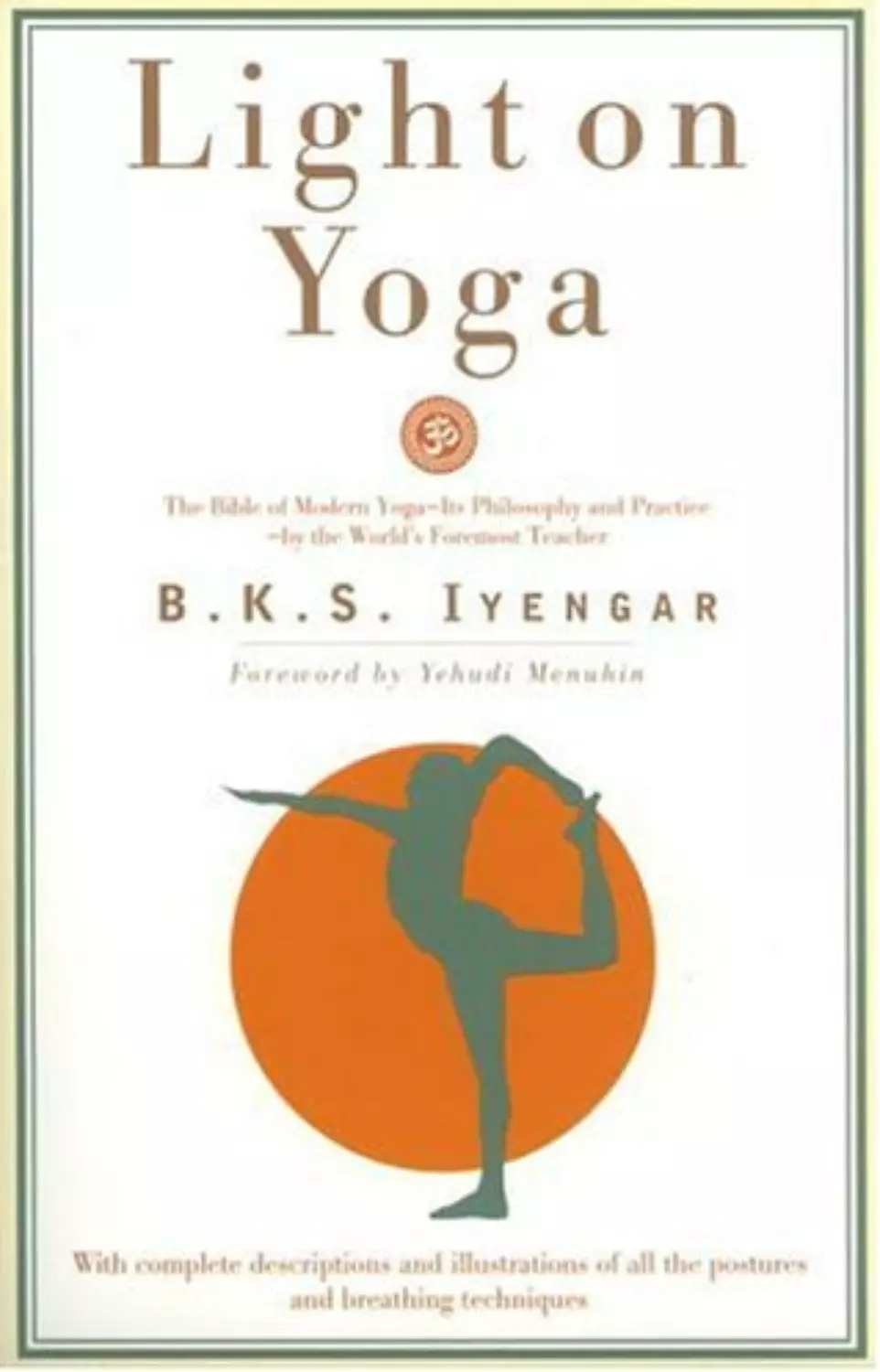
LIGHT ON YOGA
50 Years of Publishing
1945-1995
LIGHT ON YOGA
Yoga Dipika
B. K. S. IYENGAR
Foreword by Yehudi Menuhin
REVISED EDITION
Schocken Books New YOrk
First published by Schocken Books 1966
Revised edition published by Schocken Books 1977
Paperback revised edition published by Schocken Books 1979
Copyright <Q 1966, 1968, 1976 by George Allen & Unwin (Publishers) Ltd.
All rights reserved under International and Pan-American Copyright
Conventions. Published in the United States by Schocken Books Inc.,
New York. Distributed by Pantheon Books, a division of Random
House, Inc., New York.
Library of Congress Cataloging in Publication Data
Iyengar, B.K.S. 1918-
Light on yoga.
1. Yoga, Hatha. I. Title.
RA 781.7.194 1977 613.7 76-48857
ISBN 0-8052-1031-8
Manufactured in the United States of America
C98765432
Dedicated to my Revered Gurufi
Samkya-yoga-Sikhama1Ji,. Veda-kesari,. Vedantavag'isa,.
Nyayacharya,. Mlmamsa-ratna,. Mlmamsa-thirtha
Professor, Sriman, T. Krishnamacharya of Mysore (South
India), India
PRAYER
'I bow before the noble t of sages, Patafljali, who
brought serenity of mind by his work on yoga, clarity of
speech by his work on grammar and purity of body by
his work on medicine.'
'1 salute Adfsvara (the Primev&l Lord Siva) who
taught first the science of Ha!ha Yoga-a science that
stands out as a ladder for those who wish to scale the
heights of Raja Yoga.'
Foreword
by Yehudi Menuhin
The practice ofY oga ind uces a primary sense of measure and proportion.
Reduced to our own body, our first instrument, we learn to play it,
drawing from it maximum resonance and harmony. With unflagging
patience we refine and animate every cell as we return daily to the
attack, unlocking and liberating capacities otherwise condemned to
frustration and death.
Each unfulfilled area of tissue and nerve, of brain or lung, is a
challenge to our will and integrity, or otherwise a source of frustratl0n
and death. Whoever has had the privilege of receiving Mr Iyengar's
attention, or of witnessing the precision, refinement and beauty of his
art, is introduced to that vision of perfection and innocence which is
man as first created - unarmed, unashamed, son of God, lord of creation
- in the Garden of Eden. The tree of knowledge has indeed yielded much
fruit of great variety, sweet, poisonous, bitter, wholesome according to
our use of it. But is it not more imperative than ever that we cultivate
the tree, that we nourish its roots? And furthermore how dangerous is
that knowledge to those who, ill at ease with themselves, would rather
apply it to the manipulation of other people and things than to the
improvement of their own persons.
The practice ofY oga over the past fifteen years has convinced me that
most of our fundamental attitudes to life have their physical counterparts
in the body. Thus comparison and criticism must begin with the align-
ment of our own left and right sides to a degree at which even finer
adjustments are feasible: or strength of will will cause us to start by
stretching the body from the toes to the top of the head in defiance of
gravity. Impetus and ambition might begin with the sense of weight and
speed that comes with free-swinging limbs, instead of with the control
of prolonged balance on foot, feet or hands, which gives poise. Tenacity
is gained by stretching in various Yoga postures for minutes at a time,
while calmness comes with quiet, consistent breathing and the expan-
sion of the lungs. Continuity and a sense of the universal come with
the knowledge of the inevitable alternation of tension and relaxation in
eternal rhythms of which each inhalation and exhalation constitutes one
cycle, wave or vibration among the countless myriads which are the
unIverse.
12 Foreword
What is the alternative? Thwarted, warped people condemning the
order of things, cripples criticising the upright, autocrats slumped in
expectant coronary attitudes, the tragic spectacle of people working out
their own imbalance and frustration on others.
Yoga, as practised by Mr Iyengar, is the dedicated votive offering of
a man who brings himself to the altar, alone and clean in body and mind,
focussed in attention and will, offering in simplicity and innocence not
a burnt sacrifice, but simply himself raised to his own highest potential.
It is a technique ideally suited to prevent physical and mental illness
and to protect the body generally, developing an inevitable sense of self-
reliance and assurance. By its very nature it is inextricably associated
with universal laws : for respect for life, truth, and patience are all indis-
pensable factors in the drawing of a quiet breath, in calmness of mind
and firmness of will.
In this lie the moral virtues inherent in Yoga. For these reasons it
demands a complete and total effort, involving and forming the whole
human being. No mechanical repetition is involved and no lip-service
as in the case of good resolutions or formal prayers. By its very nature
it is each time and every moment a living act.
Mr I yengar's Light on Yoga will, I hope, enable many to follow his
example and to become the teachers whom mankind so sorely needs.
If this book will serve to spread this basic art and will ensure that it is
practised at the highest level, I shall feel more than ever grateful for
having shared in its presentation.
Preface
It is only thanks to the persistent encouragement of my devoted friends
and pupils that this book is now achieved - for alone I would have
repeatedly faltered not only because of my inadequate command of the
English language but because I would have lost heart without their
buoyant support and assurance.
Yoga is a timeless pragmatic science evolved over thousands of years
dealing with the physical, moral, mental and spiritual well-being of man
as a whole.
The first book to systematise this practice was the classic treatise the
Yoga Sutras (or Aphorisms) of Patafljali dating from 200 BC. Unfor-
tunately most of the books published on Yoga in our day have been
unworthy of both the subject and its first great exponent, as they are
superficial, popular and at times misleading. I have even been asked by
their readers whether I can drink acid, chew glass, walk through fire,
make myself invisible or perform other magical acts. Scholarly and
reliable expositions of the religious and philosophical texts already exist
in most languages - but the practice of an art is more difficult to com-
municate than a purely literary or philosophical concept.
The title of this book is Light on Yoga (Yoga Dlpika in Sanskrit), as
my purpose is to describe as simply as possible the asanas (postures)
and praJ).ayamas (breathing disciplines) in the new light of our own era,
its knowledge and its requirements. Instructions on asana and pra ayama
are therefore given in great detail and are based on my experience for
over twenty-seven years in many parts of the world. I t contains the
complete technique of 200 asanas with 592 photographs from which the
asanas can be mastered: and it also covers bandha, kriya and pra ayama
with a further 5 photographs.
The Western reader may be surprised at the recurring reference to
the Universal Spirit, to mythology and even to philosophical and moral
principles. He must not forget that in ancient times all the higher
achievements of man, in knowledge, art and power, were part of religion
and were assumed to belong to God and to His priestly servants on
earth. The Catholic Pope is the last such embodiment of divine know-
ledge and power in the West. But formerly, even in the Western world,
music, painting, architecture, philosophy and medicine, as well as wars,
14 Preface
\vere always in the service of God. It is only very recently In India that
these arts and sciences have begun to be emancipated from the Divine-
but with due respect, for the emancipation of man's will, as distinct from
the Divine will, we in India continue to value the purity of purpose,
the humili ty of discipline and the selflessness that are the legacy of our
long bondage to God. I consider it important as well as interesting that
the reader should know the origin of asanas, and I have, therefore,
included legends handed down by practising yogis and sages.
All the ancient commentaries on yoga have stressed that it is essential
to work under the direction of a GURU (Master), and although my
experience proves the wisdom of this rule, I have endeavoured with all
humility in this book to guide the reader - both teacher and student - to
a correct and safe method of mas tering these asanas and praJ)ayamas.
In Appendix I, I have introduced a 300 weeks' course for the intense
practitioner, grouping the asanas stage by stage according to their
structure.
In Appendix I I, I have arranged groups of asanas for their therapeutic
and curative val ue.
Study in detail the hints and cautions before attempting the asana
and praJ)ayama techniques.
I am sincerely grateful to my esteemed friend and pupil Mr Yehudi
Menuhin for his foreword and immeasurable support.
I am indebted to my pupil Mr B. I. Taraporewala for his collabora-
tion in the preparation of this book.
I thank Messrs Allen and Unwin for their gesture in publishing this
exhaustively illustrated book and presenting my work to a world-wide
public, and Eilean Pearcey for providing the drawings.
I express my sincere gratitude to Messrs G. G. Welling of Poona
(India), for their personal supervision and interest in taking innumerable
photographs for me and for placing the resources of their studio at my
dis posal.
The author wishes to express his gratitude to Mr Gerald Yorke for
the care with which he dealt with the editing of the typescript and
subsequent proof correction.
B. K. S. IYENGAR
Contents
FOREWORD BY YEHUDI MENUHIN
PREFACE
PART I INTRODUCTION
What is Yoga?
PART II YOGASANAS, BANDHA AND KRIYA
Y ogasanas
Bandha and Kriya
PART III PRANAYA MA
Hints and Cautions
Technique and Effects of Prat:layama
Prat:layamas
Appendix I: Asana Courses
Appendix I I: Curative Asanas for Various Diseases
Table to correlate the asanas etc. with the plates which
illustrate them
Glossary
Index
PAGE
II
13
17
19
55
57
57
4 2 9
43 1
441
449
4 62
4 8 7
5°7
5 1 3
537
PART I
Introduction
What is Yoga?
The word Yoga is derived from the Sanskrit root yuj meaning to bind,
join, attach and yoke, to direct and concentrate one's attention on, to
use and apply. It also means union or communion. It is the true union
of our will with the will of God. 'It thus means,' says Mahadev Desai
in his introduction to the Gita according to Gandhi, 'the yoking of all
the powers of body, mind and soul to God; it means the disciplining of
the intellect, the mind, the emotions, the will, which that Yoga pre-
supposes; it means a poise of the soul which enables one to look at life
in all its aspects evenly.'
Yoga is one of the six orthodox systems of Indian philosophy. It was
collated, co-ordinated and systematised by Pataftjali in his classic al
work, the Yoga Sutras, which consists of 185 terse aphorisms. In Indian
thought, everything is permeated by the Supreme Universal Spirit
(Paramatma or God) of which the individual human spirit (jlvatma) is a
part. The system of yoga is so called because it teaches the means by
which the jlvatma can be united to, or be in communion with the
Paramatma, and so secure liberation (mok a).
One who follows the path of Yoga is a yogi or yogin.
In the sixth chapter of the BhaKavad Glta, which is the most important
authority on Yoga philosophy, Sri Krishna explains to Arjuna the mean-
ing ofY oga as a deliverance from contact with pain and sorrow. I t is said:
'When his mind, intellect and self (ahamkara) are under control, freed
from restless desire, so that they rest in the spirit within, a man becomes
a Yukta - one in communion with God. A lamp does not flicker in a
place where no winds blow; so it is with a yogi, who controls his mind,
intellect and self, being absorbed in the spirit within him. When the
restlessness of the mind, intellect and self is stilled through the practice
of Yoga, the yogi by the grace of the Spirit within himself finds fulfil-
ment. Then he knows the joy eternal which is beyond the pale of the
senses which his reason cannot grasp. He abides in this reality and moves
not therefrom. He has found the treasure above all others. There is
nothing higher than this. He who has achieved it, shall not be moved by
the greatest sorrow. This is the real meaning of Yoga - a deliverance
from contact with pain and sorrow.'
20 Light on Yoga
As a well cut diamond has many facets, each reflecting a different
colour of light, so does the word yoga, each facet reflecting a different
shade of meaning and revealing different aspects of the entire range of
human endeavour to win inner peace and happiness.
The Bhagavad Glt{i also gives other explanations of the term yoga and
lays stress upon Karma Yoga (Yoga by action). It is said: 'Work alone
is your privilege, never the fruits thereof. Never let the fruits of action
be your moti ve ; and never cease to work. Work in the name of the Lord,
abandoning selfish desires. Be not affected by success or failure. This
equi poise is called Yoga.'
Yoga has also been described as wisdom in work or skilful living
amongst activities, harmony and moderation.
'Y oga is not for him who gorges too much, nor for him who starves
himself. It is not for him who sleeps too much, nor for him who stays
awake. By moderation in eating and in resting, by regulation in \tvorking
and by concordance in sleeping and waking, Yoga destroys all pain and
sorrow. '
The Kathopanishad describes Yoga thus: 'When the senses are stilled,
when the mind is at rest, when the intellect wavers not - then, say the
wise, is reached the highest stage. This steady control of the senses and
mind has been defined as Yoga. He who attains it is free from delusion.'
In the second aphorism of the first chapter of the Yoga Sutras,
Patafljali describes Yoga as 'chitta v tti nirodhah'. This may be trans-
lated as the restraint (nirodhah) of mental (chitta) modifications (v tti)
or as suppression (nirodhah) of the fluctuations (v tti) of consciousness
(chitta). The word chitta denotes the mind in its total or collective sense
as being composed of three categories: (a) mind (manas, that is, the
individual mind having the power and faculty of attention, selection and
rejection; it is the oscillating indecisive faculty of the mind) ; (b) intel-
ligence or reason (buddhi, that is, the decisive state which determines
the distinction between things) and (c) ego (aharilkara, literally the
I-maker, the state which ascertains that 'I know').
The word v tti is derived from the Sanskrit root v t meaning to turn,
to revolve, to roll on. It thus means course of action, behaviour, mode
of being, condition or mental state. Yoga is the method by which the
restless mind is calmed and the energy directed into constructive
channels. As a mighty river which when properly harnessed by dams
and canals, creates a vast reservoir of water, prevents famine and pro-
vides abundant power for industry; so also the mind, when controlled,
provides a reservoir of peace and generates abundant energy for human
uplift.
Introduction 21
The problem of controlling the mind is not capable of easy solution,
as borne out by the follow ng dialogue in the sixth chapter of the
Bhagavad Gita. Arjuna asks Sri Krishna:
'Krishna, you have told me of Yoga as a communion with Brahman (the
Universal Spirit), which is ever one. But how can this be permanent,
since the mind is so restless and inconsistent? The mind is impetuo s
and stubborn, strong and wilful, as difficult to harness as the wind.' Sri
Krishna replies: 'Undoubtedly, the mind is restless and hard to control.
But it can be trained by constant practice (abhyasa) and by freedom
from desire (vairagya). A man who cannot control his mind will find it
difficult to attain this divine communion; but the self-controlled man
can attain it if he tries hard and directs his energy by the right means.'
THE STAGES OF YOGA
The right means are just as important as the end in view. Pataiijali
enumerates these means as the eight limbs or stages of Yoga for the
quest of the soul. They are:
I. Yama (universal !.TI0ral commandments); 2. Niyama (self purifica-
tion by discipline); 3. Asana (posture); 4. Prat:layama (rhythmic control
of the breath); 5. Pratyahara (withdrawal and emancipation of the mind
from the domination of the senses and exterior objects); 6. Dharat:la
(concentration); 7. Dhyana (meditation) and 8. Samadhi (a state of
super-consciousness brought about by profound meditation, in which
the individual aspirant (sadhaka) becomes one with the object of his
meditation - Paramatma or the Universal Spirit).
Yama and Niyama control the yogi's passions and emotions and keep
him in harmony with his fellow man. Asanas keep the body healthy and
strong and in harmony with nature. Finally, the yogi becomes free of
body consciousness. He conquers the body and renders it a fit vehicle
for the soul. The first three stages are the outward quests (bahiranga
sadhana) .
The next two stages, Pra:r:tayama and Pratyahara, teach the aspirant
to regulate the breathing, and thereby control the mind. This helps to
free the senses from the thraldom of the objects of desire. These two
stages of Yoga are known as the inner quests (antaranga sadhana).
Dharana, Dhyana and Samadhi take the yogi into the innermost
recesses of his soul. The yogi does not look heavenward to find God.
He knows that HE is within, being known as the Antaratma (the Inner
Self). The last three stages keep him in harmony with himself and his
Maker. These stages are called antaratma sadhana, the quest of the
soul.
22 Light on Yoga
By profound meditation, the knower, the knowledge and the known
become one. The seer, the sight and the seen have no separate existence
from each other. It is like a great musician becoming one with his
instrument and the music that comes from it. Then, the yogi stands
in his own nature and realises his self (Atman), the part of the Supreme
Soul within himself.
There are different paths (margas) by which a man travels to his
Maker. The active man finds realisation through Karma Marga, in
which a man realises his own divinity through work and duty. The
emotional man finds it through Bhakti Marga, where there is realisa-
tion through devotion to and love of a personal God. The intellectual
man pursues Jiiana Marga, where realisation comes through knowledge.
The meditative or reflective man follows Yoga Marga, and realises his
own di vini ty through control of the mind.
Happy is the man who knows how to distinguish the real from the
unreal, the eternal from the transient and the good from the pleasant by
his discrimination and wisdom. Twice blessed is he who knows true love
and can love all God's creatures. He who works selflessly for the welfare
of others with love in his heart is thrice blessed. But the man who
combines within his mortal frame knowledge, love and selfless service
is holy and becomes a place of pilgrimage, like the confluence of the
rivers Ganga, Saraswati and J amuna. Those who meet him become
calm and purified.
Mind is the king of the senses. One who has conquered his mind,
senses, passions, thought and reason is a king among men. He is fit for
Raja Yoga, the royal union with the Universal Spirit. He has Inner
Light.
He who has conquered his mind is a Raja Yogi. The word raja means
a king. The expression Raja Yoga implies a complete mastery of the
Self. Though Pataiiiali explains the ways to control the mind, he no-
where states in his aphorisms that this science is Raja Yoga, but calls it
A ai1ga Yoga or the eight stages (limbs) of Yoga. As it implies complete
mastery of the self one may call it the science of Raja Yoga.
Swatmarama, the author of the Hatha Yoga Pradzpika (ha ha = force
or determined effort) called the same path Ha ha Yoga because it
demanded rigorous discipline.
1 t is generally believed that Raja Yoga and Hatha Yoga are entirely
distinct, different and opposed to each other, that the Yoga Sutras of
Pataiijali deal with Spiritual discipline and that the H afha Yoga
Pradzpika of Swatmarama deals solely with physical discipline. I t is not
so, for Ha ha Yoga and Raja Yoga complement each other and form a
single approach towards Liberation. As a mountaineer needs ladders,
ropes and crampons as well as physical fitness and discipline to climb
Introduction 23
the icy peaks of the Himalayas, so does the Yoga aspirant need the know-
ledge and discipline of the Ha!ha Yoga of Swatmarama to reach the
heights of Raja Yoga dealt with by Pataiijali.
This path of Yoga is the fountain for the other three paths. 1 t brings
calmness and tranquillity and prepares the mind for absolute unqualified
self-surrender to God, in which all these four paths merge into one.
Chitta V tti (Causes/or the Modification of the Mind)
In his Yoga Sutras Pataiijali lists five classes of chitta v tti which create
pleasure and pain. These are:
I. Prama:r:ta (a standard or ideal), by which things or values are measured
by the mind or known, which men accept upon (a) direct evidence such
as perception (pratyak a), (b) inference (anumana) and (c) testimony or
the word of an acceptable authority when the source of knowledge has
been checked as reliable and trustworthy (agama).
2. Viparyaya (a mistaken view which is observed to be such after study).
A faulty medical diagnosis based on wrong hypotheses, or the formerly
held theory in astronomy that the S un rotates round the Earth, are
examples of viparyaya.
3. Vikalpa (fancy or imagination, resting merely on verbal expression
without any factual basis). A beggar may feel happy when he imagines
himself spending millions. A rich miser, on the other hand, may starve
himself in the belief that he is poor.
4. Nidra (sleep), where there is the absence of ideas and experiences.
When a man is sleeping soundly, he does not recall his name, family or
status, his knowledge or wisdom, or even his own existence. When a man
forgets himself in sleep, he wakes up refreshed. But, if a disturbing
thought creeps into his mind when he is dropping off, he will not rest
properly.
5. Smrti (memory, the holding fast of the impressions of objects that
one ha experienced). There are people who live in their past experi-
ences, even though the past is beyond recall. Their sad or happy
memories keep them chained to the past and they cannot break their
fetters.
Patafijali enumerates five causes of chitta vrtti creating pain (klesa).
These are:
I. Avidya (ignorance or nescience); (2) asmita (the feeling of indivi-
duality which limits a person and distinguishes him from a group and
which may be physical, mental, intellectual or emotional); (3) raga
24 Light on Yoga
(attachment or passion); (4) dvesa (aversion or revulsion) and (5)
abhinivesa (love of or thirst for life, the instinctive clinging to worldly
life and bodily enjoyment and the fear that one may be cut off from all
this by death). These causes of pain remain submerged in the mind of
the sadhaka (the aspirant or seeker). They are like icebergs barely show-
ing their heads in the polar seas. So long as they are not studiously
controlled and eradicated, there can be no peace. The yogi learns to
forget the past and takes no thought for the morrow. He lives in the
eternal present.
As a breeze ruffles the surface of a lake and distorts the images
reflected therein, so also the chitta v tti disturb the peace of the mind.
The still waters of a lake reflect the beauty around it. When the mind
is still, the beauty of the Self is seen reflected in it. The yogi stills his
mind by constant study and by freeing himself from desires. The eight
stages of Yoga teach him the way.
Chitta Vik epa (Distractions and Obstacles)
The distractions and obstacles which hinder the aspirant's practice of
Yo ga are:
I. Vyadhi - sickness which disturbs the physical equilibrium
2. Styana -languor or lack of mental disposition for work
3. Sarhsaya - doubt or indecision
4. Pramada - indifference or insensibili ty
5. Alasya -laziness
6. Avirati -sensuality, the rousing of desire when sensory objects
possess the mind
7. Bhranti DarSana - false or invalid knowledge, or illusion
8. Alabdha Bhiimikatva - failure to attain continuity of thought or con-
centration so that reality cannot be seen
9. Anavastbitattva - instability in holding on to concentration which has
been attained after long practice.
There are, however, four more distractions: (I) dul:1kha-pain or
misery, (2) daurmansya-despair, (3) angamejayatva-unsteadiness of
the body and (4) svasa-prasvasa - unsteady respiration.
To win a battle, a general surveys the terrain and the enemy and plans
counter-measures. In a similar way the Yogi plans the conquest of the
Self.
Vyadhi: It will be noticed that the very first obstacle is ill-health or
sickness. To the yogi his body is the prime instrument of attainment.
If his vehicle breaks down, the traveller cannot go far. If the body is
broken by ill-health, the aspirant can achieve little. Physical health is
Introduction 25
important for mental development, as normally the mind functions
through the nervous system. When the body is sick or the nervous
system is affected, the mind becomes restless or dull and inert and con-
centration or meditation become impossible.
Styana: A person suffering from languor has no goal, no path to follow
and no enthusiasm. His mind and intellect become dull due to inactivity
and their faculties rust. Constant flow keeps a mountain stream pure,
but water in a ditch stagnates and nothing good can flourish in it. A
listless person is like a living corpse for he can concentrate on nothing.
Samsaya: The unwise, the faithless and the doubter destroy themselves.
How can they enjoy this world or the next or have any happiness? The
seeker should have faith in himself and his master. He should have faith
that God is ever by his side and that no evil can touch him. As faith
springs up in the heart it dries out lust, ill-will, mental sloth, spiritual
pride and doubt, and the heart free from these hindrances becomes
serene and untroubled.
Pramada: A person suffering from pramada is full of self-importance,
lacks any humility and believes that he alone is wise. No doubt he knows
what is right or wrong, but he persists in his indifference to the right
and chooses what is pleasant. To gratify his selfish passions and dreams
of personal glory, he will deliberately and without scruple sacrifice
everyone who stands in his way. Such a person is blind to God's glory
and deaf to His words.
Alasya: To remove the obstacle of laziness, unflagging enthusiasm
(vi'rya) is needed. The attitude of the aspirant is like that of a lover ever
yearning to meet the beloved but never giving way to despair. Hope
should be his shield and courage his sword. He should be free from
hate and sorrow. With faith and enthusiasm he should overcome the
inertia of the body and the mind.
Avirati: This is the tremendous craving for sensory objects after they
have been consciously abandoned, which is so hard to restrain. With-
out being attached to the objects of sense, the yogi learns to enjoy them
with the aid of the senses which are completely under his control. By
the practice of pratyahara he wins freedom from attachment and
emancipation from desire and becomes content and tranquil.
Bhranti Darsana: A person afflicted by false knowledge suffers from
delusion and believes that he alone has seen the true Light. He has a
26 Light on Yoga
powerful intellect but lacks humility and makes a show of wisdom. By
remaining in the company of great souls and through their guidance he
sets his foot firmly on the right path and overcomes his weakness.
Alabdha Bhumikatva: As a mountain climber fails to reach the summit
for lack of stamina, so also a person who cannot overcome the inability
to concentrate is unable to seek reality. He might have had glimpses of
reality but he cannot see clearly. He is like a musician who has heard
divine music in a dream, but who is unable to recall it in his waking
moments and cannot repeat the dream.
Anavasthitattva: A person affected with anavasthitattva has by hard
work come within sight of reality. Happy and proud of his achievements
he becomes slack in his practice (sadhana). He has purity and great
power of concentration and has come to the final cross-roads of his quest.
Even at this last stage continuous endeavour is essential and he has to
pursue the path with infinite patience and determined perseverance and
must never sho slackness which hampers progress on the path of God
realization. He must wait until divine grace descends upon him. It has
been said in the Ka{hopanishad: 'The Self is not to be realised by study
and instruction, nor by subtlety of intellect, nor by much learning, but
only by him who longs for Him, by the one whom He chooses. Verily to
such a one the Self reveals His true being.'
To overcome the obstacles and to win unalloyed happiness, Patafijali
offered several remedies. The best of these is the fourfold remedy of
Maitri (friendliness), Karut:la (compassion), Mudita (delight) and
Upek a (disregard).
Maitri is not merely friendliness, but also a feeling of oneness with
the object of friendliness (atmlyata). A mother feels intense happiness
at the success of her children because of atmlyata, a feeling of oneness.
Patafijali recommends maitri for sukha (happiness or virtue). The yogi
cultivates n1aitri and atmlyata for the good and turns enemies into
friends, bearing malice towards none.
Karuna is not merely showing pity.or compassion and shedding tears
of desp ir at the misery (dul:1kha) of others. It is compassion coupled
with devoted action to relieve the misery of the afflicted. The yogi uses
all his resources - physical, economic, mental or moral- to alleviate the
pain and suffering of others. He shares his strength with the weak until
they become strong. He shares his courage with those that are timid until
they become brave by his example. He denies the maxim of the 'survival
of the fittest', but makes the weak strong enough to survive. He becomes
a shelter to one and all.
Mudita is a feeling of delight at the good work (punya) done by
Introduction 27
another, even though he may be a rival. Through mudita, the yogi saves
himself from much heart-burning by not showing anger, hatred or
jealousy for another who has reached the desired goal which he himself
has failed to achieve.
Upeksa: It is not merely a feeling of disdain or contempt for the
person who has fallen into vice (apu ya) or one of indifference or
superiority towards him. It is a searching self-examination to find out
how one would have behaved when faced with the same temptations.
1 t is also an examination to see how far one is responsible for the state
into which the unfortunate one has fallen and the attempt thereafter
to put him on the right path. The yogi understands the faults of others
by seeing and studying them first in himself. This self-study teaches him
to be charitable to all.
The deeper significance of the fourfold remedy of mai tri, karu a,
mudita and upek a cannot be felt by an unquiet mind. My experience
has led me to conclude that for an ordinary man or woman in any com-
munity of the world, the way to achieve a quiet mind is to work with
determination on two of the eight stages of Yoga mentioned by
Pataiijali, namely, asana and prat:layama.
The mind (manas) and the breath (prana) are intimately connected
and the activity or the cessation of activity of one affects the other.
Hence Pataiijali recommended prat:layama (rhythmic breath control) for
achieving mental equipoise and inner peace.
Sisya and Guru (A Pupil and a Nlaster)
The Siva Samhita divides sadhakas (pupils or aspirants) into four
classes. They are (I) mrdu (feeble), (2) madhyama (average), (3)
adhimatra (superior) and (4) adhimatratama (the supreme one). The
last, the highest, is alone able to cross beyond the ocean of the manifest
world.
The feeble seekers are those who lack enthusiasm, criticise their
teachers, are rapacious, inclined to bad action, eat much, are in the power
of women, unstable, cowardly, ill, dependent, speak harshly, have weak
characters and lack virility. The Guru (Teacher or Master) guides such
seekers in the path of Mantra Yoga only. With much effort, the sadhaka
can reach enlightenment in twelve years. (The word mantra is derived
from the root 'man', meaning to think. Mantra thus means a sacred
thought or prayer to be repeated with full understanding of its meaning.
1 t takes a long time, perhaps years, for a mantra to take firm root in the
mind of a feeble sadhaka and still longer for it to bear fruit.)
Of even mind, capable of bearing hardship, wishing to perfect the
work, speaking gently, moderate in all circumstances, such is the
28 Light on Yoga
average seeker. Recognising these qualities, the Guru teaches him Laya
Yoga, which gives liberation. (Laya means devotion, absorption or
d is sol uti on. )
Of stable mind, capable of Laya Yoga, virile, independent, noble,
merciful, forgiving, truthful, brave, young, respectful, worshipping his
teacher, intent on the practice of Yoga, such is a superior seeker. He
can reach enlightenment after six years of practice. The Guru instructs
this forceful man in Ha!ha Yoga.
Of great virility and enthusiasm, good looking, courageous, learned
in scriptures, studious, sane of mind, not melancholy, keeping young,
regular in food, with his senses under control, free from fear, clean,
skilful, generous, helpful to all, firm, intelligent, independent, forgiving,
of good character, of gentle speech and worshipping his Guru, such is
a supreme seeker, fit for all forms of Yoga. He can reach enlighten-
ment in three ye rs.
Although the Siva Samhita and the H a{ha Yoga Pradzpika mention
the period of time within which success might be achieved, Pataiijali
nowhere lays down the time required to unite the individual soul with
the Divine Universal Soul. According to him abhyasa (constant and
determined practice) and vairagya (freedom from desires) make the
mind calm and tranquil. He defines abhyasa as effort of long duration,
without interruption, performed with devotion, \vhich creates a firm
foundation.
The study of Yoga is not like work for a diploma or a university
degree by someone desiring favourable results in a stipulated time.
The obstacles, trials and tribulations in the path of Yoga can be
removed to a large extent with the help of a Guru. (The syllable gu
means darkness and ru means light. He alone is a Guru who removes
darkness and brings enlightenment.) The conception of a Guru is deep
and significant. He is not an ordinary guide. He is a spiritual teacher
who teaches a way of life, and not merely how to earn a livelihood.
He transmits knowledge of the Spirit and one who receives such
knowledge is a sisya, a disciple.
The relationship between a Guru and a si ya is a very special one,
transcending that between parent and child, husband and wife or
friends. A Guru is free from egotism. He devotedly leads his si ya
towards the ultimate goal without any attraction for fame or gain. He
shows the path of God and watches the progress of his disciple, guiding
him along that path. He inspires confidence, devotion, discipline, deep
understanding and illumination through love. With faith in his pupil,
the Guru strains hard to see that he absorbs the teaching. He encour-
ages him to ask questions and to know the truth by question and
anal ys is.
Introduction 29
A si ya should possess the necessary qualifications of higher
realisation and development. He must have confidence, devotion and
love for his Guru. The perfect examples of the relationship between a
Guru and a si ya are those of, Yama (the God of Death) and Nachiketa
in the Kafhopani ad and of Sri Krishna and Arjuna in the Bhagavad
Gfta. Nachiketa and Arjuna obtained enlightenment through their
one-pointed mind, their eagerness and questioning spirit. The si ya
should hunger for knowledge and have the spirit of humility, perse-
verance and tenacity of purpose. He should not go to the Guru merely
out of curiosity. He should possess sraddha (dynamic faith) and should
not be discouraged if he cannot reach the goal in the time he had ex-
pected. I t requires tremendous patience to calm the restless mind
which is coloured by innumerable past experiences and sarilskara (the
accumulated residue of past thoughts and actions).
Merely listening to the words of the Guru does not enable the si ya
to absorb the teaching. This is borne out by the story of Indra and
Virochana. Indra, the king of Gods, and Virochana, a demon prince,
went together to their spiritual preceptor Brahma to obtain know-
ledge of the Supreme Self. Both stayed and listened to the same
words of their Guru. Indra obtained enlightenment, whereas Virochana
did not. Indra's memory was developed by his devotion to the subject
taught and by the love and faith which he had for his teacher. He had
a feeling of oneness wi th his Guru. These were the reasons for his
success. Virochana's memory was developed only through his intellect.
He had no devotion either for the subject taught or for his preceptor.
He remained what he originally was, an intellectual giant. He returned
a doubter. Indra had intellectual humility, while Virochana had intel-
lectual pride and imagined that it was condescending on his part to go
to Brahma. The approach of Indra was devotional while that of
Virochana was practical. Virochana was motivated by curiosity and
wanted the practical knowledge which he believed would be useful to
him later to win power.
The si ya should above all treasure love, moderation and humility.
Love begets courage, moderation creates abundance and humility
generates power. Courage without love is brutish. Abundance without
moderation leads to over-indulgence and decay. Power without humility
breeds arrogance and tyranny. The true si ya learns from his Guru
about a power which will never leave him as he returns to the
Primeval One, the Source of His Being.
Sadhana (A Key to Freedom)
All the important texts on Yoga lay great emphasis on sadhana or
abhyasa (constant practice). Sadhana is not just a theoretical study
30 Light on Yoga
of Yoga texts. It is a spiritual endeavour. Oil seeds must be pressed
to yield oil. Wood must be heated to ignite it and bring out the hidden
fire within. In the same way, the sadhaka must by constant practice
light the divine flame within himself.
'The young, the old, the extremely aged, even the sick and the in-
firm obtain perfection in Yoga by constant practice. Success will
follow him who practises, not him who practises not. Success in Yoga
is not obtained by the mere theoretical reading of sacred texts. Success
is not obtained by wearing the dress of a yogi or a sanyasi (a reel use),
nor by talking about it. Constant practice alone is the secret of success.
Verily, there is no doubt of this.' -(Hatha Yoga Prad'ipika, chapter I,
verses 64-6.)
'As by learning the alphabet one can, through practice, master all
the sciences, so by thoroughly practising first physical training one
acquires the knowledge of Truth (Tattva ]naqa), that is the real nature
of the human soul as being identical with the Supreme Spirit pervad-
ing the Universe.' - (Ghera1}q a Samhita, chapter I, verse 5.)
It is by the co-ordinated and concentrated efforts of his body, senses,
mind, reason and Self that a man obtains the prize of inner peace and
fulfils the quest of his soul to meet his Maker. The supreme adventure
in a man's life is his journey back to his Creator. To reach the goal
he needs well developed and co-ordinated functioning of his body,
senses, mind, reason and Self. If the effort is not co-ordinated, he fails
in his adventure. In the third valli (chapter) of the first part of the
Ka!hopani ad, Yama (the God of Death) explains this Yoga to the
seeker Nachiketa by way of the parable of the individual in a chariot.
'Know the Atman (Self) as the Lord in a chariot, reason as the
charioteer and mind as the reins. The senses, they say, are the horses,
and their objects of desire are the pastures. The Self, when united
with the senses and the mind, the wise call the Enjoyer (Bhoktr). The
undiscriminating can never rein in his mind; his senses are like the
vicious horses of a charioteer. The discriminating ever controls his
mind; his senses are like disciplined horses. The undiscriminating
becomes unmindful, ever inlpure; he does not reach the goal, wander-
ing from one body to another. The discriminating becomes mindful,
ever pure; he reaches the goal and is never reborn. The man who has
a discriminating charioteer to rein in his mind reaches the end of the
journey- the Supreme Abode of the everlasting Spirit.'
'The senses are more powerful than the objects of desire. Greater
than the senses is the mind, higher than the mind is the reason and
superior to reason is He - the Spirit in all. Discipline yourself by the
Self and destroy your deceptive enemy in the shape of desire.'
(Bhagavad Glta, chapter III, verses 42-3.)
Introduction 3 I
To realise this not only constant practice is demanded but also
renunciation. As regards renunciation, the question arises as to what
one should renounce. The yogi does not renounce the world, for that
would mean renouncing the Creator. The yogi renounces all that
takes him away from the Lord. He renounces his own desires, knowing
that all inspiration and right action come from the Lord. He renounces
those who oppose the work of the Lord, those who spread demonic
ideas and who merely talk of moral values but do not practise them.
The yogi does not renounce action. He cuts the bonds that tie him-
self to his actions by dedicating their frui ts either to the Lord or to
humanity. He believes that it is his privilege to do his duty and that
he has no right to the fruits of his actions.
While others are asleep when duty calls and wake up only to claim
their rights, the yogi is fully awake to his duty, but asleep over his
rights. Hence it is said that in the night of all beings the disciplined
and tranquil man wakes to the light.
A fanga Yoga - The Eight Limbs of Yoga
The Yoga Sutra of Pataiijali is divided into four chapters or pada. The
first deals with samadhi, the second with the means (sadhana) to
achieve Yoga, the third enumerates the powers (vibhiiti) that the yogi
comes across in his quest, and the fourth deals with absolution
(kaivalya).
Yama
The eight limbs of Yoga are described in the second chapter. The first
of these is yama (ethical disciplines) - the great commandments
transcending creed, country, age and time. They are: ahimsa (non-
violence), satya (truth), asteya (non-stealing), brahmacharya
(continence) and aparigraha (non-coveting). These commandments are
the rules of morality for society and the individual, which if not obeyed
bring chaos, violence, untruth, stealing, dissipation and covetousness.
The roots of these evils are the emotions of greed, desire and attach-
ment, which may be mild, medium or excessive. They only bring pain
and ignorance. Pataiijali strikes at the root of these evils by changing
the direction of one's thinking along the five principles of yama.
Ahimsa. The word ahimsa is made up of the particle 'a' meaning 'not'
and the noun himsa meaning killing or violence. It is more than a
negative command not to kill, for it has a wider positive meaning, love.
This love embraces all creation for we are all children of the same
Father- the Lord. The yogi believes that to kill or to destroy a thing or
being is to insult its Creator. Men either kill for food or to protect
32 Light on Yoga
themselves from danger. But merely because a man is a vegetarian,
it does not necessarily follow that he is non-violent by temperament
or that he is a yogi, though a vegetarian diet is a necessity for the
practice of yoga. Blood-thirsty tyrants may be vegetarians, but violence
is a state of mind, not of diet. It resides in a man's mind and not in the
instrument he holds in his hand. One can use a knife to pare fruit or to
stab an enemy. The fault is not in the instrument, but in the user.
Men take to violence to protect their own interests - their own
bodies, their loved ones, their property or dignity. But a man cannot
rely upon himself alone to protect himself or others. The belief that
he can do so is wrong. A man must rely upon God, who is the source
of all strength. Then he will fear no evil.
V iolence arises out of fear, weakness, ignorance or restlessness. To
curb it what is most needed is freedom from fear. To gain this
freedom, what is required is a change of outlook on life and reorienta-
tion of the mind. Violence is bound to decline when men learn to base
their faith upon reality and investigation rather than upon ignorance and
supposition.
The yogi believes that every creature has as much right to live
as he has. He believes that he is born to help others and he looks upon
creation with eyes of love. He knows that his life is linked inextric-
ably with that of others and he rejoices if he can help them to be happy.
He puts the happiness of others before his own and becomes a source
of joy to all who meet him. As parents encourage a baby to walk the
first steps, he encourages those more unfortunate than himself and
makes them fit for survival.
For a wrong done by others, men demand ;ustice; while for that
done by themselves they plead mercy and forgiveness. The yogi on
the other hand, believes that for a wrong done by himself, there should
be justice, while for that done y another there should be forgiveness.
He knows and teaches others how to live. Always striving to perfect
himself, he shows them by his love and compassion how to improve
themselves.
The yogi opposes the evil in the wrong-doer, but not the wrong-
doer. He prescribes penance not punishment for a wrong done. Opposi-
tion to evil and love for the wrong-doer can live side by side. A
drunkard's wife whilst loving him may still oppose his habit. Opposi-
tion without love leads to violence; loving the wrong-doer without
opposing the evil in him is folly and leads to misery. The yogi knows
that to love a person whilst fighting the evil in him is the right course
to follow. The battle is won because he fights it with love. A loving
mother will sometimes beat her child to cure it of a bad habit; in the
same way a true follower of ahimsa loves his opponent.
Introduction 33
Along with ahimsa go abhaya (freedom from fear) and akrodha
(freedom from anger). Freedom from fear comes only to those who
lead a pure life. The yogi fears none and none need fear him, because
he is purified by the study of the Self. Fear grips a man and paralyses
him. He is afraid of the future, the unknown and the unseen. He is
afraid that he may lose his means of livelihood, wealth or reputation.
But the greatest fear is that of death. The yogi knows that he is
different from his body, which is a temporary house for his spirit.
He sees all beings in the Self and the Self in all beings and therefore
he loses all fear. Though the body is subject to sickness, age, decay
and death, the spirit remains unaffected. To the yogi death is the sauce
that adds zest to life. He has dedicated his mind, his reason and his
whole life to the Lord. When he has linked his entire being to the
Lord, what shall he then fear?
There are two types of anger (krodha), one of which debases the
mind while the other leads to spiritual growth. The root of the first is
pride, which makes one angry when slighted. This prevents the mind
from seeing things in perspective and makes one's judgement defective.
The yogi, on the other hand, is angry with himself when his mind
stoops low or when all his learning and experience fail to stop him
from folly. He is stern with himself when he deals with his own faults,
but gentle with the faults of others. Gentleness of mind is an attribute
of a yogi, whose heart melts at all suffering. In him gentleness for others
and firmness for himself go hand in hand, and in his presence all
hostilities are given up.
Satya. Satya or truth is the highest rule of conduct or morality.
Mahatma Gandhi said: 'Truth is God and God is Truth.' As fire burns
impurities and refines gold, so the fire of truth cleanses the yogi and
burns up the dross in him.
If the mind thinks thoughts of truth, if the tongue speaks words
of truth and if the whole life is based upon truth, then one becomes fit
for union with the Infinite. Reality in its fundamental nature is love
and truth and expresses itself through these two aspects. The yogi's
life must conform strictly to these two facets of Reality. That is why
ahimsa, which is essentially based on love, is enjoined. Satya pre-
supposes perfect truthfulness in thought, word and deed. U ntruthful-
ness in any form puts the sadhaka out of harmony with the funda-
mental law of truth.
Truth is not limited to speech alone. There are four sins of speech:
abuse and obscenity, dealing in falsehoods, calumny or telling tales
and lastly ridiculing what others hold to be sacred. The tale bearer
is more poisonous than a snake. The control of speech leads to the
34 Light on Yoga
rooting out of malice. When the mind bears malice towards none, it is
filled with charity towards all. He who has learnt to control his tongue
has attained self-control in a great measure. When such a person
speaks he will be heard with respect and attention. His words will b
remembered, for they will be good and true.
When one who is established in truth prays with a pure heart, then
things he really needs come to him when they are really needed: he
does not have to run after them. The man firmly established in truth
gets the fruit of his actions without a!,parently doing anything. God,
the source of all truth, supplies his needs and looks after his welfare.
Asteya. The desire to possess and enjoy what another has, drives a
person to do evil deeds. From this desire spring the urge to s teal and
the urge to covet. Asteya (a not, steya =- stealing), or non-stealing
include not only taking what belongs to another without permission,
but also using something for a different purpose to that intended, or
beyond the time permitted by its owner. It thus includes misappropria-
tion, breach of trust, mismanagement and misuse. The yogi reduces
his physical needs to the minimum, believing that if he gathers things
he does not really need, he is a thief. While other men crave for wealth,
power, fame or enjoyment, the yogi has one craving and that is to adore
the Lord. Freedom from craving enables one to ward off great tempta-
tions. Craving muddies the stream of tranquillity. It makes men base
and vile and cripples them. He who obeys the commandment Thou
shalt not steal, becomes a trusted repository of all treasures.
Brahmacharya. According to the dictionary brahmacharya means the
life of celibacy, religious study and self-restraint. I t is thought that
the loss of semen leads to death and its retention to life. By the
preservation of semen the yogi's body develops a sweet smell. So long
as it is retained, there is no fear of death. Hence the injunction that it
should be preserved by concentrated effort of the mind. The concept
of brahmacharya is not one of negation, forced austerity and prohibi-
tion. According to Sankaracharya, a brahmacharl (one who observes
brahmacharya) is a man who is engrossed in the study of the sacred
Vedic lore, constantly moves in Brahman and knows that all exists in
Brahman. In other words, one who sees divinity in all is a
brahmacharl. Pataiijali, however, lays stress on continence of the body,
speech and mind. This does not mean that the philosophy of Yoga is
meant only for celibates. Brahmacharya has little to do with whether
one is a bachelor or married and living the life of a householder. One
has to translate the higher aspects of Brahmacharya in one's daily living.
It is not necessary for one's salvation to stay unmarried and without
Introduction 35
a house. On the contrary, all the sm tls (codes of law) recommend
marriage. Without experiencing human love and happiness, it is not
possible to know divine love. Almost all the yogis and sages of old in
India were married men with families of their own. They did not
shirk their social or moral responsibilities. Marriage and parenthood
are no bar to the knowledge of divine love, happiness and union with
the Supreme Soul.
Dealing with the position of an aspirant who is a householder, the
Siva Samhita says: Let him practise free from the company of men in
a retired place. For the sake of appearances, he should remain in
society, but not have his heart in it. He should not renounce the duties
of his profession, caste or rank; but let him perform these as an instru-
ment of the Lord, without any thought of the results. He succeeds
by following wisely the method ofY oga; there is no doubt of it. Remain-
ing in the midst of the family, always doing the duties of the house-
holder, he who is free from merits and demerits and has restrained
his senses, attains salvation. The householder practising Yoga is not
touched by virtue or vice; if to protect mankind he commits any sin,
he is not polluted by it. (Chapter V, verses 234-8.)
When one is established in brahmacharya, one develops a fund of
vitality and energy, a courageous mind and a powerful intellect so
that one can fight any type of injustice. The brahmacharl will use the
forces he generates wisely: he will utilise the physical ones for doing
the work of the Lord, the mental for the spread of culture and the
intellectual for the growth of spiritual life. Brahmacharya is the battery
that sparks the torch of wisdom.
Aparigraha. Parigraha means hoarding or collecting. To be free from
hoarding is aparigraha. It is thus but another facet of asteya (non-
stealing). Just as one should not take things one does not really need,
so one should not hoard or collect things one does not require im-
mediately. Neither should one take anything without working for it
or as a favour from another, for this indicates poverty of spirit. The
yogi feels that the collection or hoarding of things implies a lack of
faith in God and in himself to provide for his future. He keeps faith
by keeping before him the image of the moon. During the dark half of
the month, the moon rises late when most men are asleep and so
do not appreciate its beauty. Its splendour wanes but it does not stray
from its path and is indifferent to man's lack of appreciation. I t has
faith that it will be full again when it faces the Sun and then men
will eagerly await its glorious rising.
By the observance of aparigraha, the yogi makes his life as simple
as possible and trains his mind not to feel the loss or the lack of any-
36 Light on Yoga
thing. Then everything he really needs will come to him by itself at the
proper time. The life of an ordinary man is filled with an unending
series of disturbances and frustrations and wi th his reactions to them.
Thus there is hardly any possibility of keeping the mind in a state of
equilibrium. The sadhaka has developed the capacity to remain satisfied
with whatever happens to him. Thus he obtains the peace which takes
him beyond the realms of illusion and misery ,with which our world
is saturated. He recalls the promise given by Sri Krishna to Arjuna
in the ninth chapter of the Bhagavad Gita: 'To those who worship
Me alone with single-minded devotion, who are in harmony with Me
every moment, I bring full security. I shall supply all their wants and
shall protect them for ever.'
Niyama
Niyama are the rules of conduct that apply to individual discipline,
while yama are universal in their application. The five niyama listed
by Patanjali are: saucha (purity), santosa (contentment), tapas (ardour
or austerity), svadhyaya (study of the Self) and Isvara pranidhana
(dedication to the Lord). .
Saucha. Purity of body is essential for well-being. While good habits
like bathing purify the body externally, as ana and pra ayama cleanse
it internally. The practice of asanas tones the entire body and removes
the toxins and impurities caused by over-indulgence. Pra ayama
cleanses and aerates the lungs, oxygenates the blood and purifies the
nerves. But more important than the physical cleansing of the body
is the cleansing of the mind of its disturbing emotions like hatred,
passion, anger, lust, greed, delusion and pride. Still more important
is the cleansing of the intellect (buddhi) of impure thoughts. The
impurities of the mind are washed off in the waters of bhakti
(adoration). The impurities of the intellect or reason are burned off
in the fire of svadhyaya (study of the Self). This internal cleansing
gives radiance and joy. It brings benevolence (saumanasya) and banishes
mental pain, dejection, sorrow and despair (daurmanasya). When one
is benevolent, one sees the virtues in others and not merely their faults.
The respect which one shows for another's virtues, makes him self-
respecting as well and helps him to fight his own sorrows and dif-
ficulties. When the mind is lucid, it is easy to make it one-pointed
(ekagra). With concentration, one obtains mastery over the senses
(indriya-jaya). Then one is ready to enter the temple of his own body
and see his real self in the mirror of his mind.
Besides purity of body, thought and word, pure food is also neces-
sary. Apart from cleanliness in the preparation of food it is also
Introduction 37
necessary to observe purity In the means by which one procures
it.
Food, the supporting yet consuming substance of all life, is regarded
as a phase of Brahman. I t should be eaten wi th t feeling that with
each morsel one can gain strength to serve the Lord. Then food
becomes pure. Whether or not to be a vegetarian is a purely personal
matter as each person is iT'fluenced by the tradition and habits of the
country in which he was born and bred. But, in course of time, the
practitioner of yoga has to adopt a vegetarian diet, in order to attain
one-pointed attention and spiritual evolution.
Food should be taken to promote health, strength, energy and life.
It should be simple, nourishing, juicy and soothing. Avoid foods which
are sour, bitter, salty, pungent, burning, stale, tasteless, heavy and
unclean.
Character is moulded by the type of food we take and by how we
eat it. Men are the only creatures that eat when not hungry and
generally live to eat rather than eat to live. If we eat for flavours of
the tongue, we over-eat and so suffer from digestive disorders which
throw our systems out of gear. The yogi believes in harmony, so he
eats for the sake of sustenance only. He does not eat too much or too
little. He looks upon his body as the rest-house of his spirit and
guards himself against over-indulgence.
Besides food, the place is also important for spiritual practices. It is
difficult to practise in a distant country (away from home), in a forest,
in a crowded city, or where it is noisy. One should choose a place
where food is easily procurable, a place which is free from insects,
protected from the elements and with pleasing surroundings. The banks
of a lake or river or the sea-shore are ideal. Such quiet ideal places
are hard to find in modern times; but one can at least make a corner
in one's room available for practice and keep it clean, airy, dry and
pest-free.
Santosa. Santosa or contentment has to be cultivated. A mind that is
. .
not content cannot concentrate. The yogi feels the lack of nothing and
so he is naturally content. Contentment gives bliss unsurpassed to the
yogi. A contented man is complete for he has known the love of the
Lord and has done his duty. He is blessed for he has known truth
and joy.
Contentment and tranquillity are states of mind. Differences arise
among men because of race, creed, wealth and learning. Differences
create discord and there arise conscious or unconscious conflicts which
distract and perplex one. Then the mind cannot become one-pointed
(ekagra) and is robbed of its peace. There is contentment and tranquillity
38 Light on Yoga
w hen the flame of the spirit does not waver in the wind of desire.
The sadhaka does not seek the empty peace of the dead, but the peace
of one whose reason is firmly established in God.
Tapas. Tapas is derived from the root 'tap' meaning to blaze, burn,
shine, suffer pain or consume by heat. It therefore means a burning
effort under all circumstances to achieve a definite goal in life. It invol ves
purification, self-discipline and austerity. The whole science of char-
acter building may be regarded as a practice of tapas.
Tapas is the conscious effort to achieve ultimate union with the
Divine and to burn up all desires which stand in the way of this goal.
A worthy aim makes life illumined, pure and divine. Without such
an aim, action and prayer have no value. Life without tapas, is like
a heart without love. Without tapas, the mind cannot reach up to the
Lord.
Tapas is of three types. It may relate to the body (kayika), to speech
(vachika) or to mind (manasika). Continence (brahmacharya) and non-
violence (ahimsa) are tapas of the body. Using words which do not
offend, reciting the glory of God, speaking the truth without regard
for the consequences to oneself and not speaking ill of others are tapas
of speech. Developing a mental attitude whereby one remains tranquil
and balanced in joy and sorrow and retains self-control are tapas of
the mind.
It is tapas when one works without any selfish motive or hope of
reward and with an unshakable faith that not even a blade of grass can
move wi thou t His will.
By tapas the yogi develops strength in body, mind and character.
He gains courage nd wisdom, integrity, straightforwardness and
simplicity.
Svadhyaya. Sva means self and adhyaya means study or education.
Education is the drawing out of the best that is within a person.
Svadhyaya, therefore, is the education of the self.
Svadhyaya is different from mere instruction like attending a lecture
where the lecturer parades his own learning before the ignorance of
his audience. When people meet for svadhyaya, the speaker and listener
are of one mind and have mutual love and respect. '[here is no sermonis-
ing and one heart speaks to another. The ennobling thoughts that arise
from svadhyaya are, so to speak, taken into one's bloodstream so that
they become a part of one's life and being.
The person practising svadhyaya reads his own book of life, at the
same time that he writes and revises it. There is a change in his out-
look on life. He starts to realise that all creation is meant for bhakti
Introduction 39
(rdoration) rather than for bhoga (enjoyment), that all creation is
divine, that there is divinity within himself and that the energy which
moves him is the same that moves the entire universe.
According to Sri Vinoba Bhave (the leader of the Bhoodan move-
ment), svadhyaya is the study of one subject which is the basis or root
of all other subjects or actions, upon which the others rest, but which
itself does not rest upon anything.
To make life healthy, happy and peaceful, it is essential to study
regularly divine literature in a pure place. This study of the sacred
books of the world will enable the sadhaka to concentrate upon and
solve the difficult problems of life when they arise. I t will put an end
to ignorance and bring knowledge. Ignorance has no beginning, but
it has an end. There is a beginning but no end to knowledge. By
svadhyaya the sadhaka understands the nature of his soul and gains
communion with the divine. The sacred books of the world are for all
to read. They are not meant for the members of one particular faith
alone. As bees savour the nectar in various flowers, so the sadhaka
absorbs things in other faiths which will enable him to appreciate his
own faith better.
Philology is not a language but the science of languages, the study
of which will enable the student to learn his own language better.
Similarly, Yoga is not a religion by itself. It is the science of religions,
the study of which will enable a sadhaka the better to appreciate his
own faith.
lsvara pra1Jidhana. Dedication to the Lord of one's actions and will is
Isvara pranidhana. He who has faith in God does not despair. He has
illumination (tejas). He who knows that all creation belongs to the
Lord will not be puffed up with pride or drunk with power. He will
not stoop for selfish purposes; his head will bow only in worship.
When the waters of bhakti (adoration) are made to flow through the
turbines of the mind, the result is mental power and spiritual illumina-
tion. While mere physical strength without bhakti is lethal, mere
adoration without strength of character is like an opiate. Addiction to
pleasures destroys both power and glory. From the gratification of the
senses as they run after pleasures arise moha (attachment) and lobha
(greed) for their repetition. If the senses are not gratified, then, there
is soka (sorrow). They have to be curbed with knowledge and forbear-
ance; but to control the mind is more difficult. After one has exhausted
one's own resources and still not succeeded, one turns to the Lord for
help for He is the source of all power. It is at this stage that bhakti
begins. In bhakti, the mind, the intellect and the will are surrendered
to the Lord and the sadhaka prays: 'I do not know what is good for
40 Light on Yoga
me. Thy will be done.' Others pray to have their own desires gratified
or accomplished. In bhakti or true love there is no place for'!, and
'mine'. When the feeling of'!, and 'mine' disappears, the individual
soul has reached full growth.
When the mind has been emptied of desires of personal gratifica-
tion, it should be filled with thoughts of the Lord. In a mind filled
with thoughts of personal gratification, there is danger of the senses
dragging the mind after the objects of desire. Attempts to practise
bhakti wi thout emptying the mind of desires is like building a fire
wi th wet fuel. It makes a lot of smoke and brings tears to the eyes of
the person who builds it and of those around him. A mind with desires
does not ignite and glow, nor does it generate light and warmth when
touched with ti:e fire of knowledge.
The name of the Lord is like the Sun, dispelling all darkness. The
moon is full when it faces the sun. The individual soul experiences
fullness (piir ata) when it faces the Lord. If the shadow of the earth
comes between the full moon and the sun there is an eclipse. If the
feeling of'!' and 'mine' casts its shadow upon the experience of full-
ness, all efforts of the sadhaka to gain peace are futile.
Actions mirror a man's personality better than his words. The yogi
has learnt the art of dedicating all his actions to the Lord and so
they reflect the divinity within him.
Asana
The third limb of yoga is as ana or posture. Asana brings steadiness,
health and lightness of limb. A steady and pleasant po ture produces
mental equilibrium and prevents fickleness of mind. Asanas are not
merely gymnastic exercises; they are postures. To perform them one
needs a clean airy place, a blanket and determination, while for other
systems of physical training one needs large playing fields and cos tly
equipment. Asanas can be done alone, as the limbs of the body pro-
vide the necessary weights and counter-weights. By practising them
on develops agility, balance, endurance and great vi tali ty.
Asanas have been evolved over the centuries so as to exercise every
muscle, nerve and gland in the body. They secure a fine physique,
which is strong and elastic without being muscle-bound and they keep
the body free from disease. They reduce fatigue and soothe the nerves.
But their real importance lies in the way they train and discipline the
mind.
Many actors, acrobats, athletes, dancers, musicians and sports-
men also possess superb physiques and have great control over the
body, but they lack control over the mind, the intellect and the Self.
Hence they are in disharmony with themselves and one rarely comes
Introduction 41
across a balanced personality among them. They often put the body
above all else. Though the yogi does not underrate his body, he does
not think merely of its perfection but of his senses, mind, intellect and
soul.
The yogi conquers the body by the practice of asanas and makes it
a fit vehicle for the spirit. He knows that it is a necessary vehicle
for the spirit. A soul without a body is like a bird deprived of its
power to fly.
The yogi does not fear death, for time must take its toll of all flesh.
He knows that the body is constantly changing and is affected by
childhood, youth and old age. Birth and death are natural phenomena
but the soul is not subject to birth and death. As a man casting off
worn-out garments takes on new ones, so the dweller within the body
casting aside worn-out bodies enters into others that are new.
The yogi believes that his body has been given to him by the Lord
not for enjoyment alone, but also for the service of his fellow men
during every wakeful moment of his life. He does not consider it his
property. He knows that the Lord who has given him his body will one
day take it away.
By performing asanas, the sadhaka first gains health, which is not
mere existence. It is not a commodity which can be purchased with
money. It is an asset to be gained by sheer hard work. It is a state of
complete equilibrium of body, mind and spirit. Forgetfulness of
physical and mental consciousness is health. The yogi frees himself
from physical disabilities and mental distractions by practising asanas.
He surrenders his actions and their fruits to the Lord in the service
of the world.
The yogi realises that his life and all its activities are part of the
di vine action in nature, manifesting and operating in the form of man.
In the bt ating of his pulse and the rhythm of his respiration, he
recognises the flow of the seasons and the throbbing of universal life.
His body is a temple which houses the Divine Spark. He feels that to
neglect or to deny the needs of the body and to think of it as some-
thing not divine, is to neglect and deny the univcrsal life of which it
is a part. The needs of the body are the needs of the divine spirit
which lives through the body. The yogi does not look heaven-ward
to find God for he knows that He is within, being known as the
Antaratma (the Inner Self). He feels the kingdom of God within and
without and finds that heaven lies in himself.
Where does the body end and the mind begin? Where does the
mind end and the spirit begin? They cannot be divided as they are
inter-related and but different aspects of the same all-pervading divine
conscIousness.
42 Light on Yoga
The yogi never neglects or mortifies the body or the mind, but
cherishes both. To him the body is not an impediment to his spiritual
liberation nor is it the cause of its fall, but is an instrument of attain-
ment. He seeks a body strong as a thunderbolt, healthy and free from
suffering so as to dedicate it in the service of the Lord for which it is
intended. As pointed out in the MU'fJ4akopani ad the Self cannot be
attained by one without strength, nor through heedlessness, nor without
an aim. Just as an unbaked earthen pot dissolves in water the body soon
decays. So bake it hard in the fire of yogic discipline in order to
strengthen and purify it.
The names of the asanas are significant and illustrate the principle
of evolution. Some are named after vegetation like the tree (v k a) and
the lotus (padma); some after insects like the locust (salabha) and the
scorpion (v schika); some after aquatic animals and amphibians like
the fish (matsya), the tortoise (kiirma), the frog (bheka or mandiika) or
the crocodile (nakra). There are asanas called after birds like the cock
(kukku!a), the heron (baka), the peacock (mayiira) and the swan
(hamsa). They are also named after quadrupeds like the dog (svana),
the horse (vatayana), the camel (u ra) and the lion (simha). Creatures
that crawl like the serpent (bhujailga) are not forgotten, nor is the
human embryonic state (garbha-pinda) overlooked. Asanas are named
after legendary heroes like Virabhadra and Hanuman, son of the Wind.
"ages like Bharadvaja, Kapila, Vasistha and Visvamitra are remembered
y having asanas named after them. Some asanas are also called after
ods of the Hindu pantheon and some recall the A vataras, or incarna-
.ons of Divine Power. Whilst performing asanas the yogi's body
assum s many forms resembling a variety of creatures. His mind is
trained not to despise any creature, for he knows that throughout the
whole gamut of creation, from the lowliest insect to the most perfect
sage, there breathes the same Universal Spirit, which assumes innumer-
able forms. He knows that the highest form is that of the Formless.
He finds unity in universality. True asana is that in which the thought
of Brahman flows effortlessly and incessantly through the mind of the
sadhaka.
Dualities like gain and loss, victory and defeat, fame and shame,
body and mind, mind and soul vanish through mas tery of the asanas,
and the sadhaka then passes on to pr ayama, the fourth stage in the
path of yoga. In pr ayama practices the nostrils, nasal passages and
membranes, the windpipe, the lungs and the diaphragm are the only
parts of the body which are actively involved. These alone feel the
full impact of the force of praJ)a, the breath of life. Therefore, do not
seek to master praJ)ayama in a hurry, as you are playing with life itself.
By its improper practice respiratory diseases will arise and the nervous
Introduction 43
system will be shattered. By its proper practice one is freed from most
diseases. Never attempt to practise pra ayama alone by yourself. For it
is essential to have the personal supervision of a Guru who knows the
physical limitations of his pupil.
Pra1Jayama
Just as the word yoga is one of wide import, so also is praJ)a. PraJ)a
means breath, respiration, life, vitality, wind, energy or strength. It
also connotes the soul as opposed to the body. The word is generally
used in the plural to indicate vital breaths. Ayama means length,
expansion, stretching or restraint. PraJ)ayama thus connotes extension
of breath and its control. This control is over all the functions of
breathing, namely, (I) inhalation or inspiration, which is termed
puraka (filling up); (2) exhalation or expiration, which is called rechaka
(emptying the lungs), and (3) retention or holding the breath, a state
where there is no inhalation or exhalation, which is termed
kumbhaka. In Ha!ha Yoga texts kumbhaka is also used in a loose
generic sense to include all the three respiratory processes of inhala-
tion, exhalation and retention.
A kumbha is a pitcher, water pot, jar or chalice. A water pot may
be emptied of all air and filled completely with water, or it may be
emptied of all water and filled completely with air. Similarly, there
are two states of kumbhaka namely (I) when breathing is suspended
after full inhalation (the lungs being completely filled with life-
giving air), and (2) when breathing is suspended after full exhalation
(the lungs being emptied of all noxious air). The first of these states,
where breath is held after a full inhalation, but before exhalation be-
gins, is known as antara kumbhaka. The second, where breath is held
after a full exhalation, but before inhalation begins is known as bahya
kumbhaka. Antara means inner or interior, while bahya means outer or
exterior. Thus, kumbhaka is the interval or intermediate time between
full inhalation and exhalation (antara kumbhaka) or between full exhala-
tion and inhalation (bahya kumbhaka). In both thege types breathing is
suspended and restrained.
Pranayama is thus the science of breath. It is the hub round which
the wheel of life revolves. 'As lions, elephants and tigers are tamed very
slowly and cautiously, so should praJ)a be brought under control very
slowly in gradation measured according to one's capacity and physical
limitations. Otherwise it will kill the practitioner,' warns the Ha!ha
Yoga Pradipika (chapter II, verse 16).
The yogi's life is not measured by the number of his days but by the
number of his breaths. Therefore, he follows the proper rhythmic
patterns of slow deep breathing. These rhythmic patterns strengthen
44 Light on Yoga
the respiratory system, soothe the nervous system and reduce craving.
As desires and cravings diminish, the mind is set free and becomes a
fit vehicle for concentration. By improper practice of pranayama the
pupil introduces several disorders into his system like hiccough, wind,
asthma, cough, catarrh, pains in the head, eyes and ears and nervous
irritation. It takes a long time to learn slow, deep, steady and proper
inhalations and exhalations. Master this before attempting kumbhaka.
As a fire blazes brightly when the covering of ash over it is scattered
by the wind, the divine fire within the body shines in all its majesty
when the ashes of desire are scattered by the practice of pranayama.
'The emptying the mind of the whole f its illusion is the true rechaka
(exhalation). The realisation that "I am Atma (spirit)" is the true puraka
(inhalation). And the steady sustenance of the mind on this conviction
is the true kumbhaka (retention). This is true pranayama,' says
, .
Sankaracharya.
Every living creature unconsciously breathes the prayer 'So'ham'
(Sa!). = He: Aham = I - He, the Immortal Spirit, am I) with each inward
breath. So also with each outgoing breath each creature prays 'Harhsa!).'
(I am He). This ajapa-mantra (unconscious repetitive prayer) goes on
for ever within each living creature throughout life. The yogi fully
realises the significance of this ajapa-mantra and so is released from all
the fetters that bind his soul. He offers up the very breath of his being
to the Lord as a sacrifice and receives the breath of life from the Lord
as his blessing.
PraJ)a in the body of the individual (jlvatma) is part of the cosmic
breath of the Universal Spirit (Paramatma). An attempt is made to
harmonise the individual breath (piJ)9a-praJ)a) with the cosmic breath
(BrahmaJ)9a-pralfa) through the practice of pralfayama.
It has been said by Kariba Ekken, a seventeenth-century mystic; 'If
you would foster a calm spirit, first regulate your breathing; for when
that is under control, the heart will be at peace; but when breathing is
spasmodic, then it will be troubled. Therefore, before attempting any-
thing, first regulate your breathing on which your temper will be
softened, your spiri t calmed.'
The chitta (mind, reason and ego) is like a chariot yoked to a team of
powerful horses. One of them is praJ)a (breath), the other is vas ana
(desire). The chariot moves in the direction of the more powerful
animal. Ifbreath prevails, the desires are controlled, the senses are held
in check and the mind is stilled. If desire prevails, breath is in disarray
and the mind is agitated and troubled. Therefore, the yogi masters the
science ofbrea th and by the regulation and control of breath, he controls
the mind and stills its constant movement. In the practice of praJ)ayama
the eyes are kept shut to prevent the mind from wandering. 'When the
Introduction 45
praJ)a and the man as (mind) have been absorbed, an undefinable joy
ensues.' (Hafha Yoga Pradzpika, chapter IV, verse 30.)
Emotional excitement affects the rate of breathing ; equally, deliberate
regulation of breathing checks emotional excitement. As the very object
of Yoga is to control and still the mind, the yogi first learns pranayama
to mas ter the breath. This will enable him to control the senses and so
reach the stage of pratyahara. Only then will the mind be ready for
concentration (dhyana).
The mind is said to be twofold-pure and impure. It is pure when it
is completely free from desires and impure when it is in union with
desires. By making the mind motionless and freeing it from sloth and
distractions, one reaches the state of mindlessness (amanaska), which is
the supreme state of samadhi. This state of mindlessness is not lunacy
or idiocy but the conscious state of the mind when it is free from
thoughts and desires. There is a vital difference between an idiot or a
lunatic on the one hand, and a yogi striving to achieve a state of mindless-
ness on the other. The former is careless; the latter attempts to be
carefree. I t is the oneness of the breath and mind and so also of the senses
and the abandonment of all conditions of existence and thought that is
designated Yoga.
PraYJa Vayu. One of the most subtle forms of energy is air. This vital
energy which also pervades the human body is classified in five main
categories in the Ha!ha Yoga texts according to the various functions
performed by the energy. These arc termed vayu (wind) and the five
main divisions are: praJ)a (here the generic term is used to designate the
particular), which moves in the region of the heart and controls respira-
tion; apana, which moves in the sphere of the lower abdomen and
controls the function of eliminating urine and faeces; samana, which
stokes the gastric fires to aid digestion; udana, which dwells in the
thoracic cavity and controls the intake of air and food; and vyana, which
pervades the entire body and distributes the energy derived from food
and breath. There are also five subsidiary vayiis. These are: naga, which
relieves abdominal pressure by belching; kiirma, which controls the
movements of the eyelids to prevent foreign matter or too bright a light
entering the eyes; k kara, which prevents substances passing up the
nasal passages and down the throat by making one sneeze or cough;
devadatta, which provides for the intake of extra oxygen in a tired body
by causing a ya\vn, and lastly dhanamjaya, which remains in the body
even after death and sometimes bloats up a corpse.
Pratyahara
If a man's reason succumbs to the pull of his senses he is lost. On the
46 Light on Yoga
other hand, if there is rhythmic control of breath, the senses instead of
running after external objects of desire turn inwards, and man is set
free from their tyranny. This is the fifth stage of Yoga, namely,
pratyahara, where the senses are brought under control.
When this stage is reached, the sadhaka goes through a searching self-
examination. To overcome the deadly but attractive spell of sensual
objects, he needs the insulation of adoration (bhakti) by recalling to his
mind the Creator who made the objects of his desire. He also needs
the lamp of knowledge of his divine heritage. The mind, in truth, is for
mankind the cause of bondage and liberation; it brings bondage if it is
bound to the objects of desire and liberation when it is free from objects.
There is bondage when the mind craves, grieves or is unhappy over
something. The mind becomes pure when all desires and fears are
annihilated. Both the good and the pleasant present themselves to men
and prompt them to action. The yogi prefers the good to the pleasant.
Others driven by their desires, prefer the pleasant to the good and miss
the very purpose of life. The yogi feels joy in what he is. He knows how
to stop and, therefore, lives in peace. At first he prefers that which is
bitter as poison, but he perseveres in his practice knowing well that in
the end it will become as sweet as nectar. Others hankering for the union
of their senses with the objects of their desires, prefer that which at first
seems sweet as nectar, but do not know that in the end it will be as bitter
as pOlson.
The yogi knows that the path towards satisfaction of the senses by
sensual desires is broad, but that it leads to destruction and that there
are many who follow it. The path of Yoga is like the sharp edge of a
razor, narrow and difficult to tread, and there are few who find it. The
yogi knows that the paths of ruin or of salvation lie within himself.
According to Hindu philosophy, consciousness manifests in three
different qualities. For man, his life and his consciousness, together with
the entire cosmos are the emanations of one and the same prak ti
(cosmic matter or substance)-emanations that differ in designation
through the predominance of one of the gUI).as. These gUI).as (qualities or
attributes) are:
I. Sattva (the illuminating, pure or good quality), which leads to clarity
and mental serenity.
2. Rajas (the quality of mobility or activity), which makes a person
active and energetic, tense and wilful, and
3. Tamas (the dark and restraining quality), which obstruct and
counteracts the tendency of rajas to work and of sattva to reveal.
Tamas is a quality of delusion, obscurity, inertia and ignorance. A
person in whom it predominates is inert and plunged in a state of torpor.
Introduction. 47
The quality of sattva leads towards the divine and tamas towards the
demonic, while in between these two stands rajas.
The faith held, the food consumed, the sacrifices performed, the
austerities undergone and the gifts given by each individual vary in
accordance with his predominating gUJ)a.
He that is born with tendencies towards the divine is fearless and pure.
He is generous and self-controlled. He pursues the study of the Self. He
is non-violent, truthful and free from anger. He renounces the fruits of
his labour, working only for the sake of work. He has a tranquil mind,
with malice towards none and charity towards all, for he is free from
craving. He is gentle, modest and steady. He is illumined, clement and
resolute, being free from perfidy and pride.
A man in whom raj6-guJ)a predominates has inner thirst and is
affectionate. As he is passionate and covetous, he hurts others. Being full
of lust and hatred, envy and deceit, his desires are insatiable. He is
unsteady, fickle and easily distracted as well as ambitious and acquisi-
tive. He seeks the patronage of friends and has family pride. He shrinks
from unpleasant things and clings to pleasant ones. His speech is sour
and his stomach greedy.
He that is born with demonic tendencies is deceitful, insolent and
conceited. He is full of wrath, cruelty and ignorance. In such people
there is neither purity, nor right conduct, nor truth. They gratify their
passions. Bewildered by numerous desires, caught in the web of
delusion, these addicts of sensual pleasures fall into hell.
The working of the mind of persons with different predominating
gunas may be illustrated by their different ways of approach towards a
universal commandment like 'Thou shalt not covet.' A man in whom
tam6-guJ)a predominates might interpret it thus: 'others should not
covet what is mine, no matter how I obtained it. If they do, I shall
destroy them.' The raj6-guna type is a calculating self-interested person
who would construe the commandment as meaning: '1 will not covet
others' goods lest they covet mine.' He will follow the letter of the law
as a matter of policy, but not the true spirit of the law as a matter of
principle. A person of sattvika temperament will follow both the letter
and the spirit of the precept as a matter of principle and not of policy,
as a matter of eternal val ue. He will be righteous for the sake of
righteousness alone, and not because there is a human law imposing
punishment to keep him honest.
The yogi who is also human is affected by these three gUJ)as. By his
constant and disciplined study (abhyasa) of himself and of the objects
which his senses tend to pursue, he learns which thoughts, words and
actions are prompted by tamas and which by rajas. With unceasing
effort he weeds out and eradicates such thoughts as are prompted by
48 Light on Yoga
tamas and he works to achieve a sattvika frame of mind. When the
sattva-guJ)a alone remains, the human soul has advanced a long way
towards the ultimate goal.
Like unto the pull of gravity is the pull of the gunas. As intensive
research and rigorous discipline are needed to experience the wonder of
weightlessness in space, so also a searching self-examination and the
discipline fur'1ished by Yoga is needed by a sadhaka to experience union
with the Creator of space when he is freed from the pull of the gUJ)as.
Once the sadhaka has experienced the fullness of creation or of the
Creator, his thirst (t J)a) for objects of sense vanishes and he looks at
them ever after with dispassion (vairagya). He experiences no disquiet
in heat or cold, in pain or pleasure, in honour or dishonour and in
virtue or vice. He treats the two imposters-triumph and disaster-with
equanimity. He has emancipated himself from these pairs of opposites.
He has passed beyond the pull of the gUJ)as and has become a gUJ)atlta
(one who has transcended the gunas). He is then free from birth and
death, from pain and sorrow and becomes immortal. He has no self-
identity as he lives experiencing the fullness of the Universal Soul. Such
a man, scorning nothing, leads all things to the path of perfection.
Dharana
When the body has been tempered by asanas, when the mind has been
refined by the fire of praJ)ayama and when the senses have been brought
under control by pratyahara, the sadhaka reaches the sixth stage called
dharaJ)a. Here he is concentrated wholly on a single point or on a task
in which he is completely engrossed. The mind has to be stilled in order
to achieve this state of complete absorption.
The mind is an instrument which classifies, judges and co-ordinates
the impressions from the outside world and those that arise within
oneself.
Mind is the product of thoughts which are difficult to restrain for
they are subtle and fickle. A thought which is well guarded by a con-
trolled mind brings happiness. To get the best out of an instrument,
one must know how it works. The mind is the instrument for thinking
and it is therefore necessary to consider how it functions. Mental states
are classified in five groups. The first of these is the k ipta state, where
the mental forces are scattered, being in disarray and in a state of
neglect. Here the mind hankers after objects, the rag6-gu a being
dominant. The second is the viksipta state, where the mind is agitated
and distracted. Here there is a capacity to enjoy the fruits of one's efforts,
but the desires are not marshalled and controlled. Then in the mii ha
state the mind is foolish, dull and stupid. It is confounded and at a loss
to know what it wants and here the tam6-guna predominates. The fourth
Introduction 49
state of the mind is the ekagra (eka = one; agra = foremost) state, where
the mind is closely attentive and the mental faculties are concentrated
on a single object or focussed on one point only, with the sattva-guna
prevailing. The ekagra person has superior intellectual powers and
knows exactly what he wants, so he uses all his powers to achieve his
purpose. At times the ruthless pursuit of the desired object, irrespective
of the cost to others, can create great misery, and it often happens that
even if the desired object is achieved it leaves behind a bitter taste.
Arjuna, the mighty bowman of the epic Mahabharata, provides us
with an example of what is meant by dhara a. Once Dro a, the preceptor
of the royal princes, organised an archery contest to test their pro-
ficiency. They were called upon one by one to describe the target, which
was pointed out to them. I t was a nesting bird. Some princes described
the grove of trees, others the particular tree or the bough on which the
nest stood. When Arj una's turn came, he described first the bird. Then
he saw only its head, and lastly he could see nothing but the shining eye
of the bird, which was the centre of the target chosen by Dro a.
There is danger, however, of an ekagra person becoming supremely
egotistical. Where the senses start roaming unchecked, the mind follows
suit. They cloud a man's judgement and set him adrift like a battered
ship on a storm-tossed sea. A ship needs ballast to keep her on an
even keel and the helmsman needs a star to steer her by. The ekagra
person needs bhakti (adoration of the Lord) and concentration on
divinity to keep his mental equilibrium so that he goes on always in
the right direction. He will not know happiness until the sense of 'I'
and 'mine' disappears.
The last mental state is that of niruddha, where the mind (manas),
intellect (buddhi) and ego (aharhkara) are all restrained and all these
faculties are offered to the Lord for His use and in His service. Here
there is no feeling of'!, and 'mine'. As a lens becomes more luminous
when great light is thrown upon it and seems to be all light and undis-
tinguishable from it, so also the sadhaka who has given up his mind,
intellect and ego to the Lord, becomes one with Him, for the sadhaka
thinks of nothing but Him, who is the creator of thought.
Without ekagrata or concentration one can master nothing. Without
concentration on Divinity, which shapes and controls the universe, one
cannot unlock the divinity within oneself or become a universal man.
To achieve this concentration, what is recommended is eka-tattva-
abhyasa or study of the single element that pervades all, the inmost Self
of all beings, who converts His one form into many. The sadhaka,
therefore, concentrates upon AUM, which is His symbol, to achieve
ekagrata.
50 Light on Yoga
Aum: ccording to Sri Vinoha Bhave, the Latin word Orone and the
Sanskrit word Aum are both derived from the same root meaning all and
both words convey the concepts of omniscience, omnipresence and
omnipotence. Another word for Aum is pranava, which is derived from
the root nu meaning to praise, to which is added the prefix pra denoting
superiority. Theword, therefore, means the best praise or the best prayer.
The symbol AUM is composed of three syllables, namely the letters A,
U, M, and when written has a crescent and dot on its top. A few instances
of the various interpretations given to it may be mentioned here to
convey its meaning.
The letter A symholises the conscious or waking state (jagrata-
avastha), the letter U the dream state (svapna-avastha) and the letter M
the dreamless sleep state (su upta-avastha) of the mind and spirit. The
entire symbol, together with the crescent and the dot, stands for the
fourth state (turlya-avastha), which combines all these states and
transcends them. This is the state of samadhi.
The letters A, U and M symbolise respectively speech (vak), the mind
(manas) and the breath of life (pra a), while the entire symbol stands for
the living spirit, which is but a portion of the divine spirit.
The three letters also represent the dimensions of length, breadth and
depth, while the entire symbol represents Divinity, which is beyond the
limitations of shape and form.
The three letters A, U and M symbolise the absence of desire, fear and
anger, while the whole symbol stands for the perfect man (a sthita-
prajiia), one whose wisdom is firmly established in the divine.
l'hey represent the three genders, masculine, feminine and neuter,
while the entire symbol represents all creation together with the Creator.
They stand for the three gu as or qualities of sattva, rajas and tamas,
while the whole symbol represents a gu atita, one who has transcended
and gone beyond the pull of the gu as.
The letters correspond to the three tenses - past, present and future-
while the entire symbol stands for the Creator, who transcends the
limitations of time.
They also stand for the teaching imparted by the mother, the father
and the Guru respectively. The entire symbol represents Brahma Vidya,
the knowledge of the Self, the teaching which is imperishable.
The A, U and M depict the three stages of yogic discipline, namely,
as ana, pra ayama and pratyahara. The entire symbol represents samadhi,
the goal for which the three stages are the steps.
They represent the triad of Divinity, namely, Brahma-the creator,
Vi u-the Maintainer, and Siva-the Destroyer of the universe. The
whole symbol is said to represent Brahman from which the universe
emanates, has its growth and fruition and into which it merges in the
Introduction 5 I
end. It does not grow or change. Many change and pass, but Brahman
is the One that ever remains unchanged.
The letters A, u and M also stand for the mantra 'Tat Twam Asi'
('That Thou Art'), the realisation of man's divinity within himself. The
entire symbol stands for this realisation, which liberates the human spirit
from the confines of his body, mind, intellect and ego.
After realising the importance of AUM, the yogi focusses his attention
on his beloved Deity adding AUM to the name of the Lord. The word
AUM being too vast and too abstract, he unifies his senses, will, intellect,
mind and reason by focussing on the name of the Lord and adding the
word AUM with one pointed devotion and so experiences the feeling and
meaning of the mantra.
The yogi recalls the verses of the MU1J4akopani ad: 'Taking as a bow
the great weapon of the Upani ad, one should put upon it an arrow
sharpened by meditation. Stretching it with a thought directed to the
essence of That, penetrate the Imperishable as the mark 1 my friend. The
mystic syllable AUM is the bow. The arrow is the Self (Atma). Brahman
is the target. By the undistracted man is I t penetrated. One should come
to be in I t, as the arrow in the mark.'
Dhyana
As water takes the shape of its container, the mind when it contemplates
an object is transformed into the shape of that object. The mind which
thinks of the all-pervading divinity which it worships, is ultimately
through long-continued devotion transformed into the likeness of that
di vini ty.
When oil is poured from one vessel to another, one can observe the
steady constant flow. When the flow of concentration is uninterrupted,
the state that arises is dhyana (meditation). As the filament in an electric
bulb glows and illumines when there is a regular uninterrupted current
of electricity, the yogi's mind will be illumined by dhyana. His body,
breath, senses, mind, reason and ego are all integrated in the object of
his contemplation - the Universal Spirit. He remains in a state of con-
sciousness which has no qualification whatsoever. There is no other
feeling except a state of SUPREME BLISS. Like a streak of lightning the
yogi sees LIGHT that shines beyond the earth and the heavens. He sees
the light that shines in his own heart. He becomes a light unto himself
and others.
The signs of progress on the path of Yoga are health, a sense of
physical lightness, steadiness, clearness of countenance and a beautiful
voice, sweetness of odour of the body and freedom from craving. He has
a balanced, serene and a tranquil mind. He is the very symbol of
humility. He dedicates all his actions to the Lord and taking refuge in
52 Light on Yoga
Him, frees himself from the bondage of karma (action) and becomes a
J"ivana Mukta (a Liberated Soul).
'What becomes of him who strives and fails to reach the end of Yoga,
who has faith, but wh,ose mind wanders away from Yoga?' To this query
of Arjuna, the Lord Sri Krishna replied:
'No evil can befall a righteous man. He dwells long years in the heaven
of those who did good, and then he is reborn in the house of the pure
and the great. He may even be born in a family of illumined yogis; but
to be born in such a family is most difficult in this world. He will regain
the wisdom attained in his former life and strives ever for perfection.
Because of his former study, practice and struggle which drive him ever
onwards, the yogi ever strives with a soul cleansed of sin, attains
perfection through many lives and reaches the supreme goal. The yogi
goes beyond those who only follow the path of austerity, knowledge or
service. Therefore, Arjuna, be thou a yogi. The greatest of all yogis is
he who adores Me with faith and whose heart abides in Me.' (Bhagavad
Gzta, chapter VI, verses 38 to 47.)
Samadhi
Samadhi is the end of the sadhaka's quest. At the peak of his meditation,
he passes into the state of samadhi, where his body and senses are at rest
as if he is asleep, his faculties of mind and reason are alert as if he is
awake, yet he has gone beyond consciousness. The person in a state of
samadhi is fully conscious and alert.
All creation is Brahman. The sadhaka is tranquil and worships it as
that from which he came forth, as that in which he breathes, as that
into which he will be dissolved. The soul within the heart is smaller
than the smallest seed, yet greater than the sky, containing all works, all
desires. Into this the sadhaka enters. Then there remains no sense of'!,
or 'mine' as the working of the body, the mind and the intellect have
stopped as if one is in deep sleep. The sadhaka has attained true Yoga;
there is only the experience of consciousness, truth and unutterable joy.
There is a peace that passeth all understanding. The mind cannot find
words to describe the state and the tongue fails to utter them. Com-
paring the experience of samadhi with other experiences, the sages say:
'Neti! Neti!'-'It is not this! It is not this!' The state can only be
expressed by profound silence. The yogi has departed from the material
world and is merged in the Eternal. There is then no duality between
the knower and the known for they are merged like camphor and the
flame.
There ells up from within t!te heart of the yogi the Song of the SouL-
sung by Sankaracharya in his Atma a!kam.
Introduction 53
Song of the Soul
I am neither ego nor reason, I am neither mind nor thought,
I cannot be heard nor cast into words, nor by smell nor sight ever caught:
In light and wind I am not found, nor yet in earth and sky-
Consciousness and joy incarnate, Bliss of the Blissful am I.
I have no name, I have no life, I breathe no vital air,
No elements have moulded me, no bodily sheath is my lair:
I have no speech, no hands and feet, nor means of evolution-
Consciousness and joy am I, and Bliss in dissolution.
I cast aside hatred and passion, I conquered delusion and greed;
No touch of pride caressed me, so envy never did breed:
Beyond all faiths, past reach of wealth, past freedom, past desire,
Consciousness and joy am I, and Bliss is my attire.
Virtue and vice, or pleasure and pain are not my heritage,
Nor sacred texts, nor offerings, nor prayer, nor pilgrimage:
I am neither food, nor eating, nor yet the eater am 1-
Consciousness and joy incarnate, Bliss of the Blissful am I.
I have no misgiving of death, no chasms of race divide me,
No parent ever called me child, no bond of birth ever tied me:
I am nei ther disci pie nor master, I have no kin, no friend -
Consciousness and joy am I, and merging in Bliss is my end.
Neither knowable, knowledge, nor knower am I, formless is my form,
I dwell within the senses but they are not my home:
Ever serenely balanced, I am neither free nor bound-
Consciousness and joy am I, and Bliss is where I am found.
PART II
Yogasanas, Bandha
and Kriya
Hints, Cautions,
Technique and Effects
(After the name of each asana, there
is a number with an asterisk. These
numbers before an asterisk indicate
the intensity of the asana; the lower
the number, the easier the asana, the
higher the number, the more diffi-
cult the asana. The easiest is num-
bered 'one*', the most difficult
'sixty*' .)
Y 0 g a sanas
Hints and Cautions for the Practice of
Asanas
The requisites
I. Without firm foundations a house cannot stand. Without the practice
of the principles of yama and niyama, which lay down firm foundations
for building character, there cannot be an integrated personality. Practice
of asanas without the backing of yama and niyama is mere acrobatics.
2. The qualities demanded from an aspirant are discipline, faith, tenacity
and perseverance to practise regularly without interruptions.
Cleanliness and food
3. Before starting to practise asanas, the bladder should be emptied and
the bowels evacuated. Topsy-turvy poses help bowel movements. If the
student is constipated or it is not possible to evacuate the bowels before
the practice of asanas, start with S'ir asana and Sarvangasana and their
variations. Attempt other asanas only after evacuation. Never practise
advanced asanas without having first evacuated the bowels.
Bath
4. Asanas come easier after taking a bath. After doing them, the body
feels sticky due to perspiration and it is desirable to bathe some fifteen
minutes later. Taking a bath or a shower both before and after practising
asanas refreshes the body and mind.
Food
5. Asanas should preferably be done on an empty stomach. If this is
difficult, a cup of tea or coffee, cocoa or milk may be taken before doing
them. They may be practised without discomfort one hour 3fter a very
light meal. Allow at least four hours to elapse after a heavy meal before
starting the practice. Food may be taken half an hour after completing
the asanas.
Time
6. The best time to practise is either early in the morning or late in the
evening. In the morning asanas do not come easily as the body is stiff.
The mind, however, is still fresh but its alertness and determination
58 Light on Yoga
diminish as time goes by. The stiffness of the body is conquered by
regular practice and one is able to do the asanas well. In the evening,
the body moves more freely than in the mornings, and the asanas come
better and with greater ease. Practice in the morning makes one work
better in one's vocation. In the evening it removes the fatigue of the
day's strain and makes one fresh and calm. Difficult asanas should,
therefore, be done in the morning when one has more determination and
stimulative asanas (like Slr asana, Sarvangasana and their variations and
Paschjmottanasana) should be practised in the evening.
Sun
7. Do not practise asanas after being out in the hot sun for several hours.
P I ace
8. They should be done in a clean airy place, free from insects and noise.
9. Do not do them on the bare floor or on an uneven place, but on a
folded blanket laid on a level floor.
Cautions
10. No undue strain should be felt in the facial muscles, ears and eyes
or in breathing during the practice.
Closing of the eyes
I I. In the beginning, keep the eyes open. Then you will know what
you are doing and where you go wrong. If you shut your eyes you will
not be in a position to watch the requisite movements of the body or even
the direction in which you are doing the pose. You can keep your eyes
closed only when you are perfect in a particular as ana for only then will
you be able to adjust the bodily movements and feel the correct stretches.
Mirror
12. If you are doing the asanas in front of a mirror, keep it perpendicular
to the floor and let it come down to ground level, for Qtherw 1 se the poses
will look slanting due to the angle of the mirror. You will not be able
to observe the movements or placing of the head and shoulders in the
topsy-turvy poses unless the mirror reaches down to the floor.
The Brain
13. During the practice of asanas, it is the body alone which should
be active while the brain should remain passive, watchful and alert. If
they are done with the brain, then you will not be able to see your own
mistakes.
Yogasanas, Bandha and Kriya 59
Breathing
14. In all the asanas, the breathing should be done through the nostrils
only and not through the mouth.
15. Do not restrain the breath while in the process of the asana or while
staying in it. Follow the instructions regarding breathing given in the
technique sections of the various asanas as described hereafter.
Savas ana
16. After completing the practice of asanas always lie down in Savasana
for at least 10 to 15 minutes, as this will remove fatigue.
Asanas and Pra1Jayama
I
17. Read carefully the hints and cautions for the practice of pra ayama
before attempting it (see Part III). Pra ayama may be done either very
early in the morning before the asanas or in the evening after completing
them. If early in the morning, pranayama may be done first for 15 to 30
minutes: then a few minutes of S vasana, and after allowing some time
to elapse, during which one may be engaged in normal activities, practise
asanas. If, however, these are done in the evening, allow at least half an
hour to elapse before sitting for pranayama.
Special provisions for persons suffering from dizziness or blood pressure
18. Do not start with S'irsasana and Sarvangasana if you suffer from
dizziness or high blood pres ure. First practise Paschimottanasana
Uttanasana, and Adhomukha Svanasana before attempting topsy-turvy
poses like Srrsasana and Sarvangasana and after doing these poses repeat
Paschimottariasana, Adhomukha Svanasana and Uttanasana in that
order.
19. All forward bending poses are beneficial for persons suffering from
either high or low blood pressure.
Special warning for persons affected by pus in the ears or displaced retina
20. Those suffering from pus in the ears or displacement of the retina
should not attempt topsy-turvy poses.
Special provisions for women
21. Menstruation: Avoid asanas during the menstrual period. But if the
flow is in excess, of normal, Upavi !ha K0t:lasana, Baddha Ko asana,
Vlrasana, Janu Slr asana, Paschimottanasana and Uttanasana may be
performed with beneficial effect. On no account stand on your head
during the menstrual period.
60 Light on Yoga
Pregnancy
22. All the asanas can be practised during the first three months of
pregnancy. All the standing poses and the forward bending asanas may
be done with mild movements, for at this time the spine should be made
strong and elastic and no pressure should be felt on the abdomen.
Baddha KOI).asana and U pavi !ha Ko asana may be practised through-
out pregnancy at any time of the day (even after meals, but not forward
bending immediately after meals) as these two asanas will strengthen
the pelvic muscles and the small of the back and also reduce labour pains
considerably. Pra ayama without retention (kumbhaka) may be practised
throughout pregnancy, as regular deep breathing will help considerably
during labour.
After delivery
23. No asanas should be done during the first month after delivery.
Thereafter they may be practised mildly. Gradually increase the course
as mentioned in Appendix I. Three months after delivery all asanas may
be practised with comfort.
Effects of asanas
24. Faulty practice causes discomfort and uneasiness within a few days.
This is sufficient to show that one is going wrong. If you c nnot lIne
the fault for yourself, it is better to approach a peJ son who h s practis r
well and get his guidance.
25. The right method of doing asanas brings lightness and an exhilarat-
ing feeling in the body as well as in the mind and a feeling of oneness of
body, mind and soul.
26. Continuous practice will change the outlook of the practiser. He
will discipline himself in food, sex, cleanliness and character and will
become a new man.
27. When one has mastered an as ana, it comes with effortless ease and
causes no discomfort. The bodily. movements become graceful. While
performing asanas, the student's body assun1es numerous forms of life
found in creation - from the lowliest insect to the most perfect sage - and
he learns that in all these there breathes the same Universal Spirit- the
Spirit of God. He looks within himself while practising and feels the
presence of God in different asanas which he does with a sense of sur-
render un to the feet of the LORD.
Y ogasanas, Bandha and Kriya 61
ASANAS
I. Taqasana (also called Samasthiti) One* (Plate I)
Ta9a means a mountain. Sama means upright, straight, unmoved. Sthiti
is standing still, steadiness. Tadasana therefore implies a pose where one
stands firm and erect as a mountain. This is the basic standing pose.
I
Technique
I. Stand erect with the feet together, the heels and big toes touching
each other. Rest the heads of metatarsals on the floor and stretch all the
toes flat on the floor.
2. Tighten the knees and pull the knee-caps up, contract the hips and
pull up the muscles at the back of the thighs.
3. Keep the stomach in, chest forward, spine stretched up and the neck
straight.
4. Do not bear the weight of the body either on the heels or the toes,
but distribute it evenly on them both.
5. Ideally in Ta9asana the arms are stretched out over the head, but for
the sake of convenience, one can place them by the side of the thighs.
62 Light on Yoga
Each of the standing poses described below can then be followed easily,
starting \vith the pupil standing in Tadasana with palms by the side of
the thighs.
Effec ts
People do not pay attention to the correct method of standing. Some
stand with the body weight thrown only on one leg, or with one leg
turned completely sideways. Others bear all the weight on the heels, or
on the inner or outer edges of the feet. This can be noticed by watching
where the soles and heels of the shoes wear out. Owing to our faulty
method of standing and not distributing the body weight evenly on the
feet, we acquire specific deformities which hamper spinal elasticity.
Even if the feet are kept apart, it is better to keep the heel and toe in a
line parallel to the median plane and not at an angle. By this method,
the hips are contracted, the abdomen is pulled in and the chest is brought
forward. One feels light in body and the mind acquires agility. If we
stand with the body weight thrown only on the heels, we feel the gravity
changing; the hips become loose, the abdomen protrudes, the body
hangs back and the spine feels the strain and consequently we soon feel
fatigued and the mind becomes dull. It is therefore essential to master
the art of standing correctly.
2. Vrk asana One* (Plate 2)
V rksa means a tree.
Technique
I. Stand in Ta9asana. (Plate I)
2. Bend the right leg at the knee and place the right heel at the root of
the left thigh. Rest the foot on the left thigh, toes pointing downwards.
3. Balance on the left leg, join the palms and raise the arms straight
over the head. (Plate 2)
4. Stay for a few seconds in the pose breathing deeply. Then lower the
arms and separate the palms, straighten the right leg and stand again in
Tadasana.
5. Repeat the pose, standing on the right leg, placing the left heel at the
root of the right thigh. Stay for the same length of time on both sides,
come back to Ta9asana (Plate I) and relax.
Effects
The pose tones the leg muscles and gives one a sense of balance and
pOIse.
Y ogasanas, Bandha and Kriya 63
2 3
3. Uttihita Triko1Jasana Three* (Plates 4 and 5)
Uttihita means extended, stretched. Triko a (tri = three; ko a = angle)
is a triangle. This standing as ana is the extended triangle pose.
Technique
I. Stand in Ta9asana. (Plate I)
2. Inhale deeply and with a jump spread apart the legs sideways 3 to
3! feet. Raise the arms sideways, in line wi th the shoulders, palms facing
down. Keep the arms parallel to the floor. (Plate 3)
3. Turn the right foot sideways 90 degrees to the right. Turn the left
foot slightly to the right, keeping the left leg stretched from the inside
and tightened at the knee.
4. Exhale, bend the trunk sideways to the right, bringing the right palm
near the right ankle. If possible, the right palm should rest completely
on the floor. (Plates 4 and 5)
5. Stretch the left arm up (as in the illustration), bringing it in line with
the right shoulder and extend the trunk. The back of the legs, the back
of the chest and the hips should be in a line. Gaze at the thumb of the
64 Light on Yoga
4 5
outstretched left hand. Keep the right knee locked tight by pulling up
the knee-cap and keep the right knee facing the toes.
6. Remain in this position from half a minute to a minute, breathing
deeply and evenly. Then lift the right palm from the floor. Inhale and
return to position 2 above.
7. Now, turn the left foot sideways 90 degrees to the left, turn the right
foot slightly to the left, keep both knees tight and continue from position
2 to 6, reversing all processes. Inhale and come to position 2. Hold the
posture for the same length of time on the left side.
8. Exhale, and jump, coming back to Ta asana. (Plate I)
Effects
This as ana tones up the leg muscles, removes stiffness in the legs and
hips, corrects any minor deformity in the legs and allows them to develop
evenly. I t relieves backaches and neck sprains, strengthens the ankles
and develops the ches t.
4. Pariv [[a Triko1Jiisana Five* (Plates 6 and 7)
Pariv tta means revolved, turned round or back. Triko a is a triangle.
This is the revolving triangle posture. It is a counter pose to Uttihita
Triko asana. (Plate 4)
Yogasanas, Bandha and Kriya 65
Technique
I. Stand in Tadasana. (Plate I.) Take a deep inhalation and with a jump
spread the legs apart sideways 3 to 3! feet. Raise the arms sideways, in
line with the shoulders, palms facing down. (Plate 3)
2. Turn the right foot sideways 90 degrees to the right. Turn the left
foot 60 degrees to the right, keeping the left leg stretched out and
tightened at the knee.
3. Exhale, rotate the trunk along with the left leg in the opposite direc-
tion (to the right) so as to bring the left palm on the floor near the outer
side of the right foot.
4. Stretch the right arm up, bringing it in line with the left arm. Gaze
at the right thumb. (Plates 6 and 7)
7
5. Keep the knees tight. Do not lift the toes of the right foot from the
floor. Remember to rest the outer side of the left foot well on the floor.
6. Stretch both the shoulders and shoulder-blades.
7. Stay in this pose for half a minute with normal breathing.
8. Inhale, lift the left hand from the floor, rotate the trunk back to its
original position and come back to position I.
66 Light on Yoga
9. Exhale, repeat the pose on the left side by turning the left foot side-
ways 90 degrees to the left and the right foot 60 degrees to the left and
place the right palm on the floor near the outer side of the left foot.
10. Stay in the pose on both sides for the same length of time, which can
be adjusted by doing, say, three to four deep respirations on each side.
I I. After completing the time, inhale, raise the trunk back to its original
position, bring the toes to the front and keep the arms as in position I.
12. Exhale and jump back to Ta9asana. (Plate I.) This completes the
as ana.
Effects
This asana tones the thigh, calf and hamstring muscles. The spine and
muscles of the back are also made to function properly, as the pose
increases the blood supply round the lower part of the spinal region.
The chest is expanded fully. The pose relieves pains in the back, in-
vigorates the abdominal organs and strengthens the hip muscles.
5. Utthita Parsvako1Jasana Four* (Plates 8 and 9)
Pars va means side or flank. Ko a is an angle. This is the extended lateral
angle pose.
Technique
I. Stand in Ta9asana. (Plate I.) Take a deep inhalation and with a jump
spread the legs apart sideways 4 to 4! feet. Raise the arms sideways, in
line with the shoulders, palms facing down. (Plate 3)
2. While exhaling slowly, turn the right foot sideways 90 degrees to the
right, and the left foot slightly to the right, keeping the left leg stretched
out and tightened at the knee. Bend the right leg at the knee until the
thigh and the calf form a right angle and the right thigh is parallel to the
floor.
3. Place the right palm on the floor by the side of the right foot, the right
armpit covering and touching the outer side of the right knee. Stretch
the left arm out over the left ear. Keep the head up. (Plates 8 and 9)
4. Tighten the loins and stretch the hamstrings. The chest, the hips and
the legs should be in a line and in order to achieve this, move the chest
up and back. Stretch every part of the body, concentrating on the back
portion of the whole body, specially the spine. Stretch the spine until
all the vertebrae and ribs move and there is a feeling that even the skin
is being stretched and pulled.
Y ogasanas, Bandha and Kriya 67
8
9
5. Remain in this pose from half a minute to a minute, breathing deeply
and evenly. Inhale and lift the right palm from the floor.
6. Inhale, straighten the right leg and raise the arms as in position I.
7. Continue with exhalation as in positions 2 to 5, reversing all pro-
cesses, on the left side.
8. Exhale and jump back to Ta9asana. (Plate I)
Effects
This asana tones up the ankles, knees and thighs. It corrects defects
in the calves and thighs, develops the chest and reduces fat round the
waist and hips and relieves sciatic and arthritic pains. It also in-
creases peristaltic activity and aids elimination.
68 Light on Yoga
6. Parivrtta Parsvako1Jasana Eight* (Plates 10 and I I)
Pariyrtta means revolved, turned round or back. Pars va means side or
flank. Ko a is an angle. This is the revolving lateral angle posture.
Technique
I. Stand in Ta9asana. (Plate I)
2. Take a deep inhalation, and with a jump spread the legs apart
sideways 4 to 4 feet. Raise the arms sideways in line with the
shoulders, palms down. (Plate 3)
3. Turn the right foot sideways 90 degrees to the right and the left
foot 60 degrees to the right, keeping the left leg stretched out and
tightened at the knee. Bend the right leg at the knee until the thigh
and the calf form a right angle and the right thigh is parallel to the
floor.
10
I I
Y ogasanas, Bandha and Kriya 69
4. Exhale, and rotate the trunk and the left leg so as to bring the
left arm over the right knee. Rest the left armpit on the outer side
of the right knee, and place the left palm on the floor by the outer
side of the right foot. (Plates 10 and 1 I)
5. Give a good twist to the spine (to the right), turn the trunk and
bring the right arm over the right ear (as in the illustrations) and
gaze up at the outstretched right arm. Keep the left knee tight
throughout.
6. Hold this pose from half a minute to a minute, breathing deeply
and evenly. Inhale, and lift the left palm from the floor. Raise the
trunk and come back to position 2, by straightening the right leg and
raising the arms.
7. Continue with exhalation on the left side, as in positions 3 to 5,
reversing all processes.
8. In all cases where the movements are done first on one side and
then on the other the time taken should be the same in each case.
This general rule applies here.
Effec rs
This pose being a more intensified one than Pariv tta Triko asana
(Plate 6), has a greater effect. The hamstrings, however, are not
stretched as much as in Pariv tta Triko asana. The abdominal organs
are more contracted and that aids digestion. The blood circulates
well round the abdominal organs and the spinal column, and they are
thus rejuvenated. The asana helps to remove waste matter from the
colon without strain.
7. Virabhadrasana I Three* (Plate 14)
Dak a once celebrated a great sa rifice, but he did not invite his
daughter Sat! nor her husband Siva, the chief of the gods. Sat!,
however, went to the sacrifice, but being greatly humi iated and
insulted threw herself into the fire and perished. When Siva heard
this he was gravely provoked, tore a hair from his matted locks and
threw it to the ground. A powerful hero named ,V!rabhadra rose up
and awaited his orders. He was told to lead Siva's army against
Dak a and destroy his sacrifice. V!rabhadra and his army appeared
in the midst of Dak a's assembly like a hurricane and destroyed the
sacrifice, routed the other gods and priests and beheaded Daksa.
Siva in grief for Sat! withdrew to Kailas and plunged into meditati n.
Sat! was born again as u: ma in the house of Himalaya. She strove
once more for the love of Siva and ultimately won his heart. The story
70 Light on Yoga
is told by Kalidiisa in his great poem Kumara sambhava (The Birth
of the War-Lord). ,
This asana is dedicated to the powerful hero created by Siva from
his matted hair.
Technique
I. Stand in Ta9asana. (Plate I)
2. Raise both arms above the head; stretch up and join the palms.
(Plate 12)
3. Take a deep inhalation and with a" jump spread the legs apart side-
ways 4 to 4 feet.
4. Exhale, turn to the right. Simultaneously turn the right foot
90 degrees to the right and the left foot slightly to the right. (Plate
13.) Flex the right knee till the right thigh is parallel to the floor and
the right shin perpendicular to the floor, forming a right angle
between the right thigh and the right calf. The bent knee should not
extend beyond the ankle, but should be in line with the heel.
12
13
Y oga:sanas, Bandha and Kriya: 71
5. Stretch out the left leg and tighten at the knee.
6. The face, chest and right knee should face the same way as the
right foot, as illustrated. Throw the head up, stretch the spine from
the coccyx and gaze at the joined palms. (Plate 14)
14
7. Hold the pose from 20 seconds to half a minute with normal
breathing.
8. Repeat on the left side as in positions 4 to 6, reversing all processes.
9. Exhale and jump back to Ta9asana. (Plate I)
*** All standing poses are strenuous, this pose in particular. It
should not be tried by persons with a weak heart. Even people who
are fairly strong should not stay long in this asana.
Effec ts
In this pose the chest is fully expanded and this helps deep breathing.
I t relieves stiffness in shoulders and back, tones up the ankles and
knees and cures stiffness of the neck. It also reduces fat round the
hips.
72 Light on Yoga
8. Vfrabhadriisana I I One* (Plate 15)
Technique
1. Stand in Ta9asana. (Plate I)
2. Take a deep inhalation, and with a jump spread the legs apart
sideways 4 to 4! feet. Raise the arms sideways in line with the
shoulders, palms facing down. (Plate 3)
3. Turn the right foot sideways 90 degrees to the right and the left
foot slightly to the right, keeping the left leg stretched out and
tightened at the knee. Stretch the hamstring muscles of the left leg.
4. Exhale and bend the right knee till the right thigh is parallel to
the floor, keeping the right shin perpendicular to the floor, thus
forming a right angle between the right thigh and the right calf. The
bent knee should not extend beyond the ankle, but should be in line
with the heel. (Plate 15)
15
5. Stretch out the hands sideways, as though two persons are pulling
you from opposite ends.
6. Turn the face to the right and gaze at the right palm. Stretch
the back muscles of the left leg fully. The back of the legs, the dorsal
region and the hips should be in one line.
7. Stay in the pose from 20 seconds to half a minute with deep
breathing. Inhale and return to position 2.
8. Turn the left foot sideways 90 degrees to the left and the right foot
slightly to the left, flex the left knee and continue from positions 3 to 6
on the left side, reversing all processes.
Y ogasanas, Bandha and Kriya 73
9. Inhale, again come back to position 2. Exhale and jump back to
Ta asana. (Plate 1)
Effects
Through this pose the leg muscles become shapely and stronger. It
relieves cramp in the calf and thigh muscles, brings elasticity to the
leg and back muscles and also tones the abdominal organs.
Mastery of the standing poses prepares the pupil for the advanced
poses in forward bending, which can then be acquired with ease.
9. Vlrabhadriisana I I I Five* (Plate 17)
This posture is an intensified continuation of Vlrabhadrasana I. (Plate
14)
Technique
I. Stand in Ta asana. (Plate 1)
2. Take a deep inhalation and with a jump spread the legs apart side-
ways 4 to 4 feet. (Plate 3)
3. Come to the final pose of Vlrabhadrasana I on the right side.
(Plate 14)
16
4. Exhale, bend the trunk forward and rest the chest on the right
thigh. Keep the arms straight and the palms together. (Plate 16.) Rest
in this position, taking two breaths.
5. Now exhale and simultaneously lift the left leg from the floor by
swinging the body slightly forward and also straighten the right leg,
making it stiff as a poker. Turn the left leg inwards so that the front
is parallel to the floor. (Plate 17)
74 Light on Yoga
17
6. Hold in this pose from 20 to 30 seconds, with deep and even
breathing.
7. While balancing, the whole body (except the right leg) is to be
kept parallel to the floor. The right leg, which should be fully
stretched and stiff, should be kept perpendicular to the floor. Pull
the back of the right thigh and stretch the arms and the left leg as if
two persons are pulling you from either end.
8. Exhale and come back to Vi"rabhadrasana I. (Plate 14)
9. Repeat the pose on the left side.
Effec ts
The illustration (Plate 17) conveys the harmony, balance, poise and
power attained by practising this asana. I t helps to contract and tone
the abdominal organs and makes the leg muscles more shapely and
sturdy. It is recommended for runners, as it gives vigour and agility.
All the movements of this as ana improve one's bearing and
carriage. When we stand badly, by throwing the weight on the heels,
we retard symmetrical growth and hamper spinal elasticity. Standing
with the weight on the heels causes the stomach to protrude and
lessens bodily and mental agility. This asana helps one to stand firmly
on the soles of the feet, keeps the stomach muscles in and gives agility
to the body and the mind.
10. Ardha Chandrasana Five* (Plate 19)
Ardha means half. Chandra is the moon. The pose resembles the
half moon, hence the name.
Y ogasanas, Bandha and Kriya 75
Technique
I. Stand in Ta Hisana (Plate I) and then do Utthita Triko asana,
(Plate 4), following the technique described earlier.
2. After attaining Triko asana on the right side, exhale and place the
right palm about a foot away from the right foot by bending the right
knee and at the same time bringing the left foot near the right one.
(Plate 18)
18
3. Wait in this position and take two breaths. Then exhale and raise
the left leg from the floor, toes pointing up. Stretch the right hand
and the right leg.
4. Place the left palm over the left hip and stretch up, keeping the
shoulders well up. Turn the chest to the left and balance. (Plate 19)
19
76 Light on Yoga
5. The weight of the body is borne on the right foot and hip. The right
hand is only a support to control the balance.
6. Hold the pose from 20 to 30 seconds, breathing deeply and evenly.
Then slide the left leg to the floor and go back to Trikonasana.
(Plate 4)
7. Repeat the pose on the left side.
Effects
The posture is beneficial for those whose legs are damaged or infected.
It tones the lower region of the spine and the nerves connected with
the leg muscles and it strengthens the knees. Along with other standing
postures, this asana cures gastric troubles.
Note. Those who feel weak and are exhausted by the standing poses
should only practise Utthita Trikonasana (Plate 4) and Utthita
Parsvakonasana (Plate 8), as these two asanas strengthen the body.
The other standing asanas should be done only by people who have
built up their strength and whose bodies have become elastic.
I I. Utthita Hasta Padangu -!hasana Sixteen* (Plate 23)
Utthita means extended. Hasta means the hand. Padangu ha is the big
toe. This pose is done by standing on one leg, extending the other in
front, holding the toe of the extended leg and resting the head on the
leg.
Technique
I. Stand in Ta asana. (Plate I)
2. Exhale, raise the right leg by bending the knee and hold the big
toe of the right foot between the thumb and the fore and middle
fingers of the right hand.
3. Rest the left hand on the left hip and balance. (Plate 20.) Take
two breaths.
4. Exhale, stretch the right leg forward and pull it. (Plate 2 I.) Take
two breaths.
5. When you are firm in this position, hold the right foot with both
hands and raise it still higher. (Plate 22.) Take two breaths.
6. Now, with an exhalation rest the head, then the nose and lastly
the chin beyond the right knee. (Plate 23.) Stay in this position and
take a few deep breaths.
20
22
21
23
78 Light on Yoga
7. Exhale, release the hands and lower the right leg to the floor to
return to Ta Hisana. (Plate I)
8. Repeat the pose on the other side, keeping the right leg on the
floor and raising the left leg.
9. Balancing in positions 5 and 6 is difficult and cannot be attained
without mastering position 4.
Effects
This as ana makes the leg muscles powerful and the balance gives one
steadiness and poise.
12. Parsvottanasana Six* (Plate 26)
Parsva means side or flank. Uttana (ut - intense, and tan =- to extend,
stretch, lengthen) means an intense stretch. The name implies a pose
in which the side of the chest is stretched intensely.
Technique
I. Stand in Tadasana. (Plate I.) Inhale deeply and stretch the body
forward.
2. Join the palms behind the back and draw the shoulders and elbows
back.
3. Exhale, turn the wrists and bring both palms up above the middle
of the back of the chest, the fingers at the level of the shoulder-
blades. You are doing 'namaste' (the Indian gesture of respect by fold-
ing the hands) with your hands behind your back. (Plate 24)
4. Inhale and with a jump spread the legs apart sideways 3 to 3 feet.
Stay in this position and exhale.
5. Inhale and turn the trunk to the right. Turn the right foot 90
degrees sideways to the right keeping the toes and heel in a line
with the trunk; turn the left foot with the leg 75 to 80 degrees to the
right and keep the left foot stretched out and the leg tightened at the
knee. Throw the head back. (Plate 25)
6. Exhale, bend the trunk forward and rest the head on the right knee.
Stretch the back and gradually extend the neck until the nose, then
the lips and lastly the chin touch and then rest beyond the right knee.
(Plate 26.) Tighten both the legs by pulling the knee-caps up.
7. Stay in the pose from 20 seconds to half a minute with normal
breathing. Then slowly move the head and trunk towards the left knee
by swinging the trunk round the hips. At the same time turn the
Y ogasanas, Bandha and Kriya 79
24
25
26
left foot 90 degrees towards the left and the right foot 75 to 80 degrees
to the left. Now raise the trunk and head as far back as you can,
without bending the right leg. This movement should be done with
one inhalation.
80 Light on Yoga
8. Exhale, bend the trunk forward, rest the head on the left knee and
gradually extend the chin beyond the left knee by stretching the neck
as in position 6.
9. After holding the pose from 20 seconds to half a minute wi th
normal breathing, inhale, move the head to the centre and the feet to
their original position so that the toes point forward. Then raise the
trunk up.
10. Exhale and jump back to Ta<;Hisana (Plate I), releasing the hands
from the back.
I I. If you cannot fold the hands together behind the back, just grip the
wrist and follow the above technique. (Plates 27 and 28)
27
Effects
This asana relieves stiffness in the legs and hip muscles and makes
the hip joints and spine elastic. While the head is resting on the knees,
the abdominal organs are contracted and toned. The wrists move freely
and any stiffness there disappears. The posture also corrects round and
drooping shoulders. In the correct pose, the shoulders are drawn well
back and this makes deep breathing easier.
Yogasanas, Bandha and Kriya 81
28
13. Prasarita Padottanasana I Four* (Plates 33 and 34)
Prasarita means expanded, spread, extended. Pada means a foot. The
pose is one where the expanded legs are stretched intensely.
T echniqUi!
I. Stand in Ta9asana. (Plate I)
2. Inhale, place the hands on the waist and spread the legs apart 41 to
5 feet. (Plate 29)
29
82 Light on Yoga
3. Tighten the legs by drawing up the knee-caps. Exhale, and place
the palms on the floor in line with the shoulders between the feet.
(Front view Plate 30)
30
31
4. Inhale and raise the head up, keeping the back concave. (Side view
Plates 3 I and 3 2 )
5. Exhale, bend the elbows and rest the crown of the head on the
floor, keeping the weight of the body on the legs. (Plates 33 and 34.)
3 2
33
34
84 Light on Yoga
Do not throw the body weight on the head. Both feet, both palms and
the head should be in a straight line.
6. Stay in the pose for half a minute, breathing deeply and evenly.
7. Inhale, raise the head from the floor and straighten the arms at
the elbows. Keep the head well up by making the back concave as
in position 4. (Plate 3 0 )
8. Exhale and stand as in position 2. (Plate 29)
9. Jump back to Tadasana. (Plate I)
14. Prasarita Padottanasana I I Four* (Plates 35 and 36)
This is an advanced movement of the earlier pose. Here the hands
are placed on the waist ins tead of on the floor (Plate 35), or are folded
at the back as if one is doing 'namaste' behind the back (Plate 36) as
described in Parsvottanasana. (Plate 26.) In this movement the leg
stretch is intensified.
35
3 6
Y ogasanas, Bandha and Kriya 85
Effects
In this pose the hamstring and abductor muscles are fully developed,
while blood is made to flow to the trunk and the head. People who
cannot do Slr asana (Plate 184) can benefit from this pose, which in-
creases digestive powers.
All the standing poses described above are necessary for beginners.
As the pupil advances he attains better flexibility and then the stand-
ing poses can be dispensed with, though it is advisable to do them
once a week. All these standing poses help to reduce the body weight.
15. Parighasana Four* (Plate 39)
Parigha means a beam or bar used for shutting a gate. In this posture,
the body resembles a cross beam used for locking a gate, hence the
name of the pose.
Technique
I. Kneel on the floor with the ankles together.
2. Stretch the right leg sideways to the right and keep it in line with
the trunk and the left knee. Turn the right foot sideways to the
right, keeping the right leg stiff at the knee.
3. Extend the arms sideways with an inhalation. (Plate 37.) Take two
breaths.
37
4. Exhale, move the trunk and right arm down towards the extended
right leg. (Plate 38.) Rest the right forearm and wrist on the right
shin and ankle respectively, the right palm facing up. The right ear
will then rest on the right upper arm. Move the left arm over the head
86 Light on Yoga
and touch the right palm with the left. The left ear will then touch
the left upper arm. (Plate 39)
3 8
39
5. Stay in this position from 30 to 60 seconds, breathing normally.
6. Inhale, move the trunk and arms back to position 3. Bend the right
leg and kneel on the floor, keeping the ankles together again.
7. Repeat the pose on the other side, substituting right for left and vice
versa. Stay in the pose on both the sides for the same time.
Y ogasanas, Bandha and Kriya 87
Effec ts
In this posture the pelvic region is stretched. One side of the abdomen
is extended while the other side is laterally flexed. This keeps the
abdominal muscles and organs in condition and the skin round the
abdomen will not sag but remain healthy. The sideways spinal move-
ment will help persons suffering from stiff backs.
I 6. U frasana Three* (Plate 41)
Ustra means a camel.
Techniqu£
I. Kneel on the floor, keeping the thighs and feet together, toes point-
ing back and resting on the floor.
2. Rest the palms on the hips. Stretch the thighs, curve the spine
back and extend the ribs. (Plate 4 0 )
4°
3. Exhale, place the right palm over the right heel and the left palm
over the left heel. If possible, place the palms on the soles of the feet.
4. Press the feet with the palms, throw the head back and push the spine
towards the thighs, which should be kept perpendicular to the floor.
88 Light on Yoga
5. Contract the buttocks and stretch the dorsal and the coccyx regions
of the spine still further, keeping the neck stretched back. (Plate 41)
4 1
6. Remain In this position for about half a minute with normal
breathing.
7. Release the hands one by one and rest them on the hips. (Plate 40.)
Then si t on the floor and relax.
Effec ts
People wi th drooping shoulders and hunched backs will benefit by this
as ana.
The whole spine is stretched back and is toned. This pose can be
tried conveniently by the elderly and even by persons with spinal
In} ury.
17. Utkafasana Two* (Plate 42)
Utka a means powerful, fierce, uneven. This asana is like sitting on an
imaginary chair.
Techniqu£
I. Stand in TaQasana (Plate I), stretch the arms straight over the
head and join the palms. (Plate 12)
2. Exhale, bend the knees and lower the trunk till the thighs are parallel
to the floor. (Plate 42)
3. Do not stoop forward, but keep the chest as far back as possible
and breathe normally.
Y ogasanas, Bandha and Kriya 89
4 2
4. Stay in the pose for a few seconds, 30 being sufficient. It is difficult
to balance in this pose.
5. Inhale, straighten the legs (Plate 12), lower the arms, come back to
Ta9asana (Plate I) and relax.
Effects
The pose removes stiffness in the shoulders and corrects any minor
deformities in the legs. The ankles become strong and the leg muscles
develop evenly. The diaphragm is lifted up and this gives a gentle
massage to the heart. The abdominal organs and the back are toned,
and the chest is developed by being fully expanded. It is a beneficial
pose for horsemen.
18. Padangusthasana Three* (Plate 44)
Pada means the foot. Angu ha is the big toe. This posture is done by
standing and catching the big toes.
Techniqu£
I. Stand in Tadasana. (Plate I.) Spread the legs a foot apart.
90 Light on Yoga
2. Exhale, bend forward and hold the big toes betwee the thumbs
and the first two fingers, so that the palms face each other. Hold them
tight. (Plate 43)
43
44
3. Keep the head up, stretch the diaphragm towards the chest and
make the back as concave as possible. Ins tead of stretching down
from the shoulders, bend forward from the pelvic region to get the
concave shape of the back from the coccyx.
4. Keep the legs stiff and do not slacken the grip at the knees and
toes. Stretch the shoulder-blades also. Take one or two breaths in
this position.
5. Now exhale, and bring the head in between the knees by tighten-
ing the knees and pulling the toes without lifting them off the floor.
(Plate 44.) Remain in this pose for about 20 seconds, maintaining
normal breathing.
6. Inhale, come to position 2 (Plate 43), release the toes and stand up.
Return to Ta<;!asana. (Plate I)
Y ogasanas, Bandha and Kriya 91
19. PZldahastasana Six* (Plate 4 6 )
Pada means the foot. Hasta means the hand. This posture is done by
bending forward and standing on one's hands.
Techniqz,re
I. Stand in Tadasana. (Plate I.) Spread the legs a foot apart.
2. Exhale, bend forward and without bending the legs at the knees
insert the hands under the feet so that the palms touch the soles.
(Plate 45)
45
4 6
3. Keep the head up and make the back as concave as possible. Do
not slacken the grip at the knees and take a few breaths in this position.
4. Now exhale, and move the head in between the knees by bending
the elbows and pulling the feet up from the palms. (Plate 46.) Stay in
the pose for about 20 seconds with normal breathing.
5. Inhale, raise the head and come back to position 2 (Plate 45), with
the head well up. Take two breaths.
6. Inhale, stand up and return to Ta9asana. (Plate I)
92 Light on Yoga
Effects of Padangu fhasana and Padahastasana
The second asana is more strenuous than the first, but the effects of
both are the same. The abdominal organs are toned and digestive
juices increase, while the liver and spleen are activated. Persons suffer-
ing from a bloating sensation in the abdomen or from gastric troubles
will benefit by practising these two asanas.
Slipped spinal discs can only be adjusted in the concave back
position as in Plates 43 and 45. Do not bring the head in between the
knees if you have a displaced disc. I have experimented with persons
suffering from slipped discs and the concave back position proved a boon
to them. I t is imperative to get guidance from a guru (master) before
trying this pose, because it may not be possible to achieve the concave
back position immediately. One has to master other minor poses before
attempting this one.
20. U ttanasana Eight* (Plate 48)
Ut is a particle indicating deliberation, intensity. The verb tan means
to stretch, extend, lengthen out. In this as ana, the spine is given a
deliberate and an intense stretch.
Technique
I. Stand in Tadasana (Plate I), keeping the knees tight.
2. Exhale, bend forward and place the fingers on the floor. Then place
the palms on the floor by the side of the feet, behind the heels. Do
not bend the legs at the knees. (Plate 47)
3. Try to hold the head up and stretch the spine. Move the hips a
little forward towards the head so as to bring the legs perpendicular
to the floor.
4. Remain in this position and take two deep breaths.
5. Exhale, move the trunk closer to the legs and rest the head on the
knees. (Plate 48)
6. Do not slacken the grip at the knees, but pull the knee-caps well
up. Hold this position for a minute with deep and even breathing.
7. Inhale and raise the head from the knees, but without lifting the
palms from the floor. (Plate 47)
8. After two breaths, take a deep inhalation, lift the hands from the
floor and come back to Ta9asana. (Plate I)
Yogasanas, Bandha and Kriya 93
47
4 8
Effects
This asana cures stomach pains and tones the liver, the spleen and
the kidneys. I t also relieves stomach pain during menstrual periods.
The heart beats are slowed down and the spinal nerves rejuvenated.
Any depression felt in the mind is removed if one holds the pose for
two minutes or more. The posture is a boon to people who get excited
quickly, as it soothes the brain cells. After finishing the asana, one feels
calm and cool, the eyes start to glow and the mind feels at peace.
Persons who fee heaviness in the head, flushing or any discomfort
while attempting Slrsasana (Plate 184), should do Uttanasana first;
then they will be abl to do Slr asana (the head stand) with comfort
and ease.
21. Urdhva Prasarita Ekapadasana Six* (Plate 49)
Urdhva means upright, above, high. Prasarita means extended,
stretched out. Eka means one, pada means the foot. This posture is
done by s tanding on one leg, bending forward and lifting the other
leg high up.
94 Light on Yoga
Techniqz,re
I. Stand in Ta Hisana. (Plate I)
2. Exhale and bend the trunk forward. With the left hand catch the back
of the right ankle. Rest the right hand on the floor by the side of the right
foot and the head or the chin on the right knee.
3. Lift the left leg as high up in the air as possible. Tighten both knees.
Keep the toes of the lifted leg pointed upwards. The legs should remain
straight so that the toes point straight ahead and do not tilt sideways.
(Plate 49)
49
4. Stay in the pose for about 20 seconds, with even breathing. Inhale,
bring the left leg down to the ground and come back to Ta9asana.
(Plate I)
5. Repeat the pose on the other side, keeping the left leg on the ground
and the right leg up in the air. Stay in the pose for the same length of
time on both sides.
E ffec ts
This asana tones the leg muscles and reduces fat around the hips.
22. Ardha Baddha Padmottaniisana Nine* (Plate 52)
Ardha means half. Baddha means bound, restrained, caught, withheld.
Padma is a lotus. Uttana is an intense stretch.
Y ogasanas, Bandha and Kriya 95
Techniqu£
I. Stand in Ta9asana. (Plate I)
2. Inhale, raise the right leg from the floor, bend the right knee and
rest the sole of the right foot on the left thigh.
3. Hold the right foot with the left hand, bring the right arm round the
back and catch hold of the big toe of the right foot with the thumb and
the fore and middle fingers of the right hand. (Plate 50)
50 51
4. Release the left hand. Exhale, bend the trunk forward, place the left
hand on the floor by the left foot (Plate 51), and keep the head up. Make
the back as concave as possible. Take a few breaths.
5. Exhale, rest the head or the chin on the left knee. (Plate 52)
6. If the whole left palm cannot be placed on the floor, start with the
tips of the fingers, then gradually place the fingers and lastly the whole
palm on the floor. Similarly with the position of the head, first place the
forehead on the left knee, then extend the neck to place the tip of the
nose, then the lips and lastly the chin on the left knee. The progress from
the head to the chin shows that the body is becoming more and more
elastic.
7. After taking a few deep brea ths in this pose, inhale and raise the trunk
to position 4. (Plate 5 I.) Take two breaths.
96 Light on Yoga
52
53
8. Inhale, lift the left palm from the floor and come to position 3.
(Plate 50)
9. Release the left foot from the grip of the right hand and return to
Ta9aSana. (Plate I)
10. Repeat on the other side, keeping the right leg on the floor, bending
the left leg, placing the left foot on the right thigh, catching the left toe
wi th the left hand from behind, bending forward and placing the right
palm on the floor. (Plate 53)
I I. If you cannot hold the toe with the hand from behind, place both
the palms on the floor and follow the above technique. (Plates 54 and 55)
54
55
Yogasanas, Bandha and Kriya 97
Effects
Stiffness of the knees is cured by this asana. As the abdominal organs
are contracted, digestive powers increase and the peristaltic activity
helps to eliminate toxin creating waste matter. The pose helps one to
move the shoulders further back. This expands the chest and helps in
breathing freely and deeply.
23. Garuejasana One* (Plate 56)
GaruQa means an eagle. It is also the name of the king of birds. GaruQa
is represented as the vehicle of Vi J).u and as having a white face, an
acq uiline beak, red wings and a golden body.
Technique
I. Stand in TaQasana. (Plate I.) Bend the right knee.
2. Bring the left leg over the right thigh above the right knee and rest
the back of the left thigh on the front of the right thigh.
3. Then move the left foot behind the right calf so that the left shin
touches the right calf and the left big toe hooks just above the inner side
of the right ankle. The left leg is now entwined around the right leg.
4. You are balancing on the right leg only; this will take some time to
learn.
5. Bend the elbow and raise the arms to the level of the chest. Rest the
right elbow on the front of the left upper arm near the elbow joint. Then
move the right hand back to the right and the left hand back to the left
and join the palms. The left arm will now be entwined around the right
arm. (Plate 56)
6. Remain in this position for a few seconds, say about 15 to 20 with
deep breathing. Then release the arms and legs and come back to
Ta9asana. (Plate I)
7. Repeat the pose, standing on the left leg and entwining the right leg
around the left leg and the right arm around the left arm. Stay for an
equal length of time on both the sides.
Effec ts
This as ana develops the ankles and removes stiffness in the shoulders.
It is recommended for preventing cramps in the calf muscles. For
removing cramps in the legs and for relieving pain the poses recom-
mended are Garuc;iasana, Vlrasana (Plate 89) and Bhekasana, also called
Manc;iukasana (Plate 100), described later.
98 Light on Yoga
56
57
24. Vatayanasana Eleven* (Plate 58)
Vatayana means a horse. The pose resembles a horse's face hence the
name.
Technique
I. Sit on the floor, and place the left foot at the root of the right thigh
in half Padmasana.
2. Place the hands on the floor by the side of the hips. Exhale, raise
the trunk off the floor and place the top of the left knee on the floor.
Place the right foot near the bent left knee and keep the right thigh
parallel to the floor. (Plate 57)
3. Stretch the pelvis forward, keep the left thigh perpendicular to the
floor, raise the hands, straighten the back and balance the body. Do not
stoop forward while maintaining the balance, but keep the back erect.
4. Bend the elbows and raise the arms to the level of the chest. Place the
back of the upper right arm near the elbow on the front of the upper
left arm above the elbow joint. Entwine the forearms round one another
and join the palms. Hold this position for about 30 seconds with normal
breathing. (Front view: Plate 58. Side view: Plate 59)
5. Release the arms, sit on the floor and straighten the legs.
Y ogasanas, Bandha and Kriya 99
58
59
6. Repeat the pose on the other side. Here, place the right foot at the
root of the left thigh, place the left foot near the bent right knee on the
floor and entwine the arms in front of the chest so that the left arm is
over the right near the elbow joint, and balance, keeping the left thigh
parallel to the floor. Maintain the pose for an equal length of time on
both sides. Then release the pose and relax on the floor.
7. In the beginning, it will be difficult to balance and the knees will be
painful. With practice the pain disappears and the balance is achieved.
Effec ts
In this pose the hip joints receive proper circulation of the blood and
minor deformity in the hips and thighs is corrected. The pose is also
good for stiffness in the sacroiliac region.
25. Salabhasana One* (Plate 60)
Salabha means a locust. The pose resembles that of a locust resting on
the ground, hence the name.
Technique
I. Lie full length on the floor on the stomach, face downwards. Stretch
the arms back.
2. Exhale, lift the head, chest and legs off the floor simultaneously as
high as possible. The hands should not be placed and the ribs should
100 Light on Yoga
not rest on the floor. Only the abdominal front portion of the body rests
on the floor and bears the weight of the body. (Plate 60)
60
3. Contract the buttocks and stretch the thigh muscles. Keep both legs
fully extended and straight, touching at the thighs, knees and ankles.
4. Do not bear the weight of the body on the hands but stretch them
back to exercise the upper portion of the back muscles.
5. Stay in the position as long as you can with normal breathing.
6. In the beginning it is difficult to lift the chest and the legs off the
floor, but this becomes easier as the abdominal muscles grow stronger.
Effects
The pose aids digestion and relieves gastric troubles and flatulence.
Since the spine is stretched back it becomes elastic and the pose relieves
pain in the sacral and lumbar regions. In my experience, persons suffer-
ing from slipped discs have benefited by regular practice of this asana
without recourse to enforced rest or surgical treatment. The bladder and
the prostate gland also benefit from the exercise and remain healthy.
A variation of the pose may also be tried to relieve aches in the lower
part of the back. Here, the legs are bent at the knees and the thighs are
kept apart while the shins are kept perpendicular to the floor. Then with
an exhalation, the thighs are lifted off the floor and brought closer
together until the knees touch, the shins still being kept perpendicular.
(Plate 6 I)
Verse 40 of the second chapter of the GheraQ.Qa Samhita describes
26. Makarasana (Plate 62) thus:
'Lie on the ground face down, the chest touching the earth and both
legs stretched out: catch the head with the arms. This is the Crocodile
Posture which increases bodily heat.' I t is a variation of Salabhasana.
Yogasanas, Bandha and Kriya 101
61
62
27. Dhanurasana Four* (Plate 63)
Dhanu means a bow. The hands here are used like a bow-string to pull
the head, trunk and legs up and the posture resembles a bent bow.
Technique
I. Lie full length on the floor on the stomach, face downwards.
2. Exhale and bend the knees. Stretch the arms back and hold the left
ankle with the left hand and the right ankle with the right hand. Take
two breaths.
3. Now exhale completely and pull the legs up by raising the knees
above the floor, and simultaneously lift the chest off the floor. The arms
and hands act like a bow-string to tauten the body like a bent bow.
(Plate 63)
4. Lift up the head and pull it as far back as possible. Do not rest either
102 Light on Yoga
63
the ribs or the pelvic bones on the floor. Only the abdomen bears the
weight of the body on the floor.
S. While raising the legs do not join them at the knees, for then the legs
will not be lifted high enough. After the full stretch upwards has been
achieved, join together the thighs, the knees and the ankles.
6. Since the abdomen is extended, the breathing will be fast, but do not
worry about it. Stay in the pose to your capacity from 20 seconds to
one minu tee
7. Then, with an exhalation, release the ankles, stretch the legs straight,
bring the head and the legs back to the floor and relax.
Effec ts
In this posture the spine is stretched back. Elderly people do not normally
do this, so their spines get rigid. This asana brings back elasticity to the
spine and tones the abdominal organs. In my experience, persons suffer-
ing from slipped discs have obtained relief by the regular practice of
Dhanurasana and Salabhasana (Plate 60) without being forced to rest
or to undergo surgical treatment.
28. Parsva Dhanurasana Four* (PJates 64 and 6S)
Parsva means sideways. In this variation of Dhanurasana, one performs
the posture lying on one's side.
Technique
I. Perform Dhanurasana. (Plate 63)
Y ogasanas, Bandha and Kriya 103
2. Exhale, roll over to the right side and stretch the legs and chest.
(Plate 64)
3. Inhale and come to position I. Then exhale, and roll over to the left
side. (Plate 65)
64
65
4. Stay on either side for the same length of time according to your
capacity with normal breathing. Inhale, come back to Dhanurasana,
release the legs and relax.
5. In this pose, which is a more strenuous version of the earlier one, the
ankles are inclined to slip from the hand grip. Therefore, grip the ankles
more firmly.
104 Light on Yoga
Effects
The sideways roll in this posture massages the abdominal organs by
pressing them against the floor.
29. Chaturanga DaYJetasana One* (Plate 67)
Chatur means four. Ailga means a limb or a part thereof. Da Qa means
a staff. Lie flat on the floor, face down and take the weight of the body
on the palms and toes, exhale and keep the body parallel to the floor,
stiff as a staff. The four limbs supporting the body are the hands and
feet. The pose is similar to dips in western gymnastics.
Technique
I. Lie flat on the floor, face downwards.
2. Bend the elbows and place the palms by the side of the chest. Keep
the feet about a foot apart.
3. With an exhalation, raise the whole body a few inches above the floor,
balancing it on the hands and the toes. (Plate 66.) Keep the body stiff
as a staff, parallel to the floor from head to heel and the knees taut. Stay
for some time with normal breathing.
66
4. Then gradually extend the whole body forward so that the feet rest on
the upper portion of the toes on the floor. (Plate 67)
5. Stay in the pose for about 30 seconds with normal or deep breathing.
The movement may be repeated several times. Then relax on the floor.
Yogasanas, Bandha and Kriya 105
67
Effects
The pose strengthens the arms and the wrists develop mobility and
power. I t also contracts and tones the abdominal organs.
30. Nakrasana Six* (Plates 68 to 71)
Nakra means a crocodile. This posture consists of several dynamic
movements resembling those of a crocodile stalking its prey, hence the
name.
Technique
I. Lie flat on the floor, face downwards.
2. Bend the elbows and place the palms by the side of the waist.
3. Keep the feet about one foot apart. Exhale, raise the whole body a
few inches above the floor, balancing it on the palms and the toes. Kee
the body stiff as a poker and the knees taut. The body should remain
parallel to the floor. (Plate 68)
4. Take a few breaths and with an exhalation lunge the whole body a
foot forward, lifting the hands and feet simultaneously off the floor.
(Plates 69, 70 and 71.) After going a foot forward, take a few breaths.
Then exhale and lunge forward again.
5. Repeat the forward lunges four or five times. At the end of each lunge,
the position of the body should be as described in position 3 above.
These movements resemble the lunges made by a crocodile stalking its
prey. After each lunge, rest a few seconds taking deep breaths.
68
69
7°
Yogasanas, Bandha and Kriya 107
7 1
6. Now reverse the movements and with exhalations jump back about
a foot at a time until you return to the position from where you started.
7. Rest the trunk on the floor and relax.
Effec ts
This asana develops powerful wrists, throws off lethargy of the body and
fatigue of the brain, rej uvenates the entire body and makes one feel lively
and vigorous. Since the movements bring great pressure on the wrists,
it is recommended that they be tried gradually, otherwise one is apt to
sprain the wrists.
3 I. Bhujangasana I One* (Plate 73)
Bhujailga means a serpent. In this posture, lie flat on the floor, face
downwards, lift the body up from the trunk and throw the head back
like a serpent about to strike.
Technique
I. Lie on the floor face downwards. Extend the legs, keeping the feet
together. Keep the knees tight and the toes pointing.
2. Rest the palms by the side of the pelvic region.
3. Inhale, press the palms firmly on the floor and pull the trunk up.
(Plate 72.) Take two breaths.
4. Inhale, lift the body up from the trunk until the pubis is in contact
with the floor and stay in this position with the weight on the legs and
palms. (Plate 73)
108 Light on Yoga
7 2
73
5. Contract the anus and the buttocks, tighten the thighs.
6. Maintain the pose for about 20 seconds, breathing normally.
7. Exhale, bend the elbows and rest the trunk on the floor. Repeat the
pose two or three times and then relax.
Effects
The posture is a panacea for an injured spine and in cases of slight dis-
placement of spinal discs the practice of this pose replaces the discs in
their original position. The spinal region is toned and the chest fully
expanded.
- ,
32. Urdhva Mukha Svanasana One* (Plate 74)
- ,
Urdhva Mukha means having the mouth upwards. Svana means a dog.
The pose resembles a dog stretching itself with the head up in the air,
hence the name.
Y ogasanas, Bandha and Kriya 109
Technique
I. Lie on the floor on the stomach, face downwards.
2. Keep the feet about one foot apart. The toes should point straight
back. Place the palms on the floor by the side of the waist, the fingers
pointing to the head.
3. Inhale, raise the head and trunk, stretch the arms completely and
push the head and trunk as far back as possible, without resting the
knees on the floor.
4. Keep the legs straight and tightened at the knees, but do not rest the
knees on the floor. The weight of the body rests on the palms and toes
only. (Plate 74)
74
5. The spine, thighs and calves should be fully stretched, and the but-
tocks contracted tight. Push the chest forward, stretch the neck fully
and throw the head as far back as possible. Stretch also the back portions
of the arms.
6. Stay in the pose from half a minute to a minute with deep breathing.
7. Bend the elbows, release the stretch and rest on the floor.
Effects
The pose rejuvenates the spine and is specially recommended for people
suffering from a stiff back. The movement is good for persons with
lumbago, sciatica and those suffering from slipped or prolapsed discs of
the spine. The pose strengthens the spine and cures backaches. Due
to chest expansion, the lungs gain elasticity. The blood circulates
properly in the pelvic region and keeps it healthy.
110 Light on Yoga
33. Adho Mukha Svanasana Five* (Plate 75)
Adho Mukha means having the face downwards. Svana means a dog.
The pose resembles a dog stretching itself with head and forelegs down
and the hind legs up, hence the name.
Technique
I. Lie full length on the floor on the stomach, face downwards. The
feet should be kept one foot apart.
2. Rest the palms by the side of the chest, the fingers straight and
poin ting in the direction of the head.
3. Exhale and raise the trunk from the floor. Straighten the arms, move
the head inwards towards the feet and place the crown of the head on
the floor, keeping the elbows straight and extending the back. (Side
view: Plate 75. Back view: Plate 76)
75
4. Keep the legs stiff and do not bend the knees but press the heels down.
The heels and soles of the feet should rest completely on the floor,
while the feet should be parallel to each other, the toes pointing straight
ahead.
5. Stay in the pose for about a minute with deep breathing. Then with
an exhalation lift the head off the floor, stretch the trunk forward and
lower the body gently to the floor and relax.
Effects
When one is exhausted, a longer stay in this pose removes fatigue and
brings back the lost energy. The pose is especially good for runners who
get tired after a hard race. Sprinters will develop speed and lightness in
the legs. The pose relieves pain and stiffness in the heels and helps to
Y ogasanas, Bandha and Kriya I I I
7 6
soften calcaneal spurs. It strengthens the ankles and makes the legs
shapely. The practice of this asana helps to eradicate stiffness in the
region of the shoulder-blades, and arthritis of the shoulder joints is
relieved. The abdominal muscles are drawn towards the spine and
strengthened. As the diaphragm is lifted to the chest cavity the rate of
the heart beat is slowed down. T,his is an exhilarating pose.
Those who are afraid to do Slr asana (Plate 184) can conveniently
practise this position. As the trunk is lowered in this asana it is fully
stretched and healthy blood is brought to this region without any strain
on the heart. It rej uvenates the brain cells and invigorates the brain by
relieving fatigue.
Persons suffering from high blood pressure can do this pose.
34. Paripilr1Ja Navasana Two* (Plate 78)
Paripiirl)a means entire or complete. The posture here resembles that
of a boat with oars, hence the name.
Technique
I. Sit on the floor with the legs stretched straight in front. Place the
palms on the floor by the hips, the fingers pointing to the feet. Stretch
the hands straight and keep the back erect. This position is called:
112 Light on Yoga
77
35. Da1J4iisana Two* (Plate 77) ( Da :r:t9 a --=- a staff or rod)
2. Exhale, recline the trunk slightly back and simultaneously raise the
legs from the floor and keep them stiff as a poker with the knees tight
and the toes pointing forwards. Balance is maintained only on the
buttocks and no part of the spine should be allowed to touch the floor,
from which the legs should be kept at an angle of 60 to 65 degrees. The
feet are higher than the head and not level with it as in Ardha Navasana.
(Plate 79)
3. Remove the hands from the floor and stretch the arms forward,
keeping them parallel to the floor and near the thighs. The shoulders
and the palms should be on one level, and the palms should face each
other. (Plate 78)
4. Stay in the pose for half a minute, with normal breathing. Gradually
increase the time to one minute. One feels the effect of the exercise after
only 20 seconds.
5. Then exhale, lower the hands, rest the legs on the floor and relax by
lying on the back.
Effec ts
This as ana gives relief to persons who feel a bloating sensation in the
abdomen due to gas and also to those suffering from gastric complaints.
It reduces fat around the waistline and tones the kidneys.
3 6 . Ardha Navasana Two* (Plate 79)
Ardha means half. Nava is a ship, boat or vessel. This postuFe resembles
the shape of a boat, hence the name.
Yogasanas, Bandha and Kriya 113
7 8
Technique
I. Sit on the floor. Stretch the legs out in front and keep them straight.
(Plate 77)
2. Interlock the fingers and place them on the back of the head just
above the neck.
3. Exhale, recline the trunk back and simultaneously raise the legs from
the floor, keeping the knees tight and the toes pointed. The balance of
the body rests on the buttocks and no part of the spine should be
allowed to touch the floor. (Plate 79.) One feels the grip on the muscles
of the abdomen and the lower back.
79
4. Keep the legs at an angle of about 30 to 35 degrees from the floor
and the crown of the head in line with the toes.
114 Light on Yoga
5. Hold this pose for 20 to 30 seconds with normal breathing. A stay for
one minute in this posture indicates strong abdominal muscles.
6. Do not hold the breath during this asana, though the tendency is
always to do it with suspension of breath after inhalation. If the breath is
held, the effect will be felt on the stomach muscles and not on the
abdominal organs. Deep inhalation in this asana would loosen the grip
on the abdominal muscles. In order to maintain this grip, inhale, exhale
and hold the breath and go on repeating this process but without breath-
ing deeply. This will exercise not only the abdominal muscles but the
organs also.
7. The difference between Ardha Navasana and ParipurQa Navasana
should be noted; in the latter, the legs are moved higher and the distance
between them and the stomach is less than in the former.
Effects
The effects of Ardha Navasana and that of ParipurQa Navasana (Plate
78) differ due to the position of the legs. In ParipiirQa Navasana the
exercise is effective on the intestines; whereas, Ardha Navasana works
on the liver, gall b ladder and spleen.
In the beginning, the back is too weak to bear the strain of the pose.
When power to retain the pose comes, it indicates that the back is gaining
strength. A weak back is a handicap in many ways, especially to women
as they need strong backs for child-bearing. These two asanas coupled
with lateral twistings of the spine will help to strengthen the back.
The importance of having a healthy lower back can be realised if we
watch old people when they sit down, get up and walk, for consciously
or unconsciously they support their backs with their hands. This in-
dicates that the back is weak and cannot withstand the strain. As long as
it is strong and needs no support, one feels young though advanced in
age. The two asanas bring life and vigour to the back and enable us to
grow old gracefully and comfortably.
37. Gomukhasana Two* (Plate 80)
Go means a cow. Mukha means face. Gomukha means one whose face
resembles a cow. I t also means a kind of a musical instrument, narrow
at one end and broad at the other like the face of a cow.
Technique
I. Sit on the floor with the legs stretched straight in front. (Plate 77)
2. Place the palms on the floor and raise the seat.
3. Bend the left knee back and sit on the left foot. Remove the hands
Yogasanas, Bandha and Kriya 115
from the floor, raise the right leg and place the right thigh over the left
one. Raise the buttocks and with the help of the hands bring the ankles
and the back of the heels together till they touch each other.
4. Rest the ankles, keeping the toes pointing back.
5. Raise the left arm over the head, bend it at the elbow and place the left
palm below the nape of the neck between the shoulders. Lower the right
arm, bend it at the elbow and raise the right forearm up behind the back
until the right hand is level with and between the shoulder-blades. Clasp
the hands behind the back between the shoulders. (Front view: Plate 80.
Back view: Plate 8 I)
80 81
6. Hold this position from 30 to 60 seconds breathing normally. Keep
the neck and head erect and look straight ahead.
7. Unclasp the hands, straighten the legs and repeat the pose on the
other side for the same length of time by inserting 'left' for 'right' and
vice versa. Then unclasp the hands at the back, straighten the legs and
relax.
Effects
The pose cures cramp in the legs and makes the leg muscles elastic.
116 Light on Yoga
The chest is well expanded and the back becomes erect. The shoulder
joints move freely and the latissimus dorsi are fully extended.
38. Lolasana Six* (Plate 83)
Lola means tremulous, moving to and fro or dangling like an ear-ring.
In this posture the legs and feet are kept as in Gomukhasana. (Plate
80.) The hands are placed on the floor by the side of the hips and the
body is raised up and supported only by the hands and wrists. Then one
balances swaying slightly forward and backward, the movement re-
sembling that of a dangling pendant.
Technique
I. Sit on the floor with the legs stretched straight in front. (Plate 77)
2. Place the palms on the floor by the side of the hips.
3. Raise the seat, bend the right knee back, place the right sole beneath
the left buttock and sit on it.
4. Bend the left knee back and again raising the seat, place the left sole
beneath the right buttock and sit on it.
5. The feet will be crossed so that the right shin is above the left calf.
Keep the toes pointing backwards. (Plate 82)
6. Take a few breaths. Exhale, raise the trunk and legs off the floor and
balance on the hands, stretching out the arms. (Plate 83.) Gently rock
the trunk and legs forwards and backwards. Breathe normally.
7. Rest on the floor and uncross the legs.
8. Recross the legs the other way and again balance on the hands.
9. Balance as long as possible.
Effects
This asana strengthens the wrists and hands, the muscles of the back and
the abdominal organs. It makes the leg muscles elastic and the minor
muscles of the arms will be developed and toned.
39. Siddhasana One* (Plate 84)
Siddha means a semi-divine being supposed to be of great purity and
holiness, and to possess supernatural faculties called siddhis. Siddha
means also an inspired sage, seer or prophet.
'The Siddhas say that as among niyamas, the most important is not
to harm anyone, and among the yamas a moderate diet, so is Siddhasana
among the asanas.'
Yogasanas, Bandha and Kriya 117
82
83
'Of the 84 lacs of asanas, one should always practise Siddhasana. It
purifies 72,000 na9ls.' (Na9ls are channels in the human body through
which nervous energy passes.) _
'The yogin practising contemplation upon Atman and observing a
moderate diet, if' he practises Siddhasana for twelve years, obtains the
yoga siddhis.' (Atman means the Self and the supreme Soul. Siddhls
are supernatural faculties.)
'When Siddhasana is mastered, the Unmanl Avastha (Samadhi) that
gives delight follows without effort and naturally.'
The soul has three avasthas or conditions which are included in a
fourth. They are waking, dreaming, sleeping and what is called Turlya.
'The first condition is that of wakefulness, where the self is conscious
of the common world of gross objects. It enjoys gross things. Here
the dependence of body is predominant. The second condition is that
of dreaming, where the self enjoys subtle things, fashioning for itself a
new world of forms from the material of its waking experience. The
spirit is said to roam freely unfettered by the bonds of the body. The
third condition is that of sound sleep, where we have neither dreams nor
desires. It is called su upti. In it the soul is said to become temporarily
one with Brahman and to enjoy bliss. In deep sleep we are lifted above
118 Light on Yoga
all desires and freed from the vexations of spiri t. . . . The soul is divine
in origin, though clogged with the flesh. In sleep it is said to be
released from the shackles of the body and to regain its own nature. . . .
But this (that is, the eternal dreamless sleep) is likely to be confused
with sheer unconsciousness. . . . The highest is not this dreamless sleep,
but another, a fourth state of the soul, a pure intuitional consciousness
where there is no knowledge of objects internal or external. In deep sleep
the spirit dwells in a region far above the changeful life of sense in absolute
union with Brahman. The turi"ya condition brings out the positive aspect
of the negative emphasised in the condition of deep sleep.' - Radha-
krishnan in Philosophy of the Upanishads. This fourth condition has been
thus described in the Mat:l9iikya Upanishad as follows: 'The founh,
say the wise, is not subjective experience, nor objective experience, nor
experience intermediate between the two, nor is it a negative condition
which is neither consciousness nor unconsciousness. It is not the know-
ledge of the senses, nor is it relative knowledge, nor yet inferential
knowledge. Beyond the senses, beyond understanding, beyond all ex-
pression, is the fourth. It is pure unitary consciousness, wherein all
awareness of the world and of multiplicity is completely obliterated. It
is the supreme good. It is One without a second. It is the Self. Know
it alone !'
'Raja- Yoga, Samadhi, U nmani", Manomani", Immortality, Concentra-
tion, Siinyasiinya (void and yet non-void), Parama Pada (the Supreme
State), Amanaska (suspended operation of the mind), Advaita (non-
duality), Niralamba (without support), Nirailjana (pure), Ji"vanmukti
(emancipated state), Saha;avastha (natural state) and Turi"ya (literally
the Fourth), all mean the same thing. As a grain of salt thrown into
water uni es and becomes one with it, a like union between the Mind
and the Atman is Samadhi. When Prax:a and Manas (mind) are
annihilated (absorbed), the state of harmony then arising is called
Samadhi. ' -II afha Yoga Pradfpika, chapter IV, verses 3 to 6.
There is no asana like Siddha, no kumbhaka like Kevala, no mudra
like Khechari", and no laya (absorption of the mind) like Nada.
(Khechari" Mudra, literally roaming through space, is described in the
GherarJ4a Samhita as follows in verses 25 to 28 of the third chapter:
'Cut the lower tendon of the tongue and move the tongue constantly;
rub it with fresh butter, and draw it out (to lengthen it) with an iron
instrument. By practising this always, the tongue becomes long and
when it reaches the space between the eyebrows, then Khecharl is
accomplished. Then (the tongue being lengthened) practise turning it
up and back so as to touch the palate, till at length it reaches the holes
of the nostrils opening into the mouth. Close those holes with the tongue
(thus stopping inspiration), and gaze on the space between the eyebrows.
Yogasanas, Bandha and Kriya. 119
This is called Khecharl. By this practice there is neither fainting, nor
hunger, nor thirst, nor laziness. There comes neither disease, nor decay,
nor death. The body becomes divine.')
(Nada is the inner mystical sound. Verses 79 to 10 I of the fourth
chapter describes it in great detail with a variety of similes. Yoga is
defined as control over the aberrations of the mind. In order to control
the mind it is necessary that it should first be absorbed in concentration
of some object, then it is gradually withdrawn from that object and made
to look within one's own self. This is where the yogi is asked to con-
centrate upon the inner mystical sounds. 'The mind is like a serpent,
forgetting all its unsteadiness by hearing Nada, it does not run away
anywhere.' Gradually as Nada becomes latent so does the mind along
with it. 'The fire, catching the wood, is extinguished along with it
(after burning it up) ; and so the mind also, working with Nada, becomes
latent along with it.')
Technique
I. Sit on the floor, with legs stretched straight in front. (Plate 77)
2. Bend the left leg at the knee. Hold the left foot with the hands, place
the heel near the perineum and rest the sole of the left foot against
the right thigh.
3. Now bend the right leg at the knee and place the right foot over the
left ankle, keeping the right heel against the pubic bone.
4. Place the sole of the right foot between the thigh and the calf of the
left leg.
5. Do not rest the body on the heels.
6. Stretch the arms in front and rest the back of the hands on the knees
so that the palms face upwards. Join the thumbs and the forefingers
and keep the other fingers extended. (Plate 84)
7. Hold this posi tion as long as you can, keeping the back, neck and head
erect and the vision indrawn as if gazing at the tip of the nose.
8. Release the feet and relax for some time. Then repeat the pose for
the same length of time, now placing the right heel near the perineum
first and then the left foot over the right ankle as described above.
Effects
This posture keeps the pubic region healthy. Like Padmgsana (Plate
104), it is one of the most relaxing of as an as. The body being in a sitting
posture is at rest, while the position of the crossed legs and erect back
120 Light on Yoga
84
keeps the mind attentive and alert. This asana is also recommended for
the practice of pra]Jayama and for meditation.
From the purely physical point of view, the as ana is good for curing
stiffness in the knees and ankles. In it the blood circulates in the lumbar
region and the abdomen, and this tones the lower region of the spine and
the abdominal organs.
40. Vfrasana One* (Plate 89)
Vlra means a hero, warrior, champion. This sitting posture is done by
keeping the knees together, spreading the feet and resting them by the
side of the hips.
The pose is good for meditation and prat:layama.
TechniqUi!
I. Kneel on the floor. Keep the knees together and spread the feet about
18 inches apart.
2. Rest the buttocks on the floor, but not the body on the feet. The feet
are kept by the side of the thighs, the inner side of each calf touching
the outer side of its respective thigh. Keep the toes pointing back and
touching the floor. Keep the wrists on the knees, palms facing up, and
join the tips of the thumbs and forefingers. Keep the other fingers
extended. Stretch the back erect. (Back view: Plate 88. Front view:
Plate 89)
3. Stay in this position as long as you can, with deep breathing.
4. Then rest the palms on the knees for a while. (Side view: Plate 90)
85
86
87
88
122 Light on Yoga
S. Now interlock the fingers and stretch the arm straight over the head,
palms up. (Plate 91)
6. Stay in this position for a minute with deep breathing.
7. Exhale, release the fingerlock, place the palms on the soles, bend
forward and rest the chin on the knees. (Plate 92)
89 90
8. Stay in this position for a minute with normal breathing.
9. Inhale, raise the trunk up, bring the feet forward and relax.
10. If you find it difficult to perform the pose as described above, try
placing the feet one above the other and rest the buttocks on them. (Plate
8S.) Gradually move the toes further apart, separate the feet (Plates 86
and 87) and bring them to rest outside the thighs. Then, in time the
buttocks will rest properly on the floor and the body will not rest on the
feet.
Effec ts
The pose cures rheumatic pains in the kn es and gout, and is also good
for flat feet. Due to the stretching of the ankles and the feet, proper
arches will be formed. This, however, takes a long time and requires
Yogasanas, Bandha and Kriya 123
9 1
9 2
daily practice of the pose for a few minutes for several months. Those
suffering from pain in the heels or growth of calcaneal spurs there will
get relief and the spurs will gradually disappear.
The pose can even be done immediately after food and will relieve
heaviness in the stomach.
41. Supta Vlrasana Two* (Plate 96)
Supta means lying down. In this asana one reclines back on the floor
and stretches the arms behind the head.
Technique
I. Sit in Vfrasana. (Plate 89)
2. Exhale, recline the trunk back and rest the elbows one by one on the
floor. (Plate 93)
3. Relieve the pressure on the elbows one after the other by extending
the arms.
4. At first rest the crown of the head on the floor. (Plate 94.) Gradually
rest the back of the head and then the back on the floor. (Plate 95.) Take
the arms over the head and stretch them out straight. (Plate 96.) Hold this
pose as long as you can while breathing deeply. Then place the arms
beside the trunk, press the elbows to the floor and sit up again with an
exhalation.
93
94
95
9 6
Y ogasanas, Bandha and Kriya 125
5. The hands may be stretched over the head or placed beside the
thighs. When they are stretched over the head, do not raise the shoulder-
blades from the floor.
6. Beginners may keep the knees apart.
Effects
This asana stretches the abdominal organs and the pelvic region. People
whose legs ache will get relief from holding this pose for 10 to 15 minutes
and it is recommended to athletes and all who have to walk or stand
about for long hours. It can be done after meals and if before retiring
at night the legs feel rested next morning. Several of my pupils who were
cadets at the National Defence Academy after long route marches found
great relief by combining this asana with Sarvangasana I. (Plate 223)
4 2 . Paryankasana Two* (Plate 97)
Paryanka means a bed, couch or sofa. This asana is a continuation of
Supta Virasana. (Plate 96.) In it the body resembles a couch, hence the
name.
TechniqUE
I. Sit in Vlrasana. (Plate 89)
2. Exhale and recline on the back. (Plate 93.) Lift the neck and the chest
and arching the back up rest only the crO\vn of the head on the floor.
(Plate 94.) No part of the trunk should be on the floor.
3. Bend the arms at the elbows. Hold with the right hand the left upper
arm near the elbow and with the left hand the right upper arm near the
elbow. Rest the folded arms on the floor behind the head. (Plate 97)
4. Stay in the pose for a minute with even breathing.
97
126 Light on Yoga
5. Inhale, rest the trunk and neck on the floor, release the hands and
sit up in Vfrasana. (Plate 89)
6. Then straighten the legs one by one, lie flat on the back and
re I ax.
Effects
As in Matsyasana (Plate I 13) and Paryankasana the dorsal region is
fully extended so that the lungs are well expanded. The neck muscles
are stretched and the thyroids and parathyroids are stimulated so
that they function properly. Those who cannot perform Matsyasana
will derive the same benefit from this exercise.
Whereas Vfrasana (Plate 89) and Supta Vi'rasana (Plate 96) can be
done at any time, even immediately after taking food, Paryankasana
cannot be done immediately after a Ineal.
43. Bhekasana (also called Mat:l9ukasana) Four* (Plate 100)
Bheka means a frog. The action in this asana resembles that of a frog,
hence the name.
Technique
I. Lie full length on the floor on the stomach, face downwards. Stretch
the arms back.
2. Exhale, bend the knees and move the heels towards the hips. Hold
the sole of the right foot with the right hand and the sole of the left
foot with the left hand. (Plate 98.) Take two breaths. Exhale, lift the
head and trunk from the floor and look up.
3. Now turn the hands so that the palms touch the upper part of the
feet and the toes and fingers point to the head. (Plate 99.) Push the
98
Yogasanas, Bandha and Kriya 127
hands further down and bring the toes and heels closer to the ground.
Keep the arms from the wrists to the elbows perpendicular. (Plate
100.) When the knees and ankles become flexible, the heels can be made
to touch the floor.
99
100
4. Remain in the pose from 15 to 30 seconds, but do not hold the
breath. Exhale, release the palms from the feet, stretch the legs and
relax.
Effects
The abdominal organs benefit from the exercise as they are pressed
against the floor. The knees become firmer and the pose relieves pain
in the knee joints due to rheumatism and gout. It also gives relief when
there is any internal derangement of the knee joints. The pressure of
the hands on the feet creates a proper arch and so cures flat feet. It
helps sprained ankles and strengthens them. The pose also relieves pain
in the heels. By continued practice of this asana, the heels become
128 Light on Yoga
softer. Persons suffering from calcaneal spurs in the heels benefit from
it as well as from Vfrasana. (Plate 89)
44. Baddha KOYJiisana Three* (Plate 102)
Baddha means caught, restrained. KOlJ.a means an angle. In this
posture, si t on the floor, bring the heels near the perineum, catch the
feet and widen the thighs until the knees touch the floor on ei ther side.
This is how Indian cobblers sit.
Technique
I. Sit on the floor with the legs stretched straight in front. (Plate 77)
2. Bend the knees and bring the feet closer to the trunk.
3. Bring the soles and heels of the feet together and catching the feet
near the toes, bring the heels near the perineum. The outer sides of
both feet should rest on the floor, and the back of the heels should
touch the perineum.
4. Widen the thighs and lower the knees until they touch the floor.
5. Interlock the fingers of the hands, grip the feet firmly, stretch the
spine erect and gaze straight ahead or at the tip of the nose. (Plate
101.) Hold the pose as long as you can.
101
6. Place the elbows on the thighs and press them down. Exhale, bend
forward, rest the head, then the nose and lastly the chin on the floor.
(Plate 102.) Hold this position from half a minute to a minute with
normal breathing.
Yogasanas, Bandha and Kriya 129
102
7. Inhale, raise the trunk from the floor and come back to position 5.
(Plate 101)
8. Then release the feet, straighten the legs and relax.
Effec ts
The pose is specially recommended for those suffering from urinary
disorders. The pelvis, the abdomen and the back get a plentiful supply
of blood and are stimulated. It keeps the kidneys, the prostate and
the urinary bladder healthy. It is well known that diseases of the
urinary tract are rarely found among the Indian cobblers and the reason
for that is that they sit all day in this pose.
It relieves sciatic pain and prevents hernia. If practised regularly,
it relieves pain and heaviness in the testicles.
The pose is a blessing to women. Coupled with Sarvangasana I
(Plate 223) and its cycle (Plates 235 to 271) it checks irregular menstrual
periods and helps the ovaries to function properly. I t is found that
pregnant women who sit daily in this pose for a few minutes will have
much less pain during delivery and will be free from varicose veins.
(It is recommended for pregnant women in Dr Grantly Dick Reed's
book Childbirth Without Fear.)
Along with Padmasana (Plate 104) and Vfrasana (Plate 89) this
asana is recommended for Prat:layama practice and for meditation.
When sitting in meditation in this pose the palms should be folded
in front of the chest (Plate 103), but to do this with the back erect
requires practice. This asana can be done without fear even after meals
as long as the head is not rested on the floor.
45. Padmasana Four* (Plate 104)
Padma means a lotus. This is the lotus posture, one of the most
130 Light on Yoga
1°3
important and useful asanas. It is the posture for meditation and the
Buddha is often depicted in it.
Verse 48 of the first chapter of the H a(ha Yoga Pradipika describes
the posture and the practice of breath control while seated in it thus:
'Assuming Padmasana and having placed the palms one upon
another, fix the chin firmly upon the breast and contemplating upon
Brahman, frequently contract the anus and raise the apana up; by
similar contraction of the throat force the prana down. By this he
obtains unequalled knowledge through the favour of Kur:t alinl (whicp
is roused by this process).'
Kur:t9alinl is the Divine Cosmic Energy in bodies. I t is symbolised
by a coiled and sleeping serpent in the lowest bodily centre at the base
of the spinal column. This latent energy has to be awakened and made
to go up the spine to the brain through Su umna Na9i, a channel
through which nervous energy passes, and through the six chakras, the
subtle centres in the body, the fly-wheels in the nervous system of the
human machine. The awakening of Kur:t alinl is discussed in detail in
Arthur Avalon's (Sir John Woodroffe's) book entitled The Serpent
Power.
This is one of the basic postures and is often used in the variations
of Slr asana and Sarvangasana.
TechniqUE
I. Si t on the floor wi th the legs straight. (Plate 77)
2. Bend the right leg at the knee, hold the right foot with the hands
and place it at the root of the left thigh so that the right heel is near
the navel.
Yogiisanas, Bandha and Kriya 131
3. Now bend the left leg, and holding the left foot with the hands
place it over the right at the root, the heel being near the navel. The
soles of the feet should be turned up. This is the basic Padmasana
pose. (Plate 104)
1°4 I ° 5
4. People not used to sitting on the floor seldom have flexible knees.
At the start they will feel excruciating pain around the knees. By
perseverance and continued practice the pain will gradually subside
and they can then stay in the pose comfortably for a long time.
5. From the base to the neck the spine should remain erect. The arms
may be stretched out, the right hand being placed on the right knee
and the left hand on the left knee. The forefingers and the thumbs
are bent and touch each other. Another way of placing the hands is
in the middle where the feet cross each other with one palm upon the
other. (Plate 105)
6. Change the leg position by placing the left foot over the right
thigh and the right foot over the left thigh. This will develop the legs
evenl y.
Effec ts
After the initial knee pains have been overcome, Padmasana is one of
the most relaxing poses. The body being in a sitting posture, it is at
132 Light on Yoga
rest without being sloppy. The position of the crossed legs and the
erect back keeps the mind attentive and alert. Hence it is one of the
asanas recommended for practising praQayama (breath control).
On the purely physical level, the pose is good for curing stiffness
in the knees and ankles. Since the blood is made to circulate in the
lumbar region and the abdomen, the spine and the abdominal organs
are toned.
46. $anmukhf Mudra Four* (Plate 106)
an means six and mukha means the mouth. anmukha is the name
of the six-headed god of war, also known as Kartikeya. Mudra means
a seal or closing up.
The posture is also called ParangmukhI Mudra (facing inwards),
SambhavI Mudra (Sambhu is the name of Siva, father of Kartikeya.
Hence, Sambhava is the progeny of Siva), also as Yoni Mudra. Yoni
means the womb, the source. The mudra is so called because the
aspirant looks within himself to find the very source of his being.
Techniqu£
I. Sit in Padmasana. (Plate 104.) Keep the spine erect and the head
level.
2. Raise the hands to the face. Lift the elbows to the level of the
shoulders, place the thumbs on the ear-holes so as to cut off external
sounds. If the thumbs in the ear-hole cause pain, push the tragus
(the small prominence at the entrance of the external ear) over the ear-
holes and press it with the thumbs.
3. Close the eyelids, but turn the eyes up. Place the index and middle
fingers on the closed lids so that the first two phalanges only press
the entire eyeball. Do not, however, press the cornea. Pull the eye-
lids down with the middle finger. Push the upper part of the eyelids
below the eyebrow upwards with the index fingers. Gently press the
eyes at both the corners.
4. Equal pressure should be maintained on the ears and the eyes.
5. With the tips of the ring fingers press both nostrils equally. The
nasal passages are thus narrowed for slow, deep, steady, rhythmic
and subtle breathing.
6. The little fingers are placed on the upper lip where they can check
the rhythmic flow of the breath.
7. Stay in this position as long as you can, drawing the vision
inwards. (Plate 106)
Yogasanas, Bandha and Kriya 133
106
Effec ts
The senses are turned in wards and the rhythmic breathing calms the
mind's wandering. This brings a feeling of inner peace and one hears
the divine voice of his self within, 'Look here! look within! not out-
side, for the source of all peace is within yourself.' The posture thus
prepares the practitioner for the fifth stage of yoga, Pratyahara, where
he attempts to free himself from the thraldom of the senses and to
prevent them from running after their desires.
47. Parvatasana Four* (Plate 107)
Parvata means a mountain. In this variation of Padmasana the arms
are stretched over the head with the fingers interlocked.
Technique
I. Sit in Padmasana. (Plate 104)
2. Interlock the fingers, and stretch the hands vertically up over the
head. Keep the head bent forward with the chin on the breast bone.
3. Stretch the arms up from the latissimus dorsi (near the floating
ribs at the back) and the shoulder-blades. The palms should face
upwards. (Plate 107)
4. Hold the pose for a minute or two with deep and even breathing.
Change the crossing of the legs and the interlock of the fingers and
repeat the pose, keeping the back erect.
134 Light on Yoga
1°7
108
Effects
The asana relieves rheumatic pains and stiffness in the shoulders. It
helps free movement and to develop the chest. The abdominal organs
are drawn in and the chest expands fully.
48. Tolasana Four* (Plate 108)
Tola means a pair of scales. This pose resembles one pan of the scales,
hence the name.
Techniqu£
I. Sit in Padmasana. (Plate 104)
2. Rest the palms on the floor beside the hips. Exhale, raise the trunk
and balance only on the hands, stretching out the arms (Plate 108)
3. Rest on the floor, uncross the legs, recross them the other way and
again balance on the hands.
4. Balance as long as possible.
Yogasanas, Bandha and Kriya 135
Effec ts
This asana strengthens the wrists, hands and abdominal walls.
49. Sirrzhasana I One* (Plate 109)
Sirpha means a lion. This asana is dedicated to Narasirpha (Nara
= man: Sirpha -= lion), the Man-Lion Incarnation of Vi Qu. It is
related that the demon king HiraQya Kasipu had obtained a boon
from Brahma ensuring that he v/ould not be killed by day or night,
in or out of his house, on land or water, by God, man or beast. The
demon king then persecuted both gods and men, including his pious
son Prahlada, who was an ardent devotee of Vi Qu. Prahlada was
subjected to a variety of cruelties and ordeals, but by the favour of
Vi Qu he remained unscathed and preached with greater faith and
vigour the omnipresence, omniscience and omnipotence of Lord
Vi t:lu. In a fit of exasperation Hira ya Kasipu asked his son why, if
Vi Qu was omnipresent, he could not see Him in the pillar of his
palace hall. The demon king contemptuously kicked the pillar to
convince his son of the absurdity of his faith. When Prahlada called
upon Vi Q u for help, the Lord burst from the pillar in a fearful form,
the top half being a lion and the lower half a man. I t was then dusk,
when it was neither day nor night. The Lord lifted HiraQya Kasipu
in the air, seated Himself on the threshold, placed the demon king on
His thigh and tore him to pieces. Narasirpha Avatar is often depicted
in Indian sculpture and one such powerful group can be seen in the
Ellora caves.
There are two variations of this asana. The first, described in the
technique given below, follows the texts, whereas the second variation,
which is more strenuous to perform but which has greater beneficial
effects, is described later as Sirphasana II. (Plate 1 10)
Technique
I. Sit on the floor, with the legs stretched straight in front. (Plate 77)
2. Raise the seat, bend the right knee and place the right foot under
the left buttock. Then bend the left knee and place the left foot under
the right buttock. The left ankle should be kept under the right one.
3. Sit on the heels with the toes pointing back.
4. Then bring the weight of the body on the thighs and knees.
5. Stretch the trunk forward and keep the back erect.
6. Place the right paln1 on the right knee and the left palm on the
136 Light on Yoga
left knee. Stretch the arms straight and keep them stiff. Spread the
fingers and press them against the knees.
7. Open the jaws wide and stretch the tongue out towards the chin as
far as you can. (Plate 109)
109
8. Gaze at the centre of the eyebrows or at the tip of the nose. Stay
in the pose for about 30 seconds, breathing through the mouth.
9. Withdraw the tongue into the mouth, lift the hands from the knees
and straighten the legs. Then repeat the pose, first placing the left foot
under the right buttock and then the right foot under the left buttock.
10. Stay for an equal length of time on both sides.
Effects
The pose cures foul breath and cleans the tongue. After continued
practice speech becomes clearer so this asana is recommended to
stammerers. It also helps one to master the three Bandhas (see Part
II I).
Y ogiisanas, Bandha and Kriya 137
50. Siytlhasana I I Six* (Plate 110)
Techniqu£
I. Sit in Padmasana. (Plate 104)
2. Extend the arms in front and place the palms on the floor, fingers
pointing I"orward.
3. Stand on the knees and then push the pelvic region to the floor.
4. Stretch the back by contracting the buttocks, keeping the arms
fully stretched. The weight of the body rests on the palms and knees
only. Open the mouth and stretch the tongue out towards the chin as
far as you can. (Front view: Plate 110. Side view: Plate I I I)
110
5. Gaze at the centre of the eyebrows or at the tip of the nose and
keep the pose for about 30 seconds. Breathe through the mouth.
6. Sit in Padmasana (Plate 1°4) and lift the hands off the floor. Then
interchange the position of the legs, perform Padmasana again and
repeat the pose for the same length of time.
Effects
The pose exercises the liver and controls the flow of bile. 1 t cures
138 Light on Yoga
III
foul breath, the tongue becomes cleaner and words are enunciated
more clearly. It is, therefore, recommended to persons who stammer.
The asana relieves a painful coccyx and helps to set it when dis-
placed.
51. Matsyasana Five* (Plate I 13)
Matsya means a fish. This posture is dedicated to Matsya the Fish
Incarnation of Vi l).u, the source and maintainer of the universe and
of all things. It is related that once upon a time the whole earth had
become corrupt and was about to be overwhelmed by a universal
flood. Vi l).u took the form of a fish and warned Manu (the Hindu
Adam) of the impending disaster. The fish then carried Manu, his
family and the seven great sages in a ship, fas tened to a horn on his
head. It also saved the Vedas from the flood.
Techniqu£
I. Sit in Padmasana. (Plate 1°4)
2. Lie flat on the back with the legs on the floor.
3. Exhale, arch the back by lifting the neck and the chest, take the
head back and rest the crown on the floor. Drag the head further
back by holding the crossed legs with the hands and increase the
back arch. (Plate I 12)
4. Now take the hands from the legs, bend the arms, hold the elbows
with the hands and rest the forearms on the floor behind the head
(Plate I 13)
Yogasanas, Bandha and Kriya 139
112
113
5. Stay in this position from 30 to 60 seconds while breathing
deeply.
6. Rest the back of the head on the floor, lie flat on the back, inhale
and then come up to Padmasana, release the legs and relax.
7. Recross the legs the other way and repeat the pose for the same
length of time.
114
8. If positions 3 and 4 are difficult to achieve, lie flat on the back
with the arms stretched straight over the head. (Plate 114)
140 Light on Yoga
Effects
The dorsal region is fully extended in this posture and the chest is
well expanded. Breathing becomes fuller. The thyroids benefit from
the exercise due to the stretching of the neck. The pelvic joints be-
come elastic. The asana relieves inflamed and bleeding piles.
52. Kukkutasana Six* (Plate I 15)
K ukku!a means a cock, which this posture resembles.
Techniqu£
I. Sit in Padmasana. (Plate 1°4)
2. Insert the hands in the space between the thigh and calf near the
knees. Start with the fingers and gradually push the hands down up
to the elbows.
3. Exhale, raise the body off the floor and balance on the palms
keeping the thumbs together. Maintain the balance as long as you can
with normal breathing. (Plate I 15)
115
4. Rest on the floor, release the hands, change the crossing of the legs
and repeat the pose.
Y ogasanas, Bandha and Kriya 141
Effec ts
This posture strengthens the wrists and abdominal walls.
53. Garbha Pi1'}cjasana Seven* (Plate 116)
Garbha PiJ)9a means an embryo in the womb (garbha =:: womb;
piJ)9a -- embryo). In this variation of Padmasana, insert the hands and
arms in the space between the calves and thighs until the elbows are
bent. The arms are then bent up and the hands brought close to the
ears. The pose then resembles that of a human foetus in the womb, the
differences being that the embryo's head is down, while the legs are
up and not folded in Padmasana. The name of the posture indicates
that the ancient sages knew about the growth of the human foetus in
the mother's womb though the medical instruments at their disposal
were limited.
Technique
I. Sit in Padmasana. (Plate 1°4)
2. Insert the hands in the space between the thighs and calves, each
on its own side.
3. Push the arms forwards till the elbows can be easily bent.
4. Then, with an exhalation, lift the thighs off the floor, balance the
body on the coccyx (the tail bone) and catch the ears with the
fingers. (Plate I 16)
116
142 Light on Yoga
5. Remain in the pose for about 15 to 30 seconds with normal breath-
ing. Lower the legs, release the arms from between the legs one by
one, straighten the legs and relax.
6. Change the crossing of the legs and repeat the pose.
E ffec ts
In this posture the abdominal organs are contracted completely and
the blood is made to circulate well round the organs. This keeps them
in trim.
54. Gorak asana Ten * (Plate I 17)
Gorak a means a cowherd. I t is a difficult balancing pose and one feels
elated even if one can only balance for a few seconds.
Technique
I. Perform Padmasana (Plate 104), stretch the arms forward and place
them on the floor.
2. Rest on the hands and raise the hips from the floor.
3. Stretch the trunk up vertically and stand with the top part of the
knees on the floor.
4. Stretch the thighs and balance gradually by lifting the hands one by
one from the floor.
5. When balance is secured, fold the hands in front of the chest and
hold the position as long as you can. (Plate 117)
6. Place the hands on the floor, sit down and release the legs.
7. Change the leg position and repeat the pose for the same length
of time.
Effects
I n addition to the benefits of Padmasana (Plate 104), one achieves a
sense of balance. The coccyx (the tail bone) gets elasticity by the
practice of this pose.
55. Baddha Padmasana Six* (Plate I I 8)
Baddha means caught, restrained. In this position the hands are crossed
at the back and the big toes are caught from behind. The body is
caught between the crossed legs in front and the crossed hands behind,
hence the name.
Y ogasanas, Bandha and Knya 143
I 17
Technique
I. Sit in Padmasana. (Plate 1°4)
2. Exhale, swing the left arm back from the shoulders and bring the
hand near the right hip. Catch the left big toe, hold the position and
inhale.
3. Similarly, with an exhalation, swing the right arm back from the
shoulder, bring it near the left hip and catch the right big toe. (Front
view: Plate I 18. Back view: Plate I 19)
4. If the toes are difficult to catch stretch the shoulders back, so that
the shoulder-blades are brought near each other. A little practice in
swinging the arms back with an exhalation will enable one to catch
the big toes.
5. If the right foot is placed first over the left thigh and then the
left foot over the right thigh, catch the left big toe first and then
the right big toe. If, on the other hand, the left foot is placed over the
right thigh first and rhen the right foot over the left thigh, catch
the right big toe first and then the left big toe. Catch first the big toe
of the foot which is uppermost.
144 Light on Yoga
118 119
6. Throw the head as far back as possible and take a few deep
breaths.
7. Inhale deeply, and then with an exhalation bend the trunk
forward from the hips and rest the head on the floor, without releas-
ing the toes from the hand grip. Bending the head forward in Baddha
Padmasana (Plate 118) and touching it on the floor is called:
56. Yoga Mudrasana Six* (Plate 120)
This asana is especially useful in awakening Kundalinl.
8. Also move the head on to the right and left knees alternately with
an exhalation. (Plates 121 and 122)
Effects
Crossing the hands behind the back expands the chest and increases
the range of shoulder movements. Yoga Mudrasana (Plate 120)
intensifies the peristaltic activity and pushes down the accumulated
waste matter in the colon and thereby relieves constipation and increases
digestive power.
120
121
122
146 Light on Yoga
57. Supta Vajrasana Twelve* (Plate 124)
Supta means lying down. Vajra means a thunderbolt, the weapon of
Indra, king of the gods. This is a difficult asana and requires great
practice.
Technique
I. Sit in Padmasana. (Plate 104.) Then perform Baddha Padmasana.
(Plate I 18)
2. Exhale, raise the knees and thighs off the floor and recline back
on the floor. (Plate 123.) Take two breaths.
123
3. Stretch the neck back to rest the crown of the head on the floor, and
arch the chest and trunk up.
4. Without releasing the grip on the toes throughout, exhale and
lower the knees and thighs back to the floor. (Plate 124.) Then the
crown of the head, the elbows and crossed arms behind the back and
the buttocks will be the only parts of the body touching the floor.
124
Y ogasanas, Bandha and Kriya 147
5. Stay in the pose for a few seconds. Exhale, release the grips on the
toes, uncross the hands at the back and sit up again in Padmasana.
(Plate 104.) Then straighten the legs and relax.
6. Change the leg position and repeat the pose.
Effec ts
The dorsal region is fully extended in this posture and so the chest is
expanded fully. Due to the stretch of the neck the thyroids benefit
by the exercise. The pelvic joints become elastic. Once the pose is
mas tered, Matsyasana (Plate I 13) will appear to be child's play.
58. Maha Mudra Five* (Plate 125)
Maha means great or noble. Mudra means shutting, closing or sealing.
In this sitting posture the apertures at the top and bottom of the trunk
are held fast and sealed.
Technique
I. Sit on the floor with the legs stretched straight in front. (Plate 77)
2. Bend the left knee and move it to the left, keeping the outer side
of the left thigh and the left calf on the floor.
3. Place the left heel against the inner side of the left thigh near the
perineum. The big toe of the left foot should touch the inner side of
the right thigh. The angle between the extended right leg and the
bent left leg should be a right angle of 90 degrees.
4. Stretch the arms forward towards the right foot and hook the big
toe wi th the thumbs and forefingers.
5. Lower the head to the trunk until the chin rests in the hollow
between the collar bones just above the breast-bone.
6. Keep the spine fully stretched and do not allow the right leg to tilt
to the right.
7. Inhale completely. Tighten the entire abdomen from the anus to
the diaphragm. Pull the abdomen back to\ lards the spine and also up
towards the diaphragm.
8. Relax the abdominal tension, then exhale, again inhale and hold
the breath, maintaining the abdominal grip. Hold this posture as
stated above from one to three minutes. (Place 125)
9. Relax the abdominal tension, exhale, raise the head, release the
hands and straighten the bent leg.
148 Light on Yoga
125
10. Repeat on the other side, keeping the left leg straight and the
right one bent for an equal length of time.
Effec ts
This asana tones the abdominal organs, the kidneys and adrenal
glands. Women suffering from a prolapsed womb find relief as it pulls
the womb up to its original position. Persons suffering from spleen
ailmen ts and from enlargement of the prostate gland will benefit by
staying in this pose longer. I t cures indigestion.
'This Mahamudra destroys death and many other pains.' 'There is
nothing that one cannot eat or has to avoid (if one has practised it).
All food regardless of taste and even when deadly poisonous is
diges ted.' 'He who practises Mahamudra, overcomes consumption,
leprosy, pil s, enlargement of the spleen, indigestion and other com-
plaints of long duration.' (H afha Yoga PradTpika, chapter 3, verses 14,
16 an d 17.)
59. Janu Slr asana Five* (Plate 12 7)
Janu means the knee. Slr a is the head. In this posture sit with one leg
stretched out on the ground and the other bent at the knee. Then catch
the extended foot with both the hands and place the head on that knee.
TechniqUi!
I. Sit on the floor, with legs stretched straight in front. (Plate 77)
2. Bend the left knee and move it to the left, keeping the outer side of
left thigh and the left calf on the floor.
Y ogasanas, Bandha and Kriya 149
3. Place the left heel against the inner side of the left thigh near the
perineum. The big toe of the left foot should touch the inner side of the
right thigh. The angle between the two legs should be obtuse. Do not
keep the left knee in line with the left thigh at a right angle to the
extended right leg. Try and push the left knee as far back as possible,
so that the body is stretched from the bent leg.
4. Extend the arms forward towards the right foot and hold it with the
hands. First catch the toes of the right foot, then gradually catch the sole,
then the heel and finally extend the arms and catch the wrist of one
hand with the other, beyond the outstretched foot. (Plate 126)
126
5. Keep the right leg stretched throughout by tightening the knee. See
that the back or the right knee rests on the floor.
6. Exhale, move the trunk forward by bending and widening the elbows,
and rest first the forehead, then the nose, then the lips and lastly the chin
beyond the right knee. (Plate 127.) Then rest on either side of the right
knee. (Plates 128 and 129.) The right foot will tilt to the right in the
beginning. Do not allow the leg to tilt.
1 2 7
150 Light on Yoga
128
1 2 9
7. Stretch the back fully, pull the trunk forward and keep the chest
against the right thigh.
8. Stay in this position with deep breathing from half a minute to a
minute. One can also do the pose holding the breath after each exhalation.
9. Inhale, raise the head and trunk, straighten the arms and gaze up for
a few seconds, extending the spine and trying to make it concave. (Plate
126)
10. Release the hand grip on the right foot, straighten the left leg and
come back to position I.
I I. Repeat the pose keeping the left leg stretched out and bending the
right leg at the knee. Stay in the pose for the same length of time on
both the sides.
E ffee ts
This asana tones the liver and the spleen and thereby aids digestion. It
also tones and activates the kidneys, the effect on which can be felt
while one is performing the pose as explained above.
Yogasanas, Bandha and Kriya 151
Persons suffering from enlargement of the prostate gland will benefit
by staying longer in this pose. They should practise this asana along with
Sarvangasana. (Plate 223)
The pose is also recommended for people suffering from low fever
for a long time.
60. ParivrttaJanu Slr asana Nine* (Plate 132)
Parivrtta means turned round, revolved, janu means the knee and slrsa
. , .
the head. In this variation of janu Slr asana one leg is extended on the
ground, the other is bent at the knee, the trunk is twisted round, the
extended foot is caught with both hands and the back of the head is
placed on the knee of the extended leg by bending the spine back.
Techniqu£
I. Sit OIl the floor with the legs stretched straight in front. (Plate 77)
2. Bend the left knee and move it to the left, keeping the outer side of
the left thigh and the left calf on the floor.
3. Place the left heel against the inner side of the left thigh near the
perineum. The big toe of the left foot should touch the inner side of the
right thigh. The angle between the two legs should be obtruse. Extend
the left knee as far back as possible.
4. Twist the trunk to the left.
5. Stretch the right arm towards the extended right leg. Turn the right
forearm and wrist so that the right thumb points to the floor and the
right little finger points up. Then, with the right hand hold the inner
side of the right foot. (Plate 130)
13°
152 Light on Yoga
6. Throw the trunk back, stretch the left arm over the head keeping
the wrist up, and with the left hand hold the outer side of the extended
right foot. Here also the left thumb points to the floor and the little finger
points up. (Plate 131)
13 1
7. Bend and widen the elbows. Exhale, turn the trunk up, move the
head in between the arms and rest the back of the head on the right
knee. Try to touch the inner side of the right knee joint with the back
of the right shoulder so that the back of the ribs on the right side
rests on the right knee. Extend the bent left knee still further and stretch
the left side of the ribs. (Plate 132)
13 2
8. Maintain the pose for about 20 seconds. The breathing will be
short and fast due to the contraction of the abdomen.
9. Inhale, release the hands, move the trunk back to its original position
so that you face the extended right leg, raise the head and straighten
the left leg to come to position I.
10. Repeat the pose on the other side. Here bend the right knee and keep
the left leg straight. Twist the trunk to the right until you face the
bent right knee and extend the left arm towards the left foot. Then
Yogasanas, Bandha and Kriya 153
turn the left forearm and the left wrist so that the left thumb points
to the floor. With the left hand catch the inner side of the left foot,
bring the right arm over the head and catch the outer side of the left
foot near the heel. Then rest the back of the head on the left knee
and try to touch the inner side of the left knee with the back of the
left shoulder so that the back of the left side ribs rests on the left knee
and stretch the right side of the ribs. Remain on this side for the same
length of time.
Effects
In addition to the effects stated in the note on Janu S'ir asana (Plate 12 7),
this pose stimu ates the blood circulation to the spine and relieves back-
aches. In Janu Slr asana the abdominal organs are contracted, here they
are stretched on both sides. This is a very invigorating pose.
61. Ardha Baddha Padma Paschimottanasana Eight* (Plate 135)
Ardha means half, baddha means caught, restrained and padma a lotus.
Paschimottanasana (Plate 160) is the posture where the back of the whole
body is intensely stretched.
Techniqu£
I. Sit on the floor, with the legs stretched straight in front. (Plate 77)
2. Bend the left leg at the knee, and place the left foot over the right
thigh. The left heel should press the navel and the toes should be
stretched and pointing. This is the half lotus posture.
3. Bring the left arm round the back from behind and with an exhalation
catch the big toe of the left foot. If the toe cannot be grasped easily,
swing back the left shoulder.
4. After holding the left big toe, move the bent left knee nearer to the
extended right leg. Stretch the right arm forward and catch the right foot
with the right hand, the palm touching the sole. (Plates 133 and 134)
5. Inhale, stretch the back and gaze up for a few seconds, without releas-
ing the grip on the left big toe.
6. Exhale, move the trunk forward by bending the right elbow out-
wards. Rest the forehead, then the nose, then the lips and lastly the chin
on the right knee. (Plate 135)
7. In the initial stages, the knee of the extended leg will be lifted off the
floor. Tighten the thigh muscles and rest the entire back of the extended
right leg on the floor.
8. Stay in this position from 30 to 60 seconds, breathing evenly.
133
134
135
Yogasanas, Bandha and Kriya 155
9. Inhale, raise the head and trunk, release the hands, straighten the left
leg and come to position I.
10. Repeat the pose on the other side, keeping the left leg stretched out
on the ground, bending the right knee and placing the right foot on
the left thigh. Stay for the same length of time on both sides.
I I. If you cannot hold the toe with the hand from behind, hold the
extended leg with both hands and follow the above technique. (Plates
13 6 and 137)
13 6
137
Effects
Due to the half lotus pose, the knees become flexible enough to execute
the full lotus pose. While placing the chin on the knee of the extended
leg, the bent knee is brought close to the stretched leg. This gives a good
pull to the navel and abdominal organs. Blood is made to flow round
the navel and the genital organs. The navel is considered to be a nerve
centre, and the Svadhi hana Chakra, one of the purificatory fly-wheels
156 Light on Yoga
in the human nervous system, is situated there. This chakra corresponds
to the hypo-gastric plexus. The pose is recommended for persons with
rounded and drooping shoulders.
62. Trianga Mukhaikapda Paschimottanasana Five* (Plate 139)
Trianga means three limbs or parts thereof. In this posture the three
parts are the feet, knees and buttocks. Mukhaikapada (a compound of
three words, mukha = face, eka = one, and pada = leg or foot) corresponds
to the face (or mouth) touching one (extended) leg. In Paschimot-
tanasana (Plate 160) the back of the whole body is intensely stretched.
Technique
I. Sit on the floor, with the legs stretched straight in front. (Plate 77)
2. Bend the right leg at the knee and move the right foot back. Place the
right foot by the side of the right hip joint, keep the toes pointing back
and rest them on the floor. The inner side of the right calf will touch the
outer side of the right thigh.
3. Balance in this position, throwing the weight of the body on the bent
knee. In the beginning, the body tilts to the side of the outstretched leg,
and the foot of the outstretched leg also tilts outwards. Learn to balance
in this position, keeping the foot and toes stretched and pointing
forward.
4. Now hold the left foot with both the palms, gripping the sides of the
sole. If you can, then extend the trunk forward and hook the wrists
round the outstretched left foot. (Plate 138.) Take two deep breaths. It
usually takes several months before one can hook the wrists in this way,
so do not despair after the first few attempts.
13 8
Yogasanas, Bandha and Kriya 157
139
5. Join the knees, exhale and bend forward. Rest first the forehead, then
the nose, next the lips and ultimately the chin on the left knee. (Plate
139.) To achieve this, widen the elbows and push the trunk forward
with an exhalation.
6. Do not rest the left elbow on the floor. In the beginning, one loses
balance and topples over to the side of the extended leg. The trunk
should, therefore, be slightly bent towards the side of the bent leg and
the weight of the body should be taken by the bent knee.
7. Stay in this position from half a minute to a minute, breathing
evenly.
8. Inhale, raise the head and trunk, release the hands, straighten the
right leg and come to position I.
9. RepeJt the pose on the other side, keeping the right leg stretched
out on the ground, bending the left knee and placing the left foot by the
left hip joint. Stay for the same length of time on both sides.
Effects
This asana is recommended for persons suffering from dropped arches
and flat feet. It cures sprains in the ankle and the knee, and any swelling
in the leg is red uced
Along with Janu Sfr asana (Plate 127) and Ardha Baddha Padma
Paschimottanasana (Plate 135), this asana tones the abdominal organs
and keeps them free from sluggishness. We abuse our abdominal organs
by over-indulgence or by conforming to social etiquette. Abdominal
organs cause a majority of diseases and ancient sages emphasised that
their health was essential for longevity, happiness and peace of mind.
These forward bending asanas keep the abdominal organs healthy and
in trim. Apart from keeping the mu cles in shape, they work on the
organs as well.
158 Light on Yoga
63. Krounchasana Ten* (Plates 141 and 14 2 )
Krouncha means a heron. I t is also the name of a mountain, said to be
the grandson of Himalaya and to have been pierced by Kartikeya, the
god of war, and by Parasurama, the sixth incarnation of Vi J)u. In this
sitting posture, one leg is bent back at the knee and the foot is placed
against the side of the hip joint, while the other leg is raised up vertically,
its foot being held by the hands. The chin is then placed on the knee of
the vertical leg. The raised leg resembles the outstretched neck and
head of a heron, also a precipice. Hence the name.
Technique
I. Sit on the floor, with the legs stretched straight in front. (Plate 77)
2. Bend the right leg at the knee and move the right foot back. Place the
right foot by the side of the hip joint, keep the toes pointing back and
rest all of them on the floor. The inner side of the right calf will touch
the outer side of the right thigh. Join the knees together.
3. Exhale, bend the left knee, hold the left foot with both hands and
raise the left leg up vertically. (Plate 140)
14°
4. Stretch out the left leg fully and keep the back erect. After a few
breaths in this position, exhale, move the head and trunk forward and
at the same time try and bring the left leg nearer and rest the chin on
the knee of the left leg. (Plates 141 and 142)
Yogasanas, Bandha and Kriya 159
5. Hold this position for 20 to 30 seconds, with deep breaths. Do not
lift the bent knee off the floor while the chin is touching the knee of the
lifted leg.
6. Inhale, move the head and trunk back (Plate 140), lower the left leg,
release the hands, bring the right leg straight forward and return to
position I.
7. Repeat the pose on the other side, bending the left knee and placing
14 1 14 2
the left foot by the left hip joint and raising the right leg up. Stay for an
equal length of time on this side also.
Effects
The pose can be done as a continuation of Triang Mukhaikapada
Paschimottanasana (Plate 139). It is harder to do than Paschimot-
tanasana (Plate 160) and therefore its effects are greater. It gives a full
extension to the leg and exercises the muscles of the legs. The abdominal
organs are also rejuvenated.
64. Marlchyasana I Five* (Plate 144)
This as ana is dedicated to the sage Marlchi, son of the Creator, Brahma.
Marlchi was the grandfather of Siirya (the Sun God).
160 Light on Yoga
Techniqu£
I. Sit on the floor with the legs stretched straight in front. (Plate 77)
2. Bend the left knee and place the sole and heel of the left foot flat on
the floor. l"he shin of the left leg should be perpendicular to the floor
and the calf should touch the thigh. Place the left heel near the perineum.
The innt.r side of the left foot should touch the inner side of the out-
stretched right thigh.
3. Stretch the left shoulder forward till the left armpit touches the per-
pendicular left shin. Turn the left arm round the left shin and thigh,
bend the left elbow and throw the left forearm behind the back at the
level of the waist. Then move the right hand behind the back and clasp
the left hand with the right at the wrist or vice versa. If that is not possible
then clasp the palms or the fingers. (Plate 143)
4. Now, turn the spine to the left, keeping the outstretched right leg
143
144
Y ogasanas, Bandha and Kriya 161
straight. Remain in this position gazing at the outstretched right big toe
and take a few deep brea ths.
5. Exhale, and bend forward. Rest the forehead, then the nose, next the
Ii ps and las tly the chin on the right knee. (Plate 144.) While in this
position, keep both shoulders parallel to the floor and breathe normally.
Stay in the pose for about 30 seconds and see that the back of the entire
extended leg rests on the floor throughout.
6. Inhale, raise the head from the right knee (Plate 143), release the
hands, straighten the left leg and come to position 1.
7. Repeat the pose on the other side for an equal length of time.
Effec ts
The fingers gain in strength by, the practice of this asana. In the pre-
ceding asanas (namely, Janu Slr asana (Plate 127), Ardha Baddha
Padma Paschimottanasana (Plate 135) and Triang Mukhaikapada Paschi-
mottanasana (Plate 139) the abdominal organs are made to contract by
gripping a leg with the hands. In this pose the hands do not hold the
legs. To bend forward and to rest the chin on the knee of the extended
leg the abdominal organs have to contract vigorously. This creates a
better circulation of blood round the abdominal organs and keeps them
healthy. In the beginning it is very difficult to bend forward at all after
gripping both hands behind the back, but it comes with practice. The
dorsal region of the spine i also exercised in this pose.
Note. The four poses, Janu Slr asana, Ardha Baddha Padma Paschimot-
tanasana, Triang Mukhaikapada Paschimottanasana and Marlchyasana
I, are preparatory poses for the correct Paschimottanasana. (Plate 161.)
I t is difficult for many to get a good grip on the feet in Paschimottanasana
(Plate 160) even after several attempts. These four asanas give one
sufficient elasticity in the back and legs so that one gradually achieves
the correct Paschimottanasana (Plate 161) as described later. Once this
is done with ease, these four asanas can be practised once or twice a
week instead of daily.
65. Marlchyasana I I Six* (Plates 146 and 147)
Technique
I. Sit on the floor, with the legs stretched straight in front. (Plate 77)
2. Bend the left leg at the knee and place the left foot at the root of the
right thigh. The left heel should press the navel and the toes be stretched
and pointing. The left leg is now in half Padmasana.
3. Bend the right leg at the knee. Place the sole and heel of the right foot
flat on the floor. Keep the shin of the right leg perpendicular, so that
162 Light on Yoga
the right thigh and the right calf touch each other and the right heel
touches the perineum.
4. Bend slightly forward, stretch the right shoulder forward until the
right armpit touches the perpendicular right shin. With an exhalation,
curl the right arm round the right shin and thigh, bend the right elbow
and turn the right forearm behind the back at the level of the waist.
Then move the left hand behind the back and clasp the right hand with
the left at the wrist. (Plate 145)
145
5. Stretch the spine up and hold this position for a few seconds, breath-
ing deeply.
6. Exhale, move the trunk and head forward and rest the head on the
bent left knee. Then extend the neck and rest the chin on the left knee.
(Plates 146 and 147.) Repeat this movement three or four times, inhaling
while coming up and exhaling while going down.
7. Inhale, move the head and trunk up, release the hands, straighten
the legs, and then repeat the pose on the other side for the same length
of time.
Effects
As this pose is an intensified form of Marlchyasana I (Plate 144), its
effects are greater. The heel at the navel puts extra pressure on the
abdomen so that the abdominal organs are toned better and grow
stronger and digestive power increases.
Yogasanas, Bandha and Kriya 163
14 6
147
66. Upavi fha K01'}asana Nine* (Plate 15 1 )
Upavi ha means seated. KOI)a means an angle.
Technique
1. Sit on the floor with the legs stretched straight in front. (Plate 77)
2. Move the legs sideways one by one and widen the distance between
them as far as you can. Keep the legs extended throughout and see that
the back of the entire legs rests on the floor.
3. Catch the big toes between the respective thumbs and index and
middle fingers.
164 Light on Yoga
4. Keep the spine erect and extend the ribs. Pull the diaphragm up and
hold the pose for a few seconds with deep breaths. (Plate 14 8 )
14 8
5. Exhale, bend forward and rest the head on the floor. (Plate 149.) Then
extend the neck and place the chin on the floor. (Plate 150)
149
15°
Y ogasanas, Bandha and Kriya 165
6. Then, clasp the feet with the hands and try to rest the chest on the
floor. (Plate 151.) Stay in this position from 30 to 60 seconds with normal
breathing.
151
7. Inhale, raise the trunk off the floor (Plate 148) and release the hold
on the feet, bring them together and relax.
152
8. Hold the left foot with both hands, exhale and rest the chin on the
left knee. (Plate 152.) Inhale and raise the head and trunk. Now catch the
right foot and with an exhalation rest the chin on the right knee. Inhale,
raise the head and trunk, release the hands, bring the feet together and
relax.
Effects
The asana stretches the hamstrings and helps the blood to circulate
properly in the pelvic region and keeps it healthy. It prevents the
development of hernia of which it can cure mild cases and relieves sciatic
pains. Since the asana controls and regularises the menstrual flow and
also stimulates the ovaries, it is a boon to women.
166 Light on Yoga
67. Paschimottanasana Six* (Plate 161)
(Also called U gdisana or Brahmacharyasana)
Paschima literally means the west. It implies the back of the whole body
from the head to the heels. The anterior or eastern aspect is the front
of the body from the face down to the toes. The crown of the head is
the upper or northern aspect while the soles and heels of the feet form
the lower or southern aspect of the body. In this asana the back of the
whole body is intensely stretched, hence the name.
U gra means fonnidable, powerful and noble. Brahmacharya means
religious study, self-restraint and celibacy.
Technique
1. Si t on the floor with the legs stretched straight in front. Place the
palms on the floor by the side of the hips. Take a few deep breaths.
(Plate 77)
2. Exhale, extend the hands and catch the toes. Hold the right big toe
between the right thumb and the index and middle fingers and likewise
the left big toe. (Plate 153)
153
3. Extend the spine and try to keep the back concave. To start with
the back will be like a hump. This is due to stretching the spine only
from the area of the shoulders. Learn to bend right from the pelvic
region of the back and also to extend the arms from the shoulders. Then
the hump will disappear and the back will become flat as in Plate 153.
Take a few deep brea ths.
4. Now exhale, bend and widen the elbows, using them as levers, pull
the trunk forward and touch the forehead to the knees. (Plate 154.)
Yogasanas, Bandha and Kriya: 167
Gradually rest the elbows on the floor, stretch the neck and trunk,
touch the knees with the nose and then with the lips. (Plate 155)
154
155
5. When this becomes easy, make a further effort to grip the soles and
rest the chin on the knees. (Plate 15 6 )
15 6
6. When this also becomes easy, clasp the hands by interlocking the
fingers and rest the chin on the shins beyond the knees. (Plate 157)
7. When position 6 becomes easy, grip the right palm with the left hand
157
15 8
159
Yogasanas, Bandha and Kriya 169
or the left palm with the right hand beyond the outstretched feet and
keep the back concave. (Plate 158.) Take a few deep breaths.
8. Exhale and rest the chin on the shins beyond the knees. (Plate 159)
9. Ifposition 8 also becomes easy, hold the right wrist with the left hand
or the left wrist with the right hand and rest the chin on the shins beyond
the knees. (Plate 160)
160
10. See that the back of the legs at the knee joints rests firmly on the
ground. In the initial stages the knees will be lifted off the floor. Tighten
the muscles at the back of the thighs and pull the trunk forward. Then
the back of the knee joints will rest on the floor.
11. Try and stay in whichever of the above positions you can achieve
from I to 5 minutes, breathing evenly.
12. Advanced pupils may extend the hand straight, rest the palms on
the floor, join the thumbs beyond the outstretched feet and rest the chin
on the shins beyond the knees. (Plate 161.) Stay for a minute or two
with even breathing.
161
170 Light on Yoga
13. Inhale, raise the head from the knees and relax.
14. One does not feel any weight on the back in correct Paschimot-
tanasana. (Plate 162)
162
Effects
This asana tones the abdominal organs and keeps them free from
sluggishness. It also tones the kidneys, rejuvenates the whole spine and
improves the digestion.
The spines of animals are horizontal and their hearts are below the
spine. This keeps them healthy and gives them great power of endur-
ance. In humans the spine is vertical and the heart is not lower than the
spine, so that they soon feel the effects of exertion and are also susceptible
to the heart diseases. In Paschimottanasana the spine is kept straight and
horizontal and the heart is at a lower level than the spine. A good stay
in this pose massages the heart, the spinal column and the abdominal
organs, which feel refreshed and the mind is rested. Due to the extra
stretch given to the pelvic region more oxygenated blood is brought there
and the gonad glands absorb the required nutrition from the blood. This
increases vitality, helps to cure impotency and leads to sex control.
Hence, this asana was called Brahmacharyasana. Brahmacharya means
celibacy and a Brahmachari is one who has controlled the sex appetite.
68. Parivrtta Paschimottanasana Nine* (Plate 165)
Parivrtta means turned around, revolved. Paschima literally means the
west nd refers to the back of the entire body from the head to the heels.
Uttana means an intense stretch. In this variation of Paschimottanasana
the trunk is twisted on one side.
Techniqu£
I. Sit on the floor with the legs stretched straight in front. Keep the
Yogasanas, Bandha and Kriya 17 1
knees tight and the legs touching each other at the knees, ankles, heels
and big toes. (Plate 77)
2. Exhale, extend the right arm towards the left foot. Twist the right
forearm and the right wrist so that the right thumb points to the floor
and the right little finger points up. Then with the right hand hold the
outer side of the left foot. Take a breath.
3. Now, exhale, extend the left arm over the right forearm keeping the
left wrist up. Twist the left forearm and the left wrist so that the left
thumb points to the floor and the left little finger points up. Hold the
outer side of the right foot (Plate 163) and take a breath.
16 3
4. Exhale, twist the trunk about 90 degrees to the left by bending and
widening the elbows. (Plate 164.) Take a breath. Exhale again, move
the head between the arms and look up. The back portion of the upper
right arm near the armpit will rest across the left knee. Try and rest
the right side ribs on the left thigh. (Front view: Plate 165. Back view:
Plate 166.) Due to the lateral twist of the trunk, breathing will be fast.
Hold the pose for about 20 seconds.
5. Inhale, release the hands and move the trunk back to its original posi-
tion. (Plate 163)
6. Now twist the trunk to the right and repeat the pose for the same length
of time, following the technique given above, but substituting the word
'left' for the word 'right' and the word 'right' for the word 'left'.
Effec ts
This invigorating posture tones the abdominal organs and keeps them
172 Light on Yoga
16 4
16 5
166
free from sluggishness. It also tones the kidneys and rejuvenates the
entire spine, while the digestion is improved. The lateral twist stimulates
blood circulation in the spine and relieves backaches. Due to the stretch
of the pelvic region, more oxygenated blood is brought there and the
Yogiisanas, Bandha and Kriya 173
gonad glands absorb the required nutrition from the blood. This in-
creases vitality, helps to cure impotency and promotes sex control.
69. Urdhva Mukha Paschimotta.na.sana I Ten* (Plate 168)
Urdhva (upwards) and Mukha (face, mouth) when used together mean
having the face upwards. Paschimottanasana is the intense posterior
stretch.
Techniqu£
I. Sit on the floor with the legs stretched straight in front. (Plate 77)
2. Flex the knees and bring the feet closer to the buttocks.
3. Catch the toes with the hands, exhale and stretch the legs up in the
air, straighten them at the knees, pull the knee-caps towards the thighs
and balance on the buttocks, keeping the spine as concave as you can.
This position is called:
70. Ubhaya Padangu {hasana Three* (Plate 167)
(Ubhaya = both, padangustha = big toe)
To start with one rolls over backwards to the floor, and it takes some
time and practice to learn to balance on the buttocks alone. Stay in the
pose from 30 to 60 seconds with normal breathing.
r67
174 Light on Yoga
4. After securing the balance, release the toes and hold the heels.
5. When this becomes easy, interlock the fingers behind the extended
feet and balance. Then without disturbing the position of the legs, move
the head and trunk nearer to them, stretch the neck up and with an
exhalation rest the forehead on the knees. (Plate 168.) Now stretch the
legs up to the full extent and also the spine. Hold the pose for about
30 seconds with normal breathing.
168
6. Inhale, release the hands, bend the legs, rest them on the floor and
re I ax.
71. Urdhva Mukha Paschimottanasana II Ten* (Plate 170)
Technique
I. Lie flat on the floor or carpet and place the hands straight over the
head. (Plate 276)
2. Stretch the legs straight, tighten the knees and take a few deep
breaths.
3. Exhale and slowly raise the legs together and bring them over the
head.
Y ogasanas, Bandha and Kriya 175
4. Interlock the fingers, clasp the soles and stretch the legs straight up
with the knees kept tight. Rest the entire back on the floor. (Plate 169.)
Take three deep brea ths.
16 9
5. Exhale, lower the legs towards the floor beyond the head by widening
the elbows. Try and keep the pelvis as near the floor as possible. Keep
the legs tightened at the knees throughout. Rest the chin on the knees.
(Plate 170)
17°
6. Stay in the position from 30 to 60 seconds, breathing evenly.
7. Exhale and move the legs to the original position. (Plate 169)
8. Inhale, release the hands, bring the legs straight to the floor (Plate
276) and relax.
176 Light on Yoga
Effec ts
The pose helps balance and poise. The legs stretch fully which makes
the thighs and calves shapely. The benefits are the same as those of
Paschimottanasana (Plate 160), and in addition this pose prevents hernia
and relieves severe backaches.
72. Purvottanasana One* (Plate 17 1 )
Piirva literally means the East. It means the front of the whole body
from the forehead to the toes. Uttana means an intense stretch. In this
posture, the whole front of the body is stretched intensely.
Technique
I. Sit on the floor with the legs stretched straight in front. Place the
palms on the floor by the hips, with the fingers pointing in the direc-
tion of the feet. (Plate 77)
2. Bend the knees and place the soles and heels on the floor.
3. Take the pressure of the body on the hands and feet, exhale and
lift the body off the floor. Straighten the arms and the legs and keep
the knees and elbows tightened. (Plate 171)
17 1
4. The arms will be perpendicular to the floor from the wrists to the
shoulders. From the shoulders to the pelvis, the trunk will be parallel
to the floor.
5. Stretch the neck and throw the head as far back as possible.
6. Stay in this posture for one minute, breathing normally.
7. Exhale, bend the elbows and knees, lower the body to sit on the
floor and relax.
Yogasanas, Bandha and Kriya 177
Effects
This posture strengthens the wrists and ankles, improves the movement
of the shoulder joints and expands the chest fully. It gives relief from
the fatigue caused by doing other strenuous forward bending asanas.
73. Akar1Ja Dhanurasana Eleven* (Plates 173 and 175)
Karl).a means the ear. The prefix a expresses the sense of near to,
towards. Dhanu means a bow. In this posture, the left foot is pulled
up till the heel touches the ear as an archer pulls the bow-string, while
the other hand holds the right big toe, this leg lying straight on the
floor. In the second movement the raised leg is straightened up until
it is almost perpendicular, the big toe being held throughout by the
hand like an extended bow.
The asana is given below in two movements.
Technique
I. Sit on the floor with the legs stretched straight in front. (Plate 77)
2. Hold the right big toe between the right thumb and the index and
middle fingers. Similarly hold the left big toe. (Plate 153)
3. Exhale, bend the left elbow and lift the left foot up by bending
the knee. (Plate 172.) Take a breath. Now exhale and pull the left foot
up until the heel is close to the left ear. At the same time draw the
left arm back from the shoulder. (Plate 173.) Do not let go of the
right big toe. Keep the right leg extended throughout and see that the
back of the entire leg rests on the floor. The extended right leg should
not bend at the knee.
17 2
178 Light on Yoga
173
4. Hold this position from 15 to 20 seconds with normal breathing.
This is the first movement.
5. Now exhale and stretch the left leg up vertically. (Plate 174.) Take
a breath. Exhale, draw the leg further back until it touches the left
ear. (Plate 175.) Continue to grip the toes of both feet and fully extend
both legs. Do not bend them at the knees. It takes some time to learn
to balance in this second movement. Remain in this position from 10
to 15 seconds, breathing normally.
174
6. Exhale, bend the left leg at the knee and bring the left heel to the
left ear as in position 3 above. (Plate 173.) Then lower the left leg
to the floor and keep both legs stretched on the floor. (Plate 153)
Y ogasanas, Bandha and Kriya 179
175
7. Repeat the pose on the right side, pulling the right foot towards
the right ear and raising it up vertically near the right ear, while keep-
ing the left leg straight on the floor. Do not relax the hand grip of the
toes. Maintain the position on both sides for an equal length of time.
Then release the hands and relax.
Effects
The practice of this posture makes the leg muscles very flexible. The
abdominal muscles are contracted and this helps to move the bowels.
Minor deformities in the hip joints are adjusted. The lower portion of
the spine is exercised. The pose is full of grace. It should be practised
until it comes effortlessly and gives the appearance of a trained archer
discharging arrows from his bow.
74. Salamba Slr asana I Four* (Plates 184, 185 and 190)
Salamba means with support. Slr a means the head. This is the head
stand pose, one of the most important Yogic asanas. It is the basic
posture. It has several variations, which are described later as the
Slr asana cycle. Its mastery gives one balance and poise, both physic-
ally and mentally. The technique of doing it is given at length in two
parts; the first is for beginners, the second for those who can remain
balanced in the pose. Attention is specially directed to the hints on
Sfrsasana given after the two techniques.
Technique for beginners
I. Spread a blanket fourfold on the floor and kneel near it.
180 Light on Yoga
2. Rest the forearms on the centre of the blanket. While doing so take
care that the distance between the elbows on the floor is not wider
than the shoulders.
17 6
3. Interlock the fingers right up to the finger-tips (Plate 176), so that the
palms form a cup. Place the sides of the palms near the little fingers on
the blanket. While going up on to your head or balancing, the fingers
should be kept tightly locked. If they are left loose, the weight of the
body falls on them and the arms ache. So remember to lock them well.
177
4. Rest the crown of the head only on the blanket, so that the back
of the head touches the palms which are cupped. (Plate 177.) Do not
rest the forehead nor the back but only the crown of the head on the
blanket. To do this move the knees towards the head.
5. After securing the head position, raise the knees from the floor by
moving the toes closer to the head. (Plate 178)
178
179
180
181
182 Light on Yoga
6. Exhale, take a gentle swing from the floor and lift the legs off the
ground with bent knees. (Plate 179.) Take the swing in such a way
that both feet leave the floor simultaneously. When once this position
is secured, follow the various stages of the leg movements as in Plates
180, 181, 182 and 183, step by step.
182 18 3
7. Stretch the legs and stand on the head, keeping the whole body
perpendicular to the floor. (Front view: Plate 184. Back view: Plate
185. Side view: Plate 190)
8. After staying in the final position to capacity, from one to five
minutes, flex the knees and slide down to the floor in the reverse order
as in Plates 183, 182, 181, 180, 179, 178 and 177.
9. A beginner must have the assistance of a friend or do the asana
against a wall. While practising against a wall, the distance between
it and the head should not be more than 2 or 3 inches. If the distance
is greater, the spine will curve and the stomach will protrude. Tp
weight of the body will be felt on the elbows and the position of the
head may change. The face will appear to be flushed and the eyes
either strained or puffed. It is, therefore, advisable for a beginner to
do the head stand in a corner where two walls meet, placing the head
some 2 to 3 inches from either wall.
10. While doing the head stand against a wall or in a corner, the
beginner should exhale, swing the legs up, support the hips against
the side of the wall and move the feet up. In a corner, he can touch
the heels to either side of the walls. He should then stretch the back
vertically up, gradually leave the support of the wall and learn to
Yogasanas, Bandha and Kriya 183
18 4
185
master the balance. While coming down, he can rest the feet and hips
against the wall, slide down and kneel, resting his knees on the floor.
The movements of coming down and going up should be done with
an exhalation.
II. The advantage which the beginner has of balancing in a corner is
that his head and legs will be in the right angle formed by the walls,
and he will be sure of his right position. This will not be the case if
he balances against a straight wall. For while his balance is insecure
he may sway from the wall, or his body may tilt or swing to the
stronger side, while his legs may rest against the wall with a bend either
at the waist or the hips. The beginner will not be in a position to
know that he has tilted to one side, much less to correct it. In time
he may learn to balance on the head, but by habit his body may still
tilt or his head may not be straight. It is as hard to correct a wrong
pose in the head stand as it is to break a bad habit. Moreover this
wrong posture may well lead to aches and pains in the head, neck,
shoulders and back. But the two walls of a corner will help the
beginner to keep the asana symmetrical.
12. When once balance is secured, it is advisable to come down to
the floor with the legs straight (that is, without bending the knees
184 Light on Yoga
at all) and with a backward action of the hips. At first, it is not pos-
sible to go up and come down without bending the legs, but the
correct method should be learnt. Once the beginner has confidence in
the head stand, he will find it more beneficial to go up and down with
the legs together and straight, without any jerks.
13. It takes time for the beginner to become oriented to his surround-
ings while he is balancing on his head. Everything will seem at first
to be completely unfamiliar. The directions and instructions will
appear confusing and he will find it an effort to think clearly or to act
logically. This is due to fear of a fall. The best way to overcome fear
is to face with equanimity the situation of which one is afraid. Then
one gets the correct perspective, and one is not frightened any more.
To topple over while learning the head stand is not as terrible as we
imagine. If one overbalances, one should remember to loosen the inter-
locked fingers, relax, go limp and flex the knees. Then one will just
roll over and smile. If the fingers are not loosened they will take the
jerk of the fall which will be painful. If we do not relax and go limp
while falling we hit the floor with a hard bump. If we flex the knees,
we are unlikely to graze them in the fall. After one has learnt to
balance against a wall or in a corner, one should try the head stand
in the middle of the room. There will be a few spills and one must
learn the art of falling as indicated above. Learning to do Slr asana
in the middle of a room gives the beginner great confidence.
Technique for those who can balance Eight*
I. Follow the technique described for beginners from positions I to 4.
2. After securing the head position, stretch the legs straight by raising
the knees from the floor. Move the toes nearer to the head and try to
press the heels to the floor, keeping the back erect. (Plate 186)
3. Stretch the dorsal or middle region of the spine and stay in this
position for about 30 seconds while breathing evenly.
4. Exhale, raise the heels and take the toes off the floor with a back-
ward movement of the hips. Raise both legs simultaneously, keeping
them poker stiff. (Plate 187.) Take a breath.
5. Again with an exhalation move the legs up until they are parallel
to the floor. This position is called:
75. Urdhva Da1Jc!asana Eight* (Plate 188)
cO rdhva = up, da a =-=-- a staff)
Stay in this position for 10 seconds with normal breathing.
186
18 7
188
186 Light on Yoga
6. Exhale, move the legs up as in Plate 189, and then pull them up
to the vertical position. (Side view: Plate 190.) Stay in this pose from
I to 5 minutes while breathing evenly.
189 190
7. Come down gradually, observing the above technique in a reverse
order. (Plates 189, 188, 187 and 186.) Rest the feet on the floor, bend
the knees and raise the head from the floor or blanket.
8. While coming down, it is advisable to stay in D rdhva Da asana
according to capacity up to one minute while breathing normally. In
this position, the neck and trunk will not be perpendicular to the floor
but will sway slightly backwards. The neck, shoulders and spine will
be put to a very great strain and in the initial stages one cannot stay
with the legs parallel to the floor for more than a few seconds. The
stay will become longer as the neck, shoulders, abdomen and spine
become stronger.
Hints on Slrsasana
I. In Slr asana the balance alone is not important. One has to watch
from moment to moment and find out the subtle adjustments. When
we stand on our feet, we need no extra effort, strength or attention,
for the position is natural. Yet the correct method of standing affects
our bearing and carriage. It is, therefore, necessary to master the correct
method as pointed out in the note on Ta asana. In Slr asana also,
the correct position should be mastered, as a faulty posture in this asana
will lead to pains in the head, neck and back.
Yogasanas, Bandha and Kriya 187
2. The whole weight of the body should be borne on the head alone
and not on the forearms and hands. The forearms and hands are to
be used only for support to check any loss of balance. In a good pose
you feel a circle, about the size of an Indian rupee, of the head in
contact with the blanket on the floor.
3. The back of the head, the trunk, the back of the thighs and the
heels should be in a line perpendicular to the floor and not inclined
to one side. The throat, chin and breast-bone should be in one line,
otherwise the head will tilt to one side or move forward. As regards
the interlocked hands behind the head, the palms should not be stuck
into the head. The upper and the lower sides of the palms should be
in a line, otherwise the crown of the head will not rest on the floor
correctly.
4. The elbows and the shoulders should be in a line and the elbows
should not be widened. The shoul ders should be kept as high above
the floor as possible by moving them up and stretching them sideways.
In order to learn the correct shoulder stretch, release the interlocked
fingers and remove the hands from behind the head and widen the
wrists from the forearms, keeping the elbows stationary. Place the wrists
on the floor with the palms facing up, touch the shoulders with the
fingers, keeping the wrists on the floor and maintain the balance. (Plate
191.) This will not only improve the balance but also prepare you for
the other Slr asana poses described later.
191
188 Light on Yoga
5. As to the position of the trunk, the dorsal region should be pushed
forward as well as up. The lumbar (waist) and pelvic regions should
not be pushed forward, while the trunk from the shoulders to the
pelvis should be kept perpendicular. If the pelvic area juts forward, it
means that you are bearing the weight of the body not on the head
alone but also on the elbows for you have not stretched the dorsal
region (the chest) correctly. When viewed from the side, the body from
the neck to the heels should appear straight.
6. As far as possible try and join the thighs, knees, ankles and toes.
Stretch the legs fully, especially the back of the knees and thighs. If
the legs swing back tighten the knees and the lower median portion
of the abdomen above the pubes. This will keep the legs perpendicular.
Keep the toes pointing up. If the legs swing forward, stretch the
dorsal region and push the pelvic area slightly back until it is in line
with the shoulders. The body will then feel light and the pose will be
exhilarating.
7. While going up or holding the head stand the eyes should never
become bloodshot. If they do, the pose is faulty. 1
8. The time limit for Slr asana depends upon individual capacity and
the time at one's disposal. One can hold it comfortably from 10 to 15
minutes. A beginner can do it for 2 minutes and go up to 5 minutes.
I t is always difficult for a beginner to balance for one minute, but once
he succeeds he can be sure that from then on he will be able to master
Slrsasana soon.
9. While going up or coming down, move both legs together, inch by
inch. All the movements should be done with exhalation. Inhale while
waiting in a position. The effect of going down and coming up straight
without bending the legs at the knees is that harmonious slow move-
ment is gained and the flow of blood to the head is controlled. The
face does not flush from jerky and fast movements, as the flow of blood
to the waist and the legs is also controlled. Then there is no danger
of losing balance from giddiness or numbness of the feet when one
stands up immediately after the head balance. In course of time the
whole movement of going up, staying and coming down should become
as effortless as possible. In a perfect Slr asana your body feels completely
stretched and at the same time you experience a feeling of complete
relaxation.
1 I have taught this pose to a lady of 65 who was suffering from glaucoma.
Now she finds the eyes are completely rested and the pain in them is much
lessened. Medical examination revealed that the tension in the eyeballs had
decreased. I am mentioning this to prove the value of the correct head stand.
Yogasanas, Bandha and Kriya 189
10. It is always safe to perfect Sarvangasana (Plate 223) first before
attempting Slrsasana. If the standing poses described earlier (Plates
1 to 36) and the various movements of Sarvangasana and HaHisana
(Plates 234 to 271) are mastered first, Sfrsasana will come without much
effort. If these lementary asanas have iIot been mastered, the period
taken to learn Slr asana will be longer.
I I. After one has learnt to balance in S'irsasana, however, it is prefer-
able to perform S'ir asana and its cycle (Plates 190 to 218) first before
practising any other asana. This is because one cannot balance or
hold the head stand if the body is exhausted by doing other poses
or if the breathing becomes fast and shaky. Once the body is tired or
the breathing is not free and easy, the body will shake and it will be
difficult to maintain the balance. It is always better to do S'ir asana
first when one is fresh.
I 2. Sir asana and its cycle should always be followed by Sarvangasana
anq its cycle. It has been observed that people who devote themselves
to Sir asana alone wi thout doing the Sarvangasana poses are apt to lose
their temper over trifling things and b come irritated quickly. The
practice of Sarvangasana coupled i th Sir asana checks this trait. If
Sarvangasana is the Mother, then Sir asana may be regarded as the
Father of all asanas. And just as both parents are necessary for peace and
harmony in a home, so the practice of both these asanas is essential to
keep the body healthy and the mind tranquil and peaceful.
Effects of Sir asana
The ancient books have called Slr asana the king of all asanas and the
reasons are not hard to find. When we are born, normally the head comes
out first and then the limbs. The skull encases the brain, which controls
the nervous system and the organs of sense. The brain is the seat of
intelligence, knowledge, discrimination, wisdom and power. It is the
seat of Brahman, the soul. A country cannot prosper without a proper
king or constitutional head to guide it; so also the human body cannot
prosper without a healthy brain.
The Bhagavad-Glta says: 'Harmony (sattva), mobility (rajas), inertia
(tamas), such are the qualities, matter-born; they bind fast, 0 great
armed one (Arjuna), the indestructible dweller in the body.' (Fourteenth
Discourse, verse s.) All these qualities stem from the brain, and some-
times one quality prevails and sometimes the others. The head is the
centre of sattvic qualities which control discrimination; the trunk of
Rajasic qualities which control passion, emotion and actions; and the
region below the diaphragm of tamasic qualities which control sensual
190 Light on Yoga
pleasures like the enjoyment of food and drink, and the thrills and
pleasures of sex. ,
Regular practice of Si"r asana makes healthy pure blood flow through
the brain cells. This rejuvenates them so that thinking power increases
and thoughts become clearer. The asana is a tonic for people whose
brains tire quickly. It ensures a proper blood supply to the pituitary and
pineal glands in the brain. Our growth, heal th and vi tali ty depend on the
proper functioning of these two glands.
People suffering from loss of sleep, memory and vi tali ty have re-
covered by the regular and correct practice of this asana and have
become fountains of energy. The lungs gain the power to resist any
climate and stand up to any work, which relieves one from colds, coughs,
tonsillitis, halitosis (foul breath) and palpitations. It keeps the body
warm. Coupled with Sarvangasana movements (Plates 234 to 271), it is
oon to people suffering from constipation. Regular practice of
Si"r asana will show marked improvement in the haemoglobin content
of the blood.
It is not advisable to start with Si"r asana and Sarvangasana when one
suffers from high or low blood pressure.
Regular and precise practice of Slr asana develops the body, dis-
ciplines the mind and widens the horizons of the spirit. One becomes
balanced and self-reliant in pain and pleasure, loss and gain, shame and
fame and defeat and victory.
The Slr iisana Cycle
In Si"r asana there is a variety of mo emen ts which can be practised at
one stretch after staying in Salamba Si"rsasana I (Plate 184) for not less
than 5 minutes according to one's capacity. One may practise for 5 to
15 minutes and then perform these various movements for 20 to 30
seconds on each side at a time.
76. Salamba Slr asana I I Five* (Plate 192)
Techniqu£
1. Spread a blanket fourfold on the floor and kneel near it.
2. Place the right palm on the floor just outside the right knee, and the
left palm just outside the left knee. The palms should be parallel to each
other and the fingers should point straight towards the head. The dis-
tance between the palms on the floor should not be \vider than the wid th
of the shoul ders.
3. Move the knees towards the head and place the crown on the centre
of the blanket.
Yogasanas, Bandha and Kriya 191
4. After securing the head position, stretch the legs straight by raising
the knees from the floor. Move the toes still closer to the head and press
the heels to the floor, keeping the back erect.
5. Stretch the dorsal region of the spine by pushing the chest forward
and hold this position for a few seconds. Take 3 to 4 breaths.
6. Exhale, take a gentle swing from the floor and lift the legs off it by
flexing the knees. Both feet should leave the floor together. When this
position is secured, stretch the legs up, exhale, keep the toes pointing
up, tighten at the knees and balance. (Plate 192)
19 2
7. I n the balancing position only the crown of the head and the two
hands are on the floor. From the wrists to the elbows the forearms are
to be kePt perpendicular to the floor and parallel to each other. From
the elbows to the shoulder the upper arms should be kept parallel to the
floor and to each other.
. Follow the rest of the technique and hints given under Salamba
Slrsasana I for those who can balance.
9. Mastery of this variation of the head stand is essen!ial for learning
the other advanced asanas like Bakasana (Plate 410), Urdhva Kukku-
192 Light on Yoga
asana (Plate 419), Galavasana (Plates 427 and 428) and Kou 9inyasana
(Plate 438), etc.
The Sir asana Cycle (continued)
77. Salamba Slr asana III Eight* (Plates 194 and 195)
Technique
I. Kneel on the floor near the blanket. Widen the knees about one
foot.
2. Invert the palms and place them on the blanket between the knees
so that the fingers point to the feet. The forearms from the
wrist to the elbow should be kept perpendicular to the floor and
parallel to each other. The distance between the palms should not be
wider than that between the shoulders.
3. Rest the crown of the head on the blanket just behind the wrists.
The forehead will face the inner side of the wrists. The head should
be placed in the centre of the two hands, so that the crown is equidistant
from the palms on the floor.
193
Yogasanas, Bandha and Kriya 193
4. Press the wrists and palms down firmly, exhale, raise the feet from
the floor, lift the legs up to a perpendicular position and balance. Do
not widen the elbows, but try and bring them as close as possible. (Plate
193)
5. Balance in this position for a minute with normal breathing and
then exhale and gently lower the legs to the floor.
6. After learning to balance in this variation of Slr asana, try to bring
the hands as near to each other as possible until the sides of the palms
and the little fingers touch each other. (Front view: Plate 194. Side
view: Plate 195.) Also learn to go up and come down, keeping the legs
straight without bending at the knees. (Plates 196 and 197.) This varia-
tion of Slr asana will give firmness and confidence in balance.
194
195
78. Baddha H asta Slr aSana Four* (Plate 198)
Baddha means bound, caught, restrained. Hasta means hand. This is a
variation of the head stand.
Technique
1. Spread a blanket fourfold on the floor, and kneel near it.
194 Light on Yoga
196
197
2. Fold the arms in front of the chest and catch the right upper arm
near the elbow joint with the left hand. Similarly catch the left upper
arm with the right hand.
3. Rest the elbows and the folded forearms on the blanket. Bend
forward and place the crown of the head on the blanket just beyond
the folded forearms. The forehead will be just behind the locked
forearms.
4. Raise the knees from the floor and stretch the legs out straight.
5. After securing the weight on the head and elbows, press the fore-
arms down, exhale, gently push the trunk slightly back without losing
the hand grip and pull the legs up off the floor. (Plate 198)
Yogasanas, Bandha and Kriya 195
198
6. While the legs are going up to the perpendicular, the neck bears the
weight of the body and feels the strain. Move the legs up until you feel
lightness on the back of the neck and forearms and stretch the dorsal
region of the trunk forward. When you feel the lightness, be sure that
t,he body is straight. Follow the technique and hints given for Salamba
Slrsasana I for those who can balance.
7. Remain erect in the head stand for a minute. Then exhale, draw
the hips slightly back without lifting the elbows and gently lower the
legs to the floor. Try to keep the legs straight and do not bend them
at the knees while lowering them.
79. Mukta Hasta Slr asana Six* (Plates 200 and 201)
Mukta means free. Hasta means hand. This is the most difficult varia-
tion of Slr asana to master. When it comes comfortably, one is a perfect
master of the head stand. It is comparatively easy to balance in this
asana, but it is extremely difficult to go up and come down keeping the
the legs straight without bending them at the knees.
Technique
I. Spread a balanket fourfold on the floor and kneel near it.
196 Light on Yoga
2. Bend the trunk forward and rest the crown of the head on the
blanket.
3. Stretch the arms straight out in front of the chest towards the feet
and rest the back of the wrists on the floor. Keep the arms straight
at the elbows with the palms up. The distance between the wrists
should be the same as that between the shoulders.
4. Raise the trunk until it is perpendicular to the floor. Press the
wrists gently against the floor, exhale and raise the feet. (Plate 199.)
Tighten the legs and slowly raise them up until they are perpendicular.
(Side view: Plate 200)
199
200
5. Stay in the pose for a minute with normal breathing. Keep the arms
straight, stretch the elbows and extend the shoulders as high as possible
from the floor, without disturbing the position of the wrists. (Front
view: Plate 201)
6. Exhale, swing the hips slightly back and bring the legs down to the
floor gradually, with the weight of the body thrown slightly on the
wrists.
Yogasanas, Bandha and Kriya 197
201
7. Then lift the head up from the floor, sit down and relax.
Note. Once mastery over the variations of Slr asana is secured, It IS
possible to change the position of the hands while balancing on the
head only. One need not then come down again to change the position
of the hands. One should learn this gradually, otherwise one is apt to
strain the neck and shoulders.
80. Parsva Slr asana Eight* (Plates 202 and 203)
Parsva means side or flank. In this variation of Sir asana, the trunk
and legs are turned sideways on either side while balancing without
disturbing the position of the head or hands.
Technique
I. From the straight Salamba Slr asana I (Plate 184), exhale and move
the spine with a twist to the right; except the head and the hands turn
the body sideways. (Front view: Plate 202. Back view: Plate 203)
2. The legs and navel should face sideways 90 degrees to their original
positions as in the illustrations. One should feel the stretch near the
region of the floating ribs.
198 Light on Yoga
202
2°3
3. Hold the pose from 20 to 30 seconds with normal breathing.
4. Exhale, come back to the straight Salamba Sjr asana 1. Take a breath,
exhale and repeat the pose on the left side for the same length of time.
Exhale and come to the straight position of Salamba Sjr asana 1.
Effec ts
This asana makes the spine strong and elastic.
81. Parivrttaikapada Slr asana Ten* (Plates 205, 206 and 207)
Parivrtta means revolved, turned round. Eka means one and pada the
leg. I this variation of Slr asana, the legs are spread apart and the trunk
and legs are then turned sideways on either side, while maintaining the
balance without disturbing the position of the head or the hands.
Technique
I. After completing Parsva Slr asana (Plate 202), spread the legs apart,
move the right leg forward and the left leg back evenly. (Plate 204.)
Then exhale, twist the spine to the left so that the legs move sideways
clockwise through 90 degrees. (Side view: Plate 205)
Yogasanas, Bandha and Kriya 199
2°4
2°5
2. After turning sideways, keep the legs poker stiff by tightening the
hamstring muscles, knees and calves.
3. Spread the legs still wider and stay in that position from 20 to 30
seconds trying to breathe normally.
4. Exhale, come to the straight Salamba Slr asana 1. Now, move the left
leg forward and the right leg back, twist the spine to the right so that
the legs move sideways anti-clockwise through 90 degrees. (Front view:
Plate 206. Back view: Plate 207.) Stay in,that position for the same length
of time. Exhale and return to Salamba Slrsasana 1.
Effects
This asana develops the leg muscles and tones the kidneys, bladder,
prostate and in testines.
82. Eka Pada Sir asana Eleven* (Plates 208 and 209)
Eka means one. Pada is the leg. This variation of Slr asana is done by
lowering one leg to the floor in front of the head, holding the other leg
up vertically.
200 Light on Yoga
206
2°7
Techniqu£
I. After staying according to your capacity in Salamba Slr asana I,
exhale, and move the right leg down to the floor in front of the head.
(Side view: Plate 208)
2. While the right leg is being lowered and is resting on the floor, the
left leg should be held up vertically as in Slr asana.
3. In the beginning, the neck feels tremendous strain. The left leg is
also dragged down forwards. To overcome this, keep the legs rigid at the
Yogasanas, Bandha and Kriya 201
knees and stretch the muscles at the back of the thighs of both the legs.
Also tighten the muscles of the lower median portion of the abdomen.
4. The knees and toes of both legs should be in a line and should not
tilt sideways.
208 209
5. Stay in the pose from IC? to 20 seconds with deep breathing. Exhale,
and lift the right leg up to Slr asana.
6. After staying in Sir asana for some time, lower the left leg to the
floor (Front view: Plate 209) and after ke ping it on the floor for the
same length of time, exhale and go back to Sirsasana.
7. While lowering and raising the legs, keep them straight and do not
bend at the knees. If the knees are bent one loses the head balance.
Effec ts
This is a difficult pose, so it may not be possible to touch the floor in
the beginning. Gradually as the legs become more elas.tic and the back
gets stronger, the legs will touch and then rest on the floor without loss
of the head balance. This asana strengthens the neck and also the
abdominal walls. The abdominal organs are contracted and made to
function well.
202 Light on Yoga
83. Parsvaika Pada Sir asana Twelve* (Plate 210)
Parsva means sideways. Eka is one and pada is the leg. In this pose, one
leg is lowered to the floor sideways in line with the head, while the other
leg remains vertically up.
Technique
I. Do this position after completing Eka Pada Slr asana (Plates 208 and
209) as described earlier.
2. Exhale and lower the right leg sideways to the right, placing it on
tpe floor in line with the head. (Plate 210.) Keep the left leg erect as in
Slrsasana.
210
3. I t is more difficult to hold the head stand in this position than in
Eka Pada Slrsasana. To balance on the head in this pose, stretch the
muscles at th back of the thighs of both the legs, tighten the knees and
muscles of the groin in the iliac region of the abdomen on the side of
the lowered leg.
4. Stay in this position for 10 to o seconds with deep breathing. Stretch
the hamstrings and thighs and with an exhalation move the right leg
to the Slr asana position.
Y ogasanas, Bandha and Kriya 203
5. Stay in Srr asana for some time and then exhale, lower the left leg
sideways to the floor until it rests in line with the head. Maintain the
pose for the same length of time here also. Then exhale, and return to
Srrsasana.
6. Do not bend the knees while lowering or raising the legs or you will
lose balance.
Effects
This asana makes the neck, abdominal walls and thighs powerful. It
tones and strengthens the in testines and the spine.
- ,
84. Urdhva Padmasana in Slr asana Six* (Plate 21 I)
Urdhva means above or high. Padmasana (Plate 104) is the lotus pose
described earlier. In this variation, Padmasana is done in the head stand.
Technique
I. This pose is o be done after the Eka Pada (Plates 208 and 209) and
Parsvaika Pada Srr asanas. (Plate 210.) After completing these two posi-
tions cross the legs as in Padmasana. First place the right foot over the
left thigh and the left foot over the right thigh.
2. Press the knees closer to each other and stretch the thighs up vertic-
ally. (Plate 21 I)
3. Hold this position for half a minute with deep and even breaths.
Then, exhale and extend the thighs as far back as possible. (Plate 212)
4. Uncross the legs and return to Srr asana. Now cross the legs the other
way, first placing the left foot over the right thigh and then the right
foot over the left thigh. Stay like this also for half a minute and then
extend the thighs back.
5. While stretching the thighs up do not change the position of the head
or the neck.
Effects
This posture gives an extra pull to the dorsal region, the ribs and the
pelvic region. Consequently, the chest is fully expanded and blood
circulates properly in the pelvic region. To give an added stretch, one
can perform the pose by giving the trunk a lateral twist while doing
the head stand. "[his is called:
85. parsva Urdhva Padmasana in Slr iisana Seven* (Plates 213 to 216)
(Parsva means flank.)
211
212
21 3
21 4
Y ogasanas, Bandha and Kriya 205
21 5 216
86. Pinc!asana in Sir asana Six* (Plate 2 18)
Pin9a means an embryo. From Padmasana in the head stand (Plate 21 I),
the hips are flexed and the legs are lowered to touch the armpits.
Technique
I. Do Padmasana in Slr asana as described above. (Plate 21 I.) Exhale,
flex the hips (Plate 217) and take two breaths. Again with an exhalation
lower the legs till they touch the arms near the armpits. (Plate 218)
2. Stay in this position from 20 to 30 seconds with normal breathing.
. Inhale, go back to U rdhva Padmasana, uncross the legs and stay in
Slr asana for some time. Then cross the legs the other way and repeat
the pose.
4. Relax the crossed legs one by one, stretch them back to SIrsasana and
then lower them gradually and straight to the floor wi th an exhalation.
Effec ts
This pose has the same effects as the earlier one. Further the abdominal
organs are toned by contraction and an additional supply of blood.
87. Salamba Sarvangasana I Two* (Plates 223, 224 and 234)
Alamba means a prop, a support and sa together with or accompanied
by. Salamba, therefore, means supported or propped up. Sarvanga
(Sarva = all, whole, entire, complete; anga = limb or body) means the
206 Light on Yoga
21 7 218
entire body or all the limbs. In this pose the whole body benefits from
the exercise, hence the name.
Technique for beginners
I. Lie fiat on the back on the carpet keeping the legs stretched out,
tightened at the knees. Place the hands by the side of the legs, palms
down. (Plate 2 19.) Take a few deep brea ths.
2. Exhale, bend the knees and move the legs towards the stomach till
the thighs press it. (Plate 220.) Take two breaths.
21 9
Y ogasanas, Bandha and Kriya 207
220
221
222
3. Raise the hips from the floor with an exhalation and rest the hands
on them by bending the arms at the elbows. (Plate 221.) Take two
brea ths.
4. Exhale, raise the trunk up perpendicularly supported by the hands
until the chest touches the chin. (Plate 222)
5. Only the back of the head and the neck, the shoulders and the backs
of the arms up to the el bows should rest on the floor. Place the hands
in the middle of the spine as in Plate 222. Take two breaths.
208 Light on Yoga
223 224
6. Exhale and stretch the legs straight with the toes pointing up. (Front
view: Plate 223. Back view: Plate 224)
7. Stay in this position for 5 minutes with even breathing.
8. Exhale, gradually slide down, release the hands, lie flat and relax.
9. If you cannot do the asana without support use a stool and follow
the technique. See Plate 225.
Technique for advanced pupils
I. Lie flat on the back on the carpet.
2. Keep the legs stretched out, tightened at the knees. Place the hands
by the side of the legs, palms down. (Plate 21 9)
3. Take a few deep breaths. Exhale slowly and at the same time raise
both legs together and bring them at a right angle to the body as in
Plates 226, 227 and 228. Remain in this position and inhale, keeping the
legs steady.
4. Exhale, again raise the legs further up by lifting the hips and back
from the floor, pressing the palms gently against the floor as in Plates
229, 230 and 23 I.
5. When the whole trunk is raised off the ground, bend the elbows
225
226
227
228
229
230
Yogasanas, Bandha and Kriya 211
231
23 2
and place the palms on the back of the ribs, resting the shoulders well
on th floor. (Plate 232)
6. Utilise the palm pressure and raise the trunk and legs up vertically
as in Plate 233 so that the breast-bone presses the chin to form a firm
chinlock. The contraction of the throat and pressing the chin against
the breast-bone to form a firm chinlock is known as Jalandhara Bandha.
Remember to bring the chest forward to touch the chin and not to bring
the chin towards the chest. If the latter is done, the spine is not
stretched completely and the full effect of this asana will not be felt.
7. Only the back of the head and neck, the shoulders and the upper
portion of the arms up to the elbows should rest well on the floor. The
remainder of the body should be in one straight line, perpendicular to
the floor. This is the final position. (Side view: Plate 234)
8. In the beginning, there is a tendency for the legs to swing out of
the perpendicular. To correct this, tighten the back thigh muscles and
stretch up vertically.
9. The elbows should not be placed wider than the shoulders. Try
212 Light on Yoga
233 234
and stretch the shoulders away from the neck and also to bring the
elbows close to each other. If the elbows are widened, the trunk cannot
be pulled up properly and the pose will look imperfect. Also see that the
neck is straight with the centre of the chin resting on the sternum.
In the beginning, the neck moves sideways and if this is not corrected,
it will cause pain and injure the neck.
10. Remain in this pose for not less than 5 minutes. Grad ually
increase the time to 15 minutes; this will have no ill effects.
I I. Release the hands, slide down to the floor, lie flat and relax.
As the weight of the whole body is borne on the neck and shoulders
and as the hands are used to support the weight this asana is called
Salamba Sarvangasana. In Sarvangasana there are various movements
which can be done in addition to the basic pose described above.
Effects
The importance of Sarvangasana cannot be over-emphasised. I t is one
of the greatest boons conferred on humanity by our ancient sages.
Sarvangasana is the Mother of asanas. As a mother strives for harmony
and happiness in the home, so this asana strives for the harmony and
happiness of the human system. I t is a panacea for most common ail-
Yogasanas, Bandha and Kriya 213
ments. There are several endocrin.: organs or ductless glands in the
human system which bathe in blood, absorb the nutriments from the
blood and secrete hormones for the proper functioning of a balanced
and well developed body and brain. If the glands fail to function
properly, the hormones are not prod uced as they should be and the
body starts to deteriorate. Amazingly enough many of the asanas
have a direct effect on the glands and help them to function properly.
Sarvangasana does this for the thyroid and parathyroid glands which
are situated in the neck region, since due to the firm chinlock their
blood supply is increased. Further, since the body is inverted the
venous blood flows to the heart without any strain by force of gravity.
Healthy blood is allowed to circulate around the neck and chest. As
a result, persons suffering from breathlessness, palpitation, asthma,
bronchitis and throat ailments get relief. As the head remains firm in this
inverted position, and the supply of the blood to it is regulated by the
firm chinlock, the nerves are soothed and headaches - even chronic
ones - disappear. Continued practice of this asana eradicates common
colds and other nasal disturbances. Due to the soothing effect of the pose
on the nerves, those suffering from hypertension, irritation, shortness of
temper, nervous breakdown and insomnia are relieved. The change in
bodily gravity also affects the abdominal organs so that the bowels
move freely and constipation vanishes. As a result the system is freed
from toxins and one feels full of energy. The asana is recommended
for urinary disorders and uterine displacement, menstrual trouble, piles
and hernia. It also helps to relieve epilepsy, low vitality and anaemia.
I t is no over-statement to say that if a person regularly practises
Sarvangasana he will feel new vigour and strength, and will be happy
and confident. New life will flow into him, his mind will be at peace
and he will feel the joy of life. After a long illness, the practice of this
asana regularly twice a day brings back lost vitality. The Sarvangasana
cycle activates the abdominal organs and relieves people suffering from
stomach and intestinal ulcers, severe pains in the abdomen and coli.is.
People suffering from high blood pressure should not attempt
Salamba Sarvangasana I unless they do Halasana (Plate 244) first and
can stay in it for not less than 3 minutes.
Halasana is described on p. 2 I 6 (Plate 244).
The Sarvangasana Cycle
These various movements can be practised at one stretch after stay-
ing in Sarvangasana I (Plate 223) from 5 to 10 minutes or more accord-
ing to capacity; do them for 20 to 30 seconds at a time each side
except Halasana, which should last from 3 to 5 minutes at a stretch.
214 Light on Yoga
88. Salamba Sarvangasana I I Three* (Plate 235)
This position is slightly harder than the first one.
T'echnique
I. Do Salamba Sarvangasana I. (Plate 223)
2. Release the hands from the back of the trunk, interlock the fingers,
turn the wrists and extend the arms. The thumbs will then touch the
floor and the palms will face outwards. (Plate 235.) The head will be
on one side of the vertically extended body and the arms will be on the
other side.
235
3. Keep the legs and back as steady as possible.
4. This pose can be done for a minute after doing Sarvangasana I.
Effects
As the balance is maintained by stretching the back muscles and as
the weight of the body falls on the back of the neck, the back and
the neck gain strength. The arm muscles are also toned.
89. Niralamba Sarvangasana I Three* (Plate 23 6 )
Alamba means a prop, a support, while nir conveys the sense of away
Yogasanas, Bandha and Kriya 215
from, without, free from. Niralamba, therefore, means without support.
This variation of Sarvangasana is harder than the earlier two, as in it the
body is not supported by the arms and the body weight and balance
are maintained by the muscles of the neck, back and abdomen, which
are thus strengthened.
Technique
I. Do Salamba Sarvangasana I. (Plate 223)
2. Release the hands, bring them over the head, rest the extended
arms on the floor on the same side of the vertical body as the head,
and balance. (Plate 236)
236
3. This pose can also be held for a minute.
90. Niralanlba Sarvangasana I I Four* (Plate 237)
This is the hardest of the Sarvangasana poses. I t enables one to
extend the spinal vertebrae more than in the other Sarvangasanas
and thus helps one to achieve a perfect Salamba Sarvangasana. (Plate
223)
216 Light on Yoga
Technique
I. From the previous pose, raise the hands and place the palms on
or by the side of the knees. (Plate 237.) Do not rest the legs on the
palms.
237
2. Stay in the pose for a minute. Then move into Salamba Sarvangasana
I for some time, slide into Halasana (Plate 244) and continue the other
Sarvangasana movements one after the other.
Effects
By practising these various Sarvangasana movements, the entire body
is toned by an increase in the flow of blood and by the elimination
of toxin-forming waste matter. These asanas stimulate one like tonics.
After convalescing one can practise them for speedier recovery from
weakness.
91. HalGsana Four* (Plate 244)
Hala means a plough, the shape of which this posture resembles, hence
the name. It is a part of Sarvangasana I and a continuation thereof.
Y ogasanas, Bandha and Kriya 217
Technique
I. Do Salamba Sarvangasana I (Plate 223) with a firm chinlock.
2. Release the chinlock, lower the trunk slightly, moving the arms
and legs over the head and resting the toes on the floor. (Plate 238)
238
3. Tighten the knees by pulling up the hamstring muscles at the back
of the thighs and raise the trunk. (Plate 239)
239
4. Place the hands in the middle of the back and press it to keep the
trunk perpendicular to the floor. (Plate 240)
5. Stretch the arms on the floor in the direction opposite to that of
the legs. (Plate 241)
6. Hook the thumbs and stretch the arms and legs. (Plate 242)
7. Interlock the fingers (Plate 243) and turn the wrists so that the
thumbs rest on the floor. (Plate 244.) Stretch the palms along with the
218 Light on Yoga
24°
24 1
24 2
fingers, tighten the arms at the elbows and pull them from the
shoulders.
8. The legs and the hands are stretched in opposite directions and this
stretches the spine completely.
9. While interlocking the fingers, it is advisable to change the interlock.
Suppose that the right thumb touches the floor first, maintain the
position for a minute. Then release the grip and bring the left thumb
Yogasanas, Bandha and Kriya 21 9
first on the floor, follow the interlock, finger by finger, and stretch out
the arms for the same length of time. This will lead to harmonious
development and elasticity of both the shoulders, elbows and wrists.
243
244
10. In the beginning interlocking will be difficult. By gradual practice
of the above mentioned positions, you will interlock the fingers easily.
I I. In the beginning it is also difficult to keep the toes firmly on the
floor behind the head. If you lengthen the timing and stretch of
Sarvangasana I (Plate 223) before going into HaHlsana, the toes will
remain longer on the floor.
12. Remain in the attainable pose from one to five minutes with normal
breathing.
13. Release the hands. Raise the legs up to Sarvangasana I and
gradually slide down to the floor. Lie flat on the back and relax.
Effects
The effect of Halasana is the same as that of Sarvangasana I. (Plate
223.) In addition, the abdominal organs are rejuvenated due to con-
traction. The spine receives an extra supply of blood due to the
forward bend and this helps to relieve backache. Cramps in the hands
220 Light on Yoga
are cured by interlocking and stretching the palms and fingers. People
suffering from stiff shoulders and elbows, lumbago and arthritis of the
back find relief in this asana. Griping pain in the stomach due to wind
is also relieved and lightness is felt immediately.
The pose is good for people with a tendency for high blood pressure.
If they perform Halasana first and then Sarvangasana I, they will not
feel the rush of blood or the sensation of fullness in the head.
Halasana is a preparatory pose to Paschimottanasana. (Plate 160.)
If one improves in Halasana, the resulting mobility of the back will
enable one to perform Paschimottanasana well.
Note. For persons suffering from high blood pressure the following
technique is recommended for doing Halasana before they attempt
Salamba Sarvangasana I.
I. Lie flat on the back on the floor.
2. Exhale, slowly raise the legs to a perpendicular position and stay
there breathing normally for about 10 seconds.
3. Exhale, bring the legs over and beyond the head and touch the
toes on the floor. Keep the toes on the floor and the legs stiff at the
knees.
4. If you have difficulty in keeping the toes on the floor, then place a
chair or a stool behind the head and rest the toes on it.
5. I f the breathing becomes heavy or fast do not rest the toes on the
floor, but on a stool or chair. Then fullness or pressure is not felt in
the head.
6. Extend the arms over the head, keep them on the floor and stay in
this position with normal breathing for 3 minutes.
7. Throughout the asana, gaze at the tip of the nose with the eyes shut.
92. Kar'}apldasana One* (Plate 246)
Kar a means the ear. Pida means pain, discomfort or pressure. This
is a variant of Halasana and can be done along with it.
Technique
I. Do Halasana (Plate 244) and after completing the time limit for that
pose, flex the knees and rest the right knee by the side of the right
ear and the left knee by the side of the left.
2. Both knees should rest on the floor, pressing the ears.
3. Keep the toes stretched out and join the heels and toes. Rest the
Y ogasanas, Bandha and Kriya 221
hands either on the back of the ribs (Plate 245) or interlock the
fingers and stretch out the arms (Plate 246) as in HaHisana.
245
24 6
4. Remain in this position for half a minute or a minute with normal
breathing.
Effects
This asana rests the trunk, heart and legs. The spine is stretched more
while bending the knees, and this helps the circulation of blood round
the waistline.
93. Supta K01Jiisana Two* (Plate 247)
Supta means lying down and ko a an angle. I t is a variation of Halasana
in which the legs are spread apart.
222 Light on Yoga
Technique
I. From KarI,1apldasana (Plate 246), stretch the legs straight and
spread the legs as far apart as you can.
2. Pull the trunk up and tighten the knees.
3. Hold the right toe with the right hand and the left toe with the
left one. Keep the heels up. After gripping the toes, move the dorsal
region of the spine still further up and extend the hamstring muscles.
(Plates 247 and 248)
247
248
4. Stay in the pose from 20 to 30 seconds with normal breathing.
Effec ts
This pose tones the legs and helps to contract the abdominal organs.
94. Parsva Halasana Four* (Plate 249)
In Halasana (Plate 244) both the legs rest behind the head. In this
pose they rest sideways on one side of and in line with the head. This
is the lateral plough pose.
Y ogasanas, Bandha and Kriya 223
Technique
I. Do Supta Konasana (Plate 247) and come back to Halasana.
2. Place the palms on the back of the ribs. (Plate 240)
3. Move both the legs as far as you can to the left.
4. Tighten both knees, raise the trunk up with the help of the palms
and stretch the legs. (Plate 249)
249
5. Remain in this position for half a minute with normal breathing.
6. Exhale, move the legs to the right until they are in line with the
head and hold the pose for half a minute. Do not disturb the position
of the chest and trunk when the legs are moved. The chest and trunk
should remain as in Sarvangasana or Halasana.
Effects
In this asana, the spine moves laterally and becomes more elastic. The
colon, which is inverted during the movements, is exercised properly
and elimination will be complete. People suffering from acute or chronic
constipation which is the mother of several diseases derive great benefit
from this asana. If rubbish is dumped outside our house we feel sick.
How much more so when waste matter which creates toxins is allowed
to accumulate in our own system? If this waste matter is not eliminated,
diseases will enter the body like thieves and rob us of health. If the
bowels do not move freely, the mind becomes dull and one feels heavy
and irritable. This asana helps us to keep the bowels free and thereby
win the prize of heal tho
95. Eka Pada Sarvangasana Five* (Plate 250)
Eka means one, single. Pada means the foot. In this variation of
224 Light on Yoga
Sarvangasana, one leg is on the floor in Halasana, while the other is
in a vertical position along with the trunk.
Technique
I. Do Salamba Sarvangasana I. (Plate 223)
2. Keep the left leg up in Sarvangasana. Exhale and move the right
leg down to the floor to Halasana. (Plate 250.) I t should remain stiff
and s traigh t and not bend at the knee.
25°
3. While resting the right leg on the floor, the left knee should be kept
taut and not allowed to tilt sideways. The left leg should be kept
straight, facing the head.
4. Stay in the pose for 20 seconds maintaining normal breathing.
5. Exhale, lift the right leg back to Sarvangasana, and then move the
left leg down to the floor in Halasana, keeping the right leg vertically
up and stiff. Lifting the leg from the floor back to Sarvangasana
exercises the abdominal organs more than if one brings both legs down
to Halasana.
6. Stay on this side for the same length of time.
Yogasanas, Bandha and Kriya 225
Effec ts
This asana tones the kidneys and the leg muscles.
96. Parsvaika Pada Sarvangasana Six* (Plate 25 I)
Parsva means the side. In Eka Pada Sarvangasana (Plate 250) the
lower leg rests behind the head, whereas here it rests sideways in line
with the trunk.
Technique
I. Perform Eka Pada Sarvangasana on both sides as described above
and come back to Sarvangasana.
2. Exhale, move the right leg down sideways to the floor until it is in
line with the trunk. (Plate 251.) Keep the right leg straight and stiff
and do not bend it at the knee.
25 1
3. The left leg which is vertically up should be kept straight and not
allowed to tilt to the right. The ribs should be lifted with the palms to
expand the chest fully.
4. Remain in the pose for 20 seconds with normal breathing, exhale,
and go back to Sarvangasana. Repeat with the other leg for the same
length of time and return to Sarvangasana.
226 Light on Yoga
Effects
This pose relieves constipation and also tones the kidneys.
97. Parsva Sarvangasana Nine* (Plate 254)
Parsva means side or flank. This Sarvangasana variation IS done by
giving the trunk a lateral twist.
Technique
I. From Salamba Sarvangasana I (Plate 223) turn the trunk and legs
to the right.
2. Place the left palm on the left hip, so that the coccyx rests on the
wrist. (Plate 252.) Lower the body on the left hand and bear the weight
of the body on the left elbow and wrist. (Plate 253)
3. The right palm remaIns as In Sarvangasana on the back dorsal
regIon.
4. Move the legs over the left palm at an angle (Plate 254) and stay
in this position for 20 seconds breathing normally.
5. Exhale, come back to Salamba Sarvangasana I and repeat on the
right side for the same length of time. (Plate 255)
Y ogasanas, Bandha and Kriya 227
254
255
Effec ts
This asana strengthens the wrists. It also exercises the liver, pancreas
and spleen and ensures a generous blood supply to them. These
organs are thereby kept in a healthy condition.
98. Setu Bandha Sarvangasana - also called Uttana Mayurasana Ten*
(Plate 259)
Setu means a bridge and Setu Bandha means the formation or con-
struction of a bridge. In this position, the body is arched and sup-
ported on the shoulders, soles and heels. The arch is supported by
the hands at the waist.
228 Light on Yoga
Ut means intense and tan means to stretch. This asana resembles
a stretched peacock (Mayiira), hence the name.
Technique
I. Do Salamba Sarvangasana. (Plate 223)
2. Rest the palms well on the back, raise the spine up, take the legs
back straight (Plate 256) or bend the knees (Plate 257) and throw the
legs back over the wrists to the floor. (Plate 258.) Stretch out the
legs and keep them together. (Plate 259)
256
257
3. The whole body forms a bridge, the weight of which is borne by
the elbows and the wrists. The only parts of the body in contact with
Y ogasanas, Bandha and Kriya 229
258
259
the ground will be the back of the head and neck, the shoulders, the
elbows and the feet. Stay in the pose from half a minute to a minute
wi th normal breathing.
4. It is possible to lessen the pressure on the elbows and the wrists
by stretching the spine towards the neck, keeping the heels firmly on
the ground.
99. Eka Pada Setu Bandha Sarvangasana - also called Eka Pada
Uttana Mayurasana Eleven* (Plate 260)
Eka means one and pada means the foot. This IS a variation of the
previous as ana, with one leg high in the air.
Technique
I. After staying in Setu Bandha Sarvangasana (Plate 259), exhale and
lift the right leg up to a perpendicular position. (Plate 260.) Stretch
both the legs fully and hold this pose for 10 seconds.
2. Inhale, bring the right leg to the floor, exhale, lift the left leg to
the perpendicular and stretch out both the legs fully. Stay for the same
length of time. Inhale and bring the leg to the floor.
230 Light on Yoga
260
3. Exhale, swing the legs back to Sarvangasana (Plate 223), slide them
gradually to the floor by removing the hands from the back and rest
on the floor.
Effects of Setu Bandha Sarvangasana and Eka Pada Setu Bandha
Sarvangasana
These two asanas give the spine a backward movement and remove
the strain on the neck caused by the other various movements of
Sarvangasana.
A healthy and flexible spine indicates a healthy nervous system. If
the nerves are healthy a man is sound in mind and body.
100. Urdhva Padmasana in Sarvangasana Four* (Plate 261)
Urdhva means above, high. Padma means a lotus. In this Sarvangasana
variation, the legs, instead of being kept straight up, are bent at the
knees and crossed so that the right foot rests on the left thigh and the
left foot on the right thigh as in the lotus pose. (Plate 104)
Technique
1. From Salamba Sarvangasana, bend the legs at the knees and cross
them. First place the right foot over the left thigh, and then the left
foot over the right thigh.
2. Stretch the crossed legs vertically up, move the knees closer to each
other and the legs as far back as possible from the pelvic region. (Plate
261)
Yogasanas, Bandha and Kriya 231
261
3. Stay in this pose from 20 to 30 seconds with deep and even
breathing.
4. To increase the stretch, perform the pose by giving the trunk a
lateral twist following the technique of Parsva Sarvangasana. (Plate
254.) This is called:
101. Parsva Urdhva Padmasana in Sarvangasana Seven* (Plates 262 to
26 5)
(Parsva means flank.)
5. Stay on each side for 10 to 15 seconds with normal breathing.
6. Exhale, come back to Ordhva Padmasana and rest awhile.
7. Now, with an exhalation arch the trunk back (Plate 266) following
the technique of Setu Bandha Sarvangasana. (Plate 259.) Gradually
stretch the thighs back until the knees rest on the floor forming a bridge
over the hands. This is called:
102. Utta1'la Padma Mayurasana Twenty-five* (Plate 267)
Uttana means an intense stretch, padma is a lotus and mayura a
peacock.
262
263
264
Yogasanas, Bandha and Kriya 233
265
266
26 7
8. Stay in this position for 10 to 15 seconds with normal breathing.
9. Exhale, come back to Urdhva Padmasana.
10. Uncross the legs, return to Salamba Sarvangasana and repeat the
pose by first placing the left foot over the right thigh and then the right
234 Light on Yoga
foot over the left thigh. Stay for an equal length of time in all these
positions as in the earlier ones.
103. Pinc!asana in Sarvangasana Five* (Plate 269)
Pinda means embryo or foetus. In this variation of Sarvangasana
which is a continuation of the earlier posture, the bent crossed legs are
brought down until they rest on the head. The posture resembles
that of an embryo in the womb, hence the name.
Technique
I. From U rdhva Padmasana in Sarvangasana (Plate 261), exhale, bend
and lower the crossed legs from the hips towards the head.
268
2. Rest the legs over the head. (Plate 268)
3. Release the hands from the back, and clasp the legs. (Plate 269.)
While clasping, move the trunk nearer to the neck to rest the legs well.
4. Remain in this position from 20 to 30 seconds with normal breath-
ing and go back to Urdhva Padmasana in Sarvangasana.
104. Parsva Pinc!asana in Sarvangasana Eight* (Plates 270 and 271)
Parsva means the side or flank. In this Pindasana variation of the earlier
pose, both the bent knees are moved sideways and placed on the floor
on the same side of the trunk. This is the lateral embryo pose in
Sarvangasana.
Technique
I. After releasing the handclasp from Pin9asana (Plate 269) bring the
hands back and place the palms at the back of the ribs. (Plate 268)
Yogasanas, Bandha and Kriya 235
26 9
2. Turn the hips sideways to the right, exhale and lower both knees
to the floor. The left knee should be by the side of the right ear.
(Plate 270)
270
3. The left shoulder will be raised off the floor in the beginning. Push
the shoulder against the floor and press the left hand firmly against
the back. If this is not done, you will lose balance and roll over to
one side.
4. Due to the lateral twist, breathing will be fast and difficult as the
diaphragm is pressed in this position.
236 Light on Yoga
5. The knee near the ear will not rest on the floor to start with, but
only after long practice.
6. Stay in this position for 20 to 30 seconds, with normal breathing.
7. Exhale, come up from the right side and move the crossed legs over
to the left, so that the left foot will be near the left ear. (Plate 27 I.)
Stay here also for the same length of time.
271
8. Go back to U rdhva Padmasana. (Plate 26 I.) Release the lotus pose
by uncrossing the legs and return to Salamba Sarvangasana.
9. Now change the position of the crossed legs. Cross the legs again
by putting the left foot over the right thigh first and then the right foot
over the left thigh instead of the other way as done earlier.
10. Repeat the movements again on both the sides as described
earlier.
Effects of Urdhva Padnlasana and Parsva Pindasana movements in
Sarvangasana
The change of crossing the legs brings equal pressure on both sides of
the abdomen and colon and relieves constipation. For those suffering
from chronic constipation a longer stay in Pars va Pin<:!asana is recom-
mended, and one minute on each side will prove most efficaci0us.
Griping pain in the stomach is relieved by these poses.
Persons with extremely flexible knees, can easily perform these
posi tions. I t is, however, d ifficul t for many people to cross the legs in
Padmasana. For them a longer stay in Pars va Halasana (Plate 249)-
Yogasanas, Bandha and Kriya 237
(there also the spine and trunk get a lateral twist but the legs remain
straight) - is recommended.
In all these positions breathing at first will be fast and laboured.
Try to maintain normal breathing.
Note. The spine is given the forward, lateral and backward move-
ments in these variations of Sarvangasana. In Halasana, Eka Pada
Sarvangasana, Kar a Pldasana and Pin9asana the spine moves in the
forward direction. In Parsvaika Pada Sarvanga, Pars va Halasana and
Parsva Pindasana the spine moves laterally, as in Parsva Sarvangasana
. -
and in Parsva Urdhva Padmasana. In Setu Bandha and Uttana Padma
Mayura it is given a backward movement. These movements tone the
spine on all sides and keep it healthy.
It is related that in the Krita Age (the first Age of the Universe)
a host of Danavas (giants and demons) became invincible in battle
under the leadership of V tra and scattered the Devas (or Gods) in all
directions. Realising that they could not regain their power until V t1a
was destroyed, the gods appeared before their Grandsire, Brahma, the
creator. Brahma instructed them to consult Visnu who asked them to
obtain the bones of a sage called Dadhicha, from which to make a
demon-slaying weapon. The gods appeared before the sage and begged
the boon according to Vi u's advice. The sage renounced his body for
the benefit of the gods. From the spine of Dadhlcha was fashioned
Vajra, the thunderbolt, which Indra the king of the gods hurled and
slew V rtra.
The story is symbolical. The Danavas represent the tamasic qualities
in men and diseases. The Devas represent health, harmony and peace.
To destroy the tamasic qualities and the diseases due to them and to
enjoy healLh and happiness, we have to make our spines strong as a
thunderbolt like the spine of Dadhlcha. Then we shall enjoy health,
harmony and happiness in abundance.
105. Jathara Parivart£111QSana Five* (Plates 274 and 275)
Ja hara means the stomach, the belly. Parivartana means turning or roll-
ing about, turning round.
Techniqu£
I. Lie flat on the back on the floor. (Plate 2 19)
2. Stretch out both arms sideways in line with the shoulders, so that
the body resembles a cross.
3. Exhale, raise both legs together until they are perpendicular to the
floor. They should remain poker stiff, so do not bend them at the knees.
(Plate 272)
23 8 Light on Yoga
27 2
4. Remain in this position for a few breaths. Then exhale, and move
both the legs sideways (Plate 273) down towards the floor to the left
until the toes of the left foot almost touch the finger-ti ps of the ou t-
stretched left hand. (Plate 274.) Try and keep the back well on the
floor. In the initial stages, the right shoulder will be lifted off the floor.
To prevent this ask a friend to press it down, or catch hold of a heavy
piece of furniture with the right hand when the legs are turned side-
ways to the left.
5. Both legs should go down together, the knees being kept tight
throughout. As far as possible keep the lumbar portion of the back
on the floor and turn the legs only from the hips. When the legs are
near the outstretched left hand, move the abdomen to the right.
6. Stay in the pose for about 20 seconds, keeping the legs stiff through-
out. Then move the still stiffened legs slowly back to the perpendicular
with an exhalation. (Plate 272)
7. Remain wi th the legs perpendicular for a few breaths and then
repeat the movements by lowering the legs to the right and turning the
abdomen to the left. (Plate 275.) Stay here also for the same length of
Y ogasanas, Bandha and Kriya 239
273
274
time and with an exhalation, come back to the perpendicular legs
position (Plate 272) and then gently lower the legs to the floor (Plate
2 I 9) and relax.
Effects
l-'his asana is good for reducing excess fat. I t tones and eradicates
sluggishness of the liver, spleen and pancreas. It also cures gastritis
and strengthens the intestines. By its regular practice all the abdominal
240 Light on Yoga
275
organs are kept in trim. I t helps to relieve sprains and catches in the
lower back and the hip region.
106. Urdhva Prasarita Padasana One* (Plates 276 to 279)
Urdhva means upright, above, high. Prasarita means extended,
stretched out. Pada means foot.
Technique
I. Lie flat on the back keeping the legs stretched out and tightened
at the knees. Place the hands by the side of the legs. (Plate 219)
2. Exhale, move the arms over the head and stretch them out straight.
(Plate 276.) Take two breaths.
27 6
3. Exhale, raise the legs up through 30 degrees (Plate 277) and hold
the position for 15 to 20 seconds wi th normal breathing.
4. Exhale, move the legs up to 60 degrees (Plate 278) and hold for
15 to 20 seconds \vi th normal breathing.
Y ogasanas, Bandha and Kriya 241
277
278
5. Again exhale, move the legs higher still to the perpendicular
(Plate 279) and hold it for 30 to 60 seconds with normal breathing.
279
6. Now exhale, lower the legs slowly to the floor and relax.
7. Repea t 3 or 4 times from position 2 to 6.
242 Light on Yoga
Note. If you cannot do all the three positions at one stretch, do them
in 3 steps, resting between each.
Effec ts
This as ana is a wonderful exercise for reducing fat round the abdomen.
I t strengthens the lumbar region of the back, tones the abdominal
organs, and relieves those suffering from gastric trouble and flatulence.
107. Chakrasana Four* (Plates 280 to 283)
Chakra means a wheel. In this pose, lie flat on the floor, lift both legs,
raise them straight up together and bring them over the head to
Halasana. (Plate 239.) Place the hands by the ears and roll over the
head. This rolling over resembles the movement of a wheel hence the
name.
Technique
I. Lie fiat on the back on the floor. (Plate 219)
2. Exhale, raise both the legs together and bring them over the head
and rest the toes on the floor as in Halasana. (Plate 239.) Take 2 or 3
brea ths.
3. Move the hands over the head, bend the elbows and place the
palms down beside the shoulders, the fingers pointing away from the
feet. (Plate 280)
280
4. Exhale, press the palms on the floor and stretch the legs further to
raise the back of the neck and roll over the head as in Plates 281, 282
and 283.
281
282
283
244 Light on Yoga
5. Now stretch the arms out straight and go into Adho Mukha
Svanasana. (Plate 75)
6. Bend the elbows, lower the trunk to the floor, turn over on the
back and relax.
Effects
This asana tones the abdominal organs and the spine. Due to the wheeling
movement, the blood circulates round the spinal column and rejuvenates
it. It is also good for people suffering from gastric trouble and a
sluggish liver.
108. Supta padangu fhasana Thirteen* (Plate 285)
Supta means lying down. Pada is the foot. Angu ha means the big toe.
This asana is done in three movements.
Technique
I. Lie flat on the back, stretch both legs and keep the knees tight.
(Plate 219)
2. Inhale, raise the left leg from the floor until it is perpendicular.
Keep the right leg stretched fully on the floor and rest the right hand
on the right thigh.
3. Raise the left arm and catch the left big toe between the thumb
and the fore and middle fingers. (Plate 284.) Take 3 or 4 deep breaths.
284
4. Exhale, raise the head and trunk from the floor, bend the left arm
at the elbow and pull the left leg towards the head without bending
it at the knee. Pull the leg down, lift the head and trunk up together
and rest the chin on the left knee. (Plate 285.) Stay in this position for
about 20 seconds, keeping the right leg fully stretched straight along
the floor while breathing normally.
Y ogasanas, Bandha and Kriya 245
285
5. Inhale, move the head and trunk back to the floor and the left leg
back to the perpendicular. (Plate 284.) This completes the first
movement.
6. Exhale, hold the left big toe, bend the left knee and move the
grasped toe towards the right shoulder. Bend the left elbow, stretch
the left arm behind the head and move the head up into the space
between the left forearm and the left shin. (Plate 286.) Take a few
deep breaths.
286
7. Inhale, move the head back to the floor, bring the left arm in front
of the head and straighten the left arm and leg. Take the left leg
back to the perpendicular, maintaining the toe hold throughout.
(Plate 284.) During this movement also the right leg remains fully
extended on the floor throughout and the right hand rests on the right
thigh. This completes the second movement.
8. Exhale, and without disturbing the head and trunk or lifting the
right leg off the floor, move the left arm and leg sideways to the left
down to the floor. (Plate 287.) Do not release the toe hold but bring
the left arm in level with the shoulders on the floor. Stay in this position
246 Light on Yoga
for about 20 seconds without bending the left leg at the knee. Breathe
normally.
28 7
9. Now inhale and without bending the left leg at the knee, bring
it back to the perpendicular without releasing the grip on the left big
toe or disturbing the right leg stretched on the floor. (Plate 284)
10. Exhale, release the toe grip, rest the left leg on the floor beside
the right one and keep the left hand on the left thigh. This completes
the third movement. To start with it is difficult to keep the extended
leg stretched right out on the floor throughout these three movements.
Therefore, ask a friend to keep the leg down by pressing the thigh
just above the knee, or press the foot against a wall.
I I. After completing the thrce movements on the left side, take a few
deep inhalations and then repeat them on the right, substituting the
word 'left' for the word 'right'.
Effec ts
The legs will develop properly by the practice of this asana. Persons
suffering from sciatica and paralysis of the legs will derive great benefit
from it. The blood is made to circulate in the legs and hips where
the nerves are rejuvenated. The pose removes stiffness in the hip
joints and prevents hernia. It can be practised by both men and
women.
109. Anantasana Nine* (Plate 290)
Ananta is a name of Vi J).u and also of Vi J).u's couch, the serpent
Se a. According to Hindu mythology, Vi u sleeps in the primeval
ocean on his couch Sesa, the thousand-headed serpent. In his sleep a
lotus grows from his n'avel. In that lotus is born the Creator Brahma,
who fashions the world. After the creation, Visnu awakens to reign
Y ogasanas, Bandha and Kriya 247
in the highest heaven, VaikuI).!ha. The pose is found in the temple
dedicated to Lord Ananta Padmanabha (padma = lotus: nabha = navel)
of Trivandrum in South India.
Technique
1. Lie flat on the back. (Plate 2 I 9.) Exhale, turn to the left and rest
the body, keeping the side in contact with the floor.
2. Raise the head, stretch the left arm beyond the head in line with
the body, bend the left elbow, raise the forearm and rest the head on
the left palm which should be placed above the ear. (Plate 288.) Stay
in this position for a few seconds with either normal or deep breaths.
288
3. Bend the right knee and catch the right big toe with the right
thumb and the fore and middle fingers. (Plate 289)
289
4. Exhale, stretch the right arm and leg up vertically together. (Plate
290.) Hold the pose from 15 to 20 seconds with normal breathing.
248 Light on Yoga
29°
5. Exhale, bend the right knee and return to the position described
In para. 2.
6. Lower the head from the left palm and roll over on the back. (Plate
21 9)
7. Repeat the pose on the other side for the same length of time and
then relax.
Effects
The pelvic region benefits from this exercise and the hamstring muscles
are properly toned. The asana also relieves backaches and prevents the
development of hernia.
110. Uttana Padasana Nine* (Plate 292)
Uttana means stretched out or lying on the back with the face up.
Pada means a leg.
Technique
I. Lie flat on the back, keeping the feet together and the knees tight.
(Plate 2 19.) Take 3 or 4 deep brea ths.
2. Exhale, raise the back off the floor and arch it up by stretching the
neck and moving the head back until the crown of the head rests on the
floor. (Plate 291.) If resting the crown on the floor proves difficult, bring
the hands by the side of the head, raise the neck and pull the head as far
back as possible by raising the dorsal and lumbar regions of the back
from the floor. Then rest the arms at the side. Take 2 or 3 breaths.
3. Stretch the back and with an exhalation lift the legs up until they are
Y ogasanas, Bandha and Kriya 249
about 45 to 50 degrees from the floor. Raise the arms, join the palms
a:1d keep them parallel to the legs. (Plate 292.) The arms and the legs
should be kept stiff anq not bent at the elbows or knees. Keep the legs
together at the thighs, knees, ankles and feet.
29 1
29 2
4. Extend the ribs fully and remain in this pose for half a minute with
normal breathing. The body should be balanced only on the crown of the
head and the buttocks.
5. Exhale, lower the legs and arms to the floor, straighten the neck,
release the head grip, lower the trunk and relax lying flat on the back
on the floor.
Effec ts
The asana gives full expansion to the chestwall and keeps the dorsal
portion of the spine supple and healthy. It tones the neck and back and
regulates the activity of the thyroids by ensuring their supply of healthy
blood. The abdominal muscles are also stretched and strengthened.
I I I. Setu Bandhasana Fourteen* (Plate 296)
Setu means a bridge. Setu bandha means the construction of a bridge.
In this posture, the whole body forms an arch and is supported at one
250 Light on Yoga
end by the crown of the head and at the other on the feet, hence the
name.
Technique
I. Lie flat on the back on the floor. (Plate 219.) Take a few deep
brea ths.
2. Bend the knees, widen the legs at the knees and bring the heels in
towards the buttocks.
3. Keep the heels together and rest the outer sides firmly on the floor.
4. Bring the hands by the side of the head and, with an exhalation,
raise the trunk and arch the body up to rest the crown of the head on the
floor. (Plate 293.) Pull the head as far back as possible by stretching the
neck up and lifting the dorsal and lumbar regions of the back off the
floor.
293
5. Fold the arms across the chest and hold the left elbow wi th the right
hand and the right elbow with the left hand. (Plate 294.) Take 2 or 3
brea ths.
294
6. Exhale, draw the hips up (Plate 295) and stretch out the legs until
they are straight. (Plate 296.) Join the feet and press them firmly to the
Yogiisanas, Bandha and Kriyii 251
ground. The whole body now forms a bridge or an arch. One end of it
is supported by the crown of the head and the other end on the feet.
295
29 6
7. Hold this position for a few seconds with normal breathing.
8. Exhale, unfold the arms and place the hands on the floor, bend the
knees, lower the legs and trunk to the floor, release the head grip,
straighten the neck, lie flat on the back and relax.
Effects
The asana strengthens the neck and tones the cervical, dorsal, lumbar
and sacral regions of the spine. The extensor muscles of the back grow
powerful and the hips are contracted and hardened. The pineal, pitui-
tary, thyroid and adrenal glands are bathed in blood and function
proper! y.
I 12. Bharadvajasana I One* (Plates 297 and 298)
Bharadvaja was the father of Dro a, the military preceptor of the
Kauravas and Pa avas, who fought the great war described in the
Mahabharata. This as ana is dedicated to Bharadvaja.
252 Light on Yoga
Technique
I. Sit on the floor with the legs stretched straight in front. (Plate 77)
2. Flex the knees, move the legs back and bring both feet to the right
side beside the hip.
3. Rest the buttocks on the floor, turn the trunk a bout 45 degrees to the
left, straighten the right arm and place the right hand on the outer side
of the left thigh near the left knee. Insert the right hand underneath the
left knee, the palm touching the floor.
4. Exhale, turn the left arm from the shoulder behind the back, bend
the left elbow and with the left hand clasp the right upper arm above
the right el bow.
5. Turn the neck to the right and gaze over the right shoulder. (Plates
297 and 29 8 )
297 29 8
6. Hold the position for half a minute with deep breathing.
7. Loosen the hand grip, straighten the legs and repeat the pose on the
other side. Here, bring both the feet beside the left hip, turn the trunk
to the right, straighten the left arm, place the left palm underneath the
right knee and catch the left upper arm near the elbow with the right
hand from behind the back. Stay there for an equal length of time.
Y ogasanas, Bandha and Kriya 253
Effec ts
This simple asana works on the dorsal and lumbar regions of the spine.
People with very stiff backs find the other lateral twisting positions
extremely difficult. This pose helps to make the back supple. People
with arthritis will find it very beneficial.
113. Bharadvajasana I I Two* (Plates 299 and 300)
Technique
I. Sit on the floor with the legs stretched straight in front. (Plate 77)
2. Bend the left leg at the knee, hold the left foot with the hands and
place it at the root of the right thigh near the pelvis so that the left heel
is kept near the navel. The left leg will then be in the half lotus pose.
3. Bend the right foot at the knee and bring the right foot back and rest
the right heel beside the right hip. The inner side of the right calf will
touch the outer side of the right thigh. Keep both the knees on the floor
near each other.
4. Exhale, turn the left arm from the shoulder behind the back, bend the
left elbow, bring the left hand near the right hip and catch the left foot
wi th the left hand.
5. Straighter: the right arm, place the right hand on the outer side of the
left thigh near the left knee. Insert the right hand underneath the left
knee, the palm touching the floor and the fingers pointing to the right.
(Plates 299 and 300)
6. Hold the left foot tight and turn the trunk to as far to the left as you
can. Turn the neck in ei ther direction and gaze over the shoulder.
7. Stay in the pose from half a minute to a minute with normal or deep
breathing.
8. Then release the pose and repeat it on the other side for the same
length of time. Here the right foot will be placed at the root of the left
thigh and will be held from behind the back by the right hand. The
left leg will be bent at the knee and the left heel will rest on the floor
beside the left hip. The left hand will be placed underneath the right
knee and the trunk will be twisted as far to the right as possible.
9. After completing the as ana on both the sides, stretch out the legs,
straighten the arms and rest.
Effects
The knees and shoulders become flexible by the practice of this pose. It
254 Light on Yoga
299
3°0
is not very effective for people with elastic spinal movements, but the
arthritic will find the pose to be a blessing.
114. Marzch)'G-sana I I I Ten* (Plates 303 and 304)
This is one of the sitting lateral twisting postures.
Technique
I. Sit on the floor with the legs stretched straight in front. (Plate 77)
2. Bend the left knee, place the sole and heel of the left foot flat on the
floor. The shin of the left leg should be perpendicular to the floor and
the calf should touch the thigh. Place the left heel near the perineum.
The inner side of the left foot should touch the inner side of the ou t-
stretched right thigh.
3. With an exhalation, turn the spine about 90 degrees to the left, so
that the chest goes beyond the bent left thigh and bring the right arm
over the left thigh. (Plate 301)
4. Place the right shoulder beyond the left knee and stretch the right arm
out forwards by turning the spine still more to the left and stretching the
region at the back of the right floating ribs. (Plate 302.) Take two breaths.
Yogasanas, Bandha and Kriya 255
3°1
302
5. With an exhalation, twist the right arm round the left knee, flex the
right elbow and place the right wrist at the back of the waist. Inhale and
hold the pose.
6. Exhale deeply and turn the left arm from the shoulder behind the
back. Either clasp the left hand behind the back with the right hand or
vice versa. (Plates 303 and 304.) In the beginning, one finds it difficult
to twist the trunk sideways, but with practice, the armpit touches the
bent knee. After one has twisted the arm round the knee, one also
finds it difficult to clasp the fingers of one hand with the other. Gradually
one learns to clasp the fingers, then the palm and lastly to hold the hand
at'the wrist behind the back.
7. The right arm should lock the left bent knee tightly. There should
be no space between the right armpit and the bent left knee.
256 Light on Yoga
3°3
3°4
8. After clasping the hands at the back, turn the spine still more to the
left by tugging at the clasped hands.
9. The whole of the outstretched right leg should remain straight and
securely on the floor, but you will not be able to achieve this to start
with. Tighten the muscles of the outstretched thigh so that the knee-cap
is pulled up towards the thigh and also tighten the muscles of the calf
of the outstretched leg. Then the leg will remain firm and extended on
the floor.
10. Stay in this position from half a minute to a minute with normal
breathing. The neck may be turned either way to gaze at the toes of the
extended leg on the floor or to look over the shoulder.
Y ogasanas, Bandha and Kriya 257
II. Unclasp the hands at the back and turn the trunk back to its original
position. Lower the bent leg and extend it fully on the floor.
12. Then repeat the pose on the other side. This time bend the right
knee and place the right foot firmly on the floor so that the right heel
touches the perineum and the inner side of the right foot touches the
outstretched left thigh. Turn the trunk about 90 degrees to the right so
that the left armpit touches the bent right knee. With an exhalation,
twist the left arm round the right knee and bring the left hand to the
back of the waist. Then throw the right arm behind the back from the
shoulder and flexing the right elbow, bring the right hand to the left hand
and clasp them. Turn still more to the right and gaze at either the toes
of the outstretched left leg or over the right shoulder. Stay on this side
also for the same length of time. Unclasp the hands, turn the trunk back
to normal, stretch the right leg on the floor and relax.
Effects
By the regular practice of this asana, splitting backaches, lumbago and
pains in the hips disappear rapidly. The liver and the spleen are con-
tracted and so are toned and cease to be sluggish. The muscles of the
neck gain power. Sprains in the shoulder and displacement of the
shoulder joints are relieved and the shoulder movements become free.
The intestines also benefit from this asana. I ts effects will be less on
lean persons, for whom there are better poses described later. It also
helps to reduce the size of the abdomen.
115. Marlchyasana IV Eleven* (Plate 305)
This variation combines the movements of Marlchyasana I I (Plate 146)
and Marlchyasana III. (Plate 303)
Technique
I. Sit on the floor with legs stretched straight in front. (Plate 77)
2. Bend the right leg at the knee and place the right foot at the root
of the left thigh. The right heel should press against the navel and the
toes should be stretched and pointing. The right leg is now in half
Padmasana.
3. Bend the left leg at the knee, place the sole and heel of the left foot
flat on the floor. Keep the shin perpendicular to the floor so that the
left thigh and the calf touch each other and the left heel touches the
perIneum.
4. With an exhalation, turn the spine about 90 degrees to the left, so
that the right armpit touches the outer side of the left thigh.
258 Light on Yoga
5. Place the right shoulder beyond the left knee and stretch the right
arm forward by turning the spine still more to the left by stretching the
region at the back of the floating ribs. Take a breath.
6. Exhale, move the right arm round the left knee, bend the right elbow
and place the right hand at the back of the waist. The left knee is locked
tightly in the right armpit. Take a breath.
7. Now with a deep exhalation, twist the left arm from the shoulder
behind the back and clasp the right hand behind the back wi th the left
hand. Stretch the chest and pull up the spine. (Plates 305 and 306)
3°5
3 06
8. Remain in this position for 30 seconds. Breathing will be faster.
9. Release the hands and straighten the legs.
10. Then repeat the pose on the other side reading 'right' for 'left' and
vice versa. Stay on both sides for the same length of time. Release the
hands, straighten the legs and relax.
Effects
The pressure of the heel against the navel and the clasping of the hands
behind the back rejuvenates the nerves round the navel. It tones the
Y ogasanas, Bandha and Kriya 259
liver, spleen and pancreas. Calcium deposits in the shoulder joints are
resolved and the pose helps free movement at the shoulders.
116. Ardha Matsyendrasana I Eight* (Plates 311 and 312)
Ardha means half. In the Hafha Yoga Prad"ipika, Matsyendra is men-
tioned, as one of the founders of Ha!ha Vidya. It is related that once
Lord Siva went to a lonely island and explained to his consort Parvati
the mysteries of Yoga. A fish near the shore heard everything with
concentration and remained motionless while listening. Siva, realising
that the fish had learnt Yoga, sprinkled water upon it, and immediately
the fish gained divine form and became Matsyendra (Lord of the Fishes)
and thereafter spread the knowledge ofY oga. Paripiirna Mats yendrasana
(Plates 336 and 339), where the spine is given the maximum lateral twist,
is dedicated to Matsyendra. Ardha Matsyendrasana is a milder version
of that asana.
Technique
I. Sit on the floor, with the legs stretched straight in front. (Plate 77)
2. Bend the left knee and join the thigh and calf; raise the seat from the
floor, place the left foot under the buttocks and sit on the left foot so that
the left heel rests under the left buttock. The foot used as the seat should
be kept horizontal on the floor, the outer side of the ankle and the little
toe of the foot resting on the ground. If the foot is not so placed, it will
be impossible to sit on it. Balance securely in this position.
3. Then bend the right knee and lifting the right leg from the floor,
place it by the outer side of the left thigh so that the outer side of the
right ankle touches the outer side of the left thigh on the floor. Balance in
this position, keeping the right shin perpendicular to the floor. (Plate
3°7)
4. Turn the trunk 90 degrees to the right until the left armpit touches
the outer side of the right thigh. Bring the armpit over the right knee.
(Plate 308.) Exhale, stretch the left arm from the shoulder and twist it
round the right knee. Bend the left elbow and move the left wrist to the
back of the waist.
5. The left arm should lock the bent right knee tightly and there should
be no space between the left armpit and the bent right knee. To achieve
this, exhale and move the trunk forward. Stay in this position and take
2 breaths.
6. Now exhale deeply and swing back the right arm from the shoulder,
bend the right elbow, move the right hand behind the waist and either
clasp it with the left hand or vice versa. At first you will be able to catch
3°7
3 0 8
3 0 9
310
Yogiisanas, Bandha and Kriya 261
a finger or two. With practice it will be possible to catch the palms and
then the wrists behind the back. (Plate 309)
7. The neck may be turned to the left and the gaze directed over the left
shoulder (Plate 310), or to the right, and the gaze fixed at the centre of
the eyebrows. (Plates 31 I and 312.) The spinal twist will be greater if
the neck is turned to the left than when to the right.
3 11
312
8. As the diaphragm is squeezed by the spinal twist, the breathing will
at first become short and fast. Do not be nervous. After some practice
the pose can be held from half a minute to a minute with normal
breathing.
9. Release the hands, remove the right foot from the floor and straighten
the right and then the left leg.
10. Repeat the pose on the other side and hold it for the same length
of time. Here, bend the right leg and sit on the right foot so that the
right heel is under the right buttock. Place the left leg over the right leg
and rest the left foot on the floor so that the outer side of the left ankle
touches the outer side of the right thigh on the floor. Turn the trunk
90 degrees to the left, placing the right armpit over the left knee and
twist the right arm round the left knee. Flex the right elbow and move
the right hand behind the waist. Hold the pose and take 2 breaths. Again
262 Light on Yoga
exhale completely and swing the left arm back from the shoulder, bend
the left elbow and clasp the hands behind the back at the wrist. Then
release and relax.
3 1 3 3 1 4
II. In the beginning it may not be possible to twist either arm round
the opposite knee. In that case try and hold the opposite foot, keeping
the arm straight at the elbow. (Plates 313 and 314.) It also takes time
to clasp the hands behind the back. Gradually, the backward stretch of
the arms will increase, and one will be able to catch at first the fingers,
next the palms, then the wrist and as the pose is mastered even the fore-
arms above the wrists. Beginners who find it difficult to sit on the foot
can si t on the floor. (Plates 315 and 316)
Effects
By the practice of this asana, one derives the benefi ts mentioned under
Marlchyasana III. (Posture 114 and Plate 303.) But here as the range
of movement is more intensified, the effects will also be greater. In
Marlchyasana I I I the upper part of the abdomen is squeezed. Here the
lower part of the abdomen has the benefit of the exercise. The prostate
and bladder are not enlarged if one practises regularly.
117. Malasana I Eight* (Plate 3 2 1)
Mala means a gar land.
Y ogasanas, Bandha and Kriya 263
3 1 5
316
There are two different techniques for doing this asana which are
given below.
Technique
I. Squat on the haunches with the feet together. The soles and the heels
should rest completely on the floor. Raise the seat from the floor and
balance. (Plate 317)
264 Light on Yoga
3 1 7
2. Now widen the knees and move the trunk forward.
3. Exhale, wrap the arms round the bent legs and rest the palms on the
floor. (Plate 318)
318
4. Take the hands one by one behind the back and clasp the fingers.
(Plates 319 and 320)
5. Then stretch the back and neck up.
6. Remain in this position for 30 to 60 seconds breathing normally.
7. Now exhale, bend forward and rest the head on the floor. (Plate 321.)
Stay in this position also for 30 to 60 seconds with normal breathing.
3 1 9
320
3 21
266 Light on Yoga
8. Inhale, raise the head from the floor and return to position 5.
9. Release the hands and rest on the floor.
Effects
The as ana tones the abdominal organs and relieves backaches.
118. Malasana I I Two* (Plate 322)
I. Squat on the haunches with the feet together. The soles and heels
should rest completely on the floor. Raise the seat from the floor and
balance. (Plate 317)
2. Widen the thighs and knees and move the trunk forward until the
armpits extend beyond the knees.
3. Bend forward and catch the back part of the ankles.
4. After gripping the ankles, exhale and move the head down to the
toes and rest the forehead on them. (Plate 322)
322
5. Maintain the pose for about a minute breathing normally.
6. Inhale, raise the head, release the ankle grip and relax on the floor.
Effec ts
By doing this posture the abdomina] organs are exercised and gain
strength. Ladies suffering from severe pain in the back during the
menstrual period will obtain relief in this pose and the back will feel
soothed.
Y ogasanas, Bandha and Kriya 267
In these two poses the arms hang from the neck like a garland, hence
the name.
I 19. Pasasana Fifteen* (Plates 328 and 329)
Pasa means a noose or cord. In this posture, squat on the floor, turn the
trunk about 90 degrees to one side, twist one arm round both the thighs
and turning the other arm from the shoulder clasp hands behind the
back. The arms are used as a noose to hold the trunk to the legs, hence
the name.
Technique
I. Squat on the floor with the soles and heels completely on the floor.
2. Keep the knees and feet together, raise the seat from the floor and
balance. (Plate 3 I 7)
3. After securing the balance, twist the trunk about 90 degrees to the
right until the left armpit is beyond the outer side of the right thigh
near the right knee. (Plate 323.) To achieve the maximum twist, flex the
left knee about an inch forward.
3 2 3
3 2 4
4. Exhale, extend the left arm from the shoulder (Plate 324), leave no
space between the left armpit and the right thigh, turn the left arm round
the right thigh and, bending the left elbow towards the left leg, bring
the left hand near the left hip. Take a breath.
268 Light on Yoga
5. Exhale, twist the right arm from the shoulder behind the back, bend
the right elbow and hook the fingers behind the back near the left hip.
(Plate 325)
325 326
6. Gradually clasp the palms (Plate 326) and when this becomes easy,
clasp the wrists. (Plates 327, 328 and 329)
7. Tighten the calf muscles to maintain the balance, twist the spine as
far to the right as you can and stay in the pose from 30 to 60 seconds
with normal breathing. Turn the neck and gaze over either shoulder.
8. Release the hand clasp and repeat the pose on the other side. Here,
twist the trunk to the left, bring the right arm round the left thigh,
bend the right elbow and bring the right hand near the right hip. Then
with an exhalation turn the left arm back from the shoulder, bend the
left elbow and clasp the right hand with the left behind the back near
the right hip.
Effects
The pose gives strength and elasticity to the ankles. Persons whose work
entails standing for hours \vill rest their feet in this position. It tones the
spine and makes one agile. The shoulders move freely and grow
3 2 7
328
3 2 9
270 Light on Yoga
stronger. The pose reduces fat around the abdomen, massages the
abdominal organs and at the same time expands the chest fully. It is
more intense than Ardha Matsyendrasana I and II (Plates 311 and 330)
and so it gives greater benefits. It is good for curing sluggishness of the
liver, spleen and pancreas and is recommended for persons suffering
from diabetes. It also improves digestion.
120. Ardha Matsyendrasana I I Nineteen* (Plates 330 and 331)
This asana is a variation of Ardha Matsyendrasana I (Plate 31 I) and it
gives a greater lateral twist to the spine.
Technique
I. Sit on the floor with the legs stretched straight in front. (Plate 77)
2. Bend the righ t knee and place the right foot at the root of the left
thigh, pressing the heel against the navel.
3. Exhale, turn the trunk 90 degrees to the left, swing the left arm from
the shoulder behind the back, bend the left elbow and with the left hand
grasp the right ankle or shin.
4. The left leg should remain stretched straight on the floor through-
out, and the sole of the left foot or the left big toe should be held by the
right hand and the right arm should be kept straight. To start with one
finds it difficult to keep the left leg stretched throughout on the floor. In
that case bend the left knee, catch the left big toe with the right hand
and then straighten out both the right arm and the left leg. Turn the
neck to the right and gaze over the right shoulder. (Plates 330 and 33 I)
330
Yogasanas, Bandha and Kriya 27 1
33 1
5. Keep the knees near each other and stay in the position from 30 to
60 seconds while trying to maintain normal breathing which at first will
be fast due to the lateral twist.
6. Release the grip on the legs, straighten them and then repeat the pose
on the other side, changing the word left to that for right and vice versa.
7. Stay on both sides for the same length of time and then relax.
Effects
The abdominal organs are toned by being contracted on one side and
stretched on the other. Due to the lateral twist of the spine, backaches,
lumbago and pain in the hip joints disappear rapidly. The neck muscles
become more powerful and the shoulder movements become easier. The
prostate and bladder do not become hypertrophied if one practises this
asana regularly. I t helps one to achieve Paripiirt:la Matsyendrasana (Plates
336 and 339), where the spine is given the maximum lateral twist.
121. Ardha Matsyendrasana III Twenty-two* (Plates 33 2 and 333)
Technique
I. Sit on the floor with the legs stretched straight in front. (Plate 77)
2. Bend the left knee and place the left foot at the root of the right thigh,
pressing the heel agains t the navel.
3. Bend the right knee, lift the right leg from the floor and place it by
the outer side of the left thigh. Then the outer side of the right ankle
will touch the outer side of the left thigh on the floor. Take 2 or 3 breaths.
272 Light on Yoga
4. Exhale, turn the trunk 90 degrees to the right and bring the left
shoulder over the right knee. Do not leave any space between the left
armpit and the right thigh and hold the right foot with the left hand.
5. Swing the right arm behind the back, bending it at the elbow and rest
the hand at the back.
6. Turn the neck to the right, raise the chin and gaze either at the centre
of the eyebrows or at the tip of the nose. (Plates 33 2 and 333)
33 2
333
7. Stay in the position from 30 to 60 seconds according to capacity.
Breathing will be faster but try to make it normal.
Y ogasanas, Bandha and Kriya 273
8. Release your hold on the right foot, lift it over the left thigh and
stretch the right leg straight. Then release the left leg and stretch it out
straight.
9. Repeat the pose on the other side for the same length of time and
relax.
Effects
This exercises and massages the abdominal organs and keeps them
healthy. It tones the spine and keeps it elastic. It is a preparatory pose
for ParipurJ?a Matsyendrasana. (Plates 33 6 and 339)
122. Paripur1'}a Matsyendrasana Thirty-eight* (Plates 336 and 339)
ParipurJ?a means entire or complete. Matsyendra was one of the
founders of Ha!ha Vidya.
Verse 27 of the Ha!ha Yoga Pradtpika states 'Matsyendrasana in-
creases the appetite by fanning the gastric fire and destroys terrible
diseases in the body; when practised it rouses KUJ? alinl and makes the
moon steady.'
I t is said that the breath in the right nostril is hot and that in the left
one is cold. Therefore, the breath in the right nostril is called the sun
breath and the right na i is referred to as piilgala (of the colour of fire)
and the breath of the left nostril is called the moon breath and the left
na9i is called i a. The moon travelling in i9a sprinkles its nectar through
the entire system and the sun travelling through piilgala dries out the
whole system, for the human body is regarded as a miniature universe.
I t is said that the moon is located at the root of the palate, ever dropping
cool ambrosial nectar that is wasted by feeding the gastric fire. Matsyen-
drasana prevents this.
This asana is dedicated to the founder of Ha!ha Vidya Matsyendra.
Technique
I. Sit on the floor with the legs stretched straight in front. (Plate 77)
2. Flex the right knee and place the right foot at the root of the left thigh,
the right heel pressing against the navel. Bend the left knee up and
bring it near the chest.
3. Exhale, twist the trunk to the left, and swinging the left arm from
the shoulder catch the right ankle with the left hand from behind the
back. (Plate 334.) Grip the ankle firmly. This is the first stage.
4. Lift the left foot over the right thigh and place it on the floor by the
outer side of the right knee. (Plate 335.) Take a few breaths. This is the
second stage.
274 Light on Yoga
334
335
5. Again exhale, turn the trunk to the left to bring the right shoulder
over to the left knee and hold the left foot with the right hand. Turn the
neck to the left, raise the chin and gaze up. (Plate 336.) This is the final
stage of the asana. Stay in this pose from 30 to 60 seconds according to
your capacity. Breathing will be faster due to the pressure on the
diaphragm.
336
6. First release the hold on the left foot, lift it over the right thigh and
stretch the left leg straight. Then release the grip on the right ankle,
stretching the right leg straight and relax.
7. In this pose the spine is twisted to its utmost limit and so it is easier
if all movements are done with exhalation.
Y ogasanas, Bandha and Kriya 275
The following technique should be employed to practise on the other
side.
I. Sit on the floor with the legs stretched straight in front. Bend the left
knee and place the left foot at the root of the right thigh, the left heel
pressing against the navel.
2. Exhale, turn the trunk to the right, swing the right arm from the
shoulder, grip the left ankle firmly with the right hand from behind the
back and bend the right leg up. (Plate 337.) This is the first stage.
337
3. Lift the right foot over the left thigh and place it on the floor by the
outer side of the left knee. (Plate 338.) Take a few breaths. This is the
second stage.
338
339
4. Exhale again, turn the trunk to the right to bring the left shoulder
over the righ t knee and wi th the left hand hold the right foot. Turn the
276 Light on Yoga
neck to the right, raise the chin and gaze up. (Plate 339.) This is the final
stage. Hold the pose on this side for the same length of time as on the
other.
5. Release the hold on the right foot, lift it over the left thigh and
straighten the right leg. Next release the grip over the left ankle,
straighten the left leg and relax.
Effects
This difficult lateral movement tones the spine by supplying the spinal
nerves with a copious supply of blood. It increases gastric activity,
helps to digest food and eliminate toxins. The spine and the abdomen
being kept healthy ensures tranquillity of body and mind. The spine
is given the maximum lateral twist.
123. A !avakrasana Thirteen* (Plates 34 2 and 343)
This asana is dedicated to the sage A !avakra, the spiritual preceptor
of King J anaka of Mithila, who was the father of Sfta. It is related
that when the sage was in his mother's womb, his father Kagola (or
Kahola) made several mistakes while reciting the Vedas (the sacred
scriptures). Hearing these the unborn sage laughed. The father became
enraged and cursed his son to be born as A !avakra. So it came to
pass that he was born crooked in eight places. These crooks earned
him the name A !avakra or Eight-Crooks. The sage's father had been
defeated in a philosophical debate by Val)9i, the court scholar of
Mithila. While yet a boy the sage became a great scholar and avenged
his father's defeat by worsting Val)9i in argument and becoming the
preceptor of J anaka. Then his father blessed him, his deformity
vanished and he became straight.
The as ana is given in two stages.
Technique
I. Stand with the feet about 18 inches apart.
2. Bend the knees, rest the right palm on the floor between the feet
and place the left palm on the floor just beyond the left foot.
3. Bring the right leg over the right arm and rest the back of the right
thigh on the back of the right arm just above the elbow. Bring the
left leg forward between the arms but close to the right one. (Plate
34 0 )
4. Exhale and lift both the legs off the floor. Interlock the legs by
placing the left foot upon the right at the ankle (Plate 341) and extend
the legs sideways to the right. (Plate 342.) The right arm will be
Y ogasanas, Bandha and Kriya 277
gripped between the thighs and will be slightly bent at the elbow. The
left arm should be straight. Balance on the hands for some time in
this position with normal breathing. This is the first stage.
34 0
34 1
342
343
278 Light on Yoga
5. Now exhale, bend the elbows and lower the trunk and head until
they are parallel to the floor. (Plate 343.) Move the head and trunk
from side to side while breathing normally. This is the second stage.
6. Inhale, straighten the arms, raise the trunk (Plate 342), uncross and
release the legs and lower them to the floor.
7. Repeat the pose on the other side, reading the word left for right
and vice versa in positions 2 to 5 above.
Effects
This asana strengthens the wrists and arms and also develops the
muscles of the abdomen.
124. Eka Hasta Bhujasana Five* (Plate 344)
Eka means one. Hasta means a hand and bhuja an arm.
Technique
I. Sit on the floor with the legs stretched straight in front. (Plate 77)
2. Exhale, bend the right leg at the knee, clasp it at the ankle with the
right hand and place it on the back of the right upper arm. Now the
back of the right thigh will touch the back of the upper right arm.
Place it as high up as you can.
3. Place the palms on the floor and with an exhalation raise the whole
body above the ground and balance. (Plate 344)
4. Stay in this position for 20 to 30 seconds with normal breathing.
5. Keep the left leg straight and parallel to the floor throughout the
balance.
344
Y ogZisanas, Bandha and Kriya 279
6. Exhale, lower the trunk to the floor, release the right leg, stretch
it out straight in front and repeat on the othe-r side for the same length
of time.
Effects
This asana strengthens the arms and exerCIses the abdominal
organs.
125. Dwi Hasta Bhujasana Four* (Plate 345)
Dwi means two or both, hasta means a hand and bhuja an arm. It is
a variation of Eka Hasta Bhujasana (Plate 344).
Technique
I. Stand wi th the feet 18 inc hes a part.
2. Bend the knees and rest the palms on the floor between the feet.
3. Bring the right leg over the right arm and rest the bac of the right
thigh on the back of the right upper arm. Likewise place the left thigh
on the left arm.
4. Exhale, lift the feet from the floor and balance on the hands.
Stretch the arms straight and keep the feet together, high up. (Plate
345)
5. Stay in the position from 20 to 30 seconds with normal breathing.
6. Exhale, bend the elbows, lower the body to the floor, release the
legs, stretch them straight in front and relax.
Effects
The effects are the same as in Eka Hasta Bhujasana.
345
280 Light on Yoga
126. Bhujapldasana Eight* (Plate 348)
Bhuja means an arm or shoulder. Plda means pain or pressure. In
this as ana, the body is balanced on the hands by resting the back of
the knees on the shoulders, hence the name.
Technique
I. Stand in Ta9asana. (Plate I.) Spread the legs till the feet are about
two feet a part.
2. Stoop forward and bend the knees.
3. Place the palms on the floor about a foot and a half apart, between
the legs. (Plate 346)
34 6
4. Rest the back of the thighs on the back of the upper arms. Rest
the thighs on the middle of the upper arms between the shoulders and
elbows.
5. While placing the thighs in this position, in the beginniHg raise the
heels from the floor.
6. Exhale, slowly raise the toes off the floor one by one, balance on
the hands (Plate 347) and then interlock the feet at the ankles. (Plate
348.) In the beginning the legs will slip down and there will be difficulty
in balancing. To secure the balance try and place the back of the thighs
as high up on the upper arms as you can. The arms will be slightly
bent at the elbows. Try and extend the arms as far as you can and raise
the head up.
Y ogasanas, Bandha and Kriya 281
347
348
7. Remain in the balancing position with normal breathing as long
as the wrists can bear the weight of the body. Then release the feet
by taking the legs back one by one (Plates 349 and 350) and then rest
them on the floor. Lift the hands from the floor and stand up in
Ta asana. (Plate I)
349
35°
8. Repeat the pose by changing the position of the interlocked ankles.
If, at first, the right foot is placed over the left one at the ankle, then
282 Light on Yoga
while repeating the pose place the left foot over the right one at the
ankl e.
Effects
By the practice of this asana the hands and the wrists grow strong, as
do the abdominal muscles due to contraction of the abdomen. The
body will feel light. The minor muscles of the arms will be developed
and toned by the practice of this pose, which requires no special
apparatus or gymnasiums. The various parts of the body supply the
weights and countetweights. All that is needed is strength of will.
12 7. Mayurasana Nine* (Plate 354)
Mayiira means a peacock.
Technique
I. Kneel on the floor with the knees slightly apart.
2. Bend forward, invert the palms and place them on the floor. The
little fingers should touch and the fingers should point towards the
feet. (Plate 351)
351
3. Bend the elbows and keep the forearms together. Rest the diaphragm
on the elbows and the chest on the back of the upper arms. (Plate
35 2 )
4. Stretch the legs straight one by one and keep them together and
stiff. (Plate 353)
5. Exhale, bear the body weight on the wrists and hands, raise the
Y ogasanas, Bandha and Kriya 283
352
353
354
legs from the floor (either one by one or together) and at the same
time stretch the trunk and head forward. Keep the whole body parallel
to the floor with the legs stretched out straight and the feet together.
(Plate 354)
6. Hold the pose as long as you can, gradually increasing the time
to between 30 and 60 seconds. Do not put pressure on the ribs. The
diaphragm being pressed, breathing will be laboured.
28 4 Light on Yoga
7. Lower the head to the floor and then the legs. Place the knees on the
floor by the side of the hands, then lift the hands and relax.
8. After mastering this position learn to cross the legs as in
Padmasana (Plate 1°4) while practising the posture instead of keeping
the legs stretched out straight. This variation is known as:
128. Padma Mayurasana Ten* (Plate 355)
355
Effects
This asana tones up the abdominal portion of the body wonder-
fully. Due to the pressure of the elbows against the abdominal aorta,
blood circulates properly in the abdominal organs. This improves
digestive power, cures ailments of the stomach and spleen, and pre-
vents the accumulation of toxins due to faulty eating habits. Persons
suffering from diabetes will find the pose beneficial. As a peacock
destroys snakes, this asana kills toxins in the body. I t also strengthens
the forearms, wrists and elbows.
129. Haytlsasana Ten* (Plate 356)
Harpsa means a swan. This posture is very similar to Mayiirasana
(Plate 354), except that the placing of the hands is different. In
Mayiirasana the little fingers touch and the fingers point to the feet,
whereas in Harpsasana the hands are so placed that the thumbs touch
and the fingers point to the head. The posture resembles the plant
balance in modern gymnastics.
Technique
I. Kneel on the floor with the knees slightly apart.
2. Bend forward and place the palms on the floor. The thumbs should
touch and the fingers should point forward.
Y ogasanas, Bandha and Kriya 285
3. Bend the elbows and keep the forearms together. Rest the dia-
phragm on the elbows and the chest on the back of the upper arms.
4. Stretch the legs straight one by one and keep them together.
5. Exhale, swing the trunk forward, bear the body weight on the
wrists and hands, raise the legs from the floor and keep them stretched
straight with the feet together and parallel to the floor. (Plate 35 6 )
356
6. Balance in this position without holding your breath as long as you
can. The forearms will not remain perpendicular to the floor due to the
greater pressure on the wrists as a result of the position of the hands.
I t is harder to balance in Harpsasana than in Mayiirasana. As the
diaphragm is being pressed, breathing will be hard and laboured. . l'he
forearms do not bear the weight of the body as in Mayiirasana.
7. Exhale and rest the head and toes on the floor. Place the knees on
the floor by the side of the hands, take the weight of the body off the
elbows, raise the hands and the head from the floor and relax.
Effects
This asana tones the abdominal region of the body, because due to
the pressure of the elbows against the abdominal aorta, blood circulates
properly in the abdominal organs. This improves digestive power and
prevents the accumulation of toxins in the system. It develops and
strengthens the elbows, forearms and wrists.
130. Plncha Mayiirasana Twelve* (Plate 357)
Pincha means the chin or a feather. Mayiira means a peacock. At the
approach of the rainy season peacocks dance. When they start they
lift up their trailing tail feathers and spread them to form fans. In this
posture, the trunk and legs are lifted off the floor and the body is
balanced on the forearms and palms. The pose resembles that of a
peacock starting his dance.
286 Light on Yoga
The pose is given below in two stages: in the second, the hands are
lifted from the floor and the palms cupped under the chin, while the
balance is maintained only on the elbows. The second stage is known
as Sayanasana. (Plate 358)
Technique
I. Kneel on the floor. Bend forward and rest the elbows, forearms
and palms on the floor. The distance between the elbows should not
be wider than that between the shoulders. Keep the forearm:; and
hands parallel to each other.
2. Stretch the neck and lift the head up as high as possible.
3. Exhale, swing the legs up and try to balance without dropping the
legs behind the head. (Plate 357)
357
358
4. Stretch the region of the chest up vertically. Keep the legs
stretched up vertically and together at the knees and ankles. The toes
should point up.
5. Tighten the leg muscles at the hips and knees. While balancing,
stretch the shoulders up and keep the thighs taut. Balance for a
Y ogasanas, Bandha and Kriya 28 7
minute. This is the first stage. In the beginning, try to get the balance
by doing the pose against a wall so that you do not topple over.
Gradually learn to stretch the spine and shoulders and to keep the
head up and after mas tering the balance do the pose in the middle of
the room.
6. After perfecting the first stage, when the balance is secured lift the
hands one by one from the floor, join the wrists and cupping the
palms, place them under the chin. The body is balanced in this second
stage of the posture only on the elbows. This is difficult, but by deter-
mined and regular practice one can achieve it. This second stage is
known as the posture of repose:
131. Sayanasana Fifteen* (Plate 358)
Effec ts
The posture develops the muscles of the shoulders and back. I t tones
the spine and stretches the abdominal muscles.
132. Adho Mukha Vrk asana Ten* (Plate 359)
Adho Mukha means having the face downwards. V k a means a tree.
The pose is the full arm balance in modern gymnastics.
Technique
I. Stand in Ta asana. (Plate I.) Bend forward and place the palms
on the floor about a foot away from a wall. The distance between
the palms should be the same as between the shoulders. Keep the
arms fully stretched.
2. Take the legs back and bend the knees. Exhale, swing the legs up
against the wall and balance. If the hands are kept far from the wall,
then when the legs are supported by the wall the curvature of the
spine will be great and will cause much strain. I t will also be difficult
to balance if the hands are kept away from the wall. Stay in the pose
for a minute with normal breathing.
3. After learning to balance on the hands against the wall, take the
feet away from the wall. Then try the pose in the middle of the room.
Keep the legs fully stretched and the toes pointing up. Lift the head
as far up as you can. (Plate 359)
Effec ts
The pose develops the body hai' {)niously. I t strengthens the
shoulders, arms and wrists and expands the chest fully.
288 Light on Yoga
359
133. Kurmasana Fourteen* (Plates 3 6 3 and 3 6 4)
Kiirma means a tortoise. The asana is dedicated to Kiirma the Tortoise
Incarnation of Vi u, the maintainer of the universe. Many divine
treasures had been lost in a universal flood including am ta (nectar)
with which the gods preserved their youth. To retrieve the lost treasures
the gods entered into an alliance with the demons and jointly under-
took to churn the cosmic ocean. Visnu became a great tortoise and
dived to the bottom of the ocean. On his back was Mount Mandara
for the churning stick and round the mountain was twined the di vine
serpent Vasuki for the rope. The ocean was churned by the joint efforts
of the gods and demons in pulling the snake and twirling the mountain.
From the churned ocean emerged am ta and various other treasures
including Lak ml, consort of Vi u and the goddess of wealth and
beauty.
The pose is given in three stages. The final one resembles a tortoise
with head and limbs withdrawn under its shell and is called Supta
Kiirmasana (Plate 368), the sleeping tortoise pose.
Technique
1. Sit on the floor with the legs stretched straight in front. (Plate 77.)
360
361
362
3 6 3
290 Light on Yoga
Widen the lege; until the distance between the two knees is about a foot
and a half.
2. Bend the knees and lift them up by drawing the feet towards the
trunk.
3. Exhale, bend the trunk forward and insert the hands one by one
under the knees. (Plates 360 and 361.) Push the arms underneath the
knees and stretch them straight out sideways. Rest the shoulders on
the floor and keep the palms on it. (Plate 362.) Take a breath.
4. Exhale, stretch the trunk, still more, extend the neck and bring the
forehead, then the chin and lastly the chest down to the floor. Then
stretch the legs straight again. (Plates 363 and 364.) The knees will
then be near the armpits and the back of the knees will touch the back
of the upper arms near the armpits.
5. Gradually intensify the stretch until the chin and the chest rest on
the floor. Extend the legs fully also and press the heels down to the
floor. This is the first stage. Hold this position from 30 to 60 seconds.
3 6 4
3 6 5
Y ogo'sanas, Bandha and Kriya 29 1
6. Now turn the wrists so that the palms face up, and keeping the
legs, trunk and head in the same position, move the arms back from
the shoulders and stretch them straight so that the forearms are near
the hip joints. (Plate 365.) Stay in this position without bending the
elbows for 30 to 60 seconds. This is the second stage.
7. Bend and lift up the knees. Then lift the chest slightly off the
floor, move the hands behind the back by bending at the elbows and
clasp them. (Plate 366)
8. Now move the feet towards the head. Interlock the feet at the ankles
by placing the right foot over the left one or vice versa. (Plate 3 6 7)
9. Exhale, insert the head in between the feet and keep the forehead
on the floor. The back of the head will touch the interlocked feet
near the ankles. This is the final stage known as:
134. Supta Kurmo'sana Fourteen* (Plate 368)
Stay in this pose from one to two minutes. It is advisable to change
the position of the feet while interlocking them, so that if at first the
right foot is placed over the left one, when changing the position of
3 6 6
3 6 7
292 Light on Yoga
368
the feet place the left foot over the right one. This will develop the legs
evenl y.
10. Inhale, lift the head and release the hanr:!s and feet; stretch the
legs out straight, recline on the floor and relax.
11. Breathe normally throughout the three stages described above.
Effects
This pose is sacred to a yogi. While describing the qualities of a
sthita-prajiia (one who is stable of mind) to Arjuna, the Blessed Lord
says: 'When, again as a tortoise draws its limbs in on all sides, he
withdraws his senses from the objects of sense, and then his under-
standing is well-poised.' (Bhagavad Gfta, second discourse, verse 58.)
In this pose the limbs are withdrawn and the body resembles a
tortoise. The mind becomes calm and composed and one develops
equanimity whether in sorrow or in joy. It will gradually become free
from anxiety amid pains and indifferent amid pleasures, while the
emotions of passion, fear and anger will loosen their hold upon the
mind.
On the purely physical level the effects are also great. I t tones the
spine, activates the abdominal organs and keeps one energetic and
healthy. It soothes the nerves of the brain and after completing it one
feels refreshed as though one had woken up from a long undisturbed
sleep.
This asana prepares the aspirant for the fifth stage of yogic practices,
namely, Pratyahara (withdrawal of the senses from outside objects).
135. Eka Pada Sfrsasana Fifteen* (Plate 371)
Eka means one. Pada means a leg or a foot. Slr a means the head.
Technique
1. Sit on the floor with the legs stretched straight in front. (Plate 77)
Y ogasanas, Bandha and Kriya 293
3 6 9
37°
2. Bend the knee, lift the left foot and bring it near the trunk by holding
the left ankle with both hands. (Plate 369)
3. Exhale, pull the left thigh up and back, bend the trunk a little
forward and place the left leg on the back of the neck. (Plate 370.)
The outer side of the lower left leg just above the ankle will touch the
back of the neck.
4. Raise up the neck and head, keep the back straight, let go of the
left ankle and fold the palms in front of the chest. (Plate 371.) The
back of the left thigh will then touch the back of the left shoulder.
If the head is not held up properly, the leg will slip off the neck. The
right leg should lie straight on the floor. The back of the entire leg
should touch the floor and the toes point forward.
294 Light on Yoga
371
5. Remain in this position from 15 to 60 seconds with deep breathing.
6. Unfold the palms, hold the left ankle with both hands, lower the
left leg to the ground and straighten it.
7. Repeat the pose on the right side, placing the right leg behind
the neck. The left leg should lie straight on the floor. Keep the pose
on both sides for the same length of time.
Effects
By the practice of this posture the neck and the back grow stronger
while the thighs and the hamstring muscles are stretched fully. The
abdominal muscles are contracted and the digestive power increases.
Until one has practised the posture one does not realise the weight
and pressure of the leg which rests on the neck.
Eka Pada Slr asana Cycle
he asanas given below can be done in continuation of Eka Pada
Sfr asana (Plate 371) one after another at a stretch. There is no need
to do them separately. ,
First, perform the entire cycle of asanas doing Eka Pada Sfr asana
with one leg placed on the bar:, of the neck. Then rest for a minute or
two and repeat the cycle with the other leg placed on the back of the
neck. These poses are strenuous and require long practice to master.
136. Skandasana Sixteen* (Plate 372)
Skanda is the name of Kartikeya, the god of War, whose birth forms
the subject matter of Kumara-sambhava, the epic poem written by
Kalidasa. Once the gods were troubled by the demon Tarak , who it
was prophesied could only be destroyed by the son of Siva and
Parvatl, the beautiful daughter of the mountain Himalaya. But the
Y ogasanas, Bandha and Kriya 295
prospect of Siva having a son seemed to the other gods to be very
faint, because he was continually wrapped in meditation after the
death of his wife Sat!. Parvat!, who was the reincarnation of Sat!,
was sent by the gods to wait upon Siva, but though she made many
attempts to win his attention he took no notice of her. Vasanta, the
god of Spring, and Kama, the god of Love, did their best to help
Parvatl to win Siva. Kama shot his arrow of desire at him and
disturbed him in his meditation. Siva opened his third eye and by the
flames issuing from it burnt Kama to ashes. In order to win her
husband of a former life, Parvatl decided to follow Siva in asceticism.
She laid aside her ornaments and became a hermitess on a nearby
peak, and in this guise, Siva, who had already been smitten by Kama's
arrow, noticed and fell in love with her. Siva and Parvatl were
married at a great ceremony, which all the gods attended. Parvatl
gave birth to the war-god Skanda, who when he grew to manhood,
slew the demon Taraka.
Technique
I. Do Eka Pada Slr asana. (Plate 371)
2. With an exhalation, bend the trunk forward and hold the out-
stretched right leg with both hands as in Paschimottanasana (Plate 160)
and rest the chin on the right knee.
3. Extend the chin to prevent the leg from slipping off.
4. Stay in the pose for about 20 seconds with deep breathing.
137. Buddhasana Twenty-two* (Plate 373)
Buddha means enlightened. This asana is a continuation of Skandasana.
(Plate 372)
372
296 Light on Yoga
373
Technique
I. From Skandasana (Plate 372) with the left leg placed on the back
of the neck, inhale and raise the head and trunk up.
2. Hold the left ankle with the left hand and lower the leg still further.
3. Raise the right arm from the shoulder, move it sideways and turn
the forearm back to bring it over the left ankle from above the left
foot. (Plate 373)
4. Stay in the pose for about 15 seconds with deep breathing. Inhale,
lift up the head and trunk.
138. Kapilasana Twenty-two* (Plate 374)
Kapila was the name of a great sage, who is said to have been the
founder of the Sankhya system of philosophy. This asana is a con-
tinuation of Buddhasana. (Plate 373)
Technique
I. Maintain the hand grip in Buddhasana with the left leg placed on
the back of the neck, exhale, bend the trunk forward and rest the chin
on the outstretched right knee as in Paschimottanasana. (Plate 160)
2. Stay in the pose from 10 to 15 seconds with deep breathing. Inhale,
lift up the head and trunk and release the hand grip.
139. Bhairavo'sana Sixteen * (Plate 375)
Bh irava means terrible, formidable. This is one of the eight aspects
of Siva.
Y ogasanas, Bandha and Kriya 297
374
375
Technique
I. After releasing the hand grip in Kapilasana (Plate 374), exhale and
recline backwards.
2. Fold the arms across the chest. Keep the right leg stretched
straight on the floor. (Plate 375)
3. Stay in the pose for about 20 seconds, with deep breathing.
140. Kala Bhairavasana Nineteen* (Plate 378)
Kala Bhairava is Siva in his terrible aspect as destroyer of the universe,
a personification of the destructive principle.
T echniqu£
1. After completing Bhairavasana (Plate 375), unfold the arms from
the chest, press the palms to the floor and come back to Eka Pada
Slrsasana. The palms should be kept by the side of the hips.
2. Move the right leg sideways to the right.
3. Exhale, raise the body off the floor (Plate 376) and take two breaths.
298 Light on Yoga
4. Exhale, take the right arm off the floor, turn the trunk to the
right and place the right arm along the right thigh. (Plate 377.) Take
two brea ths.
376
377
5. Now strctch the right arm up vertically. (Plate 378)
6. The whole body is balanced sideways on the left palm and the
outer side of the right foot, the right leg forming an angle of 30 degrees
from the floor.
7. Stay in the pose for about 20 seconds with deep breathing.
141. Chakorasana Twenty* (Plates 379 and 380)
Chakora is a bird like a partridge, which is said to feed on moonbeams.
Y ogasanas, Bandha and Kriya 299
378
Technique
1. From Kala Bhairavasana (Plate 375), place the right palm on the
floor and bending the right knee, rest on the floor wit the left leg on
the back of the neck, thus coming back to Eka Pada Slr asana. (Plate
37 1 )
2. Press the palms on the floor by the side of the hips.
3. Raise the hips off the floor and balance the body on the palms. Lift
the outstretched right leg up until it forms an angle of about 60 to
75 degrees from the floor. (Plates 379 and 380.) Stay in the pose to
your capacity with normal breathing.
14 2 . Durvasasana Twenty-one* (Plate 383)
Diirvasa was the name of a very irascible sage whose anger has become
proverb ial.
Technique
1. From Chakorasana (Plate 379) rest the outstretched right leg on the
floor. Bend the right knee and squat by resting the palms on the floor.
(Plate 381)
2. Then rest the palms on the right thigh. Exhale, press the palms
on the right thigh, pull the trunk up and gradually stand up on the
right leg, keeping it erect by making the muscles taut. (Plate 382)
3. Pull the waist and chest up, fold the hands in front of the chest
379
381
380
.
.-
Y ogasanas, Bandha and Kriya 30]
and balance the body on the right leg. (Plate 383.) The left leg lies
across the back of the neck. Try to breathe normally.
382 3 8 3
4. Hold the posture as long as you can. Since it is difficult to balance,
use the support of a wall or a friend to start with.
143. Ruchikasana Eighteen* (Plates 384 and 3 8 5)
Ruchika was the name of a sage, the grandfather of Bhagavan
Parasurama, the sixth incarnation of Vi J)u.
Technique
I. After completing Diirvasasana (Plate 383), exhale, bend the trunk
forward and rest the palms on either side of the right foot. (Plates 384
and 385)
2. Rest the head on the right knee without allowing the left leg to slip
from the back of the neck. Then gradually extend the neck until the
chin touches the right knee, as in U ttanasana. (Plate 48)
3. Stay in the pose for about 15 seconds with normal breathing.
4. Bend the right knee, sit on the floor, release the left leg from the
back of the neck and relax.
3 02 Light on Yoga
3 8 4 3 8 5
5. Then put the right leg behind the neck and repeat the cycle of
asanas given above, reading the word 'left' for the word 'right' and
VIce versa.
Effects of the iisanas in the Eka Piida Str iisana Cycle
The various movements in this cycle of asanas tone up the muscular,
nervous and circulatory systems of the entire body. The spine receives
a rich supply of blood, which increases the nervous energy in the
chakras (the various nerve plexuses situated in the spine), the fly-
wheels in the human body machine. These poses develop the chest and
make the breathing fuller and the body firmer; they stop nervous
trembling of the body and prevent the diseases which cause it; they
also help to eliminate toxins by supplying pure blood to every part of
the body and bringing the congested blood back to the heart and lungs
for purification. By the practice of these asanas the haemoglobin
content of the blood improves, the body and mind become vigorous and
the capacity for work increases.
144. Viranchyiisana I Nineteen* (Plates 386 and 3 8 7)
V irancha or \' iranchi is one of the names of Brahma, the supreme
Y ogasanas, Bandha and Kriya 303
Being, the first deity of the Hindu Trinity, to whom is entrusted the
work of creating the world.
Technique
I. Sit on the floor with the legs stretched straight in front. (Plate 77)
2. Bend the right knee and place the right foot at the root of the left
thigh in half Padmasana.
3. Bend the left knee, bring the foot near the trunk and grasp the left
ankle wi th both hands. Exhale, pull the left thigh up and back, bend
the trunk a little forward and place the left leg on the back of the
neck. The outer side of the left leg just above the ankle will touch the
back of the neck.
4. Raise the head and neck up, keep the back erect and let go of the
left ankle.
5. Now raise the left arm up vertically, bend it at the elbow and
take it behind the back of the neck over the left leg across the neck.
Lower the right arm, bend it at the elbow and raise the right forearm
up behind the back till the right hand is level wi th and between the
shoulder-blades. Clasp the hands behind the back between the
shoulders. (Plates 386 and 387)
'" : :
.
386
387
304 Light on Yoga
6. Stay in this pose from 10 to 20 seconds with normal breathing.
Unclasp the hands, lower the left leg, straighten the right one and
return to position I.
7. Repeat the pose on the other side for the same length of time,
reading left for right and vice versa.
145. Viranchyasana I I Ten* (Plate 388)
Technique
I. Sit on the floor with the legs stretched straight in front. (Plate 77)
2. Bend the left leg at the knee and move it back. Place the left foot
by the hip joint, keep the toes pointing backwards and rest them on
the floor. The left leg will now be in Virasana. (Plate 89)
388
3. Then follow the technique stated above for Viranchyasana 1.
(Plate 386)
Effects
Both these poses strengthen the back and the neck while the shoulder
movements become freer. The thighs and hamstring muscles are
extended fully, the abdominal muscles contract and digestive power
Increases.
146. Y oganidrasana Eighteen* (Plate 391)
Nidra means sleep. Y oganidra is a state between sleep and wakeful-
Y ogasanas, Bandha and Kriya 305
ness. It is also the name given to the sleep of Vi l)u at the end of a
Yuga, an age of the world.
In this pose the legs are interlaced behind the back of the neck and
the hands are clasped behind the back which rests on the ground.
The legs form the Yogi's pillow and the back is his couch. The practice of
this pose warms up the body very rapidly. It is therefore used by Yogis
living at high altitudes to keep warm.
Technique
I. Lie fla t on the back on the floor. (Plate 2 19)
2. Bend both the knees and bring the legs over the head.
3. Exhale, move the right leg from behind the right shoulder by
holding the right foot with both the hands and placing it well behind
the back of the neck, as in Eka Pada Slr asana. (Plate 389)
3 8 9
4. Maintain the position of the right leg, breathing in several times.
5. Exhale and with the help of the left palm move the left leg behind
the left shoulder and place it under the right leg. (Plate 390.) Lock
the feet at the ankles.
6. Lift the shoulders well up, move the arms behind the back and
clasp the fingers. (Plate 391.) The back of the upper arms will be in
contact with the back of the thighs. Take a few breaths.
7. Exhale, lift the chest well up and stretch the neck back. This is
the final position (which is the reverse position of Supta Kiirmasana,
Plate 368). Stay in the pose for 30 to 60 seconds, trying to breathe
normall y.
306 Light on Yoga
390
39 1
8. Exhale and release the hand grip behind the back and the leg grip
behind the neck.
9. Relax on the floor, keeping the legs straight for some time.
10. Then repeat the pose for the same length of time, first placing the
left leg behind the back of the neck with the right leg under it.
1 I. Loosen the hand and leg gri ps and relax on the floor.
12. Do not cross both legs first and then move them behind the neck.
This will not give the correct feel of the asana. Remember to bring
one leg behind the back of the neck and then the other leg under the
first one. Before resting the legs behind the neck, raise the neck and
dorsal region and also extend the shoulders, so that the latter do not
get wedged between the chest and the legs. This will ensure that the
pose IS correct.
Y ogasanas, Bandha and Kriya 307
Effec rs
In this pose the spine is given a full forward stretch and one feels a
pleasing sensation in the back. It is one of the best front bending
poses. Even the maximum stretch of Paschimottanasana (Plate 160)
does not give the same feeling of right exercise, comfort and rest as
the correct practice of Y oganidrasana.
In the back bending poses the lungs and the abdominal muscles
are given maximum expansion. In this asana the lungs and the ab-
dominal muscles are contracted to the full. In a short time, the practice
of the pose tones the kidneys, liver, spleen, intestines, gall bladder,
prostates and the urine bladder. The abdominal organs will be free
from diseases by continued practice of this pose. I t also exercises the
gonads and releases energy and vi tali ty in the system. The nerves will
be rested and energy will be stored in the body for better thinking and
better work.
147. Dwi Pada Slr asana Twenty-four* (Plate 393)
Dwi Pada (dwi _n two or both; pada - leg or foot) means of both feet. In
Eka Pada Sir asana (Plate 37 I) one leg is placed behind the back of the
neck. In this asana both legs are so placed, the hands are folded in front
of the chest and the body is balanced on a small section of the seat near
the tail-bone. This is difficult and one is apt to fall backwards. The pose
is very similar to Y oganidrasana (Plate 391), but here the body is vertical,
whereas in Y oganidrasana the back rests on the floor.
Technique
1. Sit on the floor with the legs stretched straight in front. (Plate 77)
2. Bend both knees and bring the feet near the trunk.
3. Exhale, catch the right ankle wi th both hands, pull the right thigh
up and back, bend the trunk a little fo,rward and place the right leg on
the back of the neck as in Eka Pada Slr asana. The back of the right
thigh will then touch the back of the right shoulder. Release the hands
from the ankle and take a few brea ths.
4. Exhale, catch the left ankle with the left hand, pull the left thigh up
and back and place the left leg over the right one in the same manner
as described above. Release the hand from the left ankle, but keep the
feet locked at the ankles. Place the hands on the floor by the side of the
hips and balance upright on the portion of the seat near the tail-bone.
(Plate 392.) This requires practice. Try to maintain normal breathing.
5. Lift the hands off the floor, fold them in front of the chest and stay
0alanced in the vertical position for a few seconds or as long as you can
from 10 to 30 seconds. (Plate 393.) This is the final position.
308 Light on Yoga
392 393
6. After holding this posture, place the palms on the floor by the side of
the hips, exhale, straighten the arms and pull the body up by taking the
weight on the hands. Do not release the ankle lock. (Plate 394.) Hold
the pose from 10 to 20 seconds to your capaci ty.
7. Release the foot lock at the ankles, stretch the legs up vertically and
balance on the hands. This is called:
148. Tittibhasana Twenty-two* (Plate 395)
Tittibha is an insect like a firefly.
After staying in this position for a few seconds, bend the legs at the
knees, lower the body to the floor, release the legs from the arms, stretch
them straight in front and rest for a few seconds.
8. Repeat the movements for the same length of time, this time first
placing the left leg on the back of the neck and then the right leg on the
top of the left one. Finally relax on the floor.
Effects
In this asana the lungs and abdominal muscles are most tightly con-
tracted. The spine is given a full forward stretch and the abdominal
organs benefit quickly from the exercise. The effect is the same as that
of Y oganidrasana (Plate 391), but in this pose the thighs are stretched
395
394
Yogasanas, Bandha and Kriya 309
more and greater strain is felt on the neck, the sacrolumbar region of
the spine and the abdomen.
149. V asi rhasana Eighteen* (Plate 398)
Vasistha was a celebrated sage or seer, the family priest of the solar race
310 Light on Yoga
of kings and the author of several Vedic hymns, particularly of the
seventh Mar:t9ala of the J3..g Veda. He was a typical representative of the
brahmanic dignity and power and is one of the seven sages who are
identified with the stars of the Great Bear. The rivalry between him
and the royal sage Visvamitra, a k atriya (a man of the warrior caste) who
by his piety and asceticism raised himself to brahman status, fonns the
subject of many legends.
The asana is dedicated to the sage V asi !ha.
Technique
I. Stand in Tadasana. (Plate I.) Bend forward, rest the palms on the
floor anq take the legs back about 4 to 5 feet as if you are doing Adho
Mukha Svanasana. (Plate 75)
2. Turn the whole body sideways to the right and balance on the right
hand and foot only. The outer side of the right foot should rest firmly
on the floor. Place the left foot over the right one, rest the left palm on
the left hip and balance, keeping the body straight. (Plate 396.) In order
to learn the art of balancing in this position, be close to a wall so that
the inner side of the right foot rests against it.
39 6
3. Exhale, bend the left leg at the knee, move the body slightly forward
and catch the left big toe between the thumb and the index and middle
fingers of the left hand. (Plate 397.) Pull the left arm and the left leg up
vertically. (Plate 398.) The grip on the toe will be like that described in
Supta Padangu !hasana. (Plate 284.) Balance in this position, keeping
the arms and legs rigid, with deep breathing, for about 20 to 30 seconds.
4. Release the toe grip, rest the left leg again over the right foot and
lower the left hand to the hip once more.
5. Exhale, turn the body over to the left so that it balances only on the
Yogasanas, Bandha and Kriya 311
left hand and the left foot. Repeat the pose on this side for the same
length of time, following the technique stated above, reading right for
left and left for right.
397
398
Effec ts
This pose strengthens the wrists, exercises the legs and tones the lumbar
and coccyx regions of the spine.
150. Kasyapasana Nineteen* (Plates 399 and 400)
This asana is dedicated to the sage Kasyapa, son of the sage Marlchi, a
son of Brahma. He bore an important share in the work of creation. It
is said that Kasyapa married the thirteen daughters of Dak a. He begot
by Aditi the twelve Adityas (the gods) and by Diti the Daityas (the
312 Light on Yoga
demons). By his other wives he had diversified and numerous progeny
such as serpents, reptiles, birds and nymphs of the lunar constellations.
He was thus the father of Surya (the sun god) and all living beings
and is often called Prajapati (the Progenitor).
Technique
1. Stand in Ta9asana. (Plate 1.) Bend forward, rest the palms on the
floor as in Uttana,sana (Plate 47) and take the legs back about 4 to 5 feet,
in Adho Mukha Svanasana. (Plate 75)
2. Turn the whole body sideways to the right and balance on the right
hand and foot. The outer side of the right foot should rest firmly on the
floor. Place the left foot over the right foot, rest the left palm on the left
hip and balance keeping the body straight. (Plate 396)
3. Exhale, bend the left knee and place the left foot at the root of the
right thigh as in half Padmasana. Swing the left arm from the shoulder
behind the back and with the left hand catch the left big toe. This is the
final position. (Plates 399 and 400.) Balance in it for some time with
deep breathing. The entire chest and the extended right arm should be
in one plane.
399
4. Exhale, release the left foot, place it again over the right one and put
the left hand on the left thigh. (Plate 396.) Take a few deep breaths.
5. Exhale, turn the body over to the left so that it balances only on the
left hand and foot. Place the right foot at the root of the left thigh in
half Padmasana and catch the right big toe from behind the back wi th
the right hand. Balance on the both sides for an equal length of time.
6. Exhale, release the right foot and place it over the left foot and the
right hand on the right thigh.
Yogasanas, Bandha and Kriya 313
4 00
7. Rest the right palm on the floor and come back to U ttanasana (Plate
47), take a few breaths and with an exhalation return to Ta9asana.
(Plate I)
Effects
This asana strengthens the hands and relieves pain and stiffness in the
sacral region of the spine.
15 I. Visvamitrasana Twenty* (Plate 403)
Visvamitra was the name of a celebrated sage. He was originally a
ksatriya (a member of the warrior caste), being the king of Kanyakubja.
One day while out hunting, he went to the hermitage of the sage
Vasi ha, and seeing there Kamadhenu (the Cow of Plenty), offered the
sage untold treasures in exchange for her. On being refused, the king
tried to take her by force. A long contest ensued in which the king was
defeated. Although sorely vexed, he was greatly impressed with the
power inherent in Brahmanism. The king devoted himself to the most
rigorous austerities until he successively achieved the status and titles
ofRaja i (a royal sage, a saint-like prince), Ri i (a sage or seer), Maha i
(a great sage or patriarch of mankind) and finally Brahma i (a
Brahmanical sage), but he was not content until Vasi !ha himself called
him Brahmar i. During his arduot;ls penance, the heavenly nymph
Menaka seduced him and conceived SakuntaHi, the heroine of Kalidasa's
famous drama.
This asana is dedicated to Visvamitra.
Technique
I. Stand in Ta9asana. (Plate I.) Bend forward, rest the palms on the
314 Light on Yoga
floor and take the legs back about 4 to 5 feet, as in Adho Mukha Svan-
asana. (Plate 75)
2. Exhale, swing the right leg over the right hand and place the back of
the right thigh on the back of the upper part of the right arm. (Plate 4 01 )
4°1
3. Immediately turn the body to the left, place the left arm along the
left thigh and balance. (Plate 402)
4°2
4. Turn the left foot sideways and press the sole and heel on the floor.
5. Stretch the right leg straight up and take two breaths.
6. Exhale, stretch the left arm up vertically from the shoulder and gaze
at the outstretched left hand. (Plate 403)
7. Stay in the pose from 20 to 30 seconds wi th deep breathing.
8. Exhale, release the right leg and come back to position I.
9. Repeat the pose for the same length of time on the other side, follow-
ing the technique stated above, reading right for left and left for right.
Yogasanas, Bandha and Kriya 315
4°3
E ffec ts
This pose strengthens the hands and the abdominal organs and exercises
the thigh muscles.
152. Bakasana Nine* (Plates 406 and 410)
Baka means a crane.
The body in this pose resembles that of a crane wading in a pool of water,
hence the name.
The techniques here are given in two different ways, one for beginners
and the other for advanced pupils.
Technique for beginners
I. Squat on the haunches wi th the feet together. The soles and heels
should rest completely on the floor. Raise the seat from the floor and
balance. (Plate 317)
2. Widen the knees and move the trunk forward.
3. Exhale, wrap the arms around the bent legs and rest the palms on
the floor. (Plate 318)
4. Bend the elbows, raise the heels from the floor, move the trunk
further forward and rest the shins on the back of the upper arms near
the armpits. (Plate 404.) Take 2 or 3 breaths.
5. Exhale, swing the body forward and lift the toes off the floor.
(Plate 405)
6. Stretch the arms straight and balance the entire body on the hands.
(Plate 406)
316 Light on Yoga
4°4
4°5
4 0 6
7. Stay in this position for 20 to 30 seconds wi th normal breathing.
8. Exhale, bend the elbows, lower the trunk, release the legs from the
armpits, squat on the floor and relax.
Technique for advanced pupils
1. Perform Salamba Sl asana I I. (Plate 192)
Yogasanas, Bandha and Kriya 317
2. Exhale, bend the knees and lower the legs so that the thighs touch
the stomach and chest.
3. Place the right knee on the back of the upper right arm as near the
armpit as possible, then the left knee similarly on the left ann. The feet
should be kept together. (Plate 407.) Secure this position and balance
wi th even breathing.
4°7 408
4. Exhale, pull the trunk up and raise the head off the floor. (Plate 408.)
Stretch and straighten the arms and raise the buttocks. (Plate 409.)
Extend the neck and keep the head as high as possible. (Plate 410)
5. Balance in this position on the hands for a few seconds by tightening
the muscles in the region of the diaphragm. Try to breathe normally.
6. Exhale, rest the head on the floor and go back to Salamba Slr asana
I I. Then }ower the legs to the floor and rest. Advanced pupils may
perform U rdhva ,Dhanurasana (Plate 486) by dropping the legs back
after going up in Slr asana I I and then standing up straight in Ta9asana.
(Plate I.) After one has mastered Viparit Chakrasana (Plates 488 to 499)
it is a soothing exercise after practising Urdhva Dhanurasana.
Effec ts
This asana strengthens the arms and abdominal organs since the latter
are contracted.
3 1 8 Light on Yoga
409 410
153. Parsva Bakiisana Sixteen* (Plate 412)
Pars va means side, flank or oblique, baka means a crane or a wading bird.
Here the legs are in a lateral position.
Technique
I. Perform Salamba Slr asana I I. (Plate 192)
2. Exhale and bend the knees so that the thighs touch the stomach and
c hes t.
3. Keep both thighs and feet together. Turn the bent legs and trunk
obliq uely to the right. Rest the left thigh on the back of the upper right
arm as near the armpit as possible. (Plate 41 I.) Take a few deep breaths
and balance.
4. Then with an exhalation lift the head from the floor, tighten the
muscles near the diaphragm, straighten the arms and balance on the
hands. (Plate 412.) Stay in this position for a few seconds with even
breathing. Greater strain will be felt on the apparently free arm.
5. Bend the elbow.s, rest the head on the floor (Plate 41 I) and again go
back to Salamba Sfrsasana I I.
6. Then bend the knees and turn the bent legs obliquely to the left.
Yogasanas, Bandha and Kriya 319
4 1 1
4 12
Rest the right thigh on the back of the upper left arm as near the armpit
as possible. Exhale, lift the head off the floor and balance as in position 4.
7. Go back again to Salamba Slr asana II after resting the head on the
f!oor. Then either lower the legs to the floor and relax or move into
Urdhva Dhanurasana (Plate 486) and stand up in Ta9asana. (Plate I.)
When one has mastered Viparlta hakrasana (Plates 488 to 499), it is a
soothing exercise after practising Urdhva Dhanurasana.
320 Light on Yoga
Effec ts
This pose strengthens the arms. By continued practice the lateral
muscles of the abdomen will develop and the intestines will grow stronger.
154. Urdhva Kukkufasana Eighteen* (Plates 4 1 7, 4 18 and 419)
Urdhva means upwards. Kukku a means a cock. In this posture the
body resembles a strutting cock, hence the name.
Technique
1. Perform Salamba Slr asana II. (Plate 192)
2. After securing steadiness, move into Padmasana by placing the right
foot at the root of the left thigh and the left foot at the root of the right
thigh (Plate 413), then with an exhalation bend the legs and rest them
on the back of the upper arms as near the armpits as possible. (Plate 414.)
Secure this posi tion and balance wi th even breathing.
4 1 3
4 1 4
3. Exhale, press the palms firmly on the ground, pull the trunk up and
raise the head off the floor following the stages of the movement as in
Plates 415 and 416. Stretch and straighten the arms and lift up the
buttocks. Extend the neck and keep the head as high as possible. (Plates
4 1 7, 4 1 8 an d 4 1 9)
4. Balance in this position on the hands for a few seconds by tightening
the muscles in the region of the diaphragm. Try to breathe normally.
Y ogasanas, Bandha and Kriya 321
4 1 5
4 16
4 1 7 4 18
5. Exhale, bend the elbows, lower the, head to the floor following Plates
414 and 413, and return to Salamba Sfr asana II by releasing the foot
lock of Padmasana.
6. Again perform Padmasana, this time placing the left foot first at the
root of the right thigh and the right foot at the root of the left thigh.
Then repeat the asana as stated above.
7. After sta ing for the same length of time on both the side , go back
to Salamba Sir asana I I, lower the legs to the floor and relax. Advanced
322 Light on Yoga
4 1 9
pupils may then move into Urdhva Dhanurasana (Plate 486) by drop-
ping the legs behind the back and extending the arms and then stand
up in Ta9asana. (Plate I.) When one has mastered Viparita Cha rasana
(Plates 488 to 499), it is a soothing exercise after practising Urdhva
D han urasana.
Effec ts
The spine is stretched fully and the effect of Paschimottanasana (Plate
160) is gained in a very short time. The arms and the abdominal organs
will grow strong.
All these intricate and difficult positions bring results quicker than
the simple ones. When the body becomes more pliable, the simple poses
will have little or no effect. The wise therefore discard them and practise
the intricate poses just as a scholar will not repeat the alphabet daily.
But, just as dancers daily practise some basic steps and do no discard
them, so also pupils of yoga should continue daily to perform Sir asana
(Plates 184 to 218) and Sarvangasana with their cycles. (Plates 234 to
27 1 )
155. Parsva Kukkufasana Twenty-four* (Plates 424 and 424a; 425 and
4 2 5 a )
Parsva means side, flank or oblique. Kukku a means a cock.
Technique
I. Perform Salamba Sir asana I I. (Plate 192)
2. Move into Padmasana by placing first the right foot on the root of
Yogasanas, Bandha and Kriya 323
the left thigh and then the left foot at the root of the right thigh. (Plate
4 13.) After securing steadiness, exhale, turn the trunk to the right (Plate
4 20 ) and lower the legs so that the left thigh rests on the back of the
upper right arm. (Plate 421.) Secure this position and balance for some
time with even but fast breathing due to the lateral twist of the trunk.
4 2 0 4 21
3. The pose is a difficult one, the hardest part being to place the thigh
on the opposite hand. In the beginning one finds it difficult to balance
while securing the proper placing of the thigh and one often sits down
on the floor wi th a hard bump.
4. Exhale, press the hands firmly on the ground, raise the head from
the floor (Plate 422) and pull the trunk. (Plate 423.) Stretch and
straighten the arms and lift up the buttocks. Extend the neck forwards
and hold the head up as high as possible. (Plate 424)
5. This is the final position. Balance the body on the hands for a few
seconds as long as you can. Greater strain will be felt on the left ann
which is apparently free.
6. Exhal,e, bend the elbows, lower the head to the floor and go up
again to Sfr asana I I. Then release the foot lock of Padmasana.
7. Rest for a while in Sfrsasana. Move into Padmasana again, this
time by placing first the left foot at the root of the right thigh and
then the right foot at the root of the left thigh. Then repeat the pose
on the left side. (Plate 425.) Here the right thigh will rest on the back
324 Light on Yoga
422 4 2 3
4 2 4
4 2 5
of the upper left arm. While balancing the body on the left side it is
necessary to change the position of the legs in Padmasana. If they are
not changed, it is extremely difficult to rest the thigh on the back of
the opposi te upper arm.
8. Stay for the same length of time on both sides.
9. After perfecting the positions as explained above in paras 4 and 7
an attempt may be made, without releasing the foot lock in para. 6,
to turn the body to the left, rest the right thigh on the upper left arm,
raise the head from the floor and balance. (Plate 4 2 4 a )
Yogasanas, Bandha and Kriya 325
424a
4 2 5a
10. Go back to Slr asana II. Then after completing the pose from
para. 7 without changing the crossed leg by turning the body to the
right, attempt to place the left thigh on the upper right arm, raise
the head from the floor and balance. (Plate 425a)
II. Hold the pose for the same length of time on all occasions. Then
go back to Slrsasana II, lower the legs to the floor and relax. Or
perform Urdh;a Dhanurasana (Plate 486) and then stand up in
Ta asana. (Plate I.) When one has mastered Viparlta Chakrasana
(Plates 488 to 499) this is an exhilarating exercise after practising
Urdhva Dhanurasana.
Effec ts
In addition to the benefit one secures from Urdhva Kukkutasana
(Plate 419), in this variation the spine receives a lateral twist and is
toned. The chest, arms and the abdominal muscles and organs
become stronger and vi tal power increases.
156. Galavasana Sixteen* (Plates 427 and 4 28 )
Galava was a sage and one of Visvamitra's pupils. This asana IS
dedicated to him.
Technique
I. Perform Salamba Slr asana II. (Plate 192)
2. Then move into Padmasana (by placing the right foot at the root
of the left thigh, and the left foot at the root of the right thigh, Plate
3 26 Light on Yoga
413), exhale and bend the trunk so that the thighs touch the stomach
and chest.
3. Take a few breaths, turn the trunk to the right and with an
exhalation lower the folded legs to where the shins cross on the back
of the right upper arm as near the armpit as possible. (Plate 426.)
Secure the position, take a few deep breaths and balance.
426
4. Exhale, pull the body up by raIsIng the head from the floor,
tighten the muscles near the diaphragm, straighten the arms, balance
on the hands (Plate 427) and stay in this position for a few seconds
up to your capacity. In this pose greater strain will be felt on the left
shoulder and arm, which are apparently free.
5. Bend the elbows, rest the head on the floor and again go up to
Salamba Slr asana II without releasing the foot lock of Padmasana.
6. Exhale, bend the trunk, rest the legs on the back of the upper
left arm and balance as you did on the right. (Plate 428)
7. Bend the elbows, rest the head on the floor and go up to Salamba
Slr asana II and release the foot lock. Do Padmasana again, this time
first placing the left foot at the root of the right thigh and the right
Y ogasanas, Bandha and Kriya 327
4 2 7
4 28
foot at the root of the left thigh and repeat the asana as described
above.
8. Do Salamba Slrsasana I I again after resting the head on the floor.
Then either lower' the legs to the floor and relax or do D rdhva
Dhanurasana (Plate 486) and stand up in Ta asana. (Plate I.) When
one has mastered Viparlta Chakdisana (Plates 488 to 499), this
exercise is soothing after practising U rdhva Dhanurasana.
Effects
By continued practice of this pose, the wrists and the abdominal
organs will grow stronger and the lateral muscles of the abdomen will
also develop. The spine will become more elastic and the neck and
houlders will grow powerful. This pose has the combined effects of
Sfr asana (Plate 184), Padmasana (Plate 104) and Paschimottanasana
(Plate 16o)
157. Eka Pada Galavasana Twenty-one* (Plates 43 1 and 433)
Eka means one. Pada means a leg. Galava is the name of a sage.
Technique
I. Perform Salamba Slr asana I I. (Plate 192)
2. Exhale, place the right foot at the root of the left thigh in half
Padmasana and bend the trunk till the legs are parallel to the floor.
328 Light on Yoga
3. Then bend the left leg at the knee. Take a few deep breaths.
Exhale and rest the right foot on the back of the upper left arm.
While placing the foot, turn it so that the toes point in the same
direction as the fingers. Rest the right knee on the back of the upper
right arm. (Plate 4 2 9)
4 2 9
4. Secure the position of the right leg and take a few breaths. Stretch
the left leg straight and keep it parallel to the floor. (Plate 43 0 )
43°
5. Exhale and lift the body up by raising the head off the floor. The
left leg remains straight and parallel to the floor. The elbows remain
bent, the upper arms stay parallel to the floor and the forearms from
the wrists to the elbows remain perpendicular to it. (Plate 43 I)
6. Extend the neck and keep the head as high as po sible. Stay in
this position for a few seconds. Since the diaphragm is being pressed,
breathing will be fast and laboured.
Y ogasanas, Bandha and Kriya 329
43 1
7. Bend the left leg at the knee, rest the head on the floor and again
go up to Salamba Slr asana 11.
8. Take a few deep breaths and repeat the asana, this time bending
the left leg to half Padmasana, placing the left foot on the back por-
tion of the upper right arm and the left knee on the back portion of
the left upper arm and raise the head off the floor. (Plates 432 and
433.) Stay for the same length of time on both sides. Return to
Slr asana again.
43 2
9. One can finish the pose by either lowering the legs to the floor or
by moving into Urdhva Dhanurasana (Plate 486) and then standing
up in Tadasana. (Plate I.) When one has mastered Viparlta Chakrasana
(Plates 488 to 499), this exercise is exhilarating after practising Urdhva
Dhanurasana.
Effec ts
This pose strengthens the wrists. The abdominal organs are massaged
by the pressure of the foot against the abdomen.
330 Light on Yoga
433
158. Dwi Pada Kou,!c!inyasana Twenty-two* (Plate 458)
Dwi Pada (dwi two or both; pada leg or foot) means both feet.
KouI)9inya was a sage belonging to the family ofVasi !ha and founded
the Kout:l9inya Gotra (sect). This as ana is dedicated to him.
Technique
I. Perform Salamba Slr asana I I. (Plate 192)
2. Exhale and lower the legs straight together until they are parallel
to the floor. (Plate 434.) Pause here and take a few breaths.
434
3. Exhale, turn the trunk slightly to the right and move both legs
sideways to the right. (Plate 435.) Lower both legs together over the
right arm so that the outer side of the left thigh above the knee rests
on the back of the upper right arm as near the armpit as possible. (Plate
436)
435
436
437
332 Light on Yoga
4. Balance and take a few breaths. Then exhale and firmly pressing
down both palms to the floor, lift the head off the floor. (Plate 437.)
Then raise the trunk and stretch the neck. (Plate 438.) This is the
final position in which the legs will be in the air almost parallel to
the floor, while due to the twist of the trunk, breathing will be fast.
Balance as long as you can from 10 to 20 seconds. Greater pressure
will be felt on the left shoulder and arm which are apparently free.
438
5. Bend the knees, rest the head on the floor and again go up to
Salamba Slr asana I I. Rest here for awhile and repeat the asana on
the left side as described above, reading left for right and vice versa.
Here the right thigh will rest on the back of the upper left arm. Stay
for the same length of time on both sides. Go up to Slr asana again.
6. To complete the pose, either lower the legs to the floor and relax
or do Urdhva Dhanurasana (Plate 486) and stand up in Ta9asana.
(Plate I.) When one has mastered Viparlta Chakrasana (Plates 488
to 499), this exercise is exhilarating after U rdhva Dhanurasana.
Effects
The pose tones the abdominal organs. The colon moves properly and
toxins therein are eliminated. It requires experience to balance with
the legs well stretched. The spine will become more elastic due to the
lateral movement and the neck and arms will become more powerful.
159. Eka Pada Kou1Jc!inyasana I Twenty-three* (Plate 441)
Eka means one. Pada means a leg or foot. Koundinya is the name of a
sage.
Y ogasanas, Bandha and Kriya 333
Technique
I. Perform Salamba Slr asana I I. (Plate 192)
2. Exhale, lower the legs straight together until they are parallel to the
floor. (Plate 434.) Pause here and take a few breaths.
3. Exhale, bend the legs and move the left leg sideways to the right.
Place the left leg over the back of the upper right arm so that the outer
side of the left thigh above the knee rests as near the right armpit as
possible. (Plate 439.) Take a few breaths and balance.
439
4. Stretch the left leg straight sideways and the right leg straight back.
(Plate 440.) Take two breaths.
44°
5. Exhale, raise the head above the floor, extend the arms and balance on
the hands. Keep both legs straight and taut at the knees. (Plate 441.)
334 Light on Yoga
This is the final position. Remain in the pose as long as you can up to
30 seconds with normal breathing.
44 1
6. end both knees, exhale, rest the head on the floor and again go up
to Slr asana. Rest here for some time with normal breathing.
7. Repeat the asana on the other side for the same length of time as
above, reading left for right and vice versa. Here the right thigh will rest
on the back of the upper left, arm and the left leg will be stretched straight
back. Then again go up to Sfr asana as stated in position 6.
8. To c_omplete the pose, either lower the legs to the floor and relax,
or do Urdhva Dhanurasana (Platc 486) and stand up in Ta9asana.
(Plate I.) When one has mastered Vip rlta Chakrasana (Plates 488 to
499), this exercise is exhilarating after Urdhva Dhanurasana.
Effects
The pressure of the legs on the abdomen in this pose massages the
abdominal organs. The spinal twist rejuvenates and strengthens the
spine. The arms and neck grow powerful.
16o. Eka Pada Kou1'}qinyasana I I Twenty-four* (Plates 442 and 443)
Technique
I. Perform Visvamitrasana (Plate 403) with the right leg over the back
of the upper right arm.
2. Exhale, place the left palm on the floor. Move the head and trunk
towards the floor. Bend both the elbows, keep the body parallel to the
floor, stretch both the legs straight and keep the toes off the floor.
Balance the body on the hands as long as you can. The left leg will
be stretched straight back while the right leg is stretched on the right
side. The inner side of the right thigh rests on the back of the right
upper arm. (Plates 44 2 and 443)
Y ogasanas, Bandha and Kriya 335
44 2
443
3. The pose is very strenuous and requires persistent effort to master.
Breathing will be fast and hard. Stretch the neck and keep the head
up.
4. Lower the left leg to the floor, remove the right leg from the right
arm and relax for some time.
5. Repeat the pose on the other side, this time keeping the left leg
on the back of the upper left arm and the right leg straight behind.
Stay for the same length of time on both sides.
6. Advanced pupils may do the pose from Salamba Slr asana I I
(Plate 192) by following the technique of Eka Pada Kou 9inyasana I
(Plate 44 I), but placing one leg on the back of the upper arm of the
same side as in Plate 444 and then lifting the head off the floor, keeping
both legs straight and parallel to the floor.
7. Repeat the pose on the other side and then go back to Slr asana II
(Plate 192), perform Urdhva Dhanurasana (Plate 486) and stand in
Ta asana (Plate I) or perform Viparlta Chakrasana. (Plates 488 to
499)
336 Light on Yoga
444
Effects
The pose strengthens the arms and abdominal organs and the thigh
muscles.
16I. Eka Pada Bakasana I Twenty-six'" (Plates 446 and 447)
Eka means one. Pada means leg or foot. Baka means a crane.
Technique
I. Perform Salamba Slr asana II. (Plate 19 2 )
2. Exhale, lower both legs until they are parallel to the floor. (Plate
434.) Bend the right knee and place the right shin on the back of the
upper right arm as near the armpit as possible. Keep the left leg in the
air parallel to the floor. (Plate 445.) Secure this position and balance
with even breathing.
445
Y ogasanas, Bandha and Kriya 337
3. Exhale, pull the trunk up, raise the head off the floor and stretch the
neck forward. Try to keep the body parallel to the floor and do not
rest any part of it on the left elbow. (Plates 446 and 447)
446
447
4. Stay in this position for 10 to 20 seconds with full extension of the
spine and of the stretched left leg. Try to breathe normally. This is a
difficul t balancing pose.
5. Bend the left leg and rest the head on the floor. Exhale, and
return to Salamba Slrsasana I I.
6. Repeat the asana on the left side for the same length of time, keep-
ing the right leg stretched straight in the air parallel to the floor.
7. Go back to Salamba Slr asana I I, lower the legs to the floor and
rest. Advanced pupils may perform D rdhva Dhanurasana (Plate 486)
and stand up in Tadasana. (Plate I.) When one has mastered Viparlta
33 8 Light on Yoga
Chakrasana (Plates 488 to 499), this exercIse IS exhilarating after
Urdhva Dhanurasana.
Effects
In this pose, the organs or the abdomen are contracted on one side
and stretched on the other. To balance in this pose the abdominal
muscles and organs are exercised more than the arms.
162. Eka Pada Bakasana II Twenty-five* (Plates 451 and 452)
Technique
I. Perform Salamba S"ir asana II. (Plate 192)
2. Exhale, lower the legs until they are parallel to the floor. (Plate
434.) Bend the left knee and rest the left shin on the back of the
upper left arm as near the armpit as possible as in Bakasana. (Plate
410.) Move the right leg to the right until it extends beyond the right
arm, so that the inner side of the right thigh touches the back of the
upper right arm. (Plate 448)
448
3. Exhale, pull the trunk up, raise the head off the floor and extend the
neck forward. (Plates 449 and 450.) Now bring the right leg in front
and stretch it straight without touching the floor. Stretch the arms
straight and balance. (Plate 45 I)
4. Stay in this position for 10 to 20 seconds, with full extension of
the spine and the right leg. Try to breathe normally.
5. Bend the right knee, place the head on the floor and go to Salamba
S"irsasana I I. (Plate 192)
Y ogasanas, Bandha and Kriya 339
449
45°
6. Repeat the asana on the other side for the same length of time,
keeping the left leg stretched straight in front and the bent right leg
back of the upper right arm. (Plate 452)
7. There are two ways of completing the pose. You can bend the leg
stretched straight in front, then go up to Slr asana and lower the legs.
Once you have mastered this method you may try the other one. Here
you keep the leg stretched straight in front. Then you bend the elbows,
stretch the bent leg back and keep it straight and parallel to, without
touching, the floor. Keep the whole body and the head off the floor.
You will now be in Eka Pada Kou inyasana I I. (Plates 442 and 443.)
Then exhale, rest the head on the floor, bend both legs and go up to
Slr asana II. Then move into 0 rdhva Dhanurasana (Plate 486)
followed by Viparlta Chakrasana. (Plates 488 to 499)
340 Light on Yoga
45 1
Effects
The abdominal organs and muscles as well as the hands, chest and
back become stronger. Here our own body acts as a weight-lifting
apparatus and the different directions in which it moves cause the
various parts of the body to bear the weight and thereby gain strength.
163. Y ogada,!qasana Nineteen * (Plate 456)
y ogada a means the staff of a Yogin. In this pose, the yogi sits using
one leg as a crutch under the armpit, hence the name.
45 2
Y ogasanas, Bandha and Kriya 341
Technique
I. Sit on the floor with the legs stretched straight in front. (Plate 77)
2. Bend the right leg at the knee and bring the right foot beside the
right hip. The right leg will now be in Vfrasana. (Plate 86)
3. Take the left leg to the left to widen the distance between the
thighs and bend it at the knee so that the left foot is near the right
knee. (Plate 453)
453
4. With the right hand catch the left foot. Turn the trunk to the
right and with an exhalation, turn the left foot up towards the chest,
keeping the left knee on the floor. Take a few breaths and with an
exhalation, draw the left foot up underneath the left armpit. The left
foot now rests like a crutch under the left armpit which the sole touches.
(Plate 454)
5. After taking a few breaths, exhale, move the left arm from the
shoulder round the left foot and bring it behind the back. (Plate 455.)
Move the right arm from the shoulder behind the back and clasp the
left forearm, turn the head to the left, raise the chin and gaze up.
(Plate 456)
6. Stay in the pose for about 30 seconds with deep breathing.
342 Light on Yoga
454
455 456
7. Release the hands, straighten the legs and relax.
8. Repeat the pose on the other side for the same length of time.
Now, bend the left leg so that the left foot is besides the left hip and
the right foot rests under the right armpit like a crutch and clasp the
righ t forearm behind the back with the left hand.
9. It takes time and practice to be comfortable in the asana, but when
you are it is restful.
Y ogasanas, Bandha and Kriya 343
Effec ts
In this pose, the spine is rested and the body relaxed. I t also makes the
knees and ankles more elastic in movement.
164. Supra Bhekasana Twenty-one* (Plate 458)
Supta means reclining. Bheka means a frog. This pose is the reverse
posture of Bhekasana. (Plate 100)
Technique
I. Sit in Vfrasana. (Plate 86)
2. Turn the palms up and insert each hand under the respective
foot. Push the feet up from the floor and recline. Take a few breaths.
3. Exhale, lift the hips off the floor (Plate 457), pull the thighs up
and arch the trunk, resting the crown of the head on the floor. (Plate
45 8 )
457
458
344 Light on Yoga
4. The body rests on the crown of the head, the elbows and knees.
The forearms will be perpendicular to the floor and the hands will
hold the outer side of the feet near the little toes. Try and raise the
toes level with the hip joints.
5. Stay in the pose from 20 to 30 seconds, with normal breathing.
6. Lift the head from the floor and the hands from the feet so that
the legs drop to Supta Vldisana. (Plate 96)
7. Sit up in Vldisana, straighten the legs and relax.
Effec ts
This asana tones the spine. In it blood circulates well round the knees,
ankles, hips and neck, and backache is relieved. I t relieves any internal
derangement of the knee joints. The pressure of the hands on the
feet strengthens the arches and cures flat feet. Atrophy and other
defects of the leg muscles are cured by its continued practice. The
lungs are fully expanded and the abdominal organs benefit.
165. Mulabandhasana Thirty-two* (Plates 462 and 463)
Mula means the root, the base, the beginning or the foundation.
Bandha means a fetter, bond, or posture.
Technique
1. Sit in Baddhakonasana. (Plate 101)
2. Insert the hands between the thighs and the calves and hold the
feet, each with its respective hand.
3. Join the soles and heels. Raise the heels, keep the toes on the ground
and drag the feet near the perineum. (Plate 459)
459
Y ogasanas, Bandha and Kriya 345
4. Hold this position and move the hands, so that the palms rest on
the back of the hips. (Plate 460)
460 4 6 1
5. Lift the body off the floor with the help of the hands and move the
hips forward (Plate 461), simultaneously turning the feet and the
knees to push the heels forward without moving. (Plates 462 and 463)
4 62 4 6 3
6. Rest the body on the toes and knees and hold the pose from 30
to 60 seconds with deep breathing.
346 Light on Yoga
7. To release the position move the hands in front and bear the weight
on them. Lift the trunk, turn the heels and then straighten the legs.
While releasing the pose do not put any weight on the legs.
Effects
This asana exercises Miiladhara Chakra, the prostate gland and gonads.
I t also has the wonderful effect of controlling excessive sexual desire
and helps to save energy. It therefore controls and stills the mind.
'The mind is the lord of the Indriyas (organs of the senses); Pra a
is the lord of the mind; Laya or absorption is the lord of Pra a; and
that Laya depends on Nada (the inner sounds). When the mind is
absorbed, it is called Mok a (emancipation); but others say that it is
not: however, when the Prat:la and Manas (the mind) have been
absorbed, an undefinable joy ensues.' (Ha[ha Yoga Pradipika, 4th
chapter, verses 29 and 30.)
Baddhako asana (Plate 101) and Miilabandhasana are a great help
to people with excessive sexual desire. When this desire is controlled,
energy is sublimated and real joy of life is limitless.
166. Vamadevasana I Fifteen* (Plate 465)
Vamadeva is the name of a sage, and also of Siva, the third god of
the Hindu Trinity, who is entrusted with the work of destruction.
Technique
I. Sit in Baddhako asana. (Plate 1 01)
2. Insert the right hand between the right thigh and calf. Keep the
toes of the right foot on the ground, raise the heel and drag the foot
near the perineum. Remove the hand and push the heel forward
towards the floor, lift the body off the floor, move the right hip forward
and put the right knee on the ground. The right foot is now in
Miilabandhasana. (Plate 464)
3. Now place the left foot at the root of the right thigh, that is, in
Padmasana. (Plate 104)
4. Swing the left arm from the shoulder behind the back and with
an exhalation catch the left big toe. With the right hand grip the
front of the left foot.
5. Turn the neck to the right (Plate 465) and balance for 30 seconds
wi th deep breathing.
6. Release the position, come back to Baddhako asana and repeat the
asana on the other side for the same length of time following the
technique described above, reading left for right and vice versa.
Y ogasanas, Bandha and Kriya 347
4 6 4
4 6 5
Effects
The pose cures stiffness of the legs and relieves pain. I t keeps the
genital organs healthy. It also tones the spine and aids digestion.
167. Vamadevasana I I Fifteen* (Plate 466)
Technique
I. Sit on the floor and widen the thighs.
2. Bend the left knee back so that the left calf touches the back of
the left thigh.
3. With the left hand lift the left foot up until the left heel touches
the left hip joint. Hold the left foot with the left hand as in Bhekasana.
(Plate 100)
4. With the right hand place the right foot at the root of the left thigh
as in Padmasana. (Plate 1°4)
5. Using both hands press the soles of the feet together until they
touch. (Plate 466)
6. The trunk will lean towards the leg in Padmasana. Balance by
gripping the hands and hold the pose for 30 seconds with deep
breathing.
7. Release the hands and legs and repeat the pose on the other side,
348 Light on Yoga
466
keeping the right foot in Bhekasana and the left one in Padmasana.
Stay for the same length of time on both sides.
Effects
The asana relieves pain, cures stiffness in the legs and keeps the genital
organs healthy. It also tones the spine and improves digestion.
168. Kandasana Thirty-nine* (Plates 470, 471, 471a and 471b)
Kanda means a bulbous root, a knot. Verses 107 and 113 in the third
chapter of the H afha Yoga Prad'ipika speak of the Kanda as follows:
107. The Kunsialinl sleeps above the kanda (the place near the navel
where the nasiTs unite and separate). It gives Mukti (emancipation) to
the yogins and bondage to the fools. He who knows her knows Yoga.
I 13. The Kanda is 12 inches above the an us and extends 4 inches
both ways. It has been described as round and covered as if with a soft
white piece of cloth. (The word used in the text is vitasti which
means a measure of length equal to 12 'angulas' (a finger's breadth),
the distance between the extended thumb and little finger.)
Technique
I. Sit on the floor with the legs stretched straight in front. (Plate 77.)
Bend the knees, widen the thighs, bring the feet towards the trunk
until the heels are close to the perineum and keep the knees on the
floor. The position is similar to Baddhakonasana. (Plate 101)
Yogasanas, Bandha and Kriya 349
2. Hold the right foot with the right palm and the left foot with the
left palm.
3. With the help of the hands, draw the feet up towards the trunk,
invert the ankles (Plate 467), pull the knees and thighs (Plate 468),
and place the heels and the outer sides of the feet against the navel
and chest. (Plate 469.) To start with the feet are likely to slip down.
Practise the pose for a few weeks, holding the feet firmly against the
chest.
4 6 7
468
4. Release the hands, and either stretch the arms straight and rest the
back of the hands on the knees (Plate 470) or join the palms in front
of the chest. (Plate 471.) Keep the back erect and stay in the pose for
about 30 seconds with deep breathing.
350 Light on Yoga
4 6 9
47 0
5. Advanced pupils may raise the hands, palms together, above the
head. (Plate 47Ia.) Then try to join the palms behind the back and
balance (Plate 47 I b): this is the most difficult part of the asana.
6. Hold the feet with the hands, lower them to the floor and rest.
7. As the pelvic and other joints of the legs are rotated it takes a long
time to mas ter the pose.
471
471a
471b
352 Light on Yoga
Effec ts
Every muscle below the navel is exercised. The pose cures stiffness
in the hip, knee and ankle joints. It restores sexual energy and controls
sexual desires.
The as ana also exercises the Svadhi hana Chakra (the hypogastric
plexus) and the Manipuraka Chakra (the solar plexus), thus helping
proper digestion.
16 9. Hanurnanasana Thirty-six* (Plates 475, 47 6 and 476a)
Hanuman was the name of a powerful monkey chief of extraordinary
strength and prowess. The son of Vayu, the god of Wind, and An;ana,
he was the friend and devoted servant of Rama, the seventh incarna-
tion of Vi 1).u. When Rama, his wife Slta and his brother Lak ma1).a
were in exile as hermits in the Da1).9aka forest, Rava1).a, the demon
king of Lanka (Ceylon), came to their hermitage in the guise of an
ascetic and seizing Slta carried her off to Lanka while Rama and
Lak ma1).a were hunting game. The brothers searched far and wide for
Slta, and enlisted the help of Sugrlva, the king of the monkeys, and
his general Hanuman. Hanuman went in search of Slta, crossed the sea
by leaping over the straits, found her in Rava1).a's palace, and brought
the news to Rama. Wi th the aid of a great army of monkeys and
bears Rama built a causeway of stones across the sea to Lanka and
after a fierce battle slew Rava1).a and his hosts and rescued Slta. During
the battle, Lak ma1).a had been struck by an arrow and lay un-
conscious and it was said that the only cure was the juice of a herb
which grew in the Himalayas. With one prodigious leap Hanuman
crossed the sea and reached the Himalayas to bring back with him
the mountain top on which the life-giving plant grew and thus saved
the life of Laksmana. This asana is dedicated to Hanuman and com-
memorates his fabulous leaps. I t is practised by going down on the
floor with the legs spread out laterally while the hands are folded in
front of the chest. I t resembles the splits of Western ballet.
Technique
I. Kneel on the floor. (Plate 40)
2. Rest the palms a foot apart on the floor on either side of the body.
3. Lift the knees up. Bring the right leg forward and the left leg back.
(Plate 472.) Try to stretch both the legs straight with an exhalation
and keep the hips up. (Plate 473.) Then press the legs and hips to the
ground, and bear the weight on the hands. (Plate 474)
4. I t takes a long time to mas ter this posi tion and to attain it one
Y ogasanas, Bandha and Kriya 353
47 2
473
474
must make several attempts each day to rest the legs straight on the
floor, with the buttocks touching the ground. The back portion of the
front leg and the front portion of the rear leg should touch the floor.
5. Once the straight legs position is attained, sit on the floor, raise the
hands, fold them in front of the chest and balance. CPlate 475.) Stay
in the pose from 10 to 30 seconds with normal breathing.
354 Light on Yoga
475
6. Then with the help of the hands raise the hips and repeat the pose
for the same length of time, keeping the left leg in front and the
right leg behind. (Plate 476)
476
7. Remember that the back of the knee joint of the front leg and the knee
of the back leg should touch the floor.
8. Advanced pupils may raise the hands above the head, stretch up, put
the palms together and balance. (Plate 476a.) This gives an extra stretch
to the legs, and relieves strain on the back.
Effects
This beautiful pose helps to cure sciatica and other defects of the legs.
It tones the leg muscles, keeps the legs in condition and if practised
regularly is recommended for runners and sprinters. It relaxes and
strengthens the abductor muscles of the thighs.
170. Samako'f}asana Thirty-eight* (Plate 477)
Sama means the same, like, even or straight. Kona means an angle
Y ogasanas, Bandha and Kriya 355
47 6a
and a point of a compass. In this asana the split is performed with the
legs spread apart sideways, and the hands are folded in front of the
chest. It is harder to perform than Hanumanasana. (Plate 475.) Both
the legs and the pelvic region of the body are in one straight line.
Technique
I. Stand in Tadasana (Plate I), rest the hands on the hips and spread
the legs apart sideways to your capacity. (Plate 29)
2. Place the palms on the floor (Plate 30) and with an exhalation
stretch the legs further and further until you sit on the floor with
both legs spread sideways in a straight line. The entire back of the
legs, especially the back of the knees, should rest on the floor.
3. Join the palms in front of the chest (Plate 477) and stay in the pose
for a few seconds.
4. Place the palms on the floor, raise the hips and bring the legs closer
477
356 Light on Yoga
and closer to each other until you stand up again in Uttanasana. (Plate
47.) Then stand in Ta asana (Plate I) and relax.
Effec ts
In this pose the hip joints are exercised and the legs are made to move
freely in all directions. The spine is stretched and any defect in the
lower part of the spine is cured. The pose, like Hanumanasana (Plate
475), tones the leg muscles and makes the legs shapely. It prevents
the development of hernia and relieves sciatic pains. I t helps the blood
to circulate in the pelvic region and genital organs and keeps them
healthy.
I7I. Supta Trivikramasana Thirty-nine* (Plate 478)
Supta means reclining. Trivikrama (tri = three; vikrama = a step, stride
or pace) is a name of Vi u. The asana is dedicated to Vamanavatar,
the Dwarf Incarnation of Vi u. It is said that Bali, the grandson of
Prahlada, who was the king of the demons, gained control of the world.
Bali practised asceticism by which his power so increased that he
threatened even the gods who prayed to Visnu for help. The god
descended on earth and was born as the dwarf son of the Brahman
sage Kasyapa and his wife Aditi. At one of the sacrifices performed by
Bali, Vi u appeared before him in the form of a dwarf (Vamana) and
asked for as much earth as he could cover in three strides. Bali, who
was noted for his liberality, unhesitatingly granted this boon. There-
upon, the Dwarf assumed a mighty form, and made three strides. The
first covered the earth, and the second the heavens. As there was no
other place for the third stride, Bali offered his own head on which
the Lord planted his foot. He then sent him and all his legions to
Patala, the nether regions, and allowed him to be its ruler. The universe
was thus once more restored to the gods.
This asana is more difficult than Hanumanasana. (Plate 475.) Here,
the pose is performed by lying on the floor on the back, then doing
the splits and holding the heel of one foot near the head, while the
other heel rests on the floor.
Technique
I. Lie flat on the back on the floor, keeping both legs straight. (Plate
21 9)
2. Raise the right leg up. Interlock the fingers, stretch the arms and
hold the right heel in the cup of the hands.
3. Exhale, pull the right leg straight down behind the head and place
the right big toe on the floor, without letting go of the heel. (Plate
Y ogasanas, Bandha and Kriya 357
478.) The inner side of the right calf will touch the right ear and the
elbows will be widened slightly. The left leg should remain straight
on the floor throughout.
478
4. Remain in the pose as long as you conveniently can with normal
breathing.
5. Release the right heel and lower the right leg beside the left one.
6. Repeat the pose for an equal length of time, now holding the left
heel and keeping the right leg on the floor.
7. After finishing this strenuous pose, rest for a while and relax.
Effec ts
In this pose, the legs are fully stretched. It prevents and cures hernia.
I t also lessens sexual desire and thereby stills the mind.
172. Urdhva Dhanurasana I Seven* (Plate 482)
Urdhva means upwards. Dhanu means a bow. In this posture the
body is arched back and supported on the palms and soles.
Technique (This is for beginners)
I. Lie flat on the back on the floor. (Plate 219)
479
358 Light on Yoga
2. Bend and raise the el bows over the head, and place the palms under
the shoulders. The distance between the palms should not be wider
than the shoulders and the fingers should point towards the feet.
3. Bend and raise the knees, then bring the feet nearer until they touch
the hips. (Plate 479)
4. Exhale, raise the trunk and rest the crown of the head on the floor.
(Plate 480.) Take two breaths.
4 80
4 gI
5. Now exhale, lift the trunk and head and arch the back so that its
weight is taken on the palms and the soles. (Plate 481)
6. Stretch the arms from the shoulders until the elbows are straight-
ened, at the same time pulling the thigh muscles up. (Plate 482)
Y ogasanas, Bandha and Kriya 359
4 82
7. To get a better stretch, exhale and pull the thigh muscles still
higher by lifting the heels off the floor. Extend the chest, stretch up
the sacral region of the spine until the abdomen is taut as a drum and
then lower the heels to the floor, maintaining the stretch of the spine.
8. Remain in this position from half a minute to a minute, with normal
breathing.
9. With an exhalation, lower the body to the floor by bending the knees
and elbows.
17 2a . Ordhva Dhanurasana I I Fifteen* (Plate 4 86 )
Technique (This is for intermediate pupils)
I. Stand erect with the feet one foot apart and the palms on the hips.
2. Push the pelvic region slightly forward (Plate 483), exhale and curve
the trunk back so that the weight of the body is felt on the thighs and
the toes. (Plate 484)
3. Raise the arms above the head and drop the hands on to the floor.
(Plate 485.) Immediately try to straighten the arms at the elbows and
rest the palms on the floor. (Plate 486.) If the elbows are not stretched
immediately as the palms touch the floor, one is likely to bang the head.
4 8 3
4 8 4
485
486
Y ogasanas, Bandha and Kriya 361
4. After securing the above position stretch the legs and arms straight.
(Plate 487)
487
5. While learning the pose this way it is helpful to use a friend or a
wall. Stand about three feet from a wall with your back to it. Curve the
back and move the head towards the wall. Raise the arms over the head
and rest the palms on the wall. Push the pelvis forward so that the body
weight is felt on the thighs and move the palms down the wall until
you touch the floor . Use the wall for coming up in a similar manner.
After mas tering this, only use the wall until you are half-way up. Then
learn to do the asana in the middle of the room.
173. Viparzta Chakriisana in Urdhva Dhanuriisana. Twenty-six* (Plates
4 88 to 499)
Technique (This is for advanced pupils)
I. Stand erect. Bend forward and place the palms on the floor. Exhale
and swing both legs up as though you were doing the full arm balance
(Plate 359), bend the knees, arch the back and drop the legs behind the
head. (Plate 486)
2. While the legs are coming down beyond and behind the head, con-
tract the hips, extend the back up, stretch the ribs and abdomen and
straighten the arms at the elbows. Unless you do this, you will sit on the
floor with a bump.
3. When all this has been mastered, learn the reverse swinging move-
ments of the leg as shown from Plates 488 to 499, so that one swings
the legs up and back in a reverse somersault movement. This reverse
somersault into the forward bending position is called Viparzta
3 62 Light on Yoga
Chakrasana, the reversed wheel pose. (Viparlta -== reverse, contrary,
opposite, inverted; chakra = wheel.) Most people, however, can only
learn to do it with the aid of a competent teacher.
4 88
4 8 9
490
4 1
492
493
494
495
498
496
497
499
Y ogasanas, Bandha and Kriya 365
4. If, however, no guru is available and you have confidence in yourself,
you can try to achieve the reverse somersault movement in the following
manner. Do Urdhva Dhanurasana near a wall so that the feet face the
wall about a foot away from it. Swing the trunk with an exhalation
towards the shoulders so that the weight of the body is borne on the
wrists and shoulders. Then lift one leg from the floor and place the foot
on the wall at the height of about two feet. Press and push against the
wall with that foot, lift the other leg off the floor and with an exhalation
swing the legs over the head, making a reverse somersault. After
repeated attempts, you will gain confidence. You will learn to rock the
body forward and backward and to swing the trunk towards the
shoulders with a backward movement of the legs in the reverse somer-
sault. When you are sure of taking the legs off the floor, then try
Vipar'ita Chakrasana in the middle of the room away from the wall. This
is how 1 learnt the reverse somersault movements in Viparita Chakrasana.
Effects
This asana is the beginning of the advanced and difficult back-bending
poses. It tones the spine by stretching it fully and keeps the body alert
and supple. The back feels strong and full of life. It strengthens the
arms and wrists and has a very soothing effect on the head. Once Viparlta
Chakrasana is mastered, it can be repeated several times a day. It gives
one great vitality, energy and a feeling of lightness.
174. Eka Pada Urdhva Dhanurasana Twelve* (Plates 5 01 and 5 02 )
Eka means one. Piida is a leg. Urdhva means upwards and dhanu a bow.
Technique
I. After performing Urdhva Dhanurasana (Plate 486), exhale and raise
the right leg off the floor.
2. Stretch the right leg straight, and keep it at an angle of about 45
degrees from the floor. (Plate 500)
3. Then lift the right hand from the floor and place it on the right thigh.
(Plate 501.) The body is then balanced on the left hand and foot. Hold
this position from 10 to 15 seconds, with normal breathing.
4. Exhale, lower the hands and raised leg and go back to U rdhva
Dhanurasana.
5. Repeat the pose by lifting the left leg and placing the left hand on
the left thigh, balancing the body on the right hand and leg. (Plate 502.)
Maintain the pose on this side for the same length of tiITle.
366 Light on Yoga
500
501
Effec ts
In addition to the benefits derived by Urdhva Dhanurasana (Plate 486),
this beautiful asana develops a sense of balance and gives grace and poise.
Yogasanas, Bandha and Kriya 367
5°2
175. Kapotiisana Twenty-one* (Plates 507 and 512)
Kapota means a dove or a pigeon. In this pose the chest expands and
puffs out like that of a pouter pigeon, hence the name.
Technique (For beginners)
I. Sit in Virasana on a folded blanket. (Plate 90)
2. Recline back on the blanket and do Supta Virasana. (Plate 95.)
Stretch the arms over the head, bend the elbows and place the palms
near the ears, the fingers pointing to the shoulders. (Plate 503)
5°3
3. Bear the weight on the palms and exhale. Stretch the arms and raise
the whole body from the knees by stretching the thighs and then join
the knees. (Plate 504)
4. Contract the buttocks, stretch the entire spine, bend the elbows and
hold the toes. (Plate 505.) Then rest the elbows on the floor. (Plate 506.)
5°4
506
Y ogO-sanas, Bandha and KriyO- 369
Breathing will be very fast and laboured as the diaphragm is fully
contracted.
5. Take a few quick breaths, exhale, raise the pelvic region by tightening
the muscles of the thighs. Gradually bring the hands near the heels and
catch them by bringing the head towards the feet. Now place the crown
of the head on the soles of the feet. (Plate 507)
5°7
6. Stay in the pose for a few seconds. Gradually increase the time
according to your capacity up to a minute.
7. Exhale, release the grip on the feet and lower the head and body until
you are again in Supta Vlrasana. (Plate 95.) Straighten the legs one by
one and relax on the floor.
Technique (For advanced pupils)
I. Kneel on a folded blanket with the feet and knees together. Place the
hands on the hips, stretch the thighs and keep them perpendicular to
the floor. (Plate 40)
2. Exhale, stretch the entire spine and bend back as in Plates 508 and
509. Take the arms over the head towards the feet, place the palms on
the heels and grip them. (Plate 510.) Breathing will be fast and laboured.
Take a few quick breaths.
370 Light on Yoga
508
5°9
3. Exhale, stretch the spine still further back, bend the el bows and place
them on the floor. (Plate 5 I I)
4. Stretch the neck back and rest the crown of the head on the soles of
the feet. Contract the buttocks, lift up the pelvic region, stretch the
thighs and catch the ankles. (Plate 5 12)
5. Remain in this position as long as you can for about 60 seconds,
breathing rhythmically.
510
511
5 12
372 Light on Yoga
6. Release the grip on the feet. Extend the arms and bring the body
for\vard until you are again standing on the knees. Then rest on the
floor and relax.
Effects
The pose tones up the entire spinal region as the blood is made to
circulate well round the spinal column. Since the pelvic region is
stretched, the genital organs keep healthy. The diaphragm is lifted up
and this massages the heart gently and helps to strengthen it. The chest
expands fully. It is essential to master Kapotasana before practising the
more difficult back-bending poses, which cannot be done until you have
perfected Kapotasana and Viparita Dan9asana (Plate 516) to Man-
9alasana. (Plates 5 2 5 and 535)
176. Laghu Vajriisana Twenty-three* (Plate 513)
Laghu means little, small, easy as well as lovely, handsome, beautiful.
Vajra means a thunderbolt, the weapon of Indra, the king of gods.
Technique
I. Kneel on the floor with the knees and feet together. Rest the palms
on the sides of the waist. (Plate 40)
2. Exhale, arch the spine back and at the same time tighten the muscles
of the thighs. (Plates 508 and 509)
3. Push the hips forward and keep bending the spine back until the
crown of the head rests on the feet. I t requires great practice to achieve
the necessary spinal elasticity. The weight of the body is borne only on
the knees.
4. When the above position is achieved, remove the hands from the
waist, stretch the arms straight from the shoulders and grip each knee
with the respective hand. (Plate 5 13)
5. Due to the spine being stretched and the pressure against the
abdomen, breathing will be fast and laboured. Try to hold the pose from
10 to 15 seconds while breathing normally.
6. Exhale, keep the knees firm, raise the head and trunk until you are
kneeling again. Then si t on the floor and rest.
Effects
This asana tones the spinal nerves and exercises the coccyx (the terminal
triangular bone of the vertebral column). The pose, if practised
regularly, relieves pain and disc displacements in the lower region of the
spine. Due to the arch, the abdominal muscles and chest are fully
extended.
Y ogasanas, Bandha and Kriya 373
5 1 3
177. Dwi Pada Viparzta Dandasana Twenty-four* (Plate 516)
Dwi Pada means both feet. Viparlta means reverse or inverted. Dat:l9a
means staff or rod, a symbol, authority or punishment as well as the
body and its prostration. The Hindu devotee prostrates before the Lord
lying flat upon the floor, face downwards with hands outstretched. The
Yogi on the other hand prostrates himself in the graceful inverted arch
described below.
Technique (For beginners)
I. Lie flat on the back. (Plate 219)
2. Extend the arms over the head, bend the elbows and place the palms
underneath the shoulders, fingers pointing to the feet. Also bend and
raise the knees, bring the feet near the hips and rest them on the floor.
(Plate 479)
3. Exhale and at the same time lift up the head and trunk and rest the
crown of the head on the floor. (Plate 480.) Take a few breaths.
4. Exhale, extend the legs, straighten them one by one bearing the
weight on the hands, head and neck. (Plate 514)
5. Take the left hand off the floor and place it behind the head, resting
the elbow on the floor. (Plate 515.) Take two breaths.
6. Now remove the right hand from and place the el bow on the floor,
move the hand behind the head, in ter lock the fingers and rest the cupped
hands against the back of the head. This is the final position. (Plate 5 16.)
In it the head and the hands will be in the same position as in Salamba
S'irsasana I. (Plate 190)
374 Light on Yoga
5 1 4
5 1 5
7. The diaphragm being contracted, breathing will be fast and short.
Take a few breaths, exhale and raise the shoulders as high as you can
above the floor, as also the chest, trunk, hips, thighs and calves. Stretch
the legs straight from the pelvis to the ankles. Dig the heels into the
floor and stay in this position to your capacity from one to two minutes.
8. Move the feet towards the head, bend the knees, release the finger-
lock, raise the head from the floor, lower the trunk and relax.
9. The neck, chest and shoulders should be fully extended and the
pelvic region raised as high as possible above the floor. To start with
the neck will not stay perpendicular to the floor as it should and there
will be a tendency for the head and forearms to slip away. So rest the
feet against a wall and ask a friend to press down the elbows until the
distance between the feet and the head on the floor is properly adjusted
while the spine and legs are fully extended.
Y ogasanas, Bandha and Kriya 375
5 16
Technique (For advanced pupils)
I. Do Salamba Slr asana I (Plate 190), bend the knees and drop the
legs behind the back on the floor, following the various movements as
in Plates 5 I 7, 5 18 and 5 1 9.
5 1 7 5 1 8
2. This should be done without lifting the elbows off the floor and
without disturbing the position of the head on the floor.
37 6 Light on Yoga
5 1 9
3. Now stretch the legs straight one by one (Plates 520 and 516) and at
the same time raise and stretch the dorsal and lumbar regions of the
sp ine. Press the heels firmly on the floor.
5 20
4. Contract the buttocks, raise the pelvic regIon up and tighten the
knees, thighs and cal yes.
5. Attempt to stay in this position for a minute or two with normal
breathing.
6. Then be d the knees and swing the legs up with an exhalation back
to Salamba Slr asana 1. Rest there for a few seconds wi th deep breathing
and lower the legs to the floor. Release the_ grip of the fingers, lift the
head from the floor and relax or perform U rdhva Dhanurasana (Plate
486) and stand in Ta9asana (Plate I) or move into Viparlta Chakrasana.
(Plates 488 to 499)
Y ogasanas, Bandha and Kriya 377
Effects
This exhilarating pose keeps the spine sound and healthy wh,ile the chest
expands fully. Along with this, one also feels the effects of Slr asana. It
is recommended for relieving pain in the coccyx region of the spine.
The pose has a very soothing effect on the mind, so that the emotion-
ally disturbed find it a great boon.
178. Eka Pada Viparzta Dandasana I Twenty-six* (Plate 521)
Eka means one and Pada a leg or foot. Viparlta means reverse or inverted.
Da 9a is a staff or rod, a symbol of authority and punishment. It also
means the body. The pose is an advanced movement of Dwi Pada
Viparlta Dat:l9asana. (Plate 516)
Technique
I. Perform Dwi Pada Viparlta Dat:l9asana. (Plate 5 I 6)
2. Exhale and lift the left leg up vertically while keeping the right leg
on the floor in Viparlta Dat:l9asana. (Plate 521)
521
3. Stay in this pose with normal breathing for 10 seconds.
4. Lower the left leg and come to Viparlta Dandasana. Then with an
exhalation, repeat the pose for an equal length or"dme, keeping the right
leg perpendicular.
5. Come back to Vi parlta Dat:l9asana and then relax on the floor.
378 Light on Yoga
6. Advan ed pupils may, with an exhalation, swing both the legs up to
Salamba Slrsasana I (Plate 190), then lower them to the floor and relax
or perform tJrdhva Dhanurasana (Plate 486) and stand up in Tac?asana
(Plate I) or move into Viparita Chakrasana. (Plates 488 to 499)
Effects
The pose tones the sJ?ine and expands the chest fully. Coupled with
this are the effects of Sir asana. (Plate 190.) This exhilarating pose also
soothes the mind.
179. Eka Pada Viparzta Dandasana I I Twenty-nine* (Plate 523)
This is a more strenuous version of the earlier asana.
Technique
I. Perform Dwi Pada Viparita Da 9asana. (Plate 516)
2. Move both feet towards the head.
3. Release the fingers, spread the wrists and rest the palms on the floor.
4. With an exhalation, raise the head off the floor, extend the neck
towards the legs and bring the right leg nearer to the hands.
5. Catch the right ankle with both hands and keep the entire foot on
the floor. (Plate 522)
522
6. When the grip on the ankle is firm, exhale and lift the left leg up
vertically by stretching the shoulders up and extending the spine. Keep
the leg up taut at the knee. (Plate 523)
Y ogasanas, Bandha and Kriya 379
5 2 3
7. Stay in the pose from 10 to 15 seconds. Due to the contraction of
the abdominal muscles, breathing will be fast and laboured.
8. Bring the left leg down to the floor.
9. Release the right ankle and catch the left one. Repeat the pose
described above, now raising the right leg up vertically. Stay in the
pose on the other side for the same length of time. Then lower the raised
leg.
I o. Relea e the ankle and with an exhalation swing both the legs up to
Salam!?a Slr asana I (Plate 190), then lower them to the floor and relax
or do Urdhva Dhanurasana (Plate 486) and stand up in Ta9asana (Plate
I) or move into Viparlta Chakrasana. (Plates 488 to 499)
Effects
In this asana, the abdominal muscles are exercised and the spine is toned.
As the bending is more strenuous, the effect is correspondingly greater.
180. Chakra Bandhiisana Thirty-one* (Plate 524)
Chakra means a nerve centre, the fly-wheels in the machine, that is the
human body. Bandha means a fetter or a bond. The chakras are the
380 Light on Yoga
regions situated within the spinal column where the na9is cross each
other. There are seven of them in the human body. They are (I)
MiiHidhara Chakra (the pelvic plexus); (2) Svadhi hana Chakra (the
hypogastric plexus); (3) Ma ipiiraka Chakra (the solar plexus); (4)
Anahata Chakra (the ardiac plexus); (5) Visuddha Chakra (the
pharyngeal plexus); (6) Ajfta Chakra (the plexus of command between
the two eyebrows); and (7) Sahasrara Chakra (the thousand petalled
lotus, the upper cerebral centre). The chakras are subtle and not easily
cognisable. Though they are here compared to the various plexi, it
should not be taken for granted that the plexi alone are the chakras.
Technique
I. Perform Dwi Pada Viparlta Dandasana. (Plate 5 I 6)
2. Move both the feet towards the head with an exhalation.
3. Release the fingers, spread the wrists and rest the forearms on the
floor, fingers pointing to the feet. Take two brea ths.
4. With an exhalation raise the head off the floor and extending the
neck towards the legs, bring both the feet nearer to the hands.
5. Then catch the right ankle with the right hand and the left ankle
with the left hand and rest the feet on the floor. Take two breaths.
6. Grip the ankles firmly and with an exhalation, press the feet and the
elbows to the floor and arch the trunk by stretching the shoulders and
the thighs. (Plate 524)
5 2 4
Y ogasanas, Bandha and Kriya 38 I
7. Stay in the pose from 10 to 15 seconds. Breathing will be fast.
8. Release the grip on the ankles, rest the crown of the head on the
floor and interlock the fingers behind the head. Now with an exhalation
wing the legs up to Salamba S'ir asana I (Plate 190) and then lower
them to the floor and relax or do U rdhva Dhanurasana (Plate 486) and
perform Viparita Chakrasana (Plates 488 to 499) or stand in Ta9asana.
Effects
All the chakras are stimulated. The asana helps the adrenal glands to
function healthily. The rectum, kidneys, neck and eye muscles are
xercised.
181. Ma1JcJalasana Twenty-seven* (Plates 5 2 5 to 535)
Ma 9ala means a wheel, a ,ring, circumference or orbit. Keeping the
head and hands in Salamba Slr asana I (Plate 190) circle round the head
:lockwise and then anti-clockwise. The movements of your feet will
then form a circle, mandala or orbit round your head which should
remain stationary.
Technique
I. Perform Dwi Pada Viparlta Dat:l9asana. (Plate 525)
5 2 5
382 Light on Yoga
2. Without disturbing the head position, raise the shoulders and chest
as high as possible.
3. Move the legs sideways clockwise one after the other and so circle
round the head. When the legs come to the 3 o'clock and 9 o'clock
positions, raise the opposite shoulder slightly, and lifting the chest up
and forward, rotate the trunk as shown in the plates. (Plates 525 to
535.) The spine is given a complete circular rotation of 360 degrees.
26
5 2 7
4. After completing the full circle clockwise, pause awhile and take a
few deep breaths. Then repeat the movement anti-clockwise following
the plates in the reverse order.
5. To get sufficient elasticity it is necessary first to make the spine_supple
by practising Viparlta Chakrasana (Plates 488 to 499) in Urdhva
Dhanurasana. (Plate 486.) To start with the neck and shoulders sag
towards the floor. After they have gained sufficient strength and the
back has become elastic it is easier to perfonn this asana.
5 2 8
5 2 9
53°
384 Light on Yoga
53 1
53 2
Effec ts
During the rotation, the trunk and abdomen are contracted on one side
and stretched on the other side. This keeps the spine and the abdominal
organs in trim and promotes health and longevity.
533
534
535
3 86 Light on Yoga
182. Vrschikasana I Thirty-two* (Plates 536 and 537)
V schika means a scorpion. In order to sting its victim the scorpion
arches its tail above its back and then strikes beyond its head. This
posture resembles that of a striking scorpion, hence the name.
Technique
I. Kneel on the floor, bend forward and rest the elbows, forearms and
palms on the floor parallel to each other. The distance between the
forearms should not be wider than that between the shoulders.
2. Extend the neck and lift the head as high as you can above the floor.
3. Exhale, swing the legs and trunk up and try to balance without
dropping the legs beyond the head. Stretch the region of the chest up
vertically, keeping the arms from the elbows to the shoul ders per-
pendicular to the floor. Stretch the legs up vertically and balance. This
is Pi"ncha Mayurasana. (Plate 357)
4. After balancing on the foreanns, exhale, bend the knees, raise the
neck and head as high as you can above the floor, stretch the spine from
the shoulders and lower the feet until the heels rest on the crown of
the head. (Front view: Plate 536.) After you have learnt this, try to keep
the knees and ankles together and the toes pointing. (Side view: Plate
537.) From the heels to the knees, the legs should be perpendicular to
the head. The shins and the upper arms should be parallel to each
other.
5. As the neck, shoulders, chest, spine and abdomen are all extended in
this pose, breathing will be very fast and heavy. Try to breathe normally
and stay in this posture as long as you can for about 30 seconds.
6. After holding the pose to your capacity, drop the legs to the floor
beyond the head, lift the elbows from the floor and straighten the arms
to perform Urdhva Dhanurasana. (Plate 486)
7. Then, either stand up in Ta asana (Plate I) or do Viparlta
Chakrasana. (Plates 4 88 to 499)
8. To relieve the strain on the back caused by V schikasana, bend
forward and touch the palms on the floor without bending the knees-
U ttanasana. (Plate 48)
183. Vrschikasana II Thirty-three* (Plate 53 8 )
This is a harder version of the earlier one as it is practised while doing
the full arm balance-Adho Mukha Vrksasana. (Plate 359)
Y ogasanas, Bandha and Kriya 387
536 537
Technique
I. Stand in Tadasana. (Plate I.) Bend forward and place the palms on
the floor. The distance between them should be the same as that between
the shoulders. Keep the arms fully stretched.
2. Lift the legs and bend the knees. Exhale, swing the trunk and legs
up vertically and balance on the hands. Lift the neck and head as high
as possible above the floor. This is Adho Mukha V k asana. (Plate 359)
3. After securing the balance, exhale, bend the knees, stretch the spine
and chest and lower the feet till the heels rest on the crown of the head.
Keep the toes pointing. When balancing try to keep the knees and ankles
joined. The shins should be perpendicular to the head and the arms to
the floor. The shins and arms should be parallel to each other. (Plate
53 8 )
4. I t is extremely difficult to balance in this pose, which is much harder
to perform than doing it as described earlier in Pfncha Mayiirasana.
(Plate 537)
5. It requires tremendous strength of the wrists and determined and
continued effort to mas ter this asana. Breathing will be fast and laboured
because the neck, shoulders, chest and spine are extended and the
388 Light on Yoga
538
abdomen is contracted. Try to maintain normal breathing and stay in
the pose as long as you can from 10 to 15 seconds.
6. Then drop the legs to the floor beyond the head to perform Urdhva
Dhanurasana (Plate 486) and either stand up in Ta9asana (Plate I) or
perform Viparita Chakrasana. (Plates 488 to 499)
7. To get relief from the strain on the back caused by V schikasana,
bend forward and touch the palms on the floor without bending the
knees - U ttanasana. (Plate 48)
Effects
The lungs expand fully while the abdominal muscles are stretched. The
entire spine is vigorously toned and remains healthy. The asana has also
psychological significance. The head which is the seat of knowledge and
power is also the seat of pride, anger, hatred, jealousy, intolerance and
malice. These emotions are more deadly than the poison which the
scorpion carries in its sting. The yogi, by stamping on his head with
his feet, attempts to eradicate these self-destroying emotions and pas-
sions. By kicking his head he seeks to develop humility, calmness and
tolerance and thus to be free of ego. The subjugation of the ego leads
to harmony and happiness.
Yogasanas, Bandha and Kriya 389
184. Eka Piida Riijakapotiisana I Twenty-eight* (Plate 542)
Eka means one, pada the leg or foot and kapota a dove or pigeon.
Rajakapota means the king of pigeons. In this asana, the chest is pushed
forward like that of a pouter pigeon, hence the name of the pose.
Technique
I. Sit on the floor, with the legs stretched straight in front. (Plate 77)
2. Bend the right knee and place the right foot on the floor so that the
right heel touches the left groin. Keep the right knee on the floor.
3. Take the left leg back and rest its entire length straight on the floor.
The front of the left thigh, knee and shin and the upper part of the
toes of the left foot will then touch the floor.
4. Place the palms on the waist, push the chest forward, stretch the neck,
throw the head as far back as possible and balance for some time in
this preparatory movement of the pose. (Plate 539)
539
5. Now rest the hands on the floor in front, bend the left knee and lift
the left foot up near to the head. The left leg from the knee to the
ankle should be perpendicular to the floor and to achieve this, tighten the
muscles of the left thigh.
6. With an exhalation, take the right arm over the head and grip the
left foot with the right hand. (Plate 540.) Take a few breaths. Then
exhale again and catch the left foot with the left hand. Rest the head
against the left foot. (Plate 54 I)
7. Push the chest forward, move the hands further down, grip the ankles
and lower the head so that the upper lip touches the left heel. (Plate
540
54 1
542
Yogiisanas, Bandha and Kriyii 391
542.) Stay in the pose for about 10 seconds. As the chest is expanded
fully while the abdomen i contracted, breathing will be fast. Try and
breathe normally.
8. Release the grip of the hands on the left ankle one by one and place
the palms on the floor. Straighten the left leg and bring it in front, then
straighten the right leg.
9. Repeat the pose on the other side for the same length of time. This
time the left foot will touch the right groin, the right leg will be stretched
back and the right foot will be caught by extending both arms over the
head.
185. Valakhilyasana Forty-five* (Plate 544)
The Valakhilya were heavenly spirits the size of a thumb, produced from
the Creator's body. They are said to precede the Sun's chariot and to
number sixty thousand. They are referred to in Kalidasa's epic poem
Raghuva1i}sa. This difficult asana is a continuation of Eka Pada
Rajakapotasana 1. (Plate 542.) (Do not attempt it until you have
mastered Eka Pada Rajakapotasana I and can perform the latter com-
fortably and gracefully.)
Technique
I. Perform Eka Pada Rajakapotasana I. (Plate 542.) After gripping the
left ankle firmly with both the hands, contract the hips and move the
coccyx up. Without releasing the ankle, stretch the left leg back (Plate
543) and take a few breaths.
543
2. Exhale, extend the arms further and push the leg down until it lies
flat on the floor. The entire front of the leg from the thigh to the toes
should touch the floor. (Plate 544)
39 2 Light on Yoga
544
3. Stay in the pose for a few seconds. As the chest is fully extended
while the abdominal organs are contracted, breathing will be fast and
laboured.
4. Release the ankle grip, straighten the back and rest for a while.
5. Repeat the pose on the other side for the same length of time.
Effects
The pose is a counter movement of ]anu SIr asana (Plate 127) and it
rejuvenates the lower region of the spine. In it more blood circulates
round the pubic region, keeping it in a healthy condition. By practising
this and other poses of the Rajakapotasana cycle, disorder of the urinary
system is rectified. The neck and shoulder muscles are exercised fully.
The thyroids, parathyroids, adrenals and gonads receive a rich supply
of blood and this increases one's vitality. This and other asanas of the
Rajakapotasana cycle are recommended for controlling sexual desire.
186. Eka Pada Rajakapotasana I I Twenty-nine* (Plate 545)
Technique
I. Sit on the floor, with legs stretched straight in front. (Plate 77)
2. Bend the right knee and place the sole and heel of the right foot flat
on the floor. The shin of the right leg will then be almost perpendicular
to the floor and the calf will touch the back of the thigh. Place the
right heel near the perineum. The right leg will now be in Marlchyasana
I. (Plate 144)
3. Take the left leg back and rest the entire length of it on the floor.
4. Bend the left leg at the knee until the left shin is perpendicular to the
floor. Balance the body on the right foot and the left knee. In order
Y ogasanas, Bandha and Kriya 393
to balance push the right knee forward until the right thigh is parallel
to the floor and the shin is almost at an angle of 40 degrees to the floor.
545
5. With an exhalation, take the right arm over the head and grip the
left foot firmly with the right hand. Take a few breaths and after
exhaling again take the left arm over the head and catch the same foot
with the left hand as well. Rest the head on the foot. (Plate 545)
6. Push the chest forward and hold the pose for about 15 seconds.
7. Due to the extension of the chest and contraction of the abdomen
breathing will be fast. Try to keep it normal.
8. Release the grip on the ankles and straighten the legs.
9. R peat the pose on the other side. This time the left leg will be in
Marlchyasana I, the right foot will be caught by the hands and the
balance maintained while the head rests on it. Hold the pose for the
same length of time on both sides.
10. This asana is easier than the earlier one, once the difficulty of
balancing in it is overcome.
187. Eka Pada Rajakapotasana I I I Thirty* (Plate 546)
Technique
I. Sit on the floor, with both legs stretched straight in front. (Plate 77)
394 Light on Yoga
2. Bend the left leg at the knee so that the toes point back and touch the
floor by the left buttock. The inner side of the left calf should touch
the outer side of the left thigh and the left knee should be kept on the
floor. The left leg will not be in Vlrasana. (Plate 89)
3. Take the right leg back and rest its entire length straight on the floor.
4. Place the palms on the floor. Exhale, bend the right knee and take
the right foot up near the head. The right shin from knee to ankle should
be perpendicular to the floor and to get this position, tighten the muscles
of the right thigh. Take a few breaths.
5. Exhale, stretch the spine and neck, throw the head back and taking
the arms one by one over the head grip the right foot and rest the head
on it. (Plate 546.) Balance for about 15 seconds and try to breathe
normall y.
54 6
6. Release the grip on the right ankle and straighten the legs.
7. Repeat the pose for the same length of time on the other side. Now
the right leg will be in Vlrasana and the head will rest on the left foot
which will be caught by both hands taken over the head.
188. Eka Piida Rajakapotasana IV Forty* (Plate 547)
Technique
I. Kneel on the floor and place the palms on either side of the body on
the floor. Lift the knees up. Bring the right leg forward and the left leg
back and stretch both legs straight with an exhalation. The back of the
leg in front and the front of the leg in the rear should touch the floor.
Y ogasanas, Bandha and Kriya 395
The legs will now be in Hanumanasana (Plate 475), which resembles the
splits of Western ballet.
2. Push the chest forward, extend the neck and throw the head as far
back as you can. Bend the left knee and take the left foot up near the
head. The left shin from knee to ankle should be perpendicular to the
floor.
3. With an exhalation, take the left arm over the head and grip the left
foot with the left hand. After taking a few breaths, exhale again, take
the right arm over the head and catch the left foot with the right hand.
Rest the head against it. (Plate 547)
547
4. Stay in the pose for about 10 seconds. Release the grip on the left
foot and come back to Hanumanasana. (Plate 475.) Raise the hips from
the floor by placing the palms on the ground.
5. Now return to Hanumanasana, this time keeping the left leg stretched
straight on the floor in front. Bend the right knee and take the right foot
up near the head.
6. Repeat the pose by catching the right foot and resting the head on it.
Stay for the same length of time on this side.
Effects of the Eka Pada Rajakapotasana Cycle
These poses rejuvenate the lumbar and dorsal regions of the spine. The
neck and shoulder muscles are fully exercised and the various positions
of the legs strengthen the thighs and ankles. The thyroids, parathyroids,
adrenals and gonads receive a rich supply of blood and function
properly, which increases vitality. In these poses more blood circulates
round the pubic region, which is kept healthy. These asanas are recom-
mended for disorders of the urinary system and for controlling sexual
desire.
39 6 Light on Yoga
189. Bhujangasana I I Thirty-seven * (Plate 550)
Bhujanga means a serpent. This pose is preparatory to Rajakapotasana
(Plate 551), and resembles that of a serpent about to strike.
Technique
I. Lie flat on the floor on the stomach. Bend the elbows and place the
palms on the floor on either side of the waist.
2. Exhale, lift the head and trunk up and back, by stretching the arms
fully, without moving the pubic region and the legs. (Plate 73)
3. Remain in this position breathing normally for a few seconds.
4. Exhale, bend the knees and lift the feet up. The weight of the body
will be felt on the pelvic region, thighs and hands. Take a few breaths.
5. Taking more pressure on the right hand, lift the left hand off the
floor and with a deep exhalation swing the left arm back from the
shoulder and grasp the left knee-cap. (Plate 548.) After a few breaths
exhale again fast and deeply, and swinging the right arm back from the
shoulder, grip the right knee-cap with the right hand. (Plate 549)
54 8
6. Stretch the legs straight on the floor again without loosening the grip
on the knees. Stretch the neck and throw the head as far back as you
can. (Plate 550.) Gradually try to bring the knees as close to each other
as possible.
7. Contract the anus, tighten the thighs and hold the pose for about
15 to 20 seconds. As the spine, chest and shoulders are fully extended
while the abdomen is contracted, breathing is fast and difficult.
Y ogasanas, Bandha and Kriya 397
549
55°
8. Bend the knees, release the hands one by one from the knee-caps
and res t on the floor.
Effects
As the posture is an intensified version of Bhujangasana I (Plate 73) its
effect is greater. Here the sacroiliac, lumbar and dorsal regions of the
spine benefit along with the neck and shoulder muscles which are fully
stretched. In this pose more blood circulates in the pubic region which
is kept healthy. The thyroids, parathyroids, adrenals and gonads receive
a copious supply of blood and this results in increased vitality. The
chest is also expanded fully.
190. Riijakapotiisana Thirty-eight* (Plate 55 I)
Rajakapota means the king of pigeons. This is a very attractive but
398 Light on Yaga
difficult pose. The chest is pushed forward like that of a strutting pigeon,
hence this name.
Technique
I. Lie full length on the floor on the stomach, bend the elbows and
place the palms on the floor on either side of the waist.
2. Exhale, lift the head and trunk up and back by stretching the arms
fully, without moving the pubic region and the legs. Remain in this
position for a few seconds, breathing normally.
3. Exhale, bend the knees and lift the feet up. The body weight will be
felt by the pelvic region and the thighs. Take a few breaths.
4. Taking pressure on the right hand, lift the left hand and with a fast
and deep exhalation swing the left arm back from the shoulder and catch
hold of the left knee-cap. (Plate 548.) Take a few breaths. Again with
a fast and deep exhalation, swing the right arm back from the shoulder
and grip the right knee-cap with the right hand. (Plate 549)
5. Raise the chest and using the hold on the knees as a lever stretch the
spine and neck still further back until the head rests on the soles and
heels. Keep the feet together and the knees as close to each other as
possible. (Plate 55 I)
55 1
6. Maintain the pose as long as you can for about 15 seconds. As the
spine and chest are fully extended while the abdomen is pressed against
the ground, breathing will be very fast and difficult and a stay of about
15 seconds will seem like an age. The pose closely resembles Laghu
Vajrasana (Plate 5! 3), the difference being that the body now rests on
Yogasanas, Bandha and Kriya 399
the pelvic region and the thighs, instead of on the legs from the knees to
the toes.
7. Stretch the legs straight again. Let go of the knees and bring the
palms in front on the floor one by one. If both hands are released
simultaneously, due to the tension of the spine one is apt to fall on the
face and hurt oneself. After resting the palms one by one in front, rest
the ches t on the floor and relax.
8. If this is difficult, place the palms on the floor and rest the crown of
the head on the feet. (Plate 552)
55 2
Effects
In Kapotasana (Plate 512) the lumbar region of the spine feels the
stretch. In Rajakapotasana on the other hand, both the lumbar and the
dorsal regions of the spine benefit by it. The neck and shoulder muscles
are fully stretched and exercised. As the weight of the body falls on the
pubic region, more blood circulates there so that the region is kept
healthy. The abdominal organs are pressed against the floor and so are
massaged. The thyroids, parathyroids, adrenals and the gonads receive
a copious and rich supply of blood and this ensures increased vitality.
The asana is recommended for disorders of the urinary system. Along
with Kandasana (Plate 471) and Supta Trivikramasana (Plate 478)
Rajakapotasana is recommended for controlling sexual desire.
19I. Padangustha Dhanurasana Forty-three* (Plate 555)
Pada means the foot. Angu ha means the big toe and dhanu a bow.
This is an intensified version of Dhanurasana. (Plate 63)
The body here resembles a taut bow from the shoulders to the
400 Light on Yoga
knees. The legs from the knees to the toes and the extended arms over
the head resemble the tightly drawn bow-string.
The posture is given below in three movements.
Technique
I. Lie flat on the floor on the stomach, face downwards.
2. Put the palms on the floor on either side of the chest. Press them
down and straightening the arms, raise the head and trunk off the
floor as in Bhujangasana I. (Plate 73.) Bend the knees and lift the
feet up. Exhale, move the feet and head closer to each other and try
to touch the head with the feet. (Plate 552)
3. Place one foot over the other. Then, putting greater weight on the
hand on one side, lift the other hand off the floor. With a fast and
deep exhalation stretch the lifted arm from the shoulder over the head
and catch the toes. (Plate 553.) Now lift the other hand off the floor
with an exhalation and also grasp the toes. Maintain a firm grip on the
toes and with the right hand catch the right big toe tightly and hold
the left one with the left hand. (Plate 554.) Take a few breaths.
553
4. Hold the feet firmly, otherwise they will slip from the hands. Then
with an exhalation stretch the arms and the legs as high as you can
above the head. Try to straighten the arms at the elbows. This is the
first movement. (Plate 555.) Hold the pose for about 15 seconds.
5. Maintaining the grip on the toes, now bend the elbows and pull the
feet down until the heels rest on the head. Gradually increase the
tension so that the heels rest first on the forehead, then on the eyes
Yogiisanas, Bandha and Kriyii 401
554
555
and lastly on the lips. (Plate 556.) This is the second movement. Stay
in the pose for a few seconds.
6. Still maintaining a firm grip on the toes, lower the feet until they
touch the sides of the shoulders. (Plate 557.) This is the third move-
ment. Stay in it for a few seconds.
7. After completing the third movement, exhale and stretch the legs and
402 Light on Yoga
55 6
557
arms up. Release the legs one by one, putting the hands down immedi-
ately on the floor, otherwise due to the recoil of the spine, one is likely
to bang the face. Then rest on the floor and relax.
8. Due to the stretch of the neck, shoulders, chest and spine as well
as the pressure of the abdomen against the floor, the breathing will be
very fast and laboured. Try to breathe normally during all three
movements.
Effects
In this asana, all the vertebrae benefit from the stretch. The entire
body bears the strain and becomes more elastic. The whole weight falls
on the abdominal area near the navel and due to the pressure on the
Yogiisanas, Bandha and Kriyii 403
abdominal aorta, blood circulates properly round the abdominal organs.
This keeps them healthy and improves the digestion. In this posture
the shoulder-blades are well stretched so that stiffness in the shoulders
is relieved. The most noticeable effect, however, is that throughout
the strenuous movements, the mind remains passive and still. This
asana helps to keep one trim and young in body, and fresh and alert
in mind.
192. Ghera1Jq,asana I Forty-four* (Plates 561 and 562)
Gheranda is the name of a sage, the author of the Gheranda Samhita,
. . . .
to whom the asana is dedicated. The pose is a combination of
Bhekasana (Plate 100) and Padangu ha Dhanurasana (Plate 555), the
arm and leg of one side being in the position of the former asana, while
the arm and leg of the other side are in the latter asana.
Technique
I. Lie flat on the floor on the stomach, face downwards.
2. Exhale, bend the left knee and move the left foot towards the left
hip.
3. Hold the sole of the left foot with the left hand. Take a few breaths.
Now rotate the left hand so that the palm touches the upper part of
the left foot and the toes and fingers point to the head.
4. Exhale and push the left foot down with the left hand to bring the
sole and heel closer to the ground. Lift the head and chest off the
floor. The left arm and leg are now in Bhekasana. (Plate 100.) Take a
few breaths.
55 8
404 Light on Yoga
5. With the right hand catch the right big toe by bending the right
knee. (Plate 558.) Rotate the right elbow and shoulder (Plate 559) and
stretch the right arm and leg up. (Plate 560.) Take a few breaths.
559
560
5 61
562
Yogiisanas, Bandha and Kriyii 405
6. Exhale, raise the right arm and leg up vertically without releasing
the grip on the right big toe. (Plates 561 and 562.) The right arm and
leg are now in Padangu ha Dhanurasana. (Plate 555)
7. Stay in the position from 15 to 20 seconds. Breathing will be fast
due to the pressure of the abdomen on the floor.
8. Then exhale, stretch the neck and throw the head back. Bend the
right elbow and knee, and pull the right leg down until the foot touches
the left shoulder. (Plate 563)
5 6 3
9. Stay in this posture for a few seconds.
10. With an exhalation come back to position 6. (Plate 561)
I I. Now release the feet, stretch the legs on the floor, lower the head
and chest and relax for a short time.
12. Repeat the pose, this time keeping the right arm and leg in
Bhekasana and the left arm and leg in Padangustha Dhanurasana. Stay
for the same length of time in this position also. Follow the technique
given above, reading left for right and vice versa.
193. Ghera1}c!asana I I Forty-six* (Plates 5 6 4 and 5 6 5)
In this asana, the arm and leg of one side are in Baddha Padmasana
406 Light on Yoga
(Plate I 18), while the arm and leg of the other side are In Pad an-
gu ha Dhanurasana. (Plate 555)
Technique
I. Sit on the floor with the legs stretched straight in front. (Plate 77.)
Place the right foot at the root of the left thigh and then lie flat on
the back.
2. Now roll over on the stomach without disturbing the position of
the right foot. Exhale, and moving the right arm from the shoulder
behind the back, catch the right big toe with the right hand. The right
arm and leg are now in Baddha Padmasana. (Plate 118.) Take a few
breaths and lift the head and chest off the floor.
3. Exhale, bend the left knee and catch the left big toe with the left
hand. Rotate the left arm and shoulder and without releasing the grip
on the toe lift the left arm and leg up until they are in Padangustha
Dhanurasana. (Plates 564 and 565)
5 6 4
4. Stay in the posItIon for 15 seconds. Breathing will be fast and
laboured due to the pressure of the abdomen against the floor.
5. Then exhale, stretch the neck and throw the head back, bend the
Y ogiisanas, Bandha and Kriyii 407
5 6 5
left elbow and knee and pull the left leg down until the foot touches
the right shoulder. (Plate 566)
5 66
6. Stay in this posture for a few seconds. Due to the pressure on and
contraction of the abdomen, breathing will be laboured.
7. With an exhalation come back to position 3. (Plate 564)
8. Release the hold on the feet, stretch the legs straight and lower
them, the chest qnd head to the floor and relax for a short time.
408 Light on Yoga
9. Repeat the pose on the other side for the same length of time. The
left arm and leg will now be in Baddha Padmasana, while the right
arm and leg will be in Padai1gu ha Dhanurasana. Follow the technique
stated above, reading left for right and vice versa.
Effec ts
All the vertebrae benefit from the intense stretch and the whole body
becomes more supple. The abdominal area near the navel bears the
weight of the body and, due to the pressure on the abdominal aorta,
blood circulates properly in that region thus keeping the abdominal
organs healthy. This improves the digestion. The shoulder-blades are
fully extended so that stiffness in the shoulder joints is relieved.
The pose makes the knees firm and relieves pain in the knee joints
due to rheumatism or gout. The pressure of the hands on the feet
corrects the arches and helps to cure flat feet. The pose strengthens
the ankle joints, relieves pain in the heels and helps persons suffering
from calcaneal spurs.
194. Kapiizjalasana Forty-three* (Plate 567)
Kapiiljala is a kind of partridge, the Chataka bird which is supposed
to live only on raindrops and dew.
The pose is a combination of Vasi hanasana (Plate 398) and
Padai1gu ha Dhanurasana (Plate 555) and is a difficult one to master.
Technique
I. Stand in Ta9asana. (Plate I.) Bend forward, rest the palms on the
floor and move the legs back about 4 to 5 feet as if performing Adho
Mukha Svanasana. (Plate 75)
2. Turn the whole body sideways to the right and balance it on the
right palm and foot. The outer side of the right foot should rest firmly
on the ground.
3. Place the left foot over the right foot, rest the left palm on the left
hip and balance, without moving the body. (Plate 396.) The right side
of the body is in Vasisthasana.
4. Exhale, bend the left leg at the knees and catch the left big toe
firmly between the thumb and the index and middle fingers of the left
hand.
5. Rotate the left elbow and shoulder and stretch the left arm and leg
behind the back to form a bow, without releasing the grip on the left
big toe. (Plate 567.) The left arm and leg are now in Padai1gu ha
Dhanurasana.
Yogasanas, Bandha and Kriya 409
5 6 7
6. Balance for a few seconds, keeping the right arm and leg rigid and
also maintaining the grip of the left hand on the left big toe. As the
spine, chest, neck and shoulders are fully stretched and the abdomen
is contracted, breathing will be laboured.
7. Release the grip on the left big toe, straighten the left leg and place
the left foot over the right foot and the left hand on the left hip. Rest
both palms and feet on the floor as in position 1 above. Then repeat
the pose on the other side for the same length of time. The left side
of the body will now be in Vasisthasana (Plate 398) while the right
side will be in Padangu ha Dhanurasana. (Plate 555.) Follow the tech-
nique given above, reading left for right and vice versa.
Effects
In this posture the wrists are strengthened and the shoulder-blades
fully exercised so that stiffness in the shoulder joints is relieved. The
legs are toned and all the vertebrae benefit. The chest expands fully
and the abdominal muscles become powerful. The asana helps to keep
the whole body in good condition.
195. S:;r a Padasana Fifty-two* (Plate 570)
Slr a means the head and pada the foot. This is the hardest of all the
back-bending poses and is practised while balancing on the head in
Slr asana. (Plate 190.) Here the back is arched after the head stand
and the feet are brought down until the heels rest on the back of the
neck and the big toes are caught by the hands and made to touch the
back of the head.
410 Light on Yoga
Technique
I. Spread a blanket on the floor, kneel on it and perform Salamba
S"ir asana I. (Plate 190)
2. Bend the knees and lower the legs behind the back. (Plates 517 and
518.) Exhale, stretch the spine, contract the buttocks, pull back and
lower the thighs (Plate 568) and feet until the toes touch the back of
the head. (Plate 569.) Without moving the elbows, lift the wrists slightly
off the ground and catch the big toes with the hands without loosening
the finger grip. (Plate 570.) Push the chest forward and stay in the
pose as long as you can, for a few seconds.
5 68
5 6 9
3. In other back-bending postures, one is able to get some help to
stretch the spine. Here, however, the spine has to move independently
in order to get the requisite curvature.
4. As the spine, chest, shoulders and neck are fully stretched, and the
abdomen is contracted, it is difficult to breathe normally. Return to
Sfrsasana I (Plate 190), slide the legs to the floor and relax or do
D rdhva Dhanurasana (Plate 486) and stand up in Ta9asana (Plate I),
or follow on with Vipar"ita Chakrasana. (Plates 4 88 to 499)
Y ogasanas, Bandha and Kriya 411
570
Effects
In addition to the effects of Slr asana I (Plate 190), all the vertebrae
are exercised in this as ana. As the blood supply to the spine is
increased, the nerves do not degenerate. The abdominal organs are also
toned by the stretch.
196. Ga1'}q,a Bheru1Jq,asana Fifty-six* (Plates 580 and 581)
Ganda means the cheek, the whole side of the face including the
temple. Bherunda means terrible, formidable; it is also a species of
bird. This difficult back-bending posture is given below in two stages.
Technique
I. Fold a blanket on the floor and lie on it full length on the stomach,
face down with the hands stretched back. Stretch the neck and rest the
chin firmly on the blanket, otherwise it will scrape on the floor.
2. Bend the elbows, place the hands by the chest, fingers pointing in
the direction of the head. Bend the knees and move the feet towards
the chest, which will be lifted slightly off the floor. (Plate 571)
3. Exhale, press the palms to the floor, kick the legs and stretch them
straight. (Plate 572.) The chin, neck, arms and upper ribs are the only
parts of the body touching the blanket on the floor.
412 Light on Yoga
57 1
572
573
4. Take the pressure of the body on the neck and the chin, bend the
knees (Plate 573), and lower the feet till they rest on the head. (Plate
574.) Take a few breaths.
5. Exhale, lower the legs still further and bring the feet in front of
the head. (Plate 575)
6. Take the palms off the floor, widen the arms from the shoulders,
bring them one by one in front of the head and clasp the feet with the
hands. (Plates 576 and 577.) Take two breaths.
574
575
57 6
414 Light on Yoga
577
7. Exhale, pull the feet to the floor on each side of the face near the
temples and cheeks. (Plates 578.) The heels should touch the shoulders.
Now press the toes down with the wrists and forearms. (Plate 579)
57 8
8. Interlock the fingers and place the palms on the floor by pressing
the upper part of the feet with the wrists. (Plate 580.) This is the first
stage.
9. Stay in the pose for a few seconds. Due to the intense stretch of
the spine and contraction of the abdomen, breathing will be very fast
and laboured. Do not hold the breath.
10. Extend the arms straight sideways like th wings of a gliding bird
and balance for a few seconds. (Plate 58 I.) This is the second stage
which is more difficult than the first one.
579
580
581
416 Light on Yoga
1 I. Place the palms on the floor, roll the body over the chin (Plates
582 and 583), move into Urdhva Dhanurasana (Plate 486) and stand
up in Ta asana (Plate I) and relax or practise Viparlta Chakrasana.
(Plates 488 to 499)
5 82
5 8 3
Effects
Apart from toning the entire spine and abdominal organs, the asana
stimulates the nerve centres in Miiladhara Chakra (the pelvic plexus),
Svadhi hana Chakra (the hypo-gastric plexus) and Visuddhi Chakra
(the pharyngeal plexus) and the glands situated there. Due to the copious
supply of blood to these glands, their functioning improves and this
leads to increased vitality.
197. Vipar'ita Salabhasana Fifty-eight* (Plate 584)
Viparlta means reverse, opposite or inverted. Salabha is a locust. The
Y ogasanas, Bandha and Kriya 417
ttretch in this pose is more intense than in Ga a Bheru asana (Plates
580 and 581) and the movements are converse to those in Halasana.
(Plate 241)
Technique
I. Fold a blanket on the floor and lie on it full length on the stomach,
face down. Stretch the neck and rest the chin firmly on the blanket,
otherwise it will scrape.
2. Bend the elbows and place the palms by the chest, fingers pointing
to the head.
3. Exhale, bend, lift the knees and move the feet towards the chest,
which will be lifted slightly off the floor. (Plate 571)
4. Take a few breaths and then with an exhalation, kick the legs up in
the air, stretch the body up and balance (Plate 572), taking the weight
of the body on the chin, neck, shoulders, elbows and wrists. Try to
breathe normally.
5. Exhale, bend the knees (Plate 573), lower the legs and move the
feet over and beyond the head until the toes rest on the floor. (Plate
582.) Stretch the feet as far as you can from the head and try to
straighten the legs as much as possible. Stretch the arms back, palms
down. (Plate 584)
5 8 4
6. Stay for a few seconds in the asana, which now appears to be the
converse pose of Halasana. (Plate 241.) Due to the intense stretch of
the spine and pressure on the abdomen, breathing will be very fast
and laboured, so do not hold the breath.
7. Bend the elbows and widen the arms. Bring the hands near the
shoulders and place the palms on the floor. Bend the knees, bring the
feet closer to the head (Plate 582), roll the body over the chin (Plate
5 8 3) and perform Urdhva Dhanurasana. (Plate 486.) Stand up in
418 Light on Yoga
Ta<;lasana (Plate I) or with an exhalation do Viparlta Chakrasana
(Pia tes 488 to 499) and relax.
Effects
The effects of this asana are the same as those of Ganda Bherund-
. . . .
asana. (Plates 580 and 581.) The purpose of these two asanas is to
awaken Ku <;lalinI the Divine Cosmic Energy in our bodies, symbolised
by a coiled and sleeping serpent lying dormant in the lowest nerve
centre at the base of the spine. The Yogi makes a conscious effort to
arouse this latent Energy and lead it up the spine to the brain (the
Sahasrara or thousand-petalled lotus in the upper cerebral centre) and
then he submerges his ego by concentrating upon the Divine Source
of all energy in order to be released from worldly bondage. 'As rivers
flow into the sea and so lose name and form, even so the wise man,
freed from name and form, attains the Supreme Being, the Self-
Luminous, the Infinite.'
198. Tiriang Mukhottanasana Sixty* (Plate 586)
Tiriang means oblique, transverse, horizontal, reverse or upside down.
Mukha means the face and also chief, principal or prominent. Uttana
is a deliberate or an intense stretch. In this back-bending posture the
head is upside down with an intense stretch on arms, legs and the
en tire trunk.
Technique
I. Stand in Ta<;lasana. (Plate I.) Spread the legs a foot apart and rest
the palms on the hips.
2. Push the pelvic region slightly forward (Plate 483), exhale and curve
the trunk back so that the weight of the body is felt on the thighs
and feet. (Plate 484)
3. Raise the arms above the head and drop the hands to the floor. (Plate
485.) Immediately straighten the arms at the elbows and rest the
palms on the floor. This is now Urdhva Dhanurasana. (Plate 486)
4. Without moving the heels, widen the distance between the toes, so
that the feet will be at an angle instead of parallel to each other.
5. Exhale, stretch the trunk as high as you can above the floor and
bring the hands closer and closer to the feet. Stretch the head and
neck as far back as possible and touch the feet with the hands. (Plate
585.) Take a few breaths which will be fast and laboured due to the
intense stretch of the abdomen, chest and back.
Y ogasanas, Bandha and Kriya 419
6. With a deep exhalation, lift the hands off the floor one by one and
catch the shins just above the ankles. (Plate 586.) Move the toes in
and balance. This is the final position. After holding it for a few
seconds according to capacity, put the hands one by one on the floor,
go back to Urdhva Dhanurasana (Plate 486) and then to Ta asana.
(Plate 1.) After mastering the technique, one can release the hands and
stand up in Ta asana without going back to Urdhva Dhanurasana.
5 8 5 5 86
Effects
This difficult pose strengthens the legs and tones and vitalises the spine
and abdominal organs. The chest and shoulder joints are fully stretched
while the pelvic region receives an ample supply of blood and becomes
heal thier.
199. Na{arajasana Fifty-eight* (Plates 590, 59 1 and 59 Ia )
Nataraja (nata = dancer; raja = lord, king) is a name of Siva, Lord
of the Dance: Siva is not only the god of mystical stillness, death and
destruction, but also Lord of the Dance. In His Himalayan abode on
Mount Kailasa and in His southern home, the temple of Chidambaram,
Siva dances. The God created over a hundred dances, some calm and
gentle, others fierce and terrible. The most famous of the terrible ones
420 Light on Yoga
is the Ta ava, the cosmic dance of destruction, in which Siva, full of
fury at his father-in-law Dak a for killing his beloved spouse Sat!,
surrounded by his attendants (g as), beats out a wild rhythm, destroys
Dak a and threatens the world. Siva, as Lord of the Dance, has inspired
some of the finest Indian sculptures and South Indian bronzes.
This vigorous and beautiful pose is dedicated to Siva, Lord of the
Dance, who is also the fountain and source of Yoga.
Technique
I. Stand in Ta asana. (Plate I.) Stretch the left arm out in front keep-
ing it parallel to the floor.
2. Bend the right knee and lift up the right foot. Hold the right big
toe between the thumb and the index and middle fingers of the right
hand. Bend the lifted right knee and draw the leg up and back. (Plate
5 8 7)
5 8 7
3. Roll the fingers and thumb of the right hand round the right big
toe. Simultaneously rotate the right elbow and shoulder and stretch
the right arm up behind the head, without releasing the grip on the
big toe. (Plate 588.) Again pull the right arm and leg up so that they
form a bow behind the back. (Plate 589.) The right thigh will be
parallel to the floor and the right shin perpendicular to it. (Plates 590
and 591)
4. Bring the left arm straight in front level with the shoulder, keeping
the fingers pointing forward.
Y ogasanas, Bandha and Kriya 421
5 88
5 8 9
590 591
5. Pull the knee-cap up and keep the left leg poker stiff and per-
pendicular to the floor.
6. Balance firmly from 10 to 15 seconds with deep and even breathing.
7. Release the grip on the right foot, lower both arms and stand
again in Ta9asana. (Plate I.) Repeat the pose for the same length of
time on the other side. This time, balance on the right leg, catch the
left big toe behind the back with the left hand and stretch the right
arm straight out in front.
4 22 Light on Yoga
8. Advanced pupils may hold the foot with both hands, rest it on the
head and balance. (Plate 59Ia)
59 Ia
Effects
This difficult balancing asana develops poise and a graceful carriage.
I t tones and strengthens the leg muscles. The shoulder-blades get full
movement and the chest expands fully. All the vertebral joints benefit
from the exercise in this pose.
200. Savasana (Also called Mftasana) (Plate 592)
Sava or Mfta means a corpse. In this asana the object is to imitate a
corpse. Once life has departed, the body remains still and no move-
ments are possible. By remaining motionless for some time and keeping
the mind still while you are fully conscious, you learn to relax. This
conscious relaxation invigorates and refreshes both body and mind. But
it is much harder to keep the mind than the body still. Therefore, this
apparently easy posture is one of the most difficult to master.
Technique
I. Lie flat on the back full length like a corpse. Keep the hands a
little away from the thighs, with the palms up.
2. Close the eyes. If possible place a black cloth folded four times over
the eyes. Keep the heels together and the toes apart.
Yogasanas, Bandha and Kriya 423
592
3. To start with breathe deeply. Later the breathing should be fine and
slow, with no jerky movements to disturb the spine or the body.
4. Concentrate on deep and fine exhalations, in which the nostrils do
not feel the warmth of breath.
5. The lower jaw should hang loose and not be clenched. The tongue
should not be disturbed, and even the pupils of the eyes should be kept
completely passive.
6. Relax completely and breathe out slowly.
7. If the mind wanders, pause without any strain after each slow
e.xhalation.
8. Stay in the pose from 15 to 20 minutes.
9. One is apt to fall asleep in the beginning. Gradually, when the
nerves become passive, one feels completely relaxed and refreshed.
In good relaxation one feels energy flow from the back of the head
towards the heels and not the other way round. One also feels as if the
body is elongated.
Effects
Verse 32 of the First Chapter of the Ha[ha Yoga Pradipika states:
'Lying upon one's back on the ground at full length like a corpse is
called Savasana. This removes the fatigue caused by the other asanas
and induces calmness of mind.'
Mrtasana is thus described in verse I I of the Second Chapter of the
Ghera1J4a Samhita: 'Lying flat on the ground (on one's back) like a
corpse is called Mrtasana. This posture destroys fatigue, and quiets the
agitation of the mind.'
'The mind is the lord of the Indriyas (the organs of senses); the
Pra a (the Breath of Life) is the lord of the mind.' 'When the mind
is absorbed it is called Mok a (final emancipation, liberation of the
424 Light on Yoga
soul); when Prana and Manas (the mind) have been absorbed, an un-
definable joy ensues.' Verses 29 and 30, chapter IV, Harha Yoga
Pradipika.
To tame Pra a depends upon the nerves. Steady, smooth, fine and
deep breathing without any jerky movements of the body soothes the
nerves and calms the mind. The stresses of modern civilisation are a
strain on the nerves for which Savasana is the best antidote.
Bandha and Kriya
201. U4lfiyana Bandha Twelve* (Plates 593 and 594)
U lyana means flying up. Strictly speaking it is not an as ana, but
a bandha, that is a restraint. As condensers, fuses and switches con-
trol the flow of electricity, so bandhas regulate the flow of pra a
(energy). In this b?ndha the pra a or energy is made to move from
the lower abdomer l towarGS the head. For a detailed discussion on
bandha and prana, see Part Three on Pranayama.
. .
Technique
I. Stand in Ta asana. (Plate I)
2. Spread the legs a foot apart.
3. Stoop slightly forward, bending the knees slightly and place the
hands with the fingers spread wide on the middle of the thighs.
4. Lower the hands until the chin rests in the notch between the
collar-bones on top of the breast-bone.
5. Inhale deeply and then exhale quickly so that all the air is forced
from the lungs in a rush.
6. Hold the breath (without any inhalation). Pull the whole ab-
dominal region back towards the spine. Contract the abdominal region
and lift it up towards the breast-bone, pressing the hands against the
thighs. (Plate 593)
7. Maintaining the abdominal grip, lift the hands from the thighs and
rest them on the hips.
8. Straighten both legs and the back without loosening the abdominal
grip or raising the chin from the breast-bone. (Plate 594)
9. Relax the abdominal muscles but without moving the chin and
head. If the latter move, strain is at once felt in the region of the heart.
10. Inhaie slowly and deeply.
I I. Throughout positions 6 to 9 above, do not inhale. Do not hold
the pose for more than 5 to 10 seconds depending on your endurance.
426 Light on Yoga
593 594
12. Take a few breaths, then repeat the cycle stated in paras I to 10
above. Do not, however, repeat it more than six to eight times at a
stretch in 24 hours. Only increase the duration of the pose or the num-
ber of cycles under the personal supervision of an experienced Guru.
13. The cycles should be done only once a day at a stretch.
14. Practise on an empty stomach after evacuating both the bladder
and bowels.
15. First learn Uddiyana Bandha in the standing position, then in the
sitting position as a preliminary step for the practice of Pranayama.
16. I t should be done during exhalation (rechaka) and retention of
breath (kumbhaka) in the various types of Pranayama described in Part
Three.
Effects
1 t tones the abdominal organs, increases the gastric fire and eliminates
toxins in the digestive tract.
202. Nauli Sixteen* (Plates 595 and 596)
l""he word Nauli is not found in standard dictionaries. Ullola meaning
Yogasanas, Bandha and Kriya 427
a large wave or surge, conveys some idea of the process of N auli
where the abdominal muscles and organs are made to move laterally and
vertically in a surging motion. Nau means a boat and Ii to cling to, lie
on, hide or cover. The pitching of a boat on a stormy sea conveys some
idea of the process of Nauli.
Nauli is a kriya or process and not an asana. Care should be observed
in its performance, otherwise the process leads to numerous diseases.
I t is not, therefore, recommended for the average practitioner. First
master Uddiyana Bandha before attempting Nauli, which is described
in the Gherunda Samhita under the name Lauliki.
. . .
Technique
I. Stand in Ta9asana. (Plate I)
2. Spread the legs a foot apart, bend slightly at the knees and stoop
forward.
3. Place the hands with the fingers spread wide on the thighs just
above the knees.
4. Lower the head until the chin rests in the notch between the
collar-bones on the top of the breast-bone.
5. Inhale deeply, then exhale quickly so that all the air is forced from
the lungs in a rush.
6. Hold the breath (without any inhalation). Pull the whole ab-
dominal region back towards the spine.
7. The area between the pelvic rim and the floating ribs on both sides
of the abdomen should be made passive to create hollowness there.
At the same time push t e abdominal recti forward. (Plate 595 front
view; and Plate 596 side view)
8. Maintain this position from 5 to 10 seconds, according to your
capacity.
9. Relax the grip on the recti and go back to the position described
in para. 6 above.
10. Relax the abdomen and inhale slowly.
I I. Take a few deep breaths. Repeat the cycle in paras I to 10 above,
six to eight times at a stretch only once every 24 hours.
12. Practise Nauli on an empty stomach after evacuating the bladder
and bowels.
428 Light on Yoga
595 596
Effects
The abdominal recti are strengthened. The other effects of Nauli are
the same as those of U lyana Bandha.
PART III
Pra1Jayama
Hints and Cautions
Read and digest thoroughly the following hints and cautions before
attempting the pranayama techniques mentioned later.
Qualifications for fitness
I. Just as post-graduate traInIng depends upon the ability and
discipline acquired in mastering the subject in which one graduated,
so pra ayama training demands mastery of asanas and the strength
and discipline arising therefrom.
2. The fitness of the aspirant for training and advancement in
Pranayama is to be gauged by an experienced Guru or teacher and his
personal supervision is essential.
3. Pneumatic tools can cut through the hardest rock. In Pra ayama
the yogi uses his lungs as pneumatic tools. If they are not used properly,
they destroy both the tool and the person using it. The same is true
of pra ayama.
Cleanliness and Food
4. One does not enter a temple with a dirty body or mind. Before
entering the temple of his own body, the yogi observes the rules of
cleanliness.
5. Before starting pra ayama practices the bowels should be evacuated
and the bladder emptied. This leads to comfort in the bandhas.
6. Preferably pra ayama should be practised on an empty stomach,
but if this is difficult, a cup of milk, tea, coffee or cocoa may be taken.
Allow at least six hours to elapse after a meal before practising
pra ayama.
7. Light food may be taken half an hour after finishing pra ayama
practices.
Time and Place
8. The best time for practice is in the early morning (preferably before
sunrise) and after sunset. According to the Ha? a Yoga Pradipika,
pra ayama should be practised four times a day, in the early morning,
43 2 Light on Yoga
noon, evening and midnight, with 80 cycles at a time (chapter II, verse
1 I). This is hardly possible in the fast modern age. What is therefore
recommended is to practise at least 15 minutes a day, but the 80 cycles
are for intensely devoted practitioners, and not for the average
householder.
9. The best seasons in which to start the practice are spring and autumn
when the climate is equable.
10. Pr ayama should be done in a clean airy place, free from insects.
Since noise creates restlessness practise during quiet hours.
II. Pra ayama should be practised with determination and regularity
at the same time and place and in the same posture. Variation is per-
missible only in the type of pranayama practised, that is to say, if
Siirya Bhedana Pra ayama is do e one day, Sitali may be done the
next day and Bhastrika be done on the third day. Na9-1 Shodhana
Pra ayama, however, should be practised daily.
Posture
12. Breathing in pranayama practices is done through the nose only,
except in Sitall and Sitakari.
I 3. Pra ayama is best done sitting on the floor on a folded blanket.
The postures suitable are Siddhasana, Virasana, Padmasana and
Baddhakonasana. Any other si tting posture may be taken provided the
back is kept absolutely erect from the base of the spine to the neck
and perpendicular to the floor. Some types, however, may be done in a
reclining position as detailed later.
14. During practice no strain should be felt in the facial muscles, eyes
and ears, or in the neck muscles, shoulders, arms, thighs and feet. The
thighs and arms should be relaxed deliberately since they are un-
consciously tensed d uring pra ayama.
15. Keep the tongue passive or saliva will accumulate in the mouth.
If it does, swallow it before exhalation (rechaka) and not while holding
the breath (kumbhaka).
16. During inhalation and retention the rib cage should expand both
forwards and sideways, but the area below the shoulder-blades and
armpits should only expand forwards.
17. To start with there will be perspiration and trembling which will
disappear in course of time.
18. In all the pra ayama practices done in a sitting posture, the head
should hang down from the nape of the neck, the chin resting in the
Pra1)ayama 433
notch between the collar-bones on the top of the breast-bone. This
chinlock or Jalandhara Bandha should be used except where specifically
stated in the techniques hereafter given.
19. Keep the eyes closed throughout as otherwise the mind will wander
after outside objects and be distracted. The eyes, if kept open, will feel
a burning sensation, and irritability.
20. No pressure should be felt inside the ear during the practice of
- - -
pra ayama.
2 I. The left arm is kept straight, the back of the wrist resting on the
left knee. The forefinger is bent towards the thumb, its tip touching
the tip of the thumb. This is the Jiiana Mudra described later in the
technique.
22. The right arm is bent at the elbow and the hand is kept on the
nose to regulate the even flow of breath and to gauge its subtlety. This
is felt through the tips of the ring and little fingers which control the
left nostril and through the tip of the thumb which controls the right
nostril. Details of the right hand position are discussed in the technique.
In some methods of pra ayama both the hands rest on the knees in the
Jiiana Mudra.
23. When a baby learns to walk by itself, the mother remains passive
bodily, but alert mentally. In an emergency, as when the child
stumbles, her body springs into action to save it from a fall. So also,
in the practice of pranayama the brain is kept passive but alert. When-
ever the organs of the body fail to work properly, the watchful brain
sends messages of warning. The ear is told to listen for the proper
sound of the breath (which is described below). The hand and nose
are told to observe the sensitivity of the breath flowing through the
nasal passages.
24. I t may be asked that if the brain is required to send warnings to
the senses, how can one concentrate on pra ayama? A painter
absorbed in his work notes various details like perspective and com-
position, the colour tones and shades, the foreground and background
and the strokes of the paint-brush all at once. A musician playing a
melody watches his finger movements and sound patterns, the tuning
of the instrument and its pitch. Though the artist and the musician
are both observing and correcting the details, they are concentrating
on their work. So also the yogi observes details like time, posture and
an even breath rhythm, and is alert and sensitive to the flow of praI,1a
within him.
434 Light on Yoga
25. As a careful mother teaches her child to walk carefree, so the care-
ful mind of the yogi teaches the senses to be carefree. By continued
practice of pranayama the senses become free of obsession for the
things they once pined for.
26. Each should measure his own capacity when doing pra ayama and
not exceed it. This may be gauged as follows: suppose one can with
comfort inhale and exhale for 10 seconds each in rhythmic cycles for a
given length of time, say 5 minutes. If there is any change in the
rhythm in which the period of inhalation or of exhalation decreases, to
say 7 or 8 seconds, one has reached one's capacity. To go beyond this
point, strains the lungs unduly and brings in its wake a host of respira-
tory diseases.
27. Faulty practice puts undue stress on the lungs and diaphragm. The
respiratory system suffers and the nervous system is adversely affected.
The very foundation of a healthy body and a sound mind is shaken by
faulty practice of pra ayama. Forceful and strained inhalation or exhala-
tion is wrong, except in Bhastrika Pra ayama.
28. Evenness of breathing leads to healthy nerves and so to evenness of
mind and temper.
29. Asanas should never be practised immediately after pra ayama. If
pra ayama is done first, allow an hour to elapse before starting asanas,
for the nerves which are soothed in pra ayama are liable to be ruffled
by the bodily movement of the asanas.
30. Pra ayama, however, may be done not less than 15 minutes after
mild practice of asanas.
3 I. Strenuous asanas cause fatigue. When exhausted do not practise
pra ayama in any sitting posture, as the back cannot stay erect, the body
trembles and the mind becomes disturbed. Deep breathing as in UjjaYl
done in a reclining position relieves fatigue.
32. When deep, steady and long breathing cannot be maintained
rhythmically, stop. Do not proceed further. The rhythm should be
gauged from the nasal sound produced in inhalation ('ssssssa' which
sounds like a leak in a cycle tube) and exhalation (the aspirate
'huuuuuuuuum' sound). If the volume of the sound is reduced, stop.
33. Try to achieve an even ratio in inhalation (puraka) and exhalation
(rechaka). For example, if one is for 5 seconds during a given continuous
cycle, the other should be for the same time.
34. The UjjaYl and Na91 Sodhana types of pra ayama are the most
Pra1)ayama 435
beneficial ones which can be practised by pregnant women, preferably
in Baddhako asana. During pregnancy, however, the breath should
never be held without the guidance of an experienced teacher.
35. After completing any pranayama practice always lie down on the
back like a corpse in Savasana (Plate 592) for at least 5 or 10 minutes
in silence. The mind should be completely switched off and every limb
and sense organ completely passive as if dead. Savasana after pra ayama
refreshes both the body and the mind.
Kumbhakas
3 6 . All the three Bandhas, namely Jalandhara, UcJcJlyana and Mula,
should be observed in kumbhaka (retention of breath after full inhalation
or restraint following complete exhalation) as mentioned later. The
bandhas are like safety-valves which should be kept shut during the
practice of kumbhakas.
37. Thorough mastery of inhalation (puraka) and exhalation (rechaka)
is essential before any attempt is made to learn an tara kumbhaka (reten-
tion following inhalation).
3 8 . Bahya kumbhaka (restraint following exhalation) should not be tried
until an tara kumbhaka has become natural.
39. During the practice of kumbhaka there is a tendency to draw in air
as well as to tighten and loosen the diaphragm and abdominal organs
for the sake of increasing the period of retention. This is unconscious
and unintentional. Care should be taken to avoid it.
40. If it is found difficult to hold the breath (khumbaka) after each
inhalation or exhalation, do some cycles of deep breathing and then
practise kumbhakas. For instance, 3 cycles of deep breathing may be
followed by one cycle of kumbhaka. Then there should be another 3
cycles of deep breathing followed by a second cycle of kumbhaka, and
so on.
41. If the rhythm of inhalation or exhalation is disturbed by holding
the breath, lessen the duration of kumbhaka.
42. Persons suffering from eye or ear trouble (like glaucoma and pus in
the ear) should not attempt to hold the breath.
43. Sometimes constipation occurs in the initial stages following upon
the introduction of kumbhaka. This is temporary and will disappear in
due course.
44. The normal rate of breaths per minute is 15. This rate increases
43 6 Light on Yoga
when the body is upset by indigestion, fever, cold and cough, or by
emotions like fear, anger or lust. The normal rate of breathing is 21,600
breaths inhaled and exhaled every 24 hours. The yogi measures his span
of life not by the number of days, but of breaths. Since breathing is
lengthened in pranayama, its practice leads to longevity.
45. Continuous practice of pra ayama will change the mental outlook
of the practitioner and reduce considerably the craving of his senses for
worldly pleasures like smoking, drinking and sexual indulgence.
46. In the practice of pra ayama the senses are drawn inwards and in
the silence of the kumbhaka the aspirant hears his inner voice calling:
'Look within! The source of all happiness is within!' This also prepares
him for the next stage of yoga, pratyahara, which leads to freedom from
the domination and tyranny of the senses.
47. Since the eyes are kept closed throughout the practice of pra ayama,
the passage of time is noted by the mental repetition (japa) of a sacred
word or name. This repetition of the sacred words or names is the seed
(blja) planted in the yogi's mind. This seed grows and makes him fit for
dhyana or concentration, the sixth stage of Yoga. Ultimately it produces
the fruit of samadhi, where there is experience of full consciousness and
supreme joy, where the yogi merges with the Maker of the Universe
and feels what he can never express-yet cannot entirely conceal. Words
fail to convey the experience adequately, for the mind cannot find words
with which to describe it. It is a feeling of that peace which passeth all
understanding.
BAND HAS, NADIS AND CHAKRAS
In order to follow the techniques of pra ayama it is necessary to know
something about bandhas, nadis and chakras.
Bandha means bondage, joi ing together, fettering or catching hold
of. It is also a posture in which certain organs or parts of the body are
contracted and controlled.
NacJi is a tubular channel in the body through which energy flows.
Chakras are wheels or circles. Those in the body are the fly-wheels in
the body machinery.
When electricity is generated, it is necessary to have transformers,
conductors, fuses, switches and insulated wires to carry the power to its
destination, as without these the electricity generated would be lethal.
When pra a is made to flow in the yogi's body by the practice of
pranayama it is equally necessary for him to employ bandhas to prevent
the dissipation of energy and to carry it to the right quarters without
causing damage elsewhere. Without the bandhas, pra a is lethal.
Pra1)ayama 437
The three main bandhas, which are important for pral)ayama,
are: (I) Jalandhara Bandha, (2) U lyana Bandha and (3) Mula
Bandha.
The first one which the yogi should master is Jalandhara. Jala means
a net, a web, a lattice or a mesh. In Jalandhara the neck and throat are
contracted and the chin is made to rest on the chest in the notch between
the collar-bones and at the top of the breast-bone. It is mastered while
doing Sarvangasana (see pp. 205-20) and its cycles, for here also the
chin is pressed against the sternum. The Jalandhara Bandha regulates
the flow of blood and pral)a to the heart, the glands in the neck and
the head together with the brain. If pranayama is performed without
Jalandhara Bandha pressure is immediately felt on the heart, behind the
eyeballs and in the ear cavity and the head feels dizzy. Jalandhara
Bandha is essential in the three processes of pral)ayama, namely, puraka
(inhalation), rechaka (exhalation) and kumbhaka (retention).
U c;ic;i'iyana means flying up. The process in U 99'iyana Bandha is to lift
the diaphragm high up the thorax and to pull in the abdominal organs
against the back towards the spine. It is said that through U 'iyana
Bandha, the great bird pral)a is forced to fly up through the su uml)a
na9i, the main channel for the flow of nervous energy, which is situated
inside the meru-dan9a or the spinal column. It is said that U 991yana is
the best of bandhas and he who constantly practises it as taught by his
Guru or master becomes young again. It is said to be the lion that kills
the elephant named Death. It should be performed only during bahya
kumbhaka following rechaka, that is, during the interval between com-
plete exhalation and fresh inhalation when breathing is suspended. It
exercises the diaphragm and abdominal organs. The cavity created by
the lift of the diaphragm gives a gentle massage to the muscles of the
heart, thereby toning it. U 991yana Bandha should never be attempted
during antara kumbhaka, that is the interval between complete inhala-
tion and the start of exhalation when breath is retained, otherwise it will
strain the heart and diaphragm and the eyes will puff out.
Mula means root, source, origin or cause, basis or foundation. Mula
Bandha is the region between the anus and the scrotum. By contracting
this region, Apana Vayu (the pral)a in the lower abdomen), whose course
is downwards, is made to flow up to unite with the Prana Vayu, which
has its seat in the region of the chest.
Mula Bandha should be attempted first in antara kumbhaka (retention
after inhalation). The region of the lower abdomen between the navel
and the anus is contracted towards the spine and pulled up towards the
diaphragm. In U991yana Bandha the entire region from the anus to the
diaphragm up to the sternum is pulled back towards the spine and lifted
up. But in Mula Bandha the whole lower abdominal area between the
438 Light on Yoga
anus and the navel is contracted, pulled back to the spine and lifted up
towards the diaphragm.
The practice of contracting the anal sphincter muscles (the AsvinI
Mudra) helps one to master Mula Bandha. Asva means a horse. This
mudra (a sealing posture) is so called because it suggests the staling of a
horse. Itshould be learnt while doing various asanas, especially Tadasana,
Sirsasana, Sarvangasana, Urdhva Dhanurasana, Ustrasana and Paschi-
. .
mottanasana.
I t is said that by the practice of these bandhas the sixteen adharas
are closed. Adhara (from the root ('dh( = to support) means a support, a
vital part. The sixteen vital parts are: the thumbs, ankles, knees, thighs,
prepuce, organs of generation, navel, heart, neck, throat, palate, nose,
the middle of the eyebrows, forehead, head and Brahmarandhra (the
aperture in the crown of the head through which the soul is said to
escape on leaving the body).
There is a grave danger in attempting to learn the U99Iyana and Mula
Bandhas by oneself, without the personal supervision of an experienced
Guru or teacher. Improper performance of the U9-9-Iyana Bandha will
cause involuntary discharge of semen and loss of vitality, while that of
Mula Bandha will seriously weaken the practitioner who will lack
virility. Even the correct performance of Mula Bandha has its own
dangers. It increases sexual retentive power, thereby tempting the
practitioner to abuse that power. If he succumbs to that temptation, he
is lost. All his dormant desires are aroused and become lethal like a sleep-
ing serpent struck with a stick. With the mastery of the three bandhas,
the yogi is at the r.ross-roads of his destiny. One road leads to bhoga or
the enjoyment of worldly pleasures; the other leads to Yoga or union
with the Supreme Soul. The attraction of worldly pleasures is great.
The yogi, however, feels greater attraction for their Creator. The senses
open ounvards and consequently they are attracted to objects and follow
the path of bhoga. If the direction of the senses is changed so that they
turn inwards, then they follow the path of Yoga. The yogi's senses
invert to meet the Creator, the source of all creation. I t is when the
aspirant has mastered the three bandhas that the guidance of a Guru is
most essential, for under proper guidance this increased power is subli-
mated for higher and nobler pursuits. The practitioner then becomes an
urdhvaretus (urdhva = upwards; retus = semen) or one who lives a life of
celibacy and does not dissipate his virility. He will then acquire moral
and spiritual power. The power within him will shine forth like the sun.
While practising Mula Bandha, the yogi attempts to reach the true
source or mula of all creation. His goal is the complete restraint or
bandha of the chitta which includes the mind (manas), the intellect
(buddhi) and the ego (aharhkara).
Pra1)ayama 439
The human body is a miniature universe in itself. Hatha is composed
of the syllables ha and tha which mean the sun and the moon respec-
tively. The solar and the lunar energy is said to flow through the two
main na<;iis, Pingala and I<;ia, which start from the right and the left
nostrils respectively and move down to the base of the spine. Pingala is
the nadi of the sun, while the Ida is the nadi of the moon. In between
. ..
them is the Su um a, the na9i of fire. As stated earlier, Su umJ?a Na9i
is the main channel for the flow of nervous energy, and it is situated
inside the meru-da <;ia or spinal column. Pingala and Ic;ia intersect each
other and also Susumna at various places. These junctions are called
chakras or wheels and regulate the body mechanism as fly-wheels
regulate an engine.
The main chakras are: Miiladhara Chakra which is situated in the
pelvic region above the anus (mula = root, cause, source: adhara = sup-
port, or vital part) ; Svadhisthana Chakra above the organs of generation
(sva = vital force, soul: adhi hana = seat or abode); Ma ipuraka Chakra
is the navel (ma ipiira = navel); the Manas and the Siirya Chakras
between the navel and the heart (manas = mind: siirya = sun); Anahata
Chakra in the cardiac region (anahata = !?-eart); Visuddha Chakra in the
pharyngeal region (visuddha =- pure); Ajiia Chakra between the eye-
brows (ajiia -= command); the Sahasrara Chakra, which is called the
thousand-petalled lotus, in the cerebral cavity; and Lala a Chakra which
is at the top of the forehead (lala!a = forehead).
I t may be that these chakras correspond to the endocrine glands,
which supply hormones and other internal secretions to the system. The
Miiladhara and the Svadhi !hana Chakras perhaps correspond to the
gonads (the testicles, penis and prostate in males and the ovaries, uterus
and vagina in females). In between these two chakras is the seat of the
genitals, known as Kamariipa after Kama the god of passion and love.
The abdominal organs like the stomach, spleen, liver and pancreas
perhaps correspond to the Ma ipiiraka Chakra. The two adrenals may
stand for the Siirya and Manas Chakras. The Anahata Chakra is the
heart and the main blood vessels around it. The Vi uddha Chakra may
be the thyroid, parathyroid and the thymus. The Ajiia, Sahasrara and
Lala!a Chakras may be the brain matter and the pitutiary and pineal
glands.
According to the Tantric texts the object of Pra ayama is to arouse
Ku c;ialinl, the divine cosmic force in our bodies. Ku c;ialinl is sym-
bolised as a coiled and sleeping serpent lying dormant in the lowest nerve
centre at the base of the spinal column, the Miiladhara Chakra. This
latent energy has to be aroused and made to go up the spinal column
piercing the chakras up to the Sahasrara (the thousand-petalled lotus in
the head, the network of nerves in the brain) and there to unite with
440 Light on Yoga
the Supreme Soul. This is perhaps an allegorical way of describing the
tremendous vitality, especially sexual, which is obtained by the practice
of U991yana and Mula Bandhas described above. The arousing of
Kundalinl and forcing it up is perhaps a symbolic way of describing the
sublimation of sexual energy.
Technique and Effects of
Prat)a y a ma
203. UjjayI Pranayama (Plate 597)
The prefix ud attached to verbs and nouns, means upwards or superiority
in rank. It also means blowing or expanding. It conveys the sense of
pre-eminence and power.
J aya means conquest, victory, triumph or success. Looked at from
another viewpoint it implies restraint or curbing.
Ujjayi is the process in which the lungs are fully expanded and the
chest puffed out like that of a proud conqueror.
Technique
I. Sit in any comfortable position like Padmasana (Plate 104), Siddh-
asana (Plate 84) or Virasana (Plate 89).
2. Keep the back erect and rigid. Lower the head to the trunk. Rest the
chin in the notch between the collar-bones just above the breast-bone.
(This is the Jalandhara Bandha.)
3. Stretch the arms out straight and rest the back of the wrists on the
knees. Join the tips of the index fingers to the tips of the thumbs, keeping
the other fingers extended. (This position or gesture of the hand is known
as the J nana Mudra, the symbol or seal of knowledge. The index finger
symbolises the individual soul and the thumb the Universal Soul. The
union of the two symbolises knowledge.)
4. Close the eyes and look inwards. (Plate 597)
5. Exhale completely.
6. Now the Ujjayi method of breathing begins.
7. Take a slow, deep steady breath through both nostrils. The passage
of the incoming air is felt on the roof of the palate and makes a sibilant
sound (sa). This sound should be heard.
8. Fill the lungs up to the brim. Care should be taken not to bloat the
abdomen in the process of inhalation. (Observe this in all the types of
PraJ?ayama.) This filling up is called puraka (inhalation).
442 Light on Yoga
597
9. The entire abdominal area from the pubes up to the breast-bone
should be pulled back towards the spine.
10. Hold the breath for a second or two. This internal retention is called
antara kumbhaka. Observe Miila Bandha as described on p. 437.
I I. Exhale slowly, deeply and steadily, until the lungs are completely
empty. As you begin to exhale, keep your grip on the abdomen. After
two or three seconds of exhalation, relax the diaphragm gradually and
slowly. While exhaling the passage of the outgoing air should be felt on
the roof of the palate. The brushing of the air on the palate should make
an aspirate sound (ha). This exhalation is called rechaka.
I 2. Wait for a second before drawing a fresh breath. This waiting period
is called bahya kumbhaka.
13. The process described from para. 7 to para. 12 completes one cycle
of Ujjayi Pral).ayama.
14. Repeat the cycles for five to ten minutes keeping the eyes closed
throughout.
15. Lie on the floor in Savasana. (Plate 592)
16. Ujjayi Pranayama may be done without the Jalandhara Bandha even
while walking or lying down. This is the only pra ayama which can be
done at all times of the day and night.
Pra1')ayama 443
Effects
This type of pra ayama aerates the lungs, removes phlegm, gives
endurance, soothes the nerves and tones the entire system. Ujjayi with-
out kumbhaka, done in a reclining position, is ideal for persons suffering
from high blood pressure or coronary troubles.
204. Surya Bhedana Pra1Jayama (Plate 599)
Siirya is the sun. Bhedana is derived from the root bhid meaning to
pierce, to break or pass through.
In Siirya Bhedana Pra ayama, the breath is inhaled through the right
nostril. In other words the pra a passes through the Piilgala or Siirya
nadr. A kumbhaka is then performed and the breath is then exhaled
through the left nostril which is the path of the Ida na r.
Technique
I. Sit in any comfortable position like Padmasana (Plate 104), Siddh-
as ana (Plate 84) or Virasana (Plate 89).
2. Keep the back erect and rigid. Lower the head to the trunk. Rest the
chin in the notch between the collar-bones just above the breast-bone.
(This is Jalandhara Bandha.)
3. Stretch the left arm. Rest the back of the left wrist on the left knee.
Perform Jiiana Mudra with the left hand (as stated in stage 3 of the
technique of Ujjayi).
4. Bend the right arm at the elbow. Bend the index and middle fingers
towards the palm, keeping them passive. Bring the ring and little fingers
towards the thumb. (Plate 598)
5. Place the right thumb on the right side of the nose just below the
nasal bone, the ring and little fingers on the left side of the nose just
below the nasal bone, just above the curve of the fatty tissue of the
nostrils above the upper jaw.
6. Press the ring and the little finger to block the left side of the nose
completely.
7. With the right thumb, press the fatty tissue on the right side so as to
make the outer edge of the right nostril parallel to the lower edge of the
cartilage of the septum.
8. The right thumb is bent at the top joint and the tip of the thumb is
placed at a right angle to the septum. (Plate 599)
9. Now inhale slowly and deeply controlling the aperture of the right
444 Light on Yoga
59 8 599
nostril with the tip of the thumb nearer the nail. Fill the lungs to the
brim (puraka).
10. Then block the right nostril so that both are now blocked.
I I. Hold the breath for about 5 seconds (antara kumbhaka) while
practising Mula Bandha (see p. 437).
12. Keeping the right nostril completely blocked, open the left nostril
partially and exhale through it slowly and deeply (rechaka).
13. During the exhalation regulate the rhythmic flow of air from the
left nostril by adjusting pressure with the ring and little fingers, so that
the outer edge of the left nostril is kept parallel to the septum. The
pressure should be exerted from the inner sides of the tips of the fingers
(away from the nails).
14. This completes one cycle of Surya Bhedana PraJ?ayama. Continue
with more cycles at a stretch from 5 to 10 minutes, according to capacity.
I 5. All the inhalations in Surya Bhedana are from the right nostril and
all the exhalations from the left nostril.
16. Throughout the process, the passage of air is felt at the tips of the
fingers and the thumbs and in the nasal membranes where pressure is
applied. The passage of air makes a sound similar to air escaping from
a cycle tube. This sound should be maintained constant throughout by
varying pressure on the nostrils.
PrQ1')QYQma 445
17. The eyes, temples, eyebrows and the skin on the forehead should
remain completely passive and show no sign of strain.
18. The mind should be absorbed completely in listening to the proper
sound of the passage of air and in maintaining a proper rhythm in
breathing.
19. Each inhalation and exhalation should last for the same length of
time.
20. The inhalation and the exhalation should not be forced. An even
and slow rhythm should be maintained throughout.
21. Lie down in Savasana after completing pra ayama. (Plate 59 2 )
Effects
By reason of the pressure on the nostrils, in this Pral).ayama the lungs
have to work more than in the case of Ujjayi. In Siirya Bhedana they
are filled more slowly, steadily, and fuller than in Ujjayi. Siirya Bhedana
increases digestive power, soothes and invigorates the nerves, and cleans
the sinuses.
Note. - It often happens that the passages of both the nostrils are not
of the same width, one being bigger than the other. In that case the
pressure of the fingers has to be adjusted. In some cases the right nostril
is completely blocked while the left one is clear. In that case, inhalation
may be done only through the left nostril, while exhalation is done only
through the right nostril. In course of time due to the manipulation of
the fingers the right nostril clears and inhalation through it becomes
possible.
Caution. - Persons suffering from low blood pressure will derive benefit
but those with high blood pressure or heart trouble should not hold
their breath after inhalation (an tara kumbhaka) whilst practising this
pranayama.
205. Nadi Sodhana Pranayama
. .
Na His a tubular organ of the body like an artery or a vein for the passage
ofpral).a or energy. A na91has three layers like an insulated electric wire.
The innermost layer is called sira, the middle layer damanl and the entire
organ as well as the outer layer is called nadl.
Sodhana meaning purifying or cleansing, so the object of Nadl
, .
Sodhana PraJ?ayama is the purification of the nerves. A little obstruc-
tion in a water pipe can cut off the supply completely. A little obstruction
in the nerves can cause great discomfort and paralyse a limb or organ.
446 Light on Yoga
Technique
I. Follow the technique gIven In paras I to 8 of S urya Bhedana
Pra ayama. (Plate 599)
2. Empty the lungs completely through the right nostril. Control the
aperture of the right nostril with the inner side of the right thumb,
awa y from the nail.
3. Now inhale slowly, steadily and deeply through the right nostril,
controlling the aperture with the tip of the right thumb near the nail.
Fill the lungs to the brim (puraka). During this inhalation the left nostril
is completely blocked by the ring and little fingers.
4. After full inhalation, block the right nostril completely with the
pressure of the thumb and release the pressure of the ring and little
fingers on the left nostril. Readjust them on the outer edge of the left
nostril and keep it parallel to the septum. Exhale slowly, steadily and
deeply through the left nostril. Empty the lungs completely. The pres-
sure should be exerted from the inner sides of the tips of the ring and
little fingers (away from the nails) (rechaka).
5. After full exhalation through the left nostril, change the pressure on
it by adjusting the fingers. In the changed position, the tips of the ring
and little fingers nearer the nails exert the pressure.
6. Now inhale through the left nostril slowly, steadily and deeply,
filling the lungs to the brim (puraka).
7. After full inilalation through the left nostril, block it and exhale
through the right nostril, adjusting the pressure of the right thumb on
the right nostril as stated in para. 2 above (rechaka).
8. This completes one cycle of Nac;ll Sodhana Pral).ayama. Here the
rhythm of breathing is as follows:
(a) Exhale through the right nostril.
(b) Inhale through the right nostril.
( c) Exhale through the left nos tril.
(d) Inhale through the left nostril.
( e) Exhale through the right nostril.
(f) Inhale through the right nostril.
(g) Exhale through the left nostril.
(h) Inhale through the left nostril.
(i) Exhale through the right nostril.
(j) Inhale through the right nostril. . . and so on. ,
Stage (a) above is the preparatory one. The first real Nadl Sodhana
Pra ayama cycle starts at stage (b) and ends at stage (e). The second
PrQ1')QYQma 447
cycle starts at stage (f) and ends at stage (i). Stage (j) is the safety
measure to be observed after the completion of the cycles in order to
prevent gasping, breathlessness and strain on the heart.
9. Do 8 to 10 cycles at a stretch as described above. This may take 6 or
8 minutes.
10. Inhalation and exhalation from each side should take the same time.
In the beginning the duration will be unequal. Persevere until equality
is achieved.
I I. After achieving mastery over the equal duration and precision over
inhalation and exhalation on either side an attempt may be made to
retain breath (antara kumbhaka) after inhaling.
12. This precision is only achieved after long practice.
13. Retention should not disturb the rhythm and equality of inhalation
and exhalation. If either are disturbed curtail the period of retention or
hold the breath on alternate cycles.
14. During retention after inhalation practise Mula Bandha (see
p. 437).
15. Do not attempt to hold the breath after exhalation (bahya
kumbhaka, Plate 600) until you have mastered retention after
inhalation (antara kumbhaka). Then during bahya kumbhaka practise
U iyana (Plates 593, 594) with Mula Bandha (see p. 437).
600
448 Light on Yoga
16. Retention and the lengthening of inhalation and exhalation
should only be attempted with the help and under the guidance of an
experienced Guru.
17. Always conclude by lying down in Savasana. (Plate 592)
Effects
The blood receives a larger supply of oxygen in Na l Sodhana than
in normal breathing, so that one feels refreshed and the nerves are
calmed and purified. The mind becomes still and lucid.
Note. - In the beginning the body perspires and shakes, while the thigh
and arm muscles become tense. Such tension should be avoided.
Caution
I. Persons suffering from high blood pressure or heart trouble should
never attempt to hold their breath (kumbhaka). They can practise
Na l Sodhana PraI)ayama without retention (kumbhaka) with beneficial
effect.
2. Persons suffering from low blood pressure can do this pranayama
with retention after inhalation Cantara k:Imbhaka) only, with beneficial
effects.
Pral)a yamas
206. Bhastrika Pra1Jayama
Bhastrika means a bellows used in a furnace. Here the air is forcibly
drawn in and out as in a blacksmith's bellows. Hence the name. The
technique is given in two stages here.
Technique Stage I
I. Follow the technique in paras I and 2 of Ujjayi.
2. Take a fast, vigorous breath and exhale fast and forcefully. One
inhalation and one exhalation completes a cycle of Bhastrika. The
sound made resembles air rushing through bellows.
3. Complete at a stretch 10 to 12 cycles. Then take a slow deep breath
as in Ujjayi. Retain the breath with Mula Bandha for 2 to 3 seconds,
then exhale slowly and deeply as in Ujjayi.
4. This Ujjayi type of breathing rests the lungs and the diaphragm
and prepares them for fresh cycles of Bhastrika.
5. Repeat the cycles of Bhastrika three to four times with Ujjayi
brea thing in between.
6. If the sound of the air lessens, and the vigour diminishes, then
reduce their number.
7. After completion lie down in Savasana. (Plate 592)
Stage I I
I. Follow the technique in paras I and 2 of Ujjayi.
2. Adjust the thumb and finger pressure on the nostrils as explained
in the technique of S urya Bhedana.
3. Close the left nostril completely but keep the right nostril partially
open.
4. Inhale and exhale vigorously only through the right nostril for
10 to 12 cycles of Bhastrika as in Stage I above.
450 Light on Yoga
5. Close the right nostril. Open the left nostril partially and repeat
Bhastrika for an equal number of cycles.
6. Release the fingers from the nostrils.
7. Take a few deep breaths as in Ujjayi.
8. Repeat the cycles on both sides three or four times, doing Ujjayi
in between.
9. After completion lie down in Savasana. (Plate 592)
Note. - The process or kriya of - 207 - Kapiilabhiiti (kapala = skull;
bhati = light, lustre) is a milder form of Bhastrika Pra'!ayama. In
Kapalabhati, the inhalation is slow but the exhalation is vigorous.
There is a split second of retention after each exhalation. Do a few
cycles of Kapalabhati instead of Bhastrika if the latter breathing proves
too strenuous. Lie down in Savasana after finishing Kapalabhati.
(Plate 592)
Effects
Both Bhastrika and Kapalabhati activate and invigorate the liver,
spleen, pancreas and abdominal muscles. Thus digestion is improved,
the sinuses are drained, the eyes feel cool and one has a general sense
of exhilaration.
Caution
1. As a locomotive engine is stoked with coal to generate steam to pull
the train, so Bhastrika generates praI)a to activate the entire body.
Too much stoking burns out the boiler of the engine. So also too long
a practice of Bhastrika wears out the system as the breathing process
is forceful.
2. Persons with a weak constitution and poor lung capacity should not
attempt Bhastrika or Kapalabhati.
3. Those suffering from ear or eye complaints (pus in the ear,
detachment of the retina or glaucoma) should not attempt them either.
4. Nor should persons wi th high or low blood pressure.
5. If the nose starts to bleed or the ears to throb and ache, Im-
mediately stop Bhastrika or Kapalabhati.
6. Do not practise either for some time.
208. Bhamarl Pra1Jayama
Bham r} means a large black bee.
Pra:1;layama 45 1
Technique
The technique of Bhamar'i Pra ayama is the same as that of Ujjayi.
The difference is that in Bhamar'i, during exhalation, a soft humming
sound like the murmuring of bees is made. After completion lie down
in Savasana. (Plate 592)
Effects
The humming sound In Bhamar'i Pra ayama IS helpful In cases of
. .
Insomnia.
209. S'itali Pranayama (Plate 601)
S'itala means cool. This pra ayama cools the system, hence the name.
Technique
I. Sit in Padmasana (Plate 104), Siddhasana (Plate 84) or Virasana
(Plate 89).
2. Keep the back erect and rigid and the head level. Perform the
Jiiana Mudra with the hands (see p. 433, para. 21). Here Jalandhara
Bandha is not done during inhalation but later.
3. Open the mouth and form the lips into an '0'.
4. The sides and tip of the tongue touching the teeth, from the molars
to the front teeth, should be lifted and curled up. The shape of the
tongue will resemble a fresh curled leaf about to open. (Plate 601)
601
452 Light on Yoga
5. Protrude the curled tongue out of the lips. Draw in the air past
the curled tongue with a sibilant sound (sssssssa) to fill the lungs
completely. The air is drawn in as if through a pipette or a drinking
straw. After full inhalation withdraw the tongue and close the mouth.
6. After full inhalation, lower the head, from the nape of the neck, to
the trunk. The chin should rest in the notch between the collar-
bones just above the breast-bone. The head is now in the Jalandhara
Bandha position.
7. Now hold the breath (antara kumbhaka) for about 5 seconds,
practising Mula Bandha (see p. 437).
8. Exhale slowly with an aspirate sound (hhuuuuuuuum) through the
nose as in Ujjayi
9. This completes one cycle of Sitali Pra ayama.
10. Lift the head and repeat the cycle for 5 to 10 minutes.
I I. After completion lie down in Savasana. (Plate 592)
Effects
This cools the system and soothes the eyes and ears. I t is beneficial
in cases of low fever and biliousness. I t activates the liver and the
spleen, improves digestion and relieves thirst.
Caution
I. Persons suffering from high blood pressure should omit antara
kumbhaka.
2. Those with heart trouble should not attempt Sitali Pranayama In
the beginning.
210. Sitakar'i Pra1Jayama
Sitakarl is that which causes cold. This IS a variation of Sitali
Pral).ayama.
Technique
Here the tongue is not curled. The lips are kept slightly parted and
only the tip of the tongue protrudes between the teeth. The tongue
is kept flat as in its normal state. Follow the same technique as in
Sitan Pra ayama.
Effects
The effects are the same as those mentioned for Sitali Pra ayama.
Pra:l}ayama 453
Caution
Persons with high blood pressure may find greater strain in Sitakar'i
than in S'itall Pra ayama.
2 I I. Sarna Vrtti Pra'Y!ayama
I. Sama means the same or identical, straight, entire, whole and
complete: also similarly or in the same manner.
2. V tti means action, movement, function or operation, a course of
conduct or method.
3. In Sama V tti Pra ayama, therefore, an attempt is made to
achieve uniformity in the duration of all the three processes of
breathing, namely, puraka or inhalation, kumbhaka or retention, and
rechaka or exhalation in any type of pra ayama. If one lasts 5 seconds
so do the others.
4. This uniformity of 5 seconds should be maintained throughout all
the cycles of breathing in any type of Pranayama like Ujjay'i, Siirya
Bhedana, Na 'i Sodhana, Sitall and so on. .
Caution
5. In the beginning Sama V tti Pra ayama should be confined only
to inhalation (puraka) and exhalation (rechaka).
6. First, achieve uniformity of length of time in puraka and rechaka
then only attempt antara kumbhaka (retention of breath after full
inhalation).
7. Start the antara kumbhaka gradually. In the beginning, the ratio
of time for puraka, antara kumbhaka and rechaka should be kept at
I : 1 : I. Very slowly increase the proportions to I : : I. After this is
firmly established attempt I : : I. Only after mastering this, increase
the proportion of antara kumbhaka so as to achieve the ratio of
I : I : I.
8. Do not attempt bahya kumbhaka (restraint of breath after full
exhalation) until you have achieved the desired ratio of I : I : I in
puraka, antara kumbhaka and rechaka.
9. If all air is expelled from the lungs, the vacuum inside and the
atmospheric pressure outside will create a tremendous strain upon the
lungs. Therefore, in the beginning, do not do both antara kumbhaka and
bahya kumbhaka together.
10. Practise an tara kumbhaka and bahya kumbhaka separately or
alternately. I t is beneficial to practise kumbhakas first by interspersing
454 Light on Yoga
them after two or three cycles of deep breathing with puraka and
rechaka alone. For example do two or three cycles of deep breathing
and one cycle of antara kumbhaka. Then do two or three cycles of
deep breathing followed by one cycle of bahya kumbhaka. Start with
3 antara kumbhakas and 3 bahya kumbhakas, and increase the numb r
of kumbhakas very gradually.
212. Vi ama Vrtti Pra1Jayama
I. Vi ama means among many other things irregular and difficult.
2. Vi ama V tti Pral!ayama is so called because the same length of
time for inhalation, retention and exhalation is not maintained. This
leads to interruption of rhythm and the difference in ratio creates
difficulty and danger for the pupil.
3. In this type of pral!ayama if full inhalation takes 5 seconds, the
breath is held Cantara kumbhaka) for 20 seconds, and exhalation takes
10 seconds, the ratio being I : 4 : 2. At first the pupil will find it hard
to maintain the rhythm during exhalation, but it all eases with
practice.
4. Conversely, if inhalation is for 10 seconds, the breath is held for
20 seconds and exhalation takes 5 seconds, the ratio here being
2: 4: I.
5. Again if the length of time can be so varied that if inhalation is
for 20 seconds, retention is for 10 seconds and exhalation for 5, the
ratio being 4 : 2 : I.
6. In one cycle of pral!ayama, one can adopt the ratios I: 2 : 4,
2 : 4 : I, and 4 : I : 2. Then these three ratios are counted as one cycle
of pra ayama.
7. If bahya kumbhaka (restraint after full exhalation and before fresh
inhalation) is also observed, the combination of ratios will be greater
still.
8. If the different ratios are observed in the Viloma, Anuloma and
Pratiloma methods of pranayama C described below) in the basic
varieties of pranayamas lik Ujjayi, Siirya Bhedana, Na 'i Sodhana,
Bhramari, Sital'I and Sitakari, the number of combinations will be
astronomical.
9. No mortal could perform all these different combinations in one
lifetime.
10. The path of Vi ama V tti Pral).ayama is fraught with danger. Do
Pra:1)ayama 455
not, therefore, dream of attempting to practise it on your own without
the personal supervision of an experienced Guru or teacher.
I I. Due to disharmony caused by these different time ratios for
inhalation, retention and exhalation, all the systems of the body,
especially the respiratory and nervous ones, are overtaxed and unduly
strained.
12. The caution given on Sarna V tti Pra ayama (see p. 453),
regarding the practice of kumbhaka in paragraphs 5 to 10, applies
with greater force in Vi ama Vrtti Pra ayama.
13. One now begins to realise the truth of Svatmarama's statement
in the second chapter of the Harha Yoga Pradipika: 'Pra a should be
tamed more slowly and more gradually than lions, elephants and
tigers (according to one's capacities and physical limitations); other-
wise it will kill the practitioner.'
VILOMA, ANULOMA AND PRATILOMA PRANAYAMAS
Sarna Vrtti and Visama Vrtti Pranayama are concerned with the
. .. .
maintenance of a particular ratio of time taken in inhalation, retention
and exhalation.
The Viloma, Anuloma and Pratiloma types of Pra ayama are con-
cerned with the methods and techniques of inhalation and exhalation.
In Viloma, the inhalation or exhalation is not one continuous process,
but is done gradually with several pauses. In Anuloma, inhalation is
through both nostrils as in Ujjayi and exhalation is alternate through
either nostril as in Na91 Sodhana. In Pratiloma, all inhalation is
alternate through either nostril while all exhalation is through both
nostrils as in Ujjayi.
2 13. Viloma Pra1'}O-yama
Loma means hair. The particle VI IS used to denote negation or
privation. Viloma thus means against the hair, against the grain, against
the natural order of things.
In Viloma PraJ).ayama inhalation or exhalation is not one un-
interrupted continuous process, but is interrupted by several pauses.
For instance, if continuous inhalation to fill the lungs or continuous
exhalation to expel the air were to take 15 seconds in each case, in
Viloma there would be a pause of about 2 seconds after every third
second of inhalation or of exhalation. T-he process of inhalation or of
exhalation is thus lengthened to 25 seconds. The technique given
below is in two stages, which are distinct.
45b Lzght on Yoga
Technique: Stage I
I. Viloma Pranayama can be done either in a sitting posture or while
lying down.
2. If done when seated, keep the back erect, lower the head to the
trunk so that the chin rests in the notch between the collar-bones on
the top of the breast-bone. This is Jalandhara Bandha. I<eep the hands
in }ftana Mudra (see p. 433, para. 21).
3. Inhale for 2 seconds, pause for 2 seconds holding the breath, again
inhale for 2 seconds, again pause for 2 seconds holding the breath,
and continue like this until the lungs are completely full.
4. Now hold the breath for 5 to 10 seconds (antara kumbhaka)
according to capacity, practising Mula Bandha (see p. 437).
5. During the pauses in the process of inhalation Mula Bandha should
be practised.
6. Exhale slowly and deeply as in Ujjayi with an aspirate sound
(huuuum). During exhalation relax the Mula Bandha.
7. This completes one cycle of the first stage of Viloma Pra ayama.
8. Repeat 10 to 15 cycles of this first stage at a stretch.
Stage I I
9. Rest for a minute or two.
10. Then take a deep breath without any pauses as in Ujjayi with
a sibilant sound (sssssssa), keeping the chin on the top of the breast-
bone. Fill the lungs completely.
I I. Hold the breath from 5 to 10 seconds (an tara kumbhaka), keeping
the Miila Bandha grip.
12. Exhale for 2 seconds and pause for 2 seconds. Again exhale for
2 seconds, pause for 2 seconds and continue like this until the lungs
are completely emptied.
13. During the pauses maintain the Mula Bandha grip.
14. This completes one cycle of the second stage of Viloma Prana-
yama.
15. Repeat the second stage of Viloma 10 to 15 times at a stretch.
16. This completes Viloma Pra ayama.
17. Then lie down in Savasana. (Plate 592)
Pra:1}ayama 457
Effects
Viloma Pra ayama in the first stage helps those suffering from low
blood pressure. In the second stage it benefits persons suffering from
high blood pressure.
Caution
I. The second stage of Viloma should only be done when lying down
by persons suffering from high blood pressure.
2. Those suffering from heart complaints should not attempt it until
they have mastered the Na91 Sodhana and Ujjayi Pra ayamas.
214. Anuloma Pra1Jayama
Anu means with, along with or connected: also in an orderly succes-
sion. Anuloma, therefore, means in regular gradation, with the hair
(loma - hair), along the grain or in natural order. In Anuloma
Pral).ayama, inhalation is done through both nostrils and exhalation
alternately through either nostril.
Technique
I. Sit in any comfortable posItIon like Padmasana (Plate 104),
Siddhasana (Plate 84) or Virasana (Plate 89).
2. Keep the back erect and rigid. Lower the head to the trunk and
rest the chin in the notch between the collar-bones just above the
breast-bone. (This is the ]alandhara Bandha.)
3. Inhale deeply through both nostrils as in Ujjayi until the lungs are
fully filled.
4. Hold the breath after inhalation (antara kumbhaka) from 5 to 10
seconds according to capacity, maintaining Mula Bandha (see p. 437).
5. Bring the right hand to the nose as described in Surya Bhedana
Pral).ayama, relax the Mula Bandha and exhale slowly from the partially
opened right nostril, keeping the left one completely blocked. Com-
pletely empty the lungs and then lower the hand.
6. Inhale through both nostrils, until the lungs are filled as in para. 3.
7. Hold the breath after inhalation (antara kumbhaka) from 5 to 10
seconds according to capacity, maintaining Mula Bandha. The reten-
tion of breath described in para. 4 and in this para. should be of equal
length.
8. Again bring the right hand to the nose. Release the Mula Bandha
and close the right nostril completely. Now keep the left nostril
458 Light on Yoga
partially open, and exhale slowly and deeply to empty the lungs
completely.
9. This completes one cycle of Anuloma Pral).ayama.
10. Do 5 to 8 cycles at a stretch.
I I. Then lie down in Savasana. (Plate 59 2 )
Effects
The effects are the same as those of Ujjayi, Na i Sodhana and Siirya
Bhedana.
Caution
I. In Anuloma Pral).ayama, the exhalation lasts longer than the
inhalation. This leads to a variation in the rhythm of breathing. This
is difficult and should therefore be done by advanced pupils only.
2. Persons suffering from blood pressure or heart ailments and nervous
disorders should not attempt it as the results may be disastrous.
2 I 5. Pratiloma Pranayama
Prati means opposite. This type of Pra,?ayama is the converse of
Anuloma. In it inhalation is alternate through either nostril and then
exhalation is through both nostrils as in Ujjayi.
Technique
I. Sit in any comfortable posItIon like Padmasana (Plate 10 4),
Siddhasana (Plate 84) or Virasana (Plate 89).
2. Keep the back erect and rigid. Lower the head to the trunk. Rest
the chin in the notch between the collar-bones just above the breast-
bone. This is the Jalandhara Bandha.
3. Stretch the left arm. Rest the back of the left wrist on the left
knee. Perform the Jfiana Mudra with the left hand (see 203, 3).
4. Bend the right arm at the elbow, and the index and middle fingers
towards the palm, keeping them passive. Bring the ring and little
fingers towards the thumb. (Plate 598)
5. Place the right thumb on the right side of the nose just below the
nasal bone and the ring and little fingers on the left side of the nose
just below the nasal bone, just above the curve of the fatty tissue of
the nostrils.
6. Press the ring and little fingers to block the left side of the nose
completely.
Pra1}ayama 459
7. With the right thumb, press the right side of the fatty tissue so
as to make the outer edge of the nostril parallel to the lower edge of
the cartilage of the septum.
8. The right thumb is bent at the top joint and the tip of the thumb
is placed at a right angle to the septum. (Plate 599)
9. Now inhale slowly and deeply, controlling the aperture of the right
nostril with the tip of the thumb nearer the nail. Fill the lungs to the
brim (puraka).
10. Then block the right nostril so that both the nostrils are now
blocked.
I I. Hold the breath for about 5 to 10 seconds (antara kumbhaka)
and stay in Mula Bandha (see p. 437).
12. Lower the right hand. Release the Mula Bandha grip. Exhale
slowly and deeply as in Ujjayi (203) until the lungs are completely
empty.
13. Again raise the right hand to the nose. Inhale through the partially
opened left nostril slowly and deeply, keeping the right nostril com-
pletely closed.
14. Fill the lungs to the brim.
15. Hold the breath with the Mula Bandha grip from 5 to 10 seconds.
The retention of breath (antara kumbhaka) after inhalation from either
nostril should be of equal duration.
16. Lower the right hand, release the Mula Bandha, exhale slowly and
deeply, completely expelling all air from the lungs as in Ujjayi.
17. This completes one cycle of Pratiloma Pral).ayama.
18. Do 5 to 8 cycles at a stretch.
19. Then lie down in Savasana. (Plate 592)
Effects
The effects are the same as those of Ujjayi, Naill Sodhana and Siirya
Bhedana Pra ayama.
Caution
I. Here, as in Anuloma, there is variation in the breath rhythm as the
inhalation is longer than the exhalation. This difficult type of
pra ayama should, therefore, only be done by advanced pupils.
602
Pra1}ayama 46 I
2. Persons suffering from blood pressure, heart ailments and nervous
disorders should not attempt it, as the results will be disastrous.
216. Sahita and Kevala Kumbhaka Pra1'}ayama
Sahita means accompanied by, together with or associated with.
When pra ayama practices are observed with the intentional aid and
deliberate accompaniment of bahya and antara kumbhaka, they are
known as Sahita Kumbhaka PraI)ayamas.
Kevala means isolated, pure, absolute and perfect. When the practices
of kumbhaka becomes instinctive, they are called Kevala Kumbhaka.
When the pupil has mastered Kevala Kumbhaka, he has isolated
himself from the world and is in tune with the Infinite. He has
obtained a measure of control over one of the most subtle and powerful
of elements which can pervade the smallest crevice as well as the
vast sky. His mind is completely absorbed with PraI)a and becomes
as free as Prana itself.
As a wind drives smoke and impurities from the atmosphere,
praI)ayama drives away the impurities of the body and the mind. Then,
says Patafijali, the DIVINE FIRE within blazes forth in its full glory and
the mind becomes fit for concentration (dharaI)a) and meditation
(dhyana). ( Yoga Sutras, chapter II, 52 and 53.) This takes a long time.
By degrees is the darkness banished by the dawn.
Appendix I
Asana Courses
I am dividing the asanas into three groups; the primary, intermediate
and advanced courses. I am giving the series of asanas in a serial
order for practice and the possible time it may take to gain control
in all these three courses.
(The figures within the brackets after the asanas denote
the serial number of the illustrations.)
COURSE ONE
I st and 2nd week
Ta asana (I); Vrk asana (2); Utthita Triko asana (4 and 5); Utthita
Parsvako asana (8 and 9); Vrrabbadrasana I & II (14 and 15);
Parsvottanasana (26); Salamba Sarvangasana I (223); Halasana (244);
Savasana (592).
]rd and 4th week
Utthita Triko asana (4 and 5); Utthita Parsvako asana (8 and 9);
Vrrabhadrasana I & II (14 and 15); Parivrtta Triko asana (6 and 7);
Parsvottanasana (26); Prasarita Padottanasana 1 (33 and 34); Salamba
Sarvangasana I (223); Halasana (244); Savasana (59 2 ).
5th and 6th week
Utthita Triko asana (4 and 5); Utthita Parsvako asana (8 and 9);
Vrrabhadrasana 1 & 11 (14 and 15); Pariv tta Triko asana (6 and 7);
Parsvottanasana (26); Prasarita Padottanasana 1 (33 and 34); 0 rdhva
Prasarita Padasana (276 to 279); Paripoorna Navasana (78); Ardha
Navasana (79); Salamba Sarvangasana I (223); Halasana (244); Ujjayr
Pra ayama (Section 203) for five minutes in Savasana (592).
7 th week
Consolidate the asanas and increase the length of stay in all of them.
8th week
Utthita Triko asana (4 and 5); Utthita Parsvako asana (8 and 9);
Virabhadrasana I, II & III (14, 15 and 17); Ardha Chandrasana (19);
Parivrtta Triko asana (6 and 7); Parsvottanasana (26); Prasarita
Appendix I 463
Padottanasana I & II (33 and 34, 35 and 36); U rdhva Prasarita
Padasana (276 to 279); Paripoor a Navasana (78); Ardha Navasana
(79); Salamba Sarvangasana (223); Halasana (244); UjjayI Pra a-
yama (Section 203) for five minutes in Savasana (592).
9th and loth week
Utthita Triko asana (4 and 5); Utthita Parsvako asana (8 and 9);
Vlrabhadrasana I, II and III (14, 15 and 17); Ardha Chandrasana
(19); Parivrtta Trikonasana (6 and 7); Parivrtta Parsvakonasana
.. ..
( 10 and I I); Parsvottanasana (26); Prasari ta Padottanasana I & I I
(33 and 34, 35 and 3 6 ); Parighasana (39); Urdhva Prasarita Padasana
(27 6 to 279); Paripoor a Navasana (78); Ardha Navasana (79); Salamba
Sarvangasana I (223); Halasana (244); Kar apldasana (246); Ekapada
Sarvangasana (250); Ja ara Parivartanasana (274 and 275); UjjaYl
Pranayama with inhalation retention (Section 203) for five minutes in
Sav sana (592).
11th and 12th week
Utthita Triko asana (4 and 5); Parivrtta Triko asana (6 and 7); Utthita
Parsvako asana (8 and 9); Parivftta Parsvako asana (10 and I I);
Virabhadrasana I, II & III (14, 15 and 17); Ardha Chandrasana (19);
Parsvottanasana (26); Prasarita Padottanasana I & II (33 and 34, 35
and 36); Padangusthasana (44); Padahastasana (46); Uttanasana (4 8 );
Parighasana (39); Urdhva Prasarita Padasana (276 to 279); Paripoorna
Navasana (78); Ardha Navasana (79); Salamba Sarvangasana I (223);
Halasana (244); Kar apldasana (246); Ekapada Sarvangasana (250);
Jatara Parjvartanasana (274 and 275); UjjaYl Pranayama with inhala-
ti n retention (Section 203) in Savasana (592). .
13th week
Repeat and become steady in your daily practices. Those who find it
difficult to master all these asanas within this period can continue with
them for several more weeks.
14th and 15th week
Salamba Slr asana I (184); Utthita and Parivrtta Triko asana (4 and 5,
6 and 7); Utthita and Parivrtta Parsvakonasana (8 and 9, 10 and I I);
Virabhadrasana I, II & III (14, 15 and 17); Ardha Chandrasana (19);
Parsvottanasana (26); Prasarita Padottanasana I & II (33, 34, 35 and 36)
Padangusthasana (44); Padahastasana (46); Uttanasana (48); Parigh-
as ana (39); Salabhasana or Makarasana (60 or 62); Dhanurasana (63);
Bhujangasana 1(73); UrdhvaPrasaritaPadasana(276t0279); Paripoor a
Navasana (78); Ardha Navasana (79); Salamba Sarvangasana I (223);
464 Appendix I
Halasana (244); Kar apldasana (246); Supta Ko asana (247); Parsva
Halasana (249); Ekapada Sarvangasana (250); Ja ara Parivartanasana
(274 and 275); Mahamudra ( 12 5); Januslr asana ( 12 7); Da asana (77);
Paschimottanasana (160); UjjaYl Pra ayama with inhalation retention
(Section 203) in Savasana (592).
16th and 17th week (Observe the change in the order of the Qsanas)
Salamba Slr asana I (184); Utthita and ParivFtta Trik0lJ-asana (4, 5, 6
and 7); Utthita and Parivrtta Parsvako asana (8, 9, 10 and 1 I);
Vlrabhadrasana I, II & III (14, 15 and 17); Ardha Chandrasana (19);
Parsvottanasana (26); Prasarita Padottanasana I & I I (33, 34, 35 and 36);
Padangu hasana (44); Padahastasana (46); Uttanasana (48); Urdhva
Prasarita Ekapadasana (49); Utkatasana (42); Parighasana (39); Ustr-
as ana (4 1 ); Salabhasana or Makar sana (60 or 62); Dhanurasana (63);
Chaturanga Dandasana (67); Bhujangasana I (73); Urdhva Mukha
Svanasana (74); .Adho Mukha Svanasana (75); Vlrasana (86); Salamba
Sarvangasana I (223); Halasana (244); Kar apldasana (246); Supta
Ko asana (247); Pars va Halasana (249); Ekapada Sarvangasana (250);
Parsvaikapada Sarvangasana (251); Ja ara Parivartanasana (274 and
275); UrdhvaPrasaritaPadasana(276t0279) ;Paripoorna Navasana (78);
Ardha Navasana (79); Mahamudra (125); Janu'srrsasana (127);
Paschimottanasana (160); Poorvottanasana (17 I) ; Sa asana (592) ;
Siddhasana (84). Do UjjaYl Pra ayama (without inhalation retention)
(Section 203) in Siddhasana.
18th week
Repeat.
If you now find all the standing asanas are easy enough, you can do
them on alternate days or twice a week.
19th to 21st week
Salamba Slrsasana I (184); Parsva Slrsasana (202 and 203); Ekapada
Slrsasana (208 and 209); Salamba S rvangasana I (223); Salamba
Sar angasana II (235); Nidilamba Sarvangasana I (236); Niralamba
Sarvangasana II (237); Halasana (244); KarlJ-apldasana (246); Supta
Konasana (247); Parsva Halasana (249); Ekapada Sarvangasana (250);
Par vaikapada Sarvangasana (25 I); Urdhva Prasarita Padasana (276 to
279); Ja ara Parivartanasana (275); Chakrasana (280 to 283); ParipoorI)a
Niiviisana (78); Ardha Navasana (79); Utka asana (4 2 ); U rasana (41);
Virasana (89); Salabhasana (60); Dhanurasana (63); Chaturanga Dand-
asana (67); Bhujangasana I (73); Urdhva Mukha Svanasana (74); Adho
Mukha Svanasana (75); Mahamudra (125); Janusrr asana (127); Triang-
mukhaikapada Paschimottanasana (139); Ardha Baddha Padma Paschi-
Appendix I 465
mottanasana (135); Marlcpyasana I & II (144, 146 and 147); Ubhaya
Padangu hasana (167); Urdhva Mukha Paschimottanasana I (168);
Paschimottanasana (160); Poorvottanasana (171); Bharadwajasana I &
I (297, 298, 299 and 300); Malasana II (322); Baddha K0r:tasana (102);
Savasana (592); UjjaYl Prar:tayama without Kumbhaka or retention
(Section 203) in Siddhasana (84).
22nd to 25th week
Follow the se ial order up to Chakrasana (280 to 283) as in the 19 th
week. Then: Salabhasana (60); Dhanurasana (63); Chaturanga Dand-
as ana (67); Bhujangasana I (73); Ordhva Mukha Svanasana (74); Aclho
Mukha Svanasana (75); Januslr asana (127); Ardha Baddha Padma
Paschimottanasana (135); Triangmukhaikapada Paschimottanasana
(139); Marlchyasana I & II (144, 146 and 147); Paschimottanasana
(160); Ubhaya Padangu hasana (167); D rdhva Mukha Paschimottan-
as ana I (168) Lolasana (83); Gomukhasana (80); Simhasana I ( 10 9);
Padmasana ( 10 4); Parvatasana (107); Tolasana (108); Virasana (89);
Supta Vlrasana (9 6 ); Paryankasana (97); Ustrasana (41); Utkatasana
(4 2 ); Uttanasana (4 8 ); Bharadwajasana I & Ii. (297,298,299 and. 300);
Marlchyasana I I I (303 and 3°4); Ardha Matsyendrasana I (3 I 1 and
3 1 2); Malasana II (3 2 2); Baddha Ko asana (102); Savasana (592);
UjjaYl Prar:tayama without retention (Section 203) in Siddhasana (84).
26th to 30th week
, ,
alamba Slr asana I (184); arsva Slr asana (202 and 203); Ekapada
lr asana (208 and 209); Urdhva Padmasana (21 I); Pin asana in
Slr asana (218); Salamba Sarvangasana I & II (223 and 235); Niralamba
Sarvangasana 1 & II (236 and 237); Halasana (244); Karr:tapldasana
(24 6 ); Supta K0r:tasana (247); Parsva Halasana (249) i Ekapada Sarvang-
asana (250); Parsvaikapada Sarvangasana (251); Urdhva Padmasana
(261); Pir:t9asana in Sarvangasana (269); Ja!ara Parivartanasana (275);
Paripoorna Navasana (78); Ardha Navasana (79); Januslrsasana ( 12 7);
. .
Ardha Baddha Padma Paschimottanasana (135); Triangmukhaikapada
Paschi ottanasana (139); Marlchyasana I (144); Paschimottanasana
(160); Urdhva Mukha Paschimottanasana I (168); Gomukhasana (80);
Lolasana (83); Simhasana I (109); Padmasana (104); Parvatasana (107);
Tolasana (108); Matsyasana (113); Virasana (89); Supta Vlrasana (96);
Paryankasana (97); Marlchyasana III (303 and 304); Ardha atsyendr-
asana I (31 I and 312); Baddha Konasana (102); Adho Mukha Svanasana
(75); Urdhva Mukha Svanasana' (74); Chaturanga Dandasana (67);
Salabhasana (60); Dhanurasana (63).; U !rasana (4 1 ); Utk !asana (4 2 );
Uttanasana (48); Garu asana (56); Savasana (592); UjjaYl Praaayama
466 Appendix I
with Antar Kumbhaka (inhalation retention) (Section 203) in Siddhasana
(84), or in Vlrasana (89) or in Padmasana ( 10 4).
When you do the standing positions, eliminate the various movements
in Slrsasana and Sarvangasana cycles and do the rest. If Padmasana has
not yet been mastered, try to do so by continuing the asanas for several
weeks. One can add more of them to the programme if one can do so
without strain.
For those who are satisfied with this first course I will now give a
short three-day course which whenever followed will benefit the body
and bring harmony to the mind.
First day of the week
Salamba Slr asana I (184) for lominutes; Salamba Sarvangasana I (223)
for 10 minutes; Halasana (244) for 5 minutes; Ja!ara Parivartanasana
(275) half a minute on each side; ParipoorJ].a Navasana (78) for one
minute; Ardha Navasana (79) for 20 to 30 seconds; Paschimottanasana
(160) for 3 to 5 minutes; Marlchyasana III (303 and 304) for 30 seconds
each side; Ardha Matsyendrasana I (31 I and 312) for 30 seconds on
each side. If Marlchyasana III or Ardha Matsyendrasana I is difficult
to perform then do Bharadwajasana I and II (297, 298, 299 and 300).
Parvatasa a (107) for one minute; Matsyasana (113) for 20 to 30
seconds; Sal bhasana (60) fo! 20 to 30 seconds; Dhanurasana (63) for
30 seconc;is; Urdhva Mukha Svanasana (74) for 20 to 30 seconds; Adho
Mukha Svanasana (7") for one minute; Uttanasana (48) for I to 2
minutes; Savasana (592) for 5 minutes and Na l Sodhana Pra ayama
in Padmasana (104) or in Virasana (89) or in Siddhasana (84) with inhala-
tio retention for 10 minutes and 6 U991yanas (Section 201) and again
do Savasana (592).
Second day of the week
, .
Salamba Slr asana I (184) for I 0 minut s; Par va Slr asana (202 and
203) for 20 seconds each side i Ekapada Slr asana (208 and 209) for 10
to 15 seconds on each side; U rdh va Padmasana (2 I I) for 20 seconds;
Pin asana in Sir asana (2 I 8) for 30 seconds (do all these at one stretch).
Salamba Sarvangasana I (223) for 8 to 10 minutes; Salamba Sarvang-
asana II (235) for 30 seconds; Niralamba Sarvangasana I & II (236 and
237) for 3 0 seconds each; Halasana (244) for 5 minutes; Karnapldasana
(246) for 30 seconds; Supta Konasana (247) for 20 seconds; Parsva
Halasana (249) for 20 seconds on each side; Ekapada Sarvangasana (250)
for 15 seconds on each side; Parsvaikapada Sarvangasana (25 I) for 15
seconds on each side; Urdhva Padmasana (261) for 20 seconds; PiJ]. -
asana in Sarvangasana (269) for 20 seconds (all to be done at one stretch).
Ja ara Parivartanasana (275) for 15 seconds on each side; Urdhva
Appendix I 467
Prasarita Padasana (276 to 279) for 15 seconds on each position;
Mahamudra (125) for 20 to 30 seconds on each side; JanuSlr as3na (127),
Ardha Baddha Padma Paschimottanasana (135), Triangmukhaikapada
Paschimottanasana (139), Marlchyasana I & II (144, 146 and 147) for
20 seconds on each side in all these asanas; Paschimottanasana (16o)
for 3 minutes; Urdhva Mukha Paschimottanasana I (168) for one
minute; Marlchyasana I I I (303 and 304) for half a minute on each side;
Ardha Matsyendrasana I (31 I and 312) for half a minute on each side;
addha K0r:tasana (102) for one minute; Uttanasana (48) for 2 minutes;
avasana (592) for 5 minutes. UjjaYl Prar:tayama (Section 203) or Na91
Sodhana Pranayama (Section 205) for 8 minutes in any comfortable
. ,
asana and then end with Savasana (592).
Third day of the week
Salamba Slr asana I (184) for 10 minutes; Utthita Trik0r:tasana (4 and
5) for half a minute on each side; Pariv tta Trik0r:tasana (6 and 7) for
half a minute on each side; Utthita Parsvakor:tasana and Pariv tta
Parsvakor:tasana (8, 9, 10 and I I) for 20 seconds each side; Vlrabhadr-
as ana I, II & II I (14, 15 and 17) for 15 seconds on each side;
Ardhachandrasana (19) for 20 seconds on each side; Parsvottanasana
(26) for 30 seconds on each side; Prasarita Padottanasana I (33 and 34),
Padangu !hasana (44) for 30 secon_ds ; Padahastasana (46) for 30 seconds;
Uttanasana (48) for one minute; Urdhva Prasarita Ekapadasana (49) for
15 seconds on each side; Garudasana (56) for 10 seconds on each side;
Utka!asana (42) for 15 seconds; Parighasana (39) for 15 seconds on each
side; U !rasana (41) for 20 seconds; Bhujangasana I (73) for 20 to 30
seconds; Virasana (89), Supta Virasana (96) and Paryankasana (97) for
30 to 40 seconds in each asana; Padmasana (104), Parvatasana (107),
Tolasana (108), Matsyasana (I 13) for 30 seconds in each asana; Gomukh-
as ana (8o) 15 seconds on each side; Lolasana (83) for 15 seconds;
Simhasana I (109) for 20 seconds; Paschimottanasana (160) for 3 to 5
minutes; UjjaYl Prar:tayama (Section 203) or Na91 Sodhana Pr r:tayama
(Section 205) without Kumbhaka or retention for 10 minutes; Savasana
(59 2 ) for 5 minutes.
Again one can repeat in t e same order on the following days resting
on Sundays or doing only Slr asana I (184) for 10 minutes; Salamba
Sarvangasana I (223) for 10 minutes; Halasana ( 44) for 5 minutes;
Paschimottanasana (16o) for 5 minutes and Na91 Sodhana Pr :r:tayama
(Section 205) for 15 minutes with inhalation retention and Savasana
(59 2 ) for 5 minutes.
If one finds that the number of asanas or the length of time they take
has increased, one can adjust according to capacity and the time at one's
disposal. Do Savasana (592) after Prar:tayama.
468 Appendix I
Do Antarkumbhaka (inhalation retention) only when you have
mastered the art of deep inhalation and deep exhalation without any
jerks.
Do not do the asanas and Pra ayama together . You may feel the strain
and the fatigue.
If you do Pra ayama in the mornings, then asanas can be done in the
evenings or half an hour after the asanas.
Never do asanas immediately after Pra ayama, but one can practise
Pra ayama after asanas if one is still fresh.
Those who wish to prostrate to the sun (siiryanamaskar) and to
develop the arms and chest, can do the following asanas in sequence at
first for six rounds, increasing the number according to capacity.
Asanas Method of breathing
I. Ta asana (I) Inhalation
2. Uttanasana (47 and 48) and jump to, Exhalation, inhalation
(Plate 47)
3. Chaturanga Dandasana (66 and 67) Exhalation
4. Urdhva Mukha.S.vanasana (74) and Inhalation
go back to,
5. Chaturanga D n asana (67) Exhale, inhale
6. Adho Mukha Svanasana (75) and from Exhale
here jump to,
7. Uttanasana (47 and 48) and then Inhalation
back to,
8. Ta asana (I) Exhalation
Important iisanas in Course I
Utthita Triko asana (4 and 5); Parivrtta Triko asana (6 and 7); Utthita
Parsvak0r:tasana (8 and 9); Pariv tta Parsvakot:\asana (10 and I I);
Virabhadrasana I & III (14 and 17); Ardhachandrasana (19); Parsvot-
tanasana (26); Pra arita Padottanasana I (33 and 34); Ustrasana (41);
Vttanasana (48); Salabhasana (60); Dhanurasana (63); Adho Mukha
Svanasana (75); Paripoorr:t a Navasana (7 8 ); Ardha Navasana (79);
Siddhasana (84); Virasana (89); Baddha Ko asana (102); Padmasana
(1°4); Matsyasana (I 13); Januslrsasana (127); Paschimottanasana (16o);
Salamba Slr asana 1 (184); Sal mba Sarvangasana I (223); Halasana
(244); Marlch asana I I I (303 and 3°4); Ardha Matsyendrasana I (311
and 312); and Savasana (592).
If these asanas are mastered then the others given in this course will
come even without regular practice.
Appendix I 469
COURSE TWO
31st to 35th week
Salamba Sirsasana I (184); U rdhva Dandasana (188); Parsva Sirsasana
(202 and 20.3); Pariv ttaika Pada SIr sana (206 and 07); Ekapada
SIr asana (208 and 20 ); Parsvaikapada SIr asana (210); Urdhva Padm-
asana (21 I); Parsva Urdhva Padmasana (215 and 216); Pindasana in
SIr asana (218); Salamba Sarvangasana I & II (223 and 235); Niralamba
Sarvangasana I & II (236 and 237); Halasana (244); Karnapldasana
(24 6 ); Supta K0t:lasana (247); Parsva Halasana (249).i Ekapad Sarvang-
asana (250); Parsvaikapada Sarvangasana (251); Urdhva Padmasana
(261); Pit:l9asana in Sarvangasana (269); Parsva Pit:l9asana (270 and
27 1 ); Setubandha Sarvangasana (259); Ekapada Setubandha Sarvang-
asana (260); Ja!ara Parivartanasana (275); Supta Padangu !hasana (285
to 287); Chakrasana (280 to 283); Paripoort:la Navasana (78); Ardha
Navasana (79); U rasana (4 1 ); Virasana (89); Supta Virasana (96)
Paryankasana (97); Janu Slrsasana (127); Ardha Baddha Padma Paschi-
mottanasana (135); Triang Mukhaikapada Paschimottanasana (139);
Krouchasana (141 and 142); Marlchyasana I (144); Paschimottanasana
(160); Baddha Padmasana (118); Yoga Mudrasana (120); Parvatasana
( 10 7); Kukku!asana (115); Garbha Pi 9asana (116) (all the Padmasana
Cycle can be done at one stretch). Upavista Konasana (151); Mama
Dhanurasana (173 and 175); Baddha Kot:la na (102); Marlc,hyasana IiI
(303 and 304); Ardha Matsyendrasana I (31 I and 312); Salabhasana
(60); Dhanurasana (63); Parsva Dhanurasana (64 and 65); Uttanasana
(48); Na91 Sodhana Prat:layama (Section 205) without inhalati<?n reten-
tion for 10 minutes and Ujjayl Prar:tayama (Section 203) in Savasana
(59 2 ).
36th to 40th week
Follow the above order in Salamba Slr asana and cycle and Salamba
Sarvangasana and cycle up to Supta Padangu !hasana (285 to 287);
Utthita and Pariv tta Trik0r:tasana (4 and 5, 6 and 7); Utthita and
Pariv tta Parsvak0r:tasana (8 and 9, 10 and I I); Vlrabhadrasana I & III
(14 and 17); Ardha Chandrasana (19); Parsvottanasana (26); Padan-
gu !hasana (44); Pada Hastasana (46); Uttanasana (48); Utthita Hasta
Padangu !hasana ,(23); Ardha Baddha Padmotta asana (52); Vatayan-
asana (58); Janu-Slr asana (127); Parivrtta Janu-Slr asana (132); Ardha
Baddha Padma Paschimottanasana (135); Krounc!'1asana (141 and 142);
Marlchyasana I (144); Pa chimottanasana (160) ;Urdhvamukha Paschi-
mottanasana I (168); Urdhvamukha Paschimottanasana II (170);
Baddha Padmasana (I 18) ; Yoga M udrasana (120); K ukku!asana (I 15) ;
470 Appendix I
Garbha Pindasana (116); Simhasana II (110); Matsyasana (113);
Baddha-ko sana(102); Upavi !a K0r:tasana(1 51) ; Akarr:ta Dhanurasana
(173 and 175); Marichyasana III (3 0 3 an? 304); Ardha Matsyendrasana
1(311 and 312); Uttanapadasana (292); Salabhasana (60); Dhanurasana
(63); Parsva Dhanurasana (64 and 65); Urdhva Dhanurasana I (4 82 );
Savasana (592); Na9i Sodhana Prar:tayama (Section 205) for 5 minutes;
Siiryabhedana Prar:tayama (Section 204) for 5 minutes with inhalation
retention; U99iyana (Section 201) for 8 times.
40th to 44th week
Consolidate all the positions concentrating on the asanas which were
left out in Course I.
45th to 50th week
Salamba Sirsasana I (184); Salamba Srrsasana II (192); Salamba
,. . ,
Sirsasana III (194 and 195); Baddha Hasta Sirsasana (198); Mukta
Ha ta Sir a.sana (200 and 201); Parsva Srr asan>a (2.02 and 203); Pariv t-
taikapada Srr as na (206 and 207);_ Ekapada Sir asana (208 and 209);
Parsvaikapada Sirsasana (210); Urdhva Padmasana (21 I); Parsva
U rdhva Padmasana. (215 and 216) ; Pindasana in Sirsasana (2 I 8) ; Salamba
Sarvangasana I & II (223 and 235); Niralamba Sarvangasana I & II (236
and 237); Halasana (244); Karr:tapidasana (246); Supta K0r:tasana (247);
Parsva Halasana (249); Ekapada Sarvangasana (250); Parsvaikapada
Sarvangasana (251); Pars va Sarvangasana (254); Setubandha Salvang-
asana (259); Ekapada _Setubandha Sarvangasana (260); Urdhva Padm-
asana (261); Par va Urdhva Padmasana (264 and 265); Pir:t9asana in
Sarvangasana (269); Parsva Pindasana (270 and 271); Supta Padan-
gu !hasana (285 to 287); Anantasana (290);,Paschimottanasana (160);
Parivrtta Paschimottanasana (165); Janu-Sirsasana (127); Parivrtta
. , . - .
Janu-Sir asana (132); Krounchasana (141 and 142); Akarr:ta Dhanur-
asana(173 and 175); Baddha Padmasana (118); Yoga Mudrasana (120);
Kukkutasana (115); Garbha Pindasana (116); Goraksasana (117);
. . . .
Simhasana II (110); Matsyasana (113); Supta Vrrasana (96); Bhekasana
(100); Baddha K0r:tasana (102); Ardha Matsyendrasana I (31 I and 312);
Marichyasana III (303 and 30 ); Marrchyasana IV (105); Malasana I
(321); Uttanapadasana (292); Urdhva Dhanurasana I (482) 6 times and
Savasana (592).
(All the Sir asana cycle can be done at one stretch staying 10 to 15
seconds on each side, except Sirsasana I (184) where you have to stay for
5 minutes. Also stay for 5 minutes in Salamba Sarvangasana I (234) and
Halasana (244) for 5 minutes each, and the rest for 15 seconds on each
side. Do Paschimottanasana (160) for 3 to 5 minutes and the rest of the
asanas from 15 to 20 seconds.)
Appendix I 47 1
Do Na91 Sodhana (Section 205) with Antara Kumbhaka or inhalation
retention for 10 minutes, Bhastrika (Section 206) for 3 minutes and
U 99iyana (Plates 593, 594) 8 times.
5 1st to 54th week
Do the important asanas of Course I and perfect the poses in Course II.
Some will be mastered quickly, but others will take longer. Adjust,
therefore, to your own convenience.
55th to 60th week
Sir asana and cycle (184 to 2 18); Sarvangasana and cycle (234 to 271
except 267); Jatara Parivartanasana (275); Supta Padangusthasana (28)
to 287); Anantasana (290); Urdhva Prasarita Padasana (27 6 to 279);
Paschimottanasana (160); Parivrtta Paschimottanasana (165); Urdhva
Mukha Paschimottanasana I (168); Akarl)a Dhanurasana (173 and 175);
Bhujapidasana (348); Kurmasana (363 and 364); Supta Kurmasana
(368); Ekapada S'irsasana (371); Padmasana cycle (104 to 120) and
Supta Vajrasana (124); Bhekasana (100); Baddha Konasana (102);
Mar'ichyasana III (303 and 304); Ardha Matsyendrasana I (3 I I and
3 12 ); Malasana I (321); P sasana (328 and 329); Uttanapadasana (292);
Setubandhasana (296); Urdhva Dhanurasana II (486) twelve times
following the technique 11 in the section on the asana; Uttanasana (48);
Savasana (592); Pranayama as mentioned above and start meditation in
Siddhasana (84), Virasana (89), Baddha Ko asana (103) or Padmasana
(104).
6Ist to 65th week
S'ir asana and cycle (184 to 218). If the Salamba S'irsasana II & III
(192, 194 and 195), Baddha Hasta Slrsasana (198) an'd Mukta Hasta
, .
Sirsasana (200 and 201) are mastered, they can be dropped as daily
practices but should be done once in a while so that the balance is not
lost. Sarvangasana and cycle (234 to 271 except 267); Ja!ara Parivartan-
asana (275); Supta Padangu !hasana (285 to 287); Anantasana _(290);
Paschimottanasana (160); Pariv tta Paschimottanasana (165); Akart:la
Dhanurasana (173 an<;i 175); Kurmasana (363 and 364); Supta Kurm-
asana (368); Ekapada Sir asana (371); Skandasana (372); Bhujapidasana
(348); A !avakrasana (342 and 343); Ekahasta Bhujasana (344); Dwihasta
Bhujasana (345); Adhomukha V k asana (359 - against the wall); Pad-
masana cycle (104 to 124); Marichyasana I I I (303 and 3°4); Ardha
Matsyendrasana I (3 I I and 312); Pas sana (328 and 329); Uttanapad-
asana (292); Setubandhasana (296); Urdhva Dhanuras na for 12 to 15
times as stated in the 55th week; Uttanasana (48); Savasana (592).
Follow the Prat:layama as stated previously and increase the length of
472 Appendix I
inhalation, inhalation retention, exhalation and also the cycles and finish
with meditation in the asanas as stated above.
66th to 70th week
Si"r asana I and cycle (184 to 218 except 192,194, 195,198 and 200-1);
Adhomukha V k asana (359); Mayiirasana (354); Padma Mayiirasana
(355); Nakrasana (68 to 71); Salamba Sarvangasana and cycle (234 to
27 1 except 267); J a!ara Parivartanasana (275); Supta Padangu !hasana
(285 to 87); Anantasana (290); Uttanapadasana (292); Setubandhasana
(29 6 ); Urdhva Dhanurasana (486); from V k asana (359) for 12 times
and arch up to Tasiasana (I); Mari"chyasana I I I (303 and 304); Ardha
Matsyendrasana I (311 and 312); Pasasana (328 and 329); Bhujapi"d-
asana (348) ; Astavakrasana (342 and 343); Bakasana (406); Paschimot-
tanasana (160); Pariv tta Paschimottanasana (165); U pavi !a KOt:lasana
( I 5 I); Akar a D han urasana (173 and 175); Padmasana cycle (104 to
24); Kiirmasana (363 and 364); Supta Kiirmasana (368); Ekapada
Srr asana (371); Skandasana ( 72); Baddha Ko asana (102); Bhekasana
(100); Supta Virasana (9 6 ); Savasana (592).
7 1st to 73rd week
Do as explained in the 66th week b t at the time of performing Urdhva
Dhanurasana (486) add Ekapada Urdhva Dhanurasana (501 and 502)
and proceed with Mari"chyasana III (303 and 304) and do the rest. Do
Pra ayama as stated above and after Uddiyat:la, add Nauli (Section 202)
6 to 8 times and finish with meditation.
74th to 78th week
Repeat all the asanas of Course One and Course Two.
Important asanas in Course Two
Utthita Hasta Padangu hasana (23); Vatayanasana (58); Nakrasana (68
to 71); Bhekasana (100); Simhasana II (110); Garbha Pindasana (116);
. . ,
Yoga Mudrasana (120); Supta Vajrasana (124); Parivrtta Janu-Srr asana
(132); Krounchasana (141 nd 142); Upavi a Ko asana (15 I); P rivrtta
Paschimottanasana (165); Akarna Dhanurasana (173 and 175); Urdhva
Dandasana (188); Srrsasana and Sarvangasana cycles; Supta Pad an-
gusthasana (285 to 287); Anantasana (290); Setubandhasana (29 6 );
. .
Pasasana (328 and 329); Astavakrasana (342 and 343); Bhujaprdasana
(348); Mayiirasana (354); Adhomukha Vrk asana (359); Kiirmasana
(363 and 364); Supta Kiirmasana (36 ); Ekapada Sir asana (37 I) ;
Skandasana (372); Bakasana (4°6); and Urdhva Dhanurasana (486).
Appendix I 473
For those who like to do the asanas from Course One and Two, I
now give the method of practice in a week's course.
First day of the week
Slr asana and cycle (184 to 218 except 192, 194-5, 198, 200-1); Sarvang-
asana and cycle (234 to 271 except 267); Supta Padangusthasana (285
to 287); Anantasana (290); Paschimottanasana (160); Utthita and
Parivrtta Trikonasana (4 and 5, 6 and 7); Utthita and Parivrtta Parsva
. . .
Ko asana (8 and 9, 10 and I I); Virabhadrasana I, II and III (14, 15
and 17); Ardha Chandrasana (19); Utthita Hasta Padangu !hasana (23);
Parsvottanasana (26); Prasarita Padottanasana I and II (33 and 34, 35
and 36); Ardha Baddha Padmottanasana (52); Padangu !hasana (44);
Padahastasana (46); Uttanasana (48); Marlchyasana II, III and IV
(144- 6 , 303-4, 3°5); Ardha Matsyendrasana I (31 I and 312); Malasana
I & II (321 and 322); Pasasana (328 and 329); Urdhva Dhanurasana
(486) for 12 times; Savasana (592). Nadl Sodhana Pranayama (Section
205) for 15 minutes and meditation for 5 minutes. .
Second day of the week
Sir asana and cycle ( 18 4 to 218); Adhomukha Vrk asana (359); Mayiir-
asana (354); Padma Mayurasana (355); Nakrasana (68 to 71); Salabh-
asana or Makarasana (60 or 62); Dhanurasana (63); Parsva Dhanur-
asana (64 and 65); Chaturanga Da 9asana (67); Bhujangasana I (73);
Urdhva Mukha Svanasana (74); Adhomukha Svanasana (75); Salamba
Sarvangasana cycle (234 to 271 except 267); Ja ara Parivartanasana
(275); Supta Padangu !hasana (285 to 287); Urdhva Prasarita Padottan-
asana (276 to 279); Chakrasana (280 to 283); Paripoorna Navasana (78);
Ardha Navasana (79); Utka asana (4 2 ); U rasana (4 1 ); Parighasana
(39); Garudasana (56); Vatayanasana (58); Marlchyasana III (303 and
304) ; Ardha Matsyendrasana I (3 I I and 3 12); Pasasana (3 28 and 329);
Paschimottanasana (16o); Kiirmasana and Supta Kiirmasana _(363-4
and 368); Ekapada Slr asana and S andasana (371 and 372); Urdhva
Dhanurasana (486) for 15 times and Savasana (592); Usisi1yana (Section
201) and Nauli (Section 202) for 8 times each. Ujjayi Prat:layama
(Section 203) with inhalation retention for 10 minutes and meditation
for 5 minutes.
Third day of the week
Salamba Slr asana (184) 10 minutes; Sarvangasana I (234) 10 minutes;
Halasana (244) 5 minutes; Supta Padangu !hasana (285 to 287); Urdhva
Prasarita Padasana (27 6 to 279); Paripoor a Navasan3; (78); Ardha
Navasana (79); Janu-Sir asana ( 12 7); Parivrtta Janu-Sir asana (132);
Ardha Baddha Padma Paschimottanasana (135); Triang Mukhaikapada
474 Appendix I
Paschimottanasana (139); Krounchasana (141 and 142); Marichyasana
I (144); Paschimottanasana (160); Urdhva Mukha Paschimottanasana
I & II (168 and 170); Pariv tta Paschimottanasana (165); Akar a
Dhanurasana (486) for 15 times and Ekapada Urdhva Dhanurasana once
and 368); Ekapada Srr asana and Skandasana (371 and 372); Urdhva
Dhanurasana (486) for 15 times and Ekapada Urdhva Dhanurasana once
(501 and 502); Uttanasana (48) and Savas ana (592). Siiryabhedana
Pranayama (Section 204) for 10 minutes; Ujjayi (Section 203) for 5
min"utes; Bhastrika (Section 206) for 3 minutes and meditation for 5
minutes.
Fourth day of the week
Salamba Srr asana and cycle (184 to 218 except 192, 194-5, 198, 200
and 201); Salamba Sarvangasana and cycle (234 to 271 except 267);
Ja ara Parivartanasana (275); Supta Padangu !hasana (285 to 287);
Paschimottanasana (160) for 5 minutes; Padmasana and cycle (104 to
12 4); Virasana (89); Supta Virasana (96); Paryankasana (97); Upavi a
Konasana (151); Baddha Konasana (102); Kiirmasana (363 and 364)
. .
or one minute each; Supta Kiirmasana (368) for 3 minutes; Ekapada
Srr asana (371) one minute on each side; Skandasana (372) for 30
seconds on each side; Marrchyasana I I I (303 and 3°4); Ardha Mat-
syendrasana I (31 I and 312); Pasasana (328 and 329); Uttanapadasana
(292); Setubandhasana (296); Urdhva Dhanurasana (486) for 12 times
staying 20 seconds each time; Savasana (592). Na r Sodhana Pra ayama
(with inhalation retention) (Section 205) for 15 minutes and meditation
to capacity in any asana as stated earlier.
Fifth day of the week
Salamba S'irsasana and cycle (184 to 218); Salamba Sarvangasana and
cycle (234 to 27 1 except 267); Supta Padangusthasana (285 to 287);
Paschimottanasana (160); Parivrtta Paschimottanasana (165); Kiirm-
asana for 15 to 20 times (486); Savasana (592). Pral)ayama and medita-
Astavakrasana (342 and 343); Mayiirasana and Padma Mayiirasana (354
a d 355); Urdhva Mukha Svanasana (74); Bakasana (4°6); LoH..sana
(83); Adho Mukha Vrksasana (359); Adho Mukha Svanasana (75);
Chaturanga Dat:l asan (67); Nakrasana (68 to 71); Urdhva Dhanur-
asana for 15 to 20 times (486); Savasana (592). Prat:layama and medita-
tion as in the 3rd day.
Sixth day of the week
Salamba S'ir asana I (184) for 15 minutes. U rdhva Da 9asana (188) for
I minute; Salamba Sarvangasana I (234) for 10 minutes; J-Ialasana (244)
for 5 minutes; Paschimottanasana (160) for 5 minutes; Urdhva Mukha
Appendix I 475
Paschimottanasana I (168) for I minute; Paripoort:la Navasana (78) for
I minute; Ardha Navasana (79) for 30 seconds; Supta Vrrasana (96) for
3 to 5 minutes; Krounchasana (14 1 and 142) for 20 seconds each side;
Kurmasana and Supta Kurmasana (363-4 and 368) for I minute each;
Ardha Ma tsyendrasana I (3 I I and 3 12) for 30 seconds each side;
Pasasana (328 and 329) for I minute on each side; Adhof!.1ukha V k asana
(359) for I minute; Mayurasana (354) for I minute; Urdhva Dhanur-
sana (486) for 6 times, each time staying for 20 to 30 seconds;
Savasana (592) for 10 to 15 minutes.
(Wherever the time is not given, it should be done according to one's
capacity and the time at one's disposal.)
Seventh day of the week
You can rest or do only Prat:layama of all types. U 9ryana (Section 201)
and Nauli (Section 202) for 8 times each.
476 Appendix I
COURSE THREE
This course is mainly for those who like to persevere further and who
have sufficient devotion for the Science.
79th to 84th week
,
Srr asana and cycle (184 to 218 except 192, 194-5, 198, 200-1); Sarvang-
asana and cycle (234 to 271 except 267); Paschimottanasana (160);
Kiirmasana and Supta Kiirmasana (363-4 and 368); Ekapada Srrsasana
(37 1 ); Skandasana (37 2 ); Bhairavasana (375); Yoganidrasana (391);
Bhujaprdasana (34 8 ); Bakasana (406); A !avakrasana (342 and 343);
Adhomukha Vfk asana (359); Pincha Mayiirasana (357); Mayiirasana
(354); Marrchyasana III (303 and 304); Ardha Matsyendrasana I (31 I
and 3 1 2); Pasasana (328 and 329); Ardha Matsyendrasana II (330 and
33 1 ); Setubandhasana (296); Urdhva Dhanurasana (486) for 8 times;
Dwipada Viparrta DaJ:? asana (5,16); Ekapada Urdhv Dhanurasana
(501 and 502); Uttanasana (48); Savasana (592). Nadr Sodhana Prana-
yama (Section 205) for 10 minutes and meditation" for 5 minutes' in
Siddhasana (84) or VTrasana (89) or Padmasana (104) or Baddha Kon-
as ana (102). .
85th to 90th week
Srr asana and cycle (184 to 218); Sarvanga ana and cycle (234 to 271
except 267); Jatara Parivartanasana (275); Urdhva Prasarita Padasana
(276 to 270); Supta Padangusthasana (285 to 287); Anantasana (290);
Janu- S'ir asana (127); Pariv tta Janu- S'ir asana (132); Ardha Baddha
Padma Paschimottanasana (135); Triang Mukhaikapada Paschimottan-
asana (139); Krounchasana (14 1 and 142); Marrchyasana I (144);
Paschimottanasana (160); Parivftta Paschimottanasana (165); Upavi !a
KOJ:?asana (15 I); Baddha KOJ:?asana (102); Baddha Padmasana (I 18);
Yoga Mudrasana (120); Kukkutasana (115); Garbha Pindasana (116);
" " .
Simhasana II (110); Goraksasana (I 17); Matsyasana or Supta Vajrasana
(I i3 or 124); Vlrasana (89); Supta Virasana (9 6 ); Paryankasana (97);
Bhekasana (100); Kurmasana an Supta Kiirmasana (363-4 and 368);
Yoganidrasana (391); Ekapada Srr asana (37 1 ); Bhairavasana (375);
Skandasana (372); Chakorasana (379 and 3 8o ); Bhujaprdasana (34 8 );
Bakasana (406); Pincha Mayurasana (357); Adhomukha Vrk asana
(359); Mayurasana (354); Ardha Matsyendrasana I & II (311-12 and
330-1); Malasana I & II (321 and 322); Pasasana (3 2 8 and 329);
Dwipada Viparrta Dandasana (516); Urdhva Dhanurasana (486) for 8
, . .
times and Savasana (592). Follow the PraI?-ayama as in 79th week.
Appendix I 477
9Ist to 94th week
Do the important asanas in Course One and Two as well as all the
asanas which have been added so far in Course Three including the
S'ir asana and Sarvangasana cycles.
95th to Iooth week
Sir asana and cycle (184 to 218); Sarvangasana and cycle (234 to 271
except 267); Supta Padangu !hasana (285 to 287); Paschimottanasana
(16o); Kiirmasana and, Supta Kiirmasana (363-4 and 368); Yogani-
drasana(391) ; Ekapada Slr asana(371); Bhairavasana(375); Skan asana
(37 2 ); Chakorasana (379 and 3 8o ); Pin ha Mayiirasana (357); Sayan-
asana (358); Mayiirasana (354); Hamsasana (35 6 ); Bhujapldasana (348);
Bakasana (4°6); Adhomukha Vrksasana (359); Vasisthasana (398);
Visvamitrasana (4°3); Urdhva Dha urasana (486) for 8.times, stretch-
ing the legs and arms out straight after each time (487) to relieve stiffness
in the back; Dwipada Viparlta DaI?-9asana (516) for 1 minute; Kapot-
asana(507) ;Ardha Matsyendrasa a I & 11(311-12 and 330-1); Pasasana
(328 and 329); Uttanasana (48); Savasana (592). PraI?-ayama as before.
IOIst to Io8th week
s the 95th week but do Viparlta Dat:l asana (516) from Salamba
Slr asana I (184) and again swing back to Slr asana 1. For many this
period is too short for acquiring control of Viparlta DaI?-9asana. Con-
centrate then on this and shorten the time spent on the other asanas.
I09th to I25th week
Follow the 95th week course, add Viparlta Dat:l asana (516) as above
and learn Viparlta Chakrasana (488 to 499) by doing it 15 times daily
at a stretch. I t is a difficult asana and it needs perseverance to perfect
it. If you cannot do so in this period, do not lose heart but continue
with it for several more weeks.
I26th to I30th week
Slr asana an cycle (184 to 218); Urdhva Kukku!asana (419); Bakasana
(410) from Slr asana II (192); Adhomukha Vrk asana (359); Pincha
Mayiirasana (357) following these four asanas with Urdhva Dhanur-
asana (486); and Viparlta Chakrasana (488 to 499); Bhuja Pldasana
(348); A !avakrasana (342-3); Mayurasana (354); Hamsasana (35 6 );
Vasi !hasana (398); Kasyapasana (399-4°0); Visvamitrasana (4°3);
Salamba Sarvangasana and cycle (234 to 271 except 267); Supta Pad-
angusthasana (285 to 287); Paschimottanasana (16o); Kiirmasana (363-
4); Siipta Kiirmasana (3 68 ); Yoganidrasana (39 1 ); Ekapada S'ir asana
478 Appendix I
(37 1 ); Skandasana (372;; Bhairavasana (375); Kalabhairavasana (37 8 );
Chakorasana (37 80); Dwipada Viparlta Da 9asana (516) from SIr -
asana (I 84); Kapotasana (507); Viparlta Chakrasana (488 to 499) 6 times;
Ardha Matsyend asana I & II (311-12, 330-1); Pasasana (328--9);
Uttanasana (48); Savasana (592). Pranayama as before with meditation.
I3Ist to I36th week
Go back to Courses One and Two and do Urdhva Kukku!asana (419);
Yoganidrasana (391); Vipari"ta Chakrasana (488 to 499) for 15 times;
Dwipada Vipari"ta Dandasana (516) and Kapotasana (507).
Note- Vipari"ta Chakrasana (488 to 499) is a strenuous asana so that one
may not be able to do PraJ).ayam,a daily. In that event, do PraJ).ayama on
alternate days and the cycles of Si"r asana and Sarvangasana on alternate
days. Also, if the body is stiff and you cannot cope with the table as
given above, then spread the asanas and the weeks to your convenience.
Unless you improve these back-bending postures you cannot proceed
much with the other difficult asanas. It is also possible that those over
35 will find it difficult to master Viparita Chakrasana in so short a time.
I have instructed many people of different ages and some learn quicker
than others. But there is no age limit for these asanas.
I37th to I 42nd week
, -
Si"r asana a d cycle (184 to 218); Urdhva Kukku!asana (419); Bakasana
(410) from Si"r asana II (192); Pars va Bakasana (412); Galavasana (427
and 428); Adhomukha V k asana (359); Pincha Mayiirasana (357);
Mayiirasana (354); Vasi !hasana (398); Kasyapasana (399 and 4°°);
Visvamitrasana (4°3); Salamba Sarvangasana and cycle (234 to 271
except 267); Supta Padangu !hasana (285 to 287); Paschimottanasana
(16o); Kiirmasana and, Supta Kiirmasana (363-4 and 368); Yoganidr-
asana (391); Ekapada Si"r asana (371); Skandasana (372); Bhairavasana
(375); Kalabhairavasana (37 8 ); Diirvasasana (3 8 3); Ruchikasana (384);
Dwipada Vipari"ta DaJ:?9asana (516) from Si"r asana I (184) and back 3
times; Man9alasana (525 to 535); Kapotasana (5°7); Viparita Chakrasana
(488 to 499) for 12 times; Ardha Matsyendrasana I & II (311-12 and
330-1); Pasasana (3 28 and 3 2 9); Uttanasana (48); Savasana (592);
PraJ).ayama as before with meditation.
I43rd to I45th week
Repeat the 137th week course up to Ruchikasana (384) and add Viran-
chyasana I & II (386-7 and 388) and continue with Dwipada Vipari"ta
DaJ:?9asana (5 I 6) and the remaining exercises of that course.
If you can add the different methods of Pranayama explained in Part
Three, do so. Then do early morning Pranayama; the difficult asanas in
Appendix I 479
the morning and only the Si"rsasana and Sarvangasana cycles in the
evening. If you have not the time, do Prat:layama in the morning and the
asanas in the evening.
[4 6th to [55th week
Si"r asana and cycle (184 to 218); Urdhva Kukkutasana (419); Bakasana
(410); Pars va Bakasana (412); Galavasana (427 and 428); Ekapada
Galavasana (432 and 433); Adhomukha -Vrk asana (359); Pincha Mayiir-
asana (357); finishing these asanas with Vipari"ta Chakrasana (488 to
499); Vasi hasana (39 8 ); Kasyapasana (399 and 400); Visvamitrasana
(4°3); Salamba Sarvangasana and cycle (234 to 271 inclusive) of Uttana
Padma Mayiirasana (267); Supta Padangusthasana (285 to 287); Paschi-
mottanas na (160); Kiirmasana and Supta Kurmasana (363-4 and 368);
Ekapada Si"r asana (37 1 ); Skandasana (372); Buddhasana (373); Kapil-
asana (374); Bhairavasana (375); Kalabhairavasana (378); Chakorasana
(379 and 3 8o ); Durvasasana (3 8 3); Ruchikasana (384); Viranchyasana
I & II (386 and 388); Dwipada Si"r asana (393); Tittibhasana (395);
Ardha Matsyendrasana I & II (311-12 and 330-1); Pasasana (328);
Ardha Matsyendrasana III (332 and 333); Dwipada Vipari"ta Da 9-
asana (516); Mandalasana (5 2 5 to 535); Kapotasana (512); Ekapada
Vipari"ta Dandasana (521); Chakrabandhasana (524); Savasana (592).
Pral)ayama of Ujjayi" (Section 203) or Siiryabhedana (Section 204) or
Nadi Sodhana (Section 205) with inhalation retention (Antarkumbhaka);
U99i"yana (Section 201) 8 times; Nauli (Section 202) 8 times and medita-
tion for 5 to 10 minutes.
[56th to [60th week
Repeat the important asanas from Courses One and Two and then do
the asanas of Course Three so far learnt.
[6[st to [65th week
, -
Si"r asana and cycle (184 to 218); Urdhva Kukkutasana (419); Bakasana
(410); Parsva Bakasana (412); Galavasana (427 and 428); Ekapada
Galavasana (432 and 433); Dwipada Kout:l9 in yasana (438); Ekapada
KouJ:?9 in yasana I (441); Adhomukha Vrk asana (359); Pincha Mayiir-
asana (357) finishing each asana with Vipari"ta Chakrasana (4 8 8 to 499);
A tavakrasana (34 2 and 343) ; Bhujapldasana (348) ; V asi hasana (398);
Visvamitrasana (403); Sarvangasana and cycle (234 to 271); Paschimot-
tanasana (160); Kiirmasana and Supta Kiirmasana (363:-4 and 368);
Ekapada Si"r asana and cycle (371 to 384); Dwipada Si"r asana and
Tittibhasana (393 and 395); Yoganidrasana (391); Ardha Matsyendr-
asana I, II & III (311-12,330-1,332-3); Pas as ana (328); Yogadal) -
as ana (456); Supta Bhekasana (458).
480 Appendix I
[66th to 175th week
Salamba Sir asana I (184) for 10 minutes; Salamba Sarvangasana I
(234) for 10 minutes; Halasana (244) for 5 minute ; Ja!ara Parivartan-
asana (275); Supta Padangu !hasana (285 to 287); Urdhva Kukku!asana
(419); Bakasan3 (410); Parsva Bakasana (412); Galavasana (427);
Ekapada Galavasana (432); Dwipada Koul) inyasana (438); Ekapada
Koundinyasana I & II (441 and 442); Ekapada Bakasana I & II (446
and 451); finishing each as ana with Viparlta Chakrasana (4 88 to 499);
Paschimottanasana ,(160); Kiirmasana and Supta Kiirmasan (363-4
and 368); Ekapada Slr asana and cycle (371 to 384); Dwipada Slr asana
(393); Y oganidrasana (39 I); Y ogadat:l9asana (456); Supta Bhekasana
(458); Miilabandhasana (462 and 463); Vamadevasan& I & II (465 and
466); Dwipada Viparlta DaJ:?9asana (5 16); MaJ:?9alasana (5 2 5 to 535);
Ekapada Vipari"ta Dat:l asana I & II (521 and 522); Chakrabandhasana
(5 2 4); Kapotasana (5 12); Laghuvajrasana (5 13); Ardha lYlatsyendrasana
I, II & III (311, 330 and 332); Pasasana (328); Savasana (592).
Prat:layama as before.
176th to [80th week
Repea.! the 166th week's course, add Parsva Kukku!asana (4 2 4 and 425)
after Urdhva Kukku!asana (419) and ParipoorJ:?a Matsyendrasana (336
and 339) after Pasasana (3 28 ).
Paripoort:la Matsyendrasana (336 and 339) may take a longer time to
master than I have anticipated. One should try this asana every day
irrespective of failures. If one cannot master the asanas of Course Three
so far dealt with in the stipulated period, spread them out over several
more weeks.
As the other as an as take years to master, I shall try my best to give
a resume for each day's practice of all these asanas.
First day of the week
Salamba Slr asana I (184) for 8 to 10 minutes; Salamba Sarvangasana I
(234) for 10 minutes; Halasana (244) for 5 minutes; Ja!ara Parivartan-
asana (274); Supta Padangu !hasana (285 to 287) ; Bhujapldasana (348);
A !avakrasana (34 2 and 343); Adhomukha Vrk asana (359); Pincha
Mayurasana (357); Mayurasana (354); Hamsasana (356); Urdhva Kuk-
ku!asana (419); Parsva Kukku asana (424 and 425); Bakasana (410);
Parsva Bakasana (4 12 ); Dwipada Koul) inyasana (438); Ekapada
Kout:l9 in yasana I & II (441 and 442); Ekapada Bakasana I & II (446 and
45 1 ); Galavasana (427); Ekapada Galavasana (432) and finish each of
t,hese asanas with Vip,arlta Chakrasana (488 to 499); Uttanasana (48);
Savasana (592). Na91 Sodhana PraJ:?ayama (Section 205) for 10 minutes,
U99 1 yana (Section 201) 8 times and Nauli 8 times (Section 202).
Appendix I 48 I
Second day of the week
Si"r asana and cycle (184 to 218); Sarvangasana and cycle (234 to 27 1 );
Jatara Parivartanasana (274); Supta Padangusthasana (285 to 28 7);
.. , . .
Janu-Si"r asana (127); Pariv tta Janu-Srr asana (132); Ardha Baddha
Padma Paschimottanasana (135) ; Triang Mukhaikapada Paschimottan-
asana (139); Krounchasana (14 1 ); Marichyasana I & II (144 and 146);
U pavi !a Ko asana (15 I); Paschimottanasana (160); Padmasana and
cycle (104 to 124); Baddha Ko asana (102); Vi"rasana (89); Vatayan-
asana (58) ; aripoor a Navasana (78); Ardha Navasana (79); Gomukh-
asana (80); Urdhva Mukha Paschimottanasana I (168); Yoganidrasana
(39 I),; Savasana (592). Pra ayama as before with Bhastrika (Section 206)
and Srtali (Section 209).
Third day of the week
Slr asana and cycle (184 to 218); Sarvangasana and cycle (234 to 271);
all the standing positions (4 to 36); Dhanurasana ( 3); Salabhasana (60);
Chatura ga Dal).9asana (67); Urdhva Mukha Svanasana (74); Adho
Mukha Svanasana (75); Paschimottanasana (160); Parivrtta Paschimot-
tanasana (165); Akar a Dhanurasana (173 and 175); Uttanapadasana
(292); Setubandhasana (296); Marrchyasana III & IV (303 and 305);
Ardha Matsyendrasana I (31 I); asasana (328); Mayiirasana (354);
y oganidrasana (391); Dwipada Srrsasana (393); Dwipada Viparrta
Da 9asana (516); Ma 9alasana (5 2 5 to 535); Kapotasana (512) ;,Viparrta
Chakrasana (488 to 499) 8 times at a stretch; Uttanasana (48); Savasana
(592). Pra ayama to capacity without strain.
Fourth day of the week
Slr asana and cycle (184 to 218); Sarvangasana and cycle (234 to 271);
Adhomukha V k asana (359); Pincha Mayiirasana (357); Sayanasana
(35 8 ); Mayiirasana (354); Ha sasana (356); Paschimotta asana (160);
Kiirmasana and Supta Kiirmasana (363-4, 368); Ekapada Srr asana and
cycle (371 to 384); Virinchyasana I & II (386 and 388); Yoganidrasana
(39 1 ); Dwipada Viparlta Da 9asana (5 16 ); Ma 9alasana (5 2 5 to 535);
Ekapada Viparlta Da 9asana I & II (521 and 523); Chakrabandhasana
(5 2 4); Laghuvajrasana, (513); Kapotasana (512); Uttanasana (48);
Savasana (592). Na91 Sodhana Pra ayalna without retention for 15
minutes and meditation in Siddhasana (84) or in Padmasana ( 10 4).
Fifth day of the week
Salamba Slr asana I (184) for lominutes; Salamba Sarvangasana I (234)
for 10 minutes; Halasana (244) for 5 minutes; Paschimottanasana (160)
for 5 minutes; Vasisthasana (398); Kasyapasana (399); Visvamitrasana
482 Appendix I
(4 0 3); Urdhva Kukku!asana (429); Parsva Kukku asana (424 and 425);
Bakasana (410); Parsva Bakasana (412); Dwipada Kout:l9 in yasana (43 8 );
Ekapada Kou 9inyasana I & II (441 and 442); Ekapada Bakasana I &
I I (446 and 45 I) (all these balancing asanas atone stretch) ; Yoga-
da 9asana (45 6 ); Mulabandhasana (462); Vamadevasana I & II (465
and 466); Dwipada Viparlta Da 9asana (516); Ma 9alasana (525 to
535); Kapotasana (5 1 2); aschimottanasana (160) for 5 minutes; Uttan-
asana (48) for 3 minutes; Savasana (59 2 ) for 5 minutes; UjjaYIPra ayama
for 10 minutes.
Sixth day of the week
Slr asana and cycle (184 to 218); Sarvangasana and cycle (234 to 271);
Paschimottanasana (160) for 5 minutes; Y osanidrasana (39 I) one minute
on each way changing the legs; Dwipada Slr asana (393) half a minute
each way; Marichyasana III (3°3); Ardha Matsyendrasana I, II & III
(3 1 I, 330 and 332); Malasana I & II (321 and 322); Pasasana (328);
Paripoor a Matsyendrasana (336 and 339); Dwipada Viparlta Da 9-
as ana (516); Ma 9alasana (5 2 5 to 535); Ekapada Viparlta Da 9asana I
& II (521 an 523); Kapotasana (512); and 6 of Viparlta Chakrasana
(4 88 to 499); Savasana (59 2 ).
Seventh day of the week
Rest completely or do only Pra ayama.
IBIst to I90th week
Slr asana and cycle (184 to 218); Sarvangasana and cycle (234 to 27 1 );
Urdhva Kukku!asana (419); Parsva Kukku!asana (424); Hakasana (410);
Parsva Bakasana (412); Dwipada Kou 9inyasana (438); Ekapada
Kou 9inyasana I & II (441 and 442); Ekapada Bakasana I & II (446
and 45 I); Vasi !hasana (39 8 ); Visvamitrasana (4°3); Paschimottanasana
(16o); Kiirmasana and Supta Kiirmasana (363-4 and 368); Ekapada
lr asana and cycle (371 to 384); Yoganidrasana (391); Dwipada
Slr asana and Tittibhasana (393 and 395); Yogada 9asana (456); Mula-
bandhasana (462); Ardha Matsyendrasana I (31 I); Pasasana (328);
Paripoor a Matsyendrasana (326); Dwipada Viparlta Da 9asana (516);
Ma 9alasana (525 to 535); Ekapada Viparlta Da 9asana I & II (521
and 523); Kapotasana (512); Laghuvajrasana (513); Ekapada Ra)akapot-
asana I (542),; Hanumanasana (475 and 476); Uttanasana (48); Savasana
(592). Na91 Sodhana Pra ayama (Section 205) for 20 minutes.
I9Ist to 200th week
, -
Slr asana (184); Sarvangasana (234); Halasana (244); Urdhva Kukku!-
asana (419); Paciva Kukku!asana (424); Bakasana (410); Parsva Bakasana
Appendix I 483
(412); Dwipada Kou 9inyasana (438); Ekapada Kou 9inyasana I & II
(441 and 442); Ekapada Bakasana I & II (446 and 45 I) finishing each
asana with Viparlta Chakrasana (488 to 499); Dwipada Viparlta Dand-
asana (516); Ma 9alasana (525 to 535); Ekapada Viparlta Da 9asana I
& II (521 and 523); Chakrabandhasana (524); Kapotasana (512);
Ekapada Rajakapotasana I (542); Hanumanasana (475); Samako asana
(477); Y ogada 9asana (456); Mulabandhasana (462); Vasi !hasana
(398); Visvamitrasana (403); Paschimottanasana (160); Kiirmasana and
upta Kiirmasana (363-4 and 368); YoganidFasana (391); Ekapada
Slr asana and cycle (37 1 to 384); Dwipada Slr asana (393); Ardha
Matsyendrasana I (31 I); ,Pasasana (328); Paripoor a Matsyendrasana
(336); Kandasana (470); Savasana (592). Pranayama as above.
201st to 225th week
Follow the 191st week's course up to Ekapada Rajakapotasana I (542)
and add Ekapada Rajakapotasana II (545); Padangu !ha Dhanurasana
(555); Bhujangasana II (550); Rajakapotasana (551); Hanumanasana
(475); Samako asana (477); Supta Trivikramasana (47 8 ); YogadaJ?C;i-
asana (456); Miilabandhasana (462); Kandasana (470); Ardha Mat-
syendrasana I (311) ; Pasasana (328) ; Paripoorna Matsyendrasana (336);
, .
Y ogani?rasana (391); Dwipada Srr asana (393); Paschimottiinasana
(160); Savasana (592). Pranayama as before.
226th to 250th week
Follow the 200th week's course up to Rajakapotasana (551); add
V schikasana I & II (537 and 538); Gheru 9asana I & II (5 61 and 564);
Kapinjalasana (567) and again follow from Hanumanasana (475) of the
200th week.
251st to 275th week
lr asana and cycle (184 to 218); Sarvangasana and cycle (234 to 271);
UrdhvaKukku!asana (419); Pars va Kukku!asana (424); Bakasana (410);
Parsva Bakasana (412); Dwipada Kou 9inyasana (438); Ekapiida
Kou 9inyasana 1 (441); Ekapada Bakasana I and Ekapada Bakasana II
with Ekapada Kou 9inyasana 11(446,451 and 442) finishing each asana
with Viparlta Chakrasana (488 to 499); Dwipada Viparlta Da asana,
Ma 9alasana, Ekapada Viparlta Da C;iasana I & II at one stretch (516,
525 to 535, 5 21 and 5 2 3); Kapotasana (5 12 ); V schikasana I (537);
Bhujangasana II (550); Rajakapotasana (551); Padangu ha Dhanur-
asana (555); Gheru 9asana I & II (561 and 564); Ekapada Rajakapot-
asana I, II, III & IV (542, 545, 546 and 547); Ganda-Bherundasana
. . . .
(580); Natarajasana (590 and 591) and then follow the 200th week course
fronl Hanumanasana (475) onwards.
484 Appendix I
276th to 300th week
Follow the 251st week's cours up to Ekapada Rajakapotasana I (54 2 );
then do Valakhilyasana (544); Ekapada Rajakapotasana II, III and IV
(545, 54 and 547); Slr apadasana (57 0 ); Ga 9a-Bheru 9asana and
Viparlta Salabhasana together (580, 581 and 584) at one stretch and go
to Urdhva Dhanurasana (486) to do Tiriang-Mukhottanasana (586);
Natarajasana (590 and 591). Then follow the 200th week's course fronl
Hanumanasana (475) and Pranayama as before.
To start with many fail to advance further than the exercises given for
the 166th week. But by tenacity and persistent practice one can master
every asana and pra ayama recommended in this book. In my earlier
years it took me four years of hard work in which optimism and
pessimism were balanced equally. When you have achieved mastery of
the 166th week of the course, I ask you in all sincerity to persevere in
the work you have undertaken happy in what you have attained and
never despairing at any temporary failure. Most people, however, take
far longer than I have stipulated to master all these asanas with comfort
and ease. When you have perfected all those detailed in this third course,
you can divide them up into a week's course as suggested below. Then
by daily practice, learn to remain master of them all.
First day of the week
Slr asana and cycle (184 to 218); Sarvangasana and cycle (234 to 271);
Bhujapidasana (348); A avakrasana (34 2 and 343); Bakasana (410);
Parsva Bakasana (412); Urdhva Kukku!asana (419); Parsva Kukku!-
as ana (424); Dwipada Kou inyasana (438); Ekapada Kou 9inyasana 1
(441); Ekapada Bakasana I (446); Ekapada Bakasana II with Ekapada
Koundinyasana II (451 with 442); Galavasana (427); Ekapada Galav-
asana (432); finishing each asana with Viparlta Chakrasana (4 88 to 499);
Adhomukha V k asana (359); Pincha Mayiirasa a (357); Mayiirasana
(;354); Paschimottanasana (160) for 5 minutes; Savasana (59 2 ). Na9l
Sodhana Pra ayama for 15 minutes; UjjaYl Pra ayama with Antarkum-
bhaka (inhalation retention) for 8 times; Meditation in Padmasana (104)
or Siddhasana (84) for 5 minutes.
Second day of the week
Slr asana and cycle (184 to 218); Sarvangasana and cycle (234 to 271);
Supta Padangu !hasana (2_85 to 287); Ja!ara Parivartanasana (274);
Paschimottanasana (160); Akar a D han urasana (173 and 75); K iirm-
asana and Supta Kiirmasana (363, 364 and 368); Ekapada Slr asana and
cycle (371 to 384); Viranchyasana I & II (386 and 388); Dwipada
Appendix I 4 8 5
SIr asana (393); Yoganidrasana (39 1 ); Yogada 9asana (456); Mula-
bandhasana (462); Vamadevasana I & II (465, and 466); Kandasana
(470); Hanumanasana (475); Uttanasana (48); Savasana (59 2 ).
Pra ayama as before with 8 times Uddiya a and 8 times Nauli.
Third day of the week
S1r aSana and cycle (184 to 218); Sarvangasana and cycle (234 to 27 1 );
Dwipada ViparTta Da1,1 asana (5 16 ); Mat.1 alasana (5 2 5 to 535);
Ekapada Vipar"ita Da1,1 asana I & II (521 and 523); Chakrabandhasana
(5 2 4); Kapotasana (5 12 ); Laghu Vajrasana (513); V schikasana I (537);
Bhujangasana II (550); Rajakapotasana (551); Padangu !ha Dhanur-
asana (555); Ghera1,1 asana I & II (561 and 564); Ekapada Rajakapot-
asana I & II (542 and 545); Valakhilyasana (544); STrsapadasana (570)
and Ga 9a Bheru1,19asana, ViparTta Salabhasan and Tiriang-
Mukhottanasana (580, 581, 584 and 586) all together; Paschimottan-
asana (16o); Marichyasana III (3°3); Ardha Matsyendrasana I (31 I);
Pasasana (328); Paripoorna Matsyendrasana (336); Savasana (59 2 ).
Na T Sodhana Prat.1ayama' without retention for 10 to 15 minutes.
Fourth day of the week
Slr asana and cycle (184 to 2 18); Sarvangasana and cycle (234 to 27 I) ;
Paschimottanasana (16o); Y oganidrasana (391); Marichyasana I I I
(3°3); Ardha Matsyendrasana I (311); Pasasana (328); Paripoorna
Matsyendrasana (336); Y ogada1,1 asana (456); Miilabandhasana (462.);
Kandasana (470); Hanumanasana (475); Samakonasana (477); Supta
Trivikramasana (478); Urdhva Mukha Paschimott'anasana I & II (168
and 170); Savasana (592). Pra1,1ayama as on the first day of the week.
Fifth day of the week
STr asana and cycle (184 to 218); Sarvangasana and cycle (234 to 271);
Urdhva Kukku asana (419); Parsva Kukku asana (424); Bakasana
(4 1 o); Parsva Bakasana (412); Dwipada Koundinyasana (438);
Ekapada Kout.1 inyasana I (441); Ekapada Bakasana I & II (446 and
45 1 ); Ekapada Kout.1 inyasana II (442); Galavasana (427); Ekapada
Galavasana (432); all these asanas at one stretch without going to
Urdhva Dhanurasana (486); Vasi hasana (39 8 ); Kasyapasana (399);
Visvamitrasana (4°3); Mat.19alasana (5 2 5 to 535); Kapotasana (512);
Vrschikasana I (537); Rajakapotasana (55 I); Padangustha Dhanurasana
(5'5.5); STrsapadasana (570); Ganda Bherundasana" (580 and 581);
Uttanasan (48); Savasana (592).' Na T Sodh na Pra1,1ayama without
retention for 15 minutes.
486 Appendix I
Sixth day of the week
STr asana and cycle (184 to 218); Sarvangasana and cycle (234 to 271);
Paschimottanasana (160); Y oganidrasana (391); Marichyasana I I I
(303); Ardha Matsyendrasana I (311); Pasasana (328); Paripoor a
Matsyendrasana (336); Hanumanasana (475); Samako asana (477);
Supta Trivikramasana (478); Miilabandhasana (462); Kandasana (470);
Ma 9alasana (525 to 535); Kapotasana (5 12 ); V schikasana I (537);
Rajakapotasana (55 I); Ekapada Rajakapotasana I (542); Valakhilyasana
(544); STrsapadasana (570); Ganda Bherundasana (580 and 581);
Uttanasana (48); Savasana (592): .Na T Sodhana Pra ayama, UjjayT
Pra ayama with inhalation retention and 8 times U Tyana.
Seventh day of the week
Complete rest or only STrsasana I (184); Salamba Sarvangasana I (234);
Halasana (244); Paschim ttanasana (160) and Na I Sodhana ?r ayama
without retention for 30 minutes.
Appendix II
Curative A.sanas for Various Diseases
After working for 25 years as a teacher, I am giving groups of asanas
for different functional and organic ailments and diseases, based on
experiences with my pupils.
I have listed a number of asanas under each complaint, so it is
advisable to seek the guidance of an experienced teacher and to adopt
them according to one's ability, suppleness of body and constitution.
When practising asanas it is important to use common sense and to
watch the reactions of your body, thereby judging the time that you
stay in them.
Acidity
Utthita Triko asana (4 and 5); Parivrtta Triko asana (6 and 7); Utthita
Parsvakonasana (8 and 9); Parivrtta Parsvakonasana (10 and I I);
Vira bhad asana I, I I & I I I (14, 15' and 17); Ardha Chandrasana (19);
Parsvottanasana (26); Padangusthasana (44); Pada Hastasana (46);
U ttanasana (48); Salamba STr a na. and cy le (184 to 2 I 8); Salamba
Sarvangasana and cycle (234 to 27 1 ); Ja ara Parivartanasana (275);
Paripoorna Navasana (78); Ardha Navasana (79); Urdhva Prasarita
Padasana' (276 to 279); Janu-STrsasana (127) ; Parivrtta Janu-
STr asana (132); Paschimottanasana (160); MarTchyasana i, II & III
(144, 146 and 303); Ardha Matsyendrasana I, II & III (3 I I, 330 and
332); Pasasana (328); Paripoorna Matsyendrasana (336); Y oganidr-
asana (391); Salabhasana (60);' Dhanurasana (63); Bhujangasana I
(73); Mayiirasana (354); Urdhva Dhanurasana (486) and U Tyana
(Section 20 I).
Anaemia
STr asana and cycle (184 to 2 18); Sarvangasana and cycle (234 to 27 I) ;
Paschimottanasana (160); Uttanasana (48); Ujjayf Pra ayama; Na91
Sodhana PraI)ayama without Kumbhaka (retention) for 2 to 3 months.
After 3 months do Antarkumbhaka (inhalation retention). Savasana
(592) whenever possible from 10 to 15 minutes at a stretch.
Ankles
Utthita and Parivrtta Triko asana (4, 5, 6 and 7); Utthita and Parivrtta
488 Appendix II
Parsvako asana (8, 9, 10 and I I); Virabhadrasana I, II and III (14, 15
and 17); Parsvottanasana (26); Prasarita Padottanasana (33);
Adhomukha Svanasana (75); Gomukhasana (80); Vrrasana (89); Supta
Virasana (96); Bhekasana (100); Baddha Padmasana and cycle (104 to
124); Baddha-ko asana (102); Supta Padangusthasana (285 to 287);
Triang Mukhaikapada Paschimottanasana (139); Krounchasana (141);
Bharadwajasana I & II (297 and 299); Akarna Dhanurasana (173 and
, .
175); Salabhasana (60); Dhanurasana (63); U !rasana (41); Vatayan-
as ana (58); Garu asana (56); Supta Bhekasana (458); Malasana I and
II (321 and 322).
Appendicitis
Slrsasana and cycle (184 to 218); Sarvangasana and cycle (234 to 271);
Pas'chimottanasana (160) ; U rdhvamukha Paschimottanasana I & I I (168
and 170); Poorvottanasana (171); Maha Mudra (125); Janu-Slrsasana
(127); Ardha Matsyendrasan3 I (31 I); Pasasana (328); Urdhva
Dhanurasana (468); Dwipada Viparlta Dandasana (516); Uttanasana
(48). Na 'i Sodhana Pral).ayama (Section 205) without retention for
2 months, then with retention after inhaling.
A rthritis of the lower back
Utthita and Parivftta Triko asana (4, 5, 6 and 7); Utthita and Parivrtta
Parsvako asana (8, 9, 10 and 1 I); Virabhadrasana I, II & III (14, 15
and 17); Ardhachandrasana (19); Padangusthasana (44); Pada
Hastasana (46); Uttanasana (48); Slr asana and' cycle (184 to 218);
Sarvangasana and cycle (234 to 271); Marichyasana I, II, III & IV
(143, 145, 3 0 3 and 3 0 5); Bharadwajasana I & II (297 and 299); Ardha
Matsyendrasana I (31 I); Pasasana (328); Parighasana (39); Salabhasana
(60); Dhanurasana (63); Parsva Dhanurasana (64 and 65); Uttanapad-
asana (292); U !rasana (41); Setubandhasana (296); Urdhva Dhanur-
asana (486); Dwipada Viparlta Dandasana (516); Adhomukha Vrksasana
(359); Pincha Mayurasana (357).' . . .
A rthritis of the dorsal region
Padmasana and cycle (104 to 12 4); Virasana (91); Paryankasana (97);
Gomukhasana (80); all standing positions (4 to 3 6 ); Parighasana (39);
Paschimottanasana (160); Urdhva Mukha Paschimottanasana I & II
(168 and 17 0 ); Bhujangasana 1 (73); Urdhva Mukha Svanasana (74);
Adhomukha Svan sana (75); Pincha Mayurasana (357); Adhomukha
V:rk asana (359); Sfr asana and cycle (184 to 218); Sarvangasana and
cycle (234 to 27 1 ); Bharadwajasana I & II (297 and 299); Marlchyasana
I & III (143 and 303); Ardha Matsyendrasana I & II (31 I and 330);
Pasasana (328); Ustrasana (4 1 ); Dhanurasana (63); Urdhva Dhanur-
Appendix I I 489
asana (486 and 487); Ekapada Urdhva Dhanurasana (5°1); Dwipada
Viparlta Da 9asana (5 16) ; Ekapada Viparlta Da 9asana I (52 I) ; Kapot-
asana (5 12 ); Laghuvajrasana (513).
A rthritis of the shoulder joints
Utthita and Parivrtta Triko asana (4, 5, 6 and 7); Utthita and Parivrtta
Parsvako asana (8, 9,10 and II); VIrabhadrasana I, II & III (14,15
and 17); Ardhachandrasana (19); Parsvottanasana (26); Salamba
STrsasana (184); Salamba Sarvangasana I & II (234 and 235); Halasana
(244); Dhanurasana (63); Urdhva Mukha Svanasana (74); Adhomukha
Svanasana (75); Vlrasana (89); Parvatasana (1°7); Ardha Baddha
Padmottanasana (52); Ardha Baddha Padma Paschimottanasana (135);
Paschimottanasana (16o); Gomukhasana (8o); Baddha Padmasana
(118); Yogamudrasana (120); Pincha Mayiirasana (357); Adhomukha
Vrksasana (359); Vasisthasana (398) Kasyapasana (399); Visvamitr-
. . . .
asana (4°3); Bhujapidasana (348); Bakasana (410); Marichyasana I, II
& III (144, 146 and 3°3); Ardha Matsyendrasana I & II (31 I and
330); Bharadwajasana I & II (297 and 299); Pasasana (328); Paripoorna
Matsyendrasana (336); U rasana (41); Yogada 9asana (456); Urdh a
Dhanurasana (486); Kapotasana (5 1 2); Mandalasana (5 2 5 to 535);
Padangu ha Dhanurasana (555).
Arms and abdominal organs
Chaturanga Dandasana (67); Nakrasana (68 to 71); Urdhva Mukha
Svanasana (74) ;'Adhomukha Svanasana (75); Lolasana (83); Tolasana
(108); Simhasana II (110); Mayiirasana (354); Padma Mayiirasana
(355); HaI!1sasana (356); A avakrasana (34 2 ); Bhujapldasana
(348); Pincha Mayiirasana (357); Adhomukha V k asana (359);
Bakasana (410); Parsva Bakasana (4 1 2); Ekahasta Bhujasana (344);
Dwihasta Bhujasana (345); Chakorasana (379); Vasisthasana (398);
Visvamitrasana (4°3); Tittibhasana (395); Urdhva Kukku asana (419);
Parsva Kukku asana (424); Dwipada Kou iinyasana (438); Ekapada
Kou inyasana I & II (441 and 442); Ekapada Bakasana I & II (446 and
451); Galavasana (427); Ekapada Galavasana (432); ViparTta Chakr-
asana (488 to 499).
Asthma
STrsasana and cycle (184 to 2 I 8); Sarvangasana and cycle (234 to 271);
. ,
Mahamudra (125); Janu-Slr asana (127); Uttanasana (48); Paschimot-
tanasana (16o); Bhujapgasana I & II (7 and 550); Salabhasana (6o);
Dhanurasana (63); Urdhva Mukha Svanasana (74); Adhomukha
Svanasana (75); Vlrasana (89); Supta Vlrasana (9 6 ); Paryankasana (97);
Padmasana and cycle (104 to 124); Uttanapadasana (292); Setubandh-
490 Appendix I I
asana (296); Poorvottanasana (171); Ardha Matsyendrasana I & II (311
and 330); Pasasana (328); U rasana (4 1 ); Urdhva Dhanurasana (486);
Dwipada YiparTta Da asana (516). UjjayT PraI)ayama (Section 203)
and Na91 Sodhana Pra ayama (Section 205) without retention when
there is an attack and at other times with inhalation retention and
U Tyana (Section 201).
Backache
STr asana and cycle (184 to 218); Sarvangasana and cycle (234 to 271);
all standing poses (4 to 36); Jatara Parivartanasana (275); Supta
Padangusthasana (285 to 287); Mahamudra (125); Janu-STrsasana
(127) ;Pa ivrttaJanu-STr asana(132); Paschimottanasana (16o); Urdhva
Mukha Paschimottanasana I and II (168 and 170); Parivrtta
Paschimottanasana (165); Marichyasana I & III (144 and 3°3); Ardha
Matsyendrasana I & I I (311 and 330); Pas as ana (328); Paripoor a
Matsyendrasana (336); Malasana I & II (321 and 322); Adhomukha
Svanasana (75); Ustrasana (4 1 ); Salabhasana (6o); Dhanurasana (63);
Parsva Dhanurasana (64 and 65); Urdhva Dhanurasana (486); ViparTta
Chakrasana (488 to 499); Dwipada ViparTta Dandasana (516);
Ma alasana (5 2 5 to 535).
High blood pressure
Halasana (244); Janu-STr asana (127); Ardha Baddha Padma
Paschimottanasana (135); Triang Mukhaikapada Paschimottanasana
(139); Paschimottanasana (16o); Vlrasana (89); Siddhasana (84);
Padmasana (104); Savasana (592). Na T Sodhana PraI)ayama (Section
205) without retention. Meditation with closed eyes. (If the blood
pressure is very high, then it is better to do UjjaYl PraI)ayama (Section
203) in the lying position without pillows first for 5 minutes and then
to perform Nadl Sodhana Pranayama (Section 205) and immediately do
Savasana (592') for 15 minutes.)
Low blood pressure
Salamba STr asana I (184); Salamba Sarvangasana I (234); Halasana
(244); Karnapldasana (246); Paschimottanasana (16o); Vlrasana (89);
Siddhasana (84); Padmasana (104); BaddhakoI)asana (102); Na T
Sodhana Pranayama (Section 205) without retention in the beginning
and Savasan (592).
Brain
STrsasana and cycle (184 to 2 18); Sarvangasana and cycle (234 to 27 1 ) ;
Adhom ukha S vanasana (75); Paschimottanasana (16o); U ttanasana
(48); Kiirmasana and Supta Kiirmasana (363, 364 and 368); Yoganidr..
Appendix II 491
asana (391); Urdhva Dhanurasana (486); Vipar"ita Chakrasana (488 to
499); Dwipada Viparlta Da <:iasana (516); Ekapada Viparlta Da <:i-
asana I & II (521 and 523); Vrischikasana I & II (537 and 538);
S"irsapadasana (570); Ganda Bh rundasana (580 and 581); Vipar"ita
Sal bhasana (584); Nad"i S.odhana (Se tion 205), Siiryabhedana (Section
204), Bhastrika (Secti n 206) and S"itali Pra ayamas (601); Savasana
(59 2 ).
Loss of memory
Sirsasana and cycle (184 to 218); Sarvangasana and cycle (234 to 27 1 );
Uttanasana (48); Paschimottanasana (160); Urdhva Mukha Paschimot-
tanasana I & II (168 and 170); Trataka or gazing at the middle of the
eyebrows or tip of the nostrils. Na i Sodhana Pra ayama (Section 205)
with inhalation retention and Bhastrika Pra ayama (Section 206).
Breathlessness
Salamba S"ir asana I (184); Salamba Sarvangasana I (234); Halasana
(244); Paschimottanasana (160); Uttanasana (48); Adhomukha
Svanasana (75); Parvatasana (107); Urdhva Dhanurasana (486);
Ujjayi Pra ayama Nadl Sodhana Pra ayama; U Iyana; Savasana
(59 2 ).
Bronchitis
All standing positions (4 to 39); S"ir asana and if possible cycle (184
to 2 I 8); Sarvangasana and cycle (234 to 27 I excep£ 267); Paschi-
mottanasana (160); Jatara Parivartanasana (275); Urdhva Mukha
Paschimottanasana I & II (168 and 170); Janu-S"irsasana (127);
Mahamudra (125); Bhu;angasana I (73); Adhomukha S anasana (75);
Gomukhasana (80); Mar"ichyasana I & III (144 and 303); Ardha
Matsyendrasana I (311); Malasana I & II (321 and 322); Pasasana
(3 28 ); Vlrasana (89); Supta Vlrasana (9 6 ); Paryankasana (97);
Padmasana and whatever possible in the cycle (104 to 124); Baddha
Konasana (102); Upavistha Konasana (151); Ekapada S"irsasana and
cycie (371 to 384); y og idras na (39 1 ); Dwipada Sirsas.ana (393);
Kiirmasana and Supta Kiirmasana (363, 364 and 368); Salabhasana (60) ;
Dhanurasana (63); U rasana (41); Urdhva Dhanurasana (486);
Kapotasana (512) ; Dwipada Viparlta Da asana (516) ; Ujjayl
(Section 203), Na "i Sodhana (Section 205) and Siirya Bhedana
Pra ayamas (Section 204) with inhalation retention.
Broncho-pneumonia
Salamba S"ir asana I (184); Salamba Sarvangasana I (234); Halasana
(244); Paschimottanasana (160); Uttanasana (48); Maha Mudra (125);
492 Appendix I I
Adhomukha Svanasana (75) ; Vlrasana (89) ; Siddhasana (84) ; Padmasana
( 10 4); Baddha Padmasana (118); Baddha Konasana (102); Ujjayi, Nadl
Sodhana and Siirya-bhedana Pra ayamas; Savasana (59 2 ). .
Chest
All standing positions (I to 48); S'ir asana and cycle (184 to 2 18) ;
Sarvangasana and cycle (234 to 271); Dhanurasana (63); Chat uranga
Dandasana (67); Bhu;angasana I & II (73 and 550); Urdhva-mukha
Sv asana (74); Adhomukha Svanasana (75); Padmasana and cycle
(104 to 124); Paschimottanasana (160); Akarna Dhanurasana (173 and
175); Ubhaya Padangu hasana (167); Urdhva Mukha Paschimottan-
asana I & II (168 and 170); Baddha Konasana (101); Bhujap'idasana
(348); Mar'ichyasana III (303); Ardha Matsyendrasana I, II & III (31 I,
330 and 332); Pasasana (3 28 ); Pincha Mayiirasana (357); Adhomukha
VFk asana (359); Bakasana (410); Parsva Bakasana (412); Dwipada
Kou inyasana (348); Ekapada KouI). inyasana I & II (441 and 442);
Ekapada Bakasana I & II (446 and 451); Urdhva Kukku!asana_(419);
Pars va Kukkutasana (424); Vamadevasana I & II (465 and 466); Urdhva
Dhanurasana (486) ; Viparlta Chakrasana (488 to 499) ; Kapotasana (5 12) ;
Laghuvajrasana (5 I 3); Dwipada Viparlta Da <:iasana (516); Ekapada
Viparlta Da <:iasana I & II (521 and 523); Chakrabandhasana (524);
Ma alasana (525 to 535); V ischikasana I (537); Rajakapotasana (55 1 );
Ekapada Rajakapotasana I, II, III and IV (54 2 , 545, 546 and 547);
Valakhilyasana (544); Padangu !ha Dl?-anurasana (555); Ga <:ia
Bheru <:iasana (580 and 581); Viparlta Salabhasana (584); Tiriang
Mukh9ttanasana (586); Natara;asana (590); Ujjayi (Section 203) and
Na<:if Sodhana Pra ayama (Section 205) with inhalation retention.
Chill
S'ir asana and cycle (184 to 218); Sarvangasana and cycle (234 to 271);
Uttanasana (48); Paschimottanasana (160); Ardha Matsyendrasana I
(31 I); Pasasana (328); Urdhva Dhanurasana (486). Ujjayi (Section 203),
Bhastrika (Section 206), Na 'i Sodhana (Section 205) and Siiryabhedana
(Section 204) Pranayamas.
Coccyx (Pain and displacement)
Virasana (86); Supta Virasana (96); Padmasana and cycle (104 to 124);
S'irsasana I (184) ; Sarvangasana I (234); Setubandha Sarvangasana and
Ek pada Setubandha Sarvangasana (259 and 260); Salabhasana (60);
Dhanurasana (63); Parsva Dhanurasana (64 and 65); Bhujangasana I
& II (73 and 550); Adhomukha-Vrksasana (359); Pincha-Mayiirasana
(357); _Urdhva Mukha Svanasana (74); Vatayanasana (58); U rasana
(41); Urdhva Dhanurasana (486 and 487); Dwipada Viparlta Dand-
Appendix I I 493
asana (516); Kapotasana (512); Laghuvajrasana (513); V ischikasana I
(537); Rajakapotasana (55 I); Ekapada Rajakapotasana I, II, III & IV
(54 2 , 545, 54 6 and 547); Valakhilyasana (544); Ga a Bheru asana
(580 and 581); Vipar'ita Salabhasana (584); Padangu ha Dhanur-
asana (550); Tiriang Mukhottanasana (5 86 ); Hanumanasana (475);
Mulabandhasana (462).
Cold
S'ir asana and cycle (184 to 218); Sarvangasana and cycle (234 to 271);
Uttanasana (48); Paschimottanasana (160); Kiirmasana and Supta
Kiirmasana (363, 3 6 4 and 3 68 ); Y oganidrasana (391); Ujjayi
Pranayama (Section 203) with inhalation retention.
Cough
Sirsasana and cycle (184 to 218); Sarvangasana and cycle (234 to 271);
U ttanasana (48); Pasch mottanasana (160); Ardha Matsyendrasana I
(31 I); Pasasana (328); Urdhva Dhanurasana (486); Ujjayi Pra ayama
(Section 203) with inhalation retention.
Colic
S Ir asana and cycle (184 to 218); Sarvangasana and cycle (234 to 271);
Uttanasana (48); Ja!ara Parivartanasana (275); Paripoor a Navasana
(78); Ardha Navasana (79); Vlrasana (89); Supta Vlrasana (96); Maha-
mudra (125); Uddfyana 6 to 8 times (Section 201).
Colitis
Sfrsasana and cycle (184 to 218); Sarvangasana and cycle (234 to 271);
Uttanasana (48); Paschimottanasana (160); Vlrasana (89); Supta Vir-
asana (96); Ja!ara Parivartanasana (275); Paripoor a Navasana (78);
Ardha Navasana (79); Marlchyasana III (303); Ardha Matsy ndrasana
I (311); Pasasana (328); Mahamudra (125); Adhomukha Svanasana
(75); Janu- SIr asana ( 12 7); Yoganidrasana (391); Salabhasana (60);
Dhanurasapa (63); Urdhva Dhanurasana (486); Ujjayl (Section 203)
and Na f Sodhana Pra ayama (Section 205).
Cons tipa tion
Slr asana and cycle (184 to 218); Sarvangasana and cycle (234 to 271);
all the standing poses (4 to 36); Uttanas na (48); Paschimottanasana
(160); Ja!ara Parivartanasana (275). Na91 Sodhana PraI?-ayama (Section
20 5).
Coronary thrombosis
Ujjayl PraI?-ayama (Section 203) in the lying position without retention.
494 Appendix I I
(Even the deep breathing, this should be done witho It strain and pre-
ferably with thr guidance of a competent teach r.) Savasana (592) for
15 minutes twice a day.
Deformity in legs
All the standing positions (4 to 48) ; Janu-Slr asana (127) ; Ardha Baddha
Padma Paschimottanasana (135); Triangmukhaikapada Paschimottan-
asana (139); Krounchasa!.la (14 1 ); Upavi h!a Ko asana (151); Ubhaya
Padangu !hasana (167); Urdhva Mukha Paschimottanasana I & II (168
and 170); Halasana (244); Ja!ara Parivartanasana (275); Sup a Padan-
gu !hasana (284 to 287); Anantasana (290); Adhomukha Svanasana
(75); Salabhasana (6o); Hanumanasana (475); Samak0r:tasana (477);
Supta Trivikramasana (478).
Deformity in arms
ll the standing ,poses (I to 48); Parvatasana (107); Halasana (244);
Urdhva Mukha Svanasana (74); Adhomukha Svanasana (75); Adho-
mukha Vrksasana (359); Gomukhasana (8o); Marlchyasana I & III (144
and 3°3); Ardha Matsyendrasana I (3 I I); Baddha Padmasana (118);
Malasana I (32 I) ; Pasasana (328).
Diabetes
Slr asana and cycle (184 to,218); Sarvangasana and cycle (234 to 271);
Mahamudra (125); Janu-Slr asana (127); Paschimottanasana (16o);
Ylrasana (89); Supta Vlrasana (96); Akar a Dhanurasana (173 and 175);
Salabhasana (6o); Dhanurasana (63); Paripoorr:ta Navasana (78); Ardha
Navasana (79); Jatara Parivartanasana (275); Uttanasana (48); Marlchy-
asana I, II, III and IV (146, 303 and 3°5); Ardha Matsyendrasana I,
II and III (3!.1, 330 and 332); Pasasana (328); Paripoor a Matsyendr-
as ana (336) ; Urdhva Dhanurasana (486) ; Dwipada Viparlta Dar:ts!asana
(5 16 ); Mayiirasana (354); Ham asana (356); Bhu;angasana I an,d II (73
and 550); Uddfyana (Section 201), Nauli (Section 202), Nadf Sodhana
Pranayama (Section 205) with inhalation retention; Savasa a (592).
Diarrhoea
alamba Slr asana I (184); Salamba Sarvangasana I (234); Nadl
Sodhana Prat:layama (Section 205) without retention.
Dila tion of hear t
Na91 Sodhana Pra ayama (Section 205) without retention.
Displacement of uterus
S!r asana and cycle (184 to 218); Sarvangasana and cycle (234 to 271);
Appendix I I 495
Uttanas na (48); Padangu !hasana (44); Pada-Hastasana (46); Adho-
mukha Svanasana (75); Dar:t<;!asana (77); Parvatasana (107); Matsyasana
(114); Baddha Konasana (101); Upavistha Konasana (151); Ujjayi
., ...
(Section 203) and Na<;!l Sodhana Prar:tayama (Section 205); U<;!91yana
(Section 201).
Displacement of the spinal discs
All the standing poses (4 to 19); Padangu !hasana (43); Pada Hastasana
(45); Uttanasana (47); Paschimottanasana (160); Salabhasana (60 and
61); Makarasana (62); Dhanurasana (63); Ustrasana (41); Bhujangasana
I (73); Ordhva Mukha Svanasana (74); Uttanapadasana (292); Setu-
bandhasana (296); Sarvangasana I (234); Setubandha Sarvangasana
(259); Pincha Mayiirasana (357); Adhomukha Vfk asana (359); Parvat-
asana (1°7); Matsy_asana (I 13); Supta Vlrasana (9 6 ); Paryankasana (97);
Parighasana (39); Urdhva Dhanurasana (486and 487); Dwipada Viparlta
Dar:t9asana (516); Ujjayi (Section 203) and Na91 Sodhana Prar:tayama
(Section 205).
Dysentery
Slrsasana and possible asanas in the cycle (184 to 218); Sarvangasana
nd possible asanas in the, cycle (234 to 271); Mahamudra (125); ]anu-
Slr asana (127); Na91 Sodhana Prar:tayama (Section 205) without
retention.
Dyspepsia
Follow the asanas dealing with Acidity
Epilepsy
Salamba Slr asana I (184); Salamba Sarvangasana I (234); Halasana
(244); Mahamudra (125); Paschimottana ana (160); Ujjayi Prar:tayama
with inhal tion retention and Na l Sodhana Pr,a ayama without
retention; Sanmukhi Mudra (106) for 5 minutes; Savasana (592) for
any length of time at disposal. Sitali Prar:tayama (601); Dhyana or
meditation.
Eyes
Slr asana and cycle (184 to 218); Sarvangasana and cycle (234 to 271);
U ttanasana (48) ; Paschimottanasana (16o) ; Tra!aka or gazing with eyes
closed at the tip,of the nose for some time, and in between the eyebrows
for some time. Sanmukhi ¥udra (106); Sltali (601) and Na91 Sodhana
Prar:tayama (Section 205); Savasana (592).
496 Appendix I I
Fatigue
Salamba Slr asana I (184); Sala ba Sarvangasana I (234); Halasana
(244); Paschimotta asana (160); Urdhva Mukha Paschimottanasana II
(170) ; Adhomukha Svanasana (75); Uttanasana (48); Ardha Matsyendr-
asana I (31 I); Pasasana (328); Malasana II (322); Dwipada Viparlta
Dandasana (516); Nadl Sodhana Pranayama (Section 205) without
. ., . .
retention; Savasana (592).
Flat foot
All the standing positions (I to 48); Slr asana I (184); Sarvangasana I
(234); Vlrasana(89); Supta Virasana (9 6 ); Paryankasana (97); Bhekasana
(100); Supta Bhekasana (458); Triang Mukhaikapada Paschimottan-
asana (139); Krounchasana (141); Baddha Padmasana (118); Baddha
K0r:tasana (102); Miilabandhasana (462); Supta Padangu !hasana (284
to 287); Gomukhasana (80); Yogadar:t9asana (456); Vamadevasana I &
I I (465 and 466); Gherar:t9asana I (56 I).
F la tulence
Slr asana and cycle (184 to 218); Sarvangasana and cycle (234 to 27 1 );
all the standing positions (I to 36); Padangu !hasana (44); Pada Hast-
asana (46); Uttanasana (48); Mahamudra (125); Janu-Slr asana (127);
Ardha Baddha Padma Paschimottanasana (135); Triang Mukhaikapada
Paschimottanasana (139); Krounchasana (14 2 ); Marlchyasana I (144);
Paripoorr:ta Navasana (78); Ardha Navasana (79); Marlchyasana III
(3°3); Ardha Matsyendrasana I & III (311 and 332); Malasana II (322);
PasasanC! (328); Paripoorr:ta Matsyendrasana (336); Paschimottanasana
(16o); U rdhva Mukha aschimottanasana I & I I (168 and 170); J a!ara
Parivartanasana (275); Urdhva Prasarita Padasana (276 to 279); Chakr-
as ana (28 to 283); Supta Vlrasana (96); Yoga Mudrasana (120);
Ekapada Slr asana and cycle (371 to 384); Kiirmasana and Supta
urmasana (363" 364 and 368); Yoganidrasana (391); Dwipada
Slr asana (393); Salabhasana (60); Dhanurasana (63); Mayurasana
(354); Urdhva Dhanurasana (486); Dwipada Viparlta Dar:t9asana (516);
Mar:t9alasana (525 to 535); U991yana (Section 201) and Nauli (Section
202).
Gall bladder and liver exercises
Follow the asanas given under the headings Acidity, Dyspepsia and
Flatulence.
Gastritis
Same as in Flatulence.
Appendix I I 497
Giddiness
Salamba Slr asana I (184); Sala,mba Sarvangasana I (234); alasana
(244) ; Paschimottanasana (160) ; Sanm ukhi M dra (106) ; Na<;il Sodhana
PraI?-ayama (Section 205) without retention; Savasana (592).
Gout
Slr asana and whatever possible in the cycle (184 to 218); Sarvangasana
and whatever possible in the cycle (234 to 271); standing positions (4 to
36); if possible Padmasana and cycle (104 to 124); Vlrasana (89); Supta
Vlrasana (96); Paryankasana (97); Parighasana (39); Garudasana (56);
Gomukhasana (8o); Utta asana (48); Paschimottanasana (160); Ubhaya
Padangu !hasana (167); AkarI?-a Dhanurasana (173 and 175); Krounch-
asana (142); Marlchyasana III (303); Ardha Matsyendrasana I (31 I);
Malasana I & II (321 and 322); Pasasana (328); Yogada 9asana (456);
Bhekasana (100); Supta Bhekasana (458); Miilabandhasana (462);
Vamadevasana I & II (465 and 466); Kandasana (470); Hanumanasana
(475).
Halitosis (Bad breath)
Slr asana and cycle (184 to 218); Sarvangasana and cycle (234 to 271);
Uttanasana (48); Ja!ara Parivartanasana (275); Paschimottanasana
(16o); Simhasana I & II (1,09 and 110); Ujjayi (Section 203), Na':if
Sodhana (Section 205) and Sltali Pra ayama (601); U<;i<;ilyana (Section
20 I).
(While doing asanas and Pranayama, open the mouth, extend the
tongue and curl it upwards so that the tip is pushed towards and brought
close to the glottis throughout the practices. This not only removes the
foul smell but also quenches the thirst. It is called Kaka Mudra in
Yoga. Kaka means a crow and mudra a symbol.)
Hamstring muscles
All the standing positions (4 to 36); Salamba Slr asana and whatever
possible in the cycle (184 to 218); Salamba Sarvangasana and whatever
possible in the cycle (234 to 27 I); J a!ara Parivartanasana (275); Supta
Padangu !hasana (284 to 287); Anantasana (290); Paschimottanasana
(160); Poorvotta asana (171); Baddha K0I?-asana (101); Upavi !ha
K0I?-asana (15 1 ); AkarI?-a I?hanurasana (173 and 175); Kiirmasa a (363
and 364); Ustrasana (41); Salabhasana (6o); Dhanurasana (63); Urdhva
Dhanurasana (486 and 487); Dwipada Viparlta Dan9asana (516);
MaI?-9alasana (5 2 5 to 535); Ardha Matsyendrasana I (31 I); Malasana
II (322); Pasasana (3 2 8); Hanumanasana (475); SamakoI?-asana (477);
Supta Trivikramasana (478).
498 Appendix I I
Headache
Salamba Slr asana I (184) for 10 minutes; Salamba Sarvangasana I (234)
for 10 minutes; Halasana (244) for 5 minutes and possible asanas in
Sarvangasana cycle; Paschir:nottanasana (160) for 5 minutes; Uttanasana
(48) for 3 minutes; Na i Sod a a PraI?-ayama (Section 205) without
retention for 10 to 15 minutes; Savasana (592) for 10 minutes.
Heart trouble
Ujjayi"(Section 203) or Na9i" Sodhana Pra ayama (Section 205) without
retention and without strain. Meditation. Savasana (592).
Hear tburn
Follow the exercises given under the headline Acidity.
Heels (Pain or spurs)
Sirsasana and cycle (184 to 218); Sarvangasana and cycle (234 to 271);
Adhomukha Svanasana (75); Vi"rasana (89); Supta Vi"rasana (96);
Paryankasana (97); Bhekasana (100); Supta Bhekasana (458); Baddha
Konasana (101) ; M ulabandhasana (462) ; Ardha Ma tsyendrasan3 I (31 I) ;
Malasana I &}I (321 and 322); Pasasana (328); ParipoorI?-a Matsyendr-
asana (336); Urdhva Mukha Paschimottanasana I & II (168 and 170);
Gomukhasana (80); Pincha Mayiirasana (357); Adhomukha V k asana
(359); Vamadevasana I & II (4 6 5 and 466); Y ogadaJ?9asana (456);
Kandasana (470).
Hernia ( Umbilical)
Sirsasana and cycle (184 to 218); Sarvangasana and cycle (234 to 271);
Baddhakonasana (103); Upavista Konasana (15 I); Paschimottanasana
(160); Urdhva Mukha Paschimottanasana I & II (168 and 170); A.karr:ta
Dhanurasana (173 and 175); S,upta Padangu !hasana (284 to 287);
Mahamudra ( 12 5); Adhomukha Svanasana (75); Padangu !hasana (43);
Pada Hastasana (45); Uttanasana (57); Urdhva Dhanurasana (486);
Dwipada Viparita DaI?-9asana ( 16); Kiirmasana and Supta Kiirmasana
(363, 364 and 368); Ekapa<;!a Sir asana and cycle (371 to 384); Yoga-
nidrasana (391); Dwipada Slr asana (393); ParipoorI?-a Navasana (7 8 );
Ardha Navasana (79); U99 i yana.
Hernia (Inguinal)
Srr asana and cycle (184 to 218); arvangasana and cycle (234 to 27 1 );
Ubhaya Padangu !hasana (167); Urdhva M kha Paschimottanasana I
& II (168 and 170); Krounchasana (141); AkarI?-a Dhanurasana (173
and 175); Supta Padangu !hasana (284 to 287); Upavi !a K0r:tasana
Appendix I I 499
(15 1 ); Baddha-Konasana (102); Hanumanasana (475); Samakonasana
(477); Supta Trivik'ramasana (47 8 ); Y ogadandasana (456); Miilab.andh-
asana (462); Yoganidrasana (391); U991yana (Section 201).
(It is advisable to do Baddha K0r:tasana (101) in the lying position
while retiring. Do ot immediately stand or move about after perform-
ing the asana. Do Savasana after the above asana.)
Hunch-back
ll the standing posItIons (I to 36); Chaturanga Dar:t<;!asana (67);
Salabhasana (60); Makarasana (62); Dhanurasana (63); Ustrasana (41);
Padangu !hasa_na (43); Pada Ha,stasana (45); Uttanasana (47) ;,Bhujang-
asana I (73); Urdhva Mukha Sv nasana (74); Adhomukha Svanasana
(75); Mahamudra ( 12 5); Janu-Slr asana ( 12 7); Upavi !a K0r:tasana
(151); Gomukhasana (80); Parvatasana (107); Bharadwajasana I & II
(297 and 299); Marlchyasana I, II, III and IV (144, 146, 303 and 305);
Baddha Padmasana (I 18) ; Paryankasana (97); Ardha Matsyendrasana I
& II (3 I I and 330); !a!ara Parivartanasana (275); Supta Padangu !h-
asana (285 to 287); Urdhva Dhanurasana (486); Pincha Mayurasana
(357) ; Adhomukha V k asana (359); Dwipada Viparlta Dar:t<;!asana (516).
Hydrocele
Slr asana and cycle (184 to 218); Sarvangasana and cycle (234 to 271);
Padmasana and cycle (104 to 124); Adhomukha V k asana (359); Pincha
Mayiirasana (357); Adhomukha Svanasana (75); Jatara Parivartanasana
(275); Supta Padangu !hasana (285 to 287); Baddha K0r:tasana (101);
Upavi !a K0r:tasana (151); Paschimottanasana (160); Yoganidrasana
(391); Yogadar:t<;!asana (456); Mulabandhasana (462); Vamadevasana I
& II (465 and 466); Kandasana (470); Hanumanasana (475); Samakor:t-
asana (477); U9<;!fyana (Section 201) and Nauli (Section 202).
Impotency
Slr asana and cycle (184 to 2 I 8); Sarvangasana and cycle (234 to 271);
Paschimottanasana (160); Uttanasana (48); Mahamudra (125); Baddha
K0r:tasana (101); Ardha Matsyendrasana I (31 I); Pasasana (328); Miila-
bandhasana ( 62); Kandasana (470); Hanumanasana (475); Yoganidr-
asana (391); Urdhva Dhanurasana (486); Dwipada Viparlta Dandasana
(516); U<;l<;llyana; Na<;ll Sodhana Pra ayama (Section 205) with 'i hala-
tion retention.
I ndiges tion
All the standing positions (4 to 48); Slr asana and cycle (184 to 2 I 8);
arvangasana and cycle (234 to 271); Ja!ara Parivartanasana (275);
Urdhva Prasarlta Padasana (276 to 279); Paripoor a Navasana (78);
500 Appendix I I
Ardha Navasana (79); Mahamudra (125); Salabhasana (60); Dhanur-
asana (63); Paschimottanasana (160); Yoganidrasana (391); Marlchy-
asana III (303); Ardha Matsyendrasana I (31 I); Pasasana (328);
Paripoor a Matsyendrasana (336); Supta Vfrasana (96); U<;i9fyana
(Section 20,1) and Nauli (Section 202), Bhastrika Pra ayama (Section
206), Na91 Sodhana Pra ayama (Section 205) with inhalation retention.
Insomnia
Slrsasana and cycle (184 to 2 18); Sarvangasana and cycle (234 to 27 I) ;
Pas'chimottanasana (160); U ttanasana (48); Bhastrika, Nadl Sodhana
and Siirya,bhedana Pra ayama without retention, Sanmukhi Mudra
(106) and Savasana (592).
Kidneys
Sirsasana and cycle (184 to 218); Sarvangasana and cycle (234 to 271);
. -,
all the standi g positions (4 to ,48); Urdhva Mukha Svanasana (74);
Adh0l!lukha Svanasana (75); Salabha ana (60); Dhanurasana (63);
Janu-Slrsasana (127); Parivrtta Janu-Slrsasana (132); Paschimottan-
. . .
asana (160) ; Parivrtta Paschimottanasana (165) ; Baddha Ko asana (103) ;
U pavi !a Ko asana (15 I) ; J a!ara Parivartanasana (275) ; Ardha Navasana
(79); Marichyasana III (3°3); Ardha Matsyendrasana I, II and III (31 I,
330 and 33 2 ); Pasasana (328) Paripoor a Matsyendrasana (336);
Bhujangasana I and II (73 and 550); Mulabandhasana (:1-62); Kandasana
(470); Hanumanasana (475); Yoganidrasana (39 1 ); Urdhva Dhanur-
as ana (486 and 487); Dwipada Viparita Da 9asana (516); Ma 9alasana
(5 2 5 to 535); Kapotasana (5 12 ); Rajakapotasana (551); Vrischikasana I
or II (537 or 538); Padangustha Dhanurasana (555); S'irsapadasana
(570); Ga a Bheru asana (5'80 and 581); Viparlta Salabha ana (584);
Tiriang Mukhottanasana (586); Natarajasana (590); Uddlyana (Section
201) and Na l Sodhana Pra ayama (Section 205). . .
Knees
All the standing positions (I to 48); Janu-S'irsasana (127); Parivrtta
Janu-S'ir asana (132); Ardha Baddha Padma Pa chimottanasana (135);
Triangmukhaikapada Paschimottanasana (139); Krounchasana (14 1 );
Marlchyasana I, II, III & IV (144, 146, 303 and 3°5); A.karna Dhanur-
asana (173 and 175); Padmasana and cycle (104 to 124); Vlrasana (89);
Supta Virasana (96); Paryankasana (97); Gomukhasana (80);
Siddhasana (84); Baddha Ko asana (101); Bharadwajasana I & II (297
and 299); Ardha Matsyendrasana I (31 I); Malasana I & II (321 and
322); Pasasana (328); Kiirmasana and Supta Kiirmasana (363, 364 and
368); Yoganidrasana (391); Yogada asana (456); Bhekasana (100);
Supta Bhekasana (458); Mulabandhasana (462); Vamadevasana I & II
Appendix II 501
(465 and 466); Kandasana (470); Hanumanasana (475); Ghera asana
I & II (561 and 564).
Labour pain
Vrrasana (89); Baddha Ko asana (101 and 1°3); Upavi a Ko asana
(148) but with or without holding the toes; Ujjayi Pranayama (Section
201) with inhalation retention and Nadi Sodhana Pra ayama (Section
203) without retention; Savasana (592). .
Legs
All the standing positions (I to 58); Salabhasana (6o); Dhanurasana
(63); Bhujangasana I & II (73 and 550); Chaturanga Dandasana (67);
Urdhva-mukha Svanasana (74); Adhomukha Svanasan . (75); Pari-
poor a Navasana (78); Ardha Navasana (79); Paschimottanasana (16o);
Urdhva Mukha Paschimottanasana I & II (168 and 170); Akar a
Dhanurasana (173 and 175); Upavi a Ko asana (151); Ja ara
Parivartanasana (275); Supta Padangusthasana (285 to 287); Krounch-
asana (141); Salamba Slrsasana I (184); Salamba Sarvangasana (234);
Halasana (244); Pincha Mayiirasana (357); Adhomukha Vrksasana
(359); Anantasana (290); Ekapada Slr asana and cycle (37 1 to' 384);
Vasi !hasana (398); Visvamitrasana (4°3); Hanumanasana (475);
Samako asana (477); Supta Trivikramasana (478).
Liver, Spleen, Pancreas and Intestines
Follow the asanas given under Arms and Kidneys.
Lumbago
All the standing positions (4 to 48); Salabhasana (6o); Dhanurasana
(63); Bhujangasana I (73); Poorvottanasana (171); Malasana I & II
(321 and 322); Bharadwajasana I & II (297 and 299); Marlchyasana
III (3°3); Ardha Matsyendrasana I (3 I I); Pasasana (328); Urdhva
Mukha Paschimottanasana II (170); Jatara Parivartanasana (275);
Parvatasana (107); Slrsasana and cycle (18'4 to 2 18); Sarvangasana and
cycle (234 to 271); Urdhva Dhanurasana (486 and 487); Viparlta
Chakrasana (488 to 499); Dwipada Viparlta Dandasana (516);
Ma alasana (5 2 5 to 535).
Lungs
Slr asana and cycle (184 to 2 18); Sarvangasana and cycle (234 to 271);
Padmasana and cycle (104 to 124); Vfrasana (89); Supta Vfrasana (96);
Paryankasana (97) all the standing positions (4 to 36); Urdhva Dhanur-
asana (486); Dwipada Viparlta Dandasana (516); all the types of
Pra ayama with inhalation retention.
502 Appendix I I
Menstrual disorders
SIrsasana and cycle (184 to 218); Sarvangasana and cycle (234 to 271);
Paschimottanasana (16o); Uttanasana (48); Adhomukha Svanasana
(75); Baddha Padmasana (118); Yogamudrasana (120); Parvatasana
(1°7); Matsyasana (113); Kiirmasana and Supta Kiirmasana (3 6 3, 364
and 368); Vi'rasana (89); Supta Vi'rasana (9 6 ); Pary_ankasana (97);
Baddha Ko asana (102); Upavi a Ko asana (151); Urdhva Mukha
Paschimottanasana I & II (168 and 170); Yoganidrasana (391);
Marlchyasana I I I (3°3); Ardha Matsyendrasana I (3 I I); Pasasana
(328); Urdhva Dhanurasana (486); Dwipada Viparlta Dandasana (516);
Savasana (592); Na l Sodhana Pral)ayama with inhala'tion retention
and U lyana (Section 201).
Migraine
Salamba Slr asana (184); if possible cycle of Slr asana; Sarvangasana
(and whatever possible in the cycle) (234 to 271); Paschimottanasana
(16o); Uttanasana (48); Nadl Sodhana Pranayama without retention;
Sltali Pral)ayama; Sanmukhi Mudra (106); Meditation in Virasana (89)
or Siddhasana (84) or Baddha Konasana (103) or Padmasana (104);
Savasana (592). .
Nasal catarrh
Slrsasana and cycle (184 to 218); Sarvangasana and cycle (234 to 271);
Pas'chimottanasana (16o); Uttanasana (48); Adhomukha Svanasana
(75); UjjaYI (Section 203), Bhastrika (Section 206), Siiryabhedana
(Section 204) and Na l Sodhana Pral)ayama (Section 205).
Nervous debility
Slrsasana and cycle (184 to 2 18); Sarvangasana and cycle (234 to 27 1 ) ;
Uttanasana (48); Paschimottanasana (16o); Nadl Sodhana Pranayama
without retention; Sanmukhi Mudra (106); M ditation and S vasana
(59 2 ).
Obesity
Follow the asanas under Acidity, Dyspepsia and Gastritis.
Ovaries
Follow the asanas under Menstrual disorders.
Palpitation
Salamba Slr asana I (184); Salamba Sarvangasana I (234); Halasana
(244); Paschimottanasana (16o); Uttanasana (48); Adhomukha
Appendix I I 503
Svanasana (75); Dwipada Vipari'ta Da asana (5 161 ; Vi'rasana (89),
Supta Virasana (96); UjjaYl (Section 203) and Na l Sodhana Pra a-
yama (Section 20Stwithout retention in the beginning. After 2 or 3
months start with 5 seconds of inhalation retention nd increase the
time gradually. Savas ana (592).
Polio
All the standing positions (I to 36). Salabhasana (6o); Dhanurasana
(63) and so on. But with Polio in my experience direct guidance is
essential so do not work from the book. The asanas have to be adjusted
to the individual needs and state of the patient.
Paralysis
Here also, guidance from a competent teacher is a necessity. All the
standing positions (I to ,36); Padangu hasana (44); Pada Hastasana
(46); Uttanasana (48); Salabhasana (60 and 61); Makarasana (62);
Dhanurasana (63); Bhujangasana I (73); Salamba Slr asana I (184);
Salamba Sarvangasana I (234); Halasana (244); Ekapada Sarvangasana
(250); Parsvaikapada Sarvangasana (251); Parsva Halasana (249); Supta
KOl)asana (247); Supta Padangu hasana (284, 285 and 287); Urdhva
Prasarita P dasana (276 to 279); Savasana (592); Ujjayi (Section 203)
and Na r Sodhana Pra ayama (Section 205).
Piles
Slr asana and cycle (184 to 2 18); Sarvangasana and cycle (234 to 27 I);
Jatara Parivartanasana (275); Supta Padangusthasana (285 to 287);
M'atsyasana (I 14); Simhasana II (110); Salabha na (6o); Dhanurasana
(63); Urdhva Dhanurasana (486); Dwipada Viparlta Dandasana (516);
Ujjayi (Section 203) and Nadl Sodhana Pranayama (Secti'on 205) with
retention and Savasana (592). .
Pleurisy and pneumonia
(After medical treatment and rest, the patient can conveniently take to
yoga practices to gain strength and lead a normal life in a shorter time.)
Salamba Slr asana I (184); Salamba Sarvangasana I (234); Halasana
(244) ; Paschimottanasana ( 16o); U ttanasana (48); Vrrasana (89);
Parvatasana (1°7); Matsyasana (114); Ujjayi (Section 203) and Nadl
Sodhana Pranayama (Section 205) without retention, meditation a d
Savasana (59 ).
Prostates
Slr asana and cycle (184 to 218); Sarvangasana and cycle (234 to 271);
Ja ara Parivartanasana (275); Uttanasana (48); Salabhasana (6o);
504 Appendix I I
Dhanurasana (63); Adhomukha Svanasana (75); Paripoorna Navasana
(78); Ardha Navasana (79); Janu- Si'r asana (127); Vi'rasana (89); Supta
Virasana (96); Baddha Ko asana (102); Padmasana and cycle (104 to
124); Kurmasana and Supta Kurmasana (363, 364 and 368); Ekapada
Slr asana and cycle (371 to 384); Yoganidrasana (391); Ardha
Matsyendrasana I & I I (311 and 320); Pasasana (328); Paripoorna
Matsyendrasana (336); Miilabandhasana (462); Kandasana (470);
Hanumanasana (475); Samako asana (477); Urdhva Dhanurasana
(486); Viparlta Chakrasana (488 to 499); Dwipada Viparlta Da asana
(516); Mandalasana (525 to 535); Uddlyana (Section 201), Nadl
Sodhana (S ction 205) and Ujjayi Pr.a ayama (Section 203) with
retention.
Rheumatic pains
Follow the asanas given under Arthritis and Lumbago.
__ Sciatica
All standing positions (I to 36); Slr asana and do whatever is possible
in the cycle (184 to 218); Sarvangasana and possible asanas in the
cycle (234 to 271); Ja ara Parivartanasana (275); Supta Padangu h-
asana (284 to 287); Anantasana (290); Utt,anapadasana (292); Setubandh-
asana (296); Paschimottanasana (16o); Salabhasana (6o); Dhanurasana
(63); Bhujangasana I (73); Urdhva Mukha Svanasana (74); Adhomukha
Svanasana (75); Urdhva Mukha Paschimottanasana I & II (168 and
170); Poorvottanasana (17 1 ); Kurmasana (363 and 364); Mulabandh-
asana (462); Bharadwajasana I & II (297 and 299); Marlchyasana III
(303); Ardha Matsyendrasana I (311); Malasana I & II (321 and 322);
Pasasana (328); Hanumanasana (475); Supta Trivikramasana (478);
Ustrasana (41); Dwipada Viparlta Dandasana (516). If possible,
Paripoor a Matsyendrasana (336).
Spermatorrhoea
Slr asana and cycle (184 to 218); Sarvangasana and cycle (234 to 271);
Paschimottanasana (16o); Baddha Konasana (1°3); Mulabandhasana
(4 62 ); Kandasana (470); Ujjayi (Sec'tion 203) and Na l Sodhana
Pra ayama (Section 205) without retention for 2 to 3 months, then
do them with inhalation retention.
Sterility
Follow the asanas under Spermatorrhoea.
Thrombosis of the legs
Salamba Sarvangasana I, if possible (234); Halasana (244); Vlrasana
Appendix I I 505
(89); Siddhasana (84); Baddha Konasana (102); and any sitting asanas
without strain. Ujjayi (Section 203) and Nadi Sodhana Pranayama
(Section 205) and Savasana (592). . .
Tonsillitis
S"ir asana and whatever asana is possible in the cycle (184 to 2 18) ;
Sarvangasana and possible asanas in the cycle (234 to 271); Virasana
(89); Paryankasana (97); Padmasana and cycle (104 to 124); standing
positions (I to 36); Ustrasana (41); Dhanurasana (63); Ordhva Mukha
Svanasana (74); Ma ichyasana III (3°3); Ardha Matsyendrasana I
(31 I); Pasasana (328); Paripoorna Matsyendrasana (336); Paschimottan-
asana(160); Yoganidrasana (39i); Ordhva Dhanurasana (486); Dwipada
Viparlta Da 9asana (516); Ujjayi (Section 203) and Nasi"i Sodhana
Pra ayama (Section 2°5); Bhastrika (Section 206) and U fyana
(Section 201).
Tuberculosis
I t is advisable to get the guidance of a competent teacher after medical
trea tmen t.
Tumour of the stomach
(Only if t e disease is in the beginning stage.)
Salamba Si'r asana I and possible asanas in the cycle (184 to 218);
Salamba Sarvangasana I and possible asanas in the cycle (234 to 271);
standing positions (I to 36); Uttanasana (48); Mahamudra (125); Janu-
S"ir asana (127); Supta Virasana (96); Matsyasana (114); Parvatasana
(107); Paschimottanasana (16o); Udd"iyana (Section 201) and UjjaYl
(Section 203) or Nasi"i Sodhana Pra yama (Section 205).
Ulcer (Gastric)
Follow the asanas under Acidity, Dyspepsia and Flatulence.
Ulcer (Duodenal)
S"irsasana and cycle (184 to 218); Sarvangasana and cycle (234 to 271);
Ma'hamudra (125); Janu-S"ir asana (127); Paschimottanasana (16o);
Kurmasana and Supta Kurmasana (363, 364 and 368); Yoganidrasana
(391); Mar"ichyasana III (3°3); Ardha Matsyendrasana I (31 I);
Pasasana (328) ; Dwipada Vipar"ita Dandasana (5 16) ; U dd"iyana
(Section 201), Ujjay"i (Section 203) and .Nasi"i Sodhana Pra yama
(Section 205) with inhalation retention.
Urine (Dribbling or excessive)
S"ir asana and what you can in the cycle (184 to 2 18); Sarvangasana
506 Appendix I I
and what you can in the cycle (234 to 271); Supta Virasana (96);
Matsyasana (114); Simhasana II (110); Mahamudra (125); Baddha
KOl)asana (101); U nyana (594); Na l Sodhana Pral)ayama (Section
205) with Antara Kurnbhaka and Bahya Kumbhaka.
Varicose veins
Slr asana and cycle (184 to 2 18); Sarvangasana and cycle (234 to 271) ;
Vi'rasana (89); Supta Vi'rasana (96); Paryankasana (97); Bhekasana
( 100).
A Table to Correlate the
-
Asanas with the Plates that
Illustrate them
Intermediate Asa1fa Final Asana
Names of Asanas, etc. Plate No. Plate No.
I. Tadasana I
2. V rksasana 2
3. Utthita Trikonasana 3 4 and 5
4. Parivrtta Trikonasana 6 and 7
. .
5. Utthita Parsvakonasana 8 and 9
6. Parivrtta Parsvakonasana 10 and I I
. .
7. Virabhadrasana I I 2 and 13 14
8. Virabhadrasana I I 15
9. Virabhadrasana III 16 17
10. Ardha Chandrasana 18 19
II. Utthita Hasta Padangu hasana 20 to 22 23
12. Parsvottanasana 24 and 25 26, 27 and 28
13. Prasarita Padottanasana I 29 to 3 2 33 and 34
14. Prasari ta Padottanasana I I 35 and 3 6
15. Parighasana 37 and 38 39
16. Ustrasana 40 41
17. U tka tasana 4 2
18. Padangu hasana 44 43 44
19. Pada Hastasana 45 4 6
20. Uttanasana 47 4 8
21. Urdhva Prasarita Ekapadasana 49
22. Ardha Baddha Padmottanasana 50 and 51 52, 53, 54 and 55
23. Garudasana 56
24. Va ta yanasana 57 58 and 59
25. Salabhasana 61 60
26. Makarasana 62
27. D han urasana 63
28. Parsva Dhanurasana 64 and 65
29. Cha turanga Da asana 66 67
3°. N akrasana 68 to 7 I
31. Bhujangasana I 7 2 73
3 2 . Ordhva Mukha Svanasana 74
33. Adho Mukha Svanasana 75 and 7 6
34. Dandasana 77
35. Paripiir a Navasana 7 8
5 0 8 Table of Asanas
Intermediate Asana Final Asana
Names of Asanas, etc. Plate No. Plate No.
36. Ardha Navasana 79
37. Gomukhasana 80 and 81
3 8 . Lolasana 82 83
39. Siddhasana 84
40. Virasana 85 to 9 2 89
41. Supta Virasana 93 to 95 9 6
4 2 . Paryankasana 97
43. Bhekasana 9 8 and 99 100
44. Baddha Konasana 101 102 and 103
45. Padmasana 104 and 105
46. Sanmukhl Mudra 106
47. Parva tasana 107
4 8 . T olasana 108
49. Siq1hasana I 109
5°. S imhasana I I I 10 and I I I
51. Matsyasana I 12 and I 14 113
52. K ukk u tasana 115
53. Garbha Pindasana 116
54. Goraksasana 117
55. Baddha Padmasana I I 8 and I 19
56. Yoga Mudrasana 120, 121 and 122
57. Supta Vajrasana 12 3 12 4
58. Maha Mudra 12 5
59. ]anu Slr asana . 126 1 2 7, 128 and 129
60. Parivrtta ]anu Slr asana 130 and 131 13 2
61. Ardha Baddha Padma
Paschimottanasana 133, 134 and 13 6 135 and 137
62. Triang Mukhaikapada
Paschimottanasana 13 8 139
63. Krounchasana 14° 141 and 142
64. Marlchyasana I 143 144
65. Marlchyasana I I 145 146 and 147
66. U pavi ha K0t:1asana 148 to 150 151 and 152
67. Paschimottanasana
(or U grasana or
Brahmacharyasana) 1 53 to I 60 161 and 162
68. Parivrtta Paschimottanasana 163 and 164 165 and 166
69. tjbhaya Padangu hasana 167
7°. Urdhva Mukha Paschimottan-
asana I 168
71. Urdhva Mukha Paschimottan-
asana I I 16 9 170
72. Purvo ttanasana 17 1
73. Akarna Dhanurasana 172 and 174 173 and 175
74. Sala ba Slrsasana I 176 to 183 and I 84, 1 85 and 190
186 to 189, 191
Table of Asanas 5°9
Intermediate Asana Final Asana
Names of Asanas, etc. Plate No. Plate No.
75. Ordhva Dandasana 188
76. Salam ba Sl s sana I I 19 2
77. Salamba Sfrsasana III 193, 19 6 and 197 194 and 195
78. Baddha Hasta ,Sir asana 198
79. Mukta Hasta Sir asana 199 200 and 201
80. Parsva Slrsasana 202 and 203
81. Pari v ttaik pada Slr asana 2°4 205, 206 and 207
82. Eka Pada Slrsasana 208 and 209
83. Parsvaika Pada Sfrsasana 210
84. Ordhva Padmasan in
Slrsasana 21 I and 212
85. Parsva Ordhva Padmasana in
Slrsasana 213 to 216
86. Pindasana in Sirsasana 217 218
87. Sahimba Sarvangasana I 219 to 222 and 223 and 224,
226 to 235 225 and 234
88. Salamba Sarvangasana I I 235
89. Niralamba Sarvangasana I 23 6
9°. Niralamba Sarvangasana II 237
91. Halasana 23 8 to 243 244
9 2 . KarI)apldasana 245 246
93. Supta Kot;lasana 247 and 248
94. Pars va Halasana 249
95. Eka Pada Sarvangasana 25 0
9 6 . Parsvaika Pada Sarvangasana 25 1
97. Parsva Sarvangasana 25 2 and 253 254 and 255
9 8 . Setu Bandha Sarvangasana
(or V ttana Mayurasana) 256 to 258 259
99. Eka Pada Setu Bandha
Sarvangasana (or Eka Pada
Uttana Mayiirasana) 260
100. D rdh va Padmasana in
Sarvangasana 261
101. Parsva Urdhva Padmasana
in Sarvangasana 262 to 265
102. V ttana Padma Mayurasana 266 267
1°3. Pindasana in Sarvangasana 268 26 9
1°4. Parsva Pindasana in
Sarvangasana 270 and 27 I
1°5. ta hara Parivartanasana 27 2 and 273 274 and 275
106. U rdhva Prasarita Padasana 276 to 279
10 7. Chakrasana 280 to 283
108. Supta Padangu hasana 28 4 285 to 287
1°9. Anan tasana 288 and 289 290
110. V ttana Padasana 29 1 29 2
I I I. Setu Bandhasana 293 to 295 2Q6
5 10 Table of Asanas
Intermediate Asana Final Asana
Names of Asanas, etc. Plate No. Plate No.
112. Bharadvajasana I 297 and 298
I 13. Bharadvajasana II 299 and 300
114. Marichyasana III 301 and 302 303 and 304
I 15. Mar'ichyasana IV 3°5 and 3 06
116. Ardha Matsyendrasana I 307 to 310 and 3 I I and 3 12
3 I 3 to 3 16
117. Malasana I 3 1 7 to 320 3 21
I 18. Malasana I I 3 22
119. Pasasana 3 2 3 to 327 3 28 and 329
120. Ardha Ma tsyendrasana I I 330 and 331
12 I. Ardha Matsyendrasana I I I 33 2 and 333
122. ParipiirI)a Matsyendrasana 334 and 335, 336 and 339
337 and 33 8
12 3. Astavakrasana 340 and 34 I 34 2 and 343
12 4. Eka Hasta Bhujasana 344
12 5. Dwi Hasta Bhujasana 345
126. Bhujapidasana 34 6 and 347, 348
349 and 350
12 7. Mayiirasana 35 1 to 353 354
128. Padma Mayiirasana 355
12 9. Hamsasana 35 6
13°. PIncha Mayiirasana 357
13 I. Sayanasana 35 8
13 2 . Adho Mukha Vrksasana 359
133. K iirmasana 360 to 362 3 6 3 and 364
134. Supta Kiirmasana 365 to 3 6 7 368
135. Eya Pada S'irsasana 369 and 370 37 1
136. Skandasana 37 2
137. Buddhasana 373
13 8 . KapiHisana 374
139. Bhairavasana 375
14°. Kala Bhairavasana 37 6 and 377 37 8
14I. Chakorasana 379 and 3 80
14 2 . Diirvasasana 38 I and 382 383
143. Ruchikasana 3 8 4 and 385
144. V iranchyasana I 3 86 and 387
145. V iranchyasana I I 3 88
146. Y oganidrasana 3 8 9 and 390 39 1
147. Dwi Pada S'irsasana 39 2 393 and 394
14 8 . Tittibhasana 395
149. Vasisthasana 39 6 and 397 398
15°. Kasyapasana 399 and 400
15 I. Visvamitrasana 40 I and 402 403
15 2 . Bakasana 404 and 4 0 5, 406 and 410
407 to 409
1 S1' Parsva Bakasana 4 11 4 12
Na111es of Asanas, etc.
154. Urdhva Kukkutasana
155. Parsva Kukkutasana
156. Galavasana
I 57. Eka Pada Gala vasana
158. Dwi Pada Kou <Jinyasana
159. Eka Pada KouJ)<Jinyasana I
16o. Eka Pada KouJ)<Jinyasana I I
161. Eka Pada Bakasana I
162. Eka Pada Bakasana I I
163. Y ogada <Jasana
164. Supta Bhekasana
165. Mulabhandasana
166. Vamadevasana I
167. Vamadevasana I I
168. Kandasana
169. Han umanasana
170. Samakonasana
17 I. Supta Trivikramasana
172. Urdhva Dhanurasana I
172a. Urdhva Dhanurasana II
173. Viparlta Chakrasana in U. Dh.
174. Eka Pada Urdhva Dhanurasana
175. Kapotasana
176. Laghuvajrasana
177. Dwi Pada Vi parlta
Dandasana
178. Eka Pada Viparlta
Dandasana I
179. Eka Pa'da Viparita
Dandasana I I
18o. Chakra Bandhasana
I 8 I. Mandalasana
182. Vrschikasana I
183. Vrschikasana I I
184. Eka Pada Rajakapotasana I
185. Valakhilyasana
186. Eka Pada Rajakapotasana I I
187. Eka Pada Rajakapotasana III
188. Eka Pada Rajakapotasana IV
189. Bh uj angasana I I
190. Rajakapotasana
191. Padangu ha Dhanurasana
192. Gherandasana I
Table of Asanas 5 I I
Intermediate Asana
Plate No.
4 I 3 to 4 I 6
420 to 423
4 26
4 2 9, 430 and 43 2
434 to 437
439 and 440
444
445
44 8 to 450
453 to 455
457
459 to 4 61
464
4 6 7 to 469
47 2 to 474
479 to 4 81
4 8 3 to 485
500
503 to 5 06
50g to 511
5 14 and 5 I 5,
517 to 520
5 22
539 to 54 1
543
54 8 and 549
55 2
553 and 554,
55 6 and 557
558 to 560
Pinal Asana
Plate No.
4 1 7 to 419
4 2 4 and 424a,
4 2 5 and 425a
4 2 7 and 428
43 I and 433
43 8
44 1
44 2 and 443
44 6 and 447
45 I and 45 2
45 6
458
462 and 463
465
4 66
470 to 47 1b
475 to 476a
477
47 8
482
4 86 and 487
4 88 to 499
501 and 502
507 and 5 12
5 1 3
5 1 6
5 21
5 2 3
5 2 4
5 2 5 to 535
53 6 and 537
53 8
54 2
544
545
546
547
55°
55 1
555
5 61 to 563
5 12 Table of Asanas
193.
194.
195.
19 6 .
197.
19 8 .
199.
200.
201.
202.
Names of Asanas, etc.
Gherandasana I I
apii1jaHisana
S Irs a Padasana
Ganda Bherundasana
. . . .
Intermediate Asalla
Plate No.
568 and 569
57 I to 579,
5 82 and 583
Viparlta Salabhasana
Tiriang Mukhottanasana
Natarajasana
Sa asana (or M tasana)
U tyana Bandha
Nauli
5 8 5
587 to 5 8 9
Pra1Jayama
203. Ujjayi
204. S iirya Bhedana
Bahya Kurnbhaka
205. Nadl Sodhana
206. Bhastrika
207. Kapalabhati
208. Bhamarl
209. Sitall
210. Sitakarl
2 I I. Sarna Vrtti
212. Vi arna V tti
213. Vilorna
2 I 4. An ulorna
2 I 5. Pratilorna
216. Sahita and Kevala
59 8
Dhyana
Final Asana
564 to 566
5 6 7
570
580 and 58 I
5 8 4
5 8 6
590, 59 1 and 591a
59 2
593 and 594
595 and 59 6
597
599
600
601
602
Glossary
A
Abhaya
Abhinivesa
Abhyasa
Adhah
- .
Adhara
Adhimatra
Adhimatratama
Adho-mukha
Adi'svara
Aditi
Aditya
Advaita
Agama
Ahamkara
Ahimsa
Ajapa-mantra
Ajfia-chakra
Akarna
Akrodha
Negative particle meaning 'non', as in non-violence.
Freedom from fear.
Instinctive clinging to life and the fear that one may
be cut off from all by death.
Constant and determined study or practice.
Down, lower.
A support.
Beyond measure, superior.
The supreme one, the highest.
Face downwards.
The primeval Lord; an epithet of Siva.
The mother of the gods, known as Adityas.
Son of Aditi or gods.
Non-duality of the Universal Spirit with the in-
di vid ual soul.
Testimony or proof of an acceptable authority when
the source of knowledge has been checked and found
trustworthy.
Ego or egotism; literally 'the I-Maker', the state that
ascertains 'I know'.
Non-violence. The word has not merely the negative
and restrictive meaning of 'non-killing or non-
violence', but the positive and comprehensive mean-
ing of 'love embracing all crea tion'.
Unconscious repetitive prayer. Every living creature
unconsciously breathes the prayer 'So'ham' (Saf:1 =
He (the Universal Spirit), aham = am I) with each
inward breath, and with each outgoing breath prays
'Harhsaf:1' (Aham = I am, Saf:1 = He (the Universal
Spirit)).
The nervous plexus situated between the eyebrows,
the seat of command.
N ear to the ear, towards the ear.
Freedom from anger.
5 14 Glossary
Alabhdha-
bhumikatva
Alamba
Alasya
Amanaska
Amrta
Anahata-chakra
Ananta
Ananta-
padmanabha
Anavasthitattva
Anga
Aizgamejayatva
Aizgula
A izgu !ha
Anjana
Antara
Antara
Kumbhaka
Antaranga
Sadhana
Antaratma
Antaratma
Sadhana
Anuloma
Anumana
Apana
Aparigraha
Apunya
Ardha
Arjuna
Asana
Failure to attain firm ground or continuity in practice,
feeling that it is not possible to see reality.
Support.
Idleness, sloth, apathy.
The mind which is free from thoughts and desires.
Nectar of immortality.
The nervous plexus situated in the cardiac region.
Infinite; a n,ame of Vi u as also of Vi u's couch,
the serpen t Se a.
A name of Visnu.
Instability to continue the practices feeling that it is
not necessary to continue as he thinks that he has
reached the highest state of Samadhi.
The body; a limb or a part of the body; a constituent
part.
Unsteadiness or tremor of the body.
A finger; the thumb.
The big toe.
Name of the mother ofHanuman, a powerful monkey
chief.
Within; interior.
Suspension of breath after full inhalation.
The inward quest of the soul by Pra ayama and
Pratyahara whereby the mind is brought under con-
trol and the senses are emancipated from the thraldom
of objects of desire.
The Supreme Soul residing in the heart of man.
The innermost quest of the soul by means of Dhara a
(concentration), Dhyana (meditation) and Samadhi.
With the hair, with the grain, regular. In a natural
order.
An inference.
One of the vital airs which move in the sphere of the
lower abdomen and control the function of elimina-
tion of urine and faeces.
Freedom from hoarding or collecting.
Vice or demerit.
Half.
A Pa 9ava prince, the mighty bowman and hero of
the epic Mahabharata.
Posture. The third stage of yoga.
Asmiul
Asta
A !ariga Yoga
Astavakra
Asteya
Asva
Asvin'i-mudra
- -
A tma or A tman
Atma Satkam
A tm'iyata
Aum
Avastha
Avatara
Avidya
A virati
Ayama
Baddha
Bahiranga
.Sadhana
Bahya
Kumbhaka
Baka
Bali
Bandha
Glossary 5 15
Egotism.
Eight.
The eight limbs of Yoga described by Patafijali.
One whose body was crooked in eight places. Name
of a sage, who, though born physically deformed,
became the spiritual preceptor of King Janaka of
Mi thila.
N on -stealing.
A horse.
The contraction of the anal sphincter muscles. It is
so called because it brings to the mind the image of a
horse excreting.
The Supreme Soul or Brahman.
A group of six verses written by Sankaracharya
describing the soul in the state of Samadhi.
The feeling of oneness, as a mother's feeling for her
children.
Like the Latin word 'Omne', the Sanskrit word
'Auril' means 'all' and conveys concepts of 'Omni-
science', 'Omnipresence' and 'Omnipotence'.
State or condition of the mind.
Descent, advent or incarnation of God. There are ten
avataras of Vi J?u: Matsya (the Fish); Kiirma (the
Tortoise); Varaha (the Boar); Narasirhha (the Man-
lion); Vamana (the Dwarf); Parasurama; Rama (hero
of the epic Ramayana); Krishna (hero of the epic
Mahabharata who related the Bhagavad Gi'ta);
Balarama and Kalki.
Ignorance.
Sensuality.
Length, expansion, extension. It also conveys the
idea of restraint, control and stopping.
Bound, caught, restrained, firm.
The outward quest of the soul for its Maker. The
f!rst three stages of Yoga, namely, Yama, Niyama and
Asana, are the outward quest and keep the seeker in
harmony with his fellow men and nature.
Suspension of breath after full exhalation when the
lungs are completely empty.
A crane, a wading bird.
Name of a demon king.
Bondage or fetter. It means a posture where certain
516 Glossary
Bhagavad Gitii
Bhagaviin
Bhairava
Bhakti
Bhakti-miirga
Bharadviija
Bhastrikii
Bhaya
Bhedana
Bheka
Bherunda
Bhoga
Bhoktr
Bhramara
Bhramar'i
Bhranti-darsana
Bhu
Bhiidiina
Bhuja
Bhuja-pidii
Bhujanga
Bhiimikatva
Bfja
B'iJa-mantra
Brahma
Brahma-randhra
Brahma-vidyii
Brahmacharl
organs or parts of the body are contracted and
controlled.
The Song Divine, the sacred dialogues between
Krishna and Arj una. 1 t is one of the source books of
Hindu philosophy, containing the essence of the
Upanishads.
Lord; venerable, holy.
Terrible, formidable; one of the forms of Siva.
Worship, adoration.
The way or path to realisation through adoration of
a personal god.
A sage.
A bellows used in a furnace. Bhastrika is a type of
pra ayama where air is forcibly drawn in and out as
in a blacksmith's bellows.
Fear.
Piercing, breaking through, passing through.
A frog.
Terrible, frightful. It also means a species of bird.
Enjoyment; an object of pleasure.
One who enjoys or experiences.
A large black bee.
A type of prat:layama where during exhalation a soft
humming sound like the murmuring of a bee is made.
Erroneous (bhranti) vision or knowledge (darsana),
del us ion.
Land.
The donation of land.
The arm or the shoulder.
Press ure on the arm or shoulder.
A serpent, a snake.
Firm ground.
Seed or germ.
A mystical syllable with a sacred prayer repeated
mentally duringpranayama, and the seed thus planted
in the mind germinates into one-pointedness.
The Supreme Being, the Creator. The first deity of
the Hindu Trinity entrusted with the work of crea-
tion of the wor ld.
An aperture in the crown of the head through which
the soul is said to leave the body on death.
The knowledge of the Supreme Spirit.
A religious student vowed to celibacy and abstinence.
Brahmacharya
Brahman
Brahmanda-
pra1Ja
Brahmarsl
Buddhi
Chakra
Chakra-bandha
Chandra
Chatur
Chidambaram
Chitta
Glossary 5 17
One who is constantly moving (charin) in Brahman
(the Supreme Spirit); one who sees divinity in all.
A life of celibacy, religious study and self-restraint.
The Supreme Being, the cause of the universe, the
all-pervading spirit of the universe.
The cosmic breath.
A Brahmin sage.
Intellect, reason, discrimination, judgement.
Literally, a wheel or circle. Energy (praJ)a) is said to
flow in the human body through three main channels
(nadls), namely, Susumna, Pingala and Ida. Susumna
. . . . .
is situated inside the spinal column. Pit1gala and Ida
start respectively from the right and left nostrils,
move up to the crown of the head and course down-
wards to the base of the spine. These two na Is
intersect with each other and also the Susumna.
These j unctions of the na Is are known as chakras or
the fly-wheels which regulate the body mechanism.
The important chakras are: (a) Miiladhara (miila =
root, source; adhara = support, vital part) situated in
the pelvis above the anus; (b) Svadhi hana (sva=
vital force, soul; adhi !hana = seat or abode) situ-
ated above the organs of generation; (c) MaJ)ipiiraka
(manipiira=navel) situated in the navel; (d) Manas
(mi d) and (e) Siirya (the Sun), which are situated in
the region between the navel and the heart; (f)
Anahata ( _ unbeaten) situated in the cardiac area;
(g) Visuddha (= pure) situated in the pharyngeal re-
gion; (h) 1\jiia ( = command) situated between the eye-
brows; (i) Sahasrara ( = thousand), which is cal1 d the
thousand-petalled lotus in the cerebral cavity; and (j)
Lalata ( = forehead) which is at the top of the forehead.
The binding or sealing posture where all the chakras
are exercised.
The moon.
The number four.
A place of pilgrimage in South India. (Chit = con-
sciousness, ambara = atmosphere or dress.) A name
of God, who covers all with His consciousness.
The mind in its total or collective sense, being com-
posed of three categories: (a) Mind, having the faculty
5 I 8 Glossary
Chitta-viksepa
Chitta-vrtti
Dadhlcha
Daitya
Daksa
Daksina
Damanf
Danava
Danda
Dandaka
Daurmanasya
Deva
Devadatta
Dhanu
Dharanii
Dhasanjaya
Dhenu
Dhr
Dhyana
Diti
Drona
Duhkha
Durvasa
Dvesa
Dwi
Dwi-hasta
Dwi-piida
of attention, selection and rejection; (b) Reason, the
decisive state which determines the distinction
between things and (c) Ego, the I -maker.
Distraction, confusion, perplexity.
Fluctuations of the mind. A course of behaviour,
mode of being, condition or mental state.
A celebrated sage, who donated his bones to the gods.
Prom these bones was fashioned the thunderb lt, with
which Indra, the king of the gods, slew the demon
V rtra.
A son of Diti. A demon.
A celebrated prajapati, a lord of created beings.
The right side.
A layer wi thin a nii<;iI or channel for the passage of
energy.
A demon.
A staff.
The forest region in the Deccan between the rivers
Narmada and GodavarI.
Despair, dejection.
A god.
One of the vital airs which provides for the intake of
extra oxygen in a tired body by causing a yawn.
A bow.
Concentration or complete attention. The sixth stage
of Yoga mentioned by Pa tafijiili.
One of the vital airs which remains in the body even
after death, and sometimes bloats up a corpse.
A cow.
To hold, to support, to maintain.
Meditation. The seventh stage of Yoga mentioned by
Pa tafijiili.
The mother of the demons called Daityas.
The preceptor of the Pa 9ava and Kaurava princes
in the arts of war, especially archery. He was the son
of the sage Bharadvaja.
Pain, sorrow, grief.
A very irascible sage.
Hate, dislike, repugnance.
Two, both.
Two hands.
Two feet or legs.
Eka
Eka-pada
Eka-tattvabhyasa
Ekagra
Ekagrata
Galava
Gana
Ganda
Ganda-bherunda
Ganga
Garbha-pi1JcJa
Garuda
Gheranda
Gheranda-
Sarizhita
Go
Gomukha
Goraksa
Gotra
Gu
Gulma
Guna
GUnatlta
Guru
Ha
Glossary 5 19
One, single, alone, only.
One leg.
The study of the single element, the Supreme Spirit
that pervades the innermost self of all beings.
(Eka = one; agra = foremost.) Fixed on one object or
point only; closely attentive, where the mental
faculties are all focussed on a single object.
One-pointedness.
A sage. ,
A troop of demigods, who were Siva's attendants.
The cheek, the whole side of the face including the
temple.
A species of bird.
The river Ganges, the most sacred river in India.
Embryo in the womb.
An eagle. Name of the king of birds. Garu9a is
represented as a vehicle of Vi 1).u and as having a
white face, an aquiline beak, red wings and a golden
body.
A sage, the author of Ghera':19a-Samhita, a classical
work on Ha!ha-yoga.
See above.
A cow.
Face resembling a cow. It is also a kind of musical
instrument, narrow at one end and broad at the other
like the face of a cow.
A cowherd. Name of a famous Yogi.
A family, race, lineage.
First syllable in the word 'Guru', meaning darkness.
The spleen.
A quality, an ingredient or constituent of nature.
One who is freed from and gone beyond or crossed
the three gU1).as of Sattva, Rajas and Tamas.
S piri tual preceptor, one who illumines the darkness
of spiritual doubt.
First syllable of the word 'Hatha', which is composed
of the syllables 'ha' meaning the sun, and ' ha' mean-
ing the moon. The object of Ha!ha-yoga is to balance
the flow of solar and lunar energy in the human
system.
520 Glossary
Hala
Hamsa
'Hamsah'
Hanuman
Ha la
Hatha
H atha-vidya
Hafha-yoga
Hatha-yoga-
pradfpika
Himalaya
Himsa
Hiranya-kasipu
Ida
Indra
lndriya
lndriya-jaya
I svara
I svara-.
pra1Jidhana
jagrata-avastha
jalandhara-
bandha
A plough.
A swan.
'I am He, the Universal Spirit', the unconscious
repetitive prayer that goes on with each exhalation
within every living creature throughout life.
A powerful monkey chief of extraordinary strength
and prowess, whose exploits are celebrated in the epic
RamayaJ?a. He was the son of Ailjana and Viiyu, the
god of wind.
The hand.
Force. The word 'hatha' is used adverbially in the
sense of 'forcibly' or 'against one's will'. Ha!ha-yoga
is so called because it prescribes rigorous discipline,
in order to find union with the Supreme.
The science of Ha!ha-yoga.
The way towards realisation through rigorous
discipline.
A celebrated textbook on Ha!ha-yoga written by
Svatmarama.
The abode of ice and snow. Name of the mountain
ranges on the northern borders of India.
Violence, killing.
A celebrated demon king, slain by Visnu to save
Prahlada, his devotee.
A na91, a channel of energy starting from the left
nos tril, then moving to the crown of the head and
thence descending to the base of the spine. In its
course it conveys lunar energy and so is called
chandra na91 (channel of the I unar energy).
Chief of the gods. The god of thunder, lightning and
rain.
An organ of sense.
Conquest, restraint or mastery of the senses by con-
trolling desires.
The Supreme Being, God.
Dedication to the Lord of one's actions and one's will.
The complete awareness of the state of the mind.
Jalandhara is a posture where the neck and throat are
contracted and the chin is rested in the notch between
the collar-bones at the top of the breast-bone.
j amuna
janaka
janu
japa
jathara
j athara-
parivar tana
jay a
j'iva
j'ivana
j'ivana-mukta
j'ivana-mukti
jfvatma
jiiana
jnana-marga
jiiana-mudra
j iianendriya
Glossary 521
A tributary of the Ganges.
A famous philosopher king ofVideha or Mithila.
The knee.
A repetitive prayer.
The abdomen, stomach.
An asana, in which the abdomen is made to move to
and fro.
Conquest, victory. It also means control, mastery.
A living being, a creature.
Life.
A person who is emancipated during his lifetime by
true knowledge of the Supreme Spirit.
The emancipated state.
The individual or personal soul.
Sacred knowledge derived from meditation on the
higher truths of religion and philosophy, which
teaches a man how to understand his own nature.
The path of knowledge bywhich man finds realisatlon.
The gesture of the hand where the tip of the index
finger is brought in CGntact with the tip of the thumb,
while the remaining three fingers are kept extended.
The gesture is a symbol of knowledge (jfiana). The
index finger is the symbol of the individual soul, the
thumb signifies the Supreme Universal Soul, and the
union of these two symbolises true knowledge.
Hearing, touch, sight, taste and smell.
Kailasa
Kagola or Kahola The father of the sage A !avakra.
Kaivalya
Kaivalya-pada
Kala-Bhairava
Kalidasa
Kama
Kama-dhenu
Kama-rupa
Kanda
A mounta,in peak in the Himalayas, considered as the
abode of Siva.
Final emancipation.
The fourth and last part of Patafijali's Yoga Siitra,
dealing wit Absolution.
A name of Siva.
The most renowned dram tist and poet in Sanskrit
literature, whose work 'Sakuiltala' is universally
respected.
Desire, lust. Name of the god of Passion.
The heavenly cow yielding all desires.
The seat of the genitals, so named after Kama, the
god of passion.
A bulbous root, a knot. The kailda is of a round shape
of about four inches situated twelve inches above the
522 Glossary
Kanyakubja
Kapalabhati
Kapila
Kapiizjala
Kapota
Karma
Karma-marg'!
Karma-yoga
Karmendriya
Karna
Kar1Ja-Plda
Kartikeya
Karuna
Kasyapa
Ka! opani ad
Kaundinya
Kauravas
Kay a
Kayika
Kevala
Kevala
Kumbhaka
anus and near the navel, where the three main na<:i1s
- S um a, l<:ia and Piilgala - unite and separate. It is
covered as if with a soft white piece of cloth.
An ancient city and country situated on a tributary of
the Ganges, now called Kanoja.
Kapala = skull; bhati = light, lustre. A process of
clearing the sinuses.
A sage, the founder of the Sankhya system, one of
the six orthodox systems of Hindu philosophy.
The chataka bird, which is supposed to drink only
raindrops.
A dove, pigeon.
Action.
The way of an active man towards realisation through
action.
The achievement of union with the Supreme Uni-
versal Soul through action.
Organs of excretion, generation, hands, feet and
speech.
The ear, also one of the heroes in the Mahabharata.
Press ure around the ear.
The god of war, also known as Kumara, Sanmukha
and Skanda. He is a son of Siva and is. s called
because he was reared by the K ttikas, the Pleiades,
each six of whom fed him at her breast ( a = six;
mukha = mouth or face). The story of his birth is told
by Kalidasa in his epic 'Kumara-sambhava'.
Compassion, pity, tenderness. I t also implies devoted
action to alleviate the suffering of the afflicted ones.
A sage, husband of Aditi and Diti. He is one of the
lords or progenitors of living beings.
One of the principal Upanishads in verse and in the
form of a dialogue between the seeker Nachiketa and
Yama, the god of Death.
A sage.
Descendants of Kuru, who fought the fratricidal
Mahabharata war with their cousins the Pandavas.
The body.
Relating to the body.
Whole, entire, absolute, perfect, pure.
When the practices of Kumbhaka (respiratory pro-
cesses) become so perfect that they are instinctive,
they are known as Kevala Kurnbhaka.
Kfesa
Kona
Krauncha
Krishna
Kriya
Krkara
Krta
K atriya
K ipta
Kukkuta
Kumara-
sarhbhava
Kumbha
Kumbhaka
Kundalin"i
Kurma
Laghu
Laksmana
Laksm'i
Lafata
Lanka
Glossary 523
Pain, anguish, suffering.
An eagle.
A bird like a heron, the name of a mountain.
The most celebrated hero in Hindu mythology. The
eighth incarnation of Vi I?-u.
An expiatory rite, a cleaning process.
Name of one of the subsidiary vital airs, whose
function is to prevent substances going up the nasal
passages and throat by bringing on sneezes and
coughing.
Name of the first of the four ages of the world of
men.
A member of the warrior class.
Distracted, neglected.
A cock.
See Kartikeya.
A water pot, a pitcher, a chalice.
Kumbhaka is the interval of time or retention of
breath after full inhalation or after full exhalation.
The K 9alini' (k 9ala=the coil of a rope; K -
9alini' = a coiled female serpent) is the divine cosmic
energy. This force or energy is symbolised as a coiled
and sleeping serpent lying dormant in the lowest
nerve centre at the base of the spinal column, the
Miiladhara-chakra. This latent energy has to be
aroused and made to ascend the main spinal channel,
the Su um a piercing the chakras right up to the
Sahasrara, the thousand-petalled lotus in the head.
Then the Yogi is in union with the Supreme Uni-
versal Soul.
A tortoise. It is also the name of one of the subsidiary
vital airs whose function is to control the movements
of the eyelids to prevent foreign matter or too bright
a light going into the eyes.
Little, small. It also means handsome.
A brother of Rama, hero of the epic Ramayana.
The goddess of beauty and fortune, consort of
V isn u.
The forehead. 1 t is also the name of a chakra.
The kingdom of the demon king Ravana. It IS
identified with Ceylon.
524 Glossary
Lauliki
Laya
Laya-yoga
Lobha
Lola
Lorna
Madhyarna
Maha
Mahabharata
Maharsi
Maitri
Makara
Mala
Man
Manas
Manas-chakra
Manasika
Mandala
Mandara
Manduka
Ma1Jipuraka-
chakra
Manornan'i
Mantra
Manu
Marga
Mar'ichi
Matsya
Matsyendra
Mayura
Menaka
Meru-danda
The same as nauli, q.v.
Dissolution; absorption of the mind, devotion.
The achievement of union with the Supreme
Universal Soul through adoration or devotion.
Greed.
Tremulous, dangling, moving to and fro like a swing
or a pendulum.
Hair.
Middling, average, mediocre.
Great, mighty, powerful, lofty, noble.
The celebrated epic composed by Vyasa. It includes
the Bhagavad G'ita.
A great sage.
Friendliness coupled with a feeling of oneness.
A crocodile.
A garland, wreath.
To think.
The individual mind having the power and faculty
of attention, selection and rejection. The ruler of the
senses.
Nervous plexus situated between the navel and the
heart.
Of the mind, mental.
A circle. It also means a collection, a division of the
Rgveda.
A mountain used by the gods and demons as a
churning stick when they churned the cosmic ocean
for nectar.
A frog.
The nervous plexus situated In the regIon of the
navel.
The state of samadhi.
A sacred thought or a prayer.
Name of the father of the human race.
A way, road, path.
Name of one of the sons of Brahma. He was a sage
and the father of Kasyapa, q.v.
A fish.
One of the founders of Ha ha-yoga.
A peacock.
A nymph, the mother of Sakuntala.
The spinal column.
Mithila
Moha
Moksa
Mrdu
Mrta
Mi1dha
Mudita
Mudra
Mukha
Mukta
Mukti
Milia
Milla-bandha
Mi1ladhara-
chakra
MUrJ4akopani ad
Nachiketa
Nada
Nadf
Glossary 5z5
The capital of the kingdom of Videha, ruled by King
J anaka.
Delusion, infatuation.
Liberation, final emancipation of the soul from
recurring births.
Soft, gentle, mild.
Dead, a corpse.
Perplexed, confounded, foolish, dull, stupid.
Joy, delight.
A seal: a sealing posture.
Face.
Liberated.
Release, liberation, final absolution of the soul from
the chain of birth and death.
The root, base.
A posture where the body from the anus to the navel
is contracted and lifted up and towards the spine.
Nervous plexus situated in the pelvis above the anus
at the base or root of the spine, the main support
of the body.
Name of an Upanishad dealing with the mystic
syllable Awi1.
Name of the seeker and one of the principal char-
acters in the Ka opani ad. His father Vajasravas
wanted to give away all his possessions so as to
acquire religious merit. Nachiketa felt puzzled and
asked his father again and again: 'To whom will you
give me?' His father said: '1 give you to Yama (the
god of Death).' Nachiketa went down to the realm of
Death and obtained three boons, the last of which
was the knowledge of the secret of life after death.
Yama tried to divert Nachiketa from obtaining his
wish by offering the greatest earthly pleasures, but
Nachiketa was not swayed from his purpose and
ultimately Yama gave him the knowledge desired.
Inner mystical sound.
A tubular organ of the subtle body through which
energy flows. It consists of three layers, one inside
the other, like insulation of an electric wire. The
innermost layer is called the 'sira' and the middle
layer 'daman'i'. The entire organ as well as the outer
layer is called 'nagi'.
The foot or leg; also part of a book.
The big toe.
A lotus.
A name ofVi u who is said to have a lotus growing
out of his navel. Prom this lotus came forth Brahma.
Name of any of the five sons of Pa u, the heroes
in the Mahabharata.
The highest step, the supreme state, final
beatitude.
The Supreme Spirit.
Facing inwards.
The sixth incarnation of Vi u, who destroyed the
K atriya or warrior class with his battle-axe (parasu).
Parigha A beam or a bar used for bolting or shutting a gate.
Parigraha Hoarding.
Paripur1Ja Entire, complete.
Parivartana Turning round, revolving.
Parivrtta Turned around, revolved.
Parivrttaika-pada With one leg turned around.
Parsva The side, flank; lateral.
526 Glossary
Nadf-sodhana
Naga
Nakra
Nara
Narasimha
Nararaja
Nauli
Nava
'Neti Neti'
Niralamba
Niranjana
Nirodha
Niruddha
Niyama
Pada
Padangu {ha
Padma
Padmanabha
Pandava
Paramapada
Paramatma
Parangmukhi
Parasurama
The purification Of cleansing of the na91s.
One of the subsidiary vital airs which relieves
abdominal pressure, causing one to belch.
A crocodile.
A man.
The man-lion, Visnu in his fourth incarnation.
A name of Siva, the lord of the dancers.
A process in which the abdominal muscles and organs
are made to move vertically and laterally in a surging
motion.
A boat.
'Not this! Not this!' The experience of samadhi is
not like other experiences, which can be described
in words. About it the sages say 'It is not this! It is
not this!', for speech fails to convey the feeling of
joy and peace experienced in that state.
Without support.
Unstained; free from falsehood, pure.
Restraint, suppression.
Restrained, checked, controlled.
Self-purification by discipline. The second stage of
yoga mentioned by Pataiijali.
Parsvaika-pada
Parvata
Parvati
Paryanka
Pasa
Paschima
Paschimottana
Patala
PataiijoJi
Pfda
Pincha
Pinda
Pi1Jq,a-pra1Ja
Pingala
Pima
Prahlada
Prajapati
Prajiia
Prajiiatma
Prakrti
Pramada
Pramana
Prana
Prana-vayu
Pranava
Pra1Jayama
Pranidhana
Prasiirita
Prasvasa
Glossary 527
With one leg turned sideways.
A mountain.
A goddess, consort of Siva, daughter of Himalaya.
A bed, a couch.
A fetter, trap, noose.
West; the back side of the body.
Intense stretch of the back side of the body from the
nape to the heels.
The nether region.
The propounder of Yoga philosophy. He was the
author of the Yoga Siitras, the Mahabhasya (a
classical treatise on grammar) and a treatise on
medicine.
Pain, suffering, pressure.
The chin, a feather.
The foetus or embryo, the body.
The individual breath, as contrasted with the cosmic
or Universal breath.
A na<Jl or channel of energy, starting from the right
nostril, then moving to the crown of the head and
thence downwards to the base of the spine. As the
solar energy flows through it it is also called the
siirya-na n. Pingala means tawny or reddish.
The spleen.
A great devotee of Vi u. He was the son of the
demon king Hira ya-kasipu.
The lord of created beings.
Intelligence, wisdom.
The intelligential self.
Nature, the original source of the material world,
consisting of three qualities, sattva, rajas and tamas.
Indifference, insensibility.
A standard or ideal; authority.
Breath, respiration, life, vitality, wind, energy,
strength. I t also connotes the soul.
The vital air which pervades the entire human body.
I t moves in the region of the chest.
Another word for the sacred syllable Aum.
Rhythmic control of breath. The fourth stage of
yoga.
Dedication.
Spread out, stretched out.
Expira tion.
528 Glossary
Pratiloma
Pratyahara
Pratyaksa
PU1}ya
Puraka
Purnata
Purva
Purvottana
Raga
Ra.;a
Raja-kapota
Raja-marga
Raja-yoga
Raja-yogi
Rajarsi
Rajas
Rajo-gu'f}a
Rama
Ramaya1}a
Ravana
Rechaka
Retus
Rsi
R
Ruchika
Against the hair, against the grain.
Withdrawal and emancipation of the mind from the
domination of the senses and sensual objects. The
fifth stage of yoga.
Direct evidence.
Virtue, merit, righteous, just, good.
Inhalation.
Fullness, perfection.
East. The front of the body.
The intense stretch of the front side of the body.
Love, passion, anger.
A king, a ruler.
King pigeon.
The royal road to self-realisation through the control
of the mind.
The achievement of union with the Supreme
Universal Spirit, by becoming the ruler of one's own
mind by defeating its enemies. The chief of these
enemies are: Kama (passion or lust), krodha (anger
or wrath), lobha (greed), moha (delusion), mada
(pride) and matsara (jealousy or envy). The eight-
fold yoga of Patanjali shows the royal road (raja-
marga) for achieving this objective.
One who has complete ma tery over his mind and
self. One who has conquered himself.
A royal sage, a philosopher king.
Mobility or activity; one of the three qualities or
constituents of everything in nature.
The quality of mobility or activity.
The hero of the epic Ramaya a. The seventh
incarnation of Visnu.
Name of the celebrated epic about the exploits of
Rama. It is the work of the sage Valmlki.
l'Iame of the demon king of Lanka who abducted
Slta, wife of Rama.
Exhalation, emptying of the lungs.
Semen.
An inspired sage.
The second syllable In the word 'guru', meanIng
light.
A sage.
Sadhaka
Sadhana
S adhana-pada
Sahajiivastha
Sahasrara-
chakra
Sahita
Kumbhaka
Sakuntala
Salabha
Salamba
Sarna
Sama-sthiti
Sama-vrtti
Samadhi
Samadhi-pada
Samana
Sambhava
Sambhava or
Sambhav"i
Sambhu
Samsaya
Samskara
San
Sanfivani
Sankariichiirya
Sanmukha
Sanmukh"i-
mudra
Santosa
Saraswatl
Glossary 5 2 9
A seeker, an aspirant.
Practice, quest.
The second part of Pataftjali's Yoga Siitras, dealing
with the means.
The natural state of the soul in samiidhi.
The thousand-petalled lotus in the cerebral cavity.
'Sahita' means 'accompanied' or 'attended by' or
'together with'. An intentional suspension of breath.
The daughter of the sage Visvamitra and the nymph
Menaka. She is the heroine of Kiilidasa's play bear-
ing her name.
A locust.
With support.
Same, equal, even, upright.
Standing still and straight.
Of equal movement in inhalation, exhalation and
suspension of breath in Pra iiyama.
A state in which the aspirant is one with the object
of his meditation, the Supreme Spirit pervading the
universe, where there is a feeling of unutterable joy
and peace.
The first part of Pataiijiili's Yoga Siitras, dealing
with the state of samiidhi.
One of the vital airs, whose function is to aid
digestion.
Birth.
Belonging to Sambhu or Siva.
A name of Siva.
Doubt.
Mental impression of the past.
Six.
A kind of elixir or medicinal plant, said to restore
the dead to life.
A celebrated teacher of the doctrine of Advaita.
Literally with six mouths. Another name of
Kartikeya, the god of war.
A sealing posture where the apertures in the head
are closed and the mind is directed inwards to train
it for medi ta tion.
Contentment.
A tributary of the Ganges. Also the name of the
530 Glossary
Sarva
Sarva:nga
Sat"i
Sat tva
Sattva-guna
Saucha .
Sava
Sayana
Sesa
Setu
Setu-bandha
Siddha
Simha
Sira
Sirsa
Sisya
Sita
Sita
Sitakar"i and
Sitall
Siva
Siva-samhita
Skanda
Smrti
. .
Sodhana
, Soham'
goddess of speech and learning, the consort of
Brahma.
All, whole.
The whole body.
The daughter of Daksa Prajapati. She immolated
herself for the insult ffered to her husband Siva
by her father, and was then re,born as the daughter
of Himalaya and again won Siva as her husband.
She was the mother of Kartikeya (the god of war)
and of Ganapati (the god of learning, wisdom and
good luck).
The illuminating, pure and good quality of every-
thing in nature.
The quality of goudness and purity.
Purity, cleanliness.
A corpse, a dead body.
A bed, a couch.
A celebrated serpent, said to have a thousand heads.
Se a is represented as the couch of Vi u, floating
on the cosmic ocean, or as supporting the world on
his hoods. Other names of Sesa are Ananta and
Vasuki.
A bridge.
The construction of a bridge. Name of an as ana in
which the body is arched.
A sage, seer or prophet; also a semi-divine being
of great purity and holiness.
A lion.
A tubular organ in the body. See na f.
The head.
A pupil, a disciple.
Name of the wife of Rama, the heroine of the epic
Ramaya a.
Cool, cold.
Types of pra ayama which cool the system.
Name of the third god of the Hindu Trinity, who is
entrusted with the task of destruction.
A classical textbook on Ha ha-yoga.
A name of Kartikeya, the god of war.
Memory, a code of law.
Purification, cleansing.
'He am I'; the unconscious repetitive prayer that
Soka
Sraddha
Steya
Sthita-prajna
Sthiti
Sty ana
Sugrzva
Sukha
Sumanasya
Sunyasunya
Supta
Surya
Surya-bhedana
Surya-chakra
Surya-naifi
Susumna
Su upti-avastha
Sva
Svadhisthana-
chakra
Svadhyaya
Svana
Svapnavastha
Svasa
Svasa-prasvasa
Svatmarama
Tada
Glossary 531
goes on with every inhalation within every living
creature throughout life.
Anguish, distress, grief, sorrow.
Faith, trust.
Theft, robbery.
One whose wisdom is firmly established and does
not waver; one who is unmoved by the dualities of
pleasure and pain, gain and loss, joy and sorrow,
victory and defeat.
Stability.
Languor, sloth.
A monkey chief who assisted Rama in his search
and recovery of Sita, who had been abducted by the
demon king Rava a.
Happiness, delight, joy, pleasure, comfort.
Benevolence.
The mind is in a state of void (Siinya) and yet a
state that is not void (asiinya).
Sleeping.
The sun.
Piercing or passing through (bhedana) the sun.
Here the inhalation is done through the right nostril,
from where the Piilgala-na 'i or Siirya-na 'i starts.
Exhalation is done through the left nostril, from
where the Ida-nad'i or Chandra-nad'i starts.
.. .
Nervous plexus situated between the navel and the
heart.
The na 'i of the sun. Another name for Piilgala-
nadi
The main channel situated inside the spinal column.
The state of the mind in dreamless sleep.
One's own, innate, vital force, soul, self.
The nervous plexus situated above the organs of
genera tion.
Education of the self by study of divine literature.
A dog.
The state of the mind in a dream.
Inspiration.
Heaving and sighing.
The author of the Ha!ha-yoga-pradipika, a classical
textbook on HaFha-yoga.
A mountain.
532 Glossary
Tamas
T amo-gu'YJa
Tan or Tan
Tandava
Tap
Tapas
Taraka
'Tat twam asi'
T attva
T attva-fnana
Tejas
Tha
Tirieng
Tittibha
Tola
Tri
Trianga
Trikona
Trivikrama
Trsna
Turiyavastha
Ubhaya
U dana
Darkness or ignorance, one of the three qualities or
constituents of everything in nature.
The quality of darkness or ignorance.
To stretch, extend, lengthen out.
The violent dance of Siva, symbolising the destruc-
tion of the universe.
To burn, to blaze, to shine, to suffer pain, to be
consumed by heat.
A burning effort which involves purification, self-
discipline and austerity.
A demon slain by Kartikeya, the god of war.
'That thou art.' The realisation of the real nature of
man as being part of the divine, and of the divinity
within himself, which liberates the human spirit from
the confines of his body, mind, intellect and ego.
The true or first principle, an element or primary
substance. The real nature of the human soul or
the material world and the Supreme Universal Spirit
pervading the universe.
The knowledge of the true principle.
Lustre, brilliance, majesty.
The second syllable of the word 'hatha'. The first
syllable 'ha' stands for the sun, while the second
syllable ' ha' stands for the moon. The union of these
two is Ha ha-yoga.
Horizontal, oblique, transverse, reverse and upside
down.
A firefly.
A balance.
Three.
Three limbs.
A triangle.
Vi u is his fifth incarnation, who with his three steps
(krama) filled the earth, heaven and hell.
Thirst, longing, desire.
The fourth state of the soul, combining yet
transcending the other three states of waking, dream-
ing and sleeping state - the state of samadhi.
Both.
One of the vital airs which pervades the human body,
filling it with vital energy. It dwells in the thoracic
cavity and controls the intake of air and food.
U cJifiyana
Ugra
UJj'ayi
Ullola
Uma
Unman'i
Upani ad
Upavi ?ha
Upek a
Urdhva
Urdhva-mukha
Urdhva-retus
Ustra
Ut
Utkata
Uttana
Utthita
Vacha
Vachika
Vaikuntha
Vairagya
Glossary 533
A fetter or bondage. Here the diaphragm is lifted
high up the thorax and the abdominal organs are
pulled back towards the spine. Through the
U 'iyana-bandha the great bird Pra a (life) is
forced to fly up through the Su um a-na 'i.
Formidable, powerful, noble.
A type of pra ayama in which the lungs are fully
expanded and the chest is puffed out.
A large wave or surge.
Another name of the goddess Parvati, consort of
Siva.
The state of samadhi.
The word is derived from the prefixes 'upa' (near)
and 'ni' (down), added to the root 'sad' (to sit). It
means sitting down near a Guru to receive spiritual
instruction. The Upanishads are the philosophical
portion of the Vedas, the most ancient sacred
literature of the Hindus, dealing with the nature of
man and the universe and the union of the individual
soul or self with the Universal Soul.
Seated.
Disregard. U pek a is not only a feeling of disdain
for a person who has fallen into vice or a feeling of
indifference or superiority towards him. It is also a
self-examination to find out how one would have
behaved in like circumstances and also how far he is
responsible for the state of the fallen one and to help
him on to the right path.
Raised, elevated, tending upwards.
Face upwards.
COrdhva = upwards, retus = semen.) One who lives in
perpetual celibacy and abstains from sexual inter-
course. One who has sublimated sexual desire.
A camel.
A particle, denoting intensity.
Powerful, fierce.
An intense stretch.
Raised up, extended, stretched.
Speech.
Relating to speech, oral.
An epithet of Vi u.
Absence of worldly desires.
534 Glossary
Vajra
Vakra
Valakhilya
Valii
Vama
Vamadeva
Vamana
Vandi
Vasana
Vasanta
Vasistha
Vasuki
Vatayana
Vayu
Veda
Vibhuti
Vibhuti-pada
Vidya
Vikalpa
Viksepa
Viksipta
Viloma
Viparzta
Viparyaya
7i ra
VZrabhadra
Virancha or
Viranchi
A thunderbolt, the weapon of Indra.
Crooked.
A class of divine personages of the size of a thumb,
produced from the Creator's body, and said to pre-
cede the chariot of the sun.
A chapter of the Upanishads.
The left side.
A sage.
Vi u in his fifth incarnation, when he was born as
a dwarf to humble the demon king Bali.
A court scholar at the court of king J anaka.
Desire, inclination, longing.
The season of spring personified as a deity. A com-
panion of Kama, the god of love and passion.
A celebrated sage, author of several Vedic hymns.
Another name of Se a, q. v.
A horse.
The wind, the vital airs.
The sacred scriptures of the Hindus, revealed by
the Supreme Being.
Might, power, greatness.
The third part of the Yoga Siitras of Pataiijali,
dealing with the powers that the yogi comes across
in his quest.
Knowledge, learning, lore, science.
Fancy, resting merely on verbal expression, without
any factual basis.
Distraction, confusion, perplexity.
Agitated state of the mind.
Against the hair, against the order of things. The
particle 'vi' denotes negation or privation.
Inverted, reversed.
A mistaken view, which is later observed to be such,
after study.
A hero, brave.
A powerful hero created out of Siva's matted hair.
A name of Brahma.
A demon prince, who was the son of Prahlada and
the father of Bali.
Vigour, strength, virility, enthusiasm.
Uneven or vehement movement while breathing.
V isnu
Visuddha-chakra
Visvamitra
Vitasti
Vrksa
Vrschika
Vrt
Vrtti
Vyadhi
Vyana
Yama
Yoga
Y o a-mudra
Y oga-nidra
Yoga Sutra
Yogi or Yogin
Y oni-mudra
Glossary 535
The second deity of the Hindu trinity, entrusted
with the preservation of the world.
The nervous plexus in the pharyngeal region.
A celebrated sage.
A span.
A tree.
A scorpion.
1'0 turn, to revolve, to roll on.
A course of action, behaviour, mode of being, condi-
tion or mental state.
Sickness, disease, illness.
One of the vital airs, which pervades the entire body
and circulates the energy derived from food and
breathing all over the body.
The god of death. Yama is also the first of the eight
limbs or means of attaining yoga. Yamas are
universal moral commandments or ethical disciplines
transcending creeds, countries, age and time. The
five mentioned by Pataiijali are: non-violence, truth,
non-stealing, continence and non-coveting.
Union, communion. The word 'yoga' is derived
from the root 'yuj' meaning to join, to yoke, to
concentrate one's attention on. It is the union of
our will to the will of God, a poise of the soul which
enables one to look evenly at life in all its aspects.
The chief aim of yoga is to teach the means by
which the human soul may be completely united
with the Supreme Spirit pervading the universe and
thus secure absolution.
A posture.
The sleep of yoga, where the body is at rest as if
in sleep while the mind remains fully conscious,
though all its movements are stilled. Y oga-nidra is
also the name of an asana.
The classical work on yoga by Pataiijali. 1 t consists
of 185 terse aphorisms on yoga and it is divided
into four parts dealing respectively with samadhi,
the means by which yoga is attained, the powers the
seeker comes across in his quest and the state of
absolution.
One who follows the path of yoga.
Y oni means the womb or source and mudra a seal.
53 6
Yuga
Yuj
Yukta
Glossary
Y oni-mudra is a sealing posture where the apertures
of the head are closed and the aspirant's senses are
directed within to enable him to find out the source
of his being.
An age.
To join, to yoke, to use, to concentrate one's atten-
tion on.
One who has attained communion with the Supreme
Spirit pervading the universe.
Index
abdominal organs 344, 489
abhaya 33
abhinevesa 24
abhyasa 21, 28f., 47
acidity 487
action 20, 22, 27-31, 38, 46, 51-2
adoration 36, 38ff., 46, 49
Advaita I 18
agama 23
aharilkara 19f., 49, 43 8
ahirhsa 3Iff., 38
ajapa-mantra 44
Ajfia-chakra 3 8 0, 439
akrodha 33
labhdha-bhii.mikatva 24, 26
Alasya 24f.
amanaska 45, 118
amrta 288
anaemia 487
Anahata-chakra 3 80 , 439
Anantasana 246-7
Anavasthitattva 24, 26
Ailgamejayatva 24
ankles 487-8
antaranga sadhana 21
Antaratma 41
antaratma sadhana 21
Anuloma Pra ayama 457-8
apana 45, 13 0 , 437
aparigraha 3 I, 35-6
appendicitis 488
apu ya 27
Arjuna 19, 21, 29, 3 6 , 49, 52, 29 2
arms 489; deformity in 494
arthritis 488--9
asana 2 1,36,40-"3,48,50; see also names
of individual iisanas
A !ailga Yoga 22, 31
A !avakra 276
A !avakrasana 276-8
asteya 3 1 , 34f.
'!sthma 48jr90
Atma or Atman 22, 30, 44, 51, I 17f.
atmiyata 26
Aurh 4 51
avastha 50, I 18
Avatara 42
avidya 23
avirati 24f.
backache 490
bahirailga sadhana 2 I
Bakasana 3 I 5- 17
Eka Pada I 336-8
Eka Pada II 338-40
Pars va 3 18-20
bandha 136, 379, 435- 8
jalandhara 435, 437, 44 1 , 45 6ff .
mula 344-6, 435, 437 f ., 440, 442,
45 6ff .
uddiyana 4 2 5-6, 437f., 440
Bandhasana
chakra 37 81
mUla 344-6
setu 24 5 1
Bhagavad Gita 19 ff ., 30, 36, 52, 189
Bhairavasana 296-7
Kala 297-8
bhakti 36, 38ff., 4 6 , 49
bhakti -marga 22
Bhamarl Pra ayama 450-1
Bharadvaja 42, 25 I
Bharadvajasana I 251-3
Bharadvajasana II 253-4
Bhastrika Pranayama 44 50
Bhekasana 126-8
Supta 343-4
538 Index
Bherundasana
G 4 4 11 - 1 6
bhoga 39, 438
Bhoktr 30
Bhrinti -dariana 24ff.
BhujaIigasana I 107-8
BhujaIigisana II 396-7
Bhujapidisana 28cr2
Bhujasana
Dwi Hasta 279
Eka Hasta 278
blood pressure 490
bodY I 9,21,24-5,3 0 ,33(,36,38,4cr
43, 48, 5 If., 58, 117f., 434£.
Brahmi 29, 50, 135, 159, 237, 3 02 -3
Brahma-vidya 50
brahmacharya 31, 34-5, 38, 166, 170
Brahman 21, 34, 42, 50-I, 52, 117 f .,
130, 189
Brahm 4a-pr 44
brain 490-1
breathing 21, 24, 27, 36, 41-6, 51,
59, 13 2 , 423 f ., 43 2ff .; see also
pr ayama
breathlessness 491
bronchi tis 49 I
broncho-pneumonia 491-2
Buddhasana 295-6
buddhi 20, 36,49,438
celibacy 34-5
Chakorasana 298
chakras 13 0 , 37 80, 4 1 6, 436, 439
Chandrisana
Ardha 74-6
chest 492
chill 492
chitta 20, 44£., 438
chitta-vik epa 24-6
chitta-v tti 20, 23-4
cleanliness 36, 57, 43 I
coccyx, pain and displacement 492-3
cold 493
colic 493
coli tis 493
compassion 26ff.
concentration 21, 24ff., 3 6 , 45, 48 ,
51, 118f., 436, 461
consciousness 46, 50tr., 117-18, 422,
43 6
constipation 493
coronary thrombosis 493-4
cough 493
Dak a 69, 420
Da 4asana I 12
Chaturanga 104-5
Dwi Pada Viparita 373-7
Eka Pada Viparita I 377-8
Eka Pada Viparita II 378
Urdhva 184-90
daunnanasya, 24, 36
death 29 f ., 33f., 38, 4 1 , 48, 437
desire 21, 28, 3 0 f., 34, 3 8 , 40, 44ff.,
4 8 1£.,117- 18 ,133,357,39 2 ,395,
399, 43 8
despair 24, 36
devadatta 45
Dhanurisana 101-2
Akama 177
Eka Pida Urdhva 365-6
Pidangustha 39 403
Pirsva 102-4
Urdhva I 357
Urdhva II 359-61
Viparlta Chakrasana in U rdhva 36 1-
3 6 5
dhirani 21, 48-9, 461
dhyan 21, 51, 436, 461
diabetes 494
diarrhoea 494
discipline 14, 2Iff., 28, 3 0 f., 36, 38,40,
42,47-8,50,57,43 1
Drona 49, 25 1
d ul:1kha 24, 26
Diirvasasana 29 30 I
duty 22, .3 I, 35f.
dv a 24
dysentery 495
dyspepsia 495
ego 20, 44, 49, 51, 438
Eka-tattvabhyasa 49
ekagra 36f., 49
ekagrati 49
Ek padasana
Urdhva Prasarita 93-4
emotions 19,21,31,36,45,47,51,292,
377, 3 88 , 43 6
energy 20f.,....35, 37, 39, 43, 45 f ., 117,
130, 4 2 5, 43 6 , 439
enlightenment 27, 29
epilepsy 495
ethics 21, 3 1 , 57
eyes 495
fa tigue 496
flat-foot 496
fla tulence 496
food 31-2,36-7,47,57,116-17,431
Galavasana 325-7
Eka Pada 327-9
gall bladder 496
Gandhi 19, 33
Garbha-pi a 141
Garu asana 97
gastritis 496
Ghera asana I 403-5
Ghera asana I I 405-8
giddiness 497
God 14, 19, 22f., 25f., 30ff., 34ff., 44,
46, 4 8 ft'., 60, 373, 43 6 , 438
Gomukhasana 114-16
Gorak asana 142
gout 497
gunas 46-8, 50
gu atlta 48, 50
guru 27ft'., 43, 50, 92, 362, 3 6 5, 43 1 ,
437f., 44 8
Halasana 2 16-19
Pars va 222-3
halitosis 497
'Hamsah' 44
Hamsasana 284-5
hamstring muscles 497
Hanuman 42, 352
Hanumanasana 352-4
Hastasana
Pada 91-2
Ha!ha-vidya 259
Ha!ha-yoga 22f., 28, 43, 45
Index 539
head-,stand pose 17 84; see also
S lrsasana
headache 498
health 24-5, 37, 51
heart 494, 49 8
heels 498
hernia 498--9
hunch-back 499
hydrocele 499
I<:i a 273, 439, 443
imagination 23
immortality 48, I 18, 288
impotence 499
indigestion 49 500
individuality 23, 44, 51
indriya-jaya 36
insomnia 500
intellect 19f., 22, 26, 29, 35f., 39f., 49,
5 1 ,43 8
ntestines 501
Isvara-pra idhana 36, 3 40
jagrata-avastha 50
Janaka 276
japa 436
J aya 44 1
Jlvana-mukta 52
Jlvana-mukti 118
jlvatma 19, 44
Kaivalya 31
Kama 295, 439
Kama-riipa 439
Kandasana 348-52
Kapalabhati 450
Kapalabhati Pranayama 450
Kapila 42 .
Kapilasana 296
Kapinjalasana 408--9
Kapotasana 367-72
Karma 52
Karma-marga 22
Karma-yoga 20
Karnapldasana 220- 1
Kartikeya 1 58, 294
karu a 26f.
Kasyapa 3 11 - 1 2, 356
540 Index
Kasyapasana 311-13
Ka l:topani ad 20, 26, 29f.
kidneys 500
klesa 23
knees 500-1
Konasana
Baddha 128-9, 432
Supta 221-2
Upavistha 163-5
Kou 9inya 330
KouJ)9 in yasana
Dwi Pada 330-2
Eka Pada I 332-4
Eka Pada I I 334-6
Krish a 19, 2 I, 29, 3 6 , 52
kr kara 45
Krounchasana 158-9
k ipta 48
Kukku asana 140-1
arsva 322-5
Urdhva 320-2
kumbhaka 43-4, 118,43 2 , 435-6, 437,
447f.
antara 43, 435, 437, 44 2 , 444f., 447f.,
45 2ff ., 45 6 f., 459, 4 61
bahya 43, 435, 437, 44 2 , 447, 453f.,
4 61
kevala 46 I
KU 9alinl 130, 273, 43 40
K iirmasana 288-9 I
Supta 291-2
labour pain 501
Laghuvajrasana 372-3
Laksm1288
Lala a-chakra 439
Lauliki, see nauli
Laya 118
Laya-yoga 28
legs 501, 5°4-5; deformity in 494
liver 496, 501
lobha 39
Lolasana 116
lotus posture I 2 30; see also padm-
asana
lumbago 501
lungs 501
madhyama 27
maitri 26f.
Makarasana 100
Malasana I 262-6
Malasana I I 266-7
manas20,27,45,49f.,118,4 2 4,43 8 f.
Manas-chakra 439
Ma 9alasana 381-4
Ma ipiiraka-chakra 380, 439
Manomanl I I 8
Mantra-yoga 27
Marlchyasana I 159-61
Marlchyasana II 161-2
Marlchyasana III 254-7
Marlchyasana IV 257-9
Matsyasana 138-40
Matsyendra 259
Matsyendrasana
Ardha I 259-62
Ardha II 270-1
Ardha III 271-3
Pari piin a 273-6
Mayiirasana 282-4
Eka Pada Duana 22 30
Padma 284
Plncha 285-7
Duana 227-9
Dttana Padma 231-4
meditation 2 If., 25, 51-2, 120, 129f.,
461
memory 49 I
menstrual disorders 502
merudaJ)9 a 437, 439
migraine 502
mind 19f., 27f., 30, 33f., 3 8ff ., 44 ff .,
48f., 58, 93, 118- 1 9, 292, 377f.,
403, 4 22 ff., 434f., 438
mindlessness 45
moderation 20, 27, 29
moha 39
Mok a 19, 423-4
morality 3 I, 33
m du 27
miidha 48
mud ita 26f.
Mudra
Asvinl 438
jiiana 433, 44 1 , 45 6 , 45 8
khechar! I 18- 19
maha 147-8
parangmukh! 132
Sanmukh! 132-3
yoni 132
Mudrasana
Yoga 144
Mukhottanasana
Tiriang 418-19
Miiladhara-chakra 416, 439
Nada 118-19
Na9! 17, 273, 380, 43 6 , 439, 445
Na9! Sodhana Prat:layama 432, 445-8
naga 45
N akrasana 1°5-7
names, sacred 436
nasal catarrh 502
Na!arajasana 419-22
nauli 426-8
Navasana
Ardha 112-14
Paripiirna I I 1-12
nervous debility 502
'Neti neti' 52
Niranjana I 18
Nirodha 20
niruddha 49
Niyama 21,36,57,116
non-violence 3 1 - 2 , 38, 47
obesity 502
Padangu !hasana 89-90
Supta 244-6
U tthi ta Has ta 76-8
Padasana
lr a 4°9-1 I
U rdhva Prasari ta 240-2
U ttana 248-9
Padmasana 129-32, 432
Baddha 142-4
Padmottanasana
Ardha Baddha 94-7
Padottanasana
Prasari ta I 8 1-4
Prasarita II 84-5
pain 23f., 26, 3 1 , 36, 3 8 , 48
Index 541
palpitation 502-3
pancreas 50 I
paralysis 503
Paramapada 118
Paramatma 19, 21, 44
Parighasana 85-7
Pari vartanasana
J a thara 237-40
Parsvakonasana
Pariv tta 68-9
Utthita 66-7, 76
Parsvottanasana 78-80
Parvati 259
Paryankasana 125-6
Pasasana 267-70
Paschimottanasana 166-70
Ardha Baddha Padma 153-6
Parivrtta 170-3
T riang Mukhaikapada 156-7
t}rdhva Mukha I 173-4
Urdhva Mukha II 174-6
Uttanasana 59
Pataiijali 19ff., 26ff., 3 1 , 34, 36, 4 61
peace 20, 27, 30, 36, 37- 8 , 44, 52,
133, 43 6
piles 503
pi a-pra a 44
Pindasana
Garbha 14 1-2
Pingala 273, 439, 443
pleasure 23
pleurisy 503
pneumonia 503
polio 503
posture 21, 36, 40-3, 432f.; see also
asana
practice 21, 26, 28ff., 58, 60, 432,
434f.
Prajapati 3 I 2
prakrti 46
pramada 28f.
prama a 23
prana 27, 4 2 f., 44f., 50, 118, 130,
4 2 3-4, 4 2 5, 436f., 443, 461
pra a-vayu 45
pra ava 50
pra ayama 21, 27, 3 6 ,43-5,4 8 ,5°, 59,
120, 129, 431-61
542 Index
Pratiloma Pra
ayama 458-61
pratyahara 21, 25, 45- 8 , 50, 133, 29 2 ,
436
pra tyak
a 23
prayer 27, 38, 44
prostates 503-4
pu
ya 26
puraka 44, 434f., 437, 441, 444, 44 6 ,
453 f .
piirna ta 40
Piirvottanasana 176-7
raga 23
Raja-yoga 22f., I 18
Rajakapotasana 397-9
Eka Pada I 389-91
Eka Pada II 392-3
Eka Pada III 393-4
Eka Pad a IV 394-5
rajas 46f., 50
Rajo-guI,la 47f.
Rama 352
reason 20, 22, 30, 33, 44f., 5 If.
rebirth 30
rechaka 44, 435, 437, 442, 444, 44 6 ,
453f.
relaxation 4 22 -3, 432
renunciation 3 I, 35
rheumatic pains 504
Ruchikasana 301-2
sacred words 436
sadhana 26, 2
"30, 3 I
Sahajavastha I 18
Sahasrara-chakra 380, 439
Sahita Pranayama 461
Salabhasaria 99-100
Vipar'ita 416-18
samadhi 21, 3 1 , 52, 117f., 436
SamakoI,lasana 354-6
samana 45
Sambhava 132
Sarhsaya 24f.
sarhskara 29
Sankaracharya 44
santo
a 3 6 , 37-8
Sarvangasana 57ff., 205- 20
Eka Pada 223-5
Eka Pada Setu Bandha 229-30
Niralamba I 214-15
Niralamba II 215-16
Parsva 226-7
Pars va Pindasana in 234-5
Parsva U rdhva Padmasana in 231,
23 6
Parsvaika Pada 225-6
Pin
asana in 234
Salamba I 2°5-13
Salamba II 214
Setu Bandha 227-30
Urdhva Padmasana in 230-1
Sat! 69, 420
sattva 46-7, 50
Sattva-guna 48f.
Savasana 59, 422-4, 435
Sayanasana 286f.
sciatica 504
Self 20ff., 24, 26f., 29f., 33, 36, 3 8 -9,
40, 49f., 117f.
self -s urrender 23, 3 I
senses 20ff., 25, 28, 30, 3 6 , 39-40, 44 ff .,
51, 118, 133, 29 2 , 4 2 3, 433-4,
436
Siddha 116-18
Siddhasana I 16-20, 432
Sil!1hasana I 135-6
Simhasana II 137-8
Sl
asana 57ff., 179-205
Baddha Hasta 193-5
Dwi Pad a 307-8
Eka Pada 199-201, 292-4
Janu 148-51
Mukta Hasta 195-7
Pariv
tta Janu 151-3
Pari v
ttaika pada 198-9
Parsva 197-8
Parsva Urdhva Padmasana in 203
Parsvaika Pada 202-3
Pin
asana in 205
Salamba I 179-84
Salamba II 1
2
Salamba III 192-3
Ordhva Padmasana in 203
Slta 27 6 , 352
Sitakarl Pranayama 452-3
S'ital'i Pranayama 45 1-2
Siva 50, 69-70, 132,259,294-5,296£,
346, 4 1 9- 2 0
Skandasana 294-5
'So'ham' 44
Soka 39
soul 19,21,3°,39£,42£,52£, 117-18,
4 2 3-4, 440; conditions of I 17- I 8
sound, inner I 19
spermatorrhoca 504
spinal discs, displacement of 495
spleen 501
sraddha 29
sterility 504
sthita-prajiHi 50, 292
stomach, tumour of 505
S tyana 24f.
Sunyasiinya I 18
Siirya 159, 312
Siirya Bhedana PraI?-ayama 443-5
Siirya-chakra 439
Siirya-na
ll 443
su
umI).a na
l 130, 437, 439
Su
upti-avastha 50, I 17
Svadhi
hana-chakra 380, 416, 439
svadhyaya 3 6 , 38-9
S vanasana
Adho Mukha 59, I l<rl I
Urdhva Mukha 108-9
svapnavastha 50
Svasa-prasvasa 24
Tadasana 61-2
Tamas 46£, 50
Tamo-guI).a 47f.
tapas 3 6 , 38
'Tat twam asi' 51
Tattva-jiiana 30
Tittibhasana 308--9
Tolasana 134-5
tonsillitis 505
T rikonasana
Parivrtta 65-6
Utthita 63-5
Trivikramasana
Supta 356-7
Tr
I).a 48
tuberculosis 505
Index 543
tur'iyavastha 50, I 17£
udana 45
Ujjayi 441
Ujjayi PraI)ayama 441-3
ulcers 505
Upani
ads 51, 118
upek
a 26£
iirdhva-retus 438
urine 505-6
U
rasana 87-8
uterus, displacement of 494-5
U tka
asana 88-9
U ttanasana 92-3
Vachika 38
Vairagya 2 I, 28, 48
Vajrasana
Supta 146-7
Valakhilyasana 391-2
Vamadevasana I 346-7
Vamadevasana I I 347-8
Vamana 356
varicose veins 506
Vasanta 295
Vasi
!ha 42, 3°9- 10 , 3 1 3, 330
Vasi
!hasana 3°9-1 I
Vatayanasana 98-9
vayu 45, 437
vegetarianism 3 2 , 37
Vibhiiti-pada 3 I
Vikalpa 23
Viloma PraI).ayama 455-7
viparyaya 23
Vlrabhadrasana I 69-7 I
Vlrabhadrasana II 71-3
Vlrabhadrasana I I I 73-4
Viranchyasana I 302-4
Viranchyasana II 304
Vlrasana 12<r3, 43 2
Supta 123-5
virtue 26-7, 35
vlrya 25
Vi
I).u 50, 135, 138, 15 8 , 237, 246-7,
288, 301, 305, 35 2 , 35 6
Visuddha-chakra 380, 416, 439
Visvamitra 42, 310, 3 1 3, 325
V is varni trasana 3 I 3- 15
544 Index
V rksasana 62
Adho Mukha 287
V
schikasana I 386
V
schikasana I I 386-8
V rtti 20
V rtti Pranayama
. .
Sarna 453-4
Vi
ama 454-5
vyana 45
will 14, 39-40, 51
work 22
Yarna 21, 31, 36, 57,116
Yoga Siitra 1 9f., 22, 31
Y ogada
asana 340-3
Y oganidrasana 304-7
Yukta 19