/



Текст
                    CAMBRIDGE STUDIES IN
ADVANCED MATHEMATICS 4
EDITORIAL BOARD
D.J.H. GARLING D. GORENSTEIN T.TOM DIECK P.WALTERS
Vltrametric calculus

Ultrametric calculus
An introduction to p-adic analysis
W.H.SCHIKHOF
The right of the
University of Cambridge
to prim and sell
all manner of books
was granted by
Henry VIII in 1534.
The University has printed
and published continuously
since 1584.
CAMBRIDGE UNIVERSITY PRESS
Cambridge
London New York New Rochelle
Melbourne Sydney

CAMBRIDGE UNIVERSITY PRESS
Cambridge, New York, Melbourne, Madrid, Cape Town, Singapore, S3o Paulo
Cambridge University Press
The Edinburgh Building, Cambridge CB2 2RU, UK
Published in the United States of America by Cambridge University Press, New York
www.cambridge.org
Information on this title: www.cambridge.org/9780521242349
© Cambridge University Press 1984
This publication is in copyright. Subject to statutory exception
and to the provisions of relevant collective licensing agreements,
no reproduction of any part may take place without
the written permission of Cambridge University Press.
First published 1984
This digitally printed first paperback version 2006
A catalogue record for this publication is available from the British Library
Library of Congress Catalogue Card Number: 83-7466
ISBN-13 978-0-521-24234-9 hardback
ISBN-10 0-521-24234-7 hardback
ISBN-13 978-0-521-03287-2 paperback
ISBN-10 0-521-03287-3 paperback

Contents
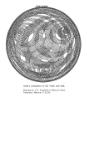
Frontispiece
Preface ix
1 VALUATIONS 1
Part 1: Valuations 1
1 Valuations 1
2 The strong triangle inequality 2
3 The p-adic integers 4
4 The p-adic numbers 10
5 Topological properties of Qp 12
6 Qp as a completion of Q 14
7 Qp compared to IR 16
8 Archimedean and non-archimedean valuations 18
9 Equivalence of valuations 20
10 All valuations on Q' 22
11 The residue class field and the value group 24
12 Series expansions of elements of К 27
13 Normed spaces 30
14 Extensions of valuations· 34
15 Uniqueness of the extended valuation 39
16 The valuation on the algebraic closure 42
17 Completion of the algebraic closure. Cp 45
Part 2: Ultrametrics 46
18 Ultrametric spaces 46
19 Compactness and separability 51
20 Spherical completeness 52
21 Best approximation 55
2 CALCULUS 56
Part 1: Elementary calculus 56
22 The classical concepts of calculus 56

VI
Contents
23 Sequences and series 61
24 Order-like structure in A" 65
25 (Locally) analytic functions 67
26 Continuity and differentiability 73
27 Continuously differentiable functions 76
28 Twice continuously differentiable functions 81
29 C" -functions 86
30 Antiderivation and integration 93
Part 2: Interpolation 98
31 The idea of interpolation 98
32 p-adic exponents 100
33 Roots of unity in Cp. The Teichmuller character 102
34 Σ * = о an *°r a P_aclic integer χ 105
35 The p-adic gamma function 107
36 A p-adic Euler constant 110
37 Values of Tp in|, 0,-1,-2,... Ill
38 The p-adic Gauss-Legendre multiplication formula 113
39 Some other formulas involving Γρ 115
Part 3: Analytic functions 117
40 Convergence of power series 117
41 Substitution of power series 119
42 The maximum principle 121
43 Failure of the maximum principle for locally compact K. 125
44 exp and log 128
45 Extensions of exp and log 129
46 Trigonometric functions 135
47 (l+x)a 138
48 The Artin-Hasse exponential 142
49 arcsin and arccos 143
3 FUNCTIONS ON Έρ 145
Part 1: Mahler's base and p-adic integration 145
50 Orthogonal bases in Banach spaces 145
51 The Mahler base of С{ЖР^К). 149
52 The Mahler coefficients. Examples 152
53 Mahler's base for C1 (Έρ -+K) 158
54 Mahler coefficients of C" -functions 163
55 The Volkenborn integral 167
56 The Bernoulli numbers 171
57 Integration over subsets 174

Contents
ν и
Part 2: The p-adic gamma and zeta functions 176
58 Local analyticity of Γ ρ 176
59 A formula for logp2 179
60 Diamond's log gamma function 182
61 The p-adic zeta functions 185
Part 3: van der Put's base and antiderivation 189
62 van der Put's base of C(Zp -* K). 189
63 Characterizations by means of coefficients 193
64 Antiderivation 196
65 The differential equation.y' = F(x,y) 199
66 C1 -solutions of a meromorphic differential equation 200
67 p-adic Liouville numbers 203
68 van der Put's base of C1 {Έρ -* К) 205
4 MORE GENERAL THEORY OF FUNCTIONS 208
Part 1: Continuity and differentiability 208
69 Convergent sequences of differentiable functions. 208
70 A function of the first class has an antiderivative 212
71 Points at which a differentiable function is С' 215
72 Local behaviour of differentiable functions 218
73 Lusin-type theorems 221
74 Differentiable homeomorphisms 224
75 Isometries 227
76 Extension theorems 230
Part2:C-theory 234
77 Local invertibility of C" -functions 235
78 Differentiation Cn^Cn~l 238
79 Antiderivation С -> С' 241
80 Antiderivation С"-1 -► С". A candidate 243
81 Surjectivity of differentiation C" -*■ C"~l 247
82 Surjectivity of differentiation C°°^-C°° 249
83 C3 -functions 252
84 Functions of two variables 255
Part 3: Monotone functions 257
85 Sides of 0 in A" 258
86 Monotone functions of type a 259
87 Monotonicity without type 262
APPENDIXES 268
Appendix A Aspects of functional analysis 269

Vlll
Contents
A. 1 Two theorems on metric spaces
A. 2 Functions of the first class of Baire
A. 3 Orthonormal bases of С (X -*■ К)
Α. 4 The ultrametric Stone-Weierstrass theorem
A. 5 Integration on compact spaces
A. 6 Measures and distributions on Zp
A. 7 A substitution formula for real valued integrals
A. 8 The ultrametric Hahn-Banach theorem
A. 9 A field with prescribed residue class field and value group
A. 10 Isometrical embedding of an ultrametric space into К
Appendix В Glossary of terms
B. 1 Sets
B. 2 Subsets of IR
B. 3 Metric and topology
B. 4 Algebra
Further reading
Notation
Index
269
271
272
273
274
281
286
288
288
293
295
295
296
296
297
301
302
304

Preface
This elementary book is intended for advanced undergraduates or anyone
on a higher level who wants to learn the basic facts of p-adic analysis. We
only assume the reader to have some standard knowledge of analysis and
algebra.
In analysis (and outside it) the fields IR and С play a central role. For
several reasons people started to study the implications of replacing IR or
С by a more general object, viz. a field К with a complete valuation | |
comparable to the absolute value function (see Definition 1.1). Many such
fields other than IR or С exist, their valuations are all 'non-archimedean',
i.e. they satisfy the 'strong triangle inequality' |x + .y| < max(|x|, \y\).
The analysis in and over non-archimedean valued fields К is known as ultra-
metric (non-archimedean, p-adic) analysis.
In this book we shall treat the basic facts of ultrametric analysis together
to form an alternative 'one variable calculus course'. Thus, in К we shall
consider familiar concepts such as continuity, differentiability, (power)
series, integration, etc. However, the strong triangle inequality causes
fascinating deviations from the 'classical analysis' (over IR or C); let us mention
a few of them.
(i) A series Σαη in К converges if lim„ _ „ a„ - 0. The power series Σχ"/η\
of exp (if it makes sense at all) converges only on a disc strictly contained
in the closed unit disc{x · \x\ < 1} . Hence Σϊ/nl diverges (but Ση!
converges in many A).
(ii) К is not ordered. Yet it is possible to define 'square roots of positive
elements' in a natural way. It may happen that ]/i6,= 4but ]/25 =-5.
(iii) К is not connected. In fact, each disc is open and closed; each point
of a disc is a centre; {x · \x\ =1} is not the boundary of {x ■ \x\ < 1} .
(iv) Iiouville's theorem (a bounded analytic function К -*■ К is constant)
holds if and only if К is not locally compact.
(v) For each pair of continuous functions fx, f2 '■ K2 -*■ К there exists an
F-K2->K such that bFjbx =fx, bFjby =/2.

Preface
χ
During the past few decades ultrametric analysis has grown from a
relatively small and remote area maintained by a few enthusiastic pioneers to
a widely recognized and mature discipline. However, since there are so
many parts of mathematics for which a corresponding ultrametric theory
exists or is at least conceivable, the term 'discipline' is somewhat misleading.
In fact, in the 1980 classification scheme of the Mathematical Reviews
explicit references to p-adic and non-archimedean theories are headed under
Number theory; Algebraic number theory, field theory and polynomials;
Algebraic geometry; Group theory and generalizations; Topological groups
and Lie groups; Real functions; Functions of a complex variable; Several
complex variables and analytic spaces and Functional analysis. It is clear
that in an elementary book like this we cannot go into all these different
branches, each one of which has its own origin, motivation, problems,
language and applications. On the contrary, this book is written deliberately
from no specific background at all but takes a 'naive' approach.
Depending on his or her point of view the beginner may use this book
(at least the first three chapters of it) either as a 'main entrance' to the
various specialistic theories or as an introduction to p-adic analysis in its
own right. The specialist should not look for deep theorems. Yet I hope
that he or she will appreciate having the elementary facts together with the
proofs collected into a single volume.
For the reader's convenience many exercises of varying degree of difficulty
have been included. They are meant for training purposes and also to
indicate interesting by-paths. Exercises leading to results used in the main
theory are marked*. In Appendix A we discuss some themes that have
something to do with the subject but do not fit into the main text, mostly
because of their functional analytic character. Appendix В contains several
basic definitions and facts needed in the book and is meant as a refresher
course, only to be consulted if the reader needs part of it.
A small list of books is given for further reading; in some of these one
may find extensive lists of references. Perhaps closest to our book is Mahler
(1980), whereas Bachman (1964) is also elementary but moves towards
algebraic theory. In Amice (1975) one can find more about analytic
functions. Monna (1970) and van Rooij (1978) treat functional analysis. Iwasawa
(1972) considers special functions of interest for number theory. Koblitz
(1977), after an elementary start, moves towards the p-adic zeta functions
and Dwork's theory. More advanced studies and applications in algebraic
number theory and algebraic geometry can be found in Koblitz (1980).
Only occasionally — in cases where a theorem is generally known as such —
names of inventors are given. I have also added names to results that have not

Preface
χι
been published before and were pointed out to me by informal
communication.
I am grateful to Lucien van Hamme and Amoud van Rooij for their
helpful comments and the stimulating effect they had on me.
October 1982
Wim Schikhof
Nijmegen, The Netherlands

1
Valuations
PART 1: VALUATIONS
1. Valuations
The absolute value function on the field of the real numbers IR or the field of
the complex numbers <£ has the following fundamental properties. For all
elements χ and .у we have
(i) \x\>0, 1x1 = 0 if and only if x = 0
(ii) 1х+.у1<Ы+1.у1 (the triangle inequality)
(iii) \xy\=\x\\y\
In this book we shall be concerned with the following generalization.
DEFINITION 1.1. Let К be a field. A valuation on К is a map Ι \· Κ ■+ IR
satisfying the rules (i), (ii), (iii), for all x,y e K. The pair (K, I I) is a valued
field. Often we will write simply К instead of (K, I I).
There are many examples of valued fields other than subfields of (I with
the ordinary absolute value function. The most important one is the field of
the p-adic numbers, which we shall introduce in Section 4. An obvious
example is the trivial valuation that can be defined on any field by setting
. . f0ifx = 0
Let (K, I I) be a valued field. The map (x, y) h- I x -у I is easily seen to be a
metric on К which, in turn, yields a topology on К in the usual way (a set
U С К is called open if for each a & U there is δ > 0 such that{ χ &Κ: \x-a\
< δ } С U. Then the union of arbitrarily many open sets is open, the
intersection of finitely many open sets is open). The above metric and topology
are said to be induced by the valuation I I.
*Exercise l.A. Let lj^ denote the unit element of a valued field (K,\ I).
Show that lljcl= 1, \ - x\=\x\(x e K),\x~l \= \x\-1 (x e Κ,χ φ 0), lx-^1
> \\x\- \y\\(x,yeK).
1

2
1 Valuations
*Exercise 1 .В. The topology induced by a valuation | I on a field К makes К
into a topological field. That is, prove the following.
(i) Addition {x, y) Υ* χ + у and multiplication (x,y) I-* xy are continuous
maps К X К -* К. (Here К X К carries the product topology.)
(ii) The maps χ \-> - χ (χ <= К) and χ μ- χ-1 (χ e Κ, χ φ 0) are continuous.
Exercise 1 .С. Show that the trivial valuation on a field К induces the discrete
topology on К (i.e. each subset of К is open).
Before starting with the actual calculus in Chapter 2 we first develop the
necessary theory on valued fields, study the basic examples and consider
some important metrical aspects. Those who want to reach the main subject
as quickly as possible may skip over the hard proofs of Sections 14—18. Also
observe that Appendixes A.l, A.9 and A.10 logically belong to Chapter 1.
2. The strong triangle inequality
In this book we shall mainly be interested in valued fields (K, I I) whose
valuation satisfies the strong triangle inequality
\x+y\<max(\x\,\y\) (x,y£K)
rather than the general, weaker, form
\x+y\<\x\ + \у\ (x,y£K)
Such a field is constructed in Example 2.1 below. Although it is not itself
going to play a central role in the sequel, it is quite easy to understand and
illustrative for what follows.
For a nonzero polynomial f& Ш. [X] given by
f = a0 +aiX + a2X2 +... +a„Xn (a0 a„ &Ш.,а„ Ф0)
we set d(f): = η (the degree off). Let d(f): = - °° if/"is the zero polynomial.
Then we have the following rules for d.
d(f+g)<m^(d^,d(g)) 1
d(/g) = d(f)+d(g) j (f,g&JR[X])
Let ρ be any real number, greater than 1. For/e IR [X] put
m:=l0if/=0
1/1 \ρα^ίϊίΦ0
Then the above rules for d now look as follows.
\f + g\< max(1/1,И I ,. eRml
\fg\= l/l 1*1 ) V,*eR[*])

Parti: Valuations
3
Also we have trivially
\f\>0; 1/1 = 0 ifandonly/=0 (f&TR[X])
So, forgetting for a moment that IR [X] is not a field, we see that I I behaves
like a valuation. The strong triangle inequality here simply expresses the fact
that if two polynomials each have a degree < η then so has their sum.
We now extend I I to the field IR (X) of rational functions.
EXAMPLE 2.1. (A valued field)Let ρ > l.Forf(=lR[X]put
|/h = (0if/=0
1/1 [p^iif^O
Fors&TR(X)set
\sb= \f\\gFl (s=fg-1;f,gem.[X],g*0)
Then Μύα valuation on TR(X) satisfying the strong triangle inequality
\s+t\ <max(lsl, If I) (s,t&TR(X))
Remarks.
1. The above construction yields infinitely many valuations on IR(X), one for
each ρ > 1. See, however, Section 9.
2. The constant polynomials form a subfield of IR(X)> isomorphic to IR.
If α is such a constant polynomial then
. , ίϊΐΐαΦΟ
lal = ioif* = o
so that I I does not induce the ordinary absolute value on IR, but the trivial
valuation.
3. In the above example we may without harm replace IR by an arbitrary
field K. It follows that there are non-trivial examples of valued fields of
characteristic ρ Φ 0 !
*Exercise 2.A. Show that the definition of I I given in Example 2.1 is
meaningful and that (IR(AT), I I) is indeed a valued field. More generally, prove the
following. Let D be an integral domain and let I I be a map of D into IR
satisfying the conditions (i), (ii), (iii) (see Section 1) for a valuation. Then I I
can uniquely be extended to a valuation on the quotient field of D. If I I
satisfies the strong triangle inequality then so does the extension.
Exercise 2.B. Let a: IR (AT) -► IR (AT) be the automorphism of IRW sending X
into X~l. Then, with I I as in Example 2.1, set \s\ ·= Ισ(ί)Ι(ί e IR (X)). Show
that I lt is also a valuation on IR(AT) and that
l/li = P~k (fe[R[X],f = akXk + ak+1Xk+1 + . . . + a„X",ak Φ 0)

4
1 Valuations
*Exercise 2.C. Let I I be a valuation on a field К satisfying the strong triangle
inequality. Let x\,x2, · · · ,*ne ^> where η e IN. Show that I*! + x2 + ...
+ x„\ < max( Ijc11, \x2 I,.. ., Unl).
3. The p-adic integers
In Sections 3 and 4 we shall construct the valued field Qp of the p-adic
numbers. This field, whose valuation satisfies the strong triangle inequality, is
the fundamental example throughout this book. In this section we make a
start by defining the subring {x: Ы< 1 } of this field.
In the decimal system we denote nonnegative integers by expressions
such as 1028 (8 + 2· 10 + 0· 102 + 1 · 103). When we write down a sequence
a„ a„_! . .. a0 we mean д0 + αλ 10 + .. . +an 10". Here each at is one of the
symbols 0, 1 9. Of course we may also write this as an infinite sequence
• · · an + 2 an+i an · ■ ■ ao
where αχ = 0 for i > n. Further, instead of 10, we can choose any number €=
{2,3,. ..} as a base. These simple observations lead to the following.
DEFINITION 3.1. For any и S {2, 3,.. . }, let 2„ be the set of all infinite
sequences
• · am^m-\ ■■ -ахай
where each am is one of the elements 0, 1,... , n~\.The elements of 2„ are
n-adic integers. The sequences with am = 0 for sufficiently large m can be
identified with the nonnegative integers. Thus we may write
NCZ„
Remarks.
1. The elements of Z„\{ 0,1, 2,. . . } are sequences
. .. .a2a1 a0
for which am Φ 0 for infinitely many m. One may be tempted to think of
these elements as being 'infinitely large' or 'supernatural' numbers. However,
in the sequel we shall see that, according to a quite natural point of view,
these elements are limits of sequences of natural numbers.
2. One may wonder why the elements of Έη are called n-adic integers rather
than n-adic natural numbers. For this, see Proposition 3.2.
We can define a natural addition and multiplication in Έη that extend the
operations on N. The following examples (in Zw) will make this clear.

Part 1: Valuations
5
8427159
5478563
.27 1 59
,78563
3905722
... .81477
. . .62954
. .35795
.1 7272
90113
... .925 17
The ideas suggested in the above examples ('treat the elements of Жп as
ordinary integers') can of course be sharpened to correct definitions of addition
and multiplication in Έ„. (Let χ = a2 ax a0 and у = b2 bi b0 be
elements of Z„. Then χ + y = сгсх c0, where the cf are determined by
(i) c/ e {θ, 1,..., n-\ } for each /'
(ii) for each m&{0,1,2,. ..}
m
Σ
/-0
с,· и'ξ £ («/ + */) и' (modnm + 1)
1=0
Similarly, xy = ... .d2d1 d0, where the dt are determined by
(0^е{о,1,...,и-1 } for each/
(ii) for each m e {θ,1,2,...}
m
Σ
/=0
d,nl =
m
Σ αί"'
1=0
m
Σ */«*
ί=0
(modnm + 1)
So, what we do is nothing but elementary school arithmetic.) Notice that in
the second example we 'add' infinitely many elements of 2Hl0. The 'sum' is
well defined since every column has only finitely many (nonzero) entries.
(See the preamble to Definition 3.4.)
A surprising fact is that one can subtract every element of Έη from every
other element of Έ„. For example in 210 we have
• · · .8427159 ... .5478563
... .5478563 ... .8427 1 59
....2948596
. . . .7051404

6
1 Valuations
Subtracting familiar numbers we may obtain a non-familiar result. For
example, in 210 we have 3-5 = . ... 999998. The same subtraction in Έ5
yields .... 444443 as an answer. The following proposition is not hard to
prove.
PROPOSITION 3.2. With the above addition and multiplication, Έη is a
commutative ring with 0 : = .... 000000 as a zero element and 1 : =
.... 000001 as a unit. Έ can be identified with a subring of Z„.
Remark. Let .. . .a2ala0 and .... b2 b1 b0 be elements of H„. Suppose we
want to know, for a certain m, the last m +1 digits cm,cm-1>... ,c0 of their
product (sum) . ... c2cx c0. Then we only need to compute the product
(sum) dk dk-1 ... d0 of the nonnegative integers am am_i ... a0 and
bm bm-x ... b0 in the ordinary way and we get c0 = d0, ..., cm - dm.
Exercise 3.A. (Extension of the ordering to Έη) Let χ = .... д2 αι αο and У
- .... b2 by b0 be elements of Ж„. Consider the following two definitions
(*)and(**).
(*) χ >! j if there is an m e {0,1,2,... }for which am > bm and α;· = bj
for / > m.
(**) χ >2 у if there is an m e { 0,1,2,...} for which am > bm and α;· >
bj for / > m.
Show that (*)and(**) define partial orderings >! and>2 on Ж„ extending
the natural ordering on IN and that >! φ >2. Prove, however, that in general
χ > χ у does not imply χ+\>γγ+\ and that χ > 2 у does not imply
χ + 1 >2 у + 1.
Division in Έη is less simple. For example, in 210 we can find nonzero
elements χ and у for which xy = 0, as suggested below.
... .1 01 12
... .03 1 25
X
. . . .50560
. . . .20224
.... 101 1 2
. . . .30336
. . . .00000
. . . .00000

Part 1: Valuations
7
(The reader is asked to show that one can indeed fill in the dots in such a
way as to obtain the zero sequence.) Thus, 210 is not an integral domain
and there is no way to extend 210 to a field. The situation becomes better
if η is a prime number.
PROPOSITION 3.3. Let ρ be a prime number. Then Έρ is an integral domain.
An element .... a2 ax a0 of Kp has an inverse in Έρ if and only ifa0 Φ 0.
Proof. As ... . a2a1a00=p( α2<*ι<*ο), a2ala000=p2 ( α2<*ι<*ο),
etc. it suffices to show the second statement. If a0 = 0 then the product of
.... a0 and any element of 1Lp ends with a 0, so certainly ... a2<*i До has no
inverse. Suppose a0 φ 0. We prove inductively that we can find x0,xlf...
e {0,1,..., p-\ }such that the product of .... χ2χλχ0 and ... .a2a1a0
equals.... 001. By looking at the 'long multiplication'
. . . . а2ахай
X2X\Xq
X
..001
we see that we have to sole the following congruences.
x0a0 = 1 (modp)
χ0αλ +χλα0 +p~x (а0х0~1) = 0(modp),etc.
The essential point is that for each η e N it is required that
xn+iao = cn + i (modp)
where cn+ г depends only on x0, χλ,... , x„. Whatever cn + 1 is, we always
can solve this congruence since a0 ψ 0 (mod p) and Z'/pZ is a field.
Exercise 3.B. Describe how at the p-adic elementary school one would carry
out a division (.... b2b1b0) -=- (.. .. a2a1a0) in 2p. (Assume that a0 φ 0.)
Exercise 3.C. Let η e {2,3,4,... }. Show that an element ... .a2a1a0 of
Z„ has an inverse if and only if the greatest common divisor of a0 and η
equals 1.
We proceed to investigate 1P where ρ is a prime number. In particular
we want to introduce a 'valuation' on Zp (that can be extended to a valuation

8
1 Valuations
on the quotient field of Zp, see Section 4). Let us return to the first example
of a multiplication we have given for 210. We mentioned there that the final
'addition' succeeds since every column contains only finitely many digits.
More generally, if we are given a sequence xltx2,... where x,· e 2p for every
/ we can formally define XJ1, */ if, from a certain /0 on, the last digit of xt is
always 0, from a certain /Ί on the last two digits of xt are 00, etc. If we want
to consider £Jlj xt as the 'limit' of £"=1 xt for η -*■ °° it is intuitively clear
that the x,· must 'tend to zero'. So we come to the somewhat unusual
conclusion that an element of Έρ must be called 'small' if it ends in many zeros.
This implies that an element of N is 'small' in the sense of Έρ if it is divisible
by a large power of p. Thus, the sequence Ι,ρ,ρ2,... will tend to zero in
Έρ ! We formalize this as follows.
DEFINITION 3.4. Let ρ be a prime number and let ... .a2a1a0 be an
element of Έρ. The order of... . a2ax a0 is the smallest m for which am Φ 0.
More precisely,
We set
, , 4. /°°ifa, = 0forall/
ordp(....a2fliao). = jmin{j:^o}c
■ ι _ f 0 if a,-= 0 for all/
Ι...·β2«1«θΙρ· - |p-ordJ,(....a2-i-o)
} otherwise
otherwise
The function I \p is the p-adic valuation on 2p.
PROPOSITION 3.5. Let ρ be a prime number and let x,y&Zp.
(i) \x\p>0; \x\p=Oifandonlyifx = 0.
(ii) \x +y\p < max( \x \p, \y\p) (the strong triangle inequality).
(iii) \xy\p= \x\p \y\p.
The easy proof is left to the reader. The strong triangle inequality for I \p
reflects the fact that //, for some s & {θ, 1,2,... }, two integers are divisible
by p* then so is their sum. Observe that the set of values of I \p equals
{Ο,Ι,ρ-',ρ-2,...}.
Exercise 3.D. (Other valuations on 2p) Let ρ e IR, ρ > 1. Define
ι | , _ /0 if β,· = 0 for alii
l....«2«l«0l,· " \p-orip(....a2aiao) otherwise
Show that the properties (i), (ii), (iii) of Proposition 3.5 hold for I \p in
place of I \p. Compare Remark 1 following Example 2.1 and Exercise 9.A.

Part 1: Valuations
9
Exercise 3.E. Find the '5-adic representation' .. ..a2aia0 iflt e {0,1.2,3,
4, }) of the numbers 15,-1 and -3. The numbers 2,3,4 have inverses in Z5.
Find their 5-adic representations.
Exercise 3.F. Let ρ be an odd prime. Show that 2_1= . .. .Д2а1до m %p
where a0 - \ (p + 1) and a,· = f (p-1) for i > 1.
Exercise 3.G. (On Y^l) Show that the equation x2+ 1 =0 has no solutions
in Z3 but has two solutions in Z5.
Exercise 3.H. Compute ordp(p" !)and \p"l\p (p prime, η e IN).
* Exercise 3.1. (Basic facts on Zp. See the frontispiece for a 'picture' of Z7)
Let ρ be a prime number. Prove the following.
(i) An element χ of Zp has an inverse in Zp if and only if Ijc lp = 1.
(ii) If χ is a nonzero element of Zp then χ = pOTdp^y where у e Zp, ljlp
= 1.
(Ш) Set
pip- = {py-yelp}
Then pZp is a maximal ideal of Zp and Жр/рЖр is a field of ρ elements. The
additive cosets
pZp, Ι+ρΖρ,...,ρ-1+ρΖρ
form a partition of Zp. For each/ e { 0,1,2,..., p-1} we have
/+pZp = {x e Zp : lx-/lp < 1 } = {x e Zp : U-/Ip < p-1}
(iv) Let p"Zp: = {p"y- у e Zp } (и e IN). The cosets p"Zp, 1 +p"Zp, . .. ,
p"-1 +pZp form a partition of Жр. For each / e {0,1,..., p"-1 } we have
/ + p"Zp = {xeZp= lx-/lp<p-"+1} = {xeZp= lx-/l„ < p-"}.
Exercise 3.J. (Valuationon Z„) Let/ie{2, 3, 4,...} be not a prime number.
Define an 'и-adic valuation' I \„ on Z„ in the spirit of Definition 3.4. Are the
properties (i), (ii), (Ш) of Proposition 3.5 true for ρ replaced by η and ije
Ζ ?
Exercise 3.K. (Some p-adic numerical analysis) Let ρ be a prime number,
let a e Z, \a\p = 1. We shall describe a method to approximate the inverse
a~l of α in Zp by means of integers which is more efficient than the one that
follows from the proof of Proposition 3.3.
(i) Choose x0 e Ζ such that \\-x0a\p < 1. The formula \-χη+ϊα = (\-χ„αΫ,
i.e. x„+\ = *π(2-χπα) defines a sequence xo>*i> · · · of integers. Show that
\xn-a~l \p < p~2" (и е IN). In other words, if
x„ = ... .S2Sis0, a~l = ... .α^αχα^

10
1 Valuations
then aj = Sj for 0 < / < 2". Observe that this method is quadratic and that we
do not have to worry about rounding errors as x„ gives us the exact values
ofa;(0 «/< 2").
(ii) Choose ρ = 5, a = 23 (twenty-three) and use (i) to find an integer s for
which Ια_1-ίΙρ < ρ-8.
4. The p-adic numbers
In this section we shall extend I \p to a valuation on the quotient field of Zp.
FROM NOW ON ρ IS A PRIME NUMBER
For a nonzero element* of Έρ we have, according to Exercise 3.1 (ii)
χ = p"y
where η = ordp(x) and у is invertible in Zp. So, to find a concrete
representation of 'the smallest field that contains Zp, we must find an inverse
for p. Now the common notation in base ρ for p_1 is 0.1 ;p-2 is written
0.01 etc. This leads to the following definition.
DEFINITION 4.1. Let Qp be the set of all two-sided sequences
.... a2a\ a0- a—\ a-2· · · ·
for which a,· e { 0,1,. .. , p-1} for each /' and such that a_„ = 0 for large n.
The elements of Qp are p-adic numbers. The sequences ....α2^ι^ο·
Д_1 а_2 .... for which α_λ = a_2 = ... = 0 can be identified with the p-adic
integers. So we may write
Zp С Qp
Addition and multiplication in Zp can be extended to Qp in a natural way.
(Formally,letx= ... .a2a1a0.a_1a_2... .and.y = ... .b2b1b0.b_ib_2...
be elements of Qp and suppose that a_„ = b_„ = 0 for η > N. Then x' :
= .... a0 a_! ... a_N and y' : = .... b0b_i ... b_N are p-adic integers.
Let x' + y' = . .. .c2CiC0. Define χ + у to be .... cN.cN-i ... c000
Similarly one defines the product xy of χ and y.) Then the inverse of ρ = 1.0
becomes 0.1, the inverse of p2 = 10.0 becomes 0.01, etc. It follows that every
nonzero element of Qp can be written as p"y where η & Έ and у e 2p, \y\p =
1. With this in mind, the following is not hard to prove.
PROPOSITION 4.2. Qp /s a field containing Q as a subfield and Έρ as a
subring. Qp is (isomorphic to) the quotient field of Zp.
Now we extend I \p to Qp.

Part 1: Valuations
11
DEFINITION 4.3. For a nonzero element
X= . . . .Д2а1α0·α—\α—1
of d)p the order oix is the following integer
oidp(x) : = min {s '■ as Φ 0}
The p-adic value of χ is
M, :=Р-0Г<,"(Х)
Further, we define
|0|p : = 0.
I \p is the p-adic valuation on Qp.
THEOREM 4.4. I lp /s α valuation on Qp. Λ satisfies the strong triangle
inequality. The 'closed unit disc' {x & Qp : \x\p < 1} is equal to Έρ. The
set of values of I \p is {0} U {pn ■ η e Ζ }.
Exercise 4.A. Describe, in the spirit of the previous section, how to carry
out additions, subtractions, multiplications and divisions in Qp.
*Exercise 4.B. (The p-adic valuation on Q) Let χ be a nonzero rational
number. Show that there is an л ε Ζ and that there are integers s, t not
divisible by ρ such that
x=pn-
t
and prove that
lxlp=p-".
* Exercise 4.C. (Qp is not algebraically closed) Show that the equation x2 - ρ
= 0 has no roots in Qp.
Exercise 4.D. (Cosets of Zp) Let S be the set of all numbers of the form
αχρ~χ + a2p~2 + .. ·+ a„p~"
where η e IN, a,· e {θ, 1,.. . , p- 1} (1 < i < n). Show that the sets s + 2p,
where s runs through S, form a partition of Qp.
Exercise 4.E. (Squares in Qp) A p-adic number χ = .. .. α2αιαο · Д-i Д-2
.... is a square (has a square root) if there is a p-adic number у such that
у = χ.
(i) For the cases ρ = 3 and ρ = 5 give necessary and sufficient conditions on
the digits a,- in order that.... a2ai ao · Д-i Д-2 · · .. is a square.
(ii) Do the same as in (i) but now for the case ρ = 2.

12
1 Valuations
5. Topological properties of Qp
In this section we are concerned with the metric and the topology induced
by the valuation I \p.
THEOREM 5.1. Zp is compact.
Proof. Let Χχ ,χ2, ■. ■ be a sequence in Zp. We show that it has a convergent
subsequence. Denote xk by
xk = a\ a% a\
Since there are only finitely many possibilities for д£ (namely 0,1.···,
p-1) we can find b0 e {0,1,... ,p~l } and a subsequence Xoo>*oi> · · ·
of *i,*2, · .. such that the last digit of x0k is always b0. The same trick
yields bx & {θ, 1,... ,p~l }and a subsequence λγ10,λγι1,λγ12, ... for which
the last two digits are b\ bo. This procedure can be continued, and we obtain
bo,bi,... and a sequence of sequences
*oo *oi ^ог · · ·
*io*n · · ·
*20*21 · · ·
such that each sequence is a subsequence of its predecessor and such that
each element of the nth row ends in bnbn~\ ... b0. The diagonal sequence
*oo>*ii>*22> · · · is still a subsequence of the original sequence Xi,*2> · · ·
and it obviously converges (to ... b2bi bo).
COROLLARY 5.2. Жр is complete.
THEOREM 5.3. Έ is dense in 2p.
Proof. Let χ&Ί,ρ,χ = ... .a2a1a0. For each η ε Ν, set xn ■ = .... 00a„an-i
■ · · ao = Σ,·=ο α'ρ<· ^nen x" e ^ an(^ \χ~χη 'ρ < Ρ"· The statement
follows.
Qp is not compact (l,p_1,... does not have a convergent subsequence).
But we have
THEOREM 5.4. Qp is locally compact. Q is dense in Qp.
Proof. Because
Zp={*eQp:|;clp<l} = {xeQp: \x\p<p)
is both closed and open, Έρ is a compact neighbourhood of 0. It follows

Part 1: Valuations
13
easily that for a & Qp the coset a + Zp is a compact neighbourhood of a.
To show that Q is dense in Qp, let χ = .... a2axα0 . a_x ... a_N000 ....
be a p-adic number. Then for each η ε N the element
xn ■ = .... 00α„α„_! ... β! β0· β_ι · · · a~N00 .... = Σ lzP_N ajp1
is in Q and \x-x„ \p <p~" ■ This finishes the proof.
COROLLARY 5.5. Qp is complete and separable.
THEOREM 5.6. The topology of % is zerodimensional. Qp is totally
disconnected.
Proof. For each a£Qp and η e Ζ the set
{*eQp: \x-a\p<p-"} ={х<=<Цр:\х-а\р<р-" + 1}
is an open and closed neighbourhood of a. (For the terms 'zerodimensional'
and 'totally disconnected' see Appendix B.3.)
The approximation of p-adic numbers by rational numbers in the proof
of Theorem 5.4 leads to another way of describing p-adic numbers. The basic
idea is the interpretation of a p-adic number ... .a2ala0.a-l a_2 ... as the
sum of the convergent series Σ α„ρ".
THEOREM 5.7. Each p-adic number can uniquely be written as the sum of
a convergent series of the form
oo
(*) Σ a„p»
where a„ & {θ, 1,..., p-1} for each η and a_„ = Ofor large n. Conversely,
if an ε{0, 1, · · · P~l} for each η € Ζ and a-„ = 0 for large η then (*)
represents a p-adic number.
Proof. Let.... a2 α γ a0. a_xa_2 .... be a p-adic number and let a_„ = 0 for
n>N. Then the sequence
η η
η μ Σ «iP* = Σ aiPf
<=-лг <=-·»
converges to ... ,a2a1a0. α_λα_2 .. .. = Σ_ α(ρ*. The rest is easy.
The representation (*) is the (standard) p-adic expansion of the element
... .a2ala0. a_xa_2 .... If the a„ are not restricted to {0,1, ·· · ,p~l )
then still the series Σ a„p" may converge. For example, if at € Έ for each /'
ε{θ,1,2,...} and if m > n> 0 we have (since \a(\p < 1 for all/)
m
Σ α,ρ1 <max(lp"lp,...,lp'"l/,) = p-"
i=n Ρ

14
1 Valuations
so that the sequence η ^Σ._ Д/р' is Cauchy, hence convergent. Thus,
oo go
Σ η\ρη, Σ 3V
n=0 n=-&
are legitimate p-adic numbers, yet the defining formulas do not represent
the standard expansion. It is clear from the above that now we can write
addition and multiplication in Έρ as follows.
oo oo oo
Σ a„p" + Σ b„p" = Σ (an+bn)p"
n=0 n=0 n=0
oo \ / oo \ oo / „ >
( Σ anA[ Σ b„p") = Σ Σ а,ЬпЛр"
\n=0 ) \л=0 / л=<И i=0 J
The left-hand expansions are standard but the right-hand ones, in general,
are not.
Exercise 5.A. Show that each one of the following sets is dense in Έρ. IN,
Жр\ Έ, Έρ\ IN, {η e IN = η > 8 }, the set η IN = = {mn '· m e IN } (и e IN, η not
divisible by p).
Exercise 5.B. (On other p-adic expansions) Let vl,..., ν χ be p-adic
numbers satisfying lv; - i\p < 1 for ί = 1,.. . ,p- 1. Show that for each xeQp
there is a unique sequence ..., b2,b1,b0,b_1 ,b_2,... such that
(i) for each η e Ζ the elements b„ are in {0,V!,V2) · · · > vp-i}
(ii) b_„ = 0 for large η
(iii) χ = Σ °1_„, b„p". (For a natural choice of v1;..., vp_l other than
1,2,.. .p- 1, see Exercise 27.1.)
*Exercise 5.С Let К be a valued field whose valuation satisfies the strong
triangle inequality. Show that the induced topology is zerodimensional
and that К is totally disconnected. (See Theorem 5.6.)
6. Qp as a completion of Q
Theorem 5.4 gives us another way to define Qp, namely as the completion
of Q with respect to the valuation I \p (see Exercise 4.B). Since we shall
need it later on we shall describe the completion of a general valued field.
As most readers will be familiar with similar constructions (e.g. the
construction of IR out of Q) we will leave the technical details as an exercise.

Part 1: Valuations
15
DEFINITION 6.1. Let (K, I I) be a valued field. A completion of (K, I I)
is a complete valued field (L, I I), together with a dense isometrical field
embedding j · К -*■ L. That is, a map / : К -*■ L whose range is dense in L
and such that for all x,y & К
}{x+y)=j{x)+j(y)
i(xy)=i(x)i(y)
\j(x)\ = \x\
LEMMA 6.2. Let (L, I I) and (L', Ι Γ) be completions of a valued field
(K,\ |) with embeddings j-K^L and;' ■K^-L' respectively. Then (L,\ |)
and (L', | Г) are isomorphic in the following sense. There exists a bijective
map a '· L -*■ V such that a° } = /' and such that for all x, y& L we have
a{x + y) = σ(χ)+ a(y), a(xy) = a{x) a(y), I a(x)\' = \x\.
Thus, in the sense of the above, a completion is unique. Together with the
next theorem this makes it clear why, in the future, we shall speak about
'the' completion of a valued field.
THEOREM 6.3. Each valued field has a completion.
Proof. Let (K, II) be a valued field.
(i) The Cauchy sequences in К (i.e. sequences for which lim„ m _» „ I a„ - am \ =
0) form a ring С under the operations
(alya2>. ..)+(b1,b2, ...)=(a1+b1,a2+b2,...)
(alta2,. ..) · (Z>i,£2.· ■ ) = ia\bi,a2b2,...)
The unit element of С is (1,1,1,...).
(ii) Let ./V be the collection of null sequences, i.e.
N-= i(a1,a2,...)ec--lim Ιβ„Ι = θ)
Then ./V is a maximal ideal in С so that the quotient C/N is a field,
(iii) The map
j ·αΥ*(α,α,α,...) mod./V
is an injection of К into C/N. For all a,b & К we have j(a +b)= j{a) + / (b),
j{ab)=j{a),\b).
(iv) The definition
ll(fli,fl2> ···) moduli ·· = lim \a„\ ((alya2,.. .)<=Q
makes sense. II II is a valuation on C/N.
(\)(C/N,\\ II) is complete.
(vi) (C/N, II II), together with the embedding / of (iii) is a completion of
(K, I I)·

16
1 Valuations
THEOREM 6.4. (Alternative definition of Qp) Qp is the completion of Q
with respect to the p-adic valuation on Q.
Proof. Theorem 5.4 and Corollary 5.5.
Exercise 6.A. Show that Qp is uncountable. Deduce that Q φ Qp and that
Q is not complete with respect to any p-adic valuation.
Exercise 6.B. Is the field IR(X) of Example 2.1 complete?
7. Qp compared to II
From a certain point of view the valued fields IR and the various Qp are
similar since they are all completions of Q but with respect to different
valuations. We have seen in Exercise 4.C and Theorem 5.4 that Qp is not
algebraically closed (neither is IR) and that Qp is locally compact (so is IR).
But there are also striking differences. First we recall that {\x\p '■ χ £ Qp}
equals the set {θ} U {pn · η S Z}. Another difference is that Qp is not
connected. (Theorem 5.6.) This is a simple consequence of the strong triangle
inequality. (Exercise 5.C.)
A more superficial analogy between IR and Qp is the existence of
'expansions to the base p\ In fact, if χ S Qp then there are a„ ε {0,1,2,...,
p-1} such that a_n =0fom>N and
oo
χ = Σ ЯпРп ('expansion to the right')
n=-N
If .y eiR then there are b„ S {0,1,2,... ,p-l}such that b„ =0forn>N
and
N
y- 2 b„p" ('expansion to the left')
n=— °°
But the an are unique and the bn are not. Further, in IR we can choose
every prime number as a base. The latter is impossible in Qp.
In the next two exercises we encounter other connections between Qp
andlR.
Exercise 7.A. (i) Let χ e Q have the standard p-adic expansion Ση=ΝαηΡ"
for certain N e Z. Show that the sequence aN, aN+l,... is periodic, i.e.
there are m e Ж, η e IN such that at =ai+n for all i > m.
(ii) Prove the converse of (i) : if aN, ajy+ χ,... is periodic in the sense of (i)
(flt e {0,1,...,p-1} for eachi > N) then Σ n~Na„pn e Q.

Part 1: Valuations 17
Exercise 7.B. (A continuous map of 2p onto [0,1 ]) The formula
Д α2αια0)·= Σ αηρ~η~ι
л=о
defines a map / : Zp -* Ю. (of course the convergence of the right-hand side is
meant to be with respect to the absolute value function). Show that / is a
continuous map of Zp onto the closed unit interval [0,1 ]. Show that / is
not bijective, so that f~l does not exist. More generally, prove that every
continuous map [0, 1 ] -* Жр is constant.
The algebraic closure С of IR is a twodimensional space over IR. In Sections
16 and 17 we shall see that the algebraic closure of Qp is infinite dimensional,
from which it follows directly that as a field Qp is not isomorphic to IR.
Exercise 33.В shall prove that, for distinct primes ρ and q, Qp and Q4 are
not isomorphic either. In Section 24 we shall discuss the possibility of
defining a structure on Qp that resembles somewhat the ordering we have in IR.
(See also Part 3 of Chapter 4 for a further elaboration on this theme.)
Exercise 7.С Prove the following. A rational number is a square in Q if and
only if it is a square in IR and for all (primes) ρ is a square in Qp.
Exercise 7.D. Let η e {2,3,4,... }. Show that the series Σ fc! converges
in Έη. It does not seem to be known whether Zfc~0 fc! is rational in Zp
for some prime p. Prove however that ΣΛ~0 kl cannot be rational in every
TLn. (Hint. Suppose the sum is rational in every Z„. Show first that the sum
does not depend on n, next that the sum has to be an integer.)
Exercise 7.E. A famous (and by no means trivial) theorem of Dirichlet in
number theory states that there exist infinitely many primes in any
arithmetical progression a,a + n, a + 2/i,. .. (where a e 2, η e IN have no
common factors). Use Dirichlet's theorem to prove the following. Let P- -
{2,3,5,...} be the collection of primes. For each ρ e Ρ the set P\{p} is
dense in {x e TLp '■ \x \p = l}.
Exercise 7.F. (On Q„, see also Exercise 3.J) Let η e {2,3,4,. ..}. Define Q„
to be the set of all two-sided sequences* = ... .α2<*ι<*ο·α-ια-2 · · · · where
a-n = 0 for large и and each a,· e {0, 1,..., n- 1}. Define ord„ (x) ■ = min
{s : as φ 0} (χ e Q„, χ φ 0) and
■ I _ I0ifx = 0
'*'" ' \„-°**nW ИхфО
Define addition and multiplication of elements of Q„ in the spirit of Section 4.
(i) Show that every nonzero integer has an inverse in Q„, so that we may
write QcQ„.

18
1 Valuations
(ii) Show that Q„ is a commutative ring with identity. Is it a field?
(iii) Let x, у e Q„. Show that (1) Ijc l„ > 0; \x\„ = 0 if and only if χ = 0, (2)
Ы„ = l-xl„, (3) \x + y\„ < max(lxl„, \y\n), (4) \xy\„ < \x\„ ljl„,(5)
\xy\„ = \x\„ \y\„ if η is a prime number.
(iv) Show that Q„ is complete with respect to the metric (x, y) V* \x-y\„
and that Q is dense in Q„.
8. Archimedean and non-archimedean valuations
The axiom of Archimedes can be formulated as
N is not bounded
In this section we shall see that a valuation on a field К satisfies the strong
triangle inequality if and only if the set{ lj^, lj^ + lj^, ljt + Ijt + 1jc> · · ·}
(where lj^ denotes the unit element of A) is bounded. This explains the term
'non-archimedean' in Definition 8.1. In the sequel we shall follow a bad but
widespread habit and omit the subscript К in \r and n^('·= the sum of η
times ljf). One should realize that this can be dangerous in expressions like
111 = 1 and even more so in
'if the characteristic of К is ρ Φ 0 then ρ = 0'(!)
but one gets used to it after a while.
DEFINITION 8.1. A valuation on a field К is archimedean if 121 > 1, non-
archimedean if 121 < 1.
The absolute value function on С is archimedean. The p-adic valuation
on Qp is non-archimedean.
LEMMA 8.2. Let I I be a non-archimedean valuation on a field K.
(i) \n\<\foralln&N.
(ii) |jc+^Kmax(|jcl, \y\)(x,y&K).
Proof, (i) Let η & Ν, η > 2. We shall prove that In I < 1. Write η using the
base 2. Then
n=a0 +ax2+ ...+ as2s
where a0, ...e,e{0,l} zndas= 1. Then, since 121 < 1,
s s
lnl< Σ Ιβ,Ι Ι2Ί< Σ I2l'<s+1
<=ο <=ο
Now let к ε N and take the fcth power of n. We have η < 2S+', so that

Part 1: Valuations
19
n*<2fc(i+1> and therefore
nk = b0 +Z>i2+ ...+ bt2*
whereZ>0,... ,bt e{0,1}, bt= 1 and Г <(s+ l) к. Hence
\nk\<t + l <(s+l)fc
so that
lnl< lim V(s+l)fc=l
(ii) Let η e N. Since (£) is an integer we have, by (i), that I (pi < 1 so that
\(x+y)"\ = \ZZ=0 (£)*V~*I <Σ£=0 ^ 1^Г-*<(и + 1)тах(1дс1,
It follows that
lx+.yl< lim Vn + l 'max (\x\,\y\)=max(\x\,\y\)
As a corollary we get the following characterization.
THEOREM 8.3. The conditions (α), (β), (γ) for α valuation on a field are
equivalent.
(a) The valuation satisfies the strong triangle inequality.
(β) The valuation is non-archimedean.
(γ) The set {I, 2,3,...} is bounded.
Proof. To prove the implication (γ) -*■ (α) (the only one that may need some
explanation), modify the proof of part (ii) of Lemma 8.2.
Remark. (On the logarithm of a valuation) In Example 2.1 it appears more
natural to work with the degree d(f) of a polynomial / rather than pd^.
Similarly, in Qp one might prefer oidp(x) instead of p~olrip<*> . Thus, in a
non-archimedean valued field (K, I I) we define the function ν (called
'valuation' by many authors) as follows.
._ ί — log Ια Ι ϊΐα&Κ,αΦΟ
w lee ifa = 0
Then ν is a mapping of К into the extended real numbers IR U {<»}. For
all a,b&Kv/e have
(i) v(a + b) > min (v(a), v(b) )
(ii) v(ab) = v(a) + v(b)
(iii) v(a) = °° if and only if a = 0
Of course, the choice between I I and ν is just a matter of preference. People
with an analysis background mostly like I I because of its analogy with the
absolute value.

20
1 Valuations
Exercise 8.A. (On powers of valuations)
(i) Let I I be the absolute value function on C. Show that χ ν* is a
valuation on С and that χ l·* \x Ρ is not.
(ii) Let (K, I I) be a valued field, 0 < s < 1. Then I I* is a valuation on K.
Prove this. (Hint. To prove the triangle inequality, show that (a+ 1)* <
as + 1 for a e IR, a > 0.)
(iii) Let (K, I I) be a non-archimedean valued field, s > 0. Prove that I I*
is a non-archimedean valuation on K.
Exercise 8.B. Prove the following.
(i) The trivial valuation on a field К is non-archimedean.
(ii) On a finite field the only possible valuation is the trivial one.
(iii) If the characteristic of a field К is not zero, then any valuation on К is
non-archimedean.
*Exercise 8.C. (Important consequences of the strong triangle inequality)
Show the following facts (compare the properties of the degree of a
polynomial, see Section 2). If x,y are elements of a non-archimedean valued
field (K, I I) then
(i) \х\ф \y\ implies \x + y\ = max(|x|, \y\)
(ii) Ijc + y\ > \x\ implies \x + y\ > \y\
*Exercise 8.D. (No new values of I I after completion) Let К be a non-
archimedean valued field with completion L. Show that valuation on L
is also non-archimedean and prove the remarkable fact that { \x I : χ e K} =
{\x\-xeL}.
9. Equivalence of valuations
Valuations which are powers of one another (see Exercise 8.A) do not seem
to be materially different from an analytic point of view.
DEFINITION 9.1. Two valuations on a field К are equivalent if they induce
the same topology on K.
THEOREM 9.2. Let I 11 and I 12 be equivalent valuations on a field K. Then
there is a positive real number с such that I 12 = I 11 ·
Proof. If Ι Ι χ is trivial then {0 } is open with respect to I 11 and I l2 so there
is δ > 0 such that {χ & Κ- \χ\2 < δ} = {θ} . It follows easily that I l2 is
trivial so that for this case the theorem is established. Now let I 11 be not
trivial and choose π e К such that Ы! > 1. Let s € K, s Φ 0. Then there is

Part 1: Valuations
21
an α e IR such that I si t = |π|". Let r = mn ' (m & Έ, η & IN) be rational
and r > a. Then |s|j < |π|{. We prove that |s|2 < \n\r2. In fact, we
have ls"7Tmli < 1. Now in any valued field (K, I I), a sequence χ, χ2,
x3,... has limit 0 if and only if \x\ < 1. By equivalence, Is" it~m l2 < 1,
i.e. \s\2 < Ι πΙ j. Similarly one proves that if r ε Q, r < a then \s\2 > ΙπΙ^.
We may conclude that Ы2 = ΙπΙ". It follows that log Ы2 = с log Isli,
where с = log Ι π 12 (log Ι π 11)~'. The theorem follows.
*Exercise 9.A. (i) Show that the function I \'p defined on Жр in Exercise
3.D can be extended to a valuation on Qp and that this valuation is equivalent
to the p-adic valuation.
(ii) Prove that for distinct primes ρ and q the valuations I \p, I I, on Q are
not equivalent and also that no p-adic valuation on Q is equivalent to the
absolute value function.
Exercise 9.B. Show that the following conditions for valuations I Ii and I l2
on a field К are equivalent.
(α) Ιχ 11 < 1 if and only if \x 12 < 1 (x e K).
(β) \χ 11 < 1 if and only if \x 12 < 1 (x e K).
(γ) Ι \γ and I l2 are equivalent.
(δ) I I! is a positive power of I 12.
*Exercise 9.C. Let Ι 11 and I l2 be valuations on a field К and let I 11 be non-
trivial. Suppose that χ e Κ, \χ\γ < 1 implies Ы2 < 1. Prove that from this
it follows already that Ι 11 and I l2 are equivalent.
Exercise 9.D. (Conclusion from the previous exercise) Prove that the inverse
of a continuous automorphism of a valued field is again continuous.
Exercise 9.E. (Comparison with equivalence of norms) Let I Ii and I l2 be
valuations on a field К and let с γ andc2 be positive constants such that с ι \ |t <
I l2 < c2 I Ii. Prove that I Ii = I l2.
Exercise 9.F. If two valuations are equivalent then they are both archimedean
or both non-archimedean. Show this.
Exercise 9.G. Let I Ii and I l2 be two equivalent valuations on a field K. Let
(Lx, II Hi), (L2, II II2) be the completions of (K, I li)and(K,l 12)
respectively. Show that Ζ, ι = Z, 2 and that II Hi is equivalent to II 112.

22
1 Valuations
10. All valuations on Q
In the preceding sections we have met the p-adic valuations and the absolute
value function on Q. The next theorem states that, essentially, there are no
others.
THEOREM 10.1. (Ostrowski) Each non-trivial valuation on the field of
the rational numbers is equivalent either to the absolute value function or
to some p-adic valuation.
Proof, (i) Let I I be an archimedean valuation on Q. Since 1 < l2l < 111 +
111 = 2 there is a number с e IR,0 < с < 1 for which
I2l=2c
We shall prove that
\n\ = nc
for η e N (this obviously implies that, on Q, I I is the cth power of the
absolute value function). Thus, let η & IN, η > 2, and write η using the
base 2
n=a0+a12 + ...+as2s {μ0,αγ,... e {0, 1} , as=\)
Тпеп2*<и<2*+1 so that
(*) 2ic<nc<2c(i+1)
We first prove that In I < nc as follows. Applying (*) we get
s s
\n\< Σ Ια,I I2l''< Σ 2,c = 2ic(l+2-c + ... + 2-ic)<ncM
/=0 ,=o
where Μ- =Σ 7=o ^'C ^oes not ^ePen(i on n Since η was arbitrary we have
also
\nk\<nkcM (fceN)
so that
(**) In К Urn nc kVW=nc
To prove the opposite inequality observe that
\n\ = I2i+1 -(2i+1 -n)\> I2i+11- I2i+1 -n\
Now I2i+11 = I2li+1 =2c(i+1).By(*)and(**)
I2i+1 -n\ <(2i+1 -n)c <(2i+1 -2S)C = 2SC
so that
Inl >2c(i+1)-2ci = 2c(i+1)(l-2_c)

Part 1: Valuations
23
Again by (*), 2°(i +' > > n°; with M' ■ = 1 - 2~c we obtain
Ы>лсМ'
The fcth power trick yields
\n\> lim лс]/ЛГ=лс
which, together with (**), finishes this part of the proof,
(ii) Now let I I be a non-archimedean valuation on Q; we prove it to be a
power of some p-adic valuation. The valuation is assumed to be non-trivial
so the set {n e N: Inl < l}is not empty, let ρ be its minimal element.
We claim that ρ is a prime number. In fact, ρ φ 1. If ρ = ab for some a, b
e IN, a < p, b < p, then la I = \b\ = 1, so Ipl = \ab\ = 1, a contradiction.
Next we show that \q I = 1 for any q & IN that is not divisible by p. Write
q = ap +r where a & {0,1,2,...} and 1 «ζ r < p. Then Irl = 1 and lap I =
la I Ipl < Ipl < 1. By the strong triangle inequality 1 = Irl <max( lap +r\,
l-apl) = max(l<7l, lapl) = \q\. So lgl> 1, i.e. \q\=l.lt follows that for
each η Ε N
Ы= Ipl*
where k is the number of factors ρ of n. We see that for each η S N
Ы= \п\с
ρ
where с = - log Ipl (logp)~'. It follows easily that
\x\=\x\c (xSQ)
which completes the proof of Theorem 10.1.
Together with Exercises 9.A. (ii) and 9.G Ostrowski's theorem furnishes
a complete list of the possible completions of Q. The absolute value on
Q leads via completion to the ordinary analysis over IR and С The trivial
valuation induces the discrete topology on Q. From an analyst's point of
view this is not an interesting object to consider, so we shall exclude it.
FROM NOW ON, UNLESS EXPLICITLY STATED OTHERWISE,
THE TERM 'VALUATION' INDICATES A NON-TRIVIAL VALUATION
What interest us here are the p-adic valuations on Q and the corresponding
completions Qp. More generally, from now on we shall focus our attention
mainly on non-archimedean valued fields.
Exercise 10.A. It follows from Ostrowski's theorem that for an archimedean
valuation I I on a field we have \n\ > 1 for all η e IN, η > 2. Prove this fact
directly. (Hint. Suppose Iwl < 1 for some m > 2. Write η e IN using the
base m.)

24
1 Valuations
* Exercise 10.B. (The product formula for valuations) Let Ι Ι„ be the absolute
value function on Q. Let χ e Q, χ φ 0.
(i) Show that \x\p φ 1 only for finitely many ρ so that Πρ \x\p, where
the product is taken over all primes ρ, is well defined.
(ii) Prove the product formula
IjcL Π IjcL = 1
Ρ v
(iii) Conclude from (ii) or prove directly that
\n\p>- (иеШ)
Exercise 10.C. (Approximation by inequivalent valuations) Let p, q be
primes, ρ < q, and let I L· be as in the previous exercise. Show that
(0in(Q, I lp)and(Q, I L)
lim _E =
p +q \ lin(Q, II,)
Use this to prove the following remarkable fact.// I land | Γ are inequivalent
valuations on Q then for each pair of rational numbers s, t there is a sequence
a1,a2, .. . of rational numbers such that lim„_oo \s -a„\ = 0 and lim„_„
Ιί-α„Γ=0.
Exercise 10.D. (Sequel to Exercise 10.C) Let Lk be the product of the first
к primes, i.e. Lx = 2, L2 =2·3, L3 = 2·3·5, etc. Show that
Urn L\ LZ\ - 0
with respect to every valuation on Q. Does there exist a sequenceax, a2, . . .
of rational numbers for which lim„_oo a„ = 1 in (Q, I \p) for some prime p,
lim„_„ a„ = 0 in (Q, I L·) and (Q, I l4) for each prime q different fromp?
11. The residue class field and the value group
In the remaining sections of this chapter we shall leave Qp temporarily and
turn to general non-archimedean valued fields. This is for two reasons. The
most important one is that we shall use the results of Sections 11-16 to
construct, in Section 17, the p-adic analogue €p of the field С of the
complex numbers, i.e. the — in a certain sense — smallest non-archimedean
valued field that is complete, algebraic ally closed, and that contains Qp.
Secondly, the results of Sections 11—17 bring about many examples of
non-archimedean valued fields other than Qp.

Part 1: Valuations
25
FROM NOW ON К IS A NON-ARCHIMEDEAN VALUED FIELD
In this section we introduce some basic concepts.
Let a S К, r > 0. The 'open' disc (or ball) of radius r with centre a is
Ba(r~):= {x€K- |jc-el<r}
The 'closed' disc (ball) of radius r with centre a is
Ba(r)- = {xeK\x-a\<r}
(Warning. Ba(r~) is also closed, Ba(r) is open. See Section 18 for further
elaborations on this theme.) The discs B0(l) and B0(l~) are the 'closed'
unit disc and the 'open' unit disc respectively. The set
В0(1)\В0(Г)= {xEK-1x1=1}
is the unit circle or unit sphere. All these names are directly borrowed from
the analysis in IR and C. The next proposition shows that there are striking
differences between К and C.
PROPOSITION 11.1. B0(l) is a subring of К. В0(Г) is a maximal ideal
inB0(l).
Proof. If x,yeB0(l) then \x + y\ < max ( \x\, \y\) < 1 so χ +yEB0(l).
Obviously, -χ and xy are in B0(l). It follows that B0(l) is a ring. By the
same token, B0(l~) is a ring. If χ S B0(\), у S B0(l~) then \xy\ = \x\ \y\
< 1, hence xy 6β0(Γ). This proves that B0(\~) is an ideal. It is maximal
because B0(1)\B0(1~) consists of invertible elements of B0(l). (B0(l~)
is the unique maximal ideal of B0(l).)
It follows from elementary algebra that B0(l)/B0(l~) is a field. We
consider this field as an algebraic object (i.e. we are not aiming at a topology
or a valuation).
DEFINITION 11.2. The residue class field of К is the field
k-= В0(1)/В0(Г)= {xEK- \х\<1) /{xEK- \χ\<1)
The natural quotient map B0(l) -*■ k is often denoted by
xh-x (хев0(1))
The map χ l·*- \x\ is a homomorphism of the multiplicative group АЛ{0}
into the multiplicative group IR\{0} . Its range, therefore, is a subgroup of
IR \ { 0 } . This leads to the following definition.
DEFINITION 11.3. For a field L, let Lx ■= {x € L · χ Φ 0} . For a subset
X С К, let \X\ ■ = {\x\ ■ χ Ε X }. The value group of К is the subgroup \KX |
of the multiplicative group of the positive real numbers.

26
1 Valuations
Examples and a few immediate observations are collected in the following
exercises.
*Exercise 1 l.A. Determine the residue class field and the value group of Qp.
Answer the same question for the field IR(AT) of Example 2.1.
*Exercise 1 l.B. (Value group and residue class field of the completion) Let
L be the completion of K. Show that the value groups of L and К are the
same and that the residue class fields of L and К are isomorphic. (See
Exercise 8.D.)
*Exercise 11 .C. (Value groups and residue class fields for equivalent
valuations) Let Ι Γ be a valuation on К equivalent to II, and let L = (Κ, Ι Γ). Show
that the value groups of L and К are isomorphic and that the residue class
fields of L and К are the same.
*Exercise 11 .D. (The characteristics of К and its residue class field) Let
k be the residue class field of K. For a field L, denote its characteristic by
char(Z-). Give examples of each of the following cases.
(i) ('Equal characteristics') (1) char(K) = char(fc) = 0, (2) char(K) = char(fc)
= P.
(ii) ('Mixed characteristics') char(K) = 0, char(fc) = p.
Show that char(£) = ρ implies char(fc) = p, so that (i) and (ii) above describe
all possible situations. See also Remark 2 below.
*Exercise 1 I.E. (Additive and multiplicative groups in K) Prove the
following.
(i) For each r > 0 the discs B0 (r) and B0 (r~) are additive subgroups of K.
(ii) The unit sphere is a multiplicative subgroup of Kx .
(iii) fijO-) = {x e К '■ ll — jc I < 1} is a multiplicative subgroup of the
unit sphere (!)
(iv) For each r e IR, 0 < r < 1 the discs Β ι (r) and Βλ ir~) are multiplicative
subgroups of В j (1 ~).
DEFINITION 11.4. The valuation on A' is discrete if 1 is not an accumulation
point of the value group \KX \. Otherwise, the valuation is dense.
An explanation for the use of the terms 'discrete' and 'dense' is contained
in Exercise 1 l.F. See also Remark 1 below.
*Exercise 11 .F. Let G be a multiplicative subgroup of the group (0, °°) of the
positive real numbers. Prove the following.
(i) If 1 is an accumulation point of G then G is dense in (0, °°).

Part 1: Valuations
27
(ii) If 1 is not an accumulation point of G then there is an s e G, 0 < s < 1
such that G= {s" n&z).
Deduce from (i) and (ii) that a valuation on К is discrete or dense according
to whether \K* I is a discrete or a dense subset of (0, °°).
Exercise 11 .G. Show that the p-adic valuation on Qp and the valuation on
IR(AT) of Example 2.1 are discrete. If the valuation on К is discrete (dense)
then so is any equivalent valuation and the valuation on the completion.
(See Exercise 8.D.)
*Exercise 1 l.H. Let К be locally compact. Prove that its residue class field
is finite and its valuation is discrete. (Hint. Consider cosets of B0(\~) in
fi0(l); if 0 < |xi I < |л21 < · · - < 1 thenx!,X2> -has no convergent
subsequence.)
Exercise 11.1. Find examples of complete valued fields К and L whose
respective residue class fields and value groups are isomorphic but such
that К and L are not isomorphic as fields.
Remarks.
1. In Sections 16 and 17 we shall see that there do exist dense valuations.
In Appendix A.9 it is even proved that for each field к and each subgroup
Г of (0, °°) there exists a non-archimedean valued (complete) field whose
residue class field is (isomorphic to) к and whose value group is Г.
2. In the case of 'mixed characteristics' (K has zero characteristic, its residue
class field has characteristic p, see Exercise 11 .D) we may consider Q as a
valued subfield of K. It is easy to see that this valuation must be equivalent
to the p-adic valuation. So by taking a suitable power of the valuation on К
we can arrange that the valuation on Q is the p-adic one and that, in
consequence, we may assume that Qp С К. Henceforth we shall assume that
if К is a valued field of characteristic 0 and if its residue class field has
characteristic p, then the valuation on К is chosen in such a way that Qp is a valued
subfield of K.
12. Series expansions of elements of К
We shall show that elements of an arbitrary (non-archimedean) valued field
admit expansions similar to the p-adic expansions we have met in Theorem
5.7. Apart from their theoretical value these expansions shall be of use to
us in the future when constructing (counter)examples. We consider discrete
valuation first.

28
1 Valuations
Let К have a discrete valuation. Then there is an element π S К such that
Μ = max \K* I П (0, 1) and \K* I = {\v\H- η S Ζ}, see Exercise ll.F.
The element π shall take over the role played by ρ in Qp. Let Λ be a full set
of representatives in B0(l) modulo B0(l~). In other words, Λ is a subset
of the 'closed' unit disc B0(\) of К satisfying
(i)ifri,r2 GR,r1 Фгг then \rx -r2l= 1
(ii) for eachx€50(l) there isг€Л such that \x-r\ < 1.
The map χ Υ* χ of Definition 11.2 sends R bijectively onto the residue
class field of K. If К = Qp the set R- = {0,1, 2,... ,p - 1} satisfies (i),
(ii). In general, R may be an infinite set. For reasons of simplicity we assume
that 0 ел. (See Exercise 12.B.)
THEOREM 12.1. (Series expansion, discrete case) Let К have a discrete
valuation and let π, Λ be as above. Then for each xGK there exists a unique
two-sided sequence ... α_!, α0, αγ,... of elements of R such that a_n = 0
for large η and
oo
(*) x= Σ α,π''
/ = —
If, in addition, К is complete then for any choice ofaj GR(jG H)for which
a_„ = Ofor large η formula (*) defines an element ofK.
Proof, (i) (Existence) Let χ S Κ, χ Φ 0. Then there is an m 6 2 such that
1x1= Ыт so that k~mxl< 1. There is a0 Sflsuchthat \iTmx-a0\< 1,
hence \тГтх-а0\<. ΙπΙ. So there is χλ S50(l) such that
тГтх = а0 + π*!
Repeating the reasoning for χγ in place of iCmx we obtain ax Ε R and
x2 S50(l)such that*! =αλ +nx2,so
iTmx = a0 + πα! + π2χ2
Let nS N. By induction we obtain a0, alt... ,a„ GR and x„+i S50(l)
such that
тГтх=а0 +αγ π+ ... +a„ η" +χ„+1 π" + 1
Now lim„_»» x„ + j π" + 1 = 0. It follows that тСтх = Σ °10 a^, and that
χ has an expansion of the desired form.
(ii) (Uniqueness) Let, for some «62, Σ . _ α^π7 = Σ . _ m bj-rf be two such
expansions. Then
oo
Σ (e,-iy)ii/ = 0
/ = m

Part 1; Valuations
29
Division by π"1 yields
("m -bm) + (am+1 -bm + 1)ir + ... =0
Since π = 0 we get am - bm = 0, i.e. am - bm GB0(l~).
But, since am and bm are in Λ we have am=bm. So we obtain
oo
Σ (a,-b,)nf = 0
l = m + l
We can use induction to prove that am + 1 =bm + 1,am + 2 = bm + 2, ■ ■ ·
Finally, let К be complete and let am,am + 1,... be in Л for some m
S Ж. The sequence η \-*Σf- aj d is Cauchy, hence convergent. The
statement follows.
COROLLARY 12.2. A non-archimedean complete valued field is locally
compact if and only if its residue class field is finite and its value group
is discrete.
Proof. Let К be locally compact. Then by Exercise 11 .H its residue class
field is finite and \KX I is discrete. For the converse observe that B0(l)
consists of all elements of the form
oo
Σ Д„тг" (aHeR)
л = 0
То prove compactness of B0(l) observe that Л is a finite set so that we
can apply the technique used in Theorem 5.1 to prove the compactness of
Next we turn to the general case. For a dense valuation the set \KX I
Π (0,1) has no largest element, so we shall content ourselves with a less
standard choice of π ; let us fix any π S K, 0 < Ι π I < 1. Accordingly we
have to modify the definition of R as follows. Let J · = {x G К ■ Ы<
ΙπΙ }. Then / is an ideal in B0(l) so that 50(l)//is a ring (that may have
zero divisors). Let Λ be a full set of representatives in B0(l) modulo /.
In other words, Λ is a subset of B0(l) satisfying
(i)ifrltr2 GR,r! Фг2 then Ы< \r^ -r2K 1
(ii) for eachxGBQ{\) there is an r&R such that Ijc — rl <|π|
Again we assume 06Λ. Of course the above construction of Λ and π applies
also to discretely valued fields, so we can formulate
THEOREM 12.3. (Series expansion, general case) The conclusion of Theorem
12.1 holds for an arbitrary К provided the definitions of R and π are
modified in the sense of the above.

30
1 Valuations
Proof. With the necessary alterations and changes, the proof of Theorem 12.1
applies.
Exercise 12.A. Show that the field IR(AT) of Example 2.1 is not locally
compact.
Exercise 12.B. (i) Show that every element of Жр has a unique expansion
Σ^= ο a„p" where a„ e { 1, 2,.. . , ρ } for each n. Find the expansion of 0.
(ii) Explain what (minor) modifications are to be made in Theorems 12.1 and
12.3 if we drop the condition ОеЛ.
Remark. By choosing in the first exercise of Appendix A.9 for F a finite
field we obtain an example of a locally compact field with a nonzero
characteristic.
13. Normed spaces
In the sequel we shall need several concepts from functional analysis. Right
away we would like to reassure the alarmed reader by stating that a specific
attention to 'functional analysis' does not really belong here. In fact, we
shall only introduce a few basic notions and check whether some well-
known facts of classical functional analysis remain valid for IR or С replaced
by K, only in so far as is necessary for our theory. As a by-product we can
take advantage of having a terminology at hand that may ease the
formulation of certain results. This section may be disregarded by the reader
until he or she needs part of it.
IN THIS SECTION К IS COMPLETE
DEFINITION 13.1. Let Ε be a vector space over К (A"-vector space, A"-linear
space). A seminorm on Ε is a map q · Ε ->■ IR such that for x, у Ε Ε, ХЕК
0) q(x)>0
(ii) q(\x)=\\\q(x)
(iii) q(x + y) < max (q(x),q(y))
If, in addition, q satisfies
(i)' <7(X) = 0ifandonryif;c = 0
then q is a norm on E. One usually denotes a norm by II II rather than q.
A normed (vector) space over AT is a pair (E, II II) where Ε is a vector space
over К and where II II is a norm on E. Often we shall write simply Ε instead
of (E, II II). Ε is a Banach space over К (K-Banach space) if Ε is complete

Part 1: Valuations
31
with respect to the induced metric (x,y) К 11 χ - у I1 - A locally convex space
over AT is a K-vector space together with a collection of seminorms on it.
The induced metric on a normed space Ε over К induces a topology on
E. So we can talk about open, closed subsets of E, boundary, closure,
interior, etc. A closed /f-linear subspace of a Banach space over К is, with the
inherited norm, itself a Banach space over K. The reason for requiring the
strong triangle inequality (iii) instead of q(x + y) < q(x) + qiy) lies in
the fact that most norms that 'occur in nature' have this property (see,
however, Exercise 13.B). In this book normed spaces arise mainly in two
colours.
(1) If (L, II) is a valued field containing К as a valued subfield then addition
LX L -*■ L and multiplication К X L -*■ L make L into a /f-vector space. I I
is a norm on L so that (L, I I) becomes a normed space over K.
(2) Let Л' be a set. A function/: X ->■ К is bounded if
ll/IL : = sup {1Ддс)|:*елг} <°°
Let B(X ->■ K) be the set of all bounded functions X-*K. With the operations
defined (for /, g SB{X -* K)) by
(f+g)(.x)=№+g(x) (*e*)
W)(*) = VW (дседгдел)
and the norm II IL·, B(X -*■ K) is a normed space over A\ Most function
spaces we shall encounter will turn out to be (closed) subspaces of some
B(X->K).
PROPOSITION 13.2. B(X -+K)isa Banach space over K.
Proof. (It runs exactly like the 'classical' proof for spaces over IR or С but is
included for completeness) Let f\,fi,... be a Cauchy sequence ϊηΒ(Χ->Κ).
For eachx&X and и, т S IN we have
ΙΛ, (*)-/«(*)! <П/Я-/«Н-
so that /Ί (x), f2 (x),... is Cauchy in K, hence convergent. It follows that
/(*):= lim f„(x) (xeX)
defines a function/:X-*■ K. For eachx€i,n,ffl,€lNwe have
W) -fn (χ) I < l/W - /«(*) I + i/m (*) -U (χ) ι
After taking limm _ » of the right-hand side we arrive at
\f(x)-fH(x)\< ШЙ ll/m-/JI-
m -* «·
from which it follows easily that / is bounded and lim„ _ » II/ - f„ II ~ = 0.

32
1 Valuations
*Exercise 13.A. Show that the following spaces are Banach spaces by
interpreting them as some В (X -» К).
(i) For η e IN, the space K" consisting of all finite sequences (ξ1; ξ2,. ■ . ,
ξ„) of elements of К normed by ΙΙ(ξι, ξ2. · · · > ln)" = max/ '!/'■
(ii) The space l°° consisting of all bounded sequences (ξ1; ξ2, · · ·) of
elements of К normed by ΙΙ(ξ1; ξ2, · · · )И = SUP/ l£/l- Show that c0 := {(ξι,
ξ2, ■ ■ ■) ^ /°° : lim„_ ο» Ιξ„ I = 0 } is a closed subspace of /°°.
fjcerciie 13.B. Let/1 : = {(ξι, ξ2, ·.·)<=/~ : Σ~=1 Ιξ^Ι < <*>}. Show that
Z1 is a vector space over К and that (ξ1; ξ2. · · ■) !- Σ ~= r ΙξπΙ satisfies (i)',
(i) ,(ii) of Definition 13.1 and
\\x + y\\ < llxll + \\y\\ (x.je/1)
but not the strong triangle inequality (iii).
*Exercise 13.С (Equivalent norms, compare Section 9) Two norms II II j and
II II2 on а К -vector space Ε are equivalent if they induce the same topology
on E. Show that ll II j and II II2 are equivalent if and only if there are
positive constants Cj and c2 such that Cj llxllj < llxll2 < c2 llxll ι for all χ
e£·.
The following theorem will not come as a surprise. We need it in Section
15.
THEOREM 13.3. All norms on a finite dimensional K-vector space Ε are
equivalent. Ε is a Banach space with respect to each norm.
As К may not be locally compact, for a proof of Theorem 13.3 we cannot
rely on compactness arguments frequently used in textbooks to prove the
'archimedean' version (all norms on a finite dimensional space over IR or С
are equivalent). To prove Theorem 13.3 we start with a simple lemma that
will be applied several times in the sequel, especially for the case с = 1
(compare Exercise 8.C).
LEMMA 13.4. Let Ε be a normed space over K. Let x,у GE. Suppose there is
с S (0, 1 ] such that
\\x+y\\ > с 11*11
Then also
\\x + y\\ > с \\y\\
Proof. Ilvll = \\x+y-x\\ <max(lljc+^ll, ll*ll)<c-1 IIjc+^II.
Proof of Theorem 13.3. We prove the statement by induction on η : = dim E.
For и = 1 it is obvious. Suppose the statement is true for (n -l)-dimensional
spaces. Let dim E= n. Choose a base ely. .. ,e„ of £"and define

Part 1: Valuations
33
11*11»: = max Ιξ,-Ι (x = Σ £/«/££)
' /=i
It suffices to prove that any given norm II II on Ε is equivalent to II II».
We have for χ = Σ ." ξ,-ey S Ε
llxll <maxl£/l ΙΙε,ΙΙ <Μ llxll»
where Μ : = max,· lie/II. We proceed to prove the existence of a positive
constant N such that
llxll >ΛΜΙχΙΙ» (x&E)
Set D: = lei,... ,en-i]. By the induction hypothesis and Exercise 13.C
there is с > 0 such that llxll > с llxll» (χ G£>). Further, D is complete,
hence II II -closed in Ε so
с':=11е„1Г1 inf {He„-.yll -yED}
is positive. Now set № = min (c1 c, c' \\e„\\). Let χ S Ε, χ = Σ "_ j ξ/ey. Then
х=.У+£„е„ where .y = Σ;"Γ/ ^· S£». Wehave,if ξ„ ^= 0, ||x|f = |ξ„| ||e„ +
ξ„-1 .yll > Ιξ„Ι lle„ll c' = c' ll£„e„II.So,by Lemma 13.4
llxll >c'llyll
(The latter inequality is also true if ξ„ = 0.) We get
llxll > c'max(lljMI, H£„e„ll)
> c'max(cll.yll», lle„ll Ιξ„Ι)
>JVmax(ML, lfe,l)
= NmaxOtiK---, Ιξ„Ι) = ΛΜΙχΙΙ»
Remark. Although at first sight the above proof seems to be typically 'non-
archimedean', it is possible to rephrase it so as to become a valid proof for
the 'archimedean' case too.
Let E, F be normed spaces over K. A /f-linear map A '■ Ε ■+ Fis continuous
if A maps null sequences (i.e. sequences Xi, x2,... for which lim„ _»» Hx„ II
= 0) in Ε into null sequences in F. The set L(E, F) consisting of all continuous
linear maps Ε -*■ F is a vector space over К under the operations (A + Β) (χ) :
= Ax + Bx, (λ A) (x) = = λ (Ax) (A,BeL(E,F),xeE,\€fO· The space
L(E, E) is usually denoted by L(E), the space L(E, K) (where the norm on К
equals the valuation) by E'.
PROPOSITION 13.5. Let E, F be normed spaces over K. A K-linear map A ·
E->-F is continuous if and only if there isM>0 such that \\Ax\ I < M \ \x\ I for
all χ ΕΕ. Let

34
1 Valuations
\\A\\ = = inf Щ: \\Ax\\<M \\x\\ for all x eE} (A&L(E,F))
Then (L(E,F), II II) is a normed space over K. If F is a K-Banach space
then so is L(E, F).In particular, E' is a K-Banach space.
Proof. Left to the reader. (For the last part the proof of Proposition 13.2
might be useful.)
DEFINITION 13.6. A K-algebra is a /f-vector space Ε together with a
multiplication EXE -*■ Ε making Ε into a ring, such that for all λ S К, х, у S Ε
we have X(xy) = (λχ)γ = χ(λγ). If Ε is also a normed vector space over К
it is a normed K-algebra if for all x, .y G£"we have llxyll < llxll ll^ll. A
K-Banach algebra (Banach algebra over K) is a complete normed /f-algebra.
The spaces B(X -*■ K) and L(E) above are Banach algebras under the
multiplication defined by
(fg)(x)=№g(x) (f,geB(x^K);xex)
(AB)(x)=A(Bx) (xeE;A,BeL(E))
respectively.
This completes our list of basic notions. In fact we shall need one more
concept (that of an orthogonal base) which logically belongs here but will
be presented at the moment when we shall apply it, in Section 50. For a
good background account on non-archimedean functional analysis, see van
Rooij(1978).
* Exercise 13.D. Let Ε be a finite dimensional normed space over K. Show
that each К -linear subspace of Ε is closed and that every ^-linear map Ε -* Ε
is continuous.
*Exercise 13.E. Let q be a seminorm on а К -vector space E. Show that D ·
= {x e Ε '· q(x) = 0 } is a ^-linear subspace and that the formula \\x + £>ll :
= q(x) (x e E) defines a norm on the quotient space E/D.
14. Extensions of valuations
In Sections 14 and 15 we shall prove the following two fundamental
theorems.
THEOREM 14.1. (Krull's existence theorem) Let К be a subfield of a field L,
let Wbea non-archimedean valuation on K. Then there exists a
(non-archimedean) valuation on L that extends I I.

Part 1: Valuations
35
THEOREM 14.2. (Uniqueness theorem) Let K,L, I I be as in Theorem 14.1.
// К is complete with respect to I I and if L is algebraic over К then there is
a unique valuation on L that extends I I.
Before presenting the formal proofs (of Theorem 141 here, of Theorem
14.2 in the next section) we wish to make several comments.
(1) In Sections 16 and 17 we shall use these theorems to construct the p-adic
analogue of the field of complex numbers. (See the introduction to Section
11.)
(2) Implicitely, Krull's theorem furnishes many examples of non-archimedean
valued fields. In fact, let L be a field of zero characteristic. It then contains
Q and, by Krull's theorem, we can extend any p-adic valuation on Q to a
valuation on L. Thus, for example, on the field of the complex numbers there
exist infinitely many inequivalent non-archimedean valuations! In this
context we also refer to the remark following Corollary 17.2. Next, suppose that
L is a field with characteristic p. Then L contains the field Έρ of ρ elements.
If L is algebraic over Fp then each element of L lies in a finite subfield of
L so that by Exercise 8.B (ii) the only possible valuation on L is the trivial
one. But if L is not algebraic over Fp it contains a field isomorphic to Ψρ (X).
We know from Remark 3 following Example 2.1 that JFp(X) admits a (non-
trivial) valuation. Again, Krull's theorem shows the existence of a (non-
trivial) valuation on L. We have obtained the following corollary of Krull's
theorem.
COROLLARY 14.3. Let L be a field that is not an algebraic extension of a
finite field. Then there exists a (non-trivial) non-archimedean valuation
on L.
(3) In connection with Theorem 14.2 it should be mentioned that if К is
not complete or if L is not algebraic over К the extension of the valuation
is, in general, not unique.
(4) It may be interesting to point out that the answer to the extension
problem for archimedean valuations is radically different. Indeed, we have
the following well-known theorem of Gel'fand and Mazur (usually formulated
for Banach algebras).
THEOREM. Let € be a subfield of some field L.If€i=L the absolute value
function on € cannot be extended to a valuation on L.
For a proof see any book on Banach algebras (e.g. C.E. Rickart, General
Theory of Banach Algebras, Van Nostrand, Princeton, 1960). Actually, a
refinement of the techniques used to prove Gel'fand-Mazur's theorem yields
the following.

36
1 Valuations
THEOREM. Let Lbea complete archimedean valued field. Then as a
topological field L is isomorphic to either JR or C.
(5) Several proofs of Krull's theorem are known, all being relatively hard.
The proof we shall present here is inspired by our analytic approach and
differs from the usual ones. The latter make use of algebraic theory of field
extensions, Galois groups, etc. (see, for example Koblitz (1977); in Section
15 we shall illustrate the algebraic approach in the form of exercises).
Although our proof is less constructive than the 'algebraic' ones, it is
straightforward and it uses, at least to an analyst, quite natural tools. The heart of
the proof can be summarized by the phrase 'smoothing an arbitrary norm
οη/Λ
After all this talk we shall start the
Proof of Krull's theorem. A simple application of Zorn's lemma shows that
it suffices to consider the case L = K(z). In other words, we may assume
that there is an element ζ S L such that the smallest field containing {z } and
К is equal to L.
First suppose that ζ is not algebraic over K. Then L is isomorphic to the
field K(X) of rational functions over K. We extend II to a valuation II Hon
L as follows. Forf=a0 + ax X + ... +a„X" GK[X]set
11/11 : = max {\a,-\ · 0</<n}
Then II llextends I I. Let/, *S Κ [Χ]. It is easily checked that
(i) 11/11 > 0, 11/11 = 0 if and only if/= 0
(ii) ll/ + *ll<max(ll/ll, 11*11)
We now prove the product law
(iii) ll/*ll = 11/11 11*11
That WfgW < 11/11 11*11 follows from a simple estimation of the coefficients
of/*. To prove the opposite inequality, let /= Σ 1=0ai^,S= ΣД0 */■*'
be nonzero polynomials and let s = min {/ : I a,· I = 11/11}, t = min {/ : I Ay I
= 11*11 }- The coefficient cs+t of Xs+t of fg is a finite sum of elements
of the type ak bi where к + I = s + t. If not к = s and / = t then either к <
s or / < t so that \akbt\ < 11/11 11*11. It follows that cs+t = asbt +r where
\r\ < 11/11 11*11. By a consequence of the strong triangle inequality (Exercise
8.C (i)) we have \cs+t\ = \asbt\ = 11/11 11*11. Hence ll/*ll > 11/11 11*11 and
the product law is proved. It is not hard to prove that the formula
II/*"1 II: =11/11 II*!!"1 (f,geK[X],g*0)
defines a valuation on L.
In the rest of this proof we consider the remaining case L = K(z) where
ζ is algebraic over K. Then the dimension of L as a vector space over К

Part 1: Valuations
37
is finite; let в\,ег,. .. ,en be a base of L. We write an element χ S L as a
/f-linearcombination ί-jej + £2e2 + · · · + £пел an(^ define
IIjcII, = = max {Ιξ, I, Ifcl,.. . , Ιξ„Ι }
For jc, .y G Z, and λ S К we have
(i) IIjcII j >0, IIjcIIj = 0 if and only if jc = 0
(ii) ΙΙλ*Ιΐ! = ΙλΙ IIjcIIj
(iii) llx Ч-jMI^max (1Ы1 ьН^Н^
Thus, llll] has the properties of a norm, although we have to keep in mind
that К may not be complete. Also, II 11 j already has two of the three
properties required for a valuation, but it is uncertain whether the product law
holds for II II j. So let us find out what can be said about 11 jcv 111, where
jc, у S L. If jc = Σ/L ι bei, У =Σ "= ι V/ej where the coefficients £,· and η
are in К then
lljcylli= Σ ?ίί?/β/β/ <max Ιξ,·Ι \q,\ lle^ll] <Clljcll1 llvllj
'./
'./
where С · = max I le,-ey 11!. We define II 112 ; L -*■ IR by the formula
''' \\x\\2- = C\\x\\,
Then (i), (ii), (iii) remain valid for II II2 in place of II II j and we have in
addition
(iv) lljcyll2< IIjcII2 \\y\\2 (x,yGL)
Still, II 112 may not be a valuation on L. We introduce one more modification.
Define ν ■ L ■+ Ш. by
и(х)--=Ш Vlljc"H2 (jcSZ.)
(whose archimedean pendant, known as the 'spectral norm', plays a central
role in the theory of complex Banach algebras). Since, by (iv), IIjc"II2
< IIjcII" the definition of ν makes sense. We claim that ν has the following
seven properties. For all jc, у S L and λ S К
(1) v{x) = lim„_ »У\\хп\\2 = inf„e N ]/ΐΙχ"Ιΐ'2
(2) 0<Κ*)<Ί*ΙΙ2
(3) Κλ*)=ΙλΙφΟ
(4) φ^^φ)^)
(5) Κ0=1
(6) v(xk) = v(x)k foik =1,2,...
(7) Kl +Jc)<max(l,i>(*))
(Yes, it is true that also i>(jc + y) < max (K*)> »>(у) ) for jc, у G L but we do
not need it here.) Property (6), often referred to as 'power multiplicativity',

38
1 Valuations
indicates that we get closer with our search for a valuation on L. We prove
the properties (1) and (7), leaving the easy proofs of (2)-(6) to the reader.
Pmof of (I). Let α ·· = inf„ e д>, |/||*η||'2. Let e > 0 and choose n61N
such that \\xn\\2 < (a + e)". Let m S N. Then m = qn + r where ?,r€
{0,1,2,. ..} andO<r<n.Wehave
\\xm\\2<\\xn\\q2 \\x\\r2<(a + e)nq \\x\\r2=(a + e)m ((a + e)'1 \\x\\2J
m, ,
from which it follows that limm _» which proves (1).
Pmof of (7). We have
11(1 + *)"ll2
Σ φχ*
k = o k
< max llxkll2
2 0 <k< η
If A: = 0 then lbckll2 = lllll2. If 1 < к < γη"then llxkll2 < \\x\\k < 1 or
depending on whether IIjcII2 is < 1 or > 1. In any case we have
lljcfcll2<max(l, IIjcII2 V^). Finally, if Yn<k<n and \\xk\\2 >\ we have
llxkll2 < ^11**"2 ^ suPi> -fit ]/11л*112'. Taking cases together we
obtain
11(1 +x)"ll2<max(lllll2,l, ll*ll2 V^, sup, > yj S/ ΙΙχΊΙ^")
from which it follows easily that f(l + x) < max (1, ν (χ) ).
Now we come to the point. Let S be the set of all functions ν ■ L ->■ IR
having the properties (2)-(7) of above. All the trouble we went through so
far results in the simple statement
S is not empty
For fj, f2 S 5 we write v1 < v2 if v1 (χ) «ξ v2 (x) for all χ S L. Then < is a
partial ordering on S. For a linearly ordered subset Τ of 5 it is easy to see by
inspection that χ h· inf { v(x) · ν S Τ } is again an element of S. So we may
apply Zorn's lemma and conclude that
S has minimal elements
Now let r be such a minimal element. We prove that r is a valuation on L
that extends I I. First observe that we can use the properties (3), (4) and
(5) to show that r is an extension of I I and that if χ S L, χ Φ 0 then τ(χ)
> 0 (1 = т(1) = τ{χχ~γ) < г (χ) т(дг-1)). These follow from the fact that
r is an element of S and have nothing to do with the minimality of r. To
prove the product law for r, let a S L, α Φ 0. From
t(x) > τ(αχ) τ(β)~ * > τ(α2χ) τ(μΥ2 >... (xSL)
we infer that p(x) '· = lim„ _»o» τ(α"χ) τ(α)~" exists for all χ S L and that
ρ < т. Obviously ρ satisfies the properties (2)-(7) so that ρ S S. By the mini-

Part 1: Valuations
39
mality of r we must have ρ = r. In other words, r(x) = τ(αχ) т(а) 1 for all χ
G L. Since a was arbitrary we arrive at
т(ху) = r(X) r(y) (x, у G L)
The proof of the strong triangle inequality is now easy. Let x,y ЕЬ,хФ0.
Then by property (7) and the product law т{х +y) = r(x(l +x~*y)) =
r(x) r(l + x~V) < t(jc) max(l, r(x-1^)) = max(r(x), r(x) Т&Г1 j0) =
max (t(X), r(y)).
15. Uniqueness of the extended valuation
Now we shall prove Theorem 14.2, as promised. In the following theorem
we shall even be able to be more quantitative about the extended valuation.
THEOREM 15.1. Let К be complete and let L be an algebraic field extension
of K. Then there is a unique valuation II on L that extends the valuation
on K. In fact, if II II is an arbitrary norm on the K-vector space L then
bcl= Urn ]/\\xn\\' (xSL).
η -» °°
Proof. We may assume that the dimension of L, as a vector space over K,
is finite. To obtain the first part of the theorem it suffices, by Krull's theorem,
to prove that if Ι Γ and I I" are valuations on L that extend the valuation
on К then | Г = | I". By Theorem 13.3 the norms | Г and | |" are
equivalent so there are positive constants Ν, Μ such that
ЛМ^Г<1^Г<Л*Ы" (ySL)
After substituting x" (x G L, η G IN) for у and taking η th roots we get
YF\x\"<\x\' < ΥμΊχ\" (хеь,пек)
which, after taking limits, becomes
1*1* =1*1" (xGL).
To prove the second part, let II II be an arbitrary norm on L. The following
statements (i), (ii), (in) follow easily from the proof of Krull's Theorem
(Theorem 14.1).
(i) There is a positive constant С such that WxyW < С llxll ll^ll for all x, у
GL.
(ii) Let llxll 2 · = С llxll (χ G L). Then the function ν ■ L ->■ IR defined by
f(x) : = lim„ _ oo у Их"П'2 = lim„ _ „ r/ llx"H' exists and is an element
of S.
(iii) Let r be a minimal element of S. Then r < v, and r is a valuation on L
that extends the valuation on K.

40
1 Valuations
By the first part of the proof there is a unique valuation II on L that extends
the valuation on K. Hence r = I I. For all χ € L we have
\x\=t(x)<v(x)<\\x\\2
Now I I and II ll2 are norms on L, so they are equivalent. There is a positive
constant Ci such that
\x\ <v(x)<d \x\ (xSL)
For all η S N we have \x" I < v{xn) < Ci Ix" I. Using the power multipli-
cativity of ν and taking η th roots we obtain
lxl<i>(x)< Km τ/ΤΓ lxl = lxl
It follows that ν = I I (in particular, ν is a norm) and the theorem is proved.
Remark. For an explicit computation of the extended valuation the formula
Ixl = lim " "j/llx"li may not be suitable at all times. Alternative formulas
for I I will be considered in Exercises 15.E, 15.F and 15.G.
Exercise 15.A. Let I I be the absolute value function on С For a complex
number ζ = χ + iy (χ, у e IR) define Иг II ; = \x I + \y\. Do we have \z I =
Um„_„ "yTiTMf?
Exercise 15.B. Let ρ be a prime number. Show that X2-p is irreducible in
QP[X]. Then Qp(yp) = = %[X]/(X2-p) is a field. Let π :Qp[*]- Qpifp)
be the canonical map. Then Qp(Vp) = {a + b π(ΛΤ) : a, ft e Qp } . The map
a h* a + 0· π(ΑΓ) sends Qp into a subfield of Qp( "|/p). According to Krull's
theorem there is a unique valuation I I on QpCl/p1) that extends the p-adic
valuation I \p. Show that
1а + &7г(ЛГ)1 =max(lalp,p-* \b\p) (a, b e Qp)
Determine the residue class field and the value group of Qp (l/p).
Exercise 15.С Show that AT2 + 1 is irreducible in «Ь[ЛТ]. As in the previous
exercise, let π :Q3[AT] -» Q3[AT]/(AT2 + 1) = : «Ы]/17!') be the canonical
map. Then «My17!') = {a + bi · a, ft e Q3 } , where ί : = π(ΑΓ). Let I I be
the valuation on <?з(1/^Т) that extends the 3-adic valuation. Find a formula
for la + bi\ (a, b e Qp) in terms of la l3 and \Ь\г. (Hint. Show that la + bi\
= |a-fti| and that |ft|3 = 1 implies |1 + ft2|3 = 1.) Determine the residue
class field and the value group of Q3 (V^T).
Exercise 15.D. Carry out the procedure of the previous exercise, but where
3 is replaced by a prime ρ that is congruent to 3 modulo 4. (Hint for the
proof of the irreducibility of X2 + 1. If X2 + 1 were reducible then X2 + 1

Part 1: Valuations
41
= 0 would have solutions in IFp. For such a solution β e IF,, we have a4 = 1
(α, α2, α3 Φ 1). But also ap~l = 1. Deduce that ρ = 1 (mod 4).) Finally,
discuss the case ρ =2.
In the next three exercises К is a complete non-archimedean valued field,
L is a finite algebraic extension of К and I I is the unique valuation on L
extending the valuation on K.
Exercise 15.E. Let a e L. The multiplication map Ma · L -* L defined by
Ma(x) = ax (x e L)
is а К -linear map L -» L, whose determinant is denoted det Ma. Let η be
the dimension of L over K. Show that
lal = VldetMj'
using the following steps.
(i) Denote the К -vector space consisting of all ^-linear maps L — L by
End (Z,). Then each A e End (Z,) is continuous (Exercise 13.D) and
\A\ -^supl-^γ- ••χέΣ,χ Φθ\ 04 e End (Ζ.))
defines a norm on End(Z,). Let е1г. . . , e„ be a base of L over К and let
(a,y) be the matrix of A e End(Z.) with respect to this base. Then
IU II ; = max { la,yl ■ I < i, j < n) {A e End(D)
defines another norm on End(Z,). Now show successively the following.
(ii) Idet^l < iUII"04 eEnd(Z,)).
(iii) II II and I I are equivalent norms.
(iv) There is a positive constant с such that I det A I < с \A I" {A e End(Z.)).
(v) IdetJV/J < \Ma\n = 1аГ(ае/,).
(vi) ldetJVi„i = 1аГ(ае1).
*Exercise 15.F. Use the previous exercise to show the following. For
a e L let
X™ + am_! Л^-1 + . . . + a0
be the minimum polynomial in Κ [Χ] of a. Then
iai= yi^T
(Hint. Choose 1, a,. .. , am~l as a base of K(a) over AT.)
Exercise 15.G. A K-automorphism of L is an automorphism σ of Z, such that
σ(χ) = χ for all χ <ξ Κ. Show that a K-automorphism σ is ^-linear and that
Ισ(χ)Ι = Ы (χ e L). By considering minimum polynomials of elements of
L show that there are only finitely many ^-automorphisms of L, say σ1;
. . . ,am. Then we have obviously

42
1 Valuations
(*) 1x1= 1/ ΤΓ o,(x) (xel)
Now suppose that if χ e L, Of(x) = χ for all / then χ e K. Conclude that
m
ΤΓ σ,(χ)εΚ
/= ι
so that in this case formula (*) might be used to compute the extension of
the valuation.
Exercise 15.H. Now that you have found three new formulas for the
extended valuation (Exercises 15.E, 15.F, 15.G), reconsider Exercises 15.B,
15.Cand 15.D.
16. The valuation on the algebraic closure
In this section we consider some properties of the valuation on the algebraic
closure (see Appendix B) of a complete (non-archimedean valued) field K.
For a field L we denote its algebraic closure by La. We have the following
direct consequence of Theorem 15.1.
THEOREM 16.1. Let К be complete. Then the valuation on К can uniquely
be extended to a valuation on K".
We shall compare the value groups and residue class fields of К and K°.
Let к be the residue class field of К and let k" be the residue class field
of K". The ambiguity of the notation к? is removed by the following
theorem.
THEOREM 16.2. к" is the algebraic closure of к. For the respective value
groups \(K°)X I, \KX\ we have \(К°)Х 1 = {г6(0,»)Уе \КХ I for some
new}.
Proof. To show that k° is algebraic over k, let χ Ek°. There isyEK", \y\ <
1 such that у = χ (Definition 11.2). So there are a0, c^,.. ., α„ Ε Κ such
that a0 + α γ у + . .. + a„y" = 0 and not all Oj vanish. By multiplying with
a suitable constant we can arrange that max I a,· I = 1. Then a0 -bdj X +
. .. + a„ X" S k[X] is nonzero and has χ as a root.
To show that k" is algebraically closed, let / = a0 + ax X + .. . +
a„_! Χ"~λ + X" be a monic polynomial in Λ"[.Υ]; we prove that /has a root in
k". There are a0,.. ., α„ Ε K° such that fy = aj (j = 0,.. . , n). The
polynomial F ■ = a0 4-aj X + . . . + a„X" Ε K°[X] has a root θ in K°. If 101
were > 1 then, since \a„\ = 1, we would have \a0 + o^ θ + .. . + a„ Θ" I =

Part 1: Valuations
43
max. Ια,- θ'\ = \θΙ" Φ 0. Hence 10I < 1 and therefore a0 + aj θ + . .. +
a„ Θ" = 0, i.e. θ is a root of/.
Let χ S А", χ =£ 0. Thanks to Exercise 15.Ε or 15.F, \x I is an nth root of
an element of \KX I, for some n. Conversely, let η S IN, r S |/(ΓΧ I and take
a S /f for which la I = r. There isxGA*1 for which У = a. Then Ы = Vial
= |£
COROLLARY 16.3. Гйе residue class field ofK° is infinite. The valuation
on K° is dense.
COROLLARY 16.4. The residue class field of Q" к the algebraic closure
of the field of ρ elements. The value group of<0P equals{pr ■ r S Q }.
The proof of the following theorem illustrates that we can solve certain
analytic problems in К by looking at Ka.
THEOREM 16.5 Let К be complete and let f ■ К -*■ К be a nonconstant
polynomial function (with coefficients in K).
(i) If \\, λ2,.. . is a sequence in К for which limy _»„ l/(\·) I = 0 then Xj,
λ2,.. . has a subsequence that converges to a root off.
(ii) IfX С К is closed then its image f(X) is closed.
(iii)IfXCK is compact then its inverse image f~l (X) is compact.
Proof, (i) There are ξι,..., ξ„ S К" such that f(x) = a(x - ξι) (χ - ξ2)
.. . (χ - ξ„) (χ Ε Κ) for some α Φ 0. It follows easily from limy _♦ „ Ι/(λ;·)Ι
= 0 that there is a subsequence of Xb λ2,.. . that converges to some ξ,·.
As К is complete, ξ/ S K.
(ii) Let ab a2,... be in f(X) and a'· = lim„ _„ a„. Then apply (i) to/- a.
(iii) Let a j, a2,. .. be a sequence in К for which /(a,·) S X (J Ε Ν). By
compactness we may assume that limy-»», /(a,·) exists. Application of (i) to
/*— limy-*.о» fiflj) yields a convergent subsequence of a1( a2,. .. It follows
that/-1^ is compact.
We return to the subject matter of this section. It is true that for a
complete К we have found an algebraically closed valued field K" D К but is it
(metrically) complete? We show that if К = Qp this is not the case. Our proof
is based on category arguments. For a more direct proof, see Koblitz (1977).
THEOREM 16.6. The algebraic closure Q" ofQp is not metrically complete.
Proof For η Ε Ν let
Ηη-= {xe(fp:dmi}p(x)<n}
where Qp(x) denotes the smallest subfield of Q" containing Qp and{x}
and where dim Qp (x) is the dimension of Qp (x) as a vector space over Qp.

44
1 Valuations
Clearly we have Ηγ С Я2 С . .. and U #„ = Q". The proof runs in several
л
steps.
(i) H„ is closed for η S N. In fact, let χ j, x2,. ■ ■ SH„, lim, -»«» xf = x. For
each /' there are α' αιχ,. .., a' _j S 2p such that тах;· jaj|p = 1 and
αί +αϊ xt + ...+a! , x?-1 =0
0 1 ' n—1 '
Since Zp is compact we may assume (by taking a suitable subsequence) that
for/ = 0,1,. ...и- 1
α,·: = lim a'
exists. Then max {Ic^lp : 0 </ < tj-1 } = 1, so that Oq,^,. .. ,a„_! do
not all vanish. Further we have
a0 +UJ χ + . .. +a„_! x"-1 = 0
It follows that хеЯ„.
(ii) H„ Φ Q" for each л S N. We show that for each m S N there is χ S Q£
for which Qp(x) has dimension m over Qp. In fact, choose χ such that
x™ = p. For a Qp-linear combination a0 + a! x + ... + <^_! xm_1 of
1, x,. . ., xm_1 we have (using the fact that \x I = τ/ρ-1')
if α,· ΦΟ,α^Φ 0, i Φ] then la,УI * la,-УI
It follows that \a0 + o^ χ + ... + am_j xm_1 I = max {Ц·lp 1УI : 0 < / <
m - 1} (see Exercise 8.C(i) ). In particular, the elements 1, x,. .., xm_1 are
linearly independent over Qp.
(iii) Я„ + Hm С Я„т (и, /и S N). Let χ S Η„ ,у €Ят. Let m be the
dimension of Qp(x,y) over Qp(x). Then by elementary algebra we have m < dim
Qp(y). Thus dim Qp(x +y) < dim Qp(x,^) = /w dim Qp(x)</wn,i.e. χ +j/
(iv) Q" is not complete. By the Baire category theorem (see Appendix A.l),
if Q" were complete then some H„ would contain a disc of the form
(xEff ■■ \x-b\<e)
for some e > 0, some b S Q£. If s S Q£, \s\ <e, we have s + bSH„ so that
s SЯ„ + Я„ С Я„2. This implies that Q" С Я„2. But this is in conflict to
what we proved in (ii).
COROLLARY 16.7. Q" is an infinite dimensional vector space over Qp.
Qp and Ш. are not isomorphic as fields.
Proof. The first part follows from Theorem 16.6 and Theorem 13.3. For
the second part observe that IRa is finite dimensional over IR.
In the following section we shall do something about the incompleteness
oftf.

Part 1: Valuations
45
17. Completion of the algebraic closure. <Cp
The algebraic closure of К may not be complete, its completion is. But is
the latter algebraically closed? Fortunately, the answer is yes'.
THEOREM 17.1. The completion of the algebraic closure of К is itself
algebraically closed.
Proof We shall prove the theorem in the following form. Let К be complete
and let L be a dense algebraically closed subfield of K. Then each monic
polynomial
f=a0+axX+ ... + a„^1X"-1 + Χ" (α0,···α„-ι e^nSBST)
has a root in K. In fact, for each / S {0,1,..., η }, choose ay S L such
that \a(/ - a,-1 < 1//', \aif I = Ιβ,-1 (ι = 1,2,... ). Then
ft: = в/о +anX+... + aln X"eL[X]
has a root, λ,·, in Ζ,. We have
Ι λ" I = I- (в/о + β/ι λ,· + ... «,,„_! λ?-1) Κ max {Ια,Ι Ιλ,·Ι' : 0 </ < η - 1}
so that
Ιλ,Ι <тах(У\а^\" ]f\a~^,.. ., 1л„_, 1) = = с
From Ι/(λ,)Ι = ΙΛλί)-Λ(λ#) Ι
η
<(!//) max (1,1 λ,·Ι,
Σ Ο/ - α,7) λ^.
/ = ο
Ιλ,·Ι2,..., Ιλ,·Ι") < (Ι//) max (l,c") it follows that Km,-»- 1/^)1 = 0.
Now Theorem 16.5 tells us that /has a root in K.
We denote the completion of the algebraic closure of Qp by €p (in the
literature one also encounters the symbol -Π.ρ), its valuation by I \p. For
reference we collect some facts about €p.
COROLLARY 17.2. The completion €p of the algebraic closure of 'Qp has
the following properties.
(i) €p is algebraically closed.
(ii) €p is infinite dimensional as a Qp-vector space.
(Hi) €p is not locally compact.
(iv) Cp is separable.
(v) The residue class field ofCpis the algebraic closure of the field of ρ
elements.
(vi) The value group of£pis{pr-rEQ}.
Proof. For (iv), see Exercise 17.B. The other statements are direct
consequences of the previous theory.

46
1 Valuations
Remark. Although €p and С differ very much as valued fields one can show
that €p and С are isomorphic as fields. (See van Rooij (1978) p. 83.) This fact
may become more striking if we put it as follows On the complex number
field there exist infinitely many mutually inequivalent non-archimedean
valuations each of which makes С into a complete valued field.
Exercise 17.A. The valued field С of the complex numbers is algebraically
closed and locally compact. Show that there is no non-archimedean valued
field that shares these two properties with С
*Exercise 17. B. (Cp is separable, see also Section 19) Show that the algebraic
closure of Q in Cp is dense in Cp and conclude that Cp is separable. More
generally, show that the completion of the algebraic closure of a separable
field is again separable.
Exercise 17.C. (On distances between roots of unity in K) Let К be
algebraically closed. An element χ e К is a root of unity if there is η e IN such
that x" = 1. Show that the roots of unity form a multiplicative subgroup
of the unit sphere of K. Let к be the residue class field of K. Prove the
following.
(i) If К and к have equal characteristics and if x,y (χ φ у) are roots of
unity then \x -y\ = 1.
(ii) If Qp с A: (see Remark 2 at the end of Section 11) and if x" = 1 (χ φ 1)
for some η e IN, not divisible by p, then \x - 11 = 1. Compute \x - 11 if
xp = 1, χ φ 1. (Hint. Either use a polynomial identity (1 - X) (1 + X + X2 +
. .. + Xm~1) = l-X™ or expand (1 + u)m where 1 + и is an mth root
of 1.)
PART 2: ULTRAMETRICS
18. Ultrametric spaces
In the rest of this chapter we will have a closer look at the metric and
topology of К by studying 'ultrametric spaces'. Recall that a metric space is a set
X together with a map d ■ X X X -*■ R such that for all x, y, ζ S X (i) d(x, y)
> 0, d(x,y) = 0 if and only if χ = у, (ii) d(x,y) = d(y,x), (Hi) d(x, z) <
d(x,y) + d(y,z).
DEFINITION 18.1. A metric space (Л', d) is an ultrametric space if the metric
d satisfies the strong triangle inequality

Part 2: Ultrametrics
47
d(x,z)<nax(d(x,y),d(y,z)) (x,y,zEX)
In the sequel ultrametric spaces shall arise naturally in the form of subsets
of К (with respect to the metric (x,y) l·*· \x-y\) or subsets of certain
normed spaces over К (with respect to (x,y) l·*· llx-^ll). In Appendix A.10
it is proved that every ultrametric space can isometrically be embedded into a
suitable (non-archimedean valued field) K. (Recall that a map σ between two
metric spaces X and У is an isometry if for all elements x,y S X we have
d(o(x), o(y)) - d(x,y).) So, throughout the reader may have subsets of К
in mind when abstract ultrametric spaces are being considered.
THROUGHOUT THE REST OF THIS CHAPTER, JT IS AN ULTRAMETRIC
SPACE WITH METRIC d.
PROPOSITION 18.2. (The isosceles triangle principle) Let x,y,z S X. If
d(x,y) Φ d(y, z) then d(x, z) = max { d(x,y), d(y, z)}.In other words, the
largest and the second largest of the numbers d(x,y), d(y,z), d(x,z) are
equal.
Proof. Left to the reader. (See also Exercise 8.C (i) ).
For the following definition compare the notion of a 'disc' in K,
introduced in Section 11.
DEFINITION 18.3. Let a S X, r S (0, °°). The 'open' ball of radius r with
centre a is the set
Ba(r~)-= {xex-d(a,x)<r}
The 'closed' ball of radius r with centre a is
Ba(r)- = {xex-d(a,x)<r}
A ball in A' is a set of the form B„(r) or Ba(r~) for some a S X, r S (0, °°).
The diameter of a nonempty subset A of X is
d(A)- = sup {d(x,y)-x,yeA}
A is bounded if d(A) < °°.
The distance between two nonempty subsets A and В of X is
d(A, B) ■ = inf {d(x, у)-хеА,уев)
The distance between an element χ S X and a nonempty subset A of X is
d(x,A): = d({x},A)
Although it is quite natural to call Ba (r~~) (Ba (r)) an open (closed) ball of
radius r with centre a we have to warn the reader that the terms open, closed,
radius, centre, used in these expressions all have a certain ambiguity, as is
demonstrated by the following.

48
1 Valuations
PROPOSITION 18.4. Each ball in X is both open and closed. Each point of
a ball may serve as a centre. A ball may have infinitely many radii.
Proof. Let a E X and r Ε (0, °°). Owing to the strong triangle inequality the
formula d(x, y) <r defines an equivalence relation on X whose equivalence
classes are open. Hence Ba(r~), being the complement of a union of classes,
is closed. Of course, Ba(r~) is open and Ba(r) is closed. To prove that5„(r)
is open let b Ε Ba(r); we show that Bb(r) С Ba(r). In fact, if χ EBb(r) then
by the strong triangle inequality d(x, a) < max (d(x, b), d(b, a))<r,sox£
Ba(r), i.e. Bb(f) С Ba(r). We even have by symmetry (b Ε Ba(r) implies a
EBb(r)) that each point of Ba(r) is a centre of Ba(r). Similarly,one proves
that each point of Ba (r~) is a centre of Ba (r~). Finally, if r is strictly between
1 and ρ we have B0(\) = B0(r) = B0 (f~) in Qp showing that the unit ball of
Qp has infinitely many radii.
Despite the surrealistic features of Proposition 18.4, in ultrametric analysis
one keeps using the expression 'open' ('closed') ball (of radius r with centre
a), but with the quotation marks, as in Definition 18.3.
FROM NOW ON WE USE THE WORD CLOPEN AS AN ABBREVIATION
FOR CLOSED AND OPEN.
PROPOSITION 18.5. Let Bx, B2 be balls in X. Then either В! and B2 are
ordered by inclusion (i.e. Βλ С B2 or B2 С Вj) or Вj and B2 are disjoint.
In the latter case we have for allxEBltyEB2
d(x,y) = d(BlfB2)
Proof. If none of the statements Β γ С В2, В2 С Βχ,Βχ Π Β2 is empty were
true we could find elements a S5j (Ί Β2, χ EB!\B2,y Ε 52\#i-Then a
would be a centre of Βλ and52 and
d(y, a)>d(x, a) (sinceχΕΒχ and^^^j)
d(x, a) > d(y, a) (since _у€52 and хф. В2)
which is a contradiction. To prove the second part, let x, x' EBlt у EB2.
Then d(x, x') < d(x,y) and d(x, x') < d(x\ y). By the isosceles triangle
principle for the 'triangle' {x, x\ у } we have d(x, y) = d{x\ y). By
symmetry, d(x, y) = d(x, y') for all y' EB2. It follows that the function (x, y)
V*d(x, y) (xEBlt у ЕВ2) is constant and we are done.
For later use we prove the following decomposition theorem.
THEOREM 18.6. Let U be a nonempty open subset of X. Then there is a
partition of U into balls. More specifically, given r^ > r2 > ... > 0, U can be
covered by disjoint balls of the form Ba (r„) (a EX, η Ε Ν).

Part 2: Ultrametrks
49
Proof. We only have to prove the second statement. For each s6(/we
choose
д .= \Ba{r,)iiBa{r,)CU
a ( Ba (r„) if Ba(r„) С U, Ba (r„_!) t U
Then {Ba '■ a Ε U) is a covering of C/ with balls of the prescribed form.
Suppose Βα Π Bb is not empty for some a, b & U. By Proposition 18.5 we
may suppose Ba С Bb. But Ba is defined as the largest among the 'closed'
balls with centre a and radius belonging to {rlt r2,...}, of which Bb is
one. Hence 5Й С Ba, i.e. Д, = Bb. It follows that the collection {Д, : α S
C/ } is disjoint.
*Exercise 18.A. (i) Prove that the boundary of a ball in X is empty. For a
e AT, r e (0, ~) the ball fi„(r) is the closure of Ba(r~) if and only if Ba(r)
= Ba(r~). Give an example of a ball Ba(r) (a e Cp, r e (0,00)) for which
Ва(г)=Ва(Г).
(ii) Show that the topology of X is zerodimensional. Deduce that X is totally
disconnected. (See Appendix B.)
Exercise 18.B. (On the radii of a ball) Let В be a ball in AT containing at least
two points and Β φ X. Prove that the collection of all radii of В is of the
form [s, t] (0 < s < t < °°). Describe this collection in a similar way for
the two remaining cases В = {a} (a e X) and В = X (if X is bounded).
*Exercise 18.С (Diameter versus radius) (i) Let У be a nonempty subset
of X with diameter d(У) (Definition 18.3). Show that for any a e У
d(y) = sup {d(jc, a)-xe У}
(ii) Show that for any ball В in AT
ci (fi) = inf { r : r is a radius of В }
where 'inf may be replaced by 'min' if В has at least two points.
(ш) Show that if К has a dense valuation then each ball В in К has precisely
one radius and that this radius equals the diameter of B.
*Exercise 18.D. Let Υ с X. Then Υ, with the metric inherited from d, is an
ultrametric space. Obviously, if S с У is a ball in the metric space У then
there is a ball В in X such that Β η Υ = S. Prove also the following more
striking fact. If Я is a ball in X and if Β η У φ 0 then Я п У is a ball in У.
In the exercises below we use the following notions. A function f-X-*K
is continuous if for each a E X and e > 0 there exists δ > 0 such that χ EX,
d(x, a) < δ implies \f(x) - f(a) I < e ; / is uniformly continuous if for each

50
1 Valuations
e > 0 there is δ > 0 such that x, у S X, d(x, y)<S implies \f(x) - f(y)\
< e. For a set Υ С X and e > 0, its ^-neighbourhood is the set Y6 ■ = {x S
X: there is у S Υ such that d(x, y) < e }.
*Exercise 18.E. Show that a subset Υ of X is clopen if and only if the (K-
valued) characteristic function ξγ of Υ
f lifxG Υ
Ых>-- \0ifxeX\Y
is continuous. Show that for each Υ с X, e > 0 the set У6 is clopen.
Exercise 18.F. Let Υ с AT, 0 φ Υ φ Χ. Show that the conditions (a)-(8) are
equivalent.
(a) ξγ- is uniformly continuous.
(0) There is e > 0 such that Ye = Y.
(γ) For some e > 0, Υ is the union of a collection of 'open' balls of radius
e.
(δ) The distance between Υ and its complement is positive.
Exercise 18.G. In this exercise, let us call a set Υ с X uniformly open if Ye
= Υ for some positive e > 0. Prove the following.
(i) The empty set and X are uniformly open. If ϋγ,.. ., U„ (и е IN) are
uniformly open then so are \JjUj and (~\jUj. If U is uniformly open then
%oisX\U.
(ii) Balls are uniformly open. For each Υ с X, e > 0 the set Ye is uniformly
open.
(iii) A uniformly open set is clopen. Not every clopen subset of Qp is
uniformly open. If X is compact then every clopen set is uniformly open,
(iv) Each closed set is a countable intersection of uniformly open sets, each
open set is a countable union of unifojmly open sets. A subset U of X is
clopen if and only if there are uniformly open sets К] с V2 с ... and Wl
э W2 э ... such that U= {JjVf= C\lwj-
Exercise 18.H. Let К be a complete (non-archimedean valued) field, and
let Я be a ball in К with diameter d(B). Prove that d(B,K\B) = d(,B) if the
valuation is dense and that d(B, K\B)= Ы-1 d(B) if the valuation is discrete
(where Ы is the largest value of l^x I that is strictly smaller than 1). More
generally, show that if Υ с X is uniformly open in the sense of the preceding
exercise and 0 φ Υ φ X then d(Y, X\ Y) = sup {e = Ye = Y}.

Part 2: Ultrametrics
51
19. Compactness and separability
We collect a few properties of compact and separable ultrametric spaces.
For facts on general metric spaces that shall be used here we refer to
Appendix B. Recall that X denotes an ultrametric space and that AT is a non-archime-
dean valued field.
DEFINITION 19.1. The metric on A'is discrete if Xi, x2,... e X, yu y2, ■ ■ ■
eX, d(x1?y^>d(x2,y2)> ■■ ■ implieslim„ -» d(x„,y„) = 0.
*Exercise 19.A. (i) Show that the valuation on К is discrete if and only if
the induced metric is discrete.
(ii) The metric on X is dense if for each ball В in X the set {d(x, y) ■ x, у е
В } is dense in [0, d(,B)]. Show that the valuation on A: is dense if and only if
the induced metric is dense.
(iii) Show that, contrary to what is true for valuations, an ultrametric may be
neither discrete nor dense.
PROPOSITION 19.2. Let X be compact. Then the following are true.-
(i) X is complete and separable.
(ii) Every open covering of X has a finite refinement consisting of disjoint
balls.
(iii) A partition ofXby clopen sets is finite.
(iv) IfYc X is clopen, ЬФУФХ, then d(Y, X\ Y) is positive.
(v) The metric on X is discrete.
Proof. We prove (v) leaving the proof of (i)-(iv) to the reader. If (v) were not
true then by compactness we could find convergent sequences X\, x2,. ..
and yx, y2,.. . such that d(x^, y\)> d(x2, y2) > . .. and e : = lim„ _»„
d(xn> Уп) > 0. Let * ·■ = lim„ _»„ x„, у ■■ = lim„ _»„ y„. Then d(x, y) = e
whereas d(x, x„) < e, d(y, y„) < e for large n. By the isosceles triangle
principle we have e = d(x, y) = d(x„, y) = d(x„, yn), a contradiction since
the sequence η h·d(x„, y„) is strictly decreasing.
THEOREM 193. An ultrametric space is separable if and only if the
collection of its balls is countable.
Proof. If the balls in X form a countable set then one obtains a countable
dense subset of X by choosing a point in each ball. Conversely, assume that
X is separable; let A be a countable dense subset of X. For a GX, let Sa be
the collection of balls containing a. Then|Je e A Sa is the set of all balls of
X; we prove that each Sa is countable. If В S Sa then either В = Ba(r~) or
В = Ba (r) for some r S Ma where

52
1 Valuations
Ma '■ = \r& (0, °°) : there is χ G Λ'such that d(a, x) = r}
so it suffices to show that Ma is countable. For each r &Ma there is ar EX
such that d(a, ar) = r. Define Br ■= {x EX ■ d(x, ar) <r}, and consider
the map r V* Br.lf r, s EMa and r Φ s then Br and Bs are disjoint (if r < s
and у EBr C\ Bs then d(y, ar) < r, d(y, as) < s, so d(ar, as) < max (rf(ar, y),
d(y, as)) < s but also d(ar, as) = max (d(ar> a),d(a, as)) = s). It follows that
Ma is mapped injectively into the set {Br ■ r Ε Ma). But the latter set is
a disjoint collection. As each Br must contain an element of A the set
{Br · rEMa} and also Ma itself is countable.
Ί,ρ (more generally, balls in a locally compact field) are our standard
examples of compact ultrametric spaces. €p is a separable, not locally
compact, space.
Exercise 19.B. (Separability versus value group and residue class field) Show
the following.
(i) Separability of К does not imply discreteness of the value group of K.
Conversely, a discretely valued field need not be separable,
(ii) If К is separable then its residue class field and its value group are
countable. (Surprisingly the converse is false, see Exercise 20.B.)
(iii) If the residue class field of a discretely valued field is finite then К is
separable.
20. Spherical completeness
An ultrametric space is complete if and only if each nested sequence of balls
Β ι D B2 Э ... for which lim„ -»«, d(B„) = 0 has a nonempty intersection.
Surprisingly, if we drop the condition lim„ _»„ d(B„) = 0 the picture changes.
DEFINITION 20.1. An ultrametric space is spherically complete if each
nested sequence of balls has a nonempty intersection.
We shall see in a moment that there exist complete yet non-spherically
complete spaces. But first observe that spherical completeness implies
ordinary completeness and that compact ultrametric spaces are spherically
complete (balls are compact). We even have the following.
PROPOSITION 20.2. // the metric on a complete ultrametric space X is
discrete then X is spherically complete.
Proof. Let Βλ D B2 Э ... be a nested sequence of balls. We may suppose
that Bn Φ Βη + 1 for all n. By the discreteness of the metric (Definition
19.1) we have lim„ _»„ d(B„) = 0, and by completeness the intersection of
the5„ is not empty.

Part 2: Ultrametrics
53
COROLLARY 20.3. The following spaces are spherically complete.
(i) Discretely valued complete fields, in particular locally compact fields.
(ii) Finite dimensional normed spaces over a discretely valued complete field.
(iii) B(X-> K) (Proposition 13.2) and all its closed subspaces if К is complete
and has discrete valuation.
Proof, (i) is clear. To prove (ii), let II II be a norm on a finite dimensional
space. If the induced metric were not discrete we could find x1?x2,.. . such
that 0 < 11*! II < 11*2 II < . .. < 1 · It is easily seen that the /f-linear span of
{ xlf x2,-..}m\at be infinite dimensional. For (iii) observe that
fGB(X^K), /=£0 implies that ||/1U is in the value group of К and apply
Proposition 20.2.
To find examples of non-spherically complete but complete spaces we
should, with an eye on Proposition 20.2, look at spaces with a dense metric
(see Exercise 19.A (ii)).
PROPOSITION 20.4. Each complete ultrametric space with a dense metric
contains a subspace that is complete but not spherically complete.
Proof. There are balls Βλ D B2 D .. . such that ά(βλ) > d(B2) > ... and
inf„ d(B„) > 0. Now make a 'hole' in the space A'by removing the (clopen)
set Π „B„. The resulting set Υ ■ = X\(~]nBn is complete, the sets Β ι Π Υ,
fi2 П У,.. . form a nested sequence of balls in У with an empty intersection.
It follows that Υ is not spherically complete.
The following theorem is more interesting since it shows that £p is not
spherically complete.
THEOREM 20.5. A separable ultrametric space whose metric is dense is not
spherically complete.
Proof Let { alt a2,. ■ .} be a countable dense subset of our space X. Choose
real numbers r0> rx,. .. such that
7·0>τ·ι>... >£r0
r0 = d(a, b) for some a, b&X
The equivalence relation defined by the formula d(x, y) < r^ divides X into
at least two balls; one of them, Βγ say, does not contain αγ. Observe that
d(Bi) = τ-!. The metric on Βγ is also dense so a similar procedure yields a
ball B2 Cfi] of diameter r2 that does not contain a2, and so on. We obtain a
sequence of balls B1?B2,. .. such that
Βγ DB2 D .. .
d(Bn) = r„ for each η Ε N
a„ $ B„ for each л6Ц

54
1 Valuations
If f\„B„ were nonempty it would contain a ball В with a positive diameter.
On the other hand, a„ $ В for each n. But {aj a2, ■ ..} is dense, a
contradiction.
COROLLARY 20.6. €p is not spherically complete. More generally, if К is
complete and separable then the completion of its algebraic closure is not
spherically complete.
Proof. By Exercise 17.В the completion of the algebraic closure is separable.
Now use Corollary 16.3 and apply the above theorem.
Spherical completeness is an important concept, especially in functional
analysis. See Appendix A.8 for the role played by it in the ultrametric
version of the Hahn-Banach theorem. The next section connects 'spherical
completeness' to 'best approximations'. In this book we shall deal with
spherical completeness only indirectly.
Without proof we mention the fact that for a non-archimedean valued
field К spherical completeness is equivalent to maximal completeness. (K
is maximally complete if there are no valued fields properly containing
K, whose value group is \KX I and whose residue class field is (naturally
isomorphic to) the one of K.) For a proof, see van Rooij (1978), p. 151.
*Exercise 20.A. (Other definitions of spherical completeness) (i) Show
that X is spherically complete if and only if each collection of balls, for
which each two elements have a nonempty intersection, has a nonempty
intersection.
(ii) A sequence ax, a2, ■ ■ ■ in X is called a pseudo-Cauchy sequence if there
exists an η such that either a„ = an + 1 = . . . or d(an, a„+i) > d(an+1,
a„ + 2) > ... Such a pseudo-Cauchy sequence is pseudoconvergent if there
exists an element a e X such that d(a, a„) < d(a„, an + 1) for large n. Show
that X is spherically complete if and only if each pseudo-Cauchy sequence
is pseudoconvergent.
Exercise 20.B. In Appendix A.9 it is shown that for every field к and every
subgroup Г of (0, °°) there is a spherically complete field К whose residue
class field is isomorphic to к and whose value group equals Г. Borrow this
fact to prove the existence of a non-separable К whose value group and
residue class field are both countable.
Exercise 20.C. For an ultrametric space X, construct a spherically complete
space Υ containing X. (Hint. Create a new point in every 'hole' of X.)
Deduce that closed subspaces of spherically complete spaces need not be
spherically complete.

Part 2: Ultrametrics
55
Exercise 20.D. (Geometric character of spherical completeness) Let [b]
denote the entire part of ft e IR. Show that the formula
Ρ <*·>->- | о iix=y
defines a discrete metric ρ on X for which ρ < d < e p. Conclude that
spherical completeness is a property depending on the metric rather than
the topology (or even the uniformity; two metrics induce the same
uniformity if they induce the same collection of Cauchy sequences).
21. Best approximation
Let У be a subset of (an ultrametric space) X. Let a S X, b S Y. Then b is
a best approximation of a in Υ (and a is said to have a best approximation
in Y) if
d(a, b) = d(a, Y) (= inf {d(a, y) -y S Υ })
We shall use this concept (whose 'archimedean' pendant is a well-known
and useful tool in analysis) in the sequel several times. An example is the
approximation of a continuous function on 7ip by polynomials of degree
< n, see Section 51. Contrary to the 'archimedean' case (for example the
best approximation of a point of a Hilbert space in a closed convex set),
in our case a best approximation is, with trivial exceptions, never unique.
PROPOSITION 21.1. Let Υ be a nonempty subset of X. Suppose that Υ
has no isolated points. If an element a S X\Y has a best approximation in
Υ then it has infinitely many.
Proof. Let b be a best approximation of a in Y. Then so is each point of
Bb(d(a, Y))DY.
Existence of best approximation is related to spherical completeness.
THEOREM 21.2. Let Υ be a nonempty subset of X. If Υ is spherically
complete as a metric space then each point of X has a best approximation
inY.
Proof. Let a S X. For each η S N set B„ ■ = {y S Υ ■ d(y, a) < d(a, Y)
+ n_1 }. Then Bi D B2 Э ... and each B„ is a ball in Υ (observe that B„
is not empty). Every element of f]„Bn is a best approximation of α in Y.
Exercise 21.A. (The 'converse' of Theorem 21.2) Let Υ be a non-spherically
complete ultrametric space. Define an ultrametric space X = Υ υ {α} (αφ
Υ) such that a has no best approximation in Y.
Exercise 21.B. Find a nonempty clopen subset A of <Cp such that 0 has no
best approximation in A.

2
Calculus
From now on we shall use the following conventions. Unless stated explicitly
otherwise we have
AT IS A COMPLETE NON-ARCHIMEDEAN NON-TRIVIALLY VALUED
FIELD WITH RESIDUE CLASS FIELD к
THE CHARACTERISTIC OF A FIELD L IS char(Z.)
ρ IS A PRIME NUMBER
χ = Σ„α„ρ" FOR A p-ADIC NUMBER χ DENOTES THE STANDARD
EXPANSION OF χ (see Section 5)
IF char(/0 = 0, char(fc) = p THEN THE VALUATION IS CHOSEN SUCH
THAT Qp IS A VALUED SUBFIELD OF K. THE VALUATION ON C„
IS DENOTED I \p
LET К HAVE A DISCRETE VALUATION. THEN π S К IS AN ELEMENT
SUCH THAT Ы= max I£x I n(0,l)
PART 1: ELEMENTARY CALCULUS
In Chapter 2 we shall develop the first principles of ultrametric calculus. Our
main interest lies in calculus over Qp and €p.
22. The classical concepts of calculus
This section is not very exciting. We shall list notions and statements that
are directly borrowed from the classical analysis over IR and C, some of
which have been used already implicitly in Chapter 1. Starting with the
next section the story of ultrametric calculus is going to diverge from the
'classical' one and shall become more interesting. No proofs are given; in
case of any doubt the reader may supply one as an exercise.
Recall that our assumption that К is complete means that every Cauchy
sequence in К converges. A sequence α γ, a2,.. . in К converges to an element
56

Part 1: Elementary calculus
57
a S К if lim„ _♦«, ia - a„ I =0. Its limit a is uniquely determined and we use
the expression lim„ _о» an = a as a synonym for lim„ _o» la - a„ I = 0. A
non-convergent sequence is divergent. A double sequence in К is а тар
Ν Χ Ν -*■ K. For such a double sequence (и, /и) h- a„m we confidently
leave it to the reader to define expressions such as
lim a„m, lim anm
n, m -* <*> η + m -» °°
Let α1( a2, · ■ · an(i *i. ^2> ■ · ■ be sequences in K. If lim„ -*«, an -a and
lim„ _ „o Z>„ = Z> for some a, b &K then lim„ _♦ „ (a„ + b„) = a + b, lim„ _♦«,
α„Ζ>„ = a£, lim„ _»„ la„ I = \a I. If in addition ЬпФ0 for all n and Z> =£ 0 then
lim„ -*o,anbnl = <&~l. A convergent sequence is bounded.
PROPOSITION 22.1. (On locally compact fields, see also Corollary 12.2)
The following statements are equivalent.
(α) Κ is locally compact.
(β) Each bounded sequence in К has a convergent subsequence.
(γ) Each infinite bounded subset of К has an accumulation point in K.
(δ) Each closed and bounded subset of К is compact.
Let a1( a2, ■ ■ ■ be a sequence in K. By 'the series Σ a„' we mean the
sequence of the partial sums given by η h- s„ · = Σ ?_ j af. The series
Σ an is convergent with sum s = Σ °°_ λαη if s = lim„ ^„ s„. A
non-convergent series isdivergent.
Let X С К, f ■ X -*■ К. If a is an accumulation point of X and Z> S К we
write
lim /(*) = *
χ -» α
if for each e > 0 there is δ > 0 such that 0< lx -al < δ, χ S JT implies
l/OO - Z>l < e or, equivalently, if a1,a2,.. .GX,a„ Φα for large n,lim„ _»„
α„ = α implies lim„ _» „ Да„) = *■ It follows that we have rules for limits of
functions similar to the ones given above for sequences. The reader shall
have no trouble in defining lim^i-»» f(x), limx-»„ l/(x) I and, for a
function / of two variables, expressions of the type lim(x> y) _»(a> b) f{x, y), etc.
Let a G X С К and f-X-*K.fh continuous at a if one of the following
equivalent conditions (α)-(δ) is satisfied.
(a) For each neighbourhood U of Да) the set f~l (If) is a neighbourhood of
ainX.
03) For each e > 0 there is a δ > 0 such that \x-a\ < δ, χ S X implies
\f(x)-f(a)\<e.
(γ) If a1, a2,. .. SX, lim„ ->a,an=a then lim„ _»„ Да„) = Да),
(δ) Either α is an isolated point of A' or limx _»„ Дх) = Да).

58
2 Calculus
f is continuous if / is continuous at a for each a S X. f is uniformly
continuous if for each e > 0 there exists δ >0 such that |лг — >Ί < δ, χ, у S X
implies l/(x) - fiy) I < e. Similarly one defines (uniform) continuity for
functions of several variables.
If /, g '■ X -*■ К are (uniformly) continuous then so are / + g and λ/ for
λ S K. It follows that C(X -*■ K), the set of all continuous functions X-*■ К
and UC(X -*■ K), the set of all uniformly continuous functions X -*■ K, are
/f-vector spaces. A uniformly continuous function is continuous. If /, g '■
X -*■ К are continuous then so is their product fg. If in addition fix) Φ 0
for all χ S X then \/f (i.e. χ l·· /(x)-1) is continuous. If / : X -*■ К and
g '■ f(X) -*■ К are continuous then so is their composition g° f
A sequence flt f2,... of /f-valued functions on X С AT converges point-
wise to f '· Χ ^ Κ (notation lim„ -»» /„ = f) if lim„ -»» /„ (x) = /(*) for all
χ S ДГ. It converges uniformly to/(notation lim„ -»» /„ = /uniformly) if for
each e > 0 there is ./V S N such that for all η > N and all χ S X we have
\f(x) - f„(x)\ < e. Uniform convergence of /1( /2,. ■ ■ to /is equivalent to
'/ - /„ is bounded for large η and lim„ _» ll/-/nll«. = 0' (for II II» see
Section 13). Similarly one defines pointwise convergence and uniform
convergence of a series of functions.
Recall that the space B(X^ K) consisting of all bounded functions X-* К
is a Banach space with respect to the supremum norm II II. (Proposition
13.2).
DEFINITION 22.2. Let X С К. ВС(Х ■+ К) is the ^-linear space consisting
of all bounded continuous functions X-*■ К normed by II II». BUC{X^ K)
is the /f-linear space consisting of all bounded uniformly continuous
functions X-*■ К normed by II II».
THEOREM 22.3. Let X С К. The spaces C(X ■+ K) and UC(X ■+ K) are
uniformly closed, i.e. if /b /2 are in C(X -*■ K) (UC(X -*■ K)) and if
lim„ - » /„ = / uniformly then f S C(X -*■ K) (UC(X -*■ K)). The spaces
BC(X -*■ K) and BUC(X -*■ K) are closed subspaces of B(X ■+ K), hence
Banach spaces over К.
THEOREM 22.4. Let X С К be compact. Then BC(X -*■ K) = C(X -*■ K) =
UC(X^K) = BUC{X^K). For /S C{X^K) we have 11/11» = max
{\f(x)\-xex}.
THEOREM 22.5. Let X С К and let f ■ X -*■ К be uniformly continuous.
Let X be the closure of X in K. Then there is a unique continuous function
f'■ X-*■ К that extends f. This f is uniformly continuous and 11/11» = H/ll».

Part 1: Elementary calculus
59
COROLLARY 22.6. If X С К and X is compact then each uniformly
continuous function X -*■ К is bounded. In other words, UC(X -*■ K) =
BUC(X^K).
Let X С К, a S X be an accumulation point of X. A function f ■ X -* К
is differentiable at a if the derivative f'(a) of/at a,
f (a) ■= lim
x -»a x — a
exists, /is differentiable (on X) if /'(a) exists for each α e Ar. (Observe that
in that case X does not have isolated points.) The function/' is the derivative
of/ /is an antiderivative off. The well-known rules for differentiation of
sums, products, quotients and compositions (chain rule) carry over without
any problem. Thus, the derivative of a polynomial function χ l·*-
Σ "_ 0 ijx1 on К is χ h- ~Σι"/= j /в/л'-1· Rational functions are
differentiable. A differentiable function is continuous.
Let a0, ax, a2, ■ ■ ■ be a sequence in A\ The 'power series Σαη*"' is the
sequence of polynomial functions s0, s1?.. . given by
s„(*): = Σ α,χ> (x&K,n&W)
/=0
The region of convergence of a power series Σ αηχ" is the set
{ χ e £ ■■ Σ <*„*" converges}
Its radius of convergence is defined by
p = = ( Urn" VkJ)-1
where, by convention, 0_1 = <*>, °°_1 =0. The next theorem shows that ρ
behaves as expected. The differentiability can be proved directly by
estimating Σ~=1 {A_1 (an(x + h)n-anxn)-nanxn~l } for small й Φ 0.
THEOREM 22.7. iei ρ Z>e r/ie rad/us o/ convergence of a power series
Σ a„x"'■ Then Σαηχ" converges on {χ &Κ ■" IjcI < p} and diverges on
{x & К : Ιλγ I > ρ }. For each τ &(0,°°),τ< ρ the convergence is uniform on
{x<=K- \x\ <τ). The function
oo
χ l·· Σ a„x" (\x\ <p)
n = 0
в differentiable. Its derivative is
oo
x μ Σ лд„*"-1 (1*1<р)
л = 1

60
2 Calculus
Remarks
1. Contrary to the complex case it is not always true that for a power series
Σ a„x" in К there is a unique r &[0,°°] such that the series converges on
{ χ & К '■ \x\ <r}, diverges on {x&K- \x\>r}. (Take a discretely valued
field K.) The reason why we have selected ρ out of other possible candidates
for 'radius of convergence' shall be explained in Exercise 40.A. For the
behaviour of the power series on the 'circle' {x e К '· \x I = ρ } which is rather
surprising at first sight, see Exercise 23.F.
2. Other important tools in calculus such as monotonicity, the Darboux
property, the Riemann integral, Rolle's theorem, the mean value theorem,
the fundamental theorem of calculus, depend on either connectedness, local
compactness or ordering of IR. As the non-archimedean fields we are dealing
with in general have none of these properties we cannot simply carry over
these parts of the theory. However, in the sequel we shall see that not
everything is lost.
Exercise 22.A. (Functions with precompact image) For a complex valued
function / the statements '/ is bounded' and the image of / has compact
closure' are equivalent. In the ultrametric case they are not. In fact, for X с
К let PC{X -» K) be the space of all continuous functions X — К for which
the closure of f(X) is compact (f(X) is precompact). Prove the following,
(i) PC(X - K) is a closed AMinear subspace of BC(X -» A:), hence а АМЗапасп
space.
(ii) If К is locally compact or X is compact then PC(X - K) = BC{X - K).
(iii) If A: is not locally compact (e.g. A: = <£p) and if X = B0(\) then
PC{X - K) is a proper subset of BC(X - A:).
* Exercise 22.B. (On functions whose limits exist at every point) Let L be
the set of all functions/: Έρ -» Qp for which
/°(x)== lim /(у)
y-*x
exists for all χ e Έρ. Prove the following.
(i) A continuous function / '· Έρ -» Qp is in L. If /e L then/0 is continuous.
(ii)/ h- /° is a Qp-linear map of L onto C(Zp - Qp).
(iii) Each / e L can be written as# + h where g is continuous and h° = 0.
(iv) Let /e L. Then/° = 0 if and only if there are sequencesa\, a2, ■ ■ ■ in Zp
and d], α2,. . . in Qp such that lim„ _ „ a„ = 0 and
„V4= (a„if/ieIN,x=a„
nx) 10if**{e1>e2,...}

Part 1: Elementary calculus
61
23. Sequences and series
A first deviation from 'classical' analysis turns up when we consider tests
for convergence of series.
PROPOSITION 23.1. Letau a2,. ■ ■ bea sequence in K.
(i)//lim„_ooa„ =α&ΚαηάαΦ0 then \a„ \ = \a\ for large n.
(ii) Σ α„ converges if and only //lim„ -+„ая= О.
Proof Since \a„ - a\ < la I for large η we have, by the isosceles triangle
principle 18.2, \a„ I = max (\a„ - a\, \a\) - \a\, which proves (i). To prove
(ii) suppose lim„ _»«, a„ = 0. Then for large m, η and m > η
m
Σ
i = n
It follows that η h- Σ ._ j a/ is a Cauchy sequence, hence convergent.
The converse is obvious.
<max(la„l,..., \am l)<max {layI :j>n)
Part (ii) of Proposition 23.1 shows that in К we do not have sequences
that behave like the harmonic sequence η l·* n~' in IR (lim„ _»a„ = 0 and
yet Σ an divergent). For the properties of the series η l·* n~γ in К see
Exercise 23 .C. A more fundamental conclusion of (ii) is that convergence of
Σ a„ implies unconditional convergence. That is, if σ is a permutation of
N then Σ ασ(„) converges. The following two exercises illustrate the
situation.
*Exercise 23.A. (Ordinary convergence = unconditional convergence) Let
Γ be a (countable) set and let η l·* an be a map of Τ into K. Let a, se K. We
write
lim a„ =a
пет
if for each e > 0 there exists a finite subset 7" of Τ such that \a - a„\ < e
for aline T\T'. We write
Σ a„ =s
nGT
if for e > 0 there is a finite subset 7" of Τ such that for all finite sets T" for
which 7" с Τ" с Τ we have Ii - Σ „ e Τ" α„ Ι < e Now prove the
following.
(i) Let Τ = IN. Then lim„ e ^ an = a if and only if lim„ _ » a„ -a;
Σ „ e IN a" = s if and only if Σ^ =! an = J- If Σ ~= j a„ = s and σ is a per-

62
2 Calculus
mutation of IN then Σ ~= j ασ(η) = s.
(ii) Σ „ e τ an exists if and only if lim„ e г д„ = 0.
(iii) Let Τ = Τγ υ Τ2 υ . . . be a partition of T into nonempty sets. If
Σ <- - a„ exists then for each /' the sum Σ „ <= T. an exists and
oo
Σ α„ = Σ Σ α„
пег / = ι η е Гу
From the existence of Σ " j Σ n e Γ.α„ it does not follow that Σ „ GTa„
exists.
*Exercise 23.B. (Double sequences and series) Let (m, и) I- amn be a map
of IN χ IN into A:. Show that the following conditions (α)4δ) are equivalent.
(a) lim(m> „) e in χ in amn = °·
(ftlimm+„->~am„=0.
(γ) lim„-»,„am„ = 0 for each w,limm _»„am„ =0 for each/i,limm> „-»«»
amn =0·
(δ) lim„ _»о» am„ = 0 for each w, limm _♦ „ amn =0 uniformly in η (i.e. for
each e > 0 there is N such that for m > N and all η e IN we have \amn\
<e).
Apply Exercise 23.A to show that if (a)-(S) are satisfied then
2(m,n)e IN X IN <*mn exists and
2a amn ~ Zj 2j amn ~ 2a 2a amn
(m, и) e IN X IN m = 1 n= 1 n= 1 m= 1
A series Σ α„ in /(Γ may be called absolutely convergent if Σ \α„ I
converges (compare Exercise 13.B). In С the absolutely convergent series are
precisely the unconditionally convergent series. In the ultrametric case,
as we have seen in Exercise 23.A, every convergent series is unconditionally
convergent. It might be for that reason that absolute convergence plays no
significant role in ultrametric analysis. See also Exercises 23.0 and 23.P.
We close this section with a number of exercises. Some of them are meant
to illustrate the curious behaviour of p-adic sequences and series, others are
just translations of 'classical' facts.
Exercise 23.С ('Harmonic' sequence) Show that the sequence 1, 1/2, 1/3,
. . . does not converge in Qp but has convergent subsequences. In fact, prove
that { 1, 1/2, 1/3,. . .} is dense in {x e Qp ·· \x\p > 1 }. Observe that 1,
1/2, 1/3,... is not defined if char(^) =p. What are the accumulation points
of {1, 1/2, 1/3,. .. } if char(fc) = 0?
Exercise 23.D. (Geometric series) Let a e K. Show that Ι,α,α2,... con-

Part 1.' Elementary calculus
63
verges if and only if \a I < 1 or a = 1. Show that Σ ~ = 0 a" = l/( 1 - a) for
\aI < 1. Compute Σ ~_ 0 na" for \a\ < ..
Exercise 23,,E. (Logarithm) Let char(^) = 0. Show that the series Σ „ _ j
x"/n converges for lxl< 1, diverges for \x\ > 1. (For more on this, see
Sections 44 and 45.)
*Exercise 23.F. (Convergence of a power series on the 'boundary') Let
Σ a„x" be a power series in К with radius of convergence ρ < °°, ρ φ 0.
Show that it converges either everywhere or nowhere on the clopen set
{ χ e K- \x\ = ρ } . Show that if the latter set is nonempty then it is not the
boundary of {x e K- \x\ < ρ } . Finally, give an example of a power series in
Cp for which {x e Cp: \x \p = ρ} is empty.
Exercise 23 .G. Find nonzero p-adic numbers αο. αι. ■ ■ ■ sucn that the power
series Σ α„χ" converges everywhere on Qp.
,n
Exercise 23.H. Compute lim„_oo 2 in Q3. (Hint. To prove convergence
seta„ : = 2 and show that \an+ ι -an l3 < 3_1 \a„ -α„-χ Ι3.)
Exercise 23.1. Show that Σ°° л*л! =- 1 in every Qp. (Compare Exercise
7.D.)
Exercise 23 J. (van Hamme) Use the ideas of the previous exercise to show
that in Qp (ρ φ 2 in the first formula)
~ n2-(n+ 1)! " , " ,
Σ 4n + ! = ~ 1 i Σ /ι2·("+1)!=2; Σ /ι5·(ι+1)! = 26
η=1 η=1 η=1
Exercise 23.Κ. For each и e IN, и = α0 + aj p + . .. + я4р* (α5 φ 0) in base p,
define и_ :=α0 +<*ιΡ+ ... + aj_iPi_1 (observe that this definition depends
on p). Show that lim„ _»» (и - и_) = 0 in Q„ and compute Σ °° (и - η J)
■ ^ η = 1
inQp.
Exercise 23. L. Let α1( α2. ■ ■ ■ e K- Prove that lim„ -*<*an exists if and only
if lim„_»oo (α„+ι -α„) = 0.
*Exercise 23.M. Let a0> αι > ■ ■ ■ and ft0. *i. ■ ■ ■ e ^- If Σ α„ and Σ bn
converge then Σ c„ converges and
( Σ «„)( Σ b„) = Σ c„
\n = 0 / \n = 0 J n = 0

64
2 Calculus
where c„ '■ = Σ " a; fc„_;. Prove this.
" у = о ' " '
*Exercise 23. N. (Infinite products) Let bb b2, ■ ■ ■ e K. Set /"„ : =TT#= ι bj-
If lim„ -»„f„ exists we denote it by "|"|". = j bf-
(i) Show that If._ j bj exists and is nonzero if and only if all bj are nonzero
and lim,- = a, bj = \.
(ii) Letai, a2, ■ ■ ■ be a null sequence in AT. Show that
TT (i+O = Σ a„
η = ι η = о
where Л0 = 1, Λι = Σ "= j ву, Л2 = Σ;ι */2 д;1 α/2>. . . (in general, for/i e
IN we have A„ = Σ ay ay ... ay where the sum is taken over all (/i> Ji>
. . . j„) e IN" for which к φ I implies jk φ /'/.)
Exercise 23.0. (On absolute convergence) Letai, a2> ■ · ■ be a sequence in K.
Show that convergence of Σ \a„ I implies convergence of Σα„ but that the
converse is false.
Exercise 23.P. (The tests of Cauchy and d'Alembert) You may have missed
in this section the well-known criteria for convergence of Σ a„ involving the
behaviour of yia„'l or \an+ 11/ \an\. If so, prove an ultrametric version of
these criteria and form yourself an opinion about their importance.
Exercise 23.Q. (Cesaro convergence) A real sequence a\, a2,... is Cesaro
convergent if the Cesaro limit lim„ _ <* (d\ + a2 + ■ ■ ■ + a„)/n exists. It
can be shown that if a real sequence converges then its Cesaro limit also exists
and is equal to the ordinary limit. The example a„ '■ = (- 1)" shows that
'Cesaro convergence' properly extends the notion of ordinary convergence.
Now let us turn to the ultrametric case. Show that the classical theorem *if
lim„-»oo a„ = a then lim,,-,.,» (fli +a2 + .. . + a„)/n =a' does not hold in
Qp but that instead we have the following. Let char(K) = 0. and let ах,а2>
. . . e K. Then lim„_►» (αϊ + a2 + . . . + an)/n = a implies lim„ _<„ д„ = д.
Exercise 23.R. (Nonexistence of Banach limits) Show that it is not possible
to assign to every bounded sequence ξι, %2,. .. in К an element LIM(iji,
ξ2,. . .) of К such that
(i) LIM is a K-linear function l°° — К (Exercise 13.A),
(ii) LIM (ξι, i-2, ■ ■ ·) = lim„ _»„ ξ„ if the latter exists,
(Ш) LIMtfbb.-··) = LIM(0, ξ!,ξ2,...) for all (ξι,ξ2,...) е Г.
(Hint. The sequence 1, 2, 3,... is bounded.) This result deviates much from
the corresponding real case where it is proved that such 'Banach limits' exist.

Part 1: Elementary calculus
65
See, for example, S. Banach, Theorie des operations lineaires, Warszawa,
1932.
24. Order-like structure in К
The fact that Σ η·η! = - 1 in Qp (see Exercise 23.1) and our experiences
with Exercise 3.A do not give us much hope that there exists some (partial)
ordering on Qp that behaves decently with respect to the algebraic and
topological structure. (See Exercise 24.A.) However, it turns out that one
can define a substitute for 'ordering' in (an arbitrary) К based upon the
notion of 'betweenness' defined below. It enables us to speak about 'convex
set', 'positive element of AT', 'the sign of an element of AT*, 'increasing
function'. For the sequel it is convenient to have this terminology at hand, which
is the reason for introducing it here. In this section we are not aiming at a
serious study of these concepts. We refer the interested reader to Part 3 of
Chapter 4.
DEFINITION 24.1. Let x, y, ζ e K. The smallest disc (or ball) that contains
χ and у is denoted by [x, y]. The element ζ is between χ and у if ζ e [x, y],
otherwise χ and у are at the same side of z. A subset X of К is convex if
x, у e X implies [x, у] С X.
These notions are obvious adaptations of well-known concepts in IR.
Observe that they can be defined for general (ultra)metric spaces. In the
following proposition we collect several immediate consequences of
Definition 24.1. We leave the easy proofs to the reader.
PROPOSITION 24.2.
(i) Let x, y, z,u,t& K. Then [x, y] = \y, x] = Bx( \x - y\) = By( \x - yX).
If и is between ζ and t and if z, t both are between χ and у then и is also
between χ and y. Further, ζ & [x, y] if and only if there exists αλ&Κ such
that\\\ < 1 (\)andz = \x + (\ -\)y.
(ii) Discs are convex. Also 0, К and the singleton sets {a} (a& K)are convex.
(iii) There are no convex subsets of К other than those listed in (ii).
(iv) If С С К is convex then there is an r e [0, °°] and an element a&K such
thatC={x&K- \x-a\<r) orC= {x&K ■ \x-a\ <r).
The relation 'x ~y if 0 is not in the smallest ball containing χ and У
is an equivalence relation in IRX and divides IRX into the two equivalence
classes ('sides of 0') (0, °°) and (- °°, 0). In С , ~ fails to be an equivalence
relation. However, in Kx it works.
PROPOSITION 24.3. The relation ~ defined by 'x~yifx and у are at the

66
2 Calculus
same side of 0' is an equivalence relation on К . Its equivalence classes are
the multiplicative cosets of the group Bx (1 ~).
Proof For x, у e A"x we have χ ~y ■» 0 $[x, y]<* 0 $ {t e К ■ \t - x\ <
Ijc->Ί } о \х\ > \x-y\ о ll -χ~λy\ < 1 ох'^у&В^Г). From
Exercise 11 .E (iii) it follows that Β γ (1_) is a multiplicative subgroup of the unit
sphere of K.
The sign of a nonzero real number can be interpreted as its image under
the map IRX -*■ IRX /IR+ ^ { 1, - 1 } , where IR+ = (0, °°) is the set of the
positive real numbers. With this in mind the following definition is quite
natural.
DEFINITION 24.4. Let ~be as in Proposition 24.3. A side of 0 in К is an
equivalence class of ~. An element χ of К is positive if 11 - x\ < 1. The group
of all positive elements of К is denoted by K+. The quotient group Σ : =
Kx IK+ is the group of signs ofK. Let
sgn:£x -+KX/K+
be the canonical homomorphism. For χ e Kx the element sgn χ is the sign
oix.
PROPOSITION 24.5. Let χ & Kx . The side ofO to which χ belongs equals
{y&Kx -y~x}= {y&Kx =sgn^ = sgnx} =xB1(\-)={y(=K- \y-x\
< \x\} =Bx(\x\~). It is the largest convex subset of К that contains χ but
not 0. Each maximal convex subset С of К with the property OfcCisa side
of 0. K+ is the side of 0 that contains 1. Each side of 0 в clopen and
bounded; there are infinitely many of them. The group Σ is infinite.
Proof. Obvious.
Among the several notions of 'monotone function' that arise naturally
from the above observations we select here the following translation of the
concept of an increasing or decreasing function.
DEFINITION 24.6. Let α e Σ be a sign and Л' С A". A function / = X -*■ К
is monotone of type a if for all x, у e Χ, χ Φ у
sgn (f(x) -f(y)) = α sgn (x-.y)
Such an /is increasing if α is the identity element of Σ.
Using a more down-to-earth terminology we can reformulate Definition
24.6 as follows.
PROPOSITION 24.7. Let X С К and f ·■ X ■+ K.f is increasing if and only if
for all x, у & Χ, χ Φ у

Part 1: Elementary calculus
67
Л*)-Лу) _!
<1
Х-.У
More generally, if there exists an element s & Kx such that for all x, y&X,
χ Фу
f(x)-f(y) _,
x-y
then fis monotone of type a where α = sgn s.
<\s\
We mention two immediate consequences.
(1) If we multiply a function /, monotone of type α with a nonzero element
t of K, then the resulting function r/is monotone of type αβ where β = sgn t.
For any s for which sgn s = α the function s_1 /is increasing.
(2) An increasing function is an isometry. If /is monotone of type α = sgn
sthen l/0c)-/(y)l = Isl \x-y\ (x,y&X).
Exercise 24.A. Show that it is not possible to define a partial ordering > on
Qp satisfying (i) 1 > 0 > - 1 (ii) if a > 0, b > 0 then a + ft > 0 (iii) if a„ > 0
for all л, lim„ -*a,an=a then a > 0.
Exercise 24.B. Show that {р^в+р^^е { 1,... ρ - 1} , η e Z} is the
collection of sides of 0 in Qp. (Draw a picture.)
Exercise 24.С Show that the function χ Η* χ is increasing. To examine
the square function let ρ φ 7. Show that χ ν* χ2, restricted to some side S
of 0 of Qp, is monotone of some type α depending on S. Conclude that χ
I- \x2 is increasing on Qp". However, the function χ I- x2, restricted to any
side of 0 of fl?2> is not injective and therefore fails to be monotone. Prove
this.
25. (Locally) analytic functions
We have seen (Theorem 22.7) that for a given sequence a0, alt... in К
the power series Σ a„x" converges for \x\ < p, diverges for \x\ > ρ where
ρ = (lim„_oo У1а„1)-1. Exercise 23.F tells us that the behaviour on the
'boundary' {x & К ■ \x\ = p} is much simpler than in the complex case.
Thus, the region of convergence of a power series is a convex set С containing
0. It is an easy matter to show that if С Φ {0} the function χ r* Σ =0
anx" is differentiable on С and that its derivative is χ \-* Σ =1 na„x"~1 (this
is a slight extension of the statement made in Theorem 22.7). For any u&K

68
2 Calculus
the region of convergence of Σ a„(x - u)n (■ = {x e К ■ Σ α„(χ - и)"
converges } ) is a convex set containing u.
Now let us start with an open convex subset D of К and a function/·'£)
-»■ A". /" is analytic on £) if there are elements и &D and ao,alt...GK such
that
oo
/(*)= Σ a„(x-uT (xGD)
n = 0
An analytic function is infinitely many times differentiable. With / as above
we have f'(x) = Σ °°= ия„(х -u)"_1 for χ & D. The following theorem
says that, contrary to the complex case, it does not matter which и &D we
choose in the definition of analyticity.
THEOREM 25.1. Let D be an open convex subset of К and let f- D^-Kbe
analytic. Then for each ν & D there exist b0, bi,.. .& К such that f(x) =
ZZ=0b„(x-v)"forallx<=D.
Proof f is analytic so there are и & D and a0, ax,... & К such that f(x) =
Σ °°„ = о a"(x ~ ")" for a11 x &D- Now
η
(x-u)n=(x-v + v-u)n= Σ П (x-ν)'(ν-и)"''
1 = 0
Set tln ■ = a„ φ (χ - ν)' (ν - и)"'1 if / < η, tjn ■ = 0 iff > п. Then for all /, η
we have \tj„\ < la„l max(lx - vl, lv-ul)" < la„l max(lx-ul, Iv — uI)".
Since Σ an(x - u)" and Σ an(v-u)n converge we have lim„_oo ΙβηΙ·
max(|x - u\, | ν - ul )" =0. It follows that lim„ _» „ /,·„ = 0 uniformly in /.
Obviously limy _ <„ tf„ =0 for all n. By Exercise 23.В we may conclude that
oo oo oo oo oo
/(*)= Σ Σ Ь„= Σ Σ tjn= Σ bjix-vy
η = О / = О /=0п=0 / = О
where fy = Σ η _ α„{"Λ (v-u)"~'\ The theorem follows.
A peculiar consequence of this theorem is that the recipe of 'analytic
continuation' often used in complex function theory to extend the domain
of an analytic function does not work in the ultrametric case. In fact,
suppose we have an analytic function
oo
f(x) = Σ αηχη (xGD)
n = 0
where D is the region of convergence of the power series Σ a„xn. If we
choose any ν e D and develop /in a neighbourhood U С D of ν into a power

Part 1: Elementary calculus
69
series in χ - ν
oo
Λ*) = Σ b„(x-v)" (x&U)
n = 0
then by Theorem 25.1 the region of convergence of our new power series
Σ b„(x-v)" is again D. So, by this procedure we 'never get out of D'.
This leads to the following definition.
DEFINITION 25.2. Let U be an open subset of K. A function / ·· U -*■ К is
locally analytic if for each a & U there is a (convex) neighbourhood V С U
of a such that /I V is analytic.
One can obtain examples of locally analytic functions on U by
decomposing U into discs (Theorem 18.6) and choosing (arbitrary) analytic
functions on these discs. For later use we need also the following.
DEFINITION 25.3 A function / = Έρ -*■ Cp is locally analytic of order h
e{0, 1,2,. ..} if the restriction of /to any disc of radius p~h is analytic.
Analytic functions on Έρ are locally analytic of order 0. Each locally
analytic function on Έρ is locally analytic of order h for some h ε{0, 1,2,...}
Exercise 25.A. Let D be an open convex subset of K. Show that {f-D-*K '■
f analytic } is closed for sums and products. Obtain a similar conclusion for
the space of all locally analytic functions defined on an open subset of K.
*Exercise 25.B. (On the uniqueness of the power series expansions) Let/be
analytic on some open convex set D containing 0, say, f(x) = Σ _ 0 a„x
for χ e D. Prove that a„n I =fM (0) for all n. Deduce that if спагШ = О the
coefficients a0, α ι,... are determined by / Now let char(£) = p. Although
the formula ann! = p"' (0) for η > ρ is not of much help anymore prove
nevertheless that also in this case the coefficients oq, αχ,... are determined
by / Obtain as a by-product that, if chai(K) = p, the pth derivative of a
locally analytic function is identically 0.
Exercise 25.C. (Sequel to the previous exercise) Let char(£) = 0. Show that
/' = 0, / analytic implies / is constant. Describe for the case char(K) =p the
set {/:fio(l)-*^:/analytic,/ = 0} .
*Exercise 25.D. (On the zeros of an analytic function) Let D с К be open
and convex and let / ·' D — К be a nonzero analytic function. Prove that
{x e D '■ f(x) = 0 } has no accumulation points. (Hint. To include also the
case char(K) = p, assume 0 e D, lim„ _»» x„ = 0, /(*„) = 0 for all n, f(x)

70
2 Calculus
= Σ~ _ 0 a„x". Prove successively a0 = 0, a^ = 0, . . .) Deduce that if
f(x) = 0 for all χ in a nonempty open subset of D then / is identically 0.
An important analytic function in analysis is the exponential function,
so we shall consider the power series Σ x"/n\ in K. Because of the factorials
in the denominator we have to require that char(A) = 0. But even then there
is a difficulty as the series diverges for χ = 1 since 1/n! does not tend to 0.
DEFINITION 25.4. Let char (A) = 0. The exponential function is given by
oo
x"
expx = Σ -„Τ 0<Ξ£)
n= 0
where Ε is the region of convergence of the power series Σ χ"/η!.
In order to find its radius we shall estimate ln!lp using the following
lemma.
LEMMA 25.5. Let η & IS be written using the base ρ
n=a0 +αλρ + .. .+asps
Define the sum of the digits s„ of η by
S
sn : = Σ я/
/=0
Then
\n]\p=p-X(n)
where λ(η), the number of factors pinnl, equals
oo
(*) 4n)= Σ
/=1
η
У.
- n~sn
p-\
Proof There are [n/p] numbers in {1, 2,... ,n } that are divisible by
p, [n/p2 ] numbers in {1,2,... , η } that are divisible by ρ2, etc. It follows
that λ(η) = Σ * j [η/ρ>] = Σ ~= j [n/p1]. For / e { 1,2,... , s } we have
[n/p'] = α,+α/+1ρ + ...+ asp>-i = P~' Σ /=/ aiP' so that Σ *= χ [n/p']
= Σ;=ιΡ-/Σ;=. alPf =Σ'=1 Σ,/=1ρ-Ιαβί = (ρ-ΐΤ1 Σ/=0 (1-
p-i)aipi = {p-\rl{n-sn).
THEOREM 25.6. Let сЬаг(/(Г) = 0. For the region of convergence Ε of the
exponential function we have (recall that к is the residue class field of K)
E={x<=K--\x\ <p1/(1-p)}ifch<iT(k) = p

Part 1: Elementary calculus
71
E={x&K\x\<\) jTchar(Jt) = 0
Proof. Let char (k) = p. Then, by the assumption at the beginning of this
chapter, Qp С К. From s„ = a0 + aj + . .. + as < p(s + 1) one obtains the
(real) limit lim„ _»„ s„/ η = 0 so that
um m=*
_ η P- 1
It follows that lim„_»oo ]/\n\\'p = p1A1_P). According to Theorem 22.7
the radius of convergence of the power series Σ χ"/η! is equal to p1^1_p\
We proceed to prove that for χ & К, \х\ - ρ1''1"''' the series diverges. In
fact, for such χ and for η a power of ρ we have s„ = 1 and \x"/n\\
= p1'(1_p),so that the sequence η h-x"/n! does not tend to 0.
If char(fc) = 0 then In! I = 1 for all n. Obviously, 1 £ £\ The theorem
follows.
It is a disappointing fact that the natural domain of the exponential
function is strictly contained in the 'closed' unit disc! As a consequence
we do not have an element in К that plays the role of e = exp 1 in IR. We
refer the reader who is interested in efforts to define ultrametric analogues
of the fundamental real constants e, π, у (the Euler constant) to Exercises
25.1(vi), 33.C, 45.E, (the preamble to) Exercise 37.A, Section 36, Proposition
46.6 (v).
Analogues of several functions from classical calculus other then exp can
be defined by means of power series as follows.
DEFINITION 25.7. Let char(A) = 0 and let Ε be as in Definition 25.4.
log(l +*)■ =
sin χ ■ =
cos χ '■ =
sinh χ : =
cosh χ '■ =
Σ
n= 1
OO
Σ
n = 0
OO
Σ
n = 0
OO
Σ
n=0
OO
Σ
n=0
«-"■"r
v2n+l
(- IV x
1 } (2n +
(-1)" χ2"
1 } (2n)!
x2n + '
(2n+ 1)!
χ2η
(2n)!
1)!
(Ы<1)
(x&E)
(x&E)
(x&E)
(*e£)

72
2 Calculus
arctanx: = Σ (-1)" *J + *' (locKl)
n= 0
We shall discuss properties of these and related functions in Part 3 of this
chapter. At this moment we content ourselves with the results of the
following exercises.
Exercise 25.E. Use Exercise 23.M to show that if char(K) = Othenexp(x + y)
= (exp x) (exp y) for all x, у е Е.
Exercise 25.F. Show that in Qp we have Ε = {x e Qp : \x\p < 1} if ρ φ 2
but that E= {xg Q2 : \x\2 <%} inQ2-
Exercise 25.G. Let η e IN, и > 2 and let char(K) = 0. Prove thatxj,...,xn
e is1 implies \xγ x2- ■ .xn-\/n\\ < 1 andxj x2 ■ ■ -Xn/nleE. In particular,
ifxefthen lx"_1/n!l < 1 andx"/nleE.
*Exercise 25.H. Show that exp is an increasing function (Proposition 24.7)
on Ε and that its range is contained in 1 + E. (In fact, it is precisely 1 + E,
see Exercise 27.D.) Observe that it follows that exp is an isometry, in other
words lexp χ - exp y\ = \x - y\ for all x, у е К.
Exercise 25.1. (Elementary properties of exp, log, sin,.. .) Let char(£) = 0.
Prove the following.
(i) exp is differentiable on E, exp' = exp.
(ii) log is differentiable onK+ with derivative* I-* х-1 (х е K+).
(Hi) sin χ + cos χ = 1, cosh χ - sinh χ = \ (x e E).
(iv) Let i be a solution of the equation x2 + 1 = 0 (if in К there are no
such solutions then use Krull's theorem to extend K). Then exp ix = cos χ
+ i sin χ for all χ e E.
(v) sin is an isometry of Ε into 1 + E, cos is not locally injective at 0 (i.e.
for every neighbourhood U of 0 the restriction of cos to U is not injective).
(vi) (Analogue ofir = 3.14...?) cos has no zeros, sin has no zeros except
0, there is no t e К for which sin χ = cos(x + t) (x e E).
Exercise 25.J. (No exp if char(K) = p) Let char(K) = Ρ and let /be an
analytic function defined on some open convex set D containing 0. Show that
each one of the following properties (i), (ii) implies/= 0.
(i)/' = /■
(ii)/(x + y) =f(x)f(y) (x, у g D).
Exercise 25.K. Discuss the existence of lim„_oo (и2)!/(«!)" in Qp and
in R.

Part 1: Elementary calculus
73
26. Continuity and differentiability
In this section we turn to 'ordinary' continuous and differentiable functions
and discuss a few simple properties in so far as typical ultrametric features
are concerned.
A basic property of continuous functions in ultrametric calculus is the
fact that they can uniformly be approximated by locally constant functions.
DEFINITION 26.1. Let Л' С A". A function / = X -*■ К is locally constant
if for each χ e X there is a neighbourhood U of χ such that / is constant
on U П Χ.
The (/f-valued) characteristic function ξ(/ of a relatively clopen set U
С X defined by
t t ч . _ f 1 if * e £/
bW ~\oifx&x\u
is locally constant. If / = X -*■ К is locally constant then X admits a partition
into relatively clopen sets Uj-, where /' runs through some indexing set, such
that / is constant on Ui for each /'. Locally constant functions are continuous.
The locally constant functions on X form a /f-linear subspace of C(X -*■ K).
THEOREM 26.2. Let X С К andf&C(X -+K),e> 0. Then there is a locally
constant function g ■ X -*■ К for which \f(x) - g(x) I < e for all χ &Χ. The
bounded locally constant functions form a dense subspace of BC(X -*■ K).
Proof. We only need to prove the first statement. The relation ~ on X defined
by
x~yif\f(x)-f(y)\<e
is an equivalence relation whose equivalence classes C/,· (/' &Γ) are relatively
clopen. For each /' e/ choose an element at e C/,· and define g '■ X -*■ К by
if x<=Ui theng(x)=f(ai) (/€/)
Then j- is constant on each C/,· and \g(x) -f(x)\ < e for all χ &Χ.
Exercise 26.A. (On step functions) Let X с К. A function / : X - К is a
step function if it is locally constant and has only finitely many values.
Prove that the step functions form a dense ^-linear subspace of PC(X -» K).
(See Exercise 22.A.)
Next, we consider differentiability. For a locally constant function g
defined on a subset X of К without isolated points we have obviously that for
each a e X the difference quotient (g(x) -g(a))/(x-a) is 0 if χ is
sufficiently close to a. So # is differentiable and g'(a) = 0 for all a e X\ It follows

74
2 Calculus
that there are 'many' nonconstant functions whose derivative is identically
0. (Compare this to the behaviour of analytic functions, see Exercise 25.C.)
COROLLARY 26.3. Let X be a nonempty subset of К without isolated
points. Let f e C(X -*■ K) and e > 0. Then there is a function g : X -*■ К for
whichg'=0 and \f(x) -g(x)\< eforallx&X.
The set {/ : X -*■ К : /' = 0} (whose elements are called
'pseudo-constants' by some authors) is a /(Γ-linear subspace of C(X -*■ K), closed for
products, and containing the locally constant functions. The following example
destroys the conjecture that such 'pseudo-constants' would be locally
constant or 'almost' locally constant in some sense.
EXAMPLE 26.4. There is an injective f : Жр -*■ Έρ whose derivative is 0.
Proof. For χ = Σ ~= 0 a„p" e TLP set
oo
f(x) ■■ = Σ a„p2"
n = 0
To prove that / satisfies the requirements, let χ = Σ _ „ a„p" and у =
Σ °°= b„p" be elements of lp and \x -y\p = p~' for some /e { 0, 1,2,
.. .} . Then aQ = b0, ax = b\,.. . ,α;_ι =i/_i and α;· Φ bj. It follows that
\f(x) -f(y)\p =P_2/ and we have proved that
\f(x)-f(y)\P = \x-y\2p (x.yeip)
From this formula one reads directly that/is injective and that/' = 0.
We can still do better (or worse). To state it in an appropriate language
we shall borrow the following classical concept.
DEFINITION 26.5. Let X С Κ, α>0. A function f ■ X^K satisfies a
Lipschitz condition of order a if there exists a constant Μ > 0 (a Lipschitz
constant off) such that
\f(x)-f(y)\<M\x-y\a (x,y&X)
The /f-linear space consisting of all functions f ■ X-*K satisfying a Lipschitz
condition of order α is denoted Lipa (X -*■ K)
Our function / of Example 26.4 is in Lip2(Zj, -*■ Qp). The following
exercise shows that we can make our example much more 'extreme'.
*Exercise 26.В. Let/ ■" Ίίρ -» Έρ be defined by the formula
oo oo
/( Σ o„p") ■■ = Σ onP"]
η = 0 η = 0

Part 1: Elementary calculus
75
Show that / is injective, that /' = 0 and that / e Lipa(2p - Qp) for each
positive a.
Remarks.
1. In real analysis, functions satisfying Lipschitz conditions of order > 1
are trivial. In fact, if / is a real valued function defined on a real interval
such that \f(x) - f(y)\ < \x-y\a for all x, у belonging to that interval
and α > 1 then /' = 0 so that /is necessarily constant.
2. The spaces Lipa(X -*■ K) shall figure in the sequel occasionally.
3. An important consequence of the preceding theory is that there is no
such thing as an 4iltrametric mean value theorem'. Indeed, if /" = 0 and
fix) ~ fiy) = fit) ix-y) for some x,y,t&K then fix) = f(y). We see that
for our / of Example 26.4 there is no triple x,y,t& Zp for which хФу and
f{x) - fiy) = fit) ix - y). There is not much hope that we can remove this
obstruction, so instead let us face reality.
Another deviation from 'classical' analysis turns up when considering
the subject of local invertibility of (continuously) differentiable functions
at points where the derivative is nonzero. We have the following striking
example.
EXAMPLE 26.6. There exists a differentiable Junction f- Έρ -*■ Qp such that
fix) = 1 for all χ&Έρ but for which fip") = fip" -p2n) for alln&N so
that f is injective on no neighbourhood ofO.
Proof. For each η e N let B„ ■ = {x e Zp ■ \x - p" \p < p~2n } . Then χ &
Bn implies \x\p = p~" so the discs Blt B2, ■ ■ ■ are pairwise disjoint. Define
f(x) . = ίχ-ρ2ηΐίηΕΝ,χ<=Β„
\ χ iixe2p\\J„B„
Since p" e B„ we have fip") = p" - p2n. On the other hand, p" - p2n is in
no Bm hence also fip" ~p2") = p" ~p2"· It remains to prove that/"= 1,
i.e. that the function g defined by
/ л . «· ч ip2nifn<=N,x<=B„
gix)--x-fix)-\0 xxeIpXUjH
has zero derivative. Now g is locally constant on Zp\{0) so we only have
to check that g\0) = 0. For χ e lp, χ Φ 0 we see that \igix) - gi0))/x\p
- \gix)\p \x_1 lp is either 0 (if χ is in no Bm) or p~" (if χ &Β„) and it
follows that g'iO) = limx - 0 gix)x~' = 0.
In the next section we shall overcome this difficulty by modifying the
definition of'continuous differentiability'.

76
2 Calculus
Exercise 26.C. Let /, g ■ К -» К. Prove that if g is differentiable and /' = 0
then {go f)' = (f° g)' = 0. Does the conclusion remain valid if we replace the
differentiability condition ong by g e Lipj (Κ -* Κ)Ί
Exercise 26.D. Find an example of a function which is in Црх(Жр -» Qp)
but not in Lipj (Zp -» Qp). Let α > 0 > 0. Then Lipa (Zp -» Qp) с
Lip(3(Zp -» Qp), but is it a proper inclusion?
*Exercise 26.E. Let AT be a bounded subset of K. Show that the formula
/U)-/0)
11/111 : = H/IL V sup
: x, j e AT, χ φ y\
χ -y
defines a norm on Lipi (X — K) for which the latter is a K-Banach space.
Exercise 26.F. Show that the following ultrametric version of a well known
'classical' theorem is false. Let /, /i, /2, ■ ■ ■ ■ 2p -» Qp be differentiable
with continuous derivatives. If lim„ -»»./„=/ uniformly and # : = lim„ _ «,
fn exists uniformly then/' = #. (See however Exercise 27.C.)
Exercise 26.G. Is it the domain or the range of the function that is
responsible for the 'ultrametric features' in this section?
27. Continuously differentiable functions
In order to get back some form of a local invertibility theorem for 'C1-
functions' we should not simply define continuous differentiability of a
function / by / is differentiable and /' is continuous' (Example 26.6). The
following definition suits our purpose. See Exercise 27.C and Theorem
27.5.
DEFINITION 27.1. Let X be a nonempty subset of К without isolated
points, let/ : X -*■ K. The (first) difference quotient Φ γ /of/is the function
of two variables given by
*i fix, У) = ^Γ^00 (*' У& х> х фУ)
defined on A' X X\A where Δ = = {(χ, χ) - χ & Χ ). / is continuously
differentiable at a point a e X (f is C1 at a) if
lim <i>! f{x, y)
(x,y)^(a,a)
exists. In other words, / is C1 at a iff is differentiable at a and if for each
e > 0 there exists a δ > 0 such that if \x-a\ < 8, \y-a\ < S, (x, у) е
ΧΧΧ\Δ then \(f(x) - f(y))/(x -y) - f'(a) I < e. / is continuously dif-

Part 1: Elementary calculus
77
ferentiable (f is C1, f is a C1 -function) iff is C1 at a for all a e X. The set
of all C1 -functions X ■+ К is denoted C1 (X ■+ K). For/ ·· X -+ К set
ll/llj ··= ll/IL ν l^/IL
and let ДС1 (-*-*-*) : ={/eC'(I^i) ·· ll/llj <~}.
Remarks.
1. The crucial point of the above definition is of course that in taking the
limit of the difference quotient we let χ and у tend to a independently.
A C1 -function has a continuous derivative. However the converse is not
true. In fact, let/be as in Example 26.6. Then lim„ _»» (f(pn) -f(pn -p2n))
p~2n = 0 Φ 1 = /'(0). Thus in general Cl(X+K) is strictly contained in
{ f- X-*K :/is differentiable and/' is continuous }.
2. Observe that for a real valued function/defined on some subinterval/of
IR the continuity of /' already guarantees the existence of lim(X) y) _ („ „)
(f(x) - f(y))/(x - y) (where the limit is taken over all x, у & I for which
x Φ y) since by the mean value theorem (f(x) - f(y))/(x-y) = fit) for
some t between χ and y.
3. In the literature also the terms 'strictly differentiable' and sometimes
'uniformly differentiable' are used to indicate what we have called
'continuously differentiable'. We prefer the term 'continuously differentiable'
because of Remark 2 above and Proposition 27.2 (β) below, and we shall
reserve the expression 4iniform differentiability' for a stronger property
(see Exercise 28.E).
4. Cl(X^K) is a /f-vector space closed for products. The function II II j
is easily seen to be a norm on ВС1 (X -*■ К) (see also Exercise 27.C).
The following restatements of Definition 27.1 shall be used frequently
in the sequel.
PROPOSITION 27.2. Let X be a nonempty subset of К without isolated
points, letf-X-*K. The following statements are equivalent.
(a)fis continuously differentiable.
(β) The function <!>! / of Definition 27.1 can (uniquely) be extended to
a continuous function Φι fon XXX.
(γ) There is a continuous function R ·' XX X-* К such that
fix) = /(У) + (* - y)R(x, У) (x,y£X)
Proof. Left to the reader.
Exercise 27.A. (Analytic functions are C1) Let / be a K-valued analytic
function defined on an open convex set D с К. Show that /eC'ffl-» K).

78
2 Calculus
(For a stronger result see Corollary 29.11.)
Exercise 27.B. (Lipschitz versus C1) Let X с К have no isolated points and
let /: X -» K. Prove that if / satisfies a Lipschitz condition of order > 1 then
/ is a C1 -function. Give an example of an/e Lipu (Ж„ -» Q„) that is nowhere
differentiable. (Consider your solution of Exercise 26.D.)
*Exercise 27.C. ('Solution' of the problem of Exercise 26.F) Let X с К have
no isolated points and let f\, /2,... be a sequence of С -functions on X.
Suppose that /: = lim„ -*<* f„ exists and that lim„ _ «, Φι /„ exists uniformly
on Xx X\A. Prove that / is a C1 -function and that lim„ -»-> Φι /„ = *i /
uniformly on Χ χ X. Deduce that ВС1 (X — К) is a K-Banach space with
respect to the norm II II j. (Comment. This result is a first indication that
our new definition of a C1-function is better than the traditional one.)
We shall now look into the local invertibility of C1 -functions. It is easy
to see that dramatic examples such as Example 26.6 do not occur in
C1 (X - K). In fact we have the following result.
PROPOSITION 27.3. (Local injectivity of C1 -functions) Let X be a
nonempty subset of К without isolated points, letf-X-^KbeC1 at some point
a&X. Iff'ia) Φ 0 there is a neighbourhood Uofa such that
\f(x)-f(y)\ = i/'(«)ι \*-y\ (x.ytxnu)
In other words, f/f\a) is an isometry on a (relative) neighbourhood of a.
In particular, f is injective on a neighbourhood of a.
Proof. The statement follows from the simple observation that if x, у е X
(χ Φ у) are sufficiently close to a then
x-y
<!/'(«) I
Remark. Observe that we in fact have proved that f'\XC\ U is monotone
of type sgn/'(a) in the sense of Definition 24.6.
How about the local image of/? Useful statements on this for arbitrary
X cannot be expected, so let us assume that Л' is an open subset of K. If/
is as above does it map small neighbourhoods of α onto (full) neighbourhoods
of/(a) in Kl It should be noticed that the mere fact that /is locally a scalar
times an isometry is not enough to prove it. (See also Section 75 for bad
behaviour of isometries.) To prove the following key lemma we shall need
a property of/slightly stronger then local monotony.
LEMMA 27.4. (Newton approximation) Let f be a K-valued function defined

Part 1: Elementary calculus
79
on a disc В '· = Ba (r) in K. Suppose there is ans&K such that
supjiMz/M-s :хгуе.В,хФу\<\*\
Then s_1 / is an isometry and f maps discs onto discs. More precisely, for
each b & В and r± & (0, r] f maps the disc Bb(r{) onto the disc
Bf{b){\s\ri).
Proof. It follows directly that I/O) - f(y)\ = Is I \x-y\ for all x, у & В so
that f(B) С Bf(a) (Is I r). We shall prove that/maps В onto Bf{a) (Is I r).
(Application of this result to subdiscs yields the rest of theorem.) Choose
с S £/(„) (Is I r); we show that χ h- f(x) - с has a zero in В using Newton's
method. Define g(x) ■ = χ - fl (f(x) - c) (x S B). It is easily seen that g maps
В into B. If x, у Ε Β then \g(x) -g(y)\ = \x-y- s'1 (f(x) - f(y))\ =
|s_1 (x - y)\ \(f(x) -f(y))l(x~y) - s\ <г|лг - y\ for some r S(0, 1). By the
contraction theorem (Appendix A.l) we may conclude that g has a fixed
point zGB.lt follows that /(z) = c.
Remark. It is clear from the proof of the contraction theorem that a solution
of f{x) - с can be obtained by iteration as follows. Choose an arbitrary χ ι S
В and set xn+1=x„- s'1 (f(x„) - c) for η S N. Then /(lim„ _, „ x„) = с
As a corollary we obtain the following.
THEOREM 27.5. (Localinvertibility theorem for C1 -functions) Let f be a
K-valued function defined on some neighbourhood ofa&K. If f is C1 at a
and f'(a) Φ 0 then for sufficiently small r 6 (0, °°) the disc Ba(f) is mapped
by f onto Bf(a) (\f'(a) I r). The local inverse g off
g ■■ Bfia)(\fXa)\r)^Ba(r)
в С1 atf(a)andg,(f(a)) = f'(ar1.
Proof. If r is small enough then (with the notation <i>! /as in Definition 27.1)
sup { ΙΦ! f(x, y) - f'(a) \-х,уеВа(г),хФу}^ \f\a) I
and the previous lemma tells us that /maps Ba(f) onto £/(„) (\f'(a) I r). The
function g is a scalar multiple of an isometry and hence continuous. To prove
that g is C1 at /(a), let z, t S Bf{a) (\f'(a) \r),z=tt. Then
*i*(z,f) = *i/fe(z),*W)_1
so that g'(f(a)) = lim(2> ()_ σ(β)> /(α)) Φ^ζ, ί) = lim(u> ν)-»(α, α)
(Ф^и, ν))-1 =/'(α)_1 (where the limits are restricted to ζΦί, и Φ ν). The
statement follows.
Another corollary of Lemma 27.4 states roughly that if an analytic
function has an approximate zero then it has a zero.

80
2 Calculus
THEOREM 27.6. (Hensel's lemma) Let f be an analytic function on B0{\)
given by
oo
Λ*) = Σ αηχη (χев0(i))
n= о
Suppose that \an I < 1 for all n, and that there is an element a S B0(\) for
which \f(a)\ < 1 and \f'(a)\ = 1. Then there is i€fi0(l) such that \b~a\
<\f(a)\andf(b) = 0.
Proof. We may assume r ■ = \f(a)\ >0. We shall apply Lemma 27.4 to f\Ba(r)
with s = f'(a). First we develop /into a power series in χ - a (Theorem 25.1)
f{x) = b0 + Z>! (x - a) + b2(x - a)2 + . .. (\x\ < 1)
Observe that b0 = f(a) andbi = f'(a) and that \b„ I < 1 for all n. If x, у S
Ba(r),x Φ у then
(x-a)2-(y-a)2 | b {χ-αγ-iy-aY |
χ - у 3 χ - у
Ι Φι Ял. .у)-Г 001 =
<max j
η > 2 (
<max r1
u"-v"
u- ν
,-i = r
<max lx-^1-1 l(x-a)"-(y-a)"l
η > 2
lul <r, Ivl <r, ифу \
1/001 < \f'(a)\
n> 1
It follows that f\Ba(r) satisfies the conditions of Lemma 27.4 and we may
conclude that / maps Ba(r) onto 5/(„) (r). But 0 S Я/(а) W so there is an
element b &Ba(r) for which f(b) = 0 and we are done.
Remarks.
1. Hensel's lemma is often formulated for polynomials in a more algebraic
way. See Exercise 27.J.
2. For further applications of Lemma 27.4, see Exercises 27.D-27.H.
3. Other tools to obtain information on the zeros of analytic functions on
Cp are the 'Newton polygons', see Amice (1975) or Koblitz (1977).
4. In Part 1 of Chapter 4 we shall study differentiable functions that are not
necessarily C1.
*Exercise 27.D. Let exp, Ε be as in Definition 25.4. Show that exp maps
every 'closed' subdisc D of Ε containing 0 isometrically onto 1 + D. Deduce
that exp maps£" onto 1 + E.
Exercise 27.E. (On V- 1 in Qp) In Exercise 15.D you were asked to prove
that the equation χ + 1 = 0 has no solutions in Qp for ρ = 3 (mod 4) and

Part 1: Elementary calculus
81
for ρ = 2. In this exercise we consider the remaining case ρ = 1 (mod 4).
Show that there is an element in the residue class field Wp of Qp whose
square is - 1. Now use Hensel's lemma to show that if ρ = 1 (mod 4) then the
equation χ + 1=0 has two solutions in Qp.
Exercise 27.F. (On the 'circle' x2 + y2 = 1 in Qp) Use the previous exercise
to show that the 'circle' { (x, y) e Q2 -x2 + y2 = 1 } is a compact subset of
Qp if and only if ρ = 2 or ρ = 3 (mod 4).
*Exercise 27.G. (The (p - l)th roots of unity in Qp) Show that for x, у е
Έρ with \x- y\p < 1 we have \xp -yp\p < p_1 \x - y\p and use the
contraction theorem to show that in each additive coset of ρ Жр in Zp there is a
unique p-adic number a for which a? = a. Deduce that the equation xp - χ
has precisely ρ roots in 4}„ and that they are equidistant. Finally, conclude
that for each ft e Жр the sequence ft, bp, bp ,. . . converges to the only
element a for which ap = a and \b-a\p < 1. (Compare Exercise 23.H.)
Exercise 27.H. Arrive at the same result as in the previous exercise by
applying Hensel's lemma to the function χ Ι-* xp ~ γ - 1.
*Exercise 27.1. (The Teichmuller representation) Exercise 27.G leads to
an alternative way to represent p-adic numbers (the Teichmuller
representation) which is - in a sense - more canonical than the standard p-adic
expansion. In fact, the solution set of xp =x in Qp is {θ, θ, Θ2,. .. , θρ~γ } where
θ is a primitive (p - l)th root of unity. Show that each χ e Qp can uniquely
be written as Σ^=_„ bnP" where b„ e { 0, θ, Θ2,. . . ,θρ~γ } and b_„
- 0 for large η and that, conversely, each such series represents a p-adic
number.
Exercise 27.J. (Algebraic form of Hensel's lemma) Let к and 3c be as in
Definition 11.2. Prove the following theorem. Let Ρ : = α0 + α1ΛΤ+ ...+
a„X" e K[X], max {la/I = 0 «s / «s л } = 1. Let Ρ · = a0 + αλ X + .. . +
anX" e k[X] have a simple root s in к (that is, Ρ is divisible by X-s, not
by (ΑΓ-ί)2). Then Ρ has a root ft e fi0(l) for which ft = ί. (See Amice (1975)
for a more general version of this theorem.)
28. Twice continuously differentiable functions
In the next section we shall define C"-functions for arbitrary η S IN. As
an intermediate we shall consider C2-functions.
In order to define C2 -functions in the spirit of the previous section we
consider the first difference quotient of a function f-X^-K {X С К)

82
2 Calculus
Φι /(*, у) = /(^ΐ{ω (χ, у ex. χ Фу)
χ у
and again form difference quotients in one of the variables (which one
is immaterial) obtaining the second order difference quotient Ф2 / given
by
л ft \ ■ φι fix, У) - φι fix, z)
Ф2fix,y,z) ■ = —ia _— =
.y-
6._,ri//W-/0) _№-№)
\ x~ У x~2 /
Observe that Ф2 / is a symmetric function of its three variables x, y, ζ and
is defined on { {x, y, z) S X3 ■■ χ Φ у, у Φ ζ, χ Φ ζ }. The latter set is dense
in X3 if X has no isolated points.
DEFINITION 28.1. Let JT be a nonempty subset of К without isolated
points. Let a S X. A function / : X -*■ К is C2 (fvvz'ce continuously differenti-
able) at a if
lim Ф2 fix, y, z)
(x, y, ζ)-» (α, a, a)
exists. (Here, of course, the limit is taken only with respect to those (x, y, z)
that are in the domain of Ф2 /.) / is a C2-function (twice continuously
differentiable function) if/is C2 at every point of X. The set of all
^-functions X -*■ К is denoted C2 (X -*■ K). For / ■■ X -*■ К set
\\f\\2= ll/ILv l^j/ILv ΙΙΦ2/ΙΙ»
and let ВС2 iX ■* K)-= {fe(?(X + K)·· ll/1l2<°°}
If there is any justice in the world the following should be true.
PROPOSITION 28.2. Let X be a nonempty subset of К without isolated
points, letf-X^K.
(i) Iffis C2 at some point aEX then f is C1 at a.
(ii) C2iX^K) and BC2iX^K) are K-linear subspaces of C\X^K) and
ВС1 iX -*■ K) respectively. II 112 is a norm on ВС2 iX^K).
(iii) C2iX->K) and ВС2 iX^-K) are closed for products.
(iv) / S C2(X-* K) if and only if Ф2/ can (uniquely) be extended to a
continuous function Ф2 fonX3.
Proof. If / is C2 at a then Ф2 / is bounded on some neighbourhood
of (a, a, a), i.e. ΙΦ2/1 is bounded by some Μ > 0 on a set of the form
{ (x,y, z)EX3 ■■ \x-a\ <S, \y-a\ <S, \z~ a\ <Ь,хФу,уФг,хФг).
This is the information we need to prove that/is C1 at a. In fact, if x, y, z, t
are sufficiently close to a and pairwise distinct then

Part 1: Elementary calculus
83
l*i fix, У) ~ *i fb, 0 I < l*i fix, y)~ Φι f(y, z) I v l*i/(У, ζ)- Φι/(ζ, t) I
<Ijc-zI ΐΦ2/(*,;ν, z)l vl^-il \$2f(y,z,t)\
<M max(lx - zl, l_j/- fl)
and from this it follows easily that /is C1 at a. This proves (i). (ii) is simple
and (iii) follows from the formula
*2 fg ix, У, z) = fix) φ2 gix, У, z) + Φ ι /(*, Я Φι #(У. ζ) + Φ2 Λ*, .У. ζ) *(ζ)
(where f,g-X-*K and *,.)>, ζ S Λ' are pairwise distinct).
Finally, to prove (iv) (only one half is interesting) let /S C2(X^K).
By (i), /is also in C1. From that it follows that we can extend Φ2/ίο a
function Φ2/ defined on X3\{(x, x, x) ■ χ Ε Χ}, for example by letting
χ tend to у in
*ifix.y)-*ifix.')
obtaining
^2 fix, У z)
* «■ л /'(У)-Φι/Ο. ζ)
Фг/(У. Л ζ) = ^_ζ
etc. It is easily seen that <i>2/is continuous on its domain and that the fact
that /S C2iX -*■ K) enables us to further extend 4>2/to a continuous
function Φ2/οη Χ3. (See Theorem 29.9 for a less sketchy proof.)
The proof of the above proposition, although quite elementary, shows
that we have to do some work in order to arrive at results whose 'archimedean'
counterparts are trivial. We shall meet the same state of things in the next
section.
Where is the second derivative for a C2-function/? We had Φι fix, χ) =
fix), so what is Φ2/(χ, χ, x)1 By the definition of Φ2/ we have for χ, ζ S
Χ,χΦζ
Φ2/(χ, χ, *) = (*- ζ)-» ifix) - Φ, f(x, ζ))
Φ2 /(ζ, χ, z) = ix- ζΓ* (Φι fix, ζ) - /'(ζ) )
Addition yields
Φ2 fix, χ, ζ) + Φ2 /(ζ, χ, z) = ix- ζΓ» (/'(χ) - /'(ζ) )
It follows that
(*) 2Φ2 fix, χ, χ) = fix)
Apparently / S С2 iX -*■ К) implies that / is twice differentiable and that /"
is continuous. The converse is, of course, not true (as we have seen there
are functions with zero derivative that are not even C1 -functions, see also
Exercise 28.B.).
If char(A) Φ 2 it follows from (*) that

84
2 Calculus
φ2Λ*. *,*) = */"(*)
but if char(/T) = 2 we can draw another interesting conclusion, namely
/S C2 (X ■+ K) implies /" = 0
Observe that in this case Ф2 /(*, x, x) may be nonzero! For example, let
f(x) = x2 for all χ Ε Κ. Then Ф2 fix, χ, x) is identically 1, which is the
coefficient of x2 in the 'Taylor expansion' of/. In general, Φ2/(x, x, x)
shall give us more information than /" and it is for that reason that we prefer
to work with Ф2/(х, x, x) rather than /". (In the next section we shall
encounter similar features in arbitrary prime characteristic.)
Exercise 28.A. Show that locally analytic functions are C2-functions.
(Consider also the last sentence of Exercise 25.B.)
Exercise 28.B. (i) Let char(K) φ 2 and let / : К -» К satisfy (see Example
26.4)
\fM-f{y)\=\x-y\2 (х.У^К)
Show that / is infinitely many times differentiable and that / is a C1- but
not a C2 -function,
(ii) Give an example showing that the clause *char(£) Φ 2' in (i) is necessary.
Exercise 28.С Let X с К have no isolated points and let/: X -» K. Show that
boundedness of Ф2/implies/e C1 (X -»· K).
Exercise 28.D. Prove that ВС2 (X-> К) (Definition 28.1) is aK-Banach space.
(An easy way to do it is by interpreting ВС (Х-* К) as a closed subspace of
B(X-> K)x B(X2-* K)x В(X3 - К) via the map
/l-(/, Φι/.Φ2Λ <feBC2(X*K))
Here В is as in Section 13; if E, F are Banach spaces then Ex F is a Banach
space with respect to the norm (x, y) !->■ max(llxll, HjH)·)
Exercise 28.E. (On uniform differentiability) In this exercise we consider
two notions that deserve the name 'uniform differentiability'. Both are
stronger than 'continuous differentiability' which we have defined in Section
27. For simplicity, let / ·' B0(\) — K. /is uniformly differentiable (u.d.) if/
is differentiable and
lim Φι/(*, y)=f'(ffl) uniformly in a e B0(\)
/ is strongly uniformly differentiable (s.u.d.) if Φ^ can be extended to a
uniformly continuous function Φ^οη B0(\) x B0(l).
Prove the following assertions (i)4vi).

Part 1: Elementary calculus
85
(i) A s.u.d. function is u.d.; a u.d. function is С .
(ii) If К is locally compact then the above two notions of uniform
differentiability coincide with continuous differentiability.
(iii) If К is not locally compact there is a u.d. function that is not s.u.d;there
is a C1-function that is not u.d.
(iv) If/is u.d. then /'is uniformly continuous,
(v) If Фг/is bounded then/is s.u.d.
(vi) If / is analytic then / is s. u. d.
Now \et f '· B0(l) -* К be bounded and uniformly differentiable. Show that
/ is strongly uniformly differentiable. (Hint. First prove that /' is bounded,
next that Φι / is bounded and finally that/is s.u.d.) Does your proof remain
valid if fioO) is replaced by an arbitrary nonempty subset of К without
isolated points?
We conclude this section with a discussion concerning the Taylor formula
for C2-functions. Proposition 27.2 (γ) may be regarded as a Taylor formula
for C1 -functions which leads to the following proposition.
PROPOSITION 28.3. (Taylor formula for C2 -functions) Let X С К have no
isolated points, let f&C2{X^* K). Then there is a continuous function R2
■■ X X X -*■ К such that
fix) =/00 + (χ -у)Г(у) + (χ -y)2 Riix, y) (x.yex)
Proof. Choose R2 (x, у) = Ф2 fix, У, у).
A little harder to prove is the following converse of Proposition 28.3.
PROPOSITION 28.4. Let X С К have no isolated points and let f ■ X^-K.
Suppose that there are continuous functions λ = X -*■ К and Л = Χ Χ Χ -*■ Κ
such that
fix) =f(y) + (x-y)\(y) + (x-у)2 Л(х,у) (χ,yeX)
ThenfE С2 (Χ ■* К), λ =/', А(х, у) = Φ2/(χ, у,у) (χ, у Ε Χ).
Proof First observe that/S C1 (X■+ K) and that λ =/'. Now let дг,^, ζ SJT
(χ Фу, у Φ ζ, χ Φ ζ). We may suppose that, say, \y -z\ is the largest among
the numbers \x -y I, \x - ζ I, l.y - ζ I. We have
Ф1Ах,у)=Г(х) + (у-х)А(у,х)
Φιί(χ,ζ)=Γ(χ) + (ζ-χ)Λ(ζ,χ)
so that
Φ2/(*. y,*) = <y- zT1 (*i fix, У) ~ *i Лх. z))
= μι(χ,γ,ζ) Aiy,x) + μ2ix,y, ζ) Α(ζ, χ)
where \μλ I < 1, \μ21 < 1 and μ^ + μ2 = 1. It follows that if each one of the

86
2 Calculus
triple χ, у, ζ is close to some a S X then Л(у, χ) and Λ(ζ, χ) are close to
Λ (α, a), hence so is Ф2/(*, .У, ζ), i.e. /is С2 at a. That Ф2/(х, .У. .У) = Л(х, .у)
is now easy to prove.
For the problem of finding a similar converse for C3 -functions we refer
to Section 83. In Section 84 we shall touch upon the notions of C'-and
C2-functions of two variables.
Exercise 28.F. Find an example of an injective function f '■ Жр -* Έρ. for
which
\fi.x)-f(y)\p = \x-y\l (x,ytlp)
Show that such an /is a C2-function. (See Exercise 28.B.)
Exercise 28.G. The derivative of а С -function is а С -function. Take the
trouble to verify this.
29. C-functions
We now define C" -functions.
IN THIS SECTION X IS A NONEMPTY SUBSET OF К WITHOUT
ISOLATED POINTS
DEFINITION 29.1. For η S N set
v"*: = {(*!, x2,...,x„)exn :if ΐΦ] then χ, Φχι)
The η th {order) difference quotient Φ„/ : v"+1Ar^-A'ofa function /: X -*■
К is inductively given by Ф0/ : =/and, for n6N, (xu x2, ■ ■ ■ ,xn+i) £
v" + 1 JTby
Φ/ΐ/(*1.*2>· ·· ,Xn + l) =
Φη-ΐ/(*1,*3>·- >Xn+l)-^n-lf(X2.X3>- ->Xn+l)
X\~xi
/is a C"-function (f is C") if Ф„/сап be extended to a continuous function
Φ„/:*" + 1-►/(:. We then set
Dnf(a)- = %f(a,a a) (aGX)
The set of all C"-functions X ■+ К is denoted C" (X^-K). Let C°° (X->K)-
= Π ~=! C" (X-*■ K). The elements of C°° (X■* K) are C~-functions.
Remarks.
1. For η = 1, 2 the definitions of Ф„/ С"(Х -*■ К), Ф„/ tie in with the
contents of Sections 27 and 28.

Part 1: Elementary calculus
87
2. Since X has no isolated points the set v"+ 1 X is dense in X"+ 1 so that
for a C"-function /the extension of Фи/is unique.
In this introductory chapter we shall not treat the theory of C"-functions
systematically (for this, see the second part of Chapter 4) but restrict
ourselves to checking a few properties in order to justify our definition. Thus
in this section we shall prove that C"(X^K) is a /f-vector space closed for
products, that
с(лг-*-/оэс1(*->-*0э... эс°°(х^К)
and that (locally) analytic functions are C°°. Further, we shall see that being
in C" is a local property, that/S Cn(X-* K) implies/is η times differenti-
able and n\ D„f = f-n). Also we shall establish a Taylor formula for Cn-
functions.
All these facts are not surprising, their proofs are elementary but
somewhat laborious. However, in this context we should not think too little of
'obvious' looking statements. For example, the reader may prove that the
following 'propositions' are false.
/' is C" =>/is С" + '
A C"-function has aC" + 1 -antiderivative.
We first develop some machinery involving Φ„/.
LEMMA 29.2. (Computational rules for Φ„/) Let / g ■ X -*■ K, let λ, μSК
and η S N. Then we have the following.
(i)If(x,y,z,Xl x„-!)e vn + 2(X)then
(x-y) &nf(x, y.Xi,..., x„-i) + (y~z) Ф„/(у, ζ, χλ,..., χ„-ι) =
(χ-ζ)Φ„Κχ,ζ,χ1 χη_λ)
(ϋ)Φ„/ is a symmetric function of its n + 1 variables.
(iii)//(*i x„, β],... ,а„)€ ν2" Xthen
Φ*-ι f(x-i, ■ · ·, xn) ~ **-ι /0*ι, · · ·, αη) =
η
Σ (χ,- ~af) Φ„/(αι,..., β,-, Xj x„)
/= ι
(iv) Φ„(λ/ +μg) = \Φnf +μΦng.
(v)//(xi x„ + 1)evn+1Xthen
η
Φη(/έ)(Χΐ,-·,Χη+ΐ)= Σ ФуЛ*1>->*/+1)Фи-/£(*/+1>· >*"+!)
(vi)lff(x)*0forallxex,g= 1// (jc1( ... ,x„+i)e v"+1 Xthen

88
2 Calculus
η
&ng(xi>--->Xn) = -f(xiT1 Σ Φ/Λ*ι>· · · >Xj+i)®n-jg(xj+i>--->Xn+i)
i= ι
(vii) / is a polynomial function of degree < η if and only if Φ„ +1 / = 0.
Proof. We shall not take pains in carrying out the proof in full detail,
(i) is a direct consequence of the definition of Φ„ /. The proof of (ii) runs
by induction. The hypothesis that Φ,,-if is symmetric implies already
the invariance of Ф„Дх1(. . . ,xn+i) under permutations of X3,.. . ,xn+i
and of xlt χ2. Thus it suffices to show that $„f(x\> x7> хг> ■ ■ ■ ) = Ф« (*з>
x2, X\, ■ ■ ■ ) and this is a consequence of (i). Property (iii) follows from the
definition oi Φn + 1f and the formula Φπ/(χι,. . . ,xn+ 1) _ Φηΐ(αι > · · · >
вщ-l) = (*ιι/(*1.···.Χ||+ΐ) - (*ι/(βΐ.*2.···.*ιι+ΐ)) + (Ф|Л«1.*2.
• •·>*ιι+ΐ)-Φ|ΐ/(βΐ,β2. *3.···.*ιι+ΐ))+ ••· + (Φη/(βΐ.···.β|ΐ.·Χιι+ΐ)
- Φ„/(α1(.. . ,αη+1)). (iv) is clear, and (v) follows by induction on n.
Rule (vi) follows from (v) and the fact that Φ„(/3?) = 0 for и > 1. Finally,
consider (vii). Let x" denote the function χ Η-χ". From (ν) it follows that
Φ„χ" = 1, hence Φ„+ι f=0 for any polynomial function of degree <n.
Conversely, if Φ„ + j / = 0 then Φ„/ is a constant c, so that Φ„(f- сxn) = 0.
By the induction hypothesis, f~cx" is a polynomial function of degree <
n- 1.
Exercise 29.A. (A symmetric formula for Ф„/) Let η e IN, / : AT -» K. Show
that
Фц/Ul, · · · ,*Я+ l) = Σ TT (*ί- */ГМ /(*ί)
i=ll/^i J
((*ι x„+1)ev"+1X)
Exercise 29.B. Let 0 £ AT and /(x) · = x_1 (x e X). Prove that for η e IN
n+l
ФЯ/(Х1 x„+1) = (-l)" Jf x/1 ((xj x„ + i)e v" + 1A-)
/= 1
COROLLARY 29.3. C"~' (X ■+ K) D C" (X ■+ K) for each η. If in the rules
(i)-(vi) of Lemma 29.2 we replace Φ. by Φ. and V X by X' everywhere
and assume that f, g Ε C"(X-*K) then the resulting rules are again true.
C"(X-*K) is a linear space, closed for products. If f S C"(X -*■ K) and
f(x) Φ 0 for all χ EX then \\f S C"(X ■+ K). Polynomial functions are C°°.
Proof. The right-hand side of Lemma 29.2 (iii) can, in the case / S C"(X -*■
K), be extended to a continuous function of (xj,. .. ,xn). It follows that
Φη-if can be extended to a continuous function of (xj,. .. ,x„) S X",
i.e. / S C1'1 (X^K). A similar proof works for f is C", f(x) Φ 0 for all

Part 1: Elementary calculus
89
χ => 1// is C"' (induction and rule (vi)). The rest follows by simple
continuity arguments.
*Exercise 29.C. (A Banach space of C"-functions) Let ВС" (X - К) be the
space of all C"-functions/ : X — К for which
Wf\\„ ■ =max {ΙΙΦ,/IL -0<f<n}
is finite. Prove that (BC"(X -» AC), II ll„) is a K-Banach space (see Exercise
28.D).
THEOREM 29.4. (Taylor formula for C"-functions) Let /S C"{X^-K).
Then for all x,yEX
n-\
fix) =/00 + Σ (* -уУО-Лу) + (х-у)" $„/(*, у, у у)
/=1
η
= f(y) + Σ (x -yyDjfiy) + (х-у)" (Φ„/(χ, у, у,... ,y)-Dnf(y))
/=ι
Proof. The Taylor formula is true for η = 1, 2 (Propositions 27.2. and 28.3).
Suppose it is true for η - 1, and let/S С (A" -+ К). Then, by Corollary 29.3,
/S C_1 (A" -»■ /Г) so by the induction hypothesis
n-1
№=№+ Σ {х-уУц№ + (х-уГ-1фн-1Г(х.у,у у)
/=0
(x.yex)
The required formula for/ now follows from
Φ,,-ιΛ*. ** y) = DH.1f(y) + (x-y)^Hf(x,y,y y)(x,y&X)
THEOREM 29.5. Let fEC"(X -*■ K). Then f is η times differentiable and
jlDif=f(j)forl<j<n.
Proof We first show that D„-if is C1 and (Dn_i/)' = nD„f. By Corollary
29.3 f EC""1 (X^-K)so that forx,у EX, χ Фу
blDn-J{x,y) = {x-yyl{Dn-1f(x)-Dn-if(y)) =
{х-уГ\Фп-Лх,х x)-*H-if(y.y У))
By the (extended) rule (iii) of Lemma 29.2 the right-hand side equals
®nf(x>y y) + ®nf(x,x,y—,y)+ ... + $nf(x,x x.y)
which is a continuous function of (x, y)GX2. It follows that Dn-\f is C1.
After letting у tend to χ we arrive at (D„-if) ' (x) = η Φ„/(χ, χ, ... , χ)
= nD„f(x). Since/ is also a С-function for 1 </ < η we have by the same
token that (£>,·_ j f)' = jDjf so

90
2 Calculus
j\Djf= ((/- 1)!£>/-ι/)' = (О" 2)Wh2f)" = ... = (Ι»!/)0'"0 -/(/)
The theorem follows.
Remark. Theorem 29.5 does not state that/' S C_1 (^-►/(:). For a proof
of this, see Section 78.
COROLLARY 29.6. Let char(/0 = ρ andfe (?{Χ^ Κ). Thenfip) = 0.
We now turn to the question as to whether being in C" is a local property.
LEMMA 29.7. Let /S C_1 (X^-K)for some η S N. Then Φ„/ can be
extended to a continuous function Φ„/ on Xn+1\A where the diagonal Δ is
definedby Δ := {(χ,χ, ... ,χ)ΕΧ" + 1 xex}.
Proof. For 1 </',/< η + 1, /' Φ] set
Щ ■■ = {(xltx2 xn + 1)ex" + 1 -x^Xj)
Then each C/(/· is open in X" + 1 and their union is X" +' \ Δ. Define htj ■
Uv^Kby
hjj(xi,x2 xn+j) : =(xi~xj) №n-if(xi */-i,*/+i>
• · · >xn+l)~ ^n-lf\xl> · ■ ■ >xi-l>xi+l > · · · >*n+l))
Each hij is a continuous extension of Φnf. We glue these functions together
by defining
*n/Ol xn + l) : = hijiXi ,...,X„ + i)((Xi,...,X„+i)&Uij)
One checks easily that Φ„/ is a well-defined continuous extension of Φ„/
οη*"+1\Δ.
DEFINITION 29.8. LetnSINU {0}.A function/: X ■+ К is C" at a point
a EX if the limit
lim Φ„/(ν) (β: = (β,β s)6f + 1)
ν -» α
(where ν is restricted to v" +1 X) exists.
THEOREM 29.9. A function f · X -*■ К is a C-function if and only if it
is С at a for each a EX.
Proof. We only need to prove the 'if part for η > 1. For η = 1 this is
Proposition 27.2 so assume that the statement is true for и- 1. Existence of
the above limit implies boundedness (say, by M) of Ф„/ on U Π v"+1 X
where U is some neighbourhood of α in X" + 1. By rule (Hi) of Lemma 29.2,
if (x1( x2, ■.. ,х-п>У\'У7 Уп) e v2n X and if for each /the distances
\xj-aI and \yi ~a\ are sufficiently small

Part 1: Elementary calculus
91
|Ф„_1/(х1)...)х„)-Ф„_1/01)...,^„)1<Мтах{1х,-Л1 :1</<и}
It follows that limw_„ Φη-1/(\ν) exists for a £ i". By the induction
hypothesis, / S C_1 (X -*K). By Lemma 29.7, Φnf can be extended to a
continuous function Φ„/ on Γ + 1\ Δ. It is not hard to prove that the
function Φnf defined by
Ф„Па1,...,ап+1)И(а1,...,а„+1)еХп+1\ A
Km Φ„/(ν)ϋα=(α1>. .. ,αη + 1)ΕΑ
ν-* α
is a continuous extension of Φ„/ to ^" +'. Hence,/S C*1 (A' -+ K).
COROLLARY 29.10. Let f ■ X ■+ Κ, η S N U {0}. Suppose X can be
covered by (relatively) open sets such that the restriction of f to each such
open set is C". Then f is itself a C1-function. In particular, locally constant
functions are C°°.
COROLLARY 29.11. Locally analytic functions are С -functions.
Proof. In view of the previous corollary it suffices to prove the statement
for analytic functions /. Without loss of generality we may assume that
oo
f(x) = Σ */*' (1*1 < г)
/= о
for some r S \KX I. Denoting the functions χ l·* x'\ \x\ < г) Ъух' we have,
because of
f r'~" if0<n</
Пф„(*')П~ < j 0 ifw>/
that ΠΦ„/ΙΙοο = II Σ ~=0af Ф„(х')\\~ < supilfl/lr'-" ■ j > η} <Γη
sup { Ια; I r> : / > 0 } < °°, since the power series converges on the nonempty
set {x S К '■ \x\ = r} . We see that Φ,,/is bounded for each η. Formula (Hi)
of Lemma 29.2 shows that Φ„_ι/ is uniformly continuous on ν'Ά' for
each η > 1. A multidimensional version of Theorem 22.5 leads to the desired
result/S С'ЧХ^- К) for each η > 1.
*Exercise 29.D. Show that for an analytic function
oo
/GO = Σ a„x" (x e D)
η = 0
where D is an open convex set containing 0 we have, as expected
an=Dnf(0,0, ...,0) (/1 = 0,1,2,...)
(Do not forget the case char(£) = p.)
Φ„/(?ι.· -·,^+ι) =

92
2 Calculus
As an application of the preceding theory we shall 'characterize' the C-
functions with vanishing derivative, more precisely {fEC"(X-*K) ■ Dxf =
D2f = . . .= Dnf = 0} . This reduces the number of occurring variables from
η + 1 to 2.
THEOREM 29.12. Let f ■ X^K, η S N. The following conditions (α), (β)
are equivalent.
(a)feCn(X^K)andD1f = D2f=...=D„f=0.
hm = Ofor each a S X
(x,y)-(a,a) (x-y)n
If chdT(K) = 0 then conditions (α), (β) are equivalent to
(y)feC" (X ^ K)andf = 0.
Proof. We shall prove that (β) implies / S C" (X-> A"). The other statements
follow directly from the Taylor formula (Theorem 29.4) and Theorem 29.5.
Thus, let a S X, e > 0. There is δ > 0 such that
\(х-уГ"Ш-ГШ<е (х,уева(8)пх,хФУ)
We shall prove by induction on/ that for 1 </ <n, xx,. .. ,Xj+i GBa(S),
to */+1)e V+1*
I*//(*! */+i)l <e<*({*i */+i })M
(where, as in Definition 18.3,ά{{χγ,.. . ,дг/+ j } ) is the diameter of {χλ,
..., xj+!} ). The statement is true for / = 1. For the step from / - 1 to /
let (χι, .. . ,Xf+i)e v/+ * X,xlt.. . ,x/+ ! GBa(8). By symmetry we may
suppose that
d ■ = d({ *!,. . .,xj+1}) = I*! -x2\
Then by the induction hypothesis
ΙΦ,/Χχι,. ..,χ/+1)\ = \χ1 -χ2Ι_1 1Ф/_1/(дг1,дг3,...,дг/+1)
-Φ/-ι/(*2.*3,·· · ,*/+i)l <d-1emax(d({xux3!. ..,xj+1}),
d({x2,x3 xi+i}))n-i+1 <d~* ed"-<+1 =ed"-f
Applying this result for j = n we may conclude that if (x1(. .. ,xn+ j) S
V"+1 X and X\,. .. ,*„+ j are sufficiently close to α then \Φ„^Χγ,. .. ,
x„+!) I < e. In other words, / is C" at α for each α S X and, by Theorem
29.9,/is in C"(X -+K).
*Exercise 29.E. Let f ■ X -> K. Show that the following conditions (a), (0)
are equivalent.
(a) / satisfies a Lipschitz condition of order α for each α > 0.
(0) /e C°° (AT ~K),D„f= Ofor all we IN.

Part 1: Elementary calculus
93
If, in addition, char(K) = 0 prove that (α), (|3) are equivalent to
(7)/e C~(JT-«),/'= 0.
Exercise 29.F. In Exercise 28.F you were asked to provide an example of
a function / = Zp - Zp for which \f(x) - f(y) \p = be -jl3 (x, у е Zp).
Show that / is C2 but not C3. Utilize the underlying idea to show that the
inclusions in
C{2p - Qp) d C1 (Zp - Qp) d .. .
are strict.
Exercise 29.G. Find an injective/e С°°(Жр -» Qp) with vanishing derivative.
30. Antiderivation and integration
In real analysis antiderivation and integration (of continuous functions
/: IR -*■ IR) are connected by the formula
ь
(*) F(b)-F(a)= j f(x)dx
a
where F is an antiderivative of/. In the ultrametric case, however, we do not
know yet whether an 'integral' exists with similar properties. Although we
shall define notions deserving the name 'integral' later on (Section 55,
Exercise 62.G, Appendix A.5), a simple connection between antiderivation and
'integration' such as the one given by (*) is lost. We therefore treat the
problems of antiderivation and integration separately.
We first turn to antiderivation. For simplicity, let us consider functions
/ : Zp -*■ Qp. (For a more detailed study, see Part 3 of Chapter 3 and Part 1
of Chapter 4.) If F is an antiderivative of/ and if g' = 0 then F + g is also
an antiderivative of/. Hence, if f has an antiderivative then it has 'many' in
the sense that the set of all antiderivatives off is dense in С{Жр -*■ Qp). This
is an easy consequence of Corollary 26.3.
Which functions do have an antiderivative? Let / be analytic. Does it
have an analytic antiderivative? Not always, since if
oo
/(*) = Σ pV"-1 (xeZp)
n= 0
then an analytic antiderivative of/ would (up to an additive constant) have
the form
oo
χ μ Σ хрП
n=0

94
2 Calculus
but the latter power series does not converge for χ = 1. However, such /
always have locally analytic antiderivatives, as is stated in the following
exercise.
*Exercise 30.A. Let f '■ Έρ -* d}p be locally analytic of order h (Definition
25.3). Show that / has an antiderivative that is locally analytic of order
h + 1.
The question as to whether C"-functions have C"+1 -antiderivatives and
whether C°°-functions have C°°-antiderivatives will be treated in Part 2
of Chapter 4. In this section we consider the following more modest question.
Does every continuous function f ■■ 2p -*■ Qp have an antiderivative? To
answer it we shall approximate / by locally constant functions/„ and choose
antiderivatives Fn of /„. One then may hope that the F„ converge to an
antiderivative of/. Without further restrictions, however, this procedure is
too rough and will not work. We shall have to be more careful.
LEMMA 30.1. Let f\,fi,... be bounded functions on Έρ such that f ■
= Σ _ j f„ uniformly. Suppose each fn has an antiderivative F„ such that
HF„ll1=max(llFjL,l^1F„IL)< ll/„IL
Then Σ F„ converges uniformly and F · = Σ _ Fnisan antiderivative off.
Proof. By uniform convergence we have lim„_oo H/„IL· = 0, so certainly
lim„ _ „o \\Fn IL· = 0 and F is a well-defined continuous function. Let e > 0,
let JV be such that \\f„ IL < e for η > N. For these η we have
l*i Fn(s, t) -f„(t) \p < max( \\Φ, F„ IL·, \\f„ IL) <e
uniformly in s, t S Έρ, s Φ t. If χ is sufficiently close to a then
ΙΦι^,, (*,«)-/„(«) 1,<е forn=l,2 N
and by the foregoing this holds for all η S N so
< sup I <i>! F„ (x, a) -f„ (a) \p<e
χ -a
ρ
and the lemma is proved.
*Exercise 30.B. Let, in the above lemma, all F„ be C1-functions. Show (by
modifying the proof) that F is a C1 -function.
THEOREM 30.2. (Dieudonne) Each continuous function Έρ -*■ Qp has an
antiderivative (in Cl (TLp -*■ Qp)).
Proof. In virtue of the lemma and exercise above it suffices to prove that

Part 1: Elementary calculus
95
if / : Έρ -*■ <Qp is locally constant then /has a C1 -antiderivative F for which
HFllj <II/IL ./has the form
Σ ^m £m + p" Zp
m = 0
for some nEJS,\0,... ,\pn_1 S Qp. Set
p"-l
Я*):= Σ \п{х-т)Ит+Р»жр (xZVp)
m = 0
Obviously F' = f and IIFIL < maxl\mlp = ll/IL·. It remains to prove
that |<i>! F(x,y)\p < ll/IU for all x, у S 2p, дг^=^. Let χ S/я + ρ" Ζρ and
у Е т'+ pn7Lp. If /я' = m then F(x) - F(y) = \m(x-y), hence
l*i ^(*. У)\р < 11/11- ИтФт1 then |jc-_у|р >max(|x- ml,, |.y - wi'l,)
so that \F(x)-F(y)\p=\\H(x-m)+ \m,(y - m')\p < ||/1U I* "Яр- This
finishes the proof.
Exercise 30.C. (Antiderivation map) Show that there does not exist a map
f : C(Zp - Qp) - C1 (Z,, - Qp) satisfying the following 'reasonable'
requirements.
(i) Pf is an antiderivative of/ for each/e C(Zp -» Qp).
(ii) Ρ is a continuous linear map (C(Zp - Qp), II IL) - (C1 (Zp - Qp),
II Hi)·
(iii)/,maps*',into*',+ 1/(«+ D (л e{0, 1, · · · })·
Certain noncontinuous functions 2p ■* Qp also have antiderivatives, which
is hardly surprising. However, one might not expect that the following
function has one.
EXAMPLE 30.3. The function f-Zp->Zp given by
., Л . fOifx^O
fix)=\ufx=0
has an antiderivative.
Proof. Let F · lp -*■ Qp be as follows
/r/v „J\ · - i^P"+-+a2«P2"if^^0)fl/=0for/<n
V?o /~t ° if «, = 0 for all/
We prove that F' = f. F is locally constant on 2p\{0}, so that if x^O
we have F' (x) = 0 = /(*). Now let χ S lp, χ = a„p" + .. . where a„ Φ0.
Then ΐΦ^ίχ, 0)-ll„ = \x~4p \F(x)-x\p = pn \a2n + 1p2n + 1 + .. Ap
< p~"_1. Consequently F'(0) = 1.

96
2 Calculus
In Section 70 we shall determine the class of all derivative functions.
Next we consider integration. Here we cannot just formally take over
the classical definitions.
One might try to set up a theory of integration by means of antiderivatives
of continuous functions. Thus if Ρ ■ С{Жр -*■ Qp) -*■ C(2p -*■ Qp) is some well-
behaved antiderivation map (see, however, Exercise 30.C) the formula
ь
J" f(x)dx ■■ = Pf(b) - Pf(a) {a, beZp)
a
defines some 'definite integral'. This approach however has not yet been
proved useful.
Another way is to use measure theory. We shall assign to every open
compact subset A of Qp an element m(A) of Qp {not of IR!) such that
m somewhat resembles the Lebesgue measure. The following requirements
(i), (ii), (iii) seem reasonable.
(i) m(A UВ) = m(A) + m(B) (А ПВ = 0) ('additivity')
(ii) m(a + A) = m(A) (a S Qp) ('translation invariance')
(iii) sup {\m(A) \p -А СЖр,А compact open } < °° ('boundedness')
('Positivity' of a measure does not make sense, instead we assume (iii).)
Once we are able to produce an m satisfying (i), (ii), (iii) we can define the
integral of the characteristic function %A of a compact open subset A of Qp
by HXa) : = m(A) and confidently extend / by linearity and continuity to
a larger class of functions. However, it turns out that this approach is too
optimistic.
PROPOSITION 30.4. (No translation invariant measure on Qp) // m is a
function assigning a p-adic number to every compact open subset of Qp
and ifm satisfies (i), (ii), (iii) then m = 0.
Proof. For each η S N the p" additive cosets of ρ" Έρ in Έρ form a
partition of Zp. So by (i) and (ii) we have m(Zp) = p"m(p"'Zp). By (iii)
sup {\m(p"Zp)\p :nSIN} <°° som(Zp) = ]im„->a, p"m(p"Zp) = 0. Then
also /и(р"2р) = р~пт{Жр) = 0 for each η S Έ. By translation invariance
m(B) = 0 for each ball В in Qp. Any compact open subset A of Qp is a finite
disjoint union of balls (Proposition 19.2 if you wish)so/w04) = 0.
Exercise 30.D. (No translation invariant integral on С(Жр - Qp)) For/·' Жр
-» Qp> s e Zp set fs(x) : = f{x + s) (x e Жр). Use Proposition 30.4 to derive
the following result. // / is a <Qp-valued function on С(Жр — Qp) satisfying
(i) / (λ/ + W) = Xff + μ/ί (λ, μ e Qp, /, g e С(Жр - Qp))
(ii) ffs = If (s e Жр, /е С(Жр - Qp))

Part 1: Elementary calculus
97
(iii) there is a constant с such that
l//lp<cll/IL (/eC(Zp-»Qp))
then // = 0 for all f e C{2p -» Qp). (Comment. The same conclusion holds
even if the continuity condition (iii) is dropped, see Exercise 34.B.)
The fact that the Lebesgue integral or measure does not have an immediate
analogue in Qp is a serious obstacle! How can we save part of the theory and
shall we have to pay for it ? One may think of several proposals.
(1) Weakening of the boundedness condition (iii). It is easy to see that
the conditions (i), (ii) for a measure m determine m already up to a
(multiplicative) constant. So, by requiring also that ητ{Έρ) = 1 our m is completely
determined. Then the 'measure' of p"2p is equal to p~". More generally,
m(Ba(p~n)) = p~" for each a e Qp and η Ε 2. This 'measure' behaves quite
strangely since p"Zp 'shrinks to {0}' for η -*■ °° whereas \m(p"Έρ) \ρ -*■ °°.
Yet, m is bounded in the following sense. There is a constant с > 0 such that
\m(A) \p < с ΙΙξ^ II γ (A compact open, А С Qp)
*Exercise 30.E. Prove the above statement and show that in fact we may
choose с = p. (Hint. Consider a partition of A into maximal convex subsets.)
This fact is the starting point of the integration theory of Chapter 3.
We shall see there that the 'Riemann sums'
pn- ι pn- ι
Σ f(j)m(j+pnZp)=p-" Σ f(J)
/ = 0 / = 0
approach a limit for η -*■ °° if / is continuously differentiable but, in general,
diverge if/ is just continuous.
(2) Dropping of the condition of translation invariance (ii). This leads to a
reasonable theory of integration on (locally) compact spaces. As we do not
need it in the main theory the basic ideas are presented in Appendix A.5.
(3) Changing of the range of m. Let us require that m takes its values in
<0q where q Φ ρ rather than Qp. It is easy to see that there exists a unique
additive, translation invariant, bounded Q4-valued function m, defined on
the collection of all compact open subsets of Qp, for which т(Щ,) = 1.
This leads to a non-trivial translation invariant integral on C(lp-*Qq).
See Exercise 62.G. (However, many people feel that functions 2p -*■ Qp
are more interesting than functions 2p -*■ Qq, which is understandable.)
For a detailed account of this approach and the Fourier theory emerging
from it we refer to van Rooij (1978).

98
2 Calculus
Remark. For an integral in the style of Cauchy's line integral for complex
analytic functions see Koblitz (1980) p. 129.
PART 2 : INTERPOLATION
31. The idea of interpolation
The set {1,2,3,...} is dense in 2p. If we are given a sequence a j, a 2,. ■.
where the a„ are elements of some К then there exists at most one
continuous function / : Έρ^Κ such that f(n) = a„ for all η S N. Of course,
a similar conclusion holds for two-sided sequences ... ,a-1,a0,a1,... and
'sequences' such as a0, ax,. .. and as, a6,a7,... In general, let A CE be
p-adically dense in Έ and let η Y*an{n Ε A) be a 'sequence' in K. We say that
it can (p-adically) be interpolated if there exists a continuous function / ··
Έρ^Κ such that f(n) =a„ for all η Ε Α. From an abstract point of view the
situation is quite simple. In order that η V*an can be interpolated it is
necessary and sufficient that η V*an is uniformly continuous.
*Exercise 3 1 .A. In this exercise let IN be equipped with the p-adic metric.
Show that the restriction map С(2р - К) - BUCW - К) (see Corollary
22.6) is an isomorphism of ΑΓ-Banach spaces, i.e. a K-linear surjective iso-
metry.
In practice the approach is often not an abstract one. The reason behind
the introduction of the term 'interpolation' lies in the fact that several
natural concrete rational sequences admit interpolation yielding interesting
p-adic (continuous) functions, such as the p-adic gamma and zeta functions,
see Sections 35, 61.
* Exercise 3 1 .B. (i) Prove that for each / e IN the (p-adic) sequences
1', i, ?}, . . .
П/р'Ш/р'из/р''],.··
can be interpolated.
(ii) The p-adic sequence η !->■(- 1)" can be interpolated if and only if ρ = 2.
(Hi) Let /i_ be as in Exercise 23.K. Show that a p-adic sequence alt a2, . . .
can be interpolated if and only if lim„ _ „ (a„ - a„_) = 0.

Part 2: Interpolation
99
A sequence a0,alt... in К can be interpolated if and only if for each
e > 0 there is an N such that In -m\p <p~N implies \a„-am\ < e. To
check the latter it is not necessary to consider all n, m for which \n-m\p
< p~N but it suffices to know that \a„-am\ < e only for pairs n, m for
which n=m+pN. In fact, let s, t S N U {0} and Is -t\p <p~N. Suppose
s> t. Then s -1 is divisible by p1* so that s = t + bp^ for some b S N. We
have
b
as~at = Σ (at + jpN -<*t+(j-i)PN)
1= ι
The value of each of the summands is less than e. By the strong triangle
inequality \as - at I < e. In a less precise formulation we can state it as
follows. a0,alt... can be interpolated if and only if
'if n, m differ by a large power of ρ then д„ -am is small'
If a„ S Έ for all η and К = Qp we may reformulate this condition by
'if n, m differ by a large power of ρ thena„ ~am is divisible by
a large power ofp'
Part (i) of the following exercise gives an exact formulation.
*Exercise 3 l.C. Let a0, αλ, .. . e K. Prove the following.
(i) a0, a1(. . . can be interpolated if and only if limy-»,» sup„ e ^ и {о}
lfln + pi ~an 1=0.
(ii) If a0, α ι, .. . can be interpolated and lim„ -»„e„ exists then a0> ai. · · ·
is constant.
(iii) Suppose that for each χ e Жр
h(x) ■ = lim a„
η -» χ
exists. Then h is continuous and η !->■ А (и) - д„ is a null sequence. Conversely,
if A : Жр -» £ is continuous and if b0, b^,. . . is a null sequence in £ then
lim„ _ x b„ = 0 for every χ e Zp so that
lim (А (и) + fc„)
η-* χ
exists. (Compare Exercise 22.B.)
Remark. The term 'interpolation' also appears in ultrametric literature
in the following closely related context. If a0, aj,... is a (p-adic) sequence
one can form for each η its interpolation polynomial P„ (the unique
polynomial function Pn of degree < η for which Pn (0) = a0 Pn(n) = an)·
We shall see in Exercise 51 .D that the interpolation series P0 + Σ °°_

100
2 Calculus
(Pn +1 -P„) converges to a continuous function / for which f(n) = a„ if and
only if e0, flj,. .. can be interpolated.
32. p-adic exponents
Our aim in this section is to find out for which α S К the sequence 1, a, a2,
... can be interpolated yielding a continuous 'exponential' function χ h> a"
defined on Έρ with values in K. Our main interest lies in the case where
KDQp. First we do some estimating on powers. Recall that the residue
class field of К is k and that K+, the set of the positive elements of K,
equals ^(l-).
LEMMA 32.1. Let char(fc) = p, let 0 < e < 1. Then \y-l\ < e implies
\yp - 11 < r \y - 11, where τ = max(e, p~l).
Proof. Set.y=l +a; then Id < e and У - 1 = (*)д + (p2)a2 +...+(£)·
ap = (y- 1) ((?) + (?)« + ... +(p/4). Now l(Py-M <p~1 for/= 1,
...,p-l and lap_1l < e"'1 <e. So we get iy-ll < \y-l\ max(p_1,
e)·
THEOREM 32.2. Z,er char(A:) =p anda&K. Then the following are
equivalent.
(a) a is positive.
(0) lim„ _ oo aP" = 1.
Лоо/. Suppose (a). For each η we have \cP - 11 < \a - 11 < 1 so that we
may apply the lemma for e = 11 - a I and y = ap . We get
laP"-ll<rlap"_1-ll
Inductively we arrive at
la""-II <r" la- ll (nSN)
and (j3) follows. Conversely, suppose (β). Obviously lal= 1 and if α were not
in K+ we would have \a - 11 = 1. Then 1 = \(a - If I = \ap - {^a^1 +
.. . + (-1У I. Now \(P)ap-'\ < 1 for /= 1 p- 1 so that 1 = \ap +
(- 1УI = (even if ρ = 2) = \ap - 11. By induction \ap" - 11 = 1 for all
n, a contradiction.
COROLLARY 32.3. Let char(fc) = p. IfcP S £+ r/ien α S £+.
It follows easily from Theorem 32.2 that 1, a, a2,... can be interpolated
if a S K+. Indeed, \al+p -a'\ = \ap"-l\ tends to 0 uniformly in /. Now use
Exercise 31.C(i).

Part 2: Interpolation
101
THEOREM 32.4. (p-adic powers of elements of K) Let char(fc) = ρ and let
a e K. Then 1 ,a, a2,... can be interpolated if and only if a is positive. Set
ax ■ = lim a" (x<=2p,a<=K+)
η -» χ
Then for all x, y&Zp,a&K+
ax<=K+
ax + y=axay
α~χ=(αχ)-]
\ах-ау\<тоЫР{х-у) la-11
where τ = max( \a - 11, p~').
Proof. Only the last statement may need some explanation. First observe
that la" - 11 < \a - 11 for all η & IN. If η is divisible by p, say n=pm,
then by Lemma 32.1 la" - 11 = \{amf - 11 < r \am - 11. Repeated
application leads to la" -1| < rordp("> \a - 11 (where ordp is as in Definition
4.3). The formula la" -aml = la"_m - 11 and continuity yield the desired
estimate for la* -a^l.
Exercise 32.A. Let char(fc) = 0. Show that the sequence 1, a, a2,... (a e K)
can p-adically be interpolated if and only if ap =1 for some η e IN.
Exercise 32.B. Let char(fc) =p. Are the following formulas true?
(ab)x=axbx (а,Ь^К+,х^Жр)
(ахУ=ахУ (а&К + ,х,у&Жр)
Exercise 32.C. Show that for each a e Tp ■ = {x e Έρ ■ \x\p = l} the
sequence 1, ap_1, a2(p_1), . . . can be interpolated. Let / = 2p - Qp be a
continuous function for which /(n) = a"(p_1) for all η e IN υ {θ} . Is
/U/(P-D)=a?
Exercise 32.D. Show that for ρ φ 2
exp(px) = (exp p)x (x e Zp)
"Exercise 32.E. (a* if К э Qp) Let ^ э Qp and let a e 1 + Ε (recall that
£" = {x e AT : ijc I < ρχ'(χ~ρ4 is the region of convergence of exp). Show
that the estimate of |a* - β^| in Theorem 32.4. can be sharpened to
\ax-ay\ = \x-y\p la- ll (»jeZp)
and conclude that there are no roots of unity in 1 + Ε except 1. The set
AT+ \ 1 + Ε may very well contain roots of unity, see Exercise 33.A. If b e
K+ is not a root of unity then χ ι-* bx is a homeomorphism of Zp into
K+. Prove this.

102
2 Calculus
Exercise 32.F. (a* if char^) = p) Let chaiW = ρ, α <ξ K+, a * \. Show
that forn e {0, 1,2,.. .} andx.je 1p
if lx- jlp =p-" then \ах-аУ\ = la- ll""
Conclude that χ Ι-* a* is a homeomorphism of Жр into K+ and that therefore
K + does not contain roots of unity except 1.
*Exercise 32.G. (Discreteness of the group of roots of unity) Use the results
of the two previous exercises and complete the proof of the following
theorem. Let К be a non-archimedean valued complete field. Then there is
a neighbourhood U of 1 such that U does not contain roots of unity except
1. In fact, if К and к have equal characteristics we may choose U ■ = Bl (1_).
Otherwise we can take U '· = 1 + E. See also Exercise 33.A.
Exercise 32.H. (The derivative of χ V* ax) Let a e C_\ Prove that forn e IN
— =(a-1) + -2(i J(*-D2+3(2 J(*-i)3+... + -^_1j(a-i>«
(Hint, a" = (a - 1 + 1)"). Use this result to show that (see Definition 25.7)
lim -2^1 = £ (-l)"-1-^^=loga
χ->° Χ „=i
Obtain the formula log a + log ft = log ab (a, fcefj). Find the derivative of
χ l-a*C»ceZp,aeC+).
Exercise 32.1. Let a e Cl" . Prove the formula
oo
<? = Σ (*)(«- О'' (*еЖ„)
/= о
(where (*) ; = x(x - 1). . . (χ -/' + 1)//'!) and conclude that a* is an analytic
function of a (for the local analyticity of a* as a function of χ see Section
47). Find the derivative of a V* ax.
*Exercise 32.J. Obtain the following inequality. If x, у e Cp, lxlp = ljlp =
1, Ix -jlp < p_1 then
(*) be"-/Μ, < Inlp lx-jlp (иеИ)
In particular, (*) holds for all x, j e a + ρЖр (a e { 1,. . . , ρ - 1 }).
33. Roots of unity in Cp. The Teichmiiller character
In Exercise 27.G we have seen that the equation xp~ ' = 1 has ρ - 1 roots
in <l}p and that for each а&Я}р,\а\р = \ the sequence a,cP ,cP ,... con-

Part 2: Interpolation
103
verges to such a root. We shall carry out something similar in Cp using the
theory of the previous section.
Let Γ be the group of all roots of unity of Cp. It has two interesting
subgroups Ги (u = unramified), Гг (г = ramified) given by
Г„ : = { 0 e €p ■ Θ" = 1 for some η e N not divisible by p}
Гг ·· = {θ e Cp = 6Рт = 1 for some m e N }
By elementary group theory we have Γ = Tu'Tr, Tu nr,= {i}.
LEMMA33.1.runC+={l},rrn(l +£) = {l } ,ГГ С С+.
Proof. The last two statements follow from Corollary 32.3 and Exercise
32.E. To prove the first one, let 0 & Tu П С+. Then 0 = 1 + u where \u \p <
1 and (1 + u)" = 1 for some η not divisible by p. Now 1 = (1 + u)" = 1 +
CJ)u + (?)u2 +... + un so that \u\p l(7)+(J)a + ... + a,,-IlJ, = 0.But
l(")lp = 1 and l(")u + . .. + u"-1 \p < 1. By the isosceles triangle principle
l(^) + (£)u + ... + u"_1 lp = 1. Hence, u = 0, i.e. 0 = 1.
It follows from Lemma 33.1 that0!,02 &^u>e\ ^Θ2 implies |0! -02|p
= 1. In the following exercise we compute distances between elements of Гг.
(See also Exercise 17.C.)
Exercise 33.A. (On distances between p"th roots of unity in Cp) If 0 e Cp
is a primitive p" th root of unity for some η e IN then
|0_llp =pi/(P"-1-P")
Prove this. (Hint. Use the polynomial identity \+X + ...+ Xp~l =
LEMMA 33.2. Each coset of £+ in {x e €p ■ \x\p = 1} contains precisely
one element ofTu.
Proof. Let χ e Cp, \x\p = 1. Then χ (see Definition 11.2) is an element
of the residue class field of Cp, hence algebraic over Wp (the field of ρ
elements). This implies the existence of a number q (a power of p) such that
xq = x, hence \xq - χ \p < 1. Application of Hensel's lemma (Theorem 27.6)
to the function ζ I-»- z4 - ζ with a '■ = χ leads to the existence of a 0 such that
10 -x\p < 1 and 0" =0, i.e. 0"-1 = 1. Now q - 1 is not divisible by p, so
0 e Ги. The uniqueness follows from Lemma 33.1.
For a given χ & £p, \x\p = 1, how can we compute the unique θ &Ги for
which \x - 0lp < 1? We have xq = x where q is some power of p. Then
be"-1 -lip < 1. By Theorem 32.2 lim„_>,„ (хч-1)р" = 1 so certainly
lim„_oo (x4-1)*" = 1· In other words, lim„_»„, bc«"+1 -xq"\p = 0.

104
2 Calculus
We see that the sequence x, xq, xq ,. . . converges. Set
θ ■ = lim x""
η -» °°
Then clearly θ4 = θ, \θ -χ\ρ < 1 and we have found our Θ. To avoid the
presence of q (which depends on x) in this story we define:
DEFINITION 33.3. The Teichmuller character ωρ ■ {χ e €p ■ \x\p = 1} ■+
Ги is given by
ωρ{χ) = lim xp"'
THEOREM 33.4. (Properties of the Teichmuller character)
(i) ωρ is a homomorphism of the unit sphere of€p onto Ги.
(ii) ωρ maps an χ & €p (\x\p = 1) into the unique element θ of Ги for
which Ιβ -jclp < 1.
(Hi) {ω„(1), ω„(2), ..., ωρ(ρ - 1)} = {χ <=Qp ■·χρ-χ = 1} .
(iv) // L is a closed subfield of€p, Qp С L С €р then ωρ maps {x&L- \x\p
= 1} into L.
(v) Ifx e Qp, \x \p = 1 then ωρ(χ) = lim„ _» » л^".
Люо/! Obvious.
*Exercise 33.B. Show that, if ρ * 2, the roots of unity of Qp are precisely
the (p - l)th roots of unity and that 1,-1 are the only roots of unity of
Q2. Use this to prove the following statement. If p, q are distinct primes
then Qp and Qq are not isomorphic as fields. (Use the equation x2 + 2 = 0 to
distinguish Q2 and Q3.)
Exercise 33.C. Let s e Z, \s\p = \s + 1 \p = 1. Show that lim„_» „ (1 +
l/(i + p"))f + ""=(l + 1Л)*Ы|,(1 + l/i)inQ„.
*Exercise 33.D. (Decompositions in Cp ) (i) Prove that an element* e Cp
for which \x\p = 1 can uniquely be written as у ζ where у е Ги, ζ <ε <Ct
(chooseу = ωρ(χ), ζ =χωρ(χ~1)).
(ii) The fact that Гг η (1 + Ε) = {1 } leads to the question as to whether we
can further decompose an element of Cl" into a product и ν where и е Гг,
ν e 1 + Ε. Show, by considering multiplicative cosets of 1 + £"in {x e Cp ·"
11 — χ lp < p1 /(1-P)} , that this is not always so. (See Exercise 45.A.)
(iii) For any rational number r choose an element ar of Cp for which la,.I =
pr. Show that for each ieCJ there are unique r e Q, θ e Ги> χ' e C^
such that χ = ar6 x'.

Part 2: Interpolation
105
34. Σ αη for ap-adic integers
л = 0
We return to interpolation. We shall prove the following fundamental result
which shall be used quite often in the subsequent sections. If a p-adic
sequence a0, a\,... can be interpolated then so can the sequence of its
partial sums η l·*- Σ "_ a/.
IN THIS SECTION WE SUPPOSE KDQp.
THEOREM 34.1. Let f e C(2p ->K). Then there is a unique function F
e C(lp -*■ K) such that
F(x+l)-F(x)=f(x) (xeZp)
F(0) = 0
Proof. We are forced to define F(n) ■ = Σ . _ f(f) (η ε IN) so the uniqueness
of F is established. It suffices to prove that the sequence F(0), F(l),... can
be interpolated. Consider F(n +pf) - F(n) where η e {θ, 1, 2,...}, / e N.
We have
F(n + p1) - F(n) =f(n) + f(n + 1) + ... + f[n + pf - 1)
The numbers η, η + 1,..., η + ρ1 - 1 form a complete set of representatives
in Ж modulo рЛ Let 1 < s </ and divide {n,n+l,...,n+p^-l} into ps
classes modulo p* each having p^~s elements. Let Vbe such a class and ν & V.
then
Σ /(*)= ( (fix)-Αν)) +p/-'/W
The summand Дх) ~f(v) can be estimated by
1Л*)-/001 <sup {l/(u)-/(r)l ■■ \u-t\ <p-°} = ■■ ps
and we get
Σ fix)
χ e ν
Summation over all classes V yields
\F(n+pl)-F(n)\ < тах(р,,р*-> ll/IL)
which can be made arbitrarily small by choosing / large and, for example,
s = [//2] (that Ит5_ » ps = 0 follows from the uniform continuity of/)
and the theorem is proved.
COROLLARY 34.2. If a sequence in К can be interpolated then so can the
sequence of its partial sums.
< тах(р,,р*-/ H/IL·)

106
2 Calculus
Proof. Let / e C(Zp -*■ K) and a„ =f(n) (n = 0, 1, 2,... ). Let F be as in
Theorem 34.1. Then χ Υ* F(x + 1) is a continuous function interpolating
"μΣΑοα/·
DEFINITION 34.3. The indefinite sum of a continuous function/·· Έρ -*■ К is
the continuous function S/interpolating η l·* Σ " ДО (и е IN)· Instead of
Sf(x) (xG2p) we sometimes shall write
χ-1 / η - ι \
Σ Λ/0 = Urn Σ Λ/)
Exercise 34.A. Find the indefinite sum of each of the following functions
(i) /i (*) = 1 (x e 2p), (ii) /2(x) = x2 (x e Zp), (iii) /3(x) = a* (x e Z„)
where neCl,
Exercise 34.B. (No translation invariant linear function on C(Zp -* K)) Show
that if / is a К-linear function on C(Zp — K) (continuous or not) such that
Hfs)=I(f) for all s e Zp then/ = 0. (See Exercise 30.D.)
Exercise 34.C. Show that lim„_»oo Σ .ρ= χ 1// = 0 where Σ' restricts the
summation to those / between 1 and p" that are not divisible by p.
The last four exercises of this section concern a generalization of Corollary
34.2.
Exercise 34.D. (On convolution of sequences) For two elements / = (/(0),
/(1), ■ ■ ■). g = tg(Q), #0). · · ·) of l°° (see Exercise 13.A) define their
convolution f * g by
η
(f*g)(n)= Σ f(J)g(n-j) (ие {0,1,2,...})
/=o
Show that/ *g^l°°, that ll/*$ll< 11/11 \\g\\ and prove the formula
(*)(f*g)(s+ t) = (fs*g)(t) + (f*gt)(s)-f(s)g(t) (i,fe{0, 1,2,...})
where/, = (/(*),/((*+ 1),.. .) and;, = ig(t),g(t + 1),...).
Exercise 34.E. Use the previous exercise to prove the following theorem.
// / g e l°° can fte interpolated then so can f*g. See also Exercise 52.J.
(Hint. Consider the space
V ·· = {(/·, g) e C(Zp - A-)2 = (/ * *) (0), (/ * g) (1), . . . can be interpolated}
where (/ * g) (n) '■ = Σ ._ 0 /(/) #(n - /'). К is a linear subspace of C(Zp -»
K)2; if (/b gi), (f2, g2), ... are in К and lim„ -»»/„=/, lim„ - «, g„ =g
both uniformly then (/, #) e V. Use formula (*) of Exercise 34.D to show
that it suffices to prove that (ξΑ , ξΒ) e V where A =pmZp for some m and В

Part 2: Interpolation
107
is a disc containing A. Prove that (ξΑ * ξΒ) (Ό = [n/pm] ξβ(η) for η e
{θ,1,2,...} and use Exercise 31 .B(i).)
Exercise 34.F. By Exercise 34.Ε the convolution * in l°° induces a
multiplication, again denoted * , in С(Жр — К). For a e С* denote the function
χ !->■ ax (x e Жр) by a" . Prove the formula
(f * g)a" =(fa*)* (ga*) (/, g e С(Жр - К), а е С+ )
and compute also a* * ft* (a, b <e £+).
Exercise 34.G. Obtain Theorem 34.1 as a corollary of Exercise 34.Ε by
considering/ * ξζ for a continuous function/ "· Жр -» ΑΓ.
35. The p-adic gamma function
We shall use the technique of interpolation to obtain a p-adic analogue of
the classical gamma function Γ. In order to understand the contents of
Sections 35-39 it is not necessary to have a deep knowledge about Γ; it is
enough to know that Γ is a sensible extension of η r* (n - 1)! On the other
hand, we shall sometimes compare the behaviour of the p-adic and the
complex gamma function, in which case we state the properties of Γ without
proof.
The classical gamma function Γ is a meromorphic function on С with
simple poles in 0, -1, -2,... satisfying the functional relation
Γ(1) = 1,Γ(ζ + 1) = ζΓ(ζ) (zeC\{0,-l,-2,...})
so that Г(л + 1) = и! for η EN. To find a p-adic version of Γ our first
thought could be to interpret η Υ* n\ p-adically and hope that it can be
interpolated. However, if χ & 2p and η & N (η Φ χ) approaches x then
η becomes large in the ordinary sense so that ln!lp is small. Thus we have
lim„ _»x η! = 0 p-adically and there is no continuous function / = lp -*■ Qp
satisfying/(n) =n! for η = 1, 2, ... .
To overcome this difficulty two ways have been invented. The one of
Overholtzer and Morita boils down to modifying n\. Diamond's starting
point is to stay out of 2p. In this chapter we take the first approach.
Diamond's function and its connection with the one of Overholtzer and Morita
shall be discussed in Section 60.
The idea is to remove in
n\ = 1.2....И
those factors that are divisible by p. Let us define provisionally

108
2 Calculus
(«О, := Tf /
1 <j <n
(where as in Exercise 34.C the prime in П' indicates that we multiply only
those factors that are not divisible by p. Without explicit definition we
shall henceforth use expressions such as^y ~ α/, Σ'." Д/, Σ'.°° β/
etc.). Then
1(л!)р1р = 1
In order to find out whether η h- (и l)p can be interpolated we shall compare
the numbers ( (n + ps)!)p and (n !)p for large s. We have
Ps
«n+p°)\)p = («!)„ J]"' („+/)
/= ι
The following proposition tells us something about the occurring product.
PROPOSITION 35.1 (Generalization of Wilson's theorem) Let ρ Φ 2, η & 2,
s e N. Then
P°-\
Л"' (и +})=- 1 (modp*)
/ = o
Proof. The numbers и,и + 1,...,и+р*-1 form a complete set of
representatives in Ж modulo ps2. Let G be the (multiplicative) group of units of
2/ps2. Then for each η e N the factors occurring in the product form a
complete set of representatives of G. So, if φ denotes the homomorphism
l^l/psl we have
\/=o / ?ec
Now, if j- =£#-1 the terms g and £_1 in the product cancel and we have
ΤΓ,= ΤΓ,
g<EG g = 1
lfg2 = l in 1/p'l then j-=1 or g = -l. (In fact letg Φ 1, -1 andfe-1)·
(g- + 1) = 0. Then g - 1 and j- + 1 are both zero divisors in ΈΙρ5Έ, so # ξ 1
(mod p) and # ξ - l (mod p). As ρ =£ 2 this is impossible.) We see that
π *=-'
from which it follows that
p'-i
Tf' (fi+/) = -l(modp*)
1=0

Part 2: Interpolation
109
Observe that for s = 1, η = 0 we obtain the familiar result (p - 1)! = - 1 (mod
p), which is known as Wilson's theorem.
Back to ( (n + p*)! )p and (nl)p. We may conclude that
(("+?')'·)„ =-(n% (modps)
so the sign is wrong. We therefore make a second modification. Define
g(n) ■■ = (-1)"+1("!)„ (fiGN)
From the congruences (remember that ρ is odd)
g(n + p°) = - (-\r+i((n+psY.)p=(~ir+4n\)p=g(n) (modp*)
it follows thatg can be interpolated.
DEFINITION 35.2. The p-adic gamma function Tp is the continuous
extension to 2P of η \+g(n - 1) = (-1)" ΤΓ / (n> 2). (Forp = 2 see Exercise
35.A.) ]</<"
PROPOSITION 35.3. Let ρ Φ 2. Then Γρ has the following properties.
(i) For all χ &lp
rp(x + l) = hp(x)rp(x)
where
(u) For all x, у &Έρ
h (x\ ■■ = [~xl{ lxlP = 1
ПР{Х) I -1 if IjcIp<1
\Гр(х)-Гр(у)\р<\х-у\р
(iii) Γ„(0) = 1, Γ„(1) = - 1, Γ„(2) = 1. For all x<=lpwe have \Γρ(χ) l„ = 1 ·
Proof. Inspection and continuity.
*Exercise 35.A. (Save the 2-adic gamma function!) The example 1·3·5·7 =
l(mod 8) shows that Proposition 35.1 is not correct for ρ = 2. However, in
this exercise we shall prove that the sequence Γ2(2), Γ2(3),. . . where
Г2(л) : = (-1)" TT' i
1 <)<n
can be extended to a continuous function on Ж2.
(i) As in the proof of Proposition 35.1 introduce φ and G and prove that
for n, s e IN
Γ2(η + 2*) = Г2(и) TT (n+ /)
0</< 2*
φ{ "ΓΓ («+/))= JT g
f<2s g2=\

по
2 Calculus
(ii) This time we hope that the product TT , g is congruent to 1 (mod 2*)
ι \g*= ι
instead of - 1. However, the statement is false for s = 2.
(iii) Show that for s > 2 the solutions oig2 = 1 in Ж/2*Жаге precisely 1,-1,
2s'1 + 1, 2*~2 - 1. Deduce that for n, m > 2
1Г2(л)-Г2(т)12 < In-ml 2 (\n-m\2< 2~3)
(iv) It follows from (iii) that the sequence Γ2(2), Γ2(3),. . . can be extended
to a continuous function (again denoted Г2) : Ж2 -* Q2. Show that properties
(i), (iii) of Proposition 35.3 remain valid for ρ = 2 and that instead of (ii) we
have
1Г2(х)-Г20)12< \x-y\2 (*jeZ2, \x-y\2*i)
1Г2(х)-Г20)12<21х-:И2 (х.уеЖа, \х-у\2=\)
36. A p-adic Euler constant
In Section 58 we shall prove that Tp is locally analytic. In this little section
(whose logical place is in Chapter 3) we borrow the differentiability of Tp.
Differentiation of the functional relation Гр(х + \) = Гр(х) hp{x)
(Proposition 35.3) yields
iy(x + l) Tp\x)_hp{x) _ /1/jcif lxlp = l
il/xif
" (0 if
Г„(* + 1) Гр(х) ' hp(x) (0 if|jclJ,<l
There is a constant с such that
ry(*)
= c+Lp(x) (x&2p)
Гр(х)
where Lp denotes the indefinite sum (Definition 34.3) of hp/hp. After
substituting χ = 1 and using the fact that Lp(l) = 0 we obtain с = Γρ (Ι)/
Гр(1) so that Гр'(х)/Гр(х) = Γρ'(1)/Γ„(1)+/.„(*) (χ Glp). In particular
Γ„'(»ι) _ Г„'(1) + Σ- 1
Гр(т) Г,(1) /<m/
(иге Ν)
This resembles the formula
Г'(|я) Г'(1) „ 1 ,
W = ГО) + Л 7 (ffieN)
/ < m
for the complex gamma function Г. The classical Euler constant γ is defined
as7 = - Γ'(1)/Γ(1). Thus we define the p-adic Euler constant yp to be
Г 'СП
Ур: = - -jffi = Γ,Ό) = - Γ„'(0)

Part 2: Interpolation
111
I do not know of results concerning (ir)rationality of yp
Exercise 36.A. Show that \yp \p < 1 and that in Qp
yp = lim p~" .
Ρ
ι -(- i)p ——
n-\
p" <\p"
,""' I nP
37. Values of Γρ in -, 0, -1, - 2,...
A formula for Γρ (- η) (η & Ν) is given by
PROPOSITION 37.1. Гр(-л) = (- 1)" + ' _l" /p · (Гр(п + 1))_1 (n e N).
Л-оо/: We have 1 = Гр(0) = Гр(- 1) hp(- 1) = ... so that
η
Γρί-ηΓ1 = JT Μ"»
/= ι
Among 1, 2,. .. ,п there are [n/p] numbers divisible by p. So by the
definition of hp
Γρ(-ηΓ1=(-ΐ)ι"/ρ1 IT'/ = (-i)l"/pl(-ir"_1rp(n + i)
/= ι
and we are done.
PROPOSITION 37.2. If ρ Φ 2 then
Γ„(*)Γ„(1-*) = (-1)'<*> (x<=lp)
and for ρ = 2
Γ2(χ)Γ2(1-χ) = (-1)σι(*>+1 (xeZ2)
where I'· 2p -» {1,2,... ,p}assigns to χ &lp its residue & {l, 2,. .., p}
modulo ρΈρ and where ax is defined by the formula
σ,(Σ7=οα/2/) = ai
Proof. Let ρ =£ 2 and и е IN. From Proposition 37.1 it follows that
Γ„(η + 1) Γρ(-η) = (-l)" + i-l"/H
With η - 1 in place of η this becomes
Гр(л)Гр(1-л) = (-1)"-1("-1)/Н = (-1)"-Ж"-1>/Н
Now let η = α0 +α,ρ +. .. in base p. If a0 =£0 then [(n - l)/p] = [(a0 -
l+fl!P+ ...)/p] = al + a2p+ ... and n-p[(n-l)/p] = a0 = l(n). If
a0 = 0 then η -1 =(p-l)+fe,p + ...in basep, [(n - \)/p] = bx +b2p +

112
2 Calculus
.. . sothatn-p[(n-l)/p] = l + (ρ- l) = p = l(n). We get
Гр(л)Гр(1-л) = (-1)'(п)
and the first formula follows by continuity. The proof of the second formula
is left to the reader.
Remark. The formulas for Γρ(χ) Γρ(1 -χ) form the p-adic analogue of the
classical formula
(*) Γ(ζ)Γ(1-ζ) = -j-5—
Sin 7ΓΖ
Notice that in our case the function χ h> Γρ(χ) Γρ(1 - χ) is locally constant!
Substituting ζ = 2 in (*) we obtain Г(г)2 = тт. It is therefore interesting
to consider Γρ(ΐ). Obviously, Г2(г) does not make sense so letp Φ 2. Using
the formula of Proposition 37.2 we get
Γ„(έ)2 =(-1)'(*>
Now/(£) = /(£ (ρ + l))=i(p + l)sothat
г Лч2 = ί Hfp = 3(mod4)
рЫ j-1 ifp^l (mod 4)
Thus, the role played by π = 3.14 .. . is taken over by one of the numbers
1,-1. Observe that the formula for Γρ(\)2 yields a new proof for the
existence of l^T in Qp if ρ = 1 (mod 4), see Exercise 27.E.
Exercise 37.A. Show that Γρ(ΐ) and (- l)(p+ 1)/2 (j(p - 1))! lie in the same
coset οίρΈρ and deduce that
(i) if ρ = 3 (mod 4) then
± _ I 1 if(l(p- D)! = 1 (modp)
Гр(г) ~ |-lif(i(p- 1))! = -l(modp)
(ii) if ρ = 1 (mod 4) and / e Qp> /2 = - 1 then
, I iif(i(p- l))! = -r(modp)
" 2 |-iif(i(p-l))l-f(modp)
Exercise 37.B. Give alternative (and short) proofs of the formulas of
Proposition 37.2 as follows. For χ e Жр set fix) : = Γρ(χ)Γρ(1 -χ) and g(x)
■ = (- l)'(x)iip* 2;g(x)- = (-l)aiW+l if ρ = 2. Show that
fix + 1) = gjx + 1) = ί - 1 if I* \p = 1
/(*) gix) I 1 if Ijclp < 1
Use induction to show that/(n) = gin) for all η e IN. Conclude that/ = #.

Part 2: Interpolation
113
Exercise 37.C. Let m e IN be not divisible by p. Prove that
m~X L j {l,-l} if «is odd
38. The p-adic Gauss-Legendre multiplication formula
The classical multiplication formula is
Γφ Γ(ζ +1) Γ(ζ +1) ... Γ(ζ +^1) = GM(z) Γ(ι«)
where
GM(z) · = (2тг)<т-1>/2/И1/2-тг (ше{2,3,4,... })
To arrive at a similar p-adic formula we have to suppose that m is not divisible
by ρ since otherwise Tp(x + \/m) is not defined. For such m &JN,m> 2
we set
(*) Γρ (χ) Γρ (x +1) Γρ (x +1) . .. Γρ (x + ^1) = Gm (*) Γρ (n«) (x G Z„)
Formula (*) defines the functions Gm; we would like to know more about
them. Let Дх) be the left hand expression of (*). Then
fix +£) =№ Гр(х + О Гр(хГ1 =f(x) hp(x)
so that also
Gm{x +£) Гр(т(х +±)) = Gm(x) rp(mx) hp(x)
Since Гр(»г(л: + l/m)) = Tp{mx + 1) = Гр(»гл:) hp(mx) we have
Gm (* +£) A„ (як) = Gm (x) hp (x)
According to the definition of hp
4x)=hp(x)np(mx)> = j j .^'^
and we have
Gm(x+±) = Gm(x)\(x) (*ezp)
Hence
σ«φ = σ«(θ) ΤΤ λ4> ("eN)
/ = 0
By the definition of λ we have
ΤΤ λΦ> = "π w = O"-1)"00
/=0 /=0

114
2 Calculus
where μ(η) is the number of elements of {1, 2,. . . ,n - 1} that are not
divisible byp, i.e.
μ(η) = η-Ι- |-y-
We get
Стф = См(0)т-"С>
After replacing η by /яи we find
GM(n) = GM(0) «-"<""·> (iiGti)
and a first version of the p-adic multiplication formula
М")Гр(«+^)...Гр(и+^) = Γη-' Гр(1)^Гр(тй)|Я-"(*»)
(леи)
We wish to transform it in such a way that it becomes valid for χ €Ξ Έρ
instead of η & IN. Of course we know already that η Ι-»· /и_А,("т) can be
interpolated. For any / e IN we have (with / as in Proposition 37.2)
Γ /-ι
μ(/) =/-l ~
= /(/)-! +(p- !)·/,(/)
where /, is defined by the formula χ = l(x) + plx (x) (x & Zp). We see that
i/«) = m'W>-1 •(mp-1)'i"')
Observe now that / is locally constant, integer valued, that mp~x & ©ί
and that by Theorem 32.4 the expression (mp~lY makes sense for each
s ε Έρ. So the function
χ km""'»-1 •(„jP-iyit*'") (x&2p)
is a continuous extension of η l·* /им^"т\ We have proved the following.
THEOREM 38.1. (p-adic multiplication formula) For each χ & 2p, let l(x)
e {1,2, ...p} be such that \x~l(x)\p < 1. Further, let Ιλ(χ) = ρ-1
(χ - l(x) )(x& 7Ψ). Then for m>\,mnot divisible by ρ
m— \ . /m — 1 . \
JT Γρ(χ + £) = ( JT Γρφ »,'-'(»»*) · (иг"-1)"'! <»·*> Гр(тх)
/ = 0 \ / = О /
{x&1p)
(Observe that in Exercise 37.C it is shown that (TTT=V Тр4й}^ = ^
If we compare the p-adic and the classical multiplication formulas for
the case m = 2 the resemblance shall become apparent. The classical formula

Part 2: Interpolation
115
for m = 2 reads
Γ(2ζ) = 222-1Γ(^Γ1Γ(ζ)Γ(ζ+^)
Suppose ρ Φ 2, m = 2 and let n£N. The 'first version' of the p-adic
formula says
Γ,ΟΟ Γρ(η +{) = Г„(0) Г„Й) Гр(2я) 2-^2")
= Γρ(ΐ)Γρ(2η)2-(2"-1>2Κ2"-1>/'Ί
so that
гр(2я) = 22"-1 Γ,φ-1 г^г^и + ^г-к^-'^Чиеи)
39. Some other formulas involving Гр
In this section we consider a few elementary p-adic limits in which Гр plays
a role.
PROPOSITION 39.1. (Elementary formulas concerning Гр) Let η &Nand
let sn be the sum of the digits of η = Σ . _ 0 a^pf (as Φ 0) in base ρ (see
Lemma 25.5). Then
0) Γρ(η + 1) = (-1)"+1
[n/p]\ p\"/P\
00 Γρ(ρ») = (-\γ P"!
(iii) η! = (-1)"+1-ί(-ρ)("-ί")/("-1) ΤΓ Γρ( ~
/=o Up
+ P
(iv) ρ" ι = (-1 γ (-p)C" -·>/ α»-» ΤΓ г>;)
/ = o
Proof, (i) and (ii) are straightforward consequences of the definition of
Гр. Formulas (iii) and (iv) follow from (i) and (ii) by induction.
From (i)-(iv) we can derive certain interesting relations. We shall see that
Гр has something to do with the behaviour of the terms x"/nl of the
exponential function on the 'boundary' {x e Cp ·" \x\p = p,/(,-p)} of its
region of convergence. Of course for such χ the sequence l,x,x2/2l,...
does not tend to zero, but has it convergent subsequences? We have \x"/n\ \p
= р*л/(1_Р) (Lemma 25.5) so in order to have any chance we should choose
a subsequence ηχ,η2,.. . for which s„. is eventually constant; let us try
nj = P1 0 e IN)· Then s„ ■ = 1 for all /. The following question makes sense.

116
2 Calculus
For which χ &€p, \x\p = р1/(1~Р) does lim„ - » xp" /p"! exist?
PROPOSITION 39.2. Лег л: e €p, \x\p = ρι/^~ρ\ Then \im„->a,xp"/pn\
exists if and only if χ = ατ where s 6CJ and rp~l = -p. In that case we
have
,-i
lim ±- =(-χγ τ JJ Гр(р/у
я-»- ρ"! /=0
/Voo/: First, notice that since Γρ(0) = 1 the product cp ■ = TT/~ о rp(Pl)~l
is well defined. Now let χ = ατ where абС* and rp_1 = -p. Then lim„ _♦ «,
ap" = 1 (Theorem 32.2). By formula (iv) of Proposition 39.1
р"! = (-1Уг""-1 7J Гр(р>)
/=o
so that lim„ _ » rp"/p"! = (- If τ cp. Then
p" p"
lim ^—= lim ap" · lim — =(~1)ртср
η -* °° ρ"! η -* °° η -* °° ρ"!
Conversely, suppose lim„ -> <* xp /ρ"! = α €Ξ <Ep. Choose any (p- l)th root
θ of -p. Then 101,, = \x\p so that χ = ув where l^lp = 1. By the first
part of the proof lim„ _ „, θρ /ρ"! exists so that also lim„ _» „ yp = β
must exist, β is a (p- l)th root of unity. Set a : = β~λ у, τ '■ = βθ. Then
χ=ατ; lim„ - » α?" = 1 so that α e C+ (Theorem 32.2) and r is a (p -1 )th
root of-p.
Other relations we leave as an exercise. Let cp ■ ="|"[V=0 Γρ(ρ')~ι.
Exercise 39.A. Show that \cp + 1 \p < 1.
Exercise 39.B. Show that lim„_» » p" + 1 \/{pn\f = -p<P~x in Qp.
Exercise 39.C. Prove that for s e IN
(1 +p + . .. + ρ*)Γρ(ΐ + ρ + .. . + p') = ( ' + P + · · · + Л Л Tp{pi)
\ P* /; = o
)llowing p-adic limit
/1+P+ ... + P*\ =(1_ρ)-ιΓρ((1-ρ)-1),
van Ham me) Let m, η e IN
(mpi\(mpl-*\ T_l
\np! ) W V ΓρίΛρ') Γ„((/η-iOpO
and obtain the following p-adic limit
lim |Ί+Ρ+ +p'^ =(1_р)-гр((1-р)-')с„
Exercise 39.D. (van Hamme) Let m, я e IN, m > я. Prove that for/ e IN
ГрОир')

Part 3: Analytic functions
117
and obtain thep-adic limit
(mp'\ _ m " ^(V)
Дш. W)- (»}Д Гр(пР>)Гр((т-п)Р>)
Remark. In Part 2 of Chapter 3 we shall return to the subject of p-adic
gamma functions.
PART 3: ANALYTIC FUNCTIONS
In Section 25 we mentioned already some facts on power series and analytic
functions. In this part we go into the subject a little deeper and treat some
examples. However, our approach shall remain 'naive' and elementary. In
particular we shall avoid the use of formal power series. For a more
'sophisticated' treatment, see Amice (1975), Koblitz (1977), Koblitz (1980) and
the references given there.
40. Convergence of power series
Let a0, a1,... & K. Recall that the power series Σ anx" converges for \x I
< ρ, diverges for \x\ > ρ and either converges or diverges on the whole of
{x & К '■ Ijc I = ρ } . Here ρ, the radius of convergence of Σ α„χ", was
defined by ρ = = (lim„_„ τ/Ια„ l)_I. In this section we shall prove that
the convergence of Σ α„χ" on proper subdiscs of B0 (p~) is stronger than
pointwise or uniform. But first we consider - in the form of exercises — a
few properties of ρ itself to warn the reader that one has to be a little careful
when dealing with the radius of convergence.
Exercise 40.A. (On the definition of the radius of convergence) Let a0, a1,
. . . e К and let ρ be the radius of convergence of Σ a„x".
(i) Let the valuation on К be dense. Show that there exists a unique r e
[0, °°] such that Σ a„x" converges on { χ e К ■ \x\ < τ}, diverges on
{x e К ■ \x\ > r) and that r = p.
(ii) Let the valuation of К be discrete. Suppose 0 < ρ < °°. Show that there
are infinitely many τ e (0, °°) such that Σ a„x" converges on {x e К '■ \x\
< r} , diverges on {x e К '■ \x\ > τ] . Prove that there is a unique r0 e \KX I
such that Σ anx" converges on { χ e К '· \x\ < r0 } , diverges on {x e К :
\x I > r0 } but that r0 may be unequal to ρ.
(Hi) (Justification of choice of p, see Remark 1 following Theorem 22.7)
Let r be such that Σ a„x" converges on{xe£ : lxl<r} and diverges on
{x <e L ■ \x I > r } for any (complete) valued extension L of K. Show that
τ = ρ.

118
2 Calculus
Exercise 40.В. For each ρ e [0, °°] there exists a power series in К whose
radius of convergence is precisely p. Prove this.
Exercise 40.C. (Convergence of Σ a„x" and its formal derivative Σηα„χ"~ι)
Prove the following. Recall that к is the residue class field of K.
(i) If char(fc) = 0 then a power series and its formal derivative have the same
region of convergence.
(ii) If К d <Qp then a power series and its formal derivative have equal radii
of convergence yet the regions of convergence may differ.
(iii) If char(K) = ρ then for every pb p2, (0 < P\ < p2 < °°) there is a
power series with radius of convergence ρ j, whereas its formal derivative
has radius of convergence p2.
Exercise 40.D. Let ρ be the radius of convergence of a power series Σ αηχ"
in K. Prove ρ = sup {τ e [0, °°]: lim„ _» » \a„ I r" = 0} = sup{r e [0, °°] :
sup„ \a„\ τ" ^ °°} . Show by means of examples that each of the following
cases may occur, (i) sup„ \a„ \p" = °° and ρ < °°, (ii) sup„ \a„ I p" < °° but
not lim„ _»о» la„ Ip" = 0, (iii) lim„ _» „ la„ I p" = 0.
Next, we turn to convergence. To get a first impression consider the
following exercise.
Exercise 40.E. (Convergence of power series of log and exp) Let К = <Ep.
(i) Recall \.ЬахТ,хп/п converges on B0(l~) and diverges elsewhere. Show
that -log(l-x) = Σ χ"/η is not bounded on B0{\~) and that the partial
sums of Σ χ"/η do not converge uniformly on B0(\~).
(ii) The result of (i) may not surprise you. In that case show that the power
series of exp does not converge uniformly on E.
DEFINITION 40.1. Let η & N u{0} , let X be a nonempty subset of К
without isolated points. A sequence /,,f2,.. . in Cn(X-*K) (Definition
29.1) converges to f&C"(X^K) in the Cn-sense {f=\rmj^a>fj in C") if
\щ->„ Wf-fj\\„ = 0. (See Exercise 29.C.)
It is shown in Corollary 29.11 that analytic functions are C°°. In this
context we have the following.
THEOREM 40.2. Let f be an analytic function defined on a disc V С К.
(i) If К has discrete valuation or if V has the form Ba(r)for some r e \KX I
then for each η & N U {0} the function Φ„/ is bounded and uniformly
continuous on V" + '. For each b &V the Taylor series off at b converges
in the С -sense to f.
(ii) If К has a dense valuation and if V has the form Ba (r~) for some r &
\KX I then the conclusion of (i) holds if V is replaced by a proper subdisc
ofV.

Part 3: Analytic functions
119
This theorem is an immediate consequence of the proof of Corollary
29.11, Exercise 29.D, and
LEMMA 40.3. Let r&\Kx\ and let f(x) = Σ™=0α/χί for χ & B0(r). Then
for each η e N U {0} the partial sums mh J™ ajX1 converge to f in
the sense of С
Proof. Let e > 0, η & N U {0} . Notice thatlimm_» „ \am I г"1 = 0; there is
an N with \am \rm < er" for m>N. Using the estimates of Φ„ (χ') of
Corollary 29.11 and writing/m(x) = Σ ._ 0 a^x1 we arrive at
/=m+l >>m
for /и > N. It follows that lim^-» „ ||Ф„(/-/т)11»» = 0 for each n, hence
limm_»oo ll/-/mll„ =0 for each n.
41. Substitution of power series
Are compositions of analytic functions analytic? Stated more precisely,
let /, g be analytic functions defined on discs V, W respectively and let
/(F) С W. Does it follow that g °/is analytic? The following simple
example shows that the answer is 'no'.
EXAMPLE 41.1. (Two analytic functions whose composition is not analytic)
The formulas
f(x)=xp-x
g(x)=(l-x)-1 = Σ Xя
n = 0
define analytic functions f and g on 2p, p2p respectively for which f(Zp)
С ρΈρ but g о f is not analytic.
Proof. For any χ & Έρ we have xp - χ = 0 in JFp, hence xp - χ &ρΈρ and
g o/ is defined. Suppose it is analytic. Then we have a0> ai >·· · e Qp SUCn
that
g(f(x)) = (1-(χρ-χ)Τι=α0+αιΧ + ... (x&Zp)
The substitution χ = 1 leads to lim„ _> „ a„ = 0 so that Σ a„x" converges
not only on Zp but on the unit disc of €p. Set
A(*) : = (ΐ-(χρ-χ))( Σ вя*я)-1 (jeecp, IjcIp<i)

120
2 Calculus
h + 1, being a product of analytic functions, is analytic. Then so is A. But
h vanishes on Έρ so by Exercise 25.D it is identically zero on{x & <Ep '■ \x \p
< 1} . On the other hand, if ζ e Cp is a solution of zp - ζ - 1 =0 then \z\p
= 1 and /i(z) = - 1, a contradiction. It follows thatg °/is not analytic on Έρ.
Exercise 41.A. Show that g °/is locally analytic of order 1 (see Definition
25.3).
We shall prove that compositions of locally analytic functions are locally
analytic (Theorem 41.3). If AT is not too small then compositions of analytic
functions are analytic as we will see in Theorem 42.4. In its turn, this fact
shall lead to a satisfactory condition on analytic functions / and g in order
that, for general K, their composition g of is analytic (Corollary 42.5). The
following lemma supplies the necessary facts.
LEMMA 41.2. (Substitution of power series) Let~Lanxn and Σ bnx" be
power series in K. Suppose that Σ b„x" converges for some χ €Ξ К. Set
τ '■ = max„ > о \b„ I \x \", and assume lim„ _» «, \αη\ τ" =0. Then
h(x) ■■= Σ αΗ Ι Σ Ь,хЛ
n = 0 \/=0 /
is well defined and h(x) = Σ °° _ 0 cmxm where
oo
cm = Σ aHb£>
л = 0
Ьо(0) = 1, bm(0) = 0 (m > 1),fem<"> = bhbi2 .. . b)n (n e И)
/l + ... + /„ = m
Proof. Set у ■ = Σ " 0 bjx'. Then 1^I < max;- \bf I \xU = t. Hence lim„ - »
апУп = 0 so the series Σ а „у" converges and h{x) is well defined. By Exercise
23.Μ
(oo \ П oo
Σ ъ,А = Σ ьМхт (ne{o,i,...})
/ = 0 / m = 0
OO / OO \
where the b^n) are as above. So h{x) = Σ a„ ( Σ bmn)xm\. To see
n=0 \m=0 /
that we may interchange the order of summation, set cmn · = anb^ xm
and observe that from (*) it follows that limm_ » cmn = 0 for each n.
Further, we have for η > 1

Part 3: Analytic functions
121
Σ. ьих^ьиХп...Ь1пХы
1\ +.+/„ = m
<bjr"
It follows that lim„ _ „ cmn = 0 uniformly in m. By Exercise 23.В we then
have
oo oo oo oo
Ь(х)= Σ Σ Cmn= Σ
n= О т = О т-
which proves the lemma.
OO OO г OO \
Σ cmn = Σ ( Σ вя*т(я)) *m
О л = 0 m = О \ л = О /
THEOREM 41.3. Let fg be locally analytic functions defined on convex
sets V, W respectively. If f{V) С W then g of is locally analytic. The Taylor
series of g °f at any point of V can be computed by formal substitution.
Proof It suffices to prove the following statement. \{~Σαηχ" converges
for \x\ < p, if Σ bnx" has a positive radius of convergence and if lfe0l <
ρ then there is a ρλ > 0 such that χ Υ* Σ ~= 0 α„{ Σ °°= b/X1)" is the
sum of a power series for \x\ < p,. To prove it, choose p2 > 0 such that
lim„ _ oo \bn I p" = 0, choose Μ > max(p, max„ \bn I p") and set ρ ] : =
p2pM~l.Then for IjcI <pj andne {1,2,. . . }
\Ь„хп\<\Ь„\ рп2рпМ-"<ММ"-* pM~"=p
It was given that lfe0l < p, so we have max„ \bn\ p" < p. Now apply the
preceding lemma for any χ with Ы < ρ j and r: = max„ \b„ x" I.
42. The maximum principle
The maximum principle for complex analytic functions states that if / is
an analytic function on the disc { ζ e С : Izl <r} then \f\ attains its
maximum at a point of the boundary, i.e.
max l/(z)l = max l/(z)l
\z I < r \z\ = r
In this section we shall prove an ultrametric version of this statement for
К not locally compact. (In the next section we consider the locally compact
case.)
LEMMA 42.1. Let К be not locally compact, let f ■ B0(l) -*■ К be an analytic
function given by its power series
oo
/(*) = Σ α„χη (Ы<1)
n = 0
Then sup { I/O) I : Ijc I < 1 } = max { \a„ I = η > 0} . // the valuation of К

122
2 Calculus
is dense then
sup {|/(χ)| : |x| < 1 } =sup { |/(χ)| : |jc| < l}
// the residue class field к of К is infinite then
sup { Me)I : Ixl < 1 } =sup {\f(x)\ ■ \x\ = 1} =max {\f(x)\ ■ \x\ = 1}
Proof. The power series Σ a„x" converges at χ = 1, so lim„ _ » a„ = 0 and
sup {\a„ I ■ η > 0} = max {\a„ I : η > 0} < °°. By the strong triangle
inequality we have (without any assumption on K) sup {\f(x) I : \x I < 1 } <
max {\α„\· η > 0 }· To prove the opposite inequality for non-locally
compact К we may assume that max { \a„ I : η > 0 } = 1 (multiply/by a suitable
constant). By Corollary 12.2 either к is infinite or \KX | is dense. Thus we
distinguish two cases.
(i) Suppose к is infinite. Let χ h> Jc be the quotient map B0(l) ■+ k. Since
lim„_»„a„ = 0 we have an = 0 for large η so that the function t l·* Σ ~_ „
a„t" is a nonzero polynomial function on fc; it has only finitely many zeros.
Now fc is infinite so there is s e fc for which Σ " d„s" Φ б. Choose Z> eAT
for which b = s. Then Σ°° „ a„b" Φ б, i.e. Ι Σ~ a„b"\= 1. So we
have found
sup{l/(x)l : \x\ < 1} =max"{l/(jc)l : \x\ = l} = max{la„l =n>0}
(ii) Suppose \KX I is dense. We have trivially
sup {\f(x)\ ■ \x\ <1 }<sup{l/(x)l : IxKl} <max{la„l ·η>0} =1
and we are done if we can produce a b ей0(Г) such that 1/(6)1 is close
to 1. If \a0 I = 1 we can choose b - 0, so assume JV = = min { / : \aj I = 1} > 0.
Let 0 < e < 1, max( \a01, \α λ I,... , \aN_, I) < 1 - e. We claim that if b
&K, 1 -e< 16^1 < 1 then \f(b)\ > 1 -e. Indeed, we have
N- 1
Σ a,b' <max(le0l, le,l,...,leAr_il)<l-e< \bN\
/=o
\aNbN\ = \bN\
< sup leyll^Ksup Ift'Klftl^1 <1^1
)> N )>N
Σ *Ρ
i = N + ι
By the isosceles triangle principle, 1/(6) I = Σ" 0 ap1 | = \bN I > 1 - e
and the lemma is proved. See also Exercise 42.B.
From Lemma 42.1 one obtains several interesting corollaries for analytic
functions defined on discs. First we consider 'closed' discs.
THEOREM 42.2. Let К be not locally compact, let r<=\Kx\.
(i) ('Maximum principle') Let f be an analytic function on B0(r) given by

Part 3: Analytic functions
123
its power series /(jc) = Σ _ „ anx" (x£B0(r)).
If the valuation of К is dense then
sup{l/0)l : \x\ <r} = sup{ I/(jc)I : Ы <r} = max{la„lr" :n>0}<°°
If the residue class field of К is infinite then
max{l/(jc)l = IjcI </·} = max{l/(jc)l = IjcI =r } = max { \a„ \rn -n>0}<°°
(ii) (Uniform closedness) If f\,fi,. .. are analytic on B0(r) and if f ■ =
lim„ _, „ /„ uniformly onB0 (r) then f is analytic.
Proof. To prove (i) choose a&K such that \a\ =r and apply Lemma 42.1
to the function jc h-/(ajc) (jc GB0(1)). The same trick reduces (ii) to the
case r = 1. Let A be the space of all analytic functions on500) normed by
/ H- ll/IL· = sup {I/(jc)I = jc e B0(l)} . Using Lemma 42.1 we conclude
that the formula
oo
/Κβο,β,,...) <f(x)= Σ a„Jc",Jce50(l))
n = 0
defines an isometrical isomorphism between A and c0. By Exercise 13.A
the latter is a Banach space over K. Then so is A and (ii) is proved.
Next, we consider analytic functions on an 'open' disc B0(r~) where
r e (0, °°). We assume the valuation to be dense since otherwise we are
in the situation of Theorem 42.2. Let
f(x) = Σ α„χη (IjcKr)
n = 0
For anyde \Kx\,d< r we have by Theorem 42.2
sup {\f(x)\ ■ \x I < d } = sup {\a„ \dn ■ η > 0}
From this it follows easily that
sup {I/(jc)I ·· IjcI< r) =sup{lajr" -n>0}
(Notice that these suprema may be infinite.) The formula
oo
/ h(e0,«,,...) (f(x)= Σ «и*".!*'<<0
n = 0
defines an isometrical isomorphism between the space of all bounded analytic
functions on B0 (d) with the supremum norm and the space of all sequences
(а0.а1г...) for which
ΙΙ(β0,β,,...)ΙΙ ·· = sup{|a„|rf" :n>0}< °°
The latter space is easily seen to be a K-Banach space. Then so is the first.
We have proved the following theorem.

124
2 Calculus
THEOREM 42.3. Let the valuation of К be dense, let r e (0, °°).
(i) ('Supremum principle') Let f be an analytic function on B0(r~) given
by its power series f(x) = Σ ™= Q a„x" (x e B0(r~) ). Then
sup {I/(jc)I : 1x1 < r} = sup {\a„\r" -n>0}
(ii) (Uniform closedness) If f\,f2, ■ ■ ■ are analytic on B0(r~) and if f ■ =
lim„ _, oof„ uniformly on B0(r~) then f is analytic.
We now use the 'maximum principle' to prove that compositions of
analytic functions are again analytic if, for example, К is algebraically closed.
(Compare Example 41.1.)
THEOREM 42.4. Let the residue class field к of К be infinite. Let Dx and
D2 be discs in K, let f ■ Dx -+Kandg ■■ D 2 ■+ К be analytic and let f(D x) С
D 2 ■ Then g °fis analytic.
Proof It suffices to consider the case where D\ and D2 are discs containing
0. Let /Ο) = Σ Д 0 b„xn О e £»,) and *(*) = Σ „~= 0 anxn (x e D2).
We shall apply Lemma 41.2 to these power series in x£D,,and r : =
maxn > о l^n Ι 'χ '"· By the 'maximum principle'
max{l/(z)l : \z\ < IjcI}=t
so there is ζ e D j such that l/(z) I = r. Then lim„ _» «, \an I r" = l'im„ _► »
\a„ I l/(z)l" = 0 since /(z) e£)2- Hence the conditions of Lemma 41.2 are
satisfied and we may conclude that there are c0, cx,.. . in К only depending
on the coefficients a0, αλ,. .. and b0, fe,, ... such that g °f(x) = ^n = 0
cnx".
COROLLARY 42.5. Let К be arbitrary, let D^, D2, be discs in K,letf--Dx
-*■ К and g ■ D2 -*■ К be analytic and let f(D i)CD2. Let the power series off
and g be Σ bnx", Σ a„x" respectively. Let L be the completion of the
algebraic closure of K. Suppose there are discs Du D2 in L such that f(x) :
= Σ n = 0b„xn, g(x) : = Σπ°°=0 α„χ" converge on Du D2 respectively,
andDx DDX,D2 DD2.Iff{Dx)CD2 then g <· f is analytic.
THEOREM 42.6. (Ultrametric Liouville theorem) Let К be not locally
compact. Then a bounded analytic function К -*■ К is constant.
Proof. Let /Ο) = Σ ~= 0 a„x" (x e K). By Theorem 42.2 we have for each
r<=\Kx\
sup {\a„\r":n>0} =sup {1/0)1 : Ixl < r}< ll/IL
Hence a, =a2 = . . . = 0 and/0)=a0 for all χ &Κ.

Part 3: Analytic functions
125
Exercise 42.A. Verify that the functions /, g of Example 41.1 do not satisfy
the conditions of Corollary 42.5.
Exercise 42.B. Let К be not locally compact, let / : B0{\) ->· К be analytic.
Show that sup {l/(x) I = Ix I < 1} = sup { l/(x) Mx I = 1} . (Hint. Let \KX I
be dense. Consider g(x) : = /(x + 1) and apply Lemma 42.1 to g.) Does
max {l/(x)l : Ixl = 1} exist?
43. Failure of the maximum principle for locally compact К
Almost everything we have proved in Section 42 becomes a falsity if we
take К to be locally compact. First of all, we have seen (Example 41.1)
that compositions of analytic functions need not be analytic if К = Qp.
In this section we shall construct, for a locally compact K, a bounded non-
constant analytic function К -+K destroying the locally compact version of
the ultrametric Liouville Theorem 42.6 and prove Kaplansky's theorem
which is an ultrametric translation of Weierstrass' approximation theorem.
As a consequence, for locally compact К a uniform limit of analytic functions
need not be analytic, in contrast to Theorems 42.2 (ii) and 42.3(ii).
EXAMPLE 43.1. Let К be locally compact. Then there exists a bounded
nonconstant analytic function К ->К.
Proof Letдь д2> · · · e^\\щ^ α,αί = 0. Then
oo
(*) /(*) ■= JJ (1+apc)
/=i
exists for all χ & К. By Exercise 23 .N (ii) there are c0, cx,. .. such that
f(x) = Σ ._ „ cjx* for all χ &Κ, i.e./ is analytic. We proceed to show that
for a proper choice of αλ, a2 , ■ ■ /is bounded. Let 1 =eo, e\, · · · be positive
numbers. We prove the existence of a null sequence ax, α2, · · · m К an<i an
increasing sequence n0, nx,... of natural numbers such that for all /и е
{0,1,2,...}
TT (1 +a}x) < es (Ixl = ΙπΙ_ί,0< s < m)
1=\
(for π see the beginning of this chapter). First take m = 0. Choose n0 '■ = 1
and a\ : = 1. Then clearly 11 + ax x\ < 1 = Co for all χ &Bq (1). Suppose we
have chosenn0, «i,.. . ,nm-i anda1(a2> · · -anm-i such that

126
2 Calculus
"m-l
/=1
Let r : = max
< es (Ы = ΙπΙ_ί,0< s < m - 1)
1TT/=1 (1+«Λ)
1*1 < I
тгГт)
Choose a positive
number r such that r < min(l, em r_1) \ir\~m. The clopen set{xeA" =
\x\ = Ы_т } is a disjoint union of balls of the form Bb.(r) (/'= 1,. . . ,r).
Then Ι6,·Ι = Ы_т for all/. Define
z"m-l + i
U-l
(i=l,.
"m : = «m-l +'
We claim that for 0< s </и and 1л: I = Ι π Γ*
TT (i +«/*) < e.
Indeed, if 1л:I = Ы_т then for/ e{nm_j + 1,... ,nm) we have \ajx\ =
1 so that 11 +djX I < 1. Among nm-x + 1,... , nm there is one/ for which
1л- +bj\ < r, i.e. 11 +djx\ < r ΙπΓ and we get
TT (!+«/*)
/= ι
< r
< rrk|m<e„
TT (1 +«/*)
< e,
TT ο +a/*)
i="m-\ + ·
If IjcI = ΙπΙ_ί and 0 < s < m then for/ e{nm_! + 1,... ,nm} we have
\afx\ = Ыт \-n\~* < 1 so that ll +ηχ\ = 1. Together with the induction
hypothesis this yields
"m-l
TT о+a/*)
/= 1
and we have proved what we announced. Our function /, formally defined
by (*), satisfies
"m
\f(x)\= lim TT 0+aix) < e* (Ы = lirl"*,se{0, 1,...})
m-~ /=1
If we choose e0, elt. .. to be a bounded sequence and, say, ei < 1 then
/is bounded, nonconstant. This finishes the proof.
COROLLARY 43.2. Let К be locally compact. There exists an analytic
function f-K^K with ДО) = 1 and lim \x,_ » /(χ) = 0.
Proof. In the proof of above, choose e„ : = 1 In for all η e N.

Part 3: Analytic functions
127
THEOREM 43.3. (Kaplansky) Let X be a compact subset of K, let f& C(X ■+
K) and e> 0. Then there is a polynomial function Ρ ■ К ->K such that
\P(x) -f(x)\ < eforallx &X.
Proof By Theorem 26.2 it suffices to solve the problem for a locally
constant function/. By compactness there is a δ e(0, 1) such that / is constant
on each of the (finitely many) balls in X of radius δ. So we may even assume
that / is the characteristic function of a ball (in X) of radius δ. Without loss of
generality, let 0&X, /(0) = 1. Choose cu...,cm€.X such that X С B0 (δ)
U5C|(8)U... UBCm(S), where B0(S),BCi(S),. ..,5Cm(6)are pairwise
disjoint and \cx I < \c21 . .. < \cm I. Then δ < \cx I; choose s6N such that
(δ/ lc] \)s < e. Inductively we shall define integers n,,... ,nm such that
the polynomial function Ρ defined by
m
P(x) = JJ(l-(cJlxYY4 (xGK)
)= ι
does the job, i.e. we prove that for a suitable choice of ηλ,... ,nm we have
\P(x)-l\ <e for x&B0(8) and \P(x)\ <e for л: e5C] (δ) U . .. UBCm(8).
First let χ e B0(S). Then 1 -(c"1 x)s & Bx (e) for all /. Since Bx (e) is a
multiplicative group (at least if e < 1) we may conclude that P(x) &Βλ(β),
i.e. \P(x)~ 11 < e. This result does not depend on the choice of и,,. . ., nm.
Nowletxe5C/(6)forsome/e{l,2, .. .,/w}.Then \x - c,· I < δ and \x\ =
\cj\ so that
11-с7*х*1 < max(l, 1х/с;15)< \ci/Cj\* (j< i)
11-с7*х*1< ll-cy'jcl < δ Ic7'l< δ Icf'l
II -cj'x'l < max(l, 1лг/с;15)< 1 (/>/)
In order that \P(x) I < e we need
Ci
sn j
in 2
Ci
Ci-\
If и ι,..., n,_ j are already chosen we can, since 8/\ci\ < 1, always choose
И/ such that (*) holds.
Remarks.
1. Kaplansky's theorem holds for arbitrary К whereas Weierstrass'
approximation theorem (Let I be a compact subset of IR. Then a continuous
/: X -*■ IR can uniformly be approximated by polynomial functions.) becomes
a falsity if we replace IR by С
2. Kaplansky's theorem, applied for X =B0(l) С К where К is locally
compact, shows that the limit of a uniformly convergent sequence of analytic

128
2 Calculus
functions (polynomials) on B0(l) is in general not analytic. But it has
applications that are more important. We shall meet them in Chapter 3.
3. For a generalization of Kaplansky's theorem see Appendix A.4.
44. exp and log
In the remaining sections of this chapter we shall consider some special
elementary (locally) analytic functions. We start with the basic properties
of the exponential function and the logarithm introduced in Section 25.
Recall that/f"1" =BX (1~) and that Ε is the region of convergence of Σ χη/η\.
IN THIS SECTION WE ASSUME char(tf) = 0
PROPOSITION 44.1.
(i) exp (x + у ) = (exp x) (exp у) (х, у e E).
(ii) exp'(χ) = exp χ (χ &Ε).
(iii) exp is an isometry of Ε onto 1 +E.
(i)' log xy = log χ + log у (x,yGK+).
(ii)'log'x=x_1 (x(=K+).
(iii)' log maps 1 + Ε isometrically onto E.
(iv) log (exp χ) = χ, exp (log y)=y (x & E, у e 1 + E).
Proof. Most of these statements occur in previous exercises so we leave a
proof of properties (i), (ii), (iii), (i)', (ii)' to the reader. It is easily verified
that log maps 1 +E into E, so that log exp and exp log I 1 +E are well
defined. By Corollary 42.5 they are analytic. Differentiation yields (iv).
Finally (iii)' follows from (iii) and (iv).
Something to be curious about is the behaviour of the logarithm on that
part of its domain that does not meet the range of exp, i.e. the set K+ \1 + E.
Of course, this set is empty if char(fc) = 0 and also if К = Qp for ρ Φ 2
(Exercise 25.F). In Q2 we have -1 e Q +2\l +E so log(-1) exists and is in fact 0
since 2 log(-1) = log(-1 )2 = log 1 = 0. Hence log has nontrivial zeros in
Q 2- This leads to the following.
PROPOSITION 44.2. (Zeros of the logarithm) Let x&K+. Then log χ = 0
if and only if χ is a root of unity. More specifically we have the following.
(i) If char(fc) = 0 then log has no zeros onK+ except 1.
(ii) If К D Qp then χ e K+, log* = 0 if and only if xp =1 for some η e
{0,1,2,...}.
Proof, (i) follows from Proposition 44.1 (iii)' and the fact that 1 +E =K+.
For (ii) it suffices to show that log χ = 0, χ & K+ implies xp = 1 for some
n. By Theorem 32.2 we have lim„ ^ «, χΡη = 1 so xPn & 1 +E for some n.

Part 3: A nalytic func tions
129
Now 0 = p" log x = log xp" . By the injectivity of log on 1 + Ε we get χΡ"
= 1.
PROPOSITION 44.3. ( (Un)boundedness of the logarithm)
(i) If char(fc) = 0orif \KX I is discrete then log is bounded onK+.
(ii) If К D Qp, \KX I is dense then log is unbounded on K+. If in addition,
К is algebraically closed then log : K+ ->■ К is surfective.
Proof. If char(fc) = 0 then \x"/n\ < 1 for all η e Ν,χ еЯ0(Г) so that
log is bounded by 1. If IKx I is discrete we have* &B0(l~) <>χ &Β0(\π\),
hence llog(l-jc)! < sup { ΙπΓ/Ι/ιΙ : η > 1 } < sup {n \ir\" ■ η > 1} <°°.
This establishes (i). To prove (ii) we apply the 'supremum principle'
(Theorem 42.3(i)). Wegetsup{llog(l-x)l = Ы < 1 } =sup { W/n\p -n > 1} =
°°, i.e. log is unbounded. If К is also algebraically closed, let α e K. We prove
the existence of an χ e K+ for which log χ = a. In fact, p"a &E for some
и e N. By Proposition 44.1 (iii)' there is а у & 1 +E such that log.y = p"a.
Now choose χ £ К for which jc? = .y. By Corollary 32.3, χ eK+ and log χ
is defined. Now p" log χ = log у = ρ"ά.. Hence, log χ = a.
COROLLARY 44.4. log : £p~ ->Cp is surfective. Its set of zeros is precisely
Гг (see Section 33).
Exercise 44.A. For which a e Cp is the formula a* = exp(x log a) true
for all χ e Жр ? (See Section 32.)
Exercise 44.B. Let £ = <Cp. Show that the domain of the function χ I-» exp
(log x) is precisely the set of products ГД1 + E).
*Exercise 44.C. Let a e Cp . Use the fact that aP = exp(p" log a) for large η
to find a proof of
a*"-,
lim = log a
n -► οβ ρ
which is different from the one of Exercise 32.H.
45. Extensions of exp and log
We shall extend the functions exp -Ε -*■ \+E and log :€p~ ■+ €p to homo-
morphisms EXP <£p -> Cp~ and LOG : €p -> €p respectively. The function
LOG is particularly interesting since it is unique after prescribing LOG ρ
(Corollary 45.10). The heart of the construction is Lemma 45.3 on the
extension of homomorphisms between groups.

130
2 Calculus
DEFINITION 45.1. An abelian group Υ (written multiplicatively) indivisible
if for each y&Y, n&JN there is χ & Υ such that x" =y.
The additive group €p is divisible and so is, by the algebraic closedness
of Cp, the multiplicative group Cp . The next lemma shows that also Cp is
divisible.
LEMMA 45.2. C+ = {x e Cp Η1 - χ \p < 1} is divisible.
Proof. Let у e €p , η e N. We prove the existence of an χ e Cp" for which
x" = y. Write η = pfm where /, m & {0, 1,... } and m is not divisible by ρ.
By algebraic closedness there is a ζ e €p for which zP1 = y; by Corollary
32.3 we have ζ e C£ . We have to find an χ e Cp for which xm = z. But
this is easily done by applying Hensel's lemma (Theorem 27.6) to the
function* V*xm -z with α = 1.
LEMMA 45.3. (Extension of homomorphisms) Let G, Υ be abelian groups
and let Υ be divisible. Let X be a subgroup of G and let a '■ X->-Y be a
homomorphism. Then a can be extended to a homomorphism a '· G -*Y.
Proof. Thanks to Zom's lemma we may assume that G is generated by X
and {y} for some у €Ξ G\X. Let us write G additively and Υ multiplicatively.
We distinguish two cases.
(i) ny ί X for all n£R For every g e G there are unique η ε Έ and χ &Χ
such that g = ny +x. Choose any z&Y and define
a(g) ■■ = z" a(x)
One easily establishes that α is as required. (Observe that in this part we
have not used the divisibility of Y.)
(ii) ny &X for some η & Ν, η > 1. Let m · = min {n & N : ny & X }. It is
easy to prove that for every g & G there are unique ле{0,1 m-l}
and χ e X such that g = ny+x. Since Υ is divisible there is ζ e Υ such that
zm = a(my). Define
a(g) ■ = z"a(x)
It is an elementary exercise to show that α is a well-defined homomorphism
extending a.
Remark. The above extension α is, in general, not unique.
COROLLARY 45.4. The functions exp ■ Ε -+\+E and log = C+ -»■ €p can
be extended to continuous homomorphisms €p -*■ €p and €p ■+ €p
respectively.
DEFINITION 45.5. Let EXP = Cp -»■ €p be a homomorphism extending

Part 3: Analytic functions
131
exp and let LOG : C£ -»■ €p be a homomorphism extending log.
PROPOSITION 45.6. EXP ·· €p ->■ Cp" is an extension of exp with the
following properties.
(i) EXP is analytic on the additive cosets ofE, hence locally analytic.
(ii) EXP(x +y) = (EXPx) (EXPy) (x,y&€p).
(iii)logEXPx=x(xeCp).
(iv) EXP is infective.
(v)EXP' = EXP.
Proof For a &€p, χ &E we have ЕХР(д +x) = (EXPa) (expx) and (i),
(v) follow. To prove (Ш), let χ e Cp. Then p"x & Ε for some η & IN and
p"x = log exp p"x = log(EXPxy" = p" log EXP x. Finally, (iv) is a
consequence of (Hi).
PROPOSITION 45.7. LOG = C£ -»■ Cp is an extension of log with the
following properties.
(i) LOG is analytic on the multiplicative cosets of €p (i£. on the lsides of
0', see Definition 24.4).
(ii) LOG xy = LOG χ + LOG у (х, у (=£$).
(iii) LOG EXP χ =x (x <=€p).
(iv) LOG' χ = 1 /x (*ec£).
Proof. As EXP χ e C+ for all χ & €p we have LOG EXP χ = log EXP χ =x
by (iii) of Proposition 45.6. Let a & €p . If χ eCp, \x-a\p < \a\p then
|хд-1 -lip < 1 so that LOG χ = LOG a + log xa~x. From this the
properties (i) and (iv) follow easily.
*Exercise 45.A. (On EXP LOG) Define the function h ■ Cp ■+ Cp by
h(x) ·■ =x/EXPLOGx (xeCp)
(i)ShowthatA(xj) = A(jc)AO')and \h(x)\p = 1д:1р for aU x, у e Cp .
(ii) Let G : = { EXP χ ·· χ e Cp }. Prove that G э 1 + £ is an open
multiplicative subgroup of Cp and that G does not contain a root of unity
except 1.
(iii) Prove that {x e €p ■ h(x) = l} = G. Deduce that h is locally constant,
(iv) Prove that { h (x) --хеС*} = {xeCp :LOGx = 0}.
Now let / be the restriction of A to{x e Cp : \x\p = 1} . Show that{x e
Cp : \x\p = 1, LOG χ = 0 } equals the group Г of rootsofunity of
Cp.Conclude that/ maps {x e Cp : \x \p = 1} onto Г.
(v) Use the formula χ = i(x) EXP LOG χ (\x\p = 1) to show that the group
{ χ e Cp : Ijc lp = 1} is the direct product of Γ and G.
(vi) Let ωρ :{x e Cp : \x\p = l} ->· Γ„ be the Teichmuller character (see
Definition 33.3). Prove that ωρ ° j =/ ° ωρ = ωρ.

132
2 Calculus
(vii) Let ρ φ 2. Prove that for χ e Έρ\ρ2ρ we have /(*) = ωρ(χ) so that
expLOGjt=Jtu(,(x"1) (xeIp\pZp)
For the uniqueness property of LOG we need the following extension of
Definition 4.3.
DEFINITION 45.8. For* £Cpx set ordp(x) = = r if \x\p =p~r.
ordp is locally constant, its values are rational numbers and
ordp (xy) = ordp (x) + ordp (y) (x, y&€^)
so that ordp, just like LOG, is a homomorphism €p -*■ €p.
THEOREM 45.9. Let f g ■ £$ ->■ €p be two extensions of log ■ C+ -»■ €p
in the sense of Corollary 45.4. Then there is с &€p such that f(x) =g(x)
+ coTdp(x)forallx&Cp<.
Proof. First, let χ e €p, \x\p = 1. Then χ is a root of unity in the residue
class field of Cp so x" e <C+ for some η e N. Then f(x) =f(x")/n =
(log x")/n = g(x")ln = g(x). We see that / = j-on { χ e <£p ·■ \x\p = 1}. Now
let χ e Cp . Then \x\p = p~r where οτάρ(χ) = r = t /n for some t, η & Ζ so
thatx" =p*y where \y\p = 1. By the first part/(y) =g(y) so
/(*я)=ЛрО+/(у) = '/(р)+/0')
^(^") =g{pt) +g(y) = tg(p) +/(y)
Hence, /(*) - «-(*) = (f(xn) - g(xn))/n = (f(p) - g(p))t/n = с ordp(x)
where с :=f(p)-g(p).
COROLLARY 45.10. There is precisely one function f ■ (Cp -»■ €p such that
(i)//s an extension of log : Cp -»■ Cp
(ii)/(xy) =/(*) +f(y)forallx, у G c£
(iii)/(p) = 0.
/Voo/ Let LOG be as in Definition 45.5. The function χ Κ LOG χ -
ordp(jc) LOG ρ satisfies (Ί), (ii), (Ш). The uniqueness follows from the
previous theorem.
DEFINITION 45.11. The function / of Corollary 45.10 is the Iwasawa
logarithm on Cp and denoted logp.
We state some properties of logp.
THEOREM 45.12. (Properties of the Iwasawa logarithm) Besides the ones of
Proposition 45.7, logp has the following properties.
(i) Let χ e Cp . Then logp χ = 0 if and only if for some η e N the element

Part 3: Analytic functions
133
x" is an integral power of p. In particular, if \x\p = 1 then logp* = 0 if
and only ifx is a root of unity.
(ii) Let χ e Qp . Then logp χ = 0 if and only if χ = ρ" у where η 6Zj is a
root of unity.
(iii) Let χ & Qp, \x \p = 1. Then
n= 1
(iv)IeraeC£.77ien
logpx = logpa+ Σ (-ΐ)"+ι g""(*-gr (\x-a\p<\a\p)
n= 1
Λ-οο/ For χ e Cp there is л е N such that У = pma for some m&2,a&
€p . If \ogpx = 0 then logpa = 0 so, by Corollary 44.4, α is a root of unity.
Hence some power of χ is an integral power of p. The rest of (i) is obvious,
(ii) is a consequence of (i). To prove (iii) observe that \xp~x -1 \p < 1 so
that we can use power series expansion for logpx = (p-1)-1 logpxp_1 =
(p-l)_1 logp(l-(l-xp_1)). Finally we prove (iv). If \x-a\p < \a\p then
be-1-ll„ < 1 so that logpOoT1) = logp(l -(1 ~xa~1)) = - Σ ~=1
(1 -xa~x)"In. From this (iv) follows.
The following property of logp is also of interest.
THEOREM 45.13.
(i) Let L be a closed subfield of£p,<Qp С L С €р. Then logp maps Lx into
L.
(ii) Let ο '·£ρ->■£[, be a continuous automorphism. Then
logp o(x) = o(logp x) (x&£p)
Proof, (i) Let χ e Iх . There is η e N such that x" = pma for some m e 1,
a e €p . Since ρ e L we have a = p~mx" &L,soa &L+. The power series
of logp tells us that logp maps L+ into L, so logpx = (\ogpxn)/n =
(\ogpa)/n&L.
(ii) By Exercise 9.D the inverse σ_1 of σ is continuous; \x\p < 1 if and only
if \o(x)\p < 1. Using this and the power series of logp on Cp we arrive at
o~l logp o(x) = \ogpx (x e Ср")
Thus χ h· σ~' logp σ(χ) (χ e Cp ) is a homomorphism extending logp and
having the value 0 at p. By Corollary 45.10
o~' logp σ(χ) = logp χ (x^€p)
Remark. Without proof we mention that for a continuous automorphism

134
2 Calculus
о of £p it is in general not true that σ ° EXP = EXP ° σ; neither do we have
a uniqueness theorem for EXP in the style of Corollary 45.10.
Exercise 45.B. Discuss the existence of lim^i _► «. (logpx)/x and lim* — 0
χ logpx inQp and <Cp.
Exercise 45.С (Extension of Exercise 44.C) Show that
aP -ωρ(α)
log„a = lim ~~Τ~ΓΊΓ\ (a e Cp, lalp = 1)
(where ωρ is the Teichmuller character) and also that
ω.(α-") (α-ω,(α)У
logpa = Σ (-D"+1 " (ae<Cp,lalp=l)
η = 1
Exercise 45.D. Let ρ = 3 (mod 4), let Z. · = Qp( l/-T), choose ι e Z, such
that i2 = -1. Let χ + /> e Ζ, (χ, j e ^p), let logp(x +/j) = и + /ν (м, ν e Qp).
Show that logp(x - iy) = и - iv.
Exercise 45.E. (p-adic analogue of e = 2.718 . .. ?) In this exercise, let ep '■ =
EXP 1 e <£p. Then ep is a pth root of expp e d}p (if ρ * 2). However,
which root it is actually, depends on the choice of EXP. Show that ерф<Цр.
Since log„ seems to be more 'canonical' than EXP we may look at set Ep '·
= {x e (Cp : logpX = 1} . Describe this set.
In the last six exercises we consider differentiable homomorphisms
between the additive and multiplicative groups of £p.
Exercise 45.F. (Extension of differentiable homomorphisms) Prove the
following.
(i) Let U be an open additive subgroup of Cp and let / : U ->· <Cp be a
differentiable homomorphism. Then / can be extended to a homomorphism
/: <Cp - Cp and /is differentiable.
(ii) Let U be an open additive subgroup of <Ep and let g : t/-> <Cp be a
differentiable homomorphism. Then g(U) с <Ep , g can be extended to a
homomorphism g ■ Cp ->· (Cp andg is differentiable.
(iii) Let V be an open multiplicative subgroup of €p and let h '· V-> <Ep,
i '· V-> <Cp be differentiable homomorphisms. Then h,j can be extended to
homomorphisms h ■ C* ->· <Cp and J '■ <Cp ^ <Ep respectively. These
extensions are differentiable.
Exercise 45.G. Let / : €p -* Cp be a differentiable function such that/(x + j)
= /(*) + /00 for all x, у е €p. Prove that there is a constant с such that

Part 3: Analytic functions
135
/(x) = cx(xeCp).
Exercise 45.H. Let h '■ <Slp ->· £p be a differentiable function such that A(xj)
= A (x) + h 00 for all x, у е (Cp . Show that
й(х) = a logpjc + b ordpjc (xeCp)
for some a, fc e fl:p and that in facta = h'(\),b =h(p).
Exercise 45.1. Let g '■ Cp ->· Cp be a differentiable function such that#(x + j)
= g(x)g(y) for all x, j e Cp.
(i) Prove that #'(0) = 0 implies local constantness of g.
(ii) Use (i) to show the existence of a constant ceC. and a locally constant
χ
homomorphism α : <Cp -► Cp such that
*(x) = EXP (ex) a(x) (x e Cp)
Exercise 45.J. Let / '■ <Cp -> <C be a differentiable function such that /(xj)
= /(*) /Су) f°r all x, j e Cp . Show that there exist с е Cp and a locally
constant homomorphism β '· <Πρ ->· Cp such that
/(x) = EXP (c logpx) |3(x) (хеф
From the four exercises above we may conclude that 'differentiable homo-
morphisms are locally analytic'. In Exercise 50.Η we shall prove the
existence of continuous nowhere differentiable homomorphisms of each of the
four types, where the ground field is €p. From the next exercise we may
conclude that continuous homomorphisms of Qp are automatically locally
analytic.
Exercise 45.K. Let / : 2p -> €p be continuous and let /(x + у) =/(х) /Су)
for all x, у e 1p. Show that there is an a e €p for which Дх) =а*(х е Жр).
46. Trigonometric functions
In this section we shall have a closer look at the functions sin, cos, tan,
arctan. For the inverses of sin, cos see Section 49. For simplicity we shall
work in Cp where ρ Φ 2. The reader is asked to investigate the case ρ = 2
and also the case where €p is replaced by a general non-ar chime dean field
К for which char(/0 = 0.
Let us fix, in Section 46, an element i e €p such that i2 = - 1. The proof
of the following proposition is left to the reader. (See Definition 25.7.)
PROPOSITION 46.1 Let x,y&E. Then
(i)sinx = (expix-exp(-z'x))/2/, cos χ = (exp ix + exp(-/x))/2.

136
2 Calculus
(ii) exp ix = cos χ + i sin x, sin2* + cos2* = 1.
(iii) sin (x + y) = sin χ cos .y + cos χ sin .y,
cos(x + y) = cosx cos.y- sin χ siny.
(iv) sin'* = cos x, cos'* = - sin x.
(v) Isinxlp = \x\p, Icosxlp = \expix\p = 1.
\smx-x\p < Ijclp, Icosjc-1 lp < Ыр (x^O).
Isin χ - siny\p = \x -y\p, Icosx-cos^lp < \x -y\p.
PROPOSITION 46.2. sin is an increasing function of Ε onto E.
Proof. Let r be a real number, 0 < r < ρ1'*-1 ~p\ It suffices to prove that
the restriction of sin to B0(r) is an increasing function onto B0(r). Let
x, y&B0(r),x =£.y.Then
sin χ - sin у
χ -у
1
< sup
ρ η > 3
-у" 1
sup г
η > 3
in!i;
χ -.у и!
There is an α > 1 such that r = pal ^~p\ For η > 3 we haver"-1 In!!"1 =
ρμ (и) where (with s„ as in Lemma 25.5)
μ(η) = (α(η-ϊ)+5η-η)/(1-ρ)
Nowα(η- l)+s„-n >(α- l)(n- 1) >2(a- 1)so that
sin χ - sin у _
ρ
We see that sin is increasing on B0(r). By Lemma 27.4 sin maps B0(r) onto
B0(r), and the proposition is proved.
sup
= x, .у еЯ0(г),;с*И<р2(а-1)/(1_р)< 1
We turn to cos. It is an even function, hence not injective in a
neighbourhood of 0.
PROPOSITION 46.3. cos maps Ε onto Ϊ+Ε2 ={y(=Cp ·■ ll-^lp<
p2/(i-p)} jfe restriction of cos to a side of 0 within Ε is a scalar multiple
of an isometry.
Proof. We have the formula cos χ =1-2 sin2 \x (x e E). If χ runs through
Ε then so does \x and, as we have seen in Proposition 46.2, sin \x. Therefore
the range of cos isf^GCp ■ y=\ -2x2 for some x&E] = {y&€p '■
\ (1 -y) is a square of an element of Ε } ={y &€p : 1 -y & E2 } = 1 +E2.
Let a e Ε, α Φ 0 and let x, у be in the side of 0 determined by a, i.e.
\x-a\p < \a\p, \y-a\p < \a\p. Then \x+y-2a\p < \a\p so that
Ix + y\p = lalp.The formula
cos χ - cos у = - 2 sin j (x + y) sin \ (x - y)
yields

Part 3: Analytic functions
137
Icosx - cos .yip = \x + y\p \x -y\p = lalp 1лг ~y\p
and we are done.
*Exercise 46.A. Show that cos, restricted to{x e Cp · \x-a\p < lalp}
(a e Ε, α φ 0) is monotone of type -sgn a and maps Ba( \a\p) onto 5Cosa
0a2\-p).
PROPOSITION 46.4. The function tan = Ε -► Cp de/jned fty
tan* ·· = (x^E)
cos χ
is analytic.
Proof The function logp cos is well defined and analytic by Theorem 42.4.
Then so is its derivative -tan.
In Definition 25.7 we introduced the function arctan on B0(l~). van
Hamme (informal communication) suggested the following natural extension
of this function by means of a formula which is well known in 'classical'
analysis.
DEFINITION 46.5. (van Hamme)
arctan* ·· =^7loSp(fr^) (x&Cp,x£{i,-i})
The proofs of the following formulas are left to the reader.
PROPOSITION 46.6. (Properties of arctan)
(i) arctan χ = χ - x3/3 +xs/5~.. . (\x\p<\).
(ii) arctan (tan x) = x, tan (arctan χ) = χ (χ&Ε).
(iii) arctan'x = 1/(1 +x2) (x <£{/, -/}).
(iv) arctan (-*) = - arctan χ (χ $ {ί, -ί} ).
(ν) arctan 1=0 (!)
(vi) arctan* + arctan(l/x) = 0 (χί{0,ι, -/'}).
(vii) arctan* + arctan.y = arctan((x+.y)/(l-.xy)) (xy Φ 1, χ, у £
U-O)·
(viii) lim | x \ _> „ arctan χ = 0 (!)
(ix) logp (x + iy) = {logp (x2 +y2) + i arctan(y /x) (x2 + у2 Φ 0,
χΦΟ).
Exercise 46.В. (Local analyticity of arctan) Of course arctan, being the
composition of locally analytic functions, is locally analytic. In this exercise
we determine the maximal discs on which it is analytic. Let a e Cp, α φ{ϊ,
- 1} . The largest disc containing a on which arctan is defined isD„ : = {x e

138
2 Calculus
<Cp ■ \x-a\p < min (\a-i\p, \a + i\p)}- Show that arctan is, indeed,
analytic on Da. (Hint. Write 2/(arctan χ - arctan a) = logp((l + i"jc)/(1 +
w))-logp((l-/*)/(l-w)).)
Exercise 46.С Say something sensible about the zeros of arctan.
47.(l+x)a
We shall consider the function χ h-(l +x)a ■= Σ ~= 0 (fa" where α is an
element of K. First we establish some properties of (^). These shall play an
important role in the following chapter.
THROUGHOUT SECTION 47 WE ASSUME char(K) = 0
DEFINITION 47.1. We define the symbol (*) (χ &K, η e{0, 1, . .. })by
(£) : = 1 and
PROPOSITION 47.2. (Properties of (x ) )
(i) χ h- (* ) is α polynomial function of degree η. Iff e {0, 1, 2,...} and j <
η then (fa = 0;φ=1.
00 If f '· К -*■ К isa polynomial function of degree η and if'/(/) = 0 for j &
{0,1,2, ...},/< nandf{n)=\ thenf{x) = {xl)forallx&K.
(ui)Forallx,y&K,n&{0, 1,2,...}
In particular
(iv)Fora//xe/i:(ne{ 0, 1,2,. ..}
/ X \ _ Х-П (x\- X /*~Л
\n + \) n + l \n) n + l \ η J
(v) Ifn, m e{0, 1, 2,. ..} r/ien (™)= η[(%'-η)ι isan integer tf η < /и.For
χ GZpwe have
(0
< 1
ρ
(vi) Z,ei s; denote the sum of the p-adic digits ofj = до+д,р + ...е{0, 1,
2,. ..} (see Lemma 25.5). For m, η e { 0, 1, 2,... }, η < m we have
(Z)
_ _\(m, n)
Ρ

Part 3: Analytic functions
139
where X(m, n) ■ = (s„ + sm-„ -sm)/(l -p).
Proof. We restrict the proof to a few comments, (i), (ii), (iv), (v) are
straightforward. To prove (iii), first let x, у e N. Then (* *У) is the coefficient of
X" in (1 +X)x + y whereas Σ η φ (/_j) is the coefficient of X" in
(1 + X)x (1 + X)y. The polynomial functions in x, у e К given by either
side of the equality sign of (iii) coincide on N X IN, hence on Κ Χ К. (vi) is
a consequence of Lemma 25.5.
In Chapter 3 we shall need some inequalities concerning (*) where χ &
DEFINITION 47.3. Let/ e N be written in base ρ
j=a0+axp + ...+asp* (as*0)
Then set
/_ : =a0 +α1ρ + ...+αί_1ρί_1
PROPOSITION 47.4. For x,y(=2p,f(=Nwe have
Θ "(ι)
< \x-y\p I/-/J;1
Proof It suffices *o prove the inequality for χ = у +p" for some η & IN.
In that case Qc-уГ ((*) "(J))=p- \(У+;Р") ~φ] =Ρ~" Σ '~=10φ·
(/_"s ) = Σ [~=ι0 (ζ) (/-s)-' (Д _ [). It follows that
|(/V(/)| < l*-^lp-maxo<f</_, \l/(js)\p=\x-y\p I/-/-!,1·
COROLLARY 47.5. Let n e{0, 1,2,. ..} and χ, .у &Έρ. Then
\x-y\p <P~" implies (fj'ff)
<1 (/ = 0,l,...p"-l)
Proof. If 1 < /< p" then/-/_ = ap* where α e {1, 2,. .. ,p-1} and s < n,
so I/-/- Ip >p_" · Now apply Proposition 47.4.
Exercise 47.A. Compute \(?.)\p (/ e{0, 1,.. . ,p-1} ); fP" " 1) (/e
{0,l,...,p"-l})J(2p lp;l(P")lp(/,/ie{ 0,1,2,...}).
Exercise 47.B. Show that l(")lp > \η-ηΔρ> \/n (1 < / < и). (Hint.
Let η = a0 + a1 ρ ■+ . . . + а5р·* (a5 * 0). Show thatiy + sn-j < s„ + i(p-l).)
Now we come to the subject of this section. In Exercise 31.1 you were
asked to prove the identity

140
2 Calculus
(1+χ)α= Σ (°У (a<=Zp,x<=Cp,\x\p< 1)
л = 0
where α h- (1 + x)a was obtained by 'interpolation of η h-(l +x)" (η ε IN).
The proof is not hard: at both sides of the equality sign we have continuous
functions of α coinciding on {1, 2,...} .
In this section we consider (1 +x)a as a function of χ rather than α and
try to give a meaning to (1 + x)a in a more general context.
LEMMA 47.6. Let К D Qp, α e Έρ, α <£ { 0, 1,2,. .. }. The region of
convergence of Σφχ" isB0(r).
Proof. If 1*1 < 1 then lim„^ » \φχ" I < lim„^ » be Γ = 0. If α G 2p\
{ 0,1,2,...} then it has a p-adic expansion α = Σ=0αη.ρ"ϊ where
"о < «ι < ... anda„. =£0 for each/. Forn e{0,1,2,.. .}set
η
an ■■= Σ αη,Ρ"1
/am\
From Proposition 47.2 (vi) it follows that I I = 1 if m > n. By
K\ ι I \an / Ι Ρ
° I = 1 for all n. So we see that |(")|„ = 1 for infinitely
an/\p „ n
finishes the proof.
many η so that the power series Σ ( )x" does not converge for χ = 1, which
Exercise 47.C. From the above proof it follows that for а е Zp we have
α φ { 0, 1, 2,. . .} if and only if U^)lp = 1 for infinitely many n. Show
that l(^) \p = 1 for a// и e IN и { 0} if and only if а = -1 (for a short proof
consider the identity ( ° j) = (°) °+" for η + la large power of p).
П ι r= 1
Exercise 47.D. It follows from Lemma 47.6 that lim„ _ » γΚ„)Ιρ =1
forae Zp\{0, 1, 2,. .. }. Show that
' _ ί 1 if ρ* 2
I 4 if ρ = 2
lim
(One should not think that lim„^ „ y^i^p exists for all а е Жр, see
Exercise 67.C.)
DEFINITION 47.7. Let α e K. We define ra e (0, °°) in the following way.
(i) If К D % then
1 ifaeZp
ra ■ =\ pl/(1_p)if lal< 1,ае*\Ж„
|a|-ipi/(i-P)if |al>l

Part 3: Analytic functions
141
(ii) If char(fc) = 0 then
. _ j 1 if lal < 1
Га '" \ lal-i if lal > 1
THEOREM 47.8. The power series Σ φχ" converges for \x\ < ra.
Proof, (i) Let К D Qp. It suffices to consider the case α £ Έρ. If Ια I < 1
then Ια(α-Ι). ..(α-/ι + 1)Ι <1 so that lim„ _ „ ]Л(РI <Пт„^оо
m.Mp1 = p_1/(1_P) and the radius of convergence is >p'/('-P) if |a|>
1 then la(a-l)...(a-n + l)l = lal" and Hm„ _» V'O1 = lal
p-i/(i-p) an(j ^g radius of convergence is \a\~^pl'^~p\
(ii) Let char(fc) = 0 and let lal < 1. As the elements 0, 1, 2,... of К are
equidistant, there is at most one/for which la-/1 < 1. If η Φ] then la-nl
= 1. Hence l(a)I is a positive constant for large и (if α $ { 0, 1, 2,...}). We
see that Σ φχ" converges if IjcI < 1. If |a| >1 then |α(α-1).. (α-η + 1)|
= lal" and In!I = 1. It follows that Σ φχ" converges on{x &K ■ 1*1
< lal-1}.
DEFINITION 47.9. Let x, a e K, 11 - χ I < ra. Then
oo
л = 0
Observe that this definition extends the one given in Theorem 32.4.
The following theorem shows that xa behaves like a power function.
THEOREM 47.10. Letx,a&K, 11 -jcl < ra. Then xa e K+ and \ogxa =
a log*. We have even xa = exp(alog*) except when (K D Qp) Л (oe2p)
A(\l-x\>P1/il~p)).
Proof. Inspection of all cases yields xa & K+ . Set/(*) · = xa· Elementary
computation shows that */'(*) = af(x). The derivative of * l·* log*a is in
consequence * h- a/x, a property that is shared by * h- α log *. By Corollary
42.5 the function * h· log*a is analytic, so log xa - a log * is a constant
which is easily seen to be 0. If not (K DQp)A (a&Zp)A (ll ~x\ >
pi/(i-p) ) ^еп inspection of all cases yields xa & 1 +E so that xa = exp
log xa = exp(a log *).
Exercise 47.E. Discuss the formulas χαχβ=χα + β, (χα)β = χαβ.
Exercise 47.F. Let χ e K+ and η e IN, not divisible by ρ if К э Qp. Use
Theorems 32.4 and 47.10 to show that

142
2 Calculus
is the unique positive nth root of χ in K. Show that in Q3 we haveT/16 = 4
bufj/25^ -5(!)
48. The Artin-Hasse exponential
As an application of the theory of the preceding sections we shall introduce
a modification of the exponential function in <Cp, the 'Artin-Hasse
exponential' Ep (see Theorem 48.1 below). The basic idea is similar to the one that
played a role when we constructed the p-adic gamma function, namely to
remove the 'bad terms' in a product (see Section 35). The same principle
works in a way for the construction of a p-adic zeta function (see Section
61).
The Mobius function μ '■ IN -*■ 2 is given by
(- 1У if η is a product of/ distinct primes
I 0 if η is divisible by a square Φ 1
We have the following formula from elementary number theory.
1 μ(έ0 = ϋί«€{2,3,...}
Σ
d I
(the sum is taken over all divisors d of ή).
THEOREM 48.1. Ifx&EC Cp then
oo
(*) expx = TT (1-χΤμ(">/"
η = 1
The formula
oo
Ep(x) = fj' (ΐ-*")-Μ<">/«
n= 1
defines an analytic function on{x&€p · \x \p < 1 }. We have
Ep{x) = expfx + — + — + ... j (x&E)
\ P P2 J
but this formula does not hold for all χ &B0(l~).
Before starting the proof we make a few comments. It is not hard to
carry out a calculation showing that (*) holds as an identity of formal power
series over Q (take log at both sides). But we prefer to avoid the use of

Part 3: Analytic functions
143
formal power series; also we are interested in interpreting (*) as an identity
between genuine functions. This leads to the following proof presented in
the form of easy exercises.
Exercise 48.A. Let η e IN. Show that μ(η)/η e 2p if η is not divisible by
ρ and that μ(η)/η e p_1 Zp otherwise. Use this fact to show that
x I- /„(*) : = (1-х"Γ*»(")/"
is a well-defined analytic function, on { χ e Cp "· \x \p < 1} if η is not
divisible by p, on Ε if ρ divides n.
Exercise 48.B. Show that f„(x) = exp logp/„(x) (ϊ e f, η e IN) so that for
each N e IN
IT /*(*> = exp( Σ iff) (*etf)
η = 1 \n= ι /= ι /
Use unconditional convergence of the double series to arrive at formula
(*) of Theorem 48.1.
Exercise 48.C. Use Exercise 48.A. to show that
oo
Epix) ■■ = Σ (1-χ")-"<">/"
η = 1
is well defined for χ e fi0(l~). Use uniform convergence to show that Ep
is analytic on Bq(\~).
Exercise 48.D. Show that χ e Ε implies Ep(x) = exp logp Ep{x) and carry
out a computation similar to the one of Exercise 48.B to show that E„(x)
= exp(x + xpΙ ρ + xp Ip + . . .) for χ e E. Finish the proof of Theorem
48.1.
49. arcsin and arccos
IN SECTION 49 WE WORK IN €p, ρ Φ 2.
We shall define inverses of sin and cos.
Recall that for each a & € £ the element γα- =α2 = Ση = 0(^2 )(a- 1)"
is the unique positive square root of a. To find an inverse for sin, let x =
sin у wherey&E. Then alsox&Eand exp(z'.y) - exp(-iy) -2ix. To express
у as a function of χ we solve the quadratic equation z2 - 1 = lixz and obtain
the two possibilities

144
2 Calculus
ехр(0>) = ix ± ]/1-х21
However, exp(/>) e Cp and £c- "j/1 -xv& -Cp so that the only choice is
exp(/>) = uc+l/l -x2', hence /> = logp(ix+ "|/l -x2'). This expression
makes sense for allχ£δ0(Γ), which leads to the following definition.
DEFINITION 49.1. (van Hamme)
arcsin χ = j logp(ix + γΐ-x2) (x&€p, \x\p < 1)
The proof of the following proposition is left to the reader.
PROPOSITION 49.2. (Properties of arcsin)
(i) sin (arcsin x) = arcsin (sin χ) = χ (χ&Ε).
(ii) arcsin(-x) = - arcsin χ = (1 //') \ogp(ix - "|/l -x2) (\x \p < 1).
(iii) arcsin is analytic on { χ e €p '■ \x \p < 1} .
(iv) arcsin'χ = (1-χ2)~* ( 1*1,, < 1).
(ν) arcsin χ = Σ ~=0 φ(- l)nx2n+1/(2n + l) (\x\p< 1).
(vi) arcsin maps B0 (1 ~) onto Cp (!)
(vii) Let x e Cp, \x\p < 1. Then arcsin χ = 0 //and on/y #"* =
(0 -6~l)l2iforsome θ &Tr (see Section 33).
A similar procedure leads to an inverse of cos.
DEFINITION 49.3. Let a &E, α Φ 0.
arccosa(x) ■■ = + logp (x + ia^a~2(I -x2)) (x &BtfZ^0a2 \p))
We show that the definition is meaningful. If \x- ]/ l-a2>\p < \a2\p
then χ is positive so that \x + у 1 -a2)p = 1 and \x2 -(1 -д2)1р < \a2 \p.
In other words, a~2(\-x2) is positive and уд-2(1 -χ2") is defined. One
easily checks that χ + ia ~]/α~2 (1 ^jc2^^ 0. Further, observe that I cos a
-yi-a2'lp = iyi-sin2a'-yi-a2'lp < la2-sin2al„ = l(a+sina)·
(a - sin a)\p < la I2. Thus the domain of arccosa may be written as Bcosa
(la2lp), which is precisely the range of cos, restricted to Ba(\a\p), see
Exercise 46.A. With all this the proof of the following proposition is easy.
PROPOSITION 49.4. (Inverse of cos) Leta&E,a=£0.
(i) cos, restricted to Ba( lal~) is monotone of type -sgn a. Its range is the
domain o/arccosa.
(ii) cos(arccos„ x)=χ (Ix - cos a \p < \a \p), arccosa(cos x)= χ (χ &Ε).
(iii) arccosa is analytic.
(iv) arccosa x = -а-1 Уа2(1 -χ2)-1' (Ix-cosalp < lal|).
(\)Ifb&E, lfe-alp< lalp then arccosj, =arccosa.

3
Functions on ZP
PART 1: MAHLER'S BASE AND p-AOlC INTEGRATION
Kaplansky's theorem (Theorem 43.3) shows that a continuous function :
Έρ -*■ <Ep can uniformly be approximated by polynomial functions. In this
part we shall go one step further and ask whether there exists a system
elf e2, ■ ■ ■ of polynomial functions on Έρ such that for each / €= C(Zp
-*■ (Cp) there are unique λλ, λ2,. . ■ ε Κ such that/ = Σ ~_ j λ„ e„ uniformly.
It will turn out that there are many choices for ex, e2, .. . among which the
Mahler base (*) (и = 0, 1, 2, ... ) seems to be the most important one.
EXCEPT FOR SECTION 50 WE SUPPOSE THROUGHOUT CHAPTER 3
THATKDQp.
50. Orthogonal bases in Banach spaces
In order to have a theoretical framework at our disposal we raise the level
of abstraction a little by considering orthogonal bases in arbitrary К -Banach
spaces. The following resembles somewhat the theory of bases in Hilbert
spaces.
THROUGHOUT SECTION 50 (E, II II) IS A£-BANACH SPACE
DEFINITION 50.1. Le t x, у € Ε. We write χ 1 у if 0 is a best approximation
of χ in Ky ■■ = {\y ■ λ &Κ }. In other words, χ iy'if and only if
(*) inf {l|*-\yll : X<=K }= llxll
(Without harm (*) may be replaced by the condition lljc-λ^ΙΙ > llxll for
ail λ ε it:.)
A similar definition can be given for elements of Banach spaces over IR or
€. However, if the space is not a Hilbert space the relation 1 may fail to be
symmetric. A crucial property in the ultrametric theory is that 1 is always
symmetric.
145

146
3 Functions on %p
PROPOSITION 50.2. Let x, y&E. If χ \_y thenyix.
Proof. Let χ ly, X (= Kx. Then ll^-Jucll = ΙλΙ IIjc-X_1^II > ΙλΙ llxll
= ΙΙλχΙΙ. By Lemma 13.4 we also have II^-XjcII > \\y\\. It follows that
у ix.
DEFINITION 50.3. (Orthogonality)
(i) Let* e Ε and let D u D2 CE. We write χ ID2 if χ Id for a\\d<=D2. We
write Z)j ID2 ifdj 1 rf2 for all rfj &D1,d2<=D2.
(ii) {χ 1; x2,. .. } С Ε is an orthogonal set if for each η e N
*n -L Ι^Ι» *2> · · · >xn-l> xn+ 1> · · · 1
where ([ | indicates the /(Γ-linear span. An orthogonal set {xlt x2,.. .}
is orthonormal if llx„ II = 1 for all η & N.
Exercise 50.A. Give an example of a nonorthogonal set {elt e2, ез } С /(Г2
for which, however, ex ι e2, ej ι ез, e2 ι ез.
Exercise 50.B. Set lltfll := {llxll =xeE }, 1*1 = { IXhXeK}.
(i) Suppose ΙΙίΊΙ = \Κ\. Prove that for an orthogonal set {xlt x2,...} of
nonzero elements one can find \lt \2,.. . in К such that {Xi*i, X2*2> · · · }
is orthonormal.
(ii) Show that the assumption Hill = \K\ made in (i) is not superfluous.
PROPOSITION 50.4. Let χ ъ х2,... € Ε.
(i){*i, x2, ■ ■ } is orthogonal if and only if{x1,x2,...,xn) is
orthogonal for each η e N.
(ii) {χ j, x2,..., xn } is orthogonal if and only if for each Х1гХ2,... ,X„
<=K
η
(*) II Σ Х/ЛГ/П = max {Ιλ/Ι ΙΙχ/ΙΙ : 1</<и}
/=ι
(hi) { хъ х2,. .. ,χ„ } is orthogonal if and only if for each Xlf X2,..., X„
m
(**) II Σ X/*/H>IXml ll*Mll (mG{2,3,...,fi})
/= ι
Proof, (i) is immediate. To prove (ii), let {xu x2, ...,xn } be an orthogonal
set, and let /e {1,.. . ,n} . Then Xfxf 1 [*i, *2> · · · >*/-i> */+i> · · · >*nl
so that
WXjXj + Σ ^mxmll > HX/JC/II
m* I

Part 1: Mahler's base andp-adic integration
147
Thus
η
π ς Vе/" > max |λ/' и*/11
/= ι ;
The opposite inequality is trivial. Conversely, assume (*) for all Xj, λ2,. ..,
λ„ e К; we prove that χ j 1 |x2 > · · · > xn ί · F°r апУ " = Σ _ 2 Xyjty e [x2 >
...,*„! we have I Ijc ж — ν 11 = max {II*! II, ΙΙλ2χ2ΙΙ,..., ΙΙλ„χ„ 11} >
Плг j Hand (ii) is proved. To prove (iii) it suffices to check that (**) implies
(*). We have II Σ "=1 λ,χ,\\ > ΙΙλ„χ„ΙΙ. By Lemma 13.4 II Σ "= j λ,χ,ΙΙ
> II Σ" j \]Xj\\ and by (**) the latter is > II λ„_ 2 лг„_! II. Downward
induction yields (*).
*Exercise 50.С If {xlt x2,. . .}is an orthonormal set then χ χ, x2,... are
linearly independent. Prove this.
Exercise 50.D. Let U^, U2, . . ., Un be mutually disjoint nonempty clopen
subsets of K. Show that their К -valued characteristic functions form an ortho-
normal set in BC(K -» K) (Definition 22.2). Is the disjointness condition
necessary?
DEFINITION 50.5. Let eu e2,.. .be nonzero elements of E. The system
e\, e2,... is an orthogonal (orthonormal) base oiEif
(i) {e1; e2,. .. }is an orthogonal (orthonormal) set
(ii) for each χ & Ε there are Х1г λ2,. .. & К such that χ = Σ _ X„e„.
Exercise 50.E. (i) Show that (1, 0, 0, ...), (0, 1, 0, ...),... is an
orthonormal base of cq (see Exercise 13.A).
(ii) Prove the following. If еъ e2,... is an orthonormal base of Ε and if о :
IN ->· IN is a bijection then e<,(i), ea(2)> · · · is an orthonormal base of E.
PROPOSITION 50.6. Let elt e2,... be an orthonormal base of E. Let x
= Σ n _ j X„e„ e Ε for some \1г λ2, .. . e К. Then the following are true.
(i) lim„ _»ο» λ„ = 0.
(ii) llxll = max{l\„l -n&N }.
(iii) If also χ = Σ ~= 1 μ„ε„ (μ j, μ2, ... e К) then μη = λ„ for all n.
Proof, (i) follows from the convergence of Σ \„e„. To prove (ii) set xm =
Σ ™= j X„e„ (m e IN) and observe that llx II = limm _» «, \\xm II = limm _» „
max {iXjl, Ιλ2|,.. ., l\ml) = max{l\„l ■ η e N}. Finally, application of
(ii) to 0 = Σπ°°= j (λ„ -μ„)εη yields Ιλ„ -μ„\ = 0, i.e. μ„ = λ„ for all п.
The following theorem is quite important. The analogy with the Hubert
space theory is obvious.

148
3 Functions on Zip
THEOREM 50.7. Let elte2,... be an orthonormal set whose K-linear span
is dense in E. Then ex, e2,.. . is an orthonormal base ofE.
Proof. Define a map A ■ c0 -*■ Ε by the formula
oo
Α(λ1,λ2,...) = Σ Ke„
n= 1
Then A is К -linear. From II Σ _ X„e„ II < max„ Ιλ„ I it follows that A
is continuous (Proposition 13.5). Proposition 50.4 tells us that the restriction
of A to c00 : = {(λ1,λ2> · · ·) e co : λ„ =0 for large η } is an isometry. But
c0o is dense in c0 so that A itself is an isometry and, by consequence,^ (c0)
is a Banach space. It contains a dense subspace of E. Hence, A(c0) = E.
According to Definition 50.5 the system elt e2, ■ ■ ■ is an orthonormal base of
E.
*Exercise 50.F. Prove the following. If {e^, e2, ■ ■ ·} is an orthogonal subset
of Ε consisting of nonzero elements and if its linear К -linear span is dense in
Ε then ei, e2,... is an orthogonal base oiE.
The next theorem is not essential for the sequel, yet we shall include it
because it yields a positive solution to the ultrametric Schauder base problem
for a locally compact scalar field AT.
THEOREM 50.8. Let Ε be a separable Banach space over a locally compact
non-archimedean valued field К. Then Ε has an orthogonal base.
Proof. There exists a countable subset {х1г x2,. . .}of Ε such that for each
n,dim£"„ -n (En ·■ = 1х1гх2, .. ., χ„]) and U„£"„ is dense in E. We now
orthogonalize the system xbx2,. .. as follows. Let e± '· = X\ and for η ε
Ν, let e„ + j ■ - xn+ \~v„, where v„ is a best approximation of x„ + λ in
En. (The existence of such best approximations follows from the local
compactness of К and Theorem 13.3.) Our set eu e2,. . . satisfies en + j 1 \eit
.. ., e„ 1 for all и € N. Hence, for each η > 2 and Xj,.. ., λ„ & К we have
" Σ / = ι Vv" = "X"e" + Σ "= ι V/" > Ихлел11> and ei> e2,.. . are
orthogonal by Proposition 50.4 (Ш). As En = \xlt. .. ,x„J = \elt. . .,
en \ we have that Jeb e2,. . . ]] is dense in E. Now apply Exercise 50.F.
COROLLARY 50.9 (C(Ip -*■ Qp), II II „) has an orthogonal base.
Proof. The polynomial functions with rational coefficients form a countable
dense subset of C(Ip -*■ d}p) (Theorem 43.3).

Part 1: Mahler's base and p-adic in tegration 149
COROLLARY 50.10. (Cp ,1 \p), as a Banach space over Qp, has an
orthogonal base.
Proof. <Cp is separable (Corollary 17.2(iv)).
Exercise 50.G. Show that C{2p - Qp) has an orthonormal base, but <Cp
(as a Banach space over Qp) has not.
Exercise 50.H. (On nondifferentiable continuous homomorphisms in €p)
Use Corollary 50.10 to show the existence of a nonzero continuous Qp-linear
map/ : £p -» Qp. Show that such an /is nowhere differentiable (as a map
€p -» €p) and that EXP ° / is a nowhere differentiable homomorphism
(Cp -» <Cp. Find continuous nowhere differentiable homomorphisms €p
->Cp and Cp -» Cp. (See Exercises 45.F-K.)
Remark. The results of this section can be generalized. For a thorough
treatment of orthogonal bases see van Rooij (1978).
51. The Mahler base of C(Zp -*■ A)
We denote the functions χ Υ* (*) (χ e Έρ) by (*) (и e{0, 1,.. .} ). Recall
that we assume KD<Qp, and that C(2p -*■ K) is normed by II IL.
THEOREM 51.1. The functions (q), φ, (*). · · -form an orthonormal base
(the 'Mahler base') ofC(Zp -*■ K). In other words we have (i), (ii) below.
(i) Ler / ε C(2p -*K). Then there exist unique elements a0, а1г.. . of К
(the 'Mahler coefficients' off) such that
oo
/(*) = Σ anfy (x<=Zp)
n = 0
(the 'Mahler expansion' of/). The series converges uniformly and
ll/IL = max{la„l : η G {Ό, 1, 2,... }}
(ii) If a0, α γ,... is a null sequence in К then x l·*- Σ n = Q a„(n) defines a
continuous function Έρ -+K.
Proof. By Proposition 47.2 the function (*) is a polynomial of degree n.
Hence, each polynomial function Έρ^*Κ can be expressed as a (finite) K-
linear combination of (q), (^),... By Kaplansky's theorem (Theorem
43.3) the К -linear span of (q), (^),... is dense in C(2p -+K). For each
m, η e{0,1, 2,...} we have that (m) is an integer, (^) = 1 so, by
continuity, ll(^)IL = 1 for all n. To prove orthogonality let η &JN u{0} and
a0, alt. .. ,a„ &K. For eachm, 0 < m < η we have

150
3 Functions on Zp
ИМ*) +«„-ι(ιι*1) + ...+««φΐΐ- >
/и-,
Σ «,φ
)=m
which shows (Proposition 50.4 (iii)) that (q), (*),... is an orthonormal
baseofC(2p^A").
Remark. For other (more elementary) proofs of Theorem 51.1, see Exercises
52.Eand52.G.
Exercise 51.A. (1, *, *2, . . . is not an orthonormal base) The simplest
polynomial function of degree л is* Y+ xn and one may wonder why in Theorem
51.1 we consider (*) rather then *". Let X be the unit disc of a complete
non-archimedean valued field K. Define /o, f\, . .. : X -» L by
/„(*) = *" (хеЛГ.яе {0,1,2,...} )
and prove the following.
(i) The/o, /i,... are linearly independent and \\f„ IL· = 1 for all n.
(ii) If L is locally compact then the L-linear span of /o, f\,. . . is dense in
C(X-* L) but {/o, /i, . . .} is not an orthogonal set.
(iii) If L is not locally compact then {/ο. /ι, · · ■} is an orthonormal set but
its L-linear span is not dense in BC(X — L).
Conclude that /ο, /ι, · · · is never an orthonormal base of BC(X — L).
*Exerclse 51.B. Do certain noncontinuous functions / : 2p -»К admit a
representation
oo
(*) fix) = Σ «.(J) (*eZp)
n = 0
where Ло> «ι,. . . e ^ ? (If this is the case then obviously the convergence
is not uniform and a0, a1,. . . is not a null sequence.) Show that the answer
is negative by proving that if f ■ Zp-* К is a function for which there is a
pointwise representation of the form (*) then f is continuous (Hint. Consider
/(-D.)
Exercise 51.C. (Sequel to the previous exercise) Show that for χ & 2p\
{-Π
Σ P"\Xnm ι) = Σ * + l(XJn
„ = o \p "V n = o \P
and obtain an unbounded continuous function / : Жр\{-1} -* Qp and
a0, αλ,. . . e Qp such that
oo
/(*) = Σ αΗφ (хе^\{-1})
n = О

Part 1: Mahler's base and p-adic integration
151
Exercise 51.D. (Interpolation polynomials) Let / e С(Жр -» К) have the
Mahler expansion Σ ~_ „ a„(*)· The with interpolation polynomial fm
of/ (m e {0, 1,2,...}) is given by
m
fm(*) = Σ <ηφ (^Ζρ)
n = 0
(i) Show that fm is the unique polynomial function Ρ of degree < m for
which P(n)=f(n) (n = 0, 1, . . . , m).
(ii) Show that fm is a best approximation of / in the set of all polynomial
functions of degree < m.
Remark. One can construct other orthonormal bases of C(%p-*K) by
generalizing the procedure used to define the Mahler base as follows. Let s0, slt. . .
be mutually distinct elements of Έρ. Define the functions P0, Ργ,. .. by
P0(x) =1 for all χ eZp and
Pn(x) =■
(X-S0)(X~S1). . .(X-S„_!)
(xezp)
(S„-S0)(S„-S1) .. .(s„-S„_!)
for η > 1. Observe that P„ is a polynomial of degree n, that P„ (sj) = 0 for
/ < η and P„(s„) = 1. (The choice s„ ■ = η for all η yields Р„ = (*).) Now
suppose that ΙΙΛιΙΙ°° = 1 f°r a'l n· Then we use the trick in the proof of
Theorem 51.1
Σ V/
>
ΙβΜι = ΙβΜΙ UPmU-
Σ «Л(8«)
(иг, η e{0, 1, 2,. . .}, m < η, am,. . . ,a„ & K) and conclude that P0, Ρλ,
... is an orthonormal set (whose К -linear span is dense in C(Zp -*K)), hence
an orthonormal base. However, the assumption \\Pn II», = 1 restricts the
possible choices of s0, sj,. .. To see that there is still a lot of freedom, start
with an arbitrary x0 e Έρ. Choose s\ ε Έρ such that max {\x - s0 \p ■ χ &
%p } = 1*1 ~ «о lp an<i define
P,(x) ■■ =
Sj -S0
(*ez.)
Then ll/>1IL= 1. Next choose s2 ε Zp such that max {l(x-soHx-sj)^
χ&Ήρ} = l(s2-s0) (s2-s^lp and define
(x-s0)(x-Sl)
Р2(х)
Then IIP, IL
(s2-so)(s2 -sj)
1. Going on this way we obtain an orthonormal base^O.^i,

152 3 Functions on Zp
... of C(2p -*■ K). Constructions like this also work for more general
domains. The study of these generalized bases goes beyond the scope of this
book. For a good background account we refer to Y. Amice : Interpolation
p-adique. Bull. Soc. Math. France 92(1964), 117-80.
52. The Mahler coefficients. Examples
Given an / e C(Ep -+K) its Mahler coefficients are uniquely determined.
We shall prove a formula that expresses these coefficients in terms of values
of/.
For/eC(Zp-►/(:) we set
(L^ix) -=f(x + l) {χ&Έρ)
Δ/ = = LJ-f
(In difference calculus one mostly uses the symbol Ε rather than L λ.) Thus,
(Δ/) (χ) =f(x + l)~ f{x) (x e Έρ). The operators L j and Δ = L γ -I (I is
the identity) map C(2p -*■ K) into C(2p -+K). Suppose / e C(2p ->K) has
the Mahler expansion
oo
/= Σ «„(*)
л = 0
Then
oo
f(x + i) = Σ <η(χϊι) (χεΖρ)
n = 0
Now
Φ +(„-i)if">l
1 ifn=0
We find that
oo oo
f(x + l)=a0+ Σ αΗφ + Σ "nin-ι)
n=1 n=1
OO
= № + Σ αΗ + 1φ
Hence,
oo
Δ/= Σ αΗ+ιφ
n = 0
С„+1) =

Part 1: Mahler s base and p-adic integration 153
It follows that for к & Έ, к > О
oo
η = 0
so that
(Δ*/) (0) = ak
Now
к к
Δ* = (Ll -г)" = ς £>(-ΐ)*-'φ = Σ (-ΐ)*_/φ^
/=0 /=0
where
(Ljf)(x)--=f(Jc+/) (x£Zp)
We see that (Δ*/) (0) = Σ *=0(-1)*_'φ /(/) and we have proved the
following.
THEOREM 52.1. Let f e C(2p ->-/Г) have the Mahler expansion Σ ~=0
ал(и)· ^Леи ί/ie coefficients a„ can be reconstructed from f by
η
"η = Σ (-1)"_/φ/(/) (« = 0,1,2,...)
/ = ο
We now consider a few examples.
EXAMPLE 52.2. Let a & C+. Гйеи 0х = Σ ~= 0 (a - 1)"(*) (* G Έρ). In
particular, exp(ouc) = Σ ~_ „ (exp а - 1)" (*) (л: е Zp)for a&E.
Proof. am = (a - 1 + l)m = Σ ~= 0 (a - 1)"(™) for m e N. Now use
continuity. If a e Ε then ехр(алг) = (exp a)x (x e 2p), which proves the second
part.
EXAMPLE 52.3. (Mahler coefficients of sin and cos) Let ρ Φ 2, α&ρΈρ.
Then sin ax = Σ ~= 0 a„(*), cos ax = Σ ~= 0 й„ф (х е Έρ) where for
each η
ain = (-1)" 22" (sin \ a)2n sin na
<*2n+i = (-l)"22"+1(sinia)2"+1cos(n+i)a
bin = (- 1)" 22" (sin \ a)2" cos na
b2n+i = (-l)"+122" + 1(sinia)2"+1sin(n+i)a
Proof, sin ax = (exp iax - ехр(-г ax))/2i = Σ ~_ „ <*n(n) where 2/'a„ =

154 3 Functions on %p
(exp/'a-l)" - (exp(-/a) - 1)". Now exp/a-1 = expj /a(exp5 za-exp
(-j /a)) so that (exp ia- 1)" =exp^ ina(2i)n sin" j-a.etc.
To find an expression for the Mahler coefficients of the p-adic gamma
function Γρ introduced in Section 35 we could take the formulaan = Σ j=0
(- 1)"_/ (y) rp(/) of Theorem 52.1 but the following approach might be
more appealing. First we have a lemma.
LEMMA 52.4. Let f : 2p -*■ К be a bounded function and let a„ : = Σ "_ 0
(- 1)"_/ (/)/(/) (" e ( 0, 1, 2, }). Then
Σ /(и)тп-=(ехР*) Σ ^ΤΓΓ (*е£)
η = О η = О
Лее/. ехр(- χ) Σ ~= 0 /(и) х" /п! = Σ~= 0 (- *)" /и! Σ „~= 0 Л") *" /"'
= ς ;= 0 ς;= 0 (- \γ-ι/(/)/(/!(«-β\)χ" = ς;= 0 ( ς ;= 0 (- ir-'
φ/(/))*"/"'= Σ ;=0 αηχ"/η\.
EXAMPLE 52.5. (Mahler coefficients of Гр) Let
oo
r„(* + i) = Σ «„φ (*ez„)
л = 0
ехр(*+7г)т^Г = Σ *„*" (*e£">
η = О
77iena„=(-l)"+1 n\b„foralln.
Proof. We shall apply Lemma 52.4 to χ h- Γρ(χ + 1). Define j-(x) : = Σ ~= „
Гр0? + 1)л:"/л! (xe£)then
p-i - Г_(/ир+/+1)
£(*) - 2. 2. (mp+j)\ X
/ = 0 m = 0
By formula (i) of Proposition 39.1
г,о^+/ + 1) = (-1Г'+'+1Хр^
so that
ρ -1 °° / \m ρ -1
g(x)= Σ Σ (-i)mp+/+1(f-P) ^^ = -exP(^)p Σ ί-хУ
/ = о m = о \/> / = o
*(-*) = -exp'^»^*
Ρ 1-х

Part 1: Mahler's base and p-adic integration 155
By the lemma we have g{-x) = exp(- χ) Σ °° (- l)"a„— . Hence
n = o n\
^(x+f)j^= Σο(-ΐ)"-*„£
and we are done.
EXAMPLE 52.6. (Mahler coefficients of the indefinite sum) Let f= Σ η = 0
a„(*) e C(2p ->K). Then its indefinite sum Sf (Definition 34.3) has the
Mahler expansion Σ JL j a,,-^*).
Proof. Set Sf = Σ J=0 Ь„ф. Then b0 = 0. Using the formulas Sf(x + 1)
- Sf(x) =f(x) and (* + !) = φ + („* j) we can write
oo oo oo oo
Σ «„(*)=/= Σ ^("ί1)- Σ ь„ф= Σ ьн(п*-0
η- О п= 1 л = 1 л = 1
oo
= Σ ьп+1ф
η = 0
It follows that b„ = a„_! for η & IN.
We conclude this section with a number of exercises concerning the Mahler
base.
Exercise 52.A. Let/e C(2p -» £) and let Σ „ _ 0 «„(*) be its Mahler
expansion. Show that max (\a0\, \αλ I, .. . , la„l) = max (1/(0)1, I, 1/(1)1, . . . ,
l/(/i)l) (we IN и {0}).
Exercise 52.B. Let / e С(Жр - К) ^nd let Σ ~=0 α„φ be its Mahler
expansion. Show that xf(x)= Σ„ _ j "0*n + an-\) (*) (* e Жр).
*Exercise 52.C. (On the Mahler coefficients of χ l·* xn) For m e IN υ {θ} set
oo
xm = Σ "птф N Жр)
п = 0
(The anm/n\ are known as the Stirling numbers of the second kind.) Let
n, m e { 0, 1, 2, . . . } . Prove the following.
(i)ioo = \,a0m =an0 = 0 (m, η φ 0);anm =0 if η > т.
00 «urn = Σ,"=0 (-l)"-/(")/m.
(iii) a„m is an integer, divisible by и!
(iv) Set
fnmW : = (x^)m(x-D" («I,)

156
3 Functions on 2p
Thena„m =fnm (1).
(v)an,m + l = n(anm + an-\ ,m> (" > D
(vi)eB + ifm= Σ/Ι"1 (7>a«/ («> 1)
"Exercise 52.D. (Mahler base for C{2p χ Zp - К)) Prove that the functions
ix,y) H· (*)ф (m, я е {0,1,2,...} )
form an orthonormal base of С(Жр χ Ζρ -» £). Show also that if
/e С(Жр χ Zp -» £) has the Mahler expansion
fix.y)= Σ am* (*)(£) ((x,y)^1px Жр)
m, η
then
m η
*m* = Σ Σ (-l)m + ""'"'(7)(")/tt/)(m. яе{0, 1,2,...})
ι=0 /=0
*Exercise 52.D. (Mahler base for C(Zp χ 2p - К)) Prove that the functions
of Theorem 51.1 that uses neither Kaplansky's theorem nor the notion of
orthogonality. Let/e С(Жр - K).
(i) For и e{0, 1,2,...} set p„ = = sup {!/(*) - /(y)l : I*-.Ир < P~" } .
Show that lim„ _» «, p„ = 0.
(ii) From the formula for Δ* proved in the beginning of this section it follows
that for л: е Жр
η
(Δ"Λ(*)=Σ (-1)"_/(/)/(*+/) (яе{0,1,2,...})
l=o
Ψοτη > 1 we have v " (- l)"-' (и) = 0 so that
/ = о /
η
(Δ"Λ (x) = Σ (- 1)"_/ (J) (Λ* + /) - fix)) (я е IN)
/=o
(Ш) Prove that l(? )lp = p-("_i> (0 < / «s ρ", ί = ordp(/)) and use this
fact to show that for η = 0, 1, 2,. . . and χ e Жр
\(Ap"f)(x)\< max р~" + *р,
0 < s < η
Conclude that lim„ _♦ «, Δρ /= 0 uniformly.
(iv) Prove that ПД^П. < Π|Ή~ (g e C(Zp -» £))· Combine this with (iii)
to show that lim„ _» «, Δ"/= 0 uniformly.
(v) Set a„ ■ = (A"f) (0). Show that lim„ _» «, a„ = 0 and that f(x) = Σ °°=

Part 1: Mahler's base andp-adic integration
157
an(»)> first f°r * G IN and then, by continuity, for all χ e Έρ. Now finish
the proof of Theorem 51.1.
Exercise 52.F. (Preamble to the following exercise) Let е$, ei, ■ ■ ■ be an
orthonormal base of C(Zp -» Qp). Let /0, f\,. . . be in С(Жр -* Qp) such that
11/V, - e„ II „ < 1 for each n. Show that /ο, /ι, · . . is also an orthonormal
base of C{2p — <Qp). Deduce that eft, e\, ... is an orthonormal base of
C(Zp -» Qp). (In general it is not true that e*0, e{ , . . . is orthonormal if
1 < / < P)
Exercise 52.G. (On powers of (*)) In this exercise we shall prove the
following result due to Caenepeel (informal communication). For each к е IN
the functions (*)*, (*)*,... form an orthonormal base of С(Жр->К).
Observe that the preceding exercise establishes the theorem for k = ρ and
К ~ Qp· The general case is less easy.
(i) Prove that (*)*, (*)\ ... is an orthonormal set in С(Жр -» K).
(ii) Show that the £-linear span of С(Жр -» Qp) is dense in С(Жр -» К) so
that it suffices to show that the Qp-linear span of(*)*, (*)*, ... is dense in
C(1p - Qp).
(iii) Let η e {0, 1, 2,. . .} . Use Corollary 47.5 to prove that if \x - y\p <
p~" then
Ιφ*-(^)*Ι„ < ι o = o,i,...,p"-D
(iv) Let η e{0, 1, 2,. . .}. Define e0, ex,. . . ,epn-X ■ 2p -» Έρ/ρΈρ = Wp
by
e,{x) = (* )k (mod ρΈρ)
Show that e0, e\, . . . ,epn-\ is a base of the Fp-linear space consisting of
all functions Zp — Wp that are constant on cosets of p" Zp.
(v) Let / e C(Zp -» <Qp), ll/IL· < 1. Then there is a Qp-linear combination
go of (q)*, (*)*»· · · such that ll/-£0H- < 1· Prove this first for a locally
constant function / and then for a general /.
(vi) Apply (v) to p_1 if-go) to show the existence of a Qp-linear
combination g! of (q)*, φ*,... such that \\f-g0-Pgi IL < 1/p. Inductively,
define Qp-linear combinations g0, g\,. · . of (д)*> (*)*» · · · such that for
every n e {0, 1, 2,. . .}
/=o
< Ρ"",
from which it follows that the Qp-linear span of (g)fc, (*)*» · · · is dense in
C(Zp -» Qp).
Remarks on Exercise 52.G.
1. The above exercise furnishes a third proof of the fact that (q), (ί),...

158
3 Functions on Ζ,
is an orthonormal base of C(Zp -*■ K). Observe that Kaplansky's theorem is
not needed for the proof.
2. The proof of Exercise 52.G works also for the set φ* °, φ* ι,.. . where
k0, ki,. .. e N. Thus, (q)*0, (* )fcl,... is an orthonormal base for
Exercise 52.H. (Sequel to the previous exercise) For и e {0, 1, 2, . . .} define
u„(x) ■■ = lim ф<р-1)рШ (*е Zp)
m -» °°
Show that u0, wb . . . is an orthonormal base of С(Жр -* К) consisting of
characteristic functions of clopen sets.
Exercise 52.1. Let αε Жр, \а\р = 1. Show that (a* ), (a* ), (a* ), . . . is
an orthonormal base of С(Жр -* К).
Exercise 52.J. (Sequel to Exercise 34.E) In Exercise 34.Ε it was proved that
if /, g e /°° can be interpolated then so can f * g. We shall sketch another
proof which is less involved but uses the observations at the beginning of
this section. For any h ■ IN и {0} -» Qp, let Aj (и) : = А (и + l)(«e IN),
ΔΑ - = hi -h.
(i) Prove that A:INu{0}-*Qp can be interpolated if and only if lim„ _ «,
IIA"AIL=0.
(iOLet/.i-e /°°,/ie IN υ {θ}. Show that
η
A"+1(f*g) = f*An + 1g + Σ Δ'/ιΑ""'ί(0)
/=o
(iii) Suppose that f, g ^ l°° can be interpolated. Use (i) and (ii) to show that
f * g can be interpolated.
53. Mahler's base for C1 (Zp ■+ K)
One of the interesting aspects of the Mahler expansion f - Σ °°_ 0 Дц(и)
is the existence of a simple condition on the Mahler coefficients
characterizing continuous differentiability of /. In fact, we shall prove (Theorem
53.5) that /e C1 (Z!p ■+ K) if and only if lim„ _ «, \a„ I n = 0.
Recall that LipjiZp -»■ /(Γ) (Definition 26.5) is a /f-Banach space with
respect to the norm
/ μ 11/11 j = ll/IL ν l^j/IL
(Exercise 26.E) and that С1(Ер^-К) is a closed subspace (Exercise 27.C).

Part 1: Mahler's base and p-adic integration 159
*Exercise 53.A. Show that 11/11 j = 1/(0)1 V ИФ^Н. if e Lipj (Zp - K)).
We first characterize the Lipschitz functions by means of a condition
on their Mahler coefficients.
LEMMA 53.1. Let f ■ Έρ\ {-1} -*■ К be bounded and continuous. Suppose
there are a0, alt . . . G К such that f(x) = Σ "= e„(*) for all χ G Ж„\
xezp\{-i}.
©«„ = ς;=0 (-1Гф/(/')(«е{о,и,...}).
(ii) ll/IL = sup{la„l : η£Ν u{0}} .
Люо/ Induction yields (i). From (i) we infer \an\ < max(l/(0)l, 1/(1)1,
.. ., l/(n)l). Hence, sup„ \an\ < ll/IL·. Then opposite inequality follows
from l/(x)l = 1 i;=0 «„(*)! < sup„ |д„ I.
DEFINITION 53.2. Let γ0, ?j,. .. be the p-adic integers defined as follows.
γ0 = = 1 and y„ ■ =n -it- (see Definition 47.3) for η e N.
LEMMA 53.3. The numbers 7o> 7i > · · · satisfy the following.
(i)l7,,lJ,=min(lllJ„l2lJ„...,liilJ,) (n<= N).
(ii)l/n< \y„\p<p/n (ne ti).
(ϋΐ)Ιγ„Ιρ/Ρ< Ιγ„ + ιΙρ< Ιγ„Ιρ (ne{o, 1,2,...}).
Люс/. All statements are direct consequences of the fact that if η = a0 +
a\P + · · · + Д$Р*(Д$ ^ 0) in base ρ then γ„ = α^ so that \yn\p = p~s.
THEOREM 53.4. (Characterization of Lipschitz functions by Mahler
coefficients) Let /e C{2p -*■ K) have Mahler expansion Σ ~=0 <*„(«)· Then f
e Ώρ1(2ρ -*■ К) if and only if sup„ \a„ Ι η <°°. More precisely, for f =
Σ n~= 0 a„(*) e C(Ip ->K)we have the following.
(i)"^1/IL=sup{la„l Ιγ„|-' -n&fi}.
(ii) ΙΙΦ!/ΙΙ„< sup {\a„\n -п&№}< ρ ΙΙΦ^ΙΙ».
(iiO/Z/eLip^Zp^/Oi/ien ll/llj =sup{la„l ^„Ip1 -ne 0,1,2,...} .
(iv) The formula
11/117 ■ =\a0\ ν sup {Ια„Ι η = n& IN}
defin es a norm II 117 on Lip j (2p -*■ K) for which
ll/llj < 11/11? < ρ ll/llj </eLiPl(Zp^/0)
Люо/ We only prove (i). (The other statements are obvious consequences
of (i) and Lemma 53.3.) For x, у & Έρ, у Ф 0 we have by Proposition 47.2
(iii)

160
3 Functions on 2p
bif{* + y,x)=y-' Σ "n((Xny)-0
Σ Σ апфу-Н^)
о \ / n= ι /= о
Set bn) ·· = «„(*) y-\nlj) = (a„/(n-f)) φ (^Д) if / < η and *„, : = 0
if / > n. Then limy_ «, Z>„y = 0 for each n, lim„ _ «, Z>„y = 0 uniformly in / so
that by Exercises 23 .A and 23.В the summation of the bnj is unconditional.
After the substitution η = f + m + \ we obtain $\f{x + y, x) = Σ ~_ j
2m = o^/=2~=0 2j=0fy+m + 1>/. With.y+1 in place of у we arrive
at the following formula which is valid for all x, у e TLp(y Φ - 1).
(*)
ф1Ах+у+1,х)= Σ Σ -щ-φθ
т = О /=0
= Σ Σ
1=0 т = 0
(We shall need the second equality later on.) Set
aj + m+l у x
τ · - sup
m,)> 0
/И + 1
From (*) we have immediately ΙΙΦ^ΙΙ» < т. Now τ = sup0<y<R 1(и_/
+ l)_1a„ + il = sup„>0 len + 1l (maxIn + lip1, l/ilp1,
suPn > ι 1дл I 'Тл Ip1 and we have proved
IV) -
ΙΙΦι/ΙΙ«
< sup la„l Ιγ„
η > ι
ι-i -
= τ
To prove the inequality ПФ^П» > τ we may assume that Φι/is bounded.
Applying Lemma 53.1 to the function у Υ* Φχ/(χ+ у + l,x) defined
onZp\{-l} we get, using (*)
sup ΐΦί/Oc +y + 1, x)\ = sup
уФ-\ m > 0
/=o
a/ + m + l ν
/и+1
The series Σ/= 0(a;+m +i/(/w + 1)) (.·) converges for all χ & Έρ hence
represents a continuous function, by Exercise 51.B, so that max {Ι Σ
(a/+m + i/(m+l))(y)l --xeZp} = max, \af+m + 1 /(m + 1)1. It foUows
that l^j/IL· = supmy \aj+m + j /{m + 1) I = r. This finishes the proof.
THEOREM 53.5. (Characterization of C1 -functions by Mahler coefficients)
Let f e C(Zp->-/0 /lave the Mahler expansion Σ „°°= 0 a„(*). Then f&
Cl{JLp -*■ K) if and only if lim„ _» «, 1ап1и = 0. More precisely, for f =
Σ °°= 0 a„ (*) we /lave the following.

Part 1: Mahler s base and p-adic in tegration 161
(i)/e C1 (2P ■+ K) if and only if \im„ _ «, le„ I \y„ Ip1 = 0.
(ii) ///€ С1 (Ж, ■* К) then 11/11 j = max {la„ Ι Ιγ„ Ip1 : η & {0, 1, 2,... }}.
(iii) The functions у0(^), ?i(*)> ТгС*)» · · · form an orthonormal base of
Proof, (i) Let / e C1 (Zp -*■ K). Formula (*) in the proof of the preceding
theorem tells us that
(*) Φ,Αχ+γ+ι,χ)^ Σ Σ 0π + ι)_1«,+« + ιΟφ
/ = 0 m = О
(x^e^^-i)
Now Φ!/ can be extended to a continuous function Φ^/ on 2pX2p. So
there are (Exercise 52.D) bjm & К with limy+m _ «, fym = 0 such that
oo oo
(**) φ1λ* + ^+ι,*)= Σ Σ ь,тфф (x,y£ZP)
/=0 m = 0
The expressions (*) and (**) depend continuously on*. For each/e {0, 1,2,
. ..} we have therefore
oo
Σ ((m+ir1e/ + M + i-*/M)(m) = 0 0Opj#-l)
m = 0
Lemma 53.1 (ii) now says that bjm = (m+ 1)_1 af+m+1 for all /, m. It
follows that
lim (m+ l)_1a/+m + 1 = 0
/ + m -» °°
For и е IN we have sup^ + m = n \{m + 1)_1 a,· + m + ! I = \an + λ I max( In +
lip1,... I Up1) = \an+1\ Ιγ,,+jl;1. Hence lim„_„ la„l Ιγ,,Ι,'=_(>.
Conversely, if lim„_»«|a„| Ιγ,,Ιρ1 = 0 then also lim; + m_»«, (/и + 1)_1
a/ + m + ι = 0 an(i a glance at the formula (*) tells us that Φι/is the
restriction of a continuous function on Έρ Χ Έρ, i.e./ε С1 (2р -»■ К).
(ii) In Theorem 53.4 (iii) we already proved that 11/11 j = sup„ > о l<*n I
Ιγ,,Ιρ1. Since limn-»» \an\ Ιγ,,Ιρ1 = 0 we may replace 'sup' by 'max',
(iii) By (ii), ΙΙγ„(*)ΙΙ ι = 1 for each η & {0,1, 2,.. .} . Again from (ii), now
applied for a finite linear combination of γ0(η)> Τι (ι )>···> tne orthonor-
rnality of γ0φ. Ti(*). · · · follows· Finally> let/= 2% ο β/φ ec4Zp
-►/Γ). Set
Λ : = Σ «/(*) («еЮ

162
3 Functions on 2p
Then ll/-/„Hi = maxm > „ \am\ \^m\pl. It follows that
lim„_>„ \\f-f„Wi =0so that
/= Σ αΗφ = Σ αηΊ-'ΊηΟ
η = 0 η - 0
where the convergence is with respect to the norm || II i- According to
Definition 50.5, 7o(())> Ύι(*)> · · · is an orthonormal base of C1 {2Lp ■+K).
Exercise 53.B. By Theorem 53.4 the norm II 117 on C1 (Zp ^ K) given by
11/117 = Ια01 ν sup la„l п
и > ι
satisfies \\f\\1 < 11/117 < ρ 11/11! (/e С1 (Zp - A!)). Let /e сЧ^ - Qp),
/ * 0. Show that ll/lli is an integral power of ρ and that, in general, 11/117
is not. Show that 11/11 j is the largest among the integral powers of ρ that
are < П/П7·
Exercise 53.С (Best approximation in C1 (Zp -» K)) In Exercise 51.D it was
stated that for/= Σ~=0 a„(*) e C(Zp-> K) the function /m : = Σ™=0
a„(*) is a best approximation (with respect to II II«) of/in the space of
the polynomial functions of degree < m. Show that if / e C1 (Zp -» A)
then /m is a best approximation of /in the same space but with II II ι instead
of II IL.
Exercise 53.D. (Derivatives versus Mahler base)
(i) Show that for η e IN
(*)' = V (~1} (*)
/=o
(ii) Let / e С1 (Жр -» К) have the Mahler expansion Σ _ „ "„(*). Find the
Mahler expansion of the derivative/'of /
Theorem 53.5 has an important consequence.
THEOREM 53.6. Let f e C1 (Zp -+ K). Then its indefinite sum Sf is also in
Cl{JLp^K)and
ll/lli < 115/11! < ρ 11/11!
Proof. Let / = Σ ~= 0 an(*). Then.by Example 52.6,5/= Σ ~= j αη_λφ
Clearly, lim„ _ «, la„l η = 0 if and only if lim„_ «, la„_! I n = 0. By Theorem
53.5, Sf&C1^^ K) and 11/11 j =max„>0 1вя1 Ιγ„Ιρ\ 115/111 = max„ > 0
'«J l-b + ilp1· By Lemma 53.3(H), 11/11 j < 115/11 j <p\\f\\1.

Part 1: Mahler's base andp-adic integration
163
Exercise 53.E. Let / e C1 (Zp -» Qp), / * 0. Show that either 115/11 j = 11/11 j
or 115/111 = ρ 11/111. Give examples showing that both cases do occur.
Exercise 53.F. If / e Lipj (Zp -» AT) then 5/ e Lipj (Zp -» AT) and 11/11 j <
115/11 j < ρ 11/11 j. Prove this.
Exercise 53.G. (Characterization of increasing functions by Mahler
coefficients) Let / = Σ ~= 0 a„(*) e C(Zp -» K). Show that / is increasing
(Proposition 24.7) if and only if αγ εί+ and \a„\ < b„\p (n > 2)·
Exercise 53.H. Show that (q)2, (j)2, . . . (see Exercise 52.G) do not form
on orthogonal base of C1 {7Lp -» K). (Hint. Suppose they do. Expand / e
C1 {7Lp - K) and consider/'(0).)
Exercise 53.1. Let /e C1 (Zp -» AT). Show that ί h/j(jE Zp) is a continuous
mapping of 2p into C1 (Zp -> K) (here /^ (x) '■ = f(s + x) for all s, χ e Жр).
54. Mahler coefficients of C-functions
In the previous section we have seen how to characterize Lipschitz functions
and C1 -functions in terms of Mahler coefficients (Theorems 53.4 and 53.5).
In a similar way we shall characterize C"-functions and analytic functions.
Recall that f ■ Έρ -*■ К is a C"-function if its nth order difference quotient
Ф„/сап be extended to a continuous function Φ„/οη Έρ +1.
THEOREM 54.1. (Characterization of C"-functions by Mahler coefficients)
Utnen,f= Σ ~=0 am(%)GC&p->K).ThenfeCH(Zp-*K)ifand
only //Kmm _»„о \am I m" = 0.
Proof. From formula (*) in the proof of Theorem 53.4 we obtain
oo oo
*iA*+y,y)= Σ Σ -^±±(хк-_\)ф(х,у&7:р,хФо)
j = О к = 1
where the terms of the double series tend to Oin the sense of Exercise 23. A.
An induction process shows that if xlt x2,... ,x„, у are elements of 2p
such that ν '■ = (χχ + ... + x„ +y, Χγ + ... + xn-\ + y,... ,X\ + x2 +
У,*1 +У,У)£ v"+1 Zp then
" " Ή + ki + ...+ kn
(*) ΦΛν) = Σ Σ ~кн(кн+кн-1)...(кн + ... + к1)
1=0 fci к„= 1
*1-1\/*2-1\ (Хп-Л(У
к,-I \k2-l) '"\kn-l [j,

164 3 Functions on Zp
where the terms occuring in the series tend to Oon(Nu{o) ) X IN" in
the sense of Exercise 23 .A. We shall show that/eC"(Zp -*■ K) is equivalent
to
a/+ki + ...+ k„
(**) lim = 0
and that in its turn (**) is equivalent to
lim \am I m" = 0
m -» °°
If (**) holds then the right-hand side of formula (*) defines a continuous
function on Zp+1 and we see that Φ„/ can be extended to a continuous
function on 2p"+', i.e./eC"(Zp^/i:). Conversely, if/ec"(2p^/0 then
there exist */fcl ...*„ e* such that lim/+fcj + ... + *„_» « Z>Al ...fc„=0and
oo oo
Φ„ί(Χΐ +...+Хп+У,...,Х1+У,у)= Σ Σ b)ki...k„
/=o fci fc„=i
ίοΐ·ά\\χ1, x2,... ,x„, у&"Жр. Subtraction from (*)yields
oo oo
c«) o= Σ ς ^•■•·*/ΐι:!ί··(Γ1,)(/
for all xx, x2,. .. , x„, у e Zp for which (л^ + ... + x„+у,. .. ,χλ + у, у)
е ν" +1 Έρ, where Cjkγ .. _ k equals
a/ + fci + ... + k„ _ b
k„(k„+k„-1)...(kn+... + kl) ' 1-" "
For all у e{0, 1,2,...} and x1(...,x„ € {1,2,3,...} we have that
(x1 + ... + xn+y,x1+... + x„-1 +y,...,x1+y.y) ev" + 1 Έρ. By
substituting successively .y = 0, 1, 2,... in (***) we arrive at
o= ς «/*,...*» fciiV-Yi·:!') 0=0,1,2,...)
Successive substitution of xn = 1, 2,... in the latter formula yields
o= ς cikl. ..*„(*; _!)...(;;:;_!
*1 *n-l - 1 \ / \ /
which formula holds for / e {0, 1, 2, ...} , k„ € {l, 2,...} . Continuing

Part 1: Mahler's base andp-adic integration 165
this way we find that all coefficients qkl , ,.fcf| are zero, and (**) follows.
Now consider the term a,- + fcl + ...+ *„/&„(&„ + k„-i) ■ ■ ■ (kn + · · · +
к !)(>{(**). We have (with m=f + k1 + . .. + k„)
\k„\p > \/k„ >\/m
l^+^-Jp > \/{kn + kn_,) >\/m
so that
\k„ + ... + k1\p > \/m
a/+ki + ... + k„
< \am\m"
k„(k„+kn-1)...(k„ + ... + k1)
Thus, if limm _» „ \am 1 m" = 0 then we have (**). Conversely, suppose (**).
Let m ε IN, m > ρ". Then m has the p-adic expansion m = a0 + αγ ρ + .. .
+ atp* whereat Φ0and t>n. Choose kly.. . ,k„,jsuch that
&! + ... + kn + j = m
k,+... + kn =p*
/Сл τ . , . τ /Си
p{-
Then
k„(k„+kn-1)...(k„ + ... + k1)
к„ = Р<-"+1
-- |ят|р"'-"("-1)/2>к„1/я>""(" + 1)/2
From this inequality it follows easily that (**) implies limm _„ \am \ m" = 0.
*Exercise 54.A. Let я ε IN. Show the existence of positive constants с ι and
c2 such that for all/e C"(Zp -» AT)
cj sup \am\m" < ΙΙΦ,,/IL < с2 sup \am\ m"
m > η m > η
Deduce that II II„ is equivalent to II ll^on С"(Жр - К) where
H/IU = = max ||Φ,·/||„
0 < / < η
||/||~ ·· = sup \am\mn
m > 0

166
3 Functions on 2p
COROLLARY 54.2. (Characterization of C°°-functions by Mahler
coefficients) Let f = Σ ~ = 0 am (m) e C{7lp -*■ K). Then f is a C"-function if and
only //limm _ „о \am\ m" = Ofor each η e IN.
COROLLARY 54.3. Let /e C(2p -+K). Then for each η & N u{°°} its
indefinite sum Sfis a C"-function if and only iffis a C" -function.
Proof. Theorem 54.1 and Example 52.6.
THEOREM 54.4. (Characterization of analytic functions by Mahler
coefficients) Let f = Σ ~ = 0 am(m)& С{Жр -*■ К). Then f is analytic if and only
if\\mm^^am/m\ = 0.
Proof. Suppose / is analytic. There are b0, b^,... & К with lim„ _ «, bn = 0
such that f(x) = Σ °°_0 b„x" for all χ £ 2p. According to Exercise 52.C
we have χ" = Σ ~ _ 0 amn(m) where amn is an integer divisible by ml and
amn ~ 0 for m > n. We have lim„ + m _ «, b„amn = 0 so that for all χ & Έρ
OO OO СЮ / СЮ \
/(*) = Σ Σ bnamn(m) = Σ Σ Ь„атЛ (*)
η = О т = 0 m = 0 \η = т I
Hence \amlm\\ < sup„ > m | Σ n°°=m b„amn/ml\ < sup„ > m I ij . It
follows that limm _ «, am/m\ = 0. Conversely, suppose that this limit is 0.
Let x&Zp. For each m we have
сю
(X ч _ *(*- 1)...(Х-И1+ 1) = J_ у „
it №|t
m\ mi„=o
where the coefficients tnm are integers and t„m = 0 for η > т. Hence
limm + η -»- i„m am //и! = О and
oo oo oo
/(*) = Σ ««(*) = Σ Σ ж w" =
m = О m = О и = О
Σ ^7 Гит J *"
η = О \т = η Ι
We see that /is analytic.
Remark. For a characterization of locally analytic functions in terms of
Mahler coefficients see Y. Amice: Interpolation p-adique. Bull. Soc. Math.
France 92 (1964), 117-80.
Exercise 54.B. Show that the condition 'limm _»«. am/m\ = 0' for analyticity
of / = Σ„=0 am (^) is indeed stronger than the condition

Part 1: Mahler's base andp-adic integration
167
'limm _»oo |am | m" = 0 for each и' that characterizes C°°-functions.
Exercise 54.С Prove the following somewhat surprising fact. The statement
if /; Έρ -» К is analytic then so is Sf
is false. (Compare Corollary 54.3 and Exercise 55.E.)
Exercise 54.D. (On Mahler series Σ α„ φ for* φ Έρ) Leta0. «ι,.· .e <Cp.
Show that the following conditions (α)-(γ) are equivalent,
(α) Σβ„φ converges for all χ e Qp.
(0) * ^ Σ ~= „ a„ (*) is analytic on <Cp.
(γ) For all r> 0,lim„_»„ \a„\ r" = 0.
Show also that the conditions (α)'-(γ)' are equivalent (compare Theorem
54.4).
(γ)' Σ β„(„) converges for all л: е Cp, |*|p < 1.
(β)' x Ι- Σ ~= 0 β„φ is analytic on {χ e Cp = |*|p < 1} .
(γ)' lim„_»„a„/w! = 0.
Reconsider the proof you gave for the equivalence of (a)', (j3)', (γ)' and
show the following. Let <Qp с К с <£p and let the residue class field of К
be a proper extension of the residue class field of Q)p. Then if Σβ„(*)
converges for all χ in the 'closed' unit disc of К then л: ι-» Σ a„(*) is
analytic on that disc.
55. The Volkenborn integral
In Section 30 we discussed several ways to set up an integration theory for
functions on Έρ. Here is one.
Let / e C1 {JLp -*■ K). Recall that the indefinite sum Sf of / is the unique
continuous function g satisfying g(x + 1) - g(x) = f(x) for all χ e Έρ, g(0)
= 0. In Theorem 53.6 we have seen that Sf is also a C1 -function and that
IIS/Πι < Ρ ll/lli-Wehave
/(0)+/(l)+ •■•+/(PB-0 _ Sf(pn)-Sf(0)
p" pn
and the limit for η-*■<*> of the right-hand side exists and equals (S/)'(0).
DEFINITION 55.1. The Volkenborn integral of/e C1 {jLp -+ K) is
\f{x)dx ■■ = Km p~" Σ Я/) = (tf)'(O)
4 »-- , = „

168 3 Functions on Zp
PROPOSITION 55.2. Γ is a K-linear continuous function on C1 (2„ -*■ K)
4
Sf(x)dx \ < ρ Ц/11! </e C1 {ΈΡ^Κ))
In fact Жр
4
In particular, ifff1,f2,...£C1 (2p -*■ K) and lim„ _ «, /„ = / w ί/ie sense
of the norm \\ |j j i/ien
lim Г/„(*)Лс = f/(*)dx
η - - Ър Tip
Proof. Theorem 53.6.
PROPOSITION 55.3. (The Volkenborn integral in terms of the Mahler
coefficients) Let f= Σ ~= Q anQ) € C1 (Έρ -+K). Then
[f< w ν <-l?
}f(x)dx = Σ αη -fp^x
n-0
Proof. From Example 52.6 it follows that SQ) = („* , ) for all η so that
f2p(Xn)dx = Umx->0x-1(nl ^lim^oin + iy1 (*n-l) = (- 1 )"/("+!)·
Now Σ Дп(и) converges in the sense of C1. Hence
J( Σ «■(£>)* = Σ α„ J(^= Σ авЬГ.
PROPOSITION 55.4. (The Volkenborn integral of an analytic function)
Let f ■ Έρ -*■ К be an analytic function, f(x) = Σ ~= 0 a„x" (x e Έρ). Then
Σ anxn\dx = Σ in J *"<k
n = 0 / л = 0 ZP
Люо/. Lemma 40.3 and Proposition 55.2.
PROPOSITION 55.5. (Shift versus integration)
(i) For each f € C1 (2p -*■ K) the function (Sf)' - Sf is constant. Its value is
(ii) Let /e C1 {Έρ ■+ К) and let s & Έρ. Then
\f{x+ s)dx = (Sf)<(s)
Ц
*p
jf(x + s)dx - jf(x)dx = (Sf) (s)
ρ Zp
[f(x + s + \)dx - \f(x + s)dx = f(s)

Part 1: Mahler's base andp-adic integration
169
In particular,
\f(x +\)dx= \f(x)dx + /'(0)
s&Zp
(iii) Let f e С(Жр -*■ К) and let Pf be any C1 -antiderivative off. Then for
(Sf)(s) = \pf(x + s)dx - [Pf{x)dx
Tip Ър
/(s) = \Pf(x+ s + l)dx ~ [Pf{x + s)dx
Щ Ър
Proof. Let D ■ C1 (2p -*■ K) -*■ C(Zp -*■ K) be the differentiation operator
and, as in Section 52, let Δ = C(2p -*■ K) -*■ C(2p -*■ K) be given by Af(x) =
f(x+ 1) - f(x) (f e C(Zp -+K), χ e Έρ). Then AD = DA on ϋλ(Έρ -+K),
AS is the identity, (SAf) (s) = f(s)-/(0) (f(= C(Zp -»■ A), s e Έρ). Using the
formula SD= SDAS = SADS we arrive at (SDf) (s) = (DSf) (s) - (DSf) (0)
(feC (Ж, -^AseZ,,) implying flpf(x)dx = (DSf) (0) = (Sf)4s) - (Sf) (s)
which proves (i). Let L/(x) : = /(* + s) (/ec1 (2p -+K) ;x, s<=2p).
Then flpf(x + s)dx = DSLJ(0) = /./>£/(()) = (Sf) (s). The remaining
formulas of (ii) and (iii) are now easy to prove.
COROLLARY 55.6. (Invariant integral on {/ec'(Zp ■+ K) ■ f = 0 }) Let
Ν1 (Έρ ■+ К) ■ = {f e С\Жр ■+ К) ■ Г = 0 j\. Then /ж is shift invariant on
Ν\τρ+Κ),ΪΛ.
[fix + s)dx = \f(x)dx (f&N\%p^K),s&%p)
Ър яр1
The function m defined οηΏ·= {UCZp- U open compact} by the
formula m(U)· = Sj %υ (x)dx satisfies
(i) m(Ba(p-")) = p-" (α&Έρ,η& {0,1,2,...})
(ii) m(UU V) = m(U) + m(V) (U Ven,un V=Q)
(iii)m(s + U) = m(U) (s (=Ζρ,υ<=Ω.)
(iv)m(U)&<H (US SI)
PROPOSITION 55.7. Let f& C1 (Ip ■+ K). Then
\f(-x)dx= \f(x+\)dx
If, in addition, fis an odd function then /2 f(x)dx = ~^f'(0).
Proof h.pf{-x)dx = lim„_„p-" Σ^ο1 Я~/) = Hm^-p-"
Σ % , _ρη№ = Km„ _» ~ ρ~η (5/(0 " Sf(l -pn)) = (Sf)\\) = hpfi* +
\)dx. If f(-x) = -fix) for all χ we have - hpf(x)dx = J^pf(-x)dx =
hp fix + l)dx = hp fix)dx + /'(0). It follows that -2 /ж f(x)dx =/'(0).

170
3 Functions on Жр
*Exercise 55.A. Show that
Γ χ lOgpfl
)adx = a- 1
Ρ
f .,.. _ α
I exp ал ax _ я ,
J v exp a- 1
Ρ
С j a sin a
cos a * a * -., ч
J 2(1 - cos a)
sin a* d* = —=-
(ae<C + ,a*> 1)
(α<ξΕ, a* 0)
(aei, αί 0)
(αεί)
J
*с!л: =
dx =
3dx = 0
*Exercise 55.B. Let /e С1 (Zp -Дте IN. Prove that
m - 1
\f(x)dx =-L Σ f/(/ + mx)dx
/=0
Exercise 55.С Show that
fs/(*)d* = - f(* + 1 )/(*)<** (/e C1 (Z- -*■*:))
Exercise 55.D. Let /e N1 (Жр-* K) and e > 0. Show that there exists an
TV e IN such that for all и > /V and all choices ξι, %ί, . . . , %pn of
representatives in Zp modulo p"Zp we have
< e
jf(x)dx - ρ'" Σ /(ξ/)
lP 1= 1
Is this statement also true for/e C1 (Zp -» /С)?
Exercise 55.E. Use Proposition 55.5 to show the following. \i f '· Ί.ρ -* К
is analytic and if it possesses an analytic antiderivative Zp -» К then 5/ is
analytic. (Compare Exercise 54.C.) If, in the above, we replace 'analytic' by
'locally analytic of order 1' then do we obtain a correct statement?
Exercise 55.F. Some authors call a (continuous) function Жр -* К 'integrable'
if lim„ _ „о p~" (/(0) + /(1) + ... + f(pn - 1)) exists. In this exercise we
borrow this notion.
(i) Prove the existence of a continuous function Έρ -* К that is not integrable.
(Hint. Let / e C(Zp -» K) such that lim„ _, «, p~" (/(p") - /(0)) does not
exist. Consider Δ/.)

Part 1: Mahler's base andp-adic integration
171
(ii) Find a nowhere differentiable continuous function Zs -» Ж5 which is
integrable. (Hint. Consider Σ αη5η\-+ Σ σ(β„)5" where σ is a suitable
permutation of {0, 1, 2, 3,4} .)
Exercise 55.G. Let / e С2(Жр -» К). Show that /' and the function s l->
itBf{x + s) dx are in C1 and that
j^ J fix + s)dx = jf\x + s)dx
Up ър
56. The Bernoulli numbers
In this section we study the Bernoulli numbers B0, Blt... given by the
hypocritical definition
B„ ■ = (xndx (и = 0,1,2,...)
Щ
The formula /z> /(* + \)dx - fZp f(x)dx =/'(0) yields
On the other hand, from /, (x+ \)ndx = Σ " (f) h„ x'dx = Σ " .
φ Я, we get
0ifn = 0
η- Ι
Σ фв^иеО.г,...}
/=0
η - 1
(*)' ("(*+ \fdx - \x"dx
Zp ^p
Combining (*) and (*)' we obtain
(**) B0 = 1 and Σ φΒ/ = 0iorn>2
l=o
The relations (**) determine the numbers B0, Bx,... So we may conclude
that the numbers Bo, B\, ... are rational and 'do not depend on p' in the
sense that if ρ and q are prime numbers then /2 x"dx and /2 x"dx,
considered as elements of Q, are equal.
By Proposition 55.7 and (*)
r r fB1 + lif/i=l
JbAb-Jt.+ ■>■*-(ч. if .6 (0.2.3....)
so that5j =--j and(- 1)"5„ =5„ for л > 2. Therefore
53 = 5S = 57 = . .. = 0

172
3 Functions on 2p
The Bernoulli numbers occur as power series coefficients of certain analytic
functions. For example, from Exercise 55.A we have
J α
*.p expa-1 ^ >
On the other hand, by Proposition 55.4
J г °° anxn °° o"
exp(ax)dx = Σ —r~ dx = Σ впгт-
'P ЖР n = o n = o
so that
η η"
(α&Ε,αΦΟ)
expa- 1
ΣΛ--ΪΓ
n = 0
ar
n\
which formula, interpreted for a & (С, is one of the classical definitions of
the Bernoulli numbers. Similarly, from
J
cos ax dx =
we obtain
ycotan 2
asm a a a
л—л^ = ^"Cotan^-
2 - 2cos α 2 2
,2П;
(ρ Φ 2)
±= V ( η" α ^2" (ο£ί, α^0,ρ*2)
^ ^ l U (2η)!
η = 0 ν '
The properties of the Bernoulli numbers treated in this section are well
known. But the point is that our proofs use techniques fromp-adic analysis.
THEOREM 56.1. The denominator ofBn is free of squares.
Proof. For each prime ρ we have by Proposition 55.2
(f(x)dx
so that
1Д
n\p
Ρ 11/11:
\xndx
(f&C\Vp^%))
<P
If B„ = tmT1 where t, m & Έ are relatively prime then the number of factors
ρ in m is either 0 or 1. Hence m is a product of distinct primes.
The following theorem is a little more precise. It says what primes occur
in the denominator ofB„.
THEOREM 56.2. (von Staudt) If η is even then
-. 1 _
B„ +
ρ - 1 I n

Part 1: Mahler's base andp-adic integration
173
For the proof we need the following lemma which was kindly pointed
out to me by L. van Hamme.
LEMMA 56.3. The formula
\В„-^{0Г + \n + ... + {p-\)n)\p < 1
is true in each of the following cases.
(i) ρ =£2, не IN.
(ii) ρ = 2, η e IN, η even.
Proof. For/te {l,2,... } ,ие{0, 1,2,...} set
Rn(k) ■■ = P~k (0" + ι" + ... + (pk - 0")
We have R0 (k) = 1 for all k, limfc _» «, R„ (k) = B„ p-adically. It is to be shown
that in the cases (i) and (ii) \B„ - R„{\)\p < 1. For jfceiN and η e{0, 1,2,
...}wehaveJR„(^+D=p-fc-1 Σ^Ι+0 "'^р-*"1 Σ?!"1 Σ JjJ
(/+/р*у=р-*-1 ς?!-1 ς;^1 ς;=0 φ г- ο>*/ = ς;=0φ
R„-S(k) Rs(\)pks. We see that for η > 1
η
Rn(k+l)-Rn(k)= Σ (")R„-s(k)Rs(l)pks
s= 1
Now if s > 1 then
фля_,(*)л,0)р*' = φρ*Λι_ί(*)ΡΛί(ι)ρ*ί-*-1 ez
For s = 1 and odd ρ we find
(7)Ля_1(Л)Л1(1)р*=фл||_1(Л)4(р-1)р*еЖ
Fors = \,p = 2,n even
фля.1(к)л,(1)2*=Ьл,_1(*)2*е2
It follows that in either case (i) or (ii) above we have
\Rn(k+l)-Rn(k)\p < 1 (*Gti)
We see that for к > т (к, т е IN)
|Л„(*)-Л„0я)1Р < 1
By taking к large and m = 1 we arrive at
|ВЯ-ЛЯ(1)|Р < 1
which was to be shown.
Proof of Theorem 56.2. Let θ, Θ2,... ,0P_1 be the (p- l)th roots of unity
inQp (see Exercise 27.G). Both{0, 1,... ,p- 1} and{ 0, θ,θ2,. .. ,0P_1 }
are full sets of representatives in 2p modulo p2p. Thus, for η G IN, 0" + l"

174
3 Functions on 2,
+ ... + (ρ - 1)" ξ θ" + θ2η + ... + θ(ρ-1)η (modulo ρΈρ).
If η is not a multiple of ρ - 1 then θ" Φ 1 so that Σ p.~l 0"' = 0. If η is
a multiple of ρ - 1 then 0" = 1 so that Σ ^~^ θ"1 = ρ - 1. It follows that
|(0" + l" + ...(p-l)")eZpifp-Un
£(0" + i" + ...(p-i)")+£ezpifP-im
After applying Lemma 56.3 we obtain
Bn + ρ < 1 if « even, ρ - 11 η
\Bn\p < 1 if neven,p - Un
For each prime number q we therefore have
в„+ Σ
ρ- 1 In
from which it follows easily that B„+ ]£ Б е ^·
ρ - ι in
* Exercise 56.A. The Bernoulli polynomials are defined by the formula
£„(*) = ( (x + t)ndt (n = 0,\,2,...;xeZp)
4
(i) Show by integrating exp a(x + t) in two different ways that
α6ηχΡ(α^ = Σ Л,,(л)4 (х&Жр,а^Е,аФ0)
exp α-1 ^ "ν ' и! *" '
η = 0
*·ρ,
(nAx»-h
(ii)Let*e Έρ. Show that Я„ (*) = Σ·=0 C)x"~'Bj and
*„(,+ !)-*„(,) =(0if 7°
( ил:"-1 if η e IN
(iii) Let η e (0, 1, 2,. .. }. Show that the indefinite sum of * V* xn (x
e Έρ) is the function
1
χ μ·
n+ 1
Observe that B„ + j (0) = fi„ + ι.
(BH+1(*) ~ Bn+i(W)
(x e Zp)
57. Integration over subsets
Let Ube a compact open subset of 2p. For/G C1 (2p -»■ A) we set
Jf(x)dx ■■ = J>(x) SuWdx

Part 1: Mahler's base andp-adic integration 175
For/e C1 (U^-K)we define
ff(x)dx ■■ = Jg(x)dx
υ έρ
where g(x) ■ =/(*) if χ e t/and g(x) ■■ = 0 if χ e Zp\U.
In the following proposition we collect some formulas needed later on.
Recall that Tp = Έρ\ρΈρ, and that χ \-* Bm(x) is the Bernoulli polynomial
defined in Exercise 56.A.
PROPOSITION 57.1. Let /ec'(Zp -+K),n e{0, 1, 2,... },/e {0, 1,... ,
p" - 1 } . Then
[f(x)dx = ff(j + x)dx = p~n (f(j + Pnx)dx
i + p" Ц p" Ц Щ
\f{x)dx = p-1 \{pf{x)-f{px))dx
тр Ц
Form&{0, 1,2,. ..}
\xmdx = p"(m-^Bm{-L)
/ + Р"Ц p"
[xmdx = (\-pm-1)Bm
TJp
Proof. We have f, + p" 2p f(x)dx = fpn Έρ f(J+ x)dx = lim, _» ~ p~s (f(j) +
/(/+ p") + . .. + /(/+ (ρ*'" - l)p")). With h(x) -. = /(/ + p"x) (x e Zp)
we can write this limit as lim, _» «, p_i (й(0) + A(1) + .. . + h(ps~" - 1)) =
P" /z„ h(x)dx. The first formula follows. Next, /r f(x)dx = f2 f(x)dx
~ fpip f{x)dx = hp f(x)dx -P"1 ftp f(px)dx = p~1 hp (pfix) ~f(px))dx.
The last two formulas are direct consequences of our definition of the
Bernoulli polynomials (Exercise 56.A) and the first two formulas.
*Exercise 57.A. Let / ■" Tp - <Qp be a C1-function and let /(-*) = -/(*)
(x e Tp). Show that fT f(x)dx = 0. Deduce that
\x *dx = \x 3dx = \x
5 dx = . . . = 0.
Exercise 57.B. Let Ω denote the collection of all compact open subsets
of Zp.Letfce {0, 1,2, . ..}. Define
»>* W) : = Jx>Cdx № G Ω>
и
(i) Show that vk is additive (i.e. if U, V e Ω are disjoint then vk(Uи V)

176
3 Functions on 2ρ
= vk(U) + vk(V)) but that vk is not bounded,
(ii) Let α e Жр, \a\p = 1. Define
VkW) : = vkM - "~k v^aU) W e Ω)
Show that μκ is additive and that |μ*(ί/)Ιρ < 1 for all U e Ω. (Hint. It
suffices to show that |μ^(ί/)1ρ < 1 for ί/ = ί + p"Zp where η e IN, i e
{0, 1,.. . ,p"-l}. Write aU = j +p"2p where / e {0, 1,. .. ,pn - 1 } ,
N-/lp < P~". Evaluate μΗ(υ) using Proposition 57.1 and estimate
lj"fc (U)\p with the help of Exercise 56.A.)
Note. The 'measures' μ^ are used in Koblitz (1978) to define the p-adic
zeta functions.
PART 2: THEp-ADIC GAMMA AND ZETA FUNCTIONS
We shall use p-adic integration to derive basic properties of the p-adic gamma
function Γρ, and also to introduce a p-adic analogue of the zeta function.
58. Local analyticity of Гр
We shall prove that the p-adic gamma function Гр introduced in Section 35
is locally analytic (Theorem 58.4). In Proposition 35.3 we have seen that
Гр satisfies the functional relation
rp(x+\) = hp(x)rp(x) (xezp)
where hp(x) = - χ if \x\p = 1, hp{x) = -1 if \x\p < 1. After taking the
(Iwasawa) logarithm of both sides we get
f log,
logprp0c+l) - 1οδρΓρ(χ) =j J
logp x\i \x\p = 1
if 1*1, < 1
Since also logp Tp (0) = 0 we may conclude that logp Tp is the indefinite
sum of the function g'-Έρ^-Κ defined by
flogpxif \x\p = 1
**)!Ί 0 *,„,<!
By Proposition 55.5 (iii) we then have
logp Tp (x) = j(Fg(x + u) - Pg(u) ) du
where Pg is any C1 -antiderivative of g, for which we choose
ixlogpx-x ϊΐ\χ\ρ = 1
\ 0 if|jc|„<l
We obtain, using the fact that /2 G(u) du = 0 (Proposition 55.7)

Part 2: The p-adic gamma and zeta functions 177
logp Γ„(x) = \G(x+ u) du (x e 2p)
It follows that for \x\p < 1
l°gp Гр (χ) = J((jc 4- u) logp (x + u) - χ - u) du
which after using the power series of logp(l + xu-1) becomes
bg„rp(x) = J(xbgpu+ ς ijol+o' *"+1ц~")(*ц
Ρ η = 1
As | jc[ „ < 1 the terms of the series tend to zero in the sense of C1 so we
nt
we may conclude the following,
may integrate term by term. Observing also that fT и "du = 0 for odd η
LEMMA 58.1. logpTp is analytic on p2p. In fact, we have for χ e ρΈρ
where
λο : = logpUdu
tjp
X„ ■ = [u'2" du (n e N)
tjp
Next we want to prove that Tp itself is analytic on pZp. The idea is of
course to consider explogp Γρ(χ),but we shall be a little careful. We first
estimate the coefficients λ„ of the power series of logpTp. By Exercise
36.A we have | λ0|ρ = |Гр(0)|р < 1. Now Jet η e N. An easy computation
shows that the C1 -norm of the function
[u~2n if|u|p = l
I 0 if |w|p < 1
equals 1 so that by Proposition 55.2
|λ„|ρ
LEMMA 58.2. The formula
\u-2ndu
<P
ρ
У) „^ 2н(2и+1)
defines an analytic function t on the open unit disc of <Cp. If ρ Φ 2 then
t maps{x e Cp = \x\p < p-1} into itself. If ρ = 2 then t maps {x e €p ·'
\x\p < P~2} into itself.

178
3 Functions on 2,
Proof. It is easy to see that the power series converges for χ e Cp, \x\p <
1. Now let ρ be an odd prime and let χ e Cp, \x\p < p_1. Then clearly
|X0jc|p < |лг|р < p_1. Now let η e N. Using the fact that \2n(2n+ \)\p
is either \2n\p or \2n + \\p and that \m\p > m'1 for all m e N we arrive
at \2n(2n+ Olp1 < 2n+ 1 and we get
2n(2n+ 1)
„2n + 1
< p(2n + l)p
,-2n-l
<P~
It follows that \t(x)\p < p_1. For the case ρ = 2, let χ e C2, \x\2 < 2 2.
Then again |λ0χ|2 < 2-2 and for η > 1 we have
„2л + 1
2и(2и+ 1)
and we get |r(»|2 < 2-2.
< 4n2-4"-2 = n2~4" < 2~2
LEMMA 58.3. Let ρ Φ 2. Then Tp is analytic on {x&% ■ \x\p < \) .T2is
analytic on{x&</}2 ■ \x\2 < i) . Even stronger, the function /given by
fr2W ifi*i2<4
\-Γ2(χ) if |*| 2 =i
is analytic on {x6Q2 = |x|2 < i}.
Λ-οο/ First let ρ Φ 2. The function r of the previous lemma maps {x ecp :
[jc|p < l/p}into itself, hence by Theorem 42.4 the function exp or is
analytic on{x£(p : \x\p < 1/p} . For χ & ρΈρ we have exp \o%pYp{x)
= exp r(x) so that exp logprp is analytic on pZp. By Proposition 35.3 (ii),
ΙΓρΟ) - Гр(0)|р < lx|p < 1 if χ&ρΈρ. It follows that Yp(x) ei + i
for χ e ρΈρ so that Tp{x) = exp logp rp(jc)and we may conclude that Tp
is analytic onpZp.
To treat the case ρ = 2 observe that log2/(x) = log2r2(x) for all \x\2
<\. By a reasoning similar to the one before (r maps{χ & C2 : \x\ 2 < 4 }
into itself) we arrive at the analyticity of exp t = exp log2 /on{x6Q2 :
\x\2 < i}. By Exercise 35.A(iv) we have for χ e Q2, |x|2 < J- that
|Г2(л:) - 11 < i so that Г2(л:) e 1 + E. It is an easy matter to show that if
|x|2 = \ then |-Г2(л:)-1|2 < \ (for example, |Г2(4(2л- 1))+ 112
< 4 by induction on ή). Hence we have fix) & 1 + Ε for \x\ 2 < £, and so
/= exp log2/is analytic on {x ·· |x| 2 < 3 }.
THEOREM 58.4. Z,er ρ =£ 2. Гйеи Гр is locally analytic of order 1 on7lp.
Г2 is locally analytic of order 3. Гр /s nor analytic on Έρ, Γ2 /s not locally
analytic of order 2.

Part 2: The p-adic gamma and zeta functions 179
Proof. The formula
r„(jc+i) = rp (*)*„(*) (*ezp)
where
pW I -1 if |jc|p < 1
shows that in the case ρ Φ 2 the function χ h- Γρ(χ + 1) is analytic on p2p.
In general, for/ € { 1,2,... , ρ - 1} we have
Γρ(χ + /) = hp(x)hp (1 + x) .. . A„(/- 1 + χ) Γρ(χ) (χ e Έρ)
which yields the analyticity of χ к Γρ(χ + /) on ρΈρ. It follows that Γρ
is analytic on 1 + ρΈρ,. . . ,p - 1 + pZp, hence locally analytic of order 1.
In a similar manner one proves that Γ2 is locally analytic of order 3. That
Tp is not analytic on the whole of Έρ follows, for example, from the fact that
Γρ(χ)Γρ(1-χ) = (-1)'(*> {χ&Έρ)
(Proposition 37.2). If Tp were analytic then so would be χ V* (-1)'**\
But the latter is locally constant, not constant and hence not analytic on
Έρ. If Γ2 were analytic of order 2 then Г2 -/where
/Г2(*) if 1*12 <\
I -r2(*)ifi*i2 =i
(see Lemma 58.3) would be analytic on {x '■ \x\ 2 < 4 } . But this is
impossible since Г2-/=0 on {x ■ \x\ 2 <i}.
Exercise 58.A. Show that Γρ(0) = Ίρ where yp is the p-adic Euler constant
of Section 36.
59. A formula for logp2
The formula
logP0+*)= Σ ( \ x"
η = 1
holds for χ e Cp, \x\p < 1. If nevertheless we substitute χ = 1 we get the
formula
°° f-lV+1
n= 1
which is meaningless since the series diverges. Yet, we have

180
3 Functions on 2,
THEOREM 59.1. Let ρ Φ 2. Then
Proof. Forxe2pwe have
ί log-* if \x\„ = 1
(·) ^Γ,(,+ .,-1^Γ,(χ)-( J ^,
Differentiation yields
Γ,'(*+1) _ Γ,'(χ) = U if 1*1, = 1
Г,(*+1) rp(x)~\0ifMp <j
Г»'(*) гр'(0)
It follows that χ h- —^ is the indefinite sum of the function
Γ„ (χ) Γρ (0)
x μ / χ
0 if \x\p < 1
so that
(p"-D
(**) r„'(i) iy(0) »- , ι
, = — + lim У —
Mi) г„(о) *->- /=0 /
On the other hand, after substituting \ χ for χ in (*) we get
I 0 if |jc|p < 1
where
/(*) : = 1θδρΓρ(|) {χ&Έρ)
Integration yields
/Ό) + /'(0) = JOogp* - logp2)dx
or
, Г„'Й) , iy(0)_iy(0) !
грф г„(о) r„(o) ρ 6ρ

Part 2: The p-adic gamma and zeta functions 181
whence
iy(i) ГУ(О) __ 2(p-l)
ΓΡ (ΐ) Γρ (0) " Ρ
Together with (**) this gives us
logp2
Now observe that limι„ ι _ο Σ'ί=0 1// = 0, sothat
Um Σ* 7+ Σ' 7-1=0
"-*~\/=o 1 i=o ]
\) even / odd
Further,
ϊ(Ρ"-ΐ) p"-i
lim Σ' - = 2 lim Σ' ^
"-*- /=o 7 "~*~ /=o ;
/ even
= Hm Σ' 7- Σ' 7 = ι™ Σ· Lil
\ /even /odd /
We get
p Ρ"-1 My+1
/ = 0 /
Note. For a different proof of the formula for logp2 see Koblitz (1980),
p. 38.
Exercise 59.A. Let h be the indefinite sum of
1/x if |x|p = 1
Show that
m - ι
X К
0 if|x|„ < 1
^ Σ н(*-^) =h(x) -£-i logpm (хеЖр,теМ,\т\р = I).
k = 0

182
3 Functions on 2p
60. Diamond's log gamma function
In this section we study Diamond's function. Although it is not equal to logp
Yp it deserves the name 'log gamma function'.
Recall that logp Yp is a solution of the difference equation
ί log„;c if |jc| „ = 1
/(*+ 1) - f(x) = P (xez.)
K \ 0 if \x\p <1 pJ
and that
Yp(x+l) = hp(x)Yp(x) (x&Zp)
where
1-х if \x\p = 1
hD(x) = {
PW 1-1 if \x\p < 1
In Section 35 we have seen that there is no continuous function φ on Έρ
for which
Φ+ι)=χφ) (xez-p)
φ(\) = 1
There is also no continuous function ф on 2p\{0 } for which
ф(х + 1) - ф(х) = \ogpx (χ &Ί>ρ,χΦ0)
(If there is such a φ then lim*_»_ j φ{χ + 1) = φ(- 1) + logp(- 1) = φ{- Ι),
hence lim^._ 0 φ(χ) exists. But then lim^._ 0 (φ(χ + 1) - ψ(χ)) exists
whereas limx-» 0 logpx does not.) It is possible, however, to find a
continuous function Gp satisfying
Gp(x+ 1) - Gp(x) = log,*
as long as we stay out of Έρ.
DEFINITION 60.1. For χ e €p\Zp define (compare the integral formula
for logp Yp in Section 58)
GP(x) : = J" ( (x + ") l°gp (x + u) - (x + u))tfu
ζ·ρ
Gp is the log gamma function of Diamond.
Observe that the integrand is a C1 -function of u, so that Gp is well
defined. Property (v) of the next theorem resembles the classical asymptotic
formula of log (Γ(χ)/ }fvil).
THEOREM 60.2. (Properties of Gp)
(i) Gp (x + 1) - Gp (x) = logpx (x e Cp \Έρ ).
(ii) Gp(x) + Gp(l -x) = 0 (x eCp\Zp).

Part 2: The p-adic gamma and zeta functions
183
(iii) For each m&fi
Gp(x) = (x-\)logpm+ Σ GP^A (x^VpWp)
In particular, for n£N
p"-1 /x + A
Gp (χ) = Σ Gp f —jf-\ (x e <cp \έρ)
(iv) Gp is locally analytic on €p\Zp. In fact, if a & €р\Ер and p=d(a, Έρ)
• = inf {| a - χ | ρ ■ χ e Έρ } , then Gp is the sum of a power series in χ ~α on
{x '■ \x-a\p< p}.
(v)
oo
Gp(x) = (x-hlogpx ~ χ + Σ τ^- x-l (*еС„|*|„>1)
(vi) (Connection with Morita's function Γρ)
iogprp(x)= "ς Gp(^r) (xezp)
\χ +j\p= ι
Proof Let f(x, u) - = (x + u)logp(x + u) - (x + и) (х е Ср\1р, и е TLp\
Then f{x + 1, u) -/(jc, u) =/(*, u + 1) -/(*, u), hence Gp(x + 1) - Gp(x) =
(•Si) (x, 0) = logpX, which establishes (i). To prove (ii), observe that since
logp(- 1) = 0 we have f(~x, u) = -fix, ~u). By Proposition 55.7 we get
Gp(-*) = - \f(x, ~u)du = - {f(x, u+\)du = - \f{x + 1, u)du =
1>J ll** 1tJ
GPi\+x)
4
so that Gpi~x) + Gpi\ + x) = 0, which is (ii). We proceed to prove (iii).
According to Exercise 55.В we have
, m - 1
Gpix)= \fix,u)du = - Σ \fix,f+mu)du
4 m j=o 4
For every у & Cp \Έρ we have
fiy, mu) = iy+ mu) logp iy + mu) - (y + mu)
= m(m+ ")(logp(£ + u) + \ogpm) - mi^+u)
= iy+ mu) \ogpm + rnfij^, u)
X + 7
Then fix,f+mu) = fix+f,mu) = ix + f+mu) \ogpm + rnfi—f^1-, u).
Hence,

184 3 Functions on Zp
Jf(x,f+ mu)du = (x + j - \ m) logp (m) + m Gp\^-^- J
Now
m- 1
^ Σ (x + j'-im) logp/и =(x-\) logp/и
/=o
It follows that
m- 1 / \
Gp(x) = (x-\)logpm + Σ Gp\*w)
Next, we prove (iv). Let χ e <£p, \x\p < p = d(a, 7ip). Then Gp(a + x) =
hip f(a + x, u)du. Now
f(a + x, u) = (a + и + χ)logp(a+ u + χ) - (a + u + x)
= (a + u+x)(logp(l +^ru>+\ogp(a+u)) - (a + u+x)
( °° f-l)"+ 1 χ" \
= (a+u + x)l Σ ^—' —--)+(a+u + x)(\ogp(a + u)-l)
= x+ Σ £$^ ^f + (*+« + *)(logp(a + «)-l)
η = 1
The series converges (as a function of u) in the sense of C1. Integration
yields
Gp(a + x) = Gp(a)+TlX+ Σ \(„+ n τ„+1χ"+1 (1*1, <p)
n= 1
where
n(n+ 1)
Ti = l°g(a + u)du
4
rn+i= Ua+ufdu (neN)
To prove (v), let |л:| ρ > 1. For u e Zp we have - < 1 so that
(x + u) logp(x + u) - (x + u) =
(* + u) (logp(l + «) + logpx) -(*+«) =
°° C-lV + 1 u"+1
Hence,
(~1)"+1
n= 1
Gp W = (x ~ Ϊ) bgpx ~ x + Σ „(„+ 1} Bn + i*~"

Part 2: The p-adic gamma and zeta functions 185
If η is even then B„ + j = 0, so that we may omit the symbol (- 1)" + 1 in
the above formula. To prove the last formula, let χ e 2p. In Section 58 we
have seen that
logpTpOc) = §G(x + u)du
where
G(y)-ly]0gpy~ylf
\У\р <1
iy^y-y if |,|p = l
\ 0 if I
We have
\G(x + u)du = Σ f GO + u)du = (by Proposition 57.1)
4 )=0l + pzJp
= Σ Ρ-1 G0c+/ + pu)du= Σ Ρ-1 \f(x + j,pu)du =
/=o 2p ,= o 2p
\f+x\p=l
I/ + jc lp = 1 \j + x\p=i
61. The p-adic zeta functions
For each χ & Tp we have Ix^-1 - 1 \p < p-1 so that, according to Definition
47.9 and Theorem 47.10, (xp~1)s is defined for each s e €p for which
MP<P(p"2)/(p-1)and
oo
(^-1/ = exp(i(p-l)logpx)= Σ ф^-1-!)"
л = 0
We define the functions /ο, /ι fp-i as follows. For / ε(θ, 1,...,
p-2}let
/,(*)'= JxV"1)^ (U|J,<p<"-2>/<"-1>)
TP
Except when ρ =2 the /0, /i fp-г are defined on a disc strictly
containing the closed unit of Cp.
PROPOSITION 61.1 The functions f0, /j /p_2 are analytic.
Proof. Let / e { 0, 1 ρ - 2 } and let s be in the domain of fj. By the above
formulas we have
(*) //(*) = И Σ {?{ρ-\)η\ο$,χ)Ιη\\dx
TP \n=0 I

186
3 Functions on 2p
By using the inequalities
llogpxlp < p_1
loggjc-logj^
yi- 1
-=— =* maxi ιιυϋηΛΐ n. ιιυκη κΐη
for x, у & Τ ρ (χ Фу) and n ε N one proves in a standard way that lim„ .
US'» Hi =0 where
g"ix)=\ Oif
(s"(p -1)" log^jc)/nl if jc e 7*p
Χ&ρΈρ
It follows that the series Σ g„ converges in the C1 -sense so that we may
integrate term by term in (*) obtaining
oo
//(*) = Σ ansn
n = 0
where, for each η e { 0, 1, 2,. ..}
1 P
We see that fj is analytic.
Exercise 61 .A. Show that fj = 0 for odd /'.
Exercise 61 .B. Let ρ * 2 and / e { 0, 1 Ρ - 2 }. Show that the restriction
of/) to 2p has the Mahler coefficients η Κ 5Tpx\xp~ l - \)"dx.
DEFINITION 61.2. The p-adic zeta functions fp>0, fP> ι fp,p-2 are
given by the formula
^/ω=/+^-1),7.>ν-1/^(^ιΡ<ρ(ρ-2)/(ρ-1),^-//(ρ-ο)
For the reason why these functions are called zeta functions, see below.
THEOREM 61.3 The functions s W fp>0-(l/Pi) and fPj ь ..., KP,P-i
extend to analytic functions on{sG£p · \s\p < р(Р~2У<-Р~1'> }.
Proof. iPt0(s) = (p-ir1s-1f0(s) = (p-l)-1s-1 Zj=0a„i".Nowao =
hρ dx ={p-\ )/p. We see that fp _ 0 (s) = (1 /ps) + an analytic function of s.
Now let / e {1,. .., ρ - 2 }. We develop fj in a power series in / + (p - l)s as
follows. According to Exercise 45.A (vii) we have exp logp*7 = χ' ωρ(χ~*)
where ωρ is the Teichmuller character (observe that ρ Φ 2). We get
χ*(χ?-χΥ = ωρ(χ')βχρ{(/ + (ρ-1)ί)1οδρΧ}

Part 2: The p-adic gamma and zeta functions 187
so that (justification of the interchange of summation and integration is
similar to the one in the proof of Proposition 61.1)
oo
/,(*) = JxV')*<** = Σ bn(j+(p-l)sT (|5lp< p<P-2)/(p-l))
TP n = 0
where
b„ = £, $ωρ(χΙ) log^ xdx (n e {0, 1, 2,. .. } )
We compute ft0. ωρ(χ') takes the values 1, θ', Θ2',.. . ,0(p_2)/ where θ
is a primitive (p- l)th root of unity. ωρ is constant on each one of the sets
1 + ρΈρ, 2 + pip,.. ., (ρ-1) + ρΈρ so we get
bo = Jup(x>)dx = p_1 (1 + Θ' + ... + 0(p_2)') = 0
Tp
We see that fj(s) = ft, (/+ (p - l)j) + ft2(/ + (p- l)s)2 + ... Hence, fP;/(Y)
= ft, + ft2(/ + (p _ l)s) + ... is an analytic function of s.
To understand the connection between the p-adic and the classical zeta
functions we first determine the values of fp/· in 0, 1, 2,. . . Using the last
formula of Proposition 57.1 we find for ρ Φ 2 and/€{l, 2,. . . ,p-l}
ГР,о(») = (i-p^-')"-i)^zJ^L („e{i,2,...))
(p-l)n
£,,/(") = 0-r/-1 + (p-1)"//+(p-1)" («e{o,i,...»
/+(p-l)n lJ
f2,o(") = (1-P""1)4L ("£{2,4,6,...})
whereas
η
The classical zeta function ξ defined by
oo
ξ(*)= Σ -s (Re*>l)
η = 1
can be written in the form
£(*)=ΤΤο-<Γν
я
where the product is taken over all primes q. Let us remove the factor
(l-p-i)-1,i-e· define
£*(*) = TT (l-O-1 =(l-p_i)fW
<? *p

188
3 Functions on Zp
It is known that ξ can be extended to a meromorphic function (again denoted
ξ) on the complex plane with a simple pole at 1. It can be proved that
Ш~п) = -^- (iiG{l,2,...})
Our function ξ * then obviously extends to a meromorphic function and
f*(l-fi) = -(l-p"-1)^L
Therefore we have the following equalities of rational numbers. For ρ Φ 2
and/e{l,2, ...,p-l}
fP,o(") = - £*(1-(P-I)n) (ле{1,2,...})
W") = - £*(!-(/+(P-1)«)) (и€{0,1,2,...})
and
f2,o(«) = - f*(!-«) (ne{2,4,...>)
In other words, we can construct the p-adic zeta functions out of the classical
zeta function by p-adic interpolation of sequences of values of f * at certain
negative integers.
Remark. For the p-adic analogues of the L-functions of Dirichlet see Iwasawa
(1972) or KobUtz (1980).
Exercise 61.C. (Kummer congruence) Let ρ φ 2 and / e {1, 2, . . . ,p- 2 }.
Show that for all s, te 2p
Interpret this result in a number theoretic way as follows. If s, t e IN and
s = t (mod(p- l)p") andi Ψ 0(mod(p- l))then
s " ' t
(l_^-i)^= (l-p'-^^-Cmodp^1)
Exercise 61.D. Show by considering ?p>o((l-P) ') that in Qp we have
) ωρ(χ)χ~ι dx = lim Bpn-\ (p * 2)
Exercise 61 .Ε. Show that for each ί e 2p, s φ 0
Ifp.oWlp = Pklp1
Exercise 61.F. Show that
ГУ(0)= flog„Jcdjc= lim
r£ w--
jlj^I (-»/+1(/)fP,o(/)
/ = 1 / = 1

Part 3: van der Put's base andantiderivation
189
PART 3: VAN DER PUT'S BASE AND ANTIDERIVATION
In this part we shall consider antiderivation and a few examples of differential
equations with C1 -solutions. To this end we shall introduce an orthonormal
base of C(Zp -*■ K) (van der Put's base) consisting of locally constant
functions. We have seen in Part 1 of this chapter that the Mahler basis is suited to
characterize C"-functions, analytic functions, Lip,-functions and that the
indefinite sum operator written with respect to this base gets a simple form.
The base of van der Put shall enable us to characterize Lipa-functions, C"-
functions with zero derivative (in Section 69 we shall even characterize
differentiable functions with zero derivative) and to define an antiderivation
operator Ρ ■ C(ZP -*■ K) -*■ C1 (%p -*■ K). van der Put's base is not a base of
C1 {Έρ -*■ К); in Section 68 we shall extend it to an orthogonal base of
62. van der Put's base of C(2p ■+ K)
We start with some terminology. For χ = Σ .__„, α,Ρ1 £ Qp define its
p-adic entire part [x]p by
-1
[x]p ■■ = Σ α,ρ/
/ = _■»
and set
η- ι
xH : = P" [P~"x]p = Σ α,ρΙ (η e { 0, 1,. . .})
/ = --
This way we have assigned to each χ e Qp a standard sequence x0, x^,. ..
converging to χ. The standard sequence of an element χ of 2p consists of
nonnegative integers; it is eventually constant if χ e{ 0, 1,...} . We write
m < χ (m&fiu{0} ,x&Zp)
if m is one of the numbers x0, x,,.. . We sometimes refer to the relation
О between m and χ as tx starts with m' or 'm is an initial part of x'. If η €Ξ
N then
{/я ·' /я < и, т Φ η}
is finite and has a largest element (with respect to <) which is what we
have called n_ in Definition 47.3.
In the following we list some elementary facts concerning these notions.

190
3 Functions on Zp
PROPOSITION 62.1.
(i) Let χ e Έρ, η e{0, 1,2,. ..}· Then |jc -jc„|p < p~" and x„ e{0,1,
.. ., p" - 1 }. Conversely, у & { 0,1,. .., ρ" - 1} , |jc - y\p < p~" implies
У=хп-
(ii)Letx,y&Zp,n&{0, 1,2,.. .}.Then
\x~y\p < P~" if and only ifx„ =y„
\x ~y\p = P~" if and only ifx„ =y„ andx„ + , Фу„ + ,
(iii) χ V* x„ (x e Έρ) is constant on the cosets οίρ"Έρ (и € {0, 1, 2,.. .}).
(i\)Letx,y<=Ip, n&{0, 1,2,. ..}.Then
0 if |jc-^|p < ρ'"
\x-y\pii\x-y\p > p~"
0) (Xn)m = *min („, m) О &Zp, П, Ш& {0, 1,2, . . . }).
(vi) Letx&Zp,m&lN. Then
m < χ if and only if\x~m\p < —
(vii) \m-m..\p = p-s{m) (т&Щ
where s(m) '■ = [log /и/log p] is also determined by
m = a0+ axp+ .. .+ as{m)ps{m),as{m) Ф0
Proof. We only prove (vi) and (vii) leaving the inspection of (i)-(v) to the
reader. If m < л: then m = a0 + α,ρ + . . . + a^ for some s, χ = Σ ._„
ву/Л So Ijc -m\p < p_(i+ ]) < \/m. Conversely, if [jc ~m\p < \/m and
m = a0 + ax ρ + . . . + asps (as Φ0) then \/m < p~s so that \x~ m\p< p~s,
which means that the first s + 1 coefficients in the p-adic expansion of χ
must be equal to those of m. That is, m < x. To prove (vii), let m=a0 +
axp+ ... + asps (αχΦ 0). Then ps < m< ps+i, hence s = l^-^] and
\m-m-\p=p~s.
THEOREM 62.2. The functions e0,ex,... defined by
en(x) := I1 tf»<x (xezp,«e{o,i,2,..})
[0 otherwise
form an orthonormal base (the van der Put base) of C(ZP -*■ K). If
/e €(Έρ -*■ K) has the expansion
oo
f{x) = Σ a„e„(x) (x&Zp)
n = 0
thena0 =f(0)andan = f(n)- f(n_) forn eN.
Proof. Let / e C(Zp -*■ K) and suppose there are a0, αλ,. .. & К such that
l*„ ~yn\l

Part 3: van der Put's base and antiderivation
191
oo
f(x) = Σ ane„(x) (x£Zp)
n = 0
Then ДО) = 0 and for m e N
f(m) = Σ a„, f(m_) = Σ a„
η < m η < m_
SO that
f(m) - f(m-) = am
Now let /e C(2p -»■ K) be arbitrary and consider the series
oo
*(*)'= ДО) e0 + Σ (f(n)-f(n_))e„(x) (x&Ip)
n= 1
Since / is (uniformly) continuous, lim„ _ » (f(n) -/(«_)) = 0, and the series
converges uniformly, hence g is a well-defined element of C(2P -*■ K). By the
above we have ДО) = g(0),f(n) -f(n_)=g(n) -g(n_) for all n & N. We
conclude that f(n) = g(n) for all η e N U {0} . By continuity, / = g. At this
stage we know that for each/eC(Zp -*■ Κ),χ&Έρ
oo oo
/(*) =/(0) e0 + Σ (Я") "Я"-)) en (x) = Σ "η e„ (x)
η = 1 η = О
That Ц/IU < sup|a„| is obvious. On the other hand, |/(0)| < ||/ll~ ;
|Ди)-/(и_)| < 11/1U,so
||Я1~ = sup |e„| = max \a„\
η η
This fact, together with the observation that lim„ _ „ a„ = 0, implies that e0,
e,,... is an orthonormal base of С{Жр -*■ К), which finishes the proof.
In the following exercises (and also in Sections 63 and 68) we shall ask
questions similar to the ones of Part 1 of this chapter and compare the
behaviour of the bases of Mahler and van der Put. (Of course there is a
bijective linear isometry c0 -*■ c0 such that for each / ε C(2p -*■ K) the
sequence of its Mahler coefficients is mapped into the sequence of its
coefficients with respect to the van der Put base, see Mahler (1980).)
IN THE REST OF THIS CHAPTER e0,eu... IS THE VAN DER PUT
BASE OF THEOREM 62.2.
Exercise 62.A. (Pointwise representation of a noncontinuous function,
compare Exercise 51.B) Let fix) : = 1 ifxe2p\{o}, ДО) : = 0. Show that

192
3 Functions on Zp
there exist a0, ax,. . . e d}p such that
oo
/(*) = Σ a„en(.x) (xeZp)
n = 0
but that the series does not converge uniformly and that ao, a ι. · · · is not
a null sequence.
Exercise 62.B. (Sequel to the previous exercise) Let / : %p -» Q)p. Show that
the following conditions (a) and (j3) are equivalent.
(a) There are a0, alt. . . e Qp such that / = Σ n = 0 a„e„ (pointwise).
(j3) For each χ e Zp (and with x„ as in the beginning of this section)
f(x) = lim /(*„)
Show that if/is continuous at all points of Zp\ {0, 1, 2,.. .} then condition
(0) is satisfied but that the converse is not true.
*Exercise 62.С (Compare Exercise 51.D and 52.A) Let / = Σ _0 a„e„ e
С(Жр - К). For each η e {θ, 1, 2,. . .} let V„ be the space of all functions
2p -* К that are constant on cosets of p"Zp. Prove the following.
(0 vn = leo> e\, ■ ■ ■ ,e η Ι·/is locally constant if and only if a„ = 0 for
large n. „
p" — l
(ii) Set /„ : = Σ . 0 Ojej. Then /„ is the unique element g of V„ for which
*(0)=/(0),г(1)=/(1),...,г(р"-1)=/(р"-1).
(iii)/„ is a best approximation of/in F„.
(iv) For each и е {θ, 1,2,.. .}
max( |/(0)|, |/(1)| |/(я)|) = max( |α0Ι, l«i I KD
Exercise 62.D. (van der Put base for C{2p χ Ζρ->Κ), compare Exercise
52.D) Prove that the functions
(х,У) I- em(x)e„(y) (m, η e {θ, 1, 2,. . . } )
form an orthonormal base of C{2p χΈρ-* Κ). Let / e С(Жр χ Ζρ - AC).
Find a formula expressing the coefficients of/in terms of values of/
Exercise 62.E. (Volkenborn integral versus van der Put base)
(i) Show that fz e0(x)dx = 1 and that for η e IN
fe„(x)dx=p-i(")-1
where i(/i) = [log/i/ logp].
(ii) Let/= Σ ~= 0 a„e„ e C(Zp -»Jf). Prove that for each m e IN

Part 3: van derPut's base andantiderivation
193
Pm-i Pm-\
P~m Σ /(/) = «ο + Σ "ηΡ~
/=0 n= \
and draw the conclusion
Pm-\
(f(x)dx=a0+ lim Σ a„P_i(")_1
4 m-*~ n=i
ioifeCl(2p->K).
Exercise 62.F. (Shift versus van der Put base) In Section 52 we have shown
that, for / = Σ ~=0 α„φ e C{I,p -»K), the Mahler expansion of Δ/(χ) =
fix + 1) - fix) is simply Σ ~_0 an+ , (*). The connection between the
'van der Put expansions' of Δ/ and / is a little more complicated. In fact,
prove that if /= Σ ~=0 anen then Δ/= Σ~=0 fc„e„ where
ft„ =
Λ] if/i = 0
α„+Ι-α„-αρ* if л =ap*-1 (* e { 0, 1,2,...},α e {2,3 p})
a„ + ] -a„ in all other cases
Exercise 62.G. (Q^-valued Haar integral on C(2p -» Q)q)) Let q be a prime
different from p. Show that there exists a unique translation invariant
continuous Qq-linear function μ- Ci2p -» 9}q) -» Q)q such that μ(ξζ„) = 1·
Define a Van der Put base' e0, eit. . . of С(2р -* Q)q) and show that for
/ = Σ,"=ο'»{«ε c(zp ■* ^ we have ^f) =ao+ Σ ~= , *„Ρ_ί (")_'
(See Exercise 62.E.)
63. Characterizations by means of coefficients
Our key lemma is the following.
LEMMA 63.1 .LetfG C(Zp -*■ K), let В be a ball in Έρ, let Sbea ball in K.
Suppose that
Φ./(η,η_) = Я")-/("-) g s (n<=fi,n,n_(=B)
1 V П-П-
Then
*i/(*. У) = f^~f(j^ e S (x,y&B,x Фу)
χ у
Proof. First we make two remarks. If suffices to prove the statement only
for x, у e Β Π Ν (Ν is dense in Z0,/is continuous and S is closed in K).

194
3 Functions on Zp
Further, S is 'convex' in the following sense. If xl,.. ., x„ & S and λ,,
. . .,\„&K, | λ,· | < 1 for all /', Σ λ,· = 1 then Σ λ,χ, e S (we shall not offend
the reader by giving a proof). Now let x, у & Ν Π Β, χ Φ у. Let ζ be the
common initial part of χ and у (in other words, if χ = a0+ alp + ... ,y =
b0 + bxp + .. . ,\x-y\p =p~" < 1, then a0 =b0,- · -,an-\ =ьп-\>ап^
b„, and ζ = α0 + αχρ + . .. + αη-χρη~χ; if \x~y\p = 1, then ζ = 0). Then
ζ&Β,ζ < x,z< .у andmax(|z ~x\p,\z-y\p)= \x -^|p.Now
4>J(x,y) = Φ,/^,Ζ)^; + Ф,/(2,У)^Ц
which shows that Ф, Дх, у) & S as soon as Ф\/(х, ζ) and Φ]/(ζ, у) are in S.
This means that to prove Ф\/(х, у) e S we may add the assumption .y < x.
Then there exist distinct tx < t2< t3 .. .< t„ where r, =y, t„ =x and such
that (/))_ = tj-i 0" = 2,. .. n). Clearly r, &B for all/. Write
η
ФхГ(х,У) = Σ λ/Φ,/ί^-,)
/=2
where λ, = (χ -.у)-1 (t/ - */-ι) (j = 2,...,n). It is easily verified that all
|λ,| are < 1 and that Σ "= 2 \- = 1. Since Φ, f(tf, fy-,)eS for each/, the
lemma follows.
As a corollary we obtain the following characterization (compare Theorem
53.4).
THEOREM 63.2. (Characterization of Lipschitz functions by van der Put
coefficients) Let f = Σ " „ а„е„ e C(ZP ■+ K). Then f e Lip, (2p ■+ K)
// and only if sup„ \an\ η < °°. More precisely, for f = Ση _0 ane„ &
C(2p -*■ K) we have the following.
(ΟΙΙΦι/ll- =*ир{|вя| \yH\pl =neN}.
(")ll*i/ll-< sup{|eR|n :л€1Ч} < ρ||Φ,/1|».
(in) If f <= Up ι(7:ρ^ К) then \\Α\Χ = sup.{|ej \Ίη\~χ -η e{0, 1,2,... }.
Proof. The preceding lemma (for Β = Έρ) yields ΙΙΦ,/ΙΙ- =
sup { |Φ,/(η, и_)| : η e Ν} = sup {щ -п_\рХ |Ди) - Ди_)| ■· и G IN} =
supilTnlp1 \an\ '■ η GN}. The rest of the proof is obvious.
It is quite remarkable that the conditions on the coefficients of/in order
that / e Lip, (2p -*■ K) with respect to either Mahler's base or van der Put's
base are exactly the same. This fact may become more striking if we look
at the next characterization. Recall that Nl(%p-*K) ={f e Cl(Zp^K)
•■f =o}.

Part 3: van der Put's base and antiderivation
195
THEOREM 63.3. (Characterization of C1 -functions with zero derivative.
Compare also Theorem 69.7) Letf= Σ ~= 0 a„e„ e C(Zp ■+ K). Then
f&N\%p+K)o lim \an\n=Q *> lim a„(n-n_)_1 =0
η -» <*> η -» °°
Proof. Let /&Νι(2ρ -*■ К)· Then Φι/(the unique continuous extension of
Φ]/) is a uniformly continuous function on Έρ Χ Έρ that vanishes on the
diagonal. Therefore, lim„ _» „ Φι/(η, «-) = Um„ _♦ „ (Φχ/(η, n_) - Ф^Ди,
η)) = 0, because lim„ _ „ (и-и_) = 0. Now |Ф,/(и, n_)| =|/i-/i_|p1·
I&n I ^ P-1 и Iflfi I (Lemma 53.3). Hence lim„ _ „ \a„| η = 0. If conversely
lim„ _»ο» |д„| η =0 then also lim„ _» „α„ γ^1 = 0> i-e- ^тп -» - *i/(". "-)
= 0. Let a e Zp. If η e N (n =£ a) approaches α p-adically then η tends to
infinity in the ordinary sense. It follows that
Urn Ф,/(и,/i_) = 0 (aeZp)
η -» α
LetaeZp, e>0. There is δ >0 such that η £Ν,0< |л-д|р< δ implies
|Φι/(". i-)l < e. If α happens to be itself an element of N, assume also
δ < \a-a_\p. Then the condition of Lemma 63.1 is fulfilled with В =
{χ e TLp ·· \x-a\p < 8} and S ={x € К ■· |jc| < e}. We conclude that
\®if(x,y)\ < е{отаЛх,у&В,хФу, i.e./is С1 at a and /'(a) = 0.
We see that it is one and the same condition on the coefficients that
characterizes C1 -functions in the case of the Mahler base and Nl -functions
in the case of the van der Put base.
*Exercise 63.A. ('Characterization' of C1-functions by means of van der
Put coefficients) Let / = Σ ~= 0 a„e„ e C(Zp -» K). Show that / e C1 (2p
-» AT) if and only if lim„ _ a a„ y^' exists for each a e Zp.
Exercise 63.B. (Characterization of Lipa-functions by means of van der
Put coefficients) Let / = Σ ~= „ a„e„ e C(2p - K), let α > 0. Prove that
/ e Lipa(Zp -» AC) if and only if sup {\a„| иа : и e IN} < °°. (Your solution
applied to the case α = 1 may very well yield a new proof of Theorem 63.2.).
Exercise 63.С (Sequel to the previous exercise) Prove that
(J LiPa (Zp -» К) с Nl (Zp - K)
a> 1
and that the inclusion h strict. (Hint. Find a p-adic sequence a0, a1,. .. for
which |a„ | η — 0 but |a„ | na is unbounded for each α > 1.)
Exercise 63.D. (Characterization of C"-functions with zero derivative by
means of van der Put coefficients) Let /= Σ~_0 amem e C(2P — K).

196
3 Functions on Zp
Use condition (0) of Theorem 29.12 to show that for each η e IN
/ e C"(lp->K),r = 0 - lim \am\ m" = 0
m -» °°
Deduce that
/ e C°° (2p -» £),/' = 0 «· lim |am| wia =0 for each α > 0
m -» oe
Exercise 63.E. (Characterization of monotone functions by means of van
der Put coefficients) Let / = Σ ~= 0 a„e„ e C(2p - K). Show that / is
increasing (Definition 24.6) if and only if a„ γ^1 is positive for each η e IN.
Show also that / is monotone of type α if and only if a„ γ^1 e α for each
ηε IN.
Exercise 63.F. Let/e C1 (2p - AC). Show that
/(x)ds =/(0) + p-1 lim Σ Ф]/(и, и-)г(и)
^ m-»~ „=1
where
r(/i) : = as (и = a0 + axp + . . . + a^ : a4 * 0)
(Use Exercises 63.A and 62.E.)
64. Antiderivation
In Section 30 we have seen that there are many antiderivation maps
C(Zp -*■ K) -*■ C1 (Zp -*■ K). In this section we single out a particular one by
imposing extra conditions. (Compare also Exercise 30.C.)
For a given / e C(Zp -*■ K), a continuous function g '■ Έρ -*■ К for which
g(0) = Oaad Φ lg(n, и_) =/(n_) for all η GN is uniquely determined. Indeed,
the conditions on g prescribe its van der Put coefficients so g necessarily has
the form g = Σ n _ , /(«-) (n - n_) e„. Conversely, the latter formula defines
a continuous function g (since lim„ _» „ /(«-) (n _ «-) = 0) and g(n) -
g(nJ) = /(n_) (n - n_) for all η e N, j-(0) = 0. Therefore the following
definition is meaningful.
DEFINITION 64.1. For/e C(1p ->K) we denote by Pf the unique
continuous function satisfying Pf(0) = 0 and Pf(n) - Pf(nS) = (n - n_) /(n_) for
all η e N.
THEOREM 64.2. (Properties of Ρ) Ρ is a linear isometry of C(Zp -+K) into

Part 3: van der Put's base and antiderivation
197
C1 (Zp -*■ K). For each f e C(Zp -*■ K), Pf is an antiderivative off with the
following mean value property.
Pf(x)-Pf(y) < max {|/(2)| ·· ζ e [x,y]} (х,у&Жр,хФу)
χ -у
(where [χ, у] denotes the smallest disc containing χ and y).
Proof. From the definition of Ρ it follows that for each a & Έρ we have
]imn->a(Pf(n)-Pf(n_))/(n-nJ) = lim„_»a/(n_) = f(a). (If η G Ν, η
Φ a, is p-adically close to a then η is large in the ordinary sense so that | η -
П-\р is small. Hence, n_ is also p-adically close to a.) A simple application
of Lemma 63.1 where S is a disc in К with centre/(a) and В is a sufficiently
small disc in TLP with centre a leads to lim*, y _»a (Pf(x) ~ Pf(y))l(x -y) =
f(a), i.e. Pf is а С1-antiderivative of/. Likewise one can arrive at the mean
value property of Pf (choose В ■ = [χ, у], S ·' ={t e К ■ \t\ < max {\f(z)\
••2 e 5 } ). The linearity of Ρ is easy. Let / e C(2p -*■ K). By Exercise 53.A
and the mean value property we have \\Pf\\ x = \Pf(0)\ V Ι|ΦιΡ/1Ι~ =
II *i Pf\\ - < 11/11 - · On the other hand, ||/|| - = II (Pf)' II - < \\PfU ι. Hence,
Ρ is an isometry.
THEOREM 64.3. (Formulas for Pf) Let xn be as in Proposition 62.1. We
have for f&C(Zp^K)
oo
PfW = Σ Λ**) (*». + ι -*».) (* e zp
л = 0
Afore concretely, ifx= Σ _ 0 fe„p" e 2P r/ien
/?(*) = Д0)*о + Σ /( Σ V') ь„р"
η=1 \/=0 /
///= Σ~=0 a„e„ then
oo
/>/(*) = Σ а„(х-п)е„(х) (х^%р)
п = 0
Finally, we have
oo
Pf= Σ /(«-)(«-"-К
л = 1
Aw/. To prove the first formula, let h(x) ■= Σ ~= 0 f(x„) (x„ + j -x„)
for all л: e Έρ. h is a well-defined continuous function, h(0) = 0. If m eN,
/я = 60 + *ι Ρ + · · · + ^p* (6, =£ 0) we have h(m) =f(0)bo + f(b0)bxp +

198
3 Functions on Zp
f(b0 + bip)b2p2 + .. .+f(b0 +fc1p+... + 6s_, ρ*-ι)^ρ*. By
considering a similar formula for й(/и_) and subtracting we get h(m)-h(m_) =
f(mJ)bsps =f(mJ) (m - mJ). Thus, h satisfies the conditions of Definition
64.1, i.e. h = Pf. We prove the third formula in a similar way. Let t(x) · =
Σ "=0j„(x- n) e„(x) (x e Έρ). Then t is continuous, r(0) = 0 and for m
e N we have t(m) = Σ n< ma„(m-n), г(/и_) = Σ n < m_a„(m_ -n) so
that t{m)-t{m_) = Σ n < m_a„(m-m_) = (m-m.) Σ n< m_"n =
(m~ /и_)/(/и_). Hence, t = Pf. For the remaining two formulas no proof
is needed.
Exercise 64.A. Show that Ρ(ξ% ) =* but that P(x) * \x2 (compare
Exercise 30.C). In fact, prove that Px =2*2 ~l Σ~= , (n-n_)2e„.
* Exercise 64.B. Let / e C(Zp - K) be locally constant. Show that Pf is
locally linear (i.e. each point of Zp has a neighbourhood i/on which/has the
form χ H- ax + ft for some a, ft e £ depending on t/).
*Exercise 64.С ('Compactness' of the antiderivation operator) For m e IN,/
e С(Жр - К) set
oo
Qmf(x) : = Σ f(x„) (x„ + ι - *„) (* e Zp)
η = m
(i) Show that Qmf is a C1 -antiderivative of/ (Consider Ρ - Qm.) Deduce that
a continuous function on Жр has arbitrarily small antiderivatives.
(ii) Prove that limm _» » IIGmll = 0 (see Proposition 13.5) so that limm _» «,
С - Qm) = Л and also that the range of Ρ - Qm is finite dimensional. (Thus,
Ρ is compact in the sense that it is the limit of a sequence of operators with
finite dimensional range.)
Exercise 64.D. (Other constructions of antiderivation operators) The formula
Pf(x) = Σ °°_ „ a„ (x - n)e„ (x) of Theorem 64.3 can be read as
oo
Pf= Σ a„Pe„
n = 0
This leads to the following idea. Let u0, м1,. .. be any orthonormal base
of C(Zp -» K). For each η we select an antiderivative U„ e C1 (Zp -» K).
Can we do it in such a way that for any null sequence a0, a1,. . . in К we
have Σ~=0αΗυΗ e C\lp-> K) and (Σ~ = 0 *„«/„)* = Σ~=0*„"„?
To answer this question, prove the following.
(i) (Concrete part) Let ge C(Zp - K), ||g|U = 1. Theng has a C1
-antiderivative G for which ||G||, = 1.

Part 3: van der Put's base and antiderivation
199
(ii) (Abstract part) Let u0, w,,. .. be an orthonormal base of C(7<p -»K),
and let U0, Ux,. . . e C1 (Zp -» K) be such that || U„\\, = 1 and ί/ή = Mn
for each л. Then the formula
oo oo
Σ <>„u„ Κ Σ «η^η ((«o.«i,...)eco)
n = 0 η = 0
defines an isometrical antiderivation operator C(#p — K) — С1 (Жр -» К).
65. The differential equation у' = F(x, .y)
By way of example we shall treat the p-adic counterpart of the well-known
classical differential equation y' = F{x, y) where F is a continuous function
of two variables satisfying the Lipschitz condition \F(x, y)~F{x, z)\ <
M\y~z\. We put the question in a slightly more general way as follows.
PROBLEM. Let A be a (not necessarily linear) map of С{Жр -*■ К) into
itself satisfying
\\Af-Ag\\-<M\\f-A\- (f,g<=C(2p^K))
where Μ is a fixed positive real number. Describe the solution set of the
differential equation
(*) f' = Af (f<=Cl(Zp^K))
(It is easy to see that the equation у' = F(x, y) is a particular case of (*)■"
choose Af{x) ·■ = F{x, f(x) ) (f e C(Zp -+K),x& Έρ), but (*) covers also
other (weird) types of differential equations such as/'(x) =f(x2) (x &Έρ).)
Suppose / is a solution of (*). Let Q : C(Zp -+K)^Cl {Έρ -+K) be any
antiderivation map. Then f = f- Qf' + Qf' = h+ QAf where h' = 0, in other
words h & Nl (Zp -*■ K). Thus, if / is a solution of (*) then there is an h
e Ν1 {Έρ ■+ К) such that f = h + QAf. Conversely, if / = h + QAf for some
η&Νχ{Έρ^Κ) then f&C\Zp^K) and /' = {QAf)' = Af so that/is a
solution of (*). So we have Integrated' (*) in the following sense. We obtain
all solutions of (*) by solving for each h&N1 {Έρ -*■ К)
(**) f=h+QAf {f<=C{Zp^K))
(Solutions of (**) are automatically C1.) We now prove that, with a proper
choice of Q, (**) has a unique solution.
Define Th · C{Ip -+K)^ С{Жр -*■ К) by the formula
ТИ(Л = h+ QAf
We have
\\THf-Thg\\- = \\QAf-QAg\\- {f,g<=C{2p^K))

200
3 Functions on Zp
If we choose
oo
β/00 = Σ f(xH) (*». +1 -*».) (χ eгР,/e c(Zp ■*A))
n = m
where /и is sufficiently large we can arrange that || Qf]| „, < (2M)~X ||/1| „ for
all /e C(ZP -+ A") (see Exercise 64.C). It follows that
\\Thf-Thg\\„<(2M)-x \\Af-Ag\\-<b\\f-g\\- (f.geC(Ip-HQ)
By Banach's contraction theorem (Appendix A.l) Ту, has a fixed point th
which is the unique solution of (**). So we see that the collection {th · A &
Nx (Жр -*■ К)} is a complete set of solutions of(*). We claim that the map A
h· th (A e Nx (Zp -*■ K)) is an isometry with respect to || || „,. In fact, if
A,, A2 e Nx (Zp -*■ K) and Aj =£ A2 then also rA, =£ гЛ2 and гЛ] - гЛг =
hi-h2 + QAthl -β^ίΛ2, where ||β-4ίΛι -<2^2II < ϊ ΙΙΆ,-'a2IU
so that by the strong triangle inequality ||гЛ] -гЛ2||о» = ||A, -A2||„. We
have proved the following.
THEOREM 65.1. Let A ■ C(7ip+K) ■+ C(Zp ■+ K) satisfy a Lipschitz
condition \\Af-Ag\\„ < M\\f-g\\„ (f,g e C(Zp ■+ K)). Then there is an
isometrical map (with respect to II IL) ofNx (Zp -*K)onto the solution set
of the differential equation f' = Af(f&Cx(Zp^K)).
Exercise 65.A. Does the correspondence /ihift behave well too with respect
to the norm || ||,?
66. С -solutions of a meromorphic differential equation
From the theory of p-adic differential equations with analytic solutions
(which goes beyond the scope of this book) we select one particular problem
for which the C1 -theory can be of some help. Let \&Zp. Consider the
differential equation
(*) xf(x) -\f(x) = (l- χ)'x (xGD)
PROBLEM. Does there exist a neighbourhood D С В0(Г) С Έρ of 0 and an
analytic function /: D -*■ Cp such that (*) is satisfied?
To solve the problem we set /(x)= Σ ~= 0 b„x",(\ -x)~x = Σ ~=0*"·
Substitution of these power series in (*) yields
(«-λ)6„ = 1 (и €{0,1,2,...})
To avoid needless complications, assume λ ^Ё {О, 1,2,...}. The crucial

Part 3: van der Put's base and antiderivation
201
question is whether the radius of convergence of Σ b„x" = Σ (и - λ) ' χ"
is positive, i.e. whether Urn _^ т У\п- \\p > 0. This leads to
DEFINITION 66.1. For each λ e 2p set v(k) ■ =M„->a, ^1" -λ|ρ.'
λ is a p-adic Liouville number if v(X) = 0.
*Exercise 66.A. Show that v(\) = 1 for λ e {0, 1,2,...}.
We may conclude the following. If\&Zp is a Liouville number then (*)
has an analytic solution for no neighbourhood D ofO.
In the following two exercises we shall solve a more general form of (*).
Existence and further properties of p-adic Liouville numbers shall be
discussed in Section 67.
Exercise 66.B. Let λε 2ρ\{θ, 1,2,.. .}. Show that the following
conditions are equivalent.
(a) For every neighbourhood U of 0 and for every analytic function g'·
U'-» К there is an analytic function / defined on some neighbourhood V of
0 (V с U) such that χ fix)- \f{x) =g(x) for all χ e V.
(β) Κλ) > 0.
Exercise 66.C. Let Xe {θ, 1, 2,. ..}and let g be an analytic function,
defined on some neighbourhood U of 0, with power series f(x) = Σ _ „
a„x". Show that the following conditions are equivalent. (Compare Exercise
66.A.)
(a) There is a neighbourhood V of 0 (V с U) and an analytic function / on
V such that xf\x) - \f(x) =g(x) for all χ e К
(β)ακ=0.
The fact that for a Liouville number λ and certain analytic functions g
the differential equation xf'(x) - λ/(χ) = g(x) has no analytic solutions
has led to the following problem stated by van der Put (Meromorphic
differential equations over valued fields. Indag. Math. 42, Fasc. 3 (1980)).
PROBLEM. Let g '· Έρ -*■ К be a continuous function and let \&ΈΡ. Does
there exist a C1 -function / ·Έρ^- Κ such that xf'(x) - λ/(χ) = g(x) for all
χ&ΈρΊ
We shall prove that the answer, with trivial restrictions, is 'yes'· Indeed,
there are a few conditions we are forced to impose on g. First, if/is a C1-
solution then (g(x) - g(0) )/x = (xf'(x) -\(f(x)- Д0) ) )/x (x e Έρ, χ Φ 0).
Apparently we have to require that g is differentiable at 0. Further, from
j"(0) = (1 - λ)/'(0) we see that j"(0) = 0 if λ = 1. Finally, g(0) = 0 if λ = 0.

202
3 Functions on Zp
These conditions turn out to be sufficient according to the following
theorem.
THEOREM 66.2. Let g '■ Έρ -*■ К be a continuous function that is differenti-
able at 0, and let X e Έρ. If X = 0, assume g(0) = 0, // λ = 1 assume j"(0) = 0.
Then there is a C1 -function f-%p^K such thatxf\x) - \f(x) =g(x)forall
χ&Έρ.
Proof First suppose that g (0) = g' (0) = 0. Let Ρ be the antiderivation map of
Definition 64.1, restricted to C0 : = {/e С{Έρ .■+ К) : /(0) = 0 }. We shall
find a u e C0 such that/: = Pu is a solution of the differential equation. The
latter is the case if and only if u satisfies the equation xu (x)-XPu (x) =
g (x) (x e Έρ). One easily verifies that the map Q defined by
x~x (XPu(x) + g(x)) \fx&Zp\{0}
0 ifjc =0
maps C0 into C0. To prove that Q has a fixed point we estimate Pu (x) for χ
e Zp, \x\p = p~m. We havex0 =xx = ... =xm =0,xm+ λ Φ0 (terminology
of Section 62) so that (Theorem 64.3) Pu{x) = Σ „>m+\ u (xn) (xn+ ι
-x„). Hence \Pu(x)\ < ||u|L max„>m+, |*n+I -x„\p = ||u|L |*m+I
-^m + 2lP < Hull- P_m_1 =P_1 1*1, ll«IL. Foru, vec0 we therefore
have HGu-GvlU = supx^0 l*lp' |λ| |A< (x)-.Pv(*)l < sup**,, l*lp' *
\P(u-v)(x)\ <sup;e^0 Ijclp1 p_1 |дг|р ||«-v||»< p_1 ||u - v||». We see
that β is a contraction and has a fixed point u. Then f=Puis the required
solution. To solve the general case we apply the first part of this proof to
χ !-+ g(x) -g'(0)x-g(P) in place of g yielding a C1 -function/! for which
xf{ (x) - λ/, (χ) = g (x)-g'(0) x-g(0) for all x e Zp. It is easily verified
that/2 (x) defined for χ e Έρ by the formula
f (1 - λ)-1 ^' (0)дс - λ-1 er(0) ifXeZp\{0,l}
/2<*):= \g'(0)x if\ = 0
I ~g(0) ifλ= 1
satisfies x/2' (x) - λ /2 (x ) = g' (0) χ + g (0). It follows that /: = /j + /2 is the
required solution.
Remarks.
1. It is quite striking that in Theorem 66.2 a condition of ordinary
differentiability (rather than a C1 -condition) appears in a natural context.
2. I do not know (and it seems to be an open problem) whether the
differential equation xy'- Xy = g has C°°-solutions for every C°° -function g with
g(0) = g'(0) = 0.
Qu (x) : =

Part 3: van derPut's base and antiderivation
203
Exercise 66.D. (Nonuniqueness of solutions of xy' - \y = g) Let λ, g satisfy
the conditions of Theorem 66.2. Show that{/ e C1 {2p - К) = xf'(x) -
λ/(χ) =g(x) for all χ e Zp } is an additive coset of Я = ={/e C1 (2p - K) ■
xf (x) - λ f(x) = 0 }. Show that Я is infinite dimensional.
67. p-adic Liouville numbers
In the previous section we have met the p-adic Liouville numbers, i.e.
numbers λ e Έρ for which lim„^o. "л/\п-\\р = О. The properties of these
numbers will show a striking analogy with the real Liouville numbers. See, for
example, J. С Oxtoby's book (Measure and Category, Springer-Verlag,New
York (1971), Section 2).
A gap in the p-adic expansion χ = Σ ■ _ „ Д/ p^ of an element χ of 2P is a
pair of numbers s < t such that^ Ф0,а1+ 1 =as+2 = ■ ■ . = at_x =0,ati=0.
The length of such a gap is the number [t/ps]. Condition (β) of the following
theorem makes it more visible which p-adic integers are Liouville numbers
and also yields a method to construct them.
THEOREM 67.1. Let \&Έρ. The following conditions are equivalent.
(α) λ is a Liouville number,
(β) The expansion of λ has arbitrarily long gaps.
Proof, (a) => (β). Let λ be a Liouville number and let к & N. We shall deter-
mine a gap in the expansion of λ with length > k. There is an η & N such that
]/|η-λ|ρ < p~k, in other words | η - \\p <p~"k, so the coefficients with
index < nk of the expansions of η and λ coincide. Let η = a0+ a, p+ . . .+
as ps (as Φ 0), then λ = Σ °°= 0 щ ρ' where as+i = as+ 2= · · · = ank = 0. By
Exercise 66. A we have \$ {0,1,2,...} so that α, Φ 0 for some / > nk. We
see that the expansion of λ has a gap with length > [nk/p1] > \ps k/p5] =k.
(β) => (α). Let s < t be a gap in the p-adic expansion of λ = Σ · _ 0 щ р1 of
length /и. Choose η =Σ y = 0 ар'. Then |л -\\р = \а{р*\р = p~* so that
У\п-\\р < ρ_ί/". Now tin > tlps+ ' >p_1 [r/p4] = p_1 m. Let e > 0,
JVeR By choosing /и large enough we can arrange that η > N and
yin-λΙ^, < e. It follows that lim„^oo "γ\η-λ\'ρ = 0.
Exercise 67.A. Find a0, ax,. . . e {θ, 1, .. . , ρ - l} such that Σ / = 0
a/ p7 is a p-adic Liouville number.
THEOREM 67.2. Л p-adic Liouville number is not algebraic over Q.
Π , 1
Proof. Leta&Zp be algebraic over Q: we prove that v(a) = lim„^oo у | η - λ\ρ

204
3 Functions on Ζ ρ
= 1. There is a nonzero polynomial function /: Έρ -*■ Qp with coefficients in
Έ such that f(a) = 0. Let
f(x) = a0+ a, x+ ...+ adxd (χ&Ιρ,ααΦ0)
Since/e C1 (Zp -»■ Qp) it satisfies a Lipschitz condition
I/(*)-/0')Ip<c|jc-^|j, (*,.?€ Ж,)
so that for each n£N
(*) \f(n)\p = \f(n)-f(a)\p<c\n-a\p
f has at most d zeros in Q so f{ri) Φ 0 for sufficiently large n. Further,/(n)
e Έ and we may apply the product formula of Exercise 10.B obtaining
\f(n)\p ** Ι/4ΌΙ"1 (here | U is the ordinary absolute value function on
Q). We have
(**) l/OOlp"1 <|/(и)|» = |в0+в, п+ ...+ adnd\„<c'nd
where, for example, c' = \a0 |„,+ |a, L+ ...+ \ad|„,. Combining (*) and
(**) we find for large η
|n-a|p>c"n~'i
where c" is a positive constant. It follows that v(a)= 1.
We now show that the set of the p-adic Liouville numbers is 'big' in one
sense but 'small' in another. To this end we introduce the following notions.
A subset of 2p is a G^set if it is a countable intersection of open sets. A
subset of Έρ is a null set if for every e > 0 it can be covered by countably
many discs Bu B2,... such that Σ j d (Bj) < e. (Recall that d (Bj) is the
diameter oiBj.)
THEOREM 67.3. The p-adic Liouville numbers form a dense Gg -subset of
Έρ.
Proof. Let и e N. By a proper choice of nx < n2 < ... we can arrange that
η + ρ" ι + p"2+ ... is close to η and has arbitrarily long gaps. So the closure
of the set of Liouville numbers contains N, hence equals Έρ. To show that
the Liouville numbers form a Gj -set observe that α is a Liouville number if
and only if for all к & N and n&fi there ism>n such that | m - a\p < k~m.
Thus, α is a Liouville number if and only if
a& P\ Π U Umk
fceiN neiN m> η
m GIN
where Umk : = { β e Ip | m - β\ρ < k~m } , and we are done.

Part 3: van derPut's base andantiderivation
205
(The Baire category theorem (Appendix A.l) implies that the non-Liouville
numbers in Έρ are rare in the sense that they form a meagre Fa -set.)
THEOREM 67.4. The p-adic Liouville numbers form a null set in Έρ.
Proof. Let Umk be as in the proof of the preceding theorem. For each k,n&
N the set of Liouville numbers is contained in \] m>„ Umk. The diameter
d(Umk) is of course less than k~m so that (if к > 2) Σ m> „ d{Umk) <
Σ m > η к™ ** k~n +'. By choosing & or л large we can make k~ " +' smaller
than a prescribed e > 0. The theorem follows.
Exercise 67.B. Let λ e 2p be a Liouville number and η e IN. Are η + λ and
и λ Liouville numbers?
Exercise 67.C. Let λ e Жр be a Liouville number. Show that lim,,-,.,,,
|/|(*)ίρ = 0. (Compare Exercise 47.D.)
68. van der Put's base of C1 {Έρ -*■ К)
To end this chapter we return to the subject of the van der Put base e0, ex,
... of C(ZP -*■ K). Does the latter act also as a base of C1 (Zp -*· K)1
(Compare the behaviour of Mahler's base in this respect, see Theorem 53.5 (iii).)
It is easily seen that the answer is 'no'. In fact, the elements e0, ex,... are
locally constant so their /f-linear span is in JV1 (2p -*■ K) and the latter is a
closed proper subspace of C1 (2P -* K).
THEOREM 68.1. Let γ0, Τι, · · · be as in Definition 53.2. Let Ρ be the anti-
derivation map of Definition 64.1. Then the functions y0 e0, γ, e,,... ,
Pe0, Pex,... form an orthonormal base of Cx (2P -*K); 7o «o> 7i ex,... is
an orthonormal base ofNx {Έρ -*■ К).
Proof The functions e0, ex,... form an orthonormal set in C(Zp -*■ K).
Since Ρ : C(Zp -*■ K) -*■ C1 (Έρ ■+ К) is an isometry (Theorem 64.2) we have
that Pe0, Pex,... is orthonormal in C1 (Zp -*■ K). From Theorem 63.2 (iii)
applied to a finite linear combination of e0, ex,... it follows that γ0 e0,
yx ex,... is orthonormal. For f & N] (2!p ->■ K) and g e C(2P -*■ K) we have
11/"+/frlli > II(/+^)'IL = II(flF)'IL = 11*11» = II/frlli· By Lemma 13.4
we also have ||/+ Pg\\x > ||/||, so JV1 {%p ^ K) L Im Λ in particular [e0,
β,,...] 1 [Pe0, Pex,... J. We see that {γ0 e0, yx ex,... , Pe0, Pex,...}
is an orthonormal set in С' {Έρ -*■ К). То show that it is in fact a base, let
/ec1 {Έρ -* Κ). We have / = f-Pf'+ Pf' and /' = /'(0) e0+ Σ "

206
3 Functions on Жр
(f\n)-f (n_)) e„ in the sense of 11 11 „,. Ρ is a linear isometry so we have
oo
Pf'=P(0)Peo + Σ </'(")-/'("-)) PeH
n= 1
in the sense of || || λ;g : =f- Pf'is in JV1 (Zp ■+ K), let
oo
(*) g = g(0)eo + Σ (g(n)-g(n_))e„
n= 1
be its expansion in С(ЖР -*■ K). According to Theorem 63.3, 1ίπιη-»«,
Φ,* (и,и_) = 0 so that \\(g(n)-g(n_)) e„||, = ||Ф, *(и, и_) γ„ε„||, =
|Φι #("> ΌI tends to zero for η-*■<*>. The series of (*) therefore converges in
the sense of || ||, and (*) is true as an identity in C1 (2P -*■ K). We see that/ =
f-Pf'+ Pf can be written as a convergent linear combination of e0, ex,...,
Pe0, Peu... and that \{f&Nx (Zp -+K) then f=f~Pf is a combination of
e0, ex,.. . The theorem follows.
COROLLARY 68.2. (Coefficients with respect to e0, ex,..., Pe0, Pex,...)
Letf& C1 (Zp -*■ K) have the expansion
oo oo
/= Σ an e„ + Σ b„ Pe„
n=0 n=0
Then
[ f(0)ifn=0
I /00 -/("-) -("-"-)/'("-) '/«eiN
( /'(0)//n=0
b„ =
I /'(«) -/'(«_) '/«e N
Λ-00/: From the proof of Theorem 68.1 it follows that (with g =
f ~ Pf')f = g(0)e0 + Σ"„=1 (g(n) - g(n-))e„ + f (0) Pe0 +
Ση = ι (/'(Ό — f'(n-))Pen· The corollary follows after observing that a0 =
g(0) =/(0) - Pf'(0) = /(0) and g(n) - g(n.) = f(n) -/(и.) - flf'OO +
iy'(n_) =/(n) -Ди.) - (η -«.)/'(«-) by Definition 64.1.
COROLLARY 68.3. The locally constant functions form a dense subset of
Nl (2p -*■ K). The locally linear functions form a dense subset of

Part 3: van der Put's base and antiderivation 207
Proof. A finite linear combination of e0, ex,. . . is locally constant. A finite
linear combination of Pe0, Pex, ... is locally linear (Exercise 64.B). Now
apply Theorem 68.1.
Exercise 68.A. (The Volkenbom integral versus the base of С1 (2p -<· К))
Compute /» Pe„ (x) dx for each η (yes, the answers are rather surprising).
Use Exercise 62.Ε (i) to express /z„ /00 <bc for /= Σ n _ 0 an en + Σ n _ 0
fc„ Pe„ e C1 (Zp -*■ K) in terms ofa0, ax,. . ., b0, bx, .. .
Exercise 68.B. (Extensions of the Volkenborn integral on Nl (Жр -+K)) Let
μ : Nl {Жр -* К) -* К be the Volkenborn integral, restricted toJV1 (Жр ■+ К).
In Corollary 55.6 we saw that ju is shift invariant.
(i) Prove that if fe TV1 (Zp -* K)' is shift invariant then ν is a scalar multiple of ju.
(ii) Use Theorem 68.1 to show that μ can be extended in many ways to an
element of C1 (Zp -► K)' but that none of these extensions is shift invariant.

4
More General Theory of Functions
THROUGHOUT CHAPTER 4 JT IS A NONEMPTY SUBSET OF К
In Chapter 4 we shall study continuity, differentiability, monotonicity, ...
of functions X -*■ K. However this does not mean that we are aiming at mere
generalizations of the results of Chapter 3. On the contrary, it will turn out
that the case X = Zp, К = <Ср often yields new and non-trivial statements
whose proofs just happen to be valid in a more general setting.
PART 1: CONTINUITY AND DIFFERENTIABILITY
In this part we shall have a closer look at differentiability, derivative functions
and compare the notions 'differentiability' and 'continuous differentiability'.
We shall study differentiable homeomorphisms and isometries and prove
several theorems about extensions of functions X -*■ К of a certain kind to
functions К -*■ К of the same kind.
69. Convergent sequences of differentiable functions
IN THIS SECTION X HAS NO ISOLATED POINTS
For later use we shall introduce a natural notion of convergence in the K-
linear space BD(X ■+ K) : = {/: X + KJ differentiable, Il/lL < °°}, avoiding
the use of locally convex spaces.
For/: X -*■ K, a & X we define (admitting the value °°)
11/11" := Ι|/1Ι»νωρ{ΐΦιΛ*,β)Ι:χ*β}
(Recall that Ф]/(х, a) = (f(x)-f(a))/(x-a).) It is easy to see that ll/lla <°°
for each a&X,f& BD(X ■+ K) and that II 11" is a norm on BD(X^-K) for
each a £ X. Our interest lies in convergence of a sequence of functions with
respect to all norms II II".
DEFINITION 69.1. Let /,/,, /2>... : X ■* K. The sequence/,, /2,... is
208

Part 1: Continuity and differentiability
209
d-convergent to f (notation d-\im„ - «,/„=/) if lim„ _, _ \\f-f„ И" = О for
each a &X. The sequence /,, f2, ■ ■ ■ is a d-Cauchy sequence if lim,,, m _» „
N/;-/mlle = OforeacheGjr.
PROPOSITION 69.2. Л sequence fv f2t... of functions X ■* К is d-Cauchy
if and only if it is d-convergent.
Proof. Let/b /2,... be d-Cauchy; we prove it to be d-convergent. As II II"
>\\ IL for each a &X the sequence/b f2, ■ ■ ■ converges uniformly to some
f-.X^-K. Leta&X. Forxe* (χφα),η, m&fi we have
ΐΦ,/ζχ, a)- Φ,/„(χ, β)Ι < ΙΦ,/(χ, «Ь Ф,/т(х, β)Ι ν \\fm-f„ II"
By taking m large we see that
Wxf{x,ay^xf„{x,a)\< Ш Wfm-f„Ua
It follows that limm _ „ ll/-/„ II" = 0 for each a, i.e. d-lim„ _ „ /„ =/.
PROPOSITION 693. Let fj, f2, ■ ■ ■ £BD(X^K),f=d-lim„^ »/„. Гйел/
e Я£>(* ■* tf) andf = lim„ ^ _ fn.
Awo/ For д е * we have \f'„{a)-f'm{a)\ < N/„-/m IIе (". m & N).Thus,g :
= lim„ _ 00 f'„ exists (pointwise). We prove that/' = g. In fact, we have for
α, χ &X{x Фа)ъпап &Ъ1
ΙΦ,Λ*. «)-*(«)Ι< Wf-fn II" ν ΙΦ,/,,Οϊ, βΗ»Ι ν fH(a)-gia)\
By choosing n large enough the first and the third term can be made small.
Next, the middle term gets small if we choose χ close to a. Hence, / is dif-
ferentiable and /' = g. The boundedness of/ follows from the fact that /is
the uniform limit of the sequence /,, f2,... which consists of bounded
functions.
From the above propositions we may conclude that BD(X -*■ K) is 'complete
with respect to (^-convergence of sequences', i.e. each d-Cauchy sequence in
BD(X -*■ K) is d-convergent to a function in BD(X -*■ K). To express d-con-
vergence in a more direct way we shall use the notion of equidifferentiability.
DEFINITION 69.4. A set S of differentiable functions X -*■ К is equidif-
ferentiable if for each a & X and e > 0 there exists a δ > 0 such that for all
/es, 0 < bc-fl Κ δ implies "1Ф,Дх, a)-f\a)\ < e.
PROPOSITION 69.5. Let fu f2 € BD(X^K). The following conditions
are equivalent.
(α)/ι> /г> · · · 's a d-Cauchy sequence.
(β) lim„_„ /„ exists uniformly, Ит„-юо/и exists pointwise, {fuf2,. . }is
equidifferentiable.

210
4 More general theory of functions
Proof For the implication (α) => (β) we only have to prove equidifferentiabi-
lity of {/i,/2, ■ ■ ■ } ■ Let e > 0, a e X. There is m & N such that Wfn-fm II"
< e for all η > т. There is δ > 0 such that 0 < be-a I < δ implies ΙΦι/Дх, a)—
f'f(a)\<e for/ε {1,2,... ,m} . For such χ and η >rawe then have
\Ф^„(х, a)-f„(a)\
<\Ф^„(х,а)-Ф^т(х,а)\ ν №,/,»(*, ebTM(«)lv Г>Ш«)1
< И/я-/« IP ν ΙΦ^χ, Д)-/'т(Д)К е
which proves the equidifferentiability. To prove (β) => (α) let α ε Λ', e > 0.
There is a δ (0 < δ < 1) such that if 0 < \x-a I < δ then \Φ^„(χ, д)-/'„(д)1
< e for all η & N. Further, there is an N such that for all n, m >N
\f'n(a)-rm{a)\<e
H/WmlL<e6
Now let n,m>N,x&X,x Φα. We shall prove that
(*) №,/„(*, eb*i/m(*.«)l<e
(from which one easily obtains that ll/„-/m Ha< e, which is what we wanted
to prove). If \x-a\ < δ then (*) follows from
№,/„(*, α)- Φ,/Μ<*, β)|< №,/„(*, <ζ)-/»Ι ν 1/'„(д)-/'т(д)1
νΓ«(β)-Φι/«(*,β)Ι
whereas for \x-a I > δ we have
№,/„(*, а)- Φ,/Μ<*, β)Ι < δ-1 ll/„-/m IL < e.
As a first application we show that the locally constant functions X -*■ К
are 'dense' in {/: X -*■ К : f'= 0} . (Compare the first statement of Corollary
68.3, for the translation of the second statement, see Corollary 70.7.)
THEOREM 69.6. Letf:X->K. The following conditions are equivalent.
(a)/ is differentiable andf'= 0.
(β) There is an equidifferentiable sequence f\, fi,· ■ ■ of locally constant
functions such that lim„ -►,»/„ = f uniformly.
(γ) There is a sequence f\,fi,..-of locally constant functions such that
f = d-hm„^oof„.
Proof We may assume that / is bounded. (Each one of the conditions (a),
(β), (γ) implies continuity of/. By Theorem 26.2 there is a locally constant
function g such that f-g is bounded.) Suppose (β). By Propositions 69.5 and
69.2 the sequence /,, /2>.. ■ is ίί-Cauchy, hence (^-convergent (to/) so we
have (γ). Suppose (γ). By Proposition 69.3/e ££>(*-► A") and/'=limn _> _
/'„ = 0 and we have (a). Finally, we prove (a) => (β). Let η e N. Cover К with
disjoint discs of the form5„ (1/n), choose a centre of each disc and define

Part 1: Continuity and differentiability
211
a map a„ : К -*■ К assigning to each χ e К the centre of the disc to which χ
belongs. Then a„ is locally constant, \a„{x)-x\ < \jn for all χ &Κ, \ση(χ)-
σ„ (у) I < tc -у I for all x, у е К. Define
fn- = onof (fiGN)
Clearly each /„ is locally constant, lim„ _ aafn = f uniformly. The equidif-
ferentiability at α ε Λ' follows from/'(a) = 0 and
ГпЬУ-Ш
x-a
№-№
x-a
(х&Х,хФа,п<=Н)
We now present a characterization of / ε C{2Lp -*■ К) : /is differentiable
and f'= 0 by means of the coefficients off with respect to the base of van
der Put (compare Theroem 63.3).
THEOREM 69.7. Let К D </}p and let e0, ex,.. . be van der Put's base of
C(ZP -*■ K). Let f = Σ £=o a„e„ & C(Ip -*■ K). The following conditions are
equivalent.
(a)fis differentiable andf = 0.
(β) lim„ _ о» \a„ I (л л Ιβ-и£') = Ofor each a&1p.
This theorem is an easy consequence of the following.
PROPOSITION 69.8. Let K, e0, ελ,.. .J be as in Theorem 69.7. Then for
each α&Έρ
\\f\\a= sup la„llle„lla
η > 0
and
I if n=0
(\n-n_\pV la-nlp)-1 i/neN
Proof. We compute ||e„||a for η > 1. If η < a then e„(a) = 1 so sup
{\Фхе„ (x,a)\ ■ χ Φ a} = max {\x~a\p~1 = \x~a\p > 1/n }= \п-п_\р1 =
(\n-n_\p ν |α-η|ρ)-1. If not η < a then e„(a) = 0 so sup { |Ф] е„(х, a)\ '■
χ Фа} = тах{\х-а\р1 ■ \x~n\p < l/n}= \a-n\^1 =(\n-n_\pv \а-п\р)~].
The proposed formulas for ||e„||a follow easily. From the inequalities
l*i/(*. a)| <max„ \a„\ \x~a\pl \e„(x)-e„(a)\ <sup„ \a„\ \\en\\a and \f(x)\
< max„ \a„\ < sup„ |a„| \e„\\a we obtain
ll/lla< sup la„llle„lla (α&Έρ)
η > 0
To prove the opposite inequality, let η & N. Then by Theorem 62.2 \a„ I =
\f(n)-AnJ\ < \f(n)-f(a)\ ν \f(n_)-f(a)\ < ΙΙ/ΙΙα(Ιη-αΙρ ν \η_-α\ρ) =
ll/lla(lle„ Ν")-1 which finishes the proof.

212
4 More general theory of functions
Proof of Theorem 69.7. First observe that (by Lemma 53.3(ii)) condition
(β) is equivalent to lim„ _ „ \a„\ \\e„\\a = 0. Suppose (0) and set /„ : =
Σ^0 a?j· Then lim„ _ » \\f-f„ 11" = 0, i.e. d-lim„ _ _/„ =/. By the
implication (γ) => (α) of Theorem 69.6 we have /' = 0. Conversely, suppose (a).
Again by Theorem 69.6 there is for each e > 0 a locally constant function g
for which ΙΙ/-£ΐΙα < e. By Exercise 62.C(i), g is a finite linear combination
of the e„, g = Σ ™, bfj, say. Now \\f-g\\a < e implies sup„ > m 11д„е„ ΙΙα
< e and (β) follows.
Exercise 69.A. Obtain a second proof of Theorem 63.2 by taking in the
formula 11/11" = sup„ > 0 la„ I We„ II" the supremum over all a e Жр.
70. A function of the first class has an antiderivative
IN THIS SECTION A- HAS NO ISOLATED POINTS
A function / : X -*■ К is of the first class of Baire if there are continuous
functions/,, /2,.. . : X -*■ К such that/= lim„ _ „/„ (pointwise). Our aim
is to show the following.
THEOREM 70.1. Let f : X -*■ K. Then f has an antiderivative if and only if
f is of the first class of Baire.
This theorem has no analogue in the theory of real functions. It is true
that every /: IR -*■ JR having an antiderivative is of the first class of Baire,
but the converse does not hold. In fact, even a simple characterization of
{/: IR -*■ JR :/ has an antiderivative } does not seem to be known.
The proof of Theorem 70.1 runs in several steps. One half is simple.
PROPOSITION 70.2. Let f': X ■+ К be differentiable. Then f is of the first
class of Baire.
Proof. For each η e N we construct a continuous map a„ : X -*X such that
0 < \o„(x) - χ I < n_1 for all χ ε Χ as follows. Let β be a nonempty
(relatively) clopen subset of X of diameter < n~l. Since X has no isolated points
we can write В as a disjoint union of nonempty (relatively) clopen sets 5,
and52- Choose a, &BU a2 &B2 and let o„(x) : =a, if χ &Β2 anda„(x)
= a2 if л: e 5,. Then a„ is continuous on В and 0 <\a„(x)-x I < n_1 for
χ e B. We obtain the desired map by carrying out this construction for every
В belonging to a disjoint covering of X by means of clopen subsets of
diameter < n~'. Now set for η e N
/„(χ): = Φ,Λσ„(*),*) (*едг)
Each/„ is continuous, lim„ - -/„(x) =/'(*) for all χ e X.

Part 1: Continuity and differentiability 213
For the proof of the other half of Theorem 70.1 we shall write a
function / of the first class of Baire as an infinite sum of locally constant
functions /„ (Lemma 70.3), then select locally linear antiderivatives Fn of /„
(Lemmas 70.4 and 70.5) in such a way that Σ Fn is an antiderivative of/.
LEMMA 70.3. Letf-.X^-Kbea function of the first cbss of Baire. Then
there exist locally constant functions fu f2,.. .:X-*K such that
oo
/(*) = Σ /я0с) (*е*)
n=\
If f is bounded then f„ can be chosen such that ll/„IL < N/IL for all n.
Proof. There are continuous functions g\, g2,- ■ ■ such that lim„ _> „,g„ =/.
By Theorem 26.2 there are locally constant functions hu h2,... such that
\\g„-h„ IL < l/n for each n. Then also lim„ _ „ h„ =/. Define/Ί,/2,. .. :
X -*■ К as follows.
h„(x)if l/i„(x)K ll/IL
/n(pc)~ 0 ifl/i„(x)l>ll/IL
Then f„ is locally constant, lim„ _«,/„=/; ll/„ IL < ll/IL for all n. Finally,
let
/1 !=/i, fn : =/„-/„-! (»>1)
Then/ = 2^= ! /„ pointwise anf/„ is locally constant, ll/„ IL < ll/IL for
each η.
LEMMA 70.4 (Preparation for Lemma 70.5) Let В be a 'closed'ball in Xand
let e > 0. There exists a locally linear F : X -*■ К such that F'= %B, IIFIL
< e, F(x) = 0ifx&X\B and for all x,y&X
\P(x)-F(y)\<\x-y\ ifx,y&B
\F(x) - F(y) I < e \x - у I otherwise
Proof. В has the form {x&X : be - p\ <p} for some a&X, ρ e IR+. We
may assume e < 1. Let r : = min (ep, e). The relation \x - y\ <r
decomposes В into a disjoint union of balls Β ι of the form
Bi ={x&X: be-в/Кг}
Define F : X -*■ К as follows.
Ix -at \ix &В{
0 ifx&X\B
Obviously, F' = ξΒ, IIFIL < r < e. To prove the crucial property, let x, у
e X. If none of these are in В then \F(x) - F(y) I = 0 < e \x - у I. If χ e 5,

214
4 More general theory of functions
for some / and у 4 В then \x - y\> d{y, B) > p, hence \F(x) - F(y)\ =
\F(x)\ = \x - α,·Ι < r < ep < e\x - y\. If x e Bt and у &Bt and i Ф] then
\F(x) - F(y)\ = \x - at - у + α/1 < max(lx - α,·Ι, l.y - д,-1) < г < Ιχ - .у I.
Finally, if χ, у & Bh then F(x) - F(y) = x - a,· - О - а/) = х - у.
LEMMA 70.5. Let f : X -*■ К be a locally constant function and let e > 0.
Then f has a locally linear antiderivative F : X -*■ К for which IIFIL < e and
such that for all x,y&X
\F(x) - F(y) I < max( \Дх) U) \x - у I
Proof. Л' is a disjoint union of 'closed' balls 5/ such that for each i, / is constant
on S,·. Let c,· be the value of/ on 5,·. For each /, let e,· : = e(l + c,·)-1. By
Lemma 70.4 applied to 5,· there exist locally linear Ft: X^K such that F\ =
is,, \\F,\L < et,F,{x) = 0 if χ ejHS,· and
IfiGO - f/(y)l < I* - .yl if*, ^ e 5,·
I Ft(x) - Ft (y) I < e,· I x - у I otherwise
Define F: X^- Kby the formula
F(*) =<**·,(*) (jcGS,)
Then F is locally linear, F' = f For χ ε Λ' we have χ & 5,· for some i so that
IFOOI = lc/1 lF,<x)| < lc,l e,· < e. It foUows that HFlL < e. Now let x,y&
X. Then χ e Sh у e S/ for some i, j. If i = / then I Я*) - Я» I = lc,l lF,(x)
- F,(y)l < lc,l Ijc - y\ = \f(x)\ \x - y\. If / Ф] then F,(y) = F/(x) = 0 so
that lF(x)l = \ciF/(x)\ = \ct\ \Ft{x) - F,(y)l < lc,l le,l be - y\ < etc - yl
Similarly, \F(y)\ < e be - j/l. Thus \F(x) - л[у)1 < e Ijc - .yl.
We are now ready to prove the following detailed form of Theorem 70.1.
THEOREM 70.6. Let f: X -*■ К be ofthe first class ofBaire, let e>0. Then f
has an antiderivative F with the following properties.
(i) F = <i-lim„_ „o g„ for certain locally linear functions gx, g2,. ·. ·" X -*■ K.
(ii) IIFIL<€.
(m) Iff is bounded then \F(x)-F(y)\<\\f\\^ \x-y\(x, y&X).
Proof. We may assume that f Ф0 and e < II/IL· By Lemma 70.3 we have/
= Σ °° _ f„ where each /„ is locally constant and ll/„ 11^ < WfWx for all η
in the case / is bounded. By Lemma 70.5, for each η there is a locally linear
antiderivative F„ of/„ for which \\Fn \\„ < e n~\ \F„ (x) -Fn (y)| <
max(|/„ (x) |, e n-1) \x~y\ (x,y e X). We see that for each a&X
\F„(x)-F„(a)\<max(\fn(a)\,en-1) \x-a\ (x&X)
Using the fact that lim„^„ /„ (a) = 0 and lim„^„ N^„11^ = 0, we may
conclude that

Part 1: Continuity and differentiability
215
l™ l|F„||a = 0
Hence the partial sums £„ : η h- Σ . _ , ί) form a ίί-Cauchy sequence in the
sense of Definition 69.1. By Propositions 69.2 and 69.3 the sum F defined
by
oo
F(x): = Σ FH(pc) (x&X)
n= 1
is differentiable and F' = Σ °° _ , F' = Σ "_,/„= /. This establishes (i).
И — 1 * И — 1 * v '
For x, у e A' we have if/is bounded IF (x) - F(y) | < max | F„ (x) - F„ 0)|
< max(||/IL, e) I* -^| < ll/IL I* ~ ^ I. which » 0")· Finally, ||F||_ <
sup„ \\Fn |U <e.
As a by-product we obtain the following corollary stating that the locally
linear functions are 'dense' in the set of differentiable functions. Compare
Theorem 69.6 and Corollary 68.3.
COROLLARY 70.7. Let f:X-*K. Then the following are equivalent.
(a)fis differentiable.
(β) There is an equidifferentiable sequence f\, fi,.. .of locally linear
functions such that lim„_> „ /„ =f uniformly and lim„_» o» fi, exists pointwise.
(γ) There is a sequence /,, f2,. . . of locally linear functions such that f =
<Mim„^,»/'„.
Proof. The implications (β) ·** (γ) =* (α) follow from Propositions 69.3 and
69.5. We prove (α) => (γ). By Theorem 70.1,/'is of the first class of Baire, so
it has an antiderivative g for which there exist locally linear functions gu
g2,. .. such that g = <i-lim„^ „ g„ (Theorem 70.6). Now (f-g)' = 0 so by
Theorem 69.6 there is a sequence A,, A2,... of locally constant functions
such that f-g = <i-lim„^,» h„. We see that / = d-\im„-*<„ (g„ +hn) and
g„ + h„ is locally linear for each n.
Remark. For more information on the space of all functions that are of the
first class of Baire we refer to Appendix A.2. After combining it with the
theory of this section we can conclude that the set of all derivative functions
is uniformly closed.
71. Points at which a differentiable function is C1
A derivative function К -*■ К is of the first class of Baire and therefore has
(Appendix A.2) 'many' points of continuity. One may view this as a direct
translation of the corresponding statement for real functions; the proofs are

216
4 More general theory of functions
practically identical. However in the ultrametric theory it is more natural to
consider the (smaller) set of points at which a differential)le function is C1
rather than the continuity points of its derivative. (See Definition 27.1.)
THEOREM 71.1. Let f : К -+ К be differentiable. Then {a e К : / is С1 at
a } is a dense Gs -subset ofK.
This theorem is a special case of the following.
THEOREM 71.2. Let X be a G6-subset of К without isolated points and let
f-.X^-Kbe differentiable. Then С := {a&X : /is C1 at a} isaG6 -subset
of К and С is dense in X.
Proof. Let Υ : = { a & X ; f is continuous at a) . Then С С Υ С X, Υ is a
dense G6-subset of X, У is a G6-subset of К (Appendixes A.2 and A.l). For
m, η ε Ν set
Tmn : = { a e Υ : there is χ & Υ such that 0 < \x -a | < n_1 and | <ϊ>! f(x, a)
-f(a)\>m-1}
We shall prove successively the following facts which together imply the
theorem.
(i) Y\C = \J°°m = j C\°°n=xTmnC\Y. (Thus С is a Gb -subset of Y, hence
of*.)
(ii) Tmn is open in Υ for all m, η & N. (Thus Tmn is a G6 -subset of X.)
(iii) p) ~ = 1 Tmn = 0 for each «EN.
(iv) ΓΊ~ = , ^mn n -^ is nowhere dense in Xfor each m & N. (Thus,X\C =
(X\Y) U (У\С) is meagre in Л' so that С is dense in X (Appendix A.2).)
Proof of (i). Let a & Y\C. Since / is not C1 at a we can find e > 0 and
sequences X\, X2, ■ ■ , У\, У2> ■ ■ ■ wltnxj =£.У/ for all/ such that lim,·^«,Xj =
lim^oo yj = a, but [Ф, f(x,, y,) ~f'(a)\ > e (j e N). Choose /и e/V such
that m~l < e and let η ε Ν be arbitrary. Since /' is continuous at a we have
for large /
\f'(a)-f'(Xj)\ <e < ΙΦ, f(x,, у,)-Г{а)\
Hence,
l*i /<*/, ^/)-/"<*/)! >e > ™_1,0 <|jc, -^| < n"1
for large /. Therefore x, e Гт„ for large / so that a & Tmn. Since η was
arbitrary we may conclude that a e P|~ _ j Гт„ П У so that
00 00
ncc U Π f-"ny
m = 1 и = 1

Part 1: Continuity and differentiability
217
Conversely, let a & Y, a e Ο π = ι ^mn *°r some m· We Prove tnat β £ С.
For each η, choose Z>„ ε Гт„ such that | a - b„\ < n~l. By the definition of
Tmn there is c„ e У such that 0 < \c„ -b„\ < n~l and |Φι/(ο„, Z>„) -
f'(b„)\ > /я-1. For large η we have by the continuity of/' at α that \f'(bn)-
/'(a) | < m~'. So we obtain | Φ! /(c„, b„) -/'(α) \>m~x for large η implying
that /is not C1 at a, i.e. a £ С
Proof of (ii). Let a e Гт„. There is b & Υ such that 0 <\b -a\ < n_1 and
|Ф]/(й, α)-/'(α)| > "i-1· There is δ < |Ζ>-α I such that 0 <|χ-α| <δ
implies
|/,(*)-/,(e)l<m"1, l*i/C*.e)-/'(e)l <™~'
We now claim that 0 <\x ~a\ <b,x&Y implies χ & Tmn. Indeed, we show
that 0 <|*-*| < n~l and |Φ, f(b, x)-f'(x)\ >/я-1. First, since |jc-a| <
δ <\b -a\ we have \b -x\ = \b~a\ so 0 <\b -x\ <n_1. Further we write
Now | £► —л: I = \b -also that
b-a
b-x
(Φ,/(*,«)-/'(«)) +
a-x
b-x
(Φ,/(α, *)-/'(*))+/'(*)-/'(*)
ΙΦι/(*,«)-/'(«)I >m'
Since \a-x\ <δ <|Z>-jc|we have
* ΙΦΙ/(β,*)Υ'(β)Ι<Μ
-ι
,-i
Also
i/'WfWK"-1
It follows that
|Φ,/(Z>, x)-/'(*)|>/я"1
Proof of (Hi). If β e (Ι η= ι Lb for some /и we could find a sequence χ,,
x2, ■ · ■ converging to α such that xn Φα for all η and | Φ] f(xn, a) -f'(a)\ >
m~x, contradicting the differentiability of/at a.
Proof of (iv). Suppose that, for some m,{~\° Tmn Π Χ is not nowhere
dense in X. There is a ball В (relative to the metric space X) such that В С
Tmn for all η. Then В П Гт„ is dense in 5 for each n. By (ii), Гт„ П5 is a
Gg -subset of B. By the Baire category theorem (Appendix A. 1) ( f^)
Tmn) n5 is also dense inB, but this is obviously not true, as (~) ~ = , Гт„ =
0by(iii).

218
4 More general theory of functions
Exercise 71.A. Give an example of a differentiable function / : Zp -* Qp for
which { a e Жр : f is С' at a} is strictly contained in { a e Zp : f is
continuous at a }.
Exercise 71.B. Show that the following statement is false. If / : Жр -* Qp is
C1 then/is C2 at some point of Жр.
Exercise 7 l.C. (Failure of Theorem 71.1 if X is not a Gg -set)
(i) Show that IN is not a Gg -subset of 7Lp.
(ii) Let g : Жр -<· Qp be a function such that g' = 0, g is C1 at every point
except 0, ЦФ, g\\„ < 1. (For example, letgbe as in 26.6.) Set
oo
«*):= Σ Png(x-n)
n= 1
Show that h is well defined and that h' = 0. Further, prove that h is C1 at
every point of Zp\lN, that A is С' at no point of IN.
(iii) Let / : = h \ IN. Show that / и differentiable, that /' и continuous, but
that / /i nowhere С'. (Compare Theorem 71.1.)
72. Local behaviour of differentiable functions
We consider the following question. Let U be a nonempty open subset of/sT,
let / : U -*■ К be differentiable and let/' (α) =^0 for some a&U. What can be
said about the local behaviour of/at al
(1) If/ is also C1 at a we have a satisfactory answer. Proposition 27.3 and
Theorem 27.5 guarantee the existence of a δ >0 such that
(i)/maps5a (6)ontoB/(e) (|/'(«)1 δ).
(ii)Forallx,^e5a(6)
l/(x)-/O0l = l/"(e)l l*-^l
(ui) The local inverse Β/(β) (|/'(α)Ι δ) ^5α (δ) is C1 at/(e).
(2) If it is not given that / is C1 at a it is true that |/(x)-/(a)| = \f'{a)\
\x -a\ ή χ is sufficiently close to a, but this fact (even when /'=#=0
everywhere on V) is not enough to prove either (i) or (ii). In fact, let/be as in
Example 26.6. We have seen there that / is not locally injective at 0 so that
(Ш fails dramatically. Further, for each η & JS,f(B0 (p~m)) is not a ball (not
even a neighbourhood of 0 =/(0)) as it doesnotmeetUn 5„.Thus(i) is false
for a = 0 and each δ. Yet, it is possible to save (i) by a subtle argument if it is
given a priori that /is a homeomorphism (Theorem 72.1). Surprisingly, even
in this case (ii) is false in general (Example 72.2).

Part 1: Continuity and differentiability 219
THEOREM 72.1. Let U, V be open subsets of К and letf: £/-► Vbea{sur-
fective) homeomorphism. Suppose that f is differentiable at a& Uandf'(a)
Φ 0. Then, for sufficiently small δ > 0, the function f maps Ba (δ) onto
BfW (\f'(a)\ δ).
Proof. There is a δ, > 0 such that | χ - a | < δ x implies x&U and | f(x)-f(a) \
= |/'0)1 \x-a\.LetB:=Ba (δ]). Then f(B) is a neighbourhood of f(a), so
f(B) D 5/(„) (e) for some e > 0. There is a δ2 < δ,, δ2 in the value group of
K, such that for all positive δ < δ2
f(Ba(d))CBM(e)
Observe that \f'(a)\ δ2 < e. Indeed, if \x -a\ = δ2 then \f(x) -f(a)\ < e,
but also χ e В so that \f(x)~f(a)\ = \x~a\ \f'(a)\ = 82 \f'(a)\.V/e claim
that for 0 < δ < δ2 we have
f(Ba(8)) = BM(\f4a)\ δ)
In fact, let χ &Βα (δ). Then since x&B
\f{x)-f{a)\ = Ι/'(β)Ι Ι* "«Ι < Ι/'(β)Ι δ
ij6.f(x)GBm (|/'(β)Ι δ).
Conversely, lety&Bf(a) (\f'(a)\ δ). Then \y-f(a)\ < \f'(a)\ δ <e,so
that у e Bf(a) (e) С f(B). It follows that x :=f~l (y)^B and, in
consequence,
l/C*)-/(e)l = l/'(e)l Ι* "β I
This, combined with
\f(x)-f(a)\ = \y-f(a)\<\f'(a)\8
yields \x-a\ <8,\.e.x&Ba (8).Theny=f(x)&f(Ba (δ)) and the theorem
is proved.
Exercise 72.A. Let g be the inverse of the function/of Theorem 72.1. Show
that g is differentiable at /(a).
Remark. Theorem 72.1 shall be used in Section 74 in order to determine for
which pairs of compact open subsets of Qp there exists a diffeomorphism
between them.
EXAMPLE 72.2. There is a differentiable bijectionf: Έρ -*■ Έρ such thatf' =
1 but which is not locally an isometry at 0.
Proof. Let χ = Σ°°η = 0αηρη &2p. If \x\p = p~m for some m & {θ, 1, 2,
. ..}, define/(x) by interchanging a2m and a2m+ \ ■ In other words, let

220
4 More general theory of functions
/(*):= Σ b„p"
n = 0
where b„ = a„ for η £ {2m, 2m + 1} , Z>2m = <*2m+i, *2m + i = "2m·
Further, set
/(0): = 0
On each 'annulus' {x : \x\p = p~m} we have f(x)~f(y) =x~y ifx,y are
sufficiently close, hence/' = 1. That/'(0) = 1 follows from
I*-1 </(*)-/(0))-Hp = |*_1 lPl/(*)-*lP<PmP"2m
for \x\p = p~m. Further, f°f is the identity so that/ is a bijection. For each
/и e N the 'triangle' pm,pm + p2m, pm + p2m + ' is mapped (in that order)
onto pm, pm + p2m + \ pm + p2m. Thus, in every neighbourhood of 0,
| <i>! f\ takes the values p_1, 1, μ In particular,/ is not a local isometry at 0.
Exercise 72.B. (A more dramatic example) Show that the above /is in Lipi
(Zp -► Qp). By modifying the construction in a suitable way obtain a dif-
ferentiable bijection g: Zp -<· Жр for which g = 1 but such that g is in Lipa
(7lp -^ Qp) for no positive a.
Exercise 72.С Find a non-isometrical C°° -bijection of Zp whose derivative
is 1.
Exercise 72.D. Use Theorem 71.1 to prove the following. Let /: A: - A: be
differentiable and let f'(x) = 1 for all χ e K. Then there exists an open dense
subset U of К such that (i) /maps open subsets of Uonto open subsets of K,
(ii) f\Uis locally an isometry.
Exercise 72.E. Let Л: be not locally compact and let / : К - К be
differentiable. Suppose that / (B) is compact for each disc В in K. Prove that /' = 0.
Exercise 72.F. Let L be a closed proper subfield of £ and let / : К -► £ be
differentiable, /(К) с L. Show that /'= 0.
Exercise 72.G. Conclude from either one of the two preceding exercises that
a differentiable / : Cp -► Qp has zero derivative. Find such an / that is not
locally constant. (Hint. Let g : Cp -► Qp be a nonzero Qp -linear continuous
function (Exercise 50.H), let / : Qp -► Qp be a non-locally constant function
with zero derivative. Set /= / о g,)

Part 1: Continuity and differentiability
221
73. Lushvtype theorems
In this section we shall be dealing with a p-adic translation of the following
two classical theorems from the theory of real functions.
(Lusin's theorem) Let f : IR - IR be differentiable. Then {f(x) : f'(x) = 0 }
is a null set (in the sense of Lebesgue, i.e. for each e > 0 it can be covered by
countably many intervals whose total length is less than e).
(Property (N)) Let f : IR -*■ IR be differentiable. Then f maps null sets into
null sets.
In Section 67 we touched upon the notion of a p-adic null set in passing.
DEFINITION 73.1. A subset of % is a null set if for each e > 0 it can be
covered by countably many discs BX,B2,. .. such that Σ ·_ d (Bj) < e.
THEOREM 73.2. Letf: 2p ■+ % be differentiable.
0) { fix) ■ fix) = 0 } is a null set.
(\i)fmaps null sets into null sets.
To keep the proof as elementary as possible we shall avoid an explicit use
of the (real valued) Haar measure on Qp.
*Exercise 73.A. \л\А,В,Ах, A2,... be subsets of Qp. Prove the following.
(i) If А с В and В is a null set then so is A.
(ii) If Ax, A2,... are null sets then so is [_)j Aj.
(iii) If A is a null set and a e Qp then a + A is a null set.
(iv) Zp is not a null set. (Hint. The next lemma may be helpful.)
LEMMA 73.3.
(i) Let Bi,.. ,,B„ be a partition ofZp into discs. Then Σ ?_ , d (Bj) = 1.
(ii) Let Bi, B2 ,... be a disjoint collection ofsubdiscs ofEp. Then Σ,= |
d (Bj) < 1.
Proof, (i) Let δ : = miny d (Bj) and decompose each Bj into discs of diameter
δ. Now use the fact that if D is a disc in Έρ and D is a disjoint union of discs
£>!,...,£>„ all having equal diameter then d(D)= Σ ?_ , d (Dj).
(ii) Let η ε IN. The complement in 7lp of (J. _ λ Bj is clopen, hence a disjoint
union of discs Dx,..., Dm. By (i) we have 1 = Σ "= , d (Bf) + Σ "}= ,
d(pf)>lJ=ld(B,).
Proof of Theorem 73.2.
(i) Let A : = {χ&Έρ : f'(x) = 0 }; we prove that f(A) is a null set. Let η &
N. For each a & A there is a δα e | Q£ | (0 < δα < 1) such that \x -a\p < δα
implies \f(x) -fia) \p < p~" \x-a\p. The discs5„ (δα), wherea runs through

222
4 More general theory of functions
A, cover A. By removing those discs that are strictly contained in other discs
of this collection we obtain a (necessarily countable) disjoint subcovering
Ba, (δ ]), Ba2 (δ2),... By Lemma 73.3(H) we have Σ J= , δ; < 1. We have
f(Baj (δ,)) С Bf{aj) (p~n δ,) for each/ so that
f(A) С (J Bnaj)(p-»bj)
and Σ ~= , </(ΒΛβ/) ip~" δ/)) = Σ 7= , Ρ"" δ/ < Ρ""· U follows that/(4)
is a null set.
(ii) Let Υ С TLp be a null set. For each η e HSf, let У„ : = {χ e У : |/'(x)|p <
ρ" } . Then Υ = U„ Y„ and it suffices to show that each/(y„) is a null set.
Let e > 0. We can cover Y„ with discs Bx, B2,... such that Σ °°= , d (Bj) <
ep~n. By a reasoning similar to the one in (i) we can cover Bx Π Y„ by
disjoint discs Ba (δ,), 5„2 (δ2 ),.. . such that for each /
ц e 5, η y„, δ;· e | <z£ ι, /(5α. (δ,)) с я/(а/) (ρ" δ,)
By disjointness and Lemma 73.3(ii) we have Σ δ;· < d (5,). Also
oo
/(5,ny„)C (J Bf{a))(pn8f)
/=i
and Σ J= , rf (Bfiaf) (pn δ,)) = ρ" Σ J= , δ, < pnd (5,). After repeating
this reasoning for B2 Π У„, 53 (Ί У„,... we may conclude that/(y„) can be
oo
covered by discs of which the sum of their diameters is less than ρ Σ ,= ,
d{Bj)<pnp~n e = e.
In the next exercise this result is extended to arbitrary locally compact
fields.
Exercise 73.B. Let К be locally compact, let q be the number of elements of
its residue class field. Normalize the valuation in such a way that max | Kx |
η (0, 1) = q~x. Show that, with this choice, Lemma 73.3 holds after
replacing Έρ by the 'closed' unit disc of K. Define 'null set' in an obvious way and
prove the statements (i) and (ii) of Theorem 73.2 for a differentiable function
f:B0(l)*K.
What about non-locally compact fields (e.g. Cp)? We shall leave the
problem of defining a suitable notion of'null set' as an open question but instead
read Lusin's theorem as 'the image of {x : f'(x) = 0} is a small set'. The
following example shows that there is no such theorem for Cp.
EXAMPLE 73.4. Let К be not locally compact. Then there exists a C°°-

Part 1: Continuity and differentiability
223
homeomorphism f of tht 'closed'unit disc such thatf'=0.
Proof. Let π e Κ, Ο < |π| < 1. By Theorem 12.3 there is a set R С 50 (1)
with the properties 0£Л, if χ, у & R, χ Фу, then | лг — >>| > |π|, such that
each χ &B0(\) can uniquely be written as a series χ = Σ°° _ 0 a„ π" {a„ &
R). Since К is not locally compact R is infinite. For each n£N choose a
bijection σ„ : R -*■ R", and for 1 </< η denote the /th coordinate of a„ (r)
by [σ„ (r)]j. Define/by the formula
f( Σ a„ir" j = a0+ Ο] (α])π
\n = c /+ [a2(a2)]iii2+ [02(02)]2 л3
+ [σ3 (α3)]ι *4 + [σ3 (*з)Ь **+ [σ3 (*з)Ь π6
+ kWlii7+ ····
+ ...
Clearly,/is a homeomorphismB0 (1) -*50 (1). To prove that/is C°° let*, .y
<=В0(1),хФу,х = Σ~ = 0α„π",^= Σ ~ = 0 Z>„ π".Suppose^ = b0,...,
α;_, = i»y_i, aj Φ bj for some /. Then in the expansions of/(x) and/(y) the
coefficients of π° up to π ' Ο'-1)/2 coincide. It follows easily that/satisfies
Lipschitz conditions of all positive orders. Theorem 29.12 (or Exercise 29.E)
now says that/is a C°° -function and/' = 0.
Exercise 73.С Let / : Έρ -* Qp be a C1 -function. Prove that /' = 0 if and
only if fijip) is a null set.
Exercise 73.D. Prove the following generalization ofthep-adicLusin theorem.
Let X с Qp have no isolated points and let /: X -* Qp be differentiable. Then
{/(л) :/'(*) = 0} is a null set.
Exercise 73.E. Let / e Lip, (Zp -► Qp). Show that / maps null sets into null
sets.
Exercise 73.F. (A continuous function Жр -► Zp not having property (N)) We
construct a continuous function g : Zp -» Zp that maps some null set onto
7ip. (By Theorem 73.2(ii) g is bound to be nondifferentiable at some point of
7ip.) Let X : = { ~ = 0 a„ p" e Жр : a, = a3 = as =. .. = 0} . For each
x = Σ ~ _ 0 a„ p" e Zp let t (x) : = min { η : η odd, a„ Φ 0} if л 4 AT, ί (л) :
= °° if л e ΑΓ. Define g : Жр - Zp by
oo
*(*):= Σ a/ p'/2 U = Σ β/ p' e Zp)
/<Г(*) /=0
/ even

224
4 More general theory of functions
and prove the following.
(i) g is continuous.
(ii) g maps the closed null set X onto 2p.
(iii) g is differentiable with derivative 0 at all points of %p\X.
Note. For a famous example of this kind in the theory of real functions, see,
for example, E. Hewitt & K. Stromberg, Real and abstract analysis, Springer-
Verlag, Berlin-Heidelberg-New York (1965), p. 113.
Exercise 73.G. Let / : Zp -* Zp be a differentiable surjection for which
\f'(x)\p < 1 for all xeZp. Prove that actually \f'(x)\p = 1 for all x, that /is a
homeomorphism, but that / need not be an isometry. (Hint. Prove (i) and
(ii) below.
(i) If U\,.. ., U„ are open compact subsets of 7ip and Σ ,_ j d(Uj) < 1
then they do not cover Έρ.
(ii) If Blt . . . . B„ are discs in 2p that cover 1p and Σ"=1 d Щ) =■ 1 then
Bi,. . . ,Bn are disjoint.)
74. Differentiable homeomorphisms
A homeomorphism of a metric space У onto a metric space Ζ is a bijection
a : Υ -*■ Ζ such that σ and σ-1 are continuous. If there is a homeomorphism
between Υ and Ζ then У and Ζ are homeomorphic. A diffeomorphism of a
clopen subset U of К onto a clopen subset Fof /f is a homeomorphism σ : U
-*■ V such that σ and σ_1 are differentiable. If there is a diffeomorphism
between C/and К then C/and V are diffeomorphic. In this section we consider
the following question (mainly for К = Qp or К = Cp).
QUESTION. Let C/, V be clopen subsets of K. When are they homeomorphic?
When are they diffeomorphic?
The case A" = Cp is quite simple.
PROPOSITION 74.1. Each two nonempty clopen subsets of Cp are
diffeomorphic.
Proof. Let U, Vbe nonempty clopen subsets of €p. €p is not locally compact
but separable so we can write U and V as a disjoint union of infinitely yet
countably many 'closed' discs Blt B2,. ■ ■ andBj, B'2,... respectively. For
each η the discs Bn and Bn are diffeomorphic by means of a linear map g„.
By gluing together these maps g„ we obtain a diffeomorphism between U
and V.
Remark. The above proof works for every non-locally compact separable
field.

Part 1: Continuity and differentiability
225
We move to the local compact case. The following exercise is easy.
*Exercise 74.A. Let К be locally compact, let U, V be nonempty clopen
subsets of K. Prove the following.
(i) If U is unbounded and U, V are homeomorphic then V is unbounded,
(ii) If U, V are unbounded then U and V are diffeomorphic.
We see that our question (at least for separable K) reduces to the case
where U, V are compact open subsets of a locally compact field K.
PROPOSITION 74.2. Let Υ, Ζ be infinite compact ultrametric spaces without
isolated points. Then Υ and Ζ are homeomorphic.
Proof. Decompose Υ and Ζ into finitely many balls of diameter < 1. Since
Υ, Ζ do not have isolated points we can decompose each of these balls into a
prescribed number of nonempty clopen sets. Thus, there are a number ηλ &
IN and nonempty clopen sets Yx Y„ Z\,..., Ζηχ of diameter < 1
such that Υ γ Yn is a partition of Υ and Zlt... ,Zn is a partition of
Z. A similar procedure applied to each pair Y(, Z( in place of Υ, Ζ yields the
existence of a number n2 £ N and clopen nonempty sets Υη, Ζη (/'= 1,.. .,
«ι, / = 1, ..., «г) all of diameter < j such that for each /' e {1,.. ., ηγ },
Yii, ■ ·, Yini is a partition of У/, ZM Zf„2 is a partition ofZ/.
Inductively we arrive at the following. There is a sequence nlt n2,... of natural
numbers such that for each m&JN and for each ιΊ < ηλ im < nm there
are nonempty clopen sets Υι, ι ,Zt, ι of diameter < 1 Im such that
lV.'m-ll'r'l ».'m-l a yil-im-l"misaPartiti0n0fyil"'m-l
Zii...im-i i>zh...im-i 2 Zh„Am_inm is a partition of Z,,...^,,
Now let χ e Y. There is a unique /Ί < ηγ such that x&Y(l, there is a unique
/2 < «2 such that χ e У;1 ί2, etc. The intersection of Ziy Z( (j,... contains
precisely one point which is, by definition, fix). It takes a standard reasoning
to show that /is a homeomorphism.
COROLLARY 74.3. Let К be locally compact.
(i) Each two nonempty compact open subsets of К are homeomorphic.
(ii) К is homeomorphic to Qp. In particular, for any prime q, Qp and Q4 are
homeomorphic (Compare Exercise 33 .Β), Έρ and %q are homeomorphic.
(iii) (Peano curve) For each η & Ν, Qp and Q" are homeomorphic and so are
TLP andlT.
How about diffeomorphisms? For example, do we have a diffeomorphism
between Έρ and Tp = Έρ\ρΈρΊ Yes, if ρ = 2 (of course!) but no if ρ Φ 2 as we
will see below.

226
4 More general theory of functions
LEMMA 74.4. Let U be a nonempty open compact subset of<Qp. Let U =
Βγ U B2 U .. . U В„ = В\ U В2 U . .. U Вт be partitions of U into discs.
Then n=m (mod(p-l)).
Proof. There is a partition Sj,. . ., St of U consisting of discs of equal
diameter that is a refinement of both the given partitions. Let kj(j & {l,...,
η }) be the number of those St that are contained in Bj. As these St cover £),
the number kj must be a power of p, whence kj = l(mod(p-l)). Since Σ ._
kj = t we get t = n(mod(p-l)). By the same token, t = /w(mod(p-l)). The
lemma follows.
Lemma 74.4 enables us to define the type of a nonempty open compact
subset U of Qp to be 4he number of discs U consists of, modulo p~\'. More
precisely, if U = Β χ U ... U B„ is a partition into discs then the type of U is
the unique s & {0, 1,. .., ρ - 2 } for which η = s(mod(p - 1)). Thus, if ρ is
odd then Έρ has type 1. Tp has type 0.
THEOREM 74.5. Two nonempty open compact subsets o/Qp are diffeomor-
phic if and only if they are of the same type.
Proof. Let U, V be nonempty open compact subsets of Qp. If they are of the
same type one can easily find a number n6N such that both U and V are
disjoint unions of η discs and we have an obvious (locally linear) diffeomor-
phism between U and V. Conversely, if σ : U -*■ V is a diffeomorphism then
σ '(χ) Φ 0 for x e U. By Theorem 72.1, for each a&U there is a disc Ba
containing a such that a(Ba) is again a disc. By compactness there is a finite
disjoint subcovering of { Ba : a & U}, say B^,. ., B„. Then V is the disjoint
union of the «discs ο(βγ),. .. ,σ(Β„). Thus, U and V are of the same type.
COROLLARY 74.6. Έρ and Έρ\ρΈρ are not diffeomorphic if ρ Φ 2.
Exercise 74.В. ('Type' for subsets of locally compact fields) Let К be locally
compact. Prove Lemma 74.4 with К in place of Qp and q in place of p, where
q is the number of elements of the residue class field of K. Define, in the
spirit of above, the type (e {0, 1,..., q - 2 }) of a nonempty compact open
subset of К and prove that two nonempty compact open subsets of К are
diffeomorphic if and only if they are of the same type.
Exercise 74.C. (A differentiable homeomorphism of Tp onto Zp) Let ρ Φ 2.
We shall sketch a construction of a differentiable homeomorphism Tp — Έρ
whose derivative, according to Corollary 74.6, must have zeros,
(i) For/ie IN, letfi„ : ={* e 1p : \x\p < p~2n), B*n := {хеЖр :
\x-p2"\p < P~2n. Prove that B„+1 υ Β'η+ι с В„ for all n. Define C0: -
Жр\(5! и B[) and C„ : = (B„\(B„+1 и B^+1)) и B'n for η e IN. Show that

Part 1: Continuity and differentiability
227
C0 is of type ρ - 2, that C„ is of type 0 for η e IN, and that C0, Clt... form
a partition of Жр\ {θ} . (Draw a picture.)
(ii) Let A0: = Tp\{\ + pZp) and for и e N let Л„: = (1 + p" Zp)\(l +
p"+1 Zp). Show that A0 is of type ρ - 2, that Λ„ is of type 0 for/i e INand
that i40, -4 ],. .. form a partition of 7p\{l}.
(iii) For each η e IN и 0} let /„ : A„ -* C„ be a diffeomorphism. Show that
together they define a differentiable bijection/,,, : Tp\ {l } -«· Zp\ {0} .
(iv) Extend /^ continuously to a homeomorphism f : Tp ^ I.p. Show that /
is differentiable and that /'(0) = 0.
Exercise 74.D. (On Peano curves, see also Exercises 75.F and 75.G)
(i) Show (for arbitrary K) that К and K2 are homeomorphic and also that
their 'closed' unit balls are homeomorphic.
(ii) Let A0 ■ = Tp\(\ + p2p) and for η e N let A„ ■ =(1 + p"Zp)\(l +
P"+1 Zp). Showthat^oisoftypep- 2, that A„ is of type 0 for η e IN and that
there do not exist C" -maps of Zp onto Έρ χ Ζρ,
(iii) Let К be not locally compact. Does there exist a homeomorphism of
B0(l)ontoB0 (1) χ B0 (1) that is C1 in the style of (ii)?
75. Isometries
Are isometries К -*■ К surjective? In this section we shall answer this question
and also present several exercises that may illustrate the deviation from the
archimedean theory.
PROPOSITION 75.1. Let the residue ckss field of К be infinite. Then the
'closed'unit ball and the unit sphere are isometrically isomorphic.
Proof. Let /«-* Bj (J e k) be the 1-1 correspondence between the elements
of the residue class field k of К and the additive cosets of B0 (1~) in B0 (1).
There is a bijection τ : к -*■ кх . For each/, let Oj be an isometry (translation)
of Bf onto BtU). Define σ : B0 (1) ■+ B0 (1)\50 (Γ) by σ(χ) : = a, (x) as
soon as χ e Bj for some / e к. One easily checks that σ is a surjective isometry.
If A: is finite then B0 (l)and50 (1)\50 (l~)are not isometrically
isomorphic. The map σ constructed above is a C°° -function, a' = 1. If we extend it
by defining a{x) '· = χ if \x\ > 1 we obtain an isometry Κ -+{χ&Κ·
1*1 > 1 У
COROLLARY 75.2. // к is infinite then there is a non-surjective isometry
There is a second reason why C_ must have non-surjective isometries.

228
4 More general theory of functions
PROPOSITION 75.3. Suppose that each increasing function K^-Kis swjec-
tive. Then К is spherically complete.
Proof. Let К be not spherically complete; we construct a non-surjective
increasing function / : К -*■ К. There is a nested sequence of balls Βγ J B2
^ .... whose intersection is empty. The sets A0 : = K\Bly Αγ : = Βγ\Β2,
A2 '. = B2\B3,. .. form a partition of К into nonempty clopen sets. For each
neiN choose a„ ε A„ and define g(x) :=an+1 whenever χ e A„. As g maps
A„ into.4„+1 it has no fixed point so that the map/: К -*■ К given by
f(x):=x-g(x) (xGA)
does not attain the value 0. We now show that / is increasing, which boils
down to showing that \g(x) -g (y)\ < \x -y\ for all x, у & К, х Фу. Ux &
Ат У &Ат for η <т theng(х) &В„+ ! &ndy,g(y)&Bm CBn+1,butjc^
В„+ j. Thus \g(x) -g(y)\<d (χ, Bn+ j) = |дс -у\.
THEOREM 75.4. The following conditions (a) and (β) on К are equivalent.
(a) K is spherically complete. Its residue class field is finite,
(β) Each isometry K-* К is surjective.
Proof. For iff) => (a) see above. To establish (a) => iff) it suffices to prove sur-
jectivity of an isometry / : В -*■ В where В is the 'closed' unit disc of K.
Suppose we had an a &B\f(B). By spherical completeness a has a best
approximation in f(B), i.e. there is a b &B such that \a-f(b)\ = ρ : =d(a,f(B)).
Let B'=Bb (p\B":=Bfib) (p),B"': =Ba (p~). Then/(IT) Ci", 5'" CB»,
В'" Π f(B) = 0 . Let η be the number of elements ofk. In B\ hence in f(B'),
we can find η equidistant points with distance p. Hence, each coset of B'" in
B" meets/(B1). In particular В'" П f(B') Φ φ, a contradiction.
Exercise 75.A. (On subjectivity of isometries for locally compact K)
(i) Show that each isometry of a compact metric space into itself is surjective.
(ii) Use (i) to obtain a more down-to-earth proof of the surjectivity of an
isometry К -► К for locally compact K.
Exercise 75.B. Consider the sets Cp, { χ e Cp : | x\p < 1} , { χ e Cp : \x \p <
1} . Which pairs are homeomorphic, isomorphic as additive groups, isometri-
cally isomorphic?
*Exercise 75.С Let X с К and let / : X ->■ A: satisfy a Lipschitz condition of
order 1. Show that / is a /^-linear combination of two isometries. (Hint. Let
one of them be the identity.)
Exercise 75.D. Find a nowhere differentiable isometry Zp -» Zp. (Hint. The
previous exercise might be helpful.)

Part 1: Continuity and differentiability
229
Exercise 75.E. Let A, В be countable dense subsets of Zp. Then there exists
an isometry of Жр that maps A onto B. Prove this.
Exercise 75.F. (Isometrical Peano curves!) Let В be the 'closed' unit ball of
K, let K2 be normed as in Exercise 13.A. Prove the following.
(i) If the residue class field of A: is finite then В and Β χ Β are not isometri-
cally isomorphic.
(ii) If the residue class field of К is infinite and the valuation of К is discrete
then В and Β χ Β are isometrically isomorphic. (Hint. Use the terminology of
Theorem 12.1 and define/: В -* В χ ЯЬу/( Σ α„ π") = ( Σ σλ (α„)ηη,
σ2 (ап)π") f°r a suitable choice of αλ, σ2.)
Exercise 75.G. (An isometry of <Cp onto C*) The previous exercise does not
cover the case К = €p. Thus we shall sketch a construction of an isometry
between <Cp and C* whose restriction to the 'closed' unit ball В maps onto
Β χ Β. We need the following fact. Cp contains a closed subfield £ whose
value group is { p" :/ieZ) and which is infinite dimensional as a Qp -linear
space. (One can prove that the closure of the smallest field containing Г„ (see
Section 33) will do. By way of exception we shall violate our principles and
take this fact for granted.) Both the valuation on <Cp and the norm on <C* are
denoted || ||. Now proceed as follows.
(i) Cp and <Cp χ Cp as normed Qp-linear spaces have orthogonal bases elt
e2,... and /i, /2, ... respectively (Corollary 50.10).
(ii) Let R be a complete set of representatives in Q of Q/Ж containing 0. We
may assume that || e„ \\, \\f„ || e { pr : r e R } for all n.
(iii) For each rei? let Vr be the closure of \e^ : \\ej\\=p1' ]] and let Wrbethe
closure of Ι ή : || ή || e pr ]. Then { e;- : 11 e/1| = pr } is an orthogonal base of
Vr and { fj : \\ή || = pr} is an orthogonal base of Wr.
(iv) Hr,seR,r*s then Kr i K,j and ^ i Ws.
(v) { e/ : ||e;|| = 1 } is a maximal orthogonal subset of {x e <Cp : ||л|| е
{p" : и e Ζ }}. Hence K0 э ^ and V0 is infinite dimensional. In a similar
way one proves that W0 is infinite dimensional.
(vi) For each r e R the spaces Vr and Wr are infinite dimensional.
(vii) For each r e R define a surjective Qp -linear isometry fr : Vr^> Wr.
(viii) Let χ e Cp. Then л = Σ сел ^ where ιγ e K^ for each r s R. The
formula/(л) : = Σ ,ё« fr ("»■) defines a Qp -linear isometry of Cp onto C^.
Exercise 75.H. (Continuous endomorphisms of Cp) At this stage one may
start worrying about possible 'bad' behaviour of continuous endomorphisms
of Cp. However, the following is reassuring. Let a : <Cp -► €p be a nonzero
continuous map satisfying σ(χ + у) = σ (л) + σ 00, σ (*У) = σ (jc) σ (j) for
all χ, у g Cp. Use the following steps to show that σ is in fact a surjective
isometry.

230
4 More general theory of functions
(i) By Exercise 9.C the valuation л l·* | a (x)\p is equivalent to | \p.
(ii) a maps Qp into itself.
(iii) σ is a Qp -linear isometry of Cp into Cp.
(iv) Let / e Qp [X] and let A: be the smallest field containing Qp and the
roots of/. Then σ maps К onto K.
(ν) σ is surjective.
76. Extension theorems
Let Jf be a closed subset of K. In order to extend a function/: X -*■ К with a
certain property to a function g : К -*■ К with the same property it is
sometimes helpful to define a suitable σ : К -*■ К extending the identity on X and
tryg=f° o.
LEMMA 76.1. Let X be a closed nonempty subset ofK. Let e > 0. There is a
map a : K-*Xsuch that
(i)a(x) = xforallx&X,
(ii) σ κ locally constant onK\X,
(Hi) | σ (χ) - a (y)\ < (1 + e) | χ -y\ for all x, y&K.
Proof. The equivalence relation defined by
x~yif[x,y] CK\X
defines a partition of K\X into balls {Bj : j &J} for some indexing set /.
We have X C\ Bj = 0, hence d(X, Bj) > 0 for each / and we can find a/ & X
such that d (a}, Bj) < (1 + e) d (X, Bj). Define σ : Κ-*■ Xby the formula
f xiix&X
a (x) : =
I Oj iix&Bj for some j &J
Only (iii) requires a proof. It is trivial if x, у e X. Let x, у φ. X. If χ, у &Bj
for some / then a{x) = a (y). If χ e B(, у e 5/ for some /' =£ / then | σ (дг) -
σ(ν)| = \aj-aj\ < тах(|д,-дг|, |лг — >Ί, \у~а{\). We have \a(-x\ =d{au
Bi) < (1 + e) d (X, B() < (1 + e) d (X, x). Now [x, y] intersects B( so it
properly contains 5;. By construction Bt is a maximal convex subset of K\X
and therefore [x, y] (Ί Χ Φ 0 and we get d (ДГ, x) < \x -y\ and |a; -x\ <
(1+ e) |лг — >Ί by the above. Similarly \y~aj\ < (1+ e) |x-^| and (iii)
follows for this case. Let χ &Χ and у £ X. Then y&B/ for some/ and | σ (χ)
~о(У)\ = \x -β/Ι < max(|x-.y|, Ι^-α/l)· As before \y~aj\ < (1 + e)
d(X, Bj).Ako \x-y\>d(x, Bj) > d(X, Bj) so that \a(x)-a(y)\ <(1 +
e)l*-^|.

Part 1: Continuity and differentiability
231
Exercise 76.A. Assume that the set X of the above lemma is spherically
complete as a metric space. Show that there exists a map a : К -+ X satisfying
(i), (ii) and (Hi)' \o(x)-a(y)\ < \x -y\ for all л, у е К. (Use Theorem
21.2.) Observe that the above applies to the case |A: x | discrete, X closed.
THEOREM 76.2. Let Xbea closed subset ofK, and let f:X~>K. Then fcan
be extended to a function g : К -*■ К for which g(K)=f(X) in such a way that
(i) iff is (uniformly) continuous then so is g,
(ii) if, for some positive constants M, a, f satisfies the Lipschitz condition
\f(x)-f(y)\<M\x-y\a (x,yex)
and if M'> Μ then
\g(x)-g(y)\<M'\x-y\a (x,y£K)
(iii) ifX has no isolated points and f is differentiable, f'=0 then g' = 0,
(iv) //X has no isolated points andf&Cl(X^>- K), f'=0 then
g&C\K^K)andg'=0.
Proof. For the cases (i), (iii), (iv) choose arbitrary e > 0; for case (ii) make
sure that Μ (1 + e)a =M. Define g:=f° a where σ is as in Lemma 76.1. The
rest is straightforward.
Exercise 76.B. Let char(^) = 0, let AT be a closed subset of K. For some η e
IN let / e C" (X -* K), /'= 0. Use Theorem 29.12 to show that / can be
extended to a C" -function g : К — К for which g' = 0.
The map σ of Lemma 76.1 need not be differentiable so it is not clear
whether/o a is differentiable for a differentiable/: χ-*· Κ. Yet, we have
THEOREM 76.3. Let X be a closed subset of К without isolated points and
let f : X -*■ К be differentiable. Then f can be extended to a differentiable
function K-*K.
Proof. By Theorem 70.1, /' is of the first class of Baire so there are
continuous f\, h,- ■ ■ '- X-*■ К for which /' = lim„^ «, /„. With σ : Κ -*■ X as in
Lemma 76.1 we then have /Ό a = lim„_ „/„«aso that /Ό a : К -*■ К is of
the first class of Baire, and has an antiderivative g '· К -*■ К. Obviously
(f-g)' (x) = 0 for all x&X, so, by Theorem 76.2(iii), ((f-g) ° σ)' =0. The
function g + (f-g) °o is a differentiable extension off.
Remark. For a similar extension theorem for C" -functions see Exercise 79.D
and Corollary 81.4.
Exercise 76.C. According to Exercise 72.G a differentiable extension €p -*
Qp of the identity Qp ->■ Qp must have zero derivative. Is this in conflict with
Theorem 76.3?

232
4 More general theory of functions
Quite different techniques are needed for extensions of isometries (to
isometries).
THEOREM 76.4. The following conditions are equivalent.
(α) Κ is spherically complete. Its residue class field is finite.
(β) Each K-valued isometry defined on a subset of К can be extended to an
isometry K-* K.
Proof, (β) => (a). By Theorem 75.4 it suffices to prove that an isometry/: К
-*■ К is surjective. By (β) we can extend f1 : f(K) -*■ К which is nonabsurd
only if f{K) = K. To prove (a) => (j3) it suffices to extend а /(Γ-valued isometry
/ defined on a subset X of К to an isometry f: X U 1p\ -*■ К where a&K\X
(apply Zorn's lemma). Further, we may assume that X is closed so that ρ : =
d (a, X) > 0. We distinguish two cases.
(i) a has no best approximation in X. Then choose x1,x2, ■ ■ ■ ε Χ such that
\a -*! | > \a -x2 | > .. .and lim„_oo \a-x„\= p. For each η e IN define
Bn:=Bf(Xn) (le-xj)
We claim that
Βγ D B2 D . . .
Indeed, if ζ ei„+, then \z-f(x„)\ < max(|z -f(xn + 1)\, \f(x„ + i) ~
f(x„)\) < max(|a-x„+1|, |*n+i-*„|) < max(|a -xn+ J, |*n+1 -a\,
\a-xn\) so that ζ & Bn. By spherical completeness ПЛД„ is not empty,
extend / by letting f(a) be an arbitrary element of Π„ B„. We prove that /is
an isometry, i.e. that |/i[a) -f(x)\ = \a -x\ for all χ &X. htXx'&X. It is not
a best approximation of α so \a -x„\ < \a -x\ for some ηέΙΝ. Then \f(xn)
-f(x)\ = \x„ -x\ = \a-x\. Asf(a)&Bn we have \f(a)-f(x„)\ < \a -x„\ <
|e-*|. Thus, |/(e)-/(jc)|=max(|/(e)-/(jcll)|, !/(*„)-/(*)l) = |e-*|.
(ii) a has a best approximation in X. Form the nonempty set
A!.={x&X : \a-x\=p)
and let A2 be a maximal subset of Ax with the property 'x, у & A2, χ Φ у
then | χ -.y| = p\ Let the residue class field of К have q elements. In the
'armulus' {x & К : \a-x\ = p} there are at most q- 1 points having
distances ρ to one another, so A2 is a finite set {rly. .. , r„} , where η < q.
Then the η points of f(A2) also have distances ρ to one another. Since n<q
there is an element ν e tfsuch that Iv-/^)! = |v-/(r2)| = . .. = |v-
f(rn)\ = P· Extend / by choosing f(a) : = v. To show that .Tis an isometry it
suffices to check that
(*)
|v-/(*)l = |e-*l

Part 1: Continuity and differentiability
233
for all χ &X. lix&A2 then(*)holds. Let χ e A j. There is a/ e {1,. .., n)
such that \x -η\ < p. We have \a -x\ = ρ = \α-η\ = \ ν -f(rj)\ and \f(r})
-f(x)\ = \r,-x\<P- Hence, | ν -f(x)\ =max(| v-f(rf)\, \f{r,)-f{x)\) =
p = \a-x\. Finally, let χ &Χ\Αλ. Then \a~x\> p. Since \a-r1\= pwe
have | л: — /-j | = \a -x\ > ρ so that \f(x) -f(r{)\ > p. We know that | ν -
f{rx)\ = p. Therefore, \v-f(x)\ = max(| ν -/(Ti)l, \f(r1)-f(x)\) =
\f(r^) -f(x)\ = Ι/Ι ~x\= \a -x\ and we are done.
For increasing functions (which are special isometries) we have the
following characterization in the spirit of Theorems 75.4 and 76.4.
THEOREM 76.5. The following conditions are equivalent.
(α) Κ is spherically complete.
(β) Each increasing Junction defined on a subset of К can be extended to an
increasing function K-* K.
(γ) Each increasing function К -+Kis surjective.
Proof, (a) => (β). It suffices to extend an increasing function / defined on a
subset X of К to an increasing function /: X U{a} -*■ К where a & K\X.
This can be done if and only if there is an element f{a) & К such that
f(a)-f(x) _1
a-x
in other words
f(a)GBAx) + a.x (\а-хГ) (*£*)
So we are done if we can show that the collection of the balls Вдх)+а-х
(\a -x\~), where χ runs through X, has a nonempty intersection. By
Exercise 20 .A (i) and spherical completeness it suffices to check nondisjointness
of any two of these balls. Let x, у &X, χ Фу. We have \f(x)+ a-x - (f(y)
+ a-y)\ = \f(x)~f(y)-(x-y)\ < \x~y\ < max(|e-*|, |e-.y|). It
follows that Вд^ + в-* (|e ~х\~) П Bf(y) + a-y {\а-у\~)Ф^. 03) -> (-y) is
easy, (γ) => (a) is just Proposition 75.3.
We can formulate Theorem 76.5 in a less mysterious way by using the
concept of a pseudocontraction.
DEFINITION 76.6. Let (Ylt άγ) and (Y2, d2) be metric spaces. A map f:
Υ γ -*■ Y2 is a pseudocontraction if d2 (f(x), f(y)) < άγ (χ, у) for all χ, у е
Yi,x*y.
Using the simple fact that a function/on К is increasing if and only iff-χ is
a pseudocontraction we arrive easily at the following restatement of Theorem
76.5. See also Exercise 76.D.

234
4 More general theory of functions
COROLLARY 76.7. The following conditions are equivalent.
(α) Κ is spherically complete.
(β) For each subset X of К and each pseudocontraction f: X -*■ К there is a
pseudocontraction K-* К extending f
(γ) Each pseudocontraction K-* К has a (unique) fixed point.
Exercise 76.D. Property (7) of Corollary 76.7 suggests an analogy to Banach's
contraction theorem (see Appendix A.l). In fact, prove the following. Let
(У, d) be a spherically complete ultrametric space and let / : Υ — Υ be a
pseudocontraction. Then / has a unique fixed point. (Hint. Consider the balls
Ba : = { χ e Υ : d(x, /(a)) < d (a, /(a))} (a e Y).) However, in contrast to
Banach's theorem iteration will not always lead to a fixed point, i.e. it may
happen that x, /(x), /(/(*)),... is divergent for some χ e Y.
Exercise 76.E. Show that spherical completeness of К is also equivalent to the
following. For every subset X of К and each/: X -<· К satisfying
\f(x)-f(y)\<\x-y\ (x,y^X)
there is an extension/: К -<· К of/such that
\f(x)-f(y)\<\x-y\ (x,yeK)
(Compare Theorem 76.2(ii) and Theorem 76.4(/з).)
PART 2: С"-THEORY
In Sections 27-29 we already made a start with the theory of C"-functions.
In this part we shall continue our investigations and turn to fundamental
questions that are still waiting for an answer, such as the following.
Do we have a local invertibility theorem for C" -functions?
Is a composition of two C" -functions again a C" -function?
Ь the derivative of a C" -function a Cn~ '-function?
Does a C"-1 -function have a C"-antiderivative?
The corresponding statements for real valued functions defined on an interval
are trivial or at least easy to prove by using the statement /'€ C"-1 **·/£ C",
which is false in the ultrametric theory. In Sections 77 and 78 we shall give
an affirmative answer to the first three questions. Due to shortage of
powerful tools the proofs are somewhat involved, but essentially they have nothing
to do with ultrametric analysis and work equally well for real valued
functions defined on a subset of IR (for example Q, the Cantor set, or even an
interval for that matter). The fourth question is different. The answer is only
partially 'yes' and we need ultrametric techniques for the proof (Sections

Part 2: С" -theory
235
79-82). In Section 83 we shall discuss an alternative definition of a C"
-function involving only two variables, rather than η + 1. Finally, in Section
84 we shall define C'-and C2-functions of two variables
THROUGHOUT PART 2 * IS A NONEMPTY SUBSET OF К WITHOUT
ISOLATED POINTS
77. Local invertibility of C"-functions
Our starting point is the following proposition. We leave the (easy) proof to
the reader.
PROPOSITION. Letf&C1 (X ■* K) and let ί'(α)Φ0 for some a e X. Then
there is a neighbourhood U of a such that f\UC)Xis infective. Its inverse g :
f(UC)X)^UnXisa C1-function.
Now let η > 1 and assume that the function / above is in C" (X -*■ K).
We shall prove that Φ„# can be expressed in terms of Φ^,. .., Φ„_ι#,
Φι/. · · ·. *л/· F°r example, one checks easily that for (xlt x2, *з) &
v3/({/njr)wehave
*2 g (*1,*2.*3) = -^2f(g(Xl),g(X2), #Оз)) *1 g (Χΐ,Χΐ) ·
Ф1*(*Ь*з)Ф1*(*2.*з)
which is the case η = 2 of the following lemma.
LEMMA 77.1. Let f : X -*■ К be an injection and let g : f (X) ■+ X be its
inverse. Let η e Ν, η > 2. Let S„ be the set of the following functions
defined onv"+1f(X).
(*i,.. · ,x„+i) ^ΦιίΌ^ν*^) 0Ί <h)
(Xl,--,Xn+l)^^2g(XivXi2, Xi3) Ol <»2<»з)
(*i,.. ·,x„+1) h- Φ„-ι g (JC/j, · · ·,*/„) 0Ί < h < · < in)
and
(xi, ■ ■ ■, xn +1) И- Φι/C? (xtl), g (xi2)) 0Ί < i2)
(*i, · · · ,*m-i) ^ QifteiXi^gix^lgiXis» 0Ί <'2 <'*з)
(*i,. · -,Xn+i) y+*n-if(g(xh\ ■ ■ ■ ,g(Xi„)) 0Ί <»2 <· · ·< '*")
(xi,-..,x„+i)y-<t>„f(g(xi),-.,g(xn+i))

236
4 More general theory of functions
Let R„ be the ring generated by S„. Then Φ„# & R„.
Proof A simple inspection shows that if А еЛ„_! then the function
(*u ■ ■. ,xn+i)^h(Xl,... ,xn)((Xl,. .. ,xn+1)<=vn + 1 f(X))
is an element of R„. To prove the lemma it suffices to check the induction
step from n-\ to η where η > 3. We have for (xx,.. ., x„ + 0 e ν" +' f(X)
*n*(*i, · · · ,χη+ ι) = (Χι-Χ2Υ1 (Φ*-ι gfri, *з, · · · ,*п+ ι)-
Фц-1*(*2.*3, •••,*n+l))
The induction hypothesis states that Φ„_ι g €= Λ„_!. So we are done if we
can prove that h&Rn-i implies Ah&Rn where
Δ A (*i, · · ·, xn+i) ^(Xi-XiT1 (Α (χι, x3,. . .,xn + i)-
h(x2,x3,.. ·,*η + ι))
In other words we must show that
5: = {/геЛ„_! :Ah<=R„}
equals R„-i- We shall prove this by showing that В is a ring containing S„-i.
Δ is a linear map, so В is a group under addition. Let h, t&B. We prove that
ht&B, i.e. that Δ (ht) <=R „ as follows. For(jeb . ..,xn + 1)& V"+1 f(X)
we have
Δ (Af)(xi,. ·. ,xn+ i)=t(xi. x3, ■ . .,x„ + 1)Ah(xu ...,xH + 1)
+ h(x2,x3,...,xH + 1)At(x1,x2,...,xH+1)
By the first lines of this proof (xb . . . ,x„+i) h-t (χ1( x3,. .. ,x„ + 1)and
(xu x2, ■.. ,xn+i) I"* A (x2, x3>. .. , x„+1)arein.R„. By the definition of
В we have Ah&Rn and At&Rn. Since R„ is a ring, we get Δ (ht) &R„.lt
follows that В is a ring. Finally we prove that 5„_j С 5. Let h е5„ч be a
function of the 'first type', i.e.
A (*i, · · · ,x„) = bjg (xiv ■ ■ -,xii+1) 0 </< n-2)
If 1 £ {/Ί,. . ., /)+ i} then Δ h = 0. Otherwise /Ί = 1 and for (x, y, x2, . ..,
x„) e v"+ ' /(.X) we then have
h (x, x2,... ,x„) = Φβ(χ, xh,. . .,xt/+1)
h(y,x2,... ,xn) = ^jgiy, xi2, · · · ,*i/+1)
so that
Δ h (x, y, x2,.. ., x„) = Φ/+ j g (x, y, xi2,..., xi/+ j)
Hence Δ A &R„, which implies A &B. Now let A be of the 'second type', i.e.
A (*i, · · · ,xH) = *if(g(xt1\g{Xi2)> · · · >#(*</+j)) ( K/<n-l)
Again, Δ A = 0 if 1 ί {/Ί,. . ., //+!}. If/Ί = 1 then for (x, y, x2,.. ., x„) e
v"+ V(AOwehave

Part 2: С" -theory
237
h (χ, x2,... >x„) = bjf(g{x\g{Xi2\ . . · ,tf (*ι/+1))
h(y,x2,...,x„) = */(? (У), g (*i2 ),···, g (Xii+ j))
so that
Δ A (x,y,x2, ■ ■ ■,xn) = ^i+if<S(x),gb'),g(Xi2), · · · ,g(*ii+i))*ig(x.y)
It follows that Δ h is a product of two functions in Sn. Hence Δ й еЛ„, which
implies h ей
As a corollary we get
THEOREM 77.2. (Local invertibility of C-ranctions) Let f&C"(X^K)
and let /' (α) Φ 0 for some a&X. Then there is a neighbourhood U of a such
that f\UC\Xisa bijection ontof(U Π X) whose inverse is a C"-function.
Proof. By induction on n. Suppose the theorem is true for n-\. Let / €
C" (X -*■ K), f(a) Φ 0. By the induction hypothesis there is a neighbourhood
U of a such that the local inverse
g:f(UnX)^Ur>X
of / is a C"~'-function. Apply the previous lemma to / | U C\ X and
g \f(U Π Χ). Then $„g&R„. But S„, and therefore Rn, consists of functions
that are continuously extendable to f(U Π Χ)" + ι Hence g is a C"-function.
COROLLARY 77.3. Let f&C1 (X ■+ K) and let f\a) Φ 0 for some a&X.
Let U be a neighbourhood of a such that the local inverse g : f (JJ Π Χ)
■+UnXis C\ Iff& C" (X ■+ K) for some ntheng&C" (f(UCiX)^ K).
Remark.
If X is an open set (or a neighbourhood of a) we may improve the above
corollary by stating that we can choose UCX such that/(i/) contains a full
neighbourhood off (a). This is simply Theorem 27.5. For arbitrary X it is not
always true that for small neighbourhoods U of a the set f(U Π Λ') is a
neighbourhood of / (β) relative tof(X) (i.e. f(JJ О X) = V C\f{X) for some
neighbourhood V of /(a)), as is illustrated by the following exercise.
Exercise 77.A. Let Bif B2,... be disjoint balls in Zp 'tending to 0', for
example B„ : = {x € Xp : \x-pn\<p~2n). 'Tear apart' 1p by translating the
balls B„ as follows. Let
00
АГ:=(гр\и Bn)v (p_1 +Bi)u (p~2 +B2)u ...
n— 1
Then X is a closed subset of Qp without isolated points. The function/: X -
Zp that 'restores the damage' is defined by

238
4 More general theory of functions
\x ifxe lp \U„B„
/(*)·' =
\ -p " + x if χ e ρ " +B„ for some и е IN
(i) Show that / is a C'-brjection of X onto 2p and that /'= 1, but that/-1 is
not continuous at 0. Is this in conflict with Theorem 77.2?
The techniques used to prove the local invertibility theorem also apply for
compositions of C-functions. We content ourselves with stating a lemma in
the spirit of Lemma 77.1 yielding Theorem 77.5 as a corollary.
LEMMA 77.4. Let g : X -*■ К be continuous, let YD g (X) have no isolated
points and let, for some η eN,/e С" (Υ -*■ Κ). Let S^ be the set of the
following functions defined on v"+1 X.
(χι,...,*Λ + ι)Η-Φιίτ(χ,1,*/2) (i! <i2)
(x1,...,x„+l)У■Φ2g (x,y x,r x,3) (i! < i2 < i3)
(*i,·· -,xn+i) ^^ng(xi,---,xn + i)
and
^....,χ^ΟΚΦ,/^χ,·,),?^)) ΟΊ <i2)
(xb.. . ,xn+1) h- <f>2f(g (Xii),g (Xi2),g (xi3)) 0Ί </2 </3)
(xi,--,Xn+i)^^nf(g(Xi),--,g(Xn + i))
Let R^ be the ring generated by Sn. Then Φ„(/Ό g) & Rj,.
THEOREM 77.5. (Composition of C"-functions)Letg X^K, let YDf(X)
have no isolated points, and let f: Y-* K.
(i)Iff&C"(Y^K),g&C"(X^K) for some η£1Ν then fog<=C"(X^K).
(ii) //ye (f{Y^K),g&C°°{X■*K) then f-g&C~(X■*K).
78. Differentiation C" ■+ Си_1
In this section we shall prove that Dj (see Definition 29.1) maps C" (X-*K)
into Cn~' (X -*■ K) (0 </ < n), in particular that the derivative of a
Cn-function is a C"-1 -function. With an eye on the nonzero characteristic case we

Part 2: С" -theory
239
prefer to work with Djf rather than /^ =p.Djf (Theorem 29.5). For notations
and terminology we refer to Section 29.
LEMMA 78.1.Let η e Nandf&C"'1 (X^ K). Then forall (xu ... ,xn+1)
e v"+1 X we have
*jDH-if(x1,...,xi+1)= Σ ФЛи) (1</<и)
U G Sj„
where Sj„ is the set of all (xm j, *m 2, · · ·, *m „ + j) e ^" +' f°r which m j <
m2 <. . .< mn+i and {mlt m2,. .. , »i„+i} = {1, 2,. . .,/+1}. Sjn has
(y1) elements.
Proof. An element (xb xu .. .,xlt x2,. .. ,x2, *з> ·· ·,*/+ι. */+i,· · ·>
Xf+i) of 5y„ is determined once we know at what spots jc,- is followed by
xi+! (1 < ί < /). This is selecting/ out of η available spots so Sj„ has (?)
elements. We prove the formula by induction on n. The formula for <!>! Dn-\
f is essentially established in the proof of Theorem 29.5. For the step from {1,
2,.... /i-l} to n, let /e C"_1 (X -*■ K); we prove the formula for Фу£>„_//
for 2 </ < n. By the definition of Фу and the induction hypothesis
<t>iDn-jf(x1,...,xi+1)
= (x1 -X2)_1 (Фу-! Dn-jf(xx, X3, · · · , */+ l) -
*/-|Ац7(«2.*3 */+l))
= (χι-χ2Τ4 Σ Фн/М- Σ Φ„_ι/(")
where Л and В are subsets of {(*mb . .,xm )£X" -m^ < m2 < .. .< /я„}
determined by {/яь /я2,... ,m„) = (1, 3, 4,... ,/+1 }and {/яь /я2,...,
m„ } = {2, 3, 4,.. . ,/+1} respectively. By interchanging 1 and 2 we obtain
a correspondence u -o- u' between A and Я Let и = (ub u2, · · ·, u„) ε A.
There is & e N such that Uj = u2 = .. . = uk = xit xk + \ = *2· Then u =
(χι, Χχ,..., Χχ, uk +!,.. ., u„) and its corresponding element u' of В equals
(*2, x7, · · · ,x7> uk+1, · · ·. «и)· By the extended rule (iii) of Lemma 29.2
Ф„_1/(и)-Ф„_1/(и') = (х1-х2) Σ $„f(t)
t<EAu
where Au is the set of all (xmv xm2,.. . ,xmfj+1)&X"+1 such that
/Wj </и2 < ... <mk+1
{mb m2, ...,mk+1) = {1,2}
(xmk + 2, ■ · · >*m„+1) = (ufc + 1, · · · . un)
The.4„ where u runs through A form a partition of Sy„. Hence

240
4 More general theory of functions
* * * -. /— л j. /— л ^ £= С.
и е a t <е ли
The following theorem obtains.
t e s,
7"
THEOREM 78.2. Let η e N and f& C" (X ■* K). Then D„4 /e C* (X ■+ K)
and Dj £>„-/ f= q)DJ (0 </ < и).
Proof. The right-hand side of the formula of Lemma 78.1 defines a
continuous function on A*41 implying that £>„_,· f& <j (X -*■ K). After taking
limits (for (xb x2,.. ., */+1) tending to (a, a,..., α)) at both sides of the
formula we obtain Dj D„-jf= (n ) £>„/
We investigate (but now for a C"_1 -function /) what happens if in the
formula of Lemma 78.1 we take limits for (xb ... ,Xj+1) tending to an
element of Xi+ * \ Δ.
LEMMA 78.3. Let η e N. For f& C"'1 (X ■+ K) and (x, у) е V2X, set
Pifix, У) ■ = *и fix, У,У, ■•■,y)
P2f(x,y)- = ^nf(x,x,y,--,y)
pj(x, y) ·· = $„/■(*.*,.··, χ, y)
Then ρ !,..., ρ „are continuous on ν2 Χ and satisfy the relation
$iA,-i/(*,jO
^2D„-2 f(x,y,y)
$„-ii>i/(*,...,.?)
Φ (0) ·
0 (!) (?)
о о .
0л Л-,
("Г1)
о о
О ί"_2ϊ (п~1
Рп/(*>.У)
Pn-i f(x,y)
Pi f(*. У)
for all (χ, у) & ν2*
Proof. We only have to prove the matrix identity. Let (χ, y) & v2X If in the
formula of Lemma 78.1 we let Xj tend to* andx2>. · · ,*/+i to.j> then the
left-hand side becomes Φ,· £)„_,· / (χ, у, у,. .. ,у). For the right-hand side
observe that, for 1 < s < n, there are (flf) elements of Sj„ that 'start' with

Part 2: С"-theory
241
precisely s times X\ (i.e. elements of the form (u1; u2,. .., u„ + 1) where
Uj = X\, u2 = *i,.. ·, Uj = *i, «i+ ι =*г)· Their contribution to the sum is
(after taking limits) (j-i) Psf(x> У) so the right-hand side becomes Σ "= j
(."-{) Ρ*Λ*.^) = Σ;="01 (^j) р„-г/(х,^) which was to be shown.
The result of the following exercise will be needed later.
*Exercise 78.A. Let / be as in Lemma 78.3. Suppose in addition that/'e
C"_1 (X -» К), thatchar(A·) =0 and that limx> ;,,-»„ Pif(x, y) =f(n) (a)/n\ for
some a <e X. Use the matrix identity to show successively that limx> y — „
P//U, У) = f(n) <fl)l» ·' for / = 2, 3,.. ., и.
79. Antiderivation C-* C1
In Section 64 we constructed an antiderivation map Ρ '· C(Zp -*■ K) -*■
C1 (Zp -*■ K). Our purpose is to generalize it and obtain an antiderivation map
αχ-*·®-*? (*-»Ά).
THROUGHOUT SECTIONS 79-84 WE FIX ρ € IR, 0 < ρ < 1.
An approximation of the identity on X is a sequence σ0, ολ,. .. of maps
X -*■ X such that σ0 is constant, am ° σ „ = o„ ° am = σ„ if /и > и, and such
thatforallneiN,x,^eAr
Ijc-^I< σ" impliesσ„ (χ) = σ„ (у)
Ισ„(*)-* Κ ρ"
The maps χ l·* x„, where x0, х1г. .. is the standard sequence of χ &Έρ
defined in Section 62, form an obvious example. For every nonempty X С К
there exist approximations of the identity. (Choose x0 GA'and seta0 (x) : =
x0 for all χ e X; the equivalence relation given by \x-y I < ρ yields a
partition of Λ' into 'open' balls (relative to X). Let R1 be a full set of
representatives, arrange that x0 e Rt and define σλ by the conditions Oj (x) 6ЯЬ
Ι σι (дг) — χ Ι < ρ (χ ε Χ) Next, choose a full set of representatives R2D R^
of the relation \x-y\ < p2 and define σ2 by σ2 (*) £Л2, Ισ2 (x)-x I < ρ2.
Et cetera.)
We now define an antiderivation map (compare Section 64).
DEFINITION 79.1. Let σ0, аь ... be an approximation of the identity on
X. For a continuous function/: X-*■ К set
oo
/>/(*): = Σ /(*„)(*„ + j -*„) (χ e jo
n=0
wherex„ : = σ„ (χ) (χ &Χ, η e{0, 1,2,...}).

242
4 More general theory of functions
THEOREM 79.2. Each continuous function X-*K hasa C1-antiderivative. In
fact, the map Ρ of Definition 79.1 has the following properties.
(i) Ρ is a linear map C{X^K)^Cl (X ^ K).
09 (Pf)'=fforallf&C(X-*K).
(iii) Iff& C(X-*K) is bounded then ИФ^Поо < II/ lloo.
Proof. First observe that Pf (x) is well defined since / is continuous, hence
bounded on the compact set {x0, xlt . . . ,x) and lim„_»,» (x„+i ~xn) = 0.
Now let a e X and e > 0. There is m ε N such that \f(x) -f(a)\ < e
whenever \x-a\< pm. Letx,у &Xsuchthatx Фу, \х~а\< pm, \y-a\< pm. To
prove (i) and (ii) it suffices to show
^!Pf(x,y)-f(a)\<e
There is a unique s ε IN such that ps+1 < \x -y\ < ps. Then x0 =yo, · · ·,
xs = У*> xs+ ι ^ Уя+ ι · Further, we have s>m. Write iy(x) - Pfiy) - (x -y)
№=(f(xs)-№)(xs+1-ys+1)+ Σ n> s(f(x„)-f(a)) (xn + 1 -xn) +
Σ „>s ^ΟΊι) -/(α)) CVn+i -^и)· Now \x„ -a\ <pm for η > s so that
in the above formula \f(xs)-f(a)\ < e, \f(x„)-f(a)\ < е. Similarly, \f(y„)
-Да)| < e. Further, \xs+1 -ys+1\ < |xi+i -x| V l*-.Vl V Ly-.yi+il<
pi+1 V\x-y\=\x-y\.foin>s,\xn+1-xn\<\xn + 1-x\\/\x-xn\<
ρ" <ρί+1 < |x-.y|.Soweget
IW*) " Pfiy) -(x-y)f(a)\<e\x-y\
which was to be shown. To prove (iii), let x,y & Χ, χ Φ y. Then there is a
unique s e{0,1,2, .. .}such that ps+1 < |лг ->Ί < ps. We write Pf(x)~
Pf(y)=f(xs) (Xs+i~ys+i)+ Σ „ > /(x„) (x„ + 1 -x„)+ Σ n> sf(y„)
(Уп + i -УпУ Again.the terms Ι*ί+1 ~У*+ ι I. I*n+1 ~xn '. \Уп+ ι ~Уп I in this
formula are all < Ijc-^I. We get \Pf(x) -Pfiy) I < ll/ll ~ lx-^1, which is (iii).
Exercise 79. A. Show that Pfix) = x—xo (x e AT) if /is the constant function
1. More generally, show that Pf is locally linear if / is locally constant.
Exercise 79.B. (Compare Exercise 64.C) Show that for each / e IN the function
л Κ Σ f(x„)(x„+i -xn) (*еЛГ)
η >;
is a С'-antiderivative of / e С (AT -» AT). Deduce that for each e > 0 there
exists a linear antiderivation map Q : С (X -* K) - C1 (X -* K) such that
ΙΙβ/ΙΙ^ < e ll/ll,,,, ΙΙβ/Νι = ll/ll„, for each bounded continuous function/:
X-*K. (Recall that llAllj = llAll^V lUjfc N.. (Λ :X-*K).)
Exercise 79.С. (Mean value property of Pf, see Theorem 64.2) (i) Let X be
compact or \KX\ be discrete. Show that there exists an antiderivation map

Part 2: С" -theory
243
Ρ : С (Χ - К) - С1 (AT - К) satisfying (i), (ii), (iii) of Theorem 79.2 and (if
/e С (X -» К) is bounded) that
*У<*>-*?<?> <max{l/(Z)l.ZeU,j]}
л -У
for all x, j e AT (л * j).
(ii) For the general case, let e > 0. Show that there exists a map Ρ : С (Χ — К)
С1 (X - К) satisfying (i), (ii), (iii) of Theorem 79.2 and
Pf(x)-Pf(y)
x-y
for all x, у e Χ, χ φ у.
< sup {Ι/(ζ) Ι: \z-xI < (1 + e) \x-y\}
Exercise 79.D. (Sequel to Theorem 76.3) Use Theorem 79.2 and the
technique of Theorem 76.3 to prove the following. Let X be closed and let f- X-*
К be a C1-function. Then f can be extended to a C1 -function К -» К. (See
also Corollary 81.4.)
Exercise 79.E. Let / e С (X - К) and let Ρ be as in Theorem 79.2. Show that
Pf is the unique continuous function h : X — К for which h (x0) = 0 and
h (χη+0 ~h (χη) =f(xn) (χη+ι ~xn) for all л <= X and η e {θ, 1, 2,. . .}.
(Compare Definition 64.1.)
80. Antiderivation Cn~l -» C". A candidate
The function χ l·»* does not have a C^-antiderivative if char (/(Γ) = 2! In fact,
by Corollary 29.6, for such an antiderivative g we would have g" = 0, which
is absurd. This fact makes it somewhat doubtful whether our map Ρ of the
previous section maps C1 -functions into C2-functions even in the
characteristic zero case. Indeed it goes wrong.
PROPOSITION 80.1. Let f e C1 (X -» K). Let Ρ be as in Definition 79.1.
Then Pf& C2(X-*K) implies Γ = 0.
Proof. We may assume char (K) =£ 2. By the definition of approximation of
the identity we have (xm)n = xm if η > m, (xm)„ = x„ if η < m so that
iy(xo) = 0and
Pf(xm)= Σ f(x„)(x„+1-x„) (m<=W,x<=X)
η < m
It follows that
fir(*m+l)-fir(*m)=/(*m)(*m+l "*m) (m G ti)
By Taylor's formula (Theorem 29.4) and Theorem 29.5 we have

244
4 More general theory of functions
Pf(xm + i)-Pf(xm)= f(xm)(xm +1 -*m)
+ if (xm) (xm + 1 ~xm) + ^2 (xm + 1 > xm) (xtn + 1 ~xm)
where H2 is a continuous function on X x Λ' vanishing on the diagonal. Hence
l/'(^m) + H2 (xm + ь *m) = 0 (xejf,Xm+15tj;m)
It is easy to see that each point of the diagonal can be approximated by
elements of the form (xm + u xm) where xm + ! Φ xm. It follows that /' = 0.
To get a clue for finding an antiderivation map C1 -+C2 (if char (Κ) Φ 2)
observe that Ρ satisfies Pf (x„ +!) - Pf (x„) = f (x„) (x„ +1 ~x„) = (Taylor's
formula) = / (x„) (x„ +1 -x„) + Ηγ (x„+ lt x„) (x„+ j -x„) where Ηγ is a
continuous function, zero on the diagonal. Thus, Pf is an antiderivative of/
for which the rest term Η γ is zero at all points (x„+ 1( x„). Now let /e C1
(Λ' -*■ К) and, by analogy, let us ask for an antiderivative F of /for which F
(x0) = 0 and H2 (x„ + и x„) = 0, i.e.
F(Xn+l)-F(Xn)=f{Xn)(Xn+l ~xn)+ lf'(xn) (χη + 1 ~χη)2
Such an F is uniquely determined because summation over η yields the
formula
F(x)= Σ f(x„)(x„+i -xn)+\ Σ /'(jc„)(jc„ + i -x„)2
n=0 n=0
We may hope that F is a C2 -antiderivative of/ More generally, we have the
following candidate for antiderivation C*1-1 -*■ C".
DEFINITION 80.2. Let char (K) = 0, let η & N,/eC_1 (X-*K). Withx„
as in Definition 79.1 set
°° n — 1
pnf(x)-.= Σ Σ /У.)^,)(дсм + 1-дсмУ+1 (*e*)
m=0 /=0 (7 + U!
We shall prove (Theorem 81.3) that P„ /is indeed a C*1-antiderivative of/
Notice that Р„ / is a well-defined function on X and that Ρ γ is what we have
called Ρ previously. In the next three exercises we assume char (K) = 0.
Exercise 80. A. Let n, s e IN, 1 < s < η - 1. Let /(л) = xs (x e K). Show that
Pnf(x) = (xs+1 -xs0+1)/(s+ l)(xeK).
*Exercise 80.B. Let / e C"_1 (AT - К) for some η e IN. Show that P„f is an
antiderivative of /
Exercise 80.C. Let f<EC(X-> K). Prove that

Part 2: С"-theory 245
oo
2P2P1f(x) = 2xP1f(x)- Σ f(x„)(x2n+1 ~x2n) (x^X)
n—0
Theorem 80.3 is a first step towards our goal.
THEOREM 80.3. (Taylor formula for Pn f) Let К have characteristic 0, let
neW./eC*"1 (X-*K). Then, with P„fas in Definition 80.2,
Pnfix)-PHf(y)= Σ (-^-^ Ζ0"1) (у) +
(дс-^ГЛЛ*,:»') (χ,yeX)
where Rnis a continuous function vanishing on the diagonal.
Proof. For x, у &X, χ Фу we define R„ (x, y) by means of the above
formula. We have to show that limx> ·,,_»„ R„ (x, y) = 0 for any a&X. Let x, у &Х.
We have
Pn№ = Σ Σ -^-, Я (*«) (*m+1 -*тУ+'
т=о /=о 0+1)!
For each / е { 0,1,..., η -1 } , /(/) е C"~f~r (X-*K) (Corollary 78.2). So
there are continuous functions Л/ (0 < / < η -1), zero on the diagonal, such
that
"-'-1 (x _yy
fU)(xm)= Σ ^^V^ ^Ο + ^-^'Λ,^-Λ
s=o s·
Substitution in the formula for P„ f (x) and some elementary computation
yields
Pnf(x)= Σ ((*-^)"-(*о-^Л τ1- /(,°00 +
o° И—1
Σ Σ т^тг, (хт-уу-'-1(хт + 1-хтУ+1А/(хт,у)
т=0 1-0 "+i> ■
Similarly,
n-l
Pnfiy) = Σ ((у -уУ-(уо -уЛ ,—- fw (у) +
v=o (►'+ О'
Σ Σ —ί— (ут-^"-/_1(Ут+1-.>'тУ+1Л/0'т,.>')
т=0 /=0 (/+ 1)!
Subtraction yields (remember that x0 = .y0)

246
4 More general theory of functions
o° П— 1 1
(*)(x-y)"Rn(x,y) = Σ Σ 77—Г7, { (xm -У)"'*-1·
m=o /=o 0+1)!
(*« + 1 -ХтУ+ ' Л/ (ДСМ, JO- (ум -^Г^"1 (Ут + 1-^тУ+ ' .
Л/(Ут,^)}
Let e > 0. There is s such that Iw -al < ps, \v -a\ < ps implies
ΙΛ/ (a, v) I < ep" In/I (/ = 0, 1,..., η - 1)
Let bc-a\<p',\y-a\< p",x Фу. We shall prove that \R„ (x, y) I < e. First
observe thatx0 = Уо> · ■ · >xt = Уи xt+ ι ^yt+i for some r>s. Then pt+1 <
\x-y\ < p*. For /и > r (the terms with m < t in (*) vanish) we have bcm -y\
< l*m-*l ν Ijc —jv I < pm ν pt = pt < p_1 bc-^l. Similarly, the terms
\xm +1 ~*m I, \Ут 'У I, Ьт +1 ~Ут I are all < p~l \x -y\. We find
\(x-yY,Rn(x,y)\<\n!r1 p~n \x-y\n ep" \n\\ =e|jc-^|n.
Exercise 80.D. Define Pn f for the case char^) = p, /e C"_1 (AT -»К), и< р
formally as in Definition 80.2 and extend Theorem 80.3 to this case.
From Theorem 80.3 it does not follow at once that P„ f& C" (X -» K).
Indeed, the following lemma remains to be shown.
LEMMA 80.4. Let К have characteristic 0, let η & Ν, / & С-1 (Χ -> К).
Suppose F is an antiderivative of f such that there exists a continuous
function S: X X X -* K, zero on the diagonal, for which
F(x) = F(y) + (x-y)f(y) + (x-y)2^ +...+ (х-ууп—Ш
2! и!
+ (x-y)"S(x,y) (x,y<=X)
forallx.y&X. ThenF&C{X-*K).
Stated in a different form Lemma 80.4 reads as follows.
LEMMA 80.5. Let К have characteristic 0, let η 6 1Ν, let f: X -*■ К be dif
ferentiable such that f'&C"-1 (X-*K). Suppose
/(*)=/00 + Σ (* -уУ ^jt^ + (χ -у)" Rn {χ, у) (χ, у ε Χ)
/=1
where R„ is a continuous function, zero on the diagonal. Then f €=
C"(X-*K).
Section 81 is fully devoted to proving Lemma 80.5.

Part 2: С" -theory 247
81. Surjectivity of differentiation C" ■+ C"~l
LEMMA 81.1. Let the characteristic of К be 0, let η e N, let f e
C"_1 (X -*■ K) such that f is also in C"_1 (X-*K). Suppose in addition that
fix) =f(y)+ Σ (* - -v)'·^!00 + (* - у)" R„ (χ. у) (χ, у ε Χ)
where Rnisa continuous function, zero on the diagonal Then for each a&X
x}7-,apif^y>^ o</<«)
where Pi, ■ ■ ■ ,pnare as in Lemma 78.3.
Proof. For x, у е X we have, by Taylor's formula,
"_1 · /ω (у)
/(*)=/(y)+ Σ (*-^У —r^ + ix-y)"'1·
/!
(Φ„_ι/(*.^Λ ...,^)-£»„_!/(у))
It follows that
An) (v\
J—nfL+ R„ (χ, y) = (χ -уГ1 (φ„-ι /(*, у, у...., у) - Α,-ι /(у))
= *„/(■*, .У, .У, ·· ·,^) = Ρι/(^^)
By continuity
/η) (α)
hm Pi/(x,^)= —
x, у -» а П!
That also
/"> (a)
Km P/ / (x, y) = ' ^ (2 < / < и)
x, у -» α П.'
follows from Exercise 78. A.
LEMMA 81.2. Let η e N, /€ C"_1 (*-**)· £<* Д 5йе Ы/s /и /(Г. Suppose
/ог/е{1,. . ,л}
Pjf(x,y)&S {х,у&ВС\Х,хФу)
Then
$nf(xi,...,xn+i)<=S
for all (x ь . ..,х„+1)еГ+1 \ A for which x(& В for each i.

248
4 More general theory of functions
Proof. Let Λ : = {{χγ,. . . ,x„+1) eXn+1 \ Δ : xt<=B for each/}. For 2 <
/< и + 1, let Λ/ :={(xb. ..,*„+i)e Λ :{*!,. .. ,x„+1 }has/elements}.
Then Л = U n+2 Л/. From the assumption on pj it follows at once that Ф„ /
(Л2) С S. It suffices to prove that each element of Ф„/(Л/) is a 'convex'
combination of elements of <&„f(Aj-i) (3 </ < n+1). So let u € Л/ for some
/ > 3. By symmetry of Ф„/ we may assume that u has the form
и = (*ь · · · ,*i> *2> · · · >*2> хз> ■ · ·)
where хь x2, *з are distinct and \χχ -χ2\ > max (b^ —лг31, U2-x3 I).
Suppose JCi occurs k times, x2 occurs / times. For simplicity of notation we
write
u = (xkvx{,x3,...)
From
фя/С*?,*£,*э, · · ·)= ^-^ *„/(**, *'2~\*з, · · ·)
xl x2
+ iiIfl$ii/(j*-ifjei>X3>...)
JCj .X2
we see that we can write Ф„/(и) as a convex combination (value of
coefficients < 1, sum of coefficients = 1) of Φ„/(χ*, χ1'1, χ3,.. .) and Φ„/
(л*-1, χ' χ3,.. .). If / - 1 > 1 we can continue by writing the first
expression as a convex combination of Φ„/ (χ*, x'2~2 , x3, ■ ■.) and Φ„/(χ*_1,
■X2-1, x3, . . .). We can treat the second expression in a similar way if A: — 1 >
1. Going on this way we obtain Φ„/ (u) expressed as a convex combination
of elements of the form Φ„/(ν) where the coordinates of ν are in{x!, x2,
x3,. . .}but where Xj or x2 is missing, i.e. ν &Λ/-χ.
After this preparatory work we are ready to prove
THEOREM 81.3. Let К have characteristic 0, let η & N. Then each f &
C"-1 (X -* K) has a Cn-antiderivative. In fact the function P„f of Definition
80.2 is a C"-antiderivative off.
Proof. If suffices to prove Lemma 80.5, which is trivial for η = 1. Suppose
Lemma 80.5 is true for η-I in place of n. Let/satisfy the conditions of
Lemma 80.5. By the induction hypothesis we have/e C"_1 {X-*K). Then
Lemma 81.1 tells that limX) y _» „ pjf(x, у) =/(и) (a) /n) for each α &Χ and
1 < / < n. From Lemma 81.2 it then follows that also Φ„/(Χι,. .. ,x„)
tends to /(n) (a) / n!if (xb. .. ,xn+1)(=Xn+1 \ Δ tends to (a, a a).
By Theorem 29.9,/€ С" (А' -> tf).
COROLLARY 81.4. (Extension theorem for C- functions) Let char (A) = 0,

Part 2: С" -theory
249
let X be a closed subset of K, let η & N and f e C" (X -» K). Then fcan be
extended to a C"-function K-*K.
Proof. First assume that /' = 0. Let a : К -» X be as in Lemma 76.1 and set
/: =/· a. For x,у &K (χ Фу) we have
(х-уУ
By Theorem 29.12 applied to /, (f(x)-f (y)) / (x -.y)" tends to zero if x, у
approach some a &K (observe that σ satisfies a Lipschitz condition). Hence,
by the same theorem, f& C" (K -* K) is a required extension of/. For the
general case we proceed by induction on n. Let/e C" (X -*■ K). Then/' &
C"-1 (X -» £) and can be extended to a C" ~' -function h : К -*■ К. By
Theorem 81.3, h has a C" antiderivativeg. Then f-g \X is in C" (X -» A"), has
vanishing derivative. By the first part of this proof (f~g) · σ is a C" extension
off -g \X. Then/: = j- + (f-g) - a is a C" extension of/
Exercise 81.A. Let char(K) = p, let и e IN, и < p. Show that each / e
С"-1 (АГ-* AC) has a C"-antiderivative.
82. Surjectivity of differentiation C°° -*■ C°°
If char(A) = 0 each C°° -function/has a C"-antiderivative Р„/for eachn. To
prove that / has a C°° -antiderivative one might try lim„ -, <* Pnf. However,
we shall have to make some modifications if only for the reason that lim„ — »
/'„/does not always exist.
THEOREM 82.1. Let К have characteristic 0. Then each f &C°° (X -+K)
has a C°° -antiderivative.
Proof. Let / ε {0, 1,2,...}. /^ is continuous, hence locally bounded and
there exists a partition of X into 'closed' balls Вц (relative to X) of radius <
1, where i runs through some indexing set Ц such that /^ is bounded on each
Bjt. For each i&I/ we can choose тц & N such that (recall that 0 < ρ < 1)
(*) Pm,i <d (в,·) < ι, ι/ο (χ) Ipm,i < I(j +1)! \pf (χ eB,t)
Define Fj · X -» /(Γ as follows. If χ ε Λ' then д: e £y,· for precisely one j&Ij.
Set
υ it σ (χ) = σ (у)
f(o(x))-f(o(y)) σ(χ)-σ(γ)
\n
(o(x\ - a (vW
x-v
if σ (χ) Φ а (у)

250
4 More general theory of functions
^/(*):= ^ r ,,— («m+i-'m)'
m>m„ ^ + 1)!
We shall prove that F := Σ. _ QFj is a C°° -antiderivative of/by means of the
following steps.
(i) Each Fj is well defined.
(ii) For eaeh / € {0, 1, 2,.. .} and for all / & I,-
\Ff(x)\<Pimii+i (Χ&Β)Ί)
so that F is well defined.
(in) Σ "=0 Fj is a C"-antiderivative of/for each η GIN.
(iv) For each η, Σ J°= „ + j /7 is a C" -function with zero derivative.
Proof of (i). /(/) is bounded on Bfi and limm - „ (xm + ι -xm) = 0.
Proof of (ii). Let χ e Βμ and /и > т.ц. Then by (*)
l*m + l-*ml<l*-*ml<pm<Pm/' <<*(»>,)
from which it follows that xm &Βμ and \xm +1 -xm К pm/'. Applying the
second formula of (*) with χ replaced by xm we get
I /(*m) , I . -m/( mjiU+1) fmJi + j
| fl+n, (*т+1-*тУ | <PJP Ρ =Ρ
and (if) is proved.
Proof of (Hi). The functions F; and χ Ι-» Σ^=0^η (xm) (xm + i ~хтУ+ V
(/'+ 1)! differ (on each 5^, hence globally) by a locally constant function.
Summation from / = 0 to / = η shows that Σ j=0^f~Pn+if^s locally
constant. By Theorem 81.3, Σ" 0 Ff e C+1 (X -* К) С С"(Х-*К) and
Proof of (iv). Set H: = Σ°ί n+ ^F,. We shall prove that \H (x) - Η (y)\ <
\x-y\"+1 for all x, ^ еЛ'which, by Theorem 29.12, implies (iv). To obtain
the inequality it suffices to prove
(**) \Fj(x)-Fj(y)\<\x-y\n+1 (x,y£X)
for each/ > η + 1. We consider several cases.
(α) χ e Я,·,·, ^ e Bfi , where ι φ i'. Then by (*) Ι χ - у I > d (βμ) > ρ so that
, , mi; (n+ 1) /mil + /
\x-y\n + 1 >p ' .By (ii), \Ff (x)\ < ρ ' . Asjniji +j>(n + 1)
mjt we have \Fj (x)l < |jc-^ln+1. By symmetry, lF;(y)l< \x-y\n + 1 and
(**) follows.

Part 2: С"-theory
251
(b) There is i such that x, у e /fy/. We may assume χ Фу, there exists an s ε
N U { 0} such that (recall that d (Βμ) < 1)
p'+1<\x-y\</f
Then \x-y\n+1 >p(*+0(n+i)_ Consider two subcases.
(b. 1) s < игу,·. Then by (ii) \Fj (x) I < p and since /иг/,· +j>(n+1)·
(s+ 1) +/>(s+ 1) (n + 1) we have \F/(x)\< 1х-.уГ+1. By symmetry
1^(у)К1х-.уГ+1 and (**) follows.
(b. 2) s > rrifi. Then since x0 = y0,..., xs = ys we have for m = ηΐμ,. . .,
s-1
fU) (*m) _ /+1 /(/)Om) _
(j+\)\ (X™+1 X>") - (y+l)l (Ут + 1 Ут)
so that
F,(x)-F,{y)= Σ_ ——— (xm + 1-xmy+1-
m > i (7 + 1J!
/(/)(Vm),
If /и > s we have by (*) (observe that xm & Βμ)
(xm + 1 ~xm)
< Ρ
/-m;7 +m (/+1)
(Ут+1 -.УтГ < /О
0 + 1)'
I fU) (Ут)
Ι 0·+1), Vm+1-ЛтГ I *» ρ
/-m/ί +i 0+ 1)
and we find \F/ (x) - Fj (y) I < ρ . Using the fact that j>n+\
and our assumption s > /я;; we obtain/ -ηΐμ + s(j + l) = (s+ l)/ + s -/я/,
> (s + 1) (и + 1). In consequence
lF/(x)-F/(y)Kp<*+1><"+1) < lx-^l" + 1
which finishes the proof.
Remark. The above construction does not give us a linear antiderivation map
С"(ЛГ-*А)-*С"(ЛГ-*А).

252
4 More general theory of functions
83. Сj -functions
In Theorem 29.4 we proved Taylor's formula. If/eC" {X^K) then/(x) =
fiy)+^"~=\{x-y)i D^iy) + (x-y)n $„/(*, ** ... ,y){x,y&X). In
this section we shall consider the following 'converse'.
PROBLEM 83.1. Let / : X -*■ Κ, η € N. Suppose there are continuous
functions Xb ... ,λ„-ι : X -*K and A„ : XX X -*■ К such that
n-l
(*) /(*)=/00 + Σ (х-уУ^(у) + (х-у)"ап(х,у) {χ. ye Χ)
/ = ι
Does it follow that/e С" (ДГ -+ /Г)?
This problem is of interest because a positive answer would enable us to
give an alternative definition of a C" -function involving only two variables
rather than the η + 1 variables occurring in Definition 29-1. For η = 1, 2 the
answer to the problem is 'yes' (Proposition 27.2 (γ) and Proposition 28.4)·
Surprisingly for η = 3 we have the following (see also Exercise 83 .A).
EXAMPLE 83.2. Problem 83.1 has a negative answer for n = 3.
Proof. Let X · = { Σ ζ=0α„ρη· e Zp · a„ e{0,1} for all η } and define
f-X^Zpby
/( Σ aHp»l) = Σ αηρ3* ( Σ α„ρ»!&Χ)
n=0 л = 0 л = 0
We shall prove that / satisfies the conditions of Problem 83.1, but / φ
С3 (Χ -*■ Qp). First observe that Λ' is a closed subset of Zp without isolated
points. Further, \f (x) -/ (y) \p = \x-y\3 for all x, у € X so that by Theorem
29.12/ec2 (Ar-*Qp)and/'=Obut certainly / <£ C3 (X -* Qp). We now
prove that
ш fix)-f(y)_x
(x,y)-*(a,a) (x~y)3
for each a & X. (Then, with \x = λ2 = 0 and Л3 equal to the continuous
extension of (x, у) h- (/(χ) -f(y)) I (x -y)3, /satisfies (*) of Problem 83.1
and we are done.) Let к & N. We shall prove that x, у &Х, \x -y \p = p~kX
implies | (x-y)'3 (f(x)-f(y))-l \p <p~k'kl. Write * = Σ ~=0 a„pnl,
у = Σ °°_ 0 b„ p"1. Then aj = bj for/ <k,ak ФЬк. One verifies immediately
that ' "
f(x)-f(y)=(ak-bk)p3k'+uk
(Х-У)3 =(ak-bk)3p3k!+vk

Part 2- С"-theory
253
where \uk \p < p-3(* + i)i , \Vk \p < p-3(*+i)! so that max(|Ufc|p,
\vk\p)<p-(k+3)k{.Sinceak,bk(={0, 1} we have
0* _*k)3 = <** ~bk
and we get
l/(*)-/0)-(* ~У? \P = \uk~vk \p <p-(fc+3> k! = \x -y\3p p~k ' k!
which finishes the proof.
Exercise 83.A. Show that the above example provides a negative answer to
Problem 83.1 for each η e IN, η > 3. (If η > 3 choose Xj ■ =0 ii j φ 3, λ3 :
= 1, Л„ (а, а) : = 0 for each a e AT.)
We shall now formulate an extra (but quite reasonable) assumption on the
domain X in order that the answer to Problem 83.1 is 'yes'· To get a clear
picture of what is going on we shall concentrate on the crucial case η = 3.
DEFINITION 83.3. Let С be a real number, С > 1. A triple { xb x2, x3 }
С Л' is a C-regular triangle if max (I*! —дг2U 1*2 ~хз^ 1*з ~Х\ l)<Cmin
(I*! -x2 I, \x2 ~хз I, 1*з _*i I)· -^ has property В3 if there isaOl such
that each pair {xlt x2) (xi Φ x2) in X can be extended to a C-regular
triangle {*ь*2,*з}·
*Exercise 83.В
(i) Show that discs in К have property B3. Let С > 1 be such that each set
{ Λι> x2 } of two elements in B0 (1) с AT can be extended to a C-regular
triangle in B0 (1). Discuss how 'small' we can choose С in each of the following
cases. (1) The residue class field к of К has more than two elements. (2) к
has two elements and the valuation on К is dense. (3) К = Q2-
(ii) Show that the set X of Example 83.2 does not have property В 3.
THEOREM 83.4. (A positive answer to Problem 83.1) Let X have property
B3, letf-X-^K. Suppose fhas the following property. There are continuous
functions XUX2 :X-*Kand A3 : XX X-*Ksuch that
fix) =/00 + (* -У) λι (у) + (х -у)2 Х2 (у) + (х -у)3 А3 (х, у)
(х,у&Х)
Then f<=C3(X-*K) (and \λ = DJ, X2 =D2f Λ3 (х, у) = Ф3/(*> У, У, У)
for all χ, у е X).
Proof. By Proposition 28.4 we have f&C2 (A'-*A") and Xj =Ώ^,Χ2 =D2f
According to Lemma 29.7 the function Φ3/ is defined as a continuous
function on X4 \ Δ and it is easily seen that Λ 3 (x, y) = Φ3 / (χ, у, у, у) (χ, у &

254
4 More general theory of functions
Χ, χ Φ у). То obtain the theorem it suffices to prove that the (symmetric)
function h : X4 -» К defined by the formula
ι A3 (*!,*!) if*! = x2=x3=x4
h (xb x2, x3, *4) : = I
' $3f{xl,x2, х3,Хц) otherwise
is continuous at each point of Δ. By property B3 there is а С > 1 such that
every pair of two elements of X can be extended to a C-regular triangle. Let
a e X, e > 0. There is δ > 0 such that
(*) х,у&Ва(8)ПХ~\А3(х,у)-А3(а,а)\<С-2е
We shall prove that
U-= {(xb x2,x3> x4)&X4 ■ \h(xux2,x3,x4)-h(a,a,a,a)\<e}
contains Ba (δ С-1)4 П X4 (which implies continuity of h at (a, a, a, a)).
Thus, let (xb x2, x3, x4) &Ba (δ С1)4 ПХ4. To see that this element is in
U we use the following steps.
(i) If (*!, x2, x3, X4) is of the form (x, у, у, у) then by (*) and the formula
Л3 (x> У) = Ф3/Ч*, У> У> У) we have (лг1( х2, х3, Х4) ε U- By symmetry of
h we may conclude that (xb x2( -^з. JC4)e U ъ.% soon as among jc1( x2, x3, x4
at least three elements coincide.
(ii) (The crucial step) Let (x1> x2, x3, x4) have the form (x, у, х, у) where
χ Φ у. Then there is an element ζ & X such that { x, y, ζ } is a C-regular
triangle so that certainly ζ &Βα (δ) ΠΧ A continuous extension of rule (i)
of Lemma 29.2 shows that
(x-y)h (x, y, x,y) = (x - z) h (x, z, x, y) + (z - y) h (z, у, х, у)
If in this formula we substitute the further decompositions
(x -y) h (z, y, x, x) = (z -x)h (z, x, x, x) + (x -y) h (x, y, x, x)
(z-x)h (z, x, у, у) = (z -y) h (z, у, у, у) + (y-x)h (у, х, у, у)
we find (after applying (*) and using the symmetry of h) that h (x, у, х, у) can
be written as Σ ._ j μ,-fy (Ιμ,Ι < С2, \bj~A3 (a, a)\ < С2 е for each /,
Σ μ,· = 1). Hence \h(x,y, x,y)-h(a,a,a,a)\ < e, i.e. {χγ,χ2, *з,*<t)
ее/.
(iii) From (i) and (ii) it follows that if {xly x2, x3, x4} has one or two
elements then (xb x2, x3, x4) e U.
(iv) Let {
xi> x2> *3. x4 } have three elements. By symmetry we may
suppose that (xb x2> x3, x4) has the form (x, y, z, z) where \x -y\ > max
(lx-zl, lz-^1). From the formula
(x -y) h (x, y, z, z) = (x -z)h (x, z, z, z) + (z -y) h (z, y, z, z)

Part 2: С"-theory
255
and (iii) we infer that h (x, y, ζ, ζ) = μλ b\ + μ2 b2 where Ιμ/Ι < 1, \bj -
A3 (a, a)\<efor/ = 1,2 andμλ + μ2 = 1. We see that (xlt x2, x$, Хц)£ U.
(ν) Finally, let {xx, x2, x3, x4 } have four elements. As in (iv) we may
suppose that (xb x2, x3, x4) = (χ, у, ζ, r) and \x-у\>тах(\х -ζ I, \z-y\).
The problem is reduced to case (iv) by means of the formula
(x -y) h (x, y, z, t) = (x-z)h (x, z, z, t) + (z -y) h (z, y, z, r)
which also finishes the proof.
A solution of Problem 83.1 for η > 3 in the style of Theorem 834 requires
no new ideas but only takes some patience. We simply state the result and
refer to W. H. Schikhof (Non-archimedean calculus, Report 7812, Mathema-
tisch Instituut, Nijmegen, the Netherlands (1978)) for a detailed proof.
Let С be a real number, С > 1. A finite subset {xlt x2, ... ,x„ } of A' is
a C-regular polygon if U,- -Xj\ < С \xk -xm I (/', /, к, m & {1,2,. .. , η },
к Φ m). Let η e Ν, η > 3. X has property B„ if there is а С > 1 such that
each pair {xb x2 } (xj =£ x2) in X can be extended to a C-regular polygon
{.*!, x2,. .. ,x„ Jin I. Open sets in /sT have property B„ for each η £Ν.
THEOREM 83.5. Let л e N, л > 3, let X have property B„, let f : X -*K.
Suppose there exist continuous functions Xb .. ., X„_j ; X -» К and Л„ :
Χ Χ Χ-^ Κ such that
f(x)=f(y)+ Σ {х-у)'ь/(у) + {х-У)нЛп{х.у) (х>у£Х)
/=1
Remark. Theorem 83.5 can be used to prove an ultrametric version of Borel's
theorem. Let λ0, λλ,... be any sequence in K. Then there exists a C"
-function f : К -» К such thatDn /(0) = \n for all η € N U {0} . (See the reference
given above.)
84. Functions of two variables
Although our interest lies in functions of one variable we shall make a brief
excursion to calculus of several variables. For simplicity we work with
functions K2 -*■ К but the results of this section can easily be extended to
functions defined on an open subset of K2. The partial derivatives df/дх and df/
by are defined just as in the real case.
In the spirit of Definition 27.1 we say that/: K2 -*K is a C1 -function if
the difference quotients Φ*1* /, Φ^2^ /given by the formulas

256 4 More general theory of functions
Ф(,° fix, x\ y) ·· = (χ, x',y εκ, χ Φχ')
1 χ -χ'
fix, У)~ fix, У')
<b\2)fix,y,y')-= ix, у, у'εκ, у φ У)
у-У
can be extended to continuous functions Ф^1^ f Ф^Угевресиуегу, defined
on K3. We have obviously
g ix, у) = Ф(/} /(*. x, y), ^ (x, y) = &» f(x, y, y)
foia\\x,y&K.
The following theorem states that 'every continuous vector field has a
potential'.
THEOREM 84.1. Let f g : К2 -» К be continuous. Then there exists a
C1 -function F :K2 -*K such that
bF bF
— = fand— = g
Ъх by
Proof. Let χ h- x„ in & { 0,1, 2, .. . }) be an approximation of the identity
in the sense of Section 79. Set
oo
F(x,y):= Σ fixn,yn)ixn+i-xn) +
n=0
OO
Σ gixn,yn)iyn+i-yn) ix.y^K)
n = 0
Using the techniques of the proof of Theorem 79.2 one can prove easily
that F satisfies the requirements. We leave the details to the reader.
COROLLARY 84.2. There is a (C1-)function f ■ K2 -» К whose four second
partial derivatives exist and are continuous but for which
= 1 and -—— = 0
Ъх by Ъу Ъх
Proof. By Theorem 84.1 there is a C1 -function / such that df/dy=x and
df/dx = 0. Differentiation yields the result.
To translate the theorem stating that the mixed partial derivatives
d2f/dxdy and d2f/dydx are equal if/isaC2-functionIR2 -»IRweshalldefine
a C2 -function by requiring that second order difference quotients are
continuously extendable. First observe that Ф^ f {χ, χ', у) is symmetric in
x, x' (and that Ф^2) / (χ, у, у') is symmetric in у, у'). So we have essentially
two difference quotients of Ф^ /defined by the formulas

Part 3: Monotone functions
257
Φγ ' f(x,x , χ , у): = — i
2 χ'-χ"
,, ,л Φ^/Ο, *', .у) - Φ^/ί*, χ', /)
Φ<2 ^Πχ,χ',γ,γ·)·^ ' '
Similarly we have the two difference quotients Φ^12) /and Φ(222) /of Φ^2) /
A function /: K2 -» /f is a C2 -function if the four second order difference
quotients Φ-'* / (/, / G {l, 2}) can be extended to continuous functions on
K4. With this definition the following theorem is almost trivial.
THEOREM 843.1ff:K2-*KisaC2-function then
Э2/ = Э2/
дх Ъу Ъу Ъх
Proof. This follows easily from the following three formulas.
-H-i- (x,y)= lim lim Ф(21)/(х, х',у,у')
Ъу Ъх у' -* у χ' -* χ 2
э2/
Эх Эу
(x,y)= lim lim Ф,12)/(Х χ', .у, У)
χ' -* χ у' -* у
ф<221)/= ф212)/
Exercise 84.A. Let ρ ξ з (mod 4) and let К : = d}p (дЛ1 1). The map (x, y)
Κ χ + iy (x, у e Qp) where /' is a root of AT2 + 1 is a brjection of Q2 onto K.
A function f : К — К induces maps u, ν : Q2 -» Q via / (л + /» = и (х, у) +
iv (χ, у) (χ, у e Qp). Show that for differentiable /the functions u, ν satisfy
the familiar Cauchy-Riemann relations ди/дх - dv/ду and ди/ду = — dv/dx.
PART 3: MONOTONE FUNCTIONS
In the last part of this chapter we discuss several definitions of 'monotonicity'
using the ideas of Section 24. The theory of monotone functions and sequences
is speculative in the sense that it has not yet been proved to be of substantial
interest to other parts of p-adic analysis. We shall only touch upon the basic
notions and theorems and restrict ourselves to К = Qp whenever this may
simplify things. For more details we refer to W. H. Schikhof (Non-archime-
dean monotone functions, Report 7916, Mathematisch Instituut, Nijmegen,
the Netherlands (1979)).

258
4 More general theory of functions
85. Sides of 0 in К
In this section we shall have a closer look at the group of signs Σ = ΑΓΧ /Κ+.
We shall use the notations and terminology of Section 24. Let χ &ΚΧ ,α&Σ.
Instead of sgn χ = a we shall sometimes write χ &α (where α is considered as
a subset of К rather than an element of the abstract group Σ ).
We define a multiplication Kxx Σ -> Σ by
χ a : = (sgn x) a (x e Kx, α ε Σ )
In particular the opposite sign - a of α ε Σ is defined by - α : = ( - 1) α.
We have obviously -a= {-x :x &a}. Observe that α = -α if char(&) = 2.
The absolute value of a sign α is the real number lal defined by
\a\= \x\ (x&a)
(If x, у e α then 1x1= \y I so that the definition is meaningful.)
We also introduce a (restricted) addition ® between elements of Σ as
follows. Let α, β e Σ . The seta + 0:= {x + у :x&a,y&$} contains 0 if
a = - β $oa+ (-a) is not a sign. If α Φ - β choose a e a, b e β. By assumption
la+£l= Ы ν Ы and we get α + 0 = Ba (\a\~) + Bb (\b\~)=Ba + b ((Ы
ν Ы)~) = .ба + г, (\a + b\~) which is indeed a sign (in fact, sgn (a + b)).
Define
α®β;=α + β (α,β&Σ ,αφ-β)
PROPOSITION 85.Γ Let α, β, у e Σ .
(i) \αβ\=\α\\β\,\άΓ1\=\αΓ1.
(ii) Ifa ® j3 /s defined then so is β® a and α® β = β® α.
(iii) If {α® β)®-y and α® {β® y) are defined then (a® 0)® γ = α«(0® γ).
(iv) If α® β is defined then у (a ® 0) = γα ® γβ.
(ν) If α® β is defined then Ι α θ 0l = lal ν I0l.
(vi) jylsl=lalv ]β\ for somes &a +fithen α® β is defined.
(vii) lal < 101 ίΓ and only if α® β = β.
Proof. Direct verification.
As an illustration we shall describe the group of signs of Qp. Let θ be a
primitive (p - 1) th root of unity, fixed from now on. Set
Σ':= {p"0':neZ,/e{O,l,...,p-2}}
Σ is a multiplicative subgroup of Q£ , its elements form a complete set of
representatives in q£ modulo Q+. Thus, Σ' is isomorphic to Σ in a natural
way. We prefer to work with Σ' rather than with the abstract group Σ
The following statements are easy to prove.

Part 3- Monotone functions
259
PROPOSITION 85.2. Let x&Qp have the Teichmiiller expansion Σ „ > k
a„p" for some k&Z,ak Φ0 (see Exercise 27.1). Then
sgnx =akpk
//·α = pm0'',jЗ = p"0/eΣ, then
xa =акв'рт+к
\a\ =p-m
α θ β =$ifm>n
α<Ββ =ρη ωρ(θ'+6')ifm = nand \θ' + θι\ρ = 1
where ωρ is the Teichmiiller character (see Definition 33.3).
Exercise 85.A. Try to interpret the definitions of Σ , multiplication of field
elements and signs, opposite sign, absolute value of a sign, ®, for the real case.
Exercise 85.B. (Other formulas for sgn in Qp) Prove the following formulas.
sgn χ = pOTdPx ωρ (p-°TdPx x) (хеф
sgn χ = χ (exp logp л)-1 (xeQ*,p*2)
Let α e Σ . The relation >a in К is defined by the formula
x>ay if x-y&a (x,y&K)
PROPOSITION 85.3. Let x,y,z& K.
(i) If χ фу then x>ay for precisely one α e Σ . If χ = у then х>аУ for
no α e Σ .
(ii) If χ >ayfor some a e Σ then χ + z>ay + z.
(iii) Ifx >a y, ζ >β 0 for some α, β e Σ then xz >αβ yz.
(iv) Ifx>ay,y>fiZ for some α,β& Σ ,αφ-β then χ>αΦβΖ.
Proof. Obvious.
86. Monotone functions of type о
DEFINITION 86.1. Let σ : Σ -» Σ be a bijection. A function /: К -» К is
monotone of type a if χ >a у implies / (χ) >σ(α) / (у) for all x, у & К and
ае Σ .
Observe that increasing functions and monotone functions of type а &
Σ are special cases (choose for a the identity, the multiplication by a,
respectively, see Definition 24.6).
Not every bijection Σ -» Σ can 'occur as a type'. In fact we have the
following.

260
4 More general theory of functions
THEOREM 86.2. Let a . Σ -> Σ be a bijection for which there exists a
function К -*■ К, monotone of type a. Then a ( - a) = - σ (a) and σ (α θ 0) =
σ (a) ^ σ (β) for all α, β & Σ ,αφ-β.
Proof. Let / : /(Γ -*■ К be monotone of type σ. Let a € Σ and χ >α y. Then
у >-a χ so that/(y) >σ(_α) /(*)■ We also have/(x) >σ(α) /(у), hence/(y)
>-σ(α) / (■*)· Thus, σ ( - α) = - σ (α). Now let α, β e Σ , α # - β. Then
σ (α) # σ ( - 0) = - σ (β) so that σ (α) θ σ (0) is defined. Choose χ, у, ζ & К
for which χ >a у, у >β ζ. Then χ>αΦβ ζ so that/(χ) >α(α® 0) /(ζ). We
also have / (χ) >σ(α) / (у), / (у) >α(β) f (ζ) so that / (χ) >σ(α) φ σ(/3) /(ζ).
It follows that σ (α θ 0) = σ (α) φ σ (0).
*Exercise 86.Α. Let σ : Σ -» Σ be a bijection satisfying σ ( - α) = - σ (α)
and σ (α θ 0) = σ (α) θ σ (0) for all α, 0 e Σ , α # - 0. Prove that |σ(α)| <
|σ(0)| ifandonly if |α| < |0|.
For spherically complete Κ we have a converse of Theorem 86.2.
THEOREM 86.3. Let К be spherically complete. Let a . Σ -*■ Σ be a
bisection satisfying a ( - a) = - σ (a) and α (α θ 0) = σ (α) θ σ (β) for all a, 0 €
Σ ,αφ-β. Then there exists a function f : К -*■ К that is monotone of
type a.
Proof. We shall prove the following. Let Υ С K,a GKXY. Suppose/ : Υ -*■ К
is monotone of type σ (i.e. χ >a у implies / (χ) >σ(α) /00 for all χ, ^ e У
and α e Σ ). Then / can be extended to a function/on У U {a} that is
monotone of type a. (Then we can finish the proof by choosing Υ := {θ },
/ : Υ -*■ К arbitrary and by extending / with the help of Zorn's lemma to a
function К -*■ К, monotone of type σ.) We have to choose an element/(a) e
К such that / (χ) -/(α) € σ (sgn (x -a))J(a) -fix) & a (sgn (a -*)) for all
χ e Y. It suffices to consider only the second condition. Thus we must show
that the discs Bx : = / (χ) + σ (sgn (a -*)), where * runs through Y, have a
nonempty intersection. By spherical completeness we are done if we can
show that Bx Γ) By φφ if x, у & Υ, χ φ у. So let χ, у & Υ, χ Фу, set α : =
sgn (α -χ), β : = sgn (α -.y) and choose b & σ (α), с ε σ (0). We shall prove
that the distance between fix) + b and /(у) + с is strictly less than max
id iBx), d iBy)) = Ι σ (α) I V Ι σ (0) I. We consider two cases,
(i) α =0. Then α -χ& a, a-y&a so that \x~y\ < \a-x\ = \a\ and |sgn
ix-y)\ < \a\. By Exercise 86.A we have |sgn ifix)~fiy))\ = |o(sgn(x-
j0)| < \o{a) |. Hence, |/(x) - /(y)| < |σ(α)|. We have also b, с & σ(α) so
\b-c\< \a(a) I. Hence, \f(x)+ b - ifiy)+c) \ < |σ(α) |.
(ii) α Φ β. Then x-y=a-y~ia-χ) &β®-α so fix) -fiy) + b- c&

Part 3: Monotone functions
261
σ(β®-α)+ σ(α)+ σ(-β) = σ (ββ-α)+ σ(α<Β-β) = σ(β®-α)-σ(β®-
α). Thus, \f(x) -f(y)+ b-c\< Ισ(β ® - α) | = |σ(0) β σ(-α)| = |σ(0)|
V|a(a)|.
As an example we consider the case К = Qp. Let Σ' be as in Section 85.
THEOREM 86.4. Let σ : Σ' -*■ Σ' be a bijection for which there exists a
function Qp -*■ Qp, monotone of type a. Then a has the form
(*) ρ"θ,^ρ"+€θ'+^ («ez,/e{o,i,...,p-2})
/or да/ие с &Zand some s : Ζ -► {0, 1,.. ., ρ - 2 }. Converse/y, /er σ : Σ'-»
Σ' toe the form (*). 77ien
(vv/iere Σ „ α„ρ" is the Teichmiiller representation) defines a function f:
Qp -+ Qp гйдг к monotone of type a.
Proof To prove the first part observe that, by Exercise 86.A, Ισ (α) \ρ is a
strictly increasing function of \a\p. By the surjectivity of σ we must have
that η Υ* \σ (pn) \p is a decreasing bijection of Ж onto iQp I - Z. It follows
easily that there is а с e Ζ such that Ισ (ρ") |ρ = p~n~c = \p" + c\p for all η
e Z. For each n&I there is therefore an element s (n) € { 0,1,... , ρ - 2 }
such that a(p") = p" + c0i(") Let/e {θ, 1,... ,p-2 }. Then there is ar e
{ 1,...,ρ - 1 } such that 10' -r lp < 1. It follows easily from Theorem 86.2
that a(ta) = ta(a) for all α e Σ'and we have σ(θ'ρ") = a(sgn tp") =
a (tp") = to (p") = (sgn θ1) α (ρ") = Θ' a (p") = pn + c θ> + *η). We see that
σ has the required form (*). To prove the second part, let x, у & Qp, χ >α у
for some α e Σ' . We show that / (x) >a(a) f 00· Let χ = Σ „ a„pn, у =
Σ η bnPn (Teichmiiller representations) and let α = pm Θ' for some m e Z,
/ e {0, 1,. ..,p-2}. Fromx>a.y we obtain \x-y-pm θ'\ρ< \x~y\p
so that a„ = b„ if η < m, \am - bm - Θ'\p < 1. Hence sgn (am -bm) = θ'.
Now we have
№-№= Σ (ап-Ьп)в^р"+с = (ат-Ьт)в^рт + с+г
n>m
where IHp < \f(x) -f(y) \p. Thus, sgn (f (x) -/(y)) = sgn {{am -bm) 0i(m)
pm + C) = 0i(m)+/pm+C = (;(pm0/) = (7(a))ie/(;c)>(j(a)/O;)
For the general theory the following theorem is of interest.
THEOREM 86.5. Let f : К -*■ К be monotone of some type σ : Σ -*■ Σ .
Then there exists a strictly increasing bijection φ : ΙΚI -*■ \K\ such that

262
4 More general theory of functions
\f(x)-f(y)\ = φ(\χ-γ\) for all x, у & К. In particular, f is uniformly
continuous.
Proof. From Definition 86.1 it follows that/is injective. Let x, y, z, t &K be
such that lx-.yl< \z -11. We prove that \f (x) -f(y)\< \f(z) -f(f)\. By
injectivity of/we may assume χ Фу. Then χ >a у, ζ >β t for some α, β&
Σ , \α\< 101.Then Ι/(χ) - / (у) Ι = Ισ (ο) Κ Ισ (/3) Ι = l/(z) -/(f) I. From
what we have proved so far it follows that \f(x) -/(y) lis a strictly increasing
function of \x -y\, i.e. \f(x) ~f(y) \ = φ(\χ-y\)for some strictly increasing
φ : \K\ -*■ \K\. Since σ is surjective the set {f(x) ~f(y) :x,y&K, χ фу }
meets every sign, hence {\f (x) - f (y)\: x, у & К } = ΙΑΊ so that «pis
surjective. Since 0 is an accumulation point of ΙΑΓΙ, *p is continuous at 0 implying
uniform continuity off
COROLLARY 86.6. Let К have discrete valuation and let f : К ■+ К be
monotone of type a : Σ -*■ Σ . Then f is a scalar multiple of an isometry.
Proof. Let φ be as in Theorem 86.5. The value group of AT is (order-)
isomorphic to Z, hence φ induces an increasing bijection Z-> Z. The latter are all of
the form η h· η + a (n e 1) for some a e 1. It follows that l/(x) -f(y) I =
ip(\x-y\) = c \x-y\for some c&\Kx\.
Exercise 86.B. Let К have discrete valuation. Show that Σ is isomorphic (as
a group) to \KX I x kx (A: is the residue class field oiK).
Exercise 86.С Describe the class of all bijections a : Σ' -*■ Σ' for which
there exists a differentiable function Qp -*■ Qp, monotone of type a.
Exercise 86.D. (Nonmonotone isometries) Let ρ Φ 2. Choose a permutation
r of { 0, 1, 2,. . . , ρ - 1 } with r (0) = 0 such that the isometry/defined by
/ ( Σ „ α„ ρ") = Σ „r (a„) p"(S„«„p"e Qp) is monotone of type σ for
no bijection a : Σ' -*■ Σ' .
87. Monotonicity without type
Instead of 'sides of 0' we may take 'betweenness' as a starting point leading
to a little more general notion of monotonicity. For a function/: IR -*■ Ш. we
have equivalence of the following conditions (a) and (β).
(α)/is monotone (in the non-strict sense).
(β) \fx is between .y and ζ then/(x) is between/(y) and/(z) (x, y,z& IR).
With Definition 24.1 in mind this leads us to the following definition (for
simplicity we consider functions Жр -*■ Qp).

Part 3: Monotone functions
263
DEFINITION 87.1. A function/ : Zp -*■ Qp ismonotone if ζ e [x, y] implies
/(z)e \f(x),f(y)] foiaux,y,z<=lp.
In other words, / is monotone if for all x,y, ζ & Zp
\z -x\p < I* -y\p =» \f(z) -f{x)\p < \f(x) -f(y)\P
It follows that isometries (compare Exercise 86.D) and (restrictions to Έρ
of) monotone functions Qp -*■ Q„ of a certain type are monotone in the sense
of Definition 87.1 (Theorem 86.5). A C1 -function / : Zp ■+ Qp is 'locally
monotone' at a if f (α) Φ 0. There are also non-injective examples. In fact,
for each η e N the locally constant function
n-l °°
хУ+хп=р" [p-"x]P= Σ α,ρΙ (x= Σα;Ρ'εΖρ)
/ = О / = О
is easily seen to be monotone (see the beginning of Section 62). The following
exercise contains some immediate consequences of the definition.
*Exercise 87.A. Prove the following properties (compare the real case).
(i) / : Жр -» Qp is monotone if and only if for each convex (Definition
24.1) subset С of Qp the set /-1 (O is convex.
(ii) The set of all monotone functions Жр — Qp is closed under pointwise
limits and scalar multiplication.
(iii) If / : Жр - Qp is monotone and /(a) = f(b) for some a, b e Жр then /
is constant on [a, b].
LEMMA 87.2. Let f : Жр -*■ Qp be monotone. If a, b, с e Zp, \a -b\p <
\a-c\p andf{a) #/(c) then Ι/(β) -/(*) \p < I/(e) -f(c) \p.
Proof. Let В : = [a, c]. By monotony/(5) С \f(a),f(c)]. Define an
equivalence relation ~ on В by
χ ~y if \f (x) -f(y)\p<\f(a) -f(c)\p (x,y&B)
The ball [f (a), f (c)] contains at most ρ elements that have distances \f (a) -
f (c) I to one another hence В decomposes into η equivalence classes Bx, . . .,
B„ where η < p. Since a and с are not equivalent we have also η > 2. By
monotony off each Bj is convex. But the only way to cover В by means of η
nonempty convex mutually disjoint subsets, where also 2 < η <ρ, is the one
by means of ρ balls of radius p_1 \a-c\p. Hence, each5y is a ball of radius
p_1 \a ~c\p and since \a ~b\p < p_1 \a -c\p there is a/ for which both a
and b are elements of B/. That is, α ~b so that Ι/(α) -/(й)1р < \f(a) -
№\P.
We use this lemma to prove the following.

264
4 More general theory of functions
THEOREM 87.3. Let f : lp -*■ Qp be monotone. Thenf& Iipj (Zp -» Qp).
In particular, monotone functions are continuous.
Proof. LetM: = max {1/(0 -f(j)\p : i, ) & {0, 1, .. . ,p-1 }} . LeteG
Zp. We prove by induction on η that x&Zp, \x-a\p-p~" implies \f(x) -
f(a)\p <p~" M. First let η = 0, i.e. I* -a\p = 1. We can find /; /e {0,1,..
p- 1 }, /' Φ] such that \x-i\p < 1, \a -j\p < 1. Then \x~a\p = \i~a\p =
I/ -/lp so that by monotony \f(x) -f(a) \p < I/O) -f(a)\p < I/O) -/(/) \p
<M. To prove the step from η - 1 to η let \x ~a\p =p~". Then \x -a\p <
\a+pn~1 -a lp. If/(a + p"_1) #/(<z) then by the previous lemma |/(дг) -
/(e)lp < 1/0*+ P"_1) - /(«)lp which is < p-C-1) Μ by the induction
hypothesis. Hence \f(x)-f(a)\p <p_1 p_("_1) M = p~"M. If/(a +p"_1)
= / (a) then by monotony l/(x) -f(a)\p < Ι/(α+ρ"_1)-/(α)Ιρ =0 and
we have trivially \f(x) ~f(a) \p <p~" M.
Exercise 87.B. Let us call a function / : Cp -» Cp monotone if л, j, ζ e Cp,
\z - χ lp < \x - y\p implies I/ (z) - / (л) lp < 1/(л) - f{y) \p. One can prove
that there exist noncontinuous monotone functions €p -» Cp. Prove however
that a monotone function / : €p -* Cp has at most countably many points of
discontinuity. (Hint. If a is a point of discontinuity then f(a) is an isolated
point of/(Cp).)
Exercise 87.С Let / : 7.p - d}p be monotone. Show that for each η e IN the
function /„ : lp - Qp defined by /„ (x) : = p" [p~n f (x)]p (χ ε 2ρ) (see
Section 62) is locally constant and monotone. Further, prove that lim„_ „, /„
= / uniformly. Thus, every monotone function Έρ -» Qp can uniformly be
approximated by locally constant monotone functions.
Exercise 87.D. Let f : Zp — Qp. Prove the equivalence of the following
conditions.
U)/e Lip, (Zp-Qp).
Wfis the difference of two monotone functions.
(τ) / is a linear combination of two isometries.
Remark. For a real valued function/defined on a closed bounded subinterval
of IR condition (β) is equivalent to '/ is of bounded variation'.
The following theorem is surprising at first sight.
THEOREM 87.4. Let f : lp ■+ lp be monotone and sun'ective. Then f is an
isometry.
Proof. From Theorem 87.3 and its proof it follows that / satisfies the Lip-
schitz condition \f(x) - fiy)\p < \x -y\p (x, у & Zp). If it can be shown

Part 3: Monotone functions
265
that / is injective then we may conclude from Lemma 87.2 that for all triples
x, y, ζ e 7V
\x -y\p<\y-z\p if and only if \f{x)-f(y)\p < \f(y)-f(z)\p
implying monotony of/-1 : TLp -*■ Zp. Again, by Theorem 87.4 we then have
I/-1 (■*) ~ Z-1 00 Ip ** \χ ~у\р (■*, У е ^p)· Hence /is an isometry. Thus,
we shall finish the proof by showing that /is injective. Let f(a)=f(b) for
somea, b &J.p- There is a sequence.*!, x2, .. . in Жр such that lim„_oo/(JC„)
= / (a) and/ (x„) Φ f (a) for all n. By compactness we may assume that xlt
x2, ■ ■ ■ converges. Set с : = lim„_»oo x„. Suppose с Фа. Then \x„ ~c\p <
\c-a\p for large η so that by monotony \f(x„) ~f{c)\p < \f(c)-f(a)\p
for large n. Now/is continuous so/(c) = lim„_„ f(xn)=f(a). We see that
f(xn) = /(c) = /(a) for large n, a contradiction. It follows that с = а. А
similar reasoning with α replaced by b yields с =b. Thus,α =b and/is
injective.
Exercise 87.E. (p-adic Darboux continuity) A function [0, 1 ] -*■ IR is Darboux
continuous if and only if it maps convex subsets of the closed unit interval
onto convex subsets of IR. Thus (see also Exercise 87.A (i)) we try the
following definition. A function / : Έρ -*■ Έρ is Darboux continuous if for each
convex set S с Έρ the image / (S) is convex in 2ip. The term 'local Darboux
continuity' is defined in an obvious way. Prove the following and compare
the real case.
(i) A Darboux continuous function Έρ -» Έρ need not be continuous,
(ii) A continuous function Zp -» Zp need not be Darboux continuous (!)
(iii) A bijective Darboux continuous function Έρ -» Жр is an isometry.
(iv) А С -function / : Жр -» Жр is locally Darboux continuous at points a
where/'(a) * 0.
(v) There exist differentiable functions 2p -» 2p that are nowhere locally
Darboux continuous.
Finally we introduce the notion of a p-adic monotone sequence.
DEFINITION 87.5. A sequence α1( α2,. . . in Qp is monotone if for each
triple m, s, η ε N for which m < s < η we have as & [am, a„].
In the next exercise we consider some immediate consequences and a few
examples.
*Exercise 87.F. Prove the following.
(i) A sequence a^, a2, ■ ■ ■ in d}p is monotone if and only if \a„ - am\p =
max {la/ +1 ~aj\p '■ m < ί < n } (m,ne IN, m < ή).
(ii) If alt a2. · · · is monotone and if am = a„ for some m, η e IN thenam =
as = a„ for all s between m and η

266
4 More general theory of functions
(Ш) Subsequences of monotone sequences are monotone,
(iv) A monotone function 2p — Qp maps monotone sequences into
monotone sequences.
(v) A sequence for which \a^ -a2\p > \a2 ~~ аз\р > ■ ■ ■ is monotone. The
converse is not true.
(vi) For each χ = Σ β,ρ' e Έρ the sequence η И· Σ /=0 <*/Ρ is
monotone.
(vii) The sequence 1, 1, p, p, p2, p2,... is monotone,
(viii) The sequence η Ι->· η - n_ (see Definition 47.3) is monotone.
The following theorem shows that p-adic monotone sequences behave very
much like real monotone sequences.
THEOREM 87.6. (Properties of p-adic monotone sequences)
(i) If a sequence alt a2, ■ ■ ■ is monotone and convergent with limit a then
\a-ai\p>\a-a2\p > ■
(ii) A monotone sequence having a convergent subsequence is itself
convergent.
(ЩА bounded monotone sequence is convergent-
(iv) If дь a2, ■ ■ ■ is unbounded and monotone then lim„_„ |a„|p = <*>.
(v) Each sequence has a monotone subsequence.
Proof. Let/ e N. For η >j we have \a„ ~а^\р > \a„ -aj+1 \p. After taking
limits for η -*■ °° we obtain \a -afip > \a -α/+ χ \p which is (i). To prove (ii)
let bit b2,.. . be a convergent subsequence of a monotone sequence^,a2>
. . . Set £> : = lim„_»oo b„ and let e > 0. There is a/'e N such that \b ~bj\p
< e. Now b/ = am for some m. For η > m we have \a„ -am \p < \bs -b/\p
for some large enough s >/ and \bs-bj\p < \b ~bs\p ν \b -bj\p = \b -
bj\p < e, using (i). It follows that \b -a„\p < \b -bj\pv \am -a„\p < e
and lim„_oo an = b. Properties (iii) and (iv) are direct consequences of (ii)
and the local compactness of Qp. Finally we prove (v). Let alt a2, . .. be a
sequence in Qp. If it is unbounded we simply take a subsequence bly b2, ■ ■ ■
for which \bi \p < \b2\p < .. . .ThenZ»!, b2,.. . is monotone. Let alta2,. . .
be bounded, assume also that η Φ m implies апФат. By compactness it has a
subsequence that converges to a, say. By taking a further suitable subsequence
bly b2,. .. we can arrange that \a - b γ\ρ > \a - b2\p> . . . Then also \b^ -
b2\p>\b2-b3\p>.. . andZ>i, b2, . . .is monotone by Exercise 87.F (v).
Exercise 87.G. (p-adic sequences whose partial sums form a monotone
sequence) For a real sequence alt a2,. . . the sequence η Ι-» Σ i=\aj 1S
monotone if and only if either a2, a3,... are all > 0 огл2> а3,... are all «

Part 3: Monotone functions
267
0. The p-adic translation reads as follows. Let^i, a2,. ■ ■ be a p-adicsequence.
Then η Ι->· Σ · _ j oj is monotone if and only if
(*) \an+an+i +· · +«mlp
= max(la„lp, \a„+1 \p,. . . , \am \p) (2 < η < m)
Prove this. Furthermore, show that if αλ, a2, ■ ■ ■ is a bounded sequence for
which (*) holds then lim„_oo a„ = 0.
Exercise 87.H. (Monotone sequences of functions) A sequence of functions
fi, /2, . . . : Ί.ρ -» Qp is monotone if for each χ e Жр the sequence /1 (x),
/2 (л), ... is monotone.
(i) Prove that every continuous function 2p — Qp is the uniform limit of
a monotone sequence of locally constant functions.
(ii) Limits of monotone sequences of continuous functions need not be
continuous. In fact, prove that for every closed (or open) subset Υ of 2p the
function ξ у is the limit of a monotone sequence of characteristic functions
of clopen sets.
(iii) On the other hand, if /1( /2, · · · are continuous functions 2p -» Qp
such that for all χ e Zp
(*) l/i (*) -/2 Μ \p > I/2 (*) -/3 U) lp > · · ·
(this condition implies monotony of/i, /2, · · ·) then / : = lim,,-,» /„ exists
uniformly and / is continuous.
(iv) Can you reach the same conclusion if in (iii) condition (*) is replaced
by the weaker condition
1/1 w-hμ\P > 1/2μ-hu)\P >■■■>
lim 1/я (*)-/„+1 (jc)I„=0?
(v) Prove the following p-adic Dini theorem. If fu /2,. . . is a monotone
sequence of continuous functions 2p — Qp and i/lim„_ » /„ (x) = 0 for each
χ e Жр then lim „_ » /„ = 0 uniformly.

APPENDIX A
Aspects of functional analysis
A.l. Two theorems on metric spaces
We shall prove Banach's contraction theorem and the category theorem of
Baire. This section contains no u/irametric theory.
A map / from a metric space X = (X, d) into itself is a contraction if there
exists a real number с (0 < с < 1) such that d(f(x), f(y)) < cd{x, y) for all
x,y&X. A fixed point of/ is an element a & X for which f(a) = a.
THEOREM. (Banach's contraction theorem) Let X be a complete metric
space and let f : X -*■ X be a contraction. Then fhas a unique fixed point a.
For every x&X the sequencex, f(x),f(f(x)), ■ ■ ■ converges to a.
Proof. Choose χ & X. Define x0 : = χ and x„+1 = f(x„) (n£lNU {0 }).
Since d(x„+1, x„) <cd(x„,Vi) <. . . < c" d{xlt x0) we have for m, η &
Ν, m > η that d(xm, x„)<d(xm, xm_0 + d(xm-u xm-2) +■ ■ -+d(xn+1,
xn) < (cm_1 + cm~2 +. . .+ c") d(xlt x0). It follows that lim,,, m-o.
d(xm, x„) = 0. By completeness, a : = lim„_ «, x„ exists. By continuity,Да)
= lim„_oo f(xn) = lim„_oo xn+ j = a. Thus, α is a fixed point. If a, b &X are
fixed points then d(a, b) = d(f(a),f(b)) < с d{a, b) so that a = b.
A subset A of a metric space isa Gj -set \ΪΑ is the intersection of countably
many open sets, nowhere dense if the interior of the closure A of A is empty,
meagre ή A is a countable union of nowhere dense sets.
PROPOSITION. The following conditions on a metric space are equivalent.
(a) No ball is meagre.
(j3) The complement of a meagre set contains a dense Gj -set.
(γ) The intersection of countably many dense G^-sets is itself a dense
G6 -set.
Proof, (α) => (γ). It suffices to prove that if U\, C/2, · . · are dense open sets
then Π °°= j Un is dense. Let S be a closed ball; we prove that \~) _ γ U„
meets S. The sets S\Ui, S\U2, .are closed nowhere dense subsets of S.
Since S is not meagre their union is not all of S so there is χ e S such that
x£ U~=1(.s\uH),i.e.xe CQ=1uH.
269

270
Appendixes
(у) =* ( β )· Let Μ be a meagre subset of the metric space X. Then Μ = U „ = ι
A „ С (J ~_ j yi„ where the interior oM„ is empty for each n. Thus, ЛЛМ Э
P) _ j (А'ХЛ „). Each X\A„ is open (hence a G δ -set) and dense. By (γ),
Ρ) _ j (X\A„) is a dense G j -set.
(β)=> (α) is evident.
A Baire space is a metric space satisfying one (or all) of the conditions
(α), (β), (γ) of above.
THEOREM. (Category theorem of Baire) A complete metric space is a Baire
space.
Proof. We prove that if C/b C/2, . · · are open dense subsets thenP)n_ j Un is
dense. Let B0 be an open ball; we prove that f] _ j Un meets B0. The set
C/j meets B0, C/j Π Β0 is open so there is an open ball Βγ whose closure Βλ
is contained in C/j Π 50. We may assume that the diameter of Β γ is < 1. The
set C/2 meets Βλ and by the same token there is an open ball B2, of diameter
< 1/2, whose closure is contained in U2 ΠΒ,. Going on this way we find
open balls Βγ D B2 Э · . · for which lim„_ » d(B„) = 0 and B„ С U„ Π Β0
for each n. By completeness there is an element α ^Р)°°_ В„. Then clearly
a&B0,a&f)~=1U„.
COROLLARY. (Other form of the category theorem) If a complete metric
space is the union of count ably many closed sets then at least one of these
sets contains a ball.
Proof. A complete metric space is not meagre.
We shall prove a statement that looks much stronger than the theorem
above.
THEOREM. (Generalization of the category theorem) Let Υ beaG& -subset
of a complete metric space X Then Υ is a Baire space.
Proof. Let C/b C/2,... be subsets of Υ that are open in Υ and dense in Y. We
prove that f] °°= U„ is dense in Y. Let Ζ : = Ϋ. Then Ζ is complete, hence a
Baire space. The sets C/1( C/2, · .. are also dense in Ζ and Gg -subsets of Ζ by
the lemma below.P) °°_ U„ is dense in Z, hence in Υ
ι ι η — 1 "
LEMMA. Let Ρ С Q С R be subsets of a metric space. If Pisa Gg -subset of
Qand ifQisaGs -subset ofR then PisaGs -subset ofR.
Proof. There are subsets Ult U2,.. ., open in Q, such that P = f]n=1 U„.
There are subsets Vu V2,. .. , open in R, such that Q =Π°°= *Ίι· F°r each
η e N there is a subset U'n, open in R, such that U'„C\Q = U„. Then Ρ -
ΠΓ=ι £/«Γ|β=ΠΓ=ι Π« = ι ^n^misaGs-subsetof*.

A: Aspects of functional analysis
271
A.2. Functions of the first class of Baire
IN THIS SECTION * IS A SUBSET OF К
DEFINITION. A function/ : X -*■ К is of the first class of Baire if there are
continuous functions flt f2,. ■ . '■ X -*■ К such that lim„_ «, f„ =/(pointwise).
The set of functions X -*■ К of the first class of Baire is denoted B1 (X -*■ K).
This section contains some (painless) translations of 'classical' results.
*Exercise. Under pointwise operations the space B1 (X -» K) is a ^-vector
space (even a ^-algebra) containing C(X -» K).
*Exercise. £{o}e B1 (K -» K). More generally, a function X — К with only
finitely many discontinuities is in B1 (X -» K).
THEOREM. B1 (X ■+ K) is uniformly closed, i£.iffltf2,...&Bl(X+K)
andf=lim„-*a,f„ uniformly then f&B1 (X^-K).
Proof. We may assume that / and all /„ are bounded. Set h„ : =/„+1 -/„
(n e N). Then / = Д + Σ "= , h„ where lim„_»» II A„II» = 0. It suffices to
show that Σ °°= j h„ GB1 (X -*■ K). Since h„ &B1 (X -*■ K) there is a sequence
sni> sn2. ■ ■ ■ of continuous functions converging to h„ pointwise. We may
suppose that 11 s„j \ \ „ < 11 h„ \ \ „ for all / (define snj (x) : = s„j (x) if I snj (x) I
< NA„ IL, ?ny (x) : = 0 if \sn/ (x)\> ΙΐΑηΙΙ„ and take l„j instead of snj).
Then for each / the series Σ n s„j is uniformly convergent so that ti: =
Σ _ j snj is continuous for each/. We shall prove that limy-, «, t/ = Σ
A„ (pointwise). Let χ e X, e > 0. There is an JV such that II A„ II» < e for η
> N. Then also \s„/ (x) - h„ (x) I < e for all / and n> N. For η = 1,2,. . .,
Ν- 1 we have limy-»„ s„;· (x) = h„ (x) so that
tj(x)- Σ Α„(χ)
' («n/(*)-*«(*))
< max I s„y (x) - h„ (x) I V e < e
1 <n<N
for sufficiently large/.
We now prove that a function A' -*■ К of the first class of Baire must have
points of continuity (at least if A' is a Gj-subset of K). First we have a
lemma that has nothing to do with B1 (X -*■ K).
LEMMA. Let f : X -*■ К be any function. Then the points of continuity off
form a Gg -subset ofX
Proof. Define the oscillation function ω : X-* [0,°°] by the formula

272
Appendixes
ω(β)= lim sup {\f(x)-f{y)\:x,y&Ba(Mn)C\X}
For each r > 0 the set {x & X : ω(χ) <r} is open in X. Hence {χ &Χ :
ω(χ) = 0} = Π ~= j {* e * ·' ω(*) < l/и} is a G6-set. Further,/is
continuous at a if and only if ω (α) = 0, which finishes the proof.
THEOREM. (Points of continuity for a function of the first class of Baire)
Let X be a G δ -subset ofK, letf&B1(X^>- K). Then the points of continuity
of f form a dense G 5 -subset ofX.
Proof. Let ω be as in the previous lemma. Λ' is a Baire space so by Appendix
A.l it suffices to show that for each r > 0 the set {x € X : ω(χ) < r} is
dense. By restricting the problem to relatively open subsets of A'we see that
a proof of {x&X ■ (j(x)<r} Φ φ will do. Now let f\,fi, ■ ■ ■ be continuous
functions on X for which lim„_ „, /„ = /. For each η the set E„ : ={x&X :
\f/ (■*) ~fm (■*) I >r]2 for some/, m > η } is open in X. Also we have Q "=
£"„ = 0 . By the category theorem E„ is not dense in X for some η so there is a
nonempty open subset U of X with U Γ)Ε„=φ. Hence χ & U implies \ff (x)
~fm (■*)' ^ r/2 for all /', m > n. By choosing m = η and letting/ -*■ °° we
arrive at I/ (x) -f„ (x) I < r/2 for all χ € U. Let α € С/. By continuity there is
a relatively open V, a & V С U such that \f„ (x) -/„ (y) I < r/2 for all x, у &
V. The inequality
\f(x) -f{y) I < |/(jc) -/„ (χ) Ι ν l/„ (pc) -fn СУ) I v \f„ (у) -/(у) I
yields l/OO-/(у) I < r/2 for all x, у e K. Hence, ω(χ) < r/2 < r for aU
χ e K. In particular, ω(α)<Γ and we are done.
A. 3. Orthonormal bases of C(X-*■ K)
In Section 62 we met an orthonormal base of C(Zp -*■ K) consisting of
characteristic functions of clopen sets. We now generalize this result.
LEMMA. Let Xbea compact ultrametric space, let Bly B2,. ■ ■ be balls in X.
(i)If ξΒι, ξβ2,.. . are linearly independent over К then {ξΒι, ξΒ2,. .. }
is an orthonormal set in (C(X -*■ K), II IL).
(ii) If {£bj, ξβ2,. · .} is a maximal linearly independent set of
characteristic functions of balls then ξ^, ξβ2,.. . is an orthonormal base of
(C(X^K),\\ |L).
Proof (i). We may assume that d(Bx) > d(B2) > ■ ■ ■ ■ Let λ,,.. ., λ„ e
Κ (η ε Ν). By Proposition 504(iii) it suffices to prove

A: Aspects of functional analysis
273
(*) Ι ς λ,- δβ,ΙΙ- >ixmi
for /и e {1, 2,.. . ,n - 1} . Let m= 1. We shall fmdanxei, that is not in
any of the other balls B2, B3, .. . (then || Σ "!= j λ/ %в/ || ~ ** | Σ "= j Xy
ξβ/ (■*) I = Ι λι I and (*) is proved for m = 1). Suppose that Β χ could be
covered by B2, B3,. .. For each /' we have either Β/€Β1οτΒιΓ)Β1=4)
(since d{Bf) < ά(Βλ)). Using this and compactness we find that Bx is a
disjoint union of finitely many balls & {B2, B3,. . .} Thus, ξΒι can be written
as a finite sum of certain ξΒ. (j Φ 1), which contradicts the linear
independence. To prove (*) for m = 2 we simply repeat the above reasoning for52>
B3,. . . in place of Βχ, B2,. .. Et cetera.
(ii) Let £": = I tBl, ξβ2,.. . J. By maximality %B &Efoi each ball5 С X. A
clopen set U С Л' is a disjoint union of balls, hence %υ & Ε. Every locally
constant function is in E. Thus, Ε is dense in C(X -*■ K). Now apply (i) and
Theorem 50.7.
THEOREM. Let X be a compact ultrametric space. Then C(X -*■ K) has an
orthonormal base consisting of characteristic functions of balls. In fact, let
Bly B2,... be an enumeration of the collection of balls in X (Theorem
19.3). Then one obtains an orthonormal base ofC(X -*■ K) by cancelling in
%ΒιΛβ2,·· those %Bnthat are ΐηΙ%Βι,...,ϊ,Βη-λ 1·
COROLLARY. Let X, Y, be infinite compact ultrametric spaces. Then
C(X-*■ K)and C(Y -*■ K)are isomorphic as K-Banach spaces (to c0).
A. 4. The ultrametric Stone-Weierstrass theorem
Kaplansky's theorem (Theorem 43.3) admits the following generalization.
THEOREM. (Ultrametric Stone-Weierstrass theorem) Let X be a compact
ultrametric space, let AC C(X -*■ K) have the following properties.
(i) A is a K-linear subspace of C(X -*■ K) and closed for products.
(n)A contains the constant functions.
(iii) For each а,Ь&Х,аФЬ there isanf&A such that f(a) φ f(b).
(iv) A is uniformly closed.
ThenA=C(X^K).
(Observe that if we let A' be a compact subset of К and choose 'the uniform
closure of the polynomial functions' for A we obtain Kaplansky's theorem as
a special case. It should be noticed however that we use Kaplansky's result
in the proof below.)

274
Appendixes
Proof. Let Ω(Χ) be the collection of open compact subsets of A', and let Ω':
= (t/e Ω,(Χ) : ξυ e A }. It suffices to show that Ω' = Ω,(Χ). It follows from
(i) and (ii) that finite intersections and unions of elements of Ω' are in Ω'
and that Ω' is closed for complementation. Now let a, b &X, аФЬ.Ч/tuse
(iii) to show that there is U & Ω' such that a e U, b £ C/as follows. Let/e
A be such that/(α) Φ/φ). Then V: = {t <=/(X) : \t ~/(a) I < \/(b) -/(a) I }
is a clopen subset of the compact set /(X) С ΑΓ. By Kaplansky's theorem
there is a sequence Ρ γ, P2, ■ ■ . of polynomial functions such that Pn -*■ ξν
uniformly on /(X). By (i) and (ii) P„ о /& A for each η and Pn о /-*■ %w
uniformly, where U=/~1 (V). Hence ξν&Α, i.e. U & Ω'. Clearly a&U,b
£ C/. Now let Ге Ω(Λ0; we prove that Ге Ω'. Let^ ел'ХГ. For eachx e Г
there is C/x e Ω' such that χ & Ux, у $ Ux A compactness argument yields
the existence of Uy D Τ such that Uy efl'ji Uy. Now the complements
of the sets Uy are in X\T and cover X\T. Hence there are y^,.. . ,y„ e
X\T such that U "= j (*\£^0 = ^ΧΓ. In other words (~) "= ^ UY'= T. It
follows that Γ£Ω'.
COROLLARY. Let X and Υ be compact ultrametric spaces. Then each /&
C(X Χ Υ -*■ К) can uniformly be approximated by /unctions o/ the form
(*, У) Κ Σ "= j // (*) ^ 0) ((x, jO e ^ X Y) where п<=М,/,<=С(Х^К),
g)<=C(Y^K)(l<j<n).
Exercise. A character of Zp is a continuous function a : Έρ -> €p for which
a(x + y) =■ a(x) a(y) for all x, у е Жр. Prove that each continuous function
/ : Zp -» Cp can uniformly be approximated by <Cp -linear combinations of
characters.
A. 5. Integration on compact spaces
In this section we shall sketch an ultrametric integration theory on compact
spaces. For a wide generalization, see van Rooij (1978).
In the classical set up of integration on (locally) compact spaces one
encounters two approaches both leading eventually to the same theory. One
way is to start with a σ-additive measure defined on the collection of the
Borel sets. The other way is to take an integral (= a positive linear function)
on the space of continuous functions as a fundamental notion. We shall
follow the second approach, but first we explain why in the p-adic theory
the first approach leads to trivialities.
Let 36 be the collection of the Borel sets of Έρ (i.e. 09 is the smallest
collection of subsets of Жр that is closed for countable unions and intersec-

A: Aspects of functional analysis
275
tions and that contains all open subsets of Zp). A α-additive measure on Zp
is a map μ : 36 -*■ Qp such that
oo °o
M((J B,)= Σ μ(Β,)
/ = ι / = ι
whenever 5 ь52. -are mutually disjoint Borel sets.
A trivial example is the Dirac measure δχ at some point x&Zp defined by
δχ(Β) : = 1 ifx&B, δχ(Β) : =0 if χ (= Zp\B for ай В (= 36 .lfxltx2,. ■■
e Zp and Xj, λ2,. . . e Qp such that lim„_»oo λ„ = 0 we formally define
Σ = j λ„ δχ by the formula
( Σ λ„δχ„)(5):= Σ λ„δχ„(5)= Σ λ„
η= 1 η= 1 *л е β
for all 5 e 68 . One easily checks that such 'convergent linear combinations
of Dirac measures' are again σ-additive measures on Zp. We have the
following surprising result.
THEOREM. Each σ-additive measure on Zp is a convergent linear
combination of Dirac measures. More precisely, if μ is a σ-additive measure on Zp
then there are xlt x2,.. . & Zp and Xj, λ2,. .. & Qp such that lim„_» ~ λ„ =
0 and μ = Σ °° , λ„ δχ .
Proof. For eachr > 0 the set {χ & Έρ : \μ({x})\p>r} is finite. (If not,
take mutually distinct p-adic integers xlt x2,.. . for which \μ ( {x„ } ) \p >
r. Then μ ( {xr, x2,. .. }) must be equal to Σ °°= j μ ( {xn } ) which is
meaningless.) It follows that {x &Zp : μ({χ})Φθ} is at most countable;
extend it to an infinite set with enumeration xit x2,. .. , say. Set λ„ : =
μ({χη}) f°r all n. By considering μ{{Χ\, x2,.. .}) = Σ °°= , λ„ we see
that lim„_„ λ„ = 0. The measure μλ : = Σ _ λ„ δχ is well defined and
so is ν : = μ - μλ. The latter has the property v{{x }) = 0 for all χ &Ζρ. So
we shall be done once we have proved the following lemma.
LEMMA. Let μ be a α-additive measure on Zp such that μ({α}) = 0 for all a
e Zp . Then μ = 0.
Proof. Let A be a Borel set, let e > 0. We shall prove that \μ(Α)\ρ < e. If
Bx,.. . ,Bn is a partition of Zp into balls and if \μ(Α (~)Bj)\p <e for each/
then \μ(Α)\ρ = Ι Σ "= j μ(Α <^Bj)\p <e.Therefore it suffices to find, for
each a e Zp, a ball Ba Э a for which \μ {Α П Ba) \p < e. Thus, let a&Zp. Set
R„ : = {x&Zp : \x-a\p=p-"} (neiNU {0}). Then {a} ,R0,Rly. ..
is a disjoint covering of Zp so that Α Π (ί),^η Л0> Л Π /?!, ... is a
partition of Л into Borel sets. We have μ(Α) = Σ ~=0 μ (Л ПД„) hence

276
Appendixes
lim„_»oo μ(Α П Rn) = 0. There is an m such that |μ(4 ΠΛ„)|ρ <eforn>
т. Now choose 5„ : =Ba (p~m). We have
Ba={a} URmURm + 1U...
so that
Ιμ(/ΐη5α)|ρ
which is what we intended to prove.
0+ Σ μ(AnRn)
ρ
In the rest of this section A' is a compact ultrametric space. For notations
and terminology, see Section 13.
DEFINITION. An integral on C(X -*■ K) is an element of the dual space
C(X -*■ K)' of C(X -*■ K). A A"-valued measure on A' is a function μ : Ώ.(Χ) -*■
К, where Ω(Χ) denotes the collection of open compact subsets of X, such
that
(i) if U, V e ЩХ), U П V = 0 then μ(ί/ U V) = μ(ί/) + μ(Υ) (additivity),
(ϋ)ΙΙμΙΙ :=8ΐιρ{|μ(Ρ)| : Κ£Ω(;(0}<°° (foundress).
The /f-valued measures on Λ" form a normed vector space M(X -*■ K) under
the obvious operations and with the norm II II defined in (ii).
The following statement can be viewed as the ultrametric analogue of
Riesz' representation theorem (although the latter is a much deeper theorem).
THEOREM. For each φ € C(X ■+ K)'
μΨ-υ^φ(ξυ) (ί/<ΞΩ(Α0)
is a measure. The map φ h- μφ is a K-linear isometry of C(X -*■ K)' onto
Proof. It is clear that μφ is a measure and that φ h- μψ is /f-linear. Also we
have ΙΙμ^,ΙΙ = sup { \φ(ξν)\ : U & Ω(Χ)} < ll<pll. To prove the opposite
inequality, let / € C(X -*■ K) be locally constant, ll/IL < 1. There exist
mutually disjoint Ux,.. . , U„ & Ω(Χ) and Xj,.. ., λ„ e К such that
η
f= Σ xi$ur max IXyKl
Hence, l«pC0Kmax {|\y| \φ(ξν/)\ : 1</<n} <max {\μψ(υί)\: 1 <
/<и} < ΙΙμνΙΙ. It foflows readily that Ι^(0ΚΙΙμνΝ for аП/€С(ДГ-» if),
IIЛ L < 1 so that IMI < Νμ^,Ν. Thus, φΥ+μφ is an isometry; we prove sur-
jectivity. Let μ e M(X -*■ K). To find φ € С(ЛГ ■* K)' such that μ^ = μ, let
f:X-*Kbe locally constant. Then there is a partition C/j, .. . , U„ of X into
clopen sets such that for every choice of Oj & Uj

A: Aspects of functional analysis
277
/ = Σ f(a,) Ц.
Now set
η
,m
(*) *<f) ·■ = Σ №))*&,)
To see that this definition makes sense, let also/ = Σ 711 /(*/) £κ,· (*/ e
Ky; Ki Km is a clopen partition of X) and consider a refinement й^,
. . . , Wk of both Uγ U„ and Vx Vm. Choose vv;- e й>у for each
/'. Then
η к т
/=1 /=1 /=1
(A similar device gives us the ΑΓ-linearity of φ on the space of the locally
constant functions.) For our locally constant function/we have by (*)
η
1*0)1
Σ/(«/)μ(£0)
/=1
<II/IL max |μ(£/,)| < ||/IL ΙΙμΙΙ
1 </<R
Hence <p can be extended to an element (again called φ) ofC(X^K)'. By (*)
we have trivially φ{ ξ υ) = μ(ΙΓ) (U € Ω (Χ)) and the theorem is proved.
Exercise. Find a measure on Ж„ that is not a convergent linear combination
oo oo
of Dirac measures. (Hint. Consider the integral Σ = 0 an en ^ Σ =0αη
where e0, elt. . . is van der Put's base.)
Exercise. (Description of the space of all integrals) Let X be infinite and let
elt ei,... be an orthonormal base (see Appendix A. 3) of C(X-> К). Show
that each integral on C(X -» K) has the form
oo oo
(*) Σ x„e„k Σ λ„ξ„ ((λ1(λ2)...) ec0)
л= 1 η= 1
for some bounded sequence ξ1( %ί> . . . in К and that, conversely, for each
( ?ь Ь, · · ·) e /°° formula (*) defines an integral on C(X^-K).
Exercise. Let μ be a measure on X and denote its corresponding integral by
/ ^ fx /OO d /*0O. This notation suggests that '/ is integrated with respect
to the measure μ'. Show that this is indeed true in the following sense. Let
/e C(X — K) and e. > 0. Then there is a δ > 0 such that for each partition
Ux,.. ., U„ of X into clopen sets for which maxy d(Uj) < δ and every choice
of Of e Uf (1 < / < n) we have \fx f(x) d μ (л) - Σ "= j /(β/) μ(Ε/;) Ι < e.
(Compare Exercise 55.D.)

278
Appendixes
Exercise. (Fubini theorem) Let μ, ν be measures on the compact ultrametric
spaces X and Υ respectively. Let f:Xx Υ -» К be continuous. Use Appendix
A.4 to prove
Sx Sy /(*» У) d м(х) d i»O0 =fx fY fix, y) d v{y) d M(x)
(notation as in the previous exercise).
Exercise. Let ζ e Cp \ C+ . For и e { 0, 1, 2,. . . } define
μ,(*+Ρ"Ζρ)= _Л_ (*<Ξ{θ, 1 p"-l»
ι -zp
Show that μζ extends uniquely to a Cp-valued measure on Zp and that ΙΙμ*ΙΙ
< 1 (such measures are used in Koblitz (1980) to define the p-adic zeta
functions).
The second half of this section is devoted to extending an integral on
C{X -*■ K) to a larger class of ('μ-integrable') functions. To this end we shall
introduce a seminorm II ΙΙμ replacing/ Υ* μ(Ι/Ι) of the real theory and
declare a function to be μ-integrable if there are /1( /2, · · · e C{X -*■ K) for
which lim„ _»„ ΙΙ/_/πΙΙμ=0·
Let μ be a K-valued measure on X and let its corresponding integral also be
denoted by μ. We define the seminorm II ΙΙμ on C{X -*■ K) by
H/ΙΙμ -sup {JJ^:jGC(*-A),*#oJ <fGC(X + K))
(It is not hard to see that a similar definition for the case of a real valued
integral μ on C(X -* IR) leads to ΙΙ/ΙΙμ = μ(Ι/Ί).) Observe that ΙΙ/ΙΙμ is the
norm of the linear function g h· μ(&) and that Ιμ(/)Ι < ΙΙ/Νμ < ΙΙμΝ \\f\L
(f<=C(X^K)).
THEOREM. There is an upper semicontinuous function Νμ : X ■+ [0, °°)
such that
(*) ΙΙ/ΙΙμ = sup \/(χ)\Νμ(χ) (f<=C(X^K))
χ e x
In fact, we may choose
Νμ (x):=inf {\\ξν \\μ :χ&υ&Ώ.(Χ)} (x&X)
Proof. We first prove the formula
\\ξν\\μ = sup {ΙμΟΟΙ: VCU, V&9.{X)}
for each U e Ω(Χ). Let V e Ω(Χ), VCU. Then Ιμ(Γ)Ι= Ιμ(ξι/ ξ κ) Κ
ΙΙξ^Νμ II ξ к IL = II ξ ι/ ΙΙμ. It follows that

A: Aspects of functional analysis
279
ΙΙ/ΙΙμ >sup {\ц(У)\: VCU, V<=Sl(X)}
To prove the opposite inequality, let g be a locally constant function, llj-IL
< 1. Write # as a finite sum
η
g = Σ fy £77
where Ιλ^ I < 1 for all / and where Τγ,... , T„ is a clopen partition of X. We
have Ιμ(ξ^)Ι = \μ( Σ"= , λ, ξΓ/ηΐ/)Ι = Ι Σ "= , λ, μ(Γ, Π ί^Ι <
тах1</<и Ιμ(Γ;· ni/)|<sup {|μ(Γ)Ι: ^С С/, Κ£Ω(Λ0 }. By takingthe
supremum over all locally constant # with llj-IL < 1 we arrive at
ΙΙξ^ΙΙμ < sup {Ιμ(Γ)Ι : VCU, V&Sl(X)}
and the announced formula is proved. Now define Νμ as above. Clearly Νμ :
X -*■ [0, °°), Νμ is bounded so that the formula
ΙΙ/ΙΙμ' : = sup №)\Νμ(χ)
χ ex
defines a seminorm on C(X -*■ K). Both II ΙΙμ and II ΙΙμ are continuous
with respect to the norm II IL so to prove (*) it suffices to check that
ΙΙ/ΙΙμ = ΙΙ/ΙΙμ for locally constant functions/. First, let/be the characteristic
function of a clopen set U. By the definition of Νμ we have ΙΙξ^ΙΓ = supxet/
Νμ (χ)< \\ξν ΙΙμ. We proceed to prove that ΙΙξ^ ΙΙμ < ΙΙξ^ ΙΓ,i.e. that
ΙΙξι/ΙΙμ< sup Νμ(χ)
XGU
Let e > 0. For each χ & U we have for sufficiently small clopen
neighbourhoods V С U of χ that
II ξ κ ΙΙμ<^νμ(χ) + €
(Observe that S, Τ e Ω(Χ), S С Τ implies \\ξ5 ΙΙμ < ΙΙξΓ ΙΙμ, which follows
from the formula we have proved at the beginning of this proof.) A standard
compactness argument yields the existence of Χγ,. .. , x„ & ί/and a partition
Vx,... , Vn of U into clopen sets such that X/ e V/ for each/ and
\\ξν,\\μ<Νμ(Χί) + ε (JG{1 и»
Then II%υ \\μ <тахк;<„ ΙΙξΚ/ ΙΙμ < maxj </<ηΝμ (xt) + e<supxGU
Νμ (χ) + e which finishes the proof of ΙΙ/ΙΙμ = ΙΙ/ΙΙμ for/a characteristic
function. Now let/be a locally constant function, i.e.
η
/= Σ λ, %щ
/=1

280
Appendixes
where \lt. .. ,λ„ &Κ and C/j,. . . , U„ is a clopen partition of X. We have
ΙΙ/ΙΙμ <maxliS/!S„ Ιλ;Ι ll?i//llM = max1</<„ IXyΙ Νξι/Νμ = supxex l/(x)l
Λ^μ ι*) = I LA Ιμ · On the other hand, we have for each/, V С U)t V e n(JST)
ΙΙ/ΙΙμ>Ιμ(/ξκ)Ι=Ιλ/ΙΙμ(Κ)Ι
Thus, by the formula at the beginning of this proof,
ΙΙ/ΙΙμ>Ιλ/Ιωρ {\μ{ν)\: VCUjt Ve.Sl(X)) = Ιλ,Ι llfyllM
so that
ΙΙ/ΙΙμ > max Ιλ,-Ι ||Ц ||μ = ||/||μ
1 </< л
This completes the proof of (*). Finally we prove that Νμ is upper semicon-
tinuous. Let a e X, e > 0. There is a clopen neighbourhood Uofa such that
ΙΙξί/ \\μ<Νμ(α) + ε. ForaUxet/wehave^(x)<ll|l/llM<^(a) + e.
Formula (*) of the above theorem enables us to define ΙΙ/ΊΙμ for any
function X -*■ K.
DEFINITION. Let μ be an integral on X. For any /: X -*■ К set
ΙΙ/ΙΙμ := sup \№\Νμ(χ)
xGX
Ell:={f:X^K: ΙΙ/ΙΙμ<°°}
/ is μ-negligible if ΙΙ/ΙΙμ = 0. A subset A of X is μ-negligible if IIξ^ ΙΙμ = 0.
Define
X+ := {дседГ:ЛГм(х)>0}
X0 := {χεΐ:ΛΓμ(χ)=θ}
The following statements are easy to prove.
THEOREM. The seminorm II ΙΙμ induces a Banach space norm on Εμ / {/:
ΙΙ/ΙΙμ = 0 }. X0 is a G6 -set. A subset of X is μ-negligible if and only if it is
contained in X0. X0 is the largest μ-negligible set. A function X ■+ К is μ-
negligible if and only if it vanishes on X+.
We now define μ-integrability.
DEFINITION. A function / : X ->■ К is μ-integrable if there exists a sequence
/i,/2, .. .in C(X ■+ K) such that lim„_»,„ ΙΙ/-/„ΙΙμ =0. Set
-2м (Λ-, μ): = {/: Χ ■+ К : / is μ-integrable }
Ιι{Χ,μ):= <?ι(Χ,μ)Ι~
where ~ is the equivalence relation defined by

A: Aspects of functional analysis
281
/~ g tif-g is μ-negligible
We have the following immediate consequences.
THEOREM..271 (Χ, μ) is a linear space containing C(X -» K)and the set of all
μ-negligible functions X -*■ K. The integral μ on C(X ■+ K) extends uniquely
to a K-linear function μ on Si1 (Χ, μ) for which |μ(/)| < ||/||μ for all
f£Xl {Χ,μ). Ll {Χ μ)=2\Χ, μ)Ιϋ·- Χ ^ Κ ■ \\ί\\μ=0} is a K-Banach space
with respect to the norm induced by II ΙΙμ.
Exercise. Show that for the Q4-valued Haar integral μ on С(Жр -» Q4),
introduced in Exercise 62.G for q φ ρ, we have Νμ (χ) = 1 for all χ e Zp, so
that II ΙΙμ = II IL. Thus L1 (2p, μ) = С(Жр - Q,), there are no
μ-negligible sets other than the empty set.
Remark. For further theory (μ-measurability, convergence theorems, Fubini
theorem, more general measure spaces, .. .) we refer to van Rooij (1978).
A.6. Measures and distributions on Έρ
THROUGHOUT A.6 WE ASSUME tf D %
In Section 55 we have met the Volkenborn integral, which is not an integral
in the sense of Appendix A.5 since it is an element of C1 (Zp -*■ K)' rather
than C(Zp -»■ K)'. In this section we shall describe the dual space of Сп(%р -*■
К) for η Ε {0, 1,2,...}. For^eC"(Zp -+ К)', f<= С" (Zp -+ К) we
sometimes write ff(x)d μ(χ) instead of μ(/).
First we consider the case η = 0. The fact that Zp is a group enables us to
define a convolution multiplication in C(Zp -*■ K)'.
THEOREM. The formula
(μ*ν)(/)= ΐαηχ+ϊ)άμ(.χ))ά»(γ) (μ, ν & C(Zp -> К)')
defines a multiplication (convolution) in C(Zp -*■ K)' making it into a
commutative K-Banach algebra with identity δ0 : / r+/(0).
Proof. A straightforward argument yields continuity of h : у l·*- /z f(x + y)
d μ(χ) so that (μ * ν) (f) is well defined. The latter depends linearly on/and
Ι(μ· v){f)\< Nell IIAIL< Nell ΙΙμΙΙ II/1L. Thus μ * νGC(ZP -*■ K)' and
ΙΙμ·ρ||<ΙΙμΙΙΙΙιΊΙ. Associativity and commutativity of convolution can be
proved, for example by checking the formulas when applied to elements of
the Mahler base and then by using linear and continuous extensions.

282
Appendixes
Henceforth we shall omit unnecessary brackets and write fff(x +y)d
μ(χ)άν(γ) (= fff(x + y)dv(y}du{x)) instead of f(Jf(x + γ)άμ(χ))άν
(у). Also we write μ(*) instead of μ((*)).
The map
J" И· (μ®, μφ,. . .) (μ GС(Жр -*К)')
is a bijective linear isometry between C(Zp -*■ K)' and /°° (the space of all
bounded sequences in K, with the supremum norm). To see how the
convolution multiplication looks in terms of l°° observe that for η & IN U { 0 }
(μ * »0 <*) = /Я* £ •V) d μ(χ)ά »{y) = Σ μφ Κ„*/)
/ = o
so that convolution induces the following multiplication in l°°
(ξο.ξι, · · ·) 0?о>*?1> ) = (£o *?o>£o *?i "Hi *?o>
ξθ*?2 +ξΐ *?1 +Ь»?0,·· ·)
((Ιο > £ ι > · · ·)> 0?ο. Vi, ■ · ·) е Ο which is essentially the multiplication law
for the power series Σ ξ„χ" and Σ v„x". Thus, we define K<X> to be
the ring of those formal power series (see Appendix B) in the variable X
whose coefficients are bounded and norm it by
oo
I X J/i'|:=sup \at\
/=o i
The following is evident.
PROPOSITION. The map
oo
μ^ Σ βφΧ' (μ&αΐρ^Κ)')
1 = 0
is an isometrical isomorphism between the K-Banach algebras C(Zp -*■ K)' and
K<X>.
This isomorphism reveals a curious property of C(Zp -*■ K)'.
THEOREM. The norm on C(Zp ■+ K)' is multiplicative, i.e.
\\μ* ell = ΙΙμΙΙΙΙΗΙ (μ, ν &С(Жр ■*К)')
Proof. We show that the norm I I on K<X> is multiplicative. Being aware
that К may have a dense valuation we introduce the norms I lp (0 < ρ < 1)
опК<Х>Ъу

A: Aspects of functional analysis 283
oo
Ι Σ a/X1 \p : = sup \aj\p1 = max Ia7-1p'
i = o 1 J
We prove that I lp is multiplicative. Let/= Σ aiXi,g= Σ bjX1 be
nonzero elements of K<X>. There are m, η such that
\f\P = le« I Pm ; Ιβ/Ι P* < l/lp for i < »J
l*U = 1*п1ри; 1*/1р'< l«rlpfor/<'1-
The coefficient cm + „ of X"1 + " in the product fg equals
Σ 4ibt
i + / = m + η
If / < m then la, ft/1 pi+i < \am I pm \g\p = \f\p \g\p. Similarly, if/ < η then
le,ft,lp,+'<l/lp Islp. Since
we obtain
lcm+„lp" + m = max |e,fy lp" + m = \]\ \g\p
i + I = m + η
It follows that \fg\p > lcm + J P"+m = l/V 1stU>- The opposite inequality is
trivial. Now
1/1= lim l/L (f&K<X>)
ptl
yields the multiplicativity of I I.
The above theorem implies that there are no idempotent measures on Zp
other than 0 and the Dirac measure δ0, a phenomenon that does not have an
analogue in classical harmonic analysis.
Next we move to the dual space of C1 (Zp ->■ K). As above we assign to
every μ & С1 (Έρ ■+ К)' the formal power series
oo
Σ μ<*)Χ'
THEOREM. The map μ \+Σ?_0 μφ X' is a 1-1 correspondence between
the elements ofC1 (Zp -» K)' and the formal power series Σ b/ X1 for which
{\bt I// : / e N } в bounded.
Proof. For/ > 1 we have by Theorem 53.5 (ii) and Lemma 53.3(ii)
Ιμ<ρΐ<ΙΙμΙΙ 110 Hi = ΙΙμΙΙΙγ,Ι^ΙΙμΙΙ/

284
Appendixes
where ΙΙμ II is the norm of μ in C1 (Zp ■+ A")'. Hence {Ιμ(?)Ι//·'/ G N} is
bounded by ΙΙμΙΙ. Conversely, let b0, blt. . . be a sequence in К for which
{ifyl// :/ G Ν) is bounded. We show that there exists a unique μ&
С1 (Zp - К)' such that μφ = b} (/ G {0, 1, 2, . ..} ). Let/= Σ JL 0 α, φ G
C1 (Zp -»■ A"). Since by Theorem 53.5 this series converges with respect to the
norm II II] we are forced to define
oo
V(f)= Σ е/bj
/ = o
By Theorem 53.5 we have limy-»,» lay I/ = 0 so that limy _»„ lay fey l = limy_»„
(lay I/) (Ifey I//) = 0, hence the series Σ a/ b/ converges. Further we have
1м(01<8ир(1в/1/')(1*/1/Л<С11/И1
/
for some constant С independent off. It follows that μ G C1 (Zp -*■ K)'.
Remark. The power series corresponding to the Volkenborn integral equals
iog(i+*) = £ (-iV χ,
X 1 = 0 / + 1
(see Proposition 55.3).
If we try to define a convolution multiplication in C1 (Zp -»■ A)' we run
up against difficulties. If /G C1 (Zp -»■ Α"), μ e C1 (Zp -»■ A")' then the function
.У l·"*· /Я* +^)d μ(*) is easily seen to be continuous but in general it fails to
be C1 so that fff(x +y)d μ(χ)ά v(y) is meaningless for v&C1 (Zp -*■ A)'. We
meet the same state of things when we take the power series view. If we
multiply formally Σ b} X1 and Σ с, X1 where { \bf I// : / G N} and {Icy I// :
/eiN} are bounded, then for the coefficients of the product Σ d/ X* we do
have boundedness of {\dj I// 2 : / G IN } but in general not of {\dj I// : / G
IN}. This leads to the thought that the convolution of two elements of C1
(Zp -* K)' 'is' an element of C2 (Zp -+ K)' rather than C1 (Zp -» A)'. Thus, we
proceed as follows.
Recall that Cn{Zp ■* K) (n G {1, 2,. .. } ) is a A-Banach space with
respect to the norm II ll„ and that this norm is equivalent to II \\~ where
11/11~ : = supy > о lay I/ " (Г = Σ "= 0 a, ft) G C" (Zp ■+ A)) (see Exercise
54.A).
DEFINITION. Let η G { 0, 1, 2,. .. }. A C"-distribution is an element μ of
the dual space of C" (Zp -»■ K). Its corresponding power series is Σ .°°_

A: Aspects of functional analysis
285
THEOREM. Let n, m ejo, 1, 2,.. . }.
(i) The map μ h* Σ ~=0 μ(*)Λ7 κ α 1-1 correspondence between the
C"-distributions and the formal power series Σ =0 bj X? for which
{\b)\ljn : / e N } is bounded.
(ii) Let μ be a C"-distribution, let ν be a Cm -distribution. Then the product
of their corresponding power series correspond to an element of
сп+т(жр^ку.
Proof. With the necessary facts provided by Theorem 54.1 and Exercise 54.A
the proof of (i) is a simple adaptation of the proof of the previous theorem.
To prove (ii), let Σ . „ b/X^ correspond to μ, let Σ , _ 0 c/ X1 correspond
to v. For the coefficient dk(k& {1, 2,. .. }) in the product we have
k
\dk I = | Σ bi ck -1 | < max 16,1 \ck-S\
1 = 0 0</<fc
According to (i) there is a constant Μ > 0 such that \b/1 <M/ ", \c/1 <M/m
for all/e {1,2,... }. We may assume li0l<M, lc0l<M. We see that
\dk\< \b0ck\ ν \bi ck-i Iv... v|fefc c01
<M2 km ν max Mj "M(k - j)m ν Μ2 k"
ι </<fc-i
so that, again by (i), the product ( Σ, _„ bj X>)( Σ Γ 0 с/ X') corresponds
to a c" + m -distribution.
DEFINITION. Let μ & C"(Zp -* K)\ ν & Cm(Zp -* K)' for some m, η &
{θ, 1, 2,...}. Then the convolution μ * ν of μ and ν is the element of
C" + m (Zp -+K)' that corresponds to the product ( Σ ~=0μ($)Χ')( Σ ~=0
*Exercise. Show that the above convolution also can be defined directly by
the formula
(μ * ν) (β = fff(x +γ)άμ(Χ)ά v(y) (/e C"+m(Zp - K))
(Hint. Use the Mahler expansion of /and apply the results of Section 54.)
Exercise. Let / : Zp X Zp -» К be a C2 -function in the sense of Section 84
and let μ, ν be С1 -distributions. Show that
(0 ^- //(Л, J)d μ (Λ) = / -i£- (Л, y)d μ (Λ)
dj dj

286
Appendixes
(ii) ///(*, y)d M(*)d "00 = ///(*, y)d "0)d м(*)
Finally we define C°° -distributions and convolutions between them. A
/f-linear map μ ■ C°° (Έρ -*■ К) -+ К is a C°°-distribution if there exists an η ε
Ν U {0} and а О 0 such that |μ(/)| < C||/l|„ for all/eC°°(Zp ->■ K). The
following theorem is not hard to prove.
THEOREM. The map μ h- Σ °°=0μφΧ' is a 1-1 correspondence between
the C°°-distributions and the formal series Σ j=0 b/X' for which there
exists ди и е IN such that {\bj\/j" :) & N } is bounded. The formula
(μ* «0 CO = ΠΑχ+γ)άμ(χ)άν(γ) (f &C~(Z„ -K))
defines a convolution in the space of C°°-distributions. Equivalently, μ* ν
can be defined as the C°° -distribution corresponding to the product ( Σ ■ _ „
μ0*Ο(Σ7=οΚΡ*Ο·
For more about distribution theory see, for example, Y. Amice : Duals.
Proceedings of the conference on p-adic analysis. Report 7806, Mathematisch
Instituut, Nijmegen, the Netherlands (1978) and the references given in that
paper.
A.7. A substitution formula for real valued integrals
There exists an extensive theory of real or complex valued functions whose
domain is in a non-archimedean valued field. For a good background account,
see, for example, M. Taibleson, Fourier analysis on local fields. Princeton
University Press, Princeton, New Jersey (1975).
We choose one particular subject where C1 -functions К -+ К are involved.
In this section К is locally compact. We assume that the valuation is
chosen such that Ы = q~l where ή & Κ, Ιπ|< 1 generates the value group
and where q is the number of elements of the residue class field of K. We
need the following fact from classical harmonic analysis. For a proof see, for
example, E. Hewitt & K.A. Ross: Abstract harmonic analysis I, Springer-
Verlag, Berlin-G6ttingen-Heidelberg (1963).
THEOREM. (Haar integral) Let Cc (K -+ TR) be the space of all continuous
functions f : К -*■ Ш. with compact support (i.e. f vanishes outside some
compact set). Then there exists a unique TR-linear function φ : Cc (K -> IR) -> IR
satisfying the following conditions.
(0 <p($B)=d(B)foreachballBinK.
(ii) <p(fs) = <P(f) for all s&K (where fs(x) : = f(s + x) (x & K)).
(iii) For each compact set С С К there is a constant Mc > 0 such that for

A: Aspects of functional analysis
287
allf &Cc(K-> JR) that vanish outside С we have | <p(/) |< Mc \\ f\\ _ (where
ll/IL· —max {|/(x)| : χ <=K}).
φ is called the Haar integral on Cc (K -*■ JR). We shall write ffdX instead of
φ(/) (this notation refers to a measure λ corresponding to φ, but we do not
need this measure for our purpose). For an open compact subset U of К and a
continuous function/: U -*■ JR we define
/c//d\:= ffSudX
where
! /(*) if * e tf
/(*): =
( Oifx&K\U
Our aim in this section is to prove the following theorem.
THEOREM. (Substitution theorem) Let U, V be compact open subsets of К
and let σ : U -> V be a C1 -homeomorphism, а'(х)ФО for all x&U.Letf:
V-*JRbe continuous. Then
f fd\ = J f о a la'ld λ
ν υ
Proof. The expressions on either side of the equality sign define continuous
linear forms on the space C(V -*■ Ж) consisting of all continuous real valued
functions on V, normed by II IL. It is easy to see that the locally constant
functions are dense in C(V-* JR) so it suffices to check the formula for/= ξ$
where S С V, S compact open. Then Τ: = a~l (S) is a clopen subset of U. By
Theorem 27.5, for each a & Τ there is a ball В С Τ containing α such that
σ(Β) is a ball with diameter \a'(a)\d(B). We may assume that Ισ'Ι is constant
on B. A compactness argument yields the existence of aly. .. ,an €Ξ Τ and
balls Bi,.. . , B„ in Τ such that a/ & B/ for each/, В j,. .. , Bn is a partition
of T, a(Bj) is a ball with diameter Ισ' (ay) I d(Bj) for each/, Ισ'Ι is constant
on each B,·. Then o(Bi),.. ., a(B„) is a partition of S and fyfd X= f$ Id λ
= Σ,"=1 fsSoiB,)db= Σ"=1ά(σ(Β,))= Ση}=γ Wbj)\d{fij) = Sr Ισ'Ι
d\ = fu f ° ο Ισ'Ι d λ and we are done.
Remark. The reader who is familiar with the Haar measure λ shall have no
trouble in proving the substitution formula for λ-integrable functions / :
K->IR.

288
Appendixes
Α. 8. The ultrametric Hahn-Banach theorem
THEOREM. (Ingleton) Let Ε be a normed space over a spherically complete
field K. Let D be a linear subspace of Ε and let f : D ■+ К be a continuous
linear function. Then f can be extended to a continuous linear function
f: Ε ^ Κ such that 11/11 = 11/11.
Proof. By an application of Zorn's lemma it suffices to consider the case
Ε = D + [a J where a £ D. The wanted extension /must satisfy \f(\a + d) I
< ΙΙ/ΊΙ \\λα +d\\ for all λ e K, d & D. In other words we have to find an
element w(=/(a)) in К such that
lw-/(d)К ll/ll ΙΙβ-dll (d&D)
i.e.
we Π Bfid) (11/11 lle-dll)
dGD
To prove that the intersection is nonempty it is, by spherical completeness,
enough to prove that for eachd, d'&D
в па) (ll/ll He- dll) n^/(d') (И/И Ne-d'll)
is not empty. But the latter follows from \f(d) -f(d')\< ll/ll \\d -d'W <
ll/ll max( lid-ell, lle-d'll).
Remarks.
1. Similar techniques have been used in Theorems 76.4 (extension of isomet-
ries to isometries), 76.5 (extension of increasing functions to increasing
functions), 86.3 (existence of functions, monotone of certain type).
2. If / φ 0 and D is not dense in Ε an extension of/in the above sense is not
unique.
3. Ingleton's theorem becomes a falsity if we replace К by a non-spherically
complete field. For more about this, see van Rooij (1978).
A. 9. A field with prescribed residue class field and value group
In Section 11 we announced the following theorem.
THEOREM. Let F be a field and let Τ be a multiplicative subgroup of φ, °°).
Then there exists a {complete) non-archimedean valued field whose residue
class field is isomorphic to Fand whose value group equals Γ.
In order to make the general construction easier to understand we first
consider a more modest problem, namely to find a discretely valued field
whose residue class field is F.

A: Aspects of functional analysis
289
A formal Laurent series over F is a two-sided sequence (.. . , a_i, a0,
α γ,...) of elements of F such that a_„ = 0 for large n. Such an element is
often written as Σ a„ X" or as Σ „>N a„ X" (if a„ = 0 for η < Ν). The
formal Laurent series over F form a field F((X)) under the operations
Σ a„X"+ ЪЪпХп := Σ (д„+£„)*"
(Σ<ζ„*")(Σ6„*"): = Σ( Σ °ibn-i)XH
i
(observe that {/': at £„_,· φ 0 } is finite for each ri). The formula
ί Oifa„ =0 for all η
\ΣαηΧ"\ := \ . f ^nX
Ι ι em,n {":a"^ °} otherwise
(NBe = 2.71...)
defines a valuation on FftA' )). In the following exercise we prove that (F((X)),
I I) is a complete discretely valued field whose residue class field is
(isomorphic to) F.
Exercise, (i) Show that, with the above definitions, (F((X)), I I) is a non-
archimedean valued field whose value group is {e" : η e Ж }.
(ii) A formal power series over F is an element Σ a„ Xn e F((X)) for
which a„ = 0 for negative n. Prove that the set F[[AT]] of all formal power
series constitutes a subring of F((X)). In fact, show that F[[X]] is the 'closed'
unit disc of F((X)).
(iii) Now prove successively the following. F [ [X] ] and F((X)) are
complete. F[X] is dense in F[[X]] and F(X) is dense in F((X)). (Observe that
it follows that IR((AT)) is the completion of the field (IR(AT), Ι 11) of Exercise
2.В (with ρ = e)). The map Σαη Χη Ι-» a0 is a homomorphism of F[[AT]]
onto F whose kernel is АУ[[АГ]] ={/е F((AT)): \f\ < l). The residue class
field of F((X)) is isomorphic to F.
One may also identify F((X)) with the set of all functions /: Ζ -> F for
which Д- n) = 0 for large (positive) η with the pointwise addition
(f + g)(n) : =f(n) + g(n) (n&2)
and the convolution multiplication
(f*g)(n)-.= Σ/0Μ"-0 (nex)
i e г
It is this view that we shall adopt in the general proof of the theorem in
which, however, we shall admit a larger class of functions / namely those for
which {χ : f(x) Ф0} is a well-ordered subset of IR (see below).

290
Appendixes
A subset X of IR is well-ordered if each nonempty subset of X has a
smallest element. Examples are finite sets, IN, { - 3, - 2, - 1, 0, 1,2,...}·
Subsets of well-ordered sets are well-ordered. The sets IR, 2, Q are not well-
ordered.
Exercise. Show that {l~n : η e IN } is not well-ordered but {- 2~" : η e
IN } is. Give an example of a well-ordered set having two accumulation
points.
*Exercise. Show that each sequence in IR has a monotone subsequence. Use
this fact to show that the following conditions for a subset X of IR are
equivalent.
(α) Χ is well-ordered.
((3) Each sequence in X has an increasing subsequence.
(τ) Χ 'does not have strictly decreasing sequences' (i.e. there are no alt
a2,. ■ . in AT such that a^ > a2 > a3 > . . .).
Exercise. Let AT be a well-ordered set, let a e X. Prove that either a is the
largest element of X or there is an element a' e X, the successor of a, such
that a' > a and (a, a') n AT is empty. Show that a well-ordered set is countable.
(Hint. If a has a successor a1, choose a rational number in (a, a').)
*Exercise. For AT, Ус IR.aelRset-AT^ {-л:леАГ},а + АГ:={а+л
:леАГ},АГ+ Υ : = {χ + у : χ & X, у & Υ). Use the results of the above
exercises to show the following.
(i) Let a e R. If X and У are well-ordered then so are a + X, X и У, AT +
У. The set AT η (- У) is finite.
(ii) Let ab β2,- ■ · be a sequence in IR such that lim„_,.oo a„ = °°. If
(- oo, a„) η AT is well-ordered for each и, then X is well-ordered.
After this preparatory work we are ready to present a
Proof of the theorem. Let log Г : = {log χ : χ e Γ } where log is the ordinary
real valued logarithm. Then log Γ is an additive subgroup of IR. We define
К : = {/: log Г -»■ F: supp/is well-ordered }
where as usual supp /, the support off, is { χ e log Γ : f(x) φ 0 } . For/ e K,
f φ 0, let /·(/) be the smallest element of supp /. We shall prove that the
formulas
f*g(x):= Σ f(y)g(x-y)
ye log г

A: Aspects of functional analysis
291
l/l: =
е-г(Л цФ0)
О (/=0)
define addition, multiplication and a valuation making К into a complete
non-archimedean valued field whose residue class field is isomorphic to F and
whose value group is Г. First observe that, due to part (i) of the previous
exercise, the sum in the formula for / * g is in fact a finite sum and supp
(f * g) is well-ordered. We may conclude that +, *, | | are well defined.
If follows easily that К is a commutative ring with identity e where
I 1 if x = 0
е(дс) : =
( ОИхФО
We proceed to prove that К is a field, i.e. that a nonzero f& К has an inverse.
First suppose that the smallest element of X : = supp /is 0. Then ДО) φ Ο
and fix) = 0 for χ e log Γ, χ < 0. Let X1 : = X, X2 : = X + X,. ■. Then by
the previous exercise each Xn is well-ordered. Since 0 ε Xn we have Χλ С
X2 CX3... Set X«, : = (J ~= j X„. We show that X«, is well-ordered. First,
choose a € IR, a > 0 such that χ & Χ, χ Φ 0 implies χ > α. If χ & Χ«, and
χ < па for some η £ N then χ £ Λ^. (For example, if χ £ X„ + {\ X„ then
χ = X\ +. . .+ xn+! where х; ejT,x(# 0, hence > a for each /' so that χ >
in + 1) a.) Therefore, for all η e IN we have
Г„ : = ΛΌο П (- °° ш) С Х„
so that У„ is well-ordered. By the previous exercise it follows that [J „ Y„
= Xoo is well-ordered. We now define a function g such that g *f = e. If we
choose g : log Г -> Fsuch that #(0) = ДО)-1 and supp gCX„ then it is true
already that supp g is well-ordered so g e AT and #(0) ДО) = 1. Further, if χ €
log Γ, χ $. X„ then for each у e log Г we have fiy) gix -y) = 0. We need
only to adjust g in such a way that
Σ f(y)gix-y) = 0 ix<=X„,x>0)
у
In other words
/(0)*(*) = - Σ /bO*(*-jO
У>0
or (using the definition of a)
(*) №g(x) = - Σ ЛуШдс-jO (xGX„x>0)
y>a

292
Appendixes
If χ e (0, a] and у > a then χ - у < 0, hence fiy) g(x - y) = 0. If у = a then
Да) = 0 so fiy) g(x -y) = 0. We see that (*) requires that g = 0 on (0, a]. We
can now define g inductively as follows. Set g : = 0 on (0, a]. Suppose we
have defined g on ΛΌ» Π (0, па] for some η & IN such that (*) holds for χ e
ΛΌο Π (0, ш]. Then (*) prescribes the values of g on (да, (η + 1)α] ,etc. In
this way we obtain an element g & К for which g * f=e. For an arbitrary
nonzero element / of К let s : = r(f) and notice that / has an inverse if and
only if χ h- f{x + s) has one, and the latter function is invertible by the
foregoing. Thus, we now have that AT is a field.
It is easy to check that if /, g, f + gare nonzero then rif + g)> min (rif),
rig)) and rifg) = r(f) + rig). It follows that I I is a valuation on K. Trivially,
the value group is {e~r : r e log Г } = Г. Next, we consider the residue class
field ofK. We have 50(1)= {f&K : l/l<l} = {f<=K: r(f)>0} = {/e
К :fix) = 0 for *e(- «ο)} and Я0(1") = {/e*: l/l< 1} = if^K:
fix) = 0 for χ e (- °°, 0] }. We see that the map /1-* ДО) is a homomorphism
of B0 (1) onto F whose kernel is B0 (1 ~) . So, the residue class field of К is
isomorphic to F. Finally we show that К is complete. In fact we prove a
little more, viz. \{ Βγ D B2 Э .. . are 'closed' discs in К then \\ „B„ is not
empty (i.e. К is 'spherically complete' in the sense of Section 20; from this
the completeness of К follows easily). To prove it, let
Bn:= {f&K: \f-fn\<rn)
where r^ > r2 > . .. Then - log rx < - log r2 < ■ ■. Now if χ & log Γ, χ < - log
r„ and m> η then fm (jc) = /„ (x) (since fm & B„ we have \fm -f„\<r„so
fm = fn on log Г П (- oo, _ i0g Гп)) Define g : log Γ -»■ F as follows.
*(*) :
lim fm ix) if x < - log r„ for some η
m -» °°
0 otherwise.
We claim that g & К and g & f]„ B„. In fact, first observe that if χ Gsupp g
then χ < - log /·„ for some η so giy)=fm iy) for large m and all ^ < x. Let 5
be a nonempty subset of supp g. Then for large /и, S Г) (-<*>, - log rm) is
nonempty and is contained in supp /m. Thus S has a smallest element, supp g
is well-ordered, so g e /f. Finally, to prove that g&Bn for each η observe that
lr/»l<^, which follows directly from the definition of g.
Remark. The above result shall be used in the next section.

A: Aspects of functional analysis
293
A. 10. Isometrical embedding of an ultrametric space into К
THEOREM. Each ultrametric space can isometrically be embedded into a
non-archimedean valued {spherically complete) field.
Proof. Let X be an ultrametric space. By Appendix A.9 there exists a
spherically complete field К such that the value group of AT is equal to all of (0, °°)
and such that the cardinality of X is strictly less than the cardinality of the
residue class field of K. We shall prove that there is an isometry of A' into K.
By Zom's lemma it suffices to prove that for Υ С Χ, α & X\Y, an isometry
f : Υ -*■ К can be extended to an isometry/: ΥU {a } -»■ K. We may assume
that Υ is closed so that d(a, Y) > 0. We distinguish two cases,
(i) a has no best approximation in Υ (see Section 21). Then choose xlt
x2, ■. . ε Υ such that d(a, χλ), d(a, x2),... is a strictly decreasing sequence
converging to d(a, Y). For each η & N define the ball B„ in К by
B„:=Bf(Xn) (d(a,x„))
If ζ e B„ +1 then Ι ζ -/(*„+1) К d(a, x„+1), so I z -/(*„) I < max (I z -
/<*n+i)l. \f(xn+i) ~ f(xn)\) < max (d(a, x„+1), d(xn, xn+1))< max
(d(a, x„ + i), d(x„, a), d(a, x„+i)) = d(x„, a), which proves that ζe5„. So
we have
5j DB2 Э. . .
Extend / by defining Да) to be an arbitrary element of f] „ B„. To prove
that /is an isometry it suffices to show that \f(a) - f(x) I = d(a, x) for each
χ e Y. Since χ is not a best approximation of α in Υ there exists n£N such
that d(a, x„) < d(a, x), so that d(x, x„) = d(x, a) and therefore \f(x) -
f(x„) I = d(x, x„) = d(x, a). As /(a) e 5„ we have also l/(a) - Л-^и) I <
d(e, *„)«/(«,*). Hence, \f(a)-f(x)\ = max(\f(a)-f(x„)\, 1Л*Я)-Л*)1)
= d(a, x), and we are done.
(ii) α has a best approximation in Y. Let Α ι be the set of all these
approximations, viz.
Ax := {x&Y:d(a,x)=d(a, Y)}
Observe that x, y&A^ impliesd(x, y)<max(d(x, a),d(a, y)) = d(a, Y). Let
A 2 be a maximal subset of Α ι with the property
if x, у &А 2, x J=y then d(x, y) = d(a, Y)
To define /(a) we distinguish two cases.
(ii)'y42 consists of a single point m. Since \KX I = (0, °°) we can find у &К
such that I у - f(m) \ = d(a, m). Set /(a) : = y.
(ii)M2 contains more than one point. The points of f(A2) are equidistant
and contained in a ball in К of the form

294
Appendixes
B: = {β&Κ: \β-α\<ά(α, Υ)}
LetB~ := {β&Κ: \β-α\<ά(α, Υ) }. Then the map
A2 -^ B^BIB'^k
(where к is the residue class field of K) is injective, but not surjective since
the cardinality of A 2 is strictly less than the cardinality of k. It follows that
we can find у е В such that d(y, f(A 2)) = d(a, Y). Set /(a) : = у.
In both cases (ii)' and (ii)" we have defined/(a) in such a way that
\f(a) - f(m) I = d(a, m) (m<=A2)
Now let χ e A j. Then by maximality there is m &A2 such that d(x, m) <
d(a, m), so that \f(x) - f(m)\ < d(a, m) = \f(a)-f(m)\, whence \f(a) -
fix) I = max(\f(a) - f{m)I, \f{m) -/(*) I) = d(a, m) = d(x, a). So we have
arrived at
\f(a)-f(x)\ = d(a,x) (xGAi)
Finally, let χ e Υ \A!. Choose any у e A j. Then d(a, x) > d(a, .y), so that
\f(x) ~ fiy)_I = <*(*. JO = d(?, x) and ΙΛβ) - Я» I = <*(*. Л < <*(*- *)■ It
follows that \f{a) - f(x)I = max(\f(a) -f(y)\, \f(y)~f(x)l)= d(a, x). We have
now that
Ι/(«)-Λ*) I = *(«.*) (^eJO
which finishes the proof.
According to the technique of the above proof one needs rather 'big' fields
in which to embed an ultrametric space. But sometimes one can afterwards
reduce the 'size' of AT.
COROLLARY. A separable ultrametric space can isometrically be embedded
into a separable non-archimedean valued field.
Proof. By the above theorem a (separable) ultrametric space X can be
considered as a subset of some non-archimedean valued field L. Let У be a
countable dense subset of X. The field S generated by Υ is countable, so its closure
S is a separable field containing X.
Exercise. Show that a compact ultrametric space can isometrically be
embedded into a 'compactly generated field', i.e. a non-archimedean valued field К
having a compact subset X such that the smallest closed field containing X is
K. Show however that such 'compactly generated fields' are nothing else but
separable fields.

В: Gbssary of terms
295
Exercise. Let X be an ultrametric space and let К be a discretely valued
complete non-archimedean valued field. Suppose that the cardinality of AT is
strictly less than the cardinality of the residue class field of Л:. Show that
there exists an embedding σ : X-* К such that
d(x,y)< laOO-aOOU ΙπΓ1 d(x,y) (x,y^X)
where π <= K, 0 < \π\ < \, \n\is a. generator of the value group. (Hint. Find а
metric ρ on X whose nonzero values are in \KX\ such that d < ρ < ΙπΓ d.
Use the technique of the proof of the above theorem to embed (X, p) isomet-
rically into K.)
APPENDIX В
Glossary of terms
We list a few notations, definitions and statements used in the main text. For
what still remains unexplained or unproved we refer to the usual textbooks
on elementary analysis, topology and algebra.
B.l.Sets
Let Υ, Ζ be sets. If Ζ С У then Y\Z:= {у € Υ :: у £ Ζ }. The product set Υ
Χ Ζ equals {(у, ζ) : у € У, ζ ez} . We write Υ2 : = Υ Χ Υ, Υη+ * : = Υ" Χ
Υ (η e Ν, η > 2). Υ is countable if there exists a surjection N -»■ У, otherwise
У is uncountable. The cardinality of Υ is strictly less than the cardinality of Ζ
if no map Υ ->■ Ζ is surjective. A partition of У is a covering of У by mutually
disjoint subsets. The classes of an equivalence relation ~ on У form a
partition of У. The set of these classes is denoted У/~. The quotient map π : У -+
У/~ sends each element χ e У into its class ir(x). A {full) set of
representatives in Υ of~, or a {full) set of representatives in Υ modulo ~ is a subset R
of У such that π maps Λ bijectively onto У/~.
Let У = (У, >) be a partially ordered set. A maximal element of У is an
element у & Υ such that ζ e У, ζ > у implies ζ = .у. A majorant of a subset S
of У is an element у & Υ such that ^ > s for all s e 5. Zorn's lemma states
that if in a nonempty partially ordered set У each linearly ordered subset has
a majorant then У has at least one maximal element. In a similar way one can
define minimal elements, minorant and formulate a corresponding version of
Zorn's lemma.

В: Gbssary of terms
295
Exercise. Let X be an ultrametric space and let К be a discretely valued
complete non-archimedean valued field. Suppose that the cardinality of AT is
strictly less than the cardinality of the residue class field of Л:. Show that
there exists an embedding σ : X-* К such that
d(x,y)< laOO-aOOU ΙπΓ1 d(x,y) (x,y^X)
where π <= K, 0 < \π\ < \, \n\is a. generator of the value group. (Hint. Find а
metric ρ on X whose nonzero values are in \KX\ such that d < ρ < ΙπΓ d.
Use the technique of the proof of the above theorem to embed (X, p) isomet-
rically into K.)
APPENDIX В
Glossary of terms
We list a few notations, definitions and statements used in the main text. For
what still remains unexplained or unproved we refer to the usual textbooks
on elementary analysis, topology and algebra.
B.l.Sets
Let Υ, Ζ be sets. If Ζ С У then Y\Z:= {у € Υ :: у £ Ζ }. The product set Υ
Χ Ζ equals {(у, ζ) : у € У, ζ ez} . We write Υ2 : = Υ Χ Υ, Υη+ * : = Υ" Χ
Υ (η e Ν, η > 2). Υ is countable if there exists a surjection N -»■ У, otherwise
У is uncountable. The cardinality of Υ is strictly less than the cardinality of Ζ
if no map Υ ->■ Ζ is surjective. A partition of У is a covering of У by mutually
disjoint subsets. The classes of an equivalence relation ~ on У form a
partition of У. The set of these classes is denoted У/~. The quotient map π : У -+
У/~ sends each element χ e У into its class ir(x). A {full) set of
representatives in Υ of~, or a {full) set of representatives in Υ modulo ~ is a subset R
of У such that π maps Λ bijectively onto У/~.
Let У = (У, >) be a partially ordered set. A maximal element of У is an
element у & Υ such that ζ e У, ζ > у implies ζ = .у. A majorant of a subset S
of У is an element у & Υ such that ^ > s for all s e 5. Zorn's lemma states
that if in a nonempty partially ordered set У each linearly ordered subset has
a majorant then У has at least one maximal element. In a similar way one can
define minimal elements, minorant and formulate a corresponding version of
Zorn's lemma.

296
Appendixes
B.2. Subsets of IR
2 : = { .. . , -1,0, 1,. .. } is the ring of integers. An element s & Έ is divisible
by an element r e Ζ (notation rls) if there is an integer m such that s = mt.
The notation ί Is stands for 's is not divisible by r'. Two integers s, t are
congruent modulo η & TL (notation s ξ r(mod n)) if s - r is divisible by n.
N : = {1, 2, 3,. .. } is the collection of positive integers (natural
numbers). The greatest common divisor of m, η & IN is the largest d & IN with the
property <iIm, d\n.
Q is the field of the rational numbers, IR is the field of the real numbers
with its natural ordering > and absolute value function I I. The maximum
of two real numbers a and b is denoted by max(a, b) or by α ν b, their
minimum by min(a, b)or a A b. Similarly we use max Vto indicate the maximum
of a subset Voi IR. The entire part [x] of a real number* is defined by [x] :
= max 2fl(-oe,x]. A subset Cof IR is convex if x, y&C, XeiR,0<X< 1
implies λ χ +(1 - λ) у & С. 'Convex' is identical to 'connected' (see B. 3).
The convex subsets of IR are just 0, the singleton sets and the intervals. A
real sequence is a map N -»■ IR. For such a sequence η h-an we use lim„_ «,
a„ = a as an abbrevation for lim„ _, „, sup { ak : к > n} =a. Also by
definition lim„^„ an =a means lirr ,_,„, inf {ak : k>n }=a.
B.3. Metric and topology
A metric space Υ = (Υ, d) is a set Υ together with a map d : Υ Χ Υ ->■ IR such
that for all x, y, ζ &Yv/e have d(x, y) > 0, d (x, y) = 0 if and only if χ = у,
d(x, у) = d(y, χ), d(x, ζ) <d(x, у) + d(y, z).d is a metric on Y. A subset U
of Υ is open if for each a & U there is an e > 0 such that { χ e У : d(x, a) <
e}c(/. The collection of all open subsets of У is the topology induced by
d. We have (i) 0 and У are open, (ii) finite intersections of open sets are open,
(iii) arbitrary unions of open sets are open. A topology on a set Ζ is a class of
subsets of Ζ (called open sets) satisfying (i), (ii), (iii). A set Ζ together with a
topology is a topological space. Let Υ, Ζ be topological spaces. The product
topology on У Χ Ζ is the smallest topology containing the collection { U X V
: U open in У, V open in Ζ }.
Throughout the rest of B.3, Υ = (Y, d) and Ζ = (Ζ, d) are metric spaces.
Topological notions refer to the induced topologies. A neighbourhood of a
point a e У is a subset U of У containing {* e У : <ί(χ, α) < e } for some
e > 0. The point a is an isolated point if {a } is a neighbourhood of a, a is an
accumulation point of a subset S of У if S Π С/ is infinite for every
neighbourhood U οία. A subset S of У is closed if its complement is open, bounded if

В: Glossary of terms
297
sup {d(x, y) : x, у e S } < °°. The closure S of S is the smallest closed set
containing S, the interior of S is the largest open set contained in S. The
boundary of S is 5 П У \5.5 is dense (in У) if S = У. The space У is separable
if У has a countable dense subset. The topology of Υ is discrete if each point
of Υ is an isolated point. Υ is compact if each covering of Υ by means of
open sets has a finite subcovering. A sequence χλ, x2,. .. in Υ is convergent
to x e У if limn-,.^ <ί(χ, x„) = 0; it is a Cauchy sequence if Hmm „_„
d(xm, x„) = 0. У is complete if every Cauchy sequence is convergent. У is
compact if and only if each sequence in У has a convergent subsequence (if
and only if each infinite subset of У has an accumulation point). Compact
spaces are complete and separable. У is locally compact if each point of У has
a neighbourhood which - as a metric space - is compact. The topology of У
is zerodimensional if for every a G У and every neighbourhood C/of a there is
a set V which is both open and closed such that a &VC U-
A map / : У ->■ Ζ is continuous if for each open subset U С Ζ its inverse
image /~' (t/) is open in У. / is continuous if and only if for each a & Υ and
e > 0 there exists a δ > 0 such that χ e У, <i(x, a) < δ implies d(/"(x)> Да)) <
e (if and only if for each α €Ξ У and each sequence л^, x2, · ■ ■ in У converging
to a the sequence f(x^), /(x2 ),. .. converges to Да)). A homeomorphism f:
Υ ->■ Ζ is a bijection such that / and f~l are continuous. / : У -»■ Ζ is an
isometry if d(f(x), f(y)) = d(x, y) for all x, .у е У./is uniformly continuous
if for eache >0 there exists a δ >0 such that for all x,y& ywehave<i(x>.y)
< δ implies d (f(x), f(y)) < e.
Let IR be equipped with the metric (x, y) ->■ \x~y\ (x, у eiR). У is
connected if every continuous map / : У -+ IR taking only the values 0 and 1 is
constant. У is connected if and only if У = A U Β, Α Π Β = 0, A, B closed and
open implies A =0 or В = 0. У is totally disconnected if the only subsets of
У that are connected as a metric space are the empty set and the singleton
sets {а} (а е У). A zerodimensional space is totally disconnected. A
function / : У -*■ IR is upper semicontinuous if for each a & Υ and e > 0 there
exists a δ > 0 such that d(x,a)<8 implies f(x) < Да) + e.
B.4. Algebra
We assume the reader to be familiar with the notions group, ring, field,
vector space over a field L (L-vector space, Ζ,-linear space), dimension (over/,)
of such a space, Ζ,-linear map between L-vector spaces, determinant. Let Sbe
a subset of an Ζ,-vector space E. Its L-linear span [5]] is the smallest Ζ,-linear
subspace of Ε containing S. If S is a finite set {χ j, x2,. . ., x„ } or a count-

298
В: Glossary of terms
able set {xlt x2, .. .} we sometimes write [*i,... ,*„! resp lxlt
x2, .. .] instead of [5]]. From now on in B.4. all groups are abelian and, until
further notice, written additively.
Let Gj, G2 be groups. A (group) homomorphism of Gx into G2 is a map
/ : Gj -> G2 satisfying fix) + fiy) = f{x + y) for all x, у & Gj. If /is also a
bijection then f~l is a homomorphism and /is an isomorphism. If also Gj
= G2 then / is an automorphism. Let G be a group. A subset Я of G is a
subgroup if 0 e Я and x, .у e Я implies x-y&H. Then Я, with the addition
inherited from G, is itself a group. The equivalence relation ~ on G defined
by x~y if x-y&H induces a partition of G into cosets ofH; they have the
form a + Я (a & G). The definition (а+й)+(Нй): = (а+4)+Я(а,4е
G) makes the collection of these cosets into a group, the quotient group G/H,
in which the coset Я = 0 + Я acts as a zero element. The quotient map π :
a h> я + Я (a G G) is a surjective homomorphism. If /is a homomorphism of
a group Gj into a group G2 then Ker/: = {x&G^ : fix) = 0 } is a subgroup
of Gj and Im / : = {fix) : χ ε Gj} is a subgroup of G2 which is isomorphic
to Gj /Ker / A group G is cyc/z'c if there exists an element a &G such that
the smallest subgroup of G containing a equals G. Then G = {na : η &Ή}
where θα : = 0, Ια : = α and (η + 1 )α : = ηα + α, ( - η) α : = -ηα (η & Ν).
In the sequel rings and fields are commutative with identity 1. Let R^, R2
be rings. A (ring) homomorphism of R^ into R2 is a map / : R^ -*R2
satisfying /(1) = 1, f{x + y) = f{x) + /(у), fixy) = fix) fiy) for all x, у G R,. If
/is also a bijection then Z-1 is a homomorphism and/is an isomorphism. If
also ./?! = Л2 then / is an automorphism. Let Л be a ring. A subset D of R is
a subring if £) is an additive subgroup of R, 1 & D and x, .у е D implies xy
ε £). Then D with the operations inherited from R is itself a ring. A subset /
of R is an idea/ if / is an additive subgroup of R and x&R,y &Iimplies xy
e /. Then if / Φ R the (additive) quotient group Rjl can be made into a ring,
the quotient ring Rjl by the multiplication (a +1) ip +1) : = ab +1 (a, b e
Λ). 1 + / acts as an identity. The quotient map π : R ->■ R/I is a
homomorphism. If /is a homomorphism of a ring Λι into a ring R2 then Ker/is an
ideal in Λί, Im / is a subring of R2 isomorphic to Rx /Ker / Let α be an
element of a ring Λ. The principal ideal generated by a, notation (a), is the
smallest ideal in R containing a. Then (a) = {ra : r &R }. An ideal /in Λ is a
maximal ideal if I ^R and there are no ideals / for which I С J С R, J Φ I,
J Φ R. I is a maximal ideal if and only if R/I is a field. An inverse of an
element α of a ring R is an element b &R for which ab = 1. If such an inverse
exists it is unique and denoted a-1. The set { a e R : a-1 exists } is a group
under multiplication, the group of units ofR. The group of units of a field L
is L x : = { χ e Ζ, : χ =£ 0 }, the multiplicative group ofL. Let L j, L2 be fields

В: Glossary of terms
299
and let / : Ij -*■ L2 be a (ring) homomorphism. Then /is injective, Im/is a
subfield of Z-2, i.e. a subring of Z-2 in which each nonzero element has an
inverse.
An integral domain is a ring R for which x, у &R, xy = 0 implies χ = 0 or
у = 0. Let Л be an integral domain and let S '■ = (x, y) e R X Л : у Φ 0 . The
relation ~ defined by (x, .y) ~ (x', /) if xy' = x'y ((x, y), (x\ y')&S) is an
equivalence relation in S. Let π : S -*■ S/~ be the quotient map. The formulas
* ((*, JO) + w ((*'. /)) : = π ((*y· + *>, jy'))
define addition and multiplication operations in S/~ making it into a field
L, the quotient field of Л (The zero element of L is π ((0,1)), its identity is
π ((1, 1)). Each nonzero element of L can be written as π ((χ, у)) where χ, _j/
e R, χ Φ 0, .у Φ 0. Its inverse is π ((у, χ)).) The map / : χ Ι-»- π ((χ, 1)) is an
injective homomorphism of R into i, the smallest subfield of L containing
j(R) is L. Instead of π ((x,y)) one usually writes x\y. With this notation we
have for (x,y), (x\y')&S
x/y=x'/y' if and only if xy'=x'y
x/y + χ '/y' = (xy' + x'y)lyy'
(xly)(x'ly') = xx'lyy'
Let F be a field. The collection of all sequences in F forms a ring under
the addition and multiplication defined by the formulas
(βο,βι. ■■·) + (*(>, *i. ■■·) = (<*(> +*o, «ι +*i.···)
(no, «ι,- · ■)(*(>. *i>- ■ ■) = 0*0*0. αο*ι +αι *o.
a0 b2 +βι *! +α2 *o> ■ ■ ■)
Instead of (a0) ax,. ..) we shall write Σ °°._ 0 β,- A-'. With this notation we
have Σ-=0α,χ1+ X~=0b;X'= Σ%0(α, + b,)X',( Σ%0α,χί).
( Σ .= 0b/ X') = Σ °°._ 0 ( Σ'._ 0 a( bj-i) X'. Just the same rules apply for
power series. Thus, we define the ringF[[X] ] of formal power series overF
to be the set of all formal power series Σ . _ 0 a/ X' (α,- ε F for all /) with the
operations defined above. F [ [X] ] is an integral domain. A polynomial (over
F) is a formal power series / = Σ . _ α,Χ' for which there exists an η such
that a/ = 0 for j >n In that case we write /= Σ ?_ a, X1. The polynomials
form a subring FfA'] of F[[X| ], the ring of polynomials (in one variable)
over F. F[X] is an integral domain, its quotient field is the field F(X) of
rational functions over F The degree d(/) of a nonzero polynomial /= Σ ._ 0
a-t X1 is max { / : α,- Φ 0} . The polynomials of degree 0 are the (nonzero)

300
Appendixes
constant polynomials. A polynomial a0 + ax X +.. .+ a„ X" of degree η e
{0, 1,2,...} is monk if a„ = 1. A nonzero polynomial / is irreducible if it
cannot be written as a product of two polynomials g, h for which <ί(#) < d(f),
d(h) < d(f), otherwise it is reducible. Each nonzero polynomial can be
written as a product of irreducible ones. Let/be an irreducible polynomial,
d(f) > 1. Then the principal ideal (/) is maximal and F[X] 1(f) is a field. The
quotient map π : F[X]/(f) maps the constant polynomials (which constitute
a field isomorphic to F) isomorphically onto a subfield of F[X]/(f). Thus
F[X]l(f) can be viewed as a field extendingF. Considered as a vector space
over F it has dimension d(f).
Let I CMbe fields. An element ζ £Mis algebraic over Z, if there is a
nonzero polynomial h =a0 + αγ X +.. .+ an X" &L [X] for whicha0 + a\z
+ ...+ a„ z" = 0. Then ζ is a root of h inM The smallest subfield
oiMcontaining L and {z} is denoted by L(z). If ζ is algebraic then L(z)
is finite dimensional as a vector space over L, if not then L(z) is
isomorphic to L(X). Let ζ ε Μ be algebraic over L. The formula a0 +ax X +.. .+
a„ X" \r+ a0 +αγ ζ +. . .+ an ζ" defines a surjective homomorphism L [X]
-*■ L(z) whose kernel is a maximal ideal of the form (f) where/is irreducible.
L(z) and L [X]l(f) are isomorphic. Each polynomial h €ΞL [X] having ζ as a
root is divisible by/ i.e. h =fhx where h1 GL [X]. Among all g&L [X] for
which (?)=(/) there is a unique monic one, the minimum polynomial of ζ
over L. Μ is an algebraic extension of L if each element of Μ is algebraic over
L. A field L is algebraically closed if every algebraic extension of/, is trivial,
i.e. equals L. L is algebraically closed if and only if each/e L [X] has a root
in L. An algebraic closure of a field L is an algebraically closed, algebraic
extension of L. Each field has an algebraic closure. Two algebraic closures of
a field L are isomorphic by means of an isomorphism leaving L pointwise
fixed.
Let L be a field. The map φ : 2 -*■ L given by φ (η) = n.l (where 1 denotes
the identity of L) is a ring homomorphism. L has characteristic 0 if Ker φ =
(0). If Ker φ Φ (0) then it has the form ρΈ= { pn : η & Ί. } for some prime
number ρ and L has characteristic p. Q has characteristic 0, JFp : = 2/pZ (p
prime) has characteristic p.
A root of unity in a field L is an element χ & L for which x" = 1 for some
η ε N. The roots of unity form a multiplicative group. Each finite subgroup
is cyclic. Let η e N. An nth root of unity is an element of C„ : = { x & L :
x" = 1} . C„ has at most η elements. A primitive nth root of unity is an
element θ & C„ such that C„ = {θ, Θ2,... ,0"} . Such roots exist if C„ has
η elements.

Further reading
Amice, Y. (1975) Les nombres p-adiques, Presses Universitaires de France.
Bachman, G. (1964) Introduction to p-adic numbers and valuation theory,
Academic Press, New York.
Dwork, B.M. (1982) Lectures on p-adic differential equations, Springer-Ver-
lag, New York.
Iwasawa, K. (1972) Lectures on p-adic bfunctions, Princeton University
Press.
Koblitz, N. (1977) p-adic numbers, p-adic analysis and zeta functions,
Springer-Verlag, New York.
Koblitz, N. (1980) p-adic analysis: a short course on recent work, London
Mathematical Society Lecture Note Series 46, Cambridge University Press.
Mahler, K. (1980) p-adic numbers and their functions, Cambridge tracts in
mathematics 76, Cambridge University Press.
Monna, A. (1970) Analyse non-archimedienne, Springer-Verlag, New York.
van Rooij, A. (1978) Non-archimedean functional analysis. Marcel Dekker,
Inc., New York.
301

Notation
The pages indicated in this list are those on which the symbols
are first defined
IR 1
С 1
I I 1
K,(K,\ I) 1
Ijc 1
IR [X] 2
IRO) 3
Z„ 4
....a2aia0 4
ordp 8,11,132
I \P 9,45,56
Z„ 8
%
Σα„ρη
<Hn
ord„
Bair)
Ba (П
к
χ h-x
Kx
1-ЯГ1
char (L)
π
R
II II
II II-
В (X -К)
K"
r
10
13,56
17
17
25,47
25,47
25,26
25
25
25
26,56
28,56
28
30
31
31
32
32
CO
I1
L(E,F)
E'
HE)
V
La
c.
d(x,y)
d(A)
%Y
Ρ
BC{X^
BUC{X
Ρ
n_
[x.y]
K+
Σ =ΚΧ
sgn
exp
*n
Ε
log
sin, cos
arctan
Upa(X
Φι/
Δ
cHx^
К)
-tf)
ικ+
-*:
К)
32
32
33
33
33
37
42
45
46
47
50
10,56
58
58
59,241
63,139
65
66
66
66
70
70
70
71
71,135
72,137
1 74
76
76,90
77
ВСЧх^К)
II Hi
Φι/
Ф2/
С?(Х^К)
ВС2(Х^К)
II II:
Ф2/
ν"Χ
Ф„/,Ф„/
Dnf
С"(Х^К)
С°°(Х^К)
χ"
ВС(Х^К)
II IU
ф„/
Ρ 95
fs
ах
ТР
Г
Ги,Г г
ωρ
Σ η=0α"
Sf
Σ'
f*g
a*
Π'
77
77
77
82
82
82
82
83
86
86
86
86
86
88
89
89
90
196,241
96
101
101
103,107
103
104
106
106
106
106,289
107
108
302

Notation
303
Ф('к>/
|α|
Θ
>
α
σ (type)
в1 (*-»·*:)
0S
δ*
Жл-^/О
II ΙΙμ
Νμ(χ)
&λ(Χ,μ)
^{Χ,μ)
μ* ν
Κ<Χ>
ЩХ))
F[[XU
257
258
258
259
259
271
274
275
276
278,280
278
280
280
281,285
282
289
289
ΓΡ
Γ2
Τρ
σι (x), l(x)
EXP, LOG
logp
tan
Га
ха
<?х(х<=К+)
ЕР
arcsin
arccos
1
Ι ί
О
η
Δ/
Ίη
fipf(x)ax
109
109
110
111
130, 131
132
137
140
141
141
142
144
144
145
146
138
149
152
159
167
II N7
Ω
Νι(Ιρ^Κ)
Β„
Β „(χ)
fuf(x) άχ
Gp
fp,/
i
r
[ ]p
xn
<
en
G6
X
II 11"
d-Wm,,-,*,
Pnf
φ(/) /
Э/Эх
159
169
169
171
174
174
182
186
187
187
189
189
189
191
204
208
208
209
244
255
256

Index
(See also Appendix B)
absolutely convergent 62
absolute value function 1
absolute value of a sign 258
additions of signs 258
σ-additive measure on Έρ 275
analytic function 68
analyticity of p-adic zeta function 186
antiderivation 93 ff, 241, 248, 249
antiderivative 59
approximation of the identity 241
archimedean valuation 18
Artin—Hasse exponential 142
Baire's category theorem 270
Baire space 270
ball 47
Banach algebra over К 34
Banach's contraction theorem 269
Banach space over К 30
base, Mahler's 149
base, van der Put's 190, 205
Bernoulli numbers 171
Bernoulli polynomials 174
best approximation 55
between 65
Borel set 274
bounded 47
category theorem 270
(^-distribution 284
C°°-<listribution 286
centre of a ball 25,47
centre of a disc 25
CM unction 77, 255
С -function 82, 256
(^function 86
C°°-function 86
characteristic function 50, 73
clopen 48
'closed' ball 25, 47
'closed' disc 25
continuity 57
continuously differentiable 76
contraction theorem 269
convergence in Cn 118
convergence, pointwise 58
convergence, unconditional 61
convergence, uniform 58
convergent sequence in К 56
convex (subset of A') 65
convolution 106, 281
C-regular polygon 255
C-regular triangle 253
d-Cauchy 209
d-convergent 209
dense metric 51
dense valuation 26
derivative 59
diagonal 90
diameter 47
Diamond's log gamma function 182
diffeomorphism 224
difference quotient 76, 82, 86, 255, 256
differentiability, continuous 76
differentiability, strict 77
differentiability, uniform 77, 84
differentiable 59
Dirac measure 275
disc 25
discrete metric 51
discrete valuation 26
distance between sets 47
distribution 284
divergent 57
d-limit 209
double sequence 57
entire part, p-adic 189
equidifferentiability 209
equivalence (of norms) 32
equivalence (of valuations 20
exponential function 70,128,142
extension of C"-functions 248
extension theorem for valuations 34
first class of Baire 212
fixed point 269
304

Index
305
gamma function, complex 107
gamma function, p-adic 109
gap 203
Gel'fand Mazur's theorem 35
Gg-set 204
Haar integral 286
Hahn—Banach theorem 288
Hensel's lemma, algebraic form 8
HenseFs lemma, analytic form 80
increasing function on A 66
indefinite sum 106
integer, n-adic 4
integer, p-adic 7
μ-integrable 280
integral, on compact space 276
integral, Volkenborn 167
integration 93 ff, 167 ff, 274 ff
interpolation, p-adic 98
interpolation polynomial 99,151
isometry 47
isosceles triangle principle 47
lwasawa logarithm 132
A-algebra 34
Kaplansky's theorem 127
Α-automorphism of L 41
A-Banach algebra 34
A-Banach space 30
Krull's theorem 34
Kummer congruence 188
Α-valued characteristic function 73
Α-valued measure 276
limit (of a sequence) 57
Liouville number, p-adic 201
Liouville theorem, ultrametric 124
Lipschitz condition 74
Lipschitz constant 74
local analyticity of ГЧ, 178
local analyticity of G„ 183
local invertibility 79, 237
locally analytic (function) 69
locally constant 73
locally convex space 31
logp2 180
logarithm 71, 128, 132
log gamma function 182
Mahler coefficient 149, 160, 163, 166
Mahler expansion 149
Mahler's base 149, 158
maximally complete 54
maximum principle, complex 121
maximum principle, ultrametric 122
meagre 269
measure σ-additive 275
measured-valued 276
monotone function 263
monotone function, of type α 66
monotone function, of type a 259
monotone sequence 265
multiplicative norm 282
n-adic integer 4
n-adic valuation 9
negligible function 280
negligible set 280
Newton approximation 78
non-archimedean valuation 18
norm 30
normed A'-algebra 34
normed Α-vector space 30
nowhere dense 269
null sequence 33
null set 204,221
'open'ball 25,47
'open' disc 25
opposite sign 258
order, of a Lipschitz condition 74
order, of a locally analytic function 69
order, of a p-adic integer 8
order, of a p-adic number 11
orthogonal 146, 147
orthonormal 146, 147
Ostrowski's theorem 22
p-adic Dini theorem 267
p-adic elementary school 7
p-adic entire part 189
p-adic Euler constant 110
p-adic expansion 13
p-adic exponent 100 ff
p-adic gamma function 109
p-adic integer 7
p-adic interpolation 98
p-adic Liouville number 201
p-adic Lusin theorem 221
p-adic monotone function 263
p-adic monotone sequence 265
p-adic number 10
p-adic valuation 8,11
p-adic zeta function 186
Peano curve 225,227,229
pointwise convergence 58
positive element of A 66
power series 59
product formula for valuations 24
property B3 253
property Bn 255
property (Λ0 221
pseudocontraction 233
van der Put's base 190, 205

306
Index
radius 25,47
radius of convergence 59
region of convergence 59
residue class field 25
seminorm 30
series, convergent 57
series, divergent 57
side of 0 66, 258 ff
sign 66, 258 ff
sign, opposite 258
spherically complete 52
standard p-adic expansion 13
von Staudt's theorem 172
Stone-Weierstrass theorem 273
strong triangle inequality 2, 46
support 290
Taylor formula 85, 89
Teichmiiller character 104
Teichmiiller representation 81
triangle inequality, strong 2, 46
trigonometric functions 71, 135, 137,
143
trivial valuation 1
type, of a monotone function 66, 259
type, of a p-adic set 226
ultrametric Hahn-Banach theorem 288
ultrametric Liouville theorem 124
ultrametric space 46
ultrametric Stone—Weierstrass theorem
273
unconditional convergence 61
uniform continuity 49, 58
uniform convergence 58
uniformly closed 58
unit circle 25
unit sphere 25
valuation 1
valuation, archimedean 18
valuation, dense 26
valuation, discrete 26
valuation, n-adic 9,17
valuation, non-archimedean 18
valuation, p-adic 8,11
valuation, trivial 1
valuations, equivalence 20
valued field 1
value group 25
Volkenborn integral 167
well-ordered set 290
zeta function, complex 187
zeta function, p-adic 186