/








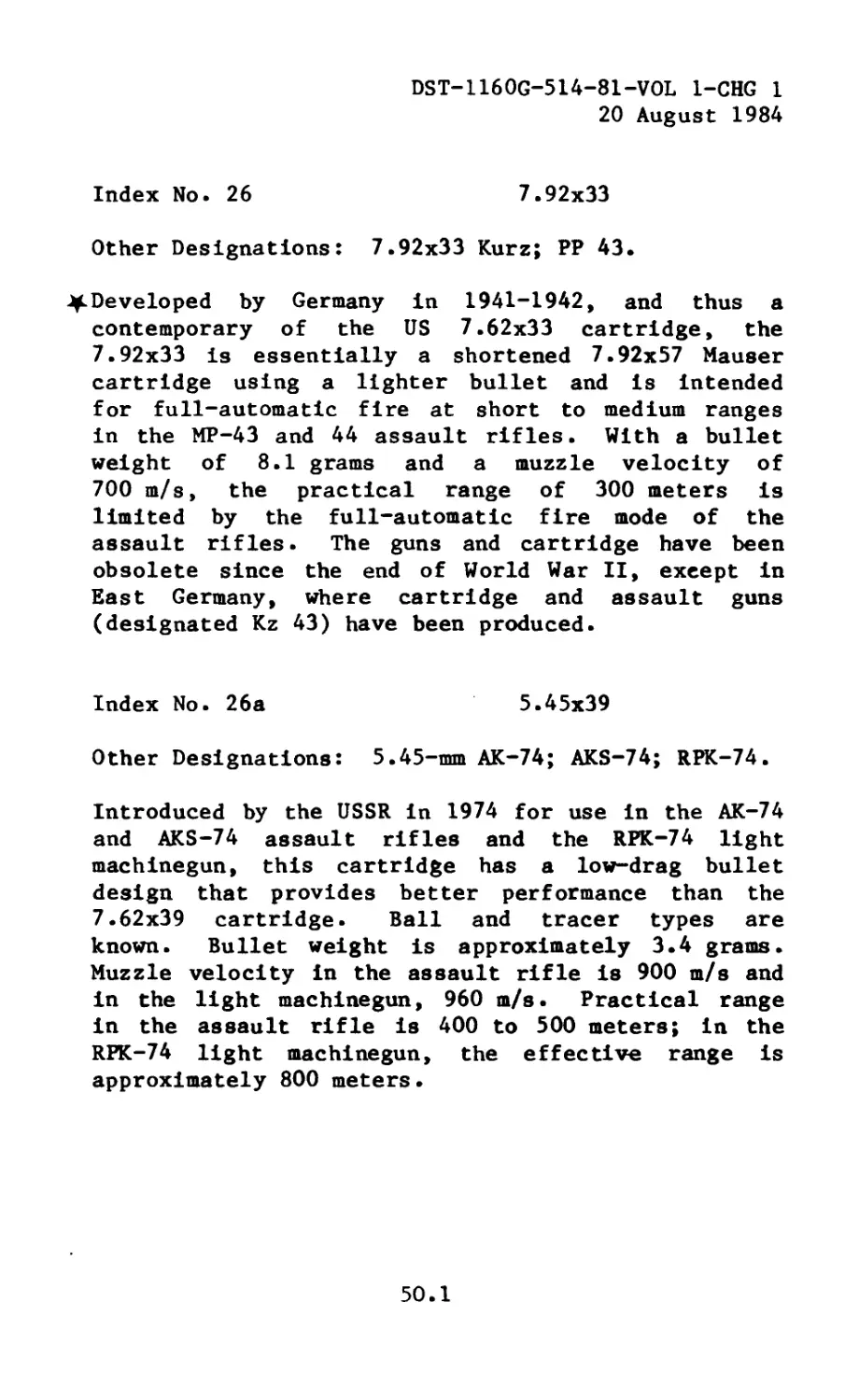
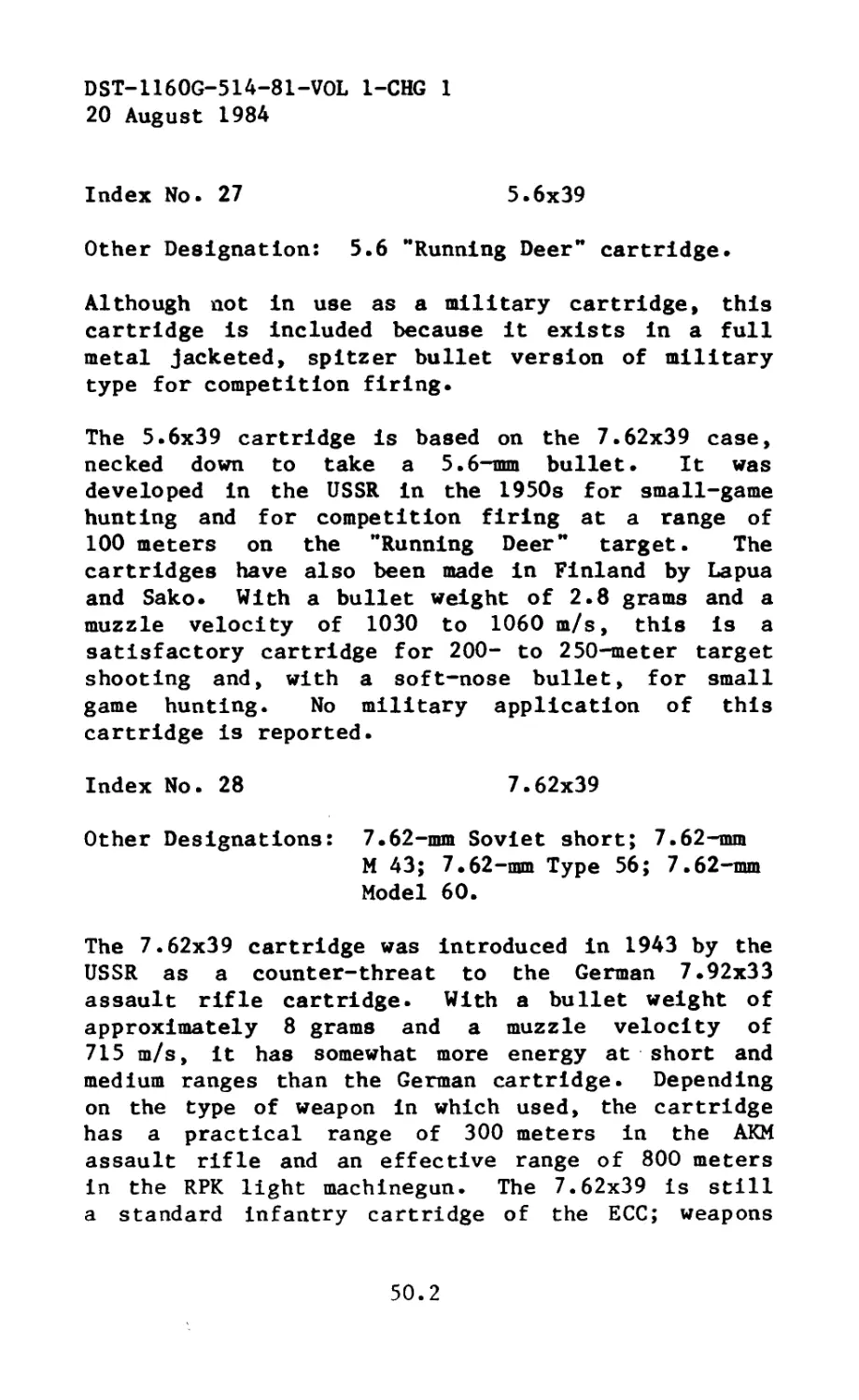
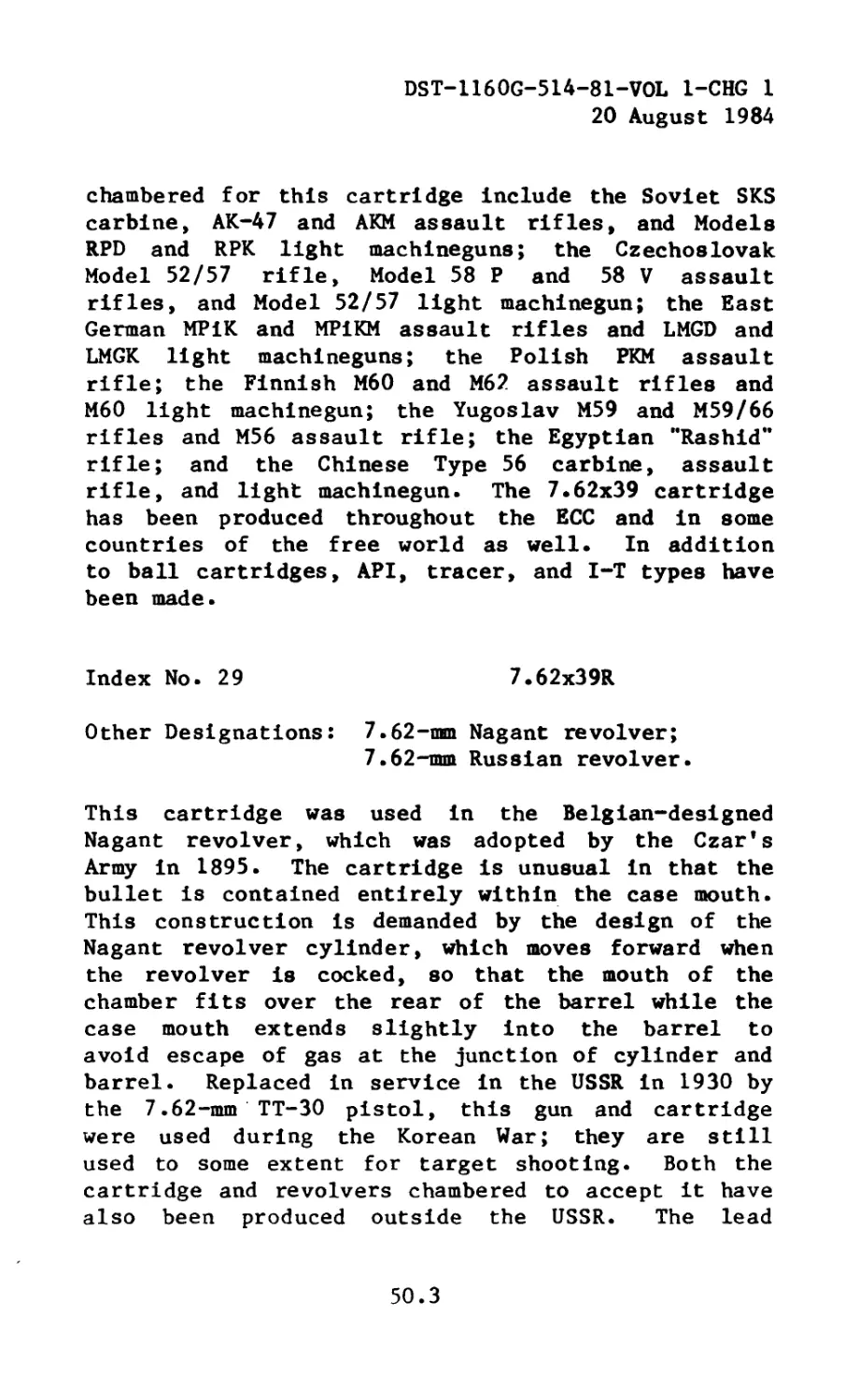
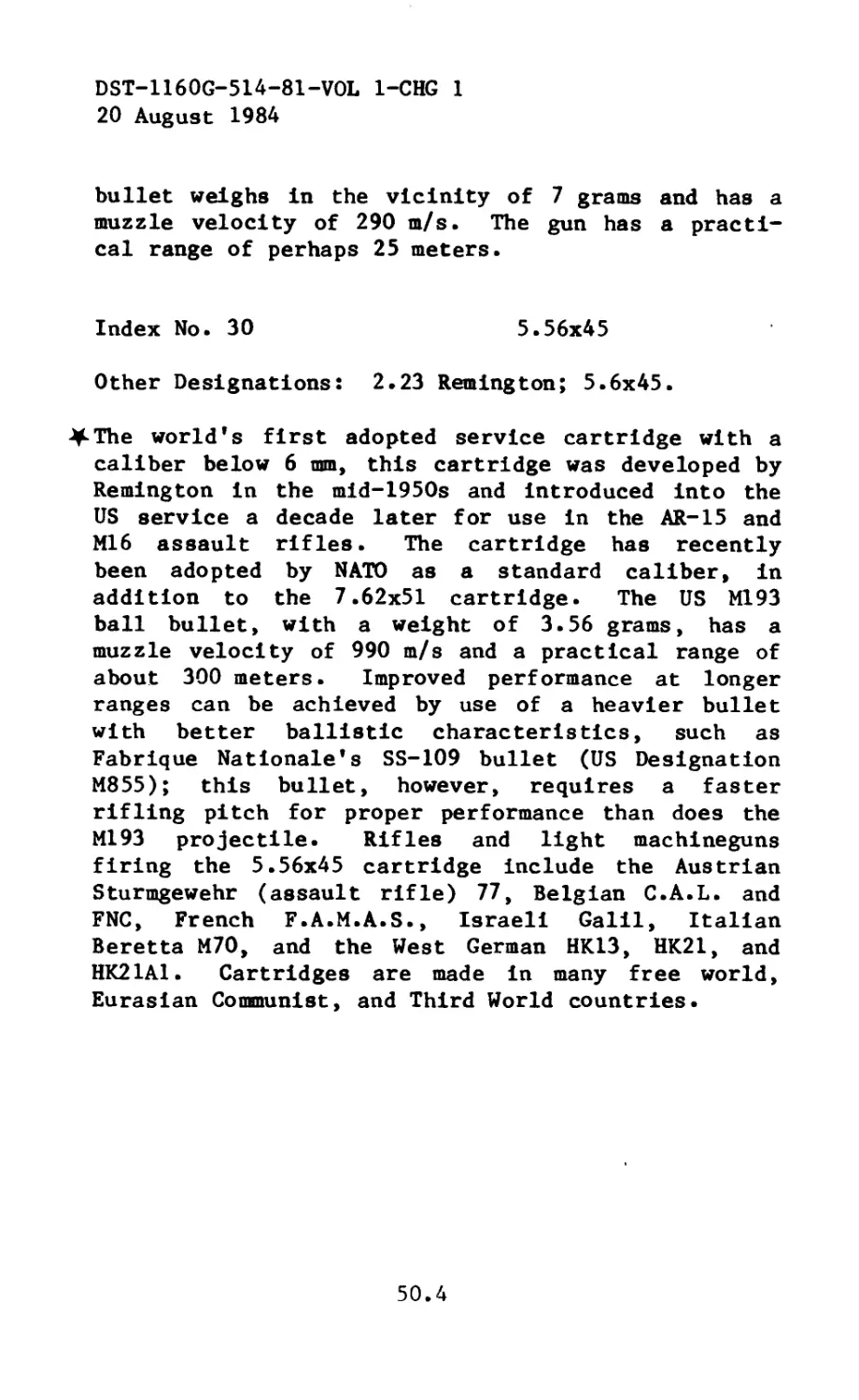

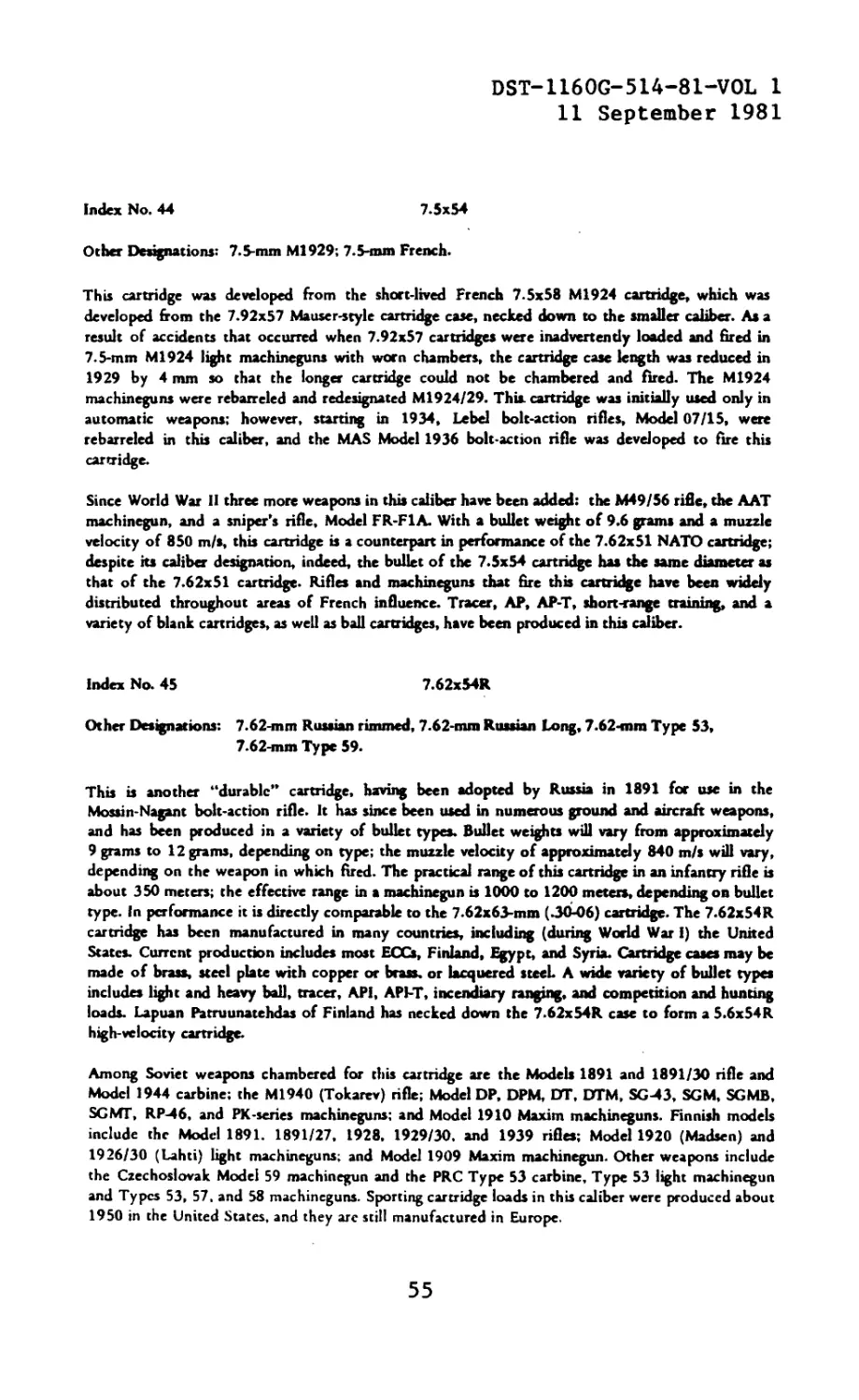
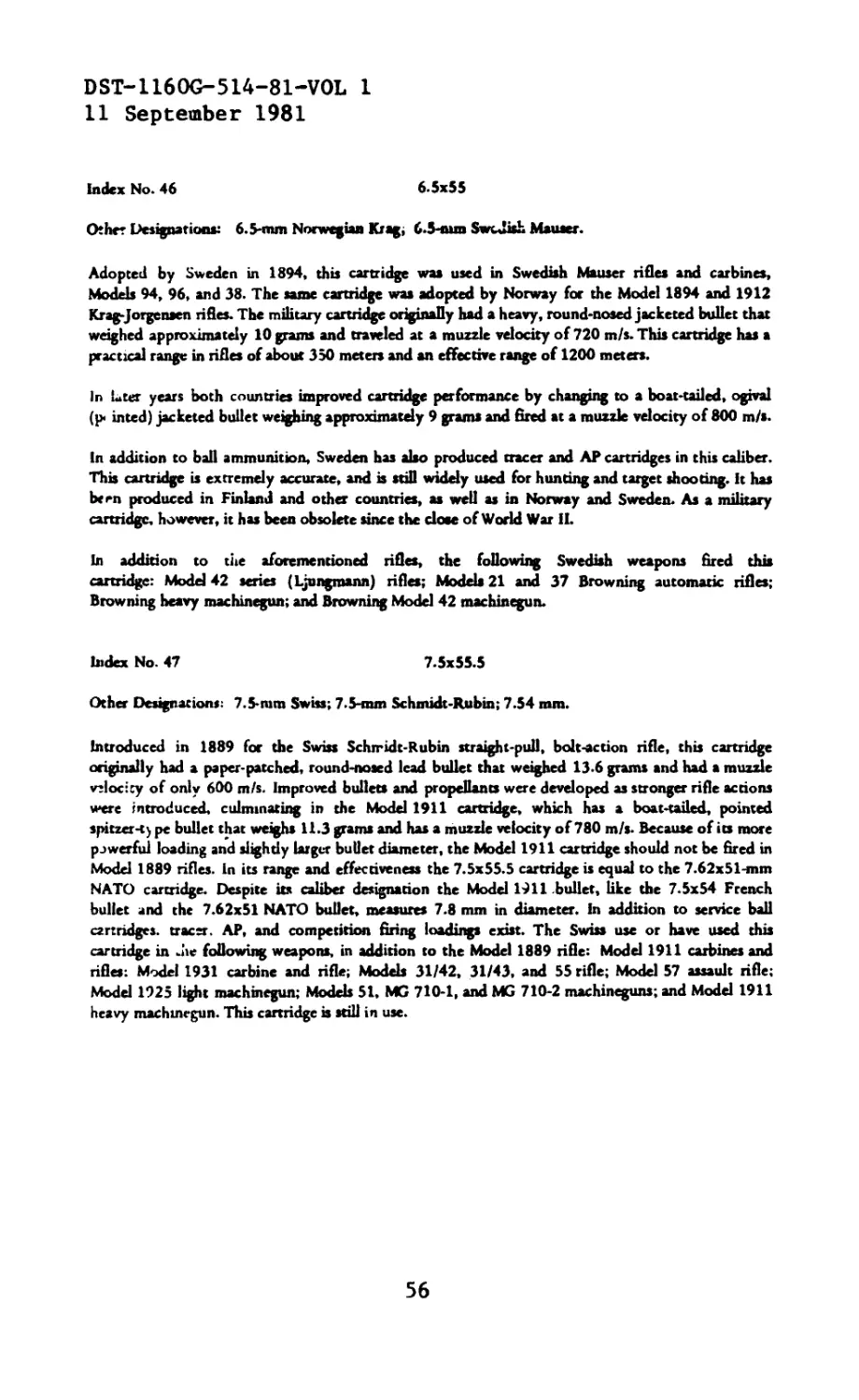
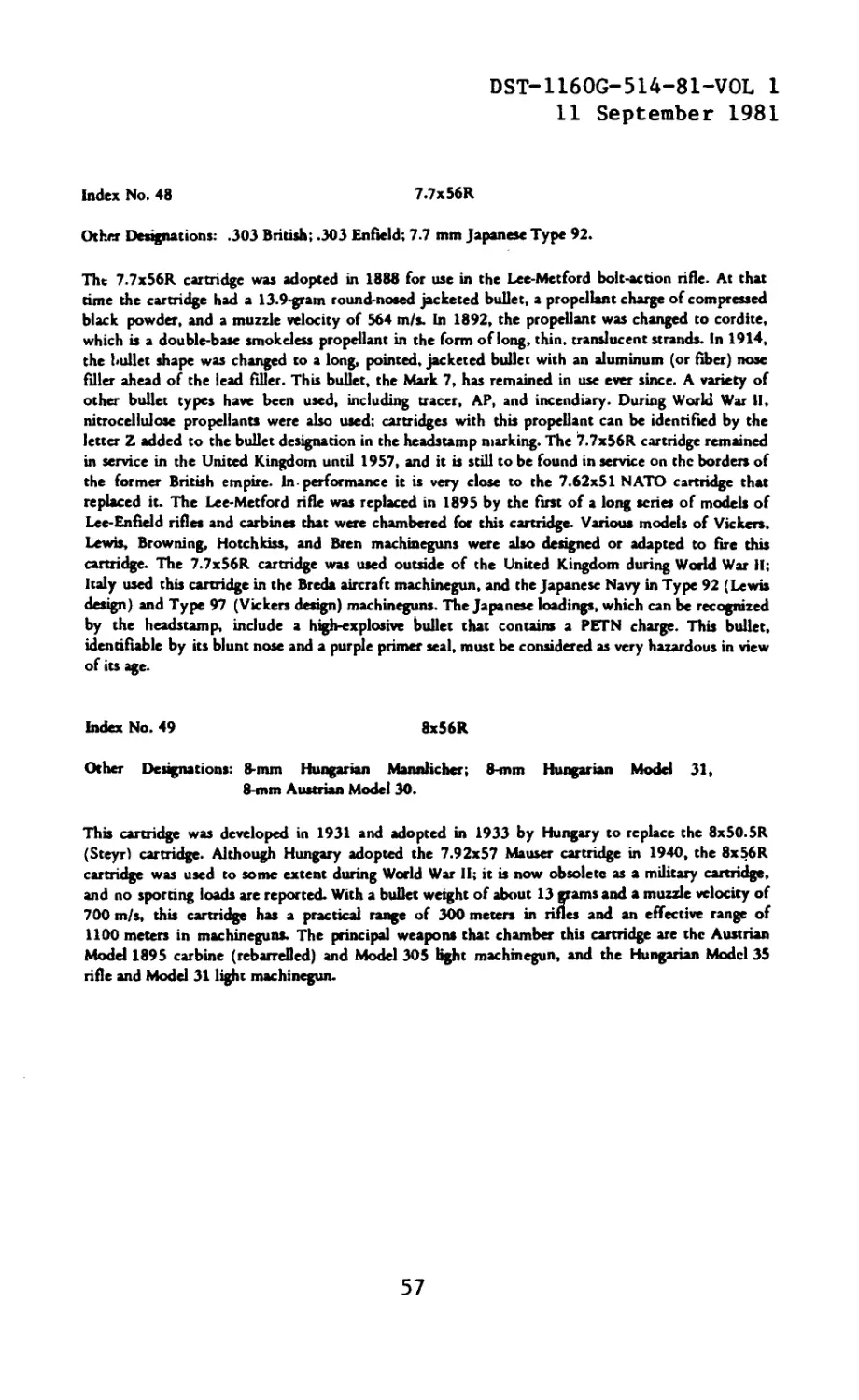
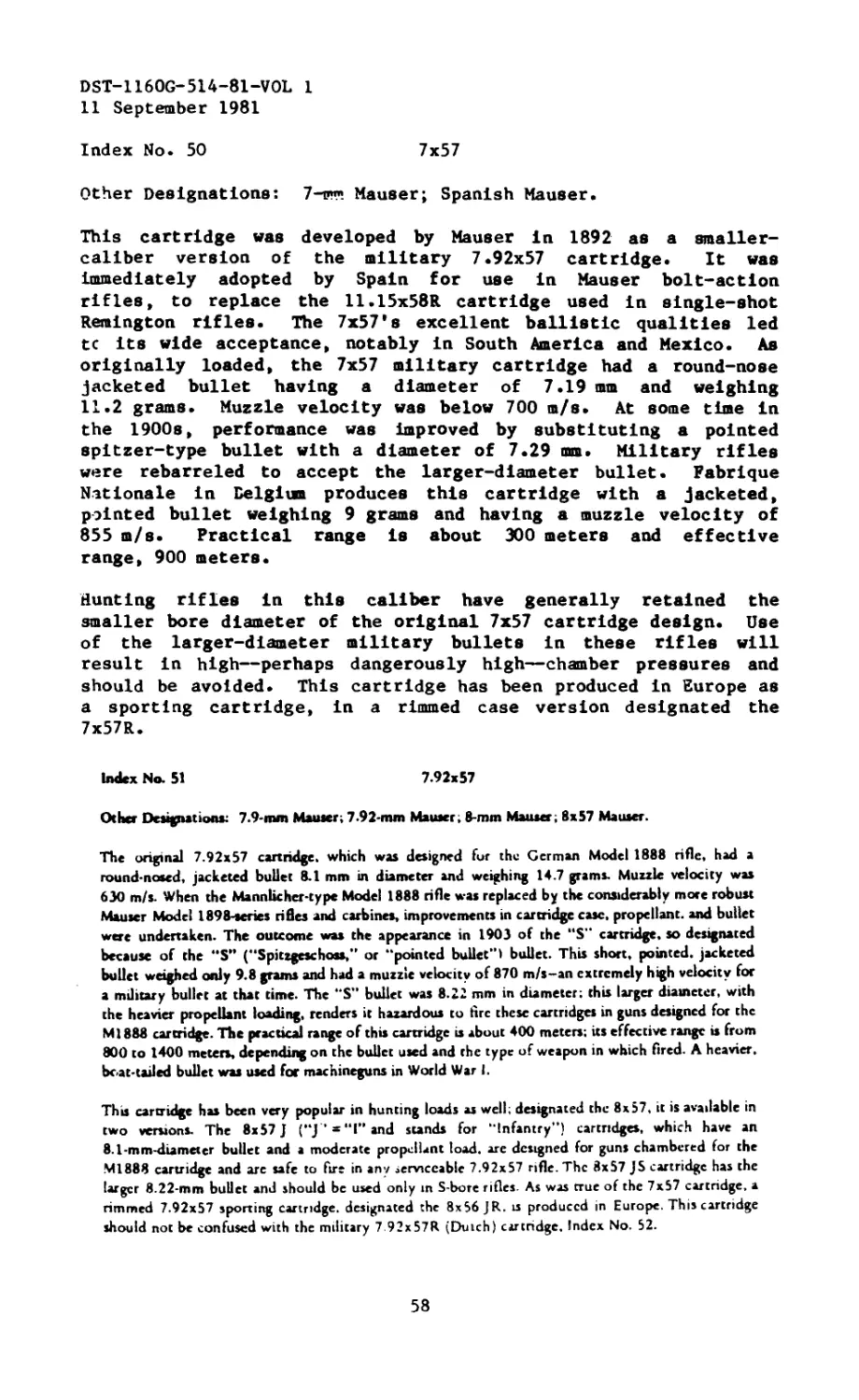
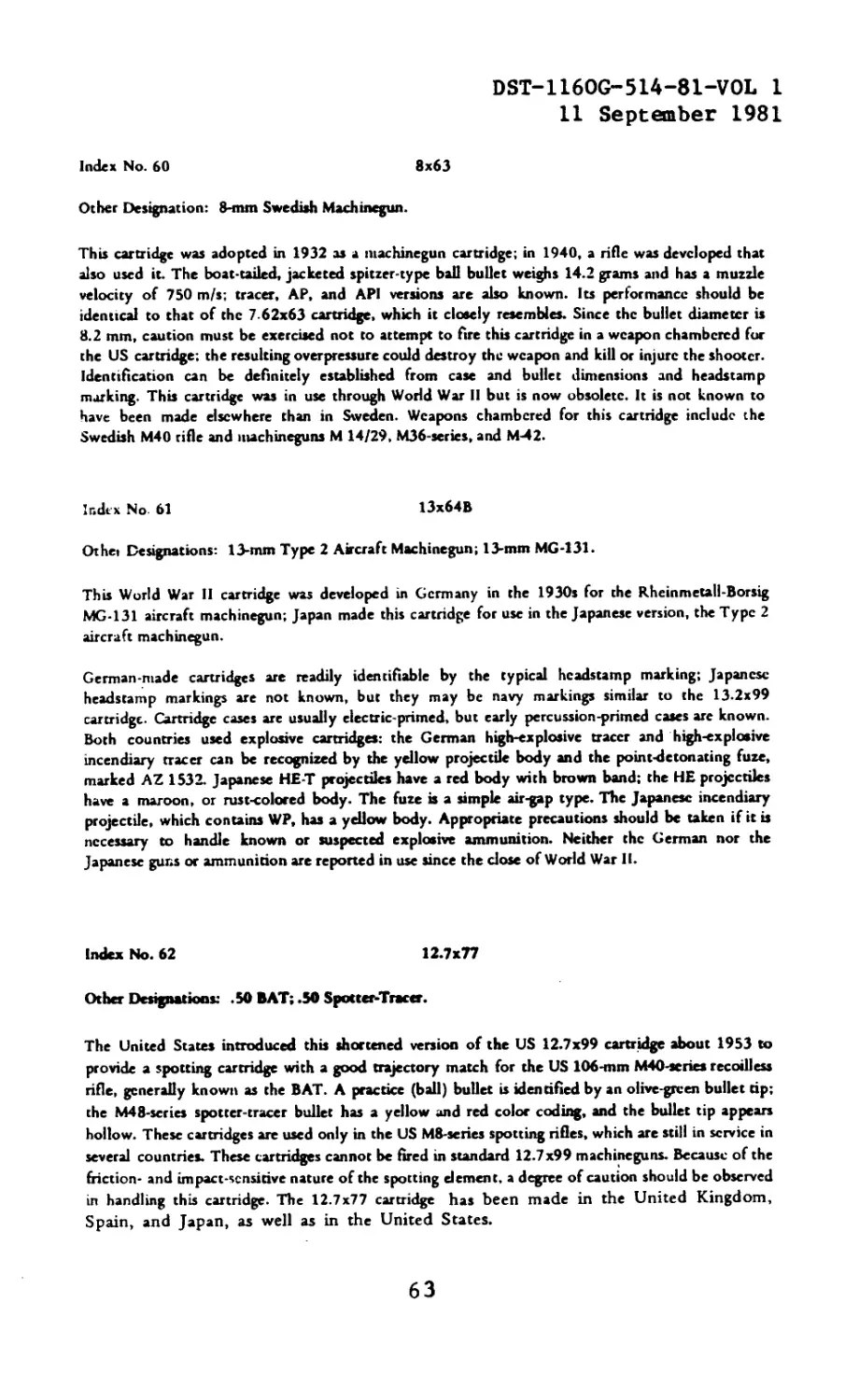
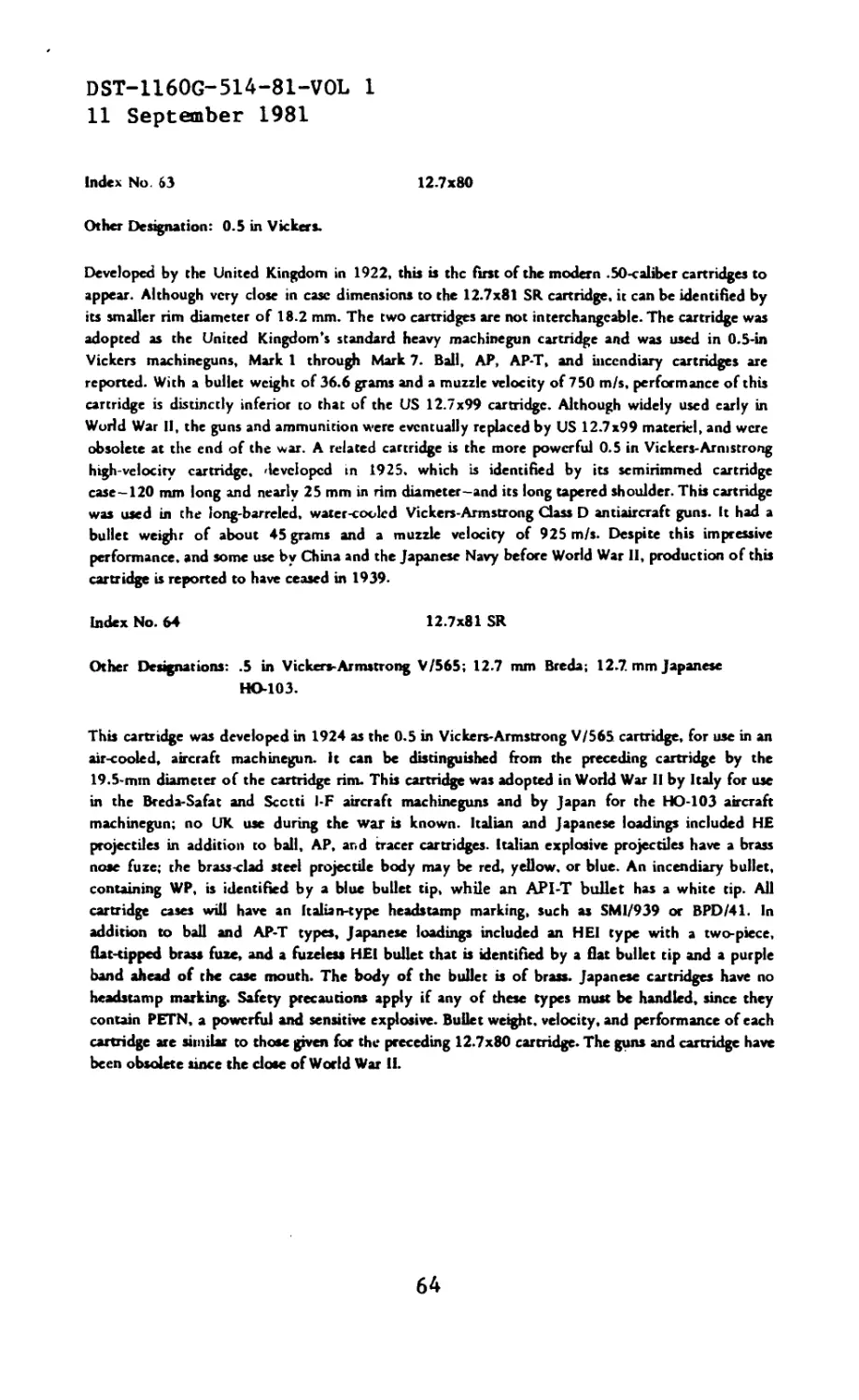
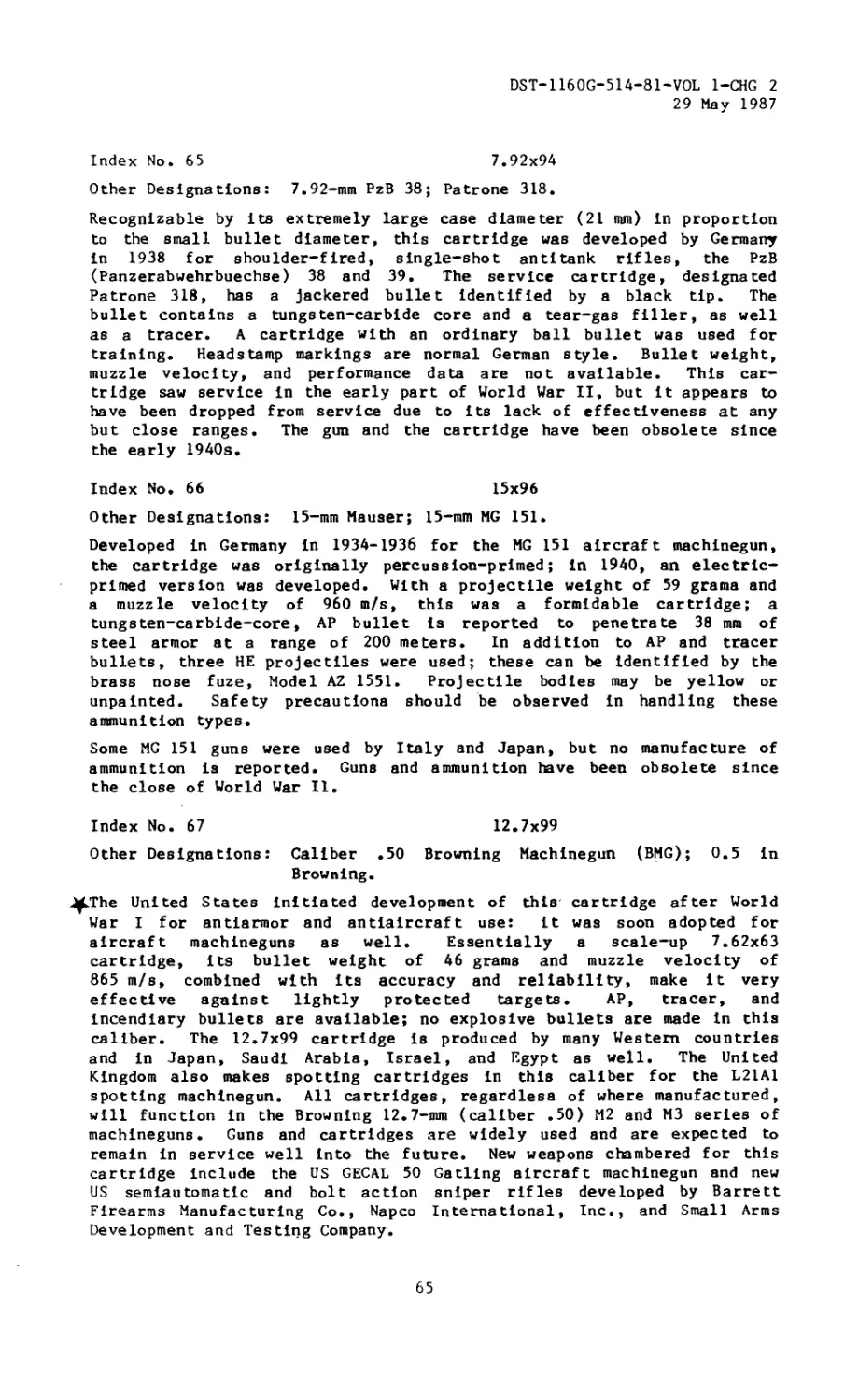
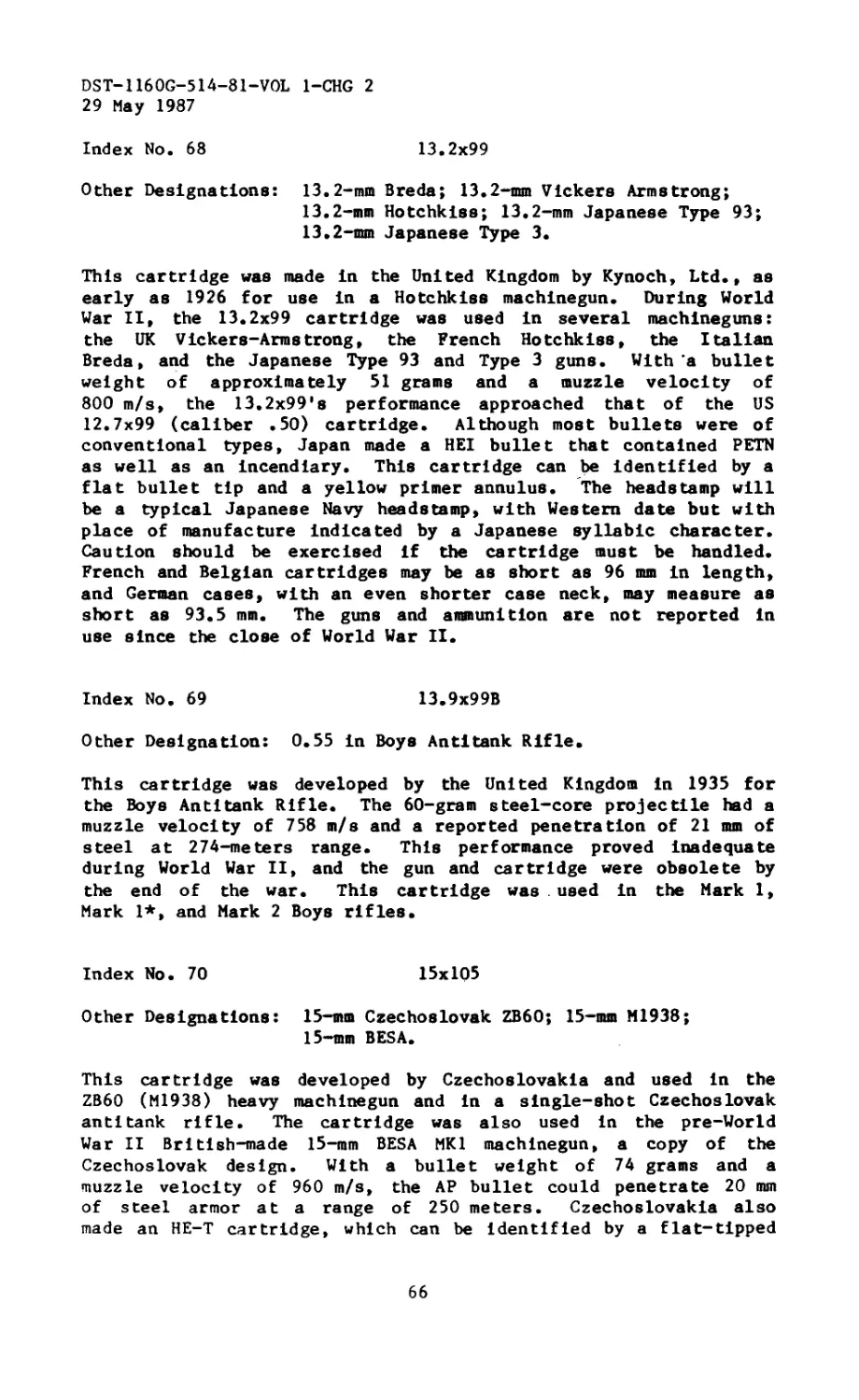

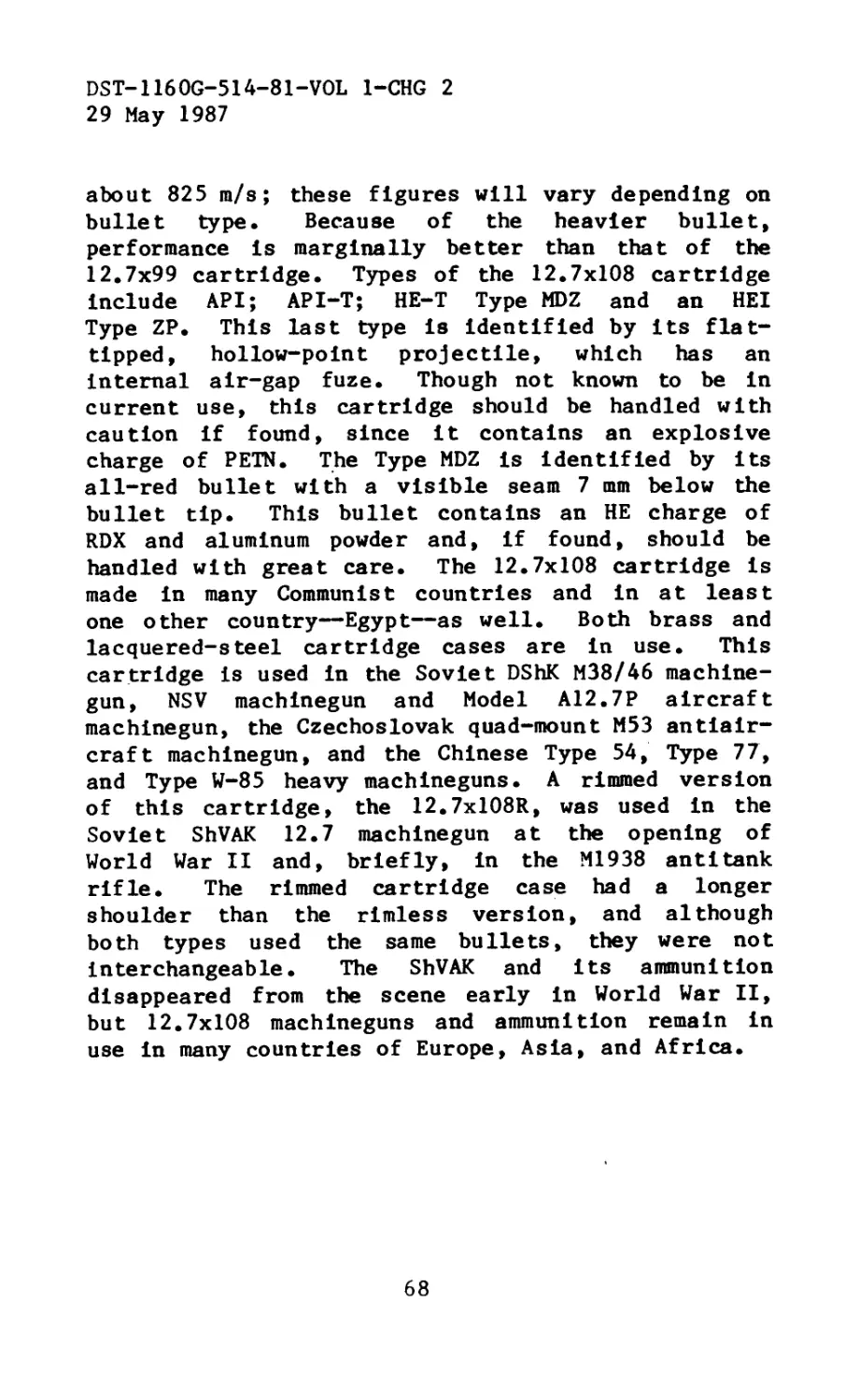
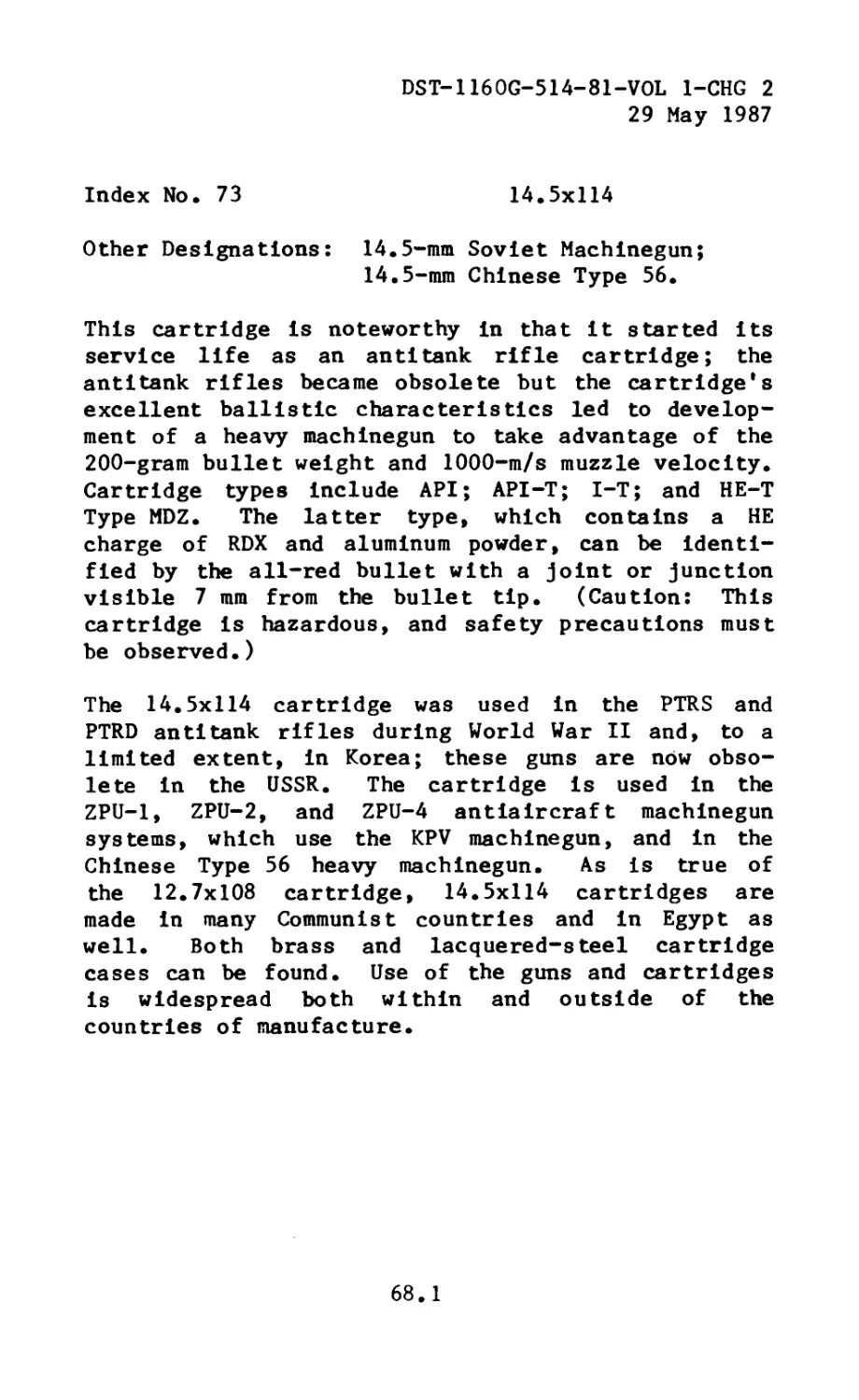
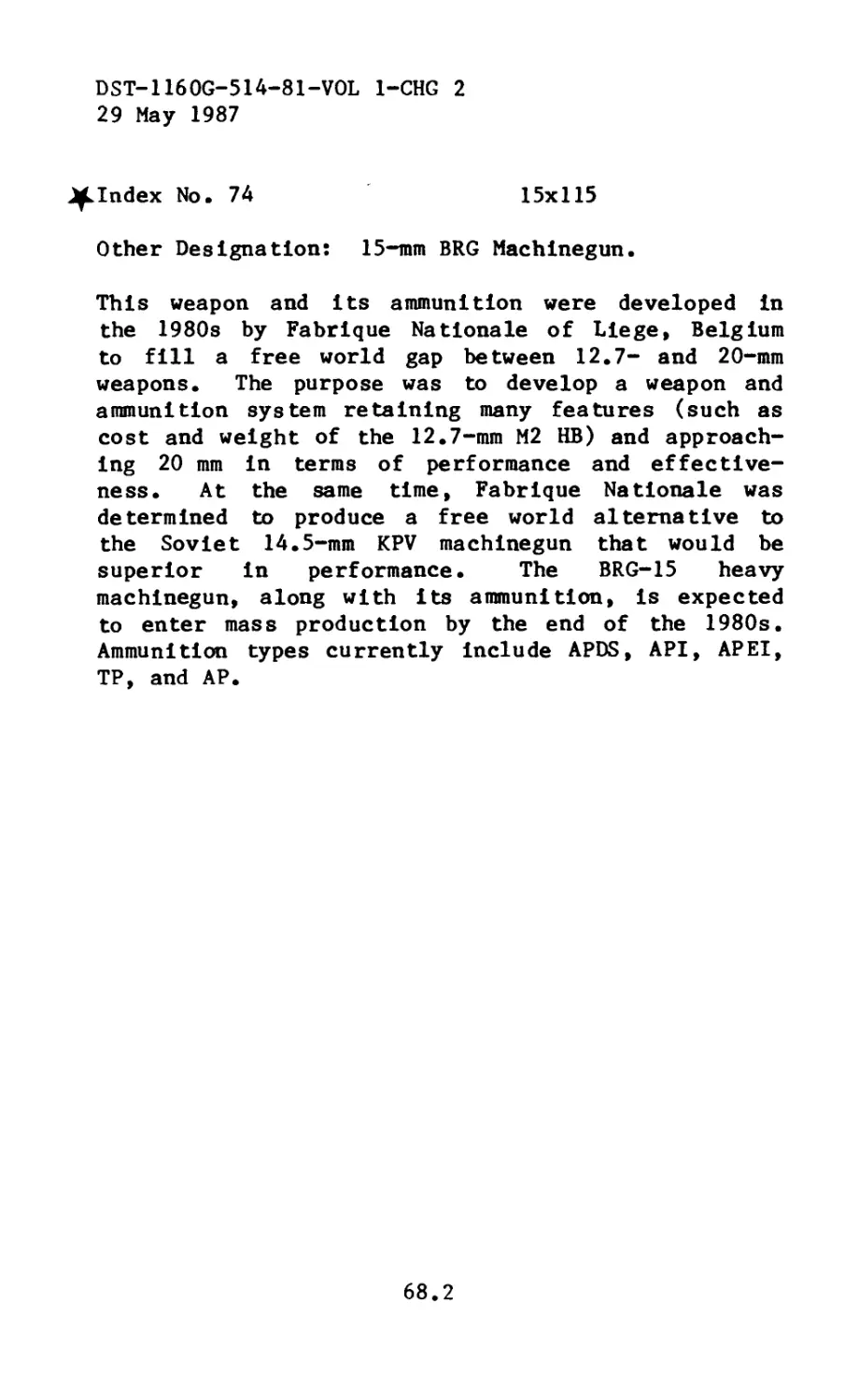
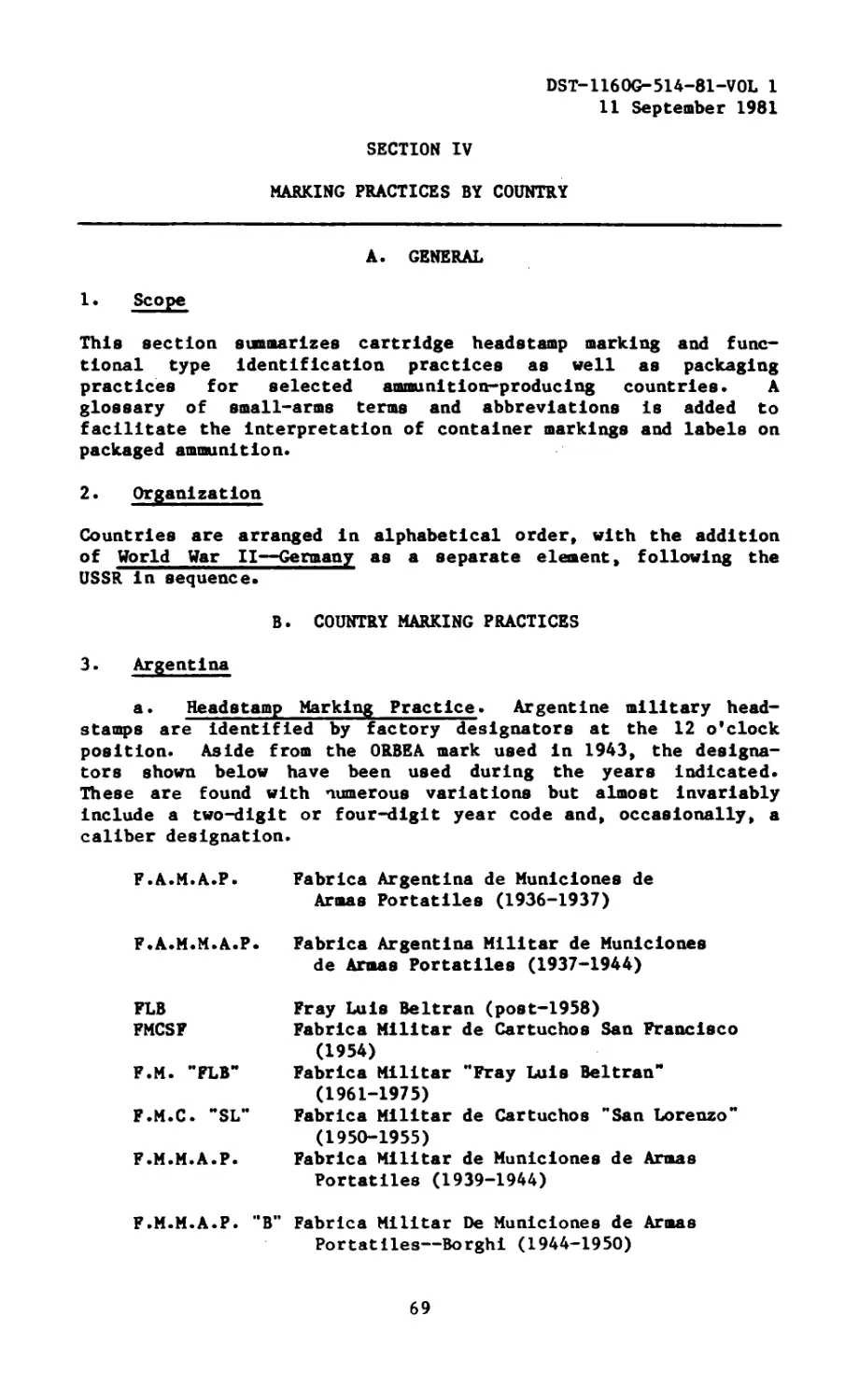

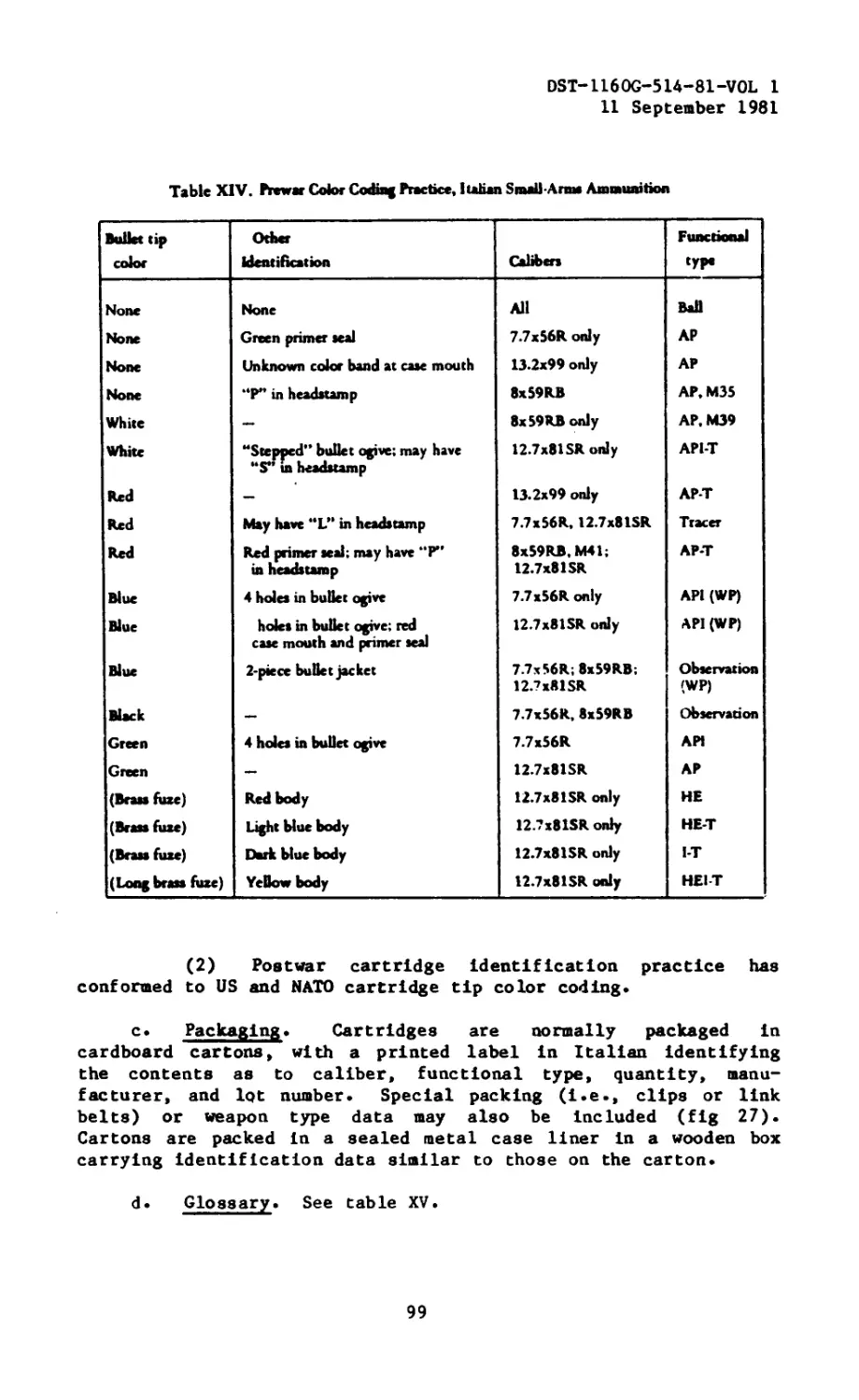
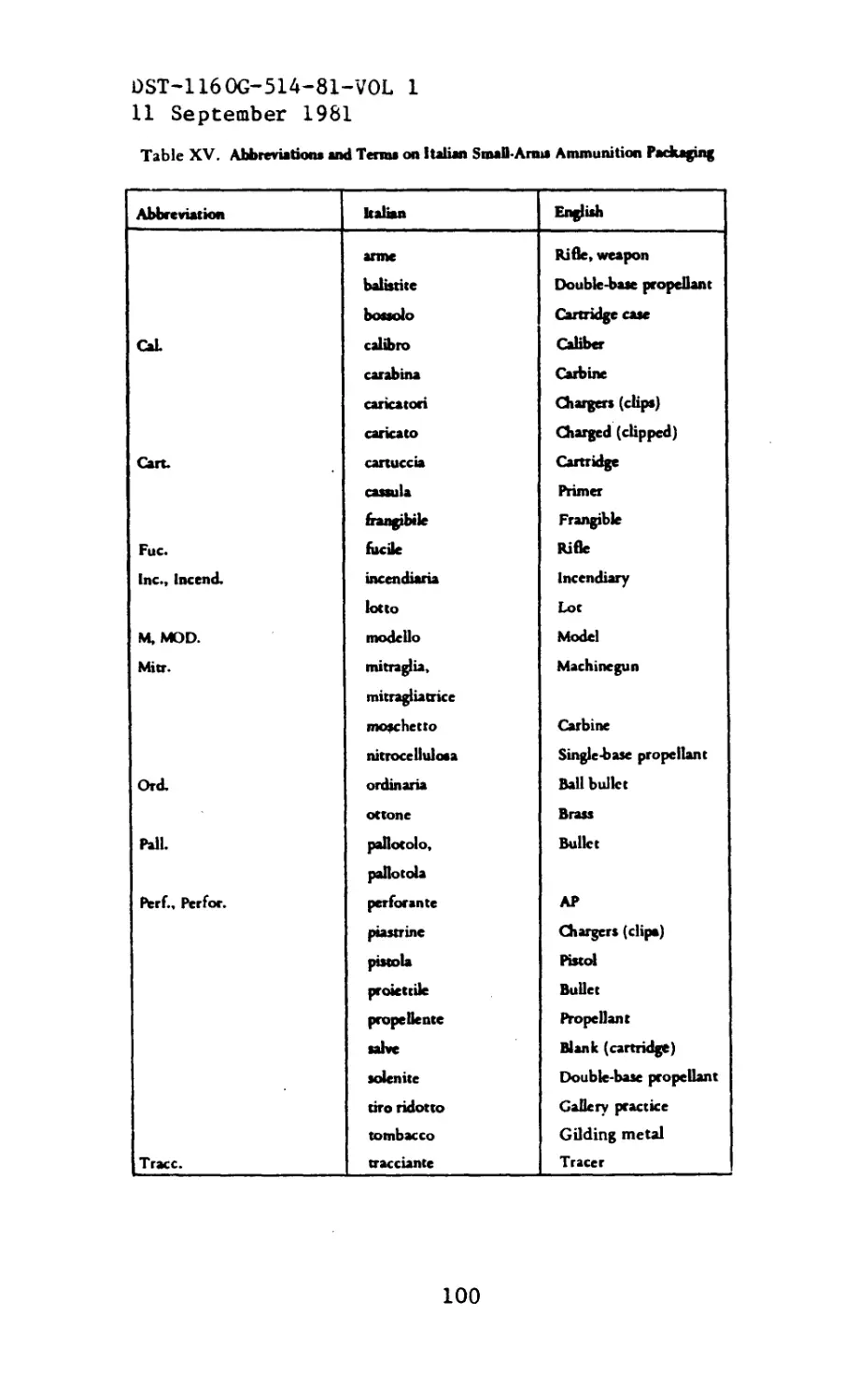
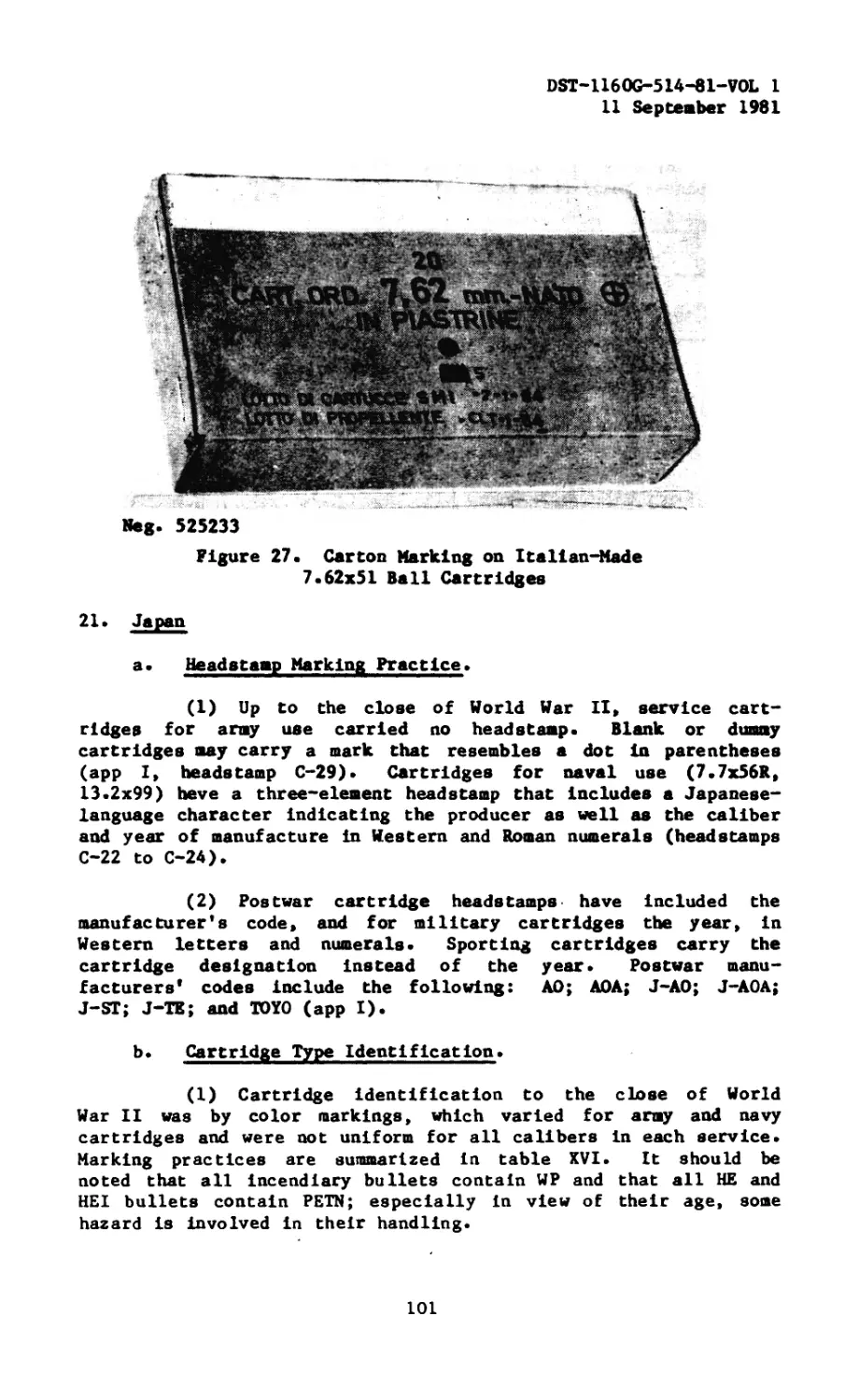
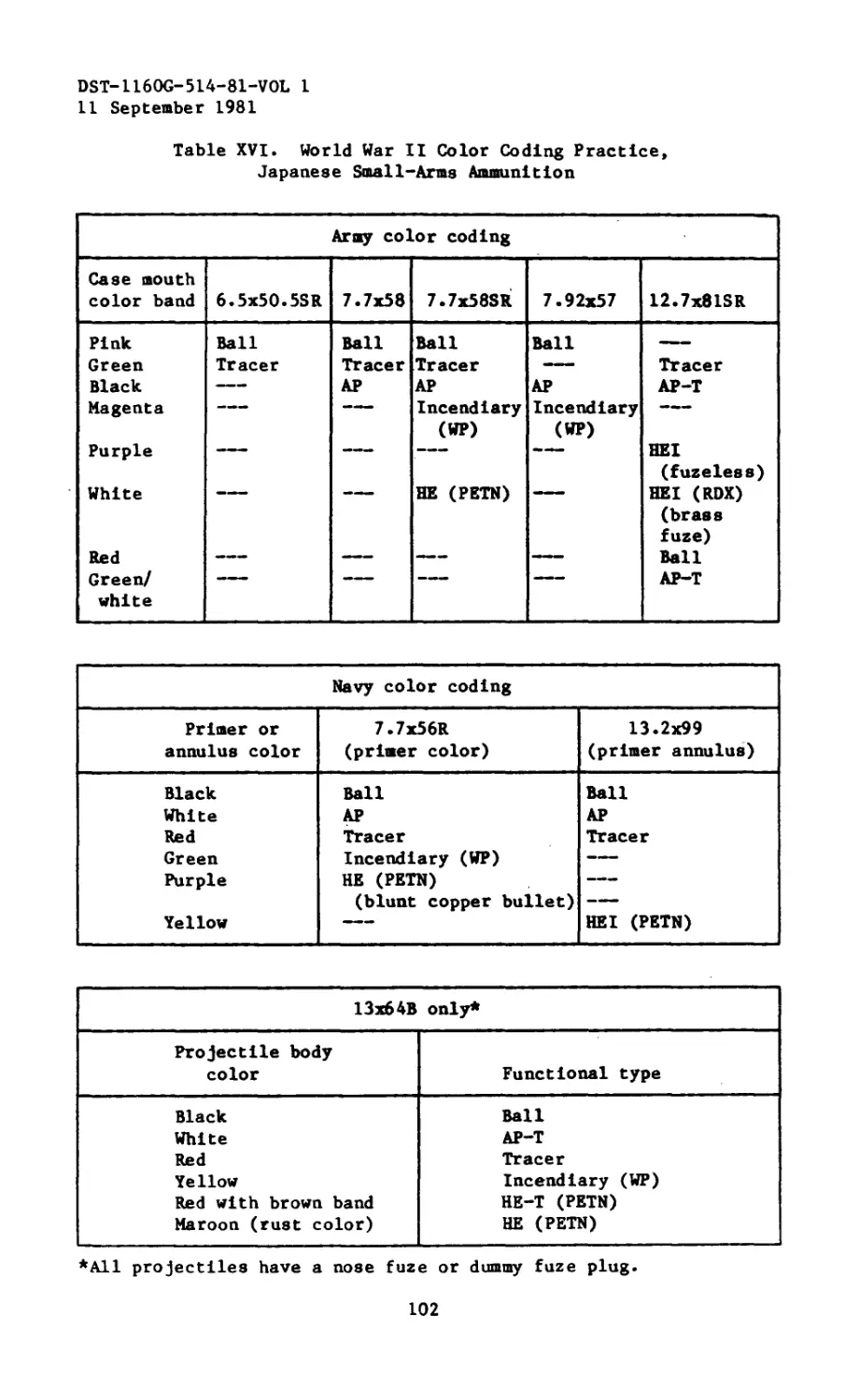





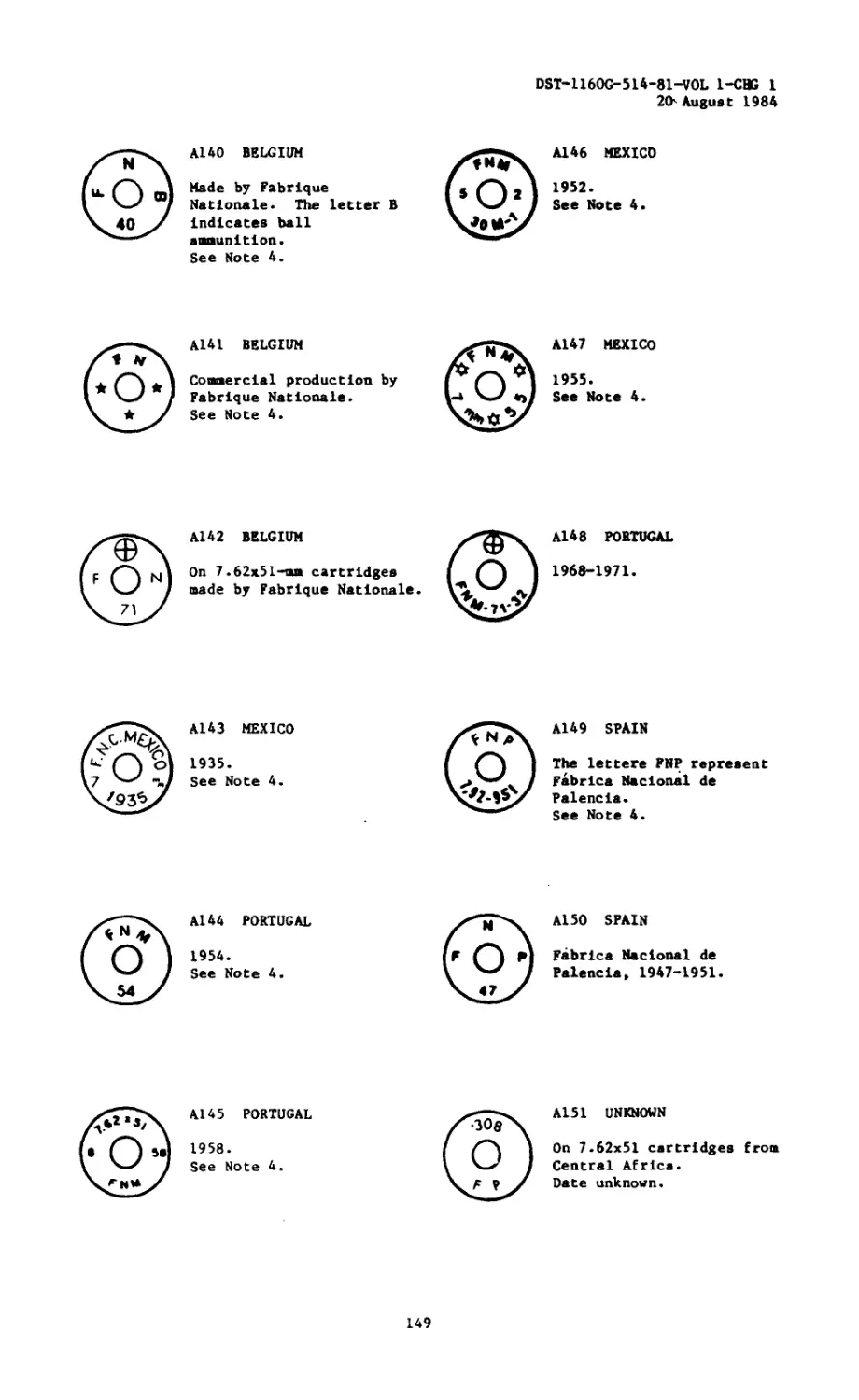
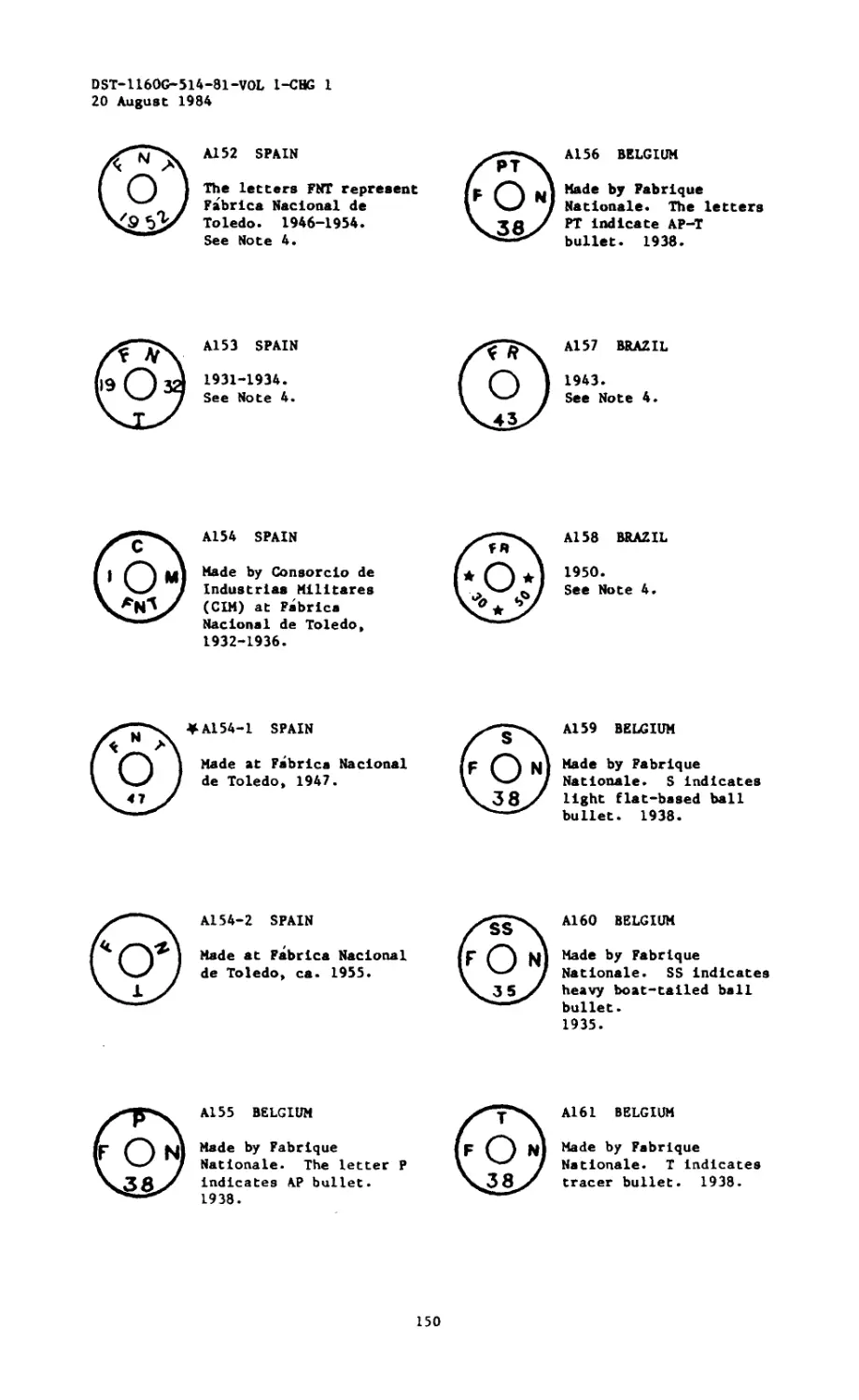
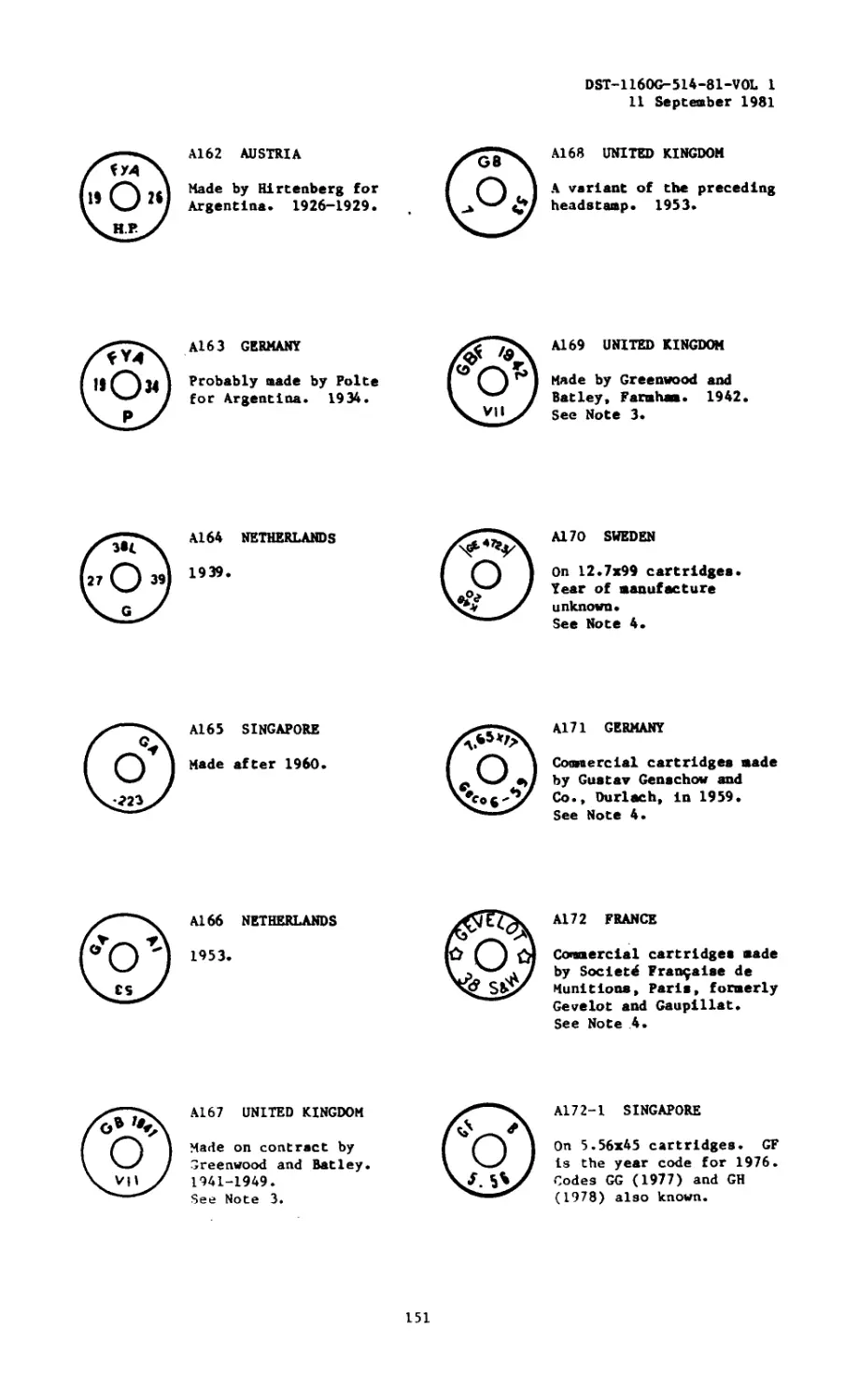
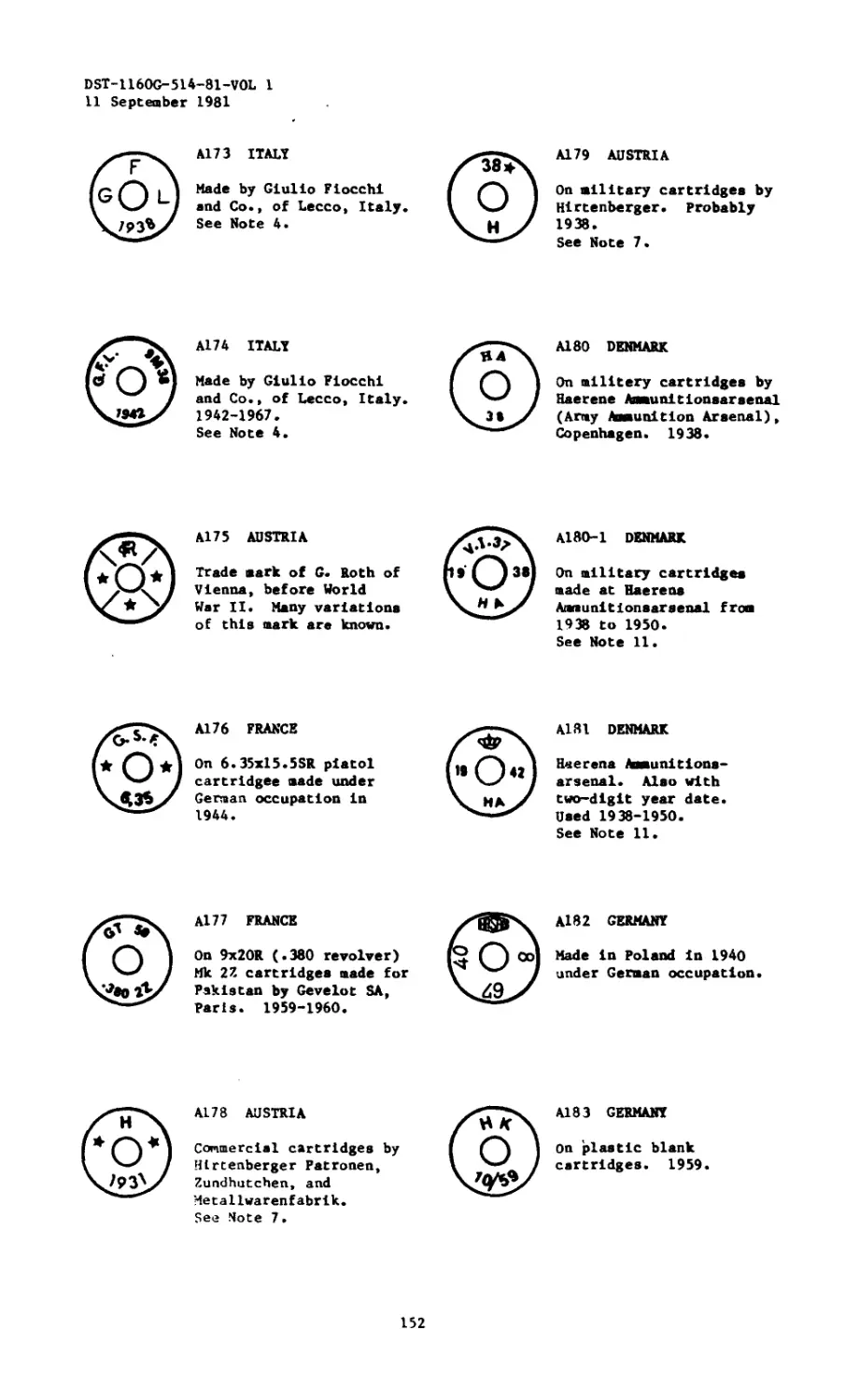
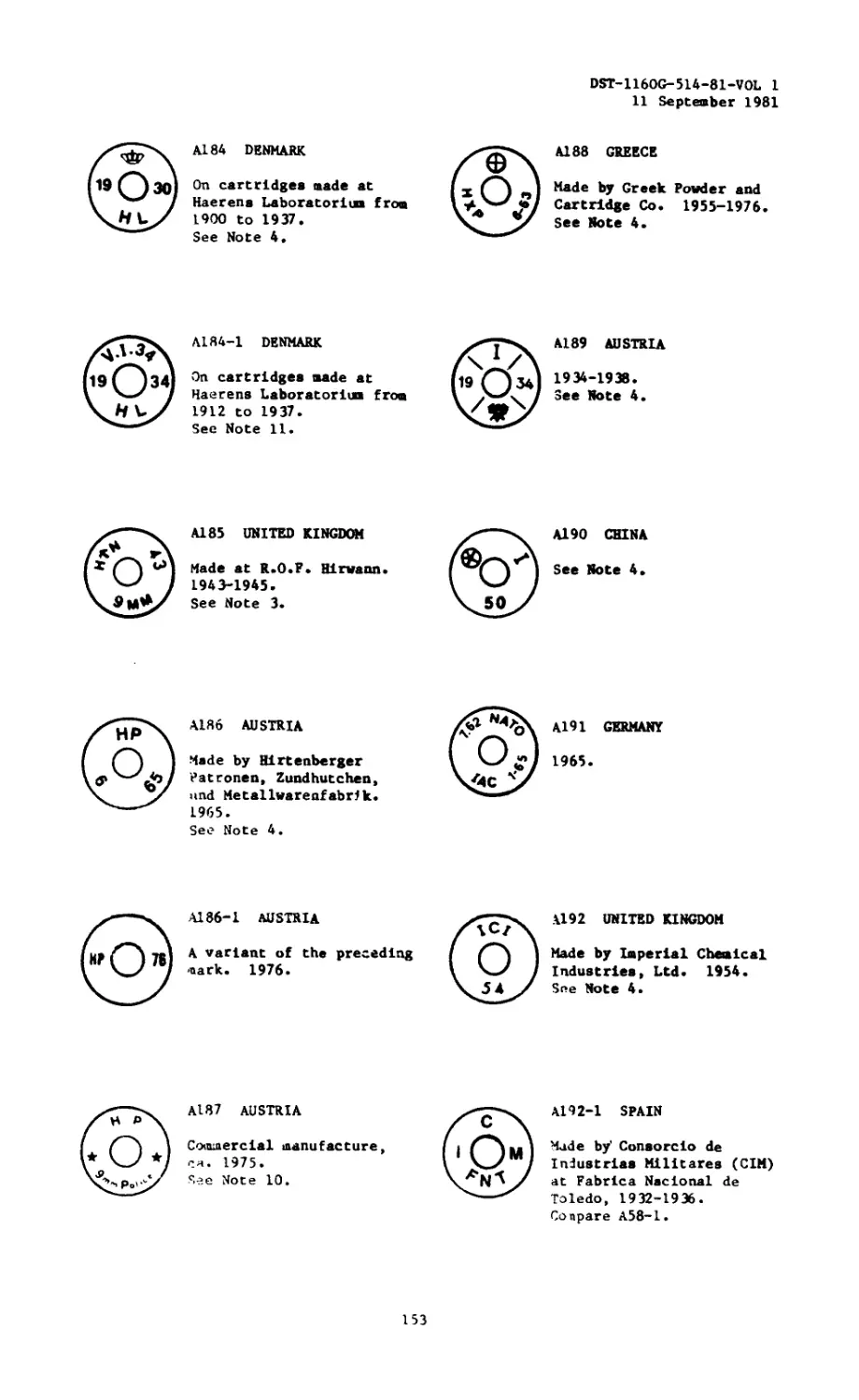
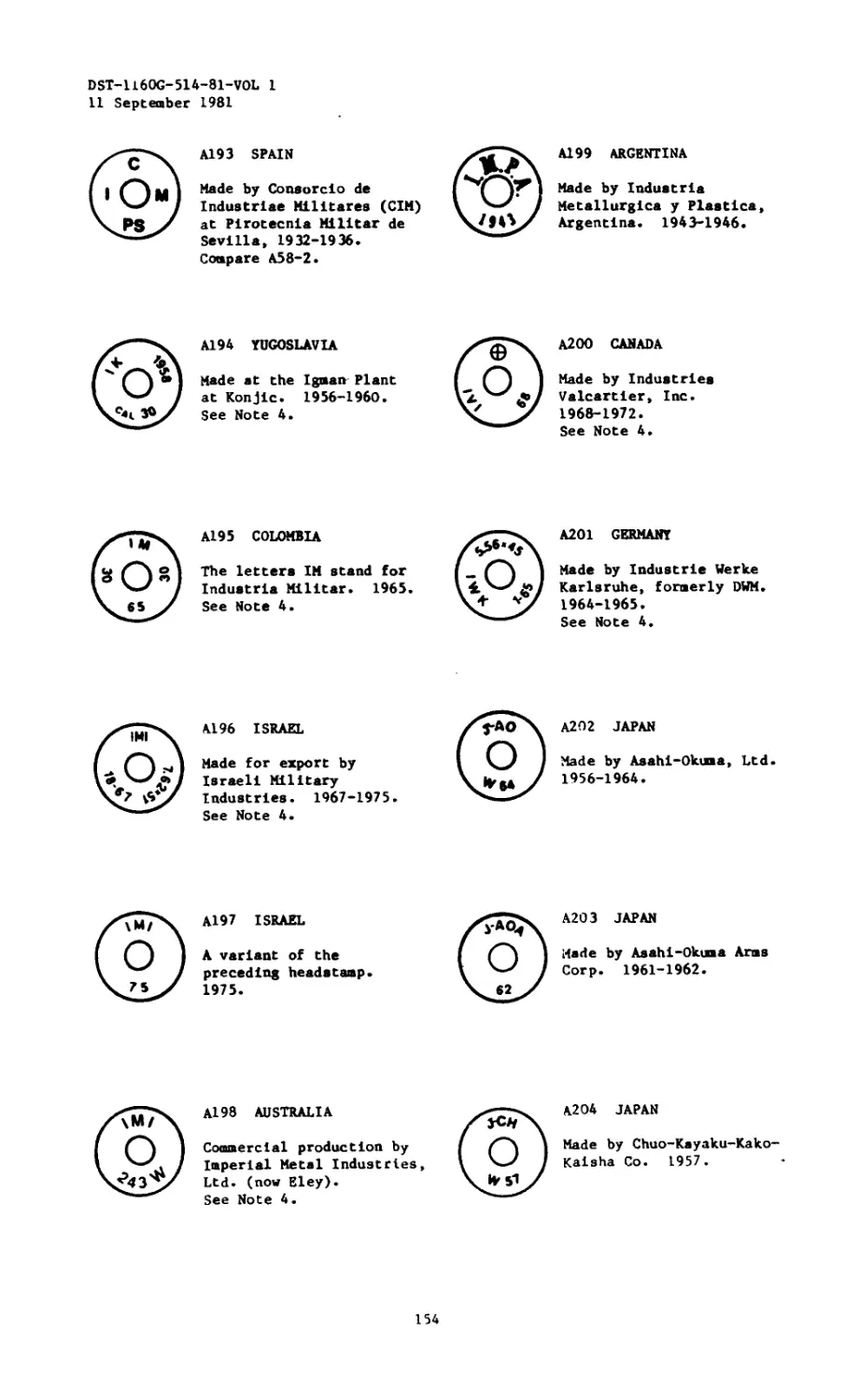
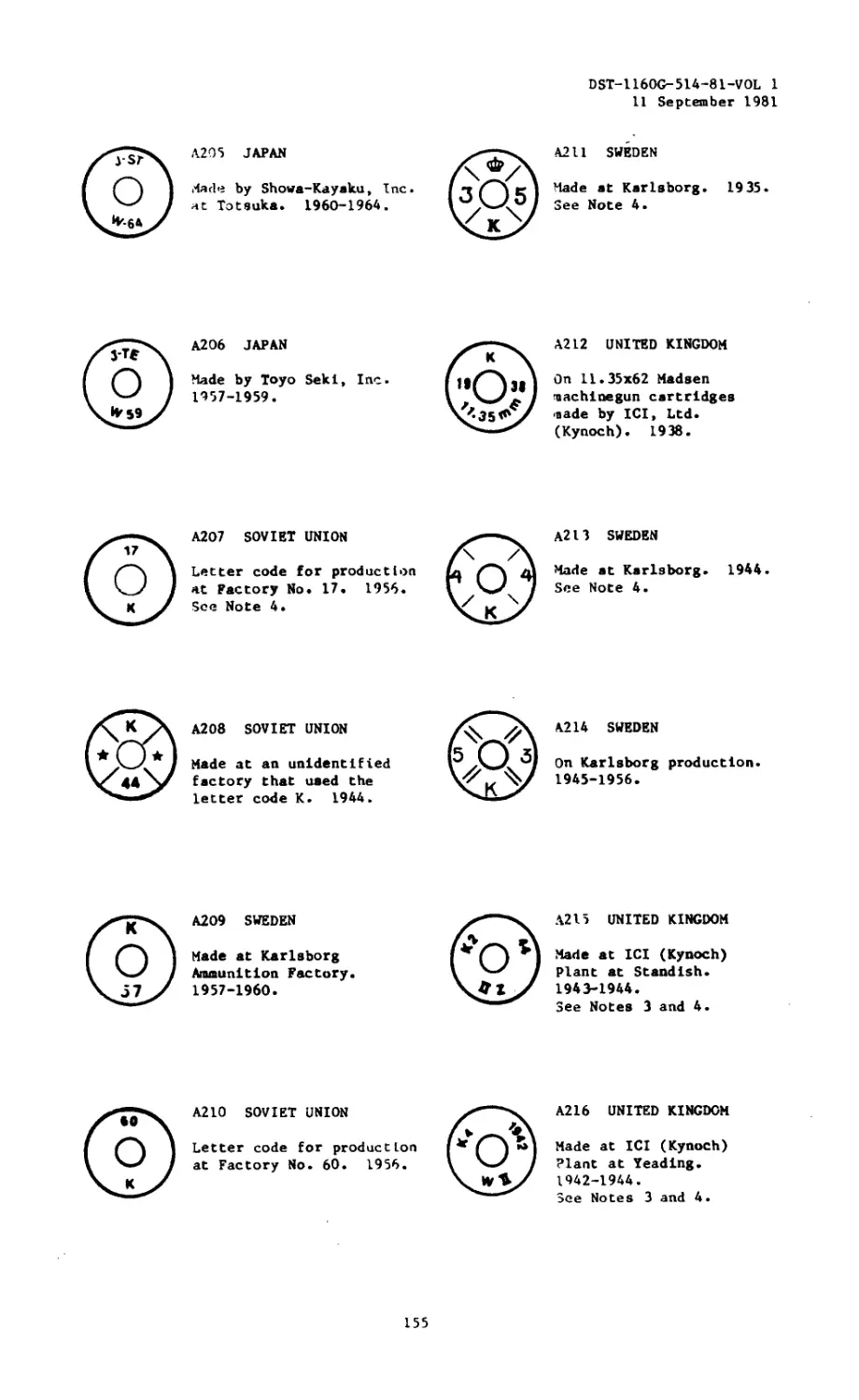
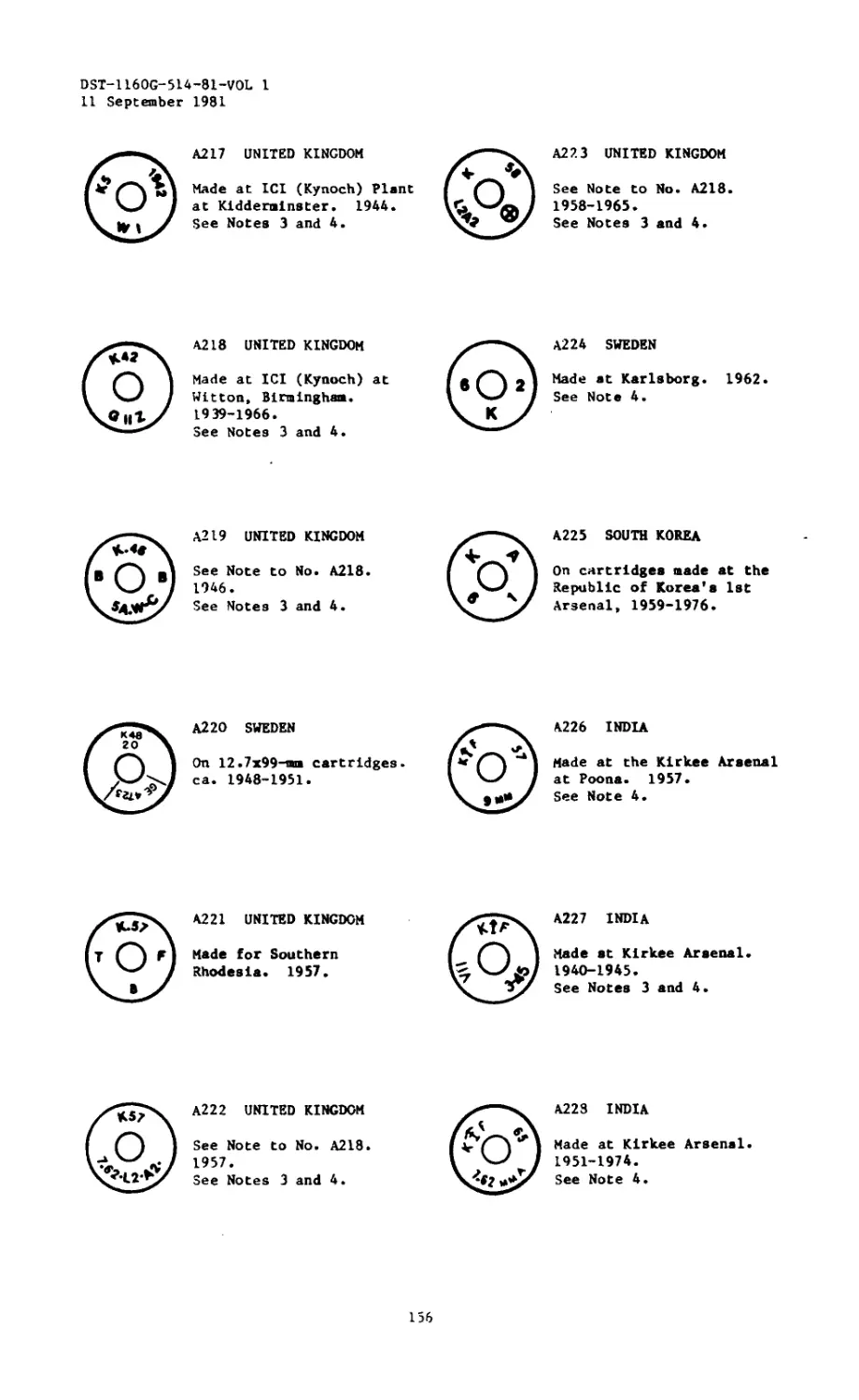


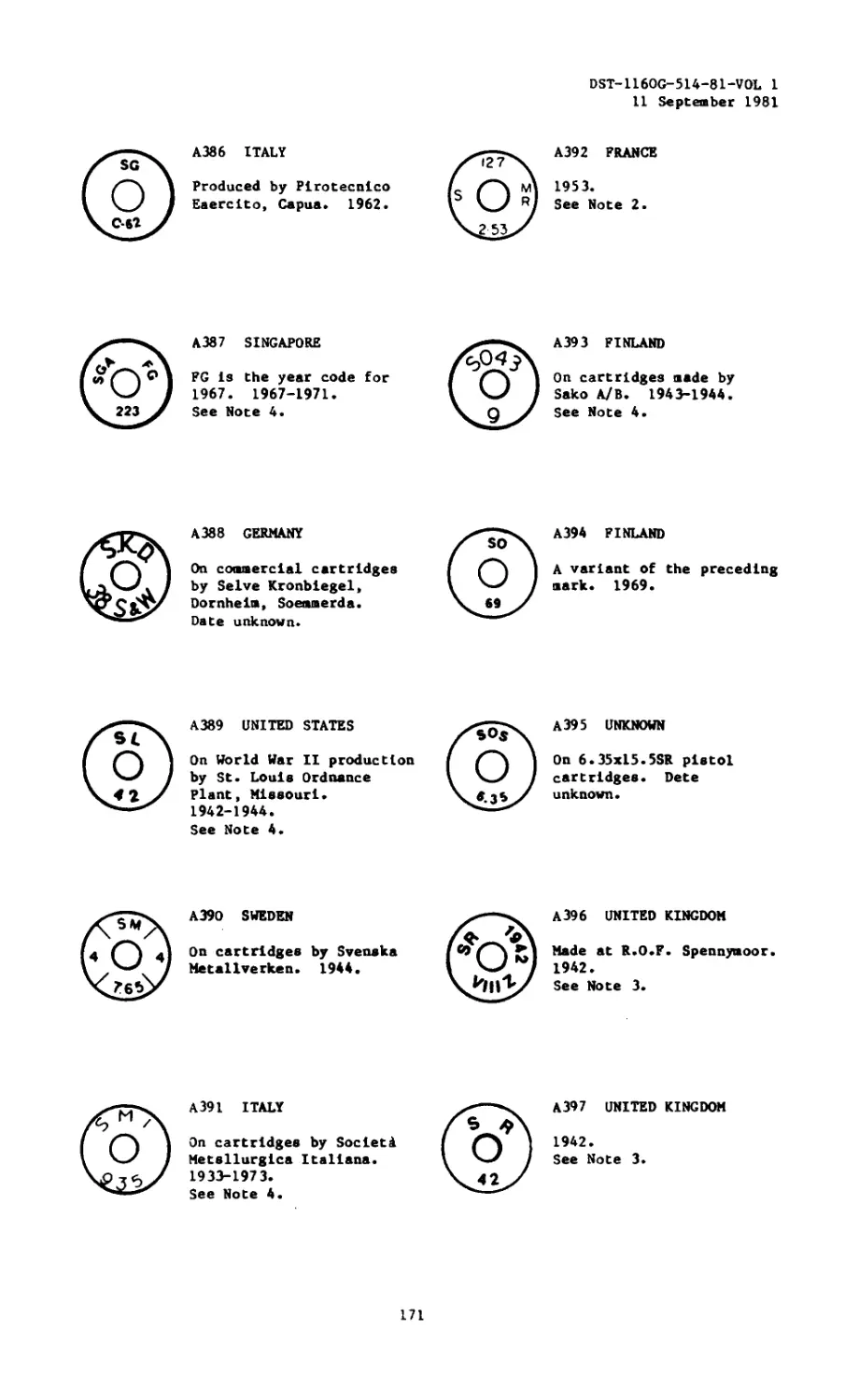
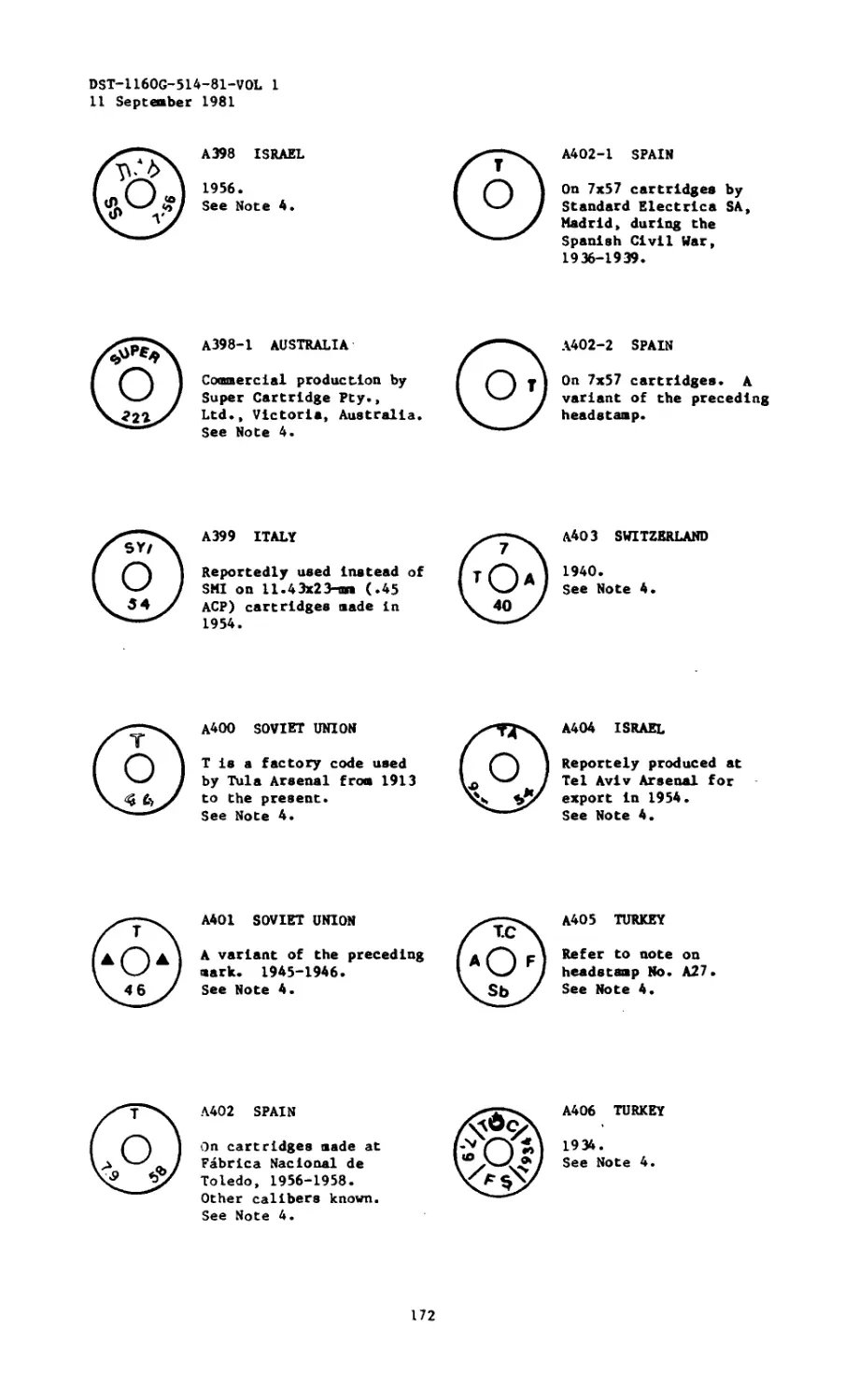
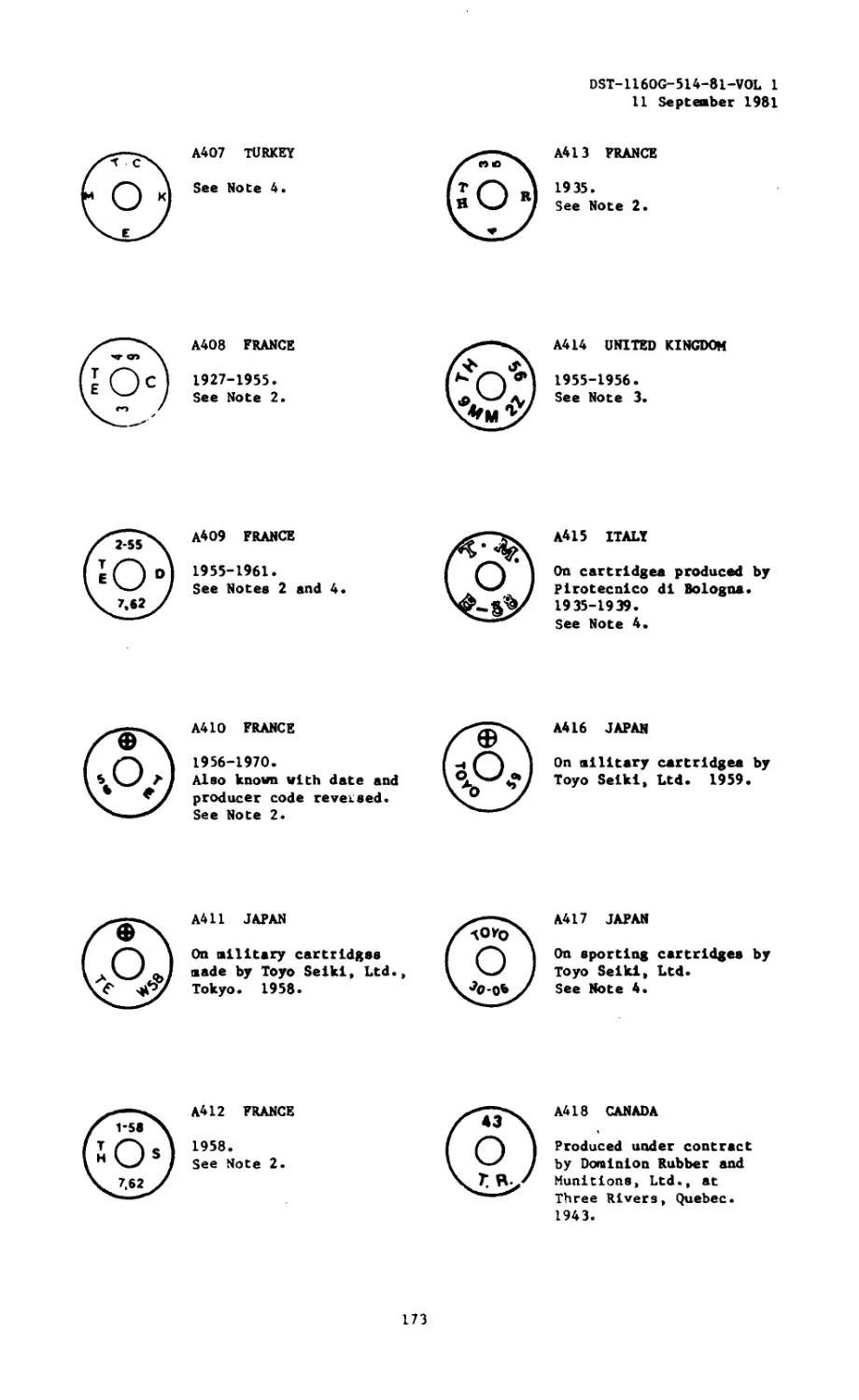
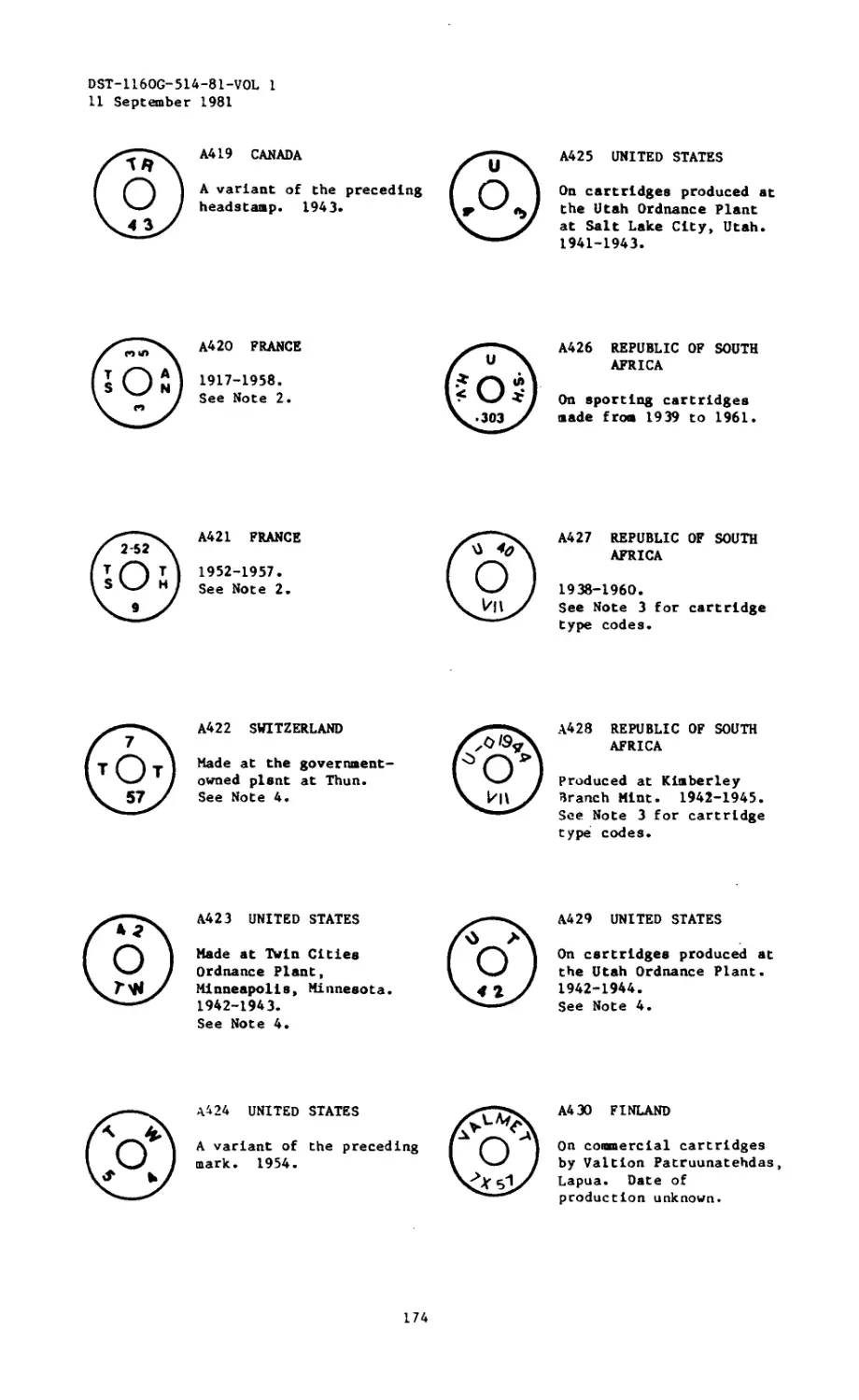
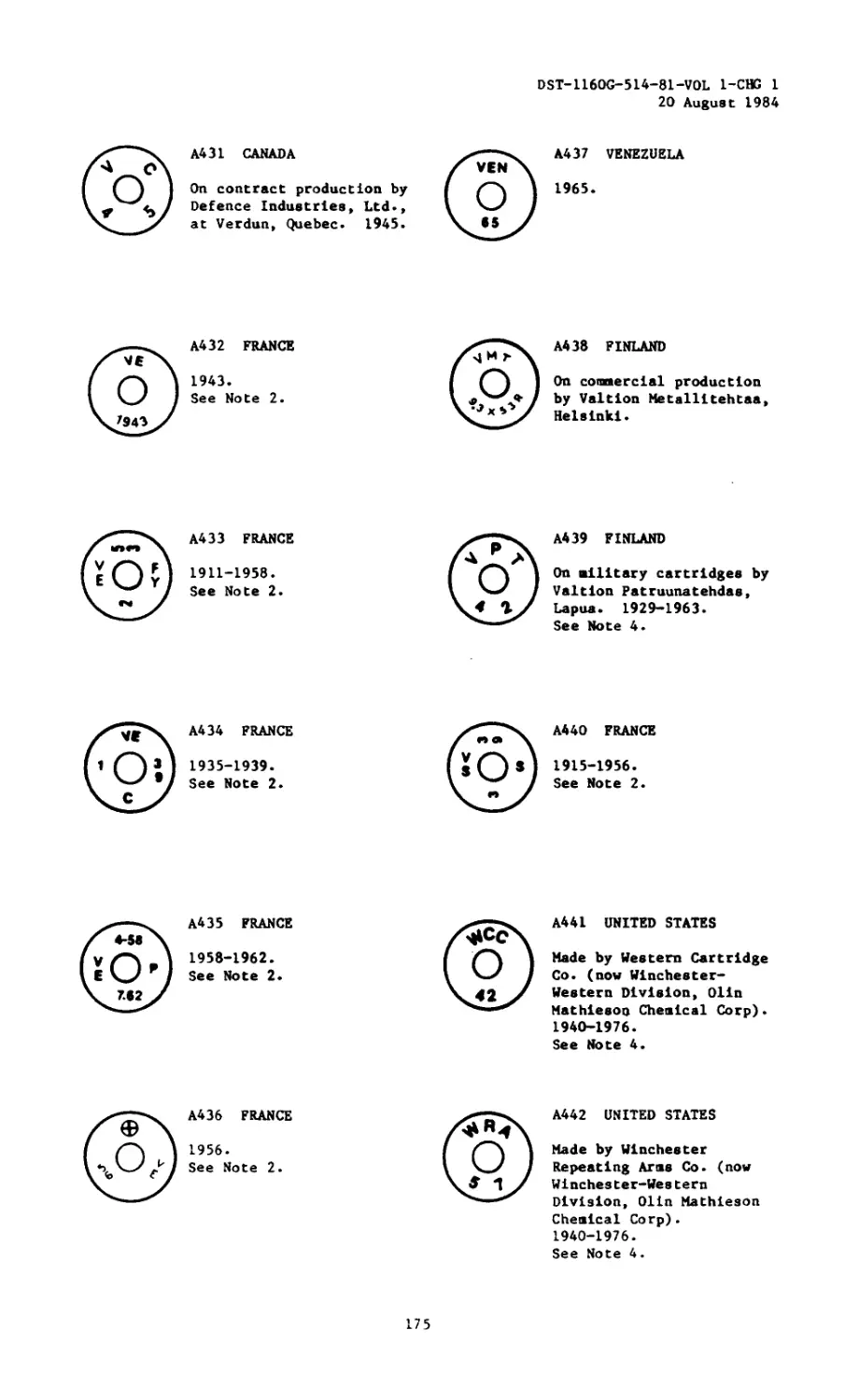
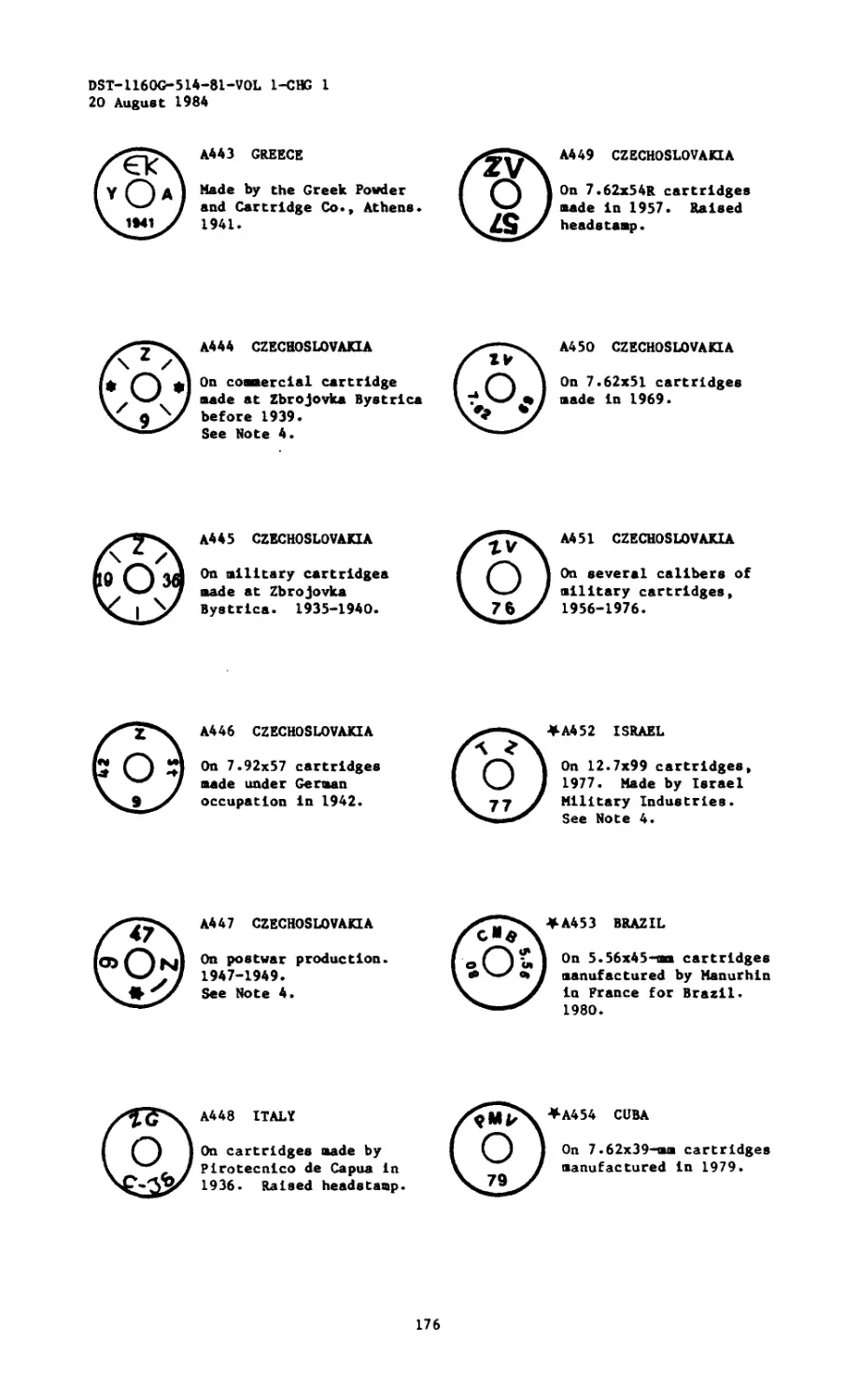
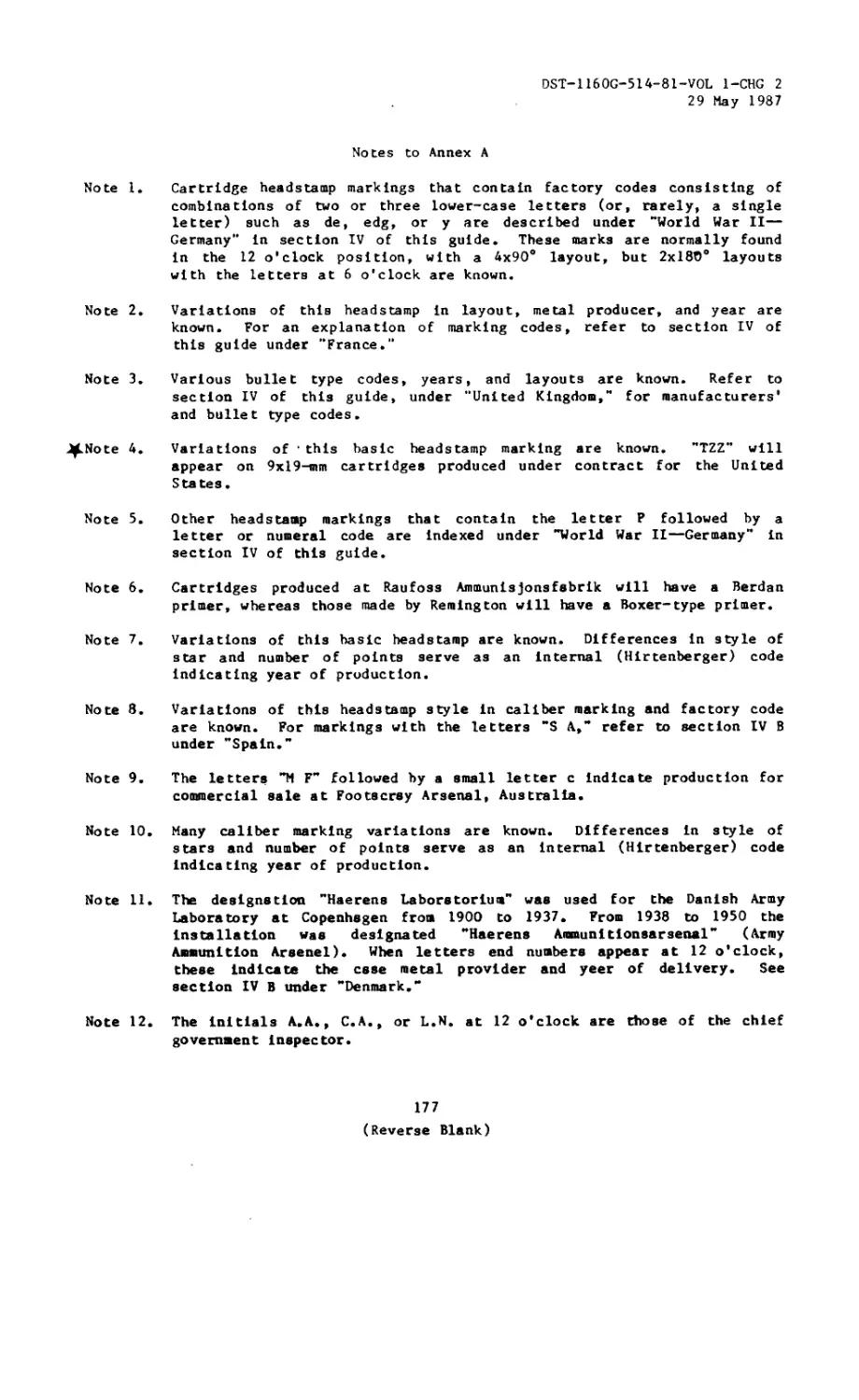

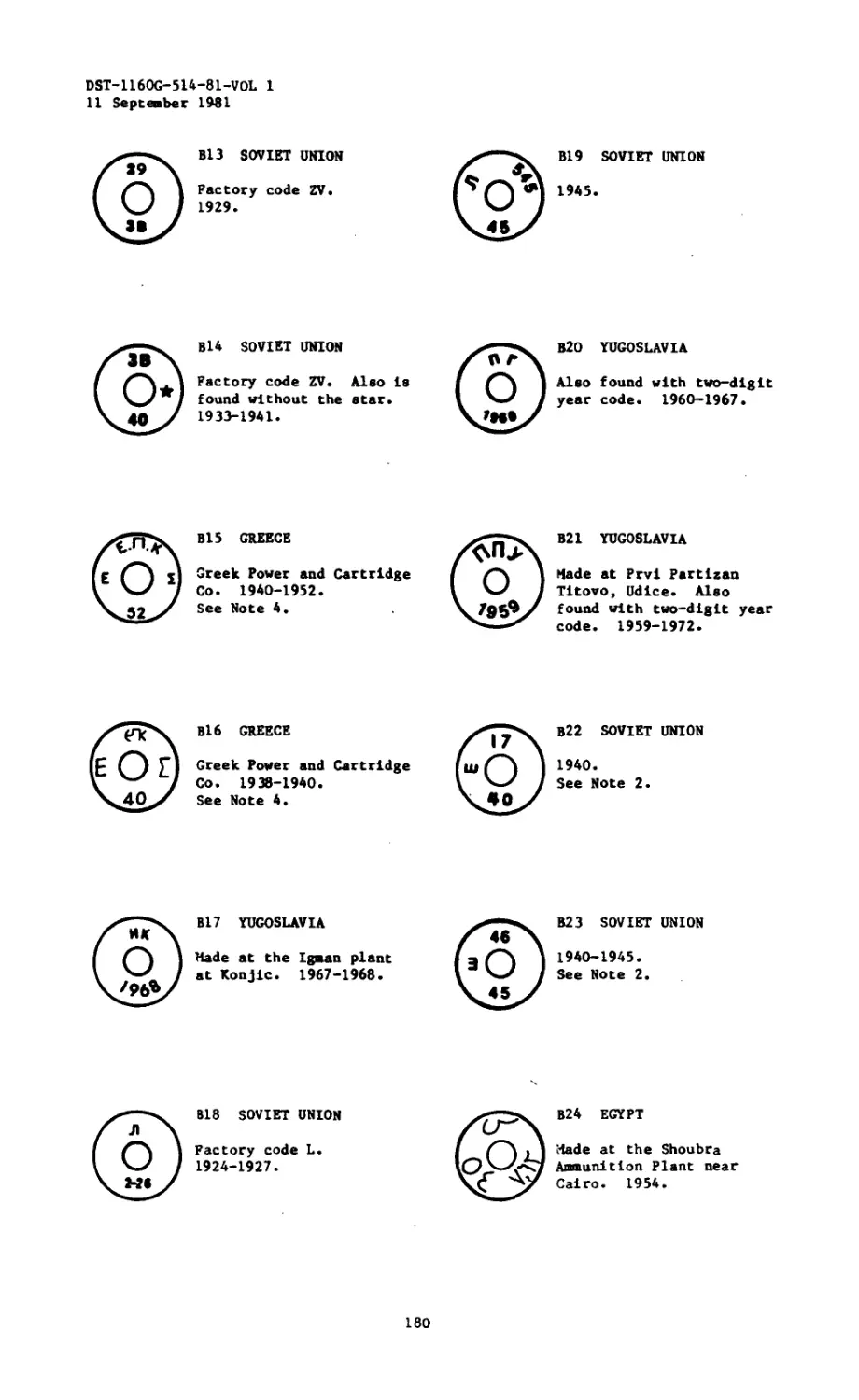
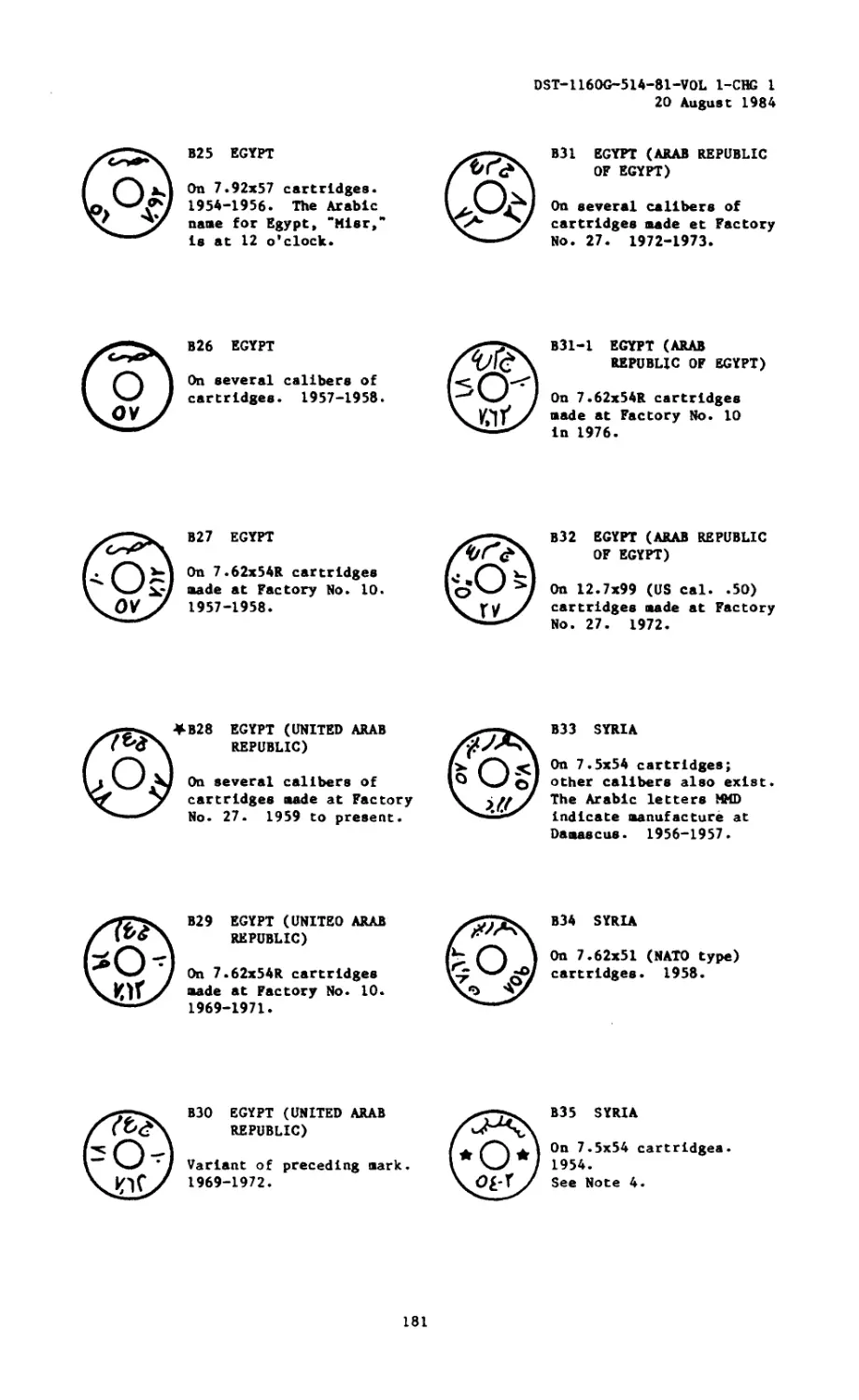
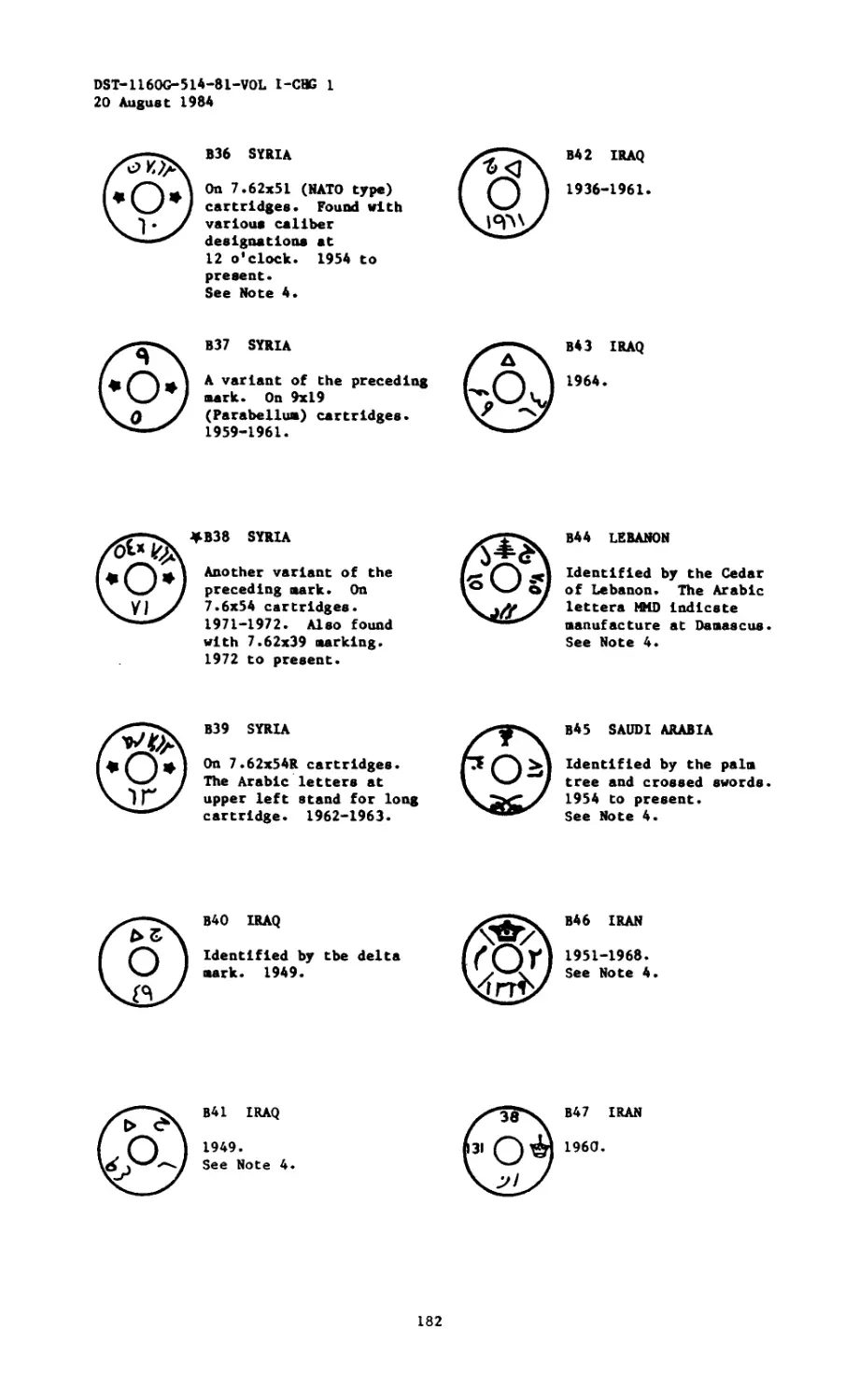
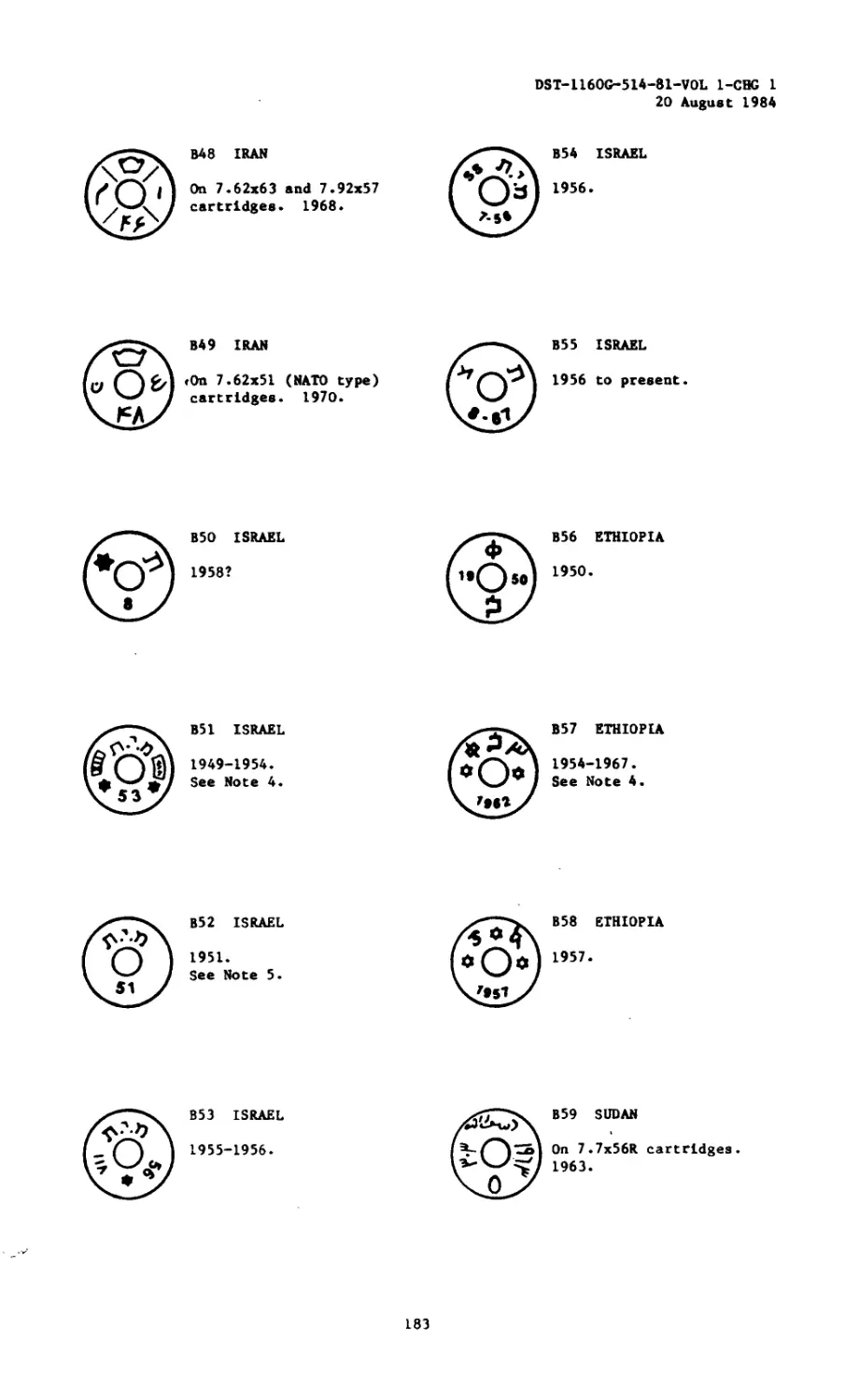
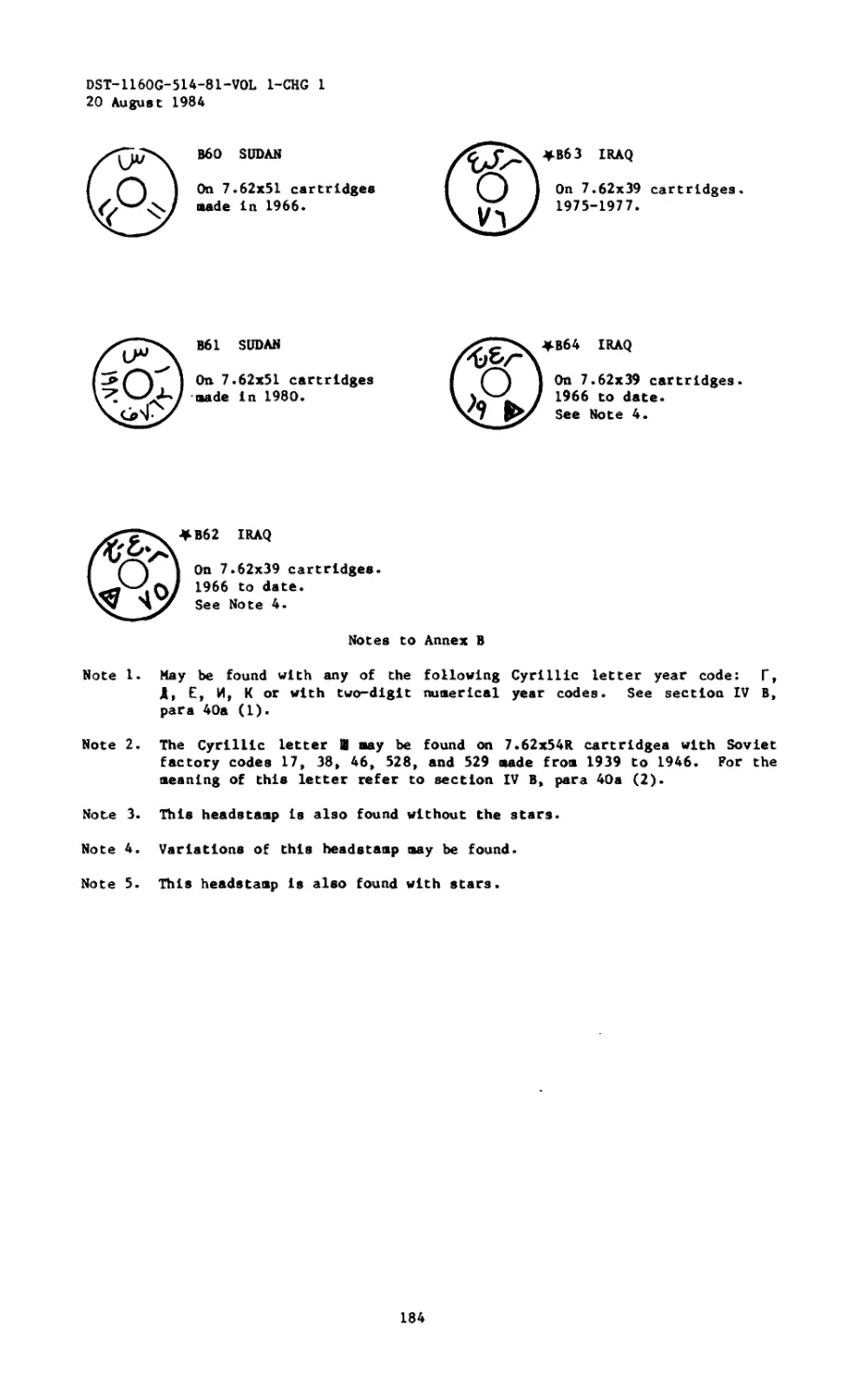
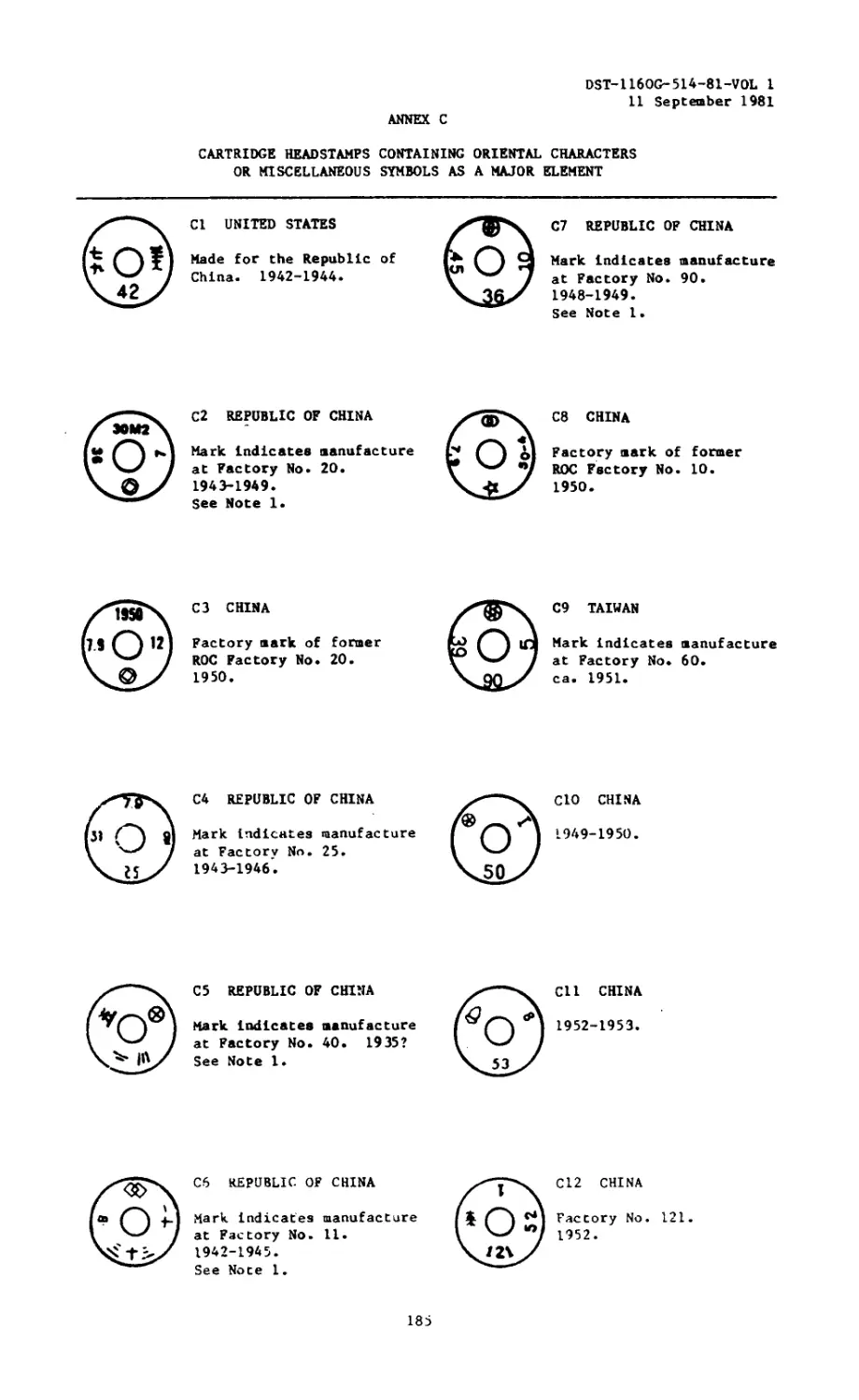
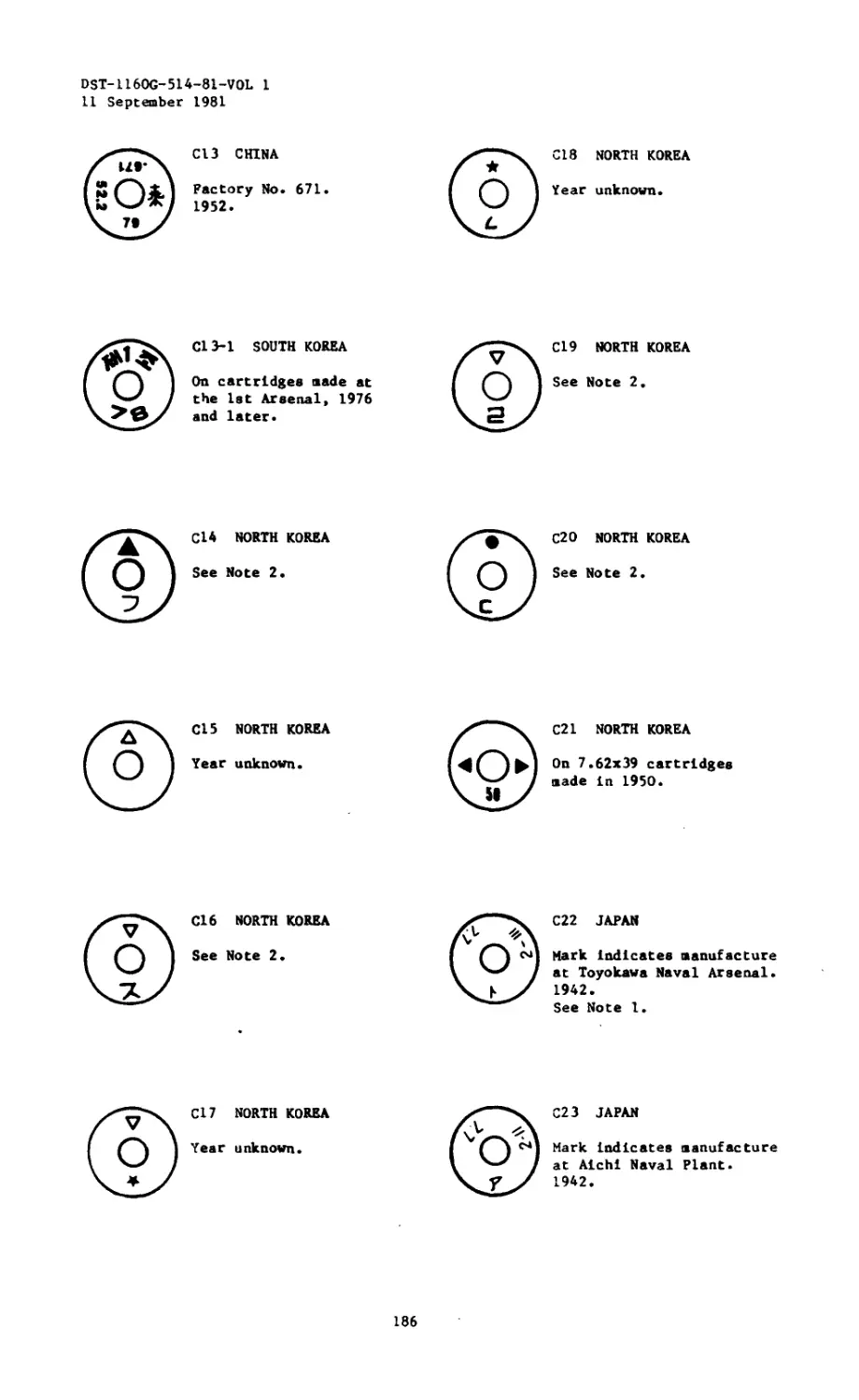
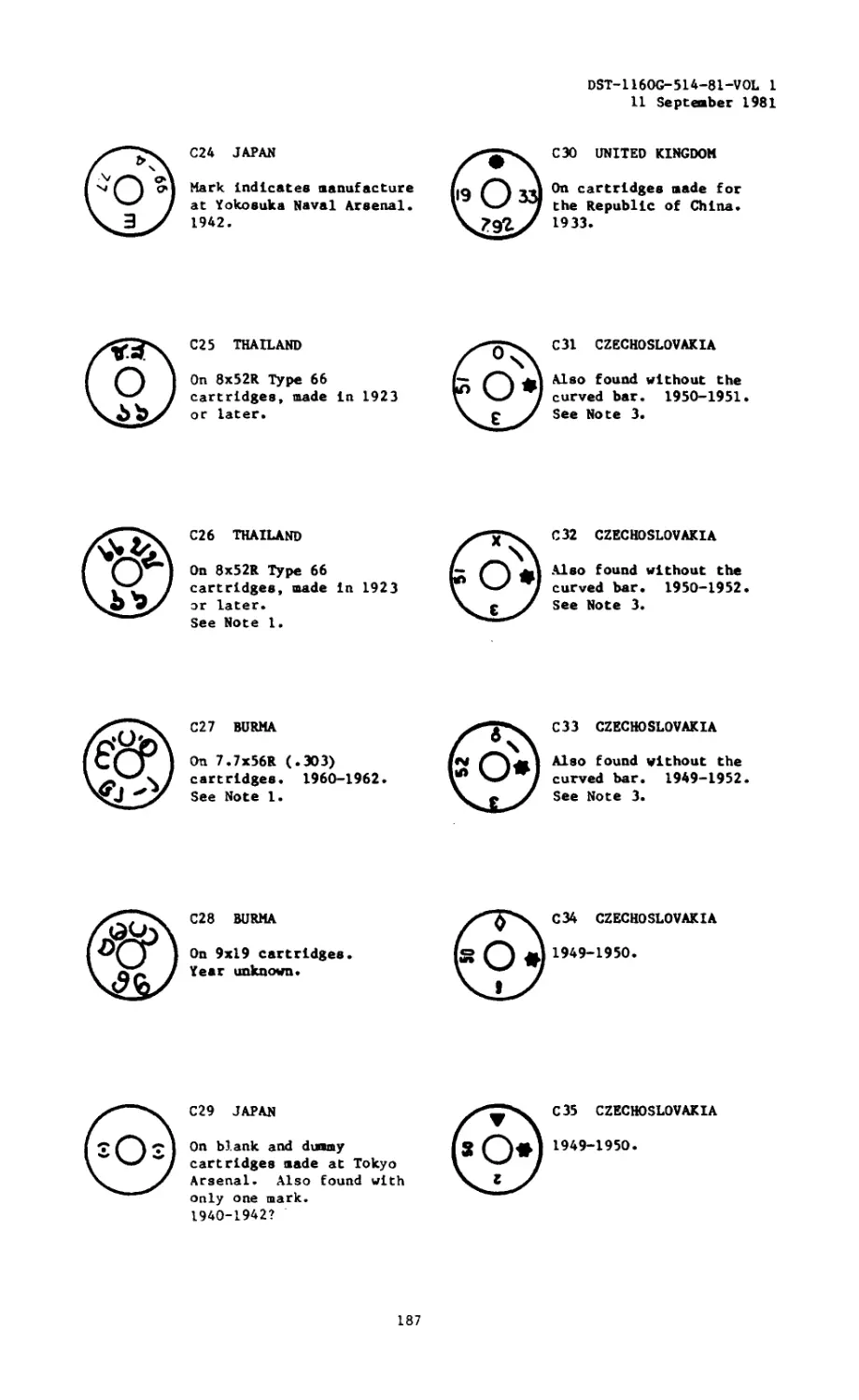
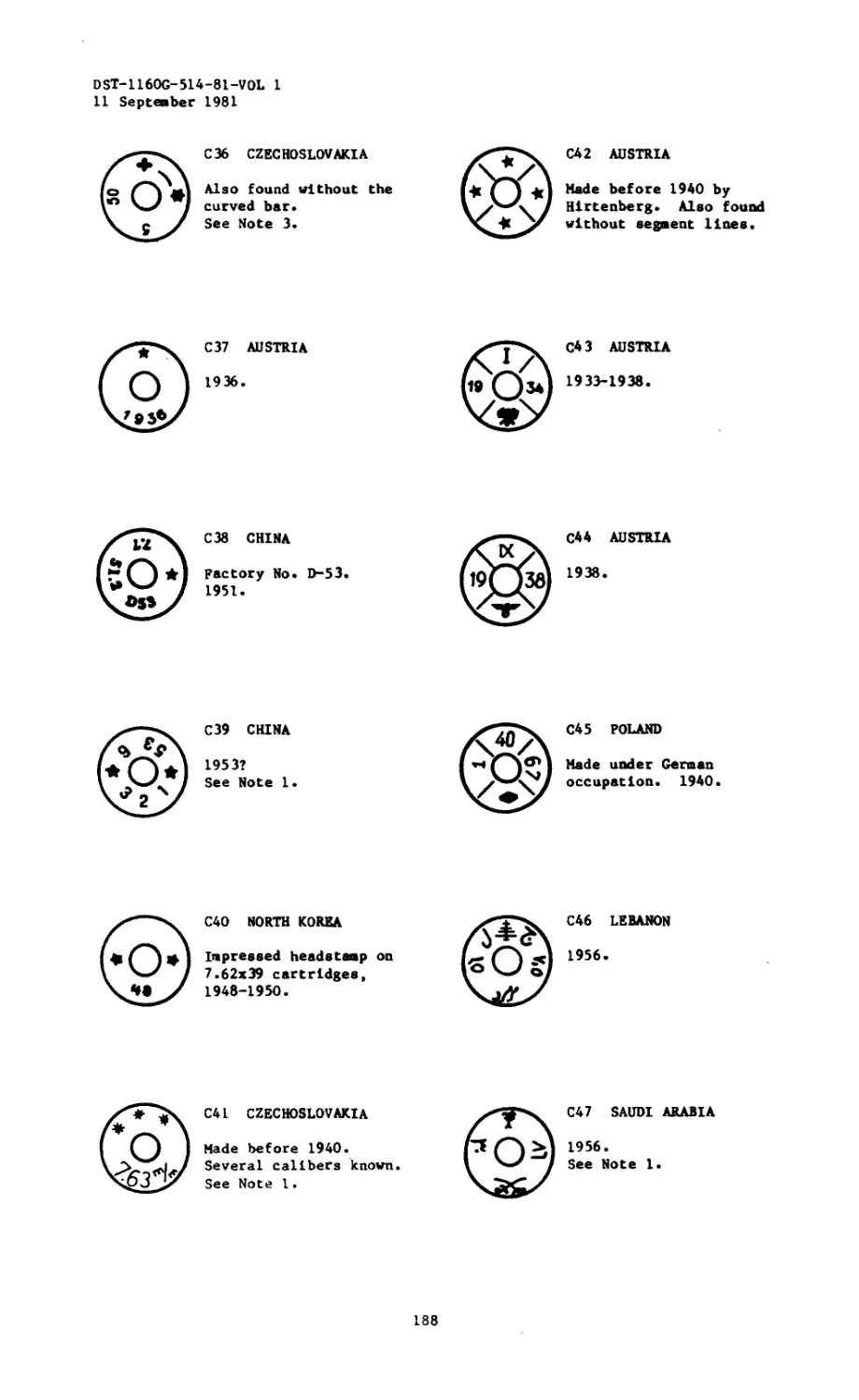

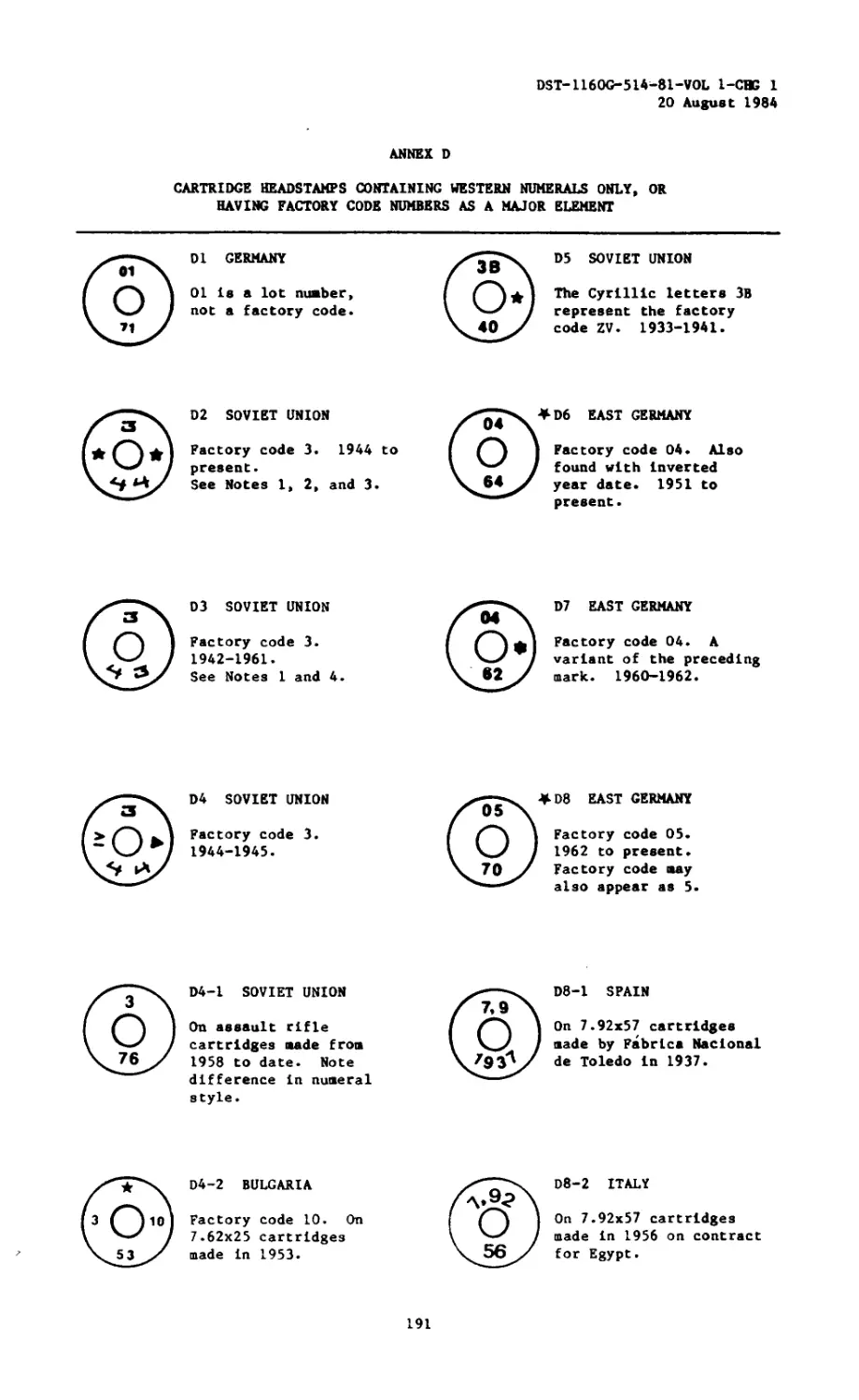
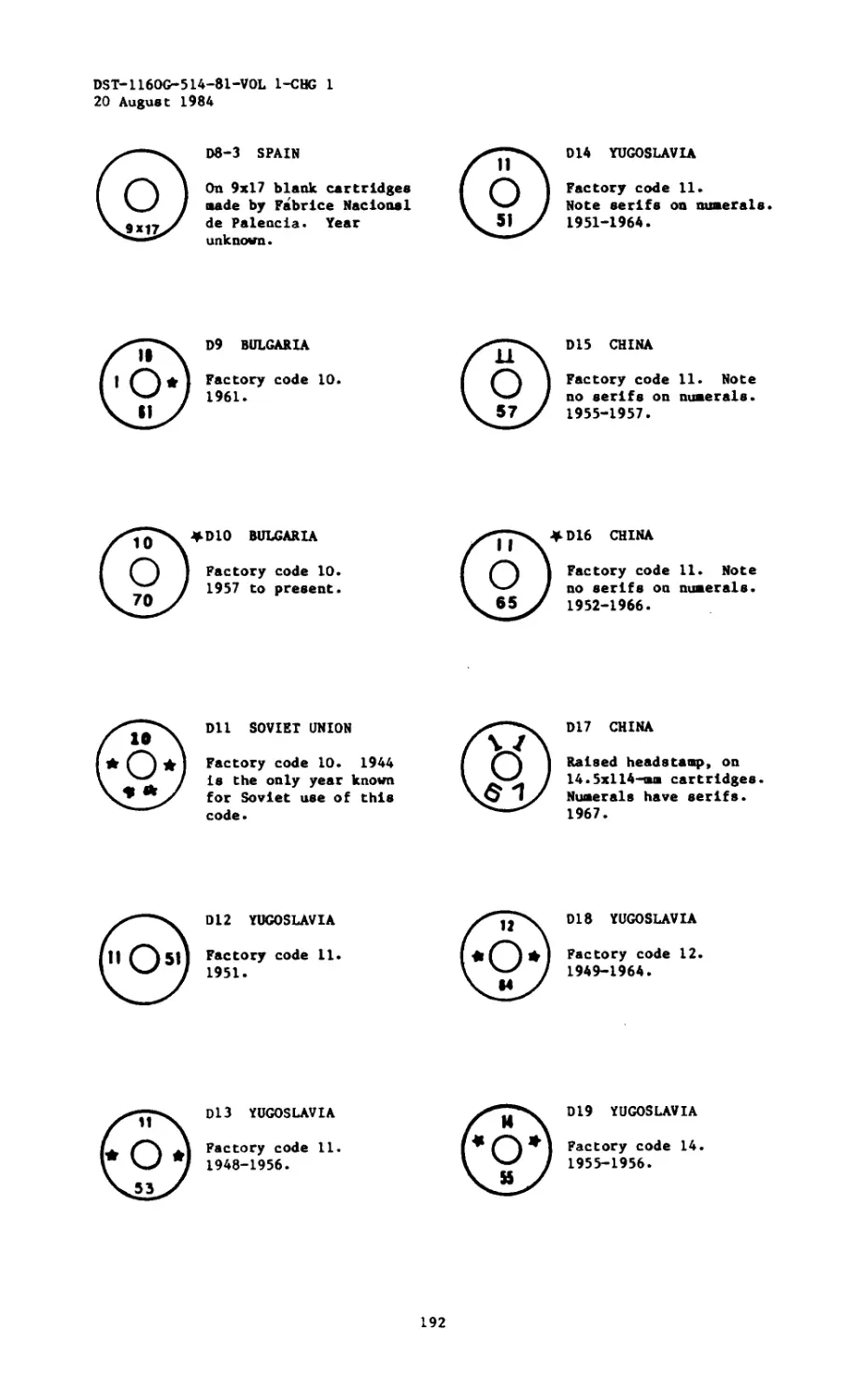
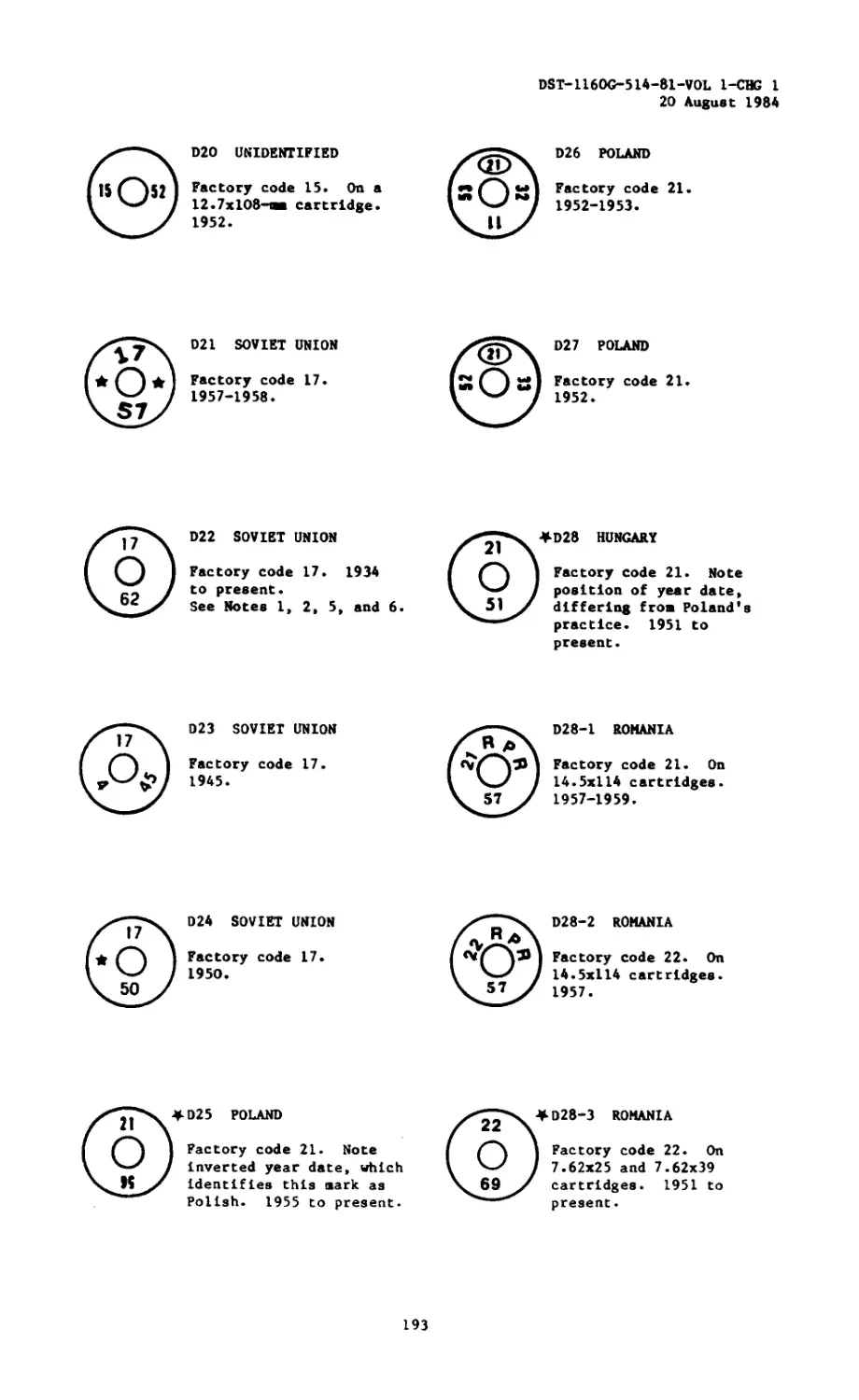
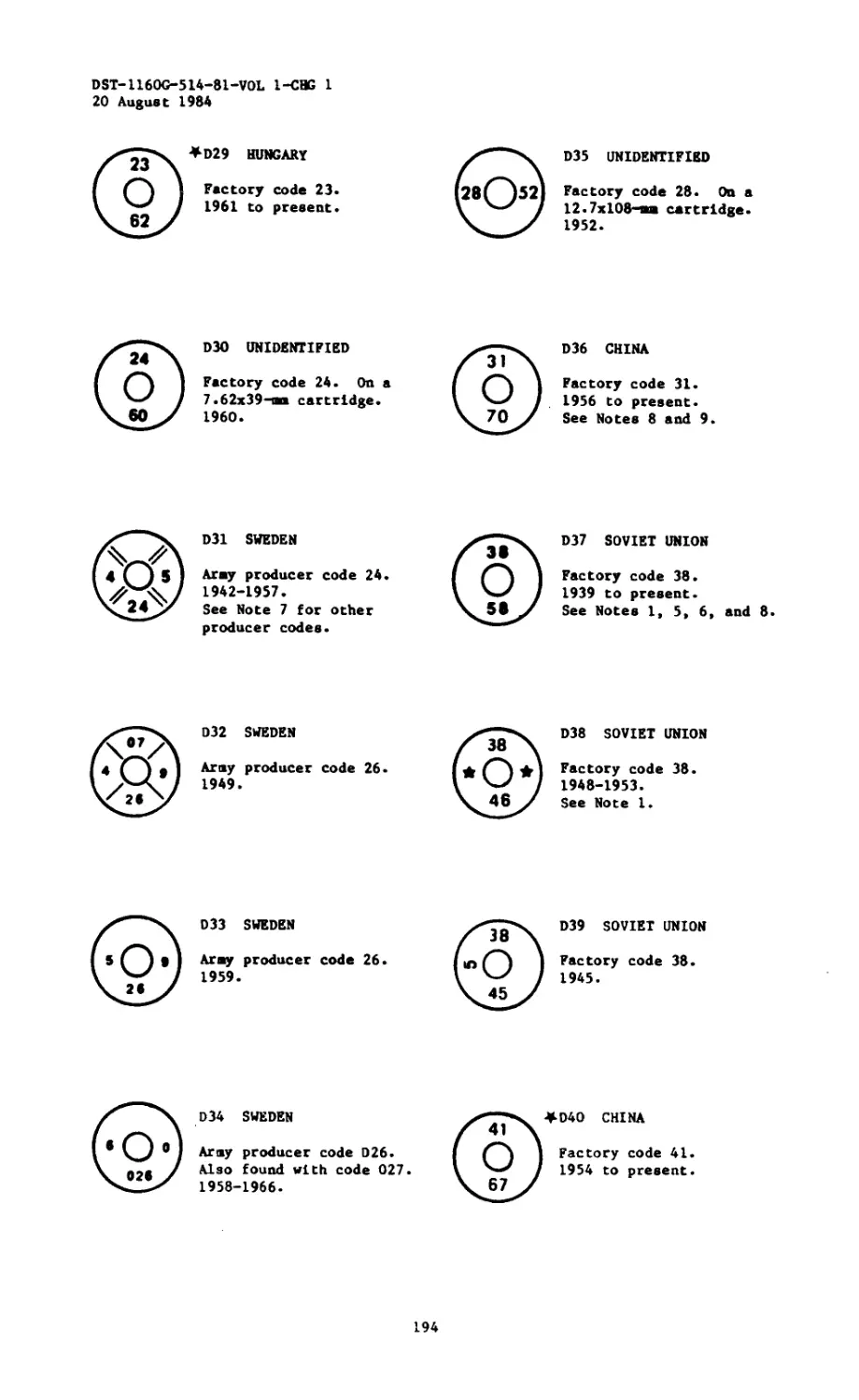

Теги: weapons
Год: 1984


Текст
                    DST-1160G-514-81-VOL 1
W/Chg2
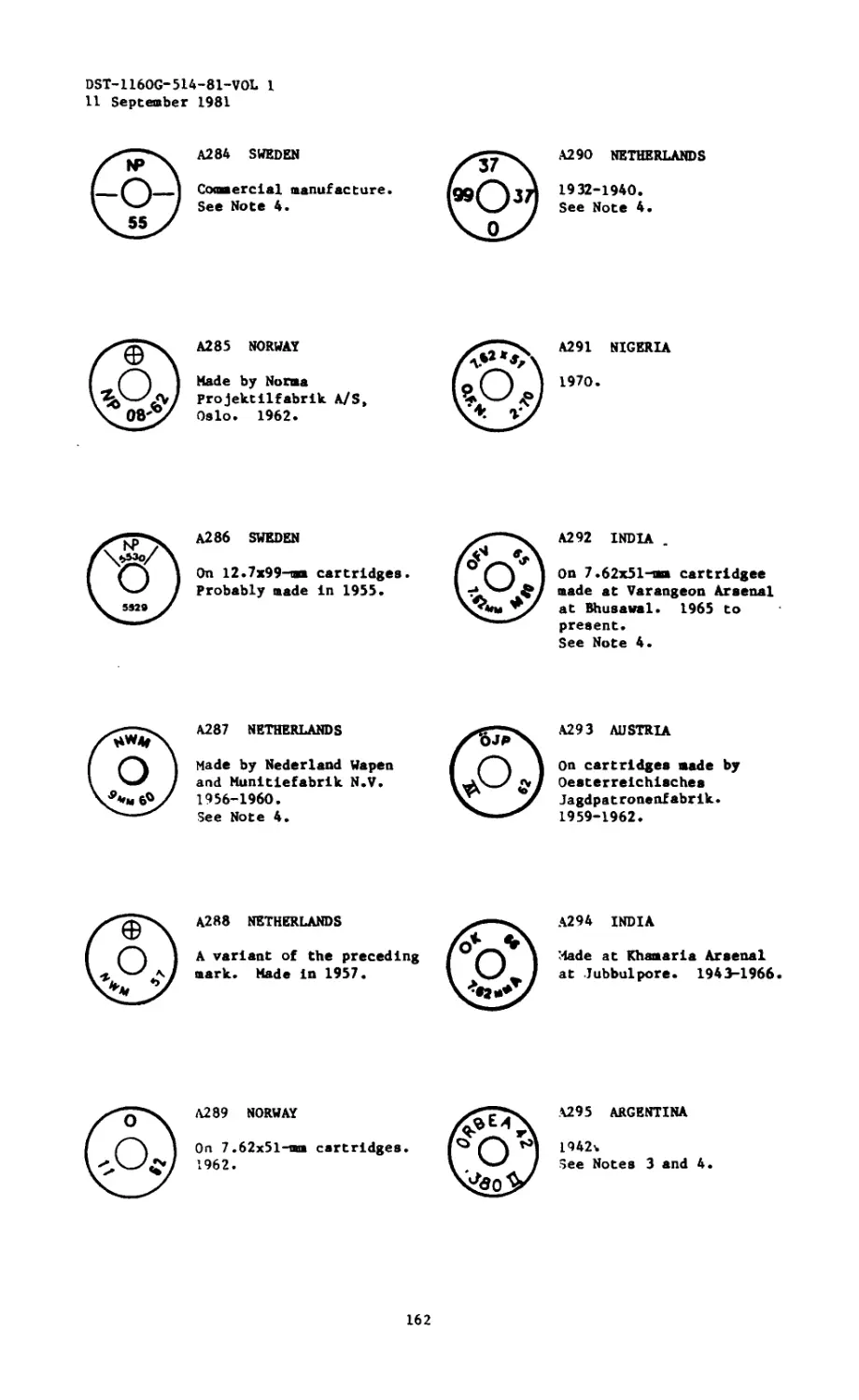
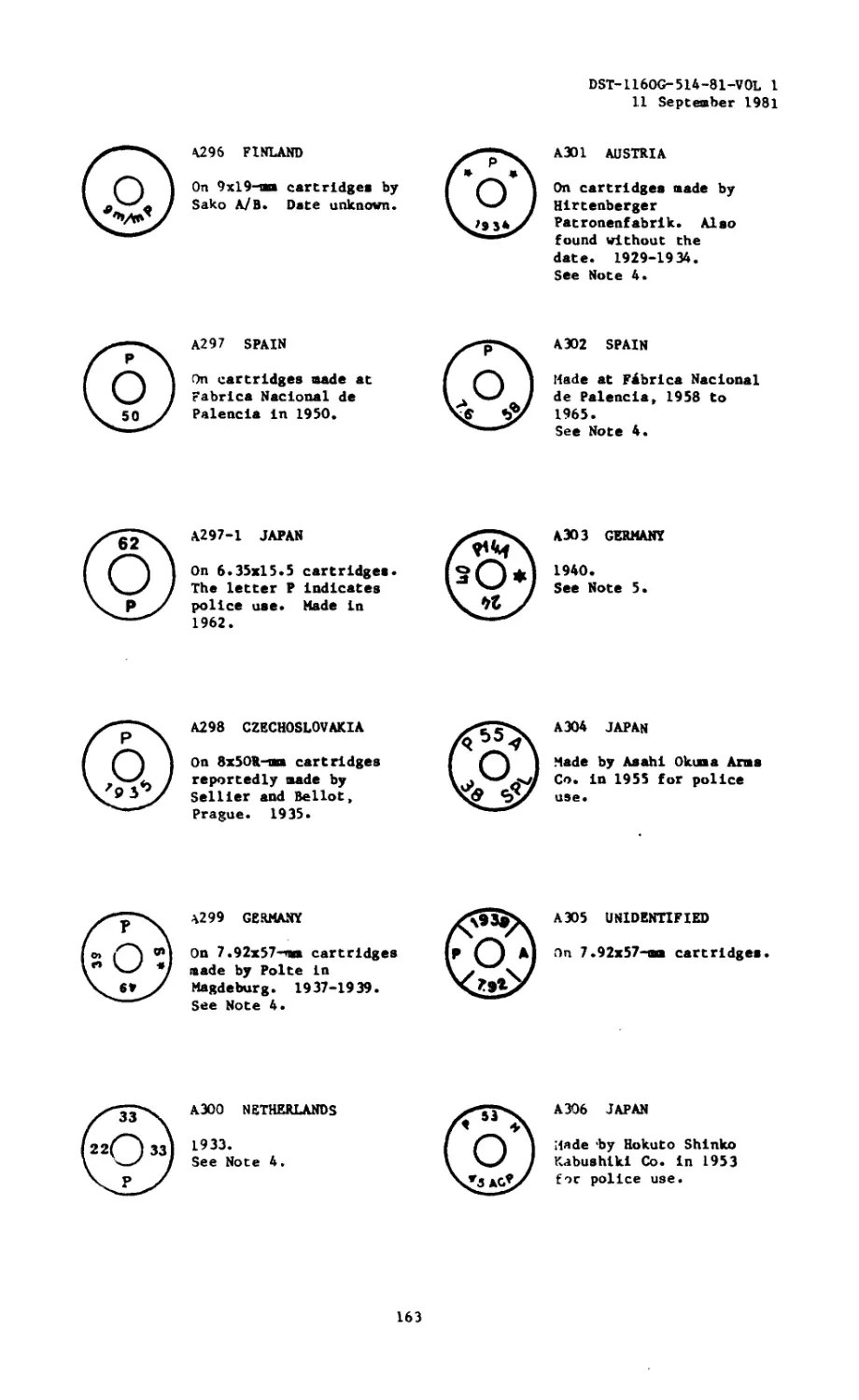
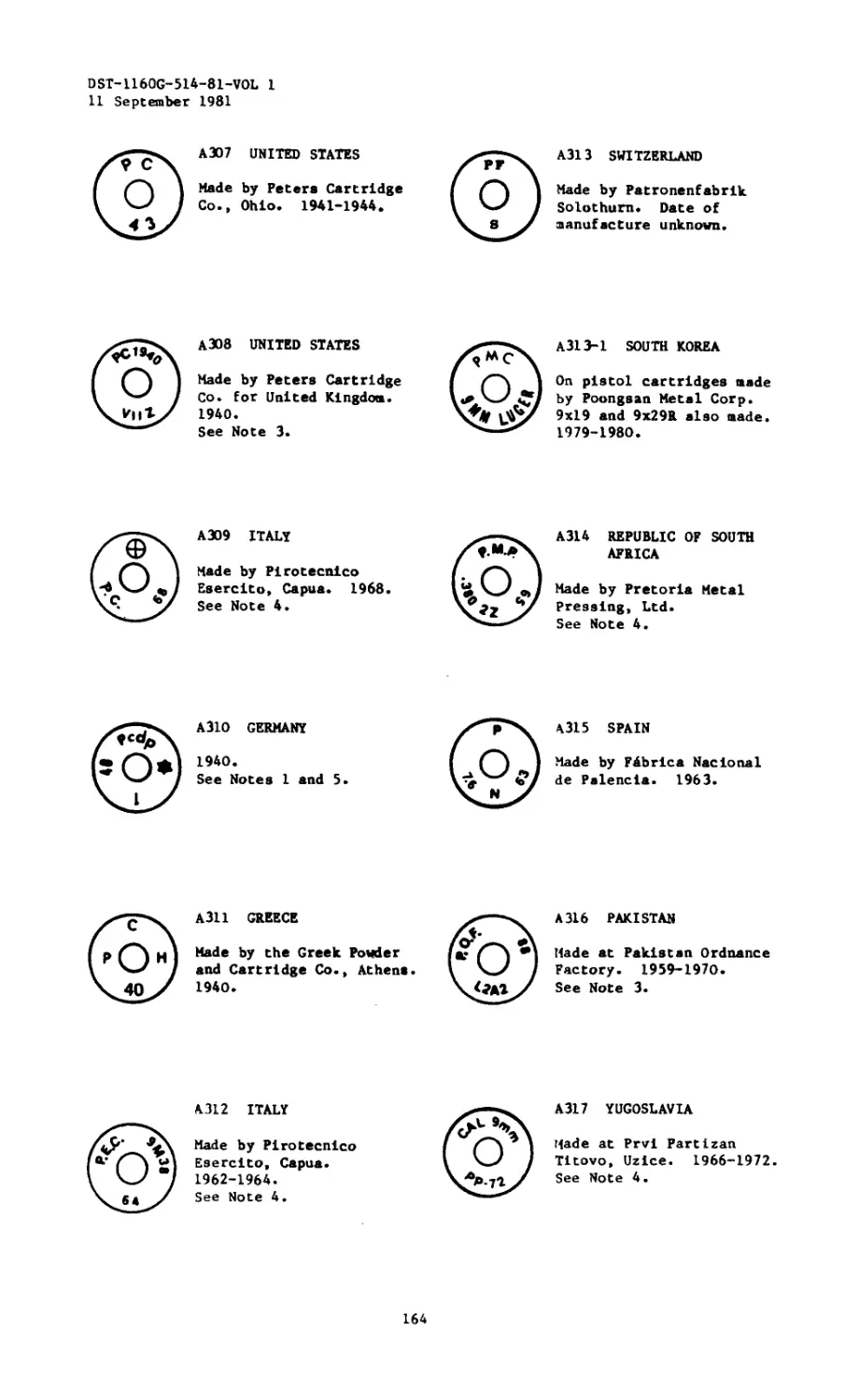
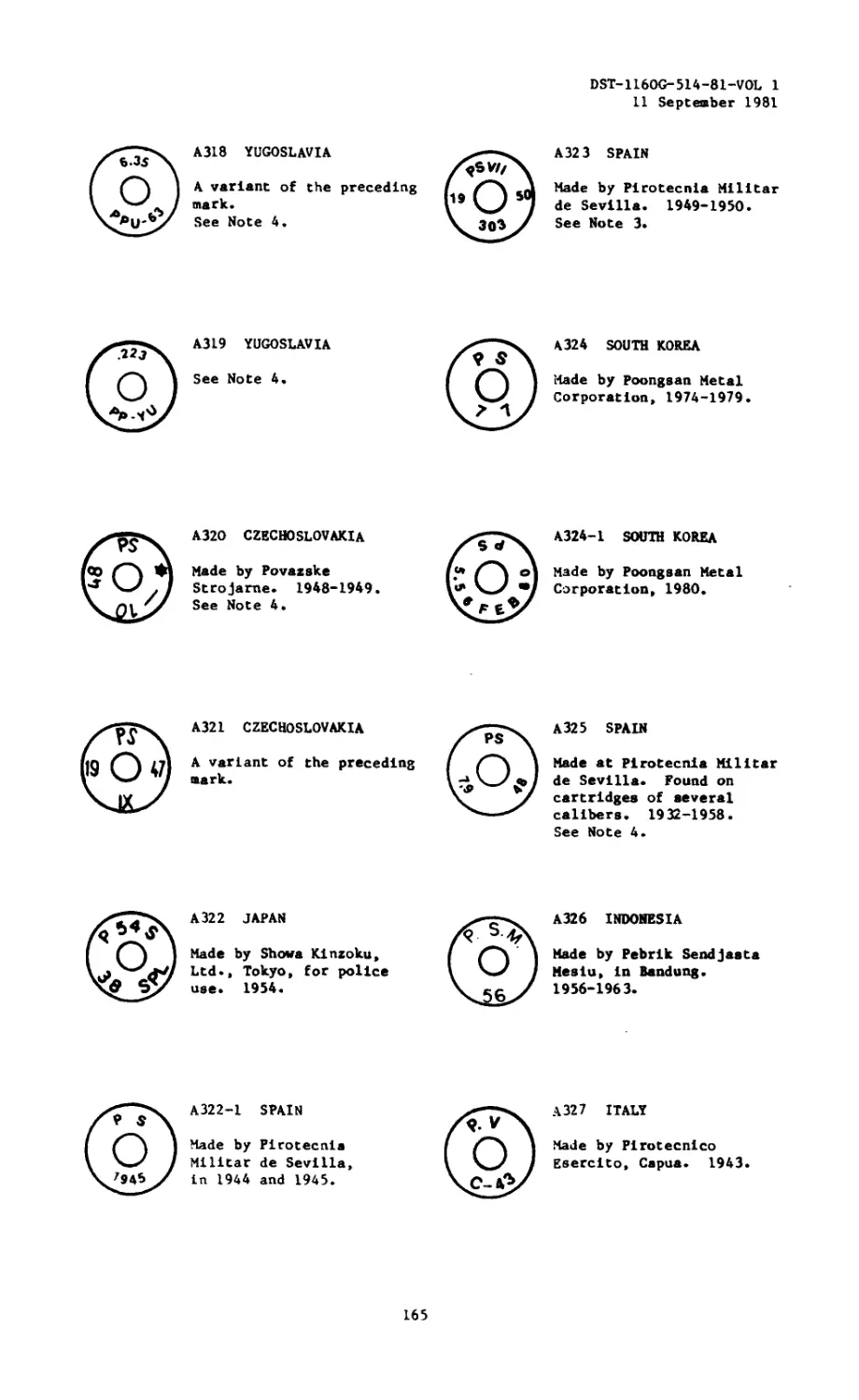
JNCLASSIFIED
DEFENSE
INTELLIGENCE
AGENCY
SMALL-CALIBER
AMMUNITION
IDENTIFICATION GUIDE (U)
VOLUME 1
SMALL-ARMS CARTRIDGES
UP TO 15 mm (U)
LAST COPY
RETURN TO RLE 20 AUGUST 1984
APPROVED FOR PUBLIC RELEASE;
DISTRIBUTION UNLIMITED
UNCLASSIFIED
DST-1160G-514-81-VOL 1-CHG 3
16 August 1991
VALIDATION STATEMENT
SMALL-CALIBER AMMUNITION IDENTIFICATION GUIDE
VOLUME 1: SMALL-ARMS CARTRIDGES UP TO 15 MM
DST-1160G-514-81 -VOL 1
11 September 1981
DIA TASK UNIT PT-1160-01-07L
EFFECTIVE DATE OF REVIEW
30 May 1991
The data upon which this document is based have been subjected to a continuous
review and analysis by the US Army Foreign Science and Technology Center, and
it has been determined that the substantive content of this document is still valid and
up-to-date as of May 1991.
NOTE: The subject matter covered in this product is continuously being review for
currency and accuracy by the Infantry Branch, US Army Foreign Science and
Technology Center. Communications may be established by contacting Commander,
US Army Foreign Science and Technology Center, 220 Seventh Street, NE.,
Charlottesville, VA 22901-5396, ATTN: AIFRCB, or calling AUTOVON 274-7475.
This validation constitutes change 3 to the basic publication.
This is a Department of Defense Intelligence Document prepared by the
Foreign Science and Technology Center, US Army Intelligence Agency,
and approved by the Directorate for Scientific and Technical
Intelligence of the Defense Intelligence Agency.
APPROVED FOR PUBLIC RELEASE;
DISTRIBUTION UNLIMITED
SMALL-CALIBER AMMUNITION IDENTIFICATION GUIDE (U)
Volume 1
Small-Arms Cartridges Up to 15 mm (U)
AUTHOR
Albert Watson, III
DST-1160G-514-81-VOL 1-CHG 2
DIA TASK UNIT PT-1160-01-07L
DATE OF PUBLICATION
29 May 1987
Information Cutoff Date
4 March 1987
This publication, with Changes 1 and 2, supersedes
DST-1160G-514-78-VOL 1, dated June 1978.
This Is a Department of Defense
Intelligence Document prepared
by the Foreign Science and Tech-
nology Center, US Army Intel-
ligence Agency, under the DOD
S&T Intelligence production
program and approved by the
Assistant Chief of Staff for
Intelligence, US Army.
This document has been processed for CIRC.
APPROVE!/ FOR PUBLIC RELEASE;
DISTRIBUTION UNLIMITED
(Reverse Blank)
DST-1160G-514-81-VOL 1-CHG 2
29 May 1987
Publication No.
DST-116OG-514-81-	US ARMY INTELLIGENCE AGENCY
VOL 1	FOREIGN SCIENCE AND TECHNOLOGY CENTER
CHANGE 2	Charlottesville, VA 22901-5396
SMALL-CALIBER AMMUNITION
IDENTIFICATION GUIDE (U)
Volume 1
Small-Arms Cartridges Up to 15 mm (U)
Publication No. DST-U60G-514-81-V0L 1, dated 11
September 1981, and amended as Change 1 on 20 Au-
gust 1984, Is amended for Change 2 as follows: The
pages listed below are to be removed and destroyed
In accordance with existing security regulations
and new pages substituted or added as Indicated.
Remove pages:	Insert new pages:
Title page	Title page
111 thru vl	111 thru vl
11 and 12	11 and 12
	36.1 (Reverse Blank)
37 and 38	37 and 38
65 thru 68.2	65 thru 68.2
73 thru 78	73 thru 78
97 and 98	97 and 98
125 and 126	125 and 126
128.1 thru 130	128.1 thru 130
177 (Reverse Blank)	177 (Reverse Blank)
199 (Reverse Blank)	199 (Reverse Blank)
203 thru 207 (Reverse	203 thru 207 (Reverse
Blank)	Blank)
In addition, make the following pen-and-ink changes
In list of tables:
a.	Page xvl:	for table xxlv, change page number
from 125 to 126.
b.	Page xvl:	for table xxv, change page number
from 128 to 128.2.
(Reverse Blank'
DST-116OG-514-81-VOL 1-CHG 1
20 August 1984
Publication No. US ARMY MATERIEL
DST-116OG-514-81- DEVELOPMENT AND READINESS COMMAND
VOL 1 FOREIGN SCIENCE AND TECHNOLOGY CENTER
CHANGE 1 Charlottesville, VA 22901
SMALL-CALIBER AMMUNITION
IDENTIFICATION GUIDE (U)
Volume 1
Small-Arms Cartridges Up to 15 mm (U)
Publication No. DST-116OG-514-81-VOL 1, dated
11 September 1981, Is amended as follows: The pages
listed below are to be removed and destroyed In
accordance with existing security regulations and
new pages are substituted or added.
Remove pages:	Insert new pages:
Front cover/back cover Title page Hi thru v (Reverse Blank) 39 thru 42 45 thru 50 67 and 68 125 thru 128 133 and 134 149 and 150 167 and 168 175 and 176 181 thru 184 189 thru 207 (Reverse Blank)	Front cover/back cover Title page ill thru vl 39 thru 42.4 45 thru 50.5 (Reverse Blank) 67 thru 68.1 (Reverse Blank) 125 thru 128.2 133 thru 134.1 (Reverse Blank) 149 and 150 167 and 168 175 and 176 181 thru 184 189 thru 207 (Reverse Blank)
(Reverse Blank)
DST-116OG-514-81-VOL 1-CHG 2
29 May 1987
PREFACE
This guide outlines a systematic procedure for
Identifying military cartridges as to cartridge
designation, country of manufacture, and—to a
large extent—functional bullet type. Designed for
use by persons who may not be familiar with small-
arms ammunition, It provides basic Information on
cartridge types, construction, and terminology as
well as more detailed Identification data.
This guide covers military cartridges In cali-
bers of 15 mm and below—as well as several related
paramilitary or target cartridges—that have been
manufactured or used since 1930. Although some of
the cartridges	in	this	guide	are obsolete In the
country of manufacture,	they	are included because
they were made	In	such	large	quantities that exam-
ples may still	be	found. To	keep the size of the
guide within manageable limits, it does not Include
experimental or caseless types, blank cartridges,
cartridges for propellant-actuated devices, Igni-
tion cartridges, or sporting cartridges. Detailed
Information on small arms using many of these
cartridges may be found In two companion volumes:
SMALL-ARMS IDENTIFICATION AND OPERATION GUIDE—
EURASIAN COMMUNIST COUNTRIES, DST-1110H-394-76, and
SMALL-ARMS IDENTIFICATION AND OPERATION GUIDE—FREE
WORLD, DST-1110H-163-76, with changes.
The Information contained In this guide has
been derived from examination of cartridges,
intelligence reports, US and foreign technical
publications, and contributions from Individuals.
Important new or revised Information Incor-
porated In Change 1 or 2 Is Indicated by an
asterisk (*).
Ill
DST-1160G-514—81—VOL 1-CHG 2
29 May 1987
Most Illustrations appearing In this document
are Identified by a slx-dlglt negative number
printed In the lower left corner of the figure.
Users can request prints of these Illustrations by
citing the negative numbers and the short title of
this study In a request addressed to the Commander,
US Army Foreign Science and Technology Center,
220 Seventh Street, NE., Charlottesville, VA 22901-
5396 (ATTN: AIFPO).
Constructive criticisms, comments, and sug-
gested changes are encouraged and should be
forwarded to the Commander, US Army Foreign Science
and Technology Center, at the above address.
Iv
DST-1160G-514-81-VOL 1-CHG 2
29 May 1987
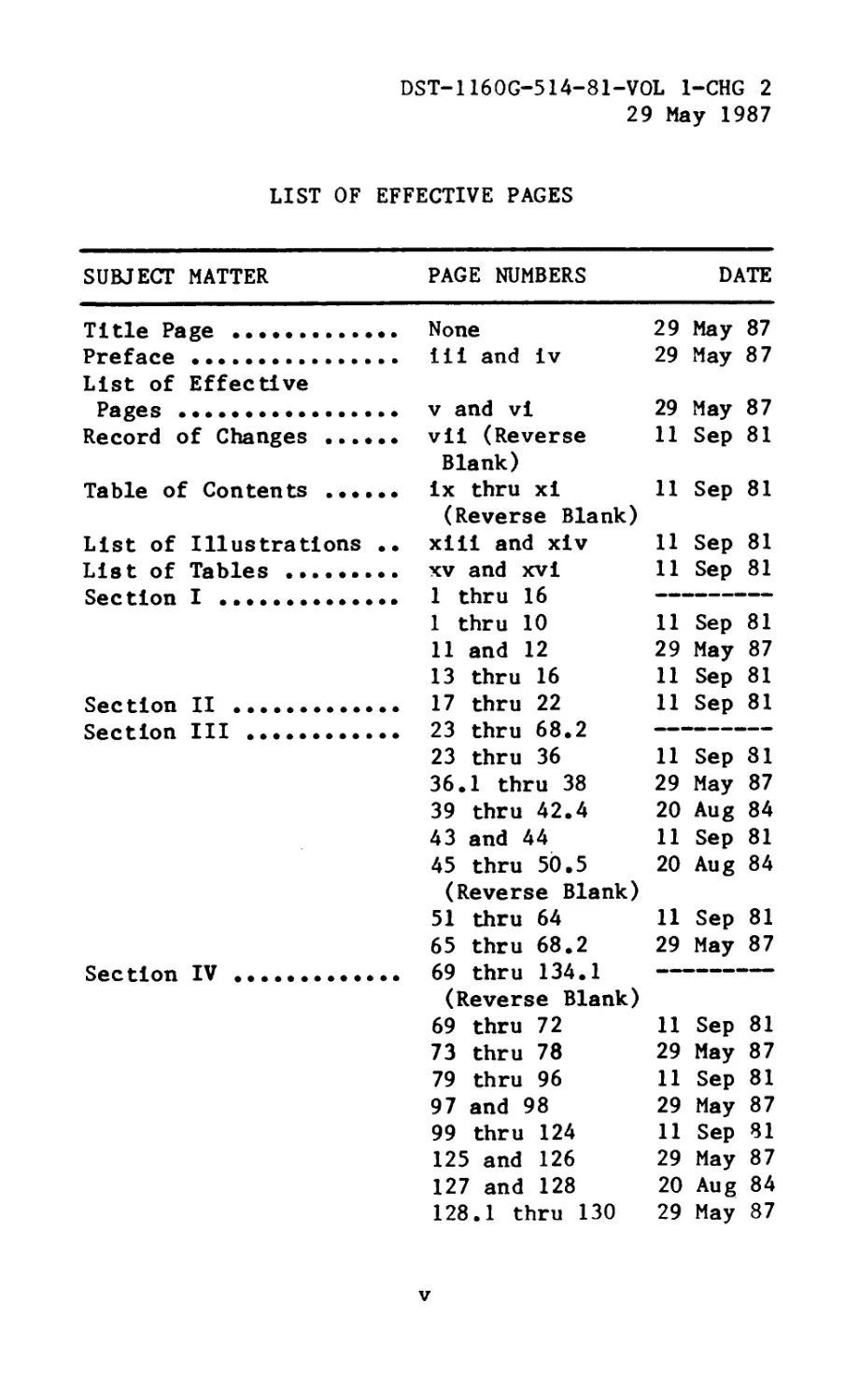
LIST OF EFFECTIVE PAGES
SUBJECT MATTER
PAGE NUMBERS
DATE
Title Page 	 Preface 		None 111 and Iv	29 May 87 29 May 87
List of Effective
Pages 		v and vl	29 May 87
Record of Changes 		vll (Reverse Blank)	11 Sep 81
Table of Contents 		lx thru xl (Reverse Blank)	11 Sep 81
List of Illustrations ••	xlll and xlv	11 Sep 81
List of Tables 		xv and xv1 1 thru 16 1 thru 10	11 Sep 81
		11 Sep 81
	11 and 12	29 May 87
	13 thru 16	11 Sep 81
Section II 		17 thru 22 23 thru 68.2 23 thru 36	11 Sep 81
		11 Sep 81
	36.1 thru 38	29 May 87
	39 thru 42.4	20 Aug 84
	43 and 44	11 Sep 81
	45 thru 50.5 (Reverse Blank)	20 Aug 84
	51 thru 64	11 Sep 81
	65 thru 68.2	29 May 87
Section IV 		69 thru 134.1 (Reverse Blank)
	69 thru 72	11 Sep 81
	73 thru 78	29 May 87
	79 thru 96	11 Sep 81
	97 and 98	29 May 87
	99 thru 124	11 Sep 81
	125 and 126	29 May 87
	127 and 128	20 Aug 84
	128.1 thru 130	29 May 87
v
DST-116OG-514-81-VOL 1-CHG 2
29 May 1987
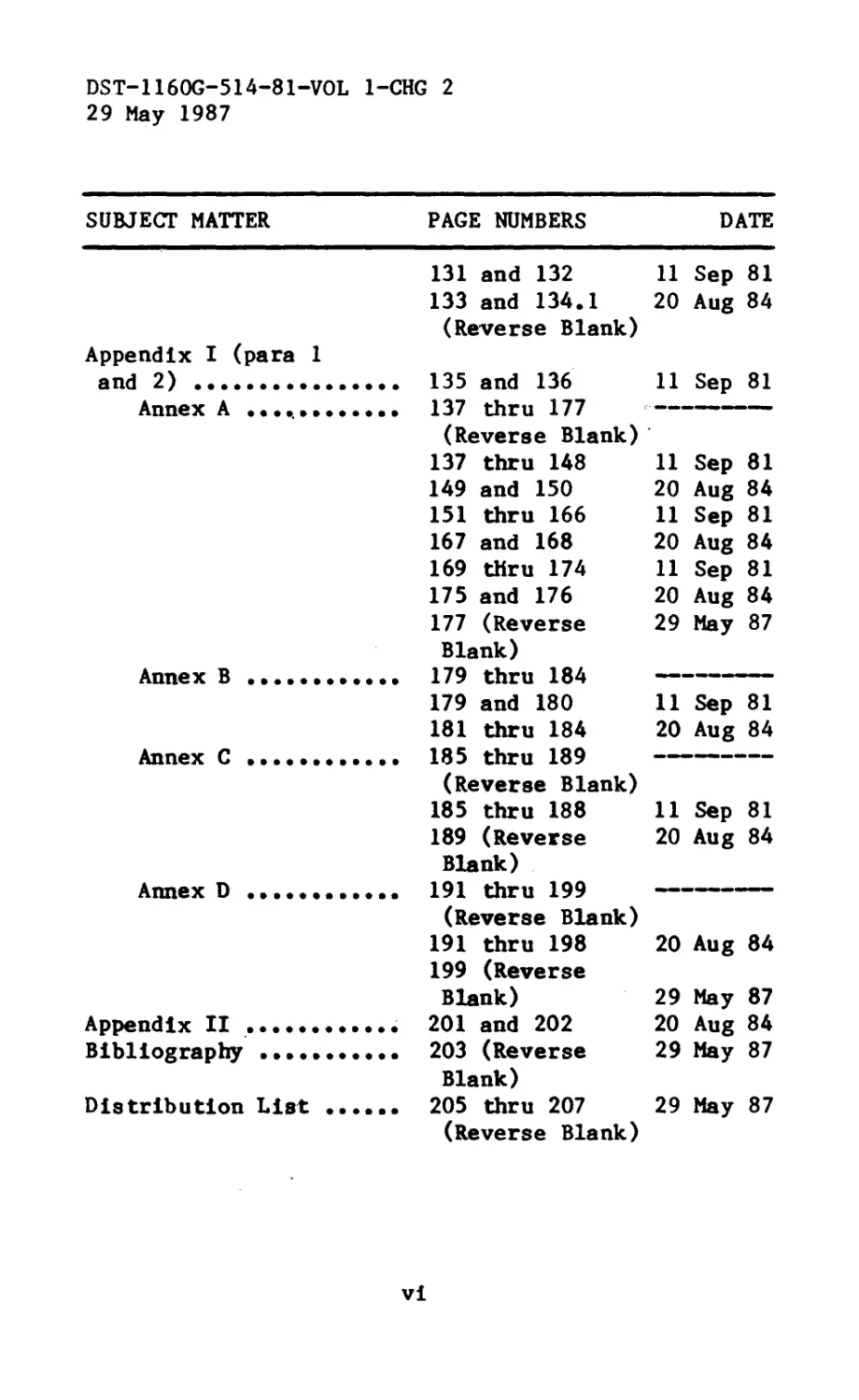
SUBJECT MATTER	PAGE NUMBERS	DATE
	131 and 132 133 and 134.1 (Reverse Blank)	11 Sep 81 20 Aug 84
Appendix I (para 1 and 2) 		.. 135 and 136	11 Sep 81
	.	137 thru 177
	(Reverse Blank)
	137 thru 148	11 Sep 81
	149 and 150	20 Aug 84
	151 thru 166	11 Sep 81
	167 and 168	20 Aug 84
	169 thru 174	11 Sep 81
	175 and 176	20 Aug 84
	177 (Reverse	29 May 87
Annex В 		Blank) .. 179 thru 184
	179 and 180	11 Sep 81
	181 thru 184	20 Aug 84
Annex C 		.. 185 thru 189	•• ** »
	(Reverse Blank) 185 thru 188	11 Sep 81
	189 (Reverse	20 Aug 84
Annex D 		Blank) .. 191 thru 199
	(Reverse Blank) 191 thru 198	20 Aug 84
	199 (Reverse Blank)	29 May 87
Appendix II 		.. 201 and 202	20 Aug 84
Bibliography 		•. 203 (Reverse	29 May 87
Distribution List ....	Blank) .. 205 thru 207	29 May 87
	(Reverse Blank)
vl
DST-1160G-514-81-VOL 1
11 September 1981
RECORD OF CHANGES
CHANGE NUMBER	DATE OF CHANGE	DATE ENTERED	SIGNATURE, RANK/RATE AND ORGANIZATION OF INDIVIDUAL ENTERING CHANGE
			-
vii
(Reverse Blank)
DST-1160G-514-81-V0L 1
11 September 1981
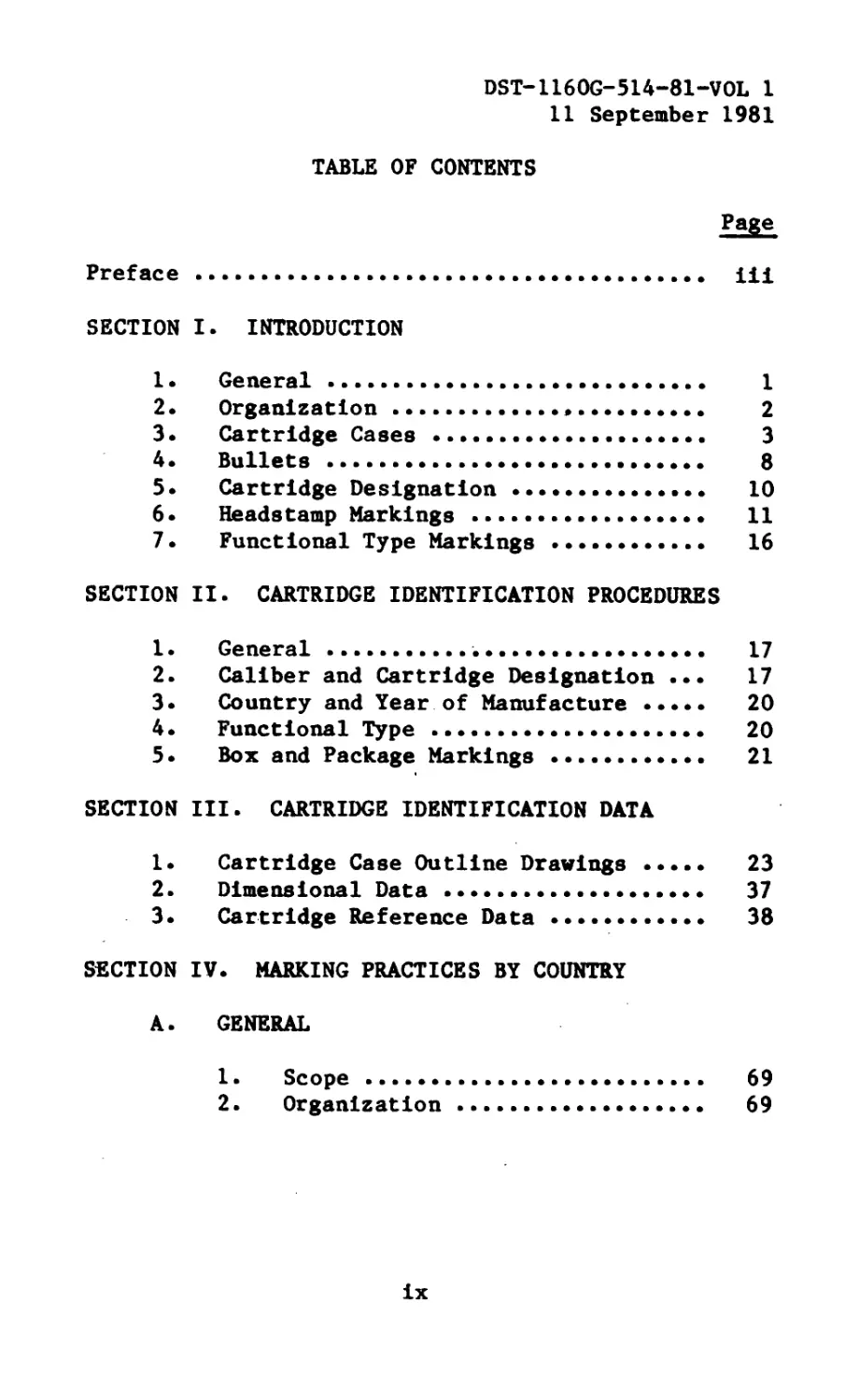
TABLE OF CONTENTS
Preface ....................................... ill
SECTION I.	INTRODUCTION
1	•	General................................ 1
2.	Organization..............•............ 2
3.	Cartridge	Cases ...................... 3
4.	Bullets ............................... 8
5.	Cartridge	Designation ................ 10
6.	Headstamp	Markings .................. 11
7	•	Functional Type Markings ............. 16
SECTION II.	CARTRIDGE IDENTIFICATION PROCEDURES
1.	General.............................   17
2.	Caliber and Cartridge Designation ...	17
3.	Country and Year of Manufacture......	20
4.	Functional Type ...................... 20
5.	Box and Package Markings ............. 21
SECTION III.	CARTRIDGE IDENTIFICATION DATA
1.	Cartridge Case Outline Drawings ...... 23
2.	Dimensional Data...................... 37
3.	Cartridge Reference Data.............. 38
SECTION IV.	MARKING PRACTICES BY COUNTRY
A. GENERAL
1.	Scope............................. 69
2.	Organization...................... 69
lx
DST-1160G-514-81-V0L 1
11 September 1981
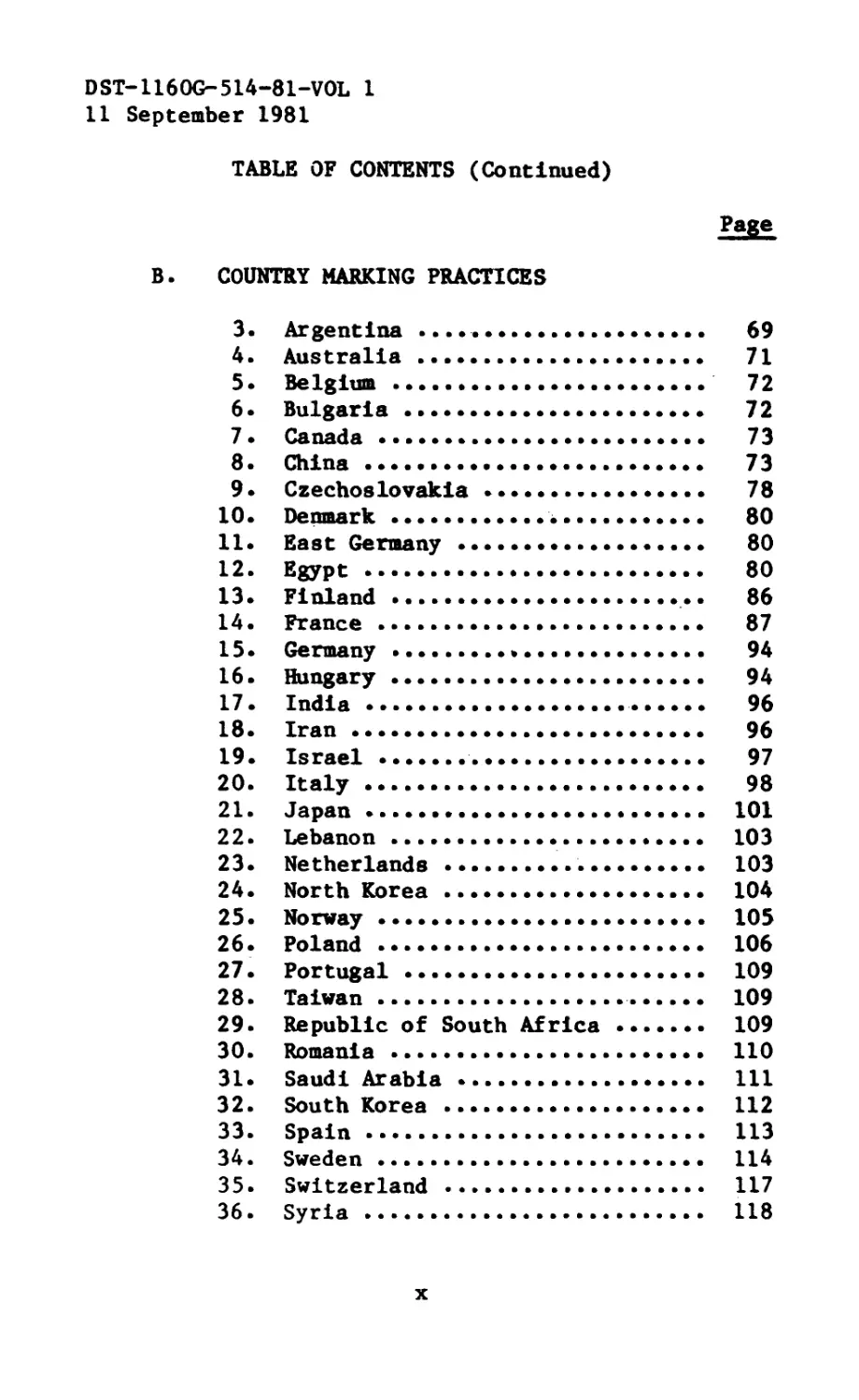
TABLE OF CONTENTS (Continued)
Page
B. COUNTRY MARKING PRACTICES
3.	Argentina ....................... 69
4.	Australia........................ 71
5»	Belgium ......................... 72
6»	Bulgaria......................... 72
7 .	Canada........................... 73
8.	China............................ 73
9»	Czechoslovakia................... 78
10* Denmark............................ 80
11*	East Germany .................... 80
12.	Egypt............................ 80
13.	Finland.........................  86
14.	France........................... 87
15.	Germany........................   94
16.	Hungary.......................... 94
17.	India...........................  96
18.	Iran............................. 96
19.	Israel........................... 97
20.	Italy............................ 98
21.	Japan.........................   101
22.	Lebanon......................... 103
23.	Netherlands..................... 103
24.	North Korea..................... 104
25.	Norway.......................... 105
26.	Poland ......................... 106
27.	Portugal........................ 109
28.	Taiwan.........................  109
29.	Republic of South Africa........ 109
30.	Romania ........................ 110
31.	Saudi Arabia.................... Ill
32.	South Korea .................... 112
33.	Spain........................... 113
34.	Sweden.......................... 114
35.	Switzerland .................... 117
36.	Syria........................... 118
x
DST-1160G-514-81-V0L 1
11 September 1981
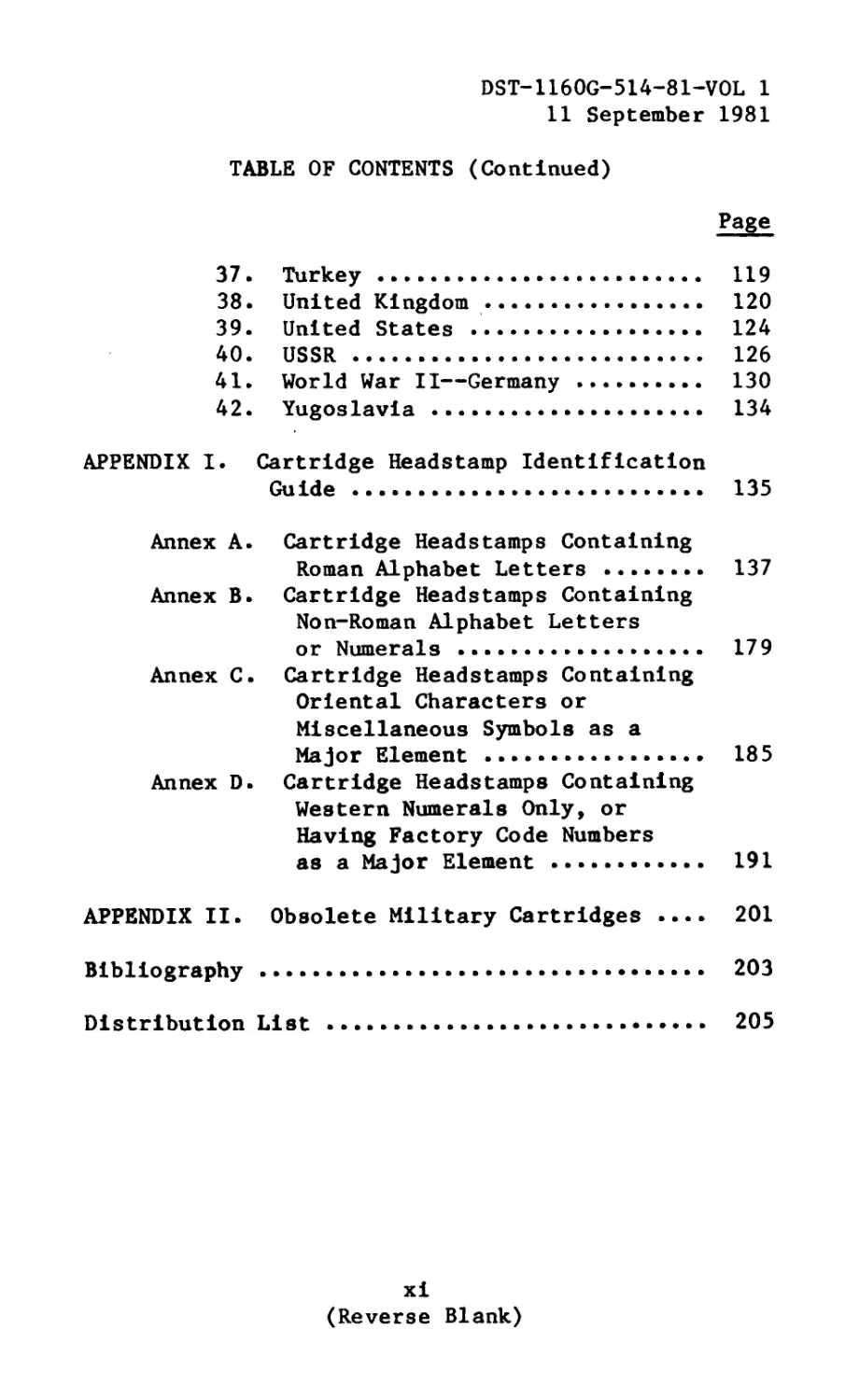
TABLE OF CONTENTS (Continued)
Page
37.	Turkey.......................... 119
38.	United Kingdom.................. 120
39.	United States .................. 124
40.	USSR............................ 126
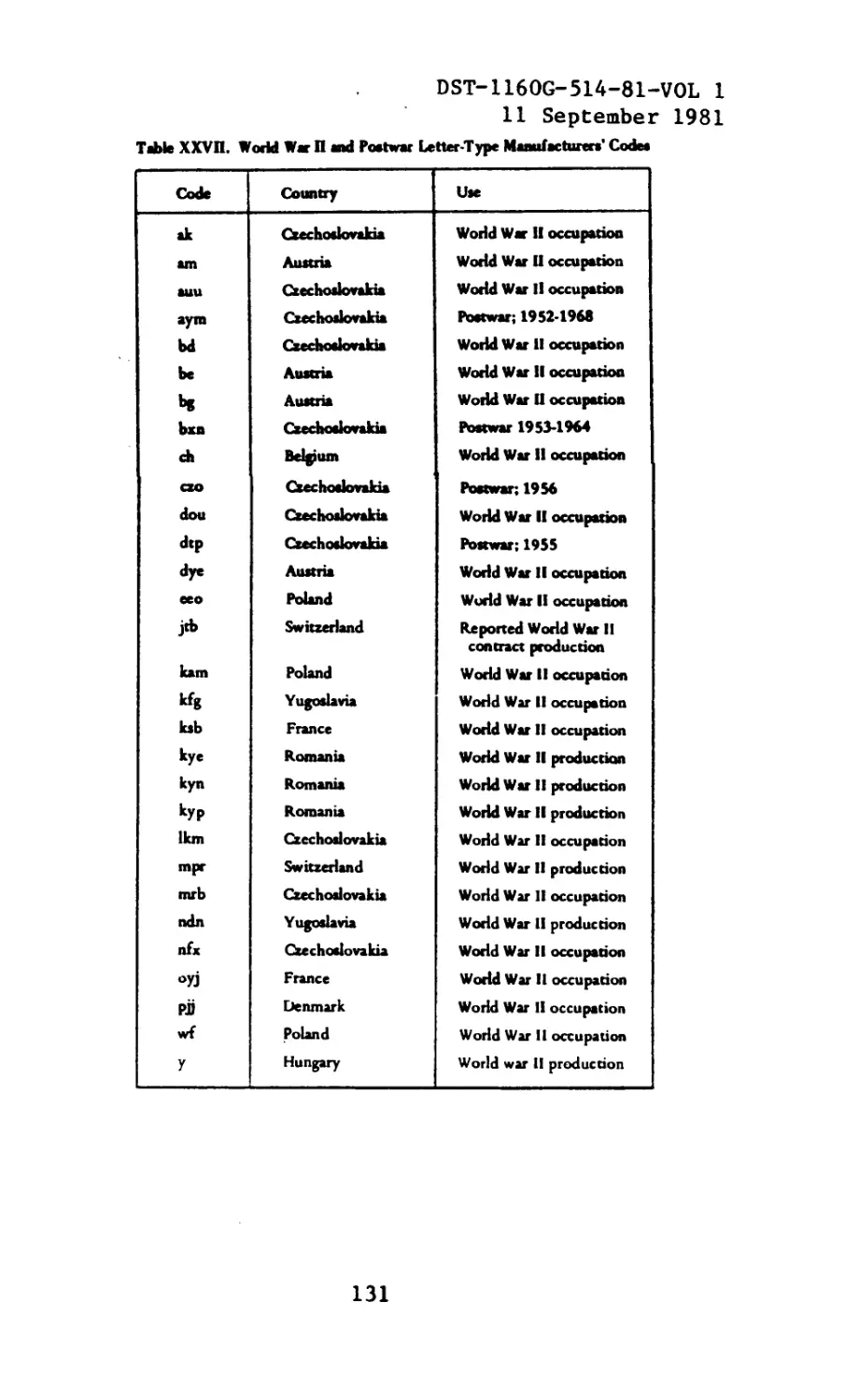
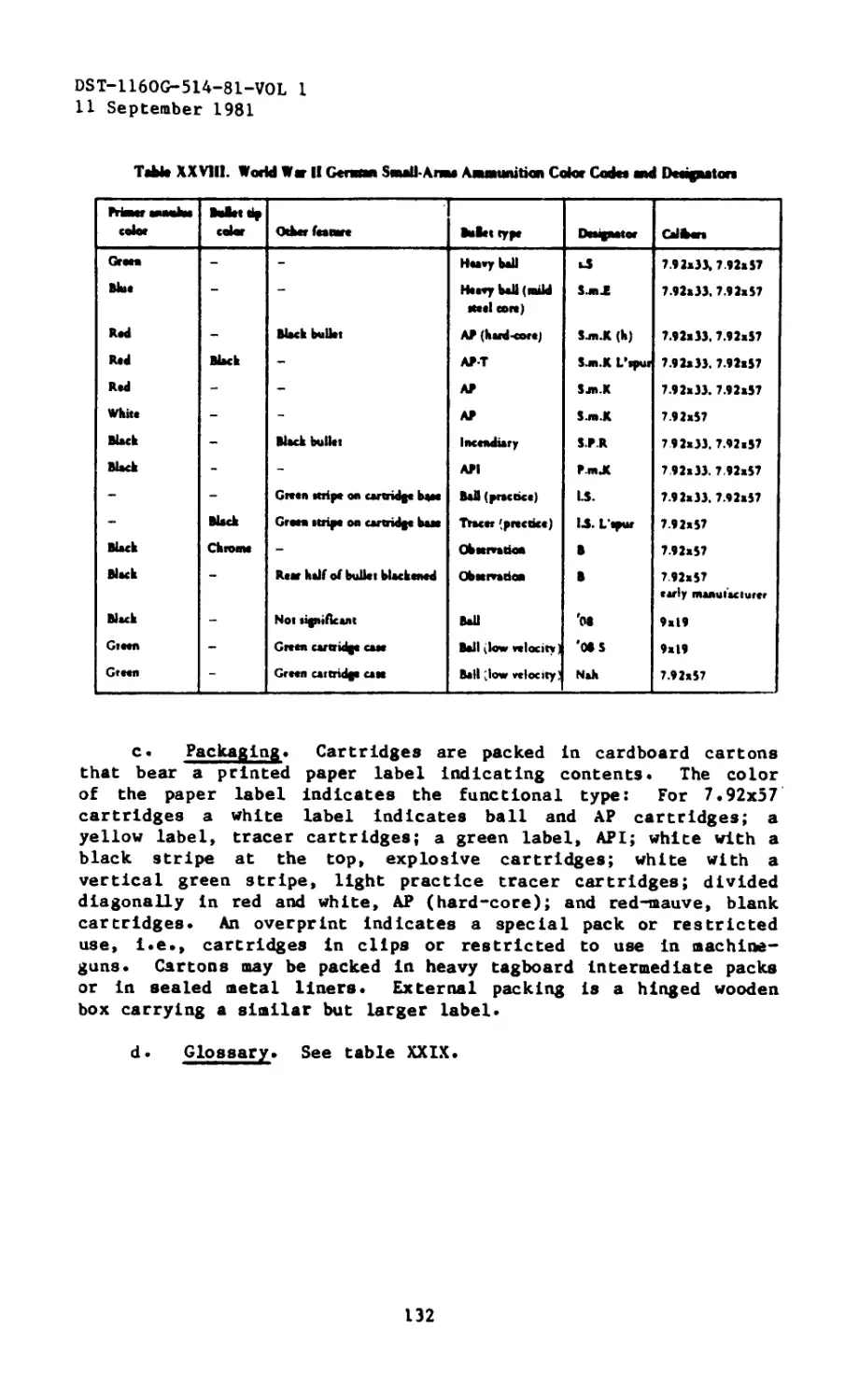
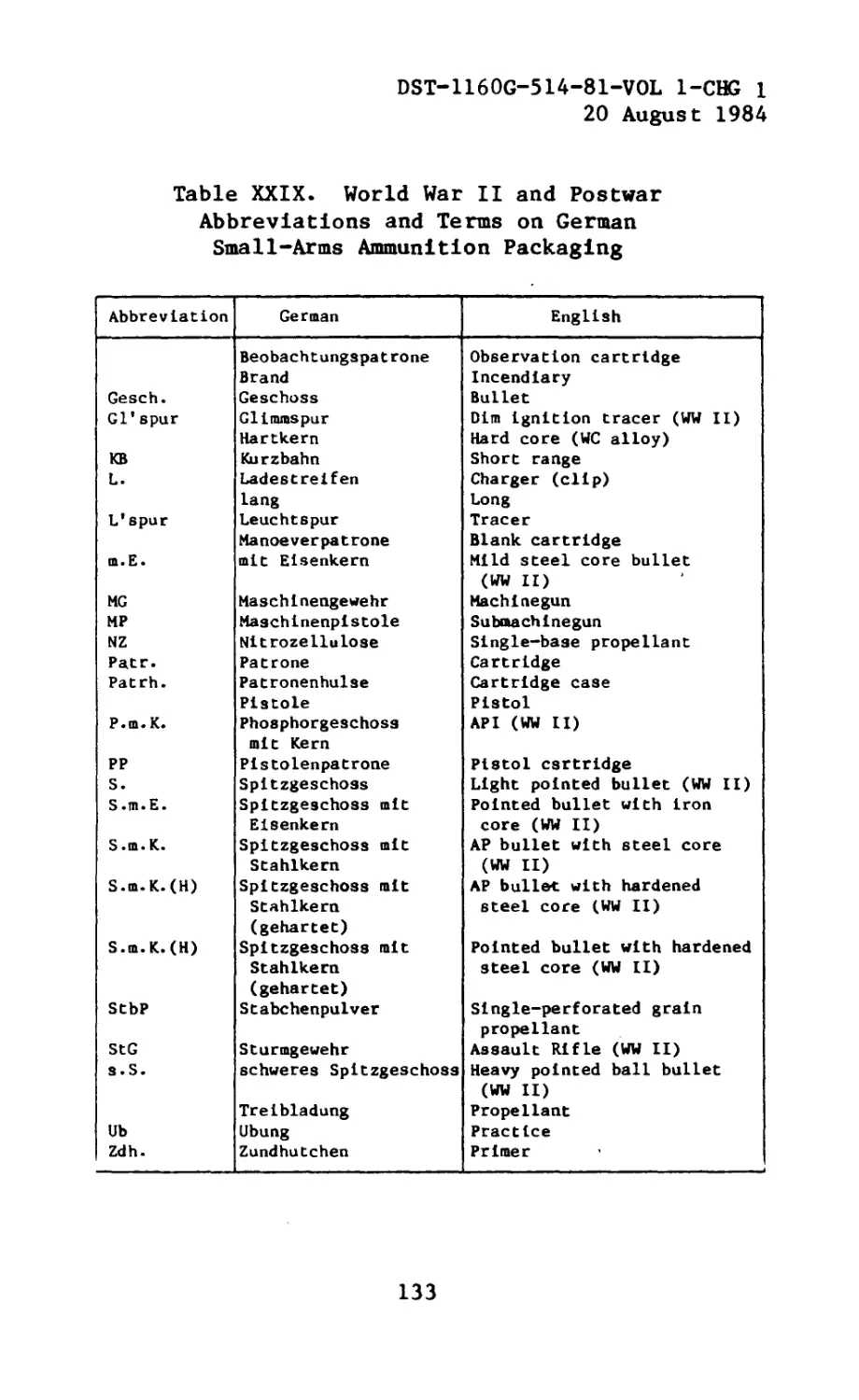
41.	World War II—Germany ........... 130
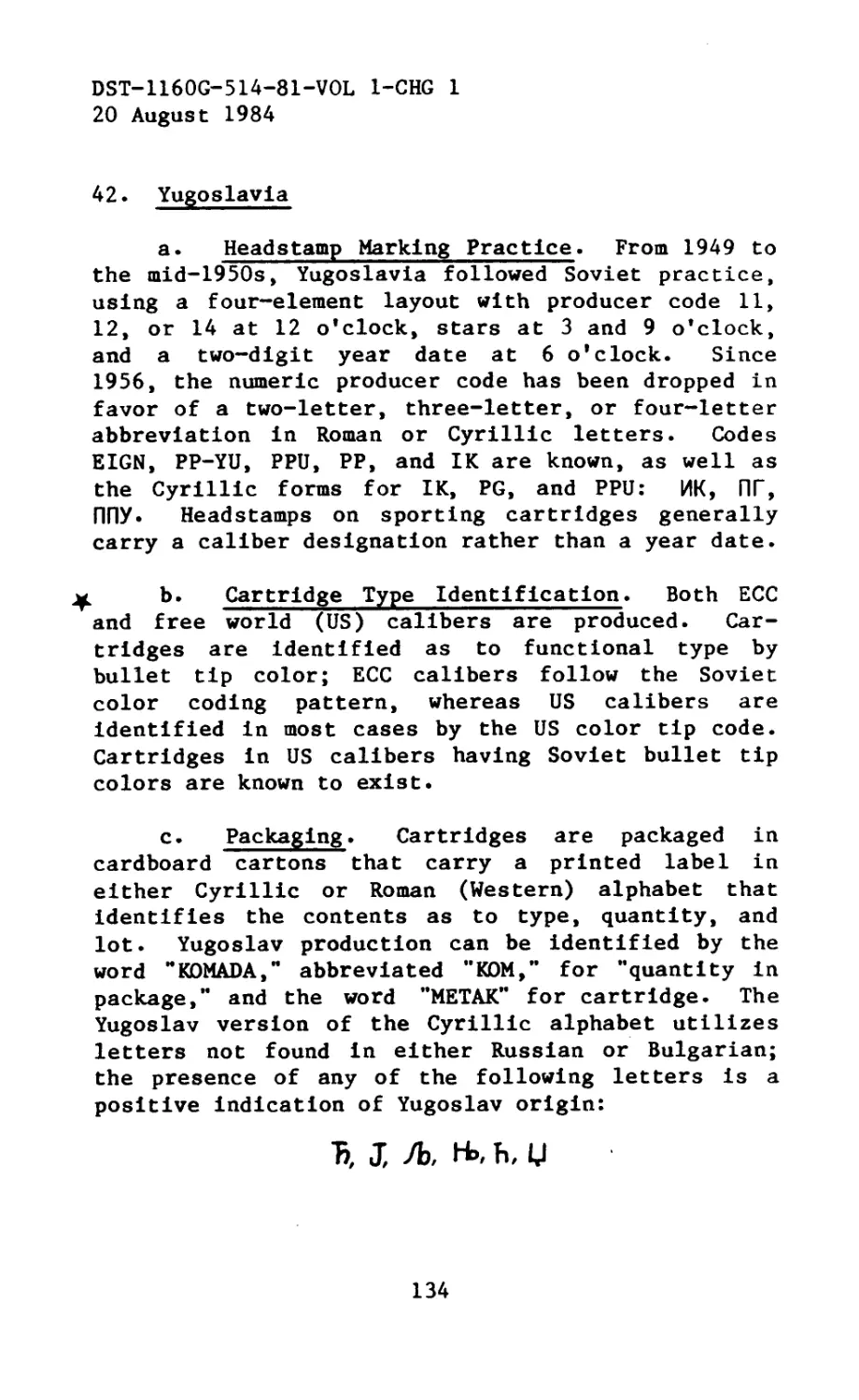
42.	Yugoslavia ..................... 134
APPENDIX I.	Cartridge Headstamp Identification
Guide ......................................... 135
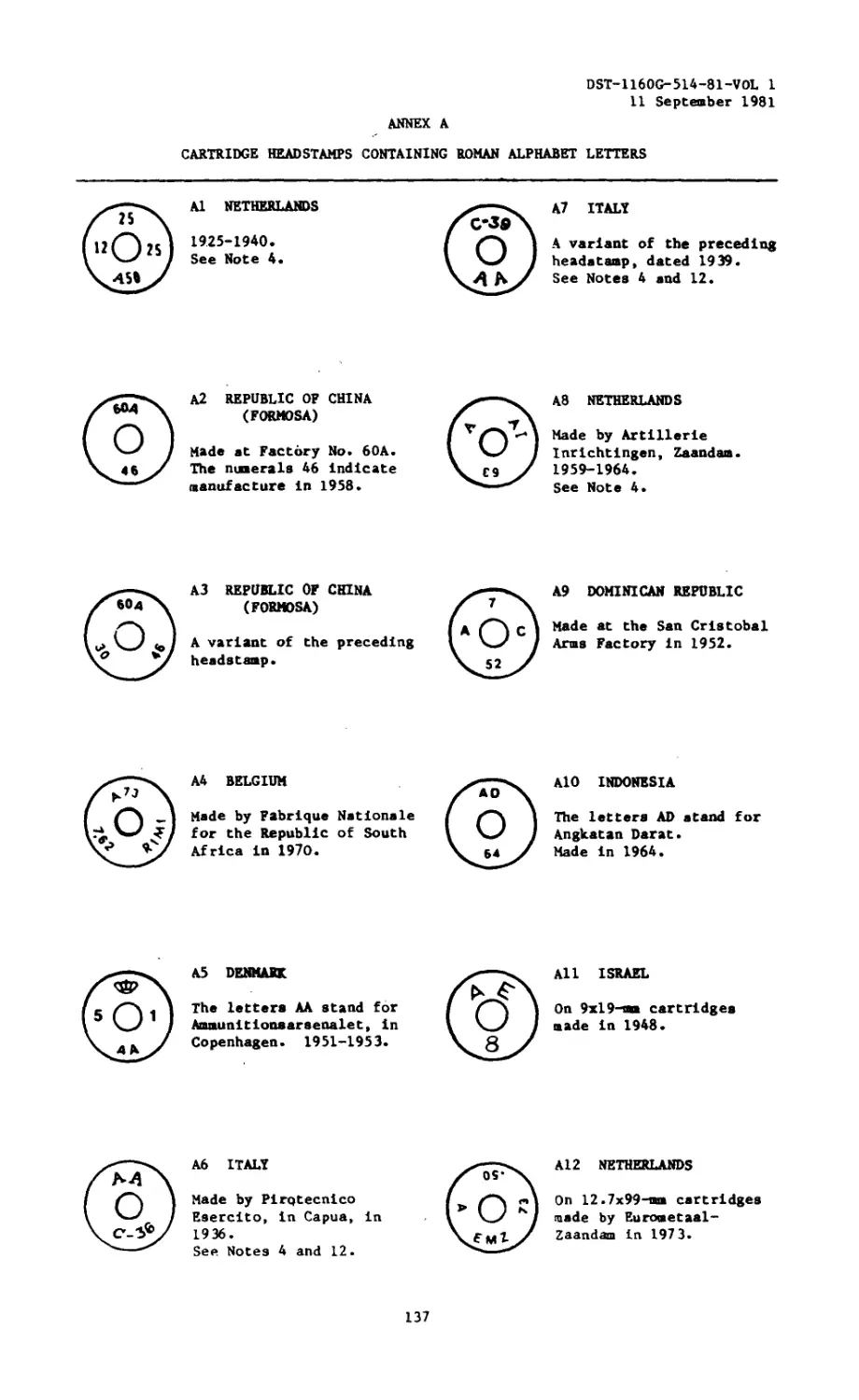
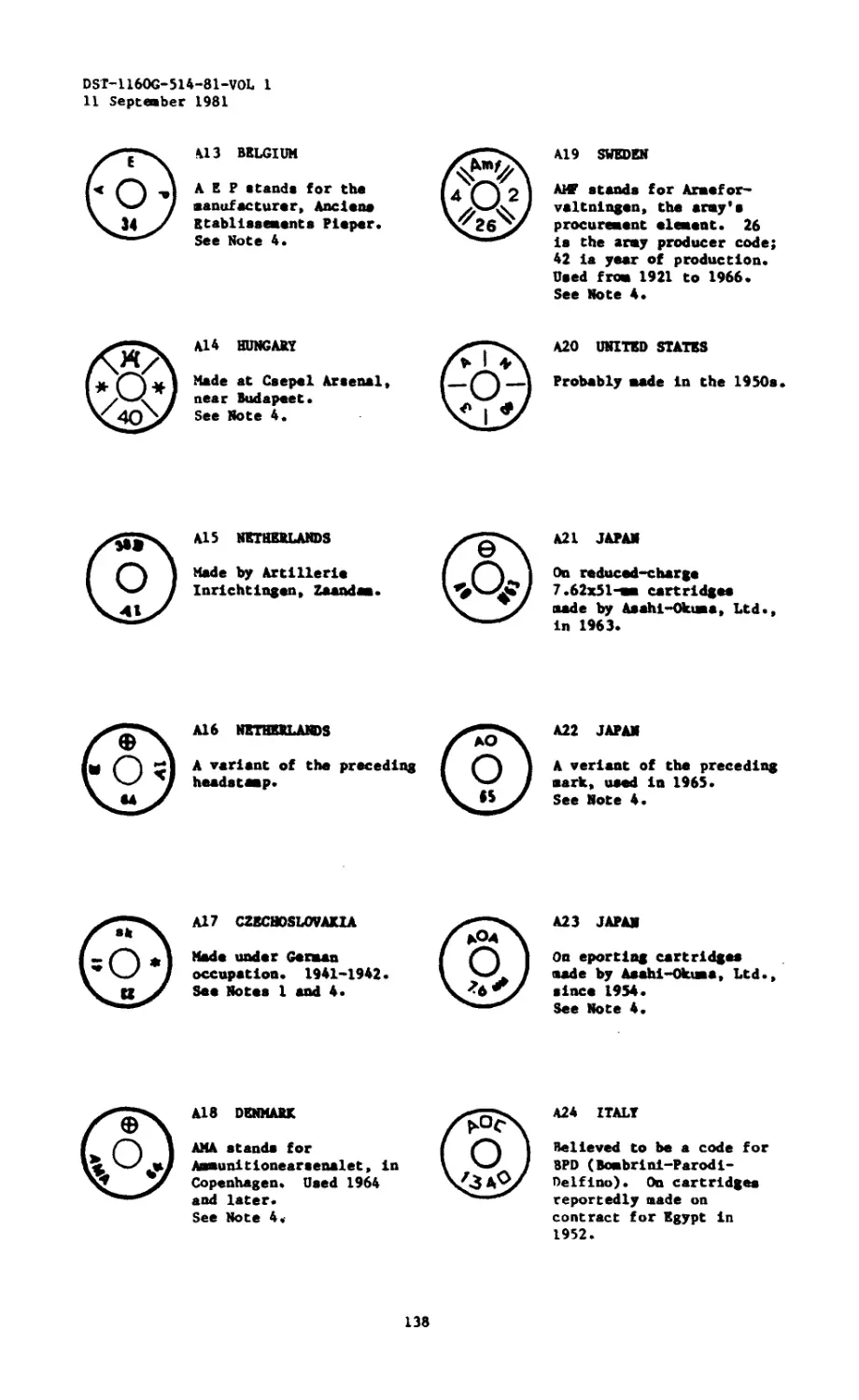
Annex A.	Cartridge Headstamps	Containing
Roman Alphabet Letters ........ 137
Annex B.	Cartridge Headstamps	Containing
Non-Roman Alphabet Letters
or Numerals ................... 179
Annex C.	Cartridge Headstamps	Containing
Oriental Characters or
Miscellaneous Symbols as a
Major Element ................. 185
Annex D.	Cartridge Headstamps Containing
Western Numerals Only, or
Having Factory Code Numbers
as	a	Major	Element ........... 191
APPENDIX II.	Obsolete	Military	Cartridges .... 201
Bibliography	.............................. 203
Distribution	List ........................... 205
xi
(Reverse Blank)
DST-1160G-514-81-V0L 1
11 September 1981
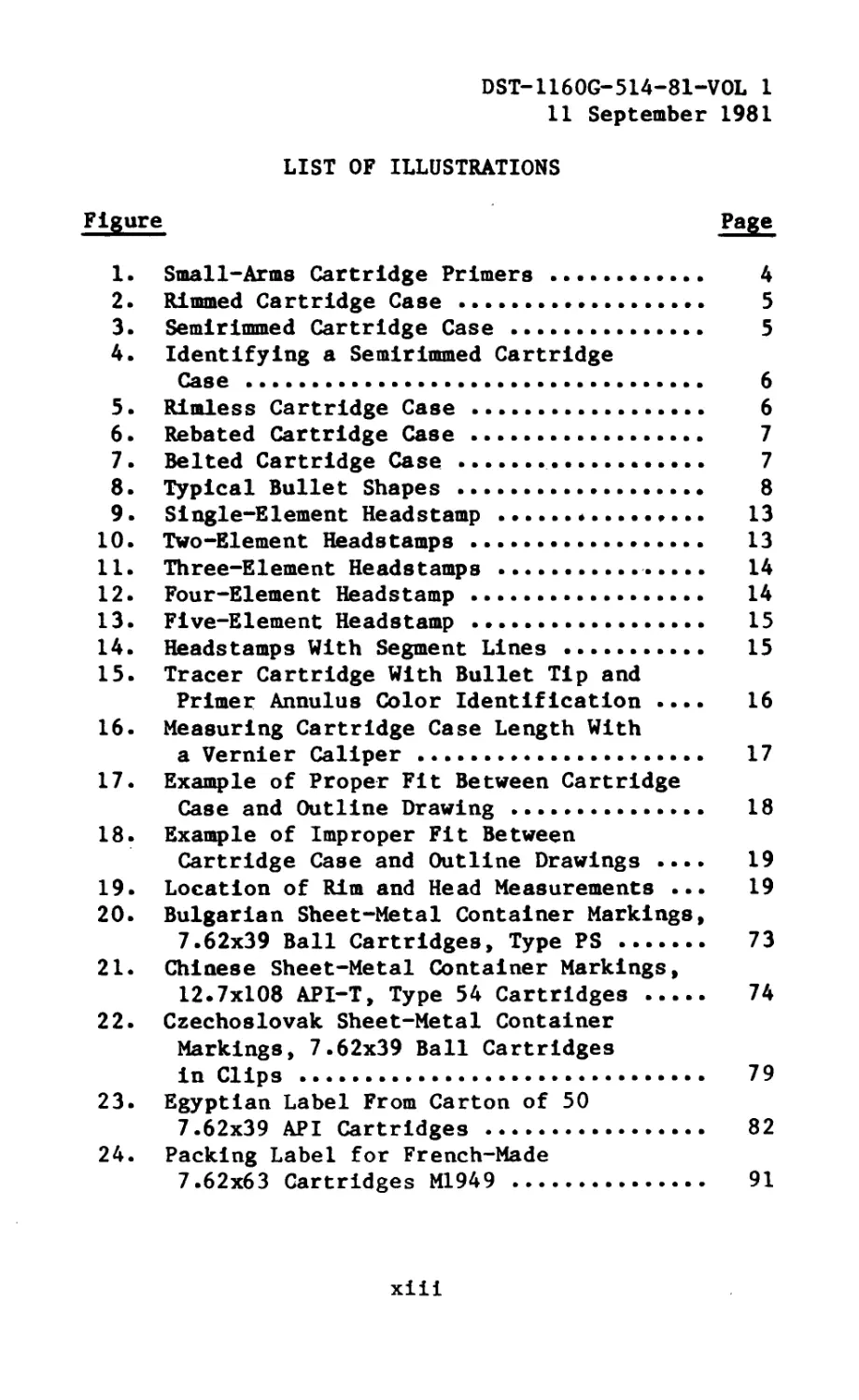
LIST OF ILLUSTRATIONS
Figure	Page
1.	Small-Arms Cartridge Primers ................ 4
2.	Rimmed Cartridge Case ....................... 5
3.	Semirimmed Cartridge Case ................... 5
4.	Identifying a Semirimmed Cartridge
Case ........................................... 6
5.	Rimless Cartridge Case ...................... 6
6.	Rebated Cartridge Case ...................... 7
7.	Belted Cartridge Case ....................    7
8.	Typical Bullet Shapes ....................... 8
9.	Single-Element Headstamp ................... 13
10.	Two-Element Headstamps ..................... 13
11.	Three-Element Headstamps ..................  14
12.	Four-Element Headstamp ..................... 14
13.	Five-Element Headstamp ..................... 15
14.	Headstamps With Segment Lines .............. 15
15.	Tracer Cartridge With Bullet Tip and
Primer Annulus Color Identification ....	16
16.	Measuring Cartridge Case Length With
a Vernier Caliper .............................. 17
17.	Example of Proper Fit Between Cartridge
Case and Outline Drawing ....................... 18
18.	Example of Improper Fit Between
Cartridge Case and Outline Drawings ....	19
19.	Location of Rim and Head Measurements ...	19
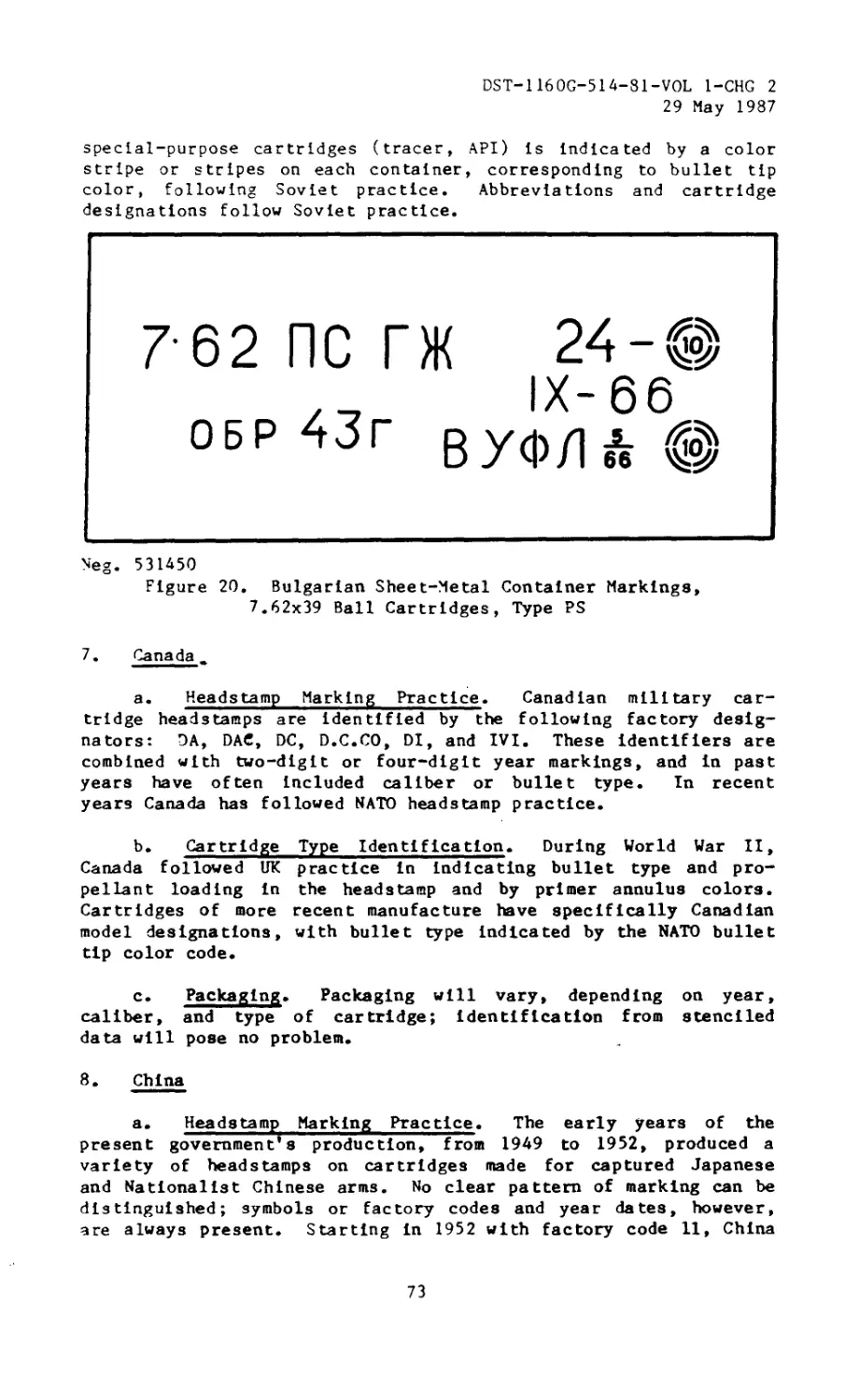
20.	Bulgarian Sheet-Metal Container Markings,
7.62x39 Ball Cartridges, Type PS ............... 73
21.	Chinese Sheet-Metal Container Markings,
12.7x10⁸ API-T, Type 54 Cartridges ............. 74
22.	Czechoslovak Sheet-Metal Container
Markings, 7.62x39 Ball Cartridges
in Clips ....................................... 79
23.	Egyptian Label From Carton of 50
7.62x39 API Cartridges ................... 82
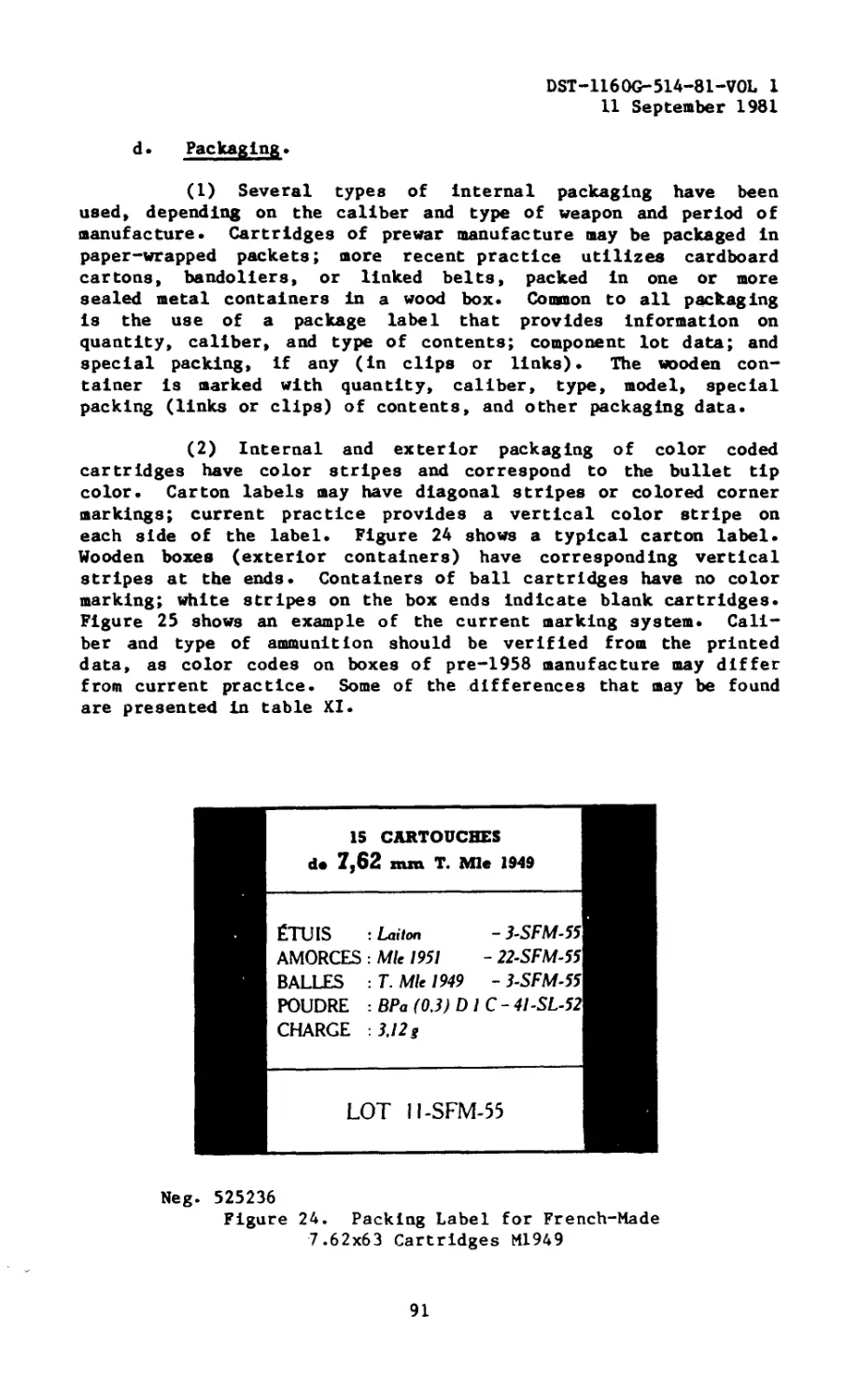
24.	Packing Label for French-Made
7.62x63 Cartridges M1949 ....................... 91
xiil
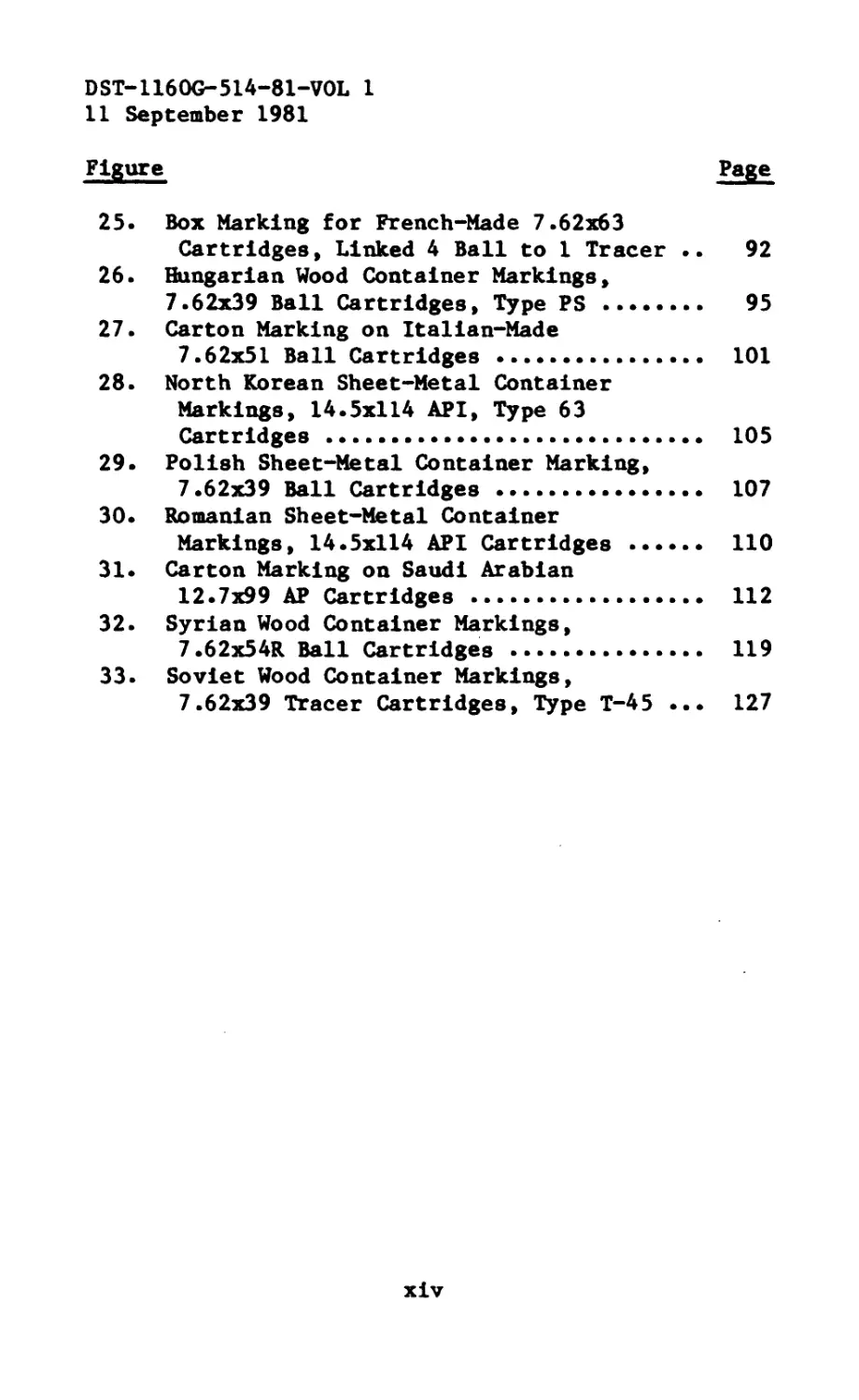
DST-116OG-514-81-VOL 1
11 September 1981
Figure	Page
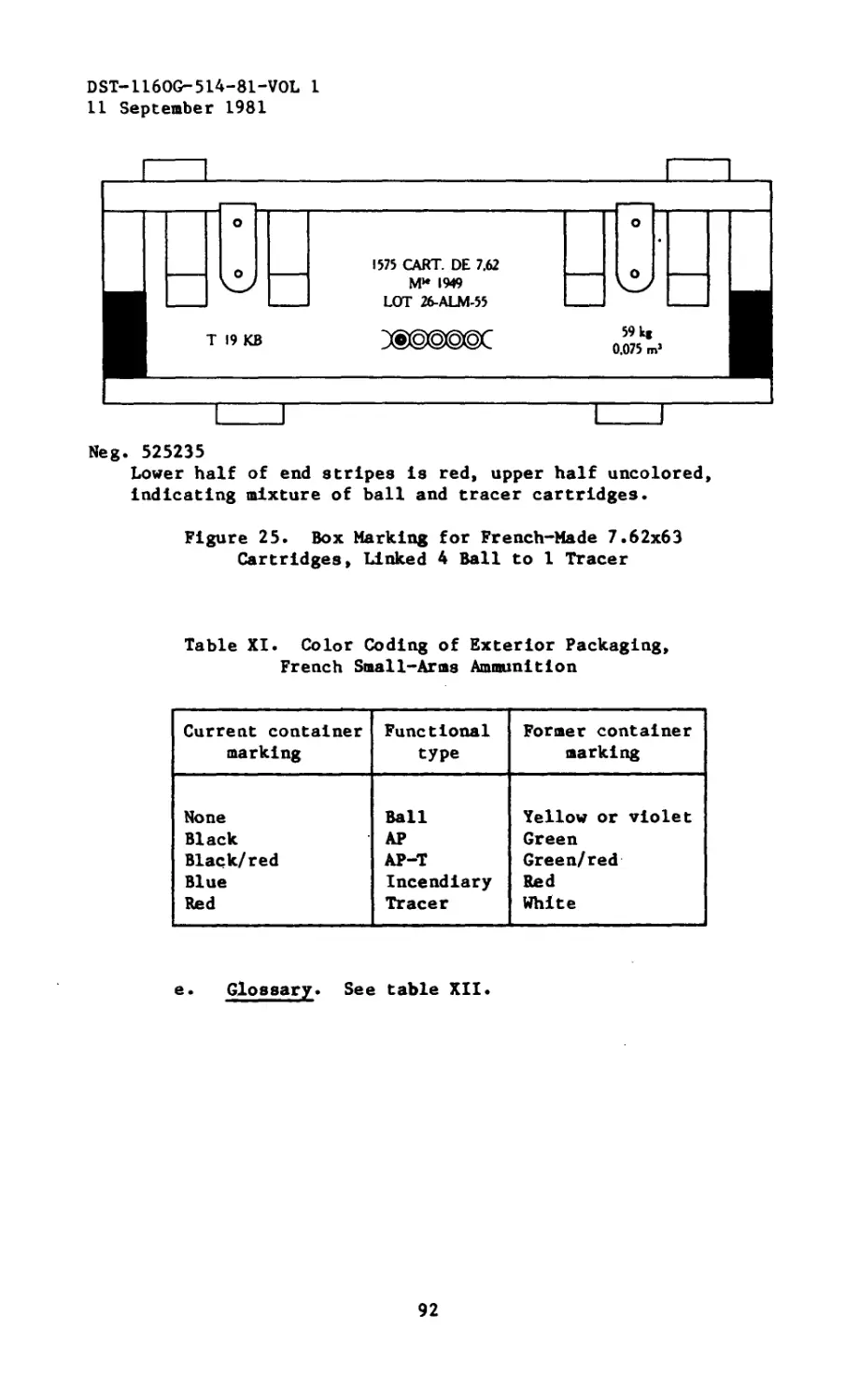
25.	Box Marking for French-Made 7.62x63
Cartridges, Linked 4 Ball to 1 Tracer ..	92
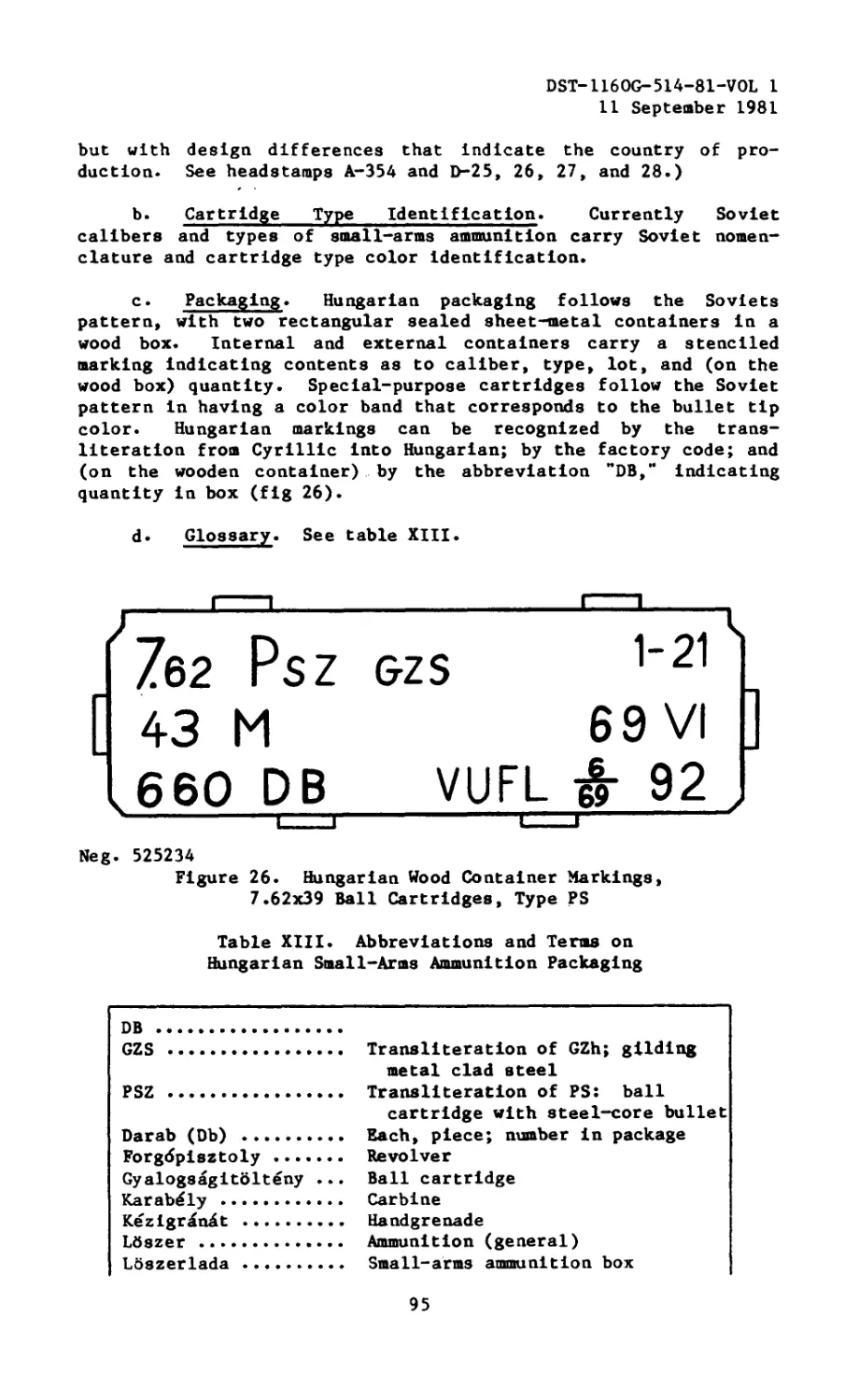
26.	Hungarian Wood Container Markings,
7.62x39 Ball Cartridges, Type PS ............... 95
27.	Carton Marking on Italian-Made
7.62x51 Ball Cartridges ....................... 101
28.	North Korean Sheet-Metal Container
Markings, 14.5x114 API, Type 63
Cartridges ............................. 105
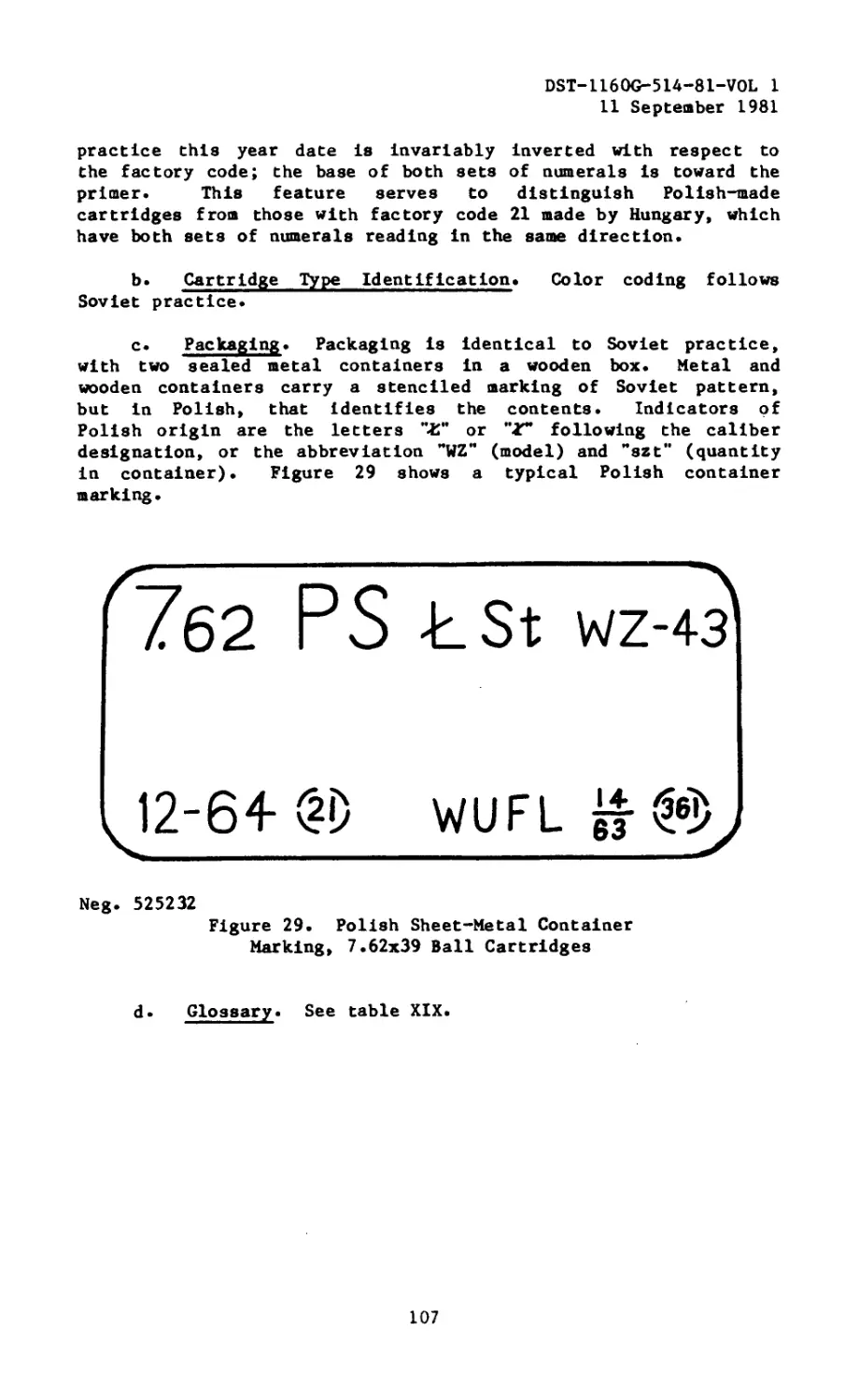
29.	Polish Sheet-Metal Container Marking,
7.62x39 Ball Cartridges ....................... 107
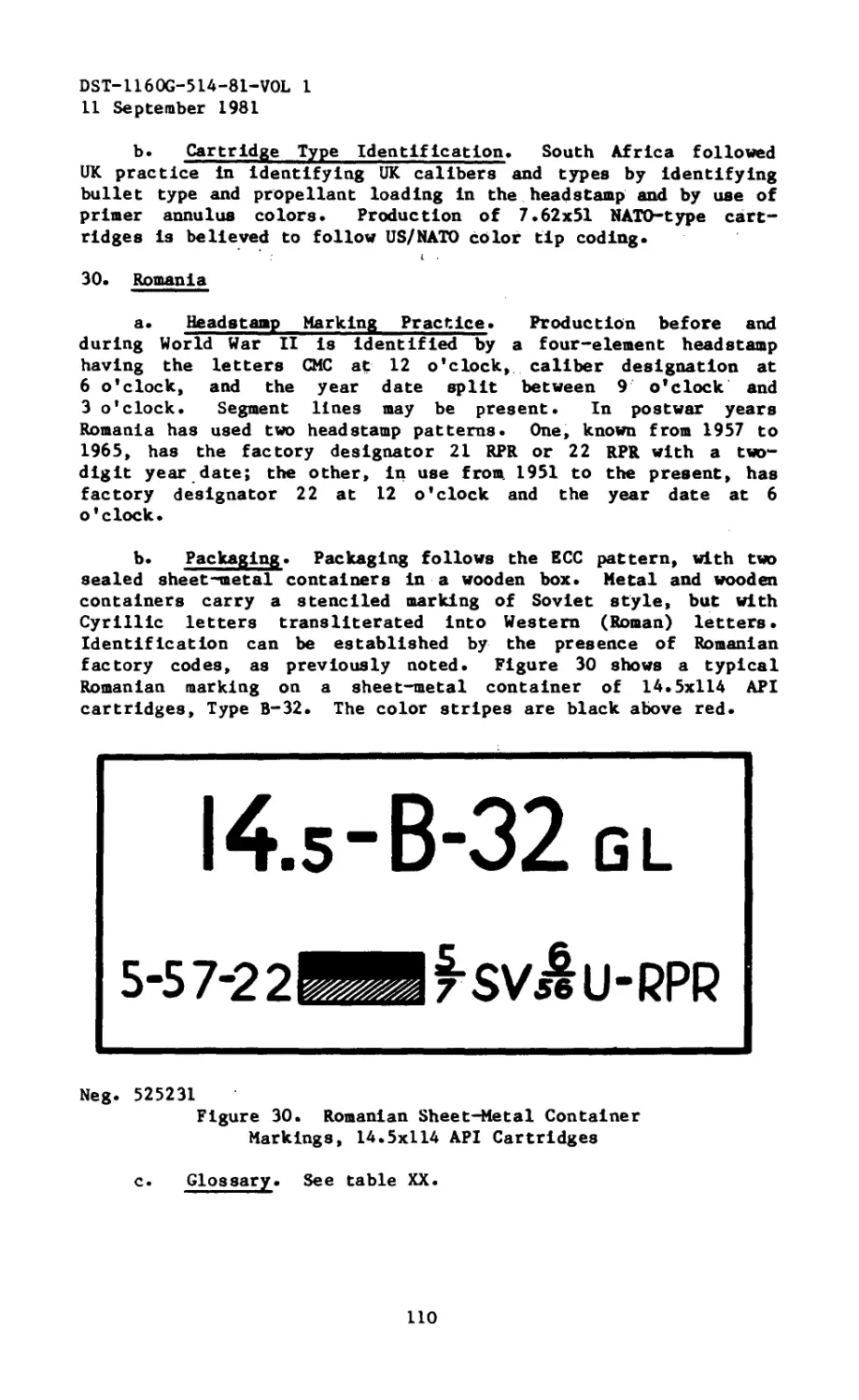
30.	Romanian Sheet-Metal Container
Markings, 14.5x114 API Cartridges ............. 110
31.	Carton Marking on Saudi Arabian
12.7x99 AP Cartridges ......................... 112
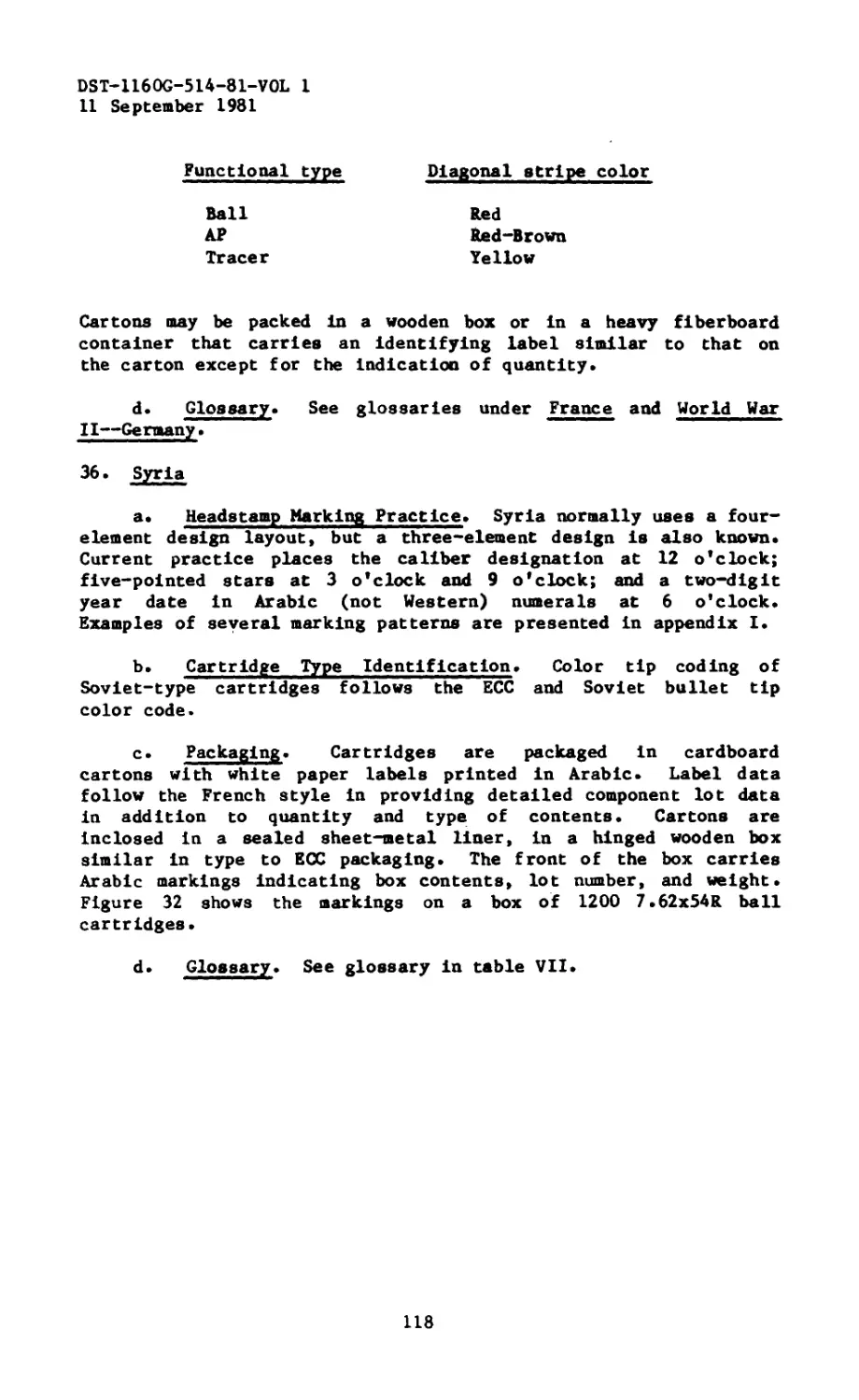
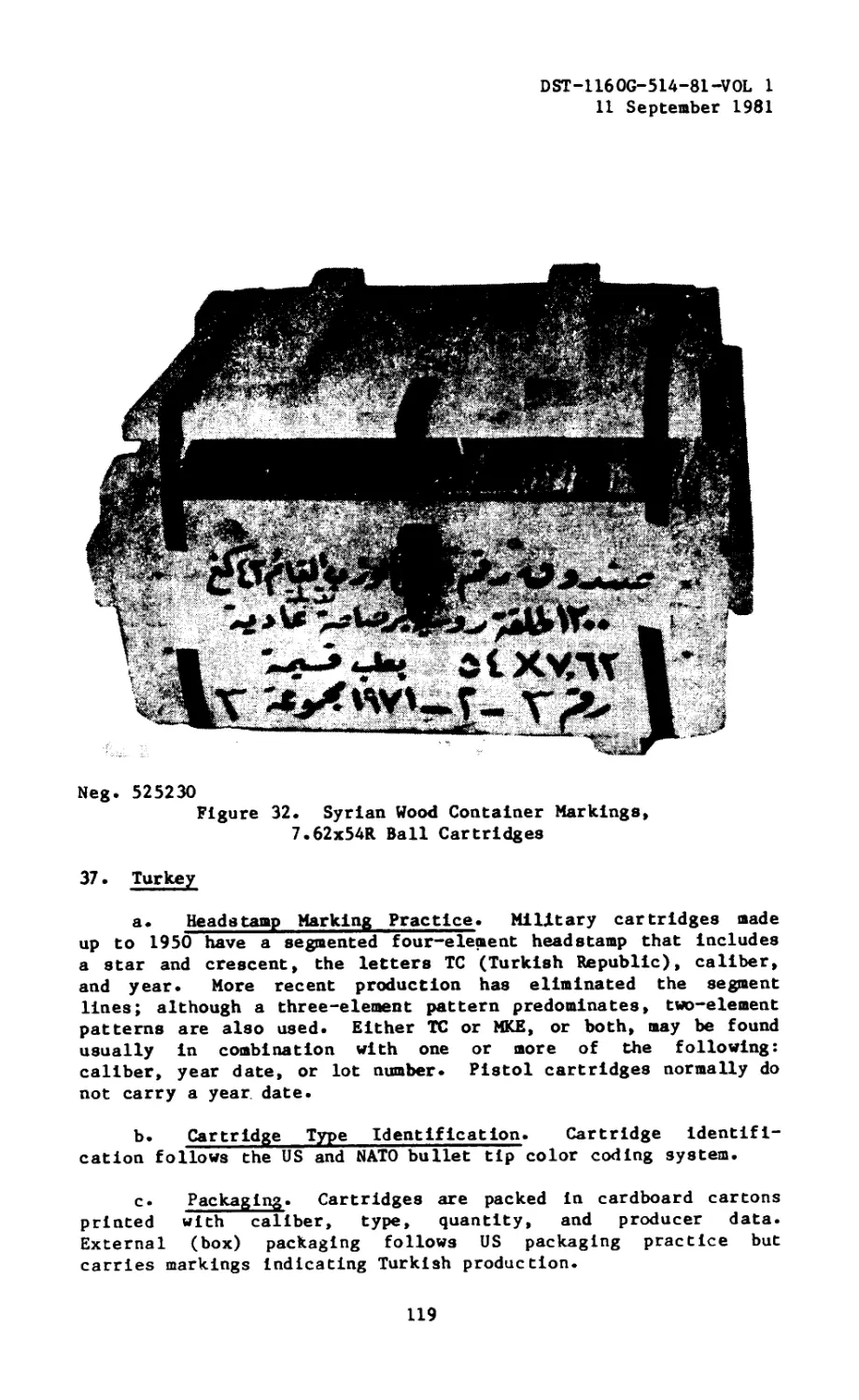
32.	Syrian Wood Container Markings,
7.62x54R Ball Cartridges ...................... 119
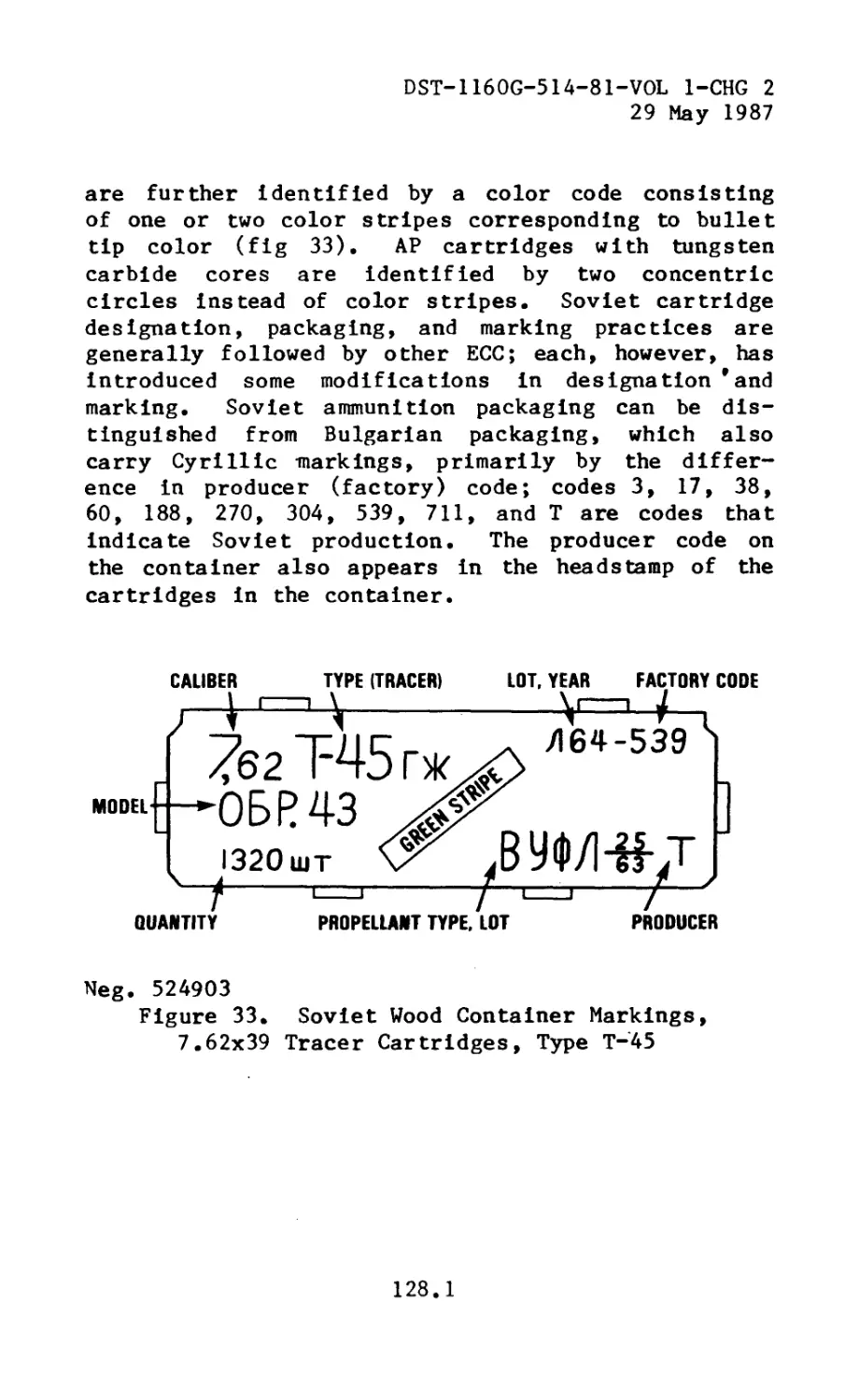
33.	Soviet Wood Container Markings,
7.62x39 Tracer Cartridges, Type T-45 ... 127
xiv
DST-1160G-514-81-V0L 1
11 September 1981
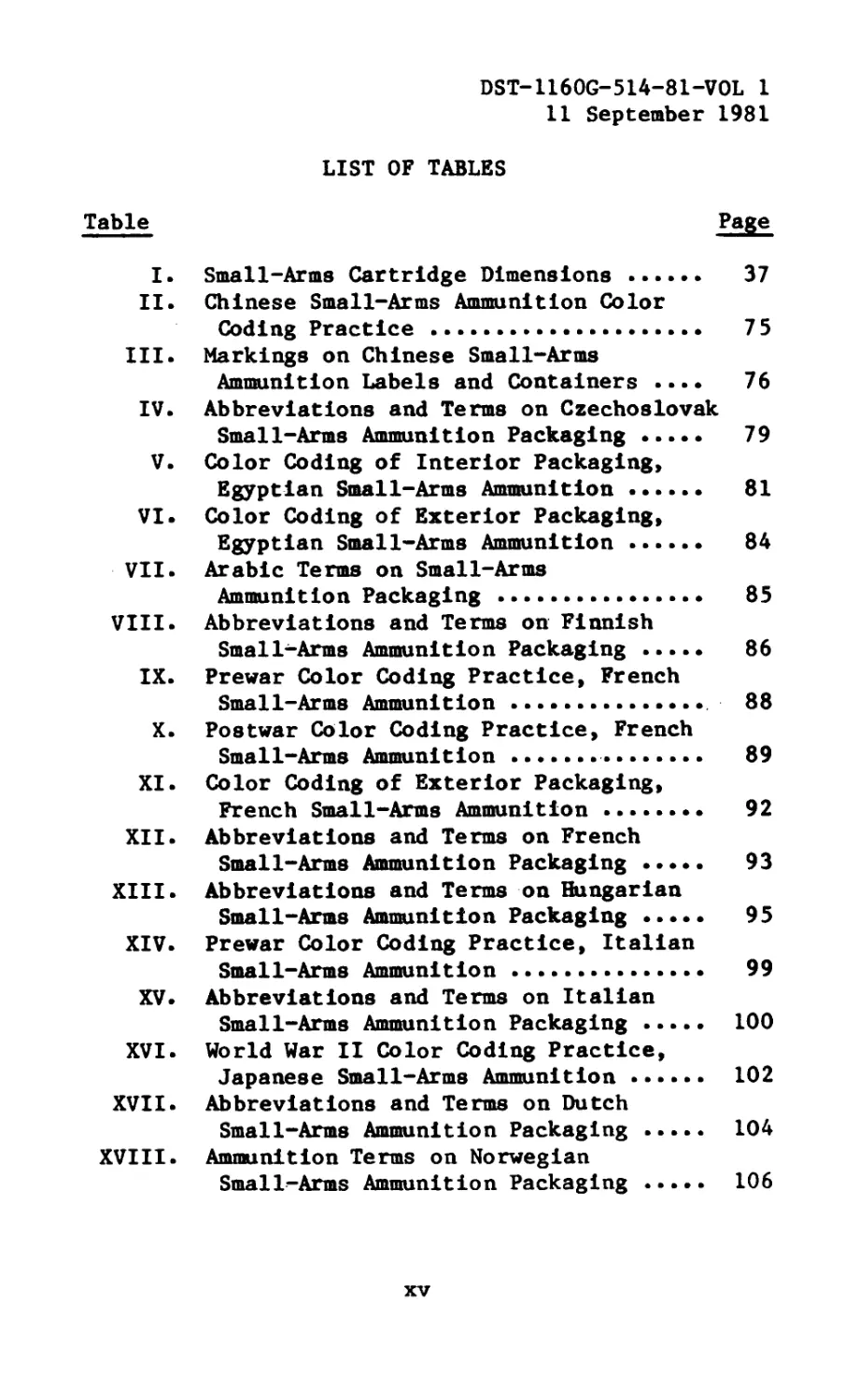
LIST OF TABLES
Table	Page
I.	Small-Arms Cartridge Dimensions ........ 37
II.	Chinese Small-Arms Ammunition Color
Coding Practice ............................. 75
III.	Markings on Chinese Small-Arms
Ammunition Labels and	Containers ....	76
IV.	Abbreviations and Terms on Czechoslovak
Small-Arms Ammunition	Packaging ...... 79
V.	Color Coding of Interior Packaging,
Egyptian Small-Arms Ammunition ............. 81
VI.	Color Coding of Exterior Packaging,
Egyptian Small-Arms Ammunition.............	84
VII.	Arabic Terms on Small-Arms
Ammunition Packaging ......................... 85
VIII.	Abbreviations and Terms on Finnish
Small-Arms Ammunition Packaging...............	86
IX.	Prewar Color Coding Practice, French
Small-Arms Ammunition ....................... 88
X.	Postwar Color Coding Practice, French
Small-Arms Ammunition .....................  89
XI.	Color Coding of Exterior Packaging,
French Small-Arms Ammunition ................ 92
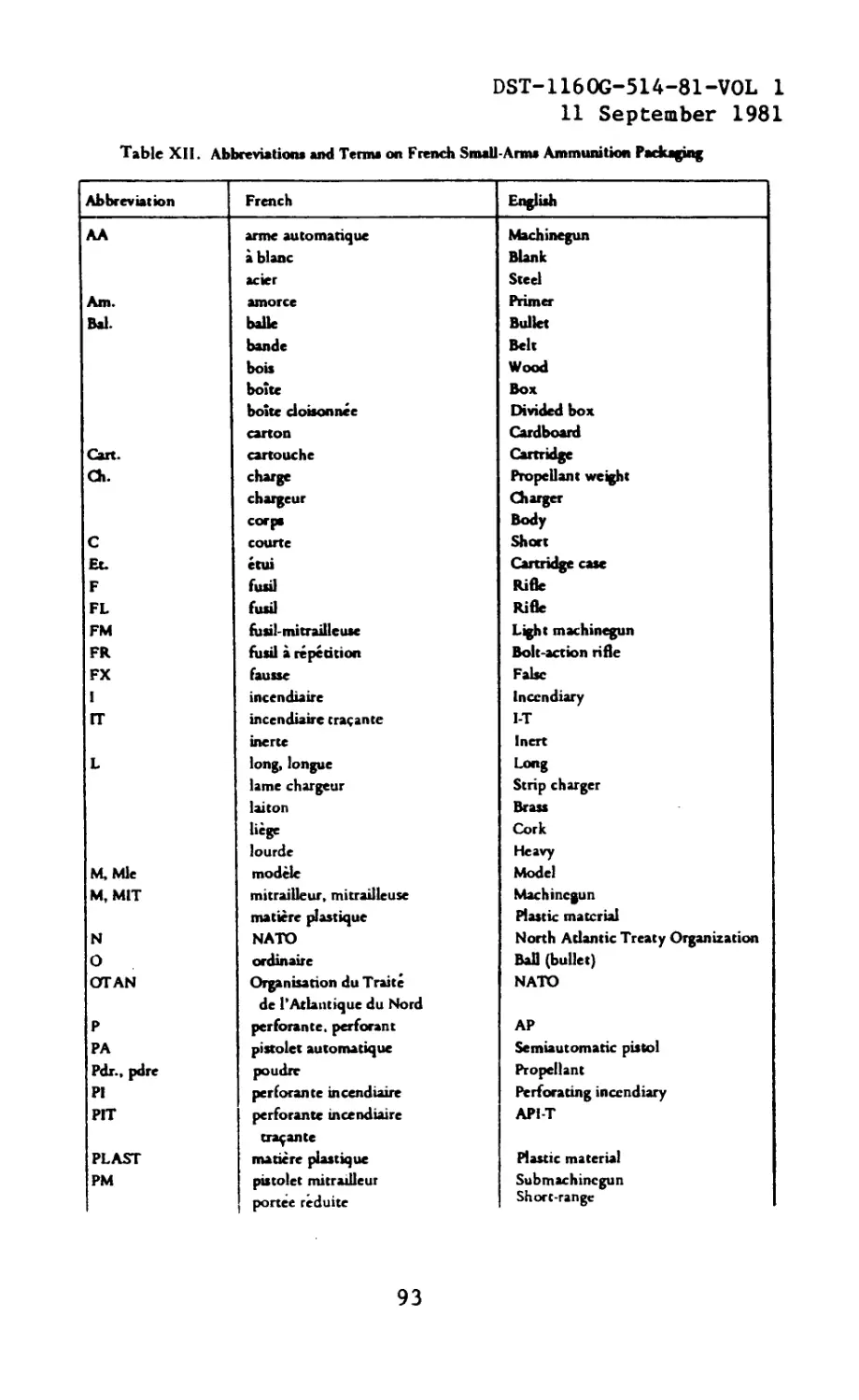
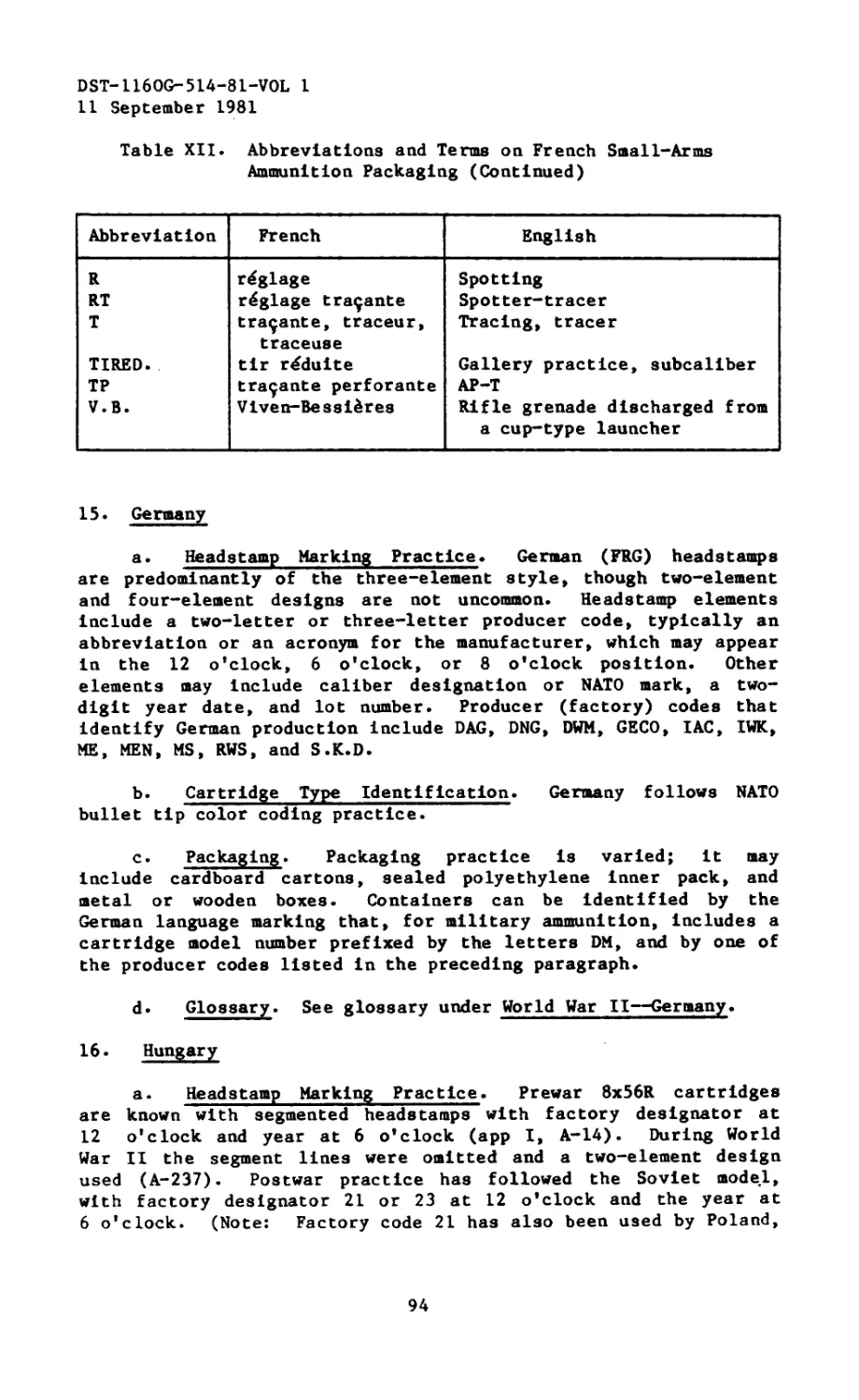
XII.	Abbreviations and Terms on French
Small-Arms Ammunition Packaging .............. 93
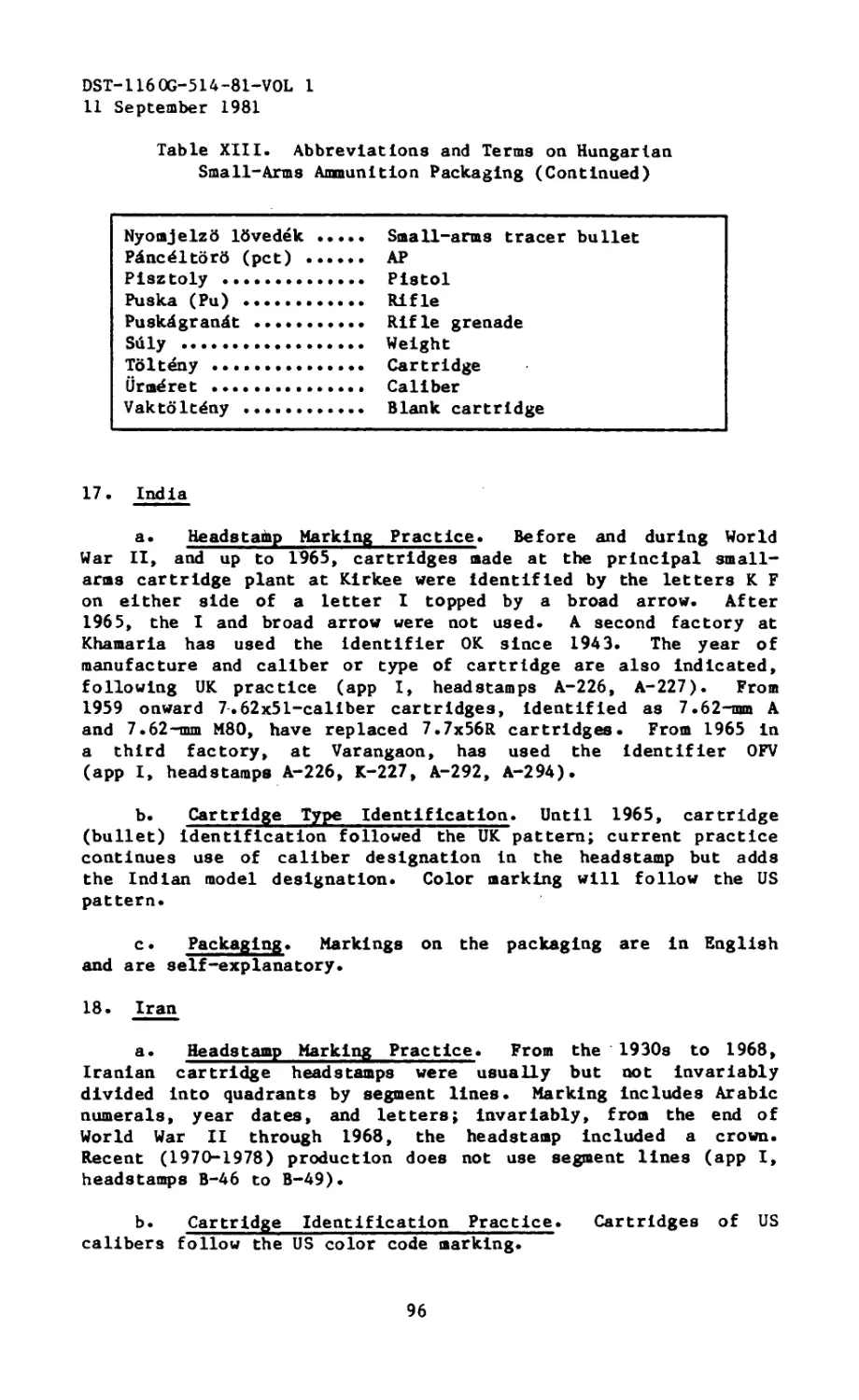
XIII.	Abbreviations and Terms on Hungarian
Small-Arms Ammunition Packaging .............. 95
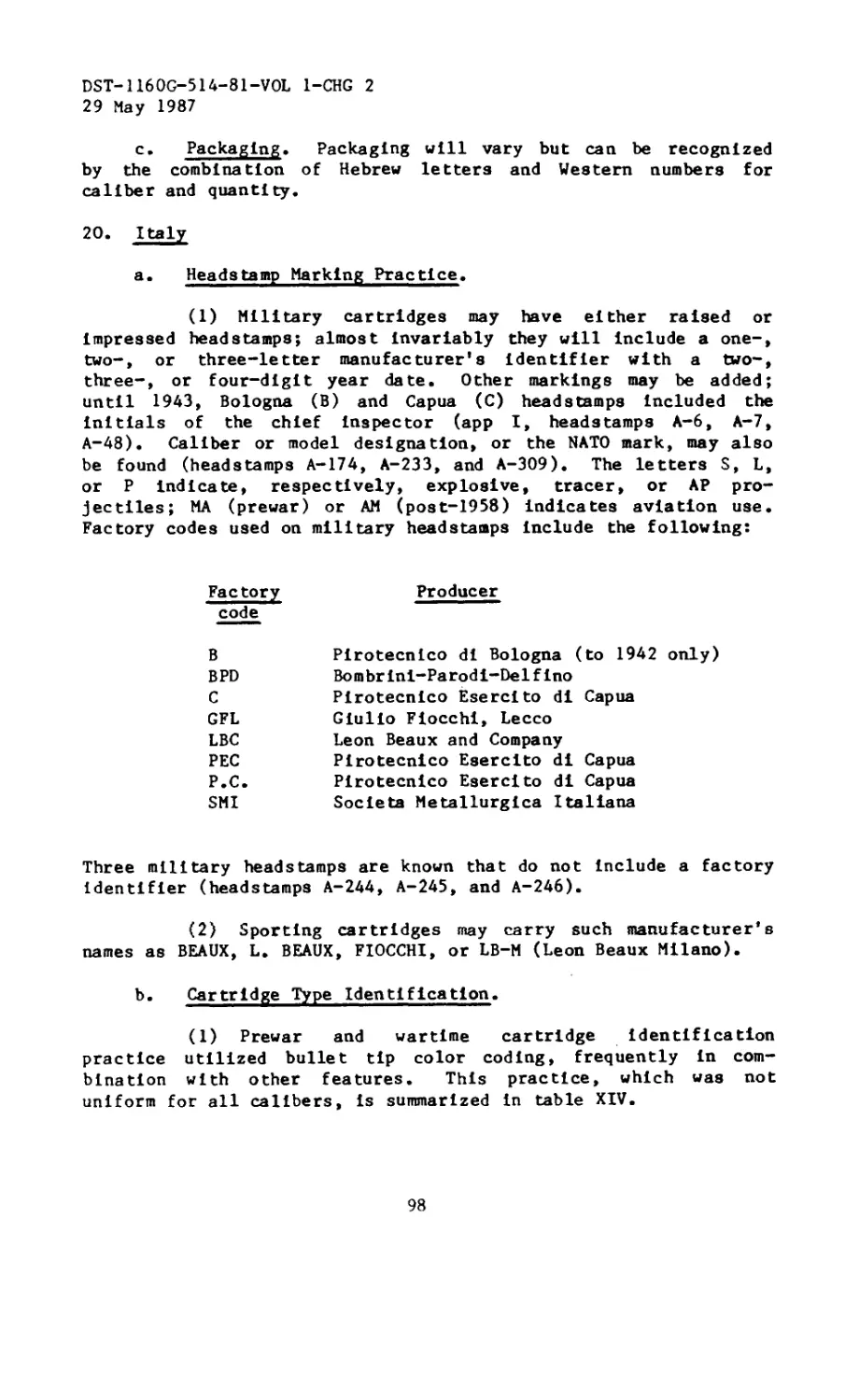
XIV.	Prewar Color Coding Practice, Italian
Small-Arms Ammunition......................... 99
XV.	Abbreviations and Terms on Italian
Small-Arms Ammunition Packaging ............ 100
XVI.	World War II Color Coding Practice,
Japanese Small-Arms Ammunition .............. 102
XVII.	Abbreviations and Terms on Dutch
Small-Arms Ammunition Packaging ............. 104
XVIII.	Ammunition Terms on Norwegian
Small-Arms Ammunition Packaging ................ 106
xv
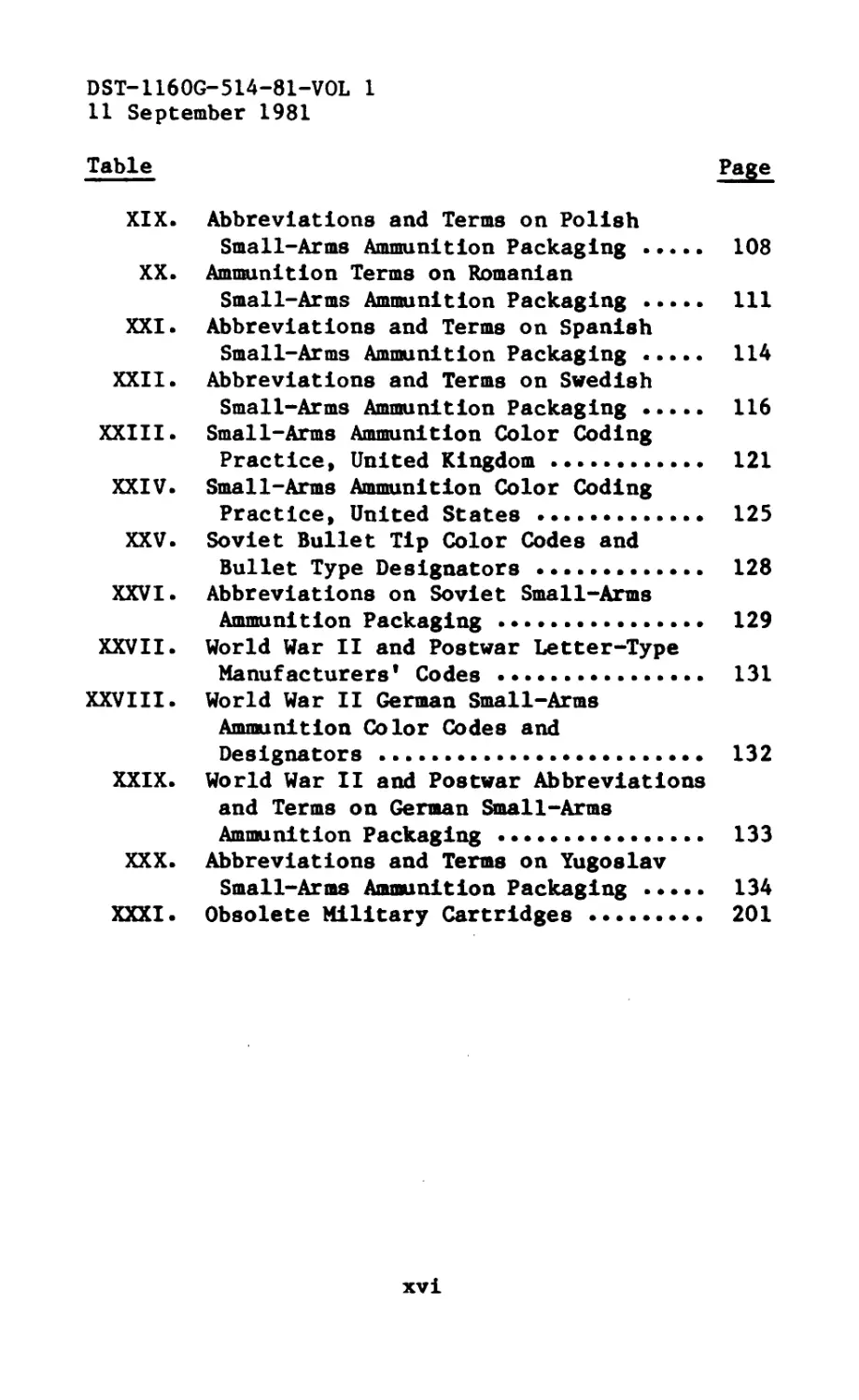
DST-116OG-514-81-VOL 1
11 September 1981
Table	Page
XIX.	Abbreviations and Terms on Polish
Small-Arms Ammunition Packaging ............. 108
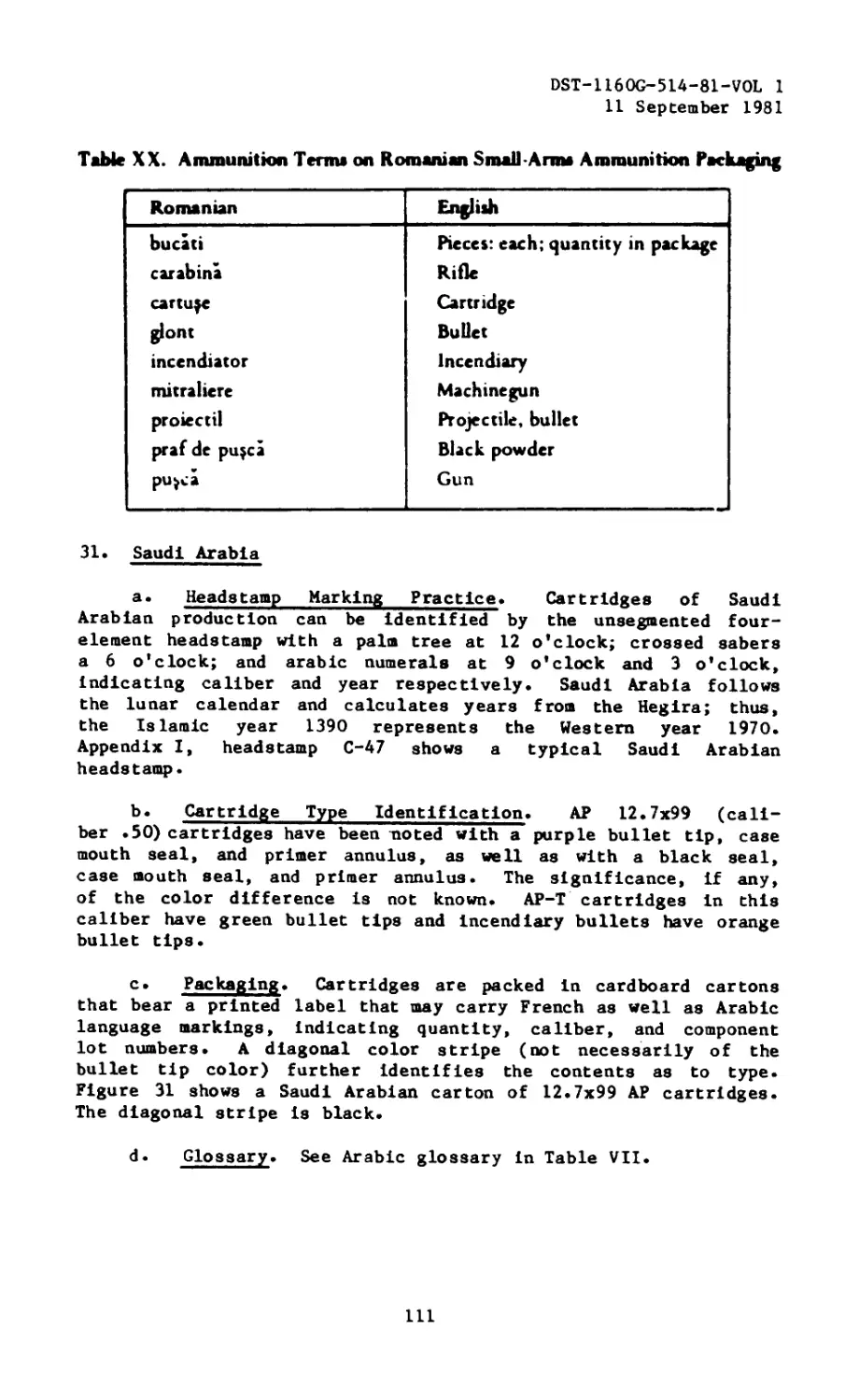
XX.	Ammunition Terms on Romanian
Small-Arms Ammunition Packaging ............ Ill
XXI.	Abbreviations and Terms on Spanish
Small-Arms Ammunition Packaging ............. 114
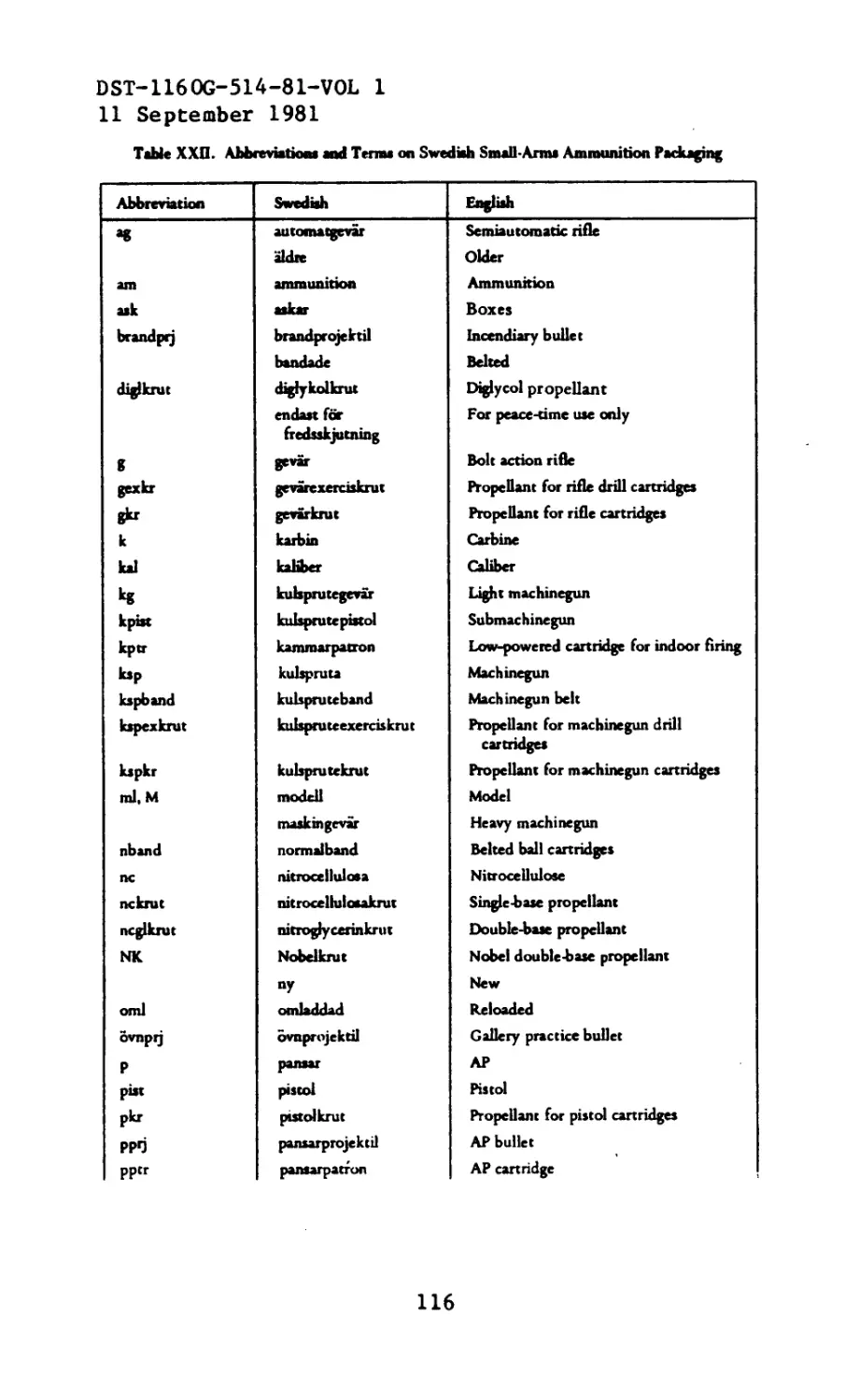
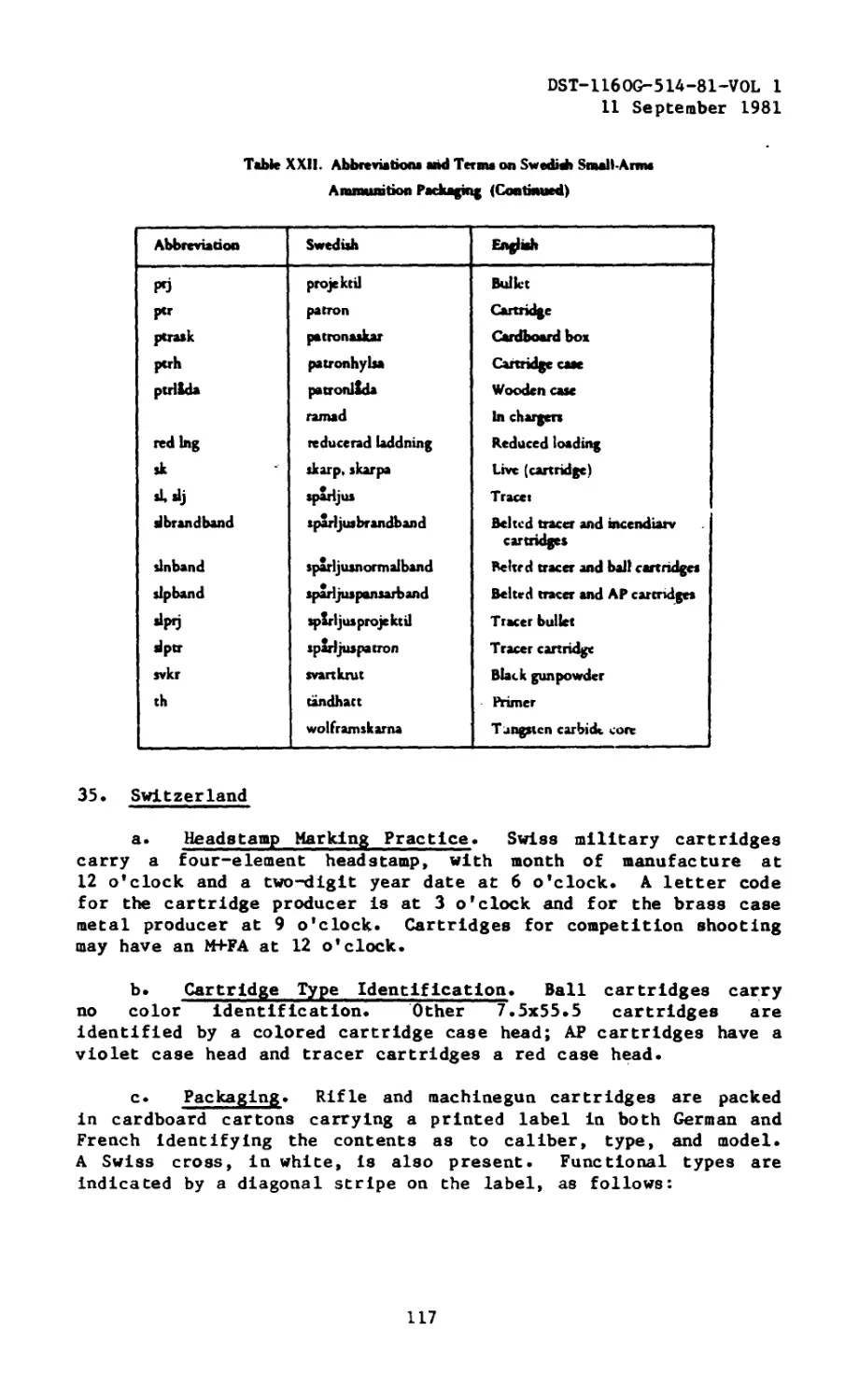
XXII.	Abbreviations and Terms on Swedish
Small-Arms Ammunition Packaging .............. 116
XXIII.	Small-Arms Ammunition Color Coding
Practice, United Kingdom ....................... 121
XXIV.	Small-Arms Ammunition Color Coding
Practice, United States ...................... 125
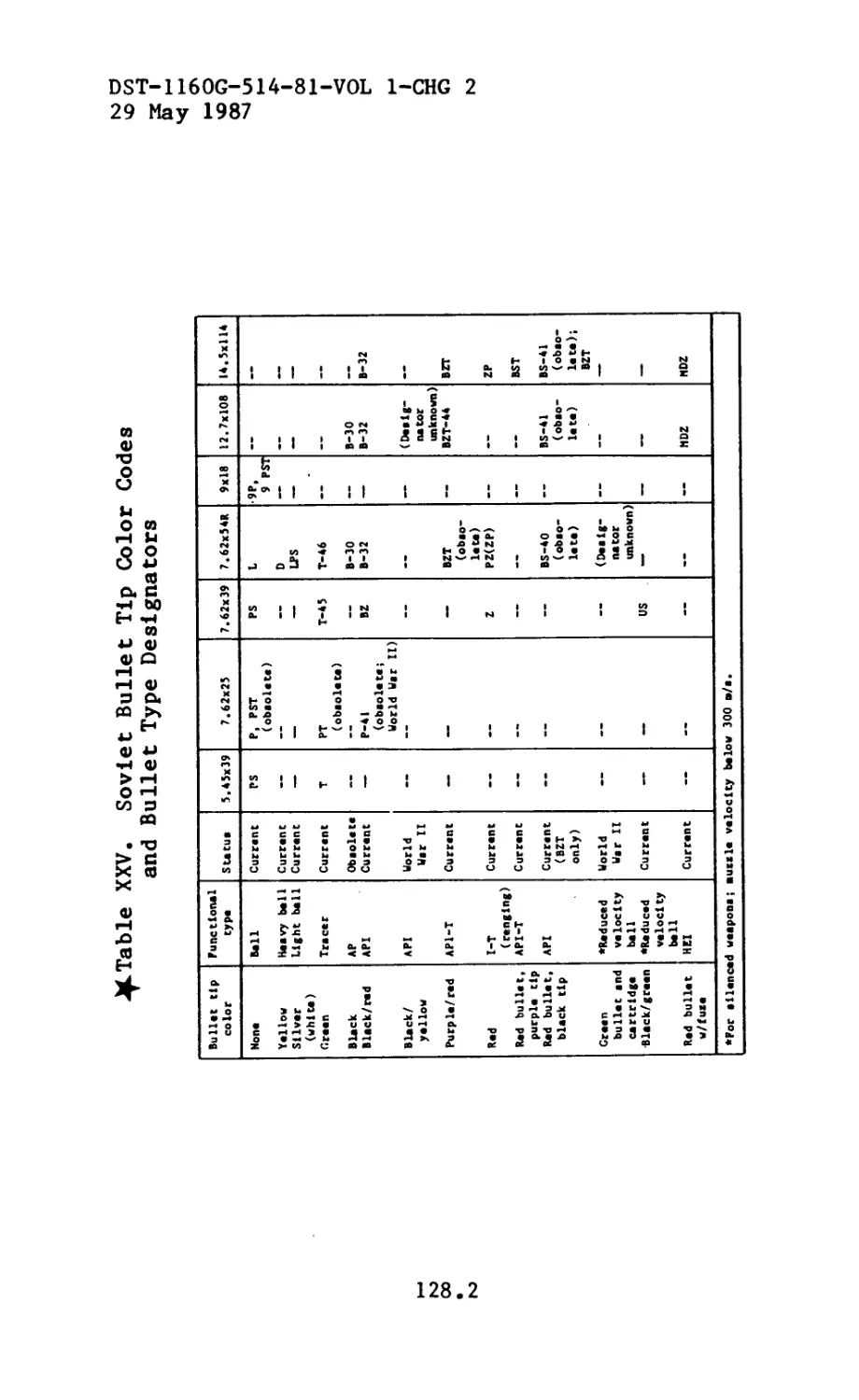
XXV.	Soviet Bullet Tip Color Codes and
Bullet Type Designators ..................... 128
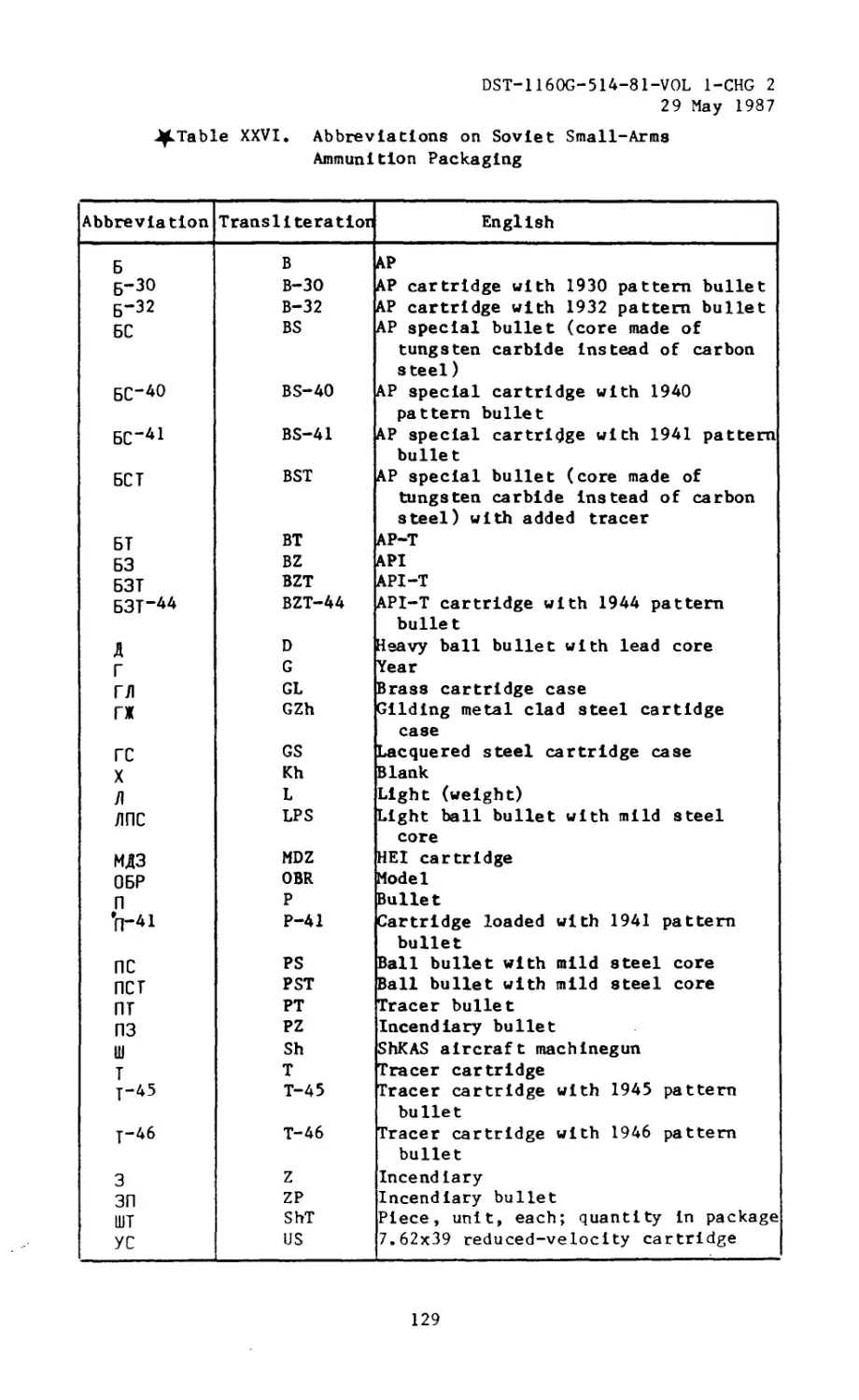
XXVI.	Abbreviations on Soviet Small-Arms
Ammunition Packaging ......................... 129
XXVII.	World War II and Postwar Letter-Type
Manufacturers' Codes .......................... 131
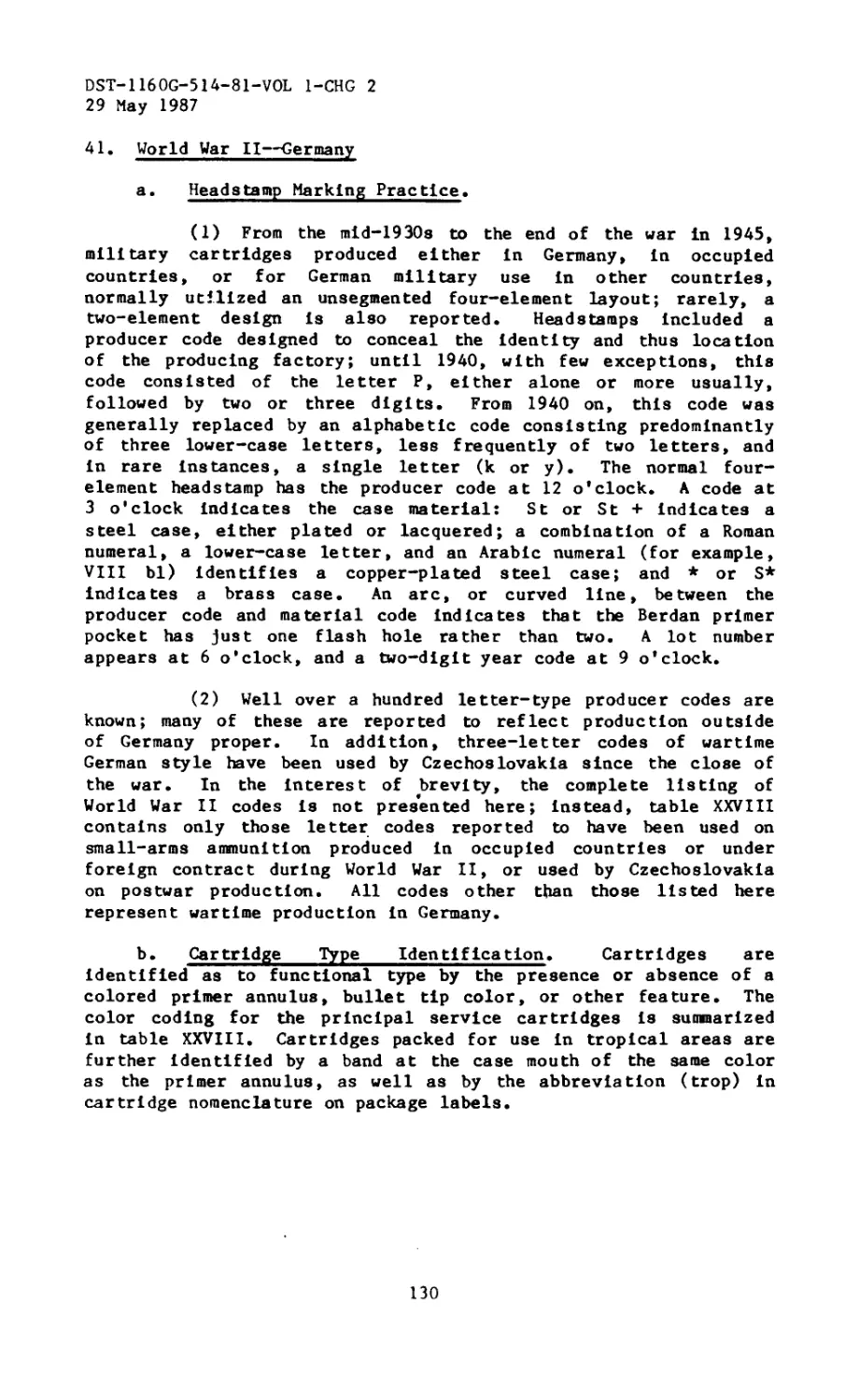
XXVIII.	World War II German Small-Arms
Ammunition Color Codes and
Designators .................................... 132
XXIX.	World War II and Postwar Abbreviations
and Terms on German Small-Arms
Ammunition Packaging ................. 133
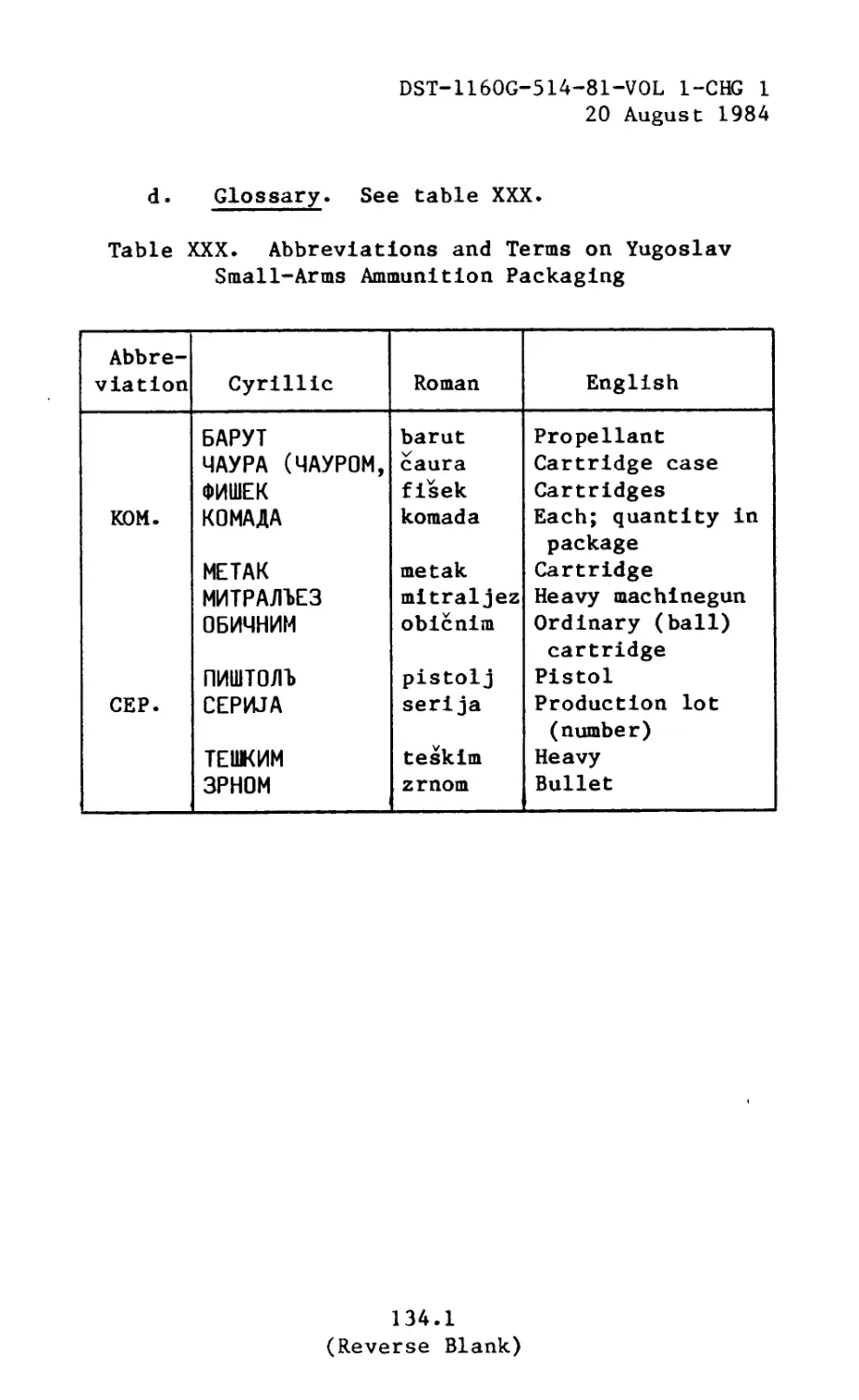
XXX.	Abbreviations and Terms on Yugoslav
Small-Arms Ammunition Packaging....... 134
XXXI.	Obsolete Military Cartridges ........... 201
xvi
DST-1160G-514-81-VOL 1
11 September 1981
SECTION I
INTRODUCTION
1.	General
a.	The tern "cartridge identification" can embrace a wide
span of activities, ranging from the simple determination of a
cartridge’s designation in terms of its caliber and case length
to a more complex analysis that can include its country of
origin, functional type, model or type designation, and even lot
nunber, year, and place of manufacture. This guide is generally
limited in scope to cartridge designation and country and year of
manufacture (though some data are provided on the identification
of functional types and, for major producing countries, on the
principal model or type designation) for cartridges in calibers
of 15 mm and below. This breakoff point was selected because
cartridges in this caliber range are predominatly of the small-
arms type, having bullets of relatively simple construction with,
typically, a bullet jacket and a core. Cartridges of 20-mm and
greater calibers, on the other hand, generally have artillery-
type projectiles, either fuzed explosive types or solid monobloc
projectiles with artillery-type rotating bands. There are at
present no service types of military ammunition between 15 and
20 mm.
b.	The problems involved in the identification of car-
tridges may be summarized in three questions, which this guide is
designed to answer:
(1)	What is the cartridge designation? This is
expressed by a brief nomenclature, which includes a caliber
(bullet diameter) measurement, that is applicable to all
cartridges that can be fired in guns chambered for this specific
cartridge.
(2)	Who made the cartridge, and when? Normally this
information can be derived from the markings that appear on the
cartridge base, which are termed "headstamps." If the cartridge
is unmarked, or if the markings are for any reason inadequate, it
may be necessary to make a detailed examination and comparison
with similar cartridges of known origin. Because of its techni-
cal complexity, such a comparison falls outside the scope of this
guide; fortunately, such examples are relatively uncommon.
(3)	What is its functional type: ball, tracer, incen-
diary, or even explosive? This identification involves color
codes, stamped markings, or bullet shapes; these are often unique
to the country of manufacture and, furthermore, may vary with the
time period in which the cartridge was produced.
1
DST-116OG-514-81-VOL 1
11 September 1981
c.	Sene of the military cartridge types that are described
la this guide have been produced for many years. Cartridges made
during and even before World War II are not necessarily unservice-
able because of their age; if they have been stored under favor-
able conditions of low humidity and low to moderate temperature,
and if the brass cartridge case has not become brittle from expo-
sure to the mercuric compounds in the primer, or from improper
annealing of the metal, they may function quite reliably.
Serviceability must be determined through inspection and testing
by qualified ammunition specialists.
2.	Organization
This guide comprises four major sections and two appendixes, with
coverage as follows:
a.	Section I outlines the scope of this guide and its
organization. It also provides the general information on
construction, characteristics, and terminology of small-arms
cartridges that is essential for the effective utilization of
this guide.
b.	Section II provides instructions on the use of this
guide in the identification of cartridges from dimensional and
visual data.
c.	Section III provides a series of outline drawings of
cartridge cases; a tabulation of major cartridge dimensions; and
a brief description of each cartridge type in terms of its
origin, performance, using weapons, principal countries of
manufacture and use, and current status. Cross-reference of
information in these three areas is facilitated by the use of an
index nuher that is assigned to each cartridge designation.
d.	Section IV approaches the identification problem on a
country-by-country basis. For each country the following
information is provided where applicable:
•	Headstamp practices
•	Functional type identification
•	Package markings
•	Glossary of small-arms terms
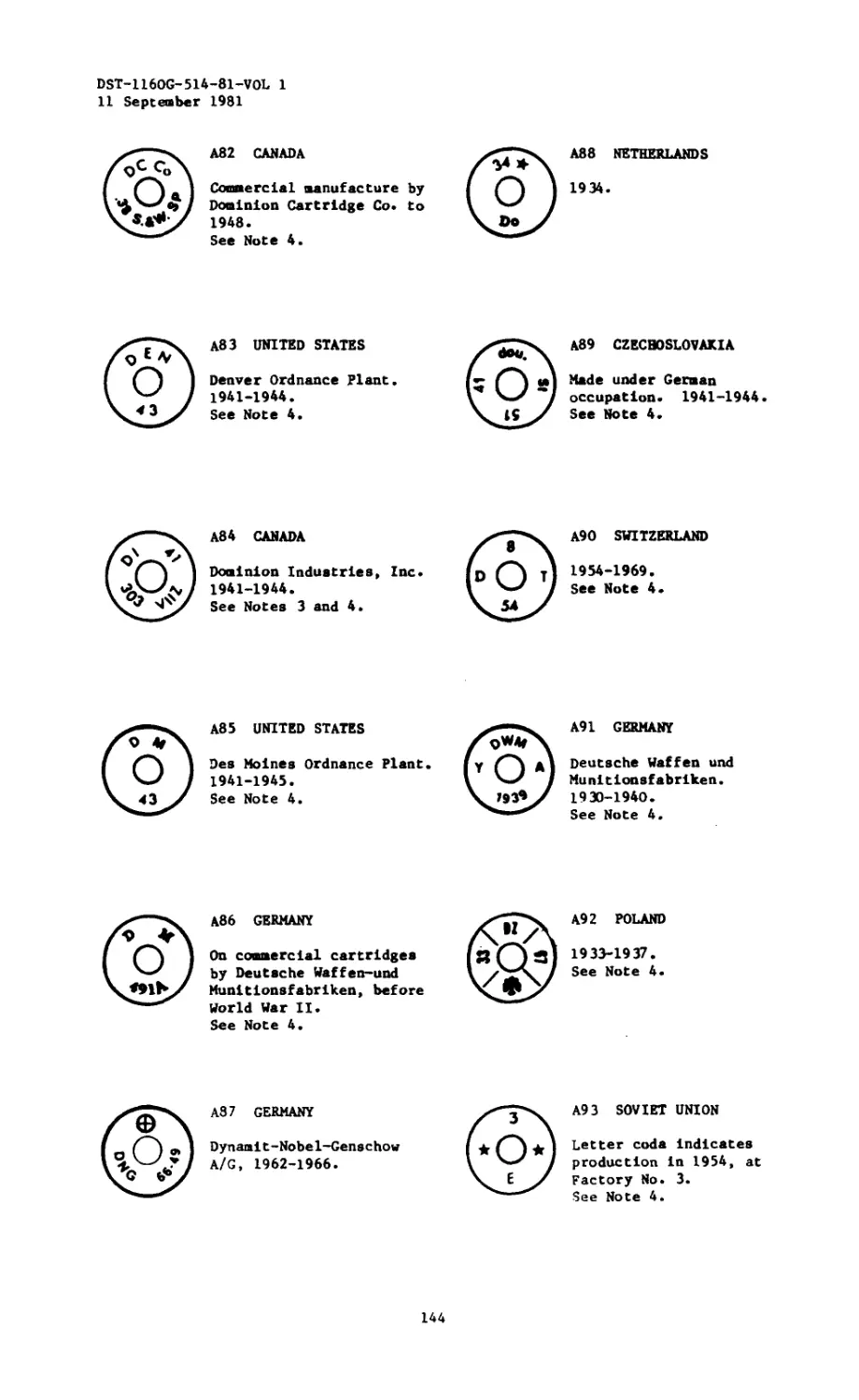
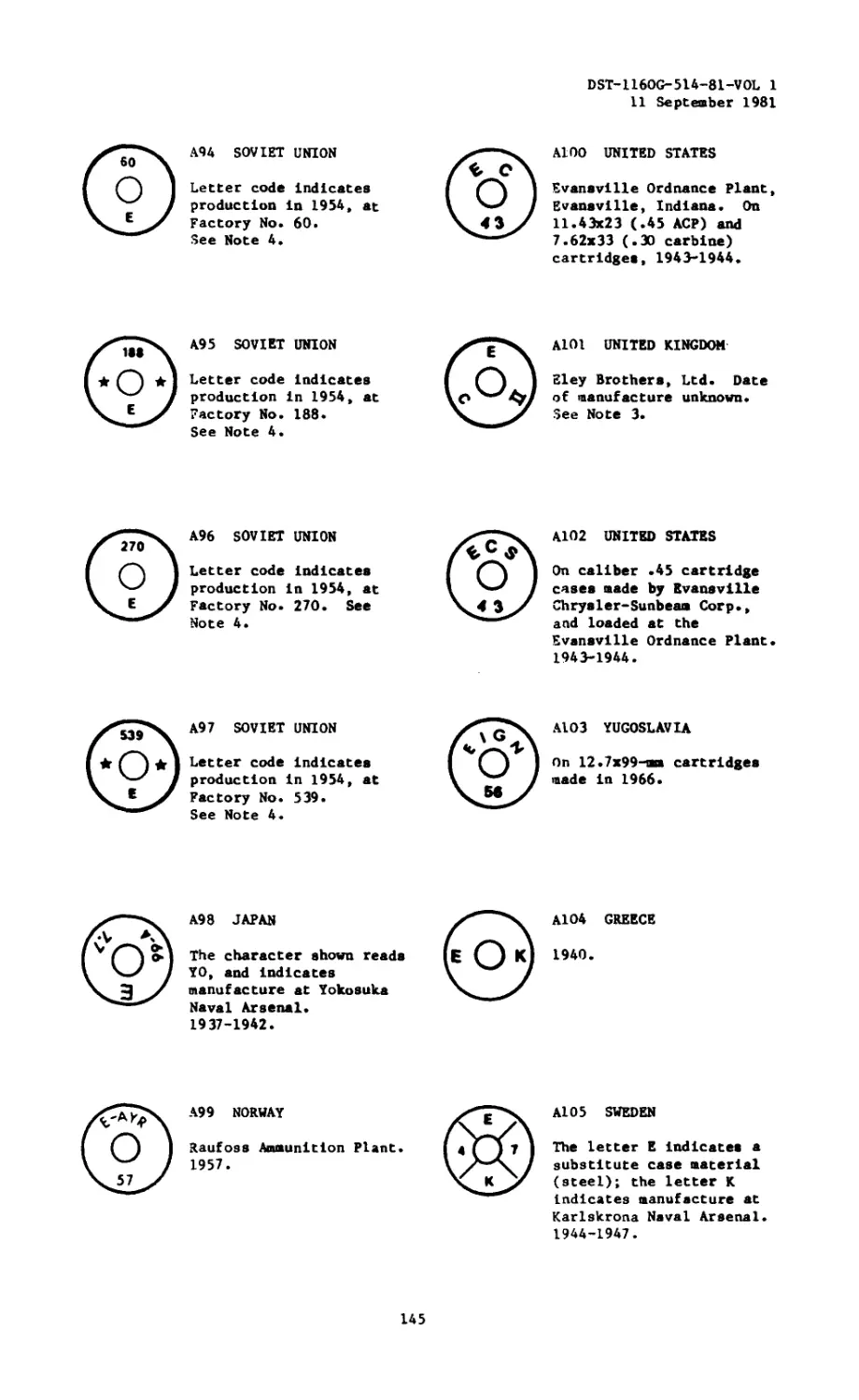
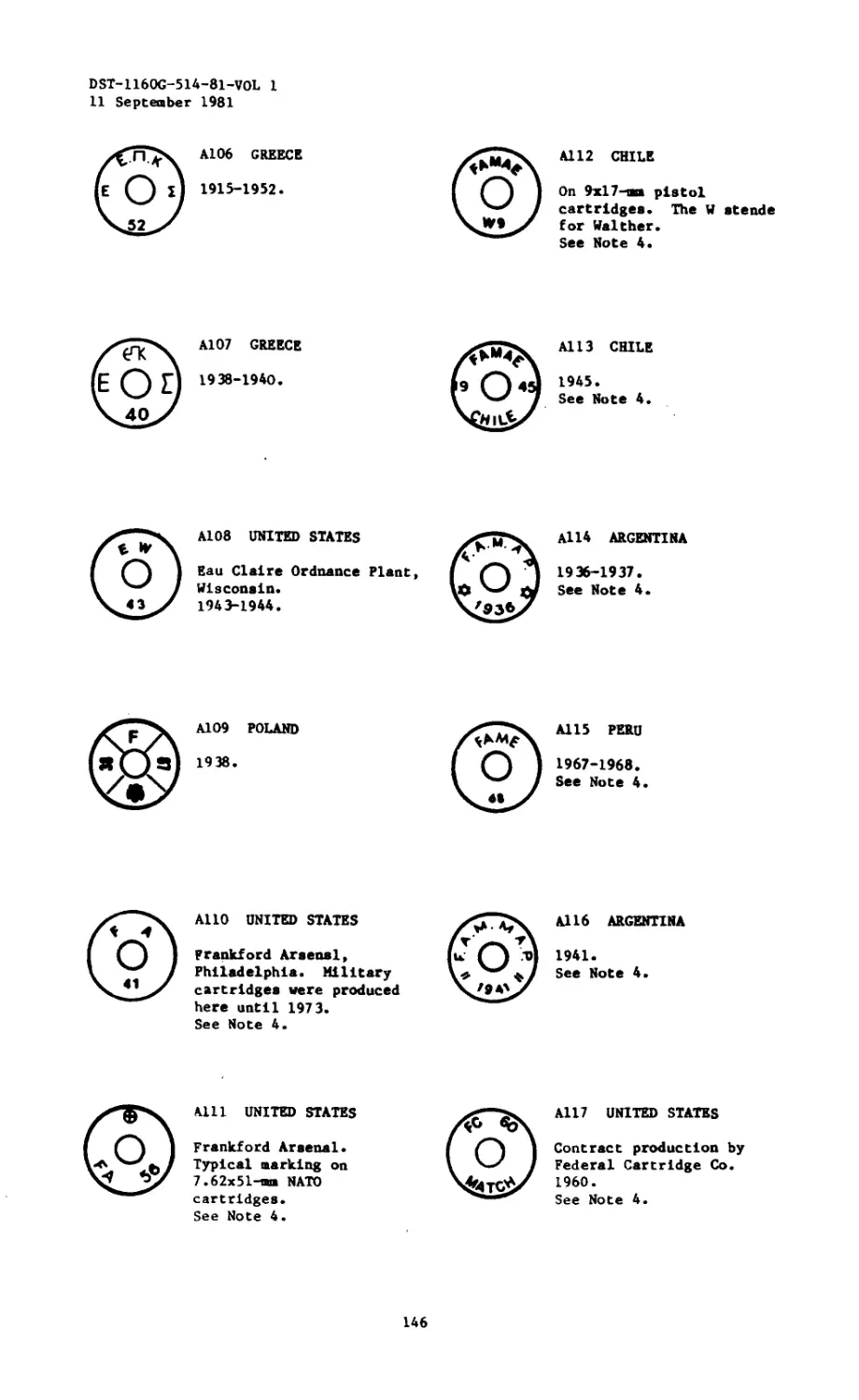
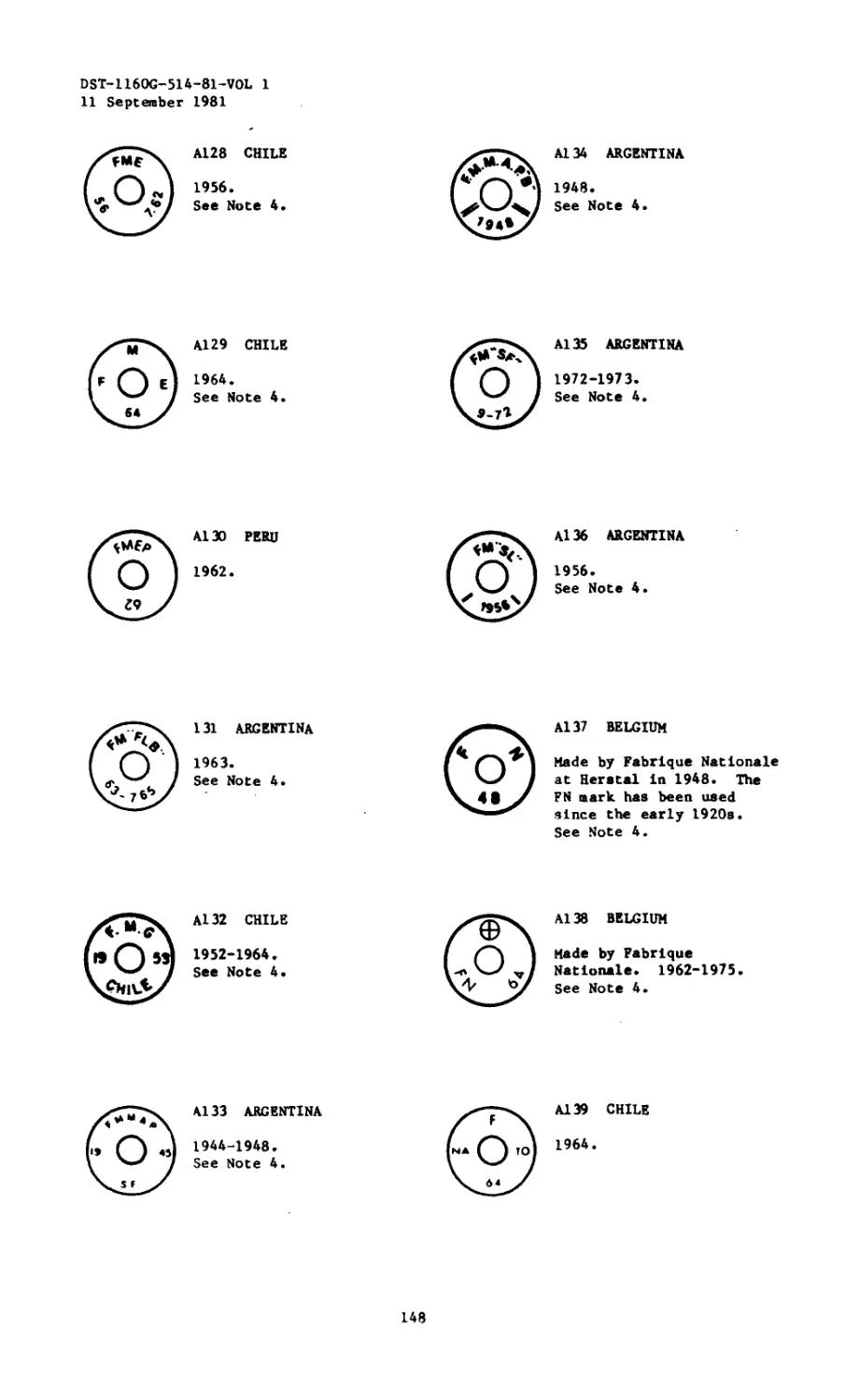
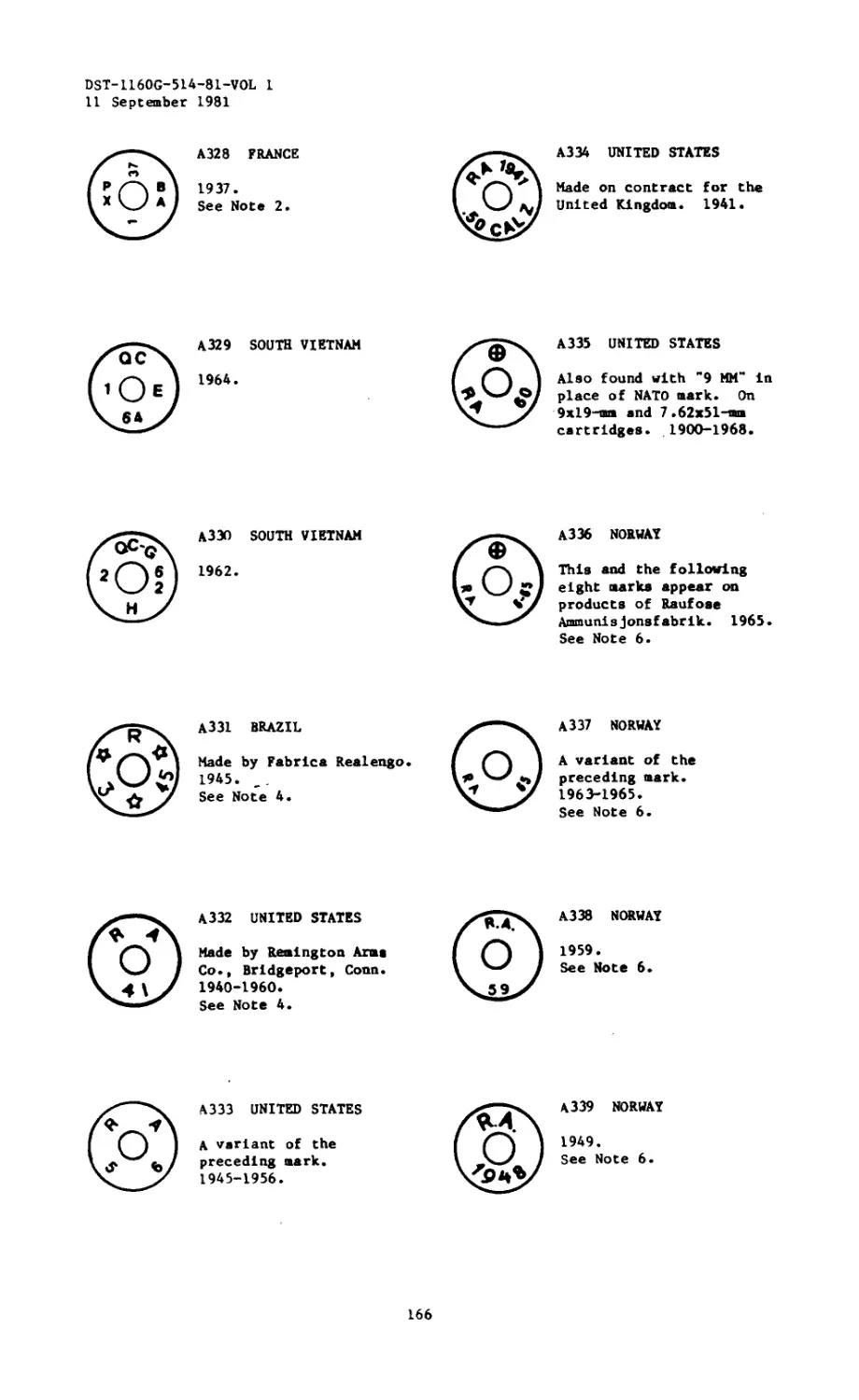
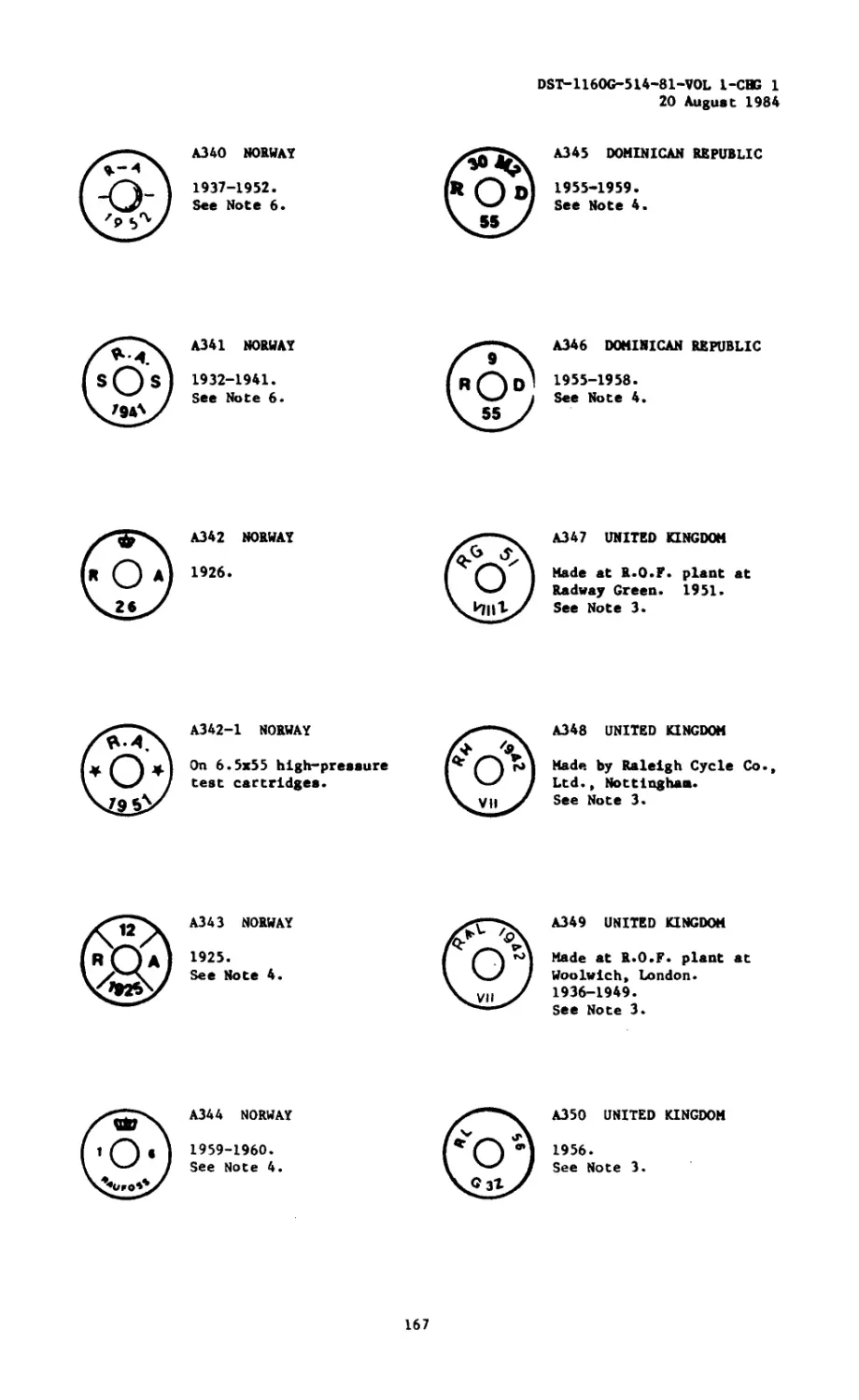
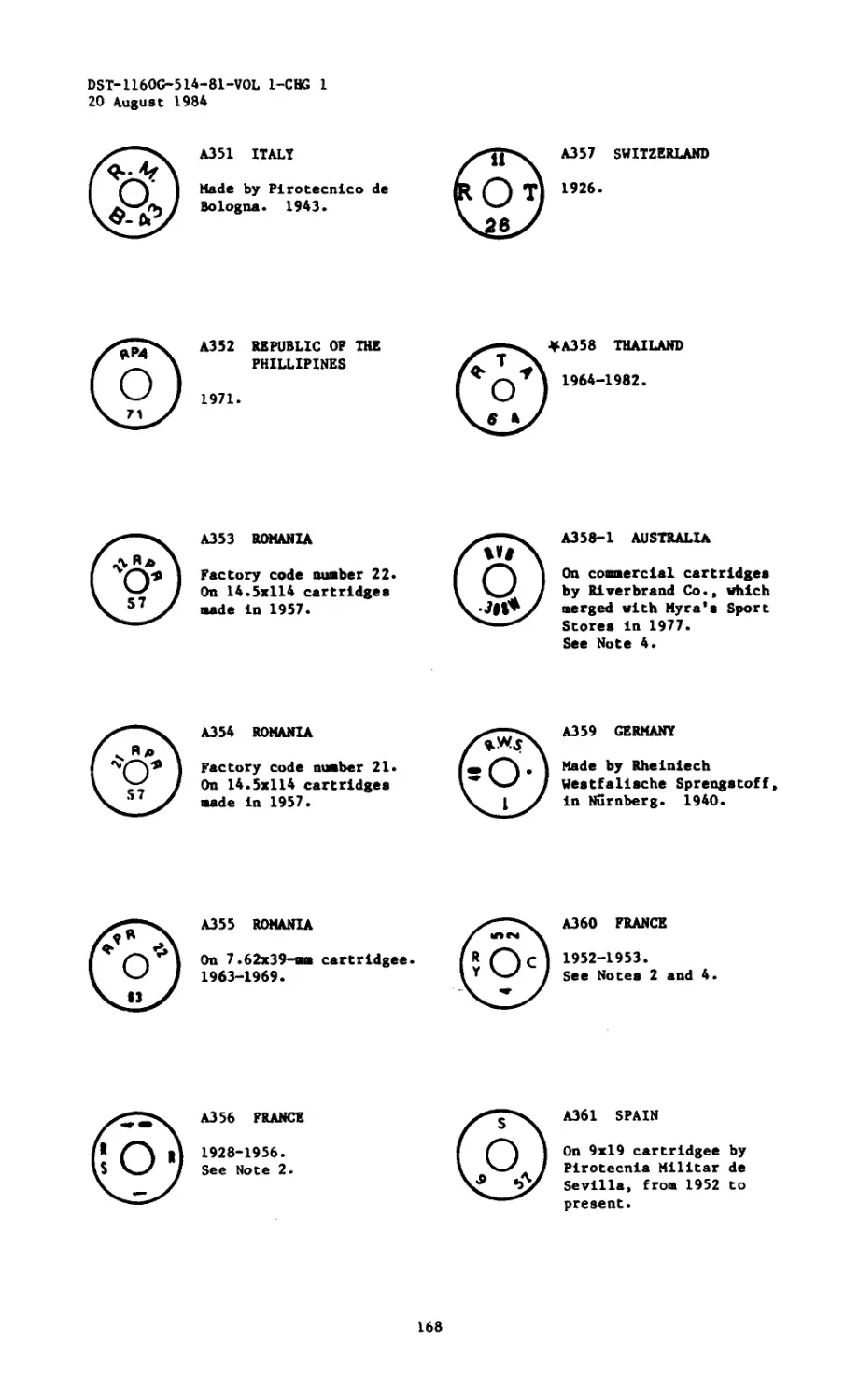
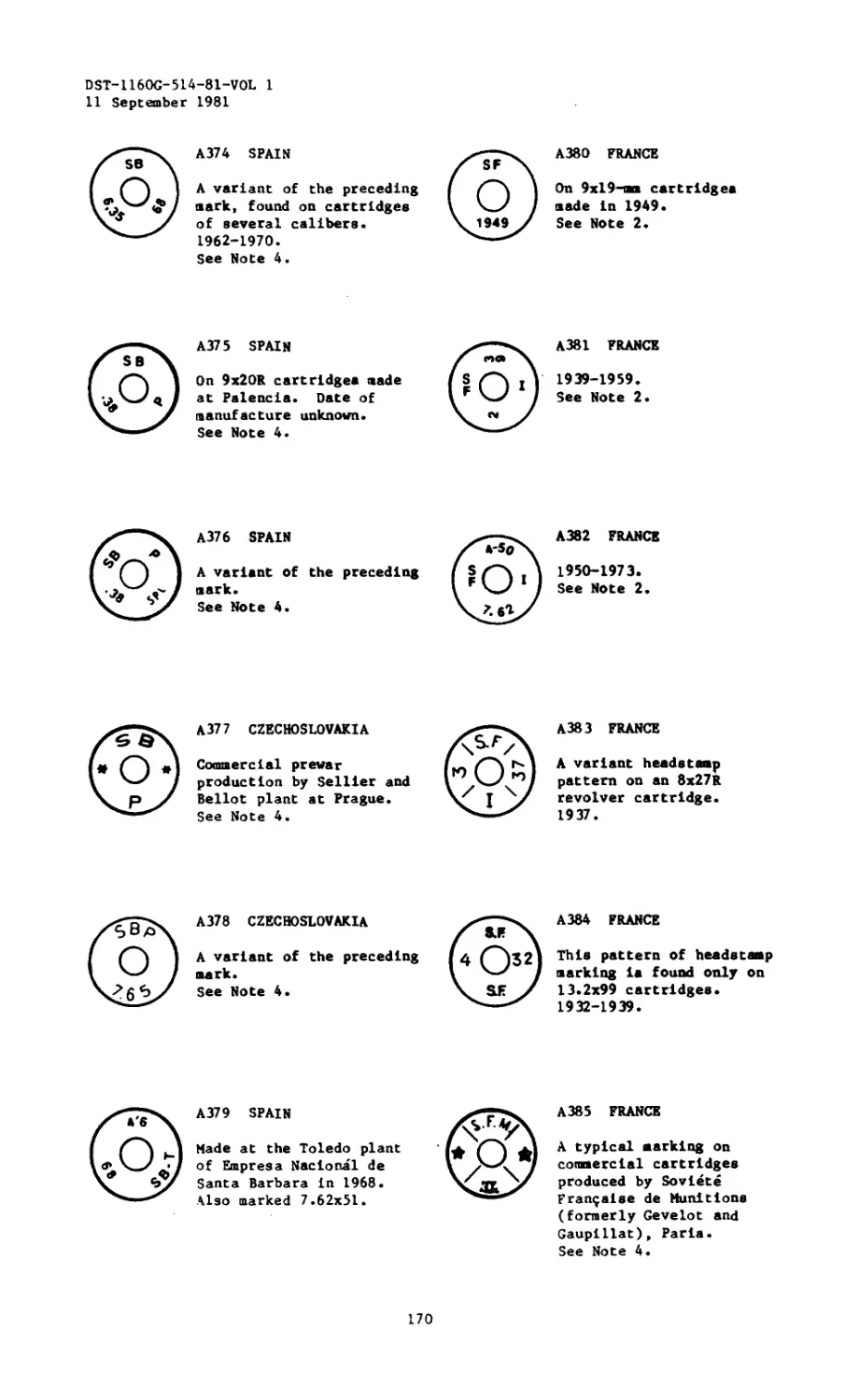
e.	Appendix I provides a reference set of approximately
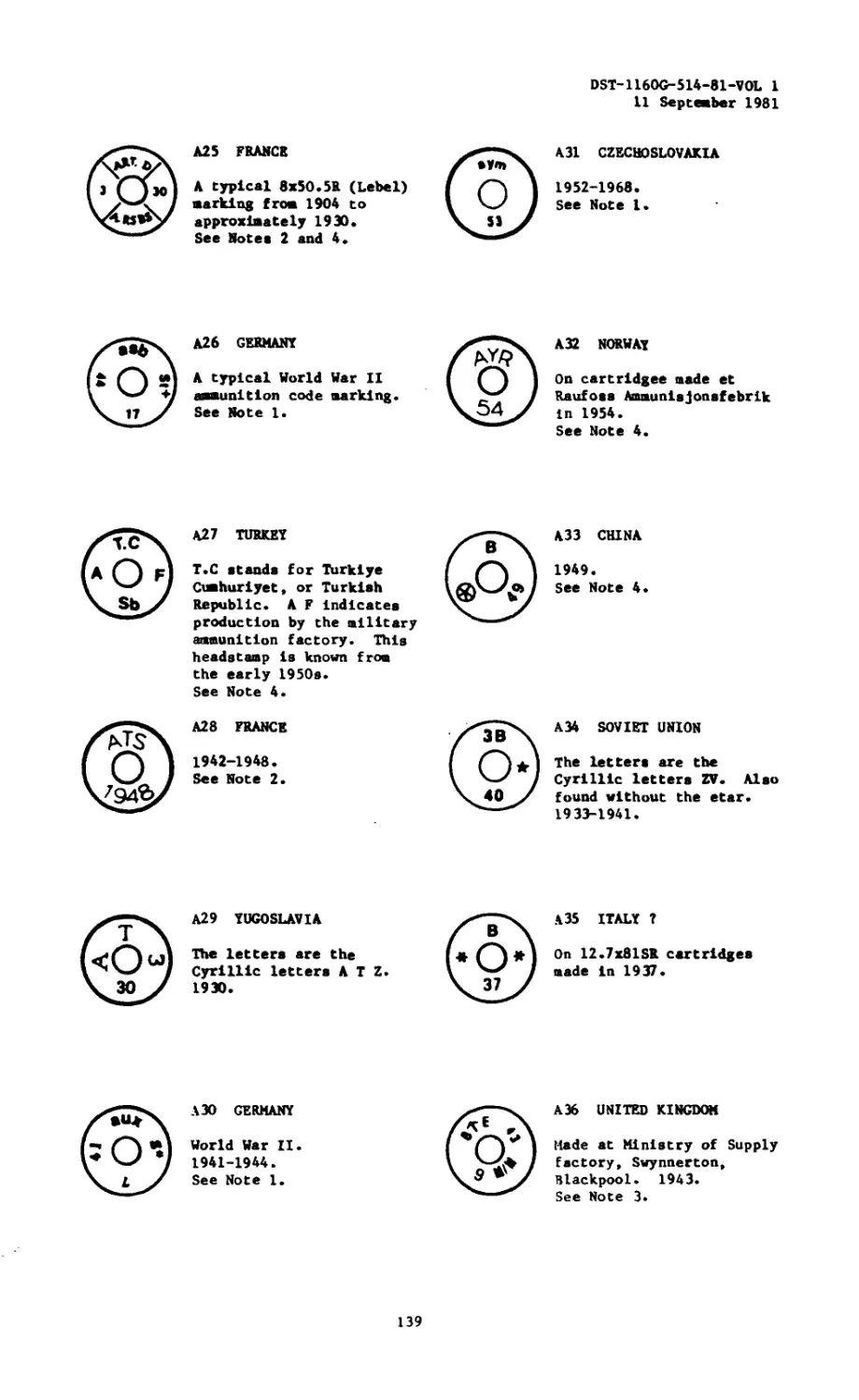
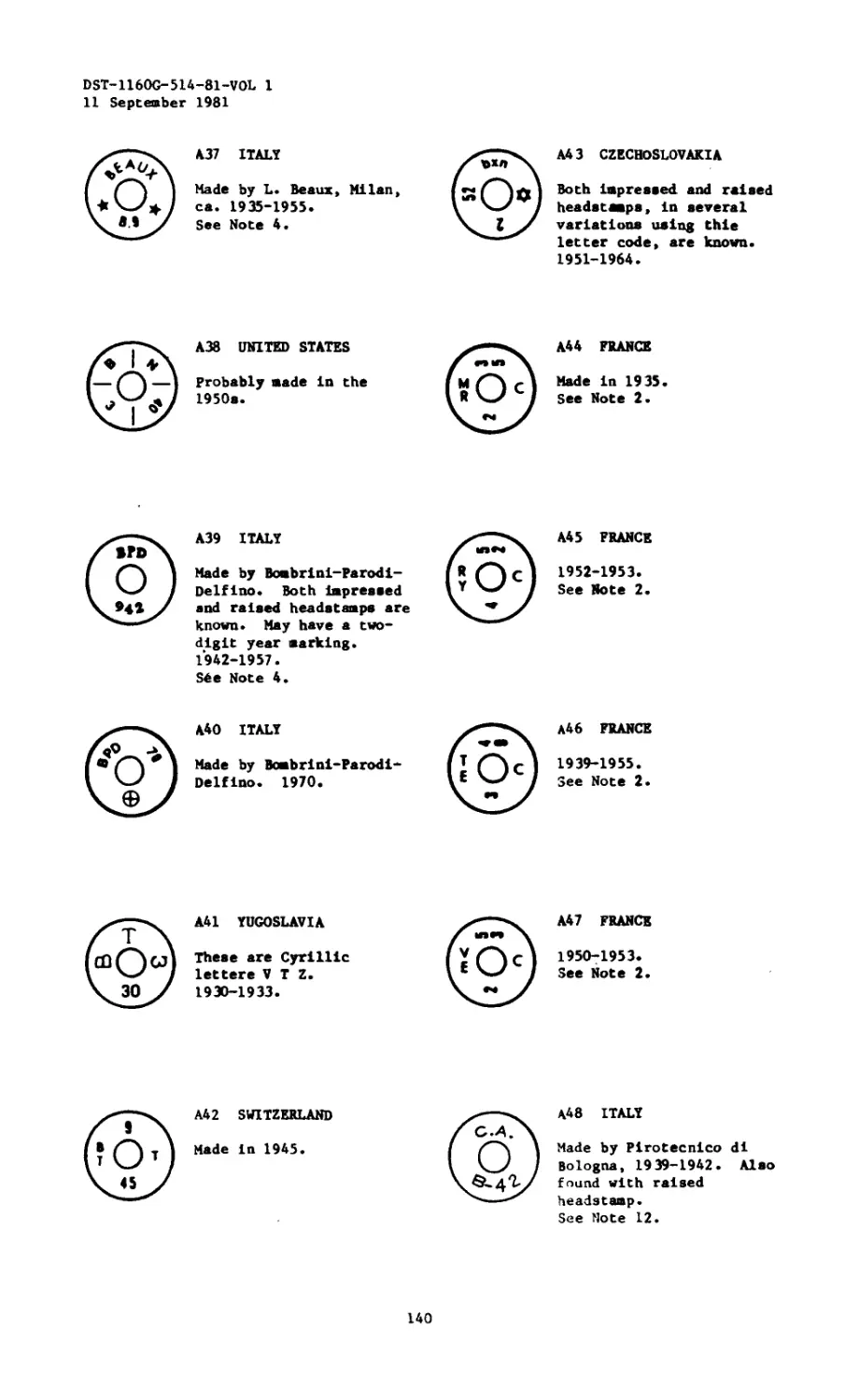
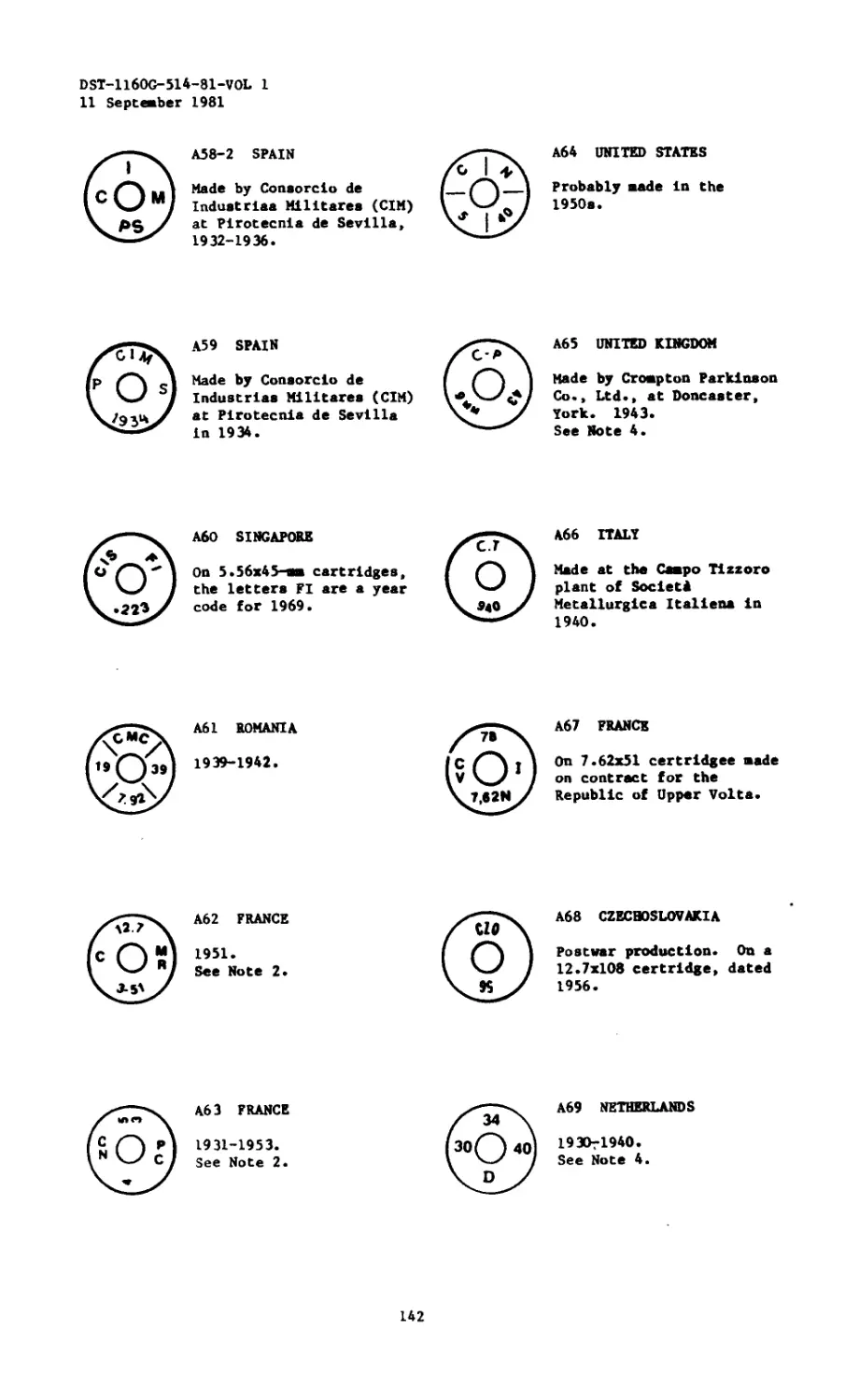
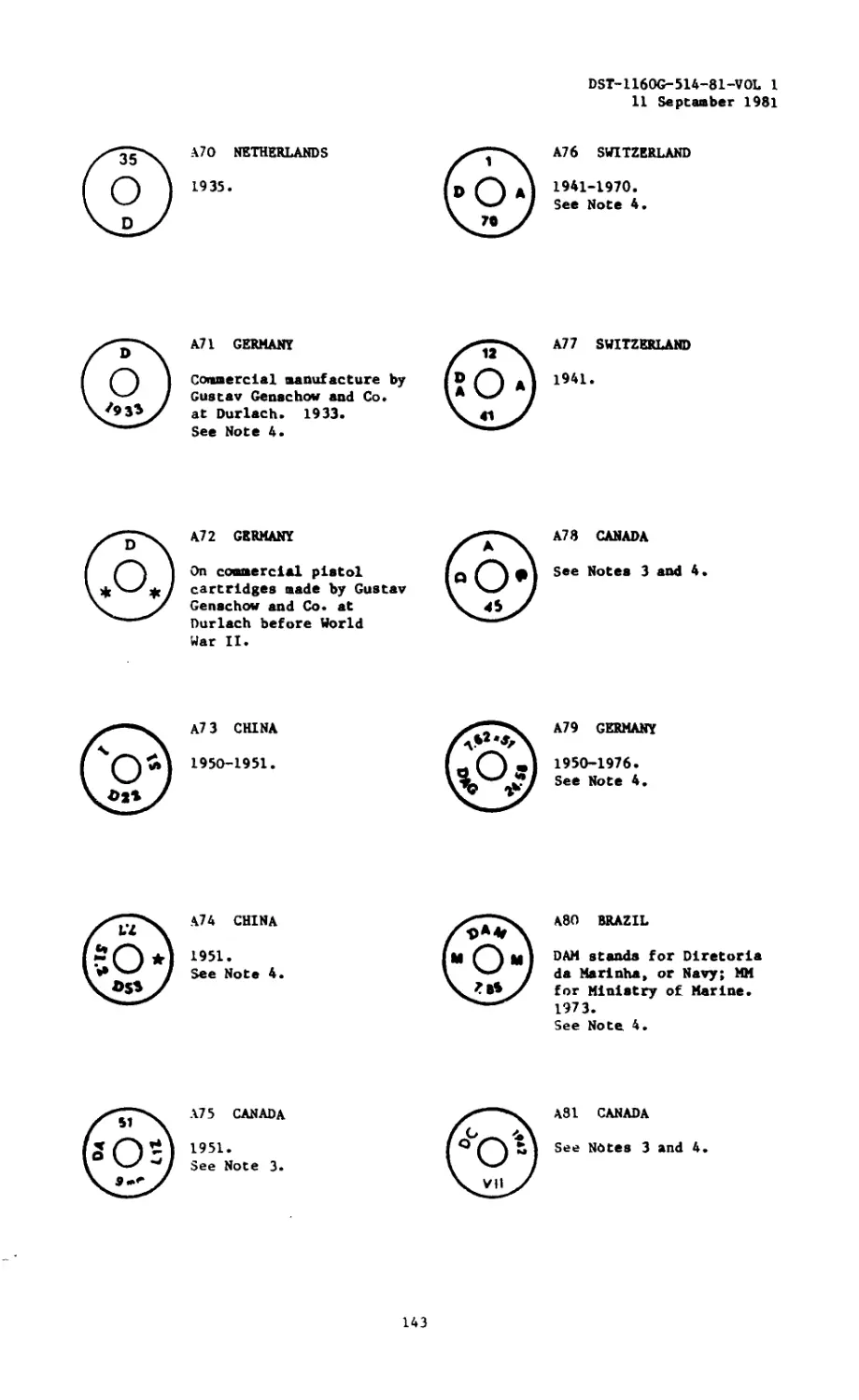
650 headstamp markings that are representative of several
thousand variant types. These are presented in four annexes:
headstanps that contain Western (Roman) letters; headstamps with
Cyrillic, Greek, Arabic, or Hebrew letters; headstamps with
2
DST-116OG-514-81-VOL 1
11 September 1981
Oriental characters or miscellaneous symbols as a major feature;
and headstamps containing primarily Western numerals.
f.	Appendix II provides limited identification data on 11
additional military cartridges, the use of which within the last
50 years has been too limited to justify their inclusion in
section III.
3.	Cartridge Cases
The primary feature in cartridge identification is the cartridge
case. Its shape and dimensions, which must conform to the
chamber size of the gun for which it is designed, indicate the
type and probable military role of the. weapon, which in turn may
suggest the country of origin or the political inclinations of
the user. From a supply point of view, the case is the most
expensive as well as, normally, the heaviest component of the
cartridge. Basically the cartridge case provides a reusable,
watertight container for the primer, propellant, and bullet.
Functionally the cartridge case serves several purposes; in
particular, it provides a pressure seal in the gun chamber and
serves as a heat sink to rid the gun of some of the heat
generated during firing. Key aspects of cartridge-case design
and construction are outlined in the following subparagraphs.
a.	To provide desired performance characteristics,
military cartridge cases must be robust; all are of centerfire
construction, with a reinforced cartridge case head and a
centrally located primer that initiates the propellant contained
in the cartridge case. Case materials include brass, mild steel
(either plated or lacquered), and aluminum; of these a brass
alloy, typically about 70Z copper, is predominant. Cases are
manufactured by punch-and-die operations, termed "drawing," with
heat treatment to provide desired metallurgical characteristics.
b.	Primers for small-arms cartridges are with rare
exceptions (for aircraft machinegun use in World War II) of the
percussion type, initiated by the impact of a firing pin. Two
types of percussion priming are in use, the Boxer and the Berdan
primer. The United States, as well as some other countries that
utilize US-made production machinery, uses the Boxer primer
(which, incidentally, was invented by a British army officer).
The Boxer primer consists of a primer cup containing a priming
mixture and an integral anvil; the primer seat in the cartridge
base is flat-bottomed with, normally, one axial flash hole. The
Berdan primer, named after a US army officer, is predominant in
the United Kingdom and Europe; the primer is a simple cup
containing the priming mixture, while the anvil is formed as a
part of the cartridge case. The Berdan primer normally has two
flash holes, 180° apart, on either side of the anvil; a single
offcenter hole has also been used with the intent of improving
ignition by Increasing the intensity of the primer flash. No
3
DST-116OG-514-81-VOL 1
11 September 1981
functional difference between the two types has been noted; many
cartridges, such as the 7.62x51 NATO cartridge, may have either
type, depending on the country of production. Figure 1
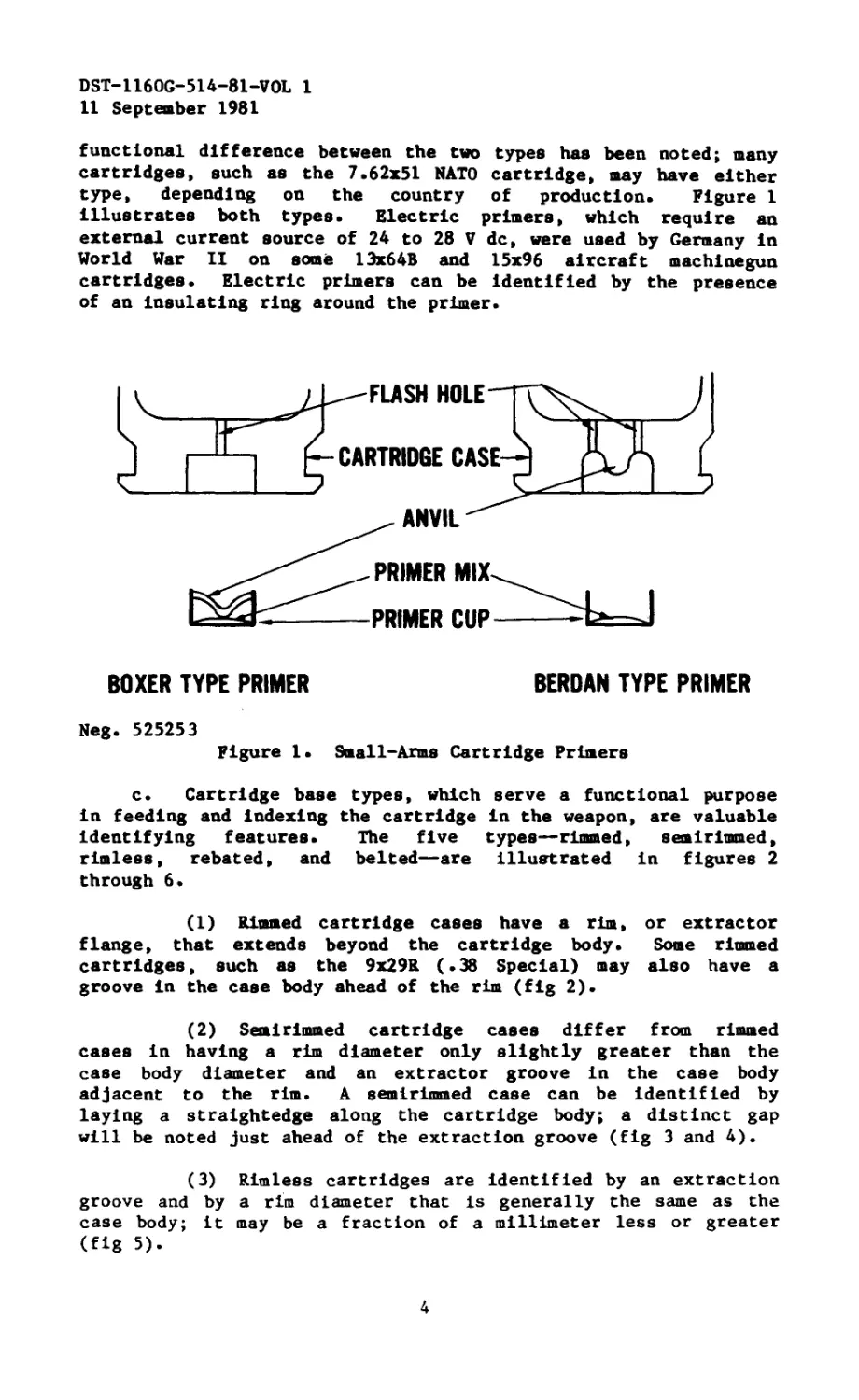
illustrates both types. Electric primers, which require an
external current source of 24 to 28 V de, were used by Germany in
World War II on some 13x64B and 15x96 aircraft machinegun
cartridges. Electric primers can be identified by the presence
of an insulating ring around the primer.
дЬ-FLASH HOLE-)
^-CARTRIDGE CASE-^^^J^
PRIMER MIX
ANVIL
PRIMER CUP
BOXER TYPE PRIMER
BERDAN TYPE PRIMER
Neg. 525253
Figure 1. Small-Arms Cartridge Primers
c.	Cartridge base types, which serve a functional purpose
in feeding and indexing the cartridge in the weapon, are valuable
identifying features. The five types—rimmed, semirimmed,
rimless, rebated, and belted—are illustrated in figures 2
through 6.
(1)	Rimmed cartridge cases have a rim, or extractor
flange, that extends beyond the cartridge body. Some rimmed
cartridges, such as the 9x29R (.38 Special) may also have a
groove in the case body ahead of the rim (fig 2).
(2)	Semirimmed cartridge cases differ from rimmed
cases In having a rim diameter only slightly greater than the
case body diameter and an extractor groove in the case body
adjacent to the rim. A semirimmed case can be identified by
laying a straightedge along the cartridge body; a distinct gap
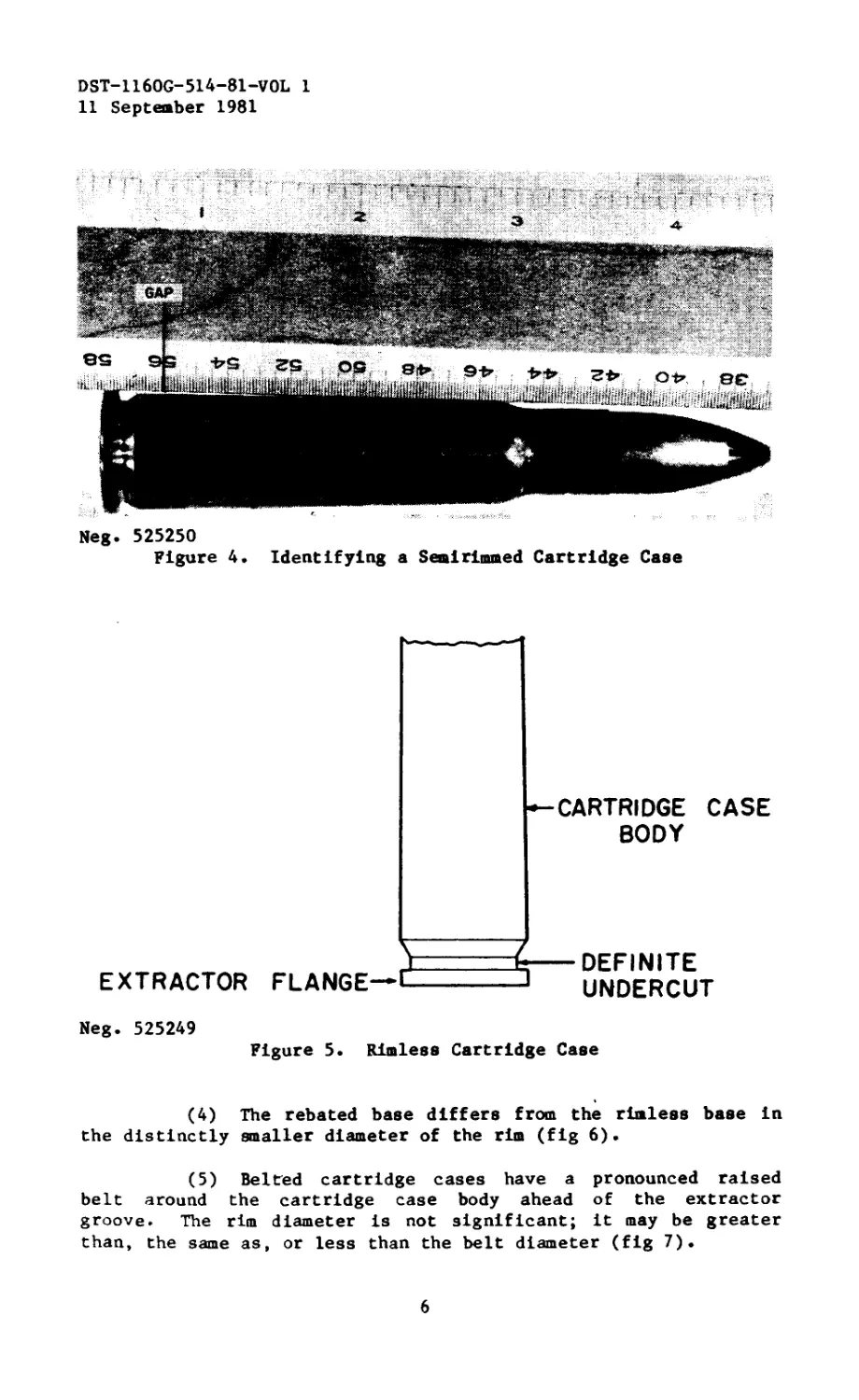
will be noted just ahead of the extraction groove (fig 3 and 4).
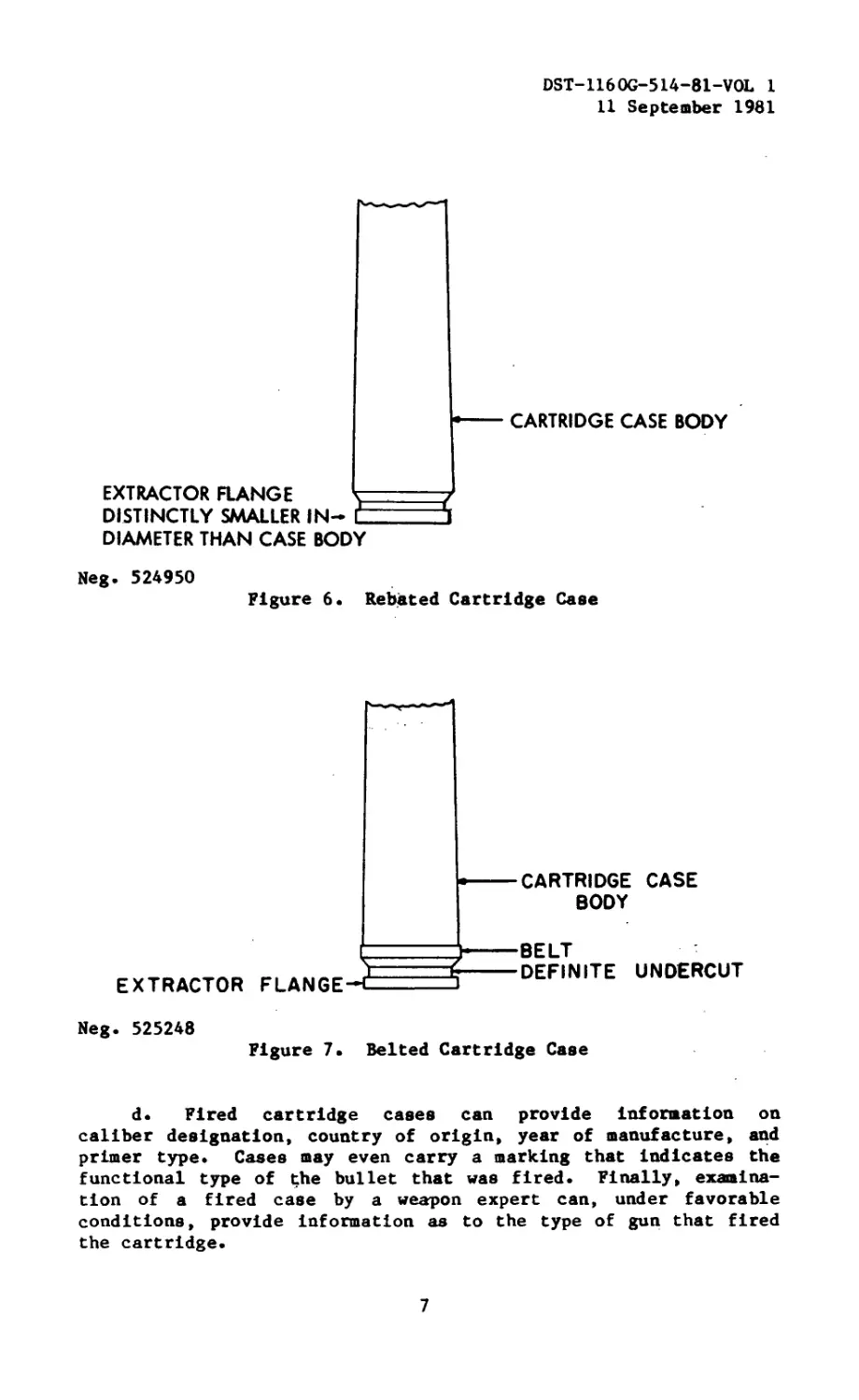
(3)	Rimless cartridges are identified by an extraction
groove and by a rim diameter that is generally the same as the
case body; it may be a fraction of a millimeter less or greater
(fig 5).
4
DST-1160G-514-81-V0L 1
11 September 1981
SLIGHT UNDERCUT HERE
IS PERMISSIBLE
Neg. 525252
Figure 2. Rimmed Cartridge Case
Neg. 525251
Figure 3. Semirimmed Cartridge Case
5
DST-1160G-514-81-V0L 1
11 September 1981
Neg. 525250
Figure 4. Identifying a Semirimmed Cartridge Case
EXTRACTOR FLANGE—
Figure 5. Rimless Cartridge Case
Neg. 525249
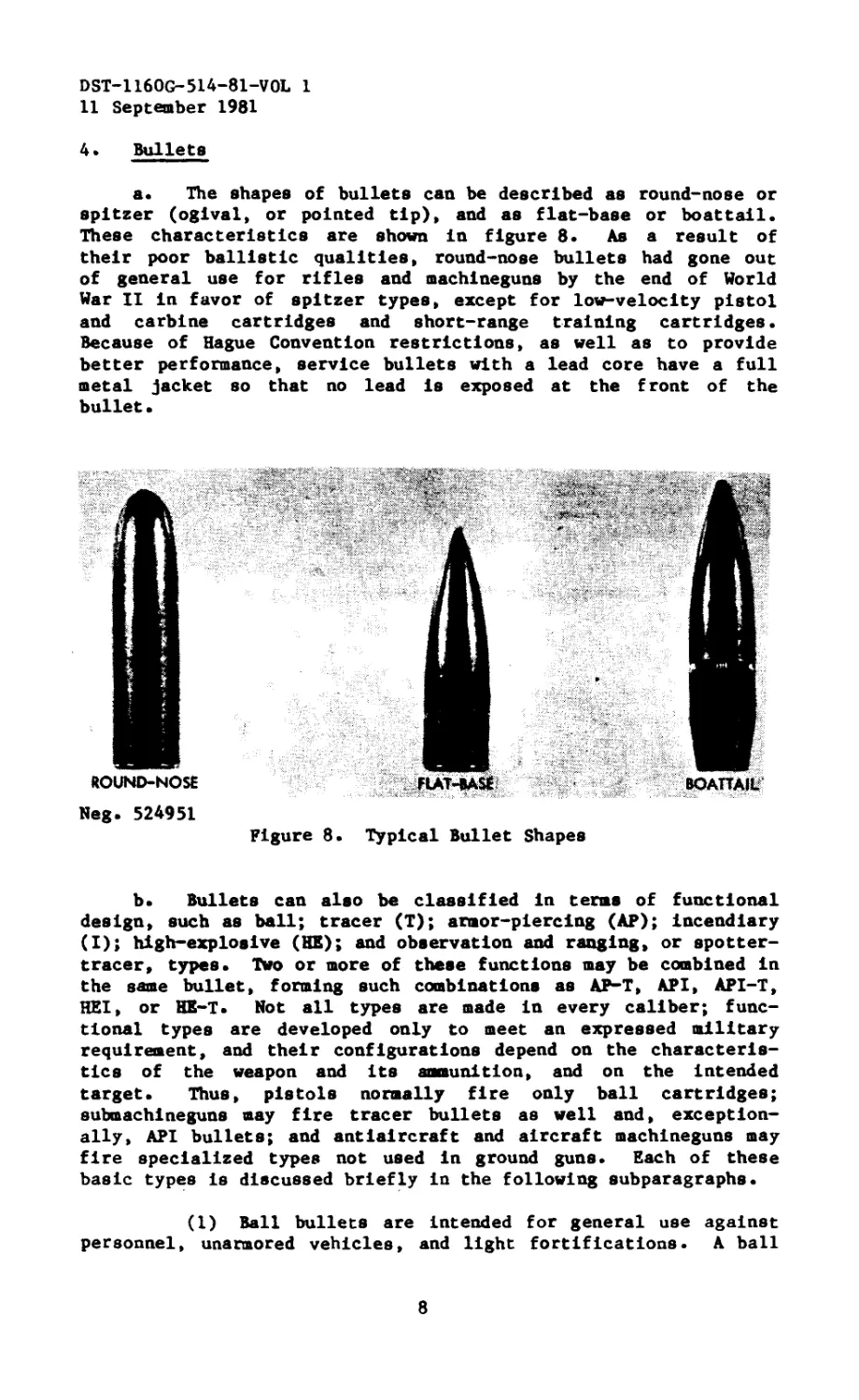
(4)	The rebated base differs from the rimless base In
the distinctly smaller diameter of the rim (fig 6).
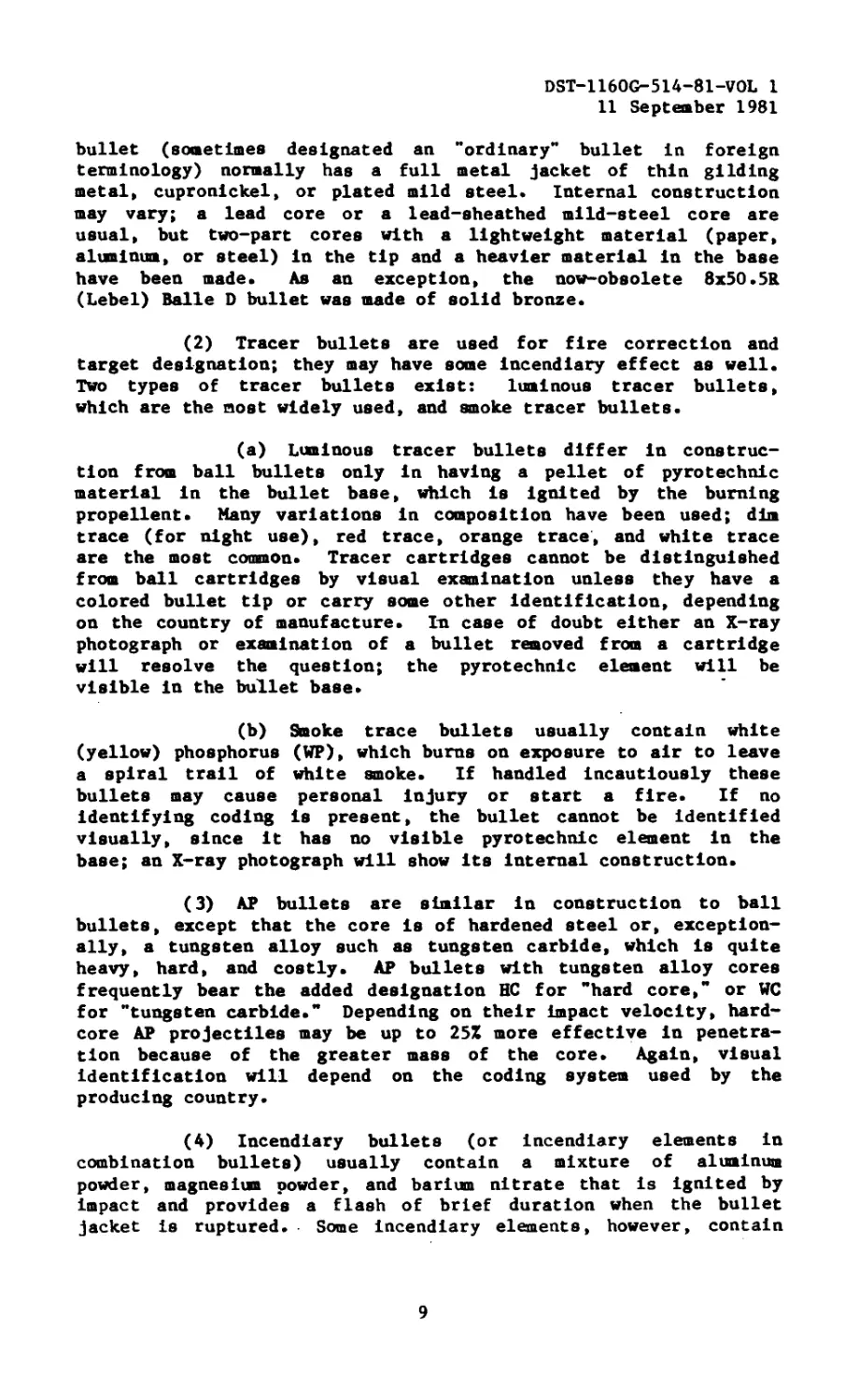
(5)	Belted cartridge cases have a pronounced raised
belt around the cartridge case body ahead of the extractor
groove. The rim diameter is not significant; it may be greater
than, the same as, or less than the belt diameter (fig 7).
6
DST-116OG-514-81-VOL 1
11 September 1981
CARTRIDGE CASE BODY
EXTRACTOR FLANGE
DISTINCTLY SMALLER IN-
DIAMETER THAN CASE BODY
Neg. 524950
Figure 6. Rebated Cartridge Case
CARTRIDGE CASE
BODY
BELT
DEFINITE UNDERCUT
Neg. 525248
Figure 7. Belted Cartridge Case
EXTRACTOR
d.	Fired cartridge cases can provide information on
caliber designation, country of origin, year of manufacture, and
primer type. Cases may even carry a marking that indicates the
functional type of the bullet that was fired. Finally, examina-
tion of a fired case by a weapon expert can, under favorable
conditions, provide information as to the type of gun that fired
the cartridge.
7
DST-1160G-514-81-V0L 1
11 September 1981
4.	Bullets
a.	The shapes of bullets can be described as round-nose or
spitzer (ogival, or pointed tip), and as flat-base or boattail.
These characteristics are shown in figure 8. As a result of
their poor ballistic qualities, round-nose bullets had gone out
of general use for rifles and machineguns by the end of World
War II in favor of spitzer types, except for low-velocity pistol
and carbine cartridges and short-range training cartridges.
Because of Hague Convention restrictions, as well as to provide
better performance, service bullets with a lead core have a full
metal jacket so that no lead is exposed at the front of the
bullet.
Neg. 524951
Figure 8. Typical Bullet Shapes
b.	Bullets can also be classified in terms of functional
design, such as ball; tracer (T); armor-piercing (AP); incendiary
(I); high-explosive (HE); and observation and ranging, or spotter-
tracer, types. TVo or more of these functions may be combined in
the same bullet, forming such combinations as AP-T, API, API-T,
HEI, or HE-T. Not all types are made in every caliber; func-
tional types are developed only to meet an expressed military
requirement, and their configurations depend on the characteris-
tics of the weapon and its ammunition, and on the intended
target. Thus, pistols normally fire only ball cartridges;
submachineguns may fire tracer bullets as well and, exception-
ally, API bullets; and antiaircraft and aircraft machineguns may
fire specialized types not used in ground guns. Each of these
basic types is discussed briefly in the following subparagraphs.
(1)	Ball bullets are intended for general use against
personnel, unarmored vehicles, and light fortifications. A ball
8
DST-116OG-514-81-VOL 1
11 September 1981
bullet (sometimes designated an "ordinary" bullet In foreign
terminology) normally has a full metal jacket of thin gilding
metal, cupronickel, or plated mild steel. Internal construction
may vary; a lead core or a lead-sheathed mild-steel core are
usual, but two-part cores with a lightweight material (paper,
altminum, or steel) in the tip and a heavier material in the base
have been made. As an exception, the now-obsolete 8x50.5R
(Lebel) Balle D bullet was made of solid bronze.
(2)	Tracer bullets are used for fire correction and
target designation; they may have some incendiary effect as well.
Two types of tracer bullets exist: luminous tracer bullets,
which are the most widely used, and smoke tracer bullets.
(a)	Luminous tracer bullets differ in construc-
tion from ball bullets only in having a pellet of pyrotechnic
material in the bullet base, which is ignited by the burning
propellent. Many variations in composition have been used; dim
trace (for night use), red trace, orange trace, and white trace
are the most common. Tracer cartridges cannot be distinguished
from ball cartridges by visual examination unless they have a
colored bullet tip or carry some other identification, depending
on the country of manufacture. Tn case of doubt either an X-ray
photograph or examination of a bullet removed from a cartridge
will resolve the question; the pyrotechnic element will be
visible in the bullet base.
(b)	Smoke trace bullets usually contain white
(yellow) phosphorus (WP), which bums on exposure to air to leave
a spiral trail of white smoke. If handled incautiously these
bullets may cause personal injury or start a fire. If no
identifying coding is present, the bullet cannot be identified
visually, since it has no visible pyrotechnic element in the
base; an X-ray photograph will show its internal construction.
(3)	AP bullets are similar in construction to ball
bullets, except that the core is of hardened steel or, exception-
ally, a tungsten alloy such as tungsten carbide, which is quite
heavy, hard, and costly. AP bullets with tungsten alloy cores
frequently bear the added designation HC for "hard core,” or WC
for "tungsten carbide.” Depending on their Impact velocity, hard-
core AP projectiles may be up to 25Z more effective in penetra-
tion because of the greater mass of the core. Again, visual
identification will depend on the coding system used by the
producing country.
(4)	Incendiary bullets (or incendiary elements in
combination bullets) usually contain a mixture of aluminum
powder, magnesitm powder, and barium nitrate that is ignited by
impact and provides a flash of brief duration when the bullet
jacket Is ruptured. Some incendiary elements, however, contain
9
DST-1160G-514-81-V0L 1
11 September 1981
HE or WP; these must be treated with caution. Visual identifi-
cation will usually depend on the coding system used but may in
some instances be established from the bullet’s shape or construc-
tion features.
(5)	HE bullets, while uncommon, exist, either in
bullets designed for a fragmentation effect against aircraft or,
less rarely, as a component of incendiary (HEX) or observation/
tracer bullets. The fuze may be a simple air-gap type or a point-
detonating fuze. Despite the small explosive payload, these
bullets can be hazardous within a radius of several meters.
(6)	Observation and ranging, or spotter-tracer,
bullets are designed for fire adjustment; they may contain a
small HE charge, an incendiary charge, or a combination of the
two to provide a flash or a puff of smoke or dirt to Indicate the
point of impact. These bullets can cause injury if not handled
with care.
5.	Cartridge Designation
a. The term "cartridge designation" encompasses the
approximate caliber of either the gun barrel or bullet as well as
further identifying data that may include a model or type designa-
tion, year of adoption, or even the weapon for which the car-
tridge is designed. The same cartridge, moreover, may be
identified by as many as three or even more names, which may
identify one or more weapons in which used. The designations
listed below, for example, all represent the same cartridge, with
only minor variations in bullet and propellant:
•	7.65-mm	Borchardt
•	7.65-mm Mannlicher carbine
•	7.63-mm	Mannlicher
•	7.63-mm	Mauser pistol
•	.30 Mauser pistol
•	7.62-mm	Type P
•	7.62-mm	Type 50
•	7.62-mm	Tokarev, МЭО
In this series the first five and the last designation indicate
specific weapons in which the cartridge is used; Type P is an
arbitrary designation; and Type 50 refers to the year of adoption
by China. To resolve this chaotic situation, a standardized
metric catridge designation system, which has been in use in
10
DST-1160G-514-81-V0L 1-CHG 2
29 May 1987
Europe since early in this century, will be used in this guide.
This system is described in the following subparagraph.
b.	The metric designation is basically composed of two
numeric elements—the nominal bullet diameter and the case
length—which are expressed in millimeters. The two elements are
separated by the lower-case letter "x," which is read as "by”;
e.g., the 7.62-mm NATO cartridge has a metric designation of
7.62x51, which is read as "seven point six-two by fifty-one.”
The first element, 7.62, is the nominal caliber of the bullet and
corresponds to 0.308 inch; the second element, 51, expresses the
nominal case length of a standard service cartridge. These
values do not in all instances reflect the actual dimensions,
which will vary from cartridge to cartridge, depending on the
producer; they serve, however, as a convenient abbreviated code
for identification and reporting. It will be noted that foreign
cartridge designations frequently follow the European practice of
using a comma where US and British practice requires a decimal
point; the designation 7.5x55.5 thus may appear as 7,5x55,5. The
two designations, however, are identical in meaning.
c.	The two numeric elements are used alone when a rimless
cartridge is Involved; thus, the caliber .30-06 cartridge, which
is rimless, becomes 7.62x63 in the metric version. Rimmed cases
have a suffix R; the British .303 cartridge is designated
7.7x56R. Following the same system, rebated cases are identified
by an RB suffix, semirimmed cases by SR, and belted cases by B.
Rarely, two cartridges whose case dimensions are so different
that functional interchangesbllity is impossible may have the
same nominal caliber, case length, and rim type; here a further
designation is added to differentiate between them. For example,
there are two 8x50.5R cartridges, one French and the other
Austrian; the first carries the designation Lebel; the other,
S teyr.
d.	For specific functional types of .cartridges a supple-
mental nomenclature can be added, designating the functional type
(Ball, AP, API-T) and, if appropriate, the specific model or type
designation as well. Under this extended nomenclature a well-
known US cartridge, the caliber .50 API, M8, will appear as
cartridge, 12.7x99, API, M8; the service cartridge for the
caliber .50 battalion antitank (BAT) spotting rifle becomes
cartridge, 12.7x77, Spotter-Tracer, M48A1.
6.	Headstamp Markings
a.	The stamped markings that appear on a cartridge case
base are termed the headstamp. The only general statement that
can be made regarding cartridge headstamps is that the range of
data that they can present is extremely varied. As a minimum
military cartridge headstamps normally Identify the producer and
the year of production. Either or both of these elements may
11
DST-1160G-514-81-VOL 1-CHG 2
29 May 1987
consist of an abbreviation, a letter code, a numeric code, or an
arbitrary symbol that Is significant only to the user. The term
"producer” Is to be Interpreted broadly; It may identify the
specific plant that produced the ammunition, or It may Identify
the country by which (or for which) the ammunition was made, with
a separate mark to Identify the factory. Other markings may
Identify the month, quarter, or lot number of production;
cartridge caliber; cartridge case material or case construction;
or functional bullet type. Marks that appear to serve merely
design or decorative purposes—such as stars, dots, or arcs—
frequently have a specific meaning for the producer or the
Intended user.
b.	In describing headstamps, It Is convenient to use the
term “design element” to Indicate bits of Information that may be
found together In a headstamp. If only one element, such as
"7.62-mm," Is present, this Is termed a single-element headstamp;
if two elements, such as "7.62-mm" and "3-76" are present, they
constitute a two-element headstamp, and so on.
c.	Location of the design elements can be Indicated In
either of two ways, depending on which Is most convenient for the
cartridge case at hand: either by its clock-face orientation, In
which 12 o’clock Is at the top, 3 o’clock at the right, 6 o’clock
at the bottom, and 9 o'clock at the left, or by the angular
orientation. A two-element headstamp with one element at
12 o'clock and the other 6 o'clock, or with one at 3 o'clock and
one at 9 o'clock, would be termed a 2x180 pattern; If three
elements were distributed equidistantly, It would be termed a
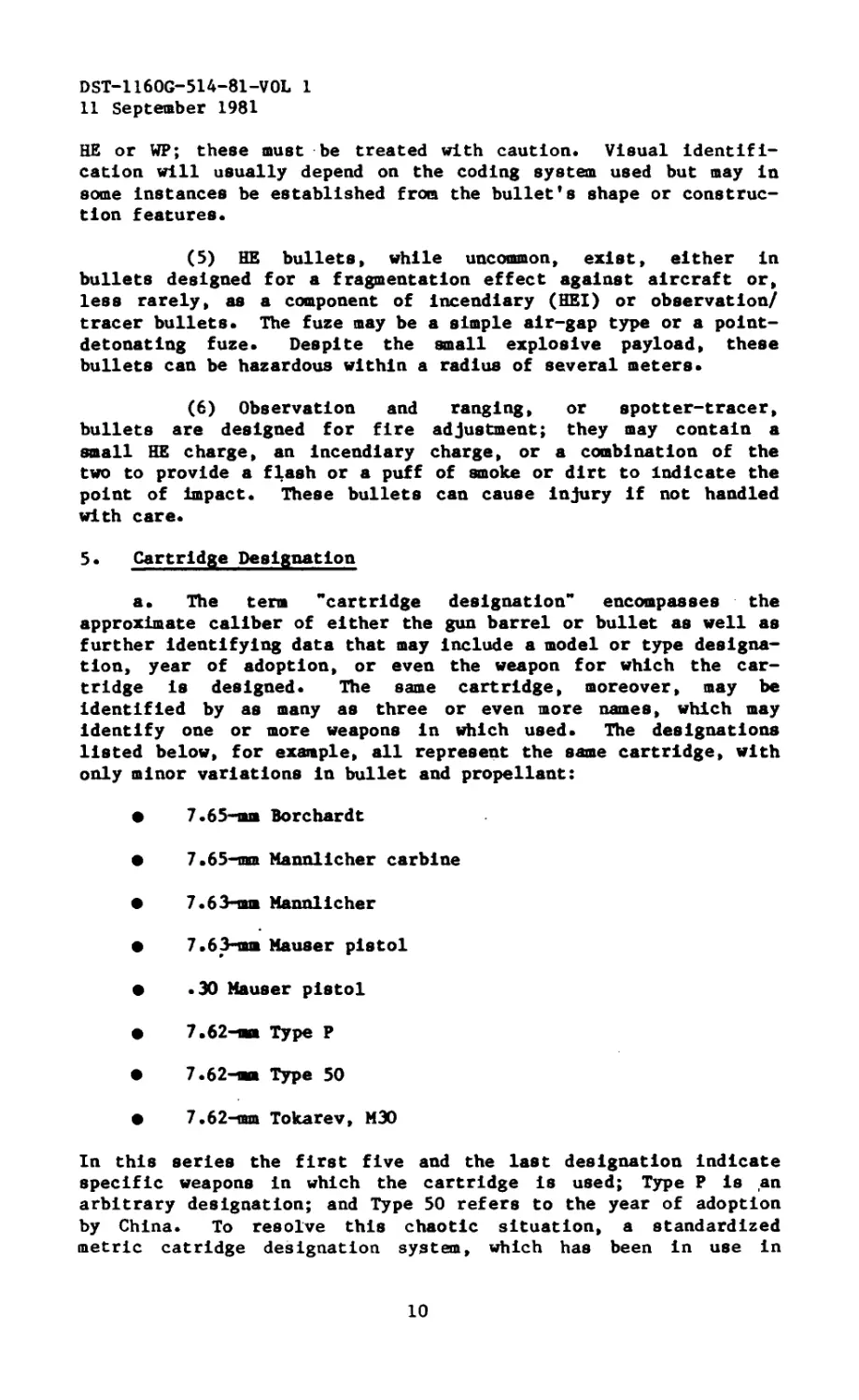
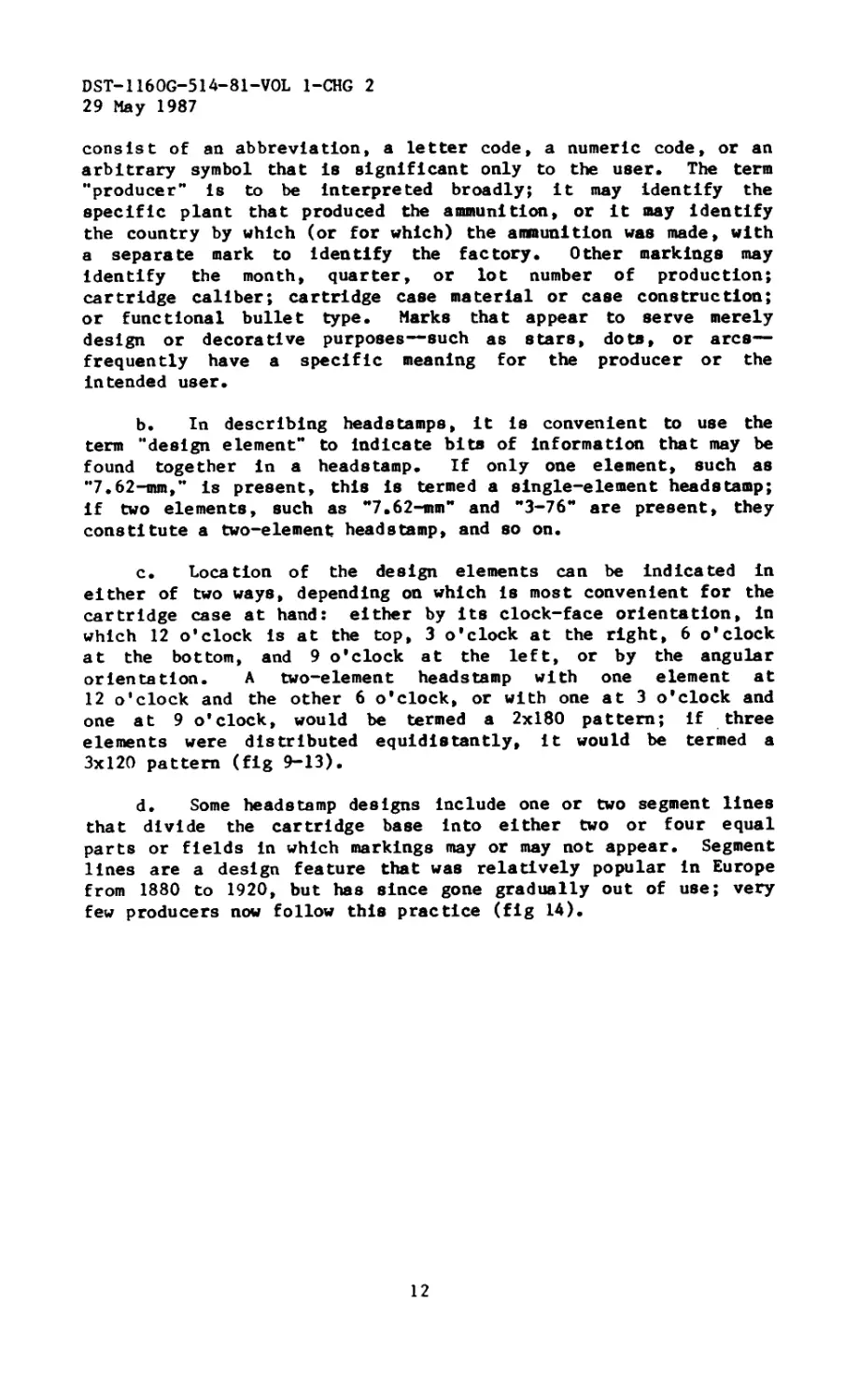
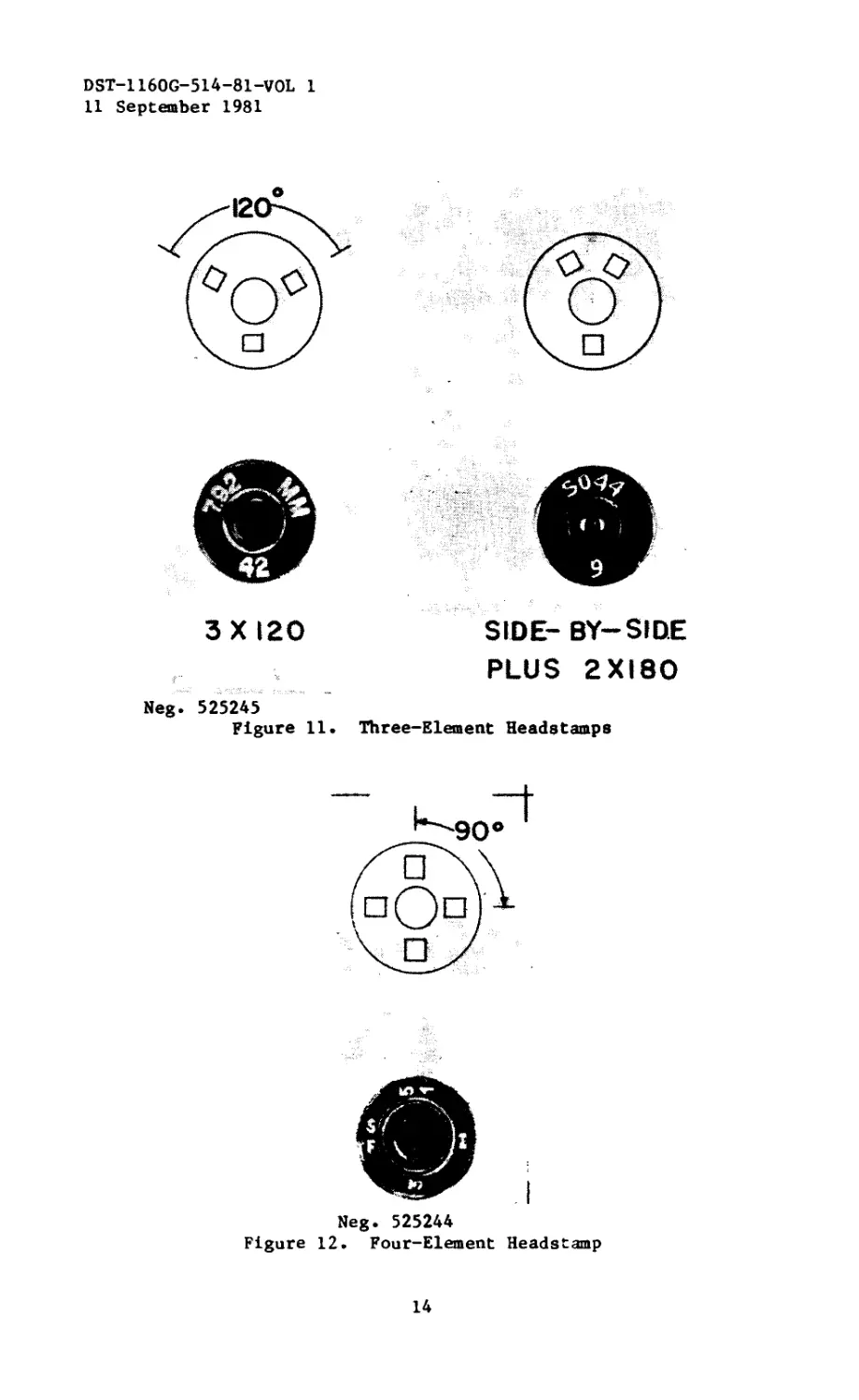
3x120 pattern (fig 9-13).
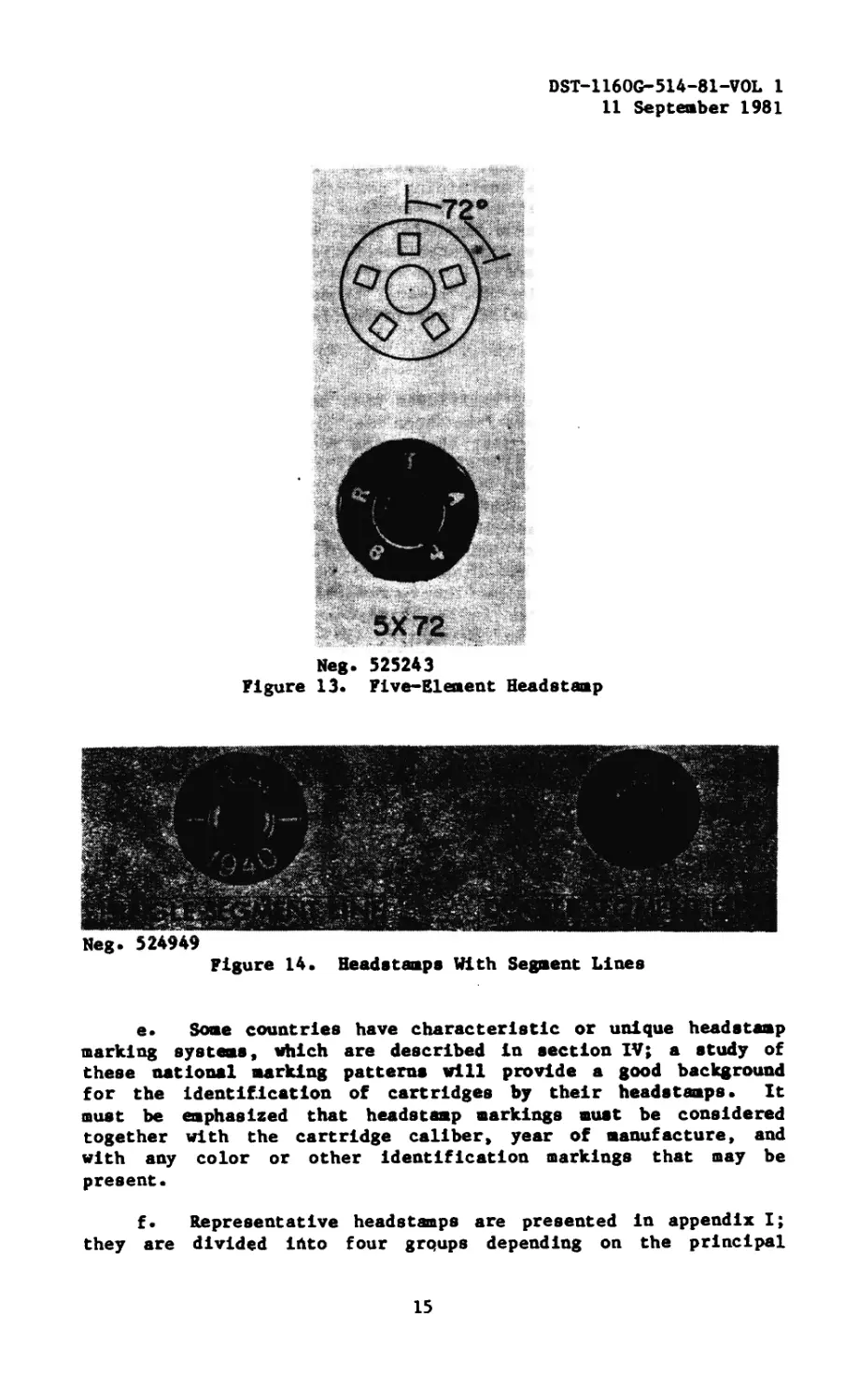
d.	Some headstamp designs Include one or two segment lines
that divide the cartridge base Into either two or four equal
parts or fields In which markings may or may not appear. Segment
lines are a design feature that was relatively popular In Europe
from 1880 to 1920, but has since gone gradually out of use; very
few producers now follow this practice (fig 14).
12
DST-116OG-514-81-VOL 1
11 September 1981
Neg. 525247
Figure 9. Single-Element Headstamp
2X 180
SIDE-BY-SIDE
Neg. 525246
Figure 10.
Two-Element Headstamps
13
DST-116OG-514-81-VOL 1
11 September 1981
3X120	SIDE-BY—SIDE
PLUS 2X180
Neg. 525245
Figure 11. Three-Element Headstamps
Neg. 525244
Figure 12. Four-Element Headstamp
14
DST-116OG-514-81-VOL 1
11 September 1981
Neg. 525243
Figure 13. Five-Element Headstamp
Neg. 524949
Figure 14. Headstamps With Segment Lines
e.	Some countries have characteristic or unique headstamp
marking systems, which are described in section IV; a study of
these national marking patterns will provide a good background
for the identification of cartridges by their headstamps. It
must be emphasized that headstamp markings must be considered
together with the cartridge caliber, year of manufacture, and
with any color or other identification markings that may be
present.
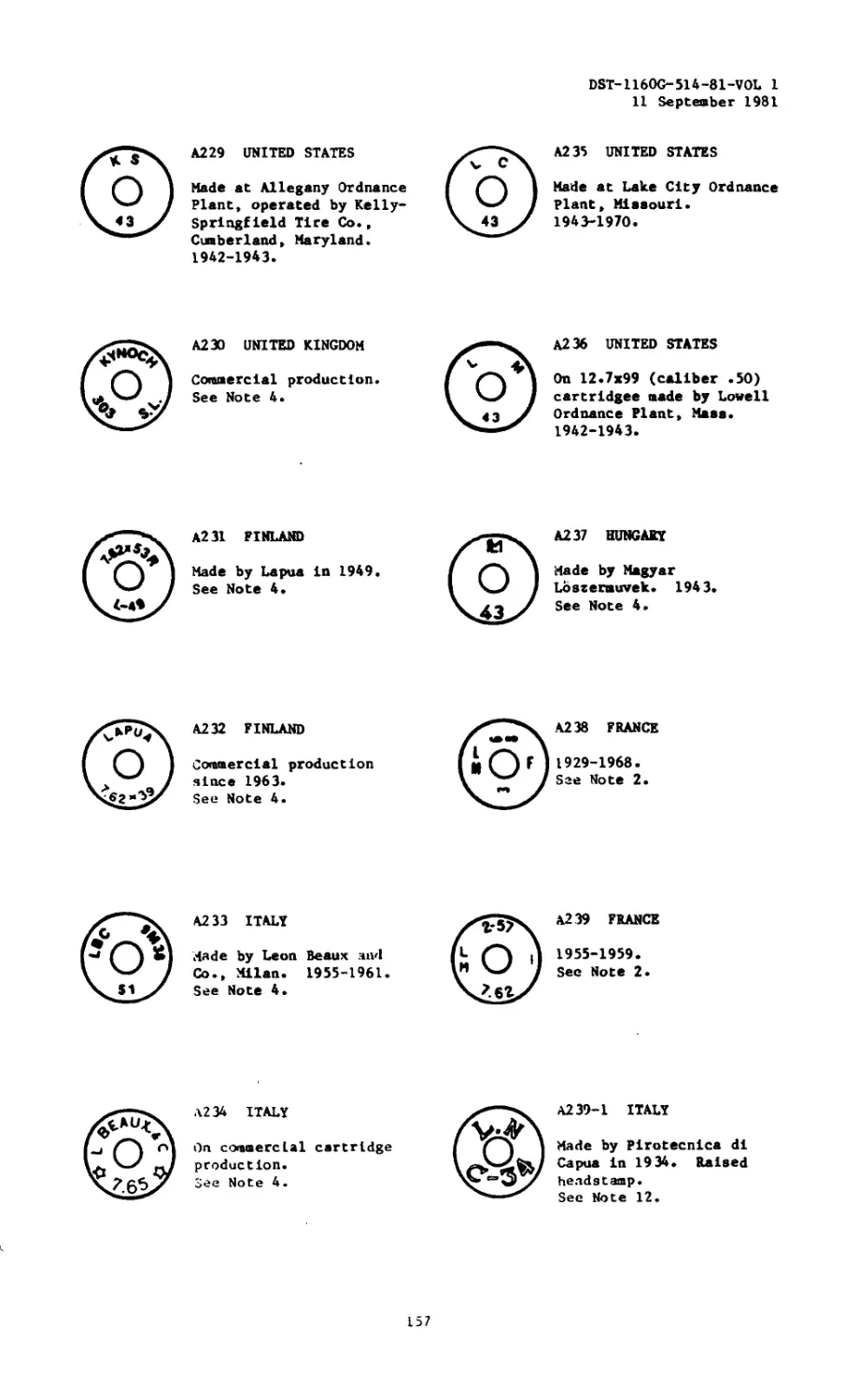
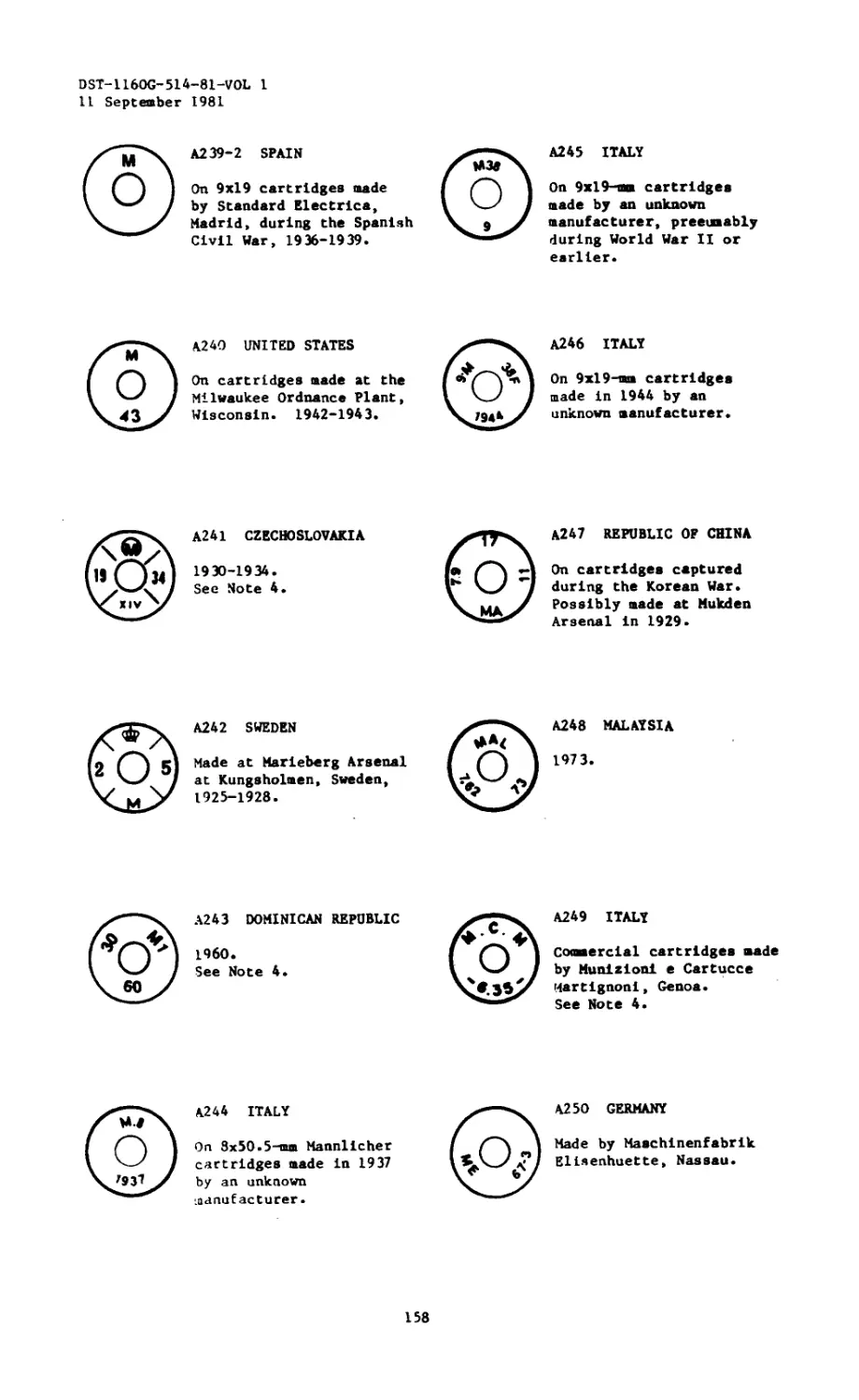
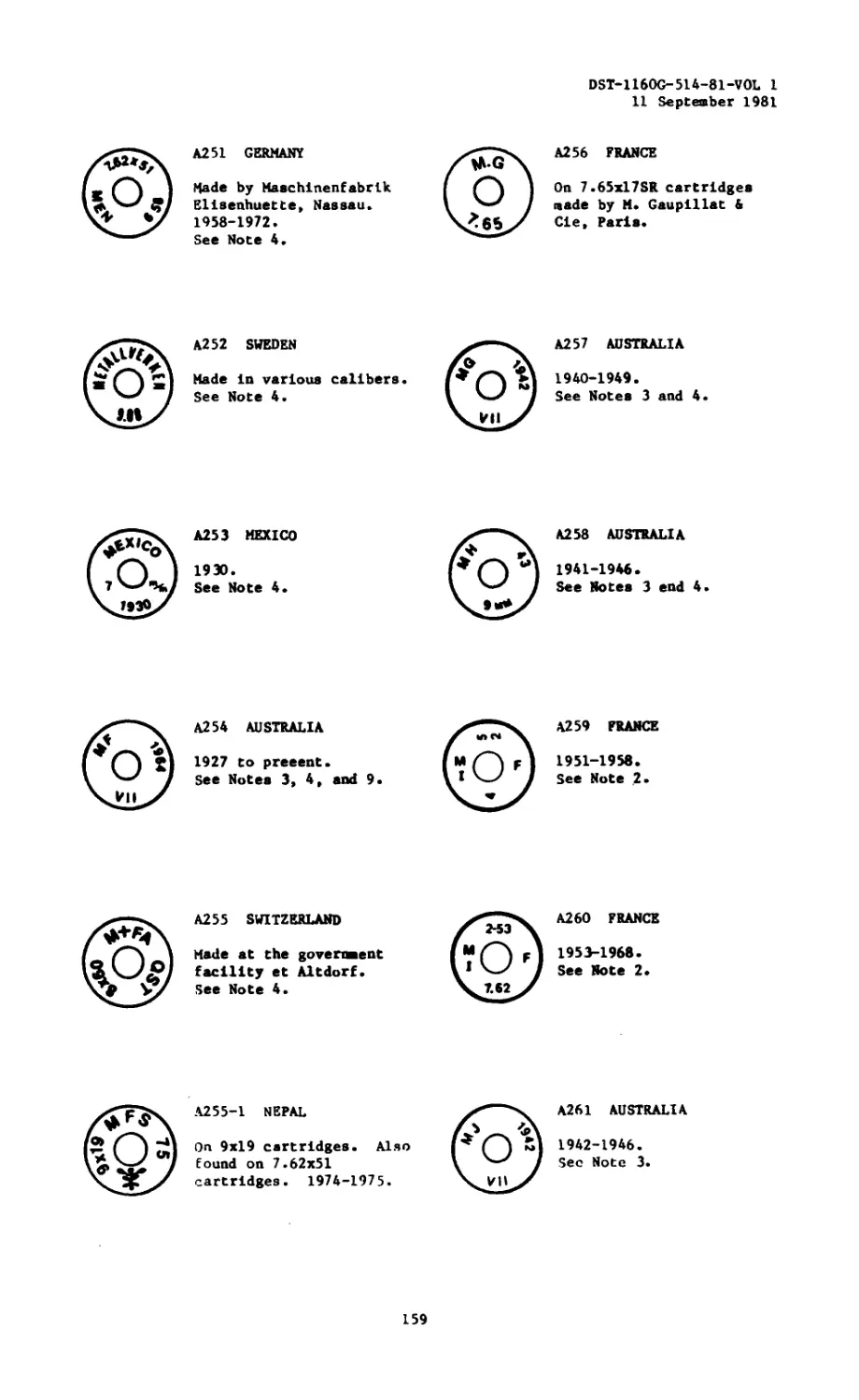
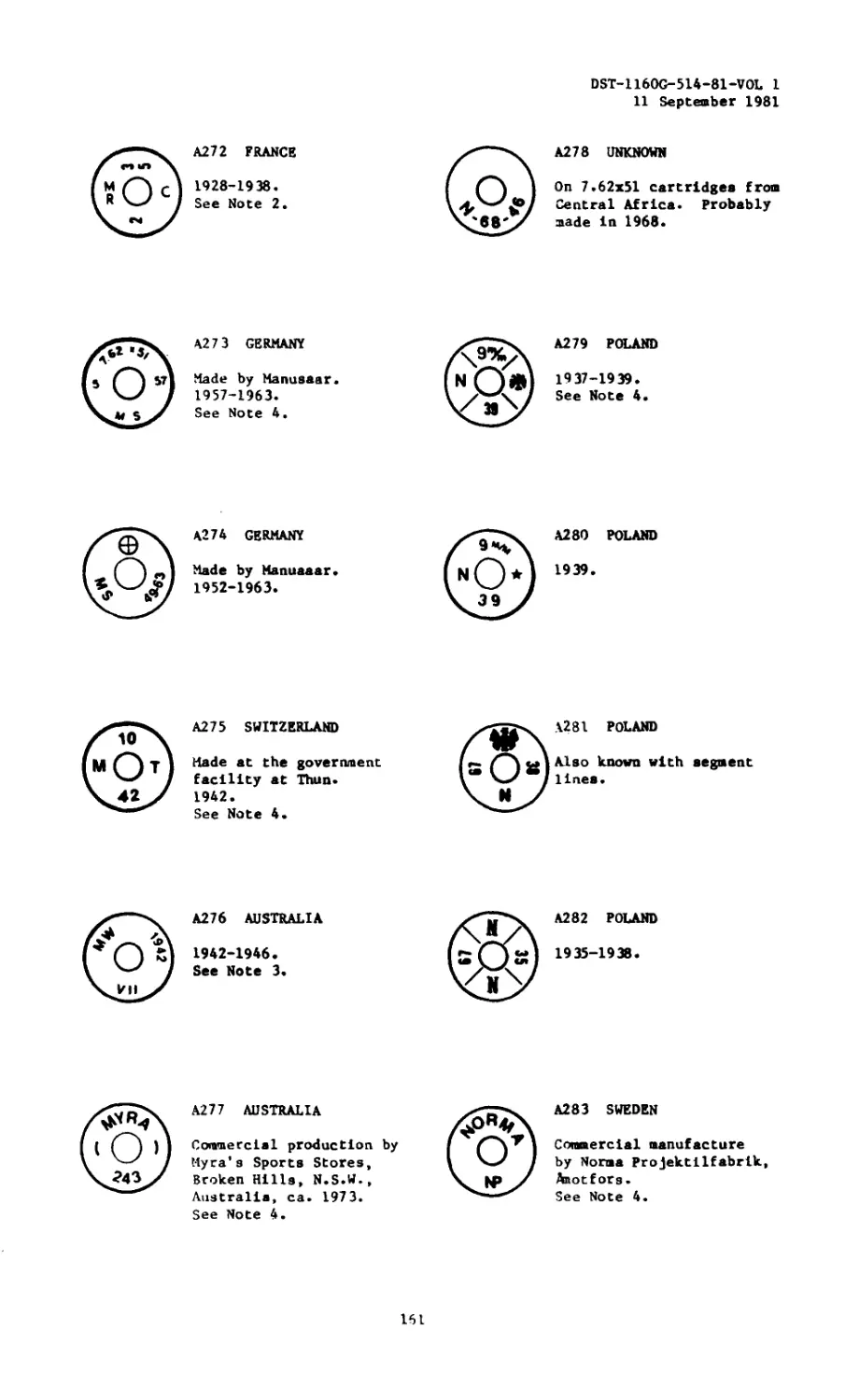
f.	Representative headstamps are presented in appendix I;
they are divided ihto four grqups depending on the principal
15
DST-116OG-514-81-VOL 1
11 September 1981
identifying element of the headstamp. Headstamps containing
Roman (Western) letters; headstamps containing non-Roman alpha-
bets (Greek, Cyrillic, Arabic, Hebrew); headstamps containing
Oriental characters and miscellaneous symbols; and headstamps
containing only Western minerals are presented sequentially. The
approximately 650 headstamps in appendix I are representative of,
and can be used in the identification of, several thousand vari-
ant types that contain the same or similar identifying features.
7.	Functional Type Markings
a.	The need for recognition of cartridges with specialized
bullets such as tracer or AP types has been met by several
identification systems, developed to meet the varied requirements
of using countries. Some countries have used several systems
over a period of years, as bullet calibers and types changed or
political factors came into play. These specialized cartridge
types have been most frequently identified by a colored bullet
tip, often in combination with color bands on the bullet. Less
frequently, a color band or ring has been applied to the case
mouth, the case body, or the primer, or the functional type has
been indicated by letters or figures in the headstamp. All of
these methods may be used alone or in combination (fig 15). For
tactile identification in darkness, a tracer bullet formerly made
for US submachineguns had a cross impressed in the nose of the
round-nosed bullet.
Neg. 525242
Figure
15. Tracer Cartridge With Bullet Tip and
Primer Annulus Color Identification
b.	Two systems of bullet-tip color coding are in wide-
spread international use: The US/NATO system, which is also used
by many non-NATO but western-oriented countries, and the Soviet
color code, in use through the Eurasian Communist countries (ECC)
and in some Third World countries as well. Many countries have
supplemented these international marking systems with additional
national codes.
c.	Color codes used by the major cartridge-producing
countries, as well as the calibers and types of cartridges that
they identify, are presented in section IV for each country
concerned.
16
DST-1160G-514-81-VOL 1
11 September 1981
SECTION II
CARTRIDGE IDENTIFICATION PROCEDURES
1.	General
To identify an unknown cartridge or a fired cartridge case with
the aid of this guide, all that is needed is an accurate
measuring device. Since all measurements are given in metric
units, a vernier caliper that reads to 0.1 mm is entirely
adequate; in an emergency a metric scale that reads to 0.5 mm may
be used, although with some decrease in accuracy. Calipers or
micrometers graduated in inches will also serve, provided that
the measurements are converted to metric units. Since one inch
is equal to 25.4 mm, the inch measurement (in decimals, not in
fractions of an inch) is multiplied by 25.4 to arrive at the
metric measurement.
2.	Caliber and Cartridge Designation
a.	As has been noted, cartridge designation is expressed
by a nominal caliber and case length. Data in this guide, how-
ever, are presented in order of case length as the principal
identifying factor, and thereafter in order of increasing
caliber. The first step is to measure the cartridge case length
and bullet diameter—or, for a fired case, the case mouth
diameter—and note the type of cartridge base (fig 16). Either
of two methods can then be followed to establish the cartridge
designation.
Neg. 5 31858
Figure 16. Measuring Cartridge Case Length
With a Vernier Caliper
17
DST-1160G-514-81-V0L 1
11 September 1981
b.	For a rough-and-ready Identification, refer to the
cartridge case outline drawings in section III. Look for a
cartridge case drawing whose designation indicates a case length
that matches the unknown cartridge, and which has the same type
of cartridge head. The case lengths may not be identical, but a
case outline can usually be found that is a close match to the
unknown cartridge or case. A proper match is achieved when an
even border of white is visible around the cartridge case, when
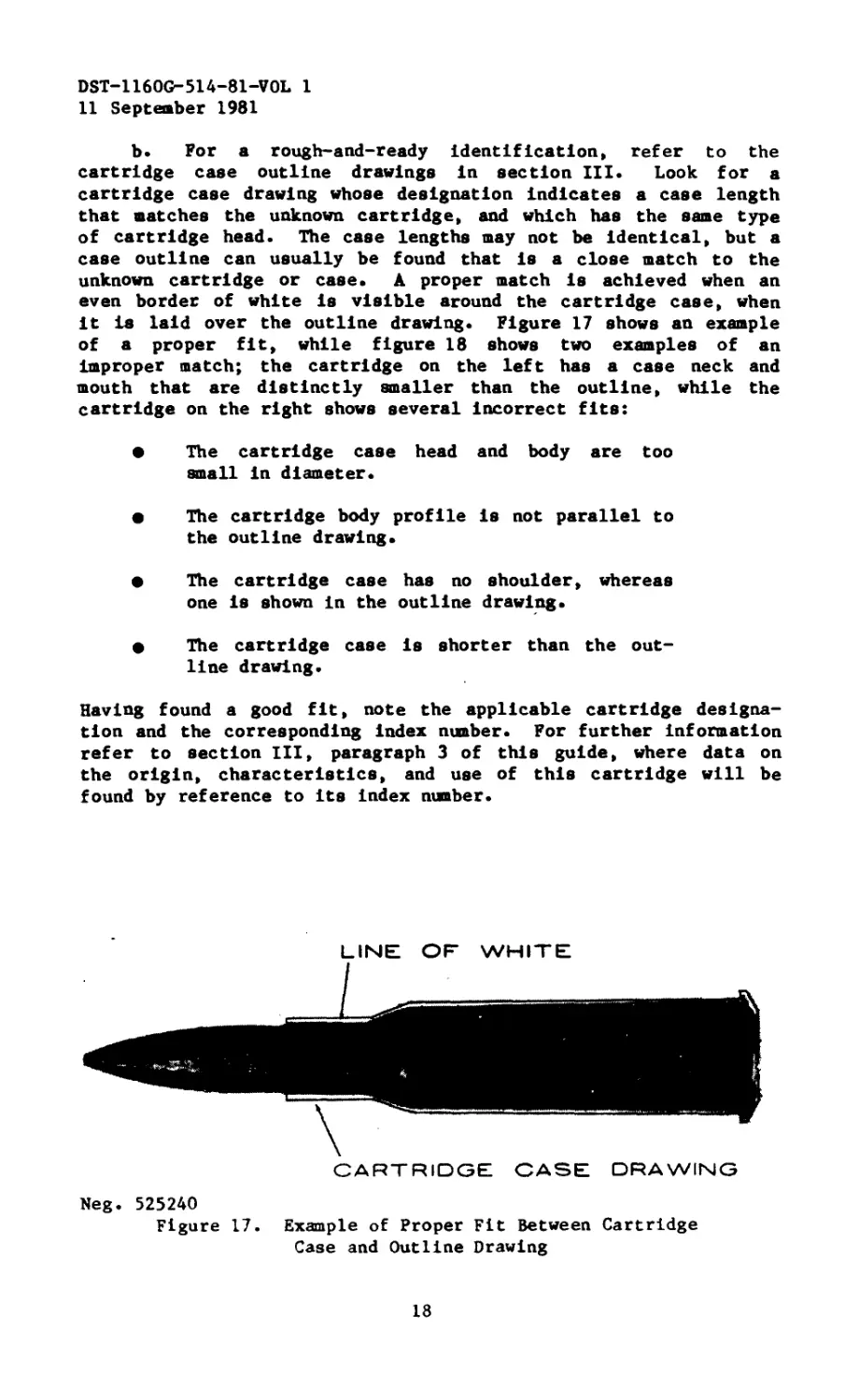
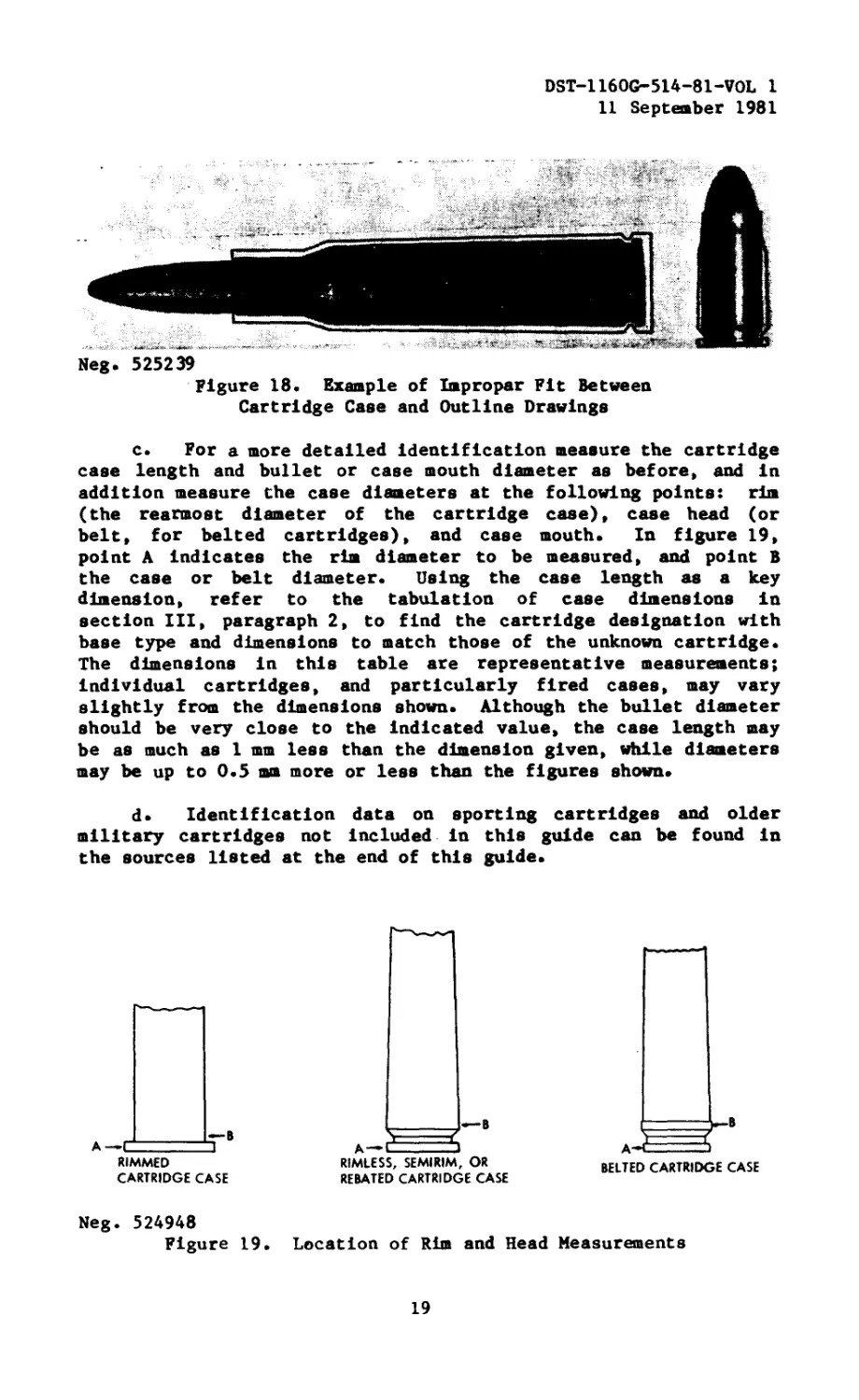
it is laid over the outline drawing. Figure 17 shows an example
of a proper fit, while figure 18 shows two examples of an
Improper match; the cartridge on the left has a case neck and
mouth that are distinctly smaller than the outline, while the
cartridge on the right shows several incorrect fits:
•	The cartridge case head and body are too
small in diameter.
•	The cartridge body profile is not parallel to
the outline drawing.
•	The cartridge case has no shoulder, whereas
one is shown in the outline drawing.
•	The cartridge case is shorter than the out-
line drawing.
Having found a good fit, note the applicable cartridge designa-
tion and the corresponding index number. For further information
refer to section III, paragraph 3 of this guide, where data on
the origin, characteristics, and use of this cartridge will be
found by reference to its index ntmber.
LINE OF WHITE
CARTRIDGE CASE DRAWING
Neg. 525240
Figure 17. Example of Proper Fit Between Cartridge
Case and Outline Drawing
18
DST-116OG-514-81-VOL 1
11 September 1981
Neg. 525239
Figure 18. Example of Improper Fit Between
Cartridge Caae and Outline Drawinga
c.	For a more detailed identification measure the cartridge
case length and bullet or case mouth diameter as before, and in
addition measure the case diameters at the following points: rim
(the rearmost diameter of the cartridge case), case head (or
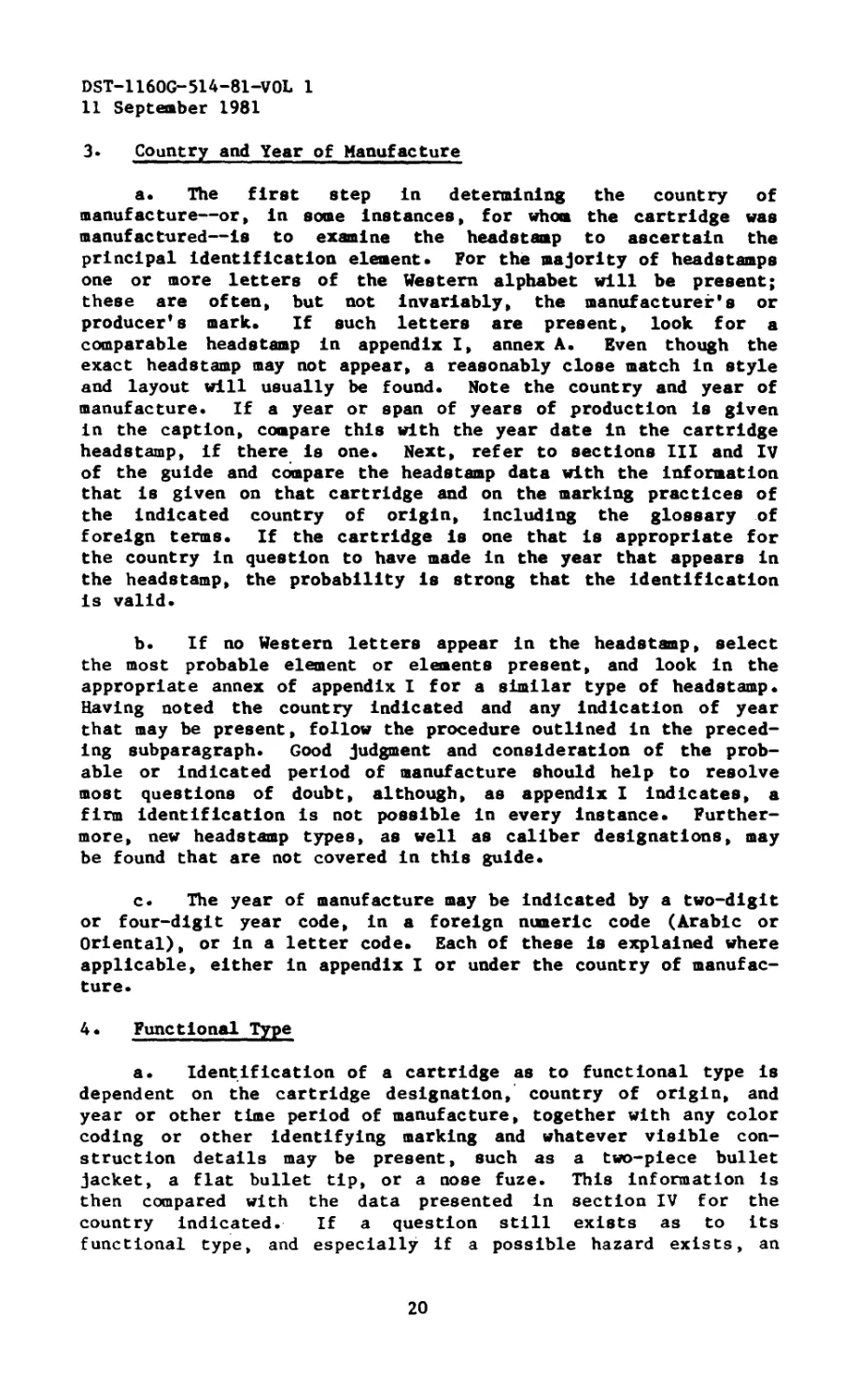
belt, for belted cartridges), and case mouth. In figure 19,
point A indicates the rim diameter to be measured, and point В
the case or belt diameter. Using the case length as a key
dimension, refer to the tabulation of case dimensions in
section III, paragraph 2, to find the cartridge designation with
base type and dimensions to match those of the unknown cartridge.
The dimensions in this table are representative measurements;
individual cartridges, and particularly fired cases, may vary
slightly from the dimensions shown. Although the bullet diameter
should be very close to the indicated value, the case length may
be as much as 1 mm less than the dimension given, while diameters
may be up to 0.5 mm more or less than the figures shown.
d.	Identification data on sporting cartridges and older
military cartridges not included in this guide can be found in
the sources listed at the end of this guide.
RIMMED
CARTRIDGE CASE
RIMLESS, SEMIRIM, OR
REBATED CARTRIDGE CASE
BELTED CARTRIDGE CASE
Neg. 524948
Figure 19. Location of Rim and Head Measurements
19
DST-1160G-514-81-V0L 1
11 September 1981
3.	Country and Year of Manufacture
a.	The first step in determining the country of
manufacture—or, in some instances, for whom the cartridge was
manufactured—is to examine the headstamp to ascertain the
principal identification element» For the majority of headstamps
one or more letters of the Western alphabet will be present;
these are often, but not invariably, the manufacturer's or
producer’s mark. If such letters are present, look for a
comparable headstamp in appendix I, annex A. Even though the
exact headstamp may not appear, a reasonably close match in style
and layout will usually be found. Note the country and year of
manufacture. If a year or span of years of production is given
in the caption, compare this with the year date in the cartridge
headstamp, if there is one. Next, refer to sections III and IV
of the guide and compare the headstamp data with the information
that is given on that cartridge and on the marking practices of
the indicated country of origin, including the glossary of
foreign terms. If the cartridge is one that is appropriate for
the country in question to have made in the year that appears in
the headstamp, the probability is strong that the identification
is valid.
b.	If no Western letters appear in the headstamp, select
the most probable element or elements present, and look in the
appropriate annex of appendix I for a similar type of headstamp.
Having noted the country indicated and any indication of year
that may be present, follow the procedure outlined in the preced-
ing subparagraph. Good judgment and consideration of the prob-
able or indicated period of manufacture should help to resolve
most questions of doubt, although, as appendix I indicates, a
firm identification is not possible in every instance. Further-
more, new headstamp types, as well as caliber designations, may
be found that are not covered in this guide.
c.	The year of manufacture may be indicated by a two-digit
or four-digit year code, in a foreign numeric code (Arabic or
Oriental), or in a letter code. Each of these is explained where
applicable, either in appendix I or under the country of manufac-
ture.
4.	Functional Type
a.	Identification of a cartridge as to functional type is
dependent on the cartridge designation, country of origin, and
year or other time period of manufacture, together with any color
coding or other identifying marking and whatever visible con-
struction details may be present, such as a two-piece bullet
jacket, a flat bullet tip, or a nose fuze. This information is
then compared with the data presented in section IV for the
country indicated. If a question still exists as to its
functional type, and especially if a possible hazard exists, an
20
DST-1160G-514-81-V0L 1
11 September 1981
X-ray examination by a responsible agency will resolve the
question.
b.	Fired tracer bullets can be identified by the charac-
teristic base cavity for the pyrotechnic element; fired bullets
may even contain unburned tracer mix, which presents no hazard.
Bullets with tracers, however, may also contain incendiary or
even explosive material; thus, the fact that a bullet has been
fired does not always insure that no hazard remains. This is of
course especially true for explosive types with a visible fuze.
c.	Some information can be gained by testing the cartridge
case and bullet with a magnet; this will determine whether either
component contains ferrous materials. This is not a conclusive
test, as even a completely nonferrous cartridge (brass case, gild-
ing metal bullet jacket, lead core) may contain an incendiary
mixture or a tracer element. Removal of unknown types of bullets
from the cartridge case for examination involves a degree of risk
and should not be attempted by collectors in the field.
5.	Box and Package Markings
a.	Although the Information that they contain will vary,
depending on each producer's marking practice, box and package
markings usually provide as a minimum firm identification of
their contents as to country of manufacture, cartridge desig-
nation, functional type, and date of manufacture. They
frequently contain, in addition, producer codes and lot number
data and may even provide detailed information on cartridge
components, such as the type and quantity of propellant and its
producer. A study of package markings frequently can yield
information that could otherwise be provided only by an extensive
laboratory examination of the cartridges themselves.
b.	The first step in identifying cartridges from package
labels or container markings is to establish the country of
origin; the style of container marking, the language or alphabet
used, and the terminology in the markings normally leave little
room for doubt. There are, however, exceptions. Containers of
cartridges produced for commercial sale may carry markings in
English, using UK or US terminology. Even more, some foreign
producers of US military cartridge types have followed US
specifications as to packaging and marking so closely that only
the producer code and lot number reveal the origin of the
cartridges. An examination of cartridge headstamps (which
normally agree with the producer code indicated on the container)
will confirm the identification. Finally, during World War II
the United States made cartridges for the Republic of China (ROC)
with containers that carried stenciled markings in Chinese; when
translated, however, these identified the United States as the
country of origin. Containers with markings in Cyrillic may be
of Soviet, Bulgarian, or Yugoslav origin; identification can be
21
DST-1160G-514-81-V0L 1
11 September 1981
established by referring to section IV, where examples of package
marking and of differences In terminology are presented. The
same holds true for package markings or labels In Arabic, which
can be Identified by comparing them with the examples In
section IV of package marking of major Arab producers.
c.	The second step In Identification Is to determine the
cartridge designation, Its functional type, and, If possible, Its
model or type designation. This can often be read from the box
markings and Interpreted or translated by reference to the
marking data and language glossaries that are presented In
section IV of this guide.
d.	Container markings frequently Include color-code mark-
ings that further Identify the functional type of the contents.
These markings are usually, but not always, similar to the color
coding of the cartridges themselves. The type or style of these
markings, and the colors used, should be noted and recorded for
comparlslon with the data provided In section IV. Whenever
possible, Information from package markings should be correlated
with that obtained from examination of the cartridges themselves.
22
DST-116OG-514-81-VOL 1
11 September 1981
section in
CARTRIDGE IDENTIFICATION DATA
1.	Cartridge Case Outline Drawings
Index No. 1
6.35x15.5SR
Index No. 2
Index No. 3
Index No. 4
7.65x17
7.65x17SR
9x17
Index No. 5
Index No. 6
Index No. 7
9x18
9x19
11.43xl9R
23
DST-U60G-514-81-VOL 1
11 September 1981

Index No. 8		7.65x20

Index No. 9		9x2OSR

Index No. 10		9x20R

Index No. 11		7.65x21
	1/ 1 .
Index No. 12		8x21

Index No. 13
7.65x22
24
DST-116OG-514-81-VOL 1
11 September 1981
Index No. 14	9x22
Index No. 15
7.5x22.5R
Index No. 16
9x23
Index No. 17
9x23SR
Index No. 18
11.43x23
Index No. 19
11.43x23R
25
DST-116OG-514-81-VOL 1
11 September 1981
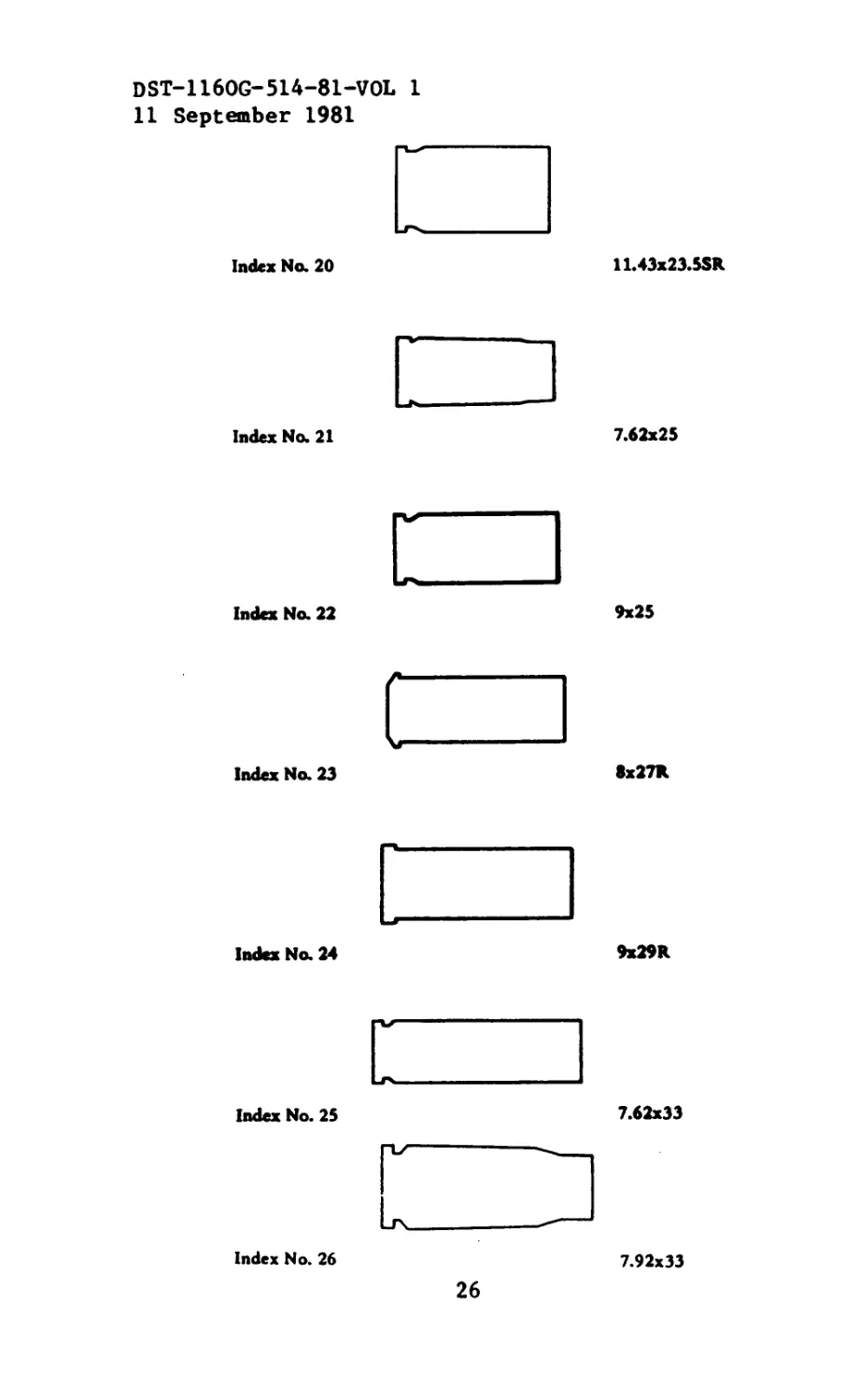
Index No. 20
11.43x23.5SR
Index No. 21
Index No. 22
Index No. 23
Index No. 24
Index No. 25
Index No. 26
7.62x25
9x25
•x27R
9x29R
7.62x33
7.92x33
26
DST-1160G-514-81-VOL 1
11 September 1981
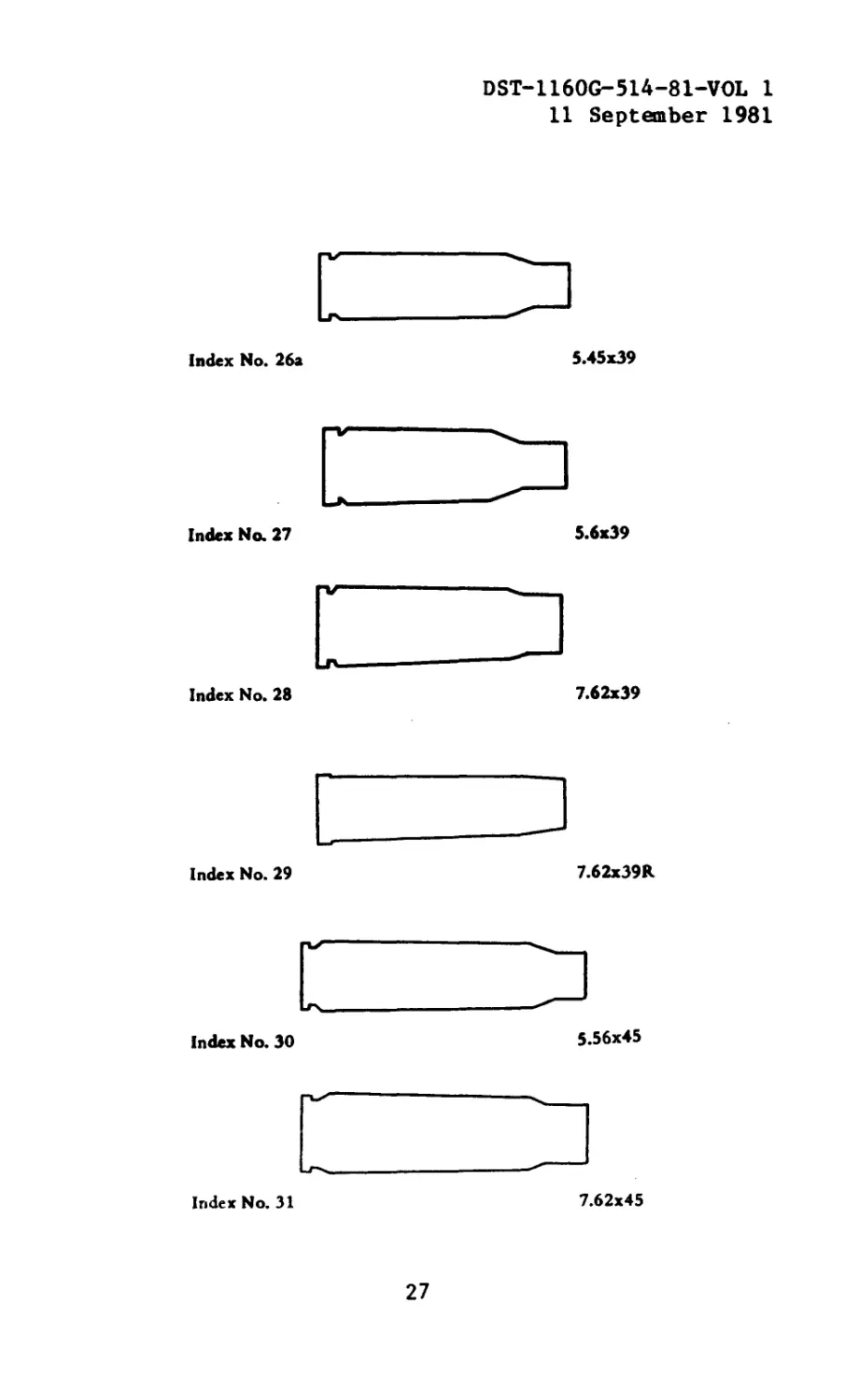
Index No. 26a	5.45x39
Index No. 27	5.6x39
Index No. 28
Index No. 29
7.62x39R
Index No. 30	5.56x45
Index No. 31
7.62x45
27
DST-1160G-514-81-VOL 1
11 September 1981
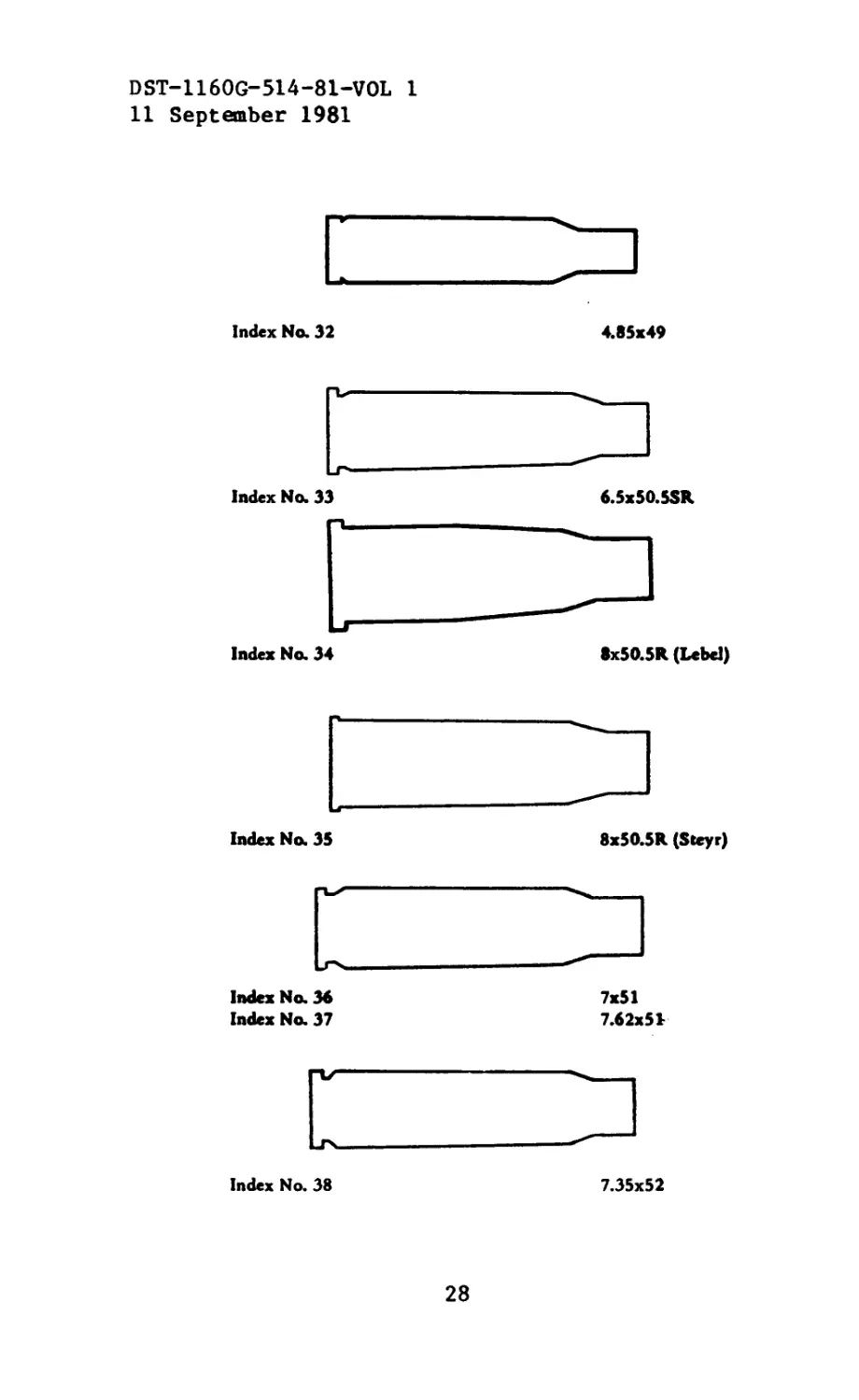
Index No. 32
4.85x49
Index No. 34
8x50.5R (Lebel)
Index No. 35
8x5O.5R (Steyr)
Index No. 36
Index No. 37
7x51
7.62x53
Index No. 38
7.35x52
28
DST-116OG-514-81-VOL 1
11 September 1981
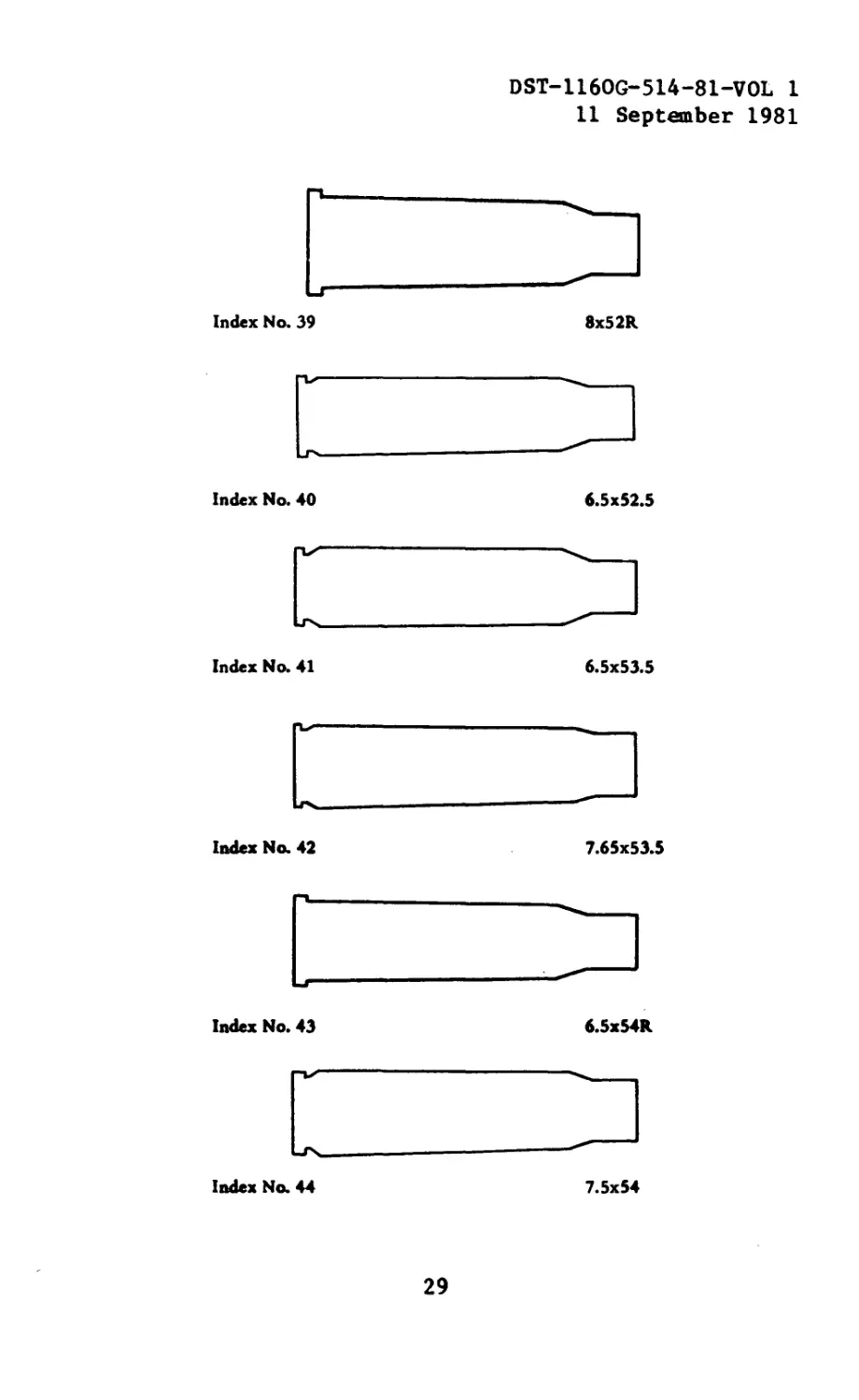
Index No. 40
6.5x52.5
Index No. 41
6.5x53.5
Index No. 42
7.65x53.5
Index No. 43
6.5x54R
7.5x54
Index No. 44
29
DST-116OG-514-81-VOL 1
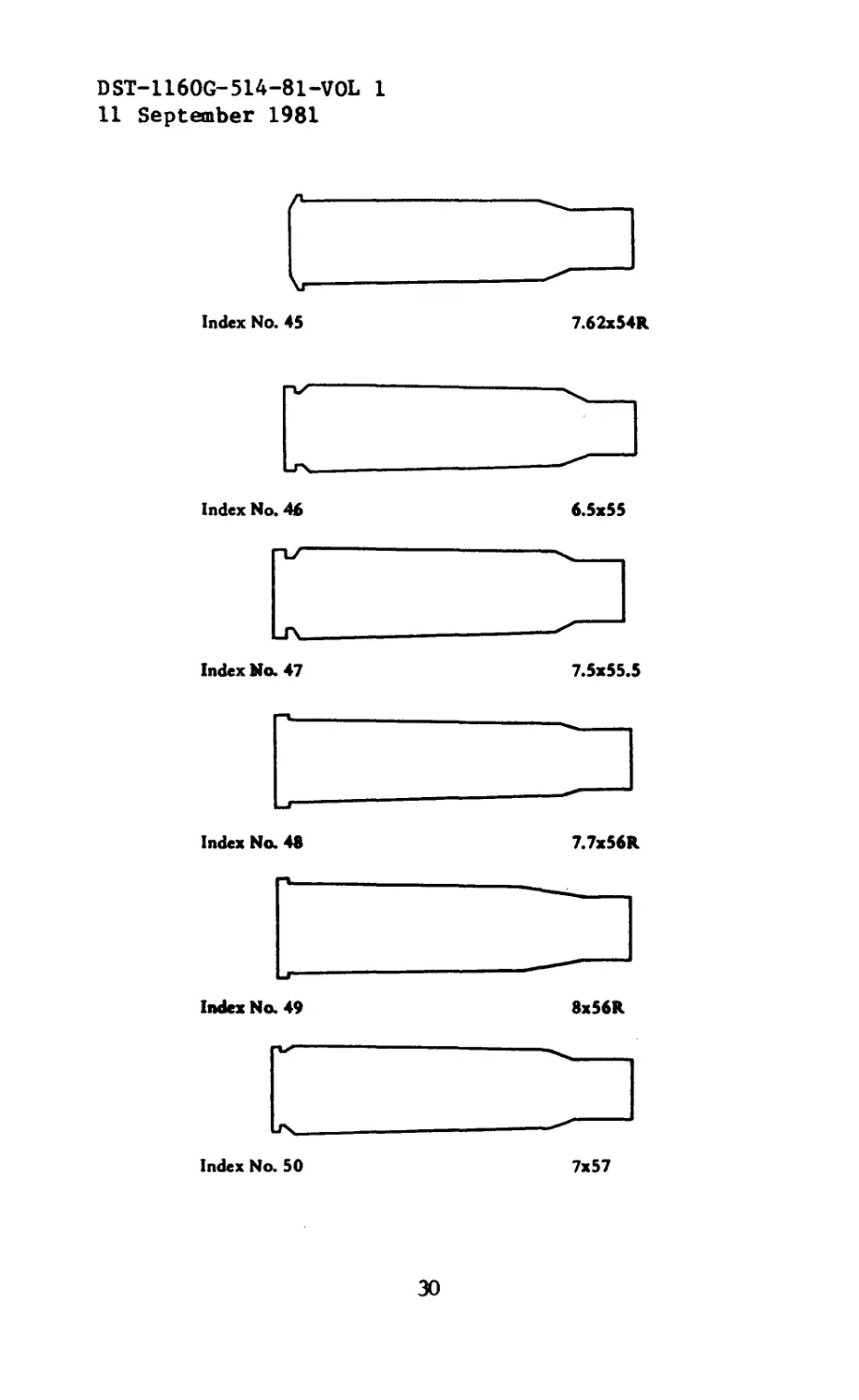
11 September 1981
Index No. 45
7.62x54R
Index No. 46
6.5x55
Index No. 47
7.5x55.5
7.7x56R
Index No. 48
Index No. 50
7x57
30
DST-1160G-514-81-V0L 1
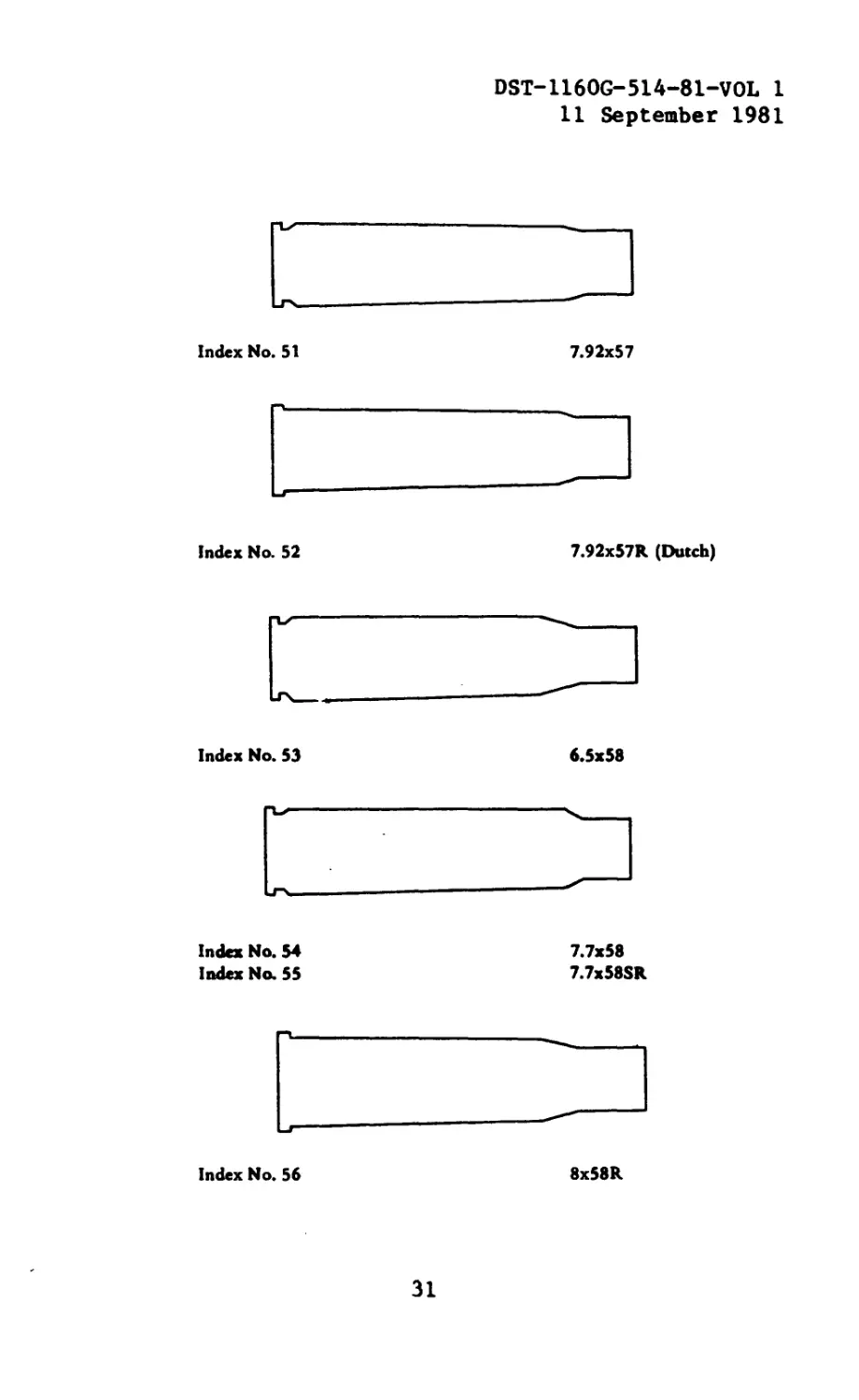
11 September 1981
Index No. 51
7.92x57
Index No. 52
7.92x57R (Dutch)
Index No. 53
6.5x58
Index No. 54
Index No. 55
7.7x58
7.7x58SR
Index No. 56
8x58R
31
DST-U6OG-514-81-VOL 1
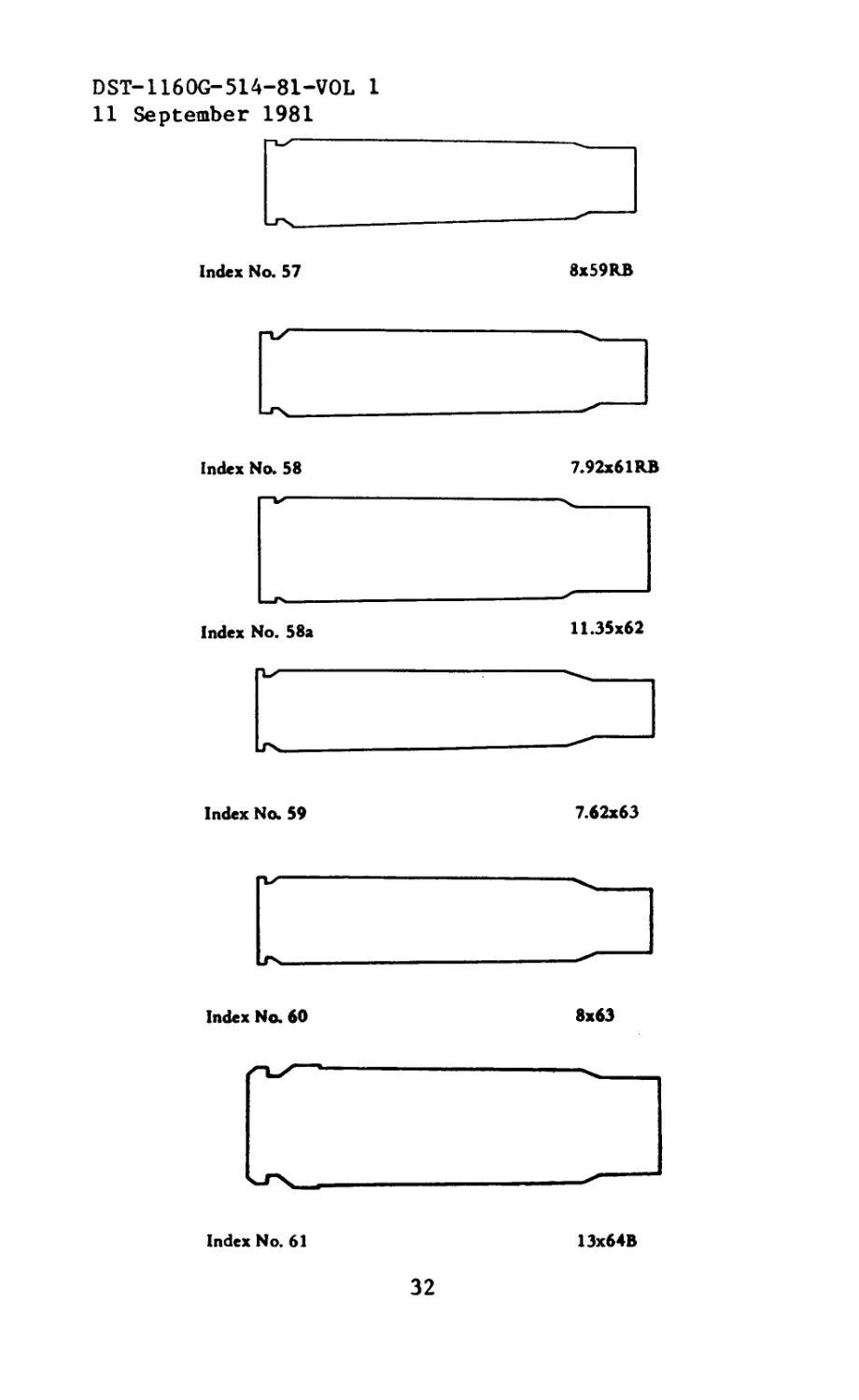
11 September 1981
Index No. 57
8x59RB
Index No. 58
7.92x61RB
11.35x62
Index No. 58a
Index No. 59
7.62x63
Index No. 60
8x63
Index No. 61
13x64B
32
DST-116OG-514-81-VOL 1
11 September 1981
Index No. 62
12.7x77
Index No. 63
Index No. 64
12.7x80
12.7x81SR
Index No. 65
7.92x94
33
DST-116OG-514-81-VOL 1
11 September 1981
Index No. 67
12.7x99
Index No. 68
13.2x99
Index No. 69
13.9x99B
34
DST-1160G-514-81-V0L 1
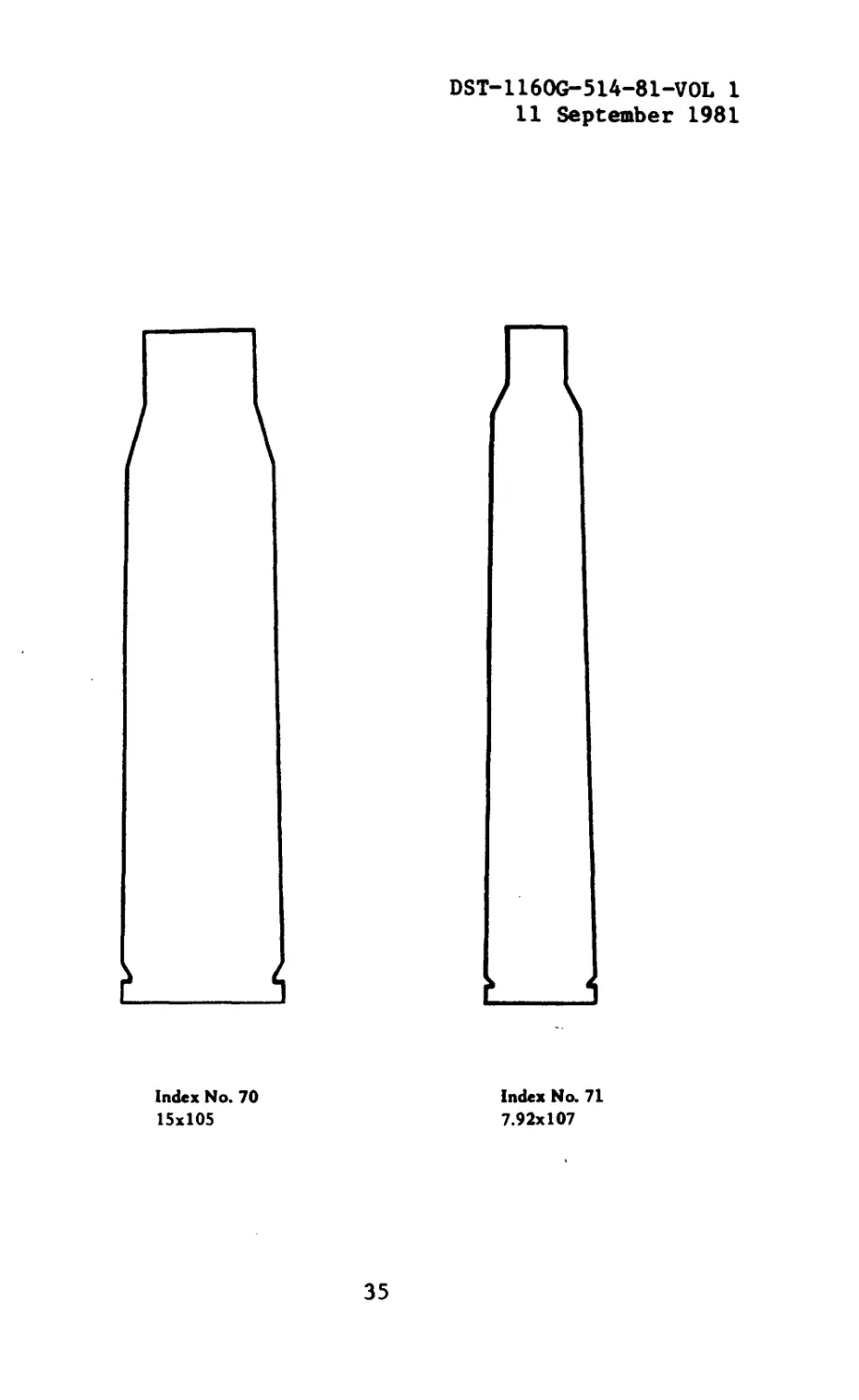
11 September 1981
Index No. 70
15x105
Index No. 71
7.92x10⁷
35
DST-1160G-514-81-VOL 1
11 September 1981
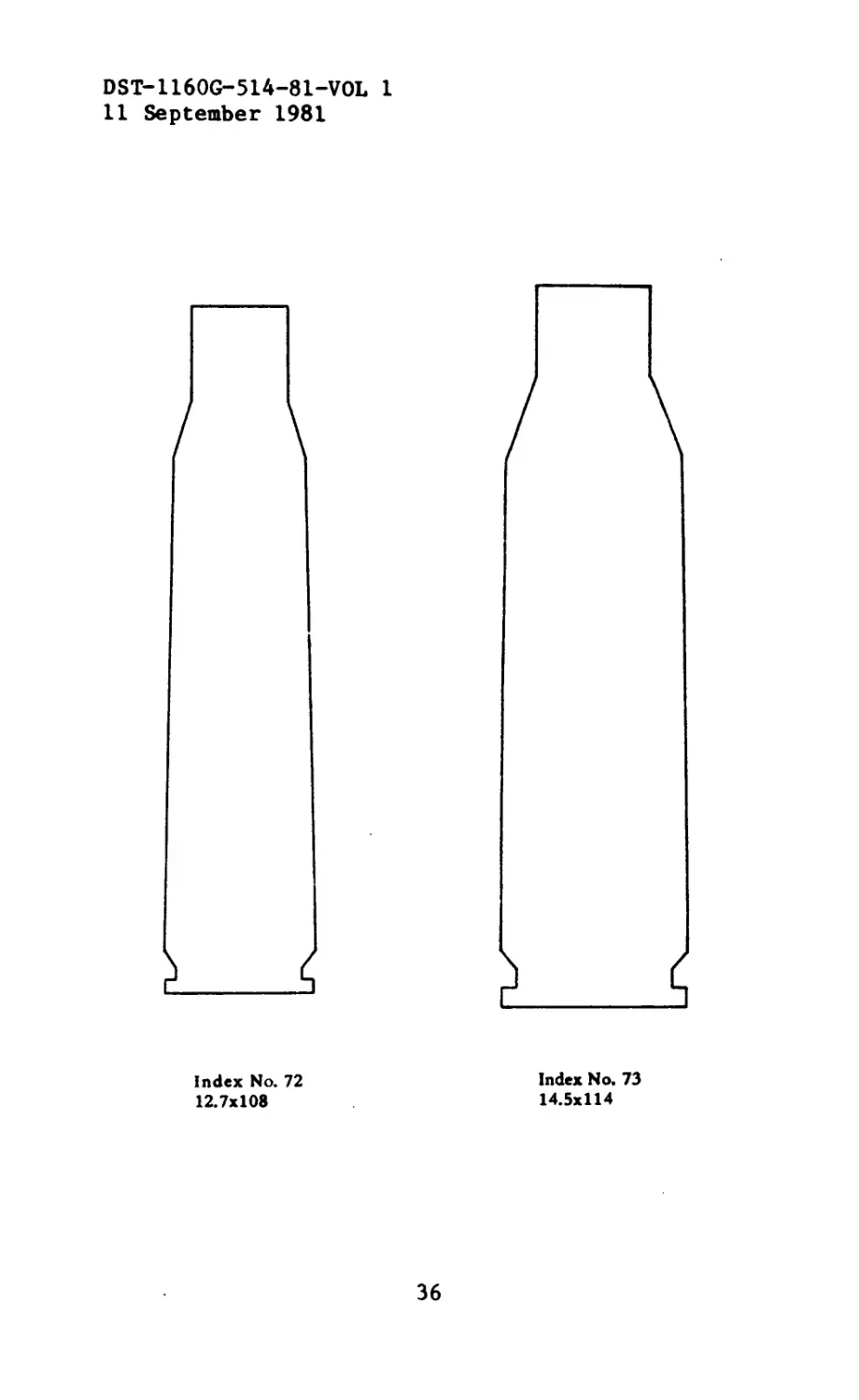
Index No. 72
12.7x10⁸
Index No. 73
14.5x114
36
DST-116OG-514-81-VOL 1-CHG 2
29 May 1987
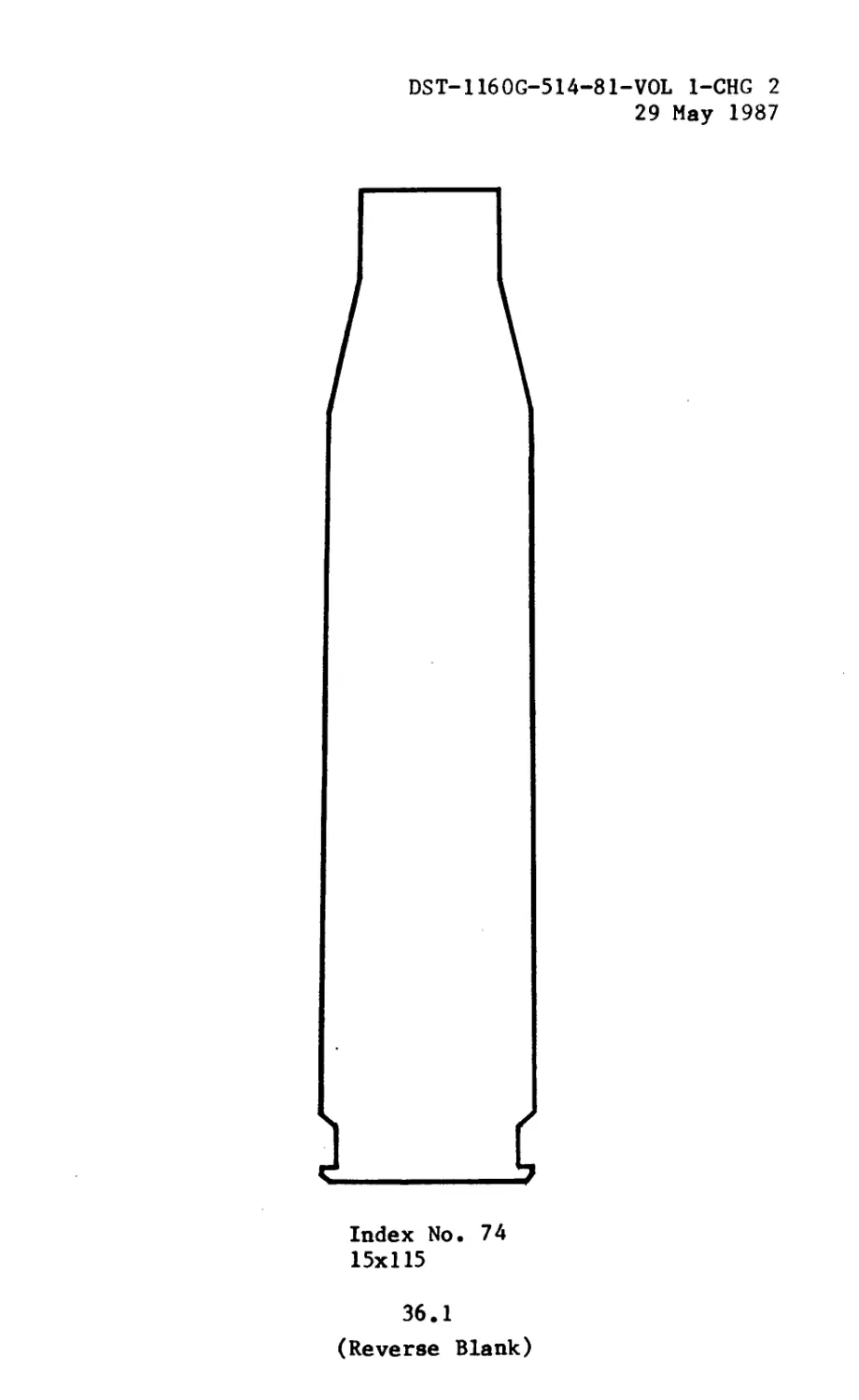
Index No. 74
15x115
36.1
(Reverse Blank)
DST-116OG-514-81-VOL 1-CHG 2
29 May 1987
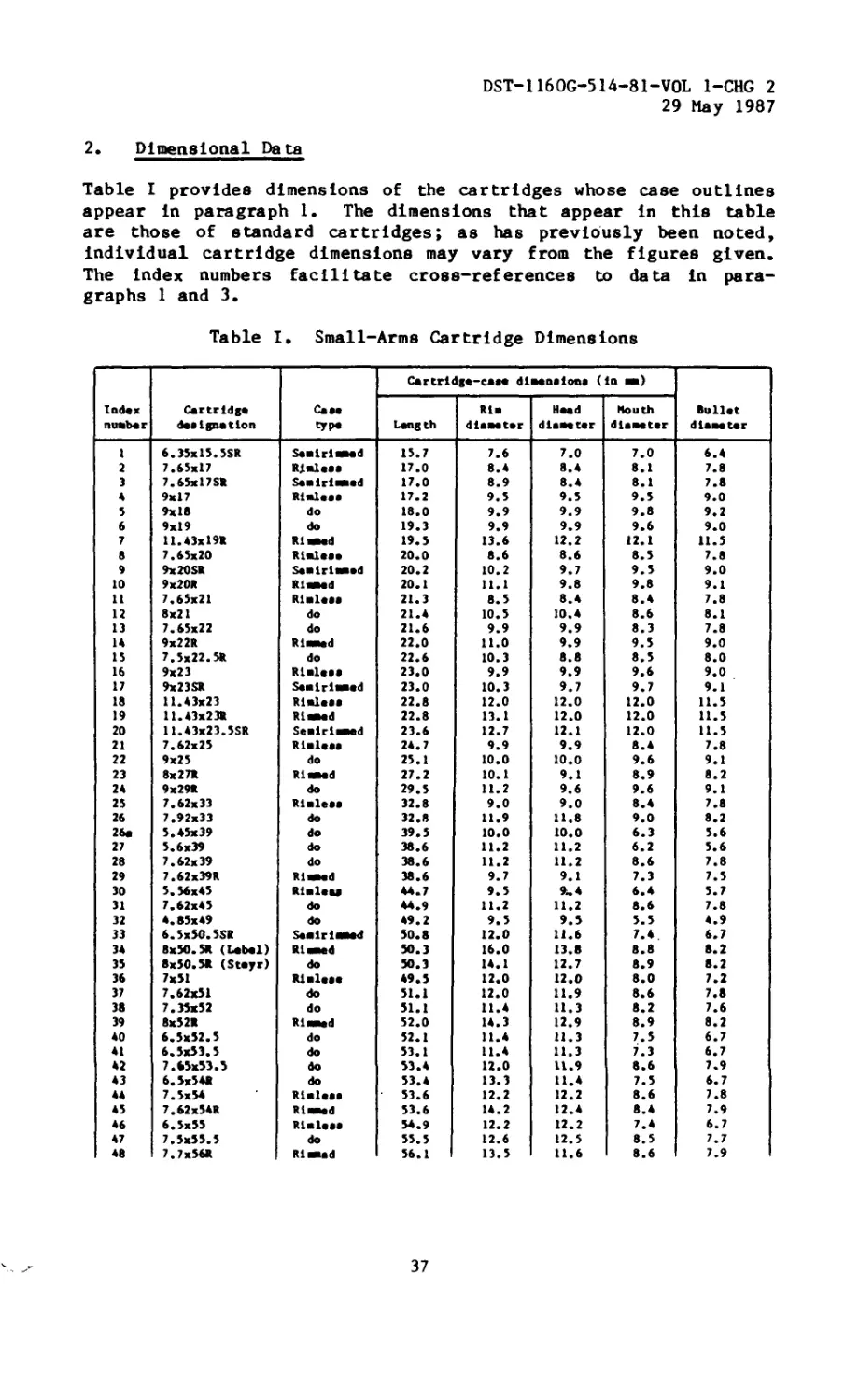
2.	Dimensional Data
Table I provides dimensions of the cartridges whose case outlines
appear in paragraph 1. The dimensions that appear in this table
are those of standard cartridges; as has previously been noted,
individual cartridge dimensions may vary from the figures given.
The index numbers facilitate cross-references to data in para-
graphs 1 and 3.
Table I. Small-Arms Cartridge Dimensions
Index nusber	Cartridge designation	Caaa ty₽«	Cartridge-ceee dlaenalona (In m)				Bullet diaseter
			Length	Ria dlaaatar	Head diaseter	Mouth diaseter
l	6.35x15.558	Saairlaaed	15.7	7.6	7.0	7.0	6.4
2	7.65x17	81alate	17.0	8.4	8.4	8.1	7.8
3	7.65xl7SR	SeairlMed	17.0	8.9	8.4	8.1	7.8
4	9x17	Rlalaaa	17.2	9.5	9.5	9.5	9.0
5	9x18	do	18.0	9.9	9.9	9.8	9.2
6	9x19	do	19.3	9.9	9.9	9.6	9.0
7	11.43x198	Rinsed	19.5	13.6	12.2	12.1	11.5
8	7.65x20	Rialeae	20.0	8.6	8.6	8.5	7.8
9	9x20 SR	Saairlaaed	20.2	10.2	9.7	9.5	9.0
10	9x208	Rinsed	20.1	11.1	9.8	9.8	9.1
11	7.65x21	Rlaleaa	21.3	8.5	8.4	8.4	7.8
12	8x21	do	21.4	10.5	10.4	8.6	8.1
13	7.65x22	do	21.6	9.9	9.9	8.3	7.8
H	9x2211	Rinsed	22.0	11.0	9.9	9.5	9.0
15	7.5x22.58	do	22.6	10.3	8.8	8.5	8.0
16	9x23	Rlaleaa	23.0	9.9	9.9	9.6	9.0
17	9x23SR	Seairinsed	23.0	10.3	9.7	9.7	9.1
18	11.43x23	Rlaleaa	22.8	12.0	12.0	12.0	11.5
19	11.43x238	Rlaaed	22.8	13.1	12.0	12.0	11.5
20	11.43x23.558	SenlriMed	23.6	12.7	12.1	12.0	11.5
21	7.62x25	Rlaleaa	24.7	9.9	9.9	8.4	7.8
22	9x25	do	25.1	10.0	10.0	9.6	9.1
23	8x278	Rinsed	27.2	10.1	9.1	8.9	8.2
24	9x298	do	29.5	11.2	9.6	9.6	9.1
25	7.62x33	81alaaa	32.8	9.0	9.0	8.4	7.8
26	7.92x33	do	32.8	11.9	11.8	9.0	8.2
26a	5.45x39	do	39.5	10.0	10.0	6.3	5.6
27	5.6x39	do	38.6	11.2	11.2	6.2	5.6
28	7.62x39	do	38.6	11.2	11.2	8.6	7.8
29	7.62x398	Rinsed	38.6	9.7	9.1	7.3	7.5
30	5.56x45	Rlalaaa	44.7	9.5	9_4	6.4	5.7
31	7.62x45	do	44.9	11.2	11.2	8.6	7.8
32	4.85x49	do	49.2	9.5	9.5	5.5	4.9
33	6.5x50.5S8	Saairlaaed	50.8	12.0	11.6	7.4.	6.7
34	8x50. 58 (Label)	Rimed	50.3	16.0	13.8	8.8	8.2
35	8x50.58 (Steyr)	do	50.3	14.1	12.7	8.9	8.2
36	7x51	Rlalaaa	49.5	12.0	12.0	8.0	7.2
37	7.62x51	do	51.1	12.0	11.9	8.6	7.8
38	7.35x52	do	51.1	11.4	11.3	8.2	7.6
39	8x528	Rlaaed	52.0	14.3	12.9	8.9	8.2
40	6.5x52.5	do	52.1	11.4	11.3	7.5	6.7
41	6.5x53.5	do	53.1	11.4	11.3	7.3	6.7
42	7.65x53.5	do	53.4	12.0	11.9	8.6	7.9
43	6.5x548	do	53.4	13.3	11.4	7.5	6.7
44	7.5x54	Rinleae	53.6	12.2	12.2	8.6	7.8
45	7.62x548	Rlaaed	53.6	14.2	12.4	8.4	7.9
46	6.5x55	Rlalaaa	54.9	12.2	12.2	7.4	6.7
47	7.5x55.5	do	55.5	12.6	12.5	8.5	7.7
48	7.7x568	81 mad	56.1	13.5	11.6	8.6	7.9
37
DST-1160G-514-81-VOL 1-CHG 2
29 May 1987
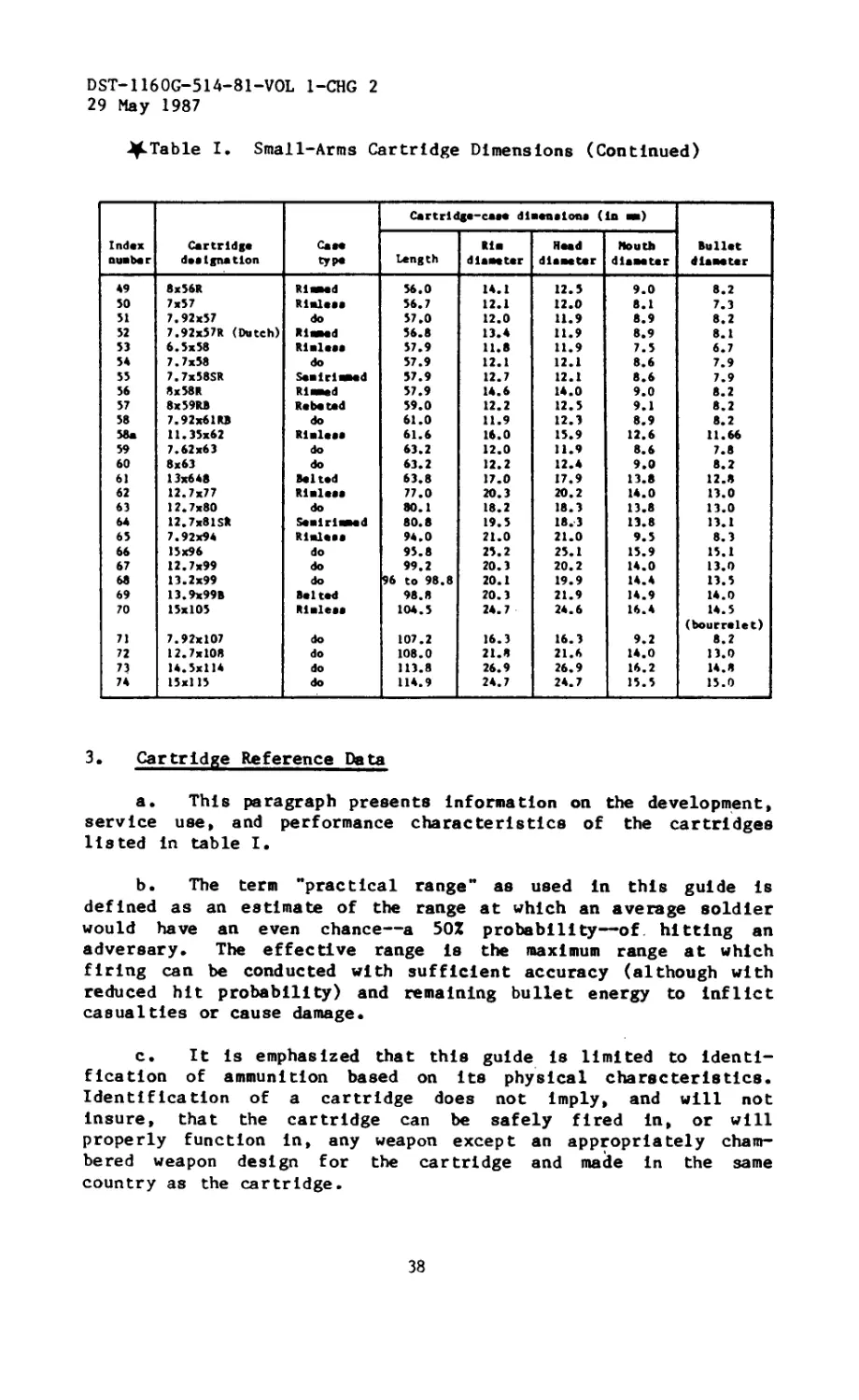
^Table I. Small-Arms Cartridge Dimensions (Continued)
Index nun bar	Cartridge dealgnation	Сам ty₽«	Certrldge-сам dlaenalona (In m)				Bullet dlaaeter
			Length	Ria dlaaeter	Head dlaaeter	Mouth dlaaeter
49	8x56R	Rlaaed	56.0	14.1	12.5	9.0	8.2
so	7x57	Rlaleaa	56.7	12.1	12.0	8.1	7.3
51	7.92x57	do	57.0	12.0	11.9	8.9	8.2
52	7.92x57R (Dutch)	Rimed	56.8	13.4	11.9	8.9	8.1
53	6.5x58	RlalaM	57.9	11.8	11.9	7.5	6.7
54	7.7x58	do	57.9	12.1	12.1	8.6	7.9
55	7.7x58SR	Saalrlmad	57.9	12.7	12.1	8.6	7.9
56	8x58R	Rlaaed	57.9	14.6	14.0	9.0	8.2
57	8x59RB	Rabe tad	59.0	12.2	12.5	9.1	8.2
58	7.92x61RB	do	61.0	11.9	12.3	8.9	8.2
58a	11.35x62	RlalaM	61.6	16.0	15.9	12.6	11.66
59	7.62x63	do	63.2	12.0	11.9	8.6	7.8
60	8x63	do	63.2	12.2	12.4	9.0	8.2
61	13x648	Belted	63.8	17.0	17.9	13.8	12.8
62	12.7x77	RlaleM	77.0	20.3	20.2	14.0	13.0
63	12.7x80	do	80.1	18.2	18.3	13.8	13.0
64	12.7x81SR	Sealrlaaed	80.8	19.5	18.3	13.8	13.1
65	7.92x94	Rlaleae	94.0	21.0	21.0	9.5	8.3
66	15x96	do	95.8	25.2	25.1	15.9	15.1
67	12.7x99	do	99.2	20.3	20.2	14.0	13.0
68	13.2x99	do	96 to 98.8	20.1	19.9	14.4	13.5
69	13.9x99B	Bal tad	98.8	20.3	21.9	14.9	14.0
70	15x105	Rlaleae	104.5	24.7	24.6	16.4	14.5
							(bourrelet)
71	7.92x10⁷	do	107.2	16.3	16.3	9.2	8.2
72	12.7x10⁸	do	108.0	21.8	21.6	14.0	13.0
73	14.5x114	do	113.8	26.9	26.9	16.2	14.8
74	15x115	do	114.9	24.7	24.7	15.5	15.0
3.	Cartridge Reference Data
a.	This paragraph presents information on the development,
service use, and performance characteristics of the cartridges
listed in table I.
b.	The term "practical range" as used in this guide is
defined as an estimate of the range at which an average soldier
would have an even chance—a 50Z probability—of. hitting an
adversary. The effective range is the maximum range at which
firing can be conducted with sufficient accuracy (although with
reduced hit probability) and remaining bullet energy to inflict
casualties or cause damage.
c.	It is emphasized that this guide is limited to identi-
fication of ammunition based on its physical charseteristics.
Identification of a cartridge does not imply, and will not
Insure, that the cartridge can be safely fired in, or will
properly function in, any weapon except an appropriately cham-
bered weapon design for the cartridge and made in the same
country as the cartridge.
38
DST-116OG-514-81-VOL 1-CHG 1
20 August 1984
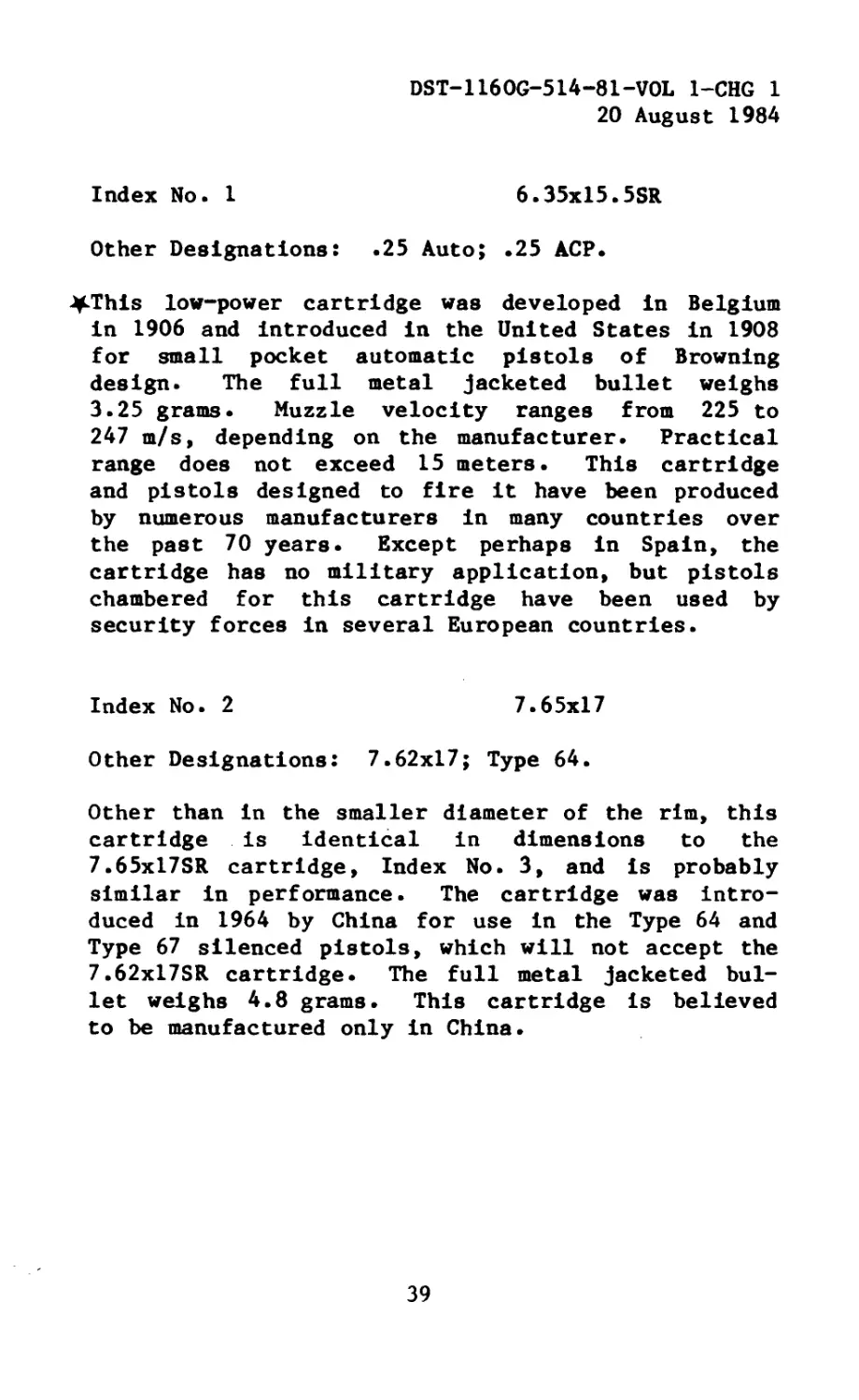
Index No. 1	6.35xl5.5SR
Other Designations: .25 Auto; .25 ACP.
A^This low-power cartridge was developed in Belgium
in 1906 and introduced in the United States in 1908
for small pocket automatic pistols of Browning
design. The full metal jacketed bullet weighs
3.25 grams. Muzzle velocity ranges from 225 to
247 m/s, depending on the manufacturer. Practical
range does not exceed 15 meters. This cartridge
and pistols designed to fire it have been produced
by numerous manufacturers in many countries over
the past 70 years. Except perhaps in Spain, the
cartridge has no military application, but pistols
chambered for this cartridge have been used by
security forces in several European countries.
Index No. 2	7.65x17
Other Designations: 7.62x17; Type 64.
Other than in the smaller diameter of the rim, this
cartridge is identical in dimensions to the
7.65xl7SR cartridge, Index No. 3, and is probably
similar in performance. The cartridge was intro-
duced in 1964 by China for use in the Type 64 and
Type 67 silenced pistols, which will not accept the
7.62xl7SR cartridge. The full metal jacketed bul-
let weighs 4.8 grams. This cartridge is believed
to be manufactured only in China.
39
DST-116OG-514-81-VOL 1-CHG 1
20 August 1984
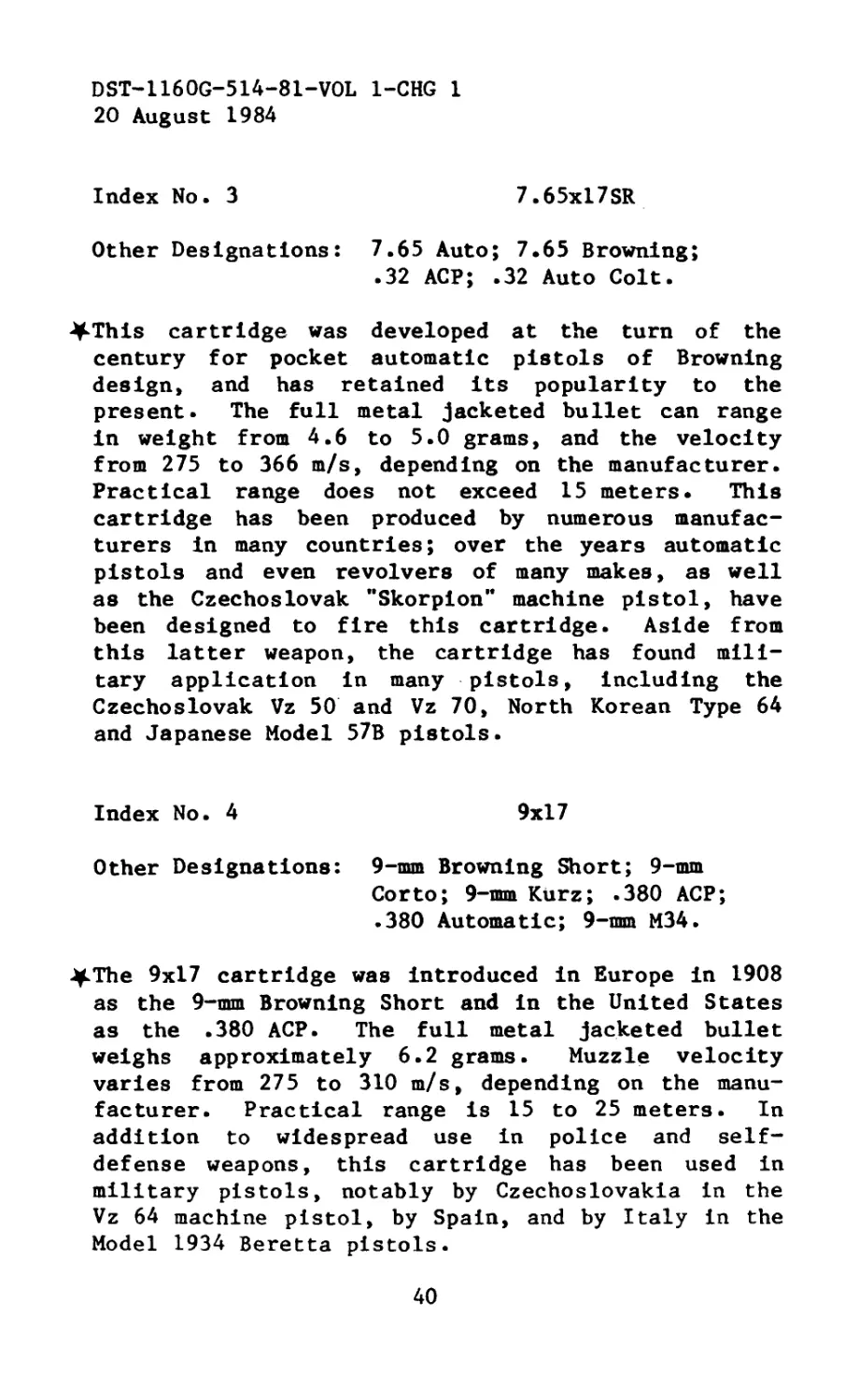
Index No. 3	7.65x17SR
Other Designations: 7.65 Auto; 7.65 Browning;
.32 ACP; .32 Auto Colt.
^This cartridge was developed at the turn of the
century for pocket automatic pistols of Browning
design, and has retained its popularity to the
present. The full metal jacketed bullet can range
in weight from 4.6 to 5.0 grams, and the velocity
from 275 to 366 m/s, depending on the manufacturer.
Practical range does not exceed 15 meters. This
cartridge has been produced by numerous manufac-
turers in many countries; over the years automatic
pistols and even revolvers of many makes, as well
as the Czechoslovak "Skorplon" machine pistol, have
been designed to fire this cartridge. Aside from
this latter weapon, the cartridge has found mili-
tary application in many pistols, including the
Czechoslovak Vz 50 and Vz 70, North Korean Type 64
and Japanese Model 57B pistols.
Index No. 4	9x17
Other Designations: 9-mm Browning Short; 9-mm
Corto; 9-mm Kurz; .380 ACP;
.380 Automatic; 9-mm M34.
-^The 9x17 cartridge was introduced in Europe in 1908
as the 9-mm Browning Short and in the United States
as the .380 ACP. The full metal jacketed bullet
weighs approximately 6.2 grams. Muzzle velocity
varies from 275 to 310 m/s, depending on the manu-
facturer. Practical range is 15 to 25 meters. In
addition to widespread use in police and self-
defense weapons, this cartridge has been used in
military pistols, notably by Czechoslovakia in the
Vz 64 machine pistol, by Spain, and by Italy in the
Model 1934 Beretta pistols.
40
DST-1160G-514-81-VOL 1-CHG 1
20 August 1984
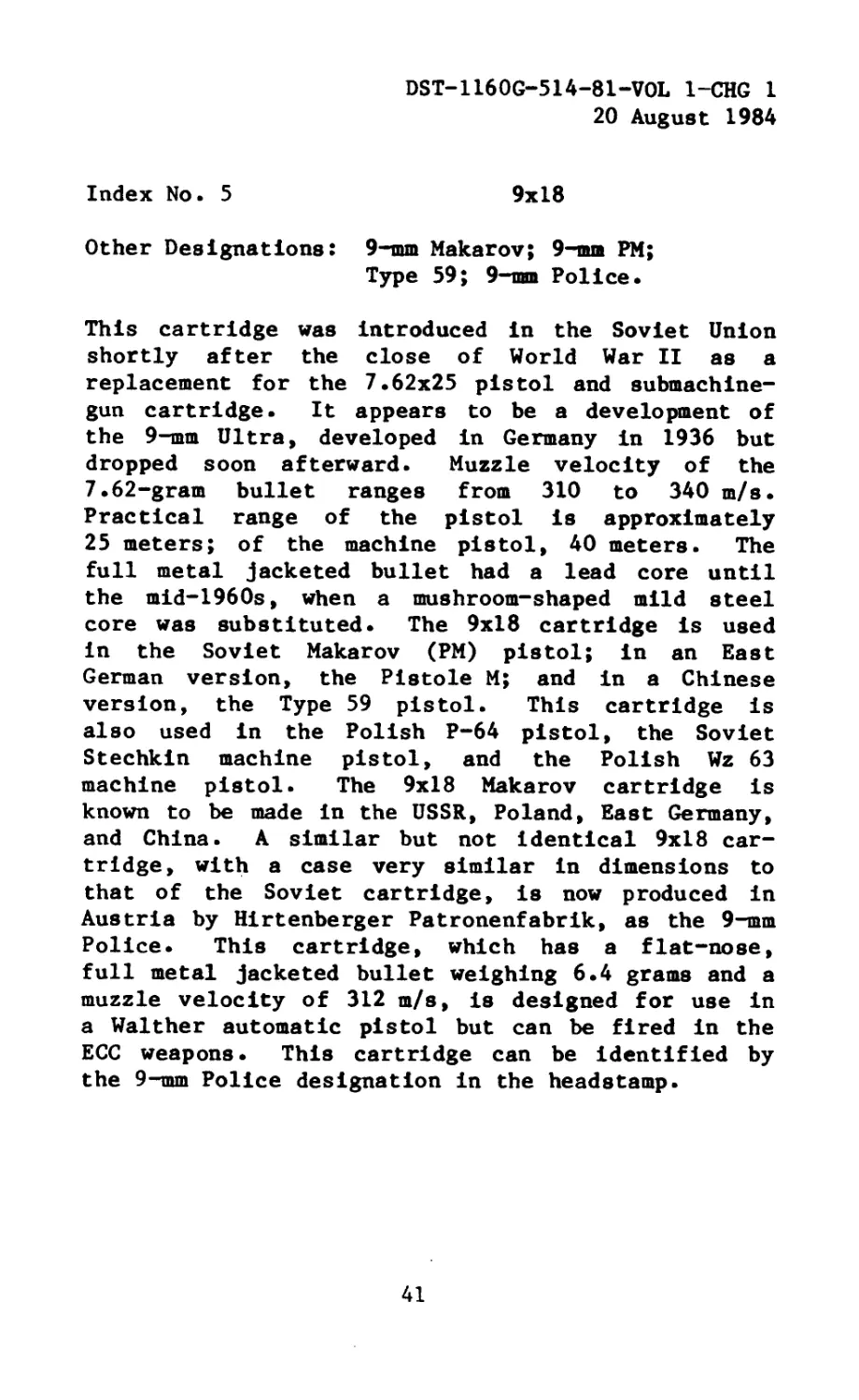
Index No. 5	9x18
Other Designations: 9-mm Makarov; 9-mm PM;
Type 59; 9-пип Police.
This cartridge was introduced in the Soviet Union
shortly after the close of World War II as a
replacement for the 7.62x25 pistol and submachine-
gun cartridge. It appears to be a development of
the 9-mm Ultra, developed in Germany in 1936 but
dropped soon afterward. Muzzle velocity of the
7.62-gram bullet ranges from 310 to 340 m/s.
Practical range of the pistol is approximately
25 meters; of the machine pistol, 40 meters. The
full metal jacketed bullet had a lead core until
the mid-1960s, when a mushroom-shaped mild steel
core was substituted. The 9x18 cartridge is used
in the Soviet Makarov (PM) pistol; in an East
German version, the Pistole M; and in a Chinese
version, the Type 59 pistol. This cartridge is
also used in the Polish P-64 pistol, the Soviet
Stechkin machine pistol, and the Polish Wz 63
machine pistol. The 9x18 Makarov cartridge is
known to be made in the USSR, Poland, East Germany,
and China. A similar but not Identical 9x18 car-
tridge, with a case very similar in dimensions to
that of the Soviet cartridge, is now produced in
Austria by Hirtenberger Patronenfabrik, as the 9-mm
Police. This cartridge, which has a flat-nose,
full metal jacketed bullet weighing 6.4 grams and a
muzzle velocity of 312 m/s, is designed for use in
a Walther automatic pistol but can be fired in the
ECC weapons. This cartridge can be identified by
the 9-mm Police designation in the headstamp.
41
DST-1160G-514-81-V0L 1-CHG 1
20 August 1984
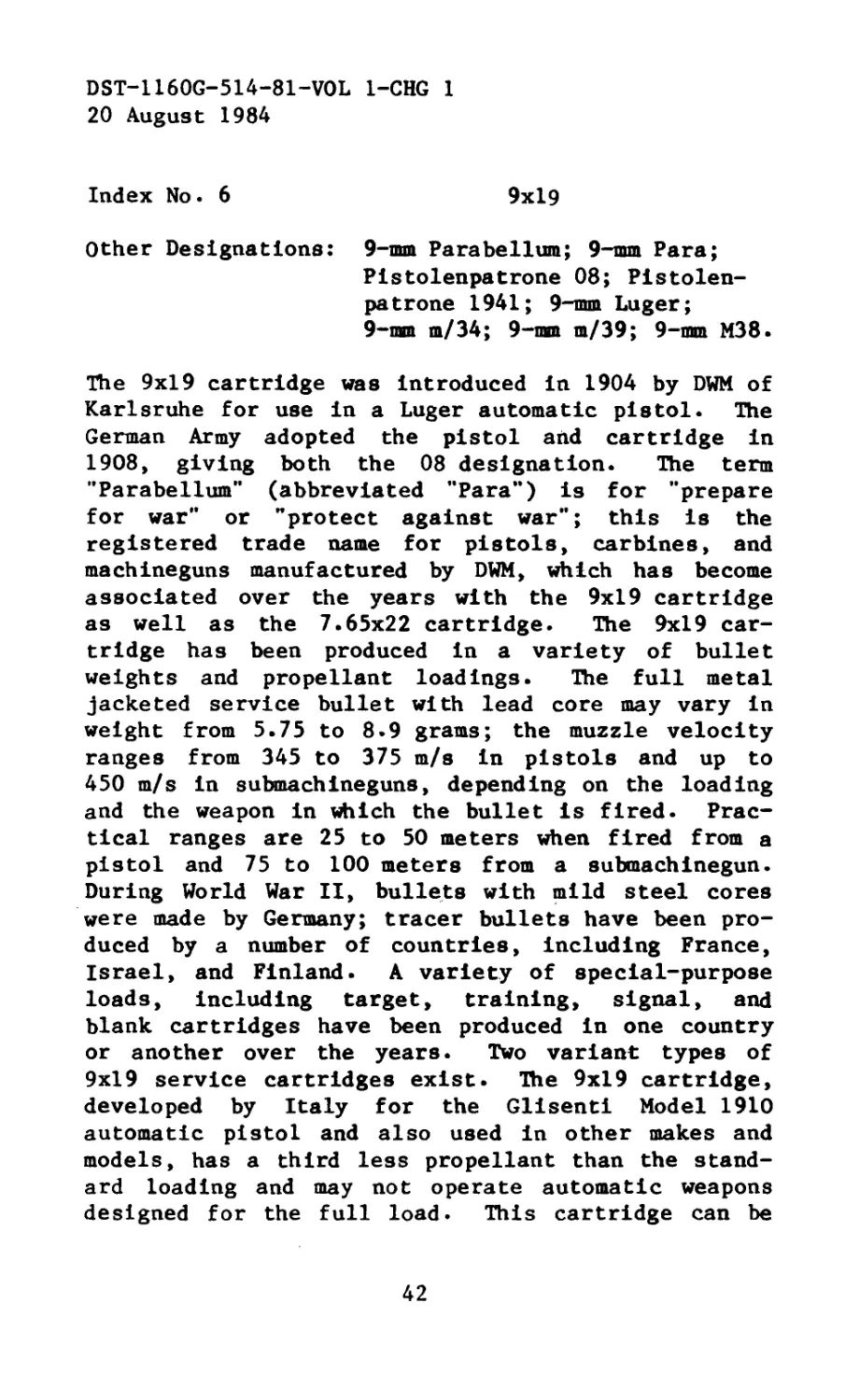
Index No. 6	9x19
Other Designations: 9-mm Parahelium; 9-mm Para;
Plstolenpatrone 08; Pistolen-
patrone 1941; 9-mm Luger;
9-mm m/34; 9-mm m/39; 9-mm M38.
The 9x19 cartridge was Introduced in 1904 by DWM of
Karlsruhe for use in a Luger automatic pistol. The
German Army adopted the pistol and cartridge in
1908, giving both the 08 designation. The term
"Parahelium" (abbreviated "Para") is for "prepare
for war" or "protect against war"; this is the
registered trade name for pistols, carbines, and
machineguns manufactured by DWM, which has become
associated over the years with the 9x19 cartridge
as well as the 7.65x22 cartridge. The 9x19 car-
tridge has been produced in a variety of bullet
weights and propellant loadings. The full metal
jacketed service bullet with lead core may vary in
weight from 5.75 to 8.9 grams; the muzzle velocity
ranges from 345 to 375 m/s in pistols and up to
450 m/s in submachineguns, depending on the loading
and the weapon in which the bullet is fired. Prac-
tical ranges are 25 to 50 meters when fired from a
pistol and 75 to 100 meters from a submachinegun.
During World War II, bullets with mild steel cores
were made by Germany; tracer bullets have been pro-
duced by a number of countries, including France,
Israel, and Finland. A variety of special-purpose
loads, including target, training, signal, and
blank cartridges have been produced in one country
or another over the years. Two variant types of
9x19 service cartridges exist. The 9x19 cartridge,
developed by Italy for the Glisenti Model 1910
automatic pistol and also used in other makes and
models, has a third less propellant than the stand-
ard loading and may not operate automatic weapons
designed for the full load. This cartridge can be
42
DST-116OG-514-81-VOL 1-CHG 1
20 August 1984
identified by the designation ”9-mm Gllsenti" in
the headstamp marking. The second variant is a DWM-
developed 9-mm Luger carbine cartridge. Identified
by its blackened cartridge case and the headstamped
code number 480D, this cartridge develops a high
pressure that may damage a pistol or Injure the
shooter. Its use should be restricted to weapons
for which it is designed.
^.The 9x19 is considered to be the most widely
distributed military cartridge in use. It has been
made by almost every country with cartridge-
production capability, with the exception of the
Soviet Union. Pistols using this cartridge include
the Belgian FN High Power, UK Model L9A1, Czechoslo-
vak Vz 68 and 75, French MAS Model 50 and MAB P15,
Hungarian Tokagypt, Italian Beretta M1951, Japanese
Model 57A, Swiss SIG Models 49 and 75, West German
Pl, H&K P9 and VP-70, and the Yugoslav Model 65.
Submachineguns include the Austrian Steyr Model 69,
Czechoslovak Vz 23 and 25, four models of the
Danish Madsen, French MAT Model 49, West German
MP 38 and 40, Israeli UZI, Italian Beretta M-38
series and Model 12, Romanian Model 1941, UK STEN
and L2 models, West German H&K MP 5 and Walther
Models MP-K and MP-L, and the Swedish Model 45b.
Index No. 7
11.43x19R
Other Designation: .455 Webley Revolver
This cartridge was adopted in 1897 by the United
Kingdom for the Webley service revolvers, Marks I
through VI. These revolvers and this cartridge
were used in both World War I and World War II. It
is now obsolete in the United Kingdom. Military
loads in this cartridge have a full metal jacketed
bullet weighing approximately 17 grams, fired at a
42.1
DST-1160G-514-81-VOL 1-CHG 1
20 August 1984
muzzle velocity of 186 m/s. Despite its low veloc-
ity, the heavy bullet Is a good man-stopper at
short range. Practical range for this cartridge is
25 meters.
This cartridge was developed from the .455 Enfield
Mark I cartridge, which differs in having a case
22 mm long. Under its English designation this
cartridge has been made both in the United Kingdom
(including Canada) and the United States. In addi-
tion to the Webley .455 service revolvers, both
Colt and Smith & Wesson have in the past made revol-
vers chambered for this cartridge.
Index No. 8	7.65x20
Other Designations: 7.65-mm French Long;
7.65-mm French Pistol;
7.65 L pour Plstolet,
7.65-mm MAS.
This cartridge was introduced in 1935 for the 1935A
and M1935S automatic pistols adopted by the French
Army. The French Model 1938 submachinegun also
fires this cartridge. The cartridge itself is very
close to the .30 caliber cartridge developed by the
United States in 1918 for the ’’Pedersen device,"
which made possible semiautomatic assault fire with
the M1903 Springfield rifle using short-range pis-
tol cartridges. The two cartridges can be readily
distinguished by the French-style headstamp marking
on the 7.65x20, which differs from the US headstamp
on the .30 Pedersen cartridge. The full metal
patched bullet weighs approximately 5.6 grams and
has a muzzle velocity of about 360 m/s. Practical
range is 25 meters for the pistol and 40 meters for
42.2
DST-116OG-514-81-VOL 1-CHG 1
20 August 1984
the submachinegun. In performance the 7.65x20 car-
tridge falls between the 7.65xl7SR and the 9x19 car-
tridge. Although replaced in 1950 for military use
by the 9x19 cartridge, this cartridge may still be
found in use for police and paramilitary purposes.
Index No. 9	9x20SR
Other Designations: 9-mm Browning Long;
9-mm Swedish Model 07.
This cartridge was designed by John M. Browning for
the Ml903 military automatic pistol, which was
produced by Fabrlque Nationale of Belgium and
adopted by Sweden as the M 07 pistol. It remained
in service until about 1940, when it was replaced
by the 9x19 cartridge in the M1940 Swedish pistol.
This cartridge was also used in other models of
pistols and submachineguns, but it is now obsolete
for military purposes. With a full metal jacketed
bullet weighing approximately 7 grams and a muzzle
velocity of about 335 m/s, the cartridge is not
quite the equal of the more widely-known 9x19
Parabellum cartridge. Its practical range is about
the same: 25 to 50 meters from a pistol and 75 to
100 meters from a submachinegun.
Index No. 10
9x20R
Other Designations: .38 S&W; .38 Colt New Police;
.38 Super Police; .380/200.
This cartridge was designed by Smith & Wesson
around 1877 for a pocket revolver for self-defense;
it was adopted by the United Kingdom as a military
cartridge prior to World War II, and it will accord-
ingly be found in military as well as commercial
42.3
DST-1160G-514-81-V0L 1-CHG 1
20 August 1984
loadings. With a bullet weight (military Mark II)
of 12.96 grams and a muzzle velocity of 180 m/s,
this cartridge has a practical range of about
25 meters. Aside from the Smith & Wesson and
Webley & Scott revolvers, many other US and foreign
revolvers have been made to fire this moderate-
energy but quite popular cartridge. The Webley &
Scott revolver has been replaced in the United
Kingdom as a military weapon by the Browning High
Power automatic pistol, firing the 9x19 cartridge.
42.4
DST-116OG-514-81-VOL 1
11 September 1981
Index No. 11
7.65x21
Other Designations: 7.65-mm Mannlicher and M1901 and M1915; 7.65-mm Mannlicher
Automatic.
Developed for the Models 1900 and 1901 Mannlicher automatic pistols, this cartridge was
moderately well known in Europe before World War II. Pistols for this cartridge were made in Spain
as well as Austria, and became popular in some South American countries. Although the guns and
cartridges are now practically obsolete, the cartridge is included here because of its similarity to
other service cartridges. With a bullet weight of approximately 5.5 grams and a muzzle velocity of
312 m/s, this cartridge has a practical range of 25 to 50 meters.
Index No. 12
8x21
Other Designation: 8-mm Nambu.
This cartridge was adopted in 1914 by the Japanese Army for the Type 14 Nambu automatic pistol.
It was also used in the Type 94 pistol and Type 100 submachinegun. Except for a very limited
postwar production in Japan and the United States, this cartridge was made only until 1945, and
only m Japan. Cartridges made up to 1945 have no headstamp; some made in Japan in 1961 are
headsumped J-AOA with a date of 61. Procurement in 1962 is also reported.
The 6.6-gram full metal jacketed bullet has a muzzle velocity of 325 m/s in a pistol; its practical
range is 25 meters in a pistol and 50 meters in a submachinegun. Guns and cartridges arc now
obsolete.
Index No. 13
7.65x22
Other Designations'. 7.65-mm Parabellum-Pistole; 7.65-mm Luger; .30 Luger.
This cartridge was introduced in 1900 by Deutsche Waffen und Munitionsfabriken of Karlsruhe for
the newly-developed Luger automatic pistol; the pistol and cartridge were adopted for service use
by Switzerland in 1903. The term “Parahelium” is, as has been noted, DWM’s trade name for its
weapons. The Spanish Llama automatic pistol has been chambered for this cartridge, as have some
types of submachineguns. Cartridges of this caliber made for the DWM Parabellum Carbine have a
heavier load than do pistol cartridges; the carbine cartridges are identified by a blackened case
and—if made by DWM—generally by the case number “471A” in the headstamp.
This pistol cartridge has a bullet weighing approximately 6 grams with a muzzle velocity of about
370 m/s; in addition to full metal jacketed bullets, soft-nosed bullets have been produced for
hunting. The practical range of the pistol is 25 meters: of the carbine. 100 meters. While obsolete as
a military cartridge, it is still produced for self-defense and sporting purposes.
43
DST-L160G-514-81-VOL 1
11 September 1981
Index No. 14
9x22R
Other Designation: 9-mm Japanese Revolver, Type 26.
This cartridge was introduced for the Japanese Army Type 26 (1893) service revolver, which
remained in use to the end of World War II. The cartridge is notable for the extreme thinness of the
cartridge rim-approximately 0.6 mm. These cartridges were made only in Japan: none has been
found with a headstamp.
With a lead bullet weighing approximately 9.7 grams, fired at a muzzle velocity of 195 m/s, the
9x22R is a dose counterpart of the 9x20R; like the latter, it has a practical range of 25 meters. This
gun and cartridge are now obsolete.
Index No. 15
7.5x22.5R
Other Designations:
This cartridge was introduced for the Model 1882 Nagent-type Swiss Army revolver, which
remained in service with some army elements even after adoption in 1903 of the 7.65-mm Luger
pistol. Although obsolete for military use, the cartridge is still manufactured in Switzerland. Several
types of bullets have been made for this cartridge, ranging in weight from 6.6 to 7.1 grams and with
a muzzle velocity of about 220 m/s. Practical range of this canridge is about 20 meters. This
cartridge is dimensionally similar to, and is interchangeable with, cartridges for the 7.5x22.5R
Norwegian and Swedish Nagant revolvers; the canridge’s origin can, however, be determined from
the difference in headstamps.
Index No. 16	9x23
Other Designations: 9-mm Largo; 9-mm Bayard; 9-mm Bayard Long; 9-mm Bergmann-Bayard;
9-mm Astra m/1921.
This cartridge was introduced in 1903 for the Bergmann Automatic pistol, (manufactured in
Belgium as the Bergmann-Bayard), which was adopted by the Danish Army as a service pistol in
1910. The Spanish-made Astra m/1921, Star Model A, Super Star pistols, and Model Z45
submachineguns all use this cartridge, under the 9-mm Largo (=Long) designation. With a bullet
weight of from 8.0 to 8.9 grams and a muzzle velocity of 360 m/s, this cartridge has a practical
range in a pistol of 25 meters; in a submachinegun, perhaps 50 meters. Except in Spain,
this cartridge is now obsolete for military purposes.
A cartridge very similar in dimensions to the Bergman-Bavard cartridge was used in the Steyr
M1911 automatic pistol, which was adopted as a service weapon by Austria-Hungary in 1911 and
by Romania in 1913. The rim of the Steyr cartridge is approximately 0.3 mm less in diameter, and
the bullet weight is about 7.65 grams. This cartridge is also obsolete as a military cartridge. The two
cartridges arc quite similar in performance.
44
DST-1160G-514-81-V0L 1-CHG 1
20 August 1984
Index No. 17	9x23SR
Other Designations: .38 ACP; .38 Super Automatic.
The designation .38 ACP is not to be confused with
the .380 ACP designation of the 9x17 Browning Short
cartridge; the two cartridges are quite different.
The 9x23SR was not developed as a metric-designation
cartridge; it was introduced in 1900 by Colt for
their Browning-designed .38 automatic pistol. In
addition to Colt, pistols chambered for this
cartridge were made by Webley & Scott. The 9x23SR
cartridge has approximately the same characteris-
tics as the 9x19 Luger cartridge. In 1929, a
higher-velocity load using the same cartridge case
was introduced as the .38 Colt Super Automatic
cartridge, and head stamps may be found with this
designation. Llama, Star, and Astra automatic
pistols have been made for this cartridge.
Index No. 18
11.43x23
Other Designations:
Cal. .45, Model 1911; .45 ACP;
.45 Automatic; .450 Automatic;
11.25-mm Norwegian Colt;
11.25-mm Model 14.
This cartridge was developed by John M. Browning in
1905 and adopted by the US Government for the
Model 1911 Colt automatic pistol designed by
Browning. In 1914, Norway adopted the pistol and
cartridge under the 11.25-nm designation. Argen-
tina has used this cartridge in Colt-type automatic
pistols and in the Bailester-Molina and HALCON
submachineguns; Mexico in the Obregon pistol; and
Brazil in the Model INA 953 submachinegun. In
addition to the Model 1911 pistol, the following
US military weapons have been chambered for this
45
DST-1160G-514-81-V0L 1-CHG 1
20 August 1984
cartridge:	Colt and Smith & Wesson Model 1917
revolvers; Thompson submachineguns, Models 1928 and
1928A1; Reising Models 50, 55, 'and 60 semiautomatic
guns; Ml, M1A1, М3 and M3A1 submachineguns; and
even a single-shot pistol with a stamped sheet
steel receiver Intended to be parachuted into
occupied countries for use by resistance movements.
Commercial pistols chambered for this cartridge
have been made in Spain. The 11.43x23 (.45 ACP)
cartridge is notable both for its stopping power
(it is the most powerful military pistol cartridge
in use today) and for its accuracy in the hands of
a well-trained shooter. With a bullet weight of
over 15 grams a muzzle velocity of 260 m/s, this
cartridge has a practical range in a pistol of
25 meters, and in a submachinegun of 50 meters or
greater. This cartridge has also been made with a
tracer bullet, which is identified by the red
bullet tip and, for identification by touch in
darkness, by a cross impressed in the bullet tip.
Index No. 19	11.43x23R
Other Designation: .45 Auto Rim.
Never a US military cartridge, this rinomed version
of the 11.43x23 cartridge was introduced in the
United States after World War I for police and
hunting use in Colt and Smith & Wesson Model 1917
revolvers; its purpose was to eliminate the
inconvenience of the half-moon steel slips that
enabled the rimless automatic pistol cartridges to
be ejected from the revolver cylinder. Other than
in case design this cartridge is identical to the
Model 1911 ball cartridge. This cartridge has been
manufactured by Brazil for military use.
46
DST-1160G-514-81-VOL 1-CHG 1
20 August 1984
Index No. 20	11.43x23.5SR
Other Designation: .455 Webley Automatic.
This cartridge was adopted by the British Navy in
1913 for the .455 Webley automatic pistol. The
cartridge, a counterpart of the US Model 1911
cartridge, proved more durable than the pistol,
which was soon replaced by the Model 1911 Colt
automatic pistol, chambered for the British car-
tridge. In performance this cartridge Is similar
to the .45 ACP cartridge, except for a somewhat
lower velocity. This cartridge is obsolete in the
UK service.
Index No. 21	7.62x25
Other Designations: 7.63-mm Mannlicher, Model 1896
or 1903; 7.65-mm Mannlicher
Carbine, M1896 or 1901; 7.65-mm
Borchardt; .30 Mauser Pistol;
7.63-mm Mauser Pistol; 7.62-mm
Type P; 7.62-mm Type 50;
7.62-mm Tokarev, M. 30.
A^This durable cartridge first appeared in 1893 for
the Borchardt self-loading pistol that was the
design forerunner of the Luger pistol. With only
minor changes in bullet weight and propellant
loading, this cartridge was also used in the
Models 1896, 1901, and 1903 Mannlicher pistols and
pistol-carbines. The same cartridge case but with
a distinctly heavier load was developed for the
7.63-mm Mauser Model 1896 military automatic pis-
tol, which earned a worldwide reputation. In 1930,
the Soviet Union adopted the Mauser cartridge,
under the designation 7.62-пкп Type P, for the
Tokarev TT-30 and TT-33 automatic pistols and later
47
DST-116OG-514-81-VOL 1-CHG 1
20 August 1984
for the Models PPD-40, PPSh-41, and PPS-43 sub-
machineguns* Although no longer used by Soviet
military forces, these weapons are found in eastern
Europe and worldwide. Other military weapons that
fire this cartridge are the German Model 1932
machine pistol; PRC Types 51 and 54 pistols and
Types 50 and 64 submachineguns; Czechoslovak
Models 24 and 26 submachineguns and Model 52
pistol; Polish Model 1943/52 submachinegun; North
Korean Type 68 pistol; Hungarian Model 48 sub-
machinegun; Yugoslav M49, M49/57 and M56 submachine-
guns and Spanish Astra Models 900 and 903 pistols.
Besides ball cartridges, API and tracer cartridges
have been made by the Soviet Union for submachine-
gun use. The muzzle velocity of the 7.62x25 is
400 m/s in the pistol and 450 m/s in the submachine-
gun. its practical range in a pistol is 25 to
30 meters; in a submachinegun, 100 to 150 meters;
and in a pistol-carbine, about 200 meters. Although
obsolescent as a military cartridge, the 7.62x25 is
still available conomerclally for police and sport-
ing use.
Index No. 22
9x25
Other Designations: 9-mm Mauser Pistol;
9-mm Mauser, Export Model,
9.08x25, Kai. 9 Mauser.
Reported to be the most powerful pistol cartridge
ever developed in Europe, this cartridge was
designed for the Mauser Model 1908 automatic
pistol. The Swiss ”SIG" and Hungarian Models 39M
and 43M submachineguns were also chambered for this
cartridge. It has been obsolete for military use
since the end of World War II. With a metal-
jacketed bullet weighing up to 9 grams and a muzzle
48
DST-1160G-514-81-VOL 1-CHG 1
20 August 1984
velocity of over 400 m/s, this cartridge has a
practical range in a pistol of up to 30 meters and
a submachinegun of up to 60 meters.
Index No. 23
8x27R
Other Designations: 8-mm Lebel Revolver;
8-mm Revolver M 1892;
8.3x27, 5-mm Lebel Revolver.
^Adopted in 1886 but used chiefly In the French
Lebel service revolver Model 1892, this cartridge
was generally replaced in the French military
service before World War II by the 7.65x20 MAS
cartridge. With a bullet weight of up to 9.6 grams
and a muzzle velocity of 260 m/s, this only moder-
ately powerful cartridge has a practical range of
25 meters. Other revolvers chambered for this
cartridge were made for commercial sale, among them
the Belgian-made Pieper and Bayard.
Index No. 24
9x29R
Other Designations: .38 Special; .38 S&W Special;
.38 Colt Special.
Under the designation ".38 Special," this cartridge
was introduced in 1902 by Smith & Wesson as an
improved military cartridge to replace the .38 Long
Colt cartridge. Although never adopted by the
United States as a regulation military cartridge,
this cartridge has been widely used for three
quarters of a century for police, guard, personal
protection, and competition use. Bullet weights
may range from 6.5 to 13 grams, but weights of
9.6 to 10.2 grams and muzzle velocities of 260 to
49
DST-1160G-514-81-VOL 1-CHG 1
20 August 1984
325 m/s are more common* A variety of special-
purpose bullets are made for police, hunting, and
target use. The cartridge has been widely adopted
by foreign countries for guard and police purposes.
The 9x29R cartridge is noted for its accuracy; this,
with its moderate recoil, gives it a practical
range in a revolver of perhaps 35 meters. In
addition to revolvers, both Smith & Wesson and Colt
have made automatic pistols that fire this car-
tridge. Foreign manufacturers in Germany, Belgium,
and Spain have made revolvers that fire this still-
popular cartridge.
Index No. 25
7.62x33
Other Designations: .30 Carbine; .30 Ml Carbine;
K7.62.
Introduced in 1941 for the Winchester-designed
semiautomatic Ml carbine, this cartridge is nearly
identical to the cartridge developed in 1906 for
Winchester’s .32 caliber self-loading rifle, a
cartridge that by 1920 had become obsolete for
sporting purposes because of its weak performance.
With a bullet weight of 7.2 grams and a muzzle
velocity of 580 m/s, this cartridge has a practical
range of about 150 meters; although the carbine
sights are graduated for ranges up to 300 yards,
its remaining energy at ranges over 150 meters is
not impressive. Tracer as well as ball cartridges
have been produced.
Aside from its use in various models of semiauto-
matic and automatic US carbines and their Japanese
counterparts, at least one commercial handgun has
been chambered for this cartridge. Although still
in limited use in foreign countries, it is obsoles-
cent as a military cartridge.
50
DST-1160G-514-81-VOL 1-CHG 1
20 August 1984
Index No* 26
7.92x33
Other Designations: 7.92x33 Kurz; PP 43.
^.Developed by Germany in 1941-1942, and thus a
contemporary of the US 7.62x33 cartridge, the
7.92x33 is essentially a shortened 7.92x57 Mauser
cartridge using a lighter bullet and is intended
for full-automatic fire at short to medium ranges
in the MP-43 and 44 assault rifles. With a bullet
weight of 8.1 grams and a muzzle velocity of
700 m/s, the practical range of 300 meters is
limited by the full-automatic fire mode of the
assault rifles. The guns and cartridge have been
obsolete since the end of World War II, except in
East Germany, where cartridge and assault guns
(designated Kz 43) have been produced.
Index No. 26a
5.45x39
Other Designations: 5.45-mm AK-74; AKS-74; RPK-74.
Introduced by the USSR in 1974 for use in the AK-74
and AKS-74 assault rifles and the RPK-74 light
machinegun, this cartridge has a low-drag bullet
design that provides better performance than the
7.62x39 cartridge. Ball and tracer types are
known. Bullet weight is approximately 3.4 grams.
Muzzle velocity in the assault rifle is 900 m/s and
in the light machinegun, 960 m/s. Practical range
in the assault rifle is 400 to 500 meters; in the
RPK-74 light machinegun, the effective range is
approximately 800 meters.
50.1
DST-1160G-514-81-VOL 1-CHG 1
20 August 1984
Index No. 27	5.6x39
Other Designation: 5.6 ’’Running Deer" cartridge.
Although not In use as a military cartridge, this
cartridge Is Included because It exists In a full
metal jacketed, spitzer bullet version of military
type for competition firing.
The 5.6x39 cartridge is based on the 7.62x39 case,
necked down to take a 5.6-mm bullet. It was
developed In the USSR In the 1950s for small-game
hunting and for competition firing at a range of
100 meters	on	the	"Running Deer" target.	The
cartridges	have	also	been made in Finland by	Lapua
and Sako.	With	a bullet weight of 2.8 grams	and a
muzzle velocity	of	1030 to 1060 m/s, this	is a
satisfactory cartridge for 200- to 250-meter target
shooting and, with a soft-nose bullet, for small
game hunting. No military application of this
cartridge is reported.
Index No. 28	7.62x39
Other Designations: 7.62-mm Soviet short; 7.62-mm
M 43; 7.62-mm Type 56; 7.62-mm
Model 60.
The 7.62x39 cartridge was introduced in 1943 by the
USSR as a counter-threat to the German 7.92x33
assault rifle cartridge. With a bullet weight of
approximately 8 grams and a muzzle velocity of
715 ш/s, it has somewhat more energy at short and
medium ranges than the German cartridge. Depending
on the type of weapon in which used, the cartridge
has a practical range of 300 meters in the ARM
assault rifle and an effective range of 800 meters
in the RPK light machinegun. The 7.62x39 is still
a standard infantry cartridge of the ECC; weapons
50.2
DST-1160G-514-81-VOL 1-CHG 1
20 August 1984
chambered for this cartridge include the Soviet SKS
carbine, AK-47 and AKM assault rifles, and Models
RPD and RPK light machineguns; the Czechoslovak
Model 52/57 rifle, Model 58 P and 58 V assault
rifles, and Model 52/57 light machinegun; the East
German MP IK and MP1KM assault rifles and LMGD and
LMGK light machineguns; the Polish PKM assault
rifle; the Finnish M60 and M62 assault rifles and
M60 light machinegun; the Yugoslav M59 and M59/66
rifles and M56 assault rifle; the Egyptian "Rashid"
rifle; and the Chinese Type 56 carbine, assault
rifle, and light machinegun. The 7.62x39 cartridge
has been produced throughout the ECC and in some
countries of the free world as well. In addition
to ball cartridges, API, tracer, and I-T types have
been made.
Index No. 29
7.62x39R
Other Designations: 7.62-nm Nagant revolver;
7.62-mm Russian revolver.
This cartridge was used in the Belgian-designed
Nagant revolver, which was adopted by the Czar’s
Army in 1895. The cartridge is unusual in that the
bullet is contained entirely within the case mouth.
This construction is demanded by the design of the
Nagant revolver cylinder, which moves forward when
the revolver is cocked, so that the mouth of the
chamber fits over the rear of the barrel while the
case mouth extends slightly into the barrel to
avoid escape of gas at the junction of cylinder and
barrel. Replaced in service in the USSR in 1930 by
the 7.62-mm TT-30 pistol, this gun and cartridge
were used during the Korean War; they are still
used to some extent for target shooting. Both the
cartridge and revolvers chambered to accept it have
also been produced outside the USSR. The lead
50.3
DST-1160G-514-81-V0L 1-CHG 1
20 August 1984
bullet weighs in the vicinity of 7 grams and has a
muzzle velocity of 290 m/s. The gun has a practi-
cal range of perhaps 25 meters.
Index No. 30
5.56x45
Other Designations: 2.23 Remington; 5.6x45.
A^The world’s first adopted service cartridge with a
caliber below 6 mm, this cartridge was developed by
Remington in the mid-1950s and introduced into the
US service a decade later for use in the AR-15 and
M16 assault rifles. The cartridge has recently
been adopted by NATO as a standard caliber, in
addition to the 7.62x51 cartridge. The US M193
ball bullet, with a weight of 3.56 grams, has a
muzzle velocity of 990 m/s and a practical range of
about 300 meters. Improved performance at longer
ranges can be achieved by use of a heavier bullet
with better ballistic characteristics, such as
Fabrique Nationale’s SS-109 bullet (US Designation
M855); this bullet, however, requires a faster
rifling pitch for proper performance than does the
M193 projectile. Rifles and light machineguns
firing the 5.56x45 cartridge include the Austrian
Sturmgewehr (assault rifle) 77, Belgian C.A.L. and
FNC, French F.A.M.A.S., Israeli Galil, Italian
Beretta M70, and the West German HK13, HK21, and
HK21A1. Cartridges are made in many free world,
Eurasian Communist, and Third World countries.
50.4
DST-1160G-514-81-VOL 1-CHG 1
20 August 1984
Index No. 31	7.62x45
Other Designations: 7.62-mm Czechoslovak Short;
7.62-mm M52.
This cartridge was developed by Czechoslovakia
after World War II and went into production in
1950. Like the Soviet 7.62x39, its design was
evidently inspired by the German 7.92x33 assault
rifle cartridge. With a bullet weight of 8.54 grams
and a muzzle velocity of 750 m/s, this cartridge
outperforms the Soviet 7.62x39 cartridge; its
practical range should be slightly greater. The
7.62x45 cartridge was used in the Czechoslovak
Model 52 rifle and light machinegun, but its use
was short-lived, as Czechoslovakia soon afterwards
(in 1957) modified its weapons to accept the
7.62x39 cartridge. Both ball and tracer types are
known. Never made elsewhere than in Czechoslo-
vakia, the cartridge has been obsolete for many
years. Closely resembling the 7.62x45 cartridge,
and easily confused with it, is a trial 7.5x45-mm
cartridge made in 1947 to 1949 for the Model ZK-472
semiautomatic rifle that never reached mass produc-
tion. The 7.5-mm cartridge has a bullet diameter
of 7.6 mm and a cartridge case that is 0.5 mm
smaller in diameter than the M52 case.
50.5
(Reverse Blank)
DST-116OG-514-81-VOL 1
11 September 1981
Index No. 32
4.85x49
Other Designation: 4.85-mm UK Assault Rifle.
Introduced by the United Kingdom for field trials, this is the smallest caliber military cartridge to
date that has been developed beyond the experimental state. The cartridge case is evidently derived
from the 5.56x45 case, necked down to 4.85 mm; the neck is lengthened to provide a seat for the
long bullet. Bullet weight is approximately 3.25 gyams; muzzle velocity ranges from 900 m/s in the
assault rifle to 930 m/s in the light support weapon. The high sectional density of the bullet is
intended to provide increased range and lethality over that of the 5.6x45 cartridge. Practical range is
estimated to be perhaps 350 meters. Ball and tracer canridges are reported. The only weapons
chambered for this trial cartridge are made by the United Kingdom.
Index No. 33	6.5x50.5SR
Other Designations: 6.5-mm Japanese; 6.5-mm Arisaka.
This Japanese-developed cartridge, which first appeared in 1897, is best known for its use in the
Model 38 (1905) Arisaka rifle and carbine and the Nambu machinegun. Although largely replaced
by the 7.7x58 cartridge, 6.5-mm guns and ammunition continued in service through World War П;
Chinese and North Korean troops used them in the Korean War. The long, round-nosed bullet,
which weigh* 9 gyams, has a cupronickel jacket and lead core and is fired at a muzzle velocity of
about 760 m/s. The relatively heavy bullet gives this cartridge a practical range of up to 400 meters.
Although obsolete as a military cartridge, cartridges in this caliber for hunting are reported to be
produced by Norma A/S of Sweden and can be identified by the headstamp. Japanese military
cartridges in this caliber have no headstamp; some, however, were produced in Japan for Thailand
with a Thai marking. The PRC also produced this cartridge in 1949-1951.
Index No. 34
8x50.5R (Lebel)
Other Designation: 8-mm Lebel.
Introduced by France in 1886 for the Lebel bolt-action rifle, this is the first high-velocity,
small-caliber (under 10 mm) military cartridge using smokeless powder to be adopted by any major
country. During Worid War I, automatic rifles and light and heavy machineguns firing this cartridge
were produced: canridges in this caliber have been made in many countries, including the United
States and the United Kingdom, for sporting as well as military use. Although replaced in the
French service in 1936 by the 7.5x54 cartridge, this 90-year-old canridge was stiO in use during
World War II, and has not, even now, completely disappeared from use. The 12.8-gram boat-tailed
bullet (Balle D) is of solid bronze; with a muzzle velocity of about 725 m/s, it has a practical range
in rifles of up to 350 meters and an effective range in machineguns of up to 1200 meters or more.
51
DST-116OG-514-81-VOL 1
11 September 1981
Index No. 35
8x50.5R (Steyr)
Other Designation: 8-mtn Austrian Mannlicher.
Despite the similarity in caliber and case length, the case dimensions of this canridge differ so much
from those of the Lebel cartridge that they are in no way interchangeable. This cartridge, with a
black powder propellant charge, was adopted by Austria-Hungary in 1888 in the Mannlicher
Model 88 Straight Pull rifle; it was also used, with a smokeless powder load, in the improved
Model 95 rifle and later in machineguns. This cartridge was also used by Bulgaria and Greece. This is
another of the standard cartridges of World War I; it saw limited use in World War II and is now
obsolete for military purposes, although sporting canridges are still produced in this caliber.
With a bullet weight of 15.8 grams and a muzzle velocity of 620 m/s, this cartridge has a practical
range in rifles of 300 meters and an effective range in machineguns of 1200 meters.
Index No. 36
7x51
This cartridge was produced about 1954 by Fabrique Nationale of Herstal, Belgium for use in a
7-mm FAL rifle produced for Venezuela. The results were not satisfactory, and FN discontinued
cartridge production about 1956. The rifles were rebaneled to 7.62x51 NATO. This canridge
utilized a 7.62x51 case necked down to cake a 7-mm bullet; it can be identified by the bullet
diameter. The canridge is listed in FN sales brochures; specimens are known with the FN hcadstamp
and dates of 52 or 56. Bullet weight is 9 grams, and muzzle velocity is 790 m/s. Its performance and
practical range should be about that of the 7.62x51 NATO canridge.
Index No. 37
7.62x51
Other Designations: 7.62 NATO; .308 Winchester.
Developed in the early 1950s and adopted as the US military rifle cartridge in 1954, this is a shorter
and lighter version of the 7.62x63 (.30-06) canridge. Despite the 12-mm difference in case length
and a reduced propellant capacity, this cartridge is almost, if not quite, equal to the 7.62x63. Used
in the US M14 rifle and M60 machinegun, this cartridge has been adopted as NATO standard and
has been produced by many NATO and non-NATO countries. Among the foreign rifles and
machineguns chambered for this cartridge are the West German G-3 rifle and MG-1 and MG-3
machineguns; Belgium’s MAG machinegun and its derivatives and FN’s FAL series; the French
AAT 52N1 machinegun and FR.F-F1 sniper’s rifle; UK’s L-4 series machineguns and L-37 and L-42
rifles; the Italian BM-59 rifle; the Czechoslovak VZ59N machinegun; and the Swiss SIG-510 rifle
(export version).
Although replaced in the United States for service rifle use by the 5.6x45, the 7.62x51 remains in
use for the M60 machinegun. The 9.72-gram bullet has a muzzle velocity of 872 m/s; its practical
range in the rifle is 350 meters, and its effective range in the machinegun is 1200 meters or greater.
52
DST-1160G~51.4-81.-V0L 1
11 September 1981
Index No. 38
7.35x52
Other Designations.* 7.35 Carcano; 735 Italian.
To provide a rifle and machinegun canridge with improved performance, Italy adopted this
cartridge in 1938 as a replacement for the older 6.5x52 cartridge. In the following year the
deteriorating international situation caused production of the new gun and cartridge to be
discontinued, and they were withdrawn from service. In performance the 7.35x52 is nearly the
equal of the 7.62x51 NATO cartridge; with an 8.3-gram bullet and a muzzle velocity of 867 m/s, к
has a practical range of perhaps 325 meters and an effective range of 800 meters. Weapons
chambered for this cartridge include the Model 38 rifle and carbine and the Breda Model 38 light
machinegun. Although used by Finland in the 1939 Russo-Finnish War, it was not used to any
extent in World War II and is obsolete as a military cartridge. Many weapons were sold as post-war
surplus in the Unied States. The cartridge is not currently made in either military or spotting
loadings.
Index No. 39
8x52R
Other Designations: 8-mm Type 66; 8-mm Siamese.
The Type 66 cartridge was introduced in 1923, replacing the Type 45 8x50R cartridge, which had
been in use since 1902. With a bullet weight of 11.7 grams and an estimated muzzle velocity of
725 m/s, performance of this cartridge is only moderate. Its practical range is approximately
300 meters in rifles, and its effective range is perhaps 1100 meters in machineguns. This cartridge
was used in Mauser-type rifles made at Tokyo Arsenal, in Manniicher Model 95 straight-pull rifles,
and in Madsen machineguns. The cartridge and guns have been obsolete since the end of World
War II.
Index No. 40
6.5x52.5
Other Designations: 6.5 Italian; 6.5 Mannlicher-Carcano.
This cartridge and Index Nos. 41 and 43 are quite similar in case dimensions and in performance.
The 6.5x52.5 cartridge was the first to appear; it was adopted in 1891 by the Italian Army for use
in the bolt-action Mannlicher-Carcano rifle and carbine, and it remained in service through World
War II. With a round-nosed, jacketed bullet weighing 10.5 grams and a muzzle velocity of 700 m/s,
this cartridge has a practical range of about 350 meters and an effective range of 800 to 900 meters.
In addition to the rifle and carbine, this cartridge was also used in the Breda Model 30 light
machinegun and the Fiat-Revelli Model 1914 heavy machinegun. Prior to 1940, sporting cartridges
were available in this caliber. It has been obsolete as a military cartridge since the close of World
War II but has seen some use (with soft-point bullets) as a sporting cartridge in war-surplus arms.
53
DST-1160G-514-81-V0L 1
11 September 1981
Index No. 41
6.5x53.5
Other Designations: 6.5-mm Greek Mannlicher; 6.5-mm Mannlicher-Schoenauer.
Introduced by Greece for use in the Model 1903 Mannlicher bolt-action rifle, this cartridge differs
only slightly in its case dimensions and configuration from the 6.5x52.5 Mannlicher-Carcano
cartridge. Index No. 40; identification can usually be established from the headstamp markings.
This cartridge also has a round-tioscd jacketed bullet that weighs 10.5 grams; at 715 m/s its muzzle
velocity is a bit higher than that of the preceding cartridge. The performance of the two cartridges is
about the same. Although now obsolete, military cartridges in this caliber were manufactured by
Fabrique Nationale in Belgium as recently as 1950, and sporting cartridges arc still manufactured in
Europe.
Index No. 42
7.65x53.5
Other Designation: 7.65 Mauser.
Another "durable” cartridge, the 7.65x53.5 was developed by Mauser for the Belgian Model 1889
rifle; Mauser rifles in this caliber were widely adopted in South America and by Turkey. Early bullet
design called for a round-nosed jacketed bullet weighing 11.25 grams and a muzzle velocity of
725 m/s; by 1940, this bullet had been replaced by a boat-tailed, pointed, spitzer-typc bullet of the
same weight with improved ballistic characteristics. A lighter, flat-based bullet has also been made
by FN; it has a 10-gram bullet traveling at a muzzle velocity of 830 m/s. With these bullets-the
7.65x53.5 cartridge is in a class with the 7.62x51 NATO cartridge. Although no longer used by
Belgium or Turkey, the 7.65x53.5 cartridge remains in service in Argentina, Bolivia, Colombia, and
Ecuador. In addition to ball cartridges, bullet types include AP, incendiary, tracer, and observation.
A potential hazard exists in handling the Argentine observation cartridge. Type R, since the bullet
contains an HE filler. The bullet can be recognized by its black tip and by a slight rattle that can be
heard when the cartridge is gently shaken. Over a dozen models of Mauser bolt-action rifles have
been chambered for the 7.65x53.5 cartridge.
Machineguns include FN’s Browning Automatic Rifle, Model 30, and Browning heavy machinegun,
as well as the Madsen machinegun, Models M28, M31, and M35. Military and sporting cartridges are
still available in this caliber.
Index No. 43
6.5x54R
Other Designations: 6.5-mm Dutch Mannlicher; 6.5-mm Romanian Mannlicher.
Introduced in 1892 for the Dutch and Romanian Model 1892 Mannlicher rifles, this cartridge is
identical to the 6.5x53.5 Greek Mannlicher cartridge except for the rimmed case. Bullet weights and
types, muzzle velocity, and performance characteristics are similar to those of the Greek Mannlicher
cartridge. Although obsolete in both countries as a military cartridge since the close of World
War II, commercial sporting ammunition is still manufactured in Europe-
54
DST-1160G-514-81-VOL 1
11 September 1981
Index No. 44	7.5x54
Other Designations: 7.5-mm Ml 929; 7.5-mm French.
This cartridge was developed from the short-lived French 7.5x58 M1924 cartridge, which was
developed from the 7.92x57 Mauser-style cartridge case, necked down to the smaller caliber. As a
result of accidents that occurred when 7.92x57 cartridges were inadvertently loaded and fired in
7.5-mm Ml924 light machineguns with worn chambers, the cartridge case length was reduced in
1929 by 4 mm so that the longer cartridge could not be chambered and fired. The M1924
machineguns were rebarreled and redesignated M1924/29. Thia cartridge was initially used only in
automatic weapons; however, starting in 1934, Lebel bolt-action rifles, Model 07/15, were
rebarreled in this caliber, and the MAS Model 1936 bolt-action rifle was developed to fire this
cartridge.
Since World War II three more weapons in this caliber have been added: the M49/56 rifle, the AAT
machinegun, and a sniper’s rifle. Model FR-F1A. With a bullet weight of 9.6 grams and a muzzle
velocity of 850 m/s, this cartridge is a counterpart in performance of the 7.62x51 NATO cartridge;
despite its caliber designation, indeed, the bullet of the 7.5x54 cartridge has the same diameter as
that of the 7.62x51 cartridge. Rifles and machineguns that fire this cartridge have been widely
distributed throughout areas of French influence. Tracer, AP, AP-T, short-range training, and a
variety of blank cartridges, as well as ball cartridges, have been produced in this caliber.
Index No. 45	7.62x54R
Other Designations: 7.62-mm Russian rimmed, 7.62-mm Russian Long, 7.62-mm Type 53,
7.62-mm Type 59.
This is another “durable” cartridge, having been adopted by Russia in 1891 for use in the
Mossin-Nagant bolt-action rifle. It has since been used in numerous ground and aircraft weapons,
and has been produced in a variety of bullet types. Bullet weights will vary from approximately
9 grams to 12 grams, depending on type; the muzzle velocity of approximately 840 m/s will vary,
depending on the weapon in which fired. The practical range of this cartridge in an infantry rifle is
about 350 meters; the effective range in a machinegun is 1000 to 1200 meters, depending on bullet
type. In performance it is directly comparable to the 7.62x63-mm (.30-06) cartridge. The 7.62x54R
cartridge has been manufactured in many countries, including (during World War I) the United
States. Current production includes most ECCs, Finland, Egypt, and Syria. Cartridge cases may be
made of brass, steel plate with copper or brass, or lacquered steel. A wide variety of bullet types
includes light and heavy ball, tracer, API, APLT, incendiary ranging, and competition and hunting
loads. Lapuan Patruunatehdas of Finland has necked down the 7.62x54R case to form a 5.6x54R
high-velocity cartridge.
Among Soviet weapons chambered for this cartridge are the Models 1891 and 1891/30 rifle and
Model 1944 carbine; the M1940 (Tokarev) rifle; Model DP, DPM, DT, DTM, SG-43, SGM, SGMB,
SGMT, RP-46, and PK-series machineguns; and Model 1910 Maxim machineguns. Finnish models
include the Model 1891. 1891/27, 1928, 1929/30. and 1939 rifles; Model 1920 (Madsen) and
1926/30 (Lahti) light machineguns; and Model 1909 Maxim machinegun. Other weapons include
the Czechoslovak Model 59 machinegun and the PRC Type 53 carbine. Type 53 light machinegun
and Types 53, 57, and 58 machineguns. Sporting cartridge loads in this caliber were produced about
1950 in the United States, and they are still manufactured in Europe.
55
DST-116OG-514-81-VOL 1
11 September 1981
Index No. 46	6-5x55
Other Designation*: 6.5-mm Norwegian Krag, 6-5-mm Swedish Mauser.
Adopted by Sweden in 1894, this cartridge was used in Swedish Mauser rifles and carbines,
Models 94, 96, and 38. The same cartridge was adopted by Norway for the Model 1894 and 1912
Krag-Jorgensen rifles. The military cartridge originally had a heavy, round-nosed jacketed bullet that
weighed approximately 10 grams and traveled at a muzzle velocity of 720 m/s. This cartridge has a
practical range in rifles of about 350 meters and an effective range of 1200 meters.
In later years both countries improved cartridge performance by changing to a boat-tailed, ogival
(p< inted) jacketed bullet weighing approximately 9 grams and fired at a muzzle velocity of 800 m/s.
In addition to ball ammunition, Sweden has also produced tracer and AP cartridges in this caliber.
This cartridge is extremely accurate, and is still widely used for hunting and target shooting. It has
Bern produced in Finland and other countries, as well as in Norway and Sweden. As a military
cartridge, however, it has been obsolete since the close of World War II.
In addition to the aforementioned rifles, the following Swedish weapons fired this
cartridge: Model 42 series (Ljungmann) rifles; Models 21 and 37 Browning automatic rifles;
Browning heavy machinegun; and Browning Model 42 machinegun.
Index No. 47	7.5x55.5
Other Designations: 7.5-mm Swiss; 7.5-mm Schmidt-Rubin; 7.54 mm.
Introduced in 1889 for the Swiss Schmidt-Rubin straight-pull, bolt-action rifle, this cartridge
originally had a paper-patched, round-nosed lead bullet that weighed 13.6 grams and had a muzzle
velocity of only 600 m/s. Improved bullets and propellants were developed as stronger rifle actions
were introduced, culminating in the Model 1911 cartridge, which has a boat-tailed, pointed
spitzer-t} pe bullet that weighs 11.3 grams and has a muzzle velocity of 780 m/s. Because of its more
powerful loading and slightly larger bullet diameter, the Model 1911 cartridge should not be fired in
Model 1889 rifles, in its range and effectiveness the 7.5x55.5 cartridge is equal to the 7.62x51-mm
NATO cartridge. Despite its caliber designation the Model 1911 .bullet, like the 7.5x54 French
bullet and the 7.62x51 NATO bullet, measures 7.8 mm in diameter. In addition to service ball
cartridges, tracer. AP, and competition firing loadings exist. The Swiss use or have used this
cartridge in die following weapons, in addition to the Model 1889 rifle: Model 1911 carbines and
rifles: Model 1931 carbine and rifle; Models 31/42, 31/43, and 55 rifle; Model 57 assault rifle;
Model 1925 light machinegun; Models 51, MG 710-1, and MG 710-2 machineguns; and Model 1911
heavy machinegun. This cartridge is still in use.
56
DST-116OG-514-81-VOL 1
11 September 1981
Index No. 48
7.7x56R
Other Designations: .303 British; .303 Enfield; 7.7 mm Japanese Type 92.
The 7.7x56R cartridge was adopted in 1888 for use in the Lee-Metford bolt-action rifle. At that
time the cartridge had a 13.9-gram round-nosed jacketed bullet, a propellant charge of compressed
black powder, and a muzzle velocity of 564 m/s. In 1892, the propellant was changed to cordite,
which is a double-base smokeless propellant in the form of long, thin, translucent strands. In 1914,
the bullet shape was changed to a long, pointed, jacketed bullet with an aluminum (or fiber) nose
filler ahead of the lead filler. This bullet, the Mark 7, has remained in use ever since. A variety of
other bullet types have been used, including tracer, AP, and incendiary. During World War II.
nitrocellulose propellants were also used; cartridges with this propellant can be identified by the
letter Z added to the bullet designation in the headsump marking. The 7.7x56R cartridge remained
in service in the United Kingdom until 1957, and it is still to be found in service on the borders of
the former British empire. In-performance it is very close to the 7.62x51 NATO cartridge that
replaced it. The Lee-Metford rifle was replaced in 1895 by the first of a long scries of models of
Lee-Enfield rifles and carbines that were chambered for this cartridge. Various models of Vickers.
Lewis, Browning, Hotchkiss, and Bren machineguns were also designed or adapted to fire this
cartridge. The 7.7x56R cartridge was used outside of the United Kingdom during World War II;
Italy used this cartridge in the Breda aircraft machinegun, and the Japanese Navy in Type 92 (Lewis
design) and Type 97 (Vickers design) machineguns. The Japanese loadings, which can be recognized
by the headstamp, include a high-explosive bullet that contains a PETN charge. This bullet,
identifiable by its blunt nose and a purple primer seal, must be considered as very hazardous in view
of its age.
Index No. 49
8x56R
Other Designations: 8-mm Hungarian Mannlicher; 8-mm Hungarian Model 31,
8-mm Austrian Model 30.
This cartridge was developed in 1931 and adopted in 1933 by Hungary to replace the 8x50.5R
(Steyr) cartridge. Although Hungary adopted the 7.92x57 Mauser cartridge in 1940, the 8x56R
cartridge was used to some extent during World War II; it is now obsolete as a military cartridge,
and no sporting loads are reported. With a bullet weight of about 13 grams and a muzzle velocity of
700 m/s, this cartridge has a practical range of 300 meters in rifles and an effective range of
1100 meters in machineguns. The principal weapons that chamber this cartridge are the Austrian
Model 1895 carbine (rebarrelled) and Model 305 light machinegun, and the Hungarian Model 35
rifle and Model 31 light machinegun.
57
DST-116OG-514-81-VOL 1
11 September 1981
Index No. 50	7x57
Other Designations: 7-mt". Mauser; Spanish Mauser.
This cartridge was developed by Mauser In 1892 as a smaller-
caliber version of the military 7.92x57 cartridge. It was
immediately adopted by Spain for use in Mauser bolt-action
rifles, to replace the 11.15x58R cartridge used In single-shot
Remington rifles. The 7x57's excellent ballistic qualities led
tc its wide acceptance, notably in South America and Mexico. As
originally loaded, the 7x57 military cartridge had a round-nose
jacketed bullet having a diameter of 7.19 mm and weighing
11.2 grams. Muzzle velocity was below 700 m/s. At some time in
the 1900s, performance was improved by substituting a pointed
spitzer-type bullet with a diameter of 7.29 mm. Military rifles
were rebarreled to accept the larger-diameter bullet. Fabrique
Nationale in Celgitm produces this cartridge with a jacketed,
pointed bullet weighing 9 grams and having a muzzle velocity of
855 m/s. Practical range is about 300 meters and effective
range, 900 meters.
Hunting rifles in this caliber have generally retained the
smaller bore diameter of the original 7x57 cartridge design. Use
of the larger-diameter military bullets in these rifles will
result in high—perhaps dangerously high—chamber pressures and
should be avoided. This cartridge has been produced in Europe as
a sporting cartridge, in a rimmed case version designated the
7x57R.
Index No. 51	7.92x57
Other Designations; 7.9-mm Maurer; 7.92-mm Maurer; 8-mm Mauser; 8x57 Mauser.
The original 7.92x57 cartridge, which was designed fur the German Model 1888 rifle, had a
round-nosed, jacketed bullet 8.1 mm in diameter and weighing 14.7 grams. Muzzle velocity was
630 m/s. When the Mannlicher-type Model 1888 rifle was replaced by the considerably more robust
Mauser Model 1898-series rifles and carbines, improvements in cartridge case, propellant, and bullet
were undertaken. The outcome was the appearance in 1903 of the “S'* cartridge, so designated
because of the “S” (“Spitzgeschoss," or “pointed bullet” > bullet. This short, pointed, jacketed
bullet weighed only 9.8 grams and had a muzzle velocity of 870 m/s-an extremely high velocity for
a military bullet at that time. The “S” bullet was 8.22 mm in diameter; this larger diameter, with
the heavier propellant loading, renders it hazardous to lire these cartridges in guns designed for the
Ml 888 cartridge. The practical range of this cartridge is about 400 meters; its effective range is from
800 to 1400 meters, depending on the bullet used and the type of weapon in which fired. A heavier,
beat-tailed bullet was used for machineguns in World War I.
This cartridge has been very popular in hunting loads as well; designated the 8x57, it is available in
two versions. The 8x57 J (“J ’=“l”and stands for “Infantry”) cartridges, which have an
8.1-mm-diameter bullet and a moderate propellant load, are designed for guns chambered for the
M1888 cartridge and are safe to fire in anv serviceable 7.92x57 rifle. The 8x57 JS cartridge has the
larger 8.22-mm bullet and should be used only in S-bore rifles. As was true of the 7x57 cartridge, a
rimmed 7.92x57 sporting cartridge, designated the 8x56 JR. is produced in Europe. This cartridge
should not be confused with the military 7.92x57R (Dutch) cartridge. Index No. 52.
58
DST-116OG-514-81-VOL 1
11 September 1981
In addition to numerous Mauser-pattem rifles, the following are some of the arms that are or have
been chambered for this cartridge: FN semiautomatic rifle; M49 Egyptian Hakim (Ljungmann)
rifle; German G-41 and G-43 rifles and MG08, MG 08/15, MG34, MG42, and FG42 machineguns
and copies; Czechoslovak ZB26, ZB30, and ZB37 machineguns and copies; and Spanish
ALFA Ml 944 and FAO machineguns.
The 7.92x57 cartridge, like the 7.7x56R and 7.62x63 cartridges, was widely used in both world
wars, and has not yet disappeared from service. The cartridge has been produced in many countries;
the United States produced this canridge in quantity for Nationalist China during World War II. The
ROC (and, from 1950-1952, the PRC) has also produced this cartridge. Many functional types have
been made over the course of years; heavy ball, AP, tracer, incendiary, and API. During World
War II Germany made an observation bullet, designated the B-Patrone, that indicated the point of
impact by a flash and a white smoke puff. This cartridge contains a firing pin and a small amount of
explosive. The cartridge can be identified by a black primer seal and by either a chrome-colored
bullet tip or a bullet with the rear half blackened.
Also during World War II, Japan produced 7.92x57 cartridges (which have no headstamp) in ball,
AP, incendiary, and HE loading?. The incendiary bullet contains WP and is recognized by a magenta
band ahead of the case mouth; the HE bullet, containing PETN, has a white band ahead of the case
mouth. These special-purpose bullets can inflict serious injury or death if handled injudiciously.
index No. 52
7.92x57R (Dutch)
Other Designations: 7.92-mm Dutch machinegun; 7.92-mm Dutch rimmed.
This cartridge case can be distinguished from a commercial 8x57 JR sporting canridge by the
unusually thick (1.6 mm) extraction rim. The cartridge will usually have a characteristic Dutch-style
headsump marking. The cartridge was adopted for use in the Models 1901 and 1908 Schwarzlose
heavy machineguns; it may also have been used during World War II in some Lewis light
machineguns. When adopted, the cartridge had a long, round-nosed jacketed bullet. By World War II
a boat-tailed, jacketed spitzer-type bullet was standard. Ball, AP, and AP-T types are known.
Practical and effective ranges are similar to those of the 7.92x57 cartridge, Index No. 51. This
cartridge and its guns were used in World War II but are now obsolete.
Index No. 53
6.5x58
Other Designations: 6.5-mm Mauser-Vergueiro; 6.5-nun Portuguese Mauser.
Used in the Mauser-Vergueiro bolt-action rifle. Model 1904, this cartridge had a long, round-nosed
jacketed bullet that weighed 10 grams and had a muzzle velocity of 715 m/s. This cartridge was
used until 1937, when it was replaced by the 7.92x57 Mauser rifle and cartridge. In performance it
is inferior to the 7.92x57 cartridge; its practical range is about 300 meters, its effective range 750 to
800 meters. Sporting cartridges have been loaded in this caliber, but it is obsolete as a military
cartridge. No military weapons other than the Mauser-Vergueiro rifle are known to have been
chambered for this cartridge.
59
DST-1160G-514-81-V0L 1
11 September 1981
Index No. 54
7.7x58
Other Designation*: 7.7 Japanese Type 99; 7.7 Japanese rimless; 7.7x58 Arisaka,
Introduced in 1939 for use in the Japanese Army’s Type 99 (Arisaka) rifle and Type 99 light
machinegun, this cartridge is a rimless version of the 7.7x58 SR Type 92 heavy machinegun
cartridge. Aside from having a rimless cartridge case, Type 99 cartridges differ in having flat-based
bullets that are slightly lighter in weight than the boat-tailed bullets of the semirimmed Type 92
cartridges, and in having a correspondingly reduced propellant loading that provides the same
muzzle velocity as the heavier cartridge-about 730 m/s. Bullet weights range from approximately
12 grams for ball bullets to 9.7 gyams for AP and tracer types. Practical and effective ranges and
identification color coding are the same as those given for the Type 92 cartridge, Index No. 55.
Aside from the Type 99 rifle and light machinegun, this cartridge was used in the Type 97 tank
machinegun and the Type 1 heavy machinegun. It is reported that Type 99 cartridges will also fire
in the Type 92 heavy machinegun. Although not in use as a military cartridge today, Norma
Projectilfabrik of Sweden manufactures hunting cartridges in this caliber for the American market.
index No. 55
7.7x58 SR
Other Designations: 7.7-mm Japanese Type 92; 7.7-mm Japanese semirimmed.
This canridge was adopted in 1932 for the Type 92 heavy machinegun to provide improved
performance over that of the 6.5x50.5 SR cartridge; it did not, however, replace the latter cartridge,
which continued in service to the close of World War II.
The 7.7x58 SR cartridge has boat-tailed, jacketed, spitzer-type ball and AP bullets, while tracer,
incendiary, and HE bullets have long, flat-based Spitzer bullets. Bullet types are identified by a color
band on the bullet ahead of the case mouth: pink for ball cartridges, green for tracer, black for AP,
magenta for incendiary, and purple for HE. The HE bullet can be further identified by its flat tip.
The incendiary bullet contains WP, and the HE bullet contain* PETN; a minimum of handling and a
maximum of caution are recommended. Aside from the Type 92 heavy machinegun, the
semirimmed cartridge is also used in Type 89 fixed and flexible aircraft machinegun*. The practical
range of the 7.7x58 and 7-7x58 SR cartridges is about 350 meters; the effective range, which will
vary with the type of cartridge and weapon in which used, is from 700 meters to 1200 meters. The
7.7x58 SR cartridge was made in the PRC in 1951 for use during the Korean War; the cartridge and
weapons have been obsolete ever since. No sporting or hunting loads are known, as this was
exclusively a machinegun cartridge.
60
DST-1160G-514-81-VOL 1
11 September 1981
Index No. 56
8x58R
Other Designation: 8-mm Danish Krag.
This cartridge was adopted by Denmark in 1889 for the Model 1889 Krag-Jorgensen bolt-action
rifle. As with other cartridges of the period, the bullet was originally a long, round-nosed jacketed
bullet with a weight of 15.3 grams and a muzzle velocity of about 620 m/s. In 1908, this bullet was
replaced by a boat-tailed, spitzer-type bullet weighing 12.7 grams and having a muzzle velocity of
770 m/s. This cartridge remained standard for ground troops until the 8-mm rifle went out of
service. The Danish Navy, which was armed with the single-shot 8-mm Remington rifle, continued,
however, to use the lower-pressure Model 1889 ammunition. During the 1930s, tracer and AP
bullets were introduced into service. The practical range of the M1908 bullet is about 350 meters;
the effective range is 900 to 1000 meters. Although the weapons and cartridge became obsolete as
service weapons at the close of World War II, a half-million 8-mm cartridges were made in
1959-1960 for use in Greenland, with cartridge cases manufactured by Norma A/S of Sweden.
Cartridges in this caliber have also been mede in Norway, in Germany, and, in 1916-1917, under
contract in the United States. Sporting and target loads are still manufactured by Norma A/S.
In addition to Krag-Jorgensen Model 1889 rifles and carbines and Remington M 1867/1893 rifles,
this cartridge was also used in Madsen light machineguns, Models 1904 thru 1939.
Index No. 57
8x59RB
Other Designations: 8-mm Breda; 8-mm Model 1935.
Introduced in Italy in 1935, this cartridge is unusual in that it was developed for and used only in
machineguns. With a bullet weight of 13.4 grams and a muzzle velocity of 755 m/s. the boat-tailed,
jacketed spitzer-type ball bullet has an effective range of over 1200 meters.
Incendiary, AP-T, and AP bullets have also been developed. These cartridges were used in the Fiat
Model 1935 and Breda Model 1937 and 1938 machineguns, which were used through World War II
and remained in service well into the postwar period (until about 1960). Military ammunition in
this caliber is still available.
Index No. 58
7.92x61 RB
Other designations: 7.92-mm Norwegian machinegun; 7.92x60.8.
This cartridge, like the 8x59 RB, was developed for and used only in a machinegun—the Norwegian
Model 29 Browning heavy machinegun. With a boat-tailed, jacketed spitzer-type bullet weighing
14.2 grams and having a muzzle velocity of approximately 760 m/s, this cartridge has an effective
range of over 1200 meters. Although in use from about 1929 through Wotld War II, this cartridge is
now obsolete for service use. No weapons other than the Browning machinegun are known to have
been chambered for this cartridge, nor is it known to have been made outside of Norway.
61
DST-1160G-514-81-VOL 1
11 September 1981
Index No. 58a
11.35x62
Other Designation: 11.35-mm Madsen.
The 11.35x62 cartridge was designed by Dansk Industri Syndikat, a
Danish firm, and developed by Kynoch, Ltd., in the United
Kingdom, for use in the 11.43~mm Madsen machinegun. Although the
gun never achieved widespread popularity, it was adopted by
Argentina. Cartridges in this caliber were made in the 1930s by
Kynoch, and in 1940 to 1946 by Argentina. Bullet weight is
19.83 grams and muzzle velocity, 850 m/s. Kynoch production
included ball, AP, tracer, and a smoke tracer-incendiary type
with a white phosphorus filler. Kynoch*s color coding for these
types is as follows: Ball—no color tip; AP—green bullet tip;
tracer—red bullet tip; and smoke tracer (WP filler)—blue tip.
Index No. 59	7.62x63
Other Designations: US caliber .30; caliber .3006; caliber .30 Springfield.
As introduced in 1903 for the Model 1903 Springfield bolt-action rifle, this cartridge had a case
length of 65 mm and used the same long, round-nosed jacketed bullet as its predecessor, the
caliber .30 Krag-Jorgensen rifle. The muzzle velocity was 670 to 700 m/s. In 1906, as a result of the
demonstrated effectiveness of France's pointed Balle D bullet and Germany’s S-type spitzer bullet, a
flat-based, jacketed spitzer-type bullet weighing 9.72 grains was adopted, and the cartridge case
length was reduced by 2 mm to accommodate the new bullet. This cartridge was designated
Model 1906. Its muzzle velocity was 816 m/s. To accommodate the shorter cartridge case,
Model 1903 rifles were recalled from service and modified.
During World War I, AP. tracer, incendiary, and even explosive bullets were developed; all were
dropped at the end of the war except for tracer and AP types, on which development continued. In
1925, a heavy, boat-tailed spitzer bullet, designated Ml, replaced the M1906 as standard. This
bullet, designed for long-range machinegun fire, weighed 11.2 grams and had a muzzle velocity of
792 m/s. In 1940, the Ml bullet was dropped in favor of a flat-base 9.73-gram bullet with a muzzle
velocity of 835 m/s. During World War II, AP-T and API types were widely used. Although replaced
in the US service by the 7.62x51 cartridge in 1957, this cartridge is still in wide use throughout the
world. The practical range of this cartridge is 350 meters; effective range (depending on the weapon
and cartridge used) is 900 to 1500 meters.
Weapons chambered for the 7.62x63 cartridge include the US Model 1903 series. Model 1917. and
Ml rifles; Model 1918 series automatic rifles; Model 1917 series. Model 191-9 series, and M37
machineguns; Belgian FN Model 49 rifle and Model D automatic rifle; and Mexican Model 1954 rifle
and Model RM-2 Mendoza light machinegun. Cartridges in this caliber are still manufactured in
many countries in both military and sporting loads.
62
DST-1160G-514-81-VOL 1
11 September 1981
Index No. 60
8x63
Other Designation: 8-mm Swedish Machinegun.
This cartridge was adopted in 1932 as a machinegun cartridge; in 1940, a rifle was developed that
also used it. The boat-tailed, jacketed spitzer-type ball bullet weighs 14.2 grams and has a muzzle
velocity of 750 m/s; tracer, AP, and API versions are also known. Its performance should be
identical to that of the 7-62x63 cartridge, which it closely resembles. Since the bullet diameter is
8.2 mm, caution must be exercised not to attempt to fire this cartridge in a weapon chambered for
the US cartridge; the resulting overpressure could destroy the weapon and kill or injure the shooter.
Identification can be definitely established from case and bullet dimensions and headstamp
marking. This cartridge was in use through World War II but is now obsolete. It is not known to
have been made elsewhere than in Sweden. Weapons chambered for this cartridge include the
Swedish M40 rifle and machineguns M 14/29, M36-series, and M-42.
Index No- 61
13x64В
Othet Designations: 13-mrn Type 2 Aircraft Machinegun; 13-mm MG-131.
This World War II cartridge was developed in Germany in the 1930s for the Rheinmetall-Borsig
MG-131 aircraft machinegun; Japan made this cartridge for use in the Japanese version, the Type 2
aircraft machinegun.
German-made cartridges are readily identifiable by the typical hcadstamp marking; Japanese
headstamp markings are not known, but they may be navy markings similar to the 13.2x99
cartridge- Cartridge cases are usually electric-primed, but early percussion-primed cases are known.
Both countries used explosive cartridges: the German high-explosive tracer and high-explosive
incendiary tracer can be recognized by the yellow projectile body and the point-detonating fuze,
marked AZ 1532. Japanese HE-T projectiles have a red body with brown band; the HE projectiles
have a maroon, or rust-colored body. The fuze is a simple air-gap type. The Japanese incendiary
projectile, which contains WP, has a yellow body. Appropriate precautions should be taken if it is
necessary to handle known or suspected explosive ammunition. Neither the German nor the
Japanese guns or ammunition are reported in use since the close of World War II.
Index No. 62
12.7x77
Other Designations: .50 BAT; .50 Spotter-Tracer.
The United States introduced this shortened version of the US 12.7x99 cartridge about 1953 to
provide a spotting cartridge with a good trajectory match for the US 106-tnm M40-series recoilless
rifle, generally known as the BAT. A practice (ball) bullet is identified by an olive-green bullet tip;
the M48-series spotter-tracer bullet has a yellow and red color coding, and the bullet tip appears
hollow. These cartridges are used only in the US M8-series spotting rifles, which are still in service in
several countries. These cartridges cannot be fired in standard 12.7x99 machineguns. Because of the
friction- and impact-sensitive nature of the spotting dement, a degree of caution should be observed
in handling this cartridge. The 12.7x77 cartridge has been made in the United Kingdom,
Spain, and Japan, as well as in the United States.
63
DST-116OG-514-81-VOL 1
11 September 1981
Index No 63	12.7x80
Other Designation: 0.5 in Vickers.
Developed by the United Kingdom in 1922, this is the Tint of the modern .50-caliber cartridges to
appear. Although very close in case dimensions to the 12.7x81 SR cartridge, it can be identified by
its smaller rim diameter of 18.2 mm. The two cartridges are not interchangeable. The cartridge was
adopted as the United Kingdom’s standard heavy machinegun cartridge and was used in 0.5-in
Vickers machineguns, Mark 1 through Mark 7. Ball, AP, AP-T, and incendiary cartridges are
reported. With a bullet weight of 36.6 grams and a muzzle velocity of 750 m/s, performance of this
cartridge is distinctly inferior to that of the US 12.7x99 cartridge. Although widely used early in
World War II, the guns and ammunition were eventually replaced by US 12.7x99 materiel, and were
obsolete at the end of the war. A related cartridge is the more powerful 0.5 in Vickers-Armstrong
high-velocity cartridge, 'levciopcd in 1925. which is identified by its semirimmed cartridge
case-120 mm long and nearly 25 mm in rim diameter-and its long tapered shoulder. This cartridge
was used in the long-barreled, water-cooled Vickers-Armstrong Class D antiaircraft guns. It had a
bullet weight of about 45 grams and a muzzle velocity of 925 m/s. Despite this impressive
performance, and some use by China and the Japanese Navy before World War II, production of this
cartridge is reported to have ceased in 1939.
Index No. 64	12.7x81 SR
Other Designations: .5 in Vickers-Armstrong V/565; 12.7 mm Breda; 12.7. mm Japanese
HO-103.
This cartridge was developed in 1924 as the 0.5 in Vickers-Armstrong V/565 cartridge, for use in an
air-cooled, aircraft machinegun, it can be distinguished from the preceding cartridge by the
19.5-min diameter of the cartridge rim. This cartridge was adopted in Wotld War II by Italy for use
in the Breda-Safat and Scotti l-F aircraft machineguns and by Japan for the HO-103 aircraft
machinegun; no UK use during the war is known. Italian and Japanese loadings included HE
projectiles in addition to ball, AP, and tracer cartridges. Italian explosive projectiles have a brass
nose fuze; the brass-clad steel projectile body may be red, yellow, or blue. An incendiary bullet,
containing WP, is identified by a blue bullet tip, while an AP1-T bullet has a white tip. All
cartridge cases will have an Italian-type headstamp marking, such as SMI/939 or BPD/41. In
addition to ball and AP-T types, Japanese loadings included an HEI type with a two-piece,
flat-tipped brass fuze, and a fuzeless HEI bullet that is identified by a flat bullet tip and a purple
band ahead of the case mouth. The body of the bullet is of brass. Japanese cartridges have no
headstamp marking. Safety precautions apply if any of these types must be handled, since they
contain PETN, a powerful and sensitive explosive. Bullet weight, velocity, and performance of each
cartridge are similar to those given for the preceding 12.7x80 cartridge. The guns and cartridge have
been obsolete since the close of World War II.
64
DST-116OG-514-81-VOL 1-CHG 2
29 May 1987
Index No. 65	7.92x94
Other Designations: 7.92-mm PzB 38; Patrone 318.
Recognizable by its extremely large case diameter (21 mm) In proportion
to the small bullet diameter, this cartridge was developed by Germany
In 1938 for shoulder-fired, single-shot antitank rifles, the PzB
(Panzerabwehrbuechse) 38 and 39. The service cartridge, designated
Patrone 318, has a jacketed bullet Identified by a black tip. The
bullet contains a tungsten-carbide core and a tear-gas filler, as well
as a tracer. A cartridge with an ordinary ball bullet was used for
training. Headstamp markings are normal German style. Bullet weight,
muzzle velocity, and performance data are not available. This car-
tridge saw service In the early part of World War II, but It appears to
have been dropped from service due to Its lack of effectiveness at any
but close ranges. The gun and the cartridge have been obsolete since
the early 1940s.
Index No. 66	15x96
Other Designations: 15-mm Mauser; 15-mm MG 151.
Developed In Germany In 1934-1936 for the MG 151 aircraft machinegun,
the cartridge was originally percussion-primed; In 1940, an electrlc-
prlmed version was developed. With a projectile weight of 59 grama and
a muzzle velocity of 960 m/s, this was a formidable cartridge; a
tungsten-carblde-core, AP bullet Is reported to penetrate 38 mm of
steel armor at a range of 200 meters. In addition to AP and tracer
bullets, three HE projectlies were used; these can be Identified by the
brass nose fuze, Model AZ 1551. Projectlie bodies may be yellow or
unpainted. Safety precautlona should be observed In handling these
ammunition types.
Some MG 151 guns were used by Italy and Japan, but no manufacture of
ammunition is reported. Guns and ammunition have been obsolete since
the close of World War II.
Index No. 67	12.7x99
Other Designations: Caliber .50 Browning Machinegun (BMG); 0.5 In
Browning.
^.The United States Initiated development of this' cartridge after World
War I for antiarmor and antiaircraft use: it was soon adopted for
aircraft machineguns as well. Essentially a scale-up 7.62x63
cartridge, Its bullet weight of 46 grams and muzzle velocity of
865 m/s, combined with Its accuracy and reliability, make It very
effective against lightly	protected targets. AP, tracer, and
Incendiary bullets are available; no explosive bullets are made In this
caliber. The 12.7x99 cartridge Is produced by many Western countries
and In Japan, Saudi Arabia, Israel, and Egypt as well. The United
Kingdom also makes spotting cartridges In this caliber for the L21A1
spotting machinegun. All cartridges, regardlesa of where manufactured,
will function In the Browning 12.7-mm (caliber .50) М2 and М3 series of
machineguns. Guns and cartridges are widely used and are expected to
remain In service well Into the future. New weapons chambered for this
cartridge Include the US GECAL 50 Gatling aircraft machinegun and new
US semiautomatic and bolt action sniper rifles developed by Barrett
Firearms Manufacturing Co., Napco International, Inc., and Small Arms
Development and Testing Company.
65
DST-1160G-514-81-VOL 1-CHG 2
29 May 1987
Index No. 68	13.2x99
Other Designations: 13.2-mm Breda; 13.2-mm Vickers Armstrong;
13.2-mm Hotchkiss; 13.2-mm Japanese Type 93;
13.2-mm Japanese Type 3.
This cartridge was made in the United Kingdom by Kynoch, Ltd., as
early as 1926 for use in a Hotchkiss machinegun. During World
War II, the 13.2x99 cartridge was used in several machineguns:
the UK Vickers-Armstrong, the French Hotchkiss, the Italian
Breda, and the Japanese Type 93 and Type 3 guns. With'a bullet
weight of approximately 51 grams and a muzzle velocity of
800 m/s, the 13.2x99*s performance approached that of the US
12.7x99 (caliber .50) cartridge. Although most bullets were of
conventional types, Japan made a HEI bullet that contained PETN
as well as an incendiary. This cartridge can be identified by a
flat bullet tip and a yellow primer annulus. The headstamp will
be a typical Japanese Navy headstamp, with Western date but with
place of manufacture indicated by a Japanese syllabic character.
Caution should be exercised if the cartridge must be handled.
French and Belgian cartridges may be as short as 96 mm in length,
and German cases, with an even shorter case neck, may measure as
short as 93.5 mm. The guns and ammunition are not reported in
use since the close of World War II.
Index No. 69
13.9x99B
Other Designation: 0.55 in Boys Antitank Rifle.
This cartridge was developed by the United Kingdom in 1935 for
the Boys Antitank Rifle. The 60-gram steel-core projectile had a
muzzle velocity of 758 m/s and a reported penetration of 21 mm of
steel at 274-meters range. This performance proved Inadequate
during World War II, and the gun and cartridge were obsolete by
the end of the war. This cartridge was used in the Mark 1,
Mark 1*, and Mark 2 Boys rifles.
Index No. 70
15x105
Other Designations: 15-mm Czechoslovak ZB60; 15-mm M1938;
15-mm BESA.
This cartridge was developed by Czechoslovakia and used in the
ZB60 (M1938) heavy machinegun and in a single-shot Czechoslovak
antitank rifle. The cartridge was also used in the pre-World
War II British-made 15-mm BESA MK1 machinegun, a copy of the
Czechoslovak design. With a bullet weight of 74 grams and a
muzzle velocity of 960 m/s, the AP bullet could penetrate 20 mm
of steel armor at a range of 250 meters. Czechoslovakia also
made an HE-T cartridge, which can be identified by a flat-tipped
66
DST-1160G-514-81-VOL 1-CHG 2
29 May 1987
projectile with a brass nose that extends rearward
about 24 mm. The United Kingdom made AP cartridges
In this caliber before World War II, but no manu-
facture of ammunition In either country after 1942
Is reported. During World War II, Germany made
cartridges with a shorter case neck, and a case
length of only 101 mm.
Index No. 71
7.92x10⁷
Other Designations: 7.92-mm Polish Antitank;
7.92-mm Maroszek.
Designed In 1935 by Jan Maroszek, a professor at
Warsaw Polytechnic University, this cartridge was
developed for use In a shoulder-flred, bipod-
mounted antitank rifle, a counterpart to the German
PzB 38 and 39. With a bullet weight of 12.8 grams
and a muzzle velocity of 1275 m/s, It was effective
at ranges of 50 to 100 meters against armor 22 to
25 mm In thickness. Its penetration, however,
dropped off sharply at longer ranges. The gun and
cartridge were used by Germany In the early part of
World War II; Germany made cartridges In this cali-
ber In 1940—possibly in occupied Poland. Many
were turned over to Italy for use during the war.
As with the 7.92x94 cartridge, neither the gun nor
the cartridge survived World War II.
Index No. 72	12.7x10⁸
Other Designations: 12.7-mm Soviet;
12.7-mm Type 54.
Developed in 1938 by the Soviet Union for the DShK
M38 heavy machinegun, this cartridge has a bullet
weight of about 50 grams and a muzzle velocity of
67
DST-1160G-514-81-V0L 1-CHG 2
29 May 1987
about 825 m/s; these figures will vary depending on
bullet type. Because of the heavier bullet,
performance is marginally better than that of the
12.7x99 cartridge. Types of the 12.7x10⁸ cartridge
Include API; API-T; HE-T Type MDZ and an HEI
Type ZP. This last type Is Identified by Its flat-
tipped, hollow-point projectlie, which has an
Internal air-gap fuze. Though not known to be In
current use, this cartridge should be handled with
caution If found, since It contains an explosive
charge of PETN. The Type MDZ Is Identified by Its
all-red bullet with a visible seam 7 mm below the
bullet tip. This bullet contains an HE charge of
RDX and aluminum powder and, If found, should be
handled with great care. The 12.7x10⁸ cartridge Is
made in many Communist countries and In at least
one other country—Egypt—as well. Both brass and
lacquered-steel cartridge cases are In use. This
cartridge Is used in the Soviet DShK M38/46 machine-
gun, NSV machinegun and Model A12.7P aircraft
machinegun, the Czechoslovak quad-mount M53 antiair-
craft machinegun, and the Chinese Type 54, Type 77,
and Type W-85 heavy machineguns. A rimmed version
of this cartridge, the 12.7xl08R, was used In the
Soviet ShVAK 12.7 machinegun at the opening of
World War II and, briefly, In the M1938 antitank
rifle. The rimmed cartridge case had a longer
shoulder than the rimless version, and although
both types used the same bullets, they were not
Interchangeable. The ShVAK and Its ammunition
disappeared from the scene early In World War II,
but 12.7x10⁸ machineguns and ammunition remain in
use In many countries of Europe, Asia, and Africa.
68
DST-116OG-514-81-VOL 1-CHG 2
29 May 1987
Index No. 73	14.5x114
Other Designations: 14.5-mm Soviet Machinegun;
14.5-mm Chinese Type 56.
This cartridge Is noteworthy In that It started Its
service life as an antitank rifle cartridge; the
antitank rifles became obsolete but the cartridge’s
excellent ballistic characteristics led to develop-
ment of a heavy machinegun to take advantage of the
200-gram bullet weight and 1000-m/s muzzle velocity.
Cartridge types Include API; API-T; I-T; and HE-T
Type MDZ. The latter type, which contains a HE
charge of RDX and aluminum powder, can be Identi-
fied by the all-red bullet with a joint or junction
visible 7 mm from the bullet tip. (Caution: This
cartridge Is hazardous, and safety precautions must
be observed.)
The 14.5x114 cartridge was used In the PTRS and
PTRD antitank rifles during World War II and, to a
limited extent, in Korea; these guns are now obso-
lete In the USSR. The cartridge Is used In the
ZPU-1, ZPU-2, and ZPU-4 antiaircraft machinegun
systems, which use the KPV machinegun, and In the
Chinese Type 56 heavy machinegun. As Is true of
the 12.7x10⁸ cartridge, 14.5x114 cartridges are
made In many Communist countries and In Egypt as
well. Both brass and lacquered-steel cartridge
cases can be found. Use of the guns and cartridges
Is widespread both within and outside of the
countries of manufacture.
68.1
DST-116OG-514-81-VOL 1-CHG 2
29 May 1987
J^Index No. 74	15x115
Other Designation: 15-mm BRG Machinegun.
This weapon and Its ammunition were developed In
the 1980s by Fabrlque Natlonale of Liege, Belgium
to fill a free world gap between 12.7- and 20-mm
weapons. The purpose was to develop a weapon and
ammunition system retaining many features (such as
cost and weight of the 12.7-mm М2 HB) and approach-
ing 20 mm in terms of performance and effective-
ness. At the same time, Fabrlque Natlonale was
determined to produce a free world alternative to
the Soviet 14.5-mm KPV machinegun that would be
superior In performance. The BRG-15 heavy
machinegun, along with Its ammunition, Is expected
to enter mass production by the end of the 1980s.
Ammunition types currently Include APDS, API, APEI,
TP, and AP.
68.2
DST-1160G-514-81-V0L 1
11 September 1981
SECTION IV
MARKING PRACTICES BY COUNTRY
A.	GENERAL
1.	Scope
This section summarizes cartridge headstamp marking and func-
tional type identification practices as well as packaging
practices for selected ammunition-producing countries. A
glossary of small-arms terms and abbreviations is added to
facilitate the interpretation of container markings and labels on
packaged ammunition.
2.	Organization
Countries are arranged in alphabetical order, with the addition
of World War II—Germany as a separate element, following the
USSR in sequence.
B.	COUNTRY MARKING PRACTICES
3.	Argentina
a.	Headstamp Marking Practice. Argentine military head-
stamps are identified by factory designators at the 12 o'clock
position. Aside from the ORBEA mark used in 1943, the designa-
tors shown below have been used during the years indicated.
These are found with numerous variations but almost invariably
include a two-digit or four-digit year code and, occasionally, a
caliber designation.
F.A.M.A.P.	Fabrica Argentina de Municiones de Armas Portatiles (1936-1937)
F.A.M.M.A.P.	Fabrica Argentina Militar de Municiones de Armas Portatiles (1937-1944)
FLB	Fray Luis Beltran (post-1958)
FMCSF	Fabrica Militar de Cartuchos San Francisco (1954)
F.M. "FLB"	Fabrica Militar "Fray Luis Beltran” (1961-1975)
F.M.C. "SL"	Fabrica Militar de Cartuchos "San Lorenzo" (1950-1955)
F.M.M.A.P.	Fabrica Militar de Municiones de Armas Portatiles (1939-1944)
F.M.M.A.P. "B”	Fabrica Militar De Municiones de Armas Portatiles—Borghi (1944-1950)
69
DST-116OG-514-81-VOL 1
11 September 1981
FMMAP S.F. Fabrica Milltar de Municiones de Armas
Portatiles San Francisco (1948)
F.M. "S.F."	Fabrica Militar "San Francisco" (1972)
F.M. "S.L."	Fabrica Militar "San Lorenzo" (1955-1961)
b.	Cartridge Type Identification. Functional cartridge
types are identified visually by bullet tip and primer annulus
color coding. Normally (though not invariably), the primer
annulus color is the same as the bullet tip color. Two color
markings systems at least have been used; in both, the absence of
a color tip indicates a service ball cartridge.
(1)	The earlier color code system, in use until the
late 1960s for several calibers of cartridges, is shown in the
following tabulation: •
Bullet tip	Primer annulus	Functional type	7.65x53.5 mm Cartridge designation
None	None	Ball	S
None	Green	Ball, heavy	ss
Black	Black or	Explosive	R
	tan	observation
White	White	Incendiary	QI
Blue	Blue	Luminous	TL
		tracer
Yellow	Yellow	Smoke tracer	TH
Red	Red	AP	P
Maroon	Green	High-pressure	ES
		test
Green	Green	AP-T	LP
Caution must be exercised in handling 7.65x53.5 Type R explosive
observation cartridges, which contain a small but hazardous
charge of high explosive (PETN) and a firing pin. This cartridge
can be identified by its black bullet tip, extending rearward
about 11.5 mm, and by a slight rattle when gently shaken. The
Type R cartridge can be confused with the 7.65x6 3.5 AP cartridge
of recent manufacture, which also has a black bullet tip and
primer annulus. Any black-tipped cartridge in this caliber made
before 1970 should be suspect. Type R cartridges are known with
headstamps of the types shown as Al34 and A162 In appendix 1.
(2)	Current Argentine color coding practice (since the
mid-1960s) has followed generally though not precisely the
US-NATO color coding system. The current Argentine color coding
system with functional type designations is presented below.
70
DST-116OG-514-81-VOL 1
11 September 1981
Current Argentine Color Coding System
Bullet tip	Primer annulus	Calibers used	Functional type and designation
None	None	Varied (commercial)	Ball
None	Violet	7.76xl7SR through 12.7x99	Ball (C), (S), or (SS)
Maroon	Maroon	7.62x51, 7.65x53.5	Ball, for competition (EC)
Black	Black	7.62x51, 7.62x63, 7.65x53.5, 12.7x99	AP (P)
Silver	SIIver	7.62x51, 7.62x63	API (PI)
Blue	Blue	7.65x53.5	Incendiary (QI)
Red	Red	9x19, 11.43x23 7.62x51 7.65x53.5 12.7x99	Tracer (T)
Black/ red	Black	7.65x53.5	AP-T (PT)
Yellow	Yellow	7.62x51, 7.65x53.5	Observation (R)
c.	Packaging. The standard Argentine packaging practice
Is not known. A color stripe corresponding to the bullet tip
code Is placed on the top of the wooden packing box to Indicate
type of contents.
d.	Glossary. See glossary under Spain.
4.	Australia
a.	Headstamp Marking Practice. For military cartridges
Australia follows the UK headstamp pattern, which combines a
factory designator with a code Indicating the bullet type.
Factory designators have In the past Included MF, MG, MH, MJ, MQ,
71
DST-1160G-514-81-VOL 1
11 September 1981
and MW; the only designator in current use is MF. In recent
years sporting cartridges in caliber 6.2x45 (.243 W) have been
produced with IMI (Imperial Metal Industries, Ltd.) and MYRA
factory designators.
b.	Cartridge Type Identification and Packaging. Australia
follows UK practice in indicating functional cartridge type and
in packaging.
5.	Belgium
a.	Headstamp Marking Practice. Fabrique Nationale,
located in Herstal, Belgium, produces military cartridges for
foreign sales as well as domestic use. Although other types of
headstamps have been reported used on special orders, the letters
FN normally are found either with a two-digit year date or in com-
bination with other letters or symbols. Some care is necessary
to distinguish FN-produced cartridges from other cartridges whose
headstamps contain these letters, such as Mexico, Portugal, and
Spain.
b.	Cartridge Type Identification. Cartridges produced on
contract for foreign countries may include the type designation
in the headstamp marking (app I, A-140, A-155, A-156). Car-
tridges made for domestic use will follow the NATO type coding
that is described under "US.”
c.	Packaging. Cartridges produced on foreign contract are
packaged as prescribed by the purchaser. Although domestic pack-
ing may vary, one type consists of a sealed sheet-metal case that
contains 48 cardboard cartons of 20 cartridges each. The cartons
and the case have a bilingual label, in French and in Flemish,
identifying the contents.
d.	Glossary. See glossary under France.
a.	Headstamp Marking Practice. Earlier headstamp practice
(app I, headstampsB-2, B-4) has been completely replaced in post-
war years by the factory code 10, nearly always at the 12 o'clock
position, and a two-digit year marking at 6 o'clock.
b.	Cartridge Type Identification. Bulgarian cartridges
follow the Soviet color tip Identification pattern.
c.	Packaging. Packaging is identical to that of Soviet
cartridges: two sealed metal containers in a wooden box. Metal
and wooden containers carry a stenciled marking in Cyrillic that
identifies the contents. Bulgarian markings can be distinguished
by the factory code 10 in two concentric circles, in the upper
right and, usually, lower right corners (fig 20). Packaging of
72
DST-116OG-514-81-VOL 1-CHG 2
29 May 1987
special-purpose cartridges (tracer, API) Is Indicated by a color
stripe or stripes on each container, corresponding to bullet tip
color, following Soviet practice. Abbreviations and cartridge
designations follow Soviet practice.
762 ПС ГЖ 24-®
IX-66
обр43г ВУФЛ&®
Neg. 531450
Figure 20. Bulgarian Sheet-Metal Container Markings,
7.62x39 Ball Cartridges, Type PS
7.	Canada _
a.	Headstamp Marking Practice. Canadian military car-
tridge headstamps are Identified by the following factory desig-
nators: DA, DAC, DC, D.C.CO, DI, and IVI. These Identifiers are
combined with two-digit or four-digit year markings, and In past
years have often included caliber or bullet type. In recent
years Canada has followed NATO headstamp practice.
b.	Cartridge Type Identification. During World War II,
Canada followed UK practice In indicating bullet type and pro-
pellant loading In the headstamp and by primer annulus colors.
Cartridges of more recent manufacture have specifically Canadian
model designations, with bullet type indicated by the NATO bullet
tip color code.
c.	Packaging. Packaging will vary, depending on year,
caliber, and type of cartridge; identification from stenciled
data will pose no problem.
8.	China
a.	Headstamp Marking Practice. The early years of the
present government’s production, from 1949 to 1952, produced a
variety of headstamps on cartridges made for captured Japanese
and Nationalist Chinese arms. No clear pattern of marking can be
distinguished; symbols or factory codes and year dates, however,
are always present. Starting In 1952 with factory code 11, China
73
DST-1160G-514-81-VOL 1-CHG 2
29 May 1987
has adopted standard ECC marking practice, using a two-digit year
date and a two-digit (or, more recently, three-digit and four-
digit) factory code. The factory code normally appears in the
12 o’clock position but has at times been noted at 6 o’clock on
14.5x114 cartridges. Factory codes in use since 1952-1953
include 31, 41, 61, 71, 81, 321, and 661. It should be noted
that factory code 11 is also used by Yugoslavia; Chinese
headstamps differ in having no serifs at the top of the numerals.
An exception to this rule is a 14.5x114 cartridge, dated 1967,
with serif-type numerals.
b.	Cartridge Type Identification. China adopted Soviet
bullet tip color coding with the introduction of Soviet-type weap-
ons and ammunition in the 1950s. Because China makes fewer
functional types in each caliber, there is no need for a full
range of bullet tip color codes; for this reason China, starting
in 1967, simplified the color coding of cartridges. As an
example, China makes only one ball cartridge in caliber 7.62x54R;
designated the Type 53, this cartridge is a copy of the Soviet
LPS bullet in this caliber. The Soviet bullet has a white tip
for identification, and until 1967 the Chinese version was simi-
larly marked; but since this is the only ball cartridge in that
caliber, the color marking was dropped as unnecessary in all
subsequent production. The former and present color codes appear
in table II.	•
c.	Packaging. Chinese packaging and marking conform to
ECC practice, with two sealed metal containers in a wooden box.
Metal and wooden containers carry a stenciled marking of ECC pat-
tern, with Western numerals used for caliber, year type, lot and
factory number, and year dates. Simplified Chinese characters
indicate the functional type and case material. Color code
markings follow ECC practice but conform to the Chinese bullet
color code; thus, containers of cartridges made before 1967 may
carry color codes that differ from those of current manufacture.
Figure 21 shows a metal container marking of current type.
Chinese stenciled markings indicating bullet type and case
marking appear in the glossary.
Neg. 524665
Figure 21. Chinese Sheet-Metal Container Markings,
12.7x10⁸ API-T, Type 54 Cartridges
74
DST-116OG-514-81-VOL 1-CHG 2
29 May 1987
Table II. Chinese Small-Arms Ammunition Color Coding Practice
Cartridge type and designation	Bullet color code	Packaging color code	Remarks
7.62x39 for assault rifles and light machineguns
Tracer, Type 56	Green bullet tip	Green stripe	Current marking
API, Type 56	Black bullet tip, red ring	Black stripe above red stripe	Pre-1967 marking
API, Type 56	Black bullet tip, black primer annulus	Black stripe	Current marking
I-T,Type 56	Red bullet tip	Red stripe	May be obsolete
7.62x54R for heavy machineguns
Ball (mild steel core). Type 53	White or silver bullet tip	White stripe, or rectangular black frame	Marking discontinued by 1967
API, Type 53	Black bullet tip, red ring	Black stripe above red stripe	Pre-1967 marking
API, Type 53	Black bullet tip	Black stripe	Current marking
12.7x10⁸ for machineguns
API, Type 54	Black bullet tip, red ring	Black stripe above red stripe	Pre-1967 marking
API, Type 54	Black bullet tip	Black stripe	Current marking
API-T, Type 54	Violet bullet tip. red ring	Violet stripe above red stripe	Pre-1967 marking
AP1-T, Type 54	Violet bullet tip	Violet stripe	Current marking
14.5x114 for machineguns
API, Type 56	Black bullet tip, red ring	Black stripe above red stripe	Pre-1967 marking
API, Type 56	Black bullet tip	Black stripe	Current marking
1-T, Type 56	Red Bullet Tip	Red stripe	Current marking
75
DST-116OG-514-81-VOL 1-CHG 2
29 May 1987
d.	Glossary.
(1)	The Chinese numerals, which are also used in Japan and elsewhere in the Far East,
appear below:
Chinese	Western
---- 1
2
Q
Western
6
7
8
9
0
(2)	Markings found on packing labels and containers are presented in table III.
Table III. Markings on Chinese Small-Arms Ammunition Labels and Containers
Printed form F	Stenciled form Я	Meaning AP
	io I a	ж	Brass (copper)
	*	Clip (in clips)
	1 ж	Gross Weight
№	ttl Ш Iff	Incendiary
Ж		Iron (cartridge case)
76
	DST-116OG-514-81-VOL 1-CHG 2 29 May 1987
Table III. Markings on Chinese Small-Arms Ammunition Labels and Containers (Continued)
hinted form	Stenciled form	Meaning
A	Kilograms
	'	Lacquer *	(on cartridge case)
IS	Light (weight)
fit	nt
Л if	4t it mJ if, S ЕЭ К |SI	Ordinary (ball cartridge)
f	J T	Pistol
«	Rounds (number in package)
tfl	tH ?й 1Ж -
a	«к t
£	it	Type
77
DST-1160G-514-81-VOL 1-CHG 2
29 May 1987
9.	Czechoslovakia
a.	Headstamp Marking Practice» Prewar military cartridge
headstamps are divided into quadrants by segment lines and
contain a factory code (gX SB, or Z) with a year date or caliber
designation. This pattern was followed to a limited degree until
1942 under German occupation (app I, headstamp A-371), although
Czechoslovak wartime production is more generally indicated by a
German code designator, such as ak or dou (see World War II—
German). In the immediate postwar years the prewar pattern was
reintroduced, but without segment lines and using factory codes
PS and Z. From 1949 to 1952, a new series of symbol codes was
used (app I, headstamps C-31 to C-36) that may contain a curved
bar indicating the presence of one flash hole rather than two in
the Berdan primer pocket. This feature, a holdover from German
wartime production, was intended to provide better ignition.
Commencing in 1952, military cartridges have been identified by
letter codes aym (to mid-1960s), czo (1956), bxn (1952 to
present), and, since 1957, ZV. Commercial cartridges that bear
the letters SB in the headstamp and are packed in cartons that
carry the Sellier & Be Hot trademark are produced at the state-
owned Blanicke Strojirny plant at Vlasim, the successor to the
prewar Sellier & Bellot firm.
b.	Cartridge Type Identification. Czechoslovak 7.92x57
cartridges made in the early postwar period, before 1952, are
identified as to type by primer annulus color: Green, black, or
blue indicates ball cartridges; a red primer annulus indicates
tracer and a white primer annulus AP cartridges. In 1952,
Czechoslovakia introduced the short-lived series of 7.62x45 M1952
cartridges; these, and the successor Soviet-caliber cartridges,
follow the Soviet bullet tip color code. Two 7.62x39 M1943
cartridges of Czechoslovak design have been added: a ranging
cartridge for training, designated Zm43, and a short-range
practice cartridge, designated Rd 43. Both types have round-
nosed jacketed bullets; the Zm43, which contains a tracer, has a
green bullet tip with a white band to the rear, while the Rd 43
bullet has a white tip.
c.	Packaging. Packaging follows the Soviet pattern; two
sealed sheet-metal containers in a wooden box. Metal and wooden
containers carry a stenciled marking that identifies the con-
tents. Czechoslovak packaging can be identified by the use of
Czechoslovak abbreviations, and the three-letter factory desig-
nators (fig 22). The abbreviation "Ks" (quantity in container)
on the wooden box indicates Czechoslovak origin. Packaging of
special-purpose cartridges (tracer, API) is indicated by a color
stripe or stripes on each container, following Soviet practice.
d.	Glossary. See table IV.
78
DST-U6OG-514-81-VOL 1
11 September 1981
762*43 tbpl-Fe 7/57 bxn
600 k$-pask Hctp 0.9»0.3/l-F-8^7-nma
Neg. 525237
Figure 22. Czechoslovak Sheet-Metal Container
Markings, 7.62x39 Ball Cartridges in Clips
Table IV. Abbreviations and Terms on Czechoslovak
Small-Arms Ammunition Packaging
Abbreviation	Czechoslovak	English
Cv Cv-okraj Fe Kr Ks Nab Ostr Pi Pask PZ Rd Sk S Sv Tbpl Tz Tz Sv Vz z ZA Zm	cvidny cviiny okrajovy (ocel) karabina kus nAboj ostry pistolovy paskovanych prubojny zApalny redukovany skolni svftici svltici tombakovyplech tezkou te£kou svitici vzor zApalny zastrelny zamerovaci	Blank Blank rimmed Steel Carbine Piece, unit, each Cartridge (indicates ball cartridge) Pistol (in) Chargers or clips API Practice Dummy Tracer Tracer Gilding metal clad Heavy (pointed ball) Heavy tracer Model Incendiary Ranging (combat cartridge) Ranging (training cartridge)
79
DST-1160G-514-81-VOL 1
11 September 1981
10.	Denmark
a.	Headstamp Marking Practice. From 1900 to 1937, Danish
military cartridges were identified by the letters HL (Haerens
Laboratorium, for Army Laboratory) at the 6 o'clock position in
the cartridge headstamp, with the year date split between the
9 o'clock and 3 o'clock positions. At 12 o'clock was placed
either a crown or a combination of letters and numerals
identifying the cartridge case metal supplier and the year of
metal production. Exceptionally, the letters HA may be found in
the 12 o'clock position. From 1951 to 1955, the letters AA or
AMA (standing for Ammunition Arsenal) were placed at 6 o'clock,
with a two-digit year marking at 9 o'clock and 3 o'clock, and a
crown at 12 o'clock. Starting in 1955, a new headstamp style was
introduced, having the letters AMA at 12 o'clock and a two-digit
year date at 6 o'clock. Cartridge cases that have been reloaded
for Home Guard use are identified by an added surcharge, normally
a small triangle. During World War II, 9x19 cartridges produced
under German occupation carry a two-digit year date at 12 o'clock
and the letters PJJ at 6 o'clock.
b.	Packaging. Packaging will vary, depending on the year,
caliber, and type of cartridge. External containers carry
markings that indicate the caliber, type, and quantity of con-
tents. Current production of military cartridges follows NATO
standards as to calibers, color coding, and packaging.
11.	East Germany
a.	Headstamp Marking Practice. Since 1950 East Germany
has manufactured military cartridges in several calibers that are
identified by the factory codes 04 and 05 together with a two-
digit year date (app I, headstamps D-6, D-7, and D-8). Com-
mercial cartridges are reported with the headstamp SB, two
rosettes, and the caliber designation (app I, headstamp A-372).
b.	Packaging. The 7.62x39 military cartridges are packed
20 per cardboard carton. The carton flap bears a printed label
in German indicating type and quantity of contents. Sixty-eight
cartons or 1320 cartridges are packed in a single sheet-steel
container in a wood outer container. Both containers are marked
with type and quantity of contents and lot number information.
c.	Glossary. See glossary under World War II—Germany.
12.	Egypt
a.	Headstamp Marking Practice. Through 1958, the Arabic
name for Egypt, ”Misr’* (app I, headstamp B-25), appeared at
12 o'clock together with a two-digit year date. From 1959-1971,
a three-letter Arabic acronym for United Arab Republic occupied
the 12 o'clock position (app I, headstamp B-28). Since 1971, the
80
DST-U60G-514-81-VOL 1
11 September 1981
three letters have been rearranged; they now represent the Arab
Republic of Egypt (app I, headstamp B-31). Each headstamp exists
in at least two patterns but always includes a two-digit year
date. Egypt uses the Western (astronomical) year system.
b.	’ Cartridge Type Identification. Color coding for Soviet-
type cartridges follows the Soviet bullet tip coding pattern; US-
type 12.7x19 (caliber .50) cartridges follow the US color coding
pattern.
c.	Packaging.
(1)	Soviet-type 7.62-mm cartridges are packed in thin
cardboard cartons of 50 cartridges, sealed with a paper label
(fig 23). This label provides data on the type and quantity of
cartridges, the producer, and year and lot data. A diagonal
color band further identifies the contents as to caliber and
functional type. The 9x19 pistol cartridges are packed in
cartons of 36 cartridges. Color identification markings for
7.62-mm and 9-mm cartridges are given in table V. The 12.7-mm
and 14.5-mm cartridges follow the Soviet pattern in having no
interior pack; they are bulk-packed in sealed sheet-metal
containers in the wood box.
Table V. Color Coding of Interior Packaging,
Egyptian Small-Arms Ammunition
Caliber	Cartridge type	Color code
7.62x39	Ball	Diagonal blue stripe
7.62x39	Tracer	Diagonal blue stripe with green tips
7.62x39	API	Diagonal blue stripe with black and red triangles at tips
7.62x54R	Ball	Diagonal tan stripe
7.62x54R	Tracer	Diagonal tan stripe with green tips
9x19	Ball	Two parallel horizontal tan stripes, one above and one below label data
81
DST-1160G-514-81-VOL 1
11 September 1981
Neg. 524458
Figure 23. Egyptian Label From
Carton of 50 7.62x39 API Cartridges
82
DST-1160G-514-81-V0L 1
11 September 1981
(2)	Exterior packaging consists of a hinged wooden box
having a sealed tinplate liner. Box contents are as follows:
7.62x39 cartridges	2000	per	box
7.62x54R cartridges	1200	per	box
9x19 cartridges	1450	per	box
12.7x10⁸ cartridges	200	per	box
14.5x114 cartridges	168	per	box
Boxes carry stenciled markings in Arabic that identify the
contents as to caliber, functional type, quantity, and year and
lot data. Boxes containing ball cartridges are not color-coded;
boxes holding other types of cartridges (API, tracer) have color
codes that correspond to the bullet-tip color code. The box
codes, which differ from those used in ECC practice, appear in
table VI. Arabic caliber designations in typical stenciled form
appear as follows.
7.62x39	гч**71Г „ r'°i«¥,ir
7.62x54R	V,*)r * X Ч1Г
9x19
12.7x10⁸
14.5x114
/ ir.v
Arabic terms indicating cartridge type (ball, tracer, API) are
presented in the glossary, table VII.
83
DST-116OG-514-81-VOL 1
11 September 1981
Table VI. Color Coding of Exterior Padtagmg, Egyptian Small-Anna Ammunition
Caliber	Cartridge Type
7.62x39	Tracer
7.62x39	API
7.62x54R	Tracer
12.7x10⁸	API
12.7x10⁸	API-T
14.5x114	API, API-T
Color Code
Box Front	Box Ends
Two green stripes on box rear
Black above, red below, on all comers
Purple above, red below, on all corners
Like corresponding 12.7x10⁸ types
84
DST-1I6OG-514-81-VOL 1
11 September 1981
Table Vll. Arabic Terms on Small-Arms Ammunition Packaging
Arabic	English Equivalent
1	1
r f	2
r	3
£	4
0	5
	6
V	7
A	8
	9
•	0

a’,!*'	AP
	Ball (ordinary) (type bullet)

	Cartridges
	ЕвУР1
	Grains (abbreviation)
	In cartons
	Incendiary
	Kilograms (abbreviation)
	Millimeters (abbreviation)
j i f - ~ lz
c/^J	b	Night tracer
'	b'	Tracer
85
DST-1160G-514-81-VOL 1
11 September 1981
13.	Finland
a.	Headstamp Marking Practice. Cartridges of Finnish
manufacture will have one of the following types of headstamps:
LAPUA plus caliber; SAKO plus caliber (and, rarely, a two-digit
year date); SO plus a two-digit year date; or VPT plus a two-
digit year date and, rarely, the caliber. Examples of these
headstamps appear in appendix I. Aside from military cartridges,
sporting ammunition in a wide variety of calibers is exported.
b.	Packaging. Packaging for export will vary to meet
customers' specifications. A typical packing of 7.62x39
cartridges is 50 cartridges per printed cardboard carton;
20 cartons (1000 cartridges) in a wooden box. Cartons and box
will bear an identifying marking that may be in Swedish and
English as well as Finnish.
c.	Glossary. See table VIII.
Table VIII. Abbreviation! and Terms on Finnish Small-Arma Ammunition Packaging
Abbreviation	Finnish	English
Kpl 1» p.patr pist syt *j	hylsy ilman kappale kiviari konekivaari konepistooli laadko lataushaijoitus lentojuokot luoditon luoti, luodin matalapaine messing nalli lutroselluloosa panes penssari patruuna paukku pikakivaari pistooli ruostuttamaton ruutipano liteita sytytin tarkkuus vain pistoolille valojuova	Cartridge case Without Each, piece Rifle Semiautomatic rifle Submachinegun Box Loading training For aircraft use Bulletless Bullet Low-pressure Brass Primer Nitrocellulose Charge, weight AP Cartridge Dummy Light machinegun Pistol Noncorrosive Propellant charge or weight Incendiary Adjustment For pistols only Tracer
86
DST-116OG-514-81-VOL 1
11 September 1981
14.	France
a.	Headstamp Marking Practice. French military headstamps
present at first view a confusing array of headstamp patterns and
an overwhelming variety of letter codes. If they are first clas-
sified by headstamp pattern and then by their letter and numeral
codes, the identification problem is simplified. Until the
1930s, a headstamp divided into quadrants by segment lines
(app I, headstamp A-25) was in wide but not exclusive use for
older types of standard French service cartridges. This four-
element design is also found with variations in arrangement of
design elements (headstamp A-384). From 1912 to perhaps 1968, a
four-element design without segment lines was also used, with the
quarter (trimester) and year of manufacture reading vertically,
on the pattern of headstamp A-381; headstamp A-384 shows a
variant of this pattern. A third major style of headstamp in use
from 1950 to recent years, continues the four-element design but
places the date of manufacture at 12 o'clock and the cartridge
caliber at 6 o'clock. Again, variants of this pattern are found;
for 12.7x10⁸ cartridges, for instance, the caliber and date
locations are reversed. Since 1956, 7.62x51 NATO cartridges have
had a three-element headstamp with the NATO mark at 12 o'clock
and the cartridge manufacture and year occupying the 4 o'clock
and 8 o'clock positions. Headstamp A-410 represents this type.
Other headstamp patterns, including two-element headstamps, are
known, but their use has been quite limited; they have the
manufacture's code at 12 o'clock and the year at 6 o'clock
(headstamp A-28).
b.	Manufacturers* Codes. Military cartridge headstamps
always include a two-letter or three-letter code that identifies
the cartridge producer; usually but not invariably the headstamp
includes a one- or two-letter code that indicates the supplier of
the cartridge case metal. In a four-element design the pro-
ducer's code is normally at 9 o'clock, and the metal supplier's
at 3 o'clock; this arrangement was reversed for 1949-1957
production of 12.7x99 cartridges with producer code MR
(MANURHIN). Codes that have been in general use since 1930
include the following:
Cartridge manufacturer Metal supplier
AP	RS	A	ES	N
ATS	SF	AN	F	P
CN	ТЕ	В	FY	PC
CP	TH	BA	GP	R
LM	TS	BD	H	S
MI	VE	BDV	HMB	SD
MR	VS	BS	HX	SF
PX		C	I	TA
		CCM	L	V
		CY	M
		D
87
DST-1160G-514-81-VOL 1
11 September 1981
French commercial cartridge production is Identified by the
following marks, which may appear singly or in combination: CF
intertwined; Gevelot; Gaupillat; G’s intertwinded; G plus star;
and SFM (see headstamps A-57 and A-385).
c.	Cartridge Type Identification
(1)	Three systems for visual identification of
functional cartridge types have been used. The prewar system
initially involved only bullet jacket color; as new types were
introduced and the available range of bullet jacket colors became
inadequate, bullet tip colors and case mouth and primer annulus
colors were added. Some of these color codes were continued into
postwar years. The postwar system involves bullet tip colors
alone; with a few modifications in 1958, it is still in use. The
third identification system, Involving primer annulus colors
only, was limited to prewar production of 13.2x99 cartridges. It
should be noted that cartridges manufactured during World War II
in the occupied area of France carry German-type headstamp and
functional code markings.
(2)	The prewar system, which was different for each
caliber, is shown below in table IX. Cartridge calibers such as
7.65x20 that involve ball cartridges only and have no special
identifying features are not included.
Table IX. Prewar Color Coding Practice,
French Small-Arms Ammunition
7.5x54
Bullet jacket color	Bullet tip color	Case mouth color	Primer annulus color	Functional type	Remarks
Cupronickel	None	None	None	Light ball
Blackened	None	Violet	Violet	Heavy ball
Brass	None	None	None	AP
Brass	Green	Green	Green	AP-T	In postwar use
Brass	Black	Black	Black	Tracer	In postwar use
Cupronickel	Blue	Blue	Blue	Incendiary	In postwar use
88
DST-1160G-514-81-V0L 1
11 September 1981
Table IX. Prewar Color Coding Practice,
French Small-Arms Ammunition (Continued)
8x50.5R (Lebel)
Bullet jacket	Functional type
Brass (bronze) Cupronickel Tinned Blackened	Ball (solid bronze) Ball (lead core, CNJ) Tracer AP
13.2x99
Primer annulus color	Functional type
Black	Ball
Green	Tracer
Red	AP
Yellow	AP-T
(3)	The postwar system utilizes bullet tip color codes
that are applicable to the calibers listed below. It will be
noted that until 1958 the French air forces used a variant color
coding system; since that year all services have used a single
system. Cartridges without a bullet tip color are, regardless of
caliber, ball cartridges.
Table X. Postwar Color Coding Practice,
French Small-Arms Ammunition
Bullet tip color	Calibers	Functional type	Remarks
Violet	7.5x54 only	Heavy ball	Not used after 1958
Gray	12.7x99	Ball	Not used after 1958
White	8x50.5R (Lebel), 9x19, 12.7x99	Tracer	Not used after 1958
Red	12.7x99	Incendiary	Not used after 1958
89
DST-116OG-514-81-VOL 1
11 September 1981
Table X. Postwar Color Coding Practice,
French Small-Arms Ammunition (Continued)
Bullet tip color	Calibers	Functional type	Remarks
Red	7.5x54, 7.62x33, 7.62x51, 9x19, 12.7x99	Tracer	1958 regulation
Orange	7.62x33, 7.62x63, 12.7x99	Tracer	US color code
Orange	7.5x54	Short range practice (plastic bullet)	Model 1961
Maroon	12.7x99	Tracer	US color code
Black	7.5x54, 7.62x51, 7.62x63, 12.7x99	AP	1958 regulation
Blue	7.5x54, 7.62x51, 7.62x63, 12.7x99	Incendiary	1958 regulation
Dark blue/ light blue	12.7x99 only	Incendiary	US color code
Silver	7.5x54, 7.62x51, 7.62x63, 12.7x99	API	1958 regulation
Yellow	7.62x51	Observation	1958 regulation
Black/white	12.7x99	AP-T	Not used after 1958
Black/red	7.5x54, 12.7x99	AP-T	1958 regulation
Blue/silver	12.7x99	API	Aircraft guns only
Red/silver	12.7x99	API-T	US M20 Type
Blue/red	12.7x99	I-T	1958 regulation
Yellow/red	7.5x54	Observation- tracer	1958 regulation
Silver/red	Unknown	API-T	1958 regulation
90
DST-1160G-514-81-V0L 1
11 September 1981
d.	Packaging.
(1)	Several types of internal packaging have been
used, depending on the caliber and type of weapon and period of
manufacture. Cartridges of prewar manufacture may be packaged in
paper-wrapped packets; more recent practice utilizes cardboard
cartons, bandoliers, or linked belts, packed in one or more
sealed metal containers in a wood box. Conanon to all packaging
is the use of a package label that provides information on
quantity, caliber, and type of contents; component lot data; and
special packing, if any (in clips or links). The wooden con-
tainer is marked with quantity, caliber, type, model, special
packing (links or clips) of contents, and other packaging data.
(2)	Internal and exterior packaging of color coded
cartridges have color stripes and correspond to the bullet tip
color. Carton labels may have diagonal stripes or colored corner
markings; current practice provides a vertical color stripe on
each side of the label. Figure 24 shows a typical carton label.
Wooden boxes (exterior containers) have corresponding vertical
stripes at the ends. Containers of ball cartridges have no color
marking; white stripes on the box ends indicate blank cartridges.
Figure 25 shows an example of the current marking system. Cali-
ber and type of ammunition should be verified from the printed
data, as color codes on boxes of pre-1958 manufacture may differ
from current practice. Some of the differences that may be found
are presented in table XI.
truis
amorces
ВALLES
POUDRE
CHARGE
15 CARTOUCHES
de 7,62 mm T. Mie 1949
- 3-SFM-55]
- 22-SFM-55\
- 3-SFM-55\
Lai ton
Mie 1951
T. Mie 1949
BPa (0,3) D1C- 41-SL-52\
3,12 g
LOT ll-SFM-55
Neg. 525236
Fig	ure 24. Packing Label for French-Made
7.62x63 Cartridges M1949
91
DST-116OG-514-81-VOL 1
11 September 1981
Neg. 525235
Lower half of end stripes is red, upper half uncolored,
indicating mixture of ball and tracer cartridges.
Fig	ure 25. Box Marking for French-Made 7.62x63
Cartridges, Linked 4 Ball to 1 Tracer
Table XI. Color Coding of Exterior Packaging,
French Small-Arms Ammunition
Current container marking	Functional type	Former container marking
None Black Black/red Blue Red	Ball AP AP-T Incendiary Tracer	Yellow or violet Green Green/red Red White
e.	Glossary. See table XII.
92
DST-116OG-514-81-VOL 1
11 September 1981
Table XII. Abbreviation» and Term» on French Small-Агпм Ammunition Packaging
Abbreviation	French	English
AA	arme automatique	Machinegun
	a blanc	Blank
	acier	Sted
Am.	amorce	Primer
Bal.	balk	Bullet
	bande	Belt
	bois	Wood
	boite	Box
	boite doisonnee	Divided box
	carton	Cardboard
Cart.	cartouche	Cartridge
Ch.	charge	Propellant weight
	chargeur	Charger
	corps	Body
C	courte	Short
Et.	etui	Cartridge case
F	fusil	Rifle
FL	fusil	Rifle
FM	fusil-mitrailleuse	Light machinegun
FR	fusil a repetition	Bolt-action rifle
FX	fausse	False
I	incendiaire	Incendiary
IT	incendiaire tra^ante	I-T
	inerce	Inert
L	long, longue	Long
	lame chargeur	Strip charger
	laiton	Brass
	liege	Cork
	lourde	Heavy
M, Mie	modele	Model
M, MIT	mitrailleur, mitrailleuse	Machinegun
	matiere plastique	Plastic material
N	NATO	North Atlantic Treaty Organization
О	ordinaire	Ball (bullet)
ОТ AN	Organisation du Traite de 1’Atlantique du Nord	NATO
P	perforante. perforant	AP
PA	pistolet automatique	Semiautomatic pistol
Pdr., pdre	poudre	Propellant
PI	perforante incendiaire	Perforating incendiary
PIT	perforante incendiaire tra^ante	API-T
PLAST	matiere plastique	Plastic material
PM	pistolet mitrailleur	Submachinegun
	portee reduite	Short-range
93
DST-116OG-514-81-VOL 1
11 September 1981
Table XII. Abbreviations and Terms on French Small-Arms
Ammunition Packaging (Continued)
Abbreviation	French	English
R RT T TIRED. TP V.B.	r£glage r£glage tra<jante tra<jante, traceur, traceuse tir r£duite tra^ante perforante Viven-Bessi£re8	Spotting Spotter-tracer Tracing, tracer Gallery practice, subcaliber AP-T Rifle grenade discharged from a cup-type launcher
15.	Germany
a.	Headstamp Marking Practice» German (FRG) headstamps
are predominantly of the three-element style, though two-element
and four-element designs are not uncommon. Headstamp elements
include a two-letter or three-letter producer code, typically an
abbreviation or an acronym for the manufacturer, which may appear
in the 12 o’clock, 6 o’clock, or 8 o’clock position. Other
elements may include caliber designation or NATO mark, a two-
digit year date, and lot number. Producer (factory) codes that
identify German production include DAG, DNG, DWM, GECO, IAC, IWK,
ME, MEN, MS, RWS, and S.K.D.
b.	Cartridge Type Identification. Germany follows NATO
bullet tip color coding practice.
c.	Packaging. Packaging practice is varied; it may
include cardboard cartons, sealed polyethylene inner pack, and
metal or wooden boxes. Containers can be identified by the
German language marking that, for military ammunition, includes a
cartridge model number prefixed by the letters DM, and by one of
the producer codes listed in the preceding paragraph.
d.	Glossary. See glossary under World War II—Germany.
16.	Hungary
a.	Headstamp Marking Practice. Prewar 8x56R cartridges
are known with segmented headstamps with factory designator at
12 o’clock and year at 6 o’clock (app I, A-14). During World
War II the segment lines were omitted and a two-element design
used (A-237). Postwar practice has followed the Soviet mode.l,
with factory designator 21 or 23 at 12 o’clock and the year at
6 o’clock. (Note: Factory code 21 has also been used by Poland,
94
DST-L16OG-514-81-VOL 1
11 September 1981
but with design differences that indicate the country of pro-
duction. See headstamps A-354 and D—25, 26, 27, and 28.)
b.	Cartridge Type Identification. Currently Soviet
calibers and types of small-arms ammunition carry Soviet nomen-
clature and cartridge type color identification.
c.	Packaging. Hungarian packaging follows the Soviets
pattern, with two rectangular sealed sheet-metal containers in a
wood box. Internal and external containers carry a stenciled
marking indicating contents as to caliber, type, lot, and (on the
wood box) quantity. Special-purpose cartridges follow the Soviet
pattern in having a color band that corresponds to the bullet tip
color. Hungarian markings can be recognized by the trans-
literation from Cyrillic into Hungarian; by the factory code; and
(on the wooden container) by the abbreviation "DB," indicating
quantity in box (fig 26).
d.	Glossary. See table XIII.
I 1_________________CZZ3-----.
\7.Q2 Psz GZS 1-21
43 M	69 VI
1660 DB VUFL > 92 ,
\-------C—J-----------'
Neg. 525234
Figure 26. Hungarian Wood Container Markings,
7.62x39 Ball Cartridges, Type PS
Table XIII. Abbreviations and Terms on
Hungarian Small-Arms Ammunition Packaging
DB ..................
GZS ................. Transliteration of GZh; gilding
metal clad steel
PSZ ................. Transliteration of PS: ball
cartridge with steel-core bullet
Darab (Db) .......... Each, piece; number in package
Forgdpisztoly ....... Revolver
Gyalogsagitolteny ... Ball cartridge
Karab£ly ............ Carbine
Kezigr£nAt .......... Handgrenade
Ldszer ............ Ammunition (general)
Loszerlada .......... Small-arms ammunition box
95
DST-U60G-514-81-VOL 1
11 September 1981
Table XIII. Abbreviations and Terms on Hungarian
Small-Arms Ammunition Packaging (Continued)
NyomjelzS Idvedek ...	.. Small-arms tracer bullet
Pineditord (pct) ....	.. AP
Pisztoly 		.. Pistol
Puska (Pu) 		.. Rifle
Puskdgrandt 		.• Rifle grenade
Silly 		.. Weight
Tolteny 		.. Cartridge
Urmdret 		.. Caliber
Vaktoltdny 		.. Blank cartridge
17.	India
a.	Headstamp Marking Practice. Before and during World
War II, and up to Г965, cartridges made at the principal small-
arms cartridge plant at Kirkee were identified by the letters К F
on either side of a letter I topped by a broad arrow. After
1965, the I and broad arrow were not used. A second factory at
Khamaria has used the identifier OK since 1943. The year of
manufacture and caliber or type of cartridge are also indicated,
following UK practice (app I, headstamps A-226, A-227). From
1959 onward 7.62x51-caliber cartridges, identified as 7.62-mm A
and 7.62-mm M80, have replaced 7.7x56R cartridges. From 1965 in
a third factory, at Varangaon, has used the identifier OFV
(app I, headstamps A-226, K-227, A-292, A-294).
b.	Cartridge Type Identification. Until 1965, cartridge
(bullet) identification followed the UK pattern; current practice
continues use of caliber designation in the headstamp but adds
the Indian model designation. Color marking will follow the US
pattern.
c.	Packaging. Markings on the packaging are in English
and are self-explanatory.
18.	Iran
a.	Headstamp Marking Practice. From the 1930s to 1968,
Iranian cartridge headstamps were usually but not invariably
divided into quadrants by segment lines. Marking includes Arabic
numerals, year dates, and letters; invariably, from the end of
World War II through 1968, the headstamp included a crown.
Recent (1970-1978) production does not use segment lines (app I,
headstamps B-46 to B-49).
b.	Cartridge Identification Practice. Cartridges of US
calibers follow the US color code marking.
96
DST-1160G-514-81-VOL 2
29 May 1987
c.	Packaging. One representative type of packaging
involves cardboard cartons of 20 cartridges each; 50 cartons or
1000 cartridges are sealed in a thin sheet-metal liner in a
wooden box. The outside of the box is stenciled in Arabic with
type of contents, quantity, and year and lot data.
19. Israel
a.	Headstamp Marking Practice. During the last 30 years,
Israel has used several styles of headstamp marking. For the
most part these have in common the use of Hebrew letters (app I,
headstamps B-50, B-55). Israel has also made cartridges for
export sale with the factory mark TA (Tel Aviv), IMI (Israeli
Military Industries) and TZ (Taaslya Tsvlat). (See headstamps
A-196, A-197, A-404, and A-452.)
b.	Cartridge Type Identification.
(1)	For 7.92x57 cartridges, which are no longer in
use, color coding involved a combination of bullet tip and primer
annulus colors, as follows:
Bullet tip color	Primer annulus color	Functional type
None	Purple	Ball
Red	Green	Tracer
Black	Green	AP
Black	Red	API
Blue	Green	Incendiary
(2)	Other calibers use only a bullet tip color code.
Not all functional types are made in each caliber. The color
code is as follows:
Bullet tip
color
Functional
None	Ball
Violet	Blank
Red	Tracer
Black	AP
Blue and black	API
Blue, red, and black	API-T
(Note: The last two codes are found on 12.7x99 cartridges only.)
(3)	For 9x19 ball cartridges, a silver tip identifies
cartridges intended for use in pistols and revolvers; ball
cartridges with no tip color have a more powerful propellant load
for use in submachineguns. A blue tip is found on subsonic
cartridges.
97
DST-1160G-514-81-VOL 1-CHG 2
29 May 1987
c.	Packaging» Packaging will vary but can be recognized
by the combination of Hebrew letters and Western numbers for
caliber and quantity.
20.	Italy
a.	Headstamp Marking Practice.
(1)	Military cartridges may have either raised or
impressed headstamps; almost invariably they will include a one-,
two-, or three-letter manufacturer’s identifier with a two-,
three-, or four-digit year date. Other markings may be added;
until 1943, Bologna (B) and Capua (C) headstamps included the
initials of the chief inspector (app I, headstamps A-6, A-7,
A-48). Caliber or model designation, or the NATO mark, may also
be found (headstamps A-174, A-233, and A-309). The letters S, L,
or P Indicate, respectively, explosive, tracer, or AP pro-
jectiles; MA (prewar) or AM (post-1958) indicates aviation use.
Factory codes used on military headstamps include the following:
Producer
code
В BPD C GFL LBC PEC P.C. SMI	Pirotecnlco di Bologna (to 1942 only) Bombrlnl-Parodi-Delfino Pirotecnlco Esercito di Capua Giulio Flocchl, Lecco Leon Beaux and Company Pirotecnlco Esercito di Capua Pirotecnlco Esercito di Capua Societa Metallurgies Italians
Three military headstamps are known that do not include a factory
identifier (headstamps A-244, A-245, and A-246).
(2)	Sporting cartridges may carry such manufacturer’s
names as BEAUX, L. BEAUX, FIOCCHI, or LB-M (Leon Beaux Milano).
b.	Cartridge Type Identification.
(1)	Prewar and wartime cartridge identification
practice utilized bullet tip color coding, frequently in com-
bination with other features. This practice, which was not
uniform for all calibers, is summarized in table XIV.
98
DST-116OG-514-81-VOL 1
11 September 1981
Table XIV. Prewar Color Coding Practice, Italian SmaU-Arnw Ammunition
Bullet tip color	Other identification	Calibers	Functional type
None	None	All	Bail
None	Green primer teal	7.7x56R only	AP
None	Unknown color band at case mouth	13.2x99 only	AP
None	“P” in headstamp	8x59RB	AP, M35
White	—	8x59RB only	AP.M39
White	“Stepped” bullet ogive; may have “S** in headstamp	12.7x81 SR only	APl-T
Red	—	13.2x99 only	APT
Red	May have “L” in headstamp	7.7x56R, 12.7x81 SR	Tracer
Red	Red primer seal; may have “P" in headstamp	8xS9RB,M41; 12.7x81 SR	AP-T
Blue	4 holes in bullet ogive	7.7x56R only	API (WP)
Blue	holes in bullet ogive; red case mouth and primer sea)	12.7x81SR only	API (WP)
Blue	2-piece bullet jacket	7.7x56R;8x59RB; 12.7x81SR	Observation (WP)
Black	—	7.7x56R, 8x59RB	Observation
Green	4 holes in bullet ogive	7.7x56R	API
Green	—	12.7x81SR	AP
(Brass fuze)	Red body	12.7x81 SR only	HE
(Bran fuze)	Light blue body	12.7x81SR only	HE-T
(Bram fuze)	Dark blue body	12.7x81SR only	I-T
(Long bram fuze)	Yellow body	12.7x81SR only	HEIT
(2)	Postwar cartridge identification practice has
conformed to US and NATO cartridge tip color coding.
c.	Packaging. Cartridges are normally packaged in
cardboard cartons, with a printed label in Italian identifying
the contents as to caliber, functional type, quantity, manu-
facturer, and lot number. Special packing (i.e., clips or link
belts) or weapon type data may also be included (fig 27).
Cartons are packed in a sealed metal case liner in a wooden box
carrying identification data similar to those on the carton.
d.	Glossary. See table XV.
99
DST-116OG-514-81-VOL 1
11 September 1981
Table XV. Abbreviation* and Term* on Italian Small-Arma Ammunition Packaging
Abbreviation	kalian	English
	arme	Rifle, weapon
	balistite	Double-base propellant
	bossolo	Cartridge case
Cat	calibre	Caliber
	carabina	Carbine
	caricatori	Chargers (clips)
	caricato	Charged (clipped)
Cart.	canuccia	Cartridge
	cassula	Primer
	frangible	Frangible
Fuc.	facile	Rifle
Inc., Incend.	inc en diaria	Incendiary
	lotto	Lot
M, MOD.	modello	Model
Mitr.	mitraglia.	Machinegun
	mitraglia trice
	moschetto	Carbine
	nitrocellulose	Single-base propellant
Ord.	ordinaria	Ball bullet
	ottone	Brass
Pall.	pailotolo.	Bullet
	pailotola
Perf., Perfor.	perforante	AP
	piastrine	Chargers (dips)
	pistola	Pistol
	proiettile	Bullet
	propeUente	Propellant
	salve	Blank (cartridge)
	solenite	Double-base propellant
	tiro ridotto	Callery practice
	totnbacco	Gilding metal
Trace.	tracciante	Tracer
100
DST-1160G-514-81-VOL 1
11 September 1981
Neg. 525233
Figure 27. Carton Marking on Italian-Made
7.62x51 Ball Cartridges
21.	Japan
a.	Headstaap Marking Practice.
(1)	Up to the close of World War II, service cart-
ridges for army use carried no headstaap. Blank or dummy
cartridges may carry a mark that resembles a dot in parentheses
(app I, headstamp C-29). Cartridges for naval use (7.7x56R,
13.2x99) heve a three-element headstamp that includes a Japanese-
language character indicating the producer as well as the caliber
and year of manufacture in Western and Roman numerals (headstamps
C-22 to C-24).
(2)	Postwar cartridge headstamps have included the
manufacturer's code, and for military cartridges the year, in
Western letters and numerals. Sporting cartridges carry the
cartridge designation instead of the year. Postwar manu-
facturers' codes include the following: AO; AOA; J-AO; J-AOA;
J-ST; J-TE; and TOYO (app I).
b.	Cartridge Type Identification.
(1)	Cartridge identification to the close of World
War II was by color markings, which varied for army and navy
cartridges and were not uniform for all calibers in each service.
Marking practices are summarized in table XVI. It should be
noted that all incendiary bullets contain WP and that all HE and
HEI bullets contain PETN; especially in view of their age, some
hazard is involved in their handling.
101
DST-LL60G-5L4-81-VOL 1
11 September 1981
Table XVI. World War II Color Coding Practice,
Japanese Small-Arms Ammunition
Army color coding
Case mouth color band	6.5x50.5SR	7.7x58	7.7x58SR	7.92x57	12.7x81SR
Pink	Ball	Ball	Ball	Ball
Green	Tracer	Tracer	Tracer	—	Tracer
Black	——	AP	AP	AP	AP-T
Magenta	———	———	Incendiary (WP)	Incendiary (WP)	——
Purple	——	——	———		HEI (fuzeless)
White		——	HE (PETN)		HEI (RDX) (brass fuze)
Red					Ball
Green/ white	——	——	——-	—	AP-T
Navy color coding
Primer or annulus color	7.7x56R (primer color)	13.2x99 (primer annulus)
Black White Red Green Purple Yellow	Ball AP Tracer Incendiary (WP) HE (PETN) (blunt copper bullet)	Ball AP Tracer HEI (PETN)
13x64B only*
Projectile body color	Functional type
Black White Red Yellow Red with brown band Maroon (rust color)	Ball AP-T Tracer Incendiary (WP) HE-T (PETN) HE (PETN)
*A11 projectiles have a nose fuze or dummy fuze plug.
102
DST-1160G-514-81-VOL 1
11 September 1981
(2)	The postwar cartridge identification pattern has
followed the US and NATO color code system.
c.	Packaging. Postwar packaging generally follows US
specifications but can be identified by the Japanese manu-
facturers' codes and lot numbers. Cartons or bandoliers may also
carry Japanese-language markings.
d.	Glossary. For standard Chinese/Japanese numerals, see
glosssary under China.
22.	Lebanon
a.	Headstamp Marking Practice. Cartridges produced for
Lebanon in 1956 are identified by a stylized evergreen tree (the
Cedar of Lebanon) flanked by two Arabic letters that stand for
"Republic of Lebanon.” The headstamp also includes Arabic
numerals for caliber and year of manufacture and the Arabic
letters m m d, indicating manufacture by Defense Industries
Establishments, Damascus, Syria (app I, headstamp C-46). No
domestic manufacture is known.
b.	Packaging. Packaging in cartons and wooden boxes
follows the French pattern; printed carton labels provide data in
Arabic on caliber, type, and quantity of contents and component
lot data.
c.	Glossary. See glossary under Egypt.
23.	Netherlands
a.	Headstamp Marking Practice.
(1)	In prewar years an unsegmented 4x90 layout
predominated, with a 2x180 format used to a lesser degree.
Various year, number, and letter combinations were used; one
marking pattern provided a 2-digit year date of cartridge case
manufacture at 12 o'clock, with the year of cartridge loading at
3 o'clock and a propellant lot number at 9 o'clock. The
6 o'clock position had either a brass lot number or a letter; the
letters D, G, 0, and P have been noted. Headstamps A-69 and A-70
in appendix I, are representative of these types. The letters Al
(Artillerie Inrichtingen) indicate Dutch origin.
(2)	Postwar manufacture has utilized two-, three-, and
four-element layouts but always with a factory designator; Al or
its recent successor, EMZ; or NWM.
b.	Cartridge Type Identification. Postwar cartridge iden-
tification practice has followed the US and NATO bullet tip color
code system.
103
DST-1160G-514-81-VOL 1
11 September 1981
c.	Packaging. Dutch packaging conforms generally to NATO
practice; packaging can be recognized by the Dutch terms used.
d.	Glossary. See table XVII.
Table XVII. Abbreviations and Terms on
Dutch Small-Arms Ammunition Packaging
Abbreviation	Dutch	English
br	brand-	Incendiary
kar	karabijn	Rifle; carbine
Is	losse	Blank (cartridge)
lap	llchtspoor	Tracer
	mitrailleur	Machinegun
ms	messing	Brass
pbr	pantserbrand	API
ptn	patroon	Cartridge
pts	pantser-	AP
rb	rookzwak buskruit	Smokeless propellant
sch	scherpe	Live; ball (cartridge)
	wapen	Weapon; arm
zb	zwart buskruit	Black powder
24.	North Korea
a.	Headstamp Marking Practice. North Korean headstamps
almost invariably consist of two elements, placed at 12 o'clock
and 6 o'clock. The factory designator and year code may include
one of several symbols—triangle, star, or circle—and a Korean
letter or two-digit year code. A recent (1972) headstamp has the
factory designator (93) at 12 o'clock, and a two-digit year code
at 6 o'clock.
b.	Cartridge Type Identification. Cartridges are
identified by color tip coding, generally following the ECC
pattern.
c.	Packaging. Packaging also follows the ECC pattern,
with two sealed sheet-metal containers in a wood box. Container
markings give the caliber and lot number in Western numerals,
with other data in Korean characters (fig 28).
104
DST-1160G-514-81-VOL 1
11 September 1981
Neg. 524618
Figure 28. North Korean Sheet-Metal Container
Markings, 14.5x114 API, Type 63 Cartridges
25.	Norway
a.	Headstamp Marking Practice. Norwegian cartridge
headstamps are predominantly of the two-element pattern, but
three- and four-element designs are known; segment lines may be
present on cartridges of older (pre-1930) manufacture. Markings
may include a crown; factory identifiers AYR or RAUFOSS; or RA in
a variety of styles. The RA headstamp can be confused with the
US Remington Arms Corporation headstamp but can normally be
distinguished through comparison with US headstamps. In case of
doubt, definite identification can be established by examining
the primer construction; US production uses the Boxer-type primer
with a single flash hole, whereas Norway follows the usual
European practice of using Berdan primers with two flash holes
and an integral primer anvil in the cartridge case. In a single
Instance, 7.62x51 NATO cartridges have the NATO mark and the
letters NP and year date (app I, headstamp A-285).
b.	Cartridge Type Identification and Marking Practice.
Norwegian production of military cartridges follows NATO
standards as to calibers, color coding, and packaging. Cardboard
cartons carry labels indicating contents, manufacture, and year
and lot number.
c.	Glossary. See Table XVIII.
105
DST-1160G-514-81-V0L 1
11 September 1981
Table XVIII. Ammunition Terms on Norwegian
Small-Arms Ammunition Packaging
Norwegian	English
brann gevaer hastighet hylse h&ndveipen krutt kule lette les patron maskingevaer mitraljes panserprosjektil panserprosjektil-brann- sporlyspros jektil patron pipe prosjektil skarpe sporlys tennhette tunge	Incendiary (cartridge) Rifle Velocity Cartridge case Small-arms Propellant Bullet Light (weight) Blank cartridge Automatic rifle; light machinegun Machinegun AP bullet API-T bullet Cartridge (gun) barrel Projectile; bullet Live; ball (cartridge) Tracer (cartridge) Primer Heavy (weight)
26.	Poland
a.	Headstamp Marking Practice.
(1)	Prewar headstamps utilized a four-element design
layout with segment lines normally but not invariably present.
Design elements included an identifying letter code—such as DZ,
F, or N—and frequently a Polish eagle. A two-digit year date is
found on all but dummy cartridges. The code 67 may be present;
this number, following German practice in World War I, indicates
the specific brass case metal alloy. Arrangement of the design
elements is not fixed; the eagle may be at 12 o'clock or
3 o'clock and the year date at 3 o'clock or 6 o'clock.
Production during the German occupation followed German headstamp
practice.
(2)	Early postwar production of Soviet-type cartridges
used three-element or four-element designs without segment lines
and with a numerical factory code (21 or 343) in an oval at
12 o'clock. Since 1955, all production has had factory code 21
at 12 o’clock and a two-digit year date at 6 o'clock. In Polish
106
DST-LL6OG-514-81-VOL 1
11 September 1981
practice this year date is invariably inverted with respect to
the factory code; the base of both sets of numerals is toward the
to distinguish Polish-made
This feature serves
primer
cartridges from those with factory code 21 made by Hungary, which
have both sets of numerals reading in the same direction.
b.	Cartridge Type Identification. Color coding follows
Soviet practice.
c.	Packaging. Packaging is identical to Soviet practice,
with two sealed metal containers in a wooden box. Metal and
wooden containers carry a stenciled marking of Soviet pattern,
but in Polish, that identifies the contents. Indicators of
Polish origin are the letters ”•£" or "Z" following the caliber
designation, or the abbreviation "WZ” (model) and "sat" (quantity
in container). Figure 29 shows a typical Polish container
marking.
762 PS к St wz-43
J2-64-0!) WUFLg®^
Neg. 525232
Figure 29. Polish Sheet-Metal Container
Marking, 7.62x39 Ball Cartridges
d.	Glossary. See table XIX
107
DST-116OG-514-81-VOL 1
11 September 1981
Table XIX. Abbreviation» and Тегам on Polish Small-Ann» Ammunition Packaging
Abbreviation	Fobah	English
C	dgzki	Heavy (bullet); corresponds to Soviet Type “D”
	dgzar	Weight
	cwiczebne	Training
	czarny	Black
	czerwony	Red
	czeW (gfaswicowa)	Up (of bullet)
	(flugoic	Length
	fiolety	Violet
	lekki	Light (weight)
	lodka (lodkach)	CHp»
	bczba	Number
	Kuka	Cartridge case
Zm	Kuka mosijzna	Вгам cartridge case; correaponda to Soviet GL
ZSt	Kuka stalowa	Steel (lacquered) cartridge case; corresponds to Soviet GS
ZZ	Kuka zela^na	Gilding metal dad steel cartridge case; corresponds to Soviet GZn
	miesiac	Month
	mosifzny	Brass
	naboj	Cartridge
	naboj slepy	Blank cartridge
	nazw	Nomenclature
	panceroo-	Armor*
	pociskow	Bullet
	prfdkoic	Velocity
	prochu	Propellant
	rok	Year
	smugowy	Tracer
	stalowa	Steel
	sztuk	Each: units (in package)
Wz	wzor	Model
	zapalajacy	Incendiary
	zielony	Green
	zolty	Yellow
	zwyklym	Ordinary; ball (cartridge)
108
DST-1160G-514-81-VOL 1
11 September 1981
27.	Portugal
a.	Headstamp Marking Practice. Prewar production of
military cartridge was identified by a four-element design with
segment lines. The intertwined letters AE (Arsenal do Exercito)
appear at 12 o'clock and the year date at 6 o'clock. Postwar
production uses a two-, three-, or four-element headstamp that
includes the letters FNM (Fabrica Nacional de Municoes) and the
year date (app I, headstamps A-144, A-145, and A-148).
b.	Cartridge Type Identification. Current production
follows US/NATO color tip marking.
28.	Taiwan
a.	Headstamp Harking Practice. Production on the mainland
until 1949 was identified by three-element or unsegmented four-
element headstamps that include a factory symbol, caliber
designation, and a two-digit year date. ROC year dates are
computed from 1912, the year of the revolution; thus, 12 years
must be added to the indicated date to give the Western calendar
date. Since removal to Taiwan, military production has been
identified by factory code 60A plus the ROC year date; the
caliber designation is normally but not invariably present.
ROC 7.92x57 cartridges with Chinese characters and year dates of
42 to 44 are of US wartime (1942-1944) production for the ROC
(app I, headstamps C-l, C-2, C-4 to C-7, and C-9).
b.	Cartridge Type Identification and Packaging Practice.
Taiwan's production of small-arms cartridges follows US
specifications as to caliber, type, color coding, and packaging.
c.	Glossary. Chinese-style numerals and their Western
counterparts are presented under China.
29.	Republic of South Africa
a.	Headstamp Marking Practice.
(1)	Military cartridge headstamp patterns are normally
of the two-element type, with manufacturer and year at 12 o'clock
and cartridge type or caliber, following UK practice, at
6 o'clock. From 1938 to I960, production at the South African
Mint was identified by the letter U and a two-digit or four-digit
year date; the branch mint at Kimberly added a diamond following
the letter U. Following independence in 1961, the letter U was
replaced by SAM (South African Mint).
(2)	Commercial and sporting cartridges do not carry
the year date; both PMP and PMP with caliber designation are
known.
109
DST-1160G-514-81-VOL 1
11 September 1981
b.	Cartridge Type Identification. South Africa followed
UK practice in identifying UK calibers and types by identifying
bullet type and propellant loading in the head stamp and by use of
primer annulus colors. Production of 7.62x51 NATO-type cart-
ridges is believed to follow US/NATO color tip coding.
I .
30.	Romania
a.	Headstamp Marking Practice. Production before and
during World War II is identified by a four-element headstamp
having the letters CMC at 12 o'clock, caliber designation at
6 o'clock, and the year date split between 9 o'clock and
3 o'clock. Segment lines may be present. In postwar years
Romania has used two headstamp patterns. One, known from 1957 to
1965, has the factory designator 21 RPR or 22 RPR with a two-
digit year date; the other, in use from. 1951 to the present, has
factory designator 22 at 12 o'clock and the year date at 6
o'clock.
b.	Packaging. Packaging follows the ECC pattern, with two
sealed sheet-metal containers in a wooden box. Metal and wooden
containers carry a stenciled marking of Soviet style, but with
Cyrillic letters transliterated into Western (Roman) letters.
Identification can be established by the presence of Romanian
factory codes, as previously noted. Figure 30 shows a typical
Romanian marking on a sheet-metal container of 14.5x114 API
cartridges, Type B-32. The color stripes are black above red.
14.5" B-32 GL
t’SvAu-RPP
Neg. 525231
Figure 30. Romanian Sheet-Metal Container
Markings, 14.5x114 API Cartridges
c. Glossary. See table XX.
110
DST-116OG-514-81-VOL 1
11 September 1981
Table XX. Ammunition Term» on Romanian Smail Arma Ammunition Packaging
Romanian	English
bucati carabina cartufe glont incendiator mitraliere praf de pufta pu^i	Pieces: each; quantity in package Rifle Cartridge Bullet Incendiary Machinegun Projectile, bullet Black powder Gun
31.	Saudi Arabia
a.	Headstamp Marking Practice. Cartridges of Saudi
Arabian production can be identified by the unsegmented four-
element headstamp with a palm tree at 12 o'clock; crossed sabers
a 6 o'clock; and arable numerals at 9 o'clock and 3 o'clock,
indicating caliber and year respectively. Saudi Arabia follows
the lunar calendar and calculates years from the Hegira; thus,
the Islamic year 1390 represents the Western year 1970.
Appendix I, headstamp C-47 shows a typical Saudi Arabian
headstamp.
b.	Cartridge Type Identification. AP 12.7x99 (cali-
ber .50) cartridges have been noted with a purple bullet tip, case
mouth seal, and primer annulus, as well as with a black seal,
case mouth seal, and primer annulus. The significance, if any,
of the color difference is not known. AP-T cartridges in this
caliber have green bullet tips and incendiary bullets have orange
bullet tips.
c.	Packaging. Cartridges are packed in cardboard cartons
that bear a printed label that may carry French as well as Arabic
language markings, indicating quantity, caliber, and component
lot numbers. A diagonal color stripe (not necessarily of the
bullet tip color) further identifies the contents as to type.
Figure 31 shows a Saudi Arabian carton of 12.7x99 AP cartridges.
The diagonal stripe is black.
d.	Glossary. See Arabic glossary in Table VII.
Ill
DST-1160G-514-81-VOL 1
11 September 1981
Neg. 525229
Figure 31.
Carton Marking on Saudi Arabian
12.7x99 AP Cartridges
32.	South Korea
South Korean military cartridges can carry any of three headstamp
markings: the producer code KA and a two-digit year date; PS and
a two-digit year date; or a combination of Korean characters and
Western numerals that includes a two-digit year date. See
appendix I, headstamps A225, A324, A324-1, and Cl3-1. Color
markings and model designations follow US practice.
112
DST-1160G-514-81-VOL 1
11 September 1981
33.	Spain
a. Headstamp Marking Practice.
(1) Spain's several manufacturing facilities have used
a variety of layouts and factory identifiers; although some of
the latter are easily confused with those of other countries,
identification can normally be established from the cartridge
designation, layout pattern, and year of manufacture. The
predominant layout is a three-element pattern including a factory
identifier, caliber designation, and year date. Two-element and
four-element headstamps have been used, primarily for sporting
cartridges. The factory identifier may be split into two or
even three elements, or two identifiers may be included and the
year omitted. The principal identifiers are tabulated below:
CIM	Consorcio de Industrias Militares
FNP	Fabrica Nacional de Palencia
FNT	Fabrica Nacional de Toledo
МММ	Manufacturas Metalicas Madrilenas
P	Fabrica Nacional de Palencia
PS	Pirotecnia Militar de Sevilla
S	Pirotecnia Militar de Sevilla
SB	Empresa Nacional Santa Barbara,	at
Palencia
T	Fabrica Nacional de Toledo
(2) During the Spanish Civil War (1936-1939),	at least
four cartridge producers made small-arms ammunition for the
Loyalist forces. Headstamps were of the style shown in appen-
dix I as A365. The letters S at 9 o'clock and A at 3 o'clock
stand for Subsecretaria de Armamento, the agency of the Valencia
government that was responsible for ammunition production. A
caliber designator appears at 12 o'clock, and the factory code
number (1, 3, 9, or 27) at 6 o'clock. Caliber designators are
known as follows:
7	7x57
7.6	7.62x54R
7.9	7.92x57
9L	9 Largo (9x23)
b.	Packaging. Cartridges are packaged	in	cardboard
cartons; the number per carton will vary with the cartridge
113
DST-1160G-514-81-VOL 1
11 September 1981
caliber. Each carton bears a label Indicating in Spanish the
caliber, quantity, producer, and production date. Cardboard
containers are packed in a sealed sheet-metal container, painted
black, in a wooden packing box. The box bears black stenciled
markings in Spanish that correspond to the carton markings.
Special-purpose ammunition may be identified by an added marking
in Spanish in color, e.g., in orange for tracer cartridges.
c. Glossary. See table XXI.
Table XXI. Abbreviations and Terms on Spanish
Small-Arms Ammunition Packaging
Abbreviation	Spanish	English
ES F I None LP N P QI R S SS TH TL	bala capsula cartucho cartucho de guerra cartucho de instruccion corto ejerciclo especial especial sobrecargada fogueo incendiaria largo luminosa perforante normal perforante polvora quimica incendiaria regiaje (German designation see table XXIX) (German designation see table XXIX) salvas trazante humosa trazante luminosa vaina	Bullet Primer Cartridge Live (ball) cartridge Inert (dummy) cartridge Short Practice Special High-pressure test cartridge Blank (Argentina) Incendiary Long AP-T Ball bullet or cartridge AP Propellant Chemical incendiary Observation; fire adjustment Light pointed ball Heavy pointed ball Blank (Spain) Smoke tracer (Argentina) Luminous tracer Cartridge case
34.	Sweden
a.	Headstamp Marking Practice. Military cartridge head-
stamps have a segmented or unsegmented headstamp that normally
114
DST-1160G-514-81-VOL 1
11 September 1981
contains three elements; occasionally four elements; and, less
often, two elements• Marking elements normally include a two-*
digit year date and a numeric or alphabetic producer code, and
may include a crown. Sporting cartridges carry a manufacturer's
mark and caliber designation without a year date. Headstamps on
12.7x99 cartridges have a distinctly different style; examples
are given in appendix I, headstamps A-220 and A-286. Military
producer codes include numerical codes 24 through 32 and 70;
alphabetical codes are tabulated below:
Amf
K.
M
METALLVERKEN
NORMA
NP
Norma Projektilfabrik, Amotfors
Karlskrona Naval Arsenal
Marieberg Arsenal, Kungsholmen
Svenska Metallverken AB, Vflster&s
Norma Projektilfabrik, Amotfors
(Same as above)
b.	Cartridge Type Identification. Ball cartridges have no
bullet tip color code. Other types are identified as follows:
Bullet tip color	Functional type
Red	Tracer (1941 and earlier)
White	Tracer (current)
Black	AP
Orange	Incendiary (8x63 only)
Orange	Tracer (12.7x99 only)
Yellow	API (12.7x99 only)
c.	Packaging. Cartridges are packed in cardboard cartons
in quantities that are determined by caliber and method of
pack—i.e., in clips or belts. Cartons carry a paper label
printed in Swedish, indicating quantity, caliber, and functional
type. Special packing is indicated by an appropriate figure
symbol, which may be color-coded to indicate functional type.
Cartons may be sealed in a polyethylene inner liner in a sheet-
metal ammunition box or sealed in sheet-metal containers in a
wooden box. External containers carry markings indicating
contents.
d.	Glossary. See table XXII.
115
DST-116OG-514-81-VOL 1
11 September 1981
Table ХХП. Abbreviation! and Temu on Swedish Small-Amu Ammunition Packaging
Abbreviation	Swedish	English
«в	automa egevar	Semiautomatic rifle
	aldie	Older
am	ammunition	Ammunition
ask	askar	Boxes
brandprj	brandprojektil	Incendiary bullet
	bandade	Belted
diglkrut	digly koi krut	Diglycol propellant
	endast for	For peace-time use only
	fredsskjutning
g	gevar	Bolt action rifle
gexkr	gevarexerciskrut	Propellant for rifle drill cartridges
gkr	gevarkrut	Propellant for rifle cartridges
к	karbin	Carbine
kal	kaliber	Caliber
	kulsprutegevar	Light machinegun
kpist	kulsprute pistol	Submachinegun
kptr	kammarpatron	Low-powered cartridge for indoor firing
lup	kulspruta	Machinegun
kspband	kulspruteband	Machinegun belt
kspexkrut	kulspruteexerciskrut	Propellant for machinegun drill
		cartridges
kspkr	kulsprutekrut	Propellant for machinegun cartridges
ml, M	modcll	Model
	maskin gevar	Heavy machinegun
nband	normaiband	Belted ball cartridges
nc	nitrocellulose	Nitrocellulose
nckrut	nitrocellulcaakrut	Single-base propellant
ncglkrut	nitroglycerin knit	Double-base propellant
NK	Nobelkrut	Nobel double-base propellant
	ny	New
oml	otnladdad	Reloaded
ovnptj	ovnprojektil	Gallery practice bullet
p	pansar	AP
pise	pistol	Pistol
pkr	pistol krut	Propellant for pistol cartridges
РРГ)	pansarprojektil	AP bullet
pptr	pansarpatron	AP cartridge
116
DST-116OG-514-81-VOL 1
11 September 1981
Table XXII. Abbrevutioru and Terms on Swedish Small-Anna
Ammunition Packaging (Cootmued)
Abbreviation	Swedish	Englidi
P9	projektil	Bullet
P“	patron	Cartridge
ptrask	patronaskar	Cardboard box
ptrh	patronhylsa	Cartridge case
p tri Ida	patronllda	Wooden care
	ramad	In chargen
red Ing	reducerad laddning	Reduced loading
sk	skarp, skarpa	Live (cartridge)
si, dj	sparljus	Tracer
d brandband	sparljus brandband	Belted tracer and mcendiarv cartridges
dnband	sparljusnormalband	Belted tracer and ball cartridges
sipband	sparljusponsarband	Belted tracer and AP cartridges
dprj	spSrljus projektil	Tracer bullet
dptr	spar!jus patron	Tracer cartridge
jvkr	svartkrut	Black gunpowder
th	tandhact	Primer
	wolframskarna	Tungsten carbide core
35.	Switzerland
a.	Headstamp Marking Practice. Swiss military cartridges
carry a four-element headstamp, with month of manufacture at
12 o'clock and a two-digit year date at 6 o'clock. A letter code
for the cartridge producer is at 3 o'clock and for the brass case
metal producer at 9 o'clock. Cartridges for competition shooting
may have an hf+FA at 12 o'clock.
b.	Cartridge Type Identification. Ball cartridges carry
no color identification. Other 7.5x55.5 cartridges are
identified by a colored cartridge case head; AP cartridges have a
violet case head and tracer cartridges a red case head.
c.	Packaging. Rifle and machinegun cartridges are packed
in cardboard cartons carrying a printed label in both German and
French identifying the contents as to caliber, type, and model.
A Swiss cross, in white, is also present. Functional types are
indicated by a diagonal stripe on the label, as follows:
117
DST-1160G-514-81-V0L 1
11 September 1981
Functional type
Diagonal stripe color
Ball
AP
Tracer
Red
Red-Brown
Yellow
Cartons may be packed in a wooden box or in a heavy fiberboard
container that carries an identifying label similar to that on
the carton except for the indication of quantity.
d.	Glossary. See glossaries under France and World War
II—Germany.
36.	Syria
a.	Headstamp Marking Practice. Syria normally uses a four-
element design layout, but a three-element design is also known.
Current practice places the caliber designation at 12 o'clock;
five-pointed stars at 3 o'clock and 9 o'clock; and a two-digit
year date in Arabic (not Western) numerals at 6 o'clock.
Examples of several marking patterns are presented in appendix I.
b.	Cartridge Type Identification. Color tip coding of
Soviet-type cartridges follows the ECC and Soviet bullet tip
color code.
c.	Packaging. Cartridges are packaged in cardboard
cartons with white paper labels printed in Arabic. Label data
follow the French style in providing detailed component lot data
in addition to quantity and type of contents. Cartons are
inclosed in a sealed sheet-metal liner, in a hinged wooden box
similar in type to ECC packaging. The front of the box carries
Arabic markings indicating box contents, lot number, and weight.
Figure 32 shows the markings on a box of 1200 7.62x54R ball
cartridges.
d.	Glossary. See glossary in table VII.
118
DST-116OG-514-81-VOL 1
11 September 1981
Neg. 525230
Figure 32. Syrian Wood Container Markings,
7.62x54R Ball Cartridges
37.	Turkey
a.	Headstamp Marking Practice. Military cartridges made
up to 1950 have a segmented four-element headstamp that includes
a star and crescent, the letters TC (Turkish Republic), caliber,
and year. More recent production has eliminated the segment
lines; although a three-element pattern predominates, two-element
patterns are also used. Either TC or MKE, or both, may be found
usually in combination with one or more of the following:
caliber, year date, or lot number. Pistol cartridges normally do
not carry a year. date.
b.	Cartridge Type Identification. Cartridge identifi-
cation follows the US and NATO bullet tip color coding system.
c.	Packaging. Cartridges are packed in cardboard cartons
printed with caliber, type, quantity, and producer data.
External (box) packaging follows US packaging practice but
carries markings indicating Turkish production.
119
DST-LL6OG-5L4-8L-VOL 1
11 September 1981
38.	United Kingdom
a. Headstamp Marking Practice» Up to 1957, UK military
headstamp markings included a producer code and year date,
together with a caliber designation and/or a mark number. Two-
element, three-element, or four-element layouts were used. The
year date was normally expressed by two digits, but the full four-
digit year was used from 1933 to 1943 for cartridges for
synchronized aircraft machineguns. Starting in 1957, with the
introduction of the 7.62x51 NATO cartridge, a new system of
cartridge nomenclature was adopted; the model designation, which
can be recognized by the prefix letter L (Land), appears in the
headstamp. UK producers' codes are presented below:
UK Cartridge Producers' Codes
В	Birmingham Metals and Munitions Co., Ltd.
BD	Hall's Telegraph Co., Burghfield
BIE	Royal Ordnance Factory (R.O.F.), Blackpool
CP	Crompton Parkinson, Ltd.
E	Eley Bros., Ltd.
G	Greenwood & Batley, Ltd.
GB	do
GBP	do
HIN	R.O.F. Hirwaun
J	Birmingham Metals & Munitions Co., Ltd.
K,K2,K4,K5	I.C.I., Ltd. (Kynoch), various plants
KN	Kings Norton Metal Co., Ltd.
M	Nobel's Explosive Co., Ltd.
N	do
RC	Raleigh Cycle Co., Ltd.
RH	do
RG	R.O.F., Radway Green
RIL	R.O.F., Woolwich, London
RW	Rudge Whitworth, Nottingham
SR	R.O.F., Spennymoor
ST	R.O.F., Steaton
SWN	R.O.F., Swynnerton
TH	R.O.F., Thorpe Arch, Yorkshire
Cartridge	Type Identification.
(1)	Up to 1957, cartridge nomenclature followed this
pattern:
Cartridge, S.A., 7.92-mm, Incendiary, В MK1Z
The letters S.A. stand for small arms. В is the letter
identifier for incendiary cartridges (it should be noted that
ball cartridges in all calibers, and 12.7x99 API, have no letter
identifiers). MK 1 is the mark (model) number of this incendiary
bullet. Until 1945, the mark number was expressed in Roman
120
DST-1160G-514-81-VOL 1
11 September 1981
numerals; from that year on conventional Western numerals were
used. The suffix Z on the mark number Indicates that graphite-
glazed, single-base nitrocellulose propellant was used; the
absence of the suffix Z means that the propellant is unglazed,
double-base cordite. When more than one cartridge exists with
the same caliber designation, the nomenclature is expanded to
identity the cartridge further, often by reference to the weapon
used; for example:
0.30 in, carbine (7.62x33)
0.30 in, Browning (7.62x63)
(2)	Post-1957 cartridge nomenclature makes use of the
term "round” for all cartridges that include a bullet; the term
"cartridge” is reserved for those such as blank cartridges that
do not contain a bullet. The "round” or "cartridge” is further
identified by a prefix letter L (indicating land service) and a
model number without suffix letter; for example:
Round, S.A., 0.50 in, Browning, Incendiary-Tracer, L11A2
Cartridge, S.A., 7.62-mm, Rifle Grenade, L1A1
(3)	Visual identification of military small-arms
ammunition as to functional type primarily involves recognizing
the letter identifier, if any, and the model designation in the
cartridge headstamp. These may be supplemented by primer annulus
color and, for some types, bullet tip color and other features.
Practice is not consistent for all calibers. Identification
features for small-arms ammunition manufactured to government
specifications are presented in table XXIII.
Table XXIII. Small-Arms Ammunition Color Coding
Practice, United Kingdom
UK service ammunition
Headstamp identification	Primer annulus color	Bullet tip color	Other feature	Functional type
7.62x33
1	Purple	None	None	Ball
7.62x51
L2A1 or L2A2 L5A1 or L5A3 L1A1 or L1A2	Purple Red None	None Red None	None None Rear half of case blackened	Ball Tracer Grenade- launching
121
DST-LL60G-5L4-81-VOL 1
11 September 1981
Table XXIII. Small-Arms Ammunition Color Coding
Practice, United Kingdom (Continued)
UK service ammunition
Headstamp identification	Primer annulus color	Bullet tip color	Other feature	Functional type
7.62x63
2Z or 4Z	Purple	None	None	Ball
G1Z	Purple	Red	None	Tracer
W1Z or W2Z	Green	None	None	AP
BIZ or B2Z	Blue	Blue	None	Incendiary
7.7x56R
7 or 7Z	Purple	None	None	Light ball
8Z	Purple	None	None	Heavy ball
Gl, G2, G3,	Red	None	None	Tracer
G7, or G8
G4, G4Z,	Red	White	None	Tracer
G6> or G6Z
G5 or G5Z	Red	Gray	None	Tracer
W1 or W1Z	Green	None	None	AP
B4 or B4Z	Blue	None	Step in bullet	Incendiary
			jacket
B6 or B6Z	Blue	None	None	Incendiary
B7 or B7Z	Blue	Blue	None	Incendiary
0.1	Black	Black	None	Observing
PG1 or PG1Z	Red	None	Blue band on	Practice-
			case base	tracer
H1Z	None	None	Front half of	Grenade-
			case blackened	launching
H2	None	None	Entire case	Grenade-
			blackened	launching
H4	None	None	Case blackened	Grenade-
			3/4-inch from	launching
			each end
H7Z	None	None	Rear half of	Grenade-
			case blackened	launching
7.92x57
1Z or 2Z	Purple	None	None	Ball
G1Z, G2Z, or	Red	None	None	Tracer
G3Z
W1Z or W2Z	Green	None	None	AP
BIZ or B2Z	Blue	None	None	Incendiary
122
DST-LL60G-5L4-8L-VOL 1
11 September 1981
Table XXIII. Small-Arms Ammunition Color Coding
Practice, United Kingdom (Continued)
UK service ammunition
Headstamp identification	Primer annulus color	Bullet tip color	Other feature	Functional type
9x19
1, 1Z, 2, or 2Z	Purple	None	None	Ball
9x2 OR
1, 1Z, 2, or 2Z	Purple	None	None	Ball
11.43x19R
2, 4, 5, 6, or 6Z	Purple	None	None	Ball
12.7x8OSR
F1Z, F2, or F2Z FG1Z, FG2, or FG3Z W1 or W1Z BIZ	Green Green Green Blue	None None None None	None None None None	Semi-AP Semi-AP-T AP Incendiary
12.7x99
2Z or 3Z G2Z G5Z or G6Z W2Z B2Z 1Z LilAl or L11A2 L11A2	Purple Purple Purple Green Blue Purple Red 2	None None Brown None None Silver Yellow & Red Mustard Yellow	None None None None None None None None	Ball Tracer Tracer AP Incendiary API I-T I-T practice; inert bullet
13.9x99B
W1 or W2	Green	None	None	AP
(4)	Military cartridges have also been manufactured in the
United Kingdom for commercial orders that differ from or have no
counterpart in the UK service. Representative samples of these
cartridges are tabulated below:
123
DST-1160G-514-81-V0L 1
11 September 1981
UK Commercial Production
He ad st amp identification	Primer annulus color	Bullet tip color	Other feature	Functional type
7.7x56R
G2Z	Red	Red	None	Tracer
W1Z	Green	Green	None	AP
B4Z	Blue	Blue	Step in bullet	Incendiary
			jacket
8x5 2 R
——	Purple	None	None	HP ball
——	Red	Red	None	Tracer
——	Black	Silver	None	API
c. Packaging. Military ammunition is packed in cardboard
cartons labeled to indicate contents. Cartons are packed in a
sealed sheet-metal case liner, painted black, in a wooden box
that is marked to indicate contents by caliber, type, quantity,
and stock and lot number. Wooden cases are usually closed by
metal straps that can be opened quickly in an emergency.
39.	United States
a.	Headstamp Marking Practice. Military cartridge
headstamp practice combines a producer code with a two-digit year
mark and, occasionally, other elements in a two-, three-, or
four-element design without segment lines. US producers and
their codes are listed below. Many of those listed were wartime
plants that are no longer in production. Frankford Arsenal, a
major producer for over a century, discontinued production in
1973.
US cartridge producers* codes
Code	Manufacturer
AO DEN DM EC ECS	Allegany Ordnance Plant Denver Ordnance Plant Des Moines Ordnance Plant Evansville Ordance Plant Evansville Ordnance Plant (Evansville-Chrysler-Sunbeam subsidiary)
EW	Eau Claire Ordnance Plant
124
DST-116OG-514-81-VOL 1-CHG 2
29 May 1987
US cartridge producers* codes (continued)
Code	Manufacturer
FA FC FCC KS	Frankford Arsenal Federal Cartridge Co. Federal Cartridge Co. Allegany Ordnance Plant (Kelly-Springfield Tire Company, contractor)
LC LM M PC PCC RA REM SL TW U UT W WC WCC WRA	Lake City Ordnance Plant Lowell Ordnance Plant Milwaukee Ordnance Plant Peters Cartridge Company Peters Cartridge Company Remington Arms Company Remington Arms Company St. Louis Ordnance Plant Twin Cities Ordnance Plant Utah Ordnance Plant Utah Ordnance Plant Western Cartridge Company Western Cartridge Company Western Cartridge Company Winchester Repeating Arms Co
b.	Cartridge Type Identification. Ball car-
tridges in all calibers have no color tips; other
types have colored bullet tips as indicated in
table XXIV. Most of	these	bullet	tip	color codes
are in use by	NATO	and	many other	countries;
variations from this coding system have previously
been indicated,	when	they	exist,	for	the country
concerned. In	the	table,	where	two	colors are
shown under "bullet tip color," the first is the
tip color and the second is the color band. A
recent addition to the NATO color code is a green
bullet tip in caliber 5.56x45 only. This color
code identifies ball cartridges with heavy bullets
125
DST-1160G-514-81-VOL 1-CHG 2
29 May 1987
of the Belgian SS1O9 or US M855 types which require
a rifling pitch of about 7 inches (180 mm) for most
effective performance*
Table XXIV, Small-Arms Ammunition Color
Coding Practice, United States
Bullet tip color	Func- tional type	7.62 x33	7.62 x51	5.56 x45	7.62x63 (cal. .30 DS)	11.43x23 (cal. .45)	12.7x99 (cal. .50)	12.7x77 (BAT)
Black	AP	—	M61	—	М2	—	М2	—
Sliver	API	——	——	—	Ml 4	—	M8	—
Blue	Incen- diary	—	—	—	Ml	—	Ml	—
Orange	Tracer	M27	M62	——	M25	—	MIO	—
Red	Tracer	M161	—	M196	Ml	M26	Ml, M21	——
Maroon	Tracer					—	M17	—
Green/ white	Fran- gible	—	—	—	M22	—	—	—
Red/	API-T					—	M20	—
silver
Dark blue/	Incen- diary			—		—	M23	—
light blue
Yellow/ red	Spotter- tracer			—		—	—	M48, M48A1
Green	Ball (SS109 type)			M855
c.	Packaging, US small-arms ammunition may
be packed in any of several ways: in cardboard
cartons, either plain or wax-sealed; in metal-foil
envelopes; in hermetically sealed tinplate cans; or
in waterproof metal ammunition boxes. External
packaging is either a cleated wooden box or a
wirebound box. The ammunition may be bulk-packed;
functionally packed in clips in bandoleers; or
belted, frequently with mixed functional types, for
machinegun use. Each exterior and interior
container carries markings that include the Federal
stock number, descriptive nomenclature, and
quantity. Exterior containers also carry addi-
tional storage and shipping data. Boxes containing
126
DST-116OG-514-81-VOL 1-CHG 1
20 August 1984
functionally packed ammunition (in clips or belts)
have stenciled figure symbols that identify the
type of pack. (See TM 9-1305-200 for more complete
information.)
40.	USSR
a.	Headstamp Marking Practice.
(1)	USSR cartridge headstamps have dis-
played a variety of layouts and type styles, with
raised (relief) headstamps used on 7.62x54R and
larger calibers and occasionally on 7.62x25 as
well. All 7.62x39 and 9x18 cartridges have
impressed headstamps. A two-element layout, with
the producer code at 12 o’clock and the year date
at 6 o’clock, has been predominant for many years,
but other elements may appear, forming three-
element or four-element headstamps. When present,
these added elements are generally one or two five-
pointed stars (though triangles have been used),
which may be combined with a letter or numeral.
Segment lines saw occasional use in 1944-1945. The
producer code is normally a one- to three-digit
figure, but one or two Cyrillic letters have also
been used. A two-digit numeric year date has been
invariable except for the years 1952-1956, when a
single Cyrillic letter was used as a year code.
Year codes are as follows:
Г » 1952; д - 1953; E = 1954; И - 1955; К - 1956
(2)	In the years 1939 to 1946, 7.62x54R
cartridges with especially strong cases were made
for use only in the ShKAS aircraft machinegun.
These cartridges, whose bullet-tip colors follow
the normal pattern, are identified by the Cyrillic
letter ш in the headstamp. Headstamps B22 and B23
in appendix I show examples of this marking.
127
DST-1160G-514-81-VOL 1-CHG 1
20 August 1984
b.	Cartridge Type Identification.
(1)	Cartridges without a color tip are
invariably ball cartridges; two models of 7.62x54R
ball cartridges» however» as well as specialized
functional types in all calibers, are identified by
a bullet or bullet tip color coding system that is
distinctly different from the US/NATO marking pat-
tern. The Soviet identification system is followed»
with some minor local variations» throughout the
ECC and indeed wherever ammunition is made for ECC
type weapons.
(2)	Soviet cartridges are identified as
to functional type by a designator» composed of one
or more Cyrillic letters indicating the bullet’s
functional type, and frequently including the year
of adoption. Table XXV presents the color coding
system in use since the 1930s, together with the
bullet-type designators transliterated into English.
The Cyrillic abbreviations and their English
equivalents are presented in table XXVI.
c.	Packaging.
(1)	Soviet small-arms cartridges are
packed in sealed sheet-metal containers, with two
containers in a wooden box. Older Soviet produc-
tion utilized rectangular containers of heavy-guage
galvanized iron, with soldered seams. More recent
practice, introduced about 1959, involves a painted,
rolled-edge, round-cornered, tinplate, "sardine
can" container.
(2)	Metal and wooden containers carry
standardized markings that identify the contents as
to caliber, functional type (cartridge designator),
cartridge case material, quantity, and cartridge
and propellant lot data. Specialized cartridges
128
DST-1160G-514-81-VOL 1-CHG 2
29 May 1987
are further identified by a color code consisting
of one or two color stripes corresponding to bullet
tip color (fig 33). AP cartridges with tungsten
carbide cores are identified by two concentric
circles instead of color stripes. Soviet cartridge
designation, packaging, and marking practices are
generally followed by other ECC; each, however, has
introduced some modifications in designation * and
marking. Soviet ammunition packaging can be dis-
tinguished from Bulgarian packaging, which also
carry Cyrillic markings, primarily by the differ-
ence in producer (factory) code; codes 3, 17, 38,
60, 188, 270, 304, 539, 711, and T are codes that
indicate Soviet production. The producer code on
the container also appears in the headstamp of the
cartridges in the container.
CALIBER TYPE (TRACER) LOT, YEAR FACTORY CODE
QUANTITY	PROPELLANT TYPE, LOT	PRODUCER
Neg. 524903
Figure 33.
7.62x39
Soviet Wood Container Markings,
Tracer Cartridges, Type T-45
128.1
128
Table XXV. Soviet Bullet Tip Color Codes
and Bullet Type Designators
Bullet tip color	Functional type	Statue	5.45x39	7.62x23	7.62x39	7.62x54R	9x18	12.7x10⁸	16.5x114
None Yellow Silver (white) Green Black Black/red Black/ yellow Purp le/red Red Red bullet, purple tip Red bullet, black tip Green bullet end cartridge -Black/green Red bullet w/fuse	Ball Heavy ball Light ball Tracer AP API API AP1-T I-T (ranging) API-T API *Reduced velocity ball •Reduc.d velocity bell HEI	Current Current Current Current Obsolete Current World War II Current Current Current Current (BZT only) World War II Current Current	PS T	P, PST (obsolete) PT (obsolete) P-41 (obsolete; World Wsr II)	PS T-45 BZ z us	L D LPS T-46 B-30 B-32 BZT (obso- lete) PZ(ZP) BS-40 (obao- lete) (Desig- nator unknown)	•9P, 9 PST	B-30 B-32 (Desig- nator unknown) BZT-44 BS-41 (obso- le te) NDZ	B-32 BZT ZP BST BS-41 (obso- le te) *, BZT NDZ
*Por alienee	d weapon!; nutria velocity below 300 n/e.
DST-116OG-514-81-VOL 1-CHG 2
29 May 1987
DST-1160G-514-81-VOL 1-CHG 2
29 May 1987
^.Table XXVI. Abbreviations on Soviet Small-Arms
Ammunition Packaging
Abbreviation	Transliteration	English
Б	В	AP
Б-ЗО	В-30	AP cartridge with 1930 pattern bullet
Б-32	В-32	AP cartridge with 1932 pattern bullet
БС	BS	AP special bullet (core made of
		tungsten carbide instead of carbon
		steel)
БС-40	BS-40	AP special cartridge with 1940
		pattern bullet
БС"41	BS-41	AP special cartridge with 1941 pattern
		bullet
БСТ	BST	AP special bullet (core made of
		tungsten carbide instead of carbon
		steel) with added tracer
БТ	ВТ	AP-T
БЗ	BZ	API
БЗТ	BZT	API-T
БЭТ"**	BZT-44	API-T cartridge with 1944 pattern
		bulle t
Д	D	Heavy ball bullet with lead core
Г	G	Year
ГЛ	GL	Brass cartridge case
ГЖ	GZh	Gilding metal clad steel cartidge
		case
ГС	GS	Lacquered steel cartridge case
X	Kh	Blank
Л	L	Light (weight)
ЛПС	LPS	Light ball bullet with mild steel
		core
мдз	MDZ	HEI cartridge
ОБР	OBR	Model
П	P	Bullet
’П-41	P-41	Cartridge loaded with 1941 pattern
		bullet
ПС	PS	Ball bullet with mild steel core
пег	PST	Ball bullet with mild steel core
пг	PT	Tracer bullet
пз	PZ	Incendiary bullet
ш	Sh	ShKAS aircraft machinegun
т	T	Tracer cartridge
Т-45	T-45	Tracer cartridge with 1945 pattern
		bullet
у-46	T-46	Tracer cartridge with 1946 pattern
		bullet
3	Z	Incend iary
зп	ZP	Incendiary bullet
ШТ	ShT	Piece, unit, each; quantity in package
УС	US	7.62x39 reduced-velocity cartridge
129
DST-1160G-514-81-VOL 1-CHG 2
29 May 1987
41.	World War II—Germany
a.	Headstamp Marking Practice.
(1)	From the mid-1930s to the end of the war in 1945,
military cartridges produced either in Germany, in occupied
countries, or for German military use in other countries,
normally utilized an unsegmented four-element layout; rarely, a
two-element design is also reported. Headstamps included a
producer code designed to conceal the identity and thus location
of the producing factory; until 1940, with few exceptions, this
code consisted of the letter P, either alone or more usually,
followed by two or three digits. From 1940 on, this code was
generally replaced by an alphabetic code consisting predominantly
of three lower-case letters, less frequently of two letters, and
in rare instances, a single letter (k or y). The normal four-
element headstamp has the producer code at 12 o'clock. A code at
3 o'clock indicates the case material: St or St + indicates a
steel case, either plated or lacquered; a combination of a Roman
numeral, a lower-case letter, and an Arabic numeral (for example,
VIII bl) identifies a copper-plated steel case; and * or S*
indicates a brass case. An arc, or curved line, between the
producer code and material code indicates that the Berdan primer
pocket has just one flash hole rather than two. A lot number
appears at 6 o'clock, and a two-digit year code at 9 o'clock.
(2)	Well over a hundred letter-type producer codes are
known; many of these are reported to reflect production outside
of Germany proper. In addition, three-letter codes of wartime
German style have been used by Czechoslovakia since the close of
the war. In the interest of brevity, the complete listing of
World War II codes is not presented here; instead, table XXVIII
contains only those letter codes reported to have been used on
small-arms ammunition produced in occupied countries or under
foreign contract during World War II, or used by Czechoslovakia
on postwar production. All codes other than those listed here
represent wartime production in Germany.
b.	Cartridge Type Identification. Cartridges are
identified as to functional type by the presence or absence of a
colored primer annulus, bullet tip color, or other feature. The
color coding for the principal service cartridges is summarized
in table XXVIII. Cartridges packed for use in tropical areas are
further identified by a band at the case mouth of the same color
as the primer annulus, as well as by the abbreviation (trop) in
cartridge nomenclature on package labels.
130
DST-116OG-514-81-VOL 1
11 September 1981
Table XXVII. World War П and Poetwar Letter-Type Manufacturers' Codes
Code	Country	Use
ak	Czechoslovakia	World War 11 occupation
am	Austria	World War U occupation
auu	Czechoslovakia	World War 11 occupation
aym	Czechoslovakia	Postwar; 1952-1968
bd	Czechoslovakia	World War 11 occupation
be	Austria	World War 11 occupation
bg	Austria	World War U occupation
bxn	Czechoslovakia	Postwar 1953-1964
ch	Belgium	World War 11 occupation
czo	Czechoslovakia	Postwar; 1956
dou	Czechoslovakia	World War II occupation
dtp	Czechoslovakia	Postwar; 1955
dye	Austria	World War II occupation
eeo	Poland	World War II occupation
jtb	Switzerland	Reported World War 11 contract production
kam	Poland	World War II occupation
	Yugoslavia	World War II occupation
ksb	France	World War II occupation
kye	Romania	World War 11 production
kyn	Romania	World War 11 production
кУР	Romania	World War 11 production
1km	Czechoslovakia	World War 11 occupation
mpr	Switzerland	World War 11 production
tnrb	Czechoslovakia	World War II occupation
ndn	Yugoslavia	World War II production
nfx	Czechoslovakia	World War II occupation
oyj	France	World War II occupation
PJO	Denmark	World War II occupation
wf	Poland	World War II occupation
У	Hungary	World war II production
131
DST-116OG-514-8L-VOL 1
11 September 1981
Table XXV1I1. World Wa II Gentian Small-Aima Ammunition Color Code» and Dcmpaton
Primer ааимйм color	Bulettip color	Other feature	Bulet type	Dnignator	Calkora
Green	-	-	Hoary ball	uS	7 92x33,7 92x57
Blue	-	-	Hoary ball (mild Meal con)	S.eil	7.92x33,7 92x57
Rod	-	Black bullet	AP (hard-core)	S-m.K (h)	7.92x33, 7.92x57
Red	Black	-	APT	S.m.K L’rput	7.92x33. 7.92x57
Red	-	-	AP	Sen.К	7.92x33. 7.92x57
White	-	-	AP	S.m.K	7.92x57
Black	-	Black bullet	Incendiary	S.P.R	7 92x33. 7.92157
Blech	-	-	API	P.mJt	7 92133. 7.92x57
-	-	Green etripe on cartridge barn	Ball (practice)	I.S.	7.92x33. 7.92x57
-	Black	Green itripe on cartridge bate	Tracer 'practice)	U. Ltpur	7.92x57
Black	Chrome	-	Ob nivation	В	7.92x57
Black	-	Rear half of bullet blackened	Obnrradon	В	7.92x57 early manufacturer
Black	-	Not ugnificant	Ball	'м	9x19
Gteen	-	Green cartridge cate	Ball (Io* relocity)	'OBS	9x19
Gr*«n	-	Green cartridge can	Ball Jo* relocity!	Nah	7.92x57
c.	Packaging. Cartridges are packed in cardboard cartons
that bear a printed paper label indicating contents. The color
of the paper	label	indicates the functional type:	For 7.92x57
cartridges a	white	label indicates ball and AP	cartridges;	a
yellow label,	tracer	cartridges; a green label, API; white with	a
black stripe	at the top, explosive cartridges;	white with	a
vertical green stripe, light practice tracer cartridges; divided
diagonally in red and white, AP (hard-core); and red-mauve, blank
cartridges. An overprint indicates a special pack or restricted
use, i.e., cartridges in clips or restricted to use in machine-
guns. Cartons may be packed in heavy tagboard intermediate packs
or in sealed metal liners. External packing is a hinged wooden
box carrying a similar but larger label.
d.	Glossary. See table XXIX.
1Э2
DST-1160G-514-81-V0L 1-CHG 1
20 August 1984
Table XXIX. World War II and Postwar
Abbreviations and Terms on German
Small-Arms Ammunition Packaging
Abbreviation	German	English
Gesch. Gl’spur KB L. L* spur m.E. MG MP NZ Patr. Patrh. P.m.K. PP S. S.m.E. S.m.K. S.m.K.(H) S.m.K.(H) StbP StG s.S. Ub Zdh.	Beobachtungspatrone Brand Geschoss Glimmspur Hartkern Kurzbahn Ladestreifen lang Leuchtspur Manoeverpatrone mit Eisenkern Maschinengewehr Maschinenpistole Nitrozellulose Patrone Patronenhulse Pistole Phosphorgeschoss mit Kern Pistolenpatrone Spitzgeschoss Spitzgeschoss mit Eisenkern Spitzgeschoss mit Stahlkern Spitzgeschoss mit Stahlkern (gehartet) Spitzgeschoss mit Stahlkern (gehartet) Stabchenpulver Sturmgewehr schweres Spitzgeschoss Treibladung Ubung Zundhutchen	Observation cartridge Incendiary Bullet Dim ignition tracer (WW II) Hard core (WC alloy) Short range Charger (clip) Long Tracer Blank cartridge Mild steel core bullet (WW II) Machinegun Submachinegun Single-base propellant Cartridge Cartridge case Pistol API (WW II) Pistol cartridge Light pointed bullet (WW II) Pointed bullet with iron core (WW II) AP bullet with steel core (WW II) AP bullet with hardened steel core (WW II) Pointed bullet with hardened steel core (WW II) Single-perforated grain propellant Assault Rifle (WW II) Heavy pointed ball bullet (WW II) Propellant Practice Primer
133
DST-116OG-514-81-VOL 1-CHG 1
20 August 1984
42.	Yugoslavia
a.	Headstamp Marking Practice. From 1949 to
the mid-1950s, Yugoslavia followed Soviet practice,
using a four-element layout with producer code 11,
12, or 14 at 12 o’clock, stars at 3 and 9 o’clock,
and a two-digit year date at 6 o’clock. Since
1956, the numeric producer code has been dropped in
favor of a two-letter, three-letter, or four-letter
abbreviation in Roman or Cyrillic letters. Codes
EIGN, PP-YU, PPU, PP, and IK are known, as well as
the Cyrillic forms for IK, PG, and PPU: ИК, ПГ,
ППУ. Headstamps on sporting cartridges generally
carry a caliber designation rather than a year date.
b.	Cartridge Type Identification. Both ECC
and free world (US) calibers are produced. Car-
tridges are identified as to functional type by
bullet tip color; ECC calibers follow the Soviet
color coding pattern, whereas US calibers are
identified in most cases by the US color tip code.
Cartridges in US calibers having Soviet bullet tip
colors are known to exist.
c.	Packaging. Cartridges are packaged in
cardboard cartons that carry a printed label in
either Cyrillic or Roman (Western) alphabet that
identifies the contents as to type, quantity, and
lot. Yugoslav production can be identified by the
word "KOMADA," abbreviated "КОМ,” for "quantity in
package,” and the word "METAK” for cartridge. The
Yugoslav version of the Cyrillic alphabet utilizes
letters not found in either Russian or Bulgarian;
the presence of any of the following letters is a
positive indication of Yugoslav origin:
Ъ, J, A>, rt>, h, U
134
DST-116OG-514-81-VOL 1-CHG 1
20 August 1984
d.	Glossary. See table XXX.
Table XXX. Abbreviations and Terms on Yugoslav
Small-Arms Ammunition Packaging
Abbre- viation	Cyrillic	Roman	English
KOH. CEP.	БАРУТ ЧАУРА (ЧАУРОМ, ФИШЕК КОМАДА METAK МИТРАЛЪЕЗ ОБИЧНИМ ПИШТОЛЪ СЕРИЛА ТЕШКИМ ЗРНОМ	barut caura f isek komada metak mitraljez oblcnim pistolj serlja tesklm zrnom	Propellant Cartridge case Cartridges Each; quantity in package Cartridge Heavy machinegun Ordinary (ball) cartridge Pistol Production lot (number) Heavy Bullet
134.1
(Reverse Blank)
DST-1160G-514-81-VOL 1
11 September 1981
APPENDIX I
CARTRIDGE HEADSTAMP IDENTIFICATION GUIDE
1.	General
a.	This appendix provides a recognition guide that pre-
sents representative headstamp markings primarily of military
cartridges, but including some commercial headstamps that may be
found on military caliber cartridges from the 1930s to the pre-
sent* These headstamps do not represent all the variations that
will be encountered, but they provide examples of many producers'
marks and headstamp arrangements that will assist in identifi-
cation of a cartridge as to its country of origin* Variations in
layout and in year, caliber, and other markings are to be
expected. This appendix should be used in conjunction with the
instructions in section II and the information in sections III
and IV of this guide.
b.	The NATO mark, a cross within a circle, in a military
cartridge headstamp indicates that the cartridge in question
conforms to a stated NATO specification; this mark can be found
on 9x19 and 7.62x51 cartridges that have been made since 1954.
The absence of this mark on cartridges in these calibers
indicates only that such cartridges may differ in cartridge case
or bullet construction or in propellant loading from the NATO
specifications.
c.	All headstamps are impressed (stamped), unless indi-
cated as "raised,” or as "impressed or raised.” The year or years
indicated in the caption represent the known or reported years of
use of the producer's mark or headstamp style; it is emphasized
that years other than chose shown may be found.
2.	Organization
Cartridge headstamps are indexed in four annexes to this
appendix, in accordance with the primary identification element.
For the user's convenience some headstamps will be found in more
than one annex. Notes will be found at the end of each annex.
a.	Annex A presents headstamps that contain one or more
letters of the Western (Roman) alphabet, arranged in alphabetic
sequence. These headstamps may also contain numerals, char-
acters, or symbols, but they will be indexed uner their Roman
letters if any are present. As an exception, headstamps that
contain recognizable Roman numerals (such as IX, VI, XII) with a
numeric or other producer code will be indexed under the primary
identification element.
135
DST-1160G-514-81-VOL 1
11 September 1981
b.	Annex В presents headstamps that contain letters or
numerals of non-Roman alphabet—Cyrillic, Greek, Arabic, Hebrew,
or Amharlc—as a primary Identification element,
c.	Annex C presents headstamps containing Oriental
characters or miscellaneous symbols as a primary element. They
may also contain Western or Roman numerals as a secondary
element.
d.	Annex D presents headstamps that contain either Western
numerals only, or factory (producer) code numbers in Western
numerals as a major identification element. These latter marks
may also contain as secondary elements symbols, letters, or other
numerals such as a year date.
136
DST-116OG-514-31-VOL 1
11 September 1931
ANNEX A
CARTRIDGE HEADSTAMPS CONTAINING ROMAN ALPHABET LETTERS
Al NETHERLANDS
1925-1940.
See Note 4.
A7 ITALY
A variant of the preceding
headatamp, dated 1939.
See Notes 4 and 12.
A2 REPUBLIC OF CHINA
(FORMOSA)
Made at Factory No. 60A.
The numerals 46 indicate
manufacture in 1958.
A3 NETHERLANDS
Made by Artillerie
Inrichtingen, Zaandam.
1959-1964.
See Note 4.
A3 REPUBLIC OF CHINA
(FORMOSA)
A variant of the preceding
headstamp.
A9 DOMINICAN REPUBLIC
Made at the San Cristobal
Arms Factory in 1952.
A4 BELGIUM
Made by Fabrique Nationale
for the Republic of South
Africa in 1970.
A10 INDONESIA
The letters AD atand for
Angkatan Darat.
Made in 1964.
A5 DENMARK
The letters AA stand for
Ammunitionsarsenalet, in
Copenhagen. 1951-1953.
All ISRAEL
On 9x19-mm cartridges
made in 1948.
A6 ITALY
Made by Pirqtecnico
Esercito, in Capua, in
1936.
See Notes 4 and 12.
A12 NETHERLANDS
On 12.7x99-mm cartridges
made by Eurometaal-
Zaandam in 1973.
137
DST-116OG-514-81-VOL 1
11 September 1981
413 BELGIUM
A E P stands for the
manufacturer, Anciena
Etablissenents Pieper.
See Note 4.
A19 SWEDEN
AMT stands for Armefor-
valtnlngen, the army's
procurement element. 26
is the army producer code;
42 la year of production.
Deed from 1921 to 1966.
See Note 4.
Al 4 HUNGARY
Made at Csepel Arsenal,
near Budapeet.
See Note 4.
420 UNITED STATES
Probably made In the 1950s
Al 5 NETHERLANDS
Made by Artlllerle
InrlchtIngen. Zaandam.
A21 JAPAN
On reduced-charge
7.62x51-mm cartridges
made by Asehl-Okuma, Ltd.,
In 1963.
Al 6 NETHERLANDS
A variant of the preceding
headstamp.
A22 JAPAN
A verlant of the preceding
mark, used In 1965.
See Note 4.
Al 7 CZECHOSLOVAKIA
Mode under German
occupation. 1941-1942.
See Notes 1 and 4.
A23 JAPAN
On eporting cartridges
made by Asahi-Okuma, Ltd.,
since 1954.
See Note 4.
Al 8 DENMARK
AMA stands for
Aamunltlonearsenalet, In
Copenhagen. Used 1964
and later.
See Note 4,-
A24 ITALY
Believed to be a code for
BPD (Bombrlnl-Parodl-
Delfino). On cartridges
reportedly made on
contract for Egypt in
1952.
138
DST-116OG-514-81-VOL 1
11 September 1981
A25 FRANCE
A typical 8x50.5R (Lebel)
marking from 1904 to
approximately 1930.
See Notes 2 and 4.
A31 CZECHOSLOVAKIA
1952-1968.
See Note 1.
A26 GERMANY
A typical World War II
ammunition code marking.
See Note 1.
A32 NORWAY
On cartrldgee made et
Raufosa Ammunlajonafebrik
in 1954.
See Note 4.
A27 TURKEY
T.C stands for Turklye
Cumhuriyet, or Turkish
Republic. A F indicatea
production by the military
ammunition factory. This
headstamp is known from
the early 1950s.
See Note 4.
A28 FRANCE
1942-1948.
See Note 2.
A33 CHINA
1949.
See Note 4.
A 34 SOVIET UNION
The letters are the
Cyrillic letters ZV. Also
found without the etar.
1933-1941.
Л29 YUGOSLAVIA
The letters are the
Cyrillic letters A T Z.
1930.
A35 ITALY ?
On 12.7x81SR cartridges
made in 1937.
A30 GERMANY
World War II.
1941-1944.
See Note 1.
A36 UNITED KINGDOM
Made at Ministry of Supply
factory, Swynnerton,
Blackpool. 1943.
See Note 3.
139
DST-1160G-514-81-VOL 1
11 September 1981
A37 ITALY
Made by L. Beaux, Milan,
ca. 1935-19 55.
See Note 4.
A43 CZECHOSLOVAKIA
Both impreaaed and raised
headstamps, in several
variations using thie
letter code, are known.
1951-1964.
A38 UNITED STATES
Probably made in the
1950s.
A44 FRANCE
Made in 19 35.
See Note 2.
A39 ITALY
Made by Bombrini-Parodi-
Delfino. Both impressed
and raiaed headatampa are
known. May have a two-
digit year marking.
1942-1957.
SAe Note 4.
A45 FRANCE
1952-1953.
See Note 2.
A40 ITALY
Made by Bombrini-Parodi-
Delfino. 1970.
Л46 FRANCE
1939-1955.
See Note 2.
A41 YUGOSLAVIA
Theae are Cyrillic
lettere V T Z.
1930-1933.
A47 FRANCE
1950-1953.
See Note 2.
A42 SWITZERLAND
Made in 1945.
448 ITALY
Made by Pirotecnico di
Bologna, 19 39-1942. Alao
found with raised
headstamp.
See Mote 12.
140
DST-1160G-514-81-VOL 1
11 September 1981
A48-1 ITALY
Made by Pirotecnlco di
Capua in 1942. Raised
heads tamp.
See Note 12.
A54 BRAZIL
The letters CBC stand for
Companhia Brasiliera de
Cartuchoa; the MG for
Ministro de Guerra.
See Note 4.
A49 NEW ZEALAND
1939-1968.
See Notes 3 and 4.
A55 BRAZIL
On 7.62x63-ma cartridgee.
Probably 1940-1950.
See Note 4.
A50 NEW ZEALAND
Cartridgea made for
Poreet Service use.
ca. 1970.
A56 MEXICO
Commercial cartridges,
ca. 1970.
See Note 4.
A51 DOMINICAN REPUBLIC
1961.
A57 FRANCE
Commercial production by
Cartoucherle Fran^eise,
ca. 1930.
See Note 4.
A52 YUGOSLAVIA
Made at Prvl Pertlzan
plant at Tltovo Uzice In
1966.
A58 MEXICO
On cartridgee of
cooaercial production.
Probably In the 1960s.
See Note 4.
A53 BELGIUM
The letters stands for
Cartoucherle Beige. On
7.62x25-mm cartridges for
7.63-mm Mauser pistol.
A58-1 SPAIN
Made by Consorcio de
Industries Militates (CIM)
at Fabrica Nacional de
Toledo, 1932-1936.
141
DST-1160G-514-81-VOL 1
11 September 1981
A58-2 SPAIN
Made by Conaorclo de
Industries Militarea (CIM)
at Plrotecnla de Sevilla,
1932-1936.
A64 UNITED STATES
Probably made in the
1950a.
A59 SPAIN
Made by Conaorclo de
Industries Militarea (CIM)
at Plrotecnla de Sevilla
in 1934.
A65 UNITED KINGDOM
Made by Crompton Parkinson
Co., Ltd., at Doncaster,
York. 1943.
See Note 4.
A60 SINGAPORE
On 5.56x45-mm cartridges,
the letters FI are a year
code for 1969.
A66 ITALY
Made at the Campo Tizzoro
plant of Societd
Metallurgies Italiena in
1940.
A61 ROMANIA
1939-1942.
A67 FRANCE
On 7.62x51 certridgee made
on contract for the
Republic of Upper Volta.
A62 FRANCE
1951.
See Note 2.
A68 CZECHOSLOVAKIA
Postwar production. On a
12.7x10⁸ certridge, dated
1956.
A63 FRANCE
1931-1953.
See Note 2.
A69 NETHERLANDS
1930^1940.
See Note 4.
142
DST-1160G-514-81-VOL 1
11 September 1981
A70 NETHERLANDS
1935.
A76 SWITZERLAND
1941-1970.
See Note 4.
A71 GERMANY
Commercial manufacture by
Gustav Genschow and Co.
at Durlach. 1933.
See Note 4.
A77 SWITZERLAND
1941.
A72 GERMANY
On commercial pistol
cartridges made by Gustav
Genschow and Co. at
Durlach before World
War II.
A7 3 CHINA
1950-1951.
A79 GERMANY
1950-1976.
See Note 4.
A74 CHINA
1951.
See Note 4.
Л80 BRAZIL
DAM stands for Diretoria
da MarInha, or Navy; MM
for Ministry of Marine.
1973.
See Note 4.
A75 CANADA
1951.
See Note 3.
A81 CANADA
See Notes 3 and 4.
143
DST-116OG-514-81-VOL 1
11 September 1931
A82 CANADA
Commercial manufacture by
Dominion Cartridge Co. to
1948.
See Note 4.
A88 NETHERLANDS
1934.
A83 united states
Denver Ordnance Plant.
1941-1944.
See Note 4.
A89 CZECHOSLOVAKIA
Made under German
occupation. 1941-1944
See Note 4.
A84 CANADA
Dominion Industries, Inc.
1941-1944.
See Notes 3 and 4.
A90 SWITZERLAND
1954-1969.
See Note 4.
A85 UNITED STATES
Des Moines Ordnance Plant.
1941-1945.
See Note 4.
A91 GERMANY
Deutsche Waffen und
Munitionsfabriken.
1930-1940.
See Note 4.
A86 GERMANY
On commercial cartridges
by Deutsche Waffen-und
Munitionsfabriken, before
World War II.
See Note 4.
A92 POLAND
1933-1937.
See Note 4.
A3 7 GERMANY
Dynamit-Nobel-Genschow
A/G, 1962-1966.
A93 SOVIET UNION
Letter coda indicates
production in 1954, at
Factory No. 3.
See Note 4.
144
DST-116OG-514-81-VOL 1
11 September 1981
A94 SOVIET UNION
Letter code Indicates
production in 1954, at
Factory No. 60.
See Note 4.
A100 UNITED STATES
Evansville Ordnance Plant,
Evansville, Indiana. On
11.43x23 (.45 ACP) and
7.62x33 (.30 carbine)
cartridges, 1943-1944.
A95 SOVIET UNION
Letter code Indicates
production in 1954, at
Factory No. 188.
See Note 4.
АЮ1 UNITED KINGDOM
Eley Brothers, Ltd. Date
of manufacture unknown.
See Note 3.
A96 SOVIET UNION
Letter code Indicates
production In 1954, at
Factory No. 270. See
Note 4.
АЮ2 UNITED STATES
On caliber .45 cartridge
cases made by Evansville
Chrysler-Sunbeam Corp.,
and loaded at the
Evansville Ordnance Plant.
1943-1944.
A97 SOVIET UNION
Letter code indicates
production in 1954, at
Factory No. 539.
See Note 4.
АЮЗ YUGOSLAVIA
On 12.7x99-mm cartridges
made in 1966.
A98 JAPAN
The character shown reads
YO, and indicates
manufacture at Yokosuka
Naval Arsenal.
1937-1942.
Al04 GREECE
1940.
A99 NORWAY
Raufoss Ammunition Plant.
1957.
A105 SWEDEN
The letter E indicates a
substitute case material
(steel); the letter К
indicates manufacture at
Karlskrona Naval Arsenal.
1944-1947.
145
DST-116OG-514-81-VOL 1
11 September 1981
A106 GREECE
1915-1952.
Al 12 CHILE
On 9x17-mm pistol
cartridges. The W stende
for Walther.
See Note 4.
Al 07 GREECE
1938-1940.
Al 13 CHILE
1945.
See Note 4.
A108 UNITED STATES
Eau Claire Ordnance Plant,
Wisconsin.
1943-1944.
Al 14 ARGENTINA
1936-1937.
See Note 4.
A109 POLAND
1938.
A115 PERU
1967-1968.
See Note 4.
A110 UNITED STATES
Frankford Arsenal,
Philadelphia. Military
cartridges were produced
here until 197 3.
See Note 4.
Al 16 ARGENTINA
1941.
See Note 4.
Alli UNITED STATES
Frankford Arsenal.
Typical marking on
7.62x51-mm NATO
cartridges.
See Note 4.
A117 UNITED STATES
Contract production by
Federal Cartridge Co.
1960.
See Note 4.
146
DST-116OG-514-81-VOL 1
11 September 1981
Al 17-1 BRAZIL
On cartridges made about
1960 by Fabrica de
Cartuchos de Itajuba, in
Minas Gerais, Brazil.
Al 2 3 ITALY
Commercial production by
Giulio Fiocchi & Co.,
Lecco, Italy.
See Note 4.
Al 18 PORTUGAL
194 3.
Al23-1 ARGENTINA
On an alinlnin-case blank
7.62x51 cartridge,
ca. 1978.
Al19 PERU
1942.
Al24 MEXICO
On 7.62x33 (US Cal.
carbine) cartridges
See Note 4.
Al20 MEXICO
1937.
3ee Note 4.
A125 MEXICO
1942.
See Note 4.
Al21 BELGIUM
Produced by Fabrlque
Natlonale for Argentina
in 1938. The letter E
Indicates explosive
bullet.
A122 BELGIUM
Al 26 ARGENTINA
1951-1954.
See Note 4.
Produced by Fabrlque
Natlonale for Argentina
in 1938. The letter I
indicates Incendiary
bullet.
A127 ARGENTINA
1952-1954.
See Note 4.
147
DST-116OG-514-81-VOL 1
11 September 1981
A128 CHILE
1956.
See Note 4.
Al 34 ARGENTINA
1948.
See Note 4.
Al29 CHILE
1964.
See Note 4.
Al 35 ARGENTINA
1972-1973.
See Note 4.
Al 30 PERU
1962.
Al 36 ARGENTINA
1956.
See Note 4.
131 ARGENTINA
1963.
See Note 4.
Al 37 BELGIUM
Made by Fabrique Nationale
at Heratal in 1948. The
FN mark has been used
since the early 1920s.
See Note 4.
Al 32 CHILE
1952-1964.
See Note 4.
Al 38 BELGIUM
Made by Fabrique
Nationale. 1962-1975.
See Note 4.
Al 33 ARGENTINA
1944-1948.
See Note 4.
Al 39 CHILE
1964.
148
DST-1160G-514-81-V0L 1-CHG 1
20 August 1984
Al40 BELGIUM
Made by Fabrique
Nationale. The letter В
Indicates ball
amaunltlon.
See Note 4.
Al46 MEXICO
1952.
See Note 4.
Л141 BELGIUM
Commercial production by
Fabrique Nationale.
See Note 4.
A147 MEXICO
1955.
See Note 4.
A142 BELGIUM
On 7.62x51-mm cartridges
made by Fabrique Nationale.
A148 P0RTUGAL
(	j 1968-1971.
A143 MEXICO
1935.
See Note 4.
Al49 SPAIN
The lettere FNP represent
Fabrica Naclonal de
Palencia.
See Note 4.
Al 44 PORTUGAL
1954.
See Note 4.
Al50 SPAIN
Fabrica Naclonal de
Palencia, 1947-1951.
Al 45 PORTUGAL
1958.
See Note 4.
Al51 UNKNOWN
On 7.62x51 cartridges from
Central Africa.
Date unknown.
149
DST-116OG-514-81-VOL 1-CHG 1
20 August 1934
Al 52 SPAIN
The letters FNT represent
Fabrica Nacional de
Toledo. 1946-1954.
See Note 4.
Al56 BELGIUM
Made by Fabrlque
Nationale. The letters
PT indicate AP-T
bullet. 1938.
Al53 SPAIN
1931-1934.
See Note 4.
Al57 BRAZIL
1943.
See Note 4.
A154 SPAIN
Made by Consorcio de
Industries Militates
(CIM) at Fabrica
Nacional de Toledo,
1932-1936.
Al 58 BRAZIL
1950.
See Note 4.
4 Al54-1 SPAIN
Made at Fabrica Nacional
de Toledo, 1947.
Al 59 BELGIUM
Made by Fabrlque
Nationale. S Indicates
light flat-based ball
bullet. 1938.
Al54-2 SPAIN
Made at Fabrica Nacional
de Toledo, ca. 1955.
Al60 BELGIUM
Made by Fabrlque
Nationale. SS indicates
heavy boat-tailed ball
bullet.
1935.
Al 55 BELGIUM
Made by Fabrlque
Nationale. The letter P
indicates AP bullet.
1933.
A161 BELGIUM
Made by Fabrlque
Natlonale. T Indicates
tracer bullet. 1933.
150
DST-1160G-514-81-V0L 1
11 September 1981
A162 AUSTRIA
Made by Hlrtenberg for
Argentina. 1926-1929.
Al68 UNITED KINGDOM
A variant of the preceding
headstamp. 1953.
A163 GERMANY
Probably made by Polte
for Argentina. 1934.
Al69 UNITED KINGDOM
Made by Greenwood and
Batley, Farmham. 1942.
See Note 3.
Al64 NETHERLANDS
1939.
Al70 SWEDEN
On 12.7x99 cartridges.
Year of manufacture
unknown.
See Note 4.
A165 SINGAPORE
Made after 1960.
Al 71 GERMANY
Cotmercial cartridges made
by Gustav Genschow and
Co., Durlach, in 1959.
See Note 4.
Al66 NETHERLANDS
1953.
Al 72 FRANCE
Commercial cartridges made
by Societd Franfaise de
Munitions, Paris, formerly
Gevelot and Gaupillat.
See Note .4.
AL67 UNITED KINGDOM
Made on contract by
Greenwood and Batley.
1941-1949.
See Note 3.
A172-1 SINGAPORE
On 5.56x45 cartridges. GF
is the year code for 1976.
Codes GG (1977) and GH
(1978) also known.
151
DST-U60G-514-81-V0L 1
11 September 1981
Al 73 ITALY
Made by Giulio Fiocchi
and Co., of Lecco, Italy.
See Note 4.
Al 79 AUSTRIA
On military cartridges by
Hirtenberger. Probably
1938.
See Note 7.
Al 74 ITALY
Made by Giulio Fiocchi
and Co., of Lecco, Italy.
1942-1967.
See Note 4.
Al 80 DENMARK
On milltery cartridges by
Haerene Ammunitionsarsenal
(Army Ammunition Arsenal),
Copenhagen. 1938.
Al75 AUSTRIA
Trade mark of G. Roth of
Vienna, before World
War II. Many variations
of this mark are known.
Al 80-1 DENMARK
On military cartridges
made at Haerens
Ammunitionsarsenal from
1938 to 1950.
See Note 11.
Al 76 FRANCE
On 6.35xl5.5SR platol
cartridgee made under
German occupation in
1944.
A181 DENMARK
Haerena Ammunitiona-
arsenal. Also with
two-digit year date.
Used 1938-1950.
See Note 11.
A177 FRANCE
On 9x20R (.380 revolver)
Mk 27. cartridges made for
Pakistan by Gevelot SA,
Paris. 1959-1960.
Л182 GERMANY
Made in Poland In 1940
under German occupation.
Al 78 AUSTRIA
Commercial cartridges by
Hlrtenberger Patronen,
Zundhutchen, and
MetalIwarenfabrik.
See Mote 7.
Al 83 GERMANY
On plastic blank
cartridges. 1959.
152
DST-116OG-514-81-VOL 1
11 September 1981
AL84 DENMARK
On cartridges made at
Haerena Laboratories from
1900 to 1937.
See Note 4.
Al88 GREECE
Made by Greek Powder and
Cartridge Co. 1955-1976.
See Note 4.
AL84-1 DENMARK
On cartridges made at
Hastens Laboratories from
1912 to 1937.
See Note 11.
AL89 AUSTRIA
1934-1938.
See Note 4.
Al85 UNITED KINGDOM
Made at R.O.F. Hirwann.
1943-1945.
See Note 3.
Al 90 CHINA
See Note 4.
А1Я6 AUSTRIA
Made by Hirtenberger
Patronen, Zundhutchen,
und MetalIwarenfabrfk.
L965.
See Note 4.
A191 GERMANY
1965.
Al 86-1 AUSTRIA
A variant of the preceding
mark. 1976.
A192 UNITED KINGDOM
Made by Imperial Chemical
Industries, Ltd. 1954.
See Note 4.
Commercial manufacture,
ca. 1975.
See Note 10.
A187 AUSTRIA
Al92-1 SPAIN
Made by' Conaorclo de
Industries Militarea (CIM)
at Fabrica Nacional de
Toledo, 19 32-19 36.
Conpare A58-1.
153
DST-U6OG-514-81-VOL 1
11 September 1981
A193 SPAIN
Made by Consorcio de
Industrlae Militares (CIM)
at Pirotecnia Militar de
Sevilla, 1932-1936.
Compare A58-2.
Al99 ARGENTINA
Made by Industrie
Metallurgies у Plastica,
Argentina. 1943-1946.
A194 YUGOSLAVIA
Made at the Igman Plant
at Konjic. 1956-1960.
See Note 4.
A200 CANADA
Made by Industries
Valcartier, Inc.
1968-1972.
See Note 4.
A195 COLOMBIA
The letters IM stand for
Industrie Militar. 1965.
See Note 4.
A201 GERMANY
Made by Industrie Werke
Karlsruhe, formerly DWM.
1964-1965.
See Note 4.
Al 96 ISRAEL
Made for export by
Israeli Military
Industries. 1967-1975.
See Note 4.
A2O2 JAPAN
Made by Asahi-Okuna, Ltd.
1956-1964.
A197 ISRAEL
A variant of the
preceding headstamp.
1975.
A203 JAPAN
Made by Asahi-Okuna Arms
Corp. 1961-1962.
A198 AUSTRALIA
Commercial production by
Imperial Metal Industries,
Ltd. (now Eley).
See Note 4.
A2O4 JAPAN
Made by Chuo-Kayaku-Kako-
Kaisha Co. 1957.
154
DST-116OG-514-81-VOL 1
11 September 1931
A2O5 JAPAN
Made by Showa-Kayaku, Inc.
at Totsuka. 1960-1964.
A211 SWEDEN
Made at Karlsborg. 19 35.
See Note 4.
A206 JAPAN
Made by Toyo Sekl, Inc.
1957-1959.
A212 UNITED KINGDOM
On 11.35x62 Madsen
machinegun cartridges
made by ICI, Ltd.
(Kynoch). 1938.
A2O7 SOVIET UNION
Letter code for production
at Factory No. 17. 1956.
See Note 4.
Л213 SWEDEN
Made at Karlsborg. 1944.
See Note 4.
A208 SOVIET UNION
Made at an unidentified
factory that used the
letter code K. 1944.
A214 SWEDEN
On Karlsborg production.
1945-1956.
A2O9 SWEDEN
Made at Karlsborg
Ammunition Factory.
1957-1960.
A215 UNITED KINGDOM
Made at ICI (Kynoch)
Plant at Standish.
1943-1944.
See Notes 3 and 4.
A210 SOVIET UNION
Letter code for production
at Factory No. 60.	1956.
A216 UNITED KINGDOM
Made at ICI (Kynoch)
Plant at leading.
1942-1944.
See Notes 3 and 4.
155
DST-116OG-514-8I-VOL 1
11 September 1981
A217 UNITED KINGDOM
Made at ICI (Kynoch) Plant
at Kidderminster. 1944.
See Notes 3 and 4.
A22.3 UNITED KINGDOM
See Note to No. 4218.
1958-1965.
See Notes 3 and 4.
A218 UNITED KINGDOM
Made at ICI (Kynoch) at
Witton, Birmingham.
1939-1966.
See Notes 3 and 4.
A224 SWEDEN
Made at Karlsborg. 1962.
See Note 4.
A219 UNITED KINGDOM
See Note to No. A218.
1946.
See Notes 3 and 4.
A225 SOUTH KOREA
On cartridges made at the
Republic of Korea’s 1st
Arsenal, 1959-1976.
A226 INDIA
Made at the Kirkee Arsenal
at Poona. 1957.
See Note 4.
A227 INDIA
Made st Kirkee Arsenal.
1940-1945.
See Notes 3 and 4.
A222 UNITED KINGDOM
See Note to No. A218.
1957.
See Notes 3 and 4.
A223 INDIA
Made at Kirkee Arsenal.
1951-1974.
See Note 4.
156
DST-1160G-514-81-VOL 1
11 September 1931
A229 UNITED STATES
Made at Allegany Ordnance
Plant, operated by Kelly-
Springfield Tire Co.,
Cinberland, Maryland.
1942-1943.
A2 35 UNITED STATES
Made at Lake City Ordnance
Plant, Missouri.
1943-1970.
А2Э0 UNITED KINGDOM
Commercial production.
See Note 4.
A236 UNITED STATES
On 12.7x99 (caliber .50)
cartridgee made by Lowell
Ordnance Plant, Mass.
1942-1943.
A231 FINLAND
Made by Lapua in 1949.
See Note 4.
A237 HUNGARY
Made by Magyar
Lbszermuvek. 1943.
See Note 4.
A232 FINLAND
Commercial production
since 1963.
See Note 4.
A238 FRANCE
1929-1968.
See Note 2.
A2 33 ITALY
Made by Leon Beaux and
Co., Milan. 1955-1961.
See Note 4.
A239 FRANCE
1955-1959.
See Note 2.
Л2 34 ITALY
On commercial cartridge
production.
See Note 4.
A239-1 ITALY
Made by Pirotecnica di
Capua in 19 34. Raised
headstamp.
See Note 12.
157
DST-116OG-514-81-VOL 1
11 September 1981
A239-2 SPAIN
On 9x19 cartridges made
by Standard Electrica,
Madrid, during the Spanish
Civil War, 1936-1939.
A245 ITALY
On 9xl9-mm cartridges
made by an unknown
manufacturer, preeumably
during World War II or
earlier.
A24O UNITED STATES
On cartridges made at the
Milwaukee Ordnance Plant,
Wisconsin. 1942-1943.
A246 ITALY
On 9xl9-mm cartridges
made in 1944 by an
unknown manufacturer.
A241 CZECHOSLOVAKIA
1930-1934.
See Note 4.
A247 REPUBLIC OF CHINA
On cartridges captured
during the Korean War.
Possibly made at Mukden
Arsenal in 1929.
A242 SWEDEN
Made at Marieberg Arsenal
at Kungsholmen, Sweden,
1925-1928.
A248 MALAYSIA
1973
A243 DOMINICAN REPUBLIC
1960.
See Note 4.
A249 ITALY
Cooaercial cartridges made
by Munlzionl e Cartucce
Martignonl, Genoa.
See Note 4.
A244 ITALY
On 3x50.5-mm Mannllcher
cartridges made in 1937
by an unknown
manufacturer.
A25O GERMANY
Made by Maschinenfabrik
Elisenhuette, Nassau.
158
DST-1160G-514-81-V0L 1
11 September 1981
A251 GERMANY
Hade by Maschinenfabrlk
Elisenhuette, Nassau.
1958-1972.
See Note 4.
A256 FRANCE
On 7.65x17SR cartridges
made by M. Gaupillat &
Cle, Paris.
A252 SWEDEN
Made in various calibers.
See Note 4.
A257 AUSTRALIA
1940-1949.
See Notes 3 and 4.
A253 MEXICO
1930.
See Note 4.
A258 AUSTRALIA
1941-1948.
See Notes 3 end 4.
A254 AUSTRALIA
1927 to preeent.
See Notes 3, 4, and 9.
A259 FRANCE
1951-1958.
See Note 2.
A255 SWITZERLAND
Hade at the government
facility et Altdorf.
See Note 4.
A260 FRANCE
1953-1968.
See Note 2.
A255-1 NEPAL
On 9x19 cartridges. Also
found on 7.62x51
cartridges. 1974-1975.
A261 AUSTRALIA
1942-1946.
Sec Note 3.
159
DST-116OG-514-81-VOL 1
11 September 1981
A262 TURKEY
1959.
See Note 4.
A267 SPAIN
Made by Manufactures
Metaileas Madrilenas.
1959-1964.
See Note 4.
4263 TURKEY
1959.
See Note 4.
A267-1 SPAIN
On cartridges loaded by
Empresa Nacional de Santa
Barbara at Palencia,
using cases made by МММ.
1969-1977.
A264 CAMBODIA
(NOW KAMPUCHEA)
Also found marked 7.5 mm
without date. Despite the
1965 date, cartridges are
reported made in 1969-1970
only.
A268 CAMBODIA
(NOW KAMPUCHEA)
Despite the 1965 date,
cartridges are reported
made in 1969-1970 only.
A265 CANADA
Made for BESA machinegun.
Also made in 9 m, for use
in Sten submachine gun.
1942-1945.
A269 MOROCCO
Made by Manufacture
Natlonale d'Armes et
Munitions at Fez, 1964 to
1968. Other calibers
also known.
See Note 4.
A266 PORTUGAL
On 9x19 cartridges
reported manufactured
for Israel.
1971.
A27O AUSTRALIA
1942-1943.
See Notes 3 and 4.
A266-1 ZIMBABWE
(RHODESIA)
On 9x19 cartridges made
in limited quantity by
Matthews Mfg. Co., about
1979.
A271 FRANCE
1932-1938.
See Note 2.
160
DST-1160G-514-81-VOL 1
11 September 1981
A278 UNKNOWN
On 7.62x51 cartridges from
Central Africa. Probably
made in 1968.
A279 POLAND
1937-1939.
See Note 4.
A274 GERMANY
Made by Manuaaar.
1952-1963.
A280 POLAND
1939.
A275 SWITZERLAND
Made at the government
facility at Thun.
1942.
See Note 4.
\28l POLAND
Also known with segment
lines.
A276 AUSTRALIA
1942-1946.
See Note 3.
A282 POLAND
1935-1938.
A277 AUSTRALIA
Commercial production by
Myra's Sports Stores,
Broken Hills, N.S.W.,
Australia, ca. 1973.
See Note 4.
A283 SWEDEN
Commercial manufacture
by Norma Projektllfabrik,
Anotfors.
See Note 4.
151
DST-116OG-514-81-VOL 1
11 September 1981
A284 SWEDEN
Coanercial manufacture.
See Note 4.
A29O NETHERLANDS
1932-1940.
See Note 4.
A285 NORWAY
Made by Norma
Projektilfabrik A/S,
Oslo. 1962.
A291 NIGERIA
1970.
A286 SWEDEN
On 12.7x99-mm cartridges.
Probably made In 1955.
A292 INDIA
On 7.62x51-mm cartridgee
made at Varangeon Arsenal
at Bhusawal. 1965 to
present.
See Note 4.
A287 NETHERLANDS
Made by Nederland Wapen
and Hunitiefabrik N.V.
1956-1960.
See Note 4.
A293 AUSTRIA
On cartridges made by
Oesterreichisches
Jagdpatronenfabrik.
1959-1962.
A288 NETHERLANDS
A variant of the preceding
mark. Made in 1957.
A294 INDIA
Made at Khamaria Arsenal
at Jubbulpore. 1943-1966
A289 NORWAY
On 7.62x51-mm cartridges.
1962.
A295 ARGENTINA
1942^
See Notes 3 and 4.
162
DST-116OG-514-81-V0L 1
11 September 1981
A296 FINLAND
On 9x19-mm cartridge! by
Sako A/В. Date unknown.
АЭ01 AUSTRIA
On cartridges made by
Hirtenberger
Patronenfabrlk. Also
found without the
date. 19 29-1934.
See Note 4.
A297 SPAIN
On cartridges made at
Fabrica Nacional de
Palencia in 1950.
A302 SPAIN
Made at FAbrlca Nacional
de Palencia. 1958 to
1965.
See Note 4.
A297-1 JAPAN
On 6.35x15.5 cartridges.
The letter P indicates
police use. Made in
1962.
АЭ03 GERMANY
1940.
See Note 5.
A298 CZECHOSLOVAKIA
On 8x5OR-mm cartridges
reportedly made by
SeiIler and Bellot,
Prague. 1935.
A 304 JAPAN
Made by Asahi Okie a Arms
Co. in 1955 for police
use.
A299 GERMANY
On 7.92x57-mm cartridges
made by Polte in
Magdeburg. 1937-1939.
See Note 4.
АЭ05 UNIDENTIFIED
On 7.92x57-mm cartridges.
A300 NETHERLANDS
1933.
See Note 4.
A306 JAPAN
Made 'by Hokuto Shinko
Kabushikl Co. in 1953
for police use.
163
DST-U60G-51.4-81.-VOL 1
11 September 1981
АЭ07 UNITED STATES
Made by Peters Cartridge
Co., Ohio. 1941-1944.
A313 SWITZERLAND
Made by Patronenfabrik
Solothurn. Date of
manufacture unknown.
АЭ08 united states
Made by Peters Cartridge
Co. for United Kingdom.
1940.
See Note 3.
A313-1 SOUTH KOREA
On pistol cartridges made
by Poongsan Metal Corp.
9x19 and 9x29R also made.
1979-1980.
АЭ09 ITALY
Made by Pirotecnlco
Esercito, Capua. 1968.
See Note 4.
A314 REPUBLIC OF SOUTH
AFRICA
Made by Pretoria Metal
Pressing, Ltd.
See Note 4.
A310 GERMANY
1940.
See Notes 1 and 5.
A315 SPAIN
Made by FAbrica Nacional
de Palencia. 1963.
А311 GREECE
Made by the Greek Powder
and Cartridge Co., Athens.
1940.
A316 PAKISTAN
Made at Pakistan Ordnance
Factory. 1959-1970.
See Note 3.
A312 ITALY
Made by Pirotecnlco
Esercito, Capua.
1962-1964.
See Note 4.
A317 YUGOSLAVIA
Made at Prvl Partizan
Tltovo, Uzlce. 1966-1972.
See Note 4.
164
DST-116OG-514-81-VOL 1
LI September 1931
A313 YUGOSLAVIA
A variant of the preceding
mark.
See Note 4.
A 32 3 SPAIN
Made by Pirotecnia Militar
de Sevilla. 1949-1950.
See Note 3.
A3L9 YUGOSLAVIA
See Note 4.
A324 SOUTH KOREA
Made by Poongsan Metal
Corporation, 1974-1979.
A32O CZECHOSLOVAKIA
Made by Povazske
Strojame. 1948-1949.
See Note 4.
A324-1 SOUTH KOREA
Made by Poongsan Metal
Corporation, 1980.
A321 CZECHOSLOVAKIA
A variant of the preceding
mark.
A325 SPAIN
Made at Pirotecnia Militar
de Sevilla. Found on
cartridges of several
calibers. 1932-1958.
See Note 4.
A 32 2 JAPAN
Made by Showa Kinzoku,
Ltd., Tokyo, for police
use. 1954.
A326 INDONESIA
Made by Pebrik Sendjasta
Mesiu, in Bandung.
1956-1963.
A322-1 SPAIN
Made by Pirotecnia
Militar de Sevilla,
in 1944 and 1945.
A 32 7 ITALY
Made by Plrotecnlco
Eserclto, Capua. 1943.
165
DST-U60G-514-81-VOL L
11 September 1931
A328 FRANCE
1937.
See Note 2.
A334 UNITED STATES
Made on contract for the
United Kingdom. 1941.
A329 SOUTH VIETNAM
1964.
A335 UNITED STATES
Also found with "9 MM" In
place of NATO mark. On
9xl9-mm and 7.62x51-mm
cartridges. ,1900-1968.
АЗЭО SOUTH VIETNAM
1962.
A336 NORWAY
This and the following
eight marks appear on
products of Raufose
Ammunisjonsfabrik. 1965.
See Note 6.
A331 BRAZIL
Made by Fabrica Realengo.
1945.
See Note 4.
A 337 NORWAY
A variant of the
preceding mark.
1963-1965.
See Note 6.
A332 UNITED STATES
Made by Remington Arma
Co., Bridgeport, Conn.
1940-1960.
See Note 4.
A338 NORWAY
1959.
See Note 6.
A333 UNITED STATES
A variant of the
preceding mark.
1945-1956.
A339 NORWAY
1949.
See Note 6.
166
DST-116OG-514-81-VOL 1-CHG 1
20 August 1984
АЗ 4 0 NORWAY
1937-1952.
See Note 6.
A345 DOMINICAN REPUBLIC
1955-1959.
See Note 4.
A3 41 NORWAY
1932-1941.
See Note 6.
A346 DOMINICAN REPUBLIC
1955-1958.
See Note 4.
A347 UNITED KINGDOM
Made at R.O.F. plant at
Radway Green. 1951.
See Note 3.
A342-1 NORWAY
On 6.5x55 high-pressure
test cartridges.
A348 UNITED KINGDOM
Made by Raleigh Cycle Co.,
Ltd., Nottingham.
See Note 3.
A343 NORWAY
1925.
See Note 4.
A349 UNITED KINGDOM
Made at R.O.F. plant at
Woolwich, London.
1936-1949.
See Note 3.
A344 NORWAY
1959-1960.
See Note 4.
A350 UNITED KINGDOM
1956.
See Note 3.
167
DST-116OG-514-81-VOL 1-CHG 1
20 August 1934
A351 ITALY
Made by Pirotecnico de
Bologna. 1943.
A352 REPUBLIC OF THE
PHILLIPINES
1971.
A353 ROMANIA
Factory code number 22.
On 14.5x114 cartridges
made In 1957.
A3 5 4 ROMANIA
Factory code number 21.
On 14.5x114 cartridges
made in 1957.
A355 ROMANIA
On 7.62х39-ш cartrldgee.
1963-1969.
A356 FRANCE
1928-1956.
See Note 2.
168
DST-116OG-514-81-VOL 1
11 September 1981
A362 SPAIN
On 7x57 cartridges. A
variant of the preceding
mark.
See Note 4.
A368 REPUBLIC OF SOUTH
AFRICA
1961-1965.
See Note 3 for cartridge
type codee.
A363 SPAIN
A third variant of the
Sevilla headstamp.
See Note 4.
A 36 9 FINLAND
1924.
A364 FINLAND
Made by Sako A/B.
1941.
A370 CZECHOSLOVAKIA
Prewar production by
Sellier and Bellot plant
at Prague. 1934-1940.
A365 SPAIN
Made at Cartagena during
the Spaniah Civil War,
1936-1939.
See Note 8.
A371 CZECHOSLOVAKIA
Made under German
occupation. 1942.
A366 FINLAND
Commercial production
by Sako A/B.
See Note 4.
A37 2 GERMANY
Made at a branch of the
former Sellier and Bellot
firm at Schoenbeck/Elbe
(now in East Germany)
before World War II.
See Note 4.
A367 REPUBLIC OF SOUTH
AFRICA
Made by the South African
Mint in 1956.
See Note 4.
A373 SPAIN
Made at the Palencia plant
of Empress Nacional de
Santa Barbara, 1964-1974.
169
DST-U60G-514-81-V0L 1
11 September 1981
A374 SPAIN
A375 SPAIN
On 9x2OR cartridgee made
at Palencia. Date of
manufacture unknown.
See Note 4.
A376 SPAIN
A variant of the preceding
mark.
See Note 4.
A377 CZECHOSLOVAKIA
Commercial prewar
production by Sellier and
Bellot plant at Prague.
See Note 4.
A378 CZECHOSLOVAKIA
A variant of the preceding
mark.
See Note 4.
A379 SPAIN
Made at the Toledo plant
of Empresa Nacional de
Santa Barbara in 1968.
Also marked 7.62x51.
A variant of the preceding
mark, found on cartridgee
of several calibers.
1962-1970.
See Note 4.
(formerly Gevelot and
Gaupillat), Paria.
See Note 4.
170
DST-116OG-514-81-VOL 1
11 September 1981
А386 ITALY
Produced by Pirotecnico
Eaercito, Capua» 1962.
A392 FRANCE
1953.
See Note 2.
A38 7 SINGAPORE
PG is the year code for
1967. 1967-1971.
See Note 4.
A393 FINLAND
On cartridges made by
Sako A/B. 1943-1944.
See Note 4.
A388 GERMANY
On commercial cartridges
by Selve Kronbiegel,
Dornheim, Soemmerda.
Date unknown.
A394 FINLAND
A variant of the preceding
mark. 1969.
A389 UNITED STATES
On World War II production
by St. Louis Ordnance
Plant, Missouri.
1942-1944.
See Note 4.
A395 UNKNOWN
On 6.35xl5.5SR pistol
cartridges. Dete
unknown.
A 390 SWEDEN
On cartridges by Svenska
Metallverken. 1944.
A 39 6 UNITED KINGDOM
Made at R.O.F. Spennymoor.
1942.
See Note 3.
A391 ITALY
On cartridges by Societi
Metallurgies Italians.
1933-1973.
See Note 4.
A397 UNITED KINGDOM
1942.
See Note 3.
171
DST-1160G-514-81-VOL 1
11 September 1981
A398 ISRAEL
1956.
See Note 4.
A4O2-1 SPAIN
On 7x57 cartridges by
Standard Electrlca SA,
Madrid, during the
Spanish Civil War,
1936-1939.
A398-1 AUSTRALIA
Commercial production by
Super Cartridge Pty.,
Ltd., Victoria, Australia.
See Note 4.
A402-2 SPAIN
On 7x57 cartridges. A
variant of the preceding
headstaap.
A399 ITALY
Reportedly used Instead of
SHI on 11.43x23-sn (.45
ACP) cartridges made in
1954.
A4O3 SWITZERLAND
1940.
See Note 4.
A400 SOVIET UNION
T Is a factory code used
by Tula Arsenal from 1913
to the present.
See Note 4.
A404 ISRAEL
Reportely produced at
Tel Aviv Arsenal for
export in 1954.
See Note 4.
A401 SOVIET UNION
A variant of the preceding
mark. 1945-1946.
See Note 4.
A4O5 TURKEY
Refer to note on
headstaap No. A27.
See Note 4.
Л402 SPAIN
On cartridges made at
Fabrica Nacional de
Toledo, 1956-1958.
Other calibers known.
See Note 4.
A406 TURKEY
1934.
See Note 4.
172
DST-1160G-514-81-VOL 1
11 September 1981
A4O7 TURKEY
See Note 4.
A413 FRANCE
1935.
See Note 2.
A408 FRANCE
1927-1955.
See Note 2.
A414 UNITED KINGDOM
1955-1956.
See Note 3.
A4O9 FRANCE
1955-1961.
See Notes 2 and 4.
A415 ITALY
On cartridges produced by
Pirotecnico di Bologna.
1935-1939.
See Note 4.
A410 FRANCE
1956-1970.
Also known with date and
producer code reversed.
See Note 2.
A416 JAPAN
On military cartridges by
Toyo Seiki, Ltd. 1959.
A411 JAPAN
On military cartridges
made by Toyo Seiki, Ltd.,
Tokyo. 1958.
A417 JAPAN
On sporting
Toyo Seiki,
See Note 4.
cartridges by
Ltd.
A412 FRANCE
1958.
See Note 2.
A418 CANADA
Produced under contract
by Dominion Rubber and
Munitions, Ltd., at
Three Rivers, Quebec.
1943.
173
DST-116OG-514-81-VOL 1
11 September 1981
A419 CANADA
A variant of the preceding
headstamp. 1943»
A425 UNITED STATES
On cartridges produced at
the Utah Ordnance Plant
at Salt Lake City, Utah.
1941-1943.
A42O FRANCE
1917-1958.
See Note 2.
A426 REPUBLIC OF SOUTH
AFRICA
On sporting cartridges
made from 1939 to 1961.
A421 FRANCE
1952-1957.
See Note 2.
A427 REPUBLIC OF SOUTH
AFRICA
1938-1960.
See Note 3 for cartridge
type codes.
A422 SWITZERLAND
Made at the government-
owned plent at Thun.
See Note 4.
Л428 REPUBLIC OF SOUTH
AFRICA
Produced at Kimberley
Branch Mint. 1942-1945.
See Note 3 for cartridge
type codes.
A423 UNITED STATES
Made at Twin Cities
Ordnance Plant,
Minneapolis, Minnesota.
1942-1943.
See Note 4.
Л429 UNITED STATES
On csrtridges produced at
the Utah Ordnance Plant.
1942-1944.
See Note 4.
A.424 UNITED STATES
A variant of the preceding
mark. 1954.
A430 FINLAND
On commercial cartridges
by Valtion Patruunatehdas,
Lapua. Date of
production unknown.
174
DST-116OG-514-81-VOL 1-CHG 1
20 August 1984
A431 CANADA
On contract production by
Defence Industries, Ltd.,
at Verdun, Quebec. 1945.
A437 VENEZUELA
1965.
A432 FRANCE
1943.
See Note 2.
A438 FINLAND
On connercial production
by Valtion Metallitehtaa,
Helsinki.
A433 FRANCE
1911-1958.
See Note 2.
A439 FINLAND
On military cartridgee by
Valtion Patruunatehdae,
Lapua. 1929-1963.
See Note 4.
A434 FRANCE
1935-1939.
See Note 2.
A440 FRANCE
1915-1956.
See Note 2.
A435 FRANCE
1958-1962.
See Note 2.
A441 UNITED STATES
Made by Western Cartridge
Co. (now Winchester-
Western Division, Olin
Mathieson Chemical Corp).
1940-1976.
See Note 4.
A436 FRANCE
1956.
See Note 2.
A442 UNITED STATES
Made by Winchester
Repeating Arms Co. (now
Winchester-Western
Division, Olin Mathieson
Chemical Corp).
1940-1976.
See Note 4.
175
DST-U6OG-514-81-VOL 1-CHG 1
20 August 1984
A443 GREECE
Made by the Greek Powder
and Cartridge Co*, Athene.
1941.
A449 CZECHOSLOVAKIA
On 7.62x54R cartridges
made in 1957. Raised
headstamp.
A444 CZECHOSLOVAKIA
On commercial cartridge
made at Zbrojovka Bystrica
before 1939.
See Note 4.
A45O CZECHOSLOVAKIA
On 7.62x51 cartridges
made in 1969.
A445 CZECHOSLOVAKIA
On military cartridgea
made at Zbrojovka
Bystrica. 1935-1940.
A451 CZECHOSLOVAKIA
On several calibers of
military cartridges,
1956-1976.
A446 CZECHOSLOVAKIA
On 7.92x57 cartridges
made under German
occupation in 1942.
A447 CZECHOSLOVAKIA
On postwar production.
1947-1949.
See Note 4.
A448 ITALY
On cartridges made by
Pirotecnico de Capua in
1936. Raised headstamp.
*A454 CUBA
On 7.62x39-mm cartridges
manufactured in 1979.
176
DST-116OG-514-81-VOL 1-CHG 2
29 May 1987
Notes to Annex A
Note 1. Cartridge head stamp markings that contain factory codes consisting of
combinations of two or three lower-case letters (or, rarely, a single
letter) such as de, edg, or у are described under "World War II—
Germany" in section IV of this guide. These marks are normally found
in the 12 o'clock position, with a 4x90° layout, but 2x180° layouts
with the letters at 6 o'clock are known.
Note 2. Variations of this headstamp in layout, metal producer, and year are
known. For an explanation of marking codes, refer to section IV of
this guide under "France.”
Note 3. Various bullet type codes, years, and layouts are known. Refer to
section IV of this guide, under "United Kingdom," for manufacturers'
and bullet type codes.
.^LNote 4. Variations of • this basic headstamp marking are known. "TZZ” will
appear on 9xl9-mm cartridges produced under contract for the United
States.
Note 5. Other headstamp markings that contain the letter P followed by a
letter or numeral code are indexed under "World War II—Germany" in
section IV of this guide.
Note 6. Cartridges produced at Raufoss Ammanisjonsfabrlk will have a Berdan
primer, whereas those made by Remington will have a Boxer-type primer.
Note 7. Variations of this basic headstamp are known. Differences in style of
star and number of points serve as an internal (Hlrtenberger) code
indicating year of production.
Note 8. Variations of this headstamp style In caliber marking and factory code
are known. For markings with the letters "S A," refer to section IV В
under "Spain."
Note 9. The letters "M F” followed by a small letter c indicate production for
commercial sale at Footscrsy Arsenal, Australia.
Note 10. Many caliber marking variations are known. Differences in style of
stars and number of points serve as an Internal (Hlrtenberger) code
Indicating year of production.
Note 11. The designation "Haerens Labors torlum" was used for the Danish Army
Laboratory at Copenhagen from 1900 to 1937. From 1938 to 1950 the
Installation was designated	"Haerens Aimnunltlonsarsenal" (Army
Ammunition Araenel). When letters end numbers appear at 12 o'clock,
these Indicate the esse metal provider and yeer of delivery. See
section IV В under "Denmark."
Note 12. The Initials A.A., C.A., or L.N. at 12 o'clock are those of the chief
government Inspector.
177
(Reverse Blank)
DST-116OG-514-81-VOL 1
11 September 1981
ANNEX В
CARTRIDGE HEADSTAMPS CONTAINING NON-ROMAN ALPHABET LETTERS OR NUMERALS
Bl YUGOSLAVIA
1930.
B7 SOVIET UNION
1953.
See Notes 1 and 3.
B2 BULGARIA
1947.
B8 SOVIET UNION
1953.
See Note 1.
B3 YUGOSLAVIA
1933.
B9 SOVIET UNION
1953.
See Notes 1 and 3.
B4 BULGARIA
1938-1939.
BIO SOVIET UNION
1955.
See Note 1.
B5 SOVIET UNION
1952.
See Notes 1 and 3.
Bll SOVIET UNION
1955.
See Notes 1 and 3.
B6 soviet union
1952.
See Note 1.
B12 SOVIET UNION
1955.
See Notes 1 and 3.
179
DST-1160G-514-81-V0L 1
11 September 1981
B13 SOVIET UNION
Factory code ZV.
1929.
Bl9 SOVIET UNION
1945.
B14 SOVIET UNION
Factory code ZV. Also la
found without the star.
1933-1941.
B20 YUGOSLAVIA
Also found with two-digit
year code. 1960-1967.
Bl5 GREECE
Greek Power and Cartridge
Co. 1940-1952.
See Note 4.
B21 YUGOSLAVIA
Made at Prvi Partisan
Titovo, Udice. Also
found with two-digit year
code. 1959-1972.
Bl6 GREECE
Greek Power and Cartridge
Co. 1938-1940.
See Note 4.
B22 SOVIET UNION
1940.
See Note 2.
Bl7 YUGOSLAVIA
Made at the Igman plant
at Konjic. 1967-1968.
B23 SOVIET UNION
1940-1945.
See Note 2.
B18 SOVIET UNION
Factory code L.
1924-1927.
B24 EGYPT
Made at the Shoubra
Ammunition Plant near
Cairo. 1954.
180
DST-116OG-514-81-VOL 1-CHG 1
20 August 1984
B31 EGYPT (ARAB REPUBLIC
OF EGYPT)
On several calibers of
cartridges made et Factory
No. 27. 1972-1973.
B31-1 EGYPT (ARAB
REPUBLIC OF EGYPT)
On 7.62x54R cartridges
made at Factory No. 10
in 1976.
B32 EGYPT (ARAB REPUBLIC
OF EGYPT)
On 12.7x99 (US cal. .50)
cartridges made at Factory
No. 27. 1972.
B33 SYRIA
On 7.5x54 cartridges;
other calibers also exist.
The Arabic letters MMD
indicate manufacture at
Damascus. 1956-1957.
B29 EGYPT (UNITED ARAB
REPUBLIC)
On 7.62x54R cartridges
made at Factory No. 10.
1969-1971.
B34 SYRIA
On 7.62x51 (NATO type)
cartridges. 1958.
B30 EGYPT (UNITED ARAB
REPUBLIC)
Variant of preceding mark.
1969-1972.
B35 SYRIA
On 7.5x54 cartridges.
1954.
See Note 4.
181
DST-116OG-514-81-VOL I-CNG 1
20 August 1984
B36 SYRIA
On 7.62x51 (NATO type)
cartridgee. Found with
various caliber
designations at
12 o'clock. 1954 to
B42 IRAQ
1936-1961.
present.
See Note 4.
B37 SYRIA
A variant of the preceding
nark. On 9x19
(Parahelium) cartridgee.
1959-1961.
B43 IRAQ
1964
ФВ38 SYRIA
Another variant of the
preceding nark. On
7.6x54 cartridgee.
1971-1972. Also found
with 7.62x39 narking.
1972 to present.
B44 LEBANON
Identified by the Cedar
of Lebanon. The Arabic
lettera HMD indicate
manufacture at Damascus.
See Note 4.
B39 SYRIA
On 7.62x54R cartridgee.
The Arabic letters at
upper left stand for long
cartridge. 1962-1963.
B45 SAUDI ARABIA
Identified by the palm
tree and crossed swords.
1954 to present.
See Note 4.
B40 IRAQ
Identified by tbe delta
nark. 1949.
B46 IRAN
1951-1968.
See Note 4.
B41 IRAQ
1949.
See Note 4.
B47 IRAN
1960.
182
DST-1160G-514-81-VOL 1-CHG 1
20 August 1984
B48 IRAN
On 7.62x63 and 7.92x57
cartridges. 1968.
B49 IRAN
'On 7.62x51 (NATO type)
cartridges. 1970.
B55 ISRAEL
1956 to present.
B56 ETHIOPIA
1950.
B51 ISRAEL
1949-1954.
See Note 4.
B57 ETHIOPIA
1954-1967.
See Note 4.
B52 ISRAEL
1951.
See Note 5.
B58 ETHIOPIA
1957.
B53 ISRAEL
1955-1956.
B59 SUDAN
On 7.7x56R cartridges.
1963.
183
DST-116OG-514-81-VOL 1-CHG 1
20 August 1984
B6O SUDAN
On 7.62x51 cartridgee
made in 1966.
4-B63 IRAQ
On 7.62x39
1975-1977.
cartridges.
B61 SUDAN
On 7.62x51 cartridges
made in 1980.
Notes to Annex В
Note 1. May be found with any of the following Cyrillic letter year code: Г,
Д, E, И, К or with two-digit numerical year codes. See section IV B,
para 40a (1).
Note 2. The Cyrillic letter И nay be found on 7.62x54R cartridges with Soviet
factory codes 17, 38, 46, 528, and 529 made from 1939 to 1946. For the
meaning of this letter refer to section IV B, para 40a (2).
Note 3. This headstamp is also found without the stars.
Note 4. Variations of this headstamp may be found.
Note 5. This headstamp is also found with stars.
184
DST-116OG-514-81-VOL 1
11 September 1981
ANNEX С
CARTRIDGE HEADSTAMPS CONTAINING ORIENTAL CHARACTERS
OR MISCELLANEOUS SYMBOLS AS A MAJOR ELEMENT
Cl UNITED STATES
Made for the Republic of
China. 1942-1944.
C7 REPUBLIC OP CHINA
Mark indicates manufacture
at Factory No. 90.
1948-1949.
See Note 1.
C2 REPUBLIC OF CHINA
Mark indicates manufacture
at Factory No. 20.
1943-1949.
See Note 1.
C8 CHINA
Factory mark of former
ROC Fsctory No. 10.
1950.
C3 CHINA
Factory mark of former
ROC Factory No. 20.
1950.
C9 TAIWAN
Mark indicates manufacture
at Factory No. 60.
ca. 1951.
C4 REPUBLIC OF CHINA
Mark indicates manufacture
at Factory No. 25.
1943-1946'.
CIO CHINA
1949-1950.
C5 REPUBLIC OF CHINA
Mark indicates manufacture
at Factory No. 40. 1935?
See Note 1.
Cll CHINA
1952-1953.
C6 REPUBLIC OF CHINA
Mark indicates manufacture
at Factory No. 11.
1942-1945.
See Note 1.
C12 CHINA
Factory No.
1952.
121.
185
DST-116OG-514-81-VOL 1
11 September 1981
S2.2
C13 CHINA
Factory No. 671.
1952.
Cl 3-1 SOUTH KOREA
On cartridges made at
the 1st Arsenal, 1976
and later.
Cl9 NORTH KOREA
See Note 2.
C14 NORTH KOREA
See Note 2.
C20 NORTH KOREA
See Note 2.
Cl5 NORTH KOREA
Year unknown.
C21 NORTH KOREA
On 7.62x39 cartridges
made in 1950.
Cl6 NORTH KOREA
See Note 2.
C22 JAPAN
Mark indicates manufacture
at Toyokawa Naval Arsenal.
1942.
See Note 1.
Cl 7 NORTH KOREA
Year unknown.
C23 JAPAN
Mark indicates manufacture
at Aichi Naval Plant.
1942.
186
DST-1160G-514-81-VOL 1
11 September 1981
C24 JAPAN
Mark indicates manufacture
at Yokosuka Naval Arsenal.
1942.
СЗО UNITED KINGDOM
On cartridgee made for
the Republic of China.
1933.
C25 THAILAND
On 8x52R Type 66
cartridges, made in 1923
or later.
C31 CZECHOSLOVAKIA
Also found without the
curved bar. 1950-1951.
See Note 3.
C26 THAILAND
On 8x52R Type 66
cartridgee, made In 1923
or later.
See Note 1.
C32 CZECHOSLOVAKIA
Also found without the
curved bar. 1950-1952.
See Note 3.
C27 BURMA
On 7.7x56R (.303)
cartridgee. 1960-1962.
See Note 1.
C33 CZECHOSLOVAKIA
Also found without the
curved bar. 1949-1952.
See Note 3.
C28 BURMA
On 9x19 cartridgee.
Year unknown.
C34 CZECHOSLOVAKIA
1949-1950.
C29 JAPAN
On blank and dummy
cartridgee made at Tokyo
Arsenal. Also found with
only one mark.
1940-1942?
C35 CZECHOSLOVAKIA
1949-1950.
187
DST-116OG-514-81-VOL 1
11 September 1981
C36 CZECHOSLOVAKIA
Also found without the
curved bar.
See Note 3.
C42 AUSTRIA
Made before 1940 by
Hirtenberg. Also found
without segment lines.
C37 AUSTRIA
1936.
C43 AUSTRIA
1933-1938.
C38 CHINA
Factory No. D-53.
1951.
C44 AUSTRIA
1938.
C39 CHINA
1953?
See Note 1.
C45 POLAND
Made under German
occupation. 1940.
C40 NORTH KOREA
Impressed headstrap on
7.62x39 cartridges,
1948-1950.
C46 LEBANON
1956.
C4L CZECHOSLOVAKIA
Made before 1940.
Several calibers known.
See Note I.
C47 SAUDI ARABIA
1956.
See Note 1.
188
DST-116OG-514-81-VOL 1-CHS 1
20 Auguat 1984
C48 IRAQ
1964.
C49 EGYPT
1957-1958.
See Headstaaps B25, B27.
Notes to Annex C
Note 1. Variations of this headstaap may be found.
Note 2. This triangle aark nay be found with one of the following letters or
characters, or, rarely, a Western two-digit year indicator:
a, Z 4, C, D, А, О, X, 3, X, X
Note 3. A curved bar or dash in the headstaap indicates that the Berdan primer
has one flash hole rather than two. See section IV para 9a for a
further explanation.
189
(Reverse Blank)
DST-1160G-514-81-VOL 1-CHG 1
20 August 1984
ANNEX D
CARTRIDGE HEADSTAMPS CONTAINING WESTERN NUMERALS ONLY, OR
HAVING FACTORY CODE NUMBERS AS A MAJOR ELEMENT
DI GERMANY
01 is a lot number,
not a factory code.
D2 SOVIET UNION
Factory code 3. 1944 to
present.
See Notes 1, 2, and 3.
D5 SOVIET UNION
Factory code 04. Also
found with Inverted
year date. 1951 to
present.
The Cyrillic letters 3B
represent the factory
code ZV. 1933-1941.
EAST GERMANY
D3 SOVIET UNION
Factory code 3.
1942-1961.
See Notes 1 and 4.
D7 EAST GERMANY
Factory code 04. A
variant of the preceding
mark. 1960-1962.
D4 SOVIET UNION
Factory code 3.
1944-1945.
¥ D8 EAST GERMANY
Factory code 05.
1962 to present.
Factory code may
also appear as 5
D4-1 SOVIET UNION
On assault rifle
cartridges made from
1958 to date. Note
difference in numeral
style.
D8-1 SPAIN
On 7.92x57 cartridgee
made by Fabrica Nacional
de Toledo In 1937.
D4-2 BULGARIA
Factory code 10. On
7.62x25 cartridges
made In 1953.
D8-2 ITALY
On 7.92x57 cartridges
made in 1956 on contract
for Egypt.
191
DST-116OG-514-81-VOL 1-CHG 1
20 August 1984
D14 YUGOSLAVIA
Factory code 11.
Note serifs on nuserals.
1951-1964.
D15 CHINA
Factory code 11. Note
no serifs on minerals.
1955-1957.
11. Note
minerals.
Dll SOVIET UNION
Factory code 10. 1944
is the only year known
for Soviet use of this
code.
D17 CHINA
Raised headstamp, on
14.5xll4-mm cartridges.
Numerals have serifs.
1967.
D12 YUGOSLAVIA
Factory code 11.
1951.
DI8 YUGOSLAVIA
Factory code 12.
1949-1964.
D13 YUGOSLAVIA
Factory code 11.
1948-1956.
D19 YUGOSLAVIA
Factory code 14.
1955-1956.
192
DST-116OG-514-81-VOL 1-CHG 1
20 August 1984
D20 UNIDENTIFIED
Factory code 15. On a
12.7x10⁸-ob cartridge.
1952.
D21 SOVIET UNION
Factory code 17.
1957-1958.
D22 SOVIET UNION
Factory code 17. 1934
to present.
See Notes 1, 2, 5, and 6.
D23 SOVIET UNION
Factory code 17.
1945.
D24 SOVIET UNION
Factory code 17.
1950.
*D25 POLAND
Factory code 21. Note
inverted year date, which
identifies this nark as
Polish. 1955 to present.
193
DST-116OG-514-81-VOL 1-CHG 1
20 August 1984
*D29 HUNGARY
Factory code 23.
1961 to present.
D35 UNIDENTIFIED
Factory code 28. On a
12.7xl08~na cartridge.
1952.
D30 UNIDENTIFIED
Factory code 24. On a
7.62x39-m cartridge.
1960.
D31 SWEDEN
Агву producer code 24.
1942-1957.
See Note 7 for other
producer codes.
032 SWEDEN
Army producer code 26.
1949.
D33 SWEDEN
Агву producer code 26.
1959.
D34 SWEDEN
Arny producer code D26.
Also found with code 027.
1958-1966.
194
DST-116OG-514-81-VOL 1-CHG 1
20 August 1984
□41 CHINA
Factory code 41.
1958.
*D47 CHINA
Factory code 61
1962-1968.
D42 SOVIET UNION
Factory code 46.
1943-1945.
See Notes 2 and 5.
D48 SWEDEN
Army producer code 70.
1959.
D43 SOVIET UNION
Factory code 60.
1950-1951.
D49 SWEDEN
Army producer code 070.
1963-1965.
D44 SOVIET UNION
Factory code 60.
1930-1970.
See Note 1.
D45 TAIWAN
Factory number 60A.
1957.
D50 SWEDEN
Army producer code 070.
1965.
See Note 7 for other
producer codes.
D51 CHINA
Factory code 71.
1956 to present.
D46 TAIWAN
A variant of the
preceding mark. 1957.
D52 CHINA
Factory code 81.
1956-1969.
195
DST-116OG-514-81-VOL 1-CHG 1
20 August 1984
♦ D53 NORTH KOREA
Factory code 93.
1972. See also
D85.
D58 CHINA
Believed to be factory
code 215. 1953.
□54 CHINA
Factory code 121.
1952.
D59 SOVIET UNION
Factory code 270.
1951 to preeent.
See Note 1.
D54-1 CHINA
Factory code 81. On
9x18 cartridges. The
meaning of ”80" is
unknown. Reported in
1978.
D60 SOVIET UNION
Factory code 270.
1946-1949.
D55 SOVIET UNION
Factory code 179; 1941
is the only year noted.
D61 SOVIET UNION
Factory code 270.
1950-1952.
D56 SOVIET UNION
Factory code 188. 1941
to preeent.
See Notes 1 and 2.
D62 SOVIET UNION
Factory code 304.
1944-1945.
D57 SOVIET UNION
Factory code 188.
1953-1956.
D63 SOVIET UNION
Factory code 304.
1944-1945.
See Note 6.
196
DST-1160G—514-81-VOL 1-CHG 1
20 August 1984
D64 CHINA
Factory code 321.
1952.
D70 SOVIET UNION
Factory code 528. Also
found with factory
code 529. 1944.
See Note 5.
D65 CHINA
Factory code 321.
1953.
Factory code 539
1953 to present.
See Note 1.
539
60
SOVIET UNION
^D66 POLAND
Factory code 343.
1957-1971.
D72 SOVIET UNION
Factory code 539.
1947-1949.
D67 POLAND
Factory code 343.
1953.
D73 SOVIET UNION
Factory code 539.
1953-1964.
See Note 1.
D68 UNKNOWN
On 7.62x51-om cartridgee
from Central Africa.
365 may be e lot number.
First reported in 1977.
D74 SOVIET UNION
Factory code 541. Also
found without stars.
1942-1945.
^D69 UNKNOWN
On 7.62x39-tu cartridges
from Central Africa.
501 may be a lot number.
1972-1977.
D75 SOVIET UNION
Factory code 543.
1946.
197
DST-116OG-514-81-VOL 1-CHG 1
20 August 1984
D76 SOVIET UNION
Factory code 545.
1945.
D81 SOVIET UNION
Factory code 711.
1948-1956.
See Note 1.
D76-1 SWEDEN
Army producer code 586.
Also found without
segment lines. Made in
1973.
D82 SOVIET UNION
Factory code 711.
1945.
D77 CHINA
Factory code 661.
1968.
D83 CHINA
Factory code 791.
1952.
52.2
D78 CHINA
Factory code 671.
1952.
D84 UNKNOWN
On 7.62x39-ram cartridges
from Central Africa.
964 may be a lot number.
1972.
D79 SOVIET UNION
Factory code 710.
1944-1948.
D80 SOVIET UNION
Factory code 711.
1944 to present.
See Note 1.
198
DST-116OG-514-81-VOL 1-CHG 2
29 May 1987
4091 CHINA
On 12.7xl08-mm cartridges.
Producer code 9381.	1974.
4D92 CHINA
Factory code 101.
On 7.62x39-imn cartridges.
1977.
4D93 CHINA
On 7.62x39-ram cartridges.
Factory code 111. 1978.
Notes to Annex D
Note 1. May be found with any of the following Cyrillic-letter year codes: Г,
Д, E, И, K, or with two-digit year codes. See para 40a (1) in
section IV B.
Note 2.	Also	found	with	one	star.
Note 3.	Also	found	with	one	star,	with a Roman numeral	in	the	opposite
quadrant.
Note 4.	Also	found	with	a Roman numeral at	3 o’clock.
Note 5.	The Cyrillic letter	ID may	be found	on Soviet 7.62x54R	cartridges with
factory codes 17, 38, 46, 528, and 529. See para 40a (2) in section IV
В for explanation of this letter.
Note 6. Also found with one star, with a Western numeral in the opposite
quadrant.
Note 7. Headstamps of this type may be found with any of the following army
producer codes: 24, 25, 26, 27, 28, 29, 30, 31, 32, and 70.
Note 8. Chinese 7.62x39 cartridges have an Impressed hea'dstamp, while 7.62x54R
cartridges have a raised headstamp.
Note 9. A variation of this code may appear as 031.
199
(Reverse Blank)
DST-1160G-514-81-VOL 1-CHG 1
20 August 1984
APPENDIX II
OBSOLETE MILITARY CARTRIDGES
1. In addition to the cartridges described in
section III, some other military cartridges that
had become obsolete for service use before the
outbreak of World War II are sufficiently well
known, or were in such wide use over a period of
years, that examples may still be found» The
7.62x59R (.30-40 Krag) cartridge, indeed, continued
to be made until after World War II as a subcaliber
practice cartridge for certain US Navy guns, while
the 11.43x54R (.45-70) cartridge is still issued as
a blank cartridge for Coast Guard line-throwing
guns. Data on obsolete cartridges are presented in
table XXXI.
2. The year date entry for the country of use
indicates the year of introduction of the cartridge.
201
DST-1160G-514-81-VOL 1-CHG 1
20 August 1984
Table XXXI. Obsolete Military Cartridges
Metric caliber	Other designation	Cartridge case dimensions (in ram)					Country of use
		Length	Rim diam.	Head diam.	Mouth diam.	Bullet d iam.
11.43x51R	"Danish Remington"	51.0	14.7	13.0	12.3	11.7	♦Denmark (1896)
11.45x54R	.45-70 Springfield	53.4	15.4	12.8	12.0	11.4	US (1873)
U.15x58R	"Spanish Remington"	57.8	16.0	13.9	11.7	11.2	Spain (1871)
7.62x59R	.30-40 Krag- Jorgensen	58.6	13.3	11.6	8.5	7.84	US (1892)
llx60R	11-ran Gras	59.6	17.0	13.8	11.9	11.3	France (1874)
6x60	6-ran Lee Navy; 6-mm USN	59.8	11.4	11.3	7.0	6.2	US (1895)
11.3x60R	.577/.450 Martini-Henry	59.5	19.0	17.0	12.3	11.4	UK (1871)
11.15x60R	11-ran Mauser, M71/84	60.2	15.0	13.1	11.8	11.2	Germany (1871)
11.35x62	11 •35-mm Madsen	61.6	16.0	15.9	12.6	11.8	Denmark, UK (1930s)
10.15x63R	Serbian Mauser	62.5	15.0	13.2	11.0	10.4	Serbia (1878)
12.7xl2OR	0.5 in Vickers Type 0 Antiaircraft Mach inegun	12.0	24.6	20.8	13.8	13.0	UK (1925)
*Center-fire cartridge, adopted Ln 1896 for Model 1867 single-shot Remington
rifles and carbines altered from rim-fire to center-fire ignition.
202
DST-116OG-514-81-VOL 1-CHG 2
29 May 1987
BIBLIOGRAPHY
1.	White, H. P., and B. D. Munhall. Cartridge
Headstamp Guide, Bel Air, Maryland, 1978.
2.	Erlmeier, Hans A., and J. H. Brandt. Manual of
Pistol and Revolver Cartridges. J. E. Erlmeier
Press, Wiesbaden, Federal Republic of Germany, 1967.
3.	Hackley, F. W., W. H. Woodin, and E. L. Scran-
ton. History of Modern US Military Small Arms
Ammunition. Macmillan, New York, 1967.
4.	Paw las, K. R. Bodenstempel-Lexikon, Vol 1-4.
Nurnberg, Federal Republic of Germany, 1970.
5.	Barnes, Frank C. Cartridges of the World.
Follett, Chicago, 1976.
6.	Da tig, Fred A. Cartridges for Collectors,
Vol I-III. FADCO, Beverly Hills, CA, 1975.
7.	Lanza, F. Tratado de Cartucheria, Palencia,
Spain, 1978.
8.	Labbett, P. Military Small-Arms Ammunition of
the World, 1945-1980. Arms and Armor Press,
London, 1980.
9.	Hogg, Ian V. The Cartridge Guide, Stackpole
Books, Harrisburg, PA, 1982.
10.	Hogg, Ian V. Jane's Directory of Military
Small Arms Ammunition, Jane's, London, 1985.
11.	Regenstreif, Philippe. Soviet and Eastern
Powers Ammun1tion, Crepin-Leblond , Paris, 1983.
203
(Reverse Blank)