/













































































































































































































Автор: Xinjiang R. Galambos I.
Теги: culture chinese history traditions
ISBN: 978-90-04-25042-0
Год: 2013


Текст
Eighteen Lectures on Dunhuang
Brill’s Humanities
in China Library
Edited by
Zhang Longxi, City University of Hong Kong
Axel Schneider, Universität Göttingen
VOLUME 5
The titles published in this series are listed at brill.com/bhcl
Eighteen Lectures
on Dunhuang
By
Rong Xinjiang
Translated by
Imre Galambos
LEIDEN • BOSTON
2013
This book is the result of a co-publication agreement between Peking University Press and Koninklijke Brill NV. The book was translated into English from the original《敦煌学十八讲》(Dunhuangxue shiba jiang) with financial support from China Book International of the Information
Office of the State Council of China and China Classics International of the General Administration
of Press and Publication of China.
Rong, Xinjiang.
[Dunhuang xue shi ba jiang. English]
Eighteen lectures on Dunhuang / by Rong Xinjiang ; translated by Imre Galambos.
p. cm. — (Brill’s humanities in China library ; volume 5)
Includes bibliographical references and index.
ISBN 978-90-04-25042-0 (hardback : alk. paper) — ISBN 978-90-04-25233-2 (e-book)
1. Dunhuang (China)—History. 2. Dunhuang manuscripts. I. Galambos, Imre. II. Title.
III. Title: 18 lectures on Dunhuang.
DS797.28.D864R6513 2013
951’.45—dc23
2013009564
This publication has been typeset in the multilingual “Brill” typeface. With over 5,100 characters
covering Latin, IPA, Greek, and Cyrillic, this typeface is especially suitable for use in the humanities.
For more information, please see www.brill.com/brill-typeface.
ISSN 1874-8023
ISBN 978-90-04-25042-0 (hardback)
ISBN 978-90-04-25233-2 (e-book)
Copyright 2013 by Koninklijke Brill NV, Leiden, The Netherlands.
Koninklijke Brill NV incorporates the imprints Brill, Global Oriental, Hotei Publishing,
IDC Publishers and Martinus Nijhoff Publishers.
All rights reserved. No part of this publication may be reproduced, translated, stored in
a retrieval system, or transmitted in any form or by any means, electronic, mechanical,
photocopying, recording or otherwise, without prior written permission from the publisher.
Authorization to photocopy items for internal or personal use is granted by Koninklijke Brill NV
provided that the appropriate fees are paid directly to The Copyright Clearance Center,
222 Rosewood Drive, Suite 910, Danvers, MA 01923, USA.
Fees are subject to change.
Brill has made all reasonable efforts to trace all rights holders to any copyrighted material used
in this work. In cases where these efforts have not been successful the publisher welcomes
communications from copyright holders, so that the appropriate acknowledgements can be
made in future editions, and to settle other permission matters.
This book is printed on acid-free paper.
Contents
List of Illustrations and Maps ......................................................................
xi
Series Editors’ Foreword . .............................................................................. xix
About the Author ............................................................................................ xxi
Recommendation by Zhao Heping ............................................................ xxiii
Recommendation by Hao Chunwen ......................................................... xxv
Introduction ......................................................................................................
1. What is “Dunhuang Studies”? ...........................................................
2. The Current State of Affairs in Dunhuang Studies . ...................
3. Objectives and Difficulties in Dunhuang Studies: The Case
of the Guiyijun .......................................................................................
a) Why Do We Study the History of the Guiyijun? . .................
b) What Are the Difficulties of Studying the History of
the Guiyijun? . ..................................................................................
4. Summary of this Book .........................................................................
Lecture 1 Dunhuang in Chinese History ...............................................
1. Dunhuang during the Western and Eastern Han Dynasties .....
2. Dunhuang during the Wei, Jin, Southern and
Northern Dynasties . .............................................................................
3. Dunhuang during the Sui and Tang Periods ................................
4. Dunhuang during the Tibetan Period ............................................
5. Dunhuang during the Guiyijun Period . .........................................
6. Dunhuang during the Xixia, Yuan, Ming and Qing Periods ......
Lecture 2 Dunhuang and the Silk Road ................................................
1. Zhang Qian’s Journey to the West and the Beginnings
of the Silk Road .....................................................................................
2. Cultural Prosperity and Cave Building at Mogao .......................
3. The Sui-Tang Prosperity and Cosmopolitan Cities . ...................
4. Buddhist Dominance and the Significance of the
Tibetan and Guiyijun Periods ...........................................................
5. Shift in the Course of the Silk Road and Dunhuang’s
Decline .....................................................................................................
1
1
3
5
6
7
11
19
19
23
31
38
40
47
51
51
56
64
70
76
vi
contents
Lecture 3 The Discovery of the Dunhuang Cave Library and
Its Early Dispersal .......................................................................................
1. Abbot Wang . ..........................................................................................
2. The Discovery of the Cave Library ..................................................
3. The Early Dispersal of the Original Collection ............................
a) The Collection of Yan Dong ........................................................
b) The Collection of Ye Changchi . .................................................
c) The Collection of Duan Fang ......................................................
d) The Collection of Su Zipei ...........................................................
e) The Collection of Lu Jiliang . .......................................................
f) Other Scattered Manuscripts ......................................................
4. The Fate of the Dunhuang Collection and the End of
Abbot Wang’s Story ..............................................................................
79
79
81
84
85
89
96
98
100
101
102
Lecture 4 The Nature of the Dunhuang Library Cave and the
Reasons for Its Sealing ..............................................................................
1. The Original Collection .......................................................................
2. Monastic Collections in Dunhuang during the Guiyijun
Period . ......................................................................................................
3. The Types of Materials in the Cave Library .................................
4. The Reasons for the Sealing . .............................................................
118
124
131
Lecture 5 Major Collections of Dunhuang Manuscripts . ................
1. The Stein Collection . ...........................................................................
2. The Pelliot Collection ..........................................................................
3. The Oldenburg Collection ..................................................................
4. Chinese Collections ..............................................................................
5. Japanese Collections ............................................................................
6. Other Collections ..................................................................................
137
137
153
162
164
169
172
Lecture 6 Scramble for the Treasures of Khotan, Kucha, Loulan
and Gaochang ..............................................................................................
1. “Prelude” to the Scramble for the Antiquities of
Central Asia ............................................................................................
2. Archaeological Exploration of Central Asia at the Beginning
of the 20th Century ..............................................................................
a) Sven Hedin’s Exploration .............................................................
b) The Three Central Asian Expeditions of Aurel Stein ..........
c) The Russian Expeditions ..............................................................
109
109
177
177
182
182
186
188
contents
vii
d) The German Turfan Expeditions ...............................................
e) The Ōtani Expeditions ..................................................................
f) The French Expedition of Paul Pelliot . ...................................
3. The Archaeology of Central Asia .....................................................
a) Khotan ...............................................................................................
b) Kucha and Kharashahr .................................................................
c) Loulan and Niya . ............................................................................
d) Gaochang ..........................................................................................
190
193
196
198
199
199
200
201
Lecture 7 Dunhuang Studies and Oriental Studies in the West . ...
1. Russia ........................................................................................................
2. Britain .......................................................................................................
3. France .......................................................................................................
4. Germany ..................................................................................................
5. Other Countries .....................................................................................
205
206
211
215
221
223
Lecture 8 Dunhuang Studies in China and Japan .............................
1. China . .......................................................................................................
a) Scholars of the Imperial University and the Beginnings
of Dunhuang Studies .....................................................................
b) The 1920–1940s . ...............................................................................
c) The 1950s through the Cultural Revolution ............................
d) The Boom from After the Cultural Revolution
until Today . ......................................................................................
e) Summary . ..........................................................................................
2. Japan .........................................................................................................
a) From the Beginning through the 1940s ...................................
b) The Heightened Interest of the 1950s–1970s ..........................
c) From the 1980s until Today . .......................................................
227
227
250
255
256
256
258
261
Lecture 9 The Political and Economic History of the Sui, Tang
and Five Dynasties in Light of Dunhuang Studies ...........................
1. The System of Official Correspondence . .......................................
2. Administrative and Legal Institutions . ..........................................
3. Military System ......................................................................................
4. The Institutions of Juntian and Corvée Labor .............................
5. Political History .....................................................................................
267
268
272
279
281
285
227
233
247
viii
contents
Lecture 10 Dunhuang Studies and the Social History of the
Medieval Period ..........................................................................................
1. Population and Family ........................................................................
a) Population . .......................................................................................
b) Family . ...............................................................................................
2. Aristocratic Clans and Grassroots Society . ...................................
a) Aristocratic Clans ...........................................................................
b) She Associations . ............................................................................
3. Buddhist Communities and the Life of the Clergy . ...................
a) Buddhist Communities .................................................................
b) Life of the Clergy . ...........................................................................
4. Folklore Material among the Dunhuang Manuscripts ..............
a) Holidays .............................................................................................
b) Clothing, Food, Shelter and Travel . ..........................................
c) Weddings and Funerals ................................................................
d) Folk Religion . ...................................................................................
e) Entertainment . ................................................................................
Lecture 11 The History of Central Asian Peoples and China’s
Contacts with Her Neighbors in Light of Dunhuang Studies .......
1. The Tibetans ...........................................................................................
2. Dunhuang under Tibetan Rule .........................................................
3. The Spread of Chan Teachings to Tibet and Sino-Tibetan
Cultural Contacts ..................................................................................
4. The Ganzhou and Xizhou Uighurs ..................................................
5. The Kingdom of Khotan .....................................................................
6. Sogdian Colonies ...................................................................................
7. The Three Foreign Religions . ............................................................
8. Records of Buddhist Pilgrims ............................................................
Lecture 12 The Significance of Buddhist and Daoist
Manuscripts from Dunhuang . ................................................................
1. Overview of Buddhist Texts from Dunhuang . .............................
2. The Value of Buddhist Texts from Dunhuang .............................
a) The Value of Old Manuscripts for Textual Criticism ...........
b) The Discovery of Early Chan Texts and Histories . ...............
c) Lost Buddhist Texts and the Study of the History
of Buddhism . ....................................................................................
d) Apocryphal Sūtras ...........................................................................
3. Daoist Texts from Dunhuang ............................................................
289
290
290
293
294
294
296
300
300
302
305
306
308
309
312
313
315
315
319
321
324
327
330
332
339
341
341
347
347
348
352
356
358
contents
ix
Lecture 13 Dunhuang Copies of Traditional Chinese Texts
and Medieval Intellectual History .........................................................
1. The Classics ( jing) ................................................................................
2. The Histories (shi) . ...............................................................................
3. The Philosophers (zi) ...........................................................................
4. The Belles-Lettres ( ji) ..........................................................................
367
367
372
382
387
Lecture 14 Language and Literature in Light of Dunhuang
Studies ............................................................................................................
1. Chinese Language .................................................................................
a) Phonology .........................................................................................
b) Semantic Exegesis and Orthography ........................................
2. Central Asian Languages . ...................................................................
3. Popular Literature .................................................................................
a) Sūtra Lectures ..................................................................................
b) Transformation Texts ....................................................................
c) Yinyuan ..............................................................................................
d) Ciwen . .................................................................................................
e) Huaben ...............................................................................................
f) Narrative Rhapsodies . ...................................................................
g) Popular Rhapsodies . ......................................................................
h) Quzici ..................................................................................................
i) Folk Poems . ......................................................................................
393
393
393
394
396
398
399
401
404
405
405
406
408
408
410
Lecture 15 Dunhuang Studies and the History of Science and
Technology . ..................................................................................................
1. Astronomy ...............................................................................................
2. Mathematics ...........................................................................................
3. Medicine ..................................................................................................
4. Paper Making and Printing Technology ........................................
413
413
418
420
424
Lecture 16 Dunhuang in Light of Art and Archaeology ...................
1. Cave Art and Architecture .................................................................
2. Sculpture ..................................................................................................
3. Dunhuang Murals .................................................................................
a) Images of the Buddha Teaching the Dharma
(Shuofa tu) ........................................................................................
b) Illustrations of the Life of the Buddha (Fozhuan tu) . .........
c) Illustrations of Jātaka Tales (bensheng tu) . ............................
427
427
437
454
454
454
457
x
contents
d) Bodhisattva Figures . ......................................................................
e) Sūtra Illustrations ( jingbian tu) .................................................
f ) Illustrations of Auspicious Images (ruixiang tu) .......................
4. Decorative Patterns in the Caves .....................................................
5. Other Cave Complexes besides the Mogao Caves ......................
458
461
467
469
473
Lecture 17 Dunhuang and Manuscript Studies . .................................
1. Paper and Layout ..................................................................................
2. Dating Based on Calligraphy .............................................................
3. Relationship between the Manuscripts’ Recto and Verso ........
483
483
492
496
Lecture 18 Forgeries and the Authentication of Dunhuang
Manuscripts ..................................................................................................
1. A New Theory of Forgeries . ...............................................................
2. The Authentication of Dunhuang Manuscripts . .........................
a) Must Be Familiar with the History of the Late Qing
and Early Republican Periods and the Lives of the
Persons Involved .............................................................................
b) Must Study the History of Collections .....................................
3. Must Study the Format of Manuscripts .........................................
505
510
512
Epilogue ..............................................................................................................
Bibliography ......................................................................................................
Postscript . ..........................................................................................................
Index ....................................................................................................................
519
525
529
531
501
501
504
List of Illustrations and Maps
Lecture 1
Figure 1.1. Han dynasty slips from Dunhuang (Wenwu [2000]
5, p. 42) . .........................................................................................................
Figure 1.2. P.2143, a sūtra sponsored by the Prince of Dongyang
(Serinde, p. 172) . ..........................................................................................
Figure 1.3. P.2005, Shazhou tujing, juan 3 (Serinde, 59) . .....................
Figure 1.4. Zhang Yichao leaving on a military campaign, mural
in Cave 156, Mogao caves (Cave Temples of Mogao, pp. 26–27) .....
Figure 1.5. P.3805, letter of appointment sent by Guiyijun
military commissioner Cao Yijin (Dunhuang shuji jingxuan
敦煌書跡精選) ..........................................................................................
22
30
35
42
45
Lecture 2
Figure 2.1. Zhang Qian saying good-bye to Emperor Han Wudi,
mural in Cave 323, Mogao caves (Fojiao dongchuan gushi
huajuan 佛教東傳故事畫卷, p. 126, plate 105) ...............................
Figure 2.2. Mount Mingsha in the light of the setting sun
(Dunhuang jiaoxiang 敦煌交響, p. 7) .................................................
Figure 2.3. Fragment of a devotional embroidery of the
Buddha by Hui An, Prince of Guangyang of the Northern
Wei (Dunhuang 敦煌, p. 238) . ...............................................................
Figure 2.4. An ancient Sogdian letter (H. Reichelt, Die
soghdischen Handschriftenreste) ............................................................
Figure 2.5. The figure of a foreign merchant in a picture of
Central Asian traders encountering bandits, High Tang mural
in Cave 45, Mogao caves (Cave Temples of Mogao, p. 14) ..............
Figure 2.6. The North Giant Buddha in Cave 96 (Langdon
Warner, The Long Old Road in China) ..................................................
Figure 2.7. Picture of traveling Central Asian monk found in
the Dunhuang library cave (Images de Dunhuang, 49) ..................
52
60
61
62
66
69
74
xii
list of illustrations and maps
Lecture 3
Figure 3.1. Abbot Wang (Ruins of Desert Cathay, Fig. 187) .................
Figure 3.2. Plan of the library cave (Tonkō monogatari
敦煌ものがたり, p. 64) .........................................................................
Figure 3.3. Painting of Bodhisattva Kṣitigarbha sponsored by a
Khotanese princess, originally from the collection of
Ye Changchi (Courtesy of the Freer Gallery of Art) ........................
Figure 3.4. Manuscripts taken out by Aurel Stein from the
library cave (Ruins of Desert Cathay, Fig. 188) ...................................
Figure 3.5. Paul Pelliot selecting manuscripts in the library cave
(Les Grottes de Touen-houang, pl. 368) ................................................
80
82
94
104
105
Lecture 4
Figure 4.1. Chinese scrolls shortly after their removal from the
library cave (Ruins of Desert Cathay, Fig. 194) ...................................
Figure 4.2. Colophon to the catalogue of the Sanjie monastery
library, Dunhuang Academy (Chūgoku kodai shahon shikigo
shūroku 中国古代写本識語集録, Fig. 173) . ....................................
Figure 4.3. Dunhuang sūtra wrapper, Musée Guimet
(Serinde, p. 68) . ...........................................................................................
Figure 4.4. A complete banner painting from Dunhuang
(Tonkō monogatari, p. 76) ........................................................................
113
122
126
128
Lecture 5
Figure 5.1. Diagram of fragments of the Liezi (The British Library
Journal [1998] 24:1, p. 84) .........................................................................
Figure 5.2. A document about the amount of materials used for
building a cave at Dunhuang, collection of Kyūshū University
(kindly provided by Sakaue Yasutoshi 坂上康俊) ..........................
148
176
Lecture 6
Figure 6.1. Kharoṣṭhī manuscript of the Dhammapada
(Serinde, p. 105) . ..........................................................................................
181
list of illustrations and maps
Figure 6.2. Buddhist stūpa at the site of ancient Loulan
(Suwen Hedin to Rōran ōkoku ten スウエン.ヘデインと
樓蘭王國展, p. 51) . ...................................................................................
Figure 6.3. Woodblock-printed Zoroastrian image excavated by
Stein at the site of Dandan-Uiliq near Khotan (Serinde, p. 285) ......
Figure 6.4. Bodhisattva head excavated by the German
expedition at Kizil (Serinde, p. 132) . .....................................................
Figure 6.5. Tang dynasty land granting document excavated by
the Ōtani expedition at ancient tombs near Tufan (Saiiki bunka
shiryō sen 西域文化資料選, p. 77) . ....................................................
Figure 6.6. Bodhisattva head excavated by Pelliot at Tokuz-sarai
(Serinde, p. 121) ............................................................................................
xiii
184
187
192
195
197
Lecture 7
Figure 7.1. Paul Demiéville (Dunhuangxue 敦煌學 1) ........................
218
Lecture 8
Figure 8.1. Luo Zhenyu’s letter to Duan Fang concerning
Pelliot’s photographs (Dunhuang tushi 敦煌圖史, p. 100) ............
Figure 8.2. Hu Shi’s own copy of the Heze dashi Shenhui yiji
(Hu Shi jiao Dunhuang Tang xieben Shenhui heshang yiji
胡適校敦煌唐寫本神會和尚遺集, p. 111) . .....................................
Figure 8.3. Wang Zhongmin in the storage room of Dunhuang
manuscripts at the Bibliothèque nationale de France
(Dunhuang tushi, p. 101) . ..........................................................................
Figure 8.4. An article by Xiang Da (using the penname
Fang Hui) calling for state ownership of the Mogao caves
(Dunhuang tushi, p. 108) ...........................................................................
232
236
242
246
Lecture 9
Figure 9.1. The imperial order of 711 issued to Neng Changren,
prefect of Shazhou, S.11287A (The British Library Journal,
24:1, 82) . .........................................................................................................
Figure 9.2. Transcription of a fu sent in 648 from the Anxi
Protectorate to Jiaohe county regarding a legal case, excavated
in Turfan (Tulufan chuti wenshu 7, pp. 2–7) . .....................................
273
274
xiv
list of illustrations and maps
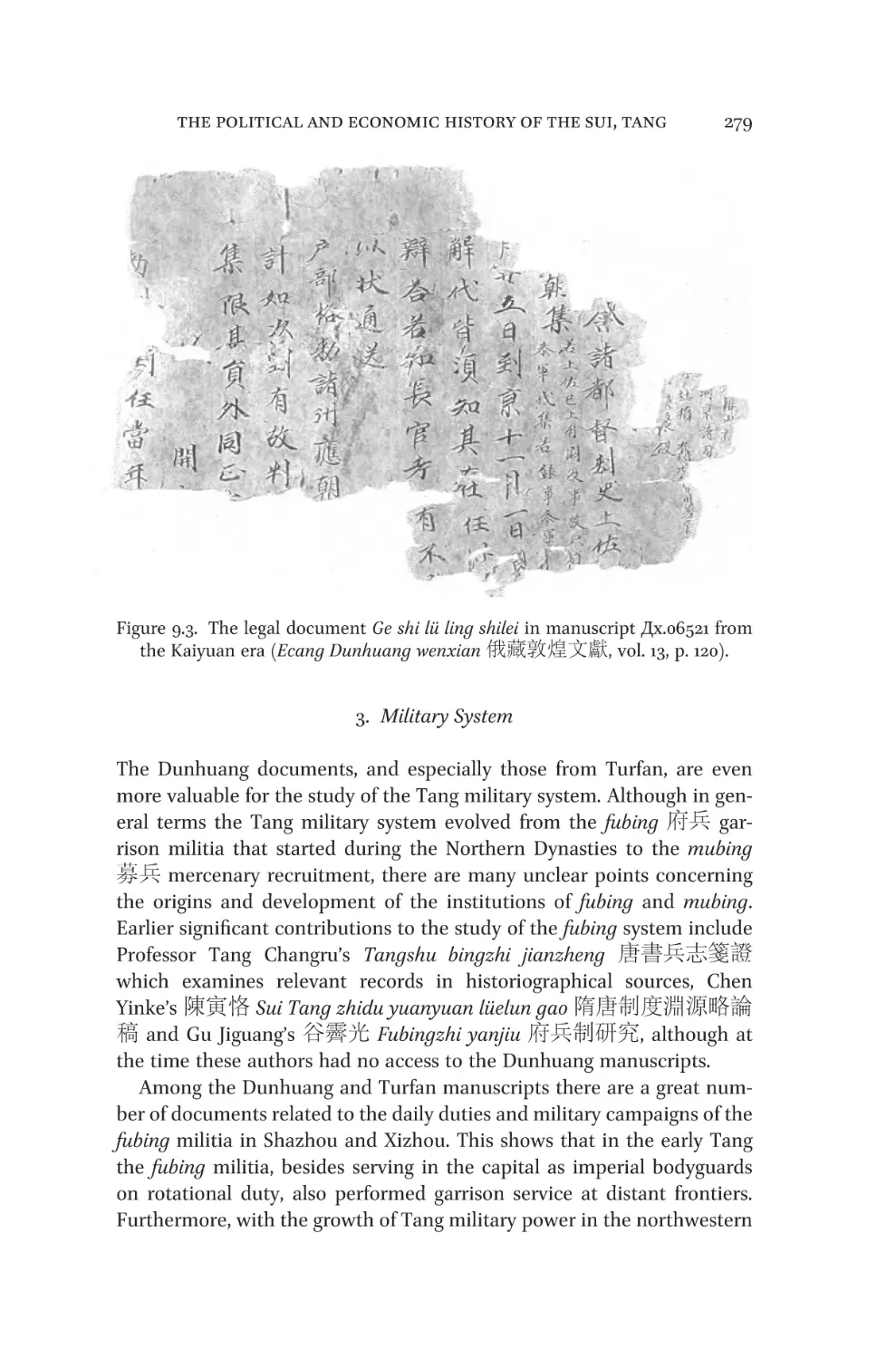
Figure 9.3. The legal document Ge shi lü ling shilei in manuscript
Дх.06521 from the Kaiyuan era (Ecang Dunhuang
wenxian 俄藏敦煌文獻, vol. 13, p. 120) ..............................................
279
Lecture 10
Figure 10.1. Village register from 747 (Tun-huang and Turfan
Documents, vol. II, p. 71) ...........................................................................
Figure 10.2. Paper drawing of a monastery during the Tibetan
period, P.t.993 (Serinde, p. 195) . .............................................................
292
303
Lecture 11
Figure 11.1. The Old Tibetan Chronicle, P.t.1287 (Serinde, p. 195) . .....
Figure 11.2. Wang Xi’s Dunwu dasheng zhengli jue, P.4646
(Le concile de Lhasa, pl. I) ........................................................................
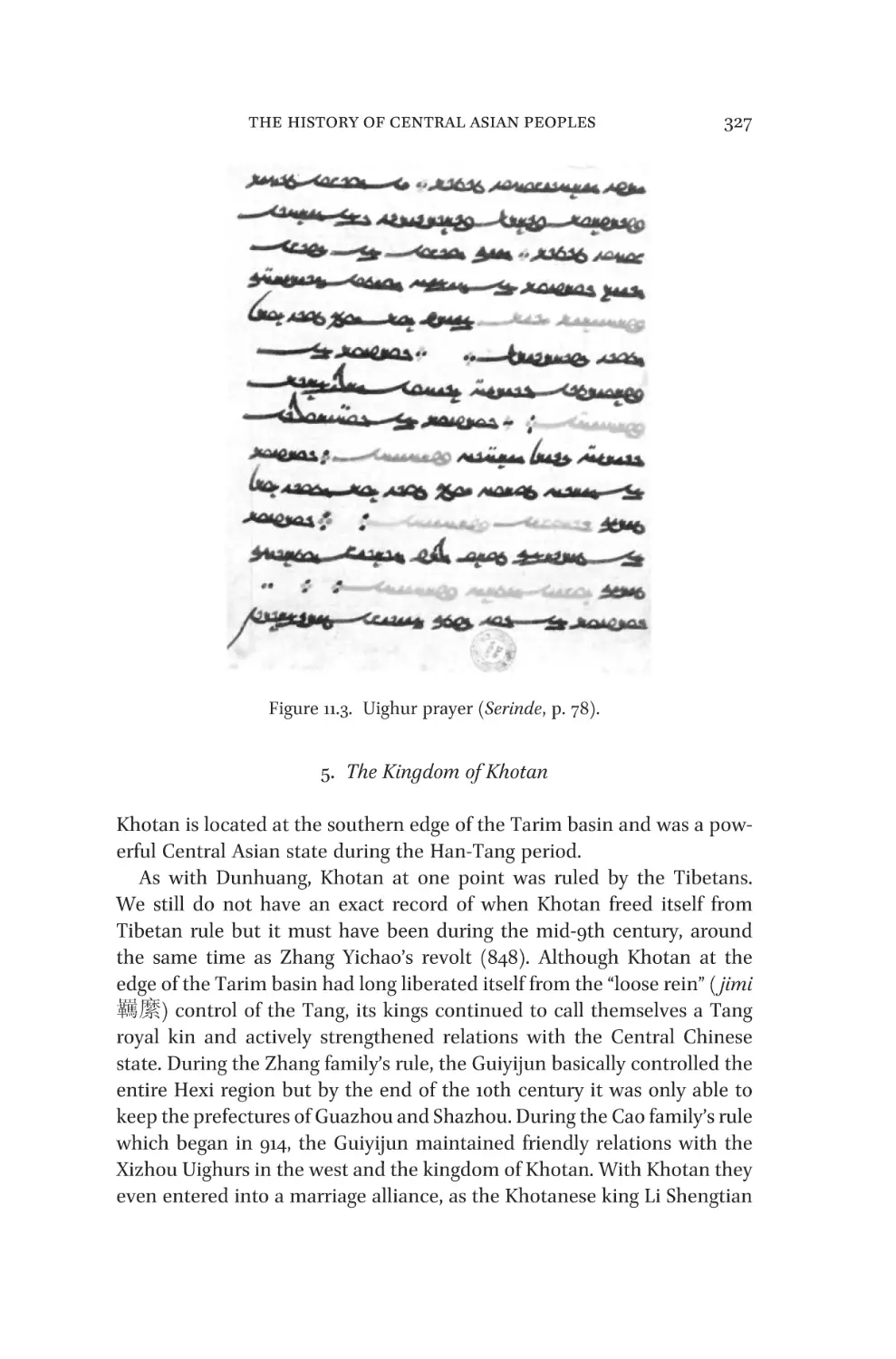
Figure 11.3. Uighur prayer (Serinde, p. 78) . .............................................
Figure 11.4. A letter from the king of Khotan to the military
commissioner of the Guiyijun, P.2826 (Serinde, p. 61) . ..................
Figure 11.5. Sogdian manuscript of the Sūtra on Good and Evil
Causes and Results (Serinde, p. 73) . ......................................................
Figure 11.6. Image of Zoroastrian deity preserved in the library
cave (Serinde, p. 294) . ...............................................................................
Figure 11.7. The Manichaean Compendium, P.3884 (Serinde, p. 81) .....
Figure 11.8. The Nestorian manuscript Da Qin jingjiao sanwei
mengdu zan, P.3847 (Serinde, p. 79) . ....................................................
317
323
327
329
333
335
336
338
Lecture 12
Figure 12.1. A copy of the Piyujing in the Nakamura Fusetsu
collection (Chūgoku kodai shahon shikigo shūroku, Fig. 2) . ..........
Figure 12.2. A copy of the Shisong biqiu jieben, S.797 (Dai’ei
toshokan shūzō Tonkō, Rōran komonjo ten 大英図書館収蔵
敦煌・楼蘭古文書展, p. 33) ................................................................
Figure 12.3. Tankuang’s Dasheng qixinlun guangshi (Chūgoku
kodai shahon shikigo shūroku, Fig. 130) ................................................
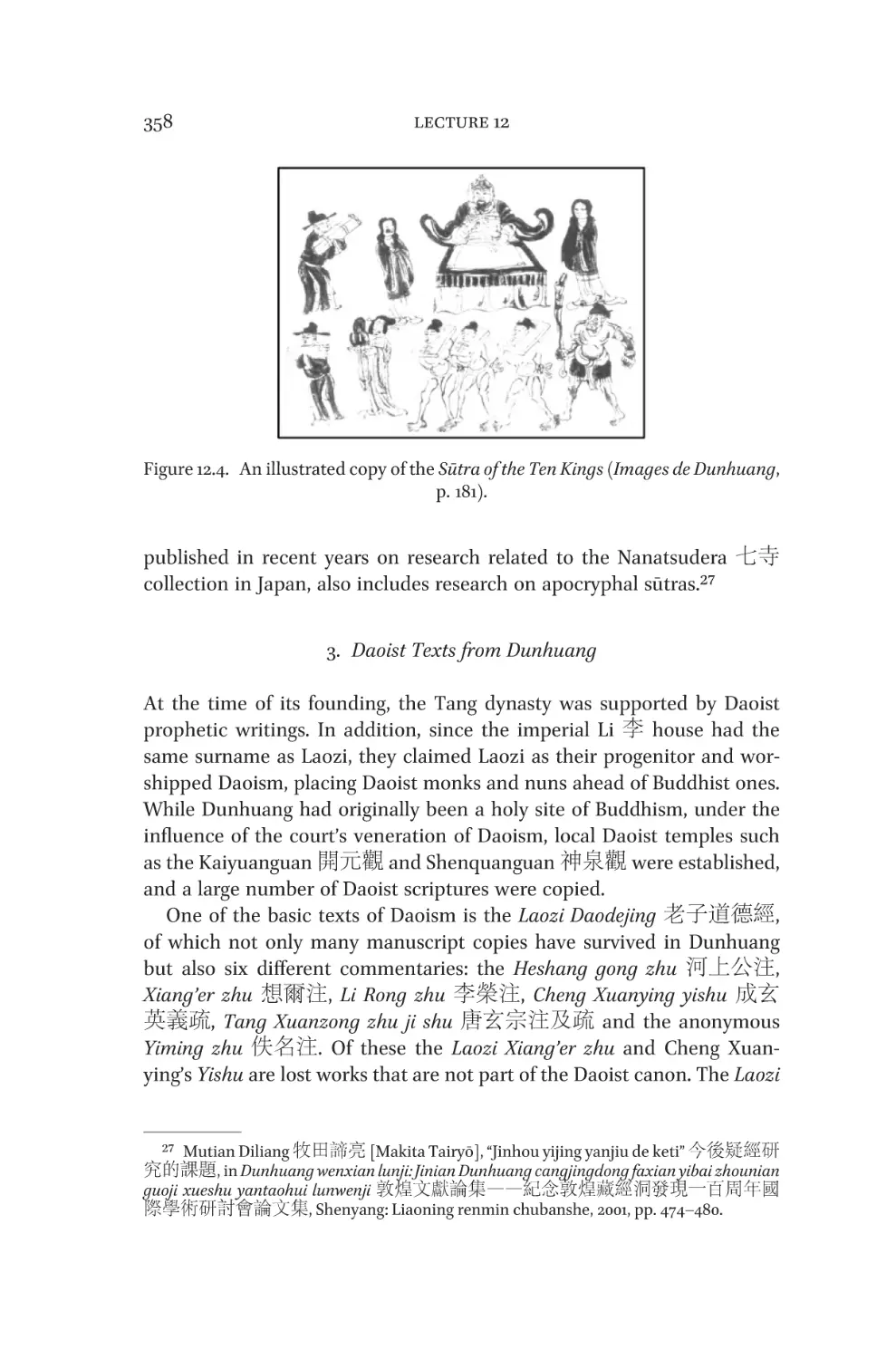
Figure 12.4. An illustrated copy of the Sūtra of the Ten Kings
(Images de Dunhuang, p. 181) . ................................................................
343
344
355
358
list of illustrations and maps
Figure 12.5. The Taixuan zhenyi benji jing, P.2806 (Chūgoku
kodai shahon shikigo shūroku, Fig. 98) .................................................
xv
359
Lecture 13
Figure 13.1. A copy of the Guwen Shangshu predating the
Tianbao revision of the text, P.5557 (Chūgoku kodai shahon
shikigo shūroku, Fig. 123) ..........................................................................
Figure 13.2. The Tianbao Shidao lu kept at the Dunhuang City
Museum (photograph by author) ..........................................................
Figure 13.3. Manuscript on meteoromancy (Images de
Dunhuang, p. 123) .......................................................................................
Figure 13.4. The Yaochi xinyong ji (courtesy of Shanghai guji
chubanshe) ...................................................................................................
370
375
385
390
Lecture 14
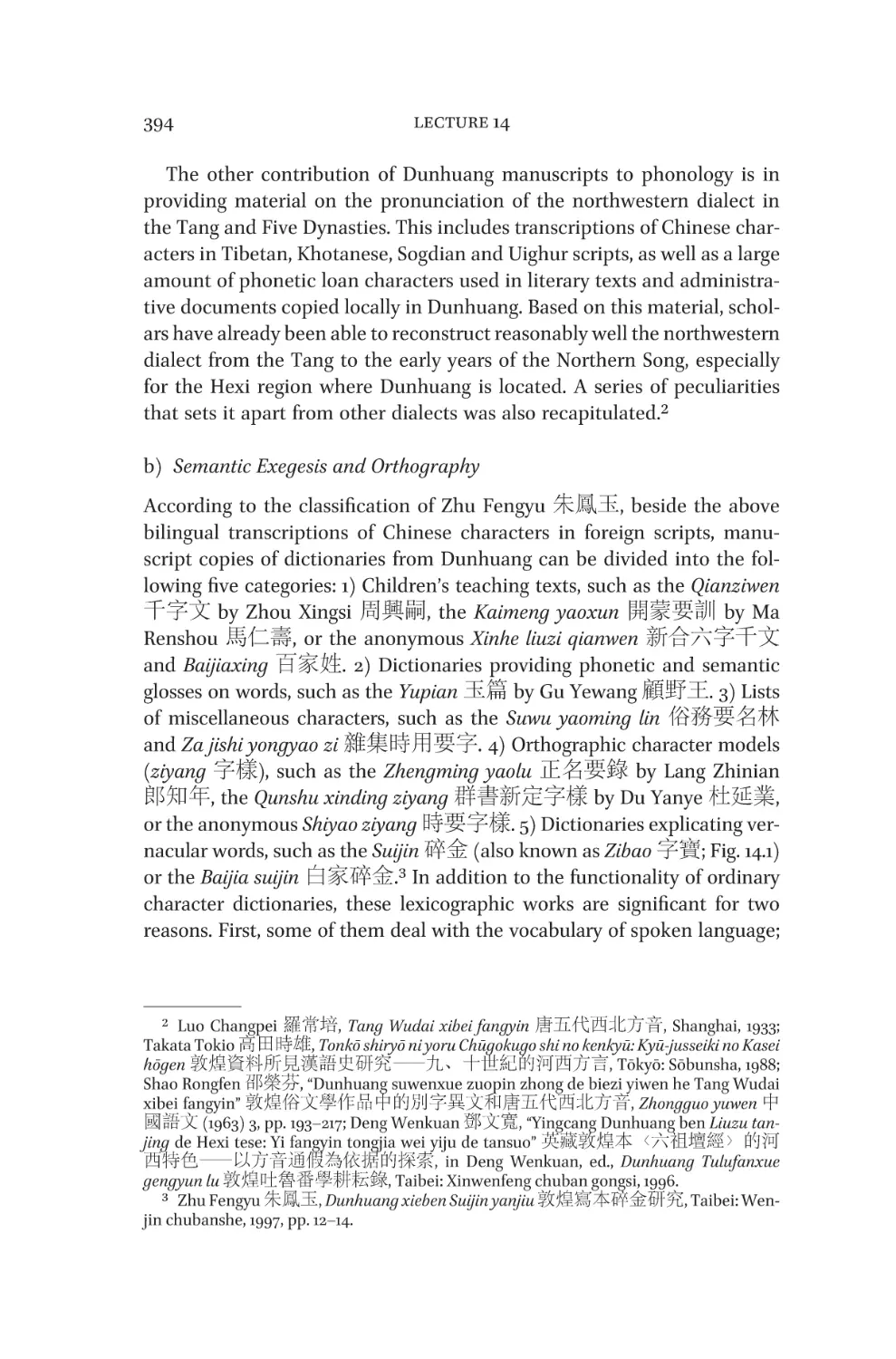
Figure 14.1. Manuscript of the dictionary Suijin, P.2058
(Dunhuang xieben Suijin yanjiu 敦煌寫本碎金研究, p. 404) .....
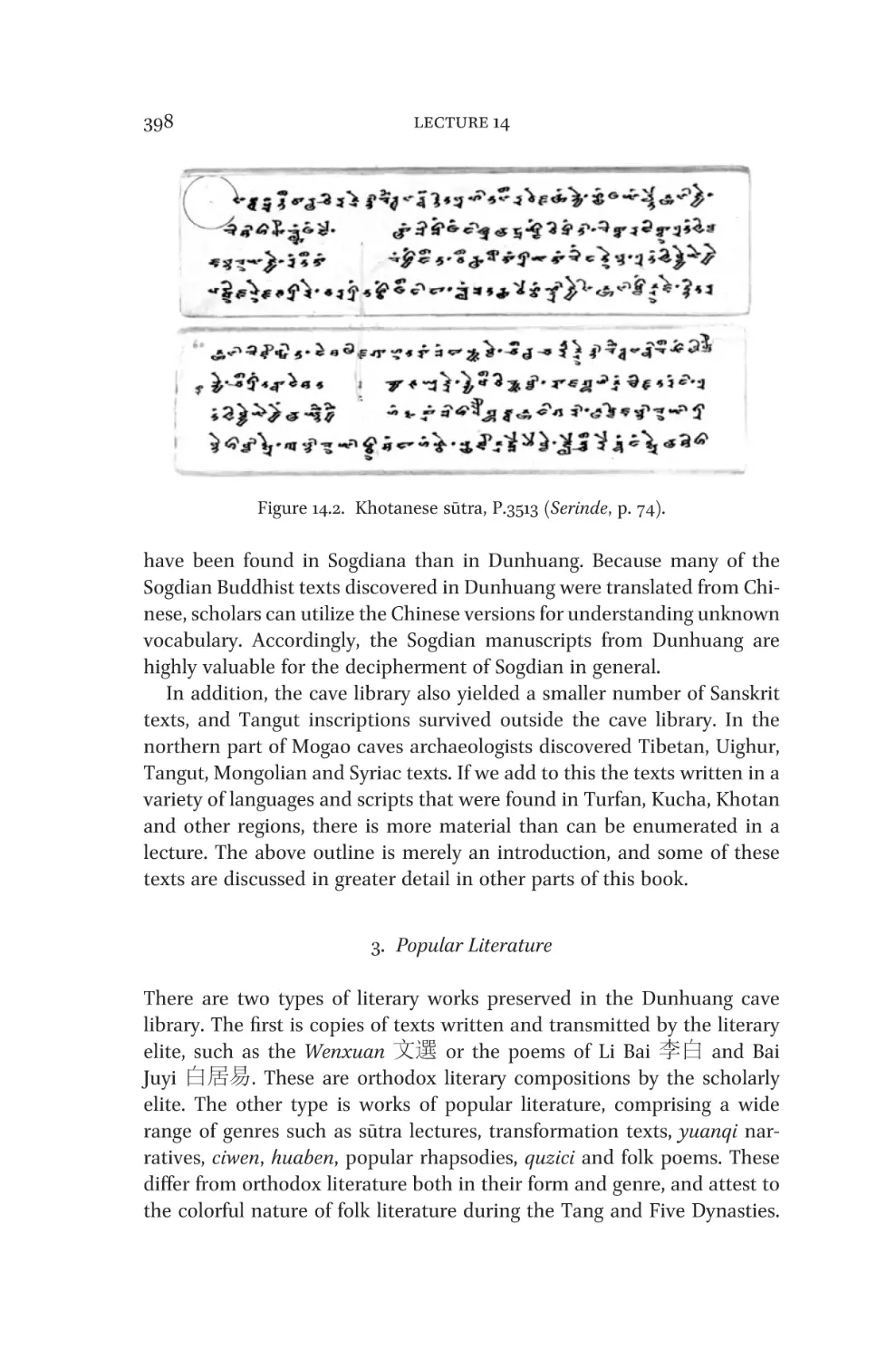
Figure 14.2. Khotanese sūtra, P.3513 (Serinde, p. 74) . ..........................
Figure 14.3. Illustrations to the Jiangmo bianwen, P.4524
(Serinde, pp. 76–77) . ..................................................................................
Figure 14.4. The Wang Shaojun bianwen, P.2553 (Shinika しにか
[1998] 7, p. 39) .............................................................................................
Figure 14.5. Collection of Wang Fanzhi’s poems copied by Faren,
Russian collection (Advertisement brochure for the
Dunhuang Tulufan wenxian jicheng 敦煌吐魯番文獻集成) ......
395
398
402
403
411
Lecture 15
Figure 15.1. Star chart showing the Ziweiyuan, S.3326 (Ancient
China, p. 125) ................................................................................................
Figure 15.2. A copy of the Bencao jizhu kept at the Ryūkoku
University Library (Chūgoku kodai shahon shikigo shūroku,
Fig. 113) ...........................................................................................................
Figure 15.3. The moxibustion chart Jiufa tu, S.6168 (Images de
Dunhuang, p. 140) .......................................................................................
416
421
423
xvi
list of illustrations and maps
Figure 15.4. The Diamond Sūtra printed in 868 (Chūgoku kodai
shahon shikigo shūroku, Fig. 190) ...........................................................
426
Lecture 16
Figure 16.1. Site map of the Mogao cave (Tonkō monogatari,
pp. 20–25) . ....................................................................................................
Figure 16.2. Meditation cave (Zhongguo shiku: Dunhuang
Mogaoku 2, p. 192) ......................................................................................
Figure 16.3. Cental pillar cave (Zhongguo shiku: Dunhuang
Mogaoku 2, p. 189) ......................................................................................
Figure 16.4. Inverted dipper ceiling cave (Zhongguo shiku:
Dunhuang Mogaoku 2, p. 193) .................................................................
Figure 16.5. Statue of cross-legged bodhisattva in Cave 275
(Zhongguo shiku: Dunhuang Mogaoku 1, pl. 11) .................................
Figure 16.6. Seated Buddha at the northern wall of Cave 259
(Cave Temples of Mogao, p. 59) ..............................................................
Figure 16.7. Seated Buddha from the west wall niche in Cave 328
(Zhongguo shiku: Dunhuang Mogaoku 3, pl. 114) ..............................
Figure 16.8. Attendant bodhisattva in Cave 328 (Cave Temples
of Mogao, p. 81) . ..........................................................................................
Figure 16.9. Attendant bodhisattva in Cave 45 (Cave Temples
of Mogao, p. 82) ...........................................................................................
Figure 16.10. Kneeling bodhisattva in Cave 328 (Zhongguo shiku:
Dunhuang Mogaoku 3, pl. 119) ................................................................
Figure 16.11. Kneeling bodhisattva in Cave 384 (Zhongguo shiku:
Dunhuang Mogaoku 4, pl. 22) .................................................................
Figure 16.12. Figure of Kāśyapa in Cave 419 (Zhongguo shiku:
Dunhuang Mogaoku 5, p. 187, Fig. 8) ....................................................
Figure 16.13. Figure of Ānanda in Cave 45 (Zhongguo shiku:
Dunhuang Mogaoku 3, pl. 130) . ..............................................................
Figure 16.14. Chinese-type heavenly king in Cave 46
(Ibid., pl. 149) . ..............................................................................................
Figure 16.15. Painting of the “new style Mañjuśrī” in Cave 220
(Fojiao dongchuan gushi huajuan, p. 196, Fig. 171) . ..........................
Figure 16.16. A painting of Tang Buddhist pilgrims bringing
back sūtras, Cave 3 of Yulin caves (Fojiao dongchuan gushi
huajuan, p. 175) . ..........................................................................................
428
430
430
431
439
441
442
446
447
448
449
450
451
453
460
479
list of illustrations and maps
xvii
Lecture 17
Figure 17.1. A standard sūtra scroll (Serinde, p. 377) . ..........................
Figure 17.2. Tang copy of the Lotus sūtra commissioned by the
court in Chang’an, dated 676 (Cave Temples of Mogao, p. 123) ......
Figure 17.3. Manuscript in a concertina format (Contributions
aux études de Touen-Houang, vol. III, pl. XXX) .................................
Figure 17.4. Manuscript in a notebook format (Zhongguo guojia
tushuguan cang Dunhuang yishu jingpin xuan 中國國家圖書
館藏敦煌遺書精品選, p. 60) ...............................................................
Figure 17.5. Manuscript in a pothi format (Dunhuangxue dacidian
敦煌學大辭典, p. 47) . .............................................................................
Figure 17.6. Manuscript scroll copied by Linghu Chongzhe,
P.2179 (Chūgoku kodai shahon shikigo shūroku, Fig. 40) . ...............
Figure 17.7. Manuscript P.3559 with register of forced labor
(recto) and Chan texts (verso) (Tun-huang and Turfan
Documents, vol. II, pp. 188 and 198) ......................................................
Figure 17.8. Manuscript S.514 with a household declaration from
769 (recto) and the text Zhongjing yaocuan (verso) (Tun-huang
and Turfan Documents, vol. II, pp. 97 and 98) . .................................
486
488
490
491
492
494
498
499
Lecture 18
Figure 18.1. A manuscript from the photographs of the
Li Shengduo collection held at the Haneda Tōru Memorial
Hall, Kyoto University (Haneda hakase shigaku ronbunshū
羽田博士史学論文集, vol. 3) . .............................................................
Figure 18.2. One of the manuscripts obtained by Kojima Yasushi
(Shina Kirisutokyō no kenkyū 支那基督敎の硏究) ........................
Figure 18.3. Changxingma documents in the Yūrinkan collection
(authentic) (Bokubi 墨美 60) .................................................................
Figure 18.4. Changxingma documents in the Yūrinkan collection
(forged) (Bokubi 60) ...................................................................................
Figure 18.5. Colophon to the Yaoshi liuliguang rulai benyuan
gongde jing, Nakamura Calligraphy Museum (Chūgoku kodai
shahon shikigo shūroku, Fig. 207) . .........................................................
509
511
515
516
517
xviii
list of illustrations and maps
Maps
Map 1. Dunhuang commandery (Dunhuangxue dacidian, p. 925) ....
Map 2. Dunhuang and neighboring territories during the early
Tang (Dunhuangxue dacidian, p. 925) . ................................................
Map 3. The Silk Road (Xia Nai wenji 夏鼐文集, vol. 2, p. 307) .......
Map 4. The distribution of cave complexes in the Dunhuang
region (Fojiao dongchuan gushi huajuan, p. 244) .............................
16
17
54
474
Series Editors’ Foreword
The rise of China as an economic and political power is unquestionably
one of the most striking phenomena of global significance as we enter the
first decade of the twenty-first century. Ever since the end of the “Cultural
Revolution” and the death of Mao Zedong in 1976, tremendous changes
have transformed China from an isolated and relatively weak country into
a rapidly developing and dynamic society. The scale and speed of such
transformations have taken the world—even the Chinese themselves—
by surprise; China today is drastically different from, and in a remarkably
better condition than, China thirty years ago despite the many economic,
social, and political difficulties and problems that yet remain to be dealt
with. China scholars in Europe and North America are called upon to
provide information and explanation of the rise of China, a country with
history and tradition reaching back to antiquity and yet showing amazing strength and cultural virility in the world today. Interest in China is
not limited to the traditional field of Sinology or China studies, nor is it
confined to the academic world of universities, for more and more people outside of academia are curious about China, about its history and
culture, as well as the changes taking place in the contemporary world.
The Western news media brings images from China to every household;
Sinologists or China scholars publish numerous articles and books to satisfy the general need for understanding: China is receiving a high-level of
attention in the West today whether we turn to the scholarly community
or look at popular imagination.
In understanding China, however, very little is available in the West
that allows the average reader to have a glance at how China and its culture and history are understood by the Chinese themselves. This seems
a rather strange omission, but in much of the twentieth century, the
neglect of native Chinese scholarship was justified on the grounds of a
perception of political control in China, where scholarship, particularly
in the humanities and social sciences, was dominated by party ideology
and strictly followed a prescribed party line. Such politically controlled
scholarship was thought to be more propaganda than real scholarship,
and consequently Western scholars rarely referred to contemporary Chinese scholarship in their works.
xx
series editors’ foreword
In the last thirty years, however, Chinese scholarship and public opinion, like everything else in China, have undergone such tremendous
changes that the old stereotype of a politically controlled scholarship no
longer holds. New and important archaeological findings in China have
changed our knowledge of ancient texts and our understanding of Chinese history in significant ways, and detailed studies of such new materials are available in native Chinese scholarship. Since the 1980s, many
Chinese scholars have critically reflected on the nature of scholarship and
questioned the old dogma of political and ideological orthodoxy, while
many important books have been published that present a new outlook
on Chinese history and culture. The time has come for Western scholars
and other interested readers to engage academic perspectives originating
in China, and making important academic works from China available
in English is an important step in this engagement. Translation of influential academic works from China will greatly contribute to our better
understanding of China from different perspectives and in different ways,
beyond the dichotomies of the inside and the outside, a native Chinese
view and a Western observer’s vantage point.
Brill’s Humanities in China Library is a newly established book series
that has been commissioned by Brill in response to that need. The series
aims to introduce important and representative works of native Chinese
scholarship in English translation, in which each volume is carefully
selected and expertly translated for the benefit of Western scholars as well
as general readers who have an interest in China and its culture but may
not read the Chinese language in the original. It is our hope that this series
of representative books in translation will be useful to both specialists and
general readers for understanding China from a different point of view,
and that it will be an important step towards a fruitful dialogue and an
exchange of ideas between Chinese and Western scholars.
Zhang Longxi
Axel Schneider
July 29, 2008
About the Author
Rong Xinjiang 荣新江 was born in 1960. He graduated from the History Department of Beijing University in 1985 and is currently a professor at the History Department and the Center for the Study of Ancient
Chinese History, Beijing University. His main research interests include
Dunhuang studies, China’s contacts with the outside world, history of the
Sui-Tang and Five Dynasties period, and history of Central Asia. He has
published a number of books, including Guiyijun shi yanjiu: Tang Song
shidai Dunhuang lishi kaosuo 歸義軍史研究—唐宋時代敦煌歷史考
索 (Shanghai: Shanghai guji chubanshe, 1996); Haiwai Dunhuang Tulufan
wenxian zhijianlu 海外敦煌吐魯番文獻知見錄 (Nanchang: Jiangsu renmin chubanshe, 1996); Mingsha ji: Dunhuangxue xueshushi yu fangfalun de
tantao 鳴沙集—敦煌學學術史與方法論的探討 (Taibei: Xinwenfeng
chuban gongsi, 1999); Zhonggu Zhongguo yu wailai wenming 中古中國與
外來文明 (Beijing: Sanlian shudian, 2001); Dunhuangxue xinlun 敦煌學
新論 (Lanzhou: Gansu jiaoyu chubanshe, 2002); Yutian shi congkao 于闐
史叢考 (enlarged edition, co-authored with Zhang Guangda 張廣達, Beijing: Renmin daxue chubanshe, 2008); Sui Tang Chang’an: Xingbie, jiyi ji
qita 隋唐長安: 性別、記憶及其它 (Hong Kong: Sanlian shudian, 2009).
He is also the chief editor for the academic journal Tang yanjiu 唐研究
(Tang Studies, with 14 issues to date) and has also published a number of
edited volumes.
Recommendation
If we take the description and study of Dunhuang inscriptions, manuscripts and paintings in Ye Changchi’s Yuandu Lu riji as the starting point
of Dunhuang studies, then until today this field has had a history of exactly
a hundred years. From the 1980–1990s, Chinese Dunhuang studies, under
the leadership of the Chinese Society for the Study of Dunhuang and Turfan (chaired by Ji Xianlin), made significant progress, managing to attain
a leading position in many subfields. There has been an urgent need for a
book that summarizes the results of the research done in the past decades
both in China and abroad, and outlines directions for future research. Professor Rong Xinjiang’s Eighteen Lectures on Dunhuang fills this gap perfectly, and it does this at a high level of academic excellence.
Ever since he came to Beijing University at the end of the 1970s, Professor Rong Xinjiang has been engaged in Dunhuang studies. For many
years he searched for Dunhuang materials around the world and visited
nearly every country and region where Dunhuang manuscripts were held,
frequently traveling abroad to give lectures and to participate in academic
exchanges. Most of his numerous academic publications set new research
trends in Dunhuang studies.
In terms of its academic achievements, Eighteen Lectures on Dunhuang
has a number of distinctive features:
1) Both in China and abroad, this is the first textbook for Dunhuang
studies, written as a work of high academic standard with a decided
emphasis on research. In this respect, it is truly a groundbreaking
publication.
2) For many years, in the course of his teaching, the author has been continuously monitoring the newest primary and secondary publications
related to Dunhuang. In this respect, the book represents the cutting
edge of academic research.
3) The book is the result of the author’s own research on Dunhuang, and
many of the chapters represent topics he developed himself.
4) The book contains extensive annotations. While this is a standard
practice in academic publishing, the footnotes also function as guidance for beginners. This format is an innovation developed by the
author.
xxiv
recommendation
Naturally, we could go on enumerating the book’s advantages, as Eighteen
Lectures on Dunhuang is an outstanding work which also functions as an
innovative textbook on a specialized subject. At the same time, it is a solid
research monograph in the field of Dunhuang studies. I strongly recommend this book to appear in the “Classic China International Publishing
Project.”
Zhao Heping
Professor at Beijing Institute of Technology
November 6, 2009
Recommendation
Eighteen Lectures on Dunhuang is a book of high academic standard that
presents a comprehensive and in-depth analysis of the subject matter.
Dunhuang studies is a cross-disciplinary field that involves many separate areas of study, including history, religion, language and literature.
For historical reasons, the main object of its study, i.e. the Dunhuang
manuscripts, have scattered around the world and are now held in Britain, France, Russia, Japan and other countries. Dunhuang studies is an
international field, and over the past hundred years Chinese and foreign
scholars have published a vast quantity of related research. Therefore,
writing a book that fully reflects the various aspects of Dunhuang studies
is no easy task; even harder is to make it comprehensive and exhaustive,
while striving to maintain a relatively high academic standard. The author
of this book has been engaged in Dunhuang studies for a long time, and
made many important contributions. He visited the main holding institutions in Britain, France, Russian, Japan, the United States, Taiwan and
China, and accumulated a comprehensive knowledge of Dunhuang manuscripts. He also lays great emphasis on collecting new information for
each subfield or aspect of Dunhuang studies, maintains an extensive correspondence with leading Chinese and foreign scholars, and is fully apace
with the progress and developments of the field. He has been teaching
Dunhuang studies for many years, and this book was created by amending and improving the texts of his lectures. Therefore, Eighteen Lectures
on Dunhuang is the distillation of the author’s many years of teaching and
researching the subject.
The main contributions of the book are as follows:
1) It draws extensively on newest research in the many fields related to
Dunhuang studies, including history, archaeology, art, religion, literature, linguistics, and science and technology. It provides a comprehensive and systematic introduction to the basics concepts of individual
topics, offering readers a simple yet clear textbook.
2) The book provides systematic help for those who want to continue
their study in the field. In addition, it discusses the methodology of
Dunhuang studies, and many of the chapters summarize the author’s
own long-going research projects. The book, while written as a scholarly
xxvi
recommendation
work, also helps beginners with methodological issues, offering basic
guidance in this respect.
3) Because Dunhuang studies is a vast and extremely complex academic
field, there is still much work to do with regard to the conceptual
framework of the field. The book attempts to build a comprehensive
disciplinary framework for Dunhuang studies and provides a systematic examination of the theoretical problems related to the field. In
sum, it makes a significant contribution for establishing the conceptual infrastructure of Dunhuang studies.
Based on the reasons outlined above, I strongly recommend this book to
be included in the “Classic China International Publication Project.”
Hao Chunwen
Professor at the History Department, Capital Normal University
November 6, 2009
Introduction
1. What is “Dunhuang Studies”?
Dunhuang studies (Dunhuangxue 敦煌學) is a term that has been in common use for some time. But what does it really mean? What is included in
it? Scholars still disagree about these points.
In 1930, the eminent scholar Chen Yinke 陳寅恪 in his “Preface” to
the catalogue Dunhuang jieyu lu 敦煌劫餘錄 said, “The scholarship of
each generation must have new material and new problems. Using this
material to work on the problems is the new trend of scholarship for that
generation.” “Dunhuang studies is the new trend of current scholarship
around the world.” Just as Chen Yinke pointed out, at the time there were
“only a few Chinese scholars whose work could be listed alongside the
host of studies written by Dunhuang specialists worldwide.”1 Having just
returned from his studies abroad and being at the forefront of international scholarship, Chen Yinke not only boldly propagated that Dunhuang
was the subject of an academic discipline, but also pointed out the direction in which 20th century Dunhuang studies was rapidly developing. He
truly was a man of great perception and broad knowledge.
Where does the fascination of Dunhuang lie? What does Dunhuang
studies encompass?
Judging from the context of Chen Yinke’s “Preface” to the Jieyu lu, by
“Dunhuang studies” he primarily meant research on the texts found in
the library cave near Dunhuang. Later on, with the progress of archaeological excavations in the Dunhuang region, and especially the preservation and study of the Dunhuang caves, more and more researchers felt
that the scope of “Dunhuang studies” needed to be broadened. This need
was further amplified by the discovery of the Dunhuang Han woodslips,
Turfan manuscripts and other texts in Western China, as well as the publication of manuscripts, silk paintings and other artifacts kept in China
and abroad.
By now, “Dunhuang studies” has already been expanded to include
the study of the many texts and artifacts related to the contents of the
1 Chen Yinke 陳寅恪. Jinmingguan conggao erbian 金明館叢稿二編. Shanghai: Shanghai guji chubanshe, 1980, p. 236.
2
introduction
Dunhuang library cave and excavated or preserved in Dunhuang, Turfan
or other sites in Gansu, Xinjiang, Inner Mongolia and Tibet. Because the
Dunhuang manuscripts are an extremely large and complex collection,
their research is also exceptionally messy and convoluted. Moreover,
because among the Chinese institutions involved in the study of Buddhist
caves the Dunhuang Academy was the first to found a journal (i.e. Dunhuang yanjiu 敦煌研究), they also included in this journal studies about
cave temples in other parts of the country, thereby incorporating those
into the scope of Dunhuang studies. Indeed, these extended scopes of the
field have been generally accepted by the academic community.
Having said that, it is very hard to place this field called “Dunhuang studies” within the modern framework of humanities and social sciences.
Professor Zhou Yiliang 周一良, who was educated both in China and
the West, and was also deeply involved in the study of Dunhuang manuscripts, wrote in his preface to the volume of Wang Zhongmin’s 王重民
writings on Dunhuang: “The Dunhuang material is extraordinary in its
range, it is a treasure-trove of unlimited abundance, rather than an academic discipline with a systematic conceptual framework. It would be
more appropriate to refer to the field in general as the study of Dunhuang
material, rather than using a term like ‘Dunhuangology’ (Dunhuangxue
敦煌學).”2 Subsequently in an article titled “What is ‘Dunhuang studies’?”
he went further, saying: “In terms of its foundation, ‘Dunhuang studies’ is
not a systematized field of science with an inherent pattern and structure.”3
Professor Zhou also recommended to always use quotation marks when
writing “Dunhuang studies.”
Zhou Yiliang's view is full of insight, as “Dunhuang studies” truly is an
academic field lacking systematic structure. The reason why I call attention to Professor Zhou’s opinion is that a current trend exists in the field to
study Dunhuang for its own sake, completely sealing off Dunhuang studies from the outside world, and thus making the field increasingly narrow.
Rather than isolating Dunhuang studies, we should apply the methodology of other fields for the study the Dunhuang and Turfan material, and
approach the field with an open mind. This way we may often achieve
significant results that go beyond the subject we are actually working on.
2 Wang Zhongmin 王重民, Dunhuang yishu lunwenji 敦煌遺書論文集, Beijing: Zhonghua shuju, 1984.
3 Zhou Yiliang 周一良, “Hewei ‘Dunhuangxue’?” 何謂“敦煌學”, Wenshi zhishi 文史
知識 (1985) 10.
introduction
3
Therefore, the raison d’etre of Dunhuang studies first of all involves a
basic conceptual problem, which is also relevant to how we define the
place of “Dunhuang studies” within our university curriculum and the wider
framework of humanities and social sciences. In universities, for example, courses on “Dunhuang studies” are often taught as part of “Sui-Tang
history” or “historical philology” and the field is regarded a “third-grade
discipline.” In reality, however, in addition to being completely inadequate,
this placement also obscures the vast scope of Dunhuang studies.
Judging from the current situation, we can ascertain that Dunhuang
studies in reality has its own methodology and unique object of research.
The reason for this is that the materials studied as part of Dunhuang
studies are mainly manuscripts, and these are different from the printed
sources used in other disciplines, which also means that the methodology
used for research is also different. At the same time, all of this material
comes from Dunhuang, Turfan and other remote regions, and in order
to be able to make good use of these sources, we have to be sufficiently
familiar with the historical background of these regions. Not only that,
Dunhuang studies provides a number of unique sources for the study of
Dunhuang, Turfan and the Silk Road in general, and this in turn creates
new topics for research. In addition, since Dunhuang studies is continuously expanding, it gradually develops its own systematic research methodology, and since the field essentially has a unique scope of research, it
can thereby function as an academic field.
2. The Current State of Affairs in Dunhuang Studies
Even though research in Dunhuang studies is hindered by a number of
difficulties (e.g. the scattered nature of the material, the wide range of
contents and the variety of languages used in the manuscripts), scholars
from various countries make significant efforts to keep the field growing.
In addition, as a result of the continuous publication of manuscript collections and ongoing archaeological discoveries in the Dunhuang region,
by the 1980s Dunhuang studies grew into a prominent international field
of scholarship.
The growth of the field has been rapid, as demonstrated by the academic conferences related to Dunhuang. Conferences were held in 1983
in Lanzhou; in 1984 in Paris; in 1985 in Urumchi; in 1986 in Taibei; in 1987
in Hong Kong and Dunhuang; in 1988 in Beijing and Kyoto; in 1990 in
Venice, Taibei and Dunhuang; in 1992 in Beijing; in 1993 in Hong Kong
4
introduction
and Dunhuang; in 1994 in Dunhuang and Berlin; in 1995 in Jiayi (Taiwan);
in 1996 in Chengdu and Lanzhou; in 1997 in London, Budapest and Hangzhou. Thus nearly every year general or specialized Dunhuang conferences were held somewhere. June 22, 2000 was the hundredth anniversary
of the discovery of the Dunhuang library cave and around this date major
international Dunhuang conferences were held in Beijing, Hong Kong,
Dunhuang and Montreal.
In addition, not only a number of academic journals were founded (e.g.
Dunhuangxue 敦煌學, Dunhuang yanjiu 敦煌研究, Dunhuangxue jikan
敦煌學輯刊, Dunhuang Tulufan yanjiu 敦煌吐魯番研究) but also a host
of monographs were published. According to a preliminary count made by
Professor Zhao Heping 趙和平 and myself during our work on the Dunhuangxue dacidian 敦煌學大辭典, in the period of 1980–1994 alone over
four hundred monographs were published on Dunhuang in China and
abroad.4 In 1997 at the Yale University Library I used the subject search
to find works related to “Dunhuang” and was instantly given a list of hundreds of hits; whereas this year (2001), my search results in the online
catalogue of the Chinese University of Hong Kong Library ran to over six
hundred items. Dunhuang was merely a small prefecture at the frontier
region of the Tang dynasty, yet the number of books on Dunhuang by far
exceeds those on the Tang capital Chang’an 長安.
Within the domain of Dunhuang studies, the results of Chinese scholars alone are astonishing. Historians, for example, have made significant
progress using the Dunhuang material to study the Tang institutions of
equal land reallocation, taxation and corvée labor; land lease relationships; documents on monastic economy and legal administration; the clan
system; the military system; the history of the Guiyijun; the peoples of the
northwestern frontier during the Tang and Five Dynasties; and the Silk
Road. Concurrently, academic contributions were also made by applying
the Dunhuang material to the study of religion, literature, linguistics, art,
archaeology, and history of science and technology. Because the results
of Chinese scholarship during the 1980–1990s were truly outstanding,
more and more researchers in China and abroad are becoming engaged
in working with the Chinese manuscripts from Dunhuang.
Starting from the 1990s, some Chinese publishers became extremely
interested in publishing facsimile editions of Dunhuang manuscripts. As a
result of this enthusiasm, a series of large-size volumes with photographic
4 Ji Xianlin 季羡林 et al., Dunhuangxue dacidian 敦煌學大辭典, Shanghai: Shanghai
cishu chubanshe, 1998.
introduction
5
reproductions came out with manuscripts from the collections in Britain
(Yingcang Dunhuang wenxian 英藏敦煌文獻), Russia (Ecang Dunhuang
wenxian 俄藏敦煌文獻), France (Facang Dunhuang Xiyu wenxian 法藏
敦煌西域文獻), the Shanghai Museum (Shanghai bowuguan cang Dunhuang Tulufan wenxian 上海博物館藏敦煌吐魯番文獻), Beijing University (Beijing daxue cang Dunhuang wenxian 北京大學藏敦煌文獻),
Tianjin Art Museum (Tianjin yishu bowuguan cang Dunhuang wenxian
天津藝術博物館藏敦煌文獻), National Library of China (Zhongguo
guojia tushuguan cang Dunhuang yishu 中國國家圖書館藏敦煌遺書),
or the provinces of Gansu (Gansu cang Dunhuang wenxian 甘肅藏敦煌
文獻) and Zhejiang (Zhecang Dunhuang wenxian 浙藏敦煌文獻). The
appearance of these editions brought fundamental changes to the accessibility of the material. Especially the Russian manuscripts, made public
for the first time, promoted greatly the study of a number of subjects in
Dunhuang studies.
The newly published material permitted an exhaustive study of a number of individual topics, hence in recent years research on particular types
of texts (e.g. shuyi 書儀 letter models, transformation texts, catalogues of
Buddhist sūtras, she association documents, start charts and calendars,
colloquial expressions, administrative documents of the Guiyijun) showed
a major improvement over the past. Yet as we no longer have towering
scholars like Professor Wang Zhongmin, who had a comprehensive grasp
of the entire corpus. Neither have we been able to integrate various catalogues from around the world into a single thematic catalogue of Dunhuang manuscripts. Accordingly, focusing on specific research topics, at
the present the community of scholars involved in the study of Dunhuang
seems to overlook the significance of compiling basic reference works,
and thus has not been able to produce monumental works that would go
beyond the scope of individual topics.
3. Objectives and Difficulties in Dunhuang Studies: The Case
of the Guiyijun
One of my own areas of research within Dunhuang studies is the history
of the Guiyijun regime during the late Tang, Five Dynasties and early Song
periods.5 Below I will use the example of the history of the Guiyijun to
illustrate the objectives and difficulties of Dunhuang studies. While these
5 Rong Xinjiang 榮新江, Guiyijun shi yanjiu: Tang Song shidai Dunhuang lishi kaosuo
歸義軍史研究—唐宋時代敦煌歷史考索, Shanghai: Shanghai guji chubanshe, 1996.
6
introduction
two aspects apply to Dunhuang research in general, they are especially
relevant to using historical sources from Dunhuang.
a) Why Do We Study the History of the Guiyijun?
Originally, the Guiyijun was a military outpost set up by the Tang in 851.
Nevertheless, because it was located at the northwestern periphery beyond
the Tang sphere of influence, along the passageway between China and
the West, and surrounded by territories controlled by Uighurs, Tibetans,
Tanguts, Khotanese and other peoples, the nearly two hundred years of
this predominantly Han Chinese political regime has a unique historical
significance and is thus of particular interest for scholarship. I will demonstrate this on two points.
1) The first reason why the history of the Guiyijun is significant is that we
can break away from the confines imposed by traditional historians and
can have an independent look at history.
As we are all aware, traditional Chinese historiography amassed a wealth
of historical materials, including dynastic histories, chronologies, collections
of administrative documents and annals, which is certainly a tradition to
be proud of. However, a negative side effect of inheriting all these sources
is that the modern science of history, both in its orientation and conclusions, cannot shake off the influence of traditional historiography, since the
overall majority of the material we rely on was produced by elite literati
who served as part of the bureaucracy. In contrast with this, the documents
discovered in the Dunhuang library cave offer a body of primary material
which has never been organized, edited or distorted by any historian. In
other words, we can often scrutinize an event through material that is contemporary with that event. Not only that, but using primary documents
can even reveal things that had been concealed by medieval historians. For
example, in their discussion of the early period of the Guiyijun shortly after
its establishment, Tang historical sources mostly focus on Zhang Yichao’s
張議潮 submission and pledge of allegiance to the Tang, elaborating on
the Tang court’s preferential treatment of the Guiyijun and other similar
matters. But the Dunhuang documents tell us in unambiguous terms that
during the rule of Zhang Yichao, and even that of Zhang Huaishen 張淮
深, the Guiyijun regime competed with the Tang both openly and through
secret means. This allows us to obtain a deeper understanding of the Guiyijun as a Tang vassal state and appreciate the relationship between the two
regimes that kept one another at arm’s length.
introduction
7
2) The other reason why we should be interested in the history of the
Guiyijun is that we can use authentic first-hand material to write a history
that has never been written.
The Guiyijun was an outlying vassal state of the Tang empire, which
by the Five Dynasties and early Song periods became a de facto foreign
state. The two official histories of the Five Dynasties ( Jiu Wudaishi 舊五
代史 and Xin Wudaishi 新五代史) treat the Guiyijun in the chapter on
the Tibetans (“Tubo zhuan” 吐蕃傳); the Songshi 宋史 includes it under
the section on foreign states (“Waiguo zhuan” 外國傳); whereas the Song
huiyao 宋會要 discusses it under the category of barbarians (“Fan yi”
蕃夷). This local regime, which was subordinate to Tang China and yet
lay beyond the physical boundaries of the empire, has a unique position
in Chinese history. Traditional Chinese histories were all compiled from
the perspective of the central administration, and in most cases recorded
events concerning the imperial family and the limited group of top officials. Among the Dunhuang manuscripts, the historical documents related
to the Guiyijun provide rich material on various strata of society, ranging
from the military commissioner (i.e. ruler) of the Guiyijun and his civil
and military officials to the local clergy in Dunhuang, or even women
and children. The Dunhuang manuscripts from the Guiyijun period also
include many unknown texts written in non-Chinese languages, such as
Tibetan, Uighur, Khotanese, Sogdian and Sanskrit. These texts reflect the
state of affairs of the different peoples in Dunhuang and the surrounding regions, as well as their relationship with the Guiyijun regime and
its population. These texts record the historical events of Central Asian
peoples using their own language and script, which makes them more
authentic and at the same time more valuable than records written in
Chinese. We can say that the historical material on the Guiyijun offers
historians not only a new starting point but also a new perspective. By
utilizing this material we can bring to light many details regarding the
wars and cultural contacts of the Guiyijun regime with the Ganzhou
and Xizhou Uighurs, by far surpassing the scanty reports in traditional
histories on how these two Uighur states paid tributes to the central
Chinese state.
b) What Are the Difficulties of Studying the History of the Guiyijun?
At the same time, the study of the history of the Guiyijun also has its difficulties, and these arise from the very nature of the material.
8
introduction
The first difficulty is that before conducting historical research, we need
to arrange the primary material into a digestible form.
Everyone who has the slightest experience in working with photographs or microfilms of Dunhuang manuscripts knows that most of them
are incomplete, and this makes them totally different from traditional historical sources. In addition, these documents are all hand-written, some
in a semi-cursive or fully cursive hand, which makes them much harder
to read than transmitted sources that are usually presented in printed
form. Therefore, the study of the history of the Guiyijun is in many ways
different from research on a particular dynasty or discipline. When working on a particular dynasty, researchers can almost always rely on official
histories, chronologies, private histories or other sources. The study of
the history of individual disciplines is essentially the same, as the historian can adopt the basic structure and narrative of existing histories. In
contrast with this, there are no full and accurate histories for the Guiyijun. Even though a large number of official and private documents survive among the Dunhuang manuscripts, they all come from a Buddhist
monastery and most of them were preserved only as auxiliary materials in a monastic library. Consequently, they are utterly disorganized. I
believe that these documents originally belonged to the Sanjie monastery that stood in front of the Mogao caves, and were either attached to
Buddhist manuscripts (i.e. as backing paper or text written on the other
side of sūtras), or were scrap paper waiting to be recycled for copying
sūtras or backing scrolls. Just as one must process and organize first-hand
archival data, before we could use the Dunhuang documents for studying the history of the Guiyijun, we need to transcribe them and arrange
the fragments into legible texts. Only then can they be compared with
one another and be applied to historical research. Needless to say, many
academic publications merge these two tasks together, presenting a transcription followed by a detailed study. This way articles often have large
sections of line-by-line transcriptions of original texts, affecting the article’s style and overall readability, even though this kind of presentation is
sometimes unavoidable.
The second difficulty is that the Dunhuang manuscripts are scattered
around the world and access to them is problematic.
The Dunhuang manuscripts were discovered in 1900 in the library cave
at the Mogao cave complex near Dunhuang. The dates on dated manuscripts range from 406 to 1002, although it basically seems that the later
we go in time, the more manuscripts we have. Moreover, there is an
introduction
9
increasing number of secular texts as we progress in time. In other words,
within the original collection that was sealed off during the late Guiyijun
period, materials from the Guiyijun period are the most numerous. Yet
because this body of about fifty thousand manuscripts and fragments was
not adequately preserved after its discovery, it is now scattered around
the world and held in public and private collections in Britain, France,
Russia, China, Japan and other countries. Although research on the history of the Guiyijun began with the discovery of Dunhuang manuscripts,
the dispersed nature of the material severely limited the work of earlier
scholars, and even though they made significant contributions, in the end
they were unable to carry out a comprehensive investigation of the history of the Guiyijun. The situation seemed to change in the 1960s when
microfilms of most of the manuscripts held in London and at the Beijing
Library were made available, but the outbreak of the Cultural Revolution
put a halt to Dunhuang studies in China. At the end of the 1970s, the
Bibliothèque nationale, which held the largest number of secular texts,
published its entire collection of Dunhuang manuscripts. With this, we
suddenly had a complete picture of the material in the three major collections, and this made comprehensive and systematic research on the
history of the Guiyijun possible. This was also how and why I started
systematically collecting material on the Guiyijun in the late 1970s and
early 1980s.
The quality of microfilms and photographs made in the 1960–1970s was
poor. Especially photographs of manuscripts from the French collection,
which were covered by a thin layer of gauze, left a lot to be desired. As
a result, many important documents were illegible. In addition, because
the persons in charge of exchanging the microfilms did not properly verify
these, many of the Tibetan manuscripts from the Pelliot collection were
omitted, including some quite important texts. As is well known, Marcelle
Lalou’s catalogue of the Pelliot tibétain collection was completed before
the Chinese catalogues, and in her catalogue Lalou often mentioned
manuscripts from the Chinese part of the collection whenever those had
Tibetan writing on the verso. In some cases, however, we were unable to
locate photographs for some of the Chinese manuscripts she mentioned.
As to the microfilms of the manuscripts in London and at the Beijing
Library, they did not include all of the manuscripts from these collections.
In the more than ten years I spent working on the history of the Guiyijun,
on quite a few occasions I traveled abroad to examine and copy Dunhuang
manuscripts that had not been published or were not properly visible in
10
introduction
the publications. My book Guiyijun shi yanjiu 歸義軍史研究 on the history of the Guiyijun contains transcriptions of many texts which cannot
be seen on the microfilms or photographs. There are about fifty thousand
manuscripts and fragments from Dunhuang but because these are scattered around the world, or hidden in public or private collections, scholars
have had difficulties accessing them. As a result, in terms of accessing
the sources, the study of the Guiyijun is much more problematic than
research on the history of individual dynasties or disciplines on the basis
of transmitted texts. It also requires significantly more time and effort.
The third difficulty is that scholarly ethics have not been developed
for the study of the Guiyijun, and this holds true for the entire Dunhuang
studies.
In his work on the history of the Guiyijun, the historian is not aided
by punctuated editions of traditional texts, and may have no edition to
rely on whatsoever. As mentioned above, the primary texts related to the
history of the Guiyijun are often published together with their discussion.
Because a significant portion of the Dunhuang material is held overseas,
in many cases a text is first published in a study written in a foreign language. Therefore, in order to be able to quote the material on the Guiyijun,
we not only have to overcome the language barrier but also work our way
through a large number of Chinese and foreign academic publications.
This is the only way we can build on the foundation of previous scholarship and advance further. Yet there are researchers who for a variety of
reasons do not possess the basic scholarly background and believe that
whenever they discover a document, they can turn it into an academic
paper by quoting its source or simply assigning a catalogue number to it.
Even worse, there are people who copy someone else’s transcription of a
text and only cite its shelfmark, as if they themselves had visited Paris or
London and copied the text from the original manuscript. Such methods
that violate the scholarly ethics are often found in publications related
to the history of the Guiyijun or to Dunhuang studies in general. Since
the study of the Guiyijun involves a large number of Dunhuang manuscripts, proper research requires cumulative efforts and does not happen
overnight. Especially now that the academic level of Dunhuang studies is
already quite high, one cannot simply take one document and write an
article on it. The lack of sound ethics led to many inferior publications,
and because of this we are often forced to deal in our own articles with
mistakes that should have never been made, which is a complete waste
of time and journal space.
introduction
11
4. Summary of this Book
Introduction
This section examines the origins and limitations of the concept of “Dunhuang studies,” briefly introduces the current state of affairs in the field
and, using the case of the Guiyijun, describes the objectives and difficulties of Dunhuang studies. In the end, it summarizes the contents of
the book.
Lecture 1: “Dunhuang in Chinese History”
This lecture uses transmitted histories, epigraphic sources, manuscripts
from Dunhuang and archaeological material to outline the local history
of Dunhuang from the Qin-Han to the Ming-Qing periods. It looks over
the entire course of Chinese history to see how closely Dunhuang, this
garrison town at the periphery of the central Chinese state, followed the
historical changes in China proper.
Lecture 2: “Dunhuang and the Silk Road”
This chapter relies on historical sources, especially the Dunhuang manuscripts and archaeological material to elaborate on how Dunhuang, with
its location at the crossroads of East and West, prospered and declined
following the prosperity and decline of the overland Silk Road. It also
examines how Dunhuang’s local culture, which integrated a variety of
outside cultural influences, developed under the stimulus of East-West
cultural contacts, and what was its impact on neighboring regions
and peoples.
L ecture 3: “The Discovery of the Dunhuang Cave Library and Its Early
Dispersal”
This lecture describes the Mogao caves at the end of the Qing dynasty and
retells the story of how Abbot Wang discovered the library cave. It gathers
fragmentary pieces of information to trace the history and current whereabouts of the scrolls and paintings removed from the collection prior to
Aurel Stein’s arrival in 1907. Finally, it sums up the painful lessons of the
history of the discovery of Dunhuang manuscripts, which also epitomizes
the loss of Chinese antiquities in general.
12
introduction
L ecture 4: “The Nature of the Dunhuang Library Cave and the Reasons
for Its Sealing”
Based on Stein’s and Pelliot’s earliest accounts and photographs, this
lecture probes into the contents of the Dunhuang library cave. In addition, it speculates on the nature of the library, showing that it comprised
votive objects from the Sanjie monastery 三界寺 that stood in front of
the Mogao caves, and that they were sealed off in order to be preserved,
rather than discarded.
Lecture 5: “Major Collections of Dunhuang Manuscripts”
An introduction to the major Dunhuang collections in Britain, France,
Russia, Japan and other countries, and a brief outline of the efforts of foreign scholars in cataloguing, studying and publishing the material.
L ecture 6: “Scramble for the Treasures of Khotan, Kucha, Loulan
and Gaochang”
This lecture reviews how around the time when the Dunhuang manuscripts were looted, Western powers represented by Sven Hedin, Aurel
Stein and others also looted cultural treasures from other sites in Xinjiang.
It briefly summarizes the significance of manuscripts excavated by Swedish, Russian, British, German, French and Japanese expeditions at Khotan,
Kucha, Loulan, Gaochang and other ancient sites.
Lecture 7: “Dunhuang Studies and Oriental Studies in the West”
This lecture briefly discusses the differences between the Western collections of Dunhuang and Turfan manuscripts, and how this affected the
course of Oriental studies in the West, especially that of Sinology. In addition, it analyzes the contribution of Western scholars engaged in the study
of Dunhuang and Turfan manuscripts to Oriental studies, and in particular, Sinology.
Lecture 8: “Dunhuang Studies in China and Japan”
This lecture analyzes how Chinese and Japanese scholars, who came into
contact with the Dunhuang manuscripts about the same time, utilized
the material and how their research developed in different directions.
It also elaborates on the contribution of the Dunhuang manuscripts to
the development of modern scholarship in China and Japan, as well as
introduction
13
the merits and shortcomings of the field in these two countries during the
postwar period. The contribution of Beijing University to Dunhuang
studies is highlighted in particular.
L ecture 9: “The Political and Economic History of the Sui, Tang and Five
Dynasties in Light of Dunhuang Studies”
Lectures 9 through 16 rely on the results of the past nearly one hundred
years to introduce the contribution of Dunhuang studies to academic
research in China. This lecture focuses on the political, economic and
institutional history of the Sui, Tang and Five Dynasties period, especially
on the systems of administrative correspondence, bureaucracy, military,
land re-allocation, taxation, and corvée labor and finances.
L ecture 10: “Dunhuang Studies and the Social History of the Medieval
Period”
This lecture discusses the significance of Dunhuang manuscripts for the
study of medieval China, including population figures, lower levels of society, Buddhist communities, life of the clergy and folk customs. In contrast
with political and institutional history, which have been studied relatively
well, the Dunhuang manuscripts have more material on the lower echelons of society and thus have a higher significance for the study of social
history.
L ecture 11: “The History of Central Asian Peoples and China’s Contacts
with Her Neighbors in Light of Dunhuang Studies”
This lecture introduces the contribution of Dunhuang manuscripts for the
study of the Tibetan empire, Dunhuang under Tibetan rule, the spread of
Chan 禪 teachings to Tibet, the Ganzhou and Xizhou Uighurs, and the
kingdom of Khotan. It also discusses the significance of the material for
the study of China’s contacts with other cultures (e.g. Zoroastrianism,
Manichaeism, Nestorianism, Sino-Indian relations).
L ecture 12: “The Significance of Buddhist and Daoist Manuscripts
from Dunhuang”
This lecture introduces the significance of the Dunhuang material for
the study of Buddhist texts and the history of Buddhism, especially the
Sanjiejiao 三階教 scriptures and Chan texts, which are closely connected
14
introduction
with social history. In addition, it also discusses the contribution of
Daoist texts and Daoist intellectual history to the study of intellectual history in general.
L ecture 13: “Dunhuang Copies of Traditional Chinese Texts and Medieval
Intellectual History”
This lecture introduces Chinese texts of the four traditional categories
( jing 經, shi 史, zi 子, ji 集) found among the Dunhuang manuscripts.
Moreover, it analyzes the reasons why some texts appear in the corpus
while others do not. Finally, it points out the significance of particular
texts for the history of medieval scholarship.
Lecture 14: “Language and Literature in Light of Dunhuang Studies”
This lecture introduces Chinese rhyme books, dictionaries, and collections
of semanto-phonetic commentaries on Buddhist texts ( yinyi 音義) preserved among the Dunhuang manuscripts, as well as texts written in foreign languages and scripts (Tibetan, Uighur, Khotanese, Sogdian). Based
on previous scholarship, it points out the significance of these texts for
linguistics. Finally, it introduces the contents and significance of works of
popular literature, and discusses their portrayal of local society and their
circulation among the population.
Lecture 15: “Dunhuang Studies and the History of Science and Technology”
This lecture enumerates the most important works in the Dunhuang
material related to astronomy, the calendar, mathematics, medicine,
paper making, and printing technology.
Lecture 16: “Dunhuang in Light of Art and Archaeology”
Based on the results of archaeology and art history, this lecture introduces
the basic cave types, statues, murals and decorative patterns seen in the
caves, as well as their evolution through different historical periods. It
uses a pictorial approach to examine the thematic diversity of cave paintings and points out the main directions of research.
Lecture 17: “Dunhuang and Manuscript Studies”
This lecture introduces the type of background knowledge needed for
studying and using Dunhuang manuscripts. It summarizes previous
introduction
15
research on the physical characteristics of the manuscripts, including
paper type, bookbinding format, calligraphic style, orthography, textual
layout, colophons, seal impressions, relationship between recto and verso,
re-assembling of fragments and dating techniques.
Lecture 18: “Forgeries and the Authentication of Dunhuang Manuscripts”
Faced with the recent trend of large-scale publication of scattered collections, this lecture discusses how to distinguish manuscripts from the Dunhuang library cave from those “ancient manuscripts” that were forged in
modern times. In addition, based on existing research and my own experience in detecting forgeries, I advance several basic principles of authentication, which is a crucial part of using the manuscripts.
“Epilogue”
This section predicts the direction of Dunhuang studies in the 21st century
from the interdisciplinary perspective of historical studies.
Dunhuang studies is a rich and colorful field. Although the artifacts and
texts produced locally at Dunhuang, Turfan and other sites on the northwestern frontier undoubtedly form the main object of study in this field,
there are also texts that came from elsewhere. Some of the manuscripts
were written in Chang’an, Luoyang, Hexi, or various Central Asian regions
and were only brought to Dunhuang and Turfan which, as typical Tang
garrisons along the Silk Road, merged together different cultures.
The richness and diversity of Dunhuang studies also allows us to obtain
comprehensive academic training of a multidisciplinary nature. Students
may use this book to become acquainted with Dunhuang studies and,
in addition to learning a wealth of historical information, improve their
understanding of religion, art, literature and language in general. Alternatively, they can also go further and specialize in a field of research that
uses Dunhuang manuscripts. This is the purpose of this book.
(D
i
)
)
i
zh
er
r
riv
ive
he r
g
an
Map 1. Dunhuang commandery (Dunhuangxue dacidian, p. 925).
s
ma
(Aksai Kazakh Autonomous County)
i n
Yulin caves
m o
u n
t a
er
lin riv
(Subei Mongol Autonomous County)
(Mogao caves)
Q i l
i a
n
(M
ing
rive
r)
Ming’an district
h
g
an
40 km
(Nanhu)
D
(Sanwei mountain)
Guangzhi district
Xuanquanzhi
(C
uan
20
ng
(Mi
oun
m
sha
(Dunhuang city)
)
tain
Xiaogu district
Zhongbu duwei
Kunlunzhang
Yuanquan district
Yihe duwei
Jid
0
Yangguan
duwei
Longle district
Dunhuang commandery
Dunhuang district
Yumen duwei
(Anxi county)
(Yu
Dajiandu Houguan
Yumenguan
ver)
le Ri
Buguang houguan
(Shu
16
introduction
river
river)
(D
Zitingzhen
Qilian
ins
mounta
Wall
ar
ive
r)
gm
an
(C
h
Yongguizhen
Xinxiangzhen
Yulin caves
Guazhou
Heheshu
Jinchangxian
Min
g ri
ver
Molijun
Yumenguan
The Han dynasty Great
M
in
gr
ive
r
Shiz
hi riv
e
r
Shiy
ou ri
ver
Jinhe
rive
r
(Beid
a riv
er)
Jiuquan district
Suzhou
(Jiayuguan city) (Jiuquan city)
(Yumen city)
Yumenjun
Map 2. Dunhuang and neighboring territories during the early Tang (Dunhuangxue dacidian, p. 925).
r
an rive
Ganqu
(Subei Mongol Autonomous County)
(Aksai Kazakh Autonomous County)
r)
ive
er
gh
n
a
20 40 km
gl
Lon
in
unta
e mo
Shazhou
r)
rive
0
Ancient city of Acang
Changle district
(Anxi county)
lin
(Yu
Kushui river
Xuanquanfu
Xiaoguxiang
Xuanquanyi
Dunhuang district
(Dunhuang city)
Shouchang district
in
Doulujun
mounta
Longle district
Sanwei
a
Mingsh
Yangguan
in Mogao caves
mounta
(Nanhu)
Xiguanzhen
Old site of Yumenguan
River)
(Shule
introduction
17
Lecture 1
Dunhuang in Chinese History
Dunhuang is located at the Western edge of the Hexi Corridor 河西走廊
in modern Gansu Province. In the past, it has been the entry point to
Central China from the direction of Central Asia. The overland Silk Road
that connected Eastern and Western cultures passed through here. As a
result of the significance of its geographical location, Dunhuang played an
important role in Chinese history, and left us a rich cultural heritage.
1. Dunhuang during the Western and Eastern Han Dynasties
The earliest written records about Dunhuang go back to the Warring States
戰國 period (475–221 BC). At that time, the main inhabitants of the Hexi
Corridor were the Yuezhi 月氏 tribes, whose pasturelands centered around
Dunhuang and the Qilian Mountains 祁連山 but also stretched over a vast
area, in the east reaching the eastern part of the Hexi Corridor and the
Longyou 隴右 region, and in the west the eastern part of the Tarim basin
and the East Tianshan region. Around the end of the Qin 秦 dynasty (221–
207 BC), the Yuezhi grew in power and attacked the nomadic Wusun 烏孫
people who lived in the western part of the Hexi Corridor, forcing them to
move to the regions north of the Tianshan. Even the fierce Xiongnu 匈奴
people on the Mongolian Plateau were obliged to send Maodun 冒頓, the
son of king Touman 頭曼, as a hostage to the Yuezhi.1
At the time of the transition from the Qin to the Han 漢 dynasty, under
the leadership of their new king Maodun, the Xiongnu became powerful,
and after defeating their strong eastern neighbors the Eastern Hu 東胡,
they took advantage of the turmoil on the Central Plains associated with
the decaying Qin dynasty and seized the Ordos region south of the Yellow
River Bend. Following this, in the west they overwhelmed the powerful
Yuezhi, inducing their large-scale migration farther west. The Hexi Corridor became a Xiongnu territory: Western Hexi, including Dunhuang, was
ruled by the Xiongnu king Hunye 渾邪, whereas East Hexi fell under the
1 Shiji 史記 110, “Xiongnu liezhuan” 匈奴列傳; 123, “Dayuan liezhuan” 大宛列傳.
20
lecture 1
control of king Xiutu 休屠. After this, the Xiongnu turned south and conquered the territories held by the kings of the Loufan 樓煩, Baiyang 白羊
and Henan 河南 tribes. In addition, they pushed farther west and took
control over the Central Asian territories, effectively becoming rulers of
Northern China from east to west. The newly established Han kingdom
was also subject to Xiongnu assaults but, lacking the military power to
strike back, it was forced to buy temporary peace through intermarriage
and tributes.2
After over seventy years of accumulating power, the Han dynasty gradually reached a state of prosperity. In 140 BC, after Emperor Wudi 武帝
succeeded the throne, he began planning a retaliatory war against the
Xiongnu. Relying on abundant material preparation, coupled with information on the Hexi Xiongnu gained from Zhang Qian’s 張騫 first journey
to the West, in the spring of 121 BC, under the leadership of general Huo
Qubing 霍去病, the Han troops crossed the Qilian Mountains and carried out a direct attack on the Xiongnu. In the summer of the same year,
general Huo once more entered the Hexi region, inflicting heavy damages
on the Xiongnu and forcing over forty thousand of them surrender to the
Han. With this the Xiongnu suffered a serious blow, as is expressed in a
Xiongnu song: “Having lost our Qilian Mountains, our animals have no
place to breed; having lost our Yanzhi Mountains 燕支山, our women
marry without splendor.”3 From this time on, the Hexi region became part
of the Han domain.
Following the conquest of the Hexi Corridor in 121 BC, the Han administration established the commanderies of Wuwei 武威 and Jiuquan 酒泉,
with the Dunhuang area falling within the jurisdiction of Jiuquan commandery. Ten years later, in 111 BC, the territory of Wuwei and Jiuquan
commanderies was further divided, and the commanderies of Zhangye
張掖 and Dunhuang were established.4 Concurrently with this, the Han
built the portion of the Great Wall stretching from Jiuquan to the west of
Dunhuang, and at the west of the city established the passes of Yumenguan 玉門關 and Yangguan 陽關 to guard the route from Central Asia to
2 Shiji 110, “Xiongnu liezhuan”.
3 The Shiji suoyin 史記索隐 quoting the Hexi jiushi 西河舊事, see the punctuated edition of the Shiji, p. 2909.
4 This date of the establishment of Dunhuang commandery is based on the “Wudi
benji” 武帝本紀 chapter of the Hanshu 漢書. However, the chapter “Dilizhi” 地理志 in
the same book says that this happened during the Houyuan 後元 reign (88–87 BC). In
addition, there are also theories that place this event between these dates, although a
general consensus is yet to be reached.
dunhuang in chinese history
21
Hexi, which was also the gateway to Central China. These measures are
mentioned at the very beginning of the “Xiyu zhuan” 西域傳 chapter of
the Hanshu 漢書 which talks about “establishing the four commanderies
and seizing the two passes.”
Dunhuang commandery was carved out of the territory of Jiuquan commandery, which was the result of the westward expansion of Han military
force and the spread of irrigation agriculture. At first Dunhuang was a very
small commandery which developed quickly because of its geographical importance. During the Western Han 西漢 period, Dunhuang commandery controlled the districts (xian 縣) of Dunhuang, Ming’an 冥安,
Xiaogu 效谷, Yuanquan 淵泉, Guangzhi 廣至 and Longle 龍勒, which
included today’s Dunhuang and Anxi 安西 counties, plus the Subei Mongol Autonomous County 肅北蒙古族自治縣. During the Yuanshi 元始
reign (AD 1–5) of Emperor Pingdi 平帝, the population of Dunhuang comprised 11,200 households and 38,335 people, with each household consisting of less than four souls.5 Although population density was only 0.3 per
square kilometer, this population concentrated on the territory of six districts, which means a significantly higher number of residents than before.
Population growth contributed to the expansion of cultivated lands and
the increase of grain production. The growth of agricultural production is
illustrated by the fact that Xiaogu (i.e. ‘Merit Valley’), one of the six districts, owes its name to Cui Buyi 崔不意 who served as a commandant in
charge of fisheries and “taught the people how to cultivate the land, thus
receiving for his merits a valley”.6 This was the foundation of Dunhuang’s
growth and at the same time the prerequisite for Western Han control
over the Western Regions.
In 104 BC, at the time of general Li Guangli’s 李廣利 second western
campaign against the Dayuan 大宛 (in today’s Fergana basin), Dunhuang
organized sixty thousand troops, a hundred thousand cattle, over thirty
thousand horses, and tens of thousands of other animals, sending these
to the frontline.7 In order to secure Dunhuang as its base, the Han administration on the one hand settled poor migrants and criminals here, and
also dispatched large numbers of troops for garrison duty (Figure 1.1).8
The arrival of Han population from Central China modified the ethnic
5 Hanshu 28B, “Dilizhi”.
6 Hanshu 28B, “Dilizhi”, commentary of Yan Shigu 顏師古.
7 Shiji 123 “Dayuan liezhuan”.
8 That large numbers of troops were coming here is corroborated by the Han dynasty
woodslips excavated in this region.
22
lecture 1
Figure 1.1. Han dynasty slips from Dunhuang (Wenwu [2000] 5, p. 42).
dunhuang in chinese history
23
distribution of Hexi, and played a positive role in the development of production. Hence we can say that with the establishment of the commandery, Dunhuang secured its place in Chinese history.
At the end of the Western Han when Central China was in turmoil, Hexi
remained prosperous and peaceful, and in order to escape the war, many
prominent families from the Central Plains moved and settled here. The
arrival of these families brought along the culture of Central China and,
at the same time, greatly increased the number of skilled labor familiar
with the technology of agricultural production. During the Eastern Han,
East Hexi often sufferred from the attacks of the Qiang 羌 tribes, while
the western part of Hexi remained relatively peaceful. Concurrently, as
the northern Xiongnu once again grew in power and brought Central Asia
under their sphere of influence, the Han gradually lost control over these
territories. The vice defender ( fuxiaowei 副校尉), which replaced the
post of protector-general of the Western Regions (Xiyu duhu 西域都護),
was stationed in Dunhuang, and the governor (taishou 太守) of Dunhuang effectively became the officer in charge of Han military operations
in the Western Regions. The commemorative stele of Pei Cen, governor of
Dunhuang (Dunhuang taishou Pei Cen jigongbei 敦煌太守裴岑紀功碑),
which had been erected in AD 137 and was discovered on the bank of Lake
Barköl at the beginning of the Qing dynasty, records how the governor of
Dunhuang lead troops against the Xiongnu king Huyan 呼衍.9 We can
say that at the time Dunhuang was the military center in control of the
Central Asian territories.
2. Dunhuang during the Wei, Jin, Southern and Northern Dynasties
At the end of the Eastern Han, Central China was ruled by competing
warlords, and eventually the states of Wei 魏, Shu 蜀 and Wu 吳 formed
a tripartite equilibrium. Dunhuang, under the rule of the Cao Wei 曹魏
dynasty, went through another phase of development.
Although the Western Jin managed to achieve a short period of unification, as a result of the War of the Eight Princes 八王之亂 (291–306) and
9 On the stele of Pei Cen, see Wu Qichang 吳其昌, “Han Dunhuang taishou Pei Cen
po bei Xiongnu jigong bei bawei” 漢敦煌太守裴岑破北匈奴紀功碑跋尾, Xiongnu shi
lunwen xuanji (1919–1979) 匈奴史論文選集 (1919–1979) (Beijing: Zhonghua shuju, 1983),
pp. 335–360; Wang Binghua 王炳華, “Pei Cen jigong bei” 裴岑紀功碑, Xinjiang ribao
新疆日報, 1981, March 3.
24
lecture 1
the Yongjia Uprising 永嘉之亂 (311), followed by the downfall of the Western Jin 西晉 (316) and the southward move of the Jin ruling house (318),
tribes from the north descended to the Central Plains, causing large numbers of intellectuals to flee to Hexi. During the Sixteen Kingdoms 十六國
(304–439), Dunhuang had been under the rule of the Former Liang 前涼,
the Former Qin 前秦, the Later Liang 後涼, the Western Liang 西涼 and
the Northern Liang 北涼 regimes.
After the Cao Wei dynasty unified the North, Emperor Wendi 文帝 of
the Wei (personal name: Cao Pi 曹丕), appointed Yin Feng 尹奉 as governor of Dunhuang, and continued to maintain the defence policy that was
in place since the Western Han. In 227, when Cang Ci 倉慈 became governor of Dunhuang, he limited the power of local oligarchs, provided support for the poor, encouraged intermarriage between different ethnicities,
and facilitated trade and transport for Central Asian merchants visiting
the region. As a result of these measures, Dunhuang witnessed a period
of social stability when agricultural production and commerce thrived.10
In 249, when Huangfu Long 皇甫隆 became governor of Dunhuang, he
promoted advanced farming technology and production tools from Central China among the local population, bringing the region’s agricultural
production to a new level.11
During the Former Liang (313–376), although the rule of the Zhang 張
clan centered around Wuwei in the eastern part of Hexi, Dunhuang maintained its strategic importance for controlling the Western Regions. In
345, the administration merged the commanderies of Dunhuang, Jinchang
晉昌 and Gaochang 高昌 with the military jurisdictions of the protector-general of the Western Regions (Xiyu duhu), the Wuji defender (Wuji
xiaowei 戊己校尉) and great protector of Yumen (Yumen dahujun 玉門
大護軍), calling these together Shazhou 沙州, with a seat in Dunhuang.
The administration appointed Yang Xuan 楊宣, defender of Western
barbarians (Xihu xiaowei 西胡校尉), as regional inspector (刺史 cishi).12
According to juan 3 of the Dunhuang manuscript Shazhou dudufu tujing
沙州都督府圖經, compiled by local Tang authorities, Yang Xuan organized the local population for the development of irrigation infrastructure, constructing five stone sluices, erecting irrigation dams, and building
a fifty li long canal. The ordinary people, as a tribute to his merits, called
10 Sanguozhi 三國志 16; Weishu 魏書, “Cang Ci zhuan” 倉慈傳.
11 Sanguozhi 16; Weishu, “Cang Ci zhuan” quoting in the commentary the Weilüe 魏略.
12 Weishu 99, “Zhang Jun zhuan” 張駿傳.
dunhuang in chinese history
25
him Yang Kaiqu 陽開渠 (‘The sun that opens up the canals’). Yang Xuan
also used ten thousand hu 斛 of his own grain to buy stone for constructing the Pinghe 平河 sluice over the Beifu Canal 北府渠 north of the city,
in order to prevent further water damages. In addition, Yin Dan 陰澹, the
governor of Dunhuang, also built a seven li long canal southwest of the
city, and for this was called Yin Anqu 陰安渠 (‘The moon that pacifies
the canals’).13
The Former Qin (376–387) was a dynasty established in Chang’an 長安
by the Fu 苻 clan that ethnically belonged to the Di 氐 tribes. In 376,
the Former Qin demolished the Former Liang and the territory under its
control included the Hexi region along with Dunhuang. In 382, Lü Guang
吕光 was sent to attack Kucha. In order to strengthen his base used for
managing the Central Asian territories, in 385 Fu Jian 苻堅 moved here
ten thousand households of commoners from the Jianghan 江漢 region in
Southern China and over seven thousand from Central China. The influx
of large numbers of intellectuals and commoners from Central China
advanced agricultural development and boosted local economy.
The Former Qin was defeated in a battle near the River Fei 淝水 and
subsequently disintegrated. In 386, Lü Guang returned from Central Asia
to Hexi and in Liangzhou 涼州 (Wuwei) established the Later Liang state
(386–403). In 395, when the Later Liang was going through internal wars,
“several thousand households fled westward to Dunhuang and Jinchang
from the territories east of Wuwei and Zhangye,” providing additional
manpower for Dunhuang. Meng Min 孟敏 who served as governor of
Dunhuang during the Later Liang, in the southwest of the city organized
the building of a twenty li long canal, for what the people called him Meng
Shouqu 孟授渠 (‘Meng who provides the canal’).14 This was yet another
stimulus for the development of local agriculture.
In 400, Li Gao 李暠 in Dunhuang proclaimed himself King of Liang
and established in Wuwei the Western Liang, a new state independent of
the Later Liang regime. This was the first time in history that Dunhuang
became a capital of an independent state. According to juan 3 of the Shazhou dudufu tujing, in Dunhuang Li Gao constructed a series of buildings
such as the Gongde Palace 恭德殿, Jinggong Hall 靖恭堂, Jiana Hall
嘉納堂 and Jiande Hall 謙德堂, where he discussed court politics and
13 This is based on the new transcription of the Shazhou dudufu tujing. See Li Zhengyu
李正宇, Guben Dunhuang xiangtuzhi bazhong jianzheng 古本敦煌鄉土志八種箋證
(Taibei: Xinwenfeng chuban gongsi, 1998), pp. 16–17, 50–55.
14 Ibid. pp. 16, 49–50.
26
lecture 1
military matters. He also erected the Xianwang Temple 先王廟 for his
father, and established a school for five hundred advanced students.15 The
courts of Khotan, Shanshan 鄯善 and other Central Asian kingdoms also
sent embassies to pay tribute.16 All this contributed to turning Dunhuang
into a capital city. However, after Juqu Mengsun 沮渠蒙遜 destroyed the
Later Han and established the Northern Liang (401–439), he also became
a serious threat to the Western Liang. As a way to counter Northern Liang
intrusion, in 405 Li Gao moved his capital to Jiuquan, taking with himself twenty three thousand households, thereby significantly diminishing
the strength of Dunhuang. In 420, the Northern Liang troops in Jiuquan
defeated Li Xin 李歆, the Western Liang king, bringing about the collapse
of the dynasty. Li Xin’s younger brother Li Xun 李恂 and others kept up
resistance with Dunhuang as their base. In 421, Juqu Mengsun personally led a large army of twenty thousand strong against Dunhuang. As the
enemy flooded the city, Li Xun sent soldiers to sneak out of the city and
build a damn but all of them were captured. In the end, Li Xun’s troops
were defeated and he committed suicide, and Juqu Mengsun “butchered
the city.”17 The brave fighters of Dunhuang were killed, the population
decreased and the city went into decline.
Because of Dunhuang’s decline, the Xianbei 鮮卑 tribes with their capital at Pingcheng 平城 (today’s Datong 大同 in Shanxi 山西 province)
became the main adversaries of the Northern Liang, and thus during the
Northern Liang period Dunhuang saw no noteworthy events.
In 439, Emperor Taiwudi 太武帝 of the Northern Wei 北魏 (personal
name: Tuoba Dao 拓跋燾) led troops and seized the Northern Liang capital Guzang 姑臧 (Wuwei). King Juqu Mujian 沮渠牧犍 surrendered to the
Wei and with this the Northern Liang dynasty essentially ended, although
the king’s younger brothers kept up resistance in the western part of Hexi.
Under heavy pressure from Northern Wei troops, in 441 Juqu Mujian’s
younger brother Juqu Wuhui 沮渠無諱 who was defending Dunhuang,
sent his younger brother Juqu Anzhou 沮渠安周 with five thousand men
to attack the kingdom of Shanshan in the west. But king Bilong 比龍 of
Shanshan resisted and Juqu Anzhou could not defeat him. In 442, seeing that they were losing Hexi, Juqu Wuhui, personally leading over ten
15 Ibid. 19, pp. 26–28.
16 Jinshu 晉書 87, “Liangwu Zhao wang Li Xuansheng zhuan” 涼武昭王李玄盛傳.
17 Jinshu 87, “Liangwu Zhao wang Li Xuansheng zhuan.” C.f. the entry called “An ancient
damn” 一所故堤 in the Shazho dudufu tujing. See Guben Dunhuang xiangtuzhi bazhong
jianzheng, pp. 18–19.
dunhuang in chinese history
27
thousand households, abandoned Dunhuang and crossed the desert westward. Before they reached Shanshan, king Bilong fled westward to Cherchen 且末 and his crown price surrendered to Juqu Anzhou. Thus Juqu
Wuhui and his brother seized Shanshan. In the 8th month of the same
year, Juqu Wuhui left his nephew Juqu Fengzhou 沮渠豐周 in defence
of Shanshan, while he led troops through Kharashahr 焉耆 to attack
Gaochang. In the 9th month, he defeated Kan Shuang 闞爽, governor of
Gaochang, and occupied the city, still calling himself King of Hexi. In 443,
Juqu Wuhui changed the reign title to Chengping 承平 and established a
separatist regime in Gaochang, calling it Great Liang 大涼. In 444, Juqu
Wuhui died and Juqu Anzhou succeeded him on the thrown. But as the
Northern Liang ruling house moved to Gaochang with too many people,
this led to a famine and “the dead were countless.”18 This demonstrates
that the ruling house of the Northern Liang migrated a large number of
households from Dunhuang, and these people were the Hexi elite who
had fled to Dunhuang earlier from the Northern Wei expansion westward.
It is safe to say that in the course of the Northern Liang defeating the
Western Liang and the Northern Wei defeating the Northern Liang, Dunhuang suffered an unprecedented damage.
When Juqu Wuhui abandoned Dunhuang in 442, Li Bao 李寶, grandson of the Western Liang king Li Gao, seized the opportunity and occupied Dunhuang, at the same time sending his younger brother Li Huaida
李懷達 as envoy to the Wei to pledge submission. The Northern Wei
appointed Li Bao as regional governor of Shazhou (Shazhou mu 沙州
牧) and Duke of Dunhuang (Dunhuang gong 敦煌公). Shortly after this,
however, in 444 the Northern Wei summoned Li Bao to Pingcheng19 and
asserted their control over Dunhuang directly, establishing the Dunhuang
Garrison (Dunhuang zhen 敦煌鎮).20 The new garrison was used as the
base for managing the Western Regions and as a military outpost in the
line of defence against the northern Rouran 柔然 Khaganate. In 445,
Emperor Taiwudi of the Northern Wei court commissioned the duke of
state (chengguogong 成國公) Wan Dugui 萬度歸 to gather the troops
east of Liangzhou, depart from Dunhuang and attack the Shanshan in the
18 On the abandonment of Dunhuang by the Northern Liang ruling house and their
defeat of Shanshan, until their arrival in Gaochang, see Rong Xinjiang, “’Juqu Anzhou bei’
yu Gaochang Daliang zhengquan”〈且渠安周碑〉與高昌大涼政權, Yanjing xuebao 燕
京學報, New Series 5 (1998), pp. 75–79.
19 Weishu 4, “Shizu ji” 世祖紀 II; 39, “Li Bao zhuan” 李寶傳.
20 Yuanhe junxian tuzhi 元和郡縣圖志 40, “Longyoudao Shazhou” 隴右道沙州.
28
lecture 1
west. In 448, Wan Dugui continued his campaign to the west, defeated
Kharashahr and Kucha, bringing back home a large number of camels and
horses.21 Concurrently with this, in 450 the Rouran from the Mongolian
Plateau helped Juqu Anzhou in Gaochang to annihilate the Jushi 車師
kingdom at Yarkhoto (Jiaohe 交河) and unite the Turfan basin. The Jushi
king Ju Yiluo 車伊洛 led his remaining troops through Kharashahr and
eventually entered Wei territory.22 After this, the Rouran in 460 destroyed
the Great Liang kingdom of Juqu Anzhou and established Kan Bozhou
闞伯周 as King of Gaochang.23 The Rouran not only controlled the Central Asian territories west of Dunhuang but also extended their direct
control over the Turfan basin which was the domain that lay closest to
Dunhuang. In 472–474, each year Dunhuang sufferred from the assaults
of the Rouran, who at times attacked with forces up to thirty thousand
horsemen. An army of local civilians and troops under the leadership
of Wei Duohou 尉多侯 and Le Luosheng 樂洛生, commanders of the
Dunhuang Garrison, defeated the invaders and successfully defended
Dunhuang.24 As a result of the critical situation, however, many government officials suggested that Dunhuang should be abandoned and that the
Wei border should be retracted until Liangzhou. But the palace steward
( jishizhong 給事中) Han Xiu 韓秀 was of the opinion that if they gave
up Dunhuang, they would not only be unable to protect Liangzhou but
may potentially endanger even the Guanzhong 關中 region.25 Emperor
Xiaowendi 孝文帝 firmly supported Han Xiu’s view and promoted the
commander of Dunhuang Garrison to chief commander, in an attempt to
strengthen the defensive power of Dunhuang. In 485 Mu Liang 穆亮, who
was serving as chief commander of Dunhuang Garrison, “relaxed administrative control and provided aid to those in need,”26 as a result of which
Dunhuang was able to recover. Concurrently with this, the Gaoche 高車
tribes, who had turned their back on the Rouran, set up their own state
northwest of Gaochang, and in 487 defeated the Rouran. In 488, Gao Gaozi
高羔子, defender of Yiwu 伊吾 within the Rouran domain, surrendered
21 Weishu 4, “Shizu ji” II; Beishi 北史 97, “Xiyu zhuan” 西域傳.
22 Weishu 30, “Ju Yiluo zhuan” 車伊洛傳, Beishi 97, “Xiyu zhuan”.
23 For the political shifts in the Gaochang region from the end of the Northern Liang
until the establishment of the Qu 麴 house (501), see Wang Su 王素, Gaochang shigao:
Tongzhi pian 高昌史稿·統治編 4, Beijing: Wenwu chubanshe, 1998, Chapter 5.
24 Weishu 7, “Gaozu ji” 高祖紀 I; 26, “Wei Duohou zhuan” 尉多侯傳, appended to
“Wei Guzhen zhuan” 尉古真傳.
25 Weishu 42, “Han Xiu zhuan” 韓秀傳.
26 Weishu 27, “Mu Liang zhuan” 穆亮傳, appended to “Mu Chong zhuan” 穆崇傳.
dunhuang in chinese history
29
to the Northern Wei. In 492, the Northern Wei defeated the Rouran with a
large army of hundred thousand strong, thus bringing peace to Dunhuang.
But a quick recovery was difficult after years of warfare and a substantial
loss of population. During the Shengui 神龜 reign (518–520), Yuan Fan
袁翻, regional inspector of Dunhuang, pointed out that Dunhuang and
Jiuquan were “extremely desolate”27 and suggested increasing efforts to
open up wastelands in Hexi. Once again, this demonstrates that at the
time Dunhuang was in a state of decline.
In 524, the garrisons along the northern frontier of the Northern
Wei rebelled, leading to what came to be called the “Revolt of the Six
Garrisons” 六鎮起義. In the 8th month, Emperor Xiaomingdi 孝明
帝 issued an edict: “Of the military personnel in the prefectures and
garrisons, all those who were not sent there as a punishment shall be
released as civilians; the garrisons shall be changed to prefectures but
shall keep their old names.”28 Because Dunhuang abounded in fine
melons, it used to be called Guazhou 瓜州, that is, “Melon Prefecture”
(for some time it was also called Yizhou 義州), and now the commanderies of Dunhuang, Jiuquan, Yumen, Changle 常樂 and Kuaiji 會稽 were
administrated from Dunhuang.29 The Revolt of the Six Garrisons led to a
general unrest in Hexi, and in order to strengthen its rule in West Hexi,
in 525 the Northern Wei court appointed Yuan Rong 元榮, Emperor
Mingyuandi’s 明元帝 fourth generation grandson, as regional inspector
of Guazhou. In 529 Yuan Rong was conferred the title Prince of Dongyang 東陽王. Due to its peripheral location, Guazhou remained relatively
uninfluenced by the turmoils of Central China during the last years of the
Northern Wei. When the Eastern and Western Wei states were established
in 534 and 535, Dunhuang fell under the control of the Western Wei, and
Yuan Rong once again became—in the service of the Western Wei—the
regional inspector of Guazhou and remained in this post until 544. During his nearly two decades of ruling Dunhuang, Yuan Rong united the
rich and powerful clans of the region and maintained stability. Yuan
Rong sponsored the copying of over ten sūtras, resulting in several hundred copies (Figure 1.2), and built a large Buddhist cave at Mogao 莫高.
27 Weishu 69, “Yuan Fan zhuan” 袁翻傳.
28 Weishu 9, “Suzong ji” 肅宗紀.
29 Yuanhe junxian tuzhi 40, “Longyoudao Shazhou”.
30
lecture 1
Figure 1.2. P.2143, a sūtra sponsored by the Prince of Dongyang (Serinde, p. 172).
These projects show that at this time Dunhuang was going through a
period of economic and cultural revival.30
After Yuan Rong’s death, his son Yuan Kang 元康 succeeded him as
regional inspector of Guazhou, but Yuan Rong’s son-in-law Deng Yan
鄧彥 (also known as Ji Yan 季彥) assassinated him and established himself as regional inspector. The Western Wei court had no choice but to
recognize him.31 In 545, Shen Hui 申徽, the Western Wei court’s envoy
to Hexi arrived in Dunhuang and with the help of members of prominent
local clans, including Linghu Zheng 令狐整, captured Deng Yan and sent
him back to the capital for punishment. In 546, Shen Hui was appointed
30 See Su Bai 宿白, “Dongyang wang yu Jianping gong (er gao)” 東陽王與建平公
(二稿), Dunhuang Tulufan wenxian yanjiu lunji 敦煌吐魯番文獻研究論集 4 (1998).
Reprinted in Su Bai, Zhongguo shikusi yanjiu 中國石窟寺研究 (Beijing: Wenwu, 1996),
pp. 244–259.
31 Ibid.
dunhuang in chinese history
31
regional inspector of Guazhou. Shen Hui’s administration was exemplary
and the people lived in peace and contentment.
In 557 Yuwen Jue 宇文覺 overturned the Western Wei and established
the Northern Zhou 北周, which became pitted against the Northern Qi 北
齊 that had been established by Gao Yang 高洋 in 550 following his victory
over the Eastern Wei. Yu Yi 于義, Duke of Jianping 建平公, who served
as regional inspector of Guazhou around 565–576, continued Yuan Rong’s
efforts in building Buddhist cave temples at Mogao, and because of this he
is referred to in a local inscription as having had “great achievements in
both Jianping and Dongyang.”32 In 574 the Northern Zhou Emperor Wudi
武帝 decreed the persecution of Buddhism but this seems to have had
limited impact in Guazhou.
3. Dunhuang during the Sui and Tang Periods
In 577 the Northern Zhou wiped out the Northern Qi but in 581 Yang Jian
楊堅 overturned the Zhou and established the Sui 隋 dynasty as Emperor
Wendi 文帝. In 589, the Sui conquered the kingdom of Chen 陳 and unified China, which proved to be an ideal situation for Dunhuang’s prosperity. When Emperor Wendi in 601 issued an order that each prefecture
should build a stūpa and worship relics of the Buddha, a stūpa was also
built at the Chongjiao monastery 崇教寺 at the Mogao caves in Guazhou.33
Among the Buddhist scrolls discovered at Dunhuang, several were copied
by members of the Sui imperial household,34 revealing that at the time
Dunhuang was increasingly controlled and influenced by the Sui court.
However, during the Southern and Northern Dynasties Dunhuang went
into decline, and even though the efforts of Prince Dongyang and Duke
Jianping during the last years of the Northern Dynasties had a positive
effect, by the Sui period Dunhuang was no match for other prefectures in
Hexi. Therefore, when Emperor Yangdi 煬帝 put Pei Ju 裴矩 in charge of
managing the Western Regions, Pei Ju established his base at Zhangye.35
Dunhuang’s progress under the Sui dynasty can be seen from the large
32 Ibid.
33 Wang Shao 王邵, Sheli ganying ji 舍利感應記, included in the Guang Hongmingji
廣弘明集.
34 See the Sui dynasty colophons from Dunhuang in Ikeda On 池田温, Chūgoku kodai
shahon shikigo shūroku 中国古代写本識語集録, Tokyo: Tōkyō daigaku tōyō bunka
kenkyūjo 東京大学東洋文化研究所, 1990.
35 Suishu 隋書 67, “Pei Ju zhuan” 裴矩傳.
32
lecture 1
number of cave temples built during this period at Mogao. Unfortunately,
Emperor Yangdi’s tyrannical rule caused a revolt throughout the empire,
and thus the Sui became a short-lived dynasty. In 617 Li Gui 李軌 gathered
an army in Wuwei and proclaimed himself King of Liang, bringing Hexi
under his control. After the Tang dynasty was established in Chang’an, in
619 the court relied on the powerful Sogdian An 安 clan to destroy Li Gui’s
rule from the inside. With this, Hexi was annexed to the Tang domain.
At the beginning of the Tang, the region of Dunhuang was far from
being stable. In 620 Heba Xingwei 賀拔行威, regional inspector of Guazhou, raised troops against the Tang. In 622 Wang Gan 王幹, a local warlord beheaded Heba Xingwei and surrendered the city to the Tang. The
Tang renamed Guazhou as West Shazhou (Xi Shazhou 西沙州), with a
seat at Dunhuang, and established Guazhou prefecture at Changle district. In 623 two local men, Zhang Hu 張護 and Li Tong 李通 rebelled
against the Tang, and helped to establish administrative aide (biejia 别駕)
Dou Fuming 竇伏明 as the new ruler. They were, however, defeated
by Zhao Xiaolun 趙孝倫, the Tang regional inspector of Guazhou, and
Dou Fuming surrendered to the Tang. With this, the disturbances in the
Dunhuang region basically ended. At the same time, the regions to the
west and north of Dunhuang belonged to the Turkic Khaganate who had
replaced the Rouran and were now in control of the Gobi and the Western
Regions. To the south lay the domain of the Tuyuhun 吐谷渾, thus in the
second half of the 620s the Tang closed down their northwestern borders,
“forbidding people to enter barbarian territories.” Hence when Xuanzang
玄奘 was starting on his pilgrimage to the West in 627, he left the empire
in secret between Guazhou and Dunhuang.36
In 630, the Tang led a military campaign to the Gobi and demolished
the Eastern Turkic Khaganate. Yiwu, which had been under the control of
the Turks, became Tang territory under the leadership of the chieftain Shi
Wannian 石萬年, and was established as Yizhou 伊州 prefecture. In 635,
the Tang led another military campaign, this time to Qinghai 青海, where
they defeated the Tuyuhun, thereby defending the Hexi Corridor from
outside intrusions and laying down the foundation for its steady development. In 633 they removed the word xi 西 (west) from its name, and
with this Dunhuang officially became called Shazhou. In 640, Emperor
Taizong 太宗, under the pretext that the kingdom of Gaochang in Turfan
36 Huili 慧立, Yancong 彥悰, Daci’ensi Sanzang fashi zhuan 大慈恩寺三藏法師傳,
juan 1 (Beijing: Zhunghua shuju, 1983), pp. 12–17.
dunhuang in chinese history
33
was blocking the Northern Route of the Silk Road leading through Kharashahr and Gaochang to Dunhuang, led a campaign against Gaochang and
destroyed the Qu 麴 house’s rule which had existed continuously for 139
years. The Tang established the prefectures of Xizhou 西州 at Gaochang
and Tingzhou 庭州 at Beiting 北庭 (today the region of Jimsar 吉木薩爾)
north of the Tianshan. Both of these were run the same way as the prefectures and districts of the central territories. In addition, a protectorate
was established at Jiaohe district (Yarkhoto) in Xizhou with the aim to
control the Western Regions. This was an important step for Tang military
advance in Central Asia. On the stele commemorating the achievements
of general Jiang Xingben 姜行本, among the leading generals who distinguished themselves in military campaigns, the first one is “Liu Demin,
dynasty-founding marquis from Wangduxian, supreme pillar of state and
regional inspector of Guazhou” 沙州刺史上柱國望都縣開國侯劉德敏,
while the inscription itself was written by administrator Sima Taizhen of
Henei 瓜州司法參軍河內司馬太真.37 This shows that civil and military
officials, as well as troops from Dunhuang and Changle participated in
this important battle, and that Dunhuang once again became the base
that supplied the dynasty with material means and troops in its Central
Asian expansion.
In 644 the Tang led a campaign against Kharashahr. In 648, they took
Kucha. But because of Taizong’s death, in the first month of 651 during
the reign of Gaozong, Ishbara Kaghan (Ashina Helu 阿史那賀魯) of the
Western Turks revolted, temporarily bringing Tang advancement into
Central Asia to a halt. After repeated rivalry, in 657 the Tang eventually
defeated Ishbara Kaghan and wrested control over the Western Region
from the Western Turks. In the fifth month of 658, the Tang transferred
the Anxi Protectorate to Kucha, and established defence commands at the
four garrisons of Qiuci 龜茲 (Kucha), Yutian 于闐 (Khotan), Yanqi (Kharashahr) and Shule 疏勒 as a means of defending the vast Central Asian
territories.38 From 662, the troops of the Tibetan kingdom appeared in
Central Asia and, uniting with the remaining tribes of the Western Turks,
fought the Tang for control over the area. In 670, the Tibetans seized
37 Beijing tushuguan jinshizu 北京圖書館金石組, ed. Beijing tushuguan cang Zhongguo lidai taben huibian 北京圖書館藏中國歷代拓本匯編, Zhengzhou: Zhengzhou
Zhongzhou guji chubanshe, vol. 11, p. 86.
38 Regarding the date when the Anxi Protectorate was first set up at Kucha, see Rong
Xinjiang, “Xin chutu Tulufan wenshu suojian Xiyu shishi erti” 新出吐魯番文書所見西域
史事二題, Dunhuang Tulufan wenxian yanjiu lunji 敦煌吐魯番文獻研究論集 5 (1990)
pp. 339–354.
34
lecture 1
the eighteen prefectures of the Western Regions, and the Tang temporarily abandoned their four Anxi garrisons. Shortly after this, the Tang
empire successively regained its lost territories and by 675 recovered the
four garrisons. In order to strengthen their Central Asian defences, especially with respect to the Tibetan threat from the south, the Tang court in
675–676 turned the cities of Dianhe 典合 and Qiemo 且末 (Cherchen),
two important outposts on the Southern Route of the Silk Road, into garrisons called Shicheng 石城 and Boxian 播仙, respectively, and put them
under the direct jurisdiction of Shazhou. While this was done with the
aim to fortify the defensive capacity of the Southern Route, it also contributed to the growth of Dunhuang’s power, increasing its role in the Tang
empire’s control over the Western Regions. The Shazhou tujing 沙州圖經
( juan 5), compiled shortly after this time, contains detailed records about
Shicheng and Boxian, showing that Shazhou indeed controlled these
two garrisons.39
After the Shangyuan 上元 reign (674–676), the rivalry for Central Asia
between the Tang and the Tibetans continued. During the Yifeng 儀鳳
reign (676–679), the Tibetans once again seized the four Anxi garrisons. In
679, Fei Xingjian 裴行儉 recovered the lost territories and re-established
the four garrisons, replacing Yanqi (Kharashahr) with Suiye 碎葉 and severing the alliance of the Tibetans with the remaining Western Turk tribes.
At the beginning of Empress Wu’s 武 reign, the Eastern Turks revived and
attacked the Tang. The Tibetans took advantage of the opportunity and
attacked the four Anxi garrisons and these had to be abandoned in 686
due to the lack of Tang support. In 692 the four garrisons were recovered
under the leadership of Wang Xiaojie 王孝杰,40 and thirty thousand Chinese troops were sent to be stationed there as a defence force, greatly
increasing Tang military presence in Central Asia. After this, for a hundred
years until the end of the 8th century, the system of four Anxi garrisons
remained unchanged and the Western Regions basically remained under
Tang rule.
For Tang military campaigns and defensive operations in Central Asia,
many of the officers and soldiers came from Shazhou. The “Ink pool
of Zhang Zhi” 張芝墨池 entry in the Shazhou dudufu tujing (Fig. 1.3)
39 Ikeda On, “Sashū zukei ryakkō” 沙州圖經略考, Enoki hakushi kanreki kinen tōyōshi
ronsō 榎博士還歴記念東洋史論叢 (Tokyo: Yamakawa, 1974), pp. 91–97.
40 On the rivalry between the Tang empire and the Tibetans in Central Asia, see Wang
Xiaofu 王小甫, Tang Tubo Dashi zhengzhi guanxi shi 唐吐蕃大食政治關係史, Beijing:
Beijing daxue chubanshe, 1992.
dunhuang in chinese history
35
Figure 1.3. P.2005, Shazhou tujing, juan 3 (Serinde, 59).
mentions a certain Zhang Huaifu 張懷福 whose title in 714 was “mobile
corps commander, right guard of the jade strategy, garrison commandant
at Puchangfu in Xizhou prefecture, acting commandant, defence commissioner of Khotan, dynasty-founding duke of Dunhuang commandery”
(游擊將軍、守右玉鈐衛西州蒲昌府折沖都尉、攝本衛中郎將、充
于闐錄[鎮]守使、敦煌郡開國公).41 This man was from Dunhuang
and served as defender of the Khotan garrison in Puchangfu, Xizhou.
According to the Dunhuang manuscript entitled Dunhuang mingzu
zhi 敦煌名族志 (P.2625), the following men who served in the Western Regions were native of Dunhuang: Zhang Duan 張端, mobile corps
commander, supreme pillar of state, vice commandant of Yantoufu in
Xizhou prefecture” (游擊將軍上柱國西州岸頭府果毅都尉); Yin Sijian
陰嗣監, grand master for proper consultation, vice grand protector of
Beiting, Hanhai military, agricultural and fiscal commissioner, supreme
pillar of state (正議大夫北庭副大都護瀚海軍使兼營田支度等使上
柱國); Yin Sizong 陰嗣宗, Zhaowu commandant, supreme pillar of state
at Xianshuizhen in Tingzhou prefecture (昭武校尉庭州咸水鎮將上
柱國); Yin Shouzhong 陰守忠, Zhuangwu general, acting commandant of
Yantoufu in Xizhou prefecture and vice commissioner of the Doulu Army
41 See Guben Dunhuang xiangtuzhi bazhong jianzheng, p. 30.
36
lecture 1
(壯武將軍行西州岸頭府折沖兼充豆盧軍副使).42 Both Shazhou and
Xizhou were bases of Tang operations in Central Asia, and officials from
both prefectures frequently held posts in the other. Just as some of the
above personnel from Dunhuang served in Xizhou, there were also natives
of Gaochang who were posted to Shazhou. For example, Tomb No. 239
at Astana yielded a text called Tang Xizhou Gaochangxian Cheng Moren
songjing gongde shu 唐西州高昌縣成默仁誦經功德疏, which recorded
that “Cheng Moren from Anxixiang 安西鄉 in Gaochang district, Xizhou
prefecture was appointed office manager of the area command in Yanqi
(Kharashahr); from the 27th day of the 2nd month of 710, he was appointed
district magistrate of Shouchang 壽昌 in Xizhou prefecture.”43 That officials from one prefecture were often posted to another is the very reason
why among the Dunhuang manuscripts we often find documents that
were in reality written in Turfan. Similarly, there are many Dunhuang
manuscripts found in tombs around Turfan.
In the course of the transformation of the fubing 府兵 militia system
of the Tang to the mubing 募兵 conscription system, during the reign of
Empress Wu the administration established the Doulu Army 豆盧軍 in
Shazhou. In 711, the Tang divided the Longyou circuit 隴右道 and created
the Hexi circuit 河西道, establishing the military commissioner ( jiedushi
節度使) of Hexi with a seat in Liangzhou to control the military affairs
of the Hexi region. In 742, the military commissioner of Hexi had 73,000
men and 19,400 war horses at his disposal, ranking number three in terms
of his military power in the Tang empire, and his horses comprising one
fourth of the total number in the entire country.44
In the early Tang, along with the growing prosperity of the unified
empire, Dunhuang was also able to develop abundantly. Shazhou governed the districts of Dunhuang and Shouchang (at times Shouchang
was discontinued) and a total of thirteen localities (xiang 鄉), in each
of them implementing the Tang systems of juntian 均田 land reallocation and tax registers. Under an administration controlled by a strict legal
system, Dunhuang remained in a state of orderliness and went through a
stage of steady development. The irrigation system was further improved,
42 Tang Geng’ou 唐耕耦 et al., Dunhuang shehui jingji wenxian zhenji shilu 敦煌社會
經濟文獻真跡釋錄 I (Beijing: Beijing shumu wenxian chubanshe, 1986), pp. 100–102.
43 Tulufan chutu wenshu 吐魯番出土文書 (Beijing: Wenwu), vol. 7, p. 524; Plates,
vol. 3, p. 567.
44 Zizhi tongjian 資治通鑒 215, “Tianbao yuannian” 天寶元年.
dunhuang in chinese history
37
and a system of five canals surrounded the city, with a water network of a
total of 84 main, branch and distributary canals. Arable land continuously
expanded, the shortage of farmlands seen in a Western Wei registry from
547 evolved into the abundance reflected in Dunhuang household registers. Grain production also continuously increased, and so did commerce.
At the market in Dunhuang one could find silk and ceramics from Central
China, jade and jewelry from Central Asia, camels, horses and fur products from the north, as well as grains produced locally. The Zizhi tongjian
資治通鑒 ( juan 216) claims that during the Tianbao 天寶 reign “from the
Kaiyuan gate 開遠門 [in Chang’an] westwards, for twelve thousand li the
villages were within sight of one another, mulberry and hemp plantations
covered the wilderness, and no other region in the empire was as rich and
populous as Longyou.” The Longyou mentioned here includes Dunhuang.
During the Tianbao reign (742–755), Shazhou had 6,395 households
with 32,234 souls,45 which is the highest number of population since the
Former Qin period.
In 755 when the An Lushan 安祿山 Rebellion broke out and the massive troops stationed at Hexi were transferred to Central China to pacify
the rebels, the Tibetans took advantage of the opportunity and, moving
up north from Qinghai, invaded Tang territories, first occupying Longyou
and thus cutting off Hexi from the Tang empire, then in 764 seizing Liangzhou and driving Yang Zhilie 楊志烈, the military commissioner of Hexi,
west to Ganzhou 甘州. In 766 the Tibetans captured Ganzhou, Suzhou 肅
州 and Yang Xiuming 楊休明, the current military commissioner, withdrew to defend Shazhou. In 776 the Tibetans captured Guazhou and surrounded Shazhou. Under the leadership of Yan Chao 閻朝, the troops
and civilians of Dunhuang resisted strongly but after ten years of heavy
fighting, by 786 exhausted their supply of weapons and food46 and the
city “sought alliance and surrendered” under the condition that its people
“would not be moved elsewhere.” With this, Dunhuang entered the period
of Tibetan control.
45 See the entry on Dunhuang commandery in Tongdian 174, “Zhoujun dian” 州郡典.
46 As for the date of Dunhuang’s surrender to the Tibetans, there have been opinions
that this happened in 782 or 787, but today 786 is more or less accepted as the actual year.
See Chen Guocan 陳國燦, “Tangchao Tubo xianluo Shazhoucheng de shijian wenti” 唐朝
吐蕃陷落沙州城的時間問題, Dunhuangxue jikan 敦煌學輯刊 (1985) 1, pp. 1–7.
38
lecture 1
4. Dunhuang during the Tibetan Period
The period between 755 and 796 was the reign of the Tibetan tsenpo
Trisong Detsen, which was also the time when the Tibetan kingdom was
the most powerful. The Dunhuang version of the Old Tibetan Chronicle
eulogizes this the following way:
dBa’s bTsan bzher mDo lod and others led a campaign to Liangzhou and
upwards (west). After occupying eight cities in the prefecture, they organized the surrendered people and turned them into subjects [of the tsenpo].
The power of the [Tibetan state] extended far and wide, everything above
(west) of the Longshan 隴山 region fell into their hands. Later on, they
established the five mThong khyab ten-thousand-households districts, and
newly created a large region under the control of bDe blon.47
This is an account of the Tibetan invasion of the Tang as recorded by an
official Tibetan historian. The eight prefectures west of Liangzhou comprise Liangzhou itself, plus Ganzhou, Suzhou, Guazhou, Shazhou, Yizhou
伊州 (occupied in 781), Xizhou (791), and Tingzhou (790). The area under
bDe blon’s control must be the Tibetan-occupied He 河 and Long 隴
regions west of Longshan and east of Qiemo (Cherchen).
According to the Tibetan history called A Feast for Scholars, the military system in Tibet proper was divided into the ru (“horns”) and stong
sde (“thousand-districts”). Altogether there were five ru and sixty-one
stong sde, and the people of several thousand households would establish
a khri dpon (“ruler of ten thousand households”). Following the Tibetan
expansion, the tribes and population who had been newly subjugated or
absorbed formed new districts. For example, the Tongjia 通頰 people on
the Tibeto-Tang border and the Tuyuhun were organized into nine and
six stong sde, respectively. Because these districts followed the expansion
of the Tibetan empire to the new territories, the names of Tongjia and
Tuihun 退渾 (Tuyuhun) districts all appear in the newly occupied region
west of Longshan.48
In order to defend the newly occupied territories, the Tibetans established a series of khrom (“military garrisons”) along their frontier from
northeast to northwest. From east to west, these khroms were as follows:
Maqu 瑪曲 near the Yellow River bend; Yemaochuan 野貓川 located at
the east or northeast of Lake Qinghai 青海; Liangzhou and Guazhou in the
47 Chinese translation in Rong Xinjiang “Tongjia kao” 通頰考, Wenshi 文史 33 (1990),
p. 124; for secondary literature on the Chronicles, see the footnotes.
48 See relevant parts in Rong Xinjiang, “Tongjia kao.”
dunhuang in chinese history
39
Hexi Corridor; Tshal-byi in the Lob-nor region; Khotan; and Little Balur at
Gilgit. Within the khrom system Dunhuang belonged to Guazhou khrom,
and was still called Shazhou prefecture during the Tibetan period, even
though it was merely a city, with its leader called rtse-rje (“head of city”).49
In 790, after having occupied Dunhuang, based on an existing system of
division, the Tibetans organized the people of Shazhou by occupation into
several districts. The names of some of these districts came down to us,
including those of silk manufacturers, soldiers, Buddhist clergy, Daoist
believers. Around 820, the military districts (upper and lower) of Rgod sar
and Stong sar were added. In 824, the Tongjia military district was also
added.50 The districts had a commissioner (buluoshi 部落使) and under
him commanders ( jiang 將) who also had their own head commander
( jiangtou 將頭). The Tibetans changed the system of military jurisdiction
in Dunhuang, and although they continued allocating land according to
households, their system of districts apparently did not benefit economic
growth. The large increase in the number of clergy further reduced the
available labor force. The dizi 地子 farmland tax and the tushui 突稅
household tax together by far exceeded the burden common people had
to bear under the Tang. The Tibetans confiscated the people’s iron tools
and this also had an impact on agricultural production. The Tang currency was abolished and commerce fell back to the stage of bartering
commodities. Although the social base of the prominent families of Guazhou and Shazhou did not suffer significantly, the social status of Chinese
people was lower than that of Tibetans, or even that of the Tuyuhun or
Tongjia. At the onset of the Tibetan rule, an armed revolt broke out and
Fan Guozhong 氾國忠 and others in the depth of the night fought their
way into the inner city of Shazhou, as a result of which the Tibetan rtse-rje
committed suicide by throwing himself into the flames.51
The Tibetan period was also the time of extensive propagation of Buddhism. The Tibetans regarded Dunhuang as a center of Buddhism and
49 Géza Uray, “Khrom: Administrative Units of the Tibetan Empire in the 7th–9th Centuries,” Michael Aris & Aung san Suu Kyi, eds., Tibetan studies in honour of Hugh Richardson, Westminster: Aris & Phillips, 1979, pp. 310–318; Chinese translation by Rong Xinjiang
in Xibei shidi 西北史地 (1986) 4, pp. 106–113.
50 See Yamaguchi Zuihō 山口瑞鳳, Toban shihaiki no Tonkō 吐蕃支配期の敦煌,
Kōza Tonkō 讲座敦煌, vol. 2, Tonkō no rekishi 敦煌の历史, Tokyo: Tōkyō daitō shuppansha 1980, pp. 195–232.
51 Jiang Boqin 姜伯勤, “Tang Dunhuang ‘shuyi’ xieben zhong suojian de Shazhou
Yuguan yihu qiyi 唐敦煌〈書儀〉寫本中所見的沙州玉關驛戶起義, Zhonghua wenshi
luncong 中華文史論叢 (1981) 1, pp. 157–170.
40
lecture 1
did their best to preserve this, enthusiastically supporting it. Under these
circumstances, Buddhism in Shazhou developed rapidly. At the beginning of the Tibetan rule, Shazhou had nine monasteries and four nunneries, with the number of clergy amounting to three hundred and ten.
In contrast with this, at the end of the Tibetan rule, there were a total of
seventeen monasteries and the number of clergy had escalated to several
thousand, even though the entire population of Shazhou was only about
twenty five thousand.52 The Tibetan rule lasted until 848 but because of
this Dunhuang remained unaffected by the Huichang 會昌 persecution of
Buddhism (844–845) which inflicted serious damages in Central China. In
contrast, Buddhist institutions and monasteries under the Tibetans developed on an unprecedented scale.
5. Dunhuang during the Guiyijun Period
In Tibet proper, an ongoing rivalry had been in progress between Buddhism and the native religion Bon. After the Tibetan tsenpo gLang dar
ma came to the throne, under the instigation of some of his ministers, he
commenced the prosecution of Buddhism. In 842 he was assassinated by
monks and this, in turn, led to an internal disorder in Tibet: bLon Khrom
brZhe, the attack commissioner (taojishi 討擊使) of Luomenchuan
洛門川 in the Helong region and Shang Bibi 尚婢婢, the military commissioner of Shanzhou 鄯州 fought each other relentlessly. As a result,
Tibetan power declined and their rule over Hexi and Central Asia swiftly
collapsed.
In 848, a Shazhou warlord by the name of Zhang Yichao 張議潮 raised
a revolt, drove out the Tibetan guards and the rtse-rje, captured Shazhou
and Guazhou prefectures and began a rapid expansion towards the east
and the west. He also sent envoys to the Tang court in Chang’an to report
their victory. In 851, the Dunhuang envoys reached Chang’an and the Tang
court set up the Guiyijun 歸義軍 (Return to Allegiance Army), appointing Zhang Yichao as its military commissioner, as well as surveillance
commissioner of the eleven prefectures of Shazhou, Guazhou, Ganzhou,
Suzhou, Yizhou, Xizhou, Shanzhou, Hezhou, Lanzhou 蘭州, Minzhou 岷州
and Kuozhou 廓州.53 With this began the Guiyijun period of Dunhuang,
52 See Fujieda Akira, 藤枝晃, “Tonkō no sōni seki” 敦煌の僧尼籍, Tōhō gakuhō 東方
学報 (Kyoto) 29 (1959).
53 Tang huiyao 唐會要 71.
dunhuang in chinese history
41
which lasted nearly two hundred years. At the beginning of the Guiyijun
period (late Tang), Dunhuang was merely another Tang garrison, albeit
very independent; but later on (Five Dynasties, early Song) it became a
de facto regional kingdom. In the Songshi 宋史, the Guiyijun is treated
under the foreign states (“Waiguo zhuan” 外國傳), revealing its particular
status in Chinese history.
In the mid-9th century China’s northwestern region saw the rising and
falling of alternating powers. After the collapse of the Tibetan empire, the
Uighurs moved westward from their homeland in the Gobi (840), and a
series of regional powers took their place, including the Tuyuhun, Longjia
龍家, Wenmo 嗢末, Sapi 薩毗, Zhongyun 仲雲, and Nanshan 南山, all
trying to establish themselves in the Hexi corridor or the Tarim basin.
Using Dunhuang as his base and relying on its Chinese population as the
main force, Zhang Yichao united the different peoples and consolidated
the Guiyijun regime, which was to last nearly two hundred years. This was
certainly an extraordinary accomplishment.
Historical records, especially the Dunhuang manuscripts, allow us to piece
together the basic chronology of the political history of the Guiyijun.54
After conquering Guazhou, Shazhou and other areas, Zhang Yichao
restored Tang rule and re-established the prefecture-district-localityvillage divisions and the system of household land registration. Engaging
the population in both agriculture and warfare, in 849–850 he seized Ganzhou, Suzhou and Yizhou. He also sorted out and reorganized monastic
property, created the title Hexi duseng tongsi 河西都僧統司 for managing the large number of clergy within his domain. Having pacified the
Uighur rebels in Yizhou, in 858 he led an army of Chinese and Tibetan
troops to the east and after three years of heavy fighting, in 861 conquered
Liangzhou (Fig. 1.4). With this, the Guiyijun entered its most prosperous
period, in the east extending until Lingwu 靈武 (Ningxia), and in the west
to Yiwu 伊吾 (Eastern Xinjiang).
The Tang’s response to the expansion of Zhang Yichao’s power was
hesitant. On the one hand, the court welcomed his defeating the Tibetans against whom the Tang had been unsuccessful for many years, on
the other hand, there was a concern that Zhang Yichao would turn into
another “Tibet” and challenge the Tang from the west. Therefore, in 863
54 See relevant chapters in Rong Xinjiang, Guiyijun shi yanjiu: Tang Song shidai Dunhuang lishi kaosuo 歸義軍史研究—唐宋時代敦煌歷史考索, Shanghai: Shanghai guji
chubanshe, 1996, especially Chapter 1, “Guiyijun dashi jinian” 歸義軍大事紀年. In the
followings, historical events that appear in this book will not be referenced individually.
42
lecture 1
Figure 1.4. Zhang Yichao leaving on a military campaign, mural in Cave 156,
Mogao caves (Cave Temples of Mogao, pp. 26–27).
the Tang established the military commissioner ( jiedushi) of Liangzhou,
hoping to weaken Zhang Yichao’s strength. Still, the Dunhuang manuscripts tell us that the actual control of Liangzhou remained in the hands
of Zhang Yichao. In 866 Pugu Jun 僕固俊 of the Beiting Uighurs sacked
Xizhou, Beiting, Luntai 輪臺, Qingzhen 清鎮 and other cities, and established the Xizhou Uighur Khaghanate, which nevertheless maintained a
friendly relationship with the Guiyijun regime.
In 867 Zhang Yichao extended his influence to Longyou and Xizhou, when
his brother Zhang Yitan 張議潭, who had been sent to the Tang court as
a hostage, died in Chang’an. Complying with the order of the court, Zhang
Yichao traveled to the court in person. He never returned but eventually
died in Chang’an in 872. In his absence, his nephew Zhang Huaishen 張淮
深 took over the rule of the Guiyijun, yet the Tang court did not officially
appoint him military commissioner. Thus while Zhang Huaishen received
no support from the Tang, the Uighurs, as part of their westward expansion, deeply invaded the territories of Ganzhou and Suzhou, and even
attacked Guazhou. Even though Zhang Huaishen successfully defeated
their scattered attacks, in 876 the Xizhou Uighurs seized Yizhou and with
this the Guiyijun lost one of its important garrisons. Zhang Huaishen time
and again sent envoys to the Tang court asking for their approval but his
efforts were in vain. In 882 his subordinates erected a stele which eulogized his achievements, yet in reality Ganzhou and Liangzhou gradually
slipped out of the Guiyijun’s control. In 886–887, Zhang Huaishen on three
dunhuang in chinese history
43
separate occasions sent envoys to the Tang court seeking their approval
and when he still did not succeed in this, discontent arose against him
in Guazhou and Shazhou. In 888 the Tang court finally endorsed Zhang
Huaishen as military commissioner of the Guiyijun but by this time the
internal conflicts could not be undone. In 890 Zhang Huaishen and his
wife with their six sons were assassinated, and the post of military commissioner was probably taken over by his cousin Zhang Huaiding 張淮鼎.
In 892 Zhang Huaiding died and left his only son Zhang Chengfeng
張承奉 in the care of Suo Xun 索勳. Suo Xun, however, established himself as the military commissioner of the Guiyijun and took power into his
own hands. He also managed to obtain the Tang court’s approval and the
people of Shazhou erected for him a stele in which he is eulogized as the
military commissioner. In 894 Lady Zhang 張氏, daughter of Zhang Yichao
and wife of local aristocrat Li Mingzhen 李明振, led her sons against
Suo Xun and killed him. With this, the actual control of the Guiyijun fell
into the hands of Li Mingzhen’s sons. The aristocracy of Guazhou and
Shazhou was obviously displeased with the fact that political power was
usurped from the Zhang family, and in 896 with their help Zhang Chengfeng was restored to power.
Because the Guiyijun went through a phase of internal disorder, Suzhou
in the east and Shanshan in the west one after the other freed themselves
of the control of the Guiyijun, which now shrank to the confines of Guazhou and Shazhou. Zhang Chengfeng established a defence system of two
prefectures and six garrisons, and since the primary aim of this was to
resist the Ganzhou Uighurs in the east, the garrisons were mainly located
44
lecture 1
along the eastern frontier. In the 8th month of 900, the Tang court officially
appointed Zhang Chengfeng military commissioner and sent an envoy
who arrived in Shazhou the following year. This was also the year when
envoys from the independent kingdom of Khotan first came to Shazhou,
attesting to the diplomatic success of the Guiyijun. Nevertheless, not long
after this Dunhuang was raided by the Ganzhou Uighurs and some of the
wooden temple structures outside the Mogao caves were burnt.
In 907 Zhu Quanzhong 朱全忠 overthrew the Tang dynasty and established the Later Liang 後梁 dynasty, proclaiming himself emperor. In the
fall of 910, when Zhang Chengfeng learned about the end of the Tang, he
proclaimed himself Emperor Baiyi 白衣帝, calling his domain the kingdom of Jinshan 金山. In the newly established Jinshan state the court
was determined to recover the lost territories of the Guiyijun, and sent
its counselor-delegate (guoxiang 國相) against the Canwei 璨微 tribes of
Shanshan and against the Yiwu 伊吾 in the north, but these campaigns
were unsuccessful. At the same time, the Ganzhou Uighurs repeatedly
raided Shazhou, and despite its initial victories, in the end the Jinshan
state was defeated. Eventually in 911 they were forced into an alliance with
the Uighurs, and acknowledged the Uighur Khagan as the father and the
Jinshan ruler as his son.
In 914, Cao Yijin 曹議金 (also called Cao Rengui 曹仁貴) took over the
throne from Zhang Chengfeng, abolished the Jinshan state and the title
of king, calling himself once again military commissioner of the Guiyijun. Cao Yijin improved the relationship with neighboring peoples, sent
envoys to Ganzhou and married the daughter of the Uighur Khagan, thus
reinforcing a positive relationship with the Uighurs. In 918 Cao Yijin, with
the support of the Uighur Khagan, the puye 僕射 of Liangzhou and the
xianggong 相公 of Lingzhou, sent envoys to the Later Liang and was conferred by the court the title of military commissioner of the Guiyijun. Cao
Yijin constructed a large cave (Cave 98) at Mogao in celebration of being
acknowledged by the central dynasty. He strengthened his rear by sending envoys to the Yizhou and Xizhou Uighurs, and in 925, took advantage
of the change of khagans among the Ganzhou Uighurs and led a military
campaign against them, defeating them after heavy fighting. The newly
established khagan took Cao Yijin’s daughter as his wife and thus became
the military commissioner’s son-in-law. Cao Yijin handled both his external and internal relationships successfully and consolidated the Guiyijun’s
power. In 931 he was conferred the title of linggong 令公 (Lord) and tuoxi
dawang 拓西大王 (Great Prince, the Reclaimer of the West) and the Guiyijun became, both in name and reality, a regional kingdom (Fig. 5). In
Figure 1.5. P.3805, letter of appointment sent by Guiyijun military commissioner Cao Yijin (Dunhuang shuji jingxuan 敦煌書跡精選).
dunhuang in chinese history
45
46
lecture 1
addition, Cao Yijin actively built his contacts with Khotan, with envoys
coming and going regularly between the two places; finally in 934 he gave
his daughter as wife to Li Shengtian 李聖天, the king of Khotan.
In 935 Cao Yijin died and his son Cao Yuande 曹元德 succeeded him
on the throne. As the Shazhou envoys sent to Central China were robbed
in Ganzhou, the relationship between the Guiyijun and the Ganzhou
Uighurs became severed. Following Cao Yuande’s death in 939, his younger
brother Cao Yuanshen 曹元深 followed him on the throne but the actual
power fell into the hands of Cao Yijin’s Uighur wife who became called
“mother of the state.” When the Later Jin 後晉 envoys sent to Khotan to
confer titles of nobility on king Li Shengtian were on their way back, the
Shazhou court sent along its own envoys to the Later Jin, thereby restoring good relationships with Ganzhou.
In 944 Cao Yuanshen died and his younger brother Cao Yuanzhong
曹元忠 succeeded him on the throne. In the later part of the Guiyijun
period, his reign is characterized by a time of relative prosperity. Cao
Yuanzhong developed friendly contacts with neighboring states, and kept
up connections with Central Chinese regimes, including the Later Jin,
Later Han 後漢, Later Zhou 後周 and the Northern Song 北宋, which
provided an opportunity for the stabilization and development of the
Guazhou and Shazhou region. In 970 the Islamic Karakhanid Khanate
commenced a bloody war against Khotan and the Khotanese king Viśa
Śūra wrote a letter to his brother-in-law Cao Yuanzhong asking for help. In
974 Cao Yuanzhong died and was succeeded on the throne by his nephew
Cao Yangong 曹延恭. In 976 Cao Yangong died and was succeeded by his
younger brother Cao Yanlu 曹延祿.
The Guiyijun regime started on a downhill path following the death
of Cao Yuanzhong. The Uighurs in the east and west incessantly raided
Dunhuang, while Guazhou was torn by internal conflicts. In 1002, due
to the discontent against Cao Yanlu’s rule, the people of Guazhou and
Shazhou laid siege to his headquarters. Cao Yanlu with his brother Cao
Yanduan 曹延瑞 committed suicide, and the throne was left to their
nephew Cao Zongshou 曹宗壽, who successfully secured the acknowledgment of the Song court. In the meantime, the Guiyijun also established diplomatic connections with the Liao 遼 court. In 1014, Cao
Zongshou died and was succeeded by his son Cao Xianshun 曹賢順.
In 1036 the Tanguts invaded Shazhou and with this the Guiyijun period
essentially ended.
dunhuang in chinese history
47
6. Dunhuang during the Xixia, Yuan, Ming and Qing Periods
The Tangut tribes, who had been active during the late Tang on the territory of modern Shaanxi, Gansu and Ningxia, at the beginning of the Northern Song rose against the Song under the leadership of Li Jiqian 李繼遷.
In 1002 Li Jiqian seized Lingzhou 靈州 and renamed it Xipingfu 西平府,
moving his capital there. Li Jiqian died in 1004 and was succeeded by his
son Li Deming 李德明 who negotiated peace with the Song and shifted
his target to the Hexi corridor. In 1028 he captured Ganzhou and destroyed
the Ganzhou Uighurs. In 1030 the king of Guazhou surrendered to him
along with a thousand horsemen.55 In 1036 the Tanguts took Shazhou.56
Yet in the beginning Tangut control over Shazhou was relatively weak.
According to the information about Guazhou and Shazhou in the Song
huiyao 宋會要, the Guiyijun still sent seven tributes to the Song court,
the last one in the 10th month of 1052.57 Cave 444 at Mogao also has a
colophon with a Northern Song reign date (“6th year of the Qingli 慶歷
reign,” i.e. 1046),58 showing that maybe the Guiyijun regime in Dunhuang
continued its existence under Tangut control.
In 1038 Li Yuanhao 李元昊 became emperor and established the Great
Xia kingdom 大夏國, subsequently referred to as Xixia 西夏. Roughly after
1052 the Xixia consolidated direct control over their occupied territories.
The earliest Xixia date at the Mogao caves is 1070 (1st year of the Tianci
lisheng guoqing 天賜禮盛國慶 reign), which also appears in a colophon
in Cave 444.59 Similarly, a Tangut language document about a legal case in
Guazhou, written in 1070, also implies Xixia control over Guazhou at this
time.60 In order to fight the Northern Song, the Xixia transferred population from Dunhuang eastward and this diminished the city’s strength.
Following their rise, the Mongols led a campaign against the Xixia. In
1205 they raided the region of Guazhou and Shazhou. In 1224, Mongol
horsemen laid siege to Shazhou for half a year, keeping the city under
55 Songshi 490, “Xiaguo zhuan” 夏國傳.
56 Xu Zizhu tongjian changpian 續資治通鑒長編 119, “Song Renzong Jingyou sannian
shi’er yue” 宋仁宗景祐三年十二月.
57 Song huiyao jigao 宋會要輯稿, “Fanyi” 蕃夷 5.
58 Dunhuang yanjiuyuan 敦煌研究院, ed., Dunhuang Mogaoku gongyangren tiji 敦煌
莫高窟供養人題記, Beijing: Wenwu chubanshe, 1986, p. 169.
59 Shi Jinbo 史金波 and Bai Bin 白濱, “Mogaoku Yulinku Xixiawen tiji yanjiu” 莫高窟
榆林窟西夏文題記研究, Kaogu xuebao 考古學報 (1982) 3.
60 See Beiping tushuguan guankan 北平圖書館館刊 4, no. 3, (Xixiawen zhuankan
西夏文專刊), 1932.
48
lecture 1
heavy strain. By the 3rd month of 1227, Dunhuang finally fell to the Mongols. In the 6th month of the same year, the Mongols annihilated the Xixia
kingdom. With the Mongol occupation Dunhuang became part of Batu
Khan’s fiefdom.61
In 1271, not long after the establishment of the Yuan dynasty, Marco
Polo traveled through Shazhou. The Yuan in 1277 re-established Shazhou
under Suzhou, which in turn was under the jurisdiction of the central
Yuan government. The central administration distributed crops and farming tools to peasants. In 1280 Shazhou was upgraded to circuit (lu 路)
with a route command (zongguanfu 總管府) in charge of both Guazhou
and Shazhou.62 In the same year they also sent Han Chinese troops to
Shazhou for opening up wasteland. Dunhuang became an important base
for the Yuan in their struggle with northwestern princes. The center of
the Mongol Khanate was in Khara Khorum (Helin 和林), whereas the
Yuan dynasty set up its capital in modern-day Beijing, and its arterial
roads did not lead through Dunhuang anymore, leading to the loss of the
city’s geographical advantage. In 1291–1292, the Yuan transferred population from Guazhou and Shazhou to Suzhou,63 thus further diminishing
Dunhuang’s status.
In 1368 the Ming dynasty was established. In 1372 the Ming Feng Sheng
馮勝 achieved an initial victory in Hexi but Dunhuang still remained
under the control of the remnants of the Yuan troops. In defence against
the eastward advance of the Mongols, Feng Sheng built the Jiayuguan
嘉峪關 pass seventy li to the west of Suzhou, which became the western
frontier of the Ming empire, leaving Dunhuang beyond the border. In 1391
the Ming troops occupied Hami 哈密 and the Mongol prince of Shazhou
submitted to the Ming. In 1404, the Ming established Shazhouwei 沙州衛
(Shazhou Guard), still under the control of Mongol descendants. In 1446,
when internal disturbances broke out in Shazhou, the Ming general Ren
Li 任禮 seized the city and transferred two hundred some households
with one thousand two hundred thirty souls from Shazhouwei to the east
of the Jiayuguan pass. Shazhou remained under the control of Mongol
descendants. Later on, as Turfan grew in power, in 1515 it attacked the
Shazhou Mongols, and in 1528 seized Shazhou. The Ming closed the Jiayuguan pass in 1524, and in 1529 abandoned Hami. From the beginning
61 Yuanshi 122, “Xili lingbu zhuan” 昔里鈴部傳; 60 “Dilizhi”.
62 Yuanshi 60, “Dilizhi”.
63 Ibid.
dunhuang in chinese history
49
of the Ming, Dunhuang became pastureland and with time the situation
further deteriorated.
In 1644, the Ming dynasty collapsed, the Qing troops captured Chinese
territories, establishing their capital at Beijing. During the Kangxi 康熙
reign, the Qing brought Xinjiang under their control. In 1723 they established Shazhousuo 沙州所 (Shazhou Station) in Dunhuang. In 1725 it was
upgraded to Shazhouwei (Shazhou Guard), and over 2400 households
were transferred there to open up the land. The old city of Shazhou was
destroyed by a flood and a new city was built on its eastern part (i.e. modern city ruins). In 1760, Shazhouwei was changed to Dunhuang county,
under the jurisdiction of Ansu circuit 安肅道. During the Qing, Dunhuang
went through a slight recovery but this was far from a major revival. The
Dunhuang xianzhi 敦煌縣志, a local gazetteer published in 1831, faithfully
shows what old Dunhuang was like during the Qing dynasty.64
64 Dunhuang xianzhi 敦煌縣志, compiled by Su Lüji 蘇履吉, edited by Zeng Cheng 曾
誠 (reprinted by Taibei xuesheng shuju, 1966).
Lecture 2
Dunhuang and the Silk Road
Dunhuang is located at the western part of the Hexi corridor, precisely
on the Western frontier of the ancient Chinese states. As the main route
of the overland Silk Road passes through here in an east-west direction,
since ancient times the city played an important role in contacts between
eastern and western cultures.
1. Zhang Qian’s Journey to the West and the Beginnings of the Silk Road
Archaeological materials excavated throughout the Eurasian continent
reveal that contacts between east and west existed already in pre-dynastic
times. Examples that demonstrate such contacts include the Khotanese
jade discovered in the tomb of Lady Fuhao 婦好 at the Yinxu 殷墟 site
near Anyang 安陽 (Henan Province);1 or the 5th century Chinese bronze
mirrors and pieces of silk fabric discovered in the large tomb in Pazyryk at
the western foot of the Altai Mountains in Russia.2 In pre-Qin writings the
jade brought from the west is called “the jade from the mountains near
the Yushi 禺氏” (Yushi refers to the Yuezhi 月氏), revealing that before
direct links were established between Central China and the Western
Regions, for a considerable length of time the nomadic Yuezhi tribes, who
wandered between Dunhuang and the Qilian 祁連 Mountains, played
an important role in importing jade objects to Central China.3 Probably because Khotanese jade reached China proper via Dunhuang, when
Emperor Wudi 武帝 of the Han 漢 established the first pass northwest of
Dunhuang, they named it Yumenguan 玉門關 ( Jade Gate Pass).
1 On the jade objects from the tomb of Fuhao, see Zhongguo shehui kexueyuan kaogu
yanjiusuo 中國社會科學院考古研究所, Yinxu Fuhao mu 殷墟婦好墓, Beijing: Wenwu
chubanshe, 1980; Idem., Yinxu yuqi 殷墟玉器, Beijing: Wenwu chubanshe, 1982; Zhang
Peishan 張培善, “Anyang Yinxu Fuhao mu zhong yuqi baoshi de jianding” 安陽殷墟婦
好墓中玉器寶石的鑒定, Kaogu考古 (1982) 2.
2 See E. C. Bunker, C. B. Chatwen, A. R. Farkas, Animal Style Art from East to West, New
York: Asia Society, 1970.
3 Enoki Kazuo 榎一雄, “Gūshi henzan no gyoku” 禺氏邊山の玉, Tōhō gakuhō 東方
学報 66 (1985) no. 1–4, pp. 109–132; Enoki Kazuo chosakushū 榎一雄著作集, vol. 1, Tokyo:
Kyūko shoin, 1992, pp. 265–285.
52
lecture 2
Emperor Wudi, a man of great talent and vision, concurrently with
sending troops to openly face the Xiongnu 匈奴, also made a strategic
decision to send people westward to contact the Yuezhi tribes, who had
been driven out of Hexi 河西 by the Xiongnu, and ask them to return to
their original homeland and thereby cut off the Xiongnu’s “right arm.” In
138 BC, Zhang Qian 張騫, a native of Hanzhong 漢中, set off on a journey
to the West (Fig. 2.1). After many hardships and danger, having traversed
the land of the Xiongnu, Dayuan 大宛, Kangju 康居 and other peoples, he
arrived in the land of the Yuezhi on the northern shore of the Amu Darya.
Although Zhang Qian did not succeed in obtaining the Yuezhi’s consent,
he was able to gather detailed information about the administrative system, military strength, distances and produces of the countries along the
way, and to bring back authentic intelligence regarding the western part
of the Xiongnu domain. The intelligence brought back by Zhang Qian laid
down the foundation for general Huo Qubing’s 霍去病 successful seizure
of the Hexi corridor.4 More importantly, the main significance of Zhang
Qian’s journey to the West was that he was the first person to open up the
Silk Road between Central China and the kingdoms of Central Asia, and
this heralded a new era in the cultural contacts between East and West.
Figure 2.1. Zhang Qian saying good-bye to Emperor Han Wudi, mural in Cave 323, Mogao caves
(Fojiao dongchuan gushi huajuan 佛教東傳故事畫卷, p. 126, plate 105).
4 Shiji 史記 123, “Dayuan liezhuan” 大宛列傳; Hanshu 漢書 61, “Zhang Qian zhuan”
張騫傳.
dunhuang and the silk road
53
Therefore, history books call Zhang Qian a pioneer of the route to Central
Asia, and this route began at Dunhuang.
During the Han dynasty the Silk Road began either at the Western Han
西漢 capital Chang’an 長安 (today’s Xi’an 西安), or the Eastern Han
東漢 capital Luoyang 洛陽. From here it continued through Xianyang 咸
陽, then one branch run upwards along the Yellow River, passed through
Guyuan 固原 and Jingtai 景泰, before entering the Hexi corridor; the
other branch ran west along the Wei River 渭水, passed through Longxi
隴西, Jincheng 金城 (today’s Lanzhou 蘭州) and then entered the corridor. Along the Hexi corridor, the road went through Wuwei 武威, Zhangye
張掖, Jiuquan 酒泉 and reached Dunhuang. From Dunhuang it went farther through Yumenguan 玉門關 or Yangguan 陽關, and passed through
Loulan 樓蘭 which stretched from Bailongdui 白龍堆 to the Lob-nor
羅布泊 region. During the Han, the Silk Road divided into a Southern and
Northern route, which branched off at Loulan. The Northern route ran
west through Quli 渠犁 (today’s Korla), Yanqi 焉耆, Qiuci 龜茲 (today’s
Kucha), Gumo 姑墨 (today’s Aksu) and Shule 疏勒 (today’s Kashgar).
The Southern route went from Shanshan 鄯善 (today’s Ruoqiang 若羌)
through Qiemo 且末, Jingjue 精絕 (today’s site of Niya 尼雅 in Minfeng
民豐), Khotan 于闐 (today’s Hetian 和田), Pishan 皮山, Shache 莎車
and Shule 疏勒. From Shule it went west, crossing the Congling 蔥岭
(today’s Pamir) Mountains until Dayuan 大宛 (today’s Fergana). From
there farther west it reached the Great Yuezhi 大月氏 (today’s Afghanistan), Kangju 康居, Yancai 奄蔡 and Anxi 安息 (today’s Iran), all the
way until Alexandria in the Roman Empire. Another route went southwest from Pishan, through Xuandu 懸渡 (in Pakistan), Jibin 罽賓 (today’s
Kabul in Afghanistan), Wuyishanli 烏弋山離 (today’s Sistan), reaching
Tiaozhi 條支 (in the Persian Gulf). If going south from Jibin, then one
would arrive at the Indus Delta (today’s Karachi in Pakistan), and switching there to the maritime route one could reach Persia or Rome.5 These
are the main lines of the Silk Road formed after Zhang Qian’s two trips
to the Western Regions in the time of Emperor Wudi. In other words, the
Silk Road in a strict sense refers to the routes delineated above. We can
see how important Dunhuang’s position was on the Silk Road. In 1974, the
Gansu Provincial Archaeological Research Institute excavated woodslips
with an itinerary which recorded twenty zhi 置 (i.e. the postal stations
5 Regarding the routes of the Han dynasty Silk Road, see Shiji, “Dayuan liezhuan” and
Hanshu 96, “Xiyu zhuan” 西域傳.
0
Dura-Europos
Aleppo
500
Merv
Balkh
Samarkand
Oglakhty
Ilmova-Pad
Xinyang
Changsha
Chang’an
Yanggao
Yingchengzi
Djara-nor
Huaian
Noin-Ula
Places where Chinese silk objects have been found
shi
-ba
Edsen-gol
ral Bay Turfan
a
l
M
nko
e
K
Kucha
Dunhuang
Shule
Wuwei
Khotan
Loulan
Niya
Pamir
Pazyryk
Map 3. The Silk Road (Xia Nai wenji 夏鼐文集, vol. 2, p. 307).
1000 km
The Silk Road
Palmyra
Antioch
Kerch
54
lecture 2
dunhuang and the silk road
55
during the Western Han) along the route from Chang’an to Dichi 氐池
in Zhangye commandery. Then in 1990 at the Xuanquanzhi 懸泉置 site
near Dunhuang wooden tablets were found with another itinerary that
recorded twelve zhi along the route from Cangsong 倉松 in Wuwei commandery to Yuanquan 淵泉 in Dunhuang commandery. From these two
finds we can reconstruct the postal stations during the Western Han along
the route from Chang’an all the way to Dunhuang.6
Following the main route of the Silk Road opened up by Zhang Qian,
Chinese silk was carried to the West and became a fashionable material
in the Roman empire. Together with this, exotic animals and objects from
the West, as well as religious ideology, one after the other reached China.
Dunhuang, as a result of its location along the main route of the Silk Road,
soon grew into a commercial center that acted as a hub between East
and West.
At the end of the Western Han, during Wang Mang’s 王莽 interregnum,
when dealings with foreign peoples were handled using a traditional Confucian approach that denigrated barbarian tribes, contacts between Central China and the Western Regions were severed for a time. But with the
beginning of the Eastern Han, Emperor Mingdi 明帝 put Ban Chao 班超
in charge of managing the affairs related to the Western Regions, thus
the Han regained control over the Tarim basin once exercised through
the post of the protector-general of the Western Regions (Xiyu duhu 西域
都護). Later on, connections between the Han and the West were intermittently severed and restored, and the eastern part of Hexi at times also
experienced disturbances. The Central Asian princes who came to China
also stayed in Dunhuang, and this in turn brought along large numbers of
foreign merchants.
The Silk Road did not remain unchanged over the course of its history.
Due to changes in the geographical environment and the ever shifting
political and religious conditions, new routes were continuously opened,
while old routes altered their course or were abandoned. For example,
Bailongdui between Dunhuang and Lob-nor is an eroded terrain where
travelers often lost their way. At the beginning of the Eastern Han, the
Chinese defeated the northern Xiongnu who lived on the Mongolian Plateau and drove them westward, then, after firmly establishing a foothold
6 He Shuangquan 何雙全, “Handai xibei yidao yu chuanzhi: Jiaqu houguan, Xuanquan hanjian Chuanzhi daoli bu kaoshu” 漢代西北驛道與傳置─甲渠候官、懸泉漢
簡〈傳置道里簿〉考述, Zhongguo lishi bowuguan guankan 中國歷史博物館館刊 30
(1998), pp. 62–69.
56
lecture 2
in Yiwu 伊吾 (today’s Hami 哈密), opened up the New Northern Route
北新道 leading from Dunhuang north to Yiwu.7 From Yiwu it went
through Gaochang 高昌 (today’s Turfan), from Yanqi to Qiuci, where it
joined the original Northern Route. During the period of Southern and
Northern Dynasties, China was separated into North and South, yet even
the eastern and western parts of the North were intermittently separated and united. As a result, the southern Song 宋, Qi 齊, Liang 梁 and
Chen 陳 dynasties maintained their connection with Central Asia using the
route that followed the Yangtze River upstream to Yizhou 益州 (today’s
Chengdu 成都), went up north to Longgu 龍涸 (today’s Songpan 松潘),
passed through the Tuyuhun 吐谷渾 capital near Lake Qinghai 青海, proceeded west through the Tsaidam basin until Dunhuang, where it joined
with the main route of the Silk Road. An alternate route went farther west
through the Altyn-tagh pass, entered the region of Shanshan and joined
the Southern Route. This branch was called the Tuyuhun Route 吐谷渾道
or Henan Route 河南道, whereas today it is known as the Qinghai Route
青海道.8 Yet another branch went from the northern part of the Central
Plains or from the Hexi corridor north to the Mongolian Plateau, then
west to the northern slopes of the Tianshan 天山, passed through the Yili
River 伊犁河 and reached Suiye 碎葉 (near today’s Tokmok). Later on,
this branch was also called New Northern Route 北新道, and it was most
active during the Mongol Khanate and the Yuan dynasty.
2. Cultural Prosperity and Cave Building at Mogao
At the end of the Eastern Han, conflicts were common on the Central
Plains and the region sunk into chaos. Dunhuang, a strategic passageway between East and West, at one point was for twenty years without a
governor. Local oligarchs grew in power, consolidated farmlands, leaving
common people without means; the Central Asian merchants who came
here to trade were also commonly abused. In 227–233, when Cang Ci
7 Shimazaki Akira 嶋崎昌 “Saiiki kōtsūshi jō no Shindō to Igo-ro” 西域交通史上の
新道と伊吾路, Tōhōgaku 東方学 12 (1956); reprinted in Zui Tō jidai no Higashi Turukisutan kenkyū 隋唐時代の東トゥルキスタン研究, Tokyo: Tōkyō daigaku shuppankai,
1977, pp. 467–493.
8 Xia Nai 夏鼐, “Qinghai Xining chutu de Bosi Sashan chao yinbi” 青海西寧出土的波
斯薩珊朝銀幣, Kaogu xuebao 考古學報 (1958) 1; Zhou Weizhou 周偉洲, “Gu Qinghai lu
kao” 古青海路考, Xibei daxue xuebao 西北大學學報 (1982) 1; Tang Changru 唐長孺, “Nan
beichao qijian Xiyu yu Nanchao de ludao jiaotong” 南北朝期間西域與南朝的陸道交通,
in Wei Jin Nanbeichao shilun shiyi 魏晉南北朝史論拾遺, Beijing: Zhonghua shuju, 1983.
dunhuang and the silk road
57
倉慈 was appointed Governor of Dunhuang, he forcefully restrained the
annexations and extortions of the oligarchs, and provided various concessions for Central Asian merchants traveling to China,9 turning Dunhuang into a cosmopolitan city where Han Chinese traded with Central
Asian peoples.
During the periods of Wei, Jin, Southern and Northern Dynasties when
Central China was in turmoil, many prominent families and intellectuals
fled to Hexi to avoid the hostilities, which provided an unprecedented
cultural impetus for the Hexi corridor. The five successive Liang kingdoms
also concentrated a large number of intellectuals here. The rulers of the
Former Liang 前涼, the Western Liang 西涼 and the Northern Liang
北涼 attached particular importance on valuing and protecting intellectuals, and provided excellent conditions for them for teaching and writing
books. For example, Song Qian 宋纖, a native of Xiaogu 效谷, Dunhuang,
had over three thousand students.10 At the time the level of Chinese culture in Dunhuang was by no means lower than that in the northern parts
of the Central Plains or even in the Eastern Jin 東晉 and successive southern dynasties. Many well-known scholars came from here, including Song
Qian, Guo Yu 郭瑀, Liu Bing 劉昞, Kan Yin 闞駰, Song You 宋繇 and
Zhang Zhan 張湛. Some of their writings were transmitted to the southern dynasties, and some of the scholars lived through the Northern Liang
to the Northern Wei 北魏, contributing to the formation of Wei, Zhou 周
or even Sui 隋 and Tang administrative system and culture.11
The arrival of aristocratic families from Central China also triggered the
spread of Daoism to Dunhuang. For example, Guo Yu mentioned above, a
scholar of the Former Liang and Former Qin 前秦, was a Daoist believer
who “although a head official, chanted the texts of Huanglao 黃老 (i.e.
Daoism).”12 Beneath a beacon tower at the portion of the Great Wall
northwest of Dunhuang, a Daoist talisman of the Celestial Masters school
was found.13 Manuscript S.6825, a copy of the Laozi with the Xiang’er
commentary 老子想爾注, unless it is a later Northern Dynasties copy, is
an even better proof of the popularity of the Celestial Masters school in
9 Sanguozhi 三國志 16, Weishu 魏書, “Cang Ci zhuan” 倉慈傳.
10 Jinshu 晉書 94, “Song Qian zhuan” 宋纖傳.
11 See the description in Chen Yinke 陳寅恪, Sui Tang zhidu yanyuan lungao 隋唐制
度淵源略論稿, Shanghai: Shanghai guiji chubanshe, 1982.
12 Jinshu 94, “Guo Yu zhuan” 郭瑀傳.
13 Zhang Feng 張鳳, Han Jin Xichui mujian 漢晉西陲木簡, Shanghai: Youzheng shuju,
1932.; Lao Gan 劳幹, Han Jin Xichui mujian xinkao 漢晉西陲木簡新考, Taibei: Zhongyan
yanjiuyuan shiyusuo, 1985, pp. 48–59.
58
lecture 2
Dunhuang.14 Pottery inscriptions from tombs in Foyemiao 佛爺廟, Xindian 新店, Qijiawan 祁家灣 and other places around Dunhuang show
the influence of the cult of immortals (Fangxiandao 方仙道).15
The general increase in the level of culture and the presence of a large
number of literati provided the intellectual foundation for the reception
of foreign cultural influences and facilitated the transmission of these
to Central China. Around the beginning of the Common Era, Buddhism
spread from the Kushan kingdom through Dunhuang to Central China,
and was rapidly gaining popularity in the Eastern Han capital Luoyang
and the southeastern coastal region, alongside with the native Chinese
tradition of Daoist magical practices. In contrast with this, as evidenced
by the large amount of wooden tablets excavated along the Great Wall
north of Dunhuang, at the beginning of the Common Era Dunhuang was
mainly a defence garrison consisting of poor commoners, soldiers and
exiled criminals, where the cultural background for the spread of Buddhism was missing. After the Han, during the Wei-Jin period, following
the arrival of intellectual clans and a rise in the level of local culture, Buddhism rapidly spread in the region. The chaos of the five Liangs, the wars
between the Northern Wei and the Rouran 柔然, and a series of other
disturbances provided the conditions for the spread and development
of Buddhism in Dunhuang. During the Western Jin 西晉, the eminent
Yuezhi monk Dharmarakṣa (Zhufahu 竺法護) lived in Dunhuang and,
together with a group of his disciples, translated sūtras and preached the
Way. This is why people called him “the Bodhisattva of Dunhuang.”16 His
disciple Zhufacheng 竺法乘 was also active locally, “erecting temples and
teaching, devoting all of himself to the dharma and tirelessly instructing
others.”17 During the Former Liang, eminent monks such as Shan Daokai
單道開 and Zhutanyou 竺曇猷 practiced meditation in Dunhuang.
According to the stele called “Li Jun Mogaoku fokan bei” 李君莫高
窟佛龕碑, erected in Dunhuang in 698, in the 2nd year of the Jianyuan
建元 reign (366) of the Former Qin dynasty,18 a Śramana by the name
14 Rao Zongyi 饒宗頤, Laozi Xiang’er zhu jiaozheng 老子想爾注校證, Shanghai:
Shanghai guji chubanshe, 1991.
15 See Jiang Boqin 姜伯勤, “Daoshi xiangji: Daojiao zai Dunhuang” 道釋相激:道教
在敦煌, in Jiang Boqin, ed., Dunhuang yishu zongjiao yu liyue wenming 敦煌藝術宗教與
禮樂文明, Beijing: Zhongguo shehui kexue chubanshe, 1996, pp. 266–283.
16 Gaoseng zhuan 高僧传 1, “Jin Chang’an Zhu Tanmolosha zhuan” 晉長安竺曇摩羅
剎傳.
17 Gaoseng zhuan 7, “Jin Dunhuang Zhufacheng zhuan” 晉敦煌竺法乘傳.
18 The Dunhuang manuscripts provide two different dates as the founding of the
Mogao caves. The first and more common one is the 2nd year of the Jianyuan reign (366)
mentioned above. The other is in a text called Shazhoucheng tujing 沙州城土境 (P.2691),
dunhuang and the silk road
59
of Lezun 樂僔 arrived, leaning on a cane, at the eastern foot of Mount
Mingsha 鳴沙山 southeast of Dunhuang. There he suddenly saw a bright
light with a golden ray, and it seemed that a thousand buddhas appeared
in this golden light (Fig. 2.2). Therefore he carved the first cave in the eastern cliff of Mount Mingsha. Not long after this, the Chan master Faliang
法良 came from the East and built another cave next to Lezun’s.19 With
this began a long tradition of artistic creation that lasted nearly a thousand years. From the Former Liang until the Northern Liang, under the
inspiration of eminent monks, the support of rulers and financial aid from
prominent local families, Dunhuang Buddhism rapidly developed and by
the time the Northern Liang fell to the Northern Wei, “the villages in the
region bordered one another and many of them had a stūpa or a temple.”20
Although it is difficult to identify today which were the caves Lezun and
Faliang had built,21 a number of caves and small stūpas from the Northern
Liang period survive.22
which says that “the first cave was built in the 8th year of the Yonghe 永和 reign, a guichou
癸丑 year,” in which the cyclical date suggests that the “8th year” is an error for “9th
year,” corresponding to AD 353, which would be thirteen years earlier than 366. Recently,
Wang Su 王素 in two of his articles argued that because in 366 Dunhuang was under
Former Liang rule, a Former Qin reign title should not have been used. Furthermore, since
the Former Liang used Eastern Jin reign titles, in this case the 2nd year of the Jianyuan
reign should in fact refer to the Eastern Jin reign title, i.e. 344. This theory has not been
endorsed by other scholars but if it proves to be correct, then the time of the founding
of the Mogao Caves was twenty two years earlier than commonly assumed. See Wang Su,
“Dunhuang chutu Qian Liang wenxian suojian ‘Jianyuan’ nianhao de guishu: Jian tan Dunhuang Mogaoku de chuangjian shijian” 敦煌出土前涼文獻所見“建元”年號的歸屬─
兼談敦煌莫高窟的創建時間, Dunhuang tulufan yanjiu 敦煌吐鲁番研究 2, (1997);
Idem., “Dunhuang Mogaoku chuangjian shijian bushuo” 敦煌莫高窟創建時間補說, in
Dunhuang wenxian lunji: Jinian Dunhuang cangjingdong faxian yibai zhounian guoji xueshu
yantaohui lunwenji 敦煌文獻論集—紀念敦煌藏經洞發現一百周年國際學術硏討會
論文集, Shenyang: Liaoning renmin chubanshe, 2001.
19 Su Bai 宿白, “Wu Zhou Shengli Li Jun Mogaoku fokan bei hejiao” 武周聖歷李君
莫高窟佛龕碑合校, in Idem. (ed.) Zhongguo shikusi yanjiu 中國石窟寺研究, Beijing:
Wenwu chubanshe, 1996, 262–269.
20 Weishu 114, “Shi Lao zhi” 釋老志.
21 Ma De 馬德 in his book Dunhuang Mogaoku shi yanjiu 敦煌莫高窟史研究 (Lanzhou: Gansu jiaoyu chubanshe, 1996) suggested that Caves 267 and 272 are the ones built
by Lezun and Faliang, although this theory is unsubstantiated. Most of the researchers
at the Dunhuang Academy believe that the earliest surviving caves are those from the
Northern Liang, whereas Professor Su Bai is of the opinion that they are the ones from
the Northern Wei period. See Su Bai, “Mogaoku xiancun zaoqi dongku de niandai wenti”
莫高窟現存早期洞窟的年代問題, in Idem., Zhongguo shikusi kaogu yanjiu 中國石窟寺
考古研究, Beijing: Wenwu chubanshe, 1996, pp. 270–278.
22 On the Northern Liang stūpas see Yin Guangming 殷光明, “Dunhuang shi bowuguan cang sanjian Bei Liang shita” 敦煌市博物馆藏三件北凉石塔, Wenwu (1992) 11, pp.
76–83, 64; Yin Guangming, “Meiguo Kelinfulan yishu bowuguan suocang Bei Liang shita
ji youguan wenti” 美國克林富蘭藝術博物館所藏北涼石塔及有關問題, Wenwu (1997)
60
lecture 2
Figure 2.2. Mount Mingsha in the light of the setting sun (Dunhuang jiaoxiang 敦煌交響, p. 7).
Even though the Northern Wei unified the North, including Dunhuang,
because of continuous raids from the Rouran, life in Dunhuang during
the second half of the 5th century was still far from peaceful. Nevertheless, Buddhism developed further following the momentum gained during the five Liangs. Especially the Northern Wei kingdom’s direct control
over Dunhuang was instrumental in introducing the Buddhist culture of
Central China. This was a more sophisticated culture that had formed
from Pingcheng 平城 to Luoyang following the Northern Wei absorption
of Liangzhou Buddhism. Among the manuscripts found in the Dunhuang
library cave, there is a copy of juan 6 of the Za apitan xinjing 雜阿毗
曇心經 written in Luozhou 洛州 by commandant-escort ( fuma duwei
駙馬都尉) Feng Xi 馮熙 in 497, before the transfer of the Northern Wei
capital to Luoyang.23 A fragment of embroidery with Buddha’s image was
found at Mogao (Fig. 2.3), which was created as an act of devotion by Hui
4, pp. 42–45; Yin Guangming, Bei Liang shita yanjiu 北涼石塔研究, Taibei: Juefeng Fojiao
yishu wenhua jijinhui 覺風佛教藝術文化基金會, 2000.
23 Rao Zongyi, “Bei Wei Feng Xi yu Dunhuang xiejing” 北魏馮熙與敦煌寫經, in Rao
Zongyi shixue lunzhuxuan 饒宗頤史學論著選, Shanghai: Shanghai guji chubanshe, 1993,
pp. 481–490.
dunhuang and the silk road
61
An 慧安, Prince of Guangyang 廣陽王 of the Northern Wei, and which
was brought to Dunhuang from Pingcheng.24 After 525, Yuan Rong 元榮,
Prince of Dongyang 東陽王, was appointed regional inspector of Guazhou, further strengthening the connection between the Northern Wei
ruling house and Dunhuang Buddhism. Prince of Dongyang performed
many meritorious deeds in Dunhuang, sponsoring the copying of a large
number of Buddhist sūtras and the building of a large cave at Mogao. During the Northern Zhou 北周, Yu Yi 于義, Duke of Jianping 建平公, was
appointed regional inspector of Guazhou and he built another large cave
at Mogao.25 The actions of such royal princes and nobility served as a
model for local people from all levels of society, who would imitate the
good example of their superiors. Consequently, people soon began building many caves at Mogao.
Figure 2.3. Fragment of a devotional embroidery of the Buddha by Hui An, Prince of Guangyang
of the Northern Wei (Dunhuang 敦煌, p. 238).
24 Dunhuang wenwu yanjiusuo 敦煌文物研究所, “Xin faxian de Bei Wei cixiu” 新發
現的北魏刺繡, Wenwu (1972) 2, pp. 54–59.
25 Zhao Wanli 趙萬里, “Wei zongshi Dongyang wang Rong yu Dunhuang xiejing”
魏宗室東陽王榮與敦煌寫經, Zhongguo xuezhi 中德學志 5, no. 3 (1943); Su Bai, “Dongyang wang yu Jianping gong (er gao)” 東陽王與建平公 (二稿) and “Jianping gong Yu Yi
xukao” 建平公于義續考, in Idem., Zhongguo shikusi yanjiu, pp. 244–261.
62
lecture 2
In addition, during the Western Jin and the Sixteen Kingdoms 十六國,
or later during the Southern and Northern Dynasties, there had always
been pilgrims or sūtra translators passing through Dunhuang on their way
to the West, continuously revitalizing local Buddhism. For example, in
390 the Eastern Jin monk Faxian 法顯 and other pilgrims passed through
Dunhuang as they were traveling to the West in search of sūtras. In 404 fifteen pilgrims consisting of Zhimeng 智猛 and his companions left through
the Yangguan pass on their way to the West in search of sūtras. When in
518 the Northern Wei sent Song Yun 宋雲, a native of Dunhuang, and
Huisheng 惠生 from Luoyang to the West in search of scriptures, and the
reason for selecting Song Yun for this task must have been related to his
being from Dunhuang and thus familiar with the Western Regions. Since
Dunhuang was the first city monks coming from the West encountered
as they entered the Hexi Corridor, and at the same time the point where
pilgrims and envoys traveling to the West bid farewell to their homeland,
the Mogao caves became a place of worship where pilgrims prayed for a
safe journey.
Beside Buddhism from India, Iranian Zoroastrianism was also introduced in Dunhuang at this time.
In 1907 beneath a beacon tower of the Great Wall northwest of Dunhuang, the British archaeologist Aurel Stein discovered a group of Sogdian letters written in the language of the Sogdian people from Central
Asia. These came to be known in the scholarly community as the “Sogdian
Figure 2.4. An ancient Sogdian letter (H. Reichelt, Die soghdischen Handschriftenreste).
dunhuang and the silk road
63
ancient letters” (Fig. 2.4). The letters were by Sogdian merchants from
Liangzhou (Wuwei) and Dunhuang to high-ranking officials in Samarkand, but for an unknown reason were buried beneath the Great Wall
near Dunhuang. The letters reveal that these Sogdian merchant caravans
were based in Liangzhou and operated between Luoyang in the east and
Dunhuang in the west, specializing in long-distance trade. Their products
included gold, musk, pepper, camphor, linen products, grains and, naturally, Chinese silk.26 The letters were written at the end of the Western Jin
(around 312)27 and provide authentic evidence to the trading activities at
that time along the Silk Road. Even though to date no satisfactory translation has come out, experts of Sogdian language worked out some proper
nouns and a general outline of their content, which shed light on the life
of Sogdians in Dunhuang in the early 4th century. Research tells us that
two of these letters were sent from Dunhuang, revealing that Dunhuang,
along with Guzang 姑臧 (Wuwei) from where another letter was mailed,
had Sogdian residents. The letter catalogued as No. 2 shows that a hundred high ranking people (freemen) arrived somewhere from Samarkand;
unfortunately the place name is missing due to a damage to the manuscript
and it is hard to confirm whether it really is “Dunhuang”, as Henning reads
it. But it is certain that these Sogdians were led by a sabao 薩寶 (s’rtp’w),
that is, their own “caravan leader” (which was the original meaning of the
word sabao). Moreover, the presence of a Zoroastrian clergy called βγnpt
(“head of a temple”) demonstrates that from that time on Dunhuang had
a Zoroastrian temple built by the Sogdians. The ancient letters show that
Persian Zoroastrianism was brought to Dunhuang by Sogdian merchants
as early as the beginning of the 4th century.28 Besides, the occurrence of
the titles ’yps’r and β’nkr’m reveal that the local Sogdian settlement had an
established system of self-governance. Indeed, based on the deciphered
part of the Sogdian letters we can see that as early as the early 4th century
26 W. B. Henning, “The Date of the Sogdian Ancient Letters,” Bulletin of the School of
Oriental and African Studies 12 (1948), pp. 602–605; Nicholas Sims-Williams, “The Sogdian
Merchants in China and India”, in Alfredo Cadonna and Lionello Lanciotti, eds., Cina e
Iran. Da Alessandro Magno alla Dinastia Tang, Florence: Leo S. Olschki, 1996, pp. 47–48.
27 There are two hypotheses regarding the date of the Sogdian ancient letters, one
advocating the end of the 2nd century, the other, the beginning of the 4th. I am adopting the second of these. For the controversy about the date, including my own opinion,
see Rong Xinjiang, “Xianjiao chu chuan Zhongguo niandai kao” 祆教初傳中國年代考,
Guoxue yanjiu 國學研究 3 (1995), pp. 339–340.
28 See, in the above two footnotes, the works of W. B. Henning, Nicholas Sims-Williams
and Rong Xinjiang. See also Rong Xinjiang, “Beichao Sui Tang Suteren zhi qiantu ji qi
juluo” 北朝隋唐粟特人之遷徙及其聚落, Guoxue yanjiu 6 (1999), pp. 38–39.
64
lecture 2
there was a self-governing community in Dunhuang mainly consisting of
Sogdians, with their own Zoroastrian temple. These Sogdian merchants
operated between Luoyang in the east and their home in the west, largely
coinciding with the range of trade conducted by foreign merchants during
Cang Ci’s governing of Dunhuang.
Beginning with the Wei-Jin period, the development of Han Chinese
culture in Dunhuang enabled the spread of foreign cultures. The growing traffic along the Silk Road brought to Dunhuang the rich and colorful
influences of Central Asian civilizations.
3. The Sui-Tang Prosperity and Cosmopolitan Cities
With the Sui dynasty’s unification of South and North, China once again
entered a period of overall prosperity. Emperors Wendi 文帝 and Yangdi
煬帝 were both very sympathetic to Buddhism. Motivated by the commitment to Buddhism among the ruling circles of society, within mere thirty
some years Dunhuang inhabitants of all social levels built seventy-eighty
new caves at Mogao alone, evidencing a veritable cave-building craze.
During the reign of Emperor Yangdi, Pei Ju 裴矩, the gentleman attendant at the Palace Gate (huangmen shilang 黃門侍郎), was assigned to
the region of Zhangye and Dunhuang to use Central Asian merchants
to liaise with leaders of their kingdoms. His biography in the Suishu
隋書 only preserved the preface to his Xiyu tuji 西域圖記, in which he
outlined the main routes of the Silk Road during his time. Accordingly,
from Dunhuang to the Western Sea (i.e. Mediterranean Sea) there were
three routes. The northern one went from Yiwu (Hami) through the Tianshan, then westward along the grasslands, passed through the land of the
Tiele 鐵勒, the Turks and other nomadic tribes, proceeding all the way
to Rome. The middle route went west from Gaochang (Turfan), through
Yanqi, Qiuci and Shule, passed through the Congling Mountains and the
Wakhan valley, entered Sogdian territories, then reached Persia and finally
the shores of the Mediterranean. The southern route went from Shanshan
to Khotan, Zhujubo 朱俱波 (Karghalik) and Hebantuo 喝槃陀 (Tashkurgan), passed through the Congling Mountains and the Wakhan valley, the
land of the Tocharians (Afghanistan), and finally reached India. The three
routes started off at Yiwu, Gaochang and Shanshan but they all “came
together at Dunhuang which was a strategic passageway.”29 This allows
29 Suishu 隋書 67, “Pei Ju zhuan” 裴矩傳.
dunhuang and the silk road
65
us to understand how the Silk Road at the time reached Rome, Persia
and India, and to appreciate the vital role Dunhuang played in east-west
cultural exchanges during the Tang period.
With the advent of the Tang, due to the further amalgamation of different ethnicities, the expansion of the frontiers, and the consolidation
of the political regime and ideological culture, the empire amassed enormous power. With its thriving economy, commercial affluence and cultural prosperity, the Tang whole-heartedly welcomed foreign cultural
influences and adopted these on a large scale, integrating them into the
Chinese cultural complex. From the time of Taizong 太宗 until the reign
of Wu Zetian 武則天, the Tang not only successfully secured control over
the Central Asian states of the Tarim basin but also became a suzerain
state for the kingdoms located on the vast area north of the Tianshan and
west of the Pamirs. As a result, contacts between east and west became
even more unrestrained, and cultural exchanges of the time reached
unprecedented heights. Exotic animals, jewels, spices, glassware, golden
and silver coins from the West came in great variety; clothes, food, drinks
and other items of everyday life, music, dance and other arts of entertainment culture poured into Central China from Central and Western
Asia in a steady stream. Along with the continual rise of Buddhism, other
foreign religions such as Zoroastrianism, Manichaeism, Nestorianism and
the newly emerging Islam all spread in this period to Central Chinese territories. Chang’an and Luoyang, the two Tang capitals, as well as some
Silk Road cities (e.g. Liangzhou and Dunhuang), acquired a cosmopolitan character. While foreign cultural elements were being integrated into
mainstream society, Chinese civilization, aided by the enormous political
prestige of the Tang Empire, also spread to the west and exerted various
degrees of influence on Western countries.
The economic growth and unimpeded traffic on the Silk Road also
enriched the cultural makeup of Dunhuang. Within the city of Shazhou
there were provincial and district schools, which taught the Confucian
classics prescribed by the Tang administration. A large number of sūtras
were shipped here from the court in Chang’an, giving this holy city of Buddhism additional religious stimulus. Dunhuang was also the place where
the Dayunsi 大雲寺, Longxingsi 龍興寺 and Kaiyuansi 開元寺 monasteries were established by imperial order during the period between the
reigns of Empress Wu, Zhongzong 中宗 and Xuanzong 玄宗. Because the
Li 李 royal family of the Tang revered Laozi 老子 as their ancestor, Xuanzong to an even greater degree propagated Daoism, also establishing in
Dunhuang the Zijigong 紫極宮, Shenquanguan 神泉觀 and other Daoist
temples with the purpose of teaching disciples and copying scriptures.
66
lecture 2
Figure 2.5. The figure of a foreign merchant in a picture of Central Asian traders encountering
bandits, High Tang mural in Cave 45, Mogao caves (Cave Temples of Mogao, p. 14).
After over a century of Tang administration, these kinds of Han Chinese
elements became an integral part of local culture.
Dunhuang during the Tang dynasty was a typical cosmopolitan city
on the Silk Road, bringing together diverse religions, cultures and arts,
and attracting people of various ethnicities to settle there (Fig. 2.5). In the
early Tang, Conghuaxiang 從化鄉, one of the thirteen localities (xiang
鄉) of Dunhuang, was built on the foundation of a Sogdian settlement.
Indeed, it was located one mile to the east of the old city of Dunhuang
where a Zoroastrian temple stood; this place was also called Ancheng 安
城, and was a spiritual and religious center of the Sogdian community.30
During the early Tang, the garrisons Shicheng 石城 and Boxian 播仙
within the jurisdiction of Shazhou were managed by Kang Yandian 康艷
典 from Samarkand and He Fudiyan 何伏帝延 from the kingdom of He
何, respectively. In 691 Dishebo 地舍撥, younger brother of Kang Fudanyan 康拂耽延, commander of the Shicheng garrison, reported that the
water of Lake Puchanghai 蒲昌海 (Lob-nor) became iridescent. This was
30 Ikeda On 池田温, “Hasseiki chūyō ni okeru Tonkō no Sogudojin juraku” 八世紀
中葉における敦煌のソグド人聚落, Yūrashia bunka kenkyū ユ-ラシア文化研究 1
(1956), pp. 49–92.
dunhuang and the silk road
67
one of a series of auspicious signs in Shazhou, which was reported to
the court by regional inspector Li Wukui 李無虧, and became used in
the publicity campaign for Wu Zetian’s ascension to the throne.31 These
Sogdian merchants, sometimes called “the Phoenicians of land routes,” in
addition to being involved in international entrepôt trade, were also the
goodwill ambassadors of cultural transmission. Most of them were followers of Zoroastrianism, popular in the regions of Persia and Sogdiana, but
some converted to Manichaeism, which used to be prohibited. Preserved
among the Dunhuang manuscripts is a 731 copy of the Moni guangfo jiaofa
yilüe 摩尼光佛教法儀略 (Compendium of the Doctrines and Rules of
the Religion of Mani, the Buddha of Light) translated and presented to
Emperor Xuanzong of the Tang by bhadanta Fuduoyan 拂多誕, and this
text suggests that Manichaeism was popular in Dunhuang. Some of the
Sogdians probably lived in Dunhuang for a long time and were heavily
influenced by Chinese culture, gradually converting to the sinicized form
of Buddhism. Many Sogdian Buddhist scriptures were discovered in Dunhuang, and these were translations from Chinese, including not only traditional Buddhist sūtras but also apocryphal scriptures and Chan writings
composed by Chinese authors. As a result of the commercial zeal and
mobility of Sogdians, their religious beliefs inevitably followed them to
the four corners of the world. According to the stele inscription “Da Tang
Bolingjun Beiyue Hengshan feng An Tianwang zhi ming” 大唐博陵郡北
岳恒山封安天王之銘 ( Jinshi cuibian 金石萃編, juan 88), dated to 749,
An Lushan’s 安祿山 hometown was in Changle 常樂 in Guazhou. With
regard to this material, Professor Tang Changru 唐長孺 points out that
during the Southern and Northern Dynasties and the Sui-Tang period,
someone’s hometown meant the place where the clan with the his surname held a prominent status, rather than where his family actually came
from; in other words, the place of origin for one’s ancestors had nothing
to do with his alleged hometown. Nevertheless, based on the fact that An
Lushan did not associate himself with the An family of Wuwei but named
Changle as his hometown, Professor Tang suspected that his ancestors
were probably foreign residents of Guazhou or Shazhou.32 An Lushan was
not only the key figure behind the decline of the mighty Tang dynasty but
31 See Shazhou dudufu tujing 沙州都督府圖經, juan 3 (Guben Dunhuang xiangtuzhi
bazhong jianzheng 古本敦煌鄉土志八種箋證, p. 35).
32 Tang Changru 唐長孺, “Ba Tang Tianbao qizai feng Beiyue Hengshan Antian wang
ming” 跋唐天寶七載封北岳恒山安天王銘”, Shanju cungao 山居存稿, Beijing: Zhong
hua shuju, 1989, pp. 273–292.
68
lecture 2
also a Zoroastrian who claimed to be an incarnation of a god and thus
heavily relied on the power of religious appeal in stirring up his revolt.33
As a result of thriving economy, commercial and cultural prosperity, the construction of new caves at Mogao continued relentlessly, and
prominent families (e.g. Zhai 翟, Li 李, Yin 陰) competed in building their
own “family caves.” Of these, the Zhai family cave (No. 220) was built in
642, in the third year following the Tang victory over Gaochang, when
imperial prestige was being extended to the western territories. Local
civil and military officials remained the most important donors of the
Mogao caves. For example, Li Guangting 李光庭, regional inspector of
Shazhou had built a Buddhist cave temple at Mogao and erected a stele
called “Mogaoku lingyan Foku zhi bei” 莫高窟靈岩佛窟之碑.34 By the
time of the rule of Empress Wu Zetian, who spared no effort to support
Buddhism, the Mogao caves were already known as a grand cave complex with over a thousand statues of the Buddha, including a Maitreya
modeled after the image of Wu Zetian (the North Giant Buddha in Cave
96; Fig. 2.6). The stele inscription “Wu Zhou Li Jun Mogaoku Fokan bei”
武周李君莫高窟佛龕碑 eulogizes the cave temples the following way:
“when one ascends along the balustrade, it seems like breaking away from
the world of people; when one glances at its palaces, they appear to be
floating in the sky. Is it any different from the fragrances spread by the
Dragon King which turn into a golden terrace; or the flowers scattered by
Brahmā kings which become a cloud canopy?”35 Indeed, the description
resembled the Buddhist paradise.
During the Tang dynasty, Dunhuang not only played a vital role in the
transmission of spiritual culture but was also instrumental in the exchange
of technology and material culture. Emperor Taizong sent people to the
kingdom of Magadha to learn the technology of sugar processing.36 Manuscript P.3303 describes sugar production technology in India, and even
though the text is rather short, it touches upon many technical aspects
33 Rong Xinjiang, “An Lushan de zhongzu yu zongjiao xinyang” 安祿山的種族與宗教
信仰, in Di san jie Zhongguo Tangdai wenhua xueshu yantaohui lunwenji 第三屆中國唐代
文化學術研討會論文集, Taibei: Zhongguo Tangdai xuehui, 1997, pp. 231–241.
34 The two parts of this manuscript are S.1523 and Shanghai Museum No. 40; see Ma
De, Dunhuang Mogaoku shi yanjiu, pp. 80–85.
35 Su Bai, “Wu Zhou Shengli Li Jun Mogaoku fokan bei hejiao,” in Zhongguo shikusi
yanjiu, pp. 265–266.
36 Ji Xianlin 季羡林, “Tang Taizong yu Mojietuo: Tangdai Yindu zhitangshu chuanru
Zhongguo wenti” 唐太宗與摩揭陀─唐代印度制糖術傳入中國問題, Wenxian 文獻
(1988) 2 and 3.
dunhuang and the silk road
69
Figure 2.6. The North Giant Buddha in Cave 96 (Langdon Warner, The Long Old
Road in China).
70
lecture 2
of sugar production,37 revealing an interest in Dunhuang in technological
issues. Since Dunhuang was a passageway of merchants traveling between
east and west, both exotic goods from the west and local produces from
Central China passed through there in great quantities. It is to be expected
that a number of select objects were also left in Dunhuang, and many
of these were deposited as votive objects in Buddhist temples and caves.
We have not been able to find an inventory of monastery assets dating
to the Tang dynasty but the inventories from the Tibetan and Guiyijun
periods list many items from the West, including high quality textiles, silver and golden objects, jewels, incense and rare medicaments. Some of
these objects must have been in the monasteries’ possession since the
Tang dynasty, reflecting the rich and colorful material culture brought to
Dunhuang via the Silk Road.
4. Buddhist Dominance and the Significance of the Tibetan
and Guiyijun Periods
In 776 the Tibetans surrounded Shazhou but were able to force the city “to
seek alliance and surrender” only ten years later, under the condition that
they would not transfer the population elsewhere. At the time the Tibetans represented a very strong military power and it should not have been
difficult for them to sack a city like Dunhuang. So why did they surround
it but refrained from attacking it? When the civilians and soldiers of Dunhuang had already exhausted their supply of weapons and food, and thus
had means to continue the resistance, why would the Tibetans have to
enter into an alliance with the local people and only then accept their
surrender? Some scholars believe that this was because the Tibetans at
the time were strong proponents of Buddhism and Dunhuang was one of
the holy cities of Buddhism which they wanted to protect.38 Indeed, after
the Tibetans occupied Dunhuang, the Tibetan tsenpo immediately invited
the eminent monk Tankuang 曇曠, who had fled earlier from Wuwei to
Dunhuang, to preach the dharma in Tibet. Tankuang excused himself on
grounds of old age and illness but answered the questions of the tsenpo
37 Ji Xianlin, “Yizhang youguan Yindu zhitangfa chuanru Zhongguo de Dunhuang canjuan” 一張有關印度制糖法傳入中國的敦煌殘卷, Lishi yanjiu 歷史研究 (1982) 1.
38 Yamaguchi Zuihō 山口瑞鳳, Toban shihaiki no Tonkō 吐蕃支配期の敦煌, Kōza
Tonkō 讲座敦煌, vol. 2, Tonkō no rekishi 敦煌の历史, Tokyo: Tōkyō daitō shuppansha
1980, pp. 227–228.
dunhuang and the silk road
71
in writing, composing the Dasheng ershi’er wen 大乘二十二問 (Twentytwo questions concerning Mahāyāna), which survived in the library cave
in several copies (e.g. P.2287).39 Chinese Chan Buddhism which for some
time was popular in Tibet may have been introduced there by the Chinese
monk Moheyan 摩訶衍 who was invited by the tsenpo after Shazhou’s
surrender.40 These examples demonstrate the crucial significance of Dunhuang Buddhism for Tibet.
Looking at it from another angle, we can see from the evolution of
the Tibetan empire that every time the Tibetans conquered a place, they
relocated charismatic people such as bureaucrats and eminent monks to
other places. Thus when the Tibetans seized Xizhou 西州 they did the
same thing. Among the officials and clerics transferred from Xizhou were
the following people: a high-ranking official called Zhao Yanbing 趙彥賓
and the monk Guanglin Sheli 廣林闍梨, both of whom appear in the
colophon of manuscript P.3918 ( Jingang tan guangda qingjing tuoluoni
jing 金剛壇廣大清淨陀羅尼經); the monk Yilin 義琳 seen in the colophon of P.2132 ( Jingang bore jing xuanyan 金剛般若經宣演); the monk
Huaisheng 懷生 “from Tibetan-occupied Xizhou” named in the colophon
of P.2732 ( Jueguan lun 絕觀論).41 Aristocratic families, high-ranking officials and eminent monks were the main supporters of Chinese culture
and sinicized Buddhism, with their leaving Chinese culture lost its footing
in Xizhou. In comparison, because before its surrender Dunhuang had
entered into an alliance with the Tibetans who promised not to relocate the people, the city was able to preserve Chinese culture to a larger
degree. Another result of this promise was that Dunhuang was able to
keep its human and material resources, in contrast with what happened
following the collapse of the Northern Liang when the region experienced
a massive loss of population.
As a result of the dominance of Buddhism in the Tibetan empire, the
teaching of Confucian classics was discontinued at Dunhuang, school
39 Ueyama Daishun 上山大峻, “Seimeiji gakusō Donkō to Tonkō no bukkyōgaku” 西
明寺学僧曇曠と敦煌の佛教学, in Ueyama, Tonkō bukkyō no kenkyū 敦煌佛教の研究,
Kyoto: Kyōto Hōzōkan, 1990.
40 See Paul Demiéville, Le concile de Lhasa, Paris, 1952; Ueyama Daishun, Tonkō bukkyō
no kenkyū, chapters 1–2.
41 For the colophon written by someone from Tibetan-occupied Xizhou, see Ikeda On,
Chūgoku kodai shahon shikigo shūroku 中国古代写本識語集録, Tokyo: Tōkyō daigaku
tōyō bunka kenkyūjo 東京大学東洋文化研究所, 1990, pp. 315–316, 311 and 308. See also
Rong Xinjiang, “Monijiao zai Gaochang de chuchuan” 摩尼教在高昌的初傳, Zhongguo
xueshu 中國學術 1 (2000), pp. 167–170.
72
lecture 2
children were sent to monasteries to receive elementary education;
although there was an officially recognized group of Daoist followers, Daoist scriptures disappeared from contemporary manuscripts. Manichaeism,
on the other hand, was a religion specifically prohibited by the Tibetans.
Except for two Nestorian crosses and a short divination text found among
the Dunhuang manuscripts, local culture during the Tibetan period was
entirely Buddhist. The number of monasteries and nunneries in Shazhou
grew from 13 to 17, whereas the size of clergy population expanded from
310 to several thousand. Moreover, under the shield of the Tibetans, Dunhuang was exempt from the Huichang 會昌 persecution of Buddhism,
and Buddhist institutions and monasteries enjoyed unprecedented economic growth. With regard to matters of doctrine, both the scholar-monk
Tankuang from the early part of the Tibetan period and Facheng 法成,
the “Bhadanta of the Great Tibetan Empire and Tripitaka Master,”42 from
the later part left behind a rich cultural heritage. In addition, the general population continuously engaged in acts of merit, such as the copying of sūtras, chanting of scriptures, building of caves and creation of
Buddhist art.
Although in 848 Zhang Yichao 張議潮 drove away the rtse-rje, he kept
the Tibetan master Facheng, the teacher of his youth, and allowed him
to continue preaching sūtras and teaching disciples in Shazhou. After
the establishment of the Guiyijun, no efforts were spared to restore the
Tang system of administration and to strengthen Chinese education. Cultural elements from Central China were incessantly assimilated and as a
result, Chinese culture was consolidated in Dunhuang and the entire Hexi
region. In general, compared with the time of Tibetan rule, the culture of
the Guiyijun period was more open and tolerant, Buddhism developed in
the direction of popular religion, while other religions also showed signs
of vitality, gradually merging with folk culture.
The pro-Buddhist measures of the Tibetans rule brought about the formation of powerful Buddhist communities in Dunhuang. Led by Hongbian
洪辯 (secular surname: Wu 吳), a Han Chinese born into a wealthy family,
masses of local monks and nuns participated in Zhang Yichao’s revolt. The
pro-Buddhist policy of the Tibetans had a deep impact on the Guiyijun,
and Buddhism in this period continued to prosper. Cave-building activities at Mogao went through a new wave of enthusiasm, prompting some
42 Ueyama Daishun, “Daihankoku Daitoku sanzō hōshi shamon Hōsei no kenkyū” 大蕃
國大徳三藏法師沙門法成の研究, in Tonkō bukkyō no kenkyū.
dunhuang and the silk road
73
scholars to talk about the “Renaissance of the Thousand Buddha Caves at
Dunhuang.”43 The Guiyijun under the Cao family’s rule continued this tradition, and many cave temples were constructed or rebuilt at the Mogao
and Yulin 榆林 sites, with nearly each new military commissioner building
his own merit cave. Dunhuang once again regained its significance on the
Silk Road, and restored its former role as a hub of commercial transport
and cultural transmission. Guiyijun authorities provided assistance for
many Buddhist pilgrims on their way to India, and local monasteries also
hosted many of the Indian monks traveling towards Central China (Fig.
2.7).44 Of course, Buddhist monks were not the only ones passing through
Dunhuang but there were also many envoys, merchants and missionaries
of other religions. The Guiyijun administration maintained close contacts
with the Buddhist kingdom of Khotan in the West, and the ruling family
of Khotan, related to the Shazhou rulers through intermarriage, greatly
contributed to the construction of cave temples at Dunhuang: their donor
images appear on murals at both the Yulin and Mogao caves.45 During the
revival of Buddhism among the Xizhou Uighurs, Dunhuang also provided
support. For example, Cao Yuanzhong 曹元忠, military commissioner of
the Guiyijun, ordered the copying of the Dafomingjing 大佛名經 and sent
these to Xizhou. Works of chantefable literature from the two prefectures
were also commonly exchanged.46
Zoroastrianism, which by this time already disappeared in other parts
of China, also frequently features in Guiyijun administrative accounts,
reviving in the form of a folk cult called Saixian 賽祆. The place of the
43 Fujieda Akira 藤枝晃, “Tonkō senbutsudō no chūkō” 敦煌千佛洞の中興, Tōhō
gakuhō (Kyoto) 35 (1964).
44 Rong Xinjiang, “Dunhuang wenxian suojian wan Tang Wudai Songchu Zhong-Yin
wenhua jiaowang” 敦煌文獻所見晚唐五代宋初中印文化交往, in Ji Xianlin jiaoshou
bashi huadan jinian lunwenji 季羡林教授八十華誕紀念論文集, Nanchang: Jiangxi renmin chubanshe, 1991, pp. 955–968.
45 See relevant parts in Zhang Guangda 張廣達 and Rong Xinjiang, Yutian shi congkao
于闐史叢考, Shanghai: Shanghai shudian, 1993, pp. 32–70, 98–139; Idem., “Shi shiji Yutianguo de Tianshou nianhao ji qi xiangguan wenti” 十世紀于闐國的天壽年號及其相關
問題, Ouya xuekan 歐亞學刊 1 (1999), pp. 181–192.
46 Rong Xinjiang, “Gongyuan shi shiji Shazhou Guiyijun yu Xizhou Huihu de wenhua jiaowang” 公元十世紀沙州歸義軍與西州回鶻的文化交往, in Di’er jie Dunhuangxue guoji yantaohui lunwenji 第二屆敦煌學國際研討會論文集, Taibei: Hanxue
yanjiu zhongxin, 1991, pp. 583–603; Rong Xinjiang, Guiyijun shi yanjiu 歸義軍史研究,
pp. 346–385.
74
lecture 2
Figure 2.7. Picture of traveling Central Asian monk found in the Dunhuang
library cave (Images de Dunhuang, 49).
dunhuang and the silk road
75
Saixian deities, however, was still at the old Zoroastrian temple by the
Ganquan 甘泉 river one li east of the city.47
The colophon to the Nestorian manuscript Da Qin jingjiao san wei
mengdu zan 大秦景教三威蒙度贊 shows that this hymn and the Zun jing
尊經 following it were probably written during the Five Dynasties, that
is, the Guiyijun period ruled by the Cao family. If they were indeed texts
used locally, then they would demonstrate the existence of a Nestorian
temple in Dunhuang.48 A Sogdian letter found in Dunhuang, which had
been sent there from elsewhere (Turfan), reveals that local Nestorians corresponded with a Christian priest who lived among the Xizhou Uighurs.49
In recent years at the northern section of the Mogao caves archaeologists
found passages from the Psalms written in Syriac, thus providing an even
more important proof of the existence of Nestorianism in Dunhuang.50
Three Manichaean scriptures were discovered at Dunhuang, and one
of these was brought to Dunhuang from Central China during the Later
Tang 後唐 dynasty. They seem to have been out of use for quite some
time yet were preserved relatively well as part of the manuscript library
of a Buddhist monastery.
The Dunhuang cave library, sealed sometime during the late Guiyijun period, originally must have been the library of the Sanjie monastery
三界寺. That this relatively small monastery preserved such a rich collection of texts from different cultural backgrounds51 amply demonstrates
the cosmopolitan nature of Dunhuang.
Dunhuang’s significance in the cultural contacts between East and West
during the 9th century represents the Guiyijun’s contribution to history.
At the same time, it is also the reason why the contents of the library cave
are so rich and varied in terms of their cultural composition. In contrast
47 Jiang Boqin 姜伯勤, “Lun Gaochang Hutian yu Dunhuang Xiansi” 論高昌胡天與敦
煌祆寺, Shijie zongjiao yanjiu 世界宗教研究 (1993) 1; Frantz Grenet and Zhang Guangda,
“The last refuge of the Sogdian religion: Dunhuang in the ninth and tenth centuries,” Bulletin of the Asia Institute, New series 10 (1996).
48 Lin Wushu 林悟殊, “Dunhuang Jingjiao xieben P.3847 zhi zai yanjiu” 敦煌景教寫
本 P.3847 之再研究, Dunhuang Tulufan yanjiu 敦煌吐魯番研究 5 (2001), pp. 59–77.
49 Chen Huaiyu 陳懷宇, “Gaochang Huihu Jingjiao yanjiu 高昌回鶻景教研究, Dunhuang Tulufan yanjiu 4 (1999), pp. 165–214.
50 Duan Qing 段晴, “Dunhuang xin chutu Xuliya wenshu shidu baogao” 敦煌新出土
敘利亞文書釋讀報告, in Dunhuang yanjiuyuan 敦煌研究院, ed., Dunhuang Mogaoku
Beiqu shiku 敦煌莫高窟北區石窟, Beijing: Wenwu chubanshe, 2000, vol. 1, pp. 270–278;
Ibid., “Xubian” 續篇, Dunhuang yanjiu 敦煌研究 (2000) 4, pp. 120–126.
51 Rong Xinjiang, “Dunhuang cangjingdong de xingzhi ji qi fengbi yuanyin” 敦煌藏經
洞的性質及其封閉原因, Dunhuang tulufan yanjiu 2, Beijing: Beijing daxue chubanshe,
1996, pp. 23–48.
76
lecture 2
with this, Liangzhou (Wuwei), which was even more of a cosmopolitan
city than Dunhuang, in the course of these two hundred years went into
decline and, torn by constant warfare, never regained its former glory.
5. Shift in the Course of the Silk Road and Dunhuang’s Decline
After the mid-10th century AD, the Song dynasty was in constant conflict
with the northern kingdoms of Liao 遼, Xixia 西夏 and Jin 金, and this
had a negative impact on East-West contacts along the overland route of
the Silk Road. After the Tanguts occupied Guazhou and Shazhou, they requisitioned local residents for a military campaign against the Song, which
led to the rapid decline of Dunhuang. Especially when the Southern Song
relocated their capital to Hangzhou in the southwest and this was followed by the southern move of Chinese economic and cultural centers,
the maritime Silk Road gained further prominence, gradually replacing
overland routes. As a result, Dunhuang increasingly lost its significance
as a passageway between East and West.
During the Mongol Yuan dynasty the northern grassland routes became
linked with Dadu 大都 (Beijing), Helin 和林 (the site of Khara Khorum
on the eastern bank of the upper Orkhon River in Mongolia) and Central
Asia, hence Dunhuang was bypassed and lost its significance to an even
greater degree. Traffic decreased significantly, even though in particular
cases the overland Silk Road continued to be used. For example, Marco
Polo came to China along the traditional overland route via Dunhuang.
When the Ming empire set its border at Jiayuguan 嘉峪關 pass, Dunhuang turned into a desolate place beyond the frontier. Since the main
route to Central Asia led from Jiayuguan through Hami, Dunhuang completely lost the strategic advantage of its location on the Silk Road, and no
longer played a role in cultural contacts between East and West.
During the Xixia period through the Yuan dynasty, the local population
of Dunhuang continued, on a small scale, to build caves and statues, yet
these were characterized by a diminishing degree of artistic vitality. During the Ming period, when Dunhuang remained outside the frontier, these
activities further lessened, and the area was even used as pasture land for
Uighurs coming here from the Turfan region. The Mogao caves at Mount
Mingsha southeast of the city were also gradually forgotten and became
a resting place for herders. The beautiful murals and statues in the hundreds of cave temples were also left to the mercy of the elements.
dunhuang and the silk road
77
Dunhuang cannot count as a large place neither in terms of its geographical area, nor as an administrative entity. Nevertheless, it was located
at a passageway along the Silk Road and from Han times had been “a
city at the meeting point of Chinese and barbarians”.52 As a commercial
center acting as a hub between East and West, the city became the base
from which Chinese culture spread westward and the place where China
first encountered Western cultural influences. From the Han through
the Tang, the prosperity or decline of this cosmopolitan city was largely
determined by whether the region was at war or peace. The Tang peace
provided the necessary environment for the flourishing of Dunhuang’s
colorful culture. Following the Tibetan period, the Guiyijun regime
for nearly two hundred years maintained social stability in the region
(apart from the short-lived Jinshan kingdom), thereby guaranteeing the
preservation and development of local culture. With regard to the history
of cultural contacts between East and West, Dunhuang made an indelible
contribution.
52 Xu Hanshu 續漢書, “Dilizhi” 地理志; see the commentary of Liu Zhao 劉昭 where
the Qi jiuji 耆舊記 is quoted.
Lecture 3
The Discovery of the Dunhuang Cave Library
and its Early Dispersal
The discovery of the hidden cave library near Dunhuang is one of the four
greatest discoveries in the history of Chinese scholarship, yet the fate of
this precious collection was sadly determined by the fact that it was found
by a Daoist priest who knew nothing about scholarship.
1. Abbot Wang
As the discovery of the cave library is inseparable from the name of Abbot
Wang 王道士, the question arises, how did a Daoist priest end up living
at the Mogao caves which was a holy ground of Buddhism.
Abbot Wang was a native of Macheng County 麻城縣 in Hubei Province; he was born around 1850 and died in 1931, on the 18th day of the
4th month of the traditional calendar. He was over eighty years old. He
probably came from a peasant family and had a few years of education
in his childhood. Later on, his home was struck by crop failure for several
consecutive years. According to the local gazetteer of Macheng county
(Macheng xian zhi 麻城縣志), in 1856, for example, because of the lack of
rain during the summer, “all crops completely dried out, grain prices escalated, people were emaciated and the countryside was struck by famine.”
Probably because of crop failure, Abbot Wang fled his native land when
still a child. From a photograph we have of him today, he appears small
and thin, which might be the result of childhood malnutrition.
We do not have details of Abbot Wang’s flight. According to the tomb
inscription erected by his disciples, “because of having experienced lifeshaking disasters, he lost interest in fame and wealth.” In the end, he
served a year as a soldier in the frontier patrol troops at Suzhou 肅州
(today’s Jiuquan 酒泉) in Western Gansu. After his discharge, he became
a Daoist priest in Jiuquan under a master called Shengdao 盛道. Later
on, he left his master and in his wanderings reached the Mogao caves
near Dunhuang where he settled around 1899 or a bit earlier, about the
80
lecture 3
Figure 3.1. Abbot Wang (Ruins of Desert Cathay, Fig. 187).
the discovery of the dunhuang cave library
81
age of fifty.1 According to his tomb inscription, Abbot Wang’s personal
name was Yuanlu 圓籙 and his monastic name Fazhen 法真.2 But since
Yuanlu itself sounds very much like a monastic name rather than a secular one, perhaps he never told the people in Dunhuang his original name
so nobody knew it. In fact, his original name does not matter that much,
what is important is his motive to conceal his original name. He probably
tried from the beginning to cultivate the image of a holy Daoist priest in
the eyes of local people.
2. The Discovery of the Cave Library
Dunhuang is located in Western Gansu and for many centuries was one
of the flourishing cosmopolitan cities on the Silk Road. From the Han 漢,
through the Wei 魏, Jin 晉 and Southern and Northern Dynasties, all the
way to the Sui-Tang 隋唐 and Five Dynasties period, because of the relatively frequent contacts between East and West over the overland route of
the Silk Road, Dunhuang amalgamated a variety of Eastern and Western
cultural elements. This is the reason why the library cave contained not
only Chinese manuscripts but also Tibetan, Uighur, Khotanese, Sogdian,
Sanskrit and other texts, including Confucian, Buddhist, Daoist, Manichaean and Nestorian scriptures, as well as records related to Zoroastrianism. Nevertheless, starting with the Northern Song, as the political,
religious and cultural center of China shifted to the South, the maritime
route grew in significance and gradually replaced the overland one. Especially in the Ming dynasty when Dunhuang was left beyond the Jiayuguan
嘉峪關 pass and the route to the West that led through the Hexi corridor was changed to proceed from Jiayuguan to Hami 哈密, the region of
Dunhuang became increasingly desolate, and was even used as pastureland for livestock. The Mogao caves at the foot of Mount Mingsha 鳴沙山
southeast of the city were also gradually forgotten.
One hundred years ago, the declining Qing dynasty was in its final
years, and the Dunhuang Caves located far away from the political and
1 See Jin Ronghua 金榮華, “Wang Daoshi” 王道士, in Di’er jie Dunhuangxue guoji
yantaohui lunwenji 第二屆敦煌學國際研討會論文集, Taibei: Hanxue zhongxin, 1986;
reprinted in Jin Ronghua, Dunhuang wenwu wailiu guanjian renwu tanwei 敦煌文物外流
關鍵人物探微, Taibei: Xinwenfeng chuban gongsi, 1993, pp. 99–141.
2 Zhao Mingyu 趙明玉, “Taiqinggong dafangzhang daohuisi Wang shi Fazhen muzhi”
太清宮大方丈道會司王師法真墓誌, in Wei Juxian 衛聚賢, Dunhuang shishi 敦煌石
室, Appendix 9, Shuowen yuekan 說文月刊, 3/10 (1946), pp. 35–36.
82
lecture 3
Figure 3.2. Plan of the library cave (Tonkō monogatari 敦煌ものがたり, p. 64).
cultural centers of the country attracted the attention of neither the government nor academic circles. This is how it is possible that a Buddhist
art treasure house of the magnitude of the Mogao caves was overseen by
a Daoist priest who settled here at the end of his wanderings. By this time,
however, a number of ambitious Western explorers were already aware
of the Mogao caves, and by 1900 the Russian Nikolai M. Przhevalsky, the
Hungarian Lajos Lóczy, the French Charles Eudes Bonin and others had
visited the Thousand Buddha Caves, even though their primary goal was
geographical and thus they had not paid special attention to the artistic
significance of the caves.3 This wide awareness of Dunhuang heralded the
discovery of the cave library.
When Abbot Wang arrived at Mogao, there were three temples in front
of the caves: the upper, the middle and the lower. The upper and middle temples were occupied by Tibetan monks, and this is why the Abbot
moved into the lower temple at the northern part of the southern section of the Mogao caves. The local population was mainly Han Chinese,
who were honest but uninformed people, and lacked sophistication with
regard to religious matters; they could not distinguish between Buddhism
and Daoism but were happy to worship any deity. Abbot Wang could get
3 Enoki Kazuo 榎一雄, “Gaikokujin no kiroku ni mieru Tonkō” 外国人の記録に見
える敦煌, in Kōza Tonkō 講座敦煌, vol. 1, Tonkō no shizen to genjō 敦煌の自然と現状,
Tōkyō: Tōkyō Daitō, 1980, pp. 303–354.
the discovery of the dunhuang cave library
83
along with locals in Dunhuang much easier than the Tibetan-speaking
lamas and thus soon gained a foothold and started to beg alms everywhere, working hard to convert the Buddhist halls into Daoist shrines.
He remodeled some of the Buddhist sculptures into gaudy Daoist saints
and, because the plank road along the caves had already collapsed, demolished the partition walls between some of the caves to facilitate passage.
Indeed, with these actions he inflicted some irreversible damage to the
caves. Although the Daoist saints worshipped by Abbot Wang have since
then been removed from the caves, we can see some of them in the photographs taken by Stein and Pelliot. In comparison with the original sculptures in the Dunhuang caves, they have no artistic value whatsoever. As
for the partition walls he tore down, they have been rebuilt but when we
visit the caves we can see in the corner of some caves the bare wall covered in plaster, and feel distressed about the destruction of once complete
paintings.
The Mogao caves built into the eastern ridge of Mount Mingsha can
be roughly divided into upper, middle and lower tiers. Over the course
of centuries the northwestern wind blew the sand off the top of the caves
and buried the entrance to some of them. The large cave (known today
as Cave 16) opposite of Abbot Wang’s lower temple was the main place
he converted to a Daoist shrine. The entrance and corridor of this cave
were covered by sand, completely sealing the cave. The traces of sand
we see today on the side walls of the entrance corridor reach all the way
to the top, showing the level of sand at the time. Abbot Wang hired a few
workmen to clear away the sand that had accumulated over the years in
front of the cave. The date June 22, 1900 is significant in Chinese history,
as this was when, after clearing the sand from Cave 16, a worker by the
surname Yang 楊 discovered that there was probably another cave behind
the mural on the northern wall of the entrance corridor. Therefore, “at
midnight Abbot Wang, together with the man called Yang, opened up the
wall and found a door, which was smaller than the height of a person and
had been sealed off with blocks of clay. When they tore through the clay
wall, they saw a small cave which contained countless bundles wrapped
in white cloth, filling the entire space in great orderliness, and in each
white bundle there were ten scrolls. In addition, beneath the white bundles, placed flat on one another were Buddhist paintings, embroidered
images, etc.”4 These words were written by the painter Xie Zhiliu 謝稚柳
who had stayed in Dunhuang in 1942–1943, and although his description
4 Xie Zhiliu 謝稚柳, Dunhuang shishi ji 敦煌石室記, 1949, p. 3.
84
lecture 3
is based on local legends, it retells the story of the discovery of the library
cave (today known as Cave 17; see Plate 2) in a relatively reliable and realistic way. Although there are also other versions of the story of the discovery of the library cave’s entrance, it is reasonable to suppose that with
the removal of the sand blocking the main cave’s entrance, the mural that
covered the entrance to the hidden library lost its support and probably
cracked, thus the discovery of the library cave was an inevitable result of
clearing away the sand.
Abbot Wang discovered the Dunhuang library cave purely by accident. It is undeniable that had he not hired people to clear away the sand
from the entrance corridor of Cave 16, the library would have remained
concealed behind that mural for who knows how long. This shows that
regardless of the damage Abbot Wang’s later actions caused the Chinese
people, he still should be acknowledged as the person who discovered the
hidden library.
This is how a cultural treasure-house that provided 20th-century scholarship with a wealth of source material came to light. A rare and astonishing discovery in the history of Chinese archaeology is attributed to Abbot
Wang who knew absolutely nothing about archaeology. Unfortunately,
the Dunhuang manuscripts, one of the four greatest discoveries in the
history of modern Chinese scholarship, were not found by Chinese scholars, as this was the case with the oracle-bone inscriptions or the MingQing archives; neither were they excavated by foreign archaeologists, as
this was the case with the Han and Jin woodslips from Dunhuang and
other parts of northwestern China. Instead, they fell into the hands of the
largely uneducated Abbot Wang.
3. The Early Dispersal of the Original Collection
Although Abbot Wang has not had much education, when stumbling upon
such a large amount of ancient manuscripts and paintings, he surely realized their “value.” On numerous occasions he picked finely written scrolls
and beautiful paintings, and presented those to dignitaries and officials he
dealt with, in an effort to solicit donations. These people, however, did not
realize what they were given and nobody enquired about the origin of the
ancient manuscripts and paintings.
Because documentation is fragmentary or missing, we still cannot
construct a clear picture of the early dispersal of the collection before
the discovery of the dunhuang cave library
85
Stein’s arrival; the information below is extracted from disconnected
pieces of material.
a) The Collection of Yan Dong
They say that the first person Abbot Wang presented a gift from among
the contents of the cave library was Yan Dong 廷棟 who was stationed at
Jiuquan and acted as the Daotai 道台 and military administrator of Ansu
安肅, as he probably was the Abbot’s superior officer when he served in
the military in Suzhou 肅州. Xie Zhiliu retells the story as follows:
Abbot Wang was quite sly and tried to make some money with his discovery. He secretly loaded a case with scrolls and shipped them to Jiuquan,
where he presented those to the Manchu Yan Dong, the Daotai of Ansu
circuit. Yan Dong did not realize what these were, he thought that the calligraphy of the scrolls was inferior to his own, thus he did not value them
much. Abbot Wang felt greatly disheartened by this; he left the manuscripts
behind and returned home. Then a Belgian man from the tax office at Jiayuguan was about to return home to his country and came to visit Yan Dong.
When he was about to leave, Yan Dong brought out numerous scrolls and
presented them to him. When this Belgian man was passing through Xinjiang, he visited General Changgeng 長庚 (also a Manchu) and the Daotai by
the surname Fan 潘, told them what happened at Dunhuang, then divided
the scrolls and gave those to Changgeng and Fan Daotai.5
This passage is probably based on local rumors in Dunhuang and does not
seem to be unfounded, as Stein mentions both in his personal narrative
Ruins of Desert Cathay and in his official archaeological report Serindia
that the Abbot had sent some manuscript scrolls through the “Tao-t’ai at
Su-chou” to the “Viceroy of Kan-su.”6 These remarks, however, have been
largely overlooked. Yan Dong, a conceited Manchu bureaucrat felt that
the calligraphy of these ancient manuscripts was not as good as his own,
and neither showed much interest in them, nor took any measures for
their preservation.
What happened to the scrolls left with Yan Dong? According to Xie
Zhiliu’s account quoted above, many scrolls were presented as a gift to a
Belgian tax officer who gave them away in Xinjiang as gifts to Changgeng
and Fan Daotai. But the majority of the scrolls must have remained in Yan
5 Xie Zhiliu, Dunhuang shishi ji, p. 3.
6 M. Aurel Stein, Ruins of Desert Cathay, London: Macmillan, 1912, vol. 2, p. 166; Idem.,
Serindia, Oxford: Clarendon, 1921, vol. 2, pp. 802, 803–804.
86
lecture 3
Dong’s home. There are further clues regarding the whereabouts of these
scrolls. Shui Zi 水梓 records in his memoir on Gansu province:
In December 1917, the troops stationed at Suzhou rebelled and, after having
been suppressed by Commander Zhou Bingnan 周炳南, the consequences
were being handled. Yang Bingrong 楊炳榮, the Daoyi 道尹of Ansu circuit, envied the wealth of former Daoyi Yan Dong and secretly talked to
Zhou Bingnan, accusing Yan Dong of belonging to the royalist party that
instigated the mutiny. Zhou Bingnan burst into Yan Dong’s home, killed
him and his two sons and confiscated sixty large cases of his property,
including many valuable artifacts, such as manuscript scrolls and woodslips
from Dunhuang. He gave the best ones to [Zhang 張] Guangjian 廣建, and
divided the rest of the objects between the circuit and the county. Soon Yan
Dong’s son who was staying in the capital appealed to the central government and Guangjian put law officers Xu Jiashi 許家拭 and Zhang Qingyu
張慶瑜 in charge of the investigation. These turned corrupt and shared the
loot with Yang Bingrong. (Among others, they also obtained Tang scrolls,
many of which had a complete beginning and end. Later on the collection
of Xu Jiashi’s father Xu Chengyao 許承堯 contained as many as six hundred
such scrolls, and most of these were gained as a result of this case.) Thus
they unscrupulously shielded [Yang Bingrong]. Yan Dong’s son continued
his appeals, and it is only later, once Yang Si 楊思 commenced his post as
Daoyi and entrusted his secretary and the Jiuquan county magistrate Cai
Zhenxi 蔡镇西 with conducting a thorough investigation, that the whole
case was revealed and reported to the capital.7
From this description we learn that most of Yan Dong’s collection came to
the hands of Zhang Guangjian, Xu Chengyao, Yang Bingrong, Zhou Bingnan and others.
Zhang Guangjian (1867–?; penname: Xubo 勳伯) was a native of Hefei
合肥, Anhui province. In 1916 he was army commander (dujun 督軍) and
provincial magistrate (shengzhang 省長) in Gansu. In 1917 he supported
Zhang Xun’s 張勳 restoration and was appointed governor general of
Gansu. He left his office in December 1920 and from there on lived in
Tianjin. Some of the better pieces from among the hundreds of Dunhuang
manuscripts he managed to lay his hands on were exhibited at the “Exhibition of calligraphy, paintings and antiquities for the relief of disaster
7 Shui Zi 水梓, “Zhang Guangjian du Gan shiqi de jianwen” 張廣建督甘時期的見
聞, in Gansu wenshi ziliao 甘肅文史資料 2, Lanzhou: Gansu renmin chubanshe, 1963,
pp. 30–31. For a more detailed description of the same events, see, in the same volume, Han
Dingshan 韓定山, “Zhang Guangjian du Gan qi nian” 張廣建督甘七年, esp. pp. 20–21.
the discovery of the dunhuang cave library
87
victims of Jiangxi 江西” organized in Beijing in the fall of 1924.8 In 1929
the latest, the Zhang collection was sold through Bai Jian 白堅 (1883–?) to
the Mitsui family in Japan. In 1985, the Mitsui family (including the Kita
Mitsui 北三井, the Shinmachi Mitsui 新町三井 and Minami Mitsui
南三井 families) donated the Dunhuang manuscripts to the Mitsui bunko.
In 1989–1991, these scrolls were catalogued anew by Shi Pingting 施萍婷
and the staff of the Mitsui bunko. Shi Pingting’s article also includes a
catalogue of Dunhuang manuscripts in the Mitsui bunko, with a total of
112 scrolls.9 The items in the Mitsui bunko collection were mainly Buddhist sūtras and many of the scrolls were complete, which shows that
when Abbot Wang presented them to Yan Dong, he picked out those he
judged to be the better ones. Thus most of these were Buddhist scrolls of
relatively good quality.
Xu Chengyao (1874–1964; penname: Jitang 際唐; pseudonym: Yi’an
疑庵) was a native of Xixian 歙縣, Anhui province. After 1911 he served
as Daoyi of Ganliang 甘涼 (today’s Zhangye 張掖, Gansu province), and
when he eventually resigned from his post and returned home, he devoted
himself to collecting and organizing texts related to his native region. Due
to a change of interest, Xu on several occasions sold parts of his collection to people such as Ye Gongchuo 葉恭綽 and Gong Zhao 龔釗, who
acquired about seventy or eighty scrolls. The rest he sold piece by piece
and today these are in different of institutions, including the Anhui Provincial Museum, National Library of China (Beijing Library), Beijing University Library, Shanghai Library, Shanghai Museum, Tianjin Art Museum,
Taipei Central Library, Library of the Academia Sinica (Taipei), Tenri University Library (Japan) and Freer Gallery of Art (USA). Judging from manuscripts in already published collections (Beijing University, Shanghai
Library, Shanghai Museum, Tianjin Art Museum) and in collections I have
been able to examine personally (Taipei Central Library, Tenri University
8 Among the exhibited manuscripts there were a Jin scroll; a scroll copied by Wei Yanchang 魏延昌; a sūtra copied during the Baoding 保定 reign; a Northern Dynasties scroll;
a scroll copied during the Daye 大業 reign; a Tang scroll in cursive script; a sūtra copied
during the Jinglong 景龍 reign; and a gilded Tang sūtra. See “Jiazi nian Jiangxi zhenzai
shuhua guwu zhanlan mulu” 甲子年江西賑災書畫古物展覽目錄, Shoucangjia 收藏家
2 (1993), p. 61. These scrolls were the top pieces of the original Zhang collections; they
are the same manuscripts as the sūtras in the collection of Mitsui Gen’emon 三井源右
衛門 listed at the beginning of the catalogue Shōwa hōbō sōmokuroku 昭和法宝總目録
(1929).
9 Shi Pingting, “Riben gongsi shoucang Dunhuang yishu xulu 1: Sanjing wenku suocang
Dunhuang yishu” 日本公私收藏敦煌遺書敘錄 (一)─三井文庫所藏敦煌遺書, Dunhuang yanjiu (1993) 2, pp. 74–91.
88
lecture 3
Library, Freer Gallery), the original Xu collection consisted of top quality scrolls.10 Although the manuscripts in the Anhui Provincial Museum
have not been carefully examined by scholars of Dunhuang studies, judging from the scroll with the Benji jing 本際經 and the “letter” 書信 published in Zhongguo gudai shuhua tumu 中國古代書畫圖目,11 they were
also important manuscripts removed from the collection early on. In the
text quoted above, Shui Zi mentioned Xu Chengyao’s son Xu Jiashi, who
also had some Dunhuang manuscripts—these were recently published
together as a small collection consisting of seven manuscripts, to which a
note by Xu Jiashi is also appended.12
The whereabouts of the scrolls obtained by Yang Bingrong is unknown.
Zhou Bingnan’s penname was Jingshan 靜山, he was a native of Didao
狄道, Gansu province. He graduated from the Baoding Military Academy,
and served as defence commander in Gansu where the people called him
“Commander Zhou.” As a military man of importance, he was also given
some scrolls, but the quality of these was much inferior to those obtained
by Zhang Guangjian and Xu Chengyao. Today, several of his scrolls are in
the collection of the Dunhuang Research Academy, mounted and bound
into two booklets bearing the title Dunhuang shishi yimo 敦煌石室遺
墨.13 Most of the materials in these are fragments, and there is no way of
knowing whether these are indeed the ones received at that time. As Zhou
Bingnan served in the Dunhuang region for an extended period of time,
he naturally had a chance to acquire manuscripts through other channels. For example, the slave sale contract from 131614 must be a document
10 These appeared in Beijing daxue cang Dunhuang wenxian 北京大學藏敦煌文獻
(Shanghai: Shanghai guji, 1995); Shanghai tushuguan cang Dunhuang wenxian 上海圖書館
藏敦煌文獻 (Shanghai: Shanghai guji, 1999); Shanghai bowuguan cang Dunhuang Tulufan
wenxian 上海博物館藏敦煌吐魯番文獻 (Shanghai: Shanghai guji, 1993); Tianjin yishu
bowuguan cang Dunhuang wenxian 天津藝術博物館藏敦煌文獻 (Shanghai: Shanghai
guji, 1996–1998). At the Spring 1995 auction of the China Guardian Auctions, Ltd., there
was a scroll from the original Xu collection; on the backing paper at the beginning and end
of the scroll there were Xu’s colophons from 1925. This manuscript later became part of the
collection of Zhang Boju 張伯駒 (1897–1982). See the catalogue Zhongguo Jiade ’95 chunji
paimaihui: Guji shanben 中國嘉德 ’95 春季拍賣會·古籍善本 (Beijing, 1995), No. 413.
11 Zhongguo gudai shuhua tumu 中國古代書畫圖目, Beijing: Wenwu chubanshe,
1992, vol. 12, p. 177.
12 “Dunhuang shishi junyi qizhong” 敦煌石室捃佚七種, in Shanghai tushuguan cang
Dunhuang wenxian 上海圖書館藏敦煌文獻, vol. 4.
13 In 1994, while examining the manuscripts at the collection of the Dunhuang Academy, I had a chance to inspect closely these two booklets.
14 Shi Pingting 施萍亭, “Yanyou sannian nubi maimai wenshu ba” 延祐三年奴婢買
賣文書跋, Dunhuang yanjiu (1989) 2, pp. 61–64.
the discovery of the dunhuang cave library
89
found at the northern section of the Mogao caves. Moreover, Zhou was
one of the main people who prevented Langdon Warner in 1925 from
removing Dunhuang wall paintings.
In sum, the story that Abbot Wang gave some Dunhuang manuscripts
as a gift to Yan Dong is certainly not unfounded. Relevant records specifically call attention to the quality of calligraphy of the scrolls but do not
mention any paintings, which matches our understanding that the collections of Zhang Guangjian and Xu Chengyao mainly consisted of Buddhist
scrolls. These scrolls can give us a rough idea about what manuscripts dispersed during these early years, as these are documented cases of scrolls
that had been removed from the cave library by Abbot Wang. A careful
examination of these original manuscripts is yet to be carried out and very
well may provide some additional information.
b) The Collection of Ye Changchi
In 1902, in the 1st month of the traditional calendar, the famous palaeographer and epigrapher Ye Changchi 葉昌熾 (1849–1917) was posted to
Gansu as provincial education commissioner. He took up his position in
Lanzhou 蘭州 in the 5th month and was there until the abolishment of
the imperial examinations and the discontinuation of the education commissioner system in 1906. In the course of these four years he had traveled
all over Gansu, holding examinations for students and officials. The earliest record of the cave library appears in his diary entitled Yuandu lu riji
緣督廬日記, in which he records in detail what he saw and experienced.
This diary was published in 1931 under the title Yuandu lu riji chao 緣督
廬日記鈔 by his students Wang Jilie 王季烈 and others, who edited out
40% of the original manuscript. In November 1990, the publisher Jiangsu
Guangling guji keyinshe 江蘇廣陵古籍刻印社 brought out a facsimile
edition of the original diary held at the Suzhou Library, in a total of 48
volumes packed in six cases, thus enabling access to the primary material
that contains the earliest mention of the cave library.
Here is the relevant record of the diary describing the acquisition of
Dunhuang scrolls and paintings:
December 30, 1903.
The county magistrate Wang Li’an 汪栗庵 sent me some Tang-Yuan period
rubbings from Dunhuang. . . . In addition there was an old Buddhist scroll
painting depicting the Shuilu monastery 水陸道場. The silk was faint, and
the red and yellow colors were worn and damaged. The brushwork was
done by an inferior hand, which was not very old, written during the Ming
90
lecture 3
dynasty, the earliest. Plus four manuscript scrolls, all of the Daban niepan
jing 大般涅槃經 (Mahaparanirvana sūtra). Their calligraphy feels powerful
and ancient, definitely in the style of Tang copyists. The color of the paper
and the grid lines are exactly the same as on [manuscripts from] Japanese
merchant ships. This shows that Tang manuscripts circulated both in China
and Japan, but in China they were destroyed by fire and other disasters,
until almost none is left. Dunhuang is hidden in the western wilderness,
among remote mountains and ancient Buddhist temples, and it is therefore
possible that some items would be preserved in ancient Buddhist temples
amidst remote mountains. I have heard that these sūtras come from a rock
cell in the Thousand Buddha Caves and that the door of the cave had been
sealed with molten iron and not opened since ancient times. It was only a
few years ago that it was discovered and opened. Inside were stone ledges
on which hundreds of scrolls were heaped up, and the manuscripts I have
received are from among these. At the time none of the monks and laymen
realized their value and so divided these among themselves. Commanderin-chief Heng Jiemei 恒介眉 and Zhang Xiaoshan 張篠珊 also obtained
many of them. The manuscript with the Dazhong stele 大中碑 inscription
is also from this cave, it must have been copied during the Dazhong reign.
Wang Li’an is in reality Wang Zonghan 汪宗翰, a native of Tongshan
county 通山縣, Hubei province, who was county magistrate in Dunhuang
in 1902. He came from the same province as Abbot Wang; this is why the
Abbot gave him some very good scrolls and silk paintings. In order to
make a good impression on his superiors, Wang offered the best of these
to Ye Changchi. Zhang Xiaoshan was a man from Jingyang 涇陽, Shaanxi
province, who became county magistrate of Dunhuang in 1897 but left this
office the same year.
The entry for September 29, 1904 (20th day of the 8th month, Guangxu
光緒 30) reads as follows:
Two letters arrived from Wang Li’an, an official and a personal one. . . . There
was also a Song silk painting called “Water-Moon Guanyin” 水月觀音像
with a devotional inscription beneath, written from left to right, the colophon of which reads, “Written on the 15th day of the 5th month of the 6th
year of the Qiande 乾德 reign (968).” Also, a line of large characters reads,
“Offered by Cao Yanqing 曹延清, military adjutant, grand master of the palace with golden seal and purple ribbon, acting grand master of works and
censor-in-chief, supreme pillar of state.” Another three lines read, “Offered
whole-heartedly by the young lady daughter Zonghua 宗花; offered wholeheartedly by the loving lady mother, née Li 李; offered whole-heartedly by
the young lady, née Yin 陰.” The frame was merely made from thin paper,
and yet it did not wear away in over a thousand years; was it not protected
by the power of Buddha? There were also 31 leaves of sūtra scrolls, written
densely in small characters, with 8 lines per half-page and 33–35 characters
the discovery of the dunhuang cave library
91
per line. On the side there was purple writing in tiny slanting characters, all
in Sanskrit. Li’an obtained all of these manuscripts and the painting from
the Thousand Buddha Caves.
The entry for October 13, 1904 (5th day of the 9th month) of the same
year reads:
Wang (Guangwen) Zonghai 王廣文宗海, as a token of his brotherly friendship, presented me with gifts from the frontier region. I did not accept them,
only took two Tang scrolls and one painting, all from the Mogao caves. One
of the manuscript scrolls is the Da bore jing 大般若經, juan 101, and the
other is a fragment of the Kaiyi jing 開益經. The style of brushwork on the
painting is older than on the one I received from Li’an. Above the image of
Buddha is a pattra tree. On the top right is a line of text that reads, “Namo
Dizang pusa”, 南無地藏菩薩 (Homage to Bodhisattva Kṣitigarbha), and
below to the side the words “Painting created on the anniversary of death”
忌日畫施. The next line has “General of the Five Paths” 五道將軍 and the
general is depicted beside the text wearing a helmet and holding weapons.
On the left a line reads “Priest Daoming” 道明和尚 and the image of the
monk is shown below. At the bottom is a female figure holding a flower, and
an inscription says, “Offered by the former royal princess of the Li family
of the great dynasty of Khotan, the kingdom of gold and jade.” Early Yuan
steles commonly use the expression “great dynasty,” but then the surname
of the princess should not be Li. This is therefore a Tang object and the princess is an imperial daughter. Information as to which court she was sent to
can perhaps be obtained from the chapters on barbarians in the Jiu Tangshu
舊唐書 and Xin Tangshu 新唐書.
Wang Zonghai 王宗海, whose original given name was Guangwen 廣文,
served as assistant instructor in the Confucian school of Dunhuang county
in 1904–1907. He was also one of the early collectors of manuscripts and
paintings that came out of the library cave. It seems that the quality of the
scrolls and the painting he gave to Ye Changchi was not any worse than
those obtained by county magistrate Wang Zonghan.
Taking stock of the manuscripts and paintings collected by Ye Changchi,
he had the following items: a painting of the Buddha; the Water-Moon
Guanyin painting sponsored by Cao Yanqing in 968; the Kṣitigarbha
Bodhisattva painting sponsored by a Khotanese princess; four scrolls of
the Daban niepan jing; a scroll with juan 101 of the Da bore jing; a fragment
of the Kaiyi jing; and 31 manuscript leaves written in Sanskrit.
In 1906 Ye Changchi visited his teacher Wang Mingluan 汪鳴鑾 (1839–
1907; penname: Liumen 柳門, pseudonym: Xiting 郋亭), and recorded in
his diary: “On August 23, in response to his invitation, at five o’clock I
went see Master Xiting. He led me up to his Wanyilou 萬宜樓 library. . . . I
92
lecture 3
brought along the manuscript scrolls obtained from Gansu and asked Master Xi[ting] to appraise them. Upon my insistence, he agreed to keep them
in his study.” According to this entry, around 1906 Ye Changchi already
gave his manuscripts to Wang Mingluan, even if not the entire collection.
We do not know whether the Sanskrit leaves were left there as well.
As for the three silk paintings, Ye Changchi brought them back to his
family home in Suzhou 蘇州 where the conditions for preservation were
far from ideal. In his diary, the entry for October 21, 1911 reads: “My collection of manuscripts and paintings continually deteriorates. After I moistened the oilpaper of the inner frame of the Dunhuang painting from the
Qiande reign, and secured it with some glue, the painting tore under my
fingers, destroying four-five characters. Ah, this is certainly my own fault!”
This shows that the Water-Moon Guanyin painting was already damaged
and several characters were missing. Ye Changye had no son and by 1914
sold his collection of rubbings, which ended up in the Jiayetang 嘉業堂
library of Liu Chenggan 劉承幹 and the Juxuexuan 聚學軒 library of Liu
Shiheng 劉世珩. The material from Dunhuang was probably more valuable, thus it was still in his possession in 1915. His diary entry for April 8,
1915 records: “Congsheng 聰生 and Yinruo 印若 (Weng Shouqi 翁綬祺)
came over. We talked for a very long time and I showed them two of the
Song Buddha paintings from the Mogao caves at Dunhuang. The fabric
of the silk was already worn away. Yinruo promised to pay for the cost of
backing it.” Only two silk paintings are mentioned here, the painting of
the Buddha was probably not in Ye Changchi’s possession. The humidity of Suzhou was damaging for the silk paintings and they deteriorated.
These two silk paintings were sold probably in 1917 after the death of Ye
Changchi, and first became part of the Liang 梁 collection in Fuzhou
福州. The English language catalogue of the Liang collection of paintings published in 1919 included an image of the painting of Bodhisattva
Kṣitigarbha.15 Because Liang Zhangju 梁章鉅 (1775–1849) died half a
century before the discovery of the cave library, some scholars suspect
that this painting is a forgery. In reality, however, Pelliot has pointed out
that although the catalogue was allegedly compiled by Liang himself in
1837, this was certainly not the case.16 The inclusion of this painting is yet
another proof that the catalogue could not have been compiled before
15 Illustrated Catalogue of Famous Paintings from the Great Collection of the Celebrated
Connoisseur of Art, Liang Chang-chu of Foochow, 1919, pl. 3A.
16 T’oung Pao, vol. 21 (1922), p. 329.
the discovery of the dunhuang cave library
93
1915. Subsequently, these two paintings were part of the Chuanshutang
傳書堂 library of Jiang Ruzao 蔣汝藻 from Wuxing 吳興, Zhejiang province. In 1919 the Chuanshutang library hired Wang Guowei 王國維 to
compile a catalogue of their collections and he saw these two paintings
in the Jiang family’s home. First he discussed these briefly in two of his
letters to Luo Zhenyu 羅振玉, dated September 10 and 16 of the same
year,17 then wrote two postscripts to them, which were later published in
his Guantang jilin 觀堂集林 ( juan 20). According to Wang’s postscripts,
the colophon dated to 968 was already damaged and because of this
Wang’s transcription is less complete than the one in Ye Changchi’s diary.
Because Jiang Ruzao’s business was losing money, in 1925 he began pawning his books. Most of his collection passed into the possession of the
Beijing Library and the Commercial Press. Later on, the two Dunhuang
silk paintings were offered for sale on the Shanghai antique market and in
1930 a Japanese individual bought them from Jin Songqing 金頌清, head
of Shanghai Zhongguo shudian 上海中國書店.18 Subsequently, the two
paintings were acquired in 1930 and 1935, respectively, by the Freer Gallery
of Art in New York. After backing and conservation, the paintings were
kept under ideal conditions; especially the image of Kṣitigarbha looks as
if it was newly painted. The painting of Guanyin was published several
times,19 yet researchers have been perplexed by the overly fresh colors of
the image of Kṣitigarbha, and for a long time it remained unpublished. In
February 1997 I had the opportunity to visit the Freer Gallery of Art and
saw there this image of Kṣitigarbha offered by a Khotanese princess (Fig.
3.3), which I had been trying to locate for a long time. I shared with the
staff of the Gallery the documentation related to the history of these two
paintings prior to their arrival in New York and, with their permission,
published my findings so that they could be used by other scholars.20
We do not know where the manuscripts from Ye Changchi’s collection are. Of the two silk paintings at the Freer Gallery of Art one has a
colophon dated to the 6th year of the Qiande reign (968), and the other,
17 Wang Guowei quanji 王國維全集, “Shuxin” 書信, Beijing: Zhonghua shuju, 1984,
pp. 293–294.
18 Wu Qixing 吳琦幸, “Ye Changchi yu Dunhuang yanjiu” 葉昌熾與敦煌研究, Lanzhou xuekan 蘭州學刊 (1985) 4, p. 72.
19 Dietrich Seckel, Buddhistische Kunst ostasiens, Stuttgart, 1957, fig. 111; Thomas Lawton, Chinese Figure Painting, Washington, D. C., 1973, No. 16; Haiwai yizhen 海外遺珍,
Taibei: Gugong, 1985, vol. 1, plate 33.
20 Rong Xinjiang, “Ye Changchi, Pioneer of Dunhuang Studies,” IDP News, No.7, Spring
1997, p. 5.
94
lecture 3
Figure 3.3. Painting of Bodhisattva Kṣitigarbha sponsored by a Khotanese
princess, originally from the collection of Ye Changchi (Courtesy of the Freer
Gallery of Art).
the discovery of the dunhuang cave library
95
although without a colophon, has an inscription naming the Khotanese
princess Li who was the wife of Cao Yanlu 曹延禄 (r. 976–1002), the military commissioner of the Guiyijun 歸義軍.21 Consequently, the second
painting is even later than the first. These two exquisite paintings from
the second half of the 10th century are among those artifacts that were
removed from the cave library the earliest. Because when Ye Changchi
obtained them they were in a very good condition, it is likely that they
had originally been placed on the top of the hoard of books in the cave or
near the doorway, unlike many of the paintings found by Stein who had to
dig deep down to the bottom of the hoard to pull out paintings that were
squashed and damaged. Accordingly, we can reconstruct where some of
the paintings and manuscripts were within the library cave at the time of
their discovery.
We may note in passing that Ye Changchi’s diary is the first source that
points out the exact year of the discovery of the library cave (see the entry
for the 7th day of the 9th month of 1904), even though he misunderstood
Wang Zonghan’s description and was under the impression that there
were only “hundreds of scrolls” in the cave, and that these had already
been divided up, leaving the cave empty. As a result, he did not attach
particular importance to the whole thing. Nevertheless, there has been
a myth circulating in scholarly circles that Ye Changchi advised the viceroy of Gansu to move the remaining manuscripts to the provincial capital
Lanzhou for safekeeping but this plan failed because no funds were available to cover the shipping expenses. But even a close reading of his diary
reveals no reference to anything of this sort. Judging from the fact that
Ye Changchi at the time was unaware that the discovery involved tens of
thousands of manuscripts, this myth is probably unsubstantiated. According to Stein’s account, as soon as Abbot Wang discovered the cave library,
he sent some Dunhuang manuscripts through the Daotai of Suzhou to
the viceroy of Gansu but because they could not allocate sufficient funds
for shipping, the viceroy ordered Abbot Wang to safeguard the library
instead.22 Another theory is that Wang Zonghan came to examine the
Dunhuang cave library and advised the viceroy’s office in Lanzhou to take
21 See Zhang Guangda 張廣達 and Rong Xinjiang, “Guanyu Tangmo Songchu Yutianguo de guohao nianhao ji qi wangjia shixi wenti” 關於唐末宋初于闐國的國號年號及
其王家世系問題, Dunhuang Tulufan wenxian yanjiu lunji 敦煌吐魯番文獻研究論集,
Beijing: Zhonghua shuju, 1982, pp. 186–187; also Idem., Yutian shi congkao 于闐史叢考,
Shanghai: Shanghai shudian, 1993, pp. 38–39.
22 M. Aurel Stein, Serindia, vol. 2, pp. 802–804.
96
lecture 3
measures to preserve the collection but due to a variety of reasons it was
only in 1904 that the viceroy ordered Wang Zonghan to take an inventory
of the manuscripts and paintings and seal them up at their original location, still under the safeguarding of Abbot Wang.23 Currently we have no
documentation that could confirm either of these scenarios.
c) The Collection of Duan Fang
Duan Fang 端方 (1861–1911; pennames: Wuqiao 午橋, Wuqiao 悟樵; pseudonym: Taozhai 匋齋) was a Manchu who belonged to the White Banner.
He passed the provincial examinations in 1882 and subsequently served
as surveillance commissioner of Shaanxi, administration commissioner
of Shanxi, administration commissioner of Henan, governor-general of
Hubei, and acting governor-general of Hubei and Hunan. In 1905 he traveled to Japan, Britain, Germany and other countries to make a survey of
the political system. In 1906 he was appointed governor-general of Jiangnan and Jiangxi. In the same year he transferred to the post of governorgeneral of Zhili and grand minister of foreign trade. In 1911 he served as
superintendent of the Chuan-Han 川漢 and Yue-Han 粵漢 Railways, and
was finally killed by rebel troops during the Railway Protection Movement. His posthumous title was Zhongmin 忠愍. Duan Fang served in
important posts and was fond of collecting antiques and masterpieces of
painting and calligraphy. Because he owned a rubbing of the Huashan
stele 華山碑, he named his library Baohua’an 寶華庵 (Studio of Treasuring Hua[shan]). Even his office swarmed with rubbings of bronze and
stone inscriptions, masterpieces of painting and calligraphy.24 Many officials gave parts of their collection to Duan Fang as a gift, and this is how
he obtained his Dunhuang paintings and manuscripts.
Prior to Stein’s arrival in Dunhuang in 1907, a silk painting from the
cave library had already been sent to Duan Fang’s office in Nanjing. This
painting is the image of Bodhisattva Guanyin offered in the 8th year of the
Kaibao reign 開寶 (975) by the nun Jiejing 戒淨 of the Lingxiu monastery
靈修寺 in Dunhuang. A photo of the painting appeared in the art journal
Yilin xunkan 藝林旬刊 (No. 59, August 11, 1929). A colophon on the right
side reads: “A painting of Guanyin from the Lingxiu monastery from the
8th year of the Kaibao reign of the Song dynasty; discovered in 1899 in
Dunhuang at the Thousand Buddha Caves, and sent from Lanzhou as a
23 See Wei Juxian, “Dunhuang shishi,” Shuowen yuekan 3/10 (1946), p. 24.
24 See Shang Xiaoming 尚小明, Xueren youmu yu Qingdai xueshu 學人游幕與清代學
術, Beijing: Shehui kexue chubanshe, 1999, pp. 165–169.
the discovery of the dunhuang cave library
97
gift by Yan Jinqing 嚴金清.” A colophon on the left side reads: “Offered
for eternal fulfillment by Taozhai shangshu; penned reverently on New
Year’s Day of 1907 by the lay disciple Wang Guan 王瓘.” Both of these
colophons were written by the hand of the famous seal-script calligrapher Wang Guan (pseudonym: Xiaoyu 孝玉), who at the time was working at Duan Fang’s office. Yan Jinqing (1837–1907; pseudonym: Ziqing 紫
卿) was posted to Lanzhou after Wei Guangdao’s 魏光燾 suppression of
the Muslim uprising in Gansu and thus had a chance to obtain newly
discovered silk paintings at Dunhuang. This silk painting was sent from
Lanzhou by the end of 1906 the latest, and the claim that it had been “discovered in 1899 in Dunhuang at the Thousand Buddha Caves” must have
come from Yan Jinqing in Lanzhou. According to other records related to
the year of the discovery of the library cave, this claim must have been
based on mistaken information circulating locally at Lanzhou. The Shazhou wenlu bu 沙州文錄補 compiled by Luo Zhenyu’s son Luo Fuchang
羅福萇 recorded a painting of Guanyin offered by the nun Jiejing of the
Lingxiu monastery with the comment that it was “in the Baohua’an library
of Mr. Duan of Fengrui.” A comparison with the colophon on the photo in
the Yilin xunkan shows that this is the same painting. In the Yilin xunkan
there is also an editor’s comment:
This is a precious image of a Guanyin transformation tableau on silk, the
brushwork is powerful and tight, the expression of the figure is solemn, the
colors are deep and appear to be executed in the style of the Tang dynasty.
The colophon is written by a sūtra copyist, similar in style to the Tang manuscript scrolls found in the same place; this style must have been popular
for some time and did not change until the early Song.
This comment was written by Zhou Zhaoxiang 周肇祥 who must have
seen the original painting to be able to give such an appropriate description. This painting has a six-armed Guanyin above, with donors’ images
and inscriptions on both sides in the upper and lower part. The silk is in
excellent condition and the painting is an exquisite piece from the second
half of the 10th century.
A photograph of this painting was also published in Matsumoto Eiichi’s
松本栄一 study of Dunhuang paintings, where it appears with the caption “Transformation tableau of the ‘Pumen’ chapter of the Lotus Sūtra,”
and the main text (p. 136) points out that it is owned by the Museum of
Fine Arts, Boston.25
25 Matsumoto Eiichi’s 松本栄一, Tonkōga no kenkyū 敦煌畫の研究, Tokyo: Tōhō
bunka gakuin Tōkyō kenkyūjo 東方文化学院東京研究所, 1936, Fig. 34. A high quality
98
lecture 3
Another known item from Duan Fang’s collection is the Jingang bore
boluomi jing 金剛般若波羅蜜經 with a colophon written in 673 at the
Hongwenguan 弘文館 academy in Chang’an 長安. This is a fine specimen of a court-commissioned sūtra. This scroll is currently held at the
Bayerische Staatsbibliothek and is said to have been bought in Tianjin by
a German person around 1900. On the verso a colophon reads: “A Tang
sūtra found at the Thousand Buddha Caves at Dunhuang in 1899.”26 This
scroll is the same manuscript which Luo Zhenyu describes in his “Postscript to a Tang official Diamond Sūtra” 唐館本金剛經跋 where he notes
that he borrowed it from the library of Taozhai (i.e. Duan Fang) in the
11th month of the 1st year of Xuantong 宣統 (1909).27 This reveals that
the scroll originally belonged to Duan Fang and that in 1909 it was still
part of his collection, hence the claim that a German person bought it in
Tianjin around 1900 is unreliable. At the same time, the comment on the
recto that it was “discovered at the Thousand Buddha Caves at Dunhuang
in 1899” is consistent with the story that Yan Jinqing sent the silk painting
as a gift, therefore it is likely that this painting was also among the items
sent by Yan Jinqing from Lanzhou. Since Luo Zhenyu did not mention the
colophon on the verso of the painting, we cannot rule out the possibility
that it was added subsequently by someone else.
At present not many items are known from Duan Fang’s collection but
the beautiful silk painting dated to 975 and the court-ordered sūtra from
673 are among the most exquisite items from the library cave. From the
point of view of the early history of the dispersal of the collection, they are
in many respects similar to the items obtained by Ye Changchi.
d) The Collection of Su Zipei
Su Nianzu 蘇念祖 (penname: Zipei 子培) was a native of Zhangming
彰明, Sichuan and from 1909 served as a clerk in Dunhuang county. He
had obtained six manuscript scrolls, including the “Zhi beiyou” 知北游
chapter of the Zhuangzi 莊子, and some Buddhist and Daoist texts. In
image was also included in Nihon kokuritsu seiyō bijutsukan 日本国立西洋美術館, ed.,
Bosuton bijutsukan ten ボストン美術館展, Nihon bijutsu shuppan keikaku chūshin, 1978.
Based on these sources, the painting was introduced by Ma De 馬德 who also provided
a new transcription of the colophon; see Ma De, “Sancang Meiguo de wujian Dunhuang
juanhua” 散藏美國的五件敦煌絹畫, Dunhuang yanjiu 敦煌研究 (1999) 2, pp. 172–173.
26 Walter Fuchs, “Eine buddhistische Tunhuang-Rolle v. J.673,” in Asiatica: Festschrift
Friedrich Weller, Leipzig, 1954, pp. 155–160 + 1 pl.
27 Luo Zhenyu 羅振玉, Yongfengxiang ren jiagao 永豐鄉人甲稿, Beijing, 1920; reprinted
in Luo Xuetang xiansheng quanji 羅雪堂先生全集, First Series, vol. 1, pp. 44–46.
the discovery of the dunhuang cave library
99
a postface written at the end of the Zhuangzi manuscript (today held at
the Nakamura Museum of Calligraphy in Tokyo) Gong Xuchun 龔煦春
describes in detail the history of Su Zipei’s collection:
This scroll was obtained by Su Zipei of Zhangming in 1905–1906 when he
served as a clerk in Dunhuang, and was sent by him to his younger brother
Jipei 季培. The calligraphy is pure and bold, probably written by an early
Tang person. But the title “Nanhua zhenjing” 南華真經 at the beginning must have been written by someone after the reign of Xuanzong 玄
宗. . . . At the end the seal imprint of the Jingtu monastery 淨土寺 is
appended. . . . Zipei sent to his brother a total of six scrolls. One of them
was a Buddhist sūtra created in Chang’an in the 4th year of the Wude 武德
reign (621) under the supervision of magistrate Li 李; the script is similar
to the calligraphy of Zhong Shaojing 鍾紹京. Three other Buddhist scrolls
were obtained—one each—by Tian Chengbo 田承伯 and Kang Xingfu
康星甫 of Hanzhong 漢中. The calligraphy of these was upright and even,
and a careful analysis shows them to be by a late Tang hand. Another scroll
was a Daoist examination text, now also kept elsewhere, with very clumsy
characters, showing that even though it was found in the same library cave,
it was added to the collection at a different time. . . . A thousand years have
already passed since the end of the Tang, and this manuscript was written
twelve-thirteen hundred years ago, yet the beginning and the end of the
scroll is complete, and the paper and ink are as new. If it had not been kept
by divine spirits in a famous mountain, and then more than a thousand
years later re-discovered, then how would people today be able to see what
Tang scrolls looked like? . . . I did not know Jipei personally, thus Feng Chunqiao 馮春翹 of Mianzhu 綿竹, who keeps an eye out for antiquities on my
behalf, introduced him to me so that I can buy this scroll from him. Chunqiao may be called a man who is good at fulfilling other people’s wishes. Jipei
is the son-in-law of Yang Shuqiao 楊叔橋 of Mianzhu, and the scroll created
under the supervision of the Chang’an magistrate went into the possession
of Shuqiao’s eldest son Siyong 思永 who brought it here. In the 10th month
of 1911, during the uprising in Chengdu, I took this scroll with me back to
Jingyan 井研 and kept it in my Gumeitang 古美堂 library. On the 6th day
of the 1st month of the next year (1912), I was sat by myself by the window
overlooking the mountains, examining this scroll over and over, and then
wrote down how it had been discovered and how I came to own it, so that
its history would be known in the future.
On the scroll there is a seal imprint with Manchu and Chinese characters,
saying “Seal of Dunhuang county” 敦煌縣印,28 thus the time 1905–1906
mentioned by Gong Xuchun is slightly inaccurate.
28 For a facsimile publication, see Teraoka Ryūgan 寺岡龍含, Tonkō-bon Kaku Shō chū
Sōshi nanka shinkyō kenkyū sōron 敦煌本郭象注莊子南華眞經硏究總論, Fukui: Fukui
Kanbun gakkai, 1966, pp. 294–299.
100
lecture 3
Among the manuscripts obtained by Su Zipei (the Nanhua zhenjing, the
Daoist examination text and the four Buddhist sūtras) one was written
in the 4th year of the Wude reign (621). These manuscripts are in private
collections and with the exception of the Nanhua zhenjing (i.e. Zhuangzi)
which is at the Museum of Calligraphy in Tokyo, the whereabouts of the
others are unknown. But most of these were quality manuscripts written
in fine calligraphy, revealing the criteria applied by Abbot Wang when
selecting scrolls to be presented as gifts. This also shows that the majority
of Dunhuang manuscripts that were removed shortly after their discovery
were Buddhist and Daoist scriptures.
e) The Collection of Lu Jiliang
In 1909 when Pelliot brought his collection of Dunhuang manuscripts to
Beijing, Cao Yuanzhong 曹元忠 went to Pelliot’s residence to copy the
manuscripts, and from these notes he compiled the book Shazhou shishi
wenzi ji 沙州石室文字記. The “Foreword” begins as follows:
In 1908 Lu Jiliang 陸季良 showed me the panting of Bhaiṣajyaguru created
by Fan Yixin 樊宜信 on the 29th day of the 5th month of the 4th year of
the Tiancheng 天成 reign (i.e. 929), which had been given to him by Wang
Zonghan, the county magistrate of Dunhuang. This was a silk painting, about
three feet long, in an unsophisticated hand but bright colors. The text of the
inscription read from left to right. It must have come from the Thousand
Buddha Cliff at Mogao.29
This was the bright and colorful painting of Bhaiṣajyaguru from 929, which
had been given by Wang Zonghan to Lu Jiliang as a gift.
The first picture of Bhaiṣajyaguru in Professor Wang Huimin’s 王惠民
article about the two Dunhuang paintings at the Hakutsuru Fine Art
Museum must be this silk painting from Lu Jiliang’s collection.30 This painting is claimed to have been bought from China around 1932 by the Osaka
art dealer Asano Umekichi 浅野梅吉 (1877–1960) and then purchased by
Kanō Jihei 嘉納治兵衛 (1862–1951), founder of the Hakutsuru Museum.
The painting has been part of the museum’s collection since 1936.31
29 Cao Yuanzhong 曹元忠, “Shazhou shishi wenzi ji” 沙州石室文字記, in Luo Zhenyu,
ed., Dunhuang shishi yishu 敦煌石室遺書, Songfenshi, 1909.
30 Wang Huimin 王惠民, “Riben Baihe meishuguan cang liangjian Dunhuang juanhua”
日本白鶴美術館藏兩件敦煌絹畫, Dunhuang yanjiu (1999) 2, pp. 176–177.
31 Matsumoto Eiichi, “Tonkōga shūi” 敦煌画拾遺 Part 1, Bukkyō geijutsu 佛教藝術 28
(1956). For the images, see Chikuseki sanbō Chūgoku kinseki tōji zukan 竹石山房中国金
石陶瓷圖鑒 (Ō saka: Chūgoku Kinseki Tōji Zukan Kankōkai 中国金石陶瓷図鑑刊行会,
the discovery of the dunhuang cave library
101
f ) Other Scattered Manuscripts
In addition, prior to meeting Abbot Wang, Stein saw the first Dunhuang
scroll in 1907 in the hands of a young Tibetan monk at the Thousand Buddha Caves.32 In 1908 Pelliot saw two Tang dynasty manuscript scrolls from
Dunhuang at the residence of the Qing official Zailan 載瀾.33 Both Stein
and Pelliot were impressed by these manuscripts, showing that they were
certainly of excellent quality.
These are the Dunhuang paintings and manuscripts I am aware of that
were removed from the library cave between its discovery in 1900 and
Stein’s arrival in March 1907. Although there must have also been other
items removed the cave during this time interval, when viewed together,
even these few manuscripts we know of can tell us something about the
circumstances under which they became scattered. In addition, they may
be able to provide clues to some unanswered questions.
First, all of these items must have been removed by Abbot Wang.
The fact that Wang Zonghan told Ye Changchi that the cave library only
had several hundred manuscripts shows that Abbot Wang tricked local
authorities and scholars, not telling them the entire truth about his discovery. The authorities and scholars, on the other hand, did not try to
get to the bottom of the matter and find out where these paintings and
manuscripts came from. If they had known that the cave library still had
such treasures as the ones presented to Ye Changchi, they would not have
foolishly neglected going to the Mogao caves and examining the library in
person. Most of these paintings and scrolls have a very high scholarly and
artistic value, demonstrating that Abbot Wang was able to appraise these
objects quite well. From this point of view, Abbot Wang was very sly.
Second, in comparison with the content of the entire cave library, which
has been nearly completely published by now, some of the manuscripts
and paintings removed by Abbot Wang are still among the best pieces.
This shows that Abbot Wang was far from being as ignorant as people
have described him. He evaluated paintings and manuscripts on the basis
of their appearance and calligraphy, and most of the items he picked out
are among the best in the collection. And precisely because he only based
1961); Hakutsuru eika 白鶴英華 (Hakutsuru bijutsukan 白鶴美術館, 1978). For a detailed
description, see Wang Huimin’s work cited above.
32 Stein, Serindia, vol. 2, p. 802.
33 See Akiyama Terukazu 秋山光和, “Perio chōsadan no chūō Ajia ryotei to sono
kōkogakuteki seika” ペリオ調査団の中央アジア旅程とその考古学的成果, Bukkyō
geijutsu 佛教藝術 20 (1953), p. 64.
102
lecture 3
his choice on their aesthetic appearance, these items are mainly manuscripts written in fine calligraphy and silk paintings with bright and beautiful colors. Later on, Abbot Wang kept for himself Chinese manuscripts
in fine calligraphy that were less valuable in terms of their content, letting
Stein and Pelliot acquire the secular documents and non-Chinese texts
and paintings, which had a higher value for scholarship. This approach
further illuminates his criteria for selecting scrolls as gifts after his discovery of the library cave.
Third, most of the silk paintings that were removed at this time date
to the second half of the 10th century, and the manuscripts are relatively
complete sūtra scrolls. We may conjecture from this that the material
placed on the top of the manuscript hoard in the library cave consisted
of these silk paintings from the second half of the 10th century and some
Buddhist sūtra scrolls. According to Stein, the top layer of the cave library
collection had already been disturbed before his arrival. Yet his description of the entire hoard of manuscripts in the cave and his photograph of
the scrolls immediately after their removal show that the original bundles
of the library on the whole remained intact. Presently we have no way of
knowing whether Abbot Wang had gone through all of these bundles and
turned everything upside down.
Fourth, identifying the items removed early on is significant from the
point of view of studying the Dunhuang manuscripts. The reason for this
is that there are many forgeries among the scattered material, and if we
may prove that a manuscript or painting was removed from the library
before 1907, then we may not only verify its authenticity but also use it
as a sample for evaluating the authenticity of other items. Unfortunately
we do know for sure how much material came out of the cave during
this early period, and are even unclear about the whereabouts of many
of the manuscripts and paintings described here. We can only hope that
as smaller collections of Dunhuang material continue to be published, we
may be able to re-discover these precious items.
4. The Fate of the Dunhuang Collection and the End of Abbot Wang’s Story
A few years after Chinese scholars missed their opportunity to secure the
treasures of the library cave, Aurel Stein arrived in Dunhuang. He was a
Hungarian-born British subject who had already plundered a large number of antiquities from archaeological sites across Xinjiang and shipped
those back to London. Since he was a scholar with a thorough training in
the discovery of the dunhuang cave library
103
archaeology and Oriental studies, he became the most successful explorer
among the foreigners who came to Central Asia with the purpose of conducting archaeological excavations. He was also the most highly acclaimed
one in the West.
Upon the suggestion of his fellow countryman Lajos Lóczy, Stein
visited the Mogao caves near Dunhuang in March of 1907. Having learned
about the discovery of a large number of paintings and manuscripts in
the library cave, he patiently waited for the return of Abbot Wang who
was away doing alms-begging rounds. In the meantime, he conducted
excavations along the Great Wall northwest of Dunhuang and dug up
a large number of Han dynasty woodslips. Abbot Wang came back in
May and Stein, who spoke no Chinese, interacted with him through his
Chinese secretary Jiang Xiaowan 蔣孝琬, a native of Hunan province.
Using blandishment he explained that Stein was a pilgrim from India
who came in search of Buddhist sūtras and wanted to take back to India
the manuscripts brought to China by Tang monks. With this story they
managed to win the trust of Abbot Wang who was himself quite familiar with the story of Tang monks traveling in search of sūtras from the
popular novel Journey to the West 西遊記. Under the cover of darkness,
one night Stein was allowed to enter the library cave. Of course, at the
time the cave was filled with bundles of manuscript scrolls and silk paintings, only leaving enough space for two people. Therefore, Stein set up
a tent right there in Cave 16 and had Jiang Xiaowan and Abbot Wang
move the bundles into the tent to display them for him. When the larger
part of the bundles has been taken out (Fig 3.4), he went into the cave
to make an inventory, went through all the manuscripts and artifacts,
until in the end he managed to uncover the mural on the inside wall
and the stone stele (Hongbian’s appointment decree stele) embedded
in the wall.
According to Stein’s description, the material in the cave was originally in two kinds of bundles. The first were the “regular book bundles,”
1,050 of which contained Chinese and 80 Tibetan scrolls. The second type
were the so-called “miscellaneous bundles” with Sanskrit, Khotanese and
Tibetan manuscripts in pothi format, Uighur and Sogdian scrolls, as well
as silk paintings, silk fabric, documents, scrap paper and woodsticks used
for the repair of sūtras or paintings. Naturally, Abbot Wang did not understand the scholarly value of these texts, and when he struck a deal with
Stein according to which Stein had to pay four silver ingots (equivalent to
200 silver taels), he kept for himself manuscript scrolls which seemed to
have been written in a fine calligraphy, whereas Stein, beside obtaining
104
lecture 3
Figure 3.4. Manuscripts taken out by Aurel Stein from the library cave (Ruins of Desert Cathay,
Fig. 188).
270 “regular bundles” with Chinese and Tibetan scrolls, acquired an even
greater number of “miscellaneous bundles” with pictorial art and nonChinese texts. Therefore, the 29 cases acquired by Stein, from the point of
view their scholarly significance rather than aesthetic appearance, represent the more valuable part of the collection.34
Within less than a year after Stein’s leaving, in February 1908 the
French Paul Pelliot arrived at the caves. He was conducting archaeological research along the northern perimeter of the Taklamakan, and when
during his sojourn in Urumchi he was shown two Dunhuang scrolls, he
immediately made his way to Dunhuang. Because he spoke fluent Chinese, Abbot Wang very soon permitted him to enter the library cave to
pick out manuscripts (Fig. 3.5). Since Pelliot realized that he was unable to
obtain all of the material that was in the cave, he set up several criteria for
choosing manuscripts. Thus he selected scrolls with non-Chinese writing
34 Aurel Stein, Serindia, vol. 2, pp. 807–830.
the discovery of the dunhuang cave library
105
Figure 3.5. Paul Pelliot selecting manuscripts in the library cave (Les Grottes de
Touen-houang, pl. 368).
on the verso, ones with colophons, Buddhist writings that he judged to be
non-canonical, as well as texts and documents of non-Buddhist nature.
For a price of 500 silver taels Pelliot bought from Abbot Wang the very
best part of the cave library.35
35 Paul Pelliot, “Une bibliothèque médiévale retrouvée au Kan-sou,” Bulletin de l’École
Française d’Extrême Orient 8 (1908), pp. 509–529; translated into Chinese by Lu Xiang 陸
翔 as “Dunhuang shishi fangshu ji” 敦煌石室訪書記, Guoli Beiping tushuguan guankan
國立北平圖書館館刊 9/5 (1935), pp. 6–27.
106
lecture 3
In August–September of 1909 Pelliot, having already shipped his large
Dunhuang collection back to France, left the École française d’ExtrêmeOrient in Hanoi, where he was posted at the time, and traveled to Beijing
to buy books. He brought with himself a small selection of manuscripts
discovered at Dunhuang and these were the items that first made Chinese
scholars realize the value of the cave library. When Luo Zhenyu learned
from Pelliot that some manuscripts still remained in the library cave at
Dunhuang, he submitted a request to the Ministry of Education to have
these protected. In 1910 the Qing Ministry of Education issued a telegram
order to Gansu governor He Yansheng 何彥陞 to buy up all of the remaining manuscripts and ship these to Beijing for safekeeping. The Ministry allocated 6,000 taels of silver for this purpose, equivalent to 6,918.4
Dunhuang taels, which was much more than the combined sum paid by
Stein and Pelliot together. But the Dunhuang authorities used most of
the money for the restoration of the temple of Confucius, spending the
remaining sum on repairing the city walls. Abbot Wang only received 300
taels to cover his costs of buying incense,36 which made him extremely
dissatisfied with the authorities.
At the same time, the officials put in charge of buying up the manuscripts were far from doing a thorough job, and even though over ten
thousand manuscripts and fragments were shipped to Beijing, there were
at least as many scrolls and fragments left behind. As a result of local
authorities withholding the funds, Abbot Wang received less money than
what has been given by Stein and Pelliot. Consequently, he secretly hid
some of the scrolls that were written in fine, regular calligraphy. In 1911–
1912 Tachibana Zuichō 橘瑞超 and Yoshikawa Koichirō 吉川小一郎 of
the Ōtani expedition arrived in Dunhuang and bought from Abbot Wang
several hundred scrolls. In 1914–1915 the expedition of Sergei F. Oldenburg
came to Dunhuang and also acquired from the Abbot over 300 scrolls.
In 1914 Stein visited Dunhuang for the second time and bought from the
Abbot yet another 570 scrolls for 500 taels of silver. These manuscripts are
very ordinary sūtra scrolls with many duplicate copies of the same texts,
and their scholarly value is not great. For example, most of the over 200
scrolls acquired by the Ōtani expedition are copies of the Tibetan version
of the Dasheng wuliangshou jing 大乘無量壽經.37
36 Jin Ronghua, op. cit., pp. 117–118.
37 See Shang Lin 尚林, Fang Guangchang 方廣錩 and Rong Xinjiang, Zhongguo suocang Dagu shoujipin gaikuang: Tebie yi Dunhuang xiejing wei zhongxin 中國所藏大谷收
the discovery of the dunhuang cave library
107
After the manuscripts of the cave library were dispersed, the figure of
Abbot Wang, the person responsible for their discovery, also gradually disappears from historical records. By the time Langdon Warner of Harvard
University came to Dunhuang in 1923–1924, the contents of the library
cave had already been completely exhausted and Abbot Wang had no
manuscripts left. Warner’s main objective was to remove wall paintings,
and he retells that since he had given Abbot Wang some gifts, the latter had no compunctions whatsoever when Warner took with him some
murals and a statue.38 When Chen Wanli 陳萬里 accompanied Warner
in 1925 for a second “archaeological” visit to Dunhuang, Abbot Wang hid
from them; people said that he developed psychosis as a result of being
blamed by local people, although some claimed that he was only pretending to be mad.39 Towards the end of his life, the Abbot did not seem to
have lived a comfortable life, as locals strongly condemned him. Therefore
when he died in 1931, his disciples only dared to erect him a clay tomb
stone after securing the permission of local authorities.40
As the person who discovered the Dunhuang library cave, one may say
that Abbot Wang’s name is known to all. For a long time he has been the
scapegoat blamed for the dispersal of the treasures of the Dunhuang cave
library, and he earned a place in the hall of shame of Chinese history.
Ordinary people condemned him as a “traitor”, intellectuals called him
the “criminal of the Dunhuang caves”, and even scholars denounced him
as “ignorant” and “foolish.” In recent years, however, as people began to
look at things from a broader perspective and were able to have access to
more documentation, some people started “rehabilitating” Abbot Wang,
or push most of the blame onto Stein, Pelliot and other explorers who
bought manuscripts from the Abbot.41
集品概況—特別以敦煌寫經為中心, Kyoto: Ryūkoku daigaku Saiiki bunka kenkyūkai,
1991.
38 Langdon Warner, The Long Old Road in China, New York: Doubleday, Page & company, 1926, pp. 136–145.
39 Chen Wanli, Xixing riji 西行日記 (Beijing: Pushe, 1926), pp. 81, 96; a letter from Warner to Stein (December 26, 1926), in the collection of the Bodleian Library, University of
Oxford, quoted in Wang Jiqing 王冀青, “Hua’erna yu Zhongguo wenwu” 華爾納與中國
文物, in Hua’erna 華爾納, Zai Zhongguo manchang de gudao shang 在中國漫長的古道
上, Appendix 3 (Urumchi: Xinjiang renmin chubanshe, 2001).
40 See Wang Yuanlu muzhi 王圓籙墓誌 (Tomb inscription of Abbot Wang).
41 For a good description of different points of view, see Jin Ronghua, “Wang Daoshi” 王
道士; Yu Qiuyu 余秋雨, “Daoshi ta” 道士塔, in Yu Qiuyu, Wenhua kulü 文化苦旅, Shanghai: Dongfang chuban zhongxin, 1993, pp. 1–7; Luo Qingzhi 雒青之, Bainian Dunhuang
百年敦煌, Lanzhou: Dunhuang wenyi chubanshe, 1997, pp. 21–47; Chen Zuoyi 陳作義,
Dunhuang shibao ji 敦煌失寶記, Lanzhou: Gansu renmin chubanshe, 1998, pp. 1–132;
108
lecture 3
History is a complex thing. Apart from local legends which mix reality
with imagination, all the information we have about Abbot Wang comes
from the accounts of Stein, Pelliot and other foreign explorers. Even his
photograph is always reproduced from the one in Stein’s book. The above
description of the discovery and dispersal of the Dunhuang collection
demonstrate that Abbot Wang certainly had a central role in this story.
As a scholar in the field of Dunhuang studies, I can but acknowledge him
as the person who discovered the cave library, this point is beyond doubt.
Nevertheless, we should also emphasize that he is also the one who will be
remembered in history as the person who stole the Dunhuang treasures
and sold them to foreigners. His tomb stone and stūpa should not be a
tourist destination but rather be kept standing in front of the Mogao caves
as a shame pole.
Li Zhengyu 李正宇 and Zhao Heping 趙和平, “Wang Daoshi” 王道士, in Dunhuangxue
dacidian 敦煌學大辭典, Shanghai: Cishu chubanshe, 1998, pp. 887–888.
Lecture 4
The Nature of the Dunhuang Library Cave
and the Reasons for its Sealing1
The discovery of the Dunhuang cave library provided scholars with a
wealth of manuscripts and artifacts. Why was such a rich collection of
precious things sealed in this small side cave? When was it sealed? These
questions are not only important for the correct interpretation of the
materials found in the library cave, but also vital for our overall understanding of the major historical events in Northwestern China around the
11th-13th centuries (i.e. Song and Yuan dynasties). Yet to date there are still
no satisfactory answers to these questions.
1. The Original Collection
Debates regarding the sealing of the Dunhuang library cave principally
focus on two points: the reasons for its sealing and the time of its sealing. These two issues are of course interrelated. Although scholars have
advanced a number of explanations for these two questions based on
their particular approaches, the most influential theories are still the earliest ones that had been proposed by Aurel Stein and Paul Pelliot.
Based on objects from the library cave, including a sizeable group of
Chinese fragments found in some bundles, fragmented sūtra scrolls with
wooden staves, wooden staves, silk ribbons, canvas sūtra wrappers, textile
votive objects, fragments of silk paintings and wooden frames of painted
banners, Stein believed that these things were “sacred waste” collected
from various monasteries in Dunhuang, and that the library cave was
their repository. Moreover, based on the fact that the latest colophon
seen on manuscripts and silk paintings dated to the late 10th century, he
1 The contents of this lecture are based on my paper entitled “Dunhuang cangjingdong
de xingzhi ji qi fengbi yuanyin” 敦煌藏經洞的性質及其封閉原因, Dunhuang Tulufan
yanjiu 敦煌吐鲁番研究 2 (1996), pp. 23–48. An English translation of this paper appeared
as “The nature of the Dunhuang library cave and the reasons of its sealing” (tr. by Valerie
Hansen), Cahiers d’Extrême-Asie, 11 (Nouvelles études de Dunhuang, ed. by Jean-Pierre
Drège), Paris/Kyoto (1999–2000), pp. 247–275.
110
lecture 4
also surmised that the cave was sealed in the early 11th century.2 His view
can be taken as representative of the “waste theory.” Pelliot, on the other
hand, based on the absence of Tangut documents in the library cave, and
the fact that Tibetan and Chinese texts and paintings, wall coverings, Buddhist statues and a stone stele were disorderly placed together, thought
that the cave was sealed in a hurry to protect the material from the Tangut
forces who invaded Dunhuang in 1035.3 Some scholars call this the “rescue
theory.” Later on, Fujieda Akira used the “waste theory” to advance an opinion that the main reason for discarding things was because printed copies
of Buddhist texts replaced manuscript scrolls in China, and the rearrangement of library shelves led to the disposal of Buddhist scriptures written
in a scroll format. He also claimed that this happened shortly after 1002.4
Dr. Fang Guangchang 方廣錩 is also a proponent of the “waste theory,”
hypothesizing that sometime during the Cao 曹 family’s rule, the monasteries of Dunhuang conducted an extensive library inventory project, as
a result of which a large number of fragmented and torn sūtras, expired
documents, waste paper, painted banners and surplus Buddhist paintings
were all gathered together and sealed in the library cave.5 Having myself
2 M. Aurel Stein, Serindia (Oxford: Clarendon, 1921), vol. 2, p. 820. Serindia was the official archaeological report of Stein’s second Central Asian expedition, and thus it contains
the fullest record of Stein’s acquisition of Dunhuang collection. In addition, the personal
narrative of Stein’s second expedition, published in two volumes as Ruins of Desert Cathay:
Personal narrative of explorations in Central Asia and Westernmost China (London, 1912),
retells this incident in a more or less similar manner. In the past, Chinese scholars have
mainly relied on Xiang Da’s translation of On Ancient Central-Asian Tracks: Brief narrative of
three expeditions in Innermost Asia and North-Western China (London: Macmillan and Co.,
1933), which came out in China as Sitanyin Xiyu kaoguji 斯坦因西域考古记 (Shanghai:
Zhonghua shuju, 1936). This book comprised the written draft of Stein’s American lecture
series on his three expeditions to Central Asia, consequently, the library cave is described in
considerably less detail than in his two earlier books. Below I shall mainly rely on Serindia,
occasionally complementing it with information from Ruins of Desert Cathay.
3 Paul Pelliot, “Une bibliothèque médiévale retrouvée au Kan-sou,” Bulletin de l’École
Française d’Extrême-Orient VIII (1908), p. 506. Scholarly works siding with Pelliot’s theory
include: Lionel Giles, Six Centuries at Tunhuang, London: The China Society 1944, p. 5;
Su Yinghui 蘇瑩輝, “Ba Heicheng suochu Xixia shi xieben Fojiao jieming juanzi” 跋黑城
所出西夏時寫本佛教偈名卷子, in Dunhuang lunji xubian 敦煌論集續編, Taipei: Taiwan xuesheng shuju, 1983, pp. 231–240; Yan Wenru 閻文儒, “Mogaoku de chuangjian yu
cangjingdong de kaizao ji qi fengbi” 莫高窟的創建與藏經洞的開鑿及其封閉, Wenwu
文物 (1980) 6, pp. 61–62.
4 Akira Fujieda, “The Tun-huang Manuscripts,” Essays on the Sources for Chinese History, Canberra: Australian National University Press, 1973, p. 128; Akira Fujieda, “Une
reconstruction de la ‘bibliothèque’ de Touen-houang,” Journal Asiatique CCLXIX (1981),
pp. 65–68.
5 Fang Guangchang 方廣錩, “Dunhuang cangjingdong fengbi yuanyin zhi wojian” 敦煌
藏經洞封閉原因之我見, Zhongguo shehui kexue 中國社會科學 (1991) 5, pp. 213–223.
the nature of the dunhuang library cave
111
studied the history of the discovery of the library cave and the manuscripts therein, I find it difficult to accept either of these theories.
Stein was the first archaeologist who described the library cave in
detail. Based on the arrangement of bundles in the cave, he was of the
opinion that the upper layer of the manuscript hoard had been disturbed
prior to his visit and that the contents of many bundles had already been
disorganized.6 Nevertheless, Stein’s description reveals that the library
cave at the time of his first visit to a large degree was still in its original
state. Therefore, I think that any discussion of the reasons behind the sealing of the library cave must begin with the examination of the relevant
description in Serindia, which was Stein’s official archaeological report of
his second Central Asian expedition.
Chapter XXII of Serindia records in detail how Stein, with the help of
his Chinese secretary Jiang Xiaowan 蔣孝琬 (Chiang Ssu-yeh), examined
the contents of the library cave. Stein’s report for the most part follows
a chronological sequence, although at times he also contextualizes the
information. In this place I can only very briefly summarize the relevant
parts of the report, following their original sequence. Section I “First Opening of Hidden Chapel” records how Stein first saw the bundles of Chinese
sūtras secretly brought to his tent by Jiang Xiaowan and only later was
able to look at the library cave filled up to the ceiling with manuscript
bundles, with barely enough space left for two men to stand. Accordingly,
since it was impossible to examine these bundles inside the cave, he did
this in the large cave (Cave 16) outside the small one. The Chinese scrolls
in the bundles he saw first were in a very good condition but because
of their quantity, Stein gave up the plan to have Jiang Xiaowan make a
list of titles. After this, the report enumerates the Tibetan scrolls, Khotanese manuscripts, bundles of miscellaneous paper and bundles of large
painted banners. Section II “Finds in a Polyglot Library” recounts how
Stein subsequently saw some bundles that he took to be refuse. These
included bundles with Sanskrit and Khotanese pothi manuscripts, bundles with Tibetan pothi, as well as Uighur and Sogdian scrolls. Among
these mixed bundles was also a Manichaean confession prayer. Many
of these manuscripts were intact. Section III “Acquisition of Manuscripts and Art Relics” relates how Stein looked through the bundles of
Chinese and Tibetan scrolls from the innermost part of the library cave,
and describes the mural hidden behind the bundles of manuscripts and
6 Serindia, vol. II, p. 813.
112
lecture 4
paintings and the original location of Hongbian’s 洪辯 stele. The end of
this section narrates Stein’s negotiations with Abbot Wang and how he
obtained the precious collection. Section IV “Subsequent Investigations of
the Deposit” mainly recounts the material acquired by Pelliot and what
Stein heard about the remaining material that was shipped to Beijing.7
Based on Stein’s description, almost all of the materials in the library
cave were originally divided into two types of bundles. One of these were
the so-called “mixed bundles” or “miscellaneous bundles.” These contained
Sanskrit, Khotanese and Tibetan pothi manuscripts; Uighur or Sogdian
scrolls; paintings on paper and silk; textiles and a variety of material Stein
judged to be refuse. The other type were the so-called “regular library
bundles.” These numbered a total of 1,050 bundles and contained Chinese
scrolls, on average about 12 scrolls per bundle. 80 more bundles contained
Tibetan scrolls, and there were also 11 relatively large volumes of Tibetan
pothi manuscripts. These figures, which had been arrived at after Stein’s
thorough examination of the library cave, reflect the original condition of
the library cave at the time. Still, in the beginning Stein was introduced to
the collection cave bit by bit as Abbot Wang and Jiang Xiaowan secretly
brought manuscripts and paintings to him under the cover of the night.
Nevertheless, Stein’s itemized description of the material also hinders us
from accurately understanding the original condition of the library cave.
Fortunately, Fig. 200 in Serindia and Fig. 194 in Ruins of Desert Cathay,
his travel narrative of the second Central Asian expedition, show photographs of the Chinese scrolls immediately after they were removed from
the library cave (Fig. 4.1). These offer us a glimpse of the neat orderliness
in which these Chinese scrolls were wrapped in individual bundles. On
one of the bundles we can discern the characters “Mohe bore 摩訶般
若—Hai 海.” This is precisely the sūtra name and bundle number according to the catalogue of canonical texts in the Kaiyuan lu 開元錄 catalogue.
Indeed, this bundle must contain Bundle 2 of the forty-juan version of the
Mohe bore jing 摩訶般若經 which appears under the character Hai 海.8
7 Serindia, vol. II, pp. 807–830.
8 Fang Guangchang, Ba-shi shiji Fojiao Dazangjing shi 八—十世紀佛教大藏經史 (Beijing: Zhongguo shehui kexue chubanshe, 1991), p. 351, based on this photograph reprinted
in Dunhuang Tulufan wenwu 敦煌吐魯番文物 (Hong Kong: Xianggang zhongwen daxue
bowuguan, 1987), correctly points out that what we see “on the image are sūtras bound in
wrappers” and also confirms that “the wrapper in the photograph is Bundle 2 of the Mohe
bore jing.” Unfortunately, Fang was under the impression that this photograph was taken
by Pelliot (see his paper “Dunhuang jingzhi” 敦煌經帙 presented at the 1992 Conference
the nature of the dunhuang library cave
113
Figure 4.1. Chinese scrolls shortly after their removal from the library cave
(Ruins of Desert Cathay, Fig. 194).
This photograph provides conclusive evidence that these “regular library
bundles” were in fact Buddhist sūtras stored in traditional bundles.
At the time, however, Stein did not know that Chinese sūtras in medieval libraries were arranged into bundles. Neither did he try to understand why so many well-preserved texts or paintings were wrapped and
stored together, e.g. the 69-palm-leaf Sanskrit Mahā-prajñāpāramitā-sūtra
(Ch.0079.a), the 44-palm-leaf Khotanese Vajracchedikā-sūtra (Ch.00275),
the 1,108-line-long collection of Buddhist texts in Khotanese (Ch.c.001),
the 15-foot-long Uighur Manichaean hymn (Ch.0015) and other high quality manuscripts.9 When discussing the sealing of the library cave, Stein
of Dunhuang Studies at Fangshan, Beijing, p. 4) and thus he failed to notice its significance
for the history of the sealing of the library cave.
9 Subsequently, the value of these texts—deduced by Stein on the basis of their visual
appearance—was confirmed by specialists of various languages, who deciphered and read
them. For Ch.0079.a, see Edward Conze, “Preliminary Note on a Prajñāpāramitā Manuscript,”
Journal of the Royal Asiatic Society (1950), pp. 32–36; for Ch.00275, see Sten Konow, “The
Vajracchedikā in the old Khotanese version of Eastern Turkestan,” in A. F. R. Hoernle, ed.,
Manuscript Remains of Buddhist Literature Found in Eastern Turkestan (Oxford: Clarendon
Press, 1916), vol. I, pp. 214–288, pls. V–XIV; Ch.c.001 is a collection of esoteric scriptures made
up of six different texts, see Takubo Shūyo 田久保周誉, Tonkō shutsudo Utengo himitsu
kyōtenshū no kenkyū 燉煌出土干闐語秘密経典集の研究 (Tokyo: Shunjūsha, 1975) and
Ronald Emmerick, A Guide to the Literature of Khotan (Tokyo: Reiyukai Library, 1992), pp.
21–22; for Ch.0015, see Albert von Le Coq, “Dr. Stein’s Turkish Khuastuanift from Tunhuang,”
114
lecture 4
one-sidedly emphasized some fragments he discovered in the cave, overlooking large quantities of intact material which he not only saw himself but also introduced to his readers. This is how Stein arrived at the
waste theory. As a Western archaeologist unable to read Chinese, Stein
naturally did not understand the ancient Chinese system of sūtra classification, and this had an impact on the reliability of his judgment. At
the same time, using rigorous archaeological methodology, he assigned
numbers to every single item and prefixed these with “Ch.” (an abbreviation of “Ch’ien-fo-tung,” i.e. Qianfodong 千佛洞). He also used small
Roman numerals to number the “regular bundles,” which enables us to
reconstruct the original state of the library cave.10 Because Abbot Wang
was more interested in Chinese scrolls than non-Chinese manuscripts and
art objects, Stein did his best to acquire the “miscellaneous bundles” and
obtained only 270 “regular bundles” with Chinese and Tibetan scrolls.11
As a result, the original collection of standard scriptures consisting of
1,130 bundles became scattered. It is regrettable that Stein, in an effort to
seize the contents of the cave library as quickly as possible, gave up the
idea of having Jiang Xiaowan catalogue the Chinese manuscripts on site.
In Serindia there is a 150-page-long “list of paintings, woodcuts, textiles,
and miscellaneous antiques recovered from Ch’ien-fo-tung,” as well as an
inventory of manuscripts written in Sogdian, Uighur, Khotanese, Sanskrit
and Kuchean. The only thing that is missing is a catalogue of Chinese
manuscripts acquired at the site. Moreover, after Stein’s acquisitions were
sent to London, because the financial support for the expedition had been
provided jointly by the Government of India and the British Museum, the
materials were divided between the British Museum, the India Office
Library and the Central Asian Antiquities Museum of New Delhi. Even
more regrettable is that while the art objects deposited at the British
Museum and of the non-Chinese manuscripts at the India Office Library
retain Stein’s “Ch” numbers, the numbering of the bundles with Chinese
manuscripts, which reflected the original arrangement of the sūtras, was
discarded when the material was catalogued at the British Museum and
became replaced with new “S” numbers.12 Today the Chinese sūtra scrolls,
Journal of the Royal Asiatic Society (1911), pp. 277–314; Li Jingwei 李經緯, “Gudai Weiwu’er
wenxian ‘Monijiao chanhuici’ yishi” 古代維吾爾文獻〈摩尼教懺悔詞〉譯釋, Shijie
zongjiao yanjiu 世界宗教研究 (1980) 3, pp. 57–78.
10 Serindia, vol. 2, p. 814, n. 2; p. 836, n. 13.
11 Serindia, vol. 2, pp. 824–825.
12 Serindia, vol. 2, p. 814, n. 2.
the nature of the dunhuang library cave
115
as textual material, are kept at the British Library, while the silk sūtra
wrappers from the bundles, classified as art objects, are kept at the British
Museum. Thus the wrappers and the sūtras are even farther removed from
one another, making it impossible to reconstruct the original arrangement
of Chinese Buddhist sūtras in the library cave.
Stein’s description of the library cave basically reflects its condition
prior to its opening. The Chinese Buddhist sūtras were neatly arranged in
bundles, whereas other manuscripts and paintings were grouped together
by categories. It is difficult to see these thematically grouped bundles as
waste. It is indeed hard to understand how one could indiscriminately
consider waste the majority of this material, such as the complete sūtra
scrolls wrapped in a bundle; a large group of complete Khotanese Buddhist texts written at the end of the 11th century; an exquisite painting
of Avalokiteśvara dated to 983 (Ch.lvii.004); or a large group of complete
bodhisattva banners (e.g. Ch.0025).13
After Stein has gone through all of the material in the library cave, the
cave was no longer in its original condition. Pelliot said that by the time
he arrived there the cave was abandoned and in complete disorder, which
in reality was the result of Stein’s examination. Nevertheless, Pelliot took
this to be the cave’s original appearance and thought that it was because it
had been sealed in a hurry when the monks were fleeing from the Tangut
invasion. This shows that Pelliot was incorrect in his assumption about
when and why the cave was sealed. Pelliot’s account of his visit to the site
is much simpler than Stein’s,14 but it seems that he did not understand
the traditional Chinese system of classification of Buddhist sūtras either.
There is a surviving photograph made by the expedition photographer
with Pelliot examining manuscripts inside the cave. This picture shows
that the manuscripts stacked behind Pelliot are still wrapped in bundles,
whereas the ones he has already examined are placed beside him in no
particular order. Most regrettably, once Pelliot looked through the material and realized that he could not take all of it with him, he established
a few criteria for selecting texts, such as only choosing scrolls which had
non-Chinese text on the verso or contained a colophon, leaving behind
13 Photographs of most of these beautiful paintings were published in Serindia, vol. 4,
pls. LVI–XCIX; Aurel Stein, The Thousand Buddhas: Ancient Buddhist Paintings from the
Cave-temples of Tun-huang on the Western Frontier of China, London: B. Quaritch, Ltd., 1921,
2 vols.; and Roderick Whitfield, The Art of Central Asia: The Stein Collection in the British
Museum, Tokyo: Kodansha, 1982–1984, 3 vols.
14 Pelliot, “Une bibliothèque médiévale retrouvée au Kan-sou,” pp. 509–529.
116
lecture 4
what he considered regular canonical Chinese and Tibetan sūtras. The
majority of scholars acclaim Pelliot’s selection criteria, as this is why the
Paris collection of Dunhuang manuscripts is in many aspects superior to
that in London. At the same time, it is precisely these regular sūtras that
would have helped us to reconstruct the original arrangement of bundled
sūtras in the library cave. Because Pelliot has methodically gone through
all of the manuscripts, examining them and making selections, it is no
longer possible to restore the original sūtra collection, which constituted
the bulk of the material in the cave.
Pelliot was a true connoisseur; he not only acquired the manuscripts
considered by modern scholars the best part of the cave library, but also
took away nearly all art objects and non-Chinese texts left behind by
Stein, with the exception of regular Tibetan scriptures. He shipped all of
his acquisitions back to Paris, including a sūtra wrapper made of bamboo, which he mentioned already in his first report.15 The fate of the Pelliot collection is somewhat similar to that of the Stein collection in that
the over six thousand manuscripts were all deposited at the Bibliothèque
nationale, whereas the paintings, statues, silk banners, sūtra wrappers and
various textiles were first kept at the Louvre, from where they were all
transferred to the Musée Guimet in 1947.16 Consequently, the wrappers
and the sūtra scrolls became separated, and very few researchers working
on the texts take notice of the sūtra wrappers or other art objects held in
the Musée Guimet, which at one time belonged together with the texts.
As a result, a Tang dynasty appointment decree pasted inside the bamboo
sūtra wrapper mentioned above to this day seems to be unknown to specialists of Tang official documents.
According to a record in the Dunhuang county archives dated to the
23rd day of the 10th month of 1910, already in 1908 Abbot Wang loaded
some Buddhist scrolls into two barrel-like containers, tightly sealed these
and placed them on wooden poles inside a Buddhist hall, calling them
15 Paul Pelliot, “Une bibliothèque médiévale retrouvée au Kan-sou” (Chinese translation: “Dunhuang shishi fangshu ji” 敦煌石室訪書記). In 1909, Pelliot brought this sūtra
wrapper and some of the best manuscripts to Beijing, and showed these to Chinese
scholars-officials. Luo Zhenyu and others not only copied a large number of texts but also
made a record of this sūtra wrapper. See Luo Zhenyu, “Dunhuang shishi milu” 敦煌石室
秘錄, in Luo Zhenyu, Kaoguxue lingjian 考古學零簡, Shangwu yinshuguan, 1923, p. 40.
Wang Renjun 王仁俊 included the appointment decree from the back of the wrapper in
his Dunhuang shishi zhenji lu 敦煌石室真跡錄 (1909).
16 See Laure Fergère, “The Pelliot Collection from Dunhuang,” Orientations (March
1989), pp. 41–42.
the nature of the dunhuang library cave
117
“sūtra-turning wheels.” In 1910 the Qing Ministry of Education sent a telegram to the Gansu government with orders to ship all remaining manuscripts to Beijing. But even though the government of Dunhuang county
claimed to have “located and purchased all those [manuscripts] that had
come from the cave, and sent these with an escort to the provincial capital,” the county government did a careless job, leaving the sūtra wheels in
place and at the same time ignoring a large number of Tibetan scrolls and
pothi volumes. Because the authorities were not thorough in collecting the
material, a substantial number of manuscripts found their way into the
hands of local people.17 Moreover, since the so-called sūtra-turning wheels
were nothing but a trick on Abbot Wang’s part to deceive the authorities, we can infer that he had most likely stashed away a considerable
number of manuscripts and silk paintings, as it is seen from the fact that
subsequently members of the Ōtani expedition and Stein himself were
able to buy from him hundreds of additional Dunhuang manuscripts and
paintings.18 During his 1914–1915 visit to the site, Sergei Oldenburg also
collected a large number of fragments.19 Therefore, the material from the
library cave that was actually deposited at Beijing Library primarily consisted of Chinese sūtras. These were what Stein, Pelliot and Abbot Wang
left behind. Moreover, even from this remaining part the best manuscripts
were removed while the entire collection was transported to Beijing.
As a result, regular sūtras had to be torn into several pieces to make up
17 See Wei Juxian 衛聚賢, “Dunhuang shishi” 敦煌石室 (Shuowen yuekan 說文月刊
3.10 [1946], pp. 24–25 and 37–39) and the appended material from the Dunhuang county
archives. At the time, these Tibetan manuscripts were all transferred to a cave and were
properly safeguarded only from 1919 (see material from Dunhuang county archives in
op. cit., p. 40). Most of these Tibetan texts were subsequently deposited at the Dunhuang
City Museum, Gansu Provincial Library and the Dunhuang Academy. See Dunhuang xian
bowuguan 敦煌縣博物館, “Dunhuang xian bowuguan cang Dunhuang yishu mulu” 敦煌
縣博物館藏敦煌遺書目錄, Dunhuang Tulufan wenxian yanjiu lunji 敦煌吐魯番文獻研
究論集 3 (1986), pp. 541–542; Huang Wenhuan 黃文煥, “Hexi Tubo wenshu jianshu” 河
西吐蕃文書簡述, Wenwu (1978) 12, pp. 59–63.
18 See relevant records in Yoshikawa Koichirō 吉川小一郎, “Shina ryokō” 支那旅行
(in Shin Saiiki ki 新西域記, vol. 2). Extracts have been published in Inokuchi Taijun 井ノ
口泰淳, “Ryūkoku daigaku toshokan zō Ōtani tankentai shōrai Tonkō koshahon ni tsuite”
龍谷大学図書館蔵大谷探検隊将来敦煌古写経について, Bukkyōgaku kenkyū 仏教
学研究 39.40 (1984), pp. 181–183; Chinese translation by He Xiaoping 賀小平 in Dunhuang
yanjiu 敦煌研究 (1991) 4, pp. 58–60. See also, Stein, Serindia, vol. 2, p. 830.
19 Sikaqikefu 斯卡奇科夫 (Piotr E. Skachkov), “1914–1915 nian Eguo Xiyu (Xinjiang)
kaochatuan ji” 1914—1915年俄國西域(新疆)考察團記, Zhonghua wenshi luncong
中華文史論叢 50 (1992), pp. 109–117; Meng Liefu 孟列夫 (Lev N. Menshikov), “1914–1915
nian Eguo Xiyu (Xinjiang) kaochatuan ziliao yanjiu” 1914–1915 年俄國西域(新疆)考察
團資料研究, Zhonghua wenshi luncong 50 (1992), pp. 119–128.
118
lecture 4
the total number.20 This is why today some of the scrolls in the Beijing
collection consist of 15–16 fragments.21 Such artificially mutilated manuscripts have no bearing on the original conditions of the library, nor can
they support the “waste theory.”
Stein’s first report of his examination of the site confirms that the cave
library originally was a large collection of Buddhist scriptures arranged
into bundles and sealed off from the outside world. At the same time,
carefully preserved were many Buddhist paintings offered by followers,
and other materials, including paper and textile fragments. With Stein’s
visit, the original condition of the library cave was disrupted, and the
materials, after having been repeatedly divided, are today held at different institutions around the world. Nevertheless, the dispersed nature of
the collection today does not reflect the nature of the original library and
using this as an argument in favor of the theory that the entire content of
the library cave was waste is unsustainable.
2. Monastic Collections in Dunhuang during the Guiyijun Period
While maintaining that proponents of the “waste theory” overlook the relatively complete Buddhist scrolls and art objects found in the library cave,
we do not deny the fact that the cave also held a considerable number of
manuscript and textile fragments which from our modern point of view
should be considered refuse. Whether these objects are waste has bearing on our understanding of monastic libraries in the Dunhuang region
during the Five Dynasties and early Song periods. When Stein advanced
the “waste theory,” he had very limited knowledge of the conditions in
Buddhist monasteries in Dunhuang during the Tang-Song period, as at
that time the majority of Chinese manuscripts had not been studied. With
more than half a century of research on this subject, we now have an
overall understanding of the nature of contemporary monastic collections
20 Stein recorded the pilfering of manuscripts en route to Beijing, see Serindia, vol. 2, pp.
829–830. For their fate after arriving in Bejing, see Rao Zongyi 饒宗頤, “Jingdu Tengjing
shi Youlinguan cang Dunhuang canjuan jilüe” 京都藤井氏有鄰館藏敦煌殘卷紀略, in
Xuantang jilin: Shilin 選堂集林·史林, Hong Kong: Zhonghua shuju, 1982, pp. 1000–1001.
21 For sketches of joining together manuscripts, see Nakata Tokurō 中田篤郎, ed.,
Pekin toshokan zō Tonkō isho sōmokuroku 北京圖書館藏敦煌遺書総目錄 (Kyoto: Hōyū
shoten, 1989), pp. 53–55. See also the editorial comments with information on joining texts
in the volumes of Dunhuang Dazangjing bianji weiyuanhui 敦煌大藏經編輯委員會, ed.
Dunhuang Dazangjing 敦煌大藏經 (Taibei, 1989–1991). These examples demonstrate how
some of the scrolls in the Beijing collection were torn into pieces.
the nature of the dunhuang library cave
119
of Buddhist sūtras and other ritual implements. This, in turn, allows us to
explain relatively well the fragments found in the library cave.
During the Guiyijun period, Dunhuang had about seventeen-eighteen
Buddhist monasteries. The largest of these was the Longxing monastery
龍興寺, which was the official monastery of Dunhuang from the Tang
onward. It was located within the inner city of Shazhou, near the offices of
prefectural government. The Sanjie monastery 三界寺 at the Mogao caves
was far removed from the city and was one of the smaller ones among the
seventeen monasteries in Five Dynasties Dunhuang, as it had been established much later than the large ones such as Longxing, Kaiyuan 開元 and
Lingtu 靈圖 monasteries. Consequently, it could not compete with these
large monasteries in terms of its holdings of sūtras and other ritual implements. Yet both large and small monasteries in Dunhuang commonly had
gaps their collections of Buddhist scriptures and votive images.
Let us take the Longxing monastery as an example of a large monastery.
Manuscript P.3432 is an inventory of votive images and sūtras in the collection of the monastery in Dunhuang during the Tibetan period, including paintings and statues, texts, clothing and dharma-instruments. One of
the items in the list is a set of the Buddhist canon arranged in the order
of the Da Tang neidian lu 大唐內典錄, which makes it clear that entire
bundles of sūtras were missing from the collection. More interestingly,
among the paintings, banners and sūtra wrappers there were also some
that were “no longer usable,”22 yet even these were retained as part of the
collection and not discarded. Signs of repair seen on surviving silk paintings and sūtra wrappers reveal that these unusable items were awaiting
conservation rather than disposal.
The colophon to the list of Buddhist scriptures in S.2142 reads: “On
the 23rd day of the 4th month of jiazi 甲子, the 2nd year of the Qiande
乾德 reign (964) of the great Tang (i.e. Song) dynasty, the keeper of sūtras
and chief cleric Huiyan 惠晏, the Vinaya Teacher Huici 會慈 and others
examined two sets of the Da bore jing 大般若經 and found many parts
missing, which they were unable to replace. On the same day, the Vinaya
22 For a complete transcription of this scroll, see Ikeda On 池田温, Chūgoku kodai
sekichō kenkyū 中国古代籍帳研究, Tokyo, 1979, pp. 514–516. Fang Guangchang studied
the list of sūtras in this manuscript; see Fang Guangchang, Ba-shi shiji Fojiao Dazangjing
shi, pp. 96–106, 309–310. Hou Jinlang 侯錦郎 studied the list of paintings and statues
in this scroll and drew attention to the unusable items, also pointing out the similarity
between this monastic inventory and the material in the Dunhuang library cave; see Hou
Ching-lang, “Trésors du monastère Long-hing à Touen-houang,” Nouvelles contributions
aux études de Touen-houang, Genève: Droz, 1981, pp. 149–168.
120
lecture 4
teacher Haiquan 海詮 asked permission to deposit a scroll of the Da
Foding lüezhou ben 大佛頂略咒本, and the Vinaya teacher Huici asked
permission to deposit two small-character scrolls with the Zuisheng wang
jing 最勝王經, which together make one copy of the text.” Accordingly,
during this period even keepers of sūtras from state monasteries were
unable to complete their collections, not to speak of ordinary monasteries. From the time of the Tibetan rule to the Five Dynasties and the early
Song, gaps in the collections of Dunhuang monasteries were common.
The Dunhuang manuscripts include many inventories of missing sūtras,
lists of lost bundles, lists of sūtras replenished by newly made copies or
letters requesting sūtras from Central China,23 revealing that this was an
enduring problem.
Compared with this, the collection of Buddhist texts and banners at the
relatively small Sanjie monastery was in even worse shape. Manuscript
#0345 from the Dunhuang Academy contains a “Catalogue of the sūtra
collection of the Sanjie monastery” 三界寺見一切入藏經目錄 with the
following colophon: “On the 15th day of the 6th month of jiawu 甲午,
the 5th year of the Changxing 長興 reign (934), Daozhen 道真, a monk
of the Sanjie monastery, having observed that the monastery’s collection
of sūtras and śāstras was incomplete, bowed in devotion and made a
great vow. He respectfully requested old and damaged sūtras from various collections, and deposited these in his monastery. He repaired their
beginnings and ends so that they could be disseminated to the world
and bring glory to Buddhism for ten thousand generations, as eternal
offerings . . . . The sūtras and śāstras of the monastery’s library appear in
this list” (Fig. 4.2). According to the research of Shi Pingting 施萍亭, this
scroll is Daozhen’s inventory of the Sanjie monastery’s library, whereas
23 For a list of these types of documents, see Dohi Yoshikazu 土肥義和, ed., Sutain
Tonkō bunken oyobi kenkyū bunken ni inyō shōkai seraretaru Saiiki shutsudo Kanbun bunken
bunrui mokuroku shokō: Hi Bukkyō bunken no bu: Komonjo rui スタイン敦煌文献及び
研究文献に引用紹介せられたる西域出土漢文文献分類目錄初稿﹕非佛敎文献
之部﹕古文書類, Tokyo: Toyo bunko, 1966, vol. II, pp. 33–55. Similar documents are
also quoted and discussed in Mei Yingyun 梅應運, “Tangdai Dunhuang siyuan cangjing
zhi qingxing ji qi guanli” 唐代敦煌寺院藏經之情形及其管理, Xinya shuyuan xueshu
niankan 新亞書院學術年刊 12 (1970), pp. 173–179; Okabe Kazuo 岡部和雄, “Tonkō zōkyō
mokuroku” 敦煌蔵経目録 (Tonkō to Chūgoku Bukkyō 敦煌と中国仏教, Kōza Tonkō 講
座敦煌 7, Tokyo: Daitō shuppansha, 1984, pp. 297–317); Jikō Kyōdo, “A Study of the Buddhist Manuscripts of Dunhuang: Classification and Method,” in Bukkyō no rekishi to shisō:
Mibu Taishun Hakushi shōju kinen 仏教の歴史と思想: 壬生台舜博士頌寿記念, Tokyo:
Ōkura shuppan, 1985, pp. 17–70); Fang Guangchang, Ba-shi shiji Fojiao Dazangjing shi.
the nature of the dunhuang library cave
121
manuscript Xin 新 0329 held in the Beijing Library, entitled “Catalogue
of the sūtra collection” 見一切入藏經目錄 is a record of titles after the
new titles have been obtained and repaired. At the end of this scroll is
the same colophon as above, only the last sentence is changed to “the
sūtras and śāstras which have been obtained appear in this list.” Manuscript S.3624 is a clean copy of this catalogue but unfortunately only 24
lines of it survive.24
Judging from the relatively complete list in manuscript Xin 0329, even
after the replenishment of titles, the collection of the Sanjie monastery
was still incomplete. It is also worth pointing out that the incomplete
collection of sūtras repaired and replenished by Daozhen also contained
some texts that were excluded from the official Buddhist canon, including scriptures of the Sanjie school, apocryphal sūtras and Chan texts,
e.g. Dasheng wujinzang fa 大乘無盡藏法, Yanluo wang shouji 閻羅王
受記, Bayang shenzhou jing 八陽神咒經, Fumu enzhong jing 父母恩重
經, Wuliang dacijiao jing 無量大慈教經, Shan’e yinguo jing 善惡因果經
and Lidai fabao ji 歷代法寶記. This catalogue helps us to understand the
nature of the collection of Buddhist texts in the library cave, which had
missing bundles and mixed together orthodox and apocryphal sūtras. If
we were to compare the library cave collection with the complete and
standardized monastic libraries of the Tang and Five Dynasties which
had been organized on the basis of the Kaiyuan lu, we would naturally
be inclined to think of the material as waste. Yet at the time the Sanjie
monastery library was incomplete and mixed orthodox scriptures with
apocryphal texts. We cannot use official imperial collections from Tang
dynasty Chang’an and Luoyang to judge the holdings of the remote Sanjie
monastery near Dunhuang.
24 Shi Pingting 施萍亭, “Sanjiesi, Daozhen, Dunhuang cangjing” 三界寺·道真·敦
煌藏經, in (1990 nian) Dunhuangxue guoji yantaohui wenji: Shiku kaogu bian (1990年)
敦煌學國際研討會文集·石窟考古編, Shenyang: Liaoning renmin chubanshe, 1995,
pp. 185–187. Photographs of some of the scrolls held at the Dunhuang Academy have been
published in Dunhuang yanjiuyuan 敦煌研究院, Dunhuang 敦煌, Jiangsu meishu chubanshe/Gansu renmin chubanshe, 1991. Manuscript Xin 0329 was originally part of the
Ōtani collection and photographs of the complete manuscript were published as plates
in the volume Inokuchi Taijun, ed., Kantōchō hakubutsukan shozō Ōtani tankentai shōrai
monjo mokuroku 関東庁博物館所蔵・大谷探検隊将来文書目録, Kyoto: Saiiki shu
tsudo Butten kenkyūhan, 1989, Plates 56–76. For transcripts and study, see Oda Yoshihisa
小田義久, “Tonkō Sangaiji no ‘Gen issai nyūzōkyō mokuroku’ ni tsuite 敦煌三界寺の
『見一切入蔵経目録』について, Ryūkoku daigaku ronshū 龍谷大学論集 434/435
(1989), pp. 555–579.
122
lecture 4
Figure 4.2. Colophon to the catalogue of the Sanjie monastery library,
Dunhuang Academy (Chūgoku kodai shahon shikigo shūroku
中国古代写本識語集録, Fig. 173).
Daozhen persisted in his efforts to collect and repair sūtras. One side of
S.6225 contains the “Record of the miscellaneous sūtras obtained from
various places by the monk Daozhen of the Sanjie monastery,” whereas
the other side has Daozhen’s note saying, “Collected a complete copy of
the Da bore jing in six hundred juan; also collected an incomplete copy
of the Da bore jing; three sets of the Da niepan jing 大涅槃經; a complete Dabei jing 大悲經 in three juan; and a copy of the Jinglu 經錄.”
This is a simple note concerning Daozhen’s collecting of sūtras, detailing
the ones he managed to obtain. S.6191 has yet another of Daozhen’s notes
saying, “Miscellaneous copies of the Da bore jing, in a total of ten juan. If
donors or officials lack items in bundles, they can use these to complete
the bundles.”25 This shows that these ten juan of the Da bore jing were
already duplicates and could be used to supplement missing items in official collections or those of donors. These manuscripts were obtained in
succession after 934, providing evidence to Daozhen’s success in collecting sūtras, and at the same time showing that a collection of scriptures
assembled in this manner is bound to have many duplicates. Since the
25 The attribution of these two documents to Daozhen is based on Shi Pingting, “Sanjiesi, Daozhen, Dunhuang cangjing,” p. 195.
the nature of the dunhuang library cave
123
Sanjie monastery was a small monastery and could not hire many sūtra
copyists for copying texts, Daozhen used old copies to replenish the collection. Among the manuscripts from the library cave, the scrolls belonging
to other monasteries must have been received from other places in this
manner. Accordingly, the Dunhuang manuscripts of Buddhist sūtras we
see today (e.g. the Da bore boluomiduo jing 大般若波羅蜜多經), come
from different time periods, were copied by different hands, bear library
seals of different monasteries, all because they had been brought together
from various sources. In addition, because the Mogao caves were one of
the main places where the people of Dunhuang made offerings of Buddhist images and sūtras, the Sanjie monastery must have owned a considerable number of votive scrolls and paintings. Moreover, I believe that
the old and damaged sūtras Daozhen gathered from various monasteries
were also kept in the Sanjie monastery as raw material for conservation,
and in the end they were deposited in the cave library. Some of the materials Stein saw in the library cave (the manuscript fragments, scrap paper,
wooden staves, fragments of sūtra wrappers, silk ribbons) were kept there
in order to be used to repair scrolls, sūtra wrappers and silk paintings. For
the large monasteries in Dunhuang these objects may have been waste
but at the Sanjie monastery they certainly were not.
The Dunhuang manuscripts held in London and Paris include a considerable number of fragments that have been removed from silk and paper
paintings, sūtra wrappers and manuscript scrolls. In London, curators catalogue these fragments by assigning new numbers at the end of the entire
collection, as a result of which the number of items continues to grow. In
Paris, these fragments have been catalogued as part of the manuscripts
from which they were removed, using the label “bis” or “pièce 1, 2, 3 . . .”
These fragments were used as patches by medieval monks when conserving silk and paper paintings, sūtra wrappers and scrolls. When the library
cave was discovered, these fragments were found not by themselves but
as components of complete artifacts.26 It is regrettable that the growing
number of these fragments creates the impression that the collection in
the library cave was completely disordered and fragmentary, and may
even be used as evidence in support of the “waste theory.”
26 On this issue, see the preface in Rong Xinjiang, ed., Yingguo tushuguan cang Dunhuang Hanwen fei Fojiao wenxian canjuan mulu 英國圖書館藏敦煌漢文非佛教文獻殘
卷目錄, Taibei: Xinwenfeng chuban gongsi, 1994.
124
lecture 4
3. The Types of Materials in the Cave Library
As a monk-official of the Shazhou saṃgha, Daozhen wrote a number of
official documents, and some of these provide evidence that the Sanjie
monastery to which Daozhen belonged was located in front of the Mogao
caves. These documents include the list of caves where lamps were to be
lit during the Laba 臘八 festival in 951; a letter from 964 about building
a cave by the Dangquan 宕泉 river in connection with votive matters
of the Sanjie monastery (manuscripts Dx.1400+Dx.2148+Dx.6069 in the St.
Petersburg collection); as well as a colophon in P.2130 written by Daozhen
at the caves. Thus the manuscripts and artifacts found in the library cave
were closely related to the sūtra holdings and votive objects of the Sanjie monastery. In addition, among the monastery marks (monastic library
seals, abbreviated monastery names) found in Dunhuang manuscripts,
those of the Sanjie monastery are without question the most numerous.
Originally, the library cave was the meditation cave of Hongbian 洪辯,
the chief master of the Hexi region (Hexi dusengtong 河西都僧統) during the Guiyijun period.27 Probably because the cave was relatively close
to the Sanjie monastery, in the mid-10th century it gradually became the
storeroom for the old and damaged sūtras Daozhen collected in order to
replenish the monastery’s incomplete library. This is where he placed the
sūtra fragments and votive objects. The material kept here also included
complete scrolls, as well as silk paintings, dharma instruments and manuscript fragments. The cave was continually managed by Daozhen for an
extended period of time.
Buddhist scriptures and paintings undoubtedly represent the biggest
part of the material, and these originally belonged to the Sanjie monastery. The collection includes various types of Buddhist texts copied from
the early 5th century onward, and even if some of these are incomplete,
in the eyes of the 11th-century Daozhen they were undoubtedly precious
manuscripts. This is not unlike the Song editions held today at the Beijing
Library, which are greatly valued even if most of them are incomplete
and fragmentary. As to the many Buddhist texts and silk paintings dating
to the end of the 10th century, it is even harder to call them waste. The
fact that these manuscripts and artifacts were placed in the library cave
together, and in neat order, tells us that we should not regard them as
27 Ma Shichang 馬世長, “Guanyu Dunhuang cangjingdong de jige wenti” 關於敦煌藏
經洞的機個問題, Wenwu (1978) 12, pp. 21–33.
the nature of the dunhuang library cave
125
a pile of refuse. If we were to explain the disposal of manuscripts with
the changes in book format that accompanied the invention of printing,
then we would not be able to explain why silk paintings and block-printed
texts were also in the cave. Moreover, while it is possible that the Northern Song sent a printed edition of the Buddhist canon to Shazhou,28 even
if such a canon had been shipped to Shazhou, it would have never been
placed at the Sanjie monastery. Manuscript F.32A held in St. Petersburg
includes a note saying, “Cao Zongshou 曹宗壽, king of Dunhuang and his
wife Lady Fan 氾氏 from Jibei commandery 濟北郡, both devout believers, ordered local artisans to make bundles and fill these with newly copied sūtra scrolls, and to deposit them at the Baoen monastery 報恩寺.
Recorded on the 15th day of the 5th month of renyin 壬寅, the 5th year
of the Xianping 咸平 reign of the great Song dynasty.”29 This shows that
as late as 1002, Shazhou authorities were still copying sūtras in a scroll
format, which means that Professor Fujieda’s hypothesis regarding the
reasons behind the waste theory is also untenable.
Based on what they see today in the different collections around the
world, scholars often voice the opinion that the overall majority of Dunhuang manuscripts consists of fragmentary material. In reality, however,
this is not true. In the Stein collection held in London there are many Buddhist scrolls more than 10 m long, often with intact beginning and ending.30 Of course, from the point of view of the Sanjie monastery library in
the 10th century, it would seem overly optimistic to expect that we could
use the material from the library cave to reconstruct a complete set of the
Buddhist canon as recorded in the Kaiyuan lu. On the other hand, since the
Kaiyuan lu at the time served as the basis for the Sanjie monastery library,
it is highly useful to compare the texts from the library cave with those
in the Kaiyuan lu. The Dunhuang Tripitaka 敦煌大藏經 compiled by the
28 Unfortunately there is no evidence of a printed canon having been given to Shazhou,
as historical sources only mention a manuscript set sent there. See Songhui yao 宋會要,
“Fanyi” 蕃夷 5, which records that in the 5th intercalary month of the 4th year of the
Jingde 景德 reign (1007), “a decree ordered the bestowal of a set of the canon copied in
Yizhou 益州 with golden and silver characters.”
29 See Ecang Dunhuang wenxian 俄藏敦煌文獻, Shanghai: Shanghai guji chubanshe,
1992, vol. 1, pp. 321–322.
30 Giles’ catalogue records the length of manuscripts and whether their beginning and
end are complete but these details are regrettably often overlooked by scholars. See Lionel Giles, Descriptive Catalogue of the Chinese Manuscripts from Tun-huang in the British
Museum (London: Trustees of the British Museum, 1957).
126
lecture 4
Figure 4.3. Dunhuang sūtra wrapper, Musée Guimet (Serinde, p. 68).
Dunhuang Tripitaka Editorial Board is the result of such an effort,31 and it
sheds light to some aspects of the Sanjie monastery library at that time.
Because the overall majority of sūtra wrappers (Fig. 4.3) are today kept
in museum collections as art objects, those exquisite examples that have
already been published all appeared in the context of research on decorative patterns or textile texture.32 Consequently, we are still far from being
31 Dunhuang Dazangjing bianji weiyuanhui 敦煌大藏經編輯委員會, ed., Dunhuang
Dazangjing 敦煌大藏經, Taibei: Qianjing chubanshe, 1989–1991. The set consists of a total
of 63 volumes, of which the first 60 contain Chinese material.
32 For already published sūtra wrappers in England, see Roderick Whitfield, The Art
of Central Asia, Tokyo: Kodansha, 1985, vol. III, Plates 6–7, pp. 286–288 (Ch.xlviii. 001,
Ch.xx.006); for those held in France, see Krishna Riboud and Gabriel Vial, Tissus de
Touen-houang conservées au Musée Guimet et à la Bibliothèque Nationale (Mission Paul Pelliot XIII), Paris 1970, Plates 1, 3, 4, 12, 30, 39, 43, 45, 87, pp. 3–26, 69–71, 145–155, 201–207,
the nature of the dunhuang library cave
127
able to have a comprehensive view of the sūtra wrappers. Most of the
paper and canvas sūtra wrappers at the British Library have been taken
apart in order to extract the manuscripts used for creating the object, and
only a small number of samples are kept intact. The existence of these
wrappers confirms that the sūtras were placed in the library cave according to bundles. But in order to determine how many of these wrappers
existed, we would need to examine the collections systematically.33
Most of the scholars who studied the sealing of the library cave overlooked the presence of a large number of silk and paper paintings, textiles
and embroidered silk. Yet, as mentioned above, there is no shortage of
beautiful intact pieces among these art objects (Fig. 4.4). Even modern
viewers find these pieces highly attractive, how could then medieval Buddhist followers from Dunhuang treat them as refuse? Art historians tell
us that these paintings mostly date to the 9th–10th centuries, and some
of them were completed towards the end of the 10th century. As votive
objects of the Sanjie monastery, they had certainly not reached the state
of being “no longer usable.” Today, color reproductions of the paintings
acquired by Stein and Pelliot reveal the beauty of these art objects,34 and
proponents of the “waste theory” should pay attention to them. I am of
the opinion that these silk paintings would not have been sealed in the
cave unless under the pressure of external anti-Buddhist forces.
Another important issue is the presence of non-Chinese manuscripts. It
is commonly held that Tibetan manuscripts in the library cave were definitely waste, as the Tibetan rule of Dunhuang ended much earlier in 848.
221–228, 231–235, 369–370; shelf marks EO.1200, EO.1208, EO.1209/1, EO.3664, EO.1199,
EO.1207, EO.3663, MG.23082, MG.23083.
33 In August 1994, while participating in a conference on Dunhuang studies, I was able
to browse through some of the manuscripts and artifacts kept at the Dunhuang Academy.
Among the material I saw were two sūtra wrappers made of canvas. The dimensions of the
first one were 50×50 cm, and one corner contained the words “Bundle of the Baonü suowen
jing 寶女所問經 and other sūtras—Yin 殷.” The other was 48×49 cm, and had in one
corner the words “Bundle 3 of the Zhengfa nianchu jing 正法念處經—Mei 美.” According
to the Kaiyuan lu Shijiao lu lüe chu 開元錄釋教錄略出, the Baonü suowen jing is a sūtra
catalogued precisely under the Qianziwen 千字文 character Yin 殷, whereas the character
Mei 美 denotes Bundle 4 of the Zhengfa nianchu jing, suggesting that on the sūtra wrapper
the number “4” is a mistake and should have rather been “3.” These two wrappers, being
rather ordinary objects without much artistic value, were discarded by both Stein and Pelliot, and eventually ended up in the collection of the Dunhuang Academy. This also tells
us that it is quite possible that some of the canvas sūtra wrappers which seemed of little
value were discarded and lost for good.
34 Roderick Whitfield, The Art of Central Asia, Tokyo: Kodansha, 1982–1984, 3 vols.;
Jacques Giès and Terukazu Akiyama, eds., Les arts de l’Asie centrale: La collection Paul Pelliot du Musée national des arts asiatiques Guimet, Tokyo: Kodansha, 1994–1996, 2 vols.
128
lecture 4
Figure 4.4. A complete banner painting from Dunhuang (Tonkō monogatari,
p. 76).
the nature of the dunhuang library cave
129
Nevertheless, the Tibetans controlled Dunhuang for a long period of time
and this exerted a strong influence on local Buddhism. Thus the eminent
Tibetan monk Facheng 法成, who was in Dunhuang when the Tibetan
rule ended, did not follow the retreating Tibetan forces but, complying
with the request of his former disciple Zhang Yichao 張議潮, remained
in Dunhuang to preach sūtras. The Tibetan scriptures used by Facheng
could not have been immediately discarded.35 For example, the aforementioned “Catalogue of the sūtra collection of the Sanjie monastery”
records a “Tibetan copy of the Mahā-prajñāpāramitā-sūtra,” revealing that
in the 10th century the Tibetan sūtras were still not discarded. Moreover,
the research of Géza Uray and Takeuchi Tsuguhito demonstrates that
until the end of the 10th century Tibetan was still one of the commonly
used languages in the Hexi region.36 Considering the marked presence
of Tibetan, Tuyuhun 退渾, Tongjia 通頰 and other tribes in Dunhuang,
it seems unreasonable to claim that these Tibetan manuscripts from the
library cave had all become waste.
Dunhuang was an important city on the Silk Road and the situation of
other languages was similar to that of Tibetan. In the 8th century Dunhuang had a Sogdian settlement with a large population. Although after
the Tibetan period Conghuaxiang 從化鄉 where the Sogdians had settled
did not exist anymore, Sogdians most likely did not disappear for quite
some time. Therefore, the presence of 10th-century Sogdian manuscripts
in the library cave should come as no surprise. The survival of Uighur
and Khotanese texts is even easier to explain. Because the ruling Cao 曹
family had entered into marriage alliance with both the Ganzhou Uighurs
and the kingdom of Khotan, throughout the entire 10th century Dunhuang
had continuous contacts with the Ganzhou Uighurs, Xizhou Uighurs and
Khotan. There were many Uighur and Khotanese long-term residents in
Dunhuang, and many of the Uighur and Khotanese Buddhist texts or
35 Fang Guangchang, “Guanyu Dunhuang yishu Beixin baqiliu hao” 關於敦煌遺書北
新八七六號, Jiuzhou xuekan 九州學刊 6/4 (1995).
36 Géza Uray, “L’emploi du tibétain dans les chancelleries des états du Kan-sou et de
Khotan postérieurs à la domination tibétaine,” Journal Asiatique CCLXIX (1981), pp. 81–90;
Idem, “New Contributions to Tibetan Documents from the post-Tibetan Tun-huang,” in
Tibetan Studies: Proceedings of the 4th Seminar of the International Association for Tibetan
Studies, Schlosse Hohenkammer-Munich 1985, München: Kommission für Zentralasiatische
Studien, Bayerische Akademie der Wissenschaften, 1988, pp. 515–528; Tsuguhito Takeuchi,
“A group of old Tibetan letters written under Kuei-i-chün: A preliminary study for the classification of old Tibetan letters,” Acta Orientalia (Hung.) XLIV (1990), pp. 175–190.
130
lecture 4
administrative documents were written by these people.37 At the same
time, both among the clergy and the secular population of Dunhuang
there were many people who knew Uighur or Khotanese. Let us look at
some manuscript examples from the 11th-century Guiyijun under the Cao
family’s rule. The eulogy for Hun Ziying 渾子盈 in S.5448 says that he
had great literary and linguistic talent and was able to translate Tibetan
in a manner that made people marvel at its beauty. Hun Ziying died in
925. The eulogy for Zhang Lingjun 張靈俊 in P.2991 says that he had
taught Sanskrit-Chinese translation in various schools. He died around
936.38 In addition, the official expense account of the Guiyijun (Dunhuang
Academy #001 + manuscript from the collection of Dong Xiwen 董希文 +
P.2629) dated to 964 has a number of references to officials writing in foreign scripts: “clerk writing in the Xizhou script”; “archivist writing in the
Ganzhou script”; “offer the clerk writing in the Ganzhou script”; “archivist
writing in the Xizhou script”; “offer the clerk writing in the script of Khotanese” and so on.39 The Xizhou or Ganzhou scripts in which the Shazhou
officials wrote no doubt referred to Uighur, whereas writing in the script
of Khotan obviously meant writing in Khotanese.
In sum, whether we discuss Chinese scrolls or Tibetan manuscripts,
votive paintings or Uighur and Khotanese texts, we should look at them
from the perspective of the 10th century, rather than from our rather limited modern point of view, and then I think that we would not regard the
main body of material found in the library cave as waste. According to the
above reasoning, I believe that the Buddhist manuscripts that form the
bulk of the material in the library cave and the votive objects accompanying them were originally the library holdings and property of the Sanjie
monastery.
37 See Rong Xinjiang, “Gongyuan shi shiji Shazhou Guiyijun yu Xizhou Huihu de
wenhua jiaowang” 公元十世紀沙州歸義軍與西州回鶻的文化交往, in Di’erjie Dunhuangxue guoji yantaohui lunwenji 第二屆敦煌學國際研討會論文集, Taibei: Hanxue
yanjiu zhongxin, 1991, pp. 583–603; Idem., “Ganzhou Huihu yu Cao shi Guiyijun” 甘州回
鶻與曹氏歸義軍, Xibei minzu yanjiu 西北民族研究 (1993) 2, pp. 60–72; Idem., “Yutian
wangguo yu Guasha Cao shi” 于闐王國與瓜沙曹氏, Dunhuang yanjiu (1994) 4, pp. 111–119;
Zhang Guangda and Rong Xinjiang, “Guanyu Dunhuang chutu Yutian wenxian de niandai
ji qi xiangguan wenti” 關於敦煌出土于闐文獻的年代及其相關問題, in Beijing daxue
Zhongguo zhonggushi yanjiu zhongxin 北京大學中國中古史研究中心, ed., Jinian Chen
Yinke xiansheng danchen bainian xueshu lunwenji 紀念陳寅恪先生誕辰百年學術論文
集, Beijing: Beijing daxue chubanshe, 1989, pp. 284–306.
38 For the above eulogies, see Rao Zongyi, ed., Dunhuang miaozhenzan jiaolu bing yanjiu 敦煌邈真贊校錄并研究, Taibei: Xinwenfeng chuban gongsi, 1994.
39 Shi Pingting, “Bensuo cang ‘Jiuzhang’ yanjiu” 本所藏〈酒帳〉研究, Dunhuang yanjiu 1 (1983), pp. 142–155.
the nature of the dunhuang library cave
131
4. The Reasons for the Sealing
Buddhist communities buried their damaged sūtras and broken statues as
part of their tradition. One of the reasons that makes the “waste theory”
hard to accept is that the library cave seems to have been too large for
such a burial place. If the ancient sūtras from the 5th century on had
already been considered waste, they should not have been always placed
in this cave but rather concealed inside Buddhist statues or other places.
Two such piles of waste were discovered at the Mogao caves in 1965, containing fragments of embroidered silk, Buddhist silk paintings and images
of the Buddha pressed with carved woodblocks, which dated to the Northern Wei 北魏 and Tang periods.40 One of these piles was found inside of
the mound in front of Caves 125–126, whereas the other in a hole beneath
the lower row of murals in Cave 130. The sealing of the Dunhuang library
cave, however, must have happened for a different reason.
As far as we know, the latest document from the library cave is manuscript F.32 (mentioned above) currently held in St. Petersburg, which
dates to 1002. While dated manuscripts from before this date for the most
part continue uninterruptedly, so far we have not found any that dates
later than this. The dates of the manuscripts tell us that the library cave
was sealed shortly after 1002, instead of the considerably later date proposed by Pelliot, who thought that this happened in 1035 on the eve of the
Tangut invasion.41 In Pelliot’s time, knowledge of China’s northwestern
region was still limited and this is why he associated a later event with
the sealing of the cave. Having studied the history of Northwest China
during the Tang-Song period for many years, I believe that the most likely
event that could have triggered the sealing of the library cave is the fall of
Khotan to the Karakhanids in 1006.
40 Dunhuang wenwu yanjiu suo 敦煌文物研究所, “Xin faxian de Beiwei cixiu” 新
發現的北魏刺繡, Wenwu (1972) 2, pp. 54–59; also, Idem., “Mogaoku faxian de Tangdai
sizhiwu ji qita” 莫高窟發現的唐代絲織物及其它, Wenwu (1972) 12, pp. 55–67.
41 When Stein wrote Serindia, he was more in favor of the theory that the cave was
closed at the beginning of the 11th century (see Serindia, vol. 2, pp. 820, 827). Other opinions in favor of an early 11th century date include Akira Fujieda, “Une reconstruction de la
‘bibliothèque’ de Touen-houang”; Jiang Liangfu 姜亮夫, Mogaoku nianbiao 莫高窟年表
(Shanghai: Shanghai guji chubanshe, 1985), p. 610; Fang Guangchang, “Dunhuang cangjingdong fengbi niandai zhi wojian” 敦煌藏經洞封閉年代之我見 (in Di 34 jie Yafei yanjiu
guoji huiyi lunwen 第34屆亞非研究國際會議論文, Hong Kong, 1993). The most powerful
refutation of Pelliot’s theory is Bai Bin 白濱, “Shilun Dunhuang cangjingdong de fengbi
niandai” 試論敦煌藏經洞的封閉年代.
132
lecture 4
Indeed, the most important historical event occurring in the region
after 1002 was the sack of the Buddhist kingdom of Khotan by the Islamic
Karakhanid kingdom.42 Because of the marriage alliance between Khotan
and Shazhou, in 970 the king of Khotan sent a letter to the military commissioner of the Guiyijun, his maternal uncle Cao Yuanzhong 曹元忠,
asking him for help in resisting the Karakhanids.43 After the fall of Khotan,
a large number of Khotanese refugees fled eastward to Shazhou and even
farther to Qinghai.44 Among the contents of the Dunhuang library cave
were a large group of fairly complete Khotanese Buddhist sūtras, many
of which had been copied during the reigns of Khotanese kings Viśa Śūra
(r. 966–977) and Viśa Dharma (r. from 978). For example, the Jātaka-stava
in Ch.00274 or the Vajrayāna text in Ch.i.0021b were probably brought to
Dunhuang shortly after having been copied and preserved there in connection with the belief that the current Buddhist age was about to be annihilated. Alternatively, they may have been brought by fleeing Khotanese
monks.45 News of the eastward expansion of Islam brought to Dunhuang
by Khotanese monks would have been more terrifying than the arrival of
the Buddhist Tanguts. The Karakhanids took Khotan after forty years of
bloody fighting and their complete annihilation of Buddhism46 must have
been the direct reason that made monks of the Sanjie monastery hide
their sacred manuscripts and paintings in a cave. Moreover, because the
Karakhanids did not immediately advance farther east, the monks deposited the material in the cave in an orderly manner and, after walling up
42 See Hua Tao 華濤, “Kala hanchao wangshi zushu wenti yanjiu 喀喇汗朝王室族屬
問題研究, Yuanshi ji beifang minzu shi yanjiu jikan 元史及北方民族史研究集刊 12–13
(1989), pp. 107–116; Idem., “Satukebugelahan yu Tianshan diqu Yisilanhua de kaishi” 薩圖
克布格拉汗與天山地區伊斯蘭化的開始, Shijie zongjiao yanjiyu 世界宗教研究 (1991)
3, pp. 10–23.
43 H. W. Bailey, “Srī Viśa Śūra and the Ta-Uang,” Asia Major, New series, XI.2 (1964),
pp. 17–26.
44 During the Yuanfeng 元豐 (1078–1085) and Yuanyou 元祐 (1086–1094) reign periods
of the Song dynasty, Aligu 阿里骨, the head of the Qingtang Qiang 青唐羌 was originally
from Khotan; see Songshi 宋史 492, “Waiguo zhuan” 外國傳. It is probable that he was a
descendant of Khotanese who fled eastward; see Suzuki Ryūichi 鈴木隆一, “Seitō Arikotsu
seiken no seiritsu to Kittan kōshu” 青唐阿里骨政権の成立と契丹公主, Shiteki 史滴 4
(1983), pp. 35–50.
45 See Rong Xinjiang, “Yutian wangguo yu Guasha Cao shi,” Dunhuang yanjiu (1994) 4,
p. 118.
46 On the destruction Khotan suffered as a result of this brutal war, see Yin Qing 殷
晴, “Guanyu Dabao Yutianguo de ruogan wenti” 關於大寶于闐國的若干問題, in Xinjiang lishi lunwen xuji 新疆歷史論文續集, Urumchi: Xinjiang renmin chubanshe, 1982,
pp. 241–258.
the nature of the dunhuang library cave
133
the entrance, painted murals over it to conceal its location.47 As a result,
after their departure the cave lay forgotten for a very long time.
Every now and then someone tries to explain that the library cave was
sealed later than the year 1035 proposed by Pelliot. Such hypotheses can
be divided into two types. The first type relies on material that is related
to the Tibetans, Tanguts and Uighurs. Thus E. Denison Ross mentioned
an Uighur Buddhist text dated to 1350,48 and John C. Huntington called
attention to a group of Tibetan-style paintings.49 But these materials must
have come from Cave 464 (Cave 181 in Pelliot’s numbering) in the northern part of the Mogao caves. Both Stein and Pelliot pointed out that prior
to their arrival Abbot Wang had placed in the library cave later materials found at other places. Pelliot specifically called attention to the fact
that he had seen in the cave a Daoist text printed during the Guangxu
光緒 reign (1875–1908). Naturally, these items cannot be taken as evidence for determining the date of the cave’s sealing,50 and even though
this has been emphasized by a number of scholars, including E. Denison
47 There are two theories regarding the date of the mural on the northern wall of the
entrance corridor in Cave 16, from which the library cave opens: some date it to the early
Song, others to the Xixia period. Photographs of the murals are published in Zhongguo
shiku: Dunhuang Mogaoku 中国石窟·敦煌莫高窟, Beijing: Wenwu chubanshe, 1987,
Plate 118. According to He Shizhe 賀世哲 (“Cong yitiao xin ziliao tan cangjingdong de
fengbi” 從一條新資料談藏經洞的封閉, Xibei shidi 西北史地 [1984] 3, pp. 83–86),
the mural was painted between 1002 and 1014, which corroborates my own conclusions
discussed in this lecture. For a representative view advocating the Xixia dating, see Liu
Yuquan 劉玉權, “Dunhuang Mogaoku Anxi Yulinku Xixia dongku fenqi” 敦煌莫高窟
安西榆林窟西夏洞窟分期, in Dunhuang yanjiu wenji 敦煌研究文集, Lanzhou: Gansu
renmin chubanshe, 1982, pp. 294–295. I personally prefer the former view. The general
consensus is that early Tangut murals are in many ways similar to the murals of the later
part of the Cao family’s rule; see Liu Yuquan, op. cit., p. 294.
48 E. Denison Ross’ Note to Legge; see F. Legge, “Western Manichaeism and the Turfan
Discoveries,” Journal of the Royal Asiatic Society (1913), p. 81.
49 John C. Huntington, “A note on Dunhuang Cave 17, ‘the library,’ or Hong Bian’s reliquary chamber,” Ars Orientalis 16 (1986) pp. 93–101.
50 Stein, Serindia, vol. 2, pp. 828–829; Paul Pelliot, “Une bibliothèque mediévale retrouvée au Kan-sou,” pp. 506, 529; Chinese translation: Lu Xiang 陸翔, Dunhuang shishi fangshu ji 敦煌石室訪書記, pp. 8, 27; Bai Bin, “Shilun Dunhuang cangjingdong de fengbi
niandai” 試論敦煌藏經洞的封閉年代, pp. 351–353; Liu Yongzeng 劉永增, “Huihuwen
xieben yu Mogaoku di’er cangjingdong” 回鶻文寫本與莫高窟第二藏經洞, Dunhuang
yanjiu (1988) 4, pp. 40–44. Pelliot’s notebook describes in detail the Yuan dynasty texts
discovered by Pelliot in this cave and in the adjacent Cave 182 (in Pelliot’s numbering);
see Paul Pelliot, Grottes de Touen-Houang: Carnets de notes de Paul Pelliot, Paris: Collége
de France, Inst. d’Asie, Centre de Recherche sur l’Asie Centrale et la Haute Asie, 1981; Chinese translation Geng Sheng 耿昇, Bo Xihe Dunhuang shiku biji 伯希和敦煌石窟筆記,
Lanzhou: Gansu renmin chubanshe, 1993.
134
lecture 4
Ross, András Róna-Tass and Roderick Whitfield,51 there are still those who
choose to overlook this fact.
The other line of reasoning for a later date is based on Chinese
manuscripts that actually come from the library cave. Tan Zhen 譚真
claims that the plant name shanyao 山藥 (Chinese yam) in the recipe
in P.3810 was changed from shuyu 薯蕷 because of its similar pronunciation with the tabooed personal name (i.e. Shu 曙) of Emperor Yingzong
英宗 (r. 1063–1067) of the Song.52 Bi Sujuan 畢素娟 believes that the text
Miaofa lianhua jing xuanzan kewen 妙法蓮華經玄贊科文 written by the
Liao 遼 monk Quanming 詮明, which appears in manuscript P.2159V, was
brought to Dunhuang between 1006 and 1020.53 Chen Zuolong 陳祚龍
argues that the text Li Xiang gong tan zhenshen 李相公嘆真身 in S.4358
was copied from Foya zan 佛牙贊 (Fozu tongji 佛祖統記 45) composed
in 1031 by Emperor Renzong 仁宗 of the Song.54 Li Zhengyu 李正宇 concurs with this opinion.55 In comparison with the tens of thousands of
manuscripts predating 1002, these few pieces of evidence seem rather isolated. Furthermore, there may be alternative explanations for them. With
regard to the plant shanyao 山藥 that occurs in P.3810, even though the
author of the theory looked through a large number of texts to establish
that it is a tabooed form of shuyu 薯蕷, many of the pre-Song medical
works are already incomplete and thus we cannot be sure that shanyao is
not just another kind of herb, completely different from shuyu.56 As to the
evidence provided by the 1006–1020 introduction of Quanming’s work to
Dunhuang, this is only based on the fact that historical sources mention
51 E. Denison Ross, “The Caves of the Thousand Buddhas,” Journal of the Royal Asiatic
Society (1913), pp. 434–436; András Róna-Tas, “A Brief Note on the Chronology of the Tunhuang Collections,” Acta Orientalia (Hung.) XXI (1968), pp. 313–316; Roderick Whitfield,
The Art of Central Asia, vol. II, Plate 83, p. 347.
52 Tan Zhen 譚真, “Cong yifen ziliao tan cangjingdong de fengbi” 從一份資料談藏經
洞的封閉, Dunhuang yanjiu (1988) 4, pp. 36–39.
53 Bi Sujuan 畢素娟, “Liaodai mingseng Quanming zhuzuo zai Dunhuang cangjingdong chuxian ji youguan wenti” 遼代名僧詮明著作在敦煌藏經洞出現及有關問題,
Zhongguo lishi bowuguan guankan 中國歷史博物館館刊 18–19 (1992), pp. 133–139.
54 Chen Zuolong 陳祚龍, Dunhuang xueyuan lingshi 敦煌學園零拾, Taibei: Shangwu
yinshuguan, 1986, vol. 1, pp. 65–68; Idem., Dunhuang xuelin zhaji 敦煌學林札記, Taibei:
Shangwu yinshuguan, 1987, vol. 1, pp. 247–248.
55 Li Zhengyu 李正宇, “Dunhuang yishu Song ren shi jijiao” 敦煌遺書宋人詩輯校,
Dunhuang yanjiu (1992) 2, p. 47.
56 The French catalogue does not specify the date of this manuscript; see Catalogue des
Manuscrits chinois de Touen-houang IV, Paris 1991, p. 297. Zheng A’cai 鄭阿財 (“Dunhuang
xieben ‘Huxi jinggong miaojue’ shilun” 敦煌寫本〈呼吸靜功妙訣〉試論, Dunhuangxue
敦煌學 19 [1992], p. 111) points out that this manuscript “probably dates to the late Tang or
Five Dynasties period, or even the beginning of the Song dynasty.”
the nature of the dunhuang library cave
135
that during the Tonghe 統和 (983–1012) and Kaitai 開泰 (1012–1021) reigns
the Liao kingdom maintained continuous contacts with Shazhou. Thus
there is no actual proof. We know that Quanming completed this book in
965–1002. In 995 the monk Daoyou 道猷 traveling through Dunhuang to
India brought with him a text called Fan’gang jing ji 梵綱經記 written by
Chuan’ao 傳奧, a monk of the Shibi 石壁 monastery in Beijing,57 and we
cannot rule out the possibility that he may have also brought with him
Quanming’s work. With respect to the basic similarity between Renzong’s
Foya zan and the Li Xiang gong tan zhenshen in S.4358, they unquestionably go back to the same source. Yet the style of the Foya zan seems to be
more refined and I am of the opinion that their relationship is exactly the
opposite, in other words, the Li Xiang gong tan zhenshen was composed
first and after a series of alterations Buddhist followers attributed it to
Renzong. Had Renzong’s Foya zan been the primary text, the Dunhuang
manuscript would have necessarily indicated that it was a poem by the
Song emperor Renzong, thereby increasing its significance. Calling it Li
Xiang gong tan zhenshen reveals that it originates in popular literature,
and that it is earlier than Renzong’s Foya zan.58
In addition, we should also point out that the catalogue of the Russian collection of Dunhuang manuscripts includes two copies of the
Jingde chuandeng lu 景德傳燈錄.59 Since this book was composed in
1004, many scholars in Dunhuang studies believe these two copies to
be among the latest manuscripts found in the library cave. These two
manuscripts are indeed copies of the Jingde chuandeng lu. The first one
is F.229b (M.897), which in terms of its content and format on both sides
matches manuscript KK.II.0238 (K) obtained by Stein in Khara-Khoto.60
57 The recto of manuscript #4 from the collection of Beijing Library has the Fan’gang
jing ji by Chuan’ao from the Shibi monastery in Beijing, whereas the verso has Daoyou’s
letter from 995; see Rong Xinjiang, “Dunhuang wenxian suojian wan Tang Wudai Song
chu de Zhong-Yin wenhua jiaowang” 敦煌文獻所見晚唐五代宋初的中印文化交往, in
Ji Xianlin jiaoshou bashi bidan jinian lunwenji 季羡林教授八十華誕紀念論文集, Nanchang: Jiangxi renmin chubanshe, 1991, vol. 2, pp. 961–962.
58 The concepts of foya 佛牙 (the Buddha’s tooth) and zhenshen 真身 (the Buddha’s
true body) are also quite different. On this, see Rong Xinjiang, “Famensi yu Dunhuang” 法
門寺與敦煌, in ’98 Famensi Tang wenhua guoji xueshu taolunhui lunwenji ’98法門寺唐文
化國際學術討論會論文集, Xi’an: Shaanxi renmin chubanshe, 2000, pp. 66–75.
59 Lev N. Menshikov, ed., Opisaniie kitaiskikh rukopisei Dun’khuanskovo fonda Instituta Narodov Azii, vol. 1, pp. 353–354; Ibid., vol. 2, pp. 409–410. Photographs of the former
manuscript have been published in E’cang Dunhuang wenxian 俄藏敦煌文獻, vol. 4,
pp. 299–305.
60 Henri Maspero, Les Documents chinois de la troisième expédition de Sir Aurel Stein en
Asie Centrale, London: British Museum, 1953, p. 230.
136
lecture 4
Photographs provided by the British Library made me realize that the two
manuscripts held in England and Russia were in fact loose leaves of the
same manuscript.61 Therefore, this manuscript should be excluded from
the Dunhuang corpus. The other manuscript is Dx.1728 (M.2686), which
is a fragment of the lower half of a page with ten lines of text. The Russian catalogue has a question mark after the title Jingde chuandeng lu.62
In 1991 when I visited St. Petersburg and saw this manuscript in person,
I was able to confirm that it was indeed from Dunhuang. Yet it turned out
to be a fragment of Jingjue’s 淨覺 preface to the Lengjia shi ziji 楞伽師
資記, an early lamp history composed during the Kaiyuan reign (713–741),
which was a completely unrelated text.63 This way most of the Dunhuang
manuscripts suspected of dating after 1002 can be shown to come from
elsewhere or to have been mistakenly identified.
The problem of the sealing of the library cave involves a variety of disciplines, including history, religion, art, linguistics, literature and archaeology. In this chapter I tried to provide an overall analysis of the various
types of material found in the library cave and to examine relevant historical events, with the aim to suggest reasonable answers to why and
when the cave was sealed. I would not claim, however, that the problem
is solved. Quite to the contrary, by raising the issue I hope that scholars
in related fields would use their own expertise and analyze the materials
they are most familiar with. I expect that by studying the problems of the
library cave’s sealing, we will also increase our knowledge of the material
found in the cave.
61 Rong Xinjiang, “Ecang ‘Jingde chuandenglu’ fei Dunhuang xieben bian” 俄藏〈景
德傳燈錄〉非敦煌寫本辨, in Duan Wenjie Dunhuang yanjiu wushi nian jinian lunji 段
文杰敦煌研究五十年紀念論集, Beijing: Shijie tushu chuban gongsi, 1996, pp. 250–253,
Plate XVIII–XIX.
62 Paul Demiéville expressed doubts regarding this hypothesis, although at the time he
had no access to photographs of the original manuscript and thus could not know what
book it belonged to; see Paul Demiéville, “Recents travaux sur Touen-houang,” T’oung Pao
LVI (1970), p. 2, n. 1.
63 Rong Xinjiang, “Dunhuang ben Chanzong dengshi canjuan shiyi” 敦煌本禪宗燈史
殘卷拾遺, in Zhou Shaoliang xiansheng xinkai jiuzhi qingshou wenji 周紹良先生欣開九
秩慶壽文集, Beijing: Zhonghua shuju, 1997, pp. 232–235.
Lecture 5
Major Collections of Dunhuang Manuscripts
Because the scholarly community did not immediately learn about the
discovery of the Dunhuang library cave and was not able to preserve the
collection in its entirety, the materials suffered the sad fate of having been
scattered around the world. Today, the main collections are in London, Paris,
St. Petersburg and Beijing, whereas smaller ones are in public and private
hands throughout China, Japan, Europe and the United States. This posed
considerable difficulties for scholars engaged in the study of the materials.
Below I will briefly introduce the most important collections of Dunhuang manuscripts, as well as the current state of research on them.
1. The Stein Collection
The manuscripts and artifacts acquired by Aurel Stein are mainly held
in the British Library, the British Museum and the India Office Library.
The British Museum is the national museum of Great Britain and it is
one of the largest holding institutions for artifacts from Eastern and Western civilizations around the world. At the Museum, the bulk of texts and
artifacts excavated in Xinjiang, Gansu, Mongolia and Tibet chiefly belongs
to the “Stein collection”.
The “Stein collection” refers to the texts and artifacts acquired by Hungarian-British archaeologist Marc Aurel Stein (1862–1943) in Northwest
China during his three Central Asian expeditions (1900–1916). The Dunhuang manuscripts and artifacts are also part of this collection.1
After the immense collection acquired by Stein was successively shipped
to England, it was divided according to an agreement signed between the
Government of India and the British Museum, the two main sponsors of
his Central Asian expeditions. Of the texts, those written in Chinese, Sogdian, old Turkic and Uighur were deposited at the British Museum. Those
1 On Stein’s Central Asian expeditions, see also Jeannette Mirsky, Sir Aurel Stein:
Archaeological explorer (Chicago: University of Chicago Press, 1977); Chinese translation by
Tian Weijiang 田衛疆 et al., Sitanyin: Kaogu yu tanxian 斯坦因: 考古與探險, Urumchi:
Xinjiang meishu sheying chubanshe, 1992.
138
lecture 5
in Khotanese, Kuchean and Tibetan were placed at the India Office Library.
Of the Sanskrit material, manuscripts written in the Kharoṣṭhī script went
to the British Museum, whereas those written in the Brāhmī script, to the
India Office Library. Other artifacts, such as paintings on silk, embroidered
silk, paintings on wooden boards, pottery, wooden statues and coins were
divided between the Central Asian Antiquities Museum of New Delhi and
the British Museum. Consequently, the archaeological objects from Stein’s
acquisitions were deposited at the British Museum at the Department of
Oriental Antiquities, and the textual material at the Department of Oriental Prints and Manuscripts. In 1973, when the British Library was created,
the textual material was transferred to the Library and became part of the
Department of Oriental Manuscripts and Printed Books.
The silk paintings from the Dunhuang library cave were among the most
prized objects of the Stein collection at the British Museum. As early as
1921, Stein himself selected forty-eight of the most beautiful paintings and
published them as color and black-and-white photographs in a volume
entitled The Thousand Buddhas.2 In 1918, before these art objects were
divided between the British Museum and the Central Asian Antiquities
Museum of New Delhi, Arthur Waley (1889–1968), who at the time was
working at the British Museum, compiled a catalogue of the paintings. This,
however, was only published in 1931.3 When the book was being compiled,
it was already known how the paintings were going to be divided. Accordingly, the book consists of two parts. The first part contains the catalogue
of objects in the collection of the British Museum, and the second, the
catalogue of paintings to be transferred to the Museum of Central Asian
Antiquities in Delhi. In total, the book catalogued over five hundred silk
and paper paintings, paintings on wood and embroidered silk fragments,
providing a detailed description of the contents of each item, a transcription and a translation of Chinese inscriptions, and a brief record of the
painting’s color, quality and dimensions. A bibliography of academic
works related to each item was also included. For a long time Waley’s
catalogue was an indispensible reference work for studying Dunhuang
painting. Later on, Roderick Whitfield did a systematic study of the part
of the collection which remained at the British Museum, compiling the 3
volumes of The Art of Central Asia, which came out in 1982–1984 in Tokyo
2 Aurel Stein, The Thousand Buddhas: Ancient Buddhist paintings from the cave-temples
of Tun-huang on the western frontier of China, London: B. Quaritch, 1921.
3 Arthur Waley, A catalogue of paintings recovered from Tunhuang by Sir Aurel Stein,
K.C.I.E., London: British Museum, 1931.
major collections of dunhuang manuscripts
139
as a joint publication of the British Museum and the Japanese publisher
Kodansha.4 This monumental work reproduces the best paintings, textiles
and other objects from Stein’s three Central Asian expeditions, which are
held today mainly at the British Museum and, to a smaller degree, the
British Library. Volume 1 contains silk paintings from Dunhuang, arranged
in the sequence of a) biographies of the Buddha, b) images of bodhisattvas, c) images of vajra-warriors, c) images of heavenly kings. Volume 2
is devoted to large silk paintings from 10th century Dunhuang, as well as
paintings on paper and wood. Volume 3 reproduces textiles, statues and
murals, including not only those found at Dunhuang but also items from
other sites in Chinese Central Asia. Each volume consists of an introduction, color plates and black-and-white photographs with textual explanation, all printed in high quality and attracting format. This catalogue is an
important source for the study of the materials in the Stein collection. As
a result of using advanced photographic equipment, the plates are clearer
than the original paintings, at least this was my own impression when I
visited the British Library in 1985 and compared the silk paintings against
their reproductions in this book.
The texts written in Chinese, Sogdian, Turkic, Uighur and other languages from Stein’s three expeditions were catalogued under three general
numbers: Or.8210, Or.8211 and Or.8212. It seems that when the numbers
were assigned to the material, some basic classification was done according to languages and archaeological sites. Or.8210 generally denotes Chinese manuscripts and printed texts found in the library cave. In the case
of manuscripts, this is followed by the letter S (i.e. Stein) and the numbers
1–13677 that designate the particular items. Printed texts use the letter P
(i.e. printed) and the numbers 1–20. Although the S numbers in general
are assigned to manuscripts and printed texts found in the library cave
and acquired by Stein on his second Central Asian expedition, intermixed
with this material are also some manuscripts Stein obtained on his first
and third trips in Khotan, Turfan and other places. Such items are, for
example, S.5862–5872, S.6964–6972, S.9437, S.9464, S.11585, S.11606–11609,
and S.12597. There are even manuscripts mixed in from the Hoernle collection (e.g. S.9222–9225). If we are not careful enough, we may end up
using the material erroneously. Moreover, the 570 manuscripts Stein
4 Roderick Whitfield, The Art of Central Asia: The Stein Collection in the British Museum,
Tokyo: Kodansha, 1982–1984, 3 vols.
140
lecture 5
obtained from Abbot Wang on his third expedition are also included in
this series.
In reality, when Stein examined the manuscripts at the Mogao caves,
he did not have time to catalogue them, and only used the prefix Ch.
(short for Ch’ien-fo-tung, i.e. Qianfodong 千佛洞) plus a Roman numeral
(i, ii, iii, iv . . .) to indicate the wrapper number for bundles of manuscripts
and other materials. Regrettably, after the arrival of these bundled scrolls
at the British Museum, Lionel Giles (1875–1958) who was in charge of their
cataloguing, assigned new S numbers to them and discarded their original
Ch. numbers. In addition, around 1920 Giles re-assigned the S numbers,
and because of this some of the manuscripts now have different shelf
marks from how they are referred to in earlier scholarship. For example,
the S number manuscripts Yabuki Keiki 矢吹慶輝 included in the Taishō
Tripitaka use the old numbering and if we do not pay attention to this, we
may inadvertently count one manuscript as two different items. Furthermore, originally there were only eight thousand odd manuscripts with S
numbers. In 1953–1954, when the British Museum created a set of microfilms, the numbering ran only to S.6980, with over two thousand uncatalogued items not included in this. In recent years, however, British Library
conservators have successively removed a great number of patches from
Dunhuang silk paintings, manuscripts, sūtra wrappers and other already
catalogued items, and added these as new numbers at the end of the entire
series. In August 1991 when I left London, the S numbers already reached
S.13677. Generally speaking, every sheet of paper, regardless of its size, is
assigned a separate S number. Having said that, there are often too many
such fragments removed from sūtra wrappers and paintings and because
of this they are catalogued under one number and further divided using
the capital letters A, B, C . . . (e.g. S.6998A, S.6998B). Relatively speaking,
manuscripts below S.6980 are fairly complete, many of them reaching 10
m in length. But from S.6981 onward, the manuscripts are quite fragmentary, most of them only one or two feet long. Many of them are only the
size of a man’s palm, whereas the last hundred some items in reality only
have a single character or even half a character. Some scholars are eager
to determine the definite number of Dunhuang manuscripts, or to ascertain which holding institution has more items. I do not believe that this
can be done because, as the example of the Stein manuscripts tells us, one
scroll may be larger than a hundred small fragments joined together, and
thus it is impossible to compare collections on the basis of their catalogue
numbers alone.
major collections of dunhuang manuscripts
141
The Chinese manuscripts from Dunhuang marked with S numbers are
rich in content and thus early on attracted the attention of scholars. Nevertheless, before microfilms of manuscripts S.1 through S.6980 came out,
very few scholars were able to extensively use this material. From 1919,
the person in charge of the collection was Lionel Giles who devoted all
his time and energy to cataloguing and studying these manuscripts. The
catalogue was eventually published by the Trustees of the British Museum
only in 1957, a year before Giles’ death.5
The Giles catalogue includes manuscripts S.1–6980 and the small number of Chinese items in the Or.8212/1–195 series, as well as printed texts
P.1–19. The records are arranged into categories and are assigned new shelf
marks from G.1 through G.8102. In terms of its classification, the catalogue
first divides the entire collection into Buddhist, Daoist, Manichaean, secular and printed texts. The Buddhist texts are arranged in the sequence of
Bunyiu Nanjio’s catalogue (A Catalogue of the Chinese Translation of the
Buddhist Tripitaka, Oxford: Clarendon, 1883), followed by forty categories
of non-canonical texts. Daoist texts are divided into ten categories, such
as the Tao Tê Ching (Daodejing 道德經), the Lieh Tzŭ (Liezi 列子) and
Chuang Tzŭ (Zhuangzi 莊子), other canonical works, uncanonical texts,
medical and divinatory texts, and calendars. Secular texts are divided into
twenty-two categories: 1) Confucian classics; 2) history; 3) topography;
4) poems, songs, and ballads; 5) tales and biographies; 6) miscellaneous
texts; 7) edicts and proclamations; 8) memorials and petitions; 9) letters,
model letter-writers and official reports; 10) contracts and other legal documents; 11) club rules and circulars; 12) account notes and memoranda;
13) measurements and arithmetic; 14) vocabularies, phrase-books, and lists
of characters; 15) lists of persons’ names; 16) lists of population; 17) lists
of Buddhist and other works; 18) lists of bundles and works with imperfections; 19) miscellaneous lists and inventories; 20) writing exercises;
21) drawings and diagrams; 22) bilingual manuscripts. For each manuscript or printed text the catalogue records a number; the Chinese title
with a transcription according to the Wade-Giles system; its juan number
and chapter; the Chinese colophon with an English translation; as well
as information about calligraphy, paper color and quality, and length. At
the end of each record the Stein number is also marked. Appended to
5 Lionel Giles, Descriptive catalogue of the Chinese manuscripts from Tunhuang in the
British Museum, London: British Museum, 1957.
142
lecture 5
the catalogue are an index of proper names and titles, as well as a conversion table between the Stein numbers and the newly assigned Giles
numbers. While the classification system used in this catalogue represents
a significant achievement in identifying and sorting Buddhist works, its
categorization of secular documents is far from ideal. Since in the course
of compiling the catalogue Giles spent many years looking at the original
scrolls, his comments on the external appearance of the manuscripts and
the presence of red dots and seal imprints certainly deserve attention, all
the more because these cannot be easily seen on the microfilms.
Almost concurrently with the publication of Giles’ catalogue, microfilms of manuscripts S.1–6980 were brought to China and Japan. Using
microfilms newly obtained by the Library of the Chinese Academy of Sciences, Liu Mingshu 劉銘恕 spent nine months to compile his Sitanyin
jiejing lu 斯坦因劫經錄 (Catalogue of manuscripts looted by Stein). This
came out as part of the Dunhuang yishu zongmu suoyin 敦煌遺書總目
索引 (General index of Dunhuang manuscripts).6 Liu Mingshu’s catalogue lists manuscripts S.1–6980, but no printed texts. Besides the titles, it
includes colophons and, for manuscripts considered important by the editor, comments on relevant scholarship. In comparison with that of Giles,
the catalogue of Liu Mingshu has fewer categories, and due to limitations
of time, is inferior in its identification of Buddhist and Daoist works. At
the same time, its treatment of traditional Chinese texts and some secular
documents represents a significant improvement.
Having received the microfilms, Japanese scholars centered around the
Toyo bunko founded the Committee for the Study of Tun-huang Manuscripts (Tonkō bunken kenkyū iinkai 敦煌文献研究委員会), with the
aim of compiling and publishing thematic catalogues of Dunhuang manuscripts. In total, four volumes have come out in mimeograph form:
1) Ikeda On and Kikuchi Hideo 菊池英夫, Sutain Tonkō bunken oyobi
kenkyū bunken ni inʾyō shōkai seraretaru Saiiki shutsudo kanbun bunken
bunrui mokuroku shokō: Hi Bukkyō bunken no bu, komonjo rui スタイン
敦煌文献及び研究文献に引用紹介せられたる西域出土漢文文献
分類目錄初稿﹕非仏敎文献之部 · 古文書類 (I), Tokyo: Toyo bunko,
1964. This volume is a thematic catalogue of the official documents from
the Stein collection, supplemented with other material accessible as
6 Wang Zhongmin 王重民, ed., Dunhuang yishu zongmu suoyin 敦煌遺書總目索引,
Beijing: Shangwu yinshuguan, 1962.
major collections of dunhuang manuscripts
143
quotes in secondary literature up to that time. In terms of its contents,
the catalogue consists of eight categories: i) edict-type documents; ii) laws
and statues; iii) appointment decrees; iv) ordination decrees; v) passports;
vi) memorials related to Central China; vii) memorials related to Dunhuang; viii) documents of official bodies. Of these, the richest and most
varied is category viii, which includes documents issued by ministers of the
central Department of State Affairs (shangshu sheng 尚書省), documents
by various local authorities (e.g. dispatches, certificates, accounts, indictments, verdicts, household registers, tax registers), documents concerning
the tianzhi 田制 land system, taxation and military system. Each entry,
beside basic information such as catalogue number, title, and the completeness of the beginning and end of the document, also includes a list of
secondary literature on that particular item and a transcription of the text.
Appended to the volume are a bibliography and an index of manuscripts.
2) Dohi Yoshikazu 土肥義和, Sutain tonkō bunken oyobi kenkyū bunken
ni inʾyō shōkai seraretaru Saiiki shutsudo kanbun bunken bunrui mokuroku
shokō: Hi bukkyō bunken no bu komonjo rui スタイン敦煌文献及び研究
文献に引用紹介せられたる西域出土漢文文献分類目錄初稿﹕非
仏敎文献之部 · 古文書類 (II), Tokyo: Toyo bunko, 1967. This volume
is a thematic catalogue of the documents related to monasteries in the
Stein collection, divided into the two large parts, administrative and economic texts. The first category includes appointment decrees, ordination
decrees, precept certificates, monastic administrative documents, registers
of monks and nuns, lists of copied and proofread sūtras, lists of sponsored
sūtras, lists of library inventories, lists of replenished titles, and funerary
texts. The other category includes lists of articles of daily use, lists of
receipts and expenditures, and loan contracts. Each entry consists of a
number, title, number of lines, date, summary of contents, and reference
works. At the end of the volume are a list of people who were involved in
the copying and editing of sūtras during the 9th century, a bibliography
and an index of manuscripts.
3) Yoshioka Yoshitoyo 吉岡義豊, Sutain shōrai Daiei hakubutsukan
zō Tonkō bunken bunrui mokuroku: Dōkyō no bu スタイン将来大英博
物館蔵敦煌文献分類目錄﹕道教之部, Tokyo: Toyo bunko, 1969. This
catalogue arranges Daoist texts into four categories: Sandong 三洞 (Three
Caverns); Sifu 四辅 (Four Supplements); apocryphal works not included
in the Daoist canon; and other (texts with unknown titles). Each entry
records the Stein and Giles numbers, title of the text, completeness of the
beginning and end of the manuscript, number of lines, correspondences
and differences with the Daoist canon, colophons, and secondary literature.
144
lecture 5
At the end of the volume is a catalogue of four Daoist manuscripts in the
collection of the India Office Library.
4) Kanaoka Shōkō 金岡照光, Tonkō shutsudo bungaku bunken bunrui
mokuroku: Fu kaisetsu 敦煌出土文學文獻分類目錄﹕附 解說, Tokyo:
Toyo bunko, 1971. Since literary works found among the Dunhuang manuscripts were published relatively early, and their research was quite
advanced, this catalogue, in addition to the Stein collection, also includes
a large number of manuscripts from the Pelliot collection. The volume
consists of two main parts, the catalogue and the description. The catalogue is divided into three categories: i) chantefables, including sūtra lectures ( jiangjingwen 講經文) and transformation texts (bianwen 變文);
ii) prose works, including vulgar texts (suwen 俗文), texts in a dialog format (duihuati 對話體) and novels (xiaoshuo 小說); iii) poetry, including
long poems (changge 長歌), short songs (duanpian geyong 短篇歌詠),
seat-settling texts ( yazuowen 押座文), hymns and Buddhist songs (zanwen foqu 贊文佛曲), quzici 曲子詞, song cycles in fixed patterns (dingge
lianzhang 定格聯章), popular poems (tongsu shi 通俗詩), miscellaneous
odes and rhapsodies (za shifu 雜詩賦) and poems (shiwen 詩文). For
each work, the catalogue lists its number, title, information on its physical
appearance, date, colophon, other texts on both sides of the same manuscript, format, source, calligraphy, other manuscripts that may be joined
with this one, secondary literature. At the end of the catalogue is an index
of manuscript numbers. The description part is primarily an explanation
of the classification system, describing the forms of literary works from
Dunhuang and the methodology of their classification.
Although the above four catalogues of the Toyo bunko have never been
officially published, they were nevertheless highly acclaimed by the academic community. The reason for this is that they concentrated on the
non-Buddhist manuscripts (i.e. administrative and economic documents,
Daoist texts, literary works) which were extremely attractive for researchers and arranged these thematically with a list of secondary literature
for each item. By now some parts of these catalogues are out of date; for
example, the volume on Daoist texts was replaced by Ōfuchi Ninji’s 大淵
忍爾 catalogue Tonkō Dōkyō mokuroku 敦煌道経目錄 published in 1978.
But the other volumes are still valuable as reference works.
The cataloging of the Dunhuang manuscripts in Britain is a long process. In 1986, Huang Yongwu 黄永武 compiled the Dunhuang yishu zuixin
mulu 敦煌遺書最新目錄, which was published by the Taiwanese publisher Xinwenfeng 新文豐. In the course of working on the voluminous
major collections of dunhuang manuscripts
145
facsimile edition Dunhuang baozang 敦煌寶藏, Huang Yongwu spent a
considerable amount of effort on cataloguing the Dunhuang collections.
He first published a series of separate articles in which he supplemented
and corrected existing catalogues. These were subsequently incorporated
into the captions in the individual volumes of the Dunhuang baozang
and into the Dunhuang yishu zuixin mulu which came out together with
the Dunhuang baozang. Huang’s catalogue lists only titles and does not
include abstracts or other notes; it is essentially a reference work to be
used together with the Dunhuang baozang, rather than an independent
catalogue. It lists texts of the Stein collection in the order of their shelfmarks: manuscripts S.1–7599, fragments 1–197 and printed texts P.1–19.
Of these, Huang published separately a catalogue of manuscripts S.6981–
7599 which he compiled on the basis of microfilms (“Liubai hao Dunhuang wuming duanpian de xin biaomu” 六百號敦煌無名斷片的新
標目, Hanxue yanjiu 漢學研究 1 [1983]). As to the so-called 197 fragments,
these are in reality manuscripts within the Or.8212 series, which had been
acquired by Stein on his third Central Asian expedition in Turfan, Khotan,
Khara-Khoto and other places. Thus these were not from Dunhuang and
should not have been included. With regard to the titles of secular works,
Huang’s catalogue generally follows the Dunhuang yishu zongmu suoyin,
and its real contribution lies in the identification of Buddhist texts and
works of the traditional four-fold (sibu 四部) categories of Chinese texts.
Having said that, his identifications are also in need of being verified.
Another new catalogue was compiled by the Dunhuang Research Team
of the Institute of Chinese Literature at Chinese Culture University. This
came out in three volumes with the title Lundun cang Dunhuang Hanwen juanzi mulu tiyao 倫敦藏敦煌漢文卷子目錄提要.7 This work is
a thematic catalogue of manuscripts S.1–7599, compiled on the basis of
the catalogues of Giles, Liu Mingshu and Huang Yongwu. The catalogue
is arranged according to the traditional four-fold classification system,
except for religious texts which constitute a separate category. The Buddhist texts, which are the most numerous among the manuscripts, are
arranged according to the sequence of the Ming catalogue of the Buddhist canon (Daming sanzang shengjiao beizang mulu 大明三藏聖教北
藏目錄). The three categories of sūtra, vinaya and śāstra are followed by
works not included in the Tripitaka, anthologies, miscellaneous jottings,
7 Zhongguo wenhua daxue Zhongguo wenxue yanjiusuo Dunhuangxue yanjiu xiaozu
中國文化大學中國文學研究所敦煌學研究小組, ed., Lundun cang Dunhuang Hanwen
juanzi mulu tiyao 倫敦藏敦煌漢文卷子目錄提要, Taibei: Fuji, 1993.
146
lecture 5
mantras, unidentified scriptures and Sanjie texts. After these Buddhist
works come the Daoist and Manichaean texts, followed by photographs
and some miscellaneous texts. For each manuscript, the catalogue lists
the text title, author, Stein number, scroll length, paper color, degree of
completeness of the text, the first and last sentence, a transcription of the
colophon whenever there is one, followed by an explanation, a list of texts
on the same scroll, and comments regarding the date and contents of the
manuscript. At the end of the catalogue are indices of personal names,
reign marks, monastery names, toponyms, vulgar character forms, taboo
characters with omitted strokes, Empress Wu characters, and a conversion table between Stein numbers and the numbering used in the book.
This catalogue came out relatively late, and it is very useful for studying
traditional Chinese texts, as it presents the material in a thematic arrangement that is convenient from the point of view of researchers. At the same
time, on the whole the catalogue was unable to sufficiently integrate the
results of former research.
As mentioned earlier, the numbering of Stein manuscripts had already
reached S.13677. Between February and August 1991, upon the invitation of the British Library, Fang Guangchang 方廣錩 and myself worked
on cataloguing the fragments from the second half of the series. Fang
Guangchang was in charge of the Buddhist manuscripts, and I worked on
the non-Buddhist material. Based on this work, I compiled the catalogue
of non-Buddhist fragments in the Stein collection, which was published
by the Taiwanese publisher Xinwenfeng in 1994 under the title Yingguo tushuguan cang Dunhuang Hanwen fei Fojiao wenxian canjuan mulu
(S.6981–13624) 英國圖書館藏敦煌漢文非佛教文獻殘卷目錄 (S.6981–
13624). Besides listing the titles, this catalogue also includes information
on the physical appearance of manuscripts, their contents, special terms
used in the text, colophons, punctuation, seal imprints, jottings, date and
other relevant details. Whenever secondary literature or published photographs of the manuscript are available, these are also recorded. The
entries are organized by shelfmarks, and a thematic index appears at the
end of the volume. The “Preface” discusses the origin of the fragments and
their significance. This catalogue is in fact a continuation of the catalogue
of Giles. As mentioned above, for the most part these fragments lack the
beginning and the end where the title of the text would appear. In addition, they usually only contain a small amount of text, which makes identification very difficult (Fig. 5.1). Consequently, this catalogue should only
be taken as an initial step in organizing the material, providing researchers with basic details about these fragments, and leaving the identification
major collections of dunhuang manuscripts
147
and study of some manuscripts to others. In 2000, I gathered the results
of my research I did on these fragments in subsequent years and, together
with the results of other scholars, published them as an appendix to this
catalogue.8 Since the Buddhist texts are much more numerous and their
identification can be very difficult, Fang Guangchang’s catalogue of the
S.6981–8400 series only came out recently.9
Microfilms of manuscripts S.1–6980 have been widely used by scholars
ever since they became available in the late 1950s. The 140 volumes of
Huang Yongwu’s Dunhuang baozang were published by Xinwenfeng in
1981–1986. Volumes 1–55 contain manuscripts S.1–7599 and the 19 printed
texts. Because the plates in this compilation were produced from the
microfilms, the images are not clear enough and at times one needs to
consult the original microfilms. In 1990 the Sichuan People’s Publishing
House (Sichuan renmin chubanshe 四川人民出版社) began publishing
the non-Buddhist Chinese texts from the S.1–13677 series in a 15-volume
series entitled Dunhuang Manuscripts in British Collections (Chinese Texts
Other than Buddhist Scriptures).10 Since the images in this series were
made from photographic negatives taken from the original manuscripts,
they are relatively clear. Yet because the volumes are very expensive, they
never reached wide circulation. Although the titles of texts in this series
reflect the cumulative knowledge about the Stein collection, there are still
many problems with them.11
Manuscripts Or.8211/1–3326 were chiefly acquired by Stein on his first
expedition, although they also contain some materials from the second
expedition, including Han woodslips from Dunhuang and manuscripts in
other languages from other sites. When using these manuscripts, beside
8 Rong Xinjiang, “Yingguo tushuguan cang Dunhuang Hanwen fei Fojiao wenxian canjuan mulu buzheng”〈英國圖書館藏敦煌漢文非佛教文獻殘卷目錄〉補正, in Song
Jiayu 宋家鈺 and Liu Zhong 劉忠, eds., Yingguo shoucang Dunhuang Hanwen wenxian
yanjiu 英國收藏敦煌漢藏文獻研究, Beijing: Zhongguo shehui kexue chubanshe, 2000,
pp. 379–387.
9 Fang Guangchang, Yingguo tushuguan cang Dunhuang yishu mulu (Si 6981 hao—Si
8400 hao) 英國圖書館藏敦煌遺書目錄 (斯 6981 號—斯 8400 號), Beijing: Zongjia wenhua chubanshe, 2000.
10 This series was co-edited by the British Library, the Editorial Board of Dunhuang
Manuscripts (Chinese Association of Dunhuang and Turfan Studies), the Institute of History (Chinese Academy of Social Sciences) and the School of Oriental and African Studies
(University of London). The captures of the manuscript photographs were mainly written
by Chinese scholars. Although this series is marked as having been published in 1990–1995,
in reality the volumes came out later than 1995.
11 Rong Xinjiang, “Yingcang Dunhuang wenxian dingming shangbu”〈英藏敦煌文
獻〉定名商補, Wenshi 文史 (2000) 3, pp. 115–129.
Figure 5.1. Diagram of fragments of the Liezi (The British Library Journal [1998] 24:1, p. 84).
148
lecture 5
major collections of dunhuang manuscripts
149
the numbers Or.8211/1–3326 assigned to them at the British Museum,
one should also take into account Stein’s original numbers which show
where the manuscripts came from. For example, the letter T indicates the
Han dynasty woodslips excavated at the Dunhuang (Tun-huang) beacon
tower; the letter N refers to the Kharoṣṭhī documents excavated at Niya;
M.T or M. Tagh designate texts found at Mazar-Tagh near Khotan; L.A. or
L.B. denote the site of Loulan. The series Or.8211/1–991 are mainly woodslips and wooden boards from the Han through the Jin periods obtained
by Stein during his first and second expeditions. These were studied and
published by Édouard Chavannes in a book entitled Les documents chinois
découverts par Aurel Stein dans les sables du Turkestan oriental.12
The situation with Or.9212/1–1946 is similar to that of the Or.8211
series. These numbers are mainly material from Stein’s third Central
Asian expedition, even though there are also many texts from the first
and second expeditions. The site codes used for these items are the following: “Ast.” refers to the site of Astana at Turfan; “Bal.” is Balawaste at
Khotan; “Ch.” is the Thousand Buddha Caves at Dunhuang; “Domoko” is
the site of Domoko north of Khotan; “Kao” is the site of the ancient city of
Gaochang; “Khad.” is the site of Khadalik at Khotan; “K.K.” is the ancient
city of Khara-Khoto; “LA.”, “LB.”, “LC.”, “LE.”, “LF.”, “LL.” and “LM.” are the
sites around Loulan; “M.Tagh” is the ancient fort of Mazar-Tagh; “T.” is the
beacon tower of the Great Wall near Dunhuang; “Toy.” is the Toyuk caves;
“Yar.” is the site of the ancient city of Yarkhoto (Jiaohe 交河). The series
Or.8212/1–195 are manuscripts in non-Chinese languages or ones that mix
Chinese with other languages. The scripts include Sanskrit, Kharoṣṭhī,
Tibetan, Sogdian, Khotanese, Tocharian, Turkic, Uighur and Chinese. The
sites include the Dunhuang library cave, the beacon tower of the Great
Wall near Dunhuang, Turfan, and Khotan. Many of these manuscripts
are extremely important for research, e.g. the “Sogdian ancient letters”
(Or.8212/92–101). The numbers Or.8212/196–199 were reserved for later use
but remain empty to this day. The numbers Or.8212/200–855 are woodslips and Chinese documents on paper. The numbers from Or.8212/856
onwards contain materials in Chinese and other languages. The Chinese
documents under Or.8212/200–855, with the exception of the woodslip
fragments Or.8212/417–477, were studied by Henri Maspero and came out
12 Édouard Chavannes, Les documents chinois découverts par Aurel Stein dans les sables
du Turkestan oriental, Oxford: Oxford University, 1913.
150
lecture 5
as a book entitled Les Documents chinois de la troisième expédition de Sir
Aurel Stein en Asie centrale. Due to World War II, the British Museum only
published this work in 1953.13
The India Office Library was founded in 1801 by the East India Company
as a repository of Oriental texts and manuscripts obtained by the staff
of the Company and other personnel. Subsequently, it came under the
jurisdiction of the India Office. In 1947, following the liberation of India
and Pakistan, the library was transferred under the administration of the
Commonwealth Relations Office and became a public access library. From
1982 the India Office Library has been administered by the British Library.
In 1991 the Oriental and India Office Collections were brought together
into the Oriental and India Office Collections, although the collections
themselves are still kept separately by individual departments. Also, since
scholarship on the India Office Collections differs from that on the material held by the British Library, I will introduce these separately.
The old Tibetan manuscripts from the Dunhuang library cave, Miran
and Mazar-Tagh are among the most important sources for research. As
early as 1914, Stein invited the Belgian Buddhist scholar Louis de la Valée
Poussin (1869–1937) to catalogue the Tibetan manuscripts. Although la
Valée Poussin completed the catalogue of the 765 Buddhist manuscripts
before his death, it was published only in 1962 with the title Catalogue of
the Tibetan Manuscripts from Tun-huang in the India Office Library.14 The
catalogue is divided into ten parts: I. Vinaya texts; II. Sūtras and commentaries of Sūtras, with identified Sanskrit titles; III. Sūtras translated
from Chinese or with Tibetan title, but without ascertained Sanskrit title;
IV. Sūtras and commentaries, unidentified fragments; V. Tāntrik works
with identified Sanskrit titles; VI. Tantras and Tāntrik matter, identified
texts but without ascertained Sanskrit titles; VII. Tāntrik works, unidentified fragments; VIII. Śāstras with identified titles; IX. Śāstras, unidentified;
X. Tibetan works. For each manuscript, la Valée Poussin transcribed the
first and last line, and gave the relevant printed editions and secondary
scholarship. A supplement to the volume is Enoki Kazuo’s catalogue of
the Chinese material in this collection, which records 136 Chinese texts
written on the verso of Tibetan or Khotanese manuscripts. Enoki divided
13 Henri Maspero, Les Documents chinois de la troisième expédition de Sir Aurel Stein en
Asie centrale, London: Trustees of the British Museum, 1953.
14 Louis de la Vallée Poussin, Catalogue of the Tibetan Manuscripts from Tun-huang in
the India Office Library, London: Oxford University Press, 1962.
major collections of dunhuang manuscripts
151
these into eight categories: 1. Buddhist canonical texts, identified; 2. Buddhist canonical texts, unidentified; 3. Miscellaneous Buddhist works and
documents; 4. Daoist canonical texts; 5. Secular works and documents; 6.
Miscellaneous fragmentary remains; 7. Chinese texts in Tibetan or Brāhmi
characters; 8. Sanskrit texts in Tibetan and Chinese characters. For each
entry Enoki provided the Stein number, the number in la Valée Poussin’s
catalogue, a description of the physical appearance of the manuscript,
the number of lines of the Chinese text, the title (for some sūtras also
the Sanskrit title). For Buddhist scriptures, he gave their number in Nanjio’s catalogue and the Taishō number, including the juan, page and line;
whereas in the case of secular texts he made an effort to provide a full
transcription.
La Valée Poussin’s catalogue recorded the Tibetan Buddhist texts from
Dunhuang. The non-Buddhist documents, on the other hand, were studied by Frederick William Thomas (1867–1956) who was a librarian at the
India Office Library during 1903–1927. The archives of the library preserve
a manuscript of his catalogue of Tibetan manuscripts from Stein’s third
expedition, which has not been officially published to this day. Thomas
published the results of his research as a series of articles, which were subsequently collected together into a book entitled Tibetan literary texts and
documents concerning Chinese Turkestan. Volume 1, which came out in
London in 1935, mainly contains translations of historical texts on Khotan
that were extracted from the Tibetan Buddhist canon. Among them is The
Prophecy of the Li Country (Liẖi-yul-gyi-luṅ-bstan-pa) which he also compares with two manuscript copies from Dunhuang. Appended to this is an
annotated translation of The Annals of the Li Country (Li-yul-gyi-lo-rgyus)
from manuscript Pelliot tibétain 960. Volume 2, which came out in 1951,
is a collection of Tibetan secular documents from Dunhuang and Xinjiang, divided into seven categories: 1) The Ha-z̀a; 2) The Śa-cu region;
3) The Nob region; 4) The Khotan region; 5) =The Dru-gu; 6) Government
and social conditions; 7) The Tibetan army. For each text, Thomas gives
a transcription and an annotated translation, and although the volume
does not contain all of the Tibetan secular texts acquired by Stein, it does
include the most important pieces. Volume 3, published in 1955, contains
the author’s corrections and additions to the previous two volumes, which
became necessary due to the rapid development of research on Tibetan
texts from Dunhuang. Appended to the volume is an index of Tibetan
vocabulary and a table of catalogue numbers, plus a small number of photographic plates. After the death of Thomas, Edward Conze compiled indices of subject matters, and of Sanskrit and Tibetan terms. These came out
152
lecture 5
together in 1963 as Volume 4.15 In addition, Thomas published the books
Ancient Folk-literature from North-Eastern Tibet16 and Nam, an Ancient
Language of the Sino-Tibetan Borderland,17 which also contain results of
his research on non-Buddhist Tibetan texts from Dunhuang. Most of the
materials he published represent important sources on the literature, divination and language of Tibet.
In the early 1960s, Enoki Kazuo purchased microfilms of most of the
Tibetan manuscripts in the India Office Library and brought these back to
Japan, where they were deposited at the Toyo bunko. From the mid-1970s,
the Toyo bunko’s Tibet Research Committee (Chibetto kenkyū iinkai
チベット研究委員会), under the leadership of the Tibetologist Yamaguchi Zuihō 山口瑞鳳, compiled a new catalogue on the basis of the
Tibetan microfilms in the Toyo bunko collection. They also sent scholars
to London on several occasions to supplement the material absent from
the Toyo bunko. In 1977–1988, the Toyo bunko published A Catalogue of
the Tibetan Manuscripts collected by Sir Aurel Stein in 12 volumes.18 Volumes 1–8 are arranged in the order of la Vallée Poussin’s catalogue. The
765 Buddhist texts are re-catalogued, with each entry including the Toyo
bunko microfilm number; the Stein number; the Tibetan title of the text
(in Tibetan typeface); the Beijing Tibetan Canon number with volume,
page and line number; the title of the corresponding Chinese version; the
Taishō number of the Chinese version with volume, page and line number; the title of the corresponding Sanskrit version (in romanized transcription); transcription of the first and last few words on the manuscript;
a list of other related Tibetan manuscripts from the Stein and Pelliot collections; and a list of secondary literature. If any of the fields have no
data, they are left blank. Thus the 9th field is left blank throughout the
catalogue, as this is the place where the reader is expected to add his own
comments. In Volume 9 the new catalogue numbers start with 1001, recording the Tibetan manuscripts not included in la Vallée Poussin’s catalogue.
By Volume 12 the numbers reach 1518. Also, the better part of Volume 12
consists of additions and corrections to the previous 11 volumes, which
15 F. W. Thomas, Tibetan Literary Texts and Documents concerning Chinese Turkestan,
London: Royal Asiatic Society, 1935–1963.
16 F. W. Thomas, Ancient Folk-literature from North-Eastern Tibet, Berlin: AkademieVerlag, 1957.
17 F. W. Thomas, Nam, an Ancient Language of the Sino-Tibetan Borderland, London:
Oxford University Press, 1948.
18 Yamaguchi Zuihō 山口瑞鳳 et al., eds., Sutain shūshū Chibettogo bunken kaidai
mokuroku スタイン蒐集チベット語文献解題目錄 (English title: A Catalogue of the
Tibetan Manuscripts collected by Sir Aurel Stein), Tokyo: Toyo bunko, 1977–1988, 12 vols.
major collections of dunhuang manuscripts
153
were gathered in the course of examining the original manuscripts.
Appended to this last volume are the conversion table between various
catalogue numbers of the Tibetan manuscripts in the Stein collection, the
list of texts in Volume 12, and the list of the location of Tibetan documents. This catalogue is useful for acquiring a general overview of the
body of Tibetan manuscripts from Central Asia held in the India Office
Library. In reality, however, even this catalogue is incomplete.
At this point we should explain the peculiarities of the shelfmarks of
Dunhuang manuscripts in the India Office Library. After the Dunhuang
manuscripts were deposited in the India Office Library, conservators
mounted some of the relatively short manuscripts on newspaper-size
hard paper, which were then arranged into 73 volumes (abbreviated as
Vol.). Yet for some reason two volumes are currently missing: Vol. 41 was
missing from the very beginning, whereas Vol. 10 was lost later on. The
volumes have an uneven number of folios (abbreviated as fol.), and each
folio has a recto and verso (a and b). Consequently, these manuscripts
are usually referenced using the format Vol. 50, fol. 25b or Vol. 50, fol.
25b. In reality, most of the manuscripts bear the original Ch. numbers
and thus they are sometimes referred to using these. The conversion table
between the Vol. and Ch. numbers is found in Volume 12 of A Catalogue of
the Tibetan Manuscripts collected by Sir Aurel Stein. In addition, the catalogue of la Valée Poussin was a reference tool that continued to be used
by scholars in Tibetan studies for a long time, and the 765 Tibetan texts
included in it partly have the original Ch. numbers, partly the Vol.+fol.
numbers, which is quite inconvenient. Therefore, scholars often reference
them by the catalogue’s index numbers, placing different letters in front of
the numbers. For example, I.O. stands for India Office Library; VP. is the
initials of la Valée Poussin; S. refers to Stein, even though this latter is easily confused with the Chinese manuscripts of the Or.8210 series. Presently
many scholars prefer using S.t. which refers to the Tibetan manuscripts
obtained by Aurel Stein, and is analogous to using P.t. for the Tibetan
manuscripts of the Pelliot collection. Thus in comparison with other
abbreviations, this is a fairly reasonable one. As to the Chinese manuscripts in the catalogue of Enoki Kazuo, these are usually referenced using
Enoki’s C.1–136 numbers.
2. The Pelliot Collection
The Oriental section of the Department of Manuscripts at the Bibliothèque nationale de France (BnF) has a rich collection of Central Asian
154
lecture 5
manuscripts, most of which were acquired by Paul Pelliot during his expedition to Central Asia.
All of the Dunhuang manuscripts at the BnF are marked with Pelliot’s
name, usually abbreviated as P. (or the character 伯 in Chinese). The
materials in different languages are separated into several groups: “Pelliot
chinois” refers to the Chinese material; “Pelliot tibétain” to the Tibetan;
“Pelliot ouïgour” to the Uighur; “Pelliot sogdien” to the Sogdian; “Pelliot
sanskrit” to the Sanskrit; and “Pelliot Si-hia” to the Tangut texts. Of the
languages found in the Dunhuang library cave only the Khotanese manuscripts are not grouped separately.
Pelliot tibétain is also abbreviated as P.t. When the Dunhuang manuscripts acquired by Pelliot were first numbered, 2000 numbers were
reserved for Tibetan texts at the beginning of the sequence of Chinese
manuscripts. The concrete catalogization and numbering of the Tibetan
manuscripts was done by Jacques Bacot (1877–1965). Later on, this difficult task was completed by Marcelle Lalou (1890–1967), who published
the catalogue of the collection in three volumes in 1939, 1950 and 1961.19
Volume 1 contains manuscripts P.t.1–849; Volume 2, manuscripts P.t.850–
1282; Volume 3, manuscripts P.t.1283–2216, which already exceed the 2000
numbers anticipated by Pelliot. In addition, there are many copies of the
Aparimitāyurnāma-sūtra and the Śatasāhasrikā-prajñāpāramitā-sūtra,
which Lalou, on account of too many duplicates, did not catalogue. These
were numbered as P.t.2217–2224 and P.t.3500–4450, respectively.20 Lalou’s
catalogue describes in detail both the physical appearance and the contents of each manuscript. For non-Buddhist manuscripts or documents,
the first and last sentence of each text is transcribed into Latin characters. Whenever available, secondary literature is also listed. At the beginning, the catalogue includes a subject index which enables readers to
find manuscripts by subject matter. In the early 1980s, after microfilms of
the manuscripts of the Pelliot tibétain collection were obtained in China,
Wang Yao 王堯 organized a group of scholars in Tibetan studies to compile, on the basis of Lalou’s catalogue, an annotated catalogue of the French
collection of Tibetan manuscripts. The results of subsequent research and
19 Marcelle Lalou, Inventaire des Manuscrits tibétains de Touen-houang conservés à la
Bibliothèque Nationale, Paris, 1939, 1950 and 1961, 3 vols.
20 Nishioka Soshū 西岡祖秀, “Perio shūshū Chibettobun Muryōju shūyō kyō no
shakyōsei, kōkansha ichiran” ペリオ蒐集チベット文『無量壽宗要經』の寫經生・校
勘者一覽, Indogaku Bukkyōgaku kenkyū 印度學佛教學研究 33/1 (1984).
major collections of dunhuang manuscripts
155
observations made in the course of examining the original manuscripts
were also incorporated. This Chinese catalogue is more detailed than that
of Lalou. In addition, studies published since the appearance of Lalou’s
work are also included under each manuscripts, which is a great convenience for users.21
In 1978–1979, Ariane Macdonald and Yoshiro Imaeda jointly published
a two-volume work entitled Choix de documents tibétains conservés à la
Bibliothèque nationale.22 In Volume 1 the authors selected from the range
of P.t.1–990 a number of manuscripts with particular significance for
research, such as votive texts and non-canonical texts (e.g. Rāmāyaṇa,
Li yul chos kyi lo rgyus), and provided high quality photographic plates
of these. In Volume 2 they selected from P.t.996–2220 non-Buddhist
texts such as secular documents, historical texts, divination manuals
(e.g. Old Tibetan Annals, Old Tibetan Chronicle, various official and private documents from the Tibetan period and later), and published these
as facsimile reproductions, which made the volume especially valuable
for scholarship. Although the BnF published microfilms of their entire
collection of Dunhuang manuscripts at the end of the 1970s, the microfilms of the Tibetan manuscripts obtained by Chinese scholars contained many lacunae. As a result, some important documents still had
to be looked up in the two volumes of Macdonald and Yoshiro, especially since the quality of their images was far better than that of the
microfilms.
The Chinese manuscripts of the Pelliot collection are named Pelliot
chinois, sometimes abbreviated as P.ch. or P. The numbering runs as
follows: 2001–4099, 4500–5043, and 5522–6038. The missing numbers at
the beginning and in-between were reserved for texts in Tibetan and
other languages. Some of these remained unused even later and are still
empty (e.g. P.4100–4499, P.5044–5521). At the same time, even in the series
of Chinese manuscripts there are some empty numbers. In some cases
this is because the same manuscript also has a text in another language
and at some point the manuscript was reassigned a different number; in
other cases the manuscript was re-numbered because it turned out to be a
21 Wang Yao 王堯, Facang Dunhuang Zangwen wenxian jieti mulu 法藏敦煌藏文文獻
解題目錄, Beijing: Minzu chubanshe, 1999.
22 Ariane Macdonald and Yoshiro Imaeda, Choix de documents tibétains conservés à
la Bibliothèque nationale, complété par quelques manuscrits de l’India Office et du British
Museum, Paris: Bibliothèque nationale, 1978–1979.
156
lecture 5
missing part of another manuscript. It should be remembered that unlike
the British Library which catalogues the patches removed from the surface
of manuscripts by placing them at the end of existing numbers, the BnF
catalogues these under the manuscript to which they originally belonged.
These are marked as “bis” (e.g. P.2675 bis) or, if there are many such fragments, as Pièce 1, Pièce 2 . . . or as Pièce a, Pièce b . . ., etc. In addition,
there are some numbers that consist of several components from the start
(e.g. P.2222, P.4514, P.4518), and these components are marked with the
letters A, B, C, D. . . .
The Chinese manuscripts of the Pelliot collection were first catalogued
by Pelliot himself. He completed a manuscript version of the catalogue for
numbers P.2001–3511 but did not publish it. After Pelliot, scholars involved
in cataloguing the collection of Dunhuang manuscripts included Naba
Toshisada 那波利貞 who studied in Paris in 1932–1933, Wang Zhongmin
who spent time in Paris as an exchange scholar during 1934–1939, and
Yang Liansheng 楊聯陞 who visited Paris in 1951. After World War II,
under the initiation of Paul Demiéville (1894–1979), the CNRS organized
a special Dunhuang research team with the aim of studying and cataloguing the Dunhuang manuscripts. In 1970, Volume I of the Catalogue des
manuscrits chinois de Touen-Houang with manuscripts P.2001–2500 was
published by the BnF. Edited by Jacques Gernet and Wu Chi-yu 吳其
昱, this work was compiled on the basis of the above catalogues and the
manuscript draft of a catalogue prepared by Zuo Jingquan 左景權 and
other scholars. Volumes III, IV and V came out successively in 1983, 1991
and 1995, with Michel Soymié as the chief editor.23 These included manuscripts P.3001–3500, P.3501–4000 and P.4001–6040, respectively. Volume VI
which catalogued the Chinese texts on the verso of Tibetan manuscripts
came out only recently.24 In comparison with other catalogues of Dunhuang manuscripts, the French catalogue is the most detailed one. The
contents of each item (text) under each number are listed separately. Usually the title is listed at the beginning of the entry, first in Chinese and then
in French transcription. If the original title cannot be seen anymore, the
23 Catalogue des manuscrits chinois de Touen-Houang: Fonds Pelliot chinois de la
Bibliothèque nationale, Vol. I, Jacques Gernet and Chi-yu Wu, eds., Paris: É ditions de la Fondation Singer-Polignac, 1970; Vol. III, Michel Soymié, ed., Paris: É ditions de la Fondation
Singer-Polignac, 1983; Vol. IV, Michel Soymié, ed., Paris: É cole française d’Extrême-Orient,
1991; Vol. V, Michel Soymié, ed., Paris: É cole française d’Extrême-Orient, 1995.
24 Francoise Wang-Toutain, ed., Catalogue des manuscrits chinois de Touen-Houang:
Fonds Pelliot chinois de la Bibliothèque nationale, VI: Fragments chinois du fonds Pelliot tibétain de la Bibliothèque nationale de France, Paris: É cole française d’Extrême-Orient, 2001.
major collections of dunhuang manuscripts
157
catalogue for the most part is still able to identify the text, also pointing out its place in printed editions (e.g. the Taishō Tripitaka, the Daoist
Canon or the Sibu congkan 四部叢刊) and the number of related manuscripts. For administrative and other documents the catalogue provides
a French title and a brief summary, and points out the technical terms
used in the text. Whenever a manuscript has a colophon, it is translated
into French. Secondary literature concerning the manuscript is also listed.
In the end comes the physical description of the manuscripts, including
its dimensions, paper quality and color. At the end of the volumes are
two indices, one is a list of technical terms arranged in alphabetical order
by the romanized transcription, the other is a thematic classification of
the texts. This latter classification has four categories: I. Buddhist texts; II.
Daoist texts; III. Other texts; and IV. Various peculiarities. The first three
categories are further subdivided into smaller sections, which contain the
list of relevant manuscript numbers, thereby remedying the thematic deficiency of a catalogue that is arranged by shelfmarks. The last category
(IV) lists manuscripts with colophons, dates, reign periods, paintings and
drawings, texts in other languages, seal imprints and other peculiarities.
Volume IV of the catalogue also added an index of other Dunhuang manuscripts and cave inscriptions cited in the volume. This work is unquestionably the best of all existing catalogues of Chinese manuscripts from
Dunhuang. Its major advantage lies in providing a detailed description of
the items, enabling those who have no access to the original manuscripts
to understanding its physical appearance, especially the red characters,
marks and seal imprints which cannot be seen on the microfilms. Similar
to the Toyo bunko catalogue, a list of secondary literature is provided for
every text, and even though this is incomplete, it is still very convenient
for researchers. The catalogue is arranged by shelfmarks, which makes it
easy to locate manuscripts; in addition, the texts are arranged once more
thematically. For the time being, this represents the ideal way of cataloguing Dunhuang manuscripts.
Comparatively speaking, the Pelliot chinois collection has a relatively
large number of manuscripts which are of special interest for research.
Regrettably, the quality of microfilms published at the end of the 1970s is
rather low and even manuscripts which are very clear for some reason appear
blurred on the microfilm. The facsimile images in the Dunhuang baozang
are even worse: Huang Yongwu tried to enlarge the photographs but in
many cases this did not help. Recently, the Shanghai guji chubanshe 上海
古籍出版社 and the BnF started publishing the Pelliot collection of
manuscripts from Dunhuang and Central Asia. To date already 13 volumes
158
lecture 5
came out with manuscripts P.2001–P.2432.25 The images in this series are
significantly clearer.
The Pelliot sogdien collection consists of a total of 30 items, some of
which were transferred here from Pelliot chinois 2511–3521. In 1940, Émile
Benveniste compiled his Codices sogdiani, in which he published—with
the exception of Pelliot sogdien 4 (the Sūtra of the causes and effects of
good and evil)—facsimile images of all Sogdian manuscripts held at the
BnF.26 This book made an important body of material available for scholars of Sogdian texts. In the same year, Benveniste also published Textes
sogdiens, in which—once again, with the exception of the Sūtra of the
causes and effects of good and evil—he listed all Sogdian manuscripts in
the BnF collection, describing their physical appearance and providing a
romanized transcription, plus a French translation with commentary. At
the end of the book, he also included an index of vocabulary.27
The Pelliot ouïgour collection consists of 16 items. Some of these were
also transferred here from Chinese numbers (e.g. Pelliot ouïgour 12 used
to be Pelliot chinois 4637); others from Sogdian manuscripts (e.g. Pelliot
ouïgour 11 used to be Pelliot sogdien 28). James Russell Hamilton’s book
on a long scroll with the story of the good and bad princes was published
in 1971 by the CNRS with the title Le conte bouddhique du bon et du mauvais prince en version ouïgoure.28 Hamilton also studied every other Uighur
manuscripts, and in 1986 came out with a two-volume collection entitled
Manuscrits ouïgours du IXe–Xe siècle de Touen-houang. In this book he gathered together 38 Uighur manuscripts obtained in Dunhuang by Pelliot and
Stein, which, after having been collated, amounted to 36 texts. Hamilton
offered a careful transcription, translation and annotation of the texts. He
also provided an index of vocabulary, as well as photographic plates of all
manuscripts.29 As to some difficult Turkicized Sogdian documents, these
25 Faguo Guojia tushuguan cang Dunhuang Xiyu wenxian 法國國家圖書館藏敦煌西
域文獻, Shanghai: Shanghai guji chubanshe, 1995–2000, vols. 1–13.
26 É mile Benveniste, Codices sogdiani: Manuscrits de la Bibliothèque nationale (Mission
Pelliot), Kopenhagen: E. Munksgaard, 1940.
27 É mile Benveniste, Textes sogdiens: Édités, traduits et commentés par E. Benveniste,
Paris: P. Geuthner, 1940.
28 James Russell Hamilton, Le conte bouddhique du bon et du mauvais prince en version
ouïgoure. Manuscrits ouïgoure de Touen-Houang, Paris: Klincksieck, 1971.
29 James Russell Hamilton, Manuscrits ouïgours du IXe–Xe siècle de Touen-houang, Paris:
Peeters france, 1986, 2 vols.
major collections of dunhuang manuscripts
159
were published jointly by Nicholas Sims-Williams and Hamilton in a book
entitled Documents turco-sogdiens du IXe–Xe siècle de Touen-houang.30
Musée Guimet is a famous French museum specialized in Asian art.
The material Pelliot acquired in Central Asia was shipped back to Paris
in November 1909. The majority of the artifacts, including over 220 paintings, 21 wooden statues, numerous textile fragments, banners and sūtra
wrappers, were deposited in 1910 in the Musée du Louvre. Shortly after
this, 15 paintings were transferred to the Guimet. In 1922, another 40 silk
paintings were transferred to the Guimet. In 1947, the Musée Guimet was
reorganized as the Department of Asian Art of the National Museums
(Département des arts asiatiques des Musées nationaux), and all of the
remaining art objects of the Pelliot collection were transferred here from
the Louvre. The paintings and banners from Dunhuang and Xinjiang were
displayed in three large exhibition halls.31 The majority of the most beautiful paintings were placed in the exhibition halls on open display, and to
this day they can be conveniently seen when visiting the museum.
After World War II, Louis Hambis organized a group of scholars to carry
out a systematic study of these artifacts. The results of their work came
out in a series entitled Mission Paul Pelliot: Documents archeologiques.
Hambis passed away in 1978 and after that his work was taken over by
the Centre de Recherche sur l’Asie Centrale et la Haute Asie, Collège de
France. To date the following volumes have come out in the series (listed
here according to their number in the series):
No. 11. Grottes de Touen-houang: Carnet de notes de Paul Pelliot in 6 volumes, edited by Nicole Vandier-Nicolas and Monique Maillard.32 These
are the notebooks Pelliot wrote while he was visiting Dunhuang in 1908.
They are also the first set of transcriptions of the cave inscriptions in
Dunhuang and thus are extremely valuable as historical sources. The individual volumes describe the caves (using their Pelliot numbers) according to the following breakdown: Vol. 1, Caves 1–30 (1980); Vol. 2, Caves
31–72 (1981); Vol. 3, Caves 73–111a (1983); Vol. 4, Caves 112a-120n (1985);
Vol. 5, Caves 120n-146 (1986); Vol. 6, Caves 146a-182 (1992). Since some of
30 Nicholas Sims-Williams and James Russell Hamilton, Documents turco-sogdiens du
IXe–Xe siècle de Touen-houang, London: SOAS, 1990.
31 Laure Feugère, “The Pelliot Collection from Dunhuang,” Orientations 20.3 (1989),
pp. 41–52; Chinese translation by Yang Hanzhang 楊漢璋, Dunhuang yanjiu (1990) 4, pp.
38–46.
32 Nicole Vandier-Nicolas and Monique Maillard, eds., Grottes de Touen-houang: Carnet
de notes de Paul Pelliot, inscriptions et peintures murales, Paris: Collège de France, Instituts
d’Asie, Centre de Recherche sur l’Asie Centrale et la Haute Asie, 1980–1992, vols. I–VI.
160
lecture 5
the inscriptions Pelliot copied down in his notebooks were subsequently
destroyed, his transcriptions represent the only extant record of these.
The collection of donors’ inscriptions from the Mogao caves that was published by the Dunhuang Academy33 includes transcriptions from the first
three volumes of Les grottes de Touen-houang, thus to this day no new
comprehensive edition has come out. In addition, at the end of each volume there are photographs of the caves discussed in that volume, which
is quite convenient when one wants to compare the transcriptions with
the images of the caves. These are reprints from Les grottes de Touenhouang published by Pelliot himself in 1920–1924, although the quality of
the reprints is not as good as in the original publication.
No. 13. Tissus de Touen-houang conservés au Musée Guimet et à la
Bibliothèque nationale, edited by Krishna Riboud and Gabriel Vial.34 This
book is a study of textiles found in the Dunhuang library cave, as well as
their weaving techniques. The “Introduction” is followed by a catalogue of
the textiles with a total of 99 items. Each entry records the object’s quality,
size, state of preservation, ornamentation, structure and process of manufacture. Looking at these items from the point of view of the manuscripts,
some of the textiles published in this volume originally had been sūtra
wrappings found in the library cave and are thus extremely important for
the study of the contents of the library cave.
No. 14. Bannières et peintures de Touen-houang conservées au Musée
Guimet (Catalogue descriptive), edited by Nicole Vandier-Nicolas.35 This
book is one of the results of the study of banners and paintings Pelliot
acquired in Dunhuang. It records 216 catalogue numbers, which amount
to a total of 220 objects. The paintings are divided into images of the
Buddha; bodhisattvas; guardian deities and other supernatural beings;
eminent monks and miscellaneous illustrations. The entries include the
original catalogue number, title, quality, dimensions, date, summary of
content, state of preservation, relevant comments and a list of secondary
literature. The Chinese and Tibetan inscriptions on the paintings are partially transcribed and translated.
33 Dunhuang yanjiuyuan, ed., Dunhuang Mogaoku gongyangren tiji 敦煌莫高窟供養
人題記, Beijing: Wenwu chubanshe, 1986.
34 Krishna Riboud and Gabriel Vial, eds., Tissus de Touen-houang conservés au Musée
Guimet et à la Bibliothèque nationale, Paris: Adrien-Maisonneuve, 1970.
35 Nicole Vandier-Nicolas, ed., Bannières et peintures de Touen-houang conservées au
Musée Guimet (Catalogue descriptive), Paris: L’Académie des inscriptions et belles-lettres,
1974.
major collections of dunhuang manuscripts
161
No. 15. Bannières et peintures de Touen-houang conservées au Musée
Guimet (Planches), edited by Louis Hambis.36 This volume forms a set
together with the previous one, publishing photographs of 230 banners
and paintings from Dunhuang, some as color plates. The sequence of the
items is the same as in the catalogue volume and the two should be used
together. For a long time, these two volumes served as an important primary source for the study of Dunhuang paintings.
In 1994–1995 Jacques Giès and Terukazu Akiyama jointly compiled
the two-volume collection Les arts de l’Asie centrale: Collection Pelliot du
Musée Guimet (Saiiki bijutsu: Gime bijutsukan Perio korekushon 西域美術:
ギメ美術館ペリオ・コレクション), originally published by the Japanese publisher Kodansha. This book, similar to Roderick Whitfield’s The
Art of Central Asia: The Stein Collection in the British Museum, arranges
the Dunhuang paintings from the BnF into thematic categories and displays these as high quality color photographs. Volume 1 has a total of
99 paintings, mostly larger illustrations of the Buddha’s life, transformation tableaux, pictures of bodhisattvas and the Buddha. Volume 2 has 89
paintings and some manuscript samples from the collection of the BnF.
The paintings mainly comprise smaller pictures of bodhisattvas, heavenly
kings and itinerant monks. Then come 30 textiles, including banners, banner heads and sūtra wrappers. The last third of the volume has Central
Asian artifacts including statues, color relic containers, murals, pottery
and wooden objects excavated in Xinjiang. The volume can be consulted
for clearer images of inscriptions which could not be read properly in the
book Bannières et peintures de Touen-houang conservées au Musée Guimet.
In 1995–1996 French scholars also published a two-volume French edition entitled Les arts de l’Asie centrale: La collection Paul Pelliot du Musée
national des arts asiatiques Guimet,37 which essentially consists of identical plates but different text. Both editions are equally important, unfortunately both of them are very expensive and thus ordinary institutions
cannot afford to buy them.
36 Louis Hambis, ed., Bannières et peintures de Touen-houang conservées au Musée
Guimet (Planches), Paris: Adrien-Maisonneuve, 1976.
37 Jacques Giès et al., Les arts de l’Asie centrale: La collection Paul Pelliot du Musée
national des arts asiatiques Guimet, Paris: Réunion des Musées Nationaux 1995–1996,
2 vols.
162
lecture 5
3. The Oldenburg Collection
The St. Petersburg Branch of the Institute of Oriental Studies, Russian
Academy of Sciences holds one of the largest collections of Dunhuang
and Turfan manuscripts. The institute traces back its history to the Asiatic
Museum which was founded in 1918. In 1930 it became the Institute of
Oriental Studies of the Academy of Sciences of the USSR. When the institute was transferred to Moscow in 1950, a branch was established in Leningrad. At one point it was also called the Institute of the Peoples of Asia,
today it is the St. Petersburg branch of the Institute of Oriental Studies.
The manuscripts collected by Russian diplomats and explorers in Northwest China at the end of the 19th and beginning of the 20th centuries are
all kept in this institute’s library. Their total number is in the tens of thousands, and, in comparison with the Dunhuang and Turfan collections of
other large holding institutions around the world, these manuscripts were
made accessible relatively late. Consequently, little was known about the
collection until recently.
The Chinese manuscripts from Dunhuang brought back by the expedition of Sergei F. Oldenburg (1863–1934) were first arranged and studied
by Konstantin K. Flug (1893–1942) who was in charge of the manuscript
collections at the Asiatic Museum. Until his death during the siege of Leningrad in 1942, Flug completed cataloguing 307 Ф numbers and 2000 Дх
numbers, and published two overviews, one on the non-Buddhist and the
other on the Buddhist manuscripts in the collection.38
The shelfmarks of the Russian collection of Chinese manuscripts from
Dunhuang have a total of 366 Ф numbers (where the letter Ф refers to the
initial in Flug’s surname). The letters Дх are an acronym for “Dunhuang,”
and the overall majority of the manuscripts use these letters. The letters Ф
and Дх are also sometimes romanized as F. and Dx (or Dh). Those manuscripts that had already been catalogued are sometimes marked with the
letter L (i.e. Leningrad) to indicate their sequence in the catalogue. They
may also be marked with the letter M to indicate their place in the catalogue of Chinese manuscripts compiled by Lev N. Menshikov.
38 Konstantin K. Flug, “Kratkii obzor nebuddiiskoi chasti kitaiskovo rukopisnovo fonda
Instituta Vostokovedeniia Akademii Nauk SSSR,” Bibliografiia Vostoka 7 (1934), pp. 87–92;
Idem., “Kratkaia opis’ drevnikh buddiiskikh rukoposei na kitaiskom iazyke iz sobraniia
Instituta Vostokovedeniia Akademii Nauk SSSR,” Bibliografiia Vostoka 8–9 (1935), pp.
96–115.
major collections of dunhuang manuscripts
163
Starting from 1957, on the basis of Flug’s work, a research team under
the leadership of Lev N. Menshikov began re-cataloguing the Chinese
manuscripts. The results of their work were published in a catalogue in
two volumes that came out in 1963 and 1967, respectively.39 Volume 1
includes numbers 1–1707, and Volume 2, numbers 1708–2954. The catalogue is arranged thematically. It begins with Buddhist texts, following
the order of the sūtra-vinaya-śāstra division, as well as non-canonical
and other native Chinese compositions. This is followed by Confucian
and Daoist texts, historical writings, legal texts, various types of literary
compositions, dictionaries, artwork, medical works, calendars, divination
texts, writing exercises, various archival documents. At the end is a list of
non-Chinese texts. Each manuscripts is described in great detail, recording its old catalogue number, title, author, date, physical appearance, summary of its contents, first and last sentence, transcription of the colophon
whenever there is one, and bibliography. At the end is a conversion table
between old and new numbers, and other indices. Volume 2 includes, as
an appendix, Menshikov’s paper on the dating of Dunhuang manuscripts.
Because prior to this scholars had a very limited knowledge of the Russian
collection, the publication of the catalogue provided an opportunity to
have a glimpse at part of its contents. However, the classification of secular texts in this catalogue is still not ideal, and the third volume has not
come out to this day. This book was relatively rare in China, until the Taiwanese publisher Xinwenfeng issued a facsimile reprint as Volumes 11–12
of its series Dunhuang congkan chuji 敦煌叢刊初集. Dr. Huang Yongwu
also translated the titles in the catalogue and incorporated them into his
Dunhuang yishu zuixin mulu.
An event worthy of celebration in the field of Dunhuang studies is that
from 1992 the St. Petersburg Branch of the Institute of Oriental Manuscripts, the Central Department of Oriental Literature of NAUKA Publishing House and the Shanghai guji chubanshe began the joint publication of
the folio-sized series entitled Ecang Dunhuang wenxian 俄藏敦煌文獻,
with the aim of publishing images of the entire collection of over 18,000
items. To date, 15 volumes have come out with manuscripts F.1–366 and
Dx.1–11900.40 Three more volumes are still on their way. This publication
39 Lev N. Men’shikov et al., eds., Opisanie Kitaiskikh rukopisei Dun’khuanskovo fonda
Instituta Narodov Azii, 1963–1967, 2 vols.; Chinese translation Ecang Dunhuang Hanwen
xieben xulu 俄藏敦煌漢文寫本敘錄, Shanghai: Shanghai guji chubanshe, 1999.
40 Eguo kexueyuan Dongfangxue yanjiusuo Shengbidebao fensuo 俄國科學院東方學
研究所聖彼得堡分所, Eguo kexue chubanshe Dongfang wenxue bu 俄國科學出版社
164
lecture 5
is a treasure trove of new material, which will have a significant impact
on the field of Dunhuang studies.
Concurrently, the Shanghai guji chubanshe and the State Hermitage
Museum began a joint publication of the Russian collection of Dunhuang
art objects. To date, 4 volumes of the Ecang Dunhuang yishupin 俄藏敦
煌藝術品 have come out.41 The first two columns contain Dunhuang
murals, silk and paper paintings from the library cave, embroideries, and
textiles, whereas the last two volumes are dedicated to the photographs
of the Mogao caves taken by the Oldenburg expedition, which are, much
the same way as the photographs of Paul Pelliot, important source material for the study of the Mogao cave temples. The final, still unpublished,
two volumes, will contain the maps and diaries of the Russian expedition,
which will no doubt further enhance our knowledge of Dunhuang art.
4. Chinese Collections
Of the Dunhuang manuscripts held in China, the collection of the National
Library of China (formerly Beijing Library) is the largest. While other collections vary in size, they all include important material. In the following
pages I will concentrate on the unpublished material and will only mention the ones with published catalogues.
The National Library of China holds the largest Chinese collection of
Dunhuang manuscripts, with the entire material divided into four parts:
1) the 8,679 numbers recorded in the Dunhuang jieyu lu 敦煌劫餘錄,42
which currently comprise only 8,653 items; 2) the 1,192 numbers recorded
in the unpublished catalogue Dunhuang shishi xiejing xiangmu xubian
敦煌石室寫經詳目續編, which was compiled as a continuation of the
Dunhuang jieyu lu following its completion in 1929; 3) the nearly 4,000
fragments discovered in 1990 after the Rare Books Department moved to
a new location; 4) the manuscripts that came to the library after 1949 as
a result of transfers, acquisitions or donations, about 1,600 of which were
catalogued as Xin 新, and a few as Jian 簡 numbers.
東方文學部, and Shanghai guji chubanshe, eds., Ecang Dunhuang wenxian 俄藏敦煌文
獻, Shanghai: Shanghai guji chubanshe, 1992–2000, vols. 1–15.
41 Eluosi Ai’ermitashi bowuguan 俄羅斯艾爾米塔什博物館 and Shanghai guji chubanshe, eds., Ecang Dunhuang yishupin 俄藏敦煌藝術品, Shanghai: Shanghai guji chubanshe,
1997–2000, vols. 1–4.
42 Chen Yuan 陳垣, Dunhuang jieyu lu 敦煌劫餘錄, Beijing, 1931.
major collections of dunhuang manuscripts
165
In recent years, the Rare Books Department of the National Library of
China began compiling the Zhongguo guojia tushuguan cang Dunhuang
yishu 中國國家圖書館藏敦煌遺書, with the intent of publishing all of
the Dunhuang manuscripts in their collection. To date, they have published 5 volumes of the first series. Volumes 1–2 contain manuscripts from
the Jieyu lu, and Volume 5 from the Xiangmu xubian. Volumes 3–4 contains manuscripts from among those with Xin numbers.43 This arrangement was arrived at as a result of consultation with scholars in the field.
Thus when reprinting part of the manuscripts from the Jieyu lu, parts from
the unpublished Xiangmu xubian and from among the Xin numbers were
also published. Even though these five volumes all contain Buddhist texts,
and the publication of the entire collection is still far in the future, we can
expect to see in timely manner some Tang dynasty documents, e.g. those
catalogued in the Xiangmu xubian under the characters Zhou 周 and
Yin 殷.
The manuscripts in the collection of the Chinese Museum of History
were published as part of the museum’s series Zhongguo lishi bowuguan
cang fashu daguan 中國歷史博物館藏法書大觀,44 where the items
were selected on the basis of their calligraphy. Even though a comparison
with the manuscripts in Luo Zhenyu’s Zhensongtang Xichui miji congcan
貞松堂西陲秘籍叢殘 and Huang Wenbi’s 黄文弼 Tulufan kaogu ji 吐
魯番考古記 confirmed that the manuscripts of Luo Zhenyu’s original
collection and those obtained by Huang Wenbi were nearly all included
in these volumes, some manuscripts we know from other sources to be
held by the museum were for some reason omitted. Many of the manuscripts published in the Fashu daguan are important historical sources.
For example, manuscript No. 37, a certificate of the commander-in-chief
of the Dingyuan 定遠 circuit, is an important source for the study of
the political situation in Central Asia and the Qixi 磧西 military commissioner at the beginning of the Kaiyuan 開元 era (713–741).45 To cite
43 Zhongguo guojia tushuguan cang Dunhuang yishu 中國國家圖書館藏敦煌遺書,
Nanjing: Jiangsu guji chubanshe, 1999, vols. 1–5.
44 Zhongguo lishi bowuguan cang fashu daguan 中國歷史博物館藏法書大觀, Kyoto:
Yanagihara shoten/Shanghai: Shanghai jiaoyu chubanshe. Vol. 11: Yang Wenhe 楊文和,
ed., Jin Tang xiejing; Jin Tang wenshu 晉唐寫經·晉唐文書, 1999; Vol. 12: Lü Changsheng
呂長生, ed., Zhanguo Qin Han Tang Song Yuan moji 戰國秦漢唐宋元墨跡, 1994. For a
book review, see Rong Xinjiang, “Shuping: Zhongguo lishi bowuguan cang fashu daguan”
書評:《中國歷史博物館藏法書大觀》, Dunhuang Tulufan yanjiu 敦煌吐鲁番研究
5 (2001), pp. 332–337.
45 Manuscripts No. 49 and No. 50 probably also belong to the same group of documents.
166
lecture 5
another example, manuscript No. 42, a household register of Nanping
locality 南平鄉 in the Tianshan district 天山縣, matches perfectly the
photograph of the Tianshan district household register published in Yilin
xunkan 藝林旬刊 29 (October 11, 1928), which is known to have once
been part of the same document as the household register from AD 737
in the collection of Beijing University Library. This tells us that the other
part of the fragment kept at Beijing University Library is now part of the
collection of the Chinese Museum of History.46
Gansu province is yet another place with large collections of Dunhuang
manuscripts. The 6 volumes of the Gansu cang Dunhuang wenxian organized by Mme. Shi Pingting, director of the Dunhuang Academy, include
nearly all of the manuscripts held at various institutions in the province:
383 items at the Dunhuang Academy; 138 at the Gansu Provincial Museum;
81 at the Dunhuang City Museum; 31 at the Gansu Provincial Library; 19 at
the Department of History of Northwestern Normal University; 18 at the
Jiuquan City Museum; 10 at the Dingxi County Museum; 8 at the Yongdeng
County Museum; 6 at the Gaotai County Museum; 3 at the Gansu Academy of Chinese Medicine; and 1 at the Zhangye City Museum. Appended
to these are some documents from Turfan and medieval Japanese manuscript scrolls.47 Of these, catalogues of the collections of the Dunhuang
Academy, Gansu Provincial Museum, Dunhuang City Museum and Northwestern Normal University are already published,48 as well as images,
46 See Rong Xinjiang, “ ‘Tang Kaiyuan ershijiu nian Xizhou Tianshanxian Nanpingxiang’ canjuan yanjiu”〈唐開元二十九年西州天山縣南平鄉籍〉殘卷研究, Xiyu yanjiu
西域研究 (1995) 1, pp. 33–43. This fragment of a household register was displayed at the
new “Chinese History” exhibition organized by the Chinese Museum of History, where I
had a chance to examine the original document and confirmed that in terms of its physical
characteristics (e.g. paper type, ink color) it matched the one held at Beijing University.
47 Gansu cang Dunhuang wenxian 甘肅藏敦煌文獻, Gansu renmin chubanshe, 1999,
vols. 1–6.
48 Dunhuang wenwu yanjiusuo ziliaoshi 敦煌文物研究所資料室, “Dunhuang wenwu
yanjiusuo cang Dunhuang yishu mulu” 敦煌文物研究所藏敦煌遺書目錄, in Wenwu
ziliao congkan 文物資料叢刊 1, Beijing: Wenwu chubanshe, 1977, pp. 54–67; Qin Mingzhi
秦明智, “Guanyu Gansu sheng bowuguan cang Dunhuang yishu zhi qiankao he mulu”
關於甘肅省博物館藏敦煌遺書之淺考和目錄, in 1983 nian quanguo Dunhuang xueshu taolunhui wenji, Wenshi yishu bian 1983 年全國敦煌學術討論會文集·文史遺
書編, Lanzhou: Gansu renmin chubanshe, 1987, vol. 1, pp. 459–499; Rong Enqi 榮恩奇,
“Dunhuang xian bowuguan cang Dunhuang yishu mulu” 敦煌縣博物館藏敦煌遺書
目錄, in Dunhuang Tulufan wenxian yanjiu lunji 敦煌吐魯番文獻研究論集 3, Beijing:
Beijing daxue chubanshe, 1986, pp. 541–584; Cao Huaiyu 曹懷玉, “Xibei shiyuan Lishixi
wenwushi cang Dunhuang jingjuan lu” 西北師院歷史系文物室藏敦煌經卷錄, Xibei
shiyuan xuebao 西北師院學報 (1983) 4, pp. 44–46; Su Yumin 蘇裕民 and Tan Chanxue
譚蟬雪, “Yongdeng xian bowuguan cang guxiejing” 永登縣博物館藏古寫經, Dunhuang
yanjiu 敦煌研究 (1992) 2, pp. 81–84.
major collections of dunhuang manuscripts
167
transcriptions and studies of the most important documents.49 Although
most of the newly published material consists of Buddhist sūtras, there
are also some Tang documents which have a high research value.
A group of Dunhuang material that was not included in the Gansu
cang Dunhuang wenxian are the documents excavated in recent years in
caves at the northern part of the Mogao caves. Between May and July 1999,
I visited Dunhuang on three occasions and examined most of these texts,
which comprised a variety of material, including Buddhist scriptures,
administrative documents, manuscripts and printed texts written in Chinese and other languages. This group of texts, as part of the archaeological
material, is being published in the Dunhuang Mogaoku beiqu shiku 敦煌
莫高窟北區石窟, a three-volume work compiled by Peng Jinzhang 彭金
章 and Wang Jianjun 王建軍 of the Dunhuang Academy. Volume 1 with
material from Caves B1–94 was already published by the Wenwu publishing
house.50 Volume 2 with material from Caves B95–173 (including caves originally numbered 462–465) and Volume 3 with material from caves B174–
243 (including Cave 461)51 are expected to come out in the second half of
2002. Volume 1, which is already out, contains many Tang dynasty official
and private documents, such appointment decrees, household registers, a
register of names for military service, a receipt for private funds raised for a
banquet, and a receipt for repaying a debt. There are also important texts,
such as fragments of a printed edition of the Zizhi tongjian 資治通鑒, or
of the Book of Psalms of the Holy Bible written in Syriac.
Beside the publications mentioned above, the following folio-sized
photographic reproductions of the Dunhuang and Turfan materials in
Chinese collections have already been published:
Shanghai bowuguan cang Dunhuang Tulufan wenxian 上海博物館藏敦
煌吐魯番文獻, Shanghai: Shanghai guji chubanshe, 1993, vols. 1–2.
49 For example, the Tang dynasty appointment decree and the passport published
in Dunhuang yanjiuyuan, ed., Dunhuang 敦煌 (Jiangsu meishu chubanshe, 1990), or the
local gazetteer fragment, the star chart and the divination manual in Zhongguo wenwu 1
(1979).
50 Peng Jinzhang 彭金章 and Wang Jianjun 王建軍, Mogaoku beiqu shiku 敦煌莫高
窟北區石窟, Beijing: Wenwu chubanshe, 2000, vol. 1. For a book review, see Rong Xinjiang, “Dunhuang Mogaoku beiqu shiku (diyi juan) pingjia”《敦煌莫高窟北區石窟》
(第一卷) 評介, Dunhuang yanjiu (2000) 4, pp. 178–180.
51 On the numbering of the caves at the northern part of Mogao, see Wang Jianjun and
Hu Zhen 胡禎, “Mogaoku beiqu dongku xinbian kuhao shuoming” 敦煌莫高窟北區洞
窟新編窟號說明, Dunhuang yanjiu (1999) 2, pp. 114–121.
168
lecture 5
Beijing daxue cang Dunhuang wenxian 北京大學藏敦煌文獻, Shanghai:
Shanghai guji chubanshe, 1995, vols. 1–2.
Tianjin shi yishu bowuguan cang Dunhuang wenxian 天津市藝術博物館
藏敦煌文獻, Shanghai: Shanghai guji chubanshe, 1996–1998, vols. 1–7.
Shanghai tushuguan cang Dunhuang wenxian 上海圖書館藏敦煌文獻,
Shanghai: Shanghai guji chubanshe, 1999, vols. 1–4.
Tianjin wenwu gongsi cang Dunhuang xiejing 天津文物公司藏敦煌寫
經, ed. by Tianjin wenwu gongsi 天津文物公司, Beijing: Wenwu chubanshe, 1998.
Zhecang Dunhuang wenxian 浙藏敦煌文獻, Hangzhou: Zhejiang jiaoyu
chubanshe, 2000.
These volumes enable us to get a full understanding of the collections held
at the Shanghai Museum, Beijing University Library, Tianjin Art Museum,
Shanghai Library, Tianjin Cultural Relics Company, Zhejiang Provincial
Library, Zhejiang Provincial Museum, Hangzhou Municipal Institute for
the Protection of Cultural Relics, and the Lingyin monastery 靈隱寺.
Needless to say, the Tang dynasty documents published in these volumes
should also be authenticated. For example, the calligraphy and format
of manuscript No. 060 in the Tianjin shi yishu bowuguan cang Dunhuang
wenxian, a certificate dating to 671, are inconsistent with other Tang documents of similar nature, revealing that this is a clumsy forgery made in
modern times.52
In addition, there are quite a few smaller collections of Dunhuang manuscripts, and the following catalogues have been published:
Yang Ming 楊銘, “Chongqing shi bowuguan cang Dunhuang Tulufan
xiejing mulu” 重慶市博物館藏敦煌吐魯番寫經目錄, Dunhuang yanjiu
(1996) 1, pp. 121–124. This records 12 items, all of which are Buddhist sūtras.
Xu Yinong 徐憶農, “Nanjing tushuguan cang Dunhuang juanzi kao” 南
京圖書館藏敦煌卷子考, Dunhuangxue jikan 敦煌學輯刊 (1998) 1, pp.
77–80; Fang Guangchang and Xu Yinong, “Nanjing tushuguan cang Dunhuang yishu mulu” 南京圖書館所藏敦煌遺書目錄, Dunhuang yanjiu
(1998) 4, pp. 134–143. This collection has a total of 32 items, and the overall
majority of the texts are Buddhist sūtras.
52 Ikeda On 池田温, “Shōsōin monjo to Tonkō, Torufan monjo” 正倉院文書と敦煌・吐
魯番文書, Shōsōin monjo kenkyū 正倉院文書研究 5 (1997), pp. 136–137; Jiang Weisong
蔣維崧 et al., “Xulu” 敘錄, in Tianjin yishu bowuguan cang Dunhuang wenxian 天津藝術
博物館藏敦煌文獻, Shanghai: Shanghai guji chubanshe, 1998, vol. 7, p. 8.
major collections of dunhuang manuscripts
169
Zheng Acai 鄭阿財, “Taibei Zhongyanyuan Fu Sinian tushuguan cang
Dunhuang juanzi tiji” 臺北中研院傅斯年圖書館藏敦煌卷子題記, in
Wu Qiyu xiansheng bazhi huadan Dunhuangxue tekan 吳其昱先生八秩
華誕敦煌學特刊, Taibei: Wenjin chubanshe, 2000, 355–402.
Wang Qiping 王倚平 and Tang Gangmao 唐剛卯, “Hubei sheng bowuguan cang Dunhuang jingjuan gaishu (fu mulu)” 湖北省博物館藏敦煌經
卷概述(附目錄), Dunhuang Tulufan yanjiu 敦煌吐鲁番研究 5 (2001),
pp. 269–276. This collection has 31 items, all Buddhist sūtras.
There are also some holding institutions which still have not catalogued
the Dunhuang manuscripts and paintings in their collection. Among the
larger ones are the National Palace Museum, Anhui Provincial Museum,
Liaoning Provincial Museum, Lüshun Museum, and Nanjing Museum.
Other collections are less significant and the number of manuscripts in
these is relatively small.
5. Japanese Collections
The Ryukoku University Library in Kyoto holds Dunhuang scrolls brought
back by the Ōtani expeditions. Originally, these were kept at Ōtani Kōzui’s
大谷光瑞 Villa Niraku 二樂庄 on Mount Rokkō 六甲 outside of the city
of Kōbe. In August 1914, an exhibition of Central Asian antiquities was held
at Villa Niraku, which was also visited by Luo Zhenyu who fled to Japan
after the Chinese Revolution of 1911. He copied Tachibana Zuichō’s 橘瑞
超 catalogue of the manuscripts Tachibana obtained in Dunhuang and
published this as Vol. 9 of his Guoxue congkan 國學叢刊 series under the
title Riben Ju shi Dunhuang jianglai cangjing mulu 日本橘氏敦煌將來藏
經目錄. It contains 430 Chinese manuscripts and notes that Yoshikawa
Koichirō 吉川小一郎 obtained over a hundred additional manuscripts
which remained uncatalogued.53 Although Tachibana’s catalogue is
incomplete, it is the first catalogue of the Dunhuang manuscripts of the
Ōtani collection, and is a primary record of the manuscripts before the
dispersal of the collection. Subsequently, these manuscripts were transferred to the Lüshun Museum. After the war, part of them were shipped
back to Japan and deposited at the Ryukoku University Library, and part
of them remained in Lüshun from where the majority of them were transferred to the Beijing Library.
53 This catalogue was also included in Luo Zhenyu’s series Xuetang congke 雪堂叢刻
published during the Republican period.
170
lecture 5
The Dunhuang manuscripts in the collection of Ryukoku University
were published in 1958 by the Kyoto-based publisher Hōzōkan under
the title Tonkō Bukkyō shiryō 敦煌仏教資料, as Vol. 1 of the series Saiiki
bunka kenkyū 西域文化研究 edited by the Research Society of Central
Asian Culture (Saiiki bunka kenkyūkai 西域文化研究会). This volume
features a transcription and study of texts valuable from the point of view
of Buddhist studies, and a catalogue of Dunhuang manuscripts in the
collection of Ryukoku University (“Ryūkoku daigaku shozō Tonkō kokyō
genzon mokuroku” 龍谷大学所蔵燉煌古経現存目録). This catalogue
records 37 items as belonging to the original Ōtani collection and 27 items
as having been donated by other people.54 In 1984, Inokuchi Taijun 井ノ
口泰淳 published a catalogue of manuscripts of the Ōtani collection held
in the Ryukoku University Library, which corrects some of the problems
in the earlier catalogue, even though it includes only the 37 manuscripts
of the original Ōtani collection and 6 additional ones from Tachibana’s
collection.55 Beside the Buddhist sūtras, the most important text is a copy
of the Bencao jizhu 本草集注 by Tao Hongjing 陶弘景, which was also
published in 1997 by Ryukoku University in a life-size facsimile edition.56
The Tokyo National Museum holds a fragment of the Liuzi 劉子 from
Dunhuang which was designated jūyō bunkazai 重要文化財 (important cultural property) by the Japanese government, and which originally belonged to Luo Zhenyu. Beside this, the museum also owns some
silk paintings, which were obtained from the Musée Guimet through
exchange, and which had been originally acquired in Dunhuang by Paul
Pelliot.57 More important in the museum is the collection of archaeological material obtained by the Ōtani expeditions in Xinjiang.
The Kyoto National Museum holds the Dunhuang scrolls of the Moriya
Kōzō 守屋孝蔵 (1876–1953) collection. In 1961 Tsukamoto Zenryū 塚本
善隆, at the time director of the museum, invited members of the
54 Saiiki bunka kenkyūkai 西域文化研究会, ed., Saiiki bunka kenkyū 1: Tonkō Bukkyō
shiryō 西域文化研究 1· 敦煌仏教資料, Kyoto: Hōzōkan, 1958.
55 Inokuchi Taijun 井ノ口泰淳, “Ryūkoku daigaku toshokan zō Ōtani tankentai shōrai
Tonkō koshakyō ni tsuite” 龍谷大学図書館蔵大谷探検隊将来敦煌古写経について,
Bukkyōgaku kenkyū 仏教学研究 39–40 (1984), pp. 188–208; Chinese translation by He
Xiaoping 賀小平 in Dunhuang yanjiu (1991) 4, pp. 58–66.
56 Ueyama Daishun 上山大峻, ed., Honzō shūchū joroku, Biku ganchū kaibon: Tonkō
shahon 本草集注序録・比丘含注戒本﹕敦煌写本 (English title: The Bencao jizhu
xulu and the Biqiu hanzhu jieben from Dun-huang with plates and comments), Kyoto:
Hōzōkan, 1997.
57 See the illustrated catalogue Tōkyō kokuritsu hakubutsukan: Tōyōkan 東京国立博
物館・東洋館.
major collections of dunhuang manuscripts
171
Dunhuang Manuscripts Research Team from Kyoto University to study
the Moriya manuscripts, and the team compiled a catalogue of the collection.58 But Fujieda Akira, one of the most accomplished scholars in the
study of Dunhuang manuscripts, believed that of the 72 Dunhuang scrolls
only the Lotus sūtra from AD 675 was an authentic item.
The Tokyo Museum of Calligraphy holds the collection of Nakamura
Fusetsu 中村不折. The collection has a complex history, among others
it also includes manuscripts from Dunhuang and Turfan. Because most of
the collection remains unpublished, we are largely in the dark with regard
to what it holds. The museum used to be owned by the Nakamura family
but was recently donated to Taitō City 台東区 and is currently administered by the city government. It is likely that this will facilitate the use of
the collection for research.
The Fujii Yūrinkan Museum (Fujii Saiseikai Yūrinkan 藤井斉成会有
鄰館) is a private museum established in October 1926 by Fujii Zensuke
藤井善助. Among its holdings accumulated over the years there are also
some Dunhuang scrolls, documents and silk paintings. In 1954 Rao Zongyi
visited the Yūrinkan and examined its collection. He subsequently published a paper where he provided a detailed description of the scrolls
and fragments he saw. He also appended a brief catalogue of Dunhuang
manuscripts, dividing them thematically into 5 letters, 23 certificates,
7 religious texts, 4 eulogies and 2 miscellaneous texts.59 In 1956, issue
no. 60 of the journal Bokubi 墨美 was dedicated to the Changxingma documents 長行馬文書. Among the articles was Professor Fujieda Akira’s
long paper, which systematically examined the Changxingma documents
in the Yūrinkan collection. In recent years, both Chen Guocan 陳國燦60
and Shi Pingting61 published papers on their visits to Japan, giving a
detailed report of their examination. In addition, based on the photographs and original manuscripts they saw, each of them compiled a brief
58 Kyōto kokuritsu hakubutsukan 京都国立博物館, ed., Kokyō zuroku: Moriya Kōzō shi
shūshū 古経圖録﹕守屋孝蔵氏蒐集, Kyoto: Kyōto kokuritsu hakubutsukan, 1964.
59 Rao Zongyi, “Jingdu Tengjing shi Youlinguan cang Dunhuang canjuan jilüe” 京都
藤井氏有鄰舘藏敦煌殘卷紀略, Jingui lun gu zonghekan 金匱論古綜合刊 1 (1957);
reprinted in Rao Zongyi, Xuantang jilin: Shilin 選堂集林﹕史林, Hong Kong: Zhonghua
shuju, 1982, vol. 3, pp. 998–1010.
60 Chen Guocan 陳國燦, “Dong fang Tulufan wenshu jiyao (yi)” 東訪吐魯番文書
紀要(一), Wei Jin Nanbeichao Sui Tang shi ziliao 魏晉南北朝隋唐史資料 12 (1993), pp.
40–45.
61 Shi Pingting, “Riben gongsi shoucang Dunhuang yishu xulu (er)” 日本公私收藏敦
煌遺書敘錄(二), Dunhuang yanjiu (1994) 3, pp. 90–100.
172
lecture 5
catalogue, and these are extremely useful for locating documents relevant
to one’s research.
In addition, there are also Dunhuang manuscripts at the Neiraku Art
Museum, the Tenri Library, the Ryukoku University Library, the Mitsui
bunko, the Tōshōdai-ji temple, the National Diet Library, the Faculty of
Humanities at Kyushu University (Fig. 5.2), as well as some private collections. Not only that, but some of these manuscripts are extremely valuable
for scholarship. These materials were published only in scattered places
and no efforts have been made to make them available in photographic
editions as the large-size volumes published in recent years by Shanghai
guji chubanshe.
6. Other Collections
Beside the collections described above, there are some other institutions which hold a small number of valuable manuscripts and paintings,
including the National Museum of India, New Delhi; the Royal Library
of Denmark; the Bavarian State Library; the Fogg Art Museum, Harvard
University; the Library of Congress; the Gest Library, Princeton University;
and the Freer Gallery of Art, Smithsonian Institution.
Appendix: Conversion Table of Manuscript Numbers in the Pelliot Chinois
Collection of the Bibliothèque Nationale de France
(“=” means that two numbers are assigned to the same item, which usually
occurs when a manuscript was transferred to a new collection; “+” means
that the manuscript was joined together with another one; “→” means that
the number was incorporated into another one.)
2020
2021
2035
2046
2061
2112
3533 1–43
2212 pièce 1
2212 pièce 2
2212 pièce 3
= Pelliot sogdien 9
= Pelliot sogdien 10
= P.t.2205
= P.t.1257
= P.t.783
+ P.3013
= Pelliot koutcheen
= P.t.1236
= P.t.1237
= P.t.863
3525
3526
3527
3529
3530
3531
2210
3536
3555 A
empty number
empty number
= P.t.1081
= P.t.1082
= P.t.1045
= P.t.849
= P.t.784
DA/M.507, pièces 1–43
+ P.3220
→P.3288
major collections of dunhuang manuscripts
(cont.)
2255
2300 pièce
2338
2342
2415 pièce 5
2417
2421
2426
2430
2435
2465
2489
2496
2499
2504 pièce 4
2535
2541
2549
2552
2567
2569
2581
2593
2596
2600 pièce 2
2614 B
2619
2626
2661
2663
2665
2674
2678
2719
2728
2750
2762
2765
2771
2797 pièce
2831
2837 B
2848
2851
2853
2855
+ P.2421 + P.2417
= P.t.2217
= P.t.954
= P.t.2127
= P.t.2219
→P.2255
→P.2255
= P.t.554
→P.2750
→P.2596
= P.t.1028
→P.3611
= P.t.2123
→P.4058
= P.t.1108
→P.4905
lost
→P.3871
→P.2567
+ P.2552
= P.t.113
+ P.2919
= P.t.1016
+ P.2435
= P.t.1197
= P.t.1291
+ P.3872 B
+ P.2862
+ P.3735
= P.t.1074
= P.t.2086
→P.3428
→P.3956
= P.t.163
+ P.2848
+ P.2430
= P.t.1263
= P.t.1070
→P.2759
= P.t.1139
+ P.5547 + P.4923 + P.3427
→P.3935
→P.2728
= P.t.1040
= P.t.1134
= P.t.243
3559
3582
3611
3612
3622
3627
3636
3651
3664
3667
3686
3700
3701
3729
3735
3785
3835
3837
3861
3867
3871
3872 B
3896
3899
3901
3905
3956
4021
4022
4034
4054
4071
4100–4499
4514 A
4514.9 (1)
4514.9 (2)
4514.9 (3)
4514.9 (4)
4514.9 (5)
4514.9 (6)
4514.9 (7)
4514.9 (8)
4514.9 (9)
4514.9 (10)
4514.9 (11)
4514.14
→P.3664
→P.3386
+ P.2489
lost
+ P.4034
+ P.3867
→P.4022
→P.3429
+ P.3559
lost
→P.3901
lost
lost
+ P.4904
→P.2661
+ P.3786
+ P.2837 B
lost
= P.t.85
→P.3627
+ P.2980 + P.2549
→P.2619
= P.t.2125
→P.3021
+ P.3686 + P.4867
+ P.5528
+ P.2678
= P.t.1293
+ P.3636
→P.3622
lost
= P.t.839
empty number
= Pelliot sanscrit 1
= Pelliot sanscrit 3
= Pelliot sanscrit 4
= Pelliot sanscrit 5
= Pelliot sanscrit 6
= Pelliot sanscrit 7
= Pelliot sanscrit 8
= Pelliot sanscrit 9
= Pelliot sanscrit 10
= Pelliot sanscrit 11
= Pelliot sanscrit 12
= Pelliot sanscrit 13
= P.4518 (27)
173
174
lecture 5
(cont.)
2859 bis
2862
2870 bis
2890
2919
2935
2941
2974
2980
→P.2859
→P.2626
→P.2878
= P.t.1070
→P.2581
= P.t.1262
= P.t.1151
+ P.3395
→P.3871
4514.16 (1)
4514.16 (3)
4518
4518.27
4539
4551
4637
4645 A
2986
2989
2990
3012
3013
3021
3056
3073
3077
3088
3137
3220
3243
3288
3289
3301
3327
3336
3337
3369
3386
3395
3402
3419
= P.t.1251
= P.t.781
= P.t.133
+ P.5564
+ P.2112
+ P.3899
→P.4895
= P.t.1129
= P.t.151
= P.t.342
= P.t.47
→P.3536
= P.t.2204 (a)
+ P.3555.A
= P.t.341
= P.t.1261
= P.t.762
= P.t.1026
= P.t.1137
+ P.4775
+ P.3582
→P.2974
= P.t.1191
= P.t.1046
4645 B
4665
4667
4673
4683 A,B
4685
4686
4688
4691
4734
4775
4816
4867
4895
4899
4904
4905
4922
4923
4945
4973
4996
5018.1
3420
3427
3428
3429
3447
3466
3476
3493
3508
3510 (1–10)
3511
→P.3466
→P.2831 + P.5547
+ P.2674
+ P.3651
= P.t.290
+ P.3420
→P.4996
lost
lost
= Pelliot khotanais
= Pelliot sogdien 1,2,3
5018.2
5044–5521
5528
5530
5532
5533
5534
5539
5541
5542
→P.5018 (1)
→P.5018 (1)
= 4518 (39)
→P.4514 (14)
= P.t.1034
= P.t.847
= Pelliot ouïgour 12
P.5548 (1,2), P.4627,
composite of P.4645 A
and P.5548
→P.5548
+ P.4688
= P.t.2207
= P.t.2114
= P.t.2111
= P.t.2098
= P.t.1297
→P.4665
lost
→P.4945
→P.3369
lost
→P.3901
+ P.3056
→P.5546 (1)
→P.3729
+ P.2535
→P.5583
→P.2831
+ P.4734
lost
+ P.3476
+ P.4514.16 (1)
+ P.4514.16 (3)
+ P.5018 (2)
→P.5018 (1)
empty number
→P.3905
lost
lost
= Pelliot sanscrit 2
empty number
= Pelliot sogdien 19
= P.t.127
= Pelliot ouïgour 15
= P.t.1292
major collections of dunhuang manuscripts
(cont.)
3512
3514
3515 A
3515 B
3516
3517
3518
3519
3520
3521
3522
3523
3524
= Pelliot sogdien 18
empty number
= Pelliot sogdien 5
= Pelliot sogdien 17
= Pelliot sogdien 4
= Pelliot ouïgour 13
= Pelliot sogdien 7
= Pelliot sogdien 6
= Pelliot sogdien 8
= Pelliot sogdien 11
= P.t.1079
= P.t.1098
= P.t.1243
5543
5544
5546 (1)
5547.2
5558
5564
5567
5570
5571
5574
5577 piece
5583
5591
= P.t.689
= P.t.1111
+ P.4899
→P.2831
lost
→P.3012
lost
= P.t.1036
= P.t.1037
= P.t.1029
= P.t.1173
+ P.4922
→P.3899
175
176
lecture 5
Figure 5.2. A document about the amount of materials used for building a cave at
Dunhuang, collection of Kyūshū University (kindly provided by Sakaue Yasutoshi
坂上康俊).
Lecture 6
Scramble for the Treasures of Khotan, Kucha,
Loulan and Gaochang
The dispersal of the Dunhuang manuscripts at the end of the Qing dynasty
and early Republican period was not accidental but part of the competition between Western powers at the late 19th and early 20th centuries for
the treasures of Chinese Central Asia. At the same time this was the inevitable fate of Chinese cultural heritage under the control of the decaying
Qing dynasty. The Qing dynasty was unable to protect even the imperial
gardens at the Old Summer Palace, how much less could they safeguard
the antiquities of distant northwestern peripheries or the treasures of the
Dunhuang library cave.
1. “Prelude” to the Scramble for the Antiquities of Central Asia
According to written records, during the Han-Tang period dozens of
smaller and larger oasis kingdoms emerged throughout the Western
Regions (roughly equivalent to the Tarim basin). At times they divided,
at times united, gradually forming several main centers of civilization,
such as Khotan 于闐 (today’s Hetian 和田), Shule 疏勒 (today’s Kashgar), Qiuci 龜茲 (today’s Kucha), Yanqi 焉耆 (Kharashahr), Loulan 樓蘭
(today’s Ruoqiang 若羌) and Gaochang 高昌 (today’s Turfan). These oasis
kingdoms were all located along the main route of the Silk Road, acting
as hubs for the dissemination of material and intellectual culture between
East and West. Consequently, all of these cities were highly multicultural,
in a fashion typical of Silk Road civilizations. At the same time, the racial
and ethnical composition of Central Asia was very complex, and hence
each region developed its own particular form of religion and culture.
Nevertheless, as a result of the gradual Turkification of the peoples of
Central Asia from the 10th century AD onward, religion also increasingly
moved in the direction of Islam. In addition, the sand, dust, loose soil and
other natural conditions led to the gradual disappearance of the former
multicultural centers, which either became buried in the desert or were
abandoned. The magnificent monasteries recorded by Faxian 法顯 and
178
lecture 6
Xuanzang 玄奘 no longer existed, the practice centers where Kumārajīva
and Śikṣānanda once taught and preached had no more visitors. Today,
looking at the past inevitably makes one feel sad over the region’s fate.
Starting from 1840, imperialist gunboats opened up the gates of China’s
coastline, and the Qing Empire which once boasted the prosperity of the
Kangxi 康熙 and Qianlong 乾隆 reigns went into utter decline, sinking
further and further. By the end of the 19th century, the imperialist powers divided up the territories south and north of the Yangtze. In addition, both Britain with its Indian colonies and Tzarist Russia controlling
vast areas of Central Asia coveted Xinjiang. As part of their rivalry, and
in an effort to extend their sphere of influence to Chinese Central Asia,
Britain and Russia sent a series of expeditions to Xinjiang. These expeditions gathered a variety of military intelligence, especially topographical
features of the land, roads and transportation, distribution of cities and
local political conditions, preparing the way for potential military actions
in the future. Of these expeditions, the 1870 and 1873 missions of Thomas
Douglas Forsyth, the 1887 expedition of Francis Edward Younghusband
and the four Central Asian expeditions of Nikolai Mikhaylovich Przhevalsky (1870–1885) had primarily geographical and military objectives, consequently even though they took note of the antiquities of Xinjiang, they
did not pay particular attention to these.
Around 1890 three events triggered an extraordinary interest in collecting Central Asian antiquities, which subsequently led to the golden age of
archaeology in this region.
1) In 1889 treasure hunters at an ancient site somewhere near Kucha discovered a group of Sanskrit scriptures written on birch bark. In 1890 Lieutenant Hamilton Bower bought some of these in Kucha and sent them to
Calcutta to August Friedrich Rudolf Hoernle (1841–1918) who at the time
was Secretary of the Asiatic Society of Bengal. After a careful examination,
Hoernle realized that these were the earliest known Sanskrit manuscripts.
He also learned that the remaining part of the original find had been
acquired by Nikolai F. Petrovsky, the Russian Consul-general in Kashgar.
Therefore, in 1893 Hoernle wrote to Sir Charles Lyall, Home Secretary in
the Government of India, suggesting that the British Government took
up the collecting of manuscripts discovered in Xinjiang and that these
items should be deposited at the British Museum. On August 22, 1893,
acting under the orders of the Government of India, Lieutenant Colonel
D. W. K. Barr, resident in Kashmir, instructed British officials in Gilgit,
Kashgar, Leh and other regions to acquire antiquities from Central Asia.
scramble for the treasures
179
From 1893 until 1899 a total of 31 groups of items were sent to Hoernle.
Of these, 18 were procured by the Kashmir resident and George Macartney, British political agent (later Consul-general) at Kashgar; 12 by Captain
Stuart H. Godfrey who served in succession as a political agents in Leh,
Ladakh and Gilgit; and 1 by Sir Adelbert C. Talbot, political agent in Kashmir. These manuscripts and artifacts later came to be called the Hoernle
collection, most of which had been dug up by treasure hunters and sold
to British visitors through antique dealers in Kucha and Khotan. Besides
some artifacts, the Hoernle collection comprised Sanskrit and Chinese
manuscripts already identified at the time, plus a multitude of fragments
in two unknown languages, which were subsequently identified as Khotanese and Kuchean (Tocharian B). Manuscripts in yet another unknown
“language,” which Hoernle was unable to decipher despite his best efforts,
turned out to be forgeries manufactured by a local man from the region
of Khotan in order to deceive Western treasure hunters who were all too
eager to acquire the treasures of Central Asia.1
After he received these materials, Hoernle published a series of reports
and studies about them. His three official reports are as follows: A) “Three
Further Collections of Ancient Manuscripts from Central Asia”; B) “A
Report on the British Collection of Antiquities from Central Asia, Part I”;
C) A Report on the British Collection of Antiquities from Central Asia,
Part II.”2 These manuscripts became part of the Department of Oriental
Printed Books and Manuscripts at the British Museum, while most of the
Sanskrit, Khotanese and Kuchean materials were transferred to the India
Office Library. The 13 Chinese fragments that had been left at the British
Museum were in 1973 transferred to the British Library.
2) In 1890 the French J.-L. Dutreuil de Rhins (1846–1894) led an expedition to Xinjiang and Tibet to carry out a geological survey. During their
stay in Khotan, members of the expedition purchased some Kharoṣṭhī
manuscripts written on birch bark. In 1894, while entering Tibet, Dutreuil
de Rhins was murdered and Fernand Grenard, another member of the
expedition, escaped by the skin of his teeth. After his return to France,
1 See Wang Jiqing 王冀青, “Kuche wenshu de faxian yu Yingguo daguimo souji Zhongya
wenwu de kaishi” 庫車文書的發現與英國大規模搜集中亞文物的開始, Dunhuangxue
jikan 敦煌學輯刊 (1991) 2, pp. 64–73.
2 “Three Further Collections of Ancient Manuscripts from Central Asia,” Journal of the
Asiatic Society of Bengal 66 (1897), pp. 213–260, with 24 plates; Idem., “A Report on the
British Collection of Antiquities from Central Asia. Part I,” Journal of the Asiatic Society of
Bengal 68 (1899), Extra no. 1; Idem., “A Report on the British Collection of Antiquities from
Central Asia. Part II,” Journal of the Asiatic Society of Bengal 70 (1901), Extra no. 1.
180
lecture 6
he published the report of the expedition.3 The Kharoṣṭhī manuscript of
the Dhammapada they acquired (Fig. 6.1) was later studied by the English
scholar John Brough, who reunited the manuscript with its other part that
had been acquired by the Russian Petrovsky, and published the entire text
as a monograph.4 This work is an important source for the study of the
early period of Buddhism in Central Asia.
3) In reality, Nikolai F. Petrovsky (1837–1908), the Russian Consulgeneral in Kashgar began collecting Central Asian manuscripts already
in the 1880s, and had sent a palm-leaf manuscript purchased from local
people in Kashgar to the Asiatic Museum. This was subsequently studied
by the Russian academician Sergei F. Oldenburg who ascertained that it
was written using the Brāhmī script in a Central Asian language (later
identified as Khotanese). In 1891 Oldenburg turned to the Oriental Department of the Russian Archaeological Society to urge the Kashgar consul to
collect Central Asian antiquities and to organize, as soon as possible, an
expedition to explore the ancient sites of Central Asia. From this time on,
Russia was able to achieve major results using both of these approaches.
In the autumn and winter of 1892–1893, Petrovsky sent Oldenburg over
a hundred manuscript fragments obtained from local people at Kucha,
Korla and Aksu. During 1893–1903 Oldenburg published in the Notes of
the East Branch of the Russian Archaeological Society (ZVORAO) a series
of studies on these Buddhist texts written in the Brāhmī script. In 1897
he published a report (“Predvaritel’naia zametka o buddiiskoi rukopisi,
napisannoi pis’menami kharoṣṭhī”) on a one-page birch bark manuscript
of the Dhammapada in the Gandhāran language, showing that Petrovsky
had also acquired part of the manuscript obtained by the French Dutreuil
de Rhins. Later research proved that the two fragments used to be part
of the same manuscript. The Petrovsky collection comprises 251 Sanskrit
manuscripts, 23 Sanskrit wood tablets (including 2 wood tablets in the
Kharoṣṭhī script and 1 document written in a mixture of the Brāhmī and
Kharoṣṭhī scripts), 297 Khotanese texts (of these 59 Buddhist and 238 secular), 3 fragments in Kuchean, 4 manuscripts in Tibetan and 4 documents
in an unidentified script, that is, a total of 582 items.
3 Jules-Léon Dutreuil de Rhins and Fernand Grenard, Mission scientifique dans la Haute
Asie: 1890–1895, Paris, 1897–1898, 3 vols. See Yang Lian 楊鐮, “Faguo Duteleiyi tanxiandui zaoji kaoshi” 法國杜特雷依探險隊遭際考實, in Ma Dazheng 馬大正 et al., eds.,
Xiyu kaocha yu yanjiu 西域考察與研究, Urumchi: Xinjiang renmin chubanshe, 1994,
pp. 59–79.
4 John Brough, The Gāndhārī Dharmapada, London: Oxford University Press, 1962.
scramble for the treasures
Figure 6.1. Kharoṣṭhī manuscript of the Dhammapada (Serinde, p. 105).
181
182
lecture 6
From that time on, Russian diplomatic officers continued the collection
of antiquities. For example, during the period of 1898–1918 N. N. Krotkov
(1869–1919), the Russian Consul-general in Urumchi, sent to the Russian
Academy of Sciences several groups of Central Asian manuscripts, including Uighur fragments written in the cursive or semi-cursive script, 26
Sanskrit fragments, 11 Kuchean fragments, 3 groups of Tibetan fragments,
31 Manichaean texts written in the Sogdian script, one Syriac fragment and
10 documents written in an unidentified script. In addition, he gathered
a large number of archaeological artifacts. Most of the things acquired
by him must have come from Turfan. During the period of 1904–1909,
S. A. Kolokolov succeeded Petrovsky as Consul-general in Kashgar, and
continued to collect Central Asian manuscripts. In 1905 he sent to the
Asiatic Museum three sets of Sanskrit manuscripts, one which was later
confirmed to comprise forgeries. The same year M. I. Lavrov sent to the
Russian committee for the Study of Central and Eastern Asia eight groups
of Sanskrit manuscripts. In 1908 A. A. Dyakov, the Russian Consul in Korla
acquired a set of texts allegedly unearthed at Astana near Turfan. Most
of the total 29 pieces were Uighur and Chinese manuscripts and prints,
including a Uighur manuscript with a Manichaean prayer and another
one with the “Pumen” 普門 chapter of the Lotus sūtra.
European scholars became aware of the significance of the texts discovered in Xinjiang through Hoernle’s assessment and introduction. The
Kharoṣṭhī manuscript of the Dhammapada obtained by Dutreuil de Rhins
further stimulated the rapidly developing field of Oriental studies in Europe.
In 1899 the 12th International Congress of Orientalists was held in Rome
where upon the proposal of the Russian scholar V. V. Radloff the International Committee for the Study of the History, Archaeology, Linguistics and
Ethnography of Central and Eastern Asia was established with headquarters
at the Russian capital St. Petersburg and sub-committees in other countries.
The aim of the committee was to promote archaeological exploration of
China’s northwestern territories. Following this, different countries one after
another sent expeditions to Xinjiang, Gansu, Mongolia and Tibet in pursuit
of antiquities buried in desert ruins, ancient sites and cave temples.
2. Archaeological Exploration of Central Asia at the Beginning
of the 20th Century
a) Sven Hedin’s Exploration
From 1893 through 1935 the Swedish explorer Sven Hedin (1865–1952) led
four Central Asian expeditions to cover a territory so wide that surpassed
scramble for the treasures
183
all other expeditions at the time. During his time in China, he explored
nearly all of Gansu, Xinjiang, Mongolia and Tibet. Moreover, full of adventurous spirit, always willing to put up with hardship and danger, he traveled through many territories where nobody traveled before him. As a
result, he was able to fill many gaps in European knowledge about Central
Asian geography. In addition, he was also the first Western explorer to
visit some of the ancient sites of Xinjiang, including Dandan-Uiliq and
Loulan. Hedin’s exploration made contributions in a number of fields,
the most important of which was geographical reconnaissance. Although
archaeology was not his strength, he was nevertheless able to gather a
significant amount of material.
The four expeditions of Hedin were extremely diverse and productive,
and yielded a multitude of reports and travel narratives. Here I will only
summarize the ancient manuscripts and artifacts he acquired.
In 1896, during his first Central Asian expedition, after a nightmarish
crossing of the Taklamakan desert, he reorganized his travel equipment
and proceeded from Kashgar to Khotan, preparing for yet another desert crossing. At the market in Khotan he bought many small terracotta
sculptures and old coins, and also learned about an ancient city buried
in the sands of the desert. On January 24, led by a local guide, northeast
of Khotan on the border of Keriya and Qira counties, he discovered an
ancient site he called the “buried city of Taklamakan,” where he collected
and hurriedly excavated some manuscripts, Buddhist statues and other
artifacts. This “buried city of Taklamakan” was the site Aurel Stein later
named Dandan-Uiliq and where he obtained a vast quantity of archaeological material. Moreover, also around this time, manuscripts dug up at
this site were one after another acquired by the Russian Consul-general
Petrovsky. After leaving the “buried city of Taklamakan,” Hedin’s expedition proceeded farther towards the northeast, and on February 2 discovered another site which he called Kara-dung and where he also collected
some antiquities. The travel account of this expedition came out in 1898
under the title of En Färd genom Asien.5 The following year he finished his
official report and it was published as Die geographisch-wissenschaftlichen
Ergebnisse meiner Reisen in Zentralasien 1894–1897.6
In 1899 Hedin commenced his second Central Asian expedition, the
first half of which he spent navigating the Yarkand and Tarim rivers. In
5 Sven Hedin, En Färd genom Asien, 1893–1897, Stockholm, 1898, 2 vols.; English translation Through Asia, London: Macmillan, 1898, 2 vols.
6 Sven Hedin, Die geographisch-wissenschaftlichen Ergebnisse meiner Reisen in Zentrala
sien 1894–1897, Erganzungsheft Nr. 131. zu Petermanns Mitteilungen, Perthes, Gotha, 1900.
184
lecture 6
Figure 6.2. Buddhist stūpa at the site of ancient Loulan (Suwen Hedin to Rōran ōkoku ten
スウエン.ヘデインと樓蘭王國展, p. 51).
March 1900, while exploring the Lob-nor region, Hedin’s team accidentally
discovered the famous lost city of Loulan, although they did not make
excavations there. Having finished the exploration of Northern Tibet, in
March 1901 Hedin once again visited the site of Loulan (Fig. 6.2) to carry
out excavations.
He stayed at the site for seven days in the course of which he dug up
Chinese manuscripts and Kharoṣṭhī woodslips which confirmed that this
indeed had been the city of Loulan. In addition, he also obtained old coins,
wooden statues of the Buddha, pottery and silk fabric. During this trip
Hedin also explored the Lob lake, advancing his famous hypothesis about
it being a wandering lake. After that, Hedin spent another year to explore
Tibet, before returning home in June 1902. In 1903 he published a travel
account of this trip entitled Asien: Tusen mil på okända vägar,7 which was
very soon translated into many other languages. The English version came
out the same year with the title Central Asia and Tibet: Towards the holy
7 Sven Hedin, Asien: Tusen mil på okända vägar, Stockholm: Bonnier, 1903, 2 vols.
scramble for the treasures
185
city of Lassa,8 and became much more influential than the original Swedish version. In 1904–1907 he compiled the eight volumes of the Scientific
Results of a Journey in Central Asia 1899–1902, six volumes of which contained text and two, maps. The first four volumes were written by Hedin
himself, whereas Volumes 5 and 6 were completed by specialists of particular fields.9 Volume 2 entitled Lop-Nor contains a description of the
ancient city of Loulan.10 Moreover, the sub-volume on archaeology in Volume 6, could not be published on time because Karl Himly, the person in
charge of deciphering the excavated manuscripts, died of an illness. This
work was taken over and completed by August Conrady, and came out
only in 1920 under the title of Die chinesischen Handschriften- und sonstigen Kleinfunde Sven Hedins in Lou-Lan.11
Hedin’s third Central Asian expedition of 1905–1908 was chiefly devoted
to the exploration of Tibet. From the point of view of collecting ancient
texts, it was his fourth journey, i.e. the Sino-Swedish scientific expedition
to the North-Western provinces of China led by him in 1927–1935, that
yielded the most spectacular results. This jointly organized Sino-Swedish
expedition included specialists of different fields, some of whom traveled
alone and some with others. Results were achieved in a variety of disciplines. Hedin himself was in charge of the overall management of the
expedition, and although he traveled over wide territories, he did not do
much onsite exploration apart from the Lob-nor region, and thus only
obtained a limited quantity of antiquities. Other members of the expedition were more successful in this respect, although to a varying degree.
Hedin’s main publication regarding this trip was the three-volume History
of the Expedition in Asia 1927–1935 which came out in 1944.12
During this expedition, the archaeologist Folke Bergman and his Chinese colleagues discovered over ten thousand Han dynasty woodslips along
the Etsin-gol River. These came to be known as the Juyan 居延 woodslips.
8 Sven Hedin, Central Asia and Tibet: Towards the holy city of Lassa, London: Hurst and
Blackett, 1903, 2 vols.
9 Sven Hedin, Scientific Results of a Journey in Central Asia 1899–1902, Stockholm, 1904–
1907, 8 vols.
10 Sven Hedin, Lop-Nor; Chinese translation by Wang Anhong 王安洪 and Cui Yanhu
崔延虎, Luobubo tanmi 羅布泊探秘, Urumchi: Xinjiang renmin chubanshe, 1997.
11 August Conrady, Die chinesischen Handschriften- und sonstigen Kleinfunde Sven
Hedins in Lou-Lan, Stockholm, 1920.
12 Sven Hedin, History of the Expedition in Asia 1927–1935 (The Sino-Swedish Expedition
Publication XXIII–XXV), Stockholm, 1943–1944, 3 vols.; Chinese translation by Xu Shizhou
徐十周, Wang Anhong and Wang Anjiang 王安江, Yazhou fudi tanxian banian, 1927–1935
亞洲腹地探險八年, 1927–1935, Urumchi: Xinjiang renmin chubanshe, 1992.
186
lecture 6
Bergman himself wrote the book Archaeological Researches in Sinkiang in
which he elaborates on the results of his archaeological work.13
The antiquities collected by Sven Hedin are mainly kept in Stockholm
at the National Museum of Ethnography, Sweden.
b) The Three Central Asian Expeditions of Aurel Stein
In his youth, Aurel Stein studied at universities in Vienna, Leipzig, Oxford
and London, arriving in British India in 1887 where he held the posts of
principal of the Oriental College at Lahore and then principal of the Calcutta Madrasah. He studied Sanskrit texts and translated a work called
Chronicle of the Kings of Kashmir. He also collected many Sanskrit manuscripts at the places he worked. With the support of the Government of
India, the British Museum and the India Office Library, he led three expeditions to Central Asia, covering a wide territory and collecting an incredible wealth of archaeological material.
During his first Central Asian expedition of 1900–1901 he mainly excavated the ancient sites of Khotan and Niya, including Yotkan which he
verified as the ancient capital of Khotan, Dandan-Uiliq which had not
been completely cleared out by treasure hunters, Endere, Kara-dong, the
ruins of Aksipil and Rawak north of Khotan, and the vast ancient settlement in the region of Niya. At these sites he excavated numerous Sanskrit,
Khotanese, Kharoṣṭhī and a smaller number of Chinese documents, as
well as a wealth of artifacts (Fig. 6.3). Stein published the personal narrative of this journey as Sand-buried Ruins of Khotan,14 whereas the formal
report came out later under the title Ancient Khotan: Detailed report of
archaeological explorations in Chinese Turkestan.15
During his second Central-Asian expedition of 1906–1908, in addition
to visiting once again the sites of Khotan and Niya, Stein circumnavigated
the southern edge of the Tarim basin and explored the sites of Loulan and
Miran. After this, he entered the Hexi corridor and excavated a large number of Han dynasty woodslips under a beacon tower along the Great Wall
near Dunhuang. In addition, he also visited the Mogao caves where he
photographed the wall paintings in the cave temples and, taking advantage
13 Folke Bergman, Archaeological Researches in Sinkiang (The Sino-Swedish Expedition
Publication VII), Stockholm, 1939; Chinese translation Wang Anhong, Xinjiang kaogu ji 新
疆考古記, Urumchi: Xinjiang renmin chubanshe, 1997.
14 Aurel Stein, Sand-buried Ruins of Khotan, London: T. F. Unwin, 1903.
15 Aurel Stein, Ancient Khotan: Detailed report of archaeological explorations in Chinese
Turkestan, Oxford: Clarendon, 1907, 2 vols.
scramble for the treasures
187
Figure 6.3. Woodblock-printed Zoroastrian image excavated by Stein at the site of DandanUiliq near Khotan (Serinde, p. 285).
of the ignorance of Abbot Wang, the guardian of the caves, purchased
twenty-four cases of manuscripts and five cases of silk paintings, silk fabrics and other artifacts discovered in the library cave. Next, he paid a relatively quick visit to the Yulin 榆林 caves of Anxi 安西, and the ancient
sites of the Turfan basin. After this, he proceeded along the northern edge
of the Tarim basin, passed through Kharashahr and Kucha, crossed the
Taklamakan desert, visited Kara-Dong, once again reached Khotan where
he excavated the sites of Old Domoko. From Khotan he proceeded north
and carried out excavations at the ancient fort of Mazar Tagh, then passed
through Aksu and Maral-bashi and, traveling west, left the country. Stein
published the personal narrative of this journey in Ruins of Desert Cathay16
and the official report came out as Serindia: Detailed report of explorations
in Central Asia and Westernmost China.17
During his third Central Asian expedition of 1913–1915, Stein once again
proceeded east along the southern edge of the Tarim basin, led excavations at the ancient sites of Khotan, Niya and Loulan, and obtained
new materials at Mazar Tagh, Balawaste and Vash-shahri. Later on, he
also entered Gansu, excavated the beacon towers along the Great Wall
16 Aurel Stein, Ruins of Desert Cathay, London: Macmillan, 1912, 2 vols.
17 Aurel Stein, Serindia: Detailed report of explorations in Central Asia and Westernmost
China, Oxford: Clarendon, 1921, 5 vols. The French scholar Victor Goloubew condensed
this report in a book review in the Bulletin de l’École française d’Extrême-Orient 25 (1925),
pp. 496–541; Chinese translation Feng Chengjun 馮承鈞, Xiyu kaoguji juyao 西域考古記
舉要, Beijing: Zhonghua shuju, 1957.
188
lecture 6
between Dunhuang and Jiuquan 酒泉, then once again visited the Mogao
caves and bought from Abbot Wang an additional 570 manuscripts from
the library cave. Then he entered the Etsin-gol region and excavated the
Tangut city of Khara-Khoto, after which he visited Turfan and carried out
excavations at the Astana tombs, removed murals from the Bezeklik caves
and obtained a great number of objects at Toyuk and other sites. Finally,
he once again surveyed and excavated some of the sites around Kucha,
before leaving the country and exploring Eastern Iran. Stein did not write
a personal narrative of this journey but the official report came out in
Oxford in 1928 as Innermost Asia: Detailed report of explorations in Central
Asia, Kan-su and Eastern Iran.18
Stein’s third expedition, especially his excavations along the southern edge
of the Tarim basin, yielded a rich collection of Kharoṣṭhī, Sanskrit, Khotanese, Tocharian, Tibetan, Uighur, Sogdian and Chinese manuscripts. These
were subsequently deciphered and studied by specialists from different
fields, becoming a primary material for the study of Central Asian history.
c) The Russian Expeditions
In 1898 the Russian Academy of Sciences sent an expedition under the
leadership of D. A. Klementz (1848–1914) to Turfan. Members of the
expedition explored the ancient city of Gaochang, excavated the Astana
tombs, surveyed and made drawings of the Bezeklik cave temples. At
Bezeklik, they found many murals with inscriptions written in the Brāhmī
and Sogdian scripts. They also brought back a few printed fragments of
Buddhist scriptures in Sanskrit and Uighur, identical to those obtained
later by the German Turfan expeditions, all of which were early prints of
Hīnayāna scriptures. Klementz wrote a report of this expedition in German under the title of Nachrichten über die von der Kaiserlichen Akademie
der Wissenschaften zu St. Petersburg im Jahre 1898 ausgerüstete Expedition
nach Turfan.19
In 1906–1907 A. I. Kokhanovsky led a second expedition to Turfan
where he obtained twenty different texts: one Sanskrit manuscript, nine
Chinese manuscripts, a Tibetan manuscript and a printed text, a Mongolian printed text, three Uighur manuscripts, two Uighur-Chinese bilingual
18 Aurel Stein, Innermost Asia: Detailed report of explorations in Central Asia, Kan-su and
Eastern Iran, Oxford: Clarendon, 1928, 4 vols.
19 Nachrichten über die von der Kaiserlichen Akademie der Wissenschaften zu St. Petersburg im Jahre 1898 ausgerüstete Expedition nach Turfan, St. Petersburg, 1899.
scramble for the treasures
189
documents, and a few Sogdian Manichaean fragments. This material was
first handed over to the Imperial Russian Geographical Society, and then
transferred to the collection of the Asiatic Museum where Sergei F. Oldenburg compiled a catalogue.20
Concurrently with this (1906–1907), M. M. Berezovsky led another
expedition to the region of Kucha, exploring Kumtura, Kizil and other
cave sites. He found a total of 31 texts, including 24 Sanskrit manuscripts,
one Chinese printed text, two Uighur-Chinese bilingual manuscripts, one
Uighur-Brāhmī bilingual document, and one Chinese document written
using the Brāhmī script. In addition, he also found a small number of very
important manuscripts written in Kuchean.
In 1907–1909 P. K. Kozlov led an expedition to excavate the Tangut city
of Khara-Khoto where he discovered about 9,000 texts in Tangut, Chinese,
Tibetan, Mongolian and other languages and about 3,500 artifacts. Among
the Russian collections, these texts and artifacts are exceptional in terms
of their completeness, thus their actual volume is remarkably large. The
report of Kozlov’s expedition came out in 1923 in Moscow and St. Petersburg under the title of Mongoliia i Amdo i miortvyi gorod Khara-Khoto
(Mongolia and Amdo and the dead city of Khara-Khoto).21
In 1909–1910 Sergei F. Oldenburg personally led the first Russian Central
Asian expedition to Xinjiang, primarily to the Turfan basin. He carried out
partial excavations at the ancient city of Gaochang, the Jiaohe 交河 ruins,
and the sites of Astana, Bezeklik and Sängim. In addition, Oldenburg also
visited Shorchuk at Kharashahr and the sites of Subashi, Simsim, Kizilgaha, Kumtura and Kizil around Kucha. Although this expedition yielded
extremely rich results, only a short report was published with the title
Russkaia Turkestanskaia Ekspeditsiia 1909–1910 goda (Russian expedition
of 1909–1910 to Turkestan), which does not offer much detailed information. Oldenburg obtained at least 17 sets of Sanskrit manuscript fragments
and some Uighur documents. The latter were published by Sergei Ye.
Malov (1880–1957) in his book Uigirskiie rukopisi, dokumenty ekspeditsii S.
F. Ol’denburga (Uighur manuscripts: Documents discovered by the expedition of S. F. Oldenburg).
In contrast with the activities of Aurel Stein, the Russian expeditions
mainly concentrated on the northern part of the Tarim basin, but their
20 Sergei F. Oldenburg, “Kratkaia opis’ sostavlennogo d-rom Kokhanovskim sobraniia
drevnostei iz Turfana,” Mélange Asiatique 13 (1907–1908), pp. 127–140.
21 Piotr K. Kozlov, Mongoliia i Amdo i miortvyi gorod Khara-Khoto: Ekspeditsiia Russkogo
Geograficheskogo obshchestva v nagornoi Azii, 1907–1909, Moscow and St. Petersburg, 1923.
190
lecture 6
results were just as rich. In the eastern regions of Gansu and Ningxia
Stein seized the material from the Dunhuang library cave, whereas Kozlov
obtained the treasures of Khara-Khoto.
d) The German Turfan Expeditions
The startling discoveries of Klementz in Turfan and the spectacular results
of Stein’s excavation in Khotan prompted Albert Grünwedel (1856–1935), a
historian of Indian art at the time working at the Museum für Völkerkunde
in Berlin, to visit Central Asia with the aim of exploring the region of Turfan. In August 1902 the first German Turfan expedition, consisting of Grünwedel, Georg Huth (1867–1906) and Theodor Bartus, set off from Berlin and
after crossing Russian Turkestan, arrived in the Turfan basin in November
of the same year. From the beginning of December 1902 until the beginning
of April 1903, members of the expedition carried out excavations at the
ruins of Gaochang (Khocho), Sängim and Murtuk, obtaining a total of 44
cases of antiquities, including manuscripts, printed texts, murals and statues. The manuscripts were written in Sanskrit, old Turkic, Uighur, Chinese,
Tibetan and Mongolian languages. Grünwedel’s report of this expedition
came out in 1906 in Münich under the title of Bericht über archäologische
Arbeiten in Idikutschari und Umgebung im Winter 1902–03.22
The antiquities collected by the expedition shook the world of Oriental
studies in Germany.
Richard Pischel (1849–1908), the person in charge of the German branch
of the International Committee for the Study of the History, Archaeology,
Linguistics and Ethnography of Central and Eastern Asia, and Heinrich
Lüders (1869–1943) recommended sending a new expedition to Xinjiang
as soon as possible. They suggested obtaining the endorsement of the German Emperor so that the new expedition would be financially supported
by the imperial household and the Ministry of Education. Because Grünwedel had health problems, the leadership of the second German Turfan
expedition was entrusted to another Orientalist scholar at the Museum
für Völkerkunde, the archaeologist Albert von Le Coq (1860–1930). The
expedition, consisting of Le Coq and Bartus, arrived in Turfan in November 1904 and continued the work of excavating, surveying and drawing
at the ancient city of Gaochang. At this site they claim to have discovered texts in seventeen languages, written in twenty-four scripts. Later
22 Albert Grünwedel, Bericht über archäologische Arbeiten in Idikutschari und Umgebung im Winter 1902–03, München, 1906.
scramble for the treasures
191
on, they explored the sites of Sängim, Bezeklik, Murtuk and Toyuk where
they cut out and removed a large number of wall paintings from the
caves. In August 1905 Le Coq’s team once again explored the region of
Hami 哈密, although they had minimal success in terms of the material
obtained there. Since at this point they received a telegram from Berlin
that instructed them to go to Kashgar and meet there with Grünwedel,
they began moving westward. Le Coq wrote an English-language report
about this expedition and published it in 1909 in the Journal of the Royal
Asiatic Society.23 In 1913 Le Coq published a large album with the artifacts
obtained during the expeditions,24 including the murals removed from the
Bezeklik caves. Because the originals were destroyed in the Allied bombing of Berlin during World War II, this book remains the sole source that
allows us to see the former brilliance of Bezeklik. In addition, Le Coq also
wrote a personal narrative about his second and third expedition with the
title Auf Hellas Spuren in Ostturkistan,25 which was translated into English
by A. Barwell as Buried Treasures of Chinese Turkestan.26
The third Turfan expedition began in December 1905, when Grünwedel,
following his arrival in Kashgar, began an eastward journey together with
Le Coq. Following a short stopover in Tumshuq, they moved on to the
west of Kucha to explore Kumtura and Kizil (Fig. 6.4), where they removed
murals and obtained a large amount of texts written in Sanskrit, Tocharian, Uighur and other languages. In May 1906 the expedition moved farther
to the east to Shorchuk near Kharashahr, where they once again removed
many Buddhist murals and statues. After this, due to health reasons Le
Coq returned to Germany ahead of time and the expedition, under the
leadership of Grünwedel, continued farther east to Turfan. They worked
at the site of Gaochang and in the Hami region until April 1907. This expedition was longer than the previous two and also went beyond Turfan,
23 Albert von Le Coq, “A Short Account of the Origin, Journey, and Results of the First
Royal Prussian (Second German) Expedition to Turfan in Chinese Turkistan,” Journal of the
Royal Asiatic Society (1909), pp. 299–322.
24 Albert von Le Coq, Chotscho: Facsimile-wiedergaben der wichtigeren Funde der ersten
Königlich preussischen Expedition nach Turfan in Ost-Turkistan, Berlin, 1913.
25 Albert von Le Coq, Auf Hellas Spuren in Ostturkistan; Berichte und Abenteuer der II.
und III. deutschen Turfan-expedition, Leipzig, 1926.
26 Albert von Le Coq, Buried Treasures of Chinese Turkestan: An Account of the Activities
and Adventures of the Second and Third German Turfan Expeditions, translated by Anna
Barwell, London, 1928; Chinese translation Zheng Baoshan 鄭寶善, Xinjiang zhi wenhua
baoku 新疆之文化寶庫, Nanjing: Mengzang weiyuanhui, 1934; a new Chinese translation is by Chen Haitao 陳海濤, Xinjiang de dixia wenhua baozang 新疆的地下文化寶藏,
Urumchi: Xinjiang renmin chubanshe, 1999.
192
lecture 6
Figure 6.4. Bodhisattva head excavated by the German expedition at Kizil
(Serinde, p. 132).
scramble for the treasures
193
including nearly the entire length of the northern edge of the Tarim basin.
After his return home, Grünwedel in succession published two formal
archaeological reports under the titles of Altbuddhistische Kultstätten in
Chinesisch-Turkistan27 and Alt-Kutscha.28
In 1912 Le Coq, after recovering from his illness, inspired by the magnificent artifacts from Kucha, once again set his mind on exploring Xinjiang. But at the time the region was in chaos because of the fall of the
Qing dynasty. In May 1913 Le Coq and Bartus, disregarding the warning of
the German Ministry of Foreign Affairs, left Berlin for Kashgar. The primary destination of their expedition was Kucha where besides visiting the
cave temples explored by the third Turfan expedition they also examined
monasteries and caves at Achik-ilek, Subashi, Kirish and Simsim. After
this, they moved east and led excavations at Kumtura. In November, they
returned to Tumshuq and worked there until the middle of January 1914.
The spoils of this expedition filled 40 large cases which were shipped back
to Berlin. Le Coq’s report came out with the title Von Land und Leuten in
Ostturkistan.29
The results of the German expeditions were by no means limited to
Turfan, even though they were called Turfan expeditions. In reality, the
German collection also includes beautiful objects of art and rich textual
material from Kucha, Kharashahr and Maral-bashi.
e) The Ōtani Expeditions
In contrast with the expeditions organized by Western Powers, the only
privately funded ones were the Japanese Ōtani expeditions.
In August 1902 Ōtani Kōzui 大谷光瑞 left London with a party of
followers (i.e. Watanabe Tesshin 渡邊哲信, Hori Kenyū 堀賢雄, Honda
Eryū 本多恵隆 and Inoue Kōen 井上弘圓), passed through Bukhara
and Samarkand, traversed the Pamirs and reached Kashgar. At this point
Ōtani led Honda and Inoue south to India from where, upon receiving the
news of his father’s death, he swiftly returned to Japan and succeeded his
father as the 22nd Abbot (ordained name: Kyōnyo Shōnin 鏡如上人) of
the Nishi Honganji 西本願寺 temple. Watanabe and Hori, on the other
27 Albert Grünwedel, Altbuddhistische Kultstätten in Chinesisch-Turkistan; Bericht über
archäologische Arbeiten von 1906 bis 1907 bei Kuc̆ a, Qaras̆ ahr und in der oase Turfan, Berlin,
1912.
28 Albert Grunwedel, Alt-Kutscha, Berlin, 1920.
29 Albert von Le Coq, Von Land und Leuten in Ostturkistan: Berichte und Abenteuer der 4.
deutschen Turfanexpedition, Leipzig, 1928.
194
lecture 6
hand, from Kashgar proceeded to Karghalik and Khotan; in 1903 they went
up north to Aksu and then east to Kucha to the cave temples at Kizil and
Kumtura and the ancient city sites of Tonguzbash and Subashi, where
they carried out excavations for about four months. After this they traveled to Turfan and excavated the ancient tombs at Astana and Kharakhoja. Finally, the two of them passed through Urumchi, Hami, Lanzhou,
Xi’an, and in May 1904 returned to Japan with the spoils of the expedition.
This was the first Ōtani expedition (1902–1904).
In 1908 Ōtani Kōzui sent Tachibana Zuichō 橘瑞超 and Nomura
Eizaburō 野村榮三郎 on a new expedition to Central Asia. They set off
from Beijing, passed through Kalgan (Zhangjiakou 張家口), traversed the
Gobi in the north, entered Outer Mongolia and explored the historical
remains of Turkic, Uighur, Mongolian and other nomadic peoples along
the Orkhon river. After this, they proceeded in a southwestern direction,
traversed the Altai Mountains and reached the site of the Tang protectorate Beshbalik at the northern edge of the Tianshan range. Having explored
Beshbalik, they passed through Urumchi and in November of the same
year arrived in Turfan. They explored and excavated the ancient sites
of the Turfan basin, including the ruins of Jiaohe and Murtuk, the cave
temples of Bezeklik and Toyuk, the ancient cemeteries of Astana and
Kharakhoja (Fig. 6.5). In February 1909 the two men separated in Korla.
Tachibana went south to Lob-nor and explored the ancient city of Loulan, eventually turning west and following the southern edge of the Tarim
basin. Nomura, on the other hand, traveled along the northern edge via
Kucha and Aksu, and in July arrived in Kashgar to rejoin Tachibana. In the
end, following Ōtani’s orders, he returned to Japan. This was the second
Ōtani expedition (1908–1909).
In August 1910 Tachibana Zuichō set off from London and, after traveling through Siberia, arrived in Xinjiang. He first went to Turfan where he
carried out archaeological excavations for one month. After this he continued southward to Loulan, stopping at the ancient site of Miran to remove
murals. In February 1911 he traveled north from Cherchen, traversed the
Taklamakan desert and then went to Kashgar in the west. In March, he
traveled southeast to Khotan where he conducted excavations. As a result
of not hearing from Tachibana for a long time, at the beginning of 1911
Ōtani sent Yoshikawa Koichirō 吉川小一郎 to find him. Coming from
Lanzhou, Yoshikawa arrived in Dunhuang where he photographed some
of the Mogao cave temples. On January 26, 1912 in Dunhuang, Yoshikawa
fortuitously met Tachibana who arrived there after traveling east along the
southern edge of the Tarim basin. During their time in Dunhuang, they
acquired batches of Dunhuang manuscripts on several occasions. After
scramble for the treasures
195
Figure 6.5. Tang dynasty land granting document excavated by the Ōtani expedition at ancient
tombs near Tufan (Saiiki bunka shiryō sen 西域文化資料選, p. 77).
that, they proceeded together to Turfan where they carried out excavations. Following this, Tachibana returned to Japan via the Trans-Siberian
Railway. Yoshikawa, on the other hand, remained in Turfan and continued the exploration. In February 1913 he traveled through Kharashahr to
Kucha, and explored the sites of Kumtura and Subashi. Then, proceeding
farther west, he reached Kashgar. From there he continued his journey
south to Khotan, and then turned north and traversed the Taklamakan
desert. Traveling via Aksu and Jamtai, he reached Yili 伊犁, from where he
turned back east and returned to Urumchi. After that, he passed through
Turfan, Hami, Dunhuang and Suzhou 肅州, and in May 1914 arrived in
Beijing. This was the third Ōtani expedition (1910–1914).30
30 Most of the original records of the participants of the Ōtani expeditions were published in Uehara Yoshitarō 上原芳太郎, Shin Saiiki ki 新西域記, Tokyo: Yūkōsha, 1937, 2
vols. Tachibana Zuichō’s record of the third expedition came out as Chūa tanken 中亞探檢,
Tokyo: Hakubunkan, 1912 (reprinted Tokyo: Chūō kōronsha, 1989; Chinese translation by
Liu Hongliang 柳洪亮, Ju Ruichao Zhongya xixingji 橘瑞超西行記, Urumchi: Xinjiang
renmin chubanshe, 1999). Hori Kenyū’s Saiiki ryokō nikki 西域旅行日記 was discovered
relatively late and was published in three installments in Saiiki bunka kenkyū 西域文
化研究 2 (1959), 4 (1961) and 5 (1962); a book version was published in Tokyo: Hakusuisha, 1987. The more important parts of the above accounts were included in Nagasawa
196
lecture 6
As the members of the Ōtani expeditions in general had no archaeological training, the material they excavated is quite fragmentary. Later
on, as a result of Ōtani’s financial difficulties, the collection was dispersed
which made access to the material even more problematic.
f) The French Expedition of Paul Pelliot
In 1905 Paul Pelliot was appointed leader of the French Central Asian
expedition by Émile Senart, director of the French branch of the International Committee for the Study of the History, Archaeology, Linguistics and Ethnography of Central and Eastern Asia. In 1906–1908 Pelliot,
accompanied by surveyor Louis Vaillant and photographer Charles Nouette, set off for Central Asia. Pelliot’s expedition reached Xinjiang from
the direction of Russian Turkestan. First they explored the Three Immortals Caves (Outchmah-ravàn) near Kashgar, then followed the Northern
Route of the Silk Road and arrived in Maral-bashi. They excavated the site
of Tokuz-sarai in the region of Tumshuq and discovered a large number
of art objects, including beautiful statues of the Buddha (Fig. 6.6). They
were only able to obtain a limited number of manuscripts, and these
chiefly consisted of Kuchean texts written in the Brāhmī script and one
text in middle Iranian. This latter turned out to be a Buddhist text in
Tumshuqese. In the region of Kucha, Pelliot explored the caves of Kizil
and Kumtura and led extended excavations at the site of Duldur-akur on
the western side of the Weigan 渭干 river mouth south of the Kumtura
caves. He surmised that this was probably the Asheli’er 阿奢理貳 temple
recorded by Xuanzang and the Tuojueguan 拓厥關 pass mentioned by
Jia Dan 賈耽, and accordingly, beside Buddhist art objects he also found
a group of Sanskrit Buddhist scriptures, woodslips written in Tocharian B
(i.e. Kuchean) and about two hundred fragments of Chinese Buddhist
texts and documents. Following this, Pelliot’s team once again conducted
excavations at the eastern and western monasteries at Subashi where they
Kazutoshi 長沢和俊, ed., Shiruku rōdo tanken: Ōtani tankentai シルクロード探検: 大
谷探検隊, Tokyo: Hakusuisha, 1978. For a rather detailed account of the Ōtani expeditions, see Katayama Akio 片山章雄, “Ōtani tankentai to sono shōraihin” 大谷探検隊
とその将来品, Parts 1–4, Chiisana tsubomi 小さな蕾, nos. 228–231 (July–October 1987);
Katayama Akio, “Ōtani tankentai kankei kiroku shūi” 大谷探検隊関係記録拾遺, Tōzai
kōshō 東西交渉, nos. 15–18, 20 (1985–1986); also, Shirasu Jōshin 白須淨真, Wasurerareta
Meiji no tankenka Watanabe Tesshin 忘れられた明治の探険家渡辺哲信, Tokyo: Chūō
kōronsha, 1992.
scramble for the treasures
197
Figure 6.6. Bodhisattva head excavated by Pelliot at Tokuz-sarai (Serinde, p. 121).
198
lecture 6
obtained many artifacts and documents written in Sanskrit, Tocharian B
and a small number in Uighur.31
The bulk of the spoils of Pelliot’s expedition to Xinjiang came from his
excavations at Maral-bashi and Kucha. The report was published by later
scholars as Mission Paul Pelliot: Documents archeologiques. Volume 1 was
compiled by Louis Hambis under the title of Toumchouq (Planches), and it
chiefly presents photographs of the Buddhist statues found at Tokuz-sarai.32
Volume 2, Toumchouq (Texte), also by Hambis, describes the sites of Kashgar and Tumshuq, and provides explanations to the statues, paintings
and other finds.33 Volume 3, Site de Koutcha: Douldour-Âqour et Soubachi
(Planches), by Hambis, contains the photographs taken at Duldur-akur
and Subashi, together with a site plan and some line drawings.34 Volume
4, Koutcha, Temples construits: Douldour-âquor et Soubachi, focuses on the
architecture of Buddhist sites around Kucha.35 Volume 8, Sites divers de la
région de Koutcha: épigraphie koutchéenne, was compiled jointly by Chao
Huashan, Simone Gaulier, Monique Maillard and Georges Pinault, and it
presents a description of the site of Kizilgaha at Kucha and an annotated
catalogue of the finds discovered there; the largest part of the volume is
Pinault’s study of the epigraphical sources written in Kuchean, including
color plates for all inscriptions.36
Beside these expeditions that yielded rich collections of archaeological material, there were also geographical expeditions, missionaries and
travelers. Some of them also obtained bits and pieces of material but these
will not be discussed here.
3. The Archaeology of Central Asia
The expeditions of different countries provided priceless materials for the
study of ancient civilizations in Central Asia. Part of this material consists
31 Pelliot did not write a proper archaeological report, only published two of his lectures:
1) “Trois ans dans la Haute Asie,” Bulletin du Comité de l’Asie française (January 1910), 16 p.;
2) “Rapport de M. Paul Pelliot sur sa mission au Turkestan chinois (1906–1909),” Comptes
rendus des séances de l’Académie des inscriptions et belles-lettres (1910), pp. 58–68.
32 Louis Hambis, ed., Toumchouq (Planches), Paris, 1961.
33 Louis Hambis, ed., Toumchouq (Texte), Paris, 1964.
34 Louis Hambis, ed., Site de Koutcha: Douldour-Âqour et Soubachi (Planches), Paris,
1967.
35 Koutcha, Temples construits: Douldour-âquor et Soubachi, Paris, 1982.
36 Chao Huashan, Simone Gaulier, Monique Maillard and Georges Pinault, Sites divers
de la région de Koutcha: épigraphie koutchéenne, Paris, 1987.
scramble for the treasures
199
of art objects, and part of texts. Since I cannot enumerate all of the studies
that scholars from various countries published in the past hundred years,
I will only introduce the most important ones.
a) Khotan
Khotan was a major Silk Road kingdom, and it once played an important
role in the spread of Mahāyāna Buddhism to the east.
1) Aurel Stein’s systematic excavation of Buddhist sites around Khotan
shed light on the basic features of Buddhism in Khotan and its contribution to Buddhist art.
2) The multitude of Buddhist manuscripts in Sanskrit and Kharoṣṭhī
discovered in Khotan provide important primary material for studying
the history of Central Asian Buddhism, and for exploring the origins of
Chinese Buddhist scriptures (e.g. Gandhāran Dhammapada, Sanskrit
Lotus sūtra).
3) The first discovery of manuscripts written in Khotanese (Eastern
Iranian group) used in ancient Khotan gave us not only a large number of
Buddhist texts but also many secular documents concerning the history of
the Khotanese people. Among the currently known material, those from
before the 7th century mainly consist of Buddhist scriptures, and the few
examples of non-Buddhist texts are wooden envelopes. Other secular documents primarily come from the 8th century, especially its second half.
4) The discovery of a large number of Chinese-language documents
and Buddhist scriptures that are contemporary with the Khotanese documents from the second half of the 8th century shed light on life in the
Khotan garrison, one of the four Anxi garrisons under the Tang. This
material also demonstrates the Sino-Khotanese system of dual administration and the influence of Chinese culture.
b) Kucha and Kharashahr
During the Han-Tang period, Kucha, as well as Gumo 姑墨 to the west
and Kharashahr to the east, were large Silk Road kingdoms but culturally
part of the region where the Tocharian languages were in use.
1) In this region, in addition to Buddhist monastery sites also seen in
Khotan, a large number of cave temples were preserved. The multitude
of Buddhist wall paintings that survived in these caves are an important
source for the study of Buddhist art on the Northern Route.
200
lecture 6
2) A large number of Hīnayāna scriptures in Sanskrit have been discovered, showing that the Buddhist tradition here differed from that of
Khotan on the Southern Route.
3) The discovery of texts written in Tocharian, a language belonging
to the western branch of the Indo-European language family, provided
new material for the study of the origins of Indo-European languages and
peoples. Of these, the Tocharian B dialect used in Kucha survived in both
Buddhist scriptures and secular documents, which remain a major source
for the study of the Kucha kingdom around the 7th century. The Tocharian A dialect used in Kharashahr, on the other hand, primarily survived
in Buddhist scriptures. For example, the dramatized text called Encounter
with Maitreya is the source of the Uighur translation of the same text,
showing the influence of the cultures of Kharashahr and Kucha on later
periods.
4) A few texts were found in Tumshuq near Maral-bashi, written in
the Eastern Iranian dialect of Tumshuq. I think that we should use a
historically attested term and call this in Chinese “Jushide language” 据
史德語.37 This language survives in both religious and secular texts and
the Chinese character signatures on the secular documents attest to the
existence of the loose rein prefecture ( jimizhou 羈縻州) control during
the Tang.
5) The Chinese documents from the Duldur-akur site west of Kucha
shed light of the way the Anxi Area Command (Anxi duhufu 安西都護府)
administered the Western Regions and provide a glimpse of the daily life
in the loose reign prefecture ( jimizhou) of Kucha.
c) Loulan and Niya
The site of Niya excavated by Aurel Stein was the place of the Jingjue
精絕 kingdom during the Han period, which is also corroborated by the
Han dynasty woodslips Stein discovered on his fourth Central Asian expeditions. After the Eastern Han, the Jingjue kingdom fell under the control
of the eastern Shanshan 鄯善 kingdom. As a result of water shortage, by
the 4th century Niya turned into abandoned ruins.
1) Since Niya yielded a large number of Kharoṣṭhī woodslips written in a kind of Sanskrit vernacular language (Gandhāran), the cultural
37 Rong Xinjiang, “Suowei Tumushukeyu zhong de ‘gyazdi-’ ” 所謂圖木舒克語中的
‘gyazdi-’, Nairiku Ajia gengo no kenkyū 内陸アジア言語の研究 VII (1992), pp. 1–12.
scramble for the treasures
201
identity of the region has been heavily debated. From 1988, a SinoJapanese archaeological team has been working at the site and they
excavated a large number of artifacts and woodslips. For example, the
silk fabric called ‘Five stars rising in the east will benefit China’ and
other artifacts will hopefully give further details about the Jingjue and
Shanshan cultures.
2) Loulan used to be an important kingdom on the eastern part of the
Western Regions. Later on, they moved the capital south and changed the
name of the kingdom to Shanshan. In this new location, Shanshan controlled the Southern Route east of Jingjue. Loulan not only yielded woodslips written in Kharoṣṭhī, the official script of the Shanshan kingdom, but
also a considerable amount of Chinese documents from the Wei-Jin 魏晉
period written on woodslips, wood tablets and paper. These are historical
texts related to the administration of the Western Regions.
d) Gaochang
In the course of its history, the Turfan basin has been home to the Jushi
車師 kingdom, Gaochang commandery, the Gaochang kingdom, the Tang
prefecture of Xizhou 西州 and the Xizhou Uighur Khaganate. This is the
Silk Road city closest to Dunhuang, but the texts found here are even
more varied than those from Dunhuang.
1) Traces of the Jushi kingdom were recently discovered at Jiaohe valley, shedding light on the early period of Turfan’s history.
2) A large number of Chinese documents were found at Gaochang and
Jiaohe. As a result of these discoveries, our knowledge of the history and
culture of the region, from Gaochang commandery and Gaochang kingdom through the Tang period and the Xizhou Uighurs, by far exceeds the
information from transmitted historiographical sources.
3) The German Turfan expeditions discovered a large number of Manichaean documents in Iranian, demonstrating the popularity of Manichaeanism in this region, particularly during the period of Gaochang Uighurs.
This is also corroborated by the Manichaean-Buddhist caves excavated in
recent years.
4) The discovery of early Sogdian documents demonstrates that Sogdians also came to the Gaochang region where they engaged in trade.
5) The cave temples from the Gaochang kingdom through the Uighur
period, together with the texts discovered here, can help us understand
how Buddhism spread in Turfan and what its local characteristics were.
202
lecture 6
Appendix: Chronology of the Exploration of China’s Northwestern Region
1893–1897. Sven Hedin’s first Central Asian expedition; exploration of the
region of Khotan.
1898. Klementz’s Russian expedition to Turfan.
1899–1902. Sven Hedin’s second Central Asian expedition; discovery of
Loulan, exploration of Tibet.
1900–1901. Aurel Stein’s first Central Asian expedition; excavations at Khotan
and Niya.
1902–1903. First German Turfan expedition led by Albert Grünwedel; excavations at Turfan.
1902–1904. First Ōtani expedition; excavations at Khotan, Kucha and
Turfan.
1904–1905. Second German Turfan expedition led by Albert von Le Coq;
excavations at Turfan.
1905–1907. Third German Turfan expedition led by Grünwedel; excavations at Maral-bashi, Kucha, Kharashahr and Turfan.
1905–1908. Sven Hedin’s third Central Asian expedition; primarily devoted
to the exploration of Tibet.
1906–1907. Kokhanovsky’s expedition; second visit to Turfan.
1906–1907. Exploration of the Kucha region by the Russian scholar
Berezovsky.
1906–1908. Aurel Stein’s second Central Asian expedition; excavations at
Khotan, Loulan, exploration of Dunhuang.
1906–1908. French Central Asian expedition led by Paul Pelliot; excavations at Maral-bashi, Kucha, exploration of Dunhuang.
1906–1908. Finnish expedition of C. G. E. Mannerheim (1867–1951); exploration of Turfan and Dunhuang.
1907–1909. Excavation of the Tangut city of Khara-Khoto by the Russian
explorer P. K. Kozlov.
1908–1909. Second Ōtani expedition; excavations at Turfan, Loulan and
Kucha.
1909–1910. First Russian Central Asian expedition led by S. Oldenburg;
exploration of Xinjiang.
1909–1911. Russian expedition led by S. Malov; exploration of Xinjiang and
Gansu.
1910–1914. Third Ōtani expedition; excavations at Turfan, Miran and Kucha,
exploration of Dunhuang.
1913–1914. Fourth German Turfan expedition led by Le Coq; excavations at
Kucha and Maral-bashi.
scramble for the treasures
203
1913–1914. Russian expedition led by S. Malov; exploration of Xinjiang and
Gansu.
1913–1915. Aurel Stein’s third Central Asian expedition; excavations at
Khotan, Khara-Khoto, Turfan and Kucha.
1914–1915. Second Russian Central Asian expedition led by S. Oldenburg;
exploration of Dunhuang.
1927–1935. Sino-Swedish scientific expedition to the North-Western provinces of China; exploration of Gansu and Xinjiang.
Lecture 7
Dunhuang Studies and Oriental Studies in the West
Because Dunhuang studies is a diverse and complex field, it is very hard to
summarize the history of scholarship. Works already published in China
on the history of Dunhuang studies often emphasize the achievements
of Chinese scholars and overlook the contribution of their foreign colleagues. In 1995, the French scholar Jean-Pierre Drège wrote a paper entitled “Tun-huang studies in Europe,” in which he briefly summarized the
results of European research on Dunhuang, especially the achievements
of French scholars.1 At the end of his paper, he also appended a bibliography of works. Using this paper as the basis, I would like to examine
from the perspective of the history of scholarship in China, the contribution of European and American scholars who relied in their research on
materials excavated in Dunhuang and Central Asia. I will try to outline
the main scholarly trends and patterns. I am especially interested in the
contributions these scholars made using the Dunhuang manuscripts in
their research, and what were their shortcomings in this respect. I hope
that this could be used as a first step towards compiling a comprehensive
history of Dunhuang studies over the past nearly hundred years.
At the end of the 19th and beginning of the 20th centuries, European
powers looted from ancient sites in Northwest China large amounts of artifacts and textual material, the most important of which were the medieval
manuscripts from the Dunhuang library cave and the tombs, caves and city
ruins in the Turfan basin. The expeditions of different countries obtained
different types of material, and this also determined the peculiarities of
the scholarship subsequently conducted in those countries. In turn, this to
some extent determined the structure of the field of Oriental studies, and
1 Jean-Pierre Drège, “Tun-huang studies in Europe,” in Europe Studies China. Papers
from an International Conference on The History of European Sinology, London: Hanshantang, 1995, pp. 513–532. For a more detailed bibliography, see Michela Bussotti and JeanPierre Drège, Essai de bibliographie des travaux sur Dunhuang en langues occidentales, in
Jean Pierre Drège, ed., De Dunhuang au Japon: Études chinoise et bouddhiques offertes à
Michel Soymié, Genève: Droz, 1996, pp. 411–454. See also “Faguo xuezhe Dunhuangxue lunzhu mulu” 法國學者敦煌學論著目錄, Faguo Hanxue 法國漢學 5 (2000), pp. 298–335.
Yet even this bibliography is incomplete and the Chinese translations of some titles are
imprecise.
206
lecture 7
especially that of Sinology. Below I will primarily focus on research that
relies on the Dunhuang manuscripts but will also occasionally include
textual material excavated in other regions.
1. Russia
Russia was the first country to collect antiquities in the Tarim basin. Naturally, most of the manuscripts they obtained were written in Central Asian
languages such as Sanskrit, Uighur, Khotanese and Sogdian. Although Sergei F. Oldenburg was the last person who looted manuscripts from the
Dunhuang library cave, in reality his collection was not the smallest. The
Russian collection of Dunhuang manuscripts comprises over 18,000 items,
even though most of these are fragments of Buddhist texts and thus the
collection cannot even be mentioned on the same page with the British
and French ones. As a result, the study of the Chinese Dunhuang manuscripts in Russia began relatively late. It was only in the 1960s that Professor
Lev N. Menshikov published the two volumes of his annotated catalogue
of the Chinese manuscripts in the Dunhuang collection in St. Petersburg.2
This catalogue, however, records fewer than 3,000 items. Menshikov also
published a series of studies on Dunhuang popular literature, including the
Shuang’en ji 雙恩記 and the Miaofa lianhua jing jiangjingwen 妙法蓮華經
講經文,3 which made us aware of some of the longer scrolls in the Russian
collection. Chinese scholars who sporadically visited the USSR (e.g. Zheng
Zhenduo 鄭振鐸 and Liang Xiyan 梁希彥) also helped in the preparation
of the catalogue. Later on, Leonid I. Chuguevskii, a Russian scholar born in
China, also became involved with the study of the Chinese manuscripts. His
main field of interest was economic documents, and in 1983 he published
Volume 1 of his book on Chinese documents from Dunhuang,4 in which he
chiefly studied tax registers, corvée labor records and financial documents
2 Lev N. Men’shikov, Opisanie kitaiskikh rukoposei Dun’khuanskovo fonda Instituta
Narodov Azii, Moscow: Izdatel’stvo Vostochnoi Literatury, 1963, 1967. Chinese translation:
Meng Liefu 孟列夫, Eluosi kexueyuan Dongfang yanjiusuo Shengbidebao fensuo suocang
Dunhuang Hanwen xiejuan xulu 俄羅斯科學院東方研究所聖彼得堡分所藏敦煌漢文
寫卷敘錄, Shanghai: Shanghai guji chubanshe, 1999, translated by Yuan Xizhen 袁席箴
and Chen Huaping 陳華平.
3 In particular, see Lev N. Men’shikov, Bian’ven’ o Verjmotsze, Bian’ven’ “Desiat’ blagikh
znamenii”, Moscow: Izdatel’stvo Vostochnoi Literatury, 1963; Idem., Bian’ven’ o vozdaianii
za milosti, Moscow: Nauka, 1972.
4 Leonid I. Chuguevskii, Kitaiiskie dokumenty iz Dun’khuana, Moscow: Nauka, 1983,
vol. 1.
dunhuang studies and oriental studies in the west
207
of monasteries. The material also includes documents not seen in other
collections, e.g. a long scroll with a household register from Shouchang
district 壽昌縣. Regrettably, Volume 2 has still not come out. Fortunately,
in 1992 a Russian-Chinese collaboration began with the aim of publishing
a folio-sized series called Ecang Dunhuang wenxian 俄藏敦煌文獻. To
date, 15 volumes have come out. The publication proceeds in the order
of shelfmarks, and among the manuscripts published for the first time
are titles such as Wang Fanzhi shiji 王梵志詩集, Lidai fabao ji 歷代法
寶記, Zhaiwanwen 齋琬文, Wenxuan 文選, Yaochi xinyong 瑤池新詠,
and Tangren shiji 唐人詩集 (not the Xin Yuefu 新樂府 of Bai Juyi 白居
易). All these texts are extremely important for research. There are also
texts which were thought to be from Dunhuang but following the publication of their photographs their provenance needs to be reassessed. For
example, there are some manuscripts or printed texts with dates from the
Xixia or Yuan periods, thus these are actually from Khara-Khoto.
The Kozlov expedition excavated at Khara-Khoto a large number of texts,
most of which are in Chinese and Tangut, and date to the Song and Xixia
periods. This group of Chinese texts has been even less studied than the
Dunhuang manuscripts held in Russia. With the exception of a text entitled Liu Zhiyuan zhugongdiao 劉知遠諸宮調, the other texts were largely
unknown to the outside world. While working on the Dunhuang manuscripts, Menshikov also catalogued the Khara-Khoto material. In 1984
he published a catalogue of Chinese texts from Khara-Khoto, in which
he recorded a total of 488 printed and handwritten texts,5 official documents, and paper money, also providing a comprehensive description of
the contents of this collection. Beside Buddhist sūtras, there were also
many other texts of considerable interest to scholars, such as Lü Guanwen
jin Zhuangzi yi 呂觀文進莊子義, Hanshu 漢書, Xin Tangshu 新唐書, Xin
diaowen jiu qinghua 新雕文酒清話 and Sun Zhenren Qianjin fang 孫真人
千金方. In addition, there were also three groups of documents. The first
were official documents from the Fuyan circuit 鄜延路 in Shaanxi on the
Song-Tangut border dated to 1118–1131; the second, Xixia military documents from the late 12th and early 13th centuries; the third, military documents from 1304–1364, the last years of the Yuan dynasty. These are a
valuable source for studying the activities of Song, Xixia, Jurchen and
5 Lev N. Men’shikov, Opisaniie kitaiskoi chasti kollektsii iz Khara-Khoto ( fond Kozlova),
Moscow: Nauka, 1984; Chinese translation by Wang Kexiao 王克孝, Heicheng chutu Hanwen yishu xulu 黑城出土漢文遺書敘錄, Yinchuan: Ningxia renmin chubanshe, 1994.
208
lecture 7
Yuan states in Northwest China. From 1996, Shanghai guji chubanshe
began publishing, in collaboration with the Russian side, the series Ecang
Heishuicheng wenxian 俄藏黑水城文献 in a total of 6 volumes.
The contribution of Soviet scholars to the study of Tangut texts is a
monumental achievement they are rightly proud of. The St. Petersburg
collection has over 8,000 texts from Khara-Khoto, and the bulk of these is
written in Tangut. Already in 1909, Aleksei I. Ivanov and others reported
on the Tangut texts excavated in Khara-Khoto. In the following decades,
a number of scholars became involved in the study of the Tangut material, working on different types of texts, such as translations of Buddhist
sūtras and traditional Chinese texts, Chinese-Tangut dictionaries, legal
texts and documents. In 1963, Zoia I. Gorbachova and Evgenii I. Kychanov published a book on Tangut woodblock prints and manuscripts. Of
the 405 items in this book, 345 are Buddhist texts translated from Chinese,
Tibetan and Sanskrit. The 60 non-Buddhist texts consist of texts translated
from or based on traditional Chinese works (e.g. Lunyu 論語, Mengzi 孟
子, Xiaojing 孝經, Zhenguan zhengyao 貞觀政要, Liutao 六韜, Sunzi
bingfa 孫子兵法, Leilin 類林, Huang Shi gong sanlüe 黃石公三略), legal
and administrative documents, as well as dictionaries, divination manuals
and literary compositions.6 Some of the more important texts have
already been published, such as Confucian classics in Tangut translation,7
the Wenhai 文海,8 Leilin,9 Tiansheng gaiding xinlü 天盛改定新律,10
a series of economic and military documents.11 The St. Petersburg Branch
of the Institute of Oriental Studies (Russian Academy of Sciences), the
6 Zoia I. Gorbachova and Evgenii I. Kychanov, Tangutskie rukopisi i ksilografy, Moscow:
Izdatel’stvo Vostochnoi Literatury, 1963.
7 Vsevolod S. Kolokolov and Evgenii I. Kychanov, Kitaiskaia klassika v Tangutskom
perevode, Moscow: Nauka, 1966.
8 Ksenia B. Keping, Vsevolod S. Kolokolov, Evgenii I. Kychanov and Anatolii P. Terent’evKatanskii, More Pis’men: Faksimile Tangutskikh ksilografov, Moscow: Nauka, 1969, 2 vols.;
Shi Jinbo 史金波, Bai Bin 白濱 and Huang Zhenhua 黃振華, Wenhai yanjiu 文海研究,
Beijing: Zhongguo shehui kexue chubanshe, 1983.
9 Shi Jinbo, Huang Zhenhua and Nie Hongyin 聶鴻音, Leilin yanjiu 類林研究, Ningxia
renmin shubanshe, 1993. This work is based on the edition published by K. B. Keping.
10 Evgenii I. Kychanov, Izmenionnyi i zanovo utverzhdionnyi kodeks deviza tsarstvovaniia
Nebesnoe protsvetanie (1149–1169), Moscow: Nauka, 1987–1989.
11 See a series of studies by Evgenii I. Kychanov: “Tangutskie istochniki o gosudarstvenno-administrativnom apparate Si-sia,” Kratkie soobscheniia Instituta Narodov Azii AN
SSSR 69 (1965), pp. 180–218; “A Tangut document of 1224 from Khara-Khoto,” Acta Orientalia (Hung.) XXIV, 2 (1971), pp. 189–201; “Tangutskii dokument 1170 g. o prodazhe zemli,”
Pis’mennye Pamiatniki Vostoka (1971), pp. 193–203; Evgenii I. Kychanov and Herbert Franke,
Tangutische und chinesische Quellen zur Militargesetzgebung des 11. bis 13. Jahrhunderts,
München: Verlag der Bayerischen Akademie der Wissenschaften, 1990.
dunhuang studies and oriental studies in the west
209
Department of Oriental Literature of the Russian publisher Nauka, the
Institute of Ethnology (Chinese Academy of Social Sciences) and the
Shanghai guji chubanshe are currently working on a joint publication of
the photographs of the Tangut part of the collection, which are to come
out in the folio-sized series Ecang Heishuicheng wenxian 俄藏黑水城文獻
(English title: Heishuicheng Manuscripts Collected in Russia).
The Russian collection of Central Asian material contains many Uighur
documents from Turfan. The Russian Turkologist Wilhelm Radloff gathered the Uighur documents from Turfan held in Russian and German
collections into a single volume, which was published posthumously
by Sergei E. Malov in 1928 under the title Uigurische Sprachdenkmäler.12
The book provides transcriptions and translations of 128 Uighur texts,
including secular documents and fragments of Buddhist, Manichaean
and Nestorian scriptures. In addition, Radloff also published some of the
Uighur Buddhist texts brought back from Gansu and Xinjiang by Malov’s
expedition. Malov, Tugusheva and others continued the study of Uighur
texts, publishing important works such as the Uighur version of Xuanzang’s biography.
The St. Petersburg collection also holds various fragments in Iranian
languages, including Sogdian manuscripts. The majority of these was
published in 1980 by Asiia N. Ragoza.13 Regrettably, the book has many
mistakes and it should be used in conjunction with the Nicholas SimsWilliams’s review article “The Sogdian Fragments of Leningrad.”14 These
Sogdian texts are an important source for the study of the history of Central Asian religions and East-West contacts.
There are a large number of Buddhist texts in the Russian collection
of Sogdian material. Thus the Book of Zambasta alone consists of nearly
two hundred manuscript leaves. In recent years, Ronald E. Emmerick and
Margarita I. Vorobyeva-Desyatovskaya published these texts together as
Saka Documents VII: The St. Petersburg collections and Saka Documents
Text Volume III: The St. Petersburg collections.15 These two books provide
12 Wilhelm Radloff, Uigurische Sprachdenkmäler. Materialien nach dem Tode des Verfassers mit Ergänzungen von S. Malov herausgegeben, Leningrad: Akademie der Wissenschaften der USSR, 1928.
13 Asiia N. Ragoza, Sogdiiskie fragmenty Tsentral’noaziatskovo sobraniia Instituta Vosto
kovedeniia, Moscow: Nauka, 1980.
14 Nicholas Sims-Williams, “The Sogdian Fragments of Leningrad,” Bulletin of the School
of Oriental and African Studies 44 (1981), pp. 231–240.
15 Ronald E. Emmerick and Margarita I. Vorob’yeva-Desyatovskaya, Saka Documents
VII: The St. Petersburg collections (Corpus inscriptionum Iranicarum, Part II: Inscriptions
210
lecture 7
photographs of the Khotanese manuscripts of the Russian collection,
together with transcriptions and translations. The secular documents
alone amount to 263 items. Most of these were excavated at DandanUiliq and they are important sources for the study of the history of Khotan
before the Tibetan invasion.
The Russian collection also includes a large number of Central Asian
manuscripts written in Sanskrit. For example, the Lotus sūtra manuscript
of the Petrovsky collection consists of 281 relatively complete leaves and
108 fragments. Because this manuscript was sent to Russia from Kashgar,
it is usually referred to as the “Kashgar manuscript.” In reality, however,
according to the dedication on the last page, this manuscript must have
been written by a Khotanese person. Starting from the 1960s, a series of
studies appeared under the direction of Professor Gregory M. BongardLevin. In 1985, Volume I of Pamiatniki indiiskoi Pismennosti iz Tsentralnoi Azii (Indian Texts from Central Asia) came out, and Volume II
appeared in 1990.16 These Central Asian manuscripts of Sanskrit scriptures are an important evidence for the study of the early spread of
Buddhism via Central Asia to China. At the same time, they are also the
main source for the study of the original texts from which Chinese translations were made.
Although Russia used to occupy a key position in Oriental studies in
the West, due to the academic system of the Soviet era and the linguistic limitations of Russian-language scholarship, the Russian collections
are relatively unknown to the outside world, and the research of Russian
scholars is not being sufficiently used by their foreign colleagues. This, of
course, greatly diminishes the influence of Russian scholarship. In recent
years the Russian collection of Central Asian texts has been made accessible and many texts are being published in collaboration with Western
and Chinese scholars. Yet the study and cataloguing of the entire material
will have to continue for many years.
of the Seleucid and Parthian periods and of Eastern Iran and Central Asia, Vol. V: Saka),
London: School of Oriental and African Studies, 1993; Idem., Saka Documents Text Volume
III: The St. Petersburg collections (Corpus inscriptionum Iranicarum, Part II: Inscriptions
of the Seleucid and Parthian periods and of Eastern Iran and Central Asia, Vol. V: Saka),
London: School of Oriental and African Studies, 1995.
16 Gregory M. Bongard-Levin and Margarita I. Vorob’eva-Desiatovskaia, Pamiatniki
indiiskoi Pismennosti iz Tsentralnoi Azii, Moscow: Nauka, 1985–1990, vols. I–II.
dunhuang studies and oriental studies in the west
211
2. Britain
The British began collecting Central Asian antiquities in Xinjiang nearly
the same time as the Russians. As expected, the earliest acquisitions were
materials in Sanskrit, Tokharian and Khotanese, and these were studied
by the Indologist Augustus F. R. Hoernle, whose main works were published in 1916 in Volume 1 of Manuscript remains of Buddhist literature
found in Eastern Turkestan.17
The three Central Asian expeditions of Aurel Stein not only yielded
large quantities of manuscripts written in Central Asian languages but also
the biggest part of the Dunhuang library cave, which included Sanskrit,
Tibetan, Khotanese, Sogdian, Uighur and Chinese (currently 13,989 catalogued items) texts. These materials provided an impetus for the development of a number of different fields within Oriental studies in Britain.
From this vast material, the Han dynasty woodslips excavated by Stein at
a Great Wall beacon tower near Dunhuang were studied and published
by the French sinologist Édouard Chavannes (1865–1918).18 Chavannes sent
the manuscript draft of his book to Luo Zhenyu 羅振玉 and this served
as the basis for the Liusha zhuijian 流沙墜簡 published by Luo Zhenyu
and Wang Guowei 王國維.
Stein had originally asked Paul Pelliot to catalogue the Chinese manuscripts from Dunhuang but Pelliot was consistently too busy to work on
this and in 1913 openly acknowledged that he had difficulties completing
the task. Therefore, in 1914 Stein entrusted the work of cataloguing the
collection to Lionel Giles, keeper of Oriental Prints and Manuscripts at
the British Museum.19 Without any help, Giles’ work progressed slowly.
Although in 1914 he began publishing the results of his studies, as well
as translations of some texts, his first article “Tun Huang Lu: Notes on
the district of Tun-huang”20 was fiercely criticized by Hu Shi 胡適 who
at the time was staying in the United States.21 Because of this, when Hu
17 Augustus F. R. Hoernle, Manuscript remains of Buddhist literature found in Eastern
Turkestan, London: Oxford University Press, 1916.
18 Édouard Chavannes, Les documents chinois découverts par Aurel Stein dans les sables
du Turkestan oriental, Oxford: Oxford University Press, 1913.
19 Frances Wood, “Two thousand years at Dunhuang,” in Susan Whitfield and Frances
Wood, eds., Dunhuang and Turfan: Contents and Conservation of Ancient Documents from
Central Asia, London: British Library, 1996, pp. 1–2.
20 Lionel Giles, “Tun Huang Lu: Notes on the district of Tun-huang,” Journal of the Royal
Asiatic Society 46 (1914) 3, pp. 703–728.
21 Hu Suh [Hu Shi], “Notes on Dr. Lionel Giles’ Article on ‘Tun Huang Lu,’ ” Journal of
the Royal Asiatic Society 47 (1915) 1, pp. 35–39. Giles re-translated the text in the same issue
212
lecture 7
Shi visited the British Museum to look for Chan 禪 texts among the Dunhuang manuscripts, Giles looked after him with great care. Yet Giles did
not learn his lesson and when in the 1930s Xiang Da 向達, Yu Daoquan
于道泉 and other Chinese scholars visited London, he made things difficult for them. Giles published his Descriptive Catalogue in 1957 when he
retired.22 This, however, did not include many hard to identify fragments.
These were only catalogued in 1991 when Fang Guangchang 方廣錩 and
myself re-catalogued the collection.23
Arthur Waley (1889–1968), who worked at the British Museum from
1913 to 1930, is perhaps the most famous British sinologist of the 20th
century. He taught himself Chinese and, driven by an innate passion,
worked extremely hard on the collection. His interests were exceptionally wide, and in 1931 he published a catalogue of paintings in the Stein
collection. Because at this time the Stein collection had not yet been
divided between the British Museum and the Government of India, this
was a complete catalogue,24 and as such, it is extremely valuable. Later
on, when Waley resigned from his post, he refused to accept a university
appointment and instead worked at home on his translations. In 1956,
he published the “Some References to Iranian Temples in the Tun-huang
Region” in which he revealed the presence of Zoroastrianism in the Dunhuang region during the Tang and Five Dynasties periods.25 In 1960, he
published an annotated translation of several Dunhuang transformation
texts.26 While this must have been directly based on the newly published
Dunhuang bianwen ji 敦煌變文集 (1957), translating these works of
popular literature into English was certainly no easy task. In an edited
of the JRAS: Lionel Giles, “The Tun Huang Lu Re-Translated,” Journal of the Royal Asiatic
Society 47 (1915) 1, pp. 41–47.
22 Lionel Giles, Descriptive catalogue of the Chinese manuscripts from Tunhuang in the
British Museum, London: British Museum, 1957. Other important works published prior
to this catalogue are: Lionel Giles, Six centuries at Tunhuang: A short account of the Stein
collection of Chinese mss. in the British Museum, London: China Society, 1944; Idem., “Dated
Chinese manuscripts in the Stein collection,” I–IV, Bulletin of the School of Oriental and
African Studies 8–9 (1935–1943).
23 Rong Xinjiang, Yingguo tushuguan cang Dunhuang Hanwen fei Fojiao wenxian canjuan mulu 英國圖書館藏敦煌漢文非佛教文獻殘卷目錄, Taibei: Xinwenfeng chuban
gongsi, 1994. Fang Guangchang’s catalogue of the Buddhist material has not been completed yet.
24 Arthur Waley, A catalogue of paintings recovered from Tun-Huang by Sir Aurel Stein,
London: British Museum, 1931.
25 Arthur Waley, “Some References to Iranian Temples in the Tun-huang Region,” Bulletin of the Institute of History and Philology, Academia Sinica 28/1 (1956).
26 Arthur Waley, Ballads and stories from Tun-huang: An anthology, London: Allen &
Unwin, 1960.
dunhuang studies and oriental studies in the west
213
volume dedicated to Bernhard Karlgren, Waley also published a book
review on the Dunhuang bianwen ji.27
In contrast with the abundant, or even dazzling, scholarly output of
French sinologists, the study of Dunhuang manuscripts in post-war Britain
was on the decline. One of the noteworthy scholars was Professor Denis
Twitchett who during the 1950s–1970s published a series of articles on
Tang history, in which he made abundant use of Dunhuang manuscripts,
including administrative, legal, economic and family documents. His articles include the following titles: “Monastic estates in T’ang China,”28 “The
monasteries and China’s economy in medieval times,”29 “The fragment
of the T’ang ordinances of the Department of Water Ways discovered at
Tun-huang,”30 “Lands under State Cultivation under the T’ang,”31 “Chinese social history from the seventh to the tenth centuries: The Tunhuang
documents and their implications,”32 “A note on the Tunhuang fragments
of the T’ang regulations (ko),”33 “Merchant, trade and government in late
T’ang,”34 “Local financial administration in early T’ang times,”35 “The composition of the T’ang ruling class: New evidence from Tunhuang.”36 These
articles later served as the basis for his books Financial Administration
under the T’ang Dynasty and the Cambridge History of China.37 In addition,
27 Arthur Waley, “Notes on the Tun-huang pien-wen chi,” in Søren Egerod and Else
Glahn, eds., Studia Serica Bernhard Karlgren Dedicata, Copenhagen: Munksgaard, 1959,
pp. 172–177.
28 Denis C. Twitchett, “Monastic estates in T’ang China,” Asia Major, New series, V.2
(1956), pp. 123–146.
29 Denis C. Twitchett, “The monasteries and China’s economy in medieval times,” Bulletin of the School of Oriental and African Studies 19.3 (1957), pp. 526–549.
30 Denis C. Twitchett, “The fragment of the T’ang ordinances of the Department of
Water Ways discovered at Tun-huang,” Asia Major, New series, VI.1 (1957), pp. 23–79.
31 Denis C. Twitchett, “Lands under state cultivation under the T’ang,” Journal of the
Economic and Social History of Orient II. 2–3 (1959), pp. 162–203.
32 Denis C. Twitchett, “Chinese social history from the seventh to the tenth centuries:
The Tunhuang documents and their implications,” Past and Present 35 (1966), pp. 28–53.
33 Denis C. Twitchett, “A note on the Tunhuang fragments of the T’ang regulations
(ko),” Bulletin of the School of Oriental and African Studies 30.2 (1967), pp. 369–381.
34 Denis C. Twitchett, “Merchant, trade and government in late T’ang,” Asia Major, New
series, XIV.1 (1968), pp. 63–95, 70.
35 Denis C. Twitchett, “Local financial administration in early T’ang times,” Asia Major,
New series, XV.1 (1969), pp. 82–114.
36 Denis C. Twitchett, “The composition of the T’ang ruling class: New evidence from
Tunhuang,” in Arthur F. Wright and Denis C. Twitchett, eds., Perspectives on the T’ang, New
Haven: Yale University Press, 1973, pp. 47–85.
37 Denis C. Twitchett, Financial Administration under the T’ang Dynasty, Cambridge:
Cambridge University Press, 1963, 2nd ed. 1971; Idem., Cambridge History of China, Vol. 3, Sui
and T’ang China, 589–906, Part I, Cambridge: Cambridge University Press, 1979.
214
lecture 7
Twitchett also wrote a small booklet entitled Printing and Publishing in
Medieval China.38
Currently active British sinologists, such as David L. Mcmullen, Glen
Dudbridge, Timothy H. Barrett and others, all rely on the Dunhuang material in their study of Tang Confucianism, rituals, novels, popular religion
or Daoism, yet none of them focuses on Dunhuang as his principal field
of research. Presently a project at the British Library, headed by Susan
Whitfield, is working on the digitization of Dunhuang manuscripts. As a
result, some of the manuscripts from the Stein collection are already on
the Internet, accessible to everyone free of charge.39
The Tibetan manuscripts from the Dunhuang library cave and those
excavated at Miran and Mazar-Tagh are the most important material for
the study of the history of the Tibetan rule over Dunhuang and Central
Asia. The Belgian Buddhist scholar Louis de la Vallée Poussin (1869–1937)
compiled a catalogue of the 765 Buddhist manuscripts in the Tibetan collection, and published it under the title Catalogue of the Tibetan Manuscripts from Tun-huang in the India Office Library.40
The non-Buddhist texts were catalogued in 1903–1927 by Frederick William Thomas (1867–1956) who was a librarian at the India Office Library.
Thomas published the results of his research in a series of articles, which
were later collected in a volume entitled Tibetan Literary Texts and Documents concerning Chinese Turkestan.41
The Khotanese manuscripts found in the region of Khotan and in the
Dunhuang library cave were mainly organized by Harold Walter Bailey
from the University of Cambridge. He transcribed and published all of the
available Khotanese manuscripts in his books Khotanese Texts (Volumes
I–III and V) and Khotanese Buddhist Texts,42 which represent an important contribution to the field of Khotanese studies.
Fleeing the oppression in pre-war Nazi Germany, Walter Bruno Henning and other scholars of Iranian languages moved to Britain, making Britain one of the top places for Iranian studies. Henning and his
38 Denis C. Twitchett, Printing and Publishing in Medieval China, London: Wynkyn de
Worde Society, 1983.
39 For information on the project, see IDP News or http://idp.bl.uk.
40 Louis de la Vallée Poussin, Catalogue of the Tibetan Manuscripts from Tun-huang in
the India Office Library, London: Oxford University Press, 1962.
41 F. W. Thomas, Tibetan Literary Texts and Documents concerning Chinese Turkestan,
London: Royal Asiatic Society, 1935–1963, 4 vols.
42 H. W. Bailey, Khotanese Texts, I–III, V, Cambridge: Cambridge University Press, 1969,
1980; Idem., Khotanese Buddhist Texts, Cambridge: Cambridge University Press, 1981.
dunhuang studies and oriental studies in the west
215
successors Mary Boyce, David Neil MacKenzie and Nicholas Sims-Williams all made important contributions to the decipherment and study of
Sogdian texts.43
3. France
As a result of Paul Pelliot’s careful selection of manuscripts from the
Dunhuang library cave, French Sinology was given a rich trove of Chinese
material. Pelliot’s visit to Beijing also heralded the role of French sinologists in studying the Dunhuang manuscripts together with Chinese
scholars.
Because Pelliot acquired such an important collection for France, in
1909 the Collège de France specifically for him created the chair of the
Languages, History and Archaeology of Central Asia. With this, Pelliot
became a professor of the same rank as his teacher Édouard Chavannes
at the Collège de France. Pelliot’s range of interests was extremely wide,
he made contributions to the study of Dunhuang manuscripts written in
Chinese, Khotanese, Uighur, Tibetan and Sogdian languages, and his publications are too numerous to be listed here.44 His main strength was the
history and languages of Central Asia but except for the two volumes of
Dunhuang texts he published together with the Japanese scholar Haneda
Tōru 羽田亨,45 he practically did not complete any monographs on the
Chinese manuscripts from Dunhuang. Pelliot compiled the catalogue for
Chinese manuscripts P.2001–3511 but even this remained only a draft. It
was hand-copied by Chinese scholars who visited Paris, then translated
and published in China.46 After 1920, Pelliot gave up the work of cataloguing and this was carried on in succession by the Japanese Naba Toshisada
那波利貞, the Chinese Wang Zhongmin 王重民 and the American-based
Yang Lien-sheng 楊聯陞. Of these, the most important contribution was
made by Wang Zhongmin who worked in Paris between 1934 and 1939.
43 David N. MacKenzie, The Buddhist Sogdian Texts of the British Library, Leiden: Brill,
1976; Nicholas Sims-Williams, “The Sogdian Fragments of the British Library,” Indo-Iranian
Journal 18 (1976) 1, pp. 43–82.
44 One of the more important ones is Paul Pelliot and É mile Benveniste, Le sûtra des
causes et des effets du bien et du mal, Paris: P. Geuthner, 1920–1928, 2 vols.
45 Paul Pelliot and Haneda Tōru 羽田亨, Tonkō isho. Katsujibon 燉煌遺書. 活字本,
Kyoto: Urisabakijo Kōbundō Shobō, 1926.
46 Bo Xihe 伯希和 [Paul Pelliot], “Bali tushuguan Dunhuang xieben shumu (P.2001–
3511)” 巴黎圖書館敦煌寫本書目 (P.2001–3511), Guoli Beiping tushuguan guankan 國立
北平圖書館館刊 7.6, 8.1; translated by Lu Xiang 陸翔.
216
lecture 7
In 1921 Henri Maspero (1883–1945) succeeded Chavannes as Chair of
Chinese at the Collège de France. Maspero was indeed a genuine French
sinologist. Following his appointment, his main line of research became
Chinese history. Volume 1 of his La Chine antique deals with the period up
to the Han dynasty, although this volume seems outdated now because
of newly discovered archaeological materials. He accepted Aurel Stein’s
request to work on the Chinese documents from Stein’s third Central
Asian expedition. This was the result of Maspero’s research on the history
of the Han-Tang period, especially on the administrative system, and it
is unfortunate that this work only came out after his death.47 Concurrently, Maspero also studied Daoism and Chinese phonology, and in both
of these fields he relied on the Dunhuang manuscripts. His discovery
of the lost text Daojiao yiyuan 道教義淵 written by the Daoist scholar
Song Wenming 宋文明 of the Southern Dynasties is an extraordinary
achievement.
In 1945, with the death of Paul Pelliot and Henri Maspero, French Sinology suffered an irreparable loss.
Marcel Granet (1884–1940), another student of Chavannes, is famous
for having studied ancient Chinese myths and historical legends from
the point of view of sociology. Granet’s students Rolf A. Stein and Max
Kaltenmark made a significant contribution to Daoist studies in France,
continuing the work that had begun with Maspero. In 1966 R. A. Stein was
appointed Professor at the Collège de France and in many of his lectures he
touched upon Daoist questions. Under the influence and guidance of Granet and Stein, a group of Daoist specialists was raised in France, including
scholars such as Kristofer Schipper, Anna K. Seidel, Michel Soymié, John
Lagerwey and Christine Mollier, all of whom used Dunhuang manuscripts
for the study of Daoism.48 In addition, the Chinese-born French scholar
47 Henri Maspero, Les documents chinois de la troisième expédition de Sir Aurel Stein en
Asie Centrale, London: British Museum, 1953.
48 Kristofer Schipper, “Taoist ordination ranks in the Tunhuang manuscripts,” in Gert
Naundorf et al., eds., Religion und Philosophie in Ostasien: Festschrift für Hans Steininger,
Würzburg: Könighausen und Neumann, 1985, pp. 127–148; Anna K. Seidel, La divinisation
de Lao tseu dans le taoisme des Han, Paris: É cole française d’Extrême-Orient, 1969; John
Lagerwey, Wu-shang pi-yao: Somme taoïste du VIe siècle, Paris: É cole française d’ExtrêmeOrient, 1981; Christine Mollier, Une apocalypse taoïste du Ve siècle: Le Livre des incantations
divines des grottes abyssales, Paris: Collège de France, Institut des hautes études chinoises,
1990.
dunhuang studies and oriental studies in the west
217
Wu Chi-yu 吳其昱 also published a facsimile edition of a Dunhuang copy
of the long-lost Daoist text Taixuan zhenyi benji jing 太玄真一本際經.49
The most accomplished and influential Sinologist of the post-war
period was Professor Paul Demiéville (1894–1979; Fig. 7.1), who continued
the tradition of French Sinology established by his teacher Édouard Chavannes. He made a substantial contribution to the field of Dunhuang studies, especially to using Dunhuang manuscripts for sinological research.
Demiéville had a thorough training in Buddhist studies, and already
in 1933 he pointed out that the Dhūta-sūtra published by Iranist scholars
might be a translation of the apocryphal Chinese Chan text Fo wei Xinwang pusa shuo toutuo jing 佛為心王菩薩說頭陀經, the beginning of
which was also found among the Dunhuang manuscripts. In recent years
the full text of this sūtra was found in the collections of Beijing Library
and the Tianjin Art Museum, and these finds fully confirmed Demiéville’s
hypothesis.50 Evidently, early on he realized the significance of Chan texts
in the Dunhuang corpus. In 1934–1939, while Wang Zhongmin stayed in
Paris, Demiéville and him met every week, discussing Dunhuang manuscripts related to the debate between Chinese and Indian monks in Tibet
regarding sudden and gradual enlightenment. In 1946, Demiéville succeeded Henri Maspero as Chair of Chinese at Collège de France. In 1952,
he published Le concile de Lhasa, with a detailed translation and annotation of Dunhuang manuscripts concerning the Chan monks’ visit to Tibet
and their debate with Indian monks.51 This book greatly expanded the
scope of research on Chan texts from Dunhuang, and made significant
contributions to a variety of fields, including the history of Chinese and
Tibetan Buddhism and the history of Sino-Tibetan contacts. Later on, during his years at the Collège de France, Demiéville continued lecturing on
Chan texts and published a variety of articles.52
Demiéville’s other field of interest was the Dunhuang corpus of popular
literature, such as transformation texts, quzici 曲子詞, popular poems and
children’s texts. His knowledge of these works is reflected in his French
49 Chi-yu Wu, Pen-tsi king (Livre du terme originel) Ouvrage taoïste inédit du VIIe siècle,
Paris: CNRS, 1960.
50 Yutaka Yoshida, “The Sogdian Dhuta text and its Chinese original,” Bulletin of the
Asia Institute 10 (1996), pp. 167–173.
51 Paul Demiéville, Le concile de Lhasa, Paris: Impr. nationale de France, 1952; Chinese
translation by Geng Sheng 耿昇, Tubo sengzheng ji 吐蕃僧諍記, Lanzhou: Gansu renmin
chubanshe, 1984.
52 The contents of Demiéville’s lectures were reported yearly in L’annuaire du College
de France. See also Paul Demiéville, Choix d’études sinologiques, Leiden: Brill, 1973.
218
lecture 7
Figure 7.1. Paul Demiéville (Dunhuangxue 敦煌學 1).
dunhuang studies and oriental studies in the west
219
rendition of Rao Zongyi’s Dunhuang qu 敦煌曲 and his annotated translation of the poems of Wang Fanzhi 王梵志 and a text called Tai gong
jiajiao 太公家教.53 He also included these subjects in his lectures and
published a series of articles on related topics.54
In comparison with manuscripts of classical works, the study of Dunhuang popular literature appears to be of greater difficulty. Jacques Gernet, one of Demiéville’s students, with his work on Dunhuang manuscripts
related to social and economic history developed a new field in French
Sinology. Already in 1949 Gernet published a translation of Hu Shi’s Shenhui heshang yiji 神會和尚遺集, in which he also made some revisions to
Hu Shi’s work on the basis of the manuscripts held in Paris.55 In 1956, he
published the book Les aspects économiques du bouddhisme dans la société
chinoise du Ve au Xe siècle, in which he mainly relied on Dunhuang manuscripts to discuss the process of mutual adaptation between Indian Vinaya
and Chinese society, but from the point of view of economic, rather than
religious history. In this context, he also raised the issue of the decline
of Buddhism.56 Later on, he conducted research on contracts from Dunhuang but, following his 1975 appointment as Chair of Social and Intellectual History at the Collège de France, he spent more time on the study
of social and intellectual history of the late Ming period.
In the field of social and economic history, Eric Trombert followed
in Gernet’s footsteps. Trombert concentrated his efforts on the study of
manuscripts related to social economy, and in 1995 published the book Le
crédit à Dunhuang: Vie matérielle et société en Chine médiévale.57 Currently,
he works on material culture and problems of daily life on the basis of the
Dunhuang manuscripts.
Starting from the 1950s, under Demiéville’s encouragement, French
scholars renewed work on the catalogization of the Chinese Dunhuang
manuscripts of the Pelliot collection at the Bibliothèque nationale. This
project began on the basis of the draft catalogues compiled by Pelliot,
53 Rao Zongyi, Paul Demiéville (tr.), Airs de Touen-houang, Paris: CNRS: 1971; Paul
Demiéville, L’oeuvre de Wang le zelateur: (Wang Fan-tche). Suivi des Instructions domestiques de l’aieul: (Tai-kong kia-kiao), Paris: Collège de France, Institut des hautes études
chinoises, 1982.
54 Paul Demiéville, Choix d’études sinologiques, Leiden: Brill, 1973.
55 Hu Shi and Jacques Gernet, Entretiens du maitre de dhyana Chen-houei du Ho-tso
(668–760), Hanoi: École française d’Extrême-Orient, 1949.
56 Jacques Gernet, Les aspects économiques du bouddhisme dans la société chinoise du Ve
au Xe siècle, Saigon: É cole française d’Extrême-Orient, 1956.
57 Eric Trombert, Le crédit à Dunhuang: Vie matérielle et société en Chine médiévale,
Paris: Collège de France, Institut des hautes études chinoises, 1995.
220
lecture 7
Wang Zhongmin and others. Although Volume I was completed by Gernet and Wu Chi-yu already in 1995, it was only published in 1970. While
Volume II for some reason is still not out, Volumes III, IV and V were compiled and published in succession by the Dunhuang Research Team under
the direction of Michel Soymié.58 Volume VI, which just came out in April
2001, is a catalogue of Chinese documents intermixed among the Tibetan
manuscripts acquired by Pelliot.59 Moreover, Michel Soymié edited collections of papers in three volumes under the title Nouvelles contributions aux
études de Touen-houang, which bring together the results of the research
done by the French Dunhuang Research Team in the field of Dunhuang
studies, including studies on Daoism, popular religion and divination.60
In 2000, No. 11 of Cahiers d’Extrême-Asie, the bilingual (French and English) journal of the É cole française d’Extrême-Orient, was guest-edited by
Jean-Pierre Drège as a special issue entitled Nouvelles études de Dunhuang
in commemoration of the centenary of the discovery of the Dunhuang
library cave. This volume contains eight articles, including studies by the
French scholars Michel Soymié, Jean-Pierre Drège, Christine Mollier, Eric
Trombert, Carole Morgan and others. The articles discuss the donors in
Dunhuang paintings, early prints of the dhāraṇī of Mahāpratisarā, the
adoption and use of the Daoist concept of “kitchen” in Buddhism, the
problem of alcohol consumption by monks in the monasteries of Dunhuang, divination in the northwestern region, Tibetan historical works.
Since French scholars catalogued the collection on the basis of the original scrolls, their catalogue has a wealth of details on the physical features
of the manuscripts. Similarly, it is because French scholars had such ideal
conditions of working with the original manuscripts that they can have
codicologists like Professor Jean-Pierre Drège. Starting from the end of
the 1970s, Drège has explored various aspects of the physical characteristics of the Dunhuang manuscripts, including calligraphy, bookbinding
format, Empress Wu characters, paper quality and color, forgeries and
58 Jacques Gernet, Wu Chi-yu, Michel Soymié et al., Catalogue des manuscrits chinois
de Touen-Houang: Fonds Pelliot chinois de la Bibliothèque nationale, Vols. I, III, IV, V, Paris,
1970, 1983, 1991, 1995.
59 Françoise Wang-Toutain, Catalogue des manuscrits chinois de Touen-Houang, Volume
VI: Fragments chinois du fonds Pelliot tibétain de la Bibliothèque nationale de France. Paris:
É cole française d’Extrême-Orient, 2001.
60 Michel Soymié, Contributions aux études de Touen-Houang, Paris: É cole française
d’Extrême-Orient, 1979, 1981, 1984.
dunhuang studies and oriental studies in the west
221
other topics. He also published a monograph on the libraries and book
circulation.61
The Tibetan manuscripts from Dunhuang catalogued by Marcelle
Lalou (1890–1967) were published in three volumes in 1939, 1950 and 1961,
respectively.62 A number of scholars have also distinguished themselves
in the study of the Tibetan manuscripts, including Jacques Bacot (1877–
1965), Marcelle Lalou, Ariane Macdonald and Rolf A. Stein.63
James Russell Hamilton worked on the Uighur manuscripts and in 1986
published a two-volume work called Manuscrits ouïgours du IXe–Xe siècle
de Touen-houang.64
Paul Pelliot discovered in Kucha many manuscripts written in Sanskrit
and Kuchean, and Sylvain Lévi published pioneering studies on these. In
recent years, Georges-Jean Pinault made remarkable progress transcribing
and translating the secular texts among these documents.
4. Germany
Albert von Le Coq learned about the discovery of manuscripts at Dunhuang prior to Aurel Stein’s visit to the library cave but he missed the
chance to go there and because of this, German Sinology also missed the
chance of taking a leading role in Dunhuang studies.
The German Turfan expeditions also found numerous Chinese manuscripts and printed texts at Turfan but only a few of these were secular
texts and almost all of the material consisted of fragments. Naturally, these
61 Jean Pierre Drège, Les bibliothèques en Chine au temps des manuscrits ( jusqu’au Xe
siècle), Paris: École française d’Extrême-Orient, 1991. See also the list of Drège’s works in
the bibliography.
62 Marcelle Lalou, Inventaire des manuscrits tibétains de Touen-Houang conservés à la
Bibliothèque nationale, Paris, 1939, 1950, 1961, 3 vols.
63 The more important studies include the following: Jacques Bacot, Charles Toussaint
and Frederick William Thomas, Documents de Touen-houang relatifs à l’histoire du Tibet,
Paris: Paul Geuthner, 1940–1946; Jacques Bacot, “Reconnaissance en Haute Asie Septentrionale par cinq envoyés Ouigours au VIIIe siècle,” Journal Asiatique 244.2 (1956), pp. 137–153;
Marcelle Lalou, “Revendications des fonctionnaires du grand Tibet au VIIIe siècle,” Journal Asiatique 243.2 (1955), pp. 171–212; Ariane Macdonald, “Une lecture des Pelliot tibétain
1286, 1287, 1038, 1047, et 1290,” in Études tibétaines dédiées à la mémoire de Marcelle Lalou,
Paris: A. Maisonneuve, 1971, pp. 190–391 (this long article was translated by Geng Sheng
as Dunhuang Tubo lishi wenshu kaoshi 敦煌吐蕃歷史文書考釋, Xining: Qinghai renmin chubanshe, 1991); Rolf A. Stein, “Tibetica Antiqua, I–IV,” Bulletin de l’École Française
d’Extrême Orient LXXII–LXXV (1983–1986).
64 James Russell Hamilton, Manuscrits ouïgours du IXe–Xe siècle de Touen-houang, I–II,
Paris: Fondation Singer-polignac 1986.
222
lecture 7
fragments dug up from the ground do not contain as much information as
the well-preserved manuscript scrolls from the Dunhuang library cave, and
thus were unable to provide sufficient material for German Sinology. During the post-war period, the East-German Thomas Thilo published articles
on the Turfan manuscripts kept in Germany, including household registries, students’ colophons and Chinese Manichaean fragments.65 With the
help of Japanese scholars he also compiled in two volumes a catalogue of
Chinese Buddhist fragments.66 German scholars distinguished themselves
in many other areas of Oriental studies, and it is only in the study of the
newly discovered Chinese material that they did not produce significant
results. Wolfram Eberhard’s research on the population of Dunhuang is
one of the few exceptions.67
There is a multitude of Turfan manuscript fragments written in Sanskrit,
Tokharian, middle Persian, Sogdian and Uighur, and Germany has always
been the leader in these studies, with major scholars in every generation
of researchers. The Sanskrit material was studied by H. Heinrich Lüders,
Ernst Waldschmidt and others, who compiled a multi-volume publication
of Sanskrit manuscripts from Turfan entitled Sanskrithandschriften aus den
Turfanfunden.68 Emil Sieg, Wilhelm Siegling and Werner Thomas worked
on the Tocharian texts, publishing Tocharische Sprachreste.69 The middle
Persian and Sogdian texts were first studied by Walter Bruno Henning but
after the war this task was taken over by Werner Sundermann. Among the
scholars who worked on the Uighur material, the most important were
Friedrich Wilhelm Karl Müller, Willy Bang, Annemarie von Gabain and, in
65 Thomas Thilo, “Fragmente chinesischer Haushaltsregister aus Dunhuang in der
Berlin Turfan Sammlung,” Mitteilungen des Instituts fur Orientforschung XIV (1968), pp.
303–313; Idem., “Fragmente chinesischer Haushaltsregister der Tang-Zeit in der Berliner
Turfan-Sammlung,” Mitteilungen des Instituts fur Orientforschung XVI (1970), pp. 84–106;
Idem., “Ein chinesischer Turfan-Text aus der Zeit der Qara-Qitay,” in Scholia, Wiesbaden:
Harrassowitz, 1981, pp. 201–205 (Professor Zhang Guangda proposed a view that this
scroll contained a students’ colophon rather than a Western Khitan date); Idem., “Einige
Bemerkungen zu zwei chinesisch-manichaischen Textfragmenten der Berliner TurfanSammlung,” in H. Klengel and W. Sundermann, eds., Ägypten, Vorderasien, Turfan, Berlin:
Akademie Verlag, 1991, pp. 161–170.
66 Thomas Thilo et al., Katalog chinesischer buddhistischer Textfragmente, Berlin: Akademie-Verlag, 1975, 1985, vols. I–II.
67 See Eberhard’s articles in Sinologica IV (1955–1956) 2, 3, 4.
68 Ernst Waldschmidt et al., Sanskrithandschriften aus den Turfanfunden, Wiesbaden:
F. Steiner, 1965–1989.
69 Emil Sieg and Wilhelm Siegling, Tocharische Sprachreste, Sprache A, Berlin: Vereinigung Wissenschaftlicher Verleger, 1921, vols. I–II; Tocharische Sprachreste, Sprache B,
Göttingen: Vandenhoeck & Ruprecht, 1949–1953; Emil Sieg, Wilhelm Siegling and Werner
Thomas, Tocharische Sprachreste, Sprache B, Göttingen: Vandenhoeck & Ruprecht, 1983.
dunhuang studies and oriental studies in the west
223
the post-war period, Peter Zieme. The main studies on Iranian and Uighur
texts came out in the series Berliner Turfantexte.70
5. Other Countries
Sven Hedin led several expeditions to Central Asia in the course of which
he found some Chinese manuscripts, including fragments of the Zhanguoce
戰國策 from Loulan. Nevertheless, such finds were few and even fewer
of them were of significance,71 consequently, they did not stimulate the
development of Swedish Sinology. Other European countries with a sinological tradition (e.g. Holland) had no collections of Dunhuang manuscripts, and thus Sinology developed in other directions.
Because the United States had no concentrated collections manuscripts from Dunhuang or Xinjiang, there have been no research teams
like those in Britain, France, Germany and Russia. From the point of view
of Oriental studies and Sinology, in the early period Berthold Laufer took
part in the study of Dunhuang. The most productive scholar since the
1980s was Professor Victor H. Mair who has worked on popular narratives
from Dunhuang. He first translated four Dunhuang transformation texts,
then published two monographs in which he examined the origins and
spread of the genre of transformation texts, as well as their influence on
Chinese novels and drama.72 Although recently Mair’s interest has turned
to the mummies of Xinjiang and the Tocharian people, he still sporadically publishes important studies on Dunhuang literature. For example,
in a fresh and insightful article that came out recently, he discusses the
illustrated scroll P.4524 with the story of Śariputra and the six heterodox
masters.73
70 Berliner Turfantexte (Berlin, 1971–).
71 August Conrady, Die chinesischen handschriften- und sonstigen kleinfunde Sven Hedins in Lou-lan, Stockholm: Generalstabens litografiska anstalt, 1920.
72 Victor H. Mair, Popular Narratives from Tun-huang, Cambridge: Cambridge University
Press, 1983; Idem., Painting and Performance: Chinese Picture Recitation and its Indian Genesis, Honolulu: University of Hawaii Press, 1988 (Chinese translation by Wang Bangwei 王邦
維, Rong Xinjiang and Qian Wenzhong 錢文忠 as Mei Weiheng 梅維恒 [Victor H. Mair],
Huihua yu biaoyan: Zhongguo de kantu jiang gushi ji qi Yindu qiyuan 繪畫與表演──
中國的看圖講故事及其印度起源, Beijing: Yanshan chubanshe, 2000); Idem., T’ang
Transformation Texts: A Study of the Buddhist Contribution to the Rise of Vernacular Fiction
and Drama in China, Cambridge, Mass.: Harvard University Press, 1989.
73 Victor H. Mair, “Śariputra defeats the six heterodox masters: Oral-visual aspects of an
illustrated transformation scroll (P4524),” Asia Major, 3rd Series, 8.2 (1995), pp. 1–52.
224
lecture 7
Under the influence of French and Japanese research, American scholars made important contributions to the study of early Chan, Huayan
華嚴 and esoteric Buddhism.74 In addition, Professor Stephen F. Teiser
worked on the Scripture of the Ten Kings 十王經, approaching apocryphal
texts from Dunhuang from the perspective of religious studies.75
In the field of Daoist studies, the French influence also produced some
outstanding scholars, such as Rolf A. Stein’s student Michel Strickmann,
who played an important role in introducing French Daoist studies to
America. He himself primarily studied the Shangqing 上清 and Maoshan
茅山 schools.
Another important scholar that needs to be mentioned is Antonino
Forte from Italy, who conducted research on the connection of the commentary to the Great Cloud Sūtra with the regime of Empress Wu, and is
currently revising his book Political Propaganda and Ideology in China at
the End of the Seventh Century.76
Although in recent years Dunhuang studies in the West continue to be
an important part of Sinology, the heightened interest in Dunhuang
manuscripts that began in China in the early 1980s yielded a multitude
of publications of mixed quality. This large volume of secondary literature was difficult to digest and this inevitably led to a change of direction
in research interests in the West. Western scholars are still the absolute
leaders in studying various Central Asian languages, which are of course
closely related to the Chinese material from Dunhuang. Likewise, the
decipherment and study of these non-Chinese texts is unquestionably
helpful for the thorough study of Chinese manuscripts. On the other
hand, research on Turfan documents tends to be even more important,
since this material is of greater complexity than the Dunhuang manuscripts and consequently there are more unresolved issues. Yet Chinese
content is only part of the entire material. In recent years two important collections of research articles came out: Turfan and Tun-Huang: The
Texts: Encounter of Civilizations on the Silk Route (Firenze, 1992) edited by
Alfredo Cadonna and Turfan, Khotan und Dunhuang (Berlin, 1996) edited
74 Whalen Lai and Lewis Lancaster, eds., Early Ch’an in China and Tibet, Berkeley: Asian
Humanities Press, 1983; John R. McRae, The Northern School and the Formation of Early
Ch’an Buddhism, Honolulu: University of Hawaii Press, 1986.
75 Stephen F. Teiser, The Scripture on the Ten Kings and the Making of Purgatory in
Medieval Chinese Buddhism, Honolulu: University of Hawaii Press, 1994.
76 Antonino Forte, Political Propaganda and Ideology in China at the End of the Seventh
Century, Napoli: Istituto universitario orientale, Seminario di Studi Asiatici, 1976.
dunhuang studies and oriental studies in the west
225
by Ronald E. Emmerick et al. It is certainly no coincidence that both of
these books put Turfan before Dunhuang in their title. As another example of this trend, Professor Valerie Hansen of Yale University is currently
running a project called “The Silk Road Project: Reuniting Turfan’s Scattered Treasures,” which is supported by the Henry Luce Foundation. This
initiative also amply demonstrates the willingness of Western scholars to
collaborate with their Chinese colleagues.
Lecture 8
Dunhuang Studies in China and Japan
1. China
In the history of Chinese scholarship, the four great discoveries of the
20th century were the oracle bones of the Shang dynasty; the Han and
Jin woodslips from the northwestern frontier; the Dunhuang manuscripts
from the Six Dynasties and Sui-Tang period; and the Ming-Qing archives
of the Grand Secretariat in Beijing. Of these, judging from the currently
available information, the Dunhuang manuscripts are unquestionably the
most valuable for scholarship both in terms of their time span and the
variety of material.
Because of the impending collapse of the Qing dynasty and the remoteness of Dunhuang, the Chinese scholarly community did not immediately
learn about the discovery of the Dunhuang library cave. Although in 1903
the paleographer Ye Changchi 葉昌熾 who was posted to Gansu as educational inspector came across some manuscript scrolls and silk paintings
from the library cave, but deceived by rumors, he was under the impression that the several hundred scrolls found there had already been divided
up. Hence he missed the opportunity to secure the collection.1 The best
part of the collection was successively obtained by Stein and Pelliot in
1907 and 1908, and shipped back to London and Paris. Chinese scholars began working on the Dunhuang manuscripts in 1909 when Pelliot
brought a selection of his best scrolls to Beijing to show these to them.
From this time on, Chinese researchers spared no effort in the study of
the manuscripts, and each generation progressed further and made significant contributions to the field.
a) Scholars of the Imperial University and the Beginnings
of Dunhuang Studies
In May 1908 Pelliot left Dunhuang and traveled west to Xi’an where he
stayed for more than one month, eventually arriving in Beijing in August.
1 Rong Xinjiang, “Ye Changchi: Pioneer of Dunhuang Studies,” Newsletter of the Interna
tional Dunhuang Project, No. 7 (Spring 1997), pp. 1–5.
228
lecture 8
The entry for October 25, 1908 in Miao Quansun’s 繆荃孫 diary Yifeng
laoren riji 藝風老人日記 includes the following record:
Pelliot came to the library and said that the Dunhuang Thousand Buddha
Caves had over seven thousand Tang manuscript scrolls and that he had
selected more than a thousand items, including the Tang work Shazhou zhi
沙州志. There were also manuscripts written in Tangut and Uighur, as well
as printed texts from the Song and Five Dynasties. How incredible!2
Perhaps during this visit to the Imperial Library Pelliot did not actually
show Miao Quansun the original scrolls, and this is why he merely wrote
“How incredible,” taking this for just a story and not attaching particular importance to it. Following this, Pelliot traveled south from Beijing to
the École française d’Extrême-Orient in Hanoi and wrote the report of his
expedition.
On May 11, 1909 Pelliot left Hanoi to once again go to Beijing to buy
Chinese books for the Bibliothèque nationale. This time he brought with
him a carefully chosen selection of classical Chinese works, apocryphal
sūtras, texts in archaic script, and sūtra wrappers. He was obviously very
much aware what types of material would interest the Qing scholars. At
the beginning of June, Pelliot first arrived in Nanjing and called on Duan
Fang 端方, governor-general of Jiangnan 江南 and Jiangxi 江西, who
was about to be transferred to the post of governor-general of Zhili 直
隸 and grand minister of foreign trade. Pelliot wrote a short calligraphy
on the rubbing of the “Juqu Anzhou zaosi bei” 且渠安周造寺碑 stele
which Duan Fang had obtained from Turfan.3 It was probably because
of Duan Fang’s introduction that a group of eminent scholars received
this this young Western Orientalist in his early thirties at the capital with
great hospitality. After Pelliot arrived in Beijing with his Dunhuang manuscripts, Luo Zhenyu 羅振玉, Jiang Fu 蔣黼 (alternatively written as 蔣斧),
Wang Renjun 王仁俊 and others visited him in his residence to copy
manuscripts. There was an endless stream of visitors, and scholars such as
Wang Guowei 王國維, Dong Kang 董康 and Ye Gongchuo 葉恭綽, who
subsequently became associated with Dunhuang studies, all came to see
the manuscripts. On September 4, scholars from the capital invited Pelliot
2 Yifeng laoren riji 藝風老人日記, vol. 5, Beijing: Beijing daxue chubanshe, 1986, facsimile reprint, 2118 pages. I would like to thank Yu Wanli 虞萬里 for pointing out this
diary entry to me.
3 Shi Shuqing 史樹青, Chūgoku rekishi hakubutsukan zō hōsho taikan 中国歴史博
物館藏法書大觀, vol. 5, “Kan hikoku takubon ichi” 卷碑刻拓本一, Tokyo: Yanagihara
shoten & Shanghai: Shanghai jiaoyu chubanshe, 1994, p. 225.
dunhuang studies in china and japan
229
for a banquet at the Grand Hotel, where among the attendees were Bao Xi
寶熙, vice minister of education; Liu Tingchen 劉廷琛, superintendentgeneral of the Imperial University; Ke Shaomin 柯劭忞, dean of classics
at the Imperial University; Yun Yuding 惲毓鼎, academician reader-inwaiting; Jiang Han 江瀚, adjunct secretary of the Ministry of Education
and professor of the Mao 毛 tradition of the Odes 詩 at the Imperial University; Wang Renjun, professor of the Erya 爾雅 and Shuowen 說文 at
the Imperial University; Xu Fang 徐枋, vice president of the Directorate
of Education; Jiang Fu, professor of phonology at the Imperial University;
as well as Dong Kang, Wu Yinchen 吳寅臣 and other scholars. Most of
the attendees were scholars of the Imperial University.4 Luo Zhenyu, who
could not attend due to an illness, was at the time dean of agriculture at
the University. Before long, the Chinese scholars published the texts they
copied and the summaries they composed. For example, on September 25
of the same year Luo Zhenyu came out with an article on the library cave
collection and its origins;5 before the end of the year Wang Renjun came
out with a short book;6 and at the end of the same year or the beginning
of the next Luo Zhenyu published his Dunhuang shishi yishu 敦煌石室
遺書, which also included two studies by Jiang Fu and Cao Yuanzhong
曹元忠.7 Among the manuscripts they copied were classical, historical,
philosophical and religious texts, including the Shangshu guming 尚書
顧命, Huichao wang Wutianzhuguo zhuan 慧超往五天竺國傳, Shazhou
tujing 沙州圖經, Xizhou tujing 西州圖經, Laozi huahu jing 老子化胡經,
Monijiao canjing 摩尼教殘經 and Jingjiao sanwei mengdu zan 景教三威
蒙度贊. There were also manuscripts of administrative documents from
4 For the list of participants at the banquet, see Wang Kangnian 汪康年, Wang Rang
qing biji 汪穰卿筆記 and Tanaka Keitarō 田中慶太郎, “Tonkō sekishitsu chū no tenseki”
敦煌石室中の典籍 (originally published in Enjin 燕塵, vol. 2. no. 11, November 1909; here
I am using Kanda Kiichirō, 神田喜一郎, Tonkōgaku gojūnen 敦煌学五十年). See Sang
Bing 桑兵, “Boxihe yu jindai Zhongguo xueshujie” 伯希和與近代中國學術界, Lishi yan
jiu 歷史研究 (1997) 5, p. 118. For his status at the Imperial University, see Beijing daxue
xiaoshi yanjiushi 北京大學校史研究室, Beijing daxue shiliao 北京大學史料, Beijing:
Beijing daxue chubanshe, 1993, vol. 1, pp. 331–346.
5 Luo Zhenyu, “Dunhuang shishi shumu ji faxian zhi yuanshi” 敦煌石室書目及發現
之原始, Dongfang zashi 東方雜誌 6.10 (1909), pp. 42–67.
6 Wang Renjun, Dunhuang shishi zhenji lu 敦煌石室真跡錄, lithographic printing by
Guocuitang, 1909.
7 Jiang Fu, Shazhou wenlu 沙州文錄; Cao Yuanzhong 曹元忠, Shazhou shishi wenzi ji
沙州石室文字記. Both of these works were included in Luo Zhenyu, ed., Dunhuang shishi
yishu 敦煌石室遺書 (Songfenshi, 1909). Luo Zhenyu’s book was subsequently reprinted
in Luo Xuetang xiansheng quanji 羅雪堂先生全集, 3rd series, vol. 6, and also in Dun
huang congkan chuji 敦煌叢刊初集, vol. 6.
230
lecture 8
the late Tang, the Five Dynasties and early Song periods, stele inscriptions,
and even the extremely rare Tang rubbings of the Wenquan ming 溫泉
銘, Yong Chanshi taming 邕禪師塔銘 and the Jingang jing 金剛經. The
transcriptions and notes made of these works formed the initial round of
publications of Dunhuang studies in China. It is no exaggeration to claim
that in China the field of Dunhuang studies was established by scholars
from the Imperial University. At the banquet Yun Yuding gave a speech in
which he formally made the request to be able to publish facsimiles of the
most important manuscripts, to which Pelliot gave his consent. The person
to carry out this task was Luo Zhenyu. Luo wrote to Duan Fang (Fig. 8.1)
for his help in asking Pelliot to sell the photographs of those manuscripts
which contained the most important classical works but had already been
shipped back to France. Pelliot, true to his promise, sent the photographs
in succession. Duan Fang entrusted Luo Zhenyu and Liu Shipei 劉師培
with editing the texts. At the beginning of 1911, Liu Shipei published a
collection of summaries of nineteen texts.8 In 1910 Luo Zhenyu compiled
the Shishi mibao 石室秘寶,9 and this was the first time Dunhuang manuscripts were published in facsimile edition. After this, Luo published a
series of other works, including the “Yiji congcai chubian” 佚籍叢殘初
編,10 Mingsha shishi yishu 鳴沙石室佚書,11 Mingsha shishi yishu xubian
鳴沙石室佚書續編,12 Mingsha shishi guji congcan 鳴沙石室古籍叢殘,13
Dunhuang lingshi 敦煌零拾,14 Dunhuang shishi yishu sanzhong 敦煌石
8 Liu Shipei, Dunhuang xinchu Tang xieben tiyao 敦煌新出唐寫本提要, appeared in
installments in Guocui xuebao 國粹學報 7 (1911), no. 1–8. Reprinted in 1936 in Liu Shenshu
xiensheng yishu 劉申叔先生遺書, vol. 63.
9 Luo Zhenyu, Shishi mibao 石室秘寶, facsimile printing by Luo Zhenyu, 1910.
Reprinted in Luo Xuetang xiansheng quanji, 6th series, vol. 10, and in Dunhuang congkan
chuji, vol. 9.
10 Luo Zhenyu, “Yiji congcai chubian” 佚籍叢殘初編, printed as traced copy in Luo’s
Guoxue congkan 國學叢刊 (1911). Reprinted in Luo Xuetang xiansheng quanji, 4th series,
vol. 3.
11 Luo Zhenyu, Mingsha shishi yishu 鳴沙石室佚書, facsimile printing by Luo Zhenyu,
Chenhanlou, 1913. Reprinted in Luo Xuetang xiansheng quanji, 4th series, vol. 5. This book
was also re-published as a traced copy in 1928 by Dongfang xuehui 東方學會 but this
edition is highly unreliable.
12 Luo Zhenyu, Mingsha shishi yishu xubian 鳴沙石室佚書續編, printed by Luo
Zhenyu, 1917. Reprinted in Luo Xuetang xiansheng quanji, 4th series, vol. 5.
13 Luo Zhenyu, Mingsha shishi guji congcan 鳴沙石室古籍叢殘, facsimile edition by
Luo Zhenyu, 1917. Reprinted in Luo Xuetang xiansheng quanji, 3rd series, vols. 7–8 and in
Dunhuang congkan chuji, vol. 8.
14 Luo Zhenyu, Dunhuang lingshi 敦煌零拾, printed by Luo Zhenyu, 1924. Reprinted
in Luo Xuetang xiansheng quanji, 3rd series, vol. 7. and in Dunhuang congkan chuji, vol. 8.
dunhuang studies in china and japan
231
室遺書三種15 and Dunhuang shishi suijin 敦煌石室碎金.16 He also composed a large number of postfaces and notes, which make him the most
prolific scholar among the founding fathers of Dunhuang studies. In addition, Luo Zhenyu and Wang Guowei compiled a volume entitled Liusha
zhuijian 流沙墜簡 on the basis of the Han-Jin 漢晉 woodslips which had
been excavated by Stein at Dunhuang and Loulan 樓蘭, and copies of
which were sent to them by Chavannes.17 This book came out in 1914 and
is a representative work of early Dunhuang studies in yet another area.
Jiang Fu also published an essay on the spread of Manichaeism to China,
which was the first study of this religion.18
In the autumn of 1909, when Luo Zhenyu for the first time visited Pelliot in his residence at Suzhou hutong, he learned that there were still
about eight thousand scrolls at the Dunhuang library cave, even though
most of these were Buddhist sūtras. Luo Zhenyu immediately consulted
with Liu Tingchen, rector of the Imperial University, and submitted a
request to the Ministry of Education so that a telegram order would be
sent to the governor-general of Shaanxi and Gansu to buy up the remaining eight thousand scrolls in the library cave. These were paid for by
the Imperial University but after the Ministry learned how inexpensive
they were, it reimbursed the University and kept the manuscripts. Subsequently, Luo remembered these events the following way (“Songweng
zicu” 松翁自序):
I was thrilled when I heard about [the manuscripts], and conferred with
vice minister Qiao Maoxuan 喬茂萱, asking him to contact Mao Shijun 毛
實君 (i.e. Mao Qingfan 毛慶蕃), the local senior officer, and commission
him to buy and send them to the Ministry of Education. Then I drafted the
telegram, worked out how much money was needed, asking him to pay for
this in advance with the understanding that the ministry would reimburse
him later. Qiao took the telegram to the ministry and explained it, and it was
approved, only the part about the reimbursement of funds was deleted from
it. I was of the opinion that since Gansu was a poor land, if the governor was
directed to bear the costs, it would inevitably cause difficulties. Accordingly,
I submitted another proposal to the university, asking them to provide the
15 Luo Zhenyu, Dunhuang shishi yishu sanzhong 敦煌石室遺書三種, facsimile printing by Luo Zhenyu, 1924. Reprinted in Luo Xuetang xiansheng quanji, 1st series, vol. 18.
16 Luo Zhenyu, Dunhuang shishi suijin 敦煌石室碎金, Dongfang xuehui, 1925. Reprinted
in Luo Xuetang xiansheng quanji, 3rd series, vol. 6. and in Dunhuang congkan chuji, vol. 7.
17 Luo Zhenyu and Wang Guowei, Liusha zhuijian 流沙墜簡, Chenhanlou, 1914.
Enlarged edition, 1934.
18 Jiang Fu, “Mojijiao liuxing Zhongguo kaolüe” 摩尼教流行中國考略, in Luo Zhenyu,
ed., Dunhuang shishi yishu.
232
lecture 8
Figure 8.1. Luo Zhenyu’s letter to Duan Fang concerning Pelliot’s photographs
(Dunhuang tushi 敦煌圖史, p. 100).
funds. But rector Liu said that the university had no funds either. I said:
“If the university cannot provide this amount, I could come up with it by
cutting costs at the Department of Agriculture, including my own salary.
Then Liu agreed to send the telegram. After one month, a reply came to
both the university and the ministry, saying that they have bought the eight
thousand scrolls at the price of 3,000 yuan. The two telegrams were identical. Initially, at the ministry they thought that the price would certainly be
very expensive and when they heard that it was only 3,000 yuan, they kept
the manuscripts at the ministry, rather than ceding them to the university.
As a result of the efforts of Luo Zhenyu and others, the nearly ten thousand manuscripts left in the library cave were transported to Beijing and
deposited at the Metropolitan Library, which was under the jurisdiction of the Ministry of Education. This is the history of the Dunhuang
manuscripts currently held at the Beijing Library. Although later on Li
Shengduo 李盛鐸, Liu Tingchen and other bureaucrats from the Ministry
dunhuang studies in china and japan
233
of Education stole some of the best items in the collection, the Beijing
Library still remains one of the four holding institutions with the largest
collections of Dunhuang manuscripts.
Because at the onset Dunhuang studies in China mainly relied on
Pelliot’s photographs, research primarily focused on traditional Chinese
texts, including Six Dynasties and Tang copies of the classics completely
unknown to Qing scholars, some long-lost commentaries, historiographical works, and Buddhist and Daoist scriptures. These texts provided a rich
material for academic research in the 20th century.
b) The 1920–1940s
From the 1920s Chinese scholars either traveled abroad to study and copy
Dunhuang manuscripts, or visited the Dunhuang caves themselves in
Western China.
In the history of Chinese scholarship, the 1920s and 1930s was a period
of amazing progress, which saw the development of new intellectual
trends, new fields of learning and new methodologies. Although in terms
of its subject matter the Dunhuang material belonged to the past, it was
nevertheless new material. New in this context does not only mean newly
excavated texts but also sources that had not been part of traditional philology, such as popular literature, or official and private documents. Even
if the material from Dunhuang was primarily textual in nature, it was at
the same time archaeological material newly excavated from the Dunhuang library cave, and thus had to be studied by combining archaeological and philological methods. Because the manuscripts were scattered
around the world and most of the important ones were kept in England
and France, where western sinologists had a chance to study and publish them first, it was essential for scholars in the field of Dunhuang
studies not only to know foreign languages but also to cooperate with
researchers abroad.
The majority of the scholarly output in Dunhuang studies during
the 1920s is connected with the National Studies Institute at Beijing
University.
In 1920, Liu Fu 劉復, preparatory instructor at Beijing University, traveled to France to study linguistics. In his spare time, at the Bibliothèque
nationale in Paris he copied a total of 104 manuscripts on astronomy,
social history and linguistics. When he returned home in 1925, he was
appointed professor in the Department of Chinese at Beijing University,
and compiled the texts he had copied into a three-volume work entitled
234
lecture 8
Dunhuang duosuo 敦煌掇瑣.19 This was the second monograph of the
Institute of History and Philology at Academia Sinica, and the first of the
publication series of the National Studies Institute at Beijing University.
The foreword to it was written by Cai Yuanpei 蔡元培. Liu Fu, also known
as Liu Bannong 劉半農, was a new type of scholar who worked at the
university during the time when Cai Yuanpei was its rector. An activist
of the literary revolution, Liu was an advocate of the use of vernacular
language in writing and collected folk songs. With his particular academic background, he copied Dunhuang manuscripts in three main areas:
popular literature, social history and linguistics. As Cai Yuanpei fittingly
pointed out in his foreword, these new materials showed the conditions
of contemporary society and provided examples of folk writings which
were popular at the time. Because most scholars could not go to Paris to
examine the manuscripts, for a long time Liu Fu’s copies served as a basic
source for Dunhuang studies in China and to a certain degree influenced
the direction of the field.
Moreover, when in 1921 Cai Yuanpei visited France, he met Pelliot and
inquired about the progress of research and publication of the antiquities
Pelliot obtained in Xinjiang.20 In 1922 Dong Kang visited the Bibliothèque
nationale and copied texts related to legal history. But it was Hu Shi 胡適
whose efforts produced the most impressive results. In August–November
1926, Hu Shi, professor of Beijing University, was in Europe as a member of
the Chinese-British Boxer Indemnity Committee. With the help of Pelliot
and Lionel Giles he examined the Dunhuang manuscripts in the collections of the Bibliothèque nationale and the British Library, and discovered
Chan 禪 works written by master Shenhui 神會 and other authors. Based
on this material, he subsequently compiled the volume Heze dashi Shen
hui yiji 荷澤大師神會遺集 (Fig. 8.2) and wrote a biography of Shenhui
which he placed at the beginning of the volume.21 This was an epochmaking work in Chan studies in China, and had an enormous influence.
Even though in later years the study of Chan history became the monopoly
of Japanese scholars who excelled in this field, they also think highly of Hu
19 Liu Fu 劉復, Dunhuang duosuo 敦煌掇瑣, Beijing, 1925.
20 Gao Pingshu 高平叔, ed., Cai Yuanpei quanji 蔡元培全集, Beijing: Zhonghua shuju,
1989, vol. 7, p. 332.
21 Hu Shi, Heze dashi Shenhui yiji 荷澤大師神會遺集, Shanghai: Yadong tushuguan,
1930.
dunhuang studies in china and japan
235
Shi’s contribution, and even published an edited volume on this subject.22
Moreover, the French scholar Jacques Gernet translated Shenhui’s writings into French and had it published by the École française d’ExtrêmeOrient in Hanoi.23 In addition, in 1928 when Hu Shi published the first
volume of his book on the history of vernacular literature in China,24 he
also discussed the significance of transformation texts and Wang Fanzhi’s
王梵志 poems in the history of vernacular literature, also utilizing these
texts as early sources for the vernacular movement he promoted.
In November 1921 Ye Gongchuo, general director of the Ministry of
Communications, initiated the idea to establish the Society for the Study
and Preservation of Dunhuang Manuscripts (Dunhuang jingji jicun hui 敦
煌經籍輯存會), with the aim to compile a catalogue of Dunhuang manuscripts held in public and private collections in China and abroad. Some
of the scholars from Beijing University took part in this project and did
research on the manuscripts. Even though Ye Gongchuo was working at
the Ministry of Communication, he had close connections with Beijing
University. Later on, when in 1927 Liu Zhe 劉哲 consolidated nine schools
into the Metropolitan University, he intended to eliminate the National
Studies Institute at Beijing University. This was heavily opposed by Ye
Gongchuo and as a result the institute was renamed and continued with
Ye as its new director. Eventually, some of the objectives of the original
society, especially the compilation of a catalogue, remained part of the
research plan formally launched two months later.
In January 1922 when the National Studies Institute was established at
Beijing University, the rector Cai Yuanpei also acted as the institute’s president, whereas Shen Jianshi 沈兼士 became its director. In his proposal
regarding the allocation of funds within the institute, one of the intended
projects was to examine the Dunhuang manuscripts and artifacts in overseas collections:
For the materials that have been taken out of the country, e.g. the Yongle
dadian 永樂大典, the Morrison collection, the ancient books and writings
of the Dunhuang cave library, we should think of a way to survey, catalogue
and classify them, determining which ones need to be transcribed, which
22 Yanagida Seizan 柳田聖山, ed., Ko Teki Zen gaku’an 胡適禅学案, Taibei: Zhengzhong shuju and Kyoto: Chūbun shuppansha, 1975.
23 Jacques Gernet, Entretiens Du Maitre de Dhyana Chen-Houei du Ho-Tso, Hanoi, 1949.
24 Hu Shi, Baihua wenxue shi 白話文學史, Shanghai: Xinyue shushe, 1928.
236
lecture 8
Figure 8.2. Hu Shi’s own copy of the Heze dashi Shenhui yiji (Hu Shi jiao
Dunhuang Tang xieben Shenhui heshang yiji 胡適校敦煌唐寫本神會和尚遺集,
p. 111).
dunhuang studies in china and japan
237
photographed and which duplicated . . . The National Studies Institute at Beijing University shall in succession carry out the tasks enumerated above.25
The National Studies Institute’s journal Guoxue jikan 國學季刊 became
the main outlet for publishing research related to Dunhuang. The first
issue that came out in January 1923 already contained Luo Fuchang’s 羅福
萇 inventory of manuscripts at the British Museum (“Lundun Bowuguan
Dunhuang shumu” 倫敦博物館敦煌書目). This list, together with Luo’s
later translation of the inventory of the Pelliot collection (“Bali tushuguan
Dunhuang shumu” 巴黎圖書館敦煌書目), represent the first step of the
survey of Dunhuang materials carried out by the Society for the Study
and Preservation of Dunhuang Manuscripts together with the National
Studies Institute. The manuscript versions of the original inventories were
later provided by Ye Gongchuo for the “Exhibition of Dunhuang Archaeology” organized in commemoration of Beijing University’s 50th anniversary. Later on, the Guoxue jikan continued to publish research in the
field of Dunhuang studies, including the following articles: Wang Guowei,
“Wei Zhuang de Qin fu yin” 韋庄的秦婦吟 (1923); Chen Yuan 陳垣,
“Monijiao ru Zhongguo kao” 摩尼教入中國考 (1923); Wang Weicheng 王
維誠, “Laozi huahu shuo kaozheng” 老子化胡說考證 (1934); Jiang Jingbang 蔣經邦, “Dunhuang ben Wang Renxu Kanmiu buque Qieyun ba” 敦
煌本王仁煦刊謬補缺切韻跋 (1934); Sun Kaidi 孫楷第, “Tangdai sujiang zhi kefan yu ticai” 唐代俗講之科範與體裁 (1936); Xiang Da 向達,
“Tangdai sujiang kao” 唐代俗講考 and “Xizheng xiaoji” 西征小記 (1950).
All of these publications are important studies related to Dunhuang. As a
professor at the National Studies Institute and director of the Metropolitan Library, Chen Yuan was commissioned by the Society for the Study
and Preservation of Dunhuang Manuscripts to compile a catalogue of the
8,679 Dunhuang manuscripts in the collection of the Metropolitan Library
(today’s National Library of China). This task was accomplished with the
help of Yu Zezhen 俞澤箴 and resulted in a work entitled Dunhuang jieyu
lu 敦煌劫餘錄. This catalog was organized by categories and had a very
good arrangement; it is the first large thematic catalogue of Dunhuang
manuscripts. It was published in 1931 by the Institute of History and Philology at Academia Sinica.
The National Studies Institute had scholars in many different fields,
and international collaboration was emphasized from the very beginning.
25 Shen Jianshi 沈兼士, Shen Jianshi xueshu lunwenji 沈兼士學術論文集, Beijing:
Zhonghua shuju, 1986, p. 364.
238
lecture 8
Beside Baron Alexander Staël von Holstein from Russia, who already
taught Sanskrit at Beijing University, the archaeological team also asked
Pelliot to become a corresponding member, for which the paperwork was
prepared by Cai Yuanpei, rector of the university and president of the
institute. This proved extremely useful for Dunhuang studies, which from
the onset was an international discipline. Pelliot accepted the invitation
and on the one hand promoted the exchange of the periodicals Journal
Asiatique and Guoxue jikan, and on the other hand represented Beijing
University at the 1925 International Geographical Congress at Cairo.26
In 1925 Langdon Warner of Harvard University led an archaeological
team to Dunhuang with the aim of conducting excavations for over a year.
Through the introduction of John C. Ferguson who worked as advisor to
the Beiyang government, Shen Jianshi and Ma Heng 馬衡 of the National
Studies Institute arranged that Chen Wanli 陳萬里 from the School of
Medicine would accompany the expedition. Chen left on February 16, 1925
and upon his return on July 31, wrote the Xixing riji 西行日記, which
served as the institute’s report of the field survey. It came out in 1926
with the publisher Pushe, and included forewords by Shen Jianshi, Ma
Heng and Gu Jiegang 顧頡剛. Even though he only spent a short time in
Gansu and was not able to accumulate substantial results, Chen Wanli is
undeniably the first Chinese scholar who did a scientific examination at
the Dunhuang Mogao caves, and his journey was the first field survey of
the National Studies Institute. Beside his diary, he also wrote about his
experiences in two accounts (“Dunhuang Qianfodong sanri jian suode zhi
yinxiang” 敦煌千佛洞三日間所得之印象 and “Wanli jiaobei lu” 萬里
校碑錄), in which he detailed his studies of wall and stele inscriptions at
the Mogao caves. At the end of October 1925, the Archaeological Society of
Beijing University organized an archaeological exhibition of Gansu, where
they displayed the photographs Chen took for the university and the Dunhuang manuscripts and antiquities he purchased on the trip.
In April 1927 when China and Sweden jointly organized the Scientific
Expedition to the Northwestern Provinces of China, the expedition was
headed by Xu Bingchang 徐炳昶, dean of academic affairs at Beijing University and instructor at the National Studies Institute, together with the
Swedish explorer Sven Hedin. The ten members of the Chinese team were
26 See Cai Yuanpei, Cai Yuanpei quanji 蔡元培全集, Beijing: Zhonghua shuju, 1984,
vol. 4, p. 309; Bo Xiehe 伯希和 [P. Pelliot], “Zai Kailuo wanguo dili xuehui yanshuo” 在
開羅萬國地理學會演說, Beijing daxue guoxuemen zhoukan 北京大學國學門周刊
3 (October 1925).
dunhuang studies in china and japan
239
all teachers or students at Beijing University, including the geologist Yuan
Fuli 袁復禮, the archaeologist Huang Wenbi 黃文弼, and the geologist
and paleontologist Ding Daoheng 丁道衡. Huang Wenbi traveled to Xinjiang twice and excavated sites around Turfan and the Tarim basin, gathering an extremely rich collection of artifacts and manuscripts. When in 1930
Huang came back from his first expedition, at the welcoming reception
acting rector Chen Daqi 陳大齊 gave a speech, saying: “There have been
many foreigners doing archaeological work in Xinjiang but Mr. Huang is
the first Chinese one, and the rich material he collected is at least as good
as the ones gathered by foreigners.” Huang’s works (i.e. Gaochang zhuanji
高昌磚集 and Tulufan kaoguji 吐魯番考古記) are among the basic
reference works in Dunhuang studies.
Works related to Dunhuang studies by Beijing University scholars in
the 1930s include Luo Changpei’s 羅常培 monograph on the northwestern dialect during the Tang and Five Dynasties (1933),27 Liu Fu’s collection of rhyme books (1935)28 and Tao Xisheng’s 陶希聖 study of economic
and administrative texts (Shihuo, Tang hujibu congji 食貨·唐戶籍簿
叢輯, 1936).
Besides Beijing University scholars, Wang Guowei and Chen Yingke 陳
寅恪 from Qinghua University were also among the major players in Dunhuang studies in the twenties and thirties.
Wang Guowei (1877–1927), in addition to co-editing with Luo Zhenyu
the Liusha zhuijian, also authored a series of postfaces to Dunhuang
manuscripts (1919). Inspired by the research of Chavannes and Pelliot, he
wrote a paper on Manichaeism in China, in which he makes a number of
additions and corrections to former research.29 More importantly, under
the stimulation of these new historical texts, he proposed the “methodology of dual proof ” (erchong zhengju fa 二重證据法), which was to
become a highly valued technique in all subsequent historical research,
especially for the study of excavated texts. Wang Guowei tried himself in
many areas, and published on a great variety of topics, ranging from the
history of Central Asia during the Han through the Ming periods to the
27 Luo Changpei 羅常培, Tang Wudai Xibei fangyin 唐五代西北方音, Shanghai:
Zhongguo kexue gongsi, 1933. (National Research Institute of History and Philology, Monograph Series A, No. 12.)
28 Liu Fu, Shiyun huibian 十韻彙編, Beijing: Beijing daxue, 1935.
29 Wang Guowei, “Monijiao liuxing Zhongguo kao” 摩尼教流行中國考, Yazhou xue
shu zazhi 亞洲學術雜誌 11 (1921).
240
lecture 8
language and literature of Dunhuang.30 Wang Guowei’s research directly
inherited the Qing tradition of studying the northwestern peripheries but
at the same time also made use of the archaeological results of foreign
excavations in Xinjiang and Gansu. Hence he was able to surpass Qing
dynasty scholars such as Xu Song 徐松. His academic writings were not
only revered in China as classics of scholarly production but were also
highly esteemed by overseas Orientalists such as Pelliot.
In his youth, Chen Yingke (1890–1969) studied for an extended period of
time in America and Europe, and besides understanding modern foreign
languages also became acquainted with Oriental languages connected
with China. Not only that but he also had a thorough training in the Chinese philological tradition. Hence after his return home, during the period
of 1926–1930 he wrote a number of postfaces to Dunhuang manuscripts,
approaching translations of Buddhist scriptures from the point of view of
literature. Most of these writings in the field of Dunhuang studies were
later collected together and published in the same volume.31
The Beijing Library is not only a holding institution of Dunhuang manuscripts but also an important research organization. In 1929, after Chen
Yuan completed the catalogue of library’s collection of Dunhuang manuscripts (Dunhuang jieyu lu), work continued with the aim of compiling
an the inventory of the fragments. Therefore, a manuscripts group was
established specifically for the purpose of organizing the Dunhuang manuscripts. The group was headed by Xu Senyu 徐森玉 and subsequently by
Hu Mingsheng 胡鳴盛. In 1935 they compiled a detailed catalogue called
Dunhuang shishi xiejing xiangmu 敦煌石室寫經詳目, which included the
8,679 items of Chen Yuan’s Dunhuang jieyu lu, and a supplement (Xubian
續編) with 1,192 newly catalogued items. Unfortunately, neither of these
two catalogues was published and even their manuscript versions were
lost for a long time; they were only rediscovered in 1990 when the library
moved to its new location.32 Xu Guolin 許國霖, who was a member of the
manuscripts group, while working on the catalogue, also collected colophons and miscellaneous documents, and published them in a separate
30 Wang Guowei’s main works related to Dunhuang studies have been collected in
Guantang jilin 觀堂集林, Wucheng Jiang shi, 1921. This book was continuously enlarged,
and the most common edition is Beijing: Zhonghua shuju, 1959.
31 Chen Yinke, Jinmingguan conggao erbian 金明館叢稿二編, Shanghai: Shanghai guji
chubanshe, 1980.
32 See Fang Guangchang 方廣錩, “Beijing tushuguan cang Dunhuang yishu kancha
chuji” 北京圖書館藏敦煌遺書勘查初記, Dunhuangxue jikan 敦煌學輯刊 (1991) 2, pp.
1–12.
dunhuang studies in china and japan
241
volume.33 This provided scholars with a substantial body of source material on manuscripts other than Buddhist sūtras.
In August 1934 the Beijing Library sent Xiang Da and Wang Zhongmin 王
重民 to England and France to carry out a systematic survey of Dunhuang
manuscripts in the collections of the British Museum and Bibliothèque
nationale. Xiang Da compiled an inventory of about 500 scrolls, most
of which were important classical texts of the non-Buddhist tradition.34
Wang Zhongmin’s work in Paris (Fig. 8.3) was considerably more productive. Besides creating the catalogue of the P.2001–P.4654 sequence entitled
Dunhuang xieben shumu 敦煌寫本書目, he did extensive research on the
classical works he found in the collection, authoring a series of postfaces
and research articles, which were published together in two volumes.35
Xiang Da and Wang Zhongmin not only studied the collections but also
took tens of thousands of photographs of the manuscripts for the Beijing Library and Qinghua University, which have subsequently become a
primary source for Chinese scholars working on Dunhuang manuscripts.
In the autumn of 1938 Xiang Da returned home and the following year
became a regular instructor at the Humanities Research Institute at Beijing University and, concurrently, a professor at the National Southwestern Associated University. In contrast with this, Wang Zhongmin came
home via America in 1947 and started teaching in the Department of
Chinese at Beijing University. Xiang Da and Wang Zhongmin’s sojourn
in Paris and London supplied source material for Dunhuang studies in
China, but at the same time also provided new specialists in Dunhuang
studies for Beijing University. Subsequently Xiang Da and Wang Zhongmin became leading scholars in the field not only at Beijing University
but nationwide.
In the spring of 1942, Academia Sinica at Chongqing 重慶 organized
the Expedition to Northwestern Historical Sites. Xiang Da represented
Beijing University and became the head of the historical team, leading
Lao Gan 勞幹 and Shi Zhangru 石璋如 of the Institute of History and Philology to Dunhuang. They carried out an investigation of the Mogao and
Yulin caves, mapping and photographing them. Concurrently, they also
33 Xu Guolin 許國霖, Dunhuang shishi xiejing tiji yu Dunhuang zalu 敦煌石室寫經題
記與敦煌雜錄, Shanghai: Shangwu yinshuguan, 1937.
34 Xiang Da, “Lundun suocang Dunhuang juanzi jingyan mulu” 倫敦所藏敦煌卷子經
眼目錄, Beiping tushuguan tushu jikan 北平圖書館圖書季刊 1/4 (1939), pp. 397–419.
35 Wang Zhongmin, Bali Dunhuang canjuan xulu 巴黎敦煌殘卷敘錄, Beijing: Beiping
tushuguan, 1936, 1941.
242
lecture 8
Figure 8.3. Wang Zhongmin in the storage room of Dunhuang manuscripts at the
Bibliothèque nationale de France (Dunhuang tushi, p. 101).
dunhuang studies in china and japan
243
surveyed ancient sites around Dunhuang. Xiang Da wrote an account of
his journey in which he discussed the Jiayuguan 嘉峪關 and Yumenguan
玉門關 passes, the old city of Dunhuang and its old tombs, the Thousand Buddha Caves at Mogao and Yulin, and also described the Dunhuang
manuscripts they saw at Dunhuang.36 The main results of the historical
team’s survey of the Mogao Caves have been arranged by Shi Zhangru
into a three-volume book that was only recently published by the Institute of History and Philology in Taiwan.37 Although this work came out
more than fifty years after the expedition, the work carried out by the
members is still impressive. They did not only write down their observations but also made diagrams and photographs of each cave, which will
undoubtedly remain an important reference material for the study of the
Mogao caves.
In 1944 Academia Sinica and Beijing University jointly organized the
Scientific Expedition to the Northwest. Xiang Da was appointed head
of the historical and archaeological team, leading Xia Nai 夏鼐 and Yan
Wenru 閻文儒 west to Dunhuang to carry out an examination of the
Mogao caves, and to conduct archaeological excavations at Foyemiao 佛
爺廟 and the beacon towers along the Great Wall northwest of Dunhuang.
The excavations yielded dozens of Han woodslips and some Jin and Tang
dynasty artifacts. The survey at Dunhuang was also rich in results. Xiang
Da published a series of research articles, including “Liangguan zakao”
兩關雜考, “Mogao Yulin erku zakao” 莫高榆林二窟雜考, “Luo Shuyan
‘Bu Tangshu Zhang Yichao zhuan’ buzheng” 羅叔言〈補唐書張議潮
傳〉補證, “Ji Dunhuang shishi chu Jin Tianfu shinian xieben Shouchang
xian dijing” 記敦煌石室出晉天福十年寫本壽昌縣地境 and “Dunhuang
yishu gailun” 敦煌藝術概論. Xia Nai published “Xinhuo zhi Dunhuang
Hanjian” 新獲之敦煌漢簡 and “Dunhuang kaogu manji” 敦煌考古漫
記, whereas Yan Wenru wrote “Mogaoku yu Dunhuang” 莫高窟與敦煌
and “Dunhuang shidi zakao” 敦煌史地雜考.38 During his two trips to
Dunhuang, Xiang Da also transcribed several important texts from manuscripts that had remained in Dunhuang, collecting them in his Dunhuang
36 Xiang Da, “Xizheng xiaoji” 西征小記, Guoxue jikan 7/1 (1950), pp. 1–24.
37 Shi Zhangru, Mogaoku xing 莫高窟形 (Zhongyang yanjiuyuan Shiyu yanjiusuo tianye
gongzuo baogao 中央研究院歷史語言研究所田野工作報告 No. 3), Taibei, 1996.
38 These articles were later included in Xiang Da, Tangdai Chang’an yu Xiyu wenming
唐代長安與西域文明, Beijing: Sanlian shudian, 1957; Xia Nai, Kaoguxue lunwenji 考古
學論文集, Kexue chubanshe, 1961; Xiang Da, ed., Dunhuang 敦煌, Beijing: Xuexi shudian,
1951. Some also appeared in the journals Wenwu cankao ziliao 文物參考資料 and Kaogu
tongxun 考古通訊.
244
lecture 8
yulu 敦煌餘錄. The texts included the Liuzu tanjing 六祖壇經, Nanzong
ding shifei 南宗定是非論 and Tianbao dizhi 天寶地志. Unfortunately,
this collection was not published at the time.39
The two expeditions to Dunhuang in which Xiang Da participated on
behalf of Beijing University were by far larger in scope and more productive than the 1925 trip of Chen Wanli. Because at the time the country was
in the middle of the Anti-Japanese War, conditions were harsh and there
were very limited funds. Despite all these difficulties, the expeditions
opened up new fields of research in the humanities at Beijing University.
This is also reflected in contemporary correspondence between the people
involved. In a letter (dated December 17, 1940) to Hu Shi who at the time
was in the United States, Tang Yongtong 湯用彤, director of the Institute
for the Humanities at Beijing University, discussed four ways to enrich
research at the institute, including “the organization a small number of
academic projects under the current conditions, for example . . . conducting another survey of the antiquities in the vicinity of Dunhuang.”40 In
his diary entry dated to January 17, 1943, Zheng Tianting 鄭天挺 of the
National Southwestern Associated University wrote: “The future of historical research is Dunhuang studies. There is a great many manuscripts that
have not been published and studied. Moreover, this is a field to which
the international scholarly community pays attention, which is related to
a range of other topics and has wide influence. The future progress of the
Institute for the Humanities at Beijing University will inevitably depend
on this. Now that Xiang Da has opened up the way, we should follow his
trail and stride forward.”41 In another letter to Hu Shi (dated January 19,
1943), Tang Yongtong also brought up the subject of Xiang Da’s expedition: “Xiang Da traveled ten thousand li in the autumn when the roads
were blocked and still managed to achieve significant results. Among the
objects he brought back is a Uighur sūtra scroll, which is the only one in
the country. In Dunhuang he surveyed more than three hundred caves,
which is over a hundred more than what Pelliot managed to do. Xiang
Da is a person of exceptional energy who is highly knowledgeable about
39 The manuscript version has been exhibited on the 50th anniversary of Beijing University at the Exhibition of Dunhuang Archaeology (see “Zhanlan gaiyao” 展覽概要,
p. 48). Currently I am editing and preparing this work for publication.
40 In Hu Shi wanglai shuxinji 胡適往來書信集, Beijing: Zhonghua shuju, 1979, pp.
503–504.
41 Zheng Tianting 鄭天挺, “Xiang Da xiansheng jinian lunwenji xu” 向達先生紀念論
文集序, in Xiang Da xiansheng jinian lunwenji 向達先生紀念論文集, Urumchi: Xinjiang
renmin chubanshe, 1986, p. 2.
dunhuang studies in china and japan
245
his subject; he is the best in the country. He was truly the best choice
for being put in charge of the Northwestern Expedition. Furthermore, in
recent years there has been a lot of talk about opening up the Northwest,
and as a result Dunhuang art came to the attention of some celebrities.
Now one of their organizations supported by Yu Ran 于髯 (i.e. Yu Youren
于右任) has Zhang Daqian 張大千 as the main force behind it, and I am
afraid it is questionable whether the ancient sites of the Northwest can be
preserved much longer. Hence the survey of Dunhuang artifacts cannot be
postponed anymore.”42 Xiang Da’s expedition opened up a new direction
for the Institute for the Humanities at Beijing University and led Chinese
Dunhuang studies towards a kind of research that combines historical
sources with archaeological material.
During the Anti-Japanese War Dunhuang belonged to the hinterlands
and in addition to the academic enterprises described above, many
painters and some important government figures also visited the Mogao
caves. As a result, art exhibitions and popular publications raised public
awareness of the necessity to protect the caves. At the time of his first
expedition to Dunhuang, Xiang Da wrote an article (Fig. 8.4) in which he
made an appeal that the Dunhuang caves should become national property.43 With the support of Yu Youren, in 1942 the Preparatory Committee for the Dunhuang Art Institute was established, and Chang Shuhong
常書鴻 was appointed its director. The Dunhuang Art Institute was formally established on February 1, 1944, and the Dunhuang Thousand Buddha Caves were declared national property. The institute’s director was
Chang Shuhong who began organizing the work of tracing wall paintings
and surveying the caves. Shi Yan 史岩 was commissioned by the institute
to collect and transcribe donors’ inscriptions, which were later published
together as a book.44
In December 1948, on the 50th anniversary of Beijing University, the
university organized the Exhibition of Dunhuang Archaeology. For the
occasion, Xiang Da and Wang Zhongmin compiled an exhibition summary entitled “Zhanlan gaiyao” 展覽概要, which offered a comprehensive
42 In Hu Shi wanglai shuxinji, pp. 553–554.
43 Xiang Da, “Lun Dunhuang Qianfodong de guanli ji qita liandai de jige wenti” 論敦
煌千佛洞的管理及其他連帶的幾個問題, Dagongbao 大公報 (Chongqing), December
27–30, 1942.
44 Shi Yan 史岩, Bijiao wenhua yanjiusuo 比較文化研究所, Guoli Dunhuang yishu
yanjiusuo 國立敦煌藝術研究所 and Huaxi daxue bowuguan 華西大學博物館, Dun
huang shishi huaxiang tishi 敦煌石室畫像題識, Chengdu, 1947. Reprinted in Dunhuang
congkan chuji, vol. 5.
246
lecture 8
Figure 8.4. An article by Xiang Da (using the penname Fang Hui 方回) calling for
state ownership of the Mogao caves (Dunhuang tushi, p. 108).
review of the history of Dunhuang studies in China and abroad.45 The
summary took up nearly a third of the university’s anniversary publication
called Beijing daxue wushi zhounian jinian tekan 北京大學五十周年紀
念特刊. The exhibition itself, along with the exhibition of rare books, was
the most important venue among the series of exhibitions organized at
that time, comprising a major part of the anniversary activities. This shows
the important status Dunhuang studies had in the humanities at Beijing
University. Ever since Xiang Da’s expedition to Dunhuang this has already
been established as a major direction of research in the humanities, and
this became further strengthened by Wang Zhongmin’s return home and
joining the university. The material displayed at the exhibition included
texts copied or photographed by Xiang Da and Wang Zhongmin in London
and Paris; manuscripts in Chinese and Central Asian languages from Beijing University Library, Beijing Library and some private collections; stele
inscriptions and copies of archival material brought back from Dunhuang
45 Beijing: Beijing daxue, 1948.
dunhuang studies in china and japan
247
by Xiang Da; as well as books and articles on Dunhuang written by Chinese and foreign scholars. The exhibition summary described in detail
the discovery of the library cave, elaborated on the significance of the
exhibition, and provided a concise description of each item on display. In
essence, it gave a good summary of Dunhuang studies up to that point.
From the 1920s to the 1940s, Dunhuang studies in China evolved from a
type of research purely based on books to carrying out field surveys; from
relying on photographs sent from abroad to personally visiting British,
French and other collections and making one’s own transcriptions and
photographs; from focusing on traditional texts to studying popular literature, social conditions and other issues. This was a high tide of Dunhuang
studies in China.
c) The 1950s through the Cultural Revolution
From the 1950s to the beginning of the 1960s, the study of Dunhuang
manuscripts made considerable progress. Most important publications in
this field include Wang Zhongmin’s Dunhuang quzici ji 敦煌曲子詞集46
and Dunhuang guji xulu 敦煌古籍敘錄,47 Ren Erbei’s 任二北, Dunhuang
qu chutan 敦煌曲初探48 and Dunhuang qu jiaolu 敦煌曲校錄,49 Zhou
Shaoliang’s 周紹良 Dunhuang bianwen huilu 敦煌變文彙錄,50 Jiang
Liangfu’s 姜亮夫 Yingya Dunhuang yunji 瀛涯敦煌韻輯,51 Wang Zhongmin and Xiang Da’s Dunhuang bianwen ji 敦煌變文集,52 and Jiang
Lihong’s 蔣禮鴻 Dunhuang bianwen ziyi tongshi 敦煌變文字義通釋.53 In
contrast with this, research in history was much less productive and only
yielded a few articles, such as Tang Changru’s 唐長孺 “Guanyu Guiyijun
46 Wang Zhongmin, Dunhuang quzici ji 敦煌曲子詞集, Shanghai: Shangwu yinshuguan, 1950. Revised second edition in 1956.
47 Wang Zhongmin, Dunhuang guji xulu 敦煌古籍敘錄, Beijing: Shangwu yinshuguan,
1958.
48 Ren Erbei 任二北, Dunhuang qu chutan 敦煌曲初探, Shanghai: Weiyi lianhe chubanshe, 1954.
49 Ren Erbei, Dunhuang qu jiaolu 敦煌曲校錄, Shanghai: Weiyi lianhe chubanshe, 1955.
50 Zhou Shaoliang 周紹良, Dunhuang bianwen huilu 敦煌變文彙錄, Shanghai: Shanghai chuban gongsi, 1954.
51 Jiang Liangfu 姜亮夫, Yingya Dunhuang yunji 瀛涯敦煌韻輯, Shanghai: Shanghai
chuban gongsi, 1955.
52 Wang Zhongmin and Xiang Da, Dunhuang bianwen ji 敦煌變文集, Beijing: Renmin
wenxue chubanshe, 1957.
53 Jiang Lihong 蔣禮鴻, Dunhuang bianwen ziyi tongshi 敦煌變文字義通釋, Beijing:
Zhonghua shuju, 1959.
248
lecture 8
jiedu de jizhong ziliao ba” 關於歸義軍節度的幾種資料跋54 and Wang
Yongxing’s 王永興 Dunhuang Tangdai chaikebu kaoshi 敦煌唐代差科
簿考釋.55
Shortly after the establishment of new China, in April 1951 the Historical
Museum in the Wumen tower 午門城樓 on Tian’anmen 天安門 square
organized the Exhibition of Cultural Objects from Dunhuang. In parallel
with this, the academic journal Wenwu cankao ziliao 文物參考資料 (vol. 2,
nos. 4–5) came out with special issues dedicated to the Dunhuang exhibition, with academic articles on a number of issues concerning Dunhuang,
including art, archaeology, architecture, history, geography, Buddhism,
music and dance. The exhibition also displayed a wealth of visual material related to Dunhuang art and archaeology. Also published in the 1950s
was Xie Zhiliu’s 謝稚柳 book on Dunhuang art,56 which was an important
source for a comprehensive view of the Dunhuang caves. Concurrently,
archaeologists headed by Su Bai 宿白 began conducting scientific excavations and research of cave temples both in Dunhuang and at other sites
in China.
It is also worth making note of Jiang Liangfu’s introduction to Dunhuang studies, which for a long time was the only entry-level book in the
field.57
At the end of the 1950s manuscripts S.1–S.6981 of the Stein collection
became available in microfilm form, which heralded the possibility of
doing a comprehensive study of the Dunhuang manuscripts, as well as
the historical material in those. Among the direct results of the availability of the Stein collection were the 1st issue of the Dunhuang ziliao 敦煌
資料 edited by the Institute of History of the Chinese Academy of Sciences (Beijing: Zhonghua shuju, 1961), and Liu Mingshu’s 劉銘恕 catalogue of the Stein collection (“Sitanyin jiejing lu” 斯坦因劫經錄, in Wang
Zhongmin, Dunhuang yishu zongmu suoyin 敦煌遺書總目索引, Beijing:
Shangwu yinshuguan, 1962). Such works were difficult to produce under
54 Tang Changru 唐長孺, “Guanyu Guiyijun jiedu de jizhong ziliao ba” 關於歸義軍節
度的幾種資料跋, Zhonghua wenshi luncong 中華文史論叢, 1st series, 1962.
55 Wang Yongxing 王永興, Dunhuang Tangdai chaikebu kaoshi 敦煌唐代差科簿考
釋, Lishi yanjiu (1957) 12.
56 Xie Zhiliu 謝稚柳, Dunhuang yishu xulu 敦煌藝術敘錄, Shanghai: Shanghai chuban gongsi, 1955; new edition Shanghai: Gudian wenxue chubanshe, 1957.
57 Jiang Liangfu, Dunhuang: Weida de wenhua baozang 敦煌——偉大的文化寶藏,
Shanghai: Gudian wenxue chubanshe, 1956. See Rong Xinjiang, “Chongdu ‘Dunhuang:
Weida de wenhua baozang” 重讀〈敦煌──偉大的文化寶藏〉, Zhonghua dushubao
中華讀書報 (2000), March 22, no. 20.
dunhuang studies in china and japan
249
the conditions of those times, and indeed, the quality of transcriptions
in the Dunhuang ziliao was far from ideal, for which it was duly criticized
by the Japanese scholar Ikeda On 池田温.58 More regrettably, however,
not long after this the Cultural Revolution broke out and completely
halted Dunhuang studies in China. In the meantime, scholars in Japan,
Europe, Taiwan and Hong Kong were able to make considerable progress
during these ten years.
Research on Dunhuang in Hong Kong and Taiwan had its own peculiarities. In China, under the guidance of Marxism and Leninism, scholars tended to emphasize the study of socio-economic history, whereas
researchers in Taiwan and Hong Kong continued along the path of traditional Chinese scholarship and pursued the study of Buddhism and other
traditional topics. One of the most outstanding scholars in this region
was Pan Zhonggui 潘重規, whose publications include Dunhuang Shijing
juanzi yanjiu lunwenji 敦煌詩經卷子研究論文集,59 Tang xieben Wenxin
diaolong canben hejiao 唐寫本文心雕龍殘本合校,60 Yingya Dunhuang
yunji xinbian 瀛涯敦煌韻輯新編,61 Lieninggele shiri ji 列寧格勒十日
記,62 Dunhuang yunyao ji xinshu 敦煌雲謠集新書.63 In addition, he also
founded in Hong Kong the academic journal Dunhuangxue 敦煌學 dedicated to the study of Dunhuang.
Another major scholar of this period is Rao Zongyi 饒宗頤, who from
the 1950s worked extensively on Dunhuang manuscripts and paintings,
touching upon a wide range of aspects, such as Buddhism, Daoism, history,
literature, drawing and calligraphy. His articles were collected together
in two books, the Xuantang jilin: Shilin 選堂集林· 史林64 and Wenzhe
文轍.65 Especially important are his books published in 1965–1966, while
he worked on the Dunhuang manuscripts in Paris: Dunhuang qu 敦煌曲,66
58 Tōyō gakuhō 東洋学報 46/1 (1963), pp. 114–133.
59 Pan Zhonggui 潘重規, Dunhuang Shijing juanzi yanjiu lunwenji 敦煌詩經卷子研究
論文集, Hong Kong: Xinya yanjiusuo, 1970.
60 Pan Zhonggui, Tang xieben Wenxin diaolong canben hejiao 唐寫本文心雕龍殘本合
校, Hong Kong: Xinya yanjiusuo, 1970.
61 Pan Zhonggui, Yingya Dunhuang yunji xinbian 瀛涯敦煌韻輯新編, Hong Kong:
Xinya yanjiusuo, 1972.
62 Pan Zhonggui, Lieninggele shiri ji 列寧格勒十日記, Taibei: Xuehai chubanshe,
1975.
63 Pan Zhonggui, Dunhuang yunyao ji xinshu 敦煌雲謠集新書, Taibei: Shimen tushu
gongsi, 1977.
64 Rao Zongyi 饒宗頤, Xuantang jilin: Shilin 選堂集林·史林, Hong Kong: Zhonghua
shuju, 1982.
65 Rao Zongyi, Wenzhe 文轍, Taibei: Xuesheng shuju, 1991.
66 Rao Zongyi, Dunhuang qu 敦煌曲, Paris: CNRS, 1971.
250
lecture 8
Dunhuang baihua 敦煌白畫,67 and Dunhuang shufa congkan 敦煌
書法叢刊.68 These works supplemented earlier research on popular
lyrics, added new manuscripts and initiated the study of drawings and
calligraphy.
d) The Boom from After the Cultural Revolution until Today
With the end of the Cultural Revolution in the late 1970s, Dunhuang studies could finally revitalize. About the same time, the entire collection of
Pelliot manuscripts at the Bibliothèque nationale in Paris, which contain the richest body of secular texts, were made public. Thus scholars in
major Chinese institutions could have access to microfilms of Dunhuang
manuscripts held in Britain, France and the Beijing Library. From 1981 on,
the 140 volumes of the Dunhuang baozang 敦煌寶藏 were published in
succession, providing a printed edition of the microfilms and thus making
access to the manuscripts more convenient. Moreover, the large number
of manuscripts discovered in tombs around Turfan since the 1949 have
also been successively published in a total of 10 volumes in Tulufan chutu
wenshu 吐魯番出土文書.69 Later on, four supplementary volumes came
out with images, and these were superior to the original ten volumes both
in terms of the identification of texts and the quality of transcriptions.70
The extensive publication of original manuscripts was the very reason
why Dunhuang studies were able to develop at such a pace during this
period.
The past twenty years have been the golden age of Dunhuang studies in
China, and academic studies were being published in an endless stream.
Instead of listing them all here, I will instead cite a few examples from
those related to history and philology. Other important contributions
67 Rao Zongyi, Dunhuang baihua 敦煌白畫, Paris: É cole française d’Extrême-Orient,
1978.
68 Rao Zongyi, ed., Dunhuang shufa congkan 敦煌書法叢刊, Tokyo: Nigensha, 1985,
29 vols. Chinese edition: Facang Dunhuang shuyuan jinghua 法藏敦煌書苑精華, Guangzhou: Guangdong renmin chubanshe, 1993, 8 vols. See book review by Liu Tao 劉濤 in
Dunhuang Tulufan yanjiu 敦煌吐魯番研究 1 (1995).
69 Tulufan chutu wenshu 吐魯番出土文書, Beijing: Wenwu chubanshe, 1981–1990.
70 Beijing: Wenwu chubanshe, 1992–1996. For a comparison of the strengths and weaknesses between the transcription volumes and those with images, see the book review by
Meng Xianshi 孟憲實 in Dunhuang Tulufan yanjiu, vol. 2, pp. 355–363; vol. 4, pp. 581–586.
dunhuang studies in china and japan
251
can be found in the Dunhuangxue dacidian 敦煌學大辭典 and the Dun
huangxue yanjiu lunzhu mulu 敦煌學研究論著目錄.71
With large amounts of primary material made accessible, it became
possible to collect individual types of texts together and work on them
as a corpus, leading to a series of publications that presented analogous
material as collections. The Dunhuang shehui jingji wenxian zhenji shilu 敦
煌社會經濟文獻真跡釋錄 (1–5) compiled by Tang Geng’ou 唐耕耦 and
others,72 is the most comprehensive collection of historical material. This
compilation presents transcriptions below the images, including thirtyfour types of texts, such as local gazetteers, clan histories, biographies,
miaozhenzan 邈真贊 eulogies, ledgers, various official and private documents, monastery records. We can say with certainty that to this day this is
the largest collection of transcriptions of historical material in Dunhuang
studies, even though in comparison with other publications the transcriptions presented here contain more omissions and inaccuracies.73
Liu Junwen’s 劉俊文 collection of Tang legal texts includes a number
of Turfan manuscripts and also provides editorial notes and remarks,74
which is an improvement when compared with the similar collection
published by the Tōyō bunko in Japan. Geographical texts have been
published by Zheng Binglin,75 Wang Zhongluo 王仲犖76 and Li Zhengyu
李正宇.77 While Zheng Binglin’s book is a comprehensive collection of
geographical texts and related material from Dunhuang, its transcriptions
contain a number of inaccuracies. Wang Zhongluo mainly focuses on
comparing the manuscripts with transmitted texts, and does not provide
much additional explanations. Although Li Zhengyu’s book only includes
manuscripts related to the geography of the Dunhuang region, most of
71 Ji Xianlin 季羡林 et al., Dunhuangxue dacidian 敦煌學大辭典, Shanghai: Cishu
chubanshe, 1998; Zheng Acai 鄭阿財, Zhu Fengyu 朱鳳玉 et al., Dunhuangxue yanjiu
lunzhu mulu 敦煌學研究論著目錄, Taibei: Hanxue yanjiu zhongxin, 2000.
72 Tang Geng’ou 唐耕耦 et al., Dunhuang shehui jingji wenxian zhenji shilu 敦煌社會
經濟文獻真跡釋錄 (1–5), Beijing shumu wenxian chubanshe, 1982–1990.
73 See Chen Guocan’s 陳國燦 book review in Jiuzhou xuekan 九州學刊 5/4 (1993),
pp. 119–121.
74 Liu Junwen 劉俊文, Dunhuang Tulufan Tangdai fazhi wenshu kaoshi 敦煌吐魯番唐
代法制文書考釋, Beijing: Zhonghua shuju, 1989.
75 Zheng Binglin 鄭炳林, Dunhuang dili wenshu huiji jiaozhu 敦煌地理文書彙輯校
注, Lanzhou: Gansu jiaoyu chubanshe, 1990.
76 Wang Zhongluo 王仲犖, Dunhuang shishi dizhi canjiuan kaoshi 敦煌石室地志殘卷
考釋, Shanghai: Shanghai guji chubanshe, 1993.
77 Li Zhengyu 李正宇, Guben Dunhuang xiangtuzhi bazhong jianzheng 古本敦煌鄉土
志八種箋證, Taibei: Xinwenfeng chuban gongsi, 1998.
252
lecture 8
these are ascertained through field survey. Results of field surveys are also
available in the works of Chen Guocan 陳國燦 and Li Bingcheng 李并
成. Zheng Bingling also published a collection of epigraphical material,78
including merit inscriptions, tomb inscriptions, miaozhenzan eulogies
and other inscriptional works, cross-referencing these with many Dunhuang manuscripts and thereby greatly facilitating the work of other
researchers. With regard to the miaozhenzan eulogies, more accurate
transcriptions can be found in a dedicated volume produced jointly by
Jiang Boqin 姜伯勤, Xiang Chu and myself.79 Two works by Zhao Heping
趙和平, namely, the Dunhuang xieben shuyi yanjiu 敦煌寫本書儀
研究80 and the Dunhuang biaozhuang jianqi lei shuyi jijiao 敦煌表狀箋
啟類書儀輯校,81 are edited collections of the formerly neglected genre of
model letters (shuyi 書儀) from Dunhuang. Among collections of historical material, there is Ning Ke 寧可 and Hao Chunwen’s 郝春文 volume
on documents related to she associations (sheyi wenshu 社邑文書),82 and
Sha Zhi’s 沙知 book on contracts.83
As for research, nearly every subject has been studied by someone.
Most of these studies are scattered across the following publications: Dun
huang Tulufan wenxian yanjiu lunji 敦煌吐魯番文獻研究論集 (series
1–5) edited by the Beijing daxue Zhongguo zhonggushi yanjiu zhongxin
北京大學中國中古史研究中心; Dunhuang Tulufan wenshu chutan 敦
煌吐魯番文書初探, including its second series (er bian 二編), and the
Wei Jin Nanbeichao Sui Tang shi ziliao 魏晉南北朝隋唐史資料 (Wuhan
daxue Lishixi Wei Jin Nanbeichao Sui Tang shi yanjiushi 武漢大學歷史
系魏晉南北朝隋唐史研究室); Dunhuangxue jikan 敦煌學輯刊 (Lanzhou daxue Lishi yanjiusuo Dunhuangxue yanjiushi 蘭州大學歷史研究
所敦煌學研究室); Dunhuang yanjiu 敦煌研究 (Dunhuang Academy);
Chutu wenxian yanjiu 出土文獻研究, including its subsequent editions
(Guojia wenwuju Guwenxian yanjiushi 國家文物局古文獻研究室;
78 Zheng Binglin, Dunhuang beimingzan jishi 敦煌碑銘贊輯釋, Lanzhou: Gansu renmin chubanshe, 1992.
79 Jiang Boqin 姜伯勤, Xiang Chu 項楚 and Rong Xinjiang, Dunhuang miaozhenzan
jiaolu bing yanjiu 敦煌邈真贊校錄并研究, Taibei: Xinwenfeng chuban gongsi, 1994.
80 Zhao Heping 趙和平, Dunhuang xieben shuyi yanjiu 敦煌寫本書儀研究, Taibei:
Xinwenfeng chuban gongsi, 1993.
81 Zhao Heping, Dunhuang biaozhuang jianqi lei shuyi jijiao 敦煌表狀箋啟類書儀輯
校, Nanjing: Jiangsu guji chubanshe, 1997.
82 Ning Ke 寧可 and Hao Chunwen 郝春文, Dunhuang sheyi wenshu jijiao 敦煌社邑
文書輯校, Nanjing: Jiangsu guji chubanshe, 1997.
83 Sha Zhi 沙知, Dunhuang qiyue wenshu jijiao 敦煌契約文書輯校, Nanjing: Jiangsu
guji chubanshe, 1998.
dunhuang studies in china and japan
253
currently called Zhongguo wenwu yanjiusuo 現中國文物研究所); Dun
huang Tulufan chutu jingji wenshu yanjiu 敦煌吐魯番出土經濟文書
研究 (Xiamen daxue Lishixi 廈門大學歷史系); Wenshi 文史 (Zhonghua
shuju 中華書局); Zhongguo shi yanjiu 中國史研究 (Zhongguo shehui
kexueyuan Lishi yanjiusuo 中國社會科學院歷史研究所); Wenwu 文物
(Wenwu chubanshe 文物出版社); and Dunhuang Tulufan yanjiu 敦煌吐
魯番研究 (Ji Xianlin 季羡林). A great many articles have been published
in recent years in anniversary volumes commemorating renown scholars,
e.g. Xiang Da xiansheng jinian lunwenji 向達先生紀念論文集,84 Jinian
Chen Yinke jiaoshou guoji xueshu taolunhui wenji 紀念陳寅恪教授國際
學術討論會文集,85 Ji Xianlin jiaoshou bashi huadan jinian lunwenji 季
羡林教授八十華誕紀念論文集,86 Zhou Yiliang xiansheng bashi shengri
jinian lunwenji 周一良先生八十生日紀念論文集,87 as well as the proceedings of Dunhuang studies conferences held since 1983. These articles
have made significant contributions to a number of topics, such as the
Northern Dynasties, Sui and Tang systems of land re-allocation, taxation
and corvée, land rental, monastic economy, legal history, clan system,
military system, history of the Guiyijun, the peoples of the northwestern
region during the Tang and Five Dynasties, and the history of the Silk
Road. Some of these studies have also been collected into volumes dedicated to particular subjects:
Jiang Boqin, Tang Wudai Dunhuang sihu zhidu 唐五代敦煌寺戶制度;88
Song Jiayu 宋家鈺, Tangdai hujifa yu juntianzhi yanjiu 唐代戶籍法與均
田制研究;89
Cheng Xilin 程喜霖, Han-Tang fenghou zhidu yanjiu 漢唐烽堠制度研究;90
Wang Yongxing 王永興, Tang goujianzhi yanjiu 唐勾檢制研究;91
84 Xiang Da xiansheng jinian lunwenji 向達先生紀念論文集, Urumchi: Xinjiang renmin chubanshe, 1986.
85 Jinian Chen Yinke jiaoshou guoji xueshu taolunhui wenji 紀念陳寅恪教授國際學術
討論會文集, Guangzhou: Zhongshan daxue chubanshe, 1989.
86 Ji Xianlin jiaoshou bashi huadan jinian lunwenji 季羡林教授八十華誕紀念論文集,
Nanchang: Jiangxi renmin chubanshe, 1991.
87 Zhou Yiliang xiansheng bashi shengri jinian lunwenji 周一良先生八十生日紀念論
文集, Beijing: Zhongguo shehui kexue chubanshe, 1993.
88 Jiang Boqin, Tang Wudai Dunhuang sihu zhidu 唐五代敦煌寺戶制度, Beijing:
Zhonghua shuju, 1987.
89 Song Jiayu 宋家鈺, Tangdai hujifa yu juntianzhi yanjiu 唐代戶籍法與均田制研究,
Zhengzhou: Zhongzhou guji chubanshe, 1988.
90 Cheng Xilin 程喜霖, Han-Tang fenghou zhidu yanjiu 漢唐烽堠制度研究, Taibei:
Lianjing chuban gongsi, 1991.
91 Wang Yongxing 王永興, Tang goujianzhi yanjiu 唐勾檢制研究, Shanghai: Shanghai
guji chubanshe, 1991.
254
lecture 8
Yang Jiping 楊際平, Juntianzhi xintan 均田制新探;92
Wu Jianguo 武建國, Juntianzhi yanjiu 均田制研究;93
Jiang Boqin, Dunhuang shehui wenshu daolun 敦煌社會文書導論;94
Jiang Boqin, Dunhuang Tulufan wenshu yu Sichou zhi lu 敦煌吐魯番文書
與絲綢之路;95
Zhou Yiliang and Zhao Heping, Tang Wudai shuyi yanjiu 唐五代書儀
研究;96
Sun Jimin 孫繼民, Tangdai xingjun zhidu yanjiu 唐代行軍制度研究;97
Li Zhengyu, Dunhuang shidi xinlun 敦煌史地新論;98
Rong Xinjiang, Guiyijun shi yanjiu 歸義軍史研究;99
Ma De 馬德, Dunhuang Mogaoku shi yanjiu 敦煌莫高窟史研究;100
Jiang Boqin, Dunhuang yishu zongjiao yu liyue wenming 敦煌藝術宗教與
禮樂文明;101
Tang Geng’ou, Dunhuang siyuan kuaiji wenshu yanjiu 敦煌寺院會計文書
研究;102
Yang Jiping, Guo Feng et al., Wu-shi shiji Dunhuang de jiating yu jiazu guanxi
五──十世紀敦煌的家庭與家族關係;103
Hao Chunwen, Tang houqi Wudai Song chu Dunhuang sengni de shehui
shenghuo 唐後期五代宋初敦煌僧尼的社會生活.104
92 Yang Jiping 楊際平, Juntianzhi xintan 均田制新探, Xiamen: Xiamen daxue chubanshe, 1991.
93 Wu Jianguo 武建國, Juntianzhi yanjiu 均田制研究, Kunming: Yunnan renmin chubanshe, 1992.
94 Jiang Boqin, Dunhuang shehui wenshu daolun 敦煌社會文書導論, Taibei: Xinwenfeng chuban gongsi, 1992.
95 Jiang Boqin, Dunhuang Tulufan wenshu yu Sichou zhi lu 敦煌吐魯番文書與絲綢之
路, Beijing: Wenwu chubanshe, 1994.
96 Zhou Yiliang and Zhao Heping, Tang Wudai shuyi yanjiu 唐五代書儀研究, Beijing:
Zhongguo shehui kexue chubanshe, 1995.
97 Sun Jimin 孫繼民, Tangdai xingjun zhidu yanjiu 唐代行軍制度研究, Taibei: Wenjin chubanshe, 1995.
98 Li Zhengyu, Dunhuang shidi xinlun 敦煌史地新論, Taibei: Xinwenfeng chuban
gongsi, 1996.
99 Rong Xinjiang, Guiyijun shi yanjiu 歸義軍史研究, Shanghai: Shanghai guji chubanshe, 1996.
100 Ma De 馬德, Dunhuang Mogaoku shi yanjiu 敦煌莫高窟史研究, Lanzhou: Gansu
jiaoyu chubanshe, 1996.
101 Jiang Boqin, Dunhuang yishu zongjiao yu liyue wenming 敦煌藝術宗教與禮樂文
明, Beijing: Zhongguo shehui kexue chubanshe, 1996.
102 Tang Geng’ou, Dunhuang siyuan kuaiji wenshu yanjiu 敦煌寺院會計文書研究,
Taibei: Xinwenfeng chuban gongsi, 1997.
103 Yang Jiping, Guo Feng et al., Wu-shi shiji Dunhuang de jiating yu jiazu guanxi 五
──十世紀敦煌的家庭與家族關係, Changsha: Yuelu shushe, 1997.
104 Hao Chunwen, Tang houqi Wudai Song chu Dunhuang sengni de shehui shenghuo 唐
後期五代宋初敦煌僧尼的社會生活, Beijing: Zhongguo shehui kexue chubanshe, 1998.
dunhuang studies in china and japan
255
e) Summary
Based on the above, we may summarize some of the characteristics of
Dunhuang studies in China as follows:
1) Opening up new ideas. At the beginning of the 20th century, the Dunhuang material provided a rich source for Chinese academic research
which at the time was going through major changes. Emphasizing the
value of the new material, a group of scholars centered around Beijing
University took advantage of the discovery and opened up new avenues of
research for Dunhuang studies in China. Among the material found in the
library cave, there is a multitude of manuscripts of popular literature and
administrative documents, neither of which appear in transmitted texts.
These manuscripts provided important source material for the analysis of
particular historical periods in the zhengli guogu 整理國故 (“reorganizing the nation’s past”) movement, or in Marxist socio-economic studies.
Since researchers involved in Dunhuang studies usually have their own
specialty, they study Dunhuang as part of a wider academic discipline.
Some researchers do not see Dunhuang studies as an academic field in
a strict sense but as research revolving around a body of material, thus
although scholars for a certain length of time may engage in working on
a particular aspect of Dunhuang studies, their research is actually rooted
in a relatively broad academic discipline. Hence they focus on a particular
domain of philosophy, literature, linguistics, history or religion and merely
include the Dunhuang material in their enquiries. Only when one has a
relatively broad academic background can one notice the significance of
new material and open up new fields of research.
2) Integrating different fields and doing independent research. Because
the home institutions of scholars working in Dunhuang studies are diffuse and disconnected, researchers can carry on independent research
on their particular subjects. Yet researchers within the same subfield are
inevitably in contact, either motivating, or competing against, their colleagues. Although scholars of the early period (e.g. Liu Shipei, Hu Shi),
may differ from modern researchers in their ideological and methodological approaches, they all used Dunhuang manuscripts as their source for
independent research and were able to produce significant results. Therefore, if we would like to expand the scope of Dunhuang studies, we should
bring together a variety of fields and make an effort to facilitate the interaction with other academic disciplines.
256
lecture 8
3) Engaging in international academic research. This is a tradition that
began with Luo Zhenyu’s contacts with Paul Pelliot and is still alive at
the Dunhuang studies conferences held in recent years. For historical
reasons most of the Dunhuang material is kept abroad, and Dunhuang
studies has been an international discipline since its inception. Chinese
scholars maintain relatively close contacts with their foreign colleagues,
exchanging ideas on a wide range of subjects, and this has been extremely
stimulating for domestic scholarship. Yet at certain periods of time (e.g.
from the 1950s until the end of the Cultural Revolution), Chinese scholarship was cut off from the outside world, gradually losing momentum,
or even becoming stifled. Moreover, the Dunhuang material is not limited to Chinese manuscripts and there are texts in foreign languages and
scripts, some of which are part of the Indian and Iranian cultural heritage; since these are the domains dominated by Western scholars, international exchange and collaboration is even more essential. Professor
Ji Xianlin’s saying that “Dunhuang is in China but Dunhuang Studies is
all over the world” is a realization stemming from China’s fine scholarly
tradition.
2. Japan
Because of the decay of the Qing dynasty, large quantities of beautiful
artifacts and manuscripts discovered in Dunhuang were first plundered
and taken to Britain and France, and then scattered around the world.
In the course of more than half a century, Dunhuang studies grew into a
vibrant international field of research, and in many areas Japanese scholars were able to produce spectacular results. The reason for this was that
the economic conditions in Japan made it easier for them, in contrast
with Chinese scholars, to travel to Western countries and China to study
Dunhuang manuscripts and gather related material. In comparison with
Western scholars, they had an advantage of having a thorough training
in reading traditional Chinese texts. Because of the limitations of space, I
will only introduce here briefly the main research results in Japan.
a) From the Beginning through the 1940s
Dunhuang studies in Japan began in 1909. It was at this time that Luo
Zhenyu sent a letter to Naitō Torajirō 内藤虎次郎, professor at Kyoto
University, describing the Dunhuang manuscripts brought to Beijing by
Paul Pelliot. This immediately aroused Naitō’s interest. In 1910, Fujita
dunhuang studies in china and japan
257
Toyohachi 藤田豐八, who was working at Beijing University, published
in Beijing a study of the biography of Huichao 慧超,105 which was the
first monograph written by a Japanese scholar on a Dunhuang manuscript. After the Dunhuang manuscripts were shipped to Beijing, Kyoto
University sent five of its professors to examine their contents. Two
years later, Kano Naoki 狩野直喜 traveled to Britain and France with
the aim to copy Dunhuang manuscripts. Later on, many other scholars
visited Britain, France and other countries in search of relevant source
material and made transcriptions, publishing in succession a number of
important texts and achieving initial results in certain domains. The main
results before the end of World War II can be grouped into the following
categories.
In the field of Buddhist texts, Yabuki Keiki 矢吹慶輝 published a volume on Sanjiejiao 三階教,106 and a few years later Meisa yoin 鳴沙餘韻
and Meisa yoin kaisetsu 鳴沙餘韻解説.107 In these works, he studied a
large number of Buddhist texts from the Stein collection in London, especially apocryphal material, making many new texts available to others.
Shortly after this, Suzuki Daisetsu 鈴木大拙, Ui Hakuji 宇井伯寿 and
others began an in-depth study of Chan Buddhism on the basis of Chan
material found in Dunhuang, including the Liuzu tanjing 六祖壇經, Shen
hui heshang yulu 神會和尚語錄 and Lengjia shi ziji 楞伽師資記.
With regards to Chinese texts of the classical tradition, Ojima Sukema
小島祐馬 gathered the texts of the philosophical tradition and compiled
them into a volume,108 which also contained many valuable manuscript
photographs. In the field of history, Haneda Tōru 羽田亨 compiled
together with Paul Pelliot two volumes with manuscripts from the Bibliothèque nationale de France, one with transcriptions and the other with
facsimile copies.109 Although the number of texts included in these volumes is not great, they contain important material on the history and
culture of Dunhuang; in addition, Haneda’s concise comments raise many
105 Fujita Toyohachi 藤田豐八, Huichao zhuan jianshi 慧超傳箋釋, Beijing, 1910. Not
sold commercially.
106 Yabuki Keiki 矢吹慶輝, Sangaikyō no kenkyū 三階教之研究, Tokyo: Iwanami shoten, 1927.
107 Yabuki Keiki, Meisa yoin 鳴沙餘韻, Tokyo: Iwanami shoten, 1930; Idem., Meisa yoin
kaisetsu 鳴沙餘韻解説, Tokyo: Iwanami shoten, 1933.
108 Ojima Sukema 小島祐馬, Sashū shoshi nijūrokushu 沙州諸子廿六種, Kyoto:
Kōbundō shobō, 1929.
109 Paul Pelliot and Haneda Tōru 羽田亨, Tonkō isho 敦煌遺書, Shanghai: Tōa kōko
kenkyūkai, 1926 (French title: Manuscrits de Touen-houang conservés à la Bibliothèque
nationale de Paris).
258
lecture 8
new problems. Naba Toshisada 那波利貞 transcribed a large number
of documents related to social economy, publishing a series of papers
on Tang society and the economy of Dunhuang monasteries. The most
important of these studies came out as part of Naba’s volume on the history of Tang society and culture.110 In addition, Niida Noboru 仁井田陞
carried out a detailed study of Tang-Song legal documents discovered in
Dunhuang and published these in a dedicated volume.111 In the field of art
history, Matsumoto Eiichi 松本榮一 classified and studied murals from
the Mogao caves along with the silk and paper paintings from the cave
library, coming out with a monumental work which laid down the foundation for the study of Dunhuang paintings.112
The main results of this period are related to fundamental tasks such
as the collection, organization and publication of primary material, which
paved the way for later researchers and made subsequent work possible.
b) The Heightened Interest of the 1950s–1970s
In the post-war period, Dunhuang Studies in Japan was at a low ebb, but
even though no major works were produced, scattered articles were still
being published. It is only from the 1950s that scholarship entered into a
new high tide. On the one hand, the reason for this was that they discovered at the Nishi Honganji 西本願寺 temple in Kyoto the Dunhuang and
Turfan manuscripts of the Ōtani expedition. The other reason was that
through the efforts of Yamamoto Tatsurō 山本達郎 and Enoki Kazuo 榎
一雄 microfilms of the Chinese and Tibetan Dunhuang manuscripts from
the collections of the British Library and the India Office Library were
brought to Japan and deposited at the Tōyō bunko, Kyoto University and
other institutions. Soon after this, microfilms of the collection of Beijing
Library were also obtained by means of exchange. In addition, catalogues
of the Chinese and Soviet collections came out (i.e. Wang Zhongmin, Dun
huang yishu zongmu suoyin, 1962 and Lev N. Menshikov, Opisanije Kitajskih
rukopisej Dun’huanskovo fonda Instituta Narodov Azii, 1963, 1967, 2 vols.)
which provided an incredible amount of new and exciting material for
students of Dunhuang. Therefore in the early 1950s Ishihama Juntarō 石
濱純太郎 initiated the establishment of the Research Society of Central
110 Naba Toshisada 那波利貞, Tōdai shakai bunka shi kenkyū 唐代社会文化史研究,
Tokyo: Sōbunsha, 1974.
111 Niida Noboru 仁井田陞 Tōsō hōritsu monjo no kenkyū 唐宋法律文書の研究,
Tokyo: Tōhō bunka gakuin, 1937.
112 Matsumoto Eiichi 松本榮一, Tonkō-ga no kenkyū: Zuzō hen 燉煌畫の硏究: 圖像
篇 + Fukuzu hen 附圖篇, Tokyo: Tōhō bunka gakuin, 1937.
dunhuang studies in china and japan
259
Asian Culture (Saiiki bunka kenkyūkai 西域文化研究会) in Kyoto, which
gathered together specialists from a variety of fields, who performed a
meticulous study of the newly re-discovered Ōtani documents and other
collections of Dunhuang manuscripts. The results of their research were
edited into a six-volume series called Saiiki bunka kenkyū 西域文化研究.
Volume 1 was entitled Tonkō Bukkyō shiryō 敦煌佛教資料 (1958); Volume
2 and 3, Tonkō Torufan shakai keizai shiryō 敦煌吐魯番社会經濟資料 1
& 2 (1959, 1960); Volume 4, Chūō Ajia kodaigo bunken 中央アジア古代
語文獻 (1961); Volume 5, Chūō Ajia Bukkyō bijutsu 中央アジア佛教美
術 (1962); Volume 6, Rekishi to bijutsu no sho mondai 歴史と美術の諸
問題 (1963). This six-volume publication has been heralded as a towering contribution to Central Asian studies in Japan, including the study
of Dunhuang. In parallel with this, the Tōyō bunko in Tokyo organized
the Committee for the Study of Dunhuang Manuscripts (Tonkō bunken
kenkyū iinkai 敦煌文献研究委員会), which used the newly obtained
Stein microfilms and manuscripts from smaller collections to begin compiling a preliminary catalogue called Sutain Tonkō bunken oyobi kenkyū
bunken ni inʼyō shōkai seraretaru Saiiki shutsudo kanbun bunken bunrui
mokuroku shokō スタイン敦煌文献及び研究文献に引用紹介せら
れたる西域出土漢文文献分類目錄初稿. The volumes of this compilation came out in succession: Volume 1 (Kikuchi Hideo 菊池英夫 and
Ikeda On, Hi Bukkyō bunken no bu, komonjorui 1: Kōbunsho 非佛教文献之
部·古文書類 1: 公文書), contained official documents as part of the nonBuddhist material; Volume 2 (Dohi Yoshikazu 土肥義和, 2: Jiin monjo 寺
院文書, 1967), documents related to monasteries, also as part of the nonBuddhist material; Volume 3 (Yoshioka Yoshitoyo 吉岡義豐, Tonkō Dōkyō
bunken mokuroku 敦煌道教文献目録, 1971), Daoist texts; and Volume
4 (Kanaoka Shōkō 金岡照光, Tonkō shutsudo bungaku bunken bunrui
mokuroku: fu kaisetsu 敦煌出土文學文獻分類目錄: 附解說, 1971), literary works. Even though these catalogues were not proper publications,
they included a wide range of materials and greatly facilitated the work
of other researchers.
In addition to the above two collaborative projects involving many
different scholars, a number of excellent monographs also saw light during this phase. For example, Tsukamoto Zenryū’s 塚本善隆 outline of
the history of Dunhuang Buddhism,113 Makita Tairyō’s 牧田諦亮 study
113 Tsukamoto Zenryū 塚本善隆, Tonkō Bukkyō shiryō 敦煌佛教資料, (Series: Saiiki
bunka kenkyū 西域文化研究, vol. 1), Kyoto: Hōzōkan, 1958.
260
lecture 8
of Chinese apocryphal sūtras,114 Yanagida Seizan’s 柳田聖山 thorough
analysis of Chan texts and early Chan history115 and other works ensured
Japanese dominance in Buddhist studies. In the field of the history of the
Southern and Northern dynasties, the Sui and Tang periods, in addition
to the analysis of legal documents by Niida Noboru and others, prominent results were achieved in the study of the land system, taxation
and corvée labor. For example, Yamamoto Tatsurō’s reconstruction and
analysis of manuscript S.613, a tax register dated to 547, provided hitherto unknown details about the taxation of juntian 均田 lands during the
Southern and Northern dynasties. Another example is the studies of the
juntian system carried out by Suzuki Shun 鈴木俊, Yamamoto Tatsurō,
Nishimura Gen’yū 西村元佑, Nishijima Sadao 西嶋定生, Hino Kaisaburō
日野開三郎, Hori Toshikazu 堀敏一, and Ikeda On. Their discussions
of the problems related to the systems of rented land, household tax and
selective impositions made a significant contribution to our understanding of Tang economic history. Results of their research appeared in various academic journals and in edited volumes, such as Nishijima Sadao’s
Chūgoku keizaishi kenkyū 中国經濟史研究 (1966); Nishimura Gen’yū’s
Chūgoku keizaishi kenkyū: Kinden seido hen 中國經濟史研究——均田
制度篇 (1968); Hino Kaisaburō’s Tōdai soyōchō no kenkyū 唐代租庸調の
研究 (3 vols., 1974–1977); Hori Toshikazu’s Kindensei no kenkyū 均田制の
研究 (1975); and Ikeda On’s Chūgoku kodai sekichō kenkyū 中国古代籍
帳研究 (1979). In addition, using fragments of Tang military documents,
Kikuchi Hideo pieced together the process of the transition from the
fubing 府兵 militia to the garrison troops system. In the field of history,
especially the local history of Dunhuang from the mid-Tang through the
early Song, for which transmitted historiographical sources offer relatively
little information, Fujieda Akira 藤枝晃, following his early work on the
Guiyijun period (“Sashū Kigigun setsudoshi shimatsu” 沙州帰義軍節度
使始末 [1941–1943]), published a series of long articles in the Kyoto journal Tōhō gakuhō 東方学報, including “Tonkō no sōni seki” 敦煌の僧尼
籍 (1959); “Toban shihaiki no Tonkō” 吐蕃支配期の敦煌 (1961); “Tonkō
Senbutsudō no chūkō” 敦煌千佛洞の中興 (1964); “Tonkō rekijitsu
fu” 敦煌暦日譜 (1973). These studies resolved the basic chronology of
114 Makita Tairyō 牧田諦亮, Gikyō kenkyū 疑經研究, Kyoto: Kyōto daigaku Jinbun
kagaku kenkyūjo, 1976.
115 Yanagida Seizan 柳田聖山, Shoki Zenshū shisho no kenkyū 初期禪宗史書の研究,
Kyoto: Hōzōkan, 1967; Yanagida Seizan, ed., Zen no goroku 禅の語錄, 3 vols., Tokyo: Chikuma shobō, 1969, 1971, 1976.
dunhuang studies in china and japan
261
Dunhuang’s history during Tibetan and Guiyijun periods, and became a
mandatory reading for anyone working on the history of Dunhuang or the
Dunhuang manuscripts. Moreover, Ueyama Daishun’s 上山大峻 detailed
study of Tankuang 曇曠 and Facheng 法成, eminent monks of Tibetanoccupied Dunhuang, greatly enriched our understanding of the history
of Buddhism in Dunhuang.116 Chikusa Masaaki’s 竺沙雅章 examination
of the institutions of Buddhist officials, temple households, and formation of she associations sheds light on Dunhuang society from the mid
and late Tang onward.117 In the field of literature, Iriya Yoshitaka 入矢義
高 brought out a series of highly insightful studies on the Wang Fanzhi
王梵志 poems, colloquial words in Dunhuang transformation texts and
Dunhuang quzici 曲子詞 lyrics. Kanaoka Shōkō 金岡照光 also published
a number of articles on Dunhuang transformation texts, whereas Kawaguchi Hisao 川口久雄 worked on a comparative study of Dunhuang literature with that from Japan, producing outstanding results.
3. From the 1980s until Today
From the end of the 1970s, when microfilms of the Pelliot manuscripts
kept in Paris became available, and other collections of Dunhuang manuscripts or paintings were published one after another, Japanese Dunhuang
studies developed towards increasing specialization and comprehensive
studies conducted collectively by groups of scholars.
As the manuscripts from the collections in London, Beijing and Paris
became publicly available, scholars tried to gather together particular
types of manuscripts and publish them as thematic collections. In 1978
and 1979 Ōfuchi Ninji 大渊忍爾 published a complete collection of Daoist
manuscripts from Dunhuang in two volumes.118 Kabutogi Shōkō 兜木正
亨 compiled a volume with manuscripts and fragments of the Lotus sūtra.119
With regard to analytical research, we may point out Fukui Fumimasa’s
116 Ueyama Daishun 上山大峻, Tonkō Bukkyō no kenkyū 敦煌佛教の研究, Kyoto:
Hōzōkan, 1990.
117 Chikusa Masaaki 竺沙雅章, Chūgoku Bukkyō shakaishi kenkyū 中国仏教社会史研
究, Kyoto: Dōhōsha, 1982.
118 Ōfuchi Ninji 大渊忍爾, Tonkō Dōkyō: Mokuroku hen 敦煌道経·目録編 + Zuroku
hen 図録編, Tokyo: Fukutake shoten, 1978–1979.
119 Kabutogi Shōkō 兜木正亨, Tonkō Hokekyō mokuroku 敦煌法華経目錄, Tokyo:
Reiyūkai, 1978.
262
lecture 8
福井文雅 book the Heart sūtra (Xinjing 心經),120 which provides a
detailed examination, classification and annotation of the known copies
of the text in various collections; it also and presents a thorough analysis
of the differences in the sūtra’s title and textual variation across manuscript copies, and the sūtra’s evolution in Chinese and Japanese history.
As an example of research focusing on particular types of texts, we can
mention the series titled Tun-huang and Turfan documents, concerning
social and economic history, published by the Committee for the Studies of
the Tun-huang Manuscripts at the Tōyō bunko, on the recommendation
of the International Council for Philosophy and Humanistic Studies and
with the financial assistance of UNESCO. Volume 1 (Yamamoto Tatsurō,
Ikeda On and Makoto Okano 岡野誠, Hōsei monjo 法制文書, 1978–1980)
and gathers together all known fragments of Tang dynasty statutes, ordinances, rulings, models and judgments; Volume 2 (Yamamoto Tatsurō and
Dohi Yoshikazu, Sekichō 籍帳, 1984–1985) is a collection of household,
land and selective imposition registers which supplements Ikeda On’s
masterpiece Chūgoku kodai sekichō kenkyū; Volume 3 (Yamamoto Tatsurō
and Ikeda On, Kenkei 券契, 1987) gathers together contracts from Dunhuang, Turfan, Kucha and Khotan; Volume 4 (Dohi Yoshikazu et al., Sha
monjo 社文書, 1988–1989, in reality only published in 2000) is a collection of documents related to local she associations. Every single manuscript included in this series includes a careful transcription and clear
photograph, plus a detailed English explanation. The beginning of each
volume features a general overview of the particular type of documents,
and includes an exhaustive bibliography at the end. Since similar manuscripts are being discovered continuously in Dunhuang and Turfan, this
series certainly cannot remain a definite collection of any of these types
of texts, yet we have to admit that it represents an excellent summary of
previous research.
Even more results were obtained in the sphere of comprehensive studies. For example, scholars such as Ueyama Daishun, Yamaguchi Zuihō,
Obata Hironobu 小畠宏允, Kimura Ryūtoku 木村隆徳, Okimoto Katsumi 沖本克己 and Harada Satoshi 原田覚 worked on the history of the
spread of Chan Buddhism from Chinese territories to Tibet. By synthetizing the contents of Chinese and Tibetan manuscripts, they obtained a
series of new insights and thus earned themselves a prominent standing
120 Fukui Fumimasa’s 福井文雅, Hannya shingyō no rekishiteki kenkyū 般若心経の歴
史的研究, Tokyo: Shunjusha, 1987.
dunhuang studies in china and japan
263
in international scholarship. In this respect, we should note in particular
a group of young Dunhuang scholars in the Kansai region known by the
name of “Young Tong” (an abbreviation for Young Tongcologists’ Society),
which was a small group formed in 1983 by Moriyasu Takao 森安孝夫,
Kumamoto Hiroshi 熊本裕, Takata Tokio 高田時雄, Takeuchi Tsuguhito
武内紹人 and Yoshida Yutaka 吉田豊. Having studied in Britain, France
and the United States and each of them specializing in texts written in a
different language (i.e. Uighur, Khotanese, Chinese, Tibetan and Sogdian),
members of the society joined forces to explore a series of issues related to
manuscripts written in these languages, bi-lingual texts, stele inscriptions
and other primary materials. They also intend to jointly publish the Shan’e
yinguo jing 善惡因果經 (Sūtra on Good and Evil Causes and Results) in
Chinese, Tibetan, Sogdian and Mongolian. These types of collaborative
projects aiming at a comprehensive approach in a particular field are representative of the general direction in Dunhuang studies.
The Kōza Tonkō 講座敦煌 compiled from 1980 on was yet another
collaborative project on an even larger scale. The entire series consists
of the following volumes: 1. Tonkō no shizen to genjō 敦煌の自然と現
状 (1980); 2. Tonkō no rekishi 敦煌の歴史 (1980); 3. Tonkō no shakai 敦
煌の社会 (1980); 4. Tonkō to Chūgoku Dōkyō 敦煌と中国道教 (1983);
5. Tonkō Kanbun bunken 敦煌漢文文献 (1992); 6. Tonkō Kogo bunken 敦
煌胡語文献 (1985); Tonkō to Chūgoku Bukkyō 敦煌と中国仏教 (1984);
Tonkō butten to Zen 敦煌仏典と禅 (1980); 9. Tonkō no bungaku bunken
敦煌の文学文献 (1990). Each volume is written by a specialist of that
particular field as a series of separate but interrelated topics. Even though
some chapters seem to be too general, most of them are well-written articles that present the topic in a thorough yet easy to understand manner,
and not only increase our knowledge of a particular area of Dunhuang
studies but also set the standard for the field in general, at the same time
providing other scholars a relatively comprehensive set of information
about existing research.
In the 1980s and 1990s, as a result of the progress of the field in China,
Dunhuang studies in Japan fell behind in terms of the scope of research.
Yet significant studies continued to be published on a number of individual topics, such as Buddhist texts, history of Daoism, Tang history, texts
in Central Asian languages.
The Japanese Association for the Study of Tang History played an
important role in the promotion of Dunhuang studies. The 7th volume
of the association’s collected reports that came out in 1990 with the title
Higashi Ajia komonjo no shiteki kenkyū 東アジア古文書の史的研究,
264
lecture 8
collected research on the land tax system, the Tang law, Wang Fanzhi’s
poems, the juntian system, the ordinance of official document models, the
household ranking system, slavery, and Tibetan documents and Turfan
manuscripts. Following this, the field of Tang history yielded a number of
important studies. The Tōrei shūi ho 唐令拾遺補121 compiled by Ikeda On
and others made extensive use of newly published Dunhuang and Turfan
manuscripts. Hori Toshikazu’s research on family and the tax and corvée
system, Kegasawa Yasunori’s 氣賀澤保規 Fuheisei no kenkyū 府兵制の
研究,122 and Seo Tatsuhiko’s 妹尾達彦 work on cities also fully utilized
documents from Dunhuang and Turfan. Even more in-depth studies were
presented in the books of Nakamura Hiroichi’s 中村裕一, which came
out in succession with the titles Tōdai seichoku kenkyū 唐代制勅研究,
Tōdai kanmonjo kenkyū 唐代官文書研究 and Tōdai kōmonjo kenkyū 唐
代公文書研究.123 Dohi Yoshikazu and Ishida Yūsaku 石田勇作 mainly
engaged in the study of documents related to she associations, although
in recent years Dohi also worked on the donors of the Mogao caves. Oda
Yoshihisa 小田義久, on the other hand, has been continuously doing
research on manuscripts from the Ōtani collection.
The Society for the Study of Artifacts Excavated from Turfan, formed
with the participation of Sekio Shirō 關尾史郎, Arakawa Masaharu 荒川
正晴, Shirasu Jōshin 白須淨眞, Katayama Akio 片山章雄 and Machida
Takayoshi 町田隆吉, undertook a detailed study of Turfan manuscripts,
also frequently making use of Dunhuang manuscripts. Of the works published by members of the society, particularly noteworthy are Sekio Shirō’s
research on the kingdom of Gaochang and its legal system and Arakawa
Masaharu’s study of the transportation system of the Tang dynasty. At the
same time, although the original members of the Young Tong group have
essentially stopped their joint research seminars, each member made
important contributions on his own. Moriyasu Takao published UiguruManikyō shi no kenkyū ウイグル=マニ教史の研究,124 and together with
other scholars compiled the volume Uiguru-bun keiyaku monjo shūsei ウイ
121 Ikeda On et al., Tōrei shūi ho 唐令拾遺補, Tokyo: Tōkyō daigaku shuppansha,
1997.
122 Kegasawa Yasunori 氣賀澤保規, Fuheisei no kenkyū 府兵制の研究, Kyoto:
Dōhōsha, 1999.
123 Nakamura Hiroichi 中村裕一, Tōdai seichoku kenkyū 唐代制勅研究, Tokyo: Kyūko
shoin, 1991; Idem., Tōdai kanmonjo kenkyū 唐代官文書研究, Tokyo: Kyūko shoin, 1991;
Idem., Tōdai kōmonjo kenkyū 唐代公文書研究, Kyoto: Chūbun shuppansha, 1996.
124 Moriyasu Takao, Uiguru-Manikyō shi no kenkyū ウイグル=マニ教史の研究,
Ōsaka daigaku Bungakubu kiyō 大阪大学文学部紀要 31–32 (1991).
dunhuang studies in china and japan
265
グル文契約文書集成.125 Furthermore, he also published many corrections and additions. Kumamoto Hiroshi translated and annotated Khotanese documents from Dunhuang and, more recently, has been working on
the Khotanese-Chinese bilingual documents from St. Petersburg. Takata
Tokio primarily works on Chinese texts after the arrival of the Jesuits in
China but also studies the language and society of Dunhuang, as well as
historical linguistics. Takeuchi Tsuguhito published in English a book on
old Tibetan contracts126 and a volume with Tibetan manuscripts at the
British Library.127 Yoshida Yutaka worked with the Turfan Iranian manuscripts from the Ōtani collection and in Berlin, co-editing with Kudara
Kōgi 百濟康義 and Werner Sundermann a volume on the fragments at
Ryūkoku University.128
In 2000, a hundred years after the discovery of the Dunhuang cave
library, the 78th issue of Acta Asiatica (the English language journal of
the Oriental Society of Japan) came out as a special issue devoted to Dunhuang and Turfan studies, amply demonstrating the contribution of Japanese scholarship to Dunhuang studies on the occasion of the centenary.
This special issue was edited by the eminent Tang historian and Dunhuang scholar Ikeda On, and comprised four studies: an exploration of
the early caves at Mogao by Donohashi Akio 百橋明穂; new insights on
contacts between the Shazhou Uighurs and the Western Uighur Khaganate by Moriyasu Takao; a discussion of multilingualism in Dunhuang by
Takata Tokio; and a report by Yoshida Yutaka on a Japanese-German collaboration regarding the Turfan Iranian manuscripts, where texts written
in Sogdian and middle Persian on one side of the fragments were pieced
together with the help of Chinese texts on the other side. The last article
was Ikeda On’s summary of recent Japanese scholarship on Dunhuang
and Turfan, followed by an appendix with a detailed bibliography, which
showed that Dunhuang studies in Japan was by far richer than the four
studies included in this special issue. As to the four studies in the issue,
125 Yamada Nobuo 山田信夫, Moriyasu Takao et al., Uiguru-bun keiyaku monjo shūsei
ウイグル文契約文書集成, Osaka: Ōsaka daigaku shuppankai, 1993.
126 Tsuguhito Takeuchi, Old Tibetan Contracts from Central Asia, Tokyo: Daizō shuppansha, 1995.
127 Tsuguhito Takeuchi, Old Tibetan Manuscripts from East Turkestan in the Stein Col
lection of the British Library, 3 vols., Tokyo: Tōyō bunko & London: The British Library,
1997–1998.
128 Kudara Kōgi 百濟康義, Werner Sundermann and Yoshida Yutaka, Irango danpen
shūsei: Ōtani tankentai shūshū Ryūkoku daigaku shozō Chūō Ajia shutsudo Irango shiryō̄
イラン語断片集成: 大谷探検隊収集・龍谷大学所蔵中央アジア出土イラン語資
料, Kyoto: Hōzōkan, 1997.
266
lecture 8
the editor frankly states in the “Foreword” that their authors represent
the frontline of Dunhuang and Turfan studies in Japan: “Although there
are of course limits to the scope of what can be presented by a mere four
articles, the reader will find that contemporary Japanese scholars specializing in Tun-huang and Turfan studies are even more fully informed of
local circumstances than are scholars in China itself and that they have
a thorough knowledge of the relevant Western literature too.” Reading
these four studies reveals that, irritating as it is, this claim is far from being
exaggerated.
At the 45th International Conference of Eastern Studies held in Tokyo
in May 2000, the panel on Dunhuang and Turfan studies was designated
as one of the key events of the entire conference, which was yet another
way Japanese researchers commemorated the hundredth anniversary of
the discovery of the Dunhuang library cave. This point was amply emphasized by Professor Ikeda On in his opening speech at the panel. This conference demonstrated the international nature of Japanese scholarship
on Asia: scholars from Japan, Turkey, the United States, and one invited
from China, presented the results of their research, while the chairs and
discussants of the panels consisted of members of the new generation
of Japanese scholarship on Dunhuang and Turfan, including Moriyasu
Takao, Takeuchi Tsuguhito, Yoshida Yutaka, Arakawa Masaharu, Shirasu
Jōshin and Machida Takayoshi. In the past, the words of Fujieda Akira that
“Dunhuang is in China but Dunhuang studies is in Japan” have widely
circulated among Chinese scholars. Regardless of who made this statement, it certainly touched a painful nerve. While it is obviously a positive
development that members of the Japanese academic community invited
a Chinese scholar to give a paper at their highest academic forum, Japanese scholars dominate a number of field, especially the study of manuscripts written in Tibetan, Sogdian and other Central Asian languages. At
the same time, we should not forget that the claim that “Dunhuang studies is in Japan” has driven many Chinese scholars to exert themselves.
Lecture 9
The Political and Economic History of the Sui, Tang and
Five Dynasties in Light of Dunhuang Studies
The main body of the Dunhuang manuscripts comprises Buddhist texts, but
since Buddhist monasteries in the medieval period often also functioned
as regional cultural centers, in addition to their collection of Buddhist
writings, the monastic libraries also contained Daoist scriptures, works of
the four traditional categories (sibu 四部), as well as other texts and art
objects. At the same time, monks often gathered official and private documents that had been discarded or were out of date and used their verso
for copying Buddhist sūtras. The monastery’s own administrative and
economic documents, once they became outdated, were also commonly
reused as paper for copying sūtras. Some documents were pasted on sūtra
wrappers to strengthen those, while others were used as patches to repair
torn sūtra scrolls and silk paintings. Yet there were also documents that
were stored intact, waiting to be used later on. In this manner, the library
cave preserved not only a large number of manuscripts of proper texts
but also a considerable amount of official and private documents written
on the back of Buddhist and other texts, or pasted onto manuscripts and
artifacts as backing paper or patches. These documents provide modern
historians with a substantial body of first-hand documents not seen in
transmitted sources. Naturally, this material also contained fragments of
some lost texts.
In term of their dates, the Dunhuang manuscripts by and large range
from the early 5th to the early 11th centuries. But examples of texts from
the Wei, Jin and Southern Dynasties are relatively rare and manuscripts
increase in number only from the Sui-Tang period. The biggest bulk of the
material, however, comes from the 9th–10th centuries (the Tibetan and
Guiyijun periods), from before the sealing of the Dunhuang library cave.
This lecture mainly focuses on the institutional history of the Sui and
Tang dynasties, the Dunhuang documents related to political and economic history, and their significance for the history of the Sui, Tang and
Five Dynasties.
268
lecture 9
1. The System of Official Correspondence
The Dunhuang material preserves many original documents from various
levels of Tang administration, and these are extremely helpful for teaching us about the Tang system of official correspondence which, in turn,
enables us to understand the problems of bureaucratic, military and tax
institutions of the Tang. This is why we will first discuss the documents
of the Tang.
Historians generally believe that the Tang liudian 唐六典, which was
compiled on the basis of the “Statute of the 25 year of the Kaiyuan reign
(737)” 開元二十五年令, records the main types of documents issued to
subordinates or submitted to superiors. In the Tang liudian (juan 1), under
the section on the Department of State Affairs (shangshu dusheng 尚書都
省), we read the following:
There are six types of documents issued from above to below: zhi 制, chi 敕,
ce 册, ling 令, jiao 教 and fu 符. (Commentary: The zhi and chi are issued by
the Emperor; the ling, by the crown prince; the jiao, by the imperial princes
and princesses; the fu, by the Department of State Affairs to the prefectures,
the prefectures to the counties, the counties to the localities.) There are also
six types of documents submitted to above from below: biao 表, zhuang
狀, jian 箋, qi 啟, ci 辭 and die 牒. (Commentary: The biao is submitted to
the Emperor; the zhuang, also to the Emperor but by his closest ministers;
the jian and qi, to the crown prince, or also to one’s superiors; documents
submitted in non-official matters or by ranked officials are called die, those
by commoners, ci.) Queries between the offices are exchanged by means of
three types of documents: guan 關, ci 刺 and yi 移.
Furthermore, the Tang liudian ( juan 9), in the section on the Secretariat (zhongshu sheng 中書省), records seven types of documents issued
“in the name of the prince” (wang yan 王言): ceshu 冊書, zhishu 制書,
weilao zhishu 慰勞制書, farichi 發日敕, chizhi 敕旨, lunshi chishu 論
事敕書 and chidie 敕牒. The Tang liudian ( juan 8), in the section on
the Chancellery (menxia sheng 門下省), states that there are six types of
documents which can be submitted to superiors: zouchao 奏抄, zoudan
奏彈, lubu 露布, yi 議, biao 表 and zhuang 狀.
These documents all differ in terms of their content and form. In addition, we know from the Tang huiyao 唐會要 and other Tang texts that
the Tang administration also regulated the paper, calligraphy, signature,
affixation of seals, character taboos, as well as the processes of archival, copying, preservation, repair, issue, delivery and receipt. Yet, only
the political and economic history of the sui, tang
269
a small portion of original Tang documents survive today. Even though
comprehensive collections of Tang writings or collected works of wellknown officials at times preserve the main text of these documents, they
often completely omit the formulaic part at the beginning and end of the
documents, or even their date. Because of this we are unable to see the
original format of Tang official documents.
The Dunhuang library cave yielded some original Tang dynasty official documents. Moreover, the verso of manuscript P.2819 contains a fragment of a gongshiling 公式令, which stipulates the official format for
six types of Tang documents: the yi shi 移式, guan shi 關式, die shi 牒
式, fu shi 符式, zhishou gaoshen shi 制授告身式 and zoushou gaoshen
shi 奏授告身式. The other side of the manuscript bears the seal imprint
of the Liangzhou Area Command (Liangzhou dudufu yin 涼州都督
府印) which reveals that this is a manuscript copy of the Tang ling 唐令
(Tang statutes).
On the subject of the Tang system of official correspondence, Nakamura
Yūichi 中村裕一 published three monographs entitled Tōdai seichoku
kenkyū 唐代制勅研究,1 Tōdai kanbunsho kenkyū 唐代官文書研究2 and
Tōdai kōbunsho kenkyū 唐代公文書研究.3 Even though the transcriptions are at times debatable, these books present in a convenient form a
large amount of material from historiographical sources and manuscripts,
and are thus important reference works for both primary and secondary
materials. Based on Nakamura’s study, the following table lists the Tang
dynasty official documents found in Dunhuang and Turfan which are regulated in the gongshiling.4 (The capital letter D signifies manuscripts from
Dunhuang, and T those from Turfan.)
1 Nakamura Yūichi 中村裕一, Tōdai seichoku kenkyū 唐代制勅研究, Tokyo: Kyūko
Shoin, 1991.
2 Nakamura Yūichi, Tōdai kanbunsho kenkyū 唐代官文書研究, Kyoto: Chūbun shuppansha, 1991.
3 Nakamura Yūichi, Tōdai kōbunsho kenkyū 唐代公文書研究, Tokyo: Kyūko Shoin,
1996.
4 This is based, with some additions, on the list of manuscripts in Nakamura Yūichi,
“Kanbunsho” 官文書 (Ikeda On 池田溫, ed., Tonkō kōza 5: Tonkō Kanbun bunken 講座敦
煌5: 敦煌漢文文獻, p. 549).
270
lecture 9
Tang Official documents found in Dunhuang and Turfan
Documents issued to subordinates
ceshu 冊書
zhishu 制書 (zhaoshu D S.446: Declaration of Great Amnesty, dated 748 (copy)
詔書)
D P.2696: Declaration of Great Amnesty, dated 885
(copy)
weilao zhishu
慰勞制書
farichi 發日敕
D P.4632: Decree of the Emperor of the Jinshan state
(the farichi is part of the zhishou gaoshen
appointment decree)
chizhi 敕旨
D S.5257: chizhi dated to 712
T Letter from the Anxi Protectorate to Jiaohe district 交
河縣, dated 6485
lunshi chishu
D S.11287A: Imperial order issued to Neng Changren
論事敕書
能昌仁, prefect of Shazhou, dated 711
chidie 敕牒
D P.2054: A chidie preserved in a list of officials, dated
742
D P.4632: Letter to Zhang Huaishen 張淮深, prefect of
Shazhou, dated 869
zhishou gaoshen 制授 D P.3714V: Appointment decree of Fan Wenkai 氾文開,
告身
dated 667
T Appointment decree of Guo Zhanchou 郭氈丑, dated
6676
D P.3749V: Appointment decree of Fan Chengyan 氾承
儼, dated 699
D S.3392: Appointment decree of Qin Yuan[. . .] 秦元□,
dated 755
zoushou gaoshen
D Appointment decree of Zhang Junyi 張君義, dated
奏授告身
711; held at the Dunhuang Academy
lingshu 令書
T Appointment decree of Fan Deda 氾德達, dated 6827
jiao 教
fu 符
T Letter dated 648 from the Anxi Protectorate to Jiaohe
district8
guosuo 過所
D Passport dated 748; held at the Dunhuang Academy
T Passport of Shi Randian 石染典, dated 7329
5 Tang Changru 唐長孺, Tulufan chutu wenshu 吐魯番出土文書, Beijing: Wenwu
chubanshe, 1986, vol. 7, p. 3.
6 Tulufan chutu wenshu, Beijing: Wenwu chubanshe, 1985, vol. 6, p. 504.
7 Tulufan chutu wenshu, vol. 7, pp. 221–223.
8 Tulufan chutu wenshu, vol. 7, pp. 5–7.
9 Tulufan chutu wenshu, Beijing: Wenwu chubanshe, 1990, vol. 9, pp. 40–42.
the political and economic history of the sui, tang
271
Table (cont.)
Documents submitted to superiors
zouchao 奏抄
zoudan 奏彈
lubu 露布
yi 議
biao 表
zhuang 狀
jian 箋
qi 啟
die 牒
ci 辭
D No original of this document survived in Dunhuang
but its format can be reconstructed on the basis of the
Zoushou gaoshen shi 奏授告身式
T Duzhi zouchao 度支奏抄 dated 678, in the Ōtani
collection
D P.3827: Memorial submitted by Cao Yanlu 曹延祿,
military commissioner of the Guiyijun
D S.4276: A memorial entitled “Guannei sanjun baixing
zouqing biao” 管內三軍百姓奏請表
D P.5566: letter model
D S.4398: Letter from Cao Yuanzhong 曹元忠, military
commissioner of the Guiyijun, dated 949
T
T
D P.3952: Die by Luo Faguang 羅法光, dated 759
T Ci from Niu Dingxiang 牛定相, dated 66510
Documents between offices of equal grade
guan 關
ci 刺
yi 移
T Guan by the Granaries Section of the Xizhou
Protectorate 西州都督府, dated 73311
In addition, the Dunhuang manuscripts contain many Tang dynasty
official documents the format of which was not regulated by the
gongshiling:
buren wenshu
補任文書
Recommendations issued by the Guiyijun military
commissioner for appointing subordinates; usually in the
form of die shi, e.g. S.4363.
gongyan 公驗
Contracts and other certificates, such as the permit for
selling foreign slaves by the traveler Wang Xiuzhi 王修
智 in Dunhuang commandery; kept at the Dunhuang
Academy
10 Tulufan chutu wenshu, Beijing: Wenwu chubanshe, 1983, vol. 5, p. 92.
11 Tulufan chutu wenshu, vol. 9, pp. 52–53.
272
lecture 9
(cont.)
tie 帖
bang 榜
Attestation of Zhang Junyi 張君義, kept at the Tenri
Library
S.8516B: Notice issued by Guiyijun military commissioner
Cao Yuanzhong, dated 952
S.8516A+C: Notice issued by Guiyijun military
commissioner Cao Yuanzhong, dated 953.
Based on the original documents and their copies that preserve the original format, we can see how official documents at different levels of the
bureaucracy were drafted and despatched. Moreover, we can also learn
about the format of the different document types. For example, the discovery of the lunshi chishu 論事敕書 order in S.11287A (Fig. 9.1) made it
clear what was meant by the phrase jinhua chi 進畫敕 in Song Minqiu’s
宋敏求 work Chunming tuichao lu 春明退朝錄 (Record of retirement in
Chunming). Moreover, the part of the document with the Secretariat’s signature, in conjunction with other documents, allows us to largely reconstruct the entire procedure of creating such edicts from drafting to their
passing through the Chancellery and being issued.12
S.11287A shows how a document passed through the three central
departments until it was despatched to its local destination. In vol. 7 of
the Tulufan chutu wenshu, from page 3 onward, there is a document sent
in 648 from the Anxi Protectorate to Jiaohe district regarding a legal case
(Fig. 9.2). Through this document we can see how the Department of
State Affairs (shangshu sheng) used the fu 符 format to dispatch an order
(chizhi 敕旨) to the Anxi Protectorate, and then the Anxi Protectorate
used the die 牒 format to send the order along with the fu they received
from the Department of State Affairs to Jiaohe district. This demonstrates
the entire process of how a document issued by the central government
reached the local administration. This process also attests to the high efficiency of Tang administration.
2. Administrative and Legal Institutions
The Tang bureaucratic system is described in the Tang liudian, the Tongdian 通典, and the relevant chapters of the Xin Tangshu 新唐書 and Jiu
12 See Lei Wen 雷聞, “Cong S.11287 kan Tangdai lunshi chishu de chengli guocheng” 從
S.11287 看唐代論事敕書的成立過程, Tang yanjiu 唐研究 1 (1995), pp. 323–335.
the political and economic history of the sui, tang
273
Figure 9.1. The imperial order of 711 issued to Neng Changren, prefect of Shazhou,
S.11287A (The British Library Journal, 24:1, 82).
Tangshu 舊唐書. While these sources, however, treat the early period (up
to the Tianbao 天寶 reign) in considerable detail, they are quite incomplete regarding the later part of the dynasty. Furthermore, such historiographical works usually record the titles, grades, number of personnel
and duties of the various offices but fail to describe the evolution of the
bureaucratic system and how the administration operated.
The official documents preserved among the Dunhuang manuscripts
are most detailed for the later period, while being less so for earlier times,
and in this respect they complement the deficiency of historiographical
sources. In addition, most of them are original documents used in the
daily operation of various offices and thus reveal how the administrative
system functioned in real life. For example, the Tang bureaucratic system stipulated that each office should consist of officials of four different grades: senior official (zhangguan 長官), second in charge (ciguan
次官), administrative assistant (panguan 判官), and manager (zhudian
主典), each of whom had a different scope of duties. At the same time,
the specific functions of the four officials in each central department and
especially the offices of regional administration cannot be construed from
the regulations alone. But the signatures of different officials affixed to the
documents reveal what their function was within the daily operation of
the system.
274
lecture 9
Figure 9.2. Transcription of a fu sent in 648 from the Anxi Protectorate to Jiaohe
county regarding a legal case, excavated in Turfan (Tulufan chuti wenshu 7, pp. 2–7).
While transmitted sources provide a substantial amount of detail on the
central administration of the Tang dynasty, there is much less information regarding local administrations. In contrast with the Tang liudian,
which has only one juan on local administration, the Dunhuang and
Turfan manuscripts contain a large number of such documents, including those related to officials on the levels of prefecture, commandery,
districts, localities and villages. There are also documents related to military entities, including assault-resisting garrisons (zhechongfu 折衝府),
armies ( jun 軍), defense commands (zhen 鎮), frontier posts (shu 戍) and
defense detachments (shouzhuo 守捉). This material is useful for studying
the different levels of local bureaucracy and examining the relationship
between officials from different systems.
The Ji shi beiyao 記室備要 preserved in Dunhuang (P.3723, P.3451bis,
S.5888) is a work in three juan, composed by the tribute scholar (xianggong jinshi 鄉貢進士) Yu Zhiyan 郁知言. This a collection of letter models (shuyi 書儀) prepared for the army-supervising commissioner of the
Taining 泰寧 circuit, ranging from those written to the emperor to those
to petty officials. Especially the letters in juan 2 are mostly concerned with
official correspondence between the commissioner and the various palace
eunuchs of the central Northern Office, from the rank of commandant-inordinary (zhongwei 中尉) and below. Moving from higher to lower ranks,
the letters not only contain nineteen titles of various palace commissioners
the political and economic history of the sui, tang
275
(neizhu sishi 內諸司使) but these titles are all related to the Southern
Command (nanya 南衙) and even regional defence commands. Although
the participation of eunuchs in political affairs is an important subject
in Tang historical studies, information on the bureaucratic system of the
eunuchs in historical sources is rather chaotic. Both Tang Changru’s 唐
長孺 article on palace commissioners13 and Wang Shounan’s 王壽南 on
eunuch power14 offer an examination of eunuch bureaucracy, yet many
questions remained unsolved. The discovery of this booklet is a major help
for the study of eunuch bureaucracy under the Tang. Zhao Heping 趙和
平 published a preliminary study15 and also included a full transcription
in his book Dunhuang biao zhuang jian qi shuyi jijiao 敦煌表狀箋啟書
儀輯校.
The Dunhuang documents also include some handwritten copies of lü
律 (codes), ling 令 (statutes), ge 格 (regulations) and shi 式 (ordinances),
which help us to understand aspects of the Tang legal system that are
unclear in historical records.
According to the Tang liudian ( juan 6), “the lü are used for determining guilt.” Thus they are the most important among the legal documents.
13 Tang Changru, “Tangdai de neizhu sishi ji qi yanbian” 唐代的內諸司使及其演變,
in Idem., Shanju conggao 山居叢稿, Beijing: Zhonghua shuju, 1989.
14 Wang Shounan 王壽南, Tangdai huanguan quanshi zhi yanjiu 唐代宦官權勢之研
究, Taibei: Zhengzhong shuju, 1971.
15 See Dunhuang yanjiuyuan 敦煌研究院, Duan Wenjie Dunhuang yanjiu wushi nian
lunwenji 段文杰敦煌研究五十年論文集, Beijing: Shijie tushu chuban gongsi, 1997.
276
lecture 9
Accordingly, copies of the Tang lü 唐律 (Tang code) and Tang lü shuyi
唐律疏議 (Tang code with commentary) are also the most numerous
among the Dunhuang and Turfan manuscripts. In terms of their content,
they belong to mingli lü 名例律 (code on nomenclature and layout); zhizhi lü 職制律 (code on administrative institutions); huhun lü 戶婚律
(code on households and marriage); jiuku lü 廄庫律 (code on stables and
granaries); shanxing lü 擅興律 (code on unauthorized military actions);
zeidao lü 賊盜律 (code on theft and robbery); zhawei lü 詐偽律 (code on
fraud and cheating); buwang lü 捕亡律 (code on capturing fugitives); and
zalü 雜律 (code on miscellaneous matters). These include most of the
contents of the twelve chapters (zhang 章) of the Tang lü, demonstrating
how important the lü were in the political life of the Tang. The original
copies of these lü are the primary evidence for studying the formation and
evolution of the Tang lü.
“The ling are used for establishing the models and systems.” They are a
collection of the administrative institutions of the Tang empire, including
detailed regulations on officials, rituals, land, education, elections, military
affairs and taxes. The Tang statutes were created between the Wude 武德
and Kaiyuan 開元 reigns through repeated revisions of the Sui statutes.
Among the more important ones are the “Statute of the 7th year of the
Wude reign (624),” the “Statute of the 2nd year of the Yonghui 永徽 reign
(651),” the “Statute of the 7th year of the Kaiyuan reign (719),” the “Statute of the 25th year of the Kaiyuan reign (737),” although none of these
statutes survived. Beside the abovementioned fragment of the gongshiling
from the Kaiyuan era (P.2819V), among the Dunhuang manuscripts there
is also a longer scroll with a copy of the “Statute on the offices and officials
of the Eastern Palace in the Yonghui reign” 永徽東宮諸府職員令, which
is joined together from manuscripts P.4634, S.1880, S.3375 and S.11446. This
text is very useful for understanding the bureaucratic system under the
jurisdiction of the heir apparent and the Eastern Palace. Recently, in the
Russian collection of Dunhuang manuscripts we discovered a fragment
of the Tang dynasty Ci ling 祠令 (Statute on ancestral temples; Дх.3558),
with only three surviving entries. This must have been either a revised
version of the “Yonghui statute” (from the 7th month of the 2nd year of
the Xianqing 顯慶 reign or later), or a “Yonghui statute” employed in the
7th month of the 2nd year of the Xianqing reign or later.16 In either case,
it is an extremely precious find.
16 Rong Xinjiang and Shi Rui 史睿, “Ecang Dunhuang xieben ‘Tang ling’ canjuan
(Dx.3558) chutan” 俄藏敦煌寫本〈唐令〉殘卷(Дх.3558)初探, Dunhuangxue jikan
敦煌學輯刊 (1999) 1, pp. 3–13.
the political and economic history of the sui, tang
277
“The ge are used for prohibiting violations and rectifying misconduct.”
They consist of a total of twenty-four sections (pian 篇) named after the
twenty-four sections (cao 曹) of the Department of State Affairs (shangshu
sheng), and gather together contemporary imperial edicts which are used
as the regulations in the sections (cao 曹) and bureaus (si 司). These are
the detailed regulations of the various departments under the Department
of State Affairs. Among the Dunhuang manuscripts there are fragments
of ge from various periods, including the “Regulations of the Ministry of
Justice” 刑部格 (P.3078, S.4673), “Regulations of the Ministry of Revenue”
戶部格 (S.1344, Beijing Library Zhou 周 69), “Regulations of the Ministry
of War” 兵部格 (P.4978). In his book on the legal manuscripts from Dunhuang and Turfan (Dunhuang Tulufan Tangdai fazhi wenshu kaoshi 敦煌
吐魯番唐代法制文書考釋), Liu Junwen 劉俊文 suggests that the copy
of the “Regulations of the Bureau of Operations” 職方格 (Beijing Library
Zhou 周 51), judging by the way the manuscript was copied, is not a ge
but probably a document issued by the local authorities of Shazhou or
Xizhou.17
“The shi are used for normalizing the affairs and standardizing the procedures.” They consist of a total of thirty-three sections (pian) named after
the twenty-four bureaus (si 司) of the Department of State Affairs (shangshu sheng), plus the Mishu 秘書, Taichang 太常, Sinong 司農, Guanglu
光祿, Taipu 太僕, Taifu 太府, Shaofu 少府, as well as Jianmen 監門,
Suwei 宿衛 and Jizhang 計帳. These are the concrete rules of administration for the various offices. Among the Dunhuang material, there is a
fragment of the “Ordinance of the Bureau of Waterways and Irrigation” 水
部式 (P.2507), which provides detailed rules for the administration of irrigation channels and bridges during the Tang dynasty. In addition, there
is also a fragment of the “Ordinance of the Ministry of Personnel” 吏部式
(P.4745).
Furthermore, among the newly published Dunhuang manuscripts
in Russian collections, there is also a Tang legal document (Дх.06521;
Fig. 9.3) identified by the editors as a “Tang code” 唐律, which is obviously incorrect.18 The surviving part of the manuscript has 14 lines, the
content of which is related to the system of territorial representatives.
Thus the surviving portion of the manuscript includes an “Ordinance of
17 See Rong Xinjiang, “Tō shahon chū no Tōritsu Tōrei oyobi sono hoka” 唐写本中
の「唐律」「唐礼」及びその他, Tōyō gakuhō 東洋学報 (forthcoming).
18 Ecang Dunhuang wenxian 俄藏敦煌文獻, Shanghai: Shanghai guji chubanshe, 2000,
vol. 13, Color plate 4; the black and white photograph see on p. 120.
278
lecture 9
evaluation” 考課令 from 737, an entry from the “Regulations of the Ministry of Revenue” 戶部格 from the same year, and an imperial decree
probably dated to the 8th month of 734. Research reveals that this finely
executed copy is very likely a fragment of the Ge shi lü ling shilei 格式律
令事類, a text compiled in 737 when the lü, ling, ge and shi were abridged
and revised. Because this text was lost centuries ago, it was never studied,
even though it used to occupy a unique position in the history of the
compilation of the legal code in traditional China. It not only represents
an important transitional stage from the Tang lü-ling-ge-shi to the Song
chi-ling-ge-shi 敕令格式 system but is also the forerunner of the format
in which the Song code was compiled. Therefore, this is an extremely
important text, and the discovery of a manuscript fragment in Dunhuang
provides first-hand material that is invaluable for understanding it.19
Transcriptions of the lü, ling, ge and shi fragments found at Dunhuang
and Turfan were published in Vol. 1 “Legal Texts” of the collection Tunhuang and Turfan Documents concerning Social and Economic History,
edited jointly by Yamamoto Tatsurō 山本達郎, Ikeda On 池田温 and
Okano Makoto 岡野誠.20 Based on this volume and also including other
documents from Turfan, Liu Junwen compiled a collection of Tang legal
texts from Dunhuang and Turfan that contains both the texts and a study.21
Nevertheless, with the recent publication of additional Dunhuang materials, both of these works need to be updated.22
19 Lei Wen, “Ecang Dunhuang Дx.06521 canjuan kaoshi” 俄藏敦煌Д x.06521 殘卷考釋,
Dunhuangxue jikan (2001) 1.
20 Yamamoto Tatsurō 山本達郎, Ikeda On 池田温 and Okano Makoto 岡野誠, Tunhuang and Turfan Documents concerning Social and Economic History, Tokyo: Toyo bunko,
1978–1980.
21 Liu Junwen 劉俊文, Dunhuang Tulufan Tangdai fazhi wenshu kaoshi 敦煌吐魯番唐
代法制文書考釋, Beijing: Zhonghua shuju, 1989.
22 See Chitian Wen 池田温 [Ikeda On], “Beijing tushuguan cang Kaiyuan hubuge
canjuan jianjie” 北京圖書館藏開元戶部格殘卷簡介, in Beijing tushuguan Dunhuang
Tulufanxue ziliao zhongxin 北京圖書館敦煌吐魯番學資料中心 et al., eds., Dunhuang
Tulufanxue yanjiu lunji 敦煌吐魯番學研究論集, Beijing: Shumu wenxian chubanshe,
1996, pp. 159–175; Ikeda On, “Tōdai Kaigen goki tochi seisaku no ichi kōsatsu” 唐朝開
元後期土地政策の一考察, in Hori Toshikazu sensei koki kinen: Chūgoku kodai no kokka
to minshū 堀敏一先生古稀記念﹕中国古代の国家と民衆, pp. 391–408. Photographic
images were published in Zhongguo guojia tushuguan Shanben tecang bu 中國國家圖書
館善本特藏部 et al., eds., Zhongguo guojia tushuguan cang Dunhuang yishu jingpinxuan
中國國家圖書館藏敦煌遺書精品選, Beijing: Guojia tushuguan, 2000, pp. 14–15, Plate
21. See also Rong Xinjiang and Shi Rui, op. cit., and Rong Xinjiang, “Tō shahon chū no
Tōritsu Tōrei oyobi sono hoka.”
the political and economic history of the sui, tang
279
Figure 9.3. The legal document Ge shi lü ling shilei in manuscript Дх.06521 from
the Kaiyuan era (Ecang Dunhuang wenxian 俄藏敦煌文獻, vol. 13, p. 120).
3. Military System
The Dunhuang documents, and especially those from Turfan, are even
more valuable for the study of the Tang military system. Although in general terms the Tang military system evolved from the fubing 府兵 garrison militia that started during the Northern Dynasties to the mubing
募兵 mercenary recruitment, there are many unclear points concerning
the origins and development of the institutions of fubing and mubing.
Earlier significant contributions to the study of the fubing system include
Professor Tang Changru’s Tangshu bingzhi jianzheng 唐書兵志箋證
which examines relevant records in historiographical sources, Chen
Yinke’s 陳寅恪 Sui Tang zhidu yuanyuan lüelun gao 隋唐制度淵源略論
稿 and Gu Jiguang’s 谷霽光 Fubingzhi yanjiu 府兵制研究, although at
the time these authors had no access to the Dunhuang manuscripts.
Among the Dunhuang and Turfan manuscripts there are a great number of documents related to the daily duties and military campaigns of the
fubing militia in Shazhou and Xizhou. This shows that in the early Tang
the fubing militia, besides serving in the capital as imperial bodyguards
on rotational duty, also performed garrison service at distant frontiers.
Furthermore, with the growth of Tang military power in the northwestern
280
lecture 9
territories, large amounts of fubing and mubing troops were dispatched
to the Central Asian frontline as combat and defence forces. As a result,
the expeditionary troops that mainly consisted of fubing forces gradually evolved into garrison troops of predominantly mubing forces. The
rather small garrisons also gradually grew into large garrison cities, which
caused radical changes in the Tang military system during the Kaiyuan
era, leading to the establishment of the system of military commissioners
( jiedushi 節度使) with garrison cities as their strongholds. The mubing
recruitment system controlled by the military commissioners became the
main military system in the later part of the Tang. Among the scholars
utilizing the Dunhuang and Turfan manuscripts to study the changes in
the Tang military system, the most significant is Kikuchi Hideo 菊池英
夫 who published a series of articles on related subjects, including the
evolution of the jun 軍 system23 (followed up with a sequel article),24 the
distribution of the zhechongfu 折衝府 (assault-resisting garrisons),25 and
the fubing system during the reign of Xuanzong 玄宗 (parts 1 and 2).26
In the early 1980s, a team of researchers led by Professor Tang Changru
worked on the Chinese documents newly discovered in Turfan in
1959–1975. A significant body of documents in this material was related
to the Tang military system. In a number of studies, Tang Changru and
his students made new contributions to the study of Tang military system.
Among the more important ones are Tang Changru’s studies on a military
mobilization document,27 the fubing system,28 and a military document
dated to 713,29 which offer a thorough analysis of the various institutions
23 Kikuchi Hideo 菊池英夫, “Setsudoshisei kakuritsu izen ni okeru ‘gun’ seido no
tenkai” 節度使制確立以前における「軍」制度の展開, Tōyō gakuhō 44.2 (1961), pp.
54–88.
24 Kikuchi Hideo, “Setsudoshisei kakuritsu izen ni okeru ‘gun’ seido no tenkai
(zokuhen)” 節度使制確立以前における「軍」制度の展開 (続編), Tōyō gakuhō 45.1
(1962), pp. 33–68.
25 Kikuchi Hideo, “Tō setsushōfu no bumpu mondai ni kan suru ichi kaishaku” 唐折衝
府の分布問題に關する一解釋, Tōyōshi kenkyū 東洋史研究 27.2 (1968).
26 Kikuchi Hideo, “Saiiki shutsudo monjo wo tsūjite mitaru Tō Gensō jidai ni okeru
fuheisei no unyō (jō, ge)” 西域出土文書を通じてみたる唐玄宗時代における府兵
制の運用 (上、下), Tōyō gakuhō 52 (1969–1970).
27 Tang Changru, “Tang Xizhou chaibing wenshu ba” 唐西州差兵文書跋, in Idem.,
ed., Dunhuang Tulufan wenshu chutan 敦煌吐魯番文書初探, Wuhan: Wuhan daxue chubanshe, 1983.
28 Tang Changru, “Tulufan wenshu zhong suojian de Xizhou fubing” 吐魯番文書中所
見的西州府兵, in Idem., ed., Dunhuang Tulufan wenshu chutan erbian 敦煌吐魯番文書
初探二編, Wuhan: Wuhan daxue chubanshe, 1990.
29 Tang Changru, “Tang Xiantian er nian (713) Xizhou junshi wenshu ba” 唐先天二
年(713)西州軍事文書跋, in Idem., Dunhuang Tulufan wenshu chutan, Wuhan: Wuhan
daxue chubanshe, 1983.
the political and economic history of the sui, tang
281
of the Tang fubing and the mobilization of other types of troops for military campaigns. An article by Zhu Lei 朱雷 sheds light on the system of
fubing battalions.30 Cheng Xilin 程喜霖 collected a series of his papers
on Han and Tang beacon towers and published these together as a separate volume.31 In a dedicated monograph, Sun Jimin 孫繼民 conducts a
detailed analysis of the system of expeditionary forces.32 In recent years,
Sun Jimin published yet another book in which he examines documents
related to fubing, bingmu 兵募, jian’er 健儿, zidi 子弟, xingjun 行軍, junzhen 軍鎮, as well as other types of military documents found among the
Dunhuang and Turfan manuscripts.33 These studies not only provide a
relatively clear image of how the Tang fubing system operated but also
shed light on the constitution of Tang expeditionary forces and their relationship to later garrison armies. Finally, we can also learn some details
about military institutions such as fubing equipment, garrisons and beacon towers.
4. The Institutions of Juntian and Corvée Labor
The Tang system of land taxes and corvée labor has always been an important subject for Tang historians both in China and abroad. A number of
questions have been continuously debated among scholars. What sort of
land ownership was the juntian system used from the Northern Dynasties through the early part of the Tang? Could land reallocation be really
implemented? In other words, was the juntian system put into practice
the way the Tang laws prescribed this? The ongoing publication of Dunhuang and Turfan manuscripts provided a major impetus for the study
of the Tang juntian system and the related institutions of taxation and
corvée labor.
Under the Tang administration each household had to annually declare
the number of people in the family and the amount of land in their use, and
30 Zhu Lei 朱雷, “Tang Kaiyuan ernian de Xizhou fubing” 唐開元二年的西州府兵,
Dunhuangxue jikan (1985) 2.
31 Cheng Xilin 程喜霖, Han Tang fenghou zhidu yanjiu 漢唐烽堠制度研究, Taibei:
Lianjing gongsi, 1991. This is a complete edition, whereas an abridged edition was published in Xi’an (Sanqin chubanshe, 1990).
32 Sun Jimin 孫繼民, Tangdai xingjun zhidu yanjiu 唐代行軍制度研究, Taibei: Wenjin chubanshe, 1995.
33 Sun Jimin, Dunhuang Tulufan chutu Tangdai junshi wenshu chutan 敦煌吐魯番出土
唐代軍事文書初探, Beijing: Zhongguo shehui kexue chubanshe, 2000.
282
lecture 9
pledge that the information was true. This declaration was called the
shoushi 手實. Based on these declarations, three times a year the authorities compiled the “household registers” (huji 戶籍), in which they recorded
for each family in each village—using the household as the unit—the
name and status of the head of the household, the number and age of
household members, and the amount of land used including its boundaries. In addition, “tax registers” ( jizhang 計帳) of different level were
created for localities (xiang 鄉), districts (xian 縣) and prefectures (zhou
州), in which officials enumerated the population and land use of civilian
families, and reported these to the central government.
While no tax register for a prefecture or district has been so far found
among the Dunhuang and Turfan manuscripts, a document of the locality register (xiang zhang 鄉帳) type was discovered in the Turfan corpus, even though it is yet to be confirmed that this really is a locality
register (xiang zhang). Nevertheless, a considerable body of household
registers (huji) and declarations (shoushi) survive, and these effectively
document the population and land use of ordinary people in the Shazhou
and Xizhou regions. The Turfan manuscripts confirm the existence of land
reallocation even more explicitly, providing conclusive evidence for the
implementation of the juntian system. At the same time, there are many
small differences between household registers from Dunhuang and Turfan, which demonstrates that the Tang juntian system in various regions
was not always exactly the same as prescribed by the Tang law. This was
true especially in the Turfan basin, which used to be part of the Gaochang
kingdom until the Tang empire conquered it in 640. After the conquest,
members of the Gaochang royal family and elite clans were relocated to
Chang’an and Luoyang, and this created the conditions necessary for the
local implementation of the Tang juntian system. But since arable land in
the Turfan area was limited and it could not be distributed to local residents according to the quota prescribed by Tang law, the modified quota
was “four mu of changtian 常田 land and six mu of butian 部田 land,”
which was far from sufficient. This shows that the juntian system was by
no means consistent throughout the whole empire and different quotas
were in place for different types of land.
The Dunhuang and Turfan manuscripts show that the hundred mu
which was supposed to be allocated to an adult male according to the
Tang law in reality was the highest quota permitted by the state, rather
than the actual amount of land allocated. If the amount of farmed land
exceeded the prescribed quota, the state interfered and confiscated the
land. Since the region of Turfan saw frequent warfare, cases of returning
the political and economic history of the sui, tang
283
land due to death were relatively common, and thus there are many documents about returning and conferring lands, even though the amount of
land in these is relatively small. If the amount of land received did not
reach the official quota, one could apply for more land, but in reality the
actual amount of land used by each household was very different from the
official quota, revealing that the land occupied by a household was very
likely what they originally possessed and it became a land allocated by
the authorities only in the shoushi declaration and the household register.
This is what the Wenxian tongkao 文獻通考 refers to when writing about
“reallocating land according to what was already in the people’s hands”
因民之在田者而均之. The allocated land recorded in the household
registries were first used for inheritable land ( yongyetian 永業田) and
the remaining portion was allocated as state-owned land (koufentian 口
分田). This shows that even though the juntian system was put into practice, it by no means meant an equal allocation of land. Instead, it seems
that the juntian system of state ownership in reality was still a system of
private ownership.
Closely connected with the juntian system was the zu-yong-diao 租庸
調 (grain-service-payment) tax system, and there are quite a bit of related
documents among the Dunhuang and Turfan manuscripts. Among these
are official records of taxes received, records of payments received in lieu
of corvée exemption, archaeological examples of tax textiles from Turfan,
and records of the collection of spring and autumn taxes. There are also
documents concerning corvée labor, including both ordinary and military
services.
In the 1950s, the Research Society of Central Asian Culture (Saiiki bunka
kenkyūkai 西域文化研究会) in Japan worked on the Ōtani collection,
and as part of this project, Nishimura Gen’yū 西村元佑, Nishijima Sadao
西嶋定生, Ogasawara Senshū 小笠原宣秀 and Niida Noboru 仁井
田陞 studied in detail the Turfan manuscripts related to the land
system and taxation. The results of their research were published
in two volumes entitled Tonkō Torufan shakai keizai shiryō 敦煌
吐魯番社会經濟資料, as Vols. 2 and 3 of the series Saiiki bunka
kenkyū 西域文化研究.34 In addition, Hino Kaisaburō 日野開
34 See also Nishijima Sadao 西嶋定生, Chūgoku keizaishi kenkyū 中国經濟史研究,
Tokyo: Tōkyō daigaku shuppankai, 1966; Nishimura Gen’yū 西村元佑, Chūgoku keizaishi
kenkyū: Kinden seido hen 中国經濟史研究——均田制度篇, Tokyo: Tōyōshi kenkyūkai,
1968. The studies of Japanese scholars on the juntian, tax and corvée systems were translated by Jiang Zhenqing 姜鎮慶 in Dunhuangxue yiwenji 敦煌學譯文集 (Lanzhou: Gansu
284
lecture 9
三郎,35 Hori Toshikazu 堀敏一36 and Ikeda On37 also published important studies on the Tang institutions of juntian and taxation.
Although Chinese scholars realized the significance of juntian system
already in the 1930s, because of the difficulties of accessing the material
and the outbreak of the Cultural Revolution, it was only in the 1980s that
more in-depth research began on the institutions of juntian, taxation and
corvée labor. Monographs were published by Song Jiayu 宋家鈺,38 Yang
Jiping 楊際平39 and Wu Jianguo 武建國,40 but there was also a considerable number of research articles, most importantly by Tang Changru,41
Wang Yongxing 王永興42 and Zhu Lei.43 At the present, the juntian, tax
and corvée systems are no longer hot research topics, yet there are still
a number of problems that have not been fully resolved. In the multivolume collection Tun-huang and Turfan Documents concerning Social and
Economic History edited by Yamamoto Tatsurō and Dohi Yoshikazu 土肥
義和, Vol. II was entitled Census Registers.44 This volume was compiled
on the basis of Ikeda’s Chūgoku kodai sekichō kenkyū and included full
renmin chubanshe, 1985) and Tangdai juntianzhi yanjiu xuanyi 唐代均田制研究選譯
(Lanzhou: Gansu renmin chubanshe, 1992).
35 Hino Kaisaburō 日野開三郎, Tōdai so chō yō no kenkyū 唐代租調庸の研究,
Kurume: Hino Kaisaburō, 1974–1977.
36 Hori Toshikazu 堀敏一, Kindensei no kenkyū 均田制の研究, Tokyo: Iwanami shoten, 1975.
37 Ikeda On, Chūgoku kodai sekichō kenkyū 中国古代籍帳研究, Tokyo: Tōkyō daigaku
Tōyō bunka kenkyūjo, 1979.
38 Song Jiayu 宋家鈺, Tangdai hujifa yu juntianzhi yanjiu 唐代戶籍法與均田制研究,
Zhengzhou: Zhongzhou guji chubanshe, 1988.
39 Yang Jiping 楊際平, Juntianzhi xintan 均田制新探, Xiamen: Xiamen daxue chubanshe, 1991.
40 Wu Jianguo 武建國, Juntianzhi yanjiu 均田制研究, Kunming: Yunnan renmin chubanshe, 1992.
41 Tang Changru, “Tang Zhenguan shisi nian shoushi zhong de shoutian zhidu he dingzhong wenti” 唐貞觀十四年手實中的受田制度和丁中問題, in Idem., ed., Dunhuang
Tulufan wenshu chutan, Wuhan: Wuhan daxue chubanshe, 1983.; Idem., “Tang Xizhou
zhuxiang hukouzhang shishi” 唐西州諸鄉戶口帳試釋, in Dunhuang Tulufan wenshu
chutan.
42 See the articles concerning the juntian system and corvée service registers in Wang
Yongxing 王永興, Chenmen wenxue congkao 陳門問學叢稿, Nanchang: Jiangxi renmin
chubanshe, 1993.
43 Zhu Lei, “Tangdai ‘shoushi’ zhidu zashi” 唐代 “手實”制度雜識”, Wei Jin Nanbeichao
Sui Tang shi ziliao 魏晉南北朝隋唐史資料 5 (1983); Idem., “Tangdai ‘dianjiyang’ zhidu
chutan” 唐代 “點籍樣”制度初探, in Tang Changru, ed., Dunhuang Tulufan wenshu chutan erbian, Wuhan: Wuhan daxue chubanshe, 1990; Zhu Lei, “Tangdai ‘juntianzhi’ shoushi
guocheng zhong ‘shoutian’ yu ‘sitian’ de guanxi ji qita” 唐代 “均田制” 實施過程中
“受田” 與 “私田” 的關系及其他, Ziliao 資料 14 (1996).
44 Yamamoto Tatsurō and Dohi Yoshikazu, Tun-huang and Turfan Documents concerning Social and Economic History. II: Census Registers, Tokyo: Toyo bunko, 1984–1985.
the political and economic history of the sui, tang
285
transcriptions and photographs of Dunhuang and Turfan documents such
as shoushi declarations, household registers and corvée service registers.
This is the best available resource for studying these types of manuscripts.
Yet for similar documents in the Tulufan chutu wenshu, one must use Vols.
3 and 4 of the Tulufan chutu wenshu with the plates.45 In addition, I have
also written an article with a list of published and unpublished household
registers from Dunhuang and Turfan.46
The value of Dunhuang and Turfan manuscripts for the study of Tang
administrative institutions is by no means limited to those described
above, but because of the fragmentary and scattered nature of the material it is impossible to enumerate each and every topic. Among the more
important topics not mentioned here are transportation and communications (e.g. postal relay stations and long-distance horses); finance (memorial regarding the budget for the year 678 and a reply from the Treasury
Bureau dated to 679); commerce and management structures (a market
price register [shigu’an 市估案] from Jiaohe commandery, sale contracts
[shiquan 市券] and official validations [gongyan 公驗]); pawnshops;
social status (bondsmen, slaves); age; and government purchase of surplus grain.
5. Political History
As Dunhuang and Turfan were located on the distant northwestern periphery of the Tang realm, the documents discovered there are mostly related
to local matters or those of the neighboring territories, and there are relatively few documents concerning the political history of the center of the
Tang empire. Professor Chen Yinke used a manuscript copy of the tomb
inscription of Chang He (Chang He mubei 常何墓碑; P.2640) from Dunhuang as a key source for the study of the Xuanwu Gate Incident 玄武門
政變.47 Dunhuang copies of the Dayun jing shu 大雲經疏 and signatures
of politically-minded monks on some sūtras are very useful for shedding
45 Tulufan chutu wenshu, Beijing: Wenwu chubanshe, 1996.
46 Rong Xinjiang, “ ‘Tang Kaiyuan ershijiu nian Xizhou Tianshanxian Nanping xiangji’
canjuan yanjiu” 〈唐開元二十九年西州天山縣南平鄉籍〉殘卷研究, Xiyu yanjiu 西
域研究 (1995) 1.
47 Chen Yinke, “Lun Suimo Tangchu suowei ‘Shandong haojie’ ” 論隋末唐初所謂
“山東豪杰”, in Idem., Jinmingguan conggao chubian 金明館叢稿初編, Shanghai: Shanghai guji chubanshe, 1980. 225–226.
286
lecture 9
light on the political activity of Empress Wu Zetian 武則天.48 A recently
discovered lost poem of Li Jilan 李季蘭 (Dx.3865) was probably a eulogy
written by the poetess to the self-designated emperor Zhu Ci 朱泚 during
the Jingyuan Mutiny 涇原兵變.49 A better-known poem from Dunhuang
is the Qinfu yin 秦婦吟 (Lament of the Lady of Qin) which provides an
authentic description of the sack of Chang’an during the Huang Chao
Rebellion 黃巢起義, and is by now used in nearly all history books.
Since the larger portion of material among the Dunhuang and Turfan documents is related to the political situation of the northwestern
region in the early part of the Tang dynasty, it is useful for us today to
learn about the Tang administration of the Northwest, and especially the
process of Tang expansion into Central Asia. Some documents provide a
direct account of the activities of Tang expeditionary forces or garrisons
in Central Asia, and thus represent primary material for the study of the
history of Central Asia during the Tang. Besides the Chinese manuscripts
from Dunhuang, extremely valuable material can also be found among
the Tibetan documents. For example, the Old Tibetan Annals and the Old
Tibetan Chronicle enable us to delineate the general history of the Tibetan
empire’s expansion into Central Asia.
Both Moriyasu Takao’s 森安孝夫 paper on the Tibetan presence in
Central Asia50 and Wang Xiaofu’s 王小甫 monograph on the history of
political relations between the Tang, Tibet and the Arabs51 systematize
the Dunhuang and Turfan documents studied by earlier researchers.
Studies by Chen Guocan 陳國燦,52 Huang Huixian 黃惠賢,53 Jiang Boqin
48 Antonino Forte, Political Propaganda and Ideology in China at the End of the Seventh
Century, Napoli: Istituto Universitario Orientale, 1976.
49 Rong Xinjiang and Xu Jun 徐俊, “Xinjian Ecang Dunhuang Tangshi xieben sanzhong
kaozheng ji jiaolu” 新見俄藏敦煌唐詩寫本三種考證及校錄, Tang yanjiu 唐研究 5
(1999), pp. 70–72.
50 Moriyasu Takao 森安孝夫, “Toban no Chūō Ajia shinshutsu” 吐蕃の中央アジア
進出, Kanazawa daigaku Bungakubu ronshū (Shigakuka-hen) 金沢大学文学部論集(史
学科篇) 4 (1983).
51 Wang Xiaofu 王小甫, Tang Tubo Dashi zhengzhi guanxi shi 唐吐蕃大食政治關系
史, Beijing: Beijing daxue chubanshe, 1992.
52 Chen Guocan 陳國燦, “Anshi luan hou de erting sizhen” 安史亂後的二庭四鎮,
Tang yanjiu 2 (1996).
53 Huang Huixian 黃惠賢, “Cong Xizhou Gaochangxian mingji kan Chuigong nianjian
Xiyu zhengju zhi bianhua” 從西州高昌縣名籍看垂拱年間西域政局之變化, in Dunhuang Tulufan wenshu chutan.
the political and economic history of the sui, tang
287
姜伯勤,54 Rong Xinjiang55 and Zhang Guangda 張廣達56 rely on primary
documents to advance research on the history of Central Asia during the
Tang. Nevertheless, documents of this type are relatively fragmentary and
more research should be done on them. For example, the document of
Ashina Xian 阿史那獻, military commissioner of Qixi 磧西 that was published recently in the Zhongguo lishi bowuguan cang fashu daguan 中國
歷史博物館藏法書大觀 is extremely important for learning about the
Qixi military commissionership.
The Dunhuang manuscripts are most important for the study of the
local history of Hexi, and especially the region of Dunhuang. In particular,
they preserve a wealth of archival material from the Tibetan and Guiyijun
periods. Lecture 1 of this book (“Dunhuang in Chinese history”) outlines
the history of Dunhuang during these two periods on the basis of research
done on such documents, and we shall not repeat those findings here. As
for research on Dunhuang under Tibetan rule, this is presented in detail
in Lecture 11. With regard to the history of the Guiyijun, I have published a
book dedicated to the regime’s political history and its contacts with other
states.57 Although in the book I was able to resolve quite a few problems
and delineate a chronological sequence of events in the political history
of the Guiyijun, many other aspects of the Guiyijun (e.g. political system,
economy, society, culture, religion) are yet to be explored. Zheng Binglin
鄭炳林 from Lanzhou University published a monograph on the history
of the Guiyijun,58 which offers an in-depth study of economic, ethnic and
diplomatic history. Although the book represents an improvement in the
field of economic history, the part on ethnic issues is relatively weak, not
even adequately making use of research that is available.
Because the majority of historical documents in the Dunhuang corpus
relate to the Tibetan and Guiyijun periods, this rich and diverse material
provides a solid base for the study of these two phases in the history of the
region. Thus there are still many topics that await future research.
54 Jiang Boqin 姜伯勤, Dunhuang Tulufan wenshu yu Sichou zhi lu 敦煌吐魯番文書與
絲綢之路, Beijing: Wenwu chubanshe, 1994.
55 Rong Xinjiang, “Xinchu Tulufan wenshu suojian Xiyu shishi erti” 新出吐魯番文書
所見西域史事二題, Dunhuang Tulufan wenxian yanjiu lunji 敦煌吐魯番文獻研究論集
5 (1990).
56 Zhang Guangda 張廣達 and Rong Xinjiang, “Ba shiji xiaban yu jiu shiji chu de
Yutian” 八世紀下半與九世紀初的于闐, Tang yanjiu 3 (1997).
57 Rong Xinjiang, Guiyijun shi yanjiu: Tang Song shidai Dunhuang lishi kaosuo 歸義軍
史研究──唐宋時代敦煌歷史考索, Shanghai: Shanghai guji chubanshe, 1996.
58 Zheng Binglin 鄭炳林, Dunhuang Guiyijun shi zhuanti yanjiu 敦煌歸義軍史專題研
究, Lanzhou: Lanzhou daxue chubanshe, 1997.
Lecture 10
Dunhuang Studies and the Social History
of the Medieval Period
Part of the manuscripts discovered in the Dunhuang library cave comprised
texts preserved intentionally, while another part were miscellaneous official and private documents that survived by accident. Accordingly, the
collection included not only scriptures read by the upper levels of society,
but also a wealth of material written by ordinary people in the course
of their daily routine, including contracts, loan receipts, etiquette manuals (shuiyi 書儀), letters, account books, textbooks, and circulars. These
documents are extremely valuable for the study of the different strata of
medieval society.
Jiang Boqin’s 姜伯勤 introduction to Dunhuang documents related
to social history1 arranges the available material into the following eight
chapters: 1. Rites: auspicious rites (sheji 社稷, shidian 釋奠), military rites
(nuoli 儺禮, mashe 馬社), joyful rites and wedding etiquette (i.e. the differences between how these appear in the shuyi etiquette manuals and
the Kaiyuan li 開元禮), inauspicious rites and funerary etiquette (i.e. etiquette manuals vs. the Kaiyuan li). 2. Clans: clan genealogies, records of
prominent clans, the famous local clans of Dunhuang (the Suo 索 of Julu
鉅鹿, the Yin 陰 of Wuwei 武威, the Fan 氾 of Jibei 濟北, the Zhang 張
of Dunhuang, the Zhang of Qinghe 清河, the Zhang of Nanyang 南陽,
the Li 李 of Longxi 隴西, the Cao 曹 of Dunhuang, the Cao of Qiaojun
譙郡, the Zhai 翟 of Dunhuang, the Yan 閻 of Taiyuan 太原). 3. Schools
and ritual specialists: official schools and those at Confucian temples and
Buddhist monasteries, textbooks and curriculum, rites academies and
ritual specialists. 4. Recommendations: recommendations from provincial officials (xianggong 鄉貢) and civil service examinations (zhiju 制
舉), excavated appointment decrees for provincial assistant officers. 5.
Free men and slaves: the Ershiwu deng ren tu 二十五等人圖, certificates
of liberating slaves (fangliangshu 放良書), express couriers, monastery
dependents. 6. Cities and villages: city wards (city districts, system of
1 Jiang Boqin 姜伯勤, Dunhuang shehui wenshu daolun 敦煌社會文書導論, Taibei:
Xinwenfeng chuban gongsi, 1992.
290
lecture 10
wards and markets, city magistrates, peace officers), rural society (villages,
irrigation channel managers). 7. Religious communities: Buddhist saṃgha
(registers of monks and nuns, monastic officials, network of monasteries),
Daoist community (Daoist temples and Daoist population, education and
ritual ranks). 8. She 社 associations: categories of texts (official and private
associations), association bylaws and members, association management
and circulars issued by them, applications, accounts, ritual texts related
to associations. Since Jiang Boqin’s book by and large covers the social
aspects of the Dunhuang documents, this lecture will only provide a brief
introduction to the most important topics in the study of social history
and the unique features of Dunhuang society.
1. Population and Family
a) Population
As the Dunhuang documents principally reflect the conditions of local
society in Dunhuang, they are not particularly useful for the study of population migration and distribution. At the same time, there is detailed information on population composition and, related to this, family structure.
The Dunhuang household registers from Empress Wu Zetian’s 武
則天 reign through the Dali 大歷 era (i.e. 766–779) record the number of
people in each family and their changes, such as present, deceased, fled or
married away. In general, the population figures recorded in the surviving
household registers quite often differ from the real numbers, as the official
records lagged behind the rapid changes of real life. Dong Guodong 凍國
棟 describes the population situation in Shazhou during the period from
Empress Wu’s reign through the Kaiyuan 開元 period (i.e. 713–741) the
following way:2
1) The problem of households that fled or disappeared was extremely
serious, especially during the Jinglong 景龍 (707–710) and Jingyun 景雲
(710–712) reigns. The same situation can also be seen in the Xizhou 西
州 household registers excavated in the Turfan area, demonstrating that
as a result of frequent military activity in the Dunhuang and Gaochang
regions during the first four decades of the 8th century, large numbers of
2 Dong Guodong 凍國棟, Tangdai renkou wenti yanjiu 唐代人口問題研究, Wuhan:
Wuhan daxue chubanshe, 1993.
dunhuang studies and the social history
291
commoners participated in military expeditions and “disappeared” (were
captured or killed), and at the same time entire households fled or went
into hiding. This situation was similar to that in central China.
2) The disorderliness of household registers is highly apparent, as
deceased persons continued to be listed, women who had married away
were still listed under their original family, and households that had fled
were still being registered. This reveals that the figures in the household
registers were no longer able to record the actual situation.
3) During the reign of Empress Wu, the average number of persons per
household drastically decreased to only 2 persons, showing that Empress
Wu’s 696 edict prohibiting the establishment of new households by those
whose parents were still alive was not strictly enforced in Dunhuang. This
situation was rectified in 722.
4) According to a locality register dated 722 (“Kaiyuan shi nian Shazhou
Dunhuang xian Xuanquan xiang ji” 開元十年沙州敦煌縣懸泉鄉籍),
there had been a large increase in population due to new births, registration of omitted persons, discharge of guards, or persons registering as part
of their parents’ household. This was a result of Shazhou strictly following
the orders of the central Tang administration in controlling households
and regulating the registers, which in turn was related to the empire-wide
census implemented around this time by the official Yuwen Rong 宇文融.
With the increase of the number of persons attached to each household
also incremented the figures of registered population.
According to a relatively long village register dated 747 (“Tianbao liuzai
Dunhuang jun Dunhuang xian Longle xiang Duxiangli ji” 天寶六載敦煌
郡敦煌縣龍勒鄉都鄉里籍; Fig. 10.1), we can see that by the Tianbao 天
寶 reign (742–755) the situation was as follows: 1) The number of persons
per household in the household registers increased drastically, reaching
an average of 9.87 persons, which is much higher than the average figure
for various prefectures and commanderies during the Kaiyuan and Tianbao periods as recorded in the Yuanhe zhi 元和志 and the two official
Tang histories. The reason for this is that during this period there was a
strong tendency for families to register together as a single household,
and such composite families could include the grandmother and those
brothers and sisters who had already married. Another reason was the falsification of registers, as the central administration’s criteria of assessing
prefectural and district officials was based on the fluctuation in the size of
households. Since bigger households could result in a reward, a girl who
had married away could be registered as part of the household in both
Figure 10.1. Village register from 747 (Tun-huang and Turfan Documents, vol. II, p. 71).
292
lecture 10
dunhuang studies and the social history
293
her old and new homes. There were probably also cases when male family
members were registered as females or when deceased persons continued
to be registered. 2) The ratio of males to females was also disproportionate, since the proportion of females was excessively high, with roughly
three times as many females as males. This was partly the result of the
heavy burden of military service, as men were taken on expeditions from
which many did not return. But perhaps to an even greater degree the
imbalance must have been caused, once again, by intentional distortion
on the part of local officials.
While the actual figures in Dunhuang household registers are still
debated in current scholarship, it is clear that the Dunhuang material
provides a rare opportunity for a thorough study of population during the
Tang dynasty.
b) Family
In the past scholars who worked on the Dunhuang documents paid little
attention to the problem of family and treated it merely as a juntian unit.
In recent years, however, with the development of the field of social history, the family has become a separate topic in Dunhuang studies.
Family structure as seen in the Dunhuang documents is the subject
of a detailed monograph jointly authored by Yang Jiping 楊際平, Guo
Feng 郭鋒 and Zhang Heping 張和平.3 Based on the four basic types
of family structures (nuclear family, stem family, joint family and other
families) known in sociology, the authors divide Dunhuang families into
twelve types, arranging them into a “Table of family types seen in Dunhuang documents from the 5–10th centuries.” The table shows that before
the An Lushan 安祿山 Rebellion most of the families in Dunhuang were
nuclear families consisting of the parents and their unmarried children,
amounting to more than 60% of the total number. After the An Lushan
Rebellion, the ratio of nuclear families, as seen in a declaration dated to
769 (“Dali si nian shoushi” 大歷四年手實), suddenly dropped to 36.8%,
while single-person families and other families abruptly rose in number.
The reason for this was that the early part of the Tang was characterized
by basic social stability and although military service in the northwestern regions was taxing, it did not have a significant influence on family
structure in Dunhuang. The An Lushan Rebellion had a heavy impact on
3 Yang Jiping 楊際平, Guo Feng 郭鋒 and Zhang Heping 張和平, Wu-shi shiji Dunhuang de jiating yu jiazu guanxi 五──十世紀敦煌的家庭與家族關係, Changsha:
Yuelu shushe, 1997.
294
lecture 10
Dunhuang families, reducing the number of able-bodied men and gradually increasing the number of single-person families.
Using the Turfan documents, Dong Guodong studied family structure
in the Xizhou area. According to his statistics, in the early part of the Tang
dynasty families in Xizhou on average consisted of 4–5 persons, which is
roughly the same as what historical sources record for other regions. But
because wars were frequent in Xizhou, single-person families and broken
families were also common. The presence of non-direct line relatives in
the same household shows that some female members, after having lost
their husband or direct line relatives, registered with other relatives as
part of the same household. In addition, there were also many family
members of inferior status, such as slaves, bondsmen and maids.4
2. Aristocratic Clans and Grassroots Society
a) Aristocratic Clans
During period between the Wei, Jin, Southern and Northern Dynasties
through the Sui and early part of the Tang, Dunhuang was a clan society. Powerful aristocratic clans (shizu 士族) exercised control over the
political, military and economic spheres of local society, while also being
leaders in the cultural domain. Some clan members took part in political affairs, becoming influential ministers who served a dynasty or even
ascended the throne themselves. Scholars researching aristocratic clans
often approach the subject from the perspective of one particular clan
and do case studies. This reduces the complexity of the problem, and at
the same time ensures that the historical sources come from a relatively
limited domain, as transmitted texts from the Tang seldom preserve large
numbers of records from a particular geographic region.
From the period of Wei, Jin, Southern and Northern Dynasties through
the Five Dynasties and the early Song, the prominent clans of Dunhuang
maintained their dominance in the political, economic and cultural
spheres of local society, and their social standing essentially remained
unaltered through changing regimes and dynasties. Hence some powerful clans persisted in Dunhuang for several centuries. Manuscripts of the
Mingzu zhi 名族志, family chronicles, local gazetteers, miaozhenzan 邈
真赞 eulogies, tomb inscriptions, as well as cave and donor inscriptions
4 Dong Guodong, Tangdai renkou wenti yanjiu, pp. 378–423.
dunhuang studies and the social history
295
from the Mogao caves convincingly demonstrate the elevated status of
some prominent Dunhuang clans (e.g. Zhang, Suo, Li, Yin and Yan) from
the Wei, Jin, Southern and Northern Dynasties all the way to the Tibetan
and Guiyijun periods. Thus Dunhuang provides source material for analyzing the development and changes of aristocratic clans in a particular
region, allowing us to examine either individual clans or the relationship
of several prominent clans active in the same region.
In his studies of Dunhuang families,5 Guo Feng analyzes the development of prominent Dunhuang clans and their clan contacts from the Han
dynasty onward, outlining the formation of prominent families and their
control of the political and cultural spheres in local society during the
Han-Jin period. In the early part of the Tang dynasty, the growth of population and the implementation of the juntian system imposed some constraints on Dunhuang clans and no such local aristocratic power circles
existed as during the Wei-Jin period. But after the An Lushan Rebellion
the central authority disintegrated and the clans once again became influential in local society. In addition, the Tibetan control also stimulated a
sense of self-preservation on the part of prominent Chinese clans, and
inter-clan contacts were closer than during the early part of the Tang.
During the Guiyijun period, Dunhuang society once again saw the rise of
powerful clans who took control of the political scene similar to the situation during the Wei-Jin period. Guo Feng supplements his point of view
with a number of tables, and also analyzes the system of Dunhuang clans
and their organizational principles.
Because these prominent clans exercised social and cultural control
over Dunhuang, the documents discovered in the library cave contain a
considerable amount of material for the study of aristocratic clans. For
example, texts such as the Dunhuang Fan shi jiazhuan 敦煌氾氏家傳
(S.1889), Dunhuang mingzu zhi 敦煌名族志 (P.2625), Dunhuang mingren
miaozhenzan ji 敦煌名人邈真贊集 (P.4640, P.4660, P.3718), epitaphs
of local celebrities, records of some families building caves at Mogao,
not only contain information on the history and achievements of local
aristocratic clans but also provide a wealth of material on intermarriage
between clans. Hence these are an excellent source for the study of clan
society and inter-clan relations in Dunhuang.
5 See Guo Feng’s two chapters (Chapter 4: “Tang yiqian Dunhuang de jiazu yu jiazu
guanxi” 唐以前敦煌的家族與家族關係; Chapter 5: “Tang Wudai Dunhuang de jiazu
yu jiazu guanxi” 唐五代敦煌的家族與家族關係) in Wu-shi shiji Dunhuang de jiating yu
jiazu guanxi, pp. 108–196.
296
lecture 10
Years ago Ikeda On 池田温 published articles on the Fan 氾 family’s
history,6 the Dunhuang mingzu zhi fragment7 and Dunhuang clans in the
8th century,8 in which he examined the reasons behind the compilation
of the Dunhuang clan histories and studied clan policy in the Tang. Guo
Feng, in his book on Tang dynasty aristocratic clans,9 combines the Dunhuang material with transmitted historical sources and presents a case
study of the Zhang family.
b) She Associations
Two types of she 社 associations existed during the Tang: official and
private ones. Official she associations (guanshe 官社) were part of the
historical tradition and their main function was related to state sacrificial
rites. Private she (sishe 私社), on the other hand, were voluntary social
welfare organizations which existed continuously and were quite popular
in Dunhuang from the late Tang through the Five Dynasties and the early
Song.
There is an abundant amount of material among the Dunhuang documents on the formation of she in the Tang-Song period, which permits
us to explore in detail many aspects of popular associations. If we look
through the Dunhuang documents related to she associations, we can see
that even though there are differences between the many types of she, in
terms of their organizational structure they are strikingly consistent.
In an article on she associations, Ning Ke 寧可 describes the evolution
of peasant organizations from the Spring and Autumn period to their disappearance in Ming-Qing times, with a particularly detailed treatment of
the Tang dynasty.10 He writes: “She associations in the Chinese past were
a form of grassroots organizations. Their nature, typology, organizational
6 Ikeda On 池田温, “Tonkō Han shi kaden zankan ni tsuite” 敦煌氾氏家傳残巻につ
いて, Tōhōgaku 東方学 24 (1962), pp. 14–29.
7 Ikeda On, “Tonkō shizokushi no ichi kōsatsu: Iwayuru Tonkō meizokushi zankan
wo megutte” 唐朝氏族志の一考察 : いわゆる敦煌名族志残巻をめぐって, Hokkaidō
daigaku bungakubu kiyō 北海道大学文学部紀要 13.2 (1965), pp. 3–64. Chinese translation by Han Sheng 韓昇 in Chitian Wen 池田温 [Ikeda On], Tang yanjiu lunwen xuanji 唐
研究論文選集, Beijing: Zhongguo shehui kexue chubanshe, 1999, pp. 68–121.
8 Ikeda On, “Hasseiki hatsuni okeru Tonkō no shizoku” 八世紀初における敦煌の氏
族, Tōyōshi kenkyū 東洋史研究 24.3 (1965), pp. 28–52.
9 Guo Feng, Tangdai shizu ge’an yanjiu: Yi Wujun, Qinghe, Fanyang, Dunhuang Zhang
shi wei zhongxin 唐代士族個案研究──以吳郡、清河、范陽、敦煌張氏為中心,
Xiamen: Xiamen daxue chubanshe, 1999.
10 Ning Ke 寧可, “Shu ‘sheyi’” 述“社邑”, Beijing shifan xueyuan xuebao 北京師範學院
學報 (1985) 1, reprinted in Idem., Ning Ke shixue lunji 寧可史學論集, Beijing: Zhongguo
shehui kexue chubanshe, 1999, pp. 440–457.
dunhuang studies and the social history
297
structure, scope of activity, social function and the inter-class relations
reflected in them changed continuously in the course of history.” This
statement already touches upon some of the fundamental topics of popular she but Ning Ke also makes a number of insightful observations on
organizational issues. For example, he points out that private associations
involved only part of the population and members joined into associations
spontaneously, more or less on a voluntary basis. Members nominated the
officers, and members were equal “as brothers” regardless of their social
status outside the she. The association purpose, function, and the rights
and responsibilities of members were no longer based on tradition but
were governed by the association’s bylaws and other types of social contracts, which could also be inherited by the members’ descendants.
The documents related to she associations, which were discovered
in the Dunhuang library cave, are mainly those of private she. Modern
scholars have classified these into association bylaws (shetiao 社條),
association circulars (shesi zhuantie 社司轉帖) used for communication
between members, association accounts (sheli 社歷) detailing revenues
and expenditures, association texts (shewen 社文) and association reports
(she diezhuang 社牒狀) submitted by members to the management. Of
these, the bylaws record the association’s fundamental rules and regulations, and all other documents can be seen as instantiations of particular
provisions in the bylaws.
The bylaws were written at the time of the association’s founding, as a
result of a joint discussion between the members. It laid down the basic
principles of the association into clauses which were referred to as tiaojian
條件, tiao 條, tiaoliu 條流, datiao 大條 or shege 社格. The bylaws stipulated the association’s purpose, its form, the rights and responsibilities of
members, as well as a number of concrete rules. For example, the model
bylaws on the verso of manuscript S.6537 say, “according to the will of
those present, we draw up this document in order to form an association,
and each and every one of its clauses will be observed for generations to
come.” Further on, the text continues: “The above clauses represent the
basic rules of the association, which are arrived at one by one by those
present and drawn up into clauses that shall not be altered. In order to
avoid preposterous libels in the future, we set them down in writing, so
they may serve as proof for eternity.”11
11 Ning Ke and Hao Chunwen 郝春文, Dunhuang sheyi wenshu jijiao 敦煌社邑文書輯
校, Nanjing: Jiangsu guji chubanshe, 1997, pp. 50, 52.
298
lecture 10
In general, the Three Officers (sanguan 三官) handled the daily affairs
of the she. The Three Officers were either the president (shezhang 社長),
manager (sheguan 社官) and secretary (lushi 錄事), or the president,
manager and elder (shelao 社老), all of whom were elected by the members. Usually one had to petition to become a member, and also had to
petition to quit the association. Manuscript S.5698 is a rare document
related to a withdrawal from a she:
On the 19th day of the 3rd month of the guiyou 癸酉 year, three members
of the Association, namely, Luo Shennu 羅神奴 and his sons Wenying 文
英 and Yizi 義子 are experiencing difficulties due to poverty in their family.
Shennu and his sons, having been unable to make the contributions on several occasions, earnestly requested the Three Officers and the other members to let their names be removed from the charter and relieve them from
membership. The Three Officers brought the matter in front of the members
who decided to relieve Shennu on account of his dreadful poverty. If, following their release, someone dies in the family of Shennu and his sons, this will
concern the Association’s members no more.12
This is not the appeal itself in which Shennu requested their release from
the association but a record of the resolution reached after the management reviewed the appeal and discussed the issue with the members.
Because of their poverty, Shennu and his two sons were unable to keep
up their financial obligations to the she and after not being able to make
contributions several times, they submitted an appeal to be released from
the association. This also meant that they would not receive help from the
association anymore.
Many other problems concerning the she had to be discussed and
decided at members’ meetings. The association circulars often mention
the “discussion of a trivial matter” when convening meetings to discuss
the association’s internal affairs.
Since private associations were based on voluntary participation, they
were very different in their form from state-run organizations. Members
were equal in front of the association bylaws, and had none of that strict
hierarchy seen in government organizations. Since members participated
in laying down the bylaws, they were both involved in formulating the
basic principles of the she and shared a responsibility to follow those. Naturally, this situation is fundamentally different from official organizations
where the law was prescribed by the government and the entire population
12 Ibid., p. 708.
dunhuang studies and the social history
299
had to abide by it. The Three Officers and the members differed from
one another in terms of their duties, rather than being superiors and
subordinates. Especially since it was the members who elected the Three
Officers, the assembly was the highest organ of the she, and this effectively prevented the alienation of power which commonly occurred in
autocratic regimes. According to the associations’ principles, all matters
had to be recorded in written form and were open to members. Hence the
association maintained its transparency, and this guaranteed its healthy
existence and development.
While on the one hand Dunhuang she associations relied on the tradition of early peasant welfare organizations, they also drew heavily on
Confucian ethics, as their primary functions centered around religious
sacrifices and helping one another in funerary matters. The sacrifices were
performed in the spring and autumn to the altar of earth and grain (sheji
社稷). As for religious activities, there were also votive initiatives such as
renovating Buddhist temples, hermitages or cave niches, participating in
the lantern festival, creating stūpa imprints and sand stamps, and leading
processions with Buddhist images.
The essence of she associations was in forming a community in which
members helped one another and relied on the power of the group to
overcome problems and disasters which would be difficult to handle
alone. Common sense suggests that in a social situation where the majority of people are poor, it is the poor who need to unite and help one
another. Apart from the extremely poor who were excluded from she
associations, the ordinary people all had a chance to become members,
even if the contributions put a considerable burden on them. Although
she associations in Dunhuang included members of different social
standing, the overall majority of them came from middle and lower
social strata.
Under the premise of voluntary participation, she associations in Dunhuang appear to have been formed for a wide variety of reasons. There
were associations formed by Buddhist clerics, women, people living in
the same alley (e.g. S.2041), people serving together in the military (e.g.
P.4063), or people working in the same trade (e.g. irrigation channel
managers, carriers). There were mini-associations with two or four members (e.g. S.2894V3, P.3961V), and large ones with fifty-sixty members. For
example, the donation ledger in S.4472V (1–3) has 49 signatures; the one
in S.1845, at least 62. In some cases we see up to 90 names, as in a circular in P.2738V, in which the list of names records over 90 people, even
though the manuscript is incomplete. She associations were extremely
300
lecture 10
common in Dunhuang and because of this they inevitably had a considerable impact on society at large.13
Annotated transcriptions of Dunhuang documents related to she associations are available in two collections: Dunhuang sheyi wenshu jijiao 敦
煌社邑文書輯校 by Ning Ke and Hao Chunwen,14 and She Associations
and Related Documents (Tun-huang and Turfan Documents, concerning
Social and Economic History, Vol. IV)15 by Yamamoto Tatsurō 山本達郎,
Dohi Yoshikazu 土肥義和 and Ishida Yūsaku 石田勇作.
3. Buddhist Communities and the Life of the Clergy
a) Buddhist Communities
The Dunhuang manuscripts contain a rich variety of primary material
related to the Buddhist community of Dunhuang. Documentation is especially plentiful for the late Tang, Five Dynasties and early Song periods
which, from the point of view of the history of Dunhuang, coincides with
the Tibetan period (768–848) and the Guiyijun regime (848–1002). This
material has been extensively utilized by scholars of Dunhuang studies
for exploring various aspects of local Buddhist community. Leading scholars, including Jacques Gernet,16 Chikusa Masaaki 竺沙雅章17 and Jiang
Boqin,18 published monograph-length works on the organizational structure and the economy of local Buddhist community.
13 For this section I relied on Meng Xianshi 孟憲實, “Guanyu Tangdai minjian jieshe
de jige wenti: Yi Dunhuang sheyi wenshu wei zhongxin” 關於唐宋民間結社的幾個問
題——以敦煌社邑文書為中心, in Jinian Dunhuang cangjingdong faxian yibai zhounian
guoji xueshu yantaohui 紀念敦煌藏經洞發現一百周年國際學術研討會, 2000.
14 Ning Ke and Hao Chunwen, Dunhuang sheyi wenshu jijiao, Nanjing: Jiangsu guji chubanshe, 1997. See also Ishida Yūsaku’s 石田勇作 book review in Tōyō gakuhō 80 (1999),
pp. 69–78.
15 Yamamoto Tatsuro, Dohi Yoshikazu and Ishida Yusaku, Tun-huang and Turfan Documents, concerning Social and Economic History, IV. She Associations and Related Documents,
Tokyo: Toyo bunko, 1988–1989 (actually published in 2000). See Meng Xianshi’s 孟憲實
review of this book and of the Dunhuang sheyi wenshu jijiao in Dunhuang Tulufan yanjiu
敦煌吐魯番研究 5 (2001), pp. 413–418.
16 Jacques Gernet, Les aspects économiques du bouddhisme dans la société chinoise du Ve
au Xe siècle, Saigon: É cole française d’Extrême-Orient, 1956; Chinese translation Xie Henai
謝和耐 [Jacques Gernet], Zhongguo wu-shi shiji de siyuan jingji 中國五-十世紀的寺院
經濟, Lanzhou: Gansu renmin chubanshe, 1987.
17 Chikusa Masaaki 竺沙雅章, Chūgoku Bukkyō shakaishi kenkyū 中國佛教社會史研
究, Kyoto: Dōhōsha, 1982.
18 Jiang Boqin, Tang Wudai Dunhuang sihu zhidu 唐五代敦煌寺戶制度, Beijing:
Zhonghua shuju, 1987.
dunhuang studies and the social history
301
A striking characteristic of medieval society in Dunhuang is the high
number of clergy. Especially under government encouragement during
the Tibetan and Guiyijun regimes, monks and nuns enjoyed a relatively
elevated social status, and the monastic community and its dependents
made up more than one fifth of the population.
Buddhist monasteries during the Tang were organized according to
their internal rules. During the Tibetan and Guiyijun periods the Buddhist
monasteries in Dunhuang belonged to the same monastic community and
were managed by the chief instructor (du jiaoshou 都教授) or the chief
Buddhist controller (du sengtong 都僧統). Chikusa Masaaki reconstructed
the structure of the entire Buddhist community the following way:
Tibetan period: chief instruction (du jiaoshou)—vice instructor ( fu
jiaoshou)—du falü 都法律—falü 法律—chief administrative assistant
(du panguan 都判官)—administrative assistant (panguan 判官).
Guiyijun period: chief Buddhist controller (du sengtong)—vice Buddhist
controller ( fu sengtong 副僧统)—du sengzheng 都僧政—sengzheng
僧政—falü—administrative assistant (panguan).
As to the hierarchy within the individual monasteries, it was sizhu 寺
主 (‘monastery chief ’)—shangzuo 上座 (‘top seat’)—du weina 都維那
(‘rector’).19
The dusi 都司 was in charge of the monastic community of the monasteries, and he was set up at the Longxing monastery 龍興寺 of that
particular city. Under the dusi were the chensi 儭司 in charge of receiving and distributing donations; the xingxiangsi 行像司 in charge of the
processions on the Buddha’s birthday; the fangdeng daochang si 方等道
場司 in charge of erecting the ordination site ( fangdeng daochang 方等
道場); the jingsi 經司 in charge of the Buddhist library; the dengsi 燈司
in charge of lighting the lanterns. In addition, there were also a number
of other posts such as gongdesi 功德司, xiuzaosi 修造司, cangsi 倉司,
changzhu cangsi 常住倉司, yangsi 羊司. The clergy under the jurisdiction
of the dusi were recorded in a name list, in which the monks and nuns
were listed according to the monasteries to which they belonged.
19 Chikusa Masaaki, Tonkō no sōkan seido 敦煌の僧官制度," Tōhō gakuhō 東方學
報 31 (1961), pp. 117–98; Idem., Chūgoku Bukkyō shakaishi kenkyū 中国仏教社会史研究,
Kyoto: Dōhōsha, 1982.
302
lecture 10
In their heyday, there were seventeen monasteries in Dunhuang, some
larger, some smaller, some inside the city, some outside (Fig. 10.2). In general, monasteries had their own collection of Buddhist sūtras, Buddhist
paintings and statues, as well as ritual implements, furniture, pottery and
clothing, and each monastery registered these in a list of permanent property. Monasteries also had dependents, known as ‘monastery households’
(sihu 寺戶) during the Tibetan period and ‘resident commoners’ (changzhu baixing 常住百姓) under the Guiyijun regime. On the system of monastery households and the economic aspects of medieval monasteries, see
Jiang Boqin’s book mentioned above.
b) Life of the Clergy
Recently, following the publication of Hao Chunwen’s book on the social
life of the Dunhuang clergy in the 9th–10th centuries,20 the topic became
the subject of intense academic dispute. This problem also touches upon
the religious or secular nature of Buddhist communities in medieval
China.
In his book, Hao Chunwen focuses on the social life of Dunhuang
monks and nuns, presenting a systematic analysis of this topic. The book
examines a wide range of subjects, including the procedures for becoming clergy and the setting up of the ordination site; the differences in the
lifestyles of resident and non-resident clergy and their tax obligations;
the relationship of the clergy with the monastery’s permanent assets and
food supplies; the practice and religious activities of the clergy; sources
of religious income (alms, sale, donations, religious ceremonies) for the
Buddhist communities and the clergy; the clergy’s handling of inheritance and arrangement of funerals; the Guiyijun’s control and management of the Buddhist community. The book essentially covers all aspects
of the clergy on which information can be gleaned from the Dunhuang
manuscripts.
Hao Chunwen approaches the social life of the Dunhuang clergy from
the point of view of a historian. He relies on contemporary records available in the Dunhuang manuscripts to describe the reality of the social life
of monks and nuns, and draws attention to a number of contradictions
with the Buddhist monastic code. For example, there is solid evidence
20 Chao Chunwen, Tang houqi Wudai Songchu Dunhuang sengni de shehui shenghuo
唐後期五代宋初敦煌僧尼的社會生活, Beijing: Zhongguo shehui kexue chubanshe,
1998.
Figure 10.2. Paper drawing of a monastery during the Tibetan period, P.t.993 (Serinde, p. 195).
dunhuang studies and the social history
303
304
lecture 10
that Dunhuang clergy lived outside their monastery, owned family property, paid taxes and were liable for service, even though all these things
contradict the Vinaya code. Without a doubt, these observations contribute to our understanding of Dunhuang society where the proportion of
clergy was substantial. At the same time, they also partially explain why
the Tibetans, and especially the Guiyijun regime, fostered Buddhism for
such an extended period of time.
When examining the social life of the Dunhuang clergy, Hao Chunwen
not only looks at what we would normally consider monastic life but also
places the clergy into the larger perspective of the entire society. This
approach permeates the entire book and lends it a sense of freshness and
originality. The fact that not all monks and nuns lived within the confines
of a monastery brought about the problems of property, non-participation
in religious activities, income and inheritance, all of which would be difficult to explain as conducts of “fraudulent monks” or that ordained clergy
could resume their secular lives.
Nevertheless, the book also contains some inaccuracies. For example,
while the cited diezhuang 牒狀 and some other documents clearly confirm that many monks and nuns did not live in a monastery, to use the
monastery circular (dangsi zhuantie 當寺轉帖) in manuscript P.4981 as
a proof that many of the monks called together did not reside within
the monastery is somewhat problematic, since the circular could also be
explained in a different light: the reason for summoning the meeting was
that “the monastery was damaged by water” and perhaps this was also
why the monks had to move out; once a decision was made to repair the
damages, a circular was issued to call the scattered monks of this monastery to come back. The circular certainly does not say that the scattered
monks were unaware of the fact that their monastery was damaged by
water. Instead, it is more likely that for the time being they found shelter
in other monasteries.
Moreover, Hao Chunwen’s argument that during the late Tang, Five
Dynasties and early Song the monks of Dunhuang were subject to military service seems to require further discussion. The situation was probably different during the Tibetan and Guiyijun periods. The document
Ch.73.xv.10 quoted in this connection, if it indeed is a text about the military service of monks, can only represent conditions during the Tibetan
period. The author refers to Feng Peihong’s 馮培紅 article21 which uses a
21 Feng Peihong 馮培紅, “P.3249 bei Junji canjuan yu Guiyijun chuqi de sengbing
wuzhuang” P.3249背〈軍籍殘卷〉與歸義軍初期的僧兵武裝, Dunhuang yanjiu 敦煌
研究 (1998) 2.
dunhuang studies and the social history
305
text in manuscript P.3249V to prove the existence of monk soldiers under
the Guiyijun regime, but the monks in the manuscript belong to a particular jiang 將 (T. chan), which is typical of the military system under the
Tibetan period.22 Feng Peihong’s theory that this manuscript dates to 861
is also far from being proven. As to the petition of the monk Zhide 智德
to return home from the frontier seen in manuscript S.528, it could also be
interpreted as a case of having migrated to the borderlands. In manuscript
S.4701 (dated 940) there is a problem with parsing the text and it is still
unsettled whether the sentence that comes after the statement about the
Buddhist chief Suo 索僧正 owing grain does in fact refer to Suo. Instead,
the text may be interpreted as referring to the Baoen monastery’s 報恩寺
payment to the government.23 Therefore we still do not have conclusive
evidence for the existence of monk soldiers during the Guiyijun period,
although it is possible that such evidence will be discovered in the future.
The words fuzi zhi jun 父子之軍 (‘army of father and son’) in manuscript
Neng 能 40 from the Beijing Library cannot satisfactorily prove that monks
served in the army either because the manuscript is fragmentary and the
beginning is missing.
4. Folklore Material among the Dunhuang Manuscripts
While among the texts preserved in the Dunhuang library cave there
are highly sophisticated pieces of calligraphy executed by elite literati
officials, there is also a variety of material related to the cultural life of
ordinary people. As such texts are missing from the transmitted tradition,
the Dunhuang manuscripts provide a colorful treasure trove of folklore
material, which has still not been fully exploited for research. In 1974 Luo
Zongtao 羅宗濤 published a book on Dunhuang folklore,24 in which he
extracted relevant information from popular literature and arranged the
material thematically, compiling a large collection on every possible subject, including food and clothing, architecture and travel, weddings and
funerals, education and beliefs, social intercourse and etiquette.
22 See Fujieda Akira 藤枝晃, “Toban shihaiki no Tonkō” 吐蕃支配期の敦煌, Tōhō
gakuhō 31 (1961), pp. 249–250; Yang Ming 楊銘, “Tubo shiqi Dunhuang buluo shezhi kao”
吐蕃時期敦煌部落設置考, Xibei shidi 西北史地 (1987) 2, p. 39.
23 For a complete transcription of the manuscript, see Tang Geng’ou 唐耕耦 et al., Dunhuang shehui jingji wenxian zhenji shilu 敦煌社會經濟文獻真跡釋錄, Beijing, 1990, vol. 3,
p. 400.
24 Luo Zongtao 羅宗濤, Dunhuang bianwen shehui fengsu shiwu kao 敦煌變文社會風
俗事物考, Taibei: Wenshizhe chubanshe, 1974.
306
lecture 10
a) Holidays
Let us first turn to the subject of holidays. The Dunhuang manuscripts contain a large number of ledger accounts from the Guiyijun period, including financial income and expenditure accounts of government offices but
also ledgers of some Buddhist monasteries. These accounts often record
expenses accrued in connection with preparing for the celebration of particular holidays, giving us a more or less comprehensive picture of contemporary holidays and festivals in Dunhuang. For example, the verso of
manuscript P.4640 enumerates the Guiyijun government’s consumption
of various types of paper during the three years between 899 and 901.25 By
examining the information in this account we can learn which sacrifices
the Guiyijun authorities supported financially. Offerings were given to a
Zoroastrian deity, and this demonstrates the popularity of Zoroastrianism
in Dunhuang since the Tang dynasty or even earlier, even though by this
time their god seems to have lost its original signification and became one
of the many deities in local temples. Local people also offered sacrifices to
the god of Mount Jin’an 金鞍山 to the southwest of Dunhuang because
according to the local lore he could bring about thunderstorm and hail.26
Annually several offerings had to be presented at places such as Lujiaquan
鹿家泉, Sanshuichi 三水池, Duxiangkou 都鄉口, Maquankou 馬圈口,
Pinghekou 平河口, Baichixia 百尺下 and Fenliuquan 分流泉 to beg the
water god for blessings. Since the residents of Shazhou were fully aware
that water was the source of life, these sacrifices to the water god were the
biggest in scope and also the most frequent ones. The manuscript in question also mentions “sacrificing to the source of the river” ( ji chuanyuan
祭川原), which is probably a similar type of ceremony. In addition, there
is also a mention of sacrificing to a goddess called Maiden Zhang 張女
郎, which is connected with a ceremony of praying for rain.27 In the 4th
25 For a complete text of this document, see Ikeda On, Chūgoku kodai sekichō kenkyū
中国古代籍帳研究, Tokyo: Tōkyō daigaku Tōyō bunka kenkyūjo, 1979, pp. 605–611; Tang
Geng’ou et al., Dunhuang shehui jingji wenxian zhenji shilu 敦煌社會經濟文獻真跡釋錄,
Beijing: Shumu wenxian chubanshe, 1990, vol. 3, pp. 253–270.
26 For the Dunhuang lu 敦煌錄 in manuscript S.5448, see Li Zhengyu 李正宇, Guben
Dunhuang xiangtuzhi bazhong jianzheng 古本敦煌鄉土志八種箋證, Taibei: Xinwenfeng
chuban gongsi, 1997, p. 304.
27 See Zhang Hongxun 張鴻勳, “Dunhuang xieben ‘Qingming ri deng Zhang nülang
shen’ shi shizheng” 敦煌寫本〈清明日登張女郎神〉詩釋證, Dunhuang Tulufan yanjiu
敦煌吐鲁番研究 2 (1997), pp. 59–70.
dunhuang studies and the social history
307
month, a sacrifice was offered to Qingmiaoshen 青苗神, the god of young
crops, so that the crops would be blessed and could grow abundantly.
Monastic accounts also preserve information about some festivities
related to Buddhism. For example, from an account ledger of the Jingtu
monastery 淨土寺 we learn that on the 15th day of the 1st month the
lanterns were lit and a ceremony was performed for the four heavenly
kings. The 8th day of the 2nd month was, according to the tradition, the
birthday of the Buddha and a procession ceremony was held in his honor,
and in the course of this people carried statues and paintings of the Buddha around the city on carts.28 On the cold food festival (hanshi jie 寒
食節) the eminent monks were venerated; on the 15th day of the 7th month
the ghost festival ( yulanpen hui 盂蘭盆會) was held; and lanterns had to
be lit also on the 8th day of the 12th month (laba 臘八).29 In addition, the
Dunhuang manuscripts also preserve records about other activities that
were held annually, such as food offering ceremonies during the three
month-long fasts (sanchangyue 三長月) of the 1st, 5th and 9th months,
the ceremony of stamping Buddha images into the sand during the 1st
month, and the exorcising of ghosts on New Year’s Eve. Even more valuable are the various texts written to accompany these festivities, such as
the shezhai wen 社齋文, yin sha Fo wen 印沙佛文, eryue bari wen 二月八
日文, dengwen 燈文 (or randeng wen 燃燈文), erlangwei 兒郎偉, which
record how the ceremonies were conducted and what people aspired to
achieve by them. For example, with regard to the exorcism ceremony on
New Year’s Eve, an erlangwei song (P.3552) retells how the night procession is led by the Zoroastrian god of Ancheng 安城, who is followed by
the sage of Mount Sanwei 三危山, and they drive away the evil demons
of the old year; they are met by the seven immortals of Mount Penglai 蓬
萊山 and the four sages of Mount Shang 商山, all praying for Dunhuang’s
eternal peace and prosperity. This song, which was performed annually,
28 For a meticulous study of the festival of the 8th day of the 2nd month on the basis
of monastery accounts, see Eric Trombert, “La fête du 8e jour du 2e mois à Dunhuang
d’après les comptes de monastères,” in Jean-Pierre Drège, ed., De Dunhuang au Japon:
Études chinoises et bouddhiques offertes à Michel Soymié, Paris, 1996, pp. 25–72; Chinese
translation by Yu Xin 余欣 and Chen Jianwei 陳建偉 in Faguo Hanxue 法國漢學, Beijing: Zhonghua shuju, 2000, vol. 5, pp. 58–106. A related study is Françoise Wang-Toutain,
“Le sacre du printemps: Les cérémonies bouddhiques du 8e jour du 2e mois,” in De Dunhuang au Japon, pp. 73–96; Chinese translation by Yu Xin and Chen Jianwei in Faguo
Hanxue, vol. 5, pp. 107–126.
29 For the text of P.2049Va with the Jingtu monastery account dated to 925, see in Ikeda
On, Chūgoku kodai sekichō kenkyū, pp. 617–630.
308
lecture 10
embodies the hopes of the people and represents precious folklore
material.
In addition, from the beginning of the Tang, the days of birth and death
of emperors had become public holidays with festivities. These were
also very important in the Dunhuang region, and records of some of the
popular activities survived in written form. Furthermore, a sūtra lecture
dated to 933 in manuscript P.3808 (Changxing sinian zhong xing dianying
shengjie jiangjingwen 長興四年中興殿應聖節講經文) is a text used
during the sūtra lectures performed on the birthday of Emperor Ming
zong 明宗 of the Later Tang, whereas the text of Zhang Yichao’s 張議
潮 incense offering ritual in P.2854 (Zhang Yichao guoji xingxiang wen 張
議潮國忌行香文) is a type of model text used during the incense offering (xingxiang 行香) ceremony the Guiyijun military commissioner conducted in commemoration of the Tang emperor’s death. These types of
texts are extremely rare among the transmitted material.
b) Clothing, Food, Shelter and Travel
Next, let us turn to the problems of clothing, food, shelter and travel. Dunhuang murals contain many images of Buddhist figures and donors, as
well as pagodas, pavilions, monasteries and cave temples that appear as
part of the background setting. These provide pictorial material for learning about clothing and architectural styles in various time periods, and are
one of the main sources for comprehensive works such as the Zhongguo
fushi shi 中國服飾史 (History of Chinese clothing) and Zhongguo jianzhu
shi 中國建筑史 (History of Chinese architecture). The manuscripts of the
Dunhuang library cave preserve a wealth of such material. With regard to
provisions used for food, for example, there are accounts detailing contributions of various types of grains, and also those with expenditures of
flour and oil. As for prepared food, we know from archival documents of
the bureau in charge of organizing banquets ( yanshesi 宴設司), which
was one of the government offices in the Guiyijun, of the existence of
flour-based breads such as botuo 餺飥, futou 俘偷 and hubing 胡餅. From
the drink accounts we learn about all kinds of alcohol being consumed at
the time, as well as whom and on what occasions consumed it.30 There
30 See Zheng Binglin 鄭炳林, “Tang Wudai Dunhuang niangjiuye yanjiu” 唐五代敦
煌釀酒業研究, in Dunhuang Tulufan wenxian yanjiu 敦煌吐魯番文獻研究, Lanzhou:
Lanzhou daxue chubanshe, 1995; Françoise Wang-Toutain, “Pas de boissons alcoolisées,
pas de viande: Une particularité du bouddhisme chinois vue à travers les manuscrits de
dunhuang studies and the social history
309
is also a wealth of descriptions of clothing worn by ordinary monks in
texts such as house division books ( fenjia shu 分家書), testaments ( yizhu
遺囑), or lists of clothes sold by monasteries (changyi li 唱衣歷). One of
the testaments lists a wide variety of garments, such as an undershirt, purple silk robe, silk jacket, white silk shirt, purple silk shoes, leather boots
and belt.31 Some contracts and house division books supply information
regarding the area of residential space and the immediate environment of
the residences.32 As for travel, there are passports (guosuo 過所) and various travel-related documents (e.g. a camel-renting contract). If someone
was to gather all these materials together, they would certainly amount to
a corpus of considerable size.
c) Weddings and Funerals
In comparison, the number of documents related to weddings and funerals is higher, and they are also more complete. Since the Chinese etiquette
and ritual system was already highly developed, there are quite a few
records of wedding ceremonies from earlier times. Yet official compendia on rituals such as the Kaiyuan li, which describe the ceremonies in
the early part of the Tang dynasty, largely pertain to the wedding rites of
emperors and princes, or the highest level of officialdom. The six ceremonial steps in this context are the nacai 納采 (proposal), wenming 問名
(a ceremonial enquiry about the girl’s birthdate and family background),
naji 納吉 (divining at the ancestral temple of the boy’s family regarding
the auspiciousness of the marriage), nazheng 納徵 (sending betrothal
gifts to the girl’s home), qingqi 請期 (requesting a wedding date from the
girl’s family), yingqin 迎親 (welcoming of the bride by the bridegroom).
Among the Dunhuang manuscripts, the shuyi 書儀 manuals are an important source for the study of Tang wedding and funerary rituals. The shuyi
Dunhuang,” Cahiers d’Extrême-Asie 11 (2000); Eric Trombert, “Bière et Bouddhisme: La
consommation de boissons alcoolisées dans les monastères de Dunhuang aux VIIIe–Xe
siècles,” Ibid.
31 For P.3410, see Chūgoku kodai sekichō kenkyū, pp. 558–560.
32 Ikeda On, “Torufan, Tonkō monjo ni mieru chihō jōshi no jūkyo” 吐魯番・敦煌
文書にみえる地方城市の住居, Tōdaishi kenkyū 唐代史研究会, ed., Chūgoku toshi no
rekishiteki kenkyū 中国都市の歴史的研究, Tokyo: Tōsui shobō, 1988, pp. 168–189; Huang
Zhengjian 黄正建, “Dunhuang wenshu suojian Tang-Song zhi ji Dunhuang minzhong zhufang mianji kaolü” 敦煌文書所見唐宋之際敦煌民眾住房面積考略, Dunhuang Tulufan yanjiu 3 (1998), pp. 209–222. Both of these articles rely on residential sales contracts
from Dunhuang to study the area of residential space in ordinary households. Moreover,
Professor Ikeda also points out that it would be possible to expand this research with the
help of house division books and other materials.
310
lecture 10
are basically letter writing models, and because they provide examples of
letters for men and women from different levels of society, they also touch
upon a variety of issues of contemporary society. We know from the bibliographical chapters of the Suishu 隋書 and the two Tangshu 唐書 that a
considerable number of shuyi works existed during the Wei, Jin, Southern
and Northern Dynasties but because these were pragmatic texts prone to
constant change, almost none of them survived to our age. Various types
of shuyi from the Tang and Five Dynasties period survive in Dunhuang,
although most of these are jixiong shuyi 吉凶書儀, that is, models of letters written on auspicious and inauspicious occasions. Some are from the
early Tang; some from the late Tang and Five Dynasties; there are extracts
from the Jixiong shuyi 吉凶書儀 by Du Youjin 杜友晉, who was from an
aristocratic family in Central China; a copy of the Da Tang xinding jixiong
shuyi 大唐新定吉凶書儀 by the grand councilor Zheng Yuqing 鄭余慶;
the Xinji jixiong shuyi 新集吉凶書儀 by Zhang Ao 張敖, secretary to the
Hexi military commissioner; the Shuyi jing 書儀鏡 which was popular in
the Chinese regions of Central Asia; and the Xinji shuyi 新集書儀 of great
popularity in Dunhuang during the Five Dynasties. Often a shuyi survives
in more than one copy, in some cases in a dozen or so copies, attesting
to its wide popularity. The shuyi contain a wealth of information on weddings and funerals. For example, if we combine Zhang Ao’s Xinji jixiong
shuyi with the Dunhuang manuscripts of the Xia nüfu ci 下女夫詞 and
the Tonghun shu 通婚書, we can reconstruct the entire process of the
yingqin ceremony among the ordinary people of Dunhuang. The description in the Xia nüfu ci is especially vivid, with many details that do not
appear in the Kaiyuan li.
The Xia nüfu ci survives in over a dozen manuscripts. It is organized in
the literary form of rhyming questions and answers, and records in detail
the wedding process among the ordinary population: the girl and the
boy (i.e. bride and groom) first arrive at the main gate of the girl’s home,
where the girl’s family asks the bridegroom to dismount. After the boy’s
family has presented silk gifts to the girl’s family, the girl’s family offers
the bridegroom a welcoming cup of wine and chants the Shangjiu shi
上酒詩 (poem of presenting the wine), to which the boy’s family is
expected to recite a response poem. Gifts and poems are exchanged when
reaching the front gate, the middle gate, the earth mound in the courtyard and the platform outside the tangwu 堂屋 hall. After that, the groom
arrives at the hall’s door, which is deliberately locked beforehand, and
addresses the door with a poem, chanting the Zhi tangmen shi 至堂門
詩 (Poem of reaching the hall’s doors). The girl’s family has set up a bed
dunhuang studies and the social history
311
curtain and asks the groom to enter behind it. Then they shower him with
coins and grains to wish the new couple happiness, and sing the Sazhang
ci 撒帳詞 (Song of showering the bed-curtain). Only after this does the
bride walk out the hall’s door, hidden behind her attendant’s (shiniang’s
侍娘) fan, enters behind the curtain and sits on the bed. Then the curtain
is withdrawn and the groom’s attendant (binxiang 儐相) asks the bride
to get off the bed and share with the groom a sacrificial dish. Having finished eating, their feet are tied with five-color silk floss. The groom takes
off his ceremonial dress and the bride removes the flower adornments
and the cap from hear head. The two of them bind their hair as a sign of
their marriage. After this, everyone else withdraws, and the bed curtains
are lowered for the night.33 The shuyi manuals record examples of correspondence related to the wedding, which also reveal some typical aspects
of folk habits and rituals.
As for customs related to funerals, the most detailed record appears
in the Dunhuang version of the Jixiong shuyi. The text mentions all of
the major steps, from the ruguan 入棺 (encoffining), diaosang 吊喪 (paying condolence calls), buzhai 卜宅 (choosing an auspicious place for the
grave), da xiao lian 大小殮 (closing the coffin), qijiu 啟柩 (starting the
procession with the coffin), songzang 送葬 (sending off the deceased),
linkuang 臨壙 (approaching the grave) and yanmai 掩埋 (burial) ceremonies, all the way to the yingshen 迎神 (welcoming the spirits) banquet
held after the funeral. There is, for example, a variety of different mourning speeches (diaoci 吊詞), including those spoken on the occasion of the
death of parents, parents-in-law, elder brother or sister, younger brother or
sister, wife, aunt or uncle, children, brother-in-law, sister-in-law or son-inlaw. All of these are absent from the Kaiyuan li. In addition, the Dunhuang
manuscripts also include lists of funerary gifts donated to the mourning
family by fellow villagers and members of the same welfare society as a
type of relief aid, which are also representative of local folk habits.34
Furthermore, the shuiyi material is also useful for studying the social
hierarchy, titles and familial seniority order in Tang popular society.
33 Li Zhengyu 李正宇, “Xia nüfu ci yanjiu”〈下女夫詞〉研究, Dunhuang yanjiu (1987)
2, pp. 40–50. See also Wang Sanqing 王三慶, “Dunhuang xiejuan jizai de hunli jiemu yu
chengxu” 敦煌寫卷記載的婚禮節目與程序, in Qingzhu Pan Shichan xiansheng jiuzhi
huadan Dunhuangxue tekan 慶祝潘石禪先生九秩華誕敦煌學特刊, Taibei: Wenjin
chubashe, 1996, pp. 533–564.
34 See Ning Ke and Hao Chunwen, “Dunhuang sangzang huzhu” 敦煌喪葬互助,
Shoudu shifan daxue xuebao 首都師範大學學報 (1995) 6, pp. 32–40.
312
lecture 10
The articles of Professor Zhou Yiliang 周一良 and Zhao Heping 趙和
平, in which they utilize shuyi manuals for the study of social history, have
been collected in a joint volume entitled Tang Wudai shuyi yanjiu 唐五
代書儀研究.35 Transcriptions of the text of most of the shuyi have been
published in a separate book by Zhao Heping.36
d) Folk Religion
The folk beliefs of the Dunhuang region are highly varied and do not
all belong to the Buddhist lore. Beside Buddhism, other religions also
enjoyed a certain degree of popularity, including Daoism, Zoroastrianism, Nestorianism, Manichaeism, or the worship of nature-gods (e.g. the
gods of Mount Jin’an and Mount Sanwei, of rivers, waters and springs,
thunder and rain). With time, this polytheism grew increasingly complex.
For example, a prayer text written by a commoner during the Guiyijun
period is praying for compassion to all the buddhas and great bodhisattvas, the Lord of Mount Tai (Taishan fujun 太山府君), the King of Hell
(pingdeng dawang 平等大王), the Great God of the Five Paths (wudao
dashen 五道大神), the Celestial and Earthly Offices (tiancao difu 天曹地
府), the Officer of Destiny (siming 司命), the Officer of Records (silu 司
錄), the Water Official of the Office of Soil (tufu shuiguan 土府水官), the
Demon King of Contagious Diseases (xingbing guiwang 行病鬼王), the
yishi 疫使, zhiwen jiguan 知文籍官, yuanzhang yamen guan 院長押門
官, zhuanshi 專使, kehanguan 可韓官 and all of the clerks of the netherworld.37 In addition, in his Jiaodian wen 醮奠文 (S.4400), Cao Yanlu
曹延祿, military commissioner during the early Song, also invokes a long
list of deities to accept his libation, including the King Father of the East
(dongwang fu 東王父), the Queen Mother of the West (xiwang mu 西王
母), the Seven Stars of the Northern Dipper (beidou qixing 北斗七星),
the Weaving Maiden (guanggu zhinü 光鼓織女), the former sages and
masters (xiansheng xianshi 先聖先師), the future masters (houshi shenshi 後師神師), the Clerk of the Seventy-two Divine Talismans (qishi’er
shenfu shi 七十二神符史), as well as the Star Lords of the Five Directions
35 Zhou Yiliang 周一良 and Zhao Heping 趙和平, Tang Wudai shuyi yanjiu 唐五代書
儀研究, Beijing: Zhongguo shehui kexue chubanshe, 1995.
36 Zhao Heping, Dunhuang xieben shuyi yanjiu 敦煌寫本書儀研究, Taibei: Xinwenfeng chuban gongsi, 1993; Idem., Dunhuang biaozhuang jianqi shuyi jijiao 敦煌表狀箋啟
書儀輯校, Nanjing: Jiangsu guji chubanshe, 1997.
37 For manuscript P.3135, see Huang Zheng 黄征 et al., Dunhuang yuanwen ji 敦煌願
文集, Changsha: Yuelu shushe, 1995, p. 915.
dunhuang studies and the social history
313
(wufang xingzhu 五方星主), the Lord of the Five Thearchs (wudi zhi jun
五帝之君), the spirits of the city altars (chengshe shenling 城社神靈), the
land of prefectures (zhoufu tudi 州府土地), the divine clerks of the eight
directions (bafang shenli 八方神吏), the Twelve Deities (shi’er zhushen
十二諸神). If we were to gather all of these deities together, it would not
be hard to construct the pantheon of Dunhuang popular religion. Moreover, the manuscripts also include a variety of different sacrificial texts.
See, for example, the Ji Fengbo wen 祭風伯文 (S.5747) composed by military commissioner Zhang Chengfeng 張承奉, or the Jizhai wen 祭宅文
of Gao Yansheng 高延晟, a commoner from the village of Hongrunxiang
洪潤鄉.
Related to the worship of various deities was the custom of divination,
which was also very popular among ordinary people. This is evidenced by
the many manuscript copies of magical and divinatory texts, e.g. Qiyao
xing zhanshu 七曜星占書, Xianmian shu 相面書, Jiemeng shu 解夢書, or
the large amount of almanacs. In particular the almanacs, these calendars
used by ordinary people, contained information on which days were auspicious or inauspicious for doing what. These books provide an authentic
picture of popular beliefs in Dunhuang. Moreover, the many surviving
manuscripts show considerable diversity in terms of the social stratum,
audience and function of these texts. Hence they represent extremely
valuable material for the analysis of contemporary folk religion, which is
normally absent from traditional textual sources.
e) Entertainment
Finally, some manuscripts contain information about contemporary popular entertainment. For example, under the entry for Mount Mingsha 鳴
沙山, the Dunhuang lu 敦煌錄 records the following folk habit: “During
the Duanwu 端午 festival, the men and women of the city all ascend the
mountain peak and slide down together, giving out a thunder-like roar.
When the morning comes, the peaks look exactly as they used to.”38 This
habit of amusement survives in Dunhuang to this day.
Since many of the Dunhuang manuscripts were written by ordinary
people, they provide a relatively authentic picture of the life of common
people. These manuscripts have not been corrected or altered by the educated class and represent primary material for the study of folk habits
38 Li Zhengyu, Guben Dunhuang xiangtuzhi bazhong jianzheng, p. 304.
314
lecture 10
in old China, particularly Dunhuang and the northwestern region. They
contain a rich variety of content which is pertinent to various fields of
folklore studies. We can say that they are a veritable treasure trove of
folklore material.
Nevertheless, because for a long time folklore studies did not receive
much attention, the Dunhuang folklore material has also been underutilized. At present, research on cultural history of China is already welldeveloped and the use of the Dunhuang folklore material in this context
would certainly lead to impressive results.
Lecture 11
The History of Central Asian Peoples and China’s Contacts
with Her Neighbors in Light of Dunhuang Studies
Originally, Dunhuang was the home of Yuezhi and Xiongnu nomads, and
became part of the Chinese domain only from the Han dynasty, although
even after that it remained a place where neighboring ethnicities interacted
closely. In addition, during the mid-Tang period, the Tibetans occupied
Dunhuang for some time and left behind a rich trove of Tibetan manuscripts. During the Guiyijun period, there were frequent contacts with the
Eastern and Western Uighurs, and the kingdom of Khotan. Therefore, the
Dunhuang manuscripts include a sizeable body of valuable material in
non-Chinese languages.
As it has been pointed out in Lecture 2, Dunhuang was a city of strategic importance on the Silk Road, and this is why the library cave also preserved a large amount of historical material related to contacts between
East and West, providing for us ample sources for understanding Chinese
and foreign material culture and intellectual trends during the medieval
period.
The following highlights several points worthy of attention.
1. The Tibetans
There are very few native Tibetan historiographical sources about the
Tibetan period. Some religious histories from the 13th century and later,
such as A Feast for Scholars (Mkas pa'i dga' ston), include some information about the royal lineage during the Tibetan period, the administrative
system or the sequence of political events, yet because these primarily
focus on the history of Buddhism, they omit many things or change them
according to later perspectives. Surviving texts from the Tibetan period
include a dozen or so inscriptions, such as the Lhasa Treaty Pillar and
the Zhol Pillar. Although these are extremely important, their content
is rather limited.1 In addition, there are also some translators’ prefaces
1 Wang Yao 王堯, Tubo jinshilu 吐蕃金石錄, Beijing: Wenwu chubanshe, 1982; Hugh
E. Richardson, A Corpus of Early Tibetan Inscriptions, London: 1985.
316
lecture 11
and colophons in the texts of the Kangyur and Tengyur but these have
survived in late redactions and cannot be taken as primary material dating to the 7th-8th century. Thousands of manuscripts in old Tibetan have
been found in the Dunhuang library cave, and although most of these
are Buddhist sūtras, there are also many classical Tibetan texts, literary
works and secular documents. These, in addition to the old Tibetan manuscripts discovered in Khotan, Miran and other parts of Xinjiang, provide
an extremely rich collection of material for the study of the history and
culture of the Tibetan period. After nearly a hundred years of research, we
more or less understand the main contents of this material.
The old Tibetan manuscripts from Dunhuang not only supply information about Dunhuang under Tibetan rule but also include some historical
records and texts regarding Tibet proper, recording the stories of Tibetans
during the early period and the history of the Tibetan empire. Among
these texts, the more important ones are as follows:
The Old Tibetan Annals (Pelliot tibétain 1288+ IOL Tib J 750, Or.8212.187)
list the main events of the Tibetan kingdom in chronological order, year
by year, including alliances, military campaigns, hunting expeditions
and tax collections. In fact, these are the annals of the Tibetan empire.
The beginning part is a summary-type record with multiple years joined
together, describing the pre-literate period of Tibet, which is obviously a
later account. One manuscript recounts the events from the year of the
dog (650) until the year of the pig (747), whereas another one from the
year of the sheep (743) until the year of the dragon (764), thus the two
narratives can corroborate and supplement one another. These annals
are an important source for the study of Tibetan history; they record the
war against the Tang dynasty from a somewhat different perspective than
Tang historiographical sources, and contain a wealth of information about
Tibetan contacts with neighboring peoples and states, which are especially valuable as they do not appear in Chinese sources.
The Old Tibetan Chronicle (Pelliot tibétain 1286+Pelliot tibétain 1287)
(Fig. 11.1) records the main events of the reign of each tsenpo, from the
period of the mythical Nyatri Tsenpo until the time of Trisong Detsen
when Tibet was at the height of its power. The chronicle provides detailed
information for the study of the early period of Tibetan history and the
internal conditions in the Tibetan empire.
Another text on the history of the Tibetan kingdom is the Catalogue of
the Ancient Principalities (Pelliot tibétain 1286/1), which records the situation of various tribes and principalities on the Tibetan plateau before
the rise of the Tibetan kingdom, listing the names of seventeen rulers
the history of central asian peoples
Figure 11.1. The Old Tibetan Chronicle, P.t.1287 (Serinde, p. 195).
317
318
lecture 11
and twenty-three ministers. The Royal Genealogy (Pelliot tibétain 1286/2)
lists the names and genealogy of forty-one tsenpo during the thirty-nine
generations beginning with the dynasty’s progenitor Nyatri Tsenpo, also
including the names of sixteen imperial concubines. The List of Kings
who Revered the Buddha (Pelliot tibétain 849) records those kings, tsenpo
and bhavanta from India and Tibet who practiced Buddhism; the list of
the names of the Tibetan tsenpo can complement some omissions in the
Royal Genealogy.
These important Tibetan historical lists have been transcribed and
translated by Jacques Bacot, Frederick W. Thomas and Gustave-Charles
Toussaint. Because of World War II, publication was delayed and the book
only came out in 1946.2 Although these texts became accessible to scholars in China only in the 1980s, two Chinese translations have already come
out, one by Wang Yao and Chen Jian 陳踐,3 and another one by Huang
Bufan 黃布凡 and Ma De 馬德.4
Among the Dunhuang manuscripts there are also many official documents written in Tibetan, such as decrees sent by the Tibetan administration to Shazhou, or correspondence sent out by local authorities
or ordinary people in Dunhuang. For example, Pelliot tibétain 1089 is
an official dispatch sent from Dunhuang in 830, which describes the
bureaucratic system of garrisons in Liangzhou and Shazhou, and requests
improvements. This is an important material for researchers studying the
Sino-Tibetan bureaucratic and institutional infrastructure in the Tibetan
empire.5 In addition, there are also many documents related to clan divisions, administrative posts, appointment decrees, land, taxation, postal
2 Jacques Bacot, Frederick W. Thomas, Gustave-Charles Toussaint, eds., Documents de
Touen-houang relatifs a l’histoire du Tibet, Paris: P. Geuthner, 1940–1946.
3 Wang Yao and Chen Jian 陳踐, Dunhuang ben Tubo lishi wenshu 敦煌本吐蕃歷史文
書, Beijing: Minzu chubanshe, 1992 (expanded edition).
4 Huang Bufan 黃布凡 and Ma De 馬德, Dunhuang zangwen Tubo shi wenxian yizhu
敦煌藏文吐蕃史文獻譯注, Lanzhou: Gansu minzu chubanshe, 2000.
5 Marcelle Lalou, “Revendications des fonctionnaires du grand Tibet au VIIIe siècle,”
Journal Asiatique, vol. 243, no. 2 (1955); Yamaguchi Zuihō, “Sashū Kanjin ni yoru Toban
nigundan no seiritsu to mKhar tsan gundan no ichi” 沙州漢人による吐蕃二軍団の成
立と mKhar tsan 軍団の位置, Tōkyō daigaku Bungakubu Bunka kōryū kenkyū shisetsu
kenkyū kiyō 東京大学文学部文化交流研究施設研究紀要 4 (1980), pp. 13–47; Yamaguchi Zuihō, “Kanjin oyobi tsūkyōjin ni yoru Sashū Toban gundan hensei no jiki” 漢人
及び通頬人による沙州吐蕃軍団編成の時期, Tōkyō daigaku Bungakubu Bunka kōryū
kenkyū shisetsu kenkyū kiyō 5 (1981), pp. 1–21; Yang Ming 楊銘, “Guanyu Dunhuang zang
wen wenshu ‘Tubo guanli chengqing zhuang’ de yanjiu” 關於敦煌藏文文書〈吐蕃官
吏呈請狀〉的研究, in Ma Changshou jinian wenji 馬長壽紀念文集, Xi’an: Xibei daxue
chubanshe, 1993, pp. 363–386.
the history of central asian peoples
319
relay stations or military administration, which not only reveal the situation in Dunhuang but can also be understood as reflecting the conditions
of the Tibetan empire in general.
Among the Tibetan documents from Dunhuang, there are also some
manuscripts related to other peoples living under Tibetan rule. For example, the Tuyuhun Annals (Vol. 69, fol. 84; IOL Tib J 1368) record the activities of the king of the Tuyuhun tribes, affiliated with the Tibetans, for the
period of 706–715 (or 634–643, according to another theory), including
marriages, alliances, audiences, military campaigns and taxation.6 These
annals can supplement omissions in Chinese sources, which only relate
the deeds of the Tuyuhun kings for the period when the kingdom was
under Tang control.
2. Dunhuang under Tibetan Rule
Besides recording the Tibetan attack on Dunhuang, Tang historical
sources do not offer much information about Dunhuang under Tibetan
rule, or even Hexi and the Western Regions. Consequently, the history of
Dunhuang, or Hexi and the Western Regions during the Tibetan period,
can be reconstructed only on the basis of manuscripts from Dunhuang
and Xinjiang.
The Dunhuang manuscripts from the Tibetan period contain not only
Chinese but also Tibetan texts, which are an equally rich source for modern researchers. At the same time, Chinese documents from the Tibetan
period do not use Tang reign titles for dates but employ the twelve Earthy
Branches that correspond to the twelve animal signs used in the Tibetan
calendar. The period of 786–848, however, is longer than the sixty-year
cycle, and there can be several zi 子 years. Similarly, the Tibetan documents use the twelve animal signs, and thus the first problem researchers
encounter is how to date the documents correctly. Moreover, the Tibetans
altered the Tang administrative and military system, and since we used
to have very little knowledge of the Tibetan system, understanding the
content of these documents is also rather difficult. Finally, the Tibetan
6 Géza Uray, “The Annals of ‘A-ža Principality,” Proceeding of the Csoma de Kőrös memorial symposium, Budapest: Akadémiai Kiadó, 1978, pp. 541–548; Zhou Weizhou 周偉洲 and
Yang Ming, “Guanyu Dunhuang zangwen xieben ‘Tuyuhun (Achai) jinian’ canjuan” 關於
敦煌藏文寫本〈吐谷渾(阿柴)紀年〉殘卷, Zhongya xuekan 中亞學刊 3 (1990), pp.
95–108.
320
lecture 11
manuscripts from Dunhuang are written in old Tibetan, and since many
words have since disappeared from later Tibetan, it is not easy to decipher the texts either. Therefore, the study of the history of the Tibetan
period in Dunhuang is considerably more difficult than the study of other
periods.
Based on previous research, Lecture 2 of this book has already provided
a basic outline of the conditions in Dunhuang during the Tibetan rule,
and these details will not be reiterated here. I will only discuss the scholarship related to this field.
In 1961 Fujieda Akira 藤枝晃 published a paper on Dunhuang under
Tibetan rule,7 in which, mainly relying on Chinese documents and Tibetan
documents translated by F. W. Thomas, he provided a preliminary study
of the material related to the history of Dunhuang during this period.
Even more important was the work of the Hungarian Géza Uray and the
Japanese Yamaguchi Zuihō 山口瑞鳳. These two researchers translated
a series of important historical documents and reconstructed some of the
Tibetan institutions. Even though their views often conflicted, their debate
continuously advanced the field.8 In the volume Tonkō no rekishi 敦煌の
歴史, in the chapter on the Tibetan period (“Toban shihai jidai” 吐蕃支
配時代), Yamaguchi offers a concise summary of some of his research.9
Unfortunately, with Uray’s death and Yamaguchi’s retirement there are
fewer and fewer people involved in the study of the history of Dunhuang
during the Tibetan period. The main force in studying old Tibetan documents today is Takeuchi Tsuguhito 武内紹人. In his book Old Tibetan
contracts from Central Asia he mainly utilizes Dunhuang manuscripts,
and in addition to deciphering various types of contracts he also discusses
their historical background.10
The Chinese scholars Wang Yao and Chen Jian have translated a group
of Tibetan documents from Dunhuang and also explored the historical
events reflected in some of these.11 The translation of Tibetan documents
7 Fujieda Akira, “Toban shihaiki no Tonkō,” Tōhō gakuhō (Kyoto) 31 (1961).
8 The papers of these two researchers have never been published as a collection.
Uray’s studies have mainly come out in Acta Orientalia Academiae Scientiarum Hungaricae; whereas Yamaguchi’s papers have been published in Tōyō gakuhō 東洋学報, Acta
Asiatica and the Memoirs of the Research Department of the Toyo Bunko.
9 Kōza Tonkō, vol. 2, Tokyo: Daitō shuppansha, 1980, pp. 195–232.
10 Tsuguhito Takeuchi, Old Tibetan Contracts from Central Asia, Tokyo: Daizō shuppansha, 1995.
11 Their research has been published as Wang Yao and Chen Jian, Dunhuang Tubo wenxian xuan 敦煌吐蕃文獻選, Chengdu: Sichuan minzu chubanshe, 1983; Idem., Dunhuang
Tubo wenshu lunwenji 敦煌吐蕃文書論文集, Chengdu: Sichuan minzu chubanshe, 1988.
the history of central asian peoples
321
into Chinese is a necessary yet painstaking task. Since a great number of
Chinese documents survive from the same period, Tibetan and Chinese
terminology must be matched and a great many details need to be scrutinized—only then can the old documents be correctly translated into
Chinese. Moreover, the English, French or Japanese translations are useful for us only to understand the meaning of the documents in general.
Therefore, old Tibetan documents should be translated in contrast with
contemporary Chinese documents.
The history of the Tibetan rule over Dunhuang still has many unresolved issues. In the past, after having studied Tibetan for a year, I fumbled with some Chinese and Tibetan manuscripts and wrote an article
on the history of the Tongjia tribe, their place in the Tibetan military system and the circumstances of their disappearance.12 This can serve as an
example of the many questions related to Dunhuang under Tibetan rule.
Yang Ming 楊銘, supplementing the Chinese material with translations
of Tibetan documents done by previous researchers, studied the relevant
documents and the history of the Tibetan rule over Dunhuang, Helong
河隴 and Central Asia. But at the time he was unable to do a comprehensive study of the Chinese and Tibetan documents, and his book is merely
a collection of articles, rather than a systematic treatment of the subject.13
At the moment, problems related to the Tibetan rule of Dunhuang have
the highest potential in the study of the history of Dunhuang. Hopefully
there will be young scholars who will develop in this direction.
3. The Spread of Chan Teachings to Tibet and Sino-Tibetan
Cultural Contacts
The discovery of the Dunhuang manuscripts not only helped to complete a chapter of Tibet’s history but also corrected some former misunderstandings. One of these is the history of the spread of Chan teachings
to Tibet.
According to Buddhist historiographical sources written in Tibetan,
such as the History of Buddhism compiled by Bu-ston in the early 14th
12 Rong Xinjiang, “Tongjia kao” 通頰考, Wenshi 文史 33 (1990), pp. 119–144; English
translation: Rong Xinjiang, “mThong-khyab or Tongjia: A Tribe in the Sino-Tibetan Frontiers in the Seventh to Tenth Centuries,” Monumenta Serica 39 (1990–1991), pp. 247–299.
13 Yang Ming 楊銘, Tubo tongzhi Dunhuang yanjiu 吐蕃統治敦煌研究, Taibei: Xinwenfeng chuban gongsi, 1997.
322
lecture 11
century, the Testament of Ba on the history of the Samye monastery, during the reign of tsenpo Trisong Detsen, Indian monks under the leadership of Kamalaśīla and Chinese monks led by Moheyan 摩訶衍 were
engaged in an endless debate, which at one point even led to bloodshed.
One party advocated gradual cultivation, and the other sudden enlightenment. Therefore the tsenpo summoned the two sides for a public debate,
in which in the end Moheyan lost and was sent back to China. Nevertheless, a manuscript copy of the text called Dunwu dasheng zhengli jue 頓
悟大乘正理決 (Pelliot chinois 4646, Fig. 11.2) from Dunhuang, composed
by the Hexi literati Wang Xi 王錫 by the order of Moheyan, records that
the result of the debate between Moheyan and Kamalaśīla in Tibet was
just the opposite, and that “the Brahmins ran out of arguments in terms of
both words and meaning.” The Chan school propagated by Moheyan won
and the tsenpo announced: “The Chan doctrine expounded by Moheyan
fully expresses the text of the sūtras. It has not the slightest error. Henceforth, the religious and lay are authorized to practice and exercise under
this Law!” In 1952 Paul Demiéville published his book Le concile de Lhasa,14
in which he examines in detail the Dunwu dasheng zhengli jue and other
relevant Dunhuang manuscripts, re-writing the history of the spread of
Chinese Chan teachings into Tibet. Following Demiéville’s work, Western
and Japanese scholars have done a series of studies on the spread of Chan
to Tibet and related Dunhuang manuscripts. They discovered among the
Tibetan manuscripts a group of Chan historical writings and recorded sayings that had been translated from Chinese originals (e.g. Lengjia shi ziji
楞伽師資記, Lidai fabao ji 歷代法寶記, Er ru si xinglun 二入四行論,
Wolun chanshi kanxin fa 臥倫禪師看心法, Dasheng dunwu zhengli jue 大
乘頓悟正理決). These discoveries clarified a number of issues, including
the role of Reverend Kim 金 (Wuxiang 無相) of the Jingzhong school in
Chengdu in the spread of Chan to Tibet; the compiling of the Dasheng
ershi’er wen 大乘二十二問 by the Dunhuang monk Tankuang 曇曠; or
the return of Moheyan to Dunhuang after having preached in Tibet.15
Sino-Tibetan cultural contacts evidenced in the Dunhuang manuscripts
are by no means limited to the spread of Chan teachings to Tibet. Because
Tibetan texts of the later period were strongly influenced by Buddhism,
14 Paul Demiéville, Le concile de Lhasa, Paris, 1952. Chinese translation by Geng Sheng
耿昇, Tubo sengzheng ji 吐蕃僧諍記, Lanzhou: Gansu renmin chubanshe, 1984.
15 See Zhang Guangda, “Tangdai Chanzong de chuanru Tubo ji qi youguan de Dunhuang wenshu” 唐代禪宗的傳入吐蕃及其有關的敦煌文書, Xuelin manlu 學林漫錄 3
(1981), pp. 36–58.
the history of central asian peoples
Figure 11.2. Wang Xi’s Dunwu dasheng zhengli jue, P.4646 (Le concile de
Lhasa, pl. I).
323
324
lecture 11
they emphasized the Indian origin of Tibetan culture and eliminated traces
of Chinese influence. Among the Tibetan manuscripts from Dunhuang,
however, there are translations of Chinese classical texts (e.g. Shangshu
尚書), historical writings (e.g. Chunqiu houyu 春秋後語), philosophical
writings as teaching material (e.g. Kongzi Xiangtuo xiangwen shu 孔子
項橐相問書), and texts on divination, medicine and other pragmatic
subjects. Moreover, there are also Chinese texts transcribed using the
Tibetan alphabet or texts where Chinese and Tibetan are aligned next to
one another (e.g. Qianziwen 千字文, Zachao 雜抄, Jingangjing 金剛經,
Amituo jing 阿彌陀經, Bore xin jing 般若心經, Nan Tianzhuguo Putidamo
guanmen 南天竺國菩提達摩觀門, Tiandi bayang shenzhou jing 天地八
陽神咒經). All of these demonstrate the extent of Tang influence on the
culture of Tibet.
At the same time, Tibetan religion and medicine, in the course of their
evolution, have also exerted a strong influence on Chinese culture, especially in the Tibetan-occupied regions of Hexi and along the Southern
Route of the Silk Road. The eminent Tibetan monk Facheng 法成 worked
in Ganzhou, Shazhou and other places on the translation of sūtras and
preaching the dharma, and during the Guiyijun period he was still teaching in Dunhuang, engaged in training Chinese disciples. Even during this
period his Buddhist theories continued to spread through his Chinese disciples. The Khotanese have translated the Tibetan version of Siddhasāra
into Khotanese, a copy of which was also found in the Dunhuang library
cave. Another point worth noting is that even after the end of the Tibetan
rule over Hexi and Central Asia, the various peoples and states in these
regions predominantly interacted in Tibetan which was the lingua franca
at the time. This clearly shows the impact of Tibet.
4. The Ganzhou and Xizhou Uighurs
In 840 the Uighur Khaganate, as a result of being attacked by the northern Kirghiz tribes, moved westward from their original homeland on the
Mongolian Plateau. Part of them descended to Ganzhou and its neighboring regions in the Hexi corridor, and another part arrived at the eastern Tianshan region with the Turfan basin in its center, eventually in the
second half of the 9th century forming the Ganzhou and Xizhou Uighur
Khaganates. In the past our understanding of these two Uighur states was
mainly based on the records found in the Jiu Wudaishi 舊五代史, the
Xin Wudaishi 新五代史 and Song historical sources, which were mainly
the history of central asian peoples
325
interested in tribute payments. Dunhuang was located between these two
Uighur powers. The Ganzhou Uighurs formed their state on the territory
controlled by the Guiyijun, whereas the Xizhou Uighurs, in the process
of their expansion, also seized from the Guiyijun the region of Yizhou 伊
州. Because the Guiyijun regime of Dunhuang both fought and interacted
with the two Uighur powers at its eastern and western frontiers, the Dunhuang manuscripts include a large amount of historical material related to
the Uighurs.
The relationship of Ganzhou and Xizhou Uighurs with the Guiyijun is
an important part of the early history of these two Uighur states, and it
is only through the Dunhuang manuscripts that we can obtain a comprehensive picture of their interaction. In the past I have systematically
collected such manuscripts and have written, on the basis of previous
research, a series of articles on the history of contacts between Dunhuang and the Eastern and Western Uighur Khaganates: on subjects such
as the formation of the Ganzhou Uighur Khaganate;16 Cao Yijin’s 曹議金
military campaign against the Ganzhou Uighurs;17 the Ganzhou Uighurs
and the Cao rule of the Guiyijun;18 the Zhang rule of the Guiyijun and its
contacts with the Xizhou Uighurs;19 the Jinshan state;20 cultural contacts
between the Guiyijun and the Xizhou Uighurs in the 10th century.21 These
articles have later been incorporated into my book on the history of the
Guiyijun.22 It is safe to say that the Dunhuang manuscripts have significantly advanced our understanding of the history of the foreign contacts
of the Eastern and Western Uighur states.
In addition, the Dunhuang manuscripts also include some precious
material regarding the conditions within the Uighur states. For example,
16 Rong Xinjiang, “Ganzhou Huihu chengli shilun” 甘州回鶻成立史論, Lishi yanjiu
歷史研究 (1993) 5, pp. 32–39.
17 Rong Xinjiang, “Cao Yijin zheng Ganzhou Huihu shishi biaowei” 曹議金征甘州回
鶻史事表微, Dunhuang yanjiu (1991) 2, pp. 1–12.
18 Rong Xinjiang, “Ganzhou Huihu yu Cao shi Guiyijun” 甘州回鶻與曹氏歸義軍,
Xibei minzu yanjiu 西北民族研究 (1993) 2, pp. 60–72.
19 Rong Xinjiang, “Zhang shi Guiyijun yu Xizhou Huihu de guanxi” 張氏歸義軍與西州回
鶻的關係, in 1990 nian Dunhuangxue guoji yantaohui wenji: Shidi yuwen pian 1990 年敦煌學
國際研討會文集·史地語文編, Shenyang: Liaoning meishu chubanshe, 1996, pp. 118–132.
20 Rong Xinjiang, “Jinshanguo shi bianzheng” 金山國史辨正, Zhonghua wenshi luncong 中華文史論叢 50 (1992), pp. 72–85.
21 Rong Xinjiang, “Gongyuan shi shiji Shazhou Guiyijun yu Xizhou Huihu de wenhua
jiaowang” 公元十世紀沙州歸義軍與西州回鶻的文化交往, in Di’er jie Dunhuangxue
guoji yantaohui lunwenji 第二屆敦煌學國際研討會論文集, Taibei: Hanxue yanjiu
zhongxin, 1991, pp. 583–603.
22 Rong Xinjiang, Guiyijun shi yanjiu 歸義軍史研究, Shanghai: Shanghai guji chubanshe, 1996.
326
lecture 11
S.6551 is a sūtra lecture on the Amitābha Sūtra (alternatively identified as
Shuo sangui wujie wen 說三歸五戒文), and because it was expounded by
a Chinese monk in the Xizhou Uighur state, we can use the official titles
and local information that occur in the text to supplement our knowledge
of a number of aspects of the Western Uighurs, including their official
hierarchy, system of monastic officials, religion and subordinate tribes.
This sūtra lecture is essentially a Five Dynasties biography of the Western
Uighurs.23
The Dunhuang library cave also yielded some manuscripts written in
Uighur and Turco-Sogdian. Some of these are letters sent from the Xizhou
or Ganzhou Uighur Khaganates to Dunhuang; bills written by Uighur
merchants in Shazhou; or religious texts carried by Uighurs, including
Buddhist (Fig. 11.3) and Manichaean ones, which reflect the prevalence
of Manichaean faith among the Uighurs. An extremely valuable TurcoSogdian manuscript even mentions a Nestorian believer in Shazhou.24
At this point we should also explain the problem of “Shazhou Uighurs.”
Moriyasu Takao has pointed out that in the early 11th century a Uighur
community existed in Shazhou and that as part of the eastward expansion of the Western Uighurs (i.e. Xizhou Uighurs); the Western Uighur
Khaganate took control over the Guiyijun regime. Some Dunhuang scholars have taken this idea too far, creating the concept of “Shazhou Uighur
Khaganate” and at the same time dating all Uighur documents from the
Dunhuang library cave to 1036–1067.25 But neither the overall dates of
the manuscripts and artifacts found in the Dunhuang library cave, nor the
contents and orthographic characteristics of these Uighur documents can
justify dating them to after 1036.26 Recently, Moriyasu Takao has severely
criticized the theory of “Shazhou Uighur Khaganate.”27
23 Zhang Guangda and Rong Xinjiang, “Youguan Xizhou Huihu de yipian Dunhuang
Hanwen wenxian” 有關西州回鶻的一篇敦煌漢文文獻, Beijing daxue xuebao 北京大
學學報 (1989) 2, pp. 24–36.
24 James Hamilton, Manuscrits ouïgours du IXe–Xe siècle de Touen-Houang, vols. I–II,
Paris, 1986. For Turco-Sogdian manuscripts, see Nicholas Sims-Williams and James Hamilton, eds., Documents turco-sogdiens du IXe–Xe siècle de Touen-houang, London, 1990.
25 See Yang Fuxue 楊富學 and Niu Ruji 牛汝極, Shazhou Huihu ji qi wenxian 沙州回
鶻及其文獻, Lanzhou: Gansu wenhua chubanshe, 1995.
26 See Lecture 4 in this book, and James Hamilton, “On the dating of Old Turkish manuscripts from Tun-huang,” in R. E. Emmerick et al., eds., Turfan, Khotan and Dunhuang,
Berlin, 1996, pp. 135–145 (Chinese translation by Niu Ruji and Wang Fei 王菲 in Xiyu yanjiu
[1995] 3, pp. 92–97).
27 See Moriyasu Takao, “The Sha-chou Uighurs and the West Uighur Kingdom,” Acta
Asiatica (2000) 78.
the history of central asian peoples
327
Figure 11.3. Uighur prayer (Serinde, p. 78).
5. The Kingdom of Khotan
Khotan is located at the southern edge of the Tarim basin and was a powerful Central Asian state during the Han-Tang period.
As with Dunhuang, Khotan at one point was ruled by the Tibetans.
We still do not have an exact record of when Khotan freed itself from
Tibetan rule but it must have been during the mid-9th century, around
the same time as Zhang Yichao’s revolt (848). Although Khotan at the
edge of the Tarim basin had long liberated itself from the “loose rein” ( jimi
羈縻) control of the Tang, its kings continued to call themselves a Tang
royal kin and actively strengthened relations with the Central Chinese
state. During the Zhang family’s rule, the Guiyijun basically controlled the
entire Hexi region but by the end of the 10th century it was only able to
keep the prefectures of Guazhou and Shazhou. During the Cao family’s rule
which began in 914, the Guiyijun maintained friendly relations with the
Xizhou Uighurs in the west and the kingdom of Khotan. With Khotan they
even entered into a marriage alliance, as the Khotanese king Li Shengtian
328
lecture 11
李聖天 married the daughter of Cao Yijin, and Cao Yanlu also married the
third daughter of the king of Khotan. Hence there were very close contacts
between the two states. We can even say that in the eyes of the Khotanese
people the Hexi-based Guiyijun came to represent China proper. During
the late 10th century, as a result of the holy war launched by the Islamic
Karakhanid Khanate against Khotanese Buddhists, Khotan increasingly
relied on its eastern neighbors to resist hostile invasion.
With this historical background in mind, we can see from the Dunhuang manuscripts that during the entire 10th century contacts between
Khotan and Dunhuang were very close, and envoys of both states came
and went continually. Because of the marital alliance, envoys and members of the Khotanese royal family incessantly visited Dunhuang and even
stayed there for longer periods of time, e.g. the son of the Khotanese king
Li Shengtian, the crown prince Congde 從德. In Dunhuang, these visitors often sponsored the construction of caves temples and the creation
of statues, thereby contributing to the development of local Buddhism.
A number of Khotanese paintings have survived in the caves around Dunhuang (Mogao and Yulin caves), including Khotanese “pictures of auspicious images,” figures of donors, and some still unidentified caves painted
by Khotanese artists.
Alongside the frequent exchange of envoys and close intermarriage relations, the economic and cultural interaction between the two
states was also rich and colorful. A typical example is manuscript P.2826
(Fig. 11.4), which—among other things—records that the king of Khotan
sent to the military commissioner of the Guiyijun as a gift a piece of white
jade but asked in return that the Shazhou artisan carpenter Yang Junzi
楊君子 came to Khotan. The region of Khotan was famous for its jade,
which has always been the main export commodity in Khotan’s economic
contacts with the outside world. There has been a continual stream of
jade gifts sent to Dunhuang and some of these stones or artifacts were
in turn sent on from Shazhou to Ganzhou, Liangzhou, Lingzhou or even
China proper. Conversely, silk, Buddhist scriptures or artisans from these
regions fulfilled the demands of the kingdom of Khotan.
In the domain of culture, the library cave also preserved traces of
mutual influence. In particular, there is a group of relatively intact Khotanese manuscripts, mostly from the end of the 10th century, which
were brought to Dunhuang or copied locally shortly before the sealing
of the cave library. Considering that the people of Dunhuang at the time
could not have been unfamiliar with the language of Khotan, these Buddhist texts written in Khotanese must have served a particular function.
the history of central asian peoples
329
Figure 11.4. A letter from the king of Khotan to the military commissioner of the
Guiyijun, P.2826 (Serinde, p. 61).
Simultaneously, these Khotanese Buddhist texts also demonstrate the
influence of Chinese Buddhism.
The royal lineage of Khotan during the 10th century AD has been
essentially reconstructed on the basis of Dunhuang manuscripts. Relevant material has been introduced and studied in some of the articles
in the book Yutian shi congkao 于闐史叢考 by Zhang Guangda 張廣達
and Rong Xinjiang.28 In addition, the Dunhuang manuscripts of the Russian collection that have been published in recent years supply some new
details on this subject.29
28 Zhang Guangda 張廣達 and Rong Xinjiang, Yutian shi congkao 于闐史叢考, Shanghai: Shanghai shudian, 1993. The main articles related to the subject are: “Guanyu Tang mo
Song chu Yutianguo de guohao nianhao ji qi wangjia shixi wenti” 關於唐末宋初于闐國
的國號年號及其王家世系問題; “Dunhuang wenshu P.3510 Yutianwen ‘Congde taizi fa
yuanwen’ (ni) ji qi niandai” 敦煌文書 P.3510 于闐文〈從德太子發願文〉(擬) 及其年
代; “Guanyu Dunhuang chutu Yutian wenxian de niandai ji qi xiangguan wenti” 關於敦
煌出土于闐文獻的年代及其相關問題.
29 Zhang Guangda and Rong Xinjiang, “Shi shiji Yutianguo de Tianshou nianhao ji qi
xiangguan wenti” 十世紀于闐國的天壽年號及其相關問題, Ouya xuekan 歐亞學刊 1
(1999), pp. 181–192.
330
lecture 11
Part of the secular texts from the Dunhuang library cave are still undeciphered and it is likely that some of these contain information that can
shed light on Chinese documents and vice versa, helping us to paint a
more colorful image of Khotanese history in the 10th century.
6. Sogdian Colonies
With regard to cultural contacts between China and its neighbors, the
Dunhuang manuscripts offer a multitude of valuable material.
Sogdian territories were located in the western part of Central Asia,
along the main line of the Silk Road. In the medieval period, the Sogdian
people were the merchants who conducted much of the trade between
East and West. During the Sui and Tang, they came to China and its neighboring regions in great numbers and acted as the link between China and
Central Asia, actively taking part in the exchange of both material and
intellectual culture. The Dunhuang material also supplied important evidence for the activities of Sogdians in China.
Based on the Shazhou dudufu tujing 沙州都督府圖經 manuscript
discovered in Dunhuang, Paul Pelliot established that a Sogdian colony
existed to the south of Puchanghai 蒲昌海 (Lob-nor). This colony was
formed following the first half of the 7th century when the Sogdian Kang
Yandian 康艷典 led his people to Puchanghai, built a city and settled
down. Pelliot also believed that these Sogdians played a role in the spread
of Buddhism and the introduction of Nestorianism.30 Ikeda On 池田温
used a variety of Dunhuang manuscripts to determine the location and
internal structure of the Sogdian colony at Ancheng 安城, Dunhuang.
Ancheng is located five hundred meters east of the Dunhuang city walls,
and at the time it was called Conghuaxiang 從化鄉, Dunhuang district,
Shazhou prefecture. The locality had three villages which in 750 AD comprised three hundred households with one thousand four hundred souls.
Most of the inhabitants originated from Central Asian kingdoms and had
surnames such as Kang 康, An 安, Shi 石, Cao 曹, Luo 羅, He 何, Mi 米,
He 賀, Shi 史. The colony was formed around the beginning of the 7th
30 Paul Pelliot, “Le ‘Cha-tcheou-tou-fou-t’ou-king’ et le colonie sogdienne de la region du
Lob Nor,” Journal Asiatique 7 (1916), pp. 118–123; Chinese translation by Feng Chengjun 馮
承鈞 as “’Shazhou dudufu tujing’ ji Puchanghai de Kangju juluo”〈沙州都督府圖經〉及
蒲昌海的康居聚落, in Xiyu Nanhai shidi kaozheng yicong qi pian 西域南海史地考證譯
叢七編, Beijing: Zhonghua shuju, 1957.
the history of central asian peoples
331
century. Ancheng had a Zoroastrian temple where Sogdians and Chinese
gave offerings, although Buddhism was also popular among the Sogdians.
At the beginning of the 8th century, the inhabitants of the colony were
mainly engaged in commerce and the local Tang government’s control
over them was not as strict as over Chinese people. There were rich and
poor inhabitants, who intermarried with the Han population, settled and
took up farming, and in a few generations gradually became sinicized. In
the mid-8th century, due to the intensification of the struggle between
the Central Asian territories of the Tang empire and the Arabs, combined
with the An Lushan Rebellion and the Tibetan invasion, the colony suddenly dispersed, and some of its residents became serfs in Buddhist monasteries. By the end of the 8th century, the colony completely disappeared
and only the Zoroastrian temple remained.31 From the beginning of
Tibetan rule over Dunhuang (786) through the Guiyijun period (848–1036),
descendants of Sogdians were still active in Dunhuang. Zheng Binglin
鄭炳林 has published in succession a series of articles on the Sogdians in
the Guiyijun,32 and on manuscripts written by Sogdians.33 Although these
articles provide a detailed analysis of Sogdians in Dunhuang during this
period, it is still questionable whether the sources he utilized indeed refer
to Sogdians. Because of the continuous presence of Sogdians in Dunhuang
and the substantial influence of Sogdian culture, I have raised the possibility that the Cao family who ruled Dunhuang during part of the Guiyijun
period may have also been Sogdian descendants.34
The Dunhuang cave library also yielded a group of manuscripts written in Sogdian, most of which were Buddhist scriptures translated from
Chinese (Fig. 11.5), including both orthodox and apocryphal sūtras. These
reveal that the Sogdians, whose original faith was Zoroastrianism, after
31 Ikeda On, “Hasseiki chūyō no okeru Tonkō no Sogudojin juraku” 8 世紀中葉に
おける敦煌のソグド人聚落, Yūrashia bunka kenkyū ユ-ラシア文化研究 1 (1965),
Chinese translation by Xing Deyong 辛德勇 in Riben xuezhe yanjiu Zhongguo shi lunzhu
xuanyi 日本學者研究中國史論著選譯, Beijing: Zhonghua shuju, 1993, vol. 9.
32 Zheng Binglin 鄭炳林, “Tubo tongzhi xia de Dunhuang Suteren” 吐蕃統治下的敦
煌粟特人; Idem., “Tang Wudai Dunhuang Suteren yu Guiyijun zhengquan” 唐五代敦煌
粟特人與歸義軍政權; Idem., “Tang Wudai Dunhuang de Suteren yu fojiao” 唐五代敦
煌的粟特人與佛教. All three articles are included in the volume Zheng Binglin 鄭炳
林, Dunhuang Guiyijun shi zhuanti yanjiu 敦煌歸義軍史專題研究, Lanzhou: Lanzhou
daxue chubanshe, 1997.
33 Zheng Binglin, “‘Kang Xiuhua xiejing shiru shu’ yu ‘Xuan heshang huomai hufen li’
yanjiu”〈康秀華寫經施入疏〉與〈炫和尚貨賣胡粉歷〉研究, Dunhuang Tulufan
yanjiu 敦煌吐鲁番研究 3, 1998.
34 Rong Xinjiang, “Dunhuang Guiyijun Cao shi tongzhizhe wei Sute houyi shuo” 敦煌
歸義軍曹氏統治者為粟特後裔說, Lishi yanjiu (2001) 1, pp. 65–72.
332
lecture 11
coming to Dunhuang gradually converted to Buddhism under the heavy
influence of Buddhist culture.
7. The Three Foreign Religions
During the Sui-Tang period, even though the trinity of Confucianism, Buddhism and Daoism still dominated contemporary ideology, as a result of
the state’s open policy and a general openness towards new things, the
“three religions” that had been born and were popular in West Asia, i.e.
Zoroastrianism, Manichaeism and Nestorianism, also gained popularity—
or were officially introduced—in China, and made an impact on Chinese
culture.
Although no Zoroastrian scriptures have survived among the Dunhuang
manuscripts, there are several very important records related to Zoroastrianism. Chen Yuan’s 陳垣 classical study of Zoroastrianism in China35
uses information found in standard histories to make the claim that this
religion became known in China from the time of the Northern Wei and
Southern Liang. Today we can use the ancient Sogdian letters found under
the beacon tower of the Great Wall near Dunhuang to prove that Sogdians
brought Zoroastrianism to China as early as the beginning of the 4th century.36 The Dunhuang manuscripts tell us that during the Tang there was
a Zoroastrian temple to the east of the city of Shazhou. The collection
of songs called Dunhuang ershi yong 敦煌二十詠 praising the historical
sites around Dunhuang also includes a song called “Ancheng xian yong”
安城祆詠 about Zoroastrians at Ancheng. Moreover, the records of
expenditure of the Guiyijun authorities in Dunhuang often include offerings to Zoroastrian gods, revealing that Zoroastrianism was still popular
in Dunhuang during this period. In addition, this also shows that offerings
at Zoroastrian temples had become integrated as part of traditional Chinese sacrifices, which evidences the impact of Zoroastrianism on Chinese
culture.37 A Zoroastrian painting found in the library cave (Fig. 11.6), most
35 Chen Yuan 陳垣, “Huoxianjiao ru Zhongguo kao” 火祆教入中國考, Guoxue jikan
國學季刊, vol. 1, no. 1 (1923); a revised version of 1934 is included in Chen Yuan xueshu
lunwenji 陳垣學術論文集, Beijing: Zhonghua shuju, 1980, vol. 1.
36 Rong Xinjiang, “Xianjiao chu chuan Zhongguo niandai kao” 祆教初傳中國年代考,
Guoxue yanjiu 國學研究 3 (1995).
37 Arthur Waley, “Some references to Iranian temples in the Tun-huang region,” Zhongyang yanjiuyuan Lishi yuyan yanjiusuo jikan 中央研究院歷史語言研究所集刊 28 (1956);
Jiang Boqin, “Lun Gaochang Hutian yu Dunhuang Xiansi” 論高昌胡天與敦煌祆寺, Shijie zongjiao yanjiu 世界宗教研究 (1993) 1; Frantz Grenet and Zhang Guangda, “The Last
the history of central asian peoples
333
Figure 11.5. Sogdian manuscript of the Sūtra on Good and Evil Causes and Results
(Serinde, p. 73).
334
lecture 11
likely dating to the 10th century, proves the existence of Zoroastrian offerings and, at the same time, provides art historians with an intact sample
that can be used for constructing a typology of Zoroastrian images.38
The three Dunhuang manuscripts with Chinese translations of Manichaean scriptures, i.e. the Manichaean Traité, the Compendium of Doctrines and Laws of Mani the Buddha of Light and the Hymn-scroll, are the
most fundamental texts for the study of Manichaeism. Of these, the Traité
quite likely represents a translation one of the seven scriptures written
by Mani himself. As a key text for understanding Manichaean ideology,
it has been translated into French already in 1913 by Édouard Chavannes
and Paul Pelliot in their study of Chinese Manichaean texts.39 The Compendium is an explicatory text written during the Kaiyuan 開元 reign by
a Manichaean priest on the order of Emperor Xuanzong 玄宗 (Fig. 11.7).
It provides a summary of the doctrinal and liturgical framework of Manichaeism and is thus one of the basic sources for our knowledge about this
religion. The Hymn-scroll is a composition written in rhymes that comprises a multitude of hymns. Although it contains a wealth of Buddhist
vocabulary, it is essentially a faithful translation of Manichaean hymns
from a middle Iranian language. The best available Chinese transcription
of these three manuscripts is found in a book by Lin Wushu 林悟殊 on
the eastward spread of Manichaeism.40 At the same time, one should
also consult the results of Western scholars’ works on Manichaean manuscripts in Iranian languages from Turfan, which provide thorough annotations including the terminology used in Chinese translations.
Although in terms of the historical material on Nestorianism the Nestorian Stele in Xi’an is no doubt the most important source, the Nestorian
manuscripts found in Dunhuang have also attracted attention. Among
the material acquired by Pelliot the Da Qin jingjiao sanwei mengdu zan
大秦景教三威蒙度贊 (Fig. 11.8) and the Zunjing 尊經 are important
r efuge of the Sogdian Religion: Dunhuang in the Ninth and Tenth Century,” Bulletin of the
Asia Institute, New series, vol. 10, 1996.
38 Jiang Boqin, “Dunhuang baihua zhong de Sute shenqi” 敦煌白畫中的粟特神祇,
in Dunhuang Tulufanxue yanjiu lunwenji 敦煌吐魯番學研究論文集, Shanghai: Hanyu
dacidian chubanshe, 1990; Zhang Guangda, “Tangdai Xianjiao tuxiang zaikao” 唐代祆教圖
像再考, Tang yanjiu 3 (1997); Jiang Boqin, “Dunhuang baihua zhong Sute shenqi tuxiang de
zaikaocha” 敦煌白畫中粟特神祇圖像的再考察, Yishushi yanjiu 藝術史研究 2 (2000).
39 Édouard Chavannes and Paul Pelliot, “Un traité manichéen retrouvé en Chine,” Journal Asiatique, Xe série, vol. 11, no. 1, 1913.
40 Lin Wushu 林悟殊, Monijiao ji qi dongjian 摩尼教及其東漸, Beijing: Zhonghua
shuju, 1987; enlarged edition Taibei: Shuxin chubanshe, 1997.
the history of central asian peoples
335
Figure 11.6. Image of Zoroastrian deity preserved in the library cave (Serinde, p. 294).
sources for the study of Nestorian liturgy and doctrine.41 Additionally,
there are several manuscripts in Japanese collections that have allegedly
come out of the Dunhuang library cave, including the Yishen lun 一神
論, the Xuting mishi suo jing 序聽迷詩所經, Zhixuan anle jing 志玄安
樂經, Xuanyuan ben jing 宣元本經, and the two manuscripts acquired
by Kojima Yasushi 小島靖 from the so-called Li Shengduo collection (i.e.
Da Qin Jingjiao dasheng tongzhen guifa zan 大秦景教大聖通真歸法贊
and Da Qin Jingjiao xuanyuan zhiben jing 大秦景教宣元至本經). Most
of these scattered fragments have been studied and published by Haneda
Tōru 羽田亨 and Saeki Yoshirō 佐伯好郎,42 and they have become a fundamental source for the study of Tang Nestorianism. However, the two
Kojima manuscripts were examined by Lin Wushu and Rong Xinjiang
41 Wu Qiyu 吳其昱, “Jingjiao sanwei mengdu zan yanjiu” 景教三威蒙度贊研究,
Lishi yuyan yanjiusuo jikan 歷史語言研究所集刊, no. 57, vol. 3, 1987; Wu Qiyu, “Tangdai
Jingjiao zhi fawang yu zunjing kao” 唐代景教之法王與尊經考, Dunhuang Tulufan yanjiu
敦煌吐鲁番研究 5 (2001).
42 In Haneda hakushi shigaku ronbunshū 羽田博士史學論文集, Kyoto, 1958, vol. 2;
Saeki Yoshirō 佐伯好郎, Shina Kirisutokyō no kenkyū 支那基督敎の硏究, 4 vols.
Figure 11.7. The Manichaean Compendium, P.3884 (Serinde, p. 81).
336
lecture 11
the history of central asian peoples
337
from the point of view of both Dunhuang studies and the Nestorian doctrinal system, and they proved to be not Tang dynasty Nestorian texts
but modern forgeries created by book dealers.43 This discovery challenges the conclusions of earlier studies on Tang Nestorianism, which
made use of these two manuscripts, and at the same time provides a new
methodology for authenticating Tang Nestorian texts in the future. As
to the other manuscripts in Japanese collections, the Zhixuan anle jing
and the Xuanyuan ben jing, both of which have indeed been part of Li
Shengduo’s collection, appear to be genuine; whereas the Yishen lun and
the Xuting mishi suo jing are somewhat doubtful, and need to be examined from different perspectives.
In the ruined monastery at Putaogou 葡萄溝 in Turfan, at the beginning
of the 20th century the German expedition excavated large quantities of
Nestorian manuscripts written in Iranian and Turkic languages. The Sogdian manuscripts from the Dunhuang library cave also include Nestorian
texts. Judging from the time frame of the manuscripts found in these two
regions, Nestorian believers in Turfan and Dunhuang must have been in
contact with one another. Nicholas Sims-Williams, in his article “Sogdian
and Turkish Christians in the Turfan and Tun-huang Manuscripts,” studied the Christian texts from Turfan and Dunhuang, creating a chronology
of the spread of Christianity from Sogdiana to the East.44
It is worth pointing out in particular that in recent years at the northern
part of the Mogao caves, together with Yuan dynasty Chinese documents,
Tangut Buddhist sūtras and Uighur manuscript fragments, two complete
leaves of the Psalms written in Syriac have been discovered. These have
already been deciphered by Professor Duan Qing 段晴 of Beijing University.45 This discovery significantly increased our knowledge of the spread
of Nestorianism during the Yuan dynasty, but also raised some new problems which are yet to be solved.
43 Lin Wushu and Rong Xinjiang, “Suowei Li shi jiucang jingjiao wenxian erzhong
bianwei” 所謂李氏舊藏敦煌景教文獻二種辨偽, Jiuzhou xuekan 九州學刊, vol. 4, no.
4 (1992), pp. 19–34.
44 Turfan and Tun-huang, the Texts, Firenze, 1992, Chinese translation by Chen Huaiyu
陳懷宇 in Dunhuangxue jikan (1997) 2.
45 In Peng Jinzhang 彭金章 and Wang Jianjun 王建軍, Dunhuang Mogaoku beiqu
shiku 敦煌莫高窟北區石窟, Beijing: Wenwu chubanshe, 2000, vol. 1.
338
lecture 11
Figure 11.8. The Nestorian manuscript Da Qin jingjiao sanwei mengdu zan, P.3847
(Serinde, p. 79).
the history of central asian peoples
339
8. Records of Buddhist Pilgrims
From Xuanzang 玄奘 at the beginning of the Tang to Wukong 悟空 coming home during the Zhenyuan 貞元 reign of Emperor Dezong 德宗, for
many generations Chinese pilgrim monks played the role of emissaries
between China and India. The travel accounts and other writings some of
them left behind are today our main source for the study of the history of
Sino-Indian relations.
Xuanzang’s Datang Xiyu ji 大唐西域記 is undoubtedly the most important text among the writings of Buddhist pilgrims. It was included in the
Buddhist Canon and survives to this day in its entirety. Four copies have
also been discovered among the Dunhuang manuscripts; one of which is
very close in time to the date of Xuanzang’s original text and is thus very
valuable from the point of view of textual criticism. One of them is a Five
Dynasties manuscript copied by a monk who was to travel to India in
search of scriptures, demonstrating that Xuanzang’s work was used as a
guide by later pilgrims. Among the Dunhuang manuscripts there is also a
copy of Yijing’s 義淨 Nanhai jigui neifa zhuan 南海寄歸內法傳 but the
most important discovery was the travel account entitled Wang Wutianzhuguo zhuan 往五天竺國傳 by Huichao 慧超, a Korean monk from the
kingdom of Silla.
Huichao’s work was originally in three juan but the Dunhuang version
is not divided into juan. Some scholars believe that this is an abbreviated
version; others think that it was an unfinished draft. The extant part preserved most of the content of the original work and is a fundamental text
for the study of Indian and Central Asian religions, the political conditions
and the state of affairs of Buddhism during the Kaiyuan period. It attracted
the attention of scholars and already in 1910 Fujita Toyohachi 藤田豐八
published a study called Huichao Wang Wutianzhuguo zhuan jianshi 慧
超往五天竺國傳箋釋,46 although a number of editions and translations
also came out in later years. The most accurate among these is Kuwayama
Shōshin’s 桑山正進 study entitled Echō Ō Gotenjikukoku den kenkyū 慧超
往五天竺國傳研究.47
46 Tengtian Fengba 藤田豐八 [Fujita Toyohachi], Huichao Wang Wutianzhuguo zhuan
jianshi 慧超往五天竺國傳箋釋, Beijing, 1910; Qian Daosun’s 錢稻孫 edition Beijing,
1931.
47 Kuwayama Shōshin 桑山正進, Echō Ō Gotenjikukoku den kenkyū 慧超往五天竺國
傳研究, Kyoto: Institute for Research in Humanities, Kyoto University, 1992.
340
lecture 11
Because of the availability of historical material, in the past most of
the research on Sino-Indian cultural interaction during the Sui-Tang and
Five Dynasties concentrated on the early part of the Tang dynasty. In reality, however, contacts between China and India continued uninterrupted
during the late Tang and Five Dynasties. Elsewhere, I utilized Dunhuang
manuscripts to fill the gap in the history of Sino-Indian contacts during
this later period.48
48 Rong Xinjiang, “Dunhuang wenxian suojian wan Tang Wudai Songchu de Zhong-Yin
wenhua jiaowang” 敦煌文獻所見晚唐五代宋初的中印文化交往, in Ji Xianlin jiaoshou
bashi huadan jinian lunwenji 季羡林教授八十華誕紀念論文集, Nanchang: Jiangxi renmin chubanshe, 1991, pp. 955–968.
Lecture 12
The Significance of Buddhist and Daoist Manuscripts
from Dunhuang
I believe that the manuscripts in the Dunhuang cave library originally
were the library of the Sanjie monastery 三界寺 that stood in front of
the Mogao caves; the earliest manuscripts probably date to the second
half of the 4th century, whereas the latest were written before the sealing
of the library cave at the beginning of the 11th century.1 Therefore, the
cave library primarily consisted of manuscripts, with only a few printed
texts mixed in.
As a collection of texts from a Buddhist library, the majority of the
manuscripts are Buddhist texts. At the same time, Buddhist monasteries
in medieval China often fulfilled the role of cultural centers where scholars and intellectuals gathered together, and where scriptures and other
texts were kept together. Accordingly, even though the cave library was
primarily a collection of Buddhist sūtras, it also contained non-Buddhist
material, including Daoist, Nestorian and Manichaean scriptures; Chinese
texts of the four traditional categories (i.e. jing 經, shi 史, zi 子 and ji 集);
vernacular poetry and works of popular literature; students’ primers, textbooks and practice notebooks; calendars, works on phenology, medicine,
divination, physiognomy and other aspects of everyday life. In addition,
because Dunhuang was a garrison city on the Silk Road, the cave library
also preserved manuscripts written in other languages, such as Sanskrit,
Tibetan, Khotanese, Uighur and Sogdian. While the majority of these are
also Buddhist scriptures, there are texts with Manichaean or other content as well.
1. Overview of Buddhist Texts from Dunhuang
The period between the 4th and 10th centuries covered by the Dunhuang
manuscripts was precisely when Buddhism spread from India and Central
1 See Lecture 4, “The nature of the Dunhuang library cave and the reasons for its
sealing.”
342
lecture 12
Asia to China, when it gained popularity and flourished. Dunhuang, which
belonged to the Chinese cultural sphere yet was situated close to Central
Asia, as a result of its geographical location and historical circumstances,
was able to preserve a collection of Buddhist manuscripts, such as the
cave library which has northwestern characteristics and yet is strongly
influenced by Central China. This collection provides a rich material for
the study of the history of medieval Chinese Buddhism.
During the period of Sixteen Kingdoms, Liangzhou 涼州 was one of the
major centers of translating Buddhist scriptures to Chinese, and the sūtras
translated in Liangzhou were undoubtedly among the sources of the Buddhist library at Dunhuang. Nevertheless, we still have difficulties identifying the earliest manuscript from Dunhuang. In the past I thought that
a copy of the Piyujing 譬喻經 from the collection of Nakamura Fusetsu
中村不折 in Japan (Fig. 12.1) was the earliest Dunhuang manuscript, as
it had a colophon written in the city of Jiuquan 酒泉城 in the 1st year
of the Ganlu 甘露 reign, which was normally understood as the 1st year of
the Ganlu reign of the Former Qin dynasty, i.e. 359 AD.2 In recent years,
however, following the excavation of Turfan documents and the progress
in the study of Gaochang 高昌 history, we learned that Turfan also had a
city called Jiuquan. Therefore, this unprovenanced manuscript from the
Ganlu reign was probably written during the Ganlu reign of Gaochang
and is unrelated to Dunhuang. Whether this reign title was that of king
Kan Bozhou 闞伯周 (460) during the Kan 闞 family’s rule of Gaochang
or that of Qu Jia 麴嘉 (526), the second king of the Qu 麴 family’s rule, is
still uncertain.3 At the present, the earliest manuscript that unquestionably comes from the Dunhuang library cave is S.797, a copy of the Shisong
biqiu jieben 十誦比丘戒本 (Fig. 12.2) with a colophon saying: “At the xu
戌 hour of the 5th day of the 12th moon of the yisi 乙巳 year, the 1st
year of the Jianchu 建初 reign, the monk Deyou 德祐 received the full
disciplinary vows south of the city of Dunhuang.” Here Jianchu can only
2 Ikeda On 池田温, Chūgoku kodai shahon shikigo shūroku 中国古代写本識語集録,
Tokyo: Tōkyō daigaku Tōyō bunka kenkyūjo, 1990, p. 76, no. 37.
3 See Wu Zhen 吳震, “Dunhuang Tulufan xiejing tiji zhong ‘Ganlu’ nianhao kaobian” 敦
煌吐魯番寫經題記中“甘露”年號考辨, Xiyu yanjiu 西域研究 (1995) 1, pp. 17–27; Wang
Su 王素, “Tulufan chutu xiejing tiji suojian Ganlu nianhao bushuo” 吐魯番出土寫經題
記所見甘露年號補說, in Beijing tushuguan Dunhuang Tulufan ziliao zhongxin 北京圖
書館敦煌吐魯番學資料中心 et al. eds., Dunhuang Tulufanxue yanjiu lunji 敦煌吐魯番
學研究論集, Beijing: Shumu wenxian chubanshe, 1996, pp. 244–252; Idem., eds., Tulufan
chutu Gaochang wenxian biannian 吐魯番出土高昌文獻編年, Taibei: Xinwenfeng chuban gongsi, 1997, p. 147, no. 296.
the significance of buddhist and daoist manuscripts
343
be a Western Liang reign title, the 1st year of which was 406.4 In reality,
however, there must be some manuscripts among the Dunhuang material
that pre-date 406.
Figure 12.1. A copy of the Piyujing in the Nakamura Fusetsu collection (Chūgoku
kodai shahon shikigo shūroku, Fig. 2).
4 Ikeda On, Chūgoku kodai shahon shikigo shūroku, p. 80, no. 57; Wang Su and Li Fang
李方, Wei Jin Nanbeichao Dunhuang wenxian biannian 魏晉南北朝敦煌文獻編年, Taibei: Xinwenfeng chuban gongsi, 1997, pp. 110–111.
344
lecture 12
Figure 12.2. A copy of the Shisong biqiu jieben, S.797 (Dai’ei toshokan shūzō Tonkō,
Rōran komonjo ten 大英図書館収蔵 敦煌・楼蘭古文書展, p. 33).
the significance of buddhist and daoist manuscripts
345
During the Southern and Northern Dynasties, especially around the time
Yuan Rong 元榮, Prince Dongyang 東陽王 from the Northern Wei house,
served as regional inspector of Guazhou 瓜州, a group of Buddhist manuscripts from the Northern Dynasties were brought to Dunhuang. Moreover, since Prince Dongyang was eager to win favors with the Buddha, he
financed the copying of a large number of sūtras in Dunhuang. According
to surviving colophons, in 530 AD 300 copies of the Ren wang bore jing 仁
王般若經 were made;5 in 532 AD 100 copies of the Wuliang shou jing 無
量壽經, 100 copies of the Moheyan jing 摩訶衍經, 50 copies of the Neilü
yibu 內律一部, one copy of the Xianyu jing 賢愚經, one copy of the Guan
Fo sanmeihai jing 觀佛三昧海經 and one copy of the Dayun jing 大雲
經;6 in 533 AD one copy each of the Niepan jing 涅槃經, Fahua jing 法
華經, Dayun jing, Xianyu jing, Guan Fo sanmeihai jing, Zuchi jing 祖持
經, Jinguangming jing 金光明經, Weimo jing 維摩經, Yaoshi jing 藥師經,
amounting to a total of 100 scrolls.7 In addition, some Southern Dynasties
sūtras also found their way to Dunhuang (e.g. the Daban niepan jing 大
般涅槃經 from 506,8 the Chujiaren shou pusajie fa 出家人受菩薩戒法
from 5199), demonstrating the northward spread of the Buddhist tradition
of the Southern Dynasties.
The prosperous Sui-Tang period was also the golden age of translating
and organizing Buddhist scriptures, when many of the great translators
worked (e.g. Xuanzang 玄奘, Yijing 義淨, Bukong 不空) and authoritative catalogues of Chinese sūtra translations were compiled, including the
Kaiyuan Shijiao lu 開元釋教錄 of Zhisheng 智昇. As a prefecture and
commandery directly under Tang jurisdiction, Dunhuang was also subject
to the Tang decree of establishing official monasteries such as the Dayunsi
大雲寺, Longxingsi 龍興寺 and Kaiyuansi 開元寺. The scriptures newly
translated in the two capitals, Chang’an and Luoyang, and the majority of
sūtras in circulation in Central China also found their way to Dunhuang.
Most numerous among the Buddhist manuscripts of the Dunhuang library
cave are the five great sūtras that enjoyed the highest popularity in the
Tang, i.e. the Da bore boluomiduo jing 大般若波羅蜜多經 translated
5 Colophon in Yin 殷 46 (Beijing Library), see Ikeda On, Chūgoku kodai shahon shikigo
shūroku, p. 114, no. 193.
6 Colophon in P.2143, see Ikeda On, Chūgoku kodai shahon shikigo shūroku, p. 116,
no. 196.
7 Colophon in S.4415, see Ikeda On, Chūgoku kodai shahon shikigo shūroku, p. 119,
no. 206.
8 S.81, see Ikeda On, Chūgoku kodai shahon shikigo shūroku, p. 100, no. 150.
9 P.2196, see Ikeda On, Chūgoku kodai shahon shikigo shūroku, p. 107, no. 177.
346
lecture 12
by Xuanzang, the Jingang bore boluomi jing 金剛般若波羅蜜經 translated by Kumārajīva, the Jinguangming Zuisheng wang jing 金光明最勝
王經 translated by Yijing, the Miaofa lianhua jing 妙法蓮華經 and the
Weimojie suoshuo jing 維摩詰所說經, both in Kumārajīva’s translation.
Over a thousand copies of each of these sūtras survive among the manuscripts, demonstrating the uniformity of Buddhist tradition in Dunhuang
and China proper.
After the mid-Tang, the Chan and Pure Land schools with their emphasis on practice became the dominant traditions of Chinese Buddhism, and
a multitude of Chan texts of southern and northern provenances were
successively brought to Dunhuang. Moreover, as a result of the Tibetan
rule over Dunhuang and their support of Buddhism, Dunhuang seems to
have increased contacts with the Buddhist centers of neighboring regions
such as Liangzhou, Luoxie 邏些 (Lhasa), and Central Asia, which at the
time were all part of the Tibetan domain. Although contacts with Central China decreased, new Buddhist relations were fostered with Sichuan.
More importantly, Chan teachings and scriptures spread by way of Dunhuang to Tibet, and some Tibetan translations of Chan texts were brought
from Tibet to Dunhuang where they survived to our times. During the
Tibetan period the Foshuo wuliangshou zongyao jing 佛說無量壽宗要經,
with its advocacy of Pure Land in the Western Heaven, became the most
popular sūtra, and the Dunhuang library cave preserved a multitude of
Chinese and Tibetan copies of it.10
During the Guiyijun period, the Buddhist community of Dunhuang reestablished relations with the Tang court, and the military commissioner
Zhang Yichao 張議潮 presented the work of Cheng’en 乘恩, a monk from
the Hexi region, to the Tang emperor as a token of support for the Buddhist restoration campaign of Xuanzong 玄宗 and Yizong 懿宗.11 The
sūtras newly translated after the mid-Tang and the ones lost in Dunhuang
due to warfare were successively replenished through continuous efforts
of the Buddhist community of Shazhou who sent people to the Tang to
request sūtras. During the late Tang, Five Dynasties and early Song periods, however, as part of a tendency towards secularization, Buddhism in
10 See Zhang Guangda 張廣達, “Oumei hanxue lunzhu xuanjie: Sulian kexueyuan
Dongfangxue yanjiusuo shoucang Dunhuang Zangwen xiejuan zhuji mulu” 歐美漢學論
著選介·蘇聯科學院東方學研究所收藏敦煌藏文寫卷注記目錄, Hanxue yanjiu
tongxun 漢學研究通訊 10/3 (1991), pp. 182–188.
11 See Rong Xinjiang, “Famensi yu Dunhuang” 法門寺與敦煌, in 98 Famensi Tang wenhua guoji xueshu taolunhui lunwenji ’98 法門寺唐文化國際學術討論會論文集, Xi’an:
Shaanxi renmin chubanshe, 2000, pp. 66–75.
the significance of buddhist and daoist manuscripts
347
Dunhuang gradually evolved from a scripture-based tradition towards lay
Buddhism, and at this point apocryphal sūtras became very popular. At the
beginning of the Guiyijun period, Facheng 法成, the great Buddhist master of the late Tibetan period, and his disciples Fajing 法鏡 and Fahai 法
海, one after another delivered a series of lectures in Dunhuang, including
the Yujia shidi lun 瑜伽師地論, Jingming jing jijie Guanzhong shu 淨名經
集解關中疏, Weimo jing shu 維摩經疏, and Dasheng baifa mingmen lun
大乘百法明門論. After 883, however, manuscript colophons mention
no more lectures by eminent monks from Dunhuang, only lay devotional
practices such as building caves and erecting statues, or preaching and
giving lectures addressed at common people.12
2. The Value of Buddhist Texts from Dunhuang
The Dunhuang manuscripts contain tens of thousands of Buddhist texts,
which are valuable in a variety of ways. Below I would like to mention
only four examples.
a) The Value of Old Manuscripts for Textual Criticism
Although printing was invented in China as early as the second half of the
7th century, the earliest examples of printing are smaller books such as
single-page images of the Buddha, small dhāraṇī booklets, calendars, divination manuals, medical prescriptions, or children’s primers. But because
of the continuity of the tradition and a religious devotion to texts, both
ordinary books and Buddhist scriptures still primarily circulated in manuscript form. Mass printing in China commenced during the Five Dynasties,
the printing of the first Chinese Tripitaka (i.e. the Kaibaozang 開寶藏)
began in the 4th year of the Northern Song Kaibao 開寶 reign (971). Most
of the extant parts of the Buddhist canon were printed during and after
the Southern Song, and the series of reprints over time created a great
number of textual discrepancies in the text the sūtras.
The multitude of Buddhist manuscripts that survived in Dunhuang
include writings from all three parts of the canon (i.e. sūtras, vinaya,
abhidharma) and although they do not make up a complete Tripitaka, they
include all of the major texts that were popular during the Sui-Tang period.
Moreover, some of the texts came to Dunhuang shortly after having been
12 See Rong Xinjiang, Guiyijun shi yanjiu 歸義軍史研究, Chapter 9, Section 2, “Jiu, shi
shiji Dunhuang Fojiao de shengshuai” 九、十世紀敦煌佛教的盛衰, pp. 269–279.
348
lecture 12
translated, e.g. the Da bore boluomiduo jing 大般若波羅蜜多經, Baoyu
jing 寶雨經 and Foshuo huixianglun jing 佛說回向輪經. The library cave
also preserved some official scrolls copied in the Tang capital, which were
repeatedly proofread by eminent monks from the capital’s monasteries,
and thus are highly regular in their form and contain no character mistakes whatsoever. These are quality editions that are extremely reliable.
Some sūtras from Dunhuang have many copies which can be used for
textual criticism, and some manuscripts contain red and black correction
marks showing that they had been edited and corrected. Consequently,
these medieval manuscripts are extremely valuable for editing the printed
editions of later canons. When Japanese scholars at the beginning of the
20th century compiled the Taishō Tripitaka, they used some of the Dunhuang manuscripts to edit and collate the text of the Koryŏ Tripitaka 高
麗藏. At that time, however, only a limited number of Dunhuang manuscripts were available, mainly the ones photographed by Yabuki Keiki 矢
吹慶輝 in London. Moreover, the typesetting and printing of the Taishō
Tripitaka introduced many errors and some of the texts are completely
unusable. Although by now the overall majority of Buddhist texts from
Dunhuang have been published in facsimile format, unfortunately they
have not been systematically utilized for editing purposes. The Zhonghua
Dazangjing 中華大藏經 that came out recently has not sufficiently taken
advantage of the Dunhuang manuscripts either, hence it has not been
able to replace the Taishō Tripitaka in the world of scholarship.
b) The Discovery of Early Chan Texts and Histories
Since Chan was a truly sinicized form of Buddhism, simple and easy to
practice, in later years it became the dominant Buddhist school in China.
It was universally accepted by both literati and ordinary people, and was
likewise supported by the imperial administration. From the 8th century
onward, it became the mainstream of Chinese Buddhism and split into
many sects.
As a result of the Chan school’s popularity, Chan monks authored a
great number of texts. Zongmi 宗密 (780–841) compiled the Chanzang
禪藏 in over one hundred juan, and although this work is lost, we still
have the preface titled “Chanyuan zhuquan jidu xu” 禪源諸詮集都序,13
13 For Dunhuang copies of the Preface, see Tanaka Ryōshō 田中良昭, “Tonkō bon ‘Zengen shosen shūto jo’ no zankan ni tsuite” 敦煌本〈禅源諸詮集都序〉の残卷について,
Indogaku Bukkyōgaku kenkyū 印度学仏教学研究 25/1 (1976), pp. 107–12; Tanaka Ryōshō,
the significance of buddhist and daoist manuscripts
349
which reveals the diversity of Chan texts during the Tang. However, due
to the Huichang 會昌 persecution of Buddhism and internal struggles
within the Chan lineage, some Chan sects went into decline. As a result,
some early texts were gradually lost, and with them were lost the doctrines they expounded. The earliest surviving Chan “lamp history” (dengshi
燈史) work is the Zutang ji 祖堂集 (compiled in the mid-10th century),
85% of which records the history and preachings of the Jiangxi 江西 and
Shitou 石頭 lineages, whereas the Niutou 牛頭, Northern 北 and Heze
荷澤 schools that were extremely influential in the early and mid-Tang
are only treated in less than 5%. From the Song and Yuan period on, an
even more popular Chan history was the Jingde chuandenglu 景德傳燈錄
(early 11th century) by Daoyuan 道原 (Fayan 法眼 school), 70% of which
consists of lamp histories of the Jiangxi and Shitou sects. Such Chan histories cannot offer a reliable picture of the history of Chan during the
Tang dynasty, or facilitate a firm understanding of China’s intellectual and
social history.
The Dunhuang manuscripts preserve a large amount of Chan texts from
around the 8th century, including the following three main types:
1) Recorded sayings reflecting early Chan thought, such as the Er ru si xing
lun 二入四行論 attributed to the first Chan patriarch Bodhidharma (died
before 537); the third patriarch Sengcan’s 僧璨 (ca. 606) Xinxin ming 信
心銘; Wolun’s 臥倫 (ca. 626) Kanxin fa 看心法; Farong’s 法融 (657)
Jueguan lun 絕觀論, Wuxin lun 無心論 and Xinxin ming 信心銘; the
fifth patriarch Hongren’s 弘忍 (675) Xiuxin yaolun 修心要論; the sixth
Northern patriarch Shenxiu’s 神秀 (706) Dasheng wu fangbian 大乘五方
便, Dasheng beizong lun 大乘北宗論 and Guanxin lun 觀心論; the sixth
Southern patriarch Huineng’s 慧能 (713) Liuzu tanjing 六祖壇經; the seventh Southern patriarch Shenhui’s 神會 (758) Nanyang heshang dunjiao
jietuo zhiliao ( jian)xing tanyu 南陽和上頓教解脫直了〔見〕性壇語,
Nanyang heshang wenda za zhengyi 南陽和上問答雜徵義, Putidamo
“Tonkō bon ‘Zengen shosen shūto jo’ zankan kō” 敦煌本〈禅源諸詮集都序〉残卷考,
Komazawa daigaku Bukkyōgakubu kenkyū kiyō 駒澤大学仏教学部研究紀要 37 (1979),
pp. 51–71; Jan Yün-hua, “A Study of Ta-ch’eng ch’an-men-yao-lu: Its significance and problems,” Hanxue yanjiu 漢學研究 4/2 (1986), pp. 533–547; Jan Yün-hua 冉雲華, “Dunhuang
ben ‘Chanyuan zhuquan jidu xu’ dui Zhongguo sixiangshi de gongxian” 敦煌本〈禪源諸
詮集都序〉對中國思想史的貢獻, Dunhuangxue 敦煌學 12 (1987), pp. 5–12, reprinted
in Jan Yün-hua, Zhongguo Fojiao wenhua yanjiu lunji 中國佛教文化研究論集, Taibei:
Dongchu chubanshe, 1990, pp. 161–174.
350
lecture 12
nanzong ding shifei lun 菩提達摩南宗定是非論 and Dunwu wusheng
bore song 頓悟無生般若頌.14
The most important of these works is the Liuzu tanjing, i.e. the Platform
sūtra of the Sixth Patriarch. In 1928 when Volume 48 of the Taishō Tripitaka was published, it included a transcription of a Dunhuang copy of the
Liuzu tanjing discovered by Yabuki Keiki (originally S.377, now S.5475).
While this copy had a great many character errors, later editions omitted
some sentences or even entire sections, thus this earlier manuscript shed
light on the original form of the sūtra. Of the five Dunhuang copies of the
Platform sūtra known today, the best manuscript is held at the Dunhuang
City Museum as part of the Ren Ziyi 任子宜 collection.15 Nevertheless, in
terms of their content, the five copies are consistent.
In addition, the Putidamo nanzong ding shifei lun that records the
debate between the Southern and Northern schools is also an important
source for the early history of Chan. The discovery of this text and other
recorded sayings of Shenhui (684–758), has substantially supplemented
our knowledge of the history of Chan thought.
2) The main Chan lamp histories reflecting the history of Northern school are Du Fei’s 杜胐 Chuan fabao ji 傳法寶紀 and Jingjue’s
淨覺 Lengjia shi ziji 楞伽師資記, which provides details on the Northern
school’s lineage of dharma transmission and some of its teachings, and
especially on the flourishing of the Northern school in the second half
of the 8th century. The Chuan fabao ji is a Northern school lamp history
which was completed in the early years of the reign of Emperor Xuanzong
(ca. 713). Although it had been long lost, four copies were found among
the Dunhuang manuscripts: P.2634, P.3559, P.3858, and S.10484. In 732, at
the great assembly held at the Dayun monastery 大雲寺 at Huatai 滑臺,
Shenhui fiercely attacked Puji 普寂 of the Northern school for “establishing the Hall of the Seven Patriarchs” at Songshan 嵩山 and “compiling
the Fabao ji,” which also demonstrates how influential this work was at
the time. Nevertheless, if we compare the two lamp histories in the Dunhuang material, in terms of the number of surviving copies the Chuan
fabao ji lags behind the Lengjia shi ziji, which shows that after the Kaiyuan
開元 reign the Chuan fabao ji gradually lost it significance. The Lengjia
shi ziji is yet another Northern school lamp history that was completed
14 See Tanaka Ryōshō, “Tonkō no Zenseki” 敦煌の禅籍, Zengaku kenkyū nyūmon 禅学
研究入門, Tokyo: Daitō shuppansha, 1994.
15 See Deng Wenkuan 鄧文寬 and Rong Xinjiang, Dunbo ben Chanji lujiao 敦博本禪籍
錄校, Nanjing: Jiangsu guji chubanshe, 1998.
the significance of buddhist and daoist manuscripts
351
s omewhat later than the Chuan fabao ji, and was also lost. To date modern
scholars have found eight copies of this work among the Dunhuang manuscripts, three of which probably used to belong to the same manuscript.
Therefore in reality there are copies of six different manuscripts (S.2045,
P.3294, P.3436, Dx.1728+P.3537+S.4272, P.3703 and P.4564). It seems that
the Lengjia shi ziji was popular slightly later than the Chuan fabao ji, thus
the fact that the monks of the Jingzhong 淨眾 school in Chengdu concentrated their attacks on Jingjue’s Lengjia shi ziji rather than the Chuan fabao
ji, which was more popular during the Kaiyuan reign, was probably not a
coincidence. In 1971 Yanagida Seizan 柳田聖山 published an annotated
transcription of the Chuan fabao ji and the Lengjia shi ziji.16
From these two lamp histories and the Ding shifei lun we learn that
after the death of Shenxiu (706), who was called “the dharma master
of the two capitals and the state teacher of three empires” (see Master Datong’s 大通 stele inscription composed by Zhang Yue 張說), his
disciple Puji (651–739) was put in charge of the assembly and, together
with another disciple called Yifu 義福 (658–736), began expounding the
dharma and teaching followers. This was to what Zongmi referred to
when he wrote that “during the twenty years that followed Master [Hui]
Neng’s death (i.e. 714–734), the sudden teaching of Caoxi 曹溪 (Southern
school) declined and became limited to the Middle and Lower Yangtze
region, whereas the gradual sect of Songshan (Northern school) prospered
throughout the Qin 秦 and Luo 洛 regions.” In 732 Huineng’s disciple
Shenhui challenged the Northern school but having been informed on by
the censor, was repeatedly demoted and banished to the Jiangnan area.
After the outbreak of the An Lushan Rebellion, Shenhui aided Guo Ziyi’s
郭子儀 Shuofang army 朔方軍 by raising funds through monastic ordinations. After the war Emperor Suzong 肅宗 called him in to serve at the
imperial palace, and also built in Luoyang the Heze monastery 荷澤寺
where the teachings of the Southern school were propagated. With this,
the Southern school won a decisive victory. Without the Chan writings
that survived in Dunhuang, we would not have been able to have a clear
picture of these details in the history of Chan.17
16 Yanagida Seizan 柳田聖山, “Ryōgashi shiki” 楞伽師資記, “Den hōbō ki” 伝法宝紀,
in Shoki no Zenshi 初期の禅史, vol. 1. On later discoveries, see Rong Xinjiang, “Dunhuang
ben Chanzong dengshi canjuan shiyi” 敦煌本禪宗燈史殘卷拾遺, in Zhou Shaoliang xiansheng xinkai jiuzhi qingshou wenji 周紹良先生欣開九秩慶壽文集, Beijing: Zhonghua
shuju, 1997, pp. 231–244.
17 See Yanagida Seizan, Shoki no Zenshū shisho no kenkyū 初期禅宗史書の研究, Kyoto:
Hōzōkan, 1967.
352
lecture 12
Another important lamp history discovered in Dunhuang is the Lidai
fabao ji 歷代法寶記 (compiled around 774) describing the Baotang 保唐
school (Jingzhong school) of the Jiannan 劍南 region, especially the wuxiang 無相 (lacking form) and wuzhu 無住 (non-abiding) methods of
meditation, as well as the history of this particular school. This book was
extremely popular in Dunhuang, currently known copies include S.516,
S.1611, S.1776V, S.5916, S.11014, P.2125, P.3717, P.3727, F.261, the Ishii Sekisuiken bunko 石井積翠軒文庫 copy and the Tianjin Art Museum copy.
This relatively long chronicle preserves a host of information on the history of Buddhism and politics in Sichuan during the Tang dynasty. Volume II of the Shoki no Zenshi 初期の禪史 published by Yanagida Seizan
in 1976 is an annotated transcription of the Lidai fabao ji.18
c) Lost Buddhist Texts and the Study of the History of Buddhism
Some lost Buddhist writings from the medieval period were discontinued
and lost, even if at one time they had played a specific role in the history of the religion. As a result, later scholars had little information about
their content and this led to lacunae in the history of Buddhism. After
the discovery of Dunhuang manuscripts, scholars at once realized the significance of newly recovered copies of lost texts. Shortly after depositing
the rescued portion of the Dunhuang manuscripts at the Beijing Library,
the Buddhist scholar Li Yizhuo 李翊灼 identified 159 lost texts among
them and compiled the catalogue titled Dunhuang shishi jingjuan zhong
wei ruzang jinglun zhushu mulu 敦煌石室經卷中未入藏經論著述目
錄. The Japanese scholar Yabuki Keiki specifically traveled to London to
locate lost Buddhist texts from Dunhuang, and compiled the illustrated
catalogue called Meisa yoin 鳴沙餘韻. When the Taishō Tripitaka was
being compiled in Japan, in addition to incorporating lost texts from
Dunhuang under appropriate categories, Volume 85 was allocated specifically for “lost” and “doubtful” texts, including a total of 188 lost texts from
Dunhuang. This is why the Taishō Tripitaka has a higher scholarly value
than other versions of the Buddhist canon, and is one of the main reasons
why it has become the standard international edition of the canon. At
the moment, the overall majority of texts in Fang Guangchang’s 方廣錩
18 For later material, see Rong Xinjiang, “Dunhuang ben Chanzong dengshi canjuan
shiyi.”
the significance of buddhist and daoist manuscripts
353
catalogue of non-canonical Buddhist texts titled Zangwai Fojiao wenxian
藏外佛教文獻 comprise Dunhuang manuscripts.19
Chan texts are also part of lost texts and, as already mentioned above,
their significance extends beyond Buddhism. Other lost Buddhist texts
mainly include the following three categories:
1) Mainstream Buddhist sūtras of the Northern Dynasties tradition
After the Sui-Tang unification of China, the doctrinal system of the
Southern Dynasties became the orthodox tradition and was thus preserved and propagated, while the teachings of the Northern Dynasties
tradition survived only in some areas of the North, until they disappeared
completely. The discovery of Dunhuang manuscripts with the northern
commentarial tradition enabled the partial reconstruction of the teachings of the Northern Dynasties tradition, which in turn shed light on the
origins of some Buddhist concepts of the Sui-Tang period.
2) Sanjiejiao scriptures
Sanjiejiao 三階教 (School of Three Stages) was a Buddhist sect propagated during the second half of the 6th century by Chan master Xinxing
信行 (540–594) of Weizhou 魏州. The “three stages” in the name of the
school refer to the three eras: for 500 years after the Buddha’s extinction
comes the period of true teaching (zhengfa 正法) when people live in
the Pure Land world, 500 years later is the period of semblance teaching (xiangfa 像法), and after that the period of denigrate teaching (mofa
末法). During the last two periods people live in the Three Vehicles World
(sansheng shijie 三乘世界), also called the Evil World of Five Turbidities
(wuzhuo zhu’e shijie 五濁諸惡世界). Xinxing believed that his own time
was the period of denigrate teaching and that people had to seek liberation through charity, penitence and austerities. The Sanjiejiao’s doctrine
of the rejection of this life evoked discontent on the part of the ruling
house and the sect’s scriptures were destroyed by Sui and Tang emperors
on five occasions: in 600, 695, 699, 713 and 725. The texts gradually vanished in China but some of them spread to Japan and Silla. The Dunhuang
manuscripts, on the other hand, preserved a number of Sanjiejiao scriptures, and a Tibetan-period catalogue of the sūtras held at the Longxing
monastery in Dunhuang also contains many such works. Yabuki Keiki
gathered together the scriptures found in Dunhuang and those available
19 The first series was published by Beijing: Zongjiao wenhua chubanshe, 1995.
354
lecture 12
in Japan and published them in a separate volume, more or less restoring
the corpus of Sanjiejiao works.20
3) Sūtras and śāstras translated and commentaries compiled after the
mid-Tang
Because after the An Lushan Rebellion the Tang empire lost control
over the Hexi region, new translations and commentaries created there
were often not included in transmitted editions of the Buddhist canon.
The main texts in this category are the translations of Tankuang 曇曠 and
Facheng of the Tibetan period.
Tankuang was a native of Liangzhou, but in his youth he studied in
Chang’an at the Ximing monastery 西明寺, one of the highest institutions
of Yogācāra, before returning to Hexi to preach the dharma. As Tibetans
were pushing into Hexi territory in an east to west direction, Tankuang
fled from Liangzhou to Shazhou along with other refugees. Despite the
troubled times, he never abandoned writing and completed a number of
commentaries, such as the Jin’gang bore jing zhizan 金剛般若經旨贊,
Dasheng qixinlun guangshi 大乘起信論廣釋 (Fig. 12.3), Dasheng qixinlun lüeshu 大乘起信論略述, Dasheng rudao cidi kaijue 大乘入道次第
開決, Dasheng baifa mingmen lun kaizong yiji 大乘百法名門論開宗義
記, and Dasheng baifa mingmen lun kaizong yijue 大乘百法明門論開宗
義決. In addition, upon the request of the Tibetan tsenpo, he also compiled the Dasheng ershier wen 大乘二十二問 which contains his replies
to questions raised by the tsenpo. From Chang’an, Tankuang brought the
teachings of Yogācāra to Dunhuang, where it exerted a great influence
on local Buddhism. The large number of copies of Tankuang’s works also
corroborates this.21
Facheng was an eminent monk at the end of the Tibetan and beginning
of the Guiyijun periods, most likely of Tibetan origin. His name was ’go
Chos grub and his title “Most Virtuous Tripitaka Master of Great Tibet”
and he preached, composed books and translated scriptures in Ganzhou
and Shazhou. The Dunhuang manuscripts preserve a group of sūtras
he translated from Chinese to Tibetan and from Tibetan or Sanskrit to
Chinese. Although he did not author many works himself, he compiled
some anthology-type works. In addition, there are also notebooks with
20 Yabuki Keiki, Sangaikyō no kenkyū 三階教之研究, Tokyo: Iwanami shoten, 1927.
21 Ueyama Daishun, Tonkō Bukkyō no kenkyū 敦煌仏教の研究, Chapter 1 “Saimeji
gakusō Donkō to Tonkō no Bukkyōgaku” 西明寺学僧曇曠と敦煌の仏教学, Kyoto:
Hōzōkan, 1990.
the significance of buddhist and daoist manuscripts
355
Figure 12.3. Tankuang’s Dasheng qixinlun guangshi (Chūgoku kodai shahon shikigo
shūroku, Fig. 130).
notes taken by other monks while he was preaching the Yujia shidi lun
瑜伽師地論. Facheng was influenced by Tankuang’s ideas, and also
introduced many Indian works on Buddhist education. As a result, from
this time on, Buddhist education in Dunhuang remained under the influence of his disciples.22
Moreover, according to Ueyama Daishun, of considerable significance
among the lost works are Facheng’s sūtra commentaries, including the
Jingming jing Guanzhong shu 淨名經關中疏, Sifen jieben shu 四分戒本
疏, Fahua xuanzan 法華玄贊, Jiemi jietuo yaolüe 解密解脱要略, and
Lengjia Abaduoluo baojing shu 楞伽阿跋多羅寶經疏.23
22 Ueyama Daishun, “Daihankoku daitoku sanzō hōshi shamon Hōsei no kenkyū” 大蕃
国大徳三藏法師沙門法成の研究, in Tonkō Bukkyō no kenkyū.
23 For a discussion of these commentaries, see relevant parts of Ueyama Daishun, Tonkō
Bukkyō no kenkyū.
356
lecture 12
d) Apocryphal Sūtras
Apocryphal sūtras are sūtras created by Chinese monks but are attributed
to the Buddha. They express popular intellectual traditions in China and
are useful not only for studying intellectual history but also as important
sources for research on social history. Since eminent monks who were
engaged in the organization of Buddhist sūtras did their best to exclude
apocryphal scriptures from their collections, many of the apocryphal
sūtras were lost. At the same time, Dunhuang monks did not possess such
a high level of erudition and thus they copied and preserved a multitude
of apocryphal scriptures. Most of these manuscripts date to the late Tang
or later, and provide evidence to the contemporary trend of Buddhist
secularization.
According to Makita Tairyō’s 牧田諦亮 count, the main apocryphal
sūtras in the Stein collection include the following works: Foshuo jie bai
sheng yuanjia tuoluoni jing 佛說解百生怨家陀羅尼經, Jinyou tuoluoni
jing 金有陀羅尼經, Zan seng gogde jing 贊僧功德經, Sanwan Fo tonggui
genben shenmi zhi yin bing falong zhong shangzun wang Fo fa 三萬佛同歸
根本神秘之印并法龍種上尊王佛法, Fosuho qiqian Fo shenfu jing 佛說
七千佛神符經, Foshuo wuliang dacijiao jing 佛說無量大慈教經, Puxian
pusa xingyuan wang jing 普賢菩薩行願王經, Taizi yinyuan xiudao jing
太子因緣修道經, Foshuo qinü guan jing 佛說七女觀經, Dafangguang
Huayan shi’e pin jing 大方廣華嚴十惡品經, Sengjia heshang yu ru Niepan shuo liudu jing 僧伽和尚欲入涅槃說六度經, Dizang pusa jing 地
藏菩薩經, Quanshan jing 勸善經, Xin pusa jing 新菩薩經, Jiuhu zhong
sheng yiqie kunan jing 救護眾生一切苦難經.24 In addition, apocryphal
sūtras commonly seen among the Dunhuang manuscripts also include the
Fumu enzhong jing 父母恩重經, Shan’e yinguo jing 善惡因果經, Gao
wang Guanshiyin jing 高王觀世音經, and Yanluowang shouji jing 閻羅
王授記經. According to Makita Tairyō, there are six main reasons behind
the compilation of these apocryphal works. First, to support the ruler’s
ideology (e.g. the forged parts of the Baoyu jing). Second, to criticize the
ruler’s policies (e.g. the Sanjiejiao scriptures or the Shouluo biqiu jing
首羅比丘經), which is why these works were often used in rebellions.
Third, to reconcile Buddhism with traditional Chinese beliefs (e.g. Fumu
enzhong jing, Yulanpen jing 盂蘭盆經). Fourth, to advocate a particular
doctrine (e.g. Xinxin’s idea of denegrate teaching; the Foshuo bannihuan
24 Makita Tairyō 牧田諦亮, Gikyō kenkyū 疑經研究, Kyoto: Rinsen shoten, 1976, p. 38.
the significance of buddhist and daoist manuscripts
357
hou biqiu shibian jing 佛說般泥洹後比丘十變經 criticizing existing congregations; or the scriptures created at the height of the popularity of the
cults of Guanyin Bodhisattva or Dizang Bodhisattva and the Ten Kings).
Fifth, scriptures the title of which contains names of particular historical
figures use the stories of these people to achieve a certain kind of missionary objective (e.g. Gaowang Guanshiyin jing, Sengjia heshang yu ru Niepan
shuo liudu jing). Sixth, scriptures compiled in order to heal the sick or
pray for happiness (e.g. Foshuo yan shouming jing 佛說延壽命經).25 As
many of these apocryphal sūtras describe medieval Chinese society, they
are valuable sources that help us understand folk beliefs, study popular
society, shed light on the reasons behind unrests, or examine the influence of a particular faith on social culture. As Stephen F. Teiser pointed
out in his book The scripture on the Ten Kings and the making of purgatory in medieval Chinese Buddhism, in a society where only a minority of
people has a chance to receive education, religious concepts are often
circulated not through reading the scriptures but by means of popular
texts, rituals, paintings and other artistic representations. In Dunhuang
not only many manuscripts of the Sūtra of the Ten Kings were preserved
but also a multitude of drawings and paintings in notebook and scroll
formats (Fig. 12.4), which were easy to carry around, revealing how these
works of folk religion circulated among the population.26
Because these apocryphal sūtras represented a significant threat to the
ruling class, they were often banned as soon as they appeared, without
giving them a chance to be transmitted. Moreover, since some apocryphal
works were written by ordinary people and their language was not sufficiently refined, they were excluded from the orthodox canon and thus
gradually disappeared. The majority of apocryphal scriptures from Dunhuang did not survive as transmitted texts, which naturally renders them
all the more significant. Another important treasure house of apocryphal
material is Japanese temple collections. For example, the series Nana
tsudera koitsu kyōten kenkyū sōsho 七寺古逸經典研究叢書 successively
25 Ibid., pp. 40–84.
26 Stephen F. Teiser, The scripture on the Ten Kings and the making of purgatory in medieval Chinese Buddhism, Honolulu: University of Hawaii Press, 1994. See also Teiser’s newest
article “Picturing purgatory: Illustrated versions of the Scripture on the Ten Kings,” in JeanPierre Drège, ed., Images de Dunhuang: Dessins et peintures sur papier des fonds Pelliot et
Stein, Paris, 1999, pp. 169–197.
358
lecture 12
Figure 12.4. An illustrated copy of the Sūtra of the Ten Kings (Images de Dunhuang,
p. 181).
published in recent years on research related to the Nanatsudera 七寺
collection in Japan, also includes research on apocryphal sūtras.27
3. Daoist Texts from Dunhuang
At the time of its founding, the Tang dynasty was supported by Daoist
prophetic writings. In addition, since the imperial Li 李 house had the
same surname as Laozi, they claimed Laozi as their progenitor and worshipped Daoism, placing Daoist monks and nuns ahead of Buddhist ones.
While Dunhuang had originally been a holy site of Buddhism, under the
influence of the court’s veneration of Daoism, local Daoist temples such
as the Kaiyuanguan 開元觀 and Shenquanguan 神泉觀 were established,
and a large number of Daoist scriptures were copied.
One of the basic texts of Daoism is the Laozi Daodejing 老子道德經,
of which not only many manuscript copies have survived in Dunhuang
but also six different commentaries: the Heshang gong zhu 河上公注,
Xiang’er zhu 想爾注, Li Rong zhu 李榮注, Cheng Xuanying yishu 成玄
英義疏, Tang Xuanzong zhu ji shu 唐玄宗注及疏 and the anonymous
Yiming zhu 佚名注. Of these the Laozi Xiang’er zhu and Cheng Xuan
ying’s Yishu are lost works that are not part of the Daoist canon. The Laozi
27 Mutian Diliang 牧田諦亮 [Makita Tairyō], “Jinhou yijing yanjiu de keti” 今後疑經研
究的課題, in Dunhuang wenxian lunji: Jinian Dunhuang cangjingdong faxian yibai zhounian
guoji xueshu yantaohui lunwenji 敦煌文獻論集——紀念敦煌藏經洞發現一百周年國
際學術研討會論文集, Shenyang: Liaoning renmin chubanshe, 2001, pp. 474–480.
the significance of buddhist and daoist manuscripts
359
Figure 12.5. The Taixuan zhenyi benji jing, P.2806 (Chūgoku kodai shahon shikigo
shūroku, Fig. 98).
Xiang’er zhu consists of two juan, and during the Tang it was thought to
have been authored by Zhang Lu 張魯 or Zhang Daoling 張道陵. The
Dunhuang scroll fragment S.6825 was edited and published by Rao Zongyi
饒宗頤,28 and its contents suggests that it had been written by a Daoist
believer of the Five Pecks of Rice sect (Wudoumi dao 五斗米道). As it
sheds light on early Daoist ideology, it is an extremely valuable work.
Judging from the number of manuscripts found in Dunhuang, the
Shengxuan neijiao jing 昇玄內教經 compiled at the end of the Northern
Dynasties and the Taixuan zhenyi benji jing 太玄真一本際經 (Fig. 12.5)
completed in its enlarged form during the Sui or early Tang were the two
most commonly circulated Daoist scriptures, with 22 and 119 manuscript
copies in the corpus. Although fragments were also found among the Turfan manuscripts, these two scriptures later disappeared, and the received
version of the Daoist canon only preserves one juan of each. The Dunhuang manuscripts provide an abundant material for studying the origins,
circulation and influence of these two texts.
28 Rao Zongyi 饒宗頤, Laozi Xiang’er zhu jiaozheng 老子想爾注校證, Shanghai: Shanghai guji chubanshe, 1991.
360
lecture 12
Daoism formed at the end of the Eastern Han, although the Supreme
Peace sect (Taiping dao 太平道) essentially died out following the failure
of the Yellow Turban rebellion. In 215 Zhang Lu, the leader of the Five
Pecks or Rice sect that was popular in the Ba-Shu region, submitted to the
authority of Cao Cao 曹操, and his believers migrated to Northern China
where they united with the official factions. This is how they created what
was since the Wei-Jin period called the Heavenly Masters sect (Tianshi
dao 天師道). With the southern move of the Eastern Jin, many families
of the Heavenly Masters sect migrated south to the coastal regions. During
the Southern and Northern Dynasties, Daoism went through an internal
reform movement, involving the reorganization of Daoist scriptures and
rituals, eradicating the “false doctrines of the three Zhangs” and moving
towards a scripture-based form of Daoism. The one-juan version of the
Shengxuan jing 昇玄經 compiled at the end of the Southern and Northern Dynasties was the result of Daoist exegesis built on the chongxuan
重玄 (two-fold mystery) concept of Wei-Jin period Xuanxue 玄學 and
the Prajñā-is-emptiness doctrine of Kumārajīva. This shows how Daoism,
under the incentive of Buddhism, struggled to enhance its conceptual
framework. At the same time, this is also the result of the influence of
southern Xuanxue intellectual trends and southern Daoist ideology on the
North towards the end of the Southern and Northern Dynasties. Furthermore, this was accompanied by the doctrinal amalgamation of separate
Daoist sects, which mirrored the political trend of nation-wide unification. Since these developments met the needs of the Northern Zhou ruling house, they exerted a direct influence on the doctrinal teachings of
the Northern Zhou Tongdaoguan 通道觀 temple and the Wushang miyao
無上秘要, the Daoist encyclopedia compiled there.
The Benji jing 本際經 was compiled by the Sui-Tang Daoist monk Liu
Jinxi 劉進喜, originally in five juan. Later on, the Daoist monk Li Zhong
qing 李仲卿 enlarged it to ten juan. Both of these monks lived during the
Sui and early Tang period and belonged to the Qingxuguan 清虛觀 temple in the Fengyifang 豐邑坊 district of Chang’an. The Benji jing inherited the ideology of the Shengxuan jing, trying to further deepen Daoist
exegetical theory, while absorbing more of the scripture-based tradition of
the Southern Dynasties. This is yet another evidence of the “southernization” trait pointed out by Chen Yinke 陳寅恪 and Tang Changru 唐長孺.
The Benji jing is the text that has the highest number of surviving copies.
Since the concepts of “protecting the state” (huguo 護國) and “Pure
Land” ( jingtu 淨土) conformed with the Tang dynasty’s official ideology
the significance of buddhist and daoist manuscripts
361
of happy people living in a peaceful state, Emperor Xuanzong had on two
occasions issued a decree ordering Daoist priests of the empire to make
copies of the Benji jing.29
Another lost Daoist scripture that survived among the Dunhuang
manuscripts is the Laozi huahu jing 老子化胡經. The idea of Laozi converting the barbarians had already surfaced during the reign of Emperor
Huandi 桓帝 of the Eastern Han. The Daoist author Wang Fu 王浮 from
the Western Jin used folk legends to compile the Laozi huahu jing, according to which when Laozi left the country, he traversed the drifting sands
and became the Buddha among the barbarians in order to convert them.
This was obviously a story fabricated by Daoist believers as an attack on
Buddhism. During the Southern and Northern Dynasties and the Sui-Tang
period, when Daoism and Buddhism were in competition, a series of writings of the type of Huahu jing was composed. In order to reconcile the
tensions between the two religions, rulers often prohibited the Huahu
jing, and by Yuan times it disappeared completely.30 The Dunhuang cave
library preserved more than one version of the Huahu jing, including the
“Preface” and juan 1, 2, 8 and 9 of a ten-juan version, plus another one
called Taishang Lingbao Laozi huahu miaojing 太上靈寶老子化胡妙經.
These are not only important sources for the study of Daoist-Buddhist
debates and intellectual history in general but also valuable for the history
of Tang foreign relations.
Daoist scriptures from Dunhuang are a rich subject with many interesting problems that are worth exploring. While Western and Japanese
scholars have been leading the way in this field, a new generation of
Chinese researchers is also making good progress.31
The evolution of Daoism in Dunhuang was explored in detail in an
article by Jiang Boqin 姜伯勤.32
29 See Wang Yi 萬毅, “Dunhuang ben Daojiao Shengxuan neijiao jing yu Benji jing
yanjiu” 敦煌本道教〈昇玄內教經〉與〈本際經〉研究, Ph.D. dissertation, Zhongshan University, 2000; Idem., “Dunhuang Daojiao wenxian Benji jing luwen ji jieshuo”
敦煌道教文獻〈本際經〉錄文及解說, Daojia wenhua yanjiu 道家文化研究 13 (1998),
pp. 367–484.
30 Wang Weicheng 王維誠, “Laozi huahu shuo kaozheng” 老子化胡說考證, Guoxue
jikan 國學季刊, vol. 4, no. 2 (1934), pp. 1–122; Liu Yi 劉屹, “Dunhuang shijuan ben Laozi
huahujing canjuan xintan” 敦煌十卷本〈老子化胡經〉殘卷新探,” Tang yanjiu 唐研究
2 (1996), pp. 101–120.
31 Daojia wenhua yanjiu 13 (1998) is a volume dedicated to Daoist texts from Dunhuang.
32 Jiang Boqin 姜伯勤, “Dao-Shi xiangji: Daojiao zai Dunhuang” 道释相激:道教在敦
煌, Daojia wenhua yanjiu 13, pp. 25–78; reprinted in Jiang Boqin, Dunhuang yishu zongjiao
362
lecture 12
Appendix: Daoism in Xizhou during the Tang
In 640 Emperor Taizong 太宗 defeated Gaochang, and moved the royal
Qu 麴 house, along with some prominent local families (e.g. Zhang 張)
to Chang’an and Luoyang. Concurrently, he established the prefecture of
Xizhou 西州 and assimilated it into the empire’s network of prefectures
and counties, rapidly implementing the entire Tang political and cultural
system in the Turfan basin. Judging from the records related to Buddhist
temples and monasteries among the currently available documents, monastery names in the form of ancestral temple name disappeared and were
replaced by standard two-character names, which was probably the result
of the Tang administration’s reorganization of the Buddhist saṃgha in
Gaochang. This is what Wang Yande 王延德 referred to when he wrote
that “there are over fifty Buddhist monasteries, all with names conferred
by the Tang.”33 Although the Tang imperial family spared no effort in their
support of Daoism, there is not a single reference in the Turfan manuscripts to a Daoist temple during the early Tang. Consequently, it seems
that in Turfan where Buddhism had been extremely powerful it was not
easy to effect rapid changes in the local religious system, which is why
Daoist temples were not erected immediately after the Tang conquest.
Wutu ci 五土辭 and Ji wufang shen wen 祭五方神文 are two Tang
manuscripts, dated to around 661, excavated from Tomb #332 at Astana
near Turfan, which reveal the presence of Daoist beliefs in Xizhou during the early Tang.34 These manuscripts are based on the chanwei 讖緯
tradition of the Han dynasty, and refer to rituals involving sacrifices for
residences ( jiaozhai yi 醮宅儀) and tombs ( jiaomu yi 醮墓儀), which
had been popular during the Eastern Han period.35 Such sacrificial rituals
were not unlike state sacrificial rites of the Han-Tang period, showing that
at the beginning of the Tang control over the Turfan basin Daoism was
still relatively close to its original form.
The earliest reference to a Daoist temple among the Turfan manuscripts is in a document from Astana Tomb #189, which is an inquiry
yu liyue wenming 敦煌藝術宗教與禮樂文明, Beijing: Zhongguo shehui kexue chubanshe,
1996, pp. 266–320.
33 Songshi 宋史 490, “Waiguo zhuan” 外國傳 entry on Gaochang.
34 Tulufan chutu wenshu 吐魯番出土文書 6, Beijing: Wenwu chubanshe, 1985, pp. 285300; Ibid., Plates 3, 1996, pp. 152–158.
35 Rao Zongyi, Laozi Xiang’er zhu jiaozheng, 150-151; Liu Shaorui 劉昭瑞, “Tulufan Asitana 332 hao mu fangshu wenshu jieshuo” 吐魯番阿斯塔那 332 號墓方術文書解說,
Wenwu 文物 (1994) 9, pp. 54–57.
the significance of buddhist and daoist manuscripts
363
about a registry completed in 716, and it mentions an abbot of a Daoist
temple by the name of Kang Zhiyin 康知引.36 This document was written shortly after 716, not later than 720 when the next registry was compiled. Although the name of the temple is unfortunately not recorded, the
abbot’s surname was Kang, an indication that he was of Sogdian descent,
which is a detail well worth exploring.
It is no accident that the building of Daoist temples in Xizhou began
during the reign of Emperor Xuanzong. On the one hand, this was due to
the fact that among the Tang emperors Xuanzong was the most ardent
proponent of Daoism. On the other hand, by the Tianbao reign the Tang
had established a foothold in Central Asia and have had a history of controlling Xizhou for more than half a century, and during this time the
ideology of the new regime gradually began to make an impact.
The building of Daoist temples in Xizhou is an unmistakable sign of
Daoism having established itself in the Turfan basin. Where there is a
temple, there are also Daoist monks, a disciplinary code and official scriptures, that is, Daoism in both reality and name. The Xizhou Daoist temples
known today are: 1) Zongxuanguan 總玄觀, mentioned in a document
titled “Tang Kaiyuan ba nian Qu Huairang ju qingmai qi” 唐開元八年麴
懷讓舉青麥契 from Astana Tomb #184;37 2) Longxingguan 龍興觀, in
“Tang Xizhou Gaochangxian chucao zhang” 唐西州高昌縣出草帳 from
Astana Tomb #509;38 3) Anchangguan 安昌觀, in “Tang Kaiyuan shijiu
nian (731) zhengyue shisan ri Xizhou Tianshanxian daolai futie mu” 唐
開元十九年(731)正月十三日西州天山縣到來符帖目 from the Ōtani
collection;39 4) Zijigong 紫極宮, in “Tang Tianbao mou zai [. . .] xian die
wei ben qian chu jushi” 唐天寶某載□仙牒為本錢出舉事 from Astana
Tomb #506;40 we learn from manuscript Ch.1046 (T II 4042) held in Berlin
that Zijingong was located in the Anxifang 安西坊 district; 5) Tangchangguan 唐昌觀, in “Tang Tangchangguan shen dangguan changsheng niu
yang shuzhuang” 唐唐昌觀申當觀長生牛羊數狀 from Astana Tomb
#509.41 During the twenty some years from the mid-Kaiyuan reign until
36 Tulufan chutu wenshu 8, 1987, p. 237; Ibid., Plates 4, 1996, p. 109.
37 Tulufan chutu wenshu 8, 1987, p. 287; Ibid., Plates 4, p. 130.
38 Tulufan chutu wenshu 9, Beijing: Wenwu chubanshe, 1990, pp. 23–25; Ibid., Plates 4,
pp. 262–263.
39 Ikeda On, Chūgoku kodai sekichō kenkyū 中国古代籍帐研究, Tokyo: Tōkyō daigaku
shuppansha, 1979, p. 361.
40 Tulufan chutu wenshu 10, Beijing: Wenwu chubanshe, 1991, p. 283; Ibid., Plates 4,
p. 571.
41 Tulufan chutu wenshu 9, p. 144; Ibid., Plates 4, p. 338.
364
lecture 12
the Baoying 寶應 and Dali 大歷 eras, the fact that Daoism developed in
Xizhou so far from the center of the empire must be acknowledged as a
triumph of the Tang dynasty. In addition, the document “Tang Xizhou Dao
su hezuo tideng ji zhongji” 唐西州道俗合作梯蹬及鍾記 from Astana
Tomb #509 reveals that the Daoist temples in Xizhou had Daoist clergy
such as abbots (guanzhu 觀主), weiyi 威儀, lianshi 鍊師 and daoshi 道士,
revealing a very well structured organization. In addition, there were also
lay priests, i.e. local Daoist leaders,42 who probably represented an even
stronger driving force behind Daoism.
To date no Daoist scripture has been found in tombs in Turfan but
many scriptures and fragments were preserved at other sites throughout the Turfan basin: Daodejing xujue 道德經序訣 (Ōtani #8111); Daodejing Heshang gong zhu 道德經河上公注 (collection of Deguchi Jōjun
出口常順); Taishang dongxuan Lingbao wuliang duren shangpin miaojing
太上洞玄靈寶無量度人上品妙經 (Museum für Indische Kunst, MIK III
7484 / T III S 96); Taishang Yebao yinyuan jing 太上業報因緣經 (Ōtani
collection and Deguchi Jōjun’s collection); Taishang dongxuan Lingbao
shengxuan neijiao jing 太上洞玄靈寶昇玄內教經 (Museum für Indische
Kunst, Ch.935 / T III 2023, Ch.3095v / T II T 1007); Dongyuan shenzhou jing
洞淵神咒經 (Ōtani 8103–8105).
During the Xiantian 先天 and Kaiyuan reigns of Emperor Xuanzong,
a decree ordered eminent Daoist monks from the two capitals to compile the dictionary Yiqie Daojing yinyi 一切道經音義 and to seek out
Daoist scriptures, editing them into a Daoist canon. The catalogue titled
Sandong qionggang 三洞瓊綱 listed a total of 3,744 juan (or 5,700 juan,
according to another source).43 The Cefu yuangui 冊府元龜 ( juan 640,
“Gongju bu” 貢舉部) writes: “In the 5th month of the 1st year of the Tianbao reign (742), the Secretariat-Chancellery submitted a memorial saying that whoever owns the three scriptures of Dongling 洞靈 etc., should
make ten copies each and, after proofreading, these should be given to
the investigation commissioners of each circuit for distribution.” Xuanzong began distributing official copies of Daoist scriptures all over the
empire. The Tang da zhaoling ji 唐大詔令集 ( juan 9) quotes an imperial edict from the 6th—intercalary—month of the 8th year of Tianbao
(749) saying: “The Institute of Daoist Worship (Chongxuan guan 崇玄館)
42 Tulufan chutu wenshu 9, pp. 137–139; Ibid., Plates 4, p. 335.
43 See Chen Guofu 陳國符, Daozang yuanliu 道藏源流考, Beijing: Zhonghua shuju,
1963, vol. 1, pp. 114–122.
the significance of buddhist and daoist manuscripts
365
should be ordered to make copies of all internally issued Daoist scriptures
and send those to the investigation commissioner of each circuit, who
should order the making of further copies in the commanderies under
their jurisdiction. The official copy is to remain with the investigation
commissioner at the commandery’s Taiyiguan 太一觀 temple where the
teachings of the sages are to be practiced and recited.” The Dunhuang
manuscripts include many Daoist scriptures and the reign of Xuanzong
is the most represented time period, suggesting that some of these must
have been official copies distributed during the Tianbao era, even if no
direct evidence is available for this. The recently published Volume 7 of
the series Dunhuang manuscripts in Russian collections includes a copy
of the Laozi Daodejing (Dx.0111+Dx.0113), the verso of which has the seal
of the Liangzhou Area Command (“Liangzhou Dudufu zhi yin” 涼州都
督府之印) at the place where the paper sheets were pasted together.44
Since Liangzhou was the seat of the investigation commissioner of the
Hexi circuit 河西道 to which Dunhuang commandery belonged, copies
of Tang laws and decrees were distributed from Liangzhou. For example,
the documents “Yonghui Donggong zhufu zhiyuan ling” 永徽東宮諸府
職員令 (P.4634+S.1880+S.11446+S.3375), “Gongshi ling” 公式令 (P.2819),
the fragment of “Libu ge” 吏部格 or “Shi” 式 (P.4745) all have the same
seal imprint. Undoubtedly, this copy of the Daodejing was also distributed officially, just like other Tang statutes. Fortunately, a fragment of the
Duren jing 度人經 (MIK III 7484) with only 17 lines of text also has the
same seal of the Liangzhou Area Command on its verso, where the paper
sheets were pasted together.45 This implies that these Daoist texts written
in fine standard script were probably official scriptures distributed during
the Tianbao reign.46
44 Ecang Dunhuang wenxian 俄藏敦煌文獻, Shanghai: Shanghai guji chubanshe, 1996,
vol. 7, pp. 319–320.
45 In August 1006, after having examined the Turfan fragments held in Berlin, I returned
home via Paris and was able to compare a life-size tracing of this seal imprint with the same
imprint on Dunhuang manuscripts in the collection of the Bibliothèque nationale, proving
that they matched.
46 This Appendix is a condensed version of Rong Xinjiang, “Tangdai Xizhou de Daojiao”
唐代西州的道教, Dunhuang Tulufan yanjiu 敦煌吐鲁番研究 4 (1999), pp. 127–144.
Lecture 13
Dunhuang Copies of Traditional Chinese Texts
and Medieval Intellectual History
In this lecture, I would like to introduce manuscripts of traditional sibu
四部 (four categories) texts, i.e. jing 經 (classics), shi 史 (histories), zi 子
(philosophers) and ji 集 (belles-lettres). On the one hand, as the classical tradition of the Southern and Northern Dynasties, the Sui, Tang and
Five Dynasties, the Dunhuang copies of sibu texts reflect Chinese intellectual history in general; on the other hand, as manuscripts preserved in
Dunhuang, they are representative of the intellectual and cultural level of
the Dunhuang region, including the local function of these manuscripts.
Although some of the works belonging to the spheres of religion, science
and technology or popular literature may fall within this scope, they are
not discussed in this lecture but are introduced elsewhere.
Sibu works were the category of texts in Dunhuang that first attracted
the attention of Chinese scholars. Luo Zhenyu’s 羅振玉 research primarily focused on sibu works. Integrating his own research results with those
of former scholars, Wang Zhongmin 王重民 in 1957 published the Dunhuang guji xulu 敦煌古籍敘錄, in which he recorded 24 works of the
jing category, 25 of the shi (not counting letters, household registers), 62
of the zi, and 33 of the ji (including works of popular literature). From
today’s standpoint, this book is in need of being updated and significantly
enlarged, not only with respect to the titles included but also the number
of surviving copies.
1. The Classics ( jing)
From the Sixteen Kingdoms until the Sui-Tang period, many great scholars engaged in teaching and writing in Dunhuang. During the Tang, an
official school was established in Dunhuang, teaching the Confucian classics prescribed by the central administration. Among the manuscripts of
the classics preserved in the library cave there are copies dating to every
period from the Six Dynasties to the Five Dynasties and early Song. While
some of these probably come from private collections, the majority are
textbooks and other teaching material from official and private schools.
368
lecture 13
With the exception of the voluminous Zhouli 周禮 and Yili 儀禮, the
Chunqiu Gongyang zhuan 春秋公羊傳 which was largely neglected during the Tang, and the Mengzi 孟子 which was added to the canon during
the Southern Song, the other texts of the thirteen Confucian classics are
all represented in the Dunhuang corpus, some in dozens of copies.1 Not
only that, there are also many lost commentaries.
The Zhouyi 周易 manuscripts found in Dunhuang are all copies of
Wang Bi’s 王弼 commentated edition that was popular at the time, and
there are no copies with Zheng Xuan’s 鄭玄 commentary. If one uses the
Tang manuscripts for the textual criticism of the printed editions of the
Song and later times, one immediately notices the enormous value of
these Tang manuscripts. In addition, there are also manuscript copies of
the Zhouyi Jingdian shiwen 周易經典釋文, which in many points differ
from the transmitted version of this text. These manuscript versions were
published as part of the volume Jingdian shiwen huijiao 經典釋文彙校.
The discovery of manuscripts of the Guwen Shangshu 古文尚書 written during the Six Dynasties and the early Tang is extremely important
for the study of the classics, as in the 3rd year of the Tianbao 天寶 reign
(744) the Tang emperor Xuanzong 玄宗 ordered academician Wei Bao
衛包 to change the guwen 古文 (ancient text) version of the Shangshu
into jinwen 今文 (modern text), and thereafter the copies in general circulation were all of the jinwen version. Fortunately, the Shangshu shiwen
尚書釋文, compiled by Lu Deming 陸德明 in the early Tang, preserves
some characters from the liguding 隸古定 (“clericized”) version. Regrettably, the Song emperor Taizu 太祖 thought that Lu Deming’s explanations
did not agree with the jinwen version decreed by Xuanzong, and in 972
ordered Chen E 陳鄂 to delete these. Hence the liguding version of the
Shangshu disappeared completely. It was only with the discovery of the
Dunhuang manuscripts that people were able to see the original form of
the Guwen Shangshu. This also made it clear that the Guwen Shangshu shiwen 古文尚書釋文 by the Song scholar Guo Zhongshu 郭忠恕, and the
Shu guwen xun 書古文訓 by Xue Jixuan 薛季宣, who based his work on
Guo’s, were compiled through collecting guwen characters from dictionaries and thus were artificial creations. Moreover, many characters endlessly
debated by Qing dynasty philologists could be settled at once with the
1 See Chen Tiefan 陳鐵凡, “Sanjintang dujing zhaji” 三近堂讀經札記, Dunhuangue
敦煌學 1 (1974), pp. 108–109.
dunhuang copies of traditional chinese texts
369
help of the Dunhuang versions.2 Among the currently known thirty some
fragments of the Guwen Shangshu (Fig. 13.1) are manuscripts not only from
before Wei Bao changed of the text into jinwen but also from after the
change. Some early manuscripts use jinwen to comment on guwen characters, some also include tone marks. The manuscripts further increase
our knowledge of the Guwen Shangshu: we learn that some manuscripts
already included some intermixed jinwen before the change, and some
guwen forms continued to be used even after the change. For a text the
orthography of which evolved from the clerical (li 隸) to the kai 楷 script,
in the age of handwritten manuscripts additional changes were inevitably
introduced by the people responsible for copying the text. In addition to
the Guwen Shangshu, the Dunhuang manuscripts also contained copies of
the Jinwen Shangshu 今文尚書 and a Tang copy of the Shangshu shiwen
尚書釋文. Because of the significance of these old manuscripts for the
study of the classics, Gu Jiegang 顧頡剛 and Gu Tinglong 顧廷龍 spent
decades compiling the Shangshu wenzi hebian 尚書文字合編, in which
they compared manuscripts from Dunhuang, Turfan and Japan and provided facsimile reproductions of these.3
The Dunhuang manuscripts of the Mao tradition of the Odes 毛詩
include the Mao Shi guxun zhuan 毛詩故訓傳, the Mao Shi zhengyi 毛詩
正義 and the so-called Mao Shi dingben 毛詩定本. But the most important discovery is the two lost versions of the Mao Shi yin 毛詩音. Of these
the fragment of the Mao Shi yin in P.3383, possibly compiled by the Jin 晉
dynasty scholar Xu Miao 徐邈, preserves nearly a thousand entries that
recorded ancient pronunciations. Xu Miao was the second commentator
who provided phonetic glosses to the Mao Shi after Zheng Xuan. His book
is the basis of the Mao Shi yinyi 毛詩音義 in Lu Deming’s Jingdian shiwen 經典釋文, and this amply testifies to its significance. The renown
Qing scholar Ma Guohan 馬國翰 collected Xu Miao’s surviving fragments
throughout transmitted literature and was able to restore over 250 entries,
yet it is still a far stretch from the early Tang manuscript.4 Another Mao
2 Luo Zhenyu, Xuetang jiaokan qunshu xulu 雪堂校刊群書敘錄, vol. 2; reprinted in
Dunhuang guji xulu 敦煌古籍敘錄, Beijing: Zhonghua shuju, 1979, pp. 8–10.
3 Gu Jiegang 顧頡剛 and Gu Tinglong 顧廷龍, Shangshu wenzi hebian 尚書文字合編,
Shanghai: Shanghai guji chubanshe, 1996.
4 Wang Zhongmin, Dunhuang guji xulu, pp. 36–38. See also in the same book (pp. 38–42)
Liu Shisun 劉詩孫, “Dunhuang Tang xieben Jin Xu Miao Mao Shi yinkao” 敦煌唐寫本晉
徐邈毛詩音考.
370
lecture 13
Figure 13.1. A copy of the Guwen Shangshu predating the Tianbao revision of the
text, P.5557 (Chūgoku kodai shahon shikigo shūroku, Fig. 123).
Shi yin (S.2729) was probably a collation of some Shi yin 詩音 type work
from the period between the Jin and the Tang.5
The surviving copies of the Liji 禮記 include an unannotated version,
a version with Zheng Xuan’s commentary, and the Liji yueling 禮記月令
corrected and compiled by Emperor Xuanzong. Yet the most important
discovery is that of Xu Miao’s long-lost Liji yin 禮記音 (S.2053), in which
even the surviving 181 lines are extremely useful for rectifying mistakes in
the Ma Guohan edition.6
As to the three commentaries of the Chunqiu 春秋, following the southward migration of the Jin house, the Imperial University removed the
Gongyang zhuan 公羊傳 and the Guliang zhuan 谷梁傳 from the curriculum and only taught the Zuozhuan 左傳. The Shitong 史通 compiled by
the Tang scholar Liu Zhiji 劉知幾 listed three reasons why the Zuozhuan
was a superior work, at the same time also pointing out five shortcomings
5 Wang Zhongmin, Dunhuang guji xulu, pp. 42–44.
6 Ibid., pp. 48–49.
dunhuang copies of traditional chinese texts
371
of the Gongyang zhuan and Guliang zhuan. This further reinforced the
favored status of the Zuozhuan, as it is clearly reflected in the manuscripts
found in the library cave. There are over thirty manuscripts of the Chunqiu
Zuo shi zhuan 春秋左氏傳, which is an edition of collected commentaries compiled by Du Yu 杜預, but there are also abridged editions of meritorious passages. In contrast with this, there are only six manuscripts of
the Guliang zhuan, and no copies of the Gongyang zhuan at all.
The Xiaojing 孝經 and the Lunyu 論語 were mandatory readings
in the Tang examination system, candidates had to master them prior to
taking the examination on the Nine Classics. Therefore the Xiaojing and
Lunyu manuscripts are the most numerous in Dunhuang, including copies from both state-owned institutions and private schools. Many of the
manuscripts were copied by students and contain a large numbers of mistakes and vulgar characters, and although they hold little value for textual
criticism, they can teach us about contemporary education.
Among the Xiaojing and Lunyu manuscripts, the most important discoveries are the editions with Zheng Xuan’s commentary.
The Xiaojing Zheng shi jie 孝經鄭氏解 is a long-lost work and its Qing
dynasty reconstructions have many lacunae. The preface in the Dunhuang
version is 15 times longer than in the reconstructed versions, whereas the
commentary is 25% longer. In addition, there are also copies of a Xiaojing
Zheng zhu yishu 孝經鄭注義疏, Emperor Xuanzong’s Yuzhu Xiaojing 御
注孝經 and one or two unknown sub-commentaries.7
The Lunyu Zheng shi zhu 論語鄭氏注 is also an important work that
was lost after the Tang. Following the Sui-Tang unification of the South
and North, He Yan’s 何晏 Lunyu jijie 論語集解, which had been popular
in the South, became the preferred version, while Zheng Xuan’s Lunyu of
northern provenance gradually disappeared. Nevertheless, private schools
in the northern regions of the Tang empire (e.g. Dunhuang, Turfan) still
used the Lunyu Zheng shi zhu, which is why it was preserved there. From
the 1950s there have been successive discoveries in Tang tombs around
Turfan. A significant number of these manuscripts were found in Dunhuang and Turfan, and these provide us with the original text of the version with Zheng Xuan’s commentary. In addition, they also demonstrate
that such commentaries that had been popular during the Northern
7 Chen Tiefan, Dunhuang ben Xiaojing leizuan 敦煌本孝經類纂, Taibei: Yanjing wenhua shiye gufen youxian gongsi, 1977; Idem., Xiaojing Zheng zhu jiaozheng 孝經鄭注校證,
Taibei: Guoli bianyiguan, 1987.
372
lecture 13
Dynasties remained in wide circulation in the Northwest even after the
Sui-Tang unification of the southern and northern traditions. In a volume
on the Zheng Xuan commentary to the Lunyu, Wang Su 王素 collected
most of the Dunhuang and Turfan manuscripts, and reconstructed more
than half of the original text.8 In addition, he also included a detailed
apparatus of textual criticism.
Copies of He Yan’s Lunyu jijie found in Dunhuang, on the other hand,
are representative of the textbooks instituted by the central administration. There are more than sixty extant manuscripts, which evidence the
wide popularity of this work. The surviving manuscripts were published
together in a volume by Li Fang 李方.9 In addition, manuscript P.3573 is
thought to be a separate edition of Huang Kan’s 皇侃 Lunyu shu 論語
疏, although it was pointed out that this manuscript might have been an
outline created for teaching purposes on the basis of Huang Kan’s work.10
Finally, there is also Emperor Xuanzong’s Yuzhu Xiaojing 御注孝經.
2. The Histories (shi)
Official histories and related works found in Dunhuang and Turfan include
the Shiji 史記, Hanshu 漢書, Sanguozhi 三國志 and Jinshu 晉書.
The Shiji and Hanshu survived in both Dunhuang and Turfan,
showing the high status and wide circulation of these two works. A manuscript found in Turfan has the Shiji on one side, and the Hanshu on the
other,11 which amply demonstrates that these two works sometimes circulated together.
Of the texts related to official histories, the most important one is the
Hanshu jijie 漢書集解 by the Jin scholar Cai Mo 蔡謨. This book is a collection of Hanshu commentaries beginning with that of Ying Shao 應劭,
and before the circulation of Yan Shigu’s 顏師古 edition in the Tang, Cai
Mo’s collection was the most common version of the Hanshu. Li Daoyuan’s
8 Wang Su 王素, Tang xieben Lunyu Zheng shi zhu ji qi yanjiu 唐寫本論語鄭氏注及
其研究, Beijing: Wenwu chubanshe, 1991. For omitted fragments, see Rong Xinjiang, “Tang
xieben Lunyu Zheng shi zhu ji qi yanjiu shiyi” 〈唐寫本論語鄭氏注及其研究〉拾遺,
Wenwu 文物 (1993) 2, pp. 56–59.
9 Li Fang 李方, Dunhuang ‘Lunyu jijie’ jiaozheng 敦煌〈論語集解〉校證, Yangzhou:
Jiangsu guji chubanshe, 1998.
10 Li Fang, “Tang xieben ‘Lunyu Huang shu’ de xingzhi ji qi xiangguan wenti” 唐寫本
〈論語皇疏〉的性質及其相關問題, Wenwu (1988) 2.
11 Rong Xinjiang, “Deguo ‘Tulufan shoujipin’ zhong de Hanwen dianji yu wenshu” 德國
“吐魯番收集品”中的漢文典籍與文書, Huaxue 華學 3 (1998), p. 312.
dunhuang copies of traditional chinese texts
373
酈道元 Shuijing zhu 水經注, Li Shan’s 李善 Wenxuan zhu 文選注, the
Shiji suoyin 史記索引 and Shiji zhengyi 史記正義 all quote from this
work. Therefore, its discovery among the Dunhuang material is useful not
only for the study of the Hanshu but also for the textual study of other
works.12 There are also different opinions regarding the purpose of this
book. In addition, manuscript copies of the Hanshu with Yan Shigu’s commentary were also discovered.
Three manuscript fragments of the Sanguozhi have been found in the
Turfan region, probably all from the period of Sixteen Kingdoms, predating the annotated edition by Pei Songzhi 裴松之 of the Liu Song 劉宋
dynasty. The fragments reveal the earliest form of the Sanguozhi, and
can also be used to correct mistakes in Song dynasty printed editions.13
The Dunhuang Academy also has a one-page fragment of the Sanguozhi,
although some scholars consider this a modern forgery.14
The Jinshu is an official history compiled on the orders of Tang emperor
Taizong 太宗 and it is no surprise that there are copies of it among the
Dunhuang manuscripts. Apart from the Jinshu, the library cave also yielded
a copy of Sun Sheng’s 孫盛 Jin Chunqiu 晉春秋 (i.e. Jin Yangqiu 晉陽秋),
which is representative of earlier Jin histories. This book is a history of the
Jin dynasty by a Jin dynasty person, and contains content that is neither
in the Jinshu written during the Tang, nor in the Jinshi 晉史 compiled
during the Qing dynasty. In 1972 archaeologists found in a Gaochang tomb
near Turfan another fragment of the Jin chunqiu, which proves that Sun
Sheng’s work also circulated in the western periphery.15
In the category of miscellaneous histories (zashi 雜史) a work with
a relatively large number of copies is Kong Yan’s 孔衍 Chunqiu houyu
春秋後語. In the Shitong, the Tang historiographer Liu Zhiji writes: “Kong
Yan felt that what had been written in the Zhanguoce 戰國策 was not
entirely satisfactory and hence he also used information from the Shiji;
he examined the differences between the two texts and combined them
12 Wang Zhongmin, Dunhuang guji xulu, pp. 76–81.
13 Katayama Akio 片山章雄, “Torufan, Tonkō hakken no Sankokushi shahon zankan”
吐魯番・敦煌発見の「三国志」写本残巻, Tōkai shigaku 東海史学 26 (1991),
pp. 33–42, Fig. 1.
14 Liu Tao 劉濤, “Shuping: Dunhuang shufaku” 書評:敦煌書法庫, Dunhuang Tulufan
yanjiu 敦煌吐魯番研究 2 (1996), pp. 405–407.
15 Wang Su, “Tulufan suochu Jin yangqiu canjuan shishi kaozheng ji nibu” 吐魯番所出
〈晉陽秋〉殘卷史實考證及擬補, Zhonghua wenshi luncong 中華文史論叢 (1984) 2,
pp. 25–47; Chen Guocan 陳國燦 and Li Zheng 李徵, “Tulufan chutu Dongjin xieben Jin
yangqiu canjuan” 吐魯番出土東晉寫本〈晉陽秋〉殘卷, in Chutu wenxian yanjiu 出土
文獻研究, Beijing: Wenwu chubanshe, 1985, pp. 152–158.
374
lecture 13
into a single account, which he called Chunqiu houyu. If we take away the
two Zhou 周, the Song 宋, Wei 衛 and Zhongshan 中山 states, there are
only seven states left. From the time of Duke Xiao of Qin 秦孝公 until
the Chu-Han 楚漢 contention, it chronicles, much like the Chunqiu 春秋,
the events for more than two-hundred thirty years.” As this work suited
well the needs of ordinary readers, it was extremely popular during the
Tang in the outlying peripheries such as Dunhuang (Shazhou 沙州) and
Turfan (Xizhou 西州), as well as in neighboring non-Chinese states such
as the Tibetan empire, Nanzhao 南詔 or Japan. Nevertheless, from the
Song dynasty on it lost its importance, and around the end of the Yuan
and beginning of Ming dynasties it was lost. Starting from the Ming-Qing
period there have been attempts at reconstructing the work but the results
were always fragmentary. A total of thirteen manuscripts were found in
Dunhuang and even though none of these is complete, they allow us to
reconstruct the order of the ten juan and gain a glimpse of the general
outline of the entire book. Moreover, there is also a copy of an abridged
version comprising the four chapters on the states of Zhao 趙, Han 韓,
Wei 魏 and Chu 楚.16 Of particular interest is that this book also circulated in Tibetan translation, and a manuscript fragment of this was found
in the library cave (P.t.1291), which is very serendipitous.17 In addition, a
version of the Chunqiu houyu with a commentary by Lu Zangyong 盧藏用
was discovered among the Turfan manuscripts, which reveals the work’s
original form during the Tang dynasty.18
Other historical works include the Diwang lüelun 帝王略論 by the
Tang author Yu Shinan 虞世南, the Kunwai chunqiu 閫外春秋 by Li
16 Kang Shichang 康世昌, “Chunqiu houyu jijiao”〈春秋後語〉輯校, Parts I–II, Dunhuangxue 敦煌學 14–15 (1988, 1990), pp. 91–187, 9–86; Wang Hengjie 王恒杰, Chunqiu
houyu jikao 春秋後語輯考, Jinan: Qilu shushe, 1993; Li Jining 李際寧, “Chunqiu houyu shiyi”
〈春秋後語〉拾遺, Dunhuang Tulufan yanjiu 敦煌吐魯番研究 1 (1995), pp. 335–338.
17 This scroll was first identified as the Zhanguoce by Imaeda Yoshirō 今枝由郎, see
his “L’identification de l’original chinois du Pelliot tibétain 1291, traduction tibétaine du
Zhanguoce,” Acta Orientalia (Hung.) 34.1–3 (1980), pp. 53–69. Wang Yao 王堯 and Chen Jian
陳踐 concurred with this opinion and translated the text into Chinese on the basis of the
Zhanguoce and Shiji, see their Dunhuang Tubo wenxian xuan 敦煌吐蕃文獻選, Chengdu:
Sichuan renmin chubanshe, 1983, pp. 82–99. Subsequently, Professor Ma Mingda 馬明達,
based on the Chinese translation of Wang Yao and Chen Jian, identified the text as a Tibetan
translation of the Chunqiu houyu, see Ma Mingda, “P.t.1291 hao Dunhuang Zangwen wenshu yijie dingwu” P.t.1291 號敦煌藏文文書譯解訂誤, Dunhuangxue jikan 敦煌學輯刊
6 (1984), pp. 14–24.
18 Rong Xinjiang, “Decang Tulufan chutu Chunqiu houyu canjuan kaoshi” 德藏吐魯番
出土〈春秋后語〉殘卷考釋, Beijing tushuguan guankan 北京圖書館館刊 (1999) 2,
pp. 71–73.
dunhuang copies of traditional chinese texts
375
Figure 13.2. The Tianbao Shidao lu kept at the Dunhuang City Museum
(photograph by author).
Quan 李筌, and some compositions on local history of Dunhuang, such
as Dunhuang Fan shi jiazhuan 敦煌氾氏家傳, Dunhuang mingzu zhi
敦煌名族志, Zhang Qiu’s 張球 Nanyang Zhang Yanshou biezhuan 南陽
張延綬別傳, Guiyijun mingshi gaoseng miaozhenzan ji 歸義軍名士高僧
邈真贊集 and Yang Dongyu’s 揚洞芋 Gua Sha gushi xinian 瓜沙古事
繫年. All of these are valuable historical sources which had been lost in
transmission or were written by local scholars in Dunhuang.
Equally remarkable are a variety of geographical works discovered in
the library cave. In this material we are currently aware of only three treatises that deal with entire China, and all three are lost works.
376
lecture 13
The Tianbao shidao lu 天寶十道錄 (Fig. 13.2) is currently kept at the
Dunhuang City Museum (shelfmark 10–76). The beginning and end of the
manuscript is missing, the surviving portion contains 160 lines, describing one hundred and thirty eight prefectures located in the five circuits
(dao 道) of Longyou 隴右, Guannei 關內, Hedong 河東, Huainan 淮南
and Lingnan 岭南. The descriptions detail the prefectures’ grade, name,
distance from the two capitals, local tribute products, amount of funds at
public offices (gongxie benqian 公廨本錢), names and grades of subordinate districts and the funds at their disposal. The manuscript follows a
strict format, has red correction marks and additions, proving that this is
a copy of an official gazetteer-type text. Some scholars have also pointed
out the significance of the sums of official funds, calling this a “register of
public funds in commanderies and districts,” although this does not seem
to be entirely correct. In comparison with the format of Jia Dan’s 賈耽
Zhenyuan shidao lu 貞元十道錄, this work is characterized by not being
divided into juan, dealing with pragmatic issues and being continuously
updated. We can recognize in it a Shidao lu 十道錄 type of gazetteer compiled by official authorities. According to the names of prefectures and
districts in this work, it is safe to assume that it was compiled at the beginning of the Tianbao 天寶 reign, hence it was named by modern scholars
Tianbao shidao lu. Although the manuscript is incomplete, it preserves
valuable historical material from the time when the Tang dynasty was at
its peak, such as the administrative division of the country in 737 during
emperor Xuanzong’s reign; the renaming of provinces and districts in 742;
the amount of public funds in the provinces and districts; and the local
tribute products in Longyou, Guannei, Lingnan and other frontier circuits.
There is also a wealth of additional information not recorded in other
historical sources.19
The Zhenyuan shidao lu (P.2522) is a long rectangle that consists of two
sheets of paper, with writing on both sides. There are 16 surviving lines
that discuss the provinces and commanderies in the twelve provinces
of the Jiannan circuit 劍南道, recording their grades, names, distances
from the two capitals, names and grades of subordinate districts, and in
some cases local historical sites and tribute products. In 1913 Luo Zhenyu
19 Rong Xinjiang, “Dunhuang ben Tianbao shidao lu ji qi jiazhi” 敦煌本〈天寶十道錄〉
及其價值, Jiuzhou 九州 2 (1999). There are two reasonably good annotated transcriptions:
one by Wu Zhen 吳震 in Wenshi 文史 13–14 (1982), the other by Ma Shichang 馬世長 in
Dunhuang Tulufan wenxian yanjiu lunji 敦煌吐魯番文獻研究論集, Beijing: Zhonghua
shuju, 1982.
dunhuang copies of traditional chinese texts
377
identified this text as an “abridged version” of Zhen Dan’s lost Zhenyuan
shidao lu,20 and subsequently scholars have been referring to it by this
name. Comparing it against the description of Zhen Dan’s book in Quan
Deyu’s 權德輿 preface (Wei Guo gong Zhenyuan shidao lu 魏國公貞元十
道錄序; Quan Tang wen 全唐文 493), Luo Zhenyu’s hypothesis is probably correct. Even though the fragment from Dunhuang only has a limited
amount of text, it allows us to see the book’s original format, and at the
same time provides some historical information on the Jiannan circuit
that is not found in other sources.21
The Zhudao shanhe diming yaolüe 諸道山河地名要略 (P.2511) is a
manuscript with a missing beginning. At the end there is an end title saying “Zhudao shanhe diming yaolüe di’er” 諸道山河地名要略第二, which
reveals that this is the work of the Hanlin academician Wei Ao 韋澳 from
the mid-9th century, originally composed in nine juan. It is also known
under the title Chufen yu 處分語 (Xin Tangshu 新唐書, “Yiwenzhi”
藝文志) and was compiled as “a list of the local customs and products
in the various prefectures, including their advantages and disadvantages,”
with the aim to be used when Emperor Xuanzong handled the affairs of
these regions (Tongjian 通鑒 249). The fragment preserves 206 lines with
the part discussing the eight prefectures of the Hedong circuit: Jin 晉, Taiyuan 太原, Dai 代, Yun 雲, Shuo 朔, Lan 嵐, Wei 蔚 and Lu 潞. Under the
entry for each prefecture, the text records the prefecture’s name, grade,
distance from the capital, the history of its institutions, the prominent
clans and places, mountains and rivers, folk customs, local products, in
the end followed by a chufenyu 處分語. A colophon after the end title
says, “Recorded on a wuchen 戊辰 day, the 7th day of the 8th month”
which, according to the lunar calendar, must have been the 9th year of the
Xiantong 咸通 reign (868). This was the time when the Guiyijun military
commissioner Zhang Yichao 張議潮 was visiting the Tang capital, and
this manuscript must have been hurriedly copied by the Guiyijun envoys
in Chang’an and brought back with them to Dunhuang, as it is written in
running hand that falls between the xing 行 (semi-cursive) and cao 草
(cursive) styles. Should this be the case, the Chufenyu used in the court of
20 Luo Zhenyu, Mingsha shishi yishu 鳴沙石室佚書, 1913.
21 Rong Xinjiang, “Dunhuang ben Zhenyuan shidao lu ji qi jiazhi” 敦煌本〈貞元十道
錄〉及其價值, Zhonghua wenshi luncong 63 (2000), pp. 92–99. For a transcription, see
Zheng Binglin 鄭炳林, Dunhuang dili wenshu huiji jiaozhu 敦煌地理文書匯輯校注, Lanzhou: Gansu jiaoyu chubanshe, 1989; Wang Zhongluo 王仲犖, Dunhuang shishi dizhi canjuan kaoshi 敦煌石室地志殘卷考釋, Shanghai: Shanghai guji chubanshe, 1993.
378
lecture 13
Xuanzong by the time of Emperor Yizong 懿宗 spread outside the inner
court and reached as far as Dunhuang. As a late Tang geographical treatise
describing the entire empire, this work introduced some novelties and
changes; the parts on folk customs and historical events, for example,
were especially influential for the format of later gazetteers. Moreover,
the part that copies from the Yuanhe zhi 元和志 is also valuable for textual criticism.22
The Dunhuang library cave also yielded some local gazetteers, most of
which deal with Dunhuang and the surrounding areas. These local gazetteers about the northwestern region, and especially Dunhuang, are even
more important for Dunhuang studies than the general treatises introduced above. The Dunhuang gazetteers known to date are the Shazhou
tujing 沙州圖經 ( juan 1: S.2593; juan 3: P.2005 and P.2695; juan 5: P.5034)
from the early Tang; the Shazhou Yizhou dizhi 沙州伊州地志 (S.367);
Shazhou zhi 沙州志 (S.788); Shouchang xian dijing 壽昌縣地境 (in the
collection of Qi Zihou 祁子厚); Shazhou Guiyijun tujing lüechao 沙州歸
義軍圖經略抄 (P.2691, used to be called Shazhoucheng tujing 沙州城土
境) and the Dunhuang lu 敦煌錄 (S.5448). All of these date to the late
Tang, Five Dynasties and early Song periods.23
The source behind these local gazetteers must have been the official
treatise Shazhou tujing (also called Shazhou dudufu tujing 沙州都督府
圖經), compiled during the reign of Gaozong 高宗 and enlarged during
the reign of Xuanzong. This is a work that originally consisted on five juan
and recorded facts about the districts of Dunhuang and Shouchang 壽昌,
as well as its subordinate garrisons Shichengzhen 石城鎮 and Boxianzhen 播仙鎮, providing information on mountains and rivers, irrigation
channels, lakes and marshes, postal relay routes, forts, schools, ancestral
temples, historic sites, auspicious signs, and folk songs. Among the surviving parts is a fragment of juan 1 with only six lines of text from its very
beginning. Juan 3 is known in two manuscript copies, which preserve a
total of 513 lines from the part on River Ganquan 甘泉水 to the folk songs
at the end of the juan, thus most of the geographical material on Dunhuang district survives. In juan 5 the part on Shouchang district (including
Shichengzhen and Boxianzhen) survives, amounting to 181 lines. Although
there are many lacunae even within this part, because other material on
22 See the books of Zheng Binglin and Wang Zhongluo in previous footnote.
23 For an annotated translation, albeit only for Dunhuang, see Li Zhengyu 李正宇,
Guben Dunhuang xiangtuzhi bazhong jianzheng 古本敦煌鄉土志八種箋證, Taibei: Xinwenfeng chuban gongsi, 1998.
dunhuang copies of traditional chinese texts
379
Shouchang district was preserved relatively well among the Dunhuang
manuscripts, the missing portions of the text can be reconstructed fairly
reliably. For Shouchang, the text records Buddhist monasteries, schools,
temples of the gods of the soil and grains, mountains and rivers, springs
and lakes, canals and historical sites; for Shichengzhen it lists the fort,
local products, roads, historical sites, ancestral temples. The last part on
Boxianzhen has only the beginning, while the rest of the text is missing.24
The Shazhou tujing provides detailed material for the historical geography and human geography of Dunhuang, also preserving for us many lost
historical records and stories about Dunhuang, which are crucial for the
study of the history and geography of the region, or the Dunhuang manuscripts in general. In addition, the discovery of the Shazhou tujing is also
significant for the study of local gazetteers as it represents an authentic
Tang copy of such a work. Not only that, it preserves the original manuscript’s layout, which is extremely helpful for learning about the origins
and early development of local gazetteers.
Li Zhengyu 李正宇 points out that the Shazhou zhi and Shazhou
Yizhou dizhi originally used to be different copies of the same work, in
which he is certainly correct. The colophon of the second manuscript
reveals that it was copied in 885 by the Shazhou literati Zhang Daqing
張大慶 from a copy owned by the pacification commissioner (anwei shi
安慰使) of Lingzhou 靈州, which shows that the original copy must have
been a work circulating in Central China. Those parts in these two manuscripts that describe the districts of Dunhuang and Shouchang are simpler
and briefer than the Shazhou tujing, yet they include some information
about the Tibetan occupation and Zhang Yichao’s recovery of Dunhuang,
which are rare and valuable details. The second manuscript that describes
Yizhou and its three subordinate districts is complete. It records the history of local institutions, public funds and personnel, Buddhist and Daoist
monasteries, beacon towers, folk customs, local products, mountains and
rivers, Zoroastrian temples, military garrisons, and ethnic tribes. This is
the most detailed extant account of the region of Yizhou, and it is highly
valuable as a historical source.
The Shouchang xian dijing was compiled by condensing the part on
Shouchang district in the source text of the Shazhou Yizhou dizhi and the
24 To date the most complete edition of the text is Ikeda On 池田温, “Sashū zukei
ryakukō” 沙州圖経略考, in Tōyōshi ronsō: Enoki hakushi kanreki kinen 東洋史論叢﹕榎博
士還暦記念, Tokyo: Yamakawa shuppansha, 1975.
380
lecture 13
Shazhou zhi, deleting the geographical units that have already disappeared
by the time of the Five Dynasties. The colophon at the end of the scroll
tells us that the work was probably composed by the Dunhuang literati
Zhai Fengda 翟奉達 and submitted to the Shouchang district magistrate
in 945 (according to Li Zhengyu). This scroll was originally owned by a
private collector in Dunhuang, and in the 1940s during his field research
in the region Professor Xiang Da 向達 copied the text through a friend,
and published a transcription and study.25 In reality, an unpublished work
called “Chongxiu Dunhuang xianzhi: Fangyuzhi” 重修敦煌縣志 方輿志,
completed in 1941, contains a transcription of the text by the Dunhuang
scholar Lü Zhong 呂鍾, and since this was made from the original manuscript, it is superior to Xiang Da’s. In his book on Dunhuang gazetteers,
Li Zhengyu relies on Lü’s transcription and is able to make considerable
progress with the study of the text. Unfortunately the whereabouts of the
original manuscript are still unknown.
Li Zhengyu renamed the text in manuscript P.2691, which had been
called by former researchers Shazhou cheng tujing, as Shazhou Guiyijun
tujing lüechao and advanced the hypothesis that it was copied from an
official gazetteer compiled in 949 by the Guiyijun government. He is
almost certainly correct, even though the title he suggested is probably
not the original title and thus should be used only tentatively. Although
the description of the geography of Shazhou in this scroll is very brief, it
provides information about the mountains around Dunhuang not available in other sources. In addition, it also claims that the first cave temple
at the Mogao caves was built in 353, which is a vital piece of information
for the study of Dunhuang’s history.
As a local gazetteer, the Dunhuang lu is peculiar in that it adds the
component of human geography. Especially the description of the Mogao
caves is something that is absent from other Dunhuang gazetteers. The
manuscript is bound in a notebook format, it is written in an inferior
hand, and bears the name Daozhen 道真 on the cover. This seems to
suggest that this manuscript belonged to the monk Daozhen from the
Sanjie monastery 三界寺 that stood in front of the Mogao caves. It is
25 Xiang Da 向達, “Ji Dunhuang shishi chu Jin Tianfu shinian xieben Shouchang xian
dijing” 記敦煌石室出晉天福十年寫本壽昌縣地境, Beijing tushugan tushu jikan 北平圖
書館圖書季刊 5.4 (1944). Subsequently, other transcriptions were published on the basis of
Xiang Da’s article; e.g. Mori Shikazō 森鹿三 (Tōyōshi kenkyū 東洋史硏究 10.2 [1948]); Tang
Geng’ou 唐耕耦, Shilu 釋錄; Zheng Binglin, Jiaozhu 校注; Wang Zhongluo, Kaoshi 考釋.
dunhuang copies of traditional chinese texts
381
even possible that he was the person who compiled it and perhaps this is
why the Mogao caves feature in it so prominently.
The manuscript of the Xizhou tujing 西州圖經 (P.2009) has no beginning and end, and contains only 56 lines. It is a beautifully executed manuscript, with a highly consistent layout. Regrettably, the surviving text is
limited to the description of eleven roads, two cave temple complexes and
an ancient pagoda. As early as 1909 Luo Zhenyu copied out the text from
among the manuscripts Pelliot had brought to Beijing, and published
it in his Dunhuang shishi yishu 敦煌石室遺書. Based on a philological
examination, he came to the conclusion that the text was compiled after
the Qianyuan 乾元 (758–760) and before the Zhenyuan 貞元 (785–805)
reigns. In 1913, Luo published a facsimile copy in his Mingsha shishi yishu
鳴沙石室佚書 so that others could also study it. Although this text is
fragmentary, it provides precious historical material for the study of transportation routes from Xizhou to other places, as well as the Bezeklik and
Toyuk caves. In addition, this text can often supplement or confirm details
found in the Turfan manuscripts.
The manuscript of the Xingping xian dizhi 興平縣地志 (S.6014) consists of only seven extant lines. It describes the auspicious signs and other
matters of the Xingping district 興平縣 in Jingzhao prefecture 京兆府.
Professor Zheng Binglin believes this to be identical with the Xingping
xian dizhi compiled during the reign of Emperor Gaozong.26
The Dunhuang manuscripts also include some travel accounts which
are equally important. Of these, I already discussed in Lecture 11 Xuanzang’s 玄奘 Da Tang Xiyu ji 大唐西域記, Huichao’s 慧超 Wang Wutianzhuguo zhuan 往五天竺國傳 and other works by Buddhist pilgrims. Here
I will discuss texts on domestic travel, which are all accounts of pilgrimages to holy Buddhist sites, especially to Wutaishan 五臺山.
The Zhushan shengji zhi 諸山聖跡志 survives in two manuscript copies (S.529 and P.2977). The recto of S.529 contains letters of the monk
Guiwen 歸文 from the Kaiyuan monastery 開元寺 in Dingzhou 定州,
whereas the verso has a travel account of a monk who leaves Wutaishan
and traverses more than half of China, passing through Taiyuan 太原,
Youzhou 幽州, Dingzhou, Cangzhou 滄州, Bianzhou 汴州, Yangzhou 揚
州, Hongzhou 洪州, Hangzhou 杭州, Fuzhou 撫州, Fuzhou 福州, Quanzhou 泉州, Guangzhou 廣州, Shaozhou 韶州, Luoyang and Guanzhong
關中. Subsequently, he records visiting the monasteries and holy sites of
26 Zheng Binglin, Dunhuang dili wenshu huiji jiaozhu, pp. 199–200.
382
lecture 13
Lushan 廬山, Emeishan 峨嵋山, Luofushan 羅浮山, Zhongnanshan 終
南山, Songshan 嵩山, Huashan 華山 and other places. Liu Mingshu 劉銘
恕 named this text Zhushan shengji zhi (Dunhuang yishu zongmu suoyin
敦煌遺書總目索引) and other scholars have been using this title ever
since. Nevertheless, because the manuscript is written in a clumsy hand
and the ink is faded, the text is extremely hard to read,27 and to date no
reliable transcription is available. Although the plates published in the
Yingcang Dunhuang wenxian 英藏敦煌文献 are of better quality than
the microfilms, they are still a far cry from the original scroll. The section
of the Zhushan shengji zhi in manuscript P.2977 only contains the part
about Wutaishan.
The Wutaishan xingji 五臺山行記 (P.3973, P.4648, S.397, P.3931), which
survives in four manuscript copies, demonstrates the spread of the cult of
Bodhisattva Mañjuśrī during the late Tang and Five Dynasties period from
Wutaishan to Dunhuang. Of these four manuscripts of travel accounts to
Wutaishan, P.3973 is a diary about traveling from the Jinbei 晉北 region to
Dai 代, passing through the Yanmen Pass 雁門關 and arriving at Wutaishan. P.4648 is a diary of someone coming from Huaizhou 懷州, Zezhou
澤州 and Luzhou 潞州 and reaching Taiyuan, whereas S.397 is a diary of
a trip from Taiyuan, via Xinzhou 忻州, to Wutaishan. Besides retelling the
journey and the intermediate stops, these last two manuscripts mainly
describe daily visits to Buddhist monasteries. Scroll P.3931 with a variety
of miscellaneous texts also preserved an account of the pilgrimage of an
Indian monk to Wutaishan (Yindu Puhua dashi xunli Wutaishan xingji 印
度普化大師巡禮五臺山行記), and is also in the form of a diary.28
3. The Philosophers (zi)
Beside medical, astrological, Buddhist and Daoist texts, the Dunhuang
manuscripts also have a large number of works belonging to the traditional category of zi (philosophers).
27 Zheng Binglin has published an annotated transcription in his Dunhuang dili wenshu
huiji jiaozhu but because he was working from microfilms, his transcription contains many
errors.
28 Hibino Takeo 日比野丈夫, “Tonkō no Godaisan junreiki” 敦煌の五台山巡礼記, in
Ono Katsutoshi hakase shōju kinen tōhōgaku ronshū 小野勝年博士頌寿記念東方学論集,
Kyoto: Ryūkoku daigaku Tōyōshigaku kenkyūkai, 1982; Du Doucheng 杜斗城, Dunhuang
Wutaishan wenxian jiaolu yanjiu 敦煌五臺山文獻校錄研究, Taiyuan: Shanxi renmin chubanshe, 1991. Some of the transcriptions in this volume are not sufficiently accurate.
dunhuang copies of traditional chinese texts
383
Of Confucian texts there is the Kongzi jiayu 孔子家語 (S.1891), that is,
the version re-edited by the Wei 魏 scholar Wang Su 王肅. The manuscript has 12 lines from the end of Chapter 29 “Xiaowen” 郊問 and the
complete text of chapter “Wuxing jie” 五行解. It is an early Tang copy
which can be used to edit the Song edition published by Mao Jin’s 毛晉
Jiguge 汲古閣 printing house.29
Of military texts there is a copy of the Liutao 六韜 (P.3454), dating
from before the Northern Song revision of the text. The scroll fragment
preserves 200 lines which allow us to catch a glimpse of the original form
of the treatise.
There are quite a few copies of works on magical arts and techniques
(shushu 術數), with a wide variety of texts. The reason for this is the
popularity of folk divination during the Tang and Five Dynasties period,
as the people who lived in an oasis amidst the desert, besides praying to
the gods of various religions, also had to perform divinations to feel completely safe. In the past, researchers paid much less attention to works on
magical arts and hence very few studies appeared on this topic—there
were only some simple laudatory postscripts (bawen 跋文) and studies of
occasional manuscripts. Recently, Huang Zhengjian 黄正建 published a
volume on divinatory manuscripts from Dunhuang, in which he classifies
and analyzes such works as a corpus.30 Below I introduce the main types
of divinatory texts according to Huang’s classification:
I. W
orks on divinatory techniques (bufa 卜法) can be divided into eight
subcategories:
1) The Changes ( yizhan 易占) technique based on the Zhouyi 周易
(Book of Changes) and the sixty-four hexagrams, including texts
such as Yi sanbei 易三備 and others.
2) The Five Portents (wuzhao 五兆) technique which divines fortune
and misfortune on the basis of the five elements (i.e. water, fire,
wood, metal, earth); the most complete such text is P.2905.
3) The Numinous Tokens (lingqi 靈棋) technique which relies on using
twelve tokens (qizi 棋子).
4) The Twelve Coins (shi’er qian 十二錢) technique of Laozi 老子
which involves the use of copper coins.
29 Wang Zhongmin, Dunhuang guji xulu, pp. 149–150.
30 Huang Zhengjian 黄正建, Dunhuang zhanbu wenshu yu Tang Wudai zhanbu yanjiu
敦煌占卜文書與唐五代占卜研究, Beijing: Xueyuan chubanshe, 2001.
384
lecture 13
5) The Horseback Divination of Confucius (Kongzi matou bufa 孔子
馬頭卜法) which uses nine counters placed in a bamboo tube.
6) The Zhouyi technique (Zhouyi bufa 周易卜法) which uses 34
counters according to the hexagrams of the Zhouyi.
7) The Twelve Hours (zhan shi’er shi 占十二時) method, also known
as the Divination of the Duke of Zhou and Confucius 周公孔子
占法.
8) Other miscellaneous divination methods.
II. Works on shi 式 divination include manuscripts of techniques called
liuren shifa 六壬式法 and dunjia shifa 遁甲式法.
III. Works on meteoromancy (zhanhou 占候) include four subtypes:
a) xuanxiang zhan 懸象占, Xiqin zhan 西秦占, Wuzhou zhan 五
州占, Taishi zazhan li 太史雜占歷; b) yisi zhan 乙巳占; c) cloud
divination (Fig. 13.3) and d) other techniques.
IV. Works on physiognomy (xiangshu 相書) include Xu Fu’s 許負
Xiangshu 相書 or a work of the same tradition, diagrams of facial
moles ( yanzitu 黶子圖 or hezitu 黑子圖) and diagrams of facial
color.
V. Dream books (mengshu 夢書) can be subdivided into six subtypes,
namely, copies of the Xinji Zhou Gong jiemeng shu 新集周公解夢
書, the Zhou Gong jiemeng shu 周公解夢書, two different Jiemeng
shu 解夢書 and two Zhanmeng shu 占夢書.
VI. Divination works on residences and tombs (zhaijing 宅經) can be
divided into two types: a) wuxing zhaijing 五姓宅經 and b) other
zhaijing.
VII. Works on burials (zangshu 葬書) include the Yinyang shu: Zangshi
陰陽書·葬事, the Zangshu 葬書, the Zanglu 葬錄 and divination
books on the conduits of the mountains and the earth.
VIII. Works on choosing what is auspicious and what is not at certain
times (shiri yiji 時日宜忌) include works on a) miscellaneous topics (zachao 雜抄); b) the seven days of the week (qiyaozhi 七曜直);
c) the sexagenary jiazi cycle (liushi jizi li 六十甲子歷); d) shenzhi
chuxing 神祗出行; e) choosing taboo dates (tui ji riyue 推忌日月);
and f ) miscellaneous writings.
IX. Works on divining personal destiny (luming 祿命) include astrological (xingmingshu 星命術) texts and divination texts about one’s
career.
X. Works on divining for specific occasions (shixiang zhan 事項占)
include texts on illness, marriage, death, loss (human or material),
as well as divination by anticipation (nici zhan 逆刺占). Although
Figure 13.3. Manuscript on meteoromancy (Images de Dunhuang, p. 123).
dunhuang copies of traditional chinese texts
385
386
lecture 13
some of these divination manuscripts are proper texts, many of them
are manuals used by ordinary people and are thus far removed from
elite culture. This is why they were never mentioned in texts of the
four traditional categories. These works are probably more important for the study of social history than intellectual history.
Within the category of philosophers (zi), the subcategory of miscellaneous schools (zajia 雜家) includes the Liuzi xinlun 劉子新論 compiled
by the Northern Qi 北齊 scholar Liu Zhou 劉晝. The text survives in
seven manuscripts, i.e. P.3562, P.2546, P.3704, P.3636, S.12042, a copy from
Luo Zhenyu’s collection (currently in the Tokyo National Museum), and
a copy from Liu Shaoyun’s 劉幼雲 collection (Beitu Xin 北圖新 0688).
Moreover, a portion of the Liuzi was also discovered among the Chinese
fragments from Khotan, which shows how far this book had spread.
Annotated transcriptions of six of these manuscripts were published in
a volume on the Dunhuang versions of the Liuzi, compiled by Lin Qitan
林其錟 and Chen Fengjin 陳鳳金.31
Two copies of Li Wenbo’s 李文博 Zhidao ji 治道集, which were lost
after the Song dynasty, also survive among the Dunhuang manuscripts
(P.3722 and S.1440). These copies comprise about 1/8 of the original book,
allowing us to see the general form of the original work.
As to the genre of novels (xiaoshuo 小說), manuscripts of the Soushen ji
搜神記, Huan yuan ji 還冤記, Qiyan lu 啟顏錄 and Zhou Qin xingji 周秦
行紀 provide many new research topics when compared with transmitted versions.
There are also many encyclopedia-type manuscripts in Dunhuang.
Especially common were the various small leishu 類書 (encyclopedia)
that circulated among the general population. One of the more important
ones was the Baihang zhang 百行章 by the Tang author Du Zhenglun
杜正倫, which was lost after the Song but the manuscripts found at
Dunhuang enable us to restore it in its entirety. In addition, there are
also manuscripts with Du Sixian’s 杜嗣先 Tuyuan cefu 兔園策府, Yu
Lizheng’s 于立政 Leilin 類林, Li Han’s 李翰 Mengqiu 蒙求, Li Ruoli’s
李若立 Yingjin 籝金, as well as the Yudui 語對, Diaoyu ji 琱玉集, Xinji
wenci jiujing chao 新集文詞九經鈔, Zachao 雜鈔 (also called Zhuyu
chao 珠玉鈔). In a few cases, the fragments can be pieced together into
31 Lin Qitan 林其錟 and Chen Fengjin 陳鳳金, Dunhuang yishu Liuzi canjuan jilu 敦煌
遺書劉子殘卷集錄, Shanghai: Shanghai shudian, 1988.
dunhuang copies of traditional chinese texts
387
complete texts. Moreover, these texts often quote other lost works and
thus this is a body of material that should also be consulted when trying to
reconstruct lost texts. In his volume on the leishu from Dunhuang, Wang
Sanqing 王三慶 classifies the known leishu fragments, presenting them
for other scholars with annotated transcriptions and a very convenient
index.32
4. The Belles-Lettres (ji)
While works of Dunhuang popular literature are extremely famous, less
attention has been paid to collections of works by elite circles of local
literati. Although these single or multi-author collections are typologically
not as varied as the categories of the classics ( jing), histories (shi) and
philosophers (zi), some manuscripts nevertheless deserve our attention.
For example, manuscript P.2819 with the collection Wang Ji ji 王績集 is
the earliest copy of the five-juan edition of this work. The long-lost Chuci
yin 楚辭音 by the Sui 隋 dynasty monk Shi Daoqian 釋道騫 is another
work of great significance, whereas a collection of works by Chen Zi’ang
陳子昂 entitled Gu Chen Zi’ang yiji 故陳子昂遺集 has great value for
textual criticism.
Consider the example of the Gantang ji 甘棠集 by the late Tang scholar
Liu Ye 劉鄴. This work had been lost after the Song but was re-discovered
among the texts in manuscript P.4093. This was the sole surviving copy
and it took Wang Zhongmin’s perceptiveness to locate it among the
thousands of manuscripts and identify it as the “Gantang ji by Liu Ye,
in three juan” listed in the bibliographic chapter of the Xin Tang shu 新
唐書.33 The entire manuscript comprises a total of 30 notebook leaves,
divided into four juan. The surviving portion of the text consists of eightyeight entries, and this amounts to about three-thirds of the entire work.
Moreover, this kind of late Tang collection, designed for use by assistant
personnel of local military staff when drafting official documents, is not
only significant for its innate research value but also because it can help
resolving some difficulties in the history of the mid and late Tang periods. Recently, based on former research, Zhao Heping 趙和平 published
32 Wang Sanqing 王三慶, Dunhuang leishu 敦煌類書, Gaoxiong: Liwen wenhua shiye
gongsi, 1993.
33 Dunhuang guji xulu, pp. 302–303.
388
lecture 13
a book about the Dunhuang Gantang ji, including a meticulous transcription and detailed annotation.34
As for multi-author collections, manuscript copies of the Wenxuan
文選 are the most numerous. There are copies of both the original version
by Xiao Tong 蕭統 and of the annotated version of Li Shan 李善; there is
even a lost work called Wenxuan yin 文選音. The large-scale publications
of facsimile editions of Dunhuang and Turfan manuscripts in the past few
years have also stimulated research on the Wenxuan manuscripts. As a
result, a number of monograph-length studies came out, including those
by Rao Zongyi 饒宗頤,35 Luo Guowei 羅國威36 and Fu Gang 傅剛.37
Rao Zongyi’s work is a large collection with facsimile copies of the Wen
xuan manuscripts from Dunhuang and Turfan. Luo Guowei’s first book
provides an annotated transcription and examination of the Wenxuan,
whereas his second one is a study of the Wenxuan zhu manuscripts from
the collections of Eisei bunko 永青文庫 and the Tianjin Art Museum. Fu
Gang’s monograph is a systematic analysis of the various handwritten and
printed editions of the Wenxuan.38
Among multi-author collections of poetry there is the Yutai xinyong
玉臺新詠, but even more spectacular finds are Cui Rong’s 崔融 Zhuying
xueshi ji 珠英學士集, Cai Xingfeng’s 蔡省風 Yaochi xinyong ji 瑤池新
詠集, and additional versions of the Tangren xuan Tangshi 唐人選唐詩.
These works, besides being valuable for the study of textual variants in
Tang poems, also contain a number of lost poems that are not included
in the Quan Tangshi 全唐詩. The Zhuying xueshi ji alone has 27 of these.
At this point it is worth drawing attention to the fragments of the Yaochi
xinyong ji (Дx.6722, Дx.6654+Дx.3861, Дx.3872+3874, Дx.11050). This is a
rare edition that was discovered among the newly published Dunhuang
fragments in Russia. The beginning of the text includes the title (Fig. 13.4).
It also contains 23 extant poems by four female poets, including 7 poems
by Li Jilan 李季蘭, 7 by Yuan Chun 元淳, 8 by a certain Mrs. Zhang
34 Zhao Heping 趙和平, Dunhuang ben Gantang ji yanjiu 敦煌本〈甘棠集〉研究,
Taibei: Xinwenfeng chuban gongsi, 2000.
35 Rao Zongyi 饒宗頤, Dunhuang Tulufan ben Wenxuan 敦煌吐魯番本文選, Beijing:
Zhonghua shuju, 2000.
36 Luo Guowei 羅國威, Dunhuang ben Zhaoming Wenxuan yanjiu 敦煌本昭明文選研
究, Harbin: Heilongjiang jiaoyu chubanshe, 1999; Idem., Dunhuang ben Wenxuan zhu jianzheng 敦煌本文選注箋證, Chengdu: Bashu shushe, 2000.
37 Fu Gang 傅剛, Wenxuan banben yanjiu 文選版本研究, Beijing: Beijing daxue chubanshe, 2000.
38 For the assessment of these four books, see the book review by Xu Jun 徐俊 in Dunhuang Tulufan yanjiu 敦煌吐鲁番研究 5 (2001), pp. 367–381.
dunhuang copies of traditional chinese texts
389
張夫人, and one by Cui Zhongrong 崔仲容. This amounts to one-fifth of
the total 115 poems of the 23 poets that make up the Yaochi xinyong ji. The
Yaochi xinyong ji (also known as Yaochi xinyong 瑤池新詠), besides being
the only known collection of poetry by female poets among Tang dynasty
collections of Tang poems, is also the oldest extant collection of female
poetry. The original work was lost long ago and before the discovery of
the version in the Russian collection, we could only rely on Song sources
and had a very rough idea about the scope and number of poems by each
poet in the collection. The discovery of the Yaochi xinyong ji fragments
not only fills the gaps in our knowledge of pre-Song collections of female
poetry but also helps us to conduct a comprehensive examination of the
creative problems of female poet groups in the Tang.39
In modern times people have worked on supplementing the Quan
Tangshi, and the Dunhuang manuscripts are an important source in
this respect, even if this work is far from being finished. Influenced by
the efforts to supplement the Quan Tangshi, scholars have invariably
approached Dunhuang poetry by grouping together poems by the same
author or of the same type. As a result, they often severed the existing
connection between poems presented together in a manuscript, ignoring the logic behind the original collection. For example, Professor Wang
Zhongmin called the collection of poems in manuscript P.2492 “Collection of poems by Bai Xiangshan” (Bai Xiangshan shiji 白香山詩集),
and when in 1955 the publisher Wenxue guji kanhangshe 文學古籍刊
行社 published a facsimile reprint of the Song dynasty edition of Bai
shi Changqing ji 白氏長慶集, they also included the Dunhuang text as
an appendix at the end of the volume, thereby making it widely known.
We have recently discovered, however, that manuscript Дx.3865 in the
Russian collection is a loose leaf from P.2492 and it joins the manuscript
seamlessly. The Russian leaf continues Bai Juyi’s 白居易 poem Yanshang
fu 鹽商婦 from the end of the French manuscript but then continues
with a poem by the poetess Li Jilan, two more by Bai Juyi (Tan lüyan 嘆
旅雁 and Hongxiantan 紅線毯) and one by Cen Shen 岑參 (Zhao beike
ci 招北客詞). Obviously, this manuscript was simply a Tang anthology
of poetry, rather than a collection of Bai Juyi’s poems assembled by the
39 Rong Xinjiang and Xu Jun 徐俊, “Xinjian Ecang Dunhuang shi xieben sanzhong kaozheng ji jiaolu” 新見俄藏敦煌唐詩寫本三種考證及校錄, Tang yanjiu 唐研究 5 (1999);
Idem., “Tang Cai Xingfeng bian Yao chi xin yong chongyan” 唐蔡省風編〈瑤池新詠〉重
研, Tang yanjiu 7 (2001).
390
lecture 13
Figure 13.4. The Yaochi xinyong ji (courtesy of Shanghai guji chubanshe).
dunhuang copies of traditional chinese texts
391
poet himself.40 This also shows that Tang poetry anthologies had a different format than modern collections, and when studying Tang poems we
should sufficiently appreciate the order of the poems and their interrelation in the original manuscripts. A scholar who approaches Dunhuang
poetry collections with this understanding is Xu Jun, whose book on the
subject is a model for any study of traditional texts,41 both in terms of the
thoroughness of transcription and faithfulness to the original text.
40 Rong Xinjiang and Xu Jun, “Xinjian Ecang Dunhuang shi xieben sanzhong kaozheng
ji jiaolu,” pp. 67–73.
41 Xu Jun, Dunhuang shiji canjuan jikao 敦煌詩集殘卷輯考, Beijing: Zhonghua shuju,
2000.
Lecture 14
Language and Literature in Light of Dunhuang Studies
The Dunhuang manuscripts include a considerable amount of material
related to language and literature. With regard to language, there are not
only lexicographic works on the pronunciation, meaning and orthography
of Chinese characters but also a large corpus of medieval and pre-modern
writings which can be used for linguistic analysis. In addition, there is
also material in several non-Chinese languages, including Tibetan, Uighur,
Khotanese, Sogdian and Sanskrit. As for literature, the most valuable
works are those of popular literature that had been traditionally cast
aside by the literary elite, such as sūtra lectures ( jiangjingwen 講經文),
transformation texts (bianwen 變文), yuanqi 緣起 narratives, ciwen 詞文,
story-telling scripts (huaben 話本), popular rhapsodies (sufu 俗賦), quzici
曲子詞 and folk poems (tongsu shi 通俗詩). These genres not only let us
see what folk literature was like during the Tang and Five Dynasties but
also reveal the literary sources of later dramas and novels.
1. Chinese Language
a) Phonology
The Dunhuang manuscripts have two important contributions to phonology. The first is the discovery of the Qieyun 切韻 and other rhyme books
of the Qieyun system, including the long-lost original Qieyun of Lu Fayan
陸法言 from 601; the Jianzhu ben Qieyun 箋注本切韻 by Changsun Nayan’s
長孫訥言 from 677; the augmented Qieyun with glosses; the Kanmiu
buque Qieyun 刊謬補缺切韻 by Wang Renxu 王仁昫; the Qieyun of Sun
Mian 孫愐 from 732; and a Five Dynasties printed edition of the Qieyun.
These rhyme books not only show us the original form of the Qieyun, but
also help to reconstruct the phonological system of the medieval period,
and to understand the transition from the Qieyun to the Guangyun 廣韻.
Zhou Zumo 周祖謨 gathered the fragments of these phonological works
together, analyzing them as a system and pointing out their differences.1
1 Zhou Zumo 周祖謨, Tang Wudai yunshu jicun 唐五代韻書集存, Beijing: Zhonghua
shuju, 1983; enlarged edition: Taibei: Xuesheng shuju, 1994.
394
lecture 14
The other contribution of Dunhuang manuscripts to phonology is in
providing material on the pronunciation of the northwestern dialect in
the Tang and Five Dynasties. This includes transcriptions of Chinese characters in Tibetan, Khotanese, Sogdian and Uighur scripts, as well as a large
amount of phonetic loan characters used in literary texts and administrative documents copied locally in Dunhuang. Based on this material, scholars have already been able to reconstruct reasonably well the northwestern
dialect from the Tang to the early years of the Northern Song, especially
for the Hexi region where Dunhuang is located. A series of peculiarities
that sets it apart from other dialects was also recapitulated.2
b) Semantic Exegesis and Orthography
According to the classification of Zhu Fengyu 朱鳳玉, beside the above
bilingual transcriptions of Chinese characters in foreign scripts, manuscript copies of dictionaries from Dunhuang can be divided into the following five categories: 1) Children’s teaching texts, such as the Qianziwen
千字文 by Zhou Xingsi 周興嗣, the Kaimeng yaoxun 開蒙要訓 by Ma
Renshou 馬仁壽, or the anonymous Xinhe liuzi qianwen 新合六字千文
and Baijiaxing 百家姓. 2) Dictionaries providing phonetic and semantic
glosses on words, such as the Yupian 玉篇 by Gu Yewang 顧野王. 3) Lists
of miscellaneous characters, such as the Suwu yaoming lin 俗務要名林
and Za jishi yongyao zi 雜集時用要字. 4) Orthographic character models
(ziyang 字樣), such as the Zhengming yaolu 正名要錄 by Lang Zhinian
郎知年, the Qunshu xinding ziyang 群書新定字樣 by Du Yanye 杜延業,
or the anonymous Shiyao ziyang 時要字樣. 5) Dictionaries explicating vernacular words, such as the Suijin 碎金 (also known as Zibao 字寶; Fig. 14.1)
or the Baijia suijin 白家碎金.3 In addition to the functionality of ordinary
character dictionaries, these lexicographic works are significant for two
reasons. First, some of them deal with the vocabulary of spoken language;
2 Luo Changpei 羅常培, Tang Wudai xibei fangyin 唐五代西北方音, Shanghai, 1933;
Takata Tokio 高田時雄, Tonkō shiryō ni yoru Chūgokugo shi no kenkyū: Kyū-jusseiki no Kasei
hōgen 敦煌資料所見漢語史研究——九、十世紀的河西方言, Tōkyō: Sōbunsha, 1988;
Shao Rongfen 邵榮芬, “Dunhuang suwenxue zuopin zhong de biezi yiwen he Tang Wudai
xibei fangyin” 敦煌俗文學作品中的別字異文和唐五代西北方音, Zhongguo yuwen 中
國語文 (1963) 3, pp. 193–217; Deng Wenkuan 鄧文寬, “Yingcang Dunhuang ben Liuzu tanjing de Hexi tese: Yi fangyin tongjia wei yiju de tansuo” 英藏敦煌本〈六祖壇經〉的河
西特色——以方音通假為依据的探索, in Deng Wenkuan, ed., Dunhuang Tulufanxue
gengyun lu 敦煌吐魯番學耕耘錄, Taibei: Xinwenfeng chuban gongsi, 1996.
3 Zhu Fengyu 朱鳳玉, Dunhuang xieben Suijin yanjiu 敦煌寫本碎金研究, Taibei: Wenjin chubanshe, 1997, pp. 12–14.
language and literature in light of dunhuang studies
395
Figure 14.1. Manuscript of the dictionary Suijin, P.2058 (Dunhuang xieben Suijin
yanjiu 敦煌寫本碎金研究, p. 404).
for example, the Suijin and the Suwu yaoming lin record words of common speech with explanation. These are important reference works that
can supplement orthodox dictionaries, and are also extremely valuable for
reading texts from Dunhuang. Second, they contain some character models (ziyang). For example, the ziyang in manuscript S.388, a work from the
second half of the 7th century, differentiates between similar-looking characters with different meaning, alternate and vulgar character forms, at the
same time also providing the standard form. The Zhengming yaolu distinguishes ancient and modern character forms and differentiates between
396
lecture 14
homophonous characters. The Shiyao ziyang contrasts characters with
identical pronunciation but different meaning, helping us to learn about
the orthography and meaning of characters in various periods.
Most of the Dunhuang texts are the product of the age of manuscripts,
and thus they use a great variety of non-standard characters. Especially
works of popular literature and secular documents have a large number of
vulgar characters, causing major difficulties for modern researchers, since
not knowing the meaning of a character may result in completely mis
understanding the text. Accordingly, the interpretation of popular words
and expressions is a task that has been continuously in the focus of attention of scholars working on the linguistic aspects of Dunhuang studies.
The Dunhuang bianwen ziyi tongshi 敦煌變文字義通釋 by Jiang Lihong
蔣禮鴻 explains words that occur in Dunhuang transformation texts.4
The most significant contributions to the study of vulgar character forms
in recent years are Zhang Yongquan’s 張涌泉 two monographs, Hanyu
suzi yanjiu 漢語俗字研究5 and Dunhuang suzi yanjiu 敦煌俗字研究.6
2. Central Asian Languages
The non-Chinese texts found in the Dunhuang library cave are also
referred to as texts in Central Asian languages (huyu wenxian 胡語文獻).
The most numerous of these are the Tibetan manuscripts which for the
most part were written during the Tibetan rule of Dunhuang (786–848),
although we cannot exclude the possibility that material written earlier
was also brought to Dunhuang at this time. In addition, we know for fact
that some Tibetan texts and documents were written after the Tibetan
period, some as late as the 10th century. The Tibetan manuscripts were
written before the standardization of the script in the early 9th century
and thus they differ from modern Tibetan. But even texts written after
this reform which use a script that is essentially the same as the modern
one are very hard to read, partly because some of them are handwritten
in a cursive (headless) form or because the meaning of some words has
4 Jiang Lihong 蔣禮鴻, Dunhuang bianwen ziyi tongshi 敦煌變文字義通釋, Zhonghua
shuju Shanghai bianjisuo, 1959; second print: Shanghai guji chubanshe, 1988; enlarged edition (third print): Shanghai guji chubanshe, 1997.
5 Zhang Yongquan 張涌泉 Hanyu suzi yanjiu 漢語俗字研究, Changsha: Yuelu shushe,
1995.
6 Zhang Yongquan, Dunhuang suzi yanjiu 敦煌俗字研究, Shanghai: Shanghai jaoyu
chubanshe, 1996.
language and literature in light of dunhuang studies
397
since then was lost. Especially secular writings with no parallel versions
available are problematic, and to this day some of them have not been
translated. Hence there is still much work to do with regards to the Tibetan
manuscripts, and comparing the deciphered Tibetan documents with the
Chinese ones may resolve many of the unanswered questions concerning
the Tibetan period in Dunhuang.
Uighur is a Turkic language that belongs to the Altaic language family
and was written using an alphabet borrowed from Sogdian. Since subsequently the Uighurs converted to Islam and adopted the Arabic script, the
Uighur manuscripts found in Dunhuang with chiefly Buddhist and Manichaean texts and a smaller number of secular writings, have only been
deciphered through many years of effort. The material that is generally
referred to as Uighur manuscripts from Dunhuang should be divided into
two groups. The first group was discovered in the library cave and thus
pre-dates 1006, and it mainly comprises texts and letters brought or sent
to Dunhuang from the Ganzhou Uighurs or the Xizhou Uighur Khaganate. The other group is the handwritten or printed Buddhist scriptures
found at the northern part of the Mogao caves; just like the wooden movable types excavated from the same location, these texts date to the Yuan
dynasty. The two groups are sometimes mixed by researchers, resulting in
much unnecessary academic debate.
Khotanese is a language once used by the inhabitants of the ancient
Central Asian kingdom of Khotan (today’s Hetian 和田), and it belongs
to the Eastern Iranian branch of the Indo-European family. Since after the
11th century the people of Khotan gradually assimilated into the Uighurs,
their language and script also slowly disappeared, and by the time it was
rediscovered in the early 20th century in Khotan and Dunhuang, it was
already a dead language (Fig. 14.2). With many years of effort linguists
have been able to decipher the overall majority of Khotanese manuscripts,
although many Buddhist scriptures from Dunhuang that were translated
from Chinese have not been identified, and a considerable number of secular texts have not been satisfactorily translated. These materials mostly
date to the 10th century and can shed light on Chinese documents from
the Guiyijun period and vice versa, thus in the future they should be studied in greater detail.
Sogdian texts were left behind by Sogdians who came to Dunhuang
from Central Asia. The manuscripts include records of their business
transactions and, in an even greater number, Buddhist scriptures copied
after their conversion to Buddhism, including translations from Chinese.
Sogdian is also a dead language and until now much fewer manuscripts
398
lecture 14
Figure 14.2. Khotanese sūtra, P.3513 (Serinde, p. 74).
have been found in Sogdiana than in Dunhuang. Because many of the
Sogdian Buddhist texts discovered in Dunhuang were translated from Chinese, scholars can utilize the Chinese versions for understanding unknown
vocabulary. Accordingly, the Sogdian manuscripts from Dunhuang are
highly valuable for the decipherment of Sogdian in general.
In addition, the cave library also yielded a smaller number of Sanskrit
texts, and Tangut inscriptions survived outside the cave library. In the
northern part of Mogao caves archaeologists discovered Tibetan, Uighur,
Tangut, Mongolian and Syriac texts. If we add to this the texts written in a
variety of languages and scripts that were found in Turfan, Kucha, Khotan
and other regions, there is more material than can be enumerated in a
lecture. The above outline is merely an introduction, and some of these
texts are discussed in greater detail in other parts of this book.
3. Popular Literature
There are two types of literary works preserved in the Dunhuang cave
library. The first is copies of texts written and transmitted by the literary
elite, such as the Wenxuan 文選 or the poems of Li Bai 李白 and Bai
Juyi 白居易. These are orthodox literary compositions by the scholarly
elite. The other type is works of popular literature, comprising a wide
range of genres such as sūtra lectures, transformation texts, yuanqi narratives, ciwen, huaben, popular rhapsodies, quzici and folk poems. These
differ from orthodox literature both in their form and genre, and attest to
the colorful nature of folk literature during the Tang and Five Dynasties.
language and literature in light of dunhuang studies
399
Their discovery opened new horizons for scholars of popular literature.
The term “Dunhuang literature” in its true sense should refer to these
works of popular literature preserved in Dunhuang.
Besides the shi, ci and fu poems, when modern scholars first saw these
works of chantefable literature, they did not yet know how to call them. Initially, Wang Guowei 王國維 called them “folk poems” (tongsu shi 通俗詩)
or “folk novels” (tongsu xiaoshuo 通俗小說). Later on, Luo Zhenyu 羅振玉
also called them “Buddhist songs” (foqu 佛曲). But as a result of Xiang
Da’s 向達 rebuttal, most researchers have abandoned the term “Buddhist
songs” and, since the word “transformation” (bian 變) appeared in the title
of some works, began referring to these texts in general as “transformation
texts” (bianwen). In 1957, Xiang Da, Wang Zhongmin 王重民 and others
published the Dunhuang bianwenji 敦煌變文集,7 the first major collection
of such texts, which gave a major impetus to the study of Dunhuang popular literature. As research in this area progressed, the general term “transformation texts” was no longer satisfactory, and a number of characteristic
forms were distinguished on the basis of the texts’ titles and genres.8 Below
I introduce the form and content of each type in order to provide a basic
overview of Dunhuang popular literature.
a) Sūtra Lectures
The practice of preaching sūtras with the aim of propagating the dharma
emerged soon after the introduction of Buddhism to China. When addressing ordinary people, in an effort to be understood easier, sūtras were often
preached not in their original sequence but in a way that suited a given
audience, adding narrative plots, elaborating on details, or omitting parts.
This kind of sūtra preaching is called “popular preaching” (sujiang 俗講),
which is somewhat different from ordinary sūtra preaching. After the master (fashi 法師) and the discussant (dujiang 都講) ascend the podium, a
yazuowen 押座文 (seat-settling text) in the form of a heptasyllabic poem
is chanted to quiet down the audience. This also serves as the opening of
7 Wang Zhongmin 王重民, Wang Qingshu 王慶菽, Xiang Da, Zhou Yiliang 周一良, Qi
Gong 启功, Zeng Yigong 曾毅公, eds., Dunhuang bianwenji 敦煌變文集, Beijing: Renmin
wenxue chubanshe, 1957.
8 See Zhou Shaoliang’s 周紹良 two articles, “Tangdai bianwen ji qita” 唐代變文及其它
and “Dunhuang wenxue chuyi” 敦煌文學芻議, both in Zhou Shaoliang, Dunhuang wenxue
chuyi ji qita 敦煌文學芻議及其他, Taibei: Xinwenfeng chuban gongsi, 1992. In many
respects this present lecture is based on Professor Zhou’s ideas, in contrast with treating all
works of popular literature as transformation texts.
400
lecture 14
the lecture. In order to explicate the dharma to the general population,
the master delivering the lecture has to use particular techniques (e.g.
changdao 唱導 [chanting and leading] and zhuandu 轉讀 [turning and
reading]), that attracts the audience and makes the sūtra digestible to ordinary people. The technique of changdao refers to retelling the meaning of a
sūtra using a story of karmic retribution or a parable. Zhuandu is also called
changjing 唱經 (chanting a sūtra) and is a technique that uses changes of
melody and rhythm during the preaching to entice the audience. Among
the Dunhuang material there are quite a few examples of sūtra lectures,
i.e. the yazuowen plus the written script of the lecture. Some of these have
been extensively used and revised by the master, while some manuscripts
have several yazuowen, possibly to offer a selection from which the preaching master could choose for particular occasions.
The sūtra lectures found in Dunhuang include the following titles: Jingang bore boluomi jing jiangjingwen 金剛般若波羅蜜經講經文, Foshuo
Amituojing jiangjingwen 佛說阿彌陀經講經文, Miaofa lianhua jing
jiangjingwen 妙法蓮華經講經文, Weimojiejing jiangjingwen 維摩詰經
講經文, Weimo suijin 維摩碎金, Weimojie suoshuo jing jiangjingwen 維摩
詰所說經講經文, Foshuo guan Mile pusa shangsheng doushuaitian jing
jiangjingwen 佛說觀彌勒菩薩上昇兜率天經講經文, Fumu enzhong
jing jiangjingwen 父母恩重經講經文, Yulanpen jing jiangjingwen 盂蘭
盆經講經文, Changxing sinian zhongxingdian yingshengjie jiangjingwen
長興四年中興殿應聖節講經文. Finally, there is one the end of which
bears the title Ren wang bore jing chao 仁王般若經抄, and the text is
an elaboration on the Ren wang bore jing 仁王般若經. In the Russian
collection of Dunhuang manuscripts there is a jiangjingwen with the title
Shuang’en ji 雙恩記, which on the basis of its content could also be called
Dafang guang Fo baoenjing jiangjingwen 大方廣佛報恩經講經文. The
bigger part of these jiangjingwen texts comes from the several long sūtras
that were popular during the Tang and Five Dynasties, as well as apocryphal sūtras related to the subject of retribution of kindness, much in vogue
among the Han population. Because they are augmented with much new
imaginary content, parables and exaggerations, alternating prose with
verses and repeating refrains, they are usually longer than the original
sūtras. Although most of the surviving jiangjingwen texts are fragmentary,
there are some long continuous texts, such as the Weimojiejing jiangjingwen, which are already the precursors of the multi-chaptered vernacular
novels of later periods. Among the genres of chantefable-type popular literature, the jiangjingwen is probably the earliest one, which also exerted
a significant influence on other genres.
language and literature in light of dunhuang studies
401
b) Transformation Texts
In terms of their composition, transformation texts are similar to sūtra
lectures, as both are works of popular literature that combine prose and
verse, and are narrated, chanted and performed at the same time. Consequently, some scholars believe that their differences are inconsequential. But a careful comparison reveals that transformation texts in some
aspects differ from sūtra lectures yet are related to them in others. About
the mid-Tang, popular preaching was extremely widespread, and such
chantefable activities emerged from the confines of monasteries to be
held on the streets in front of ordinary people. This in turn brought about
changes in the content and form of the narrative, gradually transforming
the sūtra lectures in the direction of transformation texts. In terms of their
content, besides explicating sūtra narratives the texts also began adopting traditional Chinese folk narratives (Wu Zixu 伍子胥, Wang Shaojun
王昭君) and even taking contemporary heroic figures (Zhang Yichao 張
議潮, Zhang Huaishen 張淮深) as their main subject. In terms of their
format, even though some transformation texts retained the yazuowen
and the ceremony of zhuandu chanting, or particular phrases associated
by modern researchers with sūtra lectures, in most cases the text lays more
stress on the narrative itself, and the author has greater freedom in developing the story and can include as much singing as he likes. Although
transformation texts narrate Buddhist stories, they have eliminated the
“sūtra” part of sūtra lectures, only adopting the “colloquial” and “chanting”
aspects. Why is the chantefable genre that developed from sūtra lectures
called transformation texts? There are various explanations to this but
to this day no consensus exists. Some scholars believe that the sense of
“transformation” was translated from Sanskrit and the genre of transformation texts comes from India. Others think that transformation texts
developed from a native Chinese literary form.9 Transformation texts are
also called abbreviated as “transformations” (bian 變), the same way as
the transformation tableaux mentioned above. This shows that the basic
9 Articles on this subject have been collected in Pan Zhonggui 潘重規, Dunhuang
bianwen lunji 敦煌變文論輯 (Taibei: Shimen, 1981) and Zhou Shaoliang, Bai Huawen
白化文, Dunhuang bianwen lunwenlu 敦煌變文論文錄, vol. 1 (Shanghai: Shanghai guiji
chubanshe, 1982). For a relatively comprehensive discussion, see Victor H. Mair, T’ang
Transformation Texts, Cambridge, Mass.: Harvard University Press, 1989; Chinese translation by Yang Jidong 楊繼東 and Chen Yinchi 陳引馳, Hong Kong: Zhongguo fojiao wenhua,
1999. For a relatively new approach, see Jiang Boqin 姜伯勤, “Bianwen de nanfang yuantou
yu Dunhuang de changdao fajiang” 變文的南方源頭與敦煌的唱導法匠, Huaxue 華學 1
(1995), pp. 149-163.
402
lecture 14
Figure 14.3. Illustrations to the Jiangmo bianwen, P.4524 (Serinde, pp. 76–77).
meaning of the word bian is “transformation, alteration,” with an added
connotation of “narrative.” Transformation texts are story-telling texts.
Corresponding to this are the “transformation tableaux” (bianxiang 變相)
which are story-telling pictures. At the time the performance of a section
of a transformation text was probably accompanied by showing a corresponding transformation tableau. Manuscript P.4524 is an actual example
where the Jiangmo bianwen 降魔變文 and its tableaux are found on the
recto and verso of the same manuscript (Fig. 14.3). The late Tang mural
“Laoducha dou sheng bian” 勞度叉鬥聖變 at the Mogao caves is also
painted on the basis of the Jiangmo bianwen, evidencing the function of
transformation texts and their connection with transformation tableaux.
There are many manuscripts with transformation texts and some of
these are specifically referred to in their title as “transformation” or “transformation text,” while others only use titles characteristic of transformation
texts. There are the following transformation texts recounting Buddhist
narratives: Baxiangbian 八相變, Pomobian 破魔變, Jiangmo bianwen,
Damuqianlian mingjian jiumu bianwen 大目乾連冥間救母變文, Pinpo
saluo wanghou gong cainü gongde yi gongyang ta shengtian yinyuan bian
頻婆娑羅王后宮彩女功德意供養塔生天因緣變 and Diyu bianwen
地獄變文. Some transformation texts (e.g. Mulian bianwen 目連變文)
were so popular that they came to be circulated in alternate versions with
minor discrepancies. There are the following transformation texts recounting traditional Chinese stories and the deeds of heroic figures: Shun zi
zhixiao bianwen 舜子至孝變文, Wu Zixu bianwen 伍子胥變文, Meng
Jiangnü bianwen 孟姜女變文, Han banian Chu mie Han xing wangling bian
漢八年楚滅漢興王陵變, Liujia taizi bian 劉家太子變, Li Ling bianwen
language and literature in light of dunhuang studies
403
李陵變文, Wang Shaojun bianwen 王昭君變文 (Fig. 14.4), Zhang Yichao
bianwen 張議潮變文, Zhang Huaishen bianwen 張淮深變文. The overall majority of transformation texts about historical figures are based on
historiographical works, which are augmented with an abundant amount
of folk legends, making the stories more accessible to the illiterate population. The author’s creativity and imagination creates a complex narrative
plot and a lively cast of characters. These traditional narrative subjects
Figure 14.4. The Wang Shaojun bianwen, P.2553 (Shinika しにか [1998] 7, p. 39).
404
lecture 14
were probably loved not only by the people of Dunhuang but were also
popular in other parts of the empire. The Tang poet Ji Shilao 吉師老 has
a poem called Kan Shu nü zhuan Shaojun bian 看蜀女轉昭君變, which
records a performance of the Wang Shaojun bianwen in Sichuan. Therefore such transformation texts with traditional subjects had an enormous
influence, exerting direct impact on later novels and drama. Some of the
stories, in more or less the same form, are being performed on the stage
even today. The Zhang Yichao bianwen and Zhang Huaishen bianwen eulogize the first and second military commissioners of the Guiyijun during
the late Tang, thus they must have been authored locally and represent
the literary production of Dunhuang. At the same time, as works of literature that retell actual events, even if not without literary embellishment,
they are highly valuable for the study of the history of the Guiyijun.
c) Yinyuan
When monks used popular preaching to propagate Buddhism to the
masses, in addition to the dialogue form between two people, they also
used another form that involved the master alone explicating the dharma
on the basis of a scripture. The dialogue form corresponds to the sūtra
preaching ( jiangjingwen), whereas popular preaching in a lecture form
could be called “explicating the karma” (shuo yinyuan 說因緣) or yuanqi.
It was delivered by one person who selected a narrative from a sūtra or
a part of a monk’s biography, rearranged the material and elaborated on
its content, at times simply reading the original text in small installments.
The written versions of these lectures are usually called yinyuan or yuanqi,
sometimes abbreviated as yuan. Initially yinyuan referred to a type of Buddhist scripture and the same name was adopted to designate such works
of chantefable literature, which had a much more flexible format than
scriptures. Some of them mixed prose with verse, while others were written in prose alone. Such works from Dunhuang include the following titles:
Nantuo chujia yuanqi 難陀出家緣起, Xida taizi xiudao yinyuan 悉達太
子修道因緣, Taizi chengdao jing 太子成道經, Taizi chengdao yinyuan
太子成道因緣, Huanxi guowang yuan 歡喜國王緣, Chounü yuanqi 丑
女緣起 (also called Chounü jingang yuan 丑女金剛緣 or Jingang chounü
yinyuan 金剛丑女因緣), Sishou yinyuan 四獸因緣, Mulian yuanqi 目連
緣起, Fotudeng heshang yinyuan ji 佛圖澄和尚因緣記, Liu Sahe heshang
yinyuan 劉薩訶和尚因緣記, Sui Jingyingsi shamen Huiyuan heshang
yinyuan ji 隋淨影寺沙門慧遠和尚因緣記 and Lingzhou Longxingsi
Baicaoyuan Shi heshang yinyuan ji 靈州龍興寺白草院史和尚因緣記.
language and literature in light of dunhuang studies
405
Some scholars also put into this category the Pinposaluo wanghou gong
cainü gongde yi gongyang ta shengtian yinyuan bian. In terms of their content, some of them retell the story of the Buddha leaving his home and
saving all sentient beings, others expound the dharma or recount stories
of miracles, but most of them narrate stories of karmic retribution for
good and bad deeds.
d) Ciwen
There is a genre in Dunhuang popular literature designated with the term
ciwen or ci 詞, which is a category of its own. These works are usually
composed of longer rhyming lyrics in vernacular language, at times quite
long. Some include occasional prose sections which act as an explanation before the singing part. Representative examples of this genre are the
Da Han sannian Ji Bu ma zhen ciwen 大漢三年季布罵陣詞文 and Dong
Yong ciwen 董永詞文, both long rhyming texts. Other works regarded as
ciwen are the Ji Bu shiyong 季布詩詠 and Xia nü fu ci 下女夫詞. Some
scholars believe that Su Wu Li Ling zhi bie ci 蘇武李陵執別詞 should also
be classified in this category but even though the title of this manuscript
designates it a ci, it has more prose than verse and thus others consider
it a huaben. The ciwen in reality are long narrative poems written in the
form of lyrics. The Ji Bu ma zhen ciwen, for example, consists of 640 lines
amounting to a total of 4474 characters. One line comprises seven syllables and each line ends with the same rhyme, there are no spoken parts
and the entire text is obviously performed by one person. This form had a
big impact on later drum books (gushu 鼓書), string ballads (tanci 彈詞)
and yingci 影詞. Ciwen must have evolved from the rhyming portions of
transformation texts. They usually chose historical stories or folk legends
as their subject matter and were influenced by the tradition of folk songs.
On the other hand, we know of no examples where the content is related
to Buddhism. The content and form of ciwen appealed to the general population, like the story of Ji Bu 季布 who insulted the king of Han 漢 in
front of his troops but in the end was still given an official position by the
king, which survived in 10 small notebooks, demonstrating its popularity.
e) Huaben
Another narrative form of popular chantefable during the Tang was the
huaben (story telling script) which had titles corresponding to sūtra lectures and transformation texts. Tang dynasty huaben must have evolved
from the prose parts of transformation texts, just the opposite of ciwen.
406
lecture 14
This genre lays emphasis on talking rather than singing and pays more
attention to developing the story itself. Its narrative method consists of
elaborating on the story’s chain of events from beginning to end, using
colloquial language and providing thorough explanations. The following
huaben have been found in Dunhuang: Lushan Yuan gong hua 廬山遠
公話, Ye Jingneng shi 葉淨能詩, Kongzi Xiangtuo xiangwen shu 孔子項
託相問書, Qiuhu xiaoshuo 秋胡小說, Han Qinhu huaben 韓擒虎話本
and Tang Taizong ruming ji 唐太宗入冥記. They have a wide variety of
subject matter, some narrate ancient stories about Buddhist and Daoist
monks, or kings and generals, others recount folk legends. A comparison
of these huaben with the historical sources that served as their inspiration clearly shows the creativity and artistic freedom of their authors. For
example, the Han Qinhu huaben, which retells the story of Han Qinhu
韓擒虎, a renowned general from the Sui dynasty, essentially follows the
storyline of the “Han Qin zhuan” 韓擒傳 biography in the Suishu (the
Tang tabooed the character 虎), only augmenting it with made-up content. The story is complete, progressing from Yang Jian 楊堅 becoming an
emperor and founding the Sui dynasty, Han Qinhu defeating the Chen 陳
and subjugating the king of the Great Xia 大夏, to his becoming the lord
of the underworld after his death. The descriptions of the shooting match
with the Turkish envoy and of shooting two vultures with one arrow were
transplanted from actual events in the lives of He Ruobi 賀若弼 and
Changsun Cheng 長孫晟, whereas Han Qinhu’s serving as an envoy to
the Great Xia and the Turks is purely the product of imagination. At the
same time, these artistic descriptions must have painted a vivid picture
for the audience of the wisdom, valor and complete loyalty of Han Qinhu.
Tang dynasty huaben must have been the direct ancestor of not only Song
and Yuan huaben but even Ming and Qing vernacular novels.
f ) Narrative Rhapsodies
Among the types of popular literature that could have a performance function there is one named “rhapsody” ( fu 賦). In terms of their form, these
works are usually not long, and are written in vernacular language in lines
of four or six syllables, interspersed with sections of prose. In rare cases the
rhapsodies may be written in vernacular verse of five syllable lines. In Dunhuang, the following vernacular narrative rhapsodies were found: Yanzi fu
燕子賦, Han Peng fu 韓朋賦, Yanzi fu 晏子賦 and Yahe shu 齖呵書. There
is an opinion that the Kongzi Xiangtuo xiangwen shu should also be classified under this category. Although narrative rhapsodies are short, they are
full of wit and humor, have a vivid and lively storyline, which makes them
language and literature in light of dunhuang studies
407
easy to understand and follow. They borrow their subject matter from folk
legends and carry a particular ideological or moral message. For example,
the Yanzi fu uses a fable about a swallow, a sparrow and a phoenix to satirize the oppression of ordinary people by the aristocracy, illustrating the
ways of the world and some of the social problems during the Tang.
Texts of the above six types held in the collections of the British Library,
the Bibliothèque nationale de France and the Beijing Library are essentially all included in Wang Zhongmin’s Dunhuang bianwenji, and have thus
been adequately studied. At the same time, since these works of popular
literature were produced by ordinary people, the manuscripts contain
countless character variants and vulgar forms. Thus the editing of these
texts has been an ongoing effort for many years. From 1957 on, a series of
academic works appeared on the vocabulary used in these texts, as a result
of which the study of transformation texts advanced far beyond the study
of Dunhuang manuscripts in general. The most important among these
are the Dunhuang bianwenji xinshu 敦煌變文集新書 by Pan Zhonggui,10
the Dunhuang bianwenji bubian 敦煌變文集補編 by Zhou Shaoliang,
Bai Huawen and others,11 the Dunhuang bianwen xuanzhu 敦煌變文選
注 by Xiang Chu 項楚,12 and the Dunhuang bianwen jiaozhu 敦煌變文
校注 by Huang Zheng 黄征 and Zhang Yongquan 張涌泉.13 This last
compilation eliminated four texts that have since been confirmed as nontransformation texts (i.e. Xia nü fu ci, Qiuyin, Soushen ji, Xiaozi zhuan) and
added newly discovered materials. Thus the total number of texts came
to 86 which basically includes all presently known transformation texts
from Dunhuang. Because the annotation in this book primarily focuses
on the explication of colloquial expressions and does not explain technical terms and literary allusions, readers who want to read transformation texts may need to refer to Xiang Chu’s Dunhuang bianwen xuanzhu,
which features 27 transformation-type texts with a detailed commentarial
apparatus on a range of aspects, including the origin of the narrative, colloquial expressions, characters appearing in the plot, literary allusions and
institutional system.
10 Pan Zhonggui, Dunhuang bianwenji xinshu 敦煌變文集新書, Taibei: Zhongguo wenhua daxue Zhongwen yanjiusuo, 1984.
11 Zhou Shaoliang, Bai Huawen et al., Dunhuang bianwenji bubian 敦煌變文集補編,
Beijing: Beijing daxue chubanshe, 1989.
12 Xiang Chu 項楚, Dunhuang bianwen xuanzhu 敦煌變文選注, Chengdu: Bashu
shushe, 1990.
13 Huang Zheng 黄征 and Zhang Yongquan 張涌泉, Dunhuang bianwen jiaozhu 敦煌變
文校注, Beijing: Zhonghua shuju, 1997.
408
lecture 14
g) Popular Rhapsodies
The rhapsody (fu) is a literary form that has a very long history in China.
The Han, Wei and Six Dynasties were a period when composing rhapsodies was in great vogue among the literary elite, and many of their works
survive to this day. The overall majority of rhapsodies composed by the
elite were highly regulated, using harmonious and pleasant rhymes. They
were works of artistic virtuosity. In parallel with this, from Han and Wei
times on a kind of freestyle genre of popular rhapsodies was also popular among the general population, yet because these works had never
been taken seriously, most of them fell into oblivion. Nevertheless, some
popular rhapsodies survived among the Dunhuang manuscripts. These
include the following titles: Qin Jiang fu 秦將賦; Yufu ge canglang fu
漁父歌滄浪賦 by He Juan 何蠲; Qu sanhai fu 去三害賦; Ershiquan fu
貳師泉賦 by Zhang Xia 張俠; Zixu fu 子虛賦; and Choufu fu 丑婦賦
by Zhao Qia 趙洽. The popular rhapsodies from Dunhuang differ from
the sao 騷 style of regulated rhapsodies of the literary elite in that they
often use dialectal and colloquial expressions, intermix structured lines
with prose, at times insert five or seven line poems, and at times resemble
long gushi 古詩 (old style poetry). In most popular rhapsodies the subject matter revolves around historical figures, such as the Qin 秦 general
Bai Qi 白起, the Han general Ershi 貳師, or Zhou Chu 周處 of the Jin
晉. When studying popular literature, we should also keep in mind that
popular rhapsodies influenced other chantefable genres works from Dunhuang, and vice versa. Published collections of popular rhapsodies include
the Dunhuang fu jiaozhu 敦煌賦校注 by Fu Junlian 伏俊連14 and the
Dunhuang fuhui 敦煌賦彙 by Zhang Xihou 張錫厚.15
h) Quzici
In the past people thought that once shi 詩 poetry had gone into decline,
it was replaced by ci 詞 lyrics. At the time of the Five Dynasties, Zhao
Chongzuo 趙崇祚 of the Later Shu 後蜀 kingdom compiled the work
Huajian ji 花間集 in ten juan, and this was thought to be the earliest
collection of ci. Ever since folk quzici dating to the Tang and Five Dynasties were discovered among the Dunhuang manuscripts, scholars had to
re-evaluate completely their understanding of the origins and style of ci
14 Fu Junlian 伏俊連, Dunhuang fu jiaozhu 敦煌賦校注, Lanzhou: Gansu renmin chubanshe, 1994.
15 Zhang Xihou 張錫厚, Dunhuang fuhui 敦煌賦彙, Nanjing: Jiangsu guji chubanshe,
1996.
language and literature in light of dunhuang studies
409
lyrics. In particular, they were able to get a relatively comprehensive view
of what folk ci during the Tang and Five Dynasties were like. They also discovered a collection of folk ci entitled Yunyao ji za quzi 雲謠集雜曲子.
There are many surviving quzici from Dunhuang. They are quite early,
have a wide range of content and diverse melodies (qudiao 曲調). Over a
thousand of them have already been transcribed and studied. The melodies are preserved for some of these quci, including ordinary miscellaneous
songs (zaqu 雜曲), song cycles in fixed patterns (dingge lianzhang 定格
聯章) and grand songs (daqu 大曲), even though there are also many
quci the melody of which did not survive. This shows that even though
Dunhuang was located on the periphery, as a result of cultural contacts
with Central China, folk quzici were extremely popular there. In terms
of their content, most of the ci in the Huajian ji, the earliest collection of
ci composed by a literati, elaborate on the enchanting nature of female
beauty. In contrast with this, folk ci had an extremely wide range of topics,
some discussing sentiments between men and women, such as love, grievance or even conflicts; others describing objects, yet others criticizing the
government and exposing ordinary people's hardships, such as husbands
missing their wives while serving in the army, or young scholars lamenting
over their lack of success. There are also ci that praise the valor of heroes,
describe how one should behave socially, deal with Buddhist and Daoist
topics or the principles of medicine, recount folk legends, thereby shedding light on ordinary people’s aspirations and various aspects of their
daily lives. Since the authors of Dunhuang songs were of different social
status, their language and style are also inconsistent, although the overall
majority of them are anonymous works written in a simple but creative
style. These works represent an important part of popular literature.
Wang Zhongmin’s Dunhuang quzici ji is the earliest collection of quzici,
containing transcriptions of 162 songs, all of which are quzici in the strict
sense.16 Later collections include Ren Bantang’s 任半塘 Dunhuang qu jiaolu
敦煌曲校錄,17 Rao Zongyi’s 饒宗頤 Dunhuang qu 敦煌曲18 and other
works with additional material. Ren Bantang’s Dunhuang geci zongbian
敦煌歌辭總編19 that came out in 1987 is the largest of these editions with
16 Wang Zhongmin, Dunhuang quzici ji, Shanghai: Shangwu yinshuguan, 1950; second,
revised edition: 1956.
17 Ren Bantang 任半塘, Dunhuang qu jiaolu 敦煌曲校錄, Shanghai: Wenyi lianhe chubanshe, 1955.
18 Rao Zongyi 饒宗頤, Dunhuang qu 敦煌曲, Paris: CNRS, 1971.
19 Ren Bantang, Dunhuang geci zongbian 敦煌歌辭總編, Shanghai: Shanghai guji chubanshe, 1987.
410
lecture 14
the largest number of ci, although it frequently replaces Chinese characters by conjecture, for which it was duly criticized by Xiang Chu.20 The
Quan Tang Wudai ci 全唐五代詞 compiled jointly by Zeng Shaomin 曾
昭岷, Cao Jiping 曹濟平, Wang Zhaopeng 王兆鵬 and Liu Zunming 劉
尊明 also includes newly transcribed quzici from Dunhuang.21
i) Folk Poems
A great number of vernacular folk poems (tongsu shi) survived in Dunhuang, which is related to the overall popularity of poetry during the
Tang and the gradual vulgarization of poems written by the literary elite.
Because these Tang folk poems were never taken seriously in later periods, many of them were lost, and even those that survived were excluded
from collections of orthodox poetry. The Quan Tang shi 全唐詩 does not
contain this type of poems either. As a result, the vernacular folk poems
discovered in Dunhuang are extremely valuable for the study of the history
of literature, especially that of popular genres. The most famous poems
from Dunhuang are unquestionably the ones by Wang Fanzhi 王梵志.
According to historical records, Wang Fanzhi must have been a folk
poet during the early Tang period. At the same time, the great number
of Wang Fanzhi anthologies (Fig. 14.5) discovered in Dunhuang suggest
that these poems were not the work of one person but are collections of
poems written in the style of Wang Fanzhi. The language of Wang Fanzhi
poems is very simple and easy to understand. Most of the poems reflect
social inequality and describe the hardships of ordinary people, although
there are also some with pessimistic ideology that preach about karmic
retribution; others specifically address philosophical issues. We can say
that the Wang Fanzhi poems are representative works of Tang folk poetry.
Scholars have begun studying the poems of Wang Fanzhi early on but the
best edition with the most extensive annotation is probably Xiang Chu’s
Wang Fanzhi shi jiaozhu 王梵志詩校注.22
Beside these, of considerable significance in Dunhuang popular poetry
is the Dunhuang ershi yong 敦煌二十詠 which uses colloquial language
to praise Dunhuang’s famous landmarks and heroic historical figures; the
work is valuable from both literary and historical perspectives. Among
20 Xiang Chu, Dunhuang geci zongbian kuangbu 敦煌歌辭總編匡補, Taibei: Xinwenfeng chuban gongsi, 1995; new edition: Chengdu: Bashu shushe, 2000.
21 Zeng Shaomin 曾昭岷, Cao Jiping 曹濟平, Wang Zhaopeng 王兆鵬 and Liu Zunming 劉尊明, Quan Tang Wudai ci 全唐五代詞, Beijing: Zhonghua shuju, 1999.
22 Xiang Chu, Wang Fanzhi shi jiaozhu 王梵志詩校注, Shanghai: Shanghai guji chubanshe, 1990.
language and literature in light of dunhuang studies
411
Figure 14.5. Collection of Wang Fanzhi’s poems copied by Faren, Russian
collection (Advertisement brochure for the Dunhuang Tulufan wenxian jicheng
敦煌吐魯番文獻集成).
long poems there is the Guxian ji 古賢集 in a seven syllable per line format, which describes the achievements of the worthies of the past and
urges students to be obedient and study well; accordingly, its language
is simple and colloquial. Individual poems may have a variety of different subjects, e.g. the Ershisi qi shi 二十四氣詩 is about the solar terms,
whereas the Jiuxiang guan shi 九想觀詩 discusses Buddhist ideology.
In sum, Dunhuang popular literature is extremely rich and is by no means
limited to the types mentioned above. Fortunately, academic research
on this subject is relatively advanced and a number of collections have
already been published, providing a solid foundation for more thorough
studies in the future.
Lecture 15
Dunhuang Studies and the History
of Science and Technology
The manuscripts found in the Dunhuang library cave also include some
valuable texts related to science and technology. Especially numerous of
these are writings of pragmatic nature such as medical works, prescriptions, arithmetic manuals, calendars. Below I will briefly describe some
of the main texts related to science and technology, and point out their
value from the point of view of the history of science.
1. Astronomy
The observation of stars is the foundation of astronomy, and since the
multitude of stars in the sky seemed so mysterious for people of the
past, astronomy and astrology mixed together in every ancient civilization, developing early on and with time forming an increasingly complex
system. Ancient Chinese astronomy existed as a field of knowledge since
the early Warring States period. Each of the three early astrologers, Gan
De 甘德, Shi Shen 石申 and Wu Xian 巫咸, recorded the results of his
celestial observations, drew a star map and added divination texts, handing these down to posterity. At the end of the Three Kingdoms period,
Chen Zhuo 陳卓, the grand astrologer of the Eastern Wu 東吳 state summarized the results of Gan De, Shi Shen and Wu Xian and incorporated
these in his own book. Regrettably both Chen Zhuo’s work and the writings of the three ancient astrologers were subsequently lost. We are fortunate to have discovered among the Dunhuang manuscripts a fragment
of an astrology manual (Xingzhanshu 星占書; P.2512) written in 621. This
records 283 inner and outer constellations and 1,464 stars identified by
Gan De, Shi Shen and Wu Xian, which matches precisely the number of
stars of the three astrologers recorded by Chen Zhuo, as it appears in the
astronomical chapters of the Jinshu 晉書 and Suishu 隋書, both compiled
in the early Tang. A comparison with the Kaiyuan zhanjing 開元占經
shows that both texts have omissions and should be used together to
complement one another. At the same time, the Jinshu and Suishu
merge the stars of the three astrologers; the Kaiyuan zhanjing mainly
414
lecture 15
presents Shi Shen’s data, whereas the Dunhuang Xingzhanshu differentiates between the stars of the three astrologers, using red ink to write
those of Shi Shen, black for Gan De and yellow for Wu Xian. This format
shows that the Xingzhanshu is an earlier work than the three other Tang
works on astrology mentioned above. After the enumeration of constellations there are 11 divination-type comments, which must have come from
Chen Zhuo’s work. This book is extremely useful for understanding the
contemporary level of Chinese astronomy. On the same scroll, before the
stars of the three astrologers, there is a text called Ershiba xiu ciwei jing 二
十八宿次位經, which records information on the twenty-eight constellations, and is earlier than Li Chunfeng’s 李淳風 treatise that appears in
the astronomical chapter of the Jinshu. In addition, the same scroll also
has a pentasyllabic poem Xuanxiang shi 玄象詩 which uses a popular
format to describe the course of the stars, demonstrating that during the
early Tang astronomical knowledge was widely spread among the general
population.
Another discovery relevant to the above Xingzhanshu was that of an
early Tang star chart (S.3326). On the basis of the treatises and charts of
Gan De, Shi Shen and Wu Xian, the chart depicted 1,348 stars and used
three different colors to distinguish between the stars and constellations
of the three astrologers. The twelve starting and ending positions closely
match those of Chen Zhuo (as recorded in the Jinshu), showing that these
positions are also based on the star charts of the three astrologers. The
star chart in S.3326 is divided into twelve sections along the celestial equator, according to the sequence of the sun’s location in each of the twelve
months. The stars south of Ziweiyuan 紫微垣 are drawn using cylindrical
projection, whereas Ziweiyuan is drawn on a planar projection chart with
the North Star in its center (Fig. 15.1). The accompanying explanations
are identical with those in Lu Chunfeng’s Yisizhan 乙巳占 and Qutan
Xida’s 瞿曇悉達 Kaiyuan zhanjing, showing that they all derive from the
same source. According to historians of science, this is the earliest ancient
star chart in the world, and also has the highest number of stars. It has
attracted the interest of specialists both in China and abroad, and Joseph
Needham drew attention to its significance by publishing a photograph in
the volume dealing with astronomy in his Science and Civilization in China
series.1 He also dated the manuscript of the star chart to 940. In contrast,
1 Joseph Needham and Ling Wang, Science and Civilization in China, Vol. 3: Mathematics
and the Sciences of the Heavens and Earth, Cambridge: Cambridge University Press, 1959,
p. 277.
dunhuang studies and the history of science and technology
415
Ma Shichang 馬世長 pointed out that the character 民 is written with a
missing stroke in observance of the taboo against the use of the personal
name of Emperor Taizong 太宗, whereas the character 旦 is written in
its full form and thus does not observe the taboo of Emperor Ruizong
睿宗. Based on this and the style of clothing worn by the God of Thunder
depicted at the end of the scroll, Ma Shichang came to the conclusion that
the manuscript was copied during the reign of Emperor Zhongzong 中宗
(705–710).2 On the same scroll, a text called Qixiang zazhan 氣象雜占
precedes the star chart, while another one called Jiemeng ji dian jing
解夢及電經 in one fascicle follows it.
In addition, the Dunhuang City Museum also has a Dunhuang star
chart (shelfmark 076), called by scholars “Dunhuang Star Chart B” to distinguish it from S.3326 which is referred to as “Dunhuang Star Chart A.”
The beginning of Star Chart B is missing and only a portion of Ziweiyuan
survives. There are 32 star names and 138 stars marked with black and red
colors.3 This text matches Star Chart A, but is followed by a text called
Zhan yunqi shu 占雲氣書 in one fascicle.4 The entire verso is taken up
by the Shidaolu 十道錄 that was copied during the Tianbao 天寶 reign
(742–755).5 All of the texts on the recto and verso of this scroll concern
astronomy, military divination and official matters, the private ownership
of which was prohibited under the Tang. This suggests that this scroll
may have been in official possession of in Dunhuang district or Shazhou
prefecture.6
A number of calendar fragments were also preserved in the Dunhuang
library cave. These correspond to our modern calendars but because they
include notes on good and bad fortune, they are called juzhuli 具注歷 (annotated almanacs). Becase Dunhuang was cut off from the Tang realm, when
the calendars issued by the central administration could not be obtained,
2 Ma Shichang 馬世長, “Dunhuang xingtu de niandai” 敦煌星圖的年代, 1983 nian
quanguo Dunhuang xueshu taolunhui wenji: Wenshi yishu pian 1983 年全國敦煌學術討論
會文集·文史遺書編, Vol. 1, Lanzhou, 1987, pp. 367–372.
3 Xia Nai 夏鼐, “Ling yijian Dunhuang xingtu xieben” 另一件敦煌星圖寫本, in Li Guohao 李國豪 et al., eds., Zhongguo kejishi tansuo 中國科技史探索, Shanghai: Shanghai guji
chubanshe, 1982, pp. 151–162.
4 He Bingyou 何丙郁, He Guanbiao 何冠彪, Dunhuang canjuan Zhan yunqi shu yanjiu
敦煌殘卷占雲氣書研究, Taibei: Yiwen yinshuguan, 1985.
5 Ma Shichang has done a detailed study of the verso of this whole scroll; see his article
in Dunhuang Tulufan wenxian yanjiu lunji 敦煌吐魯番文獻研究論集, Beijing: Zhonghua
shuju, 1982.
6 See Rong Xinjiang, “Dunhuang ben ‘Tianbao shidao lu’ ji qi jiazhi” 敦煌本〈天寶十
道錄〉及其價值, Jiuzhou 九州 2 (1999), pp. 116–129.
416
lecture 15
Figure 15.1. Star chart showing the Ziweiyuan, S.3326 (Ancient China, p. 125).
such local almanacs were compiled either by Dunhuang authorities during the Tibetan period or astrologers during the Guiyijun regime. They
were used by local officials and the general population, and were called by
the Tang “small almanacs” (xiaoli 小歷), in order to distinguish them from
almanacs issued by the Tang government. A small number of almanacs came
to Dunhuang from elsewhere. For example, S.P.10, an almanac from 882,
dunhuang studies and the history of science and technology
417
was printed by the family of Fan Shang 樊賞 from Chengdu fu 成都府,
showing that it was brought to Dunhuang from Sichuan.
Altogether about 50 almanacs survive in the Dunhuang material. The
earliest is dated to the wuzi 戊子 year of the Tibetan period (808)7 with
relatively simple notes about good and bad fortune; the latest is dated to
the 4th year of the Chunhua 淳化 reign (993), which in Dunhuang corresponds to the Guiyijun period. The almanacs from Dunhuang include a
variety of different types, ranging from simple to more elaborate ones. In
the elaborate type, the preface includes the yearly nine mansions chart
(jiugong tu 九宮圖), the yearly position of the deities chart (shen fangwei tu 神方位圖), the calculation of good and bad days of the week, and
the set of miscellaneous taboos. The monthly prefaces include notes on
whether the month is a large or small one, the monthly ganzhi 干支 cycle,
the monthly nine mansions chart, the dates of holidays, the direction of
the Way of Heaven, the position of the dates of the moon deity, the four
auspicious times, and the position of the sunrise and sunset. The calendars themselves consist of the following eight entries: 1) date, ganzhi cycle,
musical notes attached to the combination of stems and branches (liujia
nayin 六甲納音), the twelve guests of the jianchu cycle (jianchu shi’er ke
建初十二客); 2) xuan 弦, wang 望, jitian 藉田, she 社, dian 奠, la 臘;
3) solar periods ( jieqi 節氣), natural phenomena (wuhou 物候); 4) daily
notes on auspicious and inauspicious events; 5) hours of the day and night;
6) riyou 日游; 7) humans and spirits; 8) note on the miri 蜜日. Since the
notes include both science and superstition, Dunhuang almanacs are valuable not only for the history of the calendar and ancient astronomy but
also for learning about folk beliefs and popular festivals during the Tang
and Five Dynasties period.
In the past researchers only knew that during the Tang “small almanacs” were popular among the general population, and were widely used
throughout the empire before the Tang government issued the official
calendars,8 yet there was no information on how this worked in practice.
The discovery of Dunhuang almanacs provides some basic information on
how these almanacs determined the intercalary month (run 閏) and the
first day of the month (shuo 朔), and what was their relationship with calendars from Central China in which the shuo and run times often differed.
7 It is thought that a calendar dating to 450–451 that was allegedly found in Dunhuang in
the 1940s and is now held in the collection of the Dunhuang Academy is the earliest calendar from Dunhuang. Because of its unclear provenance, however, I do not count it here.
8 Cefu yuangui 冊府元龜 160, “Diwang bu” 帝王部, “Gebi er” 革弊二.
418
lecture 15
They also show the local peculiarities of the notes appended to each
seven-day week. The only problem is that we only have copies of almanacs used in real life but are uncertain about the basic principles behind
their compilation, which also means that we are still unable to compose
a detailed chronological table for the Tibetan and Guiyijun periods. When
we see a Dunhuang document from the Tibetan or Guiyijun period, if no
calendar for that year survived, we cannot accurately convert its dates
to the months and days of the Gregorian calendar used today. Thus this
problem still awaits solution.9
The texts related to astronomy and calendars were published together
in a dedicated volume by Deng Wenkuan 鄧文寬.10
2. Mathematics
When calculating revenues and expenses, both officials and ordinary people were in need of mathematics. Therefore it is not surprising that some
manuscripts with arithmetic manuals were also found in the library cave.
Besides manuals designed for practical use, however, there are also arithmetic treatises that were probably intended for transmission.
Among these manuscripts, P.2667 is a handwritten copy of such an
arithmetic treatise, which includes a sub-section called “Yingzao bu diqi”
營造部第七 and two other sub-sections the titles of which are worn
away. Altogether 13 problems survive, 8 of which are part of the “Yingzao
bu” section. The problems involve subjects such as economy, politics, military affairs, architecture, weaving and society, thus this manuscript is not
only significant from the point of view of the history of mathematics but
can also be used as a source for many other fields. In the past, researchers believed that this arithmetic treatise was a Tang dynasty work but
Kikuchi Hideo 菊池英夫 analyzed the references to the military system
and came to the conclusion that the text was compiled during the early
Tang or even somewhat earlier.11 On the basis of this, Guo Zhengzhong
9 See Fujieda Akira 藤枝晃, “Tonkō rekijitsu fu” 敦煌歴日譜, Tōhō gakuhō (Kyoto) 45,
1973, pp. 377–441.
10 Deng Wenkuan 鄧文寬, Dunhuang tianwen lifa wenxian jijiao 敦煌天文歷法文獻
輯校, Nanjing: Jiangsu guji chubanshe, 1996. For the author’s own corrections, see Wu Qiyu
xiansheng bazhi huadan Dunhuangxue tekan 吳其昱先生八秩華誕敦煌學特刊, Taibei:
Wenjin chubanshe, 2000, pp. 141–156.
11 Kikuchi Hideo 菊池英夫, “Tonkō hakken ‘Sansho’ ni mieru gunsei moshiki ni tsuite no
ichi kōsatsu” 敦煌発見「算書」に見える軍制模式についての一考察, Chūō daigaku
bungakubu kiyō: Shigakka 中央大学文学部紀要·史学科 35, 1990, pp. 57–83.
dunhuang studies and the history of science and technology
419
郭正忠 did a comprehensive study of the dingzhong 丁中 and yitong
儀同 systems, the measures of distance and the units of weight used for
grains, and was able to uncover some period-specific information regarding military movements along the frontier. As a result, he came to the
conclusion that the treatise was compiled during the Western Wei or late
Northern Wei periods.12 This theory appears to be sound, and this makes
the discovery of this manuscript all the more important.
There are three more copies of the same Suanjing (P.3349, S.19 and
S.5779) and these can be used to complement one another, allowing us
to see what the text in general once looked like. In terms of its content,
most of the text is quoted from the Sunzi suanjing 孫子算經, which is a
mathematical treatise compiled during the period of Southern and Northern Dynasties, falsely attributed to Sun Wu 孫武. At the beginning of the
Tang, this work, along with the Xiahou Yang suanjing 夏侯陽算經 and
the Zhang Qiujian suanjing 張丘建算經, was used in schools to teach
arithmetics, and was thus very influential. But the transmitted version of
the Sunzi suanjing was subsequently altered, and the extant version at
times contradicts the sections quoted in the “Lülizhi” 律歷志 chapter of
the Suishu. Consequently, scholars have not been able to decide which
version is the correct one. With the discovery of the Dunhuang Suanjing,
such controversies were immediately resolved, enabling us to reach a new
level of understanding with regard to the system of weights and measures,
and their conversions, which were in use from the Southern and Northern
Dynasties through the Sui and Tang.
Among the Dunhuang manuscripts there is also a copy of the Licheng
suanjing 立成算經 (S.930), an unknown work on applied mathematics.
Since in ancient China mathematical problems were calculated using
counting rods and no paper, there were no numerals. What is intriguing
about this Licheng suanjing manuscript is that it includes numerals written by Tang people. These numerals do not have a sign for zero to be
used as a placeholder; they record a series of numerals according to the
horizontal alternation rule used in the counting rods; in addition to units
digits there are also tens digits and hundreds digits. Even if we cannot
ascertain that these numerals were used in the Tang for calculation, they
represent the origin of the numerals that became widespread from the
12 Guo Zhengzhong 郭正忠, “Yibu shiluo de Beichao suanshu xieben” 一部失落的北朝
算書寫本, Zhongguo xueshu 中國學術 (2001) 2, pp. 207–232.
420
lecture 15
Song onwards. At the same time, they can also help modern researchers
to understand the ancient system of counting rods.
The arithmetic manuals found in Dunhuang are not only significant for
the history of science but also represent precious material for the study of
the social history of Northern Dynasties and the Sui-Tang period.13
3. Medicine
The origins of Chinese pharmacology go back to ancient times. According to the tradition, Shennong 神農, the Divine Husbandman, first taught
the people by personally tasting the hundred herbs, and this is how pharmacology was born. The earliest book on pharmacology is the Shennong
bencao jing 神農本草經 ostensibly written by the mythical Shennong,
although its actual date of composition is around the transition from
the Han to the Jin. This work collects 365 kinds of herbs, so that it matches
the number of days in a year. During the Liang dynasty of the Southern
Dynasties, Tao Hongjing 陶弘景 augmented the book with another 365
herbs discovered since, added his commentary and called the work Bencao jizhu 本草集注. It is unfortunate that both the Shennong bencao jing
and Tao Hongjing’s Bencao jizhu were lost during the Song period. Fortunately, a nearly complete Bencao jizhu (Fig. 15.2) survived in the Dunhuang
library cave. It was brought back to Japan by Tachibana Zuichō 橘瑞超
of the third Ōtani expedition in 1914, and the next year Luo Zhenyu 羅
振玉 published it in a facsimile edition.14 This scroll is currently held at
the library of Ryūkoku University and was recently edited and published
under the direction of Ueyama Daishun 上山大峻. Reproduced in lifesize facsimile, the book is in an ideal format for being studied by scholars.15 The Dunhuang version of the Bencao jizhu allows us to see once
again a thousand-year old text and to appreciate the original form of Tao
Hongjing’s work. It also helps us to correct the mistakes in many later
pharmacological treatises that quote bits and pieces from Tao Hongjing’s
work. Finally, it demonstrates the contribution of the Bencao jizhu to the
classification of drugs and their clinical application.
13 Xu Kang 許康, “Dunhuang suanshu toulu de kexue yu shehui xinxi” 敦煌算書透露的
科學與社會信息, Dunhuang yanjiu 敦煌研究 (1989) 1, pp. 96–103.
14 Luo Zhenyu 羅振玉, Jishi’an congshu 吉石盦叢書 reprint, First Series, 1914.
15 Tonkō shahon Honzō shūchū joroku: biku ganchū kaibon 敦煌写本本草集注序
録·比丘含注戒本, Kyoto: Hōzōkan, 1997.
dunhuang studies and the history of science and technology
421
Figure 15.2. A copy of the Bencao jizhu kept at the Ryūkoku University Library
(Chūgoku kodai shahon shikigo shūroku, Fig. 113).
During the Tang period, pharmacological knowledge advanced further.
During the reign of Gaozong 高宗, the Tang government organized a project under the editorship of Li Ji 李勣, Su Jing 蘇敬 and others to compile
the Xinxiu bencao 新修本草 in twenty juan. This compilation recorded
844 kinds of drugs in nine categories, with both text and illustrations in a
beautiful format. This was the first officially promulgated pharmacological treatise, and at the same time, a masterpiece that consolidated the
pharmacological knowledge of the past millennium. After the Northern
Song, however, it was lost, even though fragments survive in Japan.16 A
number of manuscripts of the Xinxiu bencao were found in Dunhuang
(S.4534, S.9434, P.3714, P.3822, plus some unpublished ones from the Beijing Library and the Li Shengduo 李盛鐸 collection), and some of these
can complement the missing parts of the fragments in Japan. Others can
help to correct their mistakes. Since a single character mistake may have
16 Xinxiu bencao 新修本草, Shanghai: Shanghai guji chubanshe, 1985.
422
lecture 15
serious consequences in a pharmacological work, the value of old versions for collating the text is higher than for other types of texts. The
manuscript fragments of the Xinxiu bencao are precious medical texts that
deserve attention.
Another remarkable work among the medical manuscripts from Dunhuang is the Shiliao bencao 食療本草 (S.76), written by the Tang scholar
Meng Shen 孟詵 and supplemented by Zhang Ding 張鼎. This book lists
a total of 207 kinds of drugs, focusing on the nutritional and medicinal
values of animal and vegetable substances. In addition to summing up
the clinical experience of Bian Que 扁鵲, Hua Tuo 華佗 and others, the
compiler himself had studied with the renowned physician Sun Simiao
孫思邈, which makes this treatise extremely valuable. After the Song,
however, the text was lost and only small fragments of it were known
through quotes in the Jingshi zhenglei bencao 經史證類本草 compiled by
the Song scholar Tang Shenwei 唐慎微. In the Shiliao bencao discovered
at Dunhuang descriptions of only 26 kinds of drugs survived, comprising
about one tenth of the whole book. Nevertheless, even this part allows us
to see the format of the original book, to understand the criteria applied
by the Jingshu zhenglei bencao and other later works when quoting from
it, and to appreciate the level Tang knowledge of the medicinal effects of
food.17
An early Tang copy of the Maijing 脈經 (P.3287) was also found in Dunhuang. This is another lost work, which preserves some forgotten diagnostic techniques, medicinal recipes and theories of pulsology. It can be used
to verify relevant parts in works dealing with pulse diagnosis, including
the Huangdi neijing 黃帝內經, Nanjing 難經, Zhang Zhongjing’s 張仲景
Shanghan zabing lun 傷寒雜病論, and Wang Shuhe’s 王叔和 Maijing 脈
經. It is also highly valuable for textual criticism of some authoritative
works, such as the Huangdi neijing suwen zhu 黃帝內經素問注.
In addition, the Dunhuang manuscripts also yielded copies of Zhang
Zhongjing’s Shanghan lun 傷寒論 and Wuzang lun 五臟論, the anonymous Mingtang wuzang lun 明堂五臟論 and Pingmai lüeli 平脈略例, and
other theoretical treatises on medicine. Many medical works were copied
together onto a single scroll. For example, S.6245V+S.9431+S.9443+S.8289
contains, in succession, the Wuzang maihou yinyang xiangcheng fa 五臟
脈候陰陽相乘法, the Zhan wuzang shengse yuanhou 占五臟聲色源候,
17 For a modern edition of this book, see Xie Haizhou 謝海洲, Ma Jixing 馬繼興 et al.,
Shiliao bencao 食療本草, Beijing: Renmin weisheng chubanshe, 1984.
dunhuang studies and the history of science and technology
423
Figure 15.3. The moxibustion chart Jiufa tu, S.6168 (Images de Dunhuang, p. 140).
the Pingmai lüeli and Wang Shuhe’s Maijing, demonstrating that this was
a common form in which medical works circulated.
Among the Dunhuang manuscripts there are also treatises on moxibustion and acupuncture, including the Jiufa tu 灸法圖 (Fig. 15.3; S.6168
and S.6262), the Xinji beiji jiujing 新集備急灸經 (P.2675), and the Jiujing
mingtang 灸經明堂 (S.5737).
Of more practical value for ordinary people were the prescription manuals, which appear among the Dunhuang manuscripts in great quantity.
Not counting duplicates, a thousand and several hundred prescriptions
survive from the Tang and Five Dynasties, demonstrating their extremely
wide use in contemporary clinical practice, as well as the diversity of the
forms of their application.
Apart from the recently published manuscripts in the Russian collection, most of the medical texts from Dunhuang are included in two volumes edited by Ma Jixing 馬繼興 and others, the Dunhuang guyiji kaoshi
424
lecture 15
敦煌古醫籍考釋18 and the Dunhuang yiyao wenxian jijiao 敦煌醫藥
文獻輯校.19
It is also worth noting that there are also several precious medical works
among the Tibetan and Khotanese texts that came out of the library cave.
Works that represent the achievements of Tibetan medicine include the
treatises called Moxibustion treatment and Miscellaneous treatments,20
whereas Khotanese works such as the Siddhasāra and Javaka-pustaka
belong to the realm of Indian medicine.21 Since medical texts of the Chinese,
Tibetan and Indian systems of thought were brought together and sealed
in the same cave, their connection certainly deserves to be explored.
4. Paper Making and Printing Technology
The invention of paper making and printing is among China’s greatest
contributions to humankind. In the course of studying the origins and
development of Chinese paper making and the technology of printing,
the Dunhuang manuscripts and prints are invaluable and can serve as
direct evidence.
Archaeological discoveries attest that Chinese people had invented
paper already during the Western Han period. After additional improvement ascribed to Cai Lun 蔡倫 of the Eastern Han, paper gradually spread
all over China, replacing bamboo, wood, and silk, becoming the primary
writing material. The earliest manuscripts from the Dunhuang library cave
and the several Sogdian letters on paper found underneath a beacon tower
along the Great Wall northwest of Dunhuang provide material evidence
that during the Western Jin and early Sixteen Kingdoms periods paper
spread westward and replaced woodslips. Prior to the 8th century Chinese
paper making technology was by no means stagnant. A continuous succession of paper manuscripts from Dunhuang from the 4th through the
18 Ma Jixing 馬繼興 et al., Dunhuang guyiji kaoshi 敦煌古醫籍考釋, Nanchang: Jiangxi
kexue jishu chubanshe, 1988.
19 Ma Jixing et al., Dunhuang yiyao wenxian jijiao 敦煌醫藥文獻輯校, Nanjing: Jiangsu
guji chubanshe, 1998.
20 Luo Bingfen 羅秉芬 and Huang Bufan 黃布凡, Dunhuang ben Tubo yixue wenxian
xuanpian 敦煌本吐蕃醫學文獻選編, Beijing: Minzu chubanshe, 1983.
21 See Chen Ming 陳明, “Yindu Fanwen yidian ‘Yaoli jinghua’ ji qi Dunhuang Yutianwen xieben 印度梵文醫典〈藥理精華〉及其敦煌于闐文寫本, Dunhuang yanjiu 敦煌
研究 (2000) 3, pp. 115–127; Chen Ming, “Dunhuang chutu de Fanwen Yutianwen shuangyu
yidian ‘Shiposhu’ ” 敦煌出土的梵文于闐文雙語醫典〈耆婆書〉, Zhongguo keji shiliao
中國科技史料 22 (200), pp. 77–90.
dunhuang studies and the history of science and technology
425
8th centuries provide researchers with a complete sample set of paper,
which means that the development of paper technology is quite well
understood. To this day, Dunhuang paper remains the object of study by
paper historians and is bound to be discussed in any work dealing with
the history of paper.22
Similar to paper making, printing was not an ingenious invention of
one person but a technology that developed gradually while being used.
Because of this, it is very hard to come up with a specific date for the birth
of printing. Generally speaking, while the technology was already invented
in the early Tang, at first it was used for printing not books but such popular
products as calendars and divination manuals marketed towards ordinary
people, or for producing large numbers of merit-accruing Buddhist texts
and images. Such prints were unappreciated at the upper levels of society,
and the production of calendars and almanacs was expressly prohibited,
which is why they generally did not survive. In Dunhuang, however, these
types of prints, once in popular circulation, survived. The most famous of
these is the Diamond sūtra (Fig. 15.4) looted by Aurel Stein, which has an
illustration plus a colophon saying, “Reverently made by Wang Jie 王玠
for distribution on behalf of his parents on the 15th day of the 4th month
of the 9th year of the Xiantong 咸通 reign”, that is, 868. This is the earliest known dated woodblock print in the world.23 Besides this, the library
cave also yielded printed Buddhist sūtras, images, dhāraṇī, “seat-setting
texts” 押座文 and the rhyme dictionary Qieyun 切韻, all from the late
Tang, Five Dynasties and early Song periods. Even manuscripts occasionally have notes that state that the text was copied from a printed edition.
These prints and notes prove that besides prints produced in Dunhuang,
there were also items printed at the Eastern Market in the Tang capital
Chang’an, or in Chengdu in Sichuan. These provide concrete evidence for
the early history of Chinese printing.
Sources for the study of science and technology among the material
discovered in Dunhuang are by no means limited to the few categories described above; there is much valuable material in other texts as
well. For example, although the Zhan yunqi shu from the collection of
22 Pan Jixing 潘吉星, Zhongguo zaozhi jishu shi gao 中國造紙技術史稿, Beijing: Wenwu chubanshe, 1979.
23 Deng Wenkuan 鄧文寬, “Dunhuang sanpian juzhu liri yiwen jiaokao” 敦煌三篇具
注歷日佚文校考, Dunhuang yanjiu (2000) 3, pp. 108-110. This paper argues that fragment
Dx.2880 in St. Petersburg, which is an “Almanach from the 8th year, jiayin, of the Taihe
reign (834) of the Tang dynasty” 唐太和八年甲寅歲 (834) 具注歷日, is the earliest known
printed text with a date.
426
lecture 15
Figure 15.4. The Diamond Sūtra printed in 868 (Chūgoku kodai shahon shikigo
shūroku, Fig. 190).
Dunhuang City Museum is a manual on military omens, the color images
of clouds and their textual explanations are also valuable for meteorological research. To cite another example, texts such as the Shuibu shi 水
部式, Dunhuang diqu yongshui xize 敦煌地區用水細則 and Shazhou
tujing 沙州圖經 allow us to understand what kinds of hydraulic facilities were in the region of Shazhou during the Tang, and how these were
managed and operated. There is also a manuscript fragment describing
the introduction of Indian sugar processing technology to China, which
is an extremely rare source that demonstrates China’s interaction with
other countries in the realm of science and technology. In a Yuan dynasty
cave at the northern section of the Mogao caves, many Uighur wooden
types were found, providing evidence that the Uighurs contributed to the
spread of printing technology, and thus partly accounting for the discovery of a large number of Uighur prints in Dunhuang and Turfan. No doubt
there are still texts among the Dunhuang manuscripts the value of which
has not been recognized for the history of science and technology, and
these will have to be identified in the future.
Lecture 16
Dunhuang in Light of Art and Archaeology
Although the field of Dunhuang studies came into being as the result of
the discovery of the Dunhuang library cave and the ensuing research of
its contents, as research progressed and traveling became more accessible,
scholars became increasingly aware of the significance of the cave complex itself. People realized that the Mogao caves, just like the Dunhuang
manuscripts, were a treasure trove of information on history, society, folk
customs and culture, even though they are probably most valuable for
archaeology and art history. Dunhuang archaeology and art history have
always been at the forefront of research on Chinese cave temples, and the
study of the Dunhuang caves has been very useful for researching other
cave complexes around China. In many ways, the study of Dunhuang caves
has made significant contributions to the study of the art and archaeology
of Chinese cave sites in general.
Below I provide a brief introduction to cave architecture at Mogao, and
the statues, murals and designs seen in the caves.1 These are fundamental
for our understanding of other cave temples and provide yet another reference point that can be included in our analysis of the textual material.
1. Cave Art and Architecture
In a broad sense the Dunhuang caves include several temple complexes:
the Mogao caves; the West Thousand Buddha Caves 西千佛洞; the Yulin
caves at Anxi 安西榆林窟; the East Thousand Buddha Caves 東千佛洞;
and the Five Temples Caves 五個廟石窟 at Subei 肅北. In a narrow sense
the name refers to the Mogao caves alone (Fig. 16.1).
The art of the Dunhuang caves signifies the cave types (i.e. architecture), along with the statues and murals found therein. Form and content
together make up the whole of a cave, even though the composition and
1 The following description primarily relies on Dunhuang Yanjiuyuan 敦煌研究院
ed., Dunhuang Mogaoku neirong zonglu 敦煌莫高窟內容總錄, Beijing: Wenwu chubanshe, 1986; Idem., Zhongguo shiku: Dunhuang Mogaoku 中國石窟·敦煌莫高窟, Beijing:
Wenwu chubanshe, 1982–1987.
428
lecture 16
Figure 16.1. Site map of the Mogao caves (Tonkō monogatari, pp. 20–25).
dunhuang in light of art and archaeology
429
subject matter change over time, following the evolution of Buddhism.
The first cave at Mogao was built in the 2nd year of the Jianyuan 建元
reign of either the Former Liang 前涼 (344) or the Former Qin 前秦
dynasty (366). Since then the caves were constructed in succession for
nearly a thousand years, throughout the periods of Northern Liang 北
涼, Northern Wei 北魏, Western Wei 西魏, Northern Zhou 北周, Sui 隋,
Tang, Five Dynasties, Song 宋, Xixia 西夏 and Yuan 元, ultimately resulting in an enormous cave complex with rich content and diverse form.
The 492 numbered caves preserve over forty five thousand square meters
of murals and more than two thousand four hundred statues. Based on
their architectural style, they can be grouped into several developmental
stages: a) Northern Dynasties, b) Sui, c) Tang, d) Five Dynasties and early
Song, e) Xixia, and f ) Yuan periods.2
Over 30 of the surviving caves were built during the Northern Dynasties. These include three cave types:
1) M
editation cave (chanku 禪窟; Fig. 16.2). The main chamber is
square or rectangular with a ceiling in the shape of an inverted dipper. The front wall has a large niche with a statue of the Buddha,
and in the southern and northern walls two or four small meditation chambers are cut for the monks to meditate and contemplate
the image of the Buddha. This cave type originates from the Indian
vihāra (monastery cave), which spread to Dunhuang via Central
Asia.
2) Central pillar cave (zhongxin tazhu ku 中心塔柱窟; Fig. 16.3). The
cave is rectangular in shape and in the middle, slightly towards
the back, stands a square stūpa-pillar that reaches the ceiling and
has niches on all four sides with statues of the Buddha and his
attendants. The monks and lay followers circled around this pillar
and contemplated the statues. The front part has a gabled ceiling,
whereas the back has a chessboard ceiling (pingqi ding 平棋頂).
This form was developed in Central Asia and came to Dunhuang
through there, and was the dominant cave type in Dunhuang during
the Northern Dynasties.
2 For the following description of cave architecture I consulted Xiao Mo 蕭默, “Dunhuang Mogaoku de dongku xingzhi” 敦煌莫高窟的洞窟形制, in Zhongguo shiku: Dun
huang Mogaoku 2, pp. 187–199.
430
lecture 16
Figure 16.2. Meditation cave (Zhongguo shiku: Dunhuang Mogaoku 2, p. 192).
Figure 16.3. Central pillar cave (Zhongguo shiku: Dunhuang Mogaoku 2, p. 189).
dunhuang in light of art and archaeology
431
Figure 16.4. Inverted dipper ceiling cave (Zhongguo shiku: Dunhuang Mogaoku
2, p. 193).
3) Inverted dipper ceiling cave ( fudouding ku 覆斗頂窟; Fig. 16.4).
The cave is rectangular, its ceiling is in the shape of an inverted
dipper and the front wall has a niche with a statue. This cave type
appeared in the late Northern Dynasties, primarily in imitation of
palace architecture in vogue since the Han and Jin periods. It is also
known as the “dharma-hall cave” (diantang ku 殿堂窟), and from
the Sui and Tang periods it became the dominant type of cave in
Dunhuang.
The Mogao caves are carved into the cliff of Mount Mingsha 鳴沙山 and
geologically belong to the Yumen 玉門 conglomerate. This is a soft and
loose layer of sand and gravel, unsuitable for the type of stone sculptures
and reliefs seen at the Yungang caves 雲崗石窟. Adapting to the conditions of the terrain, local craftsmen produced a large number of painted
clay statues. In the sculpture of the Northern Dynasties, the main statue
was the figure of Śākyamuni or Maitreya, accompanied by bodhisattva
attendants on both sides; in addition, there were also statues of Śākyamuni
seated next to Prabhūtaratna or bodhisattvas and meditating monks.
During the Northern Zhou the composition comprised the Buddha, two
disciples and two bodhisattvas. In the early period, statues reflected the
plain style of India or Central Asia. During the late Northern Wei, with
the move of the royal house to Dunhuang, the style of the Central Plains
432
lecture 16
and even that of the Southern Dynasties were introduced to Dunhuang.
As a result, the faces of the statues became emaciated, the figures wore a
loose robe and wide girdle, a tall cap and high clog, striving for a certain
type of visual elegance.
Besides the shadow-carved Thousand Buddhas and figures of offering bodhisattvas and flying apsaras occasionally glued onto the central
stūpa-pillar and the upper part of the four walls, the chamber ceiling
and the four walls are usually covered with murals. The ceiling and the
upper part of the walls contain scenes of singing and dancing in the heavenly palaces, augmented by ornamental designs, while the middle part
of the walls, besides the occasional motif of Thousand Buddhas, in most
cases features jātaka tales of former lives, or stories about Śākyamuni’s
life. For example, the stories of the Mahāsattva sacrificing his own life to
feed the tigress, or king Candraprabha giving away his head, are depicted
as a series of square or rectangular tableaux, presenting the Buddha’s
lives in a horizontal sequence. At the lower part of the four walls we see
donors, demigods, yakṣas or floral designs. Northern Wei murals mostly
use blue, green, brown and white colors over the background of earth
red, using warm and thick hues. Later periods used white as the background color, lending the painting a pure and refined quality. In terms
of their technique, the murals of the Northern Dynasties are relatively
crude and erratic, which produces a powerful and vigorous effect. The
human figures stand out of the tableaux, as it is described in the Lidai
minghua ji 歷代名畫記 of the Tang dynasty author Zhang Yanyuan 張
彥遠, who wrote of the “touch of ancient masters” able to depict “people
larger than mountains.”
Following the Sui unification of South and North, under the patronage
of Emperors Wen 文帝 and Yang 煬帝, Buddhism developed rapidly. The
Mogao caves near Dunhuang also saw an upsurge in cave building activity,
when within thirty some years the number of caves suddenly increased
(seventy or eighty of these survive today), amounting to more than twice
the number of caves carved during the previous 200 years. In addition,
both their architecture and subject matter represented a breakthrough
in comparison with the northern style of Buddhism, and laid down the
foundation for the distinctive style of the Sui dynasty.
Sui cave types developed on the basis of earlier forms. Normally, at the
front of the stūpa-pillar in central pillar caves, three large statues were
erected instead of the niche for statues. The composition of the Buddha
with two bodhisattvas became the primary subject matter of the cave,
while the central pillar lost its importance, reflecting the decline of the
dunhuang in light of art and archaeology
433
philosophy of individual practice that had been dominant under the
Hīnayāna ideology of the Northern Dynasties. In another type of central
pillar cave developed during the Sui, the top of the central pillar was in
the shape of an inverted stūpa and connected to the ceiling, while the
pillar itself was encircled by four coiling dragons symbolizing Mount Sumeru. Later on, the inverted stūpa was simply left out and the central pillar
became a Buddha altar. Eventually even the altar was eliminated and the
caves changed from their original form of stūpa temples (tamiao 塔廟)
into dharma-halls (diantang 殿堂). The dharma-hall cave persisted until
the late Northern Dynasties and in addition to the type with a niche cut
at the front, there were other types with niches on three sides, or statues along the wall. These sinified architectural forms first appeared during the Sui and subsequently became the dominant form of Dunhuang
architecture.
Cave architecture evolved in response to the appearance of group
sculptures and large murals with sūtra illustrations. Sui dynasty painted
sculpture follows the Northern Zhou group compositions, in which the
same niche contains a central statue of the Buddha flanked by two disciples and two bodhisattvas, or four bodhisattvas, thereby forming a composition of three to seven figures. Because the niche opening is layered in
depth, the niche appears spacious and commodious, without giving the
impression of being overcrowded. Sculpture and painting techniques also
reached a new level, breaking away from stereotyped models and giving
way to individuality in representation. The wrinkled face of Kāśyapa in
Cave 419 is a representative example.3 The figure’s garment, necklace and
halo use the pattern of Persian brocade, and the heavy colors and gilding
lend the statue a magnificent and colorful appearance.
As Hīnayāna thought advocating self-cultivation over the course of
many lives was replaced by Mahāyāna ideology with an emphasis on
reaching the Pure Land through sudden realization, the composition and
subject matter of Sui murals changed. Inside the niche in the front wall
and on its two sides we find the Buddha’s disciples and devas, whereas
the upper part of the four walls is decorated with dancing apsaras. At the
focal point of the murals, in addition to the Thousand Buddhas we may
also find images of the Buddha teaching the dharma or illustrations of
sūtras, whereas the lower part features the donors and yakṣas. The ceiling
design can be chessboard, zaojing 藻井 (caisson), or Thousand Buddhas
3 Zhongguo shiku: Dunhuang Mogaoku 2, Plate 79.
434
lecture 16
and sūtra illustrations. In addition to the jātaka tales, a new genre of sūtra
illustrations appeared and eventually became the dominant theme. These
were invented during the Sui dynasty and included illustrations of the
Pure Land of the West, Bhaiṣajyaguru of the East, the Vimalakīrti sūtra or
the Lotus sūtra. Although these were still relatively small and simple, they
were the precursors of the large sūtra illustrations of the Tang dynasty.
Sui art evolved from its early crude and vigorous stage to being smooth
and mellow, as the technique of alternating color shading ( yunran 暈染)
with plain surfaces replaced traditional layered coloring (dieran 疊染).
The filling in the contours of the mountains in the background signals a
development towards the realism of landscape paintings.
The Tang was the golden age of Dunhuang art, and over two hundred
caves survive from this period. The dharma-hall cave became the dominant cave type but the shape and number of the niches also changed. In
the later period, the rectangular niche in the main chamber often contained a sunken altar on which a statue was erected. During the early part
of the Tang, we see the appearance of caves with a giant figure over 30 m
in height; the rear chamber was square in shape and contained a giant
seated figure made of clay over a stone core, with a tunnel carved around
the figure to allow worshippers to circle around it. During the latter part
of the Tang two additional cave types were introduced. In the first, instead
of carving a niche in the wall of the square dharma-hall, a square-shaped
altar was set up in the middle; this altar held a statue with its back screen
connected to the ceiling. Another type was a cave with a giant figure of the
reclining Buddha. Such caves were rectangular with a ceiling in the shape
of a truncated rectangular pyramid (luxing 盝形), and in the rear a Nirvāṇa
platform stretched across the entire width of the cave. On this platform
was a large statue depicting the Buddha’s entering into parinirvāṇa.
The Tang dynasty brought about an improvement in sculpting techniques. All statues were done as free standing sculpture, and the earlier
reliefs almost entirely disappeared. Seven or nine-figure compositions
with one Buddha, two disciples, two bodhisattvas, two heavenly kings, or
two more demigods, became the dominant format. Following the growth
of Tang political and economic power, in 695, under the patronage of
dhyāna master Lingyin 靈隱 and the lay Buddhist Yin Zu 陰祖, the 33m
high Northern Giant Buddha was erected in Cave 96. In 721, with the
support of the monk Chuyan 處諺 and a local man called Ma Sizhong
馬思忠, the 26 m high Southern Giant Buddha was erected in Cave 130.
Tang dynasty sculpture emphasized realism and strived to depict the
dunhuang in light of art and archaeology
435
figures’ personality. The elegant and plump, yet by no means obese, feminine figures of bodhisattvas are especially beautiful.
Tang murals are thematically rich and display grand scenes in magnificent colors. Sūtra illustrations grew to be the dominant theme. In the early
period, the most popular illustrations were those of the Guan wuliang shou
jing 觀無量壽經, Amituo jing 阿彌陀經, Dongfang Yaoshi 東方藥師, Mile
jing 彌勒經, Weimojie jing 維摩詰經 and Fahua jing 法華經, whereas in
the later period illustrations to other sūtras also appeared, including those
to the Jingang jing 金剛經, Jinguangming jing 金光明經, Huayan jing
華嚴經, Lengjia jing 楞伽經, Bao fumu enzhong jing 報父母恩重經 and
Laoducha dou sheng 勞度叉鬥聖. In addition, Vajrayāna themes such as
the Ruyilun Guanyin 如意輪觀音 (Cintā-maṇi-cakra-Avalokiteśvara) or
Bukong juansuo Guanyin 不空罥索觀音 (Amoghapāśa) were also seen.
Finally, closely related to the above themes were also the paintings of
sympathetic response (ganying 感應) narratives and auspicious images
(ruixiang 瑞像). The donors’ figures, which used to be only several inches
tall during the Northern Wei period, grew to two-three feet in size, or
even larger, as in the case of the large-scale picture in Cave 156 showing
the procession of Guiyijun 歸義軍 military commissioner Zhang Yichao
張議潮 and his wife.4 The themes of the murals provide clear evidence to
the popularity of the Pure Land ideology of the Tang and the development
of popular Buddhism. The secularization of Buddhism brought about the
elevation of the donors’ status, and it became possible to include in Buddhist caves large-scale illustrations of the deeds of secular rulers. In terms
of painting techniques, in addition to the improvement of the color shading technique, we see the appearance of the structural technique called
gufa yongbi 骨法用筆, regarded as one of the six methods of traditional
Chinese painting, which became the main technique used in the grand
and thematically rich sūtra illustrations. In the Weimojie jing illustrations
in Cave 220,5 the layman Vimalakīrti is depicted with piercing eyes, a
trembling moustache and furrowed eyebrows, as he speaks with fervor
and confidence. This may reminds us of the description of the Weimojie
jing illustration painted by Gu Kaizhi 顧愷之 at the Waguan monastery
瓦官寺, which allegedly “illuminated the entire temple.”
4 Zhongguo shiku: Dunhuang Mogaoku 4, Plates 133–138.
5 Zhongguo shiku: Dunhuang Mogaoku 3, Plate 34.
436
lecture 16
The Five Dynasties and the beginning of the Song dynasty was the
period of the Cao 曹 family’s rule in Dunhuang (914–1036). There are
about 100 caves from this period, although most of them were created by
restoring and repainting older caves. There are not that many newly built
caves, and these are of the following two types. In the first, in the middle
of the rectangular main chamber an altar is erected with a statue, the back
screen of which connects to the ceiling. The ceiling is in the shape of an
inverted dipper, basically adopting the late Tang structure. The other type
of cave is an inverted dipper cave without an altar, with small niches cut
at the four corners of the walls, and in these four large heavenly kings
are painted. The ceiling of the entrance corridor is usually trapezoid in
shape. In the case of large caves in the lower row, the caves often feature
a wooden dharma-hall, thereby creating a layout in which the hall is at
the front and the cave is at the back. In addition, in some caves wooden
eaves and passages to upper caves were also installed.
The sculpture of this period, both in terms of subject matter and composition, is largely similar to that of the Tang dynasty. Only after the cult
of Mañjuśrī spread to Dunhuang from Mount Wutai 五臺山 in Central
China do we find the format seen in Cave 61 with Mañjuśrī as the main
figure. Unfortunately, the original statue was destroyed and only its base
survives.
The themes and techniques used in murals also followed the Tang tradition, with minor changes. Sūtra illustrations remained the main theme
but no new topics were introduced, except for the illustrations to the
Foding zunsheng tuoluoni jing 佛頂尊勝陀羅尼經. At the same time,
more illustrations of Buddhist historical sites and auspicious images were
painted, which was the result of the local popularity of the eschatological ideology of ‘final age’, according to which the dharma was going to
be destroyed. As an influence of the Mount Wutai cult of Mañjuśrī, the
northern wall of Cave 61 features a painting of Mount Wutai. This image
is 5 m in height and 13.5 m in width, covering the entire wall; with an area
of 60 m2, it is the largest mural in the Mogao cave complex. It provides an
abridged depiction of the mountains and waters, temples and holy sites
within 250 km around Mount Wutai, showing places where various people
had lived, and has a wealth of detail of both religious and secular nature.6
The donors’ figures during the Cao family’s reign were larger, usually over
6 Zhongguo shiku: Dunhuang Mogaoku 5, Plates 56–64. See Zhao Shengliang 趙聲良,
“Mogaoku di 61 ku Wutaishan tu yanjiu” 莫高窟第 61 窟五臺山圖研究, Dunhuang yanjiu
(1993) 4.
dunhuang in light of art and archaeology
437
two meters in height, and almost 3 m tall in Cave 98. In addition, during
the Cao family’s rule the cliff side of several collapsed caves was restored
and some large scale open-air murals were also painted. This was done
using a lime mortar technique similar to buon fresco, as a result of which
the paintings survived in good condition for a thousand years. Probably
because of the isolation from China proper, there was a shortage of dyes,
and the paintings of this period lack vermillion, azurite and malachite
green, as a result of which the colors appear less bright.
The Xixia and Yuan rule over Dunhuang lasted more than three hundred years and during this period caves were continuously created, especially by means of restoring existing ones. No significant innovations were
introduced with regard to art and architecture. Although the Xixia period
brought no new developments in terms of content, mural compositions
decidedly went through a stage of simplification, and the human figures
in sūtra illustrations became hardly distinguishable from those of the buddhas. The composition and the human figures appear in an unchanging
form, creating the effect of stiffness and lack of vitality. Colors used in the
murals were also relatively cold in this period.
During the Yuan period Tibetan Esoteric Buddhism was the primary
form of religion and Vajrayāna maṇḍalas were the dominant theme. Moreover, the Chinese style of painting was replaced by a Tibetan one, producing a gruesome and mysterious effect. At the same time, the Vajrayāna
paintings created by contemporary Chinese artisans reached a zenith of
artistry in applying light colors for relief shading and using lines of varying thickness.
2. Sculpture
There are a total of 2,415 Buddhist statues at the Mogao caves. Diachronically, a continual artistic production over a thousand years created a
sculpture gallery which is virtually unparalleled not only in China but
also worldwide, containing objects ranging from the early Gandhāran
style to the plump figures of Tang dynasty Chang’an and Luoyang. Synchronically, an entire Buddhist world was reproduced. Although Buddhist
iconography had to follow certain fixed models, such as the “thirty-two
bodily characteristics” of the Buddha, even within the confines of these
narrowly defined scopes of possibilities the artisans of Dunhuang created
a multitude of unique artifacts which reflected their ideals and aesthetic
aspirations.
438
lecture 16
The main themes in painted sculpture from Dunhuang are the Buddha,
bodhisattvas, Śākyamuni’s disciples, heavenly kings, demigods and eminent monks. While above I introduced the thematic evolution and general
appearance of sculpture in various periods, in the followings I will focus
on particular statues in order to illustrate the main achievements of Buddhist sculpture from the Mogao caves.7
A representative example of a remarkable early type of cross-legged
bodhisattva can be seen in the figure of the bodhisattva in Cave 275
(Fig. 16.5).8 The statue is 3.34 m tall, sitting on a square platform, flanked
by two crouching lions. His jeweled crown carries a figure of the Buddha, which is the embodiment of karmic forces. His left hand displays the
wish-granting mudrā, although his right hand is broken off at the wrist.
The clothes on his upper body have saw-toothed edges; his lower body is
covered with a robe tightly enveloping his thighs, with the lines of bulging
folds carved in counter-relief. While this representation of the pattern of
garment folds shows Indian and Central Asian influences, the technique
used for the entire body matches that of Chinese traditional funerary figures from the Han and Wei periods. This type of cross-legged bodhisattva
figure is generally believed to depict Maitreya Bodhisattva who descended
from his palace in the Tuṣita Heaven to be born in the human world
and become the future Buddha. The text of the sūtra declares that “In
the world of Maitreya one sowing yields seven harvests, clothes grow on
trees and can be used at will; the mountains spray fragrance and the earth
gushes forth sweet spring water; things lost on the road are not picked
up by others and the doors are not locked at night.” Through endurance
and practice people who believe in Maitreya can rise to his palace in the
Tuṣita Heaven and enjoy happiness there. Having a cross-legged Maitreya
as the central figure reflects the presence of the cult of Maitreya in the
northwestern region during the Northern Dynasties.
The figure of Śākyamuni, the Buddha of the current world, is the most
important object of veneration in the caves, and at the same time the
central figure to which sculptors devoted considerable attention, trying to
express the Buddha’s dignity and greatness along with his kindness and
compassion. The Northern Dynasties seated Buddha at the lower level of
7 For a chronological description of Dunhuang painted sculpture, see Deng Jianwu
鄧健吾, “Lüelun Dunhuang caisu ji qi zhizuo” 略論敦煌彩塑及其製作, Zhongguo shiku:
Dunhuang Mogaoku 3, pp. 198–210.
8 Zhongguo shiku: Dunhuang Mogaoku 1, Plate 11.
dunhuang in light of art and archaeology
439
Figure 16.5. Statue of cross-legged bodhisattva in Cave 275 (Zhongguo shiku:
Dunhuang Mogaoku 1, pl. 11).
440
lecture 16
the northern wall in Cave 259 (Fig. 16.6)9 is depicted with a tall uṣṇīṣa,
wide forehead, naturally extended shoulders and elbows, and a graceful
and poised posture, expressing serenity and transcendence. In addition,
through minute attention to carving the corner of the mouth, the sculptor created the effect of a hidden smile, thus along with solemnity the
face also expresses kindness, demonstrating an exceptional level of artistic skill.
The seated Buddha in the center of the niche in the western wall of
Cave 328 (Fig. 16.7)10 is a representative piece of the High Tang period
(712–786). It is 2.19 m high, has a tall uṣṇīṣa, deeply engraved fine curls of
hair, an oval face, long arched eyebrows, almond-shaped eyes, a straight
nose, a curly moustache and full lips. His right hand shows the mudrā
of fearlessness, while the left one touches his knee, creating a dignified
and powerful impression. At the same time, the softness of the garment,
especially the robe that covers the lotus throne and reveals the sturdy
lotus flowers underneath, is almost real in appearance. The skillfull use of
colors further enhances the visual effect.
Although at the beginning of the Tang the imperial household wholeheartedly supported Daoism, Buddhism still had enough momentum to
persevere and in certain regions its status gradually increased, as a result
of which Buddhist statues also steadily grew in size. As techniques progressed, at the beginning of the cult of Buddhism during the reign of Wu
Zetian’s 武則天, a 33 m tall giant Buddha statue was produced in Dunhuang. This was the “Northern giant Buddha” of Cave 96.11 The colossal
Buddha fills the entire cave, and in front of the cave a pagoda was erected
so that people could observe the compassionate countenance of the figure
from up close. Unfortunately, modern efforts to restore and repaint the
figure caused some distortions, but the plump face and the wave-like pattern of the uṣṇīṣa still reveal some of the original features. This large figure
from 695 is very similar in its technical execution to the giant Buddha
at the Fengxian monastery 奉仙寺 at the Longmen 龍門 cave complex
near Luoyang, which was erected with financial support from Empress
Wu Zetian. Therefore, we may assume that the erection of this giant Buddha was related to the large-scale efforts of propagating Buddhism after
9 Ibid., Plate 25.
10 Zhongguo shiku: Dunhuang Mogaoku 3, Plate 114.
11 See the photograph at the beginning of Langdon Warner, The Long Road in Old China
(New York, 1925). Shortly before the photograph was taken, an earthquake destroyed the
pagoda in front of the giant Buddha, thus exposing its face.
dunhuang in light of art and archaeology
441
Figure 16.6. Seated Buddha at the northern wall of Cave 259 (Cave Temples of
Mogao, p. 59).
442
lecture 16
Figure 16.7. Seated Buddha from the west wall niche in Cave 328 (Zhongguo
shiku: Dunhuang Mogaoku 3, pl. 114).
Wu Zetian’s ascension to the throne, which involved the building of monasteries and erection of statues throughout the empire. It is executed in
the style of Central China, demonstrating the strong influence of this style
on the art of Dunhuang.
In 721, the 26m high “Southern giant Buddha” was erected in Cave 130.12
The cave is only 10m deep and the sculptors used the broken-off sandstone cliff of the western wall to carve the inner core and then built the
clay statue over that. The sculptors intentionally increased the ratio of the
head and exaggerated its facial features, using the effect of shadow and
12 Zhongguo shiku: Dunhuang Mogaoku 3, Plate 120.
dunhuang in light of art and archaeology
443
light to achieve a greater clarity of the face, at the same time enabling the
observer standing below to see clearly the long eyes and eyebrows, the
corners of the mouth and the plump cheeks, thereby further enhancing
the dignified and compassionate look on the Buddha’s face.
In addition to the standing or seated central figures, the mid-Tang
period saw the appearance of the figure of reclining Buddha as a representation of Śākyamuni’s Nirvāṇa. In plain words Nirvāṇa signifies death, as
according to the Buddhist sūtras Śākyamuni, after having preached to the
multitudes for 80 years, spent a day and a night under two śāla trees on
the bank of the Ajitavatī river in Kuśinagara (Central North India) narrating the Nirvāṇa sūtra, after which in the middle of the night “he lay down
on his right side and peacefully sank into the great sleep.” The Parinirvāṇa
of the Buddha was very different from the death of an ordinary man, as it
meant the complete extinction of all afflictions and their roots, including
birth, aging, illness and death. According to Buddhist teachings, Nirvāṇa
was the highest goal and the object of all cultivation. The giant reclining Buddha was Cave 158 uses superb technique to depict Śākyamuni laying on his right side as he enters Nirvāṇa.13 The Buddha’s uṣṇīṣa is neatly
coiled, his expression is serene and expresses inner tranquility, his plump
face reveals a barely noticeable smile, without a trace of the pain and
sorrow ordinary people associate with nearing death. He looks like a kind
sage who is comfortably asleep. In obvious contrast with this is the deeply
grieved look of the disciples behind the reclining Buddha. Some of the
mourning disciples are part of the murals and some of them are present
as statues, although the surviving statues were all restored in later years
and are thus altered beyond recognition. The Museum of the Dunhuang
Academy holds several fragmentary statue heads of mourning disciples
which preserve their original form: one trying to endure the great sorrow,
another weeping and wailing loudly, yet another looking speechless. Thus
the faces express a variety of emotions ranging from sorrow and compassion to helplessness and perplexity. If the reclining Buddha in Cave 158
is representative of depictions of the inner world, then the fragmentary
heads of mourning disciples express different personalities, and do this
with considerable mastery.
A bodhisattva is a sentient being who committed himself to following
the path of the Buddha. The most popular bodhisattvas in Buddhist sūtras
are Mañjuśrī, Samantabhadra, Avalokiteśvara and Mahāsthāmaprāpta, and
13 Zhongguo shiku: Dunhuang Mogaoku 4, Plate 63.
444
lecture 16
medieval artists had much greater freedom in depicting these than the
Buddha, ultimately being able to give free reign to their artistic talent.
The statues of the later part of the Northern Dynasties differ from the
cross-legged bodhisattvas of the early period. As new forms of artistic
expression spread from Central China to the Mogao caves, they gradually sinified the Central Asian style of Buddhist art. The figure of the
bodhisattva in Cave 428 from the Northern Zhou period14 has a rounder
face and a narrower forehead; his cheeks appear plump and his mouth
and nose small and delicate. Even though the lower and upper parts of his
body are disproportionate and the hands and feet are not finely carved,
the figure’s posture is sophisticated, producing a pure and noble appearance similar to that of a young girl. Especially by making the lips thinner
and depicting a subtle move of the eyebrows, the sculptor succeeded in
expressing an inner tranquility, while the serene posture conveys a characteristically feminine type of gentleness and beauty.
Tang realism and its pursuit of lofty and glorious ideals are most prominent in Tang bodhisattva figures, a multitude of which were produced in
a handsome and elegant style. One of the masterpieces among them is an
attendant bodhisattva in Cave 328 (Fig. 16.8).15 The bodhisattva sits on the
lotus throne in the lalitasana pose, with one leg placed horizontally and
bent inward, the other hanging down. The face has a delicate beauty; the
eyes are downcast, expressing serenity and compassion towards sentient
beings of the world. The upper body is neither heavy nor thin, and the bare
muscles are slightly tensed even in their softness. The ornaments of the
necklace and color belt are lustrous; their careful and accurate modeling
lends the figure a dignified and unconventional aura that embodies the
bodhisattva’s profound wisdom. This figure is not only a representative
piece of color statues from the Mogao caves at Dunhuang but also one of
the masterpieces of Tang sculpture in general. The attendant bodhisattva
in the western wall niche of Cave 45 (Fig. 16.9)16 is yet another manifestation of the artist’s pursuit of beauty. The head is slightly tilted to the right
and the face is smiling. The weight of the whole body rests on one leg and
a slight torsion at the waist twists the body into an S curve. In addition,
with its spotless skin and resplendent garment, the statue resembles the
14 Zhongguo shiku: Dunhuang Mogaoku 1, Plate 160.
15 Zhongguo shiku: Dunhuang Mogaoku 3, Plate 115.
16 Ibid., Plates 128–129.
dunhuang in light of art and archaeology
445
standing figure of a charming young girl, ready to step out of the religious
surroundings and return to the world of humans.
The figures of offering bodhisattvas also reached artistic excellence during the Tang dynasty. The half-kneeling offering bodhisattva in the niche
of Cave 328 (Fig. 16.10)17 has a well-proportioned stature, every bit of the
face and body is carved in great detail, and an inner piety is expressed on
the gentle and tranquil face. This statue is essentially a crystallization of
the spirit of Buddhism. Presently, we can only see one offering bodhisattva
in Cave 328, on the northern side of the niche in the western wall, as
its symmetrical pair from the southern side was stolen by the American
Langdon Warner in 1924 and is now held at the Fogg Art Museum, Harvard University. Warner was an art historian specialized in Asian art and
selected this bodhisattva figure from thousands of statues, which is an
evidence to its strong artistic appeal.
Perhaps an even more attractive statue is the High Tang offering
bodhisattva at the northern side of the niche in Cave 384 (Fig. 16.11).18 The
statue has an erect tuft, long and thin eyebrows, slightly full cheeks, a soft
and gentle stature without any artifice, holding palms together and gazing
ahead fixedly. It almost seems as if this kneeling figure was not an offering
bodhisattva but a beautiful young girl who is piously praying.
In comparison with the charming figure of the feminized bodhisattva
standing nearby, the disciples Kāśyapa and Ānanda flanking the central
figure are depicted with masculine features, each having unique characteristics. Kāśyapa was famous for cultivating the ascetic dhūta practices,
for which he was also named the “The First in the Dhūta Practices,” and
this spiritual aspect is also vividly expressed in sculpture. For example,
the Sui dynasty figure of Kāśyapa in the niche in the western wall of Cave
419 (Fig. 16.12) has a face covered in wrinkles, deep-set eyes, an open
mouth that exposes an incomplete row of teeth. The skinny bones of the
neck and shoulders, and the simple unadorned robe superbly portray
a foreign monk who has experienced the hardships of life and steeled
himself through ascetic practices. In addition, although the High Tang
statues of Kāśyapa seen in Caves 328 and 45 all have unique features,19
their general composition and realism express his reputation of being the
“First in the Dhūta Practices.” Ānanda, Śākyamuni’s other great disciple,
17 Ibid., Plate 119.
18 Zhongguo shiku: Dunhuang Mogaoku 4, Plate 22.
19 Zhongguo shiku: Dunhuang Mogaoku 3, Plates 117, 128.
446
lecture 16
Figure 16.8. Attendant bodhisattva in Cave 328 (Cave Temples of Mogao, p. 81).
dunhuang in light of art and archaeology
447
Figure 16.9. Attendant bodhisattva in Cave 45 (Cave Temples of Mogao, p. 82).
448
lecture 16
Figure 16.10. Kneeling bodhisattva in Cave 328 (Zhongguo shiku: Dunhuang
Mogaoku 3, pl. 119).
dunhuang in light of art and archaeology
449
Figure 16.11. Kneeling bodhisattva in Cave 384 (Zhongguo shiku: Dunhuang
Mogaoku 4, pl. 22).
450
lecture 16
was known for being intelligent and quick-witted, positive and reverent,
and because of his wide learning and good memory was called the “Most
Learned.” The Sui dynasty statue of Ānanda at the northern side of the
westward niche of the central pillar in Cave 42720 depicts a bright and
handsome young disciple whose bald head evinces wisdom, and whose
tranquil face expresses an attentive and courteous attitude while listening
to Śākyamuni’s preaching. Additionally, the High Tang statues of Ānanda
in Caves 328 and 45 are also masterpieces that are representative of their
time.21 The face of the young Ānanda from Cave 45 is carved with great
care (Fig. 16.13) and in his serene expression of wholeheartedly listening
to the teaching we can detect a trace of a knowing smile, as if his pure
countenance also contained a certain amount of Buddhist wisdom. This
must have been a great model in the eyes of young monks. Among the
color statues at the Mogao caves, the figures of Kāśyapa and Ānanda are
the most individualistic representations.
Figure 16.12. Figure of Kāśyapa in Cave 419 (Zhongguo shiku: Dunhuang Mogaoku
5, p. 187, Fig. 8).
20 Zhongguo shiku: Dunhuang Mogaoku 2, Plate 54.
21 Zhongguo shiku: Dunhuang Mogaoku 3, Plates 116, 130.
dunhuang in light of art and archaeology
451
Figure 16.13. Figure of Ānanda in Cave 45 (Zhongguo shiku: Dunhuang Mogaoku
3, pl. 130).
452
lecture 16
In Buddhism, the heavenly kings and demigods are protecting spirits
whose mission is to ward off evil demons so that they cannot invade the
Buddhist heaven. In Tang dynasty sculpture the heavenly kings represent
an extremely high artistic level. In contrast with the feminine beauty of
bodhisattvas, these figures depict, to the point of exaggeration, manly
determination and strength. Heavenly kings are usually suited in armor,
their legs are bound in protective cloth, they wear felt boots, clench their
fists and have a fierce stare, displaying the majestic and determined character of a warrior. Among the heavenly kings there are Chinese types, such
as the figure at the northern side of a wall niche in Cave 46 (Fig. 16.14),22
and Central Asian types, such as the figure at the northern side of a wall
niche in Cave 322.23 This reflects the Tang empire’s unification of Central
Asia and its efforts to hold on to its adjacent territories but, at the same
time, also echoes the rivalry between Chinese and Tibetan forces for control over Central Asia. Medieval sculptors often portrayed demigods with
bare upper body and amply exaggerated their features, depicting bulging
muscles and veins, wide-open eyes, a powerful and bold posture, all to
express their innate strength and readiness to wipe out evil demons and
uphold justice.
During the Sui and Tang periods, as a result of a trend towards stylization, most of the statues acquire an appearance of being stiff. An example
worth mentioning is the statue in Cave 17 portraying the eminent monk
Hongbian 洪辯.24 The figure is 0.94 m high, meditating in a lotus position,
wearing a patchwork robe draped over the shoulder, with detailed facial
features and a solemn and reserved expression. The succinct modeling
realistically depicts Hongbian’s enlightened mental state; this is an example of using technical mastery to express human character. Before his
death, Hongbian was the chief master (du sengtong 都僧統) of the Hexi
region, in charge of the sixteen monasteries and three cave complexes
on the territory of the Guiyijun, including those around Dunhuang. This
realistic statue was made posthumously, probably by Dunhuang’s most
accomplished artist of the time.
22 Ibid., Plate 149.
23 Ibid., Plate 17.
24 Zhongguo shiku: Dunhuang Mogaoku 4, Plate 126.
dunhuang in light of art and archaeology
Figure 16.14. Chinese-type heavenly king in Cave 46 (Ibid., pl. 149).
453
454
lecture 16
3. Dunhuang Murals
If we were to say that statues represent the center of a cave, then the
murals elaborate its principle subject matter, with wide-ranging themes
and grand scenes depicting the heavens and the human world, the past
and the future, covering all imaginable phenomena. With a total area of
45,000 m2, if lined up side by side, the murals would stretch for over 30 km,
which means that just glancing at each of them while driving a car would
take over an hour, not to speak of studying them carefully. This introduction can only aim at briefly mentioning some of the main themes.
a) Images of the Buddha Teaching the Dharma (Shuofa tu 說法圖)
The early caves always placed images of dharma-teaching in highly visible
places, depicting scenes of the Venerable One preaching to his disciples after
six years of arduous practice. The Buddha occupies the center, either sitting
in a lotus position or standing, his hand displaying the dharma-teaching
mudrā, his head crowned with a halo, his body backed with burning flames.
A jeweled canopy with hanging banners is shown above his head and he is
flanked by his main disciples Kāśyapa and Ānanda. Farther out are the attendant bodhisattvas, whose identity, like that of the central figure, depends on
which sūtra a particular composition is based on. For example, if it is the
Huayan sūtra 華嚴經, then the central figure is the Vairocana Buddha and
his left and right attendant bodhisattvas are Mañjuśrī and Samantabhadra,
in charge of the “virtue” and “wisdom” aspects, respectively. If the Amituo
jing 阿彌陀經 is used, then the central figure is the Amitābha Buddha
and his attendant bodhisattvas are Avalokiteśvara and Mahāsthāmaprāpta,
exemplifying “compassion” and “wisdom.” In early dharma-teaching images
the Buddha is painted, out of reverence, twice as large as the bodhisattvas,
and dancing and flying apsaras are shown above the bodhisattva figures.
During the Sui dynasty, the figures in dharma-teaching images gradually
approach natural proportions, while the apsaras become livelier and prettier, forming a pleasant contrast with the flowers in the sky. Nevertheless, as
the Tang dynasty gained momentum and sūtra illustrations became popular, the dharma-teaching images were gradually supplanted by, or incorporated into, Pure Land sūtra illustrations.
b) Illustrations of the Life of the Buddha (Fozhuan tu 佛傳圖)
Besides the images of dharma-teaching, the figure of Śākyamuni also appears
in the serial illustrations of the life of the Buddha. These illustrations are
different in the Mahāyāna and Hīnayāna traditions but generally consist
dunhuang in light of art and archaeology
455
of eight phases describing the main events of Śākyamuni’s enlightenment
and preaching of the dharma: conception, entering the womb (staying in
the womb), birth, leaving home, subduing the demons, enlightenment, the
first turning of the wheel of dharma, and entering Nirvāṇa. Among the
Dunhuang murals, illustrations of the life of the Buddha are preserved in a
relatively complete form in Caves 290 and 61, where the pictures elaborate
on the contents of Chinese versions of the Xiuxing benqi jing 修行本起經,
Foshuo Taizi ruiying benqi jing 佛說太子瑞應本起經 and Puyao jing 普曜
經. In Cave 290 there are a total of 87 tableaux painted in three tiers (i.e.
upper, middle and lower) on the eastern and western slopes of the gabled
ceiling in the front part of the main chamber.25 Cave 61 has a total of 33
panel screen paintings on the rear half of the southern and northern walls,
and the lower part of the western wall.26
The main episodes in illustrations of the life of the Buddha are as follows:
The Buddha, escorted by Dīpaṃkara Buddha, descends from heavens and,
riding a white elephant, enters his mother’s womb. At this moment the
queen sees in a dream that the Bodhisattva enters her womb riding a white
elephant. The diviners proclaim that this son, once born, would become a
Buddha, and the king rejoices at this prophecy. Ten months later on the
8th day of the 4th month Queen Māyā goes to the Lumbinī park where
she gives birth to the prince through her right side, while holding on to a
branch of a sal tree. As soon as he is born, the prince makes seven steps
in each of the ten directions, and with his right hand pointing to heaven
says, “In the heavens above and under the heavens below, I alone am the
World-Honored One! All that exists in the Three Worlds is suffering and
I am the one who will bring relief.” With each step a lotus flower is born
where his foot has been. The celestial beings in the heavens scatter flowers and play musical instruments, and nine dragons cleanse the prince
with water from their mouths. Then the queen returns to the palace with
the prince, and the king comes out to welcome them. When the prince
grows up, he sees that human life is full of suffering, including birth, old
age, sickness and death, and because of this he becomes unhappy and
wants to leave his home to become a monk. The king orders to reinforce
the guards in the palace and the city in order to prevent the prince from
25 Zhongguo shiku: Dunhuang Mogaoku 1, Plates 176–177.
26 Zhongguo shiku: Dunhuang Mogaoku 5, Plates 65–67. See Wan Gengyu 萬庚育,
“Dunhuang Mogaoku di 61 ku bihua ‘Fozhuan’ zhi yanjiu” 敦煌莫高窟第61窟壁畫〈佛
傳〉之研究, in 1983 nian quanguo Dunhuang xueshu taolunhui wenji: Shiku yishu pian 1983
年全國敦煌學術討論會文集·石窟藝術編 (Lanzhou: Gansu renmin chubanshe, 1985),
vol. 1, pp. 84–164.
456
lecture 16
running away. Consequently, the prince leaves the palace on a horseback,
guided by yakṣas and celestial beings. He shaves his head and becomes a
monk, wandering in pursuit of the dharma and in the end begins ascetic
practices in the mountains. When he washes himself in the Nairañjanā
River, the celestial beings scattered fragrance and flowers in the water. At
this time the demon king Māra Pāpīyān hears that the Bodhisattva has
arrived in his realm and orders his daughters to visit him under the Bodhi
tree in order to tempt him with their sweet words and seductive look. But
the Bodhisattva remains undaunted. Māra also orders yakṣas to attack the
Bodhisattva with rocks, weapons, poisonous snakes and evil fire, but these
are all wiped out by the ray of light from the tuft of white hair between
his eyebrows and the demons admit defeat. The subduing of demons is a
particularly dramatic scene among illustrations of the life of the Buddha;
for example, on the painting of subduing the demons on the northern
wall of Cave 428,27 the Venerable One sits in a lotus position, his left hand
holding a corner of his robe and displaying the mudrā of subduing the
demons, his left hand touching his knee. Māra the demon king and his
sons and daughters stand to the right and left, and behind the halo there
are also demons holding poisonous snakes, bows and arrows, knives and
pestles, about to launch an attack. The whole scene is very moving. After
the Bodhisattva attains enlightenment and becomes a buddha, he turns
the wheel of dharma for all sentient beings. Having preached and taught
to his disciples, in the end he enters Nirvāṇa. Cave 158 has a painting
of the mourning of the disciples and the princes of different countries,28
one of whom cuts himself with a knife, the other holds his head wailing;
these Central Asian and Indian faces are depicted in an extremely vivid
manner. Central Asian and Indian illustrations of the Buddha’s life also
include the sermon of rebirth and the episode of the eight kings dividing
the relics, and Dunhuang murals depict the final scene of stūpas being
erected in the eight directions as offerings to the relics. In Dunhuang,
the illustrations of the Buddha’s life are composed of individual tableaux
arranged in sequence and divided by natural scenes. They use a pictorial
form to retell the story of the Buddha’s life and in completeness and richness of details they are second to none.
27 Zhongguo shiku: Dunhuang Mogaoku 1, Plate 163.
28 Zhongguo shiku: Dunhuang Mogaoku 4, Plates 64–65.
dunhuang in light of art and archaeology
457
c) Illustrations of Jātaka Tales (bensheng tu 本生圖)
Early Buddhist sūtras absorbed a large number of ancient Indian parables
and tales, and used these to extol Śākyamuni, retelling how even before
being born as a prince in the family of king Śuddhodana, he had been
a person of noble character compassionate towards all sentient beings,
and his achievements in this life were the result of accumulating good
deeds over many former lives. These stories of Śākyamuni accumulating
good karma in his former lives (according to the tradition, for 500 years)
are called jātakas, that is, stories of former incarnations. Jātaka illustrations are pictorial accounts of the good deeds performed by the Buddha, and these were more likely to inspire ordinary people than textual
narratives.
The early caves at Dunhuang all feature illustrations of jātaka tales.
Among the common themes are the jātakas of King Śibi, King Candra
prabha, the Nine-Colored Deer, Syāma, Prince Good Deeds and Prince
Sudāna. Below I provide a brief introduction to one of these jātakas in
order to illustrate their function in the murals.
The Jātaka of the Nine-Colored Deer on the western wall of Cave 25729
uses the horizontal scroll format of Han dynasty pictorial reliefs; starting from the two ends and proceeding towards the center it depicts eight
scenes. The sūtra retells the following story: a man falls into the river and
just when he is about to drown, struggling in the water and crying out for
help, a nine-colored deer—which is an incarnation of the Bodhisattva—
happens to pass by the river. It hears the cry for help and, in spite of the
danger, jumps into the river and carries the drowning man on its back
to the shore. To thank the deer for saving his life, the man is willing to
become its servant but the deer only asks him not to reveal to others the
place where it lives. The man promises this and leaves. At this time the
queen of this country sees in a dream a deer with a fur of nine colors
and antlers like silver, and wants to make herself clothes out of its fur.
Thus the king offers a reward for catching the deer and the rescued man,
coveting the reward and forgetting about his promise, secretly tells the
king where the deer lives. The king leads his troops to the forest to capture
the deer and completely surrounds it. With no place to run, the deer walks
over to the king and exposes the rescued man who out of his greed for
riches and honor sold out the one who saved his life. Because of its service
29 Zhongguo shiku: Dunhuang Mogaoku 1, Plate 44.
458
lecture 16
to humans, the king releases the deer back to the mountain and issues
an edict to the people of his country forbidding them to hunt the ninecolored deer. The rescued man also obtains his retribution as his whole
body becomes covered in boils. The queen, not being able to accomplish
what she covets, dies of anger. Each of the nine tableaux chooses a key
episode, of which especially the scene of the rescued man giving away his
secret is successful in expressing human emotions. The queen is shown
in profile, leaning close to the king; she turns her head back to look at
the rescued man kneeling outside the palace gates, lays her right arm in
a spoiled manner on the king’s shoulder, her index finger clings on to the
king’s shoulder, her bare feet stick out from underneath her long dress,
as she taps with her big toe. These vivid details clearly reveal her inner
desire to compel the king to harm the nine-colored deer. The righteous
nine-colored deer, on the other hand, in contrast with the manner of
“addressing the king on one’s knees” described in Buddhist sūtras, fearlessly stands in front of the king, denouncing the disgraceful conduct of
the rescued man: the mural conveys the intense emotions of the painter.
The illustrations of jātaka tales eulogize the saintly deeds of the Bodhisattva’s self-sacrifice, as it is demonstrated especially well by the stories of
Candraprabha giving away his head or the Mahāsattva feeding the tigress
with his own body. Because the tales are presented in a popular and easy
to understand manner, with vivid and interesting episodes, they played a
major role in the transmission, spread and popularization of Buddhism.
Therefore, even though the number of Northern Dynasties caves is high
and there is significant overlap in the content of murals, the way in which
episodes and scenes are presented is different, with each period employing a unique style.
d) Bodhisattva Figures
Even though bodhisattvas first appeared on murals as the Buddha’s attendants, following the secularization and popularization of Buddhism some
bodhisattvas gradually gained prominence, eventually being represented
independently as objects of worship. The main bodhisattvas that appear
in the murals at the Mogao caves and the silk paintings from the library
cave are Mañjuśrī, Samantabhadra, Avalokiteśvara, Mahāsthāmaprāpta,
Kṣitigarbha and Yinlu 引路 (‘The One Who Leads the Way’). Of these,
Mañjuśrī and Samantabhadra are commonly portrayed as the two attendants of Śākyamuni, Mañjuśrī on the left side riding a blue lion, and
Samantabhadra on the right mounted on a white elephant, and the two of
dunhuang in light of art and archaeology
459
them have the highest status of all bodhisattvas. Since Mañjuśrī’s awakening to the way and Samantabhadra’s practice and vow were the two main
gateways to Buddhism, during the Tang dynasty when both the Huayan
華嚴 and Pure Land 淨土 schools flourished, these two bodhisattvas were
the primary subject matter of wall paintings.
In the beginning Mañjuśrī and Samantabhadra usually appeared contrasted with one another on the left and right side of the niche in the western wall of the cave, painted on the two sides of the outer screen. In the
mid and late Tang they gradually grew in size and we see the emergence
of the “Kunlun slave” 昆侖奴 who tamed the lion and the elephant. Concurrently, the notion that Mount Qingliang 清涼山 (Mount Wutai) was
the residence of Mañjuśrī Bodhisattva rapidly gained popularity. During
the Dali 大歷 reign (766–779) of Emperor Daizong 代宗, grand councilor
Wang Jin 王縉 erected the Jinge temple 金閣寺 at Mount Wutai, which
contributed to the growth of Buddhism at Mount Wutai. The belief in
Mañjuśrī’s spiritual presence spread far and wide and monks from Tibet,
Silla, Japan, Bohai and other countries came in an endless stream to pay
their respect. By 924, following the first visit of envoys from the Cao family’s Guiyijun regime in Shazhou to the Later Tang court, the Mount Wutai
cult of Mañjuśrī was also introduced to Dunhuang. On the 15th day of the
3rd month of 925, the jiedu yaya 節度押衙 Zhai Fengda 翟奉達 commissioned a spectacular painting of a “new style Mañjuśrī” in his family cave
(Fig. 16.15).30 “New style” here refers to highlighting the significance of
Mañjuśrī Bodhisattva, breaking away from earlier conventions of pairing
up Mañjuśrī and Samantabhadra, and depicting Mañjuśrī by himself. On
the picture Mañjuśrī Bodhisattva sits erect on a blue lion with a dignified
expression, holding in his hand a scepter. In front, the boy Sudhana comes
to greet him, presenting an object with his hands; on the left the person leading the tiger is the king of Khotan (instead of the Kunlun slave).
The king of Khotan is dressed in Central Asian garment: he wears a red
brocade cowl, a broad-sleeved robe, a vermillion gown and felt boots, his
hands hold the reins and his legs are spread apart as he pulls the lion to
move forward. The lion reacts to this by turning away its head, roaring.
Both man and beast are supported by magnificent colorful clouds. This
new style Mañjuśrī, painted by someone from the academy of the Cao
family’s Guiyijun regime, has easy and smooth lines and a relatively good
30 Zhongguo shiku: Dunhuang Mogaoku 5, Plate 20.
460
lecture 16
Figure 16.15. Painting of the “new style Mañjuśrī” in Cave 220 (Fojiao dongchuan
gushi huajuan, p. 196, Fig. 171).
dunhuang in light of art and archaeology
461
coloring technique. Since subsequently it was covered by a Song dynasty
mural, the painting was revealed again only in 1975, and as a result, it
preserved fairly well and may be accepted as a successful work of the later
period of the Mogao caves. In this painting, the depiction of Mañjuśrī by
itself and the substitution of the Kunlun slave with the king of Khotan
reflect the popularity of the cult of Mañjuśrī in Dunhuang, and the cultural contacts with China proper and Khotan. The new style Mañjuśrī was
later also carved into printing blocks in Dunhuang and was widely circulated. This is also the background for the creation of the Mañjuśrī temple
in Cave 61 during the reign of Cao Yuanzhong 曹元忠 (944–974).31
e) Sūtra Illustrations (jingbian tu 經變圖)
During the Sui and Tang periods, which was also the period when the
Mogao caves were at the height of their popularity, as Mahāyāna Buddhism
reached wider audiences, the obscure and difficult words of Mahāyāna
scriptures posed a problem for ordinary people, and this brought about
the emergence of popular sūtra preachings and transformation texts.
These genres mix prose with verse and use plain language which is more
suited for communicating emotions and ideas to the audience. In parallel with these, we also see the appearance of “transformation tableaux.”
The “transformation tableaux” choose visually expressible elements from
sūtras and depict these either on cave walls (murals at the Mogao caves)
or silk and banners (silk and banner paintings from the library cave).
These latter ones were hung on the roof beam and pillars during preaching sessions.
From the Tang dynasty on, sūtra illustrations grew extremely popular, becoming the main type of wall paintings in the caves. As various
schools of Buddhism competed with one another, each period developed
its dominant teaching, and this was also reflected in the murals which
featured a wide range of sūtra illustrations, with new varieties introduced
in each period. Among the sūtra illustrations are those to the Fahua jing,
Weimojie jing, Mile jing, Yaoshi jing 藥師經, Amituo jing, Guan jing 觀經,
Huayan jing, Diyu 地獄, Jingang jing, Lengjia jing, Jinguangming jing,
Baoen jing 報恩經, Bao fumu enzhong jing, Tianqingwen jing 天請問經
31 See Rong Xinjiang, “Dunhuang wenxian he huihua fanying de Wudai Songchu
Zhongyuan yu Xibei diqu de wenhua jiaowang” 敦煌文獻和繪畫反映的五代宋初中原
與西北地區的文化交往, Beijing daxue xuebao 北京大學學報 (1988) 2, pp. 55–62.
462
lecture 16
and Laoducha dou sheng. In this place I will briefly introduce only the
most important of these.
The jātaka tales mainly demonstrate the greatness of the Buddha’s character; the stories of the Buddha’s current life extol his hard practice and
his powers in subduing evil. Although these portrayals are miraculous but
in the end the Buddha is contrasted with ordinary men. The Mahāyāna
school of Pure Land transforms people through teaching, urging them to
pursue the Pure Land world and to practice together with the bodhisattvas.
This way even if a man’s entire life was full of hardship, after his death he
can forget the filthy affairs of the human world and find a home of happiness. This preaching suited well the minds of common people, thus from
the Tang dynasty on, the Pure Land school gained great popularity among
the general population, which is also reflected in the fact that Pure Land
sūtra illustrations are the most numerous among Dunhuang murals. There
are several ways to reach the Pure Land: the teachings of Maitreya’s Pure
Land require people to chant the Buddha’s name (nianfo 念佛) in order
to accumulate good karma for the coming world; the teachings of the Pure
Land of Bhaiṣajyaguru of the Eastern Realm propagate the recitation of
the Buddha’s name to destroy calamity and increase longevity in this life;
finally, the teachings of Amitābha’s Pure Land prescribe the recitation of
the name of the Buddha in order to be reborn in the Western Paradise.
While these three teachings are quite different from one another, their
sūtra illustrations use many similar forms of expression.
The illustration to the Amituo jing on the southern wall of Cave 220
at Mogao32 is the largest and best preserved painting of surviving sūtra
illustrations. The Pure Land of the Western Paradise in the picture has an
eight-jeweled pond. The bottom of the pond is covered with gold sand,
while the surface is covered with blooming lotus flowers, the walkways
are made of silver, gold and lapis lazuli, the pavilions are adorned with
gold, silver and agate, and the fruits on the trees are decorated with pearls
and jewels. Hundreds of musical instruments are being played in unison
and dancers follow the rhythm with elegant movements, creating a hauntingly beautiful place. Amitābha sits in a lotus position on a lotus throne
in the middle of the pond, flanked by the bodhisattvas Avalokiteśvara and
Mahāsthāmaprāpta and surrounded by a host of celestial beings, epitomizing the Western Pure Land world where “there is no suffering but only
the enjoyment of a multitude of joys.”
32 Zhongguo shiku: Dunhuang Mogaoku 3, Plates 24–26.
dunhuang in light of art and archaeology
463
The northern wall of Cave 220 shows the illustration of Bhaiṣajyaguru
of the Eastern Realm, facing the illustration of the Pure Land of the
West painted on the southern wall.33 The main theme of the painting is
Bhaiṣajyaguru Buddha in seven bodily manifestations, which hold in their
hands a bowl, a staff or a rosary. On the sides are the saintly bodhisattvas
Candraprabha and Sūryaprabha, and the twelve divine generals, whereas
the sky is filled with fluttering heavenly flowers. In the foreground is a
lighthouse with lamp trees on both sides, and in front of it an enormous
dance scene with musicians on the two sides, and two groups of dancers
in the center, showing the same kind of artistic ingenuity as in Amitābha’s
paradise on the southern wall.
There are two kinds of Maitreya illustrations, showing his ascent and
descent. The first retells the story of his ascent to the Tuṣita Heaven and
becoming a celestial being. Starting with the Sui dynasty, these were usually painted as a single painting on the gabled or flat ceiling of the cave.
They principally depicted relatively simple compositions: Maitreya sitting
in his palace in the Tuṣita Heaven, dancers and musicians performing in
the tall buildings by his side and celestial beings listening to the dharma
beside the buildings. Illustrations of descent usually retell the story of the
birth of Maitreya Bodhisattva into the world, his becoming a Buddha,
saving sentient beings and becoming a monk, as well as the riches and
tranquility of Maitreya’s Pure Land. After the Tang, illustrations of ascent
and descent were mostly painted in one picture, with an emphasis on the
theme of descent. A representative example of this is the illustration of
Maitreya’s descent on the northern wall of Cave 445 from the High Tang
period.34 In the painting, the sitting Maitreya occupies the center and is
flanked by the bodhisattvas Fahualin 法華林 and Damiaoxiang 大妙相,
the disciples and celestial beings, whereas the center of the lower part
shows king Sankha possessing the seven jewels, surrounded by his queen
and concubines, the crown prince, ministers and court ladies, all with
shaven heads indicating their renouncement of the world. In addition,
there are also other episodes, such as a Brahmin pulling down the banner
and the three assemblies at the dragon-flower, plus a wealth of details
from Maitreya’s Pure Land, such as harvesting seven times with one sowing, garments growing on trees, not losing what is dropped on the road,
women getting married at the age of five hundred and old people entering
33 Ibid., Plates 27–29.
34 Ibid., Plates 175–177.
464
lecture 16
the grave. The painting also adopted many elements from real life. For
example, the scene of harvesting seven times with one sowing depicts the
process of agricultural production, including tilling, sowing, harvesting,
winnowing and storing. There are also many vivid scenes of marriage and
mourning, which provide pictorial information on the production methods and life style of working people at the lower stratum of contemporary
society.35
By the early Tang period, illustrations to the Lotus sūtra (Fahua jingbian
法華經變) evolved into a monumental and complete structure, becoming the most complex type of painting among the Dunhuang murals, with
the largest number of variations. There were different compositions, some
placing the Buddha and the contents of the “Preface” in the center, and
surrounding these with episodes from other chapters, others depicting
individual chapters by themselves, such as the independent Avalokiteśvara
illustration that gradually evolved from Chapter 25 (“Guanshiyin pumen
pin” 觀世音普門品). It is especially worth pointing out the scenery and
the human figures in Chapter 7 (“Huacheng yu pin” 化城喻品) on the
southern wall of Cave 217. The sūtra, when explicating the “one Buddha
vehicle” teaching propagated by the Lotus sūtra, retells the parable of the
“Conjured City”, according to which a group of people, while traveling to
a distant land in search of treasure, reach a dangerous and desolate place.
Since by this time they are completely exhausted, they begin contemplating the idea of returning. Therefore, a “clever and wise” leader employs the
power of expedient means to conjure up a city, with high buildings and
pavilions and a park with a stream, in order to let the people rest. After
the people enter the city, they want to settle down there so the leader dissolves the city and tells the people that this is merely a temporary resting
place, but they should continue pressing on and together reach the place
where the treasure is. In the picture the river winds towards the horizon,
the mountain ranges reach to the sky, and the road also coils around the
mountains and valleys. There are also city walls of a Central Asian type,
and the travelers scatter amidst the mountains in groups of three to five,
illustrating different stages in the story. Some amble slowly on horseback,
others have dismounted and are taking a rest, yet others whip their horses
and gallop towards the conjured city. These different episodes are shown
35 See Li Yongning 李永寧 and Cai Weitang 蔡偉堂, “Dunhuang bihua zhong de Mile
jingbian” 敦煌壁畫中的〈彌勒經變〉, in (1987) nian Dunhuang shiku yanjiu guoji taolun
hui wenji: Shiku kaogu bian(1987)年敦煌石窟研究國際討論會文集·石窟考古編,
Shenyang: Liaoning meishu chubanshe, 1990, pp. 247–272.
dunhuang in light of art and archaeology
465
in the same space, blending into a complete whole and thus creating a
perfect mixture of scenery and human figures.36 Moreover, the Lotus sūtra
illustrations also shows a series of colorful aspects of life or characteristic
sceneries, including boat riding, warfare, corporal punishments, robbers,
healing, houses and pagodas.37
The Vimalakīrti sūtra illustrations (Weimo bian 維摩變) in Dunhuang
murals are painted on the basis of Kumārajīva’s translation of the Weimojie
suoshuo jing 維摩詰所說經, principally elaborating on Chapter 5 (“Wenshushili wenji pin” 文殊師利問疾品), which is the core part of the
Vimalakīrti sūtra.38 The general plot is as follows: In the city of Vaiśālī
there lives a great lay householder by the name of Vimalakīrti, who is an
expert in Mahāyāna philosophy and an excellent debater. At the time,
he is in his home feigning illness but, having learned of this, Śākyamuni
wants to send his ten great disciples and four great bodhisattvas to inquire
about his illness. But everyone is afraid of being defeated in a debate with
Vimalakīrti and dares not to go. In the end, Mañjuśrī Bodhisattva, the wisest of all, has to go. Therefore, surrounded by bodhisattvas and celestial
beings who come along to hear the dharma, Mañjuśrī enters the city of
Vaiśālī. At the Mogao caves Vimalakīrti illustrations appeared already during the Sui dynasty, although these were still quite simple. Beginning with
the Zhenguan 貞觀 reign (627–649) of the Tang dynasty, the Vimalakīrti
illustrations grew to immense proportions. For example, both Cave 220
and the High Tang Cave 103 feature scenes of “Vimalakīrti feigning illness”
and “Mañjuśrī’s visit” on the southern and northern sides of the eastern
wall, employing a spacious layout where figures can be depicted in relatively great detail. For example, Vimalakīrti in Cave 22039 holds a fan in
his hand and sits leaning on a small table; although his face shows vague
signs of illness, his body slightly leans forward, his eyes shine in a compelling manner, his lips are slightly apart revealing his white teeth, he is
36 Qiushan Guanghe 秋山光和 [Akiyama Terukazu], “Tangdai Dunhuang bihua zhong
de shanshui biaoxian” 唐代敦煌壁畫中的山水表現, in Zhongguo shiku: Dunhuang
Mogaoku 中國石窟·敦煌莫高窟 5, pp. 202–203.
37 See Shi Pingting 施萍婷 and He Shizhe 賀世哲, “Dunhuang bihua zhong de Fahua
jingbian chutan” 敦煌壁畫中的法華經變初探, in Zhongguo shiku: Dunhuang Mogaoku 3,
pp. 177–191; He Shizhe, “Dunhuang bihua zhong de Fahua jingbian” 敦煌壁畫中的法華經
變, in Dunhuang yanjiu wenji: Dunhuang shiku kaogu bian 敦煌研究文集·敦煌石窟考
古篇, Lanzhou: Gansu renmin chubanshe, 2000, pp. 127–217.
38 For the Vimalakīrti illustration, see He Shizhe, “Dunhuang bihua zhong de Weimojie
jingbian” 敦煌壁畫中的維摩詰經變, in Dunhuang yanjiu wenji: Dunhuang shiku kaogu
pian, pp. 8–67.
39 Zhongguo shiku: Dunhuang Mogaoku 3, Plate 34.
466
lecture 16
agitated and his beard is trembling. It truly is a masterpiece of realistic
portraiture. Mañjuśrī opposite him sits calmly in a dignified manner, with
a self-composed expression on his face, in sharp contrast to the impassioned Vimalakīrti. The Vimalakīrti illustration in Cave 10340 has almost
the same composition but in terms of its artistic technique, the emphasis is on line drawing, which may very well be the new style of “drawing the lines energetically but going easy on the coloring” (luobi xiongjin,
fucai jiandan 落筆雄勁,傅彩簡淡) invented by Wu Daozi 吳道子, the
famous painter of the High Tang period. Also worth noting is the imperial portrait seen in Cave 220 beneath the figure of Mañjuśrī, showing a
Chinese-looking emperor wearing a crown with tassels and a ceremonial
dress, carrying himself amidst his ministers and court officials with pride
and dignity. His image is by no means inferior to the transmitted imperial portraits seen in the Lidai diwang tu 歷代帝王圖 by the early Tang
painter Yan Liben 閻立本.
The most dramatic among the sūtra illustrations popular during the
late Tang period are the ones showing Raudrākṣa’s contest with the saint
(Laoducha dou sheng bian 勞度叉鬥聖變). Since a manuscript copy of
the Jiangmo bianwen 降魔變文 was discovered in the cave library, we
know that these illustrations are based on the transformation text, and
not directly on the text of a particular sūtra.41 The illustrations took the
excitement of particular episodes in the transformation text and expressed
those anew in a visual form, creating large and impressive pictures. Of
these, the paintings in Cave 9 and Cave 196 are preserved relatively intact.
The plot of the story and its main episodes are as follows: Sudatta, a minister in Śrāvastī comes to the home of Humi 護彌, a minister of Rājagṛha,
to ask Humi’s daughter as a bride for his beloved son. He unexpectedly
meets the Buddha, converts to Buddhism and resolves to build a temple in
Śrāvastī. The Buddha sends Śāriputra with him to pick a park for building
the temple. When Raudrākṣa, one of the six heretical masters, hears about
this, he petitions the king to allow him to enter into a contest of magical
powers with the Buddhist followers, pledging his own life. Besides showing scattered elements of this story at the bottom part, the mural’s main
subject matter is the contest between Śāriputra mounted on a lion on the
40 Ibid., Plate 155.
41 See Li Yongning and Cai Weitang, “ ‘Jiangmo bianwen’ yu Dunhuang bihua zhong de
‘Laoducha dousheng bian’ ”〈降魔變文〉與敦煌壁畫中的“勞度叉鬥聖變”, in 1983
nian quanguo Dunhuang xueshu taolunhui wenji: Shiku yishu pian 1983, vol. 1, pp. 165–233.
dunhuang in light of art and archaeology
467
eastern side and Raudrākṣa sitting under a jeweled canopy on the western
side. Raudrākṣa first conjures up a mountain but Śāriputra conjures up a
vajra warrior holding a vajra mallet, smashing the mountain into pieces.
Then Raudrākṣa conjures up a water buffalo but Śāriputra changes into a
lion and sinks its teeth into its neck, so that its blood covers the ground.
Then Raudrākṣa changes into a seven-jeweled pond but Śāriputra transfoms into a white elephant with six tusks and sucks all the water out of
the pond with its trunk. Then Raudrākṣa changes into a poisonous dragon
that raises a violent storm but Śāriputra transforms into a golden-winged
bird that pecks out the dragon’s eyes. Then Raudrākṣa changes into a
yakṣa but Śāriputra changes into Vaiśravaṇa holding a spear in one hand
and a stūpa in the palm of the other, so the devil kneels on the ground and
begs for mercy. Then Raudrākṣa changes into a tree with lush canopy but
Śāriputra changes into the wind god Vāyu holding a wind-bag and raising
the wind, uprooting large trees and flattening all vegetation, but with the
wind a raging fire reaches Raudrākṣa’s camp, and soon his canopy tilts
and his jeweled throne wobbles, about to tumble. The panic-stricken heretics use a rope to fasten the throne to a pole, and a ladder to support the
canopy but they are lifted from the ground and some of them, blown away
by the hurricane, helplessly roll on the ground. Raudrākṣa is stupefied and
loses his presence of mind. The camp of the heretics is in complete chaos
and one after the other they admit their defeat, shave their heads and
join the saṃgha, taking refuge in the dharma. The painter ingeniously
adjusted the sequence of the episodes from how they appear in the transformation text, and made the hurricane blowing away Raudrākṣa’s camp
the last episode, at the same time expanding the scene of the “battle of
wind and trees.” This can be regarded as a creative elaboration designed
to make an impression on the observer.
f ) Illustrations of Auspicious Images (ruixiang tu 瑞像圖)
In addition to the types of murals introduced above, there are also some
smaller but highly significant ones, such as illustrations of Buddhist historical sites and auspicious images. It is especially the illustrations of auspicious images that have a unique function among the murals in a cave.
The illustrations of auspicious images were primarily popular in caves
dating to the late Tang, Five Dynasties and early Song periods. Apart from
an already destroyed painting on the southern wall of the main chamber
in Cave 220, these illustrations almost always appear in specific locations,
namely, on surfaces to which people have to look up and where they can
468
lecture 16
examine them carefully, such as the southern and northern slope of the
ceiling of the entrance corridor or the four slopes of the niche ceiling
in the main chamber. In total there are over thirty illustrations of auspicious images, and these mostly depict Śākyamuni Buddha’s images in
India, Central Asia (especially Khotan) and Central China. For example,
the paintings of auspicious images in Cave 237 include the red sandalwood image of the Buddha visiting the city of Vaiśālī and teaching there;
the auspicious image of Avalokiteśvara Bodhisattva emitting rays of light
and attaining the way at Puteshan 蒲特山 (Badakhshan); the auspicious
image carved of sandalwood in the city of Bhīmā in Khotan; the auspicious
image of Śākyamuni made at the Mahābodhi temple in Central India; the
auspicious image of the Kāśyapa Buddha flying from Śrāvastī to the city
of Gucheng 固城 in Khotan; the holy auspicious image of the kingdom of
Chen 陳; the auspicious image of the divided bodies; the holy auspicious
image of Śākyamuni in the Haiyan monastery 海眼寺 in Khotan; the auspicious image from the city of Kancheng 坎城 in Khotan; the auspicious
image of Śākyamuni from Jiuquan 酒泉 commandery; the auspicious
image in the Deer Park in the kingdom of Vārāṇasī in Central India; the
holy auspicious image in the north of Fanhe district 番禾縣 near Mount
Yurong 御容山 in Panhe 盤和 area command; the auspicious image of the
white silver Maitreya in India; the auspicious image of Śākyamuni seated
on the Sumeru throne in Magadha and the Silver Bodhisattva; the emission of light in the kingdom of Magadha in Central India.42 The images
include both human-like representations and spiritual beings emitting
rays of light and flying in the sky, demonstrating that auspicious images
by definition differ from other depictions of the Buddha. Unlike ordinary
illustrations of dharma-preaching, jātaka tales, the life of the Buddha or
sūtra narratives, such fixed-form spiritual manifestations and auspicious
images had other functions in addition to propagating Buddhism. With
the spread of the concept of ‘final dharma’ at a time when Dunhuang and
its neighboring regions were constantly at war and society was in turmoil, these images used spiritual portents as a way of upholding Buddhist
teachings and protecting the interests of the ruling class, along with those
of monastic and secular believers.43 Although auspicious images have a
simple composition and are grossly stylized, they are rich in social and
42 Zhongguo shiku: Dunhuang Mogaoku 4, Plates 104, 106, 108–109.
43 See Zhang Guangda 張廣達 and Rong Xinjiang, “Dunhuang ruixiang ji, ruixiang tu
ji qi fanying de Yutian” 敦煌瑞像記、瑞像圖及其反映的于闐, Dunhuang Tulufan wen
xian yanjiu lunji 敦煌吐魯番文獻研究論集 3 (1986), 69–147.
dunhuang in light of art and archaeology
469
historical context, and can increase our knowledge of the development of
Buddhist thought and ancient cultural contacts between India and China.
At the same time, they also provide a series of additional depictions of the
Buddha for Buddhist iconography. Thus they represent a highly valuable
material for art history.
4. Decorative Patterns in the Caves
Decorative patterns in the Mogao caves function as a link between architecture, sculpture and wall paintings, yet at times they can also exist by
themselves. All in all, they represent an important part of Buddhist art
in Dunhuang. Moreover, in comparison with murals and sculpture, decorative patterns are governed by relatively few restrictions, enabling the
artist to give free rein to his artistic creativity. Consequently, decorative
patterns from Dunhuang are highly variable and complex. Moreover, they
stretch over an extended period of time, continuously adopting new influences and creating new forms.44
Decorative patterns are mainly used to decorate the slopes of gabled,
chessboard or zaojing ceilings, niche lintels, the Buddha’s halo and the
edges in various parts of the cave. The patterns used are highly varied,
including circular flowers, semi-circular flowers, pearl roundels, lotus
flowers, pomegranates, peonies, baoxiang flowers 寶相花, grapes, frets,
checkers, geometrical forms, bells, drapery, tassels, mountains, clouds,
various types of floral ornaments, peacocks, parrots, hares, flying apsaras
and dancing youths.
At the front of early central pillar caves the raised ridge of the ceiling
forms a gable with two slopes; on the inside of the slopes rafters and pillars painted with red dye divide the space into several rectangles, and
these are decorated with ornamental patterns. The main themes are honeysuckle and lotus flowers, interspersed with various types of birds and
animals, such as peacocks, monkeys, egrets, and pigeons. At times there
are also flying apsaras and gandharvas scattering flowers or playing music,
charming, graceful and gentle in appearance.
In another early type of cave ceiling, the four sides of the central pillar
are divided by decorative borders into several checkered rectangles and
each of these is ornamented with a so-called chessboard design pattern.
44 See Ouyang Lin 歐陽琳, “Dunhuang tu’an jianlun” 敦煌圖案簡論, in 1983 nian quan
guo Dunhuang xueshu taolunhui wenji: Shiku yishu pian, vol. 2 (1987), pp. 43–72.
470
lecture 16
Usually this type of design has a lotus flower and a ripple pattern in the
center, whereas the four corners feature honeysuckle, lotus flowers, flying
apsaras, gandharvas or flames. The early designs are painted with blue,
green, black, ochre and white colors, in slightly cool but simple, unaffected tones.
The zaojing-type ceiling, emulating the architectural structure of ancient
Chinese buildings, is the dominant form of ceiling pattern from the Sui
and Tang onward. In total there are over four hundred zaojing designs
painted on inverted dipper ceilings, which are typically wider below and
narrower above. In fact, these are the most representative ceiling patterns
from Dunhuang. Each period had its own type of zaojing design, although
there are also differences within the same period. Generally speaking, a
blooming lotus flower is placed in the center of the zaojing, and the lotus
petals are painted with short white arches on a multi-colored disc, creating a three-dimensional effect, as if the lotus flower was freely rotating on
the disc. The border around it is ornamented with pomegranate and grape
patterns, and canopies adorned with color bells hang on the four sides.
The overlaying petals can have as many as six or seven layers, the flower is
plump in form, with interlacing azurite, malachite, vermillion, black and
white shades, displaying a stunning array of colors. In addition, the layers
are clearly demarcated, creating a beautiful and imposing effect. In some
zaojing designs outside the lotus flower we see four flying apsaras against
the background of azure sky and floating clouds, playing and scattering
flowers while circling around the lotus flower. One layer farther out are
gandharvas and apsaras, singing, dancing and playing music, adding to
the composition a sense of rhythm and melody.
The zaojing has a large surface and thus the artist can develop each and
every detail of the floral ornaments to his liking, fully expressing the beauty
of the many flowers and plants. For example, the ornamented border of
the zaojing may contain a rich arrangement of mildly drooping flowers,
high-spirited stalks, ready-to-bloom buds, pomegranates with exposed
seeds, coiling flower stems, and a copious variety of flower petals.
At the upper part of each niche, there is a bow-shaped ornamented
space with a niche lintel design. The upper edge of the niche lintel has
a fire pattern representing the true light of the Buddha, with a pointed
center, in the form of a bodhi-tree leaf. On the lower edge along the niche
opening, dragon and fish scale patterns are molded in relief or, in some
cases, painted as a flat pattern of dragons and fish. On the two sides are
dragon heads or, at times, honeysuckle flowers. Early niche lintel designs,
dunhuang in light of art and archaeology
471
under the influence of the Buddhist concept of “meditation and asceticism” (zuochan kuxiu 坐禪苦修), often employ the motif of ascetic practices, painting on the niche ceiling a mountain retreat used by monks for
meditation. The center contains five-colored fire, patterns of lotus flowers and honeysuckle, various animal figures, the miraculously-born boy
(huasheng tongzi 化生童子) or gandharvas. During the Sui dynasty, niche
lintels became larger and began emphasizing the motif of fire, depicting it
in a realistic manner as raging flames pointing towards the niche ceiling.
On the inside of the niche lintel, the miraculously-born boy became the
central motif, contrasted on two sides with honeysuckle, lotus flower and
fire patterns. Together with the heavy use of black, blue, green, red and
golden colors, this creates a colorful design that feels fresh and lively.
In Buddhist mythology, the Buddha and the bodhisattvas, and even
some eminent monks radiate divine light as an expression of their spiritual powers and majesty. When the light appears behind the head, it is
called “head halo” (touguang 頭光 or xiangguang 項光), when behind
the whole body, “body halo” (beiguang 背光 or guangbei 光背). The
body halo pattern is also one of the important components of Dunhuang
decorative art. Early patterns were relatively simple and crude, mostly
using flames to display light, contrasting those with flowers and plants.
The Tang broke away from the fire design and used instead concentric
circles to express the emanation of light, at the same time also making
the composition richer and more colorful. The ornamentation between
the circles of light consists of floral patterns dominated by lotus flowers, depicted as a beautiful garland with splendid colors. For example,
the lotus flower pattern of the body halo in Cave 321 has five circles
of lotus flowers painted in azurite, malachite, vermillion and bordeaux,
with four symmetrical lotus buds in the center, combined into a lotus
garland. This is augmented by four plump buds on the four sides, each
with two small leaves, continually revolving. Outside the circles, white
flowers are painted as interlocking clusters, lending a sense of clarity
and brightness to the design.
At the junction of the cave’s ceiling and walls, in the space between
the murals, the ornamental patterns along the edges of the niche and the
designs of the lotus throne and the zaojing use a large number of decorative borders as a means of partitioning space. These borders vary widely
in both color and form. The main theme on early decorative borders is
principally large waves rolling in two directions, whereas the ornamental
pattern mainly consists of tortoise shells with honeysuckle or geometric
472
lecture 16
forms with honeysuckle. Mixed in with the different honeysuckle patterns
are also designs of pearl roundels, dragons, phoenixes, tigers, eagles, monkeys, birds, peacocks and other animals, preventing the ordered monotony of the pattern from becoming dull. From the Sui dynasty onward,
most likely under the influence of the ornamental patterns of Sasanian
brocades, decorative borders with pairs of confronted animals and a pearl
pattern emerged. Some of them showed confronted horses, as in the decorative border on the top part of the niche in the western wall of Cave 277,45
where we see confronted horses inside pearl circles separated by thick
honeysuckle leaves, resulting in a symmetrical and continuous pattern.
Beside this, from the Sui period there were also decorative borders with
flying horses, flower clusters or the miraculously-born boy. For example,
the decorative border across the ceiling of Cave 427 employs the pattern
of wave-shaped honeysuckle with the miraculously-born boy,46 and with
a length of about 10 m it is one of the largest decorative borders. The coils
of wave-shaped honeysuckle are highly varied; the miraculously-born boy
plays the zither and the flute in a charming manner. The decorative borders popular during the Tang dynasty used the pattern of coiled grass,
featuring a number of different designs, some of which extended for over
10 m without repetition, with winding branches and leaves shown in every
possible variation.
These ornamental patterns are not merely abstract depictions of objects
from nature but constituent parts of a Buddhist world. For example, the
baoxiang flower, which is a kind of flower cluster pattern characterized
by the use of peony and lotus flower, symbolizes the “adorned marks”
(zhuangyan xiang 莊嚴相) of the three jewels of the Buddha, dharma
and saṃgha. Similarly, the themes of the holy and pure lotus flower and
the miraculously-born boy are all very symbolic. Naturally, the most
vivid forms among the ornaments are the flying apsaras and gandharvas,
which are admired by all, as they appeal to educated and ordinary people,
adults and children alike. At the site of the Mogao caves alone, there are
over four thousand five hundred examples of them. The apsaras in Buddhism are the deities of fragrance and music; they can sing and dance,
and every time the Buddha preaches a sūtra, they dance in the air, play
music and scatter flowers. Although early apsaras were depicted strong
45 Zhongguo shiku: Dunhuang Mogaoku 2, Plate 120.
46 Ibid., Plate 59.
dunhuang in light of art and archaeology
473
and unrestrained, they were rather short and appeared somewhat stiff.
Starting with the Sui-Tang period, the apsaras acquire feminine grace
and become slender, their figures soar upside down in the sky, their long
ribbons flutter elegantly, and their gentle figures cover the wall paintings. The skillful lines and magnificent colors, together with the graceful
bearing of the figures, create a scene where celestial maidens descend to
the world.
In addition, the clothes worn by the Buddha, the bodhisattvas and
donors in the murals and statues also feature ornamental patterns, demonstrating the clothing popular in different time periods. The most exquisite
patterns come from the Tang dynasty: in addition to the main patterns of
baoxiang flowers, small floral clusters, and confronted birds and animals,
there are also Persian brocades with pearl roundels and standing birds, or
garments with a coiled grape pattern. All of these reflect the intensity of
cultural contacts during the Tang between East and West.
5. Other Cave Complexes besides the Mogao Caves
Besides the Mogao caves, there are several other major cave sites in the
region of Dunhuang and Anxi 安西: the Western Thousand Buddha Caves
西千佛洞, the Yulin caves 榆林窟, the Eastern Thousand Buddha
Caves 東千佛洞, and the Five Temples Caves 五個廟石窟. In a broad
sense these sites also belong to the scope of Dunhuang cave temples,
and I will introduce them briefly below.
The Western Thousand Buddha Caves are 30 some km southwest of
the city of Dunhuang, carved into the face of the cliff on the northern
bank of the Danghe 黨河 River. Even though the rock stratum, like the
Mogao caves, belongs to the Yumen conglomerate, the grain size of gravel
is much larger than at Mogao and consequently the condition of the caves
is significantly worse, and most of the wooden structures, plank roads and
antechambers have already collapsed. When I visited the caves in 1983, we
could only advance along a dangerous path cut into the wall of the caves,
along the precipice where the deep gorge of the Danghe River was winding towards the east beneath our feet. The caves are located in a quiet and
attractive environment, with shade from trees and the pleasant sound of
the water. In ancient times this was a holy Buddhist site east of the city of
Shouchang 壽昌, and there must have been quite a few caves—the Tang
official gazetteer Shazhou tujing 沙州圖經 has a separate entry devoted
Da
he
ng
riv
er
Subei
Five Temples Caves
Mogao caves
ghe
Dan
rive
r
i
sh
Ta
er
riv
Yulin caves
Eastern Thousand
Buddha Caves
Shule river
Sh
ule
riv
er
Yumenzhen
Map 4. The distribution of cave complexes in the Dunhuang region (Fojiao dongchuan gushi huajuan, p. 244).
Western Thousand
Buddha Caves
Dunhuang
Anxi
474
lecture 16
dunhuang in light of art and archaeology
475
to the site.47 Yet as a result of the serious deterioration of the cliff face,
today only 16 caves survive.48
The caves were probably created during the Northern Wei dynasty, as
the Wei caves are identical in form to the Northern Wei caves at Mogao.
In the middle is a central stūpa-pillar that has niches with statues on all
four sides. The murals in the pillar have images such as the Buddha sitting in a lotus position and explicating the dharma, the thousand buddhas of the present epoch and flying celestial musicians. Vajra warriors
are painted on the lower part of the central pillar and beneath the images
of the Buddha on the walls. The statues of the Buddha are carved in early
Gandhāran style. Caves were built successively from the Northern Wei
through the Northern Zhou, Sui, Tang, Five Dynasties, Song and Xixia
periods. One of them has an inscription with the date “5th month of the
1st year of the Ruyi 如意 reign (692)” of Empress Wu Zetian, in which the
characters 年 (year) and 月 (month) are written as Empress Wu characters, showing that the region was strongly influenced by the Central
Chinese regime. The subjects in the murals more or less match those at
the Mogao caves from the same period. For example, Cave 15 has a Tang
illustration of the Wuliang shou jing 無量壽經. At the same time, Cave
12 from the Northern Zhou has a wall painting of Raudrākṣa’s contest
with the saint,49 even though at the Mogao caves this theme appeared
only in the Tang and became especially popular during the late Tang
period. Highly noteworthy are also the donor figures in the caves, including the Khotanese Princess Li 李 who was given as a wife to Cao Yanlu
曹延祿, military commissioner of the Guiyijun, or the Uighur khagan
whose presence supports the hypothesis that in the early Song period the
Xizhou Uighurs occupied Dunhuang. Moreover, there are also figures of
Tangut donors.
The site of Yulin caves are also known among the local population as
Wanfoxia 萬佛峽 (Gorge of the Ten Thousand Buddhas). It is located
about 70 km south of the seat of Anxi County, at the Tashi 踏實 River
which begins in the Nanshan 南山 Mountains and winds through here
as it flows north. The banks of the river are high and steep, rising sharply
above the water. The caves are carved in the cliff on both the eastern and
47 Li Zhengyu 李正宇, Guben Dunhuang xiangtuzhi bazhong jianzheng 古本敦煌鄉土
志八種箋證, Lanzhou: Gansu renmin chubanshe, 2008, pp. 137, 152.
48 The illustrated catalogue of the West Thousand Buddha Caves is appended to Zhong
guo shiku: Anxi Yulinku 中國石窟·安西榆林窟, Beijing: Wenwu chubanshe, 1997.
49 Zhongguo shiku: Anxi Yulinku, Plates 218–220.
476
lecture 16
western sides of the river bank, and altogether 41 of them survive. The valley where the Yulin caves are situated is less than a hundred meters wide;
in the spring and summer the rose willows and a wide array of flowers on
the river banks turn this place into a veritable Buddhist paradise.
The Yulin caves were began during the Northern Wei dynasty and
were built in succession throughout the Tang, Five Dynasties, Song, Xixia
and Yuan periods. Currently there are 30 surviving caves in the eastern
cliff and 11 in the western. Of these, 3 date to the Tang dynasty, 8 to
the Five Dynasties, 13 to the Song, 4 to the Xixia, 4 to the Yuan and 9 to
the Qing periods. The caves carved or rebuilt during the Cao family’s rule
of the Guiyijun period amount to more than half of the total number.
In terms of form and structure, the Yulin caves are basically the same
as contemporary caves at Mogao and a few exquisite wall paintings match
in their aesthetic quality the best murals at the Mogao caves. Of these,
especially the paintings in Cave 25 are worthy of careful attention. This
cave is located on the eastern bank, and has front and rear chambers. The
antechamber is rectangular in shape and is positioned crosswise, the main
chamber is square and in the center has a square platform where a statue
of the Buddha used to stand. From an old Tibetan inscription and some
Tibetan figures that appear on the murals, we know that this cave was built
after 776 when the Tibetans occupied Guazhou 瓜州, and thus belongs to
the mid-Tang period. The cave used to have an inverted dipper zaojing
ceiling, which has already collapsed. The antechamber and the entrance
corridor were restored and repainted during the Five Dynasties but the
walls of the main chamber still preserve the beautiful Tang murals.50
As it is the case with Tang murals at the Mogao caves, the main theme
of the wall paintings in Cave 25 is devoted to propagating the Mahāyāna
ideology of Pure Land. The southern and northern walls of the main
chamber, which are the largest in size, feature Pure Land illustrations
of the Guan wuliang shou jing 觀無量壽佛經 and Maitreya’s paradise,
respectively. The former uses a tripartite composition: in the center is the
Western Paradise where the Buddha of Immeasurable Life sits in a lotus
position on a lotus throne, while the bodhisattvas Avalokiteśvara and
Mahāsthāmaprāpta and the celestial beings stand by his side. A multitude
of holy men appear in the pavilions of a palace in the seven-jeweled pond,
and the pavilions are connected with zigzagging bridges. In the front are
50 Ibid., Plates 12–43.
dunhuang in light of art and archaeology
477
two groups of musicians playing all sorts of musical instruments, while the
dancers in the middle perform a spiral dance. In the seven-jeweled pond
there is an open lotus flower, on which the miraculously-born boy is happily playing, while all kinds of exotic birds and animals fly around. Painted
in segments on the left and right partitions of the southern wall is the
story of Ajātaśatru and the practice of cultivating the sixteen meditations,
providing guidance for people on how to enter the Pure Land world.
The illustration of Maitreya on the northern wall is essentially the same
as the Maitreya illustrations at the Mogao caves introduced above. In this
cave, in addition to the large sūtra illustrations that depict human figures
and scenery with meticulous care, on the two sides of the entrance to
the main chamber we can also see the figures of Mañjuśrī and Samantabhadra, executed with considerable artistic skill. Mañjuśrī sits on a blue
lion with a fierce stare and raised tail; it opens its mouth and lets out a
great roar, raising its head, ready to jump up. The Kunlun slave in charge
of the lion holds on to the reins with two hands and clenches his teeth
together as he tries to restrain the beast from getting up. In contrast with
this, Samantabhadra sits on a six-tusked white elephant which moves
sluggishly, it is docile and obedient, stepping forward in an unhurried
manner. The Kunlun slave has a fierce stare and round eyes, raises his
whip and is about to strike, trying to make the elephant move a bit faster.
The two animals with their opposite dispositions and the different bearings of the two Kunlun slaves are portrayed with great vividness in an
almost lifelike manner. In addition, the esoteric painting of the Maṇḍala
of the Eight Great Bodhisattvas on the eastern wall of the main chamber,
as well as the Southern King Virūḍhaka and Northern King Vaiśravāna on
the southern and northern sides of the antechamber’s entrance, are all
fairly representative images.
During the Cao family’s rule of the Guiyijun in the Five Dynasties
and early Song periods, the Yulin caves were also frequently visited by
members of the Cao family, as it is attested by the many surviving donor
images. For example, in Cave 16 the “Lady Li from Longxi 隴西, Princess
Shengtian 聖天公主 of the Northern Uighurs” is the Uighur wife of Cao
Yijin 曹議金.51 Donor figures and inscriptions of Guiyijun military commissioners Cao Yuande 曹元德, Cao Yuanzhong or Cao Yanlu can also be
found in the Yulin caves.
51 Ibid., Plate 57.
478
lecture 16
Since the center of Xixia control of the Guazhou and Shazhou region
was on the territory of modern Anxi, the Yulin caves have a great variety of Tangut murals which in some cases can supplement the material at the Mogao caves. For example, the illustration to the Qianshou
qianyan Guanshiyin pusa guangda yuanman wu’ai dacibei tuoluoni jing
千手千眼觀世音菩薩廣大圓滿無礙大悲心陀羅尼經 on the southern
side of the eastern (frontal) wall in Cave 352 is an esoteric painting that
combines Chinese and Tangut artistic techniques, carefully detailing the
various objects held in the thousand arms of Avalokiteśvara, along with
the large number of human figures that appear in some scenes. Among
the things depicted on the murals are dharma instruments and treasures
(a canopy of lotus flowers, agate, and the Maṇi pearl); weapons (swords,
spears, hatchets and axes); working tools (saws, hoes, dippers and rulers); animals (dragons, oxen, fowls and dogs); plants (lotus leaves, cotton, grapes and jeweled trees); architectural structures (towers, temples,
palaces and pavilions). There are even scenes with professional activities
such as brewing, plowing, iron forging or traveling in a caravan. There
is a wide range of themes covering every possible subject, affording us
a glimpse of the Tangut empire’s social life and history. From the point
of view of its composition, the image of Mañjuśrī and Samantabhadra
on the eastern wall of the same cave53 is characterized by a great degree
of originality. Mañjuśrī and Samantabhadra ride a blue lion and a white
elephant in the middle of a sea of clouds, escorted by a host of different
attendants, while in the background are towering mountain peaks and
verdant woods, with scattered pavilions and a rainbow across the mountain side. Both the ink wash type scenery and the meticulously executed
line drawings of human figures can be regarded as representative of
Tangut murals. Next to the figure of Samantabhadra there is also a scene
of Tang monks bringing back scriptures from India:54 the Tripitaka Master
Xuanzang 玄奘 raises his hands with his palms joined towards the sky as
a form of salute, while Sun Wukong 孫悟空 leads a white horse loaded
with Buddhist sūtras (Fig. 16.16); his monkey features are no different from
how he is described in the novel Xiyouji 西游記 (Journey to the West). In
52 Ibid., Plates 144–148.
53 Ibid., Plates 158, 165.
54 Ibid., Plate 160. See Duan Wenjie 段文杰, “Xuanzang qujing tu yanjiu” 玄奘取經
圖研究, in (1990 nian) Dunhuangxue guoji yantaohui wenji: Shiku yishu pian (1990 年)
敦煌學國際研討會文集·石窟藝術編, Shenyang: Liaoning meishu chubanshe, 1995,
pp. 1–19.
dunhuang in light of art and archaeology
479
Figure 16.16. A painting of Tang Buddhist pilgrims bringing back sūtras, Cave 3 of
Yulin caves (Fojiao dongchuan gushi huajuan, p. 175).
addition, the painting of the Water and Moon Avalokiteśvara in Cave 255
shows the bodhisattva calm and at ease, sitting on a rock, lost in thought.
Clouds revolve around him and azure waves ripple beneath his feet. The
blue stones, green bamboos, red lotus flowers and Avalokiteśvara’s golden
body and vermillion robe all shine in a cavalcade of beautiful colors.
The Tangut murals at the Yulin caves can be said to be the most representative of Dunhuang murals from the Xixia period. While inheriting
the subject matter and techniques of the Dunhuang murals, they also
55 Ibid., Plate 137.
480
lecture 16
absorbed the Song technique of depicting human figures using line drawing. With this, Tangut murals achieved a number of hitherto unknown
technical accomplishments, and at the same time laid a solid foundation for some of the techniques used in Yuan dynasty murals at both the
Mogao and Yulin caves.
The Eastern Thousand Buddha Caves are located 105 km southeast of
Anxi County. Originally the caves were carved in the face of the cliff on
the two banks of the river gorge, although by today the river had already
run dry and the river bed is covered with camel thorn and other wild
grass. As there are no taller trees in front of the cliffs, people seldom come
here, this bleak and desolate place is only visited by wild animals. The
geological structure is the same as at the Mogao caves, as it also belongs to
the Yumen conglomerate, although the grains are relatively loose. A total
of 23 caves survive in the cliffs on the two sides of the gorge. The 9 caves
on the eastern bank appear in two rows, one above the other, and 3 of the
caves have murals and statues. The 14 caves on the western bank are also
arranged in two rows one above the other, and 5 caves have murals and
statues, bringing the combined number to 8. Sorting the caves chronologically, 3 of them belong to the Xixia, 3 to the Yuan and 2 to the Qing
periods, thus they belong to the later period of Dunhuang art.
In terms of their structure, most of the caves are single-chamber caves
with only a main chamber. In the lower part of the two sides of the front
wall a horseshoe-shaped corridor is carved so that devotees can worship
by circling around. The ceiling is an inverted dipper zaojing type, but the
wooden eaves structures in front of the caves have all been dismantled
and recycled for other purposes. The statues were for the most part all
repaired in the Qing dynasty, and only one or two betray traces of earlier
periods. Because of the lack of protection, the murals are either seriously
damaged and partly fallen off, or covered by a thick layer of dust which
obscures the paintings.
Cave 2 from the Xixia period is the earliest cave at the site, and the
murals here are artistically the best among those at the Eastern Thousand
Buddha Caves. The cave is rectangular in shape, to which a horseshoeshaped corridor was added at a later time. The statues in the cave are in
good condition, as they have been touched up during the Qing dynasty.
The walls of the main chamber have maṇḍalas on various themes. For
example, the northern wall has a Pure Land maṇḍala and an Eight-armed
Avalokiteśvara maṇḍala, while the southern wall has a Bhaiṣajyaguru Pure
Land maṇḍala and an Eleven-faced Avalokiteśvara maṇḍala. Nevertheless,
most of these are now blurred and obscure, and the only clearer image is
dunhuang in light of art and archaeology
481
a maṇḍala in the center of the zaojing ceiling. In the horseshoe-shaped
corridor, a few fairly good murals survived, showing Tripitaka Master
Xuanzang and his disciple, the monkey-faced Sun Wukong. These are on
a par with the painting of Tang monks carrying scriptures seen in Cave 3,
and at the same time demonstrate that by the Xixia period the story of
this early Tang journey to the West was already widely known not only
in Central China but even in such a remote place as Guazhou. The Water
and Moon Avalokiteśvara on the northern wall matches the layout and
style of the Water and Moon Avalokiteśvara in Yulin Cave 2. It can be
called a veritable masterpiece. In the painting of Nirvana, the lines and
coloring of the mourning disciples and the graceful bodhisattva betray
the experienced hand of a skilled artist. Finally, the Tangut donor figures
painted in the corridor and the accompanying Tangut inscription provide
new pictorial and textual material for the study of the later period of Dunhuang cave art.
The Five Temples Caves 60 km south of Dunhuang county are located
in modern Subei Mongol Autonomous County 肅北蒙古族自治縣,
20 km north of the county seat Dangchengwan 黨城灣, by the Danghe
River that comes down from the Nanshan Mountains and passes through
here in a northward direction. The temple complex is hidden in a small
mountain gorge called Langwan 狼灣 on the left bank of the upper flow
of the Danghe River. The ground in front of the caves is flat and covered
by dense forest.
The Five Temples Caves used to be a cave complex but with time
only 5 caves were left, which is why the local Mongols call the site “Five
Temples,” where temples refer to caves. Currently only 4 caves remain,
judging by the structure and subject matter of the wall paintings, 1 dates
to the Northern Wei Dynasty (but was later restored during the Xixia
or Yuan period), and 3 to the Five Dynasties and Song (the Cao family’s
rule of the Guiyijun) period. The Northern Wei cave is of a central pillar
type, the others are all rectangular ones with front and rear chambers.
The antechamber collapsed in all caves, while the main chamber has a
gabled ceiling. Carved in the front wall is an altar with a statue, although
the statues are all destroyed and the murals survive only partially. Of
these, the ones in Cave 3 have a relatively wide variety of subject matter.
Thus on the two sides of the statue of the Buddha (already destroyed)
on the front (northern) wall, we see a total of seven figures of disciples,
bodhisattvas, heavenly kings and demigods, all painted in splendid colors.
On the eastern wall is Vimalakīrti, whereas on the western one we can see
Raudrākṣa’s contest with the saint, which matches in its subject matter
482
lecture 16
the late Tang caves at Mogao. On the two sides of the southern wall are
a Sixteen-armed and a Four-armed Avalokiteśvara from the esoteric tradition. On the eastern wall of Cave 4 Mañjuśrī is depicted with a host
of attendants, unfortunately already blurred and obscure, yet the Uighur
inscription beside it provides some new information. In Cave 1, on the two
sides above the Tejaprabhā Buddha painted in the Xixia or Yuan period
over the original mural, there are the twelve signs and twenty-eight mansions of the zodiac, and this composition is similar to the twelve signs of
the zodiac in the corridor of Cave 61 at Mogao. This provides new material
for the history of astronomy and demonstrates the existence of scientific
contacts between East and West.56
Finally, about 5 km south of the Five Temples Caves, ca. 12 km north of
the seat of Subei county, on the eastern bank of the Danghe River, there is
yet another cave above the river gorge. The site is called One Temple Cave
一個廟石窟 as there is only one surviving cave with murals, although
even these are worn and obscure and have been smeared over in later
periods. After cleaning the surface, a number of donor figures came to
light, including that of a local garrison patrol commissioner, which most
likely dates to the Cao family’s rule of the Guiyijun. At the time, the Guiyijun established the Ziting garrison 紫亭鎮 at the Dangcheng site 2 km
southeast of the modern seat of Subei county, and this was one of the
six garrison cities under the jurisdiction of Guazhou and Shazhou prefectures, located on the southern border of the Guiyijun. This was an important gateway and center of military and civil administration, the main
functions of which were to maintain control over local inhabitants and
defend the frontier. Thus it easy to understand why caves from the Five
Dynasties and early Song period survive in this area. Unfortunately, in
later times the area became deserted and, since contacts with Dunhuang
were largely severed, the caves were left largely unprotected. Thus the
caves consequently deteriorated and by today are unable to give us a full
picture of what contemporary frontier culture was like.
56 See Meng Sihui 孟嗣徽, “Chishengguang Fo bianxiang tuxiang yanjiu” 熾盛光佛變
相圖像研究, Dunhuang Tulufan yanjiu 敦煌吐鲁番研究 2 (1997), pp. 101–148.
Lecture 17
Dunhuang and Manuscript Studies
Since after the Song dynasty Chinese books primarily circulated in woodblock printed form, this gave rise to a highly developed discipline which
made printed editions (banben 版本) the object of its study, and which
has been very effective for dating and other purposes. Before the Song,
books mainly circulated in the form of manuscripts, yet to this day there
is no formal principle of “manuscript studies” in China. One of the reasons
for this is that it has not been easy for scholars to examine large numbers
of manuscripts in person, especially those held in the largest collections
in London and Paris, even though such experience would have been a
prerequisite for manuscript studies. Professor Fujieda Akira 藤枝晃 from
Japan and Professor Jean-Pierre Drège from France are the most accomplished scholars who have been engaged in the study of manuscripts from
the point of view of the history of the book. This lecture, principally based
on the results of their research, briefly introduces the external characteristics of Dunhuang manuscripts.1
1. Paper and Layout
The media used for writing in ancient China included turtle plastrons and
bones, as well as bronze and stone. Since the Spring and Autumn and
Warring States periods, people copied texts on bamboo slips and silk, but
because bamboo slips were heavy and cumbersome to carry around, and
silk was expensive and not commonly available, reading and writing was
primarily limited to the aristocracy. Even though paper had already been
invented during the Western Han, it was only the middle of the Eastern
1 Especially Fujieda Akira, “The Tunhuang Manuscripts: A General Description,” Part I,
Zinbun, No. 9 (1966), pp. 1–32; Part II Zinbun, No.10 (1970), pp. 17–39; Chinese translation by
Xu Qingquan 徐慶全 and Li Shuqing 李樹清 (edited by Rong Xinjiang), “Dunhuang xieben gaishu” 敦煌寫本概述, Dunhuang yanjiu 敦煌研究 (1996) 2, pp. 96–119. For a broader
discussion, see Fujieda Akira, Moji no bunkashi 文字の文化史, Tokyo: Iwanami shoten,
1971; reprinted in 1991 (as part of the series Iwanami tōjidai raiburarī 岩波同時代ライ
ブラリー, No. 83); Chinese translation by Zhai Defang 翟德芳 and Sun Xiaolin 孫曉林,
Hanzi de wenhuashi 漢字的文化史, Beijing: Zhishi chubanshe, 1991.
484
lecture 17
Han that Cai Lun 蔡倫 was able to make paper using inexpensive material,
thus contributing to its widespread use. Historical sources and archaeological evidence reveals that paper replaced wood and bamboo around
the Wei-Jin period, and that this was a prolonged process that happened
at different times in different geographical regions.
The manuscripts preserved at Dunhuang and Turfan show that from
the beginning of the period of Sixteen Kingdoms, Buddhist texts in the
Northwest were copied on paper. A relatively good kind of paper for writing was made from hemp, which in the Tang was also called small hemp
paper (xiao mazhi 小麻紙). The quality of hemp paper can be evaluated
on the basis of the evenness of the hemp fabric. Using a microscope we
can see that the fabric used in the manuscripts written in Chang’an or
other places of Central China is even and highly consistent, whereas
manuscripts with uneven, coarse hemp fabric were most likely produced
locally in Dunhuang. Despite its varying quality, paper has been used continuously in Dunhuang since the Sixteen Kingdoms. But because during
the Tibetan period (from late 8th until the mid-9th century), the southern route of the Western Regions was severed from Central China and its
supply of Chinese paper, the people of Dunhuang once again began using
woodslips for writing. Therefore woodslips of the Tibetan period should
be differentiated from those produced during the time when ordinary
woodslips had been in use. Indeed, since paper was scarce in Tibetanoccupied Dunhuang, monasteries often recycled Tang dynasty official
documents to copy sūtras on their verso. In the Guiyijun period paper use
was controlled by the authorities, the bureau of military provisions was
in charge of acquisition and consumption,2 and monasteries and ordinary
people often used very coarse or recycled paper that had already been
written on.
Paper used for copying Buddhist sūtras was, using traditional Chinese measurements, 1×1.5 chi 尺 or 1×2 chi (26×39 cm or 26×52 cm). The
height of 1 chi (=26 cm) comes from the length of woodslips, demonstrating that even though paper replaced woodslips as the medium for writing, it inherited the dimensions of the woodslips, as well as the vertical
grid lines which segmented the paper into individual strips. Because during the Tang the chi that came from the length of woodslips was called
2 Lu Xiangqian 盧向前, “Guanyu Guiyijun shiqi yifen buzhi poyongli de yanjiu” 關於歸
義軍時期一份布紙破用歷的研究, Dunhuang Tulufan wenxian yanjiu lunji 敦煌吐魯番
文獻研究論集 3, Beijing: Beijing daxue chubanshe, 1987.
dunhuang and manuscript studies
485
“small chi” 小尺, the paper of this height became called “small hemp
paper” (xiao mazhi). The paper used for official documents in the Tang
was different from that used for copying texts: it was based on the Tang
official chi which was 1×1 chi or 1x1.5 chi (30×45 cm), and thus somewhat
higher than the dimensions used for texts. As a result, when monasteries recycled official Tang dynasty documents to copy sūtras or used those
to back sūtras of roughly the same length, they often trimmed the top
and the bottom of the documents, and cut off some of the text written
on them.3 This also means that when dating manuscripts we cannot use
the dimensions of paper used for copying sūtras to determine the date of
official documents.
For manuscripts that were important, before writing on it, the paper
had to be dyed yellow by soaking it in a huangbo 黃檗 solution, which
acted as an insecticide. All of the finely copied manuscripts from the Six
Dynasties and the Sui and Tang periods are yellow, which is a result of
having been dyed with huangbo. Recently the British Library published a
monograph on the scientific study of huangbo in the paper of Dunhuang
manuscripts.4
On the standard paper used for copying texts, two horizontal lines were
painted at the top and bottom, leaving an 18–19 cm space between them.
After this vertical grid lines were added, creating vertical strips 1.5–1.8 cm
in width. Each line contained 17 characters but since the paper sheets
were of unequal length, the number of lines per sheet varied between 20
to 31, the most common being 28 lines. Standard sūtras had 28 lines per
sheet, 17 characters per line, which made it very easy to calculate how
much paper was needed for a given sūtra.
When copying sūtras, the title of the text and the name of the author
or translator were written before the main text; this is called shouti 首
題 (head title) or neiti 內題 (inner title). Usually this part contained the
full title of the text (e.g. Jinguangming zuisheng wang jing juan diyi 金光
明最勝王經卷第一), and at times even the chapter (pin 品) title. The
title at end of the scroll, on the other hand, is called weiti 尾題 (end title)
and often uses an abbreviated form (e.g. Jinguangming jing 金光明經).
Because a scroll would be opened quite often, the beginning was the part
3 See Rong Xinjiang, “Yingguo tushuguan cang Dunhuang Hanwen fei Fojiao wenxian
canjuan gaishu” 英國圖書館藏敦煌漢文非佛教文獻殘卷概述, in Rao Zongyi 饒宗頤,
ed., Dunhuang wensou 敦煌文藪, Vol. 2, Taibei: Xinwenfeng chuban gongsi, 1999, p. 124.
4 Peter J. Gibbs and Kenneth R. Seddon, Berberine and Huangbo: Ancient Colorants and
Dyes, London: The British Library, 1998.
486
lecture 17
Figure 17.1. A standard sūtra scroll (Serinde, p. 377).
that was torn or damaged most easily, whereas the end title located on
the inside quite often remained intact. Consequently, today we most often
encounter the weiti with abbreviated titles of sūtras, yet when we compile
a proper catalogue or refer to Dunhuang manuscripts, we should reconstruct their full title and use this to identify texts.
When a text or sūtra was written on more than one sheet of paper,
the individual sheets were pasted together only after the whole text was
copied out. This formed a scroll (Fig. 17.1), which is referred to using
juan 卷 (scroll) as a unit of measure, and this is why even in the age of
printed texts books continued to be measured in juan. It is important to
draw attention to the problem of paper sheets appearing upside down
or in the wrong sequence, which could be caused either by pasting the
sheets together incorrectly after the copying was finished, or by a mistake on the part of later conservators who reassembled them in a wrong
way after a scroll fell apart. For example, in the Miaozhenzan ji 邈真贊集
(P.3726+P.4660+P.4986) the dates of the individual hymns are reversed,
suggesting a scenario according to which the copyist probably copied
them in chronological order, typically writing each hymn on a different
sheet and piling them up next to himself, creating the current sequence
when he pasted them together into a scroll. Once we realize this, we
can rearrange the sheets into the right order and, on the basis of the
dunhuang and manuscript studies
487
dates of hymns that come before and after, also assign a rough date to
undated hymns.5
When space was left at the end of a scroll, it was often used for a colophon. Standard sūtras always included a colophon, even if no space was
left, in which case more paper was added specifically for this purpose. The
colophon normally included the date, the names of the copyist and donor,
and a vow ( yuanwen 願文), although in most cases colophons were relatively simple, at times comprising only a name. Among the Dunhuang
manuscripts there is a group of Diamond and Lotus sūtras (Fig. 17.2) which
were commissioned by the Chang’an court in 671–677. Their end titles
include the date, the name of the copyist, the amount of paper used, the
name of the bookbinder, the first proofreader, the second proofreader,
the third proofreader, and the signatures of four readers and supervisors.
These colophons are written in an extremely regular layout and represent the highest standard of Tang sūtras.6 Ikeda On 池田温 compiled a
book in which he gathers together a multitude of colophons from Chinese
manuscripts,7 providing a detailed list of secondary scholarship for each
entry. This work is a convenient and useful tool for research.
At the end and beginning of some Buddhist sūtras we find a seal of
a monastery or a private owner. The main types are the following three
seal imprints: 1) “Sanjiesi cang jing” 三界寺藏經 (Library of the Sanjie
monastery), rectangular in shape, cut in relief, written in kai 楷 script
with black ink; 2) “Jingtusi cang jing” 淨土寺藏經 (Library of the Jingtu
monastery), rectangular in shape, cut in relief, written in kai script with
black ink; 3) “Baoensi cang jing yin” 報恩寺藏經印” (Seal of the Library
of the Baoen monastery), rectangular in shape, cut in relief, written in
seal script with red ink. Beside these there are some other seals of monastic collections but we cannot say with certainty whether they are from
local monasteries in Dunhuang. There is also a seal with the words “GuaShazhou dajing yin” 瓜沙州大坙印 (Seal of the great jing of Guazhou
and Shazhou prefectures), read by scholars people as “Gua-Shazhou
5 See Rong Xinjiang, “Dunhuang Miaozhenzan niandai kao” 敦煌邈真贊年代考, in Rao
Zongyi, ed., Dunhuang Miaozhen zan jiaolu bing yanjiu 敦煌邈真贊校錄并研究, Taibei:
Xinwenfeng chuban gongsi, 1994, pp. 354–360.
6 Fujieda Akira, “Tonkō shutsudo no Chōan kyūtei shakyō” 敦煌出土の長安宮廷写
經, Tsukamoto hakushi shōju kinen Bukkyō shigaku ronshū 塚本博士頌寿記念佛教史学
論集, Kyoto, 1961, pp. 647–667.
7 Ikeda On 池田温, Chūgoku kodai shahon shikigo shūroku 中国古代写本識語集録,
Tokyo: Tōkyō daigaku Tōyō bunka kenkyūjo, 1990.
488
lecture 17
Figure 17.2. Tang copy of the Lotus sūtra commissioned by the court in Chang’an,
dated 676 (Cave Temples of Mogao, p. 123).
dawang yin” 瓜沙州大王印 (Seal of the great king of Guazhou and Shazhou prefectures), although there is still no consensus regarding its date
and owner.
To roll up the scroll, sometimes a wood or bamboo stave was added to
the edge of the paper after the end title or the colophon. To help tying the
scroll, sometimes a wooden stick and a silk thread were added to its beginning. Sometimes the title was also added to the verso at the beginning
of the scroll; this was called waiti 外題 (outer title) and underneath it
we sometimes find the name of the monastery or person who owned the
sūtra. The character 界 ( jie), for example, stood for the Sanjie monastery
三界寺. We should also be aware that the outer titles on manuscripts
from the Stein collection in many cases were added by Stein’s Chinese
secretary Jiang Xiaowan 蔣孝琬 on the basis of the title that appeared on
the recto. In some cases he wrote the title elsewhere on the verso.8 The
way to identify these titles is that there are almost always some traditional
numerals at their top. Because these numerals were often written with
a red fountain pen, in the past researchers had a hard time recognizing
8 See Fang Guangchang 方廣錩, “Sitanyin Dunhuang tecang suofu shuma zhulu kao” 斯
坦因敦煌特藏所附數碼著錄考, in (1990 nian) Dunhuangxue guoji yantaohui wenji: Shiku
shidi, yuwen pian(1990 年)敦煌學國際研討會文集·石窟史地、語文編, Shenyang:
Liaoning meishu chubanshe, 1995, pp. 526–534.
dunhuang and manuscript studies
489
them, yet it is extremely important not to mistake these for having been
written in medieval times. For example, the Yingcang Dunhuang wenxian
uses Lieguo zhuan 列國傳 as the title of manuscript S.328, although this
was in reality written by Jiang Xiaowan, and it would be better to use
the title Wu Zixu bianwen 伍子胥變文 by which this text is commonly
known today.9
The diameter of a single rolled up scroll was about one cun 寸 (=3.3 cm).
Some sūtras consisted of one scroll, and if they were short, the scroll could
be even smaller. On average, ten or twelve scrolls wrapped together constituted a bundle (zhi 帙). The wrappers of these bundles were called zhi,
zhizi 帙子, jingzhi 經帙 or even jingjin 經巾. Some of them were made of
fine silk, others from bamboo, ordinary canvas or stronger paper. Inside
a cord was attached to the wrapper and this was used for binding the
scrolls together. Sometimes one end of the wrapper was pointed, with a
cord coming out to bind the wrapped scrolls. The outside of the bundle
was usually decorated with silk brocade and bore the title of the sūtras
and the bundle sequence. For example, I have already mentioned in Lecture 4 that Stein obtained the second bundle of the Mahāprajñāpāramitā
sūtra in forty juan, which bore the note “Mohe bore—Hai” 摩訶般若 海.
Or, to cite another example, on a canvas sūtra wrapper preserved at the
Dunhuang Academy we find the notes “Baonü suowen jing deng zhi—
Yin” 寶女所問經等帙 殷 and “Zhengfa nianchu jing disan zhi—Mei”
正法念處經第三帙 美. These were wrappers used for storing sūtras in
Dunhuang during the late Tang, since they all match the sūtra names and
the Qianziwen 千字文 sequence listed in the record of canonical texts in
the Kaiyuan lu 開元錄. In Dunhuang, Qianziwen sequences were used for
bundles only from the Guiyijun period, and before this there were other
methods of arranging the sūtras.10 We are still unable to fully understand
the notation on the bundles found at Dunhuang, and one of the reasons
for this is that when Stein and Pelliot looted the material, they separated
the manuscripts from the bundle wrappers, thus disrupting the original
order in which the sūtras had been stored.
Beside the standard sūtras described above, there are many other types
of sūtras among the Dunhuang manuscripts.
9 Rong Xinjiang, “Yingcang Dunhuang wenxian dingming shangbu”〈英藏敦煌文獻〉
定名商補, Wenshi 文史 (2000) 3, pp. 116–117.
10 See Fang Guangchang, Ba-shi shiji Fojiao dazangjing shi 八—十世紀佛教大藏經史,
Beijing: Zhongguo shehui kexue chubanshe, 1991.
490
lecture 17
Figure 17.3. Manuscript in a concertina format (Contributions aux études de
Touen-Houang, vol. III, pl. XXX).
dunhuang and manuscript studies
491
There is a type of sūtra written in a small script, with up to 34 characters
per line, that is, twice as many as in standard sūtras, which is an efficient
way of saving paper. There are also concertina manuscripts (Fig. 17.3)
where the paper is folded after each 4 or 6 lines, thus forming an accordion shape which can be freely opened at any part of the manuscript. This
format developed under the influence of the Indian or Tibetan pothi binding, and first appeared towards the end of the 8th century.11 The first half
of the 9th century saw the appearance of the notebook format (Fig. 17.4).
This new format was normally created by folding 5 to 7 sheets of paper in
the middle and sawing them together along the folding line, thus creating a notebook that very much resembles modern thread-bound books.
These types of notebooks were relatively small, easy to carry around,
and were intended for personal use, just like small-script and concertina
manuscripts. For example, surviving copies of the Liuzu tanjing 六祖壇經
(Platform sūtra of the Sixth Patriarch) are mainly in notebook format,
Figure 17.4. Manuscript in a notebook format (Zhongguo guojia tushuguan cang
Dunhuang yishu jingpin xuan 中國國家圖書館藏敦煌遺書精品選, p. 60).
11 Dai Ren 戴仁 [Jean-Pierre Drège], “Dunhuang de jingzhezhuang xieben” 敦煌的經折
裝寫本, in Faguo xuezhe Dunhuangxue lunwen xuancui 法國學者敦煌學論文選粹, Beijing: Zhonghua shuju, 1993, pp. 577–589.
492
lecture 17
Figure 17.5. Manuscript in a pothi format (Dunhuangxue dacidian 敦煌學大
辭典, p. 47).
demonstrating that initially these texts were created for personal use,
rather being part of a formal collection of a monastic library.12
During the Tibetan rule of Dunhuang the pothi format was also popular
(Fig. 17.5). This comprised long rectangular pages on which Tibetan was
written in long horizontal lines, or Chinese in vertical ones. Usually two
holes were made on the two sides of the pothi leave in order to secure
the manuscript with threads. Chinese pothi manuscripts sometimes
only had one hole or only drew the hole without actually puncturing
the paper.
Beside these, there are also examples of sūtras written on silk, in a
stūpa shape, on the surface of a fan and other materials.
2. Dating Based on Calligraphy
The Dunhuang manuscripts stretch over a period of six hundred years
from the 5th to the early 11th centuries, while the date of Turfan manuscripts can be even earlier. During this long period the script did not
12 Deng Wenkuan 鄧文寬 and Rong Xinjiang, “Preface,” Dunbo ben Chanji lujiao 敦博本
禪籍錄校, Nanjing: Jiangsu guji chubanshe, 1998.
dunhuang and manuscript studies
493
remain the same and its changes can help us to assign a rough date
to the manuscripts.
The 5th century was the time when the clerical script (lishu 隸書)
changed into the kai script. After a long transitional period, by the Sui
dynasty the script can be said to have reached the stage of regular kai.
Although the standard sūtras of the early Tang are all written in the regular
kai script, during the Tibetan period the calligraphy lost its neatness and
by the Guiyijun period it became quite poor. Fujieda Akira chose nearly
thirty manuscripts from the Stein collection with dates ranging from 406
to 986 and arranged them chronologically into approximately identical
time intervals, publishing life-size photographs in the calligraphy journal
Bokubi 墨美 (No. 97) in order to demonstrate the diachronic evolution of
calligraphic styles.13 Later on, he also published (Bokubi, No. 119) photographs of dated manuscripts from the 5th–6th centuries held in Britain.14
These publications provide a convenient reference tool for dating other,
non-dated, manuscripts on the basis of calligraphy.
Fujieda believed that the reason why the script evolved from the clerical to the kai stage lay in the evolution of brushes. The clerical script was
written using the wooden brush with deer hair which had been used on
Han wood slips, whereas the success of the kai script was the result of
using the bamboo brush with rabbit hair which was an innovation from
Southern China. After the Sui unification of China this southern calligraphic style became the dominant one throughout the empire. With the
Tibetan rule over Dunhuang, local people could not obtain brushes from
Central China anymore, and began using relatively crude brushes, as well
as the wooden pen of the Tibetans.15
Dating manuscripts based on calligraphy has its risks. Because calligraphy differs with each person, these personal differences cannot be disregarded. Having said that, calligraphy is a form of art and has a very strong
element of imitation, and since some people in the Tang could write well
using the clerical script, or even seal script, what we need to identify are
society-wide trends and popular calligraphic styles.
13 Fujieda Akira, “Tonkō shakyō no jisugata” 敦煌写経の字すがた, Bokubi 墨美 97
(1960), pp. 1–40.
14 Fujieda Akira, “Hokuchō shakyō no jisugata” 北朝写経の字すがた Bokubu 119
(1962), pp. 1–36.
15 Fujieda Akira, “Dunhuang yishu zhi fenqi” 敦煌遺書之分期, in Zhongguo Dunhuang
Tulufan xuehui 中國敦煌吐魯番學會, ed., Dunhuang Tulufanxue yanjiu lunwenji 敦煌吐
魯番學研究論文集, Shanghai: Hanyu dacidian chubanshe, 1990, pp. 12–15.
494
lecture 17
Figure 17.6. Manuscript scroll copied by Linghu Chongzhe, P.2179 (Chūgoku kodai
shahon shikigo shūroku, Fig. 40).
It is harder to get a clear understanding of calligraphy for the early period,
as there are relatively few examples. From the early 520s Dunhuang had
an official scriptorium organized by Linghu Chongzhe 令狐崇哲, and the
group of Buddhist texts copied there all bear a colophon and a black seal
at the end of the scroll saying “Dunhuang zhen yin” 敦煌鎮印 (Seal of the
Dunhuang garrison; Fig. 17.6). The calligraphy in these scrolls is similar
and represents a characteristic style used in Dunhuang during a specific
period.
We have already mentioned that in the 530s Yuan Rong 元榮, prince
of Dongyang 東陽王, offered as an act of devotion a large group of sūtras,
and some of these were preserved in the Dunhuang cave library. Because
the calligraphy of these sūtras is smoother than that in the manuscripts
of Linghu Chongzhe, modern scholars assume that the prince brought
scribes from China proper.
With the Sui rule over China, the calligraphic style of Southern Dynasties became the dominant form used in the scrolls. In the early years of
the Tang, under the influence of great calligraphers such as Yu Shinan
dunhuang and manuscript studies
495
虞世南, Chu Suiliang 褚遂良 and Ouyang Xun 歐陽詢, calligraphy gradually evolved towards the standard Tang scribal hand.
As we have mentioned above, a group of Diamond and Lotus sūtras
were copied in the Chang’an court during 671–677, and among the supervisors who signed their name at the very end of the colophons there were
two notable people: for the earlier period it was Yu Chang 虞昶, the son
of Yu Shinan, and for the later period Yan Xuandao 閻玄道. From the
fact that the son of the early Tang painter Yan Lide 閻立德 was called
Yan Xuansui 閻玄邃, we can guess that Yan Xuandao in this case is probably the son or nephew of the brothers Yan Lide and Yan Liben 閻立
本.16 Apparently, these Tang court sūtras were directly influenced by the
style of the best calligraphers, representing a considerably high level of
contemporary calligraphy.
In 689 Empress Wu introduced twelve new characters (i.e. 照, 载, 初,
年, 月, 日, 星, 正, 天, 地, 君 and 臣) and later on invented another five
(i.e. 授, 證, 聖, 國 and 人). These seventeen Empress Wu characters on
the whole were used until the end of her reign in 705. When these characters occur in a manuscript, especially in an official document, they are
a sign that it was written during the reign of the empress. In some cases,
however, these characters continued to be used even after the official end
of the empress’s reign because scribes often simply copied earlier manuscripts without making any adjustments, and thus copied the Empress
Wu characters together with the rest of the text. In such cases we often
encounter occasional characters written in this manner, rather than all
of them throughout the manuscript. Especially common characters such
as 年, 月 and 日 are rarely used in manuscripts copied subsequently.17
In reality, not only Empress Wu characters could be copied by later
scribes but at times even entire colophons were duplicated in unaltered form. Therefore, we cannot solely rely on the colophon to date a
manuscript either.
Although during the Tibetan and Guiyijun periods leading monks were
involved in sūtra copying projects organized by the authorities, we are
unable to associate any particular calligraphic style with these activities.
16 As a result of political rivalry in the early Tang, Yan Lide’s son Yan Zhuang 閻莊 is not
mentioned in historical sources and we only know about him from a recently discovered
tomb stone. See Zang Zhen 臧振, “Xi’an xinchu Yan Lide zhi zi Yan Zhuang muzhiming”
西安新出閻立德之子閻莊墓誌銘, Tang yanjiu 唐研究 2 (1996), pp. 455–462.
17 See Wang Sanqing 王三慶, “Dunhuang xiejuan zhong Wuhou xinzi zhi diaocha yanjiu” 敦煌寫卷中武后新字之調查研究, Hanxue yanjiu 漢學研究, Vol. 4, No. 2 (1986),
pp. 437–464.
496
lecture 17
3. Relationship between the Manuscripts’ Recto and Verso
Beside bookbinding format and calligraphy, we should also pay attention
to the relationship between the recto and verso of manuscripts.
Officially produced texts, whether Confucian classics or Buddhist and
Daoist scriptures, had no text on their verso. Nevertheless, some texts
that were held in high esteem during the Tang dynasty were no longer
thought important by the Tibetan and Guiyijun periods, thus people often
scribbled something on their verso. A more common scenario was that
monasteries collected both private and official documents and used their
verso to copy Buddhist sūtras.
In the Tang dynasty official documents were usually preserved for nine
years in the prefectural or district archives. Because these documents
were written on relatively good paper, after their disposal they were often
recycled. One of the most common ways of recycling was to use them for
copying texts. Especially monasteries often utilized older manuscripts to
copy sūtras. Another method was to paste them onto objects as support;
for example, among the Turfan manuscripts there are manuscripts that
were used for shoe soles, hats, or even coffins; or there is a sūtra wrapper
from Dunhuang which was strengthened with additional paper: because
the wrapper could easily damage with frequent use, the monks pasted
layers of hard documents on it for physical support.
After the Tibetans occupied the region of Dunhuang, contacts with
Central China were severed, leading to a shortage of paper. As a result,
from this time on, Tang dynasty official documents were used in great
quantities for copying sūtras. For example, the verso of manuscript P.3559
(a register of forced labor from Dunhuang district dated to 751) was
used to copy a series of Chan texts (Fig. 17.7). The verso of manuscript
S.514 (a household declaration from 769 from Yiheli 宜禾里, a village in
Shazhou prefecture) was used to copy the text Zhongjing yaocuan 眾經要
攢 (Fig. 17.8). As Tang dynasty official documents are of great significance
for historical research, they are sought after by historians. But in many
cases the documents survived as separate fragments and even if similarities in handwriting suggest that some of them should be joined together,
we are often unable to determine the relationship between the pieces. In
such cases the text on the verso can be of great help. For example, among
the unpublished Dunhuang fragments in London, in 1983 Dohi Yoshikazu
土肥義和 discovered and published two fragments (S.8387+S.9487) which
could be joined together into a Tianbao 天寶 era land certificate from
dunhuang and manuscript studies
497
Dunhuang district. Around the same time, Leonid Chuguevsky published
another three similar fragments, the smallest of which had only two lines
of text, and the largest six. Ikeda On noticed that the verso of these all
contained bits of text from juan 2 of the Dasheng qixinlun lüeshu 大乘起
信論略述 composed by Tankuang 曇曠, the famous monk of the Tibetan
period. This means that the verso of the four fragments can be arranged
according to the text of the Dasheng qixinlun lüeshu and, based on the
number of characters per line, even the distances between the fragments
of the certificate on the recto can be calculated. Thus S.8387+S.9487 and
Dx.3160 are only one line apart.18
In the case of some Central Asian languages where we still have difficulties reading the texts, piecing together disjointed fragments presents
an even bigger problem. Based on their familiarity with Chinese texts,
Japanese scholars have been successfully using Chinese Buddhist sūtras
on the recto of manuscripts to reconstruct Khotanese or Sogdian texts on
the verso. In this manner they were able to make important contributions
to the study of texts in these two languages.19
There are other similar examples and it is likely that even more will
surface in the future.
We should also point out that the sides now called recto and verso
have been determined somewhat arbitrarily by library and museum staff
of the different collections. For example, in the British Library the term
recto is often used to designate the inside of a scroll or the side which has
more text on it. Thus in the case of manuscript S.514 mentioned above,
the side with the Zhongjing yaocuan is called the recto, and the household
declaration from 769 the verso, even though Tang dynasty documents like
household declarations would have never been written on the back of a
Buddhist sūtra. Therefore the real recto and verso in this manuscript are
just the opposite of what they are now called at the British Library. This
shows that when we determine the recto and verso of manuscripts, we
should primarily rely on their content.
18 Ikeda On, “Tōdai Tonkō kindensei no ichi kōsatsu: Tenpō goki Tonkōken denbo
wo megutte” 唐代敦煌均田制の一考察――天宝後期敦煌県田簿をめぐって, Tōyō
gakuhō 66 (1985), pp. 1–30; Chinese translation by Sun Jimin 孫繼民 in Tang yanjiu lunwen
xuanji 唐研究論文選集, Beijing: Zhongguo shehui kexue chubanshe, 1999, pp. 312–335.
19 Kumamoto Hiroshi 熊本裕, “Two Khotanese Fragments concerning Thyai Pada-tsa,”
Tōkyō daigaku gengogaku ronshū 東京大学言語学論集 (Tokyo University Linguistics
Papers) 11 (1991), pp. 101–120; Yoshida Yutaka, “First Fruits of Ryukoku-Berlin Joint Project on
the Turfan Iranian Manuscripts,” Acta Asiatica 78 (2000), pp. 71–85.
Figure 17.7. Manuscript P.3559 with register of forced labor (recto) and Chan texts (verso) (Tun-huang and Turfan Documents, vol. II,
pp. 188 and 198).
498
lecture 17
dunhuang and manuscript studies
499
Figure 17.8. Manuscript S.514 with a household declaration from 769 (recto) and the text
Zhongjing yaocuan (verso) (Tun-huang and Turfan Documents, vol. II, pp. 97 and 98).
There are many different kinds of manuscripts in the Dunhuang corpus,
and these also greatly vary in terms of their physical appearance. There
are many aspects of their layout and content which could not be mentioned here, such as determining the provenance of manuscripts, the use
of punctuation, correction marks and seal imprints, or the differences
between authentic and forged manuscripts. As the field of Dunhuang studies advances, we can continue improving our knowledge in these areas.
In reality, a scholar’s ability to form an opinion on the basis of the physical appearance of manuscripts is developed through examining originals
or good quality photographs, and repeatedly comparing those. Only after
having accumulated this kind of experience, can one make reasonable
judgment calls when encountering new manuscripts.
Lecture 18
Forgeries and the Authentication
of Dunhuang Manuscripts
The manuscripts from the 5th through the early 11th centuries found in
Cave 17 (i.e. the library cave) at the Mogao caves were not preserved as
a whole following their discovery in 1900. At first, Abbot Wang, the caretaker of the caves, gave away a few manuscripts as gifts. In 1907 the British
Aurel Stein got hold of a large group. Then in 1908 the French Paul Pelliot
took away the best manuscripts of the collection. In 1910 the Qing Ministry of Education made an attempt to secure the remaining part of the
cave library but as a result of their failure large numbers of manuscripts
were obtained by subsequent visitors, including the Ōtani expedition in
1911–1912, Aurel Stein in 1914, and the Russian Sergei Oldenburg in 1915. In
addition, a significant number of manuscripts were scattered among the
local population in Gansu or found their way to private and public collections in China and abroad.
Beside the collections in national libraries or research institutions in
Britain, France, China and Russia, many of the dispersed Dunhuang manuscripts were gradually acquired by private collectors in Beijing, Tianjin,
Shanghai and other political, economic and cultural centers, or appeared
on the antique market. To maximize their profit, some antique dealers
forged Dunhuang scrolls and sold these either openly or under the counter. Some of these forgeries were of very high quality and, after changing
hands several times, went into private collections and became mixed with
authentic manuscripts, or ended up in museums and libraries as national
treasures. Following the recent publication of some smaller collections of
Dunhuang manuscripts of unknown provenance, identifying forgeries is
an increasingly important task that presents a new challenge for researchers in Dunhuang studies.
1. A New Theory of Forgeries
In the past we believed that the British, French and Russian collections,
the manuscripts deposited at the Beijing Library in 1910, and those brought
back by the Ōtani expeditions were all authentic Dunhuang manuscripts.
502
lecture 18
Even though the British, French and Russian collections also contained
some documents excavated by the same expeditions from other sites, or
some of the Dunhuang manuscripts, after having been sent back, accidentally became part of collections acquired by other expeditions in Xinjiang
and Gansu (e.g. northern part of Mogaoku, Turfan, Khotan, Khara-Khoto),
there was no indication of modern forgeries being intermixed with the
rest of the manuscripts.
But the June 23, 1997 issue of The Times published a report called “Hundreds of fakes found in library’s Chinese collection”, which quoted Susan
Whitfield, head of the International Dunhuang Project (IDP) at the British
Library, retelling the theory of the Japanese scholar Fujieda Akira 藤枝晃
that the Beijing official Li Shengduo 李盛鐸 began forging Dunhuang
manuscripts as early as 1911. After Li’s death in 1937, his eight sons carried
on this business until the 1950s. These types of forged manuscripts were
available in Dunhuang quite early and all those who came there after 1911,
including the Ōtani expedition, Stein and Oldenburg, purchased some.1
Although up to this point the British Library boasted the finest and
most reliable collection of Dunhuang manuscripts in the world, now
unexpectedly it was revealed that many of the more than five hundred
scrolls obtained during Stein’s third Central Asian expedition were forgeries. Consequently, the Chinese department at the British Library hosted
a conference entitled “Forgeries of Dunhuang Manuscripts in the Early
Twentieth Century” (June 30–July 1, 1997), inviting representatives of the
main holding institutions of Dunhuang and Turfan manuscripts and leading scholars of Dunhuang studies to discuss the issue together. At the
conference, Professor Ishizuka Harumichi 石冢晴通 made clear the standpoint of Professor Fujieda and himself: “The greater half (about 80%) of
manuscripts acquired after Stein’s second expedition and Pelliot’s visit to
Dunhuang were forgeries!” Demonstrating the evolution of some character forms in the manuscripts and the changes in the writing material (e.g.
paper, brush), he stated that manuscripts such as S.6383, S.6688, S.6830,
S.6957, S.6577, S.6568, S.6536, S.6580, and S.6476 from Stein’s third expedition were forged scrolls. This view was based on differences in paper,
character forms and grid lines drawn with pencil. Library staff brought
out the manuscripts in question from storage and displayed them at the
venue, enabling scholars to examine them in detail. Ishizuka’s opinion
1 Dalya Alberge, “Hundreds of fakes found in library’s Chinese collection,” The Times,
Monday June 23, 1997.
forgeries and the authentication of dunhuang manuscripts
503
was met with reservations by some of the participants, including Roderick
Whitfield from Britain, Jean-Pierre Drège from France, Lev Menshikov
from Russia and myself. Essentially we all disagreed with the notion that
forged manuscripts were being sold in Dunhuang at the beginning of the
20th century and discussed some of the real forgeries that turned up since
the 1920s.2 At the conference I gave a paper entitled “The Li Shengduo
Collection: original or forged manuscripts?” in which I specifically pointed
out that Li himself did not forge any manuscripts and the person who did
was Li’s nephew Chen Yi’an 陳益安.3
The Times report was translated into Chinese by Mo Wu 莫武 and
came out in the 1998/5 issue of Zhongguo shufa 中國書法. In response to
this, Professor Shi Shuqing 史樹青 published a short paper in which he
points out that the theory that Li Shengduo hired people to forge Dunhuang scrolls lacked any evidence. Based on the results of his personal
examination, he demonstrated that the Tianjin forger who was thought to
be Li Shengduo was actually called Chen Yi’an 陳逸安.4 This more or less
corresponded with the forger’s identity I discovered on the basis of other
people’s accounts, the only difference being that the second character of
his name was different, although identical in pronunciation. Still, this was
undoubtedly the same person.
While Professor Fujieda surveyed the basic characteristics of genuine
Dunhuang scrolls, he was also extremely cautious with regard to manuscripts of unknown provenance. In 1961, when Professor Tsukamoto
Zenryū 塚本善隆, director of the Kyoto National Museum and his former
colleague at Kyoto University, invited him to the Museum to help with
the organization of the Dunhuang manuscripts collected by Moriya Kōzō
守屋孝藏, Professor Fujieda refused to participate because he thought
that the collection contained forgeries. Much later, in 1986 he published
a paper in the proceedings of the Kyoto National Museum about the seal
“Dehua Li shi Fanjiangge zhencang” 德化李氏凡將閣珍藏 (Collection
of the Fanjiang Library of Li [Shengduo] from Dehua), where he revealed
that Li Shengduo’s seal imprint on the manuscripts was the main reason
2 See Rong Xinjiang, “ ‘Ershi shiji chuye de Dunhuang xieben weijuan’ xueshu yantaohui
jianjie” “二十世紀初葉的敦煌寫本偽卷”學術研討會簡介, Dunhuang yanjiu 敦煌研究
(1997) 4, pp. 179–182. The conference proceedings are forthcoming.
3 Chinese version published as Rong Xinjiang, “Li Shengduo xiejuan de zhen yu wei”
李盛鐸寫卷的真與偽, Dunhuangxue jikan 敦煌學輯刊 (1997) 2, pp. 1–18. The English
version is to come out in the conference proceedings.
4 Shi Shuqing 史樹青, “Daying tushuguan cang Dunhuang xiejing wu weipin” 大英圖
書館藏敦煌寫經無偽品, Zhongguo wenwubao 中國文物報, January 3, 1999.
504
lecture 18
why he considered this collection doubtful.5 He later extended this view
from the Kyoto National Museum to all smaller collections in Japan, then
from this particular seal to all manuscripts which had any of Li Shengduo’s
seal imprints on them. Japanese newspapers also followed these developments. For example, the January 22, 1986 issue of the Mainichi shimbun
每日新聞 claimed that 98% of the Dunhuang manuscripts kept in Japan
were forgeries! In August 1988, Professor Fujieda was invited to Beijing
for a conference on Dunhuang and Turfan studies, where while examining the Dunhuang manuscripts displayed by Beijing University Library, he
told me in person that smaller collections in China, just like in Japan, also
mostly consisted of forgeries. In recent years he became suspicious of the
Dunhuang manuscripts acquired by the Ōtani expedition, currently kept
at Ryūkoku University Library. Because of this, he also thought that the
British Library manuscripts obtained on Stein’s third expedition probably
also contained forgeries. At the age of 88, Professor Fujieda participated
in person in the conference “Forgeries of Dunhuang Manuscripts in the
Early Twentieth Century” at the British Library where he delivered a paper
entitled “Introduction to the chart showing the characteristics of genuine
manuscripts.” After the conference, he also gave a talk at the School of
African and Oriental Studies. I was fortunate to participate in the same
conference, to present a paper on the same podium, and was deeply
impressed by his passion for the study of Dunhuang manuscripts.
Nevertheless, the problem of forgeries raises the issue whether a substantial body of manuscripts can be used for research. We should also
examine whether any former research was based on such forgeries, and
if this is indeed the case, then the results should be re-evaluated. At the
same time, if these manuscripts are genuine, shutting them away from
scholarly enquiry may have an extremely damaging effect on research and
hinder the progress of Dunhuang studies. Therefore, we should not leave
the problem of forgeries unresolved.
2. The Authentication of Dunhuang Manuscripts
What we refer to as forgeries are Dunhuang manuscripts created in modern times using various techniques, with different degrees of likeness.
5 “ ‘Dehua Li shi Fanjiangge zhencang’ no in ni tsuite”『徳化李氏凡将閣珍蔵』
の印について, Kyōto kokuritsu hakubutsukan gakusō 京都国立博物館学叢 7 (1986),
pp. 153–173.
forgeries and the authentication of dunhuang manuscripts
505
From 1985 I have visited many public and private collections held in
Britain, France, Russia, Japan, the United States, Germany, Hong Kong,
Taiwan and mainland China, and during these visits I also paid attention to the problem of forgeries. Below I discuss the authentication of
Dunhuang manuscripts from the point of view of my own experience, as
a case study using the manuscripts of Li Shengduo collection which I had
a chance to explore more thoroughly.
There are many things one should pay attention to when authenticating a manuscript. Below I discuss of some of the main ones.
a) Must Be Familiar with the History of the Late Qing and Early
Republican Periods and the Lives of the Persons Involved
If we were to accept the theory that there are forgeries among the manuscripts acquired in Dunhuang by the Ōtani expedition, Stein’s third expedition and Sergei Oldenburg, after the Qing government in 1910 shipped
the manuscripts left behind by Stein and Pelliot to Beijing, this would
mean that as early as 1910 some entrepreneurs were already familiar with
what Dunhuang manuscripts looked like and used this knowledge to
forge scrolls and sell these in Dunhuang to the Ōtani expedition, Stein
and Oldenburg.
This theory is purely a product of imagination. First, a number of real
manuscripts circulated among the local population in Dunhuang and
if the forgers were from among them, they could have obtained genuine scrolls and would have had little reason to make forgeries. Second,
the accounts written by Stein and others show that the cultural level in
Dunhuang at the time was quite low, and it is hard to imagine that local
people would have been able to create the beautiful scrolls brought back
by Stein from his third expedition, or that they possessed the level of education required to forge the notebook versions of Facheng’s 法成 sūtra
lectures. Third, if the forgeries were produced in Lanzhou or Beijing and
only sold in Dunhuang, it is doubtful whether this kind of long-distance
trafficking would have worked, or would have been worth at all. If we consider the conditions in Hexi at the end of the Qing dynasty and the early
Republican period, as described in Stein’s Ruins of Desert Cathay about
his journey to Dunhuang, Warner’s The Long Old Road in China about his
1924 trip to Dunhuang, or Chang Shuhong’s 常書鴻 Tiema xiang dingdang 鐵馬響叮當 about his voyage in the 1940s, we can easily imagine
the difficulties of traveling through Hexi and the precautions one needed
to take to avoid being robbed by bandits and famine victims.
506
lecture 18
Looking at it from another perspective, even if people were truly forging
manuscripts in Dunhuang in the 1910s and were able to deceive Tachibana
Zuichō 橘瑞超 and Yoshikawa Koichirō 吉川小一郎, the two members
of the Ōtani expedition who lacked any archaeological training and had
never seen Dunhuang manuscripts before, I doubt that they would have
been able to deceive Stein. Since during his first Central Asian expedition Stein exposed a forger of antiquities in Khotan, and on his second
expedition obtained tens of thousands of genuine Dunhuang manuscripts,
he was not only aware of the possibility of being cheated but have also
seen authentic scrolls which would have helped him to detect potential
forgeries. Consequently, it is unlikely that he was cheated and ended up
shipping fake antiquities across the globe to London.
Naturally, the correspondent of The Times knew little about Li Shengduo
and his life, and, intrigued by Professor Fujieda’s paper, mainly relied
on biographical dictionaries. In reality, Li himself was quite a complex
personality. According to the material I was able to gather, Li Shengduo
(1858–1937; penname: Jiaowei 椒微, pseudonym: Muzhai 木齋) was a
native of Dehua 德化, Jiangxi 江西 province. In 1889 he placed second in
the palace examinations and was awarded the title metropolitan graduate
with honors. He was appointed junior compiler at the Hanlin Academy
and later served as assistant proofreader at the Historiography Institute
國史館. He also served as investigating censor of the Jiangnan Circuit 江
南道 and administrator of the Imperial University. In 1898, he was sent to
Japan as acting imperial commissioner. After returning home, he served as
the grand secretariat academician reader-in-waiting, then vice governor of
Beijing, and acting chief minister at the Court of Imperial Sacrifices where
he was inspecting constitutional ministers. In 1905–1906 he was stationed
in Belgium as imperial commissioner, and obtained honorary doctorates
from the universities of Cambridge and Oxford. He returned home in 1909.
In February 1911 he took up the post of judicial commissioner of Shanxi,
in November the provincial administration commissioner of Shanxi, and
from December, he was appointed provincial governor. After that, Yuan
Shikai 袁世凱 employed him as an advisor to the president, and he has
successively served as a member of the Constitutional Council, administration vice commissioner at the Council of State, minister of the Department of Agriculture and Commerce and concurrent director-general of
the Water Works Bureau, and president of the National Assembly. After
1920 he retired from public life and stayed away from politics. The Li family had collected books for many generations and possessed many rare
editions. When Li Shengduo was in Japan, he bought a large number of
forgeries and the authentication of dunhuang manuscripts
507
Japanese and Korean old books with the help of the Japanese bibliographer Shimada Kan 島田翰. He compiled several catalogues of his collection, including the Muxixuan shumu 木犀軒書目, Muxixuan Songben
shumu 木犀軒宋本書目, Muxixuan shoucang jiuben shumu 木犀軒收藏
舊本書目, Dehua Li shi xingji shumu 德化李氏行笈書目, and the colophons from his book collection under the title Muxixuan cangshu tiji ji
shulu 木犀軒藏書題記及書錄.6
Everyone who is familiar with late Qing and early Republican events
knows that in 1910, shortly after the Dunhuang manuscripts were shipped
from Gansu and arrived in Beijing, on account of his family ties with He
Changwei 何鬯威 (i.e. He Zhenyi 何震彝 the son of Gansu governor He
Yansheng 何彥昇 who was responsible for the transport of the manuscripts), Li Shengduo, in collusion with Liu Tingshen 劉廷琛 and others,
was able to take hold of a number of scrolls. Because Li Shengduo was
an expert connoisseur of ancient books, he selected non-Buddhist texts,
including traditional Chinese works, Nestorian scriptures and administrative documents. In terms of their quantity and quality, this can be
called the best private collection. Li Shengduo compiled a catalogue of
this collection under the title Li Muzhai shi jiancang Dunhuang xieben
mulu 李木齋氏鑒藏敦煌寫本目錄, the 432 items of which amply demonstrate his expertise in selecting the manuscripts.7 Consequently, we
should acknowledge not only that the Li Shengduo collection had genuine
scrolls coming directly from the cave library but also that he chose the
best manuscripts.
On the other hand, those who call Li Shengduo a forger of Dunhuang
manuscripts never mention the fact that his collection had genuine manuscripts shipped from Gansu. Instead, they mostly refer to the alleged forgeries with Li Shengduo’s seal imprint on them. In reality, this is because
they are not familiar with how Li Shengduo in general collected books
6 For Li Shengduo’s life, see Zhang Yufan 張玉範, “Li Shengduo ji qi cangshu” 李盛鐸及
其藏書, Wenxian 文獻 3; reprinted in Muxixuan cangshu tiji ji shulu, Beijing: Beijing daxue
chubahse, 1985. See also Zheng Weizhang 鄭偉章 and Li Wanjian 李萬健, “Li Shengduo
yu Muxixuan” 李盛鐸與木犀軒, in Zhongguo zhuming cangshujia zhuanlüe 中國著名藏
書家傳略, Beijing: Beijing shumu wenxian chubanshe, 1986; Su Jing 蘇精, “Li Shengduo
Muxixuan” 李盛鐸木犀軒, in Jindai cangshu sanshi jia 近代藏書三十家, Taibei: Chuanji
wenxue chubanshe, 1983.
7 The manuscript version of this catalogue is held in the Rare Book Department of Beijing University Library. It became assimilated into the Dunhuang yishu zongmu suoyin 敦煌
遺書總目索引 as “Scattered collections 4” (Sanlu si 散錄四) after Professor Wang Zhongmin 王重民 asked someone to copy it. The copyist, however, did a poor job and made lots
of mistakes and omissions.
508
lecture 18
and used his seals. Late in his life, as a result of becoming involved in a
lawsuit, his children sold the scrolls from his collection in installments.
The December 15–21, 1935 issue of the weekly Zhongyang shishi zhoubao
中央時事周報 ran a story with the title “Mr Li of Dehua sells his catalogue of Dunhuang manuscripts.” The original of this catalogue is the Li
Muzhai shi jiancang Dunhuang xieben mulu, which recorded a total of
432 items, including the finest scrolls in Li’s collection. The news story
claimed that this group of manuscripts was sold to Japan for a sum of
80,000 yen. The Haneda Tōru Memorial Hall at Kyoto University has a
number of manuscript photographs of left behind by Professor Haneda
Tōru 羽田亨 (Fig. 18.1), and I compared Li Shengduo’s seal imprints on
these with those in the Song and Yuan dynasty books formerly owned by
Li and are now kept in the Rare Book Department of Beijing University
Library. I also matched them against the said catalogue and came to the
conclusion that the catalogue was based on this group of manuscripts.
This shows that when these manuscripts were sold to Japan, Haneda Tōru
was also able to study them.8 This material is still kept in a private collection in Japan and to this day has not been made public.9
As to the rare book collection of Li Shengduo, it was eventually sold to
Beijing University Library after his death in 1937. Unfortunately, when the
library bought his book collection, they did not buy his seals. Yun Ruxin
惲如莘 recorded in his Shulin zhanggu xubian 書林掌故續編 that “it
was rumored that Li Shengduo’s seals all ended up in a rare books shop
in Beijing, and when the owner came across an old edition, he immediately affixed the seal onto it to increase its value.”10 The rare books of the
Li family were famous and were valued more than ordinary books. The
Dunhuang manuscripts of the Li family were even more famous, and as a
result, many Dunhuang scrolls ended up with Li Shengduo’s seal imprint
8 Rong Xinjiang, Haiwai Dunhuang Tulufan wenxian zhijian lu 海外敦煌吐魯番文獻
知見錄, Nanchang: Jiangxi renmin chubanshe, 1996, p. 218. For an account of a detailed survey of the Haneda photographs, see Chitian Wen 池田温 [Ikeda On], “Li Shengduo jiucang
Dunhuang Guiyijun houqi shehui jingji wenshu jianjie” 李盛鐸舊藏敦煌歸義軍後期社
會經濟文書簡介, in Wu Qiyu xiansheng bazhi huadan Dunhuangxue zhuankan 吳其昱先
生八秩華誕敦煌學專刊, Taibei: Wenjin chubanshe, 1999, pp. 29–56.
9 Luohe Jundian 落合俊典 [Ochiai Toshinori ], “Yutian Heng gao Dunhuang miji mulu
jianjie” 羽田亨稿〈敦煌秘笈目錄〉簡介, in Dunhuang wenxian lunji: Jinian Dunhuang
cangjingdong faxian yibai zhounian guoji xueshu yantaohui lunwenji 敦煌文獻論集——
紀念敦煌藏經洞發現一百周年國際學術研討會論文集, Shenyang: Liaoning renmin
chubanshe, 2001, pp. 91–101.
10 Quoted in Su Jing, Jindai cangshujia sanshijia, Taibei: Chuanji wenxue chubanshe,
1983, p. 28.
Figure 18.1. A manuscript from the photographs of the Li Shengduo collection held at the Haneda Tōru Memorial Hall,
Kyoto University (Haneda hakase shigaku ronbunshū 羽田博士史学論文集, vol. 3).
forgeries and the authentication of dunhuang manuscripts
509
510
lecture 18
on them. The disappearance of the original seals created an ideal condition for forgers who could affix the genuine seal onto a forged scroll, or
make a fake seal and affix it onto an authentic but less valuable manuscript, using the reputation of the Li collection to increase its value.
Until now we have not been able to find any direct evidence of Li
Shengduo himself forging manuscripts. The rumor in academic circles
that there was a manuscript forging workshop in his home is in reality
based on the fact that many of the forgeries bear his seal imprint, which
of course does not explain who and when added them to the scrolls. Since
they were most likely added by others after the dispersal of the seals, they
obviously do not confirm that the manuscripts were part of Li Shengduo’s
collection.
b) Must Study the History of Collections
We can use the Kojima manuscripts to illustrate this point. The so-called
Kojima manuscripts refer to two Nestorian manuscripts obtained in the
1940s by the Japanese Kojima Yasushi 小島靖, namely, the Da Qin Jingjiao
dasheng tongzhen guifa zan 大秦景教大聖通真歸法贊 and the Da Qin
Jingjiao xuanyuan zhiben jing 大秦景教宣元至本經 (Fig. 18.2). The colophon of the first one reads: “Sermon copied by Suo Yuan 索元, a follower
of the Great Qin 大秦 church in Shazhou, on the 2nd day of the 5th month
of the 8th year of the Kaiyuan 開元 reign (720).” The colophon at the
end of the second manuscript reads: “Copied at the Great Qin church in
Shazhou by the follower Zhang Ju 張駒 on the 26th day of the 10th month
of the 5th year of the Kaiyuan reign (717).” Should these be really Nestorian texts from the Kaiyuan period, they would be priceless. These two
manuscripts were also studied and published by the Japanese specialist
of Nestorianism Saeki Yoshirō 佐伯好郎 and the historian Haneda Tōru,11
thus they have become basic sources for the study of Nestorianism.
Nevertheless, to this day all that is known about the origin of the “Kojima
manuscripts” comes from Saeki Yoshirō’s description: “It was discovered
on February 11, 1943 by my esteemed friend Kojima Yasushi among the
things left behind by the late Li Shengduo, and was acquired from the
11 Saeki Yoshirō 佐伯好郎, Shinchō kirisutokyō no kenkyū 清朝基督教の研究, Tokyo:
Shunjusha, 1949, pp. 1–24; Haneda Tōru, “‘Da Qin jingjiao dasheng tongzhen guifa zan’ oyobi
‘Da Qin jingjiao xuanyuan zhiben jing canjuan’ ni tsuite” 大秦景教大聖通真帰法讃及
び大秦景教宣元至本経残巻について, Tōhōgaku 東方学 1 (1951), pp. 1–11, reprinted in
Haneda hakase shigaku ronbunshū 羽田博士史学論文集, vol. 2, Kyoto, 1958, pp. 292–307.
forgeries and the authentication of dunhuang manuscripts
511
Figure 18.2. One of the manuscripts obtained by Kojima Yasushi (Shina Kirisutokyō
no kenkyū 支那基督敎の硏究).
successors of Li’s heritage.” He also added that “at the end of the same
year” Kojima sent him photographs of these two scriptures “as a gift.”
In honor of his friend, Saeki called these “Kojima manuscripts” A and
B. In addition, he wrote that “Kojima manuscript B” (i.e. Da Qin Jingjiao
xuanyuan zhiben jing), had fortunately already arrived in Japan, whereas
the original of “Kojima manuscript A” (i.e. Da Qin Jingjiao dasheng tongzhen guifa zan), together with Kojima’s other valuables, was stolen in the
chaos of the Japanese withdrawal from Tianjin in August 1945, and its
whereabouts were unclear.12
We know, however, that Li Shengduo died on February 4, 1937 and
had already sold his collection of Dunhuang manuscripts to a Japanese
individual prior to this; shortly after his death, his entire rare books collection was sold to Beijing University Library. Then how could six years
later, in February 1943, manuscripts from Dunhuang be “discovered” and
sold to Kojima?
Since from the point of view of the history of collections these two
manuscripts seemed highly suspicious, I conducted a careful examination
12 Saeki Yoshirō, op. cit.
512
lecture 18
of these together with Professor Lin Wushu 林悟殊, a scholar of Nestorianism. We did a comprehensive analysis of the seal imprints on the
manuscripts, the alleged colophon of Li Shengduo, the colophons from
the Kaiyuan reign, and the contents of the text, and came to the conclusion that the Kojima manuscripts were probably forged by one or more
antique dealers after the death of Li Shengduo. Since the forger lacked
sufficient knowledge to fabricate Tang dynasty Nestorian texts and to fake
Li Shengduo’s colophons, it was not hard for us to uncover some flaws.
We announced that from a strictly scientific point of view, the so-called
Kojima manuscripts should not be accepted as Tang dynasty Nestorian
documents from the Dunhuang cave library, nor should they be unconditionally used for the study of the history of Nestorianism.13 This view has
since been approved by many scholars in the field.
Therefore, tracing the history of a Dunhuang manuscript is often the
best way to judge its authenticity. At the same time, uncovering the history of a manuscript after its leaving the library cave can also confirm its
value as a genuine artifact. For example, some scholars believe that the
painting of Bodhisattva Kṣitigarbha in the collection of the Freer Gallery
of Art is also a forgery. As it is described in Lecture 3 of this book, we
can trace its history from having been given by Wang Zonghai 王宗海 to
Ye Changchi 葉昌熾 in 1904, then sold in 1930 by Jin Songqing, 金頌清
owner of the Shanghai Zhongguo Shudian 上海中國書店, until finally
becoming part of the collection of the Freer Gallery of Art. If we in addition consider the technique, genre, colophon and other aspects of this silk
painting, we can convincingly establish its authenticity.
3. Must Study the Format of Manuscripts
With seeing many Dunhuang manuscripts one becomes familiar with
the textual format and handwriting style of Buddhist sūtras, official and
private documents. In addition, Fujieda Akira and Jean-Pierre Drège also
summarized for us many of the visual attributes of Dunhuang manuscripts. Nevertheless, there are always some particular cases worthy of
attention. Below I will use the Changxingma documents 長行馬文書
13 Lin Wushu 林悟殊 and Rong Xinjiang, “Suowei Li shi jiucang jingjiao wenxian erzhong
bianwei” 所謂李氏舊藏敦煌景教文獻二種辨偽, Jiuzhou xuekan 九州學刊, vol. 4, no. 4
(1992), pp. 19–34.
forgeries and the authentication of dunhuang manuscripts
513
in the collection of Yūrinkan Museum 鄰館藏 as an example to demonstrate this problem.
Issue no. 60 (1956) of the calligraphy journal Bokubi 墨美 was devoted
to the Changxingma documents. Among the articles was Professor Fujieda
Akira’s long paper with 23 photographs of the documents, a full transcription and a study. On September 16, 1990, upon the invitation of Professor
Tonami Mamoru 砺波護 of Kyoto University, Fujieda Akira, Ikeda On,
Chen Guocan 陳國燦 and myself visited the Yūrinkan Museum to inspect
its collection of manuscripts. After a close examination, Professor Fujieda
raised doubts regarding the Changxingma documents, which he had published himself many years ago, on the basis of Li Shengduo’s seal imprint
(“Dehua Li shi Fanjiangge zhencang”) and the difference in the thickness
of paper in comparison with ordinary Tang official documents. Professor Ikeda On, however, analyzed its content and was of the opinion that
it would have been extremely difficult to forge this in modern times. In
1991 I had a chance to visit London and while organizing the unpublished
Dunhuang fragments at the British Library, found four documents (S.8877,
S.11450, S.11451 and S.11458), which had been removed from sūtra wrappers and the content of which was closely related to the Yūrinkan Chang
xingma documents, even containing the same official’s name. Obviously,
these belonged to the same group of Changxingma documents from the
Beiting 北庭 region. In addition, in July 1991 when I visited St. Petersburg,
I discovered that eight fragments of Dx.354 in the collection of the Oriental
Institute also belonged to the same group. On the verso of the fragments,
the original numbering was visible on the lines where the paper sheets
had been joined together, in the same manner as seen in vol. 10 of the
Tulufan chutu wenshu 吐魯番出土文書, in a record of horse feed consumption in Changxingfang 長行坊, Jiaohe commandery 交河郡, dating
to the 13th–14th year of the Kaibao reign (754–755). The fragments in the
British Library were evidently torn from sūtra wrappers, in other words
they were official documents used by Dunhuang monks to back their sūtra
wrappers, and thus most of them had been cut to the size of the bundles,
i.e. usually not wider than 28 cm. Looking up the measurements for the
Yūrinkan Changxingma documents in the Fujieda’s article revealed that
their width was in average about 27–28 cm, matching perfectly the British
Library fragments. As the height of Tang official documents was usually 30
cm, when these were pasted on sūtra wrappers, often a line, or half a line,
was cut off from the top and bottom, a phenomenon we see in many of
the documents kept at the Yūrinkan Museum. A closer look at the verso
of some of the Yūrinkan documents reveals some residual fragments that
514
lecture 18
were not torn off completely. For example, the verso of No. 13 has a fragment of a sūtra, whereas No. 30 includes a pasted-on fragment that was
not fully removed from the document. From these findings it is not too
hard to conclude that the group of Beiting Changxingma documents in
the Yūrinkan collection were also torn off from a couple of sūtra wrappers that came out of the Dunhuang library cave. This implies that the
Yūrinkan documents were removed after having been treated with water,
as a result of which the paper became deformed and was no longer of the
same thickness as official Tang documents. Therefore, Professor Fujieda’s
doubts based on the inconsistency of paper thickness are inconsequential,
while the seal imprint may have also been affixed by someone at a later
time. Accordingly, the authenticity of the Yūrinkan Changxingma documents appears to be beyond doubt. The only exception is No. 41 which
is written in a different handwriting than the rest of the documents
(Fig. 18.3–4), using an extremely awkward layout, and its content does not
go beyond what appears in the other Changxingma documents. Hence
it was probably added to a Tang dynasty document in modern times, in
other words the paper is genuine but the document is a forgery.
Sometimes the forger may make changes to an existing Dunhuang
manuscript, most commonly add a colophon at the end of an ordinary
copy of a Buddhist sūtra. But the format of colophons differed according
to time periods, and their language also contained some characteristic
expressions, which is difficult to imitate, unless the forger has extensive
experience in handling manuscripts. For example, the colophon of the
Yaoshi liuliguang rulai benyuan gongde jing 藥師琉璃光如來本願功
德經 (Fig. 18.5) in the collection of the Nakamura Calligraphy Museum
first has the vow and then the date (“the 8th day of the 4th month of
the 2nd year of the state-founding Wude 武德 reign (619) of the great
Tang Dynasty”),14 which is in reverse sequence from how this is normally
written in colophons. In addition, the expression “state-founding” (kaiguo
開國) is also exceptional in dates, making the colophon highly suspicious. To cite another example, the colophons of both of the two Kojima
manuscripts mentioned above use the phrase “the Great Qin church in
Shazhou,” whereas according to an imperial decree recorded in the Tang
huiyao 唐會要 ( juan 49) the Tang government changed the appellation
of Persian church (Bosisi 波斯寺) to Da Qin church only in the 9th month
14 Ikeda On, Chūgoku kodai shahon shikigo shūroku 中国古代写本識語集録, Tokyo:
Tōkyō daigaku Tōyō bunka kenkyūjo, 1990, p. 178, No. 481, Fig. 207.
forgeries and the authentication of dunhuang manuscripts
515
Figure 18.3. Changxingma documents in the Yūrinkan collection (authentic)
(Bokubi 墨美 60).
516
lecture 18
Figure 18.4. Changxingma documents in the Yūrinkan collection (forged)
(Bokubi 60).
of the 4th year of the Tianbao 天寶 reign (745). The forger was ignorant of
the history of Nestorianism and made a mistake.
In sum, determining the authenticity of Dunhuang manuscripts is an
extremely complex task. The manuscript’s text, colophon and the owner’s
seal imprint are three aspects that must be considered separately. There
are cases when all three are genuine; sometimes the manuscript is genuine but the colophon and seal imprint are fake; at other times the seal
imprint is genuine but the manuscript itself is fake; and it is possible that
all three are forged. If we use what we know of the forged and authentic manuscripts in the Li Shengduo collection to look at other scattered
items in smaller collections, we will realize that some Dunhuang scrolls
forgeries and the authentication of dunhuang manuscripts
517
Figure 18.5. Colophon to the Yaoshi liuliguang rulai benyuan gongde jing, Nakamura
Calligraphy Museum (Chūgoku kodai shahon shikigo shūroku, Fig. 207).
indeed have forged seal imprints, although this by no means proves that
the scroll itself is a forgery. Some of the manuscripts include a relatively
early date which makes them suspicious. Yet there are some secular
documents which would be extremely hard to forge. Since Chinese and
Japanese collectors all approached manuscripts from the point of view of
calligraphy, forgers mostly copied Buddhist sūtras or traditional Chinese
texts. The best way to determine the authenticity of a manuscript is to
trace its recent history, then examine its paper, calligraphy, seal imprints
and other physical features. In addition to this, it is also very important to
analyze the manuscript’s content and test it against our knowledge of the
historical and textual background. We should not lightly reject valuable
manuscripts as sources for study but at the same time cannot build our
research on material that is unauthentic.
Epilogue
In his preface to the Dunhuang jieyu lu 敦煌劫餘錄, Professor Chen Yinke
陳寅恪 wrote: “The scholarship of each generation must have new material and new problems. Using this material to work on the problems is the
new trend of scholarship for that generation.” “Dunhuang Studies is the
new trend of current scholarship around the world.” One of the reasons
why Dunhuang studies has been able to persistently maintain its position
as a new trend in international scholarship is that concurrently with holding institutions continuously publishing their collections, scholars in the
field are always working on new problems.
Starting from the 1990s, the last of the four major holding institutions
of Dunhuang manuscripts, i.e. the St. Petersburg branch of the Oriental
Institute (Russian Academy of Sciences), began publishing its entire collection. In the meantime, the Beijing Library also started to publish its
unpublished manuscripts. In addition, volumes with reproductions of
smaller Chinese collections also started coming out, and these included
many top quality manuscripts (e.g. some of the scrolls in the collections
of Beijing University, Tianjin Art Museum, Dunhuang City Museum, Dunhuang Academy, Shanghai Library). These publications provide a large
amount of hitherto unknown material for Dunhuang studies of the 21st
century. Nevertheless, in order to maintain the leading position of the
field in international scholarship, we still need to identify new problems,
employ new research methods and make new contributions.
The work of cataloguing, organizing, transcribing and annotating the
Dunhuang manuscripts, along with the study of individual manuscripts,
will not only continue in the 21st century but will probably become more
detailed and scrupulous. Yet looking at the future from the point of view
of the Dunhuang corpus, it seems that there are still many topics worth
exploring. In this place I will only mention four topics, which may signify
potential future directions for Dunhuang studies.
1. History of Religion of the Medieval Period
Because Dunhuang was a Buddhist holy site along the Silk Road, the overall majority of manuscripts discovered in the Dunhuang library cave are
Buddhist texts. Professor Fujieda Akira warned scholars in the field that
520
epilogue
because Paul Pelliot’s approach was that of a Sinologist, he mainly selected
the secular manuscripts from the library cave, which in turn drew most
scholars to study the socio-economic documents and works of literature,
overlooking the fact that the main body of the collection was Buddhist in
nature. Japanese scholars studied the manuscripts from the point of view
of different Buddhist schools, examining in detail the texts of the Chan,
Pure Land and other traditions. Using their work as the foundation, one
could examine a step further the relationship between the schools, or the
relationship of the Buddhist community with the ruling circles and commoners. In other words, there are still plenty of subjects in this respect
that can be explored.
Another important subject in the history of religion is Daoism, which
developed rapidly from the Wei, Jin and Southern and Northern Dynasties
through the Sui and Tang periods. The historical process of its evolution
from the “false tradition of the three Zhangs” (san Zhang weifa 三張偽
法) used in peasant uprisings to the “state religion” of the Tang dynasty is
worth examining. The Dunhuang manuscripts have greatly enriched our
understanding of Daoism because they preserved many lost Daoist scriptures from the Southern and Northern Dynasties through the Tang. In
this respect especially the contributions of Western and Japanese scholars are significant. Daoism is a religion that is characteristically Chinese,
with close ties to politics and society, and it would be worth studying
it from the point of view of social history. Another distinctive feature of
the Dunhuang manuscripts is that they come from a distant periphery of
the Tang Empire and, being far removed from the political center, typically include a significant amount of material related to common people. The Daoist texts are no exception from this; hence they can be used
to examine the regionality of Daoism and the degree of its influence in
Central Asia.
Zoroastrianism and Manichaeism from Western and Central Asia
influenced, to a different degree, Chinese society during the Southern
and Northern Dynasties and the Sui-Tang period. Zoroastrianism is a religion that originated in ancient Persia and was introduced to Northern
China by the Sogdians. As a result of ongoing archaeological excavations
on old Sogdian territories and the successive decipherment of Sogdian
manuscripts, we are able to re-interpret the Zoroastrian content in Chinese manuscripts and pictorial art from Dunhuang and Turfan, thereby
expanding our understanding of certain phenomena in medieval China
epilogue
521
in general. A large number of Manichaean scriptures written in medieval
Iranian and Uighur were discovered in Turfan, and after having been deciphered by Iranists, this material can be compared against the Manichaean
texts written in Chinese. This remains an important part of research on
the spread of Manichaeism in China.
2. Society and Culture at Various Strata of the Tang
The Mogao caves near Dunhuang are the most concentrated and richest
Tang cultural landscape that survives to our day. Similarly, the manuscripts
discovered in the library cave are the most concentrated and richest collection of Tang writings. However, during the Tang this was but a Buddhist
cave complex outside a remote frontier city, and the manuscripts of the
library cave, in my opinion, were merely the library of one of the seventeen monasteries of Dunhuang: the Sanjiesi. Neither the paintings nor the
manuscripts could have rivaled the beauty of what was available during
this same time period in the two Tang capitals, Chang’an and Luoyang.
Nothing is left, however, of the architecture of Chang’an and Luoyang, or
the many prefectural cities throughout the Tang empire. Because the former centers of cultural prosperity in Central and Southeastern China did
not possess the dry climatic conditions of the Northwest, the manuscripts
that survive there were for the most part created by the social elite. Consequently, they reflect the elite culture of the highest levels of Tang society,
and thus cannot fully represent contemporary society and culture. In contrast, the Dunhuang paintings and manuscripts offer a multi-dimensional
image of Tang society and culture, as they include the Confucian classics
(e.g. Shangshu 尚書, Liji 禮記) read by scholars, along with students’ copies of the Lunyu 論語 and Xiaojing 孝經; Yogācāra sūtras read by eminent
monks, along with transformation texts performed for ordinary people;
the Wenxuan 文選 and Li Bai’s 李白 poems read by the literary elite,
along with vulgar songs sung by peasants and country folk; murals and
statues created by artists, along with mediocre replicas done by artisans.
Through the manuscripts and paintings we are able to learn about the
material culture and spiritual life of different social strata. Such a rich
multi-dimensional image cannot be found anywhere else, and this makes
the Dunhuang material a truly irreplaceable source for the study of social
and cultural history.
522
epilogue
3. The Tibetan Rule over Dunhuang and Sino-Tibetan Cultural Contacts
After the An Lushan Rebellion, the Tibetans took advantage of the Tang
dynasty’s weakness and expanded from their homeland on the Tibetan
Plateau, seizing the vast territories of Hexi 河西 and Longyou 隴右. During the period of 786–848, the Tibetans ruled over Dunhuang and made
an enormous impact on the region’s political, economic and cultural life.
Although a wealth of material survives from this period in the form of Chinese and Tibetan manuscripts, because of the difficulties of reading texts
in old Tibetan and decoding the dates, which during the Tibetan period
were marked using the twelve animal signs, scholarship on Dunhuang’s
Tibetan period has been lagging far behind research on earlier periods
or the subsequent Guiyijun regime. Nevertheless, as the large body of old
Tibetan documents are gradually being translated into Chinese, Japanese,
English and French, they are bound to drive historical research forward.
At the same time, the Tibetan period in Dunhuang was the time when
the Tibetan empire itself was heavily influenced by Tang culture, and the
Dunhuang manuscripts preserved a wealth of historical sources concerning Sino-Tibetan cultural contacts, including material on the influence of
the Tang political system, the spread of Chan teachings to Tibet, or the
presence of other religious schools. All of these topics can be explored in
greater detail.
4. Studying the History of Other Peoples Using Material Written
in Their Own Languages
The Dunhuang library cave yielded not only a large number of Chinese
and Tibetan manuscripts but also texts written in Khotanese, Sogdian,
Uighur, Sanskrit and other languages. These languages also appear on
inscriptions in the cave temples at Mogao, along with later epigraphic
material written in Tangut and Mongolian. Moreover, even though some
of these languages and scripts became extinct after the 11th century, they
record information about the history of different peoples on the Silk Road,
especially with respect to their own history. Dunhuang was located at the
crossroads of different peoples, and each of these ancient peoples contributed to the spread of eastern and western civilizations, as it is evidenced by the multi-lingual corpus of manuscripts found at Dunhuang.
At the same time, because transmitted texts written in these languages
are extremely rare or do not exist at all, in the past knowledge of these
epilogue
523
peoples primarily came from records left behind by their politically and
culturally powerful neighbors. Such records were, for example, the treatises on the four barbarians in the official histories of different dynasties,
although the inevitable conceptual biases to a large extent limit the usefulness of these descriptions for us. The multitude of non-Chinese texts
discovered in Dunhuang and the regions around it includes a significant
amount of archival documents which provide an authentic record of the
history of these peoples. Nevertheless, because of the difficulties in deciphering these documents, they will probably be properly utilized for historical research only in the future.
I am very optimistic that if we widen our field of vision, we can find a way
to connect the different academic fields. We should strengthen international collaboration and learn from each other, continuously review our
work in order to improve our approach and discover new directions, and
then Dunhuang studies will be able to maintain its youthful vitality in the
21st century and continue developing in new areas.
Bibliography
1. Brief Summary of the Main Reference Works in Dunhuang Studies
Fujieda Akira 藤枝晃, Moji no bunkashi 文字の文化史, Tokyo: Kōdansha (Chinese translation by Zhai Defang 翟德芳 and Sun Xiaolin 孫曉林: Hanzi de wenhuashi 漢字的文
化史, Beijing: Zhishi chubanshe, 1991.)
A popular account on the Dunhuang manuscripts and other textual materials. It
brings together the experience accumulated in the course of repeated visits to Dunhuang collections in the West, and is the initial result of the author’s pioneering work
in the field of “manuscript studies.”
Hao Chunwen 郝春文, Tang houqi Wudai Songchu Dunhuang sengni de shehui shenghuo
唐後期五代宋初敦煌僧尼的社會生活, Beijing: Zhongguo shehui kexue chubanshe,
1998.
This book uses the Dunhuang manuscripts to study the social life of the Dunhuang
clergy, and points out the contradictions between the Vinaya code and actual practice during the late Tang, Five Dynasties and early Song periods. It also brings to light
a multitude of mundane details not mentioned in most transmitted sources.
Hopkirk, Peter. Foreign devils on the Silk Road: The search for the lost cities and treasures
of Chinese Central Asia, London: Murray, 1980. (Chinese translation by Yang Hanzhang
楊漢章: Sichoulu shang de waiguo mogui 絲綢路上的外國魔鬼, Lanzhou: Gansu renmin chubanshe, 1982.)
In this book the author, who was a correspondent for The Times, provides a popular
account of the archaeological exploration of Dunhuang and Xinjiang based on the
records of Western explorers. Its vivid style, simple approach and captivating plot is
way more interesting than the original accounts.
Ji Xianlin 季羡林, ed., Dunhuangxue daxidian 敦煌學大辭典, Shanghai: Cishu chubanshe, 1998.
A general reference tool for Dunhuang studies, which is extremely useful for research.
Nevertheless, since it only represents the field up to 1994, with some entries written
even earlier, it is by modern standards out of date.
Jiang Boqin 姜伯勤, Dunhuang Tulufan wenshu yu Sichou zhi lu 敦煌吐魯番文書與絲綢
之路, Beijing: Wenwu chubanshe, 1994.
An excellent work on the history of Sino-foreign contacts in the medieval period in
light of the Dunhuang and Turfan manuscripts. It is an outstanding example of how
to use manuscripts for historical research.
Jiang Boqin, Dunhuang yishu zongjiao yu liyue wenming 敦煌藝術宗教與禮樂文明, Beijing: Zhonggui shehui kexue chubanshe, 1996.
A collection of the authors articles on Chinese art, religion and ritual culture in light
of manuscripts and paintings from Dunhuang. It draws extensively on a wide range
of materials, and is an extremely valuable source for research.
Jiang Boqin, Dunhuang shehui wenshu daolun 敦煌社會文書導論, Taibei: Xinwenfeng
chuban gongsi, 1992.
The book is a thematic introduction to Dunhuang documents related to social and
economic history, divided into eight chapters on 1) rituals; 2) clans; 3) schools; 4)
examinations and nominations; 5) slaves and free persons; 6) cities and villages; 7)
religious communities; and 8) she associations. The volume also includes the author’s
own research.
Jiang Liangfu 姜亮夫, Dunhuang: Weida de wenhua baozang 敦煌──偉大的文化寶藏,
Shanghai: Gudian wenxue chubanshe, 1956.
526
bibliography
A general introduction to the contribution of Dunhuang studies to the history of
Chinese art. As it was published in the 1950s, at times it appears old-fashioned, yet it
is not entirely out of date. Because it has had a long-standing influence on students
of Dunhuang studies, it is also useful in terms of the history of scholarship.
Lin Congming 林聰明, Dunhuang wenshuxue 敦煌文書學, Taibei: Xinwenfeng chuban
gongsi, 1991.
A detailed introduction to the basic methods of reading and using Dunhuang manuscripts. Unfortunately, the images in the book were retouched which to some extent
undermines their authenticity.
Ma De 馬德, Dunhuang Mogaoku shi yanjiu 敦煌莫高窟史研究, Lanzhou: Gansu jiaoyu
chubanshe, 1996.
This work combines the current situation of the Mogao caves with relevant records in
the Dunhuang manuscripts, and examines the history of the cave complex. In addition, it also analyzes the relationship between different strata of local society and
Buddhist communities active around the Mogao caves.
Ning Ke 寧可 and Hao Chunwen 郝春文, Dunhuang de lishi he wenhua 敦煌的歷史和文
化, Beijing: Xinhua chubanshe, 1993.
A popular reading on the history of Dunhuang and the Mogao caves, which draws on
a wealth of material and is written in an easy-to-read style. Unfortunately, due to its
popular nature, the book does not include annotations.
Rong Xinjiang 榮新江, Guiyijun shi yanjiu: Tang Song shidai Dunhuang lishi kaosuo 歸義
軍史研究──唐宋時代敦煌歷史考索, Shanghai: Shanghai guji chubanshe, 1996.
This is a preliminary summary of using the Dunhuang manuscripts for the study of
the history of the Guiyijun. It primarily focuses on political history and the Guiyijun’s
foreign contacts.
Rong Xinjiang, Haiwai Dunhuang Tulufan wenxian zhijianlu 海外敦煌吐魯番文獻知見
錄, Nanchang: Jiangxu renmin chubanshe, 1996.
Having made repeated visits to Europe, the United States and Japan, the author carried out a survey of Dunhuang and Turfan texts held in collections outside of China.
This book is a report of that survey, introducing each holding institute and the history
of relevant collections.
Rong Xinjiang, Mingsha ji: Dunhuangxue xueshushi yu fangfalun de tantao 鳴沙集──敦
煌學學術史與方法論的探討, Taibei: Xinwenfeng chuban gongsi, 1999.
A collection of articles and book reviews related to Dunhuang studies. It includes
articles on the nature of the original collection from the library cave, manuscript
forgeries, research methodology and other topics.
Stein, M. Aurel. On Ancient Central-Asian tracks: Brief narrative of three expeditions in
Innermost Asia and North-Western China, London: Macmillan and Co., 1933 (Chinese
translation by Xiang Da 向達: Sitanyin Xiyu kaoguji 斯坦因西域考古記, Shanghai:
Zhonghua shuju, 1936; reprinted by Shanghai shudian).
This is a text of a lecture series Aurel Stein gave about his three Central Asian expeditions. The Chinese translation of this work has been the main source for Chinese
scholars to learn about Stein and his looting of the Dunhuang manuscripts. Still, this
is not Stein’s official report but a rather simplified account of events.
Wang Zhongmin 王重民 et al., Dunhuang yishu zongmu suoyin 敦煌遺書總目索引, Beijing: Shangwu yinshuguan, 1962. Shi Pingting 施萍婷 et al., Dunhuang yishu zongmu
suoyin xinbian 敦煌遺書總目索引新編, Beijing: Zhonghua shuju, 2000.
The original work is a catalogue of Dunhuang manuscripts held in the Beijing Library,
the British Library and the Bibliothèque nationale de France, which have been published in microfilm form by the 1960s. For a long time, this catalogue served scholars as a basic guide to Dunhuang manuscripts. Many of Wang Zhongmin’s personal
experiments are described in the postscript. The Xinbian volume, although still using
the same title, in reality has a large amount of new content, and also corrects many
of the mistakes of the original work.
bibliography
527
Wang Zhongmin, Dunhuang guji xulu 敦煌古籍敘錄, Beijing: Shangwu yinshuguan, 1958;
Zhonghua shuju, 1979.
This is a summary of the four traditional textual categories (jing 經, shi 史, zi 子
and ji 集) preserved among the Dunhuang manuscripts, with a wealth of philological
notes. It is one of the main reference tools for using the Dunhuang manuscripts.
Xie Henai 謝和耐 [Jacques Gernet] et al., Faguo xuezhe Dunhuangxue lunwen xuancui
法國學者敦煌學論文選萃, Beijing: Zhonghua shuju, 1993.
France has been leading the way in Dunhuang studies abroad, and this is a collection
of articles by French scholars on the subject. Of special interest are the articles on
Dunhuang in light of manuscript studies, as French scholars had the advantage of
having been able to work closely with the original scrolls.
2. Bibliographies
Because the scope of Dunhuang Studies is extremely wide, whenever interested in a particular subject, readers should consult the bibliographic catalogue by Zheng Acai 鄭阿財
and Zhu Fengyu 朱鳳玉 (Dunhuangxue yanjiu lunzhu mulu 敦煌學研究論著目錄, Taibei: Hanxue yanjiu zhongxin, 2000) to locate studies written in Chinese and Japanese. For
Japanese works, readers should consult the bibliography by Li Defan 李德範 and Fang Jiuzhong 方久忠 (Dunhuang Tulufanxue lunzhu mulu chubian [Riwen bufen] 敦煌吐魯番學
論著目錄初編[日文部分], Beijing: Beijing tushuguan chubanshe, 1999). For studies up
to 1995, the Dunhuangxue dacidian can be used. For the period after 1995, the “New publications” 新書目 section at the end of each volume of the Dunhuang Tulufan yanjiu 敦煌
吐魯番研究 (Beijing daxue chubanshe) is helpful. Articles related to Dunhuang studies
are mainly published in the following periodicals: Dunhuang Tulufan yanjiu (edited by Ji
Xianlin, Rao Zongyi 饒宗頤 and Zhou Yiliang 周一良); Wei Jin Nanbeichao Sui Tang shi
ziliao 魏晉南北朝隋唐史資料 (Department of History, Wuhan University); Dunhuang
yanjiu 敦煌研究 (Dunhuang Academy); Dunhuangxue jikan 敦煌學輯刊 (Institute of
Dunhuang Studies, Lanzhou University).
Postscript
Dunhuang studies is a research field I have been engaged in for many
years, and on which I have been teaching courses at the History Department at Beijing University. The idea of putting together my lecture notes
into a volume on Dunhuang studies has been on my mind for quite a
while, but because of the many trivial things distracting me I had no
time to realize this plan. Finally, under the encouragement of Professor
Zhu Qingzhi and the supervision of Professor Zhang Wending, I spent
the past half a year organizing my lecture notes and rearranging older
writings. What seemed like an easy matter at first was actually far from
that. Because Dunhuang studies itself is not a systematized academic
discipline, my lectures on this topic had no definite structure either. In
addition to the basics, I always tried to include new materials in class,
as a result of which my lecture notes were not fixed, and I used a significant amount of ad hoc information that was not written down. At
the same time, some of the problems I have developed more fully and
published as academic papers. This time the organizing work on the
one hand involved writing up ideas that had not been committed to
paper and, on the other hand, integrating my published research into
the lecture notes.
The scope of Dunhuang studies is vast and relatively complex but
because I teach at the History Department, I tend to emphasize historical and philological aspects. By and large, the eighteen lectures cover
six aspects:
1. The brief history of Dunhuang (Lectures 1 and 2);
2. The discovery of the library cave, the dispersal of its contents, and the
history of research (Lectures 3–8);
3. Historiographical problems of the Dunhuang material (Lectures 9–11);
4. Different types of Dunhuang texts, introduction and discussion of their
significance (Lectures 12–15);
5. Different aspects of Dunhuang caves (Lecture 16);
6. Physical features of Dunhuang manuscripts and the problem of forgeries (Lectures 17 and 18).
530
postscript
These six points basically cover the general scope of Dunhuang studies
and at the same time highlight the main problems of interest for historical science.
What makes writing lecture notes on Dunhuang studies different from
lecture notes in other disciplines is that I had to rely not only on historical
sources but to an even greater extent on the existing research of Chinese
and foreign scholars. Therefore, this book has a relatively large number of
footnotes, which I had no choice but to include, and these also reflect the
current state of research in Dunhuang studies. At the same time, I wanted
to take advantage of the footnotes and point out references to additional
works for those students who wanted to take a step further in this field,
to spare them the effort of locating these sources.
In any case, compiling my lecture notes on Dunhuang studies is a new
experience for me and there are inevitably some mistakes that escaped
my notice. I hope readers will be kind to point out these to me.
This book was completed with the financial assistance of the Beijing
University Textbook Fund. A number of students, including Yu Xin, Wang
Jing, Meng Xianshi, Zhu Yuqi, Yao Chongxin and Lei Wen, worked on
locating materials and editing the text, helping to bring this project to
completion. For this, I would like to express my gratitude to them. Finally,
I would also like to thank the students who have in the past taken my
course on Dunhuang studies, as I also benefited from their input. In every
class I would draw inspiration from my students, or even gain additional
insights—this is also one of the greatest joys of teaching.
Rong Xinjiang
July 18, 2001
Beijing University
Index
Abbot Wang (Wang Yualu 王圓籙)
discovering the library cave 81–84, 133
giving away manuscripts 85–90,
95–96, 100–102, 501
life 79–81, 107–108
and Aurel Stein 101–103, 106, 108, 112,
114, 140, 187–188
and Paul Pelliot 104–106, 108
hiding manuscripts 106, 116–117
Academia Sinica 87, 241, 243
Institute of History and Philology 234,
237
Achik-ilek 193
Aksipil 186
Aksu 180, 187, 194–195
almanacs 313, 415–418, 425
Altai Mountains 51, 194
Amitābha Buddha 454, 462–463
Amituo jing 阿彌陀經 324, 326, 435, 454,
461–462
Amu Darya 52
An Lushan 安祿山 67
Rebellion 37, 293, 295, 331, 351, 254, 522
Ānanda 445, 450–451, 454
Ancheng 安城 66, 307, 330–332
Anhui Provincial Museum 87–88, 169
Ansu circuit 安肅道 49, 85–86
Anti-Japanese War 244–245
Anxi 安西 21, 33–34, 53, 187
Area Command 200
county 21, 187, 427, 473–475, 478, 480
four garrisons 34, 199
Protectorate 33, 270, 272, 274
Iran 53
apocryphal sūtras 224, 228, 257, 260, 347,
356–358
Daoist 143
in sūtra lectures 400
replenished by Daozhen 121
Sogdian translations of 67, 217, 331
apsaras 432–433, 454, 469–470, 472–473
Arabs 286, 331
architecture 198, 248, 305, 308, 418, 431, 470
of caves 427, 433, 469
aristocratic clans 43, 57, 71, 294–296, 310,
407, 483
arithmetics 141, 413, 418–420
Asano Umekichi 浅野梅吉 100
Ashina Helu 阿史那賀魯, see Ishbara
Kaghan
Asiatic Museum 162, 180, 182, 189
Asiatic Society of Bengal 178
Astana 36, 149, 182, 188–189, 194, 362–364
astrology 382, 384, 413–414
astronomy 233, 413–418, 482
Bacot, Jacques 154, 221, 318
Bai Jian 白堅 87
Bai Juyi 白居易 207, 389, 398
Baihang zhang 百行章 386
Baijia suijin 白家碎金 394
Baijiaxing 百家姓 394
Bailey, Harold Walter 214
Bailongdui 白龍堆 53, 55
Baiyang 白羊 20
Balawaste 149, 187
Ban Chao 班超 55
banners 109–111, 115–116, 119–120, 128,
159–161, 461
Bao Xi 寶熙 229
Baoen monastery 報恩寺 125, 305, 487
Barköl, lake 23
Bartus, Theodor 190, 193
Batu Khan 48
Bavarian State Library 172
Bayerische Staatsbibliothek 98
Beijing Library (National Library of China)
164–165, 217, 232–233, 246, 407, 421, 519
manuscripts deposited 232, 352, 501
manuscripts from other collections 87,
93, 169
microfilms 250, 258
research 237, 240–241
Song editions 124
Beijing University 233–241, 243–246, 255,
257, 519
Beijing University Library 87, 166, 168,
246, 504, 508, 511
Beiting 北庭 33, 42, 513, 514
Bencao jizhu 本草集注 170, 420–422
Berezovsky, M. M. 189
Bergman, Folke 185–186
Bezeklik 188, 189, 191, 194, 381
Bhaiṣajyaguru Buddha 100, 434, 462–463,
480
Bian Que 扁鵲 422
532
index
Bianzhou 汴州 381
Bibliothèque nationale de France (BnF)
116, 153–158, 161, 228, 257, 407
cataloguing 156, 219
Chinese visitors 233–234, 241–242
manuscript numbers 172–175
microfilms 155, 250
textiles 160
bilingual manuscripts 141, 188–189, 263,
265, 394
Bilong 比龍, king 26–27
Bokubi 墨美 171, 493, 513, 515–516
Bonin, Charles Eudes 82
Book of Zambasta 209
bookbinding format 15, 220, 496
concertina 490–491
notebook 357, 380, 491
pothi 103, 111, 112, 117, 491–492
scroll 110, 125, 257, 457, 487–489
Bower, Hamilton 178
Boxian 播仙 34, 66, 378–379
Brāhmī script 138, 151, 180, 188–189, 196
British Library 115, 136–140, 150, 179, 214,
407, 485
artefacts 127, 139
cataloguing 156, 497
Chinese visitors at 146, 234, 513
forgeries 502, 504
International Dunhuang Project (IDP)
214, 502
Tibetan manuscripts 258, 265
British Museum 114–115, 137–141, 178–179,
186
cataloguing 114, 140, 149, 211, 212, 237,
241
Buddha of Immeasurable Life 476
Buddhist canon 119, 121, 339, 347, 352,
354, 357
catalogue of 125, 145
printed edition 125, 347, 348
Taishō Tripitaka 140, 157, 348, 250, 352
Tibetan 151–152
Bu-ston 321
Cai Lun 蔡倫 424, 484
Cai Mo 蔡謨 372
Cai Xingfeng 蔡省風 388
Cai Yuanpei 蔡元培 234, 235, 238
Cai Zhenxi 蔡镇西 86
Calcutta Madrasah 186
calendar 141, 163, 313, 341, 347, 413, 415,
417–418, 425
Tibetan 319
traditional 79, 89, 377
camels 28, 37, 309
canals 24–25, 37, 379
Candraprabha, king 432, 457, 458, 463
Cang Ci 倉慈 24, 56–57, 64
Cangzhou 滄州
Canwei 璨微 44
Cao Cao 曹操 360
Cao Xianshun 曹賢順 46
Cao Yanduan 曹延瑞 46
Cao Yangong 曹延恭 46
Cao Yanlu 曹延祿 46, 95, 271, 312, 328,
475, 477
Cao Yijin 曹議金 44–46, 325, 328, 477
Cao Yuande 曹元德 46, 477
Cao Yuanshen 曹元深 46
Cao Yuanzhong 曹元忠, ruler of Dunhuang
46, 73, 132, 271, 272, 461, 477
Cao Yuanzhong 曹元忠, Qing scholar
100, 229
Cao Zongshou 曹宗壽 46, 125
Catalogue of the Ancient Principalities 316
Cefu yuangui 冊府元龜 364
Celestial Masters school 57
Cen Shen 岑參 389
Central Asian Antiquities Museum of New
Delhi 114, 138
Chang Shuhong 常書鴻 245, 505
Changle 常樂 29, 32–33, 67
Changsun Cheng 長孫晟 406
Changsun Nayan 長孫訥言 393
Changxingma documents 長行馬文書
171, 512–516
chanwei 讖緯 tradition 362
Chanzang 禪藏 348
Chavannes, Édouard 149, 211, 215–217,
231, 239, 334
Chen Daqi 陳大齊 239
Chen E 陳鄂 368
Chen Guocan 陳國燦 171, 252, 286, 513
Chen Wanli 陳萬里 107, 238, 244
Chen Yi’an 陳逸安 (陳益安) 503
Chen Yinke 陳寅恪 239, 240, 279, 285,
360, 519
Chen Yuan 陳垣 237, 240, 332
Chen Zhuo 陳卓 413–414
Chen Zi’ang 陳子昂 387
Cheng’en 乘恩 346
Cherchen (Qiemo 且末) 27, 34, 38, 53,
194
Chikusa Masaaki 竺沙雅章 261, 300–301
Chinese Museum of History 165–166
Chinese-British Boxer Indemnity
Committee 234
Chongjiao monastery 崇教寺 31
index
Chongqing 重慶 241
Chu Suiliang 褚遂良 495
Chuan’ao 傳奧 135
Chuci yin 楚辭音 387
Chuguevskii, Leonid I. 206, 497
Chunqiu 春秋
Chunqiu Gongyang zhuan 春秋公羊傳
368, 370–371
Chunqiu Guliang zhuan 春秋谷梁傳
370–371
Chunqiu houyu 春秋後語 324,
373–374
Chunqiu Zuozhuan 春秋左傳
370–371
Ci ling 祠令 276
ciwen 詞文 393, 398, 405
clerical script (lishu 隸書) 369, 493
cold food festival (hanshi jie 寒食節)
307
Collège de France 159, 215–217, 219
Confucian classics 65, 71, 81, 141, 208,
367–368, 371, 496
Confucianism 214, 332, 521
Congde 從德, prince 328
Congling Mountains 蔥岭山, see also
Pamir 53, 64
Cui Buyi 崔不意 21
Cui Rong 崔融 388
Cultural Revolution 247–250, 256, 284
Da bore boluomiduo jing 大般若波羅蜜多
經 123, 345, 348
Daban niepan jing 大般涅槃經 90, 91,
122, 345
Dafomingjing 大佛名經 73
Damiaoxiang 大妙相 Bodhisattva 463
Damuqianlian mingjian jiumu bianwen
大目乾連冥間救母變文 402
Dandan-Uiliq 183, 186–187, 210
Danghe 黨河 River 473, 481, 482
Dangquan 宕泉 River 124
Daodejing 道德經, see Laozi 老子
Daoist canon 143, 157, 358–359, 364
Daojiao yiyuan 道教義淵 216
Daoyuan 道原 349
Daozhen 道真 120–124, 380
Dasheng ershier wen 大乘二十二問 71,
322, 354
Dasheng wujinzang fa 大乘無盡藏法
106, 121
Dasheng wuliangshou jing 大乘無量壽經
106, 475
Datang Xiyu ji 大唐西域記 339, 381
Dayuan 大宛 21, 52–53
533
Dayun jing 大雲經 (Great Cloud Sūtra)
224, 345
Dayun monastery 大雲寺 65, 345, 350
Demiéville, Paul 156, 217–219, 322
Deng Yan 鄧彥 30
Dhammapada 180–182, 199
dhāraṇī 220, 347, 425
Dharmarakṣa (Zhufahu 竺法護) 58
Dhūta-sūtra 217
Diamond sūtra, see Jingang bore boluomi
jing 金剛般若波羅蜜經
Dianhe 典合 34
Dichi 氐池 55
dictionaries 163, 364, 368, 394–395, 425
biographical 506
Chinese-Tangut 208
Dingzhou 定州 381
Dīpaṃkara Buddha 455
divination texts 72, 141, 155, 163, 208, 313,
324, 341, 347, 383–386, 413, 425
Diwang lüelun 帝王略論 347
Dohi Yoshikazu 土肥義和 143, 259, 262,
264, 284, 300, 496
Domoko 149, 187
Dong Kang 董康 228–229, 234
Dou Fuming 竇伏明 32
Doulu Army 豆盧軍 35–36
drawings 141, 157, 198, 249, 250, 303, 357,
466, 478, 480
Drège, Jean-Pierre 205, 220, 483, 503, 512
Du Sixian 杜嗣先 386
Du Yanye 杜延業 394
Du Youjin 杜友晉 310
Du Yu 杜預 371
Du Zhenglun 杜正倫 386
Duan Fang 端方 96–98, 228, 230–232
Duan Qing 段晴 337
Duldur-akur 196, 198, 200
Dunhuang Academy 88, 120, 160,
166–167, 373, 443, 489, 519
Dunhuang baozang 敦煌寶藏 145, 147,
157, 250
Dunhuang City Museum 166, 350, 376,
415, 425–426, 519
Dunhuang guji xulu 敦煌古籍敘錄 247,
367
Dunhuang jieyu lu 敦煌劫餘錄 164–165,
237, 240, 519
Dunhuang lu 敦煌錄 313, 378, 380
Dunhuang mingzu zhi 敦煌名族志 35,
295, 296, 375
Dunhuang shishi yishu 敦煌石室遺書
229, 381
Dunhuang xianzhi 敦煌縣志 49
534
index
Dunhuang yishu zongmu suoyin 敦煌遺書
總目索引 142, 145, 248, 258, 382
Dunhuang yishu zuixin mulu 敦煌遺書最
新目錄 144–145, 163
Dunhuangxue dacidian 敦煌學大辭典
251
Dunwu dasheng zhengli jue 頓悟大乘正理
決 322–323
Dutreuil de Rhins, French J.-L. 179–180,
182
East India Company 150
East Thousand Buddha Caves 東千佛洞
427, 473
Eberhard, Wolfram
École française d’Extrême-Orient 106,
220, 228, 235
embroidery 60–61, 83, 127, 131, 138, 164
Emeishan 峨嵋山 382
Emperor Daizong 代宗 (Tang) 459
Emperor Dezong 德宗 (Tang) 339
Emperor Gaozong 高宗 (Tang) 33, 378,
381, 421
Emperor Huandi 桓帝 (Han) 361
Emperor Mingdi 明帝 (Han) 55
Emperor Mingyuandi 明元帝 (Northern
Wei) 29
Emperor Mingzong 明宗 (Later Tang)
308
Emperor Pingdi 平帝 (Han) 21
Emperor Renzong 仁宗 (Song) 134–135
Emperor Ruizong 睿宗 (Tang) 415
Emperor Taiwudi 太武帝 (Northern Wei)
26, 27
Emperor Taizong 太宗 (Tang) 32–33, 65,
68, 362, 373, 415
Emperor Taizu 太祖 (Song) 368
Emperor Wendi 文帝 (Wei) 24
Emperor Wendi 文帝 (Sui) 31, 64
Emperor Wudi 武帝 (Han) 20, 51–53
Emperor Wudi 武帝 (Northern Zhou)
31
Emperor Xiaomingdi 孝明帝 (Northern
Wei) 29
Emperor Xiaowendi 孝文帝 (Northern
Wei) 28
Emperor Xuanzong 玄宗 (Tang) 65, 67,
99, 280, 334, 346, 350, 361, 363–365, 368,
370–372, 376–378
Emperor Yangdi 煬帝 (Sui) 31–32, 64
Emperor Yingzong 英宗 (Song) 134
Emperor Yizong 懿宗 (Tang) 346, 378
Emperor Zhongzong 中宗 (Tang)
65, 415
Empress Wu Zetian 武則天 34, 36, 65,
67–68, 224, 286, 290, 291, 440–442, 475
characters 146, 220, 475, 495
encyclopedia (leishu 類書) 386–387
Enoki Kazuo 榎一雄 150–153, 258
envoys 46, 62, 73, 406, 459
from Dunhuang 27, 40, 42–44, 46, 328,
377, 459
to Dunhuang 30, 44, 328
equal land reallocation, see juntian
Esoteric Buddhism 224, 437, 477, 478,
482
Etsin-gol 185, 188
eunuchs 274–275
Facheng 法成 (’go Chos grub) 72, 129,
261, 324, 347, 354–355, 505
Fahai 法海 347
Fahualin 法華林 Bodhisattva 463
Fajing 法鏡 347
Faliang 法良 59
Fan Guozhong 氾國忠 39
Fan’gang jing ji 梵綱經記 135
Fang Guangchang 方廣錩 110, 146–147,
168, 212, 352–353
Faxian 法顯 62, 177
Feast for Scholars 38, 315
Fei Xingjian 裴行儉 34
Feng Peihong’s 馮培紅 304–305
Feng Sheng 馮勝 48
Feng Xi 馮熙 60
Fengxian monastery 奉仙寺 440
Fergana basin 21, 53
Ferguson, John C. 238
Five Temples Caves 五個廟石窟 427,
473
Flug, Konstantin K. 162–163
Foding zunsheng tuoluoni jing 佛頂尊勝
陀羅尼經 436
Fogg Art Museum 172, 445
folk poems (tongsu shi 通俗詩) 393,
398–399, 410–411
folk religion 312–313, 357
folklore 305, 308, 314
Forsyth, Thomas Douglas 178
Forte, Antonino 224
Foshuo Baoyu jing 佛說寶雨經 348, 356
Foshuo Wuliang dacijiao jing 佛說無量大
慈教經 121, 356
Foshuo Wuliang shou jing 佛說無量壽經
345, 475
Foya zan 佛牙贊 134–135
Foyemiao 佛爺廟 58, 243
Freer Gallery of Art 87–88, 93–94, 172,
512
index
Fu Jian 苻堅 25
fubing 府兵 36, 260, 279–281
Fujieda Akira 110, 125, 171, 260, 266, 320,
483, 493, 502–506, 512–514, 519
Fujii Yūrinkan Museum 171, 513–516
Fujii Zensuke 藤井善助 171
Fujita Toyohachi 藤田豐八 256–257, 339
Fuzhou 撫州 381
Fuzhou 福州 92
Gan De 甘德 413–414
Gandhāran language 180, 199, 200
gandharvas 469–472
Gansu Provincial Archaeological Research
Institute 53
Gansu Provincial Library 166
Gansu Provincial Museum 166
Gantang ji 甘棠集 387–388
Ganzhou 甘州 47, 324, 328, 354
under the Guiyijun 40–41, 324
under the Tibetans 37–38
under the Uighurs 42–44, 46, 129, 130,
324–326, 397
Gao Gaozi 高羔子 28
Gao Yang 高洋 31
Gaochang 高昌 24, 27–28, 33, 149, 177, 201,
342
exploration of 188–191, 201, 373
on the Silk Road 56, 64
Tang control over 33, 36, 68, 264, 282,
290, 362
Gaoche 高車 28
gaoshen 告身 (appointment decree) 103,
116, 143, 167, 269–271, 289, 318
German Turfan expeditions 188–193
Gernet, Jacques 156, 219, 220, 235, 300
Gest Library, Princeton University 172
ghost festival ( yulanpen hui 盂蘭盆會)
307
Giles, Lionel 140–143, 145–146, 211, 212,
234
gLang dar ma, tsenpo 40
Gobi region 32, 41, 194
Godfrey, Stuart H. 179
Gong Xuchun 龔煦春 99
Gong Zhao 龔釗 87
gongshiling 公式令 269, 271–272, 276,
365
gongyan 公驗 271, 285
Granet, Marcel 216
Great Wall 20, 57–58, 62–63, 103, 149,
186–187, 211, 243, 332, 424
Grenard, Fernand 179
Grünwedel, Albert 190–193
535
Gu Jiegang 顧頡剛 238, 369
Gu Kaizhi 顧愷之 435
Gu Tinglong 顧廷龍 369
Gu Yewang 顧野王 394
Guangyun 廣韻 393
Guangzhi 廣至 21
Guangzhou 廣州 381
Guannei 關內 376
Guantang jilin 觀堂集林 93
Guanzhong 關中 28, 381
Guazhou 瓜州 29–33, 48, 61, 67, 345,
487–488
under the Guiyijun 40–43, 46, 327, 482
under the Tanguts 47, 76, 478, 481
under the Tibetans 37–40, 376
under the Uighurs 47
Gumo 姑墨 53, 199
Guo Feng 郭鋒 293, 295–296
Guo Yu 郭瑀 57
Guo Zhongshu 郭忠恕 368
guosuo 過所 (passport) 143, 270, 309
Guoxue jikan 國學季刊 237–238
guwen 古文 (ancient text) 368–369
Guxian ji 古賢集 411
Guyuan 固原 53
Guzang 姑臧 26, 63
Haiyan monastery 海眼寺 468
Hakutsuru Fine Art Museum 100
Hambis, Louis 159, 161, 198
Hami 哈密 48, 56, 64, 76, 81, 191, 194, 195
Hamilton, James Russell 158–159, 221
Han Qinhu 韓擒虎 406
Han Xiu 韓秀 28
Haneda Tōru 羽田亨 215, 257, 335,
508–510
Hangzhou 杭州 76, 168, 381
Hansen, Valerie 225
Hanshu 漢書 21, 207, 372–373
Hanshu jijie 漢書集解 372
Hao Chunwen 郝春文 252, 300, 302–304
Harvard University 107, 172, 238, 445
He Fudiyan 何伏帝延 66
He Ruobi 賀若弼 406
He Yan 何晏 371, 372
He Yansheng 何彥昇 106, 507
Heart sūtra (Xinjing 心經) 262, 324
heavenly kings 139, 161, 307, 434, 436,
438, 452–453, 481
Heavenly Masters sect 360
Heba Xingwei 賀拔行威 32
Hedin, Sven 182–186, 223, 238
Hedong 河東 376–377
Henan 河南 20, 56, 96
536
index
Henning, Walter Bruno 63, 214, 222
Heze monastery 荷澤寺 351
Hoernle, August Friedrich Rudolf 139,
178–179, 182, 211
Hong Kong 249, 505
Hongbian 洪辯 72, 103, 112, 124, 452
Hongzhou 洪州 381
horses 21, 28, 36, 37, 285, 464, 472, 478
household registers (huji 戶籍) 37, 143,
166–167, 207, 222, 282–285, 290–293, 367
Hu Mingsheng 胡鳴盛 240
Hu Shi 胡適 211–212, 219, 234–236, 244,
255
Hua Tuo 華佗 422
huaben 話本 (story-telling scripts) 393,
398, 405–406
Huainan 淮南 376
Huaizhou 懷州 382
Huajian ji 花間集 408–409
Huan yuan ji 還冤記 386
Huang Chao Rebellion 黃巢起義 286
Huang Kan 皇侃 372
Huang Shi gong sanlüe 黃石公三略 208
Huang Wenbi’s 黄文弼 165, 239
Huang Yongwu 黄永武 144–145, 147,
157, 163
huangbo 黃檗 dye 485
Huangdi neijing 黃帝內經 422
Huangfu Long 皇甫隆 24
Huashan 華山 382
stele 96
Huayan 華嚴 school 224, 459
Huayan jing 華嚴經 435, 454, 461
Hui An 慧安, Prince of Guangyang
廣陽王 60–61
Huichao 慧超 257, 339, 381
Huineng 慧能 349, 351
Huntington, John C. 133
Hunye 渾邪 19
Huo Qubing 霍去病 20, 52
Huth, Georg 190
Huyan 呼衍, king 23
Ikeda On 池田温 142, 249, 259–266, 278,
284, 296, 330, 487, 497, 513
Imperial Russian Geographical
Society 189
Imperial University 227–231, 506
India 62–65, 68, 186, 193, 324, 341, 401,
431, 443, 457
art of 190, 429, 431, 438, 443, 456, 468
contacts with China 339–340, 469
Government of 114, 137, 178, 186, 212
monks from 73, 103, 217, 318, 322, 382
National Museum of 172
Office 150
pilgrimage to 73, 135, 339, 478
India Office Library 114, 137–138, 150–153,
179, 186, 214, 258
Inokuchi Taijun 井ノ口泰淳 170
Institute of Oriental Studies, Russian
Academy of Sciences 162–163, 208
irrigation 21, 24, 36, 277, 378
Ishbara Kaghan (Ashina Helu
阿史那賀魯) 33
Ishihama Juntarō 石濱純太郎 258
Ishizuka Harumichi 石冢晴通 502–503
Islam 65, 132, 177, 397
Ivanov, Aleksei I. 208
Jamtai 195
jātaka tales 432–434, 457–458, 462, 468
Javaka-pustaka 424
Ji Bu 季布 405
Ji Shilao 吉師老 404
Jia Dan 賈耽 196, 376
Jiang Boqin 姜伯勤 252, 286–287,
289–290, 300, 302, 361
Jiang Fu 蔣黼 (also, 蔣斧) 228, 229,
231
Jiang Han 江瀚 229
Jiang Ruzao 蔣汝藻 93
Jiang Xiaowan 蔣孝琬 (Chiang
Ssu-yeh) 103, 111–112, 114, 488–489
Jiang Xingben 姜行本 33
Jiangmo bianwen 降魔變文 402, 466
Jiangnan 江南 96, 228, 351, 506
Jiannan 劍南 352, 376, 377
Jianzhu ben Qieyun 箋注本切韻 393
Jiaohe 交河, see Yarkhoto
Jiayu Pass 嘉峪關 48, 76, 81, 85, 243
Jibin 罽賓 53
Jin Chunqiu 晉春秋 373
Jin Songqing 金頌清 93, 512
Jinchang 晉昌 24, 25
Jincheng 金城 53
Jingang bore boluomi jing 金剛般若波羅
蜜經 (Diamond sūtra) 98, 346, 400,
425–426
Jingde chuandeng lu 景德傳燈錄
135–136, 349
Jingdian shiwen 經典釋文 368–369
Jingjue 精絕 53, 200–201
Jingjue 淨覺 136, 350–351
Jingshi zhenglei bencao 經史證類本草
422
Jingtai 景泰 53
Jingtu monastery 淨土寺 99, 307, 487
index
Jinguangming jing 金光明經 345, 435,
461, 485
Jinguangming Zuisheng wang jing 金光明
最勝王經 346
Jingyuan Mutiny 涇原兵變 286
Jinshan kingdom 金山國 44, 77, 270, 325
Jinshu 晉書 372, 373, 413–414
jinwen 今文 (modern text) 368–369
Jiu Tangshu 舊唐書 91, 207, 273, 310
Jiu Wudaishi 舊五代史 324
Jiufa tu 灸法圖 423
Jiujing mingtang 灸經明堂 423
Jiuquan 酒泉 20–21, 26, 29, 53, 79,
85–86, 166, 188, 342, 468
Jixiong shuyi 吉凶書儀 310, 311
Needham, Joseph 414
Journey to the West (Xiyouji 西遊記) 103,
478
Ju Yiluo 車伊洛 28
juntian 均田 system 36, 260, 264,
281–284, 293, 295
Juqu Anzhou 沮渠安周 26–28, 228
Juqu Fengzhou 沮渠豐周 27
Juqu Mengsun 沮渠蒙遜 26
Juqu Mujian 沮渠牧犍 26
Juqu Wuhui 沮渠無諱 26–27
Jushi 車師 28, 201
kai script (楷書) 369, 487, 493
Kaimeng yaoxun 開蒙要訓 394
Kaiyuan li 開元禮 289, 309–311
Kaiyuan lu 開元錄, see Kaiyuan Shijiao lu
開元釋教錄
Kaiyuan monastery 開元寺 65, 119, 345,
381
Kaiyuan Shijiao lu 開元釋教錄 112, 121,
125, 345, 489
Kaiyuan zhanjing 開元占經 413–414
Kalgan (Zhangjiakou 張家口) 194
Kaltenmark, Max 216
Kamalaśīla 322
Kan Bozhou 闞伯周 28, 342
Kan Shuang 闞爽 27
Kan Yin 闞駰 57
Kanaoka Shōkō 金岡照光 144, 259, 261
Kang Yandian 康艷典 66, 330
Kang Zhiyin 康知引 363
Kangju 康居 52–53
Kangyur 316
Kanmiu buque Qieyun 刊謬補缺切韻
237, 393
Kanō Jihei 嘉納治兵衛 100
Kano Naoki 狩野直喜 257
Kara-Dong (Kara-dung) 183, 186, 187
537
Karakhanids 46, 131–132
Karghalik (Zhujubo 朱俱波) 64, 194
Karlgren, Bernhard 213
Kashgar 53, 177–180, 182–183, 191, 193–196,
198, 210
Kāśyapa 433, 445, 450, 454
Buddha 468
Ke Shaomin 柯劭忞 229
Keriya 183
Khadalik 149
Khara Khorum 48, 76
Kharakhoja, see also Gaochang 高昌 194
Khara-Khoto 135, 145, 149, 188–190,
207–208, 502
Kharashahr (Yanqi 焉耆) 27–28, 53, 56,
64, 177, 199, 200
exploration of 187, 189, 191, 193, 195
Tang control over 33–34
Kharoṣṭhī texts 138, 149, 179–182, 184, 186,
188, 199–201
Khotanese language 130, 179, 180, 199,
206, 215, 263, 328, 341, 397, 522
Khotanese texts 81, 111–115, 129–130, 341,
393, 497, 522
administrative 199
bilingual 265
Buddhist 113, 115, 132, 199, 214, 328–329,
397–398
cataloguing of 150, 154
decipherment of 179, 214, 215, 265,
397, 497
in Britain 138, 149–150, 179, 186, 188,
211, 214
in France 154, 215
in pothi format 103, 111–113
in Russia 180, 210, 265
medical 324, 424
script 130, 149
transcriptions of Chinese 394
khrom (“military garrisons”) 38–39
Kikuchi Hideo 菊池英夫 142, 259, 260,
280, 418
Kirish 193
Kizil 189, 191–192, 194, 196
Kizilgaha 189, 198
Klementz, Dmitri A. 188, 190
Kojima Yasushi 小島靖 335, 510–511
Kojima manuscripts 335, 510–514
Kokhanovsky A. I. 188
Kong Yan 孔衍 373
Kongzi jiayu 孔子家語 383
Kongzi Xiangtuo xiangwen shu 孔子項橐
相問書 324, 406
Korla 53, 180, 182, 194
538
index
Kozlov, P. K. 189–190, 207
Kṣitigarbha Bodhisattva 91–94, 458, 512
Kuaiji 會稽 29
Kucha (Qiuci 龜茲) 25, 28, 53, 56, 64,
177, 198, 199, 200
exploration of 178–180, 187–189, 191,
193–196, 221
manuscripts from 138, 179–180, 200,
221, 262, 398
Tang control over 33, 200
Kuchean (Tocharian B) 114, 138, 179, 180,
182, 189, 196, 198, 221
Kumamoto Hiroshi 熊本裕 263, 265
Kumārajīva 178, 346, 360, 465
Kumtura 189, 191, 193–196
Kunlun slave 昆侖奴 459, 461, 477
Kunwai chunqiu 閫外春秋 474–475
Kuozhou 廓州 40
Kushan kingdom 58
Kuśinagara 443
Kyoto National Museum 170, 503–504
Kyoto University 171, 256–258, 503, 508,
513
la Valée Poussin, Louis de 150–153, 214
Laba 臘八 festival 124, 307
Lady Fuhao 婦好 51
Lalou, Marcelle 154–155, 221
Lang Zhinian 郎知年 394
Lanzhou 蘭州 40, 53, 89, 95–98, 194, 505
Lanzhou University 287
Lao Gan 勞幹 241
Laozi huahu jing 老子化胡經 229, 361
Laozi 老子 (Daodejing 道德經) 141, 358,
365
Xiang’er commentary 想爾注 57,
358–359
Laozi 老子 65, 358, 361, 383
Laufer, Berthold 223
von Le Coq, Albert 190–191, 193, 221
Le Luosheng 樂洛生 28
Leilin 類林 208, 386
Lengjia shi ziji 楞伽師資記 136, 257, 322,
350–351
Lévi, Sylvain 221
Lezun 樂僔 59
Lhasa Treaty Pillar 315
Li Bai 李白 398, 521
Li Bao 李寶 27
Li Chunfeng 李淳風 414
Li Daoyuan 酈道元 372–373
Li Deming 李德明 47
Li Gao 李暠 25–27
Li Guangli 李廣利 21
Li Guangting 李光庭 68
Li Gui 李軌 32
Li Han 李翰 386
Li Huaida 李懷達 27
Li Ji 李勣 421
Li Jilan 李季蘭 286, 388–389
Li Jiqian 李繼遷 47
Li Quan 李筌 374–375
Li Ruoli 李若立 386
Li Shan 李善 373, 388
Li Shengduo 李盛鐸 232, 335, 337, 421,
502–513, 516
Li Shengtian 李聖天 46, 327–328
Li Tong 李通 32
Li Wenbo 李文博 386
Li Wukui 李無虧 67
Li Xiang gong tan zhenshen 李相公嘆真
身 134–135
Li Xin 李歆 26
Li Xun 李恂 26
Li Yuanhao 李元昊 47
Li Zhengyu 李正宇 134, 251, 379–380
Li Zhongqing 李仲卿 360
Liang Zhangju 梁章鉅 92
Liangzhou 涼州, see also Wuwei 武威
25–28, 60, 269, 328, 342, 346, 365
as a cosmopolitan city 63, 65, 76
under the Tang 36, 42
under the Guiyijun 41–44
under the Tibetans 37–38, 318, 354
Liao 遼 kingdom 46, 76, 134, 135
Liaoning Provincial Museum 169
Library of Congress 172
Licheng suanjing 立成算經 419
Lidai diwang tu 歷代帝王圖 466
Lidai fabao ji 歷代法寶記 121, 207, 322,
352
Liezi 列子 141, 148
Liji 禮記 370, 521
Liji yin 禮記音 370
Lin Wushu 林悟殊 334, 335, 512
Linghu Chongzhe 令狐崇哲 494
Linghu Zheng 令狐整 30
Lingnan 岭南 376
Lingtu monastery 靈圖寺 119
Lingwu 靈武 41
Lingxiu monastery 靈修寺 96, 97
Lingzhou 靈州 44, 47, 328, 379
Liu Bing 劉昞 57
Liu Fu 劉復 (Liu Bannong 劉半農)
233–234, 239
Liu Jinxi 劉進喜 360
Liu Junwen 劉俊文 251, 277, 278
Liu Mingshu 劉銘恕 142, 145, 248, 382
index
Liu Shipei 劉師培 230, 255
Liu Tingchen 劉廷琛 229, 231, 232
Liu Ye 劉鄴 387
Liu Zhe 劉哲 235
Liu Zhiji 劉知幾 370, 373
Liu Zhou 劉晝 386
Liusha zhuijian 流沙墜簡 211, 231, 239
Liutao 六韜 208, 383
Liuzi 劉子 170, 386
Liuzi xinlun 劉子新論 386
Liuzu tanjing 六祖壇經 244, 257, 349,
350, 491
Lob-nor 39, 53, 55, 66, 184–185, 194, 330
local gazetteers 49, 79, 251, 294, 376,
378–380, 473
Lóczy, Lajos 82, 103
Longgu 龍涸 56
Longjia 龍家 41
Longle 龍勒 21, 291
Longmen caves 龍門石窟 440
Longxi 隴西 53, 289, 477
Longxing monastery 龍興寺 65, 119, 301,
345, 353, 404
Longyou 隴右 19, 36–37, 42, 376, 522
loose rein prefecture ( jimizhou 羈縻州)
200, 327
Lotus sūtra, see also Miaofa lianhua jing
妙法蓮華經 97, 171, 182, 199, 210, 261,
464, 487–488, 495
Loufan 樓煩 20
Loulan 樓蘭 53, 149, 177, 183–187, 194,
200–201, 223, 231
Lu Deming 陸德明 368, 369
Lu Fayan 陸法言 393
Lü Guang 吕光 25
Lu Jiliang 陸季良 100
Lu Zangyong 盧藏用 374
Lüders, H. Heinrich 190, 222
Lumbinī park 455
Luntai 輪臺 42
Lunyu 論語 208, 371, 372, 521
Lunyu jijie 論語集解 371, 372
Lunyu Zheng shi zhu 論語鄭氏注
371
Lunyu shu 論語疏 372
Luo Changpei 羅常培 239
Luo Fuchang 羅福萇 97, 237
Luo Zhenyu 羅振玉 97–98, 165, 229–232,
256, 367, 377, 381, 386, 399, 420
and Pelliot 106, 228–232, 381
and Wang Guowei 93, 211, 231, 239
in Japan 169–170
Luofushan 羅浮山 382
Luozhou 洛州 60
539
Lushan 廬山 382, 406
Lüshun Museum 169
Luzhou 潞州 382
Lyall, Sir Charles 178
Ma Guohan 馬國翰 369, 370
Ma Heng 馬衡 238
Ma Renshou 馬仁壽 394
Macartney, Sir George 179
Macdonald, Ariane 155, 221
Magadha, kingdom of 68, 468
Mahāsthāmaprāpta Bodhisattva 443, 454,
458, 462, 476
Maiden Zhang 張女郎 306
Maijing 脈經 422, 423
Mainichi shimbun 每日新聞 504
Mair, Victor H. 223
Maitreya 68, 200, 431, 438, 462, 463, 468,
476–477
Malov, Sergei Ye. 189, 209
maṇḍala 437, 477, 480–481
Maṇi pearl 478
Manichaeism 65, 67, 72, 81, 111, 113, 141,
146, 182, 189
Manjuśrī Bodhisattva 443, 454, 458–461,
465–466, 477–478, 482
Mount Wutai cult of 382, 436, 459
Mao Shi 毛詩 369
Maodun 冒頓, king 19
Maral-bashi 187, 193, 196, 198, 200
Marco Polo 48, 76
Maspero, Henri 149, 216–217
Matsumoto Eiichi 松本栄一 97, 258
Mazar-Tagh 149, 150, 187, 214
Mcmullen, David L. 214
medical texts 134, 141, 163, 347, 382, 413,
422–424
Meisa yoin 鳴沙餘韻 257, 352
Meng Min 孟敏 25
Meng Shen 孟詵 422
Mengqiu 蒙求 386
Mengzi 孟子 208, 368
Menshikov, Lev N. 162–163, 206–207,
258, 503
merchants 24, 55–57, 63–67, 70, 73, 326,
330
Metropolitan Library, see Beijing Library
Miao Quansun 繆荃孫 228
Miaofa lianhua jing 妙法蓮華經 (Lotus
sūtra) 345–346, 435, 461
miaozhenzan 邈真贊 eulogies 251–252,
294, 295, 375, 486
Ming’an 冥安 21
Mingtang wuzang lun 明堂五臟論 422
540
index
Ministry of Education (Qing) 106, 117,
229, 231–233, 501
Minzhou 岷州 40
Miran 150, 186, 194, 214, 316
Mitsui bunko 87, 172
Moheyan 摩訶衍 71, 322
Moheyan jing 摩訶衍經 345
Mollier, Christine 216, 220
Mongolian Plateau 19, 28, 55, 56, 324
Mongolian texts 188–190, 263, 398, 522
Mongols 47–48, 56, 76, 481
Moni guangfo jiaofa yilüe 摩尼光佛教法
儀略 67
Monijiao canjing 摩尼教殘經 229
Moriya Kōzō 守屋孝藏 170–171, 503
Moriyasu Takao 森安孝夫 263–266,
286, 326
Mount Jin’an 金鞍山 306, 312
Mount Mingsha 鳴沙山 59–60, 76, 81,
83, 313, 431
Mount Penglai 蓬萊山 307
Mount Sanwei 三危山 307, 312
Mount Shang 商山 307
Mount Wutai 五臺山 381, 382, 436,
459
Mount Yurong 御容山 468
Mu Liang 穆亮 28
mubing 募兵 36, 279–280
Murtuk 190–191, 194
Musée du Louvre 116, 159
Musée Guimet 116, 126, 159–161, 170
Museum für Völkerkunde 190
Museum of Fine Arts, Boston 97
Naba Toshisada 那波利貞 156, 215, 258
Naitō Torajirō 内藤虎次郎 256
Nakamura Fusetsu 中村不折 171,
342–343
Nakamura Museum of
Calligraphy 99–100, 171, 514, 517
Nanatsudera 七寺 collection 357–358
Nanjing Museum 169
Nanjing 難經 422
Nanjio, Bunyiu 141, 151
Nanshan 南山 41, 475, 481
Nanzhao 南詔 374
National Diet Library 172
National Library of China, see also Beijing
Library 87, 164–165, 237
National Museum of Ethnography,
Sweden 186
National Palace Museum 169
National Southwestern Associated
University 241, 244
National Studies Institute, Beijing
University 233–238
Nestorianism 65, 81, 312, 332, 334–335,
338, 341, 507
cross 72
manuscript forgeries 335–336, 510–512,
516
Sogdian manuscripts 75, 326, 330, 337
Syriac manuscripts 337
Uighur manuscripts 209, 337
Niepan jing 涅槃經, see Daban niepan jing
大般涅槃經
Niida Noboru 仁井田陞 258, 260, 283
nine-colored deer 457–458
Ning Ke 寧可 252, 296, 297, 300
Nishi Honganji 西本願寺 193, 258
Niya 53, 149, 186–187, 200
Nomura Eizaburō 野村榮三郎 194
nuns 40, 72, 96–97, 143, 290, 301, 302, 304
Nyatri Tsenpo 316, 318
Oda Yoshihisa 小田義久 264
Ōfuchi Ninji 大淵忍爾 144, 261
Ojima Sukema 小島祐馬 257
Old Tibetan Annals 155, 286, 316
Old Tibetan Chronicle 38, 155, 286,
316–317
Oldenburg, Sergei F. 180, 189
collection 162–164
in Dunhuang 106, 117, 164, 206, 501,
502, 505
in Xinjiang 189
Ordos 19
Ōtani Kōzui 大谷光瑞 169, 193–194, 196
collection 169–170, 258–259, 264, 265,
271, 283
Villa Niraku 二樂庄 169
Ōtani expeditions 504–506
in Dunhuang 106, 117, 169, 195, 420,
501, 502, 504, 505
in Xinjiang 193–196
Ouyang Xun 歐陽詢 495
Pamir, see also Congling Mountains
蔥岭山 65, 193
Pan Zhonggui 潘重規 249, 407
Pazyryk 51
Pei Cen 裴岑 23
Pei Ju 裴矩 31, 64
Pei Songzhi 裴松之 373
Pelliot, Paul 215, 216, 244, 257, 489, 501,
520
buying Dunhuang manuscripts 102,
104–108, 112, 115–117, 227, 502, 505
index
cataloguing 154–161, 172–175, 211, 215,
219–221, 237
collection 116, 144, 152, 153–161, 219,
250, 261
dealings with Chinese scholars 100,
106, 227–228, 230–234, 237–240, 256,
381
in Xinjiang 101, 196–198
photographs 83, 164, 230, 232–233
research 92, 330, 334
“rescue theory” 109–110, 131, 131
silk paintings 127, 170
persecution of Buddhism 31
Huichang 會昌 40, 72, 439
Persia 53, 64–65, 67, 520
Petrovsky, Nikolai F. 178, 180, 183–183, 210
Pinault, Georges-Jean 198, 221
Pingcheng 平城 26, 27, 60–61
Pingmai lüeli 平脈略例 422–423
Pischel, Richard 190
Pishan 皮山 53
Piyujing 譬喻經 342–343
popular rhapsodies (sufu 俗賦) 393, 398,
408
Prabhūtaratna 431
Prince Sudāna 457
printing 125, 347–348, 424–426, 483
Przhevalsky, Nikolai M. 82, 178
Psalms 75, 167, 337
Pugu Jun 僕固俊 42
Puji 普寂 350, 351
Pure Land 淨土 school 346, 435, 459,
462–463, 476, 520
Putaogou 葡萄溝 337
Qiang 羌 23
Qianziwen 千字文 324, 394, 489
Xinhe liuzi qianwen 新合六字千文
394
Qiemo 且末, see Cherchen
Qieyun 切韻 393, 425
Qijiawan 祁家灣 58
Qilian Mountains 祁連山 19–20, 51
Qinfu yin 秦婦吟 286
Qinghai 青海 32, 37, 56, 132
Lake 38, 56
Qingmiaoshen 青苗神 306–307
Qingzhen 清鎮 42
Qira 183
Qiuci 龜茲, see Kucha
Qixi 磧西 165, 287
Qiyan lu 啟顏錄 386
Qu Jia 麴嘉 342
Quan Tangshi 全唐詩 388, 389, 410
541
Quanming 詮明 134–135
Quanzhou 泉州 381
Queen Māyā 455
Quli 渠犁 53
Qunshu xinding ziyang 群書新定字
樣 394
Qutan Xida 瞿曇悉達 414
quzici 曲子詞 144, 217, 261, 393, 398,
408–410
Radloff, Wilhelm (V. V.) 182, 209
Rao Zongyi 饒宗頤 171, 219, 249, 359,
388, 409
Raudrākṣa 466–467, 475, 481
Rawak stūpa 186
Ren Li 任禮 48
Ren wang bore jing 仁王般若經 345, 400
Revolt of the Six Garrisons 六鎮起義 29
Rome 53, 64–65, 182
Róna-Tass, András 133–134
Ross, E. Denison 133
Rouran 27–29, 32, 58, 60
Royal Library of Denmark 172
ru (“horns”) 38
Ruins of Desert Cathay 85, 112–113, 187, 505
Russian Turkestan 190, 196
Ryūkoku University 170, 265
Library 169–170, 172, 420–421, 504
Saeki Yoshirō 佐伯好郎 335, 510–511
Saixian 賽祆 73–75
Śākyamuni 443, 465
paintings 432, 454–458, 465, 468
statues 431, 438, 443, 445, 450
Samantabhadra Bodhisattva 443, 454,
458–459, 477, 478
Samarkand 63, 66, 193
Samye monastery 322
Sängim 189–191
Sanguozhi 三國志 372, 373
Sanjie monastery 三界寺 75, 119–130,
132, 341, 380, 487–488, 521
Sanjie school (Sanjiejiao 三階教) 121,
146, 257, 353–354, 356
Sanskrit manuscripts 81, 149, 211, 341, 393,
398, 522
from Dunhuang 81, 91–92, 103, 111–114,
151, 154
from Xinjiang 178–182, 186, 188–191,
196, 198–200, 206, 210, 211, 221, 222
in Brāhmī script 138
in Kharoṣṭhī script 138
in pothi format 91–92, 103, 111–113
Sapi 薩毗 41
542
index
Śāriputra 223, 466–467
School of African and Oriental
Studies 504
Science and Civilization in China 414
Scripture of the Ten Kings 十王經 224,
357–358
seal script (篆書) 97, 487, 493
seals 142, 146, 157, 268, 269, 365, 487–488,
494, 499
of collectors 99, 503, 504, 507–510,
512–514, 516–517
of monastic libraries 123, 124, 487
seat-settling texts ( yazuowen 押座文)
144, 399–401
Senart, Émile 196
Serindia 85, 111, 112, 114, 187
Shache 莎車 53
Shan Daokai 單道開 58
Shan’e yinguo jing 善惡因果經 121, 263,
356
Shanghai Library 87, 168, 519
Shanghai Museum 87, 167–168
Shanghan lun 傷寒論 422
Shanghan zabing lun 傷寒雜病論 422
Shangshu 尚書, see also Guwen
Shangshu 324, 368, 521
Guwen Shangshu 古文尚書 368–370
Shangshu guming 尚書顧命 229
Shu guwen xun 書古文訓 368
Shanshan 鄯善, kingdom of 26–27, 44,
53, 56, 64, 200, 201
Shaozhou 韶州 381
Shazhou dudufu tujing 沙州都督府圖經
(Shazhou tujing 沙州圖經) 24–25,
34–35, 229, 330, 378–379, 426, 473
she 社 associations 262, 264, 290, 296–300
circulars (shesi zhuantie 社司轉帖)
141, 289–290, 297–299
Shen Hui 申徽 30–31
Shen Jianshi 沈兼士 235, 238
Shenhui 神會 219, 234–236, 257, 349–351
Shennong 神農 (Divine Husbandman)
420
Shennong bencao jing 神農本草經 420
Shi Daoqian 釋道騫 387
Shi Pingting 施萍婷 87, 120, 166, 171
Shi Shen 石申 413–414
Shi Wannian 石萬年 32
Shi Yan 史岩 245
Shi Zhangru 石璋如 241, 243
Shicheng 石城 34, 66, 378, 379
Shiji 史記 372–373
Shiji suoyin 史記索引 373
Shiji zhengyi 史記正義 373
Shiliao bencao 食療本草 422
Shimada Kan 島田翰 507
Shirasu Jōshin 白須淨眞 264, 266
Shitong 史通 370, 373
Shiyao ziyang 時要字樣 394, 396
Shorchuk 189, 191
Shouchang 壽昌 36, 207, 378–380, 473
Shouchang xian dijing 壽昌縣地境
243, 378–379
Shuang’en ji 雙恩記 206, 400
Shui Zi 水梓 86, 88
Shuijing zhu 水經注 373
Shule 疏勒 33, 53, 64, 177
shuyi 書儀 letter models 252, 274–275,
289, 309–312
Śibi, king 457
sibu 四部 texts 145, 267, 367–391
Siddhasāra 324, 424
Śikṣānanda 178
Silla 339, 353, 459
Simsin 189, 193
Sims-Williams, Nicholas 159, 209, 215, 337
Sitanyin jiejing lu 斯坦因劫經錄 142, 248
small hemp paper (xiao mazhi 小麻紙)
484–485
Sogdians
clans 32
communities in China 63–64, 66–67,
129, 201, 330, 332, 363, 397, 520
merchants 63–64, 66–67, 330–331
Sogdian texts
ancient letters 62–63, 75, 149, 332, 424
Buddhist 67, 263, 333, 398
decipherment of 63, 215, 222, 398, 497,
520
from the cave library 81, 103, 111–112,
114, 129, 326, 337, 341, 393, 398, 522
from Xinjiang 188–189, 201, 206, 222,
265, 337
in London 137, 139, 149, 211
in Paris 154, 158–159
in St. Petersburg 189, 209
language 63, 206, 215, 263, 266, 341,
393, 397–398
script 149, 182, 394, 397
Sogdiana 64, 67, 330, 398, 520
Song huiyao 宋會要 47
Song Minqiu 宋敏求 272
Song Qian 宋纖 57
Song Wenming 宋文明 216
Song You 宋繇 57
Song Yun 宋雲 62
Songshan 嵩山 350, 351, 382
Songshi 宋史 41
index
Soushen ji 搜神記 386, 407
Soymié, Michel 156, 216, 220
Śrāvastī 466, 468
Stael von Holstein, Baron Alexander 238
star chart 414–416
State Hermitage Museum 164
Stein, Sir M. Aurel 137, 186, 211
along the Great Wall 62, 187–188, 211,
231
at Khara-Khoto 135, 190
at Loulan 231
collection 125, 137–153, 158, 211–214,
216, 248, 257–259, 356, 488, 493
division of acquisitions 114, 116,
137–138
first visit to Mogao 83, 101–118, 123, 140,
190, 227, 425, 489, 501
library cave prior to Stein’s arrival 85,
95–96, 101–102, 133, 221
manuscript forgeries 502–506
on the Southern Route 183, 186–190,
199, 200
publications 85, 111–112, 118, 138,
186–188, 505
second visit to Mogao 106, 117, 501–502,
504–505
“waste theory” 109–115, 118, 121, 123,
127, 131
Stein, Rolf A. 216, 221, 224
stong sde (“thousand-districts”) 38–39
Strickmann, Michel 224
Su Bai 宿白 248
Su Jing 蘇敬 421
Su Zipei 蘇子培 (Su Nianzu 蘇念祖)
98–100
Subashi 189, 193–196, 198
Subei Mongol Autonomous County 肅北
蒙古族自治縣 21, 481
Suijin 碎金 (i.e. Zibao 字寶) 394–395
Suishu 隋書 64, 310, 406, 413, 419
Suiye 碎葉 34, 56
Sun Mian 孫愐 393
Sun Sheng 孫盛 373
Sun Simiao 孫思邈 422
Sun Wu 孫武 419
Sun Wukong 孫悟空 478, 481
Sundermann, Werner 222, 265
Sunzi bingfa 孫子兵法 208
Sunzi suanjing 孫子算經 419
Suo Xun 索勳 43
sūtra illustrations ( jingbian tu 經變圖)
433–437, 454, 461–467, 477
sūtra lectures ( jiangjingwen 講經文)
144, 308, 326, 393, 398–401, 405, 505
543
sūtra wrappers 109, 115–127 passim, 140,
159–161, 228, 267, 489, 496, 513–514
Suwu yaoming lin 俗務要名林 394–395
Suzhou 肅州 37, 38, 40–43, 48, 79, 85, 86,
95, 195
Suzhou 蘇州 92
Suzhou Library 89
Syāma 457
sympathetic response ( ganying 感應)
435
taboo characters 134, 146, 268, 406, 415
Tachibana Zuichō 橘瑞超 106, 169–170,
194–195, 420, 506
Tai gong jiajiao 太公家教 219
Taishang dongxuan Lingbao wuliang duren
shangpin miaojing 太上洞玄靈寶無量
度人上品妙經 364
Taixuan zhenyi benji jing 太玄真一本際
經 88, 217, 359–361
Taiyiguan 太一觀 365
Taiyuan 太原 289, 377, 381, 382
Takata Tokio 高田時雄 263, 265
Takeuchi Tsuguhito 武内紹人 129, 263,
265, 266, 320
Taklamakan 104, 183, 187, 194, 195
Talbot, Sir Adelbert C. 179
Tang Changru 唐長孺 67, 247–248, 275,
279, 280, 284, 360
Tang da zhaoling ji 唐大詔令集 364
Tang huiyao 唐會要 268, 514
Tang liudian 唐六典 268, 272–275
Tang lü 唐律 276
Tang Shenwei 唐慎微 422
Tang Yongtong 湯用彤 244
Tangut
inscriptions 398, 475, 481, 522
invasion 46–48, 76, 110, 115, 131–132
kingdom 47–48, 188–189, 208, 478
murals 478–481
texts 47, 110, 133, 154, 189, 207–209,
228, 337
Tankuang 曇曠 70–72, 261, 322, 354–355,
497
Tao Hongjing 陶弘景 170, 420
Tarim basin 19, 41, 55, 65, 177, 186–194
passim, 206, 239, 327
Tarim river 183
Tashi 踏實 river 475
Tashkurgan 64
Teiser, Stephen F. 224, 357
Tengyur 316
Tenri Library 87–88, 172
Testament of Ba 322
544
index
The Times 502–503, 506
Thomas, Frederick William 151–152, 214,
318, 320
Three Immortals Caves (Outchmahravàn) 196
Tianbao shidao lu 天寶十道錄 375–376
Tiandi bayang shenzhou jing 天地八陽神
咒經 212, 324
Tianjin Art Museum 87, 168, 217, 352,
388, 519
Tiele 鐵勒 64
Tingzhou 庭州 33, 35, 38
Tocharian 149, 188, 191, 199, 200, 222
Tocharian A
Tocharian B, see Kuchean
people 223
Tokuz-sarai 196–198
Tokyo National Museum 170, 386
Tongdian 通典 272
Tongjia 通頰 38, 39, 129, 321
Touman 頭曼, king 19
Toyo bunko 142, 152
Toyuk 149, 188, 191, 194, 381
transformation tableaux (bianxiang
變相) 97, 161, 401–402, 461
transformation texts (bianwen 變文)
393, 398, 401–405, 461, 466–467, 521
Chinese scholarship 212–213, 235, 396,
399, 407
Japanese scholarship 144, 261
Western scholarship 212, 217, 223
Trisong Detsen, tsenpo 38, 316, 322
Trombert, Eric 219, 220
Tsaidam basin 56
Tsukamoto Zenryū 塚本善隆 170, 259,
503
Tuihun 退渾, see Tuyuhun
Tumshuq 191, 193, 196, 198, 200
Tuojueguan Pass 拓厥關 196
Turkic Khaganate 32
Turkic manuscripts 137, 139, 149
Tuṣita Heaven 438, 463
Tuyuan cefu 兔園策府 386
Tuyuhun Annals 319
Tuyuhun 吐谷渾 (Tuihun 退渾) 32, 38,
39, 41, 56, 129, 319
Twitchett, Denis 213–214
Ueyama Daishun 上山大峻 261, 262,
355, 420
University of Cambridge 214, 506
University of Oxford 186, 506
Uray, Géza 129, 320
Urumchi 104, 182, 194, 195
Vaillant, Louis 196
Vairocana Buddha 454
Vash-shahri 187
Vimalakīrti 435, 465–466, 481
Viśa Dharma, king 132
Viśa Śūra, king 46, 132
Waguan monastery 瓦官寺 435
Wakhan valley 64
Waley, Arthur 138, 212–213
Wan Dugui 萬度歸 27–28
Wang Bi 王弼 368
Wang Fanzhi 王梵志 219, 235, 261, 264,
410–411
Wang Fanzhi shiji 王梵志詩集 207
Wang Fu 王浮 361
Wang Gan 王幹 32
Wang Guan 王瓘 97
Wang Guowei 王國維 93, 211, 228, 231,
237, 239–240, 399
Wang Ji ji 王績集 387
Wang Jilie 王季烈 89
Wang Mang 王莽 55
Wang Mingluan 汪鳴鑾 91–92
Wang Renjun 王仁俊 228, 229
Wang Renxu 王仁昫 393
Wang Shaojun 王昭君 401, 403–404
Wang Shuhe 王叔和 422
Wang Su 王肅 383
Wang Wutianzhuguo zhuan 往五天竺國
傳 229, 339, 381
Wang Xi 王錫 322–323
Wang Xiaojie 王孝杰 34
Wang Yande 王延德 362
Wang Yao 王堯 154, 318, 320
Wang Yualu 王圓籙, see Abbot Wang
Wang Zhongmin 王重民 215, 245–248,
258, 367, 387, 389, 399, 407, 409
research in Paris 156, 217, 220, 241–242
Wang Zonghai 王宗海 91, 512
Wang Zonghan 汪宗翰 90–91, 95–96,
100–101
War of the Eight Princes 八王之亂 23
Warner, Langdon 89, 107, 238, 445, 505
Water and Moon Avalokiteśvara (Shuiyue
Guanyin 水月觀音) 90–92, 479, 481
Wei Bao 衛包 368–369
Wei Duohou 尉多侯 28
Wei Guangdao 魏光燾 97
Wei River 渭水 53
Weigan 渭干 river 196
Weimojie suoshuo jing 維摩詰所說經
(Vimalakīrti sūtra) 345, 343, 346, 435,
461, 465
index
Wenhai 文海 208
Wenmo 嗢末 41
Wenxian tongkao 文獻通考 283
Wenxuan 文選 207, 388, 398, 521
Wenxuan yin 文選音 388
Wenxuan zhu 文選注 373, 388
West Thousand Buddha Caves 西千佛洞
427, 473
Whitfield, Roderick 134, 138, 161, 503
Whitfield, Susan 214, 502
wooden tablets 55, 58, 180, 201
woodslips 227, 424, 483, 484, 493
from Dunhuang 22, 53, 84, 86, 103, 147,
149, 186, 211, 231, 243
from Juyan 185
from Xinjiang 184, 196, 200–201, 231
used during the Tibetan period 484
Wu Chi-yu (Wu Qiyu) 吳其昱 156, 217,
220
Wu Daozi 吳道子 466
Wu Xian 巫咸 413–414
Wu Yinchen 吳寅臣 229
Wu Zixu bianwen 伍子胥變文 401, 402,
489
Wukong 悟空 339
Wusun 烏孫 19
Wutaishan 五臺山, see Mount
Wutai 381, 382, 436, 459
Wutaishan xingji 五臺山行記 382
Wuwei 武威, see also Liangzhou 涼州
20, 24–26, 32, 53, 55, 63, 67, 70, 76, 289
Wuyishanli 烏弋山離 53
Wuzang lun 五臟論 422
Xia Nai 夏鼐 243
Xianbei 鮮卑 26
Xiang Da 向達 212, 237, 241, 243–247,
380, 399
Xianyu jing 賢愚經 345
Xiao Tong 蕭統 388
Xiaogu 效谷 21, 57
Xiaojing 孝經 208, 371, 521
Yuzhu Xiaojing 御注孝經 371, 372
Xie Zhiliu 謝稚柳 83–85, 248
Ximing monastery 西明寺 354
Xin jibei jijiu jing 新集備急灸經 423
Xin Tangshu 新唐書 91, 207, 272, 310,
377
Xin Wudaishi 新五代史 324
Xindian 新店 58
Xinzhou 忻州 382
Xiongnu 匈奴 19–20, 23, 52, 55, 315
Xiutu 休屠, king 20
Xixia 西夏 kingdom, see Tangut kingdom
545
Xiyouji 西游記 ( Journey to the West) 103,
478
Xiyu tuji 西域圖記 64
Xizhou tujing 西州圖經 229, 381
Xizhou 西州 33, 35–36, 40, 277, 279, 282,
290, 294, 374, 381
Daoism in 362–365
Tibetan invasion 38, 71
Uighurs 42, 44, 73, 75, 129, 130, 201,
324–327, 397, 475
Xu Bingchang 徐炳昶 238
Xu Chengyao 許承堯 86–89
Xu Fang 徐枋 229
Xu Guolin 許國霖 240–241
Xu Jiashi 許家拭 86, 88–89
Xu Miao 徐邈 369–370
Xu Senyu 徐森玉 240
Xu Song 徐松 240
Xuandu 懸渡 53
Xuanwu Gate Incident 玄武門政變 285
Xuanzang 玄奘 32, 178, 196, 209, 339,
345–346, 381, 478, 481
Xue Jixuan 薛季宣 368
Yabuki Keiki 矢吹慶輝 140, 257, 348,
350, 352, 353
yakṣas 432, 433, 456, 467
Yale University 225
Yamaguchi Zuihō 山口瑞鳳 152, 262,
320
Yamamoto Tatsurō 山本達郎 258, 260,
278, 284, 300, 258, 260, 262
Yan Chao 閻朝 37
Yan Dong 廷棟 85–89
Yan Jinqing 嚴金清 97–98
Yan Liben 閻立本 466, 495
Yan Shigu 顏師古 372, 373
Yan Xuandao 閻玄道 495
Yancai 奄蔡 53
Yang Bingrong 楊炳榮 86, 88–89
Yang Jian 楊堅, see Emperor Wendi
文帝 (Sui)
Yang Liansheng (Lien-sheng) 楊聯陞
156, 215
Yang Si 楊思 86
Yang Xiuming 楊休明 37
Yang Xuan 楊宣 24–25
Yang Zhilie 楊志烈 37
Yangguan Pass 陽關 20, 53, 62
Yangzhou 揚州 381
Yanluo wang shouji 閻羅王受記 121
Yanmen Pass 雁門關 382
Yanqi 焉耆, see Kharashahr
Yanzhi Mountains 燕支山 20
546
index
Yanzi fu 燕子賦 406–407
Yaochi xinyong ji 瑤池新詠集 207,
388–390
Yarkand river 183
Yarkhoto ( Jiaohe 交河) 28, 33, 194, 201
excavation of 189, 194
manuscripts from 149, 201, 270, 272,
274, 285, 513
Ye Changchi 葉昌熾 89–95, 98, 101, 227,
512
Ye Gongchuo 葉恭綽 87, 228, 235, 237
Yijing 義淨 339, 345, 346
Yili River 伊犁河 56
Yili 儀禮 368
Yilin xunkan 藝林旬刊 96–97, 166
Yin Dan 陰澹 25
Yin Feng 尹奉 24
Ying Shao 應劭 372
Yingjin 籝金 386
Yinlu Bodhisattva 引路菩薩 458
Yinxu 殷墟 51
Yisizhan 乙巳占 414
Yiwu 伊吾 28, 32, 41, 44, 56, 64
Yizhou 伊州 32, 38, 40–42, 44, 325,
378–379
Yizhou 益州 56
Yizhou 義州 29
Yogācāra 354, 521
Yongjia Uprising 永嘉之亂 24
Yoshida Yutaka 吉田豊 263, 265, 266
Yoshikawa Koichirō 吉川小一郎 169,
194–195, 506
Yotkan 186
Younghusband, Francis Edward 178
Youzhou 幽州 381
Yu Daoquan 于道泉 212
Yu Lizheng 于立政 386
Yu Ran 于髯 (Yu Youren 于右任) 245
Yu Shinan 虞世南 374, 494–495
Yu Yi 于義, Duke of Jianping 建平公
31, 61
Yu Zhiyan 郁知言 274
Yuan Fan 袁翻 29
Yuan Kang 元康 30
Yuan Rong 元榮, Prince of Dongyang
東陽王 29–31, 61, 345, 494
Yuan Shikai 袁世凱 506
yuanqi 緣起 narratives 393, 398, 404
Yuanquan 淵泉 21, 55
Yuezhi 月氏 19, 51–53, 58, 315
Yulin caves 榆林窟 73, 187, 241, 243, 328,
427, 473, 475–481
Yumen Pass 玉門關 20, 29, 51, 53, 243
Yun Yuding 惲毓鼎 229–230
Yungang caves 雲崗石窟 431
Yupian 玉篇 394
Yushi 禺氏, see Yuezhi 月氏
Yutian 于闐, see Khotan
Yuwen Jue 宇文覺 31
Yuwen Rong 宇文融 291
Za jishi yongyao zi 雜集時用要字 394
Zailan 載瀾 101
Zezhou 澤州 382
Zhai Fengda 翟奉達 380, 459
Zhan yunqi shu 占雲氣書 415, 425
Zhang Ao 張敖 310
Zhang Chengfeng 張承奉 43–44, 313
Zhang Daoling 張道陵 359
Zhang Daqian 張大千
Zhang Guangjian 張廣建 86–87, 89
Zhang Hu 張護 32
Zhang Huaiding 張淮鼎 43
Zhang Huaifu 張懷福 35
Zhang Huaishen 張淮深 42–43, 270, 401,
403–404
Zhang Lu 張魯 359, 360
Zhang Qian 張騫 20, 51–53, 55
Zhang Qingyu 張慶瑜 86
Zhang Xiaoshan 張篠珊 90
Zhang Xun 張勳 86
Zhang Yichao 張議潮 40–43, 129, 308,
346, 401, 435
revolt against the Tibetans 40, 72,
327, 379
visit to Chang’an 377
Zhang Yitan 張議潭 42
Zhang Zhan 張湛 57
Zhang Zhongjing 張仲景 422
Zhanguoce 戰國策 223, 373
Zhangye 張掖 20, 25, 31, 53–55, 64, 87,
166
Zhao Chongzuo 趙崇祚 408
Zhao Heping 趙和平 252, 275, 312, 387
Zhao Xiaolun 趙孝倫 32
zhechongfu 折衝府 (assault-resisting
garrisons) 274, 280
Zheng Binglin 鄭炳林 251, 252, 287, 331,
381
Zheng Xuan 鄭玄 368–372
Zheng Yuqing 鄭余慶 310
Zhengming yaolu 正名要錄 394–395
Zhenguan zhengyao 貞觀政要 208
Zhenyuan shidao lu 貞元十道錄
376–377
Zhidao ji 治道集 386
Zhisheng 智昇 345
Zhol Pillar 315
index
Zhongnanshan 終南山 382
Zhongyun 仲雲 41
Zhou Bingnan 周炳南 86, 88–89
Zhou Qin xingji 周秦行紀 386
Zhou Xingsi 周興嗣 394
Zhou Zhaoxiang 周肇祥 97
Zhou Zumo 周祖謨 393
Zhouli 周禮 368
Zhouyi 周易 368, 383, 384
Zhu Ci 朱泚 286
Zhu Quanzhong 朱全忠 44
Zhuangzi 莊子 98–100, 141, 207
Zhufacheng 竺法乘 58
Zhufahu 竺法護, see Dharmarakṣa
547
Zhujubo 朱俱波, see Karghalik
Zhushan shengji zhi 諸山聖跡志
381–382
Zhutanyou 竺曇猷 58
Ziweiyuan 紫微垣 414–416
Zizhi tongjian 資治通鑒 37, 167
Zongmi 宗密 348, 351
Zoroastrianism 62–68, 73, 307, 312,
331–334, 520
images 187, 332–333, 335, 520
scriptures 81, 332
temples 63–64, 66, 75, 306, 331, 332,
379
Zutang ji 祖堂集 349