/
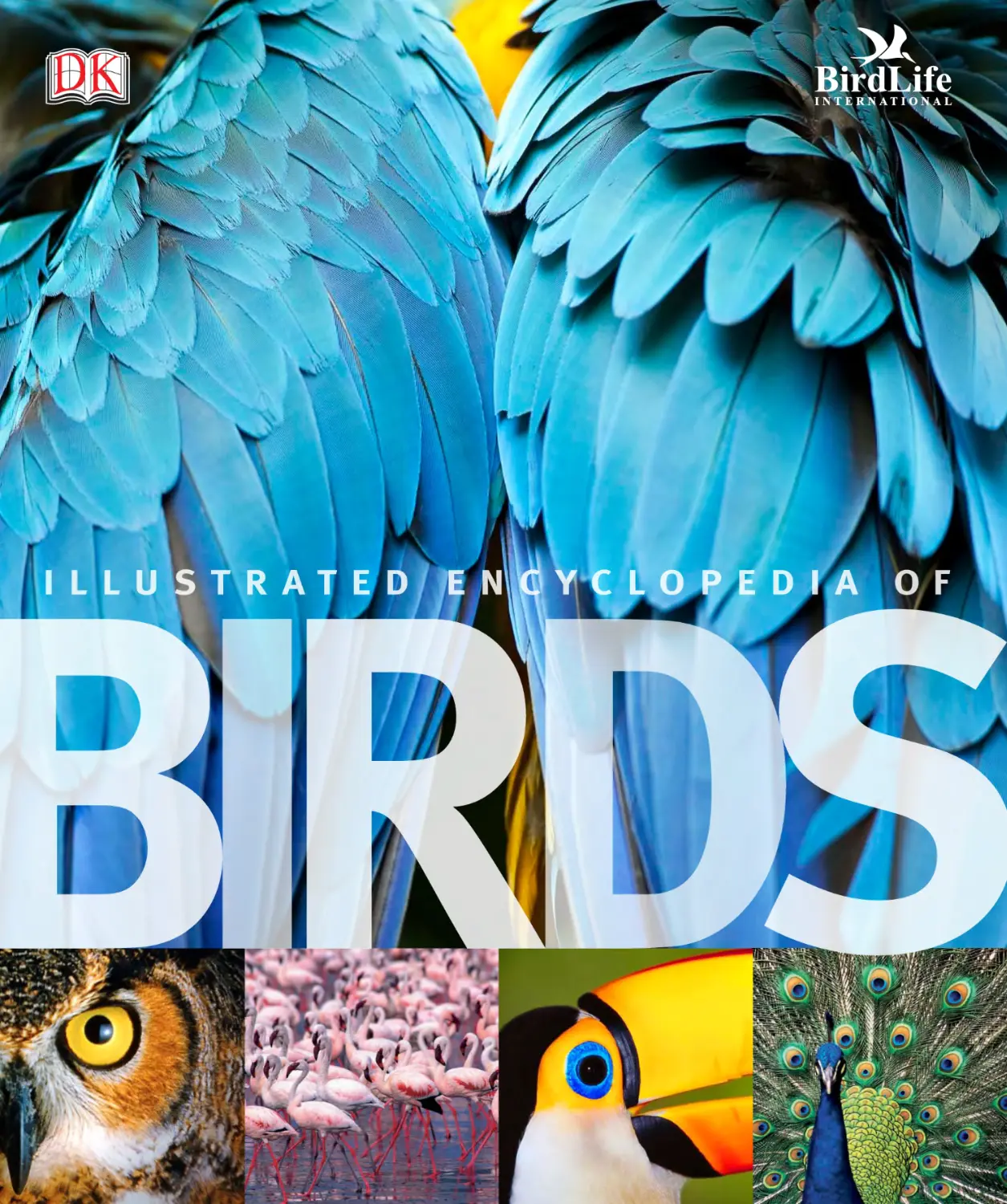


Автор: Kindersley D.
Теги: birds illustrated encyclopedia bird species wildlife reference avian diversity ornitology
Год: 2011

Текст
i l lu st r at e d
e n c yc lo p e d i a
of
I L L U S T R AT E D
E N C Y C LO P E D I A
O F
I L L U S T R AT E D
E N C Y C LO P E D I A
O F
SENIOR EDITOR
Peter Frances
MANAGING EDITOR
Sarah Larter
PRODUCTION CONTROLLERS
Melanie Dowland, Shane Higgins
REFERENCE PUBLISHER
Jonathan Metcalf
MANAGING ART EDITOR
Louise Dick
SENIOR MANAGING ART EDITOR
Phil Ormerod
JACKET DESIGNER
Duncan Turner
ART DIRECTOR
Bryn Walls
SCHERMULY DESIGN COMPANY
PROJECT EDITOR
Cathy Meeus
EDITORS
Gill Edden, Jo Godfrey Wood, Ben Hoare
ART DIRECTOR
Hugh Schermuly
DESIGNERS
Steve Woosnam-Savage, Lee Riches
DK DELHI
DTP COORDINATORS
DTP DESIGNER
Balwant Singh, Sunil Sharma
Govind Mittal
EDITORS
Saloni Talwar, Alicia Ingty, Aditi Ray,
Ankush Saikia, Rohan Sinha, Pankhoori
Sinha, Aakriti Singhal
EDITORIAL MANAGERS
Dipali Singh, Glenda Fernandes
DESIGNERS
Mini Dhawan, Romi Chakraborty,
Tannishtha Chakraborty
ART DIRECTOR
Shefali Upadhyay
HEAD OF PUBLISHING
Aparna Sharma
BIRDLIFE INTERNATIONAL
PROJECT CO-ORDINATOR
Adrian Long
SPECIES DISTRIBUTION MAPPING
Mark Balman, Gill Bunting, Ian Fisher,
Simon Mahood, Dan Omolo, Louisa
Richmond-Coggan, Andy Symes
CONTENTS
LONDON, NEW YORK, MELBOURNE,
MUNICH AND DELHI
ABOUT THIS BOOK
6
FOREWORD by dr marco lambertini,
birdlife international
9
INTRODUCTION
BIRD ANATOMY
24
SENSES
26
FEATHERS
28
WINGS
30
FLIGHT
32
GLIDING AND SOARING
34
LEGS AND FEET
36
BILLS
38
FEEDING ON ANIMALS
40
FEEDING ON PLANTS
42
COMMUNICATION
44
DEFENCE
46
BREEDING
48
COURTSHIP
50
NESTS AND EGGS
52
PARENTAL CARE
54
LIVING TOGETHER
56
MIGRATION
58
MIGRATION ROUTES
60
BIRDS UNDER THREAT
62
CONSERVATION
64
EXTINCT BIRDS
66
AUDUBON
PROJECT CO-ORDINATOR
Sandy Pinto
EDITORIAL CONSULTANT
Sally Conyne
HABITATS
INDEXER
Sue Butterworth
PICTURE RESEARCHERS
Neil Fletcher, Will Jones
ILLUSTRATOR
John Woodcock
First published as Bird in Great Britain in 2007
This edition published in 2011 by
Dorling Kindersley Limited
80 Strand, London WC2R 0RL
A Penguin Company (UK)
2 4 6 8 10 9 7 5 3 1
001 – 180274 – March/2011
Copyright © 2007, 2009, 2011 Dorling Kindersley Limited
All rights reserved. No part of this publication may be reproduced, stored in
a retrieval system, or transmitted in any form or by any means, electronic,
mechanical, photocopying, recording, or otherwise, without prior written
permission of the copyright owner.
A CIP catalogue record for this book is available from the British Library
ISBN 978 1 4053 6291 7
Colour reproduction by Colourscan, Singapore
Printed and bound in Singapore by Star Standard Ltd
See our complete catalogue at
www.dk.com
BIRD GEOGRAPHY
70
BIRD HABITATS
72
GRASSLANDS
74
DESERTS
76
TROPICAL FOREST
78
TEMPERATE FOREST
80
CONIFEROUS FOREST
82
HEATH AND SCRUBLAND
84
MOUNTAINS
86
POLAR REGIONS
88
WETLANDS
90
COASTS
92
OCEANS AND SEAS
94
FARMLAND AND CITIES
96
BIRD SPECIES
CLASSIFICATION
100
TINAMOUS
102
OSTRICHES
103
RHEAS
104
CASSOWARIES AND EMUS
105
KIWIS
106
GAMEBIRDS
107
WATERFOWL
120
PENGUINS
136
DIVERS
143
ALBATROSSES AND PETRELS
144
GREBES
152
FLAMINGOS
154
STORKS AND HERONS
158
PELICANS AND RELATIVES
170
BIRDS OF PREY
180
CRANES AND RELATIVES
206
WADERS, GULLS, AND AUKS
218
SANDGROUSE
243
PIGEONS AND DOVES
246
PARROTS
252
CUCKOOS AND TURACOS
272
OWLS
278
NIGHTJARS AND FROGMOUTHS
288
SWIFTS AND HUMMINGBIRDS
292
MOUSEBIRDS
300
TROGONS
300
KINGFISHERS AND RELATIVES
304
WOODPECKERS AND TOUCANS
315
PASSERINES
330
GLOSSARY
490
INDEX
494
ACKNOWLEDGMENTS
510
6
ABOUT THIS BOOK
CONTRIBUTORS
David Burnie Introduction, Habitats, introductions to bird orders
THIS BOOK IS DIVIDED INTO THREE CHAPTERS.
An overview
of the physiology and behaviour of birds is given in the
INTRODUCTION; the chapter on HABITATS looks at the distribution
of birds throughout the world, both in terms of geography and
types of habitat; and BIRD SPECIES, provides detailed information
on orders, families, and individual species of bird.
Ben Hoare Great Sites, introductions to passerine families, Glossary
Joseph DiCostanzo Introductions to passerine families
BirdLife International provided the text and maps for
the species profiles in this book. The species texts were written by the
following contributors:
Phil Benstead Gamebirds, Waterfowl, Pelicans, Waders, Gulls, and
Auks, Cuckoos and Turacos, Passerines
Chris Harbard Penguins, Birds of Prey, Kingfishers, Passerines
Guy Kirwan Rheas, Cassowaries and Emus, Penguins, Divers,
Albatrosses and Petrels, Pelicans, Cranes, Pigeons and Doves, Parrots,
Swifts and Hummingbirds, Mousebirds, Trogons, Kingfishers,
Woodpeckers and Toucans, Passerines (species and families)
INTRODUCTION
This opening chapter provides information on the physical characteristics of birds,
focusing on the aspects of their physiology that differentiate birds from the rest
of the animal kingdom. Bird behaviour is also examined, from different feeding
preferences and methods to systems of communication, courtship rituals, and
breeding and parenting. There is also coverage of migration behaviour and routes.
Threats to birds and steps being undertaken to protect them through conservation
efforts are also discussed in the closing pages of this chapter.
24
introduction
DIGESTIVE SYSTEM
BIRD ANATOMY
lungs
oesophagus
SOME GROUPS OF ANIMALS are easily confused, but there are no such
problems with birds. They are the only animals that have feathers, and
the only living vertebrates – apart from bats – that have evolved wings
and powered flight. Internally, they have a range of special features,
including hollow bones, powerful flight muscles, and a breathing
system that extracts the maximum amount of oxygen from air. Thanks
to these adaptations, some birds soar as high as passenger planes, while
others spend years on the wing before finally landing to breed.
kidney
All birds have evolved from the same distant ancestors
and, as a result, they share the same underlying
body plan. Their skeletons contain fewer bones
than a mammal’s, and they have bills
rather than teeth and jaws. Their wing
bones are light and hollow, and end in
a three-fingered “hand”, while their legs
have a Z-like shape, with a raised ankle
joint that looks like a backward-pointing
knee. In most birds, the ribcage is compact, but the breastbone has
a large vertical flap, called a keel, which acts as an anchor point for the
muscles that power the wings. In fast or powerful fliers, such as pigeons
and doves, flight muscles can make up 40 per cent of the body’s total
weight. These muscles generate a large amount of heat, helping birds
to maintain their high body
temperature, which averages
brachioradialis
straightens
40–42ºC (104–107ºF).
crop
glandular
stomach
heart
gizzard
liver
small
intestines
cloaca
pancreas
INTERNAL ORGANS
skull
upper
mandible
SKELETON AND MUSCLES
Birds have similar body systems to
mammals, but their organs differ. Most
have a crop and a gizzard in the digestive
system, and a single opening called the
cloaca for excretion and reproduction.
SKELETON
Birds often have long and highly
flexible necks, but the rest of the
backbone is much more rigid. The
keel projects forwards from the
breastbone. Immediately above it,
the furcula, or wishbone – formed
by a fusion of the collar bones –
functions like a spring when the
wings beat up and down.
lower
mandible
femur
air spaces
strengthening
struts
LUNGS AND BREATHING
Some birds – such as crows and gulls – eat
anything edible that they find, but most have
specialized diets and digestive systems that
have evolved to deal with particular foods.
Because birds do not have teeth, the majority
swallow their food whole. As it goes through
the digestive system, food is stored in the
crop before passing through a twochambered stomach. The first chamber, the
glandular stomach, secretes acidic digestive
juices. The second chamber, the gizzard, has
muscular walls which contract to grind up
food. After this, nutrients are absorbed and
waste expelled. Digestive systems are
modified in different ways. Seed-eaters have
large crops, so that they can eat rapidly and
DOWN IN ONE
move on. Many seabirds also have large
Birds often have a surprisingly
crops, to allow them to carry food back to
large swallow. This Doubletheir young. The Hoatzin’s crop is enormous,
crested Cormorant is tackling a
large fish – several minutes’ work. and functions like a microbial fermentation
tank, breaking down large quantities of
leaves. Glandular stomachs are largest in birds of prey, vultures, and fisheaters. The big Lammergeier Vulture produces such powerful stomach
acids that it can digest bones thicker than a human wrist. The gizzard is
largest in birds that eat seeds and nuts: many of these swallow grit and
stones that become lodged in their gizzards, helping to grind the food.
ilium
ischium
"2%!4().' #9#,%
trachea
interclavicular
air sac
biceps folds
wing against
body
triceps extends
wing away
from body
during flight
MUSCLE BOUND
posterior
thoracic air
sacs
INHALATION 1
At the start of the cycle, the forward and rear
air sacs expand. Inhaled air travels through the
bird’s trachea and into the rear air sacs.
LUNGS AND AIR SACS
A bird’s lungs take up less space than those
of a mammal, but they are much more
efficient. Air sacs act as reservoirs. Unlike
the lungs, they do not absorb oxygen.
anterior air sacs
compressing
Nick Langley Kiwis, Gamebirds, Storks and Herons, Birds of Prey,
Cranes and Relatives, Waders, Gulls, and Auks, Owls, Nightjars
and Frogmouths, Passerines (species and families)
Ed Parnell Storks and Herons, Birds of Prey, Cranes, Waders, Gulls,
and Auks, Parrots, Owls, Woodpeckers and Toucans, passerine families
ANATOMY AND PHYSIOLOGY
Ian Peters Gamebirds, Birds of Prey, Waders, Gulls, and Auks, Parrots,
Cuckoos and Turacos, Swifts and Hummingbirds, Kingfishers,
Woodpeckers and Toucans, Passerines
posterior
air sacs
compressing
Craig Robson Waterfowl, Birds of Prey, Waders, Gulls, and Auks,
Sandgrouse, Pigeons and Doves, Passerines
Andy Symes and Richard Thomas Additional editorial support.
spongy bone
REPRODUCTIVE
SYSTEM
AIR-FILLED BONES
To save weight, many of a bird’s bones are
pneumatized, or filled with air. These air spaces
develop early in life, and are extensions of air
sacs that connect with the lungs. In the upper
arm, the bone material itself is spongy with air
sacs and the structure of the humerus is hollow,
but criss-crossed with fine struts that prevent
collapse of the delicate limb.
furcula
(wishbone)
pubis
ribs
sternum
fibula
radius
iliotibialis braces
knee and lifts leg
pectoralis minor
makes wings
flap upwards
posterior
air sacs
anterior air sacs
expanding
expanding
lung
abdominal
air sacs
tail
vertebrae
neck
vertebrae
ulna
pectoralis major
makes wings flap
downwards
trachea
lung
pygostyle
flexor carpi ulnaris
folds wingtip
5NLIKE MAMMALS BIRDS TAKE TWO
COMPLETE BREATHING CYCLES TO
MOVE A SINGLE BREATH IN THROUGH
THE TRACHEA THROUGH THE LUNGS
AND BACK OUT OF THE BODY 7HEN
·YING THEIR BREATHING RATE CAN
SPEED UP BY TIMES TO POWER
THE EXTRA ENERGY REQUIRED
cervical
air sacs
anterior
thoracic
air sacs
James Lowen Tinamous, Ostriches, Waterfowl, Gamebirds, Flamingos,
Owls, Kingfishers, Woodpeckers and Toucans, Passerines
These pages include detailed
descriptions of the physical
characteristics of birds and the
ways in which these have
evolved to serve the needs
of different types of bird in
a variety of environments.
When a mammal breathes, air flows into its lungs and back out again.
Bird lungs work differently: air flows straight through the lungs, via a
system of air sacs, before being exhaled. This one-way flow allows air
and blood to move in opposite directions, known as countercurrent. As
a result, bird lungs are more efficient at transferring oxygen and carbon
dioxide than those of mammals, so that some birds can fly at over
10,000m (33,000ft) – an altitude where a mammal would lose
consciousness. Most flying birds have nine air sacs, which connect with
air spaces in major bones. Diving birds have poorly developed air spaces,
but in some land birds – such as hornbills – they reach as far as the toes.
wingtips
Most of a bird’s muscles
are packed close to its
body, giving it a
streamlined shape. In
flying birds, the largest
muscle is the pectoralis
major – this produces
most of the power needed
for flapping flight.
25
bird anatomy
Krys Kazmierczak Grebes, Storks and Herons, Cranes, Waders, Gulls,
and Auks, Passerines
external
digits
(fused
together)
flexors
bend toes
All birds reproduce by laying eggs. Apart from
mound-builders, or megapodes, all of them
incubate their eggs by sitting on them, and play some part in caring for
their young. In many birds, the reproductive system follows an annual
rhythm, switching on at the beginning of the breeding season, and then
shrinking again when its work is done. Female birds usually have a single
ovary, which produces eggs like units on a production line.
Eggs contain all the nutrients that a developing embryo
needs, but they do not start to develop until the eggs
are laid, and incubation begins.
EXHALATION 1
Both sets of air sacs are now compressed, so
that air is squeezed out of the rear air sacs
and into the lungs.
anterior air sacs
expanding
posterior
air sacs
expanding
MATING BEE-EATERS
NERVOUS SYSTEM
“thumb”
spinal cord
BRAIN AND
SPINAL CORD
A large part of a bird’s
forebrain is devoted to
vision. The large
cerebellum deals with
movement and balance.
To fly, birds need fast reactions, and an ability
to process rapidly changing information,
particularly from their eyes. Their brains are
well developed and, in small birds, they can
be twice as big as in mammals of a similar size.
As well as flying, birds carry out many kinds of
complex behaviour, from courtship rituals to longdistance navigation. Most of this behaviour is “hardwired” into their nervous systems, which means that it does
not have to be learned. However, birds do learn new forms
of behaviour as they grow up, and some of their instinctive
skills – such as nest building – improve with experience.
metacarpus
tarsometatarsus
INHALATION 2
The air sacs expand again, drawing more air in
through the trachea. Meanwhile, air already in
the lungs moves into the forward air sacs.
anterior air sacs
compressing
posterior
air sacs
compressing
metatarsus
THE SKULL
tarsus
digit
Bird skulls are strong, although often
paper-thin. Seen from above, this scan
of a bird skull shows the circle of bony
plates, called the sclerotic ring, which
supports each eye.
EXHALATION 2
32
To finish the double cycle, the air sacs are
compressed, driving the air in the forward air
sacs back out through the trachea.
introduction
INTRODUCTION
INTRODUCTION
In birds, as in mammals,
eggs are fertilized inside
the female’s body. In some
species, the female can
store the male’s sperm for
several weeks.
cerebral
hemispheres
FLIGHT
BIRD FLIGHT
NESTS AND EGGS
rarely make homes for themselves.
Instead, most of their nests are used solely for raising young. Some birds
lay their eggs directly on the ground or in a tree hollow, but many make
elaborate structures from an immense range of building materials,
including twigs, leaves, mud, spiders’ webs, saliva, and even
rotting seaweed. A nest helps to conceal vulnerable
hatchlings, and it also insulates them – a crucial
feature if they have no insulation of their own.
FLIGHT PATTERNS
LANDING
To land, a songbird drops its airspeed
until it is just about to stall. With its
wings and tail both acting as brakes,
it drops onto its perch. Small birds
such as this European Robin weigh
little, so come to a standstill quickly.
PERMANENT NESTS
#/--5.!, .%343
-ANY BIRDS NEST IN GROUPS BUT
A FEW SPECIES BUILD NESTS THAT ARE
PHYSICALLY ATTACHED TO EACH OTHER
4HE RESULT IS A GIANT COMMUNAL
NEST LIKE A BUILDING WITH LOTS
OF SELF CONTAINED APARTMENTS
)N !FRICA 3OCIABLE 7EAVERS
MAKE COMMUNAL NESTS OUT OF
GRASS IN 3OUTH !MERICA -ONK
0ARAKEETS USE STICKS
SHARED ACCOMMODATION
The communal nests of Sociable Weavers are
usually built in isolated trees. They can contain
up to 300 separate nesting chambers, each
with its own downward-pointing entrance.
RHINOCEROS HORNBILL
HARPY EAGLE
Fragmented habitat threatens
large birds of prey throughout
Central America.
RED-HEADED PICATHARTES
Forest fragmentation in Africa
now endangers both species
in this small family.
78
habitats
tropical forest
in tropical
forest than any other habitat, despite the
ravages of deforestation. Some species are
well known for their vivid colours, but
there are many less conspicuous
birds that also live in this
habitat. The bird life is strongly
influenced by climate, and there are
major differences between the birds of
the Old and New World tropics.
MORE BIRD SPECIES OCCUR
egg white
(albumen)
Central and South America remain
unequalled in the richness of their birds.
Many bird families are restricted to the
Americas, and for the overwhelming
majority, rainforests are by far the most
important habitat. These families range from
toucans and cotingas – some of the most
flamboyant and vocal of all forest birds –
to antbirds and tapaculos, whose drab colours form
highly effective camouflage. Other American
rainforest species include tyrant flycatchers,
hummingbirds, and American blackbirds and orioles.
Fruit-eating birds, such as toucans and quetzals,
play a key role in tropical forests because they help to
spread seeds. Many other forest birds actually feed on
seeds and nuts. In the Americas, the most conspicuous
among them are macaws – the world’s largest parrots
– which are found only in this region. Generally
speaking, tropical forests are difficult habitats for
scavengers and birds of prey, since the dense cover
makes it hard to find food. However, the American
tropics are home to several spectacular examples,
including the King Vulture and Harpy Eagle.
SHAPE AND COLOUR
Some eggs are almost
round; guillemot eggs
have a sharp point, to
stop them rolling off
cliffs. The shell has
a basic colour, with
markings added
just before laying.
REDSHANK
yolk
air
cavity
developing
embryo
INSIDE AN EGG
An egg is lined with a series
of membranes that help to keep
water in, but which let oxygen
and carbon dioxide pass
through the shell. As the
embryo grows, the yolk (which
provides nourishment) shrinks,
and the air space enlarges.
The shell thins, as its calcium is
used for the embryo’s skeleton.
GUILLEMOT
OSPREY
AMERICAN
ROBIN
MAGNIFICENT
RIFLEBIRD
INTENSIVE AGRICULTURE
With over 6 billion people to support now, and over 9 billion expected
by the middle of this century, food production has never been more
important. Increasingly, food is supplied by intensive farming – a form
of agriculture that depends on the routine use of artificial fertilizers and
pesticides. Intensive farming produces high yields, but this comes at
a high price to the environment. With wild plants and insects kept at
very low levels, birds soon run short of food. As a result, species that
were once a common sight in rural areas are in rapid decline. In Europe,
intensive agriculture has had a particularly damaging effect on groundnesting species such as the Eurasian Skylark and Northern Lapwing,
and similar declines have affected farmland birds in many other regions.
birds under threat
ON DANGEROUS GROUND
In intensively farmed areas, larks
such as this Eurasian Skylark face
a double threat to survival. Food is
hard to find, and as ground-nesters,
they also risk having their eggs or
nestlings destroyed by tractors.
Over the centuries, humans have accidentally or deliberately introduced
alien species to far-flung parts of the world. For birds, this mixing up of
the world’s biodiversity has had extraordinarily damaging results. Since
1500, about 150 species of bird have become extinct, and in half these
cases, introduced species have been the chief cause. In some cases, these
undesirable aliens are predators that have a direct and deadly effect on
local birds. Cats and rats are often the culprits, particularly when they
arrive on remote islands that have no native mammals of their own.
Both are highly efficient predators, not only of adult birds, but also of
nestlings. More subtle, but no less dangerous, is the effect of introduced
grazing and browsing animals, such as goats. These can strip islands of
their native vegetation, which removes the cover that many birds need
to breed. Finally, introduced species may bring disease. In the Hawaiian
Islands, for example, introduced mosquitoes brought with them avian
malaria and avian pox. At low altitudes, where mosquitoes are abundant,
many of the islands’ native birds have disappeared.
VULNERABLE GOOSE
LONG-BILLED
SPIDERHUNTER
Spiderhunters are
named for their habit
of plucking spiders
from their webs, but
also (as here) feed on
nectar. They belong
to the sunbird family,
and like other sunbirds
build hanging, pouchshaped nests.
MONSOON FOREST
GREEN IMPERIAL PIGEON
This Asian forest pigeon feeds mainly
on soft fruit, digesting the flesh but
scattering the seeds in its droppings.
GREAT BLUE TURACO
Also known as the
Blue Plantain-eater,
this large forest bird
occurs throughout
much of equatorial
Africa. Pairs or small
family groups can be
seen feeding on fruit,
flowers, and leaves in
the tops of tall trees.
KEEL-BILLED TOUCAN
Fruit and a variety of small animals
feature on the Keel-billed Toucan’s
menu. The species is widespread
in America’s lowland rainforests.
UNCERTAIN CATCH
Albatrosses and gannets
swoop around a trawler off
the coast of South Africa. The
huge growth in fish catches
has had damaging effects
on birds’ food supply.
Pesticides and other
organic pollutants are a
major threat to the world’s
birds. In southern Asia,
vultures have declined by
up to 95 per cent in less
than a decade – a sideeffect of the veterinary
drug Diclofenac finding
its way into dead remains.
CLIMATE CHANGE
Like many migrants, the
Red-breasted Goose has a
sharply defined distribution,
which has evolved over many
thousands of years. Its main
breeding area lies in the
remote Taymyr Peninsula in
northern Siberia, a region
that is currently experiencing
rapid climate change.
ARCTIC OCEAN
TOTAL DESTRUCTION
This is the largest
vulture found in
American tropical
forests – and by far
the most colourful.
It locates food by
smell and its diet
includes dead
mammals in the forest
itself, as well as dead
fish washed up on
riverbanks.
This enormous eagle hunts up in the
forest canopy, where it is a predator of
monkeys and colugos (flying lemurs).
Thanks to their long geological links (see Bird
Geography. p. 70), Africa and Asia’s tropical forests
share many families of birds. Among the most
impressive are the hornbills, which are the Old World
counterpart of toucans. Hornbills live in a variety
of habitats, but the largest species are found in the
forests of southeast Asia. Old World tropical forests
are also an important habitat for bulbuls – mediumsized songbirds that often have crests. Dozens of
species live in tropical forests, and although many
are secretive, some visit gardens near forested land.
Flower-visitors include sunbirds, which probe deep
into blooms with their long curved bills, and whiteeyes. Compared to most nectar-feeders, white-eyes
have short bills, and they often reach their
food by pecking holes in the base of flowers.
In temperate regions, pigeons are typically
drab-looking birds that feed in the open. But
in the Old World tropics, dozens of species
of sumptuously coloured pigeons and fruitdoves live and feed in forests. Some species
are widespread, while others are localized,
particularly in the islands of southeast Asia
and the western Pacific. Despite their brilliant
colours, fruit-doves can be difficult to see.
Parrots are different: their bright plumage and
noisy habits often make them a conspicuous
part of the forest fauna. Some of the most
colourful kinds, such as lorikeets, feed mainly
at flowers, lapping up pollen and nectar with their
brush-tipped tongues. Australasian tropical forests
are home to two highly distinctive families found
nowhere else: the cassowaries and birds of paradise.
Unlike tropical rainforest, monsoon forest has
a sharply defined wet season, followed by months
of drought. Many monsoon forest trees are deciduous,
losing their leaves during the dry season, and they
sometimes flower while their branches are still bare.
The largest area of this habitat is found in southern
Asia. Here, forest birds include hornbills, parrots, and
many species of babbler. There are also a wide variety
of gamebirds, including the Indian Peafowl and the
Red Junglefowl – the wild ancestor of the farmyard
chicken. Like most gamebirds, they feed on the
ground but roost in trees.
MALABAR PIED HORNBILL
Resident in southern Asia from
India to Sri Lanka and Borneo,
this hornbill prefers open forest,
often near human habitation.
ORGANIC POLLUTANTS
INTRODUCED SPECIES
Modern combine harvesters are highly
efficient, and leave little or no waste
grain for birds to glean. Intensive farming
also compacts the soil, reducing the
supply of earthworms and small animals.
On a hillside facing the Mediterranean, two Maltese
hunters pick off migrating birds. Often defended on the
grounds of tradition, this destructive “sport” has been
attacked by conservation organizations, leading to a
tightening of regulations in recent years.
Throughout the world, birds are exploited for food,
for sport, and for the cage-bird trade. Hunting can be
particularly damaging, because the targets are often birds
on migration, which are easy to pick off where they
cross mountains or coasts. Even in countries where the
hunting season is controlled, regulations designed to
protect migrants are often ignored. The cage-bird trade
affects some bird families far more than others. For example, over 50
species of parrot – out of a total of 352 – are in serious danger. Some
other commercial activities, particularly fishing, also have damaging
effects. Some birds, such as gulls, thrive on fishing waste, but the picture
is very different for diving birds, such as guillemots and puffins, which
face increased competition for food. Albatrosses are in a steep decline,
following the growth of long-line fishing. Every year, many thousands
of albatrosses drown after taking long-line baits and becoming hooked.
HABITAT LOSS
CLEAN SWEEP
63
HUNTING FOR SPORT
EXPLOITING BIRDS
PHILIPPINE EAGLE
SCARLET MACAW
Like many other forest
parrots, the Scarlet
Macaw flies over the canopy in noisy
flocks to and from its night-time roosts.
It is one of the most abundant macaws.
KING VULTURE
AMERICAN
RAINFOREST
79
AFRICA AND ASIA
TROPICAL
FOREST
MALE IN CHARGE
Ostriches lay their eggs directly on the ground. Several females
contribute to the clutch, which is guarded by a single male.
Eventually, the nest may contain over 50 eggs. Only half of
them are incubated – the ones at the edge do not hatch.
The destruction of natural habitats is the
biggest threat that birds face today. Farming
and forestry are the main driving forces,
followed by the growth of cities, and
development of coasts. Most birds are adapted
to a particular habitat and cannot survive
elsewhere. As a result, widespread birds
become more localized, while those that were
localized to begin with risk becoming extinct.
Habitat destruction is not new – it dates
back to the start of farming, about 10,000
years ago. However, it has never taken place
on the scale seen today. Deforestation in the
tropics hits the centre of bird diversity,
while the growth in cities and
infrastructure takes its toll on bird
life all around the world. When
cities spring up on what used to be
forest or wetlands, the environmental
damage is clear to see. But habitat
destruction also occurs in less visible
ways. For example, oil palms or fastgrowing conifers are often grown on
land where the natural forest cover has
been cleared. These plantations may
look green and lush, but their bird life
is only a faint echo of the richness in
natural forest habitats.
Deforestation affects birds worldwide.
Charred stumps are all that remain of
these eucalypt trees cut for timber in the
Central Highlands of Victoria, Australia.
Only hummingbirds, kingfishers, and kestrels
routinely hover for extended periods. Feeding
at a flower, this Mangrove Hummingbird may
beat its wings 50 times a second.
In the coming decades, climate change threatens to become the biggest
challenge facing the world’s birds. As climate patterns change, natural
habitats are likely to shrink or shift, making it harder for birds to find
food and to breed. The outcome of this is hard to predict – all that
can be said with any certainty is that birds with highly specific
ecological needs are likely to be the hardest hit. These needs can
take many forms. For example, the Red-breasted Goose breeds in
tundra in one part of northern Siberia, and relies on this habitat for
its survival. If the region continues to warm at its present rate, this
goose’s breeding habitat will shrink dramatically, making its population
plummet. Many other species will be affected by changes in vegetation,
or by shortages of food at the time when they normally breed. At sea,
gradual warming is likely to disrupt
normal patterns of plankton growth.
As a result, fish supplies will become
less reliable, creating food shortages for
seabirds. The outcome, for birds, is a
world where there are some winners,
but far more losers. In the long run,
a substantial proportion of these risk
becoming extinct.
Russia
Arctic
Circle
Key
Red-breasted Goose breeding area
tundra loss
no change to tundra extent
tundra expansion
A SHRINKING HABITAT
This map shows projected changes in the tundra
of northern Siberia, assuming that the current
warming trend continues. By the year 2070, up
to three-quarters of the area of the Red-breasted
Goose’s nesting grounds are likely to be invaded
by trees, thereby preventing it from breeding.
tropical forest
FORK-TAILED WOODNYMPH
TROPICAL FOREST DISTRIBUTION
Rainforest is found worldwide on and near the equator, where intense
sunshine produces almost daily downpours of rain. Towards the edges
of the tropics, the climate is much more seasonal. Here, evergreen
forest gives way to monsoon forest, which is dry for much of the year.
In the Americas, hummingbirds are
important pollinators of forest flowers.
Despite their small size, the males can
be pugnacious, attacking each other in
mid-air to defend patches of flowers.
a map indicates
the main areas
of the world in
which the habitat
exists
OLIVE SUNBIRD
The Olive Sunbird from tropical Africa is
a highly active species that flits between
forest flowers like a hummingbird.
HABITATS
Pages such as the ones shown here
describe different habitats and a
selection of the typical bird species
that are found in that habitat.
HABITATS
Hornbills are threatened by a
wave of deforestation that is
sweeping southeast Asia.
RANDOM FLAPPING
This flight pattern is typical of aerial insecteaters, such as swifts and swallows, and
also of some larger birds, including kites.
HOME SECURITY
BIRDS UNDER THREAT
BIRD CONSERVATION
SLOW FLAPPING
A wide variety of birds, including harriers,
gulls, and Barn Owls, flap their wings slowly
so that they can scan the ground for food.
INTERMITTENT FLAPPING
This flight style produces an undulating path,
and the longer the intervals between flapping,
the more noticeable the undulations.
This chapter opens with an overview of the
biogeographical realms in which birds are distributed
throughout the world, and the ways in which different
groups of birds have evolved in different regions over
millions of years. An overview of the variety of
environments - or biomes - in which bird life exists
is followed by a detailed description of each main type
of habitat, from polar regions to deserts and urban
environments. These accounts include information about
the bird species that are adapted to these conditions and
their lifestyle, including diet, nesting, and migration.
Standing by its nest, this Gentoo Penguin is
not only guarding its egg, but also its nesting
materials. Neighbours are quick to help
themselves if materials are in short supply.
double
membrane
A bird’s egg is a single giant cell, protected
by watertight membranes and a porous shell.
The embryo starts to take shape during
incubation, when the original cell divides
repeatedly, creating the tissues and organs
of a developing bird. Seabirds often produce
a single egg, while gamebirds lay the largest
clutches: some species, such as quails and
partridges, can produce over 20 eggs each
time they breed. There is no straightforward
connection between a bird’s size and the size
of its eggs. The Bee Hummingbird produces the
smallest eggs – as little as 7mm (1/4 in) long –
while the Ostrich’s are the largest, weighing up
to 1.5kg (31/3 lb). However, the Kiwi’s solitary
egg is the biggest in relative terms, measuring
62
introduction
about a quarter
of the female’s weight. The eggs
of cavity nesters are often white, while those
of ground-nesters are usually camouflaged.
HABITATS
Covering topics such as social
behaviour, courtship, nesting,
breeding, and migration, this
section addresses all aspects
of how birds behave.
GROUND NESTERS
EGGS
FAST FLAPPING
Pigeons and ducks both have a fast, direct
flight – a characteristic shared by auks and
cormorants as they speed over the sea.
BIRD BEHAVIOUR
ANCESTRAL PILE
A large number of birds – particularly in open
habitats – lay their eggs on the ground. Many use
no nesting material, relying instead on camouflage
or out-of-the-way nest sites to protect their eggs and
young. These birds include many seabirds and waders,
as well as nightjars, some vultures, and large flightless
birds, such as ostriches and emus. Some excavate a
shallow depression called a scrape, but guillemots and
razorbills do not have this option. They breed on cliff
ledges, and lay a single egg directly on the bare rock.
In addition to these “non-builders”, groundnesting birds include many species that have at least
some construction skills. Penguins often breed on
rocky shores, gathering small piles of stones or sticks.
Waterfowl and gamebirds show greater expertise,
building bowl-shaped nests from plants. The largest
structures are built by megapodes: their moundshaped nests can be over 10m (33ft) across and up
to 5m (17ft) high, containing several tonnes of leaves.
feet are stowed
away close to
body
HOVERING
53
nests and eggs
splayed tail
feathers help
to generate lift
A Bald Eagle looks out from its nest high in a pine tree. Bald Eagles
make the world’s biggest nests – the largest one ever measured was
nearly 3m (10ft) wide and over 6m (191/2ft) deep. These giant nests are
often built by several generations of birds.
INTRODUCTION
INTRODUCTION
wings almost
meet at top of
upstroke
Birds often have characteristic flight patterns,
which can help to identify them when they are
on the wing. Some follow a level flight path, flapping their
wings at a steady rate, varying from about 200 beats a minute
for pigeons, to a much more leisurely 25 beats a minute for
large birds such as herons. Many other birds intersperse flapping
with short bursts of gliding, but some species dip up and down,
flapping their wings in short bursts, and then holding them
against their sides. This is common in finches, which have
an undulating or “bouncy” flight path, and it is even more
pronounced in woodpeckers and toucans.
RECENT ESTIMATES PLACE 12 per cent of the world’s birds
– over 1,200 species – at threat of extinction. This is
catastrophic, and not only for birds themselves, because
their changing fortunes mirror the
health of the global environment.
Birds are threatened in many ways,
but most current problems have the
same root cause: human-induced
changes to the natural world.
The final part of this
chapter examines how
birds are adapting to
conditions in the modern
world. As well as looking
at the threats, it also
describes the positive
steps that being taken to
conserve bird species.
alula is raised
during take-off
wings point
forwards while
rising from
downstroke
INTRODUCTION
Tree-holes and other natural cavities
are used as nests by a wide range of birds. At one
extreme, these include small songbirds such as tits;
at the other are 1m- (3ft-) long hornbills, and macaws.
Woodpeckers excavate holes themselves, but many other birds take
them over once the original owners have moved on. Hornbills have
a particularly unusual form of cavity nesting behaviour. Having
found a suitable nest hole, the female moves in. The male then
seals the entrance with a wall of mud, leaving a small hole
so he can supply his mate with food. Cavity nesters also
include birds that burrow into the ground, or into riverbanks, or sandy
cliffs. Most use their beaks to peck their way through the earth, although
the North American Burrowing
STARTING FROM SCRATCH
Owl excavates with its feet. BankWoodpeckers can chisel holes in healthy, living
nesters, such as kingfishers, often
wood. Once the hole has been opened up, the
give their tunnels a slight upward
wood eventually begins to rot, allowing other
slope to prevent them from
birds to expand the nest in subsequent years.
A Eurasian Three-toed Woodpecker is pictured.
becoming flooded.
At dusk a male Eurasian Woodcock carries
out its courtship flight. This is the slowest
bird flight not to involve gliding or hovering.
Seen in cross-section, a bird’s wing forms a shape called an aerofoil.
Air moves over the upper surface faster than the lower one, causing
a reduction in pressure that results in lift. If lift is greater than the pull
of gravity, the bird rises, and if thrust exceeds drag, it accelerates
forwards. But if each pair of forces is balanced, the bird stays
at the same height and speed.
Songbirds usually abandon their nests when their young
have fledged, and build new ones next time they breed.
This sounds wasteful, but it is a good way of avoiding
the attention of predators and reducing parasite
infestation. Birds of prey are different: they frequently
return to the same nest year after year. With each
breeding season, they add more sticks, increasing the
size of the nesting platform. Because these birds are
long-lived, the largest species – such as Bald Eagles –
can end up owning nests of a colossal size. White
Storks also reuse their nests, but the most remarkable
permanent nests are made by the African Hamerkop.
Although only about 30cm (12in) high, this marshland
bird builds an immense spherical nest out of sticks, up
to 2m (61/2 ft) across. The Hamerkop’s nest
is multi-chambered, and is so strong that
it can support the weight of an adult man.
Safely beyond the reach of most predators,
these Cliff Swallow nests are made of
mud mixed with saliva – a material
that becomes rock-hard as it
dries, and lasts for years.
CAVITY
NESTERS
LEISURELY FLIGHT
Birds have a strict “baggage allowance” that
limits their own body weight, and also the
weight of anything they carry into the air. The
strongest lifters are birds of prey, which carry
their victims in their claws. The large, fully
grown trout that this Osprey is carrying may
equal half its body weight.
WING AERODYNAMICS
LIFTING OFF
When birds take off, their wings work
in complex ways. Instead of pushing
downwards and backwards like a pair
of oars, a pigeon’s wings twist at the
bottom of the downstroke, helping to
pull the bird through the air like a pair
of propellers. To reduce turbulence, the
primary flight feathers are spread apart
and the alula, a small feathered flap
that protrudes from the “wrist” of each
wing, is temporarily raised.
BUILDING WITH MUD
Songbirds are usually blind and featherless when they
hatch, so a robust nest is essential for their survival.
The majority of species nest off the ground, chiefly
in trees and bushes, but songbirds also nest on rocks,
in caves, and even behind waterfalls. Their nests are
typically cup-shaped, but evolution has produced all
kinds of refinements to this basic design. One of the
commonest is the domed nest with an entrance at
one side. Even more effective, in security terms, are
nests that hang from the ends of slender branches.
Weavers often build nests like these, but the largest are
made by oropendolas in tall tropical trees. Shaped like
an extended pouch, their nests can be up to 2m
(61/2 ft) long, with the living quarters hanging up to
50m (160ft) above the ground. However, songbirds
are not the only tree-nesters: this behaviour is
widespread in many other birds. Ovenbirds, which
also belong to the passerine order – build some of the
most complex nests of all. Shaped like an old-fashioned
clay oven, the nests have a slit-like entrance and a curving
corridor leading to the nest chamber
inside. Non-passerines typically make WEAVER AT WORK
Nest-building is controlled by instinct, but
crude platform nests from sticks.
Even elaborate nests are built quickly. requires enormous skill. Using strips of grass, male
Southern Masked Weavers build ball-shaped nests
A structure that requires thousands
that hang from the tips of branches. Once the nest
of billfuls of moss or leaves can be
is complete, the male hangs upside down beneath
it, and flutters his wings to attract passing females.
complete in a couple of days.
widely spread
flight feathers
increase wing’s
surface area
AIRLIFT
gravity
TAKEOFF AND LANDING
UNLIKE MAMMALS, ADULT BIRDS
NESTING OFF THE
GROUND
airflow
drag
bird’s wing
thrust
Body weight has a far-reaching effect on the way birds take off
and land. Small songbirds can take off in a split-second with just
a kick of their legs, but heavily built birds take much longer to
get into the air. Pheasants and other gamebirds are a notable
exception to this rule: powerful flight muscles give them an
explosive take-off to escape from danger. Taking off can be
hard work, and in heavy birds, the wing’s geometry changes
to maximize lift and minimize energy-wasting turbulence.
These changes are reversed once the bird is in the air.
Landing requires careful coordination, and also plenty
of space in the case of heavy birds such as bustards and
swans. When birds land, they increase the angle of
their wings, like an aeroplane lowering its flaps.
The bird then swings its legs forwards, and if all
goes to plan, it lands on them without toppling
over. But for a heavy bird, such as a swan,
it is very difficult to lose so much
momentum in a short time. Instead,
swans land on water, using their
large webbed feet as brakes.
INTRODUCTION
introduction
With its wings partly folded,
a Peregrine Falcon dives,
or stoops, towards its
airborne prey hundreds
of metres below.
INTRODUCTION
52
POWER DIVE
lift
FLIGHT FORCES
Flapping flight is a highly complex form of
movement, which is still not fully understood.
However, the basic principles behind bird flight are
well known. Like aircraft, birds have to generate two
forces to fly. The first, known as lift, counteracts the
downward pull of Earth’s gravity. The second force,
called thrust, counteracts air resistance or drag, and
pushes the bird forwards. In both birds and aircraft,
lift is produced by the stream of air moving over the
curved surfaces of the wings, while in most birds
thrust is produced by flapping. However, bird wings
are highly flexible, and so flapping flight can involve
many other factors as well. For example, pigeons
generate extra lift by bringing their wings together
on the upstroke, while hummingbirds can generate
a constant downdraught by making each wing trace
a path like a figure 8. Gliding birds (see p.34) are quite
different: they exploit the air currents around them,
saving much of the energy required in flapping flight.
This key aspect of bird
behaviour is examined
in detail, including
aerodynamics, different
types and patterns of
flight of a variety of
bird species.
33
FLIGHT SPEEDS
The speed of a flying bird is difficult to measure, so many records from
the early years of ornithology are now thought to be unreliable. Birds are
also experts at taking advantage of prevailing winds, and wind-assisted
flight can make some long-distance speed records misleading. However,
there is little doubt that the Peregrine Falcon holds the absolute record
for speed in the air. When it is diving, it probably exceeds 200kph
(124mph). The fastest birds in level flight are ducks, geese, and swifts.
Some of these can reach an airspeed of nearly 80kph (50mph). In general,
birds rarely fly faster than 30kph (18mph).The slowest birds of
all – woodcocks – can fly at a leisurely 8kph (5mph) without
stalling, which is not much faster than a brisk walk.
huge advantages, particularly in the search
for food. Over millions of years, it has evolved independently in several different
groups of animals, including flying reptiles called pterosaurs, whose leathery wings
were up to 12m (40ft) across. Today, the animal kingdom includes many species that
can glide, but only three kinds of animal – birds, bats, and insects – can stay airborne
by flapping their wings. Of these, insects are by far the most numerous, but birds lead
the field in speed, endurance, load-carrying capacity, and total distance flown.
THE POWER OF FLIGHT GIVES ANIMALS
HABITATS
cerebellum
7
BIRD SPECIES
This final chapter is devoted to a detailed look at over
1,200 bird species. It opens with an overview of the
different ways in which birds are classified. The rest of
the chapter is organized according to taxonomic order,
with the non-passerine orders being covered first,
followed by the passerines. Introductory sections
describing the different bird orders and, in the
passerine section, bird families are followed by profiles
of individual species within that group. In most cases
each species profile includes a photograph of the bird,
a map showing where it is found, summary data
detailing its size, migration status, and preferred habitat.
For the most threatened species, information is also
given on status according to the IUCN Red List.
The chapter is interspersed with illustrated accounts
of great bird-watching sites around the world.
Resident. Areas inhabited
by non-migrant birds.
Partial migrant
24cm (91/2in)
A common bird in its large range of
southeast Asia to Australia, the Collared
Kingfisher is also known as the Whitecollared, Sordid, or Black-masked
Kingfisher.The plumage varies across
the 49 races of the species, with
differences in the blueness or greenness
of the upperparts, the extent of the pale
spot above the bill, and the whiteness of
the underparts.
22cm (81/2in)
WEIGHT
40g (17/16oz)
MIGRATION
Partial migrant
Woodland and thickets, especially along
watercourses, bushy grassland, and parkland
HABITAT
The Grey-headed Kingfisher is
primarily insectivorous, preying on
grasshoppers, crickets, and locusts in
particular. Most prey is taken from the
ground, but some insects are caught in
flight. Small prey are swallowed whole,
while larger insects may be smashed
against a perch. Pairs display by singing
from a treetop and flicking open their
vivid blue wings. They also circle high
above the ground, calling constantly,
before diving back to a tree.
The timing and extent of the
species’ migratory movements vary
across its African range. Only birds in
Cape Verde, the East African coast, and
perhaps in equatorial Africa are
resident, while those at mid-latitudes
and some southern areas undertake
a complex three-stage migration.
The Yellow-billed, Lowland, or Sawbilled Kingfisher is found in the forests
of New Guinea. This small kingfisher
often raises its crown feathers, creating
an alarmed appearance. It has a strong
orange-yellow bill, white throat, rufous
head and underparts, greenish blue
upperparts, and a dark blue tail.
The juvenile has a dark grey bill.
The species feeds primarily on
insects, but will also take worms, small
lizards, snakes, and reptile eggs. It perches
in the canopy, higher than many
kingfishers, swaying from
side to side as it searches for prey.
When it spots a movement,
it swoops and grabs its prey.
ADULT YELLOWBILLED KINGFISHER
Its call is a whistling trill.
16cm (61/2in)
WEIGHT
45–65g (15/8–23/8oz)
MIGRATION
ADULT RUDDY KINGFISHER
Partial migrant
Eucalyptus and open woodland, scrub,
forest edges, farmland, and coastal habitats
HABITAT
Halcyon coromanda
Ruddy Kingfisher
LENGTH
Partial migrant
The Sacred, Wood, Tree, or Green
Kingfisher has a prominent black
eye mask and a green back, wings,
and tail, with pale underparts. Its
diet includes insects, worms, small
fish, lizards, birds, and mice, which
it spots by perching on a vantage
point and scouring the area below
for movement.
BIRD SPECIES
WEIGHT
650–700g (23–25oz)
MIGRATION
Non-migrant
The Red-billed Tropicbird is the
largest member of a family of three
distinctive species. The plumage of all
three species is mainly white with
black markings on the head and
upperparts, but the Red-billed
Tropicbird is distinguished by its red
bill, black nape band, barred back, and
white tail streamers. It has
a long body, thick neck,
and long, narrow wings.
The tail is extraordinary, with
the central pair of tail feathers
elongated into elegant streamers that
trail behind in flight. The bill is
powerful, with a sharp, serrated edge.
The Red-billed Tropicbird has a
powerful, direct flight with strong
wingbeats. It often feeds far out to sea,
plunge-diving to take prey on the
water’s surface. It also plunge-dives to
catch fish and squid, and occasionally
catches flying-fish in flight. The
species occurs in all the subtropical
and tropical oceans, although it has a
restricted distribution in the Pacific
Ocean. The Red-billed Tropicbird
has been observed
ADULT BIRD
pelicans and relatives
Phaethon lepturus
White-tailed
Tropicbird
LENGTH
70–90cm (28–35in)
WEIGHT
BREEDING
Most birds in this order nest in colonies, often on
rocky offshore islands. The largest colonies,
formed by gannets, boobies, and cormorants, can
contain hundreds of thousands of birds, with each
breeding pair spaced just beyond pecking distance
from their neighbours. Their courtship rituals are
elaborate: gannets have conspicuous “skypointing” and greeting ceremonies, while male
frigatebirds puff up their scarlet pouches like
balloons. Pelicans usually nest on the ground, like
most gannets and boobies do. Most birds in this
order produce highly dependent young. They
often feed their chicks regurgitated food, which
allows them to spend several hours fishing before
they have to return to the nest.
225–300g (8–11oz)
MIGRATION
Non-migrant
HABITAT
Tropical oceans; breeds on islands and atolls
Although the White-tailed Tropicbird
has similar elegant white tail streamers
– up to 45cm (171/2in) long – to the
Red-billed Tropicbird (above), it differs
in its yellow bill and a much larger
amount of black in the upper wing.
It is monogamous and, like other
tropicbirds, constructs its nest on the
ground, well hidden under bushes,
grass, and overhanging rocks in a wide
variety of locations, including closed
canopy forest. Nests are small unlined
scrapes, but are vigorously defended
by resident birds.
ADULT ON ITS NEST
RED-BILLED TROPICBIRD IN FLIGHT
INTRODUCTIONS TO BIRD ORDERS AND FAMILIES
All bird orders, as well as families within the passerine
order, are described in overviews such as these. These
introductions cover the common physical and behavioural
features of the group.
Gannets, such as these
Northern Gannets, nest
in huge colonies on rocky
islets, often staining
them white with
their droppings.
Fregata andrewsi
Christmas
Frigatebird
LENGTH
90–100cm (35–39in)
WEIGHT
FEEDING TIME
PLUNGE-DIVING
Brown Boobies plunge into a shoal of
fish off the coast of Peru. Air sacs under
the skin cushion their impact.
Newly hatched
pelicans are blind
and poorly developed.
Here, a young pelican
reaches deep into its
parent’s throat for a meal
of partly digested fish.
1.5kg (31/4lb)
MIGRATION
Non-migrant
Tropical ocean; breeds in tall forest on
shore terraces of Christmas Island
HABITAT
RED LIST CATEGORY
GREAT SITES
Throughout the world there are places that are
famous for their bird life – either in terms of its
rich variety or the sheer numbers of certain
species that congregate there. These pages
focus on a representative selection of these
places from around the world. Other sites are
described in panels within species profiles.
Critically endangered
Both male and female Christmas
Frigatebirds are mostly black with a
white patch on the underparts, but
the female also has a white collar
and a white spur extending to the
underwings. During the mating season,
from December to June, the male
displays its red throat pouch to
attract females.
The Christmas Frigatebird has the
most restricted range of the frigatebirds
and breeds only on Christmas Island,
in the Indian Ocean. Its distribution
makes it vulnerable, and its numbers
have declined as a result of forest
clearance and phosphate mining.
Fregata minor
Great Frigatebird
LENGTH
85–105cm (33–41in)
WEIGHT
1.2–1.6kg (21/4–31/4lb)
MIGRATION
Non-migrant
Tropical oceans; breeds on isolated wellvegetated islands and atolls
HABITAT
Mainly black in colour, the Great
Frigatebird has a long blue-grey hooked
bill. In the breeding season, the male’s
display is dramatic as it perches over a
suitable nesting site to present an
enormous inflated red gular (throat) sac
at passing females, continuously shaking
its wings as it does so.
With its remarkably light body, the
Great Frigatebird is among the most
aerial of all birds, rarely landing during
the day, except when breeding. Famously,
it obtains food by stealing it in flight
from other seabirds, especially boobies.
Target birds are harassed mercilessly until
they regurgitate.The proportion of
food collected in this way is probably
small, but is more important
when food is scarce.
3),(/5%44%
The flight silhouette of the Great
Frigatebird is very distinctive, with
long, narrow, pointed wings and a
deeply forked tail.Though it soars
effortlessly for lengthy periods on
thermals or flies purposefully with
powerful wingbeats, it is ungainly on
land and barely able to walk.
description of
the site’s location
245
GREAT SITES
MALE DISPLAYING ITS RED
THROAT SAC TO A FEMALE
SAINT PAUL
ISLAND
SIBERIA
BIRD SPECIES
BIRD SPECIES
NESTING IN A CROWD
/N SPOTTING A FISH UNDERWATER
THE #OMMON +INGFISHER DIVES
VERTICALLY STREAMLINING ITS BODY
BY DRAWING ITS WINGS BACK JUST
BEFORE IT FULLY SUBMERGES
5NDERWATER ITS EYES ARE COVERED
WITH PROTECTIVE MEMBRANES !FTER
CATCHING ITS PREY IT RISES VERTICALLY
BACK TO ITS PERCH
attempting to breed to the north of its
normal range, and this change in
breeding distribution may reflect
increases in sea temperatures in these
regions due to global warming.
ANATOMY
SCOOPING FOR FISH
coloured panels
provide
additional
information on
the physiology
or behaviour
of the species,
places where
it is found, or on
its relationship
with humans
$)6% &%%$).'
BIRD SPECIES
90–105cm (35–41in)
ADULT MALE
In most of its range, the Common,
River, or Eurasian Kingfisher is the only
small blue kingfisher present. It is thus
one of the most familiar of the world’s
kingfishers. It has a bright orange cheek
patch, a white throat, and a white patch
on the neck sides. Its crown and wings
are greenish blue, the back and tail
bright cobalt blue, and the underparts
bright orange. The male has a black
bill. Despite these bright colours, this
bird can be difficult to spot as it sits
motionless on a shady waterside branch.
From its perch 1–2m (31/4–61/2ft)
above the water, the Common
Kingfisher will spot a fish and dive
steeply into the water, catching its prey
to a depth of 1m (31/4ft). Where no
suitable waterside vantage point is
available, it will hover before diving.
Its prey is mainly fish up to about
12cm (41/2in) long, but the Common
Kingfisher will also take shrimps,
aquatic insects, amphibians, and
butterflies. Adults carry fish, with the
head facing outwards, in their bills, so
that the meal can easily be passed to,
and swallowed by, hungry chicks.
Chicks are fed every 45 minutes at first,
which reduces to every 15 minutes
until they are 18 days old.The nest is in
a tunnel chamber in a sandy bank, with
chicks sitting on a bed of fish-bones.
WEIGHT
MIGRATION
LENGTH
Partial migrant
22cm (81/2in)
This shy, medium-sized kingfisher has
a distinctive plumage. It has a large
bright red bill, a pale rufescent head
and underparts, violet-tinged wings
and mantle, and a contrasting azure
rump. Its legs are red. The male and
female are similar in plumage, although
the male may be brighter.
Its prey depends on its habitat. In
forests away from water, it will catch
beetles, grasshoppers, cicadas, and small
lizards. In aquatic habitats, it feeds on
mayflies, fish, frogs, and crustaceans.
The Ruddy Kingfisher is resident in
the tropical south of its range, but
migratory in the temperate north.
Marine; breeds along rocky coastlines
MIGRATION
HABITAT Still or slow-flowing water, including
streams, small rivers, canals, small lakes, and ponds
LENGTH
80g (27/8oz)
HABITAT
25–35g (7/8–11/4oz)
Sacred Kingfisher
25cm (10in)
Phaethon aethereus
LENGTH
Todirhamphus sanctus
WEIGHT
Red-billed
Tropicbird
ADULT AFRICAN
PYGMY KINGFISHER
Alcedo atthis
HABITAT Evergreen forest and temperate woodland
around streams; also in mangroves in the south
non-passerines
Dense forest, woodland, and grassland
If the profiled bird species
is judged to be Critically
Endangered, Endangered,
or Vulnerable according
the Red List of the IUCN
(International Union for
the Conservation of
Nature) (see p.67), this
information is given under
a separate heading
following the habitat
description.
Common Kingfisher
ADULT COLLARED KINGFISHER
ADULT DISPLAYING ITS WINGS
FAMILY 8
HABITAT
NORTH
AMERICA
map providing a
visual indication
of the location of
the area
ALASKA
EA
LENGTH
A Brown Pelican’s pouch balloons
outwards as it reaches underwater. As
the pouch stretches and fills, the lower
half of the bill bows outwards.
307
One of the smallest of all kingfishers,
the African Pygmy or Miniature
Kingfisher is predominantly blue and
rufous in its plumage and has an
orange bill. The juvenile has a black
bill. This kingfisher inhabits dense
forest, where it sits quietly on a perch
1m (31/4ft) above the ground, flicking
its tail or bobbing its head as it
searches for prey. It mostly takes
insects, but will also eat small lizards
and frogs. Unusually among
kingfishers, it will follow
and prey on ant swarms.
LOCATION The Bering Sea,
about 450km (280 miles)
off the coast of southwest
Alaska and 800km
(500 miles) east of Siberia.
I
Halcyon leucocephala
Grey-headed
Kingfisher
few in
terms of species, pelicans and their
FAMILY 8
relatives include some of the most
SPECIES 64
striking and varied fish-eating birds.
Pelicans fish from the surface, using an
elastic pouch attached to a giant bill. This order also includes
plunge-diving gannets and boobies, surface-diving cormorants
and anhingas, and also tropicbirds and frigatebirds, which catch
their food while on the wing. Found throughout the world on
freshwater, coasts, and the open sea, they make up an ancient
group, with a fossil history going back over 100 million years.
Migrant
HABITAT
With the distinction of having the
largest bill of any kingfisher, the Storkbilled Kingfisher is a heavy-looking
bird. Its large head and bill lend it a
top-heavy appearance. Despite its size,
however, it can be inconspicuous as it
sits quietly in the forest understorey,
watching for prey. Its main prey is fish
and crustaceans. However, it will also
use its bill to advantage in dispatching
lizards, rodents, and young birds.
It immobilizes its prey by hitting it
against a branch before swallowing.
It defends its territory aggressively,
chasing away birds as big as storks
and eagles.
DESPITE BEING RELATIVELY
MIGRATION
Non-migrant
Primary and secondary rainforest, monsoon,
and mangrove forest, and mature plantations
HABITAT
PELICANS AND RELATIVES
11–14g (3/8–1/2 oz)
MIGRATION
HABITAT Mangroves and other coastal vegetation,
sometimes penetrating inland to open areas
Non-migrant
WEIGHT
40g (17/16oz)
Partial migrant
MIGRATION
12cm (41/2in)
WEIGHT
MIGRATION
Lowland watercourses, both within deep
forest and in open country such as paddy fields
LENGTH
20cm (8in)
55–80g (2–27/8oz)
150–200g (5–7oz)
African Pygmy
Kingfisher
LENGTH
WEIGHT
WEIGHT
Ispidina picta
Yellow-billed
Kingfisher
LENGTH
35cm (14in)
Pelicans and their relatives vary greatly in the way that they feed, and in
the amount of time that they spend in the water. At one extreme,
frigatebirds spend almost all the daylight hours in their air, soaring high
over the sea. They snatch food from the surface, or from other birds, but
hardly ever settle on the water. Cormorants and anhingas are exactly the
opposite: they spend a lot of time on the surface, and can dive for several
minutes as they search for food. Between these two extremes, gannets
and boobies plunge through the surface into shoals of fish, hitting them
in a simultaneous attack. Few of the birds in this order are true migrants,
although some species, such as gannets, spend several years wandering at
sea before they eventually return to land to breed.
RED LIST CATEGORY
Syma torotoro
Collared Kingfisher
LENGTH
BEHAVIOUR
HABITAT Eucalyptus and open woodland, scrub,
forest edges, farmland, and coastal habitats
kingfishers and relatives
ORDER Pelicaniformes
From a distance, the birds in this order
seem to have little in common, apart
from the fact that they eat fish.
However, they share a number of
unusual features that suggest a
common ancestry. One of these is the
structure of their feet – uniquely among A LIFE ALOFT
birds, all four toes are connected by
Frigatebirds soar over the sea, but
webs. Nearly all species have a throat
they avoid landing on it because their
feathers become waterlogged, making
pouch, a feature that is most developed
it difficult to take off again.
in pelicans and frigatebirds. They fly
well, but move with difficulty on the
ground. Compared to other fish-eaters, pelicans and their relatives are
often large and conspicuous. The Dalmatian Pelican, for example, has
a wingspan of nearly 3m (10ft), while the Australian Pelican has the
largest bill of any bird, measuring up to 47cm (181/2 in) long.
Frigatebirds have a wingspan of up to 2.3m (71/2 ft), despite
weighing less than 1.6kg (31/4 lb).
MIGRATION
description of types of habitat in
which species is found
Todirhamphus chloris
A relatively small kingfisher, the Greyheaded or Chestnut-bellied Kingfisher
has a distinctive plumage. Its head and
breast are grey, its back is black, and its
belly is chestnut.The wings, rump, and
tail are bright blue.The male is slightly
brighter than the female.
ORDER Pelicaniformes
WEIGHT
Breeding. Areas in which
a migrant species breeds.
ADULT STORK-BILLED KINGFISHER
170
22cm (8½in)
45–65g (1½–2½oz)
Stork-billed
Kingfisher
panel shows position
of group being
described (indicated
with white line) in the
classification hierarchy
length and weight
figures are for
adult birds,
with ranges
encompassing
males and females
LENGTH
Non-breeding. Also used
to indicate ranges for
seabirds.
Pelargopsis capensis
SPECIES 64
Sacred Kingfisher
non-passerines
Pages such as the ones shown here
contain descriptions of individual
species of bird. All species profiles
contain a text description and a
distribution map, and in most cases a
photograph of the featured bird.
widely accepted
common name of
the profiled
species
Todirhamphus sanctus
N
G
S
Anchorage
R
306
scientific name
of the profiled
species
Each profile includes a map showing
the natural range of that species,
sometimes including well-established
introduced populations. Different
colours are used to indicate whether
the bird is an all-year resident, or
inhabits the area only during breeding
or non-breeding phases.
BE
SPECIES PROFILES
DISTRIBUTION MAPS
Saint Paul Island
Saint Paul Island is the largest of the Pribilofs, an isolated group
of four islands, lying to the north of the Aleutians, a great arc
of volcanic islands strung out across the Bering Sea. This rocky
outpost in the heart of the Bering Sea hosts some of the most
important seabird colonies in the northern hemisphere. Each year
during the brief subarctic summer Saint Paul’s rugged coastline
comes to life as huge numbers of ocean-going birds return to
land to breed. For three short months its sea cliffs reverberate
with the cacophony created by tens of thousands of puffins,
guillemots, auklets, murrelets, cormorants, and kittiwakes.
WHAT TO SPOT
RED-LEGGED KITTIWAKE
Rissa brevirostris
RUDDY TURNSTONE
Arenaria interpres
CROWDED CLIFF LEDGE
Thick-billed Murres, also known as Brunnich’s
Guillemots, are the most abundant seabird on
the cliffs of Saint Paul Island, crowding the cliff
ledges during the breeding season.
selected birds
typical of the
species that can
be seen at the
site are pictured
TUFTED PUFFIN
Fratercula cirrhata
PECTORAL SANDPIPER
Calidris melanotos
BIRD SPECIES
CLIFF-TOP BREEDING GROUNDS
Saint Paul Island has sandy beaches,
coastal mudflats, craggy peaks of basalt
rock, wet bogs, and treeless rolling hills
covered with sparse tundra vegetation.
Its 105 square km (40 square miles)
remain a pristine, barely populated
environment, but it is the surrounding
ocean that makes the island so special
for birds. The cold waters around the
Pribilofs are extremely rich in nutrients
and support one of the world’s most
productive fisheries, attracting several
million seabirds from a dozen main
species, as well as whales, fur seals,
Walrus, and sea lions.
Throughout the winter, pack ice
covers the Bering Sea as far south
as Saint Paul Island. The trigger for
seabirds to begin breeding is when
rising temperatures force the ice front
to retreat north. By the height of
summer there are up to 19 hours of
daylight, giving parent birds more time
to forage for their offspring. The cliffnesting species form a complex
community, in which each species uses
a particular nesting zone. Narrow cliff
ledges are crowded with Black- and
Red-legged Kittiwakes, Northern
Fulmars, Red-faced Cormorants,
Guillemots, and Thick-billed Murres;
Crested and Least Auklets nest among
rubble at the base of the cliffs; Horned
Puffins occupy deep crevices on the
cliff-face; and Tufted Puffins dig
burrows on the cliff-top. More than
240 species of bird have been seen on
Saint Paul Island, including migratory
ducks, waders, and passerines.
FOREWORD
B
IRDS ARE NO MORE
extraordinary than any other
living organisms.Yet it is their greater familiarity
with people that can make them seem so special. They
fly, they sing, they are rich in colour and pattern, they
are animated, and they are almost everywhere, almost
always. No other group of animals can say as much
of themselves, however interesting they are.
Bird superbly illustrates what astonishing diversity
there is among birds. The male Great Bustard (page
207) holds the record for being the heaviest of all
flying birds weighing in at 1,800g (40lb). At the other
end of the scale are the hummingbirds – some of them
so small that they can easily be mistaken for insects
and the smallest of which bears an insect’s name,
the Bee Hummingbird (page 298), that weighs
less than 2g (1/16 oz).
The familiarity of Birds has lead them to be a great
source of inspiration to people throughout our shared
history. They have a powerful place in our cultures
as symbols of freedom and wisdom as well as
spirituality. And the future of the world’s 10,000
species of birds is inextricably linked to the welfare
and livelihoods of people. One in eight bird species
is threatened with extinction; the loss of even one
diminishes us all. I hope that this beautifully produced
encyclopedia will not only serve as a celebration
of birds but also strongly encourage greater efforts
to conserve them before it is too late.
DR MARCO LAMBERTINI, CHIEF EXECUTIVE, BIRDLIFE INTERNATIONAL
SOUND AND COLOUR
The Bearded Reedling (also known as
the Bearded Tit) is a beautifully coloured
inhabitant of wetlands. It usually gives
its presence away with a ping-like call.
DAYLIGHT HUNTER
Like other birds of prey, owls are accomplished
predators. Most are active at night, but the
Great Grey Owl also hunts by day. It uses its
exceptional hearing to find prey, which it can
locate even beneath deep snow.
MOVING AROUND
Some birds rely on their legs and feet
as much as their wings to move around.
Jacanas have extremely long toes that
allow them to walk on floating plants.
ORNAMENTED TOOLS
Birds have evolved bills in a vast array of
shapes, mainly to exploit different food
sources, but those of hornbills are also
adorned with impressive ornaments.
HOLDING ON
The Coal Tit belongs to the huge group of
birds called the passerines or perching
birds. A unique foot design enables
these birds to clasp even slender twigs.
BATTLE OF WITS
KEEPING OUT THE COLD
Birds have adapted to life in all of the Earth’s climate
zones. Emperor Penguins are famed for the lengths to
which they will go to protect their eggs and young from
the harsh Antarctic conditions. This chick is sitting on
an adult’s feet to reduce heat loss to the ice beneath.
Eating a diet of other animals provides birds with energy
and protein, but it often also demands ingenuity. For
example, to avoid being stung by their prey, bee-eaters
rub or thrash bees against a branch until the sting is
discharged. They will often use the same favoured perch
to both watch for prey and later disarm it.
SHIFTING POPULATIONS
At any given time, great numbers of birds
are migrating long distances to find food.
These Whooper Swans are wintering in
Japan; they breed elsewhere in Asia.
INTRODUCTION
24
introduction
BIRD ANATOMY
lungs
oesophagus
are easily confused, but there are no such
problems with birds. They are the only animals that have feathers, and
the only living vertebrates – apart from bats – that have evolved wings
and powered flight. Internally, they have a range of special features,
including hollow bones, powerful flight muscles, and a breathing
system that extracts the maximum amount of oxygen from air. Thanks
to these adaptations, some birds soar as high as passenger planes, while
others spend years on the wing before finally landing to breed.
kidney
SOME GROUPS OF ANIMALS
All birds have evolved from the same distant ancestors
and, as a result, they share the same underlying
body plan. Their skeletons contain fewer bones
than a mammal’s, and they have bills
rather than teeth and jaws. Their wing
bones are light and hollow, and end in
a three-fingered “hand”, while their legs
have a Z-like shape, with a raised ankle
joint that looks like a backward-pointing
knee. In most birds, the ribcage is compact, but the breastbone has
a large vertical flap, called a keel, which acts as an anchor point for the
muscles that power the wings. In fast or powerful fliers, such as pigeons
and doves, flight muscles can make up 40 per cent of the body’s total
weight. These muscles generate a large amount of heat, helping birds
to maintain their high body
temperature, which averages
brachioradialis
straightens
40–42ºC (104–107ºF).
heart
gizzard
liver
small
intestines
cloaca
pancreas
INTERNAL ORGANS
skull
upper
mandible
SKELETON AND MUSCLES
crop
glandular
stomach
Birds have similar body systems to
mammals, but their organs differ. Most
have a crop and a gizzard in the digestive
system, and a single opening called the
cloaca for excretion and reproduction.
SKELETON
Birds often have long and highly
flexible necks, but the rest of the
backbone is much more rigid. The
keel projects forwards from the
breastbone. Immediately above it,
the furcula, or wishbone – formed
by a fusion of the collar bones –
functions like a spring when the
wings beat up and down.
lower
mandible
air spaces
strengthening
struts
neck
vertebrae
wingtips
flexor carpi ulnaris
folds wingtip
biceps folds
wing against
body
triceps extends
wing away
from body
during flight
MUSCLE BOUND
Most of a bird’s muscles
are packed close to its
body, giving it a
streamlined shape. In
flying birds, the largest
muscle is the pectoralis
major – this produces
most of the power needed
for flapping flight.
cerebellum
pectoralis major
makes wings flap
downwards
pectoralis minor
makes wings
flap upwards
spongy bone
AIR-FILLED BONES
To save weight, many of a bird’s bones are
pneumatized, or filled with air. These air spaces
develop early in life, and are extensions of air
sacs that connect with the lungs. In the upper
arm, the bone material itself is spongy with air
sacs and the structure of the humerus is hollow,
but criss-crossed with fine struts that prevent
collapse of the delicate limb.
furcula
(wishbone)
sternum
ulna
radius
iliotibialis braces
knee and lifts leg
flexors
bend toes
cerebral
hemispheres
NERVOUS SYSTEM
INTRODUCTION
“thumb”
spinal cord
BRAIN AND
SPINAL CORD
A large part of a bird’s
forebrain is devoted to
vision. The large
cerebellum deals with
movement and balance.
To fly, birds need fast reactions, and an ability
to process rapidly changing information,
particularly from their eyes. Their brains are
well developed and, in small birds, they can
be twice as big as in mammals of a similar size.
As well as flying, birds carry out many kinds of
complex behaviour, from courtship rituals to longdistance navigation. Most of this behaviour is “hardwired” into their nervous systems, which means that it does
not have to be learned. However, birds do learn new forms
of behaviour as they grow up, and some of their instinctive
skills – such as nest building – improve with experience.
metacarpus
metatarsus
THE SKULL
Bird skulls are strong, although often
paper-thin. Seen from above, this scan
of a bird skull shows the circle of bony
plates, called the sclerotic ring, which
supports each eye.
digit
bird anatomy
DIGESTIVE SYSTEM
Some birds – such as crows and gulls – eat
anything edible that they find, but most have
specialized diets and digestive systems that
have evolved to deal with particular foods.
Because birds do not have teeth, the majority
swallow their food whole. As it goes through
the digestive system, food is stored in the
crop before passing through a twochambered stomach. The first chamber, the
glandular stomach, secretes acidic digestive
juices. The second chamber, the gizzard, has
muscular walls which contract to grind up
food. After this, nutrients are absorbed and
waste expelled. Digestive systems are
modified in different ways. Seed-eaters have
large crops, so that they can eat rapidly and
DOWN IN ONE
move on. Many seabirds also have large
Birds often have a surprisingly
crops, to allow them to carry food back to
large swallow. This Doubletheir young. The Hoatzin’s crop is enormous,
crested Cormorant is tackling a
large fish – several minutes’ work. and functions like a microbial fermentation
tank, breaking down large quantities of
leaves. Glandular stomachs are largest in birds of prey, vultures, and fisheaters. The big Lammergeier Vulture produces such powerful stomach
acids that it can digest bones thicker than a human wrist. The gizzard is
largest in birds that eat seeds and nuts: many of these swallow grit and
stones that become lodged in their gizzards, helping to grind the food.
femur
ilium
ischium
LUNGS AND BREATHING
When a mammal breathes, air flows into its lungs and back out again.
Bird lungs work differently: air flows straight through the lungs, via a
system of air sacs, before being exhaled. This one-way flow allows air
and blood to move in opposite directions, known as countercurrent. As
a result, bird lungs are more efficient at transferring oxygen and carbon
dioxide than those of mammals, so that some birds can fly at over
10,000m (33,000ft) – an altitude where a mammal would lose
consciousness. Most flying birds have nine air sacs, which connect with
air spaces in major bones. Diving birds have poorly developed air spaces,
but in some land birds – such as hornbills – they reach as far as the toes.
BREATHING CYCLE
trachea
Unlike mammals, birds take two
complete breathing cycles to
move a single breath in through
the trachea, through the lungs,
and back out of the body. When
flying, their breathing rate can
speed up by 20 times to power
the extra energy required.
cervical
air sacs
interclavicular
air sac
anterior
thoracic
air sacs
trachea
posterior
air sacs
anterior air sacs
expanding
expanding
lung
lung
abdominal
air sacs
posterior
thoracic air
sacs
tail
vertebrae
INHALATION 1
LUNGS AND AIR SACS
pygostyle
25
A bird’s lungs take up less space than those
of a mammal, but they are much more
efficient. Air sacs act as reservoirs. Unlike
the lungs, they do not absorb oxygen.
At the start of the cycle, the forward and rear
air sacs expand. Inhaled air travels through the
bird’s trachea and into the rear air sacs.
anterior air sacs
compressing
posterior
air sacs
compressing
REPRODUCTIVE
SYSTEM
ribs
fibula
external
digits
(fused
together)
pubis
All birds reproduce by laying eggs. Apart from
mound-builders, or megapodes, all of them
incubate their eggs by sitting on them, and play some part in caring for
their young. In many birds, the reproductive system follows an annual
rhythm, switching on at the beginning of the breeding season, and then
shrinking again when its work is done. Female birds usually have a single
ovary, which produces eggs like units on a production line.
Eggs contain all the nutrients that a developing embryo
needs, but they do not start to develop until the eggs
are laid, and incubation begins.
EXHALATION 1
Both sets of air sacs are now compressed, so
that air is squeezed out of the rear air sacs
and into the lungs.
anterior air sacs
expanding
posterior
air sacs
expanding
MATING BEE-EATERS
INHALATION 2
The air sacs expand again, drawing more air in
through the trachea. Meanwhile, air already in
the lungs moves into the forward air sacs.
anterior air sacs
compressing
posterior
air sacs
compressing
tarsus
EXHALATION 2
To finish the double cycle, the air sacs are
compressed, driving the air in the forward air
sacs back out through the trachea.
INTRODUCTION
tarsometatarsus
In birds, as in mammals,
eggs are fertilized inside
the female’s body. In some
species, the female can
store the male’s sperm for
several weeks.
26
introduction
VISION
SENSES
starts life, it depends on its
senses to survive. For all birds, vision is the key external
sense, and one that uses up a large proportion of the
brain’s processing power. Hearing is also important, but
for most bird species – apart from notable exceptions
such as kiwis – smell and taste are not nearly as
significant as they are for us. Specialized navigational
senses, on the other hand, are vital tools for
migrant species, while the sense of balance
is essential for all birds, particularly when
they are in the air.
FROM THE MOMENT A BIRD
Birds have excellent colour vision, and they can be up to three times
better at picking out detail than humans. Their eyes often take up a large
amount of space in the head, but they differ widely in their shape and
positioning. Some bird eyes are spherical, but others are tubular, or even
conical, flaring out inside the skull. In many birds they face sideways,
but in owls and birds of prey they face forwards, giving a relatively large
field of binocular vision. In birds, visual perception differs from our
own. Birds are particularly good at spotting movement, but even in the
open, they can fail to register motionless predators or prey.
field of
monocular
vision
field of
binocular
vision
KEEPING TRACK
Compared to humans, birds have very large
eyes, but theirs are not as mobile as ours.
To follow a moving object, an owl has to turn
its head – highly mobile vertebrae allow its
neck to turn through 180 degrees.
ALL-ROUND VISION
MONOCULAR VISION
A wader’s sideways-facing eyes give it a 360
degree field of view. Most of this field is
monocular, with little sense of depth.
field of
monocular
vision
Sitting on its eggs, a Eurasian Oystercatcher
has a complete view of its surroundings, so
it is hard for predators to attack by surprise.
This kind of vision is found in many birds.
field of
binocular
vision
BINOCULAR VISION
FORWARD FOCUS
An owl’s eyes face forwards, so their fields
of view partially overlap. This overlap allows
owls to judge distances very accurately,
an important aptitude for a night hunter.
Like all birds, this Northern Goshawk has a
sensitive area, called a fovea, at the centre
of each retina. Some birds of prey have two
foveae, while terns and swallows have three.
optic nerve
iris
cornea
AVIAN EYES
Bird eyes have an adjustable iris, and
a flexible lens that focuses light on the
retina. The most sensitive part of the retina
is the fovea – a central area packed with
light receptors. Day-active birds have
spherical or flattened eyes, but owl eyes
are tubular, opening out inside the head.
The surface of the eye is cleaned by the
nictitating membrane, or “third eyelid”,
which flicks horizontally across the eyeball.
INTRODUCTION
!6)!. ).4%,,)'%.#%
"IRDS ARE FAR FROM STUPID ALTHOUGH
MUCH OF THEIR BEHAVIOUR IS INSTINCTIVE
RATHER THAN LEARNED )N CAPTIVITY
SEVERAL SPECIES ¨ NOTABLY CROWS AND
PARROTS ¨ DEMONSTRATE GOOD PROBLEM
SOLVING SKILLS "IRDS ALSO HAVE A GOOD
SPATIAL MEMORY WHICH IS PARTICULARLY
WELL DEVELOPED IN NUTCRACKERS AND
JAYS WHICH STORE FOOD IN HIDDEN
ªCACHES« FOR LATER USE
INTELLIGENCE TESTS
Laboratory tests show that many birds
quickly learn to relate particular colours or
shapes with the promise of food.
flexible
lens
fovea
senses
27
HEARING
Like their reptilian ancestors, birds lack external
ears; some owls have feathery ear tufts, but these
have little or nothing to do with hearing. A
bird’s ear openings are typically funnel-shaped,
and are hidden beneath its plumage, behind and
below each eye. In general, bird hearing is not
much more acute than our own, but some birds
have special abilities linked to the way they live.
Barn owls, for example, are unusually sensitive to high frequencies,
allowing them to home in on rustling sounds produced by small
mammals after dark. Birds are also extraordinarily good at sound
recognition. Even when dozens of different species are singing,
songbirds can instantly pick out the calls of their own kind. Birds that
nest in large colonies – such as gannets and shearwaters – show even
greater discrimination. They often pinpoint their partners solely by their
calls, although thousands of other birds may be calling at the same time.
HUNTING BY HEARING
A Barn Owl’s heart-shaped face helps to
channel sound to its ears. Asymmetrical ear
openings help the owl to pinpoint the source
of the sound with accuracy.
BALANCING ACT
Standing on one leg is a simple matter for
this flamingo, even when fast asleep. Like
mammals, birds maintain their balance
using fluid-filled cavities of the inner ear.
SMELL AND TASTE
tubular
nostrils
For many birds, the chemical senses – smell and taste – play a relatively
minor part in daily life. Most terrestrial birds have a poor sense of smell,
and birds generally judge food by its appearance, rather than by its taste.
They also have remarkably few taste buds: parrots have about 350, and
blue tits just 24, compared with about 10,000 in humans. However, as
with hearing, smell and taste are much better developed in some groups
of birds than others. New World vultures can locate dead remains by
their smell, and tubenoses (albatrosses and their
relatives) use smell to track down food on the open
sea. Kiwis also sniff out their food, using nostrils at
the tips of their bills. Honeyguides can smell beeswax
– an ability that helps them to track down the bees’
nests that supply their food.
A NOSE FOR FOOD
SUBTERRANEAN SCENT
With long tubular nostrils, the Southern Giant
Petrel can locate food by day or by night
while out at sea. Tubenoses are particularly
attracted by the smell of floating animal fats.
Kiwis are the only birds that have nostrils at
the tips of their bills. They also have highly
developed olfactory bulbs – the part of the
brain that manages the sense of smell.
NAVIGATIONAL SENSES
Birds have a remarkable ability to find their way –
whether they are close to home, or on long-distance
migrations. On home ground, most birds find their
way by sight, but a handful of cave-nesting birds use
echolocation to navigate in total darkness. Like bats and
dolphins, they emit short bursts of sound, and then listen
for the echoes that bounce back. Migrating birds use a
wide variety of sensory cues to find their way to their
destination. One of these is the direction and strength
of the Earth’s magnetic field. This sense is still poorly
understood, but it seems to involve specialized proteins
in a bird’s eyes, and tiny specks of the mineral
magnetite, which are found in a bird’s
cranial nerves (see also Migration, p.58).
SECRET SENSES
During their migration flights, geese, such
as these Barnacle Geese, make use of a
constant stream of sensory data to navigate.
Vision, hearing, and even smell may play
a part, together with their ability to sense
the Earth’s magnetic field.
ECHOLOCATION
INTRODUCTION
Oilbirds roost and nest
deep in caves in Central
and South America.
Using echolocation,
an Oilbird can navigate
its way through 500m
(1,650ft) of winding
stone passages
between its nest and
the cave mouth.
28
introduction
FEATHERS
STRUCTURE AND TYPES
OF FEATHER
versatile body covering in
the animal world. Even in the coldest habitats, they
keep birds dry and warm, and, significantly, they enable
birds to fly. Individual birds can have up to 25,000
feathers, but to stay airworthy, the majority of species
replace most of their plumage at least once a year.
Feathers are made of keratin, the same protein found in human
fingernails. The most important part of a feather is the hollow shaft,
which is anchored in the skin. The base of the shaft is bare, forming the
feather’s quill, but in most feathers, the rest of the shaft has two rows of
parallel branches, or barbs, arranged on either side. In down feathers, the
shaft is often short, and barbs are loose and fluffy, creating a layer of
insulation next to the bird’s skin. In contour feathers, the barbs are stiffer,
and they are locked together by microscopic hooks, creating a smooth
surface known as a vane. Most of a bird’s contour feathers
are arranged like roof tiles, giving its body a streamlined
shape. However, on the wings and tail, some are specially
developed, with extra-large vanes. These are a bird’s flight
feathers – the unique feature that separates birds from
their reptilian ancestors, and which enables them to fly.
FEATHERS ARE THE MOST
TYPES OF FEATHER
Down feathers are short,
and they often lack a vane.
Typical contour feathers have
a downy base, with a vane
extending to the feather’s tip.
Flight feathers have a large
vane that is often highly
asymmetrical – a shape that
helps to generate lift.
FLIGHT
FEATHER
CONTOUR
FEATHER
hooked
barbule
INTRODUCTION
DOWN
FEATHER
barbule with
no hooks
parallel barbs
WHOOPER SWAN PREENING
Feathers are one of the most prominent
features of a bird’s anatomy. Through
the processes of moulting or preening,
feathers can change a bird’s colour and
markings, and even its apparent size.
FEATHER STRUCTURE
A contour feather’s many barbs lock
together with struts called barbules.
Those that point to the feather’s tip
have tiny hooks that mesh with the
facing barbules on the next barb.
feathers
29
FEATHER FUNCTIONS
A bird’s feathers are vital to conserve body heat, particularly in small species
that endure cold winters. For example, Boreal Chickadees have a body
temperature of about 42ºC (107ºF), and they manage to keep it at this level
even when the winter air plummets to -35ºC (-31ºF), which is an amazing
achievement for a bird that weighs less than 10g (1/3 oz). Feathers also help
to keep birds dry. Contour feathers are naturally
water-repellent, but many swimming birds go one
step further and make them fully waterproof by
coating them with oil from their preen glands.
Feathers can also function as camouflage, or as
visual signals, helping to attract a mate. Moulting
and feather wear enable the same bird to look
strikingly different at different times of year.
A bird’s plumage is also highly sensitive to touch:
in many species, this sense is accentuated by hairlike feathers called filoplumes, which are thought
to detect movement of the other feathers around
them. Some birds have stiff, vaneless feathers
resembling bristles. Nightjars use these to sweep
flying insects into their mouths,
while in ostriches and hornbills,
they function like eyelashes.
KEEPING WARM
By fluffing out its
feathers, a bird
can improve its own
insulation. This female
Red-winged Blackbird has
its feathers fully fluffed,
giving it a plump outline.
BREEDING DISPLAYS
In many bird species, the males
grow highly elaborate feathers
for use in courtship rituals. This
male Great Egret is showing off
the long, extremely fine plumes
that normally lie flat on its back.
PLUMAGE
DEVELOPMENT
TREE SWALLOW NESTLINGS
MOULTING PENGUIN
These chicks are starting to grow their
feathers. Like most birds, their
plumage grows in defined areas called
feather tracts, separated by bare skin.
Halfway through its first moult, this
young King Penguin looks distinctly
unkempt. Its brown juvenile down is
replaced by waterproof adult plumage.
As a bird grows up, it goes through a series
of plumage changes. Altricial birds (see p.54)
often hatch naked, but rapidly grow a complete
set of down and contour feathers. Precocial
birds are better developed on hatching, and are
usually covered in down, which is later replaced
by the adult plumage. In most birds, the adult
plumage is grown and replaced on an annual
cycle. Many adult birds replace their plumage
in a “prenuptial moult”, which is the point
when male birds adopt their bright courtship
colours. When the breeding season
is over, they moult a second
time, and the male plumage
becomes more subdued.
DUST
BATHING
Feathers need constant cleaning and maintenance
to keep them in good condition. Many birds
regularly bathe in fresh water, although species
that live in dry habitats often bathe in dust
or sand instead. Throughout the day – but
particularly after bathing – a bird will preen its
feathers, arranging them correctly and wiping
them with waterproof oil from a gland near the
base of the tail. Birds that do not have preen
glands, such as hawks and parrots, keep their
plumage in good condition with specialized
feathers called powder down, which
release a fine dust that works like talc.
When birds moult, they usually shed
their flight feathers in a set pattern,
which varies from one species to
another. Most shed their wing
feathers in symmetrical pairs,
so that they can stay airborne as
moulting progresses. However,
many waterbirds moult all their
primary flight feathers at once. For
Secondary feathers moult
towards centre of inner wing
several weeks, they are unable to fly.
With all of its
feathers fluffed
out, a male Golden
Pheasant gives itself
a vigorous dusting.
Gamebirds frequently
bathe in dust, but
never in water.
&EATHERS DEVELOP FROM FOLLICLES ¨
SMALL OUTGROWTHS IN A BIRDS SKIN
%ACH ONE DEVELOPS FROM THE BASE
UPWARDS FORMING BARBS AND
BARBULES AS IT GROWS 7HEN THE
FEATHER REACHES FULL SIZE GROWTH
COMES TO A HALT "Y THIS STAGE
THE FEATHER IS LARGELY DEAD BUT
IT STAYS ATTACHED TO THE SKIN UNTIL
MOULTED WHEN ITS WORKING LIFE
COMES TO AN END
skin
blood
vessel
muscle to raise
or lower feather
DEVELOPMENT OF A FLIGHT FEATHER
In early stages of development, flight feathers
are protected by cylindrical sheaths. These fall
away as the feathers take shape.
MOULTING PATTERN
Most songbirds shed their primary
and secondary flight feathers in two
sequences, which occur simultaneously
to minimize the impact on their flight.
Primary feathers moult from
“wrist” outwards to wingtip
shaft
feather
bud
MISSING FEATHERS
This Black Kite is in midmoult, so has gaps in its
wings where some of
its flight feathers have
been shed. Replacement
feathers are already
growing in their place.
INTRODUCTION
CARE AND RENEWAL
(/7 &%!4(%23
'2/7
30
introduction
SIZE AND SHAPE
WINGS
from five-fingered limbs,
but over millions of years, evolution has completely
transformed them for flight. They are light and flexible,
with an infinitely variable geometry, which gives the
best performance over a wide range of different speeds.
They can fold away when not in use, and their feathers
replace themselves to make up for wear and tear. Bird
wings vary hugely in size and shape, but stripped of
their feathers, they are all constructed on the same plan.
BIRD WINGS DEVELOPED
In the bird world there are many different wing shapes, which deliver a
very different performance in terms of endurance, manoeuvrability, and
speed. Gliding birds have long, narrow wings with only a slight bend at
the “elbow” – a shape that combines strength and maximum lift. Birds
that soar on thermals have broad wings, often with splayed flight feathers
resembling extended fingers. Fast fliers, such as swifts, have backswept
wings ending in a narrow point – a shape that reduces turbulence and
therefore the energy needed to stay in the air. Most songbirds have short
wings with a rounded rear edge, which gives excellent manoeuvrability.
STRUCTURE
Bird wings have an internal framework of hollow bones, anchored to
the body at the shoulder – often the biggest joint in the skeleton. Apart
from the shoulder, wings have two other main joints: one is equivalent
to the human elbow, while one nearer the wingtip is equivalent to the
wrist. These joints allow the wing to open and close, and also to swivel –
crucial for flight. The muscles that power the wings are mainly in the
chest, rather than in the wing itself. Several sets of tendons connect the
muscles to the wing bones, moving like a system of cables. When a bird
is in the air, its wings are constantly adjusted, fine-tuning the amount of
lift produced. In most birds, these adjustments control height and speed;
steering is carried out mainly by the tail. Swifts are an exception: they
can twist and turn in the air by beating each wing at a different speed.
LONG AND NARROW
POINTED AND BACKSWEPT
The Black-browed Albatross has extremely
long wings that it holds out stiffly, enabling
it to soar and glide over the sea for hours.
The Common Swift’s elbow joints are very
close to its body, and its extra-long, curving
flight feathers give narrow, pointed wingtips.
BROAD WITH SPLAYED TIPS
SHORT AND ROUNDED
“Slotted” flight feathers, separated by visible
gaps, generate extra lift in the White-tailed
Eagle and other large soaring birds.
Songbirds such as the European Greenfinch
have short, rounded wings for a rapid takeoff and plenty of manoeuvrability in mid-air.
alula
flexor
muscles
tendon
digit
biceps
muscle
primary flight
feathers
pectoral
muscle
triceps
muscle
tendon
secondary
flight
feathers
ANATOMY OF THE WING
INTRODUCTION
A bird’s wings are powered
by the large pectoral
muscles in the chest. The
biceps muscle in the wing
folds up the inner part of
the wing, while the triceps
spreads it out. Smaller
muscles control the outer
part of the wing.
FOLDED WINGS
A Western Yellow Wagtail splays its
tail while perching on a rock. Like
most birds, its wings fold into a Z-like
shape when not in use, so that they
can be held flat against the body. In
non-flying birds, such as penguins
and ostriches, wings are less flexible,
and rarely fold.
REDUCED TURBULENCE
Alulas – small feathery flaps attached to
each “wrist” – are visible in this young
European Honey Buzzard. When raised like
this, the alula helps to reduce turbulence.
wings
31
WINGSPAN
LONG WINGS
Wandering Albatrosses,
shown here performing
a greeting display, are
supremely elegant fliers
at sea, where their
remarkable wingspan
enables them to glide
with barely a wingbeat.
SPECIES
WING LOADING (g/cm2)
Leach’s Petrel
0.11
Barn Swallow
0.14
Barn Owl
0.29
Golden Eagle
0.71
Mute Swan (below)
1.66
The largest flying bird ever was
an extinct species called Argentavis
magnificens, which lived 12–5 million
years ago and had a wingspan of up to
8m (26ft). Today, the absolute record is held
by the Wandering Albatross, which has
a wingspan of up to 3m (10ft). On land,
the title is held jointly by the Andean
Condor and Marabou Stork, which share
a maximum wingspan of just below 3m
(10ft). At the other end of the scale, the SHORT WINGS
The Ruby-throated
Bee Hummingbird of Cuba has a tiny
Hummingbird has tiny
wingspan of just 3cm (11/5 in) – far
wings that give superb
agility and flexibility.
smaller than many insects.
WING LOADING
Although larger birds have larger wings, wing area and body weight do
not increase in step. Instead, large birds typically have a greater wing
loading, meaning that each unit area of wing has to carry more
weight. Wing loading affects a bird’s manoeuvrability and the
amount of energy it requires to fly. The greater the wing
loading, the harder birds have to work, unless they soar
or glide. In the most extreme cases, including swans,
bustards, and turkeys, taking off is a real struggle and
the birds flap hard for
several seconds to
get into the air.
WING LOADING
The table above shows the
wing loading for different
birds of varying weight. Mute Swans weigh up to 15kg
(33lb) and are among the heaviest of all flying
birds. They need a long “runway”
to become airborne.
FLIGHTLESS BIRDS
MULTI-PURPOSE WINGS
Although ostriches cannot fly, they use
their well-developed wings for displaying,
and for temperature control, exposing or
covering up the bare skin on their legs.
FLYING UNDERWATER
Penguins have stiff, compact wings that
are highly effective flippers, allowing
these Gentoo Penguins to reach speeds
of over 25kph (16mph) under water.
INTRODUCTION
If flight is no longer a great advantage to
a bird, evolution can gradually make wings
smaller, until flight is no longer possible.
At least 13 bird orders, including ostriches,
kiwis, grebes, penguins, auks, pigeons, and
even parrots, contain species that have
become flightless. In penguins and auks, the
wings are well developed and are used like
flippers for propulsion in water. By contrast,
the wings of kiwis are so tiny that they are
invisible under their plumage and have no
function. Flightlessness is most common
among birds that live on oceanic islands,
where there are no mammalian predators. In
the rail family, over a quarter of island species
cannot fly. One of them, the Inaccessible
Island Rail, is the world’s smallest flightless
bird, weighing just 30g (1oz). Many similar
species have become extinct following the
introduction of cats and other predators.
32
introduction
FLIGHT
huge advantages, particularly in the search
for food. Over millions of years, it has evolved independently in several different
groups of animals, including flying reptiles called pterosaurs, whose leathery wings
were up to 12m (40ft) across. Today, the animal kingdom includes many species that
can glide, but only three kinds of animal – birds, bats, and insects – can stay airborne
by flapping their wings. Of these, insects are by far the most numerous, but birds lead
the field in speed, endurance, load-carrying capacity, and total distance flown.
THE POWER OF FLIGHT GIVES ANIMALS
lift
FLIGHT FORCES
airflow
Flapping flight is a highly complex form of
movement, which is still not fully understood.
However, the basic principles behind bird flight are
well known. Like aircraft, birds have to generate two
forces to fly. The first, known as lift, counteracts the
downward pull of Earth’s gravity. The second force,
called thrust, counteracts air resistance or drag, and
pushes the bird forwards. In both birds and aircraft,
lift is produced by the stream of air moving over the
curved surfaces of the wings, while in most birds
thrust is produced by flapping. However, bird wings
are highly flexible, and so flapping flight can involve
many other factors as well. For example, pigeons
generate extra lift by bringing their wings together
on the upstroke, while hummingbirds can generate
a constant downdraught by making each wing trace
a path like a figure 8. Gliding birds (see p.34) are quite
different: they exploit the air currents around them,
saving much of the energy required in flapping flight.
drag
bird’s wing
thrust
gravity
WING AERODYNAMICS
Seen in cross-section, a bird’s wing forms a shape called an aerofoil.
Air moves over the upper surface faster than the lower one, causing
a reduction in pressure that results in lift. If lift is greater than the pull
of gravity, the bird rises, and if thrust exceeds drag, it accelerates
forwards. But if each pair of forces is balanced, the bird stays
at the same height and speed.
wings point
forwards while
rising from
downstroke
TAKEOFF AND LANDING
INTRODUCTION
Body weight has a far-reaching effect on the way birds take off
and land. Small songbirds can take off in a split-second with just
a kick of their legs, but heavily built birds take much longer to
get into the air. Pheasants and other gamebirds are a notable
exception to this rule: powerful flight muscles give them an
explosive take-off to escape from danger. Taking off can be
hard work, and in heavy birds, the wing’s geometry changes
to maximize lift and minimize energy-wasting turbulence.
These changes are reversed once the bird is in the air.
Landing requires careful coordination, and also plenty
of space in the case of heavy birds such as bustards and
swans. When birds land, they increase the angle of
their wings, like an aeroplane lowering its flaps.
The bird then swings its legs forwards, and if all
goes to plan, it lands on them without toppling
over. But for a heavy bird, such as a swan,
it is very difficult to lose so much
momentum in a short time. Instead,
swans land on water, using their
large webbed feet as brakes.
LIFTING OFF
When birds take off, their wings work
in complex ways. Instead of pushing
downwards and backwards like a pair
of oars, a pigeon’s wings twist at the
bottom of the downstroke, helping to
pull the bird through the air like a pair
of propellers. To reduce turbulence, the
primary flight feathers are spread apart
and the alula, a small feathered flap
that protrudes from the “wrist” of each
wing, is temporarily raised.
LANDING
To land, a songbird drops its airspeed
until it is just about to stall. With its
wings and tail both acting as brakes,
it drops onto its perch. Small birds
such as this European Robin weigh
little, so come to a standstill quickly.
splayed tail
feathers help
to generate lift
AIRLIFT
Birds have a strict “baggage allowance” that
limits their own body weight, and also the
weight of anything they carry into the air. The
strongest lifters are birds of prey, which carry
their victims in their claws. The large, fully
grown trout that this Osprey is carrying may
equal half its body weight.
33
FLIGHT SPEEDS
The speed of a flying bird is difficult to measure, so many records from
the early years of ornithology are now thought to be unreliable. Birds are
also experts at taking advantage of prevailing winds, and wind-assisted
flight can make some long-distance speed records misleading. However,
there is little doubt that the Peregrine Falcon holds the absolute record
for speed in the air. When it is diving, it probably exceeds 200kph
(124mph). The fastest birds in level flight are ducks, geese, and swifts.
Some of these can reach an airspeed of nearly 80kph (50mph). In general,
birds rarely fly faster than 30kph (18mph). The slowest birds of
all – woodcocks – can fly at a leisurely 8kph (5mph) without
stalling, which is not much faster than a brisk walk.
POWER DIVE
widely spread
flight feathers
increase wing’s
surface area
With its wings partly folded,
a Peregrine Falcon dives,
or stoops, towards its
airborne prey hundreds
of metres below.
LEISURELY FLIGHT
At dusk a male Eurasian Woodcock carries
out its courtship flight. This is the slowest
bird flight not to involve gliding or hovering.
alula is raised
during take-off
wings almost
meet at top of
upstroke
FLIGHT PATTERNS
feet are stowed
away close to
body
Birds often have characteristic flight patterns,
which can help to identify them when they are
on the wing. Some follow a level flight path, flapping their
wings at a steady rate, varying from about 200 beats a minute
for pigeons, to a much more leisurely 25 beats a minute for
large birds such as herons. Many other birds intersperse flapping
with short bursts of gliding, but some species dip up and down,
flapping their wings in short bursts, and then holding them
against their sides. This is common in finches, which have
an undulating or “bouncy” flight path, and it is even more
pronounced in woodpeckers and toucans.
SLOW FLAPPING
Pigeons and ducks both have a fast, direct
flight – a characteristic shared by auks and
cormorants as they speed over the sea.
A wide variety of birds, including harriers,
gulls, and Barn Owls, flap their wings slowly
so that they can scan the ground for food.
HOVERING
INTERMITTENT FLAPPING
RANDOM FLAPPING
This flight style produces an undulating path,
and the longer the intervals between flapping,
the more noticeable the undulations.
This flight pattern is typical of aerial insecteaters, such as swifts and swallows, and
also of some larger birds, including kites.
Only hummingbirds, kingfishers, and kestrels
routinely hover for extended periods. Feeding
at a flower, this Mangrove Hummingbird may
beat its wings 50 times a second.
INTRODUCTION
FAST FLAPPING
34
introduction
GLIDING AND SOARING
gliding and soaring
are highly efficient ways of moving through the air.
Gliding birds slowly coast towards the ground, but
the largest soaring species – such as birds of prey and
vultures – can climb to a height of several kilometres
with barely a beat of their enormous wings. Many birds
mix gliding, soaring, and flapping flight. The most
aerial, including terns and swifts, can stay airborne
for several years before they finally land to breed.
COMPARED TO FLAPPING FLIGHT,
SOARING ON THERMALS
When the ground is warmed by the sun, the air above it warms as well.
This creates columns of warm air called thermals, which rise through
the cooler and denser air around them. Soaring birds seek out these
natural elevators, and spiral around inside them to climb high into the
sky. The commonest soaring birds are raptors, such as eagles, buzzards,
and vultures, together with many larger storks. All of these birds have
broad wings with “slotted” primary flight feathers – something that is
particularly noticeable when they are seen from below. Most birds use
soaring as an effortless way of locating food, but some species – such as
the White Stork – also save energy
on their migrations by soaring,
updraught
of deflected
thermal
creating a dramatic spectacle as
wind
created
thousands of them spiral into the
by heat
from the
sky at the start of their journey.
ground
THERMALS AND UPDRAUGHTS
Once a bird is inside a thermal, it can rise at
speeds of up to 5m (16ft) a second. Having
reached the top of one thermal, it glides down
to locate another. Slope-soaring birds use
updraughts created by mountainous terrain.
THERMAL RIDER
White Storks ride thermals to
start their migration between
Africa and Europe. At narrow
crossings – such as the
Straits of Gibraltar– they
climb as high as possible
before heading out across
the water.
INTRODUCTION
DELAYED TAKEOFF
Before thermals can form, the ground first has to heat up. This heat then
has to be transferred to pockets of air, which are thus given enough
energy to rise through the air around them. All this takes time,
particularly in desert and mountain regions,
where night-time temperatures often
fall below freezing. As a result,
heavy soaring birds, such as
eagles, vultures, and buzzards,
rarely get off to a prompt start at
dawn. Instead, they are grounded
until the sunshine gathers strength.
To give themselves a headstart, they
often roost on cliffs, trees, or other GREETING THE DAWN
on a tall cactus, a Turkey Vulture
tall plants for an easier launch. This Perched
spreads its wings in the early morning
perch may also be a vantage point
sunshine. It warms itself up while waiting
for spotting prey.
for the day’s thermals to form.
EASY RIDE
A young Andean Condor soars above steep
slopes in Colca Canyon, Peru. At this
latitude, the sun is strong, allowing condors
to soar on thermals as well as updraughts.
gliding and soaring
35
SLOPESOARING
Cliffs and mountain ranges deflect the wind upwards,
allowing birds to soar high above rough terrain.
Unlike thermals, these updraughts often blow for
months at a time, and they are present even when the
weather is cold. This allows soaring birds to operate
far away from the warmth of the tropics. The Andean
Condor, for example, soars along the entire length of
the Andes chain, from western Venezuela to Tierra del
Fuego, while sea eagles soar over mountainous coasts
in Scandinavia and Siberia. As well as eagles and
vultures, slope-soarers also include a variety of smaller
birds. Gulls and fulmars soar over coastal cliffs, while
choughs and jackdaws often soar over cliffs and
mountainsides inland. Choughs perform spectacular
aerial displays during their breeding season in spring,
with a characteristic tumbling flight.
AERIAL ACROBAT
With its wings and tail splayed,
an Alpine Chough rides on the
mountain wind. Choughs are
superbly acrobatic birds.
DYNAMIC SOARING
DYNAMIC SOARING
IN ACTION
An albatross rises and falls
as it moves across the sea.
Depending on the strength of
the wind, it can rise to about
50m (160ft) before dropping
close to the waves.
LONG-DISTANCE SOARING
The Wandering Albatross, the largest of
all seabirds, may cover 10,000–20,000km
(6,000–12,000 miles) in 10–20 days with its
dynamic soaring flight, journeying right round
the Earth in its search for food..
Dynamic soaring is a special form of flight used by
albatrosses and their relatives. Instead of riding on
thermals – which are rare above the open ocean –
they exploit the strong winds that blow across the
water’s surface. Dynamic soaring works because the
wind’s speed is slowest near the surface and faster
higher up. An albatross uses this difference in a cycle
of movements, tracking its way across the sea. The
cycle begins when the bird glides down towards the
surface, gathering momentum. Just as it nears the
surface, it suddenly turns into the wind, and the
increased effect of the wind makes it climb sharply. By the time
it has returned to its original height, it may have moved several
hundred metres farther on. By repeating this cycle, albatrosses
can travel immense distances with very little effort.
MIXED FLIGHT
Instead of using a single kind of flight, many birds
use a mixture of flapping flight and gliding or
soaring. This is particularly common in aerial
insect-eaters, such as swifts and swallows. Flapping
gives them the manoeuvrability they need to
catch their food, while gliding helps them to save
energy – an important capability for birds that
spend much of their time in the air. Mixed flight
is also common in seabirds. Gannets and Brown
Pelicans, for example, characteristically mix bursts
of flapping with long glides. Frigatebirds – among
the most accomplished of all soaring birds – are
quick to switch to flapping flight with their long,
slender wings, when they are chasing other birds
and trying to steal their food.
FLYING IN FORMATION
Despite their size, Brown
Pelicans are supremely
graceful in the air. On their
way to feeding grounds,
they often fly in lines, just
skimming the sea.
%.$52!.#% 2%#/2$3
CHOOSING A LEVEL
Like other aerial insecteaters, Cliff Swallows
feed close to the ground
in cool weather. In warm
conditions they climb high
into the sky, following
insects that have been
sucked up into thermals.
INTRODUCTION
%NERGY EFFICIENT FLIGHT ALLOWS SOME
BIRDS TO SPEND AN EXTRAORDINARY
AMOUNT OF TIME IN THE AIR 4HE
WORLDS MOST AERIAL BIRD IS THOUGHT
TO BE THE 3OOTY 4ERN )T FEEDS BY
SNATCHING PREY FROM THE SEA RARELY
IF EVER SETTLING ON THE SURFACE
)T MAY SPEND ITS FIRST ¨ YEARS IN
THE AIR BEFORE SETTING FOOT ON LAND
TO BREED /N LAND THE RECORD IS
HELD BY THE #OMMON 3WIFT
)T REMAINS AIRBORNE FOR ¨ YEARS
EATING SLEEPING MOULTING AND EVEN
MATING ON THE WING
36
introduction
LEGS AND FEET
the same leg bones, but evolution has
made the legs of different species even more varied
than their wings. Some birds – such as swifts – have
such tiny legs that they can barely use them to move
on land, while some flying birds can run at over 30kph
(18mph) and even a week-old duckling can swim as
fast as a human can walk. This huge range of size and
function enables birds to exploit many different habitats
and sources of food.
BIRDS ALL SHARE
ANATOMY
Compared to human legs, bird legs look as if they have backwardbending knees. However, the “knee” is actually the bird’s ankle joint; its
true knee is usually hidden by plumage. The leg muscles are close to the
body, near the centre of gravity. The lower leg, containing bones and
tendons, is covered in scales and has little muscle, which is why birds’
legs often look pencil-thin. No bird has more than four toes, and some
species have only two. The toes can be free and flexible, for perching,
or they can be equipped with lobes or webs, for swimming or diving.
femur
knee
knee
tibiotarsus
tibia
ankle
fibula
foot
foot
INTRODUCTION
BIRD LEG BONES
Because birds have wings, their legs carry out many of the tasks
normally handled by front limbs. These include feather care –
particularly in places where a beak cannot reach – and gripping perches,
nesting materials, and food. Apart from ostriches, all birds have feet with
opposable toes. Most have three toes facing forwards, and a single one
that closes against them. Parrots and woodpeckers have two toes
pointing in each direction, giving an unusually firm and stable grip,
while Ospreys and owls can swivel their outer
toe in either direction. Many birds grip food
with their feet; raptors are armed with
sharp talons enabling their feet to kill.
Like humans, birds are right- or lefthanded. In African Grey parrots (left),
there are roughly equal numbers of
each, but in other species, “lefthanders” outnumber “righthanders” by three to one.
spiny, nonslip soles
COMPARING LEGS
femur
tarsometatarsus
GRIPPING AND HOLDING
HUMAN LEG BONES
Unlike human legs, most bird legs
are shorter above the knee than
below it. Birds also have far fewer
bones in their ankle joint. Several
of these bones are fused, creating
the tarsometatarsus – a compound
bone that works as part of the leg,
instead of part of the foot.
strong, sharp
talons
OSPREY CLAW
GRIPPING FOOD
ANTI-SLIP FEET
Parrots are examples of birds that grasp food
with one foot, lifting it up and then biting off
pieces. Their toes are short and fleshy, but
unusually strong and flexible.
Ospreys feed on fish, and the soles of their
feet have short, stiff spines that stop fish
from wriggling out of their grasp. They also
use their claws to pick up nesting material.
PERCHING
On land, most birds can perch. Even long-legged species, such as
herons and storks, take to trees when they nest or roost. But the
true experts at perching are the passerines – an enormous group
of over 5,000 species, known simply as “perching birds” (see
pp.330-33). Passerines are usually small, and their feet have four
highly flexible toes – three facing forwards and one behind.
When a passerine lands on a perch, the bird’s weight puts
pressure on tendons in its legs, and its toes automatically close.
The bird’s ankle and toe joints are extremely
mobile, which allows passerines to perch
on the slenderest twigs, even on
telephone lines. When perching birds
fly, they draw in their legs to keep
themselves streamlined – like a plane
pulling in its undercarriage.
Long-legged birds
cannot do this.
Instead, their legs
fold back and trail
behind them.
TENACIOUS GRIP
STAYING BALANCED
A good sense of balance is essential for staying
on a perch. Even asleep, these Sun Parakeets
automatically monitor their own posture.
Blue Tits and other small songbirds have
a remarkably strong grip and are able to
hang upside down to feed – they can do
this by one leg if the other is injured.
two hind
toes
two forward
toes
one hind
toe
three forward
toes
WOODPECKER
PIPIT
CLINGING AND PERCHING
A woodpecker’s feet give a firm grip on bark.
Pipits have typical passerine feet, with
slender and highly flexible toes.
37
SWIMMING FOR LIFE
A duckling’s webbed feet help it to
escape trouble by fast swimming.
This is useful, as duck mothers are
famously careless of their young.
SWIMMING
Under threat, ducklings swim so quickly that they almost run over the
surface of the water. This kind of speed is possible only with webbed
feet. Webbing is a feature shared by many groups of waterbirds, and it
can join the full length of the toes, or just part. In most species, the three
forward-facing toes are webbed, but cormorants and their relatives have
four webbed toes, leaving distinctive tracks when they walk across soft
mud. Three groups of birds – coots, grebes, and finfoots – have
rounded flaps attached to each toe, instead of webbing.
flexible skin
connects toes
toes have a
series of lobes
+%%0).' 7!2"IRDS ARE WIDESPREAD IN COLD
HABITATS AND SOME ¨ SUCH AS THE
%MPEROR 0ENGUIN ¨ CAN SPEND
WEEKS STANDING ON ICE (OWEVER
FEW APART FROM PTARMIGANS HAVE
INSULATED LEGS AND FEET )NSTEAD
BLOOD ENTERING THEIR LEGS FLOWS
THROUGH A ªCOUNTERCURRENT«
SYSTEM WHICH REMOVES MOST OF
ITS HEAT !S A RESULT A BIRDS LEGS
AND FEET HAVE LESS HEAT TO LOSE
Direction of
blood flow
long claw
COOT
DUCK
SWIMMING STYLES
Coots’ toes have wide lobes that open when they kick
backwards. Ducks have webbing linking the three
forward-facing toes. Webbing gives faster propulsion,
but lobes are better for walking on wet mud.
WALKING AND RUNNING
warm blood
returns to
body
warm blood
from body
transfers heat
to cold blood
returning from
feet
cooled blood
circulates in
feet
MOVING HEAT
High in a penguin’s leg, a countercurrent
reduces the temperature of blood flowing to
the foot. Captured heat is kept within the body.
Most small birds hop, but above a certain weight, this
becomes an inefficient way of moving on the ground.
Instead, heavier land birds walk or run. Walking birds, such
as ground hornbills and pheasants, have strong feet with
short toes, which they often use to scratch up the ground.
However, in the fastest runners – such as rheas and ostriches
– evolution has reduced the size of the feet to minimize
friction with the ground. Rheas have three toes, but an
ostrich has just two. Its feet are the nearest thing to hooves
among birds. At the other extreme,
jacanas have four extraordinarily long
and slender toes, spreading their weight
as they walk across waterlily leaves.
A jacana’s long, thin toes spread its
weight over delicate surfaces. The
feet of a rhea or ostrich do exactly the
opposite; they have fewer and shorter
toes, with short, thickened claws for
efficient walking and running.
three short
toes
two toes
four highly
elongated toes
JACANA
WALKING ON WATER
RHEA
OSTRICH
An adult African Jacana weighs less than 250g (9oz),
so its huge toe span can support its weight on floating
lily leaves. Males are nearly 50 per cent lighter than
females, making them even less likely to sink.
Long, powerfully muscled legs
and compact, hoof-like feet
enable ostriches to hit record
speeds when running across
firm ground. Above the ankle
joint are the powerful leg
muscles that form a giant
“drumstick”. Bare skin on
this part of the leg helps to
prevent overheating when an
ostrich is running at speed.
INTRODUCTION
FEET FOR WALKING AND RUNNING
OSTRICHES ON THE RUN
38
introduction
BILLS
used foremost for
feeding, but also for preening, for building nests, and
for keeping enemies at bay. Unlike mammals’ jaws, bills
do not contain teeth, but they do have a living outer
covering, which grows constantly to make up for wear
and tear. Bills have an extraordinary variety of sizes
and shapes, and some are so distinctive that the birds
can be recognized by their bills alone.
A BILL IS A MULTI-PURPOSE TOOL,
BILLS AND SKULLS
A bird’s bill is an extension of its skull. The bill’s upper and lower halves,
known as the maxilla and the mandible respectively, have an underlying
framework of bone, covered by a thin layer of nerves, blood vessels, and
rapidly dividing cells. These cells produce keratin, the hard protein that
makes up the outer part of the bill. Unlike the bony part of the bill,
this hard covering – known as the rhamphotheca – grows throughout
a bird’s life. The growth compensates for the considerable amount of
wear it endures, in the same way as growth compensates for wear on
a bird’s claws. When a mammal opens its mouth, only the lower jaw
actually moves. But in many birds, both halves of the bill are hinged,
allowing the upper half to open as well, widening the gape significantly.
BILL
DEVELOPMENT
When young birds hatch, their
bills often look quite different from
the adult form of the same species.
RIGHT ON TARGET
Young songbirds typically have
bills with a wide gape and brightly A young Gouldian Finch opens its bill to
reveal metallic spots – known as “reflection
coloured margins – two
pearls” – that aid accurate food delivery.
adaptations that encourage the
parent birds to cram them with
food.Young herons hatch with short bills, while newly hatched
flamingos show few signs of the adult’s bent bill or “roman nose”.
These bill shapes develop by allometric growth – a form of growth
in which some parts of the bill grow faster than others. During bird
evolution, small variations in allometry have created the wide range
of distinctive bill shapes that exist in some groups of birds.
eye socket
maxilla
keratinous layer
(rhamphotheca)
mandible
NESTLING BEAK
ADULT BEAK
When it hatches, an egret has a short bill
with a funnel-like gape – useless for fishing,
but ideal for receiving food deliveries.
An adult egret’s bill is long and
slender – an ideal implement for
spearing fish and catching frogs.
nasal opening
KERATIN AND BONE
maxilla
opened
In this crow’s skull, the bill’s dark
outer covering, made of keratin,
contrasts with the regions made
of bone. The keratin is thickest
at the hard-wearing tip of the bill.
mandible
closed
maxilla
closed
mandible
opened
KINESIS
INTRODUCTION
Many birds can raise the upper half of
their bill – something known as kinesis.
This diagram shows how kinesis widens
a parrot’s gape, enabling it to grasp and
crack open large nuts.
MARK OF DISTINCTION
A toucan’s huge, flamboyant bill doubles
as a feeding device and a visual signal,
enabling each species of toucan to
recognize its own kind.
bills
TYPES OF BILL
BILL USES
Bill shapes have evolved hand-in-hand with different diets. General
feeders, such as starlings, typically have straight, symmetrical, pointed
bills, but the most specialized feeders, such as flamingos, have highly
individual bills tailored to one specific diet. Birds like these are often
unable to switch to any other type of food and are therefore very
vulnerable to habitat change. In most birds, the bill follows the body’s
midline, and the upper part of the bill is equal in length to, or longer
than, the lower part. However, there are two interesting exceptions
to these rules: skimmers have a shortened upper part, or maxilla,
while in adult wrybills, the tip of the bill curves to the right.
Apart from their primary role in
feeding, birds use their bills in many
other aspects of daily life. One of the
most important is preening (see p.29),
or routine feather care. During
preening, birds use their bills like a
combination between a comb and a pair
of tweezers, smoothing out their feather
barbs so that they link up in the correct
way. Waterbirds also use their bills to
apply the oil that keeps their plumage
waterproof. During the breeding season,
many birds use their bills to build their
nests. For penguins and grebes, this
often involves little more than picking
up a few dozen stones or some floating
waterweed. At the other extreme,
tailorbirds use their bills like needles,
piercing large leaves and then sewing
BALANCING ACT
their edges together using plant fibres
The Sword-billed
or the silk from spiders’ webs.
Hummingbird has the
Bills also play an important role
longest bill in relation to its
in communication; either visual – for
body. To stay balanced, it holds
example, in toucans – or audible, in
its bill at a steep angle both when
feeding and when perched.
species that clatter their bills or drum
them on hard surfaces. Just like plumage,
bill coloration is often most pronounced at the beginning
of the courtship season. Puffins, for example, sport
splendidly coloured bills in early spring, but look much
more drab six months later, when the outer, brightly
coloured layers of the bill have flaked off. During
courtship, some pairs of birds may caress each others’
bills or feed each other, to help form and
strengthen their relationship.
long, thick,
and strong
equal length maxilla
and mandible
sharply
hooked tip
GULL
BARBET
HAWK
General-purpose bill with
hooked tip, used for tearing
open animal food.
Short, stout bill with a
fringe of bristles at the
base, used for eating fruit.
Hooked bill used for tearing
up animal food, but rarely
for catching prey.
precision
working tool
long, curved
probe
CURLEW
BEE-EATER
Exceptionally long bill, with
sensitive tip, used to locate
worms deep in mud.
Sharp, narrow bill used for
capturing insects in mid-air
and deactivating stings.
delicate
sensors
sharp, spear-like tip
wide gape for
swallowing
HERON
39
Long, dagger-like bill impales
mainly fish, but also frogs, snails,
and insects, in shallow water.
PLOVER
Short, sensitive bill enables plovers
to find and feed on smaller food
items than many other waders.
long, flexible
tongue
cushion at
base of bill
SPOONBILL
Unique spoon-shaped tip
is used to feel and trap
molluscs, crustaceans, and
fish in water and mud.
broad, lightcoloured tip
EATING ACCESSORY
WOODPECKER
Sharp bill and very long tongue
used to extract insects from
wood or from the ground.
The Bald Eagle’s bill acts like
a piece of cutlery, rather than a
weapon. Once it has landed a fish
with its talons, it uses the hooked
tip to tear up its food. Most other
fishing birds swallow prey whole.
narrow
maxilla
SENSITIVITY
contracted
skin of pouch
RECORD BREAKER
RAPID REACTIONS
Avocets scythe their bills through
the water to catch small animals.
Their reaction time, if they touch
anything edible, can be as short
as 1/50 th of a second.
Pelicans have the largest bills in
the bird world, up to 47cm (181/2 in)
in length. The sides of the mandible
are strong but springy, allowing
them to bulge outwards when
the pouch fills with water.
INTRODUCTION
Birds use their bills with great precision, thanks to
nerve endings that make them sensitive to touch.
This sensitivity is present from the moment that
they hatch.Young songbirds, for example, often
have fleshy “lips” around their bills: these are
highly sensitive to touch, and make the bill spring
open the moment the parent bird brushes it with
food. In adult life, sensitive bills are particularly
important for wading birds, which feed in muddy
water or damp soil where it is difficult to see the
prey. Their bills have nerve endings concentrated
in the tip, while dabbling ducks have many along the sides.
Using these nerves, a duck can sense things that move, and
it can even feel the difference between seeds and inedible
pieces of grit or mud.
40
introduction
FEEDING ON ANIMALS
COMPARED TO MANY OTHER ANIMALS, birds
have high-energy
lifestyles, and so they need a large intake of food. For more than
two-thirds of the world’s birds, this consists mainly of animals.
Animal food is high in energy and in protein, but it has
one major drawback: it takes skill and time to catch.
MEATEATERS
Two unrelated groups of birds – birds of prey and owls –
hunt by catching prey with their talons, either on
the ground, in water, or in mid-air. Known as
raptors, they all have hooked bills, and use
them to tear up prey that is too large to be
swallowed whole. Raptors feed mainly
on vertebrates, but the smallest species,
such as falconets and the Elf Owl,
catch dragonflies, beetles, and moths.
Most raptors are solitary hunters,
but a few, such as Harris’s Hawk,
cooperate to make kills.
Some meat-eating birds are
scavengers. This lifestyle requires
long periods spent searching for
dead animals, or carrion, but it
avoids the energy-draining effort of
more active hunting.Vultures rely
entirely on scavenging, but many
other scavengers eat both carrion
and live food. They include several
storks, including the Marabou and
the Greater and Lesser Adjutants.
CARRION-EATERS
Hunched over the remains of a wildebeest,
two Marabou Storks digest a recent meal.
By soaring, they can scan huge areas for
carrion, in much the same way as vultures.
CARRYING PREY
+,%04/0!2!3)4%3
2ATHER THAN CATCH THEIR OWN PREY
SOME BIRDS SPECIALIZE IN STEALING FOOD
THAT OTHER BIRDS HAVE CAUGHT 4HEY
ARE KNOWN AS KLEPTOPARASITES WHICH
LITERALLY MEANS ªTHIEF PARASITES« AND
ARE MOST COMMON IN COASTAL HABITATS
WHERE THEY CHASE OTHER BIRDS FOR
FISH +LEPTOPARASITES INCLUDE SKUAS
JAEGERS AND FRIGATEBIRDS
Gripping a fish in its talons, a Whitetailed Eagle heads back towards the shore.
Unlike diving birds, which swallow their prey
straight away, birds of prey and owls almost
always return to a perch before eating their catch.
NEST ROBBER
INTRODUCTION
In subantarctic waters, skuas rob food from
penguins, and also steal their eggs. Here,
a Gentoo Penguin is trying to fight back.
FISHEATERS
Birds that fish for a living can be found almost wherever there is
water, from ponds, rivers, and lakes to the furthest reaches of the
open ocean. Many search for fish on the wing, and attack from
the air. Terns and kingfishers often hover before they dive, but
gannets and boobies slam into shoals of fish like a salvo of arrows,
giving their prey little chance of escape. Diving birds chase fish underwater,
and to help them swim faster have adaptations to reduce their buoyancy.
Anhingas and cormorants have “wettable” feathers, a feature that drives out
pockets of air from their soaked plumage, and penguins have unusually
dense bones compared to the lightweight skeletons of other birds.
SPEARING FISH
Anhingas use their bills like daggers,
impaling fish rather than gripping them.
Having made a catch, they toss the fish
into the air, then swallow it headfirst.
feeding on animals
41
INSECTEATERS
VENOMOUS PREY
Bee-eaters are expert at feeding on stinging
insects. Before it swallows the bee, this
Little Bee-eater will thrash it against the
branch to squeeze out the insect’s venom.
Invertebrates are by far the most numerous animals on land,
which explains why so many birds use adult insects and insect
grubs as their main source of food. In temperate regions, most
insect-eaters are migrants, but in the warmth of the tropics, birds
can survive on insects all year round. Many insect-eating birds feed
on little else – apart from other small animals such as spiders – but
plant-feeding birds often catch insects as well, particularly when they
are raising a family. They do this because insects provide the protein
young birds need for growth. Insects are also a vital supplement
for nectar-feeders such as hummingbirds, because although
sugary nectar is high in energy, it lacks necessary protein.
The majority of insect-eaters search for food on foliage
or on the ground. The smallest of them are so sharpeyed that they can spot individual insect eggs, or pick
up aphids one by one. Larger birds often specialize:
North America’s Black-billed Cuckoo eats hairy
MID-AIR FEEDING
Many small falcons
caterpillars, for example, and several species of
catch insects on the
woodpecker target ants. Insect-eaters also include aerobatic
This Eurasian Hobby
hunters such as swifts, swallows, bee-eaters, and nightjars. Swifts, wing.
has just caught a dragonfly, and
and their night-time equivalents the nightjars, hoover up the
has transferred it from its talons
small flying insects that make up clouds of “aerial plankton”.
to its bill to dismember in mid-air.
WADERS AND
FILTERFEEDERS
Apart from fish, water contains a wide variety of other
animals eaten by birds. This is particularly true in the
shallows and on tidal mudflats – habitats that attract large
flocks of waders (or shorebirds). Many waders search for
buried worms and molluscs, which they locate mainly
by touch. A wader’s bill is far more versatile than a simple
pair of pincers: it functions as a highly sensitive probe,
and at its tip the two mandibles can often separate
while the rest of the bill is closed, enabling the
bird to grip buried animals without getting
a mouthful of sticky mud or sand. Another
common system for finding food in water
is filter-feeding. Instead of catching animals
one at a time, filter-feeders sieve them in
bulk from the water. Some ducks use
a simple form of filter-feeding when
they sift small animals from mud, while
prions also filter animals at sea. However, the
most specialized filter-feeders are flamingos,
which live in fresh water, salt lakes, and brackish lagoons.
Flamingos use their bills and bristle-edged tongues to
filter out a range of small organisms, from crustaceans
and insect larvae to microscopic algae called diatoms.
SWEEPING UP FOOD
Avocets (such as these Pied Avocets) are
unlike most waders in that they filter feed
by rhythmically sweeping their fine,
upturned bill from side to side to sift
tiny shrimps out of shallow water.
SMASH AND GRAB
The Eurasian Oystercatcher feeds mostly
on molluscs such as mussels and limpets.
It hammers the shellfish open on rocks, or
deftly cuts the muscle that holds the shell
closed, then stabs the soft animal inside.
USING TOOLS
BREAKING EGGS
TWEEZERING GRUBS
Using a stone, a young Egyptian Vulture
tries to break into an ostrich egg. During the
learning process, it will often throw the stone
in the wrong direction, missing the egg.
By holding a cactus spine, the Woodpecker
Finch can overcome the disadvantage of
having a short bill and winkle insect grubs
out of crevices in tree bark.
INTRODUCTION
Relatively few species of bird use tools, and when they do it is almost
always to get at animal food. The most renowned avian tool-user is the
Woodpecker Finch of the Galapagos Islands, which snaps off a cactus
spine to help it prise hidden insects out of wood. Egyptian Vultures
throw stones to crack open ostrich shells, while Song Thrushes batter
snails against a stone “anvil” to break them apart. The Green Heron
has one of the most remarkable tool-using techniques: it crouches by
the water’s edge, then throws bait onto the surface to attract minnows.
Its commonly used bait includes earthworms, insects, and feathers.
Tool-using behaviour was once thought to be “hard-wired” into
birds’ brains – in other words, it did not have to be learned. But now
most ornithologists think the true situation is more complex than this.
In captivity, Galapagos ground finches have learned how to use cactus
spines by watching Woodpecker Finches, and in Egyptian Vultures,
stone-throwing also seems to be a cultural trait (as opposed to an
inherited trait) that is passed on when one bird imitates another.
42
introduction
FEEDING ON PLANTS
UNLIKE MAMMALS, FEW BIRDS EAT LEAVES, but
many rely on other
types of plant food. The most important vegetarian foods for
birds are seeds and fruit, and in warm parts of the world many
species feed on nectar and pollen. Plant food is often seasonal,
which means that birds tend to use a series of different food
sources throughout the year. Some birds are omnivorous – they
eat more or less whatever they can swallow and digest, which
makes them successful colonizers in towns and cities.
FEEDING AT FLOWERS
More than 1,500 species of bird feed mainly or
entirely on flower nectar and pollen. The majority live
in the tropics, but they also include migrants such as
the Rufous Hummingbird, which has a summer range
that extends north to within a few hundred kilometres
of the Arctic Circle. Australia also has a large number
of flower-feeders, many of which pollinate its trees
and shrubs. Most of the birds that feed at flowers, such
as hummingbirds, honeyeaters, and sunbirds, have long
bills and tongues for reaching into blooms to suck up
nectar. Lorikeets have
a different technique.
These parrots crush
flowers in their bill,
then lap up the nectar
and pollen using their
brush-tipped tongues.
SIPPING NECTAR
VITAMIN SUPPLEMENT
Clinging tightly with its feet,
a Malachite Sunbird sips nectar
from the flowers of an aloe
plant in southern Africa.
For many plant-eating birds, such
as this Ashy-headed Goose from
Patagonia, flowers are a source of
extra vitamins, not a staple food.
INTRODUCTION
SEEDEATERS
Seeds are packed with
nutrients, and they are easy
to digest – two factors that
explain why more birds eat
them than any other plantbased food. Seed-eaters
include a vast range of small
songbirds, such as finches,
weavers, and sparrows, as
well as larger birds such
as nutcrackers and jays. Most
seed-eaters have short, heavy
bills. In finches, the upper half SEED FEAST
STORING NUTS
has a grooved edge, and the
The European Goldfinch has
In western North America, Acorn
bird rolls the seed inside it
a fine, sharply tipped bill with
Woodpeckers store food in “granary
trees”. They collect masses of
to crack away the outer husk. which it dextrously extracts
seeds from the dozens of
acorns and force each one into
Nuthatches use a more
tiny holes in flower heads.
a hole drilled in the wood or bark.
forceful technique, wedging
seeds in crevices and then
pecking them apart. Many small seed-eaters feed in flocks, and some
species are so abundant that they can be major agricultural pests. Unlike
fruit or leaves, seeds remain edible for a long time if they are stored,
CRACKING OPEN FRUIT
and in regions with cold winters birds often bury seeds so that they can
Thanks to their massive bills, macaws can feed on
retrieve them when food is in short supply. This behaviour, known as
hard-shelled fruit, splitting it to reach the nutritious
caching, is particularly widespread in crows, jays, and nutcrackers. Clark’s
kernels inside. These Hyacinth Macaws are eating the
Nutcracker, from western North America, can store over 30,000 seeds
fruit of the Acuri Palm in Brazil’s Pantanal wetland.
in a single year and relocate its caches under several centimetres of snow.
43
FRUITEATERS
In temperate regions, insect-eating birds often develop
a taste for fruit during the autumn and early winter. Many
thrushes, including the Eurasian Blackbird and American Robin,
make the most of this seasonal harvest until the supply finally
runs out. But in the tropics and subtropics, different trees come
into fruit at various times throughout the year, and so many birds
there feed on fruit all year round. They include birds such as toucans,
trogons, and turacos, a large number of parrots, and also many pigeons
and doves. In rainforests, a large fruiting tree soon attracts flocks of these
birds, which rapidly strip the tree, often in the company of squirrels and
monkeys. One unusual fruit-eater in the tropics – the Oilbird of South
America – feeds at night and finds ripe fruit by
smell alone. Most fruit-eaters swallow their food
MIGRATION FUEL
whole. Once a bird has digested the flesh, it scatters Fruit can be an important
food for migratory birds.
the seeds in its droppings, helping its food plants to
White-winged Doves time
spread. Small berries are easy for birds to tackle, but their journey through North
in the tropics, some pigeons gulp down wild figs
America’s Sonoran Desert for when
the Saguaro Cactus bears ripe fruit.
and palm fruit measuring up to 5cm (2in) across.
DIGESTING PLANT FOOD
Birds do not have teeth, so they cannot chew their food. Instead,
DIGESTION AID
This female Grey-headed Bullfinch
most of them swallow it whole. The food’s first stop is often a sac-like
from China is gathering grit on the
elastic chamber called the crop, just in front of the bird’s furcula or
ground. Grit is particularly important
wishbone. The crop is a temporary store that enables birds to feed in
for seed-eating birds such as this,
a hurry, reducing their chances of being spotted and attacked; once
because without a regular supply
swallowed, food reaches the crop very quickly and it can be digested
their digestive system does not work
at peak efficiency.
later when the bird is in a safe place. In carnivorous birds, the food then
travels into the upper part of the stomach, called the proventriculus,
where it is broken down by powerful acids. But in plant-eaters, this
simply softens up the food, and the real task of breaking it down is
carried out by the lower part of the stomach, a chamber called the
gizzard. This has thick muscular walls, and it crushes the food, gradually
reducing it to a pulp. To help this process, seed-eating birds often
swallow grit or small stones that lodge in their gizzard. These
hard fragments form an abrasive paste that aids digestion.
Ostriches carry up to 1kg (21/4 lb) of gizzard stones,
proventriculus
and may even swallow metal objects such as keys,
oesophagus
which their gizzard is strong enough to bend.
large
intestine
In predatory birds, the gizzard has a different
role. It collects indigestible remains, such
as fur, feathers, or beetle wing-cases, and
crop
ANATOMY OF A BIRD’S DIGESTIVE SYSTEM
squeezes them into slippery pellets. The
The digestive systems of all birds are made
cloaca
up from the same parts, but the relative size
bird brings the pellets back up, showing
of each structure varies between species
exactly what it has been eating. For
gizzard
according to its diet. The Mallard duck,
some rare forest owls, pellets retrieved
small
shown here, is omnivorous and has a well
intestine
from the ground are the only source
developed crop and gizzard.
of information about their diet.
OMNIVORES
STARLINGS FLOCKING
Some omnivorous birds have benefited hugely from human changes to the natural world.
For example, open pasture, playing fields, and airfields are ideal feeding grounds for Common
Starlings. They also thrive in urban areas and in winter often gather in large flocks to roost.
INTRODUCTION
The Common Starling is a classic example of an omnivorous
bird. Bold and aggressive, it eats whatever it can find, from
seeds and insect grubs to scraps of leftover food. This
versatility helps to explain its rapid spread across North
America, and other parts of the world where it has
been introduced. Many other urban birds, such as
crows and gulls, show the same kind of behaviour,
although not all omnivores are this bold. In
freshwater habitats, ducks often eat a mixture of
seeds, aquatic plants, and small animals, which
they obtain from the water or wet mud. On
land, some of the most widespread omnivores
are gamebirds, which often scratch up their food
with their feet. Domestic chickens share this typical
gamebird trait: when left to range freely, they eat
seeds, flowers, insects, earthworms, and even slugs –
one of the widest diets in the bird world.
44
introduction
COMMUNICATION
– just as in the human one – the
main methods of communication are sight and sound.
Birds use visual signals to recognize each other, attract
potential mates, and keep rivals at bay. The same is true
of their calls and songs, but this kind of communication
has one crucial advantage: the message stills gets across
when a bird is hidden or some distance away.
IN THE BIRD WORLD
VISUAL COMMUNICATION
Birds cannot produce facial expressions, and they have limited scope for
gesturing in other ways. Instead, their feathers play a key role in visual
communication. Brightly coloured plumage works like an identity
badge, and in some species, such as lyrebirds and birds of paradise, the
males seem to transform themselves completely when they carry out
displays. Less eye-catching, but just as important, are the many subtle
signals that birds send out at close quarters. For example, many songbirds
convey aggression or excitement by raising their head feathers, or by
spreading their tails. These movements may last for just a fraction of a
second, but this is long enough for other birds to notice and respond.
SPECTACULAR TRANSFORMATION
PATTERNS AND COLOURS
INTRODUCTION
Birds have superbly detailed, full-colour vision (see p.26), which is why
plumage colours are often a key feature that enable birds to identify
their own kind. In European Robins, the sight of an intruding male’s
breast will often trigger a resident male to stage an attack. This instinct
is so strong that robins will even attack a red sponge fixed to
a stick.Young European Robins have brown breasts,
and so until they moult into adult plumage are
safe because they do not provoke the same
belligerent response. Another illustration
of birds’ instinctive reaction to bright
coloration is provided by parent
songbirds. Their nestlings have
red or orange mouth linings,
which stimulate the adults
to push more food
into them.
MALES FIGHTING
When male European Robins come this close, a fierce
skirmish is sure to follow. Females have exactly the
same coloration, but males can tell they are potential
mates, rather than rivals, by the way they behave.
Most of the time, the male Superb Lyrebird keeps its
tail closed and is hard to spot. But it is impossible to
miss during its noisy courtship display, as it rotates
on the spot with its lacy tail plumes held up high.
communication
CALLS AND SONG
3/.' $%6%,/0-%.4
trachea
Bird sounds range from simple calls to songs
of extraordinary beauty and complexity.
The loudest songs – a deep booming produced muscle
by large species of bittern – can be heard up
to 5km (3 miles) away. But, for their size, small
SPRING SOUNDS
songbirds are even more impressive. The Winter
Passerines, such as this
Wren, for example, weighs as little as 10g
Golden-winged Warbler,
sing energetically in spring
(1/3 oz), but its explosive song is often audible bronchus
to establish a territory,
from hundreds of metres. In general, birds
especially on sunny days,
produce two kinds of sound. Alarm calls and
but seldom in winter.
contact calls are made by both sexes, to signal
danger or to ensure that birds remain in a group, and are normally short
and simple. By contrast, songs are usually produced only by male birds,
although females may join in to form a duet. Songs are often far more
elaborate than calls, and are used to claim territories and attract mates.
SYRINX
45
cartilage
rings
clavicular
air sac
tympanic
membrane
towards lung
Bird calls and songs are produced by the
syrinx. This is usually positioned at the top
of the chest, where the trachea or windpipe
divides into two bronchial tubes on its way to
the lungs. As a bird exhales air, the tympanic
membranes in its syrinx vibrate, producing
the tone of the call or song. The pitch is
controlled by rings of cartilage, which tighten
or relax to change the air pressure inside the
clavicular air sac in the centre of the syrinx.
"IRDS HATCH WITH THE INSTINCT TO
SING AND IN SOME SPECIES SUCH
AS PIGEONS AND DOVES LITTLE OR NO
LEARNING IS NEEDED "UT IN MOST
SONGBIRDS FLEDGLINGS INHERIT ONLY
THE BASICS OF THE SONG !S THEY
GROW UP THEY REFINE THEIR SINGING
TECHNIQUE BY LISTENING TO ADULTS
AROUND THEM 4HE SPECTROGRAMS
BELOW SHOW HOW A #OMMON
#HAFFINCHS SONG DEVELOPS AS IT
GROWS UP !T FIRST THE SONG IS
UNSTRUCTURED AND ERRATIC BUT THE
ADULT BIRDS SONG HAS CLEAR PHRASES
REPEATED EACH TIME IT SINGS
EARLY JUVENILE
LATE JUVENILE
COMPETITION FOR MATES
Male Three-wattled Bellbirds perform their
song from a high perch – often a broken-off
branch. Rival bellbirds use their metallic,
powerfully resonant song as a form of sonic
combat, to vie for the attention of the listening
greenish-yellow females.
ADULT
MIMICRY
GREY PARROT
NORTHERN MOCKINGBIRD
COMMON HILL MYNA
In captivity, this parrot can pick
up a vocabulary of more than
100 words. It seems to be able
to communicate simple ideas.
This North American mimic can
copy the calls and songs of up
to 30 species of bird, building
them into a melody of its own.
A popular cage-bird, the Hill
Myna belongs to the starling
family – a group known for their
loud and often expert mimicry.
Parrots and mynas are famous for their ability to mimic human
speech, but mimicry does not only occur in captive birds. A wide
variety of wild songbirds, from Marsh Warblers to mockingbirds,
incorporate mimicked sounds in their calls or songs. Male Marsh
Warblers have been known to imitate up to 80 other species
of bird – some from their breeding range in Europe, and others
from their winter range in Africa. Birds also mimic all kinds of
background sounds, from machinery to mobile phones. Until
recently, mimicry was thought to involve nothing more than
simple copying by rote. However, research shows that Grey
Parrots can learn to communicate through human speech,
and they may have
linguistic skills as
advanced as those
of a Chimpanzee.
MECHANICAL SOUNDS
BILL CLATTERING
With their heads raised, a pair
of White Storks clatter their bills
in a greeting ceremony at their
nest. Such displays can be seen
throughout the breeding season.
INTRODUCTION
Bird sounds are not restricted to calls and songs –
many birds can also make non-vocal sounds, which
they use for communication. One of the simplest is
wing-clapping – a signalling technique used by
many birds, including pigeons and doves. Male
woodpeckers make loud drumming sounds by
hammering with their bills, while courting grouse
often stamp with their strong feet. But some of the
most extraordinary sounds are made by birds that
have specially modified feathers. The Common
Snipe makes loud bleating sounds with its outer
tail feathers as it dives through the air, and some
hummingbirds whistle with their wings. Male
manakins can produce bizarre snapping and
buzzing sounds, by rubbing together their inner
wing feathers, which have thickened shafts.
46
introduction
DEFENCE
from predators, yet only
a handful have effective weapons. For this reason, most birds take
flight or run to cover at the least sign of trouble. In the breeding
season, they stand their ground with much more determination.
Many breeding birds are weaker and smaller than their
enemies, but they have some fascinating ways of protecting
their nests and putting predators off the track.
BIRDS ARE CONSTANTLY IN DANGER
EMERGENCY ESCAPES
For all birds, survival depends on perpetual vigilance and readiness to flee.
Ground-feeding birds have a limited view of their surroundings, and so they
spend much time nervously looking up – in a flock of grazing geese, for
example, there are always several alert birds acting as sentries. When threatened,
most birds immediately fly or run away, but gamebirds often sit tight before
bursting into the air at the last moment.
Birds that feed above the ground have
a better view, so are harder to catch
by surprise. However, after dark
they turn into easy targets
because they are reluctant
to fly. Many predators,
including tree snakes, owls,
and martens, exploit this
weakness by hunting
roosting birds at night.
DISTRACTION DISPLAYS
A few songbirds fight back if their nests are threatened,
but most abandon their eggs or young rather than risk
their lives. It makes more sense to start again and
raise another brood than to die for a hopeless
cause. However, many ground-nesting birds
try to lure predators away from their nests
with special distraction displays. For example,
waders often limp from their nest, holding out
a fluttering wing as if it is broken. With luck,
a predator will follow the “injured” parent
and can be led away from the eggs.
CONFUSING PREDATORS
INTRODUCTION
This Eurasian Dotterel is carrying
out a distraction display. The aim of
this high-risk strategy is to divert the
attention of a potential predator, so
that it leaves the bird’s nest alone.
NEST DEFENCE
Splashing furiously, a Eurasian Coot tries to
protect its nest from a Grey Heron. Coots are
naturally aggressive, and this one stands a
good chance of driving off the intruder.
defence
47
FIGHTING BACK
Among the handful of birds able to inflict serious
damage on their enemies is the flightless Southern
Cassowary, which can deliver slashing wounds with
the long, sharp claw on its innermost toe. Terns are
notoriously aggressive if their nests are threatened,
and take off to dive-bomb any intruders, including
people, who stray too close. They may make contact
with their sharply pointed bill, often drawing blood.
Birds without such a formidable weapon must adopt
different defensive tactics. Some ground-nesting birds
protect their vulnerable eggs by appearing more
dangerous than they actually are – usually by rearing
up with outstretched wings. This display is enough to
prevent cattle trampling the nest, but is less successful
with carnivorous mammals. Songbirds and gulls rely
on strength in numbers to harass predatory birds such
as hawks, owls, or ravens, by swooping around them
in a gang until they eventually leave the area. This
form of collective defence is known as mobbing.
MOBBING
A pair of Hooded Crows mob a passing
Eurasian Sparrowhawk. Eventually, the
relentless harassment by the crows will
drive the bird of prey elsewhere.
HUMAN IMPACT
2%#/'.):).'
$!.'%2
CAMOUFLAGE
Compared to mammals, many birds are brightly coloured, which makes
camouflage seem like an unlikely kind of defence. In reality, even some
of the world’s most eyecatching birds, such as trogons, cotingas, and fruit
pigeons, can be remarkably difficult to see in their natural habitat. Their
vivid colours make them extremely conspicuous in the open, but they
seem to disappear altogether against a background of sun-dappled leaves.
However, camouflage is best developed in birds that feed at night and
roost by day. Owls, nightjars, and potoos all use it to help them blend in
with trees or open ground while sleeping during the day, and bitterns
and rails use their camouflage to hide among reeds. Male songbirds are
often colourful, while females have more muted plumage in shades of
grey or brown. This difference has evolved because – in most cases –
the female is the sole or chief incubator. Sitting on her nest for hours
at a time, she relies on camouflage
VANISHING ACT
to avoid being seen. The male, on
When a Eurasian Bittern senses danger,
the other hand, can fly away from
it stretches upwards with its bill pointing
skywards, to emphasize the reed-like streaks danger, which offsets the risk of
in its superbly camouflaged plumage.
being easy for predators to see.
"IRDS START LIFE WITH AN INSTINCTIVE
ABILITY TO RECOGNIZE PREDATORS
.ESTLINGS CAN OFTEN IDENTIFY BIRDS
OF PREY WHILE MANY BIRDS HAVE
A FEAR OF SNAKES (OWEVER THESE
INSTINCTIVE RECOGNITION SYSTEMS ARE
NOT FOOLPROOF )N THE PAST MANY
SEABIRD COLONIES WERE DECIMATED
BY HUNTERS BECAUSE THE BIRDS DID
NOT PERCEIVE PEOPLE AS A THREAT
SITTING TIGHT
These Laysan Albatrosses are nesting on
a golf course on Midway Island, Hawaii.
They have no instinctive fear of humans.
EVADING PURSUIT
For birds, even the air is unsafe, because some predators specialize
in catching birds on the wing. Small songbirds are the most frequent
victims, and so they are particularly aware of this danger. If they spot
a bird-eating hawk or falcon, they disappear into cover almost instantly,
often giving a hurried alarm call to alert other birds nearby. They remain
completely still and silent until the hawk has moved on. In the open air,
flocking birds such as waders and Common Starlings bunch together
if a bird of prey appears, twisting and turning in a tight aerial formation
– an amazing display of timing and coordination. This behaviour makes
it much more difficult for the predator to select a target bird from the
confusing mass of moving bodies in the group.
DOUBLE DEFENCE
INTRODUCTION
Snipe have a two-track
strategy for dealing with
danger. Initially, they
crouch down and rely
on their camouflage
to escape detection –
sometimes until almost
trodden on. If a snipe
is flushed from cover,
it flies away in a zig-zag
path (left) to shrug off
its pursuer.
48
introduction
BREEDING
important task in a bird’s life.
It is a challenging process with many stages, from setting up a
territory and attracting a mate, to making a nest, incubating the
eggs, and finding enough food for the young. Sometimes these
tasks are shared fairly equally, but bird breeding systems are very
varied. In some species, the male participates fully, and in others
the female raises her family alone. During the breeding season,
timing is critical, particularly in the far north and south where
the window of opportunity may be just a few weeks long.
REPRODUCTION IS THE MOST
TOGETHER OR APART
The manner in which birds breed is often affected by the availability of nesting
sites. Seabirds typically nest at very high densities in large colonies, partly because
suitable sites may be few and far between. Every year, the birds return to the same
location, often meeting up with the same mate from the year before. Their loyalty
to the site can be extraordinarily strong. For example, Juan Fernandez Petrels
wander over most of the west and central Pacific, but all of them come together
to breed on Robinson Crusoe Island – a remote outcrop of volcanic rock 675km
(420 miles) west of Chile. Site faithfulness also stretches far back in time. Frozen
Adelie Penguins, found entombed in Antarctic ice, prove that some of this species’
breeding sites have been in use for at least 600 years.
Birds that live on land face fewer restrictions when looking for a home,
and so many species breed in individual territories, setting up a new one
each year. But for some land birds, nesting sites are not always easy
to find. Hole-nesters require a suitably sized cavity in a tree, cliff,
or building, and these are in limited supply. Often there is such
strong competition that if a resident bird is absent – even for
a few minutes – another may take over and move in.
RIVALS IN THE COLONY
Like many seabirds, Mediterranean Gulls nest close together, but each
breeding pair claims its own territory within the colony. Parents have
to be on their guard because their neighbours may try to eat unattended
eggs or chicks. Noisy squabbles are a frequent occurrence.
INTRODUCTION
BREEDING SEASONS
On and near to the equator, many species of bird breed more
or less all year round. But in the rest of the world, particularly
in temperate and polar regions, the breeding seasons of birds are
often sharply defined. They are triggered mainly by changes in
day length, although rising temperatures also play a part. If all goes
well, the outcome is that birds
raise their young when the food
supply is at its peak. Most birds are
not simply reluctant to breed at
other times – they are physically
incapable of doing so. This is because
their reproductive system shuts down
and shrinks, an adaptation that helps
flying birds to save weight. The main
exception to this rule are nomadic
desert species, such as Zebra Finches
and Budgerigars. These can “switch
on” their breeding cycle within
days of rain to make the most of
the sudden breeding opportunity.
When the breeding season is in
progress, different species divide it
up in different ways. Most seabirds
raise a single brood, often consisting
of one offspring. In warm regions,
however, songbirds may raise
EARLY START
several families in a few months.
Dusted with snow, a Southern Giant Petrel In an exceptionally good year,
incubates its single egg. Like most polar
a pair of House Sparrows can
birds, it begins to breed before winter is
raise five successive broods –
over because its offspring takes a long
a marathon reproductive effort.
time – up to 130 days – to leave the nest.
EXCAVATED NEST SITES
Southern Carmine Bee-eaters need sandy
river banks to dig their nesting burrows, and
where conditions are ideal dozens of birds
breed in close proximity.
breeding
49
TERRITORIES
When a male bird is ready to breed, it starts by establishing a territory –
a piece of ground that it defends from its rivals. For species that nest in
groups, territories can be less than 90 square cm (144 square in), but for
large eagles they may be several kilometres across. Territories serve as
mating grounds, and often – but not always – as places for nesting and
gathering food. A good territory helps to attract females, and if they are
impressed enough, they mate and move in. Because territories belong to
individual birds, they change with time. The most extreme form of this
occurs in species whose males display to females in communal leks (see
p.50). Here, territories are reduced to symbolic patches of ground, and
the owner of a desirable patch may hold it for as little as half an hour.
SCALE
90m (295ft)
field
field
SMALL TERRITORIES
ROBIN TERRITORIES IN SPRING
ROBIN TERRITORIES IN WINTER
When crammed together on a sea cliff to breed,
guillemots have some of the smallest territories
of any bird. They lay their eggs directly on the rock,
and each pair “owns” a section of cliff just a few
centimetres across.
A study of European Robins shows how
territories change through the year. There
are fewer territories in early spring because
many birds die in the winter; some territories
are quite large.
Nine months later, young robins have swelled
the population and so there are more birds
competing for the same amount of ground.
As a result, several new territories have been
set up, mostly carved out of existing ones.
MONOGAMOUS BIRDS
BREEDING SYSTEMS
White Storks mate for life,
and often perform greeting
displays to reaffirm their
pair bond. Each pair of
storks also returns to the
same nest year after year.
The species is traditionally
associated with longevity
and fidelity throughout its
Eurasian breeding range.
Around 90 per cent of all species of bird are
usually monogamous: they have one partner.
The pair bond lasts for a single nesting, or
more often, for two or more broods over the
course of an entire breeding season. In a few
monogamous species, such as storks, swans,
eagles, and albatrosses, the pair bond lasts for
life, although couples may “divorce” if they
fail to breed. Polygamous birds have several
partners in a single breeding season. They
include bowerbirds and grouse, in which the
males concentrate on mating with as many
females as they can. Most species that are
normally monogamous may also take part
in extra matings outside their pair bond.
POLYGAMOUS BIRD
COOPERATIVE REARING
Once parent birds have successfully raised their young, the juveniles normally
take up life on their own. However, in at least 300 species of bird – including
these Laughing Kookaburras – young birds remain with their parents after they
have left the nest, to act as helpers with their next brood. Parent kookaburras
can raise twice as many young when they have this kind of assistance.
INTRODUCTION
A Winter Wren sings
from a tree stump to
attract partners. Male
Winter Wrens are often
polygamous, building
several nests in their
territory, one for each
of their mates. But they
can only do this if food
is plentiful because they
usually help to feed the
young – to raise several
broods, a male has to be
able to find food quickly.
50
introduction
COURTSHIP
are as eye-catching as the
courtship displays of birds. These remarkable rituals enable birds
to attract partners and form a pair bond – the essential prelude
to mating. Courtship ensures that birds choose partners of the same
species, and it defuses the instinctive aggression between birds. Most
courtship rituals are private affairs with just two participants, but some
species gather in groups at traditional display grounds called leks.
FEW ASPECTS OF ANIMAL BEHAVIOUR
MALE DISPLAYS
During courtship, it is usually the female that chooses the male. In many
species, her choice is based on a combination of factors. These include
the male’s physical appearance, his talent as a singer, and also a range
of more practical assets, such as his territory and nest-building skills.
In polygamous species (see p.49), the male often plays no part in family
life, so the female’s choice is not based on practical qualities. Instead,
her decision is based entirely on appearance and courtship display.
Over countless generations, this has made the males more flamboyant,
and their courtship displays ever more complex. Ruffs, birds-of-paradise,
and peafowl are examples of birds that have evolved in this way.
LEKS
INTRODUCTION
Some birds do not display in separate territories but
assemble at collective courtship grounds, or leks.
The males travel to the lek from the surrounding
area, usually in the early morning or occasionally
in the evening, and once there begin to carry out
elaborate displays. Closely watched by the females,
they vie with each other to claim a territory
nearest the lek’s central point. Males nearest the
centre will mate with the most females, while
those at the edge often do not mate at all.
Lekking is common in gamebirds, but it has
also evolved in a variety of other species that
have polygamous males. Among them are
Ruffs and various snipes, which display
on the ground, and cotingas, manakins,
and hummingbirds, which display
on branches or in mid-air.
MALES AT THE LEK
During the breeding season, male Ruffs
congregate at a lek to display. Each bird
has a unique courtship plumage and a
differently coloured face and bill, and
the same lek site may be used for years.
FLAMBOYANT
DISPLAY
Male Indian Peafowl
contribute nothing to
breeding, apart from
the act of mating.
All of their energy
is devoted to staging
unbeatable courtship
displays, using a fan
made from highly
modified tail coverts.
51
PREENING AND FEEDING
Normally preening is an activity that birds carry out on
their own. However, during courtship potential partners
sometimes preen each other – an activity that can continue
long after the pair bond has formed. Known as allopreening,
this is common in birds such as parrots (see p.252) and
waxbills (see p.458), which seem to enjoy physical
contact and often perch close together. Courtship
feeding is another behaviour that often occurs when
a pair bond has formed. In terns, either sex may feed
the other, but courtship
feeding is usually
triggered by the female,
which imitates a noisy
begging chick.
PREENING RITUAL
A Red-browed Finch,
from Australia, preens
its partner’s plumage.
This ritual helps to
defuse the aggression
that is often triggered if
another bird comes close.
COURTSHIP DANCES
When a male has attracted a female, the stage is set for pair
formation to begin. In some species, the female simply watches
the male’s performance, but in many, the prospective partners join in
ritualized dances that help to cement their bond. These dances can last
for a few seconds, or be played out over many hours. Grebes have some
of the most elaborate courtship rituals of all birds. Their ritual is divided
into several separate dances, each with its own carefully choreographed
steps. If either partner carries out one of the dances incorrectly, the
performance ends; if the ritual does not come together after repeated
attempts, the pair bond is likely to fail. Different species of grebe have
different dances, so following the correct steps prevents cross-breeding.
-!4).'
FOOD GIFT
Taking care to stay out of pecking range,
a male Common Kingfisher offers a fish to his
partner. In kingfishers and some other birds
courtship feeding is immediately followed by
mating, although the male may have to make
several offerings before he is successful.
5NLIKE MAMMALS MALE BIRDS DO
NOT HAVE A PENIS THE EXCEPTIONS
ARE /STRICHES AND SOME DUCKS
-ATING IS USUALLY BRIEF 4HE MALE
NORMALLY STANDS ON THE FEMALE
TWISTING HIS REAR END SO THAT THEIR
BODY OPENINGS ¨ KNOWN IN BOTH
SEXES AS CLOACA ¨ ARE ABLE TO TOUCH
MOMENTARILY 4HE TIME BETWEEN
MATING AND EGG LAYING VARIES FROM
AS LITTLE AS DAYS IN SMALL
SONGBIRDS TO SEVERAL MONTHS IN
SOME SEABIRDS AND OWLS
COPULATION
RUSHING DISPLAY
THE “PENGUIN DANCE”
HEAD-SHAKING CEREMONY
The courtship rituals of Great Crested Grebes
include furious paddling and splashing, brief
“confrontations”, and equally rapid retreats.
Paddling hard, the two grebes rise up in the
water to present a billful of weed to their
partner – a ritual called the penguin dance.
During this dance, the two birds come face
to face with their necks fully extended, and
flick their heads from side to side.
While he mates, a male European Turtle Dove
flutters his wings to balance on the female’s
back. The male’s sperm fertilizes the female’s
egg cells while they are at an early stage of
development, before their shells have formed.
BOWERS
INTRODUCTION
In New Guinea and Australia, bowerbirds have evolved some of
the strangest courtship behaviour in the bird world. The males are
polygamous, but unlike other males with multiple partners, their
plumage is usually subdued. Instead, they attract females by building
extraordinary structures, called bowers, on the forest floor. Bowers are
made of sticks and stalks, and their shapes vary between species. Some
are like avenues, but the largest kinds – built by “gardener” bowerbirds –
look like thatched cottages with pointed roofs and can be over 1.5m
(5ft) high. When a bower is complete, the owner decorates it with
bright objects, such as pebbles,
FEMALE INSPECTING A BOWER
fruit, or flowers, and waits for
Satin Bowerbirds decorate their bowers with
females to inspect his work. After
all kinds of blue objects, including plastic
mating, the females fly away to
litter. Unusually for their family, the males
are brightly coloured; females are dull green.
build a nest alone elsewhere.
52
introduction
NESTS AND EGGS
rarely make homes for themselves.
Instead, most of their nests are used solely for raising young. Some birds
lay their eggs directly on the ground or in a tree hollow, but many make
elaborate structures from an immense range of building materials,
including twigs, leaves, mud, spiders’ webs, saliva, and even
rotting seaweed. A nest helps to conceal vulnerable
hatchlings, and it also insulates them – a crucial
feature if they have no insulation of their own.
UNLIKE MAMMALS, ADULT BIRDS
NESTING OFF THE
GROUND
BUILDING WITH MUD
Safely beyond the reach of most predators,
these Cliff Swallow nests are made of
mud mixed with saliva – a material
that becomes rock-hard as it
dries, and lasts for years.
Songbirds are usually blind and featherless when they
hatch, so a robust nest is essential for their survival.
The majority of species nest off the ground, chiefly
in trees and bushes, but songbirds also nest on rocks,
in caves, and even behind waterfalls. Their nests are
typically cup-shaped, but evolution has produced all
kinds of refinements to this basic design. One of the
commonest is the domed nest with an entrance at
one side. Even more effective, in security terms, are
nests that hang from the ends of slender branches.
Weavers often build nests like these, but the largest are
made by oropendolas in tall tropical trees. Shaped like
an extended pouch, their nests can be up to 2m
(61/2ft) long, with the living quarters hanging up to
50m (160ft) above the ground. However, songbirds
are not the only tree-nesters: this behaviour is
widespread in many other birds. Ovenbirds, which
also belong to the passerine order – build some of the
most complex nests of all. Shaped like an old-fashioned
clay oven, the nests have a slit-like entrance and a curving
corridor leading to the nest chamber
inside. Non-passerines typically make WEAVER AT WORK
Nest-building is controlled by instinct, but
crude platform nests from sticks.
Even elaborate nests are built quickly. requires enormous skill. Using strips of grass, male
Southern Masked Weavers build ball-shaped nests
A structure that requires thousands
that hang from the tips of branches. Once the nest
of billfuls of moss or leaves can be
is complete, the male hangs upside down beneath
it, and flutters his wings to attract passing females.
complete in a couple of days.
INTRODUCTION
CAVITY
NESTERS
Tree-holes and other natural cavities
are used as nests by a wide range of birds. At one
extreme, these include small songbirds such as tits;
at the other are 1m- (3ft-) long hornbills, and macaws.
Woodpeckers excavate holes themselves, but many other birds take
them over once the original owners have moved on. Hornbills have
a particularly unusual form of cavity nesting behaviour. Having
found a suitable nest hole, the female moves in. The male then
seals the entrance with a wall of mud, leaving a small hole
so he can supply his mate with food. Cavity nesters also
include birds that burrow into the ground, or into riverbanks, or sandy
cliffs. Most use their beaks to peck their way through the earth, although
the North American Burrowing
STARTING FROM SCRATCH
Owl excavates with its feet. BankWoodpeckers can chisel holes in healthy, living
nesters, such as kingfishers, often
wood. Once the hole has been opened up, the
give their tunnels a slight upward
wood eventually begins to rot, allowing other
slope to prevent them from
birds to expand the nest in subsequent years.
A Eurasian Three-toed Woodpecker is pictured.
becoming flooded.
nests and eggs
PERMANENT NESTS
Songbirds usually abandon their nests when their young
have fledged, and build new ones next time they breed.
This sounds wasteful, but it is a good way of avoiding
the attention of predators and reducing parasite
infestation. Birds of prey are different: they frequently
return to the same nest year after year. With each
breeding season, they add more sticks, increasing the
size of the nesting platform. Because these birds are
long-lived, the largest species – such as Bald Eagles –
can end up owning nests of a colossal size. White
Storks also reuse their nests, but the most remarkable
permanent nests are made by the African Hamerkop.
Although only about 30cm (12in) high, this marshland
bird builds an immense spherical nest out of sticks, up
to 2m (61/2 ft) across. The Hamerkop’s nest
is multi-chambered, and is so strong that
it can support the weight of an adult man.
53
#/--5.!, .%343
-ANY BIRDS NEST IN GROUPS BUT
A FEW SPECIES BUILD NESTS THAT ARE
PHYSICALLY ATTACHED TO EACH OTHER
4HE RESULT IS A GIANT COMMUNAL
NEST LIKE A BUILDING WITH LOTS
OF SELF CONTAINED APARTMENTS
)N !FRICA 3OCIABLE 7EAVERS
MAKE COMMUNAL NESTS OUT OF
GRASS IN 3OUTH !MERICA -ONK
0ARAKEETS USE STICKS
ANCESTRAL PILE
A Bald Eagle looks out from its nest high in a pine tree. Bald Eagles
make the world’s biggest nests – the largest one ever measured was
nearly 3m (10ft) wide and over 6m (191/2ft) deep. These giant nests are
often built by several generations of birds.
SHARED ACCOMMODATION
The communal nests of Sociable Weavers are
usually built in isolated trees. They can contain
up to 300 separate nesting chambers, each
with its own downward-pointing entrance.
GROUND NESTERS
A large number of birds – particularly in open
habitats – lay their eggs on the ground. Many use
no nesting material, relying instead on camouflage
or out-of-the-way nest sites to protect their eggs and
young. These birds include many seabirds and waders,
as well as nightjars, some vultures, and large flightless
birds, such as ostriches and emus. Some excavate a
shallow depression called a scrape, but guillemots and
razorbills do not have this option. They breed on cliff
ledges, and lay a single egg directly on the bare rock.
In addition to these “non-builders”, groundnesting birds include many species that have at least
some construction skills. Penguins often breed on
rocky shores, gathering small piles of stones or sticks.
Waterfowl and gamebirds show greater expertise,
building bowl-shaped nests from plants. The largest
structures are built by megapodes: their moundshaped nests can be over 10m (33ft) across and up
to 5m (17ft) high, containing several tonnes of leaves.
EGGS
Standing by its nest, this Gentoo Penguin is
not only guarding its egg, but also its nesting
materials. Neighbours are quick to help
themselves if materials are in short supply.
MALE IN CHARGE
Ostriches lay their eggs directly on the ground. Several females
contribute to the clutch, which is guarded by a single male.
Eventually, the nest may contain over 50 eggs. Only half of
them are incubated – the ones at the edge do not hatch.
double
membrane
egg white
(albumen)
SHAPE AND COLOUR
Some eggs are almost
round; guillemot eggs
have a sharp point, to
stop them rolling off
cliffs. The shell has
a basic colour, with
markings added
just before laying.
REDSHANK
yolk
air
cavity
developing
embryo
INSIDE AN EGG
An egg is lined with a series
of membranes that help to keep
water in, but which let oxygen
and carbon dioxide pass
through the shell. As the
embryo grows, the yolk (which
provides nourishment) shrinks,
and the air space enlarges.
The shell thins, as its calcium is
used for the embryo’s skeleton.
GUILLEMOT
OSPREY
AMERICAN
ROBIN
MAGNIFICENT
RIFLEBIRD
INTRODUCTION
A bird’s egg is a single giant cell, protected
by watertight membranes and a porous shell.
The embryo starts to take shape during
incubation, when the original cell divides
repeatedly, creating the tissues and organs
of a developing bird. Seabirds often produce
a single egg, while gamebirds lay the largest
clutches: some species, such as quails and
partridges, can produce over 20 eggs each
time they breed. There is no straightforward
connection between a bird’s size and the size
of its eggs. The Bee Hummingbird produces the
smallest eggs – as little as 7mm (1/4in) long –
while the Ostrich’s are the largest, weighing up
to 1.5kg (31/3 lb). However, the Kiwi’s solitary
egg is the biggest in relative terms, measuring
about a quarter of the female’s weight. The eggs
of cavity nesters are often white, while those
of ground-nesters are usually camouflaged.
HOME SECURITY
54
introduction
PARENTAL CARE
fend for themselves from the
moment they hatch are the Australasian brush turkeys,
or mound-builders (see p.108). In all other species,
young birds depend on parental care to survive.
This care starts with incubation, and it continues after
the young have hatched, until they are fully self-reliant.
The amount of time that parents devote to these duties
varies enormously, from as little as three weeks in small
songbirds to almost a year in the largest albatrosses.
However, brood parasites avoid this work entirely
by laying their eggs in other birds’ nests.
THE ONLY BIRDS ABLE TO
JUVENILE DEVELOPMENT
Birds hatch at very different stages of development. In general, the
shorter their incubation time, the less developed the young are when
they break out of their shells. Altricial species, which include most
songbirds, hatch at a very early stage. Naked, blind, and helpless, they
depend on their parents for food and warmth until they are ready
to leave the nest. Precocial young are quite different: they hatch with
functioning eyes and a covering of fluffy down. Within minutes of
hatching, they are on the move, and soon can feed themselves. This
type of young are produced by ground-nesting birds such as waders,
ostriches, waterfowl, and gamebirds. Between these two extremes are
intermediate species that do not fit either category. For example,
gulls and terns hatch with a covering of down and are able
to walk, but stay at the nest to be fed by their parents.
INCUBATION
The process of incubation keeps eggs at a steady warm temperature,
so that development can take place. It does not necessarily start as soon
as the first egg has been laid – in many species of bird, the parents wait
until their clutch is complete (see Hatching Intervals, right). However,
once incubation is underway, it must continue around the clock, or the
developing embryos will die. During the breeding season, many parent
birds develop bare areas on their breasts. These are called brood patches
and make it easier for the parents’ body heat to be transferred to the
eggs. Some seabirds, such as gannets and boobies, lack brood patches
and incubate their eggs by wrapping their webbed feet around them,
but the Emperor Penguin is the only bird to incubate its egg on top
of its feet, under a fold of skin. In most birds, incubation is carried out
by both parents, or by the female alone. In a small minority, including
the Emperor Penguin, Emu, and rheas, the male incubates on his own.
INCUBATION PERIODS
When incubation has started,
it follows a precise timetable
that varies between species.
Woodpeckers have some of
the shortest incubation periods,
while the longest belong to
albatrosses, which can sit on
their eggs for over 2½ months.
EGG TURNING
Incubating birds periodically turn
their eggs to ensure that they are
equally warmed. Here, a Great
Crested Grebe stands up on its
floating nest to carry out
this essential task.
SPECIES
INCUBATION PERIOD
Great Spotted Woodpecker
10 days
Domestic chicken
21 days
Great Crested Grebe
28 days
Golden Eagle
44 days
Wandering Albatross (below)
82 days
PRECOCIAL BIRD
ALTRICIAL BIRD
Like most songbirds, Winter Wrens depend
on frequent food deliveries by their parents
while they complete their development.
HATCHING INTERVALS
The timetable birds use to incubate their eggs can have far-reaching
effects on the way in which their families develop. Nesting songbirds
(see Passerines, p.330) instinctively know when the female has produced
her last egg, and only then do they begin incubating. As a result, all of
the eggs in the clutch develop in step. The entire brood will hatch within
the space of a few hours – a system known as synchronous hatching –
and the young will all be ready to leave the nest at the same time.
A wide variety of other birds, including pelicans, owls, and birds
of prey, use a different system, called staggered hatching. The adults
start incubating as the first egg is laid, and the eggs hatch in a sequence
to produce young of different ages and sizes. The first egg to be laid
hatches first, producing the oldest, largest chick, the second egg hatches
next, producing a slightly smaller chick, and so on. Although it seems
cruel, the oldest chick is able to bully its younger, weaker siblings, and
the parents seldom do anything about it. If food is scarce, the oldest
chick gets most or all of it, while the youngest
are left to go hungry and often die.
AGE DIFFERENCE
INTRODUCTION
Ostrich chicks are
insulated by down
feathers, and have fully
functioning eyes and
leg muscles, so they are
ready to leave the nest soon
after they hatch. They follow
their parents around but
find food themselves.
This Snowy Owl has
produced three chicks,
which vary in age and in
size. If the food supply is
good, all three will thrive.
If not, the older chicks
may kill their youngest
sibling (centre) – a harsh
strategy that means they
are more likely to survive.
55
FEEDING EFFORT
The Wood Thrush of North America
feeds its helpless young for 12 days in
the nest, and in this time each parent
makes several thousand feeding trips.
FEEDING THE YOUNG
#2%#(%3
After their young have hatched, adult birds face a monumental task to
keep their growing family fed. Every day, a pair of thrushes may make
several hundred return flights with billfuls of food, while smaller birds,
such as tits or chickadees, can make two thousand or more trips daily.
However, this feeding technique – widespread among songbirds – only
works if food is easy to find and is available close to the nest. Birds that
find food further afield cannot afford to shuttle backwards and forwards
in this way. For example, birds of prey make fewer journeys to and from
the nest, but depending on their size, they can usually carry larger prey
in their talons. Seabirds often swallow their food, making it easier to
transport on the long flight back to the nest. During this journey the
food is partly digested, so the parent feeds its young by regurgitating the
remains. Pigeons have a unique solution: they produce a fatty secretion
called crop milk, which their young drink by reaching into their throats.
9OUNG PRECOCIAL BIRDS SOMETIMES
FORM LARGE GROUPS FOR DEFENCE BY
JOINING TOGETHER WITH THE YOUNG
OF OTHER FAMILIES 4HESE GROUPS
KNOWN AS CRECHES ARE SUPERVISED
BY ONE OR MORE ADULTS #RECHES
ARE COMMON AMONG FLAMINGOS
PELICANS AND PENGUINS AND ALSO
AMONG FLIGHTLESS LAND BIRDS SUCH
AS OSTRICHES AND RHEAS
FOOD DELIVERY
A Young Brown Pelican reaches into its
parent’s throat pouch for a meal of partly
digested fish. This efficient way of delivering
food is widespread in birds that fish at sea.
BROOD PARASITES
OSTRICH CRECHE
When ostrich families meet, the chicks all rush
towards each other, forming a creche that
adult males compete to control.
OUTSIZED OFFSPRING
An adult European Reed Warbler feeds a
Common Cuckoo chick, oblivious to their huge
disparity in size. Female cuckoos can lay their
eggs in seconds when a nest is unguarded.
INTRODUCTION
For any bird, reproduction involves a large
amount of time and energy. This is sometimes
also true of brood parasites, which lay their
eggs in other birds’ nests, tricking the unwitting
foster parents into taking care of the incubation
and feeding of their young. In brood parasites,
the “work” can involve searching the area for
suitable host nests, and then waiting for the
chance to sneak in and lay their egg. Around
one per cent of the world’s bird species rely
partly or fully on this breeding technique.
They include cowbirds, whydahs, indigobirds,
some ducks, and many Old World cuckoos.
56
introduction
LIVING TOGETHER
ACCORDING TO THE FAMOUS PROVERB, birds
of a
feather flock together. But why should some birds live
together when others seem to survive equally well on
their own? The answer is that, for birds, being sociable
depends on a balance of different factors. Some favour
flock formation, while others encourage birds to live
apart. Only a small number of species, such as weavers,
form flocks all year long. The majority of species flock
together at certain times of the year, or even particular
times of day – for example, when sleeping.
PERSONAL SPACE
Parrots are happy to rub shoulders with their
neighbours, and so are some other flock-formers,
such as bee-eaters and finches. But for most birds,
this kind of behaviour would trigger retaliation,
because it would infringe their personal space.
Personal space varies from species to species,
and is often directly related to how far a bird can
peck. However, it is not entirely fixed. It often
increases as birds grow older, but decreases when
a flock is under attack. In all birds, breeding also
involves a temporary relaxation of the “rules”,
so that partners can get used to physical contact.
SPACE TO LAND
This Glaucous-winged Gull
has found a vacant slot
on a roof, out of pecking
range, so can safely land.
FLOCKS
Bird flocks can be enormous. The largest, formed by Red-billed Queleas
in Africa, may contain over a million birds. In the past, the now-extinct
Passenger Pigeon travelled across North America in even larger flocks,
sometimes of over a billion birds – a large proportion of the entire
species. At the other extreme, many flocks consist of only a dozen or
so birds, which stay in a loose group as they search for food. Most birds
form flocks for two reasons: flocking makes it harder for predators to
attack by surprise; and it helps birds to exploit large supplies of food.
However, flocking is not suitable
for catching prey by stealth. It also
encourages food theft, particularly
in species that eat food in sizeable
pieces, which their neighbours
can snatch and carry away. Taken
together, these factors explain why
flocking is common in seed-eaters,
flamingos, and waders, but much
rarer in birds of prey.
CHAIN REACTION
INTRODUCTION
Alarmed by a disturbance, Red Knots burst
into the air. In flocks, some kinds of behaviour
are highly contagious, so the reactions of a
single bird can make a whole flock follow suit.
DAYTIME ROOST
Black-crowned Night Herons hunt after dark,
and roost together by day. This group has
birds of different ages – the adults are black
and grey, and the young birds are brown.
ROOSTING
With the exception of polar species during the perpetual daylight of
summer, very few birds are busy around the clock. During their “time
off ”, birds seek a safe place to roost. Most birds roost off the ground, and
they can be remarkably effective at hiding. Many species roost in groups,
especially in winter. Starlings often roost in city centres, gulls head for
offshore islands and reservoirs, and many other birds roost in reeds. In
cold weather, small birds such as wrens huddle together to keep warm.
NIGHT ROOST
Silhouetted by the
setting sun, more
Brewer’s Blackbirds
arrive to join those
already settled down
for the night in the
branches of a tree.
These American
blackbirds can form
huge roosting flocks
that contain tens of
thousands of birds.
57
PECKING ORDER
For generations, poultry farmers
have noticed the way chickens
organize themselves in flocks.
Young chicks relate to each other
on equal terms, but adults develop a
strict “pecking order”. One bird dominates
the flock, while the least fortunate chicken is
pecked at by all the rest. As time goes by, the
order of rank gradually changes, as the oldest birds
gradually weaken and die, and younger ones move up
in the ranking to take their place.
Pecking orders, also known as dominance hierarchies,
are found in many birds that form flocks, and they have
evolved as a way of stabilizing life in social groups.
Where there is no pecking order, birds waste a lot of
time and energy fighting.
AGGRESSIVE POSTURING
Once a pecking order
Two Great Black-backed Gulls
is established, however,
fight to assert their dominant
disputes are avoided and
position. Gulls have relatively
the birds can spend more
weak pecking orders, and often
time searching for food.
squabble over status and food.
COOPERATIVE
FEEDING
FEEDING IN A GROUP
These American White
Pelicans have spread
out in a line to catch
fish. After the line has
formed, the pelicans
paddle towards the
shore together. This
drives all the fish into
shallow water, where
they are easy to catch.
Although birds often flock together to feed, they rarely
cooperate in any structured way. Within a flock, each
bird looks after itself, even if that means stealing food
from its nearest neighbours. However, there are several
exceptions. Some pelicans cooperate to catch fish, and
cooperative hunting is also found in Harris’s Hawk,
and perhaps also some other birds of prey. These hawks
operate in small flocks, with some of the birds flushing
prey from cover so that the “catchers” can move in to
make the kill. A few birds, such as Acorn Woodpeckers,
team up to create and defend communal food stores.
INTRODUCTION
introduction
TIMING
MIGRATION
carry out long-range
movements or migrations. Travelling alone or in flocks, they navigate
with precision, dividing their lives between places that are far apart.
Unlike many other animals, birds need abundant food all the year
round. Migration allows them to exploit seasonal
changes, and to breed where the food supply is best.
OVER HALF THE WORLD’S BIRD SPECIES
RESIDENTS AND
MIGRANTS
WHITE STORK
Wherever they live, birds can be divided broadly
into two categories: resident species and migrants.
A resident species lives in a particular region
all year round. A migrant species breeds in
one region, but spends its non-breeding period
somewhere else, often thousands of kilometres away.
Near the equator, most birds are resident, because there
is a reliable food supply all year round. At higher
latitudes, where seasons are more clearly differentiated,
the proportion of migrants increases, with the largest
percentage being found near the poles. However, not
all species follow this clear-cut split. Partial migrants,
such as the Eurasian Robin, are migratory in some
parts of their range, but resident in others.
This variation reflects differences in local
climate. In Finland, for example, most
robins migrate south to escape the
severe winter. But in the British Isles, where
winters are milder, most robins stay all year round.
The White Stork breeds in Europe and parts of Asia,
wintering in Africa, Pakistan, and India. The Redbilled Toucan is a resident species, confined to
northern South America; seasonal movements
are small-scale and vary from year to year.
INTRODUCTION
COSTS AND BENEFITS
Migration is an arduous and dangerous undertaking. Every
year, millions of migrating birds are blown off course, and
many more die of starvation. Migrants also risk being
attacked by falcons and other predators, which gather along
migration routes. The combined effect of these losses is
staggering. With small songbirds, such as the Barn Swallow,
up to three-quarters of the current year’s young may fail to
make the return journey to their birthplace. However, this
enormous toll is offset by the fact that migration pays big
dividends, particularly for species that breed at high latitudes.
Here, migrants can exploit the huge surge of food that comes
with the long days of spring and early summer, often in less
crowded conditions than they would experience in the
tropics. This explains why migration has evolved in many bird
species, despite the high price that individual migrants pay.
PURPOSEFUL FORMATIONS
By forming in a V-shaped skein,
migrants can reduce the energy spent
in migration. Here, a skein of ducks
is about to make an overnight stop.
READY TO GO
Clustered together, Tree
Swallows prepare for their
autumn flight from Canada
to Central America.
Parents gather their newly
hatched young to wait.
60º north
18
spring
equinox
16
EMERGENCY LANDING
This migrating Honey Buzzard
has touched down, exhausted, on
a beach in Mauritania – an alien
and unwelcoming environment.
30º north
14
12
equator
10
autumn
equinox
8
6
J
TRAVELLERS AND STAY-AT-HOMES
RED-BILLED TOUCAN
Migrating birds instinctively know when the time has
arrived to set off. In the weeks leading up to their
departure, most migrants store extra body fat – highenergy fuel that powers their flight. They become
increasingly restless, and some species form excitable
flocks that may make several “false starts” before their
journey actually begins. A late brood of chicks may
have to set off almost as soon as they leave the nest.
In most species, “pre-migration” behaviour is triggered
by an internal biological clock, which is kept in step
by changes in day length. However, birds do not rely
on day length alone. If the weather is poor, they wait
for better conditions, and if it is unusually warm, they
may set off early.Variability has become particularly
noticeable in recent
years, as birds
respond to the
effects of global
warming.
hours of daylight
58
F
M
A
M
J
J
A
S
O
N
D
months of the year
RIGHT ON TIME
Changes in day length follow a predictable pattern. Day length barely
alters on the equator, but at a latitude of 60°, the rate of change
reaches nearly five minutes a day during spring and autumn equinoxes.
59
NOMADIC BIRDS
Not every long journey qualifies as true migration. Some birds from
high latitudes – such as Snowy Owls and waxwings – spread far beyond
their normal range when their food is scarce. These events, known as
irruptions, often occur in cycles of between four and ten years. Unlike
true migration, irruptions are sporadic, and once they are over, the birds
do not necessarily return to their point of departure. In dry habitats, such
as deserts and scrubland, some birds have an even more marked tendency
to wander. Instead of having a fixed “home”, they keep on the move,
travelling constantly between places where
rare rainstorms produce a flush of food. Many NO FIXED HOME
is particularly rich
nomads are small seed-eaters but, in Australia, Australia
in nomadic species. Wild
they include even pelicans and swans affected Budgerigars fly hundreds of
by the changing water levels in rivers.
kilometres in search of seeds.
DIRECTION FINDING
Young birds often fly with their parents, but some species, such
as cuckoos, migrate entirely alone and find their way to places
they have never visited before. To find its way, a bird needs two
skills. Firstly, it must be able to orient itself, or point in the
correct direction. Secondly, it needs to be able to navigate,
or judge its position, while on the wing. In many birds,
orientation is quite well understood, and is based on the sun
or stars. Navigation over open ocean is much harder to explain.
Homing birds, such as shearwaters and pigeons, seem to
navigate by sensing the Earth’s magnetic field, and it seems
likely that this sense is important in migratory birds.
eyesight provides visual clues to
location such as geographical
or astronomical features
FINDING THE WAY
Migrating birds use a
variety of clues to reach their
destination. Many “set their
compass” by sun or stars, while the Earth’s
magnetic field may provide a positioning
system.On familiar territory, landmarks help.
clusters of
magnetite around
a bird’s nostrils
enable it to sense
the direction of
magnetic north
NIGHT FLIGHT
Many birds migrate at night,
when there is less risk of attack
by predators. Here a flock of
migrating Barnacle Geese is
picked out against the full moon.
(/-).' ).34).#4
)N A -ANX 3HEARWATER WAS
TAKEN FROM ITS NEST OFF THE COAST
OF 7ALES AND CARRIED BY PLANE
TO "OSTON -ASSACHUSETTS ON THE
OPPOSITE SIDE OF THE !TLANTIC
/CEAN *UST DAYS LATER IT WAS
BACK IN ITS NEST HAVING ·OWN
KM MILES OVER
UNFAMILIAR WATER /N ITS WAY EAST
IT OVERTOOK THE LETTER SENT FROM
"OSTON ANNOUNCING ITS RELEASE
!LL SPECIES OF SHEARWATER HAVE
AN UNUSUALLY STRONG ATTACHMENT
TO THEIR NEST SITES
INTRODUCTION
60
introduction
MIGRATION ROUTES
over millions of
years. Few are the shortest paths from A to B. Instead,
migration routes are shaped by factors which vary from
one species to another. Some birds migrate non-stop,
flying straight over deserts and other obstacles. Others
follow landmarks such as rivers and coasts, and need
frequent refuelling breaks. Seabirds roam the ocean,
but their routes are influenced by currents and wind
direction. All these differences create a complex web
of migration routes that stretches across the globe.
MIGRATION ROUTES HAVE EVOLVED
FLYWAYS
Some birds – known as vagrants – get blown far off
course, and end up thousands of kilometres outside
their normal range. This happens particularly during
fierce winter storms or other unusual weather conditions.
Sometimes the individual will rest and then continue
its journey, slowly finding its way back on to its normal
route. Occasionally an individual may remain where
it is to die, or to live among groups of other species;
these individuals are, of course, unable to breed. If several
vagrants are blown off course into the same area, this may
lead to a new colony of breeding birds.
Selasphorus rufus
BREEDING RANGE Northwestern North America
NON-BREEDING RANGE Southeastern USA, Mexico
MIGRATION DISTANCE 6,000km (3,700 miles)
This tiny migrant, only 9cm (31/2 in) long
and weighing less than 3.5g (1/8 oz), has the
longest migration route and breeds further
north than any other American hummingbird.
Its summer range extends as far as Alaska’s
Kenai Peninsula, just 750km (470 miles)
from the Arctic Circle. During the northward
migration, the males arrive first, setting up
their feeding territories.
MIGRATION IN ACTION
Major migration routes over land – known as flyways – are typically
oriented in a north–south direction. Some of them follow coasts
or large river valleys, such as the Mississippi or the Nile. As the journey
progresses, birds are often funnelled into narrow corridors that avoid
long and dangerous sea crossings. In the Americas, the busiest by far is
the Isthmus of Panama. Here, millions of land birds travel over a neck of
land that is only about 60km (40 miles) wide. In Europe, huge numbers
of birds converge on the Strait of Gibraltar, cutting out a long journey
across the Mediterranean. Oceanic birds also travel huge distances –
sometimes literally circling the globe. Many of these journeys are similar
to migration over land, because they follow recognizable routes.
However, many seabirds spread out over a wide area once they have
finished breeding. This behaviour, known as dispersal, can last for several
years, until a bird eventually returns to the site where it hatched.
The majority of birds breed in the northern hemisphere, principally
because this contains most of the world’s land. An exception is the
Short-tailed Shearwater; this is one of many migratory seabirds that nest
on islands scattered across the globe. The migration distances shown in
the bird profiles are maximum values for a complete round trip. They are
not exact because migrants set off from widely scattered departure
points, and arrive at different destinations.
VAGRANT SPECIES
RUFOUS HUMMINGBIRD
This map shows the flight
paths of eight long-distance
migrant species. The
distances shown in the
text boxes are
maximum values
for a complete
round trip.
NORTH
AMERICA
NORTH
ATLANTIC
OCEAN
SOUTH
AMERICA
PACIFIC OCEAN
KEY TO ROUTES
American Golden Plover
Rufous Hummingbird
Short-tailed Shearwater
Arctic Tern
Common Cuckoo
Red-breasted Goose
Eastern Curlew
Eleonora’s Falcon
SHORT-TAILED SHEARWATER
Puffinus tenuirostris
INTRODUCTION
BREEDING RANGE Tasmania and islands in Bass Strait
BLOWN OFF COURSE
NON-BREEDING RANGE Circumpacific
The Killdeer
originates in
North America
but vagrants are
occasionally
seen in winter
on meadows or
sandy shores in
the British Isles.
MIGRATION DISTANCE 32,000km (19,000 miles)
Like most shearwaters, this species breeds
on islands (in burrows), and spends the rest
of its life at sea. With an adult wingspan of
approximately 1m (31/2 ft), and a body weight
of only 500g (1lb), this is a spectacular flier.
Its migration route follows a huge figure-ofeight, taking it northwards from Tasmania
towards Japan, and then around the entire
perimeter of the northern Pacific, before
crossing the ocean and heading home.
Youngsters fly with the breeding flock soon
after leaving the burrow, but first breed
at five years old.
migration routes
AMERICAN GOLDEN PLOVER
COMMON CUCKOO
Pluvialis dominica
Cuculus canorus
BREEDING RANGE North American Arctic
BREEDING RANGE Europe, temperate Asia
NON-BREEDING RANGE Uruguay, eastern Argentina
NON-BREEDING RANGE Southern Africa, Southeast Asia
MIGRATION DISTANCE 20,000km (12,500 miles)
MIGRATION DISTANCE 10,000km (6,200 miles)
Many American Golden Plovers carry out
a loop migration, with different routes
north and south. On the flight north, they
fly overland, feeding on the way. On the
flight south, when food is scarcer, they head
out over the Atlantic, making their landfall
on the northern coast of Brazil. This is one
of the longest migratory routes of any
land-based bird.
The Common Cuckoo breeds in Europe and
temperate areas of Asia, including China
and Japan, and winters in equatorial regions
of Asia and in southern Africa. On migration,
the parents leave first, followed later by
their young (which fly alone). This species
is very rarely seen on migration, suggesting
that it perhaps crosses the Mediterranean
Sea and the Sahara Desert in a single nonstop flight.
61
ARCTIC OCEAN
RED-BREASTED GOOSE
Branta ruficollis
EUROPE
BREEDING RANGE Russian Arctic
NON-BREEDING RANGE Eastern Europe and Caspian Sea
MIGRATION DISTANCE 10,000km (6,200 miles)
ASIA
PACIFIC
OCEAN
AFRICA
INDIAN OCEAN
Compared to most geese, this species has
a highly restricted migration range.
It breeds in the arctic tundra of the
Taymyr Peninsula of northern
Siberia, in northeast central
Russia, and overwinters near
the shores of the Caspian and Black Seas.
Migrating via Bulgaria, Romania, or
Kazakhstan, occasionally it may be seen
as far south as Greece. Like other migrants
with narrow ranges, it is highly vulnerable
to habitat change caused by shifts in
agricultural practices and by climate change.
EASTERN CURLEW
AUSTRALASIA
Numenius madagascariensis
BREEDING RANGE Eastern Siberia
SOUTH
ATLANTIC
OCEAN
NON-BREEDING RANGE Southeast Asia, Australasia
MIGRATION DISTANCE 20,000km (12,500 miles)
SOUTHERN OCEAN
ANTARCTICA
ELEONORA’S FALCON
Sterna paradisaea
Falco eleonorae
BREEDING RANGE Arctic and adjoining regions
BREEDING RANGE Mediterranean region
NON-BREEDING RANGE Southern Ocean
NON-BREEDING RANGE Coastal East Africa and Madagascar
MIGRATION DISTANCE 40,000km (25,000 miles)
MIGRATION DISTANCE 9,500km (6,000 miles)
Flying non-stop for eight months of each
year, the Arctic Tern migrates farther than
any other bird. It divides its time between
the northern and southern polar regions,
making maximum use of summer and
daylight hours around the globe. While on
migration, it usually travels over shallow
coastal waters, feeding as it goes, and can
rest on the sea. Breeding in colonies in the
rocky Arctic, adults continue to feed their
young with fish as the migration begins; this
helps the young birds on the first leg of their
extensive migrations.
This lightly built, agile falcon specializes in
attacking songbirds on migration. Unusually,
it breeds in late summer, so that its chicks
hatch when European songbirds are
beginning their migration south. This
breeding strategy ensures that the
parents are able to catch the
maximum amount of food – in fact
they often catch more birds than
are needed and store the surplus for
later use. During its own migration, and in
its winter quarters, the Eleonora’s Falcon
feeds mainly on insects.
INTRODUCTION
ARCTIC TERN
Curlews are all long-distance travellers,
often migrating along coastlines where
there are plenty of opportunities to stop and
feed on the shore and wetlands. The Eastern
is the largest species of curlew. It breeds
inland in the freshwater marshes of the far
east of Russia, but its non-breeding range
reaches southwards as far as the estuaries
and salt marshes of New Zealand, with
most individuals wintering in Australia.
Flying in large flocks, often in V formation,
groups of calling curlews are an attractive
and welcome sight.
62
introduction
BIRDS UNDER THREAT
12 per cent of the world’s birds
– over 1,200 species – at threat of extinction. This is
catastrophic, and not only for birds themselves, because
their changing fortunes mirror the
health of the global environment.
Birds are threatened in many ways,
but most current problems have the
same root cause: human-induced
changes to the natural world.
RECENT ESTIMATES PLACE
RHINOCEROS HORNBILL
Hornbills are threatened by a
wave of deforestation that is
sweeping southeast Asia.
HARPY EAGLE
Fragmented habitat threatens
large birds of prey throughout
Central America.
RED-HEADED PICATHARTES
INTRODUCTION
Forest fragmentation in Africa
now endangers both species
in this small family.
INTENSIVE AGRICULTURE
With over 6 billion people to support now, and over 9 billion expected
by the middle of this century, food production has never been more
important. Increasingly, food is supplied by intensive farming – a form
of agriculture that depends on the routine use of artificial fertilizers and
pesticides. Intensive farming produces high yields, but this comes at
a high price to the environment. With wild plants and insects kept at
very low levels, birds soon run short of food. As a result, species that
were once a common sight in rural areas are in rapid decline. In Europe,
intensive agriculture has had a particularly damaging effect on groundnesting species such as the Eurasian Skylark and Northern Lapwing,
and similar declines have affected farmland birds in many other regions.
HABITAT LOSS
The destruction of natural habitats is the
biggest threat that birds face today. Farming
and forestry are the main driving forces,
followed by the growth of cities, and
development of coasts. Most birds are adapted
to a particular habitat and cannot survive
elsewhere. As a result, widespread birds
become more localized, while those that were
localized to begin with risk becoming extinct.
Habitat destruction is not new – it dates
back to the start of farming, about 10,000
years ago. However, it has never taken place
on the scale seen today. Deforestation in the
tropics hits the centre of bird diversity,
while the growth in cities and
infrastructure takes its toll on bird
life all around the world. When
cities spring up on what used to be
forest or wetlands, the environmental
damage is clear to see. But habitat
destruction also occurs in less visible
ways. For example, oil palms or fastgrowing conifers are often grown on
land where the natural forest cover has
been cleared. These plantations may
look green and lush, but their bird life
is only a faint echo of the richness in
natural forest habitats.
TOTAL DESTRUCTION
Deforestation affects birds worldwide.
Charred stumps are all that remain of
these eucalypt trees cut for timber in the
Central Highlands of Victoria, Australia.
CLEAN SWEEP
Modern combine harvesters are highly
efficient, and leave little or no waste
grain for birds to glean. Intensive farming
also compacts the soil, reducing the
supply of earthworms and small animals.
ON DANGEROUS GROUND
In intensively farmed areas, larks
such as this Eurasian Skylark face
a double threat to survival. Food is
hard to find, and as ground-nesters,
they also risk having their eggs or
nestlings destroyed by tractors.
birds under threat
63
HUNTING FOR SPORT
EXPLOITING BIRDS
On a hillside facing the Mediterranean, two Maltese
hunters pick off migrating birds. Often defended on the
grounds of tradition, this destructive “sport” has been
attacked by conservation organizations, leading to a
tightening of regulations in recent years.
Throughout the world, birds are exploited for food,
for sport, and for the cage-bird trade. Hunting can be
particularly damaging, because the targets are often birds
on migration, which are easy to pick off where they
cross mountains or coasts. Even in countries where the
hunting season is controlled, regulations designed to
protect migrants are often ignored. The cage-bird trade
affects some bird families far more than others. For example, over 50
species of parrot – out of a total of 352 – are in serious danger. Some
other commercial activities, particularly fishing, also have damaging
effects. Some birds, such as gulls, thrive on fishing waste, but the picture
is very different for diving birds, such as guillemots and puffins, which
face increased competition for food. Albatrosses are in a steep decline,
following the growth of long-line fishing. Every year, many thousands
of albatrosses drown after taking long-line baits and becoming hooked.
UNCERTAIN CATCH
Albatrosses and gannets
swoop around a trawler off
the coast of South Africa. The
huge growth in fish catches
has had damaging effects
on birds’ food supply.
ORGANIC POLLUTANTS
INTRODUCED SPECIES
Over the centuries, humans have accidentally or deliberately introduced
alien species to far-flung parts of the world. For birds, this mixing up of
the world’s biodiversity has had extraordinarily damaging results. Since
1500, about 150 species of bird have become extinct, and in half these
cases, introduced species have been the chief cause. In some cases, these
undesirable aliens are predators that have a direct and deadly effect on
local birds. Cats and rats are often the culprits, particularly when they
arrive on remote islands that have no native mammals of their own.
Both are highly efficient predators, not only of adult birds, but also of
nestlings. More subtle, but no less dangerous, is the effect of introduced
grazing and browsing animals, such as goats. These can strip islands of
their native vegetation, which removes the cover that many birds need
to breed. Finally, introduced species may bring disease. In the Hawaiian
Islands, for example, introduced mosquitoes brought with them avian
malaria and avian pox. At low altitudes, where mosquitoes are abundant,
many of the islands’ native birds have disappeared.
VULNERABLE GOOSE
Pesticides and other
organic pollutants are a
major threat to the world’s
birds. In southern Asia,
vultures have declined by
up to 95 per cent in less
than a decade – a sideeffect of the veterinary
drug Diclofenac finding
its way into dead remains.
CLIMATE CHANGE
Like many migrants, the
Red-breasted Goose has a
sharply defined distribution,
which has evolved over many
thousands of years. Its main
breeding area lies in the
remote Taymyr Peninsula in
northern Siberia, a region
that is currently experiencing
rapid climate change.
ARCTIC OCEAN
Russia
Arctic
Circle
Key
Red-breasted Goose breeding area
tundra loss
no change to tundra extent
tundra expansion
A SHRINKING HABITAT
This map shows projected changes in the tundra
of northern Siberia, assuming that the current
warming trend continues. By the year 2070, up
to three-quarters of the area of the Red-breasted
Goose’s nesting grounds are likely to be invaded
by trees, thereby preventing it from breeding.
INTRODUCTION
In the coming decades, climate change threatens to become the biggest
challenge facing the world’s birds. As climate patterns change, natural
habitats are likely to shrink or shift, making it harder for birds to find
food and to breed. The outcome of this is hard to predict – all that
can be said with any certainty is that birds with highly specific
ecological needs are likely to be the hardest hit. These needs can
take many forms. For example, the Red-breasted Goose breeds in
tundra in one part of northern Siberia, and relies on this habitat for
its survival. If the region continues to warm at its present rate, this
goose’s breeding habitat will shrink dramatically, making its population
plummet. Many other species will be affected by changes in vegetation,
or by shortages of food at the time when they normally breed. At sea,
gradual warming is likely to disrupt
normal patterns of plankton growth.
As a result, fish supplies will become
less reliable, creating food shortages for
seabirds. The outcome, for birds, is a
world where there are some winners,
but far more losers. In the long run,
a substantial proportion of these risk
becoming extinct.
64
introduction
CONSERVATION
WITH SO MANY SPECIES Currently
under threat, bird
conservation is more important than ever. On every
continent, work is under way to save threatened species,
and – just as importantly – to improve the state of the
environment for birds as a whole. Already, there have
been some remarkable success stories, with critically
endangered species brought back from the brink of
extinction. However, much more remains to be done.
PROTECTING AND
MANAGING HABITATS
By far the most effective way to protect birds is to protect the habitats
on which they depend. At a national level, key bird habitats are often
protected by nature reserves and national parks. On a global level, several
international agreements – such as the Ramsar Convention on Wetlands
– help to safeguard key bird areas. To protect birds, habitats may also
have to be actively managed – for example, by eradicating introduced
animals or plants. On island habitats, this work frequently involves
getting rid of rats, but introduced predators also include much more
appealing animals, such as hedgehogs, foxes, or cats. Wherever it is
carried out, this kind of conservation causes controversy. However, when
mammalian predators are removed, the result is usually a spectacular
recovery in the numbers of indigenous birds.
EMERGENCY INTERVENTION
For some critically endangered species, direct intervention is the only
way of reversing the imminent threat of extinction. In some cases, the
remaining birds may be relocated to a safer area, or captured and used
as breeding stock. These measures have saved a number of species, such
as the California Condor, the Nene (Hawaiian
Goose), and New Zealand’s Kakapo – the
world’s only flightless parrot. The Black
Robin, endemic to the Chatham
Islands, was successfully rescued after its
total population dropped to just five
birds. For species that are further from
the brink, successful conservation starts
with research to identify the causes of
the decline. Once these have been
established, often quite simple steps
can be taken to remedy the situation.
READY FOR RELEASE
Fitted with a tag and a radio
transmitter, this captive-bred
California Condor is preparing to
taste life in the wild. Birds bred
in captivity often have to be
trained how to find food, so that
they can survive when released.
CAUGHT ON CAMERA
INTRODUCTION
Red Foxes are a major problem for
ground-nesting birds. In Australia,
foxes have been successfully
excluded from the Peron Peninsula.
PROTECTED AREAS
On Aldabra Atoll, a remote World
Heritage Site island in the Seychelles,
visitors come face to face with protected
nesting birds and giant tortoises.
KEEPING TRACK
In southern California, a researcher uses a tracking device
to follow the movements of captive-bred condors that have
been released into the wild.
65
PROTECTING MIGRANTS
Migratory birds are particularly vulnerable to hunting and
habitat change. To protect them, international agreements
regulate hunting and give special protection to key feeding
or refuelling grounds. In North America, one of the earliest
bilateral agreements was signed between the US and Canada in
1916. On a global level, the most important is the Convention
on the Conservation of Migratory Species of Wild Animals –
known as the Bonn Convention – a UN treaty that came into
effect in 1983. Since it was drawn up, it has been signed by over
100 countries. Treaties like these vary in their effectiveness but,
nevertheless, migratory birds now have better legal protection
than ever before. In 1995, that protection was further
strengthened by the African-Eurasian Waterbird Agreement,
which safeguards 235 species of waterbird that migrate
between Africa, Europe, and Asia. Many of these birds now have
protected status right across their range, from wintering grounds
in southern Africa to breeding sites in the Arctic tundra.
STOP-OFF POINT
In North America, the Platte River is a vital stopover point for
migrating Whooper Cranes. Water flows on the river are to be
managed to help a surviving migratory flock of only about 230 birds.
HUMAN IMPACT
30%#)%3
2%#/6%29 0,!.3
0OPULAR AS A CAGE BIRD THE
'OULDIAN &INCH HAS DECLINED
RAPIDLY IN THE SAVANNA GRASSLAND OF
NORTHERN !USTRALIA 4HE 'OULDIAN
&INCH 2ECOVERY 0ROJECT IS A
MAJOR CONSERVATION EFFORT
5PDATES POSTED ON THE INTERNET
SHOW THE FINCHS CURRENT STATUS
HAZARD REDUCTION
Today’s birds face many hazards that were unknown
a century ago. Low-flying birds, such as the Barn Owl,
are often hit by cars, and for ground-dwelling species the
situation is worse. Traffic noise is also a problem. Research
has shown that busy roads can reduce the level of bird life
up to 3km (2 miles) away. With traffic on the rise, these
risks are difficult to reduce, but where other hazards are
concerned, small technical changes can sometimes lead
to enormous improvements in bird survival. Electricity
pylons can be lethal to large birds, but devices can be
installed to reduce the risk of electrocution. Wind turbines
are another cause for concern. Here, careful siting of wind
farms can do much to reduce potential problems. At sea,
simple changes to fishing methods
can lead to a huge drop in bird deaths
from long-line fishing. Tests of an
advanced “bird-scaring line”, carried
by a Norwegian fishing boat, showed
that bird deaths dropped to almost
zero, and fish catch actually went up.
GOULDIAN FINCH
ENDANGERED EAGLE
This tropical finch has a remarkable variety of
distinctive colour forms – something that used
to encourage trapping for the cage-bird trade.
With a wingspan of over 2m (61/2 ft), the Spanish
Imperial Eagle is at risk from power lines.
In Spain, over 14,000 pylons have been modified
to reduce the danger of electrocution.
AERIAL HAZARD
Electricity lines can kill birds, but their exact
position has a big effect. In any stretch of line,
some pylons typically cause most deaths .
PROMOTING CONSERVATION
INTRODUCTION
One of the oldest bird conservation movements – Britain’s Royal
Society for the Protection of Birds – began life in 1889, in a wave
of anger about the use of grebe skins in fashionable clothing.
In America, the Audubon Society was founded in 1905, with the
mission of protecting birds, as well as other animals and their habitats.
Today, conservation organizations represent a powerful force worldwide,
and are responsible for keeping wildlife and its welfare at the top of
the political agenda. BirdLife International forms an umbrella group
for conservation organizations in over 100 countries, helping to
maintain habitats and biodiversity. An important part of this work is the
Important Bird Areas programme,
MINDO CLOUDFOREST
which identifies and protects key
The Masked Trogon, and many other birds,
locations for birds all over the
are found only in the Mindo Cloudforest of
globe. To date, over 7,500 locations
northwest Ecuador. Local landowners are
are on the BirdLife list.
working to preserve this key bird habitat.
66
introduction
EXTINCT BIRDS
EXTINCTION IS A NATURAL PART of evolution, because
success for some species inevitably means failure for
others. Since birds first appeared on planet Earth,
over 180 million years ago, thousands of species have
evolved, flourished, and then disappeared. However, in
recent history, the rate of bird extinction has soared,
and today birds are dying out far faster than ever before.
This wave of extinction has been triggered by human
activity, and research shows that it is most pronounced
in remote habitats, where birds have evolved in
isolation from the rest of the world.
PASSAGE TO OBLIVION
Extinction usually happens in stages, and a species can be destined to die
out long before the final few individuals disappear. The first stage is local
extinction, which splits a species into fragmented groups. As the groups
shrink, they become increasingly isolated, inbred, and at greater risk
from threats of all kinds – from food shortages to habitat change. This is
the situation facing many endangered birds today. The Northern Bald
Ibis, for example, was once widespread in the European Alps, North
Africa, and the Middle East, but is now restricted to a handful of widely
scattered locations, with a total population in the wild of about 400
birds. Once a species has declined this far, it risks dropping below its
minimum viable population – the number of birds needed for any
chance of long-term survival. Minimum viable populations vary
from one species to another, because they are influenced by
factors including the stability of the bird’s habitat, and its
reproductive behaviour. Some birds breed successfully as
separate pairs, but colonial species – such as the extinct
Passenger Pigeon – breed successfully only in groups.
For these species, extinction can be inevitable even
when thousands of birds are still left in the wild.
NORTHERN BALD IBIS
After a precipitous drop in numbers during the 20th
century, the Northern Bald Ibis faces a struggle for
survival in the wild. The only significant numbers
are found on the Atlantic coast of Morocco, with
a few dozen birds in Turkey, and a handful in other
parts of North Africa and the Middle East.
INTRODUCTION
RESCUED FROM THE BRINK
MAURITIUS KESTREL
One of the greatest success stories in
bird conservation, the Mauritius Kestrel
had the closest brush with extinction
ever recorded in birds, but its forest
habitat continues to be threatened.
Emergency action has saved a number of birds from extinction.
One of the most remarkable examples involved the Mauritius Kestrel,
a distinctive bird of prey from the Indian Ocean. Found only on the
island of Mauritius, it was affected by deforestation and introduced
species. By 1974, its population dropped to just four individuals,
making it the rarest bird in the world. However, following a successful
captive breeding programme, its population has now climbed to over
800 – more than enough to rescue the species, and to repopulate the
remaining areas of its natural habitat. If a species does disappear,
there is always a chance that some birds remain hidden in the wild.
Sightings of “extinct” birds are made every year, generating great
excitement, but most turn out to be erroneous. However, there are
examples of birds on the extinct list coming back to life. One is New
Zealand’s flightless Takahé, which
TAKAHE
was presumed extinct, and then
Threats facing this giant rail came
rediscovered in a remote mountain
from introduced mammals. Stoats
range in 1948. Since then, a breeding feed on its eggs and young; red deer
programme has increased its numbers browse the mountain tussac grass
that is its main source of food.
to about 130 birds.
EXTINCT GIANTS
Many extinct birds survived until relatively
recently, but died out before they could be
studied scientifically. These include a large
number of flightless giants. Elephant birds
of Madagascar were the heaviest birds
ever to have existed, weighing over half
a tonne. Moas (left), in New Zealand,
stood 3m (10ft) tall, with no trace of wings.
Over a dozen species were alive when
the first human settlers arrived in New
Zealand, about a thousand years ago.
Eyewitness accounts suggest that the last
species of moa may have clung on until
the early 1800s.
extinct birds
EXTINCTIONS SINCE 1500
70
number of extinctions
60
50
40
30
The year 1500 is often taken as a dividing line in the rate of bird
extinctions, because it marked the start of scientific collection and
record keeping, and of global exploration at sea. Since that time, nearly
130 species are known to have become extinct, and about 20 further
species are probably extinct, although these extinctions have yet to
be confirmed. Between 1500 and 1900, the vast majority of these
extinctions involved species that lived on
remote islands. Almost all of these died
out following the introduction of alien
mammals, such as cats and rats. Since
1900, the rate of extinction on islands
has dropped, almost certainly because
the most vulnerable species have now
disappeared. By contrast, the extinction
rate on continents has climbed – a result
of worldwide changes in natural habitats.
67
HUMAN IMPACT
)5#. 2%$ ,)34 #!4%'/2)%3
&OR OVER YEARS THE 7ORLD
#ONSERVATION 5NION OR THE
)5#. )NTERNATIONAL 5NION FOR
THE #ONSERVATION OF .ATURE AND
.ATURAL 2ESOURCES HAS PUBLISHED
A 2ED ,IST OF THREATENED SPECIES
,IKE ALL LISTED SPECIES THREATENED
BIRDS ARE ASSIGNED CATEGORIES THAT
SHOW HOW MUCH DANGER THEY FACE
4HE PRINCIPAL CATEGORIES ARE
SHOWN HERE ! FURTHER CATEGORY
,EAST #ONCERN INCLUDES SPECIES
THAT ARE NOT UNDER THREAT "IRD,IFE
)NTERNATIONAL IS RESPONSIBLE FOR
PROVIDING THE 2ED ,IST EVALUATIONS
FOR THE )5#.
20
EXTINCT IN THE WILD
Definition Species that have died out in the
wild, but which still exist in captivity.
Number of birds in this category 4
CRITICALLY ENDANGERED
Definition Species that face an extremely high
risk of extinction in the wild.
Number of birds in this category 181
ENDANGERED
Definition Species that face a very high risk
of extinction in the wild.
Number of birds in this category 351
VULNERABLE
Definition Species that face a high risk of
extinction in the wild.
Number of birds in this category 674
EXTINCT
AN UPWARD CURVE
10
0
1500s 1600s 1700s 1800s 1900s
Since the 1500s, the rate of bird extinctions has risen
sharply. The 21st century has not begun well; the last
wild Spix’s Macaw disappeared in the year 2000, and
the last surviving Hawaiian Crows vanished in 2002.
Definition Species for which there is no
reasonable doubt that last individual has died.
Number of birds in this category About 150
(since 1500)
NEAR THREATENED
Definition Species that are close to qualifying
as above or likely to qualify in the near future.
Number of birds in this category 795
BIRDS OF THE PAST
Despite recent advances in gene technology, extinct species cannot
be brought back to life. As a result, knowledge of them is based on
contemporary accounts, and also on stuffed specimens, bones, and other
remains. The most famous of them – the Dodo – has become a byword
for extinction. A giant flightless pigeon, it was a classic example of a
flightless island bird that fell victim to hunters and introduced predators.
The Great Auk was also flightless, but its demise was brought about by
hunters and egg collectors, rather than by habitat change. The Passenger
Pigeon was also a victim of hunting, carried out on an unprecedented
scale. At one time, it was probably the most abundant bird in the world,
with a population of about 5 billion. Its disappearance was the steepest
decline ever recorded in bird extinction.
PASSENGER PIGEON
This North American pigeon was
a highly social bird, feeding and
nesting in vast flocks. The birds were
hunted with firearms, traps, and
nets, and by the mid-1800s, tens of
millions of birds were killed every
year. The population collapsed, and
the last survivor – named Martha –
died in a zoo in 1914.
DODO
The ground-nesting Dodo lived on
the island of Mauritius, where it
fed on fruit. Discovered by visiting
Dutch sailors in 1598, it became
extinct in the late 1600s. The Dodo
is often portrayed as portly and
dull-witted, but this is probably
based on overweight birds that
were kept in captivity.
A flightless relative of puffins and
guillemots, this northern seabird stood
about 75cm (30in) high. It nested in
large colonies, which made it easy
for people to hunt for its meat and
its eggs. The last breeding pair
was killed on the island of
Eldey, off Iceland, in 1844.
A number of stuffed Great
Auk specimens exist
in museums.
INTRODUCTION
GREAT AUK
HABITATS
70
habitats
BIRD GEOGRAPHY
on Earth. They can cross continents and
oceans, and some routinely fly tens of thousands of kilometres during their annual
migration. But, paradoxically, few birds are found all over the globe. Instead, the
majority of species are restricted to particular regions; some are confined to tiny
specks on the map, such as remote oceanic islands. This
patchiness is a key feature of bird geography. It has come
about over millions of years, as birds have evolved and
adapted to a changing world.
BIRDS ARE THE MOST MOBILE ANIMALS
GLOBAL SPECIES
BIOGEOGRAPHICAL REALMS
The Barn Owl and the Osprey
are among the few birds whose
natural range includes every
continent except Antarctica. Some
coastal birds, such as the Ruddy
Turnstone, are almost as
widespread. The House Sparrow
and the Common Starling are
found across the globe, but largely
as a result of human intervention.
The world’s wildlife can be divided between eight regions known as
biogeographical realms. Realms may share similar habitats, such as forest
or grassland, but each has its characteristic wildlife. This distinctiveness
results from factors including climate, topography, and – over the much
longer term – the rearrangement of Earth’s landmasses by continental
drift. The totals given for each realm include both endemic families and
species (see below) and those shared with neighbouring realms.
DIVIDED WORLD
PALEARCTIC
Biogeography dates back to the
mid-19th century, when naturalists
began to recognize striking
differences in the bird life of
different regions of the world.
The boundaries between realms
are not fixed precisely, but
indicate transition zones where
marked changes in bird life occur.
NEARCTIC
69
937
Despite being the largest realm,
the Palearctic has just one endemic
family – the accentors. It has
a large number of insect-eaters,
including Old World warblers, the
biggest single family in this region.
The majority of birds are migrants.
FAMILIES:
SPECIES:
PALEARCTIC
NEARCTIC
INDOMALAYAN
OCEANIC
INDOMALAYAN
AFROTROPICAL
61
732
Low in bird diversity, the Nearctic
has no endemic families. Its bird life
has strong links with the Palearctic
realm, but includes hummingbirds
and tanagers originating in South
America. Most birds are migratory,
reflecting a cold winter climate.
FAMILIES:
69
1,700
Only four families – the leafbirds,
bluebirds, ioras, and bristleheads –
are endemic to this region, but its
bird life is rich and varied. The
climate is almost entirely tropical,
and its birds include many species
that feed on fruit and seeds.
FAMILIES:
NEOTROPICAL
SPECIES:
SPECIES:
AUSTRALASIAN
ANTARCTIC
OCEANIC
ANTARCTIC
NEOTROPICAL
AFROTROPICAL
AUSTRALASIAN
c.35
SPECIES: c.200
For their size, islands in the Oceanic
realm are home to an exceptionally
rich variety of birds, but only 2 per
cent of the global total. As well as
marine species, such as albatrosses
and tropicbirds, they include many
endemics, such as flightless rails.
FAMILIES:
12
SPECIES: 85
Antarctica’s tiny species total
masks a great abundance of bird
life. The overwhelming majority
of its species are marine. Penguins
remain within its borders all year,
but most seabirds – including skuas
and terns – are summer migrants.
FAMILIES:
95
SPECIES: 3,370
This realm has more bird species
than any other. A third of families
are endemic, including tinamous,
curassows, puffbirds, toucans,
and several families of primitive
passerines. Neotropicals include
many fruit and nectar feeders.
FAMILIES:
73
SPECIES: 1,950
With large expanses of desert and
grassland, this realm is rich in
terrestrial birds and seed-eaters.
Endemic families include ostriches,
mousebirds, and turacos. There are
strong links with families in the
Indomalayan realm.
FAMILIES:
FAMILIES:
64
1,590
There are 13 endemic families
here, including cassowaries, emus,
lyrebirds, birds-of-paradise, and
honeyeaters, plus large numbers
of terrestrial and nomadic species,
and nectar-feeders. Kingfishers,
parrots, and doves are abundant.
SPECIES:
HABITATS
ENDEMICS
PINK PIGEON
Endemic to the island of
Mauritius, the Pink Pigeon
came close to extinction
in 1990, with only 10 birds
left in the wild. Thanks
to captive breeding, the
population now stands at
several hundred.
An endemic family or species is one that is restricted to a particular
locality. Bird families are often endemic to individual realms – for
example, toucans are found only in the Neotropical realm, while
cassowaries are found only in the Australasian realm. Families can
be spread across wide areas, but the range of endemic species can
be extraordinarily small. One of the most restricted is the Floreana
Mockingbird, which lives on two tiny islands in the Galapagos, with
a combined area of less than 1 square km (0.4 square mile). Many
endemics are island species, but endemic species can also be found in
isolated locations on land. For example, the Scissor-tailed Hummingbird
is found only in forest in the Paria Peninsula of northeast Venezuela,
a mountainous spine of land only about 20km (12.5 miles) wide.
71
CONTINENTAL DRIFT
ON THE RIGHT SIDE
Cockatoos are found only
Over millions of years, continental drift has slowly reshaped
on the Australasian side of
Wallace’s Line. The Sulphurthe Earth’s surface. Although these changes are extremely slow,
crested Cockatoo – shown
they seem to have played a significant part in the way birds
here – lives in northern and
are distributed today. In the Triassic Period, before birds first
eastern Australia, and in New
appeared, all of today’s continents were united in a single
Guinea, but not in Indonesia.
landmass, called Pangea. By the late Jurassic Period, when the
primitive bird Archaeopteryx was alive, the continents
were beginning to split apart, carrying their plants and
animal life with them. This process helps to explain
Sulawesi
Borneo
some intriguing peculiarities in bird geography. For
example, there is some evidence that ratite birds –
Bali
Lombok
such as ostriches, rheas, and emus – are descendants
Wallace’s
of a group of birds that lived in the southern
Line
supercontinent, Gondwanaland. After this split up,
they became widely separated. Continental drift has
also brought distinct bird faunas close together. One
example of this occurred when Australasia moved
northwards and came into contact with southeast Asia. WALLACE’S LINE
However, today – millions of years later – the region’s Nineteenth-century pioneering biogeographer
Alfred Russel Wallace identified this frontier
bird life still changes abruptly at a biological frontier
between Indomalayan birds, to the west, and
known as Wallace’s Line.
Australasian birds, to the east. In Indonesia,
the line runs between Bali and Lombok.
BARRIERS AND STEPPING
STONES
BORNE ON THE WIND
Albatrosses occasionally manage to cross
the equator, soaring on unusually strong
winds. These conditions are infrequent,
however, so they have only a very small
chance of making the return trip.
Despite being able to fly, birds are often “kept in place” by physical or
biological barriers. Southern hemisphere albatrosses are one example:
they can circle the Earth in the Southern Ocean, but they hardly ever
manage to cross the doldrums – a zone of slack winds around the
equator – that separates them from the albatrosses of the northern
Pacific. At the other extreme, some land birds are reluctant to go
anywhere near the sea. In Europe, for example, the Black Woodpecker
is found throughout the continent, but it has never managed the short
flight across the sea to reach the British Isles. For some birds, islands
can act like stepping stones, helping them to spread. One of the best
examples of this is in the western Pacific, where atolls and islands
are scattered far out to sea. Some land birds, such as lorikeets, have
successfully travelled from island to island, slowly extending their range.
CLEAR WATER BIRDS
Brown Pelicans fish by spotting prey from the air.
They are common along the Atlantic and Pacific
coasts of the Americas, but absent from
estuaries where water is heavily laden with silt.
Instead of acting as barriers, mountains can form
corridors for soaring birds. Andean Condors are found
along the whole of western South America, but they
never venture into the low-lying ground further east.
HABITATS
MOUNTAIN CORRIDORS
72
habitats
BIRD HABITATS
MOUNTAINS
Mountains have a huge range of climatic
conditions. Peregrine Falcons are found
across many mountain ranges, but
endemic species can be restricted to
individual ranges, or even isolated peaks.
it with food, somewhere
to breed, and everything else that it needs to survive.
A small number of birds live in a wide range of habitats.
However, most non-migratory birds are restricted to
just one habitat, while migrants typically live in two
similar habitats at different times of the year.
A BIRD’S HABITAT PROVIDES
HABITATS OF THE WORLD
Strictly speaking, a habitat is the environment occupied by a single
species, whether it is a bird or any other living thing. However, the term
is commonly used in a much broader sense, to mean a distinctive type
of living environment, or biome. There are many ways of classifying
biomes. Some kinds, such as coasts, have sharply defined boundaries.
Others, such as scrubland and grassland, often merge with each other,
creating transitional zones with their own characteristic mix of wildlife.
In terms of bird species, the richest land habitats are tropical forests,
followed by scrublands and grasslands. Colder habitats generally have
fewer species, but during the breeding season some birds can be present
in enormous numbers. The map on these two pages shows the natural
spread of the world’s major habitats. Many of them – particularly forests
and grasslands – have been transformed by agriculture and development,
leaving them much more fragmented than they originally were, and
accordingly presenting problems to their bird populations.
TEMPERATE FOREST
Most temperate trees are deciduous, encouraging an
enormous influx of insect-eating birds when buds burst
in spring. Most year-round residents, such as this Great
Spotted Woodpecker, feed on insect grubs or seeds.
SEAS AND OCEANS
HABITATS
Fewer than 200 species of bird roam the seas and oceans,
returning to land only to breed. However, many of these birds
have huge populations, and some – such as the Northern
Gannet – form enormous colonies when they nest.
CONIFEROUS FOREST
Coniferous forest covers vast areas of the
northern hemisphere. It is low in bird
species, but owls and birds of prey are
common, as are seed-eaters such as
crossbills, which extract food from cones.
TROPICAL FOREST
WETLANDS
More bird species live in tropical forests than in all other
terrestrial habitats combined. Few species are migratory
and the Keel-billed Toucan, with many others, has evolved
a specialized lifestyle and thus a restricted distribution.
A combination of lush vegetation and abundant food makes
freshwater habitats prime places for birds. Where winters
are cold, many wetland birds migrate to waters nearer coasts.
The Great Crested Grebe is familiar on reed-fringed lakes.
73
COASTS
The teeming bird life of coasts is
dominated by a single bird order, the
charadriiformes. This group includes
waders like the Eurasian Oystercatcher,
as well as gulls, skuas, terns, and auks.
DESERTS
Being able to fly makes it easier to find water, but,
even so, most desert birds apart from raptors feed
on the ground. They include sandgrouse, pigeons,
drought-adapted waders, finches, sparrows, and larks
such as this Greater Hoopoe-Lark.
mountains
polar regions
temperate forest
grassland
coniferous forest
scrubland and heath
tropical forest
deserts
seas and oceans
agricultural land
wetland
urban agglomerations
SCRUBLAND AND HEATH
In these two related
habitats, a patchwork
of trees, shrubs, and open
vegetation creates ideal
conditions for birds that nest
in cover, but which feed in
the open. Ground-feeding
species such as the Eurasian
Hoopoe feed alongside
flycatchers and other aerial
feeding birds.
FARMLAND AND CITIES
Covering an increasing
amount of the planet’s
surface, farmland and cities
offer mixed opportunities for
birds. For some species –
such as the Common Pigeon
– close association with
humans has proved to be
a passport to success.
POLAR REGIONS
During the summer months, the Arctic
attracts huge numbers of migrant waders
and wildfowl. Antarctica is visited by
many seabirds, but few, apart from these
Emperor Penguins, breed on the ice.
GRASSLAND
HABITATS
Ostriches, and most of the
world’s large flightless birds,
live in grassland. This
habitat is also rich in seedeaters such as finches,
which typically feed and
breed in flocks. When they
enter farmland, the same
birds can become major
agricultural pests.
74
habitats
GRASSLANDS
and open
horizons, grasslands are a distinctive habitat. They
form where there is enough rain to keep grass alive,
but not enough for woodland or forest to grow. Most
grasslands are in the interior of large continents, away
from rain-bearing winds, but grasslands also exist in
areas where mountains block moisture coming from
the sea. Bird life in grasslands consists mainly of seedand insect-eaters, together with birds of prey. But in
some types of grassland – particularly in the tropics –
grasses and woody plants intermingle, providing a
home to a much richer variety of birds.
WITH THEIR SWEEPING LANDSCAPES
TEMPERATE GRASSLAND
The temperate world once held vast swathes of natural grassland, including
pampas and prairies in the Americas, and the steppes of eastern Europe
and central Asia. Today, much of this land is farmed, but remaining areas of
grassland still have their own characteristic birds. Some of the commonest
are seed-eating songbirds, such as finches, sparrows, and larks, but temperate
grassland is also the natural habitat of many gamebirds, such as partridges,
quail, and grouse. Grassland birds also include some waders, such as
coursers and dotterels; unlike most of their relatives, these species are
adapted for survival in dry surroundings. In the northern hemisphere, the
largest birds in this habitat are bustards and cranes, while in the southern
hemisphere the flightless rheas and Emu take first place in terms of size.
For birds of prey, temperate grasslands make good hunting grounds,
but most species are resident only where trees and rocky outcrops
provide suitable nest sites. The few exceptions include harriers,
which unlike most birds of prey nest directly on the ground.
DEMOISELLE CRANE
Unlike other cranes,
which have declined
as a result of habitat
change, the Demoiselle
Crane is faring well.
It breeds in marshy
ground in central Asia,
migrating southwards
to southern Asia and
Africa to spend the
winter in dry grassland.
NORTHERN HARRIER
This is one of the few
raptors found in grasslands
across the northern
hemisphere. Like other
harriers, it hunts by
flying over the
ground at very
low level.
EURASIAN SKYLARK
Often heard before it is seen, the male sings
during its display flight high in the air. Like
many grassland songbirds, the species feeds
mainly on seeds, but it supplements its diet
with insects during the breeding season.
HABITATS
WESTERN MEADOWLARK
temperate grasslands
tropical grasslands
Using their sharp bills, the various
species of meadowlark probe grass
and soft ground for insects and other
small animals.
GRASSLAND DISTRIBUTION
GREAT BUSTARD
Most temperate grassland is found on low-lying plains or high steppes
in the centre of large landmasses, far away from the influence of coasts
and moist air. Tropical grassland also lies in the interior of continents,
but in places it occurs closer to the sea.
Once common throughout central Asia
and Europe, the Great Bustard has
declined as a result of hunting and the
conversion of grassland to farmland.
grasslands
TROPICAL GRASSLAND
Pure open grassland is rarer in the tropics than in the
temperate world. Instead, its place is often taken by
savanna – a habitat that mixes areas of grassland with
thickets and scattered trees, particularly acacias and
baobabs in Africa, eucalypts (gum trees) in Australia,
and palms in South America. Trees can make a big
difference to birds, because they enable species that
nest off the ground to colonize the habitat. These
include a host of seed-eating songbirds, including
weavers and waxbills, and many birds with broader
diets, from starlings to shrikes. Even when trees are
dead, they provide vital living quarters for cavitynesters, such as parrots, hornbills, and owls.
In subtropical grassland, rainfall can be heavy, but
it is usually concentrated in a rainy season, while the
rest of the year is dry. During the long drought, the
grass dies back and often burns off in wild fires.
BUDGERIGAR
The wild Budgerigar
is a seed-eating
parrot from the
grasslands of
Australia. It nests
in tree-holes – if
necessary even in
logs lying on the
ground – and will
breed whenever and
wherever there is an
adequate supply of
grass seeds.
Although the blackened land appears devastated,
fires do not do lasting harm to the grassland itself
because the grass roots stay alive underground.
However, the flames send insects, lizards, and other
small animals fleeing for their lives, and this gives
birds a welcome feast. They flock to the flame
front to grab the refugees, attracted from far afield
by the smoke. In Africa’s tropical grasslands, these
opportunists include hornbills and bee-eaters.
Tropical grasslands are home to a wide variety
of birds of prey, from small insect-eating falcons
to one of the world’s largest eagles – the Martial
Eagle of sub-Saharan Africa. A variety of vultures
scan the land for dead remains. They are joined
at carcasses by storks, including the huge Jabiru in
South America and Africa’s equally large Marabou
Stork. Savanna also supports a handful of unusual
ground-based predators, such as the long-legged
Secretary Bird – a specialist snake-killer.
75
7)4(/54 42%%3
! VARIETY OF BIRDS WITH TREE
NESTING ANCESTORS HAVE ADAPTED TO
TREELESS CONDITIONS 4HEY INCLUDE
OWLS PIGEONS AND A HANDFUL OF
HIGHLY UNUSUAL WOODPECKERS
4HE LATTER EXCAVATE NESTING HOLES
IN BANKS OF EARTH ¨ BEHAVIOUR
MORE TYPICAL OF KINGFISHERS )N
THE TH CENTURY #HARLES $ARWIN
STUDIED THESE ATYPICAL GROUND
WOODPECKERS ON HIS TRAVELS ACROSS
THE PAMPAS OF 3OUTH !MERICA
(E LATER USED THEIR BEHAVIOUR TO
SUPPORT HIS THEORY OF EVOLUTION
GROUND WOODPECKER
This grassland woodpecker from southern
Africa digs its nest burrow in exposed
banks. The burrow has
an upward slant to stop
rain flooding it.
SOUTHERN RED
BISHOP
The Southern Red
Bishop is found in
grasslands across much
of Africa. A member of
the weaver family, it
typically feeds in flocks,
and is one of several
weaver species that
plunder grain from
fields. The bird pictured
is is a male in its bright
breeding plumage.
COMMON OSTRICH
SUPERB STARLING
The Marabou Stork has a
scavenging lifestyle very
similar to that of vultures,
with which it is often
seen. It soars over the
African savanna on huge
wings, rapidly dropping
to the ground when it
spots a carcass.
With their exceptional
height and keen vision,
ostriches are quick
to spot danger. Most
of the world’s large
flightless birds live in
open habitats, using
vigilance and speed
to evade predators.
Starlings are some of the most
common omnivorous birds of East
African grasslands. Naturally
inquisitive, the Superb
Starling searches the grass
for seeds and insects, and
also makes a good living
by begging for food
at campsites.
HABITATS
MARABOU STORK
76
habitats
DESERTS
of the planet’s land
surface consists of desert. For many birds,
deserts are dangerous, inhospitable places,
or barriers that complicate migratory
journeys. But for drought-adapted birds,
the huge size of deserts and the shortage
of competing species make up for the
hostile climate and erratic food supply.
Desert bird life varies across the world,
but in deserts everywhere its richness
depends on one crucial factor – rain.
AT LEAST A QUARTER
LAPPET-FACED VULTURE
This powerful scavenger is able
to force its way past smaller
species, including other
vultures, when it lands to feed.
TRUE DESERT
The driest deserts receive less than 25cm (10in) of
rain a year. Not only is rain scarce, it is also highly
unpredictable, often falling in sudden downpours
separated by months of drought.Vegetation is very
sparse, and the wind can be strong and relentless.
Some desert birds, such as seed-eating finches, are
able to get all the water they need from their food,
but for most, survival depends on a permanent water
source. Adult birds can fly great distances to reach
water, but their range is limited once they start to
breed. As a result, desert birds often nest close to
pools and irrigated land, dispersing once their young
have fledged. Some sandgrouse have evolved an
unusual solution to this problem. At daybreak, the
males fly off to waterholes, which can be up to 50km
(30 miles) away. Here, they wade in up to their chests,
using their breast feathers to soak up water like a
sponge. They then deliver this water to their chicks.
This daily airlift enables sandgrouse to colonize areas
that are inaccessible to many other breeding birds.
In arid regions, the largest birds are often raptors,
which cruise on thermals (see Gliding and Soaring,
p.34) generated by the sun-baked ground. However,
the most abundant birds are usually small songbirds
such as larks and chats, gleaners of seeds and small
insects. Many are nomadic, breeding after rain and
moving on when drought returns.
DESERT WHEATEAR
Found in arid habitats from Africa to
central Asia, this insect-eater migrates
in the east of its range, where winter
temperatures can fall far below freezing.
NAMAQUA DOVE
Africa’s small, slender-bodied Namaqua
Dove ranges from thorny scrubland to
true desert, where its plumage provides
excellent camouflage.
GREATER HOOPOE-LARK
HABITATS
Rather than flying from danger, this longlegged lark often runs instead, seeming
to vanish among the rocks and stones.
Males have a distinctive song flight.
true desert
semi-desert
DESERT AND SEMI-DESERT DISTRIBUTION
CROWNED SANDGROUSE
Outside the poles, deserts are found mainly in mid-latitudes, where
high pressure systems dominate the climate, blocking the flow of rainbearing winds. On their margins, where rainfall is higher, are areas
of semi-desert that often grade into grassland and shrubland.
Sandgrouse are found in arid habitats in
southern Europe, Africa, and Asia. This
species lives across the Sahara, where
it collects water at pools and oases.
DESERTS
77
SEMIDESERT
HARRIS’S
HAWK
Often kept in
captivity, this
raptor lives in the
semi-deserts of the
Americas. It often hunts
by swooping from a tree
or cactus.
ELF OWL
This tiny owl, from the southwestern
USA and Mexico, is nocturnal. It takes
insects in mid-air or on the ground.
CACTUS WREN
Spines are no deterrent for this bird –
one of North America’s largest wrens. It
builds large domed nests in cacti, relying
on their spines to keep predators at bay.
ANNA’S
HUMMINGBIRD
Hummingbirds are
common migrants in arid
regions, but this is one of
the few species that can
be seen in North American
semi-deserts all year.
Famous for its speed and agility, this
terrestrial member of the cuckoo family
can run at up to 20kph (12mph).
"2%%$).' !&4%2 2!).
)NSTEAD OF HAVING A FIXED BREEDING SEASON SOME DESERT
BIRDS START TO NEST AFTER SPORADIC PERIODS OF HEAVY RAIN
4HE 'IBBERBIRD FROM CENTRAL !USTRALIA IS A TYPICAL
EXAMPLE )T NORMALLY BREEDS BETWEEN *ULY AND
.OVEMBER BUT RAIN OUTSIDE THIS PERIOD SWITCHES ON
ITS REPRODUCTIVE BEHAVIOUR ª'IBBER« IS THE !USTRALIAN
TERM FOR DESERT COVERED WITH A BROKEN PAVEMENT OF
WIND SCOURED STONES 4HIS KIND OF DESERT HAS NO SOIL
AND ALMOST NO SHADE MAKING IT ONE OF THE WORLDS
MOST EXTREME HABITATS USED BY BIRDS
GIBBERBIRD
Clutching an insect in its beak, a Gibberbird
prepares to fly back to its nest. In common
with some waders, Gibberbirds use a
“broken wing” display to distract
predators from their eggs and young.
HABITATS
GREATER ROADRUNNER
Compared to true desert, semi-desert is a much
richer habitat for both animals and plants. Plants
provide birds with cover and, directly or indirectly,
such vegetation is also the ultimate source of all their
food. In this habitat, many birds have broad-ranging
diets, but semi-desert is also home to birds with
much more specific needs. Most specialized of all are
nectar-feeders, which visit desert flowers. In North
America’s arid zones, hummingbirds feed on nectar
from cacti, and from shrubs such as ocotillos.
In Africa, sunbirds have a very similar lifestyle.
Semi-desert is an important habitat for seed-eaters,
particularly finches, larks, and ground-feeding doves.
In South America, this habitat is also home to
seedsnipes – unusual short-legged waders that
have evolved a vegetarian diet. But some of the
most conspicuous semi-desert birds feed on
insects, either darting out to catch them in midair, in the case of flycatchers, or swooping down
from a perch – the tactic used by shrikes. In the
deserts of the southwest USA, these insect-eaters
also include the Gila Woodpecker, which pecks
nest holes in the thick stems of large cacti. Once
its nests have been abandoned, they are often
taken over by Elf Owls – a classic example of
one bird creating opportunities for another.
Semi-desert is particularly rich in reptiles, and birds
are their most important predators. Gamebirds, such
as Africa’s guineafowl, often eat small lizards as well as
seeds and insects, while in North America roadrunners
chase this kind of prey on the ground. But for reptiles
generally, the greatest danger is overhead, in the form
of birds of prey. Scanning the ground as they soar
overhead, they swoop down on snakes and lizards
basking in the sun. In Africa and Asia, the snake
eagles specialize in this kind of food, but reptileeating raptors are also common in the Americas.
78
habitats
TROPICAL
FOREST
in tropical
forest than any other habitat, despite the
ravages of deforestation. Some species are
well known for their vivid colours, but
there are many less conspicuous
birds that also live in this
habitat. The bird life is strongly
influenced by climate, and there are
major differences between the birds of
the Old and New World tropics.
MORE BIRD SPECIES OCCUR
SCARLET MACAW
Like many other forest
parrots, the Scarlet
Macaw flies over the canopy in noisy
flocks to and from its night-time roosts.
It is one of the most abundant macaws.
KING VULTURE
AMERICAN
RAINFOREST
Central and South America remain
unequalled in the richness of their birds.
Many bird families are restricted to the
Americas, and for the overwhelming
majority, rainforests are by far the most
important habitat. These families range from
toucans and cotingas – some of the most
flamboyant and vocal of all forest birds –
to antbirds and tapaculos, whose drab colours form
highly effective camouflage. Other American
rainforest species include tyrant flycatchers,
hummingbirds, and American blackbirds and orioles.
Fruit-eating birds, such as toucans and quetzals,
play a key role in tropical forests because they help to
spread seeds. Many other forest birds actually feed on
seeds and nuts. In the Americas, the most conspicuous
among them are macaws – the world’s largest parrots
– which are found only in this region. Generally
speaking, tropical forests are difficult habitats for
scavengers and birds of prey, since the dense cover
makes it hard to find food. However, the American
tropics are home to several spectacular examples,
including the King Vulture and Harpy Eagle.
This is the largest
vulture found in
American tropical
forests – and by far
the most colourful.
It locates food by
smell and its diet
includes dead
mammals in the forest
itself, as well as dead
fish washed up on
riverbanks.
KEEL-BILLED TOUCAN
HABITATS
Fruit and a variety of small animals
feature on the Keel-billed Toucan’s
menu. The species is widespread
in America’s lowland rainforests.
tropical forest
FORK-TAILED WOODNYMPH
TROPICAL FOREST DISTRIBUTION
Rainforest is found worldwide on and near the equator, where intense
sunshine produces almost daily downpours of rain. Towards the edges
of the tropics, the climate is much more seasonal. Here, evergreen
forest gives way to monsoon forest, which is dry for much of the year.
In the Americas, hummingbirds are
important pollinators of forest flowers.
Despite their small size, the males can
be pugnacious, attacking each other in
mid-air to defend patches of flowers.
tropical forest
79
AFRICA AND ASIA
PHILIPPINE EAGLE
This enormous eagle hunts up in the
forest canopy, where it is a predator of
monkeys and colugos (flying lemurs).
LONG-BILLED
SPIDERHUNTER
Spiderhunters are
named for their habit
of plucking spiders
from their webs, but
also (as here) feed on
nectar. They belong
to the sunbird family,
and like other sunbirds
build hanging, pouchshaped nests.
Thanks to their long geological links (see Bird
Geography. p. 70), Africa and Asia’s tropical forests
share many families of birds. Among the most
impressive are the hornbills, which are the Old World
counterpart of toucans. Hornbills live in a variety
of habitats, but the largest species are found in the
forests of southeast Asia. Old World tropical forests
are also an important habitat for bulbuls – mediumsized songbirds that often have crests. Dozens of
species live in tropical forests, and although many
are secretive, some visit gardens near forested land.
Flower-visitors include sunbirds, which probe deep
into blooms with their long curved bills, and whiteeyes. Compared to most nectar-feeders, white-eyes
have short bills, and they often reach their
food by pecking holes in the base of flowers.
In temperate regions, pigeons are typically
drab-looking birds that feed in the open. But
in the Old World tropics, dozens of species
of sumptuously coloured pigeons and fruitdoves live and feed in forests. Some species
are widespread, while others are localized,
particularly in the islands of southeast Asia
and the western Pacific. Despite their brilliant
colours, fruit-doves can be difficult to see.
Parrots are different: their bright plumage and
noisy habits often make them a conspicuous
part of the forest fauna. Some of the most
colourful kinds, such as lorikeets, feed mainly
at flowers, lapping up pollen and nectar with their
brush-tipped tongues. Australasian tropical forests
are home to two highly distinctive families found
nowhere else: the cassowaries and birds of paradise.
MONSOON FOREST
GREEN IMPERIAL PIGEON
This Asian forest pigeon feeds mainly
on soft fruit, digesting the flesh but
scattering the seeds in its droppings.
GREAT BLUE TURACO
Also known as the
Blue Plantain-eater,
this large forest bird
occurs throughout
much of equatorial
Africa. Pairs or small
family groups can be
seen feeding on fruit,
flowers, and leaves in
the tops of tall trees.
The Olive Sunbird from tropical Africa is
a highly active species that flits between
forest flowers like a hummingbird.
MALABAR PIED HORNBILL
Resident in southern Asia from
India to Sri Lanka and Borneo,
this hornbill prefers open forest,
often near human habitation.
HABITATS
OLIVE SUNBIRD
Unlike tropical rainforest, monsoon forest has
a sharply defined wet season, followed by months
of drought. Many monsoon forest trees are deciduous,
losing their leaves during the dry season, and they
sometimes flower while their branches are still bare.
The largest area of this habitat is found in southern
Asia. Here, forest birds include hornbills, parrots, and
many species of babbler. There are also a wide variety
of gamebirds, including the Indian Peafowl and the
Red Junglefowl – the wild ancestor of the farmyard
chicken. Like most gamebirds, they feed on the
ground but roost in trees.
80
habitats
TEMPERATE
FOREST
the amazing
surge in bird life that occurs each spring
in temperate woodland. This huge influx
occurs mainly in deciduous woods, when
trees are coming into leaf, and insect
food is abundant. In warm parts of the
temperate world, woodland is often
evergreen. This habitat usually supports
fewer insect-eating birds, but more that
feed on reptiles or at flowers.
FEW HABITATS MATCH
BROAD-WINGED HAWK
A summer visitor to woods and forests
in eastern North America, this hawk
rarely hunts on the wing. Instead,
it watches for prey from a low branch.
DECIDUOUS
WOODLAND
Across the northern hemisphere – and in places as far
south as Chilean Patagonia – deciduous woodland
changes dramatically through the seasons, as trees
grow and then shed their leaves. Birds echo these
changes, reaching peak numbers in spring as migrants
flood in, and then declining again in autumn as
the leaves start to fall. The earliest arrivals are
often warblers, which probe bursting buds for
newly hatched caterpillars, followed by larger
insect-eaters, such as vireos, and also by
flycatchers, which catch insects in mid-air.
Spring also sees the arrival of migratory raptors,
and in Europe and Asia, the Common Cuckoo.
At this time of year, the dawn chorus rivals
anything that can be heard in the tropics.
In autumn the pattern is reversed, as the
migrants leave, together with their young.
Of the songbirds that remain during the winter,
most feed on seeds and nuts, or on invertebrates
gleaned from cracks in bark or on the ground.
They include jays and thrushes, as well as titmice
and chickadees, nuthatches, treecreepers, and wrens.
All these species are potential food for predators
such as hawks and owls.
TAWNY OWL
Named for its plumage, the Tawny Owl
can be very difficult to see, but is in fact
one of the most common owls in
European woodland.
GREAT SPOTTED
WOODPECKER
This widespread
Eurasian woodpecker
eats mainly insects
and seeds. In spring
it also pecks into
nest-holes to reach
the nestlings of other
birds. The male (left)
drums loudly on a
dead tree to establish
a territory.
BLACK-AND-WHITE WARBLER
HABITATS
Most warblers feed among the
foliage, but this one creeps along
branches like a tiny woodpecker.
deciduous woodland
temperate evergreen
woodland
TEMPERATE FOREST DISTRIBUTION
COMMON CUCKOO
Deciduous woodland is found in the northern hemisphere, particularly
in eastern North America, western Europe, and the Far East. The
main areas of temperate evergreen woodland are in South America,
Australia, New Zealand, and the Mediterranean and Caucasus region.
The cuckoo is a brood parasite that lays
its eggs in the nests of other birds; open
woodland and clearings provide it with
many suitable songbird hosts.
temperate forest
GREY GOSHAWK
There are two
colour forms of
this raptor: pure
white (left) and
grey-backed. It
lives in the forests
of northern and
eastern Australia.
81
/,$ !.$ .%7 7/2,$
7!2",%23
4HROUGHOUT THE NORTHERN HEMISPHERE WARBLERS
ARE THE MOST ABUNDANT INSECT EATERS IN BROAD LEAVED
WOODLAND 7ARBLERS OF THE /LD AND .EW 7ORLD OFTEN
BEHAVE IN SIMILAR WAYS -OST FEED BY PICKING INSECTS
FROM LEAVES AND TWIGS THEY USUALLY HAVE DISTINCTIVE
AND COMPLEX SONGS AND THE MAJORITY ARE MIGRATORY
$ESPITE THESE SIMILARITIES HOWEVER THESE BIRDS BELONG
TO TWO UNRELATED FAMILIES THE /LD 7ORLD WARBLERS
FAMILY 3YLVIIDAE AND THE .EW 7ORLD OR WOOD
WARBLERS FAMILY 0ARULIDAE 4HEIR SIMILARITIES ARE
THE RESULT OF A PROCESS KNOWN AS PARALLEL EVOLUTION
GREY CURRAWONG
Despite their crow-like appearance,
currawongs belong to a distinct family
of birds unique to Australasia. They occur
in a wide variety of wooded habitats.
NOISY
FRIARBIRD
The friarbird is
a common visitor
to fruiting trees
and flowers in
dry eucalypt
woodland. As its
name implies, this
member of the
honeyeater family
is highly vocal.
RAINBOW LORIKEET
All kinds of wooded country suit this
vividly coloured nectar- and fruit-eating
parrot, which ranges from temperate
Tasmania northwards to Indonesia.
The kookaburra is an aggressive and
omnivorous predator that swoops
to the forest floor to snatch its prey.
NORTHERN PARULA
The Common Chiffchaff is one
of the earliest warblers to arrive
back in the woodlands of
northwest Europe each spring.
Measuring only 11cm (4½in) long,
this tiny wood warbler is a summer
visitor to eastern North America
and winters in Central America.
TEMPERATE EVERGREEN
WOODLAND
In parts of the world with cold winters, conifers are
often the only evergreen trees, but where the climate
is warmer, many broad-leaved trees also keep their
leaves. In Portugal and Spain, cork oak woodland
creates an evergreen habitat for Azure-winged
Magpies, and on the opposite side of the Atlantic,
California’s live oaks provide food for jays and Acorn
Woodpeckers. One continent – Australia – follows
a different pattern. Here, there are large areas of
temperate woodland, but almost all of it consists
of evergreen eucalyptus trees.
Unlike deciduous trees, eucalypts or gum trees
have slender branches and drooping foliage, and they
create a patchwork of dappled shade. This provides
ideal conditions for birds such as kookaburras, which
perch on low branches and drop down onto animals
below the trees. Kookaburras feed on a wide range
of small animals, especially lizards, which often bask
on the sun-warmed ground. Woodland reptiles are also
hunted by birds of prey, such as the Grey Goshawk.
Eucalypt leaves are full of aromatic oils, which
makes them difficult for insects to eat. As a result,
further up the food chain, relatively few birds survive
entirely on insect food in eucalypt woodland. Instead,
this habitat abounds in birds such as honeyeaters,
which feed at the nectar-rich eucalypt flowers.
Honeyeaters are found all over Australia, but dozens
of species live south of the Tropic of Capricorn, with
a few reaching as far as Tasmania. These birds often
share the treetops with lorikeets – distinctive parrots
that have slender bodies, graduated tails, and long,
brush-tipped tongues. Like honeyeaters, lorikeets
move in noisy flocks, and help to pollinate flowers
as they move from tree to tree.
HABITATS
LAUGHING KOOKABURRA
COMMON CHIFFCHAFF
82
HABITATS
CONIFEROUS
FOREST
a narrower
range of birds than broad-leaved forest,
but what it lacks in variety it more than
makes up in scale. The vast coniferous
forests that stretch across the far north,
called boreal forest, form the largest
wooded area left on Earth. Conifers
also grow in warm regions and are
important for many mountain birds.
THIS HABITAT IS HOME TO
BOREAL FOREST
Circling the Arctic across three continents,
boreal forest covers about 15 million square
km (6 million square miles). It is also known
as taiga and is a remarkably even, unbroken
habitat, in which immense stretches of forest
are dominated by only a handful of different
types of tree. Winters are long and severe, with the
short winter days of northern latitudes making it
even harder for birds to survive. Given these harsh
conditions, most of the small insect-eaters – such as
kinglets, tits, and warblers – are migrants that spend
the winter in forests further south. In the summer,
they feed mainly out of sight high up in the canopy,
so the forest can seem strangely devoid of birds.
By contrast, the seed-eaters of boreal forest tend to
be year-round residents, because their food supply
may actually increase during the winter months. The
most specialized seed-eaters are the crossbills, which
use their cross-tipped beaks to lever open cones,
before extracting the seeds. Other common seedeaters include jays and nutcrackers – birds that have
a strong instinct for storing surplus food. In North
America, the Grey Jay remains in boreal forest even
when the temperature plunges far below zero, while
the Eurasian Nutcracker does the same. Energy-rich
conifer seeds and an extra-thick, insulating plumage
are all that these species need for survival.
RUBY-CROWNED KINGLET
Weighing as little as 5g (¼oz), this tiny
insect-eater breeds in the boreal forest
of North America, and in mountains
further south. Only males have crests.
EURASIAN SISKIN
This small, seedeating finch often
feeds in clearings
and nests high up
in conifers. The male
(left) has a smart
black crown in the
breeding season.
NORTHERN GOSHAWK
Like many boreal forest
species, the Northern
Goshawk ranges right
around the Arctic. It preys
on birds and squirrels.
EURASIAN WOODCOCK
HABITATS
High, sideways-facing eyes give this
wader an all-round view of danger
as it feeds on the forest floor.
coniferous forest
CONIFEROUS FOREST DISTRIBUTION
Conifers grow all over the world, but the largest coniferous forests
form a band across the far north of Eurasia and North America, where
the climate is too severe for most broad-leaved trees. In the southern
hemisphere, the biggest area of coniferous forest is in southern Chile.
WESTERN CAPERCAILLIE
Male capercaillies like this one gather
at communal display grounds, or leks,
in late winter and early spring.
coniferous forest
83
NATURAL FOREST
AND PLANTATIONS
NORTHERN HAWK-OWL
With its long tail and pointed wings,
this forest owl has a distinctly hawk-like
shape. Like most northern owls, it hunts
partly by day during the summer months.
MAGNOLIA WARBLER
The Magnolia Warbler winters in the
tropics and in spring migrates north to
its breeding grounds in the coniferous
forests of Canada and the northern USA.
When conifers are planted close together, the ground
soon becomes smothered with a thick carpet of fallen
needles. For birds, finding food here is difficult, since
there are few small animals apart from ants. But
where coniferous forest is more open, far more plants
and animals can thrive. This richness – a characteristic
feature of natural forest, and one that is absent from
plantations – creates more opportunities for groundfeeding birds, and for predators such as hawks.
Across the northern hemisphere, several species
of grouse live in open coniferous forest, and on its
margins. They include the Black Grouse and Western
Capercaillie in Europe, and the Spruce Grouse and
Ruffed Grouse in North America. During the
summer, these birds eat buds, seeds, and many other
kinds of plant food, but in winter they often rely on
needle-shaped conifer leaves. Few other birds can
digest this tough food, but grouse have powerful
gizzards that break it down. Damp clearings are also
an important habitat for snipe and woodcock –
superbly camouflaged waders that probe the ground
with their pencil-like bills. During the breeding
season, male snipe perform remarkable display flights,
using specialized tail feathers to produce drumming
or fluttering sounds as they dive headlong.
Woodpeckers are common in coniferous forest,
both in the Arctic and warmer climes. The smallest
species are not much bigger than a European Starling,
but the largest kinds, such as the Black Woodpecker
of Europe and Russia, can be nearly 50cm (20in)
long. The Black Woodpecker’s nest holes are as
wide as a clenched fist, and the ground below is
often piled with wood flakes the size of clothes pegs.
Once abandoned, the holes are ideal homes for owls.
3/54(%2. 3%%$ %!4%23
RED CROSSBILL
Young crossbills hatch with straight bills,
but after they fledge the tips cross over
to produce the species’ tweezer-shaped
bill, as seen in this adult male.
#ONIFERS GROW FROM THE FRINGES OF THE !RCTIC TUNDRA
SOUTH TO !USTRALIA AND 3OUTH !MERICA )N THE SOUTHERN
HEMISPHERE THEY INCLUDE ARAUCARIAS ¨ EYE CATCHING
TREES WITH PRICKLY FOLIAGE LARGE CONES AND NUTRITIOUS
SEEDS OF WHICH THE MOST FAMILIAR SPECIES IS THE
DISTINCTIVE -ONKEY PUZZLE 4REE !RAUCARIA SEEDS ARE
AN IMPORTANT FOOD FOR MANY BIRDS AND ALSO FOR NATIVE
PEOPLES )N !USTRALIA COCKATOOS FEAST ON THE SEEDS OF
THE "UNYA 0INE ¨ AN ARAUCARIA WITH ENORMOUS CONES
UP TO CM IN WIDE )N SOUTHERN "RAZIL THE FAST
GROWING 0ARANA 0INE ANOTHER ARAUCARIA RELIES ON THE
BEAUTIFUL !ZURE *AY BELOW TO SPREAD ITS SEEDS
AZURE JAY
This colourful member of the crow family lives
in southeast Brazil and northeast Argentina –
the natural habitat of the Parana Pine. It is
declining as a result of deforestation.
Twice the size of most other Eurasian
woodpeckers, this impressive bird feeds
mainly on insects, but also attacks other
birds’ nests to steal eggs and chicks.
HABITATS
BLACK WOODPECKER
84
habitats
SCRUBLAND
AND HEATH
OFTEN DISMISSED AS WASTE GROUND,
scrubland can be exactly the opposite
for birds. It is found in places where local
conditions limit the growth of trees, and
its patchy mix of open space and dense
cover provides many opportunities for
feeding, nesting, and hiding from
predators. Heath is similar to scrubland,
but instead of being a natural habitat,
it is often created by human activity.
EURASIAN
HOOPOE
With their bold
markings and large
crest (folded in this
individual), hoopoes are conspicuous
summer visitors to southern Europe’s
scrubland. They feed on the ground.
SCRUBLAND
HABITATS
Natural scrubland is a feature of regions that have
mild, wet winters and long, dry summers. This type
of climate is typical of the Mediterranean and parts
of southern Africa and Australia. There are also large
expanses of scrubland at similar latitudes across the
world, including California and the interior of South
America and Africa, where it is too dry for woodland
and grassland but not dry enough for desert. Many
scrubland plants are low-growing and woody, and
they can regenerate from ground level if scorched
by wild fires during the parched summer months.
For humans, dense scrubland can be inhospitable
terrain, because the vegetation often bristles with
thorns. But for insects, it is a rich habitat, and this is
mirrored in the profusion of insect-eating birds. Apart
from songbirds, scrubland birds include rollers and
hoopoes – brightly coloured relatives of kingfishers
that eat not only insects, but also lizards and snails.
Small birds of prey are common in scrubland, and
it is also a prime habitat for nightjars and owls.
California’s scrubland, called chaparral, is favoured
by hummingbirds, attracted by flowers, which
they help to pollinate. Many are migrants, with
just a few species remaining in this habitat all year
round. Many scrubland plants in the southern
hemisphere depend entirely on birds for pollination.
scrubland
Mediterranean scrubland
SCRUBLAND DISTRIBUTION
Most scrubland occurs in warm temperate regions, dry parts of
the tropics, and on the fringes of deserts. Mediterranean scrubland
is characteristic of southern Europe, North Africa, and other areas
with a similar climate, such as southern Africa and Australia.
NEW HOLLAND HONEYEATER
Australia’s scrubland is home to many
species of honeyeater, including this one
from southern and eastern coasts. Like
most honeyeaters, it is non-migratory,
although it wanders in search of food.
WHITE-FACED
SCOPS OWL
Many scops owls live
in the heath and scrub
of Africa and southern
Eurasia, where they
hunt the abundant
insects and spiders.
The strikingly marked
species pictured (left)
has a large range in
Africa south of the
Sahara Desert.
CAPE SUGARBIRD
This long-tailed nectar-feeder lives only
in fynbos – the low-growing evergreen
shrubland unique to the Cape region of
South Africa. Sugarbirds often feed at
protea flowers, as here, although they
also catch passing insects.
scrubland and heath
EURASIAN HOBBY
This falcon is a summer
visitor to the heathlands
of Europe. It is one of the
last migratory birds to
breed. Its young hatch
in midsummer when
the songbirds on
which it preys
are plentiful.
WOODLARK
Like most larks, the Woodlark thrives in
open habitats, especially heath. Due to
the lack of trees, it sings in mid-air to
attract a mate and nests on the ground.
EUROPEAN BEE-EATER
Sun-warmed scrub and heath provide
this insect-eater with a good supply of
bees, wasps, and hornets. It is the only
member of its family found in Europe.
GREAT GREY SHRIKE
Shrikes often nest in thorny bushes,
which also provide spikes for impaling
prey. The Great Grey Shrike inhabits
Europe’s heathland and forest edge.
HEATH
Unlike scrubland, heath is more open, with wide
expanses of low-growing vegetation studded
with isolated shrubs and trees. This kind of habitat
develops naturally in places with sandy, nutrient-poor
soils, and close to coasts, where salt spray makes it
difficult for trees to grow. But in some parts of the
world, such as northwestern Europe, heath is often
an artificial habitat, produced by deforestation. This
may be recent, or it may date from prehistoric times.
For birdwatchers, man-made heath holds lots of
interest, because its bird life is distinctive. European
heathland is a major habitat for the Eurasian Hobby,
a small and remarkably agile falcon that catches other
birds on the wing. It usually preys on small songbirds,
but it may sometimes be seen chasing swallows in a
breathtaking aerial chase. Other heathland birds of
prey include kestrels and harriers, which search the
ground for rodents and young birds. Like scrubland,
heath is rich in insects, particularly where boggy
pools allow damselflies and dragonflies to breed.
In the heaths of southern Europe, insect-eating birds
include the European Bee-eater and various species
of shrike, which impale surplus food or half-eaten
victims on thorns to create a grisly larder.
After dark, nocturnal insect-eaters take to the air.
Nightjars and their relatives are a feature of heath
in many parts of the world. During the day, their
mottled brown and grey plumage makes them almost
invisible as they roost motionless on the ground, but
at dusk they can often be seen in silhouette, flying in
leisurely circles on sharply pointed wings. Like many
insect-eating heathland birds, nightjars are usually
migrants in temperate regions, and spend the winter
in warmer climates where there is a reliable source
of food. As a result, throughout the winter months
heathland can seem empty and quiet, with small
songbirds in particular being very scarce.
&%%$).' !4 &,/7%23
In the north of its range, this nightjar
depends on pine-studded heathland. It is
a ground nester, relying on camouflaged
plumage to protect itself and its young.
Confined to the southwest
corner of Australia, this
species of honeyeater gets
most of its food from columnshaped Banksia flowers.
HABITATS
.ECTAR AND POLLEN EATING BIRDS ARE
COMMON IN THE TROPICS BUT MUCH
RARER IN OTHER PARTS OF THE WORLD
!USTRALIA IS A MAJOR EXCEPTION TO
THIS RULE %VEN IN THE SCRUBLAND
ON ITS STORMY SOUTHERN
COAST HONEYEATERS AND
PARROTS FORAGE AMONG
WIND PRUNED SHRUBS
SEARCHING OUT BANKSIAS
AND OTHER FLOWERS (ERE
BIRDS AND SHRUBS HAVE
A VERY LONG HISTORY OF
CO EVOLUTION WITH EACH
ADAPTING TO THE OTHER
(ONEYEATERS HAVE LONG
BILLS FOR PROBING DEEP
INTO TUBULAR FLOWERS
WHILE MANY OF THE SHRUBS
HAVE LONG FLOWERING
PERIODS WITH DIFFERENT
SPECIES BLOOMING IN
A STAGGERED SEQUENCE
!S A RESULT NECTAR EATING
BIRDS CAN FIND FOOD ALL YEAR
WESTERN SPINEBILL
EUROPEAN NIGHTJAR
85
86
habitats
MOUNTAINS
a very tough
environment for birds, but are
extremely rich in different species
because of their wide climatic
variation and range of habitats.
Individual peaks may have many
vegetation zones, each with their own
distinctive bird life. Today, the world’s
uplands provide a last refuge for
hundreds of endangered bird species
due to habitat destruction in lowlands.
MOUNTAINS CAN BE
LOWER SLOPES
Many of the birds found in the foothills of mountain
ranges also live in neighbouring lowland areas.
However, steep hillsides and narrow
valleys or inaccessible gorges often have
more undisturbed habitat than the flatter,
fertile lowlands, because the terrain is
more difficult to clear for farming or
settlement. As a result, the lower slopes
of mountains frequently support a greater
number and variety of birds than lowland
plains. Many rare birds, especially tropical
forest species, have their last remaining
strongholds in mountainous regions.
Montane forests are home to many fruitand seed-eaters, such as pigeons, pheasants,
and parrots, with crossbills, siskins, and nutcrackers
specialized for life in coniferous forests (see pp.82–83).
ANDEAN CONDOR
Due to its huge size the Andean Condor
has difficulty in getting airborne – to get
aloft it relies on powerful updraughts
from cliffs and steep-sided canyons,
which also provide it with inaccessible
ledges to roost and nest. The condor
soars up to 5,500m (18,000ft) high.
TORRENT DUCK
Unusually for a
species of waterfowl,
this duck from the
Andes is adapted
to the rapids of
mountain rivers and
streams. A female is
pictured (left); males
are mostly black and
white with red bills.
MIDALTITUDES
HABITATS
Higher up mountainsides, a new selection of habitats
and species takes over. Here, typical habitats include
scrub, alpine meadows, bamboo thickets, rocky
outcrops, cliffs, and scree slopes. The type of forest
changes, too, with different trees suited to the
normally wetter, cooler climate. Dense cloudforest is
found at mid-altitudes in the tropics and is shrouded
in mist for much of the day. It is one of the world’s
mountain ranges
MOUNTAIN DISTRIBUTION
In the temperate zone, the highest, most extensive mountain ranges
lie in Eurasia, North America, and southern South America. The Andes
are by far the largest mountain chain within the tropics, but there are
isolated ranges in Central America, East Africa, and southeast Asia.
KEA
The Kea’s viciously hooked bill is a clue
to its diet, which uniquely for a parrot
includes sheep carrion and scraps
scavenged from car parks and campsites.
RUFOUS-TAILED ROCK THRUSH
This rock thrush breeds on insect-rich,
sun-warmed slopes from southern
Europe east to China, but winters in
the savanna of sub-Saharan Africa
to avoid the cool northern winter when
such food becomes scarce.
mountains
87
3%!3/.!, 0,5-!'%
PEREGRINE FALCON
Mountains are a major
habitat for birds of prey,
such as the fast-flying
Peregrine Falcon. Its cliffside nest sites, called
eyries, may be used by the
same pair year after year.
! FEW MOUNTAIN BIRDS MOULT TO MATCH THE CHANGING
APPEARANCE OF THEIR UPLAND HABITAT THROUGH THE
SEASONS 4HEY INCLUDE SEVERAL SPECIES OF GROUSE SUCH
AS THE 2OCK 0TARMIGAN 4HIS GAMEBIRD SPENDS ITS
ENTIRE LIFE ON THE GROUND OFTEN ON OPEN TREELESS
SLOPES SO IT RELIES ON CAMOUFLAGE FOR PROTECTION
)N WINTER BELOW LEFT THE 2OCK 0TARMIGAN IS WHITE
APART FROM A NARROW BLACK MASK AND VANISHES AGAINST
THE SNOW $URING THE SUMMER BELOW RIGHT IT IS
GREYISH BROWN WITH FINE BLACK BARS AND MOTTLING TO
BLEND IN WITH GRASS HEATHER AND ROCKS )N SPRING AND
AUTUMN THE PTARMIGAN HAS AN INTERMEDIATE PLUMAGE
ROCK PTARMIGAN
SNOW BUNTING
In the south of its circumpolar range the
Snow Bunting lives in high mountains.
Here, it is threatened by global warming
because the higher temperatures destroy
the sparse alpine vegetation.
Emboldened by its seasonally camouflaged plumage, the Rock Ptarmigan
is usually very fearless. It freezes when a predator approaches, only
running away or taking flight at the last moment.
richest bird habitats – some cloudforests in Central
and South America have an astonishing 400 species
of bird, including quetzals and cotingas. Sometimes
species are so well adapted to the conditions at a
particular altitude that they occur within a vertical
band as narrow as 500m (1,650ft); in the tropics,
where species diversity is highest, ornithologists carry
altitude-calculating GPS devices to help identify
similar species found in adjacent altitude zones.
HIGH PEAKS
CITRIL FINCH
Many finches and sparrows around the
world are mountain specialists, including
this native of southern Europe. It often
moves downhill in severe weather.
GOLDEN EAGLE
Probably the most numerous raptor of its
size in the world, the Golden Eagle takes
prey as big as hares or grouse.
A pair of eagles often hunt
together to help trap and
catch their prey.
HABITATS
Alpine slopes and plateaux support the smallest
variety of species, but many of these birds do not
occur anywhere else. Among the high-altitude
residents are seedsnipes, which live on windswept
bogs and meadows in the Andes, and snowcocks –
large, turkey-like gamebirds of central Asia and the
Himalayas. At these altitudes, most small birds, such as
snow finches and accentors, feed on seeds and insects,
while the Wallcreeper probes crevices for insects on
barren scree slopes and sheer rock faces up to the
snow line. The Red-billed Chough, a species of crow,
has been seen at the summit of Mount Everest –
the highest that any animal has ever been recorded.
Supplies of food are often scarce or seasonal on
mountaintops, so birds here roam larger areas. Birds
of prey, in particular, travel huge distances to make
a kill or locate carrion. The difficulties of survival at
altitude has also driven some birds to develop unusual
diets; for example, the Kea of New Zealand is the
world’s only meat-eating parrot. Another problem
facing high-altitude species is the extreme climate,
including strong winds and very low temperatures at
night. One survival strategy is simply to move lower
down the mountains in harsh weather. But in the
Andes a few hummingbird species survive the bitterly
cold nights by becoming torpid – a form of nighttime hibernation that saves precious energy.
88
habitats
POLAR
REGIONS
WITH THEIR SUPERB INSULATION,
birds are well equipped to cope with the
extreme cold near the poles. Some birds
remain in the far north or south all year
round, but the majority are migrants,
often from far afield. Antarctica’s visitors
are all seabirds, whereas those in the
Arctic include vast numbers of waterfowl
and waders, which flood northwards in
spring to breed in the tundra zone.
SNOWY OWL
Found throughout the far north, this
large ghostly owl hunts in broad daylight
during the polar summer. The owl nests
on the ground, choosing a raised site
to ensure that its chicks stay dry.
LITTLE AUK
The Little Auk is abundant in the
Arctic and feeds mainly on animal
plankton, storing the food in a
throat pouch ready for
the return trip
to its nest.
ARCTIC TUNDRA
Despite the changes caused by global warming, the
Arctic Ocean remains largely frozen for most of the
year. Relatively few birds, such as the Ivory Gull,
venture far over unbroken ice. Instead, the majority
are found either close to the coast, over open
water, or in the bleak and treeless tundra.
Compared to the tropics, the number of bird
species in the Arctic is low, although it is still
far higher than in the Antarctic. However,
during the breeding season, some Arctic birds
congregate in extraordinary numbers. In
northwest Greenland, an estimated 30 million
Little Auks nest on coastal cliffs and among
fallen rocks, and throughout the Arctic millions
of terns lay their eggs on shingle banks and shores.
Plovers, sandpipers, and many other waders nest on
the open tundra, sharing their habitat with geese
and swans. Geese graze on vegetation, which grows
rapidly during the lengthening days in late spring, but
most of the waders eat the invertebrates that thrive in
the boggy ground. These large concentrations of birds
attract plenty of airborne predators and scavengers.
Snowy Owls prey mainly on small mammals, but also
take the young of ptarmigans. Skuas specialize in
robbing seabirds of their catch, and loiter in nesting
colonies to steal any unattended eggs or chicks.
LONG-TAILED JAEGER
With its long, pointed wings and tail
streamers, this aerial pirate is a more
elegant bird than most skuas and uses
its flying skills to harass gulls and terns.
RED KNOT
HABITATS
The globetrotting Red Knot is one of the
commonest breeding waders in Arctic
tundra, but winters as far south as
South Africa and New Zealand.
Arctic and tundra
Antarctica
POLAR REGIONS
KING EIDER
Geographically, the polar regions lie inside the two polar circles – the
areas around the North and South Poles where the Midnight Sun can
be seen once a year. However, the biological boundaries of the polar
regions depend more on the prevailing ocean currents and climate.
Vivid facial markings make male King
Eiders (above) easy to identify. These
coastal seaducks dive for molluscs,
and stay in the far north all year round.
polar regions
SUBANTARCTIC SKUA
Skuas are as widespread in the
Antarctic as in the Arctic. This
one breeds on subantarctic
islands such as South Georgia,
and on the northernmost part
of the Antarctic Peninsula.
SNOWY SHEATHBILL
Confined to the extreme south, the
sheathbill is a dumpy, chicken-like bird
that lives mainly on the shore. It eats
anything from eggs and chicks to rotting
remains washed up by the tide.
89
ANTARCTIC COAST
In the whole of the far south, only two species of
bird are entirely based on land. One is a pipit, and
the other is a duck – the Yellow-billed Pintail. Both
are found on the island of South Georgia (pp.146–
147), which lies north of the Antarctic Circle.
On outlying islands such as this, “tubenoses” and
cormorants are the most abundant seabirds, and huge
numbers can be seen during the summer months.
Cormorants rarely travel far when collecting food for
their chicks, but albatrosses – the largest tubenoses –
can fly thousands of kilometres before returning to
their nests. This remarkable breeding strategy is only
possible because the adults swallow their catch, then
regurgitate a soup-like slurry when at their nests.
Mainland Antarctica is home to only 11 species
of breeding bird, and directly or indirectly, all of them
depend on food from the sea. Penguins are famous
emblems of the continent’s bird life, but of the 17
species in the penguin family, only five actually set
foot on Antarctic shores. Penguins spend the winter
far out to sea, but during the polar summer gather
at breeding sites on coasts. Most of these colonies are
on rocky ground, and some have been in constant
use for thousands of years. The Emperor Penguin
is exceptional in breeding on Antarctic ice, and in
following a breeding cycle that starts in the autumn,
rather than in spring. The males, which carry out
incubation, experience the lowest temperatures
of any bird in the world. Only petrels breed further
south than this. One species – the Snow Petrel –
has been found nesting over 250km (155 miles)
inland, on ice-free cliffs in Antarctica’s mountains.
Throughout Antarctica and its outlying islands,
a selection of avian pirates and scavengers eat food
that has been brought ashore. Skuas often attack
other birds, just as they do in the Arctic, but Southern
Giant Petrels and Snowy Sheathbills also tackle more
substantial fare, including seal and whale carcasses.
&2/- 0/,% 4/ 0/,%
SOUTH GEORGIA PIPIT
This is the world’s most southerly
songbird. It nests in tussac grass –
a dense plant that offers shelter from the
fierce wind – and manages to survive on
the scarce supply of insects and seeds.
$ESPITE ITS NAME THE !RCTIC 4ERN IS A MIGRANT THAT
TRAVELS BETWEEN BOTH OF THE POLAR REGIONS ¨ A ROUND
TRIP OF AT LEAST KM MILES )T IS THE ONLY
BIRD TO DO SO AND THIS IMMENSE JOURNEY REQUIRES
A LARGE AMOUNT OF ENERGY 5NLIKE SOME MIGRANTS
THE !RCTIC 4ERN IS AN UNHURRIED TRAVELLER AND FEEDS
CONSTANTLY ON THE WAY -OST !RCTIC 4ERNS TRAVEL
OFF WESTERLY COASTLINES ON THEIR WAY NORTH AND SOUTH
/NCE THEY REACH THE FAR NORTH THEY BREED
AROUND THE SHORES OF THE !RCTIC /CEAN !FTER
BREEDING THEY SET OFF FOR THE 3OUTHERN /CEAN
WHERE THEY ARRIVE A FEW MONTHS LATER AND
DISPERSE TO FEED 3OME SKUAS TRAVEL ALMOST
AS FAR ¨ SPECIES THAT NEST IN THE !RCTIC
SOMETIMES OVERWINTER AS FAR SOUTH
AS THE !NTARCTIC #IRCLE WHILE THE 3OUTH
0OLAR 3KUA CAN REACH !LASKA IN THE
NORTHERN SUMMER
At sea, Emperor Penguins chase fish and
squid at depths of up to 250m (820ft).
Adults take turns to go fishing, returning
with a regurgitated meal for their chick.
During an average lifespan of
about 20 years, the Arctic Tern
can migrate nearly 1 million km
(620,000 miles).
HABITATS
ARCTIC TERN
EMPEROR PENGUIN
90
habitats
TEMPERATE WETLANDS
WETLANDS
wetlands act like
magnets for birds. From Arctic lakes to luxuriant
tropical marshes, they support a wide range of
species, often concentrated in a way that few other
habitats can match. The most successful wetland
species include some of the most widely distributed
birds in the world. In temperate regions, ponds and
lakes can freeze over in winter, forcing many of their
birds to move to larger bodies of water or to coasts.
In the tropics, freezing is not a problem, but lakes
and rivers often rise and fall with the seasons,
sometimes drying up entirely before rain returns.
HABITATS
WHEREVER THEY ARE, freshwater
Having fallen as rain or snow, fresh water returns to the sea as part of
the planet’s water cycle, creating many different habitats on the way. In
temperate regions, relatively few birds live in the first of these habitats –
fast-flowing mountain streams. Dippers are a remarkable exception: the
world’s only aquatic songbirds, they feed below the surface, using their
wings to stay submerged as they walk upstream. Some unusual ducks
also live in whitewater, such as the Blue Duck from New Zealand and
the Torrent Duck of South America. However, birds become much more
numerous where rivers widen and the current slows. Here, waterfowl,
moorhens, and coots all use the thick waterside vegetation to conceal their
nests, while kingfishers dig nest tunnels in exposed banks of earth.
The bird life of lakes varies according to location, and also with depth.
Deep northern lakes are the breeding habitat of divers, while lakes further
south are often fished by grebes. Cormorants and herons are also frequent
visitors to lakes, particularly ones that are artificially stocked with fish. But
reedbeds are the richest freshwater habitat of all. Often found near to the
coast, they are home to rails, crakes, bitterns, waterfowl, and waders.
WATER RAIL
EURASIAN BITTERN
A narrow, laterally
flattened body
enables the Water
Rail to slip easily
between reeds.
Normally very shy,
it reveals itself by
its loud call – a
startling series of
pig-like grunts
and squeals.
Camouflaged by its plumage, this
large bittern hunts among reeds.
Unlike other members of the
heron family, it is rarely
glimpsed out in the open
as seen in this
photograph.
EURASIAN
REED WARBLER
TUFTED DUCK
The Tufted Duck is named for its droopy
crest, just visible in this photograph. It is
a bird of deep lakes, and dives from the
surface to feed. Like most ducks, it takes
off explosively at the first sign of danger.
A summer visitor
across most of
Europe, this warbler
builds a cup-shaped
nest supported by reed
stems. Common Cuckoos
often use it as a foster
parent for their young.
GREAT NORTHERN
DIVER
temperate wetlands
tropical wetlands
WETLAND DISTRIBUTION
Apart from major rivers, the world’s largest freshwater wetlands are
found in the tundra zone. Major tropical wetlands include the Amazon
flood plain and Pantanal swampland in South America, inland deltas
and flood plains in Africa, and parts of northern Australia.
GREAT CRESTED GREBE
Grebes are streamlined fish-eaters that spend
their entire lives on water. They build floating
nesting platforms, often among reeds.
Also known as loons,
divers are clumsy on
land but very agile
underwater. They nest
beside lakes in the far
north, usually moving
to coasts in winter.
wetlands
TROPICAL WETLANDS
Due to their combination of water, nutrients, and warmth, tropical
wetlands are powerhouses of biological activity. Waterfowl are common,
but tropical lakes and rivers have some much more statuesque birds, such
as the huge Goliath Heron and the bizarre Shoebill, or Whale-headed
Stork, both from Africa, and the Jabiru of Central and South America.
Tropical waterways also attract many aerial hunters. More than 90 per
cent of the world’s kingfishers are found in the tropics – particularly in
Southeast Asia – and tropical wetlands are also home to several species
of fish eagle, as well as the Snail Kite. After dusk, night herons and small
bitterns stalk food at the water’s edge, while fish owls snatch prey from
the surface. In some parts of the tropics, low rainfall coupled with rapid
evaporation creates extensive soda lakes. Their highly saline water is
toxic to most freshwater life, apart from some crustaceans and algae.
This food is exploited by flamingos, which can form flocks containing
hundreds of thousands of birds. High in the Andes and in East Africa’s
Rift Valley (see p.157), huge flocks of flamingos make some of the most
breathtaking bird spectacles anywhere on Earth.
BROWN FISH OWL
Several tropical owls
occasionally prey on
fish, but fish owls are
specialized for this
form of hunting,
gripping their prey
with sharp spines
on the underside
of their feet.
AUSTRALIAN PELICAN
Despite being dependent on
water, Australia’s only native
pelican can be encountered
in the continent’s dry interior.
A great wanderer, it seeks
out isolated temporary lakes.
AFRICAN PYGMY
GOOSE
BRONZE-WINGED
JACANA
Despite its name,
this bird is Africa’s
smallest duck. Like
nearly all waterfowl
in the tropics, it is
non-migratory, but
it may be nomadic
during droughts.
Extraordinarily long
toes enable jacanas
to walk on waterlily
leaves. Jacanas are
found throughout the
tropics – this species
lives in south and
southeast Asia.
HABITATS
This massive-billed
stork haunts the
swamps of tropical
Africa and eats all
kinds of animal food,
including turtles and
young crocodiles.
On the equator, torrential downpours ensure
that wetlands rarely run dry, but towards the
edges of the tropics rain is more seasonal.
As a result, wetlands expand and shrink on
an annual cycle. In arid regions, these
changes are more extreme and wetlands
are often temporary features, appearing
after sudden storms, then drying out altogether
weeks or months later. Wetland birds adapt to
this by adopting a nomadic lifestyle. In Africa,
for example, Blacksmith Plovers are remarkably
successful at tracking down temporary pools.
In Australia, pelicans and Black Swans will fly
very long distances to visit temporary lakes
caused by heavy rain.
Uniquely for a raptor, the
Snail Kite feeds only on
molluscs. It uses its finetipped bill to pull water
snails from their shells.
This noisy species is
widespread in Africa
and Asia, and often
hovers above the
water’s surface
before diving in
to catch its prey.
SHOEBILL
TEMPORARY
WETLANDS
SNAIL KITE
PIED KINGFISHER
91
92
habitats
ROCKY SHORES
COASTS
is home to birds, even
on small remote islands and in polar regions. Coasts
provide a vast and varied supply of food and birds
tackle virtually all of it, from worms and molluscs
hidden in coastal mud to remains washed up by the
tide. Some coastal birds, such as turnstones, live only
in this habitat, but they are a minority. Gulls and
waders often wander far inland, while oceanic birds,
such as gannets, petrels, and auks, live at sea and visit
coasts only to breed. Ultimately, the bird life of coasts
is shaped by geology – whether the shore is rocky,
muddy, or sandy, and flat or raised into cliffs.
ALMOST EVERY COASTLINE
Some birds of rocky shores have no direct connection with the sea. For
Red-billed Choughs, Common Pigeons, and Peregrine Falcons, coastal cliffs
are simply the seaside equivalent of the habitat they use inland. But for true
seabirds, cliffs are vital nesting sites that provide safety from predatory
mammals. During the breeding season, cliffs in the northern hemisphere
can be crowded with murres, razorbills, puffins, and kittiwakes, creating an
impressive chorus of noisy calls – and often a powerful smell (see Breeding
p.48). In the North Atlantic, and off southern Africa and Australia, gannets
breed on bare rocky islands, with thousands of pairs spaced just pecking
distance apart. Rocky turf-covered islands are used by shearwaters, which
lay their eggs in burrows. By day, their nesting colonies seem deserted,
but the adults return with food as soon as it is dark. Rocky shores are
also home to seaducks, such as eiders, and to many birds that feed
on animals exposed by
the tide, including
10 species of
oystercatcher.
WHITE-TAILED
EAGLE
Like the Bald Eagle
of North America, this
Eurasian bird of prey
tackles a wide range
of food. Its diet
includes fish (caught
alive or scavenged)
as well as other birds.
GREAT BLACK-BACKED GULL
This huge North Atlantic gull is a
formidable predator. It often preys
on other seabirds and their young,
and is able to kill mammals
up to the size of a rabbit.
BLACK SKIMMER
In calm conditions, skimmers fly low over lagoons and
estuaries. They slice through the water’s surface with
an open bill, and scoop up fish by means of their
projecting lower mandible, a unique adaptation.
HABITATS
RUDDY TURNSTONE
MAGELLANIC
OYSTERCATCHER
Despite differences in
plumage, oystercatchers
are remarkably alike in
their feeding habits.
This species lives on the
wild coasts of southern
Chile and Argentina.
GREAT CORMORANT
The Great Cormorant is equally at
home in fresh water and on coasts.
Like all cormorants, it swims low in the
water, peering under to look for fish.
This short-billed wader
patrols the tideline, flicking
seaweed aside to catch
sandhoppers and other small
animals. One of the most
widely distributed
coastal birds, it lives
on every continent
except Antarctica.
coasts
MUDFLATS AND
ESTUARIES
On low-lying shores, tides play an important part in
the life of birds. For many, the busiest time is when
the tide recedes, revealing banks of sand or mud. Sand
contains relatively little animal life, but mud teems
with it, and this food is exploited by huge numbers
of waders all around the globe. Low-lying coasts are
also home to birds that feed in the brackish water of
estuaries and lagoons. Among them are avocets, stilts,
spoonbills, and skimmers. Low-lying coasts are major
summer nesting habitats for terns. But in temperate
regions, the bird life of muddy and sandy shores is
richest in winter. At this time of year, big flocks of
waders arrive from their distant breeding grounds,
and many freshwater birds, such as
grebes and waterfowl, fly in to
avoid cold weather inland.
MANGROVES
HUMAN IMPACT
In temperate parts of the world, flat muddy coastlines
are often backed by a salt-marsh zone. But in the
tropics, the same kind of low-lying coast is fringed by
mangroves – specialized evergreen trees able to grow
in coastal mud, with tangled prop-like roots that can
survive being flooded by salty water. Wherever they
grow, mangroves are important roosting and nesting
sites for birds. These include ibises, spoonbills, and
egrets, which sometimes breed in large mixed
colonies, and also birds of prey such as the Osprey
and Brahminy Kite. Mangrove forests are also a good
place to see kingfishers. The Mangrove Kingfisher,
from Southeast Asia and Australia, makes its nest holes
in rotten mangrove trunks or in abandoned termite
nests slung from mangrove branches. Seasonal visitors
to mangroves include a few land birds, such as the
lorikeets and honeyeaters that visit the mangroves
of northern Australia to drink nectar from flowers.
-!.'2/6%
$%3425#4)/.
GREY HERON
EURASIAN CURLEW
Herons are often seen
on coasts. Some species
are true shoreline birds,
but the Grey Heron, from
Eurasia and Africa, usually
breeds by fresh water
and visits coasts
during the winter.
Like many waders,
curlews breed on
wetlands inland but
are more obvious
in winter when they
move to coasts.
The Eurasian Curlew
winters as far south
as southern Africa
and Indonesia.
93
)N RECENT DECADES HUGE AREAS OF
MANGROVES HAVE BEEN DESTROYED
TO MAKE WAY FOR BUILDING PROJECTS
OR SHRIMP FARMING ESPECIALLY IN
#ENTRAL !MERICA AND 3OUTHEAST
!SIA -ANY OF THE SURVIVING TREES
ARE DYING OFF DUE TO POLLUTION
INCLUDING SEWAGE AND THE WASTE
WATER FROM SHRIMP PONDS !S A
RESULT BIRDS UNIQUE TO MANGROVES
ARE UNDER INCREASING PRESSURE
DEAD MANGROVES, COLOMBIA
The mangrove forests on the Caribbean coast
of north Colombia are vanishing due to urban
sprawl. They are the only home of the critically
endangered Sapphire-bellied Hummingbird.
COMMON
GUILLEMOT
Resembling small clockwork
toys, Sanderlings scuttle along
sandy beaches on fast-moving
legs. They stay near the water’s
edge to snap up small animals
exposed by the waves. The bird
shown is in summer plumage.
COMMON SHELDUCK
The Common Shelduck inhabits low-lying coasts, estuaries,
and salt lakes, where it methodically sifts wet mud for food.
Its young often form crèches, supervised by several adults.
Guillemots, also
called murres, lay
a single egg on
narrow ledges high
on sea cliffs. The
egg has a strongly
oval shape to help
stop it rolling off
the ledge.
HABITATS
SANDERLING
94
habitats
BLACK-FOOTED ALBATROSS
OCEANS
AND SEAS
This species is one of three albatross
species found in the North Pacific,
and it is occasionally seen on
migration off the west coast
of the USA.
its
entire life at sea, but several come very
close. The Sooty Tern roams tropical
oceans for up to eight years before it
returns to land to breed, and many other
species – such as gannets and boobies –
remain at sea until they are four or five
years old. Some oceanic birds land on
the water to feed, but others stay in the
air round the clock, snatching their food
from the surface, or from other birds.
NO BIRD SPENDS
WILSON’S STORM-PETREL
TEMPERATE SEAS
HABITATS
On land, warm regions often have the most wildlife,
but in oceans the situation is usually reversed. Cold
water contains much more dissolved oxygen than
warm water, and is often richer in nutrients.
As a result, large numbers of pelagic (oceangoing) birds live in temperate seas, or in regions
where cold currents flow into the tropics. Some
species are astoundingly abundant. For example,
Wilson’s Storm-petrel – a pelagic bird about the
size of a sparrow – is estimated to have a population
running into tens of millions, making it one of the
world’s most numerous birds. Shearwaters and petrels
are almost as common, and their larger size makes
them easier to see as they speed just above the waves.
Many of these birds breed in temperate waters and
disperse into the tropics when they leave their nests.
In temperate seas, by far the largest pelagic birds
are albatrosses. These depend on strong winds to soar
– something that largely excludes them from the
tropics, because tropical seas are often calm. Gannets
follow albatrosses in size, but they fly strongly
whatever the conditions on distinctive, sharply
pointed wings. At a distance, gannets may be
mistaken for gulls, but no gull can match
their skill at dive-bombing fish.
polar seas
temperate seas
Storm-petrels feed by fluttering close to
the water, and often patter the surface
with their feet to help keep their
balance as they pick up items of food.
BLACK-LEGGED KITTIWAKE
Kittiwakes are small ocean-going gulls
that peck food from the water’s surface.
After breeding, this species disperses
throughout northern oceans and seas.
NORTHERN
GANNET
When a gannet dives
headlong into the sea
for fish, the splash
can be seen from afar.
Air sacs under the
skin of its breast
help cushion
the impact.
tropical seas
THE OCEANS
GREAT SKUA
Seabirds live in all the world’s oceans, but the highest densities occur
in temperate and polar seas. Most seabirds live on continental shelves
– shallow, gently sloping coastal areas that flank deeper water – or in
regions with upwelling currents, such as South America’s west coast.
The North Atlantic’s largest skua, this
predator and scavenger often follows
fishing boats out to sea. It is strong
enough to rob gannets of their catch.
oceans and seas
95
TROPICAL SEAS
GREAT FRIGATEBIRD
Found only in the tropics,
frigatebirds soar far out to
sea, using their long tails
as rudders. In flight, they
have an angular silhouette
with rakish wings.
RED-BILLED TROPICBIRD
Tropicbirds feed by shallow plungediving, a technique also used by many
terns. Graceful in flight, they are easily
recognized by their long tail streamers.
In the tropics, ocean-going birds tend to be
thinly spread and some fly great distances to
search for food. Frigatebirds, for instance, travel by
soaring high overhead on massive outstretched wings.
They obtain almost all their food from the sea, often
by stealing it from other birds, but seldom settle on
the surface as they lack waterproof plumage and
cannot swim. Unlike true pelagic birds, they head
back to islands and coasts at the day’s end, spending
the night perched in bushes and trees. By contrast,
the Fairy Tern is fully oceanic. It is a tireless flier,
often being spotted from ships hundreds of kilometres
from the nearest land. Tropicbirds are almost as wideranging, but Sooty Terns and Brown Noddies have
the widest distribution of all: both nest right around
the globe, on atolls and other remote islands.
Some tropical seabirds, including Fairy Terns and
tropicbirds, are solitary at sea, whereas Sooty Terns
can be encountered in huge flocks that look like
smoke against the sky. Boobies also feed in flocks,
although on a smaller scale. Tropical relatives of
gannets, they plunge into the water like a volley of
arrows whenever they spot shoals of fish. Most range
far over the oceans when they have finished breeding.
Of all the birds found in tropical seas, the ones that
perhaps might have been least expected to occur
there are a pair of freshwater waders – the Grey
and Red-necked Phalaropes. These elegant
species change habitat entirely after breeding.
They nest on bogs and pools in the tundra of
the extreme north, but migrate south to spend the
winter far from the coast in tropical waters.
OCEANIC ISLANDS
ANGEL TERN
The Angel Tern is a familiar bird to sailors
in tropical seas because of its inquisitive
nature. It often appears from nowhere to
examine passing ships, before flying on.
RED-NECKED
PHALAROPE
Seen here in its
more colourful
breeding plumage,
the Red-necked
Phalarope migrates
to tropical seas for
the winter months.
Remote islands are important nesting sites for pelagic
birds, particularly if they are free of egg-eating
mammals such as rodents or foxes, which can wreak
havoc in seabird colonies. Shearwaters dig nesting
burrows, but many other pelagic birds, such
as gannets, terns, and albatrosses, nest out in
the open, using little or no nesting material.
In places with a hot, dry climate, thick deposits
of fossilized droppings, called guano, show
that some sites have been in continual use
for thousands of years. However, dependence
on limited sites also makes seabirds vulnerable.
If predators are deliberately or accidentally
introduced, nesting colonies can be wiped out
in a matter of a few years. Several species have
been pushed to the brink in this way, including the
Bermuda Petrel or Cahow, which almost died out
due to predation by introduced rats, cats, and dogs.
SOOTY TERN
NESTING COLONY
MASKED BOOBY
The largest of the world’s six species of
booby, this powerful plunge-diver fishes
in deep water throughout the tropics,
except for the eastern Atlantic.
HABITATS
Sooty Terns breed in
very large colonies on
islands – the colony
shown here, on Midway
Atoll, Hawaii, is used
by 50,000 pairs. The
birds lay their eggs
directly on the ground.
96
habitats
FARMLAND
AND CITIES
the Earth’s land
surface is currently used for farming,
and around 3 per cent is occupied by
cities or towns. Together, this adds up to
a huge area – one that continues to grow
as the human population expands. For
birds as a whole, this transformation of
the natural world has had all kinds of
negative effects, but some species have
benefited from the change.
OVER A THIRD OF
FARMLAND
In farmland, one of the surest signs of success is
to be ranked as a pest. Several dozen species
of bird can claim this status, and for obvious
reasons, most are seed-eaters. In the tropics,
they include the Red-billed Quelea – a finch
that causes huge crop losses in Africa – and
the brightly coloured Java Sparrow, which
plunders rice fields in southeast Asia. North
American crops are attacked by the Bobolink
and Red-winged Blackbird, but in temperate
regions, the worst damage is often caused by
birds that eat seeds before they have sprouted.
These include a wide variety of omnivores
such as gulls and crows, which descend on
fields when the soil is ploughed and drilled,
while pigeons feed on the young plants.
By contrast, insect-eaters are generally welcome
visitors, and the expansion of farming originally
helped many of them to thrive. Cattle Egrets are a
common sight in pasture in many parts of the world,
and aerial feeders, such as the Barn Swallow, also
benefit from the insect life above meadows. But due
to changes in agriculture, intensively farmed land is
now bird-free for much of the year. Insecticides and
herbicides deplete the birds’ food supplies, and heavy
machinery destroys the eggs of ground-nesting birds.
TURKEY
VULTURE
This widespread
American scavenger
is a frequent sight in cattleand sheep-ranching country.
It scans highways for roadkill
– a source of food that has soared
with the growth in traffic.
BARN SWALLOW
Swallows thrive in
regions with damp
pasture, because this
type of landscape
is an ideal breeding
ground for insects.
The Barn Swallow
has a virtually global
distribution, but its
numbers fluctuate
with the changing
food supply.
CATTLE EGRET
HABITATS
Originally found alongside wild grazing
mammals, the Cattle Egret has moved
into farmland. It feeds on insects and
other small prey flushed out by cattle.
farmland
major urban areas
RED-WINGED BLACKBIRD
FARMLAND AND URBAN AREAS DISTRIBUTION
Humans began farming around 10,000 years ago, and so farmland is
a very new addition to the world’s list of habitats. Cities are an even
more recent habitat in ecological terms. Both habitats are increasing
in size – the planet’s proportion of urban land is set to double by 2025.
When it forms huge flocks, this songbird
can devastate entire fields of grain. But
the gradual disappearance of suitable
nesting habitat means that the species
is not as damaging as it was in the past.
farmland and cities
97
CITIES
COMMON
PIGEON
Descended from
domesticated birds, these
pigeons are so at home in urban areas
that they are often considered a pest.
GALAH
A rare success story in the parrot family,
the Galah has become an abundant bird
throughout Australia’s wheat-growing
belt, and in some of its cities too, such
as Melbourne and Perth.
COMMON STARLING
Buildings make ideal nest sites for this
starling. In winter, starlings often gather
at mass roosts in towns,
performing spectacular
aerial manoeuvres
before landing.
No accurate figures exist for the world’s urban bird
population, but it almost certainly exceeds the human
one. In most of the world’s cities, birds manage to
flourish, although the number of species is often low.
So what makes a successful urban bird? The answer is
several key features. Among them are a wide-ranging
diet, a readiness to try new foods, and an ability to
feed and breed in busy, built-up surroundings.
Probably the oldest-established urban bird is the
House Sparrow. Its natural range includes the Middle
East – the region where urbanization first began.
Today, House Sparrows are found all over the
world, and their ability to get inside buildings is
unrivalled. They are often seen in supermarkets
and subway systems, and have even been spotted
on the 80th floor of the Empire State Building
in New York. Although House Sparrows are
primarily seed-eaters, they are also ready to feed
on all kinds of edible scraps.
House Sparrows moved into towns and cities
without any human help, but several top urban
birds – including the Common Pigeon and
Common Starling – have a more complicated history.
The ancestors of the former species nested on cliffs
and rocky ground, and were domesticated several
millennia ago as a source of food. Over the centuries,
many of these birds escaped and began breeding in
towns. Rooftops and windowsills mimic their natural
habitat perfectly, and some cities now have a pigeon
population running into millions.
Originally from Europe, the Common Starling was
introduced into North America in the 1890s, when
about 100 birds were released in New York’s Central
Park. It spread rapidly and is now a common sight on
city streets, and an aggressive competitor to many of
the continent’s native birds. It has had similar success
in eastern Australia and New Zealand, with equally
damaging results for the local bird life.
.%34).' 30!#%
HOUSE SPARROW
The chirping of male House Sparrows
(above) is a familiar sound in urban
areas across the world. They nest in
holes or among foliage, often in groups.
This nocturnal species is now a common
urban bird in the USA, where it nests
on gravel-covered flat roofs. At night the
artificial lighting attracts its insect prey.
COMMON HOUSE MARTIN
House Martins nest under eaves.
The nests look precarious, but the
mud and saliva building mixture
bonds to hard surfaces like glue.
HABITATS
COMMON NIGHTHAWK
4HE URBANIZATION OF THE COUNTRYSIDE HAS GENERALLY
BEEN GOOD NEWS FOR SWIFTS SWALLOWS AND MARTINS
BECAUSE IT HAS CREATED NEW NESTING OPPORTUNITIES
4HESE BIRDS ARE ALL AERIAL INSECT EATERS AND ORIGINALLY
NESTED IN CREVICES OR AMONG ROCKS BUT TODAY THEY
OFTEN USE ARTIFICIAL STRUCTURES "ARN 3WALLOWS AND
#OMMON (OUSE -ARTINS BREED IN FARMS OR VILLAGES
SO THAT THEY CAN FETCH MUD FROM THE SURROUNDING
COUNTRYSIDE TO BUILD THEIR NESTS WHEREAS #OMMON
3WIFTS AVOID OPEN COUNTRY AND INSTEAD NEST IN CITIES
4HEY MOULD THEIR NESTS FROM SALIVA AND FEATHERS
BIRD SPECIES
100
bird species
CLASSIFICATION
of identifying and
categorizing living things and, among ornithologists,
few topics generate as much debate. This is because
classification involves much more than simply giving
birds scientific names. Instead, it delves deep into their
evolutionary history, as scientists try to establish how all
the world’s birds are related. Traditionally, classification
is based on physical features, and on other inherited
characteristics, such as internal processes or
behaviour. But in recent years, the advances in
molecular biology have allowed ornithologists
to go to the very source of bird evolution,
by studying DNA itself.
CLASSIFICATION IS THE SCIENCE
CLASSIFICATION GROUPS
In biological classification, the most fundamental unit is the species.
This is a group of living things that share the same features, and that
breed with each other. To distinguish species from each other, each one
is given a unique two-part scientific name. Unlike a common name, this
is recognized worldwide. Once classified, each species fits into groups
of increasing size, from
genera and families, which
CLASSIFICATION IN ACTION
contain a species’ closest
The major classification levels are listed here, using
living relatives, through
the Common Starling as an example. Below species
orders, classes, and phyla
level, distinct variants are classed as subspecies.
to the Animal kingdom –
one of the fundamental
KINGDOM Animalia
divisions of life on Earth.
Includes multicellular organisms that obtain energy by
eating food. Most have nerves, which enable them to
sense their surroundings. Many are able to move.
PHYLUM Chordata
Animals that have a strengthening rod, or notochord,
running the length of their bodies. In some chordates
it may be present only during the embryo stage.
CLASS Aves
Contains all the world’s birds. Birds are, like mammals,
warm-blooded, but they are the only living chordates
that have feathers. Most of them can fly.
RUBY-THROATED
HUMMINGBIRD
ORDER Passeriformes
The largest order of birds, containing over 5,200
species. All its members have specialized feet for
gripping slender perches. Many have complex songs.
A SHARED PAST
Despite their extraordinary
range in shape and size,
hummingbirds and penguins –
together with all other birds
– have evolved from a single
ancestor that lived in the distant
past. In classification terms, they
and their direct forebears make
up a clade: a single branch of
life’s evolutionary tree. Since
the branch started growing,
it has divided many times,
leading to the variety of
species that exist today.
FAMILY Sturnidae
This family contains all the world’s starlings – over
100 species. Starlings have straight beaks and an
omnivorous diet, and they are often gregarious.
GENUS Sturnus
This genus contains a group of 15 species of Asian
and European starlings. The most noticeable difference
between species is their coloration.
SPECIES Sturnus vulgaris
The Common Starling has dark plumage with iridescent spots, which become pronounced in the breeding
season. It often roosts in large flocks.
PROBLEM OF VARIATION
BIRD SPECIES
Traditional classification suffers from some major problems.
One of the biggest is that some species show marked variations in
different parts of their range. The Carrion Crow, for example, has six
regional variants, spread across Europe, North Africa, and Asia. The
Collared Kingfisher has about 50, many restricted to tiny islands.
In cases like these, classification is often a matter of opinion, with
experts differing on whether variants are full species or not. As a result,
there is no agreed figure for the total number of bird species. Most
ornithologists estimate there are between 8,500 and 10,000, but as more
subspecies are “promoted” to full species, the total continues to rise.
HUMBOLDT PENGUIN
HOODED CROW
CARRION CROW
Classified as Corvus corone cornix, this
Carrion Crow is found in northern and eastern
Europe. It may breed with the all-black form.
This all-black form of the Carrion Crow is the
subspecies found in most of western Europe.
It is classified as Corvus corone corone.
101
BIRD ORDERS
CLASSIFICATION
TECHNIQUES
In evolution, some physical features can change
much more rapidly than others, so this has to be
taken into account when species are compared.
“Conservative” features, such as the arrangement
of muscles and bones, evolve very slowly, while
“derived” features, such as songs, can evolve much
more rapidly. Taken together, these can show
which birds share distant ancestors, and which
ones are more recently related. Anatomical
evidence is often clouded by convergent
evolution. In this process, unrelated birds
can become deceptively similar, by adapting
to similar ways of life.
In the 1980s bird classification was
revolutionized by the analysis of DNA
samples taken from the world’s bird species,
which showed their relationships. This
confirmed many of the groups that had been
determined by studying bird anatomy,
but it also revealed some previous
mistakes in classification.
CAPERCAILLIE
This section of the book generally follows the names
and classification sequence used in The Howard and
Moore Complete Checklist of Birds of the World (2003) –
one of the most comprehensive and authoritative
sources in bird classification. In this sequence, a total
of 9,721 bird species are recognized, belonging to a
total of 204 families. In this book, these families have
been grouped into the following 29 orders.
TINAMOUS
TAWNY OWL
ORDER
Tinamiformes
FAMILIES
1
SPECIES
46
FAMILIES
1
SPECIES
1
FAMILIES
1
SPECIES
2
FAMILIES
2
SPECIES
4
FAMILIES
1
SPECIES
3–6
FAMILIES
5
SPECIES
289
FAMILIES
3
SPECIES
157
FAMILIES
1
SPECIES
17
FAMILIES
1
SPECIES
5
FAMILIES
4
SPECIES
107
FAMILIES
1
SPECIES
22
FAMILIES
1
SPECIES
5
FAMILIES
3
SPECIES
115
FAMILIES
8
SPECIES
64
FAMILIES
3
SPECIES
304
FAMILIES
11
SPECIES
199
FAMILIES
16
SPECIES
344
FAMILIES
1
SPECIES
16
FAMILIES
1
SPECIES
298
FAMILIES
1
SPECIES
352
FAMILIES
3
SPECIES
161
FAMILIES
2
SPECIES
194
FAMILIES
5
SPECIES
115
FAMILIES
3
SPECIES
429
FAMILIES
2
SPECIES
6
FAMILIES
1
SPECIES
39
FAMILIES
11
SPECIES
208
FAMILIES
5
SPECIES
396
FAMILIES
92
SPECIES
5,200
OSTRICHES
ORDER
Struthioniformes
RHEAS
ORDER
Rheiformes
CASSOWARIES AND EMUS
ORDER
Casuariiformes
KIWIS
PARROT
ORDER
Dinornithiformes
HARD EVIDENCE
GAMEBIRDS
Skull anatomy is important for the study
of bird evolution. Bill shapes can evolve
fairly rapidly, but the arrangement of skull
bones is consistent over millions of years.
ORDER
Galliformes
WATERFOWL
ORDER
Anseriformes
PENGUINS
SUPERB
FAIRYWREN
MOLECULAR MATCH
When strands of DNA
from different species
are compared, the
closer the match, the
more closely the two
species are related.
DNA evidence has
shown, for example,
that flamingos and
grebes are each other’s
closest living relatives.
Australian
songbirds – such
as fairywrens – were
originally thought to
have evolved from
songbirds that arrived from
Eurasia. DNA analysis has shown
that this is probably not true and
that Australia’s songbirds form a
separate “home-grown” group.
ORDER
Sphenisciformes
DIVERS
ORDER
Gaviiformes
ALBATROSSES AND PETRELS
ORDER
Procellariiformes
GREBES
ORDER
Podicipediformes
FLAMINGOS
ORDER
Phoenicopteriformes
STORKS AND HERONS
ORDER
Ciconiiformes
PELICANS AND RELATIVES
UNSOLVED QUESTIONS
ORDER
With some groups it remains hard to trace the path of evolution. One
of these problem groups is the ratites – flightless birds such as ostriches
and emus, which do not have a keel on their breastbone. This unusual
feature, and several others, suggest that the ratites share the same
ancestor. They are assumed to have evolved in the ancient continent
of Gondwanaland, before it divided. However, DNA
evidence suggests that they diverged much more
recently, which throws this theory into doubt.
Similar puzzles exist with several other groups.
Pelicaniformes
BIRDS OF PREY
ORDER
Falconiformes
CRANES AND RELATIVES
ORDER
Gruiformes
WADERS, GULLS, AND AUKS
ORDER
Charadriiformes
SANDGROUSE
ORDER
Pteroclidiformes
PIGEONS AND DOVES
ORDER
Columbiformes
PARROTS
TINAMOUS
ORDER
Psittaciformes
CUCKOOS AND TURACOS
ORDER
OSTRICHES
Cuculiformes
OWLS
ORDER
RHEAS
Strigiformes
NIGHTJARS AND FROGMOUTHS
ORDER
Caprimulgiformes
SWIFTS AND HUMMINGBIRDS
KIWIS
ORDER
Apodiformes
MOUSEBIRDS
TROGONS
CASSOWARIES
ORDER
Trogoniformes
KINGFISHERS AND RELATIVES
EXTENDED FAMILY
Based on DNA analysis, this cladogram
or “family tree” shows how closely
different living ratites are related.
At present, their original ancestor is
unknown, and questions remain about
how they arrived where they are today.
Coliiformes
ORDER
EMUS
Coraciiformes
WOODPECKERS AND TOUCANS
ORDER
Piciformes
PASSERINES
ORDER
Passeriformes
BIRD SPECIES
ORDER
102
non-passerines
TINAMOUS
FOUND ONLY IN Central
and South America,
FAMILY 1
tinamous superficially
SPECIES 46
resemble gamebirds (see
p.107), with small heads,
plump bodies, and short legs. However, although they
can fly, their skeletons show that they are more
closely related to the flightless ratites, which include
rheas and ostriches. Tinamous live in woodland and
open grassland, including the Andean Altiplano. They
feed on the ground, eating seeds and berries, as well
as insects, and small animals. They can fly rapidly over
short distances on small, fast-beating wings but, if
threatened, their first instinct is to run away.
ORDER Tinamiformes
Tinamus major
Great Tinamou
Tinamous nest on the ground, laying up
to a dozen eggs. Their eggs are remarkable,
with a bright background colour and
glossy sheen. The male is responsible for
building the nest and for incubation,
which lasts for about three weeks.
The chicks are well developed
when they hatch, running after
their parents within hours.
MALE ON NEST
A male Highland Tinamou incubates a
clutch of eggs, with a recently hatched
chick by his side.
Crypturellus soui
Nothoprocta pentlandii
Little Tinamou
Andean Tinamou
LENGTH
LENGTH
LENGTH
42cm (161/2in)
23cm (9in)
27cm (101/2in)
WEIGHT
WEIGHT
WEIGHT
1kg (21/4lb)
225g (8oz)
275g (10oz)
MIGRATION
MIGRATION
MIGRATION
Non-migrant
Non-migrant
Primary and secondary rainforest, with an
open forest floor
HABITAT
ADULT GREAT TINAMOU
The haunting song of the Great
Tinamou, consisting of up to seven
tremulous, whistled notes, is one of
the most evocative of Neotropical bird
sounds, cutting through the forest
before dawn and around dusk. It is a
large, brown bird that wanders on the
forest floor, eating insects, frogs,
berries, fruit, and seeds.
Eudromia elegans
Elegant Crested
Tinamou
LENGTH
39cm (151/2in)
WEIGHT
675–750g (24–27oz)
BIRD SPECIES
BREEDING
MIGRATION
Non-migrant
Arid and semi-arid grassland, dry savanna,
open woodland, steppes, and sandy areas
HABITAT
A large terrestrial inhabitant of arid
Patagonia, the most spectacular feature
of the Elegant Crested Tinamou is its
long, thin, upcurled crest. Its plumage
is basically dark brown, with darker
markings. There is a prominent white
Tropical and lower subtropical forest,
especially in dense undergrowth on forest edges
HABITAT
Non-migrant
Steep slopes at high altitude, including
forest edges, steppes, and vegetation along streams
HABITAT
In common with other members of
its genus, the Little Tinamou is found
in the forest undergrowth. It has a
black crown, nape, and head sides that
contrast with its base plumage, which
varies from olive-brown to ochre.The
female has a brighter plumage than
the male.
The call of this species is a series of
clear, tremulous whistles, rising in pitch
and volume before stopping abruptly.
It is a shy bird, usually remaining in
dense thickets, which makes it well
camouflaged. If surprised in the open,
it will either freeze or, more usually,
scurry away. The Little Tinamou is
omnivorous.While its main diet consists
of fruit, berries, tubers, and seeds, it also
eats insects and frogs. Like some other
tinamous, it swallows small pebbles to
aid digestion. It lays two eggs, which are
incubated by just the male.
stripe leading from
the eye to the
base of the
neck and a
parallel white stripe
starting from the bill.
The bill itself is short
and decurved and its
wings are spotted white.
Unlike most tinamous, it
has only three toes, lacking
a vestigial hind toe.
The Elegant Crested
Tinamou is remarkable in its
breeding behaviour – either sex
may have several mates, and the
species is often found in these
unusual groupings.The Elegant
Crested Tinamou is sedentary,
but groups move over large areas
in response to food shortages.
The Andean Tinamou occurs in
semi-open habitats, and is most
often glimpsed crossing a road.
Its most distinctive feature is its
slender decurved bill, which is
black above and pink below. Its
iris is yellow to pale brown. The
upperparts are brown with white
streaking, grey mottling, and rufous
barring. The underparts are pale buff
colour. The wings are heavily
barred buff, and its legs are
pale yellow.
The Andean Tinamou is
a shy bird and has a tendency
to hide under rocks and
vegetation, staying very still.
When disturbed, it flies off with
strong wingbeats. It feeds on seeds,
shoots, buds, fleshy fruit, crops
such as potato and barley, and
insect larvae.
The call of the Andean
Tinamou is a high-pitched,
abrupt whistle, usually at long
intervals. The male builds the nest
in the breeding season and mates
with different females, who lay
about 14 eggs each. It is the male
who incubates the eggs and cares
for the brood. The chicks are able
to feed themselves a few hours
after hatching.
ADULT ANDEAN TINAMOU
ADULT ELEGANT CRESTED TINAMOU
SHINY EGGS
Tinamou eggs are among the most
beautiful in the world and look
as if they are made of porcelain.
Such an egg would appear to
attract predators. However, this
is not the case as most tinamou
predators are nocturnal, relying
on scent rather than sight.
tinamous and ostriches
103
OSTRICHES
ostrich is the
world’s largest living bird. It has held this title for
FAMILY 1
the last five centuries, since the extinction of the
SPECIES 1
elephant birds of Madagascar. Its wings are
large, but too weak to be used for flight.
To escape danger, it runs at high speed on its hoof-like, two-toed feet.
The ostrich belongs to the ratite group of birds,
which includes rheas, emus, cassowaries, and kiwis.
All have a flat breastbone, with no keel.
ORDER Struthioniformes
FOUND ONLY IN AFRICA, the
BEHAVIOUR
Ostriches live in open habitats, and are usually seen in
groups of 10-25 birds. They feed on small animals and
seeds, often mingling with grazing mammals to catch
insects stirred up by their feet. Ostrich social life differs
from that of many birds, because the male takes a leading part
in raising the young. His partner, known as the major hen,
scrapes out a nest on the ground and lays up to 12 eggs.
Several other females lay in the same nest, creating a
shallow pile of up to 50 eggs, each weighing over 1kg
(21/4 lb). Once the clutch is complete, the major hen
incubates by day, with the male taking over at night.
The chicks hatch after about 40 days, and
immediately follow the male to find food. When two
males meet, their
chicks instinctively congregate to form
a crèche. One male guards the crèche,
until the young are able to fend for
themselves. Ostriches have a dangerous
kick if cornered, but are docile in
captivity. At one time, they were much
in demand for their feathers, but today
they are farmed as a source of meat.
FIGHTING RIVALS
During the breeding season, male
ostriches fight with their feet as they
build up harems of hens. However, once
the chicks are hatched, they co-operate.
MOVING OUT
With their commanding height, ostriches
are quick to spot danger. Here a group of
ostriches run for safety in southern
Africa’s Kalahari Desert.
Struthio camelus
Common Ostrich
LENGTH
1.8–2.8m (6–91/4ft)
WEIGHT
100kg (220lb)
MIGRATION
Non-migrant
Variety of open semi-arid plains (from
desert to savanna) and open woodland
HABITAT
The feathers of the adult
male are mostly black,
with white wing feathers.
It also has a white neck
band and tail. The female
is greyish brown with
no white feathers.
DEFENCE OF CHICKS
The adult shelters its chicks under its wings to
protect them from sun, rain, and predators. It uses
its powerful kicks to drive away predators.
BIRD SPECIES
MALE AND FEMALE
The single species of Ostrich is placed
in a separate order to all other birds.
A creature of superlatives, it is the tallest
and heaviest of all birds. The Ostrich is
flightless but is better adapted to
running than any other bird, aided by
its powerful, two-toed feet. It can reach
speeds of 70kph (45mph), and has
remarkable stamina, “cruising” at 50kph
(30mph) for 30 minutes – an important
adaptation for fleeing predators and
foraging over large, barren areas.
The Common Ostrich’s eye
measures 5cm (2in) in diameter – the
largest of any terrestrial vertebrate.
It has 16 primary feathers (an unusual
number), which help to create an
impressive display.The male is one of
the few birds to have a penis, which it
displays during courtship.The male
chooses the breeding site and mates
with three or more females.The eggs
are the largest of any bird, and about
2–11 of them are laid in a communal
nest. Incubation takes 42 days, the
dominant female sitting on the eggs
during the day, while the male takes his
turn at night.The resulting offspring
form large crèches, tended by one or
more adults.The diet of the Common
Ostrich is varied, including plant matter,
carrion, lizards, and even small tortoises.
104
non-passerines
RHEAS
ORDER Rheiformes
FAMILIES 1
ANATOMY
OFTEN
COMPARED TO
OSTRICHES, rheas
SPECIES 2
are smaller and
much more lightly
built birds that live in the grasslands of South
America, and the foothills of the Andes. They live in
flocks of several dozen birds but, even in the open,
their grey-brown plumage can make them difficult
to see. As with ostriches, male rheas mate with several
females, and take charge of raising the young after
they have hatched. Several centuries ago, rheas were
extremely common birds, but they have been badly
affected by hunting and by the spread of farming.
DARWIN’S RHEA
In typical hunched posture,
Darwin’s Rhea searches for
food in dry grass. Adult
rheas feed mainly on plants;
the young often eat insects.
Like ostriches and other ratites (large
flightless birds), rheas have flat breastbones
without a keel.Without this attachment
point, their flight muscles are far too weak
for them to fly. However, rhea wings are
large, with long loose feathers, while the
neck and legs are covered with shorter,
denser feathers that help to keep them
warm. Rheas have three toes on each foot
and a single claw on each wing, which
they use if cornered by predators. During
the breeding season, incubating males can
be remarkably aggressive, even to their
own kind.They chase away females, and
have even been known to attack cars and
people on horseback.
Pterocnemia pennata
Darwin’s Rhea
LENGTH
90–100cm (35–39in)
WEIGHT
15–20kg (33–44lb)
MIGRATION
Non-migrant
Open country in lowland, steppes, deserts,
and puna (cold, arid mountain tops)
HABITAT
Smaller than the Greater Rhea (left),
Darwin’s Rhea has a shorter bill and
slightly longer legs. It has uniformly
grey plumage, with white tips to the
upperpart feathers, white underparts,
and three toes, with sharp claws.
The head and the back of the neck
are covered with dense feathers.
The male has a booming call, but
the female is not vocal.
MALE ON THE MOVE
Rhea americana
Greater Rhea
The Greater Rhea’s docile-looking face
belies a fierce nature and swift turn of
foot when alarmed.
LENGTH
1.2–1.4m (4–41/2ft)
WEIGHT
20–40kg (44–88lb)
MIGRATION
Non-migrant
Grassland and ranchland, often at edges of
lightly wooded areas
HABITAT
BIRD SPECIES
Known as the “ostrich of South
America”, the Greater Rhea is longlegged and flightless. It is grey to
brown and white in colour, which
helps to camouflage it. Like other
ratites, there is little difference
between the male and female Greater
Rhea, except that the male has a dark
collar in the breeding season and the
female is smaller and paler in colour.
The juvenile has more grey in its
plumage and is marked with dark
stripes that disappear about six
months after hatching.
The species commences its breeding
cycle in very early spring, engaging in
elaborate displays, during which rival
males may bite one another viciously
and utter booming calls reminiscent
of a bellowing animal.The male mates
with about seven females, each of
which may mate with more than one
male. Occasionally, two males occupy
the same nest, but one is dominant.
The young are able to leave the nest
within a few hours of hatching, under
the supervision of the male. Populations
of the bird are declining due to the loss
and fragmentation of its native grassland
habitats, mainly because of clearance
of land for soyabean monocultures.
CLUTCH OF EGGS
A number of females lay their eggs in the
same nest. Up to 30 eggs may be laid to be
incubated solely by the male.
Like the Greater Rhea, Darwin’s
Rhea principally feeds on leaves,
fruit, seeds of various grasses, herbs,
and insects. The species is sociable,
living in groups, usually in flocks
of 5–30, which, when disturbed, tend
to flee from danger by running in
zigzags. Although a fast runner, this
rhea uses other tactics to escape from
predators – it suddenly squats under
a bush and flattens its body against
the ground to avoid detection. It does
not fly, but is a strong swimmer and
can cross large lakes to reach
abundant feeding areas.
This species commences breeding
in late winter, when the male displays
vigorously during courtship to attract
several females, all of which lay eggs
in the same nest. The male incubates
the eggs for about five weeks.
ADULT DARWIN’S RHEA
cassowaries and emus
105
CASSOWARIES AND EMUS
LARGE FLIGHTLESS BIRDS with vestigial
wings, cassowaries and emus live in Australia
FAMILY 2
and New Guinea. One species – the Southern
SPECIES 4
Cassowary – is found in both, a relic of the
time when Australia and New Guinea were
linked by dry land. Unlike ostriches and rheas, these birds have finely
divided plumage, which often looks like coarse hair. Cassowaries live in
forest, but emus are birds of scrub and grassland, often travelling
over long distances to find their food.
ORDER Casuariiformes
COMMITTED PARENT
During the 8-week
incubation period, the
male emu neither eats
nor drinks. The male
stays with the chicks
for over a year.
ANATOMY
Cassowaries and emus look quite different, but they all have
tiny wings concealed under their plumage, and feet with
three toes. In cassowaries, the inner toe carries a long claw,
which can inflict lethal wounds on an enemy. Emus are the
tallest birds in this order, but the Southern Cassowary
is the heaviest, being more thickset. All four species
have areas of bare skin on their necks. A cassowary
also has a brightly coloured wattle hanging in a
loose fold from the neck, and a conspicuous casque that projects
impressively from the top of the head. The casque is most obvious in
adults, and it continues to
CASSOWARY FOOT
grow throughout life.
Cassowaries have
wide-spreading feet,
and the inner toe –
seen here on the left
– carries a sharp claw
up to 10cm (4in) long.
CASSOWARY CASQUES
Cassowaries use their casques to
push through vegetation, but the
casque may also play a part in
asserting dominance when breeding.
Casuarius casuarius
Southern Cassowary
BEHAVIOUR
Emus normally live in small groups, but huge flocks congregate
where food supply is abundant. Cassowaries are shy and
solitary, vanishing at first signs of intrusion, but attack fiercely if
unable to escape. Emus live on seeds and berries; cassowaries
feed on fallen fruit, helping to disperse the seeds of forest trees.
In the breeding season, the male takes sole charge of the clutch
once the female has laid her eggs. Females often mate with
several partners in a season, unlike ostriches and rheas.
Deforestation threatens cassowaries but, with the spread of
agriculture, emus have benefited from easy access to grain.
Dromaius novaehollandiae
HUMAN IMPACT
2/!$ (!:!2$
Emu
LENGTH
LENGTH
1.3–1.7m (41/4–51/2ft)
1.4–1.7m (41/2–51/2ft)
WEIGHT
WEIGHT
30–60kg (66–130lb)
18–48kg (40–105lb)
MIGRATION
MIGRATION
Non-migrant
Non-migrant
Dense tropical rainforest and, more rarely,
eucalyptus and palm forest
HABITAT
JUVENILE SOUTHERN CASSOWARY
Casuarius bennetti
Dwarf Cassowary
2OAD SIGNS SUCH AS THE ONE ABOVE
ARE NEEDED IN 1UEENSLANDS -ISSION
"EACH WHICH SUPPORTS A SIZEABLE
POPULATION OF CASSOWARIES BECAUSE
THE BIRDS ARE IN DANGER OF BEING RUN
OVER BY CARS BETWEEN THE BEACH AND
THE SLOPING HINTERLAND
LENGTH
1m (31/4ft)
WEIGHT
17–26kg (37–57lb)
MIGRATION
Non-migrant
Forest and secondary growth, usually in
hills and mountains as high as the tree line
HABITAT
The smallest of the cassowaries, the
Dwarf Cassowary differs from the
Southern Cassowary (left) in that it
lacks the dangling neck wattles and
has a flattened triangular black casque
on top of the head. It has an orange
foreneck and its plumage is black.
The female is generally larger than
the male, usually with brighter red
and blue bare skin on the head and
neck, and has a longer casque. The
Dwarf Cassowary is usually observed
alone or in small family groups,
feeding on fruit, insects, and small
animals. It forms pairs only in the
breeding season.
The flightless Emu is the sole
representative of a family of birds that
is confined to mainland Australia. It
has a long neck and legs, but
a short bill and tiny wings that
are rarely noticeable amid its
greyish brown to almost black,
shaggy plumage. It can travel
great distances at a fast trot
and, if necessary, can sprint as
well. The male incubates the
eggs and tends to
the young.
ADULT EMU
BIRD SPECIES
Also known as the Double-wattled
Cassowary, the powerfully built
Southern Cassowary has red wattles
that vary in length, hanging from the
front of the neck. Most of the head
and neck are covered
by bright blue, bare,
wrinkled skin.
Adult birds have
a large grey
casque (helmet).
It is threatened by
hunting in New
Guinea and, to a lesser
extent, by logging in
Australia, although the
Australian population
appears to be stable.
ADULT DWARF CASSOWARY
Open country, preferring areas developed as
pastoral land and shunning very arid zones
HABITAT
106
non-passerines
KIWIS
ORDER Dinornithiformes
WITH HUMPBACKED BODIES AND LONG,
HUMAN IMPACT
decurved bills, kiwis are unmistakable, and
FAMILY 1
recognized the world over as New Zealand’s
SPECIES 3–6
national bird. There is disagreement about
how many species exist, but the differences
between the species are small. All kiwis are flightless, with tiny vestigial
wings and brown plumage that looks like coarse fur. They have an
excellent sense of smell, with nostrils positioned at the tip of the bill.
They live in forests, and are strictly nocturnal, emerging at night to probe
damp vegetation for earthworms and other small animals.
#/.3%26!4)/.
,IKE MANY OF .EW
:EALANDS NATIVE BIRDS
KIWIS HAVE BEEN DECIMATED
BY INTRODUCED MAMMALS
! NATIONWIDE CONSERVATION
PROGRAMME IS AIMED AT
REVERSING A DECLINE OF UP
TO PER CENT A YEAR
#ONSERVATION MEASURES
INCLUDE SETTING TRAPS RIGHT
FOR RATS AND STOATS WHICH
PREY ON KIWI CHICKS
BEHAVIOUR
Kiwis are monogamous and, despite their harmless appearance,
will attack rivals with their claws, sometimes inflicting severe
wounds. However, confrontations like this are rare, because
territory holders advertise their presence with loud calls.
During the day, kiwis hide, either in a burrow, or in thick
vegetation. They sleep with their heads tucked incongruously
under a wing just 5cm (2in) long. The female lays her eggs
in a nesting burrow and, in most kiwis, the male
incubates the egg, which takes about 70 days
to hatch. Initially, the young bird is
nourished by the remains of the yolk sac,
which is still attached to its body, but by
the end of the first week, it ventures out
of the burrow to feed. Many kiwis fall victim
to predatory mammals at this stage, before they
are large enough to defend themselves.
GIANT EGGS
Kiwi eggs are about 12cm (5in) long,
and contain unusually large amounts
of yolk. Females lay only one or two
eggs each time they breed.
Apteryx australis
Brown Kiwi
LENGTH
50–65cm (19½–26in)
WEIGHT
1.4–3.9kg (3–8½lb)
MIGRATION
Non-migrant
Subtropical to temperate forests and shrub,
plantations, and farmland
HABITAT
RED LIST CATEGORY
Endangered
The Brown Kiwi is typical of the
kiwis, being a flightless grounddweller. As its name suggests, it has
brown feathers. It has a long, ivorycoloured bill. The shrill whistles of the
BIRD SPECIES
ADULT
BROWN
KIWI
male Brown Kiwi can be heard
up to 1.5km (1 mile) away. Calling
begins soon after sunset, when these
nocturnal birds become active. The
chicks, which hatch fully feathered, are
able to leave the nest unaccompanied
a week after they have hatched, but
around half are killed by introduced
predators such as stoats.
GREAT SITES
34%7!24 )3,!.$
"ROWN +IWIS ARE RELATIVELY
COMMON ON .EW :EALANDS
3TEWART )SLAND 4HE ISLAND IS RICH
IN OTHER BIRD SPECIES INCLUDING
THE 9ELLOW EYED 0ENGUIN THE
WORLDS RAREST PENGUIN 0REDATOR
FREE ISLANDS AROUND 3TEWART ARE
HOME TO SOME OF THE WORLDS
RAREST BIRDS SUCH AS THE +AKAPO
Apteryx owenii
Little Spotted Kiwi
LENGTH
34–45cm (13½–17½in)
WEIGHT
880–1,950g (2–4½lb)
MIGRATION
Non-migrant
Evergreen and deciduous forest with dense
undergrowth.
HABITAT
RED LIST CATEGORY
Vulnerable
The Little Spotted Kiwi is the smallest
kiwi, with irregular bands of brown,
giving it a mottled appearance. The
call of the male is an ascending,
high-pitched whistle. Before European
settlement, the Little Spotted Kiwi
was found in forested areas throughout
New Zealand. It is now extinct on
the main islands, and survives only
in introduced populations on five
offshore islands. The most successful
population is on Kapiti Island. Kiwis
are long-lived birds. The oldest known
wild Little Spotted Kiwi reached
17 years of age. They do not reach
breeding maturity until their third
year. Little Spotted Kiwis remain
faithful to the same territory year after
year, and pair bonds are similarly
long-lasting.
ADULT LITTLE
SPOTTED KIWI
gamebirds
107
GAMEBIRDS
THIS ORDER OF GROUND-DWELLING
birds
includes species renowned for their beauty, such as
FAMILY 5
peafowl and pheasants, and one that plays a key part
SPECIES 289
in human nutrition: the chicken, or domestic fowl.
Most gamebirds feed on the ground, but have strong
wing muscles, and rely on an explosive take-off to escape danger. Their feet are
well developed; many use them to scratch the ground
in search of food. Gamebirds are found in a variety
of habitats, from tropical forests to Arctic tundra.
ORDER Galliformes
ANATOMY
PLUMAGE
In some gamebirds, the sexes look alike, but this order
includes some of the most extreme examples of sexual
dimorphism in the bird world. This reaches its height
among pheasants and peacocks, whose males have
sumptuous and often iridescent plumage, and
extraordinarily flamboyant tails.
Many of these male birds also
have colourful wattles – in some
species, they can be inflated to
increase their allure during
courtship displays. These sex
differences also extend to size:
in turkeys and grouse, the males
can be twice the weight of the
females. In the far north,
ptarmigans moult their plumage
up to three times a year to blend
COMPARE AND CONTRAST
in with the bare tundra in
Common Pheasants typify the sexual dimorphism shown by many
summer, and snow in winter.
gamebirds. The female, here on the left, has camouflaged
They are unique among birds in
coloration that conceals her on the nest, while the male is highly
having completely feathered toes.
ornamented. He retains coloured plumage throughout the year.
Typical gamebirds have plump bodies, small heads, and
short, rounded wings. They range in size from quail
weighing as little as 50g (2oz), to wild turkeys weighing
up to 10kg (22lb). Gamebirds rarely fly far – the chief
exception being migratory species, such as quails – but
well developed pectoral muscles allow many to take off
almost vertically when threatened with
danger. Their bills are short and slightly
curved, a shape that allows them to
eat a wide mixture of plant and
animal food, most of it small items pecked up one by one.
Gamebirds have strong legs, and in some species – including
pheasants – males have sharp spurs on the ankles, which
they use when fighting with rivals. At night, many
gamebirds roost in trees. Guans and currasows are entirely
arboreal, feeding and nesting off the ground.
BREEDING
Except for guans and currasows, gamebirds nest on the
ground. They are prolific parents, producing large
numbers of eggs. Bobwhite Quails lay up to 28 eggs,
while Grey Partridges produce an average of 16. If eggs
are removed as they are laid, many gamebirds will keep
replacing them – a trait exploited in domestic chickens.
Gamebird chicks are well developed when they hatch,
and are soon ready to follow their parents. The young
of megapodes – such as Mallee Fowl – are the only birds
that receive no parental care. Incubated in nests that
heat up like compost heaps, they are quickly able to fly.
HIDDEN CLUTCH
Grouse lay camouflaged eggs in
a hollow lined with grass. Once
the young have hatched, they are
particularly vulnerable to birds of
prey, and only a small proportion
survive to reach adulthood.
LIFT OFF
Wings widespread, a
male Black Grouse bursts
into the air. Gamebird
flight muscles produce
good bursts of power, but
in non-migrating species
they quickly fatigue.
HUMAN IMPACT
$/-%34)#!4)/.
BIRD SPECIES
4HE FIRST BIRD TO BE DOMESTICATED
PROBABLY AT LEAST YEARS AGO
WAS THE *UNGLE &OWL OF SOUTHEAST
!SIA ¨ THE ANCESTOR OF THE FARMYARD
HEN 4ODAY THERE ARE APPROXIMATELY
BILLION CHICKENS MAKING THEM BY
FAR THE WORLDS MOST COMMON BIRD
$OMESTICATED SPECIES ALSO INCLUDE
TURKEYS ORIGINALLY FROM #ENTRAL
!MERICA AND GUINEAFOWL FROM
!FRICA !LL ARE FLOCK FORMING BIRDS
THAT ARE EASY TO KEEP IN CAPTIVITY
108
non-passerines
Alectura lathami
Australian
Brushturkey
LENGTH
60–70cm (231/2 –28in)
WEIGHT
2–2.5kg (41/2 –51/2lb)
MIGRATION
Non-migrant
Tropical and warm, temperate forest and
dry woodland
HABITAT
The Australian Brushturkey is the
largest of the megapodes (large-footed
birds) of Australia. Both sexes are
mainly black in colour, with a red or
pink head, yellow throat wattles, and
a broad, flat tail. The male tends to be
larger and brighter, especially in the
breeding season, when its neck pouch
becomes bright yellow. The diet of the
Australian Brushturkey consists of
plant materials and termites. In the
breeding season, this bird constructs
mounds of vegetation to incubate the
eggs. The female is capable of laying
between 15–27 eggs in a season, and
the mound, which is kept at a constant
temperature by the heat released by
decaying vegetation and direct
sunlight, is protected by the male.
A mound often contains eggs from
more than one female, and the male
has been known to protect two
mounds at the same time. The eggs
hatch after 47–52 days, and the young
birds develop rapidly.
The population of this species is
not globally threatened, but clearance
of forests has reduced the range and
fragmented the habitat in some areas.
MALE AUSTRALIAN
BRUSHTURKEY
The male is distinguished by
the red head and yellow
neck, which becomes brighter
in the breeding season.
LEAVING THE NEST
A juvenile Australian Brushturkey digs its way
out of its nest of leaf litter. It is capable of
flying within hours of leaving the mound.
Leipoa ocellata
).#5"!4)/. -/5.$
Malleefowl
LENGTH
60cm (231/2in)
WEIGHT
1.5–2kg (31/4 –41/2lb)
MIGRATION
BIRD SPECIES
Non-migrant
-ALLEEFOWL LAY THEIR EGGS IN A GIANT
HEAP OF LEAVES STICKS AND BARK
WHICH RISES TO ABOUT M FT
ABOVE GROUND LEVEL !S THIS ORGANIC
LITTER DECOMPOSES IT GIVES OFF HEAT
WHICH HELPS INCUBATE THE EGGS 4HE
ENTIRE PROCESS TAKES ABOUT WEEKS
Macrocephalon maleo
Maleo
LENGTH
55cm (211/2in)
WEIGHT
1.5kg (31/4lb)
MIGRATION
ADULT MALEO
Non-migrant
HABITAT Woodland and scrub, typically in
semi-arid areas
HABITAT
The Malleefowl is one of the most
distinctive of the megapode family,
with a variegated brown, white, and
black back, upper tail, and wings. The
head and neck are grey, with broken
black markings down the front of the
throat. Both the sexes are alike,
although the females tend to be slightly
smaller. It is thought to be omnivorous,
with the most important elements of
its diet being various seeds. Two distinct
populations are found in south
Australia and western Australia.
Confined to the Indonesian island of
Sulawesi, the Maleo can be identified
by its prominent bony casque. The
sexes are similar, with bare yellow
facial skin, the black head, back, wings,
and tail, and a pink wash on the breast
and belly. Little information is
available about its diet, although the
bird is known to feed on fallen fruit. It
is usually a silent bird, but its calls
include a loud, braying sound and
quacking, rather like a duck.
ADULT MALLEEFOWL
The Maleo lays its eggs in burrows,
which are often communal, although
it is known to be monogamous. The
species is classified as endangered and is
declining over much of its range as a
result of egg-collecting and illegal
encroachment into protected areas.
Lowland and hill forest up to 1,200m (3,900ft)
RED LIST CATEGORY
Endangered
-!,%/ %''
4HE -ALEO EGG IS LARGE ABOUT FIVE
TIMES THE SIZE OF A DOMESTIC
CHICKENS EGG %ACH EGG IS LAID IN
A SEPARATE HOLE UP TO M 1/4FT
DEEP AND LEFT TO INCUBATE BY
HEAT FROM THE SUN OR VOLCANIC
ACTIVITY 4HE EGGS HATCH AFTER
¨ DAYS AND THE YOUNG MAKE
THEIR OWN WAY BACK TO THE FOREST
elongated shape
gamebirds
Ortalis vetula
Plain Chachalaca
LENGTH
48–58cm (19–23in)
WEIGHT
425–800g (15–29oz)
MIGRATION
Non-migrant
HABITAT
Dense scrub and secondary growth
The Plain Chachalaca has a dark brown
back, paler brown underparts, a long
green-tinged tail, and a red throat patch.
The male and female are similar. Its diet
consists mostly of fruit, which is
ADULT PLAIN CHACHALACA
collected from the ground by groups of
up to 15 birds. It also eats leaves, seeds,
buds, and insects.The nest is a fragile
platform of sticks, grass, and leaves, lined
with a few green leaves.The average
clutch size is three and the incubation
period lasts for 22–27 days.The Plain
Chachalaca is known to breed at one
year of age, although most birds mature
at two years.The species has two
distinct subspecies. Its range is
almost entirely confined
to Central America and
Texas, USA.The
population of the Plain
Chachalaca is not globally
threatened, but has
declined due to human
activity: hunting
and agriculture.
Crax daubentoni
Yellow-knobbed
Curassow
LENGTH
84–92cm (33–36in)
WEIGHT
2.5–3kg (51/2–61/2lb)
109
The male Yellow-knobbed Curassow
has a yellow bill, with a knobbed
structure on it that gives
the species its name. It has
a crest with curling
feathers. Both sexes are
entirely black, except for
a white belly and tip to
the tail. It eats fruit, seeds,
and small animals.
MIGRATION
Non-migrant
Gallery forest at low altitude between
100–500m (330–1,600ft)
HABITAT
MALE YELLOW-KNOBBED
CURASSOW
Penelope obscura
Dusky-legged Guan
LENGTH
68–75cm (27–30in)
WEIGHT
950–1,200g (34–43oz)
Oreophasis derbianus
Horned Guan
LENGTH
75–85cm (30–33in)
WEIGHT
Not recorded
MIGRATION
Non-migrant
HABITAT
Humid montane forest
RED LIST CATEGORY
Vulnerable
Named for the unusual red horn on
its head, this bird has black plumage
with a blue-green sheen and white
foreneck and breast. It mostly feeds
on vegetable matter, with fruit being
an important part of its diet. It nests
high up in trees and generally in
areas where there is running water.
The Horned Guan is classified as
vulnerable due to the serious decline
in its numbers owing to the high
level of hunting as well as trapping
for the illegal bird trade.
MIGRATION
Non-migrant
Mature and secondary forest up to an
altitude of 2,200m (7,200ft)
HABITAT
ADULT CRESTED GUAN
Penelope purpurascens
Crested Guan
LENGTH
72–91cm (28–36in)
WEIGHT
1.5–2.5kg (31/4–51/2lb)
MIGRATION
Non-migrant
Humid forest or forest edges, up to an
altitude of 2300m (7,500ft)
HABITAT
ADULT DUSKY-LEGGED GUAN
BIRD SPECIES
ADULT HORNED GUAN
The largest of the guans, the
Crested Guan is a dark bird
with a white crest and a
prominent red throat pouch.
It has a black face and chestnutbrown underparts. Its diet mostly
consists of fruit and sometimes insects,
for which it forages singly or in pairs
or small groups. Breeding takes place in
the rainy season, when a bulky nest is
built from twigs and branches. There
are normally two eggs in each clutch,
although three eggs have been recorded
in some nests. Although not migratory,
this species makes seasonal movements
in mountainous parts of its range. It is
common over much of the range,
despite being heavily hunted.
Similar to the Crested Guan (left), but
with a more elongated appearance, the
Dusky-legged Guan is distinguished by
the dark legs that give the bird its
common name. Research suggests that
its diet is almost entirely made up of
fruit, although some birds have been
observed feeding on corn. It forages on
the ground singly, in pairs, or in groups
of up to six birds, with larger groups of
30 being recorded on rare occasions. Its
nest is bowl-shaped and built from
twigs in a dense cover. Three distinct
populations of the species exist within
its range. The Dusky-legged Guan is
heavily hunted and, for this reason,
its numbers are under threat, especially
in Argentina.
110
non-passerines
Numida meleagris
horn-like casque
(%,-%4 !.$
7!44,%3
Helmeted
Guineafowl
LENGTH
53–63cm (21–25in)
WEIGHT
1.3kg (31/4lb)
MIGRATION
Non-migrant
Bush, savanna, and grassland, often
near cultivation
HABITAT
Like other guineafowl, the Helmeted
Guineafowl is a highly sociable bird,
which walks rather than flies. It has
a large body and relatively tiny head,
made to look larger by its “helmet”
(also known as a casque). Its plumage
is dark and spotted in white. The
Helmeted Guineafowl is now
classified as a single species, but at least
four separate species were formerly
recognized across the huge subSaharan range. Individuals vary in size,
the shape of their helmets, and the
form and colour of their wattles.
During the breeding season,
Helmeted Guineafowl separate into
pairs or small groups, but in winter
and the dry season, flocks of 20 to 25
are common, and hundreds or even
thousands, have been reported at
water holes. They wander widely on
foot over their home territory and
roost in trees. An unfussy feeder on
roots, seeds, insects, and snails, the
Helmeted Guineafowl is easily
domesticated. The species has been
introduced with varying success
elsewhere in Africa and the rest of the
world. Flocks seen outside the normal
range may be farmed or feral birds.
Acryllium vulturinum
Vulturine
Guineafowl
LENGTH
61–71cm (24–28in)
WEIGHT
1.3kg
(31/4lb)
MIGRATION
Non-migrant
Savanna and semi-arid grassland with
scrub; also riverside thickets
BIRD SPECIES
HABITAT
#ROWNED WITH A GOLDEN ORANGE
BONY CASQUE HELMET COVERED
WITH HORNY CARTILAGE THE
(ELMETED 'UINEAFOWL ALSO
HAS BRIGHT BLUE FACIAL SKIN
4HESE FEATURES ALONG WITH
THE RED TIPPED BLUE
WATTLES ON EACH SIDE OF
ITS RED UPPER BILL MAKE
FOR ITS EXTRAVAGANTLY
COLOURFUL APPEARANCE
large
rounded
body
ADULT HELMETED
GUINEAFOWL
The largest and most spectacular
guineafowl, the Vulturine Guineafowl
sports an elegant cape of silver and
blue, the word “vulturine” referring
to its bald head and
scrawny neck. The
cape is made up of
iridescent, elongated
feathers, which
combines with the
bird’s red eyes, bluetinted head, and
brown side-whiskers
to make this
guineafowl easily
recognizable. Unlike
other types of
guineafowl, it has
a long, drooping tail.
Vulturine Guineafowl
walk or run rather than
fly, even from predators.
They move in flocks of
up to 30 birds, but in the
breeding season the adults
form pairs. The female lays
4–6 eggs in a scrape on
the ground and incubates
them for 30 days.
MALE VULTURINE
GUINEAFOWL
GREAT SITES
43!6/ .!4)/.!,
0!2+
Callipepla californica
California Quail
LENGTH
23–27cm (9–101/2in)
-ORE THAN SPECIES OF BIRDS
HAVE BEEN RECORDED IN 4SAVO
.ATIONAL 0ARK +ENYAS LARGEST
NATIONAL PARK WHERE THE
6ULTURINE 'UINEAFOWL THRIVES
4HE PARK OFFERS A RANGE OF
ECOSYSTEMS FROM SEMI DESERT
SAVANNA AND OPEN PLAINS TO
ACACIA WOODLAND PALM THICKETS
MOUNTAIN FOREST RIVERINE
VEGETATION AND SWAMPS
WEIGHT
150–175g (5–6oz)
MIGRATION
Non-migrant
Grassland and scrub, farmland, open
woodland, and chaparral
HABITAT
ADULT CALIFORNIA QUAIL
Its forward-drooping, teardrop-shaped
crest immediately distinguishes the
California Quail, although it resembles
the closely related Gambel’s Quail
(C. gambelii), which also has a black
face with a white bridle pattern. The
California Quail tends to be loyal to
its small home ranges, rarely moving
far, even outside the breeding season.
gamebirds
Meleagris gallopavo
Colinus virginianus
Wild Turkey
Northern Bobwhite
LENGTH
LENGTH
24–28cm (91/2–11in)
1–1.5m (31/4–5ft)
WEIGHT
WEIGHT
175g (6oz)
4.3–8kg (10–18lb)
MIGRATION
MIGRATION
Non-migrant
Non-migrant
Open woodland, forest with clearings,
scrub, and farmland
HABITAT
Grassland, scrub, and open woodland;
avoids dense forest
HABITAT
Named after its whistling call, often
rendered “bob-white” or “bob-bobwhite”, the Northern Bobwhite is a
shy bird, more often heard than seen.
Like many other gamebirds, this bird
tends to sit quietly when approached,
before bursting up and scattering
almost from under the intruder’s feet.
The Northern Bobwhite varies
The male Wild Turkey is readily
identified by the familiar gobbling call
that is shared by the farmyard turkey,
which is descended from it. The male
of the wild species also has a bald blue
head and naked red wattle (or snood),
which hangs down from between its
eyes to one side of its beak. The female
is duller in colour, but both sexes have
a long body and athletic legs.
Cyrtonyx montezumae
Montezuma Quail
LENGTH
21–23cm (81/2–9in)
WEIGHT
175–200g (6–7oz)
MIGRATION
Non-migrant
Oak and pine-oak woodland; grassland
with bushes and trees
HABITAT
Falcipennis canadensis
Spruce Grouse
ADULT NORTHERN BOBWHITE
greatly in size and colour, with many
subspecies recognized,16 of which are
found in Mexico alone. The Northern
Bobwhite feeds on seeds, insects,
worms, and spiders.
Also known as the Harlequin Quail for
the clown-like black and white face
pattern of the male, the Montezuma
Quail has a relatively large head, which
appears even larger and rounder because
of its crest.The female has a smaller crest
and a fainter version of the male’s face
pattern.This quail is found in coveys of
up to 20 birds.When roosting on the
ground, coveys form a circle facing
outwards.The Montezuma Quail feeds
on bulbs and tubers, seeds, and fruit.
Tetrao urogallus
Western Capercaillie
LENGTH
LENGTH
38–43cm (15–17in)
60–87cm (231/2–34in)
WEIGHT
WEIGHT
450–500g (16–18oz)
1.8–4.1kg (41/2–83/4lb)
MIGRATION
MIGRATION
Non-migrant
Non-migrant
Young coniferous forest with
dense undergrowth
HABITAT
111
Mostly coniferous forest, sometimes mixed
forest with conifers or other evergreens
HABITAT
A dark grouse the size of a turkey, the
Western Capercaillie is easily recognized.
Despite its huge size, it is light on its feet
and flies easily – and powerfully –
MALE RUFFED GROUSE
Bonasa umbellus
Ruffed Grouse
LENGTH
43–48cm (17–19in)
WEIGHT
500–575g (18–21oz)
MIGRATION
Non-migrant
Dense forest, always including deciduous
trees, especially aspen
HABITAT
FEMALE WILD TURKEY
In spring, the forests of Canada and
northern USA resound to the
drumming of the male Ruffed Grouse.
However, drumming can occur at any
time of year.When drumming, the
bird leans back against its tail and beats
its wings strongly, with gathering
speed. The Ruffed Grouse has a small
crest on its head, brown or grey
upperparts with heavy white spotting,
and brown or grey barred underparts.
among trees when disturbed.The male
has blackish grey plumage, a white spot
on its shoulder, and a broad whitespeckled tail, while the female has an
orange chest and dark bars on its
orange-brown back.The species feeds
on pine needles and berries.
Tree felling and human disturbance
over much of its range have driven the
Western Capercaillie to remote
mountain areas, although it can still be
found in lowland forest, such as the
Siberian taiga, where human
populations are small. Numbers are
continuing to fall over much of its
range, and the species is extinct in
many European countries.
NESTING IN SPRING
The Western Capercaillie breeds from March
to July; the female (above) makes a scrape
in undergrowth or at the foot of a tree and
lays 5–8 eggs.
LEKKING
The male Western Capercaillie
shows off its beard-like throat tufts
and fans its tail as it performs
a courtship dance.
DISPLAYING MALE SPRUCE GROUSE
BIRD SPECIES
The displaying male Spruce Grouse
is easy to identify when it fluffs its
feathers and fans its tail. Unlike the
Ruffed Grouse (above), it is a very
quiet bird, and when it does drum or
call, the sound does not carry far. It is
most often seen at the edge of forest
clearings or beside forest roads. It is
easy to hunt because of its trusting
nature, but habitat damage is a bigger
threat to it than hunting.
112
non-passerines
Centrocercus urophasianus
Lagopus muta
Sage Grouse
Rock Ptarmigan
LENGTH
LENGTH
48–76cm (19–30in)
33–38cm (13–15in)
WEIGHT
WEIGHT
1.5–3kg (31/4–61/2lb)
425–750g (15–27oz)
MIGRATION
MIGRATION
Non-migrant
HABITAT
With its contrasting black, mottled greybrown and white plumage, the male
Sage Grouse is a spectacular bird.When
courting, it displays at a lek by raising
the feathers of its white collar and
arching its spikey tail above its back.The
female is smaller and plainer and lacks
the male’s eyecombs and black bib.
Males that are successful at the lek may
breed with several females.The nest is a
Lagopus lagopus
Willow Ptarmigan
LENGTH
36–43cm (14–17in)
WEIGHT
525–700g (19–25oz)
MIGRATION
Partial migrant
HABITAT
Non-migrant
Arid grassland containing sagebrush
Arctic tundra and open areas of woodland
Widespread across Arctic and subarctic
regions, except for Greenland, the
Willow Ptarmigan is a hardy
gamebird, well adapted to the cold.
It has reddish brown plumage, which
turns white in winter (see panel,
below). The male is slightly larger
than the female and has a chestnut
Rocky tundra with sparse vegetation, also
on high peaks above 2,000m (6,500ft)
HABITAT
DISPLAYING MALE
shallow depression, lined with grass and
sagebrush leaves.The common name of
the Sage Grouse comes from its diet of
sagebrush, which makes up most of
its food intake.
head and breast, while the female is
more heavily barred on the breast and
sides. Both the male and female have
bright red eyebrow stripes.
As its common name suggests, the
Willow Ptarmigan mainly
feeds on willow twigs
and buds. It is
monogamous, with
the male guarding
a single incubating
female throughout the
nesting period. There are
about 20 subspecies, most
of which are sedentary,
although there is
some migratory
movement in the
northern parts
of its range.
The Rock Ptarmigan is similar to the
Willow Ptarmigan (below left) but is
more slender and has a longer tail.
However, the females of the two species
can be difficult to distinguish at a
distance.The male has small red combs
over the eyes, mottled brown plumage,
and a black tail. In the breeding season,
it displays its swollen red combs.The
plumage in winter is white.The diet of
the Rock Ptarmigan varies throughout
the year, but it mainly feeds on
low-growing plants such as
dwarf birch and in winter
finds food such as twigs
and buds.
MALE ROCK PTARMIGAN
ADULT HIMALAYAN SNOWCOCK
Tetraogallus himalayensis
Himalayan Snowcock
LENGTH
54–72cm (211/2–28in)
WEIGHT
2–3.5kg (41/2–73/4lb)
MIGRATION
Non-migrant
HABITAT
Open mountain slopes to the snow line
Mainly grey and white in colour,
which helps to camouflage it, the
Himalayan Snowcock is a large bird,
although the female is slightly smaller
than the male. Its diet consists of roots
and tubers, with the birds moving
uphill during the day while feeding.
They are not migratory, but are often
found at a higher altitude when the
snow line retreats in summer.
ADULT WILLOW PTARMIGAN
Tympanuchus cupido
Greater Prairie
Chicken
BIRD SPECIES
WINTER PLUMAGE
In winter, the plumage of the
Willow Ptarmigan changes to
white, helping to camouflage it as
it nestles in snow and keeping it
safe from predators. White feathers
also grow to cover its feet in
winter. When the birds moult in
summer, they appear brown and
white. However, some subspecies
do not have a complete plumage
change, with only patchy areas
turning white.
LENGTH
41–47cm (16–181/2in)
WEIGHT
775–1,000g (28–36oz)
MIGRATION
Non-migrant
Open prairies or prairies enclosed by
farmland and scrub oak
HABITAT
RED LIST CATEGORY
Vulnerable
Both the male and female Greater
Prairie Chicken have elongated black
neck feathers and brown upperparts
with brown, buff, and white barring.
MALE GREATER PRAIRIE CHICKEN
The male’s display, in a territory called
the “booming ground”, is dramatic.
It raises its neck feathers and lowers its
head to display its ornamental fleshy
yellow-orange eyecombs as it inflates
its golden neck sacs, creating the
characteristic booming sound.The tail
is upright during the display.The male
reaches sexual maturity at one year
of age, but does not usually breed
successfully until the second year of life,
when it mates with several females.The
nest of the Greater Prairie Chicken is a
shallow bowl lined with feathers, leaves,
and grass and is built by the female, who
also incubates the eggs.The diet of this
species includes insects, rosehips, leaves,
shoots, and a range of cultivated grains.
gamebirds
Alectoris chukar
Chukar Partridge
LENGTH
32–39cm (121/2–151/2in)
WEIGHT
450–800g (16–29oz)
MIGRATION
Non-migrant
Bare areas from low arid plains to
3,000m (10,000ft)
HABITAT
The Chukar Partridge has a grey back,
upper breast, wings, and tail, with
alternate black and white stripes on its
flanks and a black stripe framing the
lower face and white throat. It also has
a prominent red bill and eye-ring. The
male and female are alike, but there is
much variation in the geographical
subspecies. Although native to Asia, it
has been released in North America as
a gamebird and is established in arid,
rocky areas of the West. The main food
is vegetable matter, especially seeds,
roots, and cheatgrass. The juvenile takes
some invertebrates, although this
makes up less than half of its total diet.
The birds are resident breeders and are
mostly monogamous, with pairs
forming in mid-March.
ADULT CHUKAR PARTRIDGE
Pternistis capensis
Cape Spurfowl
LENGTH
40–43cm (151/2–17in)
WEIGHT
450–900g (16–32oz)
MIGRATION
Non-migrant
HABITAT
Scrub of various types; rarely, in gardens
The Cape Spurfowl, also known as
the Cape Francolin, is uniformly dark
in colour, with a distinct pattern of
white streaks. The sexes are alike
although the female is usually smaller.
The male has leg spurs that it uses
during fights with other males.
This species feeds on a wide range
of plant material, especially roots and
shoots, and also takes molluscs,
Perdix perdix
Grey Partridge
LENGTH
29–31cm (111/2–12in)
WEIGHT
300–450g (11–16oz)
MIGRATION
Non-migrant
HABITAT
Grassland, steppes, and open arable land
The Grey Partridge can have a dull
appearance in the field although the
birds are colourful in good light.
The predominant colour is grey, but
both sexes have a red facial pattern,
and the male (and rarely, the female)
has a chestnut-coloured patch on the
belly. Much of the diet of this species
consists of seeds, cereals, and weeds.
Changes in the diet have been noted at
various times of the year, with grass
becoming more important in autumn.
The juvenile also relies on insects for
the first two weeks after hatching.
The species was introduced in North
America and has become established
in the prairies.
The Grey Partridge does not
defend a breeding territory, despite
the fact it is monogamous. A bond
between a male and female is often
formed well ahead of breeding, but
there is often a change of partners
before the pair is finally established.
113
CAPE SPURFOWL DRINKING
termites, and various other insects.
The breeding period varies according
to local climate and can be any time
between July and February. Although
its breeding behaviour has not been
described in detail, it is thought to be
monogamous. Its nest is a hollow
lined with grass and the clutch
generally consists of 6–8 eggs. These
birds rarely fly, and run when escaping
from danger. The range of the species
is limited to the area around the Cape
peninsula of South Africa, with no
overlap of related species. The Cape
Spurfowl has been placed in different
groups; it was formerly placed in the
genus Francolinus. The Cape Spurfowl
is not globally threatened and can be
locally common, but its limited range
is a potential concern.
The species is sometimes seen in small
groups outside the mating season. It is
not currently under threat, but declines
have been noted over its range as a
result of intense farming and hunting.
GREY PARTRIDGES IN SNOW
BIRD SPECIES
114
non-passerines
Perdicula asiatica
Jungle Bush-Quail
LENGTH
15–18cm (6–7in)
WEIGHT
55–80g (2–3oz)
MIGRATION
Non-migrant
HABITAT
Dry scrub and brush up to 1,200m (4,000ft)
Very different from the female, the
male Jungle Bush-Quail has a white
moustache, heavily barred white
underparts, and variegated wings. The
female has a uniform, rich chestnut
breast and belly. However, both the
male and the female have red and
white streaks on the head.
The diet of the Jungle Bush-Quail
consists mainly of seeds, particularly
of grasses, although it also takes insects.
Breeding takes place after the rains and
lasts until the onset of colder weather,
with the precise period varying across
the range; 5 or 6 eggs are produced and
incubation takes between 16 and 18
days. The species is not globally
threatened as it has an extensive range
and tends to avoid agricultural areas.
The population in Sri Lanka has
contracted since the 1950s, but is
thought to be widespread and
common elsewhere in the range.
The Jungle Bush-Quail is largely
sedentary, although the birds in Nepal
are thought to migrate in winter.
ADULT FEMALE JUNGLE BUSH-QUAIL
Coturnix coturnix
Common Quail
LENGTH
16–18cm (61/2–7in)
WEIGHT
70–150g (21/2–5oz)
MIGRATION
Migrant
HABITAT
Open areas, including agricultural land
A small gamebird, the Common Quail
has a pale belly and black and buff
streaks on its flanks. The sexes are
similar, although the female tends to
be duller, with darker markings on the
Rollulus roulroul
Crested Partridge
LENGTH
26cm (10in)
WEIGHT
200–225g (7–8oz)
Arborophila torqueola
MIGRATION
Non-migrant
Hill Partridge
LENGTH
Evergreen forest mostly on plains, but also
up to 1,200m (4,000ft)
29cm (111/2in)
RED LIST CATEGORY
HABITAT
Vulnerable
WEIGHT
225–425g (8–15oz)
Named for its spectacular orange or
red crest, the male Crested Partridge
is a stunning bird. It has
a bright red eye-stripe
and its plumage is
dark green, with
MIGRATION
Non-migrant
Evergreen forest or scrub up to 1,500–
2,700m (5,000–8,850ft)
BIRD SPECIES
HABITAT
With its combination of an orange
crown and face set against a black
head and streaked throat, the Hill
Partridge is an attractive species. The
female lacks the head markings but
shares the variegated wings and grey
streaked underparts of the male. Four
subspecies have been identified on the
basis of differences in the head
markings of the male. The food of this
species comprises seeds and various
invertebrates, which it collects by
scratching in leaf litter. The birds are
mostly seen in pairs or small coveys of
up to 10 individuals that may be made
up of family groups. The Hill
Partridge has a hen-like contact call
that is constantly uttered when it is
feeding. Indian populations breed
between April and June, although
ADULT HILL PARTRIDGE
earlier breeding has been recorded
at lower altitudes. The average clutch
size is 3–5 eggs but up to nine eggs
have also been observed. Incubation
time is not recorded in wild birds but
is reported to be 24 days in captive
birds. The nest is shaped like a bowl,
with a dome of grass when it is placed
in a bank. The range spans over a
narrow band from the western
Himalayas to north Vietnam. The
species is not globally threatened and
is common in most parts of its range.
ADULT COMMON QUAIL
head than the male. The diet of this
bird is varied, ranging from seeds of
over 100 plant species to invertebrates
taken from the ground. Its call is
a repeated “whit wit-wit”, the male
and female establishing contact by
calling during the breeding season.
A widespread species, this quail
is found through much of Europe
and central Asia as a breeding bird.
Resident populations also exist in
north Africa, east southern Africa,
southern Europe, and northern India,
while wintering birds migrate long
distances to India and Africa.
black wings. The female lacks the
crest and is paler, with chestnut wings.
The sexes are similar in length but the
male is often slightly heavier. The diet
of this partridge mostly consists of
seeds and fruit, with some
invertebrates taken on the ground.
Breeding occurs throughout the year,
although there are peaks in activity at
various places within the range. The
nest is a simple depression made in
dried leaves on the ground and 5 or
6 eggs are laid. The female incubates
them for about 18 days. The range
of the species is southeast Asia,
including inshore islands around
Sumatra. Habitat loss due to logging
is leading to declines in some areas.
ADULT MALE CRESTED PARTRIDGE
gamebirds
Tragopan blythii
Blyth’s Tragopan
LENGTH
58–70cm (23–28in)
WEIGHT
2kg (41/2lb)
MIGRATION
Non-migrant
Wooded valleys and hills up to 3,300m
(11,500ft) in summer; moves lower down in winter
HABITAT
A colourful gamebird, Blyth’s Tragopan
has a bright yellow facial skin with a
deep orange-red head, neck, and upper
breast.The male has a black crown and
cheeks, a red neck and breast, a pale
Tragopan temminckii
Temminck’s Tragopan
LENGTH
58–64cm (23–25in)
WEIGHT
1–1.5kg (21/4–31/4lb)
MIGRATION
Non-migrant
Dense evergreen or mixed forest over
2,500m (8,000ft) in Burma
HABITAT
grey belly, black and white upperparts
with brown spots, and white-spotted
flanks.The female has brown spots on
its plumage. Little information exists on
the diet of this species, but is thought to
include shoots, invertebrates, and even
frogs. It feeds in small groups, moving in
undergrowth on steep slopes.The calls
of this gamebird include a loud
“ouwaa” and “gock gock”.Two
subspecies are known, with the total
range confined to northeast India and
Bhutan – the population in India is
classified as endangered due to habitat
loss and hunting. Its population may
never have been high but fragmentation
of remaining areas of its range is adding
to the dangers facing the species.
The male Temminck’s Tragopan is a
striking bird with orange plumage
around the neck. It has blue facial skin
which can be expanded into an
enormous lappet with red markings
during courtship.The back and wings
are darker, with white spots. It has an
orange breast and belly, with large white
spots outlined in black.The female is
smaller and plainer, with a variegated
brown plumage. It feeds on plant stems,
ferns, berries, seeds, and insects.
115
Tragopan satyra
Satyr Tragopan
LENGTH
60–70cm (231/2–28in)
WEIGHT
1–2.1kg (21/4–41/2lb)
MIGRATION
Non-migrant
Bamboo and rhododendron growth in
valleys up to 2,400–4,250m (8,000–14,000ft)
HABITAT
The male Satyr Tragopan is
distinguished by its bright blue facial
skin, black head, and deep red neck and
breast.The plumage resembles Blyth’s
Tragopan (left) whose head is
distinctively paler, even when viewed
from a distance. It has brown upperparts
with black and white spots, whitespotted red underparts, and a dark
brown rump and tail. Its grey and red
wings are spotted with white.The
female has brown and rufous plumage
with paler spots and bars.
The Satyr Tragopan feeds on the
ground, its main diet consists
of leaves and buds. However,
it is known to have a wider
and more omnivorous diet
that includes various insects,
MALE HIMALAYAN MONAL
With its long wiry crest and metallic blue,
purple, yellow, and red plumage, the male
Himalayan Monal is a spectacular bird.
MALE SATYR TRAGOPAN
such as cockroaches. Unlike many
similar species, it seems to forage
selectively rather than randomly. Details
of its nesting behaviour have only been
observed in captive birds and have not
been widely described. However, the
breeding season is thought to occur
during May and June.The nest may be
in a tree or on the ground and contains
2 or 3 eggs, which are incubated for
about 28 days.
The species is not migratory, but
seasonal movements have been recorded,
sometimes at distances as great as 1,0002,000m (3,300–6,600ft). Its daily
movement is usually 100-200m (330–
660ft), depending on the topography.
Lophophorus impejanus
Himalayan Monal
LENGTH
63–72cm (25–28in)
WEIGHT
1.5-2.5kg (31/4–51/2lb)
MIGRATION
Non-migrant
Open coniferous or mixed forest up to
2,100–4,500m (6,500–14,500ft)
HABITAT
ADULT BLOOD PHEASANT
Ithaginis cruentus
Blood Pheasant
LENGTH
40–48cm (151/2–19in)
WEIGHT
400–650g (14–23oz)
MIGRATION
Non-migrant
Rhododendron and other scrub up to
2,700–4,500m (8,850–14,500ft)
HABITAT
The female, with its white
throat and mottled brown
plumage, is plainer
than the male.
BIRD SPECIES
Named for the red plumage on the
male’s head, the Blood Pheasant is
relatively plain compared to other
pheasants. The male is slightly larger
than the female and has a generally
greyer appearance, the female being
largely brown. The diet of this
gamebird consists mainly of vegetable
matter and some invertebrates. It
collects most of its food by scratching
on the ground, but has also been
known to feed in trees. It lays its eggs
between April and June in a simple
depression on the ground, lined with
grass. It is not a migratory bird, but
some altitudinal movement is known
to occur in response to changing
levels of the snow line.
FEMALE HIMALAYAN MONAL
A colourful bird, the male Himalayan
Monal has a crested head, black breast
and underparts, and a chestnut-brown
tail. The female is smaller, with a short
crest, and has black, buff, and white
streaks on its plumage. Both the male
and the female have a turquoise-blue
patch around the eye. The diet of this
species varies with its location, but
mainly consists of berries, seeds, and
insect larvae that are dug from the
ground, sometimes to a depth of
25cm (10in). In April to June, 3–5
eggs are laid in a scrape in the ground,
usually under a bush or other cover.
Incubation lasts for about 27 days
and is undertaken by the female.
116
non-passerines
Gallus gallus
Red Junglefowl
LENGTH
41–78cm (16–31in)
WEIGHT
450–850g (16–30oz)
MIGRATION
Non-migrant
Forest edges, open woodland, scrub,
and grassland
HABITAT
MALE GREAT ARGUS
The Red Junglefowl is the wild
ancestor of the domestic chicken.
When breeding, the male is very
colourful, with red and gold
hackles or neck feathers,
drooping crimson shoulder
feathers and sides, a white
rump patch, and glossy dark
green wing feathers and tail.
During the breeding season, the bright
red comb, facial skin, and hanging
wattles are engorged with blood, but
quickly shrivel afterwards. The
colourful hackles and showy
tail also disappear.
Argusianus argus
Great Argus
LENGTH
0.7–2m (21/4–61/2ft)
WEIGHT
1.5–2.5kg (31/4–51/2lb)
MIGRATION
Non-migrant
Tall, dry lowland; primary and logged forest
up to 1,300m (4,300ft)
HABITAT
A large pheasant, the male Great Argus
has a conspicuous naked blue head
and neck and a short black crest. The
upperparts are warm brown above
with fine white spotting, but its most
striking features are the elongated
inner flight feathers and very long tail.
The female is similar, but lacks the
male’s ornamentation and long tail
and is, therefore, shorter.
MALE RED JUNGLEFOWL
Phasianus colchicus
Common Pheasant
LENGTH
53–89cm (21–35in)
WEIGHT
0.7–1.5kg (11/2–31/4lb)
Syrmaticus ellioti
MIGRATION
Elliot’s Pheasant
LENGTH
Non-migrant
Open woodland, scrub, low vegetation, and
agricultural areas
HABITAT
45–80cm (171/2–31in)
WEIGHT
875–1150g (31–41oz)
MIGRATION
Non-migrant
HABITAT
Sub-tropical forest and scrub
RED LIST CATEGORY
Vulnerable
BIRD SPECIES
Elliot’s Pheasant is restricted to the
forests of southeastern China. The
male is a stunning, boldly patterned,
mainly brown bird with a white head
and nape, white shoulder and wing
bars, and an elongated brown and a
white, evenly barred, tail. The black
throat and breast contrast strongly with
the white belly. The female is a more
greyish brown, lacks the white wing
and shoulder bars, and has a shorter tail
with indistinct bars. Elliot’s Pheasant is
considered to be vulnerable because of
the decline in the extent of its habitat.
MALE ELLIOT’S PHEASANT
Much larger and with a longer tail
than the female, the male Common
Pheasant is a colourful and beautifully
marked bird with iridescent plumage.
Predominantly brown above, its
underparts are more chestnut in
colour. Its dark head has a purple and
green gloss, and its facial wattles are
red. Many males also have a white
neck ring and a maroon breast. The
female is drab, with pale brown
plumage and dark mottling, especially
on the back and wings.
The inconspicuous plumage of the
female Common Pheasant makes it
hard to spot and provides excellent
camouflage when it is incubating eggs,
since the nest is usually a scrape on
the ground. During the breeding
season, the male’s presence can always
be detected because of its repeated,
far-carrying, sudden, and explosive
crowing. It also whirs its wings very
loudly, a sound that can be heard up
to 1.5km (1 mile) away in suitable
conditions. The male is
polygamous, gathering a harem
of females on its display territory
and defending the females
against rival males.
In autumn, the species is
gregarious, but in winter the sexes
tend to segregate. The Common
Pheasant is an opportunistic feeder,
usually foraging on the ground,
feeding on a variety of seeds, grain,
and fruit as well as insects and other
and small animals. This is one reason
why it has adapted so well to habitats
such as agricultural land. It roosts in
trees at night.
With more than 30 subspecies,
this pheasant is a biological success
story and is a familiar bird in its huge
natural range, which takes in large
parts of mainland Asia. In addition,
its popularity as a gamebird has
seen successful introductions
of the species throughout
Europe, Australia, New
Zealand, Hawaii, and
North America.
MALE COMMON PHEASANT
117
Pavo cristatus
Indian Peafowl
LENGTH
0.9–2.2m (3–71/4ft)
WEIGHT
3.5–5kg (73/4–11lb)
MIGRATION
Non-migrant
HABITAT
MALE GOLDEN PHEASANTS
Chrysolophus pictus
Golden Pheasant
LENGTH
60–110cm (231/2–43in)
WEIGHT
550–700g (20–25oz)
MIGRATION
Non-migrant
HABITAT
Dense upland scrub
A spectacular bird, the Golden
Pheasant is a resident of the mountains
of central China, where it is very hard
to locate in its dense scrub habitat.
The male has a golden domed crown
created by the elongated head and
nape feathers and it has a resplendent
long tail. The barred cape on its neck
is used during the breeding display,
when it is flicked forward like an
inverted fan, producing a pattern of
orange and black concentric rings.
Deciduous forest, farmland, and cultivation
Although native to the Indian
subcontinent, the Indian or Blue Peafowl
has been domesticated around the globe
as an ornamental bird.The male is
stunningly beautiful with a blue neck
and breast and a very long, glossy green
train of elongated uppertail feathers.
These feathers are adorned with
iridescent blue-centred, green and
copper eyespots, or ocelli. A single
displaying adult male fanning its tail at
a female creates a dramatic effect. In
India, where the bulk of the wild
population can be found, the
Indian Peafowl is held in high
ADULT MALE
MALE INDIAN PEAFOWL
esteem and goes about undisturbed, so
much so that it has become very tame.
It is not unusual to see it in villages
and even nesting on buildings, but
truly wild birds are shy.
Afropavo congensis
Congo Peafowl
LENGTH
60–70cm (231/2–28in)
WEIGHT
1–1.5kg (21/4–31/4lb)
MIGRATION
Non-migrant
HABITAT
Polyplectron napoleonis
Primary rainforest
RED LIST CATEGORY
Vulnerable
Palawan PeacockPheasant
LENGTH
45–51cm (171/2–20in)
WEIGHT
325–450g (12–16oz)
MIGRATION
Non-migrant
HABITAT
Forest and secondary woodland
RED LIST CATEGORY
Vulnerable
FEMALE CONGO PEAFOWL
This shy inhabitant of the forest
understorey is a striking bird. The
male Congo Peafowl has a bare, red
throat, a black and white crest, dark
bronze-green upperparts, and black
underparts. The female (shown here)
is a smaller brown bird with glossy
green upperparts.
This threatened gamebird is a
poorly known species that is only
found in the dense forest of the
Democratic Republic of Congo. Due
to the turbulent recent history of the
country, it is very hard to be certain
of its exact current range and
population levels. The Congo Peafowl
is listed as vulnerable because it has a
small and fragmented population that
is inevitably declining in the face of
habitat loss and hunting. Fortunately,
important populations exist in several
protected areas.
BIRD SPECIES
The superb Palawan PeacockPheasant is endemic to the island
of Palawan in the Philippines. Like
other members of this Asian genus,
the male has a uniformly grey
plumage that is relieved by occasional
bursts of iridescence in the velvety
black upperparts. Its white face is split
by a black eye-stripe and red eye-ring
and it has a green crest. The most
prominent features are the violet
blue-green “blind” ocelli, or eyespots,
in the metallic blue-green tail feathers
and modified uppertail coverts. They
are considered “blind” because, unlike
those of the Indian Peafowl (above),
the ocelli lack a central “eye”. This
ostentatious ornamentation plays
a vital role in display and a male’s
breeding success depends on its finery.
The Palawan Peacock-Pheasant
can be very hard to observe in the
wild as it is shy and often slips quietly
away when it sees an intruder. It is
best located by its call, a loud and
persistent “angk”.
INDIAN PEAFOWL
The male Indian Peafowl has a long train
of tail feathers. To create its familiar
display fan, the bird lifts its tail, pushing
the feathers upwards and forwards.
120
non-passerines
WATERFOWL
rounded head with
dense plumage
a long
ORDER Anseriformes
history of domestication,
FAMILY 3
and of being hunted in
SPECIES 157
the wild. Found on
every continent except
Antarctica, they include ducks, geese, swans, and
screamers in South America. All are swimming
birds with waterproof feathers, webbed feet,
broad bill with
sensitive edges
and typically a broad, flattened bill. Most
waterfowl are found on freshwater wetlands, rivers,
and ponds, but a number live on coasts or farther out to
sea. Ducks and swans usually feed afloat, but some species –
particularly geese – graze on land. Waterfowl are powerful fliers,
and many migrate long distances to breed.
webbed
forward
toes
pointed
wings
WATERFOWL HAVE
ANATOMY
Waterfowl typically have plump bodies, powerful wings, and short legs
ending in webbed feet. Most also have the classic “duck bill”, although
in fish-eating species, such as mergansers, the bill is narrow, and has
toothed edges like a saw. In general, ducks have short necks, while the
necks of swans and geese are longer, and also more muscular. If they are
alarmed, many ducks have an almost vertical take-off, but swans and
geese often have to run over the surface of the water to become
airborne. Once they are on the wing, their flight is fast and direct.
Compared to many other aquatic birds, waterfowl are also good at
moving about on land. Geese will often spend all day grazing on their
feet, while female Mallards sometimes escort their ducklings a kilometre
(1/2 mile) or more to find a suitable stretch of water. Screamers walk over
mats of floating vegetation, and rarely swim.
BUOYANT BUILD
The Eurasian Wigeon is a typical freshwater
duck, with dense waterproof plumage, webbed
feet, and a broad bill. The male – shown here –
is brightly coloured during the breeding season,
but less showy during the rest of the year.
PLUMAGE AND MOULTING
Waterfowl keep their plumage waterproof by covering it
with oil from a preen gland positioned near the tail. This oil
is so effective that water literally rolls off a duck’s back; even
when ducks dive, their insulating down feathers do not get wet.
In geese and swans, the males and females often look identical, but
most ducks show striking differences between the sexes. During the
breeding season, many male ducks, or drakes, have eyecatching
colours – the reason why they are often kept as ornamental birds.
By contrast, the females tend to be drab, helping to conceal them
while they incubate their eggs. Immediately after breeding,
ducks, geese, and swans moult all their flight feathers, which
leaves them unable to fly for up to four weeks.
MALE BREEDING PLUMAGE
BIRD SPECIES
During the breeding season,
the male Red-breasted
Merganser moults into a more
colourful plumage, which
contrasts with the female’s
subdued feather tones.
FEMALE PLUMAGE
MALE ECLIPSE PLUMAGE
In early summer, male Red-breasted Mergansers
lose their breeding plumage, and acquire an
“eclipse” plumage much more like the female’s.
The female Red-breasted
Merganser shows much
less seasonal variation.
Although it moults, it has
a similar pattern and
colour scheme all year
round. During the
breeding season, this
helps to hide it while it
is on the nest.
121
FEEDING
Most waterfowl feed on aquatic plants and
animals. Geese are an exception: most are
vegetarian, grazing on land near fresh
water and coasts, or gleaning leftover
seeds in fields. A goose grazes by gripping
plants in its bill, then tugging with its powerful
neck. A large goose – such as a Greylag – can eat
over 1kg (2.2lb) grass a day. Swans also graze, but
spend more time feeding in water, where they
eat small animals as well as plants. By up-ending,
the largest swans can reach the bottom in water
nearly 1.5m (5ft) deep. Ducks have a variety of
feeding methods, which they use in water and on
land. Shelducks walk over mudflats and through
shallow water, sweeping the sediment with their
bills and sifting out small animals. On the water
itself, dabbling ducks, such as Mallard, feed by
sweeping up floating weed from the surface,
and by up-ending to collect food farther down.
The South American Torrent Duck plunges into
mountain streams, gripping boulders with its
sharp claws. True diving ducks, such as the
Canvasback and Tufted Duck, dive under water
to collect small animals and waterplants. Sawbill
ducks, such as the Goosander, are even better at
diving. They chase fish, gripping them in serrated
bills. At sea, most marine ducks dive for food.
SIFTING THE SHALLOWS
Shelduck use side-to-side
movements of their bills
to collect small molluscs
from water or tidal mud.
On exposed mud, this
leaves a characteristic
zig-zag trail.
EXTENDED REACH
Up-ending allows swans
to reach food buried in
sediment. Like dabbling
ducks, swans feel for food
with sensitive bills, rather
than using eyesight.
UNDERWATER PURSUIT
Propelling itself with its feet, a Goosander
successfully catches a fish. Sawbill ducks,
including the Goosander, are similar to
cormorants in the way that they feed.
NESTING AND PARENTAL CARE
FAMILY ON THE MOVE
Like all young waterfowl, these Common
Goldeneye chicks instinctively follow their
mother into the water. Hatching is almost
simultaneous, so the young are all ready
to leave the nest at the same time.
Swans and geese pair up for life, but in ducks the pair bond usually lasts
for a single breeding season only. With some notable exceptions – such
as Wood Ducks – waterfowl nest on the ground, making their nests from
waterside plants, such as grass and reeds. Many species line their nests
with their own down, creating a warm lining. On average, swans lay
about five eggs, but ducks can lay over a dozen, with the female taking
sole charge of incubation. Waterfowl are well developed when they
hatch, and soon leave the nest to follow their parents to water.Young
Magpie Geese are fed by their parents, but the young of all other
waterfowl are able to feed themselves.
MIGRATION
Greater White-fronted
Geese migrate from the
far north, and overwinter
in temperate regions from
Mexico to the Nile Delta
and southern Japan. There
are a number of different
subspecies, and each one
has its own breeding and
wintering grounds.
BIRD SPECIES
TRAVELLING SOUTH
Many species of waterfowl undertake long seasonal migrations.
Geese and swans typically fly in V formation, travelling between
breeding grounds at high latitudes and wintering grounds
in milder regions, often close to coasts. The farthest travellers,
such as the Brent Goose, can make round trips of over
12,000km (7,500 miles), with several rest and feeding stops
en route. In their wintering grounds, flocks of wildfowl can
be spectacular. Snow Geese, for example, gather in tens of thousands in
some parts of southern USA. Waterfowl have been hunted for millennia,
and migrating birds often find themselves in the firing line. However,
for many migrants, habitat change in their wintering grounds is now
an equally important threat. Many geese also overwinter in areas that are
farmed, creating difficulties when they eat seeds and germinating crops.
122
non-passerines
Chauna torquata
Anhima cornuta
Southern Screamer
Anseranas semipalmata
Horned Screamer
Magpie Goose
LENGTH
LENGTH
LENGTH
80–95cm (31–37in)
80–94cm (31–37in)
75–85cm (30–33in)
WEIGHT
WEIGHT
WEIGHT
4.4kg (10lb)
3.1kg (61/2lb)
2–2.7kg (41/2–51/2lb)
MIGRATION
MIGRATION
MIGRATION
Non-migrant
Non-migrant
Partial migrant
HABITAT
Wetlands and wet grassland, usually with
scattered trees
HABITAT
Moist tropical forest, swampy wetlands,
and lowland
Tropical floodplains, swamps, and damp
grassland, within 80km (50 miles) of the coast
The calls of pairs of the Southern (or
Crested) Screamer – from tree perches
or while flying – carry for up to 3km
(1.8 miles).This crested, long-legged
bird, with a short, decurved bill,
frequently soars across the landscape
as it moves between wetland areas.
Non-breeding birds flock
together throughout the year,
wandering in search of food
and water.These birds are often
domesticated and make
excellent guards.
The Horned Screamer gets its name
from the “horn” on its forehead,
which is actually a feather shaft. This
horn resembles an antenna and may
be straight or curved back or forward.
Probably used for display purposes, it
can almost reach the bill tip and may
touch the ground when the bird is
feeding. Black and white in colour,
the Horned Screamer has a bulky
body. Its other distinctive features
include a narrow bill and long legs
ending in partially webbed feet.
Certain anatomical differences,
such as lightweight, hollow bones,
and air sacs under the skin, make
screamers distinct from the turkey
family. They tend to mate for life,
with pairs forming long-lasting bonds,
and may breed at any time of the year.
The female nests on the ground,
laying 4–6 olive-brown eggs, which
take six weeks to hatch. This species
feeds on land rather than in water.
A primitive, aberrant (atypical) goose
that provides the evolutionary link
between wildfowl and screamers, the
Magpie Goose has unusual features such
as partially webbed feet and a long hind
toe. Both the male and female are highly
vocal. Some males mate with two
females, which lay eggs in the same nest.
The pair or trio usually bond for life.
ADULT MALE
HABITAT
Anser cygnoides
Swan Goose
LENGTH
81–94cm (32–37in)
WEIGHT
3.5kg (73/4lb)
MIGRATION
Migrant
Lowland lakeside marshes, rice fields,
and estuaries
HABITAT
RED LIST CATEGORY
Endangered
ADULT MALE
Despite having been domesticated
3,000 years ago, the Swan Goose, also
called the Chinese Goose, is one of
the northern hemisphere’s most
poorly known wildfowl. Its population
is declining rapidly as a result of
habitat loss and hunting. With its long
bill, small head, and slim neck, this
distinctive goose has a slightly topheavy appearance. It has a brown cap
and orange legs. The species breeds on
steppe marshes and lakesides, usually
in ground nests.
Anser albifrons
Greater Whitefronted Goose
LENGTH
64–78cm (25–31in)
WEIGHT
2–3kg (41/2–61/2lb)
MIGRATION
Migrant
Breeds on lowland tundra, often by lakes
and rivers; winters on open steppes and grassland
HABITAT
BIRD SPECIES
Dendrocygna viduata
White-faced
Whistling Duck
LENGTH
44cm (171/2in)
WEIGHT
700g (25oz)
MIGRATION
Partial migrant
Bodies of fresh water, often with some
emergent vegetation
HABITAT
Named after its striking call, a threesyllable whistle, the White-faced
Whistling Duck has dark plumage
and a white head, which makes the
adult easy to identify. The juvenile
is trickier to spot, being hard to
distinguish from the juvenile Fulvous
Whistling Duck (D. bicolor), with
which it overlaps in range. This species
is unusual in that it is widespread over
two continents: Africa and South
America. Surprisingly, there are no
plumage differences between the
two populations.
GREGARIOUS SPECIES
The White-faced Whistling Duck
is both aquatic and land-based
and lives in large flocks on bodies
of open water. Unlike some other
whistling ducks, which are also known
as Tree-Ducks, it rarely perches. Most
feeding occurs at night, and takes the
form of both dabbling and up-ending.
The species may undertake extensive
seasonal movements – up to 500km
(310 miles) – in response to the
availability of water and food.
The distinctive white face of the
Greater White-fronted Goose is most
apparent when viewed head on and,
like the broad, black bars across the
belly, varies in extent between
individuals. This species has orangeyellow legs and feet. In flight, the
brown plumage and U-shaped rump
patch are clearly visible. Four
subspecies breed in the northern
tundra from Russia to Greenland, and
large flocks winter in specific areas of
the USA, Mexico, Europe, and the
Middle East.
ADULT MALE
123
Anser anser
Greylag Goose
LENGTH
74–84cm (29–33in)
WEIGHT
3.1–3.5kg (61/2–73/4lb)
MIGRATION
Partial migrant
Mainly in open country, often wintering in
lowland farmland
HABITAT
ADULT
GREYLAG
GOOSE
The Greylag Goose is the wild
ancestor of many breeds of domestic
geese. It breeds further south than all
the other grey geese (such as the
Greater White-fronted Goose,
opposite), and its European and Asian
ranges have been fragmented by
hunting.The largest and bulkiest of
the grey geese, it has a large head,
thick neck, and a heavy bill adapted to
probing in marshy lands and pulling
out roots. Most breeding populations
are migratory. This is the only
European grey goose to be seen in
large numbers during the summer.
HIGH-ALTITUDE MIGRANT
Anser indicus
Bar-headed Goose
LENGTH
71–76cm (28–30in)
WEIGHT
1.9–2.4kg (41/2–51/2lb)
MIGRATION
Migrant
Breeds by high-altitude lakes in boggy open
country; winters by marshes, lakes, and rivers
HABITAT
Anser caerulescens
Snow Goose
LENGTH
Distinguished by the double dark
brown crown-bands on its white head,
the Bar-headed Goose is pale grey in
colour. It breeds in colonies on the high
plateaus of central Asia.The world’s
highest-altitude migrant, this sociable
bird undertakes remarkable migrations
in spring, crossing the Himalayas – to
winter in large flocks in the marshy
lowlands of north India.
ON THE WING
Flying in flocks that make broad Vformations, Snow Geese have a strong,
direct flight with moderate wingbeats; in
winter they fly south to the Gulf of Mexico.
65–75cm (26–30in)
large bill with
“grinning patch”
WEIGHT
2.4–3.4kg (51/4–73/4lb)
#/,/52 &/2-3
MIGRATION
Migrant
Breeds in low tundra, winters on
cultivated land
HABITAT
SOCIABLE BIRDS
Family groups stay together
throughout the year; a mixed
family of blue and white
forms is pictured here.
black
wing-tips
4HE 3NOW 'OOSE OCCURS IN TWO
COLOUR TYPES ONE WHITE
SEE LEFT AND THE OTHER DARK
CALLED THE ª"LUE 'OOSE«
BECAUSE OF ITS GREY BLUE
WINGS "REEDING ADULTS TEND TO
MATE WITH THEIR OWN COLOUR FORM ¨
MIXED PAIRINGS USUALLY PRODUCE DARK
JUVENILES PICTURED ABOVE
BIRD SPECIES
The Snow Goose has two colour
forms (see panel, right). The white
form is brilliant white, with a thick red
bill, a grey patch adjacent to bold black
wing-tips, and deep pink legs. Two
subspecies are also recognized. The
Lesser Snow Goose (A. c. caerulescens)
is the more widespread and common;
its blue form predominates. The
Greater Snow Goose (A. c. atlanticus)
has a limited breeding range and
winters along the Atlantic seaboard;
its blue form is rare. As their names
suggest, the subspecies differ
mainly in size. Highly
gregarious throughout the
year, this goose breeds in
closely packed colonies
across Arctic North America and
winters in flocks of tens of thousands.
124
GREAT SITES
A
N
O
C
Darwin
E
Kakadu
National Park
IN
D
I
AN
KAKADU
NATIONAL PARK
LOCATION On the
northernmost coast of
Australia’s Northern
Territory, around 250km
(150 miles) east of Darwin.
AUSTRALIA
Australia is the driest inhabited continent on Earth, but for a
brief period the tropical belt that stretches across the northern
third of the country is awash with fresh water – and spectacular
concentrations of birds. In December, midsummer storms begin
to sweep inland from the Indian Ocean, and over the next few
months rivers burst their banks, flooding the low-lying land and
creating enormous wetlands. Kakadu National Park lies on the
coast in the extreme north of this tropical wet-dry zone. It is
among the best places to watch birds in Australia, with more than
280 species being listed. Although the rainforests of the northeast
support a more varied bird life, few
WHAT TO SPOT
other areas offer such good birdviewing opportunities.
COMB-CRESTED JACANA
Irediparra gallinacea
MAGPIE GOOSE
Anseranas semipalmata
(see p.122)
RED GOSHAWK
BIRD SPECIES
Erythrotriorchis radiatus
TRANSIENT WETLAND
The wet season in Kakadu usually lasts
until April, by which time much of the
park is under water and its extensive
stands of Paperbark trees have turned
into a flooded woodland accessible only
by boat. Huge numbers of water birds
flock to the area, sometimes travelling
great distances across Australia’s arid
interior to feed or breed in this
temporary swampland. They include
whistling ducks, shelducks, and vast
numbers of Magpie Geese, which graze
on the green carpet of sprouting wild
rice plants. Endemic to Australia and
New Guinea, these noisy waterfowl are
polygamous breeders – each male mates
with two or three females, which share
the same nest. Egrets, herons, and storks
wade through the shallows to hunt fish,
while flotillas of Australian Pelicans
patrol the more open areas. In May and
June Kakadu’s wetlands slowly start to
shrink, and both fish and the birds that
eat them become concentrated in
isolated pools, or billabongs. By August–
September, these waterholes offer
impressive birdwatching.
Best known for its waterbirds, Kakadu
is also home to a rich selection of landbased species, including birds of prey,
pittas, honeyeaters, pigeons, and parrots.
The rare Gouldian Finch and Red
Goshawk are among its residents. In
1981, Kakadu was listed as a World
Heritage Site.
GATHERING OF GEESE
GOULDIAN FINCH
Erythrura gouldiae
(see p.461)
During the wet season, floodwaters pour into the
flat lowlands of Kakadu National Park. For a few
months these lush wetlands attract a wealth of
water birds, including flocks of Magpie Geese.
126
non-passerines
Branta ruficollis
Branta sandvicensis
Red-breasted Goose
Nene
LENGTH
LENGTH
56–71cm (22–28in)
53–55cm (21–211/2in)
WEIGHT
WEIGHT
2kg (41/2lb)
1.1–1.4kg (21/4–31/4lb)
MIGRATION
MIGRATION
Migrant
Non-migrant
Breeds by tundra close to rivers; winters in
open steppes among pasture and crops
Barren volcanic slopes with sparse
vegetation on some Hawaiian islands and pastures
HABITAT
HABITAT
RED LIST CATEGORY
Vulnerable
A small, brown goose with a black head
and bill, distinct feather grooves on its
neck, and partially
webbed black
feet – the Nene
is one of
conservation’s
success stories.
A reintroduction
programme
contributed to its
recovery from just
30 birds in the early
1900s to 1,000
today. Hawaii’s only
goose, it is also
known as the
Hawaiian Goose.
The name “Néné”
is derived from its
low, moaning call.
ADULT NENE
Cygnus atratus
Black Swan
LENGTH
1.1–1.4m (31/2–41/2ft)
WEIGHT
5–6kg (11–13lb)
MIGRATION
Partial migrant
Large, shallow lakes, flooded agricultural
land, coastal lagoons, and sheltered coastal bays
RED LIST CATEGORY
Vulnerable
CANADA GEESE IN FLIGHT
Branta canadensis
Canada Goose
LENGTH
0.6–1.1m (2–31/2ft)
WEIGHT
1.2–4.8kg (21/4–11lb)
MIGRATION
Partial migrant
Various lowland habitats, from tundra and
wetlands to reservoirs and farmland
HABITAT
The size variation between the
different subspecies of the Canada
Goose is more extreme than for any
other bird: the largest subspecies is
seven times heavier than the smallest.
In fact, some scientists have grouped
several of the subspecies into a separate
species, named the Cackling Goose
(B. hutchinsii).The plumage of all
Canada Geese, however, is basically
similar and the combination of a black
head and neck, with a white chinstrap
and brown body, is easy to spot. The
call of the smaller subspecies is a rapid
cackle, while larger subspecies make
deep honking sounds. The Canada
Goose is a dabbler and a grazer; it
walks well on land, and feeds on a
variety of aquatic and terrestrial plants.
The natural range of this gregarious
species is North America south to
Mexico, but populations introduced into
Europe and New Zealand since the
17th century are now abundant.The
total population is estimated to be
around three million. Some populations
are migratory, while others are sedentary.
A dispersal of flocks to traditional
moulting grounds often takes place after
breeding, some geese flying distances of
up to 1,500km (900 miles) to moult.
PATTERNED GOOSE
While strikingly patterned, the
chestnut head and neck of this
unmistakable goose are inconspicuous
at long range, when the species appears
simply black and white. The Redbreasted Goose breeds in northern
Russia and winters almost entirely
at five sites in Bulgaria and Romania.
Its range continues to decline due to
climate and land-use change.
Unique to Australasia, the adult of this
species is sooty-black, with white flight
feathers that are hidden at rest, and a bill
that is bright red.The juvenile is greyer
than the adult.The Black Swan is highly
gregarious, with flocks of tens of
thousands on some lakes. Breeding
colonies are densely packed, and the
breeding season varies with the climate
across Australia.
HABITAT
Cygnus olor
Mute Swan
LENGTH
1.2–1.6m (4–51/4ft)
WEIGHT
9.5–12kg (21–26lb)
MIGRATION
Partial migrant
Lowland bodies of fresh water,
especially manmade; sheltered coastal areas
BIRD SPECIES
HABITAT
ADULT BLACK SWAN
The Mute Swan is most familiar as an
inhabitant of lakes in urban areas of
Europe as well as northeastern North
America, but it is actually a bird from
the Central Asian steppes.This is due
to its long history of domestication in
Europe. In its indigenous Asian range,
it is wary and unapproachable and is
possibly still threatened by habitat
destruction.The adult is distinguished
by its orange bill with a black basal
knob, pure white plumage, long
pointed tail, and its habit of swimming
with arched wings and neck held in a
gentle S-shape. While most cygnets are
brownish grey, some are all white, in
a colour form called the Polish Swan
(C. immutabilis). The Mute Swan’s
common name is a partial misnomer –
although it is certainly the least vocal
of the swans, it is by no means silent.
It has a variety of distinctive calls,
notably a snake-like hiss when
threatened. In flight, the wings make
a loud “singing” sound.
ADULT MUTE SWANS
waterfowl
127
Cygnus cygnus
Whooper Swan
LENGTH
extensive
yellow area
on bill
1.4–1.7m (41/2–51/2ft)
WEIGHT
9.5kg (21lb)
MIGRATION
Migrant
Breeds by open water, often in taiga forest;
winters in lowland farmland and floodplains
distinctive
long neck
HABITAT
The Whooper Swan is best known for
its loud, clear trumpet-like call, which
is responsible for the species’ common
name. This sound is produced by welldeveloped structures in the throat that
resonate strongly. The second largest
swan in the world, the Whooper Swan
is superficially similar to the Tundra
Swan (below), differing in its larger
size, more angular head shape, and
wedge-shaped bill. The yellow on the
bill is also more extensive than that
of the Tundra Swan.
The Whooper Swan is a Eurasian
species, breeding across the north of
the continental mass and wintering in
coastal lowlands, particularly around
the North, Black, and Caspian Seas
(European birds); and Japan, Korea,
and coastal China (Asian breeders).
On breeding grounds, pairs of these
swans are territorial and nesting sites
are well spaced. In wintering grounds,
Whooper Swans are gregarious, with
congregations numbering up to
3,000 birds. Migrating parties fly
in lines or in V-shaped formations,
arriving on the grounds in
October or November,
and departing between
March and May.
ADULT WHOOPER
SWAN
Cygnus columbianus
Tundra Swan
LENGTH
1.1–1.5m (31/2–5ft)
WEIGHT
6.5–7kg (14–15lb)
MIGRATION
The Tundra Swan comprises two
distinct subspecies: the Whistling Swan
(C. c. columbianus) of North America and
Bewick’s Swan (C. c. bewickii) of Europe
and Asia.They differ in the colour of
FLOCK ON WATER
BIRD SPECIES
Migrant
Breeds in tundra near bodies of fresh water;
winters in lowland marshes, wet pastures, cropland
HABITAT
their bills: the Whistling Swan is entirely
black, whereas the Bewick’s swan has
varying amounts of yellow.The exact
pattern of yellow is unique to an
individual, making it possible to track
specific birds when flocks arrive on
wintering grounds on the Atlantic and
Pacific coasts.The Tundra Swan feeds on
aquatic vegetation and roots of
submerged plants, which it digs up by
dipping its long neck and head under
water. Known to be a solitary nester, it is
a monogamous bird that finds a mate
and then pairs for life. It departs from its
breeding grounds in September or early
October.These birds migrate in family
flocks along well-established routes,
sometimes pausing at the usual stopover
sites until forced to move onwards by
colder weather.
128
non-passerines
Plectropterus gambensis
Tachyeres pteneres
Fuegian Steamer
Duck
Spur-winged Goose
LENGTH
75–100cm (30–39in)
LENGTH
WEIGHT
74–84cm (29–33in)
3.9kg (83/4lb)
WEIGHT
MIGRATION
4.2–5.5kg (83/4–12lb)
MIGRATION
Non-migrant
Rocky coasts with sheltered bays and
kelp beds
Non-migrant
Freshwater lakes, pools, and rivers in open
grassy lowland areas; swamps and river deltas
HABITAT
HABITAT
The flightless Fuegian Steamer Duck is
the largest of a group of coastal southern
South American ducks, all but one of
which are incapable of flying.The sexes
of this sturdy duck are similar, with
predominantly grey plumage and a
bright orange-yellow bill and legs. It
finds its food by diving among beds of
kelp and spends its time loafing around
on rocks. It is not flock-forming and
lives in pairs or family groups.
ADULT BLUE DUCK
Named for the spur on the bend
of its wing, which is used by this
goose to defend its territory
during the breeding season, the
large Spur-winged Goose has
a long neck, white face, red
skin around the eyes, and
long legs. It lives in flocks around
tropical African wetlands and grazes on
waterside vegetation and aquatic plants.
It often takes over abandoned nests of
other large birds or places its nest in
cavities in trees and rocks.
ADULT MALE
Hymenolaimus malacorhynchos
Blue Duck
dark mask
around pale
eye
LENGTH
50–57cm (191/2–221/2in)
Alopochen aegyptiaca
Egyptian Goose
LENGTH
WEIGHT
63–73cm (25–29in)
775–900g (28–32oz)
brown upperparts
MIGRATION
WEIGHT
1.9kg (41/4lb)
Non-migrant
Clear, fast-flowing mountain rivers and
streams in wooded regions
MIGRATION
HABITAT
RED LIST CATEGORY
Non-migrant
Inland wetlands in tropical Africa; parkland,
meadows, and pastures where introduced in Europe
Endangered
HABITAT
As its name suggests, the Blue Duck
is mainly blue-grey in colour, and has
a dark-rimmed pale pink bill with
flaps at the sides. It feeds by swimming
and diving in the rapids of fastflowing mountain rivers. When it is
not feeding, it likes to rest on boulders
in the mid-stream and only rarely flies.
The highly territorial male will drive
away any intruder along its stretch of
river. Unfortunately, this New Zealand
duck is declining in numbers and faces
threats from introduced species as well
as the construction of dams.
Neochen jubata
ADULT FEMALE WITH CHICKS
Chloephaga melanoptera
Orinoco Goose
Andean Goose
LENGTH
LENGTH
61–76cm (24–30in)
70–80cm (28–31in)
WEIGHT
WEIGHT
1.3kg (3lb)
2kg (41/2lb)
MIGRATION
MIGRATION
Non-migrant
Banks of rivers in lowland tropical forest;
various wetlands in more open forest and savanna
BIRD SPECIES
HABITAT
A pale head and neck, dark bill, chestnut
flanks, dark upperparts, and black wings
with a white patch distinguish this goose.
The male and female are similar in
appearance. Although it spends most of
its time on the ground, it readily perches
in trees. It mainly grazes on grass, but
will also eat molluscs, worms, larvae, and
aquatic insects. It usually nests in treehollows.The male has a high-pitched
whistling call, and the female cackles like
the related Egyptian Goose (above right).
The Egyptian Goose is mainly a bird
of tropical Africa, but is widely kept in
captivity and now occurs in a feral state
in parts of western Europe, particularly
the UK. It has two colour forms: one
with grey-brown on the upperparts, the
other with red-brown.The species is
found in pairs, but flocks together when
not breeding. Although it can swim well
and dive, it feeds mainly on land, where
it grazes on grass or leaves and also raids
certain crops. It has a noisy display in the
breeding season when its wings are
opened out and its neck is stretched
forwards. Egyptian Geese nest in
a variety of places, from treecavities and cliff-ledges to
abandoned nests of other
birds.The female Egyptian
Goose lays 5–8 eggs, which
hatch after four weeks.
The downy chicks are
fed and cared for by
both parents.
Non-migrant
Lakes and marshes in high-altitude Andean
grassland, moving to lower levels during winter
HABITAT
BREEDING MALE
DISPLAYING TO
FEMALE
A hardy species that lives at very high
altitudes – usually well above 3,000m
(10,000ft) – in the Andes of South
America, the Andean Goose is a
striking black and white bird, with
a black-tipped pink bill and pinkish
orange legs. The female is similar
to the male, but is smaller.
This species feeds almost entirely by
grazing in short grassland. Although
usually found in pairs or small family
groups, larger gatherings can be seen
after the breeding season. Despite
being classified as a waterbird, it avoids
water and will swim only in an
emergency. The male can be very
aggressive when defending its territory
in the breeding season. Pairs apparently
stay together for life and breed from
November to January, making a simple,
feather-lined nest on bare ground,
usually on slopes overlooking a lake or
pool. The female lays 6–10 eggs and the
young become independent about
three months after hatching.
129
Nettapus auritus
African Pygmy Goose
LENGTH
28–33cm (11–13in)
WEIGHT
275g (10oz)
MIGRATION
Non-migrant
Freshwater lakes and pools, particularly
those that are deep and well-vegetated
HABITAT
This very striking small waterbird is the
smallest species of waterfowl in Africa,
and is usually found swimming and
feeding in groups among floating
wetland vegetation.
The male African Pygmy Goose has
a conspicuous head-pattern, with black,
white, and green markings, as well as a
bright orange-yellow, black-tipped bill.
The female has a duller, mostly white
face with a broken dark eye-stripe. Like
other Pygmy Geese, the African Pygmy
Goose prefers to nest in tree-holes
above the ground.When the young
birds hatch, they have to leap down to
get to the water or the ground. Sexually
mature at two years, these birds have
been known to live for up to 15 years in
captivity. Large gatherings of nonbreeding birds are found in the
Okavango delta in Botswana.
Tadorna tadorna
Common Shelduck
LENGTH
58–67cm (23–26in)
WEIGHT
1kg (21/4lb)
Migrant
Sea coasts, estuaries, and larger inland
lakes (particularly saline ones); gravel- and sand-pits
Malacorhynchus membranaceus
Pink-eared Duck
LENGTH
36–45cm (14–171/2in)
WEIGHT
350–400g (13–14oz)
MIGRATION
Partial migrant
Shallow inland wetlands, temporary pools;
occasionally coastal inlets and mangrove swamps
HABITAT
left in the care of one or more adult
“attendants”, thought to be failed
breeders or non-breeders. If approached,
these adults take to the wing, uttering
warning quacks to the juveniles, who
dive with skill to avoid danger.
GREAT SITES
7!$$%. 3%!
4HE ADULT #OMMON 3HELDUCKS
THAT BREED ALONG THE COASTS OF
NORTHWESTERN %UROPE MOVE TO THE
7ADDEN 3EA 7ADDENZEE ON THE
NORTH COAST OF 'ERMANY IN LATE
SUMMER AND EARLY AUTUMN FOR THEIR
ANNUAL POST BREEDING MOULT
FORMING LARGE CONGREGATIONS
The Common Shelduck is one of the
most distinctive ducks of western
European coasts.The sexes are similar,
but the female is somewhat smaller and
duller than the male, with white facial
markings and a broken chest-band.The
red bulge on the bill of the male is
absent in the female. Juveniles are
browner, with a white face, foreneck,
and chest. During late winter and
spring, pairs become quite vocal.The
male utters low whistling calls, but the
female’s call is quite different, being a
rapid chattering “gag-ag-ag-ag-ag”.
This Australian duck is most closely
related to shelducks, despite the
difference in their appearance.The
black head-pattern, with a pink spot
behind the eye patch, and barred body
make this bird unmistakable. It has a
large, square-tipped bill designed to
help it feed on the plankton (including
algae), crustaceans, molluscs, and insects
it is dependent on, the pliable flaps of
the bill acting as a sieve to filter algae
and plankton from the water.
WILDLIFE-RICH SALT MARSH
The Wadden Sea is an extensive area of tidal
mud flats and salt marshes. It is home to a wide
variety of animal life.
Cairina moschata
Muscovy Duck
LENGTH
66–84cm (26–33in)
WEIGHT
2–3kg (41/2–61/2lb)
MIGRATION
Non-migrant
Lowland lakes, lagoons, marshes, and
rivers in forested areas; brackish coastal wetland
HABITAT
This large duck had probably
been domesticated for
centuries by indigenous South
American people before the arrival of
European colonists. Selective breeding
in captivity has produced larger
domestic Muscovy Ducks with
unusual and highly individual colour
markings. Wild birds are black all
over, apart from their white wingcoverts. The naked skin on their
faces is mostly dark, with only a
small amount of red, and they have
a domed crest on top of the head.
The male is larger than the female
and has a prominent knob on top
of its bill. Muscovy Ducks do not
form stable pairs, and forced sexual
intercourse can occur. The female
lays 8–10 white eggs, usually in a
tree-hole or hollow. The diet of this
species consists of leaves and seeds
of various plants, obtained by grazing
or dabbling in shallow water, and
includes small invertebrates and
insects. Muscovy Ducks roost
in small groups in trees.
DOMESTIC
MUSCOVY DUCK
BIRD SPECIES
PAIR OF ADULT PINK-EARED DUCKS
PAIR OF COMMON SHELDUCKS
MIGRATION
HABITAT
MALE AFRICAN PYGMY GOOSE
Common Shelducks often nest in rabbit
burrows in sandy places, as well as treehollows and even haystacks.The female
typically lays 8–10 eggs and incubates
them for about four weeks. Soon after
the young have left the nest, the adults
leave for their annual moult (see panel,
below). Broods of juveniles are then
130
non-passerines
Aix galericulata
Aix sponsa
Wood Duck
Mandarin Duck
LENGTH
LENGTH
43–51cm (17–20in)
41–49cm (16–191/2in)
WEIGHT
WEIGHT
625–675g (22–24oz)
500–625g (18–22oz)
MIGRATION
MIGRATION
Partial migrant
Partial migrant
Freshwater ponds, lakes, and slow-flowing
rivers in well-wooded places; open areas in winter
HABITAT
Lakes, pools, and rivers in well-wooded
places; also more open areas in winter
HABITAT
The beautifully ornate plumage of the
male Mandarin Duck has made it one
of the world’s most familiar ducks in
captivity. The male’s coloration is very
showy, with a red bill, broad white
eyebrow, an orange fan of neck hackles,
orange wing sails, and two white bands
on the black breast. The female is more
subtly coloured, with a grey head,
white “spectacles” and throat, and dark
greenish brown upperparts. It has a
white belly centre and dark brown
breast and flanks covered with
heavy white mottling.
42%% (/,% .%343
-ANDARIN $UCKS CHOOSE TO NEST IN
TREE CAVITIES ¨M ¨FT ABOVE
THE GROUND WHERE THEY ARE SAFE FROM
MOST PREDATORS AND OFTEN SEVERAL
HUNDRED METRES FROM THE NEAREST
BODY OF WATER 4HEY LINE THE NEST
WITH ROTTEN WOOD AND BITS OF
VEGETATION 3OON AFTER HATCHING THE
DUCKLINGS MAKE THEIR WAY TO THE
EDGE OF THE NEST HOLE BEFORE LEAPING
DOWN TO THE WATER OR GROUND BELOW
The Mandarin Duck feeds by dabbling
or walking on land where it eats plants,
seeds, nuts, and insects. During
courtship, several males compete
for the attention of a female. In
traditional Chinese lore, the
Mandarin Duck symbolizes
wedded bliss and fidelity,
but in reality, it finds a
new partner each year.
The species was once
widespread in eastern Asia, but
it is now threatened due to the
destruction of its forest habitat.
The populations in
eastern Russia and
in China are both
probably well
below 1,000 pairs,
although Japan
may have about
5,000 pairs.
PAIR OF MANDARIN DUCKS
DRAKE WOOD DUCK PREENING
A close relative of the Mandarin Duck
(right), the North American Wood
Duck is often kept in captivity. A black
and white patterned head, crowned by
a shiny green, floppy crest, distinguishes
the male, while the female resembles
the Mandarin Duck but has darker
cheeks, a more contrasting white throat,
and much more white around the eye.
When swimming,Wood Ducks bob
their heads backwards and forwards in
a jerking motion.The male’s call is a
rising whistle, while the female gives a
whistled “whoo-eek” if startled. Like
the Mandarin Duck, this species usually
nests in a tree-cavity, and will also take
advantage of specially made nest-boxes
in suitable habitats. If nest-boxes are
placed too close together, the female
may lay eggs in the nest of a neighbour,
resulting in clutches of as many as 40
eggs and unsuccessful incubation.The
Wood Duck prefers nesting over water
so that the ducklings can swim and find
their food as soon as they leave the nest.
Anas strepera
Gadwall
LENGTH
46–55cm (18–211/2in)
WEIGHT
This species is less gregarious than
many other dabbling ducks and forms
relatively small flocks outside the
breeding season. It nests on the
ground, often some distance from
the water, and the ducklings start life
on a diet of insects.
Anas americana
American Wigeon
LENGTH
45–56cm (171/2–22in)
WEIGHT
875–975g (31–35oz)
725–800g (25–29oz)
MIGRATION
MIGRATION
BIRD SPECIES
Migrant
Migrant
HABITAT
Freshwater lakes and marshes in lowland
areas; also coastal wetlands
HABITAT
The Gadwall is one of the more
widespread dabbling ducks. The male
is mostly grey with black tail coverts,
but shows a prominent white wing
patch in flight. The female resembles
a female Mallard (opposite) but shares
the white wing patch of the male
Gadwall and has an orange-sided bill.
With a grey hood, dark eye patch, and
brown to chestnut breast and flanks, the
female American Wigeon is plainer than
the male, which has a conspicuous
white forehead and crown.The male
utters a clear, three-note whistle
“whoee-whoe-whoe”, while the
female’s call is a low, growling “qua-ack”.
Lakes and marshes in open wooded areas;
winters mainly in coastal marshes and estuaries
MALE GADWALL
MALE IN BREEDING PLUMAGE
These dabbling ducks are highly
gregarious and gather in large flocks
during the winter months to graze on
coastal marshlands.They are strongly
migratory, and a few individuals fly
across the Atlantic Ocean each year
to western Europe.
131
MALE IN FLIGHT
The male Mallard’s white collar and whitebordered blue speculum on its wings are
clearly visible in flight.
Anas platyrhynchos
Mallard
LENGTH
50–65cm (191/2–26in)
WEIGHT
1.2kg (21/2lb)
MIGRATION
Migrant
All kinds of freshwater wetland, as well
as coastal habitats
HABITAT
The familiar Mallard is the ancestor
of most domestic ducks, apart from
those that have descended from the
Muscovy Duck (see p.129). The
breeding male has
a glossy green head, white
collar, grey-brown back, and
rufous breast. However, the
non-breeding male is similar
to the female, which is mottled
brown, buff, and white. The male’s call
is a low “kwek-kwek-kwek”, while
the female’s is a loud series of quacks.
The Mallard is a strongly
migratory and gregarious species
outside the breeding season and is
found in the wild right across the
northern hemisphere. It is classified
as a dabbling duck because it feeds
on the surface and does not dive.
It mostly eats aquatic vegetation, but
also grazes on grasses and takes
some invertebrates. It nests on the
ground, usually in dense vegetation
near water. The male Mallard only
forms a pair until the female lays
eggs, and then goes its separate way.
The clutch of 8–13 eggs is incubated
for about 28 days. The ducklings can
swim and feed themselves on insects
as soon as they hatch, although they
stay with the female for 7–8 weeks
until they fledge.
Anas aucklandica
Brown Teal
LENGTH
36–46cm (14–18in)
WEIGHT
400–500g (14–18oz)
MIGRATION
Non-migrant
Swampy pools and streams with some cover
of bushes and trees; coastal bays and estuaries
HABITAT
RED LIST CATEGORY
Vulnerable
SHELTERED FROM THE SUN
On clear summer days, the female Mallard
may stand over the ducklings to protect them
from the bright sunlight.
This small brown duck, with a chestnut
breast and white-ringed eyes, is only
found in New Zealand. However, it has
not been able to cope with the changes
brought about by human settlement
and is now one of the rarest waterbirds
in the world. It has evolved over the
centuries into three subspecies: A. a.
chlorotis on the mainland and offshore
islands, and the flightless A. a. nesiotis
and A. a. aucklandica (which have
virtually been exterminated by cats, rats,
and stoats) on subantarctic islands in the
Campbell and Auckland groups.
ADULT MALE
ADULT MALE
Anas clypeata
LENGTH
44–52cm (171/2–201/2in)
WEIGHT
600–650g (21–23oz)
MIGRATION
Migrant
Various kinds of wetland, particularly shallow
freshwater lakes and pools, and marshes
HABITAT
Spoon-shaped and long, the large bill of
the Northern Shoveler sets it apart from
other ducks.The male has a black head
with a green sheen and rich chestnut
sides, while the female resembles the
female Mallard. It feeds by dabbling for
plant food, often swinging its bill from
side to side; it also eats molluscs and
insects in the nesting season.The nest,
a shallow depression on the ground, is
filled with grasses and lined with down.
BIRD SPECIES
Northern Shoveler
132
non-passerines
Anas crecca
CommonTeal
LENGTH
34–38cm (131/2–15in)
WEIGHT
350g (13oz)
MIGRATION
Migrant
Marshy freshwater pools and lakes in
breeding season; wider range of wetlands in winter
HABITAT
MALE IN BREEDING PLUMAGE
Anas acuta
Northern Pintail
LENGTH
51–66cm (20–26in)
WEIGHT
750–850g (27–30oz)
MIGRATION
Migrant
Open, marshy wetlands in breeding season;
also found in coastal habitats in winter
HABITAT
The diminutive Common Teal is found
throughout the northern hemisphere.
The male in breeding plumage, with its
chestnut head and metallic green eyepatches outlined with cream stripes, is
easy to identify. As with many ducks, the
female is much drabber.Two distinct
forms of the species occur in Eurasia
and North America that differ slightly
in their plumage.The North American
subspecies is sometimes considered
a separate species, A. carolinensis.
Marmaronetta angustirostris
Marbled Duck
LENGTH
39–42cm (151/2–161/2in)
WEIGHT
450–600g (16–21oz)
MIGRATION
The male Northern Pintail has
a long, slender neck and an elegant,
pointed tail that is 10cm (4in)
longer than the female’s.
The breeding male has a
pale grey body, white breast and
lateral neck stripe, and dark brown
head. This species is one of the
dabbling ducks, a group that feeds
by sieving food from the water’s
surface with its bill or by upending
in shallow water. Like many wildfowl,
this bird mostly feeds during the
evening and at night.
Migrant
Temporary or permanent shallow freshwater
and brackish wetlands with emergent vegetation
HABITAT
RED LIST CATEGORY
Identifiable by its mottled grey-brown
plumage and distinctive dark mask, the
Marbled Duck has a small tuft at its
nape and pale spots on its flanks. It has
a dark bill, but the back and tail are pale.
In flight, the darker tips of the wings can
be seen.The male and female Marbled
Ducks are similar, while the juvenile has
more spots than the adult.
MALE COMMON TEAL
Aythya fuligula
Tufted Duck
LENGTH
40–47cm (151/2–181/2in)
WEIGHT
0.5–1kg (1–21/4lb)
MIGRATION
Migrant
Temperate, lowland bodies of fresh water;
occasional in sheltered marine habitats in winter
HABITAT
ADULT MALE
Aythya ferina
Common Pochard
Vulnerable
The male Tufted Duck has a neat
appearance, with an attractive plumage
in contrasting black and white, a long,
drooping crest, and a black-tipped,
blue-grey bill. The female is largely
brown, with a short crest on the nape,
and both sexes show a broad, white
wing stripe in flight. This species feeds
during lengthy dives to depths of
3–14m (93/4–46ft). This behaviour
allows it to use a range of manmade
pits and reservoirs that are not always
suitable for other wildfowl. Its diet
includes both plant and animal matter,
collected mostly from the bottom. The
distribution of the Tufted Duck has
increased in the west of its range,
mainly due to the construction of
bodies of deep water by the sand and
gravel extraction industry.
PAIR OF MARBLED DUCKS
Since the Marbled Duck feeds mainly
by dabbling, it was earlier classified with
the dabbling ducks. However, it is
currently considered to be an unusual
diving duck because of the similarities
in courtship displays and because it lacks
the coloured wing patch or speculum
that is a noticeable feature of the
dabbling ducks.
Unobtrusive but gregarious, these
ducks remain in flocks for most of
the year, although they form pairs
in winter. During breeding, they form
small colonies, with their nests no more
than (3ft) apart.
The Marbled Duck is considered to
be a threatened species.Wide-scale
destruction of its preferred wetland
habitat has caused a rapid decline in its
population and a patchy, fragmented
distribution within its range.
ADULT MALE
Aythya marila
Greater Scaup
LENGTH
42–51cm (161/2–20in)
LENGTH
42–49cm
drooping crest
(161/2–191/2in)
WEIGHT
WEIGHT
0.7–1.3kg (11/2–31/4lb)
black upperparts
850–950g (30–34oz)
MIGRATION
Migrant
MIGRATION
Migrant
HABITAT
Breeds in tundra wetlands; winters in foodrich marine habitats
A typical diving duck, the compact
Common Pochard is boldly marked,
with a big head. Diving ducks, as the
name suggests, feed by diving and
taking food from the bottom. The
Common Pochard prefers to feed in
water about 1–2.5m (31/4–81/4ft) deep.
This species has benefited from forest
clearance for agriculture in Europe,
and as a result its range has expanded
into western Europe.
Although similar to the Tufted Duck
(left), the Greater Scaup lacks an
obvious crest and the upperparts are
grey, not black. The Greater Scaup
breeds in the northern hemisphere at
very high latitudes in a variety of
tundra wetlands. During the winter,
the species further demonstrates its
hardiness by feeding almost exclusively
at sea, often gathering in huge flocks
in food-rich areas, such as mussel beds
and sewage outflows.
HABITAT
BIRD SPECIES
Shallow to relatively deep, open bodies of
fresh water; occasional in coastal habitats
MALE TUFTED DUCK
133
Somateria spectabilis
King Eider
LENGTH
47–63cm (181/2–25in)
WEIGHT
1.5–2kg (31/4–41/2lb)
MIGRATION
It dives to depths of 55m (180ft) to feed
on molluscs and crustaceans. A true
Arctic species, it breeds in the tundra at
high latitudes and most winter at sea
north of the Arctic Circle.The species is
common throughout its range and may
be the most abundant eider species in
the world, with a total population
possibly exceeding three million birds.
Partial migrant
Breeds on coastal and inland tundra
wetlands; winters at sea, mostly north of Arctic Circle
HABITAT
Pastel shades of grey, green, and salmonpink on the head and neck of the male
King Eider contrast with its bright red
bill, enormous yellow-orange frontal
shield outlined in black, and the starker
black and white plumage of its body.
The body is further ornamented by
unusual raised inner feathers on the
back that form two “sails”.The female
is drab and brown (as is usual for ducks),
differing only in minor plumage and
anatomical details from the females of
other eider species.
The King Eider often flies in big
flocks, abreast, not behind each other.
Histrionicus histrionicus
Harlequin Duck
LENGTH
38–45cm (15–171/2in)
WEIGHT
525–675g (19–24oz)
MIGRATION
Migrant
Breeds in fast-flowing upland watercourses;
winters along rocky shorelines
HABITAT
Named “king” for its large blue-grey
crown, the male King Eider displays vivid
plumage in the breeding season.
SOLITARY NESTER
GREGARIOUS WATERFOWL
Large flocks of King Eiders gather to feed in
the coastal waters of the Arctic Ocean,
migrating in even larger flocks during spring.
Forming individual pairs, King
Eiders arrive at their nesting ponds
in June.The female scrapes a
shallow depression on raised, dry
ground near the water and lines
it with plant material and large
amounts of down. It lays 4 or 5
eggs, after which the male returns
to sea, leaving the female alone to
incubate the eggs for the next
27–30 days.The female King Eider
tends to the young until they leave
their nest to find their own food.
circular white
cheek patch
MALE HARLEQUIN DUCK
rich
chestnut
sides
BIRD SPECIES
No other wildfowl species sports the
striking combination of dark bluegrey and rich chestnut that is a
distinctive feature of the Harlequin
Duck. Another noticeable feature is
the unique head pattern of the male,
with its white facial crescent, cheek
spot, neck stripes, and stunning
chestnut eye-stripe. It has a small,
blue-black bill, several white lines on
the body, and a long, pointed black
tail. However, the female is a drab
brown, with two spots in front of the
eye and a white cheek patch.
This is a tough species, quite at
home in icy cold, rough water, both at
sea and on the fast-flowing rocky
rivers where it breeds. Though usually
silent, it is a noisy breeder, its calls
characterized by high-pitched squeals
and whistles – a common vocal
adaptation among birds breeding in
turbulent water. Wintering birds
always select coastal areas with rugged
shorelines, such as exposed headlands
and cliffs. Harlequin Ducks feed
almost exclusively on animal matter,
diving to remove food items from
rocks with their small bills.
SPECTACULAR PLUMAGE
134
non-passerines
Clangula hyemalis
Long-tailed Duck
LENGTH
36–60cm (14–231/2in)
WEIGHT
800–950g (29–34oz)
MIGRATION
Migrant
Breeds in a variety of Arctic aquatic
environments, such as fjords; winters coastally
HABITAT
MALE BLACK SCOTER
Melanitta nigra
Black Scoter
LENGTH
44–54cm (171/2–211/2in)
WEIGHT
1kg (21/4lb)
MIGRATION
Migrant
Breeds in freshwater wetlands; winters
mainly in shallow coastal waters
HABITAT
Otherwise uniformly plumaged, the
Black Scoter shows a silvery grey sheen
in flight. The species is divided into
two subspecies, each of which are
considered by many authorities to
represent distinct species on their own.
Bucephala clangula
Common Goldeneye
LENGTH
42–50cm (161/2–191/2in)
WEIGHT
0.8–1.1kg (13/4-21/4lb)
MIGRATION
Migrant
Breeds on forest lakes and rivers; winters
on large lakes and shallow coastal habitats
HABITAT
The Long-tailed Duck is named after
the adult male’s elongated pair of
central tail feathers, which are 13cm
(5in) longer than the female’s tail. In
flight, this species is easily identified, as
it is the only duck in its range with a
white body and all-dark wings. Its
flight is rapid, with shallow, stiff
wingbeats, during which it swings
from side to side, showing alternating
black and white as first the upperparts
and then the underparts can be seen.
In winter, Long-tailed Ducks
gather together in large flocks over
shallow coastal feeding areas, where
they jump-dive for prey, especially
small crustaceans and
molluscs. Such
The Black Scoter (M.n. nigra, shown
above) belongs to the subspecies that
occurs in Europe and western Asia and
can be identified by the distinct knob
on its bill and the restricted area of
yellow below it.The subspecies (M.n.
americana), found in eastern Asia and
North America, has a yellower bill.
The species is most often seen in
dense wintering flocks
in shallow coastal areas,
where it feeds by diving
for molluscs and
crustaceans. Although considered
a sea duck, this species actually breeds
across the subarctic region in a variety
of freshwater habitats.
MALE LONG-TAILED DUCK
A chunky, muscular diving duck,
the Common Goldeneye has a curious
large, triangular head and striking
black and white plumage. Energetic
and restless, it rises easily from the
water. In flight, the wings make a
distinctive whistling noise, which is
especially pronounced in the male.
The Common Goldeneye breeds
throughout the Arctic-Alpine forest
zone and is heavily dependent on the
availability of tree-holes for nesting.
Nest sites are often high above the
ground and after hatching, the
flightless ducklings often have to leap
down to the female so that they can
accompany her to a suitable feeding
area. Fledging takes 8–9 weeks, after
which the juveniles join the adults
wintering further south in small flocks
on freshwater lakes and shallow coastal
areas. Here they dive to about 4m
(13ft) in the water, searching for snails,
shrimps, and insect larvae.
large congregations make this species
vulnerable to oil pollution.
Males and females pair up when
they move northwards in late winter
and spring, as well as on the Arctic
breeding grounds. The male’s courtship
display involves “head-tossing” and
presenting its rear end, emphasizing
the long tail to good effect. Nests are
placed on the ground, close to
tundra pools and small lakes. In
behaviour typical of ducks, the
male abandons the female
soon after she starts to
incubate the eggs and
joins other males
gathered on a lake
to moult.
all-dark
underwing
brownish
black patches
MALE COMMON GOLDENEYE
MALE SMEW
Mergellus albellus
Smew
LENGTH
38–44cm (15–171/2in)
WEIGHT
550–650g (20–23oz)
MIGRATION
Migrant
Breeds near forested freshwater wetlands,
especially rivers; winters on lakes and estuaries
BIRD SPECIES
HABITAT
The male Smew has a striking pied
plumage, which is largely white with
decorative black markings and
includes goggle-like eye patches. The
female has a rufous head, conspicuous
white cheeks, and browner plumage.
The juvenile also has a rufous head.
This small diving duck has a breeding
habitat similar to that of the Common
Goldeneye (left), but prefers wellforested, lowland river basins.
waterfowl
Mergus merganser
Common Goosander
LENGTH
58–66cm (23–26in)
WEIGHT
1.2–1.7kg (21/4–31/4lb)
MIGRATION
Migrant
Breeds on upland rivers and lakes; winters
on large bodies of water, mostly fresh water
HABITAT
A heavily-built duck, the Common
Goosander, or Merganser, is the largest
of the fish-eating goosanders. The
male has a dark green head, while the
female’s head is reddish brown in
colour. The male Common
Goosander’s mostly white body, dark
head, and red bill sets it apart from
other goosanders, making it easy to
spot at a distance or in flight.
The diet of this species consists
almost entirely of fish, as reflected in
the structure of its long, thin beak,
which is very different from the
typical duck’s bill. It submerges its
head while searching for food and
captures fish by diving. An expert
diver, it uses only its webbed feet
(which are towards its rear end) to
propel itself forwards
during pursuit.
135
! $5#+ 7)4( 4%%4(
'OOSANDERS ARE SOMETIMES
REFERRED TO AS ªSAWBILLS« BECAUSE
OF A UNIQUE ADAPTATION THAT ALLOWS
THEM TO CONTROL SLIPPERY FISH
WHEN HUNTING 4HE CUTTING
EDGES OF BOTH THE UPPER AND
LOWER MANDIBLES ARE LINED WITH
BACKWARD-PROJECTING SPINES OR
ªTEETH« 4HIS DESIGN HELPS GIVE
IT A FIRM GRIP ON ITS CATCH
ENSURING THAT THE CAPTURED FISH IS
UNABLE TO ESCAPE ON ITS ROUTE TO
THE BIRDS STOMACH
FEMALE COMMON GOOSANDER
WITH CHICKS
Heteronetta atricapilla
Black-headed Duck
Oxyura jamaicensis
Ruddy Duck
LENGTH
LENGTH
35–38cm (14–15in)
35–43cm (14–17in)
WEIGHT
WEIGHT
500–575g (18–21oz)
575–625g (21–22oz)
MIGRATION
MIGRATION
Partial migrant
HABITAT
Swampy freshwater habitats
Biziura lobata
Musk Duck
LENGTH
55–66cm (211/2–26in)
WEIGHT
1.5–2.4kg (31/4–51/2lb)
MIGRATION
Partial migrant
Freshwater wetlands, estuaries, and
sheltered coastal areas
HABITAT
The Musk Duck of Australia is a heavy
and unusual-looking member of the
“stiff-tail” duck group. Its large,
webbed feet are situated well back on
its body and the fanned tail is
distinctive. The most striking feature is
the huge lobe hanging beneath the bill
of the mature male. Another oddity is
that during the breeding season, the
plumage of the male is usually oily and
exudes a pungent musky odour –
MALE RUDDY DUCK
hence its common name. This oil can
even be observed on the surface of the
water during the strenuous and noisy
displays as the male tries to attract a
coterie of females.
MALE MUSK DUCK
BIRD SPECIES
Rather peculiar in appearance, with
its long body coupled with short
wings and tail, the small Black-headed
Duck is drably coloured. The male has
a black head and mantle, and paler
flanks and belly, while the female is
pale brown all over.
This species practises a parasitic
way of rearing its young that is unique
among wildfowl. Rather like a
cuckoo, it lays its eggs in the nests of
other wetland birds such as ducks,
coots, gulls, and even birds of prey.
Unlike the cuckoos (see p.274–75),
however, this breeding practice does
no damage to the host species. Once
the chick has freed itself from the
confines of the egg, it is independent
and leaves the nest to fend for itself.
Partial migrant
Freshwater lakes with abundant marginal
emergent vegetation
HABITAT
With its often upright tail, the Ruddy
Duck is an excellent example of a small
group of ducks called “stiff-tails”.The
male breeding display is extraordinary,
being accompanied by an array of
sounds that do not come from its vocal
chords.These include a rattling noise
produced by the open bill, “ticks” or
croaks (that can be heard when the
duck taps its inflated throat with its bill),
and a rapid series of notes produced
when it beats its wings on the water.
136
non-passerines
dark
back
PENGUINS
sharply
pointed
bill
of the
ORDER Sphenisciformes
Antarctic, penguins are found only in the southern
FAMILY 1
hemisphere. They lost the ability to fly millions of
SPECIES 17
years ago, and instead use their flipper-like wings
to swim. Thanks to their streamlined, bullet-shaped
bodies, and unusually dense bones, they are the fastest birds underwater, and
the deepest divers. Their legs are short and set far back, giving them an upright
stance and characteristic “penguin waddle” when they move on land.
FAMILIAR WORLDWIDE AS EMBLEMS
white
underside
flat, solid
bones
flipper-like
wings
“elbow”
short, scaly,
rear-set legs
and feet
ANATOMY
Penguins are the most marine of all birds, typically spending much more time at sea
than they do on land. All have thickset but highly streamlined bodies, with sharp bills,
short tails, and large, webbed feet with well-developed claws. The classic penguin
colour scheme, with a white front and a dark back, helps to camouflage them at sea,
both from above and from below. Penguin wings are narrow and stiff, and move only
at the shoulder joint – something that distinguishes them from the wings of all other
birds. Unusually for non-flying birds, they have powerful wing muscles attached to a
well developed keel. In adults, penguin plumage is short and dense, with a texture like
a hard-wearing carpet. Beneath the skin, a layer of insulating fat, or blubber, helps
to retain body heat, even in temperatures far below freezing.
HABITAT
“wrist”
short
feathers
PENGUIN WING
With its stiff elbow and wrist joints,
and narrow elliptical shape, a penguin’s
wing makes a highly effective paddle.
HUMAN IMPACT
Although often photographed on land or ice, penguins spend much of
their lives at sea. When they do come ashore, it is in order to breed or
to moult. Five species breed in Antarctica, while the remainder nest on
subantarctic islands, or on cold-water coasts in South America, South
Africa, Australia, and New Zealand. The northernmost species is the
Galapagos Penguin, which lives on the equator, at the northern limit of
the cold Humboldt current. Seawater is never colder than about -2ºC
(28°F) because below this temperature it freezes. However, on land or
on ice, penguins experience a huge range of temperatures, from -60ºC
(-76°F) during the winter
in Antarctica, to +30ºC
(86°F) or more in
breeding colonies
on the coast
of Argentina.
-!2).% 0/,,54)/.
!T ONE TIME PENGUINS WERE
HEAVILY EXPLOITED FOR THEIR MEAT
SKINS AND OIL 4ODAY THEY ARE
PROTECTED BUT STILL FACE MANY
THREATS INCLUDING MARINE POLLUTION
AND CLIMATE CHANGE /IL SPILLS ARE
A PROBLEM FOR THE *ACKASS 0ENGUIN
WHICH LIVES CLOSE TO A MAJOR
SHIPPING LANE OFF SOUTHWEST !FRICA
OIL SPILL VICTIM
In 2000, thousands of Jackass Penguins became
oiled after a tanker sank off Cape Town, South
Africa. A rescue operation saved many of them.
ADELIE PENGUINS ON ICE
BIRD SPECIES
The Adelie is one of just two species
of penguin that winters in Antarctica.
It breeds in enormous colonies containing
hundreds of thousands of birds.
PENGUIN ANATOMY
With legs set close to the tail,
a penguin has a vertical posture
on land. Many penguin species,
including this Rockhopper, have
characteristic head markings or
crests, with the feet the only
naked parts of their bodies.
penguins
137
PENGUINS AT SEA
Although awkward on land, penguins are superb swimmers, using their
wings as underwater flippers. When resting, they float low on the
surface, with heads and tails raised, but when hunting they dive. Dives
typically last less than a minute but, in the case of Emperor Penguins,
they may last for 10 minutes. Emperors can dive to depths of 500m
(1,650ft) although they usually hunt closer to the surface. To move
at speed, many larger penguins periodically leap clear of the
surface – behaviour known as porpoising. This covers their
plumage with a layer of friction-reducing bubbles,
allowing them to reach speeds of over 25kph
(16mph). Adelie Penguins also make spectacular
leaps from the water to land on ice or rocks.
SWIFT SWIMMER
Head horizontal, a King Penguin speeds
through water, propelled by its wings,
with webbed feet acting as rudders.
Heavy bones help reduce buoyancy.
FEEDING
In the wild, penguins never feed on land – instead, all their food is
caught live at sea. Their eyes work better underwater than in the air,
allowing them to pursue their prey by sight. The largest penguins feed
on fish and squid, while smaller ones take shrimps and krill. All penguins
have spiny tongues, which help them to grip their catch. The food
intake of large colonies is enormous: at the height of the breeding
season, Adelie Penguins in the South Orkneys are estimated to eat 9,000
tonnes of small fish and krill a day. However, compared to other birds,
penguins can go for long periods without eating. Most penguins are
forced to fast when they moult, and some also fast during incubation.
During this time, they live off their body fat.
DIVING FOR FOOD
Group hunting in shallow water, Galapagos Penguins burst
through a shoal of fish. Despite their plump shape, penguins are
agile underwater, banking and swerving as they chase their prey.
BREEDING
Penguins are highly social birds, and many species gather in large
colonies to breed. These colonies tend to be at fixed sites and
archaeological evidence shows that, in some cases, the same sites have
been used for thousands of years. The largest colonies are formed by
Adelie Penguins: one of the biggest, at Cape Adare in Eastern Antarctica,
contains about a million birds. Adelies nest on rocky shores, and gather
stones to make rudimentary nests. However, a number of other species
nest in burrows. Penguins in the genus Spheniscus, such as the Magellanic
and Jackass Penguins, occupy their burrows during the breeding season
only, but Fairy Penguins live in theirs all year round, coming back to
shore only after dark. Emperor and King Penguins make no nest at all.
Instead, the single egg is incubated on a parent’s feet, and kept warm by
a fold of skin. The majority of
penguins lay their eggs in late
spring or early summer, so that
their chicks are fledged and ready
to go to sea before the winter
begins. However, with Emperor
and King Penguins, the incubation
and fledging period is too long for
this to work. Instead, Emperors
incubate their eggs throughout the
winter, while King Penguins have
one of the strangest breeding cycles
in the bird world. They have two
NESTING IN BURROWS
egg-laying periods, and they
Magellanic Penguins and their relatives nest
alternate between them, producing
in burrows on isolated coasts. They lay two
eggs, but often only one chick survives.
two young every three years.
Seen in summer, this colony of King Penguins consists of adults,
and fully grown chicks still with their brown natal down. Chicks
remain in creches until they have moulted and grown adult plumage.
BIRD SPECIES
PENGUIN CRECHES
138
non-passerines
Aptenodytes forsteri
Emperor Penguin
LENGTH
1.1m (31/2ft)
WEIGHT
30–40kg (66–88lb)
MIGRATION
Migrant
HABITAT
Antarctic ice and sea
The largest penguin, the
Emperor Penguin endures the
harshest conditions, facing
temperatures as low as -62ºC (-80ºF).
Its head and wings are black, contrasting
with its white front, its black bill has a
yellow-orange streak, and there are two
yellow patches on the sides of its neck.
Breeding begins in March or April,
when these penguins return to their icy
breeding grounds, some walking more
than 150km (95 miles) from the sea. As
winter closes in, the males huddle
together to keep warm. During their
time in the breeding colony, they do
not eat, but survive on fat stored in
their bodies over the summer, many
losing up to half their body weight.The
female lays a single egg, leaving the
male to incubate it for 62–67 days
while she returns to the sea to feed. He
covers the egg with a fold of warm skin
and rests it on his feet. On hatching, the
chick is fed on fat-rich milk
regurgitated by the male.When the
female returns, she takes over the
feeding and the male makes his way
back to the sea to have his first food in
nearly four months. As the ice shelf
recedes and the sea becomes closer,
both parents are able to feed the chick.
An Emperor Penguin feeds largely on
fish or krill, diving to depths of more
than 500m (1,600ft) and remaining
underwater for up to 20 minutes.
MALE EMPEROR PENGUINS
Aptenodytes patagonicus
King Penguin
Pygoscelis papua
Gentoo Penguin
LENGTH
LENGTH
90cm (35in)
82cm (32in)
WEIGHT
WEIGHT
11–13kg (24–29lb)
6kg (13lb)
MIGRATION
MIGRATION
BIRD SPECIES
Migrant
PAIR OF KING PENGUINS
Non-migrant
HABITAT
Subantarctic islands, free from ice; breeds
on sloping beaches
HABITAT
Subantarctic islands and ice-free areas
on the Antarctic Peninsula
Smaller than the Emperor Penguin
(above), the King Penguin has a silvergrey back, black head, and bright
orange ear patches. Its streamlined
shape and powerful flippers enable it
to pursue fish and it may dive more
than 100 times a day to feed.
The species lives in large colonies,
some numbering tens of thousands of
pairs. It has the longest breeding cycle
of any penguin. Adults rear only two
chicks every three years. The single egg
is incubated by both parents in turn
until it hatches after about 55 days.
This chick remains with its parents for
over a year and chicks of very different
ages can be found at the same colony.
The Gentoo Penguin has a
distinctive orange bill and white
head patch. It has long, stiff tail
feathers, which are
prominent when it
walks or swims.
Gregarious at sea, these
penguins move in groups
of up to several hundred birds to catch
prey and are the fastest underwater
swimming penguins. They feed largely
on krill, and some small fish, catching
them close to the breeding colony.
They live in small colonies, building
circular nests of pebbles, twigs, or
seaweed. The male gathers nest
material, often taking it from other
nests. The female lays two eggs and
both parents incubate and feed the
chicks. The young chicks gather
with others into groups or crèches,
which helps to keep them warm
and protects them from predators.
When an adult returns from feeding,
it calls to its young, who recognize
the call and reply.
penguins
Pygoscelis adeliae
Adelie Penguin
LENGTH
70cm (28in)
WEIGHT
5kg (11lb)
MIGRATION
Migrant
Eudyptes chrysolophus
JUMPING ONTO ICE
Macaroni Penguin
Adelie Penguins frequently jump
onto ice floes in groups. They
swim very fast up to the edge of
the floe and leave the water in a
leap that can take them about 1m
(31/4ft) into the air, making them
look as if they are flying.
LENGTH
71cm (28in)
WEIGHT
4.5kg (10lb)
MIGRATION
Migrant
Ice-free Antarctic shores with sandy
beaches and accessible rocky areas
Subantarctic islands with rocky slopes
and beaches
HABITAT
HABITAT
RED LIST CATEGORY
The smallest of the Antarctic penguins,
the Adelie Penguin has a black back
and head and white-ringed eyes.
When it swims fast, it breaks the water
surface and shoots through the air to
dive and then surface again, rather like
a porpoise. It is among the most
southerly breeding of bird species.
After the breeding season, it leaves its
colony and disperses northwards, up
to 600km (375 miles) away, returning
in spring. The noisy colonies are filled
with the birds’ raucous calls. The
parents incubate their two eggs in
shifts of 11–17 days so that one of
them is free to feed.
139
ADULT ROCKHOPPER PENGUIN
Eudyptes chrysocome
Rockhopper
Penguin
LENGTH
GROUP OF ADELIE PENGUINS
50cm (191/2in)
WEIGHT
2.5kg (51/2lb)
MIGRATION
Migrant
Caves and crevices; breeds on rocky slopes
among clumps of tussock grass
HABITAT
RED LIST CATEGORY
Vulnerable
This penguin has a black and yellow
crest, an orange bill, and pink, webbed
feet. The Rockhopper Penguin lives
up to its name, arriving at its breeding
slopes by jumping from rock to rock,
often reaching the top of very high
cliffs. The noisy breeding colonies are
often close to other seabirds and the
unoccupied nests of albatrosses or
cormorants are sometimes used. The
female lays two eggs.
Vulnerable
Distinguished by its crest of yellow
plumes and its large, orange-brown
bill, the Macaroni Penguin is the
world’s most common penguin, with
at least nine million pairs, but in the
last 36 years its population has reduced
by at least 30 per cent. It breeds in
large colonies, and a few small groups
have been established on the
Antarctic Peninsula,
usually within colonies
of other penguin
species. Larger than
its relative, the
Rockhopper
Penguin (left), the
Macaroni Penguin walks
rather than hops. The
female lays two eggs,
but usually only the
larger second one
hatches successfully.
Adults take turns
in looking after
the eggs or chicks
in shifts.
ADULT
MACARONI
PENGUIN
Megadyptes antipodes
GENTOO PENGUINS AT THE
WATER'S EDGE
Yellow-eyed Penguin
LENGTH
66cm (26in)
WEIGHT
5.5kg (12lb)
MIGRATION
Non-migrant
HABITAT
Dunes and coastal forests
RED LIST CATEGORY
Endangered
JUVENILE YELLOW-EYED PENGUIN
BIRD SPECIES
Named for its bright yellow eyes, this
penguin has a yellow band stretching
from its eyes to the back of its head and
a stout reddish purple bill.The world’s
rarest penguin, numbering as few as
5,000 birds, it is found only in New
Zealand. Its population has been
declining due to habitat loss and natural
predators. It is the most retiring of the
penguins, each pair nesting well away
from other birds. Unlike some other
northern penguins, it does not breed in
burrows, but uses the cover of forests
and other dense vegetation to keep out
of the sun.Young females only lay one
egg, while older birds lay two.
KING PENGUIN
Penguins move with far more ease and
grace in water than on land. Diving in
search of fish and squid, King Penguins
occasionally reach depths of 200m (650ft).
142
non-passerines
Eudyptula minor
Spheniscus demersus
Fairy Penguin
Jackass Penguin
LENGTH
LENGTH
40–45cm (151/2–171/2in)
60–70cm (231/2–28in)
WEIGHT
WEIGHT
0.5–2kg (1–41/2lb)
2.1–3.7kg (41/2–73/4)
MIGRATION
MIGRATION
Non-migrant
Coasts and offshore islands; breeds in
burrows in dunes and vegetated slopes
HABITAT
Non-migrant
Onshore islands; breeds colonially in burrows
on rocky ground on the African mainland and islands
HABITAT
RED LIST CATEGORY
The smallest of the penguins, the Fairy
Penguin has dark blue-grey upperparts
and white underparts. It is further
distinguished in being the only penguin
that can lay two clutches of eggs a year,
incubating them for just over a month.
The chicks remain in their nest burrows
for about two months, with both adults
bringing food.When the chicks are
almost ready to fledge, the adults visit
the burrow only at night.The young do
not breed until they are two years old,
and like adults, they remain in close
proximity to the sea.
The Fairy Penguin is found on the
southern coast of Australia, New
Zealand, and the Chatham Islands.
Its population appears to be stable,
although known threats include
human disturbances and predation
by introduced animals.
Spheniscus magellanicus
Magellanic Penguin
LENGTH
70cm (28in)
WEIGHT
2.3–8kg (51/2–18lb)
MIGRATION
Partial migrant
Cold, temperate water; breeds on the
mainland or islands, in burrows on slopes
HABITAT
The Magellanic Penguin has pink skin
around the eye that reaches down to
the bill and two dark breast-bands. It
has a black to brown back and a white
BIRD SPECIES
GROUP OF
ADULTS
in about 5 or 6 weeks.The adults feed
the young, which take 2–4 months to
fledge, bringing anchovies and other
schooling fish to the burrow. As a result
of food shortages, oil spillages, and
environmental changes, their numbers
have declined significantly,
though some colonies
are increasing.
Vulnerable
A medium-sized penguin, the
Jackass, or African, Penguin
has a patch of bare pink
skin in front of and
around the eye, allblack upperparts,
and a narrow black
band across the
otherwise white
underside.The male and female have
similar plumage, but the female is
smaller with a shorter bill.This is the
only species of penguin to breed in
Africa. In early August, the bird comes
ashore to nest in burrows that are not
densely packed like those of many
Antarctic penguins, but lie at
some distance from one another.
Most females lay two eggs, which
are incubated by both parents, and hatch
chest with black spots. The Magellanic
Penguin principally feeds on small
crustaceans and fish, which are caught
underwater. Since it takes in sea water
as well, along with its prey, it has a saltexcreting gland which has evolved to
filter out the salt. Appearing ungainly
and comical on land, in the water it
is an extremely capable swimmer
and can swim for long distances.
It uses its wings like paddles to
propel itself.
Like all penguins, it is
gregarious and monogamous.
Breeding commences in
early spring, when adults
come to the shore to
GREAT SITES
"/5,$%23 "%!#(
)NITIALLY CHOSEN BY JUST A SINGLE PAIR
OF *ACKASS 0ENGUINS THE "OULDERS
"EACH PENGUIN COLONY ONE OF
ONLY TWO IN MAINLAND 3OUTH
!FRICA NEAR THE #APE OF
'OOD (OPE 3OUTH !FRICA
HAS GROWN TO INCLUDE OVER
PAIRS )T IS A RECENT
PHENOMENON AS THESE PENGUINS
DID NOT NEST IN THE AREA BEFORE
4HE BIRDS SUFFER NO
PREDATION AS THEY NEST CLOSE TO THE
SUBURBAN DWELLINGS OF 3IMONS
4OWN AND THERE IS NO LARGE SCALE
COMMERCIAL FISHING IN THE AREA
ADULT JACKASS PENGUIN
nest in loose colonies. Although the
species has not (yet) been recorded in
Africa, vagrants have reached as far as
Australia. Some birds have been known
to migrate as far north
as Brazil in winter.
Spheniscus mendiculus
Galapagos Penguin
LENGTH
53cm (21in)
WEIGHT
1.7–2.1kg (31/4–41/2 lb)
MIGRATION
Non-migrant
Tropical water; breeds in loose colonies in
burrows and crevices on islands
HABITAT
RED LIST CATEGORY
Endangered
A thin white stripe from the eye to
the chin and a black band around
its chest distinguish the Galapagos
Penguin from other penguins. The only
one of the world’s penguins to breed
in the tropics, the Galapagos Penguin
defies the common perception of
penguins as creatures of snow and ice.
It is not migratory and stays in coastal
water, feeding on small tropical fish,
such as sardines and crustaceans.
ADULT GALAPAGOS PENGUIN
divers
143
DIVERS
ORDER Gaviiformes
RENOWNED FOR THEIR FARCARRYING CRIES, this is a small
FAMILY 1
order of fish-eating birds of the
SPECIES 5
northern hemisphere. They breed in
remote lakes scattered across the
northern forests and Arctic tundra. They have sleek, streamlined
bodies, with dagger-like bills and, during the breeding season, all
but one species have striking black and white markings across
their backs. These are agile on and in water, and fly well, despite
having the smallest wing to weight ratio of any flying bird. With
feet set far back towards their tails, they are ungainly on land.
HEAD UP
BEHAVIOUR
In its breeding plumage, a
Black-throated Diver shows
the striking markings typical
of this group of birds. Males
and females look identical.
Divers are migratory, breeding on freshwater
and wintering on coasts. They feed mainly
on fish, and dive for several minutes at a time
to depths of 50m (160ft) or more. In winter,
they feed in groups, close to the shore, but
they become highly territorial
during the breeding season, forming
long-lasting monogamous pairs.
Pairs may return to the same lake each year.
After elaborate courtship rituals, they nest by
the water’s edge, often on small islands where
they are more secure. Their young are well
developed on hatching, and immediately take
to the water, where the parents feed them for
several weeks.
ANATOMY
Even from a distance, divers are easy to recognize, as they have a
characteristically low profile in the water, and often hold their bills
with an upward slant. They have long bodies with thick necks, and they
propel themselves with their large webbed feet. These are positioned
almost at the end of the body, like propellers on a ship’s stern. Uniquely
among birds, only their ankles and feet protrude from the body, which
gives them a slow, shuffling gait on land. These birds can adjust their
buoyancy by altering the amount of air trapped in their
plumage. They also have heavy bones,
which makes it easier for
them to dive.
PARENTAL PROTECTION
A young Red-throated Diver swims alongside a parent. The
young peck at insects and other animals near the surface,
but it takes many weeks to develop diving skills.
Gavia arctica
Black-throated Diver
LENGTH
63–75cm (25–30in)
WEIGHT
2.5–3.5kg (51/2–73/4lb)
MIGRATION
Migrant
HABITAT Breeds on islands in freshwater lakes;
winters at sea
The summer plumage of the Blackthroated Diver (or Loon) is
distinguished by its black throat and
grey head. It has delicate white
spotting on the back and inner
wings and narrow black and white
vertical stripes on the neck. It lacks the
distinctive dark collar of the breedingplumaged Great Northern Diver
(right). In winter, the bird is principally
grey above and white below. It utters
desolate but evocative cries during the
spring courtship period, shortly after
returning to its breeding lake, but is
silent for the rest of the year. It mainly
feeds on fish, such as herring, and can
remain submerged for a long time,
reappearing some distance
from where
it initially
dived. Its
nest is a low
mound of aquatic
vegetation next to
the water.
Gavia immer
Great Northern
Diver
LENGTH
73–88cm (29–35in)
WEIGHT
4.5–5.5kg (10–12lb)
MIGRATION
Migrant
ADULT IN BREEDING PLUMAGE
Breeds on islands in deep lakes and coastal
bays within treeless tundra; winters at sea
HABITAT
Gavia stellata
Red-throated Diver
LENGTH
55–67cm (211/2–26in)
WEIGHT
ADULT IN SUMMER PLUMAGE
1.5kg (31/4lb)
MIGRATION
Migrant
Breeds on small lakes, even pools, in tundra
regions; winters at sea
HABITAT
BREEDING ADULT
BIRD SPECIES
This is one of the most
northerly of all aquatic birds.
The smallest of its family, the
Red-throated Diver
(or Loon) has a distinctive
breeding plumage, with a grey
head, red throat, and white underparts.
In winter, it moults to a dowdy grey
and white garb. It has red eyes,
and its bill is narrower than
those of other divers and is
usually tilted slightly upwards.
It is a fish-eater, diving to 7.5m
(25ft) to catch its prey.
One of the largest divers, the Great
Northern Diver is a large, heavy-billed
bird, much heavier than the Blackthroated and Red-throated Divers
(left), which helps distinguish the
species in their grey winter plumage,
when all three divers look similar.
When breeding, the adult has a black
head, white underparts, and black and
white horizontal patterns on its mantle.
The species arrives on the breeding
grounds from the sea already in pairs,
and little courtship or display is
observed near the nest site.
144
non-passerines
ALBATROSSES AND PETRELS
OFTEN FOUND FAR OUT TO SEA, and capable of
staying on the wing for months at a time,
FAMILY 4
albatrosses and their relatives are the most farSPECIES 107
roaming of the world’s seabirds. The largest
albatrosses have the biggest wingspans of all birds,
but this order also includes shearwaters and storm petrels, some of which
are not much bigger than sparrows. A key feature that unites all these
birds is their large, tubular, external nostrils – a sign of their unusually
good sense of smell. Collectively known as “tubenoses”, they
typically pluck their food from the surface of the water, travelling
enormous distances to feed and to breed.
ORDER Procellariiformes
ANATOMY
Albatrosses are unmistakable birds with large bills
and long narrow wings. Instead of beating their
wings, they hold them out stiffly and fly by
dynamic soaring – a form of flight that exploits
strong winds blowing close to the surface of the
sea. Other members of this group – particularly
shearwaters and petrels – are much smaller, but
have the same stiff-winged flight. Completely
in their element at sea, tubenoses are often
clumsy once they land. Albatrosses and large
petrels stand upright on webbed feet, but
shearwaters and storm petrels cannot raise their
ankles off the ground. As a result, they shuffle
rather than walk. This makes them
vulnerable to predators, but they can
defend themselves by ejecting a strongsmelling stomach oil, which can travel
1m (3ft) or more. As well as having
long nostrils, tubenoses have sharp,
hook-tipped bills – an adaptation
that helps them to snatch up
slippery food. In anatomy and
behaviour, diving petrels differ
WIDESPREAD WINGS
from the rest of the group. They
Often mistaken for gulls,
have smaller wings and use
Northern Fulmars fly with wings
them to swim underwater,
held out stiffly – a characteristic
sometimes flying straight
shared by other tubenoses. Unlike
gulls, they rarely wander inland.
through the waves.
TUBENOSES
This Southern Giant Petrel clearly shows the long
tubular nostrils that are typical of albatrosses and their
ocean-wandering relatives.
BEHAVIOUR
Most tubenoses feed at sea, guided by their excellent sense of
smell. Their diet includes fish, jellyfish, and small crustaceans, but
albatrosses and fulmars are also dedicated ship-followers,
scavenging waste that is thrown overboard. This scavenging
lifestyle is even more marked in giant petrels, which feed
on the dead remains of marine mammals, as well as
preying on other seabirds and their chicks. Storm petrels
also follow ships, but their method of feeding is unique:
instead of snatching food while in flight, they patter
over the sea’s surface with their feet, pecking while
fluttering their wings. All tubenosed birds are great
travellers, often dispersing thousands of kilometres from their nesting
sites after breeding. Some species – including the Wandering Albatross –
roam over vast areas of the ocean, wherever favourable winds and food
happen to coincide. Albatrosses take many years to become adult and,
before they land to breed, those
that live in the Southern Ocean
may circle the Earth several times.
By contrast, many smaller
tubenoses have more clear-cut
annual migration routes. Manx
Shearwaters breed in the North
Atlantic, but spend the winter as
far south as the seas off Argentina.
The Short-tailed Shearwater flies
even farther, leaving its breeding
grounds near Tasmania and circling
SURFACE FEEDING
the entire North Pacific before
An Elliot’s Storm Petrel appears to walk on
heading home – a journey of at
the water as it feeds, although it is actually
supported by the flutter of its wings.
least 32,000km (20,000 miles).
BIRD SPECIES
BREEDING
Tubenoses are long-lived, and reproduce more slowly than other
seabirds of their size. They breed in colonies on remote cliffs
and islands and typically lay a single egg a year, although
Wandering Albatrosses breed only one year in two.
Albatrosses and fulmars nest in the open, but many of
the smaller tubenoses nest in burrows, often in vast
numbers, and do not come ashore until after dark.
Incoming birds find their burrows by listening for
their partners’ calls, and the air is filled with a
bizarre chorus from underground. Tubenose chicks
are usually fed by both parents, and often become
heavier than the adults on their diet of oily fish. In
many species, the adults finally abandon the chick,
leaving it to make its own way to the sea.
REUNITED
A Black-browed Albatross tends a solitary chick.
The young may be left for days at a time while
parents search the Southern Ocean for food.
albatrosses and petrels
Phoebetria fusca
Thalassarche melanophrys
Sooty Albatross
LENGTH
84–89cm (33–35in)
Black-browed
Albatross
LENGTH
WEIGHT
80–96cm (31–38in)
1.8–3kg (41/2–61/2lb)
WEIGHT
MIGRATION
2.9–4.6kg (61/2–10lb)
Migrant
The Black-browed Albatross takes
its name from the tiny dusky mark
running through the eye. It is mostly
white with grey highlights. It has
yellowish orange webbed feet and an
orange bill, tipped darker orange.
It flies for hours over the sea, looking
for fish, krill, cephalopods, salps, and
jellyfish. Unlike many albatrosses, it
breeds annually. It nests on terraces
145
on top of coastal cliffs or steep slopes
up to 300m (985m) above sea level.
Once, one of the most common and
widespread of the smaller species
of albatrosses (collectively known as
mollymawks), this species has declined
dramatically in recent years due to
overfishing and longline fisheries.
ADULT BLACK-BROWED ALBATROSS
MIGRATION
Open ocean or sea; breeds only on cliffs
and slopes on remote islands
HABITAT
Migrant
Open ocean or sea; breeds only on bare
rocky areas and slopes on islands
HABITAT
Evenly dark brown in colour, the
plumage of the Sooty Albatross is
relieved only by white shafts at the
tips of the wings. It has long, broad
wings, a long, diamond-shaped tail,
and grey feet. It has more solitary
nesting habits than other members
of its family. As with most albatrosses,
the male and female form a life-long
bond, and a pair breeds every two
years. In the breeding season, a coneshaped nest is made and a single egg
is laid. Both the male and female
undertake incubation and bring food
for the young. This species now faces
the twin threats of longline fisheries
and introduced predators.
Diomedea immutabilis
Laysan Albatross
LENGTH
81cm (32in)
WEIGHT
2.4–3.8kg (51/2–83/4lb)
MIGRATION
Migrant
Open ocean or sea; breeds only on low
coral or sandy islands
HABITAT
RED LIST CATEGORY
Vulnerable
An albatross that is almost entirely
restricted to the Hawaiian islands
during its breeding season, the Laysan
Albatross was discovered as recently
as the 1890s. Locally known as a
“gooney” in Hawaii, it has a white
RED LIST CATEGORY
Endangered
head, neck, and underparts,
while its mantle and
upperwings are black. It feeds
mainly on squid.
A monogamous bird, the Laysan
Albatross breeds in
October, when it makes
a nest of grass and
shrubbery piled into
a large mound; only
a single egg is laid.
The Laysan Albatross
faces various
threats, including
rats on land and
Tiger Sharks that feed
on fledglings in its
breeding lagoons.
ADULT LAYSAN
ALBATROSS
Diomedea exulans
Wandering Albatross
LENGTH
1.1–1.4m (31/2–41/2ft)
WEIGHT
6.5–11.5kg (14–25lb)
MIGRATION
Migrant
Open ocean or sea; breeds only on bare
ground in valleys and plains on islands
HABITAT
RED LIST CATEGORY
Diomedea epomophora
Royal Albatross
LENGTH
1–1.2m (31/4–4ft)
WEIGHT
6.5–10kg (14–22lb)
MIGRATION
Migrant
Open ocean or sea; breeds on islands
and mainland
HABITAT
RED LIST CATEGORY
Vulnerable
ADULTS IN COURTSHIP DISPLAY
Mainly white in colour, with black
wing-tips, the magnificent Royal
Albatross breeds every two years on
islands in the New Zealand
subantarctic region, with half the
population returning to the colony in
any given year. When not breeding,
these birds fly over the sea as far afield
as the south Atlantic and southern
Chile. Until recently, Royal Albatrosses
were considered as a single species, but
some ornithologists now treat them as
two: the northern and southern species.
The majestic Wandering Albatross
appears equally at home in gigantic
seas and fierce storms and in calm
conditions. The adult male is mostly
white, with black-tipped wings and
tail, and a pink bill and feet. The
female is slightly browner. The
juvenile is chocolate-brown with
a white face mask and underwing,
but it becomes whiter with age.
Pairs mate for life and breed every
two years. The nest is a mound of
mud and vegetation, and is placed
on an exposed ridge near the sea.
Capable of flying huge distances in
search of food for its young, the
Wandering Albatross is the largest
flying bird in the world, with a
wingspan stretching to 3m (93/4ft).
It feeds mainly on the surface
of water, primarily on squid. It also
congregates in large numbers to
follow trawlers and snatch scraps
in their wake.
Vulnerable
HUMAN IMPACT
4(2%!4 &2/- ,/.',).% &)3().'
,ONG LINES WITH HUNDREDS OF BAITED
HOOKS ARE USED BY FISHERIES TO CATCH
TUNA AND 0ATAGONIAN TOOTHFISH 4HESE
ALSO ATTRACT LARGE NUMBERS OF SEABIRDS
INCLUDING ALBATROSSES WHICH DROWN
AFTER BECOMING ENSNARED ON THE
HOOKS 4HE 7ANDERING !LBATROSS
IS FACING EXTINCTION BECAUSE OF THIS
METHOD OF FISHING
BIRD SPECIES
ADULT
WANDERING
ALBATROSS
146
GREAT SITES
SOUTH GEORGIA
SOUTH
AMERICA
AT
South Atlantic
Ocean, approximately
1,390km (860 miles)
southeast of the Falkland
Islands.
LOCATION
OC
LANTIC
EA
N
Falkland
Islands
South Georgia
One of the bleakest and most isolated wildernesses on Earth,
this small and mountainous group of islands lies where the
south Atlantic meets the often stormy Southern Ocean. The
archipelago is a haven for an extraordinary density of wildlife,
including around 30 million breeding birds. South Georgia
attracts such magnificent gatherings of seabirds for two reasons.
First, there are plenty of safe nesting sites: wide beaches, sea cliffs,
steep slopes covered with hummocks of coarse tussac grass, and
rocky offshore islets. Second, the archipelago is surrounded by
cold waters rich in fish, krill (tiny crustaceans), and other forms
of marine life, which provide an abundant supply of food for
the adult birds and their chicks.
WHAT TO SPOT
ANTARCTIC TERN
Sterna vittata
(see p.238)
BLACK-BROWED
ALBATROSS
Thalassarche melanophris
(see p.145)
SUBANTARCTIC SKUA
BIRD SPECIES
Stercorarius antarcticus
BIRD-RICH WILDERNESS
South Georgia is largely uninhabited.
The island’s only visitors are the crews
of passing fishing vessels and the tourists
who arrive by sea, mostly between
December and March during the
southern summer, when the seabird
breeding season is well under way.
Probably the most impressive seabird
seen at South Georgia is the Wandering
Albatross, which has the largest
wingspan of any bird. Up to 4,000 pairs
nest here – 15 per cent of the world
population. There are also 100,000
breeding pairs of Black-browed
Albatrosses and 80,000 pairs of Greyheaded Albatrosses. Many of these
species of albatross are in decline,
so South Georgia is vitally important
to their conservation.
A wide variety of smaller “tubenoses”
breed on South Georgia, including
petrels, storm petrels, diving petrels, and
prions. Cape Petrels nest on high rock
ledges on the coast. Antarctic Terns
make their nesting scrapes among rocks
or on beaches. South Georgia is also
home to vast colonies of penguins,
particularly King, Macaroni, and
Gentoo Penguins. A single hillside on
Bird Island (off the main island of South
Georgia) is the breeding ground for
35,000 of the archipelago’s two million
pairs of Macaroni Penguins.
Only few land birds can survive on
South Georgia’s rugged terrain. They
include Yellow-billed Pintail and the
island’s only endemic species – the
South Georgia Pipit, which is under
threat from introduced rats.
CLIFF-TOP NURSERY
SOUTHERN GIANT PETREL
Macronectes giganteus
(see p.148)
The precipitous, tussac-grass-covered
sections of coastline on South Georgia and
neighbouring Bird Island provide popular nest
sites for the Grey-headed Albatross.
148
non-passerines
Macronectes giganteus
Southern Giant Petrel
LENGTH
85–100cm (33–39in)
WEIGHT
3.8–5kg (83/4–11lb)
MIGRATION
Migrant
Open ocean and sea; breeds on exposed
beaches, gravel areas, and tussock grass
HABITAT
RED LIST CATEGORY
Vulnerable
The Southern Giant Petrel occurs in
two forms: one is largely dark brown
with a white head and neck, and the
other, which is less common, is
completely white, except for a few
scattered dark feathers. Large and
aggressive, this bird is a scavenger,
detecting food by smell, and feeding
on penguin and seal carcasses. It also
kills live birds and often gathers near
trawlers and sewage outfalls. Like
many albatrosses, its decline may be
linked to longline fishing.
ADULT SOUTHERN GIANT PETREL
NORTHERN FULMARS FEEDING
Fulmarus glacialis
Thalassoica antarctica
Antarctic Petrel
Northern Fulmar
LENGTH
43–52cm (17–201/2in)
LENGTH
40–46cm
(151/2–18in)
WEIGHT
WEIGHT
575–650g (21–23oz)
675g (24oz)
MIGRATION
Migrant
MIGRATION
Migrant
Open ocean and sea; breeds on snow-free
surfaces on steep slopes and cliffs
HABITAT
The beautiful white and grey-brown
Antarctic Petrel is one of the few birds
restricted to the Antarctic continent
in the breeding season. Its colonies,
inhospitable to others, provide one
of its main safeguards. It is highly
gregarious, both at sea and on land,
sometimes congregating in large
numbers around trawlers and feeding
with whales and dolphins.
Open ocean and sea; breeds in burrows and
cliff ledges, on headlands, islands, and buildings
HABITAT
Pagodroma nivea
Snow Petrel
LENGTH
30–40cm (12–151/2in)
WEIGHT
200–600g (7–21oz)
MIGRATION
Migrant
Open ocean and sea; breeds on cliffs and
slopes, in crevices and under boulders
BIRD SPECIES
HABITAT
ADULT BIRD
Popularly known as the “angel of
Antarctica” for its beauty, the Snow
Petrel has pure white plumage and
contrasting black eyes and bill. It feeds
mainly on krill, staying close to the
sea to search for food. Often seen
in flocks on icebergs, it ranges north
in the Southern Ocean outside
the breeding season and is
partly nocturnal. An
unusual habit is that the
young of the Snow
Petrel do not return to breed
in their original colony.
The Northern Fulmar is
distinguished by its tubular bill, with
its large, raised nasal tubes, its thick
neck, and a large head. There are two
colour forms: the more southerly
light-coloured form has a yellowish
white head and breast, and grey back
and wings. In the north of the range,
the species has blue upperparts.
It feeds mainly on fish offal from
trawlers – large numbers follow
fishing fleets – as well as small fish,
.%34).' ).
!.4!2#4)#!
"REEDING FARTHER FROM THE SEA THAN
ANY OTHER BIRD IN !NTARCTICA UP TO
300km (185 miles) inland, THE 3NOW
0ETREL ARRIVES AT ITS NESTING COLONY
FROM /CTOBER ONWARDS AND LAYS A
SINGLE EGG WHICH IS INCUBATED FOR
ABOUT DAYS (OWEVER BREEDING
IS AFFECTED BY SNOWFALL 4HESE BIRDS
ARE UNABLE TO BREED IF THEIR NEST
SITES ARE FROZEN
ADULT SNOW PETREL
jellyfish, and squid. Unlike many
tubenose seabirds, this bird does not
make long migrations and is among
the first species to return to its
breeding colony. The Northern
Fulmar generally prefers flatter
ground for its nest site than many
other species in this family.
This species is a conservation
success story, in that it has colonized
new sites, even nesting in buildings,
and the population is increasing.
albatrosses and petrels
149
Pachyptila turtur
Fairy Prion
LENGTH
23–28cm (9–11in)
WEIGHT
90–175g (31/4–6oz)
MIGRATION
Migrant
Open ocean and sea; breeds only in rocky
crevices and burrows on islands
HABITAT
FAIRY PRION PATTING THE WATER
The six to seven species of prion are
all found in the Southern Ocean, but
are rarely identifiable at sea. The Fairy
Prion is small, with a short bill, a grey
crown, an indistinct face pattern, and a
broad tail-band. It has richer blue
upperparts than most other prions.
Like all prions, it is gregarious both on
land and at sea, and is highly colonial.
It only returns to its colony at night
and is very vocal. The Fairy Prion
feeds mainly on small crustaceans
and small fish, which it catches by
patting the water with its feet
and then seizing the prey
with its bill. It usually feeds
at night.
Pterodroma cookii
Cook’s Petrel
LENGTH
25–30cm (10–12in)
WEIGHT
150–200g (5–7oz)
MIGRATION
Migrant
Open ocean and sea; breeds only in
burrows on forested islands
HABITAT
RED LIST CATEGORY
Pachyptila desolata
Antarctic Prion
LENGTH
Endangered
One of several similarlooking species, Cook’s
Petrel is consequently
hard to identify. Relatively
small in size with an acrobatic
flight, it is one of the so-called
‘‘gadfly’’ petrels. It has a thin bill,
a pale grey crown, white
underparts, and pale grey
upperparts. It is a solitary species
at sea, but forms large colonies
on shore. Cook’s Petrel is
also one of the rarest
seabirds, its breeding
grounds being confined
to a few small islands
off the south and
north ends of
New Zealand.
ADULT COOK’S PETREL
25–27cm (10–101/2in)
WEIGHT
95–225g (33/8–8oz)
MIGRATION
Migrant
Open ocean and sea; breeding only in
burrows on islands
HABITAT
Pterodroma cahow
Cahow
LENGTH
38cm (15in)
WEIGHT
250g (9oz)
MIGRATION
Migrant
HABITAT
Open ocean and sea; breeds in burrows
on islets
RED LIST CATEGORY
ADULT ANTARCTIC PRION
Endangered
One of the ‘‘gadfly’’ petrels (named
after their remarkably acrobatic flight),
the Cahow, or Bermuda Petrel, was
feared extinct for over 300 years, prior
to its rediscovery in 1935. The world
population currently numbers about
200 birds. This continues to increase
slowly on Bermuda’s Nonsuch Island
due to a strong local protection
scheme that closely monitors the birds’
breeding success. The Cahow has a
dark head, mostly greyish brown
upperparts and white underparts, and
a pale band at the base of the tail.
BIRD SPECIES
One of the rarest of the prions, with a
population estimated at fewer than
100,000 pairs, the Antarctic Prion is
under threat from predators, such as
rats, cats, and even rabbits, and largescale harvesting of krill, its main food.
The species has blue-grey upperparts,
white underparts, and black markings
on its wings and tail. The adult nests in
burrows, which it excavates itself and
the single egg is incubated by both
the male and female.
150
Daption capense
Calonectris diomedea
Cape Petrel
Cory’s Shearwater
LENGTH
LENGTH
35–42cm (14–161/2in)
45–56cm (171/2–22in)
WEIGHT
WEIGHT
425–450g (15–16oz)
600–1,000g (21–36oz)
MIGRATION
MIGRATION
Migrant
Migrant
HABITAT
Open sea and ocean; breeds on cliff ledges
and rocky and gravel areas on islands and mainland
Open sea and ocean; breeds in burrows
or crevices, usually on islands
Also known as the Cape Pigeon,
the Cape Petrel has a largely black
head, boldly patterned black and white
upperparts, a bright white belly,
and a white tail marked with black
speckles and a black band. The Cape
Petrel often follows ships and is
regularly drawn to feeding flocks of
other seabirds that gather at trawlers.
It also hunts crustaceans and small fish
along with whales and dolphins, and
will even feed on mammal
carcasses. The birds are apparently
reliant on smell to locate food.
This petrel nests in colonies
and mainly breeds in
Antarctica, but during the
rest of the year may occur
almost as far north as
the equator.
ADULT CORY’S SHEARWATER
HABITAT
Cory’s Shearwater has a large, pale
yellow bill and brown upperparts that
blend with its white underparts. It flies
with long glides, with the wings angled
back, and skims the surface of the ocean
with slow wingbeats. A gregarious
species, Cory’s Shearwaters gather in
large flocks, which number in the
hundreds or thousands, to feed on fish,
large squid, and crustaceans from the
water surface.They breed in dense
colonies in nest
burrows.
Puffinus griseus
Sooty Shearwater
LENGTH
40–46cm (151/2–18in)
WEIGHT
650–950g (23–34oz)
MIGRATION
Migrant
ADULT CAPE PETREL
Open sea and ocean; breeds in selfexcavated burrows on islands and the mainland
HABITAT
With a population of over 20 million
pairs worldwide, the Sooty Shearwater is
one of the most numerous and
gregarious of the tubenose petrels. It is
stocky and short-necked, with dark
brown plumage. It has long, slender, dark
wings with silvery grey underwing
feathers (some may have a white
underwing lining). Its colonies are
tightly packed, visited only at night to
avoid predators, and characterized by
a cacophony of sound at the height of
the breeding season. It is highly social,
both at sea (when feeding or on
migration) and on land. Both adults and
the young learn to distinguish calls in
order to locate one another in the dark.
ADULT SOOTY SHEARWATER
Like most petrels, the Sooty
Shearwater is not territorial, except
in the immediate vicinity of its burrow.
The nest burrow is at least partially
concealed by vegetation and sparsely
lined. A single egg is laid, which is not
replaced if taken by a predator, and both
male and female share incubation and
feeding the young.The chick takes
130–160 days to fledge.
Puffinus tenuirostris
Short-tailed
Shearwater
LENGTH
40–45cm (151/2–171/2in)
WEIGHT
500–800g (18–29oz)
MIGRATION
Migrant
Open sea and ocean; breeds in selfexcavated burrows in vegetated areas on islands
BIRD SPECIES
HABITAT
This large, dark-toned shearwater is
similar to the Sooty Shearwater
(above), but has a different wing
pattern, with flecks of white in the
centre of the underwing. A sociable
species, it gathers in flocks to feed on
krill, small fish, and squid and breeds
in large, densely packed colonies. Like
most tubenoses, it lays just one egg,
which is incubated by both sexes.
ADULT SHORT-TAILED SHEARWATER
151
ADULT MANX SHEARWATER
Puffinus puffinus
Manx Shearwater
LENGTH
30–35cm (12–14in)
WEIGHT
425–500g (15–18oz)
MIGRATION
Migrant
Open sea and ocean; breeds in burrows and
under rocks on islands
HABITAT
The Manx Shearwater can be
identified by its sooty-black
upperparts, with white underparts,
including the undertail feathers.
The remarkable navigational ability
of this species was proved by
experiments in the 1950s on its
ability to find its way. It is well
known for its long-distance
migrations, which can take even the
young birds, fresh out of the nesting
burrow, from their colonies in the
north Atlantic to winter off the coasts
of southern South America. A young
Manx Shearwater, like a great many
seabirds, is generally faithful to the
colony in which it is born, but does
not necessarily return to breed until
it is seven years old. Like most
tubenoses, Manx Shearwaters have
relatively low breeding yields, but this
is countered by adult longevity.
Hydrobates pelagicus
European
Storm Petrel
LENGTH
15cm (6in)
WEIGHT
20–35g (11/16–11/4oz)
MIGRATION
Oceanites oceanicus
Wilson’s Storm Petrel
LENGTH
15–19cm (6–71/2in)
WEIGHT
30–50g (11/16–13/4oz)
MIGRATION
Migrant
Open sea and ocean; nests in crevices
and burrows on islands
HABITAT
Named after the famous Antarctic
explorer and naturalist Edward Wilson,
this tiny bird performs one of the
longest migrations of all the petrels.
It has short, rounded wings, a large
white U-shaped rump patch, and a
short squared tail. It nests at subantarctic
and Antarctic latitudes and moves
north in the post-breeding season
as far as the north Atlantic and
Pacific.This species breeds from
November to February.
ADULT WILSON’S STORM PETREL
Pelecanoides urinatrix
Common
Diving Petrel
Migrant
Ashy Storm Petrel
LENGTH
25–27cm (10–101/2in)
WEIGHT
35–40g (11/4–17/16oz)
MIGRATION
Partial migrant
Open sea and ocean; breeds only in
crevices and rocky cavities on islands
HABITAT
RED LIST CATEGORY
Endangered
ADULT ASHY STORM PETREL
WEIGHT
45–65g (15/8–23/8oz)
MIGRATION
(33/8–6oz)
MIGRATION
Non-migrant
Open sea and ocean; breeds in burrows and
rocky crevices on islands
Migrant
Open sea and ocean; breeds among rocks,
in depressions on scree and burrows on islands
HABITAT
HABITAT
There are four species of diving petrel,
all of which have a small bill and are
black or dark above, with white
underparts. The wings are short and
rounded. This petrel comes to land
only to nest and breeds in huge coastal
colonies. It lays a single egg in a burrow
but, unlike many tubenose
petrels, replaces it if it is
taken by a predator.
Essentially dark above, the Blackbellied Petrel has a black head, variable
dark markings on the underparts that
appear as a black line down the entire
belly, white under the wing, and a
broad white rump patch. Most of its
feeding is nocturnal, and it takes
plankton, small fish, and crustaceans
by pattering the water surface and then
seizing the prey in its bill. Like other
petrels in the family, this species visits
its colony only at night.
Oceanodroma leucorhoa
Leach’s Storm Petrel
LENGTH
18–21cm (7–81/2in)
WEIGHT
30–55g (11/16–2oz)
MIGRATION
Migrant
Open sea and ocean; breeds in crevices and
burrows on islands, in grassy or wooded areas
HABITAT
Named after a mollusc expert, Leach’s
Storm Petrel is a large storm petrel, with
long and angled wings, a broad pale bar
on the upperwing, a white rump broken
by a grey-brown stripe, and a wellforked tail. Like most other species
of storm petrel, its plumage is
predominantly dark. It feeds on small
squid, crustaceans, and fish on the water
surface and nests in colonies. It is strictly
nocturnal at the breeding sites to avoid
predation by gulls and skuas.
BIRD SPECIES
This storm petrel is medium-sized,
with dark brown plumage, a pale bar
on the upperwing, and a noticeably
forked tail. Its short wings give it a stout
appearance, and this, coupled with its
normally slow fluttering flight and
shallow wingbeats, helps to distinguish
it from other dark storm petrels.
The Ashy Storm Petrel appears to
remain in the vicinity of its colonies
virtually all year, although it visits land
20cm (8in)
WEIGHT
95–175g
only at night and is apparently most
abundant between February and
October. It feeds mostly at night.The
bird utters rasping calls from within the
burrow and in flight, enabling pairs to
establish each other’s whereabouts. Most
breed on islands off the California coast.
Incubation takes about 45 days, and the
young remain in the nest for about 84
days, the incubation
and feeding of the
young being
undertaken by both
the male and female.
This bird is gregarious, and
the entire population spends the
summer in Monterey Bay. Its range is
restricted, and it is a rare species – the
total population is thought to number
only about 10,000 birds, at less than
20 colonies, and is threatened by
predators, such as gulls and owls,
and by oil pollution at sea.
LENGTH
20–25cm (8–10in)
Open sea and ocean; breeds in burrows,
crevices, and even stone walls, mainly on islands
Oceanodroma homochroa
Black-bellied Petrel
LENGTH
HABITAT
This sooty-black storm petrel recalls the
generally similar Wilson’s Storm Petrel
(above), but is smaller, usually with a
variable white band on the underwing
and a less obvious pale panel on the
upperwing. Its flight is weak and low,
and its feet do not project beyond the
end of its tail.When feeding, it holds its
wings midway above the back and
patters on the water’s surface with its
feet. Most of the population leaves the
north Atlantic colonies at the end of the
breeding season to winter south of the
equator, and the young may remain
there until they are two years old.
Fregetta tropica
152
non-passerines
GREBES
ORDER Podicipediformes
SITTING HIGH IN THE
WATER, with long
FAMILIES 1
necks and sharply
SPECIES 22
pointed bills, grebes are
distinctive, elegant
freshwater birds. Found throughout the world on
inshore waters, they are renowned for elaborate
courtship displays. Grebes dive to catch fish and
small animals, propelled with long lobed toes.
HABITAT
Grebes breed on sheltered lakes and freshwater wetlands,
but in cold climates they winter on coasts. A few species
are very localized and vulnerable to habitat change. In
the American tropics, two species have recently become
extinct, and the Titicaca Flightless Grebe is endangered.
REPRODUCTION
The grebe breeding season opens with intricate
courtship dances, which involve the female as
much as the male. In larger grebes, the dances
often include the ritual collecting of underwater
weed and an extraordinary “grand finale”, in
which the pair speed almost upright
across the water. Once the pair
bond has been formed, both
help to build a mat-like
nest of wet vegetation
by the water’s edge.
The female lays up
to 10 eggs; the
young are well
developed when
they hatch.
SAFE PASSAGE
Grebes are attentive parents, with both male
and female taking care of the young. Young
Clark’s Grebes ride on their parent’s back.
They stay aboard even when the adult dives.
ANATOMY
ASSISTED TAKE-OFF
Grebes are sleek and
streamlined, with sharply
pointed bills, long bodies, but almost no
trace of a tail. Their legs are set far back, and their
feet have lobed toes instead of webbing. Unusually
flexible joints allow them to swivel their feet and
toes, so they can be used for steering as well
propulsion. Their plumage is thick and lustrous, and
works like an adjustable float, allowing grebes to sink
out of sight if threatened. Grebes have small, slender
wings. Once airborne, most fly rapidly, but some
cannot fly at all.
Tachybaptus ruficollis
Little Grebe
LENGTH
25–29cm (10–111/2in)
WEIGHT
125–225g (4–8oz)
MIGRATION
Partial migrant
Mainly freshwater ponds, vegetated lakes,
and reservoirs; also on coastal waters in winter
HABITAT
BIRD SPECIES
Also known as the Dabchick,
this species is one of the
smallest of the grebe
family. It is widespread
in its range, although
often quite unobtrusive. Its
presence is often revealed by its
call, a high-pitched, whinnying
trill.The bird’s fluffy rear
end and short, stumpy tail give it
a characteristic dumpy, round shape.
In winter, the Little Grebe’s plumage
is drab and inconspicuous, but in the
breeding season, its cheeks and neck
turn a rich chestnut colour and
a pale patch at the base of the bill
becomes yellow.
The Little Grebe feeds mainly on
insects and their larvae and is a skilful
diver, staying under water for up to
half a minute or more. Many of these
birds are sedentary, but some may
move to coastal areas in winter.
ADULT LITTLE GREBE
Running across the water, a Horned
Grebe takes to the air. When airborne,
grebes tend to trail their feet.
Tachybaptus novaehollandiae
Australasian Grebe
LENGTH
23–27cm (9–101/2in)
WEIGHT
225g (8oz)
MIGRATION
Partial migrant
HABITAT
All kinds of freshwater habitats
The Australasian Grebe is closely related
to the Little Grebe (left). In the breeding
season, both the male and female are
dark brown above the bill, with yellow
eyes, a striking chestnut facial stripe, and
a prominent pale yellow face spot below.
Both are duller, with no chestnut stripe
outside the breeding season.The legs of
the Australasian Grebe are set well back
on its body, and its toes have lobes that
open and close against the water, giving
a thrust to its backstroke.This enables it
to swim and dive powerfully.
ADULT AUSTRALASIAN GREBE
ADULT IN BREEDING PLUMAGE
Rollandia rolland
White-tufted Grebe
LENGTH
24–36cm (91/2–14in)
WEIGHT
250–425g (9–15oz)
MIGRATION
Partial migrant
Well-vegetated ponds, lakes, and slowmoving waterways
HABITAT
The White-tufted Grebe is the only
member of its family with a tuft of white
feathers at each side of its head.The tufts
are a feature of the bird’s otherwise black
and chestnut breeding plumage. In the
breeding season, it builds a floating nest
anchored to water-margin vegetation
during September and October and lays
1–3 eggs.The White-tufted Grebe
occurs in lowland areas and at altitudes
up to 4,500m (15,000ft).
grebes
Poliocephalus poliocephalus
Podiceps grisegena
Hoary-headed Grebe Red-necked Grebe
LENGTH
LENGTH
27–30cm (101/2–12in)
40–50cm (151/2–191/2in)
WEIGHT
WEIGHT
225–250g (8–9oz)
1kg (21/4lb)
MIGRATION
MIGRATION
Partial migrant
Prefers large, open freshwater lakes, but
also found on coastal waters in winter
HABITAT
Migrant
Breeds in shallow, well-vegetated ponds
and lakes; winters near coastal waters
HABITAT
The Red-necked Grebe has a thick,
chestnut neck, a grey and white face,
and a black cap that reaches below
the eyes. Its stout, dagger-like bill has
a yellow base. An adept swimmer,
this grebe cannot walk on land and
awkwardly shuffles to leave its semi-
floating, waterweed nest. The sexes are
alike, but the male is slightly bigger and
more boldly coloured (as shown in the
photograph below, where the bird on
the left is the male). Although courtship
generally takes place in the water, the
actual mating is usually performed on
dry land or on the nest.
This grebe has a variety of calls – its
vocabulary includes an assortment of
whinnies, cackles, honks, grunts, rattles,
hisses, and squealing sounds which fulfil
a range of functions. During the
breeding season, it may call during
courtship.The calls of the Red-necked
Grebe may be used to advertise its
presence, to warn off intruders, to
proclaim territory, or to keep contact
with its family.The juvenile has a typical
call when it is hungry.
153
ADULT CLARK’S GREBE
Aechmophorus clarkii
Clark’s Grebe
LENGTH
51–74cm (20–29in)
WEIGHT
0.9–1.3kg (2–31/4lb)
MIGRATION
Partial migrant
ADULT HOARY-HEADED GREBE
Breeds on bodies of freshwater and
brackish water; prefers coastal waters in winter
HABITAT
Like all other members of its family, the
Hoary-headed Grebe spends most of
its time in water, only leaving the water
to nest or, occasionally, to rest on dry
land. Supremely adapted to its aquatic
lifestyle, it has water-repellent and very
dense plumage, with more than 20,000
individual feathers. The legs are set well
to the rear of the body so that the bird
walks in an almost upright, awkward
fashion. Both the male and female have
dark bills with a pale tip, but the male
has a longer bill.
MALE AND FEMALE CALLING TO EACH OTHER
This species is distinguished by its
black cap, white face, and bright
yellow bill. Its scientific name –
derived from aikhme, the Greek word
for “spear” and phorus, which means
“carrier” – refers to its long, spear-like
bill, which it uses to catch small fish
using a lunging action. It is, however,
an opportunistic feeder and will often
also take small amphibians, crustaceans,
and aquatic insects.
Podiceps cristatus
Great Crested Grebe
LENGTH
46–51cm (18–20in)
WEIGHT
600–750g (21–27oz)
MIGRATION
Migrant
Large, open freshwater lakes fringed with
vegetation; disperses to coastal waters in winter
HABITAT
A dagger-like bill, an upright, slender
neck, and black head plumes are
characteristic of this species. It
constructs its nest as a floating platform
of water weeds with a depression in the
middle, usually anchored to aquatic
plants away from the bank of the lake.
This distance from the shore offers
some protection against nest-robbing
mammals. When the parent leaves the
nest, it covers the eggs with loose
nesting material in order to hide them.
The female normally lays 3–5 eggs,
although as many as nine have been
recorded in one nest. Great Crested
Grebes dive under water, staying there
for long periods in search of fish and
aquatic invertebrates.
In an elaborate and ritualized
courtship display in water, both
members of the Great Crested
Grebe pair dive together under
the surface to bring up a piece of
decorative pond-weed in their
bills. Face-to-face, with crests
raised and frills inflated, they
shake their heads from side to
side. At times, they may lean
against each other breast to breast
and, by paddling very fast, rise
right out of the water, waggling
their heads constantly.
BIRD SPECIES
ADULT ON NEST
COURTSHIP DANCE
154
non-passerines
FLAMINGOS
there are many unsolved
questions about how flamingos evolved. However, recent DNA
FAMILY 6
work indicates that the closest living relatives to flamingos are
SPECIES 5
grebes.There is no doubt that they form an ancient and highly
unusual group of birds.Their extraordinary shape is matched by
an equally remarkable lifestyle, which involves filtering tiny organisms out of water using a
highly specialized bill. Unlike any other bird, a flamingo feeds with its bill upside down, often
for many hours a day. Flamingos are social birds, travelling and feeding in large flocks, and their
habitat varies from coastal lagoons to desolate salt and soda lakes.
DESPITE MANY YEARS OF RESEARCH
ORDER Phoenicopteriformes
ANATOMY
BREEDING
Relative to their bodies, flamingos have some of the longest
necks and legs of all birds. Their wings are long and pointed,
and they have feet with three webbed toes. Despite their
unwieldy proportions, they fly remarkably well. They can also
swim, although they rarely do so once they are adult. A
flamingo’s bill works like a sieve, with water being pumped
through it by the tongue. It is small and straight in newly
hatched birds, but slowly develops its characteristic bent shape
in the first few months of life. Both halves of the flamingo’s bill
are fringed with fibrous plates. With the bill held slightly open,
they mesh together to form a sieve that traps food.
Flamingos form monogamous
lifelong pairs, and all species have
similar breeding habits. The male
and female work together to build
a volcano-shaped nest made of
mud, which stands about 30cm
ONE OF A CROWD
(1ft) high. The female lays a single An adult Greater Flamingo inspects its single egg. The
egg, and incubates it for about 30
flamingo’s brilliant colour is derived from its food. Captive
flamingos may fade unless given dietary supplements.
days. After the chick has hatched,
the parents feed it on “milk” made
in their crops – flamingos being the only birds apart from pigeons to produce
liquid food in this way. After several days in the nest, chicks congregate in
thousands to form crèches; their parents continue to feed them, locating them by
their calls. The young feed themselves from the age of 6-11 weeks.
lower bill
tongue
lamellae
moving
water
upper bill
BEHAVIOUR
hooks for
fastening
bill
CROSS-SECTION
tongue
HOW THE BILL
WORKS
lamellae
BIRD SPECIES
FEEDING POSITION
ON THE LOOKOUT
Standing nearly 1.5m (5ft) high, flamingos
are quick to spot predators approaching
their feeding grounds. If threatened, they
produce a noisy chorus of alarm calls.
The muscular tongue
pumps water
through, and fibrousedged plates, called
lamellae, filter out
the food.
UNMISTAKABLE SILHOUETTE
Flamingos fly with legs and necks outstretched. For
their length, they are light birds with a low wing
loading that enables them to travel long distances.
Flamingos rarely do anything alone. They feed,
breed, and travel en masse, sometimes in groups
containing hundreds of thousands of birds. Much
of their behaviour – such as noisy head-flagging
and courtship displays – seems to have an
infectious quality, spreading through a flock until
enormous numbers of birds are taking part.
Flamingos move on when food becomes scarce, in
long, straggling lines. Some are migratory: Greater
Flamingos travel from the Mediterranean to
tropical Africa, to feed in the Rift Valley salt lakes.
flamingos
Phoenicopterus roseus
Greater Flamingo
Phoeniconaias minor
Lesser Flamingo
LENGTH
LENGTH
1.2–1.5m (4–5ft)
80–90cm (31–35in)
WEIGHT
WEIGHT
2.5–3.5kg (51/2–73/4lb)
1.5–2kg (31/4–41/2lb)
MIGRATION
MIGRATION
Migrant
Partial migrant
Inland saline and alkaline lakes, usually
with extensive mudflats, and coastal lagoons
HABITAT
Salt-pans, saline lagoons, large shallow
inland lakes, mudflats, and sandbanks
HABITAT
The Greater Flamingo is the largest
member of its family. Both the male
and female have bright pink plumage,
with splashes of red on their wings
that are visible when they are at rest
or in flight. The female is smaller than
the male and has shorter legs. Like
other flamingos, the Greater
Flamingo’s long legs enable it to wade
in deep water, while its exceptionally
long, slender neck makes it possible
for it to sift for aquatic invertebrates
from the lake bottom, probing for
prey with its blunt, angled bill. This
bird normally feeds with its head
completely under water. Its diet varies
from insects and worms to algae and
pieces of vegetation.
The Greater Flamingo is longlived: the oldest-known wild bird lived
for 33 years and the oldest captive bird
recorded was 44 years old. Highly
gregarious, the species breeds in
colonies of up to 200,000 pairs, and its
nests are flattened cones of mud. Both
parents incubate the single egg.
As its name suggests, the Lesser
Flamingo is the smallest member of
the flamingo family, the female being
less than half the weight of the male
Greater Flamingo (left). The Lesser
Flamingo is pale to dark pink and has
long neck
a characteristic deep-keeled, dark red
bill, with the lower half appearing
black at a distance. The bill is adapted
to take only small algae, which the
flamingo filters carefully from the
water surface. Such a specialized
feeding method is best carried out in
calm water, which is why this species
feeds at night to avoid strong daytime
ADULT LESSER
FLAMINGO
155
winds. Each flamingo consumes about
60g (21/8oz ) of algae a day. Some of the
colonies of this species consist of over
a million birds.
GREAT SITES
2)&4 6!,,%9
,!+%3
4HE ,ESSER &LAMINGO GATHERS IN
FLOCKS ON THE ALKALINE LAKES OF THE
'REAT 2IFT 6ALLEY IN %AST !FRICA
/UTSIDE THE BREEDING SEASON HUGE
FEEDING FLOCKS OF UP TO ONE MILLION
BIRDS CONGREGATE AT SITES SUCH AS ,AKE
"OGORIA AND ,AKE .AKURU IN +ENYA
4HE BIRDS BREED OFTEN IN ALTERNATE
YEARS AND IN RESPONSE TO RAINFALL ON
,AKE .ATRON 4ANZANIA AND ,AKE
-AGADI +ENYA
ENORMOUS FLOCKS
Flocks of up to one million Lesser Flamingos,
among the largest bird assemblies in the world,
are among nature’s most magnificent sights.
Phoenicoparrus andinus
Andean Flamingo
bright red wing
feathers
LENGTH
1m (31/2ft)
WEIGHT
2–2.4kg (41/2–51/2lb)
MIGRATION
Partial migrant
species has undergone a rapid
population decline due to exploitation
and deterioration in habitat quality. The
slow breeding of Andean Flamingos
suggests that the legacy of past threats
may persist in generations to come.
The Andean Flamingo has a distinctive
red-pink neck, breast, and wing coverts.
A black triangular patch formed by the
wings is clearly visible when the bird is
at rest. Like the Lesser Flamingo
(above), the Andean Flamingo has a
deep-keeled bill, which helps it to feed
on miniscule algae, sifted from tiny
spaces between water and sediment.
It lays a single chalky white egg on a
mud mound. The young have straight
bills at first and are fed liquid secretions
from the adults’ crop until their bills are
fully developed.
High altitude salt-lakes mainly at 3,500 –
4,500m (11,500–14,800ft)
HABITAT
RED LIST CATEGORY
Vulnerable
The Andean Flamingo is probably the
rarest member of its family, with an
estimated population of 34,000 birds
breeding in only 10 localities. The
ADULT ANDEAN FLAMINGO IN FLIGHT
red-pink wing
coverts, obvious
in flight
long yellow
legs
BIRD SPECIES
ADULT GREATER FLAMINGO
157
GREAT SITES
LAKE BOGORIA
NATIONAL PARK
AFRICA
ber
Al
N
EA
t Nile
Equator
C
In East Africa,
240km (150 miles) north
of Nairobi, Kenya.
Lake
Bogoria
LOCATION
O
D
AN
IN
Lake
Victoria
I
Nairobi
Part of a chain of lakes along the Great Rift Valley in East Africa,
Lake Bogoria covers an area of 107 square km (41 square miles).
The lake is dominated by many hot springs that pour superheated
water into its highly alkaline waters. These caustic waters are
devoid of fish and lack the flocks of migrant ducks, geese,
and waders that stop to refuel on the region’s freshwater lakes.
In their place are up to a million Lesser Flamingos at times,
plus smaller numbers of Greater Flamingos.
WHAT TO SPOT
RED-AND-YELLOW BARBET
Trachyphonus erythrocephalus
(see p.321)
SECRETARYBIRD
Sagittarius serpentarius
(see p.186)
GOLIATH HERON
Ardea goliath
(see p.166)
FEASTING FLAMINGOS
Masses of Lesser Flamingos stand knee-deep
in the hot, stinking waters of Lake Bogoria.
The flamingos have tough skin on their legs to
protect against caustic salts in the lake’s waters.
AFRICAN FISH EAGLE
Haliaeetus vocifer
(see p.189)
BIRD SPECIES
TOXIC FEEDING GROUND
The huge flocks of flamingos assemble
to feed on the blue-green algae and
swarms of brine shrimps that smother
the surface of the lake. Due to the toxic
environment, this vast food supply is
unavailable to fish, amphibians,
mammals, and most birds, so flamingos
have exclusive access. Their populations
can reach exceptionally high densities.
For reasons that remain unclear,
flamingo numbers at Lake Bogoria
fluctuate dramatically from one season
to the next. Without warning, virtually
the lake’s entire population of flamingos
may shift to nearby lakes Nakuru or
Naivasha, returning equally suddenly
months later.
The only other birds to enter the lake
are the Black-necked Grebe and Cape
Teal, mostly where incoming springs
lower the water’s salinity. Large numbers
of African Fish Eagles are attracted to
the lake to hunt the flamingos – it is not
unusual to see eight or more perched in
a single tree at the water’s edge. Other
species that prey on the flamingos
include Marabou Storks and
Steppe and Tawny eagles.
Lake Bogoria National Reserve
extends beyond the lake to incorporate
a variety of other habitats that support
a rich selection of tropical African birds,
from bee-eaters and barbets to
widowbirds, weavers, and hornbills.
Resident birds of prey include the
Secretarybird, while the reserve’s
wetlands attract water birds such as the
Goliath Heron. In 2000, Lake Bogoria
was designated a wetland of
international importance under the
Ramsar Convention on Wetlands.
158
non-passerines
STORKS AND HERONS
LONG LEGS AND POWERFUL BILLS make storks and
herons striking birds of freshwater habitats. This order also
FAMILY 3
contains egrets, bitterns, ibises, and spoonbills. Molecular
SPECIES 115
evidence suggests that New World vultures should be
included, but customarily they are treated as birds of prey
(see p.180). Most storks and herons are solitary hunters, stalking
WATERSIDE RETREAT
with stealth and patience, and attacking with lightning speed. At
In an isolated tree, a
small group of Painted
night, and during the breeding season, many congregate in trees.
ORDER Ciconiiformes
ANATOMY
Storks and their relatives show a great range in size. The smallest bitterns
stand just 25cm (10in) high, while the largest storks measure 1.5m (5ft)
from head to tail. One of these – the African Marabou – is second only
to the Andean Condor in having the largest wingspan in any terrestrial
bird. Few of these birds have much webbing on their feet. Instead, they
have long flexible toes, which allow them to
spread their weight on soft mud, as well as
stand high up in trees. Apart from size,
the feature that varies most is the shape
of their bills. Storks and herons usually
have straight bills, sometimes with a
dagger-like tip. Ibises have decurved
bills, while spoonbills are instantly
recognizable, because their bills have
rounded and flattened tips.
Most birds in this order fly well. The
larger species have a leisurely
flapping flight, sometimes
interspersed with long bouts
of soaring. Most herons and
egrets retract their necks
into an S-shape during
flight, but storks fly
with theirs fully
extended. The long
legs trailing behind
are also a noticeable
feature in flight.
INSTANT STRIKE
With its long sinuous
neck, the Tricoloured
Heron can stab prey
such as fish in a fraction
of a second with its
dagger-like bill.
Storks stand by their
nests. Painted Storks
often feed in water,
sweeping their half-open
bills from side to side to
hunt for fish.
BEHAVIOUR
All the birds in this order are carnivorous, and the majority feed on fish,
frogs or other amphibians, and insects that they catch on or near water;
some species will also eat small birds. Herons and bitterns are visual
hunters, capable of waiting motionless for over an hour until prey comes
within reach. Most of them hunt by day, but Night Herons are
nocturnal, stalking prey with their unusually good night vision. Ibises
and spoonbills feel for food in muddy water, using their highly
sensitive bills to locate their prey, but storks often feed on land,
striding warily through grass or marshy ground, and snapping
up any small animals that they disturb. The largest storks have
very different habits. They behave more like vultures, soaring high in the
sky on immense wings as they search for dead remains.
BREEDING
Despite solitary feeding habits, many of the birds in this order breed in
groups, and it is not unusual for several species to nest side by side. Most
of the colonial species nest in trees or mangroves, creating an impressive
spectacle with birds standing prominently near their nests. Storks and
herons typically lay 4-6 eggs in a large platform of sticks, and the young
remain in the nest for several weeks, fed
by both parents. Contrasting with these
species are bitterns, which nest on their
own on marshy ground. They make
nests from reeds and other waterplants,
and are superbly camouflaged. When
the breeding season is over, many
species that nest in temperate regions
migrate; herons often leave inland
waterways and move to the coast.
FOCUSED HUNTER
Clinging to a branch with its slender toes, a Green
Heron judges the right moment to strike. Its eyes
can face forwards to help judge distances.
HUMAN IMPACT
BIRD SPECIES
4(2%!43 !.$ #/.3%26!4)/.
! NUMBER OF SPECIES IN THIS ORDER
ARE CURRENTLY LISTED AS CRITICALLY
ENDANGERED /N THE POSITIVE SIDE
SOME SPECIES ¨ SUCH AS THE CATTLE
EGRET ¨ HAVE BENEFITED FROM THE
SPREAD OF PASTURE AND PADDY FIELDS
WHICH PROVIDES THEM WITH
NEW FEEDING GROUNDS
ENDANGERED IBIS
Critically endangered stork species include the
Northern Bald Ibis (shown here), which lives in
eastern Europe, the Near East, and North Africa.
storks and herons
Mycteria americana
Wood Stork
LENGTH
0.8–1.2m (21/2–4ft)
WEIGHT
2–3kg (41/2–61/2lb)
MIGRATION
Partial migrant
Marshes, wet meadows,
mangroves, lakes, and ponds
HABITAT
The only stork native to North
America, the Wood Stork is also one
of the largest wading birds to breed
there. The juvenile’s head is covered
with white feathers and the bill
is yellow. As it ages, the bill
turns grey and the head
becomes bare and grey. The
adult is mostly white, with
a contrasting black tail
and flight feathers that
are visible when the
wings are spread. This
stork catches small
fish in water with its
open bill submerged.
When it catches a fish,
its bill snaps shut in
quick reaction.
JUVENILE WOOD STORK
Mycteria ibis
Ephippiorhynchus senegalensis
Yellow-billed Stork
Saddle-billed Stork
LENGTH
LENGTH
0.9–1.1m (3–31/2ft)
1.4–1.5m (41/2–5ft)
WEIGHT
WEIGHT
1.2–2.3kg (21/4–51/2lb)
6kg (13lb)
MIGRATION
MIGRATION
Non-migrant
Non-migrant
HABITAT
Margins of large rivers and lakes, swamps,
paddy fields, lagoons, and coastal mudflats
HABITAT
This handsome stork, with its long,
slightly decurved yellow bill and long
red legs, is perfectly adapted to
a life of wading in shallow water and
mud in search of food, such as small
fish, frogs, crustaceans, worms, and
insects. It does not need to see its prey,
but searches the water with its bill,
which is very sensitive to movement,
and then quickly snaps up its food.The
sexes are quite similar, although the
male is slightly larger. As the breeding
season approaches, the red colour of
the head and legs intensifies and the
white of the plumage becomes
suffused with a delicate pink.
Aptly named, the Saddle-billed Stork
has a huge black and red bill, with
a yellow frontal “saddle”.
Its plumage is a contrast
of white and an
iridescent black.
ADULT IN BREEDING
PLUMAGE
Anastomus lamelligerus
African Openbill
LENGTH
80–94cm (31–37in)
159
while the lower mandible slices
through the muscle that holds the
snail in its shell. Predominantly black
in colour, the African Openbill can
often be seen wading in shallow
water, searching for snails.
WEIGHT
3–5kg (61/2–11lb)
MIGRATION
Partial migrant
Mainly wetlands such as marshes, swamps,
paddy fields, and margins of rivers and lakes
HABITAT
Named for its unusually shaped bill,
the African Openbill is well equipped
to feed on its diet of large aquatic
snails. A special adaptation, its bill has
an obvious gap between the two
closed halves (mandibles), which curve
away from each other. The snail shell
is held in place by the upper mandible,
The female can be distinguished from
the dark-eyed male by its bright
yellow iris. The species inhabits the
plains of Africa south of the Sahara
desert, where it lives in pairs or
small family groups. Juveniles
closely follow their parents
and learn to hunt by
imitating them as they
stab at fish and frogs.
ADULT FEEDING
MALE HUNTING WITH ITS YOUNG
Mainly in large open wetland habitats, but
also in open semi-arid areas
Ciconia ciconia
White Stork
LENGTH
1m (31/4ft)
WEIGHT
2.3–4.4kg (5–93/4lb)
MIGRATION
White Storks gather in large flocks
at favoured feeding sites on their
wintering grounds in Africa and South
Asia. Their diet varies from frogs, toads,
and small rodents to grasshoppers.
Swarms of locusts also attract large
numbers of these storks, causing them
to congregate in pursuit of a meal.
Migrant
Variety of open areas, such as wetlands,
grassland, pastures, banks of rivers and lakes
HABITAT
4HE 7HITE 3TORK BUILDS A LARGE
BULKY NEST OF STICKS ON A HIGH
PERCH SUCH AS A POLE TOWER OR
ROOFTOP 4HESE STORKS TEND TO
RETURN TO THE SAME NEST EACH YEAR
THE MALE USUALLY ARRIVING A FEW DAYS
BEFORE THE FEMALE TO REPAIR THE
NEST )F ONE OF THE PAIR DOES NOT
RETURN THE OTHER FINDS A NEW MATE
BIRD SPECIES
According to European
folklore, the White Stork
carries new-born
babies to their
parents, and
throughout its range
this bird is welcomed as a
harbinger of good fortune.
In areas where the storks breed,
house owners often construct
special rooftop platforms for
them to nest on. Black and white
in colour, this stork has a long red
bill, black wing-tips, and red legs.
Although not especially gregarious
on its breeding grounds in Europe,
ADULT WHITE STORK
.%34).' "%(!6)/52
160
non-passerines
ADULT
INFLATING
THROAT SAC
Jabiru mycteria
Jabiru
Leptoptilos crumeniferus
Marabou Stork
LENGTH
LENGTH
1.2–1.4m (4–41/2ft)
1.1–1.5m (31/2–5ft)
WEIGHT
WEIGHT
5–7kg (11–15lb)
4–9kg (83/4–20lb)
MIGRATION
MIGRATION
Partial migrant
HABITAT
Partial migrant
Freshwater wetlands
Open dry savanna and grassland, as well as
lake and river edges
HABITAT
A large stork with mainly white
plumage, the Jabiru can be found from
Mexico to Argentina. Its head and
neck are featherless, with black skin
above a thin band of red. The Jabiru
also has an inflatable throat sac that it
uses to indicate its excitement or
irritation to other birds. The male is
larger than the female and has a longer
bill. The breeding season extends from
December to May.
Leptoptilos dubius
Greater Adjutant
Threskiornis molucca
Australian White Ibis
LENGTH
LENGTH
1.2–1.5m (4–5ft)
63–76cm (25–30in)
WEIGHT
WEIGHT
5–8kg (11–18lb)
1.5–2kg (31/4–41/2lb)
MIGRATION
MIGRATION
Partial migrant
Migrant
Mainly wetlands, but also dry areas such as
grassland and open forest
HABITAT
RED LIST CATEGORY
Wetland areas, as well as dry open areas,
particularly in towns and cities
HABITAT
Standing up to 1.5m (5ft) tall, the
massive Marabou Stork is a familiar
species in much of Africa. To some
people, it is one of the world’s ugliest
birds, with its bald and scabby pink
head and huge throat sac. However,
once airborne, with a wingspan of
almost 3m (10ft), it makes an
impressive sight as it soars high
above the plains.
The bare skin of its head and neck
allows the Marabou Stork to feed on
the carcasses of large mammals
without getting its feathers soiled, in
much the same way as vultures,
alongside which the Marabou Stork
often feeds.
Nipponia nippon
Crested Ibis
LENGTH
55–79cm (21/2–31in)
Endangered
WEIGHT
BIRD SPECIES
This huge, dark stork has a very thick
bill and large neck pouch, a distinctive
white V-shaped neck ruff, and a
combination of yellow and orange skin
on its head.The Greater Adjutant is
known for its scavenging habits – often
it can be found feeding on carrion or at
rubbish dumps. However, it will also
feed on live prey such as large fish, frogs,
reptiles, and injured birds.
The species is globally threatened,
with a total population thought to
number no more than a thousand
individuals. Once common across much
of Asia, it declined dramatically
during the early 20th century,
mainly due to habitat loss.
Now, it is known to breed
only in Assam, India
and Cambodia.
ADULT GREATER ADJUTANT
1.9kg (41/2lb)
MIGRATION
Non-migrant
Marshes, streams, rivers, rice fields, and
wetlands, close to large trees
HABITAT
RED LIST CATEGORY
Endangered
Theristicus melanopis
Black-faced Ibis
LENGTH
70–75cm (28–30in)
WEIGHT
1.7kg (31/4lb)
AUSTRALIAN WHITE IBIS
As its common name suggests, the
Australian White Ibis has white
plumage, except for black tips
to the wings, which are clearly
visible in flight. Its head and
long, decurved bill are
also black. This species is
very similar to the sacred
ibis (T. aethiopicus) of Africa. Within
Australia, however, the only species
it can be confused with is the strawnecked ibis (T. spinicollis), which is
easily distinguished by its dark
upperparts.
A sociable species, this ibis is
usually seen feeding in groups of
around 40–200 birds. As well as
scavenging on carrion and rubbish,
it probes the ground with its bill in
order to find insects or crustaceans.
This common Australian species
(which also occurs in New Guinea
and the Solomon Islands) is frequently
found near human habitation and in
parks and gardens.
MIGRATION
Migrant
Fields and grassland, as well as more
marshy areas
HABITAT
With its rufous cap, black face, buff
neck and breast, brown upperparts,
and jet-black underparts, the Blackfaced Ibis of South America is easy to
ADULT MARABOU STORK
A distinctive bird, the Crested Ibis has
a bright red face and bushy crest. It is
extremely rare, numbering only
around 300 birds. Historically, the
species occurred in the far east of
Russia, as well as Japan and China.
However, the only wild population
is now confined to central mainland
China, where in 1981 it numbered
just seven birds. Through intensive
conservation efforts, the number has
now risen to around 150 birds and
is slowly increasing.
identify.Very similar to it, however, is
the more widespread Buff-necked Ibis
(T. caudatus), which differs mainly in
having extensive amounts of white on
its wings. Unlike their close relative,
most Black-faced Ibises are highly
migratory, with birds breeding in
Chile and southern Argentina, moving
to the pampas of northern Argentina
in winter. They are very sociable, often
nesting in colonies with other birds
such as cormorants and herons in a
variety of habitats, from reedbeds to
cliff ledges. The species is common in
Chile and Argentina.
FORAGING BLACK-FACED IBIS
161
Eudocimus ruber
Scarlet Ibis
LENGTH
55–70cm (211/2–28in)
WEIGHT
600–750g (21–27oz)
MIGRATION
Partial migrant
ADULT
GLOSSY IBIS
Estuaries, mudflats, and other wetlands;
nests in mangroves or trees around inland wetlands
HABITAT
RED LIST CATEGORY
Endangered
One of the world’s most brightly
coloured wetland birds, the Scarlet Ibis
has scarlet plumage and legs, contrasting
with its black bill. Some, however,
consider it to be just a subspecies (or
colour form) of the American White
Ibis (Eudocimus albus): where the two
forms overlap in Venezuela, mixed pairs
have been recorded.
SCARLET IBIS
Platalea leucorodia
Eurasian Spoonbill
Plegadis falcinellus
Glossy Ibis
LENGTH
50–65cm (20–26in)
WEIGHT
475–600g (17–21oz)
MIGRATION
Migrant
Favours freshwater wetlands, but also
found in some coastal areas
HABITAT
The Glossy Ibis can appear dark and
unobtrusive when seen in poor light
or at a distance. However, when seen
clearly, its plumage (particularly that of
breeding adults) is a striking iridescent
mixture of greens, purples, and
browns. Like other ibises, it is a longlegged bird with an elongated,
decurved bill that it uses to probe into
the ground to search for food.The
Glossy Ibis has a wide global
distribution, being found in all
inhabited continents, except South
America (although it has bred in
Venezuela). It is a highly migratory
species, and as a result vagrant birds
also often occur well outside their
range, for example, New Zealand.
LENGTH
70–95cm (28–37in)
WEIGHT
1.1–1.9kg (21/4–41/2lb)
MIGRATION
Migrant
HABITAT
Platalea ajaja
"),, 3(!0%
Roseate Spoonbill
Shallow wetlands
!LL SIX SPECIES OF SPOONBILLS HAVE
LONG STRAIGHT FLATTENED BILLS THAT
BROADEN OUT AT THE END INTO
A DISTINCTIVE ªSPOON« SHAPE 4HEY
FEED IN A VERY CHARACTERISTIC WAY ¨
SWINGING THEIR HEADS FROM SIDE TO
SIDE TO INCREASE THE CHANCE THAT THE
LARGE SURFACE AREA OF THE
SENSITIVE BILL WILL COME INTO
CONTACT WITH PREY SUCH AS
INSECTS AND SMALL FISH
LENGTH
70–85cm (28–33in)
The Eurasian Spoonbill is a large allwhite bird, except in its breeding
plumage, when it acquires a variable
yellow breast band and off-white crest.
It has a distinctive long, black bill,
with a spoon-shaped tip that is usually
yellow in adults. Most populations of
the species are highly migratory,
although birds found in India and Sri
Lanka are largely sedentary.
ADULT EURASIAN
SPOONBILL
WEIGHT
1.4kg (31/4 lb)
MIGRATION
Partial migrant
Prefers shallow coastal waters, although
also found on inland freshwater wetlands
HABITAT
RED LIST CATEGORY
Endangered
The species was
common along the Gulf
Coast of the USA till
the middle of the 19th
century. But by 1900,
it was almost wiped
out by plume
hunters. It began
to recolonize
in the 20th
century.
ADULT ROSEATE SPOONBILL
BIRD SPECIES
The beautiful Roseate Spoonbill is the
world’s only pink spoonbill. Its neck
and upper back are white, graduating
to a pale pink beneath. It has a striking
bright pink bar across its wings and
a large, black-spotted, pale grey bill.
During the breeding season, the bare
patch of skin on the head and face
appears yellow. Juveniles are much
paler – almost white, with just a few
hints of pink on the wings – and have
pink or yellow bills.
162
great sites
keoladeo
national Park
Delhi
chINA
INDIA
ar
ab
Ian
Se
a
Rajasthan,
northern India, about 190km
(120 miles) south of New
Delhi between the cities
of Jaipur and Agra.
Location
Keoladeo National
Park
n
f be
yo
a
b
ga
l
Keoladeo is named after an ancient Hindu temple in the park,
and is also known as bharatpur Sanctuary, after the nearest town.
formerly a duck-hunting reserve of the maharajas, this
patchwork of seasonal marshes, tropical dry forest, and scrub lies
in the gangetic Plain, the vast lowland region covering much
of north-central India. It is firmly established as one of the best
birdwatching destinations in southern asia. nearly 380 bird
species have been recorded within the park boundaries –
around a quarter of the total number found in the entire Indian
subcontinent. The park is an important breeding ground for
thousands of storks, herons, and
what to spot
cormorants, which in winter are joined
by large numbers of ducks and other
migrant water birds from central asia,
China, and Siberia.
indian roLLer
Coracias benghalensis
(see p.305)
pheasant-taiLed
jacana
Hydrophasianus chirurgus
(see p.227)
indian pond heron
bird species
Ardeola grayii
green oasis
Keoladeo’s unspoiled natural appearance
is misleading because the lush wetlands
are of artificial origin. The landscape
we see today was created in the 1850s
to store the floodwaters of the summer
monsoon. During the monsoon, water
is channelled from the swollen gambhir
and banganga rivers into a system
of canals, sluices, and embankments
to form extensive marshes and pools
up to 2m (6½ft) deep. following the
banning of hunting in Keoladeo in the
1970s, around 29 square km (11 square
miles) of the site became a national park
in 1982, and three years later it was
declared a World Heritage Site.
one of the reasons Keoladeo is
a magnet for birds is the aridity of the
surrounding countryside, which has
a low rainfall and extremely hot, dry
summers. for much of the year, the park
becomes an oasis of green in an
otherwise parched region. In its wetland
areas, typical breeding birds include the
Sarus Crane, greater adjutant, Painted
Stork, asian openbill, oriental Darter,
Indian Pond Heron, and Pheasant-tailed
Jacana, as well as various species of
egret, spoonbill, ibis, pelican, and
cormorant. Many birds of prey,
including at least nine species of eagle,
hunt in the park at different times of
year and its dry areas are home to a rich
array of land birds.
wetLand nesting site
gadwaLL
Anas strepera
(see p.130)
Thickets of acacia trees scattered throughout
the seasonal wetlands of Keoladeo provide
ideal nest sites for colonies of water birds,
such as these Painted Storks.
164
non-passerines
Tigriornis leucolopha
White-crested
Tiger Heron
Botaurus stellaris
Eurasian Bittern
LENGTH
65–80cm (26–31in)
LENGTH
WEIGHT
66–80cm (26–31in)
1.2–1.5kg (21/4– 31/4lb)
WEIGHT
MIGRATION
1kg (21/4lb)
MIGRATION
Non-migrant
Marshy areas or streams within
dense forest
Partial migrant
Breeds in extensive reedbeds; winters
in a variety of well-vegetated wetlands
HABITAT
HABITAT
Named for the stripes or bars all
over its plumage, the Whitecrested Tiger Heron has a crest
that is obscured by other feathers on
its head. Generally, this heron is an
uncommon species. Although it gives
its presence away by its booming call,
it is difficult to see due to its nocturnal
habits and its partiality for dense
rainforest streams. As a consequence,
very little is known about the
behaviour of this enigmatic species.
Tigrisoma lineatum
Rufescent Tiger
Heron
LENGTH
65–75cm (26–30in)
WEIGHT
800g (29oz)
MIGRATION
Non-migrant
Favours wooded, slow-flowing river banks;
also found in marshy areas and mangroves
HABITAT
BIRD SPECIES
ADULT
The only tiger heron not to be
noticeably striped, the Rufescent Tiger
Heron is nevertheless an unmistakable
species, with its rich chestnut head and
breast, which is divided by a clear
white stripe. The adult has a very long
bill. The plumage of the juvenile is
quite different and consists of black
barring on a pale brown base. The
Rufescent Tiger Heron wades near
river banks and hides in undergrowth
whenever it can and, like its close
relatives, it is a secretive species that
scientists know little about. Although
it can be difficult to spot, the species
is not thought to be uncommon,
particularly in parts of Nicaragua,
Colombia, and Venezuela.
A rare and declining species, the
Eurasian Bittern breeds only in
extensive reedbeds. In winter, it is
marginally easier to observe as
it sometimes moves to
more open areas.
During the spring and summer, the
Eurasian Bittern is very difficult to see.
Its presence is much more likely to be
detected by the booming mating call
emitted by the male, a loud and farcarrying, foghorn-like sound that can
be heard from up to 5km (3 miles)
away. This boom is often preceded by
a couple of short, grunting noises,
rather like a cough. Other unusual
behaviour includes an impressive
display when faced with a threat.
The bird crouches with its neck
arched backwards, wings spread, and
its feathers held aloft so that it appears
bigger. With the bird’s dagger-like bill
pointed menacingly in front of its body,
this display must be an effective
deterrent to intruders.
ADULT EURASIAN BITTERN
2%%$"%$
#!-/5&,!'%
! SECRETIVE DIFFICULT TO SEE
SPECIES THE %URASIAN "ITTERN
RARELY VENTURES FAR FROM ITS
FAVOURED REEDBED HABITAT DURING
THE BREEDING SEASON )TS STREAKED
BROWN PLUMAGE AND ABILITY TO
FREEZE IN AN UPRIGHT STANDING
POSITION WITH ITS BILL POINTING
UPWARDS TOWARDS THE SKY ALLOW
THE BIRD TO BLEND INTO ITS
SURROUNDINGS
storks and herons
Ixobrychus minutus
Little Bittern
LENGTH
27–36cm (101/2–14in)
WEIGHT
125g (4oz)
MIGRATION
Migrant
Variety of habitats, but prefers wellvegetated wetlands
HABITAT
As its name suggests, the Little Bittern
is tiny – dwarfed by its larger relative, the
Eurasian Bittern (opposite). However,
unlike its relative, the male Little Bittern
has plumage that is different from the
female. It has a jet-black cap and back
that contrast with its creamy brown
underparts.The female is much more
uniform and duller brown – although
it has a black cap, it lacks the male’s dark
back.The Little Bittern feeds on large
aquatic insects, fish, and amphibians,
usually hunting in shallow water.
Butorides virescens
Green Heron
Black-crowned
Night Heron
LENGTH
35–48cm (14–19in)
LENGTH
55–65cm
WEIGHT
(211/2–26in)
200g (7oz)
WEIGHT
MIGRATION
525–800g (19–29oz)
MIGRATION
Migrant
HABITAT
Migrant
Breeds in swampy thickets; winters mainly
in coastal areas, particularly mangroves
HABITAT
Wetlands
Although the male and female have
similar plumage, including shades of
grey and black, the female Blackcrowned Night Heron is slightly
smaller than the male. The juvenile
is brown and streaked, with a pale
yellow bill and greenish yellow legs
and feet. This heron feeds on small
fish, crustaceans, frogs, aquatic insects,
and small mammals. A largely
nocturnal species, perhaps to avoid
competition for food from other,
larger heron species, this heron has
a wide global distribution.
A small wading bird, the Green Heron
has a chestnut neck that contrasts with
its green cap and black and white
breast stripe. Its legs are bright yellow.
The Green Heron is sometimes
grouped together with about
30 similar forms found around the
world (except Europe) as part
of a species known as the
Green-backed or Striated
Heron (B. striatus).
The Green Heron stands
Ardeola ralloides
Squacco Heron
LENGTH
45cm (171/2in)
WEIGHT
300g (11oz)
MIGRATION
Partial migrant
HABITAT
LENGTH
45–50cm (171/2–191/2in)
ADULT BOAT-BILLED
HERON
WEIGHT
600–700g (21–25 oz)
MIGRATION
Non-migrant
Mangroves and other densely
vegetated wetlands
HABITAT
Mainly fresh water wetlands
An attractive bird, the Squacco Heron
appears very much like an egret (see
pp.166–167) in flight, due to its white
wings. On the ground, however, its
appearance is transformed: its
upperparts are ginger in colour during
the breeding season, with long-plumed
nape feathers and thin black streaks on
the back of its head. Adults in winter
and juveniles are a duller brown with
more extensive streaking.
still at water edges, where it waits to
ambush prey, which includes small
fish, frogs, and aquatic insects. It often
perches in trees. Its call is a loud and
sudden “kyow”. It is a common
summer visitor to wetlands across
much of North America, particularly
eastern USA, as well as southern
Canada. It winters further south,
especially in Central and
South America.
ADULT READY
TO STRIKE
This heron nests in small colonies
on platforms of sticks in trees or
shrubs. Migratory
populations of the species
breed in scattered
locations across southern
Europe and the Middle
East, moving to tropical
Africa for the winter.
A number of nonmigratory populations
also occur in Africa. Small
numbers of vagrant birds
are usually seen annually in
northern Europe.
ADULT IN BREEDING
PLUMAGE
BIRD SPECIES
ADULT BIRD
Boat-billed Heron
This species nests alone or in small
colonies in mangrove trees, laying 2-4
eggs. Its calls include a deep croak and
a high-pitched “pee-pee-pee”.
The most striking feature of the
Boat-billed Heron is its massive bill.
This is used as a scoop to snatch up
food such as shrimps, insects, and small
fish – a feeding technique that
is unique among the heron family.
The Boat-billed Heron also has
noticeably large eyes, which reflects
the fact that the species is largely
nocturnal. A number of different
subspecies occur, which vary
somewhat in their plumage tones.
However, all have a distinctive black
cap that extends down the back,
contrasting with grey upperparts and
white or brown underparts.
MALE LITTLE BITTERN
Nycticorax nycticorax
Cochlearius cochlearius
165
166
non-passerines
Bubulcus ibis
Cattle Egret
LENGTH
48–53cm (19–21in)
WEIGHT
300g (11oz)
MIGRATION
Partial migrant
Grassland and open cultivated country,
often far from water
HABITAT
ADULT IN BREEDING PLUMAGE
The Cattle Egret is the world’s most
abundant heron. In its original home
in Africa, as well as more recently
colonized regions, it has followed the
clearance of land for farming, and
exploits other open spaces, such as golf
courses. Stumpy and short-legged with
a large head and short, thick neck, it is
found in drier places than other herons.
Breeding Cattle Egrets develop buff
plumes on the head and back.
Unlike most herons, the Cattle
Egret feeds mostly on grasshoppers
and other insects, although during
the breeding season it feeds on frogs.
Flocks in flight present a flickering,
tight-packed effect, often looking
much whiter than they appear on
the ground.
&/,,/7).' 4(%
(%2$
4HROUGHOUT THE WORLD THE #ATTLE
%GRET IS USUALLY FOUND VERY CLOSE
TO GRAZING ANIMALS )N !FRICA THESE
CAN BE BUFFALO ANTELOPE ZEBRA
OR ELEPHANTS )N MANY COUNTRIES
DOMESTIC CATTLE FILL THE NICHE
4HE #ATTLE %GRET WALKS CLOSE
TO THE ANIMALS SHOULDER WAITING
FOR INSECTS FROGS AND OTHER PREY
TO BE FLUSHED OUT
Ardea cinerea
Grey Heron
LENGTH
90–98cm (35–39in)
WEIGHT
1.4kg (31/4lb)
MIGRATION
Partial migrant
Shallow water along lakes, rivers, estuaries,
and shorelines; also reed marshes and mangroves
HABITAT
black
shoulder patch
TAKING A RIDE
The Cattle Egret sometimes rides on an
animal’s back, often probing its skin and
ears for parasites and flies.
Ardea goliath
Goliath Heron
LENGTH
1.5m (5ft)
WEIGHT
4.4kg (10lb)
MIGRATION
Non-migrant
Rarely found far from water, both inland
and on the coast
HABITAT
drooping
legs
GOLIATH HERON IN FLIGHT
Ardea herodias
Great Blue Heron
LENGTH
BIRD SPECIES
0.9–1.4cm (3–41/2in)
WEIGHT
2.1–2.5kg (41/2–51/2lb)
MIGRATION
Partial migrant
HABITAT
Fresh and salt water, swamps, and dry land
Widespread in North America, the
Great Blue Heron occurs in two
colour forms: one dark grey-blue and
the other all-white. Sometimes
considered a subspecies of the Grey
white streaked
upper breast
and neck
Heron (above), the Great Blue Heron
is up to 40 per cent larger. The white
form – sometimes called the Great
White Heron – can be confused with
the Great Egret (opposite). The white
form of the Great Blue Heron can be
distinguished by its heavier build, larger
bill, and pale legs. In the breeding
season, the adult Great Blue Heron has
black plumes at the back of the crown
– the courtship display includes
fluffing up its feathers and
striking odd poses. This heron is
a generalist feeder, catching fish,
frogs, small mammals, birds, and a wide
variety of insects. It feeds by standing
still in water for long periods or
The world’s largest heron, the Goliath
Heron is nearly twice the size of the
Purple Heron (A. purpurea) it
superficially resembles. It may be
found feeding in deeper water than
other herons and can stand for hours
waiting for the large fish that make up
a major part of its diet. It is solitary
and rarely found near settlements or
other sources of human disturbance.
The Goliath Heron flies slowly with
legs held, not horizontally as in other
herons, but at an angle below the
body. Able to cover long distances, it
flies with slow and heavy wingbeats.
walking along waterways or through
marshy vegetation and grassy fields.
It can accumulate dangerous levels
of toxic chemicals and is a good
indicator of environmental quality.
black
“epaulettes”
ROOSTING GREY HERON
Eurasia’s most widespread heron, the
Grey Heron is the counterpart of the
North American Great Blue Heron
(below), the neotropical Cocoi Heron
(A. cocoi), and the Australian whitenecked herons. Less persecuted now
than in the past, it is increasing both
in numbers and in range.
This heron is usually seen hunting
singly or spaced out along banks and
shores. It stands for long periods and
is most active at dawn and dusk. An
opportunistic feeder, it takes fish, small
mammals, and birds and catches
insects on the wing. In winter, it can
be found hunting earthworms, rats,
and mice in fields. It nests colonially
in trees, preferring high branches.
Although its flight is heavy and slow,
the Grey Heron can glide down
nimbly to nests or feeding grounds.
GREY-BLUE
FORM
storks and herons
Egretta novaehollandiae
HUMAN IMPACT
6!,5!",% 0,5-!'%
)N THE LATE TH AND EARLY TH
CENTURIES VARIOUS SPECIES OF WHITE
EGRET WERE SLAUGHTERED FOR THEIR
PLUMES 7IDESPREAD REVULSION AT
THIS PRACTICE LED TO THE FOUNDING
OF THE 230" IN "RITAIN AND THE
!UDUBON 3OCIETY IN THE 53!
GREAT EGRET IN FLIGHT
Ardea alba
Great Egret
LENGTH
0.8–1m (21/2–31/4ft)
WEIGHT
800–925g (29–33oz)
MIGRATION
Partial migrant
Marine and freshwater habitats and some
manmade environments, such as fish ponds
HABITAT
The Great Egret, like several other
species, specializes in searching out and
killing small prey.Where the Great Blue
Heron (opposite) and others wait
patiently for hours to catch large fish,
the Great Egret devotes most of its day
to actively catching its prey – and when
there are chicks to feed, much of the
night too – seeking small fish as well as
insects. Although gregarious and often
found hunting in flocks, Great Egrets
are aggressive, sometimes killing and
eating neighbouring nestlings.
Breeding Great Egrets are easily
distinguished from other white herons
by the absence of head plumes.The
Great Egret is less heavily built than the
white form of the Great Blue Heron
(opposite) and has a longer neck.
Great Egrets have returned to their
former numbers and range in the
USA, after persecution for their plumes.
In Europe, their numbers increased
during the 1990s, with
the range now
extending to newly
created habitats.
167
EGRET PLUMES
Long white trains of lacy plumes extend along
the back and beyond the tail of the Great
Egret during the breeding season.
White-faced Heron
LENGTH
26–72cm (10–28in)
WEIGHT
525–600g (19–21oz)
MIGRATION
Non-migrant
HABITAT Mainly inland on wetlands, salt lakes, and
rice fields; less in mangroves and tidal mudflats
As its name suggests, this blue-grey
heron has a white face. Australia’s
commonest heron, it is found in all
parts of the continent, except for the
driest interior. During the 20th
century, these herons spread out from
Australia to New Zealand, New
Guinea, and other Pacific islands,
taking advantage of the clearance of
forests for agriculture, especially when
irrigation was involved. The Whitefaced Heron has a varied diet,
including insects at rubbish dumps, and
in New Zealand, it preys on treefrogs.
Its breeding season is linked to the
arrival of the rains, and unusually for
herons, it is a solitary nester. It also
hunts alone and is highly territorial.
However, it is less aggressive in winter
and is sometimes seen feeding in flocks
in alfalfa fields and paddocks.
Egretta garzetta
Little Egret
LENGTH
55–65cm (211/2–26in)
WEIGHT
350–550g (13–20oz)
MIGRATION
Migrant
Watersides from rocky coasts to reedy
lakes, especially open, muddy, and sandy shores
HABITAT
ornamental
plumes
Egretta thula
Snowy Egret
LENGTH
56–66cm (22–26in)
WEIGHT
375g (13oz)
MIGRATION
Partial migrant
All kinds of fresh and salt water;
occasionally dry grassland
HABITAT
ADULT IN BREEDING PLUMAGE
bright
yellow
feet
ADULT SNOWY EGRET
BIRD SPECIES
This Little Egret is similar to the
Snowy Egret (right) but appears larger
because of its slightly longer neck and
legs. It feeds in a more deliberate way
than the Snowy Egret, which rushes
about erratically when it forages. The
Little Egret’s prey includes small fish,
frogs, snails, and other wetland animals.
Breeding adults may be distinguished
by two or three long, straight plumes
growing from the back of their heads.
Very sociable, this sparkling white
egret of marshes, poolsides, and coasts
is often found in small, loose feeding
flocks and tends to form evening
roosts in favoured spots.
Following protection in the
USA, the Snowy Egret has
fully recovered from its
former endangered status. In
recent decades, it has expanded its
breeding range northwards along the
USA’s east coast.
During the breeding season, the
Snowy Egret has luxuriant “aigrette”
plumes on its neck and back and
shorter head-plumes forming a crest.
This species feeds in shallow water
and specializes in flushing out prey
with its feet. It is among the most
gregarious herons, feeding, roosting,
and nesting in flocks, often with
other herons. It is also highly vocal
and very aggressive in defence of its
feeding and nesting places.
GREAT EGRETS
During the breeding season, Great
Egrets such as these develop a lime
green lore (the patch of skin between
the eyes and base of the bill).
170
non-passerines
PELICANS AND RELATIVES
DESPITE BEING RELATIVELY few in
terms of species, pelicans and their
FAMILY 8
relatives include some of the most
SPECIES 64
striking and varied fish-eating birds.
Pelicans fish from the surface, using an
elastic pouch attached to a giant bill. This order also includes
plunge-diving gannets and boobies, surface-diving cormorants
and anhingas, and also tropicbirds and frigatebirds, which catch
their food while on the wing. Found throughout the world on
freshwater, coasts, and the open sea, they make up an ancient
group, with a fossil history going back over 100 million years.
ORDER Pelicaniformes
ANATOMY
From a distance, the birds in this order
seem to have little in common, apart
from the fact that they eat fish.
However, they share a number of
unusual features that suggest a
common ancestry. One of these is the
structure of their feet – uniquely among A LIFE ALOFT
birds, all four toes are connected by
Frigatebirds soar over the sea, but
webs. Nearly all species have a throat
they avoid landing on it because their
feathers become waterlogged, making
pouch, a feature that is most developed
it difficult to take off again.
in pelicans and frigatebirds. They fly
well, but move with difficulty on the
ground. Compared to other fish-eaters, pelicans and their relatives are
often large and conspicuous. The Dalmatian Pelican, for example, has
a wingspan of nearly 3m (10ft), while the Australian Pelican has the
largest bill of any bird, measuring up to 47cm (181/2 in) long.
Frigatebirds have a wingspan of up to 2.3m (71/2 ft), despite
weighing less than 1.6kg (31/4 lb).
SCOOPING FOR FISH
A Brown Pelican’s pouch balloons
outwards as it reaches underwater. As
the pouch stretches and fills, the lower
half of the bill bows outwards.
BEHAVIOUR
BREEDING
Pelicans and their relatives vary greatly in the way that they feed, and in
the amount of time that they spend in the water. At one extreme,
frigatebirds spend almost all the daylight hours in their air, soaring high
over the sea. They snatch food from the surface, or from other birds, but
hardly ever settle on the water. Cormorants and anhingas are exactly the
opposite: they spend a lot of time on the surface, and can dive for several
minutes as they search for food. Between these two extremes, gannets
and boobies plunge through the surface into shoals of fish, hitting them
in a simultaneous attack. Few of the birds in this order are true migrants,
although some species, such as gannets, spend several years wandering at
sea before they eventually return to land to breed.
Most birds in this order nest in colonies, often on
rocky offshore islands. The largest colonies,
formed by gannets, boobies, and cormorants, can
contain hundreds of thousands of birds, with each
breeding pair spaced just beyond pecking distance
from their neighbours. Their courtship rituals are
elaborate: gannets have conspicuous “skypointing” and greeting ceremonies, while male
frigatebirds puff up their scarlet pouches like
balloons. Pelicans usually nest on the ground, like
most gannets and boobies do. Most birds in this
order produce highly dependent young. They
often feed their chicks regurgitated food, which
allows them to spend several hours fishing before
they have to return to the nest.
BIRD SPECIES
NESTING IN A CROWD
Gannets, such as these
Northern Gannets, nest
in huge colonies on rocky
islets, often staining
them white with
their droppings.
FEEDING TIME
PLUNGE-DIVING
Brown Boobies plunge into a shoal of
fish off the coast of Peru. Air sacs under
the skin cushion their impact.
Newly hatched
pelicans are blind
and poorly developed.
Here, a young pelican
reaches deep into its
parent’s throat for a meal
of partly digested fish.
pelicans and relatives
Phaethon aethereus
Red-billed
Tropicbird
LENGTH
90–105cm (35–41in)
WEIGHT
650–700g (23–25oz)
MIGRATION
Non-migrant
HABITAT
Marine; breeds along rocky coastlines
The Red-billed Tropicbird is the
largest member of a family of three
distinctive species. The plumage of all
three species is mainly white with
Phaethon lepturus
White-tailed
Tropicbird
LENGTH
70–90cm (28–35in)
WEIGHT
225–300g (8–11oz)
MIGRATION
Non-migrant
HABITAT
Tropical oceans; breeds on islands and atolls
black markings on the head and
upperparts, but the Red-billed
Tropicbird is distinguished by its red
bill, black nape band, barred back, and
white tail streamers. It has
a long body, thick neck,
and long, narrow wings.
The tail is extraordinary, with
the central pair of tail feathers
elongated into elegant streamers that
trail behind in flight. The bill is
powerful, with a sharp, serrated edge.
The Red-billed Tropicbird has a
powerful, direct flight with strong
wingbeats. It often feeds far out to sea,
plunge-diving to take prey on the
water’s surface. It also plunge-dives to
catch fish and squid, and occasionally
Although the White-tailed Tropicbird
has similar elegant white tail streamers
– up to 45cm (171/2in) long – to the
Red-billed Tropicbird (above), it differs
in its yellow bill and a much larger
amount of black in the upper wing.
It is monogamous and, like other
tropicbirds, constructs its nest on the
ground, well hidden under bushes,
grass, and overhanging rocks in a wide
variety of locations, including closed
canopy forest. Nests are small unlined
scrapes, but are vigorously defended
by resident birds.
ADULT ON ITS NEST
Fregata andrewsi
LENGTH
90–100cm (35–39in)
WEIGHT
1.5kg (31/4lb)
MIGRATION
Non-migrant
Tropical ocean; breeds in tall forest on
shore terraces of Christmas Island
HABITAT
RED LIST CATEGORY
Critically endangered
attempting to breed to the north of its
normal range, and this change in
breeding distribution may reflect
increases in sea temperatures in these
regions due to global warming.
RED-BILLED TROPICBIRD IN FLIGHT
Fregata minor
Great Frigatebird
LENGTH
85–105cm (33–41in)
WEIGHT
1.2–1.6kg (21/4–31/4lb)
MIGRATION
Non-migrant
Tropical oceans; breeds on isolated wellvegetated islands and atolls
HABITAT
Mainly black in colour, the Great
Frigatebird has a long blue-grey hooked
bill. In the breeding season, the male’s
display is dramatic as it perches over a
suitable nesting site to present an
enormous inflated red gular (throat) sac
at passing females, continuously shaking
its wings as it does so.
With its remarkably light body, the
Great Frigatebird is among the most
aerial of all birds, rarely landing during
the day, except when breeding. Famously,
it obtains food by stealing it in flight
from other seabirds, especially boobies.
Target birds are harassed mercilessly until
they regurgitate.The proportion of
food collected in this way is probably
small, but is more important
when food is scarce.
3),(/5%44%
The flight silhouette of the Great
Frigatebird is very distinctive, with
long, narrow, pointed wings and a
deeply forked tail.Though it soars
effortlessly for lengthy periods on
thermals or flies purposefully with
powerful wingbeats, it is ungainly on
land and barely able to walk.
MALE DISPLAYING ITS RED
THROAT SAC TO A FEMALE
BIRD SPECIES
Christmas
Frigatebird
Both male and female Christmas
Frigatebirds are mostly black with a
white patch on the underparts, but
the female also has a white collar
and a white spur extending to the
underwings. During the mating season,
from December to June, the male
displays its red throat pouch to
attract females.
The Christmas Frigatebird has the
most restricted range of the frigatebirds
and breeds only on Christmas Island,
in the Indian Ocean. Its distribution
makes it vulnerable, and its numbers
have declined as a result of forest
clearance and phosphate mining.
catches flying-fish in flight. The
species occurs in all the subtropical
and tropical oceans, although it has a
restricted distribution in the Pacific
Ocean. The Red-billed Tropicbird
has been observed
171
172
non-passerines
Scopus umbretta
Hamerkop
LENGTH
48–56cm (19–22in)
WEIGHT
475g (17oz)
MIGRATION
Non-migrant
HABITAT
Wide variety of swampy wetlands
Dull brown, with a pale chin and
throat, the Hamerkop is named for its
unusual shape – the word “Hamerkop”
means “hammerhead” in German and
aptly describes the bird’s profile, with its
strong bill and heavy crest at the back
of its head.The Hamerkop feeds mainly
on amphibians, using its strong bill to
pick up frogs and fish from shallow
water. Its nest is the largest roofed nest
of any bird.
Pelecanus onocrotalus
Great White Pelican
LENGTH
1.4–1.8m (41/2–6ft)
WEIGHT
10–11kg (22–24lb)
MIGRATION
Migrant
Large, shallow wetlands, mostly freshwater,
in warm lowlands
HABITAT
A typical member of its small but
widespread family, the Great White
Pelican has long, broad wings. At rest,
these huge wings fit untidily against the
body.This pelican has a bare pink facial
patch around the eye, greyish white
plumage, and pink legs. Adults develop
a crest during the breeding season.
PAIR OF HAMERKOPS
.%34 "5),$).'
5SUALLY UNOBTRUSIVE THE
(AMERKOP DRAWS ATTENTION TO
ITSELF BY BUILDING HUGE NESTS
OF TWIGS AND MUD 4HESE MASSIVE
STRUCTURES NESTLE IN FORKED
BRANCHES OF LARGE WETLAND TREES
AND ARE BUILT BY BOTH MEMBERS
OF THE PAIR %QUIPPED WITH A SIDE
ENTRANCE THESE STRUCTURES DETER
PREDATORS FROM GAINING ACCESS
TO THE EGG CHAMBER
Balaeniceps rex
Shoebill
LENGTH
1.2m (4ft)
WEIGHT
5.5–6.5kg (12–14lb)
MIGRATION
Non-migrant
Swamps, especially with low, floating
vegetation, in eastern and central Africa
It has grey plumage. The enormous
bill, shaped like a clog, gives rise to its
name, and is used to catch fish, small
reptiles, amphibians, and mammals.
The Shoebill catches its prey by a
powerful lunge at high speed into
a pond or lake, with the bill and feet
hitting the water at the same time.
This species is threatened by habitat
destruction and hunting.
HABITAT
RED LIST CATEGORY
Vulnerable
BIRD SPECIES
A huge wetland bird standing over
1m (31/4ft) tall, the stork-like
Shoebill is the sole
member of its family.
ADULT
SHOEBILL
ADULT GREAT WHITE PELICAN
Juveniles are grey and have dark flight
feathers. Pelicans are strong fliers, with
deep wingbeats and the ability to glide
occasionally.They can often be seen
soaring in groups over suitable wetlands.
The feature the pelican is best
known for is its huge, powerful bill and
flexible gular (throat) pouch. The bill is
used to catch fish rather as humans
would use a dip net. The bird ducks its
head under water or upends to scoop
at shoals of fish. Water is then carefully
spilled from the gular pouch, leaving
only the fish, which are swallowed.
Groups of pelicans can often be seen
hunting co-operatively by herding
shoaling fish together. The species is
gregarious throughout the year and
nests together in noisy colonies.
pelicans and relatives
Pelecanus conspicillatus
Australian Pelican
Pelecanus occidentalis
Brown Pelican
LENGTH
LENGTH
1.6–1.8m (51/2–53/4ft)
1.1m (31/2ft)
WEIGHT
WEIGHT
4–7kg (83/4–15lb)
3.2–3.7kg (61/2–73/4lb)
MIGRATION
MIGRATION
Partial migrant
Wide range of wetland habitats, including
temporary lakes in arid areas
HABITAT
With its short grey crest, elongated
hook-tipped bill, and a yellow or pink
throat pouch, the Australian Pelican is
distinctive. Its legs and feet are bluegrey in colour. A sociable bird, it feeds,
roosts, and nests in large flocks. It is the
only pelican to be found in Australia.
All year, it is seen in the wetter parts
of the country; migration occurs when
huge inland lakes,
such as Lake Eyre,
fill up and become
available for
these birds.
ADULT AUSTRALIAN PELICAN
Partial migrant
HABITAT
Coastal, marine habitats
Mainly silver-grey and brown, the
Brown Pelican has a long bill with
a pouch and a chestnut mane. It is
unusual among the pelicans in that it
feeds and breeds in coastal marine
habitats. Indeed it is rare on inland
wetlands and never found far
out to sea. Its breeding
behaviour is similar to
that of other pelicans –
the male will select
a suitable nest site
on the ground or in
a tree or bush and
display to attract a
mate. Once paired,
the male brings
nesting material to
the female, who
constructs the nest.
yellow
head
173
PLUNGE-DIVING
scarlet throat
pouch of
breeding
adult
While other pelicans swim and
fish at the water’s surface, the
Brown Pelican is the only
member of the family to feed by
plunge-diving, a spectacular sight.
When it spots a fish, it flies up as
high as 10m (33ft) before folding
back its wings and plunging into
the sea to catch it. Brown Pelicans
are gregarious, often hunting in
this way in small flocks and
herding shoaling fish together into
a position where they can be
caught with ease. In shallow
water, however, they use their
bills and throat pouches as dip
nets, just as other pelicans do.
ADULT BROWN PELICAN
Pelecanus erythrorhynchos
American White
Pelican
LENGTH
1.4–1.6m (41/2–51/2ft)
WEIGHT
5–6.5kg (11–14lb)
MIGRATION
Migrant
Breeds on freshwater lakes and shallow
lagoons; winters on coasts and inland
HABITAT
ADULT AMERICAN WHITE PELICANS
BIRD SPECIES
The American White Pelican has the
bill and gular (throat) pouch structure
common to all pelicans. The upper
mandible is flat with a strong ridge
and is tipped with a sturdy hook.
In breeding plumage, the American
White Pelican’s upper mandible is
adorned with an additional keel-like
knob. It can distend its large gular
pouch at will using its tongue muscles,
and can hold up to 10 litres (3 gallons)
of water while feeding.
The American White Pelican
breeds in wetlands throughout western
North America. It winters in central
California, along the Pacific coast to
Guatemala, and on the shores of the
Gulf of Mexico. Like many pelicans,
it breeds in large colonies with
other wetland birds. Such colonies
are vulnerable to severe weather, which
can cause high mortality in both adults
and juveniles. Breeding in large colonies
does, however, reduce the overall impact
of predation by other creatures.
175
great sites
Danube delta
europe
nube
Da
Bucharest
Danube
Delta
Black Sea
At the mouth of
the Danube River. on the
western coast of the Black
Sea, on the border between
Romania and Ukraine.
Location
Before draining into the Black Sea, the Danube River divides
into three main branches and countless smaller channels to
form the largest delta in Europe, covering 4,175 square km
(1,610 square miles). This vast wetland is one of the last truly
great European wildernesses. Heavily laden with silt, the murky
brown river water disperses throughout the delta, giving rise
to a complex mosaic of diverse habitats. More than 315 species
of bird, including around 175 breeding species, have been
recorded here, ensuring that the Lower Danube region ranks
among the top birdwatching destinations in Europe. In 1991
approximately half of the delta’s core area was inscribed
as a UNESCO World Natural Heritage Site.
what to spot
red-breasted goose
Branta ruficollis
(see p.126)
Dalmatian pelican
Pelecanus crispus
red-footed falcon
Falco vespertinus
pelican sanctuary
A group of White Pelicans gather on a nestplatform hidden amid the reedbeds. There
are about 2,500 breeding pairs of this species
in the Danube Delta.
european roller
Coracias garrulus
(see p.304)
bird species
Water bird diversity
The Danube Delta consists of a complex
network of watercourses and shallow
lakes and lagoons that are carpeted with
water lilies in summer. There are also
tree-fringed islands, and floating islets of
decaying reeds called plaur, interspersed
with extensive reedbeds, marshes, and
seasonally flooded plains. The area is
of massive importance for its breeding
water birds. It supports significant
numbers of Pygmy Cormorants and
Dalmatian Pelicans, together with most
of the European populations of Great
White Egrets and White Pelicans. In
addition, the delta’s islands host large
breeding colonies of Glossy Ibises,
Eurasian Spoonbills, Eurasian Bitterns,
and various herons. Whiskered Terns
elegantly hawk for insects over the
surface of virtually every pool, and the
reedbeds are teeming with warblers.
Patches of riverine woodland are home
to nesting raptors and woodpeckers,
while drier areas have shrikes, European
Rollers, and Red-footed Falcons.
In April or early May, the northward
passage through the delta of several
million migratory birds can be
spectacular and from November
onwards, the delta provides shelter for
wintering flocks of waterfowl, including
at times 500,000 White-fronted Geese
and 45,000 Red-breasted Geese –
almost the entire world population
of this rare species. But perhaps the
most impressive resident is the Whitetailed Sea-eagle, up to 40 of which
overwinter in the delta.
176
non-passerines
Morus bassanus
Northern Gannet
LENGTH
87–100cm (34–39in)
WEIGHT
2.4–3.6kg (51/2–73/4lb)
MIGRATION
Partial migrant
Temperate marine waters; breeds on
inaccessible islands and cliffs
HABITAT
"2%%$).' #/,/.)%3
.ORTHERN 'ANNETS NEST IN COLONIES
THAT ARE USUALLY SITUATED ON ISOLATED
ROCKS OR SMALL UNINHABITED ISLANDS
#OLONIES CAN ALSO OCCUR ON STEEP
INACCESSIBLE CLIFFS ON LARGER ISLANDS AND
THE MAINLAND 4HE TOTAL POPULATION IS
ESTIMATED AT BIRDS AND A
HUGE PROPORTION OF THESE NEST IN THE
LARGEST COLONY ON "ORERAY AN ISLAND
IN THE 3T +ILDA ARCHIPELAGO OFF
NORTHWEST 3COTLAND 4HIS MASSIVE
COLONY HOLDS OVER PAIRS
A majestic seabird, the adult Northern
Gannet is mainly white with black
wing-tips and a buff-yellow tinge to
the head. It has a streamlined shape
that is used to good effect when it
plunge-dives for fish from 10–40m
(32–130ft) above the surface of the
sea. During the dive, the Northern
Gannet can plunge to 15m (50ft)
below the surface. Air sacs around its
throat and neck help to absorb the
impact of such high-speed dives, and
its nostrils can also be closed when
diving. Dives are usually short-lived,
lasting up to 20 seconds, while the
bird catches its prey. It usually feeds
on fish up to 30cm (12in) long, but
also occasionally eats squid.
Northern Gannets breed on both
sides of the Atlantic Ocean, and the
populations have increased markedly
since the early 20th century. Pairs may
remain together for years and they also
use the same nest for several years.
STREAMLINED SHAPE
With its torpedo-shaped body, long narrow
wings, and a dagger-like bill, the Northern
Gannet is well adapted to plunge-diving for fish.
ADULT AUSTRALASIAN GANNET
Morus serrator
Australasian Gannet
LENGTH
84–91cm (33–36in)
WEIGHT
2–2.8kg (41/2–61/2lb)
MIGRATION
Migrant
Marine, over continental shelf; breeds in
isolated rocks, stacks and islands, and mainland cliffs
HABITAT
Similar to the Northern Gannet (left),
the Australasian Gannet differs from it
in having black secondary feathers
when adult, and a black tail with white
outer feathers. This species frequents
the temperate waters around the east
and south coasts of Australia and along
the entire coastline of New Zealand.
It is one of the least numerous of the
gannets and boobies.
NESTING FAMILY
A pair of gannets and their offspring are seen
here at their nest – built on a cliff, it is made
of marine flotsam, feathers, and droppings.
Sula dactylatra
Masked Booby
LENGTH
75–85cm (30–33in)
WEIGHT
2–2.5kg (41/2–51/2lb)
MIGRATION
Migrant
Marine; breeds on oceanic islands,
atolls, and cays
HABITAT
BIRD SPECIES
The largest booby in the world, the
Masked Booby has striking black and
white plumage and a long yellow bill.
Unlike the gannets that feed in shallow
coastal zones, it is an oceanic wanderer,
accustomed to the vastness of tropical
and sub-tropical oceans. It breeds on
remote oceanic islands and low-lying
coral cays and atolls.
ADULT MASKED BOOBY
177
Sula nebouxii
Blue-footed Booby
LENGTH
76–84cm (30–33in)
WEIGHT
1.3–1.8kg (31/4–41/2lb)
MIGRATION
Non-migrant
Marine; breeds on rocky coasts, cliffs,
and islands
HABITAT
Aptly named for its bright blue feet, the
Blue-footed Booby has pale brown
plumage streaked in white and a white
patch on its neck. It is monogamous, and
strong bonds are maintained between
male and female by repeated courtship
displays at the nest site.The most
impressive display is the “sky-pointing”
ritual (pictured here). Both adults adopt a
posture in which the bill is pointed
skywards and the wing-tips and tail are
raised.The adults walk in
an exaggerated fashion
and display each foot in
turn, with their eyes
focused downwards and the
head moving slowly up and
down. Sky-pointing is performed just
before one of the pair flies out to sea.
This species eats only fish caught by
diving into the ocean, sometimes from
great heights, and swimming underwater.
ADULTS PERFORMING
SKY-POINTING COURTSHIP
DISPLAY
Sula sula
Red-footed Booby
LENGTH
70–80cm (28–31in)
WEIGHT
925–975g (33–35oz)
MIGRATION
Non-migrant
Tropical oceans, breeds on oceanic islands,
atolls, and cays
HABITAT
The Red-footed Booby is unusual
among the gannets and boobies in
that there are two adult plumage types.
In the brown form, the head, neck,
upperwing, and underparts are
pale brown. The flight feathers are
darker brown and the tail is white.
In the other form, the pale brown parts
of the brown form are coloured white
and only the flight feathers are dark.
There is also a wide range of
intermediate forms, which have
varying amounts of brown and white
in the plumage. However, it is easy to
identify the Red-footed Booby by the
coloration of its bare parts, which never
varies; the pink-based blue bill and the
striking red or orange feet. Unlike most
species of booby, the Red-footed
Booby nests in trees or shrubs and not
on the ground. Its nest is made of twigs
or other material and quickly becomes
coated in guano (droppings).
ADULT (BROWN FORM)
PERUVIAN BOOBY BREEDING COLONY
Sula variegata
Peruvian Booby
LENGTH
71–76cm (28–30in)
WEIGHT
1.5kg (31/4lb)
MIGRATION
Partial migrant
The Peruvian Booby is white and
brown in plumage, with a black patch
around the bill. It is found down the
west coast of South America and
breeds along the coast between
northern Peru and central Chile. This
species once fed on just one type of
fish, the anchoveta, which was very
BIRD SPECIES
Marine (coastal), breeds on rocky islands
and cliffs
HABITAT
abundant in the productive, cool
upwellings associated with the
Humboldt Current. Overfishing up
to the 1970s saw anchoveta stocks
collapse completely and this was
mirrored in the decline in populations
of the Peruvian Booby. Since then,
this bird seems to have successfully
diversified its diet to include other fish
species, but recent ocean-atmosphere
climate fluctuations have resulted in
further population declines. However,
the Peruvian Booby is a robust species
and its numbers appear to build up
strongly after such reversals – it is
currently not considered
threatened.The species breeds
throughout the year, with up to four
eggs laid during nesting.
178
non-passerines
Phalacrocorax pygmeus
Phalacrocorax harrisi
Pygmy Cormorant
Flightless Cormorant
LENGTH
LENGTH
45–55cm (171/2–211/2in)
89–100cm (35–39in)
WEIGHT
WEIGHT
750g (27oz)
3.5kg (73/4lb)
MIGRATION
MIGRATION
Partial migrant
Non-migrant
HABITAT
Freshwater lakes and coastal deltas;
more rarely on rivers and reservoirs
Inshore waters; on land, always near the
shoreline, on shingle and lava outcrops
Black, with a bronzed neck, the Pygmy
Cormorant is small-billed and shortnecked. It normally fishes alone, usually
by diving from low perches, and
catches fish such as pike and carp. It
nests in colonies, building a nest of
twigs and grass in
reeds or low trees.
The species is at
risk due to wetland
drainage and the
construction
of river
dams.
With its tiny, ragged-looking wings,
the Flightless Cormorant is unable
to fly. Its habitat, the islands of
Fernandina and Isabela in the
Galapagos, was once free of predators,
HABITAT
ADULT FLIGHTLESS CORMORANT
allowing the bird to lose its flying
ability. It is dark in colour, with black
upperparts and brown underparts, and
has a hooked bill. The male is usually
larger than the female.
These unusual cormorants nest in
small groups of a few pairs, mainly
in March to September, and on islands
in the coldest waters, where food is
plentiful. Its flightlessness increases
the bird’s vulnerability to oil
spills and it is now threatened
by the introduction of rats and
cats in the Galapagos islands,
where the species breeds. It can
also be affected by environmental
changes, as it is not known to
disperse beyond its small range.
Phalacrocorax auritus
Double-crested
Cormorant
LENGTH
74–89cm (29–35in)
WEIGHT
1.5–2.1kg (31/4–41/2lb)
MIGRATION
Non-migrant
HABITAT
ADULT PYGMY
CORMORANT
Leucocarbo aristotelis
European Shag
LENGTH
68–78cm (27–31in)
WEIGHT
2kg (41/4lb)
MIGRATION
Partial migrant
Coastal cliffs and small marine islands, but
sometimes on inland reservoirs, lakes, and rivers
HABITAT
Sheltered coasts; inland lakes and rivers
Largely black, with a green sheen, and
brown upperparts with black scaling, the
Double-crested Cormorant has bright
orange skin around its bill.The ear tufts,
to which its name refers, are a feature
only of breeding birds.These tufts are
largely white in birds of its western
range but are typically black in eastern
populations. In flight, this cormorant
shows a prominent crook in its neck.
The species is highly sociable and
usually occurs in flocks, although
solitary birds are occasionally seen.
The Double-crested Cormorant
breeds in colonies, often placing its
nest, made of twigs and grasses, low
over water in mangrove swamps or
other wooded places.
BREEDING ADULT
Leucocarbo bougainvillii
Guanay Cormorant
LENGTH
71–76cm (28–30in)
WEIGHT
2.5kg (51/2lb)
MIGRATION
Non-migrant
BIRD SPECIES
HABITAT
PAIR OF ADULTS
This slender bird, with its greenglossed black plumage, has a tufted
head and yellow gape on the sides of
its thin, slightly hooked bill. It flies fast
and low over water and is frequently
seen perched on rocks. The species
breeds in loose colonies and the nests
are placed in caves or in the crevices
between large boulders.
Mainly marine; breeds on low, flat islands
Confined to the Humboldt Current
region off western South America,
Guanay Cormorants have been well
known to local people for centuries,
being one of the most famous of the
“guano” birds, so-named for the
economic value of their droppings,
used as a fertilizer. In the early 20th
century, a single breeding island of
Guanay Cormorants could be worth
several million dollars, due to the
dense accumulation of guano.
The back of this cormorant is mainly
black, with a green-blue iridescence,
while its throat and chest are white.
It also has a red patch around the eye
and a grey bill. Guanay Cormorants
form dense flocks, both in the water,
where they feed en masse, and on
land. Some colonies were once
considered to number millions of
birds, but the species is now declining.
ADULT GUANAY CORMORANTS
pelicans and relatives
Anhinga anhinga
Anhinga
LENGTH
85–89cm (33–35in)
WEIGHT
1.2kg (21/4lb)
MIGRATION
Non-migrant
Usually calm bodies of fresh water, from
large estuaries to small ponds
HABITAT
Phalacrocorax carbo
Great Cormorant
LENGTH
77–94cm (30–37in)
WEIGHT
1.9–3kg (41/2–61/2lb)
MIGRATION
Partial migrant
All types of coasts, but also on expanses of
inland water, including reed marshes and reservoirs
HABITAT
The Great Cormorant has one of the
most widespread territories in its
family. Though it is generally black
with a bright yellow throat patch, this
Leucocarbo atriceps
Imperial Shag
LENGTH
75cm (30in)
WEIGHT
2.5kg (51/2lb)
MIGRATION
Largely marine, but breeds on large flattopped islands
HABITAT
A large black and white cormorant
with a blue eye-ring, short crest, and
yellow knobs above the bill, the
Imperial Shag is one of many similarlooking species found mainly on
islands and remote continental areas
throughout the southern hemisphere.
is a species with a variable plumage.
In the north of its range, the breeding
adult is principally black, with a green
gloss and white feathering on the head,
but much browner and paler below
in other seasons. Further south in the
species’ range, the adult has extensive
white underparts.
Like most cormorants, this species
breeds in colonies numbering up to
2,000 pairs. Nests are normally
constructed of seaweed, twigs, or reeds,
usually on elevated ground or on trees.
It prefers to hunt in shallow water but
can dive to depths of 30m (100ft).
wing are noticeable.The juvenile is pale
brown in colour, with paler underparts.
Unlike cormorants, the Anhinga lacks
a hook at the tip of its bill and is also
different in flight, as it circles high on
thermals like a bird of prey, flapping
its large, broad wings.
The Anhinga constructs a nest of
twigs and leaves. It is sociable when
breeding, nesting in colonies with other
tree-nesting birds, such as herons, ibises,
and cormorants.
The Anhinga or Darter, as it is also
known, has a slender, straight bill,
elongated neck, and long tail. It is
snake-like in appearance as it
glides through the water, so low
as to be almost invisible.When
the adult is at rest and
extends its wings to dry,
the large white patches
on its back and upper
ADULT ANHINGA
IMPERIAL SHAG ON ITS NEST
The Imperial Shag
breeds in large, dense
colonies, which are often
situated close to those of the
Rockhopper Penguin (see p.139)
and the Black-browed Albatross
(see p.145), ensuring that such places
produce a cacophony of sound. The
nest is made of mud and algae, with
a lining of grasses for the 2–4 eggs.
These cormorants travel great
distances from their colonies to find
food, mainly crustaceans and small fish
that they catch by diving deep under
water. Although their habitat is now
used by fisheries, they do not appear to
favour commercially exploited fish, thus
avoiding conflict with humans.
&%%$).' 4%#(.)15%
4HE !NHINGA FEEDS PRINCIPALLY
ON FISH WHICH IT CAPTURES BY
USING ITS LONG SPEAR SHAPED
NARROW BILL 4HE BIRD SWIMS
STEALTHILY THROUGH SHALLOW
WATER STALKING FISH JUST BELOW
THE SURFACE BEFORE STABBING ONE
AND RAISING IT OUT OF THE WATER
STILL SKEWERED BY ITS BILL )T THEN
FLIPS THE FISH IN THE AIR AND
SWALLOWS IT HEAD FIRST
BIRD SPECIES
Non-migrant
JUVENILE GREAT CORMORANT
179
180
non-passerines
BIRDS OF PREY
WITH SOME SPECIES having enormous
wingspans, birds of prey include the world’s
FAMILY 3
largest flying carnivores. Also known
SPECIES 304
as raptors, most of them catch their
food with their talons – something
that requires superb eyesight and fast reactions, particularly
when catching prey in mid-air. This large order contains eagles,
hawks, kites, and falcons, together with carrion-eating vultures.
As a group, they live throughout the world except in Antarctica.
ORDER Falconiformes
ANATOMY
Birds of prey vary hugely in size. Some eagles have a wingspan of nearly
3m (10ft), compared to just 20cm (8in) for the smallest falconets from
southeast Asia. Despite this huge difference in size, all birds of prey share
a similar body plan, although with markedly different proportions, particularly
in the shape of their wings. Birds of prey have
powerful feet armed with sharp claws or talons,
and their legs are often feathered as far as the
ankle joint. All of them have strongly hooked
bills, which they use for tearing up their food,
rather than for catching their prey. They also
have forward-facing eyes – a vital adaptation for
judging distances accurately when they move in
WEDGE-TAILED EAGLE
to make a kill. Owls have a similar anatomy, but
unlike them, almost all birds of prey hunt by day.
WINGS AND FLIGHT
RED KITE
PEREGRINE FALCON
WING SHAPES
With its widely spaced primary
flight feathers, the Wedge-tailed
Eagle is a typical soaring bird of
prey. The Red Kite’s kinked wings
make it agile in the air, while the
Peregrine Falcon’s slender wings
are shaped for speed.
Even from the far distance, their distinctive wing shape
and flight path help to identify different birds of prey.
Eagles, buzzards, and vultures typically fly high in the sky,
soaring effortlessly on their broad, outstretched wings.
One species of African vulture – Rüppell’s Vulture –
is on record as the highest flier of this order of birds, after
colliding with an aircraft at over 11,000m (36,000ft).
However, such high-flying birds are an exception, because
most birds of prey operate much closer to the ground. Kites
and harriers criss-cross open country and woodland, flying
at a leisurely pace relatively near the ground as they watch for
potential prey below. Birds of the kestrel family are instantly
recognizable, because they are among the few birds of prey
that hover while they watch for food. Other birds of prey,
such as peregrines and sparrowhawks, are pursuit hunters.
These have a flight pattern more like that of a fighter plane:
they burst through the air at high speed, diving or swooping
on other birds, which are their main prey, and move
on straight away if they fail to make a kill.
BIRD SPECIES
#,!33)&)#!4)/.
"IRDS OF PREY ARE CLASSIFIED IN A SINGLE
ORDER (OWEVER $.! AND ANATOMICAL
STUDIES SUGGEST THAT !MERICAN VULTURES
ARE NOT CLOSELY RELATED TO VULTURES FROM
THE /LD 7ORLD AND MAY BE CLOSER TO
STORKS 4HEIR OUTWARD SIMILARITY TO /LD
7ORLD VULTURES IS PROBABLY THE RESULT OF
CONVERGENT EVOLUTION CREATING SIMILAR
BODY FORMS FOR SIMILAR WAYS OF LIFE
A CASE OF CONVERGENCE
Like other American vultures, the King Vulture (right)
has long legs and weak feet, without strongly curved
toes. The Griffon Vulture (far right) is a typical Old
World vulture, with grasping feet that are much more
like those of eagles and buzzards.
181
HUNTING AND DIET
BIRD EATS BIRD
The Eurasian Sparrowhawk
flies low over hedges and
Despite their reputation as heavyweight
woodland, preying on other
hunters, some birds of prey have unusual and
birds. This adult female is
surprising diets. The Snail Kite, for example,
feeding on a Grey Partridge.
lives entirely on freshwater snails, while the
It plucks its victim’s breast,
Palm-nut Vulture from Africa feeds on the fruit eats the flight muscles,
of oil and raffia palms. Small falcons often prey but leaves the rest.
on dragonflies, while some large raptors – such
as the Common Buzzard – will stoop to eating
earthworms if the weather is too cold or wet for soaring. But given
good conditions, most raptors are specialists, concentrating on particular
kinds of prey. The fish-eating Osprey has spiny toes which help it to
grip its catch, while snake eagles grip their prey just behind the head,
preventing it from striking back. In tropical
forests, Harpy Eagles snatch monkeys and sloths
out of the treetops, carrying prey weighing up
to 6kg (13lb) – about two-thirds of their own
body weight. Aerial hunters, such as Peregrine
Falcons and sparrowhawks, can kill birds
substantially bigger than themselves. The latter
grip their prey with their talons, but Peregrine
Falcons slash it as they dive past, leaving the
stricken bird to fall tumbling to the
ground, where it is retrieved by
the successful hunter.
SUCCESSFUL CATCH
The Osprey is one of
the most widespread
birds of prey. It fishes
on lakes, reservoirs,
and coasts, flying back
to a favourite perch
after making a catch.
NATURE’S RECYCLERS
Vultures are most common
in dry, open habitats where
columns of rising air make
it easy to soar. These Whitebacked Vultures in Namibia
have gathered around a
zebra carcass.
HUMAN IMPACT
4(2%!43 !.$
#/.3%26!4)/.
! QUARTER OF ALL BIRDS OF PREY
ARE CURRENTLY LISTED AS VULNERABLE
THREATENED OR ENDANGERED
)N SOUTHERN !SIA SOME VULTURES
HAVE DECLINED BY OVER PER CENT
IN LESS THAN A DECADE "IRDS
OF PREY ARE ALSO THREATENED BY
HABITAT DESTRUCTION ¨ SOMETHING
THAT PARTICULARLY AFFECTS LARGE
TROPICAL FOREST SPECIES
CHECKING UP
NESTING AND
PARENTING
SWOOPING FOR THE KILL
GROWING FAMILY
With its wings, talons, and tail
outstretched, a Golden Eagle swoops
down onto its prey. Birds of prey
instinctively attack mammals from behind,
minimizing their chances of being seen
until it is too late for their prey to escape.
High in a pine tree, an adult Northern Goshawk
tends its three chicks. As with most birds of prey,
the parents bring food back to the nest, and tear
it up into pieces that are small enough for their
chicks to swallow.
BIRD SPECIES
Birds of prey rarely build elaborate nests, and
falcons often take over the disused nests of other
birds. However, many species show great site
tenacity, using the same nest year after year.
These birds often add new nesting material
each time they breed, creating enormous
structures that can weigh over a tonne.
Compared to other birds, birds of prey
produce relatively few eggs, and they begin
incubation as soon as the first is laid. In large eagles,
the incubation period can be as long as seven weeks, but
in all cases, it starts as soon as the first egg has been laid. Once
the eggs have hatched, the chicks can take over two months
to fledge. If food runs short during this period, the largest
chick frequently eats its smaller siblings.
A biologist fits a leg band to a Peregrine
Falcon chick, so that its movements can
be followed once it leaves the nest.
182
non-passerines
Sarcoramphus papa
King Vulture
LENGTH
80cm (31in)
WEIGHT
3–3.8kg (61/2–83/4lb)
MIGRATION
Non-migrant
ADULT TURKEY VULTURE
Cathartes aura
Turkey Vulture
LENGTH
76cm (30in)
WEIGHT
1.4kg (31/4lb)
MIGRATION
Partial migrant
Open or semi-open areas, often nesting on
open ground where there are few other nests
HABITAT
2/!$3)$%
3#!6%.'%23
7ELL KNOWN FOR ITS HABIT OF
FEEDING ON CARCASSES THE 4URKEY
6ULTURE IS A COMMON ROADSIDE
SCAVENGER IN ITS RANGE OFTEN SEEN
FEEDING ON ROADKILL )TS FONDNESS
FOR CARRION PROBABLY ACCOUNTS FOR
ITS INCREASE IN POPULATED AREAS
A common bird of North and South
America, the Turkey Vulture is so
named because its bare-skinned head
is similar to that of a Wild Turkey
(see p.109). Its grey-brown plumage
with two-tone wings contrast with its
bright red to pink head and neck, and
it has a hooked white bill. This vulture
has a keen sense of smell, enabling it
to locate prey even in thick jungle.
Coragyps atratus
Black Vulture
LENGTH
60cm (231/2in)
WEIGHT
2–2.7kg (41/2–51/2lb)
MIGRATION
Non-migrant
Open areas, including urban habitats,
but avoids forests
BIRD SPECIES
HABITAT
Forests and open areas to an altitude
of 1.5km (1 mile)
HABITAT
This spectacular bird has contrasting
black and white wings,which make it
noticeable in flight, but its ornate
black, yellow, and red markings on the
bare head set the King Vulture apart
from other vultures. It also has a fleshy
growth above its beak that is often
bright orange in mature individuals.
Unlike many birds, both the males and
females develop this growth, the main
function of which is to show
dominance when they gather with
others to feed at a carcass.
Unusually for a scavenging bird,
this species detects food by watching
and then following other scavengers,
not by using smell. It is not recorded
as a true predator as it feeds only on
carrion. Like most vultures, it has no
voice box, its calls being limited to
grunts and hisses.
WINGS ON DISPLAY
The Black Vulture is predominantly a
black bird, but the slightly iridescent
feathers on its back make it appear
green in bright light. The undersides
of its wings are usually paler than the
black plumage on the rest of its body,
and it has long, grey-white legs. Its tail
is short and squared, barely extending
beyond the wing.
While its main food is carrion, it is
also an opportunistic scavenger, eating
even fruit and other birds’ eggs.When
alarmed, these vultures are able to
regurgitate food to lighten
their weight so that they
can quickly escape. The
Black Vulture is not
agile in the air – its
flight appears laboured,
with long periods of gliding
between a few wing flaps. It is often
seen soaring on warm updraughts.
The Black Vulture often forms large
groups, usually together with
Turkey Vultures (see above),
although they are always dominant
over the latter.
In the breeding season, the
female lays two eggs in a suitable
structure such as a tree stump, or in
dark recesses like rocky crevices,
hollow logs, tree cavities, and caves.
However, the species is now often
found nesting in sheltered parts of
buildings. Its population is increasing,
showing an expansion into urban
areas. It is often seen in markets,
fishing docks, and rubbish dumps and
has adapted well to habitats disturbed
by human activity.
ADULT BLACK VULTURE
The King Vulture spreads its broad
wings to display its impressive wingspan
of 2m (61/2 ft).
BLACK AND WHITE SPLENDOUR
Even at rest, the King Vulture is a magnificent
bird with its white plumage set off by its jet
black flight feathers and tail.
birds of prey
183
Gymnogyps californianus
California Condor
LENGTH
1.3m (41/4ft)
WEIGHT
9–11kg (20–24lb)
MIGRATION
Non-migrant
Open areas, but also wooded areas,
scrubland, and rocky habitats.
HABITAT
RED LIST CATEGORY
Critically endangered
Now found mainly in captivity or in
controlled conditions in the wild,
California Condors were on the brink
of extinction, but despite some losses,
are slowly increasing in number today
(see panel, below). This species has
black plumage with white-tipped
wing feathers, a bare-skinned head
tinged orange or pink, a black neck
ruff, a hooked white bill, and pink legs
and feet. It eats large carrion, but can
survive several days without feeding.
CALIFORNIA CONDOR
HUMAN IMPACT
#!04)6% "2%%$).'
To save the California Condor from
extinction, all remaining birds in
California were trapped for a
captive breeding programme in
1987, which to some extent
reduced this risk. When captivebred birds are REINTRODUCED IN THE
WILD THEY ARE CONTINUALLY
MONITORED BY NUMBERED WING TAGS
SEE LEFT AND RADIO TRANSMITTERS
Vultur gryphus
Andean Condor
LENGTH
1.2m (4ft)
WEIGHT
11–15kg (24–33lb)
MIGRATION
Non-migrant
Mountainous areas, but also found in
lowlands to the west of the Andes
HABITAT
ADULT MALE
BIRD SPECIES
A huge bird, the Andean Condor has
the largest wing area of any bird. The
adult male has a prominent fleshy
comb stretching from the beak to the
top of the head. It also shows large
areas of white to the trailing edge of
the wing when seen from above.
Most populations are threatened
due to the limited geographical range
of the species and a slow breeding rate
in remote sites. The Andean Condor
has an important role in South
American folklore yet persecution is
widespread due to a perceived threat
to livestock although many of the
birds are in sparsely inhabited areas.
184
non-passerines
Caracara cheriway
Northern Crested
Caracara
LENGTH
51–60cm (20–231/2in)
WEIGHT
0.8–1.2kg (13/4–21/4lb)
MIGRATION
Non-migrant
bare skin on the face changes colour,
from orange or shades of red to bright
yellow.The sexes are similar, but the
juvenile has a brown back, buff neck
and throat, and pale breast streaked
with brown.This species is omnivorous
and will eat reptiles, amphibians, and
carrion. It nests in a tree or on the
ground, laying 2–4 eggs.
Polihierax semitorquatus
Pygmy Falcon
LENGTH
18–21 cm (7–81/2in)
WEIGHT
60g (21/8 oz)
MIGRATION
Partial migrant
ADULT FEEDING
ON A LIZARD
Dry acacia savanna, thornbush, and subdesert scrub
HABITAT
Mainly open and semi-open country, such
as grassland, bushland, farmland, and ranchland
HABITAT
This tiny falcon is closely associated with
the Sociable Weaver (see p.452) and
White-headed Buffalo Weaver (see
p.454) colonies and breeds in their
massed multi-chamber nests. It can often
be seen scanning the ground from an
exposed branch of a tree or a telephone
pole and dropping in a quick swoop to
catch large insects and small lizards.
The male has a grey back, while the
female’s back is chestnut.
The Northern Crested Caracara is
not a fast-flying aerial hunter, but
it uses its long legs to search for
prey on ground.When
excited, the
Falco tinnunculus
Common Kestrel
LENGTH
27–35cm (101/2–14in)
WEIGHT
175–200g (6–7oz)
MIGRATION
Milvago chimachima
Yellow-headed
Caracara
Herpetotheres cachinnans
Laughing Falcon
LENGTH
43–52cm (17–201/2in)
LENGTH
WEIGHT
40–46cm (151/2–18in)
575–675g (21–24oz)
WEIGHT
MIGRATION
300–325g (11–12oz)
MIGRATION
Non-migrant
Ranchland, savanna, palm groves, and open
country with scattered trees
Non-migrant
Forest edges and clearings, savanna, palm
groves, and plantations
HABITAT
HABITAT
BIRD SPECIES
ADULT BIRD
The adult Yellow-headed Caracara
has a buff head and underparts, with
contrasting dark brown upperparts,
while the juvenile is mottled with
brown on the underparts.The Yellowheaded Caracara has a buoyant flight
with even wingbeats and occasional
sweeping glides.The call of the species is
a screamed “schreee”. It is omnivorous
and is often seen feeding on roadkill. It
will also take ticks from cattle, earning it
the name of “tickbird”.
The common name of this unusual,
large-headed Neotropical falcon comes
from its cackling alarm call. It is a
specialist snake-eater and often remains
for hours on an exposed perch, on the
lookout for food. It catches snakes by
pouncing on them and then biting
them just behind the head. It
supplements its diet with lizards, small
rodents, and also bats and centipedes.
This falcon flies with quick, shallow
wingbeats interspersed with glides and it
seldom soars. It nests
in rock- or treecavities, or uses the
abandoned nests
of other raptors.
dark
upperparts
ADULT LAUGHING
FALCON
Partial
migrant
HABITAT Wide range of areas, including farmland,
forest edges, grassland, and suburban places
Often seen hovering over open
country and along roadsides,
the Common Kestrel is one
of the most well-known
birds of prey in Europe.
The male has a bluegrey head and a red-brown back,
spotted with black, while the female
has a brown head and tail. The
Common Kestrel’s tail is slim, with
a black band on each feather. This
kestrel preys on small mammals,
including voles, as well as small birds,
large insects, earthworms, and frogs.
Sensitive to ultraviolet rays, it can see
the urine trails of rodents, which
reflect ultraviolet light. It has excellent
eyesight, and can see a beetle about
ADULT MALE
(/6%2).'
7HILE SCANNING THE GROUND FOR
ITS PREY THE #OMMON +ESTREL
CAN HOVER IN ONE PLACE FOR A LONG
TIME BEATING ITS WINGS VERY
RAPIDLY !S IT HOVERS ITS TAIL
SPREADS OUT LIKE A FAN DISPLAYING
A BLACK BAND ACROSS ITS FEATHERS
4HE FAN SHAPED TAIL ACTS AS A
BRAKE WHEN IT IS ABOUT TO LAND
50m (165ft) from its perch. It nests
on bare ledges on cliffs, quarries, treeholes, unoccupied crows’ nests, or
even old, unused buildings.
ADULT FEMALE
birds of prey
Falco rupicoloides
Greater Kestrel
LENGTH
29–37cm (111/2–141/2in)
WEIGHT
250g (9oz)
MIGRATION
Non-migrant
Open grassland and savanna with
scattered trees
HABITAT
Falco columbarius
Merlin
LENGTH
24–32cm (91/2–121/2in)
WEIGHT
175–225g (6–8oz)
MIGRATION
Migrant
Tundra, arctic-alpine, and temperate areas
in summer; open places and coasts in winter
HABITAT
The Merlin relies on speed and agility
to hunt its prey, which mainly consists
of small birds such as larks and pipits,
although it also eats a variety of large
flying insects. It hunts by flying fast and
The Greater or White-eyed Kestrel
is widespread in Africa. As its name
suggests, it has a pale eye, which helps
to distinguish it from similar allbrown kestrels. The tail is grey, with
thick black bars along its length.
The juvenile has a browner tail and
dark eye. There are three different
subspecies, with well-defined ranges.
The Greater Kestrel nests in trees,
usually using the abandoned nest
of another bird, and lays 3–5 eggs.
low, often less than 1m (31/4ft) above
the ground, in order to surprise its prey.
The male Merlin is blue-grey above,
and cream to rufous-buff below, with
dark streaks; its pale grey tail has a black
band. The female is brown above and
has cream, brown-streaked underparts,
its banded tail being brown and cream.
This species nests on the ground
throughout most of its range, but also
uses abandoned nests of other birds,
especially crows’ nests. It breeds from
April to June and 3–6 eggs are laid.
The male’s call is a quick, sharp “kikkik-ki-kik”, while the female has a
deeper, more nasal, “kee-kee-kee-kee”,
but both are quiet when nesting
and in winter.
Falco sparverius
American Kestrel
LENGTH
21–27cm (8–101/2in)
WEIGHT
100–125g (35/8–41/2)
MIGRATION
Migrant
Wide variety of habitats, including urban
areas, but not dense forests or tundra
HABITAT
black markings
on head
chestnut
mantle
with black
barring
185
This small and beautifully marked
falcon is one of the most familiar
raptors in its range. It has two vertical
facial lines and its rufous back is
barred in black. There are dark spots
on its pale yellow breast.
The American Kestrel hunts from
a perch or on the wing, and often
hovers. It mainly eats large insects
during the summer, while in winter,
when insects are scarce, it turns to
mice and small birds. It also takes
young waterbirds, lizards, amphibians,
and even scorpions. It is a noisy bird,
uttering excited, high-pitched cries,
including a series of 3–6 “klee” notes
when alarmed. The American Kestrel
often nests in a tree cavity and lays
3–7 eggs. Incubation takes 29 to 30
days and the young take their first
flight about 30 days after hatching.
Despite being hardy birds, American
Kestrels in the wild are likely to
have a life expectancy of no
more than 2-5 years.
ADULT MALE
FEMALE MERLIN
Falco subbuteo
Eurasian Hobby
LENGTH
28–34cm (11–131/2in)
WEIGHT
200–225g (7–8oz)
MIGRATION
Migrant
which it eats in flight, and regularly
preys on swallows and even swifts. The
female uses abandoned nests of crows
and other birds, laying 2–4 eggs. Its
breeding season is carefully timed to
feed its young – it has chicks in the
nest when the recently fledged young
of small birds are numerous, and the
young leave the nest when there are
plenty of dragonflies on the wing.
Edges of temperate forest and
woodland in summer; grassland in winter
HABITAT
Lanner Falcon
LENGTH
39–48cm (151/2–19in)
WEIGHT
500–725g (18–26oz)
MIGRATION
Partial migrant
Open dry country, desert, semi-desert, rocky
wadis, lightly wooded savanna, and grassland
HABITAT
ADULT HUNTING INSECTS
A fast-flying bird, the Lanner Falcon
preys on birds and bats. It has a blackbordered rufous cap and nape,
which contrasts with its steely-grey
upperparts and white underparts.
The juvenile is a bluish grey. This
species usually hunts by horizontal
pursuit. It is prized in falconry, as it
displays a docile nature often lacking
in more powerful falcons. The Lanner
Falcon may be identified by its
strident call, which has a repeated
“kak-kak” sound.
BIRD SPECIES
This sleek, sickle-winged falcon is a
long-distance migrant, breeding from
Europe to Russia and wintering
mainly in southern Africa.
The adult has white cheeks that
contrast with the black hood; it is
slate-grey above and streaked below.
At close range, the red vent and thigh
feathers can be seen. The Eurasian
Hobby is a fast and skilful hunter. It
can be seen catching large dragonflies,
Falco biarmicus
186
non-passerines
Falco rusticolus
Falco mexicanus
Gyrfalcon
Prairie Falcon
LENGTH
LENGTH
50–60cm (191/2–231/2in)
37–47cm (141/2–181/2in)
WEIGHT
WEIGHT
1.2–1.7kg (21/4–31/4lb)
600–900g (21–32oz)
MIGRATION
MIGRATION
Partial migrant
Partial migrant
HABITAT
From coastal cliffs to mountain crags,
including tundra and woodland edges
Grassland, prairies, desert, and wooded
mountains, from high tundra down to sea level
The Gyrfalcon is the world’s largest
falcon and is found in three colour
forms - white, grey, and dark. It feeds on
birds and mammals, from small finches
to large geese, and from voles to hares.
It perches, watching for food, then flies
low and fast to surprise its prey. Birds
may be chased, but are usually caught on
the ground or on water.This species is
highly prized by falconers.
The Prairie Falcon is a large, slim bird,
with a grey-brown plumage. Outside
the breeding season it can be highly
nomadic, moving to where its food is
plentiful. In some parts, its breeding is
linked with the emergence of ground
squirrels, an important prey item. As
well as mammals and birds, it also eats
lizards and large insects. It can be
noisy and aggressive at times.
HABITAT
ADULT GYRFALCON
Falco peregrinus
ADULT PEREGRINE FALCON
Peregrine Falcon
LENGTH
35–51cm (14–20in)
WEIGHT
0.5–1.2kg (1–21/4lb)
MIGRATION
Migrant
Open country from mountains to coasts;
large cities along rivers
HABITAT
The Peregrine Falcon is the fastest
bird of prey, and can travel at speeds
of up to 250kph (155mph), perhaps
even faster. It will spot its prey from
Sagittarius serpentarius
Secretarybird
LENGTH
1.1–1.5m (31/2–5ft)
WEIGHT
4kg (83/4lb)
MIGRATION
Non-migrant
Open and bushy grassland, large cereal
farms, and semi-desert with scrub
HABITAT
Unlike any other bird of prey, the
Secretarybird has extraordinarily long
legs, a long wedge-shaped tail, and a
crest of black feathers on the back of
its head. It gets its name from the crest,
which resembles a row of quill pens,
once used by secretaries. It spends
most of its time on the ground and
has the ability to run
fast, taking off with a
flapping run and sometimes
soaring high on thermals, like
other birds of prey.
Grasshoppers, beetles, small rodents,
and snakes make up its main food
items. Most of its prey is killed on the
ground, sometimes with its bill, but
also by stamping on it. It is often
attracted to bush fires, where it will
search for dead insects and other small
animals. The Secretarybird does not
migrate, but will move some distance
to find food, responding to rainfall,
fires, and cropping or grazing
activities. It usually nests in the top of
an acacia tree in a stick nest lined with
grass, wool, and animal dung.
ADULT SECRETARYBIRD WITH PREY
BIRD SPECIES
3.!+% +),,%2
4HE 3ECRETARYBIRD IS FAMOUS FOR
KILLING SNAKES TACKLING EVEN
VENOMOUS SPECIES )T KILLS A SNAKE
BY HOLDING IT UNDER ITS FEET AND
TEARING IT UP OR FLYING UP WITH
THE SNAKE IN ITS BILL AND
DROPPING IT ON THE GROUND
STAMPING ON PREY
A fast runner, the Secretarybird chases its
prey, which when caught, is stamped to death,
the talons aiming at the head of the prey.
ADULT PRAIRIE FALCON
high in the sky, close its long wings,
and dive down in a stoop. It preys
mainly on birds, taking a wide variety,
such as ducks, waders, pigeons, and
parrots. The female is about double
the size of the male and can catch
larger prey. The upperparts of this bird
are slate-grey and it is barred below.
Its head has a helmeted pattern with
a dark moustache.
The Peregrine Falcon has a wide
distribution throughout the world.
Arctic breeding birds will migrate
south of the equator, while tropical
populations are resident. There are 16
different subspecies, which vary in size
and plumage.
187
Pandion haliaetus
Osprey
LENGTH
50–66cm (191/2–26in)
WEIGHT
1.5kg (31/4lb)
MIGRATION
Migrant
Always found near water, salt or fresh;
lakes, large rivers, estuaries, and coastal lagoons
HABITAT
Once known as the Fish-Hawk, the
Osprey is well equipped to catch fish,
which form its main diet. It hunts by
flying or sometimes hovering over
a lake, river, or estuary and then
plunging into the water to grab a fish
from close to the surface. Its claws are
specially adapted to help it grasp its
prey; the soles are spiny and the front
outer talon is reversible and can be
moved back to enable two talons to
grip each side of the fish. The Osprey
also has a strongly curved bill. Its
other distinguishing features are its
white head, a broad black mark
through its cheek and the sides of its
neck, its dark brown upperparts with
a purple sheen, and its long tail with
narrow bars.
It usually builds its nest at the top
of a tree or on an island shore, and
many nests are traditional, with pairs
or their offspring returning to them
year after year. The provision of
nesting platforms has helped the
Osprey to breed again in many areas
from which it had vanished, due to
past persecution and DDT poisoning.
This species is found in every
continent except Antarctica. Most
of the North American population
migrate south to spend the winter in
Central America and northern South
America, while Eurasian birds fly
to Africa, south of the Sahara.
OSPREY GRIPPING FISH WITH ITS TALONS
Pernis apivorus
European Honey
Buzzard
LENGTH
55cm (211/2in)
WEIGHT
700g (25oz)
MIGRATION
Migrant
Lowland forest and woodland with glades
and open areas
HABITAT
MALE, FEMALE, AND
YOUNG AT THEIR NEST
The European Honey Buzzard is not a
true buzzard, in fact, it is more closely
related to kites. Unusually for a bird of
prey, it feeds on wasps, bees, and hornets
as well as their nests, larvae, and pupae.
Its forehead and face are covered with
small scale-like feathers to protect it
from stings. It has a shallow, curved bill
and relatively underdeveloped talons.
In its courtship flight, called a “skydance”, the male flies high, then
swoops and dives down and up again
in a undulating pattern, holding its
wings high and quivering them.
Elanoides forficatus
Swallow-tailed Kite
LENGTH
52–62cm (201/2–24in)
WEIGHT
450g (16oz)
MIGRATION
Migrant
Over woodland, forest edges by rivers,
wetland areas with trees and bushes
HABITAT
ADULT SWALLOW-TAILED KITE
hundreds can be seen on migration.
The nest of this species is usually built
in a tree-top concealed by thick foliage.
Lined with leaves and lichen, it is made
of sticks, moss, and pine-needles and is
built by both the male and female. The
2 or 3 eggs laid are incubated by both
parents, but mostly by the female.
BIRD SPECIES
An agile flier, the Swallow-tailed Kite
has long, pointed wings with black
flight feathers and white wing linings.
It catches most of its insect food on
the wing, twisting its long, forked tail
as it gracefully glides on high air
currents. It often swoops down on
water to drink. Its black bill, dark
brown eyes, and black upperparts,
contrasting with the white head and
underparts, also make it easy to spot.
Birds that breed in southeastern
USA and Central America migrate
south to spend the winter in South
America. Small groups may breed and
feed together and flocks of several
188
non-passerines
Rostrhamus sociabilis
Snail Kite
LENGTH
40–45cm (151/2–171/2in)
WEIGHT
300–450g (11–16oz)
MIGRATION
Partial migrant
HABITAT
Freshwater lowland marshes
The Snail Kite has a specially adapted
narrow, hooked bill enabling it to
quickly and easily prise out the flesh
from the shells of aquatic apple snails,
which constitute most of its specialized
diet. During droughts, when snails are
scarce, the kite will switch to different
prey such as crabs.The male and female
differ in their plumage: the male is greyblack, while the female is dark brown,
with white streaks on the
face and breast. In
flight, the white tail,
with its broad
dark tip is clearly visible.The bird flaps
its large wings slowly as it flies above
marshes, keeping its eyes pointed
downwards in search of prey.
Populations from the south of the
range are migratory – more northern
populations move in response to
drought conditions and in order to
find food. The species is rare in the
USA, where it is found only in
Florida. Elsewhere, it occurs from
Mexico and the Caribbean to the
pampas of Argentina.
GREAT SITES
4(% &,/2)$!
%6%2',!$%3
4HE ENTIRE .ORTH !MERICAN
POPULATION OF 3NAIL +ITES IS
CONFINED TO &LORIDA WHERE THEY
NUMBER UP TO BIRDS IN ALL
4HE SHALLOW FRESHWATER MARSHES
OF THE &LORIDA %VERGLADES ARE THE
STRONGHOLD OF THE SPECIES WHICH IS
DEPENDENT ON HABITATS THAT SUPPORT
AQUATIC APPLE SNAILS ITS STAPLE FOOD
FEMALE SNAIL KITE
Haliaeetus albicilla
White-tailed Eagle
LENGTH
70–90cm (28–35in)
WEIGHT
4–5.5kg (83/4–12lb)
MIGRATION
Partial migrant
Diverse range of wetlands including coasts,
lakes, large rivers, and marshes
BIRD SPECIES
HABITAT
The White-tailed Eagle is the largest
eagle in northern Europe – it has a
wingspan of 2.5m (81/4ft), and the
female (which is heavier than the
male) weighs up to 5.5kg (12lb).
It is dark brown in colour, with a
pale head, yellow bill, and a short
white tail. The juvenile is a uniform
darker brown, taking five to six years
to attain adult plumage and a further
two years before it acquires the
white tail.
In flight, the White-tailed Eagle
is often referred to as a “flying barn
door”, highlighting the fact that its
long wings are exceptionally broad.
The tips of the primary feathers
are distinctly spread in flight, giving
the bird a classic eagle profile. Its flight
is heavy and direct, with deep
wingbeats, and it soars on flat wings.
The species prefers coastal habitats and
can also be found inland near lakes
and along rivers.
The White-tailed Eagle eats
a variety of food. Fish, which are
caught from the water’s surface,
probably form the bulk of its diet, but
other prey, which include water birds
and mammals (usually carrion), are
also consumed.
In the north and east of its range,
White-tailed Eagles are mainly
migratory and winter gatherings can
be up to 30 birds, but populations in
Greenland, Iceland, and
Norway are largely
sedentary. This species
builds its nest, made of
sticks, seaweed,
grasses, and bones of
prey, on sea cliffs or
in the flat crowns of
large woodland trees.
Ictinia mississippiensis
Mississippi Kite
LENGTH
35–38cm (14–15in)
WEIGHT
250–300g (9–11oz)
MIGRATION
Migrant
Broad-leaved woodland; hunts in more open
areas, such as farmland
HABITAT
Small and slender, the Mississippi
Kite has a pale grey head (paler in
the male) and breast, darker grey
upperparts, long, pointed wings, and
black wing-tips. The juvenile is brown
and heavily streaked. The Mississippi
Kite feeds mainly on small insects
such as grasshoppers and cicadas,
often eating them in mid-air, though
larger prey, such as mice or small
reptiles, are also taken. Its flight is
smooth and graceful, with steady
wingbeats and occasional glides.
The Mississippi Kite breeds in
southern USA, nesting in loose
colonies. Although it commonly
occurs in the state of Mississippi, its
name is actually derived from the
fact that the first scientific specimen
of the species was collected there.
After breeding, the species undergoes
a long-distance southerly migration
to winter in Paraguay and northern
Argentina. Flocks containing
hundreds of these kites can be seen
in winter, often together with other
raptor species.
SNATCHING PREY
Agile despite its size, the White-tailed
Eagle dives for food, picking up fish and
offal from the surface with its talons.
ADULT RED KITE
Milvus milvus
Red Kite
LENGTH
60–65cm (231/2–26in)
WEIGHT
950–1200g (34–43oz)
MIGRATION
Partial migrant
HABITAT
Open woodland and farmland
This large and red-brown raptor, the
Red Kite has a strikingly angular
appearance in flight.When seen from
below, the black tips and inner white
feathers highlight the length of its wings.
The species also has a long and
distinctively forked tail, which is pale
rust-red in colour. It flies in fast and
twisting dives, with flexibility and
elasticity in its movements.
The Red Kite is classified as near
threatened due to a recent decline in its
numbers, particularly in France, Spain,
and Germany. In Britain, however, a
successful reintroduction campaign has
led to a growing population.
birds of prey
Milvus migrans
Haliaeetus vocifer
Black Kite
African Fish Eagle
LENGTH
LENGTH
55–60cm (211/2–231/2in)
63–73cm (25–29in)
WEIGHT
WEIGHT
550–950g (20–34oz)
2–3.5kg (41/2–73/4lb)
MIGRATION
MIGRATION
Partial migrant
Non-migrant
Wide variety, from farmland to
open woodland
HABITAT
Slightly smaller and less angularlooking than the Red Kite (opposite),
the Black Kite also has a less deeply
forked tail. Overall, its plumage is
brown in tone, not black, as its name
suggests. It feeds on dead or dying fish
from water or from shores and is also a
scavenger, snatching scraps and offal in
quick swoops. The species has a wide
global distribution,
occurring across
much of Europe,
Asia, Africa, and
Australia. The
European
population is
highly migratory,
but other
populations are
largely sedentary.
ADULT BLACK KITE
HABITAT
ADULT BRAHMINY KITE
Haliastur indus
Brahminy Kite
Large rivers, lakes, dams, coastal estuaries
Widespread in Africa, south of the
Sahara, the adult African Fish Eagle has
a striking white head and breast, dark
brown wings, and a chestnut belly and
back. Its large bill is two-toned yellow
and black in colour. The juvenile is
mottled brown and much harder to
distinguish from other eagles. A large
bird, the African Fish Eagle has a
189
wingspan of almost 2m (61/2ft) and,
similar to other raptors, the female is
much bigger and heavier than the
male. The species has a loud ringing
call and is very vocal, both on its perch
and in flight.
As its name suggests, the African
Fish Eagle feeds mainly on fish. It
scours the surface of the water from
a perch, swooping down on to its
prey with a backward swing of the
feet, and seizing the fish in its large
talons. It will also steal food from
other species such as herons, and
occasionally take other types of
prey such as small mammals, young
waterfowl, or carrion. It breeds during
the dry season, building a large nest,
made of sticks and pieces of wood
on a tree. Incubation of the eggs
takes about 42–45 days.
LENGTH
45–50cm (171/2–191/2in)
WEIGHT
325–650g (12–23oz)
MIGRATION
Non-migrant
Coastal wetlands and estuaries; also forest
and farmland
HABITAT
A distinctive bird, the adult Brahminy
Kite has rich chestnut upperparts that
contrast with its snow-white neck,
head, and breast. In flight, the white
breast is particularly noticeable, set
against its red-brown underwings and
tail. The sexes are alike. The juvenile is
brown in colour. The species feeds on
fish, frogs, insects, and carrion. It nests
in isolated trees near water.
ADULT AFRICAN FISH EAGLE
TERRITORIAL DISPUTE
At sites where White-tailed Eagles gather for
food, fights tend to break out – like this one
between an adult (left) and juvenile (right).
BIRD SPECIES
190
Haliaeetus leucocephalus
Bald Eagle
Gypohierax angolensis
Palm-nut Vulture
LENGTH
LENGTH
71–96cm (28–38in)
57–65cm (221/2–26in)
WEIGHT
WEIGHT
3–6.5kg (61/2–14lb)
1.3–1.7kg (31/4–41/2lb)
MIGRATION
MIGRATION
Partial migrant
Non-migrant
HABITAT
Mostly near water, including rivers, lakes,
and coastal sites to an altitude of 2,000m (6,500ft)
Forests and mangroves, always close to
palm trees and water
The conspicuous white head of the
adult Bald Eagle, along with its white
neck and tail, contrasts with the dark
brown of its wings and back. Its
massive beak and strong feet are
yellow. The juvenile’s plumage is in
various shades of brown - it develops
adult plumage at four years of age.
This fishing eagle snatches its prey
from the water surface, using its sharp
talons. It also takes small mammals or
carrion on farmland and is known for
scavenging on picnic litter and partly
eaten fish left by bears.
Once an abundant species, the Bald
Eagle was chosen as the national bird
of the USA in 1782, but the
population declined drastically in the
20th century due to the use of
pesticides, over-hunting, and pollution
of rivers. However, a successful
recovery programme was initiated, and
it is currently proposed for removal
from the endangered species list.
Black and white in coloration, the
Palm-nut Vulture develops an orange to
red face patch at maturity, with the
intensity of colour dictated by the
amount of palm-nut oil the bird eats.
Unusually for a vulture, it eats vegetable
matter, such as the nut
of the oil palm and
raphia fruit husks,
although it
also takes fish
and carrion.
HABITAT
ADULT PALMNUT VULTURE
BALD EAGLE AT ITS NEST
Gypaetus barbatus
Bearded Vulture
'!4(%2).' 4/ &%%$
LENGTH
)N WINTER LARGE NUMBERS OF "ALD
%AGLES GATHER AT THE SPAWNING
GROUNDS OF SALMON WELL BEFORE THE
FISH HAVE ARRIVED (UNDREDS OF
SALMON DIE SHORTLY AFTER SPAWNING
WHICH MAKES IT EASY FOR THESE EAGLES
TO FEAST ON DEAD OR DYING FISH ON
THE SHORE WITHOUT ENTERING THE
WATER 4HEY ALSO STEAL FOOD FROM
OTHER PREDATORY BIRDS AND OFTEN
FIGHT AMONG THEMSELVES FOR FOOD
WEIGHT
0.9–1.2m (3–4ft)
5–7kg (11–15lb)
MIGRATION
Non-migrant
Mountainous areas and high steppes at
altitudes of 1,000m–4,500m (3,300–14,500ft)
HABITAT
BIRD SPECIES
Haliaeetus pelagicus
Steller’s Sea Eagle
LENGTH
85–105cm (33–41in)
WEIGHT
6–9kg (13–20lb)
MIGRATION
Partial migrant
Confined entirely to coastal regions
of eastern Asia
HABITAT
RED LIST CATEGORY Vulnerable
ADULT STELLER’S SEA EAGLE
A black and white bird with a powerful
yellow beak, Steller’s Sea Eagle is one of
the world’s largest birds of prey.The
juvenile is more uniformly dark, but has
a paler beak.The main threat facing this
species is habitat loss, particularly on the
Kamchatka Peninsula of eastern Russia,
but a depletion in the numbers of
salmon, its main food, is another serious
factor.The population on the
Kamchatka Peninsula is resident,
whereas many of the other birds found
on the Russian coast migrate to the
Japanese islands during the winter.
A large vulture, the adult Bearded
Vulture has an orange front, from the
base of the tail to the chin, while its
upper back and wings are white. Its face
is also white, with a black mask.The
food it scavenges always contains bones
and it will discard the
flesh, preferring to
extract the bone
marrow. It does this
by dropping bones
or live tortoises
on rocks to
crush and
break them.
ADULT BEARDED
VULTURE
birds of prey
Neophron percnopterus
Egyptian Vulture
LENGTH
The species is not adapted to cold
weather, despite sometimes being
found at high altitudes, and the winter
range of the migratory population is
across central Africa and parts of India.
54–66cm (211/2–26in)
191
ADULT INDIAN
VULTURE
Gyps africanus
White-backed
Vulture
LENGTH
WEIGHT
78–90cm (31–35in)
1.6–2.2kg (31/4–41/2lb)
WEIGHT
MIGRATION
5.5kg (12lb)
Migrant
MIGRATION
Plains, deserts, and rocky areas; also in
towns and up to 2,500m (8,200ft) in mountains
HABITAT
Non-migrant
Plains and savanna, but also at altitudes up
to 3,000m (10,000ft)
HABITAT
Mostly white, with black flight feathers
and a bare yellow face, which turns
orange during nesting, the Egyptian
Vulture is one of the smallest vultures
found in Africa, Asia, and Europe. The
juvenile, which matures at five years,
has a speckled brown plumage which
gradually gets lighter.
This vulture builds its nest of
sticks, bits of debris, and skeletal
remains on a rocky ledge or
niche. It carries its nesting
material in its beak, unlike most
birds of prey, which use their
talons for this purpose. Pairs mate
for life and the female lays two
eggs a few days apart.
The Egyptian Vulture is mostly
a scavenger and feeds on carrion
scraps left by other vultures
because it is too small to compete
for first place at a carcass. It is
particularly well known for using
stones as tools for breaking open the
eggs of ostriches and other birds. It
also actively hunts small mammals and
reptiles, and drops tortoises on rocks
to break their shells.
A collar of white feathers on its upper
back gives the White-backed Vulture its
name, the white back and inner wing
contrasting with the darker flight
feathers.This vulture is the most
widespread of the African vultures.
The White-backed Vulture is less
dominant than other species when
scavenging, being unable to open up
a fresh carcass, and it has to jostle with
other vultures to get its food. It nests in
colonies and in trees, laying only a single
egg. Its population has declined in some
areas, the main threats being power lines
and accidental poisoning.
89–103cm (35–39in)
WEIGHT
5.5–6.5kg (12–14lb)
MIGRATION
Non-migrant
RED LIST CATEGORY
ADULT WHITE-BACKED VULTURE
Griffon Vulture
LENGTH
93–110cm (37–43in)
WEIGHT
6–10kg (13–22lb)
MIGRATION
Partial migrant
Mountains up to 3,000m (10,000ft) but also
open plains and deserts
HABITAT
One of the larger vultures of Europe,
Asia, and Africa, the Griffon Vulture
has a pale brown head and neck, with
a dull white ruff, contrasting with its
sandy coloured body and wings. Like
other vultures, it is a scavenger, feeding
mainly on carrion. Its numbers are
known to fluctuate in response to
changes in the climate but the species
is not a threatened one. The Griffon
Vulture has been reintroduced into
parts of Europe with reports of
increasing numbers in Spain.
GROUP OF GRIFFON VULTURES
Rüppell’s Vulture
LENGTH
Semi-desert and dry areas up to 1,500m
(4,900ft) but also around villages
Gyps fulvus
Gyps rueppellii
Indian Vulture
HABITAT
ADULT EGYPTIAN VULTURE
RUËPPELL’S VULTURE
Gyps indicus
Critically endangered
Smaller and less heavily built than the
Griffon Vulture (below left), this vulture
has a long bill, broad wings, and a short
tail. Its population has declined as a result
of feeding on domestic animals treated
with diclofenac, a drug now banned
from veterinary use. An extensive captive
breeding programme is now in place.
LAPPET-FACED VULTURES
Aegypius tracheliotus
Lappet-faced Vulture
LENGTH
LENGTH
85–97cm (33–38in)
73–82cm (29–32in)
WEIGHT
WEIGHT
7–9kg (15–20lb)
14kg (31lb)
MIGRATION
MIGRATION
Non-migrant
Non-migrant
Mountains to 4,500m (14,800ft); open areas
of savanna
HABITAT
HABITAT Open areas and semi-desert up to altitudes
of 4,000m (13,100ft)
Vulnerable
A powerful species that can open a
fresh carcass and kill its own food, the
Lappet-faced Vulture is usually
dominant when feeding with other
vultures. Its head and neck are bare
of feathers. Pesticide poisoning and
persecution has caused a decline in
its population over most of its central
and southern African range.
BIRD SPECIES
RED LIST CATEGORY
The plumage of Rüppell’s Vulture is a
dark mottled brown, with two rows of
white spots across its wings. It flies at
heights of over 6,000m (19,700ft), with
a record of 11,300m (37,000ft) for a
bird that collided with an aircraft. These
vultures sometimes feed in groups of
more than 100 birds. Aggressive at a
carcass, they often gorge themselves
until they can barely fly.
LAPPET-FACED VULTURE
The largest African vulture, the Lappetfaced Vulture uses its strong bill to open
carcases. Not surprisingly, other vultures
usually give way to it when feeding.
194
non-passerines
Circaetus pectoralis
Circus aeruginosus
Black-chested
Snake Eagle
Western Marsh
Harrier
LENGTH
LENGTH
63–71cm (25–28in)
42–54cm (161/2–211/2in)
WEIGHT
WEIGHT
1.2–2.3g (21/4–51/2lb)
600–825g (21–29oz)
MIGRATION
MIGRATION
Partial migrant
Partial migrant
Wooded grassland, savanna, thornbush,
and desert
Extensive reedbeds, marshland, swamps,
reedy ditches through cultivated areas
HABITAT
Widespread in its range, this raptor
has a distinctive black head and chest.
The plumage of the adult is in a bold
black and white pattern, while the
juvenile is browner above and bright
rufous below. As its name indicates,
this bird feeds mostly on snakes, but
will also prey on lizards, small
mammals, and frogs.
HABITAT
ADULT BIRD
Spilornis cheela
Crested Serpent Eagle
Often simply called the Marsh
Harrier, the Western Marsh Harrier,
is a familiar sight over European
marshlands. Like other harriers,
MALE WESTERN MARSH HARRIER
LENGTH
50–75cm (191/2–30in)
WEIGHT
0.5–1.8kg (1–41/2lb)
MIGRATION
Partial migrant
Broad-leaved evergreen, semi-deciduous,
and deciduous forest
HABITAT
ADULT BLACK-CHESTED SNAKE EAGLE
Terathopius ecaudatus
Bateleur
LENGTH
55–70cm (211/2–28in)
WEIGHT
1.8–3kg (41/2–61/2lb)
MIGRATION
Non-migrant
Open savanna and grassland, desert
thornbush, and open woodland
HABITAT
The only member of the genus
Terathopius, the Bateleur is an unusual
type of snake eagle, although it mainly
eats mammals and birds. It also feeds
on fish, reptiles, and insects – groups
of these eagles may gather at termite
mounds to feed. The female is similar
to the male except that it has grey,
rather than black, secondary flight
BIRD SPECIES
3),(/5%44% ).
&,)'(4
%TCHED AGAINST THE SKY THE OUTLINE
OF THE "ATELEUR IS DISTINCTIVE AS THE
EAGLE GLIDES IN THE AIR 4HE SHAPE IS
FORMED BY ITS DISPROPORTIONATELY
LONG BROAD BOW SHAPED WINGS
WITH NARROW UPTURNED TIPS BULKY
HEAD AND THE EXTREMELY SHORT TAIL
A COMBINATION OF FEATURES THAT NO
OTHER RAPTOR SHOWS )TS IMPRESSIVE
WINGSPAN EXTENDS TO M FT
A conspicuous large raptor of south
and southeast Asian forests, the
Crested Serpent Eagle can often be
heard giving it ringing cries while in
flight. As its name suggests, it is a
predator of reptiles, particularly snakes.
The adult Crested Serpent Eagle has a
black crest with white spots and
reddish brown underparts with small
white markings. The species builds a
smaller nest than most raptors, made
of sticks, and lined with green leaves.
feathers. Typically, the adult has
rufous-chestnut upperparts, but a
small number have creamy upperparts.
The juvenile is plain brown with
some white mottling and has pale
green facial skin. It takes about seven
or eight years to reach full maturity.
Named after its fast, gliding
fight – the word “bateleur” means
“acrobat” in French – in which
it sways from side to side, this eagle
displays a rocking and rolling flight
during courtship, almost stopping in
mid-air with the wings held open.
It builds its large stick nest in an
open-branched tree. A single egg is
laid, which is incubated by the female
alone, for about eight weeks. It takes
another three to four months before
the young are independent. The adults
pair for life and will use the same nest
for a number of years.
PLUMAGE PATTERN
The gleaming white underwing
feathers of this eagle contrast
sharply with its black body
and red face and feet.
MALE BATELEUR
it has long wings held in a shallow Vshape as it flies low. It is also similar to
other harriers in that the male and
female have different plumage. The
male has a grey and brown wing
pattern with black tips, a chestnut belly,
and a grey tail. The female and the
juvenile are mainly uniform brown,
with creamy white head markings. The
male is smaller than the female.
This harrier hunts small mammals,
insects, and birds, catching them
unawares as it drifts low over reedbeds
and fields. It often perches on bush
tops or trees for long spells, looking
out for prey.The Western Marsh
Harrier breeds in dense reedbeds. It is
migratory, except in the mildest
regions, and winters mainly in Africa.
birds of prey
195
FEMALE NORTHERN
HARRIER
Circus cyaneus
Northern Harrier
LENGTH
42–50cm (161/2–191/2in)
WEIGHT
300–525g (11–19oz)
MIGRATION
Migrant
Moorland, open taiga, steppes, marshes,
and dunes in summer; various open areas in winter
HABITAT
A typical harrier, the Northern
Harrier holds its long wings in a
shallow V during its graceful flight.
The male has a grey hood and
upperparts and white underparts,
showing conspicuous black wing-tips
in flight. The female, as in other
harriers, is different, with brown
plumage that is heavily streaked and
barred. This harrier hunts small
mammals and birds, surprising them as
it drifts low over open habitat.
'2/5.$ .%34).'
5NUSUALLY FOR A BIRD OF PREY THE
.ORTHERN (ARRIER MAKES ITS NEST
ON THE GROUND OFTEN AMONG
HEATHER LIKE VEGETATION OR GRASS
-ADE OF STICKS AND GRASS AND LINED
WITH FINE MATERIAL THE NEST IS BUILT
BY BOTH THE MALE AND THE FEMALE
!BOUT ¨ EGGS ARE LAID AND ARE
INCUBATED FOR AROUND FOUR WEEKS
4HE DULL BROWN PLUMAGE OF THE
FEMALE SEE RIGHT HELPS KEEP IT
CAMOUFLAGED ON THE NEST
Kaupifalco monogrammicus
Lizard Buzzard
LENGTH
30–37cm (12–141/2in)
Circus melanoleucos
Pied Harrier
LENGTH
43–50cm (17–191/2in)
51–68cm (20–27in)
WEIGHT
WEIGHT
300–400g (11–14oz)
575–700g (21–25oz)
MIGRATION
MIGRATION
Migrant
Breeds in steppes and boggy scrub; winters
in open areas, including marshland and farmland
ADULT MALE
MIGRATION
Non-migrant
Broad-leaved woods with tall
grass, savanna, and thornbush
HABITAT
Partial migrant
Woodland, preferably with palm trees, and
often near water; forest edges
HABITAT
This highly adapted relative of the
harriers has a very flexible leg joint that
allows it to forage on the branches and
trunks of trees. It will hang onto tree
branches by its feet, with its wings
dangling down for balance, and probe
for food with its slender bill. It can often
be seen hanging from weaver nests,
preying on the eggs and
young. The adult is
mainly grey, with
black and white
banding on the
belly and tail. Its
bare facial skin
changes colour
from yellow
to deep
crimson. The
juvenile is
brown in
colour.
JUVENILE
ADULT SPOTTED HARRIER
Circus assimilis
Spotted Harrier
LENGTH
Despite its name, the Lizard
Buzzard is more closely
related to the sparrowhawks
and goshawks than the
buzzards. It mainly preys on reptiles and
large insects, but also feeds on small
mammals and birds. It often sits quietly
on a post or wire, or on a palm tree.The
adult is largely grey, with a black and
white banded tail and black and white
barring on the belly. It is identifiable by
the black stripe on its white throat.The
juvenile is browner than the adult and
has a fainter throat stripe.
50–60cm (191/2–231/2in)
WEIGHT
475–675g (17–24oz)
MIGRATION
Non-migrant
HABITAT
Grassland, scrub, and woodland
This widespread Australian raptor
is the world’s largest harrier. Unlike
most harriers, the adults have similar
plumage. The upperparts are bluegrey with subtle darker markings,
and there are striking white spots
and bars on the chestnut underparts.
The female, however, is larger.
It glides slowly, with
up-swept wings.
ADULT LIZARD BUZZARD
BIRD SPECIES
With its boldly
patterned black and
white plumage, the
male of this species is one
of the most attractive
harriers. Its eyes are
yellow and the feet
yellow to orange-yellow.
The female is much less
striking, being mostly brown
and grey, with a streaky hood and
barred wings, and the juvenile is a
uniform dark brown. The species feeds
mainly on small mammals, but also
takes frogs, lizards, ground birds, and
insects. The nest is built on the ground,
and is made of grass, reeds, and weeds.
250–300g (9–11oz)
African Harrier-Hawk
LENGTH
HABITAT
WEIGHT
Polyboroides typus
196
non-passerines
Accipiter novaehollandiae
Grey Goshawk
LENGTH
38–55cm (15–211/2in)
WEIGHT
250–475g (9–17oz)
MIGRATION
Non-migrant
Rainforest, but some populations are found
in drier forests or on woodland edges
HABITAT
Melierax metabates
Dark Chanting
Goshawk
LENGTH
45cm (171/2in)
WEIGHT
650–850g (23–30oz)
MIGRATION
Non-migrant
Broad-leaved woodland and wooded
savanna, avoiding drier areas
HABITAT
ADULT DARK CHANTING GOSHAWK
A common bird in sub-Saharan Africa,
the Dark Chanting Goshawk is a
medium-sized, long-legged hawk. It
hunts mostly small reptiles and rodents.
However, it also takes birds and carrion.
Prey is caught by gliding from a perch
and is pursued on foot if missed during
the swoop. Birds are caught in flight by
a typical hawk technique of twisting
through and between trees. It takes its
name from the male’s tuneful “chants”
early in the breeding season.
Widespread in Australia, Tasmania, and
New Guinea, the Grey Goshawk has
a number of subspecies. Two forms are
known – the grey form has a pale grey
back, dark wing-tips, and white
underparts with pale grey barring on
the breast. The white form has an
all-white plumage.
The Grey Goshawk takes its prey
on the ground or by gliding from a
perch. It feeds on birds up to the size of
a heron or mammals as big as a rabbit.
In the breeding season, it builds a nest
of sticks, lined with leaves, and often
uses the same nest the next season.
It lays 2 or 3 eggs and fledging occurs
within 30–42 days of hatching.
Accipiter nisus
Eurasian
Sparrowhawk
LENGTH
28–38cm (11–15in)
Accipiter minullus
WEIGHT
100–350g (35/8–13oz)
Little Sparrowhawk
GREY GOSHAWK (WHITE FORM)
below. The male and female are
significantly different in size and this
is reflected in their choice of prey –
the smaller male predominantly hunts
smaller birds such as finches, buntings,
and thrushes, while the female is
capable of taking pigeons. European
populations are largely resident, but
Scandinavian birds and populations
across Russia are migratory.
MIGRATION
Partial migrant
LENGTH
All types of woodland, including urban
parks, and to the edge of the tree line on mountains
HABITAT
23–27cm (9–101/2in)
WEIGHT
70–100g (21/2–35/8oz)
Feeding almost exclusively on other
birds, the Eurasian Sparrowhawk often
hunts around the edges of woodland
or in clearings. The male is slate-grey
above and barred reddish brown
below, while the female has grey bars
MIGRATION
Non-migrant
Mainly smaller wooded areas, typically
along watercourses
HABITAT
Small and grey, with barred underparts,
the Little Sparrowhawk hunts birds and
bats in flight and is particularly agile
among trees. A bold species, despite
its relatively small size, it takes prey
such as reptiles from the ground. The
population is mostly found in southern
Africa, but has a more northerly
distribution to the east of the range.
The Little Sparrowhawk is not a
threatened species and readily colonizes
exotic tree plantations.
MALE EURASIAN
SPARROWHAWK
ADULT BESRA
Accipiter virgatus
Besra
LENGTH
23–36cm (9–14in)
ADULT BIRD
WEIGHT
85–150g (3–5oz)
MIGRATION
Non-migrant
Wide range of wooded habitats, from
rainforest to pine and mangrove
BIRD SPECIES
HABITAT
Distinguished by its chestnut coloration
and barred underwings, the Besra is a
small species found throughout
southern Asia from India to south
China and Indonesia. The juvenile has
browner upperparts than the adult. The
species feeds mostly on birds, although
insects and reptiles are also taken. It is a
fast and agile bird-catcher.
(5.4).' 342!4%')%3
4HE EIGHT DIFFERENT HUNTING
TECHNIQUES OF THE %URASIAN
3PARROWHAWK HAVE BEEN STUDIED
AND DESCRIBED )T TAKES BIRDS IN
FLIGHT FLYING LOW AND FAST )T ALSO
CATCHES ITS PREY BY DROPPING FROM
A PERCH CO OPERATIVE HUNTING OR
HUNTING FROM THE GROUND )T KILLS
SMALLER SPECIES BY STABBING WITH ITS
TALONS AND KILLS LARGER PREY MOSTLY
DURING CONSUMPTION
birds of prey
Accipiter gentilis
Northern Goshawk
LENGTH
50–70cm (191/2–28in)
WEIGHT
0.5–1.5kg (1–31/4lb)
MIGRATION
197
important in parts of southern Europe.
This species is found throughout the
northern hemisphere, except in
Greenland and Iceland.The range
stretches through North America,
Europe, and Russia.
The species is
not globally
threatened.
Non-migrant
Mature woodland, mostly coniferous, but is
also found in deciduous forest
HABITAT
ADULT BIRD
The Northern Goshawk has a black
crown with distinctive white
eyebrows, a blue-grey back, and
a long, rounded to wedgeshaped tail. It favours large
prey such as grouse and
crows, but will also
take hares. Prey
preferences vary
according to the
region, and reptiles
are particularly
Accipiter cooperii
Cooper’s Hawk
LENGTH
37–49cm (141/2–191/2in)
WEIGHT
225–600g (8–21oz)
MIGRATION
Partial migrant
Dense forest, but uses both coniferous and
deciduous trees
HABITAT
A widespread species in North
America, Cooper’s Hawk is migratory
in the northern part of the range,
reaching Central America in winter.
The adult has red-brown bars across
the breast and belly. Like many hawks,
the female Cooper’s Hawk is larger
than the male and may weigh
twice as much.
Cooper’s Hawk surprises and
captures small and medium-sized birds
ADULT COOPER’S HAWK
from cover or while flying quickly
through dense vegetation. It also feeds
on lizards, frogs, snakes, and large insects,
as well as small mammals such as
squirrels and chipmunks.
The female sometimes breeds in its
first year, although most birds do not
reach maturity until the second year.
The usual clutch size is 3–6 eggs and
the young are fledged 27–30 days after
hatching. The maximum observed
lifespan is eight years, but it is thought
that some birds live longer. This species
is not globally threatened, although
a significant decline in numbers was
seen during the 1940s and 1950s due
to the use of pesticides.
Butastur rufipennis
Grasshopper Buzzard
LENGTH
35cm (14in)
WEIGHT
300–375g (11–13oz)
MIGRATION
Migrant
Woodland edges, but also found in arid
areas and over burnt grassland
HABITAT
ADULT BIRD
Geranospiza caerulescens
Crane Hawk
LENGTH
45–51cm (171/2–20in)
WEIGHT
225–350g (8–13oz)
MIGRATION
Non-migrant
Rainforest and drier woodland or coastal
mangroves, up to 730m (2,500ft).
HABITAT
The Crane Hawk is pale grey above
and usually finely barred and darker
grey below. It hunts a wide range
of prey, such as lizards, snakes, and
frogs, but large insects and bird
nestlings are also taken. It catches
ADULT CRANE HAWK
its prey by reaching into tree-holes
or between leaves for frogs. It has
a vocal courtship display and a long
breeding season in parts of its range.
BIRD SPECIES
Grey-brown above, with rufous
underparts, the Grasshopper
Buzzard has streaks on its plumage.
It predominantly eats insects,
but also takes some smaller
vertebrates. Nearly all its prey
are captured on the ground,
although some insects are
caught in flight as well.
Hunting often takes place
over freshly burned grass or
in association with grazing
animals or egrets. The
species is common
in sub-Saharan
Africa and makes
movements in
response to
rainfall levels.
198
non-passerines
Buteogallus meridionalis
Leucopternis plumbeus
Plumbeous Hawk
Savanna Hawk
LENGTH
LENGTH
35cm (14in)
45–60cm (171/2–231/2in)
WEIGHT
WEIGHT
500g (18oz)
825–1,050g (29–38oz)
MIGRATION
MIGRATION
Non-migrant
HABITAT
Partial migrant
Tropical rainforest
Wide range of habitats from woodland
to savanna
HABITAT
When perched, the Plumbeous Hawk
appears dark grey with black wings.
In flight, it has a conspicuous white
band through its black tail, and when
seen from below, its white underwings
are clearly visible. Its legs and cere
(the fleshy covering at the base of
the upper mandible) are orange. The
Plumbeous Hawk is a little-known
species, with a small range in Panama,
Colombia, Ecuador, and Peru.
ADULT COMMON BLACK HAWK
Buteogallus anthracinus
Common Black
Hawk
LENGTH
45–50cm (171/2–191/2in)
WEIGHT
Leucopternis albicollis
0.8–1.2kg (13/4–21/4lb)
MIGRATION
White Hawk
LENGTH
Partial migrant
HABITAT
Dense wooded forests
The Savanna Hawk is a distinctively
coloured species.The plumage of the
adult is primarily a pale cinnamon, with
grey mottled areas on the back and fine
dark barring on its underparts. It has a
black and white banded tail and long
yellow legs.The juvenile is much darker
– with dark brown and rufous areas on
the wings and a white eyebrow.
The Savanna Hawk is an
opportunistic feeder, taking a wide
range of small animals, reptiles, birds, and
insects. It also scavenges prey from other
bird species, such as storks, and is known
to follow behind grass fires, picking up
creatures trapped by the flames.
JUVENILE SAVANNA HAWK
50cm (191/2in)
WEIGHT
600–850g (21–30oz)
MIGRATION
Non-migrant
Mainly rainforest; also forest edges
and pasture
HABITAT
The White Hawk has very broad
wings and has a white head, body, and
underwings.The upperwings are black,
and the very short tail is black with a
broad white band. It has a black bill and
yellow legs.The sexes are similar, but
the female is larger and heavier.The
White Hawk hunts from a perch, often
on the outskirts of a forest, and is easy
to spot in Central and South America.
Parabuteo unicinctus
Harris’s Hawk
LENGTH
50–55cm (191/2–211/2in)
WEIGHT
725–1,000g (26–36oz)
MIGRATION
Non-migrant
BIRD SPECIES
HABITAT
Dry areas such as prairies and deserts
The Common Black Hawk is found
from southern USA through to
northern parts of South America. Its
plumage is a striking black or dark
brown, with a yellow cere, legs, and lores
(the area in front of the eye). Its tail has
a distinctive horizontal white band that
is conspicuous when it is in flight.The
sexes are simlar, but the female is larger.
The juvenile is browner above, with
a dark-streaked pale front.
The Common Black Hawk feeds
mainly on crabs, but also takes small
vertebrates and eggs. Its nest is large,
built with sticks in a mangrove tree.
Its call is a distinctive “spink-speenkspeenk-spink-spink-spink”.
Harris’s Hawk is a rich chocolatebrown colour overall, which contrasts
with its bright rufous wings and leg
plumage. In addition, the species has
a two-tone black and white tail, as
well as a bright yellow cere and legs.
The female is bigger than the male.
The juvenile is less distinctive and
much more streaked. It stays with its
parents for up to three years.
The striking plumage and the
desirable social behaviour of Harris’s
Hawk are the reasons why the species
is such a popular choice for falconry
– although the main reason is
probably its habit of hunting and
feeding in groups. When the prey is
flushed, these hawks work together
to corner the animal, thereby
compensating for their relatively low
speed. In the wild, this behaviour is
often shown by family parties of
Harris’s Hawk, which hunt cooperatively to increase their chances
of catching larger prey, such as jack
rabbits. It also takes a variety of other
prey, including smaller birds and
lizards. It nests in a tree or cactus,
and usually lays 2–4 eggs.
ADULT HARRIS’S HAWK
ADULT BLACKCOLLARED HAWK
Busarellus nigricollis
Black-collared Hawk
LENGTH
45–50cm (171/2–191/2in)
WEIGHT
700–800g (25–29oz)
MIGRATION
Non-migrant
HABITAT
Around wetlands and rivers
Found throughout much of Central
and South America, the Black-collared
Hawk has an almost uniform rufous
plumage, which contrasts with its pale
head (whiter in the southern
subspecies) and black throat
patch. In flight, it looks unusual
with its short tail and very broad
black-tipped wings. The juvenile is
browner and more streaked.
The Black-collared Hawk is often
conspicuous as it perches in the open,
waiting to swoop and catch a fish from
the water’s surface. Small spines on the
undersides of its feet help the bird
grasp its prey. Although it mainly eats
fish, it will also take aquatic insects and
snails, and, on rare occasions, lizards
and rodents. The species breeds around
swamps and marshes. Its nest is a large
platform of sticks located up to 15m
(50ft) high in a tree.
birds of prey
Harpyhaliaetus solitarius
Buteo lineatus
Solitary Eagle
Buteo swainsoni
Red-shouldered
Hawk
LENGTH
65–70cm (26–28in)
Swainson’s Hawk
LENGTH
50–55cm (191/2–211/2in)
LENGTH
WEIGHT
WEIGHT
45–60cm (171/2–231/2in)
3kg (61/2lb)
850g (30oz)
WEIGHT
MIGRATION
MIGRATION
550–700g (20–25oz)
Non-migrant
MIGRATION
Forested mountain slopes and
upland forest
HABITAT
Partial migrant
HABITAT
Also known as the Black Solitary
Eagle, to help differentiate it from the
similar (but paler) Crowned Solitary
Eagle (H. coronatus), the Solitary Eagle
is a Central and South American
species that is rare throughout its
restricted range.
In appearance, the adult Solitary
Eagle is a uniform dark slate-grey,
except for a white tail band and tip. It
has a bright yellow eye, cere, and legs,
which make a striking contrast to
its dark plumage. The juvenile is dark
brown above, with a streaked head
and neck, pale streaked underparts,
and a rufous back.
199
Lowland forest, close to water
The Red-shouldered Hawk is a
forest-dwelling species, which is
usually found near water. It is brightly
coloured when seen at rest – orange
below with a mottled brown back.
Birds found in California are brighter,
with more orange plumage tones. In
flight, it has a number of narrow white
bands across its dark tail. The juvenile
is duller and more streaked. The
species hunts mainly from perches,
favouring small mammals as well as
some amphibians and reptiles.
ADULT (ORANGE FORM)
Migrant
HABITAT
Mainly open country
A slender hawk, with pointed wings and
a relatively long tail, Swainson’s Hawk
occurs in three distinct colour forms –
light, dark, and intermediate. Light-form
birds, with their distinct chestnut chest
patch and white face, are the most
common. Swainson’s Hawk is a very
variable bird, which breeds in grasslands
and open country in the western half of
the USA, Canada, and Mexico, before
migrating south to winter in South
America (mainly north Argentina,
southern Brazil, and
Paraguay). On migration,
the species can be seen in
large flocks along its
favoured routes.
GREAT SITES
(!7+ -/5.4!).
/NE OF THE BEST PLACES TO SEE THE
2ED SHOULDERED (AWK IS (AWK
-OUNTAIN ,OCATED IN EAST CENTRAL
0ENNSYLVANIA THE SITE IS THE VENUE
FOR THE SPECTACULAR MIGRATION OF AROUND
HAWKS EAGLES AND FALCONS
EACH AUTUMN 4HE MOST COMMONLY
OBSERVED SPECIES IS THE "ROAD WINGED
(AWK B. platypterus BUT AROUND
2ED SHOULDERED (AWKS ARE ALSO
USUALLY SEEN
Buteo galapagoensis
Galapagos Hawk
LENGTH
55cm (211/2in)
WEIGHT
0.9–1.3kg (2–31/4lb)
MIGRATION
Non-migrant
All island habitats, from barren lava fields
to coastal areas
HABITAT
RED LIST CATEGORY
Vulnerable
ADULT
(LIGHT-FORM)
A plain, dark brown species, the
Galapagos Hawk is the only raptor
found in the Galapagos. It hunts
and scavenges, and its prey includes
seabirds, rats, centipedes, grasshoppers
and even large iguanas. This hawk
practises co-operative polyandry and
as many as four males may mate with
a single female, all of which aid the
female in caring for the eggs and
young. Up to three fledgelings may be
raised at a time. The total world
population of the Galapagos Hawk is
thought to be no more than 500 birds.
ADULT GALAPAGOS HAWK
Buteo albonotatus
Zone-tailed Hawk
LENGTH
45–55cm (171/2–211/2in)
WEIGHT
600–900g (21–32oz)
MIGRATION
Partial migrant
Wooded canyons, riverside woodland,
ranchland
HABITAT
BIRD SPECIES
The Zone-tailed Hawk is found from
southern USA through to Central and
South America. It is found primarily
in wooded canyons and tree-lined
areas along rivers in the USA, as well
as other lowland woodland elsewhere
in its range.
It is an all-dark, almost black,
species, except for three pale bands
on its tail. It has a yellow cere and feet.
The sexes are similar in plumage. In
flight, it is very similar to the more
common Turkey Vulture (Cathartes
aura), often soaring with its wings held
in a V-shape. However, the Zonetailed Hawk is smaller and darker than
its vulture counterpart. The juvenile is
similar to adults, also appearing alldark, although it has some white
spotting on its underparts.
200
non-passerines
Buteo jamaicensis
Red-tailed Hawk
LENGTH
45–56cm (171/2–22in)
WEIGHT
1–1.2kg (21/4lb)
MIGRATION
Partial migrant
HABITAT Coniferous and tropical rainforest, prairies,
and semi-deserts
Like other hawks and buzzards, the
Red-tailed Hawk is very variable in
plumage, with pale, dark, and rufous
forms. A mostly white form is known
as Krider’s Hawk (B. j. kriderii) and the
dark form found in Alaska is called
Harlan’s Hawk (B. j. harlani). Both these
forms lack the distinctive red tail of the
Red-tailed Hawk.
The most common large hawk in
most of North America, the Red-tailed
Hawk is an adaptable feeder, taking
carrion, mammals (including hares),
reptiles, amphibians, and the occasional
fish. In deserts, snakes comprise up to
half its diet. In open country, Red-tailed
Hawks tend to hunt from perches, but
in forests they ambush their prey from
the air.They are equally adaptable
nesters, using rocks with ledges, trees,
cacti, and electricity pylons.
RUFOUS
FORM
Buteo regalis
Ferruginous Hawk
LENGTH
56–69cm (22–27in)
WEIGHT
1–1.7kg (21/4–31/4lb)
MIGRATION
Migrant
Dry open country, grassland, and farmland
with nearby cliffs or rocky outcrops
HABITAT
ADULT LONG LEGGED BUZZARD
Buteo rufinus
Long-legged Buzzard
LENGTH
50–65cm (191/2–26in)
Powerful and broad-chested, with
a relatively big head, the Ferruginous
Hawk is the largest hawk in North
America. It has dark wing-tips,
reddish brown upperparts, rufous legs
that are fully feathered down to its
yellow feet, and a pale tail.
Although this hawk will take
meadowlarks and gamebirds, its
breeding success and the overall
size of its population is closely
tied to the availability of
ground squirrels, rabbits, prairie
dogs, and gophers, which form
3.!+% 02//& "//43
4HE TARSI LOWER ªLEGS« OF SPECIES
SUCH AS THE 2ED TAILED (AWK THAT
HUNT SNAKES ARE PROTECTED BY
THICK SCALES 3NAKE EATING RAPTORS
GENERALLY HAVE SHORT STRONG TOES
TO HOLD REPTILES DOWN WHILE THEY
ARE SAFELY KILLED WITH THE BILL
3HORT TOES ALSO HELP THE HAWK TO
SEIZE AND HOLD ONTO RODENTS
WHICH ALSO FORM AN IMPORTANT
ELEMENT OF THEIR DIET
FEEDING ON CARRION
Buteo buteo
Common Buzzard
LENGTH
50–57cm (191/2–221/2in)
WEIGHT
775–975g (28–35oz)
MIGRATION
Partial migrant
Woodland, open ground with trees, and
woodland edges next to farmland
HABITAT
STALKING ON GROUND
The feet of the Red-tailed Hawk are equally
well adapted for walking on the ground, even in
snow covered areas, where they stalk for prey.
the bulk of its diet. Fewer pairs will nest
in the years when these mammals are
scarce, and while three juveniles may be
successfully reared when prey is
plentiful, this number can fall to an
average of less than one juvenile a nest.
In areas where farmers control gopher
and prairie-dog numbers, there can be a
significant reduction in numbers or loss
of the entire local Ferruginous Hawk
population.These hawks have also
suffered from the destruction of suitable
nesting sites.The Ferruginous Hawk is
a solitary nester and if disturbed, will
abandon its nest before
the eggs hatch.
Fortunately, it takes
readily to artificial nest
platforms. Despite the
local pressures that make
it vulnerable, this hawk is
not globally threatened,
and its numbers have
been growing since the
late 1970s.
The Common Buzzard with its broad
wings and a rather short, but ample
tail is often seen perching on fence posts
next to roads, waiting for prey to appear
in the grass, but also well placed for
roadkill. Its call is a ricocheting “peeow”. Like the Red-tailed Hawk (left), it
has many plumage variations, including
light, rufous, and dark forms.These birds
soar in pairs, and at the end of breeding,
whole families take to the sky together.
Harpia harpyja
Harpy Eagle
LENGTH
89–105cm (35–43in)
WEIGHT
4.8kg (11lb)
MIGRATION
Non-migrant
Tropical and sub-tropical rainforest with
unbroken tree cover
HABITAT
One of the biggest and most powerful
eagles, the Harpy Eagle has massive legs,
feet, and talons capable of taking adult
howler monkeys, small deer, and agoutis.
Sloths make up to a third of its diet,
captured as they come to the treetops in
the early mornings.The Harpy Eagle
mates for life but reproduces very slowly,
breeding every two or three years.
ADULT IN FLIGHT
WEIGHT
1–1.3kg (21/4–31/4lb)
MIGRATION
Partial migrant
rufous-streaked
head
white underparts
Steppes, semi-desert, and other open
uncultivated country; also scrub and open woodland
BIRD SPECIES
HABITAT
More likely to be seen on the ground
than other buzzards, the Long-legged
Buzzard stalks its prey on foot or waits
at the entrance to burrows. Often
described as sluggish, it spends a lot
of time perching. But, like other
buzzards, it also soars in circles on the
lookout for prey. Sometimes seen over
farmland in winter, it occasionally
takes poultry. However, its diet consists
mainly of rodents, reptiles, and insects.
JUVENILE HARPY EAGLE
birds of prey
distinctive
crest
Pithecophaga jefferyi
Ictinaetus malayensis
Indian Black Eagle
Philippine Eagle
LENGTH
LENGTH
86–102cm (34–40in)
67–81cm (26–32in)
WEIGHT
WEIGHT
4.4–6kg (10–13lb)
1kg (21/4lb)
MIGRATION
MIGRATION
Non-migrant
Non-migrant
HABITAT Forested hills and mountains; clearings and
regrown forest
HABITAT Primary tropical forest; now mainly confined
to undisturbed forest in mountains
RED LIST CATEGORY
PALE FORM
Morphnus guianensis
Crested Eagle
LENGTH
71–84cm (28–33in)
WEIGHT
1.8kg (41/2lb)
MIGRATION
Non-migrant
HABITAT
201
Critically endangered
Long brown feathers adorn the head of
the Philippine Eagle, giving it the
appearance of a lion’s mane. Its upperside
is brown and the underside is white.
Formerly called the Monkey-eating
Eagle, its name was changed when it
became the national bird of the
Philippines. It feeds more often on flying
lemurs and palm civets than monkeys. It
also takes a range of other prey, which it
finds as it moves from perch to perch.
The Indian Black Eagle with its long
wings and tail is distinguished by its
graceful, buoyant flight, during which it
snatches prey from treetops. Its highly
specialized feet with the outer toe helps
it seize an entire nest and eat the
nestlings and eggs in flight. It also attacks
nests of ground-dwelling species and
often takes bats and flying squirrels as
prey. As part of its courtship display, it
folds its wings in
spectacular dives.
ADULT PHILIPPINE EAGLE
Tropical and subtropical forest
This large bird of prey occurs in two
colour forms: a pale form and a less
common dark one. Like the Harpy
Eagle (opposite), it has a twin-pointed
crest. It can be distinguished in flight by
its broad, rounded wings and long,
pointed tail.The Crested Eagle hunts by
scanning downwards from bare branches
near the tops of trees, taking snakes, small
monkeys and other mammals, birds, and
tree frogs.The Crested Eagle is rare and
near-threatened, poorly known, and
probably
decreasing. It
usually nests
high in tall
trees but
very few
nests have
been found
and studied.
Aquila clanga
Greater Spotted Eagle
LENGTH
60–70cm (231/2–28in)
WEIGHT
1.7–2.5kg (31/4–51/2lb)
MIGRATION
Migrant
Marshy forest and forest edges near
swamps and wet meadows
HABITAT
RED LIST CATEGORY
creatures such as water voles, frogs, and
fish, but will take other food, including
carrion. It is a versatile hunter, soaring
and diving down on its prey, or waiting
on perches. It will also stalk on foot.
Generally solitary, these eagles gather
where large food sources suddenly
become available, such as locust
swarms or animals fleeing from
grass fires.
JUVENILE GREATER
SPOTTED EAGLE
Vulnerable
This medium-sized to large eagle has
a dark brown head and wings, and a
white patch can often be seen on its
upper wings.The species gets its name
from the white spots on the juvenile.
A raptor of wet places, the Greater
Spotted Eagle lives on small aquatic
Aquila heliaca
Asian Imperial Eagle
LENGTH
72–84cm (28–33in)
WEIGHT
2.5–4.5kg (51/2–10lb)
MIGRATION
Partial migrant
Woodland with clearings and open country
with scattered trees
HABITAT
RED LIST CATEGORY
Vulnerable
long wing
feathers
BIRD SPECIES
JUVENILE ASIAN
IMPERIAL EAGLE
A large eagle with yellowish white
crown and neck feathers, the Asian
Imperial Eagle has dark wings. The
adult develops a white nape, while the
juvenile is brown with dark flight
feathers. The prey of the Asian
Imperial Eagle consists largely of small
to medium-sized mammals, such as
ground squirrels and hamsters, and
reptiles, including tortoises. It hunts
from perches or by soaring, which
helps it to find carrion, another
regular part of its diet.
Over much of its range, the Asian
Imperial Eagle has retreated to remote
places. Originally a lowland species, it
now inhabits higher altitudes because
of human disturbance to its breeding
sites and habitat loss due to the
destruction of lowland forests. In
winter, it seems to prefer wetlands.
The closely related Spanish
Imperial Eagle is distinguishable from
the Asian Imperial Eagle by its wings,
which are more extensively white. Its
diet consists of rabbits, on which it is
dependent. Also listed as vulnerable,
the Spanish Imperial Eagle (A.
adalberti) has adapted to a more
typically Mediterranean landscape,
including scrub and dunes.
202
Aquila chrysaetos
Golden Eagle
LENGTH
75–90cm (30–35in)
WEIGHT
2.8–6.5kg (61/2–14lb)
MIGRATION
Partial migrant
Open and deserted areas to an altitude of
5,500m (18,000ft) in parts of the range
HABITAT
An impressive wingspan of 2.3m (71/2ft)
makes the Golden Eagle one of the
largest land eagles in the northern
hemisphere. It gets its name from the
tawny-golden feathers on its head and
nape. Its plumage is dark brown, and it
has feathered legs and yellow feet.
The Golden Eagle prefers mediumsized prey, such as hares, grouse, and
reptiles, but has been known to injure
or kill deer by swooping at them.
Unusually for a bird of prey, it
sometimes takes carnivores, such as wild
cats and foxes.The species is mostly
sedentary, but Golden Eagles in
northern Russia, Canada, and Alaska are
migratory, with some individuals being
found up to the summer snow line in
the Himalayas. Distribution in its range
is mostly limited to mountainous areas
or places that are not densely populated.
!4 4(% .%34
4HE EYRIE NEST OF THE 'OLDEN
%AGLE IS OFTEN BUILT ON AN
INACCESSIBLE CLIFF LEDGE 4HIS NEST
IS USED FOR SEVERAL YEARS WITH THE
EAGLE ADDING STICKS TO THE STRUCTURE
EACH BREEDING SEASON 4WO EGGS ARE
LAID but the younger chick is often
killed before fledging. 4HE ONE THAT
SURVIVES IS DEPENDENT ON THE PARENTS
FOR SEVERAL MONTHS OR LONGER
Success in breeding is
influenced by weather and
the availability of food, and it
is common for pairs to fail to
breed in certain years. The
chicks have a high mortality rate,
but surviving adults have been
known to live up to 38 years in
the wild. The Golden Eagle is not
globally threatened, but there have
been historic declines in some parts
of the range due to persecution.
ADULT HUNTING
FOR PREY
Aquila verreauxii
Aquila audax
Wedge-tailed Eagle
Verreaux’s Eagle
LENGTH
LENGTH
80–100cm (32–39in)
80–90cm (31–35in)
WEIGHT
WEIGHT
2–5.5kg (41/2–12lb)
3–6kg (61/2–13lb)
MIGRATION
MIGRATION
Non-migrant
Non-migrant
Wide range of habitats up to 2,000m
(6,500ft); avoids densely populated areas
HABITAT
BIRD SPECIES
narrow, pale stripe
on underwing
dark brown back
ADULT WEDGETAILED EAGLE
Australia’s largest bird of prey, the
Wedge-tailed Eagle has dark brown
plumage and a long, graduated tail,
which gives it a distinctive silhouette
in flight. It hunts by soaring or
swooping from a prominent perch.
It takes a wide range of prey, but in
the southern part of the range, it shows
a preference for rabbits and hares.
Young kangaroos and wallabies,
domestic animals, large reptiles, and
birds are also taken. It builds its nest
on cliff ledges or in trees, lining it with
leaves, but it has been known to breed
on the ground in remote areas away
from human habitation. Two eggs are
usually laid, but only a single egg is
produced by the bird in Tasmania.
River gorges and rocky outcrops near
colonies of hyrax (herbivorous mammals)
HABITAT
ADULT VERREAUX’S EAGLE
A spectacular black and
white bird,Verreaux’s Eagle has
a narrow wing base and broad primary
feathers. It relies heavily on the rock
hyrax for food and hunts on the wing,
stooping on to its prey. Although not
threatened, the patchy distribution
of this species means that it is under
pressure from human encroachment.
birds of prey
and owls. Breeding usually takes place
between September and February
(west African birds breed earlier) and is
independent of rainfall. The clutch size
is usually 1 or 2 eggs, and the period
from incubation to fledging takes up
to 120 days. Wahlberg’s Eagle is found
throughout much of sub-Saharan
Africa, and while most of the
population is sedentary or comprises
short-distance migrants, some birds
at the extremes of the range
travel great distances to the
north. Wahlberg’s Eagle
is one of Africa’s most
common eagle species
but has suffered a
moderate decline in
numbers in parts of
its range due to
indirect human
interference.
Hieraaetus wahlbergi
Wahlberg’s Eagle
LENGTH
55–60cm (211/2–231/2in)
WEIGHT
450–1,400g (15–50oz)
MIGRATION
Partial migrant
Woodland and wooded savanna up to
1,800m (6,000ft)
HABITAT
Wahlberg’s Eagle is a variable species
and a number of colour forms have
been described. The most common
form is the dark form in which the
birds are uniformly brown. The pale
form (as shown here) is characterized
by brown wings that contrast with its
otherwise white or cream plumage.
It is a slender species, resembling a kite
when in flight. Its diet consists of
mammals, reptiles, and birds, including
large prey such as herons, goshawks,
Polemaetus bellicosus
Martial Eagle
LENGTH
78–86cm (31–34in)
WEIGHT
3–6kg (61/2–13lb)
MIGRATION
Non-migrant
Open areas including steppes, grassland,
and woodland
HABITAT
One of the largest eagles in the world,
the Martial Eagle has a crested
appearance and prominent eyebrows.
The adult’s plumage is a contrasting
dark grey and white, the white
abdomen being marked with
grey to black speckling. The
juvenile is generally paler,
showing grey instead of the
black in the adult’s plumage.
ADULT WAHLBERG’S
EAGLE (PALE FORM)
The Martial Eagle takes a wide range
of vertebrate prey from 1–5kg (21/4–
11lb) in weight, including gamebirds
and waterfowl, or mammals to the
size of small antelopes. It hunts almost
exclusively in flight, with a shallow
stoop to make the kill after extensive
soaring. In the breeding season, a
single egg is laid in a nest made of
sticks, usually in small trees, but now
increasingly on power pylons. The
chick fledges more than 90 days after
hatching and may remain dependent
on the adults for up to one
year after leaving the nest.
The Martial Eagle is not
migratory, but the
juveniles disperse
widely after they
leave the nest.
Spizaetus philippensis
Philippine
Hawk-Eagle
LENGTH
64–69cm (25–27in)
WEIGHT
1.1kg (21/4lb)
MIGRATION
Non-migrant
HABITAT
Lowland and hilly forests
RED LIST CATEGORY Vulnerable
203
Spizastur melanoleucus
Black-and-white
Hawk-Eagle
LENGTH
51–61cm (20–24in)
WEIGHT
850g (30oz)
MIGRATION
Non-migrant
Tropical forest and also in open areas
of savanna
HABITAT
As its name indicates, this hawk-eagle
is black and white in colour, with a
white head and underparts and black
upperparts. It also has a yellow patch
around the bill. The Black-and-white
Hawk-Eagle takes a wide range of
prey, mostly small to medium-sized
mammals and birds, usually on the edge
of the tree line, where it can hunt by
soaring and stooping from a height.
The Philippine Hawk-Eagle has not
been extensively studied and much
information comes from studying
related species in other areas. The adult
has a prominent black crest at the back
of the head, a streaked rufous-brown
head and face, a white throat, dark
brown upperparts, and rufous
underparts. It also has finely barred
feathered legs. However, it is difficult
to distinguish from other species in the
same range. Its prey consist of larger birds
and some mammals, though its preferred
mode of hunting has not been described.
ADULT MARTIAL
EAGLE
JUVENILE PHILIPPINE HAWK-EAGLE
Stephanoaetus coronatus
LENGTH
80–99cm (31–39in)
WEIGHT
2.7–3.6kg (51/2–73/4lb)
MIGRATION
Non-migrant
Forests of all types, but hunts in more
open areas
HABITAT
BIRD SPECIES
Crowned Eagle
The rufous underwing feathers and
boldly barred black and white outer
wings and tail of the Crowned Eagle
are clearly visible in flight. It has a large
crest that is often raised.The Crowned
Eagle mainly hunts mammals, including
monkeys and small antelopes. Extremely
powerful, it frequently takes prey
larger than itself. Males often hunt
cooperatively, using a range of strategies.
Breeding may only take place in
alternate years and the juvenile is
dependent on the adults for up to a year.
205
GREAT SITES
KRUGER
NATIONAL PARK
Kruger
National
Park
AN
EA
A
N
O
C
E
D
OC
I
Durban
N
IN
TIC
SOUTH
AFRICA
AN
L
AT
In northeastern
South Africa, bordered by
Mozambique to the east and
by Zimbabwe to the north.
LOCATION
One of Africa’s oldest game reserves, Kruger was established
as long ago as 1898, and in 1926 it became a national park that
today covers almost 19,000 square km (7,350 square miles).
The reserve lies within an enormous zone of grassland and scrub,
which stretches across the highland plateau of northeastern South
Africa and reaches into neighbouring Mozambique and
Zimbabwe. This varied subtropical landscape, called bushveld,
is a patchwork of open grassy areas and impenetrable thorny
thickets, strewn with boulders, rocky outcrops, and stunted trees.
MARTIAL COMBAT
A female Warthog defends its piglet from an
attacking Martial Eagle. Kruger has one of the
highest breeding densities of this powerful bird
of prey anywhere in Africa.
WHAT TO SPOT
WHITE-FRONTED
BEE-EATER
Merops
bullockoides
PURPLE-CRESTED TURACO
Tauraco porphyreolophus
(see p.273)
NATAL SPURFOWL
Pternistis natalensis
SADDLE-BILLED
STORK
Ephippiorhynchus
senegalensis
(see p.159)
BIRD SPECIES
MIGRATION DESTINATION
Kruger National Park is best known for
its herds of grazing animals and for the
carnivores that hunt them, but it also
supports an extraordinary diversity of
bird life, so can rank among the most
exciting birdwatching destinations in
Africa. More than 520 species of bird
have been recorded in the reserve,
including around 250 species that occur
year-round, together with a similar
number of migratory species or
nomadic wanderers. The majority of the
area’s seasonal visitors arrive in summer
(October to March) along with the
rains. They include many long-distance
migrants from Europe and Central Asia,
such as the Barn Swallow, European
Roller, and Willow Warbler. Several
European and Asian birds of prey also
migrate to Kruger, such as the Eurasian
Hobby and Red-footed Falcon.
A host of open-country African birds
are found in Kruger all year, from the
Secretarybird, which stamps on snakes
and other prey with its extremely long
legs, to a wide range of bee-eaters,
shrikes, pipits, larks, and francolins. The
wooded areas are home to species such
as wood hoopoes, mousebirds, starlings,
and the massive-beaked Southern
Ground Hornbill. However, one of the
main highlights of the reserve is its
impressive variety of birds of prey.
During the winter dry season (April
to September), birds concentrate at
waterholes, rivers, and artificial dams.
But in summer, birds are spread
throughout the reserve and many
species raise young.
206
non-passerines
CRANES AND RELATIVES
15 species of cranes are by far
the most charismatic species in this varied order of birds. Many
FAMILY 11
cranes are threatened, and confined to scattered locations across
SPECIES 199
the world. The gruiform order also contains 10 other families,
including about 140 species of rails and crakes, as well as
bustards, trumpeters, and several smaller groups. Externally, these birds look very different,
with an enormous variation in size. Cranes themselves include a number of long-distance
migrants, but some rails on remote islands have lost the ability to fly.
ORDER Gruiformes
STATUESQUE AND ELEGANT, the
ANATOMY
In general, gruiform birds have short tails and rounded wings, and a
relatively long neck. Some species of crane stand as tall as an adult
man, while the smallest member of this order – the Inaccessible Island
Rail – is no bigger than a newly hatched farmyard chick. Cranes and
bustards have broad bodies, which in cranes accommodates the trachea
coiled around inside the chest. This creates a resonating chamber that
amplifies their calls. In many rails, the body is twice as deep as it is
wide, creating an extraordinarily thin shape that slips easily between
reeds. Gruiforms do not have webbed feet, but
coots and finfoots have wide lobes on all
of their toes. Not all species
within this order can fly, but
the ones that do keep
their necks extended,
and usually trail their
legs behind them
when in flight.
FINAL APPROACH
With its wings spread and legs trailing,
a Grey Crowned Crane comes in to land.
Like most cranes, it often trumpets loudly
as it flies.
BEHAVIOUR
LOBED FEET
Cranes and their relatives typically live in damp or wet habitats,
but only a small number of them – including coots and moorhens –
are fully aquatic birds. Cranes are highly social, and are usually seen in
flocks, but rails and crakes are often solitary and secretive, hiding in
dense vegetation by day, and emerging only at night. Cranes
themselves eat a wide variety of food, including seeds, plant roots,
and small animals, which they find by probing into soft ground
with their strong beaks. Rails and crakes are also omnivorous,
and some of the largest species, such as the Purple Swamphen,
eat the eggs and young of other water birds. Two families of
gruiforms – the bustards and seriemas – are birds of open and
often dry grassland. Most of them run for safety if threatened, but
bustards include some far-ranging migrants, and also some of the
heaviest flying birds in the world.
Coots have slender toes with broad lobes, which
spread out as they kick against the water. They
leave distinctive tracks
in waterside mud.
BIRD SPECIES
BREEDING
Cranes and bustards are
renowned for their elaborate
courtship dances and displays.
In crane species, entire flocks
join in ritual dances, with birds
leaping high into the air with
their wings half-spread. These
displays can take place at any time
of the year, and young birds can be
involved just as much as their parents.
Bustards are more sedate, but the male’s
display can be bizarre. Parading in front
of the female, the male Great Bustard
suddenly seems to turns itself inside out,
displaying white plumes that seem to
transform it into a powder-puff on two
legs. Among rails, courtship involves calls
rather than dances: after dark, many of
these birds produce strange wailing and
grunting sounds from their hideaway
among waterside plants. Almost all
gruiform birds are ground-nesters,
producing young that are well developed
when they hatch. Birds of this order can
be long-lived: the record lifespan for a
crane is over 50 years.
HUMAN IMPACT
4(2%!43 !.$ #/.3%26!4)/.
/VER SPECIES IN THIS ORDER HAVE
BECOME EXTINCT WITHIN THE PAST FEW
HUNDRED YEARS AND TODAY A QUARTER
OR THE REMAINDER ARE EITHER
ENDANGERED OR VULNERABLE 4HEY
INCLUDE SPECIES OF CRANE SEVERAL
BUSTARDS AND A LARGE NUMBER OF RAILS
AND CRAKES THAT HAVE EVOLVED ON
REMOTE ISLANDS (ABITAT CHANGE IS
THE MAIN THREAT TO CRANES WHILE
INTRODUCED SPECIES ARE RESPONSIBLE FOR
THE DECLINE OF ENDEMIC RAILS AND CRAKES
DANCING ON ICE
Japan’s Red-crowned Cranes often
perform their ritual dances on the
icy surface of frozen lakes.
NOT YET OUT OF DANGER
In the 1940s, the population of Whooping Cranes,
(one is pictured here) dropped to 23 birds. The species
is recovering, but is still in danger.
cranes and relatives
Otis tarda
Great Bustard
LENGTH
75–100cm (30–39in)
WEIGHT
3.3–18kg (73/4–40lb)
MIGRATION
Partial migrant
HABITAT
Dry open grassland, crops, stubble.
RED LIST CATEGORY
Vulnerable
muscles, the Great Bustard is able to lift
its bulk into the air. It has a stately slow
walk, and tends to run when disturbed
rather than fly. It is
omnivorous,
taking seeds,
insects, and other
small creatures,
including frogs
and beetles.
Ardeotis kori
Kori Bustard
LENGTH
0.9–1.2m (3–4ft)
WEIGHT
6–19kg (13–42lb)
MIGRATION
Non-migrant
Dry open country with grass or scrub and
adjacent crop fields
HABITAT
MALE GREAT
BUSTARD
Although largely terrestrial,
the male of this impressive
species is the heaviest of all
flying birds. This
distinction is sometimes
claimed for both its
relatives – the Kori
Bustard (right) and the
Trumpeter Swan (Cygnus
buccinator), but the male
Great Bustard probably has the
greatest average weight. The
adult male is brown above and white
below, with a long grey neck and head.
The breast and lower neck sides are
chestnut. The female is smaller, with a
buff neck and breast. With its powerful
One of the largest of all flying birds,
the Kori Bustard male performs a
flamboyant display to attract a female.
It tries to make itself look even bigger
by inflating its neck to four times its
usual size. If successful, pairing lasts only
a brief few seconds, after which the
female is left to lay the eggs, incubate,
and care for the young alone, while the
male returns to the display ground.
ADULT AUSTRALIAN BUSTARD
Ardeotis australis
Australian Bustard
LENGTH
0.9–1.2m (3–4ft)
WEIGHT
2.8–8kg (61/2–18lb)
MIGRATION
Non-migrant
Grassland, savanna, open woodland, and
among shrubs
HABITAT
#/5243()0 $)30,!9
$URING COURTSHIP THE MALE 'REAT
"USTARD WITHDRAWS ITS HEAD AND
TRANSFORMS ITSELF INTO A HUGE
SHIMMERING BALL OF WHITE BROWN
AND RUSTY COLOURED FLUFF )T RAISES
AND SPREADS ITS TAIL SHOWING A LARGE
AMOUNT OF WHITE MAINLY ON THE
UNDERTAIL !S PART OF THIS FLAMBOYANT
DISPLAY THE MALE INFLATES ITS THROAT
SAC UP ENDS ITS TAIL AND TURNS ITS
WINGS INSIDE OUT TO REVEAL THE WHITE
FEATHERS ON ITS FLANKS
NECK RUFF INFLATED IN DISPLAY
The Australian Bustard has a long,
white neck, a black cap on its head, and
orange-brown wings, with mottled
black and white markings. Its diet
includes seeds, fruit, insects, molluscs,
lizards, young birds, and small rodents.
Once common throughout much of
Australia, its population still exceeds
100,000, but is thinly distributed.
Tetrax tetrax
Afrotis afraoides
Northern Black
Korhaan
Little Bustard
LENGTH
43cm (17in)
LENGTH
WEIGHT
50cm (191/2in)
Chlamydotis undulata
Houbara Bustard
LENGTH
55–75cm (211/2–30in)
WEIGHT
1.2–3.2kg (21/4–61/2lb)
MIGRATION
Non-migrant
HABITAT
Semi-desert, open grassland, cultivation
RED LIST CATEGORY
Vulnerable
207
There are three subspecies of Houbara
Bustard that are all very similar in
appearance.The one pictured here is
C. u. macqueenii of western Asia, which is
sometimes regarded as a separate species
on the basis of its DNA, vocalizations,
and courtship behaviour. In its display,
the male erects the long thread-like
feathers on the top of its
head and the sides
of its neck.
ADULT
HOUBARA
BUSTARD
675–975g (24–35oz)
WEIGHT
MIGRATION
700g (25oz)
MIGRATION
Non-migrant
Dry coastal scrub, open grassland, sparse
thornveld, and cropland
Partial migrant
HABITAT
Steppes, open grassland, and crops
HABITAT
MALE LITTLE BUSTARD
The Northern Black Korhaan has
a black neck and underparts and a
strikingly patterned back. It is adept
at hiding in its scrubby habitat. When
it spreads its wings, a white patch in
the outer wing can be seen, which
distinguishes it from the similar
Southern Black Korhaan (A. afra).
ADULT BIRD
BIRD SPECIES
In winter, the male Little Bustard loses
its distinctive black and white neck
and breast patterns and assumes a buff
plumage with dark markings, similar
to the protectively patterned female.
The dull coloration makes it much
more difficult to see in its preferred
habitat, where the vegetation conceals
it from predators. The species is
sociable, feeding in large flocks.
208
non-passerines
Rhynochetos jubatus
Cariama cristata
Kagu
Red-legged Seriema
LENGTH
LENGTH
55cm (211/2in)
75–90cm (30–35in)
WEIGHT
WEIGHT
900g (32oz)
1.5kg (31/4lb)
MIGRATION
MIGRATION
Non-migrant
Non-migrant
Found only in forested areas, although
occasionally ventures into tall shrubland
Open country, including sparsely wooded
areas, fields, savanna, and ranchland
HABITAT
RED LIST CATEGORY
MALE SUBDESERT MESITE
Monias benschi
Subdesert Mesite
LENGTH
32cm (121/2in)
WEIGHT
125–150g (4–5oz)
HABITAT
Endangered
Widespread across New Caledonia
prior to the arrival of Europeans in
the late 18th century, the Kagu is now
restricted to humid forests in the south
of the island, where fewer than 1,000
birds survive. Grey in colour, the Kagu
has black, red, and white bars on its
wings and a long crest. It feeds by
probing the soil with its large bill.
The Red-legged Seriema has a crest
of stiff, raised feathers. As its name
indicates, this bird has red legs. It is
mainly grey-brown, with white
underparts, and banded wings and tail.
An omnivore, this species kills small
birds, rodents, and snakes by beating
them on the ground
with its bill. An
extremely vocal
bird, its songs are
often heard in
the grasslands
of southern South
America. It is
capable of
running at a high
speed in pursuit
of prey and in
response to
danger.The Redlegged Seriema
nests in trees.
ADULT KAGU
MIGRATION
Non-migrant
HABITAT
Lowland spiny forest and subdesert thickets
RED LIST CATEGORY
Vulnerable
Of the three species of mesite, all of
which occur only in Madagascar, the
Subdesert Mesite is the only one in
which the plumage of the male and
female differ. Compared to the male,
the female has extensive rufous
colouring on the throat and breast.
A terrestrial bird, the Subdesert
Mesite may be either polyandrous or
polygynous, or both. The mesites are
threatened, mainly due to forest loss.
Eurypyga helias
Sunbittern
LENGTH
43–48cm (17–19in)
WEIGHT
175–225g (6–8oz)
MIGRATION
Non-migrant
Humid forest in areas near water; either
streams, ponds, rivers, or oxbow lakes
BIRD SPECIES
HABITAT
GREAT SITES
2)6)È2% ",%5
#URRENT CONSERVATION EFFORTS TO
PROTECT THE +AGU REVOLVE AROUND
THE CREATION OF RESERVES "Y FAR
THE MOST IMPORTANT OF THESE IS
2IVIèRE "LEU WHICH IS ALSO THE
MOST FREQUENTLY VISITED BY
BIRDWATCHERS 4HE AIM IS TO
CONTROL PREDATORS SUCH AS DOGS
CATS AND PIGS AND PREVENT HABITAT
LOSS DUE TO FIRES AND MINING
ADULT BIRD
Like the Kagu (above), the Sunbittern
has soft, lax flight feathers, which
account for the species being almost
silent in flight. At first glance, a
Sunbittern may be taken for a heron,
with its long straight pointed bill,
slender neck, and long legs.When it
spreads its wings and fans its tail, it
reveals bright orange-chestnut on its
wing feathers.
It is wary, but not shy, of humans,
tending to freeze and melt into the
background or slink off quietly if
disturbed. It flies with quick flicks
of the wings if surprised at close
quarters.The breeding behaviour has
been closely studied in some areas.
ADULT SUNBITTERN
Nests are built on tree branches, using
mud, grass, and leaves.The female lays
two eggs, occasionally one, which are
incubated by both sexes for about a
month.The adult feeds its chicks a wide
range of invertebrate and vertebrate
prey, including crabs, cockroaches,
lizards, spiders, frogs, beetles, and fish.
Remarkably, the young moult directly
into adult plumage while still in the
nest, which is extremely unusual in any
bird species.They leave the nest three to
four weeks after hatching.
cranes and relatives
Crex crex
Corncrake
LENGTH
27–30cm (101/2–12in)
WEIGHT
125–200g (4–7oz)
MIGRATION
Migrant
Breeds in dry to moist meadows and
among cereal crops; winters in dry grassland
HABITAT
The rasping, double-note calls of this
bird were once a familiar sound
throughout the night in its breeding
range. The Corncrake has declined
dramatically in recent decades, but is
now making a slow
comeback due to
conservation programmes.
The male has a tawny
back with bold black
streaks, while the
female has white and
brown bars on the flanks.
One of the latest migrants
to reach northern Europe in
spring, the species returns to
Africa relatively early. During
its brief sojourn in Europe, it
raises two broods, with the
black downy young leaving
the nest after just a few days
of care by the female.
ADULT CORNCRAKE
Gallirallus okinawae
Okinawa Rail
LENGTH
30cm (12in)
WEIGHT
425g (15oz)
MIGRATION
Non-migrant
This species is mainly insectivorous,
although it supplements this diet
with lizards and small invertebrates.
During the breeding season, from
May to July, it builds a nest on
the forest floor and lays 2 or
3 eggs, but most aspects of the
Okinawa Rail’s breeding cycle
remain unknown to ornithologists.
Evergreen forest with dense undergrowth
and water nearby; also scrub and cultivated areas
HABITAT
RED LIST CATEGORY
209
ADULT OKINAWA RAIL
Endangered
The striking red bill and legs
of the Okinawa Rail
contrast deeply with its dark
plumage, especially the black face and
heavily dark-barred underside. It has
dark olive-brown upperparts.
However, like all rails, it is shy and
difficult to spot. Like many islandinhabiting rails, the Okinawa Rail is
almost flightless and is now in danger
of attacks by introduced predators,
such as cats, dogs, and mongooses.
It has also learned the habit of
roosting in trees to combat predation
by snakes. Nonetheless, the Okinawa
Rail remains common within its tiny
range in Japan, where it is largely
confined to uninhabited forests.
Rallus limicola
Virginia Rail
LENGTH
20–25cm (8–10in)
WEIGHT
60–125g (21/8–4oz)
MIGRATION
Partial migrant
Freshwater, brackish, and salt marshes;
prefers shallow water and flooded grassland
HABITAT
Gallirallus philippensis
ADULT WATER RAIL
Buff-banded Rail
Rallus aquaticus
LENGTH
25–33cm (10–13in)
Water Rail
WEIGHT
125–300g (4–11oz)
LENGTH
25–28cm (10–11in)
MIGRATION
Partial migrant
WEIGHT
75–200g (25/8–7oz)
All types of wetland but also grassland,
wooded areas, crops, heaths, and even golf courses
HABITAT
The Virginia Rail has grey cheeks,
a cinnamon-rufous throat and breast,
and bright buff-coloured underparts.
It has a long, slim red bill, a short tail,
and long toes. These birds probe with
their bill in mud or shallow water
searching for food. They mainly eat
insects and aquatic animals. While
populations in the USA are largely
migratory, the birds are more likely to
be resident farther south. Like many
species of rail, it is threatened locally
by the destruction of its wetland
habitats, although its large range is
some insurance against the negative
effects of these changes.It has a
number of calls, including a harsh
“kuk kuk kuk”, usually heard at night.
MIGRATION
Partial migrant
Dense wetlands of all types, from fresh to
salt water; occasionally in other habitats in winter
HABITAT
ADULT BUFF-BANDED RAIL
Largely grey below, the Water Rail has
black and white barred flanks and
brown upperparts, which are streaked
in black, and bright red legs. Its long,
decurved bill is also red, with a black tip.
A widespread species, it is able to
tolerate a range of conditions and is
omnivorous in its eating habits, feeding
on plants, seeds, and fruit, as well as
a variety of aquatic insects and other
invertebrates, amphibians, fish, and birds.
ADULT VIRGINIA RAIL
BIRD SPECIES
Over its wide range, the Buff-banded
Rail is quite a variably marked species;
some forms, for example, that found
on the Indonesian island of Flores,
even lack the buff breast-band, from
which the species takes its name. The
white eyebrow and chestnut eye-stripe
of this rail make up its striking head
pattern. Some populations, especially
those on small islands, are threatened
by habitat loss, hunting, and predators
such as cats and rats. However, the
bird’s wide range means that the
species is not threatened.
210
non-passerines
Porzana pusilla
Porzana carolina
Baillon’s Crake
Sora
LENGTH
LENGTH
17–19cm (61/2–71/2in)
19–25cm (71/2–10in)
WEIGHT
WEIGHT
35g (11/4oz)
75g (25/8 oz)
MIGRATION
MIGRATION
Partial migrant
ADULT
BAILLON’S
CRAKE
Porphyrio porphyrio
Purple Swamphen
Densely vegetated freshwater and
saltwater wetlands
Freshwater wetlands, but also brackish and
saltwater marshes
Baillon’s Crake is a small, typically
elusive, crake. The adult is a rich mix
of colours: a bright red eye, chocolatebrown upperparts streaked with black
and white flecks, and grey underparts.
The juvenile is duller and browner
below. Found in Europe, Asia, Africa,
and Australasia, the species has a wide
global distribution. However, it is not
easy to observe.
A compact rail found only in the
Americas, the Sora can be
distinguished from other rails and
crakes by its black face and throat and
contrasting bright yellow bill. The
juvenile is browner below and does
not have any black on the face. The
Sora eats mainly plant life such as
seeds, wild rice, and algae, but also
feeds on insects, spiders, snails, and
Porphyrio hochstetteri
Takahe
LENGTH
38–50cm (15–191/2in)
63cm (25in)
WEIGHT
WEIGHT
550–1100g (20–39oz)
2–3kg (41/2–61/2lb)
MIGRATION
MIGRATION
Sheltered fresh or brackish wetlands
Non-migrant
Alpine tussock grassland; also translocated
to predator-free offshore islands
HABITAT
RED LIST CATEGORY
BIRD SPECIES
ADULT (AUSTRALIAN FORM)
With a wide global distribution, the
Purple Swamphen has a variety of
distinctive subspecies. As a result, the
species has different common names.
These include the Purple Gallinule in
Europe and the Maori “Pukeko” in
New Zealand. However, there is
considerable variation among the
different geographical forms, with
some subspecies appearing more
brown or green above. Purple
Swamphens are predominantly
vegetarian, preferring the
shoots, stems, and leaves of
aquatic plants, although they
also eat small numbers of
insects, molluscs, fish, and
sometimes even small birds, rodents,
and lizards. Pairs nest in swamps,
clumps of rushes in paddocks, or long,
unkempt grass. Several females lay
eggs in one nest and share the
incubation duties. Each bird can lay
3-6 speckled eggs and a communal
nest may contain up to 12 eggs.
Endangered
New Zealand’s Takahe is remarkable
in many ways: it is the world’s largest
living rail, standing half a metre high,
like an inflated blue and green football,
with a huge prehistoric-looking red
bill. It is flightless with tiny stumpy
wings. The species was thought to be
extinct until it was rediscovered in
1948, when a small population of
250–300 birds was found in the
mountainous Fiordland of New
Zealand’s South Island. The numbers,
however, declined rapidly soon after
their rediscovery, possibly
partly due to predation
by stoats and possums.
ADULT TAKAHE
HABITAT
ADULT SORA
small crustaceans. It breeds in Canada
and northern USA, before migrating
to spend its winters in the southern
USA, the Caribbean, and Central
and northern South America.
HUMAN IMPACT
#!04)6% "2%%$).'
LENGTH
Non-migrant
HABITAT
Migrant
HABITAT
! NUMBER OF 4AKAHES WERE TAKEN
FROM THE WILD IN THE S AND A
CAPTIVE BREEDING PROGRAMME WAS
STARTED 4ODAY NEW POPULATIONS
HAVE BEEN ESTABLISHED ON
PREDATOR FREE OFFSHORE ISLANDS AND
A SPECIAL CONSERVATION AREA HAS
ALSO BEEN SET UP IN .EW :EALANDS
-URCHISON -OUNTAINS
ADULT PURPLE GALLINULE
LIFE ON THE EDGE
The survival of the Takahe is still
threatened from grazing of their main
food – tussock grass – by red deer.
Porphyrio martinica
Purple Gallinule
LENGTH
27–36cm (101/2–14in)
WEIGHT
200–275g (7–10oz)
MIGRATION
Partial migrant
Lush marshes, swamps, and
grassy wetlands
HABITAT
The Purple Gallinule is an American
species, not to be confused with the
larger Purple Swamphen (left),
confusingly given the same name
sometimes.The adult Purple Gallinule
is just over half the size of the Purple
Swamphen, with a yellow-tipped red
bill, a pale blue facial shield, and bright
yellow legs and feet. Its wings are green,
contrasting with its blue head and
underparts. An omnivore, the Purple
Gallinule feeds on a variety of plant and
animal matter, including seeds, leaves,
and the fruit of both aquatic and
terrestrial plants, as well as insects, frogs,
snails, spiders, earthworms, and fish.
cranes and relatives
Gallinula chloropus
Common Moorhen
LENGTH
30–38cm (12–15in)
WEIGHT
175–325g (6–12oz)
MIGRATION
Partial migrant
HABITAT
All freshwater wetlands
This medium-sized gallinule has a
wide global distribution and is found
on all inhabited continents, except
Australia, where it is replaced by the
similar Dusky Moorhen (G. tenebrosa).
As a result, a number of different
subspecies occur, all very similar in
plumage, but varying in size. The
adult Common Moorhen appears
black from a distance, with a broken
211
white line along the flanks and a
white undertail. Its head and
underparts are black, with dark
brown plumage above. It has a small
red frontal shield extending just onto
the forehead and a yellow-tipped red
bill. Its legs and feet are a dull
greenish yellow. Juvenile and
immature birds are paler and browner,
lacking the bright red bill and facial
shield; the chicks are fluffy and black,
with tiny red and yellow bills.
The Common Moorhen is a noisy
bird, with a wide variety of clucks
and harsh chattering calls, the most
familiar being a crowing, two-syllable
“kurr-ikk”, usually uttered during
the breeding season to advertise the
bird’s presence. It is a sociable bird
with intricate courtship rituals, as
well as frequent displays of aggression
that help to establish hierarchy.
Unusually, the females compete for
males, rather than the other way
round. The heaviest female tends to
win and prefers small males with
large fat reserves, as they can incubate
eggs for longer. The Common
Moorhen is also aggressive towards
other species that infringe on its
territory. The species is normally
resident, but movements take place in
many parts of its range, particularly in
response to harsh weather.
PAIR OF FIGHTING MOORHENS
ADULT EURASIAN COOT
Fulica atra
Eurasian Coot
LENGTH
36–39cm (14–151/2in)
WEIGHT
spends swimming in the water. It builds
a nest of reeds and grasses near the
water’s edge or on underwater
vegetation protruding from the water,
laying up to 10 eggs.The Eurasian Coot
is an omnivore, and will take a variety
of small live prey, as well as the eggs of
other waterbirds. It is a noisy species,
with a wide repertoire of crackling,
explosive or trumpeting calls, often
given at night. It is found throughout
most of Europe, Asia, Australia, and
New Zealand, as well as parts of
North Africa and the Middle East.
500–900g (18–32oz)
MIGRATION
Partial migrant
Wetlands, but prefers large, open
freshwater areas
HABITAT
$URING THE BREEDING SEASON
THE %URASIAN #OOT IS NOTORIOUSLY
AGGRESSIVE %VEN THE SLIGHTEST
VIOLATION OF A BOUNDARY BY
ANOTHER COOT OR WATERBIRD WILL
PROVOKE A TREMENDOUS SHOW OF
STRENGTH AND AGGRESSION )T DISPLAYS
ITS WHITE FRONTAL SHIELD AND SPLASHES
WATER THE FIGHTS INVOLVING VIOLENT
STRIKING AND CLAWING WITH THE FEET AND
STABBING WITH THE BILL 4HESE FIGHTS
CAN RESULT IN INJURY AND EVEN DEATH
BIRD SPECIES
Yet another species that appears all
black from a distance, the Eurasian
Coot is actually black only on the head
and breast, with the rest of its plumage
being a dark slate-grey.The species has
a bone-white bill and large white facial
shield that extends up to the forehead.
The Eurasian Coot has lobed feet,
which are large and partially webbed,
reflecting the amount of time the coot
!''2%33)/.
212
non-passerines
Heliopais personatus
Masked Finfoot
LENGTH
43–55cm (17–211/2in)
Psophia leucoptera
Pale-winged
Trumpeter
LENGTH
WEIGHT
45–52cm (171/2–201/2in)
Not recorded
WEIGHT
MIGRATION
1075g (38oz)
Partial migrant
MIGRATION
Coastal and inland wetlands, including
mangroves, flooded forest, swamps, and lakes
HABITAT
ADULT AFRICAN FINFOOT
Podica senegalensis
African Finfoot
LENGTH
35–59cm (14–23in)
WEIGHT
350–875g (13–31oz)
MIGRATION
Non-migrant
Still or slow-moving water in overgrown
mangroves, forest, and savanna
HABITAT
Elusive, but not uncommon, the African
Finfoot is thinly distributed over its
wide range.The plumage of this aquatic
bird varies according to the subspecies,
generally being dark brown above and
paler below. It has a sharp bill, a long
neck with white streaks, and legs and
feet that are bright orange or red. A
claw on its wing helps it to climb scrub
or trees, making it agile on land.
RED LIST CATEGORY
Vulnerable
The Masked Finfoot’s feet are a
distinctive pea-green. It has a black
mask and eyebrows that contrast with
its white eye-ring and throat stripe.
Its back and wings are brown. The
male grows a small fleshy knob over
its bill during breeding. The diet of
the species consists of aquatic
invertebrates, frogs, and small fish. A
very shy bird, little is known about its
breeding habits, although it probably
breeds in areas where it was thought
to be only a winter visitor. The
species has disappeared from many
parts of its range, including Myanmar
(Burma), where large numbers once
bred. It is intolerant of human
disturbance and has also suffered from
changes to its wetland habitat.
Aramus guarauna
Limpkin
LENGTH
56–71cm (22–28in)
WEIGHT
1–1.5kg (21/4–31/4lb)
MIGRATION
Partial migrant
Shallow water with plentiful supplies
of molluscs, especially apple snails
HABITAT
MALE SUNGREBE
Heliornis fulica
Sungrebe
LENGTH
26–33cm (10–13in)
WEIGHT
125–150g (4–5oz)
MIGRATION
Non-migrant
Forest rivers and streams, lakes and ponds,
with overhanging vegetation
BIRD SPECIES
HABITAT
In an adaptation that is unique, the
male Sungrebe carries its young in skin
pockets under its wings in flight. Its bill
is black above and buff below and it has
yellow eyelids, while the female has red
eyelids and a red bill. Both the male
and female are mainly brown in colour,
with yellow and black stripes on the
legs and feet. The smallest of the
finfoots, the Sungrebe feeds, like its
larger relatives, on aquatic insects and
their larvae, crustaceans, frogs, and small
fish. Although a non-migrant, it is
occasionally seen in places outside its
normal range, such as Trinidad.
Brown in colour, with a
spangled grey head and neck,
the Limpkin gets its common name
from its limping walk. The amount of
white speckling on its oily plumage
varies: the North American subspecies
is heavily spotted, while birds from
South America have little or no white
markings. It has a slender, sharp, yellow
bill that is twisted at the tip, enabling
it to extract apple snails from their
shells with ease.
The Limpkin has a range of calls,
including rattles and shrieks. The
male’s windpipe has loops to extend
its length, which amplifies its call.
While trying to attract a mate, it calls
throughout the day and night. This
species is unaggressive, except when
the male defends its breeding territory.
It charges at intruders, fighting with
its feet and uttering mournful calls.
The nest is a platform of reeds and
grass and 4–8 eggs are usually laid.
Breeding pairs often stay together year
after year. Once almost hunted to
extinction in parts of its range, the
Limpkin now faces a threat from
invading alien plants, which oust the
native aquatic plants that sustain apple
snails, its main food item.
LIMPKIN (NORTH AMERICAN SUBSPECIES)
Non-migrant
HABITAT
Dense lowland tropical rainforest
Pale in colour, with a green patch on
its back and green-tipped wings, the
Pale-winged Trumpeter has long,
strong legs and feet that are well
adapted to a life spent mostly on the
ground; it prefers walking and
running to flying. It is a sociable
species, travelling in small groups of
3–12 birds. Although it eats carrion,
insects, and small vertebrates, the
Pale-winged Trumpeter is largely a
fruit-eater, often feeding on dropped
fruit below trees where monkeys are
active. As a result, it may be indirectly
affected by a decline in the number
of monkeys. Although not yet
considered threatened, it is declining
because of deforestation and the
spread of human settlement.
GREAT SITES
4!-"/0!4!
2%3%26%
4AMBOPATA 2ESERVE IS HOME
TO OVER BIRD SPECIES (ERE
YOU CAN SEE THE 0ALE WINGED
4RUMPETER AND VISIT THE WORLDS
LARGEST MINERAL CLAY LICK WHERE
MORE THAN A DOZEN SPECIES OF
MACAW AND PARROT CAN BE SEEN
EVERY DAY "IRD,IFE )NTERNATIONAL
HAS DESIGNATED THE PARK AS AN
)MPORTANT "IRD !REA HARBOURING
THE GLOBALLY THREATENED "LACK
4INAMOU AND 3OUTHERN
(ELMETED #URASSOW
cranes and relatives
Turnix tanki
Yellow-legged
Buttonquail
LENGTH
17cm (61/2in)
WEIGHT
35–125g (11/4–4oz)
MIGRATION
Partial migrant
HABITAT
Grassland, scrub, and cropland
Mainly grey in colour, the Yellowlegged Buttonquail has a yellow
bill, barred back, spotted underparts,
and yellow legs. The female Yellowlegged Buttonquail has a red collar
and, like other buttonquails, is much
larger than the male and more
brightly coloured.
Grus japonensis
Red-crowned Crane
LENGTH
1.5m (5ft)
WEIGHT
7–12kg (15–26lb)
MIGRATION
Migrant
Reed and sedge marshes, bogs, and wet
meadows; rivers and coastal marshes in winter
HABITAT
RED LIST CATEGORY
Endangered
The heaviest of all crane species, the
Red-crowned Crane is the second rarest
after the Siberian Crane. Named for its
red crown, it has snow-white plumage
and a grey neck and tail. It prefers
deeper water than other cranes and nests
The female leaves hatching and
bringing up chicks to the male –
when several males are
about, it may practise
“serial polyandry”,
moving on to a
new mate as soon
as its eggs are laid.
This species
superficially
resembles a true
quail, but lacks a
hind toe – a feature it
shares with other birds that
spend their time walking or
running. Buttonquails are found
singly, in pairs, or small family groups,
which roost together. Relying on its
camouflage, they will freeze rather
than fly when threatened.
Ortyxelos meiffrenii
Quail-plover
LENGTH
10–13cm (4–5in)
WEIGHT
16–20g (9/16–11/16 oz)
MIGRATION
Partial migrant
Dry, semi-arid, and coastal grassland,
savanna, and scrub
HABITAT
A small bird, the Quail-plover has pale
yellow cheeks and mottled brown
markings on the back and chest. In
flight, it shows a black and white
pattern on the wings. It skulks on the
ground in tall grass and if flushed, flies
up with a jerky movement. Its nest is a
shallow scrape in the ground lined with
grass, in which two eggs are laid.
ADULT YELLOW-LEGGED BUTTONQUAIL
among standing reeds in water. A
generalist feeder, like other cranes, it
tends to have more animal than plant
food in its diet – insects, fish, frogs, and
small mammals, as well as aquatic
invertebrates. In winter, the Redcrowned Crane forages for waste grain
on cropland, and in Japan, the birds will
also come to feeding stations, where rice
is put out for them.This is perhaps one
reason why the Japanese population of
Red-crowned Cranes has increased
from just 33 in 1954 to around 800
today. Elsewhere, the species faces many
threats. China’s huge dam projects
threaten water levels that might flood or
dry out its wetland habitats. In Russia
and China, reed and grass fires in spring
destroy nesting grounds. Another threat
is pollution from oil fields.
213
$!.#).' /. )#%
4HE COURTSHIP DANCE OF THE
2ED CROWNED #RANE STARTS WITH
THE TRUMPETING CALLS OF THE BIRDS AS
THEY STAND SIDE BY SIDE 4HE DANCE
IS A SERIES OF BOWS HEAD BOBBING
LEAPS AND VARIOUS OTHER GESTURES
"OTH SEXES LEAP INTO THE AIR AND
DISPLAY RAISING THEIR WINGS AND TAIL
FEATHERS 3OMETIMES THESE CRANES
PICK UP GRASSES STICKS OR FEATHERS
AND TOSS THEM IN THE AIR
JUVENILE (LEFT) AND ADULT
(RIGHT) RED-CROWNED CRANE
BIRD SPECIES
214
non-passerines
Balearica regulorum
Grey Crowned Crane
LENGTH
1m (31/4ft)
WEIGHT
3.5kg (73/4lb)
MIGRATION
Non-migrant
Mixed wetland and grassland habitats and
cultivated land with irrigation
HABITAT
The Grey Crowned Crane and the
closely related Black Crowned Crane
(B. pavonina) differ from all other cranes
in two striking respects.They lack the
long, coiled windpipe that other cranes
have and, therefore, cannot produce
their far-carrying “bugling” calls, and,
unlike other cranes who stand on
the ground or in water, these species
are able to perch in trees due to
their long hind toes.
With its short bill,
crown of golden bristles,
red wattles, and
predominantly grey
plumage, the Grey
Crowned Crane is a
familiar sight in cultivated fields.
It is considered sacred in Kenya,
and is the national bird of Uganda.
This crane has adapted well to
landscapes modified by humans.
Outside the rainy season, when it
breeds, it generally moves about in
search of standing water, but where
dams and irrigation systems provide
permanent sources, it moves less.
However, the intensification of
agriculture, greater use of pesticides,
fewer fallow periods, and heavy grazing
have caused a decline in its population.
Conservationists are working with
communities to restore its numbers.
ADULT WITH CHICK
Grus antigone
Sarus Crane
LENGTH
1.5m (5ft)
WEIGHT
6.5kg (14lb)
MIGRATION
Partial migrant
Marshes, floodplains, high altitude
wetlands, paddy fields, and other cultivated land
HABITAT
RED LIST CATEGORY
ADULT SIBERIAN CRANES
Grus leucogeranus
Siberian Crane
LENGTH
HUMAN IMPACT
-)'2!4)/.
42!).).'
Vulnerable
The tallest of the cranes, the Sarus Crane
is found in three separate populations in
the Indian subcontinent, southeast Asia,
and Australia, but has disappeared from
Thailand, Malaysia, and the Philippines.
The species has mainly grey plumage
with a bare red head and upper neck,
a powerful grey bill, and pink legs.
It prefers a combination of flooded and
dry ground for nesting and feeding, and
moves seasonally with the monsoon and
droughts. The bond between a pair is
particularly strong – a crane stays with
its dead or injured mate for a long time.
PAIR OF SARUS CRANES
1.4m (41/2ft)
WEIGHT
6.5kg (14lb)
MIGRATION
Migrant
HABITAT
Wide shallow wetlands with good visibility
BIRD SPECIES
RED LIST CATEGORY
Critically endangered
The Siberian Crane has a red face and
pure white plumage, with black wingtips. It is also the most specialized of
the cranes in its habitat requirements
for breeding, feeding, and roosting: it
eats cranberries, insects, and fish in its
breeding grounds, but is vegetarian
during migration and while wintering.
Numbers of Siberian Cranes are
dwindling rapidly, and it is now one
of the rarest cranes – the large
population in its wintering site in
China is threatened by hydrological
changes caused by the Three Gorges
Dam, built on the Yangtze river. Oil
exploration is a further threat to its
breeding grounds.
%XPERIMENTAL CONSERVATION
TECHNIQUES ARE NOW BEING APPLIED
TO SAVE THE 3IBERIAN #RANE
INCLUDING THE USE OF MICROLIGHT
AIRCRAFT TO SHOW YOUNG CAPTIVE BRED
CRANES THE TRADITIONAL MIGRATORY
ROUTE FROM 2USSIA TO #ENTRAL
!SIA 4HE AIRCRAFT LEAD THE YOUNG
BIRDS ON THEIR JOURNEY
Grus rubicunda
Brolga
LENGTH
1.6m (51/4ft)
WEIGHT
7kg (15lb)
MIGRATION
Non-migrant
Brackish and freshwater
wetlands and irrigated land
HABITAT
READY TO FLY
Young Siberian Cranes reared in captivity
undergo training to follow microlight aircraft
on migratory routes.
ADULT BROLGA
The Brolga is a mainly grey bird with
a broad red band from its bill to the
back of the head, a grey-green crown,
and red throat pouch. The juvenile
lacks the red band. In
the dry season, the
staple food of the
Brolga consists of
the tubers of the bulkuru
sedge, but it also eats
plants, snails, molluscs,
insects, frogs, lizards, and
small mammals. Although
non-migratory, it makes
extensive seasonal movements
because of Australia’s extreme climate.
215
Grus canadensis
Sandhill Crane
LENGTH
88–95cm (35–37in)
WEIGHT
3.3–6kg (73/4–13lb)
MIGRATION
Partial migrant
Marshes, lake margins, and river deltas,
from the Arctic to the tropics
HABITAT
One of the longest-surviving bird
species (bones identical to those of the
modern Sandhill Crane have been
found in fossil deposits up to nine
million years old), the Sandhill Crane is
the most abundant of the world’s cranes.
The six subspecies vary greatly in size,
the smallest being the Lesser Sandhill
Crane (G. c. canadensis), while the largest,
the Greater Sandhill Crane (G. c. rowani),
can be almost twice as heavy.
The Sandhill Crane is a grey bird
with a red forehead and a relatively
short bill. In parts of its range, iron-rich
broad white patch
behind eye
mud gets plastered on
its feathers and turns
them a rusty red.
The Sandhill Crane can live
more than 20 years in the wild,
and twice as long in captivity.
Omnivorous like other cranes,
it eats insects, frogs and other
aquatic animals, seeds, and berries.
Outside the breeding season, it
forages in large flocks.
“DANCING” SANDHILL CRANES
Grus grus
Common Crane
LENGTH
1.1–1.3m (31/2–41/4ft)
WEIGHT
5.5kg (12lb)
MIGRATION
Migrant
Breeds in large wetlands; winters in open
country, including cultivated land
HABITAT
long grey neck
A large and stately bird that moves with
slow, dignified footsteps, the Common
Crane is easily distinguished from the
Grey Heron (see p.166), with which it
shares much of its range.The Common
Crane has a black head and
neck, with a white stripe running down
the nape and a red spot on the crown.
Its plumage is slate-grey in colour.
Outside the breeding season when
pairs defend their territories, this crane
is very gregarious and can gather in
thousands where food is abundant. It
feeds on crops, eating large quantities
of grain, acorns, and even olives.
During breeding, it is more
carnivorous, eating insects, frogs,
rodents, snakes, and small birds. In the
breeding season, the courtship display
involves dancing with the wings
uplifted. The nest is built by both male
and female, who remain a pair
throughout the year.
ADULT COMMON CRANE
ADULT FEEDING
Grus americana
Whooping Crane
LENGTH
1.3m (41/4ft)
WEIGHT
6kg (13lb)
MIGRATION
Migrant
Breeds in prairie wetlands, marshes, and
mudflats; winters in brackish coastal wetlands
HABITAT
RED LIST CATEGORY
Endangered
BIRD SPECIES
The tallest bird in North America, the
Whooping Crane has red bare skin on
its crown, a black moustache, a heavy
yellow bill, and long black legs. In
flight, the adult shows black outer
flight feathers that contrast with its
otherwise snow-white plumage. It is
an opportunist feeder, taking in a
variety of plant and animal food. The
courtship ceremony involves elaborate
dances by pairs of breeding adults.
By the middle of the 20th century,
the population of Whooping Cranes in
the USA had declined to a tiny number,
but by the early 21st century, there were
more than 200 birds in the wild.
GREY CROWNED CRANES
A fan of stiff golden feathers makes up
the crown of this beautifully coloured
crane. The bright red throat pouch is
inflated when the bird calls.
218
non-passerines
WADERS, GULLS, AND AUKS
THIS LARGE AND VARIED ORDER includes some of
the commonest birds of coasts and fresh water, as well as
FAMILY 16
some species that feed far inland. Waders (or shorebirds)
SPECIES 344
– which make up nearly two-thirds of the total number
of species in the order – typically have long legs and
beaks, and feed by probing in sand or mud. Gulls and their relatives generally search
for food on the wing, while auks chase fish under water, using their wings to swim.
Many birds in this order nest in groups, and many are long-distance migrants.
WADER
ORDER Charadriiformes
With its thin legs and
lightweight body, the Whitetailed Plover is a typical
wader. This species breeds
on damp ground in the
Middle East and around
the Caspian Sea.
GULL
ANATOMY
Compared to most waders,
gulls have shorter legs, and
longer, narrower wings.
This Slender-billed Gull,
from North Africa, Europe,
and Asia, often breeds
far inland.
Birds within this order vary a great deal in shape, and also in size.
The Great Black-backed Gull has the largest wingspan, measuring up
to 1.7m (51/2 ft), while the smallest auks are only 16cm (6in) long. Waders
usually have lightly built bodies, carried on long legs with slender toes,
but their most distinctive feature is often their beak, which can be
straight or curved – upwards, downwards, or – uniquely in the case
of the Wrybill – even sideways. Gulls and auks have similarly
compact bodies, but their wings are of quite different types.
A gull’s wings are long and slender, designed for gliding
and soaring, while an auk’s are short and stubby – a
shape that allows them to propel the bird under
water as well as in the air. With a few notable
exceptions, such as the Ruff and Eurasian
Dotterel, males and females of species
in this order have plumage of
very similar coloration.
AUK
The Razorbill is a typical
member of the auk family,
with its black and white
plumage. Unlike waders and
gulls, auks are restricted to
the North Atlantic, North
Pacific, and Arctic Ocean.
BIRD SPECIES
FLIGHT AND
MIGRATION
Waders, gulls, and auks include some fast and
agile fliers. Among them are some recordbreaking migrants, such as the Arctic Tern,
which makes a return trip between both
polar regions every year. In general, waders
spend a large amount of their lives on their feet,
but they fly strongly and well. Many species breed
in the northern tundra, dispersing along coasts farther
south during the rest of the year. Gulls are renowned for
their skill at soaring, and they can be surprisingly agile
when fighting over a catch. Skuas – their close relatives –
take this even further, chasing other birds through the air,
and often tugging at their tails until they disgorge their food.
For controlled flight, few birds can rival skimmers, which
zig-zag across calm water, slicing through the surface with
their bills. Auks also fly well, despite having much smaller
wings in relation to their bodies. Their flight is usually fast
and direct, but their wings also double up as flippers,
powering them under water when they dive after fish.
SPEED AND AGILITY
By far the most elegant species in the skua family,
the Long-tailed Skua is both a predator and a
parasite. In summer, it feeds mainly on lemmings
in its breeding grounds in the Arctic tundra. After
breeding, it migrates as far south as the Southern
Ocean, and gets much of its food by stealing from
other seabirds.
219
HABITATS
Most waders live either on coasts, by shallow bodies of fresh water,
or in marshy ground. However, some winter out at sea, and at the
other extreme, a number of species – including stone curlews and
dikkops, coursers, and seedsnipes – have completely terrestrial
lifestyles, and rarely if ever wade in water. Gulls are much more
aquatic, but they are not always tied to the sea. Many roam far inland,
and an increasing number make a good living on farmland and by
scavenging in urban areas. By contrast, auks
FAVOURED SHALLOWS
are truly marine birds. They get all their
Like many waders, Pied Avocets
food from the sea, and once they have
feed in shallow water. Slender
finished breeding, they move offshore,
toes help to spread their weight
often staying far beyond sight of land.
on soft muddy sediment.
FEEDING
LONG-BILLED
LIFESTYLE
HUMAN IMPACT
When similar birds share the same habitat, evolution
often makes them diverge so that they exploit
different types of food. This is exactly the case with
coastal waders: with their different beaks and feeding
methods, up to a dozen species can live close
together without engaging in direct competition.
Avocets feed in the water itself, while many other
waders extract small animals from soft mud.
Turnstones search for food along the tideline,
while sanderlings repeatedly scuttle down the shore,
picking up food revealed behind each retreating
wave. The charadriiform order includes two main
groups of fish eaters: terns, which dive onto fish
from the air, and auks, which pursue them under
water. Gulls typically live as much by scavenging as
by catching their own food. Many of them will eat
anything they can
swallow, including
dead fish along the
tideline or waste at
landfill sites. However,
large gulls are aggressive
predators. They attack other
seabirds and their young, and
will also eat mammals as big as
rabbits. Skuas have similar feeding
habits, and also indulge in aerial piracy.
With a beak up to
22cm (8½in) long, the
North American Longbilled Curlew can
probe far into tidal
mud to find molluscs
and worms.
#/-0%4)4)/. /.
4(% 3%!3
SHORELINE
SCAVENGER
This Lava Gull from
the Galapagos
Islands has a wideranging diet that
includes dead
remains on the shore,
small lizards, and the
young of other birds.
'ULLS OFTEN BENEFIT FROM HUMAN
ACTIVITIES BUT AS A GROUP WADERS
AND THEIR ALLIES ARE EASILY HARMED
BY HABITAT CHANGE )NLAND SPECIES
SUCH AS LAPWINGS HAVE DIFFICULTY
RAISING THEIR YOUNG IN INTENSIVE
FARMLAND WHILE AUKS FACE STIFF
COMPETITION FOR SMALL FISH AT SEA
3AND EEL FISHING IN PARTICULAR
HAS HAD A DAMAGING EFFECT ON
!TLANTIC 0UFFINS 2AZORBILLS AND
GUILLEMOTS ALL OF WHICH FEED
SAND EELS TO THEIR CHICKS
UNDERWATER
HUNTERS
Groups of guillemots
often dive in pursuit
of fish. Their feeding
method is remarkably
similar to that of
penguins, although
guillemots can fly.
SHIP FOLLOWERS
Gulls often follow fishing boats inshore, but
auks are not natural scavengers, and will feed
only on fish that they have caught themselves.
NESTING AND PARENTING
GUILLEMOT COLONY
Guillemots nest on narrow cliff ledges, laying a single egg
directly on the bare rock. Even if there is spare space, the
adults are often tightly packed – a way of preventing
predatory gulls finding enough space to land.
BIRD SPECIES
Few birds in this order make elaborate nests, most laying
their eggs directly on rocky ledges or on the ground. Waders
usually nest on their own, but gulls and auks often gather in
nesting colonies, returning to the same sites year after year.
The biggest of these, formed by Least Auklets in the Aleutian
Islands, off Alaska, can contain over a million birds. Waders
typically lay four eggs, so well camouflaged that they can be
difficult to see against the ground. Terns also use camouflage
for protection, laying their eggs directly on shingle or sand.
Many of these ground-nesters guard their nests vigorously,
either attacking intruders, or luring them away with
distraction displays. In the auk family, the number of eggs
is usually just one, or more rarely two.Young Atlantic Puffins
typically leave the nest when around six weeks old, but
Guillemots and Razorbills leave at the age of just two weeks.
At this age, their wings are still tiny, so they leap off their cliff
ledges as darkness falls, to avoid being caught by gulls.
220
non-passerines
Burhinus oedicnemus
Chionis albus
Eurasian Stonecurlew
Snowy Sheathbill
LENGTH
40cm (151/2in)
LENGTH
WEIGHT
40–44cm (151/2–171/2in)
625–725g (22–26oz)
WEIGHT
MIGRATION
450–500g (16–18 oz)
Partial migrant
MIGRATION
HABITAT
Migrant
Areas of low or sparse vegetation, including
heaths, pastures, bare sand, and dry mudflats
HABITAT
ADULT BEACH STONE-CURLEW
Esacus magnirostris
A typical member of its family of
“thick-knees”, named after their
distinctive swollen knee joints, the
Eurasian Stone-curlew has a dull
plumage, large head, and big, bulging
eyes. It is largely nocturnal, foraging
actively from dusk till dawn. It has a
far-carrying call.
Beach Stone-curlew
LENGTH
53–57cm (21–221/2in)
WEIGHT
1kg (21/4lb)
MIGRATION
Non-migrant
Sandy beaches, especially those with a
mangrove or reef exposed to tides
HABITAT
NESTING EURASIAN STONE-CURLEW
chicks, seal afterbirth, and the occasional
stolen egg. It even harasses penguins
into regurgitating the food they bring
for their young.Typically for a bird with
such eating habits, its facial skin is
largely featherless. In the breeding
season, both the male and female
incubate the 2–4 eggs.
A large bird, the Beach Stone-curlew
has a prominent white eyebrow, greybrown upperparts, with black and
brown streaks, and creamy white
underparts. Like other “thick-knees”,
it feeds at night, searching for crabs
and small marine invertebrates in sand
or on reefs. It can be seen on tropical
beaches from Malaysia to northern
Australia, but a decline in its numbers
has been noted in parts of its range.
Coastal areas
The Snowy Sheathbill is a snow-white
bird found in the dense breeding
colonies of birds and seals in the
Antarctic. Agile and quick on the
ground on its unwebbed feet – the only
Antarctic species that does not have
webbed feet – it is a scavenger,
stalking about in penguin rookeries
and cormorant and seal colonies
in search of food. It eats
anything it can find, such
as scraps, faeces, carrion,
ADULT SNOWY
SHEATHBILL
Pluvianellus socialis
Magellanic Plover
LENGTH
19–22cm (71/2–81/2in)
WEIGHT
80–90g (27/8–31/4oz)
MIGRATION
Partial migrant
Freshwater or brackish water; winters in
coastal areas
HABITAT
Mainly dove-grey in colour, the
Magellanic Plover has a black bill,
white throat and underparts, and pink
legs. A rare bird, perhaps numbering
only 1,000 birds in all, it inhabits
a small range at the very southern tip
of South America. It is unusual in
several ways, such as its habit of
scratching or digging for food with
its powerful legs, in the manner of
a domestic chicken. It also feeds its
young by regurgitating food, which
is unknown in other shorebirds.
Haematopus ostralegus
Eurasian
Oystercatcher
LENGTH
40–45cm (151/2–171/2in)
ADULT MAGELLANIC PLOVER
WEIGHT
450–650g (16–23oz)
MIGRATION
BIRD SPECIES
Migrant
Inter-tidal zones and a variety of freshwater
wetlands and adjacent habitats
HABITAT
ADULTS FEEDING
Black and white in colour, the
Eurasian Oystercatcher is a typical
member of a widespread family. The
11 species of oystercatcher are either
pied or black and all have the
trademark strong, blunt, laterally
flattened orange bill, which they use to
feed on molluscs. In flight, the white
patches on the wings and tail of the
Eurasian Oystercatcher are clearly
visible. The juvenile is browner than
the adults, with a white neck collar
and a duller bill. The call of the species
is a distinctive loud piping.
It is the most widely distributed
member of the family, breeding from
Iceland and western Europe to eastern
Asia, and it is highly migratory, moving
south in winter to the shorelines of
West Africa, the Gulf States, and India.
While it is mainly a coastal wader, the
species can also be found breeding
inland – in wetland habitats along
rivers or on large bodies of water.
waders, gulls, and auks
Haematopus bachmani
Himantopus himantopus
Black Oystercatcher
Black-winged Stilt
LENGTH
LENGTH
43–45cm (17–171/2in)
35–40cm (14–151/2in)
WEIGHT
WEIGHT
550g (20oz)
150–200g (5–7oz)
MIGRATION
MIGRATION
Non-migrant
HABITAT
Exposed rocky coasts, reefs, and islands
Migrant
Variety of wetland habitats in mostly
subtropical and tropical regions
HABITAT
ADULT CRAB-PLOVER
Dromas ardeola
221
Distinctive for its extremely long, waxpink legs, which enable it to wade
knee-deep in water in search of prey,
the Black-winged Stilt is black and
white in colour, with red eyes and a
straight, black bill. It is found
throughout the subtropical and tropical
regions of the world. It hunts by sight
or touch, using its bill to detect prey,
mainly aquatic insects, in water. This
social species breeds in loose colonies
in marshy ground or mudflats near
water and incubates 3 or 4 eggs.
BLACK-WINGED STILT AT ITS NEST
Crab-plover
LENGTH
38–41cm (15–16in)
WEIGHT
325g (12oz)
MIGRATION
Partial migrant
HABITAT
ADULT BLACK OYSTERCATCHER
Predominantly black, with a slightly
brown cast to its upperparts, the Black
Oystercatcher has a blood-red bill, a
glowing yellow eye, an orange-red eyering, and pink legs and feet. When it is
feeding quietly, its coloration can
make it difficult to pick out against
dark rocks. It is found only along the
Pacific coast of North America, where
it frequents tide-line rocky outcrops,
reefs, and beaches.
Sandy shores and inter-tidal mud
Easy to distinguish from other
shorebirds, the Crab-plover has a heavy,
dagger-like black bill (specially adapted
to eating crabs), black and white
plumage, and long grey legs.
The only member of its family, it has
a number of characteristics that are
different from other wading birds, such
as its habit of nesting in underground
chambers and laying only a single, pure
white, unmarked egg. It is a noisy bird,
calling frequently while at its breeding
sites and on its wintering grounds.
,/.' ,%'3
4HE "LACK WINGED 3TILT HAS THE
LONGEST LEGS IN RELATION TO ITS BODY
SIZE OF ANY BIRD IN THE WORLD 4HE
LONG LEGS ALLOW IT TO FEED IN DEEPER
WATER THAN MOST OTHER WADERS
4HE POTENTIAL LENGTH OF THE LEGS
IS OBVIOUS AS SOON AS THE CHICKS
HATCH "EFORE THEIR BILLS AND LEGS
REACH THE EXTRAORDINARILY LONG ADULT
SIZE THE YOUNG ARE DEPENDENT ON
THEIR PARENTS WHO PROVIDE A LARGE
PROPORTION OF THEIR FOOD
&%%$).'
4%#(.)15%3
ADULT IBISBILL
Ibidorhyncha struthersii
Ibisbill
Cladorhynchus leucocephalus
LENGTH
38–41cm (15–16in)
Banded Stilt
WEIGHT
LENGTH
300g (11oz)
36–45cm (14–171/2in)
MIGRATION
WEIGHT
Partial migrant
200–225g (7–8oz)
High-altitude rivers with flat, stony alluvial
floodplains; some winter in rocky lowland rivers
MIGRATION
HABITAT
Partial migrant
Saline wetlands and commercial saltpans;
occasionally on estuaries
HABITAT
With its grey plumage that provides
a surprising degree of camouflage, the
Ibisbill can be very difficult to spot
when it is feeding quietly in midstream or resting among rocks. It has
a long, thin, decurved bill, a black
face, and a black breast-band. The
sole member of its family, the Ibisbill
breeds in the high mountain river
valleys of central Asia and the
Himalayas, at heights of up to 4,400m
(14,500ft) above sea level.
Named for the red-chestnut
band that is prominent across
its breast in the breeding
season (usually fading
or disappearing after
breeding), the
Banded Stilt has a
slender black bill
ADULT BANDED STILT
and a white head, back, and underparts.
In flight, a white trailing edge is visible
on its black wings. Its long legs are
pink or orange.
Native to Australia, the species
follows an unusual breeding strategy.
It waits until the huge temporary salt
lakes in the arid interior are filled up
during the rains. Flocks then quickly
move in and huge colonies develop
along the shorelines, feeding almost
exclusively on brine shrimps, which
are abundant in the lakes.
BIRD SPECIES
%NSURING SURVIVAL ON THE HEAVILY
POPULATED WINTER MUDFLATS THE
%URASIAN /YSTERCATCHER USES ITS
STRONG BILL TO FEED ON MOLLUSCS
ESPECIALLY COCKLES )T OPENS SHELLS
USING TWO TECHNIQUES ¨
ªHAMMERING OR ªSTABBING«
(AMMERING INVOLVES BREAKING ONE
OF THE MOLLUSC SHELLS WITH A SERIES OF
SHORT POWERFUL BLOWS OF THE BILL
AND THEN INSERTING IT TO CUT THE
MUSCLE HOLDING THE SHELLS TOGETHER
3TABBING IS SUBTLER AND INVOLVES THE
CAREFUL INSERTION OF THE BILL BETWEEN
THE TWO SHELLS CUTTING THE MUSCLE
AND THEN PRISING THE FLESH OUT
223
GREAT SITES
MORECAMBE BAY
NO
R
TH
Morecambe Bay
SEA
S
Dublin
A wide bay on the
Irish Sea coast of northwest
England, UK.
EA
UK
IR
ISH
LOCATION
London
Set against the magnificent backdrop of windswept salt marshes
and the rolling hills of the southern Lake District, Morecambe
Bay is one of the largest and most important estuarine areas for
birds in Europe. The intertidal mudflats and sandflats of this vast
shallow bay teem with abundant invertebrate life such as
lugworms, cockles, mussels, and shrimps, attracting enormous
numbers of waders, ducks, and geese to feed. During peak
migration periods, thousands of shorebirds pause here to rest and
feed when moving up and down the UK’s west coast in spring
and autumn, and the bay is also a vital overwintering or breeding
location for a wide variety of species.
WHAT TO SPOT
MERLIN
Falco columbarius
(see p.185)
DUNLIN
Calidris alpina
(see p.230)
COMMON RINGED PLOVER
Charadrius hiaticula
(see p.225)
RISING WATERS
When the bay’s mudflats and shallow winding
creeks are submerged by the incoming tide,
waders, such as these Eurasian Oystercatchers,
gather in tightly packed flocks.
EURASIAN WIGEON
Anas penelope
BIRD SPECIES
INTERTIDAL BIRD LIFE
Morecambe Bay is fed by five main
rivers – the Leven, Kent, Keer, Lune,
and Wyre – and their estuaries merge
into a single, funnel-shaped tidal system.
At extreme low tides in spring the sea
may drain up to 12km (7 miles) away
from the high-water mark and the
exposed mud and sand stretch to
the horizon – the biggest continuous
intertidal area in Britain, covering
around 305 square km (118 square
miles). On the bay’s north and east
sides, the tidal flats are bordered by
low-lying salt marshes.
Morecambe Bay hosts globally
significant numbers of 11 species of
bird, including ducks such as Northern
Pintail and Common Shelduck and
waders such as Red Knot, Dunlin,
Eurasian Curlew, Eurasian
Oystercatcher, and Common Redshank.
Some of these waders use the bay
as a stop-over during their migrations;
others remain throughout the winter.
The bay regularly supports 65,000–
70,000 Red Knots in winter – over 15
per cent of the species’ entire wintering
population in Europe and North Africa.
At high tide, when the mudflats are
flooded by the incoming sea, the salt
marshes and raised shingle beaches that
fringe the bay offer a temporary refuge
to masses of waders. Occasionally
a Peregrine Falcon or Merlin triggers
alarm among the wader flocks.
The fast-moving waters and
treacherous quicksands of Morecambe
Bay have caused many fatalities; crossing
the bay is safe only at low tide and with
a professional guide.
224
non-passerines
Recurvirostra avosetta
Pied Avocet
Recurvirostra novaehollandiae
Red-necked Avocet
LENGTH
LENGTH
42–45cm (161/2–171/2in)
43–46cm (17–18in)
WEIGHT
WEIGHT
250–300g (9–11oz)
325g (12oz)
MIGRATION
MIGRATION
Migrant
HABITAT
Brackish and saline wetlands
With its black and white plumage,
slender, upcurved bill, and bluish grey
legs, the Pied Avocet is a distinctive
bird. Its long bill is specially adapted to
sift through shallow water or mud to
feed on a range of invertebrates. It
breeds in large colonies on wetlands,
where it is noisy and aggressive, seldom
tolerating the presence of intruders and
often driving much larger birds away.
ADULT PIED AVOCET
Partial migrant
Shallow brackish or saline lakes and
lagoons; occasionally on estuaries
HABITAT
Also called the Australian Avocet,
the Red-necked Avocet breeds in
Australia, where it is widespread.
The dark chestnut-red head and neck,
white-ringed eyes, pied upperparts,
white underparts, and bright blue legs
make this avocet a colourful and easily
recognizable bird.
A sociable species, it feeds in large
flocks – foraging for crustaceans,
aquatic insects, molluscs, and worms –
and nests in loose colonies. Its nest is a
shallow scrape lined with vegetation
found near water. Like other avocets,
it frequents shallow freshwater or
saltwater lagoons and lakes, which are
found in the arid interior of Australia,
especially in wet years. Red-necked
Avocets make full use of these
temporary interior salt lakes, often
moving in and out of inland areas.
ADULT RED-NECKED AVOCET
&%%$).' 4%#(.)15%
! LONG UPCURVED BILL IS COMMON
TO ALL THE AVOCETS AND IS USED TO
GOOD EFFECT WHEN THEY FORAGE FOR
FOOD !N AVOCET MAINLY FEEDS BY
SWEEPING ITS BILL AND HEAD FROM SIDE
TO SIDE IN SHALLOW WATER AND LOOSE
MUD HOLDING IT SLIGHTLY OPEN AND
LOCATING ITS PREY BY TOUCH )T LUNGES
FORWARDS TO CATCH ITS FOOD USUALLY
SMALL CRUSTACEANS AQUATIC INSECTS
WORMS AND MOLLUSCS
Vanellus armatus
Blacksmith Plover
LENGTH
28–31cm (11–12in)
WEIGHT
150g (5oz)
MIGRATION
Non-migrant
HABITAT
ADULT NORTHERN LAPWING
Vanellus vanellus
Northern Lapwing
LENGTH
28–31cm (11–12in)
WEIGHT
200–225g (7–8oz)
MIGRATION
Migrant
Open areas of wet or damp grassland,
arable farmland, and steppes
BIRD SPECIES
HABITAT
ADULT MASKED LAPWING
Vanellus miles
Masked Lapwing
LENGTH
33–37cm (13–141/2in)
WEIGHT
400g (14oz)
MIGRATION
Partial migrant
HABITAT
Open habitats with low vegetation
Notable for the huge yellow wattles
in front of its eyes and the curious
long, yellow spurs protruding from
the bend in both wings, the Masked
Lapwing is a large black-headed
bird. Native to Australia, it has
benefited from scrub clearance for
agriculture and has colonized both
Papua New Guinea and New
Zealand in recent times.
Its raised, pointed crest, along with its
black and white breast and iridescent
green and purple back, make the
Northern Lapwing easy to identify.
It feeds by walking about and probing
the soil surface, while practising “foottrembling”, in which one foot is
vibrated up and down on the ground
to attract prey to the surface. In the
breeding season, it is highly vocal,
especially the territorial male, which is
known for its enthusiastic and noisy
aerial display.
Wetlands and open grassy areas
Resident in the wetlands of southern
Africa, the strongly contrasting black,
white, and grey plumage makes the
Blacksmith Plover an easy bird to
identify. It derives its common name
from the metallic, ringing nature of the
alarm call, which sounds like a hammer
repeatedly hitting an anvil. Like most
plovers, it is noisy and aggressive during
the nesting season and vigorously
defends its territories and its young from
intruders. Mostly found
patrolling the edges of
fresh and saline bodies
of water, it may
sometimes feed in
open grassy areas.
ADULT
BLACKSMITH
PLOVER
waders, gulls, and auks
Vanellus chilensis
Southern Lapwing
LENGTH
31–38cm (12–15in)
Vanellus spinosus
Spur-winged
Lapwing
LENGTH
WEIGHT
25–28cm (10–11in)
325g (12oz)
175–200g (6–7oz)
Partial migrant
MIGRATION
Tropical and temperate lowland grassland
and wetlands
HABITAT
MIGRATION
Migrant
A bulky, gold-spangled plover, the
European Golden Plover has a variable
breeding plumage. Some southerly
breeding birds show less black in their
plumage. European Golden Plovers
breed in a variety of upland, Arctic,
and tundra habitats and migrate
southwest to winter in large flocks in
permanent grasslands and
agricultural areas of
western Europe.
Pluvialis squatarola
MIGRATION
Migrant
Breeds in high Arctic tundra; winters on
inter-tidal marine areas
HABITAT
WEIGHT
225g (8oz)
As its name suggests, the Spur-winged
Lapwing, or Plover, has a sharp spur
on the bend of its wing. It shares this
feature with a number of other
lapwings, including the Masked
(p.224) and Southern (left) Lapwings.
Both its striking black, white, and
brown plumage and its sharp spurs
200–350g (7–13oz)
24–25cm (91/2–10in)
WEIGHT
ADULT SPURWINGED LAPWING
HABITAT
WEIGHT
LENGTH
26–29cm (10–111/2in)
Wide variety of fresh and saline wetlands,
mostly inland
27–30cm (101/2–12in)
American Golden
Plover
LENGTH
HABITAT
LENGTH
Pluvialis dominica
European Golden
Plover
Partial migrant
Grey Plover
ADULT SOUTHERN LAPWING
Pluvialis apricaria
WEIGHT
MIGRATION
The only South American shorebird
with a crest, the Southern Lapwing has
a grey head, black throat and breast, and
an iridescent bronze wing patch. It has
red spurs at the bend of its wing, which
it displays in a show of aggression.When
nesting, the Southern Lapwing greets
intruders with strident alarm calls and
may even attempt to lure away potential
predators from nests by feigning injury.
It is resident in tropical regions, but
those breeding in cooler latitudes
migrate north in the winter.
are used for display during breeding.
Typically hunch-backed in posture, this
lapwing can be seen throughout its
fragmented range in Africa. Curiously,
in recent times, the species has
expanded its range into Turkey and
Greece and these populations, unlike
those resident in Africa, are migratory.
Easily distinguished from the other
“golden” plovers by its much stouter
black bill, black “armpits” (seen only
when in flight), grey plumage, and
white rump, the Grey Plover is
the largest of the Pluvialis genus
of plovers.
ADULT IN NON-BREEDING PLUMAGE
225
Breeds in moorland and tundra; winters in
wet lowland grassland and agricultural fields
This plover is a truly cosmopolitan
species, being highly migratory. It
breeds throughout the high Arctic
tundra zone, where it chooses dry
grassy or lichen-covered tundra,
prefering broken terrain and rocky
slopes to nest in. After the breeding
season, it migrates to areas such as
southern Australia and South
Africa and is a common sight
on beaches and tidal mudflats
around the world in winter. Some
birds defend their winter territories
vigorously and return to them year
after year.The male Grey Plover
defends its territory by performing a
beautiful song display while in flight.
BREEDING PLUMAGE
OF SOUTHERN FORM
Charadrius hiaticula
Common Ringed
Plover
150g (5oz)
LENGTH
MIGRATION
18–20cm (7–8in)
Migrant
WEIGHT
55–75g (2–25/8oz)
Arctic and subarctic tundra; winters in
grassland, mudflats, rivers, and lakeshores
HABITAT
MIGRATION
Migrant
Coastal in Arctic, subarctic, and temperate
zones; also breeds in tundra areas and along rivers
HABITAT
Named for the golden hue of its
brown upperparts, the American
Golden Plover has a broad white
stripe above its eyes. It is similar to
the European Golden Plover (above
right). The species is a long-distance
migrant, breeding at high latitudes
in the tundra of North America and
wintering as far south as the grasslands
of Patagonia.
ADULT COMMON RINGED PLOVER
BIRD SPECIES
ADULT AMERICAN GOLDEN PLOVER
The Common Ringed Plover has
pronounced head markings, a white
collar, and a broad black band on its
breast. The male has a larger band than
the female.This bird is a classic “leapfrog” migrant – the most northerly
breeding populations winter the
farthest south, and the birds that breed
further south undertake progressively
shorter migrations.
226
non-passerines
Charadrius alexandrinus
Kentish Plover
LENGTH
15–18cm (6–7in)
WEIGHT
40g (17/16oz)
MIGRATION
Partial migrant
Mainly coastal areas: beaches and saline or
brackish wetlands.
HABITAT
Charadrius vociferus
Killdeer
ADULT KILLDEER
$)342!#4)/. 0,/9
LENGTH
23–26cm (9–10in)
WEIGHT
90–100g (31/4–35/8oz)
MIGRATION
Partial migrant
Inland pools, grassland, fields, car parks,
and other open areas
HABITAT
Easily distinguished from all other
American plovers by its two black
breast-bands, the Killdeer gets its
common name from its call – a twosyllabled “kill-dee”. It has adapted well
to living in close proximity to humans
and can often be seen on farmland, and
in airports, car parks, and other such
man-modified open areas. It even nests
on flat, gravelled rooftops. It is found
singly or in pairs, but small flocks may
gather outside the breeding season.
,IKE MANY OTHER BIRDS WHEN ITS
EGGS OR YOUNG ARE THREATENED BY
A PREDATOR THE +ILLDEER PERFORMS
A DISTRACTING DISPLAY TO DRAW THE
INTRUDER AWAY FROM THE NEST )T ACTS
LIKE A CRIPPLED BIRD WITH ONE OR
BOTH WINGS DRAGGING AND OFTEN
LIMPS RAPIDLY CALLING OUT CONSTANTLY
WHILE REMAINING JUST OUT OF REACH
One of the smaller members of its
genus, the Kentish Plover has an
incomplete breast-band, which appears
as a dark elongated patch at the side of
Charadrius australis
Inland Plover
LENGTH
19–23cm (71/2–9in)
WEIGHT
the breast. In the breeding season, this
patch becomes a well-defined black bar
on the male.This partial band and the
bird’s forecrown and eye-stripe become
black during the breeding season.The
female has a dusky eye patch with a
brown chest patch.The legs of this
plover are relatively long and dark and
the bill is fine and black.
The Kentish Plover prefers sandy
beaches along the sea coast, although
it will also nest inland on the shores
of saline or brackish wetlands. Most
inland breeding birds move to the
coast in winter. It nests in shallow
hollows in sand, lined with pebbles
or shell fragments.
falls, searching for and feeding on
nocturnal insects and spiders. It is
most often seen on dirt roads at night.
A tame bird that tends to rely on its
dull plumage for protection, it will
allow the observer to approach closely
before running away.
85g (3oz)
MIGRATION
large eye
Partial migrant
HABITAT
Deserts and semi-deserts
This long-legged plover is unusual in
that it is a nomadic bird of the arid
Australian outback, where it lives on
the sparsely vegetated plains.
Compared with most other birds, its
eyes are relatively large, which helps it
to see well in the dark. The Inland
Plover is mainly active when darkness
INLAND PLOVER
Anarhynchus frontalis
Wrybill
LENGTH
20cm (8in)
WEIGHT
60g (21/8oz)
MIGRATION
Migrant
Breeds on stony riverbeds; winters
on seashores
HABITAT
The Wrybill is unique among birds
in that it has a bill that is bent to one
side. In all individuals of this species,
the tip of the bill is twisted to the
right at an angle of about 12 degrees.
This is considered to be an adaptation
that helps the Wrybill find food in its
breeding ground, where it walks in
clockwise circles, turning over stones
to hunt for the insects and worms
that live under them.
BIRD SPECIES
Rostratula benghalensis
Greater
Painted Snipe
LENGTH
23–26cm (9–10in)
WEIGHT
125g (4oz)
MIGRATION
Non-migrant
Overgrown shallow wetlands, marshes,
and paddy fields
HABITAT
ADULT WRYBILL
A small, plump, and colourful wading
bird, the Greater Painted Snipe inhabits
muddy marshy areas. Its long bill is used
to probe deep into soft mud in search
of the molluscs, crustaceans, and worms
that form the greater part of its prey.
It also feeds by swishing its bill from
side to side in shallow water to pick
up small animals and vegetable matter.
It is most active at dawn and dusk,
when it forages singly, in pairs, or in
small, loose groups.
Although similar in appearance to
snipes, in some ways this species is more
MALE GREATER PAINTED SNIPE
closely related to the jacanas. Both, the
Greater Painted Snipe and the jacanas
are unusual in that the female is larger
and more brightly coloured than the
male.This is a consequence of the fact
that the rusty-chested female is more
dominant of the pair and fights with
other females for territory and mates,
the biggest and most brightly coloured
female emerging as the winner. The
female mates with more than one male
and then lays several clutches of eggs.
waders, gulls, and auks
Actophilornis africanus
African Jacana
LENGTH
30cm (12in)
WEIGHT
150–250g (5–9oz)
MIGRATION
Non-migrant
Both large and small wetlands with
floating vegetation
HABITAT
A denizen of shallow sub-Saharan
wetlands with emergent vegetation,
this lanky-legged bird is equipped
with exceptionally long toes and
claws. These spread the bird’s weight
across a larger surface area, enabling it
to walk on floating aquatic vegetation,
such as the pads of water-lilies (which
is why it is also known as the Lily
Trotter). When seen from a distance,
the bird can appear to be
“miraculously” walking along the
surface of the water.
The upperparts of the adult
African Jacana are a rich chestnut
colour, often with a green sheen.
Its neck and face are white with a
black stripe through the eye, which
joins up with the black of the crown,
nape, and hindneck. A band of gold
adorns the breast, while the bill and
frontal shield glow in a vivid pale
blue. The olive-green of the long legs
completes the splendid colour scheme
of this bird’s plumage. Never a strong
flier, it moults all of its flight feathers
at once and cannot fly at all until
new feathers grow. The African Jacana
breeds in sub-Saharan Africa and
lays four brown eggs that have
black markings.
227
#!229).' #()#+3
4HE ADULT MALE !FRICAN *ACANA
PROTECTS ITS CHICKS AND KEEPS
THEM WARM AND DRY BY PRESSING
THEM CLOSELY BETWEEN ITS WINGS
AND BODY )TS BONE STRUCTURE IS
ADAPTED FOR THIS PURPOSE AND
IT CAN ALSO WALK ABOUT WHILE
CARRYING UP TO TWO CHICKS UNDER
EACH WING 4HE MALE BIRD CAN
EVEN MANAGE TO MOVE EGGS ONE
AT A TIME TO A NEW NEST IF THIS
BECOMES NECESSARY
Hydrophasianus chirurgus
Pheasant-tailed
Jacana
UNDER FATHER’S WING
LENGTH
A close look at this photograph will reveal the
leg of a chick protruding from beneath the
shielding wing of its parent.
31–58cm (12–23in)
WEIGHT
125–200g (4–7oz)
MIGRATION
Partial migrant
Shallow wetlands with plenty of
vegetation, particularly water-lilies
HABITAT
With its long, gracefully curved tail, the
Pheasant-tailed Jacana is unmistakable.
The sexes look alike, although the
female is somewhat larger than
the male, as befits the dominant partner.
Unlike other jacanas, it has a different
non-breeding plumage – its tail
becomes much shorter, and its colours
ADULT AFRICAN
JACANA
ADULT IN BREEDING PLUMAGE
become subdued.The Pheasant-tailed
Jacana spends most of its time walking
on the floating vegetation of its
aquatic habitat, only occasionally
coming on to dry land or swimming
in the water. At such times it remains
remarkably inconspicuous, but when
it takes flight, the dazzling white of
the outstretched wings makes the bird
stand out sharply from its surroundings.
When it is at rest, this whiteness may
be visible as a panel down the flank,
although it is often partly hidden by
the brown feathers of the wing coverts,
which protect the wings as the bird
walks through grass and reeds. Another
feature that usually remains hidden
beneath the wings is the sharp spur
at the bend of the wing, which it
uses during fights with rivals in the
breeding season.
Attagis malouinus
White-bellied
Seedsnipe
LENGTH
gold
breast-band
26–29cm (10–111/2in)
WEIGHT
350g (13oz)
MIGRATION
Non-migrant
High mountain steppes, moorland,
and peat-bogs
HABITAT
WHITE–BELLIED SEEDSNIPE
BIRD SPECIES
very long
toes
A bird of open windswept moorland
and montane scree slopes at the
southernmost tip of South America, the
White-bellied Seedsnipe survives by
foraging on the sparse small berries and
plants growing in its inhospitable
mountain habitat. Its belly is a bright
white, but the muted mottled brown,
black, and buff plumage of the
upperparts allows the bird to blend in
beautifully with its surroundings,
especially when it crouches down and
becomes immobile when a potential
predator appears. Although its total
population is not large, the species is not
regarded as endangered since it inhabits
inaccessible regions that are relatively
free from human interference.
228
non-passerines
Scolopax minor
American Woodcock
LENGTH
26–30cm (10–12in)
WEIGHT
175–225g (6–8oz)
MIGRATION
Migrant
Mixed or deciduous woodland, damp fields,
and marshes
HABITAT
Well camouflaged by its dull plumage,
marked by black and brown barring,
the small American Woodcock has
a long, thin, pinkish brown bill. The
species breeds throughout the eastern
half of North America in spring, when
each male carries out a complex
courtship display. On bare ground in
a clearing, it calls repeatedly and, at
short intervals, rises up to 100m
(330ft) in the air on noisy wings as it
circles, hovers, twitters, and chirps
before spiralling to the ground.
Lymnocryptes minimus
Jack Snipe
LENGTH
17–19cm (61/2–71/2in)
WEIGHT
45–55g (15/8–2 oz)
MIGRATION
Migrant
Breeds in open boreal marshes, such as
floating bogs; winters on inland freshwater marshes
HABITAT
ADULT AMERICAN WOODCOCK
Gallinago gallinago
Common Snipe
LENGTH
25–27cm (10–101/2in)
WEIGHT
95–125g (33/8–4oz)
MIGRATION
Migrant
Tussocky, fresh, and brackish marshes; also
damp farmland and other wetlands in winter
HABITAT
BIRD SPECIES
COMMON SNIPE INCUBATING ITS EGGS
Like other snipes, the unobtrusive
Common Snipe has a long bill and
plumage that helps to camouflage it
well. It has stripes on its head, a mottled
brown back, and barring on the flanks.
In the breeding season, this species
frequents tussocky marshes, where the
male utters its monotonous “chip-per”
call from a perch. It also performs a
diving display flight, during which the
outer tail feathers are held at right angles
to the body.The air rushing by these
feathers produces a low, pulsing whistle.
Differing significantly from the other
snipes, such as the Common Snipe
(below), the diminutive Jack Snipe is
placed in its own genus, Lymnocryptes.
It is much smaller and has a shorter bill
and wings than its near relatives.
Unusually for snipes, it has a purple
and green sheen on its upperparts.
The breeding grounds of the Jack
Snipe stretch from Norway to the east,
up to Siberia. The male advertises and
defends its large territory with an
Limnodromus griseus
Short-billed
Dowitcher
ADULT JACK SNIPE
aerial song-flight display, its rhythmic
song, also uttered from the ground,
sounding like a distant galloping horse.
In winter, the Jack Snipe is difficult to
observe as it seldom flies during the
day, is very well camouflaged by the
pale markings on its upperparts, and
keeps to dense vegetation in wet,
muddy areas. Often, the only way to
see it is to try and flush it out.
Limosa haemastica
Hudsonian Godwit
LENGTH
37–39cm (141/2–151/2in)
LENGTH
WEIGHT
25–29cm (10–111/2in)
225–450g (8–16oz)
WEIGHT
MIGRATION
100–125g (35/8–4oz)
MIGRATION
Migrant
Open marshes and bogs; winters in coastal
inter-tidal areas
Migrant
Arctic and subarctic coastal and riverine
marshes; winters on coastal mudflats
HABITAT
HABITAT
Until the 1950s, the two North
American dowitcher species –
the Long-billed Dowitcher (L.
scolopaceus) and the Short-billed
Dowitcher – were considered to be
a single species and are confusingly
similar in their breeding plumage.
Both have long, straight bills, but the
Short-billed Dowitcher differs from
its long-billed cousin in its mellow
“tu-tu-tu” call (the Long-billed
Dowitcher utters a single “keek”), its
paler plumage, and its paler tail with
wider white bars. The Short-billed
Dowitcher feeds with a rapid, snipelike probing action. It usually stands
in water to feed or swims, often
submerging its head entirely.
Breeding takes place in subarctic
Canada, from northern Quebec
through the centre to the northwest,
and southern Alaska. There are three
distinct subspecies in these areas.
ADULT IN BREEDING
PLUMAGE
The Hudsonian Godwit has a showy,
chestnut-red breeding plumage, a long,
pointed bill, and long legs. When not in
its breeding plumage, it is superficially
similar to other godwits, but can easily
be identified in flight when its black
and grey underwing is visible. The
Hudsonian Godwit breeds at scattered
locations across northern North
America and gathers in large flocks
to migrate in August.
waders, gulls, and auks
Numenius arquata
Eurasian Curlew
LENGTH
50–60cm (191/2–231/2in)
WEIGHT
750–875g (27–31oz)
MIGRATION
Migrant
Damp and wet open areas of short
vegetation; winters in marine coastal habitats
HABITAT
ADULT IN BREEDING PLUMAGE
Limosa lapponica
Bar-tailed Godwit
LENGTH
37–39cm (141/2–151/2in)
WEIGHT
225–450g (8–16oz)
MIGRATION
Migrant
Low-lying coastal tundra; winters in muddy
and sandy inter-tidal areas
HABITAT
Easily recognizable for its beautiful
brick-red breeding plumage, the Bartailed Godwit can be distinguished
from other godwits by its tapering,
upcurved bill, uniform wing pattern,
barred tail, and short legs. Outside the
breeding season, it has a pale, mottled
brown plumage. The female is larger
than the male, with streaked, pale
chestnut underparts and a longer bill,
but both sexes are grey in winter.
The species nests in the Arctic from
Scandinavia to Alaska. Wintering birds
favour estuarine habitats and feed
along the water’s edge, probing the
mud with a side-to-side action.
With its very long, thick, and
decurved bill, the Eurasian Curlew is
well equipped to search for and feed
on its prey in mud or sand (see panel,
above right). The brown-streaked
plumage of this curlew is dull,
but its white back and
rump are clearly
visible when it is in
flight. It gets its
common name
from its call, a repeated
loud, rich, ringing “courli”,
which is heard throughout the
year. A variation of this call,
extending into a bubbling trill, is
part of its breeding display songflight, sometimes also heard on its
wintering grounds on the coast.
The winter range of the species
stretches from western Europe and
West Africa across Asia to Japan and
the Philippines, where Eurasian curlews
can be found along coasts on tidal
mudflats and sandy beaches in the north
of its range and on rocky shores and
mangroves in the tropics.
229
&%%$).' /. 4(%
3(/2%,).%
4HE %URASIAN #URLEW USES THREE
FEEDING TECHNIQUES PECKING THE SOIL
SURFACE JABBING DEEPER WITH ITS BILL
AND PROLONGED PROBING WITH ITS ENTIRE
BILL IMMERSED IN MUD SAND OR
SHALLOW WATER 4HE EXTREMELY LONG
BILL ALLOWS IT TO EXTRACT INSECTS WORMS
SHELLFISH AND CRUSTACEANS ESPECIALLY
SHRIMPS AND CRABS BURIED SO DEEP THAT
OTHER SHOREBIRDS CANNOT REACH THEM
ADULT PROBING FOR PREY
Numenius phaeopus
Whimbrel
ADULT IN
WINTER
PLUMAGE
Numenius americanus
Long-billed Curlew
LENGTH
LENGTH
40–42cm (151/2–161/2in)
50–65cm (191/2–26in)
WEIGHT
WEIGHT
325–375g (12–13oz)
525–650g (19–23oz)
MIGRATION
MIGRATION
Migrant
Migrant
Poorly vegetated and exposed boreal and
low Arctic habitats; winters in coastal areas
HABITAT
North American prairies, winters in
estuaries; occasionally inland farmland
It is the splendid decurved bill of the
Whimbrel that clearly identifies it as
one of the curlews. It is smaller than
the Eurasian Curlew (above), is more
slender, and has a noticeably shorter
bill and legs.The Whimbrel can be
recognized by its distinctive head stripes
and a grey back mottled in white and
buff. Its call is a characteristic farcarrying, rippling series of seven “pu”
notes, an easily identified sound that is
often heard when the birds first start
migrating in spring and autumn.
Despite having a long bill, the
Whimbrel rarely probes deeply into
mud and sand. Instead, it gleans seeds
from plants and picks up insects,
worms, molluscs, and crustaceans from
the soil surface. In winter, it mainly
feeds on crabs along the seashore.
Aptly named, the Long-billed Curlew
has a delicate cinnamon tint to its
brown head, neck, breast, and mottled
upperparts. The population levels
of this species are declining due to
widespread loss of its natural prairie
breeding habitat. Globally, curlews
are a fragile group, with three of the
eight species considered to be under
threat of extinction.
ADULT LONG-BILLED CURLEW
BIRD SPECIES
HABITAT
230
non-passerines
Heteroscelus incanus
Tringa totanus
Common Redshank
HABITAT
ADULT GREATER YELLOWLEGS
Tringa melanoleuca
Greater Yellowlegs
LENGTH
29–33cm (111/2–13in)
WEIGHT
150g (5oz)
MIGRATION
Migrant
LENGTH
LENGTH
27–29cm (101/2–111/2in)
26–29cm (10–111/2in)
16–22cm (61/2–81/2in)
WEIGHT
WEIGHT
WEIGHT
125g (4oz)
100g (35/8oz)
45–60g (15/8–21/8oz)
MIGRATION
MIGRATION
MIGRATION
Migrant
Migrant
Wide variety of wetland habitats
This is a common and widespread
wading bird of Europe, Africa, and
Asia, named for its distinctive bright
orange-red legs. In flight, it shows a
distinguishing broad white trailing
edge to the wing. Being a noisy bird
by nature, it is often the first in a
gathering of birds to give the alarm
at the appearance of an intruder, its
ringing “tyew-yew-yew” call and
variants being familiar sounds in
many wetlands. When displaying, the
bird performs a rising and falling
flight on quivering, downcurved
wings while calling out a slow “tyoo
tyoo tyoo”, which turns into a
yodelling “tu-ludl” on landing.
Breeds in open areas with ponds and
scattered trees; winters in varied wetland habitats
Actitis macularius
Spotted Sandpiper
ADULT COMMON REDSHANK
Philomachus pugnax
Ruff
LENGTH
LENGTH
18–20cm (7–8in)
20–32cm (8–121/2in)
WEIGHT
WEIGHT
40g (17/16oz)
100–175g (35/8–6oz)
MIGRATION
MIGRATION
Migrant
BIRD SPECIES
Migrant
HABITAT
Riverbanks, shorelines of lakes, and ponds,
and adjoining habitats
Breeds on freshwater swamps, damp
meadows; winters mainly on inland muddy areas
In summer, this species has a blackspotted breast and belly, turning a pale
grey in autumn and winter. It is a very
common, widespread bird and can be
found along the shores of rivers, lakes,
pools, and ponds – almost anywhere
from the middle of a suburban sprawl
to the farthest wilderness of the
Alaskan tundra.
The male Ruff undergoes one of the
most spectacular avian transformations
each year; from a winter bird in
subdued greys to a colourful summer
garb. Each Ruff has differently
coloured head plumes and broad,
feathery neck collars, which it puffs up
on the lek, a traditional display
ground, where it tries to outdo the
other Ruffs in attracting
the reeves (females). The
Ruff lays four eggs in a
grass-lined scrape, well
hidden in deep
vegetation at
marsh edges.
HABITAT
NON-BREEDING PLUMAGE
ADULT IN SUMMER PLUMAGE
Dunlin
LENGTH
HABITAT
A tall, graceful bird with long, brightly
coloured legs, the Greater Yellowlegs is
ideally suited to a life of wading in
shallow water, where it searches for
small creatures such as fish, frogs, and
insects. It may hunt its prey by sight,
picking it from the surface of the
water, or by feel, sweeping its
submerged bill from side to side. It is
distinguished from the Lesser
Yellowlegs (T. flavipes) by its bill,
which is thicker, slightly paler-based,
and faintly upturned.
Wandering Tattler
Calidris alpina
During winter, the male Ruff
is very subdued in
appearance.
Breeds along mountain streams; winters on
rocky seashores, reefs, and adjacent habitats
HABITAT
ADULT WANDERING
TATTLER
The Wandering Tattler nests in summer
along mountain streams in Alaska and
northwestern Canada.When winter
approaches it “wanders” southwards,
spreading out from the American west
coast to islands throughout vast reaches
of the Pacific Ocean, as far as the
Australian Barrier Reef. During this
season, it frequents rocky coasts and
coral reefs, where it feeds on crustaceans,
molluscs, small fish, and insects. It is one
of the most characteristic waders of
remote Pacific islands.The unmarked,
completely dark, upperparts distinguish
this species from most other shorebills.
In breeding plumage it has a heavily
barred face and underparts.The female
is larger than
the male.
Migrant
Breeds on tundra, moors and marshes;
winters mainly on muddy coastal habitats
HABITAT
One of the most familiar shorebirds,
the Dunlin’s breeding plumage is
characterized by a conspicuous black
patch on its white belly. At this time
of year, in common with many other
waders, its upperpart feathers are dark
brown, scalloped with broad rufous
and white fringes. Its long, decurved
bill is black, as are its short legs. The
juvenile has black and cream stripes
on its back and black streaks on its
buff underparts.
In summer, the Dunlin is a truly
circumpolar species, breeding in
the northernmost parts of Alaska,
Scandinavia, and Russia. With the
approach of autumn, it migrates
south to winter chiefly on coastal
wetlands in temperate parts of the
northern hemisphere.
Outside the breeding season, it
often gathers in enormous flocks on
favoured feeding grounds. In flight,
such flocks are often compact and
seem to wheel and circle as one entity,
with the birds executing sudden
changes of direction in perfect unison.
The Dunlin’s cry is a thin, reedy,
vibrant “shree” or rasping “treerrr”.
It usually lays about four eggs.
DUNLIN IN BREEDING PLUMAGE
BREEDING MALE RUFF
In breeding plumage, the male
Ruff, with its collar of long
showy feathers, is the most
spectacular of all waders.
waders, gulls, and auks
231
Eurynorhynchus pygmeus
Spoon-billed
Sandpiper
LENGTH
14–16cm (51/2–61/2in)
WEIGHT
30–35g (11/16–11/4oz)
MIGRATION
Migrant
Breeds on coastal tundra; winters on
coastal mudflats and saltpans
HABITAT
RED LIST CATEGORY
Endangered
The distinctive spoon-shaped bill of
this rare and endangered species
distinguishes it from other waders.
Mainly pale brownish grey in colour,
with white underparts, its plumage
turns rufous in the breeding season.
It breeds in remote areas near the
coast of northeastern Russia, where
there are estimated to be fewer than
1,000 breeding pairs spread over an
extensive area.
ADULT SPOON-BILLED SANDPIPER
Phalaropus lobatus
Calidris canutus
Red Knot
LENGTH
23–25cm (9–10in)
WEIGHT
150g (5oz)
MIGRATION
Migrant
Breeds on high Arctic tundra and stony
areas; winters along coasts
HABITAT
A relative of the Dunlin (above), this
stout, medium-sized shorebird is very
much a maritime coastal species in
winter. One of the largest of all
sandpipers of the genus Calidris, the
Red Knot has grey plumage in
winter, with a pale stripe
over the eye, a pale grey back, and
white underparts. During the
breeding season, its face and
underparts turn brick-red, while the
upperparts are dark and spotted with
pale chestnut. The juvenile’s plumage
is patterned in pale grey and white,
with orange-tinged underparts.
Sociable at all times, these
shorebirds form enormous flocks,
especially during migration (see panel,
right). They typically swarm over
mudflats or estuaries, slowly and
steadily picking their way across
feeding grounds, with their heads
down. They take insects and plant
material, obtained from surface
peckings, in summer
and molluscs and
worms in winter.
,/.' -)'2!4)/.
Red-necked
Phalarope
LENGTH
18–19cm (7–71/2in)
WEIGHT
35–40g (11/4 –17/16lb)
MIGRATION
Migrant
Breeds on freshwater bogs and marshes;
winters mainly at sea
HABITAT
BREEDING ADULT
MALE ON NEST
Also known as the Northern Phalarope,
this bird breeds throughout much of the
Arctic region wherever there are marshy
areas.The female is similar in appearance
to the male, with a white chin, red neck,
and dark grey back, but is more brightly
coloured. She mates with different
males, leaving each one to incubate the
eggs and care for the young.
BIRD SPECIES
The Red Knot undertakes one of
the longest migrations of any bird;
all the way from northernmost
Alaska to the southern tip of
Tierra del Fuego, a round trip
each year of over 30,000km
(18,600 miles). At staging posts
these birds gather in huge flocks,
numbering up to 50,000 birds.
SPOTTED SANDPIPER
This Spotted Sandpiper chick is nestling
among dead leaves in the Yukon valley.
The species is found near fresh water
throughout North and South America.
234
non-passerines
Pluvianus aegyptius
Egyptian Plover
LENGTH
19–21cm (71/2–81/2in)
WEIGHT
75–90g (25/8–31/4oz)
MIGRATION
Partial migrant
Wide lowland tropical rivers, with sand or
gravel bars
HABITAT
Unlike any other wader, the Egyptian
Plover has a striped head, prominent
black breast-band, grey back, and
yellow underparts. In flight, its black
crown and band contrast vividly with
its grey wings, and the black wing-bar
is clearly visible. When nesting, the
adult buries its eggs under sand.
The name of this species is a
misnomer because it is not a plover,
but is usually placed with the coursers
(although some scientists regard it as
the only member of its genus). It has
been extinct in Egypt from the early
20th century, although it is common
in a wide band across central Africa.
It is also known as the “crocodilebird”, as it is supposed to pick pieces
of food from between the teeth of
crocodiles (though this behaviour has
never been documented).
Stiltia isabella
Australian Pratincole
LENGTH
22cm (81/2in)
WEIGHT
65g (23/8oz)
MIGRATION
Partial migrant
Breeds on arid plains; winters on grassy
and flooded plains, mudflats, and beaches
HABITAT
ADULT EGYPTIAN PLOVER
ADULT CREAM-COLOURED COURSER
Cursorius cursor
Cream-coloured
Courser
LENGTH
19–22cm (71/2–81/2in)
WEIGHT
100–150g (35/8–5oz)
MIGRATION
Migrant
Glareola pratincola
Collared Pratincole
LENGTH
22–25cm (81/2–10in)
species. They also have a distinct blacklined “bib” when in breeding plumage.
In flight, all three are long-winged and
rather hawk-like and all gather in large
flocks during migration to feed on
swarms of flying ants and other insects.
WEIGHT
ADULT IN BREEDING
PLUMAGE
85g (3oz)
MIGRATION
Migrant
Open areas such as ploughed fields,
steppes, plains, grassland; usually near water
HABITAT
With its brown head, back, and wings,
the Collared Pratincole is very similar
to the Black-winged Pratincole
(G. nordmanni), which has a black,
rather than chestnut underwing, and
the Oriental Pratincole (G. maldivarum),
which has a much shorter tail. The
Collared Pratincole also has a
noticeable white trailing edge to the
wing, which is absent in the other
Larus modestus
A striking inhabitant of desert areas,
the Cream-coloured Courser has
sandy plumage and pale legs, which
allow it to blend perfectly with its
habitat. However, it stands out against
green vegetation. It has a noticeable
black and white stripe at the back of
its eye, which leads to its grey nape.
Its flight is identifiable by its relaxed
wingbeats, pointed wings, and dark
underwing. Loose congregations of
up to 30 birds gather to feed, hunting
their insect prey by running and
stopping at intervals. The nest of this
species is a scrape in the ground
where the female lays two eggs. When
disturbed, the adults run swiftly,
stopping now and then to rise on
tiptoe, stretching their necks to
check for intruders.
Larus canus
Grey Gull
Mew Gull
LENGTH
LENGTH
45cm (171/2in)
40–46cm (151/2–18in)
WEIGHT
WEIGHT
350–400g (13–14oz)
350–500g (13–17oz)
MIGRATION
MIGRATION
Non-migrant
BIRD SPECIES
Arid, flat open areas of semi-desert
and desert
HABITAT
Partial migrant
HABITAT
Nests up to 50km (32 miles) from the coast
in barren desert; feeds along sandy beaches
HABITAT
Coasts, estuaries, farmland, lakes,
and reservoirs
Identifiable by its dark grey body
that contrasts with its white head and
black bill, wing-tips, and legs, the
Grey Gull is abundant in Chile and
is also found further north in Peru
and Ecuador. It breeds in large, dense
colonies of about 60,000 pairs in
upland deserts near the coast. One of
the pair tends the nest during the day,
providing shade to the clutch of 1 or
2 eggs by standing over them.
Its nasal call has given the Mew Gull
its name. In Europe, the species is also
known as the Common Gull, but it is
by no means the most commonly
occurring member of its family. The
adult in breeding plumage has a clean,
white appearance with a yellow bill,
dark eyes, grey black-tipped wings
with small white spots, and yellow
legs. The juvenile Mew Gull has dark
brown plumage.
ADULT MEW GULLS IN FLIGHT
The elegantly postured Australian
Pratincole has a very slim, attenuated
body shape and long legs. It is sandybrown with very long, pointed black
wings, and a white belly and vent with
a chestnut and black patch at the side.
The legs are grey to red. When
breeding, the bill is bright red at the
base. Non-breeding birds are duller,
with a mostly black bill, black spotting
on the throat, and smaller flank
markings. When feeding, this bird
dashes after insects, such as spiders and
centipedes, often bobbing its head as it
goes. It has special glands, which
enable it to drink fresh or saline water.
The female lays its eggs on bare
ground, sometimes lining the nest with
pebbles, dry vegetation, or rabbit dung.
ADULT AUSTRALIAN PRATINCOLE
235
FEMALE AND CHICK
Larus dominicanus
Kelp Gull
HERRING GULLS FIGHTING OVER FOOD
LENGTH
55–65cm (211/2–26in)
Larus argentatus
WEIGHT
0.8–1.1kg (2–21/2lb)
Herring Gull
LENGTH
55–67cm (211/2–26in)
WEIGHT
1–1.5kg (21/4–31/4lb)
MIGRATION
Partial migrant
Mainly coastal; also inland on large lakes or
reservoirs, farmland, and rubbish tips
HABITAT
A large, noisy bird, the Herring Gull is
known for its honking or bugling call, a
familiar sound around coastal towns in
Europe and eastern North America,
Larus marinus
Great Black-backed
Gull
LENGTH
68–79cm (27–31in)
WEIGHT
1.4–2.2kg (31/4–41/2lb)
MIGRATION
Partial migrant
Coasts, estuaries, large inland waters, and
agricultural fields
HABITAT
The world’s largest gull, the Great
Black-backed Gull has a bulky
appearance. It has a massive white
head, a huge red-spotted yellow bill,
a slaty black back and wings, and pink
legs. Like many other large gull
species, it takes four years to acquire
MIGRATION
where it is now one of the most
common coastal birds.The species takes
four years to acquire its adult plumage,
which consists of a white head and
underparts, a pale grey back and wings,
and black wing-tips with white spots
(“mirrors”).The Herring Gull has pale
yellow eyes, a broad yellow bill with a
red spot on its tip, and pink legs. It will
eat anything from rubbish and carrion to
earthworms, although fish, molluscs, and
algae form the bulk of its diet along the
sea coast. Like other gulls, it carries hardadult plumage and becomes gradually
less streaked as it ages. With its large
wingspan of 1.5m (5ft), the flight
of the Great Black-backed Gull is
heavy and powerful, with slow, deep
wingbeats. This gull has a very varied
diet, which includes fish, shellfish, and
carrion (see panel, right).
The species breeds on the east
coast of North America from
Labrador to New York. Farther east,
it also breeds in Greenland and
Iceland, and from Britain to Norway
and neighbouring parts of Russia.
Although very aggressive towards
other birds, it often nests together
with other gulls in loose colonies or
may occasionally build solitary nests.
The nest is a large pile of feathers,
debris, sticks, seaweed, and grasses,
often sheltered in cliff ridges, and is
built by both the male and female.
shelled molluscs
into the air, then
drops them on land
to break open shells.
Inland, it eats insects,
rodents, and the eggs and
young of other birds.
During the breeding season,
these gulls usually nest in colonies on
cliffs.The adults build untidy nests made
up of vegetation and scraps of refuse and
both the male and female incubate the
eggs for 23–27 days.
Partial migrant
HABITAT
Mainly coastal
This large gull is found exclusively in
the southern hemisphere, around the
coasts of South America, Africa,
Antarctica, and Australia. It has a
heavy yellow bill, a white head and
underparts, a dark, slate-grey back, and
yellow legs. The Kelp Gull is a skilled
scavenger and has increased markedly
throughout its range as a result of
more farming and fisheries.
02%$!4/29
"%(!6)/52
!LTHOUGH THE 'REAT "LACK BACKED
'ULL CAN OFTEN BE SEEN SCAVENGING
AROUND RUBBISH TIPS IT IS HIGHLY
PREDATORY AND WILL FREQUENTLY
PURSUE AND TAKE LIVE PREY AS LARGE
AS ADULT SEABIRDS INCLUDING PUFFINS
SHEARWATERS AND CORMORANTS AND
RABBITS )T ALSO STEALS FOOD FROM
OTHER BIRDS AND OFTEN MAKES A MEAL
OF THEIR EGGS AND YOUNG
ADULT GREAT BLACK-BACKED GULLS
BIRD SPECIES
236
non-passerines
Larus atricilla
Laughing Gull
LENGTH
39–46cm (151/2–18in)
WEIGHT
275–325g (10–12oz)
MIGRATION
Partial migrant
Coasts; also visits nearby habitats such as
rubbish tips and parks
HABITAT
ADULT IN SUMMER PLUMAGE
Larus ridibundus
Common Blackheaded Gull
LENGTH
37–43cm
(141/2–17in)
WEIGHT
275g (10oz)
MIGRATION
Partial migrant
Coasts, inland wetlands, marshes,
agricultural land, and open areas in towns
HABITAT
Named somewhat misleadingly, the
Common Black-headed Gull is never
truly black-headed – it has a dark
brown hood in summer (appearing
black from a distance). As well as the
brown hood, the summer plumage of
Rhodostethia rosea
the adult includes a white crescent
around the eye, a dark red bill and
legs, a very pale grey back, and grey
wings. In winter, the Common Blackheaded Gull has a pale head, a distinct
dark spot behind the eye, and black on
the trailing edge of its wings.
A small, highly adaptable species
of gull, it is common around urban
areas in much of its range. It breeds
in May and June, building its nest on
the ground, hidden in vegetation.
A number of very similar species
(sometimes considered races of the
Common Black-headed Gull) occur
elsewhere in the world, including the
Brown-hooded Gull (L. maculipennis)
in South America and the Brownheaded Gull (L. brunnicephalus) in Asia.
LENGTH
LENGTH
29–32cm (111/2–121/2in)
51–57cm (20–221/2in)
WEIGHT
WEIGHT
175–200g (6–7oz)
610–780g (21–28oz)
MIGRATION
MIGRATION
Migrant
BIRD SPECIES
Partial migrant
Breeds on cliffs and steep slopes in
Galapagos Islands; winters on coast or open sea
HABITAT
Breeds on river deltas in tundra and taiga;
winters in open seas around pack ice
HABITAT
Small and delicate, Ross’s Gull has
a distinctive summer plumage. The
adult has a black collar that sweeps
over the forehead and around the
neck (as if marking out a hood).
It usually has a pink wash to the breast
and bright red legs. In flight, its long,
pointed wings with white trailing
edges and its wedge-shaped tail are
clearly visible. In winter, the adult
lacks the black collar, with just a small
black smudge behind the eye.
The juvenile has a black ear spot, a
black tail tip, and more black than
the adult on the wings and tail.
The Swallow-tailed Gull has a black
hood, red eye-ring, and pale-tipped
black bill (with a white spot at its base)
during the breeding season. It has two
white lines along its shoulders that
show out against the dark grey
plumage on its back. In flight, a distinct
two-colour pattern can be seen on its
wings – black at the tips, with a broad
triangular white patch in the centre,
contrasting with its grey back.
This gull nests on the Galapagos
Islands, usually on cliffs
or steep slopes. After
breeding, the adult leaves
its colony to winter along
the coast of mainland South
America, or to spend time at sea.
It returns to the islands about five
months later, usually to its previous
nest site. The most nocturnal member
of its family, it has large eyes adapted to
see clearly in the dark. Its favoured
food is squid, which is plentiful near
the water surface at night.
ADULT IN SUMMER PLUMAGE
ADULT IVORY GULL
Pagophila eburnea
Ivory Gull
LENGTH
44–48cm (171/2–19in)
WEIGHT
550g (20oz)
MIGRATION
Partial migrant
Breeds mainly on sea cliffs; winters on the
edge of drifting and pack ice
HABITAT
ADULT IN BREEDING PLUMAGE
Creagrus furcatus
Swallow-tailed Gull
Ross’s Gull
In summer, the adult Laughing Gull
has a black hood, a powerful dark
brown bill, a dark grey back, and dark
red legs. Non-breeding adults have a
white head, smudged with dark
markings, and a dark red bill. The
species is named after its call, a long
drawn-out strident laugh. It forms
large colonies with thousands of nests,
breeding in the USA, the Caribbean,
and Central America
and wintering as far
south as Peru.
ADULT IN
BREEDING
PLUMAGE
With its overall pure white plumage,
black eyes, and yellow-tipped dark
bill, the adult Ivory Gull is easily
identified. The juvenile has dark
markings around the face, as well as
some dark spotting on the back and
wings and acquires the all-white
plumage only in its second year. This
Arctic species is declining in numbers,
probably due to shrinking areas of
pack ice and is now globally classified
as near-threatened.
waders, gulls, and auks
Rissa tridactyla
Black-legged
Kittiwake
LENGTH
38–40cm (15–151/2 in)
ADULT
BLACKLEGGED
KITTIWAKE
WEIGHT
400–425g (14–15oz)
MIGRATION
Migrant
Breeds mainly on steep cliffs (and,
increasingly, on buildings); winters at sea
HABITAT
237
With an estimated global population of
6–7 million pairs, which is continuing
to increase, the Black-legged Kittiwake
is the world’s most abundant species of
gull. It is a clean-looking gull with a
plain face, unmarked yellow bill, and a
grey mantle and wings. In winter, the
adult has a dark smudge across the
nape. The juvenile shows a distinct
black “M” pattern across its upperwing
in flight and has a black-tipped tail. The
name “Kittiwake” is onomatopoeic,
referring to the ever-present screeching
call heard at its nesting colonies.
3%!")2$ #)4)%3
!S THE WORLDS MOST NUMEROUS
GULL SPECIES IT IS NO SURPRISE THAT
THE "LACK LEGGED +ITTIWAKE NESTS
IN HUGE COLONIES USUALLY ON CLIFFS
MANY OF WHICH EXCEED
PAIRS SOME NUMBERING UP TO
4HEY BUILD NESTS OF
SEAWEED WHICH STICKS TO THE ROCK
SURFACE WHEN IT DRIES 4HE "LACK
LEGGED +ITTIWAKE IS ALSO EXPANDING
ITS RANGE BY NESTING ON BUILDINGS
AND STRUCTURES SUCH AS PIERS
Sterna nilotica
Gull-billed Tern
LENGTH
33–43cm (13–17in)
WEIGHT
170–240g (6–9oz)
MIGRATION
Migrant
Mainly coastal, including beaches,
marshes, estuaries, and lagoons
HABITAT
ADULT CASPIAN TERN
Sterna caspia
Caspian Tern
LENGTH
48–56cm (19–22in)
WEIGHT
650g (23oz)
MIGRATION
Migrant
Coastal areas as well as larger
inland wetlands
HABITAT
ADULT GULL-BILLED TERN
BIRD SPECIES
A rather squat tern, with a short black
bill, the Gull-billed Tern has a black
crown and nape, pale grey upperparts,
white underparts, and long black legs
and feet. Its wings are broad and
rounded and its short tail is forked.
In summer, the adult has a black cap
that extends below the eyes, while
in winter, the head is white with
faint dark streaks.
The Gull-billed Tern has a varied
diet and is more insectivorous than
other tern species. Small fish form part
of its diet, together with small reptiles,
frogs, and even small voles. Its most
favoured food includes dragonflies and
grasshoppers. The species has a wide,
but patchy, near-global distribution.
The Caspian Tern is the world’s largest
species of tern – its wingspan of almost
1.5m (5ft) is similar to that of the
Herring Gull (see p.235).The species has
a thick, bright red bill, with a small black
tip, and a black cap that covers its head
from bill to nape. In flight, it shows bold
black markings on the tips of its
underwing. It is not as sociable as other
tern species, although it sometimes
breeds in large colonies. Usually,
however, it is seen singly or in pairs.
The Caspian Tern is found in all
continents, except South America
(where only a few birds winter) and
Antarctica. It is likely to be confused
with the Royal Tern (S. maxima) from
Africa and the Americas; however, the
Royal Tern is smaller and has a more
orange bill, without a black tip.
238
non-passerines
Sterna paradisaea
Arctic Tern
LENGTH
33–36cm (13–14in)
WEIGHT
85–125g (3–4oz)
MIGRATION
Migrant
Nests on shingle beaches, tundra, lakes,
and coastal lagoons; usually winters at sea
HABITAT
Arctic Circle from Siberia to
Greenland, and Iceland to Norway.
It leaves its breeding grounds each
year to embark on a 40,000km
(25,000 mile) round trip that involves
a journey to the Antarctic. As a result,
the species experiences two summers
each year and more daylight than any
other creature on the planet. During
its lifetime, the average Arctic Tern
will travel a distance equivalent to that
from the Earth to the Moon and back.
Sterna dougallii
Roseate Tern
LENGTH
33–43cm (13–17in)
WEIGHT
90–125g (31/4–4oz)
MIGRATION
Migrant
Breeds on rocky, sandy, or coral islands,
sometimes densely vegetated; winters at sea
HABITAT
ANTARCTIC TERN IN SUMMER PLUMAGE
Sterna vittata
Mainly grey and white in colour, the
Arctic Tern has a black cap and nape.
Non-breeding birds have a white
forehead and a red bill and feet. Its
deeply forked tail is white, with grey
outer margins. It feeds on small fish
and marine crustaceans. The Arctic
Tern is the world’s most longdistance migratory bird. The
species breeds around the
Antarctic Tern
LENGTH
35–40cm (14–151/2in)
WEIGHT
150–175g (5–6oz)
MIGRATION
Migrant
Breeds on rocky islets, otherwise favours
edges of ice, rocky coasts, and beaches
HABITAT
ADULT ARCTIC TERN WITH CHICKS
ADULT ROSEATE TERN
It is the pink flush to its underparts,
which can only be seen early in
the breeding season, that gives the
Roseate Tern its name. Apart from
this feature, the species is a typical
Sterna tern, with pale grey plumage
and long tail streamers. Individuals
usually have an all-dark bill, with
varying amounts of red at the base,
depending on the subspecies and the
time of year. The Roseate Tern feeds
by plunge-diving for fish.
Before migrating to the tip of South
America and Africa, the Antarctic
Tern breeds on islands in the Southern
Ocean. In its breeding plumage, this
bird is very similar to the Arctic Tern
(left), although it is larger and bulkier.
A non-breeding Antarctic Tern is
distinguished from its close relative by
its grizzled crown, white forehead,
and a red bill and legs.The
plumage of the juvenile is white,
with a black bill and legs.
Sterna fuscata
Sooty Tern
LENGTH
36–45cm (14–171/2in)
WEIGHT
150–250g (5–9oz)
MIGRATION
Migrant
Tropical and subtropical waters; breeds
on islands
HABITAT
With its striking black and white
coloration, the Sooty Tern is one of the
world’s most abundant seabirds. Several
colonies contain more than a million
pairs. Once the chicks have fledged, these
terns leave the colony, spending the next
two or three months at sea, before
returning for the next breeding season.
During this time at sea, it is believed that
the species sleeps on the wing.
COURTING PAIR
Chlidonias niger
Black Tern
LENGTH
BIRD SPECIES
23–28cm (9–11in)
WEIGHT
60–75g (21/8–25/8oz)
MIGRATION
Migrant
Breeds on inland marshes, lakes, and pools;
found in coastal areas and on marshes during winter
HABITAT
NESTING PAIR OF BLACK TERNS
The Black Tern is one of three species
referred to collectively as the “Marsh
Terns”, the other two being the
White-winged Black Tern
(C. leucopterus) and the Whiskered Tern
(C. hybrida). All three have a wide
global range and favour marshy inland
locations. They are smaller than Sterna
terns (above) and have short forked
tails that lack streamers. In its breeding
plumage, the Black Tern is distinctively
dark, with a jet-black head and breast,
dark grey wings, and a small patch of
white on the undertail. In winter, it
has a black crown and ear-patch and
a white collar.
It mainly eats insects and fish, but
unlike the Sterna terns, this bird does not
dive for fish, but forages on the wing,
picking up items at or near the water’s
surface or catching insects on the wing.
waders, gulls, and auks
Anous stolidus
239
Gygis alba
Brown Noddy
Angel Tern
LENGTH
LENGTH
38–45cm (15–171/2in)
25–30cm (10–12in)
WEIGHT
WEIGHT
150–275g (5–10oz)
95–125g (33/8–4oz)
MIGRATION
MIGRATION
Migrant
Breeds on tropical and subtropical islands
and coral reefs; disperses to sea after breeding
HABITAT
Partial migrant
Usually nests in trees or bushes on islands;
sometimes also cliffs and rocky slopes
HABITAT
Also known as the Fairy Tern, the
Angel Tern is a graceful, almost
ethereal species, with a stunning
snow-white plumage, which is only
punctuated by its large black eyes and
delicate, slightly upturned black bill.
In flight, its wings look almost
translucent. Away from its tropical
island nesting sites, where it is a solitary
nester, the Angel Tern lives out at sea.
It feeds mainly on small fish.
PAIR OF ADULT INCA TERNS
Larosterna inca
Inca Tern
LENGTH
39–42cm (151/2–161/2in)
WEIGHT
175–200g (6–7oz)
ADULT BROWN NODDY
One of three similar-looking
representatives of the genus Anous, the
Brown Noddy’s name is derived from
its habit of nodding to its mate during
courtship.These dark-coloured terns are
usually found far out to sea, often in
large flocks.They hover over the water’s
surface before swooping and snatching
small fish and squid.
MIGRATION
Non-migrant
Pacific coast of South America; usually
rocky shores and sandy beaches
HABITAT
ADULT ANGEL TERN
With its dark grey plumage and bright
red bill and legs, the Inca Tern is very
noticeable. It has a distinctive white
stripe that curls down from the bill
to the side of the neck, adjacent to
Rynchops niger
Black Skimmer
LENGTH
41–46cm (16–18in)
WEIGHT
300–375g (11–13oz)
MIGRATION
Migrant
Coastal wetlands in North America; also
found inland, for example, by rivers in South America
HABITAT
The Black Skimmer is the American
representative of the skimmer family,
the other two being the African
Skimmer and the Indian Skimmer.
All three have a front-heavy
appearance, with a massive bill and
heavy head. They also have strikingly
pied plumage with black upperparts
and bright white underparts. The
Black Skimmer has a two-coloured
a small area of bare yellow facial
skin. In flight, the species displays
a paler area on the underwing and a
prominent white trailing edge to the
wing. The juvenile is dark all over,
lacking the adult’s facial characteristics.
The size of a small gull, the species
often flies near fishing boats, where it
forages for scraps and offal. However,
its natural diet consists of small fish
and plankton and it feeds by plungediving for fish. The call of an Inca Tern
is a cat-like mew. It breeds on rocky
cliffs and nests in a hollow or burrow
and lays one or two eggs, which it
incubates for about four weeks.
bill, with a red base and a black tip.
It is long-winged, but short-tailed –
a feature that adds to its oddly
proportioned appearance. The female
is smaller and the juvenile has a brown
mottled back.
The Black Skimmer is found only
in the Americas (including limited
parts of the Caribbean), ranging from
coastal areas of the USA to Argentina
and Chile. All skimmers are sociable
birds that breed in loose colonies and
roost together. Unlike other gulls and
terns, flocks of skimmers synchronize
their movements in flight, twisting and
circling together in a spiral of black
and white wingbeats. Its call is a
barking “yip”. Although the Black
Skimmer is active throughout the day,
it is more so at dawn and dusk, and
even during night.
BLACK SKIMMERS FEEDING
UNUSUAL BILL SHAPE
BIRD SPECIES
All three species of skimmer have
distinctive bills, with the lower
mandible longer than the upper
one. This is an adaptation for their
special feeding method. Skimmers
fly low over the water with their
bills held open, the lower mandible
ploughing through the water until it
strikes a fish. Then the upper part of
the bill snaps shut, trapping the fish.
240
Stercorarius longicaudus
Long-tailed Skua
LENGTH
48–53cm (19–21in)
WEIGHT
225–350g (8–13 oz)
MIGRATION
Migrant
Mostly marine; breeds on tundra or
coastal grassland
HABITAT
The most noticeable feature of the
Long-tailed Skua is its pair of long
central tail streamers, although these
are visible only in adults. They have
pale greyish brown upperparts and
long slender wings. The juvenile has a
short tail and is difficult to distinguish
from other species.
Unlike other skuas, the Long-tailed
Skua hunts for food itself, rather than
stealing from other birds. It feeds
mainly on lemmings, but fish, insects,
eggs, and young birds are taken when
lemmings are scarce. Breeding is
linked to the availability of its main
food, being unsuccessful in years when
lemming numbers are low. However,
the population of this species is
generally stable. Juveniles become
sexually mature when they reach four
years of age, but little is known of
their movements outside the breeding
season. The nest sites of this skua are
found in areas that are further inland
than those of other skuas.
Stercorarius maccormicki
South Polar Skua
LENGTH
50–55cm (191/2–211/2in)
WEIGHT
0.9–1.6kg (2–31/4lb)
MIGRATION
Migrant
Mostly marine; breeds on snow-free areas;
sometimes associated with penguin rookeries
HABITAT
SOUTH POLAR SKUA
ADULT LONG-TAILED SKUA
A powerful bird, the South Polar Skua
is dark brown to grey in colour and
has broad, rounded wings. It preys on
penguin chicks and eggs, although it
mainly eats fish. The population is
thought to be stable, but the breeding
sites are limited and are vulnerable
to human disturbance and pollution.
This skua lays two eggs, but the older
chick will often kill the younger one
and breeding success is often low.
&//$ 4(%&4
!PTLY NAMED THE 0ARASITIC 3KUA GETS
MOST OF ITS FOOD BY STEALING FROM
OTHER BIRDS IN A BEHAVIOURAL PATTERN
KNOWN AS KLEPTOPARASITISM )T WAITS
FOR ANOTHER BIRD TO RETURN FROM A
FISHING TRIP AND HARASSES ITS VICTIM
UNTIL IT REGURGITATES THE FOOD IT HAS
EATEN !NOTHER STRATEGY IT USES IS TO
WATCH FISHING BIRDS CLOSELY AND THEN
SNATCH ANY FISH THAT THEY BRING TO
THE SURFACE TO FEED ON
BIRD SPECIES
Stercorarius parasiticus
Parasitic Skua
LENGTH
41–46cm (16–18in)
WEIGHT
325–600g (12–21oz)
MIGRATION
Migrant
Mostly marine in winter; coastal in summer,
close to sea bird colonies
HABITAT
ADULT GREAT SKUA
Stercorarius skua
Great Skua
LENGTH
53–58cm (21–23in)
WEIGHT
1.1–1.7kg (21/4–31/4lb)
MIGRATION
Migrant
PAIR OF PARASITIC SKUAS
Mostly marine in winter; on islands close to
sea bird colonies in summer
Brown above, with white
underparts, the Parasitic Skua has
a dark crown and two pointed
and extended central tail feathers.
It is solitary off breeding grounds,
but is well known for its spirited
defence of its nest and has been known
to chase away or even strike an intruder.
Most of the nests are in coastal areas,
but it also nests inland, where the bird is
a predator, taking lemmings and insects.
The Great Skua has streaked greyish
brown plumage and broad wings.
A large and aggressive bird, it will
vigorously defend its nest site, often
injuring human intruders. Most of its
food is gathered by stealing from other
birds and it has also been known to kill
small gulls and auks. Scavenging around
fishing vessels is also common, although
Great Skuas avoid areas of human
activity when inshore.
HABITAT
241
Fratercula arctica
Atlantic Puffin
LENGTH
26–36cm (10–14in)
WEIGHT
450g (16 oz)
MIGRATION
Migrant
Sea cliffs in summer, but in oceans and
open seas outside the breeding season
HABITAT
Also known as the “parrot of the sea”
for the extravagant red, yellow, and
blue colours of its bill in summer,
the Atlantic Puffin has a pale grey
to white face and cheeks, black
upperparts, white underparts, and
red-orange legs and feet.
The Atlantic Puffin is ungainly on
land and lacks agility in the air, but it
is at home in the sea, “flying” through
the water with ease. It can dive down
to 20m (66ft) and can remain under
water for up to 30 seconds.
In the nesting season, a single egg
is laid and is incubated by both adults
in turn, taking about 42 days to
hatch.The development of the young
to fledglings depends on food
supplies and takes between 38 and 59
days with some fledglings leaving the
nest before all the feathers have
grown. The species feeds on
crustaceans and small fish, breeding
birds being heavily reliant on sand
eels, which are captured within
100km (60 miles) of the nest.
brightly coloured
bill in summer
black collar
ATLANTIC PUFFIN
CARRYING SAND EELS
HUMAN IMPACT
&!#).' 4(2%!43
! COMBINATION OF FISHING PRESSURES
AND CHANGING SEA TEMPERATURES
THROUGH CLIMATIC SHIFT HAVE
CAUSED SEVERE REDUCTION IN
BREEDING SUCCESS IN SOME YEARS
4HE !TLANTIC 0UFFIN HAS A LIMITED
FEEDING RANGE IN SUMMER AND
INCREASES IN WATER TEMPERATURE
HAVE SOMETIMES PUSHED THE
NORMAL FOOD BEYOND THE REACH
OF COLONIES 3OME !TLANTIC 0UFFIN
COLONIES HAVE WITNESSED CLOSE TO
PER CENT FAILURE RATES IN THE
MORE EXTREME YEARS WITH
THE FREQUENCY INCREASING IN
RECENT DECADES
BIRD SPECIES
242
non-passerines
Alle alle
Little Auk
LENGTH
22cm (81/2in)
WEIGHT
175g (6oz)
MIGRATION
Migrant
Open seas; breeds on scree-slopes of
coastal cliffs
HABITAT
One of the smallest members of its
family, but also one of the hardiest, the
Little Auk or Dovekie breeds in huge
colonies on islands in the high Arctic.
The species moves south in winter, but
storms regularly carry these birds south
of their normal range. The black and
white Little Auk has a short bill and
stubby wings. Its flight is very fast and
direct, low over the sea. Its diet consists
of crustaceans, especially copepods, but
also other small invertebrates and fish.
Uria aalge
Guillemot
LENGTH
42cm (161/2in)
WEIGHT
1kg (21/4oz)
MIGRATION
Partial migrant
HABITAT
Open seas; breeds on sea-cliffs
With its long, pointed bill, the
Guillemot, or Murre, is the most
familiar cliff-nesting auk in Europe.
It is dark brown to black on the head
and upperparts and has white
underparts. Some birds have distinct
white “spectacles”. In winter, the
neck and throat are white. It finds its
food by swimming underwater, where
it mainly catches small schooling fish
under 20cm (8in) in length and
crustaceans, marine worms, and squid,
as it dives to depths of about 50m
(160ft). The Guillemot is gregarious
and breeds in tightly packed colonies,
laying its eggs on bare rock ledges
(see panel, right).
ADULT LITTLE AUK
Alca torda
GUILLEMOT NESTING COLONY
POINTED EGGS
The eggs of the Guillemots have
evolved a long shape, with one end
broad and rounded and the other
narrow and sharply pointed.This
makes the eggs roll in a circle when
disturbed, preventing them from
falling off the steep cliff ledges.
MULTI-COLOURED EGGSHELLS
A variety of colours – such as blues, greens,
and whites – and patterns, from spots to
speckles, adorn the Guillemot’s eggs.
Cepphus grylle
Razorbill
Black Guillemot
LENGTH
LENGTH
43cm (17in)
33cm (13in)
WEIGHT
WEIGHT
725g (26oz)
375g (30oz)
MIGRATION
MIGRATION
Partial migrant
HABITAT
Open seas; breeds on sea cliffs
BIRD SPECIES
The only member of the genus Alca, the
Razorbill resembles the Common
Guillemot (above), but is smaller and
darker.There are pale bands on its short,
thick, flattened bill, and a white line from
the bill-base to the eye. In winter, the
neck and throat are white rather than
black. It swims underwater, catching fish
and also crustaceans and marine worms.
Partial migrant
Coastal waters, sea cliffs, and coastal
boulder- and scree-slopes
HABITAT
With its sleek black breeding plumage,
white shoulders, and distinctive bright
red feet, the Black Guillemot (also
known as Tystie) is one of the most
attractive auks. In winter, it looks quite
different, with much of the body
being white. It dives for its food like
other auks, and mainly eats fish and
crustaceans, as well as some molluscs,
insects, and plant material.
Compared to other auks, it is a
relatively solitary nester and
prefers to lay its eggs in
rock-crevices, often not
very high above
the surface
of the sea.
ADULT IN BREEDING
PLUMAGE
ADULT RAZORBILL
BREEDING ADULT
Cerorhinca monocerata
Rhinoceros Auklet
LENGTH
37cm (141/2in)
WEIGHT
450–500g (16–18oz)
MIGRATION
Partial migrant
Open seas; breeds on maritime and inland
grassy slopes, sometimes on forest floors
HABITAT
The Rhinoceros Auklet gets its name
from the unusual horn-like protrusion
on top of its bill. When breeding, the
adult sports two white head-stripes
and an orange-tinted eye and bill. In
winter it looks duller and the horn
shrinks. It feeds on fish, krill, and
squid and nests in an excavated
burrow or natural cavity, where it
lays just a single egg.
sandgrouse
243
SANDGROUSE
ORDER Columbiformes
BIRDS OF DRY, open
habitats with plump
bodies and pointed
SPECIES 298
wings, sandgrouse are
found in southern
Europe, Africa, and Asia. Gregarious and fast-flying,
they nest and feed on the ground. Sandgrouse feed
entirely on seeds, and in times of scarcity, they may
be found far outside their normal range.
FAMILY 1
SANDGROUSE IN FLIGHT
Startled by a sudden noise, a group of
Burchell’s Sandgrouse burst into the air,
flying rapidly on fast-beating wings.
ANATOMY
Sandgrouse look like a cross between pigeons and
gamebirds, with small heads and deep bodies. Their
short legs are fully feathered. Females lay their eggs on
the ground, and their young are well developed when
they hatch. Adult males have
CRYPTIC PLUMAGE
absorbent breast feathers, which
Despite its conspicuous breast-band, the
they use to collect water, delivering Namaqua Sandgrouse blends in well in its
it to their chicks.
habitat of semi-desert and dry savanna.
Pterocles lichtensteinii
Pterocles coronatus
Lichtenstein’s
Sandgrouse
Crowned Sandgrouse
LENGTH
27–30cm (101/2–12in)
LENGTH
WEIGHT
24–26cm (91/2–10in)
250–300g (9–11oz)
WEIGHT
MIGRATION
175–250g (6–9oz)
Non-migrant
HABITAT
MIGRATION
Stony and sandy desert and semi-desert
Truly a desert bird, the Crowned
Sandgrouse is found in some of the
hottest and driest regions of north
Africa and the Middle East, tolerating
temperatures of over 50°C (122°F).
The male Crowned Sandgrouse is
cream-spotted, and has a bright rufous
head with a black and white face and
Pterocles alchata
blue-grey stripe above the eye. The
female lacks the black on the face, and
is much more intricately patterned in
black, brown, and buff. A short-legged
bird, This sandgrouse forages on the
ground for seeds and plant-shoots.
FLOCK GATHERED AT WATER HOLE
When breeding, it lays 2 or 3 eggs on
the ground. The eggs are incubated by
both parents, but the male takes over at
night as it is not as well camouflaged.
GREAT SITES
Pin-tailed Sandgrouse
LENGTH
31–39cm (12–151/2in)
WEIGHT
200–400g (7–14oz)
MIGRATION
Partial migrant
Semi-desert, treeless steppes, dry mudflats,
and arable farmland
HABITAT
30!.)3( 34%00%3
! PATCHWORK OF DRY SCRUB ROUGH
GRASSLAND AND LOW SCALE CULTIVATION
THE STEPPE GRASSLANDS OF CENTRAL AND
SOUTHERN 3PAIN ARE AMONG THE RICHEST
AND LEAST DISTURBED GRASSLAND HABITATS
IN %UROPE 4HE MOSAIC OF VEGETATION
LARGELY UNDISTURBED PROVIDES A
HOSPITABLE ENVIRONMENT FOR MANY
BIRD SPECIES AND IS HOME TO
A GREAT NUMBER OF 0IN
TAILED 3ANDGROUSE
MALE LICHTENSTEIN’S SANDGROUSE
The distinctive plumage of
Lichtenstein’s Sandgrouse gives it
camouflage protection in the exposed
open habitat that it prefers. Both sexes
are very heavily marked with black
and brown, but the male has black and
white bands on the forecrown and a
buff breast with a double black band.
During the heat of the day, it sits
motionless on the ground and is
difficult to see. In the early mornings
and evening, these birds gather in
flocks to visit the nearest water hole.
The belly feathers are adapted to
retain water, and in the breeding
season, the chicks are able to drink
from the wet feathers of the adults.
BIRD SPECIES
This sandgrouse gets its common
name from the male’s long, narrow
tail streamers.The female has a
shorter tail than the male, is more
heavily patterned above, lacks the dark
throat, and shows two dark neck bands
(the male has one). The flight of the
species is fast and direct, and its wings
are very long and pointed. It uses a
simple depression in the ground for a
nest, and lays three well-patterned
eggs. Both sexes incubate them
for about three weeks.
MALE IN WATER
Non-migrant
Scrubby semi-desert and desert, semiwooded dry ravines and hillsides
HABITAT
245
GREAT SITES
SAINT PAUL
ISLAND
NORTH
AMERICA
SIBERIA
Anchorage
R
N
G
BE
LOCATION The Bering Sea,
about 450km (280 miles)
off the coast of southwest
Alaska and 800km
(500 miles) east of Siberia.
I
EA
ALASKA
S
Saint Paul Island
Saint Paul Island is the largest of the Pribilofs, an isolated group
of four islands, lying to the north of the Aleutians, a great arc
of volcanic islands strung out across the Bering Sea. This rocky
outpost in the heart of the Bering Sea hosts some of the most
important seabird colonies in the northern hemisphere. Each year
during the brief subarctic summer Saint Paul’s rugged coastline
comes to life as huge numbers of ocean-going birds return to
land to breed. For three short months its sea cliffs reverberate
with the cacophony created by tens of thousands of puffins,
guillemots, auklets, murrelets, cormorants, and kittiwakes.
WHAT TO SPOT
RED-LEGGED KITTIWAKE
Rissa brevirostris
TUFTED PUFFIN
Fratercula cirrhata
RUDDY TURNSTONE
Arenaria interpres
CROWDED CLIFF LEDGE
Thick-billed Murres, also known as Brunnich’s
Guillemots, are the most abundant seabird on
the cliffs of Saint Paul Island, crowding the cliff
ledges during the breeding season.
PECTORAL SANDPIPER
Calidris melanotos
BIRD SPECIES
CLIFF-TOP BREEDING GROUNDS
Saint Paul Island has sandy beaches,
coastal mudflats, craggy peaks of basalt
rock, wet bogs, and treeless rolling hills
covered with sparse tundra vegetation.
Its 105 square km (40 square miles)
remain a pristine, barely populated
environment, but it is the surrounding
ocean that makes the island so special
for birds. The cold waters around the
Pribilofs are extremely rich in nutrients
and support one of the world’s most
productive fisheries, attracting several
million seabirds from a dozen main
species, as well as whales, fur seals,
Walrus, and sea lions.
Throughout the winter, pack ice
covers the Bering Sea as far south
as Saint Paul Island. The trigger for
seabirds to begin breeding is when
rising temperatures force the ice front
to retreat north. By the height of
summer there are up to 19 hours of
daylight, giving parent birds more time
to forage for their offspring. The cliffnesting species form a complex
community, in which each species uses
a particular nesting zone. Narrow cliff
ledges are crowded with Black- and
Red-legged Kittiwakes, Northern
Fulmars, Red-faced Cormorants,
Guillemots, and Thick-billed Murres;
Crested and Least Auklets nest among
rubble at the base of the cliffs; Horned
Puffins occupy deep crevices on the
cliff-face; and Tufted Puffins dig
burrows on the cliff-top. More than
240 species of bird have been seen on
Saint Paul Island, including migratory
ducks, waders, and passerines.
246
non-passerines
PIGEONS AND DOVES
ORDER Columbiformes
THROUGHOUT THE
WORLD pigeons and
FAMILIES 1
doves are familiar,
SPECIES 298
thanks to the spread
of feral pigeons. They
make up a large, distinctive order of plant-feeding
birds and, technically, there is no difference
between them, the smaller species that tend to be
known as doves. Their small heads bob backwards
and forwards as they walk; they feed in trees, or on
the ground; and escape danger with a noisy takeoff, on fast-flapping wings. They build flimsy nests
from sticks, in trees, on ledges, or on buildings.
BEHAVIOUR
Pigeons and doves are gregarious birds, and often
feed in flocks. Left undisturbed, they may eat
methodically, taking all food within reach before
moving on. In dry regions, most species feed
primarily on seeds; in the humid tropics, the
majority eat fruit. They almost always swallow
their food whole – even with fruit the size of a
golfball. Unlike most birds, they drink by sucking
up water, rather than tipping back their heads.
Pigeons typically lay up to three eggs, and their
young grow rapidly, some flying when just two
weeks old. On the nest, parents feed the young on
a secretion produced from the lining of the crop.
LIQUID MEAL
Reaching into its parent’s throat, a young
Woodpigeon feeds on pigeon “milk”, a
secretion stimulated by the hormone prolactin,
which triggers milk-production in mammals.
HUMAN IMPACT
ANATOMY
Pigeons and doves show wide variations in colour, from greys and
browns, to rich and vivid mixtures of hues – oriental fruit-doves are
particularly colourful. Despite these differences, pigeons and doves all
have the same recognizable shape, with plump body, small head, and a
fleshy base to the bill. Their flight muscles are exceptionally powerful,
making them some of the fastest flying land birds. Most pigeons have
small bills, often with a fleshy cere. A few are
ornamented with feathery crests.
REFRESHING DIP
Taking advantage of spring rain, a
Mourning Dove bathes in a temporary
pool in the Sonoran Desert. Found
throughout North America, this
widespread bird is equally at home in
deserts and suburban backyards.
4(2%!43 !.$
#/.3%26!4)/.
4HE WORLDS MOST FAMOUS
EXTINCT BIRD ¨ THE $ODO ¨ WAS
A GIANT FLIGHTLESS PIGEON AND THE
0ASSENGER 0IGEON BECAME EXTINCT
IN .OW SPECIES OF
PIGEON AND DOVE ARE ENDANGERED
ARE ON THE CRITICAL LIST -OST
OF THESE BIRDS COME FROM THE
TROPICS PARTICULARLY THE WESTERN
0ACIFIC 4HE BIGGEST THREATS ARE
HUNTING INTRODUCED PREDATORS
AND DEFORESTATION
MINDANAO BLEEDING-HEART
Found only in the Philippines, this fruit-eating
dove has undergone a catastrophic decline as
a result of trapping, and of forest clearance.
Many other pigeons, especially island
residents, face similar problems.
Columba guinea
Columba janthina
Speckled Pigeon
Japanese Wood
Pigeon
LENGTH
32–35cm (121/2–14in)
LENGTH
WEIGHT
37–44cm (141/2–171/2in)
225–400g (8–14oz)
WEIGHT
BIRD SPECIES
MIGRATION
400g (14oz)
Non-migrant
MIGRATION
Open country, from savanna to gardens,
including highland regions
HABITAT
Taking its name from its white-spotted
wings, the Speckled Pigeon has a
bifurcated neck collar and bare red or
purple skin around the eye. It gathers
in large flocks to feed on harvested
grain and may also take snails. It mainly
nests in the dry season, sometimes
Non-migrant
ADULT AT WATER HOLE
HABITAT
building a robust stick nest, but
occasionally just using a bare scrape.
The Speckled Pigeon is generally
common and appears to be increasing
in many areas. It is expanding into
towns and agricultural areas, from its
traditional habitat of wild, rocky areas.
The Japanese Wood Pigeon is sooty
black, with green and purple
iridescences on the head and neck, and
has a long tail. It lives mainly on seeds,
buds, and fruits, taken from trees or the
ground. Unlike many pigeons, it is not
Heavily dependent on mature forest
a sociable bird. It lays a single egg in a
nest constructed in a tree-hole or rock
crevice.The species is declining due to
ongoing deforestation, which has already
led to its extinction on some islands.
TYPICALLY SOLITARY ADULT
pigeons and doves
Columba livia
Common Pigeon
LENGTH
31–34cm (12–131/2in)
WEIGHT
restricted to Eurasia and Africa, are now
increasingly rare due to interbreeding
with feral birds.The wild form of the
species is generally grey, with iridescent
areas on the neck and upper breast, but
urban Common Pigeons are variable.
Urban birds may nest all year-round.
Streptopelia decaocto
Eurasian Collared
Dove
LENGTH
30–32cm (12–121/2in)
175–350g (6–13oz)
MIGRATION
Non-migrant
Wild, rocky regions (wild populations);
cities (domestic birds)
HABITAT
HUMAN IMPACT
WEIGHT
52"!. 0)'%/.
MIGRATION
125–200g (4–7oz)
Non-migrant
Originally arid country, but now common in
towns, villages, and even large cities
HABITAT
The Common Pigeon is familiar in
urban areas throughout the world.The
domestic form is one of the world’s
most successful birds. In contrast, purebred wild populations, which are
247
One of the most remarkable avian
success stories, Eurasian Collared
Dove’s have spread dramatically across
Europe from its original Asian range
within the last 100 years, and is now
in the process of colonizing North
America. The most conspicuous
marking on this principally grey
and buff bird is the dark partial neck
ring. Its food is mainly seed-based,
supplemented with beetles, flies, and
molluscs. It constructs fragile stick
nests and sometimes begins its nesting
season in midwinter.
4HE ORIGINAL HOMING PIGEONS
THE #OMMON 0IGEON HAS ADAPTED
TO LIFE IN TOWNS AND CITIES ACROSS
THE WORLD (OWEVER THERE ARE
CONCERNS THAT THE SPECIES SHEER
ABUNDANCE AND HABIT OF ROOSTING
COMMUNALLY MAY CREATE PUBLIC
HEALTH PROBLEMS IN SOME AREAS OR
DRIVE OUT OTHER BIRD SPECIES
URBAN COMMON PIGEONS
Columba palumbus
Common Wood
Pigeon
LENGTH
41–45cm (16–171/2in)
WEIGHT
275–700g (10–25oz)
MIGRATION
Partial migrant
Woodland, especially in arable farmland;
parks and gardens, including urban areas
HABITAT
ADULT MALE
The Common Wood Pigeon can be
identified by its white neck patch,
pink breast, grey back, and white
bands in the wings. Its wing-clapping
displays and hollow calls are familiar
sights and sounds of the countryside
in its range. In recent decades, the
species has expanded its range
northwards and into towns and cities.
ADULT WITH FEATHERS
FLUFFED-UP
Streptopelia turtur
European Turtle
Dove
Nesoenas mayeri
LENGTH
Pink Pigeon
27–29cm (101/2–111/2in)
WEIGHT
LENGTH
100–175g (35/8–6oz)
40cm (151/2in)
MIGRATION
WEIGHT
Migrant
300–325g (11–12oz)
Principally found in woodland, but also
open country with some trees; avoids dense forest
HABITAT
MIGRATION
Non-migrant
HABITAT
Native forest on the island of Mauritius
RED LIST CATEGORY
A summer visitor
to Eurasia from
sub-Saharan Africa,
the European
Turtle Dove’s range
is declining in several European
countries due to changing agricultural
practices and hunting. Its head, neck,
and rump are blue-grey, with a black
and white striped patch on the sides of
its neck, and its wings are beautifully
patterned in cinnamon and black. It
breeds in bushes or trees and feeds on
seeds, fruit, insects, worms, and snails.
ADULT EUROPEAN TURTLE DOVE
Endangered
ADULT MALE
BIRD SPECIES
Once brought to the brink of
extinction by deforestation, the
population of the Pink Pigeon has
recovered in recent years due to
dedicated conservation efforts. This
large pigeon has a white face and
forehead, a strong bill with a hooked
tip, and brown wings. It has a soft pink
body, but the female and juvenile are
a duller pink than the male.
248
non-passerines
Oena capensis
Phaps chalcoptera
Namaqua Dove
LENGTH
28cm (11in)
Common
Bronzewing
LENGTH
WEIGHT
28–36cm (11–14in)
40g (17/16oz)
WEIGHT
MIGRATION
325–350g (12–13 oz)
Partial migrant
MIGRATION
Open savanna and thorn-scrub, particularly
in sandy areas; cultivated areas
HABITAT
Non-migrant
Almost every habitat type, except for very
barren areas, very dense rainforest, and urban areas
HABITAT
The small Namaqua Dove has a
very long, tapered black tail, and
its plumage is mostly grey, apart from
a white belly and black wing spots.
The male also has a black face,
throat, and breast. Its song is a quiet,
mournful “kuh-whooo”, which is
frequently repeated. The Namaqua
Dove usually forages on open ground
and roadsides, seeking out small
seeds. These doves are usually solitary
or found in pairs, but form flocks
at waterholes.
ADULT MALE NAMAQUA DOVE
Geophaps plumifera
Spinifex Pigeon
LENGTH
20–24cm (8–91/2in)
WEIGHT
100g (35/8oz)
MIGRATION
Non-migrant
Dry grassland dominated by tussock-forming
spinifex grasses; open woodland with rocky ridges
HABITAT
A very long wispy crest and its tiny size
distinguish the Spinifex Pigeon.This
pigeon is mainly rust in colour, blending
with the red soil of the arid areas that it
inhabits. It has bright red facial skin, a
bold white chin-strap, and pale blue-
seeds and other vegetable matter,
They are rarely found far from water
and frequently visit water holes. The
Common Bronzewing is a groundfeeder, and is also capable of very fast
flight. This shy bird tends to feed
quietly until disturbed, then remains
still, blending into the ground and
leaf litter until the potential predator
comes too close, at which point it
flies up with a noisy flapping of
wings, before continuing in a low,
direct flight.
The beautiful iridescent wing
markings give this bird its name.
Depending on the light, these
markings are green, turquoise, bronze,
red, or purple. Both sexes have black
and white eye-lines. The male has a
buff-white forehead and pink breast,
while in the female these parts are
grey. A large pigeon, the Common
Bronzewing is found in most parts
of Australia.
Pairs or small flocks
of Common
Bronzewings
forage on the
ground for
MALE COMMON
BRONZEWING
grey and black markings on the head. Its
upperparts are marked by black and pale
blue-grey bands.The male and female
are similar.
There are three different subspecies,
each showing different amounts of
rufous coloration on the underparts.
The Spinifex Pigeon lives mainly on the
ground and, when flushed, rises
with a quail-like whirr of the
wings. It is almost exclusively a
seed-eater and is dependent on
seasonal water holes for its
survival. Its call is a high-pitched
“coo” or a deep “coo-r-r-r”.
The nest is a simple scrape,
sheltered by a spinifex
clump, bush,
or rock.
Leucosarcia melanoleuca
Wonga Pigeon
LENGTH
38–45cm (15–171/2in)
WEIGHT
400–450g (14–16 oz)
MIGRATION
Non-migrant
Dense forest and shrub in gullies or open
woodland with a dense understorey
HABITAT
HABITAT
The large, plump Wonga Pigeon has a
short neck, long tail, and boldly
patterned grey and white plumage.
There is a broken grey breast-band
below an incomplete white V-shape on
the neck and breast. It has black spots
on the belly. The eyes are dark redbrown in colour, with pink eye-rings
encircling them. A terrestrial bird, it is
very elusive and more often heard than
seen, producing a loud, high-pitched
“coo”, as well as explosive wing-claps.
When males display, they bow and coo.
This tiny, long-tailed dove is widespread
across Australia. Its grey head and neck
offset a red eye-ring and its wings are
sprinkled with white spots. Flocks of
20-30 Diamond Doves can often be
seen feeding on the ground on grass
seeds, as well as other vegetable matter
and even ants.Their calls are slow and
mournful, and the flight style is strong
and direct.The flimsy nest is built from
interwoven grasses and twigs, and holds
two white eggs. Chicks are usually fully
feathered and are able to fly within
two weeks after hatching.
ADULT WITH TYPICAL CHEST MARKINGS
ADULT DIAMOND DOVE
Geopelia cuneata
Diamond Dove
LENGTH
ADULT SPINIFEX
PIGEON
19–24cm (71/2–91/2in)
WEIGHT
30g (7/8oz)
MIGRATION
Non-migrant
Lightly wooded, semi-arid or arid grassland
near water
BIRD SPECIES
Both parents share the incubation
of the creamy white eggs and feed the
young. The call of the Common
Bronzewing is a mournful “whooo”,
repeated at intervals.
pigeons and doves
Zenaida macroura
Scardafella inca
Mourning Dove
Inca Dove
LENGTH
LENGTH
23–34cm (9–131/2in)
19–22cm (71/2–81/2in)
WEIGHT
WEIGHT
125g (4 oz)
50g (13/4oz)
MIGRATION
MIGRATION
Partial migrant
Non-migrant
HABITAT
Wide range of open and semi-open
habitats, including urban areas
HABITAT
Open dry areas, brushy woodland,
and cultivated areas
Common and widespread in North
America, the Mourning Dove has greybrown plumage, a black spot on the
cheek, distinctive black spotting on the
wings, and black and white markings
on its long tail. It calls with a clear,
mournful “woo-oo-oo-oo”, from
which it gets its common name.
Northern birds are migratory –
those from Canada travel the
furthest, probably
wintering in Mexico
or further south.
Small and slim, the Inca Dove has a
grey-brown body covered in black scaly
markings.The male is flushed with pink
on the forehead and breast, but this
colour is less obvious on the female’s
plumage.The tail is quite long and
square-ended, with white feather edges
that show in flight.When it takes off, the
249
wings make a distinctive quiet, rattling
noise.This is a terrestrial species that
primarily eats seeds, grain, and some
fruit and grit.This species may obtain
much of the liquid it needs to survive
from fruit. It is seldom seen in flocks.
The song is a forceful cooing “cowlcoo” or “poo-pup”, usually from a tree,
wire, or other open high perch such as
a television aerial.The flimsy twig nest
is built 1-8m (31/4–26ft) high in a tree,
often a thorny one, and two white
eggs are normally laid.
Despite being named after the Inca
empire, this species does not occur in
any of the areas that constituted it.The
Inca Dove is found in Central America
and southern USA, but is expanding its
range to the north and south.
FEMALE INCA DOVE
ADULT MOURNING DOVE
&2!'),% .%34
4HE -OURNING $OVE BUILDS A VERY
THIN TWIG NEST TYPICAL OF THIS FAMILY
IN THE BRANCHES OF A TREE SHRUB OR
CACTUS 3OMETIMES HOWEVER IT
MAKES ITS NEST ON THE GROUND
4HE FEMALE USUALLY LAYS TWO WHITE
EGGS WHICH ARE INCUBATED FOR ABOUT
TWO WEEKS !FTER HATCHING THE
CHICKS STAY IN THE NEST FOR ¨
DAYS ª0IGEONS MILK« A FLUID
SECRETED FROM THE CROP LINING OF
BOTH PARENTS IS FED TO THE YOUNG
Leptotila verreauxi
White-tipped Dove
LENGTH
24–30cm (91/2–12in)
WEIGHT
150g (5 oz)
MIGRATION
Non-migrant
Arid or semi-arid forest edges, open
woodland, and scrub, including cultivated areas
HABITAT
This widespread Neotropical dove has a
specially shaped primary feather on its
forewing, which enables it to quickly
change speed and direction when faced
with an obstacle. It is rather nondescript,
apart from its pale underside and whitetipped tail, the adult White-tipped Dove
has a grey crown and a grey hindneck
that glistens with a purple iridescence,
while the wing linings are chestnut in
colour. It has purple-red legs and feet.
The eye-ring ranges from red to blue in
the southernmost populations. Its song
resembles a small deep-sounding
foghorn, “oo-whooooo” or “hu’
woo wooooo”.
This species feeds mainly on the
ground and eats fallen tree seeds and
fruit, grasses, prickly pear cacti, some
cultivated grains, and large insects
such as grasshoppers and crickets.
It is either solitary or found in pairs,
never in flocks. Both parents incubate
the eggs for 14 days and feed and
rear the juveniles.
Starnoenas cyanocephala
Blue-headed
Quail-dove
LENGTH
29–35cm (111/2–14in)
WEIGHT
225g (8oz)
MIGRATION
Non-migrant
ADULT KEY WEST QUAIL-DOVE
Geotrygon chrysia
Key West Quail-dove
LENGTH
27–31cm (101/2–12in)
WEIGHT
175g (6oz)
ADULT WHITE-TIPPED DOVE
MIGRATION
Non-migrant
Semi-arid woodland and scrub forest;
wet lower montane forest
HABITAT
RED LIST CATEGORY
Endangered
This stunning ground dove is an
endangered species due to habitat loss
and over-hunting. It sports a bright
blue cap, bold black and white stripes
on the face, black and blue stripes on
the neck, and a black bib with a white
fringe. The bill is red with a blue tip.
These doves feed on seeds, berries, and
snails and live on the ground in pairs.
ADULT BIRD
BIRD SPECIES
This small, short-tailed grounddwelling dove was first discovered in
Key West, hence its name. Although it
no longer breeds in Florida, it still turns
up there as a vagrant. It has a green
iridescence on its crown and hindneck
and purple iridescence on the mantle.
The white facial stripe is a distinctive
feature. This bird forages on the
ground, eating seeds and fruit. It nests
in a low shrub or on the ground, and
lays two buff-coloured eggs.
Understorey and floor of lowland forest,
including wet swamps
HABITAT
250
non-passerines
Caloenas nicobarica
Goura victoria
Nicobar Pigeon
Victoria Crowned
Pigeon
LENGTH
32–35cm (121/2–14in)
LENGTH
WEIGHT
66–74cm (26–29in)
500–600g (18–21 oz)
WEIGHT
MIGRATION
2.5kg (51/2lb)
Non-migrant
HABITAT
MIGRATION
Various forested small tropical islands
Non-migrant
Swamp and sago palm forests and also
drier forests
HABITAT
Distinguished by its dark green-and
copper-glossed plumage, long neck
feathers (hackles), and short white tail,
this pigeon has a curious knob on top
of its bill.With its strong legs, it is well
adapted to its ground-dwelling
existence, seeking out seeds, fruit, and
insects. It lays a single faintly blue-tinged,
white egg. Some DNA studies suggest
that the Nicobar Pigeon is the closest
living relative of the extinct Dodo.
RED LIST CATEGORY
ADULT VICTORIA
CROWNED PIGEON
Vulnerable
With its stunning crest, blue plumage,
and pale tail spots, this enormous redeyed pigeon is distinctive. It lives
mainly on the ground, but noisily flies
up to perch on a branch when
disturbed. It is found in pairs or small
groups, and feeds on insects and fallen
fruit, figs, and seeds. The nest is
relatively neat and solid for a pigeon,
being constructed of leaves as well as
twigs and stems. The single egg takes
four weeks to hatch.
LACE-LIKE CREST
The spectacular crest of lacy feathers
on the head of the Victoria Crowned
Pigeon consists of laterally
compressed white-tipped blue
feathers in small individual fan-shaped
clusters. When the crest is raised, it
fans out, giving the appearance of an
exquisite lacey crown, so large and
beautiful that it has led to widespread
hunting of the species.
ADULT NICOBAR PIGEON
Gallicolumba luzonica
Luzon
Bleeding-heart
Treron calvus
African Green Pigeon Wompoo Fruit Dove
LENGTH
30cm (12in)
WEIGHT
200g (7oz)
MIGRATION
Non-migrant
Ptilinopus magnificus
LENGTH
LENGTH
25–30cm (10–12in)
29–45cm (111/2–18in)
WEIGHT
WEIGHT
175–225g (6–8oz)
175–200g (6–7oz)
MIGRATION
MIGRATION
Non-migrant
Various types of forest and woodland,
forest edges, and mangroves
HABITAT
Primary and secondary broad-leaved
evergreen forest
Non-migrant
Lowland tropical rainforest; also eucalyptus
forest and farmland in winter
HABITAT
HABITAT
BIRD SPECIES
This secretive, ground-dwelling dove
gets its name from the vivid blood-red
patch at the centre of its white breast,
which gives the impression of a
bleeding wound. Its plumage is grey
above and buff below. It walks on the
forest floor in search of seeds, small
fruit, and grubs, rarely leaving the
ground, except when nesting. It
usually lays two eggs.
ADULT LUZON BLEEDING-HEART
ADULT AFRICAN GREEN PIGEON
With its bright red bill base and feet,
combined with green upperparts, this
African Green Pigeon is easily spotted.
There are at least 17 subspecies, which
differ in the amount of grey in the
plumage and the colour of the feet.
African Green Pigeons live in small
flocks in dense foliage. Quiet, shy, and
almost entirely arboreal, they rarely
come to the ground. A fruit-loving
species, they often gather in large
numbers to feed on fruiting fig trees.
The impressive Wompoo Fruit Dove
is the largest of its family. In addition
to its size, its yellow wing markings
and a long tail also help to make it
prominent. The head of this fruit dove
is grey, the bill red and yellow, and the
underparts purple with a yellow vent.
The sexes look similar, but juveniles
have a duller plumage compared to
the adults. Despite all these bright
colours, however, the bird can be very
hard to see in the dense canopy
foliage. The only signal revealing its
presence is its call, a very humansounding deep “wollack-wa-hoo”.
Like other fruit doves, it feeds
on fruit-bearing trees, such as figs.
The Wompoo Fruit Dove can eat
large fruit whole, and is also able to
collect fruit by acrobatically springing
forward from trees and vines. The nest
of twigs, a sturdy construction placed
on leafy branches, is built by both the
male and female. A single white egg is
ADULT WOMPOO FRUIT DOVE
laid, and the parents share the
incubation and care of the chick.
If the chick dies, the doves usually
have time to try to breed again. Eight
different subspecies are recognized, the
largest birds being in the south of its
range and lowland New Guinea.
pigeons and doves
Ptilinopus regina
Rose-crowned
Fruit Dove
LENGTH
22–24cm (9–91/2in)
WEIGHT
100g (35/8 oz)
MIGRATION
Non-migrant
HABITAT
Variety of forest types; mangroves
ADULT ROSE-CROWNED
FRUIT DOVE
The Rose-crowned Fruit Dove is one
of a number of vividly coloured fruit
doves that are found in Indonesia and
Australasia. Its most distinctive features
are its streaky grey breast and orange
belly. The red crown, with a yellow
band behind it, is only shown by three
of the five subspecies. The male and
female are similar, but young birds are
greener with no red on the crown.
The Rose-crowned Fruit Dove
eats a wide variety of fruit. It calls
with a loud, explosive “hookcoo” or
“woo-hoo”, which becomes a rapid
“coocoocoocoocoo”.
Alectroenas madagascariensis
Madagascar Blue
Pigeon
LENGTH
25–28cm (10–11in)
WEIGHT
175g (6oz)
MIGRATION
Non-migrant
Undisturbed primary and degraded tropical
broad-leaved evergreen forest
HABITAT
HABITAT
This species is found only in the
diminishing tropical forests of eastern
Madagascar. The Madagascar Blue
Pigeon has beautiful silvery blue-grey
plumage. It has a patch of red skin
around the eye and a blood-red tail
and undertail feathers. Little is known
about the habits of the Madagascar
Blue Pigeon, but it lives in pairs or
small flocks of up to 12 or more. It
searches for fruiting trees, where it
prefers to feed in the treetops. This
bird breeds from July to March.
Despite the bright colours of its
plumage, this dove can be surprisingly
well camouflaged in the dense foliage
of the rainforest canopy. The brilliantly
coloured male has a purple cap, green
ear-feathers, orange-red collar, and
blue and green bands on the
underparts. The female is mostly green
with a small blue-black patch at the
back of the crown. Large numbers
of these doves sometimes gather in
the canopy of fruiting trees to feed.
The nest is a small platform of twigs.
The call of this species is a steady
“coo-coo-coo-coo”.
ADULT IN A FRUIT TREE
ADULT MALE
Ptilinopus superbus
Superb Fruit Dove
LENGTH
21–24cm (81/2–91/2in)
WEIGHT
125g (4oz)
MIGRATION
Non-migrant
Tropical broad-leaved evergreen forest,
mangroves, and plantations
Ducula aenea
Lopholaimus antarcticus
Green Imperial
Pigeon
Hemiphaga novaeseelandiae
Topknot Pigeon
LENGTH
40–47cm (16–181/2in)
WEIGHT
545g (20oz)
MIGRATION
Non-migrant
Various types of forest, forest edges,
and mangroves
251
New Zealand Pigeon
LENGTH
LENGTH
40–45cm (151/2–171/2in)
46–50cm (18–191/2in)
WEIGHT
WEIGHT
450–525g (16–19oz)
650–800g (23–29oz)
MIGRATION
MIGRATION
Non-migrant
Non-migrant
HABITAT
Rainforest, sometimes in more open areas
during nomadic movements
HABITAT
Lowland native forest and plantations; also
rural and city gardens and parks
This large Australian Pigeon has an
unusual crest of elongated feathers on
its forecrown. This crest bulges out
and then sweeps back over the crown,
blending into a second crest of rufous
and black feathers that hangs over the
nape. Otherwise, it is mainly grey, but
has a narrow silver-grey band on its
slaty-black tail.
A nomadic species, the Topknot
Pigeon is generally found in flocks
that can number up to hundreds,
making seasonal movements in search
of food. It tends to feed on fruit in the
canopy, but often rests on exposed
branches. This species can get water by
drinking raindrops trapped in foliage.
Breeding occurs from July to January,
when a nest of long, loose twigs is
built high up in a rainforest tree. One
large, slightly glossy egg is laid.
The New Zealand Pigeon is the
second largest member of the
Columbidae family. Its plumage
is mostly shiny greenish purple, with
a contrasting white belly and vent.
The bill is red to orange, and the
eyes and feet are red.
The call of this pigeon is a soft
“coo”. It mainly feeds on fruit from
trees. It plays an important ecological
role in the regeneration of native
forests, as it is the only species of bird
capable of eating the largest fruit and
dispersing the seeds intact. It also
browses on leaves and buds,
particularly when breeding. The
species breeds predominantly in
summer and nests in trees, laying a
single egg in a twig nest. The egg is
incubated for 28 days, and the young
take five weeks to leave the nest.
HABITAT
ADULT TOPKNOT PIGEON
BIRD SPECIES
ADULT BIRD
A large bird, the Green Imperial
Pigeon has a pale grey head, neck,
and underparts, while the upperparts,
wings, and tail are mostly green. Its
flight is rapid and direct and it utters
a deep, booming call. This pigeon lives
in the canopy of tropical forests, where
it forages for fruit.
252
non-passerines
PARROTS
ORDER Psittaciformes
NOISY, GREGARIOUS,
PLUMAGE
and often brilliantly
coloured, parrots are some
SPECIES 352
of the most eyecatching
tropical birds of all. They
are native to every continent except Europe, in a
variety of different habitats, but the greatest numbers
live in forests, particularly in southeast Asia and
Australasia. Prized for their beauty, intelligence,
and ability to mimic human speech, they continue
to be threatened by collectors and deforestation.
FAMILY 1
CONSPICUOUS CRESTS
ANATOMY
Unlike typical parrots, this Major Mitchell’s
Cockatoo has a crest that it can raise or lower.
Cockatoos are often placed in a separate family,
as they share a number of distinctive features.
Parrots vary in length from about 8cm (3in), in the case
of pygmy parrots, to over 1m (31/4 ft) in the case of large
macaws. Unlike some birds, they share a number of visible
physical features that make them easy to recognize. Among
these characteristics are plump bodies, short necks, and strongly
decurved bills with a fleshy cere (region of bare skin) at the base. Their
feet have four fleshy toes, with two pointing forwards and two pointing
behind. Some parrots have long, sharply pointed wings, while in others
they are broad and rounded. In parakeets, lorikeets, and macaws, the tail
is long and graduated, but in some other species it is short and square.
fleshy cere at
base of beak
glossy
plumage
CLASSIC FEATURES
The White-cheeked
Rosella, from Australia,
is a typical mediumsized parrot. Like all
parrots, it has a
decurved bill, with the
maxilla closing over the
mandible. Its legs are
fairly short, but its toes
are well developed,
with strong claws.
narrow
wing
HABITATS
The majority of parrots are birds of forests and open woodland, with
the largest number found in rainforest and cloudforest in the tropics,
but in the southern hemisphere they are widespread in temperate regions
as well. Some parrots have successfully adapted to open grassland, such
as the savanna-like cerrado of Brazil or the Australian “outback”, where
a scattering of trees allows them to nest. Australia’s parrots include a
number of species that feed on the ground, while New Zealand is the
home of the endangered Kakapo – the world’s heaviest parrot, and
the only species that has lost the
MOUNTAIN PARROT
ability to fly. Parakeets have
successfully established themselves The Kea, from New Zealand, is one of the
parrots that tolerates temperatures close
as urban birds in some parts of the few
to freezing. It lives in the mountains of the
world, including in Europe and
country’s South Island, sometimes above
North America.
the snowline.
fleshy
toes
GETTING A GRIP
Holding a nut in one
of its feet, this Bluethroated Macaw
demonstrates the
extraordinary dexterity
shown by many parrots.
long,
graduated
tail
BIRD SPECIES
NESTING AND PARENTING
As a group, parrots share remarkably similar nesting habits. Most species
lay their eggs – which can number up to 10 – in tree-holes, using little
or no nesting material. One of the few exceptions to this is the Monk
Parakeet, from Argentina and southern Brazil. In this species, several
dozen birds work together to build a giant nest from twigs, with each
pair occupying a separate “apartment”. Initially, young parrots are naked
when they hatch, but they soon grow a covering of down. Their heads
and beaks are well developed, and their parents feed them by
regurgitation. For many parrots, the supply of suitable nest-holes has
a pronounced effect on breeding success. Many parrots take over old
woodpecker holes, but in Australasia, where there are no woodpeckers,
parrots sometimes use old termite nests instead.
Parrot plumage is often boldly coloured –
a feature particularly noticeable in macaws,
lorikeets, and rosellas, species that have long
been prized as cage-birds. Many of these
colours are created by the microscopic
structure of the feathers, rather than by
chemical pigments. However, not all parrots
are this flamboyant. A number of species of
Australian cockatoo are almost entirely
white and others are a dull brownish black.
Whatever their colour, all parrots have large
quantities of powder down, which gives
their feathers a dusty feel. In the majority
of parrots, males and females are similar
or identical. Where the sexes do differ, the
males are usually brighter than the females.
SETTING UP HOME
Having found a suitable
nest-hole, a male
Budgerigar feeds the
female – a common part of
parrot courtship behaviour.
Budgerigars live in open
grassland and scrubland,
where tree-holes can be
hard to find. They often
nest in fallen branches,
or in old fenceposts.
parrots
253
FEEDING AND SOCIAL LIFE
Most parrots feed on plants. Large macaws and cockatoos can crack
open nuts the size of golf balls, while at the other end of the scale,
small parrots such as Budgerigars eat grass-seeds, using their tongues
to roll each seed around in their beaks, so that they can discard the
husk. Lorikeets specialize in feeding on pollen and nectar, which
they collect with tongues that have brush-like tips. Pygmy parrots are
unusual in eating insects, which they prise from crevices in bark, but
New Zealand’s parrots excel in unusual eating habits. The flightless
Kakapo feeds on the juices from grasses, while the Kea is a natural
opportunist, feeding on carrion and leftover food. The Antipodes
Parakeet scavenges dead remains in penguin colonies, and even kills
storm petrels in their burrows.
Parrots are highly social birds, and are rarely seen on their own.
Many species live in pairs, or in noisy flocks, setting off shortly after
dawn in search of food. Large parrots, such as macaws, typically fly in
groups of 2–20 birds, but some
species – such as Galahs – gather
in much larger numbers, and can
be serious agricultural pests.
PAIRED FOR LIFE
Parrots are long-lived birds, and they typically pair
up for life. In the wild, Scarlet Macaws can live to
be 50, but their life expectancy in captivity is even
longer, sometimes reaching 80 years.
GALAHS FEEDING
Small, highly sociable cockatoos, Galahs are
a common sight in open country throughout
Australia, including the edges of towns.
Unlike most parrots, they have benefited
from the spread of farming.
HUMAN IMPACT
%.$!.'%2%$
30%#)%3
0ARROTS INCLUDE A LARGE NUMBER OF
THREATENED BIRDS !LTOGETHER OVER
SPECIES ARE LISTED AS BEING
VULNERABLE OR ENDANGERED AND OF
THESE ARE IN IMMINENT DANGER
OF BECOMING EXTINCT IN THE WILD
4HE TWO CHIEF THREATS FACING
PARROTS ARE HABITAT DESTRUCTION ¨
PARTICULARLY IN TROPICAL FORESTS AND
ON REMOTE ISLANDS ¨ AND TRAPPING
FOR THE CAGE BIRD TRADE
Found only in a small part of eastern Brazil,
Lear’s Macaw is critically endangered, with
fewer than 500 birds left in the wild.
BIRD SPECIES
DWINDLING NUMBERS
254
non-passerines
Strigops habroptila
Kakapo
LENGTH
64cm (25in)
WEIGHT
1.5–3kg (31/4–61/2lb)
MIGRATION
Non-migrant
Currently confined to forests on predatorfree offshore islands
HABITAT
RED LIST CATEGORY
ADULT KEA
Critically endangered
New Zealand’s Kakapo is one of the
most remarkable species of bird. As well
as being nocturnal and flightless, it is
very long-lived and is the world’s
Nestor notabilis
Kea
LENGTH
48cm (19in)
WEIGHT
heaviest parrot.The Kakapo has
a rounded face that has led to its
alternative name – the Owl-Parrot.
It has barred green plumage and short
wings. It breeds only once in every
three to five years, when its favoured
feeding plants are fruiting.The males
gather at mating grounds (leks), where
they excavate a series of bowl-shaped
holes in the ground and make loud,
booming calls to attract females.
Before human colonization, the
Kakapo was found throughout New
Zealand. However, by 1976 only 18
male birds remained. Conservationists
then decided to take all the remaining
birds into captivity under a breeding
programme (see panel, below).
HUMAN IMPACT
+!+!0/ 2%#/6%29 0,!.
800–950g (29–34oz)
MIGRATION
Non-migrant
Upland scrub and grassland in summer;
wooded valleys in winter
HABITAT
RED LIST CATEGORY
Vulnerable
Found only on New Zealand’s South
Island, the Kea is a large, stocky
mountain bird. It is olive-green in
colour, with dark-edged feathers and
bright red underwings. It has a sharp,
elongated, hooked bill, with a long
upper mandible, and well-developed
feet for foraging on the ground.
The Kea is an inquisitive species
that can often be found near ski lodges
or car parks, waiting to pick up food
scraps. In these situations, the parrot
can soon be a nuisance as it can easily
strip rubber wiper blades and window
trims from cars. Only about 5,000
individuals now remain. The species
was protected in 1970 after more than
150,000 birds were legally shot when
some birds were found to be feeding
on sick sheep.
!LL REMAINING +AKAPOS HAVE BEEN
TRANSFERRED TO A PREDATOR FREE
OFFSHORE ISLAND WHERE THEY ARE
SUPERVISED BY TEAMS OF DEDICATED
CONSERVATIONISTS 4HIS HAS PROVED
TO BE VERY SUCCESSFUL AND AT THE END
OF THE BIRDS NUMBERED AROUND
INDIVIDUALS ¨ THEIR HIGHEST LEVEL
IN MORE THAN YEARS
ADULT KAKAPO
Loriculus vernalis
Vernal Hanging
Parrot
LENGTH
13cm (5in)
WEIGHT
35g (11/4oz)
MIGRATION
Partial migrant
Forest, woodland, orchards, bamboo
thickets, and tall scrub
HABITAT
This small, squat species is found in
much of coastal India and parts of
China and Indochina. Its plumage is
largely bright green, with slightly paler
underparts. It has an orange-red bill, a
pale blue patch on its throat, a red rump
and tail patch, and orange-red legs.The
eye stands out in the bird’s plain face
due to its noticeable pale iris.The
female is paler and has little or no blue
on its throat.The juvenile has a duller
rump, and lacks the throat patch.This
parrot nests in holes in trees and lays
2–4 white eggs.
Calyptorhynchus banksii
Probosciger aterrimus
Red-tailed Black
Cockatoo
Palm Cockatoo
LENGTH
55–60cm (211/2–231/2in)
LENGTH
WEIGHT
50–65cm (191/2 –26in)
850g (30oz)
WEIGHT
MIGRATION
650–775g (23–28oz)
Non-migrant
BIRD SPECIES
HABITAT
MIGRATION
Tropical foresr
The Palm Cockatoo is found in
Papua New Guinea and Australia’s
Cape York peninsula. It is a large, allblack species, except for its bright red
cheek patches: these are actually areas
of bare skin that become darker in
colour when the bird is alarmed or
excited, giving the appearance of
blushing. The male and female are
similar in appearance, and have an
impressive head crest
of long, back-curved feathers.
However, the most noticeable
feature is the massive hooked bill,
which, aided by very strong jaw
muscles, is capable of exerting
tremendous pressure to crush or
crack tough nuts and seeds.
MALE VERNAL HANGING PARROT
Non-migrant
Forests, woodland, farmland, and semi-arid
inland areas
HABITAT
ADULT PALM COCKATOO
A large, long-winged species, the
Red-tailed Black Cockatoo appears
almost like a hawk in flight. The male
is all black, except for two bright red
undertail patches. The female is
browner, with yellow spotting on the
head and shoulder and yellow barring
on the breast. Its orange undertail
feathers are barred, while the male has
bold scarlet panels on the undertail.
Both sexes have a rounded crest and
a stubby bill. They nest in the large
hollows of gum trees. The species is
found only in Australia, where it has a
wide but fragmented range.
MALE RED-TAILED BLACK COCKATOO
255
Callocephalon fimbriatum
Gang-gang Cockatoo
LENGTH
32–37cm (121/2–141/2in)
WEIGHT
275g (10oz)
MIGRATION
Partial migrant
Tall dense woodland, as well as parks and
gardens in some areas
HABITAT
Noticeably different in appearance to
the female, the male Gang-gang
Cockatoo has a bright scarlet head,
with a distinctively upturned, fluffy
crest. The rest of the male’s plumage is
predominantly grey, appearing scaly
(except on the all-dark tail) as the
feathers are pale-edged. The female is
less striking in appearance, with a grey
head and crest. In contrast to the male,
the female is brighter below, with buffgrey and red barring on the breast, and
barring on the underside of the tail.
The juvenile is similar to the female,
although young males display a
variable amount of pinkish red on the
crest and crown. The call of the Ganggang Cockatoo is a drawn-out,
creaking rasp that sounds like a gate
swinging on a rusty hinge.
This cockatoo is restricted to the
southeastern corner of Australia.
Although not an uncommon species,
it can be difficult to see as it is usually
silent, even when it is feeding. The
Gang-gang Cockatoo is perhaps easiest
to see in the botanical gardens of
Canberra (see p. 361).
JUVENILE MALE
Cacatua galerita
Sulphur-crested
Cockatoo
LENGTH
45–55cm (171/2–211/2in)
WEIGHT
800–975g (29–35oz)
MIGRATION
Non-migrant
HABITAT
Forest, woodland, and farmland
Little Corella
LENGTH
36–39cm (14–151/2in)
WEIGHT
450–575g (16–21oz)
MIGRATION
Non-migrant
HABITAT
Grassland, farmland, and open woodland
When seen at rest, the Little Corella
appears almost completely white.
A number of subspecies occur, but
all share a number of key features:
a short bill, a small, pointed crest, an
area of bare blue skin that circles the
eye, and no pink or red on the throat.
In flight, the Little Corella looks
different from different angles: when
PAIR OF ADULT LITTLE CORELLAS
seen from above, its wings are allwhite; but when seen from below,
a lemon-yellow underwing and tail
are visible.
A very sociable species, these birds
gather in large flocks in Australia’s
agricultural heartland and
congregations of over 30,000 birds
have been reported. As a result, the
species is often regarded by farmers
as a pest. The Little Corella is an
abundant species throughout much
of the interior of Australia, as well as
being common in feral flocks in many
urban areas of the east coast. The
species is also found
in southern
Papua New
Guinea.
hundreds of birds that roost along treelined watercourses, emerging en masse
when disturbed, in an impressive cloud
of white feathers and a cacophony
of screeching sounds. However, in
tropical Australia and New Guinea,
the species is seldom seen in flocks
of more than 20 birds. The
Sulphur-crested Cockatoo’s
normal diet consists of
berries, seeds, nuts,
and roots.
ADULT SULPHURCRESTED COCKATOO
BIRD SPECIES
The Sulphur-crested Cockatoo is a
common sight in much of eastern and
northern Australia; it also occurs
throughout Papua New Guinea. It is a
large white species with a striking
lemon-yellow crest, a pale yellow tint
behind the eye, and a strong dark bill.
The crest is usually held flat, but can
be raised as a tall, forward-curving
adornment. The species flies with a
stiff-winged series of flaps that are
followed by long, swooping glides.
When seen from below, a
yellow wash to the underside
of its wings and tail is
visible. The calls of the
species are a collection of
raucous, noisy screeches
that vary from earpiercing squawks to
guttural grunts.
In parts of southern
Australia, the species
forms huge flocks of
Cacatua sanguinea
256
non-passerines
Eolophus roseicapilla
Trichoglossus haematodus
Galah
Rainbow Lorikeet
LENGTH
LENGTH
35cm (14in)
25–30cm (10–12in)
WEIGHT
WEIGHT
350g (13oz)
85–125g (3–4oz)
MIGRATION
MIGRATION
Non-migrant
Partial migrant
HABITAT
Woodland, farmland, scrub, parks,
and gardens
Woodland, rainforest, open country with
trees, mangroves, parks, and gardens
Found throughout most of Australia,
the Galah has plumage in a splendid
combination of grey and pink, its
pinkish white cap and deep rose-pink
underparts contrasting with its pale
grey upperparts. The male and female
are similar in appearance, differing only
in eye colour – brown in the male and
red in the female. In flight, the Galah is
long-winged, appearing hawk-like
from certain angles. The top part of the
tail and rump appear a paler grey when
seen from above. This bird flies in
different ways – sometimes with deep
wingbeats that carry it in a direct path;
at other times, it flies erratically and
randomly across the sky. The Galah has
a distinctive metallic, high-pitched
screeching call, and gives out harsher,
scolding screeches when alarmed.
Galah is an aboriginal name for the
species but has now entered common
Australian usage to imply a “fool” or
“idiot”. The term is probably derived
from the species’s playful behaviour –
it is not uncommon, for instance, for a
Galah to hang upside-down from a
branch or wire by one leg or for
flocks of Galahs to be seen fighting
and screeching at one another.
One of the most spectacularly
plumaged of all parrots, the Rainbow
Lorikeet is a brightly coloured bird in a
stunning mixture of a flecked blue head,
bright red eye and bill, bright yellow or
orange collar, green upperparts, orange
breast, and blue belly.The male and
female are indistinguishable in
appearance. Found across a wide range,
this species includes a large number of
different subspecies – at least 20 – some
of which are much plainer and greener
than the eastern Australian bird
pictured here.
As the Rainbow Lorikeet darts
through the trees, it shows a distinctive
flight silhouette with its long tail and
thin wings, which are angled back.
Noisy in flight with loud screeches
and chattering calls, it is quieter and
more subdued when feeding or at rest.
The Rainbow Lorikeet feeds mainly
on flowers, searching out trees in
blossom to feast on pollen and nectar.
Massive flocks of birds also gather (and
are a popular tourist attraction) in
parts of Australia where sweet food is
offered to them.
Nymphicus hollandicus
Cockatiel
LENGTH
33cm (13in)
WEIGHT
80–100g (27/8–35/8 oz)
MIGRATION
Non-migrant
Dry open country close to water, including
open woodland, grassland, and farmland
HABITAT
HABITAT
GALAH FLOCK
'2%'!2)/53 '!,!(3
! VERY SOCIABLE SPECIES 'ALAHS ARE
FOUND IN LARGE FLOCKS OF UP TO A
THOUSAND BIRDS 4HE FLOCKS CAN BE
A NUISANCE WHEN THEY DESCEND TO
FEED ON AGRICULTURAL CROPS /N A
HOT DAY THE BIRDS GATHER FOR SHELTER
AMONG TREES WHICH THEY OFTEN
STRIP OF BARK AND LEAVES ,ARGE
FLOCKS FORM COMMUNAL ROOSTS
ENGAGING IN NOISY ACROBATICS BEFORE
SETTLING DOWN FOR THE EVENING
A small, graceful cockatoo, the
Cockatiel has a pointed bright yellow
crest, a yellow face and throat, a large
orange ear spot behind the eye, and a
long tail. The rest of the plumage is
pale grey, except for a large white
wing-bar. The male and female are
similar in appearance, although the
male has more striking marks on the
head. The Cockatiel has a swift direct
flight. It usually forages for fruit and
seeds in pairs or small groups.
bright
orange bill
blue wing
markings
ADULT RED
LORY
Eos rubra
Red Lory
LENGTH
31cm (12in)
WEIGHT
150g (5oz)
MIGRATION
Non-migrant
BIRD SPECIES
HABITAT
MALE COCKATIEL
Lowland forest, mangroves, and plantations
Found only in the Molucca islands of
Indonesia, the Red Lory is a small,
bright scarlet parrot with an orange
bill, a blue patch on the wings, dark
flight feathers, and dull grey legs. The
species is usually found in flocks of up
to 30 birds, gathering at flowering
trees to feed on nectar with their
brush-tipped tongues. Small parties
frequently move between islands in
parts of its range.
ADULT RAINBOW LORIKEET
(EASTERN AUSTRALIAN SUBSPECIES)
parrots
Psitteuteles versicolor
Varied Lorikeet
LENGTH
19cm (71/2in)
WEIGHT
50–60g (13/4–21/8 oz)
MIGRATION
Partial migrant
Tropical woodland, particularly along
watercourses
HABITAT
Found only in tropical northern
Australia, the Varied Lorikeet is tiny
and predominantly bright green, with
generous yellow flecks on its plumage.
The male has a bright scarlet cap, a
white eye-ring, a yellow spot behind
Glossopsitta concinna
Musk Lorikeet
MALE VARIED LORIKEET
the eye, a mauve-pink patch on the
upper breast, and paler plumage below.
The female has less red on the crown,
and the juvenile is duller overall.
The Varied Lorikeet feeds on
flowers and fruit. Consequently, it is
nomadic, moving about to find
suitable trees in flower. A gregarious
species, it is usually seen in family
parties or small groups, although large
flocks often gather to feast on nectar.
The Varied Lorikeet is noisy when
feeding, with its chattering, sharp
screeches, and softer scolding calls.
It can be quite aggressive, driving
off other nectar-feeding species,
such as honeyeaters.
Charmosyna papou
Papuan Lorikeet
LENGTH
LENGTH
22cm (81/2in)
36–42cm (14–161/2in)
WEIGHT
WEIGHT
50–65g (13/4–23/8 oz)
75–100g (25/8–35/8 oz)
MIGRATION
MIGRATION
Non-migrant
Non-migrant
HABITAT
Coastal woodland
257
HABITAT
Upland forest
The Papuan Lorikeet has a bright red
forehead, neck, breast, and back; green
wings; dark blue flanks and crown; and
a long tail with extravagant yellow
streamers. The male and female are
alike, except for the bright yellow
back of the female. The juvenile is
duller. A darker form of the species
also occurs (apparently at higher
altitudes) in which the red areas of
plumage are replaced with black.
FEMALE MUSK LORIKEET
ADULT PAPUAN LORIKEET
BIRD SPECIES
The Musk Lorikeet is found
only in a small coastal belt of
southeastern Australia (including parts
of Tasmania). It is a small, bright green
parrot, with a crimson red forehead
and “mask” behind the eye, and
a yellow flash down the side of the
breast. The male has a bright blue
crown, which is turquoise and less
well-defined in the female. The Musk
Lorikeet is often found feeding in
mixed flocks with other small
species of lorikeet.
258
non-passerines
Northiella haematogaster
Platycercus elegans
Bluebonnet
Crimson Rosella
LENGTH
LENGTH
26–30cm (10–12in)
32–37cm (121/2–141/2in)
WEIGHT
WEIGHT
95g (33/8oz)
125–150g (4–5oz)
MIGRATION
MIGRATION
Non-migrant
Non-migrant
Woodland and open areas, including
farmland; scrub and riverine forest
HABITAT
A spectacular bird while in flight, the
Bluebonnet has a blue face and a bright
orange and yellow belly, which is
splendidly displayed when the bird is
in the air. Its primary wing feathers are
blue. The juvenile is also brightly
coloured, but lacks some of the
contrasting tones seen in the adult. This
species feeds in pairs or small groups. It
breeds in July–December; the female
incubates the 4–7 eggs and is fed by the
male for 20 days. Four subspecies of the
Bluebonnet have been identified.
HABITAT
MALE RED-FRONTED PARAKEET
Cyanoramphus novaezelandiae
Red-fronted
Parakeet
LENGTH
23–28cm (9–11in)
WEIGHT
70–125g (21/2–4oz)
MIGRATION
Non-migrant
HABITAT
Native forest or scrub on islands
RED LIST CATEGORY
Vulnerable
The Red-fronted Parakeet is mainly
green in colour. However, it has a red
eye-stripe, crown, and forehead. It
feeds on fruit and seeds, and usually
nests in a cavity, such as a
rock crevice. Large clutches
of up to 10 eggs have been reported,
but the average is five eggs, laid in
October–December. The female
incubates the eggs but the male helps
to feed the young.
ADULT BLUEBONNET
Psephotus haematonotus
Psephotus varius
Mulga Parrot
Red-rumped Parrot
LENGTH
LENGTH
FEEDING IN FLOCKS
25–28cm (10–11in)
WEIGHT
WEIGHT
60g (21/8oz)
60g (21/8oz)
Groups of Crimson Rosellas gather
to feed on tree blossoms and the
seeds of eucalyptus trees.
MIGRATION
MIGRATION
Dry woodland, open areas, and
cultivated land
HABITAT
Non-migrant
Wet areas up to 1,000m (3,300ft)
and suburban habitats
HABITAT
Neophema petrophila
Rock Parrot
The Mulga Parrot is also known as the
Varied Parrot, reflecting its spectacular
contrasts of colour. Its plumage is
mainly green, but it has a yellow
forehead and upper face, with a red
nape and rump. The breeding season
lasts from July to December, although
it also breeds during the rains. The
young remain with the parents to
form family groups after fledging.
LENGTH
21–24cm (81/2–91/2in)
WEIGHT
55g (2oz)
MIGRATION
Non-migrant
HABITAT
Coastal scrub and grassland
MALE ROCK PARROT
MALE RED-RUMPED PARROT
BIRD SPECIES
Deep crimson and dark blue in colour,
the Crimson Rosella is striking in
appearance. Both sexes look similar,
but the rich red colour is replaced by
green in the juvenile. Three subspecies
have been described in the species’
natural range, which is largely
restricted to the eastern and
southeastern coast of Australia,
although an isolated population exists
in northeast Australia. The Crimson
Rosella is often found in pairs or in
small groups. Although the adults
prefer to stay in the same area for
years, the younger ones are nomadic,
usually wandering in flocks of up to
30. Outside the breeding season, the
species tends to disperse rather than be
truly migratory. The diet of the
Crimson Rosella is varied; it feeds on
flowers and seeds of grasses, trees, and
shrubs and even strips tree bark
looking for insect larvae.
The male Crimson Rosella’s
courtship display consists of wing
fanning, tail-wagging, and headbobbing. The breeding season takes
place between August and February,
when 3–8 eggs are laid in a tree-hole.
The male feeds the female during
incubation and for a short period
after the eggs hatch. The male also
actively feeds the young for the
period up to fledging.
26–31cm (10–12in)
Non-migrant
PAIR OF MULGA
PARROTS
Forested hills, up to 1,900m (6, 200ft)
The Red-rumped Parrot is not really
an apt name for this bird, because its
most spectacular feature is the bright
mix of green, blue, and yellow in its
plumage. The red rump is clearly
visible only when the bird is in flight,
and is not present in the female and
the juvenile. The bird breeds in small
colonies, although it is territorial
around the nest and defends individual
branches. Breeding usually takes place
between July and January.
The plumage of the Rock Parrot
is mainly subtle shades of olive and
yellow, accented by a blue face, wings,
and tail. The female is generally duller
in coloration. Seldom found away
from the sea at any time of the year,
the Rock Parrot has no natural
waterproofing in its feathers and
can get waterlogged on damp days.
The Rock Parrot’s nest is usually
found between boulders or in the
burrows of seabirds.
parrots
259
Purpureicephalus spurius
Red-capped Parrot
LENGTH
35–38cm (14–15in)
WEIGHT
125g (4oz)
MIGRATION
Non-migrant
HABITAT
BRILLIANT COLOURS
With its crimson head,
back, and belly and bright
blue wings with bold black
markings, the Crimson Rosella
is a stunning bird.
Eucalyptus forest
Named for the bright red cap of the
male (the female has a purple cap), the
Red-capped Parrot usually has a
yellow face, although it is bright green
in some birds. There is a startling
contrast between its dark blue front
and bright green back. Both the sexes
have a red vent. Although the sexes are
similar in appearance, the head of the
female is generally duller in colour.
This parrot feeds mainly on fruit, but
also takes insects and blossoms. It
breeds between August and December,
when the male performs a display
consisting of raising the head feathers
to show off its red crown. It constantly
feeds the female as part of the
courtship. It also feeds the young two
weeks after they hatch.
ADULT
RED-CAPPED PARROT
Melopsittacus undulatus
Budgerigar
LENGTH
18–20cm (7–8in)
WEIGHT
30g (11/16oz)
MIGRATION
Non-migrant
Wide range of habitats, including arid
areas, but usually close to water
HABITAT
ADULT BUDGERIGAR (WILD SPECIES)
Despite being confined to Australia
as a naturally breeding bird, the
Budgerigar is probably the most
familiar parrot in the world – it is also
one of the smallest. The plumage of
the wild Budgerigar is a combination
of a black-barred head and back and
a yellow face contrasting with a bright
green front and a blue tail. The
Budgerigar is a swift-flying bird.
It mostly feeds on grass seeds from
the ground. Budgerigars are thought
to be able to survive for long periods
without water, although many die
during prolonged drought. There is no
distinct breeding season; it depends
much on the availability of food. The
bird breeds in small colonies, nesting
in tree hollows or cavities, and 4–8
eggs are laid. The male supplies food
for the female during this time.
#/,/52
&/2-3
$OMESTICATED "UDGERIGARS ARE
COMMONLY BRED IN VARIOUS SHADES
AND HUES THAT ARE RARELY FOUND IN
THE WILD SPECIES 4HESE COLOUR
VARIANTS ARE DERIVED BY BREEDING
THE BIRDS SELECTIVELY RATHER THAN
BY CONTROLLING THEIR DIETS 4HE
VARIETY RANGES FROM BLUE GREEN
YELLOW AND WHITE TO PIED AND
MULTICOLOURED PLUMAGE
BIRD SPECIES
260
non-passerines
Psittinus cyanurus
dark upper
back
Blue-rumped Parrot
LENGTH
18cm (7in)
WEIGHT
100g (35/8oz)
Prioniturus discurus
Blue-crowned
Racquet-tail
LENGTH
green
wings
27cm (101/2in)
WEIGHT
MIGRATION
175g (6oz)
Partial migrant
MIGRATION
Lowland rainforest, forest edges,
plantations, and occasionally mangroves
HABITAT
Non-migrant
HABITAT
A stout bird with a short tail, the
Blue-rumped Parrot is among the
most widely distributed species in its
genus. The male has a bright red bill,
with a blue head, dark upper back,
and a blue rump, with the rest of the
plumage in bright green. The female
has a brown bill and head, with a
green upper back, and a smaller, less
noticeable blue rump. The male in the
subspecies found on the islands off
Sumatra, has less blue on its head,
Aprosmictus erythropterus
Red-winged Parrot
LENGTH
30cm (12in)
WEIGHT
150g (5oz)
MIGRATION
Partial migrant
HABITAT
Open woodland, forest, and scrub
Mainly an Australian species, though
also found in southern Papua New
Guinea, the Red-winged Parrot is a
large bird. The male’s bill and eyes are
red, which contrast with the bright
BIRD SPECIES
MALE FEEDING
ADULT MALE
with paler green plumage on its
back, and an all-green rump.This bird
is considered to be near-threatened,
due to the alarming rate at which its
primary rainforest habitat is being
logged. Cage-bird traders are also
known to hunt and capture large
numbers of the species.
Rainforest
The Blue-crowned Racquet-tail is a
small parrot with a variable amount
of bright blue on its head and green
plumage. However, the Blue-crowned
Racquet-tail’s most noticeable feature
ADULT BLUE-CROWNED RACQUET-TAIL
is its remarkable tail. Its two central
tail feathers are long, with bare shafts
that have dark racquet-shaped tips.
The male has longer tail feathers than
the female. These parrots form small
flocks, feeding together on banana and
other fruiting trees.
Alisterus scapularis
Australian King
Parrot
green head and underparts. This bird’s
back is almost black and it has a broad
scarlet wing patch. The male Redwinged Parrot has a blue upper rump
that is usually hidden from view when
the bird is perching, but is visible in
flight. Although both the sexes are
broadly similar, the female is not so
well marked.
The Red-winged Parrot has a
distinct and erratic flight action,
pausing after each wingbeat and
weaving around in a buoyant, jerky
manner. The bird is usually seen in
pairs or small groups, feeding on
seeds and fruit among trees.
LENGTH
42–44cm (161/2–171/2in)
WEIGHT
200–275g (7–10oz)
MIGRATION
Non-migrant
HABITAT
MALE ADULT
Rainforest, woodland, and scrub
With its sharp, hooked bill and bright
plumage, the male Australian King
Parrot must rank as one of the most
attractive parrots in Australia. Its scarlet
head, with bright green upperparts,
green underparts, purple rump, along
with a dark tail, and two pale green
tramlines down its back, create a
stunning contrast. The female is duller,
with a green head, and the scarlet
plumage restricted to the belly.
parrots
Tanygnathus lucionensis
Blue-naped Parrot
LENGTH
30cm (12in)
WEIGHT
150–225g (5–8oz)
MIGRATION
Non-migrant
Lowland forest, plantations, scattered trees
in agricultural areas, and mangroves
HABITAT
261
Its plumage is green, with a bright
blue patch that usually extends from
the front of the eyes, to the back
of the neck, giving rise to the bird’s
common name. A mottled patch of
rufous and blue feathers is also
noticeable at the top of its wings.
The male and the female of this
species are similar in appearance.
The Blue-naped Parrot feeds on all
kinds of fruit and seeds, even young
coconuts, cracking them open with
its powerful bill.
The Blue-naped Parrot has a heavy,
bright red bill, a white eye-ring
that stands out, a thick
neck, and a short tail.
ADULT BLUENAPED PARROT
Polytelis anthopeplus
Regent Parrot
LENGTH
40cm (151/2in)
WEIGHT
100g (35/8oz)
MIGRATION
Partial migrant
Eucalyptus woodland, mallee scrub, and
coastal forest
HABITAT
A large, long-winged, long-tailed
bird, the Regent Parrot looks
particularly impressive in flight
because of the contrast between
its bright yellow plumage, the dark
wings, and the tail. The male is a
spectacular-looking bird, with its
yellow head and shoulders, dark
olive-green upperparts, bright yellow
underparts, and a salmon pink bar
Polytelis swainsonii
Superb Parrot
LENGTH
MALE REGENT PARROT AT NEST HOLE
across the black-tipped wings. While
both sexes look similar, the female
Regent Parrot is slightly less gaudy
in appearance than the male.
The Regent Parrot is a social
species that nests in small colonies,
usually in large hollows in gum trees.
The female lays 3–8 eggs and rarely
leaves the nest while it is incubating
the eggs, waiting for the male to feed
it. Outside the breeding season, these
parrots form large flocks, particularly
when the species comes in to roost.
The Regent Parrot is found only in
Australia, where it has a fragmented
distribution.The bird occurs in the
mallee scrub of South Australia,
New South Wales, and Victoria, with
a separate population on the other
side of the continent in the coastal
forest of southwest Australia.
GREAT SITES
'5,0! 34!4%
&/2%34
40cm (151/2in)
WEIGHT
125–150g (4–5oz)
MIGRATION
Partial migrant
Box woodland; breeds in River Red
Gum forest
HABITAT
RED LIST CATEGORY
Vulnerable
FLOCK OF SUPERB PARROTS
BIRD SPECIES
Confined to southeast Australia, the
Superb Parrot is a rapidly declining
species, currently numbering only
around 6,500 birds. It is a bright
green parrot with a long tail. The
male has a yellow forehead, with a
face that is bordered below by a
broad scarlet crescent that extends
across its throat. The female has a plain
green face with a blue tint, and is dull
overall. However, it has red feathering
on its thighs, a feature lacking in the
otherwise brighter male. The Superb
Parrot has a swift, direct flight. When
seen from below, the female shows
a rose-pink tint on the underside of
its tail, while the male shows black.
/NE OF THE BEST PLACES FOR A
GLIMPSE OF THE 3UPERB 0ARROT IS THE
'ULPA 3TATE &OREST IN SOUTHWEST
.EW 3OUTH 7ALES 4HE SPECIES IS
PRESENT IN THIS REGION MOST OF THE
YEAR ALTHOUGH IT CAN BE QUITE
SCARCE DURING SUMMER
262
non-passerines
Psittacula cyanocephala
Plum-headed
Parakeet
LENGTH
33–37cm (13–141/2in)
WEIGHT
55–85g (2–3oz)
MIGRATION
Non-migrant
HABITAT
Moist deciduous woodland
The Plum-headed Parakeet is a
brightly coloured species that is
found throughout the Indian
subcontinent and Sri Lanka.
The male has a striking head
coloration: crimson above the
bill and graduating through
purple, before becoming
blue at the top of the
neck. This “hood” is further separated
from the body by a well-defined but
thin black border. In addition to its
well-marked head, the male Plumheaded Parakeet also has two small
maroon patches at the top of the
wing that are not present in the
female. It has a long blue tail, and a
hint of blue on the rump.The female
Plum-headed Parakeet is less striking,
with a purple-grey head that has no
black edging; instead it has an
indistinct yellow neck-ring. The
juvenile has a green head, with a small
amount of orange on the crown.
This species is sometimes considered
to be a pest as large flocks of several
hundred birds can gather and cause
damage to agricultural crops. Usually,
however, its main food consists of wild
fruit, seeds, buds, and nectar.
Psittacula krameri
Rose-ringed
Parakeet
LENGTH
37–43cm (141/2–17in)
WEIGHT
100–150g (35/8–5oz)
MIGRATION
Non-migrant
Mainly deciduous woodland and forest;
also farmland
HABITAT
Also known as the Ring-necked
Parakeet, the Rose-ringed Parakeet
is a common species that naturally
occurs in large parts of Africa and
Asia. Many feral populations have also
become established in other locations
around the world, such as Europe and
North America. It is a slim-bodied,
mainly green parrot, with a long tail.
The male has a bright red bill, red eye,
a pink collar around its neck, and
a black chin. The female Rose-ringed
Parakeet is plainer and lacks the
distinctive head pattern of the male.
MALE PLUM-HEADED PARAKEET
MALE ROSE-RINGED PARAKEET
Agapornis roseicollis
Agapornis canus
Rosy-faced Lovebird Grey-headed
Lovebird
15–18cm (6–7in)
LENGTH
LENGTH
WEIGHT
15cm (6in)
45–65g (1–23/8oz)
WEIGHT
MIGRATION
25–30g (7/8–11/16oz)
Non-migrant
MIGRATION
HABITAT Arid woodland, tree-lined rivers, and
scrubby hillsides
Non-migrant
Forest edges, scrub, and semi-wooded
areas near the coast
HABITAT
BIRD SPECIES
FLOCK OF ADULT ROSY-FACED LOVEBIRDS
The Rosy-faced Lovebird is a small
parrot, with a noticeable white eyering, a pale-coloured bill, a pink face
and throat, and a bright blue rump. It
is mainly green in colour. Both sexes
are similar in appearance, but the
juvenile is browner.
The Rosy-faced Lovebird is found
in arid, rocky terrain in southern
Africa and is specifically located in
a narrow band stretching from
Angola and Namibia to South Africa.
Although it is found in dry habitats,
the species requires access to water
and often visits watering holes for
baths. It is also sociable and feeds
in small groups. Commonly
kept as cage-birds, large
numbers have been taken
from the wild, contributing
significantly to the decline of
the species.
This tiny, short-tailed parrot is the only
species of lovebird to occur in
Madagascar and is the smallest of the
lovebirds.The male Grey-headed
Lovebird has dark green upperparts,
a pale lime-green belly, and a contrasting
pale grey head and breast.The female
and juvenile are much less distinctive:
entirely dark green above and pale green
below, without any grey on the head
and breast.The adult has a greyish white
bill, but in the juvenile, the bill is more
yellow in tone and has a black base.
This lovebird feeds mainly on seeds
and can often be found foraging on the
ground. It also consumes some fruit
and the species has been known to
cause damage to rice crops.
PAIR OF GREY-HEADED LOVEBIRDS
parrots
Eclectus roratus
#/.42!34).'
#/,/523
Eclectus Parrot
4HE %CLECTUS 0ARROT PROVIDES ONE
OF THE MOST EXTREME EXAMPLES OF
PLUMAGE DIFFERENCES BETWEEN THE
SEXES &OR MANY YEARS THE MALE
AND FEMALE WERE REGARDED AS
DIFFERENT SPECIES 5NUSUALLY THE
FEMALE HAS THE BRIGHTEST PLUMAGE
BRIGHT SCARLET WITH A BLUE BAND
ACROSS THE CHEST AND BACK WHILE
THE MALE IS PREDOMINANTLY GREEN
LENGTH
35–42cm (14–161/2in)
WEIGHT
350–600g (13–21oz)
MIGRATION
Non-migrant
HABITAT
ADULT GREATER VASA PARROT
263
Woodland canopy
The Eclectus Parrot is found
throughout much of New Guinea and
neighbouring islands of Indonesia. The
species also occurs in the very tip of
Australia’s Cape York Peninsula.
Although it is still a common bird in
many areas, excessive trapping for the
cage-bird trade has led to considerable
decline in parts of its range. There
are several subspecies and the female’s
colour patterns show a variety of
noticeable plumage differences
according to the subspecies. These
parrots feed on fruit, seeds, nuts,
berries, leaf buds, blossoms and nectar,
all of which are procured mainly in
the treetops.
FEMALE ECLECTUS PARROT
Coracopsis vasa
Greater Vasa Parrot
LENGTH
Psittacus erithacus
Grey Parrot
50cm (191/2in)
LENGTH
WEIGHT
28–39cm (11–151/2in)
525g (19oz)
WEIGHT
MIGRATION
400–500g (14–18oz)
Non-migrant
MIGRATION
Forest, coconut plantations, savanna, scrub,
and open areas adjacent to woodland
Non-migrant
HABITAT
This distinctive and unusual-looking
parrot is found only in Madagascar and
the neighbouring Comoros Islands. It is
a large, dark brown bird that is almost
black on the breast and back, with
slightly paler feathering on its wings
and long tail. Both sexes are alike, while
the juvenile is generally browner.
During the breeding season, some
individuals lose most of their facial
feathers, their bald heads revealing bare
yellow-orange skin below.
Poicephalus rueppellii
Rüppell’s Parrot
LENGTH
22–25cm (81/2–10in)
WEIGHT
100–150g (35/8–5oz)
MIGRATION
Non-migrant
HABITAT
Dry woodland
HABITAT
Damp lowland forest
The Grey Parrot (also known as
the African Grey Parrot) is a
common bird in captivity. Although
much of this popularity can be
attributed to its distinctive appearance,
it is probably largely due to the
species’ propensity for mimicry. Parrots
are now generally regarded as one of
the most intelligent bird families – and
the Grey Parrot’s powers of speech
certainly seem to offer supporting
evidence. Individual captive Grey
Parrots with a vocabulary of more
than 500 words have been recorded,
with some individuals reputedly able
to invent their own words and phrases
in order to communicate – using
language in the same way that
a human would.
The Grey Parrot is a medium- to
large-sized species of parrot with
barred grey plumage. It has white
facial feathering, black wing-tips
and a scarlet tail. Birds of the
subspecies P. e. timneh, from
parts of Sierra Leone
and Ivory Coast, are
smaller and darker,
with a grey-red tail.
The Grey Parrot feeds
primarily on nuts and
fruit, supplemented by leafy matter.
Each clutch consists of 3–5 eggs,
which are laid in a tree-cavity high
above the ground. The female
incubates the eggs for 30 days and
is fed by the male during this time.
Both parents feed the young.
dark grey
wings
ADULT GREY PARROT
BIRD SPECIES
A distinctive parrot with an unusual
colouring combination, Rüppell’s
Parrot is a bird of southwest Africa,
found only in Angola and Namibia.
The female is pale grey on the head
and breast; dark grey on the wings and
back, with a bright yellow vertical
wing-bar; and bright blue on the belly
and undertail. The male lacks the blue
plumage below – instead, its
underparts are a uniform grey.
white face and
forehead
264
non-passerines
Ara ararauna
Blue-and-yellow
Macaw
LENGTH
86cm (34in)
WEIGHT
1–1.5kg (21/4–31/4lb)
MIGRATION
Non-migrant
Seasonally flooded and gallery forest, palm
groves in savanna; rarely in deciduous forest
HABITAT
CAPTIVE SPIX’S MACAW
Cyanopsitta spixii
Unlike many macaws, which have
declined in numbers, the Blue-andyellow Macaw is still common over
much of its large range, despite
depletion due to trappers and habitat
loss. Named for its plumage colours,
it has a green forehead, a black chin,
blue feathers on its upperparts, and
yellow underparts. The species is
dependent on palms for its nest sites,
although it feeds on a variety of fruit,
flowers, and nectar of other trees; it
moves seasonally in search of food.
The breeding cycle lasts four to five
months and 1–3 eggs are laid.
Spix’s Macaw
LENGTH 55–57cm
(211/2–221/2in)
WEIGHT
300–400g (11–14oz)
MIGRATION
Non-migrant
Gallery woodland within the caatinga (dry
shrubland and thorn forest) zone
HABITAT
RED LIST CATEGORY
Critically endangered
Named after a 19th-century German
naturalist-explorer who spent three
years in Brazil, Spix’s Macaw is the
smallest of the blue macaws. It has
a black bill, silvery grey head, with
dark grey skin surrounding the eyes,
a darker back and wings, and a long,
pointed tail. It feeds on seeds, nuts,
and fruit and is a creature of habit,
perching all day on a favoured treetop.
Spix’s Macaw was perhaps partially
nomadic, although it has always been
restricted to a small and remote
corner of northeast Brazil, where
the last known wild bird disappeared
a few years ago; approximately 50 are
now in captivity.
BLUE-AND-YELLOW MACAW
Ara macao
Scarlet Macaw
LENGTH
84–89cm (33–35in)
PAIR OF RED-AND-GREEN MACAWS
Ara chloroptera
WEIGHT
0.9–1.5kg
(2–31/4lb)
MIGRATION
Non-migrant
Humid evergreen forest and gallery
woodland; occasionally pine forest and mangroves
Red-and-green
Macaw
BIRD SPECIES
HABITAT
It is difficult to distinguish the Scarlet
and Red-and-green Macaws (right),
from each other, especially as the two
species often occur together in the same
forests. Mostly bright red in colour, the
Scarlet Macaw has an unmarked bare
white face and bright yellow feathers
on its blue wings. Its wide-ranging diet
has been well studied and the bird is
known to consume the seeds of a great
many tree species, as well as the fruit,
flowers, leaves, and even the sap and
bark. In some areas, it even eats
pine-seeds. It is totally reliant on tree
cavities for nesting.The numbers of this
magnificent bird have declined in many
areas, especially in Central America,
where in many countries the species is
now on the verge of extinction.
ADULT SCARLET MACAW
LENGTH
90–95cm (35–37in)
WEIGHT
1–1.7g (21/4–31/4lb)
MIGRATION
Non-migrant
Humid tropical and gallery forests in
lowland and foothills
HABITAT
#,!9 ,)#+3
4HIS MACAW IS ONE OF SEVERAL PARROTS
KNOWN TO VISIT CLAY CLIFFS IN FORESTS
USUALLY ALONG WATERCOURSES IN ORDER
TO SCRAPE OFF AND SWALLOW PARTICLES OF
CLAY 4HE REASON FOR THIS UNUSUAL
BEHAVIOUR IS NOT DEFINITELY KNOWN
BUT IT HAS BEEN SUGGESTED THAT THE CLAY
HELPS MAKE SOME UNRIPE FRUIT MORE
PALATABLE OR EVEN MORE REMARKABLY
COUNTERS THE STIMULANT EFFECTS OF SOME
ELEMENTS OF ITS DIET
Often mistaken for the Scarlet Macaw
(left), the breast of the Red-and-green
Macaw is bright red, but the lower
feathers of the wings are green. It has
red lines around its eyes, formed by
rows of tiny feathers on its face. It
usually feeds in the canopy on fruit,
seeds, and nuts. It is more adaptable
than the Scarlet Macaw as far as its
choice of nest sites is concerned and
will also utilize holes in cliffs, both
natural and those it partially excavates.
parrots
Primolius maracana
Aratinga aurea
Blue-winged Macaw Peach-fronted
Parakeet
36–43cm (14–17in)
LENGTH
LENGTH
WEIGHT
23–28cm (9–11in)
250–275g (9–10oz)
WEIGHT
MIGRATION
75–95g (25/8–33/8oz)
Non-migrant
MIGRATION
Edges of lowland forest; also in palm
groves and gallery woodland
HABITAT
Non-migrant
Open savanna, with palms, gallery forest,
dry woods, and tall scrub
HABITAT
Mainly green in colour, the Bluewinged Macaw has a heavy black bill,
a bare whitish yellow face, a red
forecrown and patch on its belly, and
blue on its forewing and on the tip
of its tail. It mainly feeds on seeds but
also takes fruit and nuts. Two eggs are
laid and are incubated for about a
month. This macaw has been known
to reach the age of 50–60 years.
The genus Aratinga is one of the two
largest genera of South American
parakeets and the Peach-fronted
Parakeet is one of its most widespread
and common representatives. Mainly
green in colour, the forehead to midcrown is peachy orange and separated
from the pale yellow-orange ring
around the eye by a strip of dull green
feathers.The underparts are mainly
greenish yellow, becoming more buff
on the throat and upper breast.The
Peach-fronted Parakeet is a very
sociable bird, frequently occurring in
flocks, except when breeding.The
nesting season occupies much of the
second half of the year.The bird
excavates a hole in a disused termite’s
nest, either on the ground or, less
commonly, in a tree and 2–4 eggs are
laid, with incubation lasting just over
three weeks.The young take almost
seven weeks to reach fledging.
Nestlings are often taken as pets,
as the nests are easily accessed.
The Peach-fronted Parakeet is often
seen foraging on the ground, as well as
in trees and low bushes, taking seeds,
flowers, and leaves, but also, to a much
lesser extent, termites, moths, beetles,
and various insect larvae. It also visits
crops such as rice, soya, and maize,
which are about to be harvested,
bringing the bird into conflict with
local farmers, especially in Argentina,
where the species is still listed as a pest.
Whereas many species, including
a number of parrots, are declining as
a result of deforestation, this
adaptable species is actually
increasing in Brazil
as a result of
such clearance.
265
A STRONG GRIP
The Peach-fronted Parakeet has very
dextrous feet, which it uses
to hold its food.
FEEDING TOGETHER
Like many parrots, Peachfronted Parakeets feed
communally, with one bird
serving as a lookout for danger.
PAIR OF BLUE-WINGED MACAWS
Diopsittaca nobilis
Red-shouldered
Macaw
LENGTH
30cm (12in)
WEIGHT
125–175g (4–6oz)
MIGRATION
Non-migrant
Savanna and marshy areas, with gallery
woodland and groves of palms
HABITAT
Aratinga acuticaudata
Blue-crowned
Parakeet
LENGTH
33–38cm (13–15in)
WEIGHT
175g (6oz)
MIGRATION
Non-migrant
Dry woodland and cactus scrub, and open
savanna with palm groves
HABITAT
GROUP OF BLUE-CROWNED PARAKEETS
BIRD SPECIES
ADULT RED-SHOULDERED MACAW
The Red-shouldered Macaw is one
of several smaller macaws with mostly
green plumage and a bare area of white
skin around the eye. This species has
a pale blue crown and an orange-red
shoulder patch. Its nest is sited either in
a palm tree or an arboreal termite nest.
Four eggs are laid and are incubated
for about a month.
Principally green, the Blue-crowned
Parakeet has a dull blue head, a white
ring around the eye, and some red on
its tail. It feeds on cacti fruit, berries, and
seeds, but also on mangoes and some
crops, moving widely in search of food.
This parakeet has suffered at the hands
of the cage-bird trade, especially in the
south of its range, with large numbers
being exported from Argentina.
267
GREAT SITES
MANÚ NATIONAL
PARK
SOUTH
AMERICA
Location In Manú and
Paucartambo provinces,
southeastern Peru.
azon
Am
Equator
Manú National
Park
Lima
Lake Titicaca
FLOCKING AT CLAY LICKS
In early morning raucous flocks of Scarlet and
Red-and-green Macaws assemble at clay licks,
often exposed cliffs or river banks, in the
lowlands of Manú National Park.
HARPY EAGLE
Harpia harpyja
(see p.200)
BIRD SPECIES
Manú is the world’s largest tropical rainforest reserve and supports
a greater diversity of birds than any other national park. More
than 850 species of bird have been recorded here, including many
that are globally threatened. This total is equivalent to around 10
per cent of all bird species in the world. On the eastern slopes of
the Andes in Peru, Manú National Park and the adjacent
Biosphere Reserve and Cultural Zone form a vast protected area
of 18,800 square km (7,250 square miles). It comprises virtually
the entire watershed of the Río Manú and most tributaries of the
Río Madre de Dios, two of the major
rivers in the western Amazon basin.
WHAT TO SPOT
RANGE OF HABITATS
Manú’s extraordinary species richness
is due to its altitudinal variation and
range of habitats, from tundra-like puna
grassland and stunted elfin forest at high
altitudes, humid temperate forest and
cloudforest at mid-altitudes, humid
upper tropical forest in the foothills,
HOATZIN
and primary rainforest and swamp
Opisthocomus hoazin
forest in the lowlands.
(see p.272)
Some of Manú’s birds, such as the
Black-faced Cotinga and Rufousfronted Antthrush, are found nowhere
else, while this is among the best areas
in the Amazon basin to see many other
species, from tanagers to toucans,
woodcreepers, hummingbirds, quetzals,
cotingas, and parrots. In addition to its
resident birdlife, Manú hosts huge
ORINOCO GOOSE
numbers of warblers and other migrant
Neochen jubata
birds from North America throughout
(see p.128)
the northern winter, and in late July
and August during the dry season its
exposed river banks provide a valuable
feeding and resting place for migrating
North American shorebirds.
A highlight of the lowland rainforest
at Manú is the flocks of macaws that
visit favoured cliffs and river banks,
reaching a peak in August and
ANDEAN COCK-OFTHE-ROCK
September. Another of Manú’s most
Rupicola peruvianus
spectacular birds is the Andean Cock(see p.339)
of-the-Rock, which inhabits the
frequently mist-shrouded cloudforest.
Classified as a World Heritage Site
in 1987, Manú is famous among
birdwatchers for offering one of the
most intense and varied experiences
anywhere in the Amazon.
268
non-passerines
Anodorhynchus hyacinthinus
Hyacinth Macaw
LENGTH
100cm (39in)
WEIGHT
1.5kg (31/4lb)
MIGRATION
Non-migrant
Tropical lowland forest, gallery forest, and
palm groves
HABITAT
RED LIST CATEGORY
Endangered
The largest parrot in South America, the
Hyacinth Macaw displays its enormous
size to great effect when it is in flight.
It has a massive “bone-crushing” bill,
deep cobalt-blue plumage, violet wings,
and grey on the underparts of the tail
and wings. A yellow patch around the
eye and at the base of the bill provides
a spectacular contrast.The sexes show
no difference in plumage, but the
juvenile has paler yellow skin on the
face and a shorter tail.
This species mostly feeds on palm
fruit, although occasionally it also eats
other fruit, as well as snails. Most
foraging is done on the ground, where
it walks jauntily on its short legs with
the tail held low. It nests either in treeholes or on cliffs. Only 2 or 3 eggs are
laid, and incubation lasts just under
a month. The young remain in the nest
for three months before fledging.
The status of this species is a
source of conservation concern, as
populations have declined steadily
due to illegal trade in cage birds.
ADULT HYACINTH MACAW
3-!,, &,/#+3
BIRD SPECIES
! VERY GREGARIOUS BIRD THE
(YACINTH -ACAW CAN FREQUENTLY
BE SEEN TRAVELLING IN SMALL FLOCKS
OF ONE TO EIGHT PAIRS WHICH CALL
LOUDLY TO ONE ANOTHER )N THE
WILD (YACINTH -ACAWS OFTEN
FLOCK TO AREAS OF EXPOSED CLAY
KNOWN AS MACAW LICKS 7HEN
DISTURBED THESE BRIGHT BIRDS
SCREECH LOUDLY AND CIRCLE
OVERHEAD WITH THEIR LONG TAILS
STREAMING )N THE BREEDING
SEASON HOWEVER PAIRS WILL BREAK
AWAY FROM THE GROUP 4HE
SPECIES IS MONOGAMOUS AND PAIRS
REMAIN BONDED FOR LIFE
parrots
Cyanoliseus patagonus
Burrowing Parakeet
LENGTH
39–52cm (151/2–201/2in)
WEIGHT
250–300g (9–11oz)
MIGRATION
Non-migrant
Dry wooded savanna, thorn scrub, and other
arid lowland, especially along watercourses
HABITAT
#,)&& .%34).'
"URROWING 0ARAKEETS ARE SO
NAMED FOR THEIR HABIT OF NESTING IN
SANDSTONE LIMESTONE OR EARTH CLIFFS
SOMETIMES WELL ABOVE THE GROUND
AND FREQUENTLY IN CLOSE PROXIMITY
TO WATER INCLUDING THE SEA 4HE
BURROWS ARE OFTEN INTERCONNECTED
FORMING A SORT OF MINI LABYRINTH
Most parakeets tend to be relatively
small, but the Burrowing Parakeet is an
exception. It has an olive-brown head
and breast and has yellow over the rest
of the underparts, with a red “stain” on
the central belly. Its back and wings are
yellow and its flight feathers are blue. It
feeds on seeds, foraging on the ground,
and is persecuted in some areas because
it is seen as a crop pest.
269
Myiopsitta monachus
Monk Parakeet
LENGTH
29cm (111/2in)
WEIGHT
90–150g (31/4–5oz)
MIGRATION
Non-migrant
Gallery forest, savanna woodland, scrub,
parkland, and orchards; often near or in urban areas
HABITAT
The Monk Parakeet is mostly green,
with a pale grey face and crown,
yellowish pink bill, and brown breast
feathers that are fringed with grey. It
has a varied diet, with thistles often
an important component during
the breeding season. In some
areas, it is considered a serious
pest of agricultural crops.
ADULT MONK PARAKEET
#/--5.!, .%343
4HE -ONK 0ARAKEETS NESTING SYSTEM
IS ATYPICAL OF PARROTS 4HE SPECIES
MAKES COMMUNAL NESTS OF SPINY STICKS
WHICH ARE CUT FROM BUSHES AND ARE
OFTEN PLACED ON TOP OF TREES ESPECIALLY
THE EUCALYPTUS 4HE NESTS CONTAIN
MULTIPLE CHAMBERS THAT ARE OCCUPIED
ALL YEAR ROUND BEING USED BY DIFFERENT
PAIRS IN ROTATION AND SOMETIMES ALSO
BY NON BREEDING INDIVIDUALS 2ARELY
IS A NEST USED BY A LONE PAIR
Brotogeris chiriri
Forpus xanthopterygius
Yellow-chevroned
Parakeet
LARGE FLOCK OF BURROWING PARAKEETS
Blue-winged
Parrotlet
LENGTH
LENGTH
20–25cm (8–10in)
13cm (5in)
WEIGHT
WEIGHT
60g (21/8oz)
30g (11/6oz)
MIGRATION
MIGRATION
Non-migrant
Patches of forest, including riparian woodland
and in open country; frequently enters towns
HABITAT
Pyrrhura frontalis
LENGTH
24–28cm (91/2–11in)
WEIGHT
70–95g (21/2–33/8oz)
MIGRATION
Non-migrant
Montane evergreen forest; also parkland
and gallery woodland
HABITAT
As its name indicates, the Reddishbellied Parakeet has a red belly. It has a
white eye-ring, a yellowish green neck
and breast, blue flight feathers, and a
reddish brown undertail. It mostly feeds
on the nuts of the monkey-puzzle tree
in some parts of its range, although a
variety of other fruit are also taken. The
female lays five eggs in a tree-hole, and
the incubation process takes almost one
month. It is one of the most common
parrots in southern Brazil.
ADULT YELLOWCHEVRONED
PARAKEET
ADULT BLUE-WINGED PARROTLET
This small parrot is green all over, and
slightly yellower below.The blue wing
patches that gives the bird its name are
actually hard to see, except in flight, and
are only present in males.There is also
some blue on the rump.The Bluewinged Parrotlet feeds primarily on
seeds and fruit, including grass seeds
taken on the ground, and also shows
a preference for catkins. It lays 4–7 eggs
in a hole in a tree, or sometimes in an
old termite nest. Only the female
incubates the eggs.
BIRD SPECIES
Reddish-bellied
Parakeet
ADULT REDDISH-BELLIED PARAKEET
The two most noticeable features of
the Yellow-chevroned Parakeet are its
bright pink bill and the yellow stripe
in each wing, which is more
conspicuous in flight. It is green in
colour overall, and a paler green on
the underparts. The sexes are similar
in plumage. The high-pitched
screeching calls of an overhead flock
are often the first indication of the
Yellow-chevroned
Parakeet’s presence.
It mostly feeds on
seeds and fruit.
Non-migrant
Lightly wooded areas, including savanna,
pastures, parkland, and town suburbs
HABITAT
270
non-passerines
Touit purpuratus
Sapphire-rumped
Parrotlet
Pionopsitta vulturina
Vulturine Parrot
LENGTH
23cm (9in)
LENGTH
WEIGHT
18cm (7in)
150–175g (5–6oz)
WEIGHT
MIGRATION
55–65g (2–23/8 oz)
MIGRATION
Non-migrant
Montane evergreen forest, seasonally
flooded and savanna forests, and forest edges
Non-migrant
Amazonian forest, both seasonally flooded
and permanently dry areas
HABITAT
HABITAT
This squat, short-tailed, and small-billed
parrot is most frequently seen in high
flight between feeding and roosting
areas in early morning and late
afternoon.The Sapphire-rumped
Parrotlet is mainly green, relieved by an
olive-brown head, violet-blue edges to
the wings and rump, and a brown line
at the edge of the back, with red patches
on the tail.The sexes differ only in the
pattern of red and green on the tail.
Found only in east Amazonian Brazil,
the Vulturine Parrot has a distinctive
head, which is mostly bare, but is
covered by black bristles that become
yellow-orange near the bill base. It is
unclear what purpose the bare head
serves, but it is speculated that the juice
from the fruit the bird feeds on would
otherwise mat the bird’s feathers.The
Vulturine Parrot’s plumage is largely
green, with a yellow feathered collar
and small patches of red, orange, and
blue in the wings and tail.
ADULT TURQUOISEFRONTED AMAZON
Amazona aestiva
Turquoise-fronted
Amazon
LENGTH
37cm (141/2in)
WEIGHT
350–450g (13–16oz)
MIGRATION
Non-migrant
Savanna and gallery forest, palm groves
and other wooded areas; requires tall trees
HABITAT
This typically noisy parrot is an
excellent mimic of human and other
sounds in captivity; large numbers have
been taken from the wild for export,
particularly in Argentina, in recent
decades. The turquoise-blue forecrown,
from which the species derives its
name, is difficult to see at a distance.
Amazona leucocephala
Cuban Amazon
LENGTH
32cm (121/2in)
WEIGHT
225–325g (8–12oz)
MIGRATION
Non-migrant
Pionus menstruus
Blue-headed Parrot
LENGTH
24–28cm (91/2–11in)
WEIGHT
200–300g (7–11oz)
MIGRATION
Non-migrant
All types of woodland, including seasonally
flooded and savanna forest and tall second growth
BIRD SPECIES
HABITAT
One of the most common parrots
across its broad South American range,
the Blue-headed Parrot is easily
identified by its size and relatively
squat appearance, especially when it
is perching. It has a strikingly blue
head and some red on the undertail
feathers. The juvenile has a mainly
green head. Ornithologists recognize
ADULT BLUE-HEADED PARROT
three subspecies, which differ only in
the intensity of the blue on the head
and breast.
The Blue-headed Parrot’s whistled
calls serve to defy the common
misconception that all parrots utter
loud, raucous vocalizations. It mainly
feeds on seeds and fruit of a variety
of plant species, but in some areas it
also searches out sugar-rich flowers
and even corn. In the breeding
season, the nest is placed in the
stump or hole of a dead or living
palm, usually well above the ground.
Typically, four eggs are laid and these
are incubated by the female alone for
almost a month. Once the eggs have
hatched, both adults bring food to
the nestlings, which take almost two
months to fledge.
Woodland and forest, especially on
limestone, also mangroves, plantations, and gardens
HABITAT
ADULT CUBAN AMAZON
The male and the
female are similar in
plumage. Two subspecies are
recognized, which differ primarily in
the colour of the shoulder patch: it is
orange-red in one and yellow in the
other. The species gathers in flocks at
regular night-time roosts, but mated
pairs always stay close together.
With the beautiful pink coloration on
its face, throat, and upper breast and its
green back, this parrot is a common
and popular cage-bird, especially in
Cuba. The only one of its family to be
found in the Bahamas and Caymans,
the Cuban Amazon is one of only two
parrot species in Cuba. It mainly feeds
on fruit and seeds, including cultivated
species, such as mango and papaya. It
usually requires tall trees for nesting,
but in the Bahamas it nests in holes on
the ground.
parrots
Amazona ochrocephala
271
Deroptyus accipitrinus
Yellow-crowned
Amazon
Red-fan Parrot
LENGTH
36cm (14in)
LENGTH
WEIGHT
35–38cm (14–15in)
200–300g (7–11oz)
WEIGHT
MIGRATION
350–550g (13–20oz)
Non-migrant
MIGRATION
Primary dryland tropical forest, sometimes
in clearings and at edges
HABITAT
Non-migrant
Forest, savanna and gallery woodland, thorn
scrub, and cultivated land with patchy woodlots
HABITAT
Largely green in colour, with violetblue wing feathers, the Yellowcrowned Amazon is a remarkably
variably coloured parrot: some birds
may have almost completely yellow
heads, others have yellow solely on
the crown, and still others have
yellow confined to the back of the
neck.The result of this variation is
that ornithologists are unable to
agree whether the Yellow-crowned
Amazon is just one species or three.
It feeds primarily on fruit, seeds, and
flowers of cultivated plants, such
as mangoes, bananas, and
avocados. This parrot’s
“talking” abilities have led
to its over-exploitation for
the pet trade in some areas,
while habitat destruction
and degradation are
further threats.
ADULT RED-FAN PARROT
The unusual plumage of the Red-fan
Parrot has led to its placement in
its own genus. Two subspecies are
distinguished, one of which has a
white forecrown. The distinctive head
pattern of the species immediately
draws attention, and has led to it being
heavily trapped in some regions. The
underparts present a rich mosaic of
maroon feathers with pale blue tips and
edges. The back and wings are green.
&!. ,)+% #2%34
!T REST THE 2ED FAN 0ARROTS
REMARKABLE HEAD PATTERN IS
INCONSPICUOUS BUT WHEN THE PARROT
IS ALARMED OR EXCITED IT RAISES ITS
ELONGATED NECK AND NAPE FEATHERS
TO CREATE A RUFF LIKE EFFECT
4HE BLUE TIPPED RED FEATHERS FAN
OUT ACROSS ITS HEAD ADDING TO ITS
RAPTOR LIKE SHAPE WHICH HAS GIVEN
RISE TO THE BIRDS ALTERNATIVE NAME ¨
THE (AWK HEADED 0ARROT
ADULT YELLOW-CROWNED AMAZONS
Cyclopsitta diophthalma
Double-eyed Fig
Parrot
LENGTH
13–16cm (5–61/2in)
WEIGHT
25–55g (7/8–2oz)
MIGRATION
Non-migrant
Forested areas, including mangroves and
open woodland, sometimes in parks and gardens
HABITAT
ADULT DOUBLE-EYED FIG PARROT
BIRD SPECIES
Most of this small parrot’s plumage
is in varying shades of green, but the
vast array of different head patterns
displayed by the Double-eyed Fig
Parrot has led to ornithologists
naming eight different subspecies.
These range from those with
primarily red on the face and crown
to others that have either mainly blue
or yellow on the head. Some of these
subspecies are restricted to small
islands, though ironically, the Doubleeyed Fig Parrot is one of the mainland
Australian subspecies that gives most
cause for conservation concern, due
to the dwindling area of habitat
available to it.
As indicated by its name, the
Double-eyed Fig Parrot feeds mainly
on figs, although it consumes the seeds
rather than the flesh. The nesting cycle
of the species is poorly known, but it
generally seems to lay just two eggs.
272
non-passerines
CUCKOOS AND TURACOS
ORDER Cuculiformes
FOUND MAINLY IN
woodlands and forests,
FAMILIES 3
cuckoos and turacos form
SPECIES 161
two distinctive but related
families of birds. Cuckoos
are found worldwide, and include well known
migrants, while turacos are confined to sub-Saharan
Africa. The Hoatzin, from South America, is thought
to be related to cuckoos and turacos.
ANATOMY
Cuckoos and turacos are heavy-bodied birds with small
heads and beaks, broad wings, and long tails. Cuckoos
themselves are often drab, but many turacos have brilliant
plumage, coloured by red and green pigments that are
unique to the turaco family. All have strong
legs, and feet with two toes pointing
forwards and two pointing back, enabling
them to climb as well as perch. Hoatzins
have a different foot anatomy, and their
young are unique in having two small claws
on the leading edge of each wing. They use
these claws to clamber about in trees after
they have left the nest.
BEHAVIOUR
Most cuckoos and turacos live and feed
away from the ground. Exceptions are
the ground cuckoos, which include the
Greater Roadrunner. Arboreal cuckoos
feed mainly on insects, but ground
cuckoos tackle larger prey,
including lizards and snakes.
Turacos are fruit-eaters, but they
occasionally take insects and
grubs. Turacos build large nests high in
trees, but about half the species in the
cuckoo family are brood parasites, using
other birds to raise their young. In North
America, Cowbirds parasitize over 100
species of small songbird.
SPECIALIZED TASTES
Cuckoos specialize in eating caterpillars –
particularly those that are protected by allergenic
hairs. Like its relatives, this Squirrel Cuckoo can
swallow, without coming to any harm, food that
would be poisonous to other birds.
BROOD PARASITISM
Bracing itself with its feet, a young cuckoo ejects the last
of its foster parents’ eggs. Having disposed of the
competition, it eats all the food that the adult birds bring
to the nest and will quickly be bigger than they are.
Opistohocomus hoazin
Hoatzin
LENGTH
61–66cm (24–26in)
WEIGHT
700g (25oz)
MIGRATION
Non-migrant
Well-vegetated riverbanks and edges of
swamps and lakes
HABITAT
%3#!0% #,!73
4HE (OATZIN CHICKS ARE UNIQUELY
EQUIPPED WITH TWO CLAWS ON EACH
OF THEIR WINGS 7HEN THREATENED
THE CHICKS ESCAPE BY FALLING INTO
THE WATER BELOW THE NEST 7HEN
THE DANGER PASSES THEY USE THE
CLAWS ON THEIR WINGS TO CLAMBER
BACK TO THE NEST
An interesting bird to look at, the
Hoatzin’s appearance is reminiscent
of a prehistoric creature. This bird is
the size of a pheasant with a spiky
crest, a long neck, and a long tail.
It nests in small colonies, laying 2 or 3
eggs. It is, however, an unusual bird in
many respects. One such oddity is that
it digests its vegetarian diet of leaves
using bacterial fermentation, in a
similar way to cows.
ADULT HOATZIN
Tauraco persa
Guinea Turaco
LENGTH
40–43cm (151/2–17in)
WEIGHT
300g (11oz)
MIGRATION
Non-migrant
HABITAT
Lowland, lower montane, and gallery forest
Also called Green Turaco, the Guinea
Turaco typically has green plumage. It
has a small but thick red bill, a green
crest, and prominent eye-rings. This
bird has crimson patches on its primary
feathers and a long tail. Although the
Guinea Turaco is a common and
a noisy bird, it can be difficult
to spot as it frequents the
canopy and can easily
become inconspicuous. The
bird usually feeds on fruit and blossoms.
It lays two eggs in a tree platform nest.
BIRD SPECIES
Tauraco erythrolophus
Red-crested Turaco
LENGTH
40cm (151/2in)
WEIGHT
225g (8oz)
MIGRATION
Non-migrant
Tall tropical forest and forest
edge; savanna
HABITAT
ADULT GUINEA TURACO
The Red-crested Turaco has a yellow
bill, a white face, and bright crimson
flight feathers. But its most noticeable
feature is its splendid white-tipped red
crest, from which the bird takes its
name. This bird is an omnivore and its
diet is mostly made up of fruit, leaves,
and invertebrates. The chicks hatch at
the beginning of the wet season when
the food is readily available. This
allows them to feed on a high
proportion of protein-rich insects,
important for their development.
273
Tauraco porphyreolophus
Purple-crested
Turaco
LENGTH
40–46cm (151/2–18in)
WEIGHT
225–250g (8–9oz)
MIGRATION
Non-migrant
Coastal and gallery forest, and
broad-leaved woodland
HABITAT
ADULT FISCHER’S TAURACO
Tauraco fischeri
Fischer’s Turaco
LENGTH
40cm (151/2in)
WEIGHT
250g (9oz)
MIGRATION
Non-migrant
HABITAT
Coastal lowland forest
This bird is easily distinguished from
other similar species by its beautiful
head markings. Fischer’s Turaco has a
diagnostic short white-tipped red crest
extending back to the nape, which
gives it a stunning appearance. This
species is considered to be near
threatened. As the suitable forest areas
within the bird’s range become
increasingly fragmented, a further
decline in its population is inevitable.
Its re-classification as a threatened
species is also likely in the near future.
Corythaixoides concolor
Grey Go-away-bird
LENGTH
48cm (19in)
WEIGHT
250g (9oz)
MIGRATION
Non-migrant
HABITAT
The Purple-crested Turaco is aptly
named for its dark violet crest. Its
irridescent plumage is mainly green
and violet in colour. It has bright red
flight feathers. In the past, these red
primary feathers were much prized as
adornments by the Zulu tribe. The
Purple-crested Turaco feeds mainly on
fruit and berries, but also accepts food
from feeding stations in suburban
gardens. The bird is generally found in
pairs or in small family parties, though
larger congregations also occur.
Acacia savannna and dry, open woodland
As its name suggests, the Grey
Go-away-bird has a uniform grey
plumage. However, the bird does
have a few notable features such
as the long tail and an impressively
long, pointed shaggy crest that
the bird raises and lowers
according to its mood. The
Grey Go-away-bird tends
to occupy drier, more
ADULT PURPLE-CRESTED TURACO
open habitats in its range in southern
Africa than its more colourful, forestdwelling relatives. But even while the
Grey Go-away-bird is a dry country
specialist, it is dependent on suitable
water sources and shuns truly dry
areas. The common name of this
species is derived from its call,
a harsh nasal ‘‘kaywaaaay’’ or
‘‘go away’’.
ADULT GREY
GO-AWAY-BIRD
Corythaeola cristata
Great Blue Turaco
LENGTH
75cm (30in)
WEIGHT
975g (35oz)
MIGRATION
Non-migrant
Tall forest and secondary growth
Extremely popular with birdwatchers, the Great Blue Turaco
is the largest member of the
extraordinary turaco family. The bird
has green, blue, and yellow plumage,
a bright yellow red-tipped bill, a blue
and black crest, and a broad long,
black-tipped tail. Although the sexes
look similar, the female is larger than
the male. The juvenile is noticeably
duller, with a smaller crest.
The Great Blue Turaco is usually
found feeding high in the tree canopy
in pairs or in small family groups. This
bird moves with surprising speed and
agility for its size, and is also adept at
leaping about in the canopy. Fruit
forms the bulk of its diet but when it
becomes temporarily scarce, the bird
feeds on flowers, leaves, and even
algae. This species is considered
a delicacy and is hunted for the bush
meat trade. Other threats to it include
trapping for the cage-bird trade and
forest degradation. The bird’s large
range, however, acts a buffer for its
population, and at present, it is not
considered to be at risk.
BIRD SPECIES
HABITAT
ADULT GREAT BLUE TURACO
274
non-passerines
Clamator jacobinus
Jacobin Cuckoo
LENGTH
34cm (131/2in)
Clamator glandarius
Great Spotted
Cuckoo
LENGTH
WEIGHT
35–39cm (14–151/2in)
65–70g (23/8–21/2oz)
WEIGHT
MIGRATION
125g (4oz)
Migrant
MIGRATION
Open woodland and scrub; also dry plains
up to 2,000m (6,500ft)
HABITAT
The Jacobin Cuckoo is a black and
white bird, sporting a prominent crest
and a long tail. It feeds on a range of
insects such as caterpillars, in trees or
on the ground. It is a brood parasite
and its hosts consist of several species
of babbler in India, while bulbuls,
shrikes, and chatterers are usually
targeted in Africa. The eggs of the host
are sometimes ejected by the juvenile.
A noisy species, its call is a persistent
and loud “pipew pipew pipew”.
Migrant
parasite, laying its eggs in the nests of
crows, magpies, and starlings. Its egg
has a shorter incubation period than
the host’s, which means that the young
cuckoos grow faster and get a larger
share of food from their foster parents.
The adult Great Spotted Cuckoo
will sometimes lay a second egg in the
host nest, but the
younger bird
usually starves.
ADULT GREAT SPOTTED CUCKOO
MIGRATION
Migrant
Wide variety of habitats from woodland to
reedbeds and open country to 2,000m (6,500ft)
HABITAT
The male Common Cuckoo is dark
grey above, with a blackish brown tail,
spotted and tipped with white and
unevenly barred in black. The female
"2//$ 0!2!3)4%
,IKE ALL CUCKOOS THE #OMMON
#UCKOO IS A BROOD PARASITE )T LAYS
ITS EGGS IN THE NESTS OF OTHER BIRD
SPECIES 4HE HOSTS ARE TYPICALLY
INSECTIVOROUS BIRDS SUCH AS
FLYCATCHERS PIPITS WARBLERS
WAGTAILS AND BUNTINGS 4HEY
FEED THE CUCKOO NESTLINGS
WHO USUALLY THROW THE
HOSTS EGGS AND CHICKS
OUT OF THE NEST
ADULT COMMON CUCKOO
BIRD SPECIES
MIGRATION
Migrant
Broad-leaved or coniferous forest between
1,500m (4,900ft) and 3,500m (11,500ft)
HABITAT
Although smaller, the male Lesser
Cuckoo is generally similar to the
Common Cuckoo (above) in
appearance. However, the female is
sometimes rufous in colour and the
juvenile has a black face.The call is
a loud chattering sound.The breeding
MIGRATION
Non-migrant
Found throughout much of India,
Bangladesh, and Sri Lanka, the
Common Hawk-Cuckoo has a hawklike appearance, with a grey head,
brown back, rufous breast, and a long,
barred tail. It feeds on insects and
small lizards. It lays its eggs in the nests
of babblers and laughing thrushes, and
the cuckoo nestling ejects the young
of the host species from the nest.
125g (4oz)
50g (13/4oz)
100g (35/8oz)
The Great Spotted Cuckoo is found in
southern Europe, the Middle East, and
southern Africa as a summer migrant.
It has a silvery grey crest, dark neck,
white markings on the back,
and white-spotted wings. Its throat
is pale yellow and its underparts are
white. It commonly feeds on the
ground, taking a range of insects and
small reptiles. This cuckoo is a brood
WEIGHT
WEIGHT
WEIGHT
Wooded areas of deciduous and semievergreen forest; also gardens and tree plantations
33cm (13in)
25cm (10in)
33cm (13in)
HABITAT
LENGTH
LENGTH
LENGTH
Mainly semi-dry areas of woodland and
scrub, but also rocky hillsides
Common Cuckoo
Lesser Cuckoo
Common HawkCuckoo
HABITAT
Cuculus canorus
Cuculus poliocephalus
Hierococcyx varius
sites are typically at an altitude of
more than 1,000m (3,300ft) to 3,500m
(11,500ft) in the Himalayas, and they
range stretch from Japan to Nepal.
Like other members of its family, the
Lesser Cuckoo is a brood parasite and
lays its eggs in the nests of warblers,
wren-babblers, and other small species.
Its eggs are generally unmarked, but can
vary in colour.The adult feeds on
caterpillars, beetles, and other insects.
This species migrates mainly
towards the southwest, and some birds
reach East Africa, where it is the only
cuckoo found in pine forests. Its global
population is not threatened, although
local populations are influenced by
trends within the host species.
ADULT LESSER CUCKOO
is similar, although it is rufous on its
upper breast. There are four subspecies,
identified by the areas where they
breed and winter: the geographical
breeding sites of this cuckoo stretch
from western Europe to east Asia and
its wintering grounds are in southern
Africa, India, and southeast Asia.
The call of the species, consisting
of two notes, is a familiar sound of
spring. The adult has the unusual
ability to feed on hairy caterpillars,
which are plentiful in woodland in
summer. The global population is not
threatened, although the numbers of
western European Common Cuckoos
declined in the 20th century.
cuckoos and turacos
Cacomantis variolosus
Brush Cuckoo
LENGTH
21–28cm (81/2–11in)
WEIGHT
35g (11/4oz)
MIGRATION
Non-migrant
Rainforest, secondary forest, and
mangroves, up to 2,000m (6,500ft)
HABITAT
The Brush Cuckoo is found through
much of southeast Asia and in
northern and western Australia, but
does not reach Tasmania. Its head and
upperparts are brownish grey. It has
rufuous underparts, with a grey throat
and upper breast. The male and female
have similar plumage.
The Brush Cuckoo is a brood
parasite, laying its eggs in the nests
of over 60 different bird species. The
selection of hosts depends on the
species that nest in the same range as
this cuckoo and vary from sunbirds to
shrikes. The Brush Cuckoo’s eggs are
white, with varying patterns of brown
spots, which match the eggs of the
host species. The host’s eggs or young
are ejected by the young cuckoo,
which hatches after an incubation
period of just 13 days. The young are
fed by the host bird for up to a month
after fledging. The adult Brush
Cuckoo mainly feeds on
caterpillars, but also takes a
variety of large insects and
spiders from the foliage
of trees and bushes.
ADULT BRUSH CUCKOO
275
Chrysococcyx cupreus
African Emerald
Cuckoo
LENGTH
20cm (8in)
WEIGHT
35–45g (11/4–15/8oz)
MIGRATION
Partial migrant
Evergreen forest, open woodland,
and cultivation
HABITAT
As its common name suggests, the
male African Emerald Cuckoo
is mostly a glossy green on the head
and upperparts. The female is duller,
with a brown head and barred
undersides, although the wings and
tail retain some green coloration.
The African Emerald Cuckoo is
a brood parasite and mainly targets
insectivorous species such as bulbuls,
warblers, robin-chats, and weavers.
The female cuckoo removes a single
egg from the host’s nest with the
young cuckoo ejecting the rest of
the eggs or young of the host after
hatching at 13–14 days. The young
birds fledge at 18–20 days and remain
with the host for up to two weeks.
A solitary bird, this cuckoo mainly
feeds on caterpillars gleaned from
the forest canopy. It is found in Africa,
south of the Sahara, but has declined
over parts of the range.
Scythrops novaehollandiae
Channel-billed
Cuckoo
ADULT HORSFIELD’S BRONZE CUCKOO
Chrysococcyx basalis
Horsfield’s Bronze
Cuckoo
LENGTH
17cm (61/2in)
WEIGHT
20g (11/16 oz)
MIGRATION
Partial migrant
Open woodland and scrub, mainly in arid or
semi-arid areas
HABITAT
Both the male and female of this species
are greenish brown with paler, barred
underparts, and a bold, dark eye-stripe.
This cuckoo lays its eggs in the nests
of around 28 bird species, choosing hosts
that construct domed, rather than open,
nests.The adult cuckoo forages on the
ground and in foliage, taking mainly
caterpillars and a variety of insects.
Eudynamys scolopaceus
Asian Koel
LENGTH
39–46cm (151/2–18in)
LENGTH
WEIGHT
60cm (231/2in)
225g (8oz)
WEIGHT
MIGRATION
600–625g (21–22oz)
MIGRATION
Migrant
of forest or along rivers and other
open areas, particularly damp or semi-dry areas
Partial migrant
Damp forest and scrub, sometimes around
human habitation
HABITAT
HABITAT Edges
ADULT CHANNEL-BILLED CUCKOO
MALE ASIAN KOEL
BIRD SPECIES
Named after its large curved bill, an
unusual feature in the cuckoo family,
the Channel-billed Cuckoo is grey
in colour, with a long, barred tail. The
adult feeds mainly on fruit, such as figs.
It is a brood parasite, choosing hosts
that are similar in size, such as crows
and magpies. It is not known whether
the young cuckoos eject the host’s eggs
and young, although the adult cuckoos
are known to damage the eggs of the
host when targeting the nest.
Mainly a brood parasite of larger
species such as crows, the Asian Koel
also targets mynas, figbirds, and
drongos. The male commonly
distracts the host species to allow the
female to lay eggs, but the host’s eggs
and young are not ejected. The male
Asian Koel has ruby-red eyes and
glossy black plumage. The female and
the juvenile are dark grey-brown, with
white spots on the throat and white
bars on the underparts.The adults
mostly feed on fruit, although some
invertebrates are taken. The call
of the Asian Koel is a loud “ko-el
ko-el ko-el” crescendo.
276
non-passerines
Coua gigas
Piaya cayana
Giant Coua
Squirrel Cuckoo
LENGTH
LENGTH
46cm (18in)
58–62cm (23–24in)
WEIGHT
WEIGHT
100g (35/8 oz)
425g (15oz)
MIGRATION
MIGRATION
Non-migrant
Non-migrant
HABITAT
Range of forests and plantations, but
generally avoids denser lowland forest
Deciduous forest and scrub in areas of
calcium-rich soil
The Squirrel Cuckoo has a pale throat
and chest, brown upperparts, and grey
underparts.The tail is long, with its
underside marked by alternating black
and white chevrons. It mainly feeds on
caterpillars, although a range of insects
are also taken, including army ants.The
species builds a platform nest made of
leaves and branches. Its range stretches
through much of South America,
including coastal Central America.
The largest species of a family entirely
confined to Madagascar, the Giant
Coua is more like a pheasant than a
cuckoo. Mainly brown on the
upperparts with a rufous belly, it has
an ornate unfeathered face, its dark
eye framed by a blue area with a pink
HABITAT
ADULT BIRD
patch at the rear of the eye. Its call is
a deep repetitive sound delivered from
the ground or a low tree.
The main food of this species
consists of insects and seeds gathered
by foraging through the leaf layer on
the forest floor. The birds usually
forage in pairs, but also alone or in
family groups. Despite the groundliving existence of the adults, the nest,
constructed from leaves and twigs, is
placed 3–10m (10–33ft) above the
ground. The Giant Coua is less
common in the southern part of its
range due to hunting. Birds within the
protected parts of its range are
surrounded by areas where
deforestation is advancing rapidly.
ADULT GIANT COUA
Centropus phasianinus
Pheasant Coucal
LENGTH
53–80cm (21–31in)
WEIGHT
200–500g (7–18oz)
MIGRATION
Non-migrant
Damp grassland and forest in lowland
areas, particularly around rivers and marshes
HABITAT
ADULT SQUIRREL CUCKOO
Centropus superciliosus
White-browed
Coucal
LENGTH
36–42cm (14–161/2in)
Named for its striking pheasant-like
appearance, the Pheasant Coucal is
black, with contrasting streaked reddish
brown upperparts and wings. The
female is larger than the male. This
species collects most of its food on the
ground. Its diet includes insects, reptiles,
nestling birds, and young mammals.
The nest is made up of grass stems and
is constructed on the ground.
Crotophaga sulcirostris
Groove-billed Ani
WEIGHT
LENGTH
150–175g (5–6oz)
32cm (121/2in)
MIGRATION
WEIGHT
Non-migrant
70–80g (21/2–27/8oz)
Dense bush beside rivers and in other
wetland areas
HABITAT
MIGRATION
Non-migrant
Scrub from sea-level to 2,500m (8,500ft),
particularly in disturbed areas of growth
HABITAT
BIRD SPECIES
ADULT WHITE-BROWED COUCAL
Named for the white stripe above its
eye, the White-browed Coucal is a rich
brown colour on its back, with a
streaked dark head.The female is larger
than the male, although there is little
difference in plumage. Its diet ranges
from insects to small reptiles, mice, frogs,
and small birds.The White-browed
Coucal sometimes patrols the edges of
burnt grass after a fire to catch trapped
prey.When disturbed, the young are able
to emit a foul-smelling liquid.
Found in Central America and
northern South America, the Groovebilled Ani is a glossy, black bird with a
heavy, curved bill.The male is slightly
larger than the female. The bird takes
a wide range of insects and small
reptiles when foraging on the ground.
Insects are also taken from cow dung
and, less commonly, ticks are taken
from the backs of cattle. The breeding
season varies, depending on the part
of the range, but coincides with the
rainy season in drier areas.
A sociable species, the Groove-billed
Ani is a communal breeding bird, with
up to five pairs breeding together.
Up to 18 eggs have been recorded
in some nests, although each female
lays only 3 or 4. A male may have
several mates, and also takes part
in incubation. Fledging occurs 10
days after hatching, but the young
are tended for three weeks after
leaving the nest.
ROOSTING ADULTS
cuckoos and turacos
Guira guira
Guira Cuckoo
LENGTH
36cm (14in)
WEIGHT
150g (5oz)
MIGRATION
Non-migrant
Scrub from sea-level to more than 1,200m
(4,000ft); also more open areas
HABITAT
A row of prominent feathers around
the head give the Guira Cuckoo a
striking appearance. Both the male
and female have an orange-yellow bill
and a bright orange head crest,
although the female is slightly
larger. Two forms exist, which
differ only in the colour of the
bill, being either yellow or
orange. The Guira Cuckoo
feeds mainly on insects, but
also on mice, small reptiles, and the
young of other birds. A highly
sociable species, this bird feeds and
roosts in large groups of up to 20
birds, often huddling together for
warmth. The Guira Cuckoo is not
a brood parasite, but has been known
to lay its eggs in the nests of other
species, sharing incubation with the
host. It also breeds in groups, with
up to 10 eggs being found in some
communal nests.
ADULT GUIRA
CUCKOO
Dromococcyx phasianellus
Pheasant Cuckoo
LENGTH
36cm (14in)
WEIGHT
80g (27/8 oz)
MIGRATION
Non-migrant
HABITAT
Tropical forest up to 1,500m (4,900ft)
Dark brown above, with pale brown
underparts, the Pheasant Cuckoo has
a prominent white stripe running from
the eye to the back of the head and a
long graduated tail. The male and
277
female are similar and do not differ in
size. The diet of the Pheasant Cuckoo
mainly consists of large insects, such as
grasshoppers, and lizards. It is a brood
parasite, often laying its eggs in the
nests of tyrant-flycatchers.
The Pheasant Cuckoo is not
common and is localized in
distribution. Its range stretches from
south Mexico to Argentina and
Paraguay, with the Central American
subspecies being described as distinct
by some scientists. The Pheasant
Cuckoo is a resident bird and there
are no known migratory movements,
but it is a solitary, secretive species that
is difficult to study.
ADULT GREATER ROADRUNNER
Geococcyx californianus
Greater Roadrunner
LENGTH
56cm (22in)
WEIGHT
300–325g (11–12oz)
MIGRATION
Non-migrant
Arid areas, including scrub and more open
areas, to an altitude of 2,500m (8,202ft)
HABITAT
!N OPPORTUNISTIC CARNIVORE THE
'REATER 2OADRUNNER COLLECTS
A WIDE VARIETY OF FOOD FROM THE
GROUND INCLUDING CARRION FROM
ROADKILL LARGE INVERTEBRATES
EVEN VENOMOUS TARANTULAS AND
SCORPIONS REPTILES SMALL BIRDS
AND MAMMALS )T BATTERS ITS PREY
WITH ITS STRONG POINTED BILL OR
SMASHES IT AGAINST A ROCK AND EATS
IT WHOLE )T TACKLES SCORPIONS BY
SEIZING THE TAIL
BIRD SPECIES
The Greater Roadrunner prefers to
run rather than fly and is able to run
for short distances at a speed of 30kph
(18mph). It has a prominent dark crest,
a heavy, hooked bill, and its plumage is
mainly streaked in brown and white. Its
long tail reveals white tips when it is
spread. The male is larger, but its
plumage is similar to that of the female.
The species “sunbathes” by positioning
its feathers so that the black skin on its
back can absorb sunlight.
During courtship, the male
Greater Roadrunner performs an
unusual display, parading before the
female as it bows and alternately lifts
and drops its wings. The nest is
constructed on a site raised 1–3m
(31/4–10ft) above the ground. The
female lays 2–6 eggs. Larger clutches
are produced after the rains.
02%9 "!44%2).'
278
non-passerines
OWLS
FOUND IN EVERY CONTINENT except Antarctica, owls are
predatory birds with forward-facing eyes and sharp, grasping
FAMILY 2
claws. Externally, they resemble birds of prey, but their closest
SPECIES 194
living relatives are thought to be nightjars and allied
species. Most owls hunt at night; their secretive
habits – together with distinctive calls – mean that they are heard
more often than they are seen. By day, they usually roost in trees,
using camouflaged plumage to remain hidden. Owls feed
almost entirely on live animals. Most catch rodents and
small mammals but, as a group, their diet includes
nocturnal insects, songbirds, and fish. They can
find food even in winter and few migrate.
ORDER Strigiformes
ANATOMY
eye socket
ASYMMETRICAL EARS
furrow in
cranium
internal
cavity of
right ear
Most owls wait for darkness before
hunting. However, some species – such as
Short-eared Owls – emerge before dusk, and
can be seen on the wing long after dawn. Another
exception are owls that live in the far north. Here,
nights are short during the summer breeding season,
forcing the owls to hunt by day. All
owls share the same technique for
making a kill. An owl grips the
prey with its talons and usually takes
it back to a perch. If the animal is small, the
owl swallows it whole; if not, it uses its
hooked bill to tear it apart. Once it has
finished feeding, it digests all the soft tissue,
but regurgitates bones, feathers, and fur as pellets.
OWL PELLETS
Pellets are formed in an owl’s gizzard, where hard
remains become trapped. The gizzard compresses
them into a smooth shape, for regurgitation.
BREEDING
nostril
internal cavity
of left ear
hooked bill
BIRD SPECIES
Swooping on its prey, a Northern Hawk Owl
stands out against the late snows of spring.
Some owls search for prey on the wing, but
many launch themselves from a perch.
FEEDING
Owls’ most striking
features are upright posture
and large, forward-facing eyes.
Set in a flattened face, the eyes
widen inside the skull, so that the
saucer-shaped retinas almost touch. The
retinas are packed with photoreceptors,
allowing owls to spot prey in very low levels of light.
Their ears are also sensitive, and may be positioned
asymmetrically, which helps to pinpoint the source of a
sound. Some species, such as Barn Owls, can catch their
prey in total darkness. Owls fly almost silently, thanks to
soft, muffling fringes on their flight feathers. However, during
the breeding season, they may produce far-carrying cries – hooting,
piercing screeches, or trills. In some species, pairs take part in long duets.
Several groups of owls,
including barn owls, have
ear openings that differ both
in position and in size. This
unusual asymmetry helps an
owl to pinpoint sounds in the
vertical plane – in other
words, sounds from straight
ahead of them when they are
on the wing.
DAYLIGHT HUNTER
EAR TUFTS
Owls may have feathery
tufts that look like ears: in
this Long-eared Owl they are
particularly well developed.
However, as in all birds, the
true ear openings are hidden
beneath their plumage,
where they lead to cavities
inside the skull, which
amplify sounds.
In the far north, Snowy Owls nest in open tundra, choosing a slight rise
where they have a good view. However, this kind of behaviour is
unusual among owls. Some take over abandoned hawks’ or crows’ nests,
but most are cavity nesters, bringing up their young in tree-holes, under
rocky overhangs or, more rarely, in burrows. Owls use little or no
nesting material, and lay up to a dozen white, rounded eggs. The eggs
hatch in sequence, producing chicks of varying age and size. Once
hatching begins, both parents deliver food to the young. If food is short,
the oldest chick gets the
most – which ensures that
at least some of the young
survive. Owl chicks can
take up to eight weeks to
leave their nest.
STAGGERED HATCHING
Three Great Grey Owl chicks look
out from their nest. Flanked by its
larger siblings, the one in the
middle is the least likely to
survive to adulthood if the parents
have difficulty finding food.
owls
Tyto novaehollandiae
Australian Masked
Owl
LENGTH
33–57cm (13–221/2in)
WEIGHT
425–1250g (15–45oz)
MIGRATION
Non-migrant
Forests and open woodland, as well as
farmland with large trees
HABITAT
Tyto alba
Barn Owl
LENGTH
30–45cm (12–171/2in)
WEIGHT
275–600g (10–21oz)
MIGRATION
Non-migrant
Widespread, but favours lowland areas
with some cover
HABITAT
ADULT
BARN OWL
The Australian Masked Owl is similar
to the Barn Owl (below), but is larger,
with a rounder, black-bordered face,
a more powerful bill and talons, and
completely feathered legs. It is blackish
brown with grey and white spots on
the upperparts.The underparts are
white with brown spots.The female
is a darker colour than the male.The
Tasmanian subspecies (T. n. castanops) is
a much darker brown than the pale
birds found on the mainland and is also
larger; the female being the largest
of the Tyto genus.
The Barn Owl is one of the world’s
most widely occurring owl species.
There are many subspecies, which differ
considerably in size and the overall
darkness of their plumage.The typical
Barn Owl, however, is a pale creamy
white bird with a distinctive heartshaped face. It has a fluttering, almost
moth-like flight.The species feeds over
open areas, quartering the ground as it
looks for prey – usually small rodents –
before plunging in a flurry of wingbeats.
The Barn Owl is sometimes
also referred to as the
Screech Owl,
reflecting its
notable, highpitched call.
279
Megascops asio
Eastern Screech Owl
LENGTH
16–25cm (61/2–10in)
WEIGHT
175–200g (6–7oz)
MIGRATION
Non-migrant
HABITAT
Woodland, parks, and gardens
Small and stocky with prominent ear
tufts, the Eastern Screech Owl occurs
in two main colour forms: a greyish
brown and a more striking rufous
form. The species is found in the
eastern half of USA and southern
Canada. The closely related Western
Screech Owl occurs in the west of
the continent. However, the eastern
ADULT (GREY FORM)
species can be told apart from the
western species by its paler bill,
black-edged facial disc, and less
patterned underparts.
Otus ireneae
Sokoke Scops Owl
LENGTH
15–18cm (6–7in)
WEIGHT
50g (13/4oz)
MIGRATION
Non-migrant
HABITAT
Forest
RED LIST CATEGORY
Endangered
ADULT EURASIAN SCOPS OWL
Otus scops
Eurasian Scops Owl
LENGTH
powerful thin,
hooked bill
16–20cm (61/2–8in)
WEIGHT
60–125g (21/8–4oz)
MIGRATION
Migrant
Open woodland, orchards, parkland,
and gardens
HABITAT
spotting and
speckling on back
3),%.4 (5.4%2
4HE "ARN /WL IS EQUIPPED WITH
BOTH EXCELLENT VISION AND HEARING
MAKING IT A FEARSOME PREDATOR )TS
ABILITY TO LOCATE PREY BY USING SOUND
IS AIDED BY ITS ASYMMETRICALLY PLACED
EARS WHICH ALLOWS IT TO LOCALIZE
SOUNDS GENERATED BY ITS PREY
)T EITHER FLIES SLOWLY OVER AN AREA
LISTENING FOR MOVEMENTS OF ITS PREY
OR PERCHES IN WAIT BEFORE SWOOPING
TO ATTACK IT
This small, tufted owl with grey-brown
plumage breeds from southern Europe
to the Middle East and also North
Africa.The territorial call of the male is
very distinct – a short, low “teu” that is
repeated every two to three seconds,
rather like a car alarm. Duets with the
female, which has a higher-pitched call,
are frequent.
Ptilopsis granti
Southern Whitefaced Owl
LENGTH
22–25cm (81/2–10in)
175–275g (6–10oz)
MIGRATION
Non-migrant
Dry woodland, savanna, and
semi-desert
HABITAT
The Southern White-faced
Owl is a distinctive species
with long black-centred ear
tufts, bright orange eyes, a
The tiny Sokoke Scops Owl occurs in
greyish brown and rufous colour forms.
It has very slight ear tufts.The species
was believed to occur only in the
Arabuko-Sokoke Forest of coastal
Kenya, but has recently also been found
in the East Usambara Mountains of
Tanzania.The species is classified as
endangered as its forest habitat in
Tanzania is being rapidly cleared. In
Kenya, its habitat is protected.
black-bordered white face, and a white
line that stretches along the wing. It
also has a tuft of white facial feathers
that looks like a moustache. The species
is largely resident and is found in
southern Africa. A very
similar species, the
Northern Whitefaced Owl (P. leucotis)
is found in Central
Africa. The northern
species is slightly
paler in coloration,
with less contrasting
face markings.
ADULT SOUTHERN
WHITE-FACED OWL
BIRD SPECIES
WEIGHT
ADULT SOKOKE SCOPS OWL
280
Bubo virginianus
Great Horned Owl
LENGTH
51–60cm (20–231/2in)
WEIGHT
0.9–1.5kg (2–31/4lb)
MIGRATION
Partial migrant
Most forest types, grassland, shrubland,
and rocky areas with steep gorges
HABITAT
ADULT GREAT
HORNED OWL
This large, mainly nocturnal, owl has
large erect ear tufts, and its grey-brown
plumage is mottled above and barred
below, helping it roost undetected
during daytime. It has rust-brown facial
discs and a white chin and throat.
Occuring throughout the Americas,
from the northern tree line south to
Patagonia, the Great Horned Owl
occupies the widest habitat range of any
owl.This is because it takes a wide
variety of prey and will use virtually any
nesting site – including rockfaces and
old buildings – that
offers sufficient cover.
%!2 45&43
3EVERAL OWLS INCLUDING THE 'REAT
(ORNED /WL HAVE PROMINENT EAR
TUFTS OR ªHORNS« AS THEY ARE ALSO CALLED
4HE FUNCTION OF THESE TUFTS REMAINS
HOTLY DISPUTED 3OME ARGUE THAT THEY
AID DAYTIME CAMOUFLAGE BREAKING UP
THE SHAPE OF THE OWL AND BLENDING IT
WITH ITS PERCH /THERS BELIEVE THAT THE
TUFTS ARE USED FOR BEHAVIOURAL SIGNALLING
AND SPECIES RECOGNITION 7HAT APPEARS
CLEAR HOWEVER IS THAT THEY HAVE NO
ROLE IN HEARING
Bubo bubo
Bubo lacteus
Verreaux’s Eagle-owl Eurasian Eagle-owl
LENGTH
LENGTH
60–65cm (231/2–26in)
60–75cm (231/2–30in)
WEIGHT
WEIGHT
1.7–2.6kg (31/4–51/2lb)
2.3–3kg (51/2–61/2lb)
MIGRATION
MIGRATION
Non-migrant
Partial migrant
Snowy Owl
LENGTH
55–70cm (211/2–28in)
Rocky country with cliffs, wooded patches,
and quarries, all far from human habitation
Open savanna and semi-desert areas,
including adjacent riparian areas and woodland
HABITAT
Africa’s largest owl,
Verreaux’s Eagle-owl, is
also known as the Giant
or Milky Eagle-owl and
occurs over much of the
continent south of the
Sahara. Apart from its
distinct ear tufts, it can
be distinguished by its
deep pink eyelids, white
throat, and pale greybrown plumage.
An opportunistic
hunter, it takes any
available prey. In the
southwest of its range,
PERCHING ADULT herons are its
favoured prey, while
elsewhere, a variety of mammals,
reptiles, and birds are taken at night.
It will also wade into water in search of
fish and insects.
A powerful and voracious predator, the
Eurasian Eagle-owl is the largest owl in
the world. Also known as the Great,
Common, or Northern Eagle-owl, it
has large ear tufts (upright in the male,
but drooping in the female). It usually
hunts at night and feeds on small or
medium-sized mammals (especially
hares) and even preys on large birds such
as herons and buzzards.
HABITAT
Bubo scandiaca
WEIGHT
BIRD SPECIES
1.8–2.3kg (41/2–51/2lb)
ADULT MALE
MIGRATION
Migrant
Open tundra with terrestrial perches and
sparse low vegetation, usually in lowland
HABITAT
ADULT SNOWY OWL
A spectacular white owl of the northern
polar tundra, the Snowy Owl is named
for its white plumage.The male is
entirely white, with narrow grey or
brown barring on the upperparts.The
female is larger and is also white, but
with extensive barring on the
upperparts and spotting on the crown.
Both sexes have bright golden or orange
irises and heavily feathered legs and toes.
The nestling is grey with a white face.
The first year bird is white with heavy,
dark barring. Males and females become
whiter as they get older.
The Snowy Owl feeds on
mammals up to the size of hares,
particularly lemmings and voles, and
birds up to the size of geese. The
Snowy Owl hunts at dusk and dawn,
making a long powerful swoop from a
low perch to snatch its prey off the
ground. It occasionally takes fish,
amphibians, crabs, and insects. Its call is
a series of chattering, barking notes.
The Snowy Owl is usually
monogamous and often pairs for
life. The male’s courtship flight is
undulating and consists of flaps
followed by a glide. The size of the
clutch depends on prey availability: the
more prey there is, the more eggs the
female will lay. Breeding success is
dependent on food supply and the
timing of the spring thaw.
owls
281
Bubo blakistoni
Blakiston’s Fish Owl
LENGTH
60–70cm (231/2–28in)
WEIGHT
1.7–2.3kg (31/4–51/2lb)
MIGRATION
Non-migrant
Dense mixed or broad-leaf forest and
forested valleys along clear rivers
HABITAT
RED LIST CATEGORY
Endangered
ADULT PEL’S FISHING OWL
Scotopelia peli
Pel’s Fishing Owl
LENGTH
55–63cm (211/2–25in)
WEIGHT
1.7–2.2kg (31/4–41/2lb)
MIGRATION
Non-migrant
ADULT BLAKISTON’S FISH OWL
Blakiston’s Fish Owl or the Eagle-owl is
one of the largest and rarest of all owls,
with just 500 pairs remaining.The
destruction of its habitat has contributed
to its decline, as has the depletion of the
stocks of fish that form much of its diet.
Its habit of concentrating around fish
holes in the winter ice also makes it
susceptible to persecution. Pairs mate for
life and occupy distinct territories within
their forest habitat.The female usually
lays two eggs, which she incubates while
the male stands guard and feeds her.
Forest edges along lowland rivers, swamps,
lakes, and estuaries
HABITAT
The largest of the fishing owls, Pel’s,
or African Fishing Owl, has a round
head and lacks ear tufts. Generally pale
chestnut in colour, there is substantial
individual variation in plumage
colour and in barring. This species
hunts by night from a perch about
1m (31/4ft) above water, gliding to
snatch its food from the surface, its
curved talons helping to grasp its
slippery prey. Its main quarry is fish,
but it also takes crabs and frogs.
ADULT AND CHICK
Strix nebulosa
Great Grey Owl
LENGTH
59–69cm (23–27in)
WEIGHT
0.8–1.7kg (13/4–31/4lb)
MIGRATION
Partial migrant
Boreal or coniferous forest with open areas
such as montane meadows
HABITAT
#!-/5&,!'%$
0,5-!'%
BIRD SPECIES
4HE THICK WHITE PLUMAGE AND HEAVILY
FEATHERED FEET OF THE 3NOWY /WL MAKE
IT WELL ADAPTED FOR LIFE NORTH OF THE
!RCTIC #IRCLE 4HIS OWL NESTS ON THE
GROUND USUALLY ON A MOUND OR
BOULDER WITH GOOD VISIBILITY AND ACCESS
TO HUNTING )TS WHITE PLUMAGE HELPS TO
CAMOUFLAGE IT CONCEALING IT FROM ITS
PREY AND ALSO ALLOWING IT TO ROOST
UNDISTURBED IN THE DAY
The Great Grey Owl, also known as
the Dark Wood-owl or Lapland
Owl, is a stunning inhabitant of
the northern taiga forests. The
adult has a large, round head
with concentric grey circles on
its facial disc and small pale
“staring” eyes.
This owl can detect
movement upto 60cm
(2ft) under the snow.
When it hears a
movement, it glides up
to 100m (330ft)
before pouncing,
breaking through
the snow-covered
ground to extract
a vole or other
small mammal. It
also takes birds up to the size
of a grouse. The Great Grey
Owl is usually monogamous,
and its young are fed by
both sexes. It breeds in boggy
northern forests.
282
non-passerines
Strix aluco
Tawny Owl
ADULT TAWNY OWL
WITH PREY
LENGTH
37–39cm (141/2–151/2in)
streaked
upperparts
WEIGHT
425–525g (15–19oz)
MIGRATION
Non-migrant
Deciduous, mixed, and coniferous woods;
towns with parks and large gardens
HABITAT
Widespread across Europe, Asia, and
North Africa, the Tawny Owl is one
of the world’s most familiar owls. It
exhibits a range of colour forms, from
a rich rufous through all shades of
brown to pale grey, although these
are rarely observed as this is a
nocturnal species. The Tawny Owl
has a large, round head, large black
eyes, white bristles around the bill,
an obvious facial disc, white marks on
the shoulders, and a short tail.
The male uses a long drawn-out
hooting call during courtship or to
communicate with its mate. More
often heard is, however, the “ke-wick!”
call used by both the male and the
female to keep in contact with other
Tawny Owls. These owls mate for life
and stay together throughout the year.
They nest in holes in trees, old
buildings, and cliffs and defend their
nests aggressively, even attacking
humans who come too close. The
2–5 eggs in the clutch are laid
Strix uralensis
barred underwings
Lophostrix cristata
Ural Owl
Crested Owl
LENGTH
LENGTH
58–62cm (23–24in)
38–43cm (15–17in)
WEIGHT
WEIGHT
700–875g (25–31oz)
475–625g (17–22oz)
MIGRATION
MIGRATION
Non-migrant
Pine, beech, and mixed woods with
clearings, and forest edges
HABITAT
feathered
toes
between April and June, and the
female tends to the young until they
are grown. A night hunter, the Tawny
Owl drops down from its perch to
take voles, mice, rats, and frogs from
the ground or catches small birds as
they roost or incubate eggs at night.
Its flight is silent, strong, and direct.
Non-migrant
Lowland primary or secondary rainforest
with undergrowth, mostly near water
HABITAT
short tail
The Crested Owl has distinctive white
ear-tufts extending into white
eyebrows. Otherwise, its plumage is
chocolate or reddish brown. A grey
subspecies is found in Mexico and
Central America.
Mainly nocturnal, the Crested
Owl responds when disturbed at its
daytime roost by stretching its body
and raising its ear-tufts. Dependent
on rainforest, it is disappearing from
deforested parts of its range.
ADULT SPECTACLED OWL
Pulsatrix perspicillata
Strix varia
Spectacled Owl
Barred Owl
LENGTH
LENGTH
50–60cm (191/2–231/2in)
41–48cm (16–19in)
WEIGHT
WEIGHT
625–800g (22–29oz)
775–900g (28–32oz)
MIGRATION
MIGRATION
Non-migrant
BIRD SPECIES
Non-migrant
ADULT URAL OWL
The Ural Owl resembles a large Tawny
Owl (above), with the same kind of
facial disc, but with a relatively longer
tail. The breeding cycle of the Ural
Owl is linked to fluctuations in vole
populations, but it will also eat other
mammals and birds such as young
hares, wood pigeons, and grouse. It is
nocturnal and nests in hollow trees.
HABITAT
Dense mature woodland, but also spreads
into areas cleared by logging
Old-growth tropical and sub-tropical forest
and plantations
Related to the Ural Owl (left), but with
a less pronounced facial disc and shorter
tail, this owl’s name comes from the
distinctive horizontal bars on its upper
breast.The Barred Owl hunts mainly
from perches, swooping down on small
mammals and birds, but also feeds on
insects and other invertebrates.
A nocturnal species, the Barred
Owl roosts high in trees, nestled against
the trunk or on large branches. It nests
and roosts in holes and also in the
abandoned nests of large raptors. It
is aggressive in defence of its nest.
The contrast with the dark plumage
of the head and upperparts makes this
owl’s white “spectacles” particularly
striking. Its throat is also white.The
Spectacled Owl is active at night. It
hunts mainly from perches, flying
between branches, where it waits for
prey. It preys on roosting birds up to
the size of pigeons, and ground- and
tree-living mammals, as big as opossums,
and will also pounce on insects.The
Spectacled Owl is disappearing from
parts of its range where old-growth
forest has been cleared.
HABITAT
ADULT BARRED OWL
owls
Surnia ulula
Northern
Hawk-Owl
LENGTH
36–41cm (14–16in)
WEIGHT
300–350g (11–13oz)
MIGRATION
Non-migrant
Boreal coniferous forest and open country
with trees
HABITAT
A slim, long-bodied, long-tailed owl,
the Northern Hawk-Owl often flies
by day. The hawk-like appearance
is reinforced by its yellow eyes and
falcon-like wing shape.
Like other owls of the boreal
forest, the Northern Hawk-Owl’s
breeding success is dependent on
the number of voles and lemmings
available for it to feed on, and it
shifts its territories from year to year
accordingly. Although these owls do
not migrate, they can be found a
long way south of their usual range
in years when the small rodent
population decreases.
This species generally nests
in hollow trees, often choosing
abandoned woodpecker nests, but
it takes readily to nest boxes. About
5–13 eggs are laid, and the female
remains on the nest to incubate the
eggs, while the male hunts for food.
yellow eyes
&5,, 4)-% (5.4%2
/FTEN MISTAKEN FOR A DIURNAL BIRD
OF PREY THE .ORTHERN (AWK /WL
HUNTS BOTH DURING DAY AND NIGHT
)T FLIES SWIFTLY CLOSE TO THE GROUND
ALTERNATELY FLAPPING ITS WINGS IN
RAPID BEATS AND GLIDING )T WAITS ON
A PERCH AND USES ITS RAPID FLIGHT TO
OVERTAKE ITS PREY $URING COURTSHIP
THE MALES WILL OFTEN TRY TO IMPRESS
FEMALES BY HUNTING FOR FOOD AND
BRINGING IT TO THEM
Glaucidium californicum
Northern Pygmy
Owl
LENGTH
17cm (61/2in)
WEIGHT
60–75g (21/8–25/8 oz)
MIGRATION
Non-migrant
Taiga and other coniferous forest; mixed
forest with pines, aspens, and beeches
HABITAT
Glaucidium brasilianum
Ferruginous Pygmy
Owl
283
One of the smallest owls in its range,
this sparrow-sized owl is mostly active
at dawn and dusk, although it is also
seen in daylight. In fact, its night vision
is believed to be poor. Often seen in the
open, on posts or bare branches, this owl
hunts mammals and insects by dropping
down from a perch and ambushes birds
by bursting out of concealment.The
Northern Pygmy Owl will tackle prey
much larger than itself, such as ground
squirrels and quails. Although not
migratory, in mountainous regions it
will move to lowlands in winter.
Hunting from a perch, it swoops down
on insects, frogs, mammals, and birds,
sometimes taking prey bigger than
itself with its relatively powerful claws.
ADULT
LENGTH
17–20cm (61/2–8in)
WEIGHT
65–75g (23/8–25/8 oz)
MIGRATION
Non-migrant
Tropical and subtropical forest; grassland
with trees, parks, and gardens
HABITAT
DIVING FOR ITS PREY
The Northern Hawk-Owl has exceptional
hearing and can plunge into the snow to
capture rodents below the surface.
The name “ferruginous”, which
means rusty, covers only one colour
form of this widely distributed species,
which varies from a rich reddish
brown to a dull grey. It is small and
stocky with disproportionately large
talons.Its round head is covered with
stripes. Often seen in daylight, it is
most active at dawn and dusk.
Glaucidium capense
white shoulder
African Barred
Owlet
LENGTH
22cm (81/2in)
ADULT NORTHERN
HAWK-OWL
WEIGHT
125g (4oz)
MIGRATION
Non-migrant
Woodland edges and riverside forests;
one subspecies lives in primary forest
HABITAT
Despite its name, the barring
on the upper breast of this owl
is less striking than the spots that cover
the rest of its underparts. The African
Barred Owlet is active at dawn and
dusk and is also seen in daylight. Its feet
are relatively small, which restricts its
range of prey to insects and the smallest
frogs, lizards, birds, and mammals.
Secretive about the whereabouts of its
nest, it feeds its young only after dark.
There are four subspecies of this owl,
which vary in size, colour,
and in their calls.
ADULT AFRICAN
BARRED OWLET
BIRD SPECIES
284
non-passerines
Xenoglaux loweryi
Athene noctua
Long-whiskered
Owlet
Little Owl
LENGTH
21–23cm (81/2–9in)
LENGTH
WEIGHT
14cm (51/2in)
55–60g (2–21/8oz)
WEIGHT
MIGRATION
45–50g (15/8–13/4oz)
Non-migrant
MIGRATION
Wide range of open habitats from semidesert to farmland
HABITAT
Non-migrant
Cloudforest at 1,900m–2,200m
(6,200–7,200ft)
HABITAT
ADULT ELF OWL
One of the smaller owl species, the
Long-whiskered Owlet is confined
to a tiny range in Peru. The common
name refers to the wispy feathers on
its face, originating around the eyes
and the bill. The golden-brown
eyes are emphasized by prominent
eyebrow stripes, and it has a collar
of white spots. The plumage of the
Long-whiskered Owlet is dark brown,
with dark mottling on the upperparts
and white markings on the belly.
Very little information is available
but its diet is presumed to mostly
include insects. It is not considered to
be globally threatened despite its
limited range, although habitat loss
could be a serious threat in the future.
No reliable figures exist for the
population of the species; it may not
be uncommon within
its range.
Micrathene whitneyi
Elf Owl
LENGTH
14cm (51/2in)
WEIGHT
40g (17/16oz)
Small, flat-headed, and short-tailed,
the Little Owl can appear quite round
when perched in the day. It has large,
pale yellow eyes circled with black and
a brown back with buff spots. Its food
includes invertebrates, small reptiles,
and mammals. A vocal species, these
birds can be heard calling to each
other in daylight, although they tend
to be most active in the evening.
ADULT LITTLE OWL
MIGRATION
Partial migrant
Desert containing cacti or dry woodland up
to 2,000m (6,600ft)
HABITAT
Aegolius acadicus
Northern Saw-whet
Owl
Similar to the Long-whiskered Owlet
(left) but more distinctly marked, the Elf
Owl has a pronounced facial disc and
several white markings on the back and
wings with blurry streaks below. Its food
is entirely made up of invertebrates. Four
subspecies are known, ranging from a
migratory population in southwest USA
to a resident population in Mexico.
LENGTH
18–20cm (7–8in)
WEIGHT
100g (35/8oz)
MIGRATION
Migrant
HABITAT
Athene cunicularia
Burrowing Owl
LENGTH
19–25cm (71/2–10in)
WEIGHT
120–250g (4–9oz)
MIGRATION
Partial migrant
ADULT NORTHERN SAW-WHET OWL
Dry open habitats, including manmade
ones, such as airports
HABITAT
ADULT BURROWING OWL
BIRD SPECIES
.%34 "522/73
!LTHOUGH CAPABLE OF EXCAVATING ITS
OWN BURROW THE "URROWING /WL
NESTS IN A WIDE RANGE OF BURROWS
DUG AND ABANDONED BY SMALL
MAMMALS SUCH AS THE 'ROUND
3QUIRREL OR IN LARGER ONES MADE BY
THE !MERICAN "ADGER )T CLEARS AND
TIDIES UNUSED BURROWS BY KICKING
DIRT BACKWARDS )T HAS OCCASIONALLY
BEEN KNOWN TO SHARE BURROWS WITH
MAMMALS OR OTHER OWLS ALTHOUGH
EACH HOLE IS ISOLATED FROM OTHER NESTS
Unlike other owls, this species makes
its home underground (see panel,
below). It also spends much of its time
hunting on the ground, its diet varying
according to the time of year and the
availability of prey, such as insects, small
mammals, and reptiles. It has white
eyebrows, a prominent white stripe on
the chin, and bars and spots on its
breast and belly. This owl is migratory
in North America, wintering in
Central America; the South American
population is sedentary.
Ninox boobook
Southern Boobook
LENGTH
25–36cm (10–14in)
WEIGHT
250–300g (9–11oz)
MIGRATION
Non-migrant
Wide range of habitats from forest to
farmland, up to 2,300m (7,500ft)
HABITAT
Named for its high-pitched, two-syllable
“boobook” call, the Southern Boobook
has a pale brown, heart-shaped face,
which contrasts with the heavily
streaked dark brown upperparts. It is
white below, with rufous-brown
streaks and spots. It roosts in trees
during the day and feeds at dusk,
hunting insects and birds in mid-air,
although small mammals and reptiles
make up most of its diet. It is found
throughout Australia and islands to the
north, including parts of New Guinea
and Timor. Up to 10 subspecies have
been listed but some are disputed.
ADULT SOUTHERN BOOBOOK
Woodland, prefers coniferous forest
The Northern Saw-whet Owl has
a white patch between the eyes,
brown facial discs, and chestnutbrown upperparts, with white and
buff spots, and brown streaks and
blotches on its underparts. It feeds
on small rodents, large insects, and
bats. Found across much of North
America, it winters in the mid-west
of the USA.
owls
Pseudoscops grammicus
Asio otus
Jamaican Owl
Long-eared Owl
LENGTH
LENGTH
27–34cm (101/2–131/2in)
35–40cm (14–16in)
WEIGHT
WEIGHT
Not recorded
225–450g (8–16oz)
MIGRATION
MIGRATION
Non-migrant
HABITAT
Partial migrant
Open woodland, forest edges, or parkland
Dense vegetation close to open areas
or a wider range of habitats in winter
HABITAT
Confined entirely to Jamaica, this bird
is dark brown on the back to red-brown
on the breast and belly.The ear tufts and
the facial discs, which have a pale lower
rim, are well developed. It is nocturnal
and feeds on invertebrates, frogs, lizards,
and mice. Eggs are laid between
December and June in a nest built in
a tree-cavity, which is usually well
concealed by vegetation. Its limited
range makes it vulnerable to habitat loss.
285
The Long-eared Owl is found
throughout much of the northern
hemisphere to the subarctic tree limits
in summer.There are a number of
subspecies with different plumage tones,
but all have the distinct facial discs and
ear tufts.This owl mainly preys on
small mammals and is nocturnal or
crepuscular during the breeding season.
It often forms loose social groups.The
male tends to supply more food to the
young than the female, and the process
continues even after they have fledged.
It is a long-lived species.
ADULT LONG-EARED OWL
ADULT JAMAICAN OWL
Uroglaux dimorpha
Papuan Hawk-owl
LENGTH
30–33cm (12–13in)
WEIGHT
Not recrded
MIGRATION
Non-migrant
Lowland rainforest and forest edges to
1,500m (4,900ft)
HABITAT
Asio flammeus
Short-eared Owl
LENGTH
38cm (15in)
WEIGHT
200–500g (7–18oz)
MIGRATION
Migrant
Open country such as tundra, marsh,
and grassland
HABITAT
Limited to Papua New Guinea and
Irian Jaya, this bird is rarely seen, sparsely
distributed, and under threat from
deforestation.When relaxed, its sleek
build and long tail give it a hawk-like
appearance, which is further emphasized
by the streaked brown plumage. Its diet
includes insects, mammals, and mediumsized birds almost as large as the owl.
Little is known about its breeding cycle,
although downy chicks have been
observed during August.
The summer range of the Short-eared
Owl extends well into treeless Arctic
regions. Wintering birds are found in
southern USA and in subtropical
parts of Africa and Asia. The plumage
varies with the subspecies, but the
rounder facial discs and smaller ear
tufts differentiate the species from the
Long-eared Owl (above). It feeds on
small mammals but has been known
to eat small birds. The bird almost
exclusively roosts on the ground or in
low bushes. Pairs tend to form in late
winter, with the male embarking on
an aerobatic display accompanied by
wing-clapping. The female almost
always builds the nest – unusual in
this family of owls – and incubates
the eggs, the usual clutch size being
5 or 6 eggs. Fledglings take 50 days
to become independent.
JUVENILE IN DEFENSIVE POSTURE
The young Short-eared Owl raises its wings
when threatened so that it appears larger
than normal.
ON THE LOOKOUT
BIRD SPECIES
The Short-eared Owl hunts
in daylight. It flies with deep
wingbeats and glides on stretched
wings a few feet above the ground,
pouncing on prey when it is located.
NORTHERN SAW-WHET OWL
This Northern Saw-whet Owl has made
its nest in a birch tree. Found in many
North American woodlands, the species
often uses holes made by woodpeckers.
288
non-passerines
NIGHTJARS AND FROGMOUTHS
ORDER Caprimulgiformes
ACTIVE AT DUSK OR
after dark, nightjars,
frogmouths, and their
SPECIES 115
relatives feed mainly on
insects caught in mid-air
or on the ground. They roost by day in trees or on
the ground, relying on their superb camouflage to
avoid detection. Frogmouths build rudimentary nests
in tree-forks, but nightjars lay their eggs directly on
the ground, without making a nest of any kind.
FAMILIES 5
ANATOMY
Nightjars and their relatives have rounded bodies, with
large heads and short necks. They have large eyes,
and their bills are short but very wide, giving
them an enormous gape. Their wings are narrow
and sharply pointed, creating a hawk-like
silhouette in flight. Apart from Australian OwletNightjars, all have short legs and tiny feet. Mottled
and streaked in brown and grey, their plumage
includes some of the finest examples of bird
camouflage, enabling them to roost on the ground or
on dead branches with little risk of being seen. Many
have distinctive and
ROOSTING NIGHTJAR
repetitive calls, to be
Superbly camouflaged, a Slenderheard after dark during
tailed Nightjar waits for dusk,
to start to feed.
the breeding season.
Podargus strigoides
Tawny Frogmouth
LENGTH
34–53cm (131/2–21in)
WEIGHT
275–350g (10–13oz)
MIGRATION
Non-migrant
Forest, mallee scrub, open land with trees,
including farmland and parks
HABITAT
BIRD SPECIES
ADULT AND YOUNG AT NEST
FEEDING
Nightjars trawl the air for insects, using their
funnel-like bills to catch prey. Their mouths are
fringed with bristles, which help them to trap
their food. They fly silently and buoyantly,
pursuing individual insects – particularly moths
– a few metres above the ground. Other
members of this order, including potoos and
frogmouths, dart out from a perch, catching
insects in mid-air, or small animals on the
ground. The South American Oilbird is the
only vegetarian in the group. It feeds on oil
palm fruit and nests deep in caves, using
echolocation to navigate in darkness.
The only frogmouth species in
Australia and Tasmania, the Tawny
Frogmouth varies in colour and size
across its range. The grey plumage is
mottled in red or brown, blending in
with the colour of branches. A boldly
marked subspecies is found in east and
southeast Australia. It is up to twice
the size of the delicately
marked subspecies
in the north of
the country.
The Tawny Frogmouth hunts from
perches, where it waits patiently for
prey. Its huge mouth allows it to tackle
relatively large creatures, including
scorpions, spiders, frogs, lizards, snakes,
and mice, which it captures by diving
silently upon them. Prey that is not
killed outright is beaten to death
against the perch. Active after dusk
and before dawn, it roosts on
bare branches and tree
trunks during the day.
GIANT GAPE
With an enormous gape for its size, the
Common Potoo can swallow the largest
tropical moths.
#!-/5&,!'%
4HE 4AWNY &ROGMOUTH SPENDS
THE DAY ROOSTING ON A BARE
BRANCH IN A SEMI UPRIGHT POSITION
AT AN ANGLE TO THE BRANCH 7HEN
DISTURBED IT STIFFENS ITSELF AND
SLEEKS DOWN ITS BODY FEATHERS SO
THAT WITH ITS DULL COLORATION AND
THE TUFTS OF FEATHERS ON ITS FACE IT
LOOKS EXACTLY LIKE THE STUMP OF A
BRANCH !LTHOUGH IT MAY APPEAR
TO BE ASLEEP THE BIRD IS VERY ALERT
AND FOLLOWS THE MOVEMENTS OF AN
INTRUDER THROUGH SLITTED EYES
MOVING ITS HEAD VERY SLIGHTLY
CONVINCING DISGUISE
The streaked plumage of the Tawny Frogmouth
mimics the rough, fissured texture of the bark
of a tree, while the bill and facial tufts look
exactly like the broken end of a branch.
289
Nyctibius griseus
Common Potoo
LENGTH
33–38cm (13–15in)
WEIGHT
150–175g (5–6oz)
MIGRATION
Non-migrant
Forest, mangroves, scrub, savanna, and
other open habitats with trees
HABITAT
Steatornis caripensis
Oilbird
LENGTH
40–50cm (151/2–191/2in)
WEIGHT
350–475g (13–17oz)
MIGRATION
Non-migrant
Nests in caves and deep rocky clefts; feeds
in undisturbed forest
HABITAT
Reddish brown in colour, the Oilbird
has white markings on the head,
throat, and wings. Unlike other
nightjars and their allies, the Oilbird is
a fruit-eater. Also, unlike them, it nests
TYPICAL ROOSTING POSITION
colonially in caves, where it finds its
way about by echolocation. Oilbirds
can travel long distances in search of
fruit. Although they do not migrate,
some oilbirds disperse away from their
caves after breeding. The colonies
contain thousands of pairs of birds,
which emerge together at dusk,
providing a spectacle to tourists. In the
past, young birds were harvested to be
boiled into oil, which was used for
cooking or to fill lamps. Oilbirds are
now protected across most of their
range, but continue to be at risk from
the destruction of the primary forest
in which they feed on fruit.
The melancholy call of the Common
or Grey Potoo has misled many hearers
into believing they were listening to a
mammal – or even a human voice.
Its grey-brown plumage with a fine
black and buff pattern provides
effective camouflage against tree bark.
With its big head and outward-bulging
eyes, it can be mistaken for an owl.
It feeds on insects, which it catches in
the air. The Common Potoo nests in a
knot-hole or depression in a branch.
Chordeiles minor
Common Nighthawk
LENGTH
22–25cm (81/2–10in)
WEIGHT
45–100g (15/8–35/8 oz)
MIGRATION
Migrant
Open, dry country, grassland, farmland, and
other human-modified landscapes
HABITAT
Aegotheles cristatus
COMMON POTOO AT NEST
Tolerating a wide range of climates and
habitats, from the sub-tropics to central
Canada, the Common Nighthawk is
found from sea-level up to 2,600m
(8,500ft). It has large eyes and mottled,
brown, black, and white plumage. It has
adapted well to human changes to the
environment, using flat roofs for
nesting and roosting. The Common
Nighthawk hunts where insects gather,
such as over water, around street lamps,
or where ants are swarming.The display
of the male includes a booming sound
produced by the wind rushing through
its wings as it dives.
ADULT COMMON NIGHTHAWK
Australian OwletNightjar
LENGTH
21–25cm (81/2–10in)
WEIGHT
45g (15/8 oz)
MIGRATION
Non-migrant
Open woodland, mallee and other scrub,
waterside trees
HABITAT
Active at dusk and dawn, the Australian
Owlet-Nightjar has distinctive dark
markings on its face and head. The
barred plumage is grey in the male and
brown in the female. It eats beetles,
caterpillars, spiders, and millipedes,
which it catches by swooping from
a branch and snatching them from
the ground or from trees. It also
feeds on ants on the ground.
In cold weather, it may
become torpid, to
conserve energy.
Pauraque
LENGTH
22–28cm (81/2–11in)
WEIGHT
45–90g (15/8–31/4oz)
MIGRATION
Partial migrant
Forest, forest edges and clearings, scrub,
plantations, and mangroves
HABITAT
PAURAQUE ROOSTING
ON THE GROUND
Not just the most common, the
Pauraque is also one of the most
frequently encountered nightjars across
much of its vast range. It has a greybrown to rufous-brown plumage,
rounded wings, and a long tail.The buff
eye-ring and facial stripe contrast with
the reddish sides of the face. Unusually
among nightjars, which move
awkwardly on the ground, the Pauraque
has relatively long legs and can run fast
– although it prefers to fly. It roosts and
nests on the ground, under bushes.
BIRD SPECIES
ADULT AUSTRALIAN
OWLET-NIGHTJAR
Nyctidromus albicolis
290
non-passerines
Phalaenoptilus nuttallii
Common Poorwill
LENGTH
18–20cm (7–8in)
WEIGHT
30–60g (11/16–21/8 oz)
MIGRATION
Migrant
Arid and semi-arid country, woodland, and
forest clearings
HABITAT
The Common Poorwill is the smallest
American nightjar, and the only bird in
the world known to “hibernate” for
extended periods. It breeds in western
North America from Canada to Mexico.
When the weather becomes cold and
food short, it becomes torpid for periods
of weeks or months, spending the entire
winter in parts of its range tucked into
clefts in rocks.Torpid birds have even
been found incubating eggs when it is
unusually cold during breeding.This
dramatically reduces the birds’
consumption of body fat.
The plumage of the Common
Poorwill is mostly grey, patterned with
black on the upperparts.The sexes look
similar, but the male has bolder white
tips to the tail than the female. Like
other nightjars, this species hunts at
dawn and dusk, starting around half an
hour after sunset. It is also active on
moonlit nights. It catches insects, such as
beetles and moths, by flying up from the
ground or from a low perch on a branch
or rock. Its flight is noiseless and
moth-like. On the ground it hops, or
waddles awkwardly.
The song from which the bird’s
name comes is often rendered as “poorjill” rather than “poor-will”. From
nearby, an extra syllable can be heard:
Caprimulgus carolinensis
BIRD SPECIES
Chuck-will’s-widow
ADULT COMMON POORWILL
“poor-will-ow” or “poor-jill-ip”.The
male sings from the ground or low
branches, beginning before breeding
starts, to attract a mate and establish its
territory. Some individuals will sing
throughout the year.The Common
Poorwill roosts on the ground. Although
it is usually solitary, sometimes pairs
and families are found together. Both
parents incubate the eggs. It has a threat
display, which involves fluffing up its
feathers, opening its wide mouth, and
hissing like a snake or growling.
Caprimulgus vociferus
Whip-poor-will
DISTRACTION DISPLAY
The Common Poorwill relies on its
dull coloration to hide from
predators. But if an intruder comes
too close to a nest, the female will
sometimes perform a distraction
display. This involves beating one
wing against the ground and flopping
awkwardly on its belly – to suggest
that it is injured and will be easy to
catch. All the while, it tries to lead
the intruder away from its eggs.
Caprimulgus sericocaudatus
Silky-tailed Nightjar
LENGTH
LENGTH
LENGTH
27–34cm (101/2–131/2in)
22–27cm (81/2–101/2in)
24–30cm (91/2–12in)
WEIGHT
WEIGHT
WEIGHT
95–125g (33/8–4oz)
40–70g (17/16–21/2 oz)
55–85g (2–3oz)
MIGRATION
MIGRATION
MIGRATION
Migrant
Partial migrant
Forest and open woodland, in lowland and
mountains, dry and humid climates
HABITAT
Deciduous and mixed woodland, forest
edges, pastures, and open country
HABITAT
A large, stout nightjar, the Chuckwill’s-widow has a brownish red throat
and buff-brown mottling all over its
plumage. Most active after dusk and
before dawn, it feeds on flying insects
and small birds, including sparrows and
warblers, sometimes hunting for
cicadas on tree-tops. The three-note
song, which gives the bird its name, is
repeated up to 30 times a minute.
The male has regular
song posts on
branches
or fences.
A resting Whip-poor-will can be told
apart from the similarly sized Common
Nighthawk (see p.289) by the length of
the wing. The Nighthawk’s folded
wings extend beyond the end of its tail,
while the Whip-poor-will’s tail extends
beyond its wing-tips. It has a mottled
plumage of grey, black, and brown
upperparts and grey and black
underparts. When displaying, the male
flashes its white outer tail feathers.
The Whip-poor-will hunts by
sallying from the ground or from
perches, but also flies about, “hawking”
after insects in clearings and open
woodlands. It may swallow grit to aid
digestion.The whistled “Whip-poorwill” or “whip-pr-weeea” rises in pitch
at the end and is often mixed with
sharp “quit!” notes, the phrase being
repeated many times.
ADULT CHUCK-WILL’S-WIDOW
Non-migrant
HABITAT
Forest clearings and forest edges
The Silky-tailed Nightjar is closely
related to the Tawny-collared
(C. salvini) and Yucatan (C. badius)
Nightjars. These birds differ from one
another, and from other nightjars, by
small variations in plumage and size.
Such visual clues are of little help in
distinguishing these birds in poor
light, when they are active, so the song
is much more important for field
identification.The male has a repeated
three-note song; “doh, wheeo, eeeo”,
repeated without variations or pauses
for minutes on end.
The Silky-tailed Nightjar hunts
on the ground, or from perches.
Although there are few details of its
foraging methods and food habits,
its prey includes beetles, crickets,
grasshoppers, and flying ants.
ADULT SILKY-TAILED NIGHTJAR
nightjars and frogmouths
#!-/5&,!'%
Caprimulgus europaeus
European Nightjar
LENGTH
26–28cm (10–11in)
WEIGHT
65–100g (23/8–35/8 oz)
MIGRATION
Migrant
Heathland, open woodland, young or
recently logged forestry plantations
HABITAT
Habitat loss and the decline in insect
numbers due to pesticide use have led to
a decrease in the population of the
European Nightjar. It is recognized by its
ADULT EUROPEAN NIGHTJAR
brown plumage, mottled with black
and grey, and large, pointed wings. It
pursues its insect prey in sustained flight,
swooping up at them from below.
Occasionally, it hovers and swoops down.
When insects are scarce, the European
Nightjar may conserve energy by
hunting from a perch, or from the
ground to catch flightless insects and
spiders.The call is a cricket-like churring,
audible at long distances but difficult to
locate.The courtship display of the male
involves a slow, fluttering flight, with
clapping of the wings.The male plays an
active part in raising the young.
3EEN CLOSE UP THE
%UROPEAN .IGHTJARS UPPER
PLUMAGE IS AN INTRICATE
BLEND OF BROWNS GREYS BUFF AND
CINNAMON OVERLAID WITH BOLD BLACK
STREAKS 4HIS BLENDS PERFECTLY INTO
THE LEAF LITTER ON WHICH IT NESTS AND
ROOSTS DURING DAYLIGHT MIMICKING
THE PATTERN OF LIGHT AND SHADE
THROWN BY TREES AND BUSHES
2ELYING ON THIS CAMOUFLAGE THE
%UROPEAN .IGHTJAR RESPONDS TO
DISTURBANCE BY FLATTENING ITSELF TO
THE GROUND TO CONCEAL ITS SHAPE AND
REDUCE ITS SHADOW AND CLOSING ITS
LARGE EYES TO SLITS
Macropsalis forcipata
Long-trained
Nightjar
LENGTH
28–31cm (11–12in)
WEIGHT
Not recorded
MIGRATION
Non-migrant
Rainforest, forest edges, and forests regenerating after logging, from lowland to mountains
HABITAT
The distinctively elongated outer
“retrices” or tail feathers, 48–68cm
(19–27in), of the male Long-trained
Nightjar can be more than twice the
length of its body. They are used in
a courtship display, during which the
males puff out their throats and raise
their tail feathers at the right angle,
Macrodipteryx longipennis
Standard-winged
Nightjar
LENGTH
22cm (81/2in)
50g (13/4 oz)
MIGRATION
Migrant
Savanna with trees and thorn scrub, open
ground, sometimes farmland
HABITAT
While several nightjar species have
elongated tails, the “standards” of the
breeding male Standard-winged
Nightjar are distinctive.They are
Caprimulgus eximius
Golden Nightjar
LENGTH
23–25cm (9–10in)
WEIGHT
65g (23/8 oz)
MIGRATION
Non-migrant
Lowland semi-desert, rocky or sandy
country with sparse grass and scattered scrub
HABITAT
The golden colouring of the upperparts,
from which the Golden Nightjar gets its
name, is unique among nightjars.The
sexes are similar in plumage. It is far
better suited to the dry, sandy country in
which it is mostly found than the typical
nightjar plumage, which is adapted for
concealment in leaf litter.This nightjar
avoids areas of thick scrub or trees.
The Golden Nightjar forages at dusk,
often close to or over water. Its prey
includes moths, grasshoppers, mantises,
and beetles. Its eggs are laid on the bare
ground, often near a clump of grass or
some other vegetation providing cover.
Although generally non-migratory, birds
in parts of the range may wander after
the breeding season. Its numbers vary
across its large range.
when the white inner edges form
a conspicuous V. The diet of the Longtrained Nightjar has not been studied
in detail, but it has been observed flying
close to trees to snatch insects from the
leaves, hawking for flying insects in
clearings, and making sallies from bare
patches of ground. It has also been
recorded lurking near street lamps to
catch insects attracted to the light.
The calls include a high-pitched,
repetitive “tsip, tsip, tsip, tsip”, given by
both sexes. No actual nest is made, but
eggs are laid on leaf litter in the shade
of bushes. When disturbed, the female
may perform a distraction display,
feigning injury to lead intruders away
from the eggs or young. Endemic to
the rainforests of southeastern Brazil
and northeastern Argentina, the
Long-trained Nightjar is rare in
some parts of its range and locally
common elsewhere.
MALE IN DISPLAY FLIGHT
formed from the second innermost
primary feather of each wing, which is
bare except near the tip.These can be
up to 54cm (211/2in) long.When males
and females gather at display grounds,
the male performs its aerial courtship
display, involving one or more birds
flying slowly in circles or figures of eight
around the females, with their wing
standards raised. Outside the breeding
season, the male moults its standards,
which grow longer each year.
The Standard-winged Nightjar
feeds on small moths, beetles, and
other winged insects. It follows insect
swarms, and hunts insects disturbed by
grass and scrub fires.
MALE WITH TYPICAL ELONGATED TAIL FEATHERS
BIRD SPECIES
WEIGHT
291
292
non-passerines
SWIFTS AND HUMMINGBIRDS
SOME ORNITHOLOGISTS CLASSIFY
ORDER Apodiformes
swifts, treeswifts, and hummingbirds in
FAMILY 3
two separate orders. However, these
SPECIES 429
fast-flying birds share some important
features, particularly in the wing
structure. Swifts and treeswifts feed on flying insects, and include
the most aerial of all land birds. Hummingbirds feed mainly on
nectar from flowers, but catch insects to feed to their young.
ANATOMY
Swifts and hummingbirds both have tiny legs and
feet – apodiformes means “without legs”. Their
wings are long compared to their bodies, but
also narrow. Internally, the wing bones have
unusual proportions, with the shoulder joint
and elbow joint very close together. A swift
has a short bill with a wide gape, making
an effective trap for flying insects.
Hummingbird bills are
more variable, but
all work like tubes,
STYLED FOR SPEED
allowing the
Narrow scythe-like wings and a
birds to suck up
forked tail make the Common
the nectar with
Swift one of the fastest of all
their tongues.
aerial insect-eaters.
extended
“hand” bones
BEHAVIOUR
Typical swifts spend most of their lives
in the air, while tree swifts catch
insects by darting out from a perch.
Hummingbirds are better than swifts
at perching, but normally hover when
FEEDING TIME
feeding. Hummingbirds are restricted
A female Ruby-throated Hummingbird
to the Americas; swifts are found
feeds a nestling in a nest made from
worldwide, although in temperate
lichen, moss, and spiders’ silk.
regions they are summer visitors,
departing as soon as they have bred. Treeswifts fasten their nests to
branches, but typical swifts build in many different places, including
chimneys, attics, sandy banks, and caves. Most use material collected on
the wing, glued together with saliva; Cave Swiftlets use saliva alone.
Hummingbirds make exquisite cup-shaped nests, and lay two tiny eggs.
humerus
wrist
shoulder
shoulder
girdle
forearm bones
“elbow” close
to body
HUMMINGBIRD WING
HIGH-ENERGY FOOD
In hummingbirds and swifts, the “elbow” joint is close to the
body, giving the wing muscles greater leverage and allowing
the wing to tilt. Hummingbirds use this when they hover.
A Broad-tailed Hummingbird sips nectar
from orchids. With fast-digesting sugars,
nectar is hummingbird aviation fuel.
Hydrochous gigas
Collocalia linchi
Waterfall Swift
Cave Swiftlet
BIRD SPECIES
HABITAT
Aerodramus fuciphaga
Edible-nest Swiftlet
LENGTH
LENGTH
LENGTH
16cm (61/2in)
10cm (4in)
12cm (41/2in)
WEIGHT
WEIGHT
WEIGHT
35–40g (11/4–17/16oz)
Not recorded
15–18g (9/16–5/8oz)
MIGRATION
MIGRATION
MIGRATION
Non-migrant
Non-migrant
Mountainous rainforest to 1,500m (5,000ft)
The Waterfall Swift is one of the larger
species in the family usually known as
swiftlets because of their diminutive
size. This species is almost as large as
the Common Swift (see opposite) and
is similar, except that it lacks a forked
tail. As the common name suggests, this
species is often found near waterfalls
and has been seen flying through the
water where the flow is relatively
gentle. The nest is made of liverworts
and moss cemented with saliva and is
usually located behind a waterfall.
Typically, a single egg is laid, but little is
known regarding development periods.
The Waterfall Swift has excellent poorlight vision, and most of its foraging
activity is done at dawn or dusk.
Non-migrant
HABITAT
Forest and open country from sea-level
up to 500m (1,640ft)
Cleared and forested areas on the coast or
inland up to 2,800m (9,000ft)
Noted for its square tail and the green
hue to its black plumage, the Cave
Swiftlet nests in caves, building a nest
from plants and saliva. Two eggs are
laid, but little is known about the
breeding season. It is a gregarious
species and tends to form large
feeding flocks. A wide variety
of flying insects is taken in
and around the crowns of
emergent and fruiting trees,
such as figs. It is not globally
threatened, but is thought
to be extinct in the Malay
peninsula, previously part
of its range.
This swiftlet is so named because its
nests are harvested in many parts of the
range (they are used in Chinese
cuisine). Its white, opaque nest is made
by the male from its gelatinous saliva,
which it winds into a cup-shaped
structure and attaches to a cave wall.
A slender bird, the adult Edible-nest
Swiftlet is relatively plain, with a
combination of a brown back and paler
underparts typical of swifts, but lacks the
forked tail characteristic of this group.
It forages mainly in dim light.The
species is not migratory, but long flights
in search of food between islands or to
the mainland have been reported. Its
numbers have declined to an alarming
extent due to over-exploitation.
ADULT CAVE SWIFTLET
HABITAT
swifts and hummingbirds
Hirundapus caudacutus
NEEDLE TAIL
White-throated
Needletail
The common name of the
White-throated Needletail derives
from the needle-like feather
spines that lack the usual feather
vanes in its tail. The spines can
project up to 6mm (1/4in) beyond
the normal tail feathers. They
help to give the bird stability
when it clings to vertical surfaces,
without compromising the
flexibility of the tail in flight.
LENGTH
19–20cm (71/2–8in)
WEIGHT
100–150g (35/8–5oz)
MIGRATION
Migrant
Wooded lowland, hills, and valleys; up to
4,000m (13,123ft) in the Himalayas
HABITAT
ADULT WHITE-RUMPED SPINETAILED SWIFT
Zoonavena sylvatica
White-rumped
Spinetailed Swift
LENGTH
11cm (41/2in)
WEIGHT
13g (7/16oz)
MIGRATION
Non-migrant
Up to 1,700m (5,000ft) in Himalayas and
a variety of forest habitats and plantations
The tail of the White-throated
Needletail looks square-shaped when
the bird is at rest. The throat and
undertail are white and its back is
pale. The White-throated Needletail
is gregarious when feeding, but rarely
associates with other species. Two
subspecies have been identified on
the basis of plumage details and
geographical range. The northern
subspecies is migratory, travelling from
Siberia and Japan to New Guinea and
Australia. The nest is a scrape in debris
of tree hollows and 2–7
eggs are produced.
293
ADULT WHITE-THROATED NEEDLETAIL
HABITAT
Tachornis furcata
The White-rumped Spinetailed Swift is
named for the white rump band that
extends from its white undersides. It
forages in small groups above the tree
canopy or close to forested areas, with
up to 50 birds in a flock. It constructs
solitary nests in hollow tree trunks, with
3 or 4 eggs being produced, mainly
between March and April.
Pygmy Swift
LENGTH
10cm (4in)
WEIGHT
Not recorded
MIGRATION
Non-migrant
Tropical lowland evergreen or
secondary forest
HABITAT
As the common name suggests, the
Pygmy Swift is a small species and
appears slender in flight. Its upperparts
are uniformly dark and its pale throat
and belly are separated by a darker
band on the upper breast. This species
feeds on insects in flight. Little is
known about its breeding season and
habits. The Pygmy Swift is not
globally threatened, despite its limited
range on the border between
northern Colombia and Venezuela.
Chaetura pelagica
Chimney Swift
LENGTH
12–14cm (41/2–51/2in)
WEIGHT
21g (11/16oz)
MIGRATION
Migrant
Apus apus
ALPINE SWIFT IN FLIGHT
Common Swift
Tachymarptis melba
LENGTH
16–17cm (61/2in)
Alpine Swift
WEIGHT
35–50g (11/4–13/4oz)
LENGTH
Forest edges near rivers, but
mostly urban areas
HABITAT
MIGRATION
20–22cm (8–81/2in)
WEIGHT
100g (35/8oz)
Migrant
Wide range of habitats from sea-level to
high altitude; areas with trees and buildings
HABITAT
MIGRATION
Migrant
Wide range of habitats; typically to 1,500m
(5,000ft), but up to 3,700m (12,000ft) when feeding
HABITAT
ADULT COMMON SWIFT
BIRD SPECIES
ADULT CHIMNEY SWIFT
It is its habit of nesting in urban
structures that has given the Chimney
Swift its common name; nesting in
natural tree-holes is now rare for this
bird. It is uniformly grey-brown above,
with a pale grey throat and dark brown
underparts. The breeding season is from
early May to July, but only a single
clutch of 4 or 5 eggs is produced.
This is a large species with dark brown
upperparts, white chin, throat, and belly,
and dark undertail.The Alpine Swift
typically forages at an altitude higher
than that frequented by other species,
but it has also been known to feed
closer to the ground when the weather
is unfavourable. Its food consists of the
larger insect species.The breeding season
varies, depending on the range, but the
species usually has a single brood of
three eggs laid in a shallow nest lined
with feathers.The nest is usually built on
a horizontal surface, but often also in
cracks or cavities on vertical rock
surfaces. Range expansions have been
noted in Europe, and the species is stable
and common over much of the range.
The Common Swift has a short head,
with almost no bill, a white chin, an
all-dark body (which becomes
browner in late summer), and a deeply
forked tail, with fine white feather
edges. The bird feeds on insects in the
air and foraging has been recorded up
to 4,000m, (13,000ft) with migrating
birds higher still at 5,700m (19,000ft).
Its breeding range occurs throughout
Europe, extending to China and it
winters exclusively in southern Africa.
The nest is a feather-lined cavity and
it produces only a single brood of
2 or 3 eggs a year, leaving soon after
the young fledge. This means that the
birds are on the breeding range for as
little as 12–14 weeks. Although not
threatened, the numbers of this swift
have declined in Europe.
294
non-passerines
Eutoxeres aquila
Phaethornis eurynome
White-tipped
Sicklebill
Phaethornis superciliosus
Scale-throated
Hermit
Eastern Long-tailed
Hermit
LENGTH
LENGTH
LENGTH
12–14cm (41/2–51/2in)
14cm (51/2in)
14cm (51/2in)
WEIGHT
WEIGHT
WEIGHT
8–13g (5/16–7/16oz)
4–6g (5/32–7/32oz)
4–6g (5/32–7/32oz)
MIGRATION
MIGRATION
MIGRATION
Non-migrant
Non-migrant
Non-migrant
HABITAT
Forest understorey, forest edges, and
near rivers
HABITAT
Understorey of primary forest and old
secondary growth
Understorey of all types of lowland
rainforest, including areas near rivers
Named after its extraordinary bill, which
is strongly decurved over about twothirds of its length, this bird mainly feeds
on heliconia flowers, using its bill to
probe into their curved blooms. It has
a predominantly green plumage, darkstreaked underparts, and a white-tipped
tail with green outer tail-feathers.
Unlike many hummingbirds, which
feed while hovering, the sicklebill
perches to sip nectar from flowers.
A medium-sized hermit, the Scalethroated Hermit is named for the
appearance of its dark throat feathers.
It has a curved bill and long white
tail-streamers. The female has a slightly
more curved bill and shorter wings.
This species is likely to be seen in
flight or hovering at a forest flower.
Its nest is a cone-shaped cup of plant
material and cobwebs attached to the
tip of a leaf.
Mainly brown above, the Eastern
Long-tailed Hermit has dark wings,
buff underparts and rump, and a
white-tipped tail with long white
central tail-feathers. Like most of the
medium-sized hermits, its bill is long
and slightly decurved. It feeds by traplining (foraging in circuits), regularly
visiting large tubular-shaped flowers,
such as heliconias and passionflowers,
scattered over a particular area.
Phaethornis pretrei
Planalto Hermit
Violet Sabrewing
LENGTH
14cm (51/2in)
13–15cm (5–6in)
WEIGHT
WEIGHT
4–6g (5/32–7/32oz)
10–12g (3/8–7/16 oz)
MIGRATION
MIGRATION
Non-migrant
Dry forest and other well-vegetated areas
in montane regions, including gardens
SCALE-THROATED HERMIT
Campylopterus hemileucurus
LENGTH
HABITAT
HABITAT
Non-migrant
Humid forest, secondary growth, and small
banana plantations in foothills and on slopes
HABITAT
This species takes its unusual common
name from the plateau region of interior
Brazil, which forms its core range.
Within most of its distribution, the
Planalto Hermit is the only hermit
with a long bill and tail and is further
distinguished by its warm buff coloured
underparts. Its nest is cone-shaped,
typical of most hermits, but is
constructed on vertical structures, such
as wires and waste-water pipes, under
bridges, or on roots and twigs protected
by a rock overhang.Two eggs are laid
and incubated for about two weeks by
the female alone, and the chicks fledge
after a further 20 days.
ADULT HOVERING TO FEED
BIRD SPECIES
MALE VIOLET SABREWING
ADULT PLANALTO HERMIT
Both sexes of this large hummingbird
are distinctive, but only the male
Violet Sabrewing has largely violet
plumage. In contrast, the female has
grey and green underparts and blue
discs on the throat. It has a more
decurved bill than the male. Both
sexes have a white spot behind
the eye and white in the tail. The
Violet Sabrewing feeds on nectar
from banana flowers and also
gleans arthropods from foliage and
spiderwebs. Its nest, built mainly in
the wet season, is a cup made of
green moss and plant fibres, bound
with cobwebs. In this season, males
form leks of up to 12 birds to display
and sing to potential mates.
Eupetomena macroura
Swallow-tailed
Hummingbird
LENGTH
15–17cm (6–61/2in)
WEIGHT
6–9g (7/32–11/32 oz)
MIGRATION
Non-migrant
All types of open and non-forested areas,
including towns and cities
HABITAT
This large hummingbird, with the long,
forked tail that gives it its name, is a
common sight even in large cities,
where it feeds on trees that line busy
streets. It has a black bill and is deep blue
and green in colour, with dark wings.
The sexes are quite alike, although the
female is slightly smaller and has duller
plumage.This bird is dominant at
nectar-rich flowers, defending its
feeding territory aggressively and
attacking other hummingbirds that try
to feed at the same flowers. It can also
catch insects in flight.The male utters
long but low chirps as it perches on a
branch. During courtship, the male sings
just before sunrise in a lek.
Most Swallow-tailed Hummingbirds
build their nests between October and
March, although breeding has been
recorded in southern Brazil even in June
(midwinter).The nest is constructed
on a horizontal branch; two eggs are
laid and are incubated by the female
for up to 16 days.
swifts and hummingbirds
Topaza pella
Crimson Topaz
LENGTH
21–23cm (81/2–9in)
WEIGHT
10–14g (3/8–1/2oz)
MIGRATION
Non-migrant
Canopy of lowland rainforest, frequently
around granite outcrops and along rivers
HABITAT
One of the most striking
hummingbirds, the male Crimson
Topaz has a glittering crimson-topurple breast and upperparts. Its
head is black and its throat green,
while the tail has scissor-like central
tail-feathers. All-black individuals
are not uncommon in some areas.
In comparison, the female is almost
nondescript, being mainly green
with golden-green throat discs and
red outer tail-feathers.
Lophornis magnificus
Frilled Coquette
LENGTH
8cm (31/4in)
WEIGHT
3g (1/8oz)
MIGRATION
Non-migrant
Plantations and forest edges, secondary
growth, and gardens
HABITAT
FEMALE PLOVERCREST
Chrysolampis mosquitus
Ruby Topaz
LENGTH
9cm (31/2in)
WEIGHT
5g (3/16 oz)
MIGRATION
Partial migrant
Savanna-like vegetation with scattered
trees; gardens and cultivated land
HABITAT
ADULT RUBY TOPAZ
Lophornis delattrei
Rufous-crested
Coquette
Brilliantly coloured, the Ruby Topaz
has a scarlet-red crown, yellow throat
and breast, orange-red tail, and
otherwise brown-black plumage.
However, the male looks virtually all
black if seen against the light or at a
distance.The female shares the largely
red tail, but has green upperparts and
grey-white underparts.When displaying,
the male circles around the female with
its crown feathers raised and its tail
fanned out.The Ruby Topaz is a true
migrant. North to south migrations
are known in Brazil and the
species is seemingly absent
from parts of Colombia and
Trinidad and Tobago in
certain seasons.
Forest understorey and scrub; occasionally
along watercourses
A tiny hummingbird, the male Frilled
Coquette has a rufuous crest and a fanlike ruff or frill of white feathers tipped
with iridescent green that contrast
dramatically with the rich chestnut
crown feathers. It has a black-tipped red
bill.The female lacks the crest and frill
and has a darker red bill than the male.
The Frilled Coquette readily adapts
to manmade habitats, often eating at
sugar-water feeders, but mainly feeds
on small arthropods and the nectar of
a wide range of flowers.
Unlike the male, which has an
elongated crest, the female Plovercrest
has only a short crest. The female also
has a white spot behind the eye and
lacks the purple breast and underparts
of the male. The diet of this species
consists principally of nectar, which
it obtains from both native and
introduced plants in its habitat.
However, it is also capable of catching
both airborne insects and those that
can be gleaned from leaves.
The males form leks during the
breeding season, where their chipping
calls may be heard almost all day. The
clutch of two eggs is tended by the
female and nesting lasts for about six
weeks from the laying of eggs to the
fledging of the young.
MALE FRILLED COQUETTE
Stephanoxis lalandi
Plovercrest
LENGTH
9cm (31/2in)
WEIGHT
2–4g (1/16–5/32oz)
MIGRATION
Non-migrant
HABITAT
Trochilus polytmus
Red-billed
Streamertail
LENGTH
LENGTH
7cm (23/4in)
11–30cm (41/2–12in)
WEIGHT
WEIGHT
3g (1/8oz)
5g (3/16oz)
MIGRATION
MIGRATION
Non-migrant
Non-migrant
Principally forested areas in highlands, but
found in most well-vegetated areas
Semi-open habitats, including humid forest
edges and clearings
HABITAT
With its dark-tipped rufous crest, the
male Rufous-crested Coquette is
very distinctive. The female has a
bright rufous face and a dark-spotted
throat. Both sexes have a white
rump-band.
Whereas most coquettes are
lowland birds, the Rufous-crested
Coquette is found in the Andes at
altitudes up to 2,000m (6,500ft).
Like most other coquettes, the species
is known to hawk insects in flight
as well as to visit a variety of trees
and plants to obtain nectar. It is not
frequently seen, and not much is
known about its breeding behaviour.
Found only in Jamaica, the Red-billed
Streamertail is named for the black tail
of the male. It has extremely elongated
streamers that trail well behind the
bird’s body and account for almost
half its total length. The male is
spectacular, with its glittering grassgreen plumage, black head, and dark
wings. The female, by contrast, has no
tail streamers and has a duller plumage,
being chiefly green above and whitegrey below, with a red tone to the bill.
The species feeds on insects that are
airborne, caught in spiderwebs, or
gleaned from leaves, and also visits
flowers and bird-feeders for nectar.
While courting, the male waves its tail
streamers from side to side.
BIRD SPECIES
HABITAT
MALE RUFOUS-CRESTED COQUETTE
295
296
non-passerines
Thalurania glaucopis
Coeligena torquata
Violet-capped
Woodnymph
Collared Inca
LENGTH
15cm (6in)
LENGTH
WEIGHT
8–11cm (31/4–41/2in)
7g (1/4oz)
WEIGHT
MIGRATION
5g (3/16oz)
Non-migrant
MIGRATION
Montane cloud forest and their borders in
the Andes
HABITAT
Non-migrant
HABITAT
Forest and scrub of all types; and suburbs
of towns
ADULT MALE
The male of this species has a
violet-blue crown that gives rise
to its common name. It also has
brilliant green underparts. The
female lacks the crown and has
grey-white underparts.
Both sexes have a long,
forked tail.This hummingbird
takes nectar from plants and
trees and also feeds on insects.
PAIR ATTENDING CHICK
Oreotrochilus chimborazo
Ecuadorian Hillstar
LENGTH
13cm (5in)
WEIGHT
Amazilia versicolor
Versicolored
Emerald
8g (5/16 oz)
MIGRATION
Non-migrant
Highland grassland between the tree line
and the snow line
HABITAT
The Coeligena genus consists of a dozen
species of incas and starfrontlets, all of
which occur solely in the Andes. Of
these, the Collared Inca is one of the
most widespread and is easily identified
by its bright white throat patch and
white tail markings. Six subspecies
have been described, which differ
principally in their slightly different
head and throat patterns. The Collared
Inca feeds on nectar and also catches
arthropods at lower levels in forests and
forest edges.The breeding season is
variable, but it is generally in
spring and summer.
LENGTH
8–10cm (31/4–4in)
WEIGHT
4g (5/32oz)
MIGRATION
Partial migrant
Open and semi-open habitats; also found at
rainforest edge
HABITAT
FEMALE VERSICOLORED EMERALD
Four subspecies of the Versicolored
Emerald are recognized, and while most
of these are principally green with or
without a white throat, a subspecies in
Venezuela and Guyana is quite different.
It has a turquoise head and bright white
throat. It visits a wide variety of plant
species, but prefers those with short
tubular flowers. It hawks insects in flight
and also gleans them from leaves.
Despite its name, the Ecuadorian
Hillstar is not exclusive to Ecuador.
Three subspecies have been described
from different mountain ranges, the
subspecies differing in the colour of the
throat - two with varying amounts of
green and the other being entirely
iridescent purple.The Ecuadorian
Hillstar is found at altitudes of up to
5,200m (17,000ft). In order to combat
the extremely low night-time
temperatures, it roosts in caves and
crevices and becomes quite torpid
during darkness. It is very aggressive,
being territorial over its chosen patch of
flowers. It feeds on nectar by clinging to
the plants with its comparatively large
feet and also catches insects in flight.
FEMALE COLLARED INCA
Patagona gigas
Giant Hummingbird
LENGTH
20–22cm (8–81/2in)
WEIGHT
18–20g (5/8–11/16 oz)
Ensifera ensifera
MIGRATION
Partial migrant
Sword-billed
Hummingbird
Arid open and semi-open areas with a few
trees at higher altitudes
HABITAT
LENGTH
As its name suggests, this
hummingbird, the sole representative
of its genus, is relatively large. The
sexes are generally similar in plumage,
both with brown upperparts, but the
male Giant Hummingbird has warm
orange underparts and a much larger
white rump patch. Despite its size, this
hummingbird constructs a small nest
and the clutch usually consists
of two eggs.
17–23cm (61/2–9in)
WEIGHT
12–15g (7/16–9/16 oz)
MIGRATION
Non-migrant
Montane forest and its edges; patches
of shrubs
BIRD SPECIES
HABITAT
Almost half the length of this
hummingbird is constituted by its
remarkable bill, the longest of any
within its family. The Sword-billed
Hummingbird is dark green in colour,
with a deeply forked black tail. The tail
of the male is more forked than that of
the female. The sexes differ slightly,
with the female showing some white
in the throat and underparts and more
white behind the eye than the male.
The species appears to be closely
related to the incas and strafrontlets.
It is a locally common species capable
of adapting to manmade habitats such
as gardens. Despite this, its nesting
ecology is practically unknown.
FEMALE SWORD-BILLED HUMMINGBIRD
.%#4!2 &%%$%2
4HE LONG BILL OF THE 3WORD BILLED
(UMMINGBIRD IS AN ADAPTATION THAT
ALLOWS IT TO EXTRACT NECTAR FROM
FLOWERS WITH LONG PENDANT COROLLAS
THAT OTHER HUMMINGBIRDS ARE UNABLE
TO ACCESS 4HE MALE SHOWN HERE IS
SIPPING NECTAR FROM A Datura FLOWER
BUT THE SPECIES VISITS FLOWERS OF AT
LEAST SEVEN OTHER GENERA
FEMALE ON NEST
swifts and hummingbirds
Leucochloris albicollis
Adelomyia melanogenys
White-throated
Hummingbird
Speckled
Hummingbird
LENGTH
LENGTH
10–12cm (4–41/2in)
9cm (31/2in)
WEIGHT
WEIGHT
5g (3/16oz)
5g (3/16oz)
MIGRATION
MIGRATION
Non-migrant
Non-migrant
Forest edges, but also scrub, parks,
and gardens
Forest and its edges, especially around
watercourses and thickets
HABITAT
Unlike a great many
hummingbirds, in which
the male is characterized
by its more elaborate and
brighter plumage, both
sexes of the Whitethroated Hummingbird
have almost identical
plumage, a distinctive
white throat, and a white
belly. Only the juvenile has
underparts that are a dull grey.
The species forages for nectar
at a variety of both native and
introduced plants and trees, visiting
parks and gardens to feed. It also
catches insects by hawking. Like
most birds in southern Brazil, it
nests in spring to late summer,
297
Among the most common of its
family in the Andes, the Speckled
Hummingbird is also one of the more
widespread hummingbirds. The sexes
are basically alike, with a dark ear
patch and speckling on the breast.
Up to seven subspecies are recognized,
most of which differ in the amount of
speckling and colour of the underparts.
This bird frequently perches to sip
nectar at flowers and also hawks insects
in flight or gleans them from foliage.
HABITAT
ADULT SPECKLED HUMMINGBIRD
ADULT BIRD
building a small cupshaped nest of plant
down and moss, decorated
with lichens and bound with
cobwebs. It is sited on a horizontal
branch. Two eggs are laid, and they
are incubated for two weeks by the
female alone. The young fledge in
just over three weeks. The Whitethroated Hummingbird is common,
adapting well to human-modified
habitats and is easily identified, even
in flight, by its distinctive calls.
Heliodoxa leadbeateri
Violet-fronted
Brilliant
LENGTH
11–13cm (41/2–5in)
WEIGHT
6–9g (7/32–11/32 oz)
MIGRATION
Non-migrant
Forest, including cloud forest and edges, as
well as second growth and shade coffee plantations
HABITAT
MALE VIOLET-FRONTED BRILLIANT
ADULT GREENISH PUFFLEG
Haplophaedia aureliae
Greenish Puffleg
LENGTH
10cm (4in)
WEIGHT
5–7g (3/16–1/4 oz)
MIGRATION
Non-migrant
Understorey of humid forest and
forest borders
HABITAT
Like all of the pufflegs, a group of 14
species of hummingbird, this bird has
puffy white feathering on its legs. The
Greenish Puffleg is one of the more
widespread species in the group. Three
different subspecies have been
described, some of which have a
copper tinge to the head and neck.
Like most hummingbirds, this species
lays two eggs in a cup-shaped nest of
moss and fine plant material bound
together with cobwebs.
BIRD SPECIES
The so-called brilliants are a group of
about nine species of hummingbird, all
of which are characterized by their
predominantly dark green plumage. Like
the other species in this group, all of
which belong to the genus Heliodoxa,
the Violet-fronted Brilliant shows little
difference between the sexes. However,
the male has a violet forecrown and
green underparts, while the female lacks
the violet forecrown and has white
underparts, thickly spotted with goldengreen discs.While hummingbirds
(unlike most non-passerines) have many
subspecies, the Violet-fronted Brilliant is
considered monotypic, which means
that no subspecies are recognized.
This species mainly feeds on flowers
at low levels and, unlike some
hummingbirds, is usually found singly,
rather than congregating at flowering
trees. It also frequently catches insects in
flight.The female lays two eggs and
incubates them alone.The Violet-fronted
Brilliant is a common bird in the Andes
and adjacent mountain ranges, where it
is found from low in the foothills up to
about 2,400m (7,900ft).
298
non-passerines
Lesbia victoriae
Black-tailed
Trainbearer
LENGTH
15–26cm (6–10in)
WEIGHT
5g (3/16oz)
MIGRATION
Non-migrant
Mountain forest edges at 2,500–4,000m
(8,200–13,000ft)
HABITAT
As its name indicates, the Black-tailed
Trainbearer has a spectacular, deeply
forked tail, which makes up as much
as three-quarters of the total length of
the bird’s body in the male. The
female has a shorter tail, but this still
represents around half of its total
length. The male has a bright green
plumage, with pale undersides, dark
wings, and a black tail. The undersides
of the female are white and distinctly
marked with green discs.
A nectar-feeder, the Black-tailed
Trainbearer mainly feeds at flowers,
although it is also known to feed on
eucalyptus trees. It also takes insects
on the wing by hawking. While
foraging, the male utters high-pitched
notes and when courting it spreads its
tail as it chases a female, calling as it
does so. The Black-tailed Trainbearer’s
nest is a cup-shaped structure, made
from plant fibres and a covering of
moss and lichens. The usual location
of its nest is beneath a twig, fern, or a
rock. The female lays a single egg, and
the incubation takes 18–19 days, with
a further 30 days for fledging, a
prolonged period for a bird of its size.
The breeding season varies widely
among the different populations (about
three subspecies have been identified
in its range), with the longest season
stretching from October to March.
The species is not globally threatened,
although much of the habitat has been
modified by human activity.
MALE FEEDING AT A FLOWER
Mellisuga helenae
Bee Hummingbird
LENGTH
5cm (2in)
WEIGHT
2g (1/16oz)
MIGRATION
Non-migrant
Mature woodland, gardens, and wet areas,
but also in more open areas
HABITAT
MALE LONG-TAILED SYLPH
Aglaiocercus kingi
Long-tailed Sylph
LENGTH
10–19cm (4–71/2in)
WEIGHT
5g (3/16oz)
MIGRATION
Non-migrant
Variable forest and gardens from
1,000–3,000m (3,300–10,000ft)
BIRD SPECIES
HABITAT
The Long-tailed Sylph is a very
colourful bird. The male has a variety
of blue and green shades in its
plumage. Its green tail makes
up to 12cm (41/2in) of its total length.
The female has a white throat with
prominent green patches, and a yellow
breast and belly. However, it lacks the
long tail of the male. Both the sexes
have dark wings.
The bird feeds on nectar by
piercing the base of the flower, rather
than the conventional way of taking
nectar from the front of the bloom.
In addition, it feeds by perching on
the flowers as well as hovering to feed.
The bird takes insects in flight by
hawking from a perch.
Its breeding has been recorded
between February and October, but
it is thought that this bird breeds
throughout the year. Its nest is a
domed structure, with a side entrance
built from moss and plant fibres.
FEMALE BEE
HUMMINGBIRD
The smallest bird in the
world, the male Bee
Hummingbird has a striking
fiery red head and throat, with a
green body. The female is slightly
larger and lacks the red head
markings. Its uppersides are a bluish
green and the undersides are greyish
white. The bird takes nectar from a
wide range of plants, although it also
feeds on insects, and the chicks eat
insects that come within the range of
the nest. Its breeding season is March
to June and it lays two eggs at an
interval of one day. The incubation is
for about 22 days and the chicks have
a full set of feathers by 14 days, leaving
the nest after about 5 days of flight
practice. The species is confined to
Cuba and the nearby Isla de la
Juventud, and is not migratory.
299
PLAINER FEMALE
The female does not have a red
throat. It is larger and has a
longer bill than the male.
Archilochus colubris
Ruby-throated
Hummingbird
LENGTH
9cm (31/2in)
WEIGHT
3g (1/8 oz)
MIGRATION
Migrant
Deciduous and mixed forest in breeding
season; tropical forest in winter
HABITAT
BRIGHTLY COLOURED MALE
Identifiable by the iridescent red patch on its
throat, the male Ruby-throated Hummingbird
is more vividly coloured than the female.
Calypte anna
Anna’s Hummingbird
LENGTH
10cm (4in)
WEIGHT
3–6g (1/8–7/32oz)
MIGRATION
Partial migrant
Oak woodland and shrub or more
open woodland
HABITAT
A stunning bird, the male Anna’s
Hummingbird has an iridescent deep
red head and face, a pale throat and
belly, and an iridescent green back. In
contrast, the female lacks the red
head of the male and has pale green
plumage, with pale grey underparts.
Anna’s Hummingbird feeds on
nectar, visiting a wide range of
flowers, especially in gardens, with
fuchsias being a preference. It hovers
to gather nectar from flowers and the
male occupies a feeding territory
Named after the red throat of the
male, this hummingbird has a green
crown and upperparts and greyish
white underparts. The female lacks the
red throat and black face of the male,
and with its paler underparts, appears
much plainer than the male. The
Ruby-throated Hummingbird feeds
primarily on nectar and over 30
species of flowers have been identified
as important food sources. It also takes
some insects and spiders.
The summer breeding range of this
species stretches up to much of eastern
USA and into southern Canada, with
the wintering birds mostly found in
Central America. The male arrives on
the breeding grounds between April
and May, ahead of the female. It makes
a courtship flight, but the female
builds the nest. It lays two eggs in a
cup-shaped nest, made of plant
material, moss, and spider webs built
on a horizontal branch. The
incubation takes 16 days from the
laying of the second egg, and the
fledging follows after 15–20 days.
where there are rich sources
of nectar. While feeding on
nectar, they also help in
pollination. This species also
catches insects by hawking.
The male’s courtship
display consists of hovering
before the female, flying up
in a high arc, and then
diving rapidly towards her,
with a loud “chirp”.
MALE ANNA’S HUMMINGBIRD
&%%$).' .%34,).'3
FEEDING A YOUNG NESTLING
FEEDING AN OLDER NESTLING
When it hatches, the Anna’s Hummingbird nestling
is blind and does not make begging calls. The
female stimulates it to feed by touching its bill.
At a later stage, the nestling clings to the nest,
perching on its side, and feeds after its mother
stimulates it to gape by hovering above the nest.
BIRD SPECIES
.ESTING ON ITS OWN WITHOUT ANY HELP
FROM THE MALE THE FEMALE !NNAS
(UMMINGBIRD BUILDS A CUP SHAPED
NEST MADE OF SOFT MATERIALS SUCH AS
PLANT DOWN FEATHERS HAIR AND SPIDER
WEBS 4WO EGGS ARE LAID AND
INCUBATED BY THE FEMALE FOR ¨
DAYS 4O FEED THE NESTLINGS THE FEMALE
SELECTS FLOWERS THAT HAVE NECTAR WITH
A HIGH SUGAR CONTENT )T THEN
REGURGITATES NECTAR AS WELL AS SMALL
INSECTS AND SPIDERS INTO THEIR BILLS
AFTER STIMULATING THEM TO OPEN THEIR
MOUTHS 4HE YOUNG BIRDS MAKE
BEGGING CALLS ONLY AFTER THEY LEAVE
THE NEST
300
non-passerines
Colius striatus
MOUSEBIRDS
FOUND ONLY IN SUB-SAHARAN
AFRICA, mousebirds are grey or
ORDER Coliiformes
FAMILIES 2
brown, and move in a rodent-like,
scuttling way when feeding. They
have conspicuous crests, well
developed legs, and feet with an
outer toe that can swivel to point
backwards or forwards. Instead of
perching, they often hang vertically
or upside down from a branch.
Mousebirds feed mainly on buds,
fruit, and seeds. However, rarely they
eat insects, and even the young of
other birds. They typically live in
flocks of up to 30, which break up
at the beginning of the breeding
season, and reform when the
nestlings are fully fledged. The young
clamber out of the nest when a few
days old, returning to it at night.
SPECIES 6
Speckled Mousebird
LENGTH
30–36cm (12–14in)
WEIGHT
35–80g (11/4–27/8oz)
MIGRATION
Non-migrant
HABITAT
Open woodland and forest edges;
secondary growth, abandoned cultivation, and scrub
ADULT
SPECKLED
MOUSEBIRD
The Speckled Mousebird is remarkable
for its disproportionately long tail. It has
a mainly brown plumage.The chin and
throat are usually darker than the rest of
the plumage, and there is a paler area on
the cheeks, which are white or grey,
depending on the subspecies. It feeds
on insects and fruit, as
well as buds, flowers,
and blossoms. It breeds
almost year-round and some
females may be capable of
producing a clutch as many as
eight times in a single year.
Urocolius macrourus
Blue-naped
Mousebird
LENGTH
33–36cm (13–14in)
WEIGHT
WHITE-HEADED MOUSEBIRDS
35–60g (11/4–21/8 oz)
Found in Kenya and Somalia, these
birds have long, tapering tails that
are typical of all mousebirds.
MIGRATION
Non-migrant
Open woodland in semi-arid regions,
thornbush and wooded savanna, and even gardens
HABITAT
Apaloderma narina
TROGONS
Narina Trogon
plumage,
trogons include some of the world’s
FAMILY 1
most richly coloured tropical forest
SPECIES 39
birds. The largest number live in the
Americas, but they are also found in
southern Asia, with three species in sub-Saharan Africa. All have
short bills, rounded wings and tails, and an unique foot anatomy
– the inner toe points backwards, a
feature not found in any other
group of birds. They feed on
insects and fruit, typically
spending long periods on one
perch, interrupted by brief
flights to collect food. Trogons
nest in cavities, excavating
tree holes, or taking over
abandoned insect nests.
ORDER Trogoniformes
WITH THEIR LUSTROUS
MALE MASKED TROGON
BIRD SPECIES
Despite their brilliant colours, trogons can
be surprisingly difficult to spot among
foliage and flowers, because they often
stay still for long periods of time.
LENGTH
30–32cm (12–121/2in)
WEIGHT
50–95g (13/4–31/4 oz)
MIGRATION
Non-migrant
Forested areas, including gallery forest and
savanna woodland, often along watercourses
HABITAT
Harpactes erythrocephalus
Red-headed Trogon
LENGTH
31–35cm (12–14in)
WEIGHT
75–100g (25/8–35/8 oz)
MIGRATION
Non-migrant
Well-shaded areas in the mid-storey and
lower canopy of dense forest to mid-altitudes
HABITAT
SECOND-HAND NEST
After pecking an opening, this
Violaceous Trogon has taken
over a disused termite nest.
Mainly red in colour, the male
Red-headed Trogon has grey-black
wings, but males of some subspecies
have a brown back. The female has
The Blue-naped Mousebird has
largely blue-grey upperparts,
including its long graduated tail, and
much darker-coloured wings. It has
a striking tufty crest, and a largely red
bill. As befits its name, it has a blue nape
patch (lacking in juveniles and adults of
some subspecies), and pale buffy
underparts. It breeds throughout the
year.The nest is a shallow cup of twigs,
lined with grass, placed in a tree or bush.
It usually lays 2 or 3 eggs, which are
incubated for 11 days, and the young
leave the nest in about 10 days.
Like many members of its family, the
Narina Trogon is mainly green above,
the colour extending to the breast in
the male, which has bright red
underparts. The female, however, has
red confined to the belly and a brown
face and throat, becoming pink on the
breast. Both sexes have a bright yellow
bill. This bird perches quietly for long
periods, looking for prey and feeds on
insects, including larvae, but also
spiders, small lizards, and frogs.
MALE RED-HEADED TROGON
a brown head and breast and mainly
brown upperparts. The Red-headed
Trogon is one of the most common
trogons in Asia. It feeds mainly on
insects, but also takes small berries. It
catches insects and moths while it is in
flight and preys upon invertebrates on
the ground by swooping from a perch.
Its call is a series of “chaup chaup”
sounds. The species nests in spring and
summer, usually in an unlined hollow
in a rotten tree trunk, where it lays
2–4 eggs. Surprisingly, little else is
known of the Red-headed Trogon’s
breeding biology.
301
Trogon rufus
Pharomachrus mocinno
Black-throated
Trogon
Resplendent Quetzal
LENGTH
36–65cm (14–26in)
LENGTH
WEIGHT
23–25cm (9–10in)
175–200g (6–7oz)
WEIGHT
MIGRATION
50–55g (13/4–2oz)
MIGRATION
Non-migrant
Understorey and mid-levels of rainforest,
occasionally in secondary growth or plantations
Non-migrant
Montane and cloud forests, usually in the
canopy or subcanopy
HABITAT
HABITAT
One of the most widespread
representatives of the family in its
range, the male Black-throated Trogon
has a green head, upper breast, and
back, a dark face and throat, and
golden yellow underparts. The female
has a brown head and breast and
mainly brown upperparts, but is
yellow below. Unlike most
Neotropical trogons, this bird is
not only a fruit-eater ¨ it also takes
insects, beetles, and caterpillars.
ADULT MALE
With its extravagant colours, the
Resplendent Quetzal outshines even
the brightly coloured trogons. The
male has a yellow bill, a predominantly
emerald-green plumage, and red
breast. It has truly extraordinary
streamers, which constitute almost half
the overall length of its body. These
feathers are not actually part of the
tail, but are some of its undertail
feathers. In comparison to the
flamboyant male, the female has a dark
bill, a shorter tail, and no filamentous
wing-feathers. It lacks a bushy crest
and has brown underparts.
The Resplendent Quetzal is largely
fruit-eating, although insects, small
frogs, lizards, and snails offer some
variation to the diet. The young are
fed almost exclusively on insects for
the first 10 days of their lives.
Although mainly sedentary, the
Resplendent Quetzal performs
altitudinal movements in response
to the seasonal fruiting of trees.
Studies have revealed that it may
undertake complex local migrations
in Costa Rica, covering different
altitudinal zones.
MALE RESPLENDENT QUETZAL
Trogon elegans
Elegant Trogon
LENGTH
28–30cm (11–12in)
WEIGHT
65–70g (23/8–21/2 oz)
MIGRATION
Non-migrant
Canopy of woodland, including pine-oak
forest, from lowland to highland
HABITAT
4HE 2ESPLENDENT 1UETZAL NESTS
IN DECAYING TREES OR IN DEEP
HOLLOWS BUT USUALLY USES MORE
OPEN HOLES *UST OR EGGS
ARE LAID AND THE NESTING PERIOD
LASTS ALMOST TWO MONTHS 4HE
MORTALITY RATE OF THE YOUNG IS
PER CENT ¨ ONE STUDY FOUND
THAT MANY CHICKS DIE WITHOUT
LEAVING THE NEST AND THAT
PER CENT OF THE SURVIVORS FAIL
TO REACH ADULTHOOD
A CONTORTION ACT
In the nest-hole, the male Resplendent Quetzal
accommodates its tail by holding it upright
against the back wall of the cavity.
BIRD SPECIES
The only one of its family to breed
regularly in the USA, the Elegant
Trogon is also widespread and
common in Central America. The
male has a green chest and back, with
grey wings, which have
a latticed pattern. It has
bright red underparts
and a dark-tipped tail,
while the female has
brown upperparts. Both
sexes have a narrow,
white breast-band. The
nest of this bird is usually
sited in a cavity in a
rotten tree, but
occasionally in
an earth bank, and
2 or 3 eggs are laid.
The young are fed
on insects, but at other
times of the year, the
MALE
diet consists only
ELEGANT
TROGON
of fruit.
.%34).'
303
GREAT SITES
MONTEVERDE
CLOUDFOREST
PRESERVE
CENTRAL
AMERICA
IC
C
O
In northern Costa
Rica, northwest of the
capital, San José
LOCATION
Lake Nicaragua
PA
CI
F
San José
EA
L
AT
ANT
IC
E
OC
AN
Monteverde
Cloudforest
Preserve
N
RESPLENDENT RESIDENT
One of Monteverde’s most famous residents,
the Resplendent Quetzal (a male is pictured here)
often nests near to a wild avocado tree, which
ensures a reliable source of food for its young.
COMMON
POTOO
Nyctibius griseus
(see p.289)
BIRD SPECIES
Costa Rica has a fabulously varied birdlife. Although it is
a small country, 830 species of bird have been recorded there
and over a quarter of its surface is managed for conservation.
The Monteverde Cloudforest Preserve is a large protected area
of mountain forest in north-central Costa Rica, covering around
10,500 hectares (26,000 acres). Much of the land that now makes
up the reserve was originally bought by a group of Quakers,
who emigrated from the USA in 1951.
WHAT TO SPOT
MEETING OF WEST AND EAST
Monteverde straddles the upper slopes
of the Cordillera de Tilarán, the spine
of mountains down the centre of Costa
Rica. The area is a meeting place where
birds from both west and east can be
seen, together with a wide range of
species found only in uplands. The gain
in altitude through the reserve brings
EMERALD TOUCANET
Aulacorhynchus prasinus
changes in both temperature and
(see p.282)
humidity, producing six main forest
zones – each with its own wildlife –
in horizontal bands up the slopes.
The cloudforest that dominates
the mid-altitudes is by far the most
spectacular habitat. Here, the air is cool
and drenched with mist and rain almost
all year, and the majestic trees are
festooned with masses of orchids, ferns,
mosses, and trailing vines. This is the
ORANGE-FRONTED
PARAKEET
home of the elusive Resplendent
Aratinga canicularis
Quetzal. Its favourite food is the fruit
of the wild avocado tree, which thrives
in the cloudforest. Another fruit-eating
resident is the Three-wattled Bellbird,
whose bizarre ringing call can carry
over 3km (2 miles) across the area’s
forested ravines.
Monteverde is on a major northsouth flyway of migratory birds from
North America, especially birds of prey,
BROWN VIOLETEAR
such as the Broad-winged Hawk, and
Colibri delphinae
songbirds, such as vireos and New
World warblers. Some migrants pause
only briefly on their journey south, but
many birds remain for several months,
often forming colourful flocks with
resident local species such as tanagers
and euphonias.
304
non-passerines
KINGFISHERS AND RELATIVES
and
distinctive bills, kingfishers and their relatives are found
FAMILY 11
throughout the world. They show a huge range of size,
SPECIES 208
from tiny Caribbean todies, which can weigh as little as
5g (1/5 oz), through bee-eaters, kingfishers, rollers, and
hoopoes, to the largest hornbills from southeast Asia, which have a wingspan of up
to 1.5m (5ft). Apart from large hornbills, coraciiform birds are essentially
carnivorous, feeding on a wide variety of animals from fish to insects, including
wasps and bees. All are cavity-nesters, and some breed in extended family groups.
ORDER Coraciiformes
BRIGHTLY COLOURED BIRDS WITH LARGE
ANATOMY
Coraciiform birds typically have large heads compared to their bodies, and their bills
reinforce this “front-heavy” look. This is most marked in hornbills, which have exceptionally
large bills, often topped by a horny shield, or casque. Most birds in this order have broad,
rounded wings, but those of bee-eaters are sharply pointed – an adaptation that gives them
speed and manoeuvrability for catching insects in mid-air. Internally, kingfishers and their
relatives have some unusual anatomical features, including a characteristic pattern of feather
tracts – feather-producing regions of the body that are separated by “islands” of bare skin.
Another shared feature is their foot structure, with three forwardpointing toes connected for part of their length. Although their feet are
AERIAL STRIKE
small, most of these birds perch well; some spend all their lives in trees.
With its wings swept
BEHAVIOUR
Despite marked differences in size and habitat, many coraciiform birds
share the same “spot-and-swoop” hunting technique, often taking off
and returning to a favourite perch. Having made a catch, they typically
beat it against a branch. Kingfishers use this behaviour to subdue fish,
and animals such as lizards, before swallowing them head-first. Beeeaters catch food in mid-air, then return to a perch to deactivate insect
stings. Bee-eaters live and feed in noisy flocks like many of the loud and
gregarious birds in this
order – kookaburras, in
particular, are famous for
their laughing calls. Several
species will fearlessly try to
drive away intruders.
GROUND HUNTING
Heaviest of Africa’s hornbills, the
Southern Ground Hornbill is a terrestrial
hunter, pecking up small animals as it
strides through grasslands and open
woodlands.
Coracias garrulus
back, a Eurasian
Kingfisher dives to
catch a fish.
Kingfishers spot their
prey either by tracking
over the water’s
surface, or by watching
from a perch.
BREEDING
Kingfishers and their relatives rarely use
any nesting material, but they often devote
considerable energy to excavating burrows.
Bee-eaters and river kingfishers dig long
tunnels in banks of earth, while many
others in this family nest in cavities in trees.
Once the female is installed in the nest,
some male hornbills “imprison” their
partner by sealing the entrance with mud;
a small opening left in the wall allows the
male to deliver food. Coraciiformes lay up
to 10 eggs each time they breed, and their
young are blind and naked on hatching.
Nesting colonies of bee-eaters
can contain hundreds of birds,
often divided into smaller groups,
known as clans.
Coracias spatulatus
European Roller
Racquet-tailed Roller
LENGTH
LENGTH
31cm (12in)
36cm (14in)
WEIGHT
WEIGHT
150g (5oz)
100g (35/8oz)
MIGRATION
MIGRATION
Migrant
BIRD SPECIES
CARMINE BEE-EATER COLONY
Non-migrant
HABITAT
Breeds on sunny lowlands with patches of
woodland; winters on dry, wooded African savanna
Undisturbed, mature woodland and
well-wooded savanna
Predominantly electric blue, with a
chestnut back and wing patches, the
European Roller is a large-headed,
long-necked roller. It spends long
periods on a perch looking for prey.
It is an intercontinental migrant; almost
the entire population winters south of
the Sahara. In spring, the species makes
spectacular mass movement northwards
along the East African coast.
The Racquet-tailed or ‘‘Weigall’s’’
Roller is the smallest and lightest roller.
It has long tail streamers, which have
an elongated outer tail feather with
a spoon-like tip. In flight, its dark blue
wings contrast with a bright azure
wing-stripe. It swoops to the
ground to take locusts, beetles, and
small lizards. It is primarily a species
of the dense woodland.
HABITAT
ADULT EUROPEAN ROLLER
kingfishers and relatives
Coracias benghalensis
305
Tanysiptera galatea
Indian Roller
Galatea Paradise
Kingfisher
LENGTH
32cm (121/2in)
LENGTH
WEIGHT
38cm (15in)
150–175g (5–6oz)
WEIGHT
MIGRATION
50g (13/4oz)
Partial migrant
MIGRATION
Open farmland, wooded groves, roadsides,
villages, parks, and other open areas
HABITAT
Non-migrant
Primary lowland rainforest, narrow strips of
forest in savanna, all in lowlands
HABITAT
ADULT INDIAN ROLLER
A stocky bird with a brown back, the
Indian Roller is particularly spectacular
in flight; its azure stripe across the wings
being visible from a distance. Its crown,
inner wing, belly, and outer tail are
turquoise and the flight feathers are
mostly dark blue.The throat is
streaked white. It feeds on
insects, rodents, and reptiles.
Geobiastes squamiger
Scaly Ground Roller
LENGTH
MALE GALATEA PARADISE KINGFISHER
Also known as Common or Rossel
Island Racquet-tail, the Galatea Paradise
Kingfisher is a spectacular bird. It is dark
blue above, with a shiny blue crown and
a red bill.The male has white central tail
feathers that extend up to 20cm (8in)
longer than the rest of the tail.
The call of this species – four evenly
pitched, long, mournful whistles that
accelerate into a trill – is very different
from other kingfishers. It is mainly a
“wait and see” predator. It feeds by
concealing itself in the forest before
pouncing on terrestrial invertebrates.
28cm (11in)
WEIGHT
150g (5oz)
MIGRATION
Non-migrant
ADULT ORIENTAL DOLLARBIRD
Eurystomus orientalis
Oriental Dollarbird
LENGTH
30cm (12in)
WEIGHT
125–150g (4–5oz)
MIGRATION
Partial migrant
Various types of woodland, savanna, parks,
wasteland, and farmland with scattered trees
HABITAT
A swift flier and aerially dextrous, the
Oriental Dollarbird, also known as the
Red-billed or Eastern Broad-billed
Roller, hawks after insects or carries out
spectacular territorial and display flights.
It gets its name from the large, coin-like
white mark on each underwing, which
is conspicuous in flight. It is blue-green
in colour, with a black cap.
ADULT MALE
Dark, humid rainforest up to mid-altitudes,
sometimes in secondary growth
HABITAT
RED LIST CATEGORY
Vulnerable
Dacelo novaeguineae
EXTENDED FAMILIES
Laughing
Kookaburra
LENGTH
The Scaly Ground Roller is the second
largest rainforest member of its family.
It is endemic to Madagascar. A thickset,
terrestrial bird, most of its plumage is
covered by dark scaling and its wings
are short and rounded. Rummaging
through dense leaf litter, it feeds on
invertebrates such as earthworms.
ADULT SCALY GROUND ROLLER
Leptosomus discolor
Cuckoo-roller
LENGTH
45cm (171/2in)
WEIGHT
250g (9oz)
MIGRATION
Non-migrant
The male Cuckoo-roller has a
flamboyant velvety purple and grey
plumage, with a shiny dark green back,
wings, and tail.The female and juvenile
are mostly brown, marked with darker
streaks.The plaintive call of the
Cuckoo-roller is frequently heard
as it circles and glides over the forests
of Madagascar.
WEIGHT
325–350g (12–13oz)
MIGRATION
Non-migrant
Eucalyptus forest and woodlands, often
along watercourses; also parks and farmland
HABITAT
Few bird calls are as well known as that
of the Laughing Kookaburra.The
choruses of this very large
kingfisher are normally
uttered at dawn and dusk
by two or more
birds, usually
in response
to a
neighbouring group.
The “laugh” comprises
a complex sequence of
repetitive chuckles, shrieks,
and cackles with “ooo”
sounds, each lasting around
two seconds and rising in
intensity to a loud laugh.The
result is a cacophony of sound.
The Laughing Kookaburra has
a large, heavy, hook-tipped bill and
has a distinctive plumage: both the
male and female have a dark crown
and eye-mask contrasting with the
white head and underparts, brown
wings mottled in blue, and a rufous
uppertail.The male has a blue patch
on the rump and a barred tail, while
the female has a brown rump patch.
These birds are monogamous and
pair for life, defending their territory all
year.They are often helped to raise
chicks by male offspring from earlier
broods, who also defend the nest.
ADULT LAUGHING KOOKABURRA
Most kookaburra
species tend to live in
extended family units. A
Laughing Kookaburra
offspring stays around
its territory, helping
its parents incubate,
hunt, brood, feed,
and raise the next
generation of
offspring.
BIRD SPECIES
Variety of forested and woodland habitats,
sometimes open country
HABITAT
40cm (151/2in)
306
non-passerines
Pelargopsis capensis
Todiramphus chloris
Stork-billed
Kingfisher
Collared Kingfisher
LENGTH
24cm (91/2in)
LENGTH
WEIGHT
35cm (14in)
55–80g (2–27/8oz)
WEIGHT
MIGRATION
150–200g (5–7oz)
Partial migrant
MIGRATION
Mangroves and other coastal vegetation,
sometimes penetrating inland to open areas
HABITAT
Non-migrant
Lowland watercourses, both within deep
forest and in open country such as paddy fields
HABITAT
A common bird in its large range of
southeast Asia to Australia, the Collared
Kingfisher is also known as the Whitecollared, Sordid, or Black-masked
Kingfisher.The plumage varies across
the 49 races of the species, with
differences in the blueness or greenness
of the upperparts, the extent of the pale
spot above the bill, and the whiteness of
the underparts.
With the distinction of having the
largest bill of any kingfisher, the Storkbilled Kingfisher is a heavy-looking
bird. Its large head and bill lend it a
top-heavy appearance. Despite its size,
however, it can be inconspicuous as it
sits quietly in the forest understorey,
watching for prey. Its main prey is fish
and crustaceans. However, it will also
use its bill to advantage in dispatching
lizards, rodents, and young birds.
It immobilizes its prey by hitting it
against a branch before swallowing.
It defends its territory aggressively,
chasing away birds as big as storks
and eagles.
ADULT STORK-BILLED KINGFISHER
Halcyon leucocephala
Grey-headed
Kingfisher
LENGTH
22cm (81/2in)
WEIGHT
40g (17/16oz)
MIGRATION
Partial migrant
Woodland and thickets, especially along
watercourses, bushy grassland, and parkland
HABITAT
A relatively small kingfisher, the Greyheaded or Chestnut-bellied Kingfisher
has a distinctive plumage. Its head and
breast are grey, its back is black, and its
belly is chestnut.The wings, rump, and
tail are bright blue.The male is slightly
brighter than the female.
The Grey-headed Kingfisher is
primarily insectivorous, preying on
grasshoppers, crickets, and locusts in
particular. Most prey is taken from the
ground, but some insects are caught in
flight. Small prey are swallowed whole,
while larger insects may be smashed
against a perch. Pairs display by singing
from a treetop and flicking open their
vivid blue wings. They also circle high
above the ground, calling constantly,
before diving back to a tree.
The timing and extent of the
species’ migratory movements vary
across its African range. Only birds in
Cape Verde, the East African coast, and
perhaps in equatorial Africa are
resident, while those at mid-latitudes
and some southern areas undertake
a complex three-stage migration.
ADULT COLLARED KINGFISHER
Todiramphus sanctus
Sacred Kingfisher
LENGTH
22cm (81/2in)
WEIGHT
45–65g (15/8–23/8oz)
Halcyon coromanda
Ruddy Kingfisher
ADULT DISPLAYING ITS WINGS
LENGTH
25cm (10in)
WEIGHT
80g (27/8oz)
MIGRATION
Partial migrant
Evergreen forest and temperate woodland
around streams; also in mangroves in the south
HABITAT
BIRD SPECIES
MIGRATION
ADULT RUDDY KINGFISHER
This shy, medium-sized kingfisher has
a distinctive plumage. It has a large
bright red bill, a pale rufescent head
and underparts, violet-tinged wings
and mantle, and a contrasting azure
rump. Its legs are red. The male and
female are similar in plumage, although
the male may be brighter.
Its prey depends on its habitat. In
forests away from water, it will catch
beetles, grasshoppers, cicadas, and small
lizards. In aquatic habitats, it feeds on
mayflies, fish, frogs, and crustaceans.
The Ruddy Kingfisher is resident in
the tropical south of its range, but
migratory in the temperate north.
Partial migrant
Eucalyptus and open woodland, scrub,
forest edges, farmland, and coastal habitats
HABITAT
The Sacred, Wood, Tree, or Green
Kingfisher has a prominent black
eye mask and a green back, wings,
and tail, with pale underparts. Its
diet includes insects, worms, small
fish, lizards, birds, and mice, which
it spots by perching on a vantage
point and scouring the area below
for movement.
ADULT BIRD
kingfishers and relatives
Syma torotoro
Ispidina picta
Yellow-billed
Kingfisher
African Pygmy
Kingfisher
LENGTH
LENGTH
20cm (8in)
12cm (41/2in)
WEIGHT
WEIGHT
40g (17/16oz)
11–14g (3/8–1/2 oz)
MIGRATION
MIGRATION
Non-migrant
Migrant
Primary and secondary rainforest, monsoon,
and mangrove forest, and mature plantations
HABITAT
HABITAT
The Yellow-billed, Lowland, or Sawbilled Kingfisher is found in the forests
of New Guinea. This small kingfisher
often raises its crown feathers, creating
an alarmed appearance. It has a strong
orange-yellow bill, white throat, rufous
head and underparts, greenish blue
upperparts, and a dark blue tail.
The juvenile has a dark grey bill.
The species feeds primarily on
insects, but will also take worms, small
lizards, snakes, and reptile eggs. It perches
in the canopy, higher than many
kingfishers, swaying from
side to side as it searches for prey.
When it spots a movement,
it swoops and grabs its prey.
ADULT YELLOWBILLED KINGFISHER
Its call is a whistling trill.
Dense forest, woodland, and grassland
ADULT AFRICAN
PYGMY KINGFISHER
307
One of the smallest of all kingfishers,
the African Pygmy or Miniature
Kingfisher is predominantly blue and
rufous in its plumage and has an
orange bill. The juvenile has a black
bill. This kingfisher inhabits dense
forest, where it sits quietly on a perch
1m (31/4ft) above the ground, flicking
its tail or bobbing its head as it
searches for prey. It mostly takes
insects, but will also eat small lizards
and frogs. Unusually among
kingfishers, it will follow
and prey on ant swarms.
Alcedo atthis
Common Kingfisher
LENGTH
16cm (61/2in)
WEIGHT
25–35g (7/8–11/4oz)
MIGRATION
Partial migrant
Still or slow-flowing water, including
streams, small rivers, canals, small lakes, and ponds
HABITAT
ADULT MALE
$)6% &%%$).'
/N SPOTTING A FISH UNDERWATER
THE #OMMON +INGFISHER DIVES
VERTICALLY STREAMLINING ITS BODY
BY DRAWING ITS WINGS BACK JUST
BEFORE IT FULLY SUBMERGES
5NDERWATER ITS EYES ARE COVERED
WITH PROTECTIVE MEMBRANES !FTER
CATCHING ITS PREY IT RISES VERTICALLY
BACK TO ITS PERCH
BIRD SPECIES
In most of its range, the Common,
River, or Eurasian Kingfisher is the only
small blue kingfisher present. It is thus
one of the most familiar of the world’s
kingfishers. It has a bright orange cheek
patch, a white throat, and a white patch
on the neck sides. Its crown and wings
are greenish blue, the back and tail
bright cobalt blue, and the underparts
bright orange. The male has a black
bill. Despite these bright colours, this
bird can be difficult to spot as it sits
motionless on a shady waterside branch.
From its perch 1–2m (31/4–61/2ft)
above the water, the Common
Kingfisher will spot a fish and dive
steeply into the water, catching its prey
to a depth of 1m (31/4ft). Where no
suitable waterside vantage point is
available, it will hover before diving.
Its prey is mainly fish up to about
12cm (41/2in) long, but the Common
Kingfisher will also take shrimps,
aquatic insects, amphibians, and
butterflies. Adults carry fish, with the
head facing outwards, in their bills, so
that the meal can easily be passed to,
and swallowed by, hungry chicks.
Chicks are fed every 45 minutes at first,
which reduces to every 15 minutes
until they are 18 days old.The nest is in
a tunnel chamber in a sandy bank, with
chicks sitting on a bed of fish-bones.
308
&/2%34 !.$ 7!4%2
! BIRD OF LOWLAND RAINFOREST
STREAMS THE ,ITTLE +INGFISHER
INHABITS SHADED AREAS WITH
OVERHANGING VEGETATION )T
IS ALSO FOUND NEAR LAKES AND
ESTUARIES AND SHOWS A PREFERENCE
FOR COASTAL MANGROVES As befits
its size, the Little Kingfisher feeds
on tiny fish, insect larvae, small
crustaceans, and shrimps. It sits
on a low perch, such as a BRANCH
OVERLOOKING A POOL LAKE OR
STREAM AND often bobs its head
and wings while watching for
prey. Once it spots its prey, it
PLUNGES INTO THE WATER CATCHES
ITS FOOD AND RETURNS TO ITS PERCH
ADULT LITTLE KINGFISHER
Alcedo pusilla
Little Kingfisher
LENGTH
11–13cm (41/4–5in)
WEIGHT
10–15g (3/8–9/16oz)
MIGRATION
Non-migrant
HABITAT Wooded channels and coastal mangroves;
occasionally gardens
Despite its bright blue and white
plumage, the Little Kingfisher is an
inconspicuous inhabitant of pools and
streams in forests, usually in coastal
areas. It is well named, being one of
the smallest and shortest-tailed
member of its family. The male and
female have broadly similar plumage,
but the juvenile has a green wash
tinging its back, a buff spot above the
bill, and a rufous blaze on its neck.
This species has a white spot next to
its eyes and one on each side of the
neck. It has black legs, feet, and bill.
Several races have been described,
Chloroceryle americana
Green Kingfisher
LENGTH
20cm (8in)
WEIGHT
30–40g (11/16–17/16oz)
MIGRATION
Non-migrant
Wooded streams and rivers, but also lakes,
marshes, mangroves, and coasts
HABITAT
BIRD SPECIES
MALE GREEN KINGFISHER
The male Green Kingfisher has white
underparts, a broad chestnut breast
band, and green spots on the flanks.The
female has buff-white underparts with
two green chest bands, which link to
the green spots along the sides of the
belly. Some subspecies show more
white on the wings. Often spotted on a
bare branch or other open perch, the
Green Kingfisher is noticeable as it bobs
its head or flicks its tail. It flies low and
straight just above the water surface and
then dives to catch its prey, mostly small
fish. It also eats aquatic insects.
These kingfishers are solitary, rarely
seen in pairs or groups. However,
their perches, where they
spend long periods of
time looking out for
prey, are often close
together. The species utters a
distinctive “choot” or “chew” call.
It also has a alarm call, which is a soft,
ticking rattle. It nests near water in
tunnels, which it excavates itself, and
3 or 4 eggs are laid. It feeds its young
on small fish and insects.
Megaceryle torquata
Ringed Kingfisher
LENGTH
40cm (151/2in)
WEIGHT
250–325g (9–12oz)
MIGRATION
Non-migrant
generally differing only in their shades
of blue coloration and the presence
(or lack) of a complete blue band on
the breast.
Breeding is throughout the wet
season, particularly January. The Little
Kingfisher excavates its own nest
holes, either in streamside banks,
rotten wood, or in termite nests,
and lays around 3–5 eggs. Food is
brought to the nest by both adults, as
frequently as every five minutes, to
meet the needs of the demanding
chicks, which give buzzing calls. Some
of the races have very small ranges,
sometimes being restricted to just one
island. Although the Little Kingfisher
is usually common, it is threatened in
some places due the destruction of its
habitat by the clearance of mangroves.
to see, often perching on powerlines
and other manmade structures. It is
an extremely patient hunter, often
waiting for hours on its perch for
a fish. It dives down to capture its
food, returning to its perch before
swallowing its prey head-first. Its large
bill enables it to devour crabs and
lizards, as well as fish, and it sometimes
hunts far from water.
Rivers, streams and lakes, usually in
open areas
HABITAT
The largest kingfisher in the Americas,
this species is distinguished from
the superficially similar Belted
Kingfisher (opposite) by the
all-red underparts in the male and the
grey and white bands on the female’s
breast. The male has a pale grey head
with a white spot in front of the eye
and a narrow line beneath; grey back
and wings; and grey and white upper
tail feathers. Both the male and the
female have a white collar. The
juvenile is similar to the female. The
Ringed Kingfisher is noisy and easy
MALE RINGED KINGFISHER
309
Megaceryle alcyon
Belted Kingfisher
LENGTH
28–33cm (11–13in)
WEIGHT
125–150g (4–5oz)
MIGRATION
Partial migrant
Stretches of clear water, from streams to
garden ponds and tidal creeks; lowlands to highlands
HABITAT
The most widespread of North
America’s kingfishers, the Belted
Kingfisher is a noisy and conspicuous
bird, which is remarkably resistant to
habitat change. It is even tolerant of
some pesticides and other pollutants,
and in recent years the population has
expanded due to the creation of sand
and gravel pits. While the female has
reddish underparts, the male is largely
white below, with a grey-blue band
across the breast.
This bird eats a wide variety
of fish, but also consumes frogs,
salamanders, insects, crustaceans, and
even young birds and small mammals.
To catch fish, it dives into the water
from a perch or by hovering above
it, and will sometimes follow egrets,
catching small prey disturbed by
them. This species nests in holes in
banks, sometimes in mudslides.
FEMALE BELTED KINGFISHER
Ceryle rudis
Pied Kingfisher
(/6%2).' &/2 02%9
Todus multicolor
Cuban Tody
LENGTH
LENGTH
25cm (10in)
10cm (4in)
WEIGHT
WEIGHT
70–100g (21/2–35/8 oz)
5–7g (3/16–1/4oz)
MIGRATION
MIGRATION
Non-migrant
From lakes, rivers, and estuaries to
mangroves, ditches, marshes, and reservoirs
HABITAT
ADULT PIED
KINGFISHER
4HE 0IED +INGFISHER HAS MASTERED
THE ART OF HOVERING IN ONE SPOT
ABOVE THE WATER FOR LONG PERIODS
OF TIME EVEN WHEN IT IS WINDY
WHILE IT LOOKS OUT FOR PREY )T DOES
NOT NEED TO RETURN TO ITS PERCH
AND CAN EXPLOIT ADDITIONAL FOOD
RESOURCES INCLUDING FISH SPECIES
ONLY FOUND FAR FROM SHORE
WHICH ARE UNAVAILABLE TO
OTHER KINGFISHERS
ADULT CUBAN TODY
The Cuban Tody has the most striking
pattern in its genus, characterized by its
bright blue lower cheeks and pink
flanks. Its food mostly consists of insects,
often taken by flycatching in mid-air,
Todus todus
Jamaican Tody
LENGTH
and supplemented by small lizards and
sometimes fruit.The Cuban Tody
usually excavates its own burrows for
nesting, but occasionally uses natural
cavities or old crab burrows.
branches, with its bill upturned and, like
its Cuban relative (above), takes insects,
larvae, and fruit.The Jamaican Tody
nests in burrows, which it excavates
in muddy banks or rotten wood.
11cm (41/2in)
WEIGHT
ADULT JAMAICAN TODY
7g (1/4oz)
MIGRATION
Non-migrant
All forest types, except plantations
and the highest areas of the island
HABITAT
Found only in Jamaica, the Jamaican
Tody is a small and colourful bird,
predominantly green above,
with a red throat and yellow
underparts, with some
pink on the sides.
It has a large head
and a long, flat bill.
It perches on small
BIRD SPECIES
With striking black-and-white
plumage, the Pied Kingfisher is
probably one of the most numerous of
its family, its raucous calls
drawing attention in
wetlands throughout its
range. The female has
only one black band on
the breast, whereas the
male has two. Fish are
its main prey, but this
adaptable bird also
takes frogs, tadpoles,
crabs, and molluscs. The
nests of this species are
sometimes grouped in
small colonies and
“helpers” may tend
the young, especially
if food is scarce.
Non-migrant
All types of woodland, wet and dry,
deciduous and evergreen, and orchards
HABITAT
310
non-passerines
Momotus momota
Blue-crowned
Motmot
LENGTH
39cm (151/2in)
WEIGHT
125g (4oz)
MIGRATION
Non-migrant
Humid rainforest and forest edges; some
dry plantations
HABITAT
Often seen perching quietly and
motionless in the shady forest, usually
in the lower or middle parts of
trees, the Blue-crowned
Motmot will sometimes
announce its presence
with a soft “hoophoop” call and
ADULT BLUECROWNED MOTMOT
may slowly swing its tail from sideto-side. In common with most other
motmots, its two long central tail
feathers have a bare shaft section that
is featherless, leaving a paddle-shaped
vane at the tip of each feather. Its
plumage is green and it has a blue
cap and a black eye-stripe.
Its nest is inside a long burrow
up to 4m (13ft) long, excavated in
the side of a bank, or hollow, with the
entrance well hidden. It excavates its
nest during the rainy season
(August–September) when the soil
is soft. By the time nesting takes place
in March, the tunnel entrance does
not look new and is less likely to be
noticed by predators.
Baryphthengus ruficapillus
Rufous-capped
Motmot
LENGTH
44cm (171/2in)
WEIGHT
150g (5oz)
MIGRATION
Non-migrant
Humid and wet tropical rainforest, as well
as semi-open areas with regenerating forest
HABITAT
One of the largest of the motmots, the
Rufous-capped Motmot is easily
distinguished from other types by its
bright rufous crown, black face mask,
and lack of “paddles” at the end of its
tail. Its soft, hooting “hoorooroo” call
is quite distinctive. It feeds on the
ground and its bill has a coarse
serrated edge in the centre of the
upper mandible, which enables it
to grasp beetles and fruit easily.
ADULT RUFOUS-CAPPED MOTMOT
As a fruit-eater, it helps plants to
disperse their seeds. In common with
all motmots, it has each middle toe
fused to the adjacent outer one.
Eumomota superciliosa
Turquoise-browed
Motmot
LENGTH
34cm (131/2in)
WEIGHT
65g (23/8oz)
MIGRATION
Non-migrant
HABITAT
&%%$).' (!")43
,OOKING OUT FOR PREY FROM
A PERCH THE "LUE CROWNED
-OTMOT GLIDES DOWN TO THE
GROUND TO TAKE EARTHWORMS
SPIDERS INSECTS AND EVEN SMALL
LIZARDS AND SNAKES )T ALSO TAKES
INSECTS FROM AMONG LEAVES 3OME
MOTMOTS WILL EVEN COME TO BIRD
FEEDERS FOR FRUIT
Forest edges and scrubland
Mostly green in colour, with a rufous
back and underparts, this motmot has
tail feathers that look like pendulums
as the adult swings its tail from side
to side. The juvenile has complete
central tail feathers, but loses part
of the feathering where the vane is
more brittle. Confined to Central
America, the Turquoise-browed
Motmot is the national bird of both
Nicaragua and El Salvador. It is more
easily seen than most motmots
because of its habit of perching on
branches and fences.
BIRD SPECIES
Nyctyornis amictus
Red-bearded
Bee-eater
LENGTH
29cm (111/2in)
WEIGHT
80g (27/8oz)
MIGRATION
Non-migrant
Lowland evergreen forest near streams,
swamps, or lagoons
HABITAT
ADULT TURQUOISEBROWED MOTMOT
Named for its red throat feathers,
which resemble a beard when they are
are puffed out, the Red-bearded Beeeater is mainly green in colour. Its bill
is the largest and most curved of all
the bee-eaters. Unlike most bee-eaters,
it is not a colonial breeder. Its nest
burrows are about 1.2m (4ft) long and
while many may be excavated, only
one is actually used. It hunts for food
alone or with its mate, chasing after
insects from a concealed perch. It
often sits motionless, but gives its
descending “ka-ka-ka-ka”call.
kingfishers and relatives
Merops hirundineus
311
Merops apiaster
Swallow-tailed
Bee-eater
European Bee-eater
LENGTH
24cm (91/2in)
LENGTH
WEIGHT
21cm (81/2in)
45–80g (15/8–27/8 oz)
WEIGHT
MIGRATION
20g (11/16oz)
Migrant
MIGRATION
River valleys, pastures, and cultivated land
with bushes, as well as open wooded areas
HABITAT
Partial migrant
Mature woodland with grassy clearings,
mainly in lowland areas
HABITAT
This common and widespread species
is one of the largest and most
colourful of the bee-eaters. Its
plumage is green and it has a black
eye-stripe, a yellow throat, and a
bluish green tail. Like many beeeaters, its two central tail feathers
are elongated.
It is a very sociable species,
breeding in colonies, migrating
in noisy flocks, and also
wintering together. Some pairs
have helpers who assist them
in raising their young. When
a mate returns to its partner,
they greet each other by
fanning and vibrating
their tails, while giving
excited calls. The bird
usually hunts from a
perch, but may hawk,
gliding at a considerable
height. Honeybees form
a major part of its diet and
a bee-eater will “de-sting”
them before eating by
rubbing the tip of the bee’s
abdomen against its perch.
Recognizable by its deeply forked tail,
the colourful Swallow-tailed Beeeater is mainly green in colour with a
black eye-stripe, a yellow throat, and
blue throat-band. It moves from place
to place in search of insect prey, largely
honeybees, but also beetles, butterflies,
and dragonflies. It hawks for insects
from a high treetop or telegraph wire.
A sociable species, this bird breeds in
pairs or small groups and forms small
family flocks of 8–10 birds.
ADULT SWALLOW-TAILED BEE-EATER
Merops ornatus
Rainbow Bee-eater
LENGTH
20cm (8in)
WEIGHT
30g (11/16oz)
MIGRATION
Partial migrant
Pastures and lightly wooded open
countryside, even city parks
HABITAT
Also known as the Rainbowbird for its
vibrant green, blue, violet, and yellow
plumage, the Rainbow Bee-eater is
the only one found in Australia. In
common with other bee-eaters it
enjoys basking in the sun with its
wings spread, feathers raised, bill open,
and head to one side. It digs its nesting
burrow with its bill, pushing loose
material out by the feet. A pair stays
together for life and some pairs have
one or more helpers at the nest.
ADULT EUROPEAN BEE-EATER
Merops nubicoides
Southern Carmine
Bee-eater
LENGTH
26cm (10in)
WEIGHT
60g (21/8 oz)
MIGRATION
Migrant
Bushy and wooded grassland, flood plains,
marshes, and lake shores
HABITAT
ADULT SOUTHERN
CARMINE BEE-EATERS
Vivid red (carmine) in colour, with
a greenish blue crown and a black
stripe around the eyes, the Southern
Carmine Bee-eater has a black bill
and tail streamers that can reach
12cm (41/2in) in length. While its diet
includes honeybees, this species also
feeds on grasshoppers and locusts.
It perches on the backs of animals
and waits for them to flush out larger
insects. Cattle, antelopes, elephants,
ostriches, bustards, and secretary birds
are some of its favourite perches.
This species also feeds high in the air,
sometimes up to 100m (325ft),
staying aloft for as long as 10 minutes.
It also picks up grit and
shells from the ground.
A very sociable species,
this bird breeds in large
colonies numbering
hundreds, even
thousands, of nests.
BIRD SPECIES
312
non-passerines
Upupa epops
Eurasian Hoopoe
LENGTH
26–32cm (10–121/2in)
WEIGHT
50–90g (13/4–31/4 oz)
MIGRATION
Migrant
Open country and parkland; even treeless
steppes, provided there are walls in which to nest
HABITAT
When it takes flight, the
Eurasian Hoopoe reveals its
the splendid black and
white bars on its wings.
Its bill is slim and slightly
curved and it has a
handsome black-tipped crest
that is briefly raised
into a fan-shape
when it lands,
but is otherwise kept closed.
Its plumage is pink-beige in
colour, its rump is white, and
its black tail has a broad
white band.The juvenile is
duller and has off-white
wing-bars.
The Eurasian Hoopoe
spends most of its time on
the ground, foraging in short
grass and open lawns. It uses
its long bill to probe for
invertebrates and small
vertebrates, such as insects,
worms, small reptiles, rodents,
and sometimes even carrion.
It nests in a hole in a tree or
wall (see panel), and sometimes lines
the nest with plants, feathers, and
wool. The Eurasian Hoopoe’s call is a
low, soft, far-carrying “oop, oop, oop”,
which is often repeated. It calls from a
rooftop or tree, with its crest raised,
but is usually very quiet.
A familiar bird in its range because
of its association with human
habitation, the Eurasian Hoopoe is
found in pairs or in groups. The
species is widespread in Europe, Asia,
and Africa. Some populations
are resident, but birds in
the northern range
migrate south to
the tropics
during winter.
.%34).'
4HE %URASIAN (OOPOE CAN PRODUCE
UP TO THREE BROODS IN A YEAR .ESTS
ARE USUALLY PLACED IN TREE HOLES BUT
CAVITIES IN WALLS BUILDINGS OR IN
ROCKS ARE ALSO USED 5P TO SEVEN EGGS
ARE LAID AND BOTH PARENTS BRING FOOD
TO THE NEST ALTHOUGH ONLY THE FEMALE
INCUBATES THE EGGS )NCUBATION TAKES
ABOUT DAYS AND THE NESTING PERIOD
LASTS FOR ABOUT FOUR WEEKS
Phoeniculus purpureus
Green Wood
Hoopoe
LENGTH
33–37cm (13–141/2in)
WEIGHT
55–100g (2–35/8 oz)
MIGRATION
Non-migrant
BIRD SPECIES
Southern Yellowbilled Hornbill
LENGTH
40cm (151/2in)
WEIGHT
150–250g (5–9oz)
MIGRATION
Non-migrant
Open savanna woodland and semi-desert
with trees
HABITAT
This relatively small, long-tailed
hornbill is one of several African
species with a yellow bill, though
females differ from males in having a
smaller bill with much-reduced casque
on top. It has a black crown with
black markings on the neck and breast.
Its back and wings have white spots
and stripes. It has a distinctive area of
red skin around its eyes and on both
sides of the lower mandible. Juvenile
birds have mottled bills.
The Southern Yellow-billed Hornbill
forages mainly on the ground,
sometimes even digging into it. Its
large bill is used to catch scorpions
and some rodents, but it principally
eats arthropods, fruits, seeds, and its
diet even extends to predating birds
eggs. It nests in natural cavities in trees.
The female lays 3 or 4 eggs and
incubates them for about 25 days.
The Southern Yellow-billed Hornbill
is rather common and widespread in
the savannas of southern Africa.
ADULT MALE
ADULT EURASIAN HOOPOE
Savanna, palm groves, open woodland, and
gardens with large trees
HABITAT
ADULT GREEN WOOD HOOPOE
Tockus leucomelas
The largest and most widespread of
the eight species of Africa’s wood
hoopoes, the Green Wood Hoopoe
has black plumage with a violet-green
iridescence and white spots on the tail.
It has a long red bill, which it uses to
prise out insects and larvae from
crevices in the bark of trees.
kingfishers and relatives
Tockus erythrorhynchus
Red-billed Hornbill
LENGTH
40–48cm (151/2–19in)
313
Tockus fasciatus
African Pied
Hornbill
LENGTH
WEIGHT
48–55cm (19–211/2in)
100–225g (35/8–8oz)
WEIGHT
MIGRATION
200–325g (7–12oz)
Non-migrant
MIGRATION
Dry woodland and savanna, usually with
little ground vegetation
HABITAT
Non-migrant
Forest, including secondary growth and
even plantations and wooded farmland
HABITAT
One of the most common and
widespread of Africa’s savanna-dwelling
hornbills, the Red-billed Hornbill has a
striking plumage of grey, white, and
black.The male has a black patch on the
lower part of the bill. In some areas, in
the dry season, the species may
congregate in groups of up to several
hundred birds. Such flocks may make
local movements in search of
food, which is mainly taken
on the ground.
ADULT FEMALE
The African Pied Hornbill is a glossy
black bird with a white belly and white
outer tail feathers. It has blue skin
around the eye. Its bill is mostly yellow
with a red or black tip, depending on
the subspecies. The female is smaller
and has a black bill tip. Insects and fruit
form the bulk of this species’ diet, but
frogs, mice, lizards, and even bats
are taken.
Rhinopomastus cyanomelas
Common
Scimitarbill
LENGTH
26–30cm (10–12in)
WEIGHT
25–40g (7/8–17/16oz)
MIGRATION
Non-migrant
Wooded areas, including savanna; rarely
found in dense forest
HABITAT
Mainly black in colour, with a blue
and violet iridescence, the Common
Scimitarbill is a long-tailed bird. It has
a narrow, decurved bill, which is
longer in the male. The female and
juveniles have brown coloration on
the head. One subspecies has white in
the wings. The Common Scimitarbill
is acrobatic, frequently hanging
upside-down to find food, and it feeds
on insects and other invertebrates. It
nests in tree-cavities where 2–4 eggs
are laid and the chicks hatch after an
incubation period of about 16 days.
Most of the food is brought by the
male, while the female remains in the
nest, tending the young.
Ocyceros birostris
Indian Grey Hornbill
LENGTH
50–61cm (191/2–24in)
WEIGHT
375g (13oz)
MIGRATION
Non-migrant
Deciduous woods, parkland, and thorn
forest, cultivated areas, and gardens
HABITAT
ADULT BIRD
BIRD SPECIES
ADULT COMMON SCIMITARBILL
As its name suggests, this relatively
small-billed hornbill has grey plumage
set off by a dark decurved bill with a
pale yellow tip, black eye-stripes, and
a long tail. The female is typically
smaller with a less obvious casque on
the bill. The Indian Grey Hornbill
mainly lives on small fruit, but it also
takes insects in flight, lizards on the
ground, and even preys on the
nestlings of other birds. In the
breeding season, a pair of Grey
Hornbills may be assisted by an
additional male to help bring food to
the nest. The most widespread
hornbill in the Indian subcontinent, it
is quite common as it is able to adapt
to human-modified areas.
314
Buceros rhinoceros
Rhinoceros Hornbill
LENGTH
80–90cm (31–35in)
WEIGHT
2–3.5kg (41/2–73/4lb)
MIGRATION
Non-migrant
Primary and taller secondary evergreen
forest up to 1,400m (4,600ft)
HABITAT
Buceros bicornis
Great Hornbill
The male Rhinoceros Hornbill is
characterized by the large casque on its
long bill, which is red at the base.
It has a black head, breast, and back and
a white abdomen. The female shares
the same plumage, but the front of its
casque is rounded and less decorative.
This bird feeds on fruit,
small animals, and birds’
eggs. This species is fast
declining in numbers.
LENGTH
#526%$ #!315%
95–105cm (37–41in)
4HE 2HINOCEROS (ORNBILL HAS
ONE OF THE MOST ORNATE CASQUES
IN THE HORNBILL FAMILY 4HE
MALE HAS A BRIGHT ORANGE BONY
STRUCTURE RESEMBLING THE HORN
OF A RHINOCEROS WITH AN UPCURVED
POINT AT THE FRONT )T DISPLAYS THE
CASQUE TO THE FEMALE DURING
COURTSHIP ALTHOUGH IT IS ALSO USED AS A
JOUSTING WEAPON BY COMPETING MALES
WEIGHT
1.2kg (21/4lb)
MIGRATION
Non-migrant
Tropical evergreen forest up to
2,000m (6,500ft)
HABITAT
ADULT GREAT HORNBILL
Bycanistes bucinator
Trumpeter Hornbill
LENGTH
50–55cm (191/2–211/2in)
WEIGHT
450–675g (16–24oz)
MIGRATION
The Great Hornbill is the largest
member of the hornbill family and is
named for its huge yellow bill, which
has a double-pointed yellow casque.
A black band encircles the base of the
lower bill as well as the face, the lower
underparts and tail are white, and the
black wings have a white band across
them. Both male and female look
similar, although the female is smaller,
and has a dull white iris; the male can
be identified by its red iris. This bird’s
main food is fruit, although it also
feeds on small mammals, birds, reptiles,
and insects. The normal clutch size is
two eggs, but as many as four have
also been recorded. The incubation
takes 38–40 days, with a total nesting
cycle of up to 140 days.
can be found in flocks of two to five
individuals, sometimes even up to 50.
The nest is protected by both the
sexes, and the complete nest cycle
takes 88–117 days. The female
incubates the 4 or 5 eggs in the clutch.
Although thinly spread over a wide
range, the species can be locally
common in some areas.
Non-migrant
Coastal and riverine forest into
deciduous woodland up to 2,200m (7,200ft)
BIRD SPECIES
HABITAT
Found in southern Africa, the
Trumpeter Hornbill is considered to
be an intelligent bird. The red skin
around its eyes and the black casque
are the bird’s noticeable features. Its
plumage is mainly black, with white
underparts and a white rump. The
Trumpeter Hornbill is known to feed
on as many as 14 different types of
fruit, as well as insects and small
animals taken from foliage or
sometimes while in flight.
It is highly gregarious and
ADULT TRUMPETER
HORNBILL
MALE RHINOCEROS HORNBILL
Aceros waldeni
Walden’s Hornbill
LENGTH
60–65cm (231/2–26in)
WEIGHT
1.2kg (21/4lb)
MIGRATION
Non-migrant
HABITAT
Evergreen forest with closed canopy
RED LIST CATEGORY
Critically endangered
Bucorvus leadbeateri
Southern Ground
Hornbill
LENGTH
90–100cm (35–39in)
WEIGHT
2.2–6kg (41/2–13lb)
MIGRATION
Non-migrant
HABITAT Woodland and savanna up to an altitude
of 3,000m (10,000ft)
Like other hornbills, Walden’s
Hornbill has a distinctive casque on
its bill. This bird is mainly black in
colour, with a rufous head, neck, and
upper breast. It is known to eat fruit
such as figs. It often nests in an old
woodpecker hole. Walden’s Hornbill
has a restricted range of just a few
islands in the Philippines and was
hardly recorded for 80 years
following its discovery in the 1870s.
It is under considerable pressure by
hunters today.
Despite having a casque that is lighter
in weight than other hornbills, the
Southern Ground Hornbill is one of the
largest and heaviest. Both sexes have red
skin patches beneath the bill, but the
female differs in its smaller skin patch
with an area of blue. It usually nests in a
cavity; two eggs are laid, but the younger
chick usually starves within a week.
FEEDING ADULTS
woodpeckers and toucans
315
WOODPECKERS AND TOUCANS
are highly
distinctive forest and woodland birds.
FAMILIES 5
Woodpeckers are unrivalled at chiselling into
SPECIES 396
tree trunks, while toucans are instantly
recognizable by their gigantic, colourful
bills. Together with jacamars, puffbirds, honeyguides, and
barbets, they form a large order centred in the tropics. Only
woodpeckers are widespread in temperate regions, while the
order is absent from Madagascar, Australia, and New Zealand. Piciformes
feed mainly on insects or on fruit, but honeyguides specialize in beeswax.
ORDER Piciformes
WOODPECKERS AND TOUCANS
ANATOMY
FLAP AND FOLD
Like all its relatives, the Black Woodpecker
flies by flapping its wings in brief bursts, and
then folding them by its sides.
BEHAVIOUR
All piciformes have well-developed bills, and strong feet
with two toes pointing forwards and two backwards.
Woodpeckers and barbets use their toes to cling
vertically to tree trunks and branches, while
woodpeckers also have stiffened tail feathers, to
help brace them as they feed. Barbets have
short bills, but woodpecker bills are
straight and sharp, with powerful neck
muscles delivering the force needed to
hammer into wood. Woodpecker skulls are
extra thick to cushion the brain – vital
for birds that peck thousands of
times a day. Unusually among
birds, many woodpeckers have
long, prehensile tongues, with
barbed or sticky tips. Using
these, they can probe into ants’
nests, or tunnels made by woodboring insects. Puffbirds and
jacamars use their sharp-tipped
bills to catch flying insects, but a
toucan’s bill acts like gigantic
forceps for collecting fruit.
Aracaris and toucanets have similar bills,
but smaller and less conspicuous.
JACAMAR BILLS
Jacamars have long, finely pointed
bills, often held with an upward
slant. They use them to catch
large flying insects, including
dragonflies and butterflies.
Toucans and aracaris often feed and roost in small
groups, while Acorn Woodpeckers live in extended
families, each with their own shared territory. However, in
general, piciform birds live alone or in pairs. Most feed in
trees, and move clumsily on the ground, although there are
exceptions. Ground Woodpeckers have evolved a terrestrial
lifestyle, feeding mainly on termites and ants, using trees
only as a refuge. When airborne, piciformes tend to fly in
short bursts, flapping their wings for several seconds, then
folding them by their sides – which produces a characteristic
up-and-down flight. Apart from northern woodpeckers, few
species migrate. Honeyguides are remarkable: having
located a bees’ nest, they attract ratels or humans to it,
by fluttering and calling. Once the nest has been
broken open, the honeyguide feeds on the wax.
BREEDING
Jacamars and puffbirds nest in burrows, but apart
from these, most piciform birds nest in cavities in
trees. Woodpeckers can hack their way into hard,
living wood, but barbets usually choose wood
that is dead, and soft, making excavating easier
work. Toucans cannot use their bills in this way:
instead, they nest in natural tree holes, or holes that
woodpeckers have used and abandoned. All
piciformes lay white, rounded eggs, and typically both
parents share the task of incubation. However,
honeyguides are brood parasites, laying their eggs in
the nests of other birds. When a honeyguide hatches, it
has a sharp hook at the end of its bill, which it uses to
kill any other young birds in the nest. As a result, it gets
all the food that its foster parents deliver.
TOUCAN BILLS
Relative to their bodies, toucans
have some of the bulkiest bills of
all birds. An internal structure
similar to honeycomb means
that they are lighter than
they look, so a toucan
can lean forward
without tipping over.
Barbets have large,
heavy, bristly bills.
They eat insects and
plants, and may peck
into wood in search
of a meal. They also
use their bills to dig
nest holes.
BRACE POSITION
Clinging to a tree, this Pileated
Woodpecker demonstrates the sturdy
“tripod” stance formed by its two feet
and its strong, stiff tail.
SECOND-HAND HOME
An Emerald Toucanet looks out of
its nest hole. Toucans and aracaris
use existing holes, creating fierce
competition when they are scarce.
BIRD SPECIES
BARBET BILLS
316
non-passerines
Aulacorhynchus prasinus
Emerald Toucanet
LENGTH
30–37cm (12–141/2in)
WEIGHT
100–250g (35/8–9oz)
MIGRATION
Non-migrant
Wet montane forest to altitudes over
3,000m (10,000ft)
HABITAT
As its common name suggests, the
plumage colour of the Emerald
Toucanet is predominantly green. Its
lower face is bright blue and the upper
mandible of the bill is yellow, with
a purple base. The diet mainly consists
of fruit, but some insects, small reptiles,
and eggs of other bird species are also
taken, with small flocks foraging in a
trailed flight through trees. The nest is
made in an unlined tree-cavity and
both parents incubate the eggs.
Pteroglossus castanotis
Chestnut-eared
Aracari
LENGTH
43–47cm (17–181/2in)
WEIGHT
225–300g (8–11oz)
MIGRATION
Non-migrant
Wet forest around rivers and lakes,
occasionally over 1,000m (3,300ft)
HABITAT
Aulacorhynchus sulcatus
Groove-billed
Toucanet
LENGTH
33–37cm (13–141/2in)
WEIGHT
150–200g (5–7oz)
MIGRATION
Non-migrant
Tropical montane forest, typically
900–2,000m (3,000–6,500ft)
HABITAT
MALE GROOVE-BILLED TOUCANET
The three geographical subspecies
of the Groove-billed Toucanet have
different bill characteristics. The sexes
are similar, but the female has a
shorter bill and tends to be slightly
smaller. Mainly a brilliant green in
colour, this bird has a blue patch
around the eyes and a white throat.
Its diet is varied, although it takes
more birds’ eggs than the Emerald
Toucanet (above). It is even known to
form raiding parties for this type of
feeding. The breeding behaviour is
not well known.
The Chestnut-eared Aracari is named
for the rich brown facial coloration
behind its eye. The bill is ornate, with
bands of yellow on black in front of a
blue face. The female has a shorter bill.
The diet of the Chestnut-eared
Aracari is varied, consisting mainly of
fruit, but also includes nestlings and
eggs – this species is known to raid
nests of other birds. It can be
spectacularly acrobatic when feeding
on fruit, even hanging upside-down.
The range of the species includes
much of central South America,
particularly in the Amazonian region.
This bird is not migratory, though
there is some movement within the
range during the winter.
ADULT CHESTNUT-EARED ARACARI
Pteroglossus frantzii
Fiery-billed Aracari
LENGTH
45cm (171/2in)
WEIGHT
225–275g (8–10oz)
MIGRATION
Non-migrant
Wet lowland forest and secondary forest,
mostly below 1,200m (4,000ft)
HABITAT
ADULT COLLARED ARACARI
Pteroglossus torquatus
Collared Aracari
LENGTH
43–48cm (17–19in)
WEIGHT
150–300g (5–11oz)
The red upper mandible differentiates
the Fiery-billed Aracari from the
similar Collared Aracari (left). There is
some range overlap, although the
Fiery-billed Aracari is confined to
Costa Rica and Panama. The limited
range means the birds require constant
monitoring as a contraction in
their range has been recorded. Its
diet is varied, and it
raids the nests of
other species.
MIGRATION
Non-migrant
Wet primary forest up to 1,000m (3,300ft),
occasionally, 1,500m (4,900ft)
BIRD SPECIES
HABITAT
Similar to the Chestnut-eared Aracari
(above), the Collared Aracari differs in
that it has a paler upper mandible and
a bright red rump. The head is dark
and the facial pattern around the eye is
orange, with variations in geographical
subspecies. The female is darker and
has a shorter bill, with its size range
relating to differences in the subspecies.
The diet is varied and includes fruit,
birds’ eggs, small reptiles, and insects. It
systematically rips open any nest that is
encountered, irrespective of whether
the nest is occupied or not.
ADULT FIERY-BILLED ARACARI
woodpeckers and toucans
Selenidera maculirostris
Spot-billed Toucanet
LENGTH
33–37cm (13–141/2in)
Andigena laminirostris
Toco Toucan
LENGTH
55–61cm (211/2–24in)
LENGTH
WEIGHT
46–51cm (18–20in)
150–200g (5–7oz)
500–850g (18–30oz)
WEIGHT
MIGRATION
MIGRATION
275–350g (10–13oz)
Non-migrant
HABITAT
Ramphastos toco
Plate-billed
Mountain-toucan
WEIGHT
Non-migrant
MIGRATION
Subtropical moist forest and palm groves
317
Riverine and forest edges, orchards, and
rarely, in urban areas up to 1,750m (5,750ft)
HABITAT
Non-migrant
Moist montane forest, mainly at
1,300–2,500m (4,300–8,200ft)
HABITAT
MALE SPOT-BILLED TOUCANET
The Spot-billed Toucanet is named for
the black markings on its yellowtipped bill. The sexes are markedly
different – the male has a black head
divided by a yellow stripe at the back
of the head, stretching from the pale
green face. The female is smaller, with
an orange head and front.
One of the largest species of toucan, the
Toco Toucan has an enormous yellow
bill tipped with a black patch, which
looks heavy but is actually hollow.The
face is pale orange and the lower face
and throat are white.The rest of the
plumage is black, with a white uppertail
and orange vent.The female is similar
to the male.The food
of the species is varied,
from fruit and insects
to birds’ eggs taken in the
canopy or on the ground
in small foraging groups.
A colourful species, the Plate-billed
Mountain-toucan has a blue neck, the
front extending to a pale blue and
yellow face and a black hood. The bill
is predominantly black, but the basal
area is chestnut, with a yellow patch on
the upper mandible. It has brown
wings, a yellow rump, and a green tail
tipped in orange. The female has similar
plumage, but is generally smaller and
has a shorter bill.
Nearly all the dietary requirements
of the adults are met by fruit, although
a greater proportion of animal prey
from insects, small reptiles, and birds’
eggs is provided for the young. The
range of the species is limited to small
areas of Colombia and Ecuador, with
the breeding season varying in the two
countries. Pairs sometimes rear two
broods in a season, but may not breed
annually. Both sexes feed the young.
ADULT TOCO TOUCAN
ADULT PLATE-BILLED MOUNTAIN-TOUCAN
Ramphastos sulfuratus
Keel-billed Toucan
LENGTH
46–51cm (18–20in)
WEIGHT
275–550g (10–20oz)
MIGRATION
Non-migrant
Wet lowland forest, usually below 800m
(2,600ft), but up to 1,600m (5,200ft) in some areas
HABITAT
Ramphastos dicolorus
Green-billed Toucan
LENGTH
42–48cm (161/2–19in)
WEIGHT
250–400g (9–14oz)
MIGRATION
Non-migrant
Named after its pale green bill, the
Green-billed Toucan has a bright red
front, a yellow to orange upper breast
and throat, and red vent.The face is
orange and its back, wings, and tail are
black.The female is similar, but has a
shorter bill.The differences in size
between the sexes is a reflection of the
size variation in the species across the
ADULT GREEN-BILLED TOUCAN
geographical range.The main
food is fruit, but insects and small
birds are also taken – captive birds
have been recorded feeding on
birds that invade their cages. Foraging is
largely in pairs or small groups, although
larger groups, numbering over 20 birds,
have been recorded.The breeding
season varies across the range, from
October to February in the south and
January to June in the north. Pairs have
been known to raise up to three broods
in a season and the species is highly
territorial.The young are fed on insects
at first, but this gives way to fruit,
although little is known about the
behaviour following fledging.
Individuals have been known to live
over 16 years in captivity, but it is not
known how long birds live in the wild.
ADULT KEEL-BILLED TOUCAN
BIRD SPECIES
Tropical and subtropical montane forests
mainly between 1,000–1,500m (3,300–4,900ft)
HABITAT
A dramatically coloured species even
within a spectacular family, the Keelbilled Toucan’s main feature is a bright
green bill tipped in red, but with a
bright orange patch on the upper
mandible. The face is green, with a
bright yellow throat and breast. The
underparts, back, and tail are black and
the rump is white. The diet is varied,
but mostly consists of fruit, including
introduced varieties. The female is
smaller and chooses a nest site that the
male cannot easily enter.
TOCO TOUCAN
The Toco Toucan uses its spectacular
orange bill to reach for food, mainly
fruit, on the ends of branches that are
too thin to support its weight.
320
non-passerines
Capito niger
Black-spotted Barbet
LENGTH
16–19cm (61/2–71/2in)
WEIGHT
40–70g (17/16–21/2 oz)
MIGRATION
Non-migrant
Forest and tall secondary growth, including
gardens and plantations
HABITAT
The Black-spotted Barbet has a red
forehead and throat. The female is
more heavily spotted than the male,
which lacks noticeable streaking or
spotting on the breast and has much
darker cheeks and wings, with
a pale bar on the wings. Like all South
American barbets, the Black-spotted
Barbet inhabits treetops where it
moves sluggishly, flicking its tail and
head periodically. It nests in a hole,
excavated high in a tree, and feeds on
a variety of fruit, especially figs, as well
as nectar and various insects.
FEMALE BLACK-SPOTTED BARBET
Psilopogon pyrolophus
red throat
Fire-tufted Barbet
LENGTH
29cm (111/2in)
WEIGHT
100–150g (35/8–5oz)
MIGRATION
Non-migrant
Upland forest, principally on the edges, in
dense vines and creepers
HABITAT
Well named for its striking head, bill
pattern, and red tuft of feathers at the
base of its pale yellow, black-barred bill,
the Fire-tufted Barbet is uncommon
and localized within its small range in
southeast Asia. The bird feeds on figs
and other fruit as well as on insects,
sometimes hanging down precariously
to reach for food.Very little is known
about its breeding habits.
MALE RED-THROATED BARBET
Megalaima mystacophanos
Megalaima haemacephala
Coppersmith Barbet
Red-throated Barbet
LENGTH
15–17cm (6–61/2in)
LENGTH
WEIGHT
23cm (9in)
30–55g (11/16–2oz)
WEIGHT
MIGRATION
60–95g (21/8–33/8 oz)
MIGRATION
Non-migrant
Forest and tall secondary growth, large
gardens, and rubber and cacao plantations
Non-migrant
Forest, usually on edges, and drier country;
also scrub, plantations, gardens, and mangroves
HABITAT
BIRD SPECIES
HABITAT
ADULT FIRE-TUFTED BARBET
Predominantly green in colour, the
Red-throated Barbet has a long, heavy
bill and a red crown.The male has a red
throat, while the female usually has a
blue face, with the red restricted to the
crown.This species probably breeds
year-round, but little is known about its
breeding habits in the wild. Like many
lowland forest birds of its native range, it
is at risk from deforestation.
The most widespread of the Asian
barbets, the Coppersmith Barbet is
small and much less dependent on
forest habitats than its relatives.
Considerable variations in plumage
have led scientists to recognize as
many as nine different subspecies.
Some of these show a red head marked
with black lines, while others show a
yellow head marked with black and
a contrasting red forehead. All have
green upperparts and are pale with
ADULT (NORTHERN
PHILIPPINES SUBSPECIES )
dark streaks below. The Coppersmith
Barbet sings persistently, even on
moonlit nights. The song is a series
of low “tok” or “tonk” notes, although
the tempo may vary. During courtship,
it puffs out its throat feathers, bobs
and turns its head, and flicks its tail.
The nesting season is long, and many
pairs probably have two broods.
Three eggs are normally laid and both
sexes incubate them, with the young
hatching in about two weeks.
Thereafter, both adults take an active
part in nesting duties, feeding the
young and removing their faecal sacs.
The Coppersmith Barbet mainly
feeds on a diverse range of fruit, from
figs to mangoes. However, it also takes
insects, which it catches in flight,
and their larvae. Large groups of these
birds may congregate at abundant
food sources, such as areas rich in
fruit-bearing trees.
321
Pogoniulus chrysoconus
Yellow-fronted
Tinkerbird
LENGTH
12cm (41/2in)
WEIGHT
8–20g (5/16–11/16 oz)
MIGRATION
Non-migrant
Dry woodland and scrub, riverine and
montane forest, and wooded savanna
HABITAT
The Yellow-fronted Tinkerbird is
distinguished from its close relatives
by the yellow forehead patch found
in both sexes. The plumage is heavily
streaked and spotted black and white.
It aggressively defends its feeding
areas, driving off other small barbets,
although occasionally joining mixedspecies flocks. The species feeds
mainly on fruit and insects. It nests
above head level in a stump or dead
branch; the young fledge
usually in just over
four weeks.
yellow
underparts
black-bordered
red throat
ADULT (RED-HEADED FORM)
Lybius torquatus
Black-collared
Barbet
LENGTH
18cm (7in)
WEIGHT
35–50g (11/4–13/4 oz)
MIGRATION
Non-migrant
Most wooded habitats, but avoids dense
forest, including farmland and gardens
HABITAT
ADULT YELLOW-FRONTED TINKERBIRD
The Black-collared Barbet has several
subspecies and two different forms –
the typical red-headed form (shown
above) and the yellow-headed variety
with a whiter belly. In complete
contrast, one subspecies has a dark,
pale-spotted head, often with a white
back.The Black-collared Barbet gleans
and probes for insects on the bark and
leaves of trees, and occasionally
flycatches from a perch. It is a prolific
breeder, with some pairs producing up
to four broods in a single nesting season.
Its habitat, however, is shrinking.
Trachyphonus erythrocephalus
Lybius dubius
Bearded Barbet
LENGTH
26cm (10in)
Red-and-yellow
Barbet
LENGTH
WEIGHT
20–23cm (8–9in)
80–100g (27/8–35/8 oz)
WEIGHT
MIGRATION
40–75g (17/16–25/8 oz)
Non-migrant
MIGRATION
Wooded areas, from sea level to high
ground, and garden
HABITAT
Non-migrant
Open woodland and wooded savanna, even
desert-like terrain, but with trees
HABITAT
Like most African barbets, the Bearded
Barbet has pronounced teeth-like
grooves in its large yellow bill. Its
plumage is principally red and black
in colour and the male and the female
are similar in overall appearance. The
Bearded Barbet lives in groups and is
generally common. However, its
breeding behaviour and diet are
surprisingly little known.
One of the most distinctive barbets, the
Red-and-yellow Barbet has a striking
head pattern and bold white spots on its
upperparts and tail. It is also known for
its ability to live in close proximity to
humans, taking advantage of the feeding
opportunities presented by household
waste. Its natural diet, however, includes
fruit, seeds, insects, lizards, and even
small birds and their eggs. The bird
mainly forages on the ground, moving
in groups that methodically search and
probe natural and manmade crevices
for food. The Red-and-yellow Barbet
is dominant over other species of
barbet within its range.
ADULT RED-ANDYELLOW BARBET
.%343 ). 4%2-)4%
-/5.$3
ADULT BEARDED BARBET
BIRD SPECIES
4HE 2ED AND YELLOW "ARBET BUILDS
ITS NEST IN AN EARTH BANK OR TERMITE
MOUND WITH THE NEST CHAMBER
REACHED BY A SHORT TUNNEL SLIGHTLY
LESS THAN M 1/2FT LONG )N EACH
GROUP THE PRIMARY MALE MATES
WITH ONE FEMALE AND ALSO INCUBATES
THE EGGS 4HE REST OF THE GROUP ACT
AS ªHELPERS« BRINGING FOOD AND
PERHAPS EXCAVATING THE CHAMBER
322
non-passerines
Indicator indicator
Jynx torquilla
Greater Honeyguide
Eurasian Wryneck
LENGTH
LENGTH
20cm (8in)
16cm (61/2in)
WEIGHT
WEIGHT
50g (13/4oz)
35g (11/4oz)
MIGRATION
MIGRATION
Non-migrant
Migrant
HABITAT
Open woodland, wooded edges, bushland,
plantations, gardens, and riparian woodland
HABITAT
Open forest, clearings, woodland, wooded
pasture; migrants in open, treeless habitats
As indicated by its name, the Greater
Honeyguide can lead humans to bee
nests with its piping call. Once it has
broken open the nest and eaten its fill,
the honeyguide moves in to feed on
beeswax, honeybee grubs, and eggs.
However, such behaviour is erratic and
in some places, does not occur at all –
some adult birds never “guide” this way.
The male is dark grey-brown, with
white underparts and streaked wings,
a black throat, and a yellow shoulder
patch, while the
female is duller
and lacks the
black throat.
A small, long-tailed woodpecker with a
dull plumage marked by bars, mottling,
and dark stripes, the Eurasian Wryneck
can be identified by the prominent dark
stripe around its eye. It gets its common
name from its ability to turn its head by
almost 180 degrees.When disturbed at
the nest, pairs of Eurasian Wrynecks use
this snake-like head movement as a
threat display along with hissing sounds.
Unlike most woodpeckers, the
Eurasian Wryneck does not climb
using its tail as a support, but
perches perpendicular to
horizontal branches.
With its short, narrow, pointed bill,
the Eurasian Wryneck chisels soil or
decaying wood rather than digs for
prey. Its food is mainly ants, especially
larvae and pupae, and it will forage on
the ground, often opening up anthills
with its bill. Other prey ranges from
aphids and beetles to occasional
molluscs and tadpoles.
Although not globally threatened,
the species has declined rapidly in
central and western Europe.This may
be due to climate changes such as
wetter summers.
ADULT EURASIAN WRYNECK
Picumnus temminckii
Sasia abnormis
Ochre-collared
Piculet
Rufous Piculet
LENGTH
9cm (31/2in)
LENGTH
WEIGHT
10cm (4in)
9g (11/32oz)
WEIGHT
MALE GREATER
HONEYGUIDE
MIGRATION
12g (7/16oz)
Non-migrant
MIGRATION
Secondary forest with decaying trees,
swamp forest, bamboo stands, and low vegetation
HABITAT
Non-migrant
Picumnus minutissimus
Guianan Piculet
LENGTH
10cm (4in)
WEIGHT
13.5g (7/16oz)
MIGRATION
BIRD SPECIES
Non-migrant
HABITAT Wide variety of habitats, including secondary
forest, plantations, mangroves, riparian vegetation
This is the world’s smallest
woodpecker. It inhabits coastal
lowlands from Guyana east to French
Guiana. Its has lightly barred olivebrown upperparts, scaly underparts,
and a finely barred throat. The male
has a red crown patch. It forages like
a tit, hanging from small branches,
searching for ants and small beetles.
Humid forest, especially forest edges,
scrub, and bamboo
HABITAT
A tiny woodpecker of the Atlantic
forests of southeast South America, the
Ochre-collared Piculet is relatively
poorly known. Aptly named for its
ochre neck collar, which differentiates
it from the similar White-barred
Piculet (P. cirratus), it has a black crown
that is spotted white at the back. In
the male, the forecrown is red. Both
sexes have olive-brown upperparts,
white underparts barred in black, and
a black tail with white outer feathers.
Foraging in the lower levels on thin
branches and stalks, the species feeds
on ants and insect larvae. The sound
of light tapping, as it seeks to excavate
a small hole in a branch, is often the
first clue to this diminutive
woodpecker’s presence.
MALE OCHRE-COLLARED PICULET
A woodpecker with colourful
plumage, the Rufous Piculet has an
olive-green rear crown and a rufousorange head. The upperparts are olivegreen and the underparts are rufousorange. The male is distinguishable by
its yellow forehead.
The reason why the Latin name
of this species suggests that the
Rufous Piculet is abnormal is
because it has only three toes (most
other woodpeckers have four). The
purpose of this adaptation is unclear,
but what is certain is that it does not
hinder its rapid movement on trees.
As with other piculets, this species
can be detected by its incessant
tapping as it excavates small holes in
trees. It inserts its long tongue in the
holes to extract ants, larvae, spiders,
and small beetles.
323
Melanerpes formicivorus
Acorn Woodpecker
LENGTH
23cm (9in)
WEIGHT
80g (27/8oz)
MIGRATION
Partial migrant
Oak and pine woodland, Douglas fir and
redwood stands; in open areas on migration
HABITAT
ADULT RED-HEADED WOODPECKER
Melanerpes erythrocephalus
Red-headed
Woodpecker
LENGTH
24cm (91/2in)
WEIGHT
80g (27/8oz)
MIGRATION
Partial migrant
Lowland forest with dead trees, open areas
and understorey; wooded savanna and swamps
HABITAT
As its name suggests, the Red-headed
Woodpecker has an entirely red head
and throat. The back, forewings, and tail
are black, contrasting with the white
rear wings, underparts, and rump. This
species is one of the most omnivorous
woodpeckers, taking a very wide range
of prey. It flycatches for insects, snatches
worms and lizards from the ground,
and also feeds on nuts, fruit, and seeds.
Unlike many other woodpeckers, it
does not bore holes in trees for food.
Melanerpes flavifrons
Yellow-fronted
Woodpecker
Some woodpeckers are so dependent on
a particular food source that they store a
sufficient amount to see them through
the winter. The Acorn Woodpecker
provides an excellent example of this
practice (see panel, below).
This noisy and gregarious
woodpecker has a striking appearance.
The white iris contrasts with a broad
black eye-stripe, pale yellow forehead
and throat, and a red crown. The rest
of the plumage is dark blue, black, and
white. As its common name suggests,
acorns are the primary food source for
this woodpecker. However, this species
will also eat pine-seeds, insects, and,
occasionally, eggs and lizards. It also
drinks sap and nectar.
ADULT ACORN WOODPECKER
34/2).' &//$
!CORNS FORM HALF THE WINTER
DIET OF NORTHERN POPULATIONS
OF THE !CORN 7OODPECKER
4HIS SPECIES SETS UP ªGRANARIES«
OF ACORNS TO HELP IT THROUGH THE
WINTER MONTHS /VER THE YEARS
BIRDS DRILL UP TO HOLES IN
AN OLD TREE 4HEY INSERT ACORNS
INTO THESE AND RETRIEVE THEM WHEN
HUNGRY ! GRANARY IS EXCAVATED
USED AND DEFENDED BY A GROUP
OF BIRDS OFTEN FAMILY MEMBERS
Melanerpes uropygialis
Gila Woodpecker
LENGTH
LENGTH
WEIGHT
17cm (61/2in)
60–70g (21/8–21/2oz)
WEIGHT
MIGRATION
55–65g (2–23/8oz)
MIGRATION
Non-migrant
Humid forest, secondary forest, forest
edge and orchards
tan neck
23cm (9in)
Non-migrant
Arid habitats with scattered trees or cacti,
including desert, subtropical forest, and urban areas
HABITAT
HABITAT
MALE YELLOW-FRONTED WOODPECKER
black and
white
barring
ADULT ON CACTUS
BIRD SPECIES
This small, brightly coloured
woodpecker is a noisy denizen of
the Atlantic forests of eastern South
America.The Yellow-fronted
Woodpecker has a yellow forehead,
eye-ring, and throat, contrasting with a
blue-black eye mask and upperparts.
The breast is olive, the flanks barred
black, and the belly is red.The male’s
crown is red and the female’s is blueblack: a classic difference for sexually
dimorphic woodpeckers. Like other
members of its genus, the Yellowfronted Woodpecker sometimes stores
its food (fruit, berries, seeds, and insects).
The Gila Woodpecker is distinctive in
appearance and behaviour. It has a tan
head, throat, breast, and belly. The
back, wings, rump, and vent are barred
black and white, and the male has
a neat red cap. Unlike other
woodpeckers, the Gila Woodpecker
thrives in deserts, with almost no
trees. This species usually nests in
mesquite or saguaro cacti. It is
omnivorous and eats food items
ranging from ants to eggs and
nestlings, from cactus fruit to
household scraps. Accordingly, it
forages at all levels – from ground to
“canopy” and uses various techniques.
Individuals call noisily to one another,
with their abrasive, high-pitched calls,
advertising their territory.
324
Sphyrapicus ruber
Red-breasted
Sapsucker
LENGTH
20–22cm (8–81/2in)
WEIGHT
60g (21/8oz)
MIGRATION
Partial
migrant
FEMALE NUBIAN WOODPECKER
Campethera nubica
Nubian Woodpecker
LENGTH
23cm (9in)
WEIGHT
60g (21/8oz)
MIGRATION
Non-migrant
Dry bushland, grassland, woodland,
and savanna
HABITAT
One of nine similar African
woodpeckers, which have red caps,
olive-green upperparts, and whitespeckled underparts, the Nubian
Woodpecker is one of the larger
members of its genus. It feeds mostly
on ants and termites on tree trunks.
The most familiar call of the Nubian
Woodpecker is a loud, metallic “weeeweee-weee-kweek”, used by pairs to
communicate with each other.
Sphyrapicus varius
Geocolaptes olivaceus
Yellow-bellied
Sapsucker
The least migratory of the four
sapsucker species, the Red-breasted
Sapsucker is found in a thin coastal belt
from Alaska to northern California and
western Nevada.The male and female of
this medium-sized sapsucker are similar,
both with a striking scarlet “helmet”
that extends
downwards to
the neck and
chest and a line
of white spots
that stretches from
the mantle to the
rump.The
upperparts are
black, barred with
white.The southern
form can be easily
identified by its white
moustache stripe.
SOUTHERN FORM
ADULT GROUND
WOODPECKER
Ground Woodpecker
LENGTH
22–30cm (81/2–12in)
LENGTH
WEIGHT
19–21cm (71/2–81/2in)
125g (4oz)
WEIGHT
50g
HABITAT Mixed coniferous and deciduous forests,
particularly aspen and ponderosa pine
MIGRATION
(13/4oz)
Non-migrant
MIGRATION
Open rocky upland areas, usually at about
1,200–2,000m (4,000–6,500ft)
HABITAT
Migrant
Breeds in deciduous and mixed coniferous
forests; winters in forests and more open areas
MALE YELLOW-BELLIED SAPSUCKER
As its name suggests, the Yellow-bellied
Sapsucker has pale yellow underparts.
The patterns on its head, in red, black,
and white, are also distinctive.The species
can be conspicuous during the early
spring, when males drum territorially,
occasionally on manmade objects, such
as metal street signs and lamp-posts.
This is one of four similar species that
nest only in North America, but is the
most migratory of them, breeding in a
belt stretching west from Newfoundland
to Alaska and south to below the Great
Lakes and spending its winters in
southern USA, Central America, and the
Caribbean.This species feeds on tree sap,
extracting it by making two types of
holes in trees: deep, round ones that
extend into the tree; or shallower,
rectangular holes that need to be tended
so that the sap flows.
HABITAT
Restricted to upland areas of South
Africa, the Ground Woodpecker feeds
largely on ants. It is usually seen in
pairs or small groups of up to six
birds. It mainly feeds on the
ground, usually moving by
hopping, appearing to know
the exact location of ant
nests within its large
territory. When it flies,
its red rump is
clearly visible.
GREAT SITE
BIRD SPECIES
Campethera cailliautii
Green-backed
Woodpecker
LENGTH
16cm (61/2in)
WEIGHT
40g (17/16oz)
MIGRATION
Non-migrant
HABITAT
to forest
Wide range of habitats, from savanna
This woodpecker belongs to the same
genus as the Nubian Woodpecker
(above right). Although the ranges of
the two species overlap, there is little
scope for confusion as the Greenbacked Woodpecker is much smaller
and lacks the noticeable cheek stripe of
its larger relative, giving it a more plainfaced appearance.The Green-backed
Woodpecker also tends to feed high in
the canopy, mainly on ants and termites.
The species is largely resident, although
some short-distance movements have
been recorded.
7!++%2342///NCE A SLEEPY RURAL BACKWATER THE
7AKKERSTROOM AREA HAS BECOME
ONE OF 3OUTH !FRICAS TOP BIRD
WATCHING DESTINATIONS /NE OF THE
BEST PLACES TO OBSERVE THE 'ROUND
7OODPECKER IT HAS MANY OTHER
RARE SPECIES SUCH AS 2UDDS AND
"OTHAS ,ARKS THE 9ELLOW BREASTED
0IPIT AND A RANGE OF BUSTARDS
AND CRANES
woodpeckers and toucans
Dendropicos fuscescens
Dendrocopos major
Cardinal Woodpecker
Great Spotted
Woodpecker
LENGTH
14–16cm (51/2–61/2in)
LENGTH
WEIGHT
20–24cm (8–91/2in)
25g (7/8oz)
WEIGHT
MIGRATION
70–80g (21/2–27/8oz)
Non-migrant
HABITAT
MIGRATION
Woodland and bushland
Found in much of the continent of
Africa, south of the Sahara, this bird
is Africa’s most widespread species of
woodpecker. This species has a
brown-green back with white barring
and pale underparts that are densely
streaked with white and brown flecks.
The male has a red cap and the
female a dark one. The Cardinal
Woodpecker often hangs upsidedown when foraging for insects and
moths in tree crevices. It sometimes
calls to contact its mate or family
group. Both sexes often drum softly.
Partial migrant
All types of woodland and forest, parks,
and gardens
HABITAT
The Great Spotted Woodpecker is
found across Europe (though not in
Ireland) and parts of Asia to Siberia and
Japan.Throughout much of its range, it
is the most abundant
woodpecker. Its most
distinctive features are the
broad white bar down the
back and striking scarlet vent
and undertail.The male has a
small red patch on the back of
the head (the nape) that is absent in
the female. Juveniles display an entirely
red crown.
The species can easily be detected by
a regular metallic “chik” call during its
short, undulating bursts of flight.This
woodpecker also drums vociferously,
particularly in early spring. Indeed it is
the fastest drummer among the
European woodpeckers, with up to
15 strikes per second. Drumming
usually takes place on dead branches
and trunks. Although it is largely a
resident species, shortages of food
often cause northern populations
to migrate periodically.
ADULT WITH TYPICAL WHITE-BARRED BACK
Dendrocopos kizuki
Japanese Pygmy
Woodpecker
LENGTH
13–15cm (5–6in)
WEIGHT
19g (11/16oz)
MIGRATION
Non-migrant
Deciduous and coniferous woodland
and forest
HABITAT
MALE CARDINAL WOODPECKER
Also known as the Japanese Spotted
Woodpecker, this species occurs
throughout Japan and is the most
common woodpecker found in Japan.
It is also found in smaller numbers in
China and Siberia. A small black and
white woodpecker, its most distinctive
feature is its dusky face, enlivened by a
striking small, white highlight just
behind the eye.
MALE GREAT SPOTTED WOODPECKER
Picoides tridactylus
Picoides villosus
Hairy Woodpecker
LENGTH
16–26cm (61/2–10in)
Eurasian Three-toed
Woodpecker
LENGTH
WEIGHT
20–24cm (8–91/2in)
50–80g (13/4–27/8oz)
WEIGHT
MIGRATION
60–70g (21/8–21/2oz)
Non-migrant
MIGRATION
Wide range of forest types, occasionally
parks and gardens
HABITAT
Partial migrant
HABITAT
Mature northern coniferous forest
An unmistakable black and white
woodpecker, this bird has only three
toes – hence its name. The male has
a distinct yellow crown and both sexes
are boldly striped. As well as feeding
on insects and larvae, the Eurasian
Three-toed Woodpecker also
punctures the bark of trees to get at
underlying sap, often leaving a pattern
of holes on coniferous tree trunks.
Males and females frequently drum
during the late winter and early spring.
Shy and elusive, this generally
northern species is found in
coniferous boreal forests in
Scandinavia and across northern
Russia and Siberia to Japan. It is also
found in mountainous areas in central
and eastern Europe.
The Eurasian Three-toed
Woodpecker also occurs in North
ADULT MALE
America but the
American birds
are generally
smaller, with males
displaying less yellow
on the head. American
birds also apparently feed
less on sap (preferring
beetle larvae) – probably
due to the competition
from sapsuckers.
Many populations of the
species are sedentary, though
some (particularly northern
ones) do perform longdistance migrations when
conditions dictate.
BIRD SPECIES
This woodpecker is named for its white
nasal tufts, although these are difficult to
see in the field. However, they are not
unique to the species – for instance, the
similar Downy Woodpecker (P.
pubescens) also has these tufts.The Hairy
and Downy Woodpeckers are typical
pied woodpeckers, but can be told apart
from other similar species by their
white backs. Distinguishing the two is
more difficult – the Hairy Woodpecker
is much larger, with a stronger bill and
completely white outer tail feathers.
Like other black and white
woodpeckers, the male displays a small
red patch on the back of the head,
which is absent in the female and
juveniles. Its call is a high-pitched
“keek”, sometimes rolled into a series
of notes. Both sexes drum on trees.
ADULT MALE
325
326
non-passerines
Piculus aurulentus
Piculus rubiginosus
Yellow-browed
Woodpecker
Golden-olive
Woodpecker
LENGTH
LENGTH
22cm (81/2in)
18–23cm (7–9in)
WEIGHT
WEIGHT
75g (25/8oz)
MIGRATION
Non-migrant
HABITAT
Humid montane forest
The Yellow-browed Woodpecker is
one of seven closely related South
and Central American species
belonging to the genus Piculus. All
are small in size and yellowish green
above, barred beneath, and with red
head markings that vary in size and
number. The Yellow-browed
Woodpecker can be distinguished
from the others by the two yellow
head stripes that give the species
55g (2oz)
ADULT MALE
MIGRATION
Non-migrant
a masked appearance. It also
has a rufous patch on the wing.
The male has a bright red
forehead and cap that extends to
the back of the head. In the female,
this red patch is restricted to the back
of the head, the front being the same
yellowish green as the upperparts.
The species feeds either singly
or in pairs, mainly on ants and
their larvae. The Yellow-browed
Woodpecker is an uncommon,
secretive bird that is difficult to
observe in its forest habitat.
Colaptes auratus
Northern Flicker
Wide range of habitats from humid
rainforest to dry deciduous forest
HABITAT
Predominantly olive-green above and
barred yellow and black beneath, the
Golden-olive Woodpecker has a dark
forehead, red nape, and striking white
face patch. An adaptable species, it is
often found in trees that border coffee
plantations and agricultural fields. The
Golden-olive Woodpecker has a
patchy distribution that ranges from
Mexico to Argentina.
Colaptes campestris
Campo Flicker
LENGTH
LENGTH
30–35cm (12–14in)
28–31cm (11–12in)
WEIGHT
WEIGHT
125–150g (4–5oz)
150g (5oz)
MIGRATION
MIGRATION
Non-migrant
Partial migrant
HABITAT
Mainly forest edges and other open areas
This large woodpecker has a long,
pointed bill, a brown back, wings with
dark bars, spotted grey underparts, and
a white rump patch. There are two
forms of this species, varying mainly
in size and head patterns – the
Northern Red-shafted Flicker
(C.a.cafer) and the Northern Yellowshafted Flicker (C.a.auratus), so named
for the colour of the feather shafts in
the wings. Birds from the southern
part of its range are mainly resident,
but those from further north migrate
south for the winter.
ADULT FEMALE
Celeus elegans
Chestnut
Woodpecker
LENGTH
26–32cm
(10–121/2in)
abundant, these woodpeckers will
often ignore their usual invertebrate
food, switching to a completely
vegetarian diet. Despite its large size,
the species is very dextrous, easily
clinging to thin branches as it strips
fruit right down to the stone.
HABITAT
Both male and female Campo Flickers
are striking, with distinctive barred
plumage that contrasts with their
black heads and yellow faces.
The Campo Flicker feeds mainly on
ants and termites. It is often seen
surveying its grassland habitat from
a suitable lookout on a tree or fence
Lineated Woodpecker
LENGTH
30–36cm (12–14in)
WEIGHT
175–200g (6–7oz)
MIGRATION
150g (5oz)
Non-migrant
MIGRATION
Generally humid open areas such as
forest edges
HABITAT
Non-migrant
BIRD SPECIES
ADULT
MALE
Dryocopus lineatus
WEIGHT
HABITAT
Grassland and farmland
post. It forages predominantly on the
ground, walking while searching for
food and hopping longer distances in
a rather comical manner. A sociable
species, it is often seen in small groups
of up to eight birds. As a bird of open
areas, this is one
of the few
species that
has benefited
from forest
clearance
in South
America.
Wide variety of forests
As its name suggests, the Chestnut
Woodpecker has a beautiful chestnutcoloured plumage with a noticeable
brownish yellow crown and crest that
contrasts with the rest of the plumage
and the bright red cheek patch of the
male. It has a striking blue eye-ring,
formed by a patch of bare skin as well
as a pale ivory-coloured bill.
Although the species lives mainly
on ants and termites, it also regularly
feeds on fruit. When fruit crops are
ADULT MALE
The Lineated Woodpecker is a mediumto-large member of its family, found
throughout much of Central and South
America.The male is black above except
for a bright red crest, crown, and
forehead, and a grey patch behind the
eye. It also has two separate white stripes:
one on the shoulder, and another that
curves round from the base of the bill to
the neck. Its underparts are off-white in
colour, with horizontal black barring.
The female is smaller, with a black stripe
below the bill and a black forehead.
MALE
LINEATED
WOODPECKER
woodpeckers and toucans
Dryocopus martius
Picus flavinucha
Black Woodpecker
Greater Yellownape
LENGTH
LENGTH
45–55cm (171/2–221/2in)
34cm (131/2in)
WEIGHT
WEIGHT
325 (12oz)
150–200g (5–7oz)
MIGRATION
MIGRATION
Partial migrant
HABITAT
HABITAT
CHISELLING OUT PREY
Probing deep into tree trunks with its strong
bill, the Black Woodpecker (the female is
shown here) digs out insects.
Picus awokera
ADULT ON THE WING
The Black Woodpecker’s flight is straight, not
dipping like other woodpeckers, and it can be
confused with a small crow while flying.
It peels off large fragments of bark
with its powerful bill, searching
underneath for its favoured food, and
uses its tail as a prop when it perches
upright. This woodpecker plays an
important role in forest ecology as it
creates holes in trees that are used for
nesting by many other species. Its own
nest is in a large oval hole.
The Black Woodpecker is found
across most of Europe (except Britain
and Ireland) across Russia and Siberia
to northern parts of Japan. Most Black
Woodpeckers are resident, although
northern populations are partially
migratory (particularly juveniles).
Birds also move during autumn and
winter, with distances of up to
1,000km (620 miles) being recorded.
Various forest types
An attractive species of woodpecker
that occurs in southeast Asia, the
Greater Yellownape has an olive-green
forehead and crown and a yellow nape
that contrasts with its green upperparts
and grey underparts. At rest, its green
plumage blends into foliage. The tail
of the Greater Yellownape is black and
the wings are barred in red. The males
of some subspecies of this woodpecker
have a yellow “moustache” that
extends onto the throat, while in the
females, this feature is rufous in colour.
ADULT FEMALE
Picus viridis
Japanese
Woodpecker
European Green
Woodpecker
LENGTH
LENGTH
30cm (12in)
31–33cm (12–13in)
WEIGHT
WEIGHT
150g (5 oz)
175g (6oz)
MIGRATION
MIGRATION
Non-migrant
HABITAT
Non-migrant
Mature forest
As its name suggests, the Black
Woodpecker is mainly black in
colour, with the exception of
variable bright red markings
on the head: the male has a
complete red cap, but the female
has just a few markings on the
back of the head. The largest
woodpecker in Europe, this species
has a slender neck and a darktipped pale bill that is shaped like a
dagger. The Black Woodpecker can
be detected by its loud calls or its
drumming, which is usually loud and
lasts for a long time.
The Black Woodpecker feeds
mainly on ants, although other insects
are also consumed. It is said to be
expert at locating ant colonies within
its territory – apparently it can even
detect nests beneath deep snow. The
bird feeds mainly low down on the
trunks of trees, or often on dead
branches lying on the ground.
327
Variety of reasonably open forests
Pale in colour, the European Green
Woodpecker has a barrel-shaped body.
The male can be distinguished from
the female by its red “moustache”,
which is black in the female, while
juveniles are barred and streaked. In
many parts of Britain, it is known as
the “yaffle”, an imitation of its
distinctive high-pitched, ringing laugh.
Like other members of its family, it
has a tongue that is specially adapted to
help it feed. More than double the
length of its bill, the tip is covered with
a sticky fluid to help trap ants, its
favourite prey. It generally feeds on the
ground, hopping short distances before
undertaking its distinct undulating flight.
Levaillant’s Woodpecker (P. vaillantii),
which occurs in North Africa, is
considered by some authorities to be
a subspecies of the European Green
Woodpecker. It is greyer beneath, with
a black and white facial pattern.
FEMALE
FEEDING ITS
YOUNG
BIRD SPECIES
The Japanese Woodpecker is only
found in Japan and occurs on all the
main islands, except Hokkaido, where
it is replaced by the similar Greyheaded Woodpecker (P. canus). The
Japanese Woodpecker differs primarily
by the dense black barring that covers
its belly. The red cap on male birds
also extends right down to the back of
the neck whereas on the Grey-headed
Woodpecker, this is confined to
between the bill and the forehead.
Confusingly, the female Japanese
Woodpecker actually has a grey
forehead, with a small amount of red
on the back of its head and neck.
However, both male and female
Japanese Woodpeckers have a red
“moustache” – a feature that is black
in the Grey-headed Woodpeckers. The
Japanese Woodpecker also feeds much
less frequently on the ground than its
close relative and is usually seen
clinging to the side of a tree trunk.
Non-migrant
Semi-open areas such as woodland edges,
heaths, and parks
HABITAT
328
non-passerines
Dinopium benghalense
Lesser Goldenback
LENGTH
26–29cm (10–111/2in)
Reinwardtipicus validus
Orange-backed
Woodpecker
WEIGHT
85–125g (3–4oz)
MIGRATION
Non-migrant
All types of woodland, including more open
areas with trees; avoids arid zones and dense forest
HABITAT
FEMALE LESSER GOLDENBACK
Unlike several subspecies of this
woodpecker that have golden-yellow
upperparts, the Lesser Goldenback has
a deep crimson-red back. Males in all
subspecies have a red crown, while
females have a black forecrown. The
Lesser Goldenback chiefly feeds on
ants, which it takes from the bark and
leaves of trees, but also eats spiders,
caterpillars, fruit, and nectar. Both
adults take turns to excavate the nest
hole, which is often located low down
in a tree. Two or three eggs are laid
and are incubated by both parents.
Although virtually restricted to the
Indian subcontinent, the Lesser
Goldenback is one of the commonest
woodpeckers within its range.
Mulleripicus pulverulentus
Great Slaty
Woodpecker
LENGTH
LENGTH
30cm (12in)
50cm (191/2in)
WEIGHT
WEIGHT
150–175g (5–6oz)
350–550g (13–20oz)
MIGRATION
MIGRATION
Non-migrant
Non-migrant
HABITAT
Primarily lowland rainforest; also found in
coastal vegetation and mature plantations
Tall, semi-open woodland in lowlands and
foothills; also swamp-forests and mangroves
The somewhat uncommon
Orange-backed Woodpecker is one of
the most attractive Asian members of
its family. The crest and underparts in
the male are mostly red and it has a
white back, with orange-red tipped
feathers. It also has very dark wings,
with red markings, and a dark tail. The
female is similar, but is much browner
on the head and underparts. Both sexes
have a large and mostly yellow bill.
Named for its plumage, which is
almost entirely slate-grey, the Great
Slaty Woodpecker is the largest of the
woodpeckers. It has a large, sharp bill,
pale buff chin and throat, a very long
neck, and a long tail. The male is
distinguished by its red cheek-spot.
Despite its size, this woodpecker feeds
mainly on insects, supplemented with
small fruit, and it forages in parties
of four to six.
HABITAT
Chrysocolaptes lucidus
Greater Goldenback
LENGTH
28–34cm (11–131/2in)
Galbula ruficauda
ADULT MALE
Rufous-tailed
Jacamar
WEIGHT
100–225g (35/8–8oz)
MIGRATION
Non-migrant
Most types of woodland, including forest
and mangroves near rivers
BIRD SPECIES
HABITAT
A large golden, red, black, and white
woodpecker, the Greater Goldenback
has a black band from its eyes to its
throat, a black-scalloped golden back,
and white underparts. It also has a red
patch on the rump and lower back,
although this is often hard to see,
being partially concealed by the wings.
The male has a raised red crest (shown
here), while the female has a much
darker crown.
There are several similar species of
the woodpecker in Asia. However,
these birds are not always close
relatives. Despite its name, the Greater
Goldenback is perhaps
only marginally larger than
some other species of
Goldenback, and in any case
there is considerable size (and
plumage) variation within the species
across its range. Some subspecies have
a yellow crown.
The Greater Goldenback generally
lives in pairs or family parties, but
it frequently associates with other
woodpeckers. It forages largely on
big trees, but often descends to the
ground, taking large caterpillars,
wood-boring larvae, and other insects
as prey, but also nectar from flowers.
It lays two eggs in a nest that is
excavated by both adults, the work
of preparing the nest hole sometimes
taking up to four weeks, and the eggs
are incubated for a month.
LENGTH
19–25cm (71/2–10in)
WEIGHT
18–30g (5/8–11/16oz)
MIGRATION
Non-migrant
Wooded areas, even a few trees along a
creek, but rarely in deep forest
HABITAT
ADULT RUFOUS-TAILED JACAMAR
One of the widest-ranging of its family,
the Rufous-tailed Jacamar has a long bill,
a rufous belly, but otherwise glittering
metallic green and red plumage and a
red undertail. It tends to sit quietly in
a shady spot for most of the day, usually
in pairs or family groups, betraying its
presence only by an occasional darting
flight in pursuit of an insect.
woodpeckers and toucans
Galbula cyanescens
Jacamerops aureus
Bluish-fronted
Jacamar
Great Jacamar
LENGTH
25–30cm (10–12in)
LENGTH
White-necked
Puffbird
LENGTH
25cm (10in)
55–75g (2–25/8oz)
WEIGHT
WEIGHT
MIGRATION
20–25g (11/16–7/8oz)
80–100g (27/8–35/8oz)
Non-migrant
MIGRATION
MIGRATION
Primary forest, more occasionally in tall
secondary growth, but rarely at borders and edges
HABITAT
Non-migrant
Beside streams or other bodies of water;
edges of primary forest or in secondary growth
HABITAT
Among the prominent features of the
Bluish-fronted Jacamar is its metallic
blue forecrown and bib. The
upperparts are green, while the
underparts, including the undertail, are
rufous. The female is similar, but has
ochre underparts. In plumage, this
species is similar to several other
jacamars, including the Rufous-tailed
Jacamar (opposite), but the species
have ranges that do not overlap.
Like other jacamars, this species
generally feeds on insects caught in
flight, although it often perches much
higher up than the Rufous-tailed
Jacamar, which can often be found
close to the ground. Its nesting habits
are unknown – in fact, the Bluishfronted Jacamar is a poorly known
bird because it is confined to an
inaccessible area in western Amazonia.
Notharchus macrorhynchos
WEIGHT
20–23cm (8–9in)
329
Non-migrant
Many types of woodland and edge habitats,
high treetops
HABITAT
The largest and most impressive of the
jacamars, the Great Jacamar has a more
massive, slightly shorter, and marginally
more curved bill than the other jacamars.
Its throat is white, its upperparts are
predominantly an iridescent green, and
its underparts are red. Usually solitary or
found in pairs, it is sluggish in its
behaviour, perching in one place for
long periods of time. It is capable of
taking prey up to the size of small lizards.
Almost entirely black and white with a
relatively massive bill, the White-necked
Puffbird has a white neck that is
separated from its white underparts by
a deep black breast-band.The Whitenecked Puffbird takes a variety of prey
from insects to small vertebrates. It nests
in tree cavity or a termite nest, or, more
occasionally, a hole in the ground.
Monasa nigrifrons
Black-fronted
Nunbird
LENGTH
26–29cm (10–111/2in)
WEIGHT
70–100g (21/2–35/8)
MALE BLUISH-FRONTED JACAMAR
MIGRATION
Non-migrant
Forest usually along rivers and woodland
that is seasonally flooded
HABITAT
Nonnula rubecula
Nystalus chacuru
White-eared Puffbird Rusty-breasted
Nunlet
22cm (8 / in)
LENGTH
12
LENGTH
WEIGHT
14–16cm (51/2–61/2in)
50–65g (13/4–23/8oz)
WEIGHT
MIGRATION
17–20g (5/8–11/16oz)
Non-migrant
MIGRATION
Open country and forest edges, including
agricultural areas, but prefers native vegetation
HABITAT
Non-migrant
Midstorey of humid rainforest; occasionally
in more open woodland and secondary growth
HABITAT
Found in the interior of South
America, this charismatic bird has a
red bill with a dark tip and hook as
well as the distinctive white “ears”.
In Brazil, its habit of waiting quietly
on an open perch for a lizard or other
similar prey has lead to it being named
“João-bobo” (literally “sitting duck”).
Surprisingly, for such a common bird,
its nesting habits are poorly known,
but the nest is made in a hole in
a bank or ground, and up to four
eggs are laid.
ADULT WHITE-EARED
PUFFBIRD
large eyes
rusty
breast
Four species of nunbird (generally
black puffbirds with red or yellow
bills) are known from Amazonia and
its fringes. The Black-fronted Nunbird
is one of the two most widespread and
common species, and is the only one
to have entirely black feathering.
Amongst the noisiest of the forest’s
avian inhabitants, the Black-fronted
Nunbird spends most of its time
sitting on a prominent perch,
looking for arthropods, small lizards,
and insects.
Chelidoptera tenebrosa
Swallow-winged
Puffbird
LENGTH
15cm (6in)
ADULT
RUSTY-BREASTED
NUNLET
WEIGHT
30–40g (11/16–17/16oz)
MIGRATION
Non-migrant
All types of open wooded areas, with a
preference for those on sandy soil
HABITAT
ADULT SWALLOW-WINGED PUFFBIRD
Several subspecies of the Swallowwinged Puffbird have been described
and these principally differ in the
pattern of the underparts: some have a
narrow white band separating the dark
throat and red belly; the colour of the
plumage also varies in intensity, some
subspecies being much paler than
others. The Swallow-winged Puffbird
is often the most abundant and easy to
see of the puffbirds in its wide South
American range, due to the fact that
this bird habitually perches in the open
atop a dead tree or even a telephone
wire. It bears a superficial resemblance
to a swallow with a short tail.
The Swallow-winged Puffbird
catches flying insects, by making
short aerial sorties, usually either on
a level with, or higher than, its perch.
It nests in short tunnels, dug in a bank
or in flat ground, and lays at most
two eggs, incubated in two weeks.
However, like many other puffbirds,
little more is known about this bird’s
nesting behaviour.
BIRD SPECIES
Of the six species
of nunlet (small
puffbirds with generally brown and
grey plumage), the Rusty-breasted
Nunlet is the most widespread and is
one of only two species to occur (in its
case partially) outside of Amazonia. The
Rusty-breasted Nunlet is a generally
unobtrusive bird due to its small size,
dull plumage, and its habit of hunting
quietly. It feeds on beetles, small crabs,
and other arthropods, and sometimes
follows flocks of other birds. Its nest is
a burrow constructed in a tree cavity
or a hole in a bank.
ADULT BLACK-FRONTED NUNBIRD
330
passerines
PASSERINES
OVER HALF THE WORLD’S BIRDS belong
to this enormous order, commonly known
FAMILY 92
as the perching birds. All share one of nature’s
SPECIES over 5,200
most successful innovations – slender and
highly specialized four-toed feet. Compared
to other birds, perching birds tend to be small, but are often highly active.
Species of this varied order are found in almost every terrestrial habitat,
from forests to tundra, but none live at sea.
ORDER Passeriformes
ANATOMY
The passerine order takes its name
from the Latin word for the House
Sparrow (Passer domesticus) – a typical
example of a perching bird. Like
sparrows, most passerines tend to
be small; some of the lightest
weigh less than 5g (1/5 oz).
However, this order also
includes some large and heavily built
birds, such as oropendolas and crows.
Whatever their size, all passerines have
four-toed feet with three toes pointing
forwards, and one backwards, all four
BALANCING ACT
meeting at the same level. Their toes
Grasping tightly with its toes, this American Yellow
are never webbed. When a perching
Warbler perches on a twig. Passerine toes are very
bird settles on a branch or twig, its
flexible, allowing these birds to hold onto the slenderest
toes automatically lock into position,
of perches, such as grass stems or telephone wires.
stopping it falling off even when it is
asleep. Passerines usually have between nine and ten flight feathers
in their wings, and 12 feathers in their tails. However, one of their
most significant features is their voicebox, or syrinx. In the majority
of passerines, known as oscines or songbirds, the syrinx is highly
developed, with complex membranes and muscles. This allows songbirds
to create a huge variety of sounds. The remaining passerines, often
known as suboscines, have a less elaborate syrinx, but even so, many
of them also have intricate songs and calls.
PLUMAGE AND
COLORATION
BIRD SPECIES
FEMALE SUPERB FAIRYWREN
Passerines include many species that are small and
drab, but also some of the most vividly coloured birds
in the world. This is particularly true in the tropics,
but even in the temperate world, birds such as
cardinals and goldfinches never fail to catch the eye.
In many passerines, males and females look identical,
but in a number, males and females look so different
that they could be mistaken for different species.
These differences reach an extreme in birds-ofparadise: the females are relatively dowdy, while the
males look almost overloaded by their flamboyant
plumage. Plumage differences usually reflect the
different roles played by male and female birds.
The male’s plumage has evolved to attract a mate,
while the female’s dull coloration camouflages
her while she is on the nest. In many species,
plumage differences are a year-round feature, but in
some the male adopts an “eclipse” plumage much
more like the female’s after his post-breeding moult.
STICKING TOGETHER
DRESSED TO IMPRESS
MALE SPLENDID FAIRYWREN
During the breeding season, male and female fairywrens show a
striking difference in plumage. After breeding, the iridescent blue
males (such as the Splendid Fairywren, left) develops an “eclipse”
plumage, becoming almost identical to the female.
Both sociable and active, Zebra Finches are
typical flock-forming passerines. A small
body and a high metabolism mean that their
lives are dominated by the search for food.
331
WINGS AND FLIGHT
The small size of most passerines affects the way they fly. Most have short,
broad wings, which allow them to take off in a fraction of a second – something
that is often vital for their survival. This wing shape also gives them good
manoeuvrability as they swerve through vegetation, and rapid braking when
they come in to land on a perch. Although many passerines migrate, they are
more often seen flying in short bursts, and very few of them have the gliding
or soaring flight seen in large birds. The main exceptions to this rule are aerial
insect-eaters, such as swallows and martins, and
large birds such as ravens, which often stay in
RAPID TAKEOFF
the air for several hours at a time. Up until the Seen from below, this Northern
Wheatear clearly shows the short,
relatively recent past, there was in existence a
wing shape and powerful
flightless passerine – the Stephens Island Wren broad
pectoral muscles, shared by
of New Zealand. However, this unique bird
many passerines, which enables
was wiped out in 1895 by feral cats.
them to take off very quickly.
BILLS AND FEEDING
Most passerines eat compact, energy-rich food – the
kind that can be collected quickly and swallowed
whole, before predators have a chance to move in.
Seeds and insects both meet these requirements, and
passerine birds eat them in huge quantities. Seedeating passerines generally have blunt bills, often with
a conical shape. Many of these birds roll seeds between
their bill’s margins, cracking off the husk before they
swallow the kernel. In warm parts of the world, several
families of passerines – including sunbirds and
honeyeaters – feed on nectar, another high-energy
plant-based food. Sunbirds have specialized bills that
give them a striking resemblance to hummingbirds,
which are unrelated but share a similar way of life.
Insect-eating passerines can be found over most
of the globe, although in temperate regions, many of
them migrate. Most of them have short, slender
bills – the ideal tool for prising insects out of
crevices. The order also includes birds that eat
earthworms and other invertebrates, as well as some
that hunt larger prey. Shrikes use their hooked bills
to catch small mammals and reptiles, while crows and
ravens scavenge anything they can swallow – often
including the eggs and young of other passerine birds.
EURASIAN NUTHATCH
RED CROSSBILL
BILL SHAPES
As with other orders, bill shape in
passerines is tailored to diet. Nuthatches
have small, straight bills, which they use
for pecking open seeds and prising
insects from bark. The crossbill’s bill is
a highly specialized implement, used for
extracting seeds from the cones of pines,
spruces, and other coniferous trees. The
long, decurved bill of a sunbird is ideally
suited to extracting nectar from flowers.
MARICO SUNBIRD
NESTING AND PARENTING
4HE NESTS OF PASSERINES ARE USUALLY
WELL HIDDEN AND ALSO WELL SPACED
FROM THEIR NEIGHBOURS (OWEVER
SOME SPECIES SUCH AS MARTINS
OROPENDOLAS AND WEAVERS NEST
IN COLONIES -OST OF THEM MAKE
INDEPENDENT NESTS BUT 3OCIAL
7EAVERS TAKE COLONIAL LIFE EVEN
FURTHER AND WORK TOGETHER TO
BUILD A GIANT SHARED NEST WITH
MANY COMPARTMENTS
Passerines typically nest in trees or bushes, and they often make
complex nests to protect their nestlings from the weather and
from predators. The “standard” passerine nest is cup-shaped, with
a warm lining made from feathers, moss, or mud, but many
passerines build covered or suspended nests, which give their
young even greater protection. Cliff swallows make flask-shaped
nests out of mud, while weavers show extraordinary dexterity
in tying and manipulating grass. Tailorbirds, from southeast Asia,
turn large leaves into nest-shaped funnels by sewing their
edges together, using their bills as needles.
Passerine nestlings hatch while they are still poorly
developed. Naked and blind, they unable to use their legs
or wings, and also unable to control their body
temperature. However, they grow up at an extraordinary
speed, fuelled by a constant supply of food. In some
small insect-eaters, such as tits and chickadees, the
parents make up to 2,000 food deliveries a day. With this
prodigious food supply, some young passerines are ready
to fly just 10 days after they hatch.
OROPENDOLA COLONY
ATTENTIVE PARENT
Montezuma Oropendolas build some of the
largest nests of all passerines. Woven from
grass and leaves, they can be 1m (3¼ft) long.
Like all passerines, this Eurasian Reed Warbler will
feed its young until they have fledged. Young reed
warblers clamber out of their nest before they can
fly, making it harder for predators to spot them.
SUSPENDED NEST
The Eurasian Reed Warbler builds a cupshaped nest, expertly slung between three
or four reed stems.
BIRD SPECIES
.%34).' #/,/.)%3
332
passerines
SMALL SIZE, LOUD VOICE
SONG AND SINGING
Small songbirds can produce
extraordinarily loud songs for
their size. In most species,
only males sing but female
Pied Flycatchers respond
to males’ calls (an immature
male is shown here).
All passerines have their own calls, but sophisticated songs
are a characteristic of oscines (songbirds), which make up
by far the largest number of species in the passerine order.
Not all songbirds are melodious: crows and jays, for example,
are well known for their harsh and grating croaks. However,
some species – such as the Eurasian Skylark – are legendary
not only for the beauty of their singing, but also for their sheer
vocal power. Songbirds also include some astoundingly gifted
mimics, such as mynas, lyrebirds, and the Marsh Warbler. Songs
are often produced by males only, and are used for attracting
mates and deterring rivals. The great advantage of this form
of communication is that the singer can remain hidden. The
Common Nightingale is a good example of this. One of the most
renowned European songbirds, it has an extremely loud, fluid song,
but is almost impossible to spot inside the thickets where it sings.
Most songbirds hatch with the innate ability to produce a basic song.
As a young bird grows up, it refines its performance by listening to adult
birds, and often acquires a regional “accent” in the process. As a result, songs
are highly species-specific, and even where two species are physically very
similar, their songs are often a valuable aid in telling them apart.
COURTSHIP FEEDING
BIRD SPECIES
Having successfully
attracted a partner, a male
Blue Tit gives the female a
gift of food. This behaviour,
known as courtship feeding,
not only cements the pair
bond, but also serves a
practical role in helping the
female to build up enough
reserves to produce a clutch
of up to a dozen eggs. Blue
Tits raise just one family
each breeding season, but
some small passerines can
raise as many as three
successive broods.
COURTSHIP
For many passerines, song is the trigger that brings male and female
together. Males typically sing from within a territory, which contains
all the resources needed to raise a family. Drawn by the male’s song,
the female inspects the territory, as well as its occupant. If she is satisfied
with both, courtship soon gets underway. The division of duties
between partners varies enormously in the passerine world. With Blue
Tits, the female builds the nest and incubates the eggs, and the male
throws all his energy into collecting food for the young. With weavers,
the male usually builds the nest entirely on his own – this, rather than
a territory, is the main attraction for the female. But with some species,
including birds-of-paradise, lyrebirds, and many cotingas, males use
their flamboyant plumage to attract partners, but play no part in nestbuilding or in rearing the young.
SOCIAL GROUPS
HUMAN IMPACT
Once most young passerines have left their nest, the
bond between them and their parents is soon broken,
and the young take up life on their own. With
cooperative breeders – such as the White-winged
Chough – family life is different; the young stay with
the family group, and help to incubate and feed the
next generation of young. But for the majority of
passerines, social life centres around flocks – groups of
birds that often feed and roost together. Some passerines
form permanent flocks, but in most, flocking occurs
outside the breeding season, when parents are no longer
tied to their nests. The largest feeding flocks are formed
by seed-eating birds. In North America, Red-winged
Blackbirds gather in huge flocks.
Common Starlings are also well
known for their flocking behaviour,
particularly in winter when they
gather in enormous numbers to roost.
Flocking helps small passerines to
avoid being singled out by predators,
and it also improves their chances of
finding scattered food.
THREATS AND
CONSERVATION
About 10 per cent of the world’s
passerines are currently listed by
the IUCN as endangered or
vulnerable. The decline in the
numbers of songbirds is largely
the result of loss of habitat, often
caused by deforestation, the
spread of towns and cities, or
the intensification of farming.
DISAPPEARING SKYLARK
ROOSTING QUELEAS
Packed tightly together in a clump of bamboo, Redbilled Queleas, a flock-forming African species,
settle down to pass the night. With their slender
toes locked in position, they can sleep quite
comfortably on perches that are almost upright.
READY FOR DEPARTURE
Every year, many passerines migrate enormous
distances to breed. Here, dozens of Barn
Swallows prepare to set off on their journey
to warmer latitudes.
Once common, the Eurasian Skylark has
declined rapidly in recent years. Because it
nests on the ground, it is at risk from farm
machinery. Intensive farming also makes it
harder for these birds to find enough food.
333
CLASSIFYING PASSERINES
Anatomical and genetic evidence clearly show that passerine birds form
a single natural group, having evolved from the same original ancestor at
some point in the distant past. Most ornithologists agree that passerines
fall into two clear-cut groups. One group contains the “primitive”
passerines, also known as suboscines, while the other contains the
oscines or songbirds. Of these two groups, the songbirds are by far the
largest, comprising about 4,000 species. However, at the family level,
the classification of songbirds is in a state of flux, as DNA studies
continue to throw new light on the way different species are related.
The list of families and their classification on this page reflects much
of this new research, and is used throughout the section on passerine
bird species that follows.
SUBOSCINES
Also called “primitive” passerines,
suboscines make up the suborder
Tyranni. Their songs are innate,
or “hard-wired” at hatching. The
majority live in Central or South
America. The New Zealand Wrens
show many features not found in
other suboscines, and sometimes
are put in a suborder of their own.
FAMILY Maluridae
SPECIES
3
Eurylaimidae
SPECIES
14
Philepittidae
SPECIES
4
Pittidae
SPECIES
30
Pipridae
SPECIES
48
Cotingidae
SPECIES
96
Tyrannidae
SPECIES
430
Thamnophilidae
SPECIES
205
Conopophagidae
SPECIES
8
Rhinocryptidae
SPECIES
55
Formicariidae
SPECIES
60
Furnariidae
SPECIES
236
Dendrocolaptidae
5
FAMILY Cnemophilidae
FAMILY Melanocharitidae
FAMILY Callaeatidae
FAMILY Eupetidae
FAMILY Cinclosomatidae
FAMILY Platysteiridae
FAMILY Malaconotidae
FAMILY Machaerirhynchidae
FAMILY Vangidae
FAMILY Cracticidae
SPECIES
52
FAMILY Artamidae
FAMILY Aegithinidae
SPECIES
3
FAMILY Pityriasidae
SPECIES
3
SPECIES
12
SPECIES
2
FAMILY Menuridae
SPECIES
10
2
BOWERBIRDS
FAMILY Ptilonorhynchidae
SPECIES
5
SPECIES
18
FAMILY Laniidae
SPECIES
28
2
FAMILY Vireonidae
FAMILY Corvidae
FAMILY Corcoracidae
FAMILY Paradisaeidae
FAMILY Petroicidae
FAMILY Picathartidae
FAMILY Bombycillidae
FAMILY Dulidae
FAMILY Paridae
SPECIES
FAMILY Remizidae
52
FAMILY Aegithalidae
SPECIES
87
2
FAMILY Hirundinidae
SPECIES
117
SPECIES
2
22
FAMILY Alaudidae
13
FAMILY Cisticolidae
SPECIES
40
10
FAMILY Pycnonotidae
SPECIES
45
4
FAMILY Sylviidae
SPECIES
2
1
FAMILY Timaliidae
SPECIES
8
81
SPECIES
3
FAMILY Zosteropidae
SPECIES
1
SPECIES
54
4
FAMILY Regulidae
SPECIES
10
41
FAMILY Troglodytidae
SPECIES
11
30
FAMILY Polioptilidae
SPECIES
84
52
FAMILY Sittidae
FAMILY Muscicapidae
SPECIES
275
FAMILY
Clinclidae
SPECIES
5
FAMILY
Chloropseidae
SPECIES
8
FAMILY Dicaeidae
SPECIES
44
FAMILY Nectariniidae
SPECIES
127
FAMILY Promeropidae
SPECIES
2
FAMILY Passeridae
SPECIES
40
FAMILY Ploceidae
SPECIES
108
FAMILY Estrildidae
SPECIES
130
FAMILY Viduidae
SPECIES
20
FAMILY Motacillidae
SPECIES
64
SPECIES
13
SPECIES
168
SPECIES
118
SPECIES
98
SPECIES
1
ACCENTORS
SPECIES
92
FAMILY Prunellidae
FINCHES AND RELATIVES
SPECIES
110
FAMILY Fringillidae
NEW WORLD WARBLERS
SPECIES
118
FAMILY Parulidae
NEW WORLD BLACKBIRDS
SPECIES
280
FAMILY Icteridae
BANANAQUIT
SPECIES
273
FAMILY Coerebidae
BUNTINGS AND AMERICAN SPARROWS
SPECIES
95
SPECIES
2
FAMILY Emberizidae
SPECIES
308
SPECIES
202
SPECIES
42
TANAGERS
FAMILY Thraupidae
CARDINALS AND GROSBEAKS
SPECIES
6
SPECIES
76
SPECIES
14
SPECIES
25
NUTHATCHES
SPECIES
175
WAGTAILS AND PIPITS
GNATCATCHERS
SPECIES
SPECIES
WHYDAHS
WRENS
SPECIES
FAMILY Turdidae
WAXBILLS AND RELATIVES
GOLDCRESTS
SPECIES
114
WEAVERS
FAIRY-BLUEBIRDS
FAMILY Irenidae
SPECIES
OLD WORLD SPARROWS & SNOWFINCHES
WHITE-EYES
SPECIES
FAMILY Sturnidae
SUGARBIRDS
BABBLERS AND RELATIVES
SPECIES
2
SUNBIRDS
OLD WORLD WARBLERS
SPECIES
SPECIES
FLOWERPECKERS
BULBULS
SPECIES
Rhabdornithidae
LEAFBIRDS
CISTICOLAS
SPECIES
FAMILY
DIPPERS
LARKS
SPECIES
34
CHATS AND FLYCATCHERS
SWALLOWS AND MARTINS
SPECIES
SPECIES
THRUSHES
LONG-TAILED TITS
VIREOS AND RELATIVES
SPECIES
43
PENDULINE TITS
SHRIKES
SCRUBBIRDS
FAMILY Atrichornithidae
FAMILY Pachycephalidae
SPECIES
TRUE TITS
WHISTLERS
SPECIES
FAMILY Monarchidae
FAMILY Mimidae
FAMILY Cardinalidae
BIRD SPECIES
LYREBIRDS
FAMILY Rhipiduridae
8
STARLINGS
PALMCHAT
SHRIKETITS
FAMILY Falcunculidae
22
WAXWINGS AND RELATIVES
SITELLAS
FAMILY Neosittidae
SPECIES
BALD CROWS
CUCKOOSHRIKES
FAMILY Campephagidae
FAMILY Dicruridae
SPECIES
PHILIPPINE CREEPERS
AUSTRALASIAN ROBINS
BRISTLEHEAD
This worldwide group, known
as songbirds, forms the suborder
Passeri. These birds have a highly
developed syrinx, and can produce
elaborate, varied songs. The basic
song is developed by learning.
14
BIRDS-OF-PARADISE
IORAS
OSCINES
SPECIES
MUDNESTERS
WOODSWALLOWS
WOODCREEPERS
FAMILY
SPECIES
BUTCHERBIRDS
OVENBIRDS
FAMILY
60
VANGAS
ANTPITTAS AND ANTTHRUSHES
FAMILY
SPECIES
BOATBILLS
TAPACULOS
FAMILY
FAMILY Orthonychidae
FAMILY Colluricinclidae
FAMILY Certhiidae
MOCKINGBIRDS AND THRASHERS
CROWS AND JAYS
HELMETSHRIKES AND PUFFBACKS
GNATEATERS
FAMILY
4
WATTLE-EYES AND BATISES
ANTBIRDS
FAMILY
SPECIES
THORNBILLS AND GERYGONES
FAMILY Pomatostomidae
29
MONARCHS
QUAIL-THRUSHES
TYRANT FLYCATCHERS
FAMILY
3
WHIPBIRDS AND RELATIVES
COTINGAS
FAMILY
SPECIES
PARDALOTES
FAMILY Pardalotidae
TREECREEPERS
SPECIES
FANTAILS
WATTLED CROWS
MANAKINS
FAMILY
174
BERRYPECKERS
PITTAS
FAMILY
SPECIES
BRISTLEBIRDS
FAMILY Dasyornithidae
FAMILY Oriolidae
DRONGOS
SATINBIRDS
ASITIES
FAMILY
28
LOGRUNNERS
BROADBILLS
FAMILY
SPECIES
HONEYEATERS
FAMILY Meliphagidae
Like most oscines, the Rufous-tailed Rock
Thrush has a flowing musical song. It is found
across Europe and northern parts of Asia.
SHRIKETHRUSHES AND RELATIVES
AUSTRALASIAN BABBLERS
NEW ZEALAND WRENS
Acanthisittidae
7
AUSTRALASIAN WRENS
FAMILY Acanthizidae
FAMILY
SPECIES
OSCINE
The Eastern Kingbird is a typical suboscine.
It belongs to the Tyrant Flycatcher family,
a group found from Canada to Patagonia.
ORIOLES
AUSTRALASIAN TREECREEPERS
FAMILY Climacteridae
SUBOSCINE
334
passerines
NEW ZEALAND WRENS
Acanthisitta chloris
Rifleman
ORDER Passeriformes
New Zealand,
FAMILY Acanthisittidae
these stocky, almost tailless birds are
SPECIES 3
not closely related to any other
passerines.They include the New
Zealand Rockwren, which lives on South Island on high
mountain slopes, and the Rifleman, which is abundant throughout
New Zealand.The Bushwren, used to replace the New Zealand
Rockwren in forests at lower altitudes and is probably now extinct.
FOUND ONLY IN
LENGTH
7–9cm (3–31/2in)
WEIGHT
6–8g (7/32–5/16 oz)
MIGRATION
Non-migrant
Forest, especially of beech, but also in
scrub and pine plantations
HABITAT
BEHAVIOUR
The New Zealand wrens are all very weak fliers, spending much of
their time on the ground or creeping around boulders and tree trunks
to search for spiders and other invertebrate prey. Combined with their
dull, greenish brown upperparts, this can make them difficult to spot.
Their ground-living lifestyle may have evolved because New Zealand
has no native mammal predators of small birds – in the absence of this
threat, the New Zealand wrens lost much of their ability to fly. A
fourth species in this family, Stephen’s Island Wren, was probably
flightless, but it became extinct within a year of its discovery in 1894,
when introduced feral cats killed its entire population.
Found only in New Zealand, the
Rifleman is a beautiful and intriguing
bird. The male has an unmarked green
back, while the female is brown above
with black streaking. This noticeable
difference between the male and the
female is thought to stem from the
slightly different foraging niches the
sexes occupy during the nesting season
– the male tends to search for food in
leaves and moss, while the female is
found probing the bark of trunks. Birds
of this species constantly flick their
wings, but fly only short distances.
Despite its small size, the Rifleman
builds a comparatively large domed
nest in a cavity in the branch or dead
stump of a tree. Both sexes share in the
workload of constructing the nest,
which has a short entrance tunnel.
The female lays 2–5 eggs. Although
this is essentially a monogamous
species, some pairs appear to attract
“helpers” that help to feed the
young, usually with insects. Nests are
sometimes preyed upon by weasels.
The average lifespan of the species is
about two years for males, and
almost four months less in females.
MALE RIFLEMAN
Smithornis capensis
BROADBILLS
African Broadbill
for the
very wide, flattened, hooked bill in
FAMILY Eurylaimidae
many species. Most are plump birds
SPECIES 14
with squat bodies and short, rounded
tails. They occur in forests, mangrove
swamps, scrub, and thickets from West Africa eastwards as far as
the Philippines, with ten species in Asia and the rest in Africa.
The majority live in lowland areas, but a few, including
Whitehead’s Broadbill of Borneo and the rare Grauer’s Broadbill
of Central Africa, which was unknown to Western science until
1909, are restricted to humid mountain forests.
ORDER Passeriformes
BROADBILLS ARE NAMED
HIDDEN BILL
A thick clump of long
feathers conceal most of
the Green Broadbill’s
upper mandible, giving
it a curiously top-heavy
appearance. Its plumage
is superbly camouflaged
among rainforest foliage.
LENGTH
12–14cm (41/2–51/2in)
WEIGHT
17–30g (5/8–11/16 oz)
MIGRATION
Non-migrant
Most forest types as well as in plantations;
even cultivation and open country around villages
HABITAT
The African Broadbill is the most
widespread of the four broadbill
species found in Africa. It has largely
dark brown plumage, with a dark head
and pale underparts with dark streaks.
It feeds mainly on insects that are
caught in flight. It is an unobtrusive
bird, except for the loud display
performed by both sexes – a very fast
trilling noise produced by vibrating
the wing-feathers that stops abruptly.
In courtship, this species hangs upsidedown from its perch and uses its wings
to produce a klaxon-like noise. It
constructs a nest shaped like a bag.
AFRICAN BROADBILL AT NEST
BIRD SPECIES
ANATOMY
This family’s unusual bill-shape
is shared with trogons (see p.300)
and frogmouths (see p.288). It is
a design suited to hunting large
insects, which broadbills catch
during a mid-air sally from a
perch or by scooping them off
branches and leaves. The Blackand-red Broadbill also feeds on
crabs and fish. In Asia, the three
green broadbill species in the
genus Calyptomena have a very
different diet – they eat mainly
fruit, especially figs.
GREAT SITES
-+5:) 2%3%26%
,YING CLOSE TO THE BORDER WITH
-OZAMBIQUE THE -KUZI 'AME
2ESERVE IN +WA:ULU .ATAL IS A
STRONGHOLD OF THE !FRICAN "ROADBILL
!LONG WITH SEVERAL OTHER SPECIES THAT
ARE RESTRICTED IN RANGE THE !FRICAN
"ROADBILL IS FOUND MAINLY IN SAND
FOREST IN THE AREA SUCH AS THE
4ONGALAND SAND FOREST CLOSE TO THE
2ESERVES MAIN CAMP 3AND FOREST IS
A HABITAT UNIQUE TO THIS PART OF 3OUTH
!FRICA AND SOUTHERN -OZAMBIQUE
asities
Calyptomena viridis
Psarisomus dalhousiae
Green Broadbill
Serilophus lunatus
Long-tailed Broadbill
LENGTH
LENGTH
14–19cm (51/2–71/2in)
23–26cm (9–10in)
WEIGHT
WEIGHT
45–75g (15/8–25/8oz)
50–65g (13/4–23/8oz)
MIGRATION
MIGRATION
Non-migrant
Non-migrant
Understorey and lower levels of rainforest;
plantations, mainly in lowlands
HABITAT
335
Silver-breasted
Broadbill
LENGTH
16cm (61/2in)
WEIGHT
25–35g (7/8–11/4oz)
MIGRATION
Forested areas, including pine- and
bamboo-dominated woodland
HABITAT
Non-migrant
Sometimes in gardens, but prefers forests
of all types, including those selectively logged
HABITAT
Both sexes of Green Broadbill have
predominantly leaf-green plumage,
a strange bump-shaped head, and
near-tailless appearance. The male has
delicate deep black markings on the
head and wings. The female’s plumage
is relieved by its yellower underparts.
It feeds almost entirely on fruit,
mainly figs, supplemented with some
insects, including winged termites,
which are caught in flight. Although
essentially sedentary, the Green
Broadbill is nomadic in response
to fruit availability. The female takes
on most of the nesting responsibilities,
including constructing the neat
gourd-shaped nest and incubating the
1–3 eggs that it lays.
With its long tail and well-marked
head pattern, the Long-tailed Broadbill
is one of the most striking birds found
in Asian forests. It has black plumage
on the top and rear of the head with
a white collar around the neck. It has
green underparts and a dark green
back. The Long-tailed Broadbill feeds
mainly on invertebrates, especially
insects, but occasionally, it will also eat
frogs, berries, and fruit. In the nonbreeding season, it is typically found in
parties of up to 15 birds, and is sociable
even in the breeding season. Both the
male and female build a bulky,
conspicuous nest of roots, creepers,
and dead leaves. A typical clutch
consists of 4–8 eggs.
The male and female Silver-breasted
Broadbill are essentially alike. The
hood is all black, relieved by a yellow
eye-ring, narrow white collar, and pale
bill. The underparts are pinkish buff,
and the upperparts are black, offset
with rich yellow markings on the
wings and back. There is also a blue
patch in the wings. The diet of the
Silver-breasted Broadbill consists
mainly of insects and fruit, with most
prey being gleaned from the foliage
while it perches. The species’ range has
contracted and its numbers have
declined due to ongoing deforestation
throughout much of its range.
ADULT LONGTAILED BROADBILL
ASITIES
is restricted
to evergreen forests on Madagascar,
FAMILY Philepittidae
particularly in the wetter eastern part
SPECIES 4
of the island. They are short, compactbodied birds, and in the nesting season
the males develop unique fleshy wattles around the eye, unlike
those in any other birds. Two species – the Common SunbirdAsity and Yellow-bellied Sunbird-Asity –
have long, decurved bills for feeding on
FLOWER FEEDER
nectar and insects. The other two species The spectacular bill of the
Common Sunbird-Asity enables
– the Velvet Asity and Schlegel’s Asity –
it to exploit a food out of reach
eat fruit and have shorter bills.
to most Madagascan birds.
THIS SMALL FAMILY
ORDER Passeriformes
Philepitta castanea
Velvet Asity
LENGTH
14–7cm (1/2–5/8oz)
WEIGHT
25–45g (7/8–15/8 oz)
MIGRATION
Non-migrant
Rainforest and its edges, often in areas
with a relatively open understorey
HABITAT
MALE VELVET ASITY
The Velvet Asity has a short bill and
tail. The breeding male has all-black
plumage, with a wattle of deep green
skin above the eye. In the non-breeding
season, the male has yellow tips to the
black feathers. The female is mainly
brown above and buff with dark brown
streaks below and undertakes the bulk
of the breeding duties. Fruit forms the
main part of this species’ diet. Males
gather in dispersed leks to display and
call and the successful male
mates with several females.
Neodrepanis coruscans
Common
Sunbird-Asity
LENGTH
9–11cm (11/32–3/8 oz)
WEIGHT
5–7g (3/16–1/4 oz)
MIGRATION
Non-migrant
Canopy and subcanopy of lower
montane rainforest
HABITAT
BIRD SPECIES
MALE COMMON
SUNBIRD-ASITY
Like real sunbirds, the male and female
Common Sunbird-Asity differ greatly
in appearance.The female has a drab
brown and yellow plumage in contrast
to the male, who has bright plumage
and a sky-blue wattle. Both sexes have
a long, strikingly decurved bill. It feeds
mainly on nectar, although it also
catches flies in flight and joins mixedspecies flocks to feed on insects, gleaned
from the foliage.The female constructs a
nest of moss, leaves,
and small twigs,
suspended from
a branch.
336
passerines
PITTAS
ORDER Passeriformes
THE PITTAS HAVE SPECTACULARLY
beautiful plumages, often with iridescent
areas that shimmer like jewels when seen
SPECIES 30
from certain angles. Birds of this family are
round-bodied with a strong bill, very short
tail, and long legs that give them a distinctive upright stance – an
adaptation to living among leaf litter on the forest floor. Their eyes are
large and, unusually for passerines, they possess an excellent sense of
smell, to help them find invertebrate prey in the dimly
MIGRATORY SPECIES
lit forest interior. Most pittas are found in southeast
being reluctant fliers, several
Asia, but notable exceptions include the African Pitta Despite
pittas are migratory. They include the
and three species from northern Australia. In spite of
Indian Pitta (right), one of the strongest
migrants in the family. It breeds in the
their brilliant coloration, pittas are rarely seen, due to
Himalayas and northeastern India and
their shy habits and tendency to “freeze” or quietly
travels to southern India for the winter.
Some make the sea crossing to Sri Lanka.
slip away into the undergrowth when alarmed.
FAMILY Pittidae
Pitta reichenowi
Pitta erythrogaster
Green-breasted Pitta
Red-bellied Pitta
LENGTH
LENGTH
16–18cm (61/2–7in)
17–19cm (61/2–71/2in)
WEIGHT
WEIGHT
45–70g (15/8–21/2oz)
70g (21/2 oz)
MIGRATION
MIGRATION
Non-migrant
Non-migrant
Forest with dense undergrowth and
thickets; also tall, secondary woodland
Primary forest; also scrub and degraded
areas of woodland
HABITAT
HABITAT
With its colourful plumage pattern
consisting of a red belly and metallic
blue breast-band and wings, the Redbellied Pitta is a distinctive bird.
Although there are
23 subspecies that
have red bellies and
blue breast-bands,
their head and
back patterns
vary. It hops on
the forest floor,
looking for
snails, beetles,
and other
insects to feed
on. It is silent,
except in the
breeding season,
when it utters
whistling calls.
ADULT RED-BELLIED
PITTA
BIRD SPECIES
Pitta brachyura
Indian Pitta
LENGTH
18cm (7in)
WEIGHT
45–65g (15/8–23/8oz)
MIGRATION
Migrant
Dense undergrowth in lowland, and
deciduous and evergreen forest in foothills
HABITAT
ADULT BLUE-WINGED PITTA
Pitta moluccensis
Blue-winged Pitta
LENGTH
18–20cm (7–8in)
WEIGHT
50–150g (13/4–5oz)
MIGRATION
Migrant
Dry primary forest, mangroves, and scrub;
gardens and plantations on migration
HABITAT
Aptly named, the Blue-winged Pitta
has striking electric blue wings. It has
a black crown, with a black stripe
running through the eyes, separated by
a brown band. Its throat is white, its
back is green, and its buff underparts
become crimson around the belly.
It has a very short tail. Both the sexes
look alike. The diet of this bird is varied
and includes insects and their larvae.
It also feeds on crustaceans and snails,
cracking their shells open with a stone,
which it uses as an anvil. It makes a nest
on the ground and lays 4–6 eggs.
The Indian Pitta is the only bird
of the pitta family to be found in
the Indian subcontinent. It has a black
face, with green upperparts and
yellow-buff underparts. The bird
arrives at its breeding grounds in May,
and starts building its large, oval nest
with leaves, roots, grass, and twigs. It
lays up to six eggs, which are incubated
by both adults. The young are fed on
insects, their larvae, and worms.
ADULT INDIAN PITTA
ADULT NOISY PITTA
Pitta versicolor
ADULT GREEN-BREASTED PITTA
Very shy and rarely seen, the Greenbreasted Pitta is a poorly known bird.
Its plumage is largely green, but it has
buff stripes above the eyes, joining at
the back of the head, a white throat,
with a small black patch, and chestnut
underparts. This pitta feeds on
caterpillars, beetles, snails, and worms.
Its voice is a bell-like whistle, given at
regular short intervals. Little is known
about its breeding habits.
Noisy Pitta
LENGTH
19–21cm (71/2–81/2in)
WEIGHT
70–125g (21/2–4oz)
MIGRATION
Partial migrant
Wet gulleys in lowland rainforest with thick
undergrowth; also wet eucalyptus forest
HABITAT
The Noisy Pitta has a black face and
a brown crown with a central black
streak. Its back is green and its
underparts are buff. The Noisy Pitta is
no more vocal than many other pittas,
but its low-whistled calls and cat-like
purrs are distinctive. It forages on the
forest floor and eats insects, woodlice,
worms, and snails, as well as berries and
fruit. Placed on the ground, its nest is
a large, domed structure. It is
constructed between October and
April. The female Noisy Pitta lays 3 or
4 eggs and both the male and female
incubate the eggs, which takes just over
14 days. It is one of the three pitta
species that breeds only in Australia.
manakins
337
MANAKINS
ORDER Passeriformes
THIS FAMILY OF SMALL
BEHAVIOUR
forest birds is confined
to the American tropics,
SPECIES 48
from southern Mexico
southwards to northern
Argentina. The majority of species live in
lowland rainforest, and nearly all are yearround residents. Manakins have
a large head and a short bill and
tail. Males are colourful,
with an erectable throat
patch or a crest in some
TAIL DEVELOPMENT
The Blue Manakin is one of a few
species, whereas females
manakins in which mature males
are dull green and all
develop long central tail feathers,
look much alike.
absent in younger males.
Manakins live in the lower levels
of the forest and are highly active,
flitting among branches to pluck
fruit, their main food. They also
eat a few insects. Males perform
an elaborate courtship display
that may include wing-flicking,
acrobatic jumps, and butterflylike flights, depending on the
species. These often vigorous
displays may in some species be
carried out in groups of males,
on the ground or lined up on a
branch, where each tries to
outperform its rivals.
FAMILY Pipridae
Antilophia galeata
Helmeted Manakin
LENGTH
15cm (6in)
WEIGHT
20–25g (11/16–7/8oz)
MIGRATION
Non-migrant
Woodland along streams or rivers in
savanna areas
HABITAT
FEMALE PIN-TAILED MANAKIN
Ilicura militaris
Pin-tailed Manakin
LENGTH
11–13cm (41/2–5in)
WEIGHT
13–15g (7/16–9/16oz)
MIGRATION
Non-migrant
Humid Atlantic forest, in lowland
and foothills
HABITAT
Found only in the Brazilian Atlantic
forest, the Pin-tailed Manakin is a
quiet bird. The male is distinctive, with
its red forecrown, black head, and
startling yellow eyes. Its underparts are
white, with a red rump, black wings,
and sharp, pointed central tail-feathers.
The males have a lek system, in which
each bird displays within the hearing
distance of its neighbour.
MALE BAND-TAILED MANAKIN
Pipra fasciicauda
Band-tailed Manakin
LENGTH
Chiroxiphia caudata
11cm (41/2in)
Blue Manakin
WEIGHT
10–20g (3/8–11/16oz)
LENGTH
MALE HELMETED MANAKIN
WEIGHT
The male Helmeted Manakin is a
large, long-tailed manakin, with an
all-black plumage, except for a
spectacular red crest, which runs
across its upper back and ends in
bristle-like feathers on the forehead.
The female shares its tufty
forecrown feathers and long tail,
but is entirely olive-green. Fruit
and insects constitute the
Helmeted Manakin’s diet. Its
nest, like those of its relatives,
is a shallow, fragile-looking cup
of twigs and leaves suspended
up to 10m (33ft) above the
ground. It lays two eggs, but
little else is known about
this bird’s breeding habits.
It has a rollicking, throaty
call that is a common
sound in its favoured
savanna woodland.
25g (7/8oz)
MIGRATION
Non-migrant
Humid forest and second growth in the
Atlantic forest, usually in lowland and on slopes
HABITAT
An attractive bird, the male Blue
Manakin has a brilliant red crown and
black and blue plumage. The male’s
elongated central tail-feathers are also
a distinctive feature. The female is
drabber, being entirely clad in olivegreen. However, its colouring is an
effective camouflage, especially when
it is nesting, because it solely tends to
the young. One of the most common
forest birds of southern Brazil, the
Blue Manakin has a whining, almost
cat-like call at leks. The male
performs an intricate courtship dance
before a female.
MALE BLUE MANAKIN
MIGRATION
Non-migrant
Seasonally flooded lowland forest and
gallery forest in savanna
HABITAT
A small, unobtrusive bird, the male
Band-tailed Manakin has striking red,
yellow, and black plumage, with a neat
white tail-band, which also gives the
species its name. The female, however,
is a dull green bird with patches of
yellow on its throat and breast. Three
different subspecies have been named,
based on the amount of red on the
underparts in males. Like most
manakins, the Band-tailed Manakin
feeds mainly on small fruit and seeds, as
well as on insects, which it usually takes
in flight. This species is one of the
lekking manakins, and the males gather
at the group display grounds for the
right to mate with a female. However,
only an older, dominant male is
successful in the courtship process.
BIRD SPECIES
15cm (6in)
338
passerines
COTINGAS
THE COTINGAS VARY HUGELY in size, appearance,
and the way they breed, making them one of the
FAMILY Cotingidae
most diverse bird families of the New World tropics.
SPECIES 96
The largest cotingas – umbrellabirds – are as big as
small crows, while the smallest species are the size of
tits or chickadees. Male cotingas are often brilliantly coloured, and include
several of the most spectacular South American birds, such as the two bright
orange cock-of-the rock species. Many are adorned
with decorative plumes or crests, and a few have
FAR-CARRYING CALL
The male Three-wattled Bellbird is
extraordinary fleshy wattles on the forehead or
remarkable for its strange facial wattles
hanging below the bill. In contrast, female cotingas
and for its extremely loud call, which
generally have drab plumage.
reverberates through the treetops.
ORDER Passeriformes
BEHAVIOUR
INSECT EATER
Some cotingas, such as this Black-andwhite Becard, glean large insects from
foliage, or dart from a perch to snatch them
in mid-air, like a flycatcher.
Schiffornis turdina
Cotingas live in lowland rainforest and highland
cloudforest, particularly in the treetops, but an
exception to this rule are the plantcutters, which are
found in fields and on dry, shrub-covered slopes in
the Andes. Most cotingas feed on fruit, and to help them
swallow this food some species, such as the fruiteaters
and fruitcrows, have a very wide gape. However,
plantcutters eat plant buds, leaves, and seeds, and the
becards and tityras are insect-eaters. Many male cotingas
have loud courtship or territorial vocalizations. For
example, bellbirds utter repetitive calls that can be heard
over a kilometre away, while the Capuchinbird has a
mooing call and also produces a bizarre droning noise.
Males of several species are polygamous and assemble at
a lek to attract females. Their displays may be mainly
visual, as in cocks-of-the-rock, or can take the form of
competitive singing bouts, as in the drab-coloured pihas.
Thrush-like
Schiffornis
LENGTH
23cm (9in)
LENGTH
(61/2in)
WEIGHT
WEIGHT
25–35g (7/8–11/4oz)
40–45g (17/16–15/8oz)
MIGRATION
MIGRATION
100–125g (35/8–4oz)
MIGRATION
Non-migrant
HABITAT
Partial migrant
HABITAT
Interior of humid forest; more occasionally,
tall secondary growth
HABITAT
The Thrush-like Schiffornis is mainly
brown, although some of the 13
subspecies currently recognized have
grey heads. It can be overlooked in
the forest because of its dull plumage,
unless the male gives away its presence
by its song, an unmistakable whistled
phrase. It is a solitary feeder,
foraging on fruit and insects.
Its nest is a bulky cup of dead
leaves and rootlets, usually
set in a hollow, in which
the bird lays two eggs
and incubates them
for three weeks.
The nestlings are
notable for their
long, copious
black down.
Of the three species of plantcutters,
the Rufous-tailed Plantcutter has,
perhaps, the most striking appearance.
The male has a rufous crown, ‘‘beady’’
red eyes, and black cheeks with bold
white markings. Its bill is short and
thick with serrated edges, which it
uses to strip off buds, leaves, and fruit.
Its underparts are rufous with black
wings. In contrast, the female is less
distinctive, being mainly brown above
and on the head, and buffy below
streaked brown, though it shares the
bright red eyes of the male.
The bird feeds mainly on grass,
buds, shoots, and leaves, taken both
on the ground and in the bushes. The
adults and the young also occasionally
feed on insects. The Rufous-tailed
Plantcutter’s nest is a shallow
cup-shaped structure made of twigs,
placed in a dense thorn shrub, where
ADULT
THRUSH-LIKE
SCHIFFORNIS
WEIGHT
18–20cm (7–8in)
Non-migrant
BIRD SPECIES
Barred Fruiteater
Rufous-tailed
Plantcutter
LENGTH
16cm
Pipreola arcuata
Phytotoma rara
Montane forest and its borders
Thorn scrub, woodland edges, and
clearings, as well as farmland and orchards
MALE BARRED FRUITEATER
MALE RUFOUS-TAILED PLANTCUTTER
the bird lays up to four eggs. This
bird gathers in groups during the
non-breeding season, when the
populations in the extreme south
of its range move north.
The male Barred Fruiteater has a
striking appearance, with its red bill and
pale eyes. It has a black head, and green
and yellow barred underparts.The
female shares most of these features,
but lacks the black hood.The Barred
Fruiteater, as its name suggests, seems
to eat only fruit, taken while it is
perching. Its song is an extremely high,
thin, almost hissing “se-e-e-e-e-a-a-a”.
Its nesting behaviour is almost
completely unknown.
cotingas
Oxyruncus cristatus
Sharpbill
LENGTH
17cm (61/2in)
WEIGHT
40g (17/16oz)
MIGRATION
Non-migrant
Tropical forest mainly in lowland, but also
in lower hills
HABITAT
The Sharpbill has a broad-based
sharp bill, with a narrow crest
of red feathers on its
head. It has mainly
green upperparts
and yellow or
white underparts,
spotted and streaked
with black. The crest of
red feathers is less dense in
the female and completely
absent in young birds. The
bird forages on moss and
epiphytes, as well as on
rolled dead leaves in
ADULT SHARPBILL
search of invertebrates and seeds.
It also feeds on fruit.
The Sharpbill is much more
frequently heard than seen. Its most
characteristic song is a descending
whistle with the quality of a falling
bomb. In the breeding season, several
males assemble to take part in
lekking. They sing in close proximity,
but are not in sight of each other.
Over the years, there has been
considerable debate over which
family the Sharpbill belongs to. DNA
tests, however, have indicated that it is
a member of the cotinga family.
scaling on the neck
olive-green back
and wings
339
Cotinga amabilis
Lovely Cotinga
LENGTH
18cm (7in)
WEIGHT
65–75g (23/8–25/8oz)
MIGRATION
Non-migrant
Mainly the canopy of humid, tropical
evergreen forest
HABITAT
Aptly named, the male Lovely
Cotinga has largely deep turquoiseblue plumage, with a large purple
throat patch and an even larger patch
on its breast and the belly. Its wings
are mainly black. The female, like
several of its relatives, has a mainly
brown head and upperparts, whitegrey underparts with brown streaks
and spots, and neat white feather tips
on its back. As the bird spends most of
its time in the canopy of tall forest, its
natural history is not well known. The
Lovely Cotinga feeds on fruit taken
from the tree while the bird is in
flight, as well as on some insects and
even small lizards. The Lovely Cotinga
MALE LOVELY COTINGA
has a strong flight. Its outer wing
feathers produce a rattling sound,
which also features in the bird’s
courtship display flights. Only one
nest belonging to the Lovely Cotinga
has ever been found, and that, too,
was impossible to observe closely as
it was sited more than 30m (98ft)
above the ground.
Rupicola peruvianus
Andean Cock-ofthe-rock
LENGTH
30–32cm (12–121/2in)
WEIGHT
200–275g (7–10oz)
MIGRATION
Non-migrant
HABITAT
Montane forest, especially in ravines
Few birds are more symbolic of South
America, or simply as beautiful, as the
Andean Cock-of-the-rock. The male
Andean Cock-of-the-rock has a vivid
red or orange plumage with black
and white wings and a black tail.
Due to the casque-like crest
that topples forward over the
bird’s forehead, it appears
almost bill-less. Like many
other cotingas, the female
Andean Cock-of-the-rock
is far less colourful than the
male, although its plumage is
nevertheless distinctive.
The female is usually deep
chestnut-brown, with pale
eyes and a slightly less
exaggerated crest. This bird
feeds on large insects, fruit,
and small vertebrates.
-5$ .%343
SINGLE PARENT
The female builds the nest, incubates the egg,
and feeds the young on her own; the male
does not help with raising the young.
ADULT MALE
BIRD SPECIES
4HE !NDEAN #OCK OF THE ROCK
BUILDS ITS NEST WITH MUD IN THE FORM
OF A TRUNCATED CONE THAT IS USUALLY
ATTACHED TO A ROCK FACE 4HE NESTS
CUP IS LINED WITH VEGETABLE FIBRE
3EVERAL NESTS MAY BE SITED IN
CLOSE PROXIMITY TO ONE ANOTHER
340
Procnias tricarunculatus
Procnias nudicollis
Three-wattled
Bellbird
Bare-throated
Bellbird
LENGTH
LENGTH
25–30cm (10–12in)
27–29cm (101/2–111/2in)
WEIGHT
WEIGHT
150–200g (5–7oz)
150–225g (5–8oz)
MIGRATION
MIGRATION
Migrant
Partial migrant
Montane forest, moving lower in the nonbreeding season
HABITAT
RED LIST CATEGORY
MALE THREE-WATTLED BELLBIRD
HABITAT
Vulnerable
Most of the male Three-wattled
Bellbird’s plumage is warm chestnut,
contrasting markedly with its brilliant
white head and neck. Three black
wattles hang limply from the base of
the bill. The female, in contrast, is
mainly olive-green, blending easily
with foliage. This species feeds mainly
on fruit and berries. While many
cotingas move seasonally, primarily
following fruit availability, the Threewattled Bellbird is a pronounced
migrant, mainly altitudinally, moving
to much lower ground in the nonbreeding season but those in northern
Costa Rica also move into lowland
Nicaragua. Ironically, it is this
adaptability which has been the cause
of its decline, as destruction of lowland
forest in its range is continuing apace.
Unlike the other three species of
bellbird, the Bare-throated Bellbird lacks
wattles.With the exception of the naked
green throat skin, the male is almost
entirely white, which makes it easy to
identify, especially when it is perched
above the forest canopy, giving its
metallic “bock” calls that sound like
an anvil being hit.The female and
the juvenile male are mainly
olive-green. The species is a
rather popular cagebird.
ADULT MALE SINGING
Cephalopterus penduliger
Long-wattled
Umbrellabird
LENGTH
36–41cm (14–16in)
Phibalura flavirostris
Swallow-tailed
Cotinga
19–21cm (71/2–81/2in)
WEIGHT
22cm (81/2in)
MIGRATION
45–50g (15/8–13/4 oz)
BIRD SPECIES
HABITAT Woodland, forest, and open areas, including
gardens with trees, from sea level to highland
Non-migrant
Tall secondary growth and, more especially,
the canopy in humid forest
HABITAT
The Snowy Cotinga is one of three
mainly white cotingas, which are
restricted as a group to southern
Central America and extreme
northwest South America. The male
Snowy Cotinga has a bluish grey cast
to the crown and mantle, whereas the
female is mainly grey, with a black tail
and wings, which have many white
fringes to the feathers. The juvenile
male has some dark patches on the
wings. Its diet is mainly fruit and the
species is known to wander widely in
search of rich feeding sources.
MALE SWALLOW-TAILED COTINGA
In a family rich in unmistakably
plumaged birds, the Swallow-tailed
Cotinga still stands out with its black,
yellow, and green plumage and its
deeply forked tail. The male has a
brighter plumage than the female. This
species feeds on insects and fruit and
its nest is a tiny cup on a branch.
MIGRATION
Non-migrant
Forest, but also found in secondary growth
and even adjacent farmland
HABITAT
RED LIST CATEGORY
Vulnerable
90–125g (31/4–4oz)
WEIGHT
Partial migrant
350g (13oz)
Snowy Cotinga
LENGTH
MIGRATION
WEIGHT
Carpodectes nitidus
LENGTH
JUVENILE MALE SNOWY COTINGA
Primary forest in both lowland and foothills
The Long-wattled Umbrellabird is
among the largest passerines found in
South America and the most threatened
of the three species of umbrellabird, all
of which are characterized by a
feathered wattle hanging from the
MALE LONG-WATTLED UMBRELLABIRD
throat. In the Long-wattled
Umbrellabird, this densely feathered
wattle may reach up to 35cm (14in)
long in males, but is much reduced or
almost absent in females. In flight, the
wattle is retracted into the body. Both
sexes are mainly black with a blue gloss;
at a glance they might be mistaken for
a crow, except for the striking brushy
parasol-like crest, which is larger and
more upright in the male.
This species feeds mainly on the
fruit of palm and laurel trees, but also
takes insects, lizards, and even small
snakes. In the breeding season, the
territorial male utters deep, far-carrying
booming calls in display, together with
up to 10 other males, which gather in
the same area well above the forest floor.
When calling, the male leans forward to
show off his crest
and wattle.
341
TYRANT FLYCATCHERS
ORDER Passeriformes
THESE SMALL AND MEDIUM-SIZED
birds make up the largest bird family
FAMILY Tyrannidae
in the New World. They occur from
SPECIES 430
the taiga of Alaska and Canada south
to Patagonia, in virtually every habitat.
Most species live in the tropics, and those that breed in temperate
regions, including the 30 species that nest in North America,
usually migrate there in winter. Tyrant flycatchers are typically
brown, olive-green, pale yellow, or grey in colour, and some are
so similar that they can be identified only by their calls or song.
HOLE-NESTER
Species in the genus
Myiarchus, such as this
Great Crested Flycatcher,
are unusual among the
tyrant flycatchers due
to their hole-nesting
habits. This bird has
brought an insect
back to its nest-hole.
BEHAVIOUR
VARIED BILLS
Bill shape reflects a bird’s diet.
The Great Kiskadee (above) has a
broad, triangular bill, suited to
large prey. Bristle-like feathers
around the bill guard its face from
struggling prey.
This diverse family gets the “tyrant” part of its
name from the noisy, aggressively territorial
behaviour of a few species, especially kingbirds.
Above all, however, it is skill at catching insects
and other invertebrates that unites the tyrant
flycatchers. They hunt by hawking: they sit
patiently on a perch, quickly dart away to
snatch a passing insect, then return to the
same perch. Every species has its own variation
of this technique – some pluck prey off leaves,
some drop to the ground or the surface of water,
and others chase insects in mid-air. As a result,
many different species can share the same habitat,
with each exploiting a different food source. The
majority of tyrant flycatchers form monogamous
breeding pairs, and generally both sexes raise the
young. The nest is usually cup-shaped, but can be
spherical or a “bag” suspended below a branch.
Suiriri islerorum
Chapada Suiriri
LENGTH
16cm (61/2in)
WEIGHT
20–25g (11/16–7/8 oz)
MIGRATION
Non-migrant
HABITAT
ADULT YELLOW-BELLIED ELAENIA
Elaenia flavogaster
Yellow-bellied
Elaenia
LENGTH
17cm (61/2in)
WEIGHT
20–30g (11/16–11/16 oz)
MIGRATION
Non-migrant
Wooded habitats, including second growth,
scrub, savanna, and brush; absent from dense forest
HABITAT
The description of the Chapada Suiriri
by scientists, in 2001, was the answer to
a long-standing mystery, as anomalous
specimens of its close relative, the
Suiriri Flycatcher (S. suiriri), had baffled
ornithologists for almost 75 years. It
was possible to identify the Chapada
Suiriri by its call (a distinctive malefemale duet), only because of modern
techniques used to record birds’ voices.
A classic example of what scientists
refer to as a “cryptic” species, which are
often very similar in plumage but
different in voice and behaviour, the
Chapada Suiriri has a small bill and is
principally grey above and paler below,
with a pale band across the tip of the
otherwise dark tail. It is named after a
region of Brazil where it is particularly
abundant. Details about its lifestyle are
yet to be assembled, but it is known to
feed mainly on fruit and small
arthropods. Aspects of its breeding
habits are, however, almost entirely
unknown as yet.
ADULT CHAPADA SUIRIRI
BIRD SPECIES
One of the most common in its group,
the Yellow-bellied Elaenia is easily
identified by its conspicuous crest, and
distinctive voice. It has olive-brown
upperparts and pale yellow lower
underparts. This bird feeds on insects
and berries. The nest is cup-shaped
and usually placed on a low branch;
two eggs are laid and sometimes two
broods are attempted.
Well-wooded savanna areas
342
passerines
Pseudotriccus ruficeps
Rufous-headed
Pygmy Tyrant
Phylloscartes paulistus
Sao Paulo Tyrannulet
LENGTH
11cm (41/2in)
LENGTH
WEIGHT
11cm (41/2in)
10g (3/8oz)
WEIGHT
MIGRATION
11g (3/8oz)
MIGRATION
Non-migrant
Humid mountain or dense cloud forest,
usually at 1,850–3,500m (6,000–11,500ft)
Non-migrant
Humid tropical forest and forest borders,
usually below 400m (1,300ft)
HABITAT
HABITAT
Aptly named for its bright orangerufous head and throat, the Rufousheaded Pygmy Tyrant is easily
identified. The upperparts are dark
olive, and the breast and flanks are
greyish olive. It has dark chestnut
wings and tail with rufous edging and
feathering. It has short, rounded
wings that are typical of a bird that
needs to fly only short distances –
from perch to perch.
This species forages on insects close
to the ground in the forest understorey,
snatching prey from leaves in sudden
vertical sallies and making strange
snapping noises with its bill as it does
so. Common in some parts of its
Andean range, but uncommon in
others, the Rufous-headed Pygmy
Tyrant is found in several protected
areas, such as the Machu Picchu
Historical Sanctuary in Peru.
Myiornis auricularis
Eared Pygmy Tyrant
LENGTH
7cm (23/4in)
The most distinctive feature of the Sao
Paulo Tyrannulet’s plumage is the broad
black crescent on the ear
feathers, which contrasts
with the pale yellow
eyebrow and sides of the nape.
The pale wing-bars are usually
indistinct, not contrasting
greatly with the olive wings.The San
Paulo Tyrannulet darts forward from its
perch for insects in the forest. It is
usually is found singly or in pairs, often
with flocks of other species.
This enigmatic species is found
in the lowland Atlantic forest, one
of the world’s most threatened
ecosystems. Although the remaining
forests continue to be destroyed
for agriculture, industrialization,
and mining, the Sao Paulo Tyrannulet
is common in several protected areas,
particularly in Brazil.
Grey-hooded
Flycatcher
LENGTH
14cm (51/2in)
WEIGHT
13g (7/16oz)
MIGRATION
Non-migrant
Humid forest and secondary growth in
understorey, below 1,000m (3,300ft)
HABITAT
Easily recognized by its grey head, the
Grey-hooded Flycatcher has a grey
chest and olive upperparts. During
courtship, males sing in dispersed groups
of two or three to attract females.The
song, unusual among tyrant flycatchers,
starts slowly, accelerates rapidly, and then
stops abruptly.When a female enters the
“lek” (display area), the male displays by
jumping and wing-flicking.
Gubernetes yetapa
Streamer-tailed
Tyrant
LENGTH
35–42cm (14–161/2in)
5g (3/16oz)
WEIGHT
MIGRATION
70g (21/2oz)
Non-migrant
MIGRATION
Humid forest and dense shrubby growth
along forest edges, up to 1,250m (4,100ft)
HABITAT
Non-migrant
Damp grassland and marshes, with nearby
shrubland, in lowland areas
HABITAT
BIRD SPECIES
ADULT EARED PYGMY TYRANT
Mionectes rufiventris
ADULT SAO PAULO
TYRANNULET
WEIGHT
One of the smallest of all tyrant
flycatchers, the Eared Pygmy Tyrant
weighs even less than some
hummingbirds. It has a rounded grey
head, and the most distinguishable
feature of its plumage is the large,
crescent-shaped black ear patch,
which gives the species its common
name. It is found in the forests of
Brazil, Paraguay, and Argentina.
GREY-HOODED FLYCATCHER
wings raised
in display
Mostly pale grey from crown to rump,
the Streamer-tailed Tyrant has a highly
distinctive plumage. It has a broad
chestnut-brown eye-stripe and front
collar that contrasts with the white
throat and grey underparts. The black
wings have rufous bases, which form
an obvious panel on the main flight
feathers when the bird is flying. The
long, graduated, and deeply forked tail
is black. The male has a longer tail and
brighter plumage than the female.
Pairs of Streamer-tailed Tyrants
often perform a spectacular duetting
ritual that probably signals territory
ownership but may also have a role in
courtship or pair-bonding.The pairs
sit 10-50cm (4–191/2in) apart on a
prominent perch, facing each other
or in opposite directions. Each bird
long, deeply
forked tail
MALE AND FEMALE IN
DUETTING DISPLAY
lowers its head, rhythmically lifts
and lowers its long tail, and raises
both wings overhead, while whistling
“tewear-tee-tear” or warbling
“tea-whittle, tea-whittle” in an
excited manner.
This bird flies after large insects
from the tops of bushes and trees,
usually hunting over marshy ground
and taking insects in flight.
tyrant flycatchers
Hirundinea ferruginea
Cliff Flycatcher
LENGTH
16–19cm (61/2–71/2in)
WEIGHT
30g (11/16oz)
MIGRATION
Partial migrant
Cliffs, rocky outcrops, slopes affected by
landslides, and steep banks, bordered by forest
HABITAT
Todirostrum cinereum
Common TodyFlycatcher
LENGTH
10cm (4in)
WEIGHT
6g (7/32oz)
MIGRATION
Non-migrant
Open and semi-open areas with trees,
particularly gardens, and woodland
HABITAT
Platyrinchus mystaceus
White-throated
Spadebill
LENGTH
10cm (4in)
WEIGHT
10g (3/8oz)
MIGRATION
Non-migrant
Understorey of humid and dry forest,
sometimes in thickets along forest edges
HABITAT
Despite being widespread, the tiny
White-throated Spadebill is easily
overlooked in its dark forest
habitat. As its
ADULT COMMON TODY-FLYCATCHER
A familiar bird in Central and South
America, the tiny Common TodyFlycatcher has a dark grey face,
a long bill, bright yellow irises, and
yellow underparts.
The bird has a peculiar foraging
action: the bird moves sideways along
a perch, with its wings drooped and
the tail cocked over the head, which it
then wags from side to side. It can look
quite comical as it flutters and shuffles
around the vegetation of its habitat.
common name suggests, this bird has a
shovel-shaped bill. As is typical of its
genus, the White-throated Spadebill
also has large eyes, bristles around its
bill, and a short tail. Its contrasting face
pattern comprises dark stripes around
the bill and ear, black ear feathers, and
a pale eye-ring. It has a semi-concealed
yellow crown patch (smaller in the
female), which is sometimes raised in
the shape of a fan when a male is
singing animatedly. The song is a high,
thin rattling trill, rising slightly and
then descending. It forages low in the
undergrowth, rapidly darting upwards
to glean insects from the undersides of
leaves, snapping its bill upon capture.
These birds usually occur in pairs and
rarely join mixed-species flocks.
It is in flight that the Cliff Flycatcher
reveals the most distinctive feature of
its plumage: the broad rufous band on
the wings. It is otherwise largely
brown, although some subspecies have
chestnut on the belly, rump, and
uppertail. Unlike its relatives in its
choice of habitat, the Cliff Flycatcher
habitually breeds on rockfaces after it
finds a suitable ledge and constructs
343
a ring of stones to provide stability
to its nest. The Cliff Flycatcher has
adapted easily to manmade equivalents
of its natural haunts, and its population
and distribution are probably
increasing as a result. It even nests
on high-rise flats in the city of Sao
Paulo, Brazil.
The species is also unusual for its
foraging behaviour, which it conducts
from an exposed perch, such as a rocky
outcrop or telephone wire, hunting for
insects in spectacular aerial flycatching
sallies, as it swoops and glides on
its triangular wings.
ADULT CLIFF FLYCATCHER
Sayornis phoebe
Eastern Phoebe
LENGTH
12–16cm (41/2–61/2in)
WEIGHT
20g (11/16oz)
ADULT WHITE-THROATED
SPADEBILL
MIGRATION
Partial migrant
Forest and forest edges and open deciduous
woodland near water; also open areas in winter
HABITAT
Greyish olive on its upperparts, the
Eastern Phoebe has a dark crown and
chest and white or grey underparts.
It has a long, dark tail, which it
constantly moves up and down. The
male finds and displays potential nest
sites to the female, who chooses the
site, usually a manmade structure such
as a bridge or building, and constructs
the nest. This affinity for houses means
that the Eastern Phoebe is a familiar
bird across much of North America.
It has also meant that the species has
been able to expand its range and
population, despite the clearance
of riverside vegetation.
A solitary species, the Eastern
Phoebe forages mainly for small flying
insects from exposed perches in open
areas. Outside the breeding season, it
will eat fruit in cold weather. It is a
partial migrant – northern populations
migrate south to southern USA and
Mexico, while southern birds
are resident.
ADULT EASTERN PHOEBE
Onychorhynchus coronatus
LENGTH
15–18cm (6–7in)
WEIGHT
14g (1/2oz)
MIGRATION
Non-migrant
Evergreen and deciduous forest and
woodland, especially near shady watercourses
HABITAT
BIRD SPECIES
Royal Flycatcher
The identifiable feature of the Royal
Flycatcher, also known as the
Amazonian Royal Flycatcher, is its
concealed crest.When revealed – during
display or when it behaves aggressively –
the crown of this hammer-headed bird
resembles the fan of a peacock. Each
crest feather is elongated, coloured red
in the male and orange in the female,
with violet-black tips.The effect is
enhanced when the bird sways its head
and slowly opens and closes its bill to
reveal a bright orange mouth.
EASTERN PHOEBE
Named after its song (a hoarse “feebee”), the Eastern Phoebe often hunts
for insects near water. It typically flicks
its tail up and down while perching.
346
passerines
Contopus sordidulus
Empidonax flaviventris
Western Wood Pewee
Yellow-bellied
Flycatcher
LENGTH
14–16cm (51/2–61/2in)
Empidonax virescens
Acadian Flycatcher
LENGTH
15cm (6in)
LENGTH
WEIGHT
WEIGHT
12–15cm (41/2–6in)
13g (7/16oz)
13g (7/16oz)
WEIGHT
MIGRATION
MIGRATION
12g (7/16oz)
Migrant
MIGRATION
Breeds in semi-open mature woodland;
winters in tropical forest and forest edges
HABITAT
Migrant
Breeds in upland coniferous and mixed
forest and swamps; winters in dense vegetation
Migrant
Breeds in mature forest, often near water;
winters in lowland forest or shady plantations
HABITAT
HABITAT
The Western Wood Pewee’s plumage is
mainly dark grey-brown, with two
indistinct wing-bars and slightly paler
eye-ring, belly, and undertail feathers.
This bird makes flycatching sallies from
exposed perches, taking insects in the air
or gleaning prey from foliage. It is a
long-distance migrant. It breeds in
western USA and migrates through
Central America to wintering grounds,
mainly in northwest South America.
The Western Wood Pewee is almost
identical to its closely related species, the
Eastern Wood Pewee (C. virens), which is
found mainly in southeastern North
America.The two species are reliably
distinguishable only by song – the
Western Wood Pewee has a soft, nasal
whistle – although the Western Wood
Pewee is darker and has narrower and
duller wing-bars.
ADULT WESTERN WOOD PEWEE
Dull olive above and yellow beneath,
the Yellow-bellied Flycatcher has white
wing-bars that contrast with its dark
wings. It also has a distinct pale eyering. It is distinguished from the
Acadian Flycatcher (right), a species of
the same genus, by its smaller bill,
shorter tail, and yellower underparts
and differs from the Pacific-slope
Flycatcher (below) by its call and
brighter upperparts.
A long-distance migrant, the
Yellow-bellied Flycatcher breeds in
western Canada and northeastern USA,
and winters in Central America. Males
have longer wings than females and
arrive on breeding grounds about four
days earlier; it is probable that males
and females winter in different areas.
Pyrocephalus rubinus
Vermilion Flycatcher
LENGTH
14cm (51/2in)
WEIGHT
14g (1/2oz)
MIGRATION
Partial migrant
Variety of open areas, often near water,
with scrub, bushes, or trees
HABITAT
ADULT PACIFIC-SLOPE FLYCATCHER
Empidonax difficilis
Pacific-slope
Flycatcher
LENGTH
14–17cm (51/2–61/2in)
WEIGHT
11g (3/8oz)
MIGRATION
Migrant
Breeds mainly in dense forest with pine
trees, often near water; winters in tropical forests
BIRD SPECIES
HABITAT
The characteristics of the Pacific-slope
Flycatcher – its white eye-ring, yellow
throat, and olive green upperparts –
epitomize the subtlety of differences
between the tyrant flycatchers of the
Empidonax genus. Formerly considered
the same species as the Cordilleran
Flycatcher (E. occidentalis) of interior
western North America, because of the
almost identical plumage, the Pacificslope Flycatcher is now recognized as a
separate species, identifiable by its call.
With its bright red crown and
underparts, contrasting with a dark
brown eye mask, ear feathers, and
upperparts, the male Vermilion
Flycatcher is the most vividly coloured
member of a family with largely dull
plumage. The female has very different
plumage from the male, being pale grey
above and white below. This pattern is
offset by a dark eye mask, streaked
chest, and pink belly and vent.
Widespread from southern North
America to northern Patagonia, the
Vermilion Flycatcher is a familiar
inhabitant of open areas. The male is
visible at long range and often attracts
attention with its impressive courtship
display: its bushy crest raised and chest
puffed out, it flutters upwards to about
20m (66ft), singing all the time,
before descending.
As might be expected for a species
with such a large range, there is
considerable variation among its
12 subspecies, two of which are
endemic to the Galapagos
Islands and are sometimes
treated as separate species.
Both are considerably
smaller than mainland
birds, and the females differ
MALE VERMILION FLYCATCHER
considerably in plumage.
The Acadian Flycatcher has the longest
wings of the Empidonax tyrant
flycatchers and, accordingly, it migrates
the furthest south in winter. It also has
the longest and broadest bill of the
genus. The Acadian Flycatcher differs
in plumage from other members of its
genus by its brighter green upperparts
and whiter underparts.
ADULT ACADIAN FLYCATCHER
tyrant flycatchers
Xolmis velatus
White-rumped
Monjita
LENGTH
20cm (8in)
WEIGHT
30g (11/16oz)
MIGRATION
Non-migrant
Savanna and semi-open areas with bushes
or trees, often near water or buildings or both
HABITAT
Muscisaxicola albifrons
White-fronted
Ground Tyrant
LENGTH
21cm (81/2in)
WEIGHT
35g (11/4oz)
MIGRATION
Non-migrant
Montane grassland, barren rocky or grassy
slopes, and bogs at 4,000–5,600m (13,000–18,400ft)
HABITAT
The largest member of its genus, the
White-fronted Ground Tyrant has long
wings that – at rest – extend a long
way down its tail. In a largely
ADULT WHITE-FRONTED GROUND TYRANT
homogeneous genus comprising species
that look almost identical, the Whitefronted Ground Tyrant is relatively
distinctive. It has a conspicuous white
forehead merging into white eyebrows.
The upperparts are grey and the wings
silvery, while the underparts are grey,
becoming white on the belly and vent.
The central tail feathers are dark, and
the outer ones are white.
This ground tyrant occurs at perhaps
the highest altitude of any member of
its family. It is terrestrial, running after
prey or chasing it in short flights.
Perhaps because of its restricted and
inaccessible distribution, this species
is not well known.
Named for its broad white rump,
the White-rumped Monjita has a
white tail base that contrasts with the
black uppertail and the brownish grey
back. In flight, a prominent white
wing stripe is visible across the base
of the flight feathers. The underparts
are white, as is most of the head.
347
The White-rumped Monjita is typical
of the monjitas in that it inhabits open
grassland areas with scattered bushes or
trees. A tame species, it allows observers
a close approach as it perches
conspicuously on a bush, branch, wire,
or fence-post. From these vantage
points, the White-rumped Monjita
drops to the ground or hovers in search
of its insect prey.
While the species is mainly silent,
it has a surprisingly intense dawn song,
sometimes heard at night, consisting
of a whistled “jew” delivered at 1-5
second intervals. Little is known about
the breeding habits of the Whiterumped Monjita, although in the
Brazilian “cerrado” (savanna), the
species may use holes in termite
mounds that have been excavated by
other species, such as Campo Flickers
(see p.326) or Orange-fronted
Parakeets (Aratinga canicularis).
ADULT WHITE-RUMPED MONJITA
Fluvicola nengeta
Masked Water Tyrant
LENGTH
15cm (6in)
Megarynchus pitangua
Boat-billed
Flycatcher
LENGTH
WEIGHT
21–24cm (81/2–91/2in)
20g (11/16oz)
WEIGHT
MIGRATION
70g (21/2 oz)
Non-migrant
MIGRATION
Semi-open lowland near bodies of
fresh water
HABITAT
Partial migrant
Various wooded and forest habitats, and
semi-open areas with tall trees
HABITAT
Almost identical to the common and
widespread Great Kiskadee (see p.348),
although the two are not closely related,
the Boat-billed Flycatcher has a black
crown with a concealed orange patch,
white eyebrow, black eye-stripe, white
throat, brownish olive upperparts, and
yellow underparts. However, it differs
from the Great Kiskadee in being larger
with greener upperparts and browner
wings and tail; most noticeably, it also
has a curved bill that is stouter and
broader than that of the Great Kiskadee.
The Boat-billed Flycatcher has the
biggest bill of all the tyrant flycatchers
and uses it to catch large insects and
even small reptiles and amphibians,
which are bashed against a perch
before being consumed.
The Boat-billed Flycatcher nods
its head as it calls: the most distinctive
sound is a nasal, repeated “nay-nay” –
when a pair calls together, the duet is
poorly synchronized. It also has
a distinctive dawn song.
BIRD SPECIES
ADULT MASKED WATER TYRANT
The Masked Water Tyrant is
conspicuous for its bold plumage,
which is white in colour, except
for the contrasting black eye-stripe,
wings, and tail, which has a broad
white tip.
The Masked Water Tyrant has an
impressive courtship display. Pairs of
these birds face each other with their
tails spread out and also raised,
bobbing up and down continuously.
Sometimes the male fans its tail and
spreads its wings horizontally to
reveal the black underside.
Unusually for most tyrant
flycatchers, the Masked Water Tyrant
is rarely seen away from water and
is even happy standing in it. These
birds feed singly or in pairs, on open
scrubby ground, marshes, usually
along the edges of watercourses, and
even on floating vegetation. They
hunt aquatic insects typically by
darting forward and striking at their
prey. A usually tame species, Masked
Water Tyrants are found in Brazil,
Ecuador, and Peru.
348
passerines
Colonia colonus
Long-tailed Tyrant
LENGTH
18–28cm (7–11in)
WEIGHT
largely
black
plumage
18g (5/8oz)
MIGRATION
Partial migrant
Edges and clearings in humid tropical
forest, secondary woodland
HABITAT
Aptly named for its most peculiar
feature – the elongated, blade-shaped
central tail feathers – the Longtailed Tyrant is distinctive. These
feathers are flicked up and down
when the bird calls and appear to
be ornamental in function. The
male is predominantly black
with a white forehead, crown,
and rump, while the female
is greyer, with shorter
tail streamers.
Found in Brazil, the
Long-tailed Tyrant spends
much of its time in the
forest canopy, mostly on
an exposed branch or
on dead tree stumps
ADULT
MALE
elongated central
tail feathers
with holes or cavities
that it can use for
nesting. From a high
perch, it undertakes
flycatching sallies of up to
10m (33ft) in length,
specializing in catching
stingless sweatbees.
Machetornis rixosa
Cattle Tyrant
LENGTH
19cm (71/2in)
WEIGHT
30g (11/16oz)
MIGRATION
Partial migrant
Semi-open and open areas, including
agricultural land and city parks
HABITAT
Pitangus sulphuratus
Great Kiskadee
LENGTH
20–23cm (8–9in)
WEIGHT
65g (23/8oz)
MIGRATION
Partial migrant
Wide variety of habitats from urban areas
to open grassland and forest edges
HABITAT
The call of the Great Kiskadee is one
of the most familiar sounds of South
America: the loud, shrill “kiss-ka-dee”
gives the species its common name.
The Great Kiskadee is a large, boldly
patterned, and colourful tyrant
flycatcher. Its black crown (with a
semi-concealed yellow crown patch)
and broad black eye mask contrast with
the striking white eyebrow and throat.
The upperparts are olive-brown,
with rufous edges to the tail
BIRD SPECIES
ADULT GREAT KISKADEE
and wings, and the underparts are a
vivid yellow. It has a broad black bill.
The Great Kiskadee’s diet is the
most varied of all tyrant flycatchers,
cementing its place as the family’s top
ecological generalist. While it mainly
flycatches for insects and eats fruit, this
species will also catch small vertebrates
such as nestling birds, lizards, snakes,
frogs, and mice. Uniquely among its
family, the Great Kiskadee also dives for
fish like a kingfisher, usually beating its
prey on a perch before eating it.
The broad range of habitats used
by the Great Kiskadee means that it
has benefited from human activities.
It has spread into urban areas
and uses manmade fibres to
build its nest.
With mainly dull olive-brown
upperparts and a darker eye-stripe,
the Cattle Tyrant has pale yellow
underparts. Like several other tyrant
flycatchers, it has a concealed red or
orange crest. As its name suggests,
the Cattle Tyrant is best known for
its affinity with cattle, feeding on
ADULT CATTLE TYRANT
insects they disturb and even using
them as look-out perches. However,
the Cattle Tyrant predates the arrival
of livestock in the South American
continent, so its association with
animals must have started with native
mammals, such as the Capybara. The
Cattle Tyrant is a bird of open areas,
often seen running after insects in
urban green spaces.
In plumage, it resembles the
Tyrannus kingbirds, such as the Tropical
Kingbird (below). However, unlike
the arboreal kingbirds, it is a terrestrial
species. Its physical characteristics –
short, rounded wings and long legs –
also differ. Moreover, research shows
that there is no particular genetic
affinity between the two species.
Tyrannus melancholicus
Tropical Kingbird
LENGTH
18–24cm (7–91/2in)
WEIGHT
35g (11/4 oz)
MIGRATION
Partial migrant
Almost any form of open or semi-open area
with trees, often near water
HABITAT
The Tropical Kingbird is the largest and
most common kingbird, with an
estimated population of 200 million
occurring over a very large range.This
kingbird has a grey crown and nape,
with a darker eye mask that contrasts
with its white throat. In common with
many tyrant flycatchers, it also has a
concealed reddish orange crown patch.
The mantle and wings are grey-green,
the underparts bright yellow, and the
notched tail is brown.
The species’ tendency to act
aggressively with larger birds – even
up to the size of a vulture – has given
rise to both its genus name (like a
tyrant) and its common name (the king
of birds). Almost exclusively
insectivorous, it catches its prey in the
air, with its sallies starting almost always
from a high perch, usually above 25–
30m (80–100ft). It often perches near
flowers and muddy areas to target the
butterflies that congregate at such sites.
ADULT TROPICAL KINGBIRD
349
Tyrannus forficatus
Scissor-tailed
Flycatcher
LENGTH
19–38cm (71/2–15in)
WEIGHT
40g (17/16oz)
MIGRATION
Migrant
Open and semi-open grassland and
savanna with scattered bushes and trees
HABITAT
A spectacular species, the Scissor-tailed
Flycatcher is a common sight in open
areas of North and Central America.
The highly elongated outer tail feathers,
from which the species derives its name,
occur in just four tyrant flycatchers.The
purpose of this adaptation, as
with swallows, appears to be to aid
manoeuvrability in the air.The deeply
forked tail helps the bird twist for flying
insects during its hawking sallies
from an exposed perch. But such an
impressive appendage also serves in the
male’s zigzag courtship display: sexual
selection may favour longer tails.The
male’s plumage is as distinguishable as
its tail length: the very pale grey head
and back are offset by dark upperwings
and salmon-pink underwings and vent.
The Scissor-tailed Flycatcher occurs
singly or in pairs during the breeding
season, but large flocks form during
migration and in winter.
MALE SCISSOR-TAILED FLYCATCHER
Tyrannus tyrannus
Eastern Kingbird
LENGTH
19–23cm (71/2–9in)
WEIGHT
40g (17/16oz)
MIGRATION
Migrant
Forested and open terrain, ranging from
humid forest edges to gardens
HABITAT
A familiar bird across the Americas,
with perhaps 13 million breeding
throughout North America and
wintering in South America,
the Eastern Kingbird
differs in plumage
from most
kingbirds.While other kingbirds are
mostly grey and yellow, the Eastern
Kingbird is essentially black and white.
It has black ear feathers and a black
crown, dark grey mantle and wings, and
a white-tipped black tail.The underparts
are mainly white, although the breast is
grey.The wings are relatively short and
narrow, creating a distinctive shape in
flight.The attenuated primary feathers
probably cause the wing whirrs that
can often be heard.
While solitary or forming pairs on
breeding grounds, the Eastern Kingbird
is gregarious on wintering grounds.
Huge flocks of thousands of birds may
gather at fruiting trees, particularly in
the west Amazonian area where the
largest numbers winter. On breeding
grounds, the Eastern Kingbird hawks for
insects from any available perch. On
migration and wintering grounds,
however, it eats fruit and seeds.
BREEDING PAIR
Myiarchus crinitus
Great Crested
Flycatcher
LENGTH
21cm (81/2in)
WEIGHT
30g (11/16oz)
MIGRATION
Migrant
Open deciduous woodland and edges of
clearings; also in humid tropical forest in winter
HABITAT
One of the largest and most richly
patterned of the relatively
homogeneous group of Myiarchus
flycatchers, the Great Crested
Flycatcher has the same basic plumage
pattern as other species in this group.
It is olive-green above, with its grey
head and chest sharply demarcated
from a yellow belly and undertail
feathers. It has rufous wings, pale wingbars, and a rufous tail, which together
with its contrasting underparts help
distinguish it from the closely
related Brown-crested Flycatcher
(M. tyrannulus). As is typical of Myiarchus
flycatchers, the rear of its crown is
peaked, creating a crested appearance.
ADULT GREAT
CRESTED
FLYCATCHER
black and white
plumage
BIRD SPECIES
350
passerines
ANTBIRDS
ANTBIRDS ARE SO NAMED because
some species follow swarms of army ants
FAMILY Thamnophilidae
to eat the insects and other small animals
SPECIES 205
flushed out by the ants. They are found
in Central America and in the northern
half of South America, with the greatest diversity of species in the
Amazon Basin. Some authorities place them in the same family as
antpittas and antthrushes (see p.354). They are also closely related to
gnateaters (see p.352). Most antbirds live in dense forest, but some
species occur in forest clearings, thickets, gardens, and savanna.
BEHAVIOUR
ORDER Passeriformes
Antbirds live in monogamous breeding pairs and usually mate for
life, sharing nest-building and the feeding of the two or three young.
They defend a nesting territory, but often join mixed-species flocks
to travel through the forest in search of food. These flocks are largest
in the early morning and late afternoon and may contain hundreds
of individuals, including representatives of numerous other species of
antbird, as well as other forest birds. Some antbirds are known as
“professional ant-followers”, because they feed almost entirely by
following columns of army ants
across the forest floor.
ANATOMY
There are several distinct groups of antbird,
which differ in both size and structure. The
antwrens and antvireos are small birds with
a slender, warbler-like bill that they use to
pick insects off leaves in lower and middle
levels of the forest. Antshrikes are larger,
longer-tailed birds with a strong, hooked
bill, like that of true shrikes (see p.382).
They live in open habitats as well as forest,
and often drop to the ground
to catch prey. Most antbirds
are grey, black, or brown, but
some antshrikes have bold
patterns of bars and stripes.
PLUMAGE DIFFERENCES
In many species of antbird
the male and female look
strikingly different. This is
a female Giant Antshrike;
the male of this species
is black-and-white barred
above and grey below.
IDENTIFICATION CHALLENGE
The Unicolored Antwren is one of
several dozen similar species that can
be very hard to separate in the field.
Myrmotherula gularis
Star-throated
Antwren
White-bearded
Antshrike
LENGTH
LENGTH
8.5–9.5cm (31/4–33/4in)
18cm (7in)
WEIGHT
WEIGHT
10–12g (3/8–7/16 oz)
25–35g (7/8–11/4 oz)
MIGRATION
MIGRATION
Understorey of evergreen forest
BIRD SPECIES
Distinguishable by its black and white
speckled throat, the Star-throated
Antwren has a dark eye and grey face,
brown upperparts with a distinct
white-lined black patch on the wing,
and grey underparts. Like other
antwrens it has a short-tailed, roundbodied appearance. Confined to the
Atlantic forest of Brazil, the species is
uncommon, although not considered
to be globally threatened.
ADULT STAR-THROATED ANTWREN
A female Slaty Antwren brings food for
her chicks. All antbirds make an open
nest in the fork of a branch, often low
down or among the undergrowth.
Biatas nigropectus
Non-migrant
HABITAT
CUP-SHAPED NEST
Non-migrant
Understorey of bamboo-rich, evergreen
forest, in the understorey and edges of thickets
HABITAT
RED LIST CATEGORY
Vulnerable
A rare bird, the White-bearded
Antshrike is found only in the Atlantic
forest of southeast Brazil and northeast
Argentina. Its entire global population is
estimated at fewer than 10,000
individuals and this number is thought
to be decreasing due to the rapid
destruction of the species’ habitat, which
has been converted to agricultural use,
mining, and urban expansion.
The male has a striking black cap
and triangular black breast patch,
separated by a broad white band
under the bill. The rest of its plumage
is largely brown. The female lacks any
black, and has a chestnut cap and a
plain white throat that contrasts with
its buff underparts. The diet of this
species consists mainly of spiders,
as well as ants and other insects.
MALE WHITE-BEARDED ANTSHRIKE
MALE GREAT ANTSHRIKE
Taraba major
Great Antshrike
LENGTH
20cm (8in)
WEIGHT
50–70g (13/4–21/2 oz)
MIGRATION
Non-migrant
HABITAT
Understorey of dense thickets
One of the most widely distributed
members of its family, the Great
Antshrike is found from Mexico to
Argentina. The male is a striking bird,
jet-black above and white below, with
a bright red eye and three prominent
white wing-bars. The female is
different, being chestnut above and
pale buff below. This antshrike is an
opportunistic feeder, eating a varied
diet that includes snails, slugs, and
even small rodents and fish.
antbirds
351
Thamnophilus doliatus
Barred Antshrike
LENGTH
16cm (61/2in)
WEIGHT
25–30g (7/8–11/16 oz)
MIGRATION
Non-migrant
Understorey and mid-levels of mainly
deciduous forest
HABITAT
ADULT FEMALE
With black and white
barring on the sides of
the head and the neck
only, the female is
plainer than the male.
ADULT MALE
In contrast to the female, the male has a
black crown and striking horizontal black and
white bars all over its body.
Like most antbirds, the male and
female Barred Antshrikes have very
different plumage. The male Barred
Antshrike has THE BARRED BLACK AND
WHITE PLUMAGE IMPLIED BY ITS NAME
The female, however, has a much
plainer plumage with chestnut brown
upperparts and slightly paler orangebuff underparts. Both sexes sing, the
female often echoing the male.
The Barred Antshrike is usually
found in pairs, hopping about in
vegetation or searching for food in
foliage. It can often be seen on a
perch, scanning for beetles or other
insects before deftly swooping to
pick one up. It also eats fruit and
seeds. This bird nests in shrubs. The
female lays two eggs, which are
incubated by both parents. The
Barred Antshrike is a common bird
throughout most of its large range,
which stretches from Mexico to
northern Argentina.
MALE SQUAMATE ANTBIRD
Myrmeciza squamosa
Squamate Antbird
LENGTH
15cm (6in)
WEIGHT
16–20g (9/16–11/16 oz)
MIGRATION
Non-migrant
HABITAT
Forest floor in a variety of woodland types
An attractive species, the male Squamate
Antbird is rufous-brown above with a
black face and throat. Its breast is also
black and flecked with crescent-shaped
white markings.The female has a black
patch around the eye and a white throat
and breast with scalloped markings.The
species is confined to the Atlantic forest
of southeast Brazil.
Drymophila ferruginea
Formicivora rufa
Rusty-backed
Antwren
Ferruginous Antbird
LENGTH
13cm (5in)
LENGTH
WEIGHT
13cm (5in)
10g (3/8 oz)
WEIGHT
MIGRATION
12–14g (7/16–1/2 oz)
MIGRATION
Non-migrant
Undergrowth in a variety of
scrubland habitats
HABITAT
MALE RUSTY-BACKED ANTWREN
Bamboo thickets in evergreen forest
The Ferruginous Antbird is common
throughout most of its range in
southeast Brazil. It has a striped black
and white head, rufous-orange
underparts, black wings with a distinct
white bar, and a black tail.The female is
slightly paler and more streaked than
the male, though this is not always easy
to see.The Ferruginous Antbird is
very similar to Bertoni’s Antbird
(D. rubricollis), also found in southeast
Brazil and parts of Paraguay and
Argentina. However, the Ferruginous
Antbird has black markings on its back
Pithys albifrons
White-plumed
Antbird
LENGTH
11–13cm (41/2–5in)
WEIGHT
18–25g (5/8–7/8 oz)
MIGRATION
Non-migrant
HABITAT
Understorey of humid evergreen forest
ADULT FERRUGINOUS ANTBIRD
and a darker tail. It is usually
found in pairs or small family
groups, as well as in mixed-species
flocks. It is a very active forager, moving
around in short hops, before pausing
to scan for prey. It usually feeds a few
metres off the ground, on various kinds
of insects. Like many of its close
relatives, the Ferruginous Antbird is
found exclusively in bamboo thickets.
With magnificent white facial
plumes on its black face, the Whiteplumed Antbird is one of the most
unusual members of its family. It has
grey upperparts and orange-brown
underparts. It feeds on insects and is
dependent on army ants to obtain its
food, waiting for huge swarms to
flush out small creatures in their
path. The bird then darts out to
snatch up its food, quickly retreating
to cover. This species nests in trees,
laying 2 or 3 eggs, which are
incubated by both parents.
BIRD SPECIES
The male Rusty-backed Antwren has
a black face, a rufous crown and
upperparts, and underparts that are
bordered by a distinct white line. Its
wing has a broad, noticeable dark bar
covered with white spots. The female
lacks the black face and breast; instead,
it has pale, heavily streaked underparts.
The male juvenile resembles the
female, but has spotted, rather than
streaked, underparts.
The Rusty-backed Antwren is an
active bird, hopping and fluttering in
short bursts, often pausing to look for
insects. Pairs or small family groups are
usually seen together, feeding low
down in small trees, scrub, or grass,
their tails characteristically cocked –
pairs sing loudly to communicate with
each other. After swallowing its prey,
this bird has been observed to wipe its
bill on a branch. Although generally
common, the Rusty-backed Antwren
has a rather fragmented range in Peru,
Brazil, Bolivia, and Paraguay.
Non-migrant
HABITAT
352
passerines
Gymnopithys leucaspis
Hylophylax naevioides
Bicoloured Antbird
Spotted Antbird
LENGTH
LENGTH
14–15cm (51/2–6in)
11–12cm (41/2in)
WEIGHT
WEIGHT
30–35g (11/16–11/4oz)
15–18g (9/16–5/8oz)
MIGRATION
MIGRATION
Non-migrant
Non-migrant
Understorey of humid forest and old
secondary growth
Understorey of humid forest and tall
secondary growth in lowland and foothills
HABITAT
HABITAT
Both the male and female
Bicolored Antbird have white
throats and underparts, but there
is geographical variation in the
darkness of the flanks and sides and
the colour of the area around the eyes.
This bird follows army-ants, feeding
on insects, spiders, and even small frogs
and lizards disturbed by the ants.
Phaenostictus mcleannani
Ocellated Antbird
LENGTH
19–20cm (71/2–8in)
WEIGHT
50–55g (13/4–2oz)
ADULT BICOLOURED ANTBIRD
MIGRATION
Non-migrant
Phlegopsis nigromaculata
Black-spotted
Bare-eye
LENGTH
17–18cm (61/2–7in)
WEIGHT
40–50g (17/16–13/4oz)
Understorey of humid forest, tall second
growth in lowlands; occasionally in shaded plantations
HABITAT
Both sexes of the Ocellated Antbird are
alike, with a large patch of naked blue
skin around the eyes, heavily spotted
brown back, wings, and rufous
ADULT OCELLATED ANTBIRD
MIGRATION
Non-migrant
Understorey of humid lowland forest;
occasionally in seasonally flooded areas
HABITAT
ADULT BLACK-SPOTTED BARE-EYE
The loud, harsh calls of the Blackspotted Bare-eye signal the presence of
an ant swarm, which it follows, feeding
on the insects that it disturbs. Up to 20
birds may attend a single swarm, where
it is one of the most dominant antbird
species, because of its large size, but
there is a “pecking order” within the
species, too. Both male and female
have a patch of red skin around the
eyes and the same combination of
deep black on the head and breast,
and brown on the back and wings.
Conopophaga lineata
GNATEATERS
ORDER Passeriformes
FAMILY Conopophagidae
BIRD SPECIES
SPECIES 8
extremely short tails
and their shy, ground-living lifestyle
in the dense forests of tropical South
America, the gnateaters are rather
like small antpittas (see p.354),
with which they used
to be grouped. These
birds are insect-eaters
and feed in the leaf litter.
The male has a simple, sweetsounding song, and forms a
stable breeding pair with the
female. The birds remain in the
same area of forest all year.
Rufous Gnateater
DUE TO THEIR
SHORT TAIL
A stumpy tail helps gnateaters, such as this
male Black-cheeked Gnateater, to creep and
flutter through tangled rainforest undergrowth.
LENGTH
11–14cm (41/2–51/2in)
WEIGHT
16–25g (9/16–7/8oz)
MIGRATION
Non-migrant
Forest and well-developed secondary
growth; often found in or close to bamboo
HABITAT
This robin-like bird is rufous-chestnut
on the front and underparts, with an
earth-brown back and wings, and a
short, stubby tail.The male has welldeveloped grey eyebrows.The female
lays two eggs and incubates them at
night and for part of the day, with the
male sitting on the nest for the rest of
the day.The young hatch after 14 days
and fledge in two weeks, although
juveniles may remain with their parents
for another one and a half months.
MALE RUFOUS GNATEATER
The male Spotted Antbird has a dark
grey head, chestnut back and wingbars, and white underparts that are
spotted black. The female is similar, but
has a paler spotting and a brown head.
The species follows ant swarms in pairs
or family groups, darting through the
low foliage above and around the ants,
looking for insects and arthropods
fleeing from the path of the swarm.
Being a small antbird, it is subordinate
to the larger ant-following species.
underparts. The Ocellated Antbird is
an ant swarm follower and dominates
many smaller antbirds, although it is
subordinate to some other species that
periodically attend the ants to find easy
prey. This species shows complex social
behaviour – up to eight, often young,
birds congregate around a pair which
tolerates their presence for unknown
reasons. Both sexes incubate the eggs,
and the young attend swarms just 2 or
3 weeks after hatching.
tapaculos
353
TAPACULOS
ORDER Passeriformes
UNIQUE TO SOUTH AMERICA,
tapaculos are found mostly in the
continent’s cooler, temperate regions,
SPECIES 55
especially on forested slopes in the
Andes and in woodland and scrub
in the south. Some tapaculos resemble wrens, but others are
fatter-bodied. They live on or near the ground, scraping around
with their feet, like gamebirds, to find seeds and
invertebrates. These weak fliers often hold their tail HUMID HABITAT
The Ocellated Tapaculo lives in
vertical. One of the most distinctive features of
impenetrable bamboo thickets
tapaculos, not visible from a distance, is a movable
and damp, mossy forests on the
flap of loose skin covering each nostril.
slopes of the western Andes.
FAMILY Rhinocryptidae
Rhinocrypta lanceolata
Crested Gallito
LENGTH
21cm (81/2in)
WEIGHT
51–64g (13/4–23/8oz)
MIGRATION
Non-migrant
Open thorn brush and undergrowth in
Chaco woodland
HABITAT
The Crested Gallito has a finely spotted,
white-streaked head, a spiked crest, grey
breast, and slightly rufous belly and
flanks.The upperparts and long tail are
brown. It lives mainly on the ground
hopping or running through the
undergrowth, but sings from a low
perch.The nest is a spherical structure
of grass, weeds, and bark, in which two
eggs are laid. Being large in size, it is one
of the few tapaculos to be a target for
brood parasitism by the Shiny Cowbird.
Scytalopus unicolor
Unicolored Tapaculo
LENGTH
11cm (41/2in)
WEIGHT
17–19g (5/8–11/16oz)
MIGRATION
Non-migrant
HABITAT
Dense shrubbery within montane forest
Liosceles thoracicus
Rusty-belted
Tapaculo
LENGTH
20cm (8in)
WEIGHT
40–45g (17/16–15/8oz)
MIGRATION
Non-migrant
Ground-level in rainforest, mainly in dry
areas, and often around treefalls
HABITAT
MALE SLATY BRISTLEFRONT
The life history of this bird is almost
completely unknown, despite having
been described more than 110 years
ago. Most of the small tapaculos in
the genus Scytalopus are known for
their lack of plumage features, but the
Unicolored Tapaculo is perhaps the most
nondescript. It is darker grey above and
paler grey below; the juvenile is browner
above, with barring on the tail. Although
confined to a tiny area in the Andes, it is
fairly common and not threatened.
The male and female Rusty-belted
Tapaculo are alike, with a white
eyebrow and throat, mottled cheeks,
brown upperparts, rufous breast-band,
and scaled underparts. Three different
subspecies have been described, but
variation between them is not well
marked. The Rusty-belted Tapaculo
is usually found alone or in pairs,
walking or hopping across the forest
floor, searching for bugs in the litter
or along fallen logs.Very little is
known about its breeding behaviour,
and only one nest has ever been
found. The nest is spherical, with an
opening at the top, and made up of
small twigs, grass, lichen, and moss.
Within its range, the Rusty-belted
Tapaculo is uncommon to locally
fairly common.
ADULT RUSTY-BELTED TAPACULO
GREAT SITES
)4!4)!)!
.!4)/.!, 0!2+
Merulaxis ater
Slaty Bristlefront
LENGTH
19cm (71/2in)
3ITUATED BETWEEN 2IO DE *ANEIRO
AND 3ãO 0AULO BUT IN MOST PART
UNTOUCHED BY HUMANKIND THIS
NATIONAL PARK IS ONE OF THE OLDEST IN
"RAZIL AND A HAVEN FOR THE RICH
BIRDLIFE OF THE !TLANTIC FOREST
REGION 4HE 3LATY "RISTLEFRONT IS JUST
ONE OF SEVERAL TAPACULOS FOUND HERE
WEIGHT
35–40g (11/4–17/16oz)
MIGRATION
Non-migrant
Understorey of humid forest and tall
secondary growth in lowland and mountains
HABITAT
BIRD SPECIES
The Slaty Bristlefront is an unusual
tapaculo, the male and female being
different in plumage.The male is
virtually all grey with brown on the rear,
and the female is mainly brown with
warmer-coloured underparts. Unlike
other tapaculos, it has a tuft of bristles
above the base of the bill and a long and
broad tail. Pairs keep close together, in
continuous vocal contact.The bird’s
song is considered one of the most
lovely of the Brazilian Atlantic Forest.
354
passerines
ANTPITTAS AND ANTTHRUSHES
ORDER Passeriformes
SELDOM SEEN,
these secretive birds
live on the forest
SPECIES 60
floor and among
thick undergrowth
in South and Central America, particularly in
the rainforests of the Amazon region and in the
cloudforests of the Andes mountains. They are
related to antbirds (see p.350), and some
ornithologists group them in a single family.
Unlike antbirds, however, most antpittas and
antthrushes do not seek out swarms of army
ants. Their loud, far-carrying calls, which are
often melancholy whistles, can be the only way
to locate well-hidden birds.
FAMILY Formicariidae
Formicarius analis
ANATOMY
The birds in this family live almost exclusively on the
ground, and are well adapted to this lifestyle. They have
an upright posture, with strong legs and feet, and their
short, rounded wings are ideal for a rapid burst of flight
into cover when disturbed. Antpittas are virtually tailless, in this respect resembling the pittas (see p.336) of
the Old World, but the antthrushes have a fairly long
tail, which they hold cocked in an upright position.
Antpittas hop across the forest floor,
pausing regularly to inspect the leaf
litter for invertebrate prey, whereas
AN ELUSIVE FAMILY
antthrushes walk, flicking their tail
Antpittas and antthrushes, such as this
as they go. In all species, the sexes
Yellow-breasted Antpitta, are among the
are alike, with a subdued plumage in
hardest South American birds to see.
brown, rufous, grey, or black tones.
Pittasoma rufopileatum
Black-faced
Antthrush
Rufous-crowned
Antpitta
LENGTH
LENGTH
17cm (61/2in)
16–18cm (61/2–7in)
WEIGHT
WEIGHT
45–70g (15/8–21/2 oz)
95g (33/8oz)
MIGRATION
MIGRATION
Non-migrant
Non-migrant
HABITAT
Humid mature forest and secondary growth,
and lowlands
HABITAT
Lowland and foothills, in wet forest and
secondary growth
Largely grey below and brown above,
the Black-faced Antthrush has a small
black patch on its face, with occasional
rufous colouring on its cheeks, blue
skin around the eye, and a rufous patch
under the tail. The male and female are
alike in plumage. These birds have
short, cocked tails, their heads and tails
bobbing up and down as they feed on
ants and insects on the ground and
walk on leaf litter. The call is a whistle,
with a descending “wu-wu-wu-wu”.
There are geographical variations in
the plumage and song of this species.
Unlike other pittas, which have brown
or grey plumage, most subspecies of the
Rufous-crowned Antpitta have an
entirely rufous head, with a long black
eyebrow, except for birds in Ecuador,
which have only a rufous crown.The
upperparts are dark brown, streaked
with black, and the underparts are either
white or buff, barred with black, or are
pale and unmarked.The female usually
has white spots on the black eyebrow.
The species mainly feeds by following
columns of army ants, taking the insects
flushed out by them.
Grallaria alleni
Moustached Antpitta
LENGTH
17cm (61/2in)
WEIGHT
65–80g (23/8–27/8oz)
MIGRATION
Non-migrant
Ravines and steep slopes of wet, mossladen primary growth in mountains
HABITAT
RED LIST CATEGORY
Endangered
Named for its bold white moustache,
the Moustached Antpitta has a bluish
grey crown and nape, white feathering
on the lower throat, and warm buffcoloured underparts. Its call is a series
of deep whistles, sounding like “hu-u
hu-u”, as it increases in volume before
trailing off. Until 1990, this antpitta was
known only from two specimens, but it
was rediscovered in Ecuador and
subsequently the species has been found
in national parks and other protected
areas in Ecuador and Colombia.
ADULT MOUSTACHED ANTPITTA
Geositta cunicularia
OVENBIRDS
are a large,
ORDER Passeriformes
diverse group of rather
FAMILY Furnariidae
drably coloured insectSPECIES 236
eaters, most of which
have plain brown upperparts
and pale underparts.They live throughout South and
Central America, in virtually all habitats.The family is
named for the domed mud nests, which resemble
traditional bread ovens, made by true ovenbirds.
BIRD SPECIES
THE OVENBIRDS
BEHAVIOUR
Many ovenbirds, including the horneros, miners, and
cachalotes, are found in dry, open country such as
savanna or scrub. A few species are reluctant fliers that
prefer to run across the ground. The cinclodes live beside
fresh water or along the seashore. Most other members of
the family live in forest, in the canopy or in the undergrowth.
Common Miner
DARK PLUMAGE
LENGTH
The Blackish Cinclodes is an
unusually dark member of the
ovenbird family, found in Tierra
del Fuego and on the Falkland
Islands. It lives on rocky
coasts and in areas of
tussock grass.
14–17cm (51/2–61/2in)
WEIGHT
20–35g (11/16–11/4oz)
MIGRATION
Non-migrant
Grassland and scrub from coasts to the high
Andes, usually in areas with sandy soil and rocks
HABITAT
Like many ground-dwelling birds,
Common Miners can be quite variable
in their coloration. However, all
subspecies have a slender, slightly
decurved bill, a white eyebrow, some
rufous colouring in the wings, and dark
markings on the breast.The call of this
bird is a rapid trill. It feeds on insects and
seeds gleaned from the ground.The
species nests in holes excavated in earth
banks, and may raise two broods of 2–3
young in each. It is generally common
to abundant over most of its range.
ovenbirds
Pseudoseisura unirufa
355
Cinclodes antarcticus
Grey-crested
Cachalote
Blackish Cinclodes
LENGTH
19–23cm (71/2–9in)
LENGTH
WEIGHT
20cm (8in)
45g (15/8oz)
WEIGHT
MIGRATION
40–55g (17/16–2 oz)
Non-migrant
MIGRATION
Coastal beaches, usually with rocks, and
especially near seabird or seal colonies
HABITAT
Non-migrant
Gallery forest and seasonally flooded
savanna, often near water and habitation
HABITAT
Despite its small range at the junction
of the borders of Brazil, Bolivia, and
Paraguay, the Grey-crested Cachalote is
not rare. It does not shun contact with
humans and often constructs its oblong
stick nests in trees around human
dwellings. Its presence is often made
known by its song, which is audible at
some distance. The plumage is
unremarkable – it is entirely deep
rufous-brown, relieved only by the
prominent grey crest and bright yellow
eyes. The Grey-crested Cachalote feeds
mainly on arthropods dug from the
ground, as well as fruit and seeds.
Most aspects of the species’
behaviour are not very well known,
largely because the Grey-crested
Cachlote has only recently been
recognized as a species. It was formerly
considered to belong to the same
species as P. cristata, found in northeast
Brazil, which, however, lacks the grey
crest and has a different song. The two
species may also differ in their
breeding systems – unlike the Greycrested Cachlote, P. cristata is a
cooperative breeder.
Furnarius rufus
Rufous Hornero
LENGTH
16–23cm (61/2–9in)
WEIGHT
30–65g (11/16–23/8 oz)
MIGRATION
Non-migrant
Open habitats, from city parks to
agricultural areas and scrub, mainly in lowlands
True to its name, the Blackish
Cinclodes is readily identified by its
dark plumage. One of the southernmost
breeding passerines in the world, it
makes its living along shorelines, where
it feeds on marine invertebrates and
their larvae, pecking through holes in
kelp debris with its long, decurved bill.
In some areas, it also feeds on fish
scraps and on the
cracked eggs of
penguins and
cormorants.
ADULT GREYCRESTED CACHALOTE
ADULT BLACKISH CINCLODES
Asthenes pudibunda
with a faint white eyebrow, dull
white chin, a red-rufous tail, and
pale underparts. Like other horneros,
it has a long, strong, and slightly
curved bill, which it uses to dig out
invertebrates, seeds, insect larvae, and
arthropods on the ground, often
foraging in pairs. It flies up into trees
when disturbed. Its nest may be sited
on high branches.
HABITAT
With its jaunty gait and vociferous
calls sung by pairs in duets,
the Rufous Hornero is
common in populated
areas, seeming at home
in the busiest parks and
gardens in cities. It is
rufous-brown above,
ADULT RUFOUS
HORNERO
Canyon Canastero
LENGTH
15–17cm (6–61/2in)
WEIGHT
13–17g (7/16–5/8oz)
MIGRATION
Non-migrant
Arid montane scrub and Polylepis woodland
in the high Andes; favours ravines
HABITAT
SPIKY TAIL AND RUFOUS EYEBROW
Aphrastura spinicauda
-5$ .%343
$OME SHAPED LIKE A CHARCOAL OVEN
CALLED A ªHORNO« IN 3OUTH
!MERICA THE MUD AND CLAY
NEST OF THE 2UFOUS
(ORNERO MAY HAVE ONE OR
TWO OPENINGS /FTEN SITED ON
TOP OF A FENCE OR POST IT MAY
REMAIN THERE FOR SEVERAL YEARS
THOUGH IT IS USED ONLY ONCE
Thorn-tailed
Rayadito
LENGTH
14cm (51/2in)
WEIGHT
10–13g (3/8–7/16oz)
MIGRATION
Non-migrant
Southern beech forest in lowland and
foothills, but also less-vegetated areas
HABITAT
ADULT
CANYON
CANASTERO
BIRD SPECIES
This diminutive bird can be
recognized by its broad rufous-buff
eyebrow, jagged wing pattern, and
spiky rufous tail. The Thorn-tailed
Rayadito frequently forms flocks in
the non-breeding season. In constant
movement as it gleans the foliage and
bark of trees, it often acts as a nucleus
for other species of birds to join into
foraging groups. It nests in tree-holes
or behind bark.
Mainly brown above, with a pale
eyebrow behind the eye and greyish
buff underparts, the Canyon Canastero
has rufous wings and a long rufousbrown tail. The sexes do not differ in
plumage. It is a poorly known bird –
for example, almost nothing is known
of its breeding habits. It forages for
arthropods either alone or in pairs,
searching the ground or low
vegetation methodically. Although not
considered globally threatened, it has
a highly restricted range in the
Peruvian Andes, just
reaching north Chile.
356
passerines
Synallaxis spixi
Anumbius annumbi
Spix’s Spinetail
Firewood-gatherer
LENGTH
LENGTH
16cm (61/2in)
19cm (71/2in)
WEIGHT
WEIGHT
13g (7/16oz)
40g (17/16oz)
MIGRATION
MIGRATION
Non-migrant
Non-migrant
Secondary growth, scrub, cerrado, and
woodland edges, often near water
Philydor lichtensteini
Ochre-breasted
Foliage-gleaner
LENGTH
16cm (61/2in)
WEIGHT
20g (11/16oz)
MIGRATION
HABITAT Agricultural land, second-growth scrub,
seasonally inundated grassland, and pastures
HABITAT
Non-migrant
Tropical evergreen forest and secondary
forest in lowlands
HABITAT
A typical member of its genus
of spinetails, Spix’s Spinetail
(also known as the Chicli
Spinetail) has a dark throat
patch and a contrasting
rufous crown and wings. The
tail structure is also typical of
the genus, being long and
steeply graduated, with sharply
pointed individual feathers, the central
pair thinning towards the tip. The nest
is cylindrical in shape, with a long
lateral entrance tube. It is made from
thorny sticks, has a dense roof to
provide protection from rain, and is
lined with leaves, moss, and hair.
Frequently seen carrying sticks to its
nest, the Firewood-gatherer is aptly
named. It interweaves thorny
twigs to build a conspicuous
nest that can be 2m (61/2ft) tall.
The nest is placed low in a tree or a
telegraph pole and the entrance hole is
decorated with artificial objects such as
glass and threads.This species breeds
twice per year.The young from the first
nest are usually ejected from the
territory, but sometimes stay to help
their parents raise the second brood.
The Firewood-gatherer is an unusual
ovenbird, with its striped mantle and
long, graduated tail. It has a conspicuous
white eyebrow and white throat patch
with a dark-spotted border.
ADULT SPIX’S SPINETAIL
Automolus leucophthalmus
White-eyed
Foliage-gleaner
leaves and debris on the ground,
searching for nocturnal arthropods
that take daytime shelter there. The
nest is a shallow cup sited at the end
of a 60-cm (231/2-in) long tunnel.
LENGTH
20cm (8in)
Plain Xenops
LENGTH
11cm (41/2in)
ADULT WHITE-EYED
FOLIAGE-GLEANER
WEIGHT
11g (3/8oz)
MIGRATION
35g (11/4oz)
Non-migrant
Tropical evergreen forest and tall secondary
growth in lowlands and mid-altitudes
ADULT BIRD
Xenops minutus
WEIGHT
MIGRATION
Foraging in the mid-storey and canopy,
the Ochre-breasted, or Lichtenstein’s,
Foliage-gleaner often forms part of
mixed flocks. It is
rufous-brown
above and
ochre below,
with a broad buff
eyebrow that contrasts
with the grey-brown
crown and forehead. It uses
its bill – the shortest of its
genus – to glean arthropods
from leaves.
Non-migrant
Tropical lowland, flooded evergreen forest,
and tropical deciduous forest
HABITAT
HABITAT
A large, chunky ovenbird, the Whiteeyed Foliage-gleaner is distinguished
from its near relatives by its striking
white throat and white iris, which
gives rise to its common name. Its
upperparts are warm brown, its tail
rufous, and its underparts are warm
buff. It specializes in foraging in dead
The short, wedge-shaped bill of the
Plain Xenops is formed by a sharp,
upturned lower mandible.The bill is
also compressed laterally and the shape
helps the bird with its foraging
technique; hammering twigs to get
at its invertebrate prey. As its
common name suggests, this bird
lacks any prominent streaking,
although it has a white cheek stripe.
ADULT PLAIN XENOPS
Dendrocincla fuliginosa
WOODCREEPERS
AS THEIR NAME SUGGESTS, these
forest birds from Central and South
FAMILY Dendrocolaptidae
America climb up tree trunks and
SPECIES 52
creep along branches to find food,
much as treecreepers (see p.427) do
in North America and Eurasia. In common with treecreepers
and also with woodpeckers, their tails have long, stiff feathers
that act as a prop against the trunk when climbing, and their
claws are long and strong for gripping bark. Most
UPWARDLY MOBILE
woodcreepers are brown or olive in colour. Species
Woodcreepers, such
differ mainly in the amount of pale spots and streaks as this White-throated
on the head, back, and underparts, and in the length Woodcreeper, methodically
search trees for food, using
and shape of their bill, which varies from straight or their long bills to prise
insects from under the bark.
slightly decurved to very long and scythe-shaped.
Plain-brown
Woodcreeper
BIRD SPECIES
ORDER Passeriformes
LENGTH
19–23cm (71/2–9in)
WEIGHT
40g (17/16oz)
MIGRATION
Non-migrant
HABITAT
Forest in lowland and foothills
As indicated by its name, this
medium-sized woodcreeper has a
nondescript plumage pattern,
without any streaking. Like the
slightly larger Planalto Woodcreeper
(opposite), it follows ant swarms,
waiting for ants passing through its
territory to force fleeing insects into
the open for it to eat.
woodcreepers
Lepidocolaptes falcinellus
Scalloped
Woodcreeper
LENGTH
17–20cm (61/2–8in)
WEIGHT
30g (11/16oz)
MIGRATION
Non-migrant
Atlantic rainforest, montane evergreen and
semi-deciduous forests, and Araucaria forest
HABITAT
A medium-sized woodcreeper, the
Scalloped Woodcreeper has a long,
decurved bill. Its white throat contrasts
with its buff crown and ear feathers,
and its upperparts are rufous-brown.
The underparts of this species are
olive, with bold and broad buff stripes,
each stripe edged with brown,
producing a “scaly” pattern.
The classification of woodcreepers
is in a constant state of flux and the
Scalloped Woodcreeper is no
exception. Until recently, it was
considered the same species as the
Scaled Woodcreeper (L. squamatus),
but has been differentiated by its
measurements, upperpart coloration,
and crown pattern – the plumage of
the Scalloped Woodcreeper has a
smaller number of streaks and spots
than the Scaled Woodcreeper.
357
Dendrocolaptes platyrostris
Planalto
Woodcreeper
LENGTH
26cm (10in)
WEIGHT
60g (21/8oz)
MIGRATION
Non-migrant
Lowland and montane forest, semideciduous woodland, and palm swamps
HABITAT
A slender woodcreeper with a long
tail and straight bill, the Planalto
Woodcreeper has a white-streaked
dark brown head and a white
eyebrow that contrasts with its black
forehead. Its upperparts and
underparts are brown. This species
follows ant swarms, waiting to swoop
on any invertebrate that the ants flush
from cover, the female appearing
more dominant than the male while
capturing prey.
ADULT SCALLOPED WOODCREEPER
ADULT PLANALTO WOODCREEPER
Campylorhamphus trochilirostris
Red-billed Scythebill
LENGTH
22–28cm (81/2–11in)
WEIGHT
40g (17/16oz)
MIGRATION
Non-migrant
Wooded habitats, including gallery forest,
forest islands, cerrado, chaco forest, and scrub
HABITAT
Sittasomus griseicapillus
Olivaceous
Woodcreeper
LENGTH
13–20cm (5–8in)
WEIGHT
10–18g (3/8–5/8oz)
MIGRATION
Non-migrant
Various wooded habitats from lowland
evergreen rainforest to cerrado and mangroves
HABITAT
ADULT OLIVACEOUS WOODCREEPER
ADULT RED-BILLED SCYTHEBILL
BIRD SPECIES
The Olivaceous Woodcreeper is a small
and slim bird, with stiff tips to its tail
feathers, an adaptation that helps it to
climb trees. It has a short, thin bill, and
its plumage varies from grey-olive to
ochre, but its wings, lower back, and tail
are rufous in colour. It forages on tree
trunks, usually alone, and feeds on
insects and spiders.The only species in
its genus, it is taxonomically complex
and some scientists believe that it should
be split into three or four separate
species according to the differences in
size, weight, vocalizations, and plumage.
Possibly the most impressive
member of a spectacular
genus, the Red-billed
Scythebill is renowned for
its very long, slim, deeply
decurved red bill. This
adaptation aids foraging and
feeding strategies such as
gleaning prey from leaves or
probing for food on tree trunks.
The Red-billed Scythebill mainly
feeds on arthropods, especially
spiders, but also takes vertebrates,
such as small frogs. It often smashes
larger prey against tree trunks before
eating. Like other woodcreepers, it
has stiffened shafts on its tail feathers
that help it to climb trees and strong
feet and sharp claws that enable it to
maintain its grip on tree trunks.
The plumage of the Red-billed
Scythebill is similar to that of other
woodcreepers, being olive- to
rufous-brown, with rufous wings.
The head and underparts are
streaked in buff or white, the
boldness of the streaks varying across
the 12 subspecies. This woodcreeper
is solitary or is found in pairs,
sometimes feeding in mixed flocks.
It builds its nest in a tree hole and
lays 2 or 3 eggs, both parents
incubating the eggs and feeding their
young. It has a wide range, occurring
in Panama, Venezuela, Colombia,
Ecuador, Peru, Bolivia, Brazil,
Paraguay, and northern Argentina.
358
passerines
LYREBIRDS
BEHAVIOUR
Male lyrebirds take up to eight years
to acquire their full adult plumage,
including a spectacularly long tail
with a central pair of lyre-shaped
feathers. Mature males are polygamous
and defend large territories that overlap
with those of several females. They start
displaying in winter, and rotate between a
number of different 1–2m (3–5ft) wide display
mounds, or arenas, raked up on the forest floor.
During his display, the male throws his tail up
and over his back, quivering it while pouring
out a stream of song. Outside the breeding
season, lyrebirds form small feeding parties
of both sexes, together with young birds.
THESE CHICKEN-SIZED birds are
famous for the extraordinary song and
FAMILY Menuridae
courtship display of males, but are
SPECIES 2
unobtrusive at other
times. They
live in eastern Australia in subtropical
and temperate rainforest, wooded
gorges, and dense scrub, and forage for
invertebrates on the ground, using their strong SINGLE PARENT
feet to dig for prey. Of the two species, the
The female Superb Lyrebird
defends her own territory
Superb Lyrebird is fairly common, while the
takes care of her single
more rufous Albert’s Lyrebird has a small range and
young for up to a year, with
in mountain forest and is listed as vulnerable.
no help from the male.
ORDER Passeriformes
Menura novaehollandiae
Superb Lyrebird
LENGTH
0.7–1m (21/4–31/4ft)
WEIGHT
0.9–1.1kg (2–21/4lb)
vocalizations common to the species,
interspersed with phenomenal mimicry
of other birds, mammals, and even
machinery. The male sings
throughout the year but the
singing increases in
frequency during the
breeding season.
COURTSHIP DISPLAY
The male Superb Lyrebird tries to
attract and mate with as many
females as possible. It first prepares
a dancing arena, which it uses to
stage its display. It sings loudly
and thrusts its tail horizontally
over the head and back while
side-stepping and jumping.
MIGRATION
Non-migrant
HABITAT
Cool temperate and subtropical rainforest
At first glance, the Superb Lyrebird,
with its large size and long tail, could
be mistaken for a pheasant but it is
actually one of the world’s largest
songbirds. It has dark brown upperparts
with a coppery tinge on the wings. The
adult male has a distinctive train of lacy
tail plumes with two long outer
feathers. The Superb Lyrebird utters
loud alarm whistles and other
MALE
SUPERB
LYREBIRD
Ailuroedus crassirostris
BOWERBIRDS
Green Catbird
throughout
New Guinea, and in Australia
FAMILY Ptilonorhynchidae
(excluding the south). Most species
SPECIES 18
live in forests. They are stout-billed
and eat mainly fruit, and smaller
quantities of nectar, flowers, seeds, and invertebrates. The three
species of catbird form monogamous breeding pairs, but in all
other bowerbirds, males are polygamous. To attract mates, males
of these species build complex bowers in a variety of styles.
They decorate their bower with objects such as berries, flowers,
shells, or discarded litter. Having inspected the bower and
mated, the female builds her nest elsewhere.
BOWERBIRDS OCCUR
LENGTH
ORDER Passeriformes
BIRD SPECIES
BIRD ARCHITECT
A male Great Bowerbird, his pink
crest raised, attracts a female to
inspect his avenue-shaped bower,
decorated with snail shells.
26–30cm (10–12in)
WEIGHT
175g (6oz)
MIGRATION
Non-migrant
HABITAT
Rainforest, usually in upland areas
A robust, emerald green bird with a red
eye, the Green Catbird has a pale bill, a
dark head with small buff spots, black
cheeks, and well-spotted olive-green
underparts. It is not a typical bowerbird
as it does not construct a display
ground like the other members of the
family and is in fact monogamous.
The male indulges in true
territorial singing while perched
close to the ground. Typical calls
include a cat-like wailing
vocalization, from which the
species gets its common name.
The breeding season is from
September to January. The
male Green Catbird is not
involved in nest construction,
incubation, and brooding,
but does provide food for
the female and young.
ADULT GREEN CATBIRD
bowerbirds
Prionodura newtoniana
Golden Bowerbird
displaying, the male hovers vertically
in the vicinity of the bower and
adopts a variety of elaborate postures
on the central perch.
Chlamydera nuchalis
Great Bowerbird
LENGTH
LENGTH
23cm (9in)
34–38cm (131/2–15in)
WEIGHT
WEIGHT
75–85g (25/8–3oz)
175–225g (6–8oz)
MIGRATION
MIGRATION
Non-migrant
HABITAT
Non-migrant
Tropical upland rainforest
The glossy plumage of the male
Golden Bowerbird glitters when it
catches the sunlight. The male has
golden-olive upperparts broken by a
bright yellow rear crown and nape and
golden yellow underparts. The female
is drab, being olive-brown above and
grey below. The impressive bower built
by the male is the largest constructed
by any Australian bowerbird. When
Dry eucalyptus woodland, scrub, and
thickets, close to water
HABITAT
A large bird, the Great Bowerbird has
a strong bill, unmarked fawn
underparts, and fawn and brown
upperparts that have white tips,
giving it a heavily spotted
appearance. It has a lilac
359
crest on the nape, which is spread like
a fan during territorial and threat
displays, but is usually only visible as
just a small patch. The female is smaller,
less spotted, and lacks the lilac crest.
The male Great Bowerbird builds
a large “avenue” bower under the
cover of a shrub or low branch. The
bower consists of a platform of twigs
on which two arched walls sit, forming
an avenue up to 1.2m (4ft) long and
15cm (6in) wide. At each end of the
platform, extensive display grounds
contain huge numbers of bones, shells,
and other items such as broken glass.
ADULT GREAT BOWERBIRD
MALE GOLDEN
BOWERBIRD
4(% -!90/,%
"/7%2
4HE BOWER OF THE 'OLDEN
"OWERBIRD IS A 5 SHAPED
CONSTRUCTION CONSISTING OF TWO
COLUMNS OF STICKS UP TO M FT
HIGH 4HESE ARE BUILT UP AROUND
VERTICAL SAPLINGS THAT ARE ABOUT
M FT APART AND JOIN AT THE BASE
4HE HORIZONTAL DISPLAY PERCH
BETWEEN THE TWO COLUMNS IS
ADORNED WITH LICHENS AND ORCHIDS
Chlamydera maculata
Spotted Bowerbird
Ptilonorhynchus violaceus
Satin Bowerbird
LENGTH
LENGTH
25–30cm (10–12in)
28–32cm (11–121/2in)
WEIGHT
WEIGHT
150g (5oz)
200–225g (7–8oz)
MIGRATION
MIGRATION
Inland scrub and dry, open woodland
The Spotted Bowerbird is a robust
dry-country bowerbird. The male is
largely brown with bold rufous spots
on the upperparts and a pink crest on
the nape that is usually seen only in
display. The female is similar but
usually has a smaller crest. Males build
an “avenue” bower decorated with
shiny red and white objects. Bowers
near human habitation often include
a treasure trove
of nails, spoons,
and coins.
MALE AT WORK
The male spends hours decorating the
interior of the bower with a paste of
green leaves, wood pulp, or charcoal.
Non-migrant
Non-migrant
HABITAT
is covered with a variety of blue,
blue-green, or yellow objects, from
flowers to scraps of paper and pieces
of glass. During the display, the female
stands motionless at the rear of the
avenue while the male holds a
display object in its bill as it poses
and dances.
Rainforest and wet eucalyptus and
other woodland
HABITAT
Entirely glossy blue-black, the male
Satin Bowerbird has striking blue eyes,
a stout yellow bill with a black base,
and greenish yellow legs. The female
and young male are blue-grey to
olive-green above, with brown wings
and tails, and pale, scaly underparts.
The bower is the typical “avenue”
construction of bowerbirds. The walls
are decorated with macerated plants
and other material and the display area
ADULT BIRD
A young male practises the skills required to
build the complex bower. It attains adult
plumage when it is seven years old.
BIRD SPECIES
PRACTICE MAKES PERFECT
360
passerines
SCRUBBIRDS
subdued brown
coloration, their small, inconspicuous
FAMILY Atrichornithidae
wings held against the body, and
SPECIES 2
their habit of scuttling across the
ground, scrubbirds can seem more
like rodents than birds. They are capable of only weak, fluttering
flight, and this has made them vulnerable to wildfires. The two
species have a curious distribution, at opposite ends of Australia:
one lives in mountain forests on the east coast; and the other in
coastal scrub in the far southwest. Both are rare and localized.
ORDER Passeriformes
DUE TO THEIR
Atrichornis rufescens
Rufous Scrubbird
LENGTH
17–19cm (61/2–71/2in)
WEIGHT
25g (7/8oz)
MIGRATION
Non-migrant
Wet gulleys, ridges, and escarpments in
subtropical and temperate forest
HABITAT
A highly terrestrial bird, the Rufous
Scrubbird has dark rufous brown,
barred plumage, which serves as an
effective camouflage on the forest
floor. Both sexes have a pale off-white
throat, but only the male, which is also
slightly larger, has a black triangle of
feathers on the breast and belly. The
wings of the Rufous Scrubbird are
short, the legs and feet sturdy, and the
tail is comparatively long.
The Rufous Scrubbird searches for
invertebrates by scurrying in a mouselike manner through leaf litter on the
ground and lifts the debris with its
stout bill, using its head like a shovel.
Its nest is a dome of dead grasses
placed near the ground in sedges or
tree ferns and built solely by the
female,who also incubates the two
eggs that are laid.
Climacteris picumnus
AUSTRALASIAN
TREECREEPERS
Brown Treecreeper
LENGTH
16–18cm (61/2–7in)
WEIGHT
ORDER Passeriformes
FAMILY Climacteridae
SPECIES 7
is represented
in all of Australia’s wooded habitats;
one species, the Papuan Treecreeper,
is confined to New Guinea. There
are no woodpeckers in Australasia,
and so these birds have evolved to
fill a similar role. They climb
trees to find ants and other
insects, helped by their strong
feet and toes. Some species
breed co-operatively – the
offspring remain to help their
parents raise the next brood.
25–35g (7/8–11/4oz)
THIS SMALL FAMILY
CAVITY NESTER
Like all treecreepers, the White-throated
Treecreeper, shown here feeding an insect
to its young, nests inside small tree-holes.
MIGRATION
Non-migrant
Dry forest and woodland, especially areas
with much fallen timber
HABITAT
Despite its name, the Brown
Treecreeper is equally at home foraging
on the ground as it is on trees, feeding
in pairs or small groups.Two main
plumage types occur: brown-backed
forms in the south of the range and
black-backed forms in the north,
which differ only in the overall
darkness of the head, upperparts, and
tail.The sexes differ only slightly; the
male has a patch of dark streaks on the
lower throat, which are rufous in the
female.This treecreeper nests in
a grass-lined hollow and lays 2 or 3
eggs, which the female incubates.
MALE BROWN TREECREEPER
Clytomyias insignis
AUSTRALASIAN WRENS
ALTHOUGH UNRELATED to
true wrens (see p.424), these
FAMILY Maluridae
small, long-tailed birds
SPECIES 28
have the same habit of
holding their tail in an
upright position. One group of species, known as
fairywrens, have colourful males, often with areas
of brilliant iridescent blue, black, red, or purple
in their plumage, and dull brown females. They
are insect-eaters, and live in a wide variety of
habitats. Another group, the grasswrens, are
seed-eaters of arid country, including desert.
Their plumage is mainly brown and streaked,
and the sexes look alike. Most members of
this family build domed grass nests, and
several form extended family groups.
BIRD SPECIES
ORDER Passeriformes
MUTUAL PREENING
This male Red-backed Fairywren is preening a female to
cement their pair bond. Fairywrens usually live in small
groups, but only one of the adult females will breed.
Orange-crowned
Fairywren
LENGTH
14cm (51/2in)
WEIGHT
10–14g (3/8–1/2oz)
MIGRATION
Non-migrant
Montane rainforest, usually in thickets
of vine and bamboo, and in small clearings
HABITAT
Endemic to New Guinea, this bird is
lesser known among the fairywrens.
It has an orange crown, olive-brown
upperparts, and buff-orange underparts;
its wings, and graduated tail are olivebrown. It rarely flies and walks in small
groups through dense foliage with its
tail half cocked. The Orange-crowned
Fairywren does not join mixed-species
foraging flocks, preferring to remain in
groups of its own species, gleaning the
underside of leaves for invertebrates.
Its breeding biology is not known.
Although not endangered, deforestation
poses a potential threat to its survival.
australasian wrens
Malurus lamberti
Malurus splendens
Variegated Fairywren
Splendid Fairywren
LENGTH
LENGTH
15cm (6in)
14cm (51/2in)
WEIGHT
WEIGHT
8–9g (5/16–11/32oz)
9–11g (11/32–3/8oz)
MIGRATION
MIGRATION
Non-migrant
HABITAT
361
Non-migrant
Shrubby thickets
Undergrowth of eucalyptus forest, as well
as in mallee scrub
HABITAT
The most widespread of the fairy wrens,
the Variegated Fairywren is divided into
five subspecies, consisting of two groups:
those with grey-brown females and
variable males, some with lavender on
the flanks; and the rock-inhabiting
forms, in which the female has white or
chestnut eyepatches and is more bluegrey on the upperparts. All female
Variegated Fairywrens have pale
underparts, but the intensity of the blue
on the head varies in males, being
brightest in the northern birds and
darkest in the southeastern ones.This
species moves in small groups consisting
of a dominant male and its mate, less
brightly coloured subordinate males, and
often plainer juveniles. It constructs a
nest of grass and bark on dead branches
or in bushes and lays 3 or 4 eggs.
ADULT MALE
ADULT MALE AND FEMALE
Malurus cyaneus
GREAT SITES
Superb Fairywren
LENGTH
"/4!.)# '!2$%.3
#!."%22!
14cm (51/2in)
WEIGHT
9–11g (11/32–3/8oz)
MIGRATION
Non-migrant
Patchy undergrowth in forest and woodland,
but open spaces for feeding
HABITAT
This species is the only fairywren
found in Tasmania. The male has a
black bill, blue and black throat and
upperparts, and a grey-white belly. The
female has a dull orange-red eyepatch
and a brown bill and upperparts. Like
its relatives, these fairywrens live in
small groups. It was recently discovered
that these groups did not consist of
males with a harem of females, but just
one female mated to the dominant
male, the rest being young males, who
remain in drab plumage (like the
dominant male in the non-breeding
season); young females are driven from
the territory to disperse widely.
7ITH ITS MANY NATIVE PLANTS AND
RANGE OF HABITATS THE !USTRALIAN
.ATIONAL "OTANIC 'ARDENS
#ANBERRA IS HOME TO A RICH VARIETY
OF BIRDS PROVIDING THEM WITH FOOD
AND PROTECTION ! COMMON SIGHT
AMONG THE SHRUBS AND LOW GROWING
BUSHES ARE THE 3UPERB &AIRYWRENS
HUNDREDS INHABIT THE GRASSY
WOODLAND AREA OF THE 'ARDENS
WHERE THEY FEED ON SMALL INSECTS
ADULT MALE WITH BLUE BACK
As with other fairywrens, several
subspecies of the Splendid Fairywren are
recognized.The differences are most
easily spotted when the male is in
breeding plumage – divided into those
with turquoise or blue throats and blue
or black backs. Males in eclipse plumage
in the non-breeding season have pale
underparts like the females, only
retaining some blue in the wings and
tail. Females have rufous coloration
around the eyes and only have blue on
the tail. Like other fairywrens, the
Splendid Fairywrens also live in groups
and build untidy, but well-concealed,
domed nests of grass, laying 2–4 eggs.
Amytornis striatus
Striated Grasswren
LENGTH
15–18cm (6–7in)
WEIGHT
20g (11/16oz)
MIGRATION
Non-migrant
Spinifex scrub in mallee and on undulating
sandhills or rocky slopes, always in arid areas
HABITAT
ADULT STRIATED
GRASSWREN
BIRD SPECIES
Well named for its plumage, with
prominent white, black, or rufous
streaks, the Striated Grasswren varies in
appearance. As with other Australian
grasswrens, several subspecies occur,
differing in the coloration of the
upperparts (brown or rufous), while
some species have warmer brown bellies
or shorter tails. All subspecies show a
black moustache stripe.These wrens are
furtive and difficult to see, but in the
breeding season, the male sings its
trilling warbles from an exposed perch.
The species feeds mainly on insects,
beetles, and seeds taken on the ground.
362
passerines
HONEYEATERS
THIS FAMILY IS UNIQUE to the southwest
Pacific, being principally confined to Australia,
FAMILY Meliphagidae
where its members have radiated to occupy
SPECIES 174
most niches and habitats, from mangroves and
tropical forests to subalpine woodland and semiarid areas provided there are trees. Such diversification has enabled the
family to become among the most numerous avian inhabitants. In certain
areas of Australia, sometimes up to ten species occur in a single hectare. The
social behaviour of honeyeaters is also varied, ranging from living in
monogamous pairs to complex groups.
ORDER Passeriformes
SWEET TOOTH
Many honeyeaters, such as this
Bridled Honeyeater, eat a large
proportion of fruit with their diet.
ANATOMY
Most honeyeaters are slender, streamlined birds, with long, pointed
wings. All species possess a rather long, protrusible tongue, a feature
that is unusual among perching birds. The tip of the tongue has a
brush-like tip, which is used to extract nectar from flowers. Bill shape
varies with the species’ chosen diet. Most honeyeaters are clad in dull
green, grey, or brown feathers, but some have more striking black,
white, or yellow markings, and almost all known species are further
adorned by patches of bare, coloured skin
on the gape, eye-ring, or face patch. There
are relatively few species in which plumage
differs between the sexes, although in many
species, males are larger.
SHORT BILL
The Noisy Miner has a short and stubby
bill well-suited to its diet that consists
largely of fruit and insects.
BEHAVIOUR
Honeyeaters do not eat honey, but they principally rely on nectarbearing plants for their energy requirements, as well as other sugary
substances found on certain invertebrates and on eucalyptus trees.
A few species consume significant quantities of fruit. In order to
follow flowering and fruiting seasons, many honeyeaters, in common
with a large number of Australian birds, are to some extent nomadic
or migratory. Unusually among passerines, honeyeaters have
undulating flight patterns. Most honeyeaters are rather vocal and it
is surprisingly often the smallest species that utter the most musical
songs, while some of the larger species, such as the wattled
honeyeaters, have much less attractive
vocalizations, including hawk-like and other
raucous notes, which these group-living species use
to maintain contact between the flock members.
LONG BILL
BIRD SPECIES
The Eastern Spinebill is a good
example of a fine-billed species.
This shape of bill is ideal for
extracting nectar from flowers,
on which this bird feeds.
BREEDING
Shredded bark, grasses, twigs, spiderwebs, and plant down are
typical materials used to construct the cup-shaped nest,
which is sited in a tree fork and usually lined with some
softer materials. Their nests are often untidy or flimsylooking. However, a few species construct a bulky, domed
nest with an entrance at the top, and at least one species, the
Blue-faced Honeyeater, frequently uses the old nest of
another bird in which to lay its eggs, although it is capable of
building its own. Among the group-living species, as many as
ten birds may attend a single nest. On an average,
honeyeaters lay two eggs, but the number in any given
clutch varies between one and five; eggs are typically
white, pinkish or buff, often with reddish brown
spots. The eggs are incubated for up to 17 days,
and the young remain in the nest from anything
between one and a half to four weeks.
YELLOW EDGES
Many honeyeaters show yellow edges to the
wing and tail feathers, but in six species,
including the New Holland Honeyeater pictured
here, this feature is unusually prominent.
FEEDING THE YOUNG
The Bell Miner is a co-operative breeder in that non-breeding
adults may help look after the young. Here, an adult, who may
not be a parent, feeds the young with an insect.
honeyeaters
Notiomystis cincta
Stitchbird
LENGTH
18cm (7in)
Lichenostomus chrysops
Yellow-faced
Honeyeater
WEIGHT
55–65g (2–23/8oz)
MIGRATION
Non-migrant
MIGRATION
Restricted to predator-free islands
Open forest, heaths, camp grounds,
parks, and gardens
HABITAT
Partial migrant
HABITAT
Mainly forest, woodland, and scrub
A small, delicate bird, the Yellow-faced
Honeyeater has a predominantly brown
plumage. However, it has a distinct
facial pattern: a yellow patch
sandwiched between two black lines,
with a small yellow mark just below
the eye. Its ringing calls often combine
to form a brisk song. A number of
species are rather similar, particularly
the Eungella and Bridled Honeyeaters
(L. hindwoodi and L. frenatus), which are
larger and have restricted ranges.
However, the likeliest confusion in
MALE STITCHBIRD
24–27cm (91/2–101/2in)
17g (5/8oz)
Non-migrant
Once widespread across New Zealand’s
North Island, the Stitchbird has a single
surviving natural population numbering
500 to 2,000 individuals on Little
Barrier Island. Captive breeding
programmes have established populations
on three other predator-free islands.The
plumage of the male Stitchbird is a mix
of black above and pale below, with a
yellow band across the chest, while the
female is mainly brown.
LENGTH
WEIGHT
MIGRATION
Vulnerable
Noisy Miner
16–18cm (61/2–7in)
30–40g (11/16–17/16oz)
RED LIST CATEGORY
Manorina melanocephala
LENGTH
WEIGHT
HABITAT
yellow patch
behind eye
363
Meliphaga analoga
Mimic Honeyeater
LENGTH
16–19cm (61/2–71/2in)
WEIGHT
20–25g (11/16–7/8oz)
MIGRATION
Non-migrant
Rainforest, secondary forest, coffee
plantations, and gardens
HABITAT
ADULT YELLOW-FACED HONEYEATER
identification is with the brighterplumaged Singing Honeyeater
(L. virescens), which has a black stripe
through, rather than below, its eye.
Found throughout New Guinea, the
Mimic Honeyeater is also known as
the Mimetic Honeyeater. A yellow
streak runs from its slender bill
to just below its eye. It has olive
upperparts with greenish yellow
markings on the wing and tail, grey
underparts, and a pale yellow earspot. The male and female are similar
in plumage, although the male is
larger. The species is most frequently
seen in singles, pairs, or small parties.
This is a common honeyeater from
eastern Australia, found in open forests
and, increasingly, suburban areas. It is
told from the similar looking Yellowthroated Miner (below) by its white
forehead, black crown, and grey
rump. The bill and the areas
around and behind its eyes are
yellow. The species nests in
groups or colonies of 4–12.
It aggressively defends its area, harassing
and chasing away larger invaders such
as magpies, currawongs, or crows.
It eats mostly nectar, fruit, and insects.
Manorina flavigula
Yellow-throated
Miner
LENGTH
25–28cm (10–11in)
WEIGHT
50–65g (13/4–23/8oz)
MIGRATION
Non-migrant
Drier woodland, dry mallee scrub, heath,
and grassland
HABITAT
Meliphaga lewinii
Lewin’s Honeyeater
LENGTH
ADULT LEWIN’S
HONEYEATER
19–21.5cm (71/2–81/2in)
WEIGHT
30–40g (1–13/8oz)
MIGRATION
Partial migrant
Rainforest, dense woodland, coastal scrub,
orchards, and gardens
HABITAT
ADULT YELLOW-THROATED MINER
A common bird throughout most
of arid Australia, the Yellow-throated
Miner is absent only from Tasmania
and wetter areas of the east coast. It has
a black smudge behind the eye, and its
bill, eye skin, side of the throat, legs, and
feet are yellow. In flight, it displays a pale
rump, which distinguishes it from the
similar Noisy Miner (above).
The Yellow-throated Miner is a
sociable species that lives in tight-knit
groups, forming colonies of 12 to 50
birds.These groups mostly forage
together in small bands, flying noisily
from one tree to another. Unlike most
honeyeaters, their diet consists mainly
of insects.They breed communally and
breeding pairs are often assisted by other
members of the same group.
BIRD SPECIES
This medium-sized, dark-plumaged
honeyeater is named after John Lewin,
an English settler who painted the
birds of Australia in the early 1800s.
It is mostly olive-grey, with a stout
black bill, a cream streak running
from its bill to below its eye,
and a pale yellow ear patch.
The species is one of the
most common, frequently
heard birds of Australia’s
eastern rainforests, and its
long, rattling song is often
likened to a machine-gun.
It eats mainly fruit and
nectar and regularly
raids orchards.
364
HUMAN IMPACT
0,!.4!4)/. 0%34
)N TROPICAL AREAS WHERE THE BANANA
TREE GROWS THE "LUE FACED
(ONEYEATER IS ALSO KNOWN AS THE
ªBANANA BIRD« ¨ A NAME THAT
REFLECTS THE SPECIES PENCHANT FOR
THE FRUIT )T IS A PEST ON BANANA
PLANTATIONS WHERE SMALL GROUPS
FORAGE NOT ONLY ON THE RIPE FRUIT
BUT ALSO ON THE FLOWERS OF THE
TREE EXTRACTING THEIR NECTAR
ADULT BLUE-FACED HONEYEATER
Entomyzon cyanotis
Blue-faced
Honeyeater
LENGTH
30–32cm (12–121/2in)
WEIGHT
95–125g (33/8–4oz)
MIGRATION
Partial migrant
HABITAT Woodland, gardens, parks, plantations,
orchards, and farmland
This large honeyeater is commonly
found in the north and east of Australia,
although it is generally absent from drier
outback areas.The species is uncommon
in the south of its range and absent
from Tasmania; outside Australia, it also
occurs in southern New Guinea.The
adult Blue-faced Honeyeater has an
unmistakable facial pattern – a twotoned area of bare blue skin surrounding
prominent white eyes.The rest of its
head is mostly black, except for a white
band around the nape and a white
Melithreptus lunatus
White-naped
Honeyeater
LENGTH
13–15cm (5–6in)
WEIGHT
13–15g (7/16–9/16oz)
MIGRATION
Partial migrant
HABITAT
Eucalyptus forest and woodland
BIRD SPECIES
The White-naped Honeyeater
is a small, neat species usually
found feeding in pairs or
moustache stripe. It has a large black
bib, which stands out from the rest of
the pure white breast.The back, wings,
and tail are olive-green in colour.The
juvenile, unlike the adult, has yellow
facial skin. Blue-faced Honeyeaters in
the Northern Territory range also have
a large white patch on the underwing
that is prominent in flight.
These aggressive, gregarious birds
are frequently found in small flocks.
They are commonly seen in gardens
or campsites, searching for any
available food. Their diet usually
consists of insects, but nectar, pollen,
and fruit such as bananas and grapes
also prove a great attraction. The
species is noisy and flocks can often be
located by their loud, raucous whistles.
flocks in the canopy, where it searches
for nectar and insects, as well as sugarrich honeydew secretions. The species
is olive-green above and white below,
with a black cap and short white
band across the back of the neck.
Different subspecies can be
distinguished by the colour of bare
skin around the eye; this is red in
the abundant subspecies that is found
on the eastern coast
(M.l. lunatus) and
white in the
western subspecies
(M.l. chlorosis).
ADULT (EASTERN SUBSPECIES)
honeyeaters
Anthornis melanura
The Tui is endemic to New Zealand,
where it occurs on both the main
islands, as well as the Chatham,
Kermadec, and Auckland Islands. The
species was once known as the Parson
Bird; at a distance it appears all black
except for a small white bib on its
throat, which resembles a parson’s
collar. The Tui’s plumage is more
elaborate than plain black, however,
with a green and purple sheen to its
feathers. Its song melds a variety of
extraordinary croaks, coughs, and
clicks with rich, melodious notes.
Although much of New Zealand’s
native forest has disappeared, the Tui
has adapted well to changes caused by
human impact and has taken
advantage of the abundance of
flowering plants around human
habitations as a new source of food.
suggests, the species is noisy, uttering
a variety of harsh-sounding calls. It is
aggressive and social, often seen in
small parties or flocks.
The Noisy Friarbird is found along
Australia’s east coast (as well as New
Guinea), with birds in the southern
part of its range being breeding
migrants. Farther north, the Noisy
Friarbird is nomadic, moving to places
with flowering trees in order to feed
on their nectar. It also eats fruit, insects,
and, occasionally, the eggs or chicks
of other birds. The female builds the
nest and incubates the eggs, but both
parents feed the young, up to three
weeks after fledging.
Three similar species occur
in Australia: the Little Friarbird
(P. citreogularis); the Silvercrowned Friarbird (P. argenticeps)
found in tropical Queensland and
the Northern Territories; and the
Helmeted Friarbird (P. buceroides).
ADULT NOISY FRIARBIRD
Prosthemadera novaeseelandiae
New Zealand
Bellbird
Tui
LENGTH
30cm (12in)
LENGTH
WEIGHT
20cm (8in)
90–150g (31/4–5oz)
WEIGHT
MIGRATION
25–35g (7/8–11/4oz)
Non-migrant
MIGRATION
Forest and scrub, as well as parks and
gardens (particularly outside breeding season)
HABITAT
Non-migrant
HABITAT
Forest, orchards, parks, gardens, and scrub
Mostly green in colour, the New
Zealand Bellbird has a short decurved
bill. The male is slightly brighter in its
plumage with red eyes and a darker
head, wings, and tail, and in particular,
a dark throat. The female has brown
eyes and shows a faint white
moustache stripe. The species is found
only in New Zealand (on both the
main islands), but unlike many of the
country’s native birds is not
threatened. Its ringing notes are
particularly impressive when a group
of birds calls in unison – a melodious
chorus that can be heard at dusk
or dawn.
FEMALE NEW ZEALAND BELLBIRD
Acanthagenys rufogularis
Spiny-cheeked
Honeyeater
ADULT TUI
Philemon corniculatus
Noisy Friarbird
LENGTH
31–35cm (12–14in)
WEIGHT
100g (35/8oz)
MIGRATION
Partial migrant
HABITAT
With its featherless black head, the
Noisy Friarbird has a most unusual
appearance, almost like that of a tiny
vulture, earning it the alternate name
of “leatherhead”. It is a large honeyeater
with a grey-brown plumage and a
powerful bill,which is adorned with a
prominent triangular casque (bump) on
the upper mandible. The adult also has
a red eye and silvery white plumes on
the neck and breast. The juvenile is
duller and lacks the casque. As its name
Anthochaera carunculata
Red Wattlebird
LENGTH
22–26cm (81/2–10in)
WEIGHT
50g
(13/4oz)
MIGRATION
Non-migrant
HABITAT
Forest, scrub, parks, and gardens
LENGTH
33–36cm (13–14in)
14–16cm (51/2–61/2in)
WEIGHT
WEIGHT
100–125g (35/8–4oz)
9–12g (5/16–7/16oz)
MIGRATION
MIGRATION
Partial migrant
Partial migrant
Woodland, forest, scrub, heath, orchards,
parks, and gardens
HABITAT
One of the largest of Australia’s
honeyeaters, the Red Wattlebird is
found in a band across the southern
coast of the continent, except for
Tasmania, where it is replaced by the
Yellow Wattlebird (A. paradoxa). It is
generally a brown species with
prominent white streaks, a yellow
belly, and a fleshy red wattle hanging
just below its eye.
It feeds
mainly on
flowering
trees and takes
insects and other
small creatures as
well. It is an
increasingly
common visitor to
parks and gardens in
urban areas.
ADULT RED WATTLEBIRD
HABITAT
Forest, woodland, heath, parks, and gardens
The Eastern Spinebill is a brightly
coloured honeyeater, which is often
only seen briefly as it darts after
insects or hovers around flowers.
Its most noticeable feature is its
delicate, decurved bill. This,
combined with its fleeting flight
is reminiscent of a hummingbird.
The Eastern Spinebill is a beautifully
plumaged bird, with its red eyes
and contrasting striped breast, dark
upperparts, and rufous underparts.
Although the male and female are
similar, the male has a brighter
plumage and more distinct markings.
The species is found in the coastal
belt (including Tasmania) from just
north of Adelaide in South Australia
to northern Queensland. In the
southwest tip of Western Australia,
it is replaced by the closely related
Western Spinebill (A. superciliosus),
in which the male is even more
brightly coloured.
MALE EASTERN SPINEBILL
BIRD SPECIES
Named for the spiny bristles on its
cheek, this common bird of Australia’s
arid interior has a black-tipped pink bill,
an apricot breast, streaked sides to neck
and flanks, and a noticeable white rump
in flight. It is a noisy species, with a
variety of mellow whistles. Like many
of Australia’s desert-dwelling birds, this
species is nomadic, moving around in
search of food and water.
Eastern Spinebill
LENGTH
Arid woodland and scrub
ADULT SPINY-CHEEKED HONEYEATER
Acanthorhynchus tenuirostris
365
366
passerines
Phylidonyris novaehollandiae
New Holland
Honeyeater
LENGTH
18cm (7in)
WEIGHT
20g (11/16 oz)
MIGRATION
Non-migrant
Woodland, scrub, parks, gardens,
and heaths
white-tipped tail. In flight, its wings
and tail appear yellow. The juvenile is
duller, with brown upperparts and less
conspicuous eyes. One of the most
common and often-encountered
honeyeaters in southeast Australia and
the southwestern tip of Western
Australia, this honeyeater is unafraid
of people, and consequently, common
in towns and cities within its range. It
is a noisy species, giving out a variety
of piercing and whistling calls.
Certhionyx pectoralis
Banded Honeyeater
LENGTH
12–14cm (41/2–51/2in)
WEIGHT
10g (3/8 oz)
MIGRATION
Non-migrant
Grassy woodland, coastal scrub,
mangroves, and watercourse vegetation
HABITAT
HABITAT
The New Holland Honeyeater
has white eyes set in a black face,
with white eyebrows extending from
behind the eyes to the back of the
head, white ear-tufts, whiskers, and
a long black bill. Its upperparts
are mostly black, except for
a large golden yellow wing
patch and a yellow-edged,
The Banded Honeyeater has a
striking pied appearance. It has black
upperparts, white underparts, and a
black band across the breast. Its bill
appears heavy compared to many
other small honeyeaters. Male and
Myzomela sanguinolenta
ADULT MALE
Scarlet Myzomela
LENGTH
10cm (4in)
WEIGHT
9g (11/32oz)
female are similar. The juvenile is
a dull imitation of the adult: brown
above with a faint brown band across
the breast and a buff-yellow face.
In flight, both the male and female
of the species display a noticeable
white rump.
The Banded Honeyeater is
found only in Australia and is
common throughout the tropical
north of the continent – wherever
there are flowering paperbark or
eucalyptus trees. It is a nomadic
species that constantly undertakes
journeys in search of food, the only
exception being when it is nesting.
Large gatherings of birds can
occur when suitable trees are
heavily in flower.
pink tint to the chin. The juvenile
is similar, although young males
gradually acquire their bright plumage,
developing areas of red first on the
head and back, and finally on the
breast. The Scarlet Myzomela is seen
alone or in flocks, hovering to feed at
flowers with fast beating wings.
MIGRATION
Partial migrant
Rainforest, woodland, heathland, scrub,
parks, and gardens
HABITAT
This species is also known as the
Scarlet Honeyeater. The male has
a blood-red head and breast
contrasting with its white belly and
black wings and tail. In flight, it
shows off the white-edged feathers
of its black wings and a scarlet
rump. The thin black band between
its bill and eye gives it a masked
appearance. The female is a plain
tawny-brown colour, with just a faint
Epthianura tricolor
Crimson Chat
LENGTH
10–12cm (4–41/2in)
WEIGHT
The Crimson Chat is one of the few
small species of Australian birds that
walk and run rather than hop across
the ground. A nomadic inhabitant of
Australia’s arid interior, it sometimes
appears in very large numbers in areas
where it has recently rained.
Ashbyia lovensis
pale yellow eye
LENGTH
13cm (5in)
WEIGHT
17g (5/8 oz)
MIGRATION
MIGRATION
Partial migrant
Scrubland, grassland, dry open woodland,
edges of salt lakes, and roadsides
BIRD SPECIES
This species is most commonly
seen foraging on the ground for
insects and seeds, or perched
low on bushes. The Crimson
Chat has a brush-tipped
tongue, which allows it to feed
on nectar when outback
flowers are in bloom. The male
can be identified by its bright
crimson crown, breast, and
rump; its contrasting pale eyes
and white throat; and its dark
mask, wings, and back. The
female is different in its plumage,
being brown above with small
areas of pink on the forehead,
breast, and rump. The juvenile
does not have pink tones on its
plumage and is plain in appearance.
MALE CRIMSON CHAT
ADULT IN A TYPICAL
UPRIGHT STANCE
Gibberbird
11g (3/8 oz)
HABITAT
MALE SCARLET MYZOMELA
Non-migrant
HABITAT
Sparsely vegetated rocky desert plains
The Gibberbird is so named not
because it chatters incessantly but after
“gibber”, an Australian term for the
type of flat, rocky desert it favours.
Also called the Desert Chat, the
Gibberbird is pale and plain in
appearance and blends effortlessly into
its dusty, desert surroundings. Mottled
grey-brown above, it has pale yellow
eyes, a brighter yellow face and
underparts, and a white-tipped dark
tail. The female is only slightly duller
than the male, making it difficult to
distinguish the sexes. The
Gibberbird is a nomadic
species that dwells almost
entirely on the ground,
although it will occasionally fly to
catch an airborne insect. It is often
seen in pairs or small groups, running
short distances before pausing to stand
upright, flicking its tail.
grey-brown
upperparts
bristlebirds
BRISTLEBIRDS
shy residents
of heathland, thickets, and scrub in
FAMILY Dasyornithidae
the coastal strip of southern and
SPECIES 3
eastern Australia, usually close to the
sea or a short distance inland. They
are named for a group of stiff, bristle-like feathers at the base of
the bill. They have a subdued, brownish grey plumage and a
long, rounded tail. The three different species are restricted to
small ranges located far apart from each other, which suggests
that at one time they were more widespread. Two species – the
Western and Rufous Bristlebirds – are endangered, due to
extensive urban development on the coast. The relationship of
bristlebirds to pardalotes (see below) and to thornbills and
gerygones (see p.368) is much debated, and sometimes all these
closely related birds are placed together in the same family,
ORDER Passeriformes
BRISTLEBIRDS ARE
Dasyornis broadbenti
Rufous Bristlebird
Dasyornis brachypterus
Eastern Bristlebird
LENGTH
LENGTH
24–27cm (91/2–101/2in)
20–22cm (8–81/2in)
WEIGHT
WEIGHT
70g (21/2oz)
40g (17/16oz)
MIGRATION
MIGRATION
Non-migrant
HABITAT
Coastal scrub and heath
Commonest of the three members of
its family, the swift-running Rufous
Bristlebird is usually shy, although some
individuals are rather tame and can be
seen at sites frequented by people. It
has a rich rufous cap and wings, pale
grey scalloped underparts, and a broad
paddle-shaped tail. The D. b. litoralis
race of the species was formerly found
in southwestern Western Australia, but
now appears to be extinct.
BEHAVIOUR
Bristlebirds feed mainly on invertebrates and spend most of their time
walking or hopping through grass tussocks and other low vegetation,
moving quickly and often breaking into a short run. They seldom fly
for more than about 20m (60ft), soon dropping back down into cover.
Due to this secretive lifestyle, the birds’ penetrating, melodious song
and harsh contact calls are often the sole indication of their presence.
The breeding behaviour of bristlebirds is poorly known. They build a
domed or globular nest from grasses and sticks, among grass or low
down in a shrub, and the female lays two eggs.
ADULT RUFOUS BRISTLEBIRD
367
Non-migrant
Dense coastal scrub, woodland,
and heaths
HABITAT
RED LIST CATEGORY
Endangered
A medium-sized bird, the Eastern
Bristlebird is mainly grey-brown in
colour, with faint eyebrows and dark
cinnamon-brown upperparts. Its
underparts are pale, with a greyer
wash. Its long tail is usually held
horizontally, but is sometimes raised
when the bird is excited. With its
small, rounded wings, it is capable
of flying only for very short distances.
The Eastern Bristlebird is a shy,
ground-dwelling species that moves
quickly and quietly along the floor of
its dense heath habitat. It is more
likely to be heard than seen – its voice
consists of repeated ringing calls or
a loud and melodious series of
high-pitched whistles, which often
end with a whip-like crack. The
Eastern Bristlebird is found in just
a few small, fragmented populations
on Australia’s east coast, and its total
population is estimated to be around
only 1,500 individuals.
PARDALOTES
are
found in many kinds of woodland
FAMILY Pardalotidae
and scrub throughout Australia,
SPECIES 4
including golf courses, parks, and
gardens. They have a small, compact
body and a strikingly short, stubby bill – both features similar to
flowerpeckers (see p.449). Three of the species are common and
widespread, but the rare Forty-spotted Pardalote is confined to
southeastern Tasmania. Some authorities group pardalotes with
the thornbills and gerygones (see p.368).
THESE COLOURFUL BIRDS
ORDER Passeriformes
BEHAVIOUR
NESTING TUNNEL
Like other pardalotes, the Striated
Pardalote digs a nesting chamber in
an earth bank, often beside a creek
or in a road cutting. Holes in walls
and tree trunks are also used.
Pardalotus striatus
Striated Pardalote
LENGTH
9–12cm (31/2–41/2in)
WEIGHT
12g (7/16oz)
MIGRATION
Partial migrant
HABITAT
Woodland, forest, scrub, parks, and gardens
Found throughout most of Australia,
the Striated Pardalote is a small,
brightly coloured bird with attractive
patterns on its plumage. It has a black
crown (in some subspecies streaked
white) and thick white eyebrows that
ADULT STRIATED PARDALOTE
have a patch of gold in front of each
eye. The species has pale brown
upperparts, with a yellow wash on
its pale breast and throat, and a
mustard-yellow rump. Its black
wings show a broad white stripe
and small red spots (yellow in
Tasmanian birds). The short, stubby
bill is characteristic of this species.
The juvenile lacks the distinctive
black and white facial pattern of the
adult. The Striated Pardalote forages
mainly for insects in the tops of trees,
often in pairs or small groups. Its
favoured prey is the lerp, a type of
sap-sucking insect.
BIRD SPECIES
Pardalotes are highly active birds that
move through woodland in pairs or
small parties, often high up in the
tree canopy. Their diet includes
small insects plucked off foliage
and a sugary solution collected
from the surface of eucalypt
leaves. They breed in pairs or
co-operatively – with extra
birds assisting the main pair.
Both sexes help to build the
nest and raise the young.
368
passerines
THORNBILLS AND GERYGONES
MANY OF THE COMMONEST small Australian
birds belong to this large and diverse family.
FAMILY Acanthizidae
Its members can be roughly divided into
SPECIES 60
two main groups. One group is formed
by the thornbills, gerygones,
whitefaces, and Weebill, all of which are under 13cm
(5in) in length. They have fine, pointed bills
and most feed by searching for insects
among foliage; some hover frequently while
feeding. The second group consists of
the scrubwrens, Pilotbird, and a few
other species. These birds are
somewhat larger and longer-tailed,
CONCEALED NEST
and many feed on the ground
A Southern Whiteface brings food for its
chicks, hidden in its nest inside a hollow
among leaf litter. Cooperative
tree stump. This species is known as the
breeding is common among all
“squeaker” due to the twittering calls given
species in this family.
constantly by birds on the move.
ORDER Passeriformes
Pycnoptilus floccosus
Pilotbird
LENGTH
16–18cm (61/2–7in)
WEIGHT
30g (11/16oz)
MIGRATION
Non-migrant
HABITAT
Wet forest and drier coastal woodland
Predominantly brown in colour, with
a rufous-brown forehead and breast,
the Pilotbird has deeper brown
underparts, which are lightly scalloped.
Its eyes are red and it has a long tail.
Oreoscopus gutturalis
Fernwren
LENGTH
13–15cm (5–6in)
WEIGHT
20g (11/16oz)
MIGRATION
Non-migrant
HABITAT
Rainforest above 600m (2,000ft)
The Fernwren is mainly rich dark
brown in colour and has a thin white
line above the eye, a noticeable white
throat, and a black breast patch. As
a result, the bird has a “masked”
A large scrubwren, which feeds
mostly on the ground, the Pilotbird
forages for invertebrates in leaf litter.
It gets its unusual name from its habit
(in certain areas) of following the
Superb Lyrebird (see p.361) as it
forages in the forest, similar to a
pilotfish alongside a shark, and
picking out insects and earthworms
that the larger bird disturbs. It has a
characteristic sweet, far-carrying
song, sounding like “guinea-a-week”.
The Pilotbird is generally a secretive
species that favours damp gullies
and eucalyptus forest in the southeast
of Australia (Victoria and New
South Wales).
appearance. The female is less clearly
marked than the male, while the
juvenile is a very uniform brown,
lacking any distinct markings on the
breast and throat, with just a thin, pale
line above the eye.
Difficult to spot, the Fernwren
skulks and hops through the ferns and
dense undergrowth of the rainforest,
feeding in damp leaf litter as it flicks its
tail and bows its head. The species is
usually located by its high-pitched,
penetrating whistles and buzzing
sounds. It is found only in the Atherton
Tablelands of northeast Queensland.
JUVENILE FERNWREN
Sericornis frontalis
White-browed
Scrubwren
LENGTH
11–13cm (41/2–5in)
WEIGHT
12–16g (7/16–9/16oz)
BIRD SPECIES
MIGRATION
Non-migrant
Undergrowth of woodland and scrub, as
well as mangroves, heath, and gardens
HABITAT
In appearance, the male White-browed
Scrubwren has a distinct pale eye and
a dark facial mask between two white
stripes. It is dark brown on its back
and wings and a paler buff below
(though birds of the Western
Australian subspecies are streaked from
ADULT WHITE-BROWED SCRUBWREN
throat to breast). It also has a small but
distinct white mark on the edge of the
wing. The female and juvenile are
duller than the male.
Although it feeds low down in its
dense scrubby habitat, the Whitebrowed Scrubwren is often heard,
being noisy and uttering a variety of
buzzing calls. It feeds on insects and
seeds, usually in pairs. Breeding takes
place in July to January each year. The
cup-shaped nest is lined with feathers
and has a side entrance tunnel. It is
usually located on or near the ground
in thick vegetation, but may be in a
tree fork a few metres high. One of
the most common and widespread
members of its family, the Whitebrowed Scrubwren is found in a wide
coastal belt in Australia.
thornbills and gerygones
Smicrornis brevirostris
Weebill
LENGTH
8cm (31/4in)
WEIGHT
5g (3/16oz)
MIGRATION
Non-migrant
HABITAT
Dry woodland and scrub
Australia’s smallest bird,
the Weebill gets its
name from its short,
stubby bill. This tiny
bird is olive-green above
and pale buff to lemon below.
It has a noticeably pale eye and
a dark band and white tip to the
end of its tail. Birds from the
southeast of the country are paler
and less yellow in their overall
plumage tone.
The Weebill is often found feeding
in mixed flocks alongside other species,
and its presence is usually announced
by a distinctive loud whistle. It is an
active bird, preferring to forage in the
outer edges of the tops of trees, where
it feeds predominantly on insects.
Although the species is generally
sedentary, it does undertake nomadic
local movements from time to time.
369
(//$%$ .%34
$URING ITS LONG BREEDING SEASON
FROM *ULY TO &EBRUARY THE 7EEBILL
MAKES A NEAT TIGHTLY WOVEN DOME
SHAPED NEST FROM GRASSES PLANT
DOWN AND LEAVES )T HAS A NARROW
ENTRANCE RATHER LIKE A SPOUT
SITUATED AT THE TOP OF THE STRUCTURE
)NSIDE IT IS CUSHIONED WITH FEATHERS
AND OTHER SOFT MATERIAL AND
OR PALE BROWN FLECKED
EGGS ARE LAID
ADULT WHITE-THROATED GERYGONE
Gerygone olivacea
ADULT WEEBILL
White-throated
Gerygone
LENGTH
10–12cm (4–41/2in)
WEIGHT
7g (1/4 oz)
MIGRATION
Partial migrant
HABITAT
Woodland, scrub, and trees along rivers
A slender bird, the White-throated
Gerygone has a white throat,
greyish brown upperparts, and
yellow underparts. It is perhaps best
known for its lilting, cascading song,
the word “gerygone” meaning “born
of sound”. The White-throated
Gerygone is found along the north
coast of Australia, from the Kimberley
region in Western Australia, right
along the east coast to Adelaide in
South Australia.
Acanthiza pusilla
Brown Thornbill
LENGTH
Aphelocephala leucopsis
10cm (4in)
Southern Whiteface
WEIGHT
7–9g (1/4–11/32oz)
MIGRATION
LENGTH
Non-migrant
10–12cm (4–41/2in)
Rainforest, eucalyptus woodland, scrub,
mangroves, parks, and gardens
HABITAT
WEIGHT
11–13g (3/8–7/16oz)
ADULT BROWN THORNBILL
Pale brown above and finely streaked
on its forehead and breast, the Brown
Thornbill has a noticeable dark red
eye, an off-white unstreaked belly,
a dull cinnamon rump, and a pale tip
to its grey-brown tail.
A common species in most
wooded habitats along the Australian
east coast, the Brown Thornbill
Acanthiza chrysorrhoa
Yellow-rumped
Thornbill
LENGTH
11–13cm (41/2–5in)
WEIGHT
9–11g (11/32–3/8oz)
Non-migrant
Non-migrant
Grassy woodland edges, scrub, farmland,
golf courses, parks, and gardens
HABITAT
Although a small bird,
the Yellow-rumped Thornbill is the
largest species of thornbill. It has a
distinctive facial pattern, with a
white-streaked dark crown and white
eyebrow. It is olive-grey above with
HABITAT
pale greyish white underparts.
However, its most obvious feature,
and the one after which it is named,
is its yellow rump. This is visible
when the bird is in flight – it flies
short distances with a low, bouncing
movement when flushed. The bright
rump is also highlighted due to the
contrast with the bird’s white-tipped
black tail.
A sociable species, this thornbill is
usually found hopping on the ground
in pairs or small flocks, preferring
short grass; in recent years, it has
become a familiar sight on golf
courses. It has a tinkling song and a
two-syllable “check-check” flight call.
Its nest, made of grass and bark, is
dome-shaped, with a hidden entrance
and a decoy cup-shaped structure on
top to protect it from predators.
Dry, open forest and scrub
Of the three Australian whitefaces, the
Southern Whiteface is the plainest and
the most common. It does not really
have a white face, but a white
forehead that is lined above with a
black band. It also has a stubby bill,
off-white breast, olive-buff flanks, and
a black tail. The Southern Whiteface
occurs patchily across the southern
half of Australia; the Banded Whiteface
(A. nigricincta) is found in the interior;
and the rare Chestnut-breasted
Whiteface (A. pectoralis) is confined to
a small area of inland South Australia.
ADULT SOUTHERN WHITEFACE
BIRD SPECIES
MIGRATION
ADULT, WITH DISTINCTIVE YELLOW RUMP
MIGRATION
frequents undergrowth – rarely in
the canopy. It forages on its own,
or in pairs, feeding mainly on
insects, but also taking seeds, nectar,
and fruit. It can be confused with the
very similar Inland Thornbill (A.
ewingii) found in the west of Australia,
which is slightly greyer and holds its
tail angled more upwards.
370
passerines
AUSTRALASIAN
BABBLERS
and
New Guinea, this family of birds
FAMILY Pomatostomidae
is unrelated to the Asian babblers
SPECIES 5
in the family Timaliidae (see p.418).
Like them, however, they are
highly social and extremely vocal. They
are named for their strident calls and
their loud, chattering, warbling,
or miaowing songs. Pairs of
these birds may sing duets,
and often several members
of a group join in.
Australasian babblers live in
forest and scrub in groups of
up to 15 birds, and always feed
and roost together. They
breed cooperatively, building
several domed stick-nests.
One is used to raise young,
and the others for roosting.
ORDER Passeriformes
Pomatostomus temporalis
Grey-crowned
Babbler
FOUND ONLY IN Australia
SHARED NESTS
A Grey-crowned Babbler adds
sticks to one of the communal
nests belonging to its group.
LENGTH
29cm (111/2in)
WEIGHT
75g (25/8oz)
MIGRATION
Non-migrant
HABITAT
Open woodland, farmland, and scrub
The Grey-crowned Babbler is a very
sociable species, usually encountered
in large family parties consisting of
a primary breeding pair along with
several non-breeding birds. These
groups are noisy and energetic
as they forage high in trees
or on the ground. There are
two subspecies of Greycrowned Babbler, which
differ considerably in
appearance. The eastern
Australian subspecies has
grey upperparts and a
greyish brown lower breast.
It has a distinct white stripe above the
eye, a dark grey mask across the face,
a white throat and breast, and a long,
rounded tail with a white band around
the entire tip. The pale yellow eyes
stand out from the middle of the dark
mask. This subspecies also has a long,
heavy, decurved bill. The subspecies
that predominates in Western Australia
and the Northern Territories is much
WESTERN ADULT
warmer-looking than its eastern
counterpart: it differs in its rufous
breast and brown upperparts. Both
subspecies are vocal with a large
selection of nasal calls, one of which
is often described as sounding like
“yahoo”, giving rise to an alternative
name sometimes used for the species.
LOGRUNNERS
THESE GROUND-LIVING birds have
beautifully camouflaged plumage
FAMILY Orthonychidae
that helps them to blend in with the
SPECIES 3
leaf litter of their rainforest home.
They are weak fliers, so their cryptic
plumage and secretive behaviour are their chief protection
against predators. Logrunners feed on invertebrates, using their
strong legs and bills to rake around vigorously for hidden prey,
such as spiders and worms. While digging, they often lean on
their stiff, spiny-tipped tail feathers as a prop. Two species of
logrunner are found in eastern
MOTTLED JUVENILE
Australia, and the third occurs
This downy Northern Logrunner, or
in New Guinea.
Chowchilla, chick is moulting into its
ORDER Passeriformes
juvenile plumage. Logrunners usually nest
on the ground and produce broods
of one or two young.
ADULT MALE
Orthonyx temminckii
Australian Logrunner
LENGTH
18–20cm (7–8in)
WEIGHT
55–60g (2–21/8oz)
BIRD SPECIES
MIGRATION
Non-migrant
HABITAT
Leafy subtropical rainforest floors
The Australian Logrunner is a small,
stocky bird. It is attractively plumaged
with intricately patterned markings
that can often be difficult to discern
among the shadows of the rainforest
floor. The male has a mottled black
and rufous back, as well as a rufous
rump and flanks. It has a grey face,
with a thick black line that extends
downwards along the side of the
throat and breast. The throat itself
is white. The black wings have grey
wingbars and it has a broad, dark tail,
with short spines at the tip. The female
is similar to the male except that it
has an orange throat. Immature birds
are similar in structure, but browner
and densely scalloped on the face
and underparts.
The Australian Logrunner lives
mainly on the forest floor, where it
scratches noisily among the leaf litter
with its large, strong feet, leaving a
tell-tale trail of small, leafless circles –
flinging debris aside with first one
foot, then the other. It can be a noisy
species, particularly at dawn, when its
rapid piping song can often be heard.
371
SATINBIRDS
ORDER Passeriformes
FAMILY Cnemophilidae
SPECIES 3
are a group of
three species formerly thought to be
part of the birds-of-paradise family
(see p.396), but they were given
their own family when differences
in their DNA came to light. Unlike
birds-of-paradise, they build domed
nests, have weak legs and feet, and
eat nothing but fruit at all ages, even
when young chicks. Two species, the
Silken and Antenna Satinbirds, have
brilliantly coloured males, while the
male Velvet Satinbird is glossy black.
Females are dull and inconspicuous.
All three satinbird species live in the
mountain forests of New Guinea.
THE SATINBIRDS
SINGLE PARENT
Here, a female Antenna Satinbird builds her
globular nest on her own. She will also care for her
single chick alone, as is the norm in satinbirds.
Cnemophilus macgregorii
Antenna
Satinbird
LENGTH
25cm (10in)
WEIGHT
100g (35/8oz)
MIGRATION
Non-migrant
HABITAT
Mountain rainforest and forest edge
The Antenna Satinbird is also known
as the Crested Cnemophilus or the
Sickle-crested Bird-of-Paradise. Males
of this species are striking birds. They
have orange-yellow or golden
plumage on the top of the head and
upperparts, which contrasts with their
jet-black underparts. They also have
a short orange crest. Females are olive
coloured all over. Although it is
thought to be fairly common in its
limited range, little is known about
the species, since it inhabits relatively
inaccessible upland areas and is
surprisingly inconspicuous in its
rainforest home.
ADULT MALE
Toxorhamphus poliopterus
BERRYPECKERS
mainly mediumORDER Passeriformes
sized birds is restricted to forests
FAMILY Melanocharitidae
and thickets in New Guinea. Most
SPECIES 12
species live in the humid uplands,
but the Black Berrypecker has
a lowland range. Apart from two unusually colourful species,
these birds have rather dull plumages, typically in shades
of brown, grey, olive, pale yellow, or black and white.
THIS FAMILY OF
BEHAVIOUR
LENGTH
12.5cm (43/4in)
WEIGHT
10–12g (3/8–7/16oz)
MIGRATION
Non-migrant
HABITAT
Upland rainforest
The Slaty-headed Longbill is found
only in the uplands of central and
eastern New Guinea. It is a swift,
darting species that is often difficult to
observe, as it tends to feed in the mid
to upper canopy. The male has a grey
ADULT MALE
Melanocharis versteri
Fan-tailed
Berrypecker
LENGTH
14–15cm (51/2–6in)
BRIGHTLY
PATTERNED
The Tit Berrypecker
is one of only two
colourful species in
its diverse but poorly
known family.
ADULT SLATY-HEADED LONGBILL
head and wings, a grey throat, a bright
yellow breast, and duller yellow belly.
Females are very similar to males but
slightly smaller and paler. The most
noticeable feature of the Slaty-headed
Longbill is its very long, decurved bill,
which it uses for catching insects and
drinking nectar.
WEIGHT
12–18g (7/16–5/8oz)
MIGRATION
Non-migrant
Upland rainforest and dense secondary
forest growth
HABITAT
The male Fan-tailed Berrypecker has
glossy blue-black upperparts that
contrast with its off-white underparts.
It has a long, rounded tail. Females are
similar in shape but are a dull olive
green above. The white markings on
the outer tail feathers are conspicuous,
especially in flight. As well as feeding
on berries as its name suggests, the
Fan-tailed Berrypecker also takes
insects, sometimes by hovering. The
species builds an impressive large, cupshaped nest mainly out of ferns. It is
decorated on the outside with lichen.
BIRD SPECIES
Eight of the species in this family have
short, fairly heavy bills, and look like
drab members of the honeyeater
family (see p.362). They occur at all
levels of the forest, from ferns and
shrubs near the ground up to the
treetops, and are usually seen
alone or in pairs. Most of
their diet consists of fruit,
which is supplemented
with a few insects. The
remaining four species,
called longbills, are
quite different. Their
very long, decurved
bills are similar to
those of sunbirds
(see p.450), and
are suited to their
insect-based diet.
Slaty-headed
Longbill
372
passerines
WATTLED CROWS
birds, also
known as wattlebirds, are named for the
FAMILY Callaeatidae
prominent fleshy wattles that hang from
SPECIES 2
the face, either side of the bill. These are
orange in the Saddleback and blue in the
Kokako; the Kokako’s South Island subspecies had orange wattles,
but this population probably died out in the late 1960s. A third
species of wattled crow, the Huia, was last seen in 1907 and is now
considered extinct. It was remarkable for being the world’s only
bird in which each sex had a differently shaped bill – thin and
decurved in females, or straight and pointed in males.
ORDER Passeriformes
THESE RARE NEW ZEALAND
BEHAVIOUR
Wattled crows live in thick forest and feed at all
levels of this habitat, particularly on and near to
the ground. Their varied diet includes berries,
nectar, leaf buds, and insects, with a greater
proportion of fruit in summer. They make short
gliding flights, but tend to prefer to bound along
on their strong legs. Both the Saddleback and the
Kokako form monogamous breeding pairs. The
male and female share
the task of feeding their DEVELOPMENT OF YOUNG
The disc-shaped wattles are
nestlings, and stay with
already clearly visible in these
their young for up to a
Kokako nestlings. The young
stay in the nest for 30–45 days.
year after they fledge.
Philesturnus carunculatus
Saddleback
LENGTH
25cm (10in)
WEIGHT
70–80g (21/2–27/8oz)
MIGRATION
Non-migrant
HABITAT
ADULT KOKAKO
Callaeas cinereus
Kokako
LENGTH
38cm (15in)
WEIGHT
225g (8oz)
MIGRATION
Non-migrant
Native lowland hardwood and podocarp
(subtropical) forest
HABITAT
BIRD SPECIES
RED LIST CATEGORY
Endangered
A large blue-grey bird with a short,
stubby black bill and a black face,
the Kokako has remarkable blue facial
wattles. Structurally, it is an unusual
species with long legs, short rounded
wings, and a long tail. The bird,
therefore, tends to climb the top of
trees, only taking very short flights.
Its call is a series of melodious piping
notes, similar to the sounds of an
organ, sometimes sung in a duet.
The numbers of this species have
increased slightly in recent years, due
to intensive conservation action,
though the Kokako is still classified
as endangered.
Forest and scrub floor on offshore islands
The Saddleback is an attractive, glossy
black bird with a very strong bill. Its
back, rump, and the undertail are a
bright chestnut colour. The adult
Saddleback has orange red wattles that
hang from just below the base of its
bill. The juvenile is brown rather than
black, and does not have the wattles.
The Saddleback is usually found
feeding on the ground, or bounding
(rather than flying) between low
branches. The bird takes fruit, insects,
and nectar. It builds its nest in
epiphytes, on the tops of tree ferns,
and holes in the tree trunks. The nest
is made from twigs and leaves and is
lined with fibrous material such as
fern scales or bark fibre. The bird lays
between 1–4 eggs. The species became
extinct on the New Zealand mainland
in the early 1900s, but many healthy
populations exist on offshore islands.
ADULT SADDLEBACK
whipbirds and relatives
WHIPBIRDS AND
RELATIVES
Psophodes olivaceus
Eastern Whipbird
LENGTH
25–30cm (10–12in)
family
ORDER Passeriformes
of insectivorous, ground-dwelling
FAMILY Eupetidae
birds includes whipbirds, wedgebills,
SPECIES 10
jewel-babblers, and the Malaysian
Rail-babbler. They are confined to
Australia and New Guinea, except for the latter species, which
is secretive and seldom-seen, and which ranges from Thailand
south to Sumatra and Borneo. Most species live in dense forest,
but wedgebills inhabit open, arid country.
THIS SMALL BUT DIVERSE
WEIGHT
are also black, with a variable amount
of white streaking on its belly, and its
back and tail are olive-green.
These birds hop through the
thick undergrowth of the
forest floor, foraging
among the leaf litter.
60–70g (21/8–21/2oz)
ADULT EASTERN
WHIPBIRD
MIGRATION
Non-migrant
HABITAT
Rainforest, wet eucalyptus forest, and scrub
The Eastern Whipbird is an elusive
bird with a loud, ringing whip-crack
call, which gives the species its
common name. The bird has a black
crest and head, with a thick white strip
below its eyes. Its throat and the breast
BEHAVIOUR
The members of this family display a wide
variety of behaviour, but are usually feeble or
reluctant fliers that prefer to hop briskly or
run when foraging. Wedgebills fly more
readily than their relatives, gliding
between bushes with their tail
spread. They form loose flocks,
whereas other species are
typically more solitary
and territorial. Most
species have loud,
distinctive calls.
373
Ptilorrhoa castanonota
Chestnut-backed
Jewel-babbler
LENGTH
23cm (9in)
WEIGHT
70g (21/2oz)
MIGRATION
Non-migrant
HABITAT
A shy but attractive bird, the
Chestnut-backed Jewel-babbler is a
long-legged bird with a rich blue-grey
plumage, chestnut crown and back,
black wing feathering, and a long tail.
It forages on the floor, tossing aside
fallen leaves to uncover insects. More
likely to be heard than seen, the bird’s
calls include a series of loud, ringing
down-slurring notes, whip-cracks, and
rapid machine gun-like whistles.
Hill forest
ADULT CHESTNUT-BACKED JEWEL-BABBLER
HIGHLY VOCAL
The Chirruping Wedgebill from Australia
is named for its frequent chattering.
Small parties often set up a noisy
chorus while perched on bushes.
Cinclosoma punctatum
QUAILTHRUSHES
Spotted Quail-thrush
THE QUAIL-THRUSHES
are retiring,
ORDER Passeriformes
medium-sized birds that spend all
FAMILY Cinclosomatidae
their life on the ground. There are
SPECIES 5
four Australian species, found in
heathland, scrub, stony terrain, and
dry, open woodland, and a single New Guinean species, which
occurs only in rainforest. The birds’ camouflaged upperparts
match the ground colour of their habitat. In all species, males
have black throat patches, while females are grey-throated.
Quail-thrushes are insect-eaters, and forage in pairs or small groups,
probing the earth, stones, or fallen leaves with their bill. In inland
Australia, they also eat the seeds of spinifex plants. Like quails, they
crouch low and freeze when disturbed, then burst into the air in a
flurry of wingbeats and fly fast and low to cover. Quail-thrushes
are normally silent, and so tend to pass unnoticed, but males
have a far-carrying song. The nest is a simple cup in the ground,
and in open areas is often placed in the shade of a shrub or rock.
WEIGHT
100–125g (35/8–4oz)
MIGRATION
Non-migrant
Dry forest and woodland with plentiful leaf
and twig litter
HABITAT
ADULT SPOTTED
QUAIL-THRUSH
BIRD SPECIES
BEHAVIOUR
LENGTH
25–28cm (10–11in)
The Spotted Quail-thrush is a
distinctively patterned species. The
male has a black face and throat, with
a large white patch below and a white
stripe above the eyes. Its neck and
breast are blue-grey and it has a
sandy-coloured back, flecked
with black streaking.
The female lacks the
male’s facial pattern.
374
passerines
WATTLEEYES AND BATISES
birds from
sub-Saharan Africa are also
FAMILY Platysteiridae
called puffback flycatchers,
SPECIES 28
and used to be placed in
the chats and
flycatchers family, Muscicapidae (see
p.440). The wattle-eyes are named for the fleshy
growths around their eyes, which can be bright red,
pink, blue, or violet, depending on the species. Most of
them are black above and white below, but some species
have yellow underparts, and
NEAT NEST
females may be brown.
DNA studies have confirmed the Blackthroated Wattle-eye (right) as a member
Batises are also pied, with a
this family. Like other species within
black breast-band, and some of
this family, it makes a tiny nest cup,
have rufous or grey areas.
tightly woven with spider’s silk.
ORDER Passeriformes
THESE SMALL
Batis capensis
Platysteira cyanea
Cape Batis
LENGTH
12cm (41/2in)
Brown-throated
Wattle-eye
LENGTH
WEIGHT
12–14cm (41/2–51/2in)
11–12g (3/8–7/16oz)
WEIGHT
MIGRATION
15g (9/16oz)
Partial migrant
HABITAT
MIGRATION
Mainly evergreen forest
Non-migrant
HABITAT
Forest clearings and open woodland areas
A small black-and-white bird, the
Brown-throated Wattle-eye has a
distinctive fleshy red wattle above
the eye. The male has a black head
and a contrasting white throat and
upperparts, which are separated by
a thick black breast-band. It also has
a long white bar that extends along
the length of the wing. The female
has a dark chestnut-brown throat
and breast and grey upperparts. The
juvenile is duller and greyer, with offwhite underparts and no red wattle.
The Brown-throated Wattle-eye
is a widespread species south of
the Sahara, and is found in a band
extending from Senegal in the
west to Kenya in the east.
FEMALE BROWN-THROATED WATTLE-EYE
BIRD SPECIES
ADULT MALE CAPE BATIS
This small, active bird is found in a
fragmented range from southeast
Tanzania to southwest South Africa.The
Cape Batis is an intricately patterned
species, and has a grey head, black facemask, red eyes, and greyish brown
upperparts.The female is slightly
different, with rufous tinges on its throat
and a rufous, rather than black, breastband.The juvenile is similar to the
female, but duller.There are many
similar species of the Batis genus, but
most do not overlap with the Cape Batis
and have subtle plumage differences as
well as easily distinguishable calls.
BEHAVIOUR
Wattle-eyes and batises are insect-eaters
of all kinds of open wooded country,
including savanna, bush, gardens, and
forest clearings, although some live in
dense forest. They are restless, active
birds, which normally catch insects in
mid-air, during an aerobatic sally from
an exposed perch, but sometimes they
snatch their prey off leaves or drop to
the ground. Usually, they are seen in
pairs or small groups. The male and
female form a monogamous breeding
pair, with both sexes helping to build
the cup-shaped nest, incubate the 2 or
3 eggs, and feed the young.
375
helmetshrikes and puffbacks
contains
some of Africa’s most
FAMILy Malaconotidae
colourful birds. Many
spEcIEs 52
are bright yellow, orange,
red, or green, generally
in both sexes. Helmetshrikes are black and white,
with a large crest and fleshy wattles around the eyes.
Despite their bold plumage, these birds can be hard
to see, because they often stay hidden in scrub or
forest – their calls are the best way to locate them.
As well as helmetshrikes and puffbacks, the family
includes boubous, gonoleks, bushshrikes, and
tchagras. All of them eat invertebrates, but larger
species also catch small vertebrates. Helmetshrikes
breed co-operatively.
this family
ORdER Passeriformes
Prionops plumatus
White-crested
Helmetshrike
LENGTH
19–25cm
(71/2–10in)
WEIGHT
30–35g (11/16–11/4oz)
MIGRATION
Non-migrant
HABITAT
Mainly open woodland
WET-sEAsON BREEdER
A male Black-backed Puffback
tends to its nest. It usually
breeds after the onset of the
rainy season when food is
plentiful, like many other
members of this family.
juvenile has dark eyes and brown
upperparts.There are at least nine
subspecies, differing in plumage as well
as size: for instance, birds found in
Ethiopia and Sudan lack the white
wing-bar common in other subspecies,
whereas some southerly birds have a
grey head without a crest.The Whitecrested Helmetshrike has a complex
and variable set of
different calls.
adult bird
Telophorus zeylonus
Bokmakierie
LENGTH
23cm (9in)
WEIGHT
60–65g (21/8–23/8oz)
MIGRATION
Non-migrant
Mainly open habitat such as scrub, thickets,
grassland, parks, and gardens
HABITAT
A large species of bushshrike, the
Bokmakierie is found in southern Africa.
The adult has a grey head and neck and
yellow eyebrows, throat, and underparts,
with a black eyebrow extending down
into a breast-band.The upperparts and
The White-crested Helmetshrike is a
medium-large member of the Prionops
genus, which is widespread in open
woodland throughout much of
sub-Saharan Africa.The adult
has a white crest, head,
and neck, black
neck collar, a
yellow eye-ring
and a black crescent behind the eye,
white underparts, and black wings and
tail with white outer-tail feathers.The
Tchagra senegalus
Black-crowned
Tchagra
LENGTH
Chlorophoneus dohertyi
Doherty’s Bushshrike
LENGTH
19cm (71/2in)
WEIGHT
30–40g (11/16–17/16oz)
MIGRATION
Non-migrant
Thick scrub and undergrowth, generally in
upland areas
HABITAT
20–23cm (8–9in)
WEIGHT
50g (13/4oz)
MIGRATION
Non-migrant
Scrubby semi-desert, thickets, open forest,
woodland, and gardens
HABITAT
The Black-crowned Tchagra is a
medium-large species of thinbilled bushshrike. The adult
has an intricate head
pattern: a white stripe
above and a black
stripe through the eye,
topped with a black crown. The
underparts are cream-coloured or
off-white, the upperparts are
brown or grey, and the wings
show a variable amount of
chestnut-brown. The tail is
black with a white outer
border that is clearly visible
in flight. The sexes are
similar, but the juvenile is less
distinctive than the adult, with a
brown crown and duller underparts.
The Black-crowned Tchagra is a
wings are olive-green. In flight, its yellow
tail-tips can be clearly seen. It is most
frequently seen on the ground, on its
own or in pairs. It is a shy bird, but will
perch on exposed sites such as rocks and
shrubs when giving its ringing calls.
solitary, shy species that is usually
found low down in the undergrowth
or on the ground. It creeps, runs, and
hops around in search of insects,
sometimes also turning over leaves to
look for food. It has a variety of calls,
ranging from trills to harsher notes.
However, its most common song is a
loud, mellow whistle.
The Black-crowned Tchagra builds
its nest in a tree or bush. It lays 2 or 3
eggs, which are incubated for 12-15
days mainly by the female, it takes
another 15 days for the chicks to
fledge. The species is widespread
south of the Sahara, it also
occurs in north Africa,
and a small population
is also found in the
Middle East.
adult blackcrowned
tchagra
BIRD SPECIES
adult doherty’s bushshrike
A shy species that inhabits thick scrub
and undergrowth and limited to
a tiny range, Doherty’s Bushshrike is
not often seen.The adult is striking,
with its crimson face and forehead
sandwiched by a black face-mask and
breast-band.These features contrast
with its green upperparts and yellow
underparts.Very rarely, some adults have
a yellow throat and forehead.The
juvenile is a plain olive-green above,
and a paler yellow below.
adult bokmakierie
376
passerines
Machaerirhynchus flaviventer
BOATBILLS
ORDER Passeriformes
BOATBILLS ARE SMALL, boldly
marked forest birds that behave like
flycatchers. Males are mostly yellow
SPECIES 2
and black, while females have green
and grey upperparts. There are only
two species: the Yellow-breasted Boatbill of northeastern
Australia and New Guinea; and the Black-breasted Boatbill,
found in the mountains of New Guinea. These birds are named
for their wide, flattened bill, which is
almost shovel-like in profile.
Yellow-breasted
Boatbill
FAMILY Machaerirhynchidae
LENGTH
11–13cm (41/2–5in)
WEIGHT
10g (3/8 oz)
MIGRATION
Non-migrant
Forested areas, including dense second
growth and edges, mainly in the lowlands
HABITAT
The Yellow-breasted Boatbill bears
a resemblance to the Tody-flycatcher
(see p.306) of South America, both in
coloration and in its wide flat bill. The
male has a white throat and bright
yellow underparts. The female is much
paler, both above and below, and
several subspecies lack the thick black
stripe through the eye. This bird
frequently joins mixed-species flocks
to search for insect prey, largely in the
mid-storey of forests. The nest is a
frail-looking basket of rootlets bound
with cobwebs, and 2 or 3 eggs are laid.
SMALL BROODS
A female Yellowbreasted Boatbill
visits her nest.
Boatbills make
hammock-shaped
nests from twigs and
produce small broods
of two young.
MALE YELLOW-BREASTED BOATBILL
Vanga curvirostris
VANGAS
ORDER Passeriformes
Hook-billed Vanga
UNIQUE TO MADAGASCAR, vangas
have evolved over many generations
FAMILY Vangidae
to occupy a wide range of different
SPECIES 22
habitats and ecological niches on the
island. One species, the Blue Vanga,
is also found in the nearby Comoros Islands. Although all vangas
live in or near trees, some live in more open areas such as
savanna, while others are confined to dense humid forest.
ANATOMY
Vangas range in size from shrikes to small crows, and their coloration
also varies markedly – some are drab but three species are mainly blue.
However, the feature that differs most is their bill shape. Several species
have stout, hooked bills, and are generalist insect-eaters. The Sicklebilled Vanga has an extremely long,
decurved bill to winkle food from
cracks, and the Helmet Vanga’s
massive bill enables it to
kill large prey.
LENGTH
25–29cm (10–111/2in)
WEIGHT
65–75g (23/8–25/8 oz)
MIGRATION
Non-migrant
Often found in dense forest and scrub, but
also recorded in plantations
HABITAT
With its long heavy bill and pied
plumage, the Hook-billed Vanga is
unmistakable.The male and female are
alike in appearance. A predatory bird of
Madagascan forests, this species feeds on
large insects, including cicadas, as well as
chameleons, and even mouse lemurs. It
either beats its prey against a branch
before consuming it, or impales it on a
Cyanolanius madagascarinus
Blue Vanga
ADULT HOOK-BILLED VANGA
thorn before tearing at its flesh with its
bill. In the breeding season, it builds
bulky cup-shaped nests lined with
spiderwebs and placed prominently in
a tree. Both sexes incubate the eggs and
care for the 3 or 4 young.
Euryceros prevostii
Helmet Vanga
LENGTH
LENGTH
16cm (61/2in)
28–31cm (11–12in)
WEIGHT
WEIGHT
25g (7/8 oz)
85–100g (3–35/8 oz)
MIGRATION
MIGRATION
BIRD SPECIES
Non-migrant
POWERFUL BILL
The Helmet Vanga’s huge, deep bill is blue in
adults and brown in juveniles. It can tackle
larger prey than other vangas – including
land crabs, tree frogs, and chameleons.
Non-migrant
HABITAT
Primary evergreen forest, often
around clearings
Found in the mid-storey of humid evergreen
forest in lowland and foothills
Aptly named, the male Blue Vanga is a
brilliant blue above, with a bright blue
bill and eye-ring and a black line
through the eye. The underparts are
white. The female differs in having a
brown bill, some brown tones in the
upperparts, and off-white to buffcoloured underparts. This vanga
regularly joins mixed-species flocks,
gleaning insects from the foliage.
A distinctive member of its family, the
adult Helmet Vanga has a massive blue
bill, with a black tip, and pale yellow
eyes. It has a black head, wings, and
underparts and a deep chestnut-brown
back and tail. The black parts of the
adult are buff in the juvenile. This
species moves in mixed flocks with
other large vanga species, but also
perches quietly for long periods.
HABITAT
butcherbirds
Schetba rufa
Hypositta corallirostris
Rufous Vanga
Nuthatch Vanga
LENGTH
LENGTH
20cm (8in)
14cm (51/2in)
WEIGHT
WEIGHT
35–40g (11/4–7/16 oz)
14g (1/2 oz)
MIGRATION
MIGRATION
Non-migrant
Primary evergreen forest, usually in areas
with tall trees and an open understorey
HABITAT
This medium-sized vanga is renowned
for its rich vocalizations. Its back and
tail are rusty red and the underparts are
white. The male differs from the female
in an entirely black head and upper
breast. The species feeds on small
vertebrates and insects. The nest is
constructed by both adults, in the
low fork of a tree, and both parents
tend the young.
ADULT FEMALE AT THE NEST
Non-migrant
HABITAT
Humid lowland forest
Also known as the Coral-billed
Nuthatch, the Nuthatch Vanga is
endemic to Madagascar. The plumage
is almost entirely blue, but the female
is more buff in colour, especially
below. The male has black around the
eye and the base of the bill. This
species hugs and climbs the bark of
medium to large trees, but unlike
typical nuthatches, it does not descend
headfirst. Also, unlike nuthatches, the
nest is a cup-shaped structure attached
to the main trunk, and not in a hole.
JUVENILE NUTHATCH VANGA
BEHAVIOUR
BUTCHERBIRDS
These bold, aggressive birds often become tame,
and are highly vocal. They live in most habitats,
but are especially numerous in eucalypt
woodland, farmland, and suburban areas. They
have a varied diet, including fruit, small animals,
and carrion. Butcherbirds are named for their
habit of wedging prey between fence wires or
into a tree fork. Currawongs get their name from
the wailing call of the Pied Currawong.
birds
look much like crows due
FAMILY Cracticidae
to their heavy, triangular bill,
SPECIES 13
well-built body, and strong
legs and feet. Most of them
are black, grey, or white. Several species, particularly the
Australian Magpie, have adapted to life in cities. Apart
from this abundant species, the family also contains seven
butcherbirds, three currawongs, and two shieldbills, which
are endemic to New Guinea and, unlike the rest of the
family, resemble small, all-dark woodswallows (see p.378).
ORDER Passeriformes
377
THESE AUSTRALASIAN
Cracticus nigrogularis
Pied Butcherbird
DISMEMBERING PREY
By hanging their food on a tree, butcherbirds can
tear apart larger prey than would otherwise be
possible. A Grey Butcherbird is pictured (left).
Gymnorhina tibicen
Australian Magpie
Strepera graculina
Pied Currawong
LENGTH
LENGTH
LENGTH
32–35cm (121/2–14in)
34–44cm (131/2–171/2in)
41–51cm (16–20in)
WEIGHT
WEIGHT
WEIGHT
125g (4oz)
275g (10oz)
300g (11oz)
MIGRATION
MIGRATION
MIGRATION
Non-migrant
Non-migrant
Woodland, farms, plains with trees and
even towns and roadsides
HABITAT
Whereas the adult Pied Butcherbird is
immediately recognizable by its striking
black and white plumage, the juvenile is
mainly grey-brown.The melodious
fluting and piping songs of the Pied
Butcherbird disguise a fierce predatory
disposition. It is well-named for it
impales its prey – insects, mice, lizards,
or small birds – on a broken branch
before tearing it into shreds, using its
hooked bill.The nest is an untidy cup
lined with grass and placed in the
upright fork of a tall tree.The female
incubates the eggs alone and is fed by
the male during this time. About 3–5
young birds usually remain with their
parents for up to 15 months and help
the adults to raise the next brood.
The Australian
Magpie is found in a
striking array of about
five forms, all of which are
basically black and white.
They are distinguished
in adult plumage by
the varying amount
of white in the wings
and on the back, and
the length of the bill,
which is pale, with a
dark tip. It is often
found around human
settlements, where it can
become tame, but during
the nesting season it may
attack humans.
ADULT PIED BUTCHERBIRD
BLACK-BACKED FORM
Common in woodland, urban areas,
and clearings
Partial migrant
Forested and wooded areas, but also
around rural and urban areas with trees
HABITAT
At rest, despite its name, the Pied
Currawong appears almost all black,
except for the white at the tip and
the base of the tail. In flight,
however, when the long wings
are also apparent, white flashes
in its long wings and a white
rump can be seen. The bill is
long and conical, and like
other currawongs, the eyes
are pale. The Pied
Currawong is often seen in
flocks, which may number
up to 100 birds in winter, but
each pair breeds alone and is
well separated from its
neighbour. The nest is a large
flat cup of sticks, lined with
softer material, into which the
female lays three eggs.
BIRD SPECIES
HABITAT
378
passerines
WOODSWALLOWS
from
southeast Asia, New Guinea, and
FAMILY Artamidae
Australia are not related to swallows
SPECIES 10
and martins (see p.405), but, like
them, spend long periods on the
wing catching flying insects. They have broad, pointed wings
and are among the few songbirds able to soar. Woodswallows
also feed on nectar, which they gather at flowering trees using
the brush-like tip
to their tongue.
THESE GRACEFUL FLIERS
ORDER Passeriformes
Artamus personatus
Masked
Woodswallow
LENGTH
20cm (8in)
WEIGHT
34g (11/4oz)
MIGRATION
Partial migrant
Open forest and woodland, scrub, heath,
farmland, and vineyards
HABITAT
The male Masked Woodswallow
has a dark face, which contrasts with
its slate-grey upperparts and paler
underparts. It has a thick,
black-tipped bill and a white tip
to its tail. The female is a paler version
of the male, but has a dark grey face
and brown-tinged underparts. The
diet of this species consists mainly
of flying insects, but it also takes prey
from the ground. The Masked
Woodswallow is highly nomadic, and
moves in response to changes in
rainfall and temperature.
MALE MASKED WOODSWALLOW
CLOSE CONTACT
Like all of their family, White-breasted
Woodswallows preen and roost in
close-packed rows, perhaps for safety.
Aegithina tiphia
IORAS
Common Iora
insect-eating
ORDER Passeriformes
birds found from India, through
FAMILY Aegithinidae
southeast Asia, south as far as Java.
SPECIES 4
They make up one of only four bird
families unique to the Indomalayan
realm (see p.70), and formerly were lumped together with
one of the others – the leafbirds (see p.448). Ioras of both sexes
are greenish yellow or green with white wingbars. The males
have black upperparts. This plumage provides effective
camouflage amid sun-dappled foliage.
IORAS ARE SMALL
NESTING HYGIENE
BIRD SPECIES
BEHAVIOUR
A female Common Iora removes a
faecal sac ejected by a nestling.
This keeps the nest area clean,
and thus less visible to predators.
These birds live mostly in forest and lightly wooded habitats, and in
cleared or cultivated areas such as agricultural land, orchards, parks, and
gardens. One species, Marshall’s Iora from northwestern India, occurs
in arid scrubland. Ioras move quickly and acrobatically through the
trees, searching the leaves for spiders, caterpillars, and small insects.
During the breeding season, they are territorial and usually seen in
pairs, although within their local area a pair will often join mixed
feeding flocks of other small birds, such as minivets and tits. The climax
of the male’s courtship display is a slow, spiralling glide from a high
perch to a lower one, with the lower back feathers fluffed up.
LENGTH
13–14cm (5–51/2in)
WEIGHT
12–17g (1/2–3/4oz)
MIGRATION
Non-migrant
Mangrove forests, woodland, scrub,
bamboo thickets, and orchards
HABITAT
This widespread and variable
species is found throughout
south and southeast Asia.
There are a number of
subspecies of the
Common Iora differing
quite considerably in
their appearance.
Generally, the adult
Common Iora has a
strong decurved bill,
olive-green
upperparts, dark
wings with a double
white wing-bar, and
bright yellow
underparts. The male
tends to be brighter and
blacker-backed than the
female, although this difference
is more noticeable in certain
subspecies. The males of some
subspecies have a dark cap and
upperparts during breeding, but
moult to a female-like plumage
after breeding has taken place.
The Common Iora builds a
cup-shaped nest, which is held in
place by cobwebs attached to nearby
branches, and 2–4 eggs are usually laid.
Both the male and female provide
food for the nestlings, tending to
them and sheltering them from
the elements.
ADULT COMMON IORA
bristlehead
BRISTLEHEAD
is
one of only three passerines to be
FAMILY Pityriasidae
given its own family. Its relationship
SPECIES 1
to other birds is much debated, and
based on biochemical studies of its
DNA some authorities suggest it is allied to the woodswallows
(opposite) or butcherbirds (see p.377). The bristlehead’s rarity
and elusive, canopy-living habits add to the difficulty of its
classification, but most ornithologists agree it is sufficiently
unusual to be treated as a family in its own right.
ORDER Passeriformes
THE BORNEAN BRISTLEHEAD
Pityriasis gymnocephala
Bornean Bristlehead
LENGTH
25cm (10in)
WEIGHT
120–140g (4–5oz)
MIGRATION
Partial migrant
Lowland primary rainforest; also other
higher-level wooded areas
HABITAT
This unusual bird is the sole member
of its family and is found only on the
island of Borneo. In appearance, the
Bornean Bristlehead is a bare-headed,
379
crow-like bird, with a massive hooked
bill and short tail. The species gets its
name from the short yellow bristles
on its orange-yellow crown. It has a
predominantly glossy black plumage
that contrasts with its red face, throat,
neck, and thighs. The Bornean
Bristlehead is a noisy bird, and uses
a variety of contact calls within its
group.Very little is known about its
breeding patterns.
The species is classified as globally
near-threatened due to the almost
complete destruction of its native
lowland peat-swamp forest. However,
it appears able to survive in less
threatened upland forest areas.
Coracina lineata
CUCKOOSHRIKES
THIS LARGE GROUP of birds are
not in fact allied with cuckoos (see
FAMILY Campephagidae
p.272) or shrikes (see p.382). The
SPECIES 81
family’s name comes from the stout,
hooked, shrike-like bill of species
in the genus Coracina, and the rather cuckoo-like plumage and
shape of many of these birds, most noticeable in flight. The
family can be split into two
groups. In the largest group are
the cuckooshrikes, cicadabirds,
and trillers (including all of the
genus Coracina); these occur in
Africa, southern and southeast
Asia, Australasia, and islands in
the western Pacific. The second BLACK-FACED CUCKOOSHRIKE
Cuckooshrikes in the genus Coracina are
group contains the 13 species
mainly soft grey or black, with slim bodies,
of minivet, found only in Asia. long, pointed wings, and fairly long tails.
Barred
Cuckooshrike
ORDER Passeriformes
BEHAVIOUR
Minivets are small, active insect-eaters that often gather in parties of up
to 20 birds, constantly calling to each other as the flock moves through
forest or open woodland. Males of most species are scarlet and black, or
orange and black, while females are duller yellow, orange, and grey. The
cuckooshrikes and cicadabirds also live in forest or wooded habitats,
often in groups, but they are slower-moving and many of
them eat fruit as well as insects. A
few species feed on the ground.
All members of the family
form monogamous pairs,
and lay two to five eggs.
WATCHFUL PARENTS
A pair of Small Minivets (the male is on
the right) watch over their three young
nestlings. This species is less colourful
than most other minivets.
LENGTH
22–29cm (81/2–111/2in)
WEIGHT
65–100g (21/2–33/4oz)
MIGRATION
Partial migrant
HABITAT
ADULT BLACK-FACED CUCKOOSHRIKE
Coracina novaehollandiae
Black-faced
Cuckooshrike
Rainforest and other wooded areas
A dark, neatly marked species, the
adult Barred Cuckooshrike has a
narrow black line separating its yellow
eyes and dark bill. It is slate-grey on
the upperparts and breast, with a finely
barred black and white belly. The
juvenile has dark eyes and pale offwhite underparts. Some Barred
Cuckooshrikes found in Australia
undertake nomadic movements in
search of fruiting trees. Little is known
about the movements of other
populations, although they are thought
to be largely sedentary.
LENGTH
32–35cm (121/2–14in)
WEIGHT
100–150g (4–5oz)
MIGRATION
Migrant
Open forest, grassland, scrub, farmland,
parks, and gardens
HABITAT
The adult Black-faced Cuckooshrike
has a distinct black facial mask and
throat, slate-grey upperparts, and paler
grey underparts.The juvenile is more
barred, with a duller dark mask and pale
throat.The species feeds on insects,
fruit, and seeds.The nest is a shallow
saucer of sticks and bark, bound
together with cobwebs. Both
parents care for the young birds.
Coracina tenuirostris
LENGTH
24–27cm (91/2–101/2in)
WEIGHT
55–75g (2–23/4oz)
MIGRATION
Partial migrant
Rainforest canopy, eucalyptus forest,
and other wooded and semi-wooded areas
HABITAT
An elusive species, the Common
Cicadabird is most likely to be heard,
its staccato buzzing noise similar to the
sounds made by a cicada. The male is a
uniform dark grey, while the female
has a thin white line above and below
the eye, brown upperparts, and pale
barred underparts. The juvenile is
similar to the female, but is paler
brown above. The species is a migrant
breeding bird in southeastern Australia,
and a year-round resident in north
Australia, New Guinea, and Indonesia.
BIRD SPECIES
Common Cicadabird
ADULT BARRED CUCKOO-SHRIKE
380
passerines
Lalage sueurii
Campephaga phoenicea
White-shouldered
Triller
Red-shouldered
Cuckooshrike
LENGTH
LENGTH
18cm (7in)
20cm (8in)
WEIGHT
WEIGHT
25g (7/8oz)
25g (7/8oz)
MIGRATION
MIGRATION
Non-migrant
HABITAT
Lightly wooded areas and mangroves
Non-migrant
HABITAT
Wooded savanna and narrow strips
of forest
A small bird, the male Whiteshouldered Triller has a striking pied
plumage, with a wide white shoulder
patch and a grey-white rump. Most
males show a white eyebrow, but in
some, like the bird pictured below, it is
absent. The female is drabber, with
brown plumage and faint barring on
the flanks. The species feeds on insect
larvae, which it gleans from foliage.
Not considered threatened, it is only
found in central Indonesia.
Pericrocotus ethologus
Long-tailed Minivet
LENGTH
20cm (8in)
The Red-shouldered Cuckooshrike
is a typical representative of this African
genus of cuckooshrike. It has glossy
black plumage and striking yellow
cheeks. As the name of the species
indicates, the male Red-shouldered
Cuckooshrike differs from other
members of the Campephaga genus
by its conspicuous red shoulder patch.
The female is grey-brown above, with
densely barred pale underparts and
yellow-edged wing and tail feathers
and, unlike the male, cannot be easily
distinguished from near relatives.
MALE SCARLET MINIVET
Pericrocotus flammeus
Scarlet Minivet
WEIGHT
LENGTH
18–20g (5/8–11/16oz)
20–22cm (8–81/2in)
MIGRATION
WEIGHT
Partial migrant
25g (7/8oz)
Open broad-leaved and coniferous forest,
often lower in winter in secondary wooded habitats
MIGRATION
HABITAT
Non-migrant
Open tropical, subtropical, and temperate
broad-leaved forest; occasionally in conifers
HABITAT
One of a group of red and black
minivets found in southern Asia, the
Long-tailed Minivet is a small, arboreal
bird. Only the adult male of the
species is red and black, with a red
U-shaped patch on its black wings,
and red underparts.The female is largely
grey and yellow, its pale grey throat
and yellow eyebrow distinguishing
it from other minivet species. The
juvenile is similar to the female, except
for a red tinge that is present on the
rump of the juvenile male.
ADULT MALE
JUVENILE MALE
The male Scarlet Minivet is a striking
red and black bird that can be told apart
from its similar relatives by its larger size,
stocky build, and orange-red underparts.
Viewed close up, its red wing patch
reveals an outlying blob of red on the
wing-tips, which is an identifying
feature of the bird.The female is grey
and yellow above, with yellow
underparts. Highly social, this species
forms large flocks during the nonbreeding season, often joining mixedspecies flocks as it feeds in the canopy.
Daphoenositta chrysoptera
SITELLAS
Varied Sittella
OF THE THREE SPECIES of sitellas,
two are found in New Guinea and the
FAMILY Neosittidae
third in Australia (in most of the
SPECIES 3
continent). Sitellas bear a
superficial resemblance to
nuthatches (p.472) in structure, and sometimes in plumage,
but a much greater similarity in their feeding behaviour.
This family is highly social, feeding, breeding, and roosting
together. Nests are well-camouflaged cups attached to a tree
fork, moulded to resemble a knot
CLINGING HEAD-DOWNWARDS
on the bark.
A Varied Sitella works its way down
LENGTH
ORDER Passeriformes
BIRD SPECIES
a tree, in a typical “rocking-horse”
motion, in search of insects.
11–13cm (41/2–5in)
WEIGHT
12g (7/16oz)
MIGRATION
Non-migrant
Eucalyptus woodland, forest, and scrub;
avoids dense rainforest
HABITAT
Well named for the wide variety of
plumage types throughout its range in
Australia, the subspecies of the
Varied Sittella differ in the
colours of the head and
wing patches and in the
amount of streaking
on the underparts.
Most adults of the
species, however, have
long, slender bills and are gray
above and white below. There are
five distinct subspecies. The
subspecies D. c. leucocephala (shown
here) is named for its white head; in
addition, it has a white neck, an orange
wing patch, and streaked underparts.
The Varied Sittella forms noisy groups
that carefully search for invertebrates
on the surfaces of trunks and branches.
VARIED SITTELLA (D. C. LEUCOCEPHALA)
shriketits
Falcunculus frontatus
SHRIKETITS
a group of
four species: three in Australia and
FAMILY Falcunculidae
the fourth in the highlands of New
SPECIES 4
Guinea. These have only recently
been recognized as constituting
their own family separate from the whistlers and
shrikethrushes; they were formerly regarded as a single species
that included several subspecies. Among their other close
relatives are the Australasian sitellas. Shriketits are principally
forest-based species, although they do not shun more open
habitats, such as parks and golf courses, as long as they contain
trees. These short-tailed Australian birds are fairly roundbodied and have a formidable stout and strongly hooked bill.
The clear, animated songs of the shriketits often contain much
mimicry of other bird species, according to the locality. The
nest, constructed during the summer months by the Australian
species, is a deep cup, located well above head height in a tall
tree and supported by a vertical stem. The birds usually lay two
or three well-spotted eggs.
ORDER Passeriformes
SHRIKETITS COMPRISE
Crested Shriketit
LENGTH
18–19cm (7–71/2in)
WEIGHT
25–30g (7/8–11/16oz)
MIGRATION
Non-migrant
Eucalyptus forest and woodland, gardens,
and coastal scrub
HABITAT
Distinguished by its black crest, the
Crested, or Eastern, Shriketit has two
broad white stripes on its head and a
large bill, with a patch of white at its
base. The sexes are very similar, except
for the throat, which is black in the
male and green in the female. The
Crested Shriketit uses its strong,
notched bill to open seedpods,
caterpillar cocoons, and galls and to
pick insects from branches. It also tears
off loose bark as it searches for its insect
prey, making quite a noise as it does so.
It nests in groups, making a nest of
bark and spiders’ webs, usually placed
near the top of a tree.
Pachycephala pectoralis
WHISTLERS
WHISTLERS OCCUR FROM
ORDER Passeriformes
381
Golden Whistler
India
through southeast Asia and
FAMILY Pachycephalidae
Indonesia, but most species are
SPECIES 41
found in Australia and New Guinea.
Most species within this family are
sedentary, but some are long-distance migrants. The family
name hints at the vocal capacity of this group, which boasts
some of Australia’s finest songsters.
ANATOMY
All whistlers are characterized by their strong feet. They usually have
relatively large and robust, hooked or stubby bills, which are used for
catching prey, mainly insects, but they also eat small vertebrates, other
birds’ eggs and nestlings, and fruit. Whistlers typically also have large,
rounded heads, giving rise to their alternative name, thickheads.
Most are brown, olive, green, or grey in
coloration, but some species are
more striking, with yellow,
rufous, and black plumage.
LENGTH
17cm (61/2in)
WEIGHT
20–50g (11/16–13/4oz)
MIGRATION
MALE CRESTED SHRIKETIT
breeding season, producing a range of
mellifluous notes, many being strong
and ending in sharp cracks. It often
sings in response to sudden loud
noises, giving rise to its other name
of Thunderbird. The Golden Whistler
shows much variation in size across
its vast geographical range, as
indicated by its large weight range.
Non-migrant
Rainforest, open forest, and woodland; low
scrub and coastal vegetation
HABITAT
.%34).'
Green and yellow in colour, the male
Golden Whistler has a splendid black
head, white throat, and golden nape.
The female is largely dull brown,
although some races have yellowtinged underparts. The Golden
Whistler is highly vocal during the
4HE NEST OF THE 'OLDEN 7HISTLER
IS A SHALLOW CUP BUILT FROM TWIGS
GRASS AND BARK LINED WITH FINER
GRASS AND BOUND TOGETHER WITH
SPIDERS WEBS "OTH PARENTS SHARE
THE INCUBATION AND CARE OF THE
YOUNG AND FEED THEM ON INSECTS
SPIDERS AND OTHER SMALL ARTHROPODS
"ERRIES ARE ALSO GIVEN -OST FOOD IS
PICKED FROM THE LEAVES AND BARK OF
THE LOWER OR MIDDLE LEVELS OF A TREE
MALE GOLDEN
WHISTLER
Pachycephala rufiventris
LENGTH
17cm (61/2in)
WEIGHT
TREE-FORK NEST
20–25g (11/16–7/8oz)
Birds of this family, such as this
Rufous Whistler, generally build nests
from grasses, lichen, and twigs in a
fork in a bush or tree.
MIGRATION
Non-migrant
Wide range of open forest and
woodland environments
HABITAT
BIRD SPECIES
Rufous Whistler
The male Rufous Whistler has a white
throat, a black breast-band, grey
upperparts, and rufous underparts. The
female is dull grey to brown, with
heavily streaked underparts. Like other
whistlers, this species is very vocal
during the breeding season. Its robust
song consists of sharp “chik” notes,
bursts of whiplash-like and explosive
“ee-chong” notes, and loud sections of
more melodic song. It breeds in
monogamous pairs and both the male
and the female incubate the eggs.
382
passerines
SHRIKES
ORDER Passeriformes
ALTHOUGH BIRDS
OF this family are
BEHAVIOUR
FAMILY Laniidae
widespread across
SPECIES 30
northern Eurasia and
Africa, only two species
of shrike occur in the Americas, both in North
America. They are principally birds of open
country, using prominent lookouts such as tall
bushes or posts to search for their prey, which
ranges from small birds and mammals, to beetles,
lizards, and frogs. However, a handful of species are
forest-dependent, including one of the rarest
members of the family, the São Tomé Fiscal, which
is listed as critically endangered.
Corvinella corvina
Yellow-billed Shrike
The majority of species
of this family of largeheaded and sharpclawed birds, are in the
genus Lanius, which in
Latin means butcher. This
name is reflected in the
alternative English name for
shrikes and butcherbirds, and is
a reference to their apparently
brutal habit of securing their prey on a
twig or barb on a fence so that they can more
easily tear off small pieces, using their typically
hooked beak. The prey is stored for future meals.
Shrikes impale their prey on
thorn bushes or barbed wire for
later consumption; the food
store is known as a “larder”.
Lanius collaris
Lanius collurio
Common Fiscal
Red-backed Shrike
LENGTH
LENGTH
LENGTH
30cm (12in)
18cm (7in)
21–23cm (81/2–9in)
WEIGHT
WEIGHT
WEIGHT
65g (23/8 oz)
30g (11/16 oz)
30–40g (11/16–17/16 oz)
MIGRATION
MIGRATION
MIGRATION
Partial migrant
Migrant
Non-migrant
HABITAT
Grassland and scrub with scattered trees,
as well as open woodland
HABITAT
Breeds in open areas of scrubland, heath,
and farmland; winters mainly in arid savanna
Wide variety of open spaces and low
ground cover, including urban areas
Named for its bright yellow bill, the
Yellow-billed Shrike is a large shrike,
with a brown mask and an overall
streaky-brown coloration. It has small
wings with a rufous wing patch that is
very noticeable in flight.The long,
tapering tail is 18cm (7in) long.The
sexes are similar in plumage and differ
only in the central flank feathers – rufous
in the male but cinnamon or maroon in
the female.These are exposed when the
birds preen or display. The juvenile has
buff fringes on the wings.
The Yellow-billed Shrike is a
sociable bird that is usually found in
small groups of 6–15, often sitting
conspicuously on exposed perches,
From these perches, it keeps a lookout
for insects, the main part of its diet.
It also feeds on spiders, slugs, and
lizards. A rather noisy bird, the species
has a complex repertoire of buzzing
and chattering calls. The cup-shaped
nest is placed in a bush or tree and
4 or 5 eggs are laid. At a given time,
only one female in a group breeds, and
the other members provide food and
protection to the female
in the nest and
the nestlings.
Although of a similar size, the sexes
of this species differ considerably
in appearance. The male has
a grey head, a thick black face
mask, a red-brown back, pale
unstreaked underparts, a grey
rump, and black tail. The
female and juvenile are brown
above with scalloped markings
on their underparts. This
shrike feeds on insects and
small animals such as frogs,
birds, and bats, which it hunts
by swooping from a perch.
Found throughout southern Africa,
the Common Fiscal is a medium-sized
black and white bird. The adult is all
white below and black above,
displaying a varying amount of white
on the head and wings. The juvenile
has barred rufous-brown upperparts
and pale, brown-barred underparts.
This is a familiar species, often found
in close association with human
habitations, and a number of different
forms occur. It is a solitary bird, usually
found sitting on exposed perches.
MALE RED-BACKED SHRIKE
)N SPRING THE MALE 2ED BACKED
3HRIKE ARRIVES AT THE BREEDING SITE
A FEW DAYS BEFORE THE FEMALE
ADVERTISING ITS PRESENCE WITH A
SONG /NCE A SUITABLE MATE HAS
BEEN ATTRACTED A COMPLEX COURTSHIP
COMMENCES WITH THE MALE
PERFORMING A ZIGZAG FLUTTERING
DISPLAY "OTH SEXES CO OPERATE TO
BUILD THE NEST AND FEED THE YOUNG
3OMETIMES NON BREEDING BIRDS
ALSO HELP TO FEED THE CHICKS
Loggerhead Shrike
LENGTH
22cm (81/2in)
WEIGHT
50g (13/4 oz)
MIGRATION
Migrant
Wide variety of habitats; prefers open areas
with scattered bushes and trees
HABITAT
ADULT LOGGERHEAD SHRIKE
HABITAT
"2%%$).' "%(!6)/52
Lanius ludovicianus
BIRD SPECIES
SHRIKE LARDER
The Loggerhead Shrike is a mediumsized songbird that shows some
geographical variations. However, most
subspecies have a grey head, with a
distinct black mask, white underparts,
and a grey back and rump. It has black
wings marked with small white patches
and a black tail. The juvenile is brown
with fine barring above and below.
This species feeds largely on insects.
Northern populations in the USA are
migratory, while those from further
south are largely sedentary.
ADULT COMMON
FISCAL
Vireos and relatives
383
VIREOS AND RELATIVES
ORDER Passeriformes
VIREOS, A FAMILY
BEHAVIOUR
exclusive to the Americas,
FAMILY Vireonidae
are generally dullSPECIES 52
plumaged birds, mainly
rather small in size, but
with fairly heavy beaks. They inhabit scrub and
forests. Only one or two species have colourful
plumage. Their songs are repetitive and rarely
musical. Three species are of conservation
concern, the San Andrés and
Chocó vireos, both from
WARBLING VIREO NEST
All vireos construct bagColombia, and the Blacklike nests, of bark, leaves,
capped Vireo, which breeds
moss, and grass, bound
with spider silk.
in the southern USA.
Cyclarhis gujanensis
Rufous-browed
Peppershrike
Vireos and their relatives are
insectivores. They feed principally by
gleaning arthropods and insects from foliage
and bark, as well as taking some fruit when
available. One species, the Grey Vireo of North
America, takes some of its food on the ground.
This species is also notable for the fact that both
sexes sing, a feature that is unique within this family
of passerines. Many species are long-distance
migrants, moving to Central and even South America
for the winter after breeding in North America, but
several others are endemic to single islands. Some vireo
species habitually join mixed-species foraging flocks,
especially in winter.
Vireo flavifrons
Yellow-throated
Vireo
LENGTH
LENGTH
15–17cm (6–61/2in)
14cm (51/2in)
WEIGHT
WEIGHT
30g (11/16 oz)
18g (5/8 oz)
MIGRATION
MIGRATION
Migrant
Non-migrant
HABITAT
Forest, woodland, and scrub
Despite its name, the Rufousbrowed Peppershrike is actually a
member of the vireo family. It has
a grey head with a broad rufousbrown stripe above the eyes, pale
lemon breast, off-white belly, and
olive-green upperparts. However, its
most distinctive feature is its thick, pale
bill, which is strongly hooked to help
it feed on insects and fruit. It has a
varied series of loud calls and song and
is more commonly heard than seen,
as it usually feeds high in the canopy.
ADULT BIRD
Vireo olivaceus
Red-eyed Vireo
LENGTH
15cm (6in)
WEIGHT
feathers and a fanned out tail and the
female calls out to respond to the
display. The nest is a cup in a fork of
a branch. The species breeds from
southern Canada down through
eastern USA to Florida. It winters in
South America.
HABITAT
Forest and woodland
Vireo gilvus
Warbling Vireo
LENGTH
14cm (51/2in)
WEIGHT
12g (7/16 oz)
MIGRATION
Migrant
Breeds mainly in deciduous woodland;
occurs in more varied habitat while on passage
HABITAT
The Yellow-throated Vireo has
distinctive facial patterning: a short
black line between its eye and stout
bill, and yellow “spectacles”
surrounding its dark eye. It has a
bright yellow throat and breast, which
contrast with its white belly and
undertail. Its upperparts graduate in
colour from olive-green to greyish
green. The wings are darker, with two
distinct broad, white wing-bars. It
forages alone or in pairs for insects
and sometimes fruit.
A small, plain songbird, the Warbling
Vireo has a characteristic pale stripe
above its eyes. It is olive-brown above
and paler below, with brighter, more
yellow flanks. Birds in the western
part of its range are slightly smaller
than those found in the east. The
Warbling Vireo forages for insects
in trees but feeds on fruit as well,
especially before migration. Its song
is a long, rapid warble. It makes a
deep cup-shaped nest, suspended
from a tree branch or shrub, and
the male helps the female with the
incubation of the eggs.
ADULT WARBLING VIREO
17g (5/8 oz)
MIGRATION
Migrant
HABITAT
Woodland
ADULT RED-EYED VIREO
BIRD SPECIES
The Red-eyed Vireo has a
strong bill and a distinctive
head pattern – a dark-bordered
grey crown with a white stripe
above and a dark line through its
noticeably red eyes. Its upperparts are
green, strongly contrasting with its
white breast. Its wings are long.
The Red-eyed Vireo is a very vocal
bird and is strongly territorial in its
summer breeding grounds. In summer,
it gleans insects from treetop foliage.
In contrast, on its wintering grounds,
it does not sing and feeds mainly on
fruit, especially before migration.
During the breeding season, the male
displays by swaying with fluffed up
384
passerines
ORIOLES
ORDER Passeriformes
ANATOMY
THE NAME ORIOLE
is derived from the
Most European and African species of oriole show varying
FAMILY Oriolidae
Latin word for golden,
coloration and patterning in black and yellow (males) or
SPECIES 29
which admirably suits the
green and yellow (females). Species from Indonesia and
generally yellow or red and
New Guinea exhibit a much wider array of colours,
from all black with a chestnut vent to dull
black plumage of the males, although females have duller
yellowish-green. Male figbirds have bare red
plumage. Orioles comprise two genera, one of which,
skin around the eyes. While Eurasian and
figbirds, is confined to Australasia. Species of the other
African orioles have very slightly decurved
genus range across much of Europe, Asia, and
and mid-length bills, Australian figbirds
sub-Saharan Africa. Despite the often colouful
possess short stout beaks with a hooked
NESTING DUTIES
plumage of the males, they are not easy to
tip. The latter eat fruit and insects, with
Female orioles, such as this African
glimpse in their forested habitats, but their flutemost species showing a predilection for
Golden Oriole, take responsibility for
most of the nesting duties.
large hairy caterpillars.
like songs are a good guide to their presence.
Sphecotheres vieilloti
Australasian Figbird
LENGTH
27–30cm (101/2–12in)
WEIGHT
100–125g ( 35/8–4oz)
MIGRATION
Non-migrant
HABITAT Rainforest edges, woodland, mangroves,
orchards, parks, and gardens
The male Australasian Figbird has a
black head, with a large area of bare red
skin around the eye, a grey chin and
breast, green upperparts, paler
underparts, and red legs.The male of
the subspecies found in northern
Oriolus flavocinctus
Yellow Oriole
LENGTH
26–30cm (10–12in)
WEIGHT
90g (31/4oz)
BIRD SPECIES
MIGRATION
Non-migrant
Tropical rainforest, woodland, mangroves,
riverside vegetation, parks, and gardens
HABITAT
The Yellow Oriole, also known as the
Green Oriole, is common in tropical
Queensland and northern Australia.
The adult bird is a uniform yellowish
green, with numerous black flecks
and dark wings. It has a pink bill and
conspicuous red eyes. The juvenile is
Australia is more yellow below.The
female is dull in comparison – green
above, with a streaked breast and grey
legs.The Australasian Figbird is a very
social species, living in small groups
during the breeding season and larger
flocks during the winter.The flocks
feed on fruiting trees and show a
preference for figs, hence the bird’s
name. It is parrot-like in its behaviour,
climbing to treetops and hanging from
branches as it feeds on fruit and insects.
It is a noisy bird with loud squeaky calls.
Oriolus oriolus
Eurasian Golden
Oriole
LENGTH
24cm (91/2in)
WEIGHT
80g (27/8oz)
MIGRATION
Migrant
Deciduous lowland woodland, parks,
and gardens
HABITAT
MALE AUSTRALASIAN FIGBIRD
The male Eurasian Golden Oriole is
a striking bird with a golden yellow
head, back, and underparts. Its
flight feathers are black with
yellow edgings and patches. It
has a pink bill and a distinct
black area in front of the eye.
The female is olive-green
above and black-flecked
below, with a brighter
yellow rump and undertail.
Despite the gaudy
appearance of the male, the
Eurasian Golden Oriole can
be difficult to see in the
dappled yellow and green
leaves of the canopy. However,
it is easily identified by its
song, an almost ethereal flute
whistle that carries over a
considerable distance.
A solitary bird, it frequents
the upper areas of trees.
duller, with dark eyes and a brown
bill. Despite its bright coloration, the
Yellow Oriole is inconspicuous and
elusive as its plumage blends into the
foliage of the forest canopy. The
species has a loud, bubbling call that
is usually the first sign of its presence.
Breeding takes place during the
wet season from October to March,
and the nest is a deep cup
constructed from strips of bark and
vines and slung between leafy
branches. The Yellow Oriole typically
lays two eggs. Another species of
oriole, the Olive-backed Oriole, is
also found throughout much of
eastern and northern Australia.
Although similar in appearance to the
Yellow Oriole, it is duller above and
paler underneath.
STREAKY FEMALE
The female is much less stirking than the
male with its olive-green upperparts and pale
underparts with dark streaks.
GOLDEN MALE
The male Eurasian Golden Oriole
reveals brilliant yellow plumage that
contrasts strongly with its jet-black wings.
).42)#!4%
%.').%%2).'
4HE 'OLDEN /RIOLE MAKES AN
IMPRESSIVE NEST USUALLY IN THE
FORK OF A THIN BRANCH HIGH IN
A TREE 4HE NEST IS SLUNG FROM
THE FORK LIKE A HAMMOCK )TS BASE
OF PLANT FIBRES GRASS LEAVES AND
MOSS IS HELD TOGETHER BY LONG
WOVEN STRANDS OF BARK OR GRASS
OR SOMETIMES GLUED TOGETHER BY
SALIVA 4HE SPECIES USUALLY LAYS
A CLUTCH OF OR EGGS
shrikethrushes and relatives
Oreoica gutturalis
SHRIKETHRUSHES
AND RELATIVES
small group
ORDER Passeriformes
of species that is often included
FAMILY Colluricinclidae
within an expanded family of
SPECIES 14
whistlers (see p.381). The grouping
reaches its highest diversity in New
Guinea, where 9 of the 14 species and a great many subspecies
occur; two other species, about which little is known, are
restricted to single Indonesian islands.
Crested Bellbird
LENGTH
20–22cm (8–81/2in)
THIS IS A RELATIVELY
WEIGHT
60–65g (21/8–23/8oz)
MIGRATION
Non-migrant
HABITAT
JUVENILE GREY SHRIKETHRUSH
Colluricincla harmonica
BEHAVIOUR
Grey Shrikethrush
Most species within this family are forest dwellers. Many shrikethrushes
are somewhat unusual among passerines in constructing their carefully
woven stick nests in the same locality year after year.
Typically, the female alone is responsible for the
nest’s construction, and one species, the
Crested Bellbird, goes to the unusual
length of adorning the rim of the
nest with paralysed hairy
caterpillars,
possibly as
a defensive
measure.
RENOWNED SONGSTER
The Crested Bellbird is known for its
distinctive and unusual song that ends
with a cow-bell-like note.
LENGTH
22–25cm (81/2–10in)
WEIGHT
65–75g (23/8–25/8oz)
MIGRATION
Non-migrant
Widespread from coastal scrub to tropical
forest and arid inland woodland
HABITAT
The Grey Shrikethrush is known for
its song, which is a series of loud
ringing whistles and mellow musical
notes. Grey overall with more olive on
its upperparts, the male is distinguished
from the female by its black bill and
small white area in front of the eye.
The juvenile has a pale brown
eyebrow and streaking on the
throat and breast.
Dicrurus forficatus
DRONGOS
Crested Drongo
in subSaharan Africa, southern and
FAMILY Dicruridae
southeast Asia, New Guinea and
SPECIES 22
coastal eastern Australia. Most
drongos have uniformly black
plumage with a green or purple gloss. Species are distinguished
by tail shape (forked, square, or with elongated feathers) and
whether there is a crest or not. Sexes are alike in all species.
ORDER Passeriformes
THIS FAMILY OCCURS
BEHAVIOUR
Drongos prefer wooded habitats, but some species have adapted
to more open country. They often perch apparently lethargically
on the same branch for long periods, before sallying forth to
feed on fruit or take an insect in flight. Drongos fiercely
defend their nests from all-comers, even large raptors,
but several species are frequent victims of cuckoo
brood parasitization.
Drongos, such as this Spangled Drongo,
build flimsy stick nests, usually sited in
the fork of a tree. Both parents incubate
the eggs and care for the young.
LENGTH
26cm (10in)
WEIGHT
45–50g (15/8–13/4oz)
MIGRATION
Non-migrant
HABITAT
Sparsely wooded terrain
Arid interior woodland and scrub
The male Crested Bellbird has a black
cap and breast that contrasts with its
white face and throat and bright yellow
eyes.The female is duller, lacking the
black patch on the breast.The Crested
Bellbird is a common bird of dry inland
Australia, though it is more often heard
than seen as it forages inconspicuously
on the ground. Its song is a series of
piping, rhythmic notes. It is
usually solitary, but can be
found in pairs during the
breeding season. Small
family parties may
form for short
periods.
MALE
CRESTED
BELLBIRD
it is sometimes seen in pairs and mixedspecies flocks.The Crested Drongo is
a dextrous bird that performs aerial
acrobatics in order to catch its insect
prey. An aggressive species, it attacks
intruders that venture too close to its
nest – including eagles, dogs, and even
humans.The Crested Drongo is the
only member of its family found in
Madagascar (as well as
the island of Anjouan
in the Comoros).
The adult Crested Drongo is
glossy black, with a blue sheen
to its plumage and brown tips
to the wings, and has red
eyes and a forked tail. Its
most noticeable feature,
which also gives it its
name, is the erect tuft of
feathers that sprouts from
its forehead.The juvenile
is browner and lacks this
head tuft.The species is
usually solitary, though
ADULT CRESTED DRONGO
BIRD SPECIES
FLIMSY NEST
385
386
passerines
FANTAILS
ORDER Passeriformes
FANTAILS ARE
FOUND from
FAMILY Rhipiduridae
southern Asia to
SPECIES 43
New Zealand and
across the Pacific
to Fiji and Samoa, with half of all species
occurring in New Guinea. This is a uniform
group of relatively small, slim-bodied, birds
with short bills. They are notable for their long
tails that, as their name suggests, are frequently
fanned and waved from side to side, exposing
white tail spots. Most species are a mixture of
black, brown, and grey, often relieved by white
throat patches or eyebrows, although some
species are rufous to an extent.
BEHAVIOUR
Fantails are almost exclusively
insectivorous, catching their prey in
acrobatic sallies from the understorey
or canopy of their forested habitats.
One species frequently resorts to
gleaning insects from the backs of
sheep. Breeding occurs almost yearround, and nests are constructed
of bark and moss, and lined with
a variety of soft materials.
TYPICAL BROOD
This Rufous Fantail parent is feeding an
insect to its nestlings. Most fantails have
a brood of two chicks.
Rhipidura leucophrys
Rhipidura albicollis
Willie Wagtail
White-throated Fantail
LENGTH
LENGTH
17–20cm (61/2–8in)
19–21cm (71/2–81/2in)
WEIGHT
WEIGHT
13g (7/16oz)
17–25g (5/8–7/8oz)
MIGRATION
MIGRATION
Non-migrant
Non-migrant
Variety of wooded areas from broadleaved evergreen forest to parks and gardens
HABITAT
HABITAT
The White-throated Fantail is
predominantly black, except for its
narrow white eyebrows, white chin
and throat, and white-tipped tail
feathers. The juvenile shows a much
smaller pale area on the throat and has
a browner tail. The species forages on
small flying insects, tending to feed in
the undergrowth or lower levels of the
canopy. It frequently catches flies in
flight and joins mixed-species feeding
flocks. Although generally a resident
Rhipidura albiscapa
Grey Fantail
LENGTH
14–17cm (51/2–61/2in)
WEIGHT
8g (5/16oz)
MIGRATION
Partial migrant
Forest, woodland, scrub, parks,
and gardens
HABITAT
JUVENILE WHITE-THROATED FANTAIL
Almost anywhere, except dense forest
Both the male and the female of this
species have black upperparts that
contrast with their thin white
eyebrows and white underparts.
However, when seen at close range,
species that can be found at the same
sites all the year round, birds that
breed in higher mountainous areas
move to lower altitudes during winter.
The White-throated Fantail is a
relatively large member of its family
and a common species throughout its
extensive range.
An inquisitive and tame species, the
Grey Fantail is one of Australia’s more
common small songbirds, occurring
throughout most of the continent,
except the drier deserts. It has a long
tail that is constantly flicked and
fanned. The overall plumage tone of
the Grey Fantail varies from pale to
slate-grey. It has short white eyebrows,
faint white marks behind the eyes,
white edges to the wing feathers,
and a dark breast-band.
BIRD SPECIES
'2/5.$ &%%$).'
4HE 7ILLIE 7AGTAIL CAPTURES MOST
OF ITS PREFERRED INSECT AND LARVAE
FOOD AT OR AROUND GROUND LEVEL
!S A RESULT UP TO THREE QUARTERS OF
ITS TIME IS SPENT FORAGING ON THE
FLOOR )T OFTEN RUNS AROUND QUICKLY
AND ERRATICALLY BEFORE SUDDENLY
STOPPING AND FLICKING ITS WINGS IN A
CHARACTERISTIC FASHION TO DISTURB ITS
PREY !T OTHER TIMES IT MAKES SHORT
FLIGHTS FROM A LOW PERCH IN ORDER TO
CATCH FLYING INSECTS ON THE WING
ADULT GREY FANTAIL
the Willie Wagtail also shows some
faint pale spotting on the wings and
a hint of a moustache stripe. It is a
tame, fearless bird that is quite at home
in urban areas, where it can be
observed darting about in parks and
gardens. The Willie Wagtail is one of
Australia’s most familiar birds, found
throughout most of the continent,
except for Tasmania. The name
“Wagtail” is confusing, because
although it flicks and wags its tail from
side to side, it is actually a member of
the fantail family, and not one of the
wagtails of Europe and Asia.
ADULT WILLIE WAGTAIL FEEDING CHICKS
monarchs
BEHAVIOUR
MONARCHS
ORDER Passeriformes
387
Most birds within this family feed at different
heights within the forest, and in some species,
the two sexes occupy different foraging niches.
Most monarchs are principally insectivores,
but a few species also take fruit. Nesting
duties are usually shared between the sexes.
The territories of sedentary species may be
defended year-round with vocalizations
and visual displays. Most monarchs are
monogamous, but a few are polygamous
or have communal breeding systems.
INHABITANTS OF
FOREST and
FAMILY Monarchidae
woodland, with many
species confined to single
islands or small archipelagos,
monarchs are a highly threatened group. Of the almost 90
species, some 19 are classed as being at some risk of
extinction. In most cases, the threat is a result of human
activity, either through habitat loss and land development,
or the introduction of non-native species.
SPECIES 87
ANATOMY
This group, which includes the paradise flycatchers, is characterized
by their flat broad bills, small feet, and steep foreheads, with some
species having crests or long tails or both. The long tails that
distinguish some species appear to have a sexual role, as particularly
long-tailed males appear to be most successful at mating with
neighbouring females. Plumage is typically striking, with different
species displaying various combinations of blue, black, rufous, white,
and yellow. Several of the paradise flycatchers have different colour
forms within a species. Most species within the monarch family show
no plumage differences between
APPEARANCE
males and females, and juveniles CRESTED
Most paradise flycatchers, such as this African
may take some time to acquire
Paradise Flycatcher are rufous above with shaggy
full adult plumage.
crests, bare skin around the eyes, and long tails.
African Paradise
Flycatcher
Black-naped
Monarch
Asian Paradise
Flycatcher
LENGTH
LENGTH
15–17cm (6–61/2in)
18cm (7in)
20cm (8in)
WEIGHT
WEIGHT
WEIGHT
9–13g (11/32–7/16oz)
12–14g (7/16–1/2oz)
20–25g (11/16–7/8oz)
MIGRATION
MIGRATION
MIGRATION
Non-migrant
Partial migrant
Forested areas, especially bamboo
Eutrichomyias rowleyi
LENGTH
18cm (7in)
WEIGHT
15g (9/16oz)
MIGRATION
Non-migrant
Broad-leaved, tropical hill rainforest
Critically endangered
HABITAT
Mainly open woodland
Forest, mangroves, gardens, and parks
The male Asian Paradise Flycatcher has
an exceptionally long tail, with two
central feathers extending up to 30cm
(12in) beyond the other feathers.
A black head and throat contrasts
sharply with a blue eye-ring, rufous
upperparts, and white
underparts. A white
form has white
feathers instead of the
rufous plumage.The
female lacks the tail
streamers and has
a duller, less glossy
plumage.
MALE BLACK-NAPED MONARCH
Both male and female Cerulean
Paradise Flycatchers are brightly
coloured – cerulean blue above and
paler blue below, with a white eye-ring
and a bluish black bill. The species
mainly feeds on insects and small
invertebrates. It is found only on the
island of Sangihe, Indonesia, and until
recently, was feared extinct, as it had
not been sighted with certainty
since 1878. However, an expedition
discovered a population of at least 19
birds in 1998. It is endangered because
much of its rainforest habitat on the
island has been cleared for agriculture.
Migrant
HABITAT
ADULT FEMALE
The male and female African
Paradise Flycatchers are similar
in plumage, except for the elongated
central tail feathers of the male, which
project 10–18cm (4–7in) beyond other
feathers. It is a variable species, with a
number of different subspecies – most
have a noticeable pale blue ring around
the eye, a black head and breast, and
rufous upperparts. The species is found
in most of sub-Saharan Africa.
white
undertail
long tail
ADULT MALE
BIRD SPECIES
Cerulean Paradise
Flycatcher
RED LIST CATEGORY
Terpsiphone paradisi
LENGTH
Bright blue above, except for a small
black spot at the back of the head and
the black base of the bill, the male
Black-naped Monarch has a white
belly and undertail. The female is duller,
with only a faint blue tint to the
upperparts, and brown wings. It also
lacks the black nape spot of the male.
A bird of lowland forest, it feeds only
on insects, expertly spotting and
catching them in the air. The breeding
season is between April and July, with
the female laying 3 or 4 eggs.
HABITAT
Monarchs typically construct cup-shaped nests,
with walls festooned with lichens, moss, cocoons,
or spiderwebs.
Terpsiphone viridis
Hypothymis azurea
HABITAT
PIED MONARCH NEST
388
passerines
Chasiempis sandwichensis
Monarcha melanopsis
Elepaio
Black-faced Monarch
LENGTH
LENGTH
14cm (51/2in)
16–19cm (61/2–71/2in)
WEIGHT
WEIGHT
12–18g (7/16–5/8 oz)
20–30g (11/16–11/16 oz)
MIGRATION
MIGRATION
Non-migrant
HABITAT
RED LIST CATEGORY
HABITAT
Endangered
The Elepaio adult is a blend of
black, white, and rufous, with a
distinctive wing-bar. The juvenile is
plainer and more rufous. It feeds on
insects, gleaning them from foliage
or catching them on the wing.
It constructs a cup-shaped nest
in the branches of a wide variety
of trees.
Although the Elepaio is one of
Hawaii’s most abundant native
songbirds, it is still classed as
endangered due to severe recent
declines. The species occurs only on
three Hawaiian islands: Big Island,
Oahu, and Kauai. The main threat
to the Elepaio is habitat destruction.
Monarcha trivirgatus
Spectacled Monarch
LENGTH
14–16cm (51/2–61/2in)
WEIGHT
10–15g (3/8–9/16 oz)
MIGRATION
Partial migrant
HABITAT
Partial migrant
Woodland, preferably at high altitude
Rainforest
ADULT SPECTACLED MONARCH
Lowland rainforest
The Black-faced Monarch breeds on
the east coast of Australia, with many
birds moving north to winter in New
Guinea.The adult bird is blue-grey
above and rufous-orange below. It
has a black face, eye-rings, and throat,
separated from its large black eyes by
a paler area.The juvenile is duller, with
a completely grey face that lacks the
black areas of plumage. Unlike
many similar flycatcher species,
the Black-faced Monarch is slow
and unobtrusive as it forages for
insects in the mid-level of the
rainforest canopy. It is usually seen
singly or occasionally in pairs.
JUVENILE ELEPAIO
ADULT BLACK-FACED MONARCH
A medium-sized flycatcher, the
Spectacled Monarch has a grey back,
orange breast, white belly, and white
undertail. When seen from above its
grey tail has prominent white outer
tips. However, the species’ most
distinctive feature is the black facemask of the adult bird, which also
extends to the throat. The juvenile
Spectacled Monarch lacks this dark
area of facial plumage and instead has
a grey face and throat.
The Spectacled Monarch is highly
active as it darts and hovers around the
middle of the canopy, searching for
insects. It often spreads and waves its
tail as it is feeding, showing off the
noticeable white tip. It breeds from
October through February and builds
a nest made of bark, spider webs, and
roots. Its most distinctive call is a series
of strong, upward whistles.
The Spectacled Monarch is found
in Australia, as well as parts of New
Guinea, Timor, and Indonesia. In
Australia, it is partially migratory
across most of its range, though it is
resident in northern Queensland.
Arses kaupi
Pied Monarch
LENGTH
16cm (61/2in)
WEIGHT
13–15g (7/16–9/16oz)
MIGRATION
Non-migrant
HABITAT
Rainforest and vine scrub
black chest
band
white
belly
BIRD SPECIES
FEMALE PIED MONARCH
The Pied Monarch is found only
in Australia’s northern Queensland.
It has distinctive black and white
plumage, with a black head, face,
breast-band, wings, and tail, which
contrast with its fluffy white neck
collar, crescent-shaped white back
marking, underparts, and rump.
The female has an incomplete neck
collar and broader black breast-band.
Both sexes have a blue area of bare
skin that forms a ring around the eye.
Although usually seen alone or in
pairs the species is also sometimes
seen displaying in excited groups of
3–5 birds that fluff out their white
neck frills and back patches.
monarchs
Myiagra alecto
Shining Flycatcher
LENGTH
17–19cm (61/2–71/2in)
WEIGHT
20g (11/16 oz)
MIGRATION
Non-migrant
Rainforest, mangroves, creeks, and
swamps, usually around water
HABITAT
Grallina cyanoleuca
Magpielark
LENGTH
26–30cm (10–12in)
WEIGHT
80g (27/8 oz)
MIGRATION
Non-migrant
HABITAT
Wide variety, except for very dry areas
One of the most conspicuous of
Australia’s birds, the Magpielark is
also resident on the island of Timor.
Both sexes are black and white in
their plumage, though they have some
FEMALE MAGPIELARK
The Shining Flycatcher is found in
eastern and northern Australia, New
Guinea, and Indonesia. It is a striking
species in that the plumage of the
male is distinctly different from the
female’s mainly rufous-chestnut
colouring. The male is a uniform,
iridescent glossy blue-black in colour,
except for the bright orange-red
inside its mouth, a feature that can
sometimes be seen when the bird is
calling. The female, on the other hand,
389
is distinguishable by its bright rufouschestnut back and tail, which contrasts
with its blue-black head and white
underparts. It also has dark rufouschestnut wing-tips. The juvenile is
similar to the female, but shows
variable amounts of rust-coloured
plumage on its underparts.
Usually found in close proximity
to water, the Shining Flycatcher is an
active species that tends to feed low
down in the understorey, often
foraging among bare areas of mud on
tidal areas or around the roots of
mangroves. As it feeds, it calls
frequently, flicking its tail and wings in
order to disturb its prey, which largely
consists of insects. The song of the
species comprises of a diverse series
of clear musical whistles and buzzing
croaks. However, its most common
call is a fast series of clear whistles that
gradually increases in volume.
PAIR AT NEST
subtle differences that distinguish
them – the male has a thin white
eyebrow and an entirely black
forehead and throat, whereas the
female has a more open-faced
appearance due to its white forehead
and throat. The juvenile resembles
the female, but lacks the distinct white
eye-ring of the adult. The Magpielark
feeds on worms, larvae, and insects,
usually foraging on the ground. It is
fearless and tame, commonly found
around human habitation, where its
loud metallic calls are one of the
most familiar bird sounds.
"/7, 3(!0%$ .%34
4HE -AGPIELARK BUILDS A DISTINCTIVE
LARGE BOWL SHAPED NEST )T IS MADE
FROM GRASS AND OTHER PLANT MATERIAL
BOUND TOGETHER WITH WET
MUD AND PLACED ON A
FLAT BRANCH "OTH THE
MALE AND FEMALE BUILD
THE NEST AND ALSO
SHARE THE INCUBATION
OF THE ¨ EGGS AND
CARE OF THE YOUNG
Myiagra inquieta
Restless Flycatcher
LENGTH
20cm (8in)
WEIGHT
20g (11/16 oz)
MIGRATION
Partial migrant
Open forest and woodland, farmland, and
scrub; usually near water
HABITAT
Lamprolia victoriae
Silktail
LENGTH
12cm (41/2in)
WEIGHT
15–20g (9/16–11/16 oz)
MIGRATION
Non-migrant
HABITAT
ADULT RESTLESS FLYCATCHER
Wet rainforest
The Silktail is is currently classified as
a short-tailed monarch flycatcher. It is
a striking species that has iridescent
entirely black plumage, except for its
white rump and short, rounded tail.
The feathers of its head and breast
are spangled with metallic blue-green
feathers. The Silktail is restricted to
just two Fijian islands, Taveuni and
Vanua Levu, and is considered to
be near-threatened.
BIRD SPECIES
As its name suggests, the Restless
Flycatcher is an active species that
is constantly on the move, rapidly
fluttering its wings and waving and
spreading its tail. In appearance, the
male and female Restless Flycatcher
are similar – sleek-looking, mediumsized, long-tailed birds with a peaked
crown. In terms of plumage they have
a glossy blue-black head, back, and tail;
grey-brown wings; and largely white
underparts, except for a variable buff
tint on the flanks. The juvenile is
similar to the adults, but slightly duller,
with some pale edging to the wing
feathers. It feeds close to the ground,
hovering over grass and foliage,
constantly calling before snatching its
insect prey from the ground or a plant.
The species also uses perches from
which it sallies forth, swooping in
different directions. It is usually seen
alone or in pairs, but also joins mixed
foraging flocks with other species.
The Restless Flycatcher makes
a diverse collection of distinctive
sounds, the most common being a
clear, high-pitched, musical “tuwhee”. Other calls include a harsh
buzzing. It also utters a series of
metallic sounds, given while the
bird is hovering, which usually
end with a deep rattling.
390
passerines
CROWS AND JAYS
THIS FAMILY CONSISTS OF a mixture of some of the most
familiar species, such as the Eurasian Magpie of Europe and
FAMILY Corvidae
Blue Jay of North America, as well as some of the rarest and
SPECIES 117
most poorly known birds on Earth. Many are highly
adaptive and successful, but others are dependent on a
single, often threatened habitat and have small ranges. Their scavenging habits have
perhaps led to their role as birds of ill omen in folklore and legend. Crows are
comparatively long-lived passerines, with some species living for up to ten years.
ORDER Passeriformes
ANATOMY
BEHAVIOUR
Crows and jays are among the largest of
passerines, though most of the American
representatives of the family are rather
smaller, some of them being no bigger
than large thrushes. While most crow
species live in wooded habitats and are
principally arboreal, one group, the
ground jays of central Asia, are
exclusively ground-dwelling and are
noted for being swift runners (preferring
not to take to the air in the face of
danger) and for having rather long,
slim, and slightly decurved bills.
Although many Eurasian and
North American species are
TYPICAL SILHOUETTE
notable for their almost entirely
This Hooded Crow is typical
black or black and grey plumage,
of many crows, with its broadbased wings, well-fingered wingtips,
and best distinguished by overall
bulky body, and large head and bill.
body size, bill shape and size, and calls,
other species, principally of Asia and
South America have much more colourful plumage, exhibiting blue,
bright green, and many other colours. Some species are characterized by
their long tails, and are usually referred to as magpies or treepies. Crows
are strong fliers, though few are migratory, and some are able to remain
aloft for long periods, engaging in wild and
tumbling flights.
Crows are famed for their
adaptability and this characteristic
is perhaps best observed in their
diets and feeding behaviour. In
FEEDING TOGETHER
line with their reputation for
The nimble Azure-winged Magpie usually
intelligence, crows are often
in family groups and is omnivorous,
among the first birds to learn to occurs
feeding on insects and berries.
take advantage of a new food
resource. Their diet includes both plant- and animal-based foods,
including nuts, large insects, and even such diverse items as mussels.
Food is usually manipulated using the feet, but some crows are capable
of fashioning “tools”, including hooks, to prise open certain types of
nut. Other species wash their food first, possibily as a means of softening
harder items. Several crows time their nesting seasons to take advantage
of peak food supplies
for their young. Rooks
often lay their eggs in
early spring, when
earthworms are
abundant.
COLOURFUL CROW
BIRD SPECIES
One of the most colourful of
crows is the Common Green
Magpie, an Asian species that
defies the widespread
misconception of crows being
largely black, grey, and
white birds.
SOCIAL INTERACTION
Many crow species roost in large flocks
and nest colonially. Even those that nest
alone form communal roosts and feed in
flocks during the non-breeding season.
PLAYING OR FIGHTING?
Crows can be aggressive
when feeding, but they are
also one of the few birds
known to engage in
“playful” behaviour.
crows and jays
Platylophus galericulatus
Cyanocitta stelleri
Crested Jay
LENGTH
LENGTH
WEIGHT
WEIGHT
WEIGHT
MIGRATION
MIGRATION
MIGRATION
28–32cm (11–121/2in)
HABITAT
Cyanocitta cristata
Blue Jay
LENGTH
25–28cm (10–11in)
WEIGHT
88g (31/4oz)
MIGRATION
Partial migrant
adult crested jay
the most primitive of the crow family.
Like the other members of this group,
it is an inquisitive and noisy bird, with
a loud call. It is usually found in pairs
or small family groups.
Steller’s Jay is common in western
North America. Its range extends from
Alaska to Central America, with the
northernmost birds being darkest and
greyest, becoming more blue the farther
south they are found. Generally a shy
bird, Steller’s Jay can become tame when
regularly fed – at bird tables, campsites,
and roadside picnic places. However, it
depends for most of its food on acorns
and the seeds found in pine cones.
Like other jays, it is an omnivore and a
scavenger, and will also rob nests and eat
insects and frogs. It uses mud to anchor
its bulky nest of twigs together.
Garrulus glandarius
Eurasian Jay
LENGTH
LENGTH
WEIGHT
WEIGHT
MIGRATION
MIGRATION
35cm (14in)
100g (35/8oz)
175g (6oz)
Non-migrant
Non-migrant
Pinyon pine woods
REd LIsT cATEGORy
Vulnerable
adult
Pinyon jay
Non-migrant
HABITAT
Forests, parks, and gardens
A common bird across much of Europe
and Asia, from the near-Arctic and
Himalayan foothills to the tropical
forests of Myanmar and Thailand, the
Eurasian Jay in one area may be quite
different in colours and patterns to
another.There are more than 30
subspecies in a wide range of
colours and with either black or
streaked crowns. However, all the
subspecies have a blue patch on
adult eurasian jay
their forewing. A shy bird, the Eurasian
Jay is almost always seen flying away,
when the white wing patches on its
otherwise black hindwings and the
white rump, contrasting with the black
tail, make it easy to identify. Like other
jays, it is an omnivorous opportunist and
dependent for its winter survival on the
success of the acorn crop. In years and
in areas where acorns fail, it can spread
out from its normal home range in
search of better supplies.When
acorns are plentiful, it stores
them by burying them.
It has a good
memory, usually
remembering
Open country with trees and bushes, from
desert to canyon sides
HABITAT
There are many different subspecies
of Scrub Jay, varying in size and in the
shades of blue and pattern of their
plumage.The lack of a crest
distinguishes it from other American
jays. It has a white eyebrow over the
dark eye patch and a smoky brown
back.The Western Scrub Jay is
territorial and usually found in pairs or
small family groups. Like most other
jays, it depends on acorns and pine-nuts,
but it also robs the nests of other birds,
taking eggs and nestlings. Its diet also
consists of insects, frogs, lizards, and mice.
When feeding on the ground, it stays
close to cover. During courtship, the
male hops around the female in an
upright posture, with its head erect
and its tail spread and dragging on
the ground.The clutch size
ranges from 2 to 6 eggs.The
female incubates them for
about 15 to 17 days and
is fed by the male
during this time.
adult western scrub jay
where the buried acorns are. However,
it often does not return to its food store,
thereby playing an important role in the
regeneration of oak forests.
bird species
An unusual jay because of its plain dullblue plumage, the Pinyon Jay is a highly
social bird. Flocks of these jays may
consist of up to 200 birds, which forage
and roost together and
nest in colonies.Their
breeding time is closely
tied to the availability
of pine-seeds, but
they supplement
their diet with
fruit, berries,
and insects.
dark mantle
southern colour form
25–28cm (10–11in)
HABITAT
black
crest
adult blue jay
The Blue Jay is the most common and
widespread of North American jays.
When in flight, the white spots
on its blue wings and tail are
visible. Black barring
Pinyon Jay
Pine woods; mixed conifer and oak woods
extends from its flight feathers to the tail
and it has white underparts.The sexes
are alike. Blue Jays adapt readily to
people, taking up residence in town
parks and gardens.They are usually seen
alone or in pairs, but form small flocks
after breeding, and larger
groups on migration.
Woods, parks, and gardens
Gymnorhinus cyanocephalus
75–80g (25/8–27/8oz)
Non-migrant
Lowland forest
The Crested Jay has the longest crest
of all jays. Another distinctive feature
is the crescent-shaped white patch on
its neck that contrasts prominently
with its dark plumage. Some scientists
consider the Crested Jay to be one of
27–31cm (101/2–12in)
125g (4oz)
Non-migrant
HABITAT
Western Scrub Jay
LENGTH
80g (27/8oz)
HABITAT
Aphelocoma californica
Steller’s Jay
31–33cm (12–13in)
391
392
passerines
Garrulus lidthi
Lidth’s Jay
LENGTH
38cm (15in)
WEIGHT
175–200g (6–7oz)
MIGRATION
Non-migrant
Woodland, including pine woods and
cultivated areas
HABITAT
RED LIST CATEGORY
Vulnerable
This striking black, blue, and chestnut
bird is only found on a few Japanese
islands, where it is called the Rurikakesu (meaning the “lapis lazuli Jay”).
It mainly eats acorns and some insects
and is usually found in pairs or small
groups, although larger flocks have
been seen. Unlike other jays, Lidth’s
Jay habitually builds its nest in a large
tree-hole, using twigs and sticks, and
then lines it with softer material.
Although once hunted for its plumage,
Lidth’s Jay is now fully protected.
Pica pica
Eurasian Magpie
LENGTH
45cm (171/2in)
WEIGHT
225g (8oz)
Cyanopica cyanus
Azure-winged
Magpie
LENGTH
35cm (14in)
WEIGHT
75g (25/8oz)
MIGRATION
Non-migrant
Woodland, especially pines, and also open
country with olive and cork oak groves
HABITAT
ADULT AZURE-WINGED MAGPIE
Confined to Spain, Portugal, and
eastern Asia, the Azure-winged Magpie
is smaller and more delicate than other
magpies. It has a glossy black head and
a white throat. Its back and underparts
are pale grey-brown in colour, while its
wings and the feathers of its long tail
are azure blue, giving rise to its
common name. It often flicks its wings
and tail when excited. It has a variety
of calls: high whistles and deeper notes.
The Azure-winged Magpie feeds
largely on insects, but also takes seeds,
fruit, and scraps, usually from the
ground, and stores food for later use.
It is a very sociable species, feeding in
family parties after the breeding season,
often forming flocks of 30 or more
birds. It breeds in colonies and other
members of the flock may assist a pair
during the breeding season. The nest is
built in the fork of a branch near the
top of a tree and more than one pair
may nest in the same tree.
MIGRATION
Non-migrant
HABITAT Woodland, open ground with bushes and
hedges, and urban gardens
The Eurasian Magpie has a black head,
upper breast, back, rump, and tail and a
white belly. The dark wings have a blue,
purple, and green sheen, and a broad
white wing stripe is evident when the
bird is at rest. It feeds on a wide range
of animal and vegetable food, including
Nucifraga columbiana
Clark’s Nutcracker
LENGTH
30cm (12in)
WEIGHT
125g (4oz)
MIGRATION
Partial migrant
HABITAT
Coniferous forest
A stocky bird, Clark’s Nutcracker is
mainly grey in colour, with blackand-white wings and tail, the outer
tail feathers being white. It eats
conifer seeds rather than nuts, and its
long pointed beak enables it to probe
into pine cones, which it holds with
one foot while prising the seeds out.
Nucifraga caryocatactes
Spotted Nutcracker
Urocissa erythrorhyncha
Red-billed Blue
Magpie
insects, seeds, young birds and eggs,
and scraps. It is notorious for liking
shiny objects. Magpies give loud
chattering and rattling calls, but also
have a quiet song. The Eurasian Magpie
is a territorial bird and will form flocks
after the breeding season and roost in
groups. Three species of magpies are in
the Pica genus: Black-billed,Yellowbilled, and Eurasian.
It will also eat insects, eggs, and young
birds, and will even come to birdfeeders for peanuts and suet. Clark’s
Nutcracker has a pouch under its
beak that enables it to carry 60 or
more seeds at a time. In winter, it
habitually stores food, usually in the
ground, retrieving it when supplies
are short. If seed crops fail and its
stores run out, it will irrupt, moving
a considerable distance away from its
usual range to lower ground, even
into desert areas.
In the breeding season, a pair is
territorial, keeping other birds away,
but in winter, the species can be found
feeding in large groups, especially
when irrupting. Unlike a magpie or
jay, Clark’s Nutcracker walks rather
than hops and its flight is undulating.
but will form feeding flocks in autumn.
Unlike other members of the crow
family, a pair shares parental duties, with
both birds incubating the eggs and
feeding the young.
33cm (13in)
Common Green
Magpie
LENGTH
LENGTH
68cm (27in)
38cm (15in)
WEIGHT
WEIGHT
150g (5oz)
125g (4oz)
MIGRATION
MIGRATION
Non-migrant
BIRD SPECIES
LENGTH
Cissa chinensis
ADULT EURASIAN MAGPIE
Non-migrant
HABITAT
Jungle, forest, and scrub, as well as
cultivated areas with trees and gardens
Evergreen forest and bamboo jungle as
well as open scrub and gardens
The black head, white nape, orange-red
bill, and the two long blue, white-tipped
central tail feathers are characteristic of
the Red-billed Blue Magpie.When
flying, it glides with its tail spread. On
the ground, it hops with its tail held
high. A noisy bird, it lives in small flocks,
feeding on insects, fruit, and carrion. It
whistles, screeches, and chatters, and will
also mimic other birds.
A striking green bird, the Common
Green Magpie has chestnut-red wings
and a bright red eye-ring, and legs.
Usually shy, it whistles, shrieks, and
chatters noisily, making it more easily
heard than seen. It forms small groups
and sometimes joins other species to
feed in trees or on the ground. It eats
invertebrates, small mammals, young
birds and eggs, and carrion.
HABITAT
WEIGHT
175g (6oz)
MIGRATION
Partial migrant
Coniferous woodland, sometimes mixed
with deciduous trees
HABITAT
The Spotted Nutcracker has a dark
brown cap. Its face, back, and
underparts are heavily spotted, with
white markings and its vent is white, as
are the tips of the tail feathers. The
male and female are similar in plumage.
The Spotted Nutcracker feeds largely
on pine seeds, but also eats hazelnuts.
Before opening a pine cone or nut, it
holds it in its foot or keeps it wedged
in the fork of a branch. Birds can
travel many miles in search of
food; any food shortage
triggering irruptions. The
Spotted Nutcracker is
territorial when breeding,
ADULT SPOTTED
NUTCRACKER
crows and jays
393
Ptilostomus afer
Piapiac
LENGTH
46cm (18in)
WEIGHT
125g (4oz)
MIGRATION
Non-migrant
Open country, cultivated fields, pasture, and
lawns in towns and villages
HABITAT
Pyrrhocorax pyrrhocorax
Red-billed Chough
LENGTH
39cm (151/2in)
WEIGHT
300g (11oz)
MIGRATION
Non-migrant
Rocky areas, from mountains to quarries
and coastal cliffs with nearby grass
HABITAT
Corvus splendens
House Crow
LENGTH
42cm (161/2in)
WEIGHT
275–325g (10–12oz)
MIGRATION
Non-migrant
Wooded hills to coastal mangroves; also
thrives in urban areas
HABITAT
ADULT HOUSE CROW
Corvus brachyrhynchos
American Crow
LENGTH
PAIR OF RED-BILLED CHOUGHS
The range of the Red-billed Chough
extends from the Himalayas to western
Europe. It is a distinctive glossy black
bird, with red bill and legs. It feeds
mostly on the ground, eating insects
and other invertebrates as well as some
seeds. Its nest is usually built in a rock
crevice or cave. A skilled flier, it soars
high, swoops steeply, and performs
aerial twists and tumbles.
Widely distributed in southern Asia, this
slim, long-bodied crow has been
introduced to the Middle East and
Europe, where it thrives. It has a glossy
jet black face, crown, and throat, while
its neck, back, and underparts are grey.
It gathers in flocks throughout the year
and roosts communally.
The House Crow is omnivorous,
eating insects, seeds, and carrion, but also
taking advantage of the waste in towns
and cities, scavenging on rubbish tips
and around markets, farms, and fisheries.
It will even enter buildings to steal food.
It nests close to human habitation, often
in trees, but will readily use buildings,
pylons, cranes, and street lamps as
nesting sites. Natural nests are built from
sticks and twigs, while in urban areas,
they may be entirely made up of wire
and other metal. Like many crows, the
House Crow is intelligent and, unlike
most birds, is able to recognize a hunter
with a gun, flying off immediately.
This intelligent bird is very sociable,
roosting communally and forming large
family groups.These groups consist of
offspring from previous years, who help
their parents rear later broods.
A slender, long-tailed glossy black crow,
with a black bill, the Piapiac is
sometimes called the Black Magpie.
Unlike other crows, it has only 10 tail
feathers. It feeds on insects, often from
around the feet of cattle, and it will even
take parasites from a cow’s back. It
breeds cooperatively, with several adults
and juveniles attending one nest. It is
agile and runs along tree branches and
also hops and runs on the ground.
ADULT WESTERN JACKDAW
Corvus monedula
Western Jackdaw
LENGTH
33cm (13in)
WEIGHT
250g (9oz)
MIGRATION
Partial migrant
Open woodland, cultivated fields, pasture,
parks in villages and towns, and sea coasts
HABITAT
An agile flier, the Western Jackdaw is a
small crow with a quick wingbeat. Its
plumage is greyish black except for the
cheeks, nape, and neck, which are pale
grey. It feeds on insects, seeds, and grain.
A hole-nesting bird, it usually chooses a
tree hole or rock crevice, but has also
taken to building large
nests of sticks in
chimneys and lofts.
ADULT PIAPIAC
Corvus frugilegus
ADULT ROOK
Rook
LENGTH
45cm (171/2in)
WEIGHT
400–475g (14–17oz)
MIGRATION
Partial migrant
Open country and pasture with woods or
clumps of trees
HABITAT
Also called the Bare-faced Crow, due
to the grey-white skin around the
base of its bill in front of the
eyes, the Rook has black
plumage with a purpleblue sheen and its bill is
grey-black. Its call is a loud,
raucous cawing and its flight direct
and steady. It has long been regarded
as an agricultural pest because it eats
worms and grain, but it also
consumes insect larvae that would
otherwise be damaging to crops.
45cm (171/2in)
WEIGHT
500g (18oz)
MIGRATION
Partial migrant
The American Crow has jet black
plumage, dark eyes, and a large black bill.
It is omnivorous and a scavenger, feeding
on seeds, insects, reptiles, mammals, and
the eggs and young of other birds.While
it does eat crops, it also removes harmful
insect pests. On the coast, it drops
shellfish onto rocks to crack them open.
3/#)!, "/.$3
,IKE MANY MEMBERS OF THE CROW
FAMILY THE 2OOK IS A HIGHLY SOCIAL
BIRD )TS COMMUNAL NESTING PLACE IS
CALLED A ªROOKERY« WHERE THERE
CAN BE SEVERAL HUNDRED NESTS
#OURTSHIP INVOLVES SINGING
BOWING AND DISPLAY FLIGHTS 4HE
PAIR WILL PREEN AND FEED EACH OTHER
TO MAINTAIN THE BOND BETWEEN
THEM "OTH PARENTS BUILD THE NEST
AND FEED THE YOUNG BUT ONLY THE
FEMALE INCUBATES THE EGGS
BIRD SPECIES
Open woodland, farmland and parks, and
urban areas
HABITAT
ADULT AMERICAN
CROW
394
passerines
Corvus albicollis
White-necked Raven
LENGTH
50–54cm (191/2–211/2in)
WEIGHT
900g (32oz)
MIGRATION
Non-migrant
Cliffs and gorges in mountainous areas,
including open forest
HABITAT
ADULT CARRION CROW AT A CARCASS
Corvus corone
Carrion Crow
LENGTH
48–52cm (19–201/2in)
WEIGHT
400–600g (14–21oz)
MIGRATION
Non-migrant
Open farmland, coasts, and uplands;
parks and gardens
HABITAT
A common bird throughout its very
wide range, the Carrion Crow
includes three distinct subspecies.
One is all black, another is grey and
black, and the third is similar to the
Corvus corax
Northern Raven
Hooded Crow, but has a heavier bill,
longer throat feathers, and much paler
grey parts. As its common name
suggests, the Carrion Crow feeds on
carcasses but, like others of the family,
has a wide-ranging diet including
vegetable matter and will even steal
food (kleptoparasitize) from smaller
birds. It may drop shellfish onto rocks
in order to get to their fleshy part and
there is even a record of a crow
seizing a bat in flight.
The call of the Carrion Crow
is a loud, harsh “caw krra krra krra”
and its bold, upright stance is
characteristic of the species.
The largest crow in its
African range, the
White-necked Raven
is identifiable by its
white neck patches
and deep-based,
arched bill. In flight, the broad-based
wings and short tail are clearly
outlined. As in most crows, there is no
difference between the male and the
female. The species is highly
gregarious, forming small flocks in
the non-breeding season, which may
swell to as many as 800 in number.
The White-necked Raven joins other
crows, kites, and vultures at animal
carcasses and also congregates at
locust swarms. Like the Carrion Crow
(left), the species’ varied diet includes
small birds, lizards and other
reptiles, fruit and berries, and
seeds. In some areas, the bird
may scavenge in towns
and villages.
PAIR OF ADULTS
3#!6%.').'
LENGTH
58–69cm (23–27in)
WEIGHT
0.9–1.6kg (2–31/4lb)
MIGRATION
Non-migrant
Rugged mountains, coastal cliffs, steppes,
and semi-desert
HABITAT
BIRD SPECIES
ADULT LARGE-BILLED CROW
Achieving the distinction of reaching
one of the highest altitudes on record
for a passerine bird, the Northern
Raven has been sighted at well over
6,000m (19, 600ft) on Mount Everest.
It is a large, black bird with a robust
bill and a ruff of feathers on its throat
called ‘‘hackles’’. The tail is wedgeshaped. Both the sexes look similar.
A bird of the mountains, it shies
away from areas modified or
settled by humans.
A powerful bird in
the air, the Northern
Raven is well known
for its playful
manouevres and effortless
acrobatic displays, especially during
early spring. It has been seen rolling
down a snowbound hillside,
apparently for ‘‘enjoyment’’. It is a
solitary nester, although the species is
sociable and large flocks gather
occasionally, especially at nocturnal
roosts. It begins its nest-building and
display activities by late February or
even earlier in most areas. Both
parents care for the young, which may
remain with them for up to six months
after fledging.
Corvus macrorhynchos
,IKE MANY CROWS DESPITE ITS ABILITY
TO FORAGE FOR FOOD THE .ORTHERN
2AVEN IS FIRST AND FOREMOST A
SCAVENGER TAKING ALL KINDS OF
CARRION FROM DEAD SHEEP CATTLE
AND RABBITS TO FISH !T A KILL
ON THE GROUND IT WADDLES
AND OCCASIONALLY HOPS
INTO POSITION JOSTLING
FOR SPACE NEAR
THE CARCASS
ADULT NORTHERN RAVEN
Large-billed Crow
LENGTH
48–59cm (19–23in)
WEIGHT
450–650g (16–23oz)
MIGRATION
Non-migrant
Woodland and forest, in some areas more
coastal and in others, principally around habitation
HABITAT
Like many of its relatives, the Largebilled Crow has a dull black plumage,
although in some areas it may be glossy.
It is chiefly recognizable by its long bill,
steep forehead, and its long, wedgeshaped tail. A gregarious bird, it is
usually found in pairs or small groups,
but larger flocks are also common at
feeding places or roosting sites. A pair
of Large-billed Crows may remain
together for life. The nest is built in a
solitary site, usually in the fork of a
large tree, and consists of a platform of
twigs. The female incubates the eggs,
but both sexes feed the young. The
Himalayan populations perform
fantastic aerobatic displays.
mudnesters
Corvus albus
Pied Crow
LENGTH
46–50cm (18–191/2in)
WEIGHT
500–600g (18–21oz)
MIGRATION
Non-migrant
Open country with forest or cultivation,
towns and villages, semi-desert areas with oases
HABITAT
The Pied Crow is distinguished by its
black plumage, which contrasts with
its bold white collar and breast. It is
similar to the White-necked Raven
(opposite), which may occasionally
395
show some white on the breast, but
has a much larger bill.
The Pied Crow is a gregarious
species, with as many as 1,000 birds
gathering at rubbish dumps and
slaughterhouses, without any fear of
humans. In addition to its habitual
scavenging activities, this crow eats a
high proportion of vegetable matter
and is capable of taking insects on the
wing or even of killing fruit bats
roosting in the tree canopy. Its nests
are well separated from other birds,
but may be parasitized by the Great
Spotted Cuckoo (see p.274), a species
that frequently targets crows.
pair of adult pied crows
Mudnesters
both species in this Australian
family are highly social birds that
FAMILy
Corcoracidae
live communally, forming tightspEcIEs
2
knit family groups and breeding
co-operatively. Each group consists
of about a dozen birds, with a dominant adult male paired with
one or more adult females, as well as three to eight young born
in previous years. All members of the group work together to
build a large, bowl-shaped mud nest, and the younger birds
help the breeding adults to incubate the eggs and feed the
next generation of nestlings. Outside the breeding
season, several groups of mudnesters may join
cLOsE cONTAcT
White-winged Choughs stay in touch with
together to form larger flocks and are usually
other group members using a variety of
found feeding on the ground.
soft whistles and clicking sounds.
ORdER
Passeriformes
Struthidea cinerea
Apostlebird
LENGTH
29–32cm (111/2–121/2in)
WEIGHT
125g (4oz)
MIGRATION
Non-migrant
Woodland and shrubland, especially in
Cypress and Casuarina stands; never far from water
HABITAT
The Apostlebird has a black stout bill,
grey plumage, brown wings, and a
black tail. Both the sexes look alike.
The Apostlebird mainly eats insects or
mice, often taken from roadsides, but
in winter, it switches to small seeds.
Like the White-winged Chough
(left), it lives communally in groups of
up to 20, but may form feeding flocks
of hundreds. Its nest is a large bowl of
grass, heavily plastered with mud and
attached to a horizontal branch;
2–5 eggs are laid. All members of the
group incubate and feed the young,
which remain dependent on the adults
for food for several months.
It inhabits the eastern and
southeastern inland regions of
Australia and in recent years, the
Apostlebird has been spreading its
range westwards.
pair of apostlebirds
Corcorax melanorhamphos
LENGTH
45cm (171/2in)
WEIGHT
350g (13oz)
MIGRATION
Non-migrant
Eucalyptus woodland, forest, and
mallee scrub
HABITAT
In flight, the white wing feathers that
give the White-winged Chough its
name, are clearly visible. It is black in
colour and has a long tail. It moves in
small groups, usually of 4–8 birds,
foraging in leaf litter with a sideways
sweep of the bill, or probing the soil for
invertebrates. Its breeding is communal,
with the group consisting of a
dominant male, several females, and
offspring of previous years, all helping
to build the large mud-bowl nest.
bird species
White-winged
Chough
adult white-winged chough
396
passerines
BIRDSOFPARADISE
ORDER Passeriformes
IMPRESSIVE DISPLAY
This male Raggiana Bird-of-Paradise,
a polygynous species, commences his
elaborate display to the much duller
female that has just arrived at its lek.
FEW BIRDS ARE MORE
charismatic than the
birds-of-paradise. As
SPECIES 40
a family, they are
almost entirely
restricted to New Guinea, with less than
a handful of species occurring in the
rainforests of northeastern Australia and
a few in Indonesia. Four species are
currently categorized by the IUCN
as Near Threatened.
FAMILY Paradisaeidae
PLUMAGE
Species within the birds-of-paradise family
are either polygynous or monogamous. In the
latter group, males and females have similar
plumage, with all seven species being either
entirely blue-black or largely black. However,
in the other, much larger group, males have far
brighter, gaudier, and more magnificent plumage
than females because they compete to mate with
more than one female. They also sport an amazing
array of dazzling colourful plumes, head or tail
wires, and other adornments. Each of the 14
genera represented in the polygynous grouping
has a basic male plumage that is peculiar to
the species and that is manipulated in these
courtship displays.
Birds-of-paradise are diverse
in body size and bill shape, the
latter ranging from stout and crowlike to long and sickle-shaped. Some
species also exhibit significant bill
differences between the sexes, which
prevent males and females of the same species
competing for food. Most species in this
family are fruit-eaters, but many also take some
arthropods, leaves, and buds. Birds-of-paradise
typically build open cup- or bowl-shaped nests of stems,
vines, and leaves, and lay up to three eggs, which in
polygynous species are incubated by the female unaided.
Cicinnurus respublica
Astrapia mayeri
Ribbon-tailed
Astrapia
BIRD SPECIES
BEHAVIOUR
Wilson’s Bird-ofParadise
LENGTH
LENGTH
32cm (121/2in)
16cm (61/2in)
WEIGHT
WEIGHT
125–150g (4–5oz)
55–60g (2–21/8 oz)
MIGRATION
MIGRATION
Non-migrant
Non-migrant
Mostly hill forest, sometimes also found
in lowland forest
HABITAT
Mountain forests and forest fragments,
including disturbed forest
HABITAT
The male Ribbon-tailed Astrapia has
the longest tail feathers in relation to its
size of any bird – up to 1m (31/2ft) long;
three times the length of the bird itself.
Appearing black from a distance, its
plumage is in fact brilliantly iridescent,
with yellow, green, blue, and purple on
the head, and olive-green on the back.
The brown female also has iridescent
head plumage.
The Ribbon-tailed Astrapia
has a varied diet, including
fruit, insects, spiders, reptiles, and
small mammals. Its courtship
display includes flicking its tail
during an undulating flight, while
another display involves jumping
repeatedly between branches.
The Ribbon-tailed Astrapia was
not discovered until 1938, making it the
most recently described of all the birdsof-paradise. It is locally threatened by
hunting for its tail plumes and by largescale logging. However, in other areas it
is protected by the fact that some of its
range is remote and inaccessible.
This very small bird-of-paradise is also
called the Bare-headed Little King
Bird-of-Paradise, and is closely related
to the King Bird-of-Paradise (opposite).
The male Wilson’s Bird-of-Paradise has
a bare blue crown with a pattern of
criss-crossing lines on it.The cobalt
blue of its head is said to be so vivid
that it is visible at night. It has a red
back and wings and yellow mantle. Its
short tail is black and it has two spiral
tail wires.The female also has a blue cap
and black head, but the wings and back
are grey-brown and the underparts are
barred. However, the inconspicuous
behaviour of this species means that it is
more easily located by its calls.
The male chooses a display ground,
usually a small clearing in dense forest,
which it keeps clear of leaves and litter.
The emerald green breast-shield is thrust
forward, and the spiral tail feathers
flicked during the display.
MALE WILSON’S BIRD-OF-PARADISE
LONG-BILLED FEMALE
The female Victoria
Riflebird usually has a
longer bill than the male.
Lophorina superba
Superb Bird-ofParadise
LENGTH
26cm (10in)
WEIGHT
65–85g (23/8–3oz)
MIGRATION
Non-migrant
HABITAT
Mountain forests, including disturbed forest
The Superb Bird-of-Paradise is the
sole member of its genus.When the
displaying male stands fully erect, it
shows gleaming black cape feathers
covering its back and an
iridescent greenish blue
breast-shield. When at rest,
the male is mostly black
with a green breast-shield
and crown. The female is
quite different, and is largely
brown with barred
underparts. The male
Superb Bird-of Paradise
is polygamous, mating
with as many females
as it can attract to its
solitary territory. Other
parts of the display
include pushing out its
breast-shield and flicking its cape
over its head, without expanding it.
The Superb Bird-of-Paradise is
extensively hunted for its plumage, but
remains one of the most common
birds-of-paradise. It is found in virtually
all the upland forests of New Guinea.
397
Ptiloris paradiseus
Paradise Riflebird
LENGTH
30cm (12in)
Seleucidis melanoleucus
Twelve-wired Birdof-Paradise
LENGTH
WEIGHT
33cm (13in)
100–150g (35/8–5oz)
WEIGHT
MIGRATION
150–200g (5–7oz)
Non-migrant
HABITAT
MIGRATION
Subtropical and temperate rainforest
Non-migrant
HABITAT
ADULT VICTORIA RIFLEBIRD
Ptiloris victoriae
Victoria Riflebird
LENGTH
25cm (10in)
WEIGHT
85–100g (3–35/8 oz)
MIGRATION
Non-migrant
HABITAT
Lowland and hill rainforest, swamp forest
This species is named after Britain’s
Queen Victoria. The male is a velvet
jet-black with a green head and the
female is red-brown. The male Victoria
Riflebird fans and raises both wings to
form a complete circle, and opens its
bill to display its yellow gape, while
simultaneously raising and lowering
itself on its legs. To attract the female,
the male gives a loud call. The species
eats insects, other invertebrates, fruit,
and flowers.
FEMALE PARADISE RIFLEBIRD
The most southerly of all the birdsof-paradise, the Paradise Riflebird is
a member of the same genus as the
very similar Victoria Riflebird (left).
The male is black with an iridescent
greenish blue crown, throat, and
central tail feathers. The female
is brown with black barred
underparts. The courtship
display of the male includes fanning
and extending its wings in front of
itself. The male may spend much
of the day on a chosen display perch
on prominent branches high above
the ground. It forages rather like
a treecreeper (see p.427), climbing
trunks and branches in search of
insects, spiders, and centipedes.
Paradisaea raggiana
Raggiana Bird-ofParadise
LENGTH
34cm (131/2in)
WEIGHT
150–275g (5–10oz)
ADULT MALE
MIGRATION
Non-migrant
Paradisaea minor
Lesser Bird-ofParadise
LENGTH
32cm (121/2in)
WEIGHT
150–300g (5–11oz)
MIGRATION
Primary and secondary forest in lowland,
hills, and lower flanks of mountains; also in gardens
HABITAT
Lowland forest
Six flank plumes on each side of the
male Twelve-wired Bird-of-Paradise
are elongated into the wires that give
the bird its name, and which radiate
around the bird. The display involves
pushing out its breast-shield and
raising its flank-plumes in a way that
changes it from a mostly black bird to
a mostly yellow one. The female is
largely brown.The trachea includes
a unique, elastic section, which
enables it to make its “advertising”
calls heard at a long distance. The
bird is generally shy, more often
heard than seen.
JUVENILE MALE
Cicinnurus regius
King Bird-ofParadise
LENGTH
19cm (71/2in)
WEIGHT
Not recorded
MIGRATION
Non-migrant
HABITAT
ADULT MALE
The male Raggiana Bird-of-Paradise
has lush orange flank plumes, a yellow
cowl, and an emerald green throat.
It is similar in appearance and colour
to the Great (P. apoda) and Lesser (left)
Birds-of-Paradise, but lacks their
yellow flank plumes. Males gather
and display at a communal lek, where
the females visit them to mate. The
males play no part in nesting or raising
the young. The Raggiana Bird-ofParadise is the national bird of Papua
New Guinea.
MALE RAGGIANA BIRD-OF PARADISE
Lowland forest, including disturbed areas
The smallest bird-of-paradise, this
species is a mostly crimson bird, with
white underparts, a green breast-shield,
and bright blue feet. Two tail feathers
are elongated into wires tipped with
metallic green discs. The courtship
display includes spreading its wings and
hanging upside down from the perch,
swinging its tail feathers. Despite its
vivid colour the male is inconspicuous,
but it can be tracked by its calls.
&,/7%2 $)30,!9
)N ITS COURTSHIP DISPLAY THE MALE
2AGGIANA "IRD OF 0ARADISE TURNS
ITS HEAD DOWNWARDS AND FANS OUT
ITS WINGS 7HEN IT DOES SO THE
WINGS FORM A FLOWER LIKE SHAPE
AND THE BIRD APPEARS TO
BE SURROUNDED
BY ªPETALS«
Non-migrant
HABITAT
Island forest
BIRD SPECIES
The Lesser Bird-of-Paradise is
widespread in the north and west of
New Guinea. The elongated, yellow
flank plumes and cape of the male are
distinctive and are used in courtship
displays. It also has two long wire-like
tail feathers. The brown female is
almost crow-like. Several males display
together at a lekking ground, mating
with as many females as they can.
398
passerines
AUSTRALASIAN ROBINS
THIS FAMILY OF AUSTRALIAN, New
Zealand, and New Guinean birds
FAMILY Petroicidae
occupy a range of habitats from
SPECIES 45
dry savanna to montane
forests. Some have
exceptionally dull plumage, but others very
bright. Most are insectivores that use a perchand-pounce method of acquiring prey. Species
within this family have high-pitched, short and
staccato songs, or give drawn-out whistles or
trills. Most Australian robins build small, shallow
cup-shaped nests sited low in the vegetation,
although some nest high in trees or on the
ground. A clutch of 2 or 3 eggs is usual.
ORDER Passeriformes
FEEDING YOUNG
Here, a Rose Robin is bringing food to
the young in the nest, a cup-shaped
construction typical of those made by
birds of this family.
Microeca fascinans
Eopsaltria australis
Jacky Winter
Eastern Yellow
Robin
LENGTH
13cm (5in)
LENGTH
WEIGHT
15cm (6in)
16g (9/16oz)
WEIGHT
MIGRATION
18–20g (5/8–11/16 oz)
Non-migrant
MIGRATION
Dry open forest and woodland, with bare
ground, mallee scrub, farmland, and parks
HABITAT
Non-migrant
Wide range of coastal and sub-coastal
habitats, particularly damp places or near water
ADULT EASTERN YELLOW ROBIN
One of the larger Australasian robins,
the brightly coloured Eastern Yellow
Robin is also one of the most easily
observed birds. It has a grey back and
head and striking yellow underparts.
Like all Australasian robins, it is found
in dark, shady places and employs a
perch-and-pounce hunting technique,
feeding on a wide range of small
invertebrates, but mostly insects.
Breeding mostly takes place in the
spring and is often communal. The
nest is a well-finished cup, placed in
a branch fork, and is neatly plastered
with lichen, moss, and bits of bark.
A small flycatcher, the Jacky Winter has
a faint pale eye-ring, grey-brown
upperparts, and a white throat and
belly, with white in the wings and tail.
It sits upright on an exposed perch,
wagging its tail from side to side,
uttering its “peter-peter” call. Its
feeding strategy is to dart out from a
perch to catch flying insects, but it also
pounces on worms and beetles on the
ground. Its cup-shaped nest is often
placed on an exposed dead tree branch.
HABITAT
Petroica phoenicea
Flame Robin
LENGTH
14cm (51/2in)
WEIGHT
13g (7/16 oz)
MIGRATION
Partial migrant
Breeds in open forest and woodland, and
montane areas, dispersing to open grassy plains
BIRD SPECIES
HABITAT
Easily distinguished by its
bright orange-red throat
plumage, the male Flame
Robin has a noticeable
white forehead spot, slate-grey
upperparts, and white markings
on its wings and tail. The
female is plain grey-brown, with
paler underparts, and smaller
white wing markings than the
male. The Flame Robin mainly
eats insects. It will remain
motionless for long periods on a
perch, scanning the ground for prey,
before pouncing to catch it. During
the breeding season, it is found in pairs,
but will band together in large groups
to feed in more open areas during the
winter. The usual call is a short “peep”.
The species is a partial migrant,
mostly breeding in and around the
Great Dividing Range and in the
Tasmanian highlands. When autumn
arrives, most birds disperse to lower
and warmer areas, some travelling as
far as eastern South Australia, southern
Queensland or, in the case of some
Tasmanian birds,Victoria.
Birds breeding in warmer
climates tend to be
year-round residents.
ADULT JACKY WINTER
Petroica australis
New Zealand Robin
LENGTH
18cm (7in)
WEIGHT
MALE FLAME ROBIN
35–40g (11/4–17/16oz)
MIGRATION
Non-migrant
HABITAT
Forest fringes; green belts of urban areas
The male New Zealand Robin is dark
slate-grey, with a cream-white belly,
while the female is a dark grey-brown.
This robin eats small insects and worms
found in leaf litter.The nest is built
against the bole of a tree and if the
young are threatened, the parents
perform an extravagant distraction
display, hopping about the intruder with
outspread wings, uttering piping notes.
MALE NEW ZEALAND ROBIN
bald crows
BALD CROWS
of bald
crows, or rockfowl, both confined
FAMILY Picathartidae
to West Africa and considered
SPECIES 2
vulnerable according to the IUCN.
Male and female bald crows are
similar and the two species mainly differ in the colour of the
bald head. They feed on invertebrates, as well as frogs and lizards,
found in the leaf litter as they hop through their forest habitats.
Their wings are rarely used for flight, but are important for
maintaining balance on vines, further aided by their long tail,
which is at least twice as long as the body. Birds of this family
are colonial nesters, usually on remote cliffs, rock faces, or cave
roofs far from human settlements. The one or two eggs are laid
in the cup-shaped mud nest during the wet season.
ORDER Passeriformes
THERE ARE TWO SPECIES
Picathartes gymnocephalus
White-necked
Picathartes
LENGTH
40cm (16in)
WEIGHT
200g (7oz)
MIGRATION
Non-migrant
Primary and secondary forest, forest
clearings, and gallery forest in rocky, hilly terrain
HABITAT
RED LIST CATEGORY
Vulnerable
ADULT WHITENECKED
PICATHARTES
399
This long-legged crow-like bird has a
bright orange-yellow and black bald
head, two black patches that resemble
ear-muffs, and a large black bill. The
neck and underparts are white, while
the wings, upperparts, and tail are dark
bluish grey.With its long neck, powerful
legs, and strong feet, the Whitenecked Picathartes is well adapted
to terrestrial feeding and forages for
insects and molluscs in damp rocky
areas. Normally silent, it occasionally
makes a breathy “sshhhiisss” sound and
a soft “tok” call. It breeds in colonies of
up to 40 pairs on rock faces, cliffs, and
cave roofs. The nest is made of mud
and attached to a cave roof or
overhanging rock on a cliff
and two eggs are laid.
YOUNG ROCKFOWL
A young Grey-necked Picathartes peeps
out of its mud nest. The rufous colour of
its bald head, characteristic of this
species, is visible.
Hypocolius ampelinus
WAXWINGS
AND RELATIVES
LENGTH
23cm (9in)
WEIGHT
THESE ARE SLEEK,
medium-sized
songbirds found across the Northern
FAMILY Bombycillidae
Hemisphere. The three true
SPECIES 8
waxwing species (Bohemian, Cedar,
and Japanese) are similar in
appearance with mainly buff plumage, a fluffy crest, and black
chin and face masks. They live mainly on fruit and berries, often
gathering in large flocks to feed. The silky-flycatchers and the
Hypocolius are also included in this group.
ORDER Passeriformes
Hypocolius
50g (13/4oz)
MIGRATION
Non-migrant
Breeds in lowland woodland areas,
especially with fruiting trees
HABITAT
An unusual bird, the Hypocolius is
sometimes placed in a separate family.
It has a long, black-tipped tail. The
male has a black mask on its face, pale
blue-grey upperparts, and white tips
to the wings. The female is brown in
colour and much plainer, lacking the
black mask. The juvenile is a pale,
sandy colour. The Hypocolius eats
mainly fruit and berries, with fallen
date palms forming an important
part of its diet.
Bombycilla garrulus
Bohemian Waxwing
LENGTH
18–21cm (7–81/2in)
WEIGHT
50–55g (13/4–2oz)
MIGRATION
WINTER FEAST
Waxwings, such as this Bohemian Waxwing,
are renowned for their winter travels in
search of berries, often to areas where
they do not normally occur.
Migrant
Breeds in mature coniferous forest in damp
mossy terrain; winters in more open lowland areas
HABITAT
ADULT BOHEMIAN WAXWING
BIRD SPECIES
A sleek bird, the Bohemian Waxwing
has bright red bead-like tips to the
secondary wing feathers, which
resemble drops of sealing wax,
giving rise to its common name.
Its wings have yellow and white
markings. Pinkish brown in colour,
with a wispy, upright crest, it has
a narrow black mask underlined
with white. It has bright yellow tips
on its tail feathers, with chestnut
undertail feathers. This bird mainly
feeds on berries, supplemented by
insects. It usually nests high
up in a conifer tree.
BOHEMIAN WAXWINGS
Waxwings are generally sociable birds.
Berries form a large part of their diet,
and a feeding flock of waxwings can
rapidly strip a bush or tree of its fruit.
402
passerines
PALMCHAT
ORDER Passeriformes
THE PALMCHAT IS THE ONLY
member of its family and is found
solely on the Caribbean island of
SPECIES 1
Hispaniola. It is a noisy resident,
particularly when close to the nest
where its large repertoire of calls cannot fail to be heard. There
is considerable debate as to which other bird families the
Palmchat is most closely related to, with current opinion
suggesting that the waxwings and silky-flycatchers (see p.399)
may be its nearest relatives.
Dulus dominicus
Palmchat
LENGTH
18–20cm (7–8in)
FAMILY Dulidae
BEHAVIOUR
The Palmchat is a highly social species throughout the year. It builds
massive communal nests – sometimes reaching up to two metres
(61/2 ft) in diameter. These vast structures are also used outside the
breeding season as places to roost. The nest is constantly repaired and
extended by the resident birds. Up to 50 pairs of Palmchats may
occupy the structure, but 4–10 pairs is the more usual occupancy.
Pairs of birds usually inhabit individual chambers accessible by their
own separate entrance tunnel. Occasionally, other species of bird are
permitted to build their own nests on top of the Palmchat’s
communal nest.
WEIGHT
40–50g (17/16–13/4oz)
MIGRATION
Non-migrant
Mainly open areas of royal palm trees; also
other open areas, including parks and gardens
HABITAT
A medium-sized songbird, the
Palmchat has a mixture of olivebrown and green upperparts. It is
pale below, but heavily streaked with
brown. It has a noticeable red eye
and a strong, ivory-coloured bill.
The males and female are similar in
appearance and the juvenile has a
darker throat.
This bird builds a huge, domed
nest high in the crown of the royal
palm tree (hence the name Palmchat).
These nests are usually occupied by
up to ten pairs, each living in a
separate chamber.The palmchat is
the only member of its family and
is found solely on the West Indian
island of
Hispaniola.
ADULT PALMCHAT
Poecile cincta
TRUE TITS
of small,
ORDER Passeriformes
stocky songbirds occurs in Europe,
FAMILY Paridae
Asia, and Africa. In North America
SPECIES 54
they are referred to as “titmice” or
“chickadees”. Many members of
the family are predominantly brown with black and white
head markings, but a number of species are spectacularly
coloured. Some have noticeable crests.
Grey-headed
Chickadee
THIS LARGE GROUP
BEHAVIOUR
BIRD SPECIES
Tits are small and agile. They tend to feed quite high up in the trees
on a mixed diet of insects and seeds, although increasingly in urban
areas, many species now obtain much of their sustenance from bird
food put out by humans. Peanuts, suet mixes, and
coconuts are among the favourite high-energy
foodstuffs that are used to attract these
favourite visitors into the garden. Tits are
tame, sociable birds. Consequently, it is
often easy to observe large
groups, often comprising a
variety of species.
FEEDING UPSIDE DOWN
Blue Tits are adept at hanging upside
down from feeders and branches, to get
food out of the reach of less agile birds.
LENGTH
14cm (51/2in)
WEIGHT
12g (11/16oz)
MIGRATION
ADULT BLACKCAPPED CHICKADEE
Non-migrant
Poecile atricapillus
Black-capped
Chickadee
LENGTH
13cm (5in)
WEIGHT
11g (3/8oz)
MIGRATION
Non-migrant
Woodland and forest, particularly deciduous
and mixed; parks and gardens
HABITAT
As its name suggests, the Black-capped
Chickadee has a black cap. It has a
large black bib that contrasts with its
white cheeks and a short, black bill. It
is grey-brown on its back, with a pale
wing bar, and has a pale breast and
buff flanks. The species has a complex
series of calls, which include a low,
husky, and drawn out “chick-a-deedee-dee” and a clear, fluted “fee-bee”.
This species often joins foraging
flocks that consist of other species and
feeds on insects, insect eggs, and seeds
from conifers and bayberry trees. It is
a common and familiar garden bird
throughout most of Canada and the
northern USA – in southeast USA, it
is replaced by the similar, but duller
Carolina Chickadee (P. carolinensis) and
sometimes hybridizes with it.
HABITAT
Coniferous forest
Also known as the Siberian Tit, this
species is the only tit to occur in both
Europe and America. A separate
population is also found in Alaska. The
Grey-headed Chickadee has a short
bill, grey-brown cap and back, white
cheeks, dark (almost black) bib, whiteedged wings, and cinnamon flanks.
In Europe, there are no species that
can be confused with it; in Alaska, the
similar Boreal Chickadee (P. hudsonica)
also has a brown cap, but a much
smaller white cheek patch. The diet of
this species consists of a range of seeds
and invertebrates. The Grey-headed
Chickadee stores food for the winter
in crevices or cracks in trees or among
lichens. It nests in cavities of trees.
PERCHING GREY-HEADED CHICKADEE
true tits
Periparus ater
Lophophanes cristatus
Coal Tit
European Crested Tit
LENGTH
LENGTH
11cm (41/2in)
12cm (41/2in)
WEIGHT
WEIGHT
9g (11/32oz)
10–12g (3/8–7/16oz)
MIGRATION
MIGRATION
Non-migrant
ADULT VARIED TIT
Poecile varia
Varied Tit
LENGTH
10–13cm (4–5in)
WEIGHT
Non-migrant
HABITAT
Coniferous forest; also found in other types
of woodland, parks, and gardens
HABITAT
Mainly coniferous forest (though other
types of woodland in some parts of its range)
The Coal Tit is found throughout
Europe and eastwards across a wide
belt of Asia to Japan. It has white (or
off-white) cheeks, a black cap, with a
white stripe along the back of the
head, a black bib, buff underparts,
and a greenish olive back with two
contrasting white-spotted wingbars.
Birds found in the Himalayas have
a noticeable black crest. The juvenile
has a yellow tinge to the pale areas
of its plumage.
With its distinctive crest
and pied head pattern,
the European Crested
Tit stands out among
the European
members of its
family. Its black
crest is neatly
streaked with white,
403
giving it a scaly appearance. It has
a black eye stripe that extends into
an inverse “C” shape and its thick
black bib is joined together by a
thin circular black line that extends
around the back of the neck. The
European Crested Tit is pale below
with a brown back, although some
populations (such as those in Brittany,
France) are more buff below. The sexes
are very similar, but the female has a
slightly shorter crest. The juvenile
appears slightly duller than the adult.
The species is found in most of
Europe, but is absent from Italy,
Ireland, and most of Britain.
ADULT EUROPEAN CRESTED TIT
17g (5/8oz)
MIGRATION
Non-migrant
HABITAT
Forest
This species has a number of different
subspecies that vary in appearance. Birds
of the most widespread subspecies are
orange below, with a grey back. Its
white cheeks and forehead contrasts
with its black bib, crown, and nape.The
darkest race occurs on Japan’s Outer Izu
Islands, where it has a dark rufous
forehead, cheeks, and underparts. Birds
found in Taiwan are dark rufous below,
but have a white forehead and cheeks.
Melanochlora sultanea
Sultan Tit
ADULT COAL TIT
LENGTH
20cm (8in)
WEIGHT
Cyanistes caeruleus
Blue Tit
LENGTH
12cm (41/2in)
WEIGHT
10g (5/8oz)
MIGRATION
Partial migrant
Wide range of habitats, including
woodland, scrub, parks, and gardens
HABITAT
ADULT BLUE TIT
40g (17/16oz)
MIGRATION
Non-migrant
HABITAT
ADULT TUFTED TITMOUSE
Baeolophus bicolor
Tufted Titmouse
LENGTH
16cm (61/2in)
WEIGHT
20g (11/16oz)
MIGRATION
Non-migrant
Deciduous and mixed woodland, parks,
and gardens
HABITAT
The Tufted Titmouse is the largest
member of its family in the Americas.
It is an attractive species with a
distinct grey crest and an “open-faced”
appearance. It is quite a plain bird:
grey above and white below, with
rufous-buff flanks. The adult has a
small black area above the bill that is
not present in the plainer, shortercrested juvenile. One of the subspecies
found in Texas and northeast Mexico
has a distinct black crest and is often
treated as a separate species: the Blackcrested Titmouse.
The Tufted Titmouse has a number
of high-pitched nasal calls and a clear,
low-pitched song. It is often found
foraging in groups with other birds.
Forest, scrub, and bamboo
Not only is the striking Sultan Tit of
Asia the largest member of its family, it is
also quite unlike any of its relatives in its
plumage.The male has a glossy blueblack bib and upperparts that contrast
with its bright yellow underparts and
impressive crest.The female has duller
plumage.The juvenile is even more dull
in coloration and has a shorter crest.The
adult of the isolated subspecies found in
southern Laos and central Vietnam has
a dark crest that is the same colour as its
upperparts. Like other members of the
tit family, the Sultan Tit is an active,
social species but can be inconspicuous
due to its preference for canopy-feeding.
MALE SULTAN TIT
BIRD SPECIES
A bright and attractive bird, the Blue
Tit is one of the most familiar small
birds across much of Europe,
although it is also found in North
Africa, the Middle East, and parts of
Central Asia. Although a number of
quite varied subspecies occur, this is a
distinct species. Blue Tits found in
Europe are bright yellow below, with
a distinct facial pattern: white cheeks,
a blue cap, a blue band around the
back of the neck, and a thin stripe
through the eye. The back is greyish
green, with blue tail and wings.
The juvenile lacks any blue or
white, appearing dirty
yellow below and
greenish grey above. The
birds found in North
Africa and the Canary
Islands are generally
darker above with
almost black head
markings.
The Blue Tit often visits
garden birdfeeders and
nestboxes. Outside the breeding
season, the species can usually be
found foraging in large (often
mixed) flocks. The Blue Tit has a
large repertoire of calls including
scolding alarms and
high-pitched
whistles, as well a
number of piping
and trilling songs.
404
penduline tits
Remiz pendulinus
PENDULINE TITS
penduline
ORDER Passeriformes
tit family are found in Europe,
FAMILY Remizidae
Africa, and Asia although there is
SPECIES 10
one from North America. The name
“penduline” comes from their
pendulous bag-shaped nests, which hang from trees or
reeds, usually over water. All have short, rather
delicate pointed bills enabling them to take
insects, spiders, and small seeds.
MOST SPECIES OF THE
Eurasian Penduline
Tit
LENGTH
11cm (41/2in)
WEIGHT
8–13g (5/16–7/16oz)
MIGRATION
Migrant
Variety of tall wetland vegetation, including
reedbeds and rushes; scrub
HABITAT
BEHAVIOUR
Penduline tits are constantly active,
foraging over reeds, twigs, and
leaves, and keeping in contact with
one another with thin, sibilant calls.
They are usually found in pairs or
small groups. Eurasian Penduline
Tits may be monogamous, or a
single male may mate with more
than one female, and a female with
more than one male. In other
species, the large numbers of eggs
in one nest, suggest that more
than one female may contribute.
MALE EURASIAN PENDULINE TIT
Auriparus flaviceps
Verdin
LENGTH
10cm (4in)
WEIGHT
6–9g (7/32–11/32oz)
BAG-LIKE NEST
The tear-drop-shaped nest hangs from a
single attachmemt to a willow twig. It has
its entrance near the top.
MIGRATION
Non-migrant
Well-vegetated desert, including dry
washes and watercourses
HABITAT
Aegithalos caudatus
BUSHTITS
Long-tailed Bushtit
THIS GROUP OF VERY SMALL
ORDER Passeriformes
songbirds is found mostly in Europe
FAMILY Aegithalidae
and Asia (particularly the
SPECIES 11
Himalayas), with just one species,
the American Bushtit, occurring in
North America. They are sociable birds, always on the move in
noisy, bounding flocks. They build intricate hanging woven
nests out of grass and twigs, which are usually lined with
feathers and moss. These birds have long tails in relation to the
size of their bodies.
Found in the deserts of southwest USA
and adjacent Mexico, the Verdin is
mainly grey, with a bright yellow head
and throat and chestnut shoulder
patches. Like the other penduline tits, it
has a sharply pointed bill. It is a shy and
inconspicuous bird, but its presence at a
site is revealed by its spherical nest.This
large, elaborate structure is made of
thorny twigs that act as the first line of
defence against would-be predators. It is
built by the male, well above the ground.
Psaltriparus minimus
American Bushtit
LENGTH
LENGTH
13–16cm (5–61/2in)
10cm (4in)
WEIGHT
WEIGHT
6–11g (7/32–3/8oz)
5g (3/16oz)
MIGRATION
MIGRATION
Non-migrant
Non-migrant
Edges of mixed and deciduous woodland,
scrub, heathland, and hedgerows
HABITAT
FAMILY PARTIES
These young Long-tailed Bushtits will continue
to act sociably when they are older, foraging
and feeding together in noisy, restless flocks.
ADULT BIRD (NORTHERN SUBSPECIES)
BIRD SPECIES
A typical member of its small family,
the Eurasian Penduline Tit is a
diminutive, compact bird with a broad,
black “bandit’s mask” (the female has
a narrower mask than the male) and
a short, conical bill. It has a pale grey
head, red-brown back, buff underparts,
and a dark tail. In flight, it shows a
deep red-brown band across its wings.
During the summer, this tit feeds
largely on invertebrates, which it takes
while it forages in tall emergent
vegetation and the outermost twigs
and branches of trees and bushes. Plant
material, especially reed seeds, feature
in its diet during winter. Its nest, made
of plant down and cobwebs, is flaskshaped, with a short entrance tube.
The species breeds throughout
mainland Europe, extending into
southwest Siberia and northwest
Kazakhstan. During the 20th century,
a dramatic westerly and northerly
expansion in its range occurred,
enabling its colonization of southern
Scandinavia and the Netherlands.
The most widespread member of its
small family, the Long-tailed Bushtit
has a white crown, with black and
brown upperparts and dull white
underparts. A gregarious species, it is
often found in noisy family parties of
up to 30 birds, which form the core of
mixed-species feeding flocks in the
winter months. The “white-headed”
northern birds (shown here)
sometimes wander away from their
breeding areas in the winter, perhaps
in response to cold weather.
HABITAT
Open deciduous and mixed woodland
One of North America’s smallest birds,
the tiny American Bushtit is grey-brown
overall and has a short stubby bill and a
long graduated tail. Like its close relative
the Long-tailed Bushtit (left), it shows a
great deal of geographical variation
throughout its range. Another similarity
with the Long-tailed Bushtit is its
gregarious behaviour and corresponding
complex social system. Flocks of up to
40 birds, consisting only of family
members, are on record.These flocks
vociferously defend their territories
against rival groups and
individuals attempting to join
a group from outside are
invariably driven away.
ADULT AMERICAN
BUSHTIT
405
SWALLOWS AND MARTINS
COLLECTIVELY KNOWN as
hirundines, swallows and martins are
FAMILY Hirundinidae
generally quite small, long-winged
SPECIES 84
birds that spend most of their time on
the wing feeding on insects. They vary
in appearance, though most tend to have dark upperparts, which
often contrast with paler plumage below. Many species also have
a forked tail and very long tail streamers. Some swallows and martins
are very sociable, nesting in large colonies such as excavated holes
in cliffs or riverbanks.
ORDER Passeriformes
WELL-EARNED REST
Swallows and martins can migrate thousands
of miles, often in large flocks that frequently
stop to rest and roost on prominent vantage
points such as telegraph wires.
BEHAVIOUR
Most swallows and martins breed in temperate regions before migrating
for the winter to warmer areas, where their insect prey will still be
abundant. Birds that breed in northern Europe undertake the arduous
migration to sub-Saharan Africa, with North American birds flying to
South America. They usually migrate by day, often in very large,
conspicuous flocks. Their arrival each spring is often taken to signal the
beginning of summer.
STREAMLINED PERFECTION
Designed for long-distance flights, the Barn
Swallow is a typically elegant member of its
family with its long, pointed wings and
elongated tail streamers.
Cheramoeca leucosterna
White-backed
Swallow
LENGTH
15cm (6in)
WEIGHT
12–16g (7/16–9/16oz)
MIGRATION
Non-migrant
HABITAT
Open country, usually near water
Like many swallows, the Whitebacked Swallow has a streamlined
body, a short neck, a short broad bill,
long pointed wings, short legs, and a
forked tail. Found only on the island
continent of Australia, it stands out
within its range because of its
distinctive pied coloration.
The White-backed Swallow
inhabits dry, open country throughout
sub-tropical Australia. Its distribution
is strongly linked to areas with suitable
nesting sites, usually on sandy cliffs
and riverbanks, and favourable
breeding sites may encourage small
colonies to develop. This swallow
excavates nest burrows down to 60cm
(231/2in), the burrow ending in an
enlarged chamber with a rudimentary
nest of dried grass and leaves. Unlike
some bank-nesting swallows, it seems
to prefer natural breeding sites and has
been slow to take advantage of
artificial breeding sites.
ADULT WHITE-BACKED
SWALLOW
Riparia riparia
Sand Martin
LENGTH
12cm (41/2in)
WEIGHT
11–20g (3/8–11/16oz)
MIGRATION
Migrant
HABITAT
Lowland habitats near water
ADULT AT NEST HOLE
river processes, but it has switched to
artificial sites where floodplain
management has taken places,
mostly provided by the sand and
gravel extraction industry. It breeds
throughout temperate Eurasia and
North America.
BIRD SPECIES
A common species throughout its
range, the Sand Martin, or Collared
Sand Martin, is one of the most
widespread of the world’s swallow
species. It has a black bill, brown
upperparts, white underparts, with
a narrow brown band on the
breast, and a slightly forked tail. Its
choice of breeding sites is strongly
linked to the availability of suitable
nesting banks. In some areas, these are
provided by erosion through natural
406
passerines
Petrochelidon pyrrhonota
American Cliff
Swallow
LENGTH
13cm (5in)
WEIGHT
18–25g (5/8–7/8oz)
MIGRATION
Migrant
Open areas of farms and towns; also in
mountainous areas
HABITAT
Similar to the more widespread Barn
Swallow (opposite), the American
Cliff Swallow has a short black bill,
white forehead, and dark brown
throat. A band of paler plumage at the
nape separates the blue of the head
and back, and it has white underparts
with grey-brown flanks, blue-black
wings, and a pale pink rump. However,
the most notable characteristic of this
ADULT AMERICAN CLIFF SWALLOW
swallow is the short, squared-off tail,
which is completely overlapped by the
wing feathers when the bird is at rest.
This species eats flying insects,
catching them in flight, or occasionally,
forages on the ground for berries.
The American Cliff Swallow breeds
in North America and has expanded
its range from its natural rocky habitat
in mountainous regions to farms and
towns. Further expansion of its range
has been facilitated by large-scale
human constructions such as dams and
bridges, which it uses as nesting sites,
adapting remarkably well to the change
in its environment. The majority of the
breeding population is now found in
association with human activity over
much of its range. It spends the winter
in South America, south of the
Amazonian rainforest up to the eastern
slopes of the Andes. Migrating birds
have been recorded out at sea, on the
Caribbean islands, and even as far south
as Tierra del Fuego.
Tachycineta bicolor
Tree Swallow
LENGTH
13cm (5in)
WEIGHT
16–25g (9/16–7/8oz)
MIGRATION
Migrant
HABITAT
Open or wooded areas, often near water
A short-tailed species, the Tree
Swallow has black wings that overlap
the tail when at rest. It has a white
throat and chest, with the back
varying from iridescent deep blue
to greener colours around the
wing margins.
Most of this swallow’s nest sites are
found close to water but occasionally
in drier areas of the prairies. It shows
a preference for natural nest sites such
as tree cavities, although many birds
now prefer to use artificial nest
boxes, particularly on open farmland.
Extremely territorial in behaviour, the
male Tree Swallow has been known to
eject juveniles from other nests nearby
if the resident male is absent.
Nevertheless, this species is gregarious
in migration and is often seen in large
flocks outside the breeding season.
The Tree Swallow mainly eats flying
insects, but may also feed on spiders
and crustaceans. In winter, this species
will also eat berries.
white cheek
patch
ADULT MALE
long wing
feathers
Progne subis
Purple Martin
LENGTH
19cm (71/2in)
WEIGHT
50–65g (13/4–23/8oz)
MIGRATION
Migrant
Open or semi-open areas, mostly
near water
HABITAT
One of the largest swallows found in
North America, the Purple Martin is
uniformly dark and lacks the pale
chest seen in many other swallow
species. Its iridescent plumage glistens
in various shades of blue, green, or
purple. The Purple Martin has
benefited from the provision of
artificial nest boxes. It migrates to
South America in the winter.
BIRD SPECIES
MUD NESTS
Typically, the Cliff Swallow plasters
its conical mud nests on vertical
rockfaces, although most of these
birds now nest on buildings.
Each nest is a complex
construction of mud pellets with
a tubular entrance on one side.
On natural rock surfaces, the nests
are spaced at a discreet distance
from one another and can
sometimes number up to several
thousand in a single colony.
Notiochelidon cyanoleuca
Blue-and-white
Swallow
LENGTH
12cm (41/2in)
WEIGHT
9–13g (11/32–7/16oz)
MIGRATION
Migrant
Open areas near water; often associated
with human habitation
HABITAT
ADULT PURPLE MARTIN
Similar to the Tree Swallow (above),
the Blue-and-white Swallow has a
more distinct fork to the tail in flight.
However, it is easy to distinguish the
two species because there is little, if any,
overlap in their ranges.This swallow is
found in the Andes and central South
American pampas regions.The northern
subspecies are resident but the migratory
subspecies tend to move through
mountainous areas rather than along
coasts. Nesting takes place in small
groups or in isolation, although large
flocks form outside the breeding season.
swallows and martins
Hirundo neoxena
LENGTH
LENGTH
15cm (6in)
18cm (7in)
WEIGHT
WEIGHT
12–17g (7/16–5/8oz)
14–25g (1/2–7/8oz)
MIGRATION
MIGRATION
Mostly found close to water, including
coastal caves
HABITAT
The Welcome Swallow of Australia is
very similar to the Barn Swallow (right).
However, its red facial markings extend
onto the upper breast and there is no
dark band separating this area of colour
from the pale front.The Welcome
Swallow extended its range into New
Zealand during the 1950s due to its
preference for artificial nest sites.There
are also signs that the population of this
species is increasing in the islands to the
north of Australia. Nesting usually takes
place in isolation or in small colonies,
but the birds form communal flocks
outside the breeding season.
ADULT MALE
Delichon urbicum
Common House
Martin
LENGTH
13cm (5in)
WEIGHT
13–25g (7/16–7/8oz)
MIGRATION
Migrant
Urban areas and open areas such
as farmland
The Barn Swallow utters
a repetitive clipped “chidit, chi-dit” or “wit-wit”.
Barn Swallow
Partial migrant
HABITAT
SWALLOW SONG
Hirundo rustica
Welcome Swallow
407
Migrant
MALE WIRE-TAILED SWALLOW
Hirundo smithii
Wire-tailed Swallow
LENGTH
14cm (51/2in)
WEIGHT
11–17g (3/8–5/8oz)
MIGRATION
Partial migrant
Open areas such as grassland, usually
near water
HABITAT
An elegant species, the Wire-tailed
Swallow is notable for the long, wirelike tail feathers of the male, which
gives the species its common name.
It also has a striking chestnut cap,
which contrasts with the unbroken
bright blue of the back and wings.
The Wire-tailed Swallow is
resident in much of equatorial Africa
but is an irregular migrant on the
Indian subcontinent and southeast
Asia. Some breeding sites are found
at altitudes of more than 2,000m
(6,500ft) in Asia and up to 3,000m
(10,000ft) in Africa. Pairs are usually
solitary nesters. Most nests are now
found on buildings.
A small species, the Common House
Martin has a uniformly blue back and
dark wings, interrupted by a white
rump. The birds are highly vocal
around their nests and when feeding
in large groups. Breeding birds are
found through much of Europe, Asia,
and North Africa. This species is
vulnerable to extreme weather events,
such as drought in sub-Saharan Africa.
Other threats include the over-use of
fungicides and pesticides on farmland,
although the population as a whole is
not endangered.
COMMON HOUSE MARTIN
Open farmland and savanna, especially
near water; also urban areas
HABITAT
A distinctive
species, the Barn
Swallow has blue
upperparts, with a band
of blue extending beneath
the throat. Its facial markings
are chestnut-coloured. Long tail
feathers are more pronounced in the
male but can also been seen on the
female. Some races have red or pink
chests – instead of the white chest of
most swallows – but all Barn
Swallows have a dark throat-band.
The Barn Swallow population has
declined in some parts of its range
due to a reduction of land devoted to
agriculture. However, this factor
has been offset by the Barn
Swallow’s adaptation to
new nesting
opportunities on
manmade structures.
Breeding takes place
in small groups, although
large groups can form prior
to migration, with nonbreeding birds forming large
communal roosts in places such as
reedbeds. The Barn Swallow generally
feeds at low levels, close
to the grass or just above water. It is
known to pick insects off vegetation
or from the ground during periods
of colder weather. Some subspecies
are known to migrate from as far off
as Hawaii, northern Alaska, and the
islands of the Atlantic Ocean – the
longest migration undertaken by
any passerine.
FEATHERS IN FLIGHT
In flight, the Barn Swallow spreads its forked
tail, revealing the white spots that form
a white band across its tail feathers.
Cecropis cucullata
Greater Striped
Swallow
LENGTH
18–20cm (7–8in)
WEIGHT
15–20g (9/16–11/16oz)
MIGRATION
Migrant
dark head
Open areas of mountainous regions; also
suburban areas
HABITAT
white rump
MALE GREATER STRIPED SWALLOW
BIRD SPECIES
The Greater Striped Swallow is a
long-tailed species with a chestnut
crown extending down to the nape
of the neck. It has a pale red rump, but
the most noticeable feature is its finely
streaked chest. Nesting is usually in
isolation and buildings or other
manmade structures are sometimes
used. The breeding season often
stretches from August to March, usually
with up to three broods, and about two
months spent on nest construction.
408
passerines
LARKS
ORDER Passeriformes
THESE BIRDS OF
open country are wellrepresented in Europe,
SPECIES 92
Africa, and Asia. In these regions
they are often a familiar sight on
farms and pastures, though many species are most at home in arid
areas, including some of the world’s most inhospitable deserts.
Generally quite small, there is considerable variation in size within
the family, with some species reaching a weight of up to 75g
(21/2 oz). Larks have generally rather drab plumage – a mixture of
pale browns and buffs, although a few species have areas of black.
Their bills vary from long and thin to short and thick.
FAMILY Alaudidae
SINGING ON THE WING
The Eurasian Skylark delivers its famous
song as it ascends, hovers, and then
gradually descends.
BEHAVIOUR
Larks are usually seen on the ground. Their
generally streaky, brown plumage means that the
birds are often difficult to pick out as they
scurry along the ground, foraging for seeds and
invertebrates, the main elements of their diet.
Birds of this family are ground-nesters, often in
natural grassland or areas of cultivation. The
nest can vary from a shallow depression to the
NESTING CAMOUFLAGE
more elaborate domed structure built by the
The patterned plumage of the Horned
Clapper Lark. The preference of some species,
Lark blends in with the background
such as the Eurasian Skylark, for farmland makes
when the bird is on the nest.
them vulnerable to the effects of intensive
agriculture, which in some areas has decimated lark populations. However,
numbers of some species have actually benefited from agricultural development
in the form of deforestation by increasing the area of their preferred habitat.
Many larks are migrants or partial migrants, although some of the species that
inhabit warm regions are sedentary.
GROUND NEST
All species of lark nest on the ground
in well-concealed nests, although the
number of eggs in a typical clutch varies
between species.
Mirafra apiata
Chersomanes albofasciata
Clapper Lark
Spike-heeled Lark
LENGTH
LENGTH
12–15cm (41/2–6in)
13cm (5in)
WEIGHT
WEIGHT
25–45g (7/8–15/8oz)
20–35g (11/16–11/4oz)
MIGRATION
MIGRATION
BIRD SPECIES
Non-migrant
Non-migrant
HABITAT
Well-vegetated areas, sometimes
on rocks, and also in fallow fields
HABITAT
This lark is
named for its
wing-clapping
flight-display,
in which it flies
up with a loud
rattling of its
wings and then
dives whistling
loudly. It may repeat
this display every
15–30 seconds.
A solitary bird, the
Clapper Lark forages
for insects and seeds on
the ground. It also nests
ADULT
CLAPPER
on the ground, building
LARK
a domed structure of
grass and rootlets, with a side entrance.
It breeds from October to February,
after the rainy season. However, several
aspects of this bird’s nesting behaviour
are poorly known, in spite of it being
a common bird.
A long-billed
bird with an
upright stance,
the Spike-heeled
Lark has orange-buff
to white upperparts. Its
back and wings may vary
from very dark to a very
pale sandy colour. Its tail
Open areas, from highland grassland to
lowland deserts and semi-deserts
has prominent white tips. The
male and female are similar in
their plumage.
The female Spike-heeled
Lark builds its nest on the ground,
usually in a small shady bush. In
some areas, breeding is co-operative,
with birds attending each nest
in threesomes, although this does
not appear to influence the number
of nests. The female usually lays
2–5 eggs, and the entire nesting
period lasts for less than one
month. Despite the general
unobtrusiveness of this species,
it falls prey to small mammals,
such as mongooses, shrikes,
and small falcons. These larks
mob potential predators from
the air, hovering and
calling repeatedly.
ADULT GREATER HOOPOE-LARK
Alaemon alaudipes
Greater Hoopoe-lark
LENGTH
19–23cm (71/2–9in)
WEIGHT
30–50g (11/16–13/4oz)
MIGRATION
Non-migrant
MALE SPIKE-HEELED LARK
Deserts and semi-deserts, often in almost
wholly barren areas, typically on gravel plains
HABITAT
Taking its name from its long and
slightly decurved bill, which resembles
the Eurasian Hoopoe’s (see p.312)
bill, the long-legged Greater Hoopoelark is a common bird that feeds on
insects, seeds, and small lizards. In
spring, from dawn, when the desert
is still cold, the male often engages
in a dramatic ‘‘rolling’’ display,
during which the white in its wings
is revealed.
larks
Melanocorypha calandra
Lullula arborea
Calandra Lark
Woodlark
LENGTH
LENGTH
18–20cm (7–8in)
14–15cm (51/2–6in)
WEIGHT
WEIGHT
45–75g (15/8–25/8oz)
25–35g (7/8–11/4oz)
MIGRATION
MIGRATION
Partial migrant
Partial migrant
Open plains and steppes, semi-deserts
and cultivated areas
Variety of open areas, but prefers heaths,
young plantations, and open woodland and scrub
HABITAT
The Calandra Lark is characterized
by its heavy bill, white eyebrows,
black markings on the sides of its
neck, long broad wings, and short
tail. These larks form large flocks,
especially after the breeding season,
but also nest in proximity to one
Alauda arvensis
Eurasian Skylark
LENGTH
16–19cm (61/2–71/2in)
WEIGHT
25–50g (7/8–13/4oz)
MIGRATION
Partial migrant
Mainly farmlands, but also occupies heaths,
moors, meadows, and steppes, even forest clearings
HABITAT
HABITAT
ADULT CALANDRA LARK
another. The male sings on the
wing, displaying from great heights
(almost invisible to the human eye).
The female incubates the eggs, but
the male also feeds the chicks.
very similar. The white eyebrows,
which meet on the back of its neck
and its rufous cheeks are among the
subtle differences that distinguish this
species from the more familiar, slightly
larger, Eurasian Skylark (below left).
The Woodlark forages on the ground,
eating mainly small invertebrates
during the nesting season, but
vegetable matter becomes a far more
important part of the diet in winter.
During the breeding season, the male
performs butterfly-like song-flights,
while the female incubates the eggs.
Although this species is not generally
threatened by humans, its conservation
is a concern in Europe.
looks rather similar to that of many
other small larks. Like the Woodlark
(right), this species switches from
a mainly insectivorous diet in summer
to a vegetarian one in winter. It takes
food mainly on the ground,
usually in pairs or alone. These
larks may also form larger
groups, numbering up to 1,000 in
flocks mixed with other lark species,
in autumn and winter.
ADULT EURASIAN SKYLARK
One of the traditional harbingers
of spring in Europe, the Eurasian
Skylark commences its song-flights
before daybreak, and may continue
all day, especially in the early
breeding season. It has a rich
melodious song. In
contrast, its plumage
The Woodlark’s plumage is
generally brown, with paler
underparts and a streaked breast.
The male and female look
ADULT AND CHICKS AT NEST
Eremophila alpestris
Horned Lark
Galerida cristata
Crested Lark
LENGTH
LENGTH
14–17cm (51/2–61/2in)
17–19cm (61/2–71/2in)
WEIGHT
WEIGHT
30–40g (11/16–17/16oz)
35–50g (11/4–13/4oz)
MIGRATION
MIGRATION
Non-migrant
Migrant
Barren land with very short vegetation, such
as tundra and beaches
HABITAT
ADULT HORNED LARK
HUMAN IMPACT
!'2)#5,452%
One of the most common
birds in the lark family, the
Horned Lark, like many
of its relatives, displays
much plumage variation
across its wide range.
The differences mainly
involve the depth of the
upperpart coloration, and
the amount of yellow and
black on the face. Like other
larks, such variation is strongly
related to the type of soils on
which the different populations
are found. The Horned Lark is
the only lark species to have
successfully colonized arctic
and tundra habitats. In the
breeding season it is regularly
found at heights well
over 5,000m (16,400ft)
in the Himalayas.
Farmland, dry plains with sparse cover,
including bushes, warm semi-deserts, and steppes
HABITAT
Seen near roadsides in many areas,
the Crested Lark is familar in its
range. Its plumage coloration can
vary, chiefly due to the different
soil types and humidity levels the
bird encounters in its wide range.
Compared to the Eurasian Skylark
(above left) and the Woodlark (above),
this bird is distinguished by
its long, spiky crest. Its diet
comprises seeds, invertebrates,
and vegetable matter. The
female incubates the eggs,
but both sexes feed the
young and may even be
assisted by a ‘‘helper’’
at the nest.
ADULT CRESTED
LARK
BIRD SPECIES
/NCE A VERY COMMON BIRD THE
%URASIAN 3KYLARK IS NOW SEEN LESS
OFTEN )TS POPULATION HAS DECLINED
MASSIVELY ESPECIALLY SINCE THE S
4HIS CAN LARGELY BE ATTRIBUTED TO
MODERN METHODS OF INTENSIVE
AGRICULTURE WHICH HAVE REDUCED
NESTING OPPORTUNITIES AND AFFECTED
THE FOOD SUPPLIES OF THIS SPECIES
4HIS THREAT COMBINED WITH THAT
OF OVER HUNTING IN SOME AREAS IS
PUTTING THE SPECIES AT INCREASED RISK
409
410
passerines
CISTICOLAS
ORDER Passeriformes
THIS WIDESPREAD
FAMILY of passerines
FAMILY Cisticolidae
is
found in southern
SPECIES 110
Europe, Asia, Africa,
and Australia. They are
tiny birds with thin, pointed bills, relatively long
tails, and a rather delicate appearance overall. Their
plumage varies considerably. Grass and scrubland
cisticolas are usually streaky and brown, and can
be very difficult to identify – differences in calls
are often the best way to distinguish these wellcamouflaged birds. However, some of the forestdwellers are more brightly coloured.
BEHAVIOUR
Cisticolas and their relatives feed mainly
on small insects. Beetles and their larvae are
thought to be one of the main items of prey,
though weevils, grasshoppers, caterpillars,
moths, flies, and spiders are all regularly
consumed. Some cisticolas also visit flowers,
possibly to feed on nectar, although it is also
likely they are just there to catch the insects
that have gathered at the spot.
HEALTHY APPETITE
This Rattling Cisticola has caught itself a good meal
– an insect that is relatively large in comparison to
its own small size.
Prinia gracilis
Cisticola exilis
Graceful Prinia
Golden-headed
Cisticola
LENGTH
11cm (41/2in)
LENGTH
WEIGHT
10cm (4in)
7g (1/4oz)
WEIGHT
MIGRATION
10g (3/8 oz)
Non-migrant
MIGRATION
HABITAT
Non-migrant
HABITAT
Dense grassland and shrubs
Wetland areas with dense vegetation
The Golden-headed Cisticola is named
for the orange head that develops in
the male during the breeding season.
The female and non-breeding male are
streaked brown, with a pale yellow
nape and rump. The diet of this bird
mainly consists of insects collected on
the ground in dense grass, although it
also eats some seeds.
Cisticola juncidis
Zitting Cisticola
LENGTH
10cm (4in)
WEIGHT
10g (3/8 oz)
MIGRATION
Partial migrant
Tropical and subtropical grassland
in dry and damp areas
HABITAT
MALE IN BREEDING PLUMAGE
It makes its nest by weaving grasses
and other vegetation together, which
has earned the bird the other common
name of Tailorbird. The nest entrance is
on the side but close to the top of the
structure, which is usually lined with
down. Both parents build the nest, but
only the female incubates the eggs.
Also known as the Fan-tailed Cisticola,
the Zitting Cisticola is named after the
monotonous song that it utters when in
flight. Both sexes are alike with heavily
streaked upperparts and paler underparts.
The nest is a woven cup-shaped
structure and often has a canopy of
leaves to camouflage it.The species has a
wide distribution from southern Europe,
Africa, across Asia, and northern
Australia. It is difficult to distinguish
the subspecies because there is little
difference in plumage across the range.
ADULT GRACEFUL PRINIA
Apalis thoracica
Bar-throated Apalis
LENGTH
ADULT ZITTING CISTICOLA
13cm (5in)
WEIGHT
12g (7/16oz)
MIGRATION
Non-migrant
HABITAT
BIRD SPECIES
The male and female Graceful Prinia
are alike in plumage, the upperparts
being grey, streaked with brown, while
the underparts are plain.The bird has a
short, black bill and the tail is long, with
distinct alternating bands on the
underside. It feeds on insects, often on
the ground, and moves in pairs or in
small groups.The woven nest is usually
placed in a bush and 3–5 eggs are laid.
The young are fed on insects.The global
population of this species is widespread,
with many subspecies, including one
found in southern Turkey that is darker
in plumage than the others.
Mostly wooded areas, also found in gardens
Named for its black throat-band, the
Bar-throated Apalis has a dark grey
area surrounding its yellow eye and
dark grey upperparts. The female of
the species is less brightly coloured,
often with a narrower throat-band.
The Bar-throated Apalis mainly feeds
on invertebrates taken on the ground,
on the wing, or in foliage, although
fruit and seeds are also eaten. It is
monogamous and the oval-shaped
nest is constructed in the branches
of trees, with 2–4 eggs being laid.
There are very few details available
about the timing of the breeding
period due to the scattered distribution
of this species.
The Bar-throated Apalis is found in
southern Africa, extending to parts of
eastern Africa. Several subspecies have
been identified while others have been
given the status of separate species.
Although this bird is not considered to
be endangered, the patchy distribution
makes some regional populations
vulnerable. However, many subspecies
are protected in national parks.
ADULT BAR-THROATED APALIS
bulbuls
Camaroptera brachyura
Green-backed
Camaroptera
LENGTH
12cm (41/2in)
WEIGHT
9–12g (11/32–7/16oz)
MIGRATION
Non-migrant
plumage. This bird mainly feeds on
insects as it forages in vegetation. It is
a shy bird and more often heard than
seen. It builds its nest by weaving grass
and leaves together, using spider silk.
The nest is usually placed in dense
cover and 2–4 eggs are laid. The
species is widespread
throughout its range
in sub-Saharan
Africa.
Deciduous and evergreen forest with
dense undergrowth
HABITAT
Also known as the Bleating Warbler,
the Green-backed Camaroptera is
predominantly grey in colour. Its
most conspicuous features are its red
eyes and its green back and wings.
The male and female are similar in
ADULT GREEN-BACKED CAMAROPTERA
Orthotomus sutorius
Common Tailorbird
LENGTH
13cm (5in)
WEIGHT
8g (5/16 oz)
BULBULS ARE FOUND
throughout most of
Africa, Asia, and the
SPECIES 118
Middle East, and a
number of introduced
species have also colonized urban areas in other
parts of the world. They are medium-sized
passerines with relatively long tails, short legs,
rounded wings, and quite long, moderately
powerful bills. Most species have rather dull
plumage – mixtures of dark browns and olives –
though there are exceptions. Many show a slight
crest on top of the head. In some species, such as
the Red-whiskered Bulbul, this crest is exaggerated,
and is the bird’s most noticeable feature.
Pycnonotus zeylanicus
Non-migrant
HABITAT
Open woodland, scrub, and gardens
An attractive species, the Common
Tailorbird has bright green plumage
and an elegant long tail that is held
erect. Both sexes have a chestnut
crown, but the female lacks the long
central tail feathers that are a feature
of the male in the breeding season.
The bird mainly feeds on insects but
fruit and seeds are also taken. The
BEHAVIOUR
Many species of bulbul are common and
conspicuous birds, and are consequently
well known across Africa and Asia. Their
calls are loud and repeatedly given, forming
a near-continuous background noise in many
parts of their range. Bulbuls are adaptable birds
that are common in both rural and urban
environments. Their behaviour is boisterous
and they are relatively bold in relation to
humans; some species show little fear as they
scavenge around houses and people in search
of stray scraps. In rural areas, some species of
bulbul are considered agricultural pests as a
result of their tendency to feed on fruit and
other crops in large numbers.
Pycnonotus jocosus
Straw-headed Bulbul Red-whiskered
Bulbul
29cm (11 / in)
LENGTH
12
LENGTH
WEIGHT
20cm (8in)
60g (21/8oz)
WEIGHT
MIGRATION
30g (11/16oz)
Non-migrant
MIGRATION
Variety of wooded areas, close to water
RED LIST CATEGORY
ADULT COMMON
TAILORBIRD
FAMILIAR VISITOR
FAMILY Pycnonotidae
HABITAT
common name of this bird
comes from its nesting
habit, which involves
stitching leaves together
to form a platform for
the nest of woven grass.
MIGRATION
BULBULS
ORDER Passeriformes
411
Vulnerable
Lightly wooded areas, scrub, and farmland
The Red-whiskered Bulbul gets its
common name from the red facial patch
behind the eye. Its plumage also includes
a crest on the black head, a dark collar,
and a lower white facial patch and
throat.The male and female are similar
HUMAN IMPACT
42!$).' ).
#!'% ")2$3
0OPULAR AS A CAGE BIRD BECAUSE OF
ITS ATTRACTIVE APPEARANCE AND FULL
THROATED CHEERFUL SONG THE 2ED
WHISKERED "ULBUL CAN OFTEN BE
SEEN IN CAPTIVITY IN BIRD MARKETS
!S THE SPECIES IS CAPTURED IN LARGE
NUMBERS THIS HAS LED TO A SERIOUS
DECLINE OF THE POPULATION AND
MEASURES ARE BEING PROPOSED FOR
GREATER PROTECTION
ADULT RED-WHISKERED BULBUL
BIRDS FOR SALE
A common sight in Asia is a bird market with
hundreds of caged birds; many species are
threatened by trapping for the cage-bird trade.
BIRD SPECIES
One of the larger
species in the
family of bulbuls,
the Straw-headed
Bulbul is named for
its yellow head.The
sexes are similar in
plumage, which is mainly
brown, with streaked
underparts. There is
a black stripe behind
ADULT STRAWthe bill. It feeds on
HEADED BULBUL fruit and insects
and breeding takes place throughout
the year. Two eggs are laid and three
adults co-operatively feed the young.
The species is classified as vulnerable
due to habitat loss.
Non-migrant
HABITAT
and have dark brown upperparts with
paler underparts. The main food is
fruit, nectar, and insects and flocks of
up to 50 birds can sometimes be seen
feeding together. It produces 2 or 3
broods in the breeding season, and the
nest is usually situated in a tree fork,
often low down. Both adults incubate
the eggs and feed the young. The Redwhiskered Bulbul
is popular as a
cage-bird but is
not yet globally
threatened.
The Common Bulbul is a
familiar sight in most of
Africa, as it has adapted
to human settlements.
412
passerines
Bernieria madagascariensis
Long-billed
Bernieria
Bleda eximius
Green-tailed
Bristlebill
LENGTH
LENGTH
17–20cm (61/2–8in)
21–23cm (81/2–9in)
WEIGHT
WEIGHT
20–40g (11/16–17/16 oz)
45–50g (15/8–13/4 oz)
MIGRATION
MIGRATION
Non-migrant
Andropadus importunus
Sombre Bulbul
LENGTH
15–18cm (6–7in)
WEIGHT
20–40g (11/16–17/16 oz)
MIGRATION
Non-migrant
Dense coastal scrub, inland along riverine
bush, and forest up to 2,000m (6,500ft)
HABITAT
ADULT SOMBRE BULBUL
The Sombre Bulbul is plain, apart from
the pale eye that stands out against its
dark plumage.The sexes are alike in
plumage and size, but there is a lot of
variation in size in the four subspecies.
It feeds mainly on fruit, including
berries collected in the canopy or
undergrowth, but also hawks for insects.
Highly sedentary, ringed individuals
have been recaptured in the same
locality for up to 10 years.
Non-migrant
Primary evergreen and dry deciduous forest
to 1,300m (4,200ft)
HABITAT
Entirely confined to Madagascar,
the Long-billed Bernieria has a long
bill that is an adaptation for feeding
primarily on invertebrates. Its
plumage is very warbler-like – olivegreen above and paler green on
below. The species is not threatened
but is less common in southwestern
parts of its range.
The Green-tailed Bristlebill is named
for the bristles at the base of its stocky
bill. It is a striking bird, with bright
yellow underparts. Its diet mostly
comprises arthropods but small frogs
are also taken close to the ground,
rarely higher than 3m (10ft). The
species is considered vulnerable due to
its limited range and habitat preference.
HABITAT
Hemixos castanonotus
Lowland forest
RED LIST CATEGORY
Vulnerable
ADULT CHESTNUT
BULBUL
Chestnut Bulbul
LENGTH
22cm (81/2in)
WEIGHT
Not known
Pycnonotus barbatus
Common Bulbul
MIGRATION
Non-migrant
HABITAT
Broad-leaved evergreen forest.
LENGTH
15–20cm (6–8in)
WEIGHT
30–40g (11/16–17/16 oz)
MIGRATION
Non-migrant
All woodland types containing fruiting trees
up to 2,300m (7,500ft)
HABITAT
Both sexes of the Common Bulbul are
alike, though the female is generally
smaller. Its 10 subspecies have varying
intensities of black head markings. Some
subspecies show yellow markings at the
base and below the tail. Its main food is
fruit, but it also feeds on nectar and
invertebrates, such as termites and ants.
Although not globally threatened, it has
declined over some areas of its range
due to heavy deforestation.
A striking bird, the Chestnut Bulbul
has a rich chestnut-coloured body
and black cap, wings, and tail. Its diet
is made up of berries and insects
that are flushed from vegetation
and chased in flight. Three
eggs are laid in a nest
built entirely by the
female. Little is
known about the incubation
period or development of the young.
Hypsipetes leucocephalus
Black Bulbul
LENGTH
23–27cm (9–101/2in)
WEIGHT
ADULT COMMON BULBULS
Not recorded
MIGRATION
Migrant
Broad-leaved evergreen and mixed
deciduous forest
BIRD SPECIES
HABITAT
This bulbul is sometimes called the
Himalayan Black Bulbul to reflect its
uncertain relationship with other
Indian species. Ten subspecies have
been recognized, each with varying
amounts of white plumage on the
head. Its diet comprises a wide range
of berries, nectar, and invertebrates
and is collected in large flocks,
particularly outside the breeding
season. In this season, the various
subspecies often mix while feeding in
the upper branches of tall trees. Some
subspecies are sedentary but migration
patterns in others are erratic,
resembling nomadic movements that
vary with changing food supplies.
ADULT BLACK BULBUL
old world warblers
413
OLD WORLD WARBLERS
THESE SMALL, slender
birds have thin bills and a
FAMILY Sylviidae
variety of plumages. Most
SPECIES 280
species are rather plain in
appearance, with dull
browns being the predominate colour. There are
exceptions, however, and a number of species have
quite striking plumages. As their family name
suggests, many species have attractive,
warbling songs.
ORDER Passeriformes
BEHAVIOUR
HUMAN IMPACT
Although warblers build a variety of different
nests, most build open, cup-shaped structures
from grasses, reeds, and small twigs. Other
materials such as moss and leaves, and even
artificial materials such as plastic or string are also
woven into the nest by a number of species.
Some nests are rather loose and precarious,
whereas others resemble tightly knit bags. Many
are suspended between plant or reed stems, but
can also hang suspended from branches. Some
species nest in natural crevices or holes in walls.
MIGRATION
MONITORING
Around 80 species of Old World
warblers undertake large-scale
migrations (for example, that
of Radde’s Warbler between
Southeast Asia and Siberia, see
below). Ornithologists study these
patterns of movement by trapping
the birds and attaching small
metal identification rings around
their legs and then releasing them
to continue their journey.
SHALLOW NEST
A Garden Warbler attends its brood in
its nest, a typically skimpy, cup-shaped
construction made from dry grasses and
moss and lined with grass and hair.
RADDE’S WARBLER “RINGED”
If this Radde’s Warbler is recaptured,
scientists will be able to gather information
about its travels based on its number.
Megalurus gramineus
Eremiornis carteri
Little Grassbird
HABITAT
Spinifexbird
LENGTH
LENGTH
13cm (5in)
15cm (6in)
WEIGHT
WEIGHT
14g (1/2 oz)
12g (7/16 oz)
MIGRATION
MIGRATION
Non-migrant
Non-migrant
Swamps and marshes
HABITAT
MALE BROWN SONGLARK
Cincloramphus cruralis
Brown Songlark
LENGTH
19–25cm (71/2–10in)
WEIGHT
solitary, and therefore, is not migratory.
The breeding season of the
Spinefexbird stretches from August to
November and the nest is a shallow
cup built in grass stems close to the
ground. It usually contains two eggs.
Not globally threatened, the species
may be common in suitable habitats.
ADULT SPINIFEXBIRD
Grassland, particularly along water courses
The Spinifexbird has a rich brown cap,
golden brown streaked wings, and
a long tail. Both sexes are alike.
Its diet comprises a variety
of insects and seeds
collected in porcupine
grass. This species
flies weakly, with
its tail drooping.
It tends to be
30–75g (11/16–25/8 oz)
MIGRATION
Non-migrant
ADULT LITTLE GRASSBIRD
The Brown Songlark is a plain bird
with a long tail.The male is less strongly
marked on the head and is significantly
larger.The size difference is so great that
when early specimens arrived in Europe,
they were thought to belong to two
separate species. It feeds mainly on
insects and seeds collected from the
ground.The breeding season lasts from
September to February. The male
performs a display flight and song.The
nest is a simple hollow in the ground,
lined with grass.
BIRD SPECIES
Another name for the Little Grassbird
is the Striated Grassbird because of
its streaked brown back. It feeds
mostly on insects and other small
invertebrates. It is solitary, always
remaining in dense cover, and as a
consequence, is difficult to see. Two
subspecies are known, the western
subspecies tending to be darker and
more strongly streaked. The population
in Tasmania is uniformly dark on the
upper- and underparts. Nests have
been found throughout the year. Birds
of this species also take over the
abandoned nests of other warblers.
Open plains, grassland, and savanna
with few trees
HABITAT
414
passerines
Sphenoeacus afer
Cape Grassbird
LENGTH
17–19cm (61/2–71/2in)
WEIGHT
30g (11/16oz)
MIGRATION
Non-migrant
Dry grassland in mountainous and
coastal areas; fynbos (shrubland)
HABITAT
ADULT CETTI’S WARBLER
Cettia cetti
Cetti’s Warbler
LENGTH
14cm (51/2in)
WEIGHT
8–16g (5/16–9/16oz)
MIGRATION
Partial migrant
Reedbeds and denser trees by water,
usually at low level
HABITAT
Nondescript in appearance, with its
brown plumage and grey underparts,
Cetti’s Warbler is difficult to see. It has
a darker eye stripe and broad tail,
which is either cocked or flicked up
and down. The male is slightly larger
although there is considerable overlap
in the size ranges of both sexes. The
Cetti’s Warbler song is explosive and
metallic in character with rapidly
delivered alternating notes. It forages
in dense cover, feeding on insects,
spiders, snails, and some seeds. Its nest
is a deep cup of grass and leaves in
vegetation and 3–5 eggs are laid.
Locustella naevia
Common
Grasshopper Warbler
With its bright chestnut head, which
contrasts with its striped chin, and its
white underparts and wings streaked
in combinations of grey and brown,
the Cape Grassbird is an attractive
species. Like most warblers, its main
food is insects but seeds are also taken
at certain times of the year. A shy bird,
it is difficult to see. Nevertheless, it is
extremely vocal, although its song is
relatively simple for a member of the
warbler family.
Found only in Cape Town, the
Cape Grassbird is endemic to South
Africa and inhabits a type of shrubland
called “fynbos”. It is one of many
African warblers that has been the
subject of molecular studies to
determine the true family affinities of
the various species. Other African
species that are also called grassbirds
are no longer considered to be closely
related to the Cape Grassbird. Because
of its limited geographical range and
the non-migratory nature of its
behaviour, the Cape Grassbird could
be used as an indicator of the health
of its environment.
ADULT CAPE GRASSBIRD
Acrocephalus schoenobaenus
Sedge Warbler
LENGTH
13cm (5in)
LENGTH
WEIGHT
13cm (5in)
10–13g (3/8–7/16oz)
WEIGHT
MIGRATION
11–15g (3/8–9/16oz)
MIGRATION
Migrant
Scrub, marshy areas, and artificial
plantations
Migrant
Reedbeds, cereal fields, and artificial
plantations
HABITAT
BIRD SPECIES
HABITAT
The Common Grasshopper
Warbler is a green-brown bird
flecked with darker colours on its
upperparts and paler on the underparts.
More likely to be heard than seen, this
species is named after its reeling call
that has been likened to that of a
grasshopper or a fishing reel.The call is
so high-pitched that it may be beyond
the hearing range of some people.This
nocturnal migrant may make very long
individual flights when on the move.
COMMON GRASSHOPPER WARBLER
A pale eyebrow stripe divides the dark
crown and face of the Sedge Warbler. Its
upperparts are a flat brown with the
underparts shading from pale tan to
white. Its loud song consists of a great
deal of mimicry, and is usually delivered
from a prominent plant, such as a reed.
The Sedge Warbler is found throughout
much of Eurasia from Scandinavia to
west Asia and the Middle East.Wintering
birds are found in sub-Saharan Africa.
The birds cross the desert in a single
flight in both directions.The Sahel
region of Africa is an important feeding
ground for birds preparing to cross the
Sahara in spring.
ADULT SEDGE WARBLER
old world warblers
Acrocephalus agricola
Acrocephalus australis
Paddyfield Warbler
Australian Reed
Warbler
LENGTH
13cm (5in)
LENGTH
WEIGHT
16cm (61/2in)
10g (3/8oz)
WEIGHT
MIGRATION
18g (5/8oz)
Migrant
MIGRATION
Steppe grassland, shrubs near water, and
damp agricultural land
HABITAT
Non-migrant
Mainly wet grassland and often
in reedbeds
HABITAT
A plain brown bird, the Paddyfield
Warbler has a bold eyebrow stripe. Its
bill is short with a dark tip. Its crest is
raised and its tail is cocked almost
always, which can be an aid to
identification. It mainly feeds on
insects. Although it sometimes feeds in
the open, it tends to skulk in long grass
and reeds, climbing stems of vegetation
but often dropping back into cover.
The Paddyfield Warbler lays 4 or 5
eggs in a nest in grass. Its song is
smooth and soft and also includes
mimicry, lacking the harsher rattling
notes of many other similar species.
Iduna pallida
Olivaceous
Warbler
LENGTH
13cm (5in)
WEIGHT
8–13g (5/16–7/16oz)
415
The Australian Reed Warbler is similar
to other species in the warbler family,
although its white throat is distinctive.
The species is confined to Australia and
is particularly notable for having been
studied extensively.The Australian Reed
Warbler is a suitable parasitic host for
several cuckoo species. Adult birds are
able to detect alien eggs by their weight
and appearance.This bird is also known
to build two types of nest: one is used
as a demonstration or courtship
structure and the other is a significantly
different breeding nest.
purposeful manner, reaching and
lunging towards food, such as insects
and fruit. Its song, delivered from an
exposed perch or in flight, is prolonged
and includes repeated phrases and
mimicry.The song flight also serves as a
display, with the singing bird ascending
vertically and changing direction to
make a diagonal descent to a new perch.
MIGRATION
ADULT PADDYFIELD WARBLER
Migrant
Dry areas of scrub, but also in woodland
and orchards close to water
HABITAT
Acrocephalus scirpaceus
Eurasian Reed
Warbler
Uniformly coloured apart from paler
areas on the throat and rump, the
Olivaceous Warbler has plain
wings and white sides to
its tail. It feeds in a
LENGTH
13cm (5in)
WEIGHT
10–15g (3/8–9/16oz)
ADULT
OLIVACEOUS
WARBLER
SINGING
MIGRATION
Migrant
HABITAT
EURASIAN REED WARBLER SINGING
GRASS NEST
The Eurasian Reed Warbler is a plain
bird, with an unstreaked brown back
and buff underparts. The male and
female are identical, as with most
warblers, but the juvenile has richer
buff underparts. The dull colours of
this warbler make it difficult to
distinguish it visually from similar
species. However, its loud song – a
slow, chattering “jit-jit-jit” with
whistles and a great deal of mimicry
– is distinctive. The Eurasian Reed
Warbler often delivers its call when
moving through vegetation, rather
than from a perch.
This bird is insectivorous, but will
take other small food items, including
seeds and berries. It lays 3–5 eggs and
nests outside reedbeds tend to have a
higher breeding success rate. It is a
common host for cuckoos.
Hippollais icterina
Icterine Warbler
LENGTH
13cm (5in)
WEIGHT
13g (7/16oz)
MIGRATION
Migrant
HABITAT
Forest edges, orchards, and gardens
Broad-billed, slender, and squaretailed, the Icterine Warbler has
plumage that varies between a
colourful green to a more drab
brown. The upperparts are darker
and contrast with the pale underparts,
which have yellow tones from the
chin to the tail. Its song is melodious
and prolonged, containing a great deal
of repetition and mimicry and is
usually delivered from a concealed
place, rarely from an exposed perch.
It feeds mainly on insects, catching
them in flight in a similar way to
flycatchers, or gleaning them from
foliage. The species is found through
much of continental Europe, including
southern Scandinavia.
ICTERINE
WARBLER
SINGING
BIRD SPECIES
A deep cup woven from grasses and
anchored around reed stems, the nest
of the Eurasian Reed Warbler is
constructed over shallow water to
protect it from predators. However,
this is not enough protection from
cuckoos, who watch out for warblers
carrying nest material to a site and
often check the stage of construction.
The depth of the cup is an adaptation
to prevent eggs and the young from
being accidentally dislodged.
Wetland areas, mainly reedbeds
416
passerines
Phylloscopus collybita
Common Chiffchaff
LENGTH
11cm (41/2in)
WEIGHT
6–9g (7/32–11/32oz)
MIGRATION
Partial migrant
Wooded areas, but more open places
outside the breeding season
HABITAT
ADULT COMMON
CHIFFCHAFF
One of the earliest migrants, the
Common Chiffchaff is named after
its loud, even-paced song, a repetitive
“chip-chap-chip-chap-chap-chup”,
when it first appears from its wintering
grounds.Its plumage is dull green or
pale brown and varies between
geographical subspecies. Several
subspecies have been identified,
although most are difficult to
distinguish in the field other than by
variations in calls.The species
is insectivorous, taking insects
and spiders from foliage.The
male plays very little part in the
breeding cycle, with nest-building,
incubation, and care of the young
undertaken by the female.
Phylloscopus sibilatrix
Wood Warbler
LENGTH
13cm (5in)
WEIGHT
7–12g (1/4–7/16oz)
The species mainly breeds in European
countries and migrates to central and
eastern Africa. In the breeding season,
lasting from May to June, it builds a
simple domed grass nest, with no
feather lining, on the ground. A single
brood is produced with a clutch of up
to seven eggs.
MIGRATION
Migrant
Deciduous woodland; broad-leaved
woodland in the breeding season
HABITAT
One of the larger leaf warblers, the
Wood Warbler is unusual in having two
different songs: a low plaintive “sioo
sioo sioo” and a vibrant trill “ti-ti-ti-titi-ik-ik-irrrrrrr”. It has a distinct wide,
creamy white eye-stripe and its
plumage is greyish green.
ADULT WOOD WARBLER
Phylloscopus ijimae
Ijima’s Leaf Warbler
LENGTH
10cm (4in)
Eremomela icteropygialis
Yellow-bellied
Eremomela
LENGTH
WEIGHT
Phylloscopus borealis
Arctic Warbler
LENGTH
12cm (41/2in)
WEIGHT
11g
(3/8oz)
MIGRATION
Migrant
Arctic and subarctic woodland
and scrub
HABITAT
The Arctic Warbler is slightly duller
coloured species than the similar
Wood Warbler (above). It has pale
yellow eyebrows extending beyond
the eyes. Greyish green above and
off-white below, it has a pale yellow
bar across its wings.
ADULT ARCTIC WARBLER
The Arctic Warbler mainly feeds on
insects collected in the tree canopy,
although it also forages on the ground.
The species is strongly territorial and
small groups almost always consist of
families. In the breeding season, a nest
of dried grass is built by the female in
dense cover, favouring mature birch
forest, although some birds breed close
to lakes. The female also incubates the
eggs, usually up to seven in number,
but both adults feed the brood. The
young become independent at just
two weeks as an adaptation to the
short Arctic season. Arctic Warblers
breed across northern Europe,
northern Asia, and Alaska. The species
has one of the longest migration
routes of the warblers. The wintering
grounds are in southeast Asia and the
whole population winters in the
same region.
10cm (4in)
9g (11/32oz)
WEIGHT
MIGRATION
7g (1/4oz)
Migrant
MIGRATION
HABITAT Evergreen forest, but also breeds in broadleaved woodland
RED LIST CATEGORY
Vulnerable
ADULT IJIMA’S LEAF WARBLER
Entirely confined to certain areas in the
Japanese islands, this warbler has a long
orange bill, a greenish grey crown,
green upperparts, green wings and tail,
and white underparts. The greatest
threat to the species has occurred on
its breeding grounds, where it is
vulnerable to habitat clearance,
introduced predators, and pesticides.
Sylvietta brachyura
Northern Crombec
LENGTH
8cm (31/4in)
WEIGHT
Non-migrant
Woodland, forest edges, scrub,
and gardens
HABITAT
Mainly grey across the head, back, and
wings, the Yellow-bellied Eremomela
has a dark eye-line and yellow
underparts. It is an insectivorous species,
collecting food in the tree canopy. Its
nest is a deep cup, shaped from plant
down and spider silk and it times its
nesting to coincide with
the rainy season.
Both adults feed
the young.
ADULT
YELLOWBELLIED
EREMOMELA
trees, moving from tree to tree. These
birds are mostly solitary or move
around in pairs, but mixed-species
flocks are also recorded. They are
fairly common over most of their
range, but are not found above
2,000m (6,500ft).
8g (5/16 oz)
BIRD SPECIES
MIGRATION
Non-migrant
HABITAT Wooded areas, but also in scrub
and gardens
A grey bird with a bold white
eyebrow stripe and pale rufous
underparts, the Northern Crombec
has a very short tail, which gives it
a rather stubby appearance. Its main
diet consists of insects, which it
gleans from the foliage of thorn
ADULT NORTHERN
CROMBEC
old world warblers
Sylvia atricapilla
Sylvia nisoria
Eurasian Blackcap
Barred Warbler
LENGTH
LENGTH
13–15cm (5–6in)
15cm (6in)
WEIGHT
WEIGHT
17g (5/8oz)
25g (7/8oz)
MIGRATION
MIGRATION
Migrant
HABITAT
Migrant
Woodland, parks, and gardens.
“Blackcap”, the common name of this
species, refers to the characteristic
black cap of the male, its black crown
contrasting with its plain grey and
brown plumage. Confusingly, the
female has a brown cap and is
sometimes mistaken for a separate
species. The species mainly eats insects,
but fruit and seeds are eaten during
the winter. It is a short-distance
migrant, breeding in much of Europe
and wintering in
southern
Europe and
North Africa.
MALE
EURASIAN
BLACKCAP
HABITAT
MALE COMMON WHITETHROAT
Sylvia communis
Common
Whitethroat
Open areas containing scrub and bushes
A series of dark bars cross the pale grey
chest of the Barred Warbler, which has
a dark grey back and wings. Its yellow
eye is accentuated by a darker area
around the face. The female has less
distinct bars, while the grey-brown
juvenile does not have any.
13–15cm (5–6in)
WEIGHT
15g (9/16oz)
MIGRATION
Migrant
HABITAT
Low hedges, scrub, and woodland edges
MALE BARRED WARBLER FEEDING ON INSECT
Sylvia undata
Dartford Warbler
LENGTH
13cm (5in)
WEIGHT
Rüppell’s Warbler
LENGTH
13cm (5in)
WEIGHT
11g (3/8oz)
MIGRATION
Migrant
HABITAT
Dry shrub and open areas
ADULT RUEPPELL’S
WARBLER
The main food of this species consists
of insects, with fruit and seeds being
less important. The Barred Warbler
tends to stay well concealed in thickets,
where it collects much of its food. Its
song, a long, bright, musical warble, is
delivered from a prominent perch or in
a display flight, offering the best chance
to see the male. The species nests in
dense cover, such as bramble bushes.
Normally, 3–7 eggs are laid and just a
single brood is produced, although a
second brood is known to be produced
when a clutch is lost in the early stages
of nesting. The female incubates the
eggs for up to 14 days, but after
hatching, both parents feed the young
for the remaining 10 or 11 days of
their development.
LENGTH
The male Common Whitethroat has a
distinctive combination of colours in
its plumage. It has a slate-grey head in
contrast to the white throat (and
which gives the species its common
name), dark brown back and wings,
and a pink hue on its pale undersides.
The female differs in that it has a dull
brown head. The song of this species is
scratchy and grating, but it also gives a
monotonous call. It picks insects from
foliage and also eats berries and some
seeds. Its nest, a small cup made from
grass and stems, is constructed in lowgrowing vegetation. The species breeds
in much of Europe and western Asia,
wintering in Africa, Arabia, and India.
Sylvia rueppelli
417
Rueppell’s Warbler is one of a number
of similar warbler species characterized
by a black head and slate-grey body.
However, Rueppell’s Warbler is distinct
in having a white stripe dividing its dark
grey face from the black throat.The
female is less striking but, like the male,
has distinctly red eyes.The species breeds
in Europe, where it is a summer visitor
to Greece and Turkey from its wintering
quarters in northeast Africa. Insects form
the main diet. It is a bird of
Mediterranean maquis, or dry scrub.
The total population may be
as high as half a million pairs;
the species is not globally
threatened despite hunting
pressures on other
species in the region.
11g (3/8oz)
MIGRATION
Partial migrant
Heathland and other areas of
low-growing vegetation
HABITAT
Named after a part of the British Isles
where the bird was first described, the
Dartford Warbler, ironically, almost died
out in that area in the 1960s.The male is
dark grey on the upperparts and a deep
chestnut to red colour from the throat
to belly.The female and juvenile have
less contrasting colours. Although it is
difficult to see, the male appears briefly
on top of vegetation when singing. It
often builds a courtship nest, but the
main structure is built by the female.
The species is not globally threatened,
but is vulnerable to habitat loss.
MALE DARTFORD WARBLER
BIRD SPECIES
418
passerines
BABBLERS AND RELATIVES
ORDER Passeriformes
THIS IS ONE OF THE
largest and most varied
passerine families. Its
SPECIES 273
relationship to other
families is still being
debated: the family has in the past been grouped
with chats and flycatchers (see p.440), and some
species have been considered as Old World Warblers
(see p.413) or thrushes (see p.436).
FAMILY Timaliidae
ANATOMY
Babblers are quite varied in size with species ranging
from small wren-sized birds up to others as big as small
crows. Nearly all have large, strong legs and many have
stout bills. Their wings tend to be short, rounded, and
held close to the body. The body plumage of most species
is loose and fluffy. Most babblers are muted shades of
brown and grey and
there is usually little
difference between the
sexes in size or plumage.
Unlike most passerines,
juveniles do not have
a markedly different
plumage than adults.
BEHAVIOUR
Among the most social and gregarious of
birds, babblers usually occur in small groups
of 3–30 individuals. The family’s name
comes from the many vocalizations birds use
to maintain contact which each other. These
groups tend to stay together for extended
periods of time and defend their territory
against other groups of babblers. Group
members roost together at night in small
trees and shrubs and they often preen
each other. The individuals in roosting
groups are so close that the birds are
usually in physical contact with each
other. Many babblers breed cooperatively, with the non-breeding
birds assisting the parents in incubating the
eggs and feeding the young.
LAUGHINGTHRUSH
The Streaked Laughingthrush
uses a wide variety of calls
to communicate with other
individuals.
Illadopsis rufipennis
Pomatorhinus erythrogenys
Pale-breasted
Illadopsis
Rusty-cheeked
Scimitar-Babbler
LENGTH
LENGTH
15cm (6in)
22–26cm (9–10in)
WEIGHT
WEIGHT
18–30g (5/8–11/16oz)
60–70g (21/8–21/2oz)
MIGRATION
MIGRATION
BIRD SPECIES
Non-migrant
Non-migrant
HABITAT
Undergrowth in forest, coastal thickets,
cocoa plantations at 500–2,500m (1,700–8,300ft)
HABITAT
Scrub in open forest, bush-clad hillsides,
bushes bordering fields, and abandoned cultivation
The Pale-breasted Illadopsis belongs
to a small genus of African babblers
that inhabit low undergrowth. This
species is often only detected by its
call, a series of ascending whistled
notes. There are few birds that conceal
themselves more effectively or are
more drab in plumage than this
African babbler and its close relatives.
Mostly active at dawn and dusk,
the Pale-breasted Illadopsis moves in
pairs or small parties, foraging on or
close to the ground, turning over dead
leaves and debris in search of small
insects, crickets, woodlice, spiders, and
molluscs. It also joins flocks of other
birds, following driver ant columns,
which flush out potential prey. In the
breeding season, it builds a compact,
deep, cup-shaped nest on the ground,
well hidden among leaves or in a small
shrub or the crown of a tree-fern.
The bird lays two eggs, and the female
incubates the eggs for 14 days.
Distinguished by its rufouschestnut face, sides, and
vent, the Rustycheeked ScimitarBabbler has a pale
bill and eyes,
olive-brown
upperparts, and an unspotted breast.
The bird’s curved bill helps it to
probe into cracks and crevices in
bamboo and tree branches.
It lives in pairs or small groups,
and feeds on insects, larvae, and
chrysalises, as well as seeds and berries.
A pair sings a duet, with the male
uttering a melodious ‘‘whi-u’’,
followed by the female’s ‘‘u’’, the
combined “whi-u-u” sounding like
only one bird is calling. The large,
dome-shaped nest is placed on the
ground or among low vegetation
and 2–4 eggs are laid.
ADULT RUSTY-CHEEKED SCIMITAR-BABBLER
WING SHAPE
The Jungle Babbler has
the short, rounded wings
typical of most babblers.
A few migratory babblers
have longer wings.
babblers and relatives
Stachyris ruficeps
Turdoides caudata
Rufous-capped
Babbler
Common Babbler
LENGTH
20–26cm (8–10in)
LENGTH
WEIGHT
12cm (43/4in)
30–40g (11/16–17/16oz)
WEIGHT
MIGRATION
7–12g (1/4–7/16oz)
Non-migrant
MIGRATION
Non-migrant
Understorey of broad-leaved forest and
secondary growth at 460–2,900m (1,500–9,600ft)
HABITAT
This busy little babbler is identifiable by
its bright rufous cap, the greenish yellow
tones of its plumage, and pale legs. It has
a pleasant hollow, piping song.The
Rufous-capped Babbler is found in
small flocks, and feeds on insects close to
the ground. It also joins large flocks
consisting of several species.This bird
lays 3–5 eggs in a
ball-shaped nest.
ADULT RUFOUS-CAPPED BABBLER
Leiothrix argentauris
Silver-eared
Leiothrix
LENGTH
18cm (7in)
Semi-desert, sandy floodplains with
tamarisk clumps at 1,200m (4,000ft)
HABITAT
ADULT WRENTIT
419
Slim, with a white throat, streaked
brown upperparts and breast, and a
dark graduated tail, the Common
Babbler is a gregarious and noisy bird.
It lives in flocks of 6–20 all year round
and hops on the ground with a
bouncing gait, scuttling about under
vegetation. It flies low, gliding between
rapid flaps of the wings. It feeds on
insects, grain, berries, and also nectar.
Its nest is a small, deep cup with thick
walls, where it lays 3–5 eggs.
Chamaea fasciata
Wrentit
Garrulax pectoralis
LENGTH
14–16cm (51/2–61/2in)
WEIGHT
14g (1/2oz)
Greater-necklaced
Laughingthrush
LENGTH
MIGRATION
27–35cm (101/2–14in)
Non-migrant
WEIGHT
Dense brushy areas, thickets along streams
or on moist slopes, dense shrubs mixed with trees
HABITAT
100–175g (35/8–6oz)
MIGRATION
A small, noisy songbird with a short,
black bill, the Wrentit is the only
North American babbler. It has small
white spots above and below its pale
eyes, dark grey upperparts, and lightly
streaked, greyish brown underparts.
Its tail is long and dark. The male sings
a series of loud notes that speed into a
trill, while the song of the female has
no trill.The Wrentit feeds on insects,
although berries form half its diet in
autumn and winter. It mates for life and
defends its territory throughout the
year. Its nest is a deep cup among the
twigs of a shrub and nesting activities
are shared by the male and the female.
Minla cyanouroptera
Blue-winged Minla
WEIGHT
LENGTH
20–30g (11/16–11/16oz)
14–16cm (51/2–61/2in)
MIGRATION
WEIGHT
Non-migrant
14–30g (1/2–11/16oz)
Broad-leaved evergreen forest, pine forest,
and tea plantations at 175–2,000m (600–6,600ft)
HABITAT
MIGRATION
Non-migrant
Bushy growth and broad-leaved evergreen,
pine, and mixed forest at 250–3,000m (800–10,000ft)
HABITAT
Non-migrant
Mixed deciduous, broadleaved, and
coniferous forest; bamboo; 75–1,850m (250–6,100ft)
HABITAT
A vocal bird, the Greater-necklaced
Laughingthrush is medium-sized, with
short, rounded wings and strong legs.
It has brown upperparts, a broad black
breast-band, deep orange underparts,
and a floppy tail. It is usually found in
flocks and forages through leaf-litter
and low vegetation for insects. Its nest,
placed on a bush or low tree, is cupshaped and bulky.
ADULT GREATER-NECKLACED LAUGHINGTHRUSH
One of the widespread arboreal forest
babblers, the Blue-winged Minla is
also known as the Blue-winged Siva. It
has prominent black eyes, a blackedged and streaked blue crown, pale
brown upperparts, with striking blue
wings, and a square-ended, blue tail.
Small flocks of this babbler move
through thick mid-storey foliage in
search of insects, berries, and seeds. It
builds a small cup-shaped nest between
March and August, and lays 2–5 eggs,
which it incubates for 14 days.
Minla strigula
Bar-throated Minla
LENGTH
16–18.5cm (61/2–71/2in)
WEIGHT
14–24g (1/2–7/8oz)
MIGRATION
Non-migrant
Broad-leaved evergreen, coniferous, and
open forest at 1,300–3,750m (4,300–12,400ft)
HABITAT
ADULT BLUE-WINGED MINLA
ADULT BAR-THROATED MINLA
One of the most strikingly marked
babblers, the Silver-eared Leiothrix has
a yellow bill, a black head with
contrasting silvery ear feathers, red and
yellow wing patches, yellow legs, and a
dark grey tail. Different subspecies show
varying amounts of red on the neck
and throat and yellow on the forehead.
It has an extended, descending song and
is arboreal, travelling through bushy and
mid-storey vegetation in small flocks.
The Bar-throated Minla has a highdomed chestnut crown, olive brown
upperparts, black, white, and chestnut
patterned wings, and a chestnutcentred black tail with yellow edgings.
It is an arboreal species that travels in
mixed-species feeding flocks, foraging
on moss- and lichen-covered branches
in search of beetles, caterpillars, and
other insects, as well as berries, seeds,
and nectar from rhododendron flowers.
BIRD SPECIES
ADULT SILVER-EARED LEIOTHRIX
420
passerines
Alcippe castaneceps
Heterophasia auricularis
Rufous-winged
Fulvetta
White-eared Sibia
LENGTH
23cm (9in)
LENGTH
WEIGHT
8–10cm (31/4–4in)
35g (11/4oz)
WEIGHT
MIGRATION
13g (7/16oz)
Non-migrant
MIGRATION
Mid-elevation natural broad-leaved forest
at 1,200–3,000m (4,000–10,000ft)
HABITAT
Non-migrant
Broad-leaved evergreen forest, secondary
growth, and bamboo
HABITAT
A distinctive olive-coloured fulvetta,
the Rufous-winged Fulvetta has a
streaked chestnut crown, long white
eyebrow, black eye-stripe, and largely
rufous wings. Typically for a fulvetta, it
is most often encountered in large
active flocks of up to 30 birds, which
forage in forests, often joining
mixed-species feeding flocks. It feeds
by clinging to moss- and lichencovered trunks while searching for
food items, cheeping repeatedly all the
while. It also has a three-note song.
ADULT WHITE-EARED SIBIA
Found only on the island of Taiwan,
the White-eared Sibia is distinguishable
by the white blaze across its face that
extends into long plumes projecting
from the ear feathers. Its throat, breast,
and upper back are grey. Its underparts
are pinkish cinnamon, with an orangerufous rump. It is largely arboreal and
small flocks sometimes gather to feed
in fruiting and flowering trees.The
White-eared Sibia is common and easy
to observe in the middle to upper
levels of mid-elevation broad-leaved
forests. During the winter, it may
occur at lower altitudes.
ADULT STRIATED YUHINA
Yuhina castaniceps
Striated Yuhina
LENGTH
12cm (41/2in)
WEIGHT
12g (7/16oz)
MIGRATION
Non-migrant
Broad-leaved evergreen forest, forest
edges, secondary growth, and scrub
HABITAT
Panurus biarmicus
A small babbler, the Striated Yuhina
has prominent chestnut cheeks and
barely discernible narrow, white
streaks on its brown upperparts. It has
a short crested crown, which is either
chestnut or grey, depending on the
subspecies. The Striated Yuhina has
a smaller crest than other yuhinas, and
is the only one to show white on its
tail. As indicated by its alternative
name, White-browed Yuhina, it has
a short white eyebrow. There is some
geographical variation in the plumage
of this species throughout its range,
but this is largely restricted to the
colour of the crown. This yuhina is
found in hill and mountainous forests
from India into southern China and
southeast Asia.
Like many other yuhinas, the
Striated Yuhina is often encountered
in large, noisy, active groups within
mixed-species flocks. It gleans insects
from the middle storey of forests or
feeds on fruit and nectar.
Bearded Reedling
LENGTH
13cm (5in)
WEIGHT
12–18g (7/16–5/8oz)
MIGRATION
Partial migrant
Wetlands, especially reedbeds and other
emergent vegetation
HABITAT
A small, short-winged, long-tailed
babbler, the Bearded Reedling has a
stubby bill and orange-brown plumage,
the spectacular black moustache of the
adult male giving rise to the common
name of the species. It inhabits dense
reedbeds and often calls out in a
metallic “ping” or in a loud,
ringing chorus. During
the autumn, the species
gathers in small flocks,
which depart from the breeding
grounds noisily during the day.
Paradoxornis webbianus
Vinous-throated
Parrotbill
LENGTH
11–13cm (41/2–5in)
MALE BEARDED
REEDLING
in undergrowth on insects, fruit,
and seeds. It constructs a deep bowlshaped nest and 3–5 eggs are laid.
Its call is a very soft chirping. The
Vinous-throated Parrotbill is found
in East Asia, occurring in China,
North and South Korea, eastern
Russia, and northern Vietnam.
Chaetops frenatus
Cape Rockjumper
LENGTH
23–25cm (9–10in)
WEIGHT
50–60g (13/4–21/8oz)
WEIGHT
MIGRATION
11g (3/8oz)
Non-migrant
MIGRATION
HABITAT
BIRD SPECIES
Non-migrant
HABITAT
Scrub, grassland, and bamboo thickets
A typical small parrotbill, the Vinousthroated Parrotbill has a stubby bill
and long tail. The plumage is muted,
with brown tones predominating, but
the bird has a striking pinkish brown
face and a brilliant pale pink, faintly
streaked throat and upper breast. Like
other parrotbills, it is often found in
very active, small flocks that feed low
ADULT VINOUS-THROATED PARROTBILL
juvenile have a duller head pattern,
a paler grey head, upperparts, and
wings, an orange rump, and buff
underparts. The Cape Rockjumper
is found only in South Africa, where
it is restricted to rocky mountain
slopes. It occurs in small family
groups, in which the young are
reared by a
dominant pair.
Rocky slopes and scree in upland areas
One of the most enigmatic of the
African birds, the Cape Rockjumper’s
classification has been the cause of
great debate. It is currently included
within the babbler family, but was,
until recently, considered to be a
thrush. The male has a dark grey head
and a broad white moustache. Its back
and wings are dark grey and the
underparts and rump are rufous red.
It has a long, black tail. The female and
MALE CAPE ROCKJUMPER
white-eyes
WHITEEYES
ORDER Passeriformes
ANATOMY
White-eyes are small olive-green birds with pointed
bills that resemble Old World warblers (see p. 413).
They are often yellow underneath, particularly
on the throat. In structure and appearance,
they are probably the most homogeneous
of all the passerine families. Contrary to
their name, most species have dark eyes,
but nearly all species have rings of
white feathers around the eye.
This white ring, usually
broken at the lores, is very
prominent in some species,
and absent in a few island
species. The similarity in
appearance often makes
identification difficult except
by range and voice.
WIDESPREAD IN THE
OLD WORLD, white-eyes
FAMILY Zosteropidae
are found from subSaharan Africa and its
offshore islands,
across southern Asia, and to many islands in the
Pacific. Most species are non-migratory, but the birds’
tendency to congregate in groups and wander probably
explains the family’s occurrence on so many oceanic islands.
In the Pacific, many islands have endemic species
and subspecies of white-eyes. In TYPICAL WHITE EYE
the 1850s, the Silvereye made
The distinctive white eye that
gives this family of passerines
the jump from Tasmania to
its common name is actually
New Zealand, where it is
formed by a ring of white
now common.
feathers around the eye.
SPECIES 95
Zosterops pallidus
Zosterops montanus
Cape White-eye
Mountain White-eye
LENGTH
LENGTH
12cm (41/2in)
12cm (41/2in)
WEIGHT
WEIGHT
11g (3/8 oz)
11g (3/8 oz)
MIGRATION
MIGRATION
Non-migrant
Non-migrant
HABITAT
Woodland, forest, plantations, scrub,
and gardens
HABITAT
In common with nearly all the
members of the white-eye family, the
most striking feature of the Cape
White-eye is its very obvious white
eye-ring. It is also similar to many of
the world’s white eyes in its plumage,
with its yellow throat, the black patch
around its eye, green upperparts, grey
breast and belly, and yellow rump.
Within its range in southern Africa it
is, however, easily distinguished from
its relatives. The male and the female
are alike and the juvenile resembles
With a plumage similar to many
of the white-eyes, the Mountain
White-eye is best identified by its
distribution and its call. This species
has a curious distribution, being
found in an arc from the Philippines
through the islands of Indonesia to
Sumatra, without occurring on the
neighbouring island of Borneo. It is
found in well-wooded mountainous
habitats and tends to feed in the
upper levels of trees. Like many white
eyes, the Mountain White-eye is
Zosterops palpebrosus
Oriental White-eye
421
Montane forest, forest edges, secondary
growth, and wooded cultivation
ADULT CAPE WHITE-EYE
the adults. The Cape White-eye is a
common resident in well-wooded
habitats throughout its range in
Botswana, Lesotho, Mozambique,
Namibia, South Africa, and Swaziland.
Zosterops japonicus
Japanese White-eye
LENGTH
LENGTH
9cm (31/2in)
10–12cm (4–41/2in)
WEIGHT
WEIGHT
9g (11/32 oz)
11g (3/8 oz)
MIGRATION
MIGRATION
Non-migrant
Partial migrant
Well-wooded habitats, including gardens
and mangroves
HABITAT
Well-wooded areas, including gardens,
parks, and cultivated land
Notable among a homogenous family
for its small size, the Oriental Whiteeye is a tiny golden-olive bird. It has a
broad white eye-ring, bright yellow
throat and vent, and silvery grey breast
and belly. Plumage variations occur
throughout its range. The Oriental
White-eye has a huge range,
occurring from Afghanistan, through
India and China, Thailand, Malaysia,
and into eastern Indonesia. This
obvious geographical variation is
likely to attract the attention of
taxonomists and many of the
subspecies may be elevated to
full species status.
The Japanese White-eye has a yellow
throat and chin, and its cap, back, and
tail are olive-green. Like other
members of the family, the Japanese
gregarious and travels in large, noisy
flocks that often form the core of
even larger mixed-species feeding
flocks. These huge flocks, or “birdwaves”, are occasionally encountered
in forests throughout the tropics.
3%!3/.!, &%%$).'
4HE DIET OF THE *APANESE 7HITE
EYE CHANGES DURING THE YEAR
ACCORDING TO SEASONAL ABUNDANCE
)N SUMMER IT CONSISTS OF INSECTS
GLEANED FROM SHRUBS AND LOW
TREES IN THE AUTUMN BERRIES AND
SMALL FRUIT ARE FAVOURED AND IN
WINTER AND EARLY SPRING BLOSSOMS
PARTICULARLY OF CAMELLIA AND
CHERRY TREES ARE EATEN
PAIR OF JAPANESE
WHITE-EYES
FEEDING ON NECTAR
Shown above is a Japanese Whiteeye feeding on the nectar of a flower of
an African Tulip tree.
BIRD SPECIES
HABITAT
White-eye is highly gregarious and in
the non-breeding season flies in fastmoving, noisy flocks. Individuals forage
acrobatically on a range of food items,
including small invertebrates, fruit, and
berries. It also feeds on seasonally
blossoming trees, and many individuals
have brush-tipped tongues to facilitate
extraction of pollen and nectar. The
Japanese White-eye has a large range
that includes Japan, central, eastern,
and southern China, South Korea,
and the northern parts of southeast
Asia. Many northern breeding birds
migrate south in winter and occur
outside the breeding range, mostly
in southeast Asia.
MOUNTAIN WHITE-EYE
422
passerines
Woodfordia superciliosa
Chlorocharis emiliae
Bare-eyed White-eye Mountain Blackeye
LENGTH
LENGTH
15cm (6in)
12cm (41/2in)
WEIGHT
WEIGHT
Not recorded
Not recorded
MIGRATION
MIGRATION
Non-migrant
ADULT SILVEREYE FEEDING
Zosterops lateralis
Silvereye
LENGTH
9.5–12cm (33/4–41/2in)
WEIGHT
13g (7/16 oz)
MIGRATION
Non-migrant
HABITAT
Primary forest, forest edges, and
secondary growth
Mountain scrub between 1,600–3,600m
(5,200–12,000ft)
A colourful species, the Bare-eyed
White-eye has olive-green upperparts
and a paler breast and belly. The face is
black, emphasized by a white border.
The species is endemic to Rennell
Island in the Solomon Isles, but is
common and widespread within
its limited range. It mainly feeds
on insects, but also eats some small
fruit in the tree canopy or in the open.
As the common name suggests, the
Mountain Blackeye lacks a white eyering, even though it is part of the
white-eye family. It has a pale yellow
bill and its plumage is a uniform
olive-green colour. It feeds on insects
and small fruit collected from the
forest understory or the ground
and will also feed in the
vicinity of humans.
HABITAT
GREAT SITES
-/5.4 +).!"!,5
.!4)/.!, 0!2+
3ET UP IN THIS .ATIONAL 0ARK
ON THE ISLAND OF "ORNEO IS
IMPORTANT AS IT PRESERVES MONTANE
HABITATS 4HE -OUNTAIN "LACKEYE
HAS BEEN STUDIED HERE AND FOUND
TO BE AN IMPORTANT POLLINATOR OF
RHODODENDRONS ALTHOUGH IT
SOMETIMES RAIDS NECTAR FROM THE
BASE OF THE FLOWERS
Non-migrant
Wide variety of wooded habitats, including
natural woodland, orchards, and parks
HABITAT
Named for the white ring
surrounding its dark eye, the Silvereye
has a dark green back and pale
undersides. It mainly feeds on fruit,
but insects and nectar also form part
of its diet. The species is mostly
solitary or forages in small flocks, but
larger flocks have been known outside
the breeding season, which stretches
from August to February. It constructs
a neat nest of grass and hair and lays 2
or 3 eggs. The Silvereye usually has a
single brood every year, but it can
make adjustments when conditions
are favourable, producing up to three
broods in some years. Although not
migratory, there is some movement of
the birds from the southern part of its
range in autumn, with the birds
returning in late winter.
Lophozosterops dohertyi
ADULT FEEDING ON NECTAR
Crested Ibon
LENGTH
12cm (41/2in)
WEIGHT
Not recorded
MIGRATION
Non-migrant
HABITAT
Primary forest up to 1,400m (4,500ft)
This species derives its name from its
inconspicuous grey crest. The Crested
Ibon has a white eye-stripe and the
undersides to its face are bright
yellow. The birds are mostly seen in
pairs but occasionally form feeding
flocks with other birds. It generally
feeds in the understorey or in dense
shrubs and is so quiet when feeding
that it is often overlooked.
Irena puella
FAIRYBLUEBIRDS
FAIRY-BLUEBIRDS ARE stunningly
beautiful forest birds from tropical
FAMILY Irenidae
Asia, but they can be surprisingly
SPECIES 2
inconspicuous due to their treetop
lifestyle and their habit of perching
quietly. They eat mainly fruit, especially wild figs, and
gather to feast in the crown of fruiting trees
in parties of up to ten birds,
often with other fruiteating species. They also
gather nectar from tree
blossom, and eat a few
insects. Fairy-bluebirds
used to be grouped with
another family unique to
southern and southeast Asia
– the leafbirds (see p.448).
Asian Fairy-bluebird
LENGTH
BIRD SPECIES
ORDER Passeriformes
BREEDING PAIR
Only the female fairy-bluebird (left in
this picture) builds the nest, but both
sexes feed the 2 or 3 young.
24–27cm (91/2–101/2in)
WEIGHT
65g (23/8 oz)
MIGRATION
Non-migrant
HABITAT
Broad-leaved evergreen forest
The male Asian Fairy-bluebird shows
a combination of dark and bright blue
plumage that has an iridescent quality.
The eye is red against the dark face.
The female is a dull blue-green or
purple. The main diet is fruit and
nectar, but a few insects are also taken.
This species is particularly fond of figs,
with large flocks gathering on fruiting
fig trees. It feeds mainly in the canopy,
with some foraging at lower levels. The
birds split into pairs during the
breeding season and a flimsy platform
is built in a tree fork. Two or three eggs
are laid, and the young are exclusively
fed on insects. The species is not
migratory, but there are movements to
areas where fruit becomes available.
MALE ASIAN FAIRY-BLUEBIRD
goldcrests
423
GOLDCRESTS
contains
two species of kinglet
FAMILY Regulidae
and four species of
SPECIES 6
“crest” – including the
Goldcrest itself. These
tiny birds live in the forests of North America,
Europe, and Asia, especially the coniferous forests
of the taiga zone in the far north and in highland
regions further south. They are olive-green above
and greyish-buff below, often with prominent
black or white stripes on the face. Males have a
bright red or yellow blaze through their crown,
which is not always visible but is flared like a crest
during their courtship display. This feature gives
the family its name, and a duller version is also
present in the females of some species.
ORDER Passeriformes
THIS FAMILY
Regulus regulus
Goldcrest
LENGTH
9cm (31/2in)
WEIGHT
5–7g (3/16–1/4 oz)
MIGRATION
Partial migrant
HABITAT
Coniferous woodland, parks, and gardens
One of the smallest birds in Europe
and Asia, the Goldcrest is remarkable
for its incredible migratory movements
over part of its range. Scandinavian and
Siberian birds head to central Europe
and the British Isles, making huge
crossings of 200km (125 miles) or
more in autumn and return to the
breeding grounds in spring. The
Goldcrest has olive-green plumage,
with a bright cap that can be raised
into a crest. The crest of the female is
yellow, flanked by black stripes, while
the male has an orange crest that is
apparent when the bird displays. It has
a conspicuous black eye.
The wintering Goldcrest often
joins mixed feeding flocks, although it
tends to stay on the edge of the flock.
The main diet is small arthropods and
slow moving invertebrates picked
up from the bark of trees. The
Goldcrest is constantly in
motion when foraging and
gives out a high-pitched
call to stay in contact
with other birds in
the flock. Seven
BEHAVIOUR
These active insect-eaters are always on the
move – they flit energetically among the
foliage, hover frequently, and often hang upsidedown to inspect the underside of pine cones or
leaves. In cold weather, they huddle together at
night in a sheltered spot to conserve valuable
body heat. Northern populations migrate south
to avoid harsh winter conditions, and, despite
being such small birds, they are capable of
long flights across the sea. The female
lays 7–12 eggs, and usually produces
two clutches each breeding season.
GLEANING FOOD
Goldcrests use their miniature, needle-like bill
to examine the surface of pine needles, pine
cones, seed heads, and bark for small insects.
or eight eggs are laid in a delicate nest
woven from spider webs, moss, and
other soft material. As the nest is
extremely fragile, it is often built in
heavily armoured plants such as
brambles and also dense conifers.
The Goldcrest suffers tremendous
losses in cold winters, but the ability
to exploit artificial conifer plantations
has led to a large expansion of range.
In addition to the birds ranging across
Europe and Asia, there are three
subspecies on five islands in
the Azores.
MALE GOLDCREST
FEMALE GOLDEN-CROWNED KINGLET
Regulus satrapa
Golden-crowned
Kinglet
LENGTH
8–11cm (31/4–41/2in)
WEIGHT
4–8g (5/32–5/16 oz)
MIGRATION
Partial migrant
Coniferous woodland; less commonly, parks
and gardens
HABITAT
BIRD SPECIES
An active bird, the Golden-crowned
Kinglet forages continuously and
intensively throughout the day, searching
for spiders and insects and their eggs
and larvae.The male has a large orange
patch in the centre of the crown, its
upperparts are grey, and the underparts
a mix of olive-green and white.The
female is somewhat smaller than the
male and similar in colour, except that
its crown patch is canary yellow.
The Golden-crowned Kinglet
actively defends its feeding and
breeding places, driving away other
kinglets and much larger warblers and
sparrows. It makes full use of the short
breeding season – immediately after
the first brood of typically 8 or 9
young birds leave the nest, the female
begins to lay a second clutch, leaving
the care of the still-dependent
fledglings to the male.
424
passerines
WRENS
ORDER Passeriformes
A FAMILY OF SMALL
CACTUS WREN
The Cactus Wren
makes its nest in a hole
in a cactus, where it
builds a large pouchshaped structure
protected by the
spikes of the plant.
insect-eating birds,
FAMILY Troglodytidae
wrens are generally
SPECIES 76
brown and streaked
in appearance, often
with areas of black and white plumage. They
have loud rattling songs, often consisting of
extensive repertoires of sounds, which are
surprisingly loud for such a small bird.
Wrens are found almost exclusively in
the Americas, with the exception of
one species, the Winter Wren, which
is widespread in Europe and Asia.
Wrens inhabit a wide variety
of habitats from deserts to
thick woodland and are likely
to be found in dark, damp places.
BEHAVIOUR
Despite their small size, wrens are masterful
and noisy songsters. Some calls consist of
short, jarring “chucks”, which contrast
with their longer rich, fluid songs. Most
species of wren learn these remarkable
songs by imitating adult birds around
them. A single male can have a
repertoire of more than 100 different
songs. Many wren species spend
much of their time close to the
ground, where they forage among
leaves for invertebrates. Some tropical
members of the family follow swarms of
army ants, feasting on any insects that are
flushed out. A few wren species can also be
found searching for insects high in the trees.
The majority of wrens build oval-shaped
nests with an entrance hole at the side,
although a number of species make their
nests in a cavity.
ANATOMY
Usually the tail is quite short and stout,
making up around a quarter of overall body
length. It is often held cocked and aloft.
However, in some species such as the Cactus
Wren the tail can make up half its length,
whereas other species, such as the grounddwelling Nightingale Wren, appear almost
entirely tailless. Another noticeable feature of
wrens is the long, thin bill. This is usually fine
and slightly decurved, although this can vary
depending on the preferred food and lifestyle
of the different species.
Campylorhynchus brunneicapillus
Cactus Wren
LENGTH
18cm (7in)
WEIGHT
35–45g (11/4–15/8 oz)
MIGRATION
Non-migrant
HABITAT
Semi-desert with cacti
BIRD SPECIES
A large member of the wren family,
the Cactus Wren has a long, pointed
bill and a prominent white stripe
above the eye. It has streaked
upperparts and a well-spotted dull
white breast. The male and female
look alike. The Cactus Wren does not
raise its tail vertically in the typical
wren fashion, but holds it horizontally.
As its name suggests, the species is
usually found around cacti. It
prefers to remain near the
ground, flying low and
ADULT CACTUS
WREN
CLASSIC POSE
This Winter Wren has
adopted the classic wren
singing pose: tail cocked
upwards, wings held down,
and head thrown back to
produce its extraordinarily
loud song.
hunting for invertebrates. Although
most of its diet consists of small
insects, it also plays a significant part
in dispersing the seeds of these desertdwelling plants.
Unlike many other wrens, the
Cactus Wren is monogamous. It
usually nests in cavities in cacti,
building a large pouch-shaped
structure that is lined with fur or
feathers and has an entrance on one
side. Even though the nest is
conspicuous, the sharp spikes of the
plant are a deterrent to predators such
as raccoons. The call of this wren is
a monotonous, repetitive “chut”.
Salpinctes obsoletus
Rock Wren
LENGTH
14–16cm (51/2–61/2in)
WEIGHT
15–18g (9/16–5/8 oz)
MIGRATION
Partial migrant
Rocky terrain, including boulder-strewn
slopes or manmade areas such as quarries
HABITAT
A number of subspecies occur in the
Rock Wren species, which show a
variable amount of streaking. Generally,
however, it is a plain, predominantly
brown bird. It can be distinguished
from other wrens by its cinnamon
rump and buff tips on the outer tail
feathers.The Rock Wren, like
many other members of its family,
has a melodious voice – the song
of the male is a fluid
combination of a hundred
different sounds, usually
attracting a potential mate.
One note is repeated three
or four times, followed by
a short pause before the
song begins again with
a new note. It should not
be confused with the
similarly named species
from New Zealand, which actually
belongs to a different family.
MALE ROCK WREN
wrens
Cistothorus platensis
425
Thryothorus ludovicianus
Sedge Wren
Carolina Wren
LENGTH
LENGTH
9–12cm (31/2–41/2in)
12–14cm (41/2–51/2in)
WEIGHT
WEIGHT
8–10g (5/16–3/8 oz)
15–20g (9/16–11/16oz)
MIGRATION
MIGRATION
Partial migrant
Non-migrant
Damp sedge meadows in North America;
wider variety of habitats in South America
Damp woodland; also found in a variety of
other scrubby areas
HABITAT
HABITAT
MALE BEWICK’S WREN
The tiny Sedge Wren is a buff-tinged
bird that is plain below, with streaked
upperparts. It has an “open-faced”
appearance and a short spiky tail that is
often held cocked. The most interesting
aspect of the Sedge Wren’s behaviour is
found in birds of the North American
subspecies: the most northerly
populations breed before
migrating farther south
to nest again.
ADULT SEDGE
WREN
Troglodytes troglodytes
Winter Wren
LENGTH
Thryomanes bewickii
Bewick’s Wren
LENGTH
12–14cm (41/2–51/2in)
WEIGHT
Superficially similar to Bewick’s Wren
(left), the Carolina Wren is larger, with
warmer-toned plumage, including buff
underparts. It has a conspicuous white
stripe above the eyes. The species is not
confined to the Carolinas, but is found
from southeast Canada, down the east
8–12g (5/16–7/16 oz)
MIGRATION
Non-migrant
Variety of habitats from suburban areas
to woods
HABITAT
A small species, Bewick’s Wren has
a prominent white stripe above the
eye and is greyish brown above, with
a more rufous rump. It is off-white
below, with a barred tail, which it wags
from side to side. This bird feeds largely
on insects, but also
eats a small
amount of
vegetable matter,
particularly in winter.
It makes a stick nest in a cavity and lays
5–7 eggs. The male Bewick’s Wren has
a repertoire of between 10 to 20 loud,
melodious songs that consist of a
mixture of buzzes and repeated notes.
The species is common in many parts
of North and Central America.
aggressive posturing – bobbing its head
with its tail cocked, delivering its loud,
staccato song or churring alarm call. In
winter, the species roosts communally
to preserve body heat.
Troglodytes aedon
House Wren
LENGTH
11–13cm (41/2–5in)
WEIGHT
9–14g (11/32–1/2oz)
MIGRATION
Partial migrant
Variety of habitats, including forest,
farmland, gardens, and scrub
HABITAT
Catherpes mexicanus
Canyon Wren
LENGTH
10cm (4in)
13–15cm (5–6in)
WEIGHT
WEIGHT
6–12g (7/32–7/16oz)
9–18g (11/32–5/8oz)
MIGRATION
MIGRATION
Non-migrant
Variety of habitats from woodland to gardens
HABITAT
Rocky areas such as canyons; occasionally
sea cliffs
Also known as the Northern Wren,
reflecting its distribution across the
northern hemisphere, the Winter Wren
is a common garden bird in some areas.
Its plumage is rufous brown above, grey
below, and barred with dark brown and
grey. The legs are pale brown. Despite
its small size, it is often seen due to its
The different populations of the House
Wren are sometimes treated as separate
species - the Northern and Southern
House Wrens. Both are, however, very
similar: rufous-brown above with a
grey face and pale
black barring on
the wings and tail.
The House Wren
can be distinguished
from Bewick’s Wren (left)
by the absence of a white
stripe above the eye.
ADULT HOUSE WREN
Partial migrant
HABITAT
ADULT CAROLINA WREN
coast of the USA to northeast Mexico.
It is largely sedentary, with pairs
occupying the same territory
throughout the year.
ADULT WINTER WREN
3/!+).' 50 4(% 35.
Donacobius atricapilla
Black-capped
Donacobius
LENGTH
22cm (81/2in)
WEIGHT
30–40g (11/16–17/16oz)
MIGRATION
Non-migrant
HABITAT
ADULT
CANYON
WREN
Brushy areas along rivers
This large songbird is unlikely to be
confused with any other wrens, with its
bright yellow eyes, dark upperparts, pale
buff-yellow underparts, chestnut rump,
and white outer-tail feathers.The Blackcapped Donacobius is a noisy bird, with
pairs often singing duets in a series of
whistles or performing loud, ritualized
courtship displays, fanning their tails.
They forage in pairs, often near water.
BIRD SPECIES
!LTHOUGH THE 7INTER 7REN
IS USUALLY SEEN FEEDING LOW DOWN
IN THE UNDERGROWTH IT SUNBATHES
WHENEVER IT CAN FIND A SUNLIT SPOT
TO BASK IN 4HE 7INTER 7REN
SHOWN HERE HAS FOUND A SUITABLY
WARM PLACE ON A TREE TRUNK )T
SPREADS ITS WINGS AND RAISES THE
FEATHERS ON ITS HEAD TO ENSURE THAT
MOST OF ITS PLUMAGE IS DIRECTLY
EXPOSED TO SUNLIGHT
The medium-sized Canyon Wren feeds
exclusively on insects and this is
reflected in its specially adapted bill:
long, fine, and slightly decurved, to
allow it to probe into the crevices of its
rock-strewn habitat.The species is one
of the more attractive members of its
family, with its bright white throat and
upper breast, barred orange plumage,
and broad tail.
ADULT BLACK-CAPPED DONACOBIUS
426
PASSERINES
GNATCATCHERS
GNATCATCHERS ARE FOUND only
in the Americas. They are small,
FAMILY Polioptilidae
predominantly grey plumaged birds
SPECIES 14
with slender pointed bills and long
tails. Most species tend to have some
areas of black plumage on their otherwise grey heads. Three
species (the gnatwrens from South America) are browner in
appearance with very long bills and short, cocked tails.
ORDER Passeriformes
Polioptila caerulea
BEHAVIOUR
Despite their name,
gnatcatchers rarely catch gnats
or other flying insects. They are
insectivorous, however, usually
foraging for small arthropods among
the foliage. All gnatcatchers tend to
hold their tail in a cocked position,
frequently fanning and flicking it
from side to side, exposing the
white outer tail feathers. This
behaviour is thought to startle
hidden prey, allowing it to be
more easily caught.
INSECT PREY
This male Blue-grey Gnatcatcher, the commonest
member of its family in North America, has found
a tasty insect snack.
Blue-grey
Gnatcatcher
LENGTH
10cm (4in)
WEIGHT
6g (7/32 oz)
MIGRATION
Partial migrant
Deciduous and pine forest, orchards,
swamps, and mesquite scrub
HABITAT
A tiny bird with a hooked bill, the
Blue-grey Gnatcatcher has bluish grey
plumage, with a black and white tail. It
forages restlessly through leaves, feeding
on small insects, caterpillars, and spiders,
sometimes hovering to catch its prey. Its
nest, built by both the male and female,
is held together with spiders’ webs and
caterpillar silk, and is camouflaged with
lichen. It is the most northerly species
of gnatcatcher in its range.
ADULT
BLUE-GREY
GNATCATCHER
Sitta europaea
NUTHATCHES
ORDER Passeriformes
NUTHATCHES HAVE THE UNIQUE
ability to climb down trees and
FAMILY Sittidae
rocks head first, which distinguishes
SPECIES 25
them from woodpeckers and
treecreepers. They have big heads,
short tails, and large powerful bills and feet. Many species have
a similar coloration of blue-grey backs, buff undersides with
rufous flanks, and dark eye-stripes. Most are woodland birds,
though some, like the rock nuthatches, are adapted to open
rocky places. The Wallcreeper is
entirely adapted to rocks,
cliffs, and buildings.
EURASIAN NUTHATCH AT NEST
BIRD SPECIES
Nuthatches nest in holes in
trees, often abandoned
woodpecker holes, lined with
leaves and loose bark.
Eurasian Nuthatch
LENGTH
14cm (51/2in)
WEIGHT
25g (7/8 oz)
MIGRATION
Non-migrant
Mature deciduous and mixed forest, parks,
and large gardens; conifers in north of range
HABITAT
There are many subspecies of
nuthatch across the species’ vast range
– some have white underparts, while
others are orange-buff underneath –
with many intermediate forms.The
Eurasian Nuthatch has a distinctive
black stripe running from the base
of the bill to the sides of the head.
An excitable bird, it gives itself
away with its loud, fluting calls and
conspicuous jerky movements.
It walks head first down tree trunks
as it probes crevices and lifts bark in
search of invertebrates. Its strong bill
enables it to feed easily on nuts. It
stores food by hoarding seeds and
other food in holes and cracks in
walls and trees.
The Eurasian Nuthatch nests in
holes, often taking over old woodpecker
nests.The female may reduce the size of
the entrance to the hole with mud.The
species is often seen in pairs, which
remain together in vigorously defended
territories throughout the year.
EURASIAN NUTHATCH AT NEST-HOLE
427
Sitta canadensis
Tichodroma muraria
Red-breasted
Nuthatch
Wallcreeper
LENGTH
16cm (61/2in)
LENGTH
WEIGHT
12cm (41/2in)
18g (5/8oz)
WEIGHT
MIGRATION
10g (3/8oz)
Migrant
MIGRATION
Cliffs and rocky slopes in mountainous
regions; quarries, river beds, and towns in winter
HABITAT
Migrant
Breeds in coniferous forest; in winter, also
in deciduous and mixed woods, parks, and gardens
HABITAT
The Red-breasted Nuthatch is the
most migratory nuthatch and in isolated
cases, has even been known to cross
the Atlantic. It has a black cap
and the back, wings, and
short tail are blue-grey.
The underparts are
rust-coloured. In
summer, it forages
mostly in the tree canopy in
search of insects, and sometimes
catches flies in flight. It is an important
predator of caterpillars of the spruce
budworm, a pest which can defoliate
huge tracts of forest. In winter, the Redbreasted Nuthatch moves further down
the trees, and to the ground in search
of pine-seeds and beech nuts. It hoards
food in cracks in trees, and it excavates
its own nest-holes in decaying wood.
ADULT RED-BREASTED NUTHATCH
Constantly flicking its wings to
show red patches on an otherwise
grey plumage, the Wallcreeper
forages over rocks in a series of short,
jerky rushes, disappearing into holes
and clefts. In the air, while fluttering its
long rounded wings, it can seem erratic,
but it is able to manoeuvre precisely
around rocky outcrops and cliff faces.
The Wallcreeper has been
described as combining the
characteristics of treecreepers
and nuthatches. The long, slightly
decurved bill resembles that of a
treecreeper, but the jerky movements
recall a nuthatch. Some authorities
place the Wallcreeper in its own
single-species family. It nests in clefts
in rocks and on cliff faces, out of the
reach of predators, such as stoats and
martins. For the rest of the year, it is
solitary, but is sometimes seen in
family groups; flocks of up to 50 birds
have been seen in late autumn.
Certhia familiaris
TREECREEPERS
small
ORDER Passeriformes
woodland birds with long, thin bills,
FAMILY Certhiidae
and streaked brown plumage.
SPECIES 8
Adapted for foraging over rough
tree bark, they have long toes and
short legs, and stiff tail feathers, which they use for support. The
family includes the true treecreepers and the Spotted Creeper.
The Brown Creeper is the only American species.
Eurasian Treecreeper
THE TREECREEPERS ARE
BEHAVIOUR
Brown Creeper
LENGTH
LENGTH
13cm (5in)
13cm (5in)
WEIGHT
WEIGHT
9g (11/32 oz)
8g (5/16 oz)
MIGRATION
MIGRATION
Partial migrant
Partial migrant
Deciduous, coniferous, and mixed woodland
that contains trees with loose, rough bark
HABITAT
Coniferous, deciduous, and mixed oldgrowth forest; parks and gardens with mature trees
HABITAT
The Eurasian Treecreeper has a narrow,
slightly decurved bill, mottled brown
upperparts, and white underparts.
It works its way up and around the
trunks and large branches of trees in
a spiral. Well before reaching the top, it
flies to another tree, and begins again.
It searches loose and fissured bark for
insects and spiders; in winter, it looks
for seeds. It nests behind flaps of bark.
BROWN CREEPER AGAINST BARK
FAMILY GROUP
A Eurasian Treecreeper family
huddles together on a tree
trunk. Families may stay
together for several weeks
after the young have fledged.
Certhia americana
ADULT EURASIAN TREECREEPER
Also known as the American
Treecreeper, the Brown Creeper is the
only treecreeper found in the USA.
Like other treecreepers, the Brown
Creeper is perfectly camouflaged as it
moves spirally up the trunks of trees,
searching the bark for small insects and
spiders with its tweezer-like bill. It will
also come to feeding stations, where it
feeds on fat and sometimes on seeds.
It nests and roosts behind loose bark,
particularly in the scales of bark on
mature pines and other conifers.
BIRD SPECIES
Foraging treecreepers make
their way up tree trunks and
large branches in a spiral.
They probe crevices and
flakes of bark in search of
invertebrates. After
finishing with one tree,
they fly to the base of
another and begin
again. They often
build nests behind
loose bark. In spring
and summer, they are
usually found in pairs
and family groups.
ADULT WALLCREEPER
428
passerines
MOCKINGBIRDS AND THRASHERS
ORDER Passeriformes
THIS IS A FAMILY OF
medium-sized, rather
thin-looking birds with
SPECIES 34
long, powerful bills.
Their plumage tends to
be streaky, particularly on the underparts, though
they vary quite considerably in their coloration
from the bright blue of the Blue Mockingbird to
the rich chestnut of the Brown Thrasher.
Mockingbirds and thrashers are found only in the
Americas and Caribbean (as well as the Galapagos
Islands). Many species are urban birds, finding
homes in parks and gardens. They are famous for
their exceptional songs that are constantly varied
over time and often mimic other birds in the area.
FAMILY Mimidae
BEHAVIOUR
Most mockingbirds and thrashers are well adapted for life on the
ground, with their long tails providing excellent balance as they
run along the floor foraging for insects, seeds, and fruit.
In fact, most things will be consumed, even small
vertebrates such as lizards or frogs, or the eggs of
other birds. The least terrestrial members of
the family are the two species of catbird,
which are dark in plumage and
have relatively short tails.
A MEAL OF EGGS
Espanola Mockingbirds on the
Galapagos Islands break open
the eggs of seabirds with their
sharp bills.
Mimus polyglottos
Northern
Mockingbird
%80%24 -)-)#
LENGTH
26cm (10in)
WEIGHT
50g (13/4oz)
MIGRATION
Partial migrant
Low, scrubby, and open vegetation,
including suburban gardens, and thorn scrub
HABITAT
Dumetella carolinensis
Grey Catbird
LENGTH
23cm (9in)
WEIGHT
35g (11/4oz)
MIGRATION
Migrant
Dense shrub, woodland edges, secondary
growth, and well-vegetated urban areas
BIRD SPECIES
HABITAT
One of the smallest members of the
mimidae family, the Grey Catbird is
predominantly dark grey in colour. It
has a black crown, short wings, chestnut
undertail feathers, and a long, black tail.
Both the sexes look alike, but the
juvenile’s plumage is a mottled browngrey. Best known for its hoarse, cat-like
mewing call, its song is a long series of
rambling, stuttering warbles that are
sometimes harsh and squeaky, but also
ADULT GREY CATBIRD
musical and mellow. It can mimic birds,
frogs, and mechanical sounds.
The Grey Catbird is an omnivore,
feeding mainly on fruit and berries in
late summer, when migrating, and on
tropical wintering grounds. It feeds on
insects at other times. Although the
Grey Catbird is less terrestrial than
other species of its family, it forages for
insects on the ground, using its short
bill to toss aside leaf litter. It constructs
a bulky cup-shaped nest and usually
lays 2 or 3 eggs.
This species undertakes the longest
migration of the mimidae, making
a “leapfrog” journey, with birds
breeding in the extreme northeast of
its range flying the farthest south to
winter in the extreme southwest.
The bird usually returns to the
same wintering and breeding sites
in successive years.
As its scientific name suggests, the
Northern Mockingbird is one of the
nature’s true polyglots (polyglottos
means “many-tongued”), with
enormously varied songs and is an
adept mimic of other birds’ songs and
calls (see panel, right). It is known for
singing on moonlit nights.
The Northern Mockingbird has
pale grey upperparts, dull white
underparts, and a long tail. Its dark
wings have two white wingbars and
large white patches which, together
with the white tail sides, are clearly
visible when it is in flight. It feeds on
insects and fruit, often jerking its
wings over its back as it forages, to
flush out insects. The male performs a
courtship display in which it flashes its
wings by repeatedly extending them.
2ENOWNED AS A MIMIC THE
.ORTHERN -OCKINGBIRD CAN
IMITATE DOG BARKS FROG CALLS BIRD
CALLS SOUNDS OF MACHINERY BELLS
AND WHISTLES )T LEARNS SOUNDS
QUICKLY INTEGRATING THEM INTO
ITS OWN SONG 3O VARIED IS ITS
REPERTOIRE THAT NO TWO SONGS ARE
THE SAME -IMICRY IS CRUCIAL FOR
SEXUAL SELECTION ¨ THE LARGER THE
MALES REPERTOIRE THE GREATER
IS ITS ATTRACTIVENESS TO FEMALES
ADULT NORTHERN MOCKINGBIRD
mockingbirds and thrashers
Oreoscoptes montanus
Sage Thrasher
LENGTH
22cm (81/2in)
Mimodes graysoni
Toxostoma rufum
Socorro
Mockingbird
Brown Thrasher
LENGTH
24–31cm (91/2–12in)
LENGTH
WEIGHT
WEIGHT
25cm (10in)
45g (15/8oz)
70g (21/2oz)
WEIGHT
MIGRATION
MIGRATION
65g (23/8oz)
Migrant
Partial migrant
MIGRATION
Dry brushland and deserts; breeds in plains
with sagebrush or saltbush
HABITAT
429
Woodland edges, well-vegetated urban
areas, dense shrubbery, and riparian woodland
HABITAT
Non-migrant
Moist dwarf forest and ravines with shrubs
and trees above 600m (2,000ft)
HABITAT
The smallest bird in its family, the Sage
Thrasher has a short bill, a faintly
streaked nape, grey-brown upperparts,
and dull white underparts with bold
brownish grey streaks. The tail is dark
with white tips. It forages for insects
on the ground, often digging for food
under bushes and in leaf litter. Its song
is a series of warbled phrases, including
mimicry of various sounds, lasting up
to 20 minutes.
It usually sings from
a perch and
sometimes
in flight.
ADULT SAGE
THRASHER
RED LIST CATEGORY
Critically endangered
The Socorro Mockingbird has greybrown upperparts, slightly darker
wings with two wing-bars, white
underparts, and a dark brown tail.
Endemic to Socorro in the
Revillagigedo Islands near Mexico,
this bird is the rarest member of its
family. Surveys held as recently as
1994 found just 350 Socorro
Mockingbirds in the area – a
catastrophic decline given that
it was once the most
abundant landbird on the island.
This decline is thought to be
primarily due to sheep-grazing.
Melanotis caerulescens
Blue Mockingbird
LENGTH
25cm (10in)
WEIGHT
65g (23/8oz)
MIGRATION
Non-migrant
Lowland riverine brushland, tall thorn scrub,
low tropical deciduous woodland, and forest edges
HABITAT
ADULT BROWN THRASHER
Both the sexes look similar, but the
juvenile is dull grey in colour.
This bird usually sings from deep
cover, uttering a series of phrases in
varied notes that are slowly and
deliberately repeated. It forages low
down in undergrowth or on the
ground, and is mainly insectivorous
during the breeding season. Although a
resident of Mexico, occurring north of
the isthmus of Tehuantepec, vagrants
have been found several hundred
kilometres outside its normal range.
Aptly named for its deep blue
plumage, the Blue Mockingbird has
a black eye mask that contrasts with its
vivid red eyes. Its crown, throat, and
breast are streaked with pale blue.
LENGTH
25cm (10in)
WEIGHT
55g (2oz)
MIGRATION
Non-migrant
Humid rainforest and montane forest;
occasionally plantations
HABITAT
Curve-billed
Thrasher
LENGTH
27cm (101/2in)
WEIGHT
80g (27/8oz)
MIGRATION
Non-migrant
Deserts with cacti, emergent trees, dry
scrubland, thorn scrub, and open woodland
HABITAT
The Brown Trembler is the only true
denizen of humid rainforest in its
family. The bird has a very long,
slightly decurved bill. Its plumage is
rufous brown on the upperparts, grey
buff on the throat, and grey-brown
on the breast. It has a short tail,
which is often held cocked. In its
characteristic display, the Brown
Trembler keeps its wings drooped
and quivers them. Both sexes display,
the purpose of which may be to
maintain the pair’s bond.
ADULT CURVE-BILLED THRASHER
BIRD SPECIES
Brown Trembler
Toxostoma curvirostre
Named for its long, curved bill, the
Curve-billed Thrasher has sandy brown
plumage that blends in well with its
desert habitat. The bird’s pale iris gives
it a beady-eyed look. It feeds on nectar
from agave plants and on the fruit of
cacti, both foods being necessary to
provide it with water and vital
nutrients in its barren environment.
It feeds mainly on the ground. A noisy
bird, the Curve-billed Thrasher’s song
is a series of loud, melodious phrases,
occasionally including mimicry of
songs of other birds.
ADULT BLUE
MOCKINGBIRD
Cinclocerthia ruficauda
This common yet inconspicuous bird,
the official bird of the American state
of Georgia often remains hidden
inside dense vegetation. A large
member of its family, it has a long,
slightly decurved bill, long legs, and a
long tail. Its face is grey, its upperparts
are bright rufous brown, and its
underparts are pale white, with bold
black and rufous stripes. It wings are
marked by two black and white
wingbars. The yellow iris lends the
Brown Thrasher a penetrating gaze.
The Brown Thrasher forages on the
ground, feeding on insects, fruit, and
seeds. Its song is a series of loud,
musical phrases, and a rather inaccurate
mimicry of the calls of other birds.
430
passerines
PHILIPPINE CREEPERS
these two
species of forest birds from the
FAMILY Rhabdornithidae
Philippines is unclear. Somewhat
SPECIES 2
similar in appearance to nuthatches
(see p.426) and treecreepers (see
p.427), they were formerly grouped with those birds. Some
ornithologists suggest they may be related to the babblers (see
p.418), but these small, streaked brown birds are now usually
placed in their own family. The uncertainty in relationships
extends to the English names of the birds, with some authors
calling them creepers, while others prefer the name rhabdornis
because the birds are not true creepers – the birds only
occasionally creep along tree trunks. They primarily forage for
insects among the leaves, flowers, and small branches of the
forest canopy.
THE CLASSIFICATION OF
ORDER Passeriformes
Rhabdornis inornatus
Stripe-breasted
Creeper
LENGTH
17cm (61/2in)
WEIGHT
40–80g (17/16–27/8 oz)
MIGRATION
Non-migrant
Lowland and montane forest, often over
800m (2,600ft)
HABITAT
As its name indicates, the Stripebreasted Creeper has boldly streaked
underparts. It has a prominent dark
brown mask cutting across its white
face and grey throat. Its upperparts
are a uniform, rich brown colour,
extending from the top of the head
to the back. The sexes are alike in
plumage but the male is significantly
larger than the female. The Stripebreasted Creeper usually forages in
the middle and high levels of the
forest and occasionally gathers in
large numbers to feed on flying ants.
Otherwise, the diet consists of fruit
and other insects. These birds often
forage at lower altitudes in response
to fruit availability. The species is
gregarious and, particularly outside
the breeding season, forms large
roosting flocks in the tree canopy.
Not much is known about the
breeding ecology of the Stripebreasted Creeper, although breeding
birds have been observed in March
and April. The nest is constructed
in a tree-cavity.
The Stripe-breasted Creeper is
found only in six island regions in
the southern Philippines. The species
is not globally threatened but its
range is limited and it is not common
on any of the islands.
STARLINGS
INHABITANTS OF MANY different
habitats, from grassland and semiFAMILY Sturnidae
desert to tropical forest, starlings
SPECIES 114
were originally found in
Europe, Africa, and Asia,
with one genus in Australasia. However, they have
been introduced to North America and many
Atlantic and Pacific islands. Starlings are
sturdily built, small to medium-sized
birds, with short wings and short
tails, strong legs and long straight
bills. Some are brilliantly
colourful, but even the dark
or black species have glossy
and sometimes iridescent plumage
gleaming with many different colours.
Some have vividly-coloured patches of
bare skin on their faces.
BEHAVIOUR
ORDER Passeriformes
STARLING FEEDING
Common Starlings take worms and
insects, or fruit and seeds according
to season.
Aplonis panayensis
Asian Glossy Starling
LENGTH
19–22cm (71/2–81/2in)
WEIGHT
55g (2oz)
BIRD SPECIES
MIGRATION
Non-migrant
Coastal scrub, secondary growth, and
cultivation, mostly in lowland areas
HABITAT
A slim-bodied bird, the Asian Glossy
Starling is named for its spectacular
glossy blue plumage, but its red eyes
are equally striking. The sexes are alike
in plumage, but the juvenile is heavily
streaked on the underparts. The diet
of this starling is mainly made up of
fruit and it seems to have a preference
for figs. Most of the fruit is collected
in the tree canopy, but flocks
occasionally descend to the ground to
pick up fallen fruit. It may also feed
on insects.
The Asian Glossy Starling
is a highly gregarious species,
feeding and roosting in flocks that are
compact and move quickly. It can
mimic the calls of other birds. In the
breeding season from February to
August, it nests in colonies, usually in
sheltered places high above the
ground. The nest is built in a tree-hole
or the crown of a palm but artificial
sites such as buildings and pylons are
also used. The female lays 3 or 4 eggs.
ADULT ASIAN GLOSSY STARLING
Some starlings are specialist fruiteaters, but the more widespread
and common species tend to be
opportunistic, generalist feeders,
eating mostly insects during spring and
summer, and switching to fruit and seeds
in autumn and winter. Most members
of this family are gregarious, nesting in
colonies, and feeding, travelling, and
roosting in flocks. They nest in holes in
trees, rock crevices, and in buildings. Many
are excellent mimics, and incorporate the
calls of other birds in their songs.
SHOWY STARLINGS
The Superb Starling
is one of the most
colourful species of
the starling family.
The plumage
includes glossy,
iridescent greens
and blues.
431
Gracula religiosa
Common Hill Myna
LENGTH
27–31cm (101/2–12in)
WEIGHT
200g (7oz)
MIGRATION
Non-migrant
Broad-leaved evergreen and deciduous
forest, usually below 600m (2,000ft)
HABITAT
ADULT GOLDEN MYNA
Mino anais
Golden Myna
LENGTH
24cm (91/2in)
WEIGHT
150g (5oz)
MIGRATION
Non-migrant
HABITAT
Open, lowland forest
The Golden Myna is a spectacular
bird with a striking combination
of a black face, body, and wings,
contrasting with its yellow cap, neck,
and undertail area. The breeding
season is from February to October
and a pair stays together for life. The
nest is built in a tree-hole and the
main food is fruit, collected from the
tree canopy. The Golden Myna is bred
in captivity, but does not seem to be
threatened and is not considered to
be globally at risk.
The Common Hill Myna has black
plumage contrasted by yellow facial
stripes and a white or yellow undertail
area. Its natural food consists of fruit,
nectar, and insects collected in the tree
canopy. The breeding season is from
September to June and 3 or 4 eggs are
laid in a tree-hole that is often used
year after year. The species is well
known for its ability to mimic various
sounds, including human speech.
A familiar cage-bird, the Common
Hill Myna has a long association with
humans, although for many years it
was mainly a hunted bird.
ADULT COMMON HILL MYNA
Leucopsar rothschildi
Bali Myna
Lamprotornis superbus
Superb Starling
LENGTH
LENGTH
25cm (10in)
19cm (71/2in)
WEIGHT
WEIGHT
85–90g (3–31/4 oz)
65g (23/8 oz)
MIGRATION
MIGRATION
Non-migrant
HABITAT
Dry lowland forest
RED LIST CATEGORY
ADULT COMMON MYNA
Acridotheres tristis
Common Myna
Critically endangered
The long head plumes and white
plumage make the Bali Myna an
attractive bird. It has a bright blue face
stripe and the bill is pale yellow. Fruit,
seeds, and insects make up the bulk of
its diet and the nest is normally built
in an abandoned woodpecker hole.
The breeding season is from January
to March and although 2 or 3 eggs are
produced, it is common for only
a single chick to survive to fledging.
The species was never very widely
distributed and habitat destruction has
further reduced its range. However,
it is now protected under Indonesian
law to arrest the losses to the illegal
bird trade. It has also been widely bred
in various zoos around the world.
Non-migrant
Semi-arid open woodland and grassland;
also towns
HABITAT
Aptly named, the Superb Starling has
an iridescent blue back, green wings,
and bright orange underparts. It has
a black face that is emphasized by its
white eyes. It usually feeds on insects
and berries collected in vegetation or
on the ground. This bird is able to run
or hop when moving on the ground.
The breeding season varies across the
range and begins with the male Superb
Starling making a hopping display, with
the neck outstretched, and trailing the
wings on the ground. The nest is a
bulky structure, usually built in a
thorny tree. If the tree does not have
enough thorns or the nest is built in
a cliff hole, the bird builds a barricade
around the nest. Four eggs are
produced, and both the male
and female share incubation
and feeding.
ADULT SUPERB
STARLING
LENGTH
25cm (10in)
WEIGHT
125g (4oz)
MIGRATION
Non-migrant
HABITAT
Dry and grassy areas up to 1,500m (5,000ft)
ADULT BALI MYNA
BIRD SPECIES
A dark bird overall, the Common
Myna has a yellow mask and a pale
yellow bill. The species is naturally
found in India and southeast Asia but
has been widely introduced in other
regions across the world. The diet
consists of insects and fruit collected in
the tree canopy. The nest is an untidy
platform built in a tree crown and
4–6 eggs are laid.
432
passerines
Sturnus philippensis
Chestnut-cheeked
Starling
Sturnus vulgaris
Common Starling
LENGTH
21–22cm (81/2–9in)
LENGTH
WEIGHT
18cm (7in)
60–90g (21/8–31/4oz)
WEIGHT
MIGRATION
75g (25/8oz)
MIGRATION
Migrant
Open deciduous and mixed woodland;
winters in gardens and wooded cultivation
Migrant
Open habitats and areas of fruit-bearing
shrubs and trees
HABITAT
HABITAT
Bright and colourful, the male
Chestnut-cheeked or Violet-backed
Starling has a white or buff head,
chestnut cheeks that extend to the side
of the throat and breast, a violet back,
and a white wing patch.The female is
different, with a head mottled with
brown or white and a greyish brown
back and rump.This bird moves in
small flocks and eats fruit and insects.
Larger flocks congregate in its
wintering grounds.
The Common Starling with its shiny
black, white-spotted plumage is a
familiar bird to many as it has adapted
readily to manmade structures and
habitats. This starling feeds on a variety
of animal and plant material. Its diet
changes seasonally according to the
abundance of different food –
invertebrates and their larvae are
important in spring and form the
high-protein core of the nestlings’
diet. The Common Starling mostly
forages on the ground in open
areas with short turf by
probing for food on, or just
below, the surface or
among grass roots. Plant
material, especially
seeds, becomes
important during
the autumn and
winter, when
this starling’s gut
actually elongates
to accommodate
the change
in diet.
Introductions
have extended
its natural range to
ADULT FEEDING
ITS YOUNG
North America.
Creatophora cinerea
Wattled Starling
LENGTH
ADULT ROSY STARLING
19–21cm (71/2–81/2in)
WEIGHT
Sturnus roseus
70–75g (21/2–25/8oz)
Rosy Starling
LENGTH
22cm (9in)
MIGRATION
Partial migrant
Grassland, savanna, and open,
broad-leaved woodland
HABITAT
WEIGHT
65–90g (23/8–31/4oz)
MIGRATION
Migrant
BIRD SPECIES
HABITAT
Steppes, semi-desert, and dry grassland
The beautiful Rosy Starling has pink
plumage and a glossy black head,
wings, and tail. However, it turns
dusky in winter. Its bill and legs are
also pink. The juvenile can be
distinguished by its short yellow bill
and paler plumage. Highly gregarious,
this starling breeds in large, noisy, and
often erratically occupied colonies
that resemble those of cliff-nesting
seabirds. Nest sites include cliff faces,
gorges, and manmade structures with
cavities. It feeds on seeds, fruit, and
nectar. In the breeding period, its diet
consists of locusts and grasshoppers,
and adults fly up to 10km (6 miles) to
feed on swarms of these insects.
The Wattled Starling has a pale grey
bill and legs and a white rump. The
male has a patch of bare yellow skin
behind and below the eye and bare
black patches on the throat. In the
breeding season, the male may lose
all its head and neck feathers and
develop pendulous black wattles
from the bare skin on the throat;
sometimes smaller wattles form
above the bill too, with a range
of individual variations
occurring in the shape and
size of these wattles. The
female largely resembles a
non-breeding male.
The Wattled Starlings are
omnivorous and appear to feed
opportunistically on a range of food
items. In some areas, they prey on
locusts and other swarming
grasshopper species. They also eat
a range of other
invertebrates and take
berries and seeds
where available.
They can be viewed
as pests when they feed on
grapes in vineyards. The
Wattled Starlings are found
throughout eastern,
central, and southern
Africa and appear to be
expanding their range in
the west, presumably in
response to forest
clearance, which
extends their habitat.
MALE WATTLED
STARLING
starlings
Lamprotornis nitens
433
ADULT CAPE
STARLING
Cape Starling
LENGTH
25cm (10in)
WEIGHT
85g (3oz)
MIGRATION
Non-migrant
Savanna and riverine bush, forest edges,
plantations, parks, and gardens
HABITAT
The Cape Starling, also known as the
Red-shouldered Starling, has glossy
blue-green plumage with few obvious
markings. Its bill, legs, and feet are
black. The identifying features,
however, are two rows of dark spots
on the wing feathers and the small
bronze-purple epaulette.Young birds
have some amount of gloss on their
feathers. This bird nests in natural
or manmade cavities, such as
tree-holes and pipes, and under
roofs. The Cape Starling’s
nest, lined with materials
such as snakeskins and
feathers, is made of animal
dung and dry grass. The
young birds from earlier
broods often help to
feed the young.
Buphagus africanus
ADULT YELLOWBILLED OXPECKER
Yellow-billed
Oxpecker
LENGTH
19–22cm (71/2–9in)
WEIGHT
55–70g (2–21/2oz)
MIGRATION
Onychognathus tristramii
Tristram’s Starling
LENGTH
25cm (10in)
WEIGHT
It occasionally cracks snail shells on
an “anvil”, such as a rock, and also
takes external parasites from livestock
and wild mammals. In cultivated areas,
this species feeds on dates, prickly pear
fruit, and grapes, and often frequents
rubbish dumps.
125g (4oz)
MIGRATION
Non-migrant
Arid rocky areas with cliffs and ravines,
increasingly in urban areas in parts of range
HABITAT
As indicated by its name, this starling
has a striking yellow bill, ending in a
stout, bright red tip. It has red eyes,
grey-brown upperparts, and a
contrasting pale buff lower back
and rump that are distinctive.
It feeds mainly on parasites,
especially ticks, and on the
wounded tissue of host
animals (see panel, below),
a strong association that
extends to the oxpeckers’
choice of roost sites,
many spending the
night perched on a
large mammal.
0)#+).' /54
0!2!3)4%3
&EEDING ALMOST EXCLUSIVELY ON
EXTERNAL PARASITES FOUND ON LARGE
MAMMALS THE 9ELLOW BILLED
/XPECKER IS OFTEN FOUND PERCHED ON
A COW OR A WILD HERBIVOROUS ANIMAL
SUCH AS A GIRAFFE PICTURED RIGHT )N
THIS MUTUALLY BENEFICIAL ASSOCIATION
HOST ANIMALS GENERALLY TOLERATE THESE
BIRDS AS THEY REMOVE TROUBLESOME
TICKS LICE AND FLEAS FROM THEIR HAIR
BIRD SPECIES
A sturdy glossy black bird, Tristram’s
Starling has striking chestnut patches
on the wing. Its repeated loud musical
whistles often give this bird’s presence
away. It is the only “red-winged”
starling that is found outside Africa
and is common throughout its small
range, which covers the western
Arabian peninsula from Yemen to
Israel. Population increases have
been noted in Israel in
response to the cultivation
of arid desert areas.
A growing dependence
on humans and an
associated tameness has
also been noted.
Tristram’s Starling
has a varied diet,
feeding mainly
on fruit and
invertebrates.
ADULT TRISTRAM’S
STARLING
Non-migrant
Thorn scrub and broad-leaved woodland,
often near water; often in association with game
HABITAT
COMMON STARLINGS
In open country, typically just before
sunset, Common Starlings can form huge
flocks of up to a million birds. They fly in
tight formation with no apparent leader.
436
passerines
THRUSHES
ORDER Passeriformes
THRUSHES ARE A VERY
variable family with a
FAMILY Turdidae
widespread global
SPECIES 175
distribution. Generally
they are small to mediumsized with quite long tails and a wide variety of
plumages. Most thrushes are predominantly brown;
many are streaked and spotted, often showing quite
detailed patterning. Other members of the family
display a fantastic array of bright colours ranging
from electric blue to vivid orange. Thrushes are
famous for their songs, including a number of species
regarded as among the most
beautiful songsters in
the bird world.
NESTING
The majority of thrushes are territorial
and monogamous, with each sex having
a clearly defined role. First, the male
bird finds and establishes a territory
(which varies in size between species).
Once a suitable area has been found, the
male sings to attract a mate. The female
bird then builds a nest and sits on the
eggs while the male defends the
territory. Nests vary in location (some
are on the ground, others in trees) and
structure, though most are cup-shaped
and made out of dead leaves and twigs
(some smaller species nest in holes in
trees or in nest boxes).
IN FLIGHT
Like a number of its
relatives, the Eastern
Bluebird has a rich warbling
song. This is often
delivered by the male while
in flight, a characteristic
shared by many members
of the family that inhabit
open countryside.
AMERICAN ROBIN FEEDING YOUNG
Earthworms are a staple food of adult
thrushes, which feed smaller worms to
their offspring, often gathering up a
beak-full before returning to the nest.
TYPICAL CLUTCH
Typical of its family, the Redwing usually
lays 4–6 pale greenish blue eggs with
fine brown speckling. The nest is usually
on the ground or low down in a bush.
FEEDING
BIRD SPECIES
ANATOMY
Most thrushes have no spectacular
features that mark them out for a
particular lifestyle. Although the
majority spend most of their time
feeding on the ground, they are
also quite at home among the
trees. Equally, although
invertebrates form the staple
diet, most thrushes also eat large
quantities of fruits and berries.
Variations in anatomy between
different species reflect
differences in habitat and
behaviour. For example,
migratory species have longer,
more pointed wings than more
sedentary species; and the
Long-billed Thrush has a
longer bill than its relatives, an
adaptation to its diet of
earthworms.
Thrushes employ a variety of tactics to find food, but most
species within this stout-legged family can usually be found
running, walking, and hopping along the ground in
search of invertebrates and other favourite foods,
from berries and seeds to small reptiles. Worms are
particularly sought-after by many species such as
the Common Blackbird of Europe and the
American Robin of the Americas. Others,
such as the European Song Thrush, have a
fondness for snails, breaking open their
shells on rocks or “anvils”. Some
species, such as the Redwing and
Fieldfare, gather in loose flocks
to feed, especially during
autumn when berries are
plentiful in hedges.
THE EARLY BIRD
The speckle-breasted Fieldfare is a familiar
sight in many towns and cities in Russia
and Scandinavia, where it can often be
observed pulling worms from the lawn of
a garden or park.
437
Sialia currucoides
Sialia sialis
Eastern Bluebird
Mountain Bluebird
LENGTH
LENGTH
17–21cm (61/2–81/2in)
17–20cm (61/2–8in)
WEIGHT
WEIGHT
25–30g (7/8–11/16 oz)
25–35g (7/8–11/4 oz)
MIGRATION
MIGRATION
Partial migrant
Partial migrant
HABITAT
Open woodland, including orchards, plains,
pastures, pine forests, and swampy ground
HABITAT
Like many thrushes, the male and
female Eastern Bluebirds have
different plumage, the male being
more brightly coloured than the drab
female. It has a brilliant blue head and
upperparts, and chestnut-orange
underparts that turn white on the
abdomen, while the female has a grey
head, much paler blue wings, and dull
orange underparts.
This species mainly feeds on
beetles, spiders, and caterpillars in
spring and summer, but switches to a
fruit-based diet in autumn and winter.
An adaptable bird, it also takes small
snakes, shrews, and lizards. Many of
these birds move south in winter,
migrating in small flocks, but also in
larger groups of up to 100 birds.
The male Mountain Bluebird is truly
the bluest of its genus, being pale blue
below and a deeper skyblue on the
upperparts. The female is largely greybrown with a white eye-ring and an
ultramarine tail. This bird feeds on
insects and takes berries in autumn
and through the winter. It often
chooses an elevated lookout as a songperch and sings for long periods.
MALE EASTERN BLUEBIRD
Zoothera citrina
Orange-headed
Thrush
Breeds at the tree line in open areas;
winters in farmland and lowland areas
MALE MOUNTAIN BLUEBIRD
GREAT SITES
9%,,/734/.% .!4)/.!, 0!2+
3ITUATED IN NORTHWEST -ONTANA IN
THE HEART OF THE 2OCKY -OUNTAINS
ARE THE RUGGED HIGHLANDS OF THE
9ELLOWSTONE .ATIONAL 0ARK 4HE
EXTENSIVE FOREST AND GRASSLAND OFFER
A HAVEN FOR THE -OUNTAIN "LUEBIRD
AND MANY OTHER BIRDS OF THE HILLS
AND MOUNTAINS OF WESTERN 53!
4HIS FAMOUS PARK IS THE CENTRE OF
THE 'REATER 9ELLOWSTONE %COSYSTEM
THE LARGEST INTACT ECOSYSTEM IN THE
NORTHERN TEMPERATE ZONE
LENGTH
20–23cm (8–9in)
Catharus guttatus
WEIGHT
45–65g
(15/8–23/8 oz)
MIGRATION
Hermit Thrush
Partial migrant
LENGTH
HABITAT Forest, especially dense understorey, often
in bamboo thickets and near running water
16–18cm (61/2–7in)
WEIGHT
18–35g (5/8–11/4 oz)
ADULT BLUE WHISTLING THRUSH
Myophonus caeruleus
Blue Whistling
Thrush
LENGTH
29–35cm (111/2–14in)
WEIGHT
125–225g (4–8oz)
MIGRATION
Partial migrant
Forested highland, usually in undergrowth
and near water, occasionally in lowland in winter
The Orange-headed Thrush shows
a great deal of plumage variation across
its range. Some subspecies have black
vertical lines through the eye and
cheeks or white on the face. The
orange tone to the head and underparts
also vary. The Orange-headed Thrush
shown here has a brick-red head and
underparts. The female differs from the
male in its matt
brown, rather
than greyblue, back.
MIGRATION
Migrant
Boreal forest and parkland; the understorey
of open woodland in winter
HABITAT
Like several other North American
thrushes, the Hermit Thrush has
predominantly olive-brown upperparts,
dark-spotted underparts, and a rufous
tail. The male and female are similar in
their plumage. This thrush mainly
feeds on berries. Although the male
may sing from a tall conifer treetop,
the Hermit Thrush is principally a
ground-dweller, favouring the
understorey and well-vegetated areas.
Even the bulky nest of grass and leaves
is placed on the ground. Usually 4–6,
eggs are laid, but like many North
American songbirds, its nesting success
is limited due to brood parasitization
by Brown-headed Cowbirds (Molothrus
ater), and other losses to squirrels,
chipmunks, and weasels.
ADULT HERMIT THRUSH
HABITAT
ADULT ORANGE-HEADED THRUSH
BIRD SPECIES
Far more easily heard than seen, the
Blue Whistling Thrush is a large thrush
with very deep blue-black plumage
that is spotted grey and white, red eyes,
and a black or yellow bill, the colours
of the bill varying in the subspecies. As
its name indicates, its song is a fluid
whistle.Most Blue Whistling Thrushes
have two broods a year, except those
that inhabit the highest altitudes. The
nest is a bulky cup of moss and roots
woven with grass and leaves, – it is
occasionally reused in consecutive years
and up to five eggs are laid.
438
passerines
Hylocichla mustelina
Turdus cardis
Wood Thrush
Japanese Thrush
LENGTH
LENGTH
13–20cm (5–8in)
21–23cm (81/2–9in)
WEIGHT
WEIGHT
MALE RING OUZEL
50g (13/4oz)
MIGRATION
60g (21/8oz)
Breeds in broad-leaved woodland; winters
in humid forests
HABITAT
Ring Ouzel
LENGTH
Larger, and with more boldly spotted
underparts than other North
American thrushes, the short-tailed
Wood Thrush has a white eye-ring,
black streaking on its white face, and
reddish brown upperparts. Its song,
one of the most melodious thrush
songs, sounds like a flute, with the
middle note lower than the first and
the last note a high trill. It feeds on
the ground, eating insects, spiders, and
fruit. The Wood Thrush is a common
summer migrant to much of southeast
Canada and the eastern USA and
spends its winters in Central America
from Mexico to Panama.
ADULT WOOD THRUSH
Turdus merula
Common Blackbird
LENGTH
24–29cm (91/2–111/2in)
WEIGHT
125g (4oz)
MIGRATION
Partial migrant
Deciduous woodland, scrub, parks,
and gardens
HABITAT
A familiar bird throughout most of
Europe, as well as parts of Asia and
north Africa, the Common Blackbird
is also quite common in southeast
Australia and New Zealand, where it
was introduced in the 19th century by
Turdus philomelos
Song Thrush
LENGTH
20–24cm (8–91/2in)
WEIGHT
65g (23/8oz)
MIGRATION
Partial migrant
Woods, hedgerows, thickets, parks,
and gardens
BIRD SPECIES
HABITAT
Named after its famous voice, the
Song Thrush sings a loud, clear series
of musical, ringing notes mingled with
harsher phrases. Occasionally, it will
also mimic other birds and sounds.
In appearance, both sexes are
the same; warm brown above
with large black spots on
MIGRATION
Turdus torquatus
Migrant
24cm (91/2in)
WEIGHT
100g (35/8oz)
MIGRATION
Migrant
HABITAT
Rocky upland and moorland
An upland relative of the Common
Blackbird (below), the Ring Ouzel has
pale edges to its flight feathers and
underparts. The male can be identified
by its broad white breast-band, a
feature that is less noticeable in the
female and entirely lacking in the
juvenile. The species breeds largely in
northern and eastern Europe.
colonists. The male has an
unmistakable all-black plumage, with
an orange beak, eye-ring, and legs. The
female is a uniform dark brown,
with dark streaks on the throat
and mottled underparts.The
Common Blackbird’s song is
a very musical, full-throated
warbling and as it roosts it
makes loud, sharp “chakchak” calls. It noisily
explores leaf litter for
worms and insects and
also feeds on fruit and
berries. Its nest is a
grass and mud cup,
lined with grass.
ADULT
SONG
THRUSH
Dense upland forest
The male Japanese Thrush is rather
like a cross between a blackbird and
a song thrush. Its upperparts are
jet-black, contrasting vividly with its
spotted white belly. It has a yellow bill.
Young males are similar, but usually
have slightly paler or slate-grey wings,
back, and tail. The female is plain in
comparison to the male, and is a
typical streaked, brown thrush. The
Japanese Thrush has a rich, clear song
that consists of a series of musical,
flute-like trills and whistles. This
species is widely distributed and
breeds in Japan and central China
before spending the winter in
southern China and Vietnam.
Turdus viscivorus
Mistle Thrush
LENGTH
28cm (11in)
WEIGHT
100–125g (35/8–4oz)
MIGRATION
Partial migrant
Woodland, farmland, orchards, parks,
and gardens
HABITAT
MALE IN SONG
the underparts. The species is smaller
and darker than the similar Mistle
Thrush (right). In flight, its orange
underwing is noticeable. The Song
Thrush is partially migratory, with
northern and eastern populations, in
particular,
moving south
and west to
escape harsh
conditions.
Migrant
HABITAT
%!4).' 3.!),3
4HE 3ONG 4HRUSH IS OMNIVOROUS
AND FEEDS OUT IN THE OPEN ON A
WIDE RANGE OF INSECTS WORMS
SNAILS AND ALSO ON BERRIES 3INCE
IT CANNOT CRUSH THE SNAIL SHELLS
WITH ITS BILL OR SWALLOW THEM
WHOLE IT HAS LEARNED HOW TO
SMASH THEM OPEN SEE BELOW TO
GET AT THE FLESH WITHIN )T USUALLY
FEEDS ON THE BANDED SNAIL OF THE
Cepaea GENUS
SNAIL-SMASHING TECHNIQUE
The Song Thrush picks up a shell with its bill
and repeatedly smashes it on an “anvil” such
as a stone, wall, or path to break it open.
Larger and a paler brown colour than
the similar Song Thrush (left), the Mistle
Thrush has a pattern of spots on its
breast that is also subtly different from
that of the Song Thrush, with larger, less
regular black marks, a distinct wing
pattern, and an obvious grey rump. Its
undulating flight is distinct and much
heavier than that of the Song Thrush.
One of the first indications of the
species’ presence is its harsh, rattling
call. Its melancholy song is a flute-like
series of whistles, resembling the song
of the Common Blackbird (left), but
with a more limited repertoire of
phrases. It is not
particularly sociable
and is usually seen
singly or in pairs.
ADULT MISTLE
THRUSH
thrushes
Turdus pilaris
Fieldfare
LENGTH
25–27cm (10–101/2in)
WEIGHT
100g (35/8oz)
MIGRATION
Migrant
Breeds in woodland, parks, and gardens;
winters in more open areas
HABITAT
A large and striking thrush, the
Fieldfare has a grey head, a black mask,
and wing markings that contrast with
its mainly brown upperparts and
Turdus plumbeus
Red-legged Thrush
LENGTH
26cm (10in)
WEIGHT
75g (25/8oz)
MIGRATION
Non-migrant
Rainforest edges, coastal woodland, scrub,
mangroves, pinewoods, plantations, and parks
HABITAT
ADULT REDLEGGED THRUSH
speckled belly. In flight, it displays
a large white patch on the underwing,
a useful feature for identification. The
sexes are virtually alike. The Fieldfare
is a noisy bird, often emitting a
scolding “chuck” or cackling “chackchack”. In the summer, its song is
reminiscent of the Common
Blackbird (opposite), but is far less
melodious. The male sometimes
performs a song flight as a part of the
courtship ritual.
The Fieldfare is a common
breeding bird in much of northern
Europe, often found in city centre
parks in Scandinavian towns and cities
and in wooded areas. In winter, large
Turdus falcklandii
Austral Thrush
LENGTH
23–27cm (9–101/2in)
WEIGHT
95g (33/8oz)
MIGRATION
Non-migrant
Tussock-grass near rocky beaches
(Falklands race); woodland (South American race)
HABITAT
ADULT FEEDING
whereas those on the Falklands
favour areas of tussock-grass and
beaches, often feeding around rotting
seaweed. The diet of the Austral
Thrush consists mostly of worms,
larvae, insects, and snails, although
it will also sometimes feed on berries
and fruit. It has learned to visit bird
tables in parts of its range.The call
of this species is a melodious,
whistled song.
ADULT AUSTRAL THRUSH
Two main races occur of the mediumsized Austral Thrush – T. f. falklandii
is found in the Falkland Islands, the
only resident thrush there, and
T. f. magellanicus in Chile and
Argentina. The birds on the South
American mainland have paler, more
orange underparts and a more heavily
streaked throat than the Falkland
Island birds. Both races have black
heads, yellow bills, and olive-brown
backs, wings, and tails. The
females of both races
are generally similar
to the males, but
sometimes have browner heads.
Juveniles of both races are brown and
spotted. Both races are also rather
different in behaviour – mainland
birds are usually found in woodland
and forests, and even in gardens,
BIRD SPECIES
A Caribbean species, found in most of
the West Indies from Dominica to
Cuba and the Bahamas (though not
Jamaica), the Red-legged Thrush is
large and distinctly marked with black
and white streaks on the throat. There
is some variation between the
different island forms, although all are
generally slate-grey in colour with a
noticeable red bill, eye-ring, and legs.
The male’s bill changes from red to
black in the breeding season.
Generally found alone or in pairs,
the species is often shy when
encountered in forests, but has
become tamer and more accustomed
to people in parks and gardens. It is a
fruit-eater, but spends most of its time
feeding noisily among leaf litter
looking for insects, including
caterpillars, beetles, ants, crickets,
wasps, although it occasionally forages
for snails, lizards, and bird eggs. It is
most active at dawn or dusk. The
Red-legged Thrush builds a nest
of leaves and grass, usually in
a tree.
flocks (sometimes numbering
thousands of birds) move south and
west to feed on agricultural land or
berry bushes. These flocks are often
accompanied by the noticeably
smaller Redwing (T. iliacus). Flocks in
flight keep together, but drift along
in irregular lines and shapeless,
uncoordinated packs. When the
weather is severe, the Fieldfare visits
gardens. The breeding season is in May
and June, and the nest is a cup of grass
and twigs, in bushes or trees, and
often in loose colonies.
439
440
passerines
Turdus migratorius
American Robin
LENGTH
25–28cm (10–11in)
WEIGHT
75g (25/8 oz)
MIGRATION
Partial migrant
Forest, wooded swamps, farmland, parks,
urban and suburban gardens
HABITAT
MALE IN BREEDING PLUMAGE
The most common and widespread
large thrush of North America, the
American Robin shares only a red
breast with its European namesake.
In build and movements, it most
closely resembles the Common
Blackbird (see p.438). The sexes are
similar, although the male acquires
a black head during breeding, and the
female is generally paler, with
an orange breast rather than
the male’s deep brick red.
Not all American
Robins migrate, despite the
scientific name. Even those
that breed in Canada and
Alaska may stay on through
the winter, when berries and
other fruit are in plentiful
supply. They use garden nest
boxes and shelves. During
breeding, the male may
roost communally while
the female remains at
the nest.
Brachypteryx montana
White-browed
Shortwing
LENGTH
13cm (5in)
WEIGHT
17g (5/8 oz)
MIGRATION
Non-migrant
On mountains in dense undergrowth,
bamboo thickets, oak, fir, and rhododendron forest
HABITAT
Unlike most of the thrush family,
shortwings run rather than hop.The
14 subspecies vary greatly in plumage.
The male has grey-blue plumage with
distinctive white eyebrows. Most females
are rufous-brown with pale underparts,
but the female of the north Borneo
subspecies has a blue back and reddish
chestnut face and underparts.The
species hunts for small insects and their
larvae, and snails and worms.
ADULT RED-THROATED ALETHE
Alethe poliophrys
Red-throated Alethe
LENGTH
15cm (6in)
WEIGHT
35g (11/4 oz)
MIGRATION
Non-migrant
HABITAT
Cochoa viridis
Green Cochoa
LENGTH
25–28cm (10–11in)
WEIGHT
90–125g (31/4–4 oz)
MIGRATION
Non-migrant
Dense broad-leaf evergreen forest, often
near trees
HABITAT
The Green Cochoa is vivid green with
a blue head. It perches motionless for
long periods in the middle storey of its
dense forest home. Fruit makes up a
good proportion of the Green Cochoa’s
diet, and its wide gape enables it to eat
large berries whole. It has also been seen
foraging for insects.When sighted, it is
often in pairs or small family groups. Its
distinctive call is very thin and highpitched.The nest is a shallow cup of
green moss, leaves, and fibres in a tree.
MALE WHITE-BROWED SHORTWING
Mountain forest and wooded ravines
One of the restricted-range species
confined to the Albertine Rift
Mountains Endemic Bird Area, the
Red-throated Alethe is locally
common. Both sexes have a red throat.
The Red-throated Alethe hunts by
rushing at insects, worms, and snails,
mainly on the ground. Sometimes it
tosses fallen leaves aside in search of
prey. It also follows and feeds on
columns of soldier ants.
CHATS AND FLYCATCHERS
of
small songbirds is found in
FAMILY Muscicapidae
Europe, Africa, and Asia.
SPECIES 275
The family includes the
chats, previously classified
with the thrushes (see p.436). This varied group of small
songbirds includes such well-recognized and tame
species as the European Robin and the
very plain Common Nightingale,
which is renowned for
its beautiful song.
ORDER Passeriformes
THIS LARGE GROUP
BEHAVIOUR
Birds of this family nest in a variety of locations.
Some nest in holes in trees and walls, while
others build a cup-shaped nest in a tree or hedge.
Some members of this family build a nest of
twigs and leaves on the ground, hidden by the
surrounding leaf litter. The family includes many
migrants and partial migrants.
BIRD SPECIES
ANATOMY
Chats and flycatchers are
characterized by their short bills.
Most flycatchers have quite dull plumage,
although there are a number of vibrantly
coloured exceptions. Males and females of the
Muscicapidae family are often differently plumaged, and
some species have different summer and winter plumages.
Many species are agile in flight as they dart through the air
after their flying insect prey. The method of hunting favoured by many
species is to wait on a prominent lookout perch before undertaking
circular flights, which usually
culminate back on the same perch, SWALLOWING A FLY
often accompanied by the sound
A Spotted Flycatcher rests on its perch to
of the bird’s bill snapping shut on
consume the insect that it has just caught
during one of its short sallies.
its insect prey.
EUROPEAN ROBIN
A typical European Robin’s nest is
hidden in a hedge, camouflaged by
the surrounding vegetation.
chats and flycatchers
Erithacus rubecula
441
#/5243()0 &%%$).'
European Robin
LENGTH
14cm (51/2in)
WEIGHT
15–20g (9/16–11/16 oz)
MIGRATION
Partial migrant
Deciduous, mixed, and coniferous
woodland, parks, and gardens
HABITAT
The plump breast – orange rather than
red – round head, and confiding manner
have made the European Robin a
favourite bird of many bird-lovers.The
sexes are very similar in appearance.
Juvenile robins are brown and speckled,
and without the red breast. Despite its
friendly image, the European Robin is
solitary, territorial, and very aggressive.
The orange-coloured breast is used in a
threat display and boundary disputes can
end in injury. In autumn, the female
sings in defence of its territory.
The European Robin eats
invertebrates such as beetles and ants,
which it picks from the ground, or
hunts from perches. It does not turn
over leaves or the soil by itself, which is
why it perches expectantly near human
gardeners or large woodland mammals.
Gardens are favoured because they
provide the European Robin’s preferred
mixture of habitats – shade and cover,
moist ground, and open areas. It uses
holes in buildings and trees for nesting.
0LAYING AN IMPORTANT PART IN
STRENGTHENING PAIR BONDS AND
REDUCING AGGRESSION BETWEEN
BIRDS COURTSHIP FEEDING IS A RITUAL
PRACTISED BY %UROPEAN 2OBINS
3UCH FEEDING BEGINS DURING NEST
BUILDING AND CONTINUES
THROUGH EGG LAYING
4HE PROVISION OF
FOOD FOR THE
FEMALE DURING
INCUBATION OF THE EGGS PROVIDES
HER WITH NOURISHMENT WHEN
DEMANDS ON HER ARE HEAVY )T
ENDS ONLY AFTER THE BROODING
PROCESS IS OVER 4HE FEMALE BEGS
FROM THE MALE ADOPTING THE
POSTURE OF A CHICK BEGGING ITS
PARENTS FOR FOOD
ADULT EUROPEAN ROBIN
Erithacus akahige
Japanese Robin
LENGTH
15cm (6in)
Luscinia megarhynchos
Common
Nightingale
LENGTH
WEIGHT
17cm (61/2in)
17g (5/8 oz)
WEIGHT
MIGRATION
17–25g (5/8–7/8 oz)
Migrant
MIGRATION
Undergrowth, broad-leaf evergreen, mixed
and deciduous mountain forest, parks, and gardens
HABITAT
Migrant
Thickets, scrub, and coppiced woodland
offering cover and open ground, often near water
HABITAT
Once a popular cage-bird, the Japanese
Robin is still locally common in Japan,
mostly in mountains.The male has an
orange-red face and upper breast with a
black breast-band.The female is similar
to the male, but its face and breast are a
duller orange-red. It forages on ground
in search of its prey, mainly
beetles. It is known as
the Komadori
in Japan.
MALE JAPANESE
ROBIN
PAIR OF COMMON NIGHTINGALES
4HE SONG OF THE #OMMON
.IGHTINGALE IS RICHLY VARIED AND
POWERFUL A MIXTURE OF MELODY
CHUCKLING AND OCCASIONAL HARSH
NOTES WITH SEQUENCES OF SLOWLY
REPEATED NOTES THAT BUILD IN VOLUME
3TUDIES SUGGEST THAT THE MALE SINGS
DURING THE DAY TO COMMUNICATE WITH
RIVAL MALES AND AT
NIGHT TO ATTRACT
FEMALES
BIRD SPECIES
Larger than the European Robin
(above), the Common Nightingale is
more thrush-like in shape, with a
smaller head and longer tail. It has
brownish buff upperparts and a rusty
red tail. It is more often heard than
seen, skulking and singing from damp
undergrowth, riverside thickets,
tangled bushes, and densely
packed stems of coppiced woodland,
where it breeds.
It feeds on the ground, moving in a
series of long and short hops, with a
thrush-like, upright stance. It will also
hunt by dropping from perches on its
prey, generally insects such as ants and
beetles and other invertebrates,
although in autumn it also eats fruit.
Normally solitary, the Common
Nightingale is territorial. The male
remains faithful to the same sites year
after year. These birds also sing to
establish their winter territories.
37%%4 3/.'
442
passerines
Luscinia svecica
Bluethroat
LENGTH
15cm (6in)
WEIGHT
18g (5/8 oz)
MIGRATION
Migrant
Damp upland forest; bushes, reeds, and
grass near water
HABITAT
plain brown except for the black tail,
which has a conspicuous rufous edge
at the base. The female has a dark
breast-band. Ten subspecies of the
Bluethroat are recognized. In some
of the subspecies, known as Redspotted Bluethroats, the breeding male
has a red spot in the middle of the
blue throat (as shown below), while in
other subspecies, the breeding male
has a white spot – these are therefore
called White-spotted Bluethroats.
A distinctive bird, the male Bluethroat
has a blue bib bordered below by
bands of black, white, and orange
across the breast. The upperparts are
MALE WHITE-THROATED ROBIN
Irania gutturalis
White-throated
Robin
MALE BLUETHROAT
LENGTH
18cm (7in)
WEIGHT
20g (11/16 oz)
MIGRATION
Migrant
HABITAT
Stony hillsides and scrub
The male White-throated Robin has
bluish grey upperparts, bright rusty-red
underparts, and a black tail that is often
cocked. The sides of the face are black,
contrasting strongly with a bold white
stripe down the centre of the throat.
A delicate white eyebrow completes
the head pattern. The female of the
species is similar, but has more subdued
colours and diffuse patterns, the
Copsychus saularis
Oriental MagpieRobin
LENGTH
20cm (8in)
WEIGHT
25g (7/8 oz)
MIGRATION
Non-migrant
HABITAT
Parks, gardens, scrub, and forest
ADULT RUFOUS-TAILED SCRUB ROBIN
Cercotrichas galactotes
Rufous-tailed Scrub
Robin
MALE INDIAN ROBIN
Saxicoloides fulicatus
Indian Robin
LENGTH
16cm (61/2in)
large, white
shoulder patch
LENGTH
17cm
Also known as the Dayal, or Dial Bird,
the Oriental Magpie-Robin is a
common bird throughout much of
tropical Asia.The male (shown
below) has a black head, throat, and
upperparts, with a white shoulder patch.
The female is similarly patterned to the
male, but its upperparts and underparts
are grey. It is much shyer than the bold
male and seen much less often.The male
has a melodious song, its musical notes
often heard as it sings on a perch in
the breeding season.
A pugnacious bird, the Oriental
Magpie-Robin moves about singly or
in loose pairs and defends its territory
against intruders of the same species.
Its feeds mainly on insects.
upperparts and face being brownish
grey and only the sides of the belly
and breast tinged orange.
The White-throated Robin feeds
on insects gathered mainly on the
ground, but also from bushes and trees.
It breeds on open stony hillsides and
valleys with scattered bushes up to an
altitude of about 2,000m (6,500ft) in
the Middle East and western Central
Asia. The nest is a cup woven from
grass, twigs, and leaves, lined with hair,
down and feathers, paper, rags, and
other scraps. It is usually built in a
bush, shrub, or low tree, with the
female laying 4 or 5 eggs. The female
does most of the incubating, though
the male may take over when the
female leaves the nest. At the end of
the summer, the species migrates to
eastern Africa, where it winters in
thick scrub and undergrowth.
WEIGHT
17g (5/8 oz)
(61/2in)
MIGRATION
WEIGHT
Non-migrant
20g (11/16 oz)
HABITAT
Dry scrubland
MIGRATION
Partial migrant
Variety of habitats, including dry scrub, stony
ground, parks, gardens, and vineyards
BIRD SPECIES
HABITAT
The most striking feature of this small
bird of dry scrubby areas is its long,
slightly fan-shaped rufous tail, with
white tips and dark bars on the feathers.
It frequently cocks its tail in a vertical
position or tilts it so far back that it
almost touches the rear of its head,
revealing the white feathers of the
undertail.The Rufous-tailed Scrub
Robin runs and hops beneath bushes,
searching for insects and may also perch
out in the open, looking for prey.
black
breast
MALE ORIENTAL MAGPIE-ROBIN
A common bird in the Indian
subcontinent, the Indian Robin is
frequently seen around villages and in
fallow or waste ground in towns. The
male is a shiny black and brown bird
with a white patch on its wing and a
chestnut rump, while the female
is brownish grey. This robin
tends to run along the
ground in short spurts or
fly short distances from one
low bush to another. Sometimes,
it perches on a rock or tree, where it
cocks its long tail to reveal its chestnut
rump. It mainly feeds on insects such
as cockroaches and beetles.
chats and flycatchers
Phoenicurus phoenicurus
Common Redstart
LENGTH
14cm (51/2in)
WEIGHT
15g (9/16oz)
MIGRATION
Migrant
Breeds in woodland, forest, parks, and
gardens; winters in open savanna and scrub
HABITAT
ADULT MALE (EUROPEAN SUBSPECIES)
Phoenicurus ochruros
Black Redstart
LENGTH
14cm
(51/2in)
WEIGHT
17g (5/8 oz)
MIGRATION
Partial migrant
Breeds in open montane habitats and towns
and industrial areas; winters in coastal areas
HABITAT
The Black Redstart belongs to the
genus Phoenicurus, all species of which
have the characteristic rufous tail
(the word “start” is an old English
word for tail). They differ slightly from
each other in their plumage patterns.
There are a number of of subspecies
of Black Redstart. However, in most
European birds, the adult male Black
Redstart is bluish grey on the crown,
nape, and back. The sides of the face,
forecrown, throat, and breast are black,
fading to bluish grey on the belly, and
the wings have a white patch. The
female is a uniform dusky brownish
grey, but also has the rufous redstart
tail. Like most of its relatives, the Black
Redstart usually perches upright and
frequently vibrates or “shivers” its tail.
443
Superficially similar to the Black
Redstart (left), the male Common
Redstart is distinguishable by its white
forecrown and orange breast. The
female is browner overall, and unlike
the male, lacks the bluish grey tones
of the Black Redstart. The bill of the
Common Redstart is short and slim,
a general-purpose tool for preying on
insects. The bird has several methods
of foraging – it may glean insects from
tree foliage or out of bark crevices.
At times, it hunts for beetles and
other small mammals on the ground
or perches on a low lookout to pounce
on prey below. Most often, however,
it plucks winged insects in the air.
It then returns and beats the insect
against the perch to remove the wings
before consuming it. The song of
the Common Redstart is a brief
musical warble ending in a trill.
MALE COMMON REDSTART
HUMAN IMPACT
"2%%$).' ). 52"!. !2%!3 ). %52/0%
!LTHOUGH CLIFFS AND ROCKY
MOUNTAINOUS AREAS COMPRISE THE
NATURAL BREEDING HABITAT OF THE "LACK
2EDSTART THIS BIRD HAS NOW TAKEN TO
BREEDING IN URBAN AREAS )N MUCH OF
%UROPE MANMADE CONSTRUCTIONS
SERVE AS NESTING SITES AND THE NESTS OF
"LACK 2EDSTARTS ARE NOW COMMONLY
SEEN ON THE ROOFTOPS OF HOUSES AND
IN INDUSTRIAL COMPLEXES THE NEST
USUALLY BEING PLACED IN A NICHE OR
HOLE IN THE BUILDING
Myiomela leucura
Chaimarrornis leucocephalus
White-tailed Robin
White-capped
Redstart
LENGTH
17cm (61/2in)
WEIGHT
20g (11/16oz)
LENGTH
MIGRATION
19cm (71/2in)
WEIGHT
20g (11/16oz)
MIGRATION
Partial migrant
HABITAT
Also known as the River Chat, this
colourful bird is well-known to all
those familiar with the mountains of
Central Asia, the Himalayas, and
northeast China. It has a white crown,
black back, wings, and breast with
rufous underparts and a black-tipped
rufous tail. It sallies forth from its perch
to twist and turn, chasing after an insect
borne along by the swirling air currents
above streams and rivers.
ADULT WHITE-TAILED ROBIN
BIRD SPECIES
ADULT WHITE-CAPPED REDSTART
Mountains, near streams and rivers
Non-migrant
Damp gullies, ravines, and undergrowth in
montane, broad-leaved evergreen forest
HABITAT
The White-tailed Robin is a shy and
secretive denizen of undergrowth in
damp ravines and gullies, often near
water. The male is blue-black in
colour, the blue of the forehead and
shoulder patches being clearly visible
in bright sunlight. Its eyes and bill are
also black. The white in the tail, which
gives the bird its name, only becomes
apparent when the bird spreads its
long, broad, black tail, perhaps to
display the fan to a female or to startle
an insect into movement. The female
has the same tail pattern as the male,
but is brown, with a thin white
band across the throat and
a brown breast-band.
Found singly or in pairs, the
White-tailed Robin forages on the
ground, feeding on insects and
berries, and flies up into trees if
disturbed. Its calls are a low, quiet
“tuk” and a thin whistle, while its
song is an undulating and rapid
series of notes.
444
passerines
Saxicola torquatus
prominent
neck collar
Eurasian Stonechat
LENGTH
MALE EURASIAN
STONECHAT
13cm (5in)
WEIGHT
11–15g (3/8–9/16oz)
MIGRATION
Partial migrant
ADULT MALE
rufous breast
Enicurus leschenaulti
Also known as the Common Stonechat,
the Eurasian Stonechat is found from
Ireland to Japan and Siberia to South
Africa.Within this huge range, there are
many distinctive subspecies, some of
which are often treated as separate
species.The male and female are quite
distinct in appearance: the male has a
dark hood, generally a rufous front, a
dark brown back, and varying amounts
of white on the wings and collar, while
the female has fewer white markings
and a browner head. Pairs are often seen
together, prominently perched on
bushes and other lookouts.
Some European populations (such as
those in Britain) are largely sedentary,
but many birds move south for the
winter, particularly to North Africa.
Many Asian populations also tend to
move long distances, while southern
African ones tend to be non-migratory.
White-crowned
Forktail
LENGTH
25–28cm (10–11in)
WEIGHT
35g (11/4oz)
MIGRATION
Non-migrant
HABITAT
Open, often barren habitats, such as
heathland and mountain
HABITAT
Near fast-flowing rivers and streams
This elegant bird has a black mantle
and breast and its tail is banded black
and white. It has pink legs and a black
bill. The White-crowned Forktail feeds
along rivers and streams, searching for
insects and larvae. It nests in crevices or
hollows in trees and rocks. Its nest is
built of moss and leaves and both the
male and the female incubate the eggs.
Saxicola caprata
Oenanthe leucura
Pied Bush Chat
Black Wheatear
Northern Wheatear
LENGTH
LENGTH
LENGTH
14cm (51/2in)
18cm (7in)
15cm (6in)
WEIGHT
WEIGHT
WEIGHT
15g (9/16oz)
40g (17/16oz)
20–30g (11/16–11/16oz)
MIGRATION
MIGRATION
MIGRATION
Partial migrant
Partial migrant
Open terrain such as scrub, grassland,
and steppes
HABITAT
HABITAT
Steep rocky hillsides, cliffs, ravines, and ruins
ADULT NORTHERN
WHEATEAR
Oenanthe oenanthe
Migrant
Breeds in open ground, including heathland
and rocky hillsides; winters in a range of habitats
HABITAT
dark head
Mainly black, apart from the white
wing-bar, rump, and undertail, the
male Pied Bush Chat is a striking bird.
The female is much plainer and
browner. The species feeds in a typical
chat fashion, flying down to the
ground to take insects spotted from a
vantage point. In the
west of its range,
it is largely
migratory, with
eastern birds
tending to be
mainly resident.
white
rump
Recognizable by its white rump and the
black inverted T-pattern on its tail, the
Northern Wheatear is a remarkable
species, being one of the most northerly
occurring songbirds and one of the
Monticola saxatilis
Rufous-tailed
Rock Thrush
LENGTH
16–19cm (61/2–71/2in)
WEIGHT
50g (13/4oz)
BIRD SPECIES
glossy black
upperparts
prominent
white undertail
MALE PIED
BUSH CHAT
ADULT BLACK WHEATEAR
An upland bird, the Black Wheatear
has taken its love of rocks to extremes.
The male often fetches and arranges
large numbers of pebbles near the
entrance to its nest as a demonstration
to the female of its suitability as a mate.
At one nest, more than 9,000 stones
were counted, including one weighing
more than half the bird’s own weight.
Unlike other wheatears, the male and
female are similar in appearance, but the
male is glossier, while the female is
duller and browner.
MIGRATION
Migrant
Breeds on rocky slopes and hillsides; occurs
more widely in winter, usually in wooded savanna
HABITAT
The male Rufous-tailed Rock
Thrush has a combination of bluegrey upperparts (with a white patch
on the back) and orange underparts,
while the female is brown and has a
scaled appearance. The species breeds
in southern Europe and eastern China,
with most birds migrating to subSaharan Africa for the winter.
world’s great migrants. It breeds in
inhospitable places such as Greenland,
Alaska, and northern Siberia, before
moving south to spend the winter in
sub-Saharan Africa.
MALE RUFOUSTAILED ROCK
THRUSH
chats and flycatchers
Muscicapa striata
Spotted Flycatcher
LENGTH
70–90cm (28–35in)
Ficedula hypoleuca
European Pied
Flycatcher
LENGTH
WEIGHT
13cm (5in)
16g (9/16oz)
WEIGHT
MIGRATION
12–15g (7/16–9/16oz)
Migrant
HABITAT
MIGRATION
Deciduous woodland, parks, and gardens
Migrant
Mainly deciduous woodland, parks,
and gardens
HABITAT
wing-bar that distinguishes it from the
Spotted Flycatcher (left).The female
makes a loose nest of moss, roots, and
strips of bark, lined with feathers. It
lays about 1–11 pale blue eggs with red
speckles. Like other flycatchers, the
species performs a circular sally for
insects from its perch, its bill clicking
as it snaps shut on its prey. A longdistance migrant, it winters south
of the Sahara in West Africa.
MALE EUROPEAN PIED FLYCATCHER
white spots on
forehead
445
.%34).'
! HOLE NESTING SPECIES THE
%UROPEAN 0IED &LYCATCHER LIKES
TREE HOLES MADE BY WOODPECKERS
OR CREVICES THAT ARE CREATED WHEN
ROTTEN BRANCHES FALL AWAY FROM
THE TRUNK )T OFTEN TAKES OVER
ABANDONED 7ILLOW 4IT NEST
SITES PARTICULARLY IN 3CANDINAVIA
PROBABLY BECAUSE THEY ARE JUST THE
RIGHT SIZE .EST BOXES HOWEVER
ARE INCREASINGLY FAVOURED EVEN
OVER NATURAL SITES
The plumage of the male European
Pied Flycatcher is a striking
combination of black and white; it
is black above and white below, with
small white spots above the bill
and a large white wing-bar.The
female is plainer and browner,
but also has a distinct white
ADULT SPOTTED FLYCATCHER
An elegant, but rather plain
bird, the Spotted Flycatcher has a
subtly streaked head, a brown back,
with a noticeable pale wing-bar, and
creamy white underparts. It might be
more appropriately named “Streaked
Flycatcher”, since the markings on
its breast are vertical streaks rather
than spots. Its tail is long and points
downwards. The species is the most
common and widespread flycatcher
throughout Europe.
white underparts
FEMALE BRINGING FOOD
This female European Pied Flycatcher is
feeding its young, which are safely ensconced
in a nest inside an old woodpecker hole.
Cyanoptila cyanomelana
Ficedula parva
Red-breasted
Flycatcher
Blue-and-white
Flycatcher
Niltava sundara
Rufous-bellied
Niltava
LENGTH
LENGTH
LENGTH
11cm (41/2in)
17cm (61/2in)
18cm (7in)
WEIGHT
WEIGHT
WEIGHT
10g (3/8oz)
25g (7/8oz)
20g (11/16oz)
MIGRATION
MIGRATION
MIGRATION
Migrant
Migrant
Mainly deciduous woodland; breeds in tall
deciduous or mixed forest
HABITAT
HABITAT
Deciduous and mixed forests, near streams
Glossy blue upperparts and a
black face and breast, which contrast
spectacularly with its bright white
underparts, make up the distinctive
plumage of the male Blue-and-white
Flycatcher. The female is mainly
brown, with a white throat and belly
and a distinct pale eye-ring.
The call of the Blue-and-white
Flycatcher is a melodious warble.
The Red-breasted Flycatcher is the
smallest flycatcher found in Europe.
It frequently pumps and spreads its
tail to reveal a distinct pattern of bold
white patches that contrast with the
dark centre and tip. Only the mature
adult male has a striking red throat;
the female and juvenile have pale
underparts. A very mobile species,
it flits around tree canopies.
Partial migrant
HABITAT
Deciduous or mixed forest
The Rufous-bellied Niltava is also
known as the Beautiful Niltava, in
recognition of the stunning bright
orange underparts and dark blue
upperparts of the male, which are
topped by a brilliant pale blue
cap. It has a black throat with a
tinge of blue. The female is
drab and brown with a small
blue patch on the side of the
neck that is often difficult
to see, while the juvenile
has brown upperparts
with buff spots and
buff-brown underparts.
MALE RUFOUSBELLIED NILTAVA
ADULT MALE
BIRD SPECIES
MALE RED-BREASTED FLYCATCHER
The Rufous-bellied Niltava hunts
for insects, such as ants and beetles,
in low scrub and forest undergrowth.
Largely resident from the Himalayas
to southwest China, the species also
breeds in the Himalayas and can be
found at altitudes of 1,800–2,300m
(6,000–7,000ft). Its nest is usually
built close to the ground. Its call is
a sharp “psi psi”.
NORTHERN WHEATEARS
Northern Wheatears arrive in northern
Europe (these birds were photographed
in Finland) in summer, having spent the
winter in Africa.
448
passerines
Cinclus mexicanus
DIPPERS
dipper have a
wide, but patchy, global distribution,
FAMILY Cinclidae
being found in much of Europe and
SPECIES 5
Asia, some western areas of North
and South America, and small areas of
North Africa and the Middle East. They are medium-sized, stocky
birds, with short, cocked tails and mainly dark plumage. All
dippers are highly adapted for life in and near fast-flowing water.
THE FIVE SPECIES OF
American Dipper
ORDER Passeriformes
BEHAVIOUR
Birds of this family spend their entire lives around clear, fast-flowing
rivers and streams. They dive under the water and swim around in
search of invertebrate prey such as larvae and insect nymphs that can
be found among the rocks and stones. Dippers have many special
adaptations to this lifestyle. Their squat shape and short, powerful
wings are ideally suited to swimming, and they have a dense covering
of well-oiled and waterproof feathers.
LENGTH
19cm (71/2in)
WEIGHT
55–60g (2–21/8 oz)
MIGRATION
Non-migrant
HABITAT
Rocky streams in mountainous areas
Closely resembling its European
counterpart, the White-throated Dipper
(right) in behaviour, the American
Dipper differs in its plumage, which is a
uniform grey. It has a straight black bill
and pink legs. It feeds on aquatic insects
and their larvae, and may also take tiny
fish. Between feeding bouts, it can be
seen perching on rocks, bobbing its
whole body up and down. Its nest, built
by the female, is a large ball with a side
entrance, often situated behind a
waterfall or under a bridge.
ADULT FEEDING ON AN INSECT
Cinclus cinclus
White-throated
Dipper
LENGTH
19–21cm (71/2–81/2in)
WEIGHT
55–65g (2–23/8 oz)
MIGRATION
Partial migrant
Rivers and streams in or near woodland or
forest, from sea-level to high mountain areas
HABITAT
DIPPER DIVING
A White-throated Dipper swims along
a riverbed looking for insects and
larvae among the rocks
and stones.
ADULT AMERICAN DIPPER
Chloropsis aurifrons
LEAFBIRDS
LEAFBIRDS ARE FOUND only in
south and southeast Asia. They get
FAMILY Chloropseidae
their name from their predominantly
SPECIES 8
green “leaf-coloured” plumage. They
are quite delicate birds with a rather
upright stance. In the majority of leafbird
species the male has a dark face and
throat. Females and juveniles are usually
a uniform green in coloration.
ORDER Passeriformes
BIRD SPECIES
BEHAVIOUR
The bright green plumage that is shared by
the various leafbirds affords them excellent
camouflage as they move through the leafy
canopy of the forest. Leafbirds feed on a
variety of foods including insects, nectar,
and fruit. Smaller fruits are
swallowed whole, but larger
ones are speared on the
lower mandible of the
bill and then rotated
to loosen the
contents and fluid
into the throat.
BRUSH-SHAPED TONGUE
The tongue of this Goldenfronted Leafbird is a useful
adaptation for feeding on
nectar-rich flowers.
FEMALE PLUMAGE
The greenish blue
female Blue-winged
Leafbird lacks the dark
throat and mask of the
male of the species.
Golden-fronted
Leafbird
LENGTH
18cm (7in)
WEIGHT
30–35g (11/16–11/4oz)
MIGRATION
Non-migrant
Canopy of deciduous, broad-leaved,
evergreen and mixed forests, and secondary growth
HABITAT
Like other dippers, this plump, shorttailed bird is equipped with an extra
eyelid called a nictitating membrane,
which allows it to see under water, and
scales that close its nostrils when it is
submerged. The adult White-throated
Dipper is dark brown and slate-grey,
with a white throat and breast. The
juvenile is a more uniform grey, apart
from pale feather tips.
Predominantly green in colour, both
sexes of the Golden-fronted Leafbird
are alike, with a purple-blue throat
encircled by black, and a pronounced
orange forehead. This leafbird can be
found searching for insects and fruit in
pairs or small groups and often joins
mixed-species feeding flocks. It builds
a simple cup-shaped nest in a tree, and
lays 2 or 3 cream to buff eggs with
pale red markings. The male and the
female take turns in incubating the
eggs until they are hatched, which is
usually after two weeks of incubation.
ADULT GOLDEN-FRONTED LEAFBIRD
449
FLOWERPECKERS
ORDER Passeriformes
FLOWERPECKERS
OCCUR mainly in
FAMILY Dicaeidae
Asia, from India
SPECIES 44
to the Philippines.
One species, the
Mistletoebird, occurs in Australia. The rarest
member of the family is the Cebu Flowerpecker,
a critically endangered black, white and red
species that is found only on the island of Cebu
in the Philippines, and numbers only around
100 individuals. Birds of this family are generally
brightly coloured, although some (such as the
aptly named Plain Flowerpecker) are rather
dull in appearance. Males and females usually
have similar plumage.
ANATOMY
Although these small, and shorttailed birds feed on berries and
insects, nectar from flowers
forms an important part of the
diet in many species, hence the
family name. This dietary
preference is aided by the short,
fine bill, which can easily probe
inside flowers, and the split, tubularshaped tongue. The design of the tongue
of this family of birds is invaluable when
feeding on nectar by helping to channel
the sticky fluid into the bird’s throat. The sharp
bill is also an effective tool for piercing fruit,
allowing the bird to extract the sweet juices.
CONTRASTING COLOURS
The male Crimson-breasted
Flowerpecker has yellow underparts
and a contrasting scarlet breast patch.
Dicaeum percussum
Crimson-breasted
Flowerpecker
LENGTH
10cm (4in)
WEIGHT
9g (11/32oz)
MIGRATION
Non-migrant
Canopy of broad-leaved evergreen forest,
forest edges, forest gaps, up to 1,200m (4,000ft)
HABITAT
With its dark blue and yellow
plumage, and bright red crown and
breast patches, the Crimson-breasted
Flowerpecker is one of the most
striking southeast Asian flowerpeckers.
The female is greenish olive above,
with a fainter red crown patch, and
duller below, without the red breast
patch. This flowerpecker is mostly seen
feeding on small fruit in the canopy,
giving high-pitched chipping calls.
The nest is oval and is suspended
from the twigs of a tree branch.
Dicaeum hirundinaceum
Mistletoebird
LENGTH
10cm (4in)
WEIGHT
9g (11/32oz)
MIGRATION
Non-migrant
Various types of forest and woodland and
other vegetation supporting mistletoe
HABITAT
MALE MISTLETOEBIRD
FEEDING HABITS
As the common name suggests,
the Mistletoebird eats a variety of
mistletoe-like berries. The seeds
pass through its tiny body quickly
and fall off in sticky droppings that
are wiped onto the branches of
trees. The seeds then germinate and
form new mistletoe plants.
FEMALE EATING BERRY
Adapted to a diet of mistletoe berries, the species
lacks a muscular gizzard (food-grinding organ),
allowing whole seeds to come out in droppings.
BIRD SPECIES
ADULT MALE
The Mistletoebird is the only species
of flowerpecker in Australia. The male
is blue-black with a red throat, upper
breast, and vent, and shows a vertical
black stripe on the centre of its pale
grey abdomen.Very different from the
male, the female Mistletoebird is
mostly grey, with a contrasting orange
vent and a white instead of red throat.
It is a restless bird that moves quickly
about the tree-tops, uttering its sharp
“dzee” call-note.
The nest is a pear-shaped purse
with a slit-like entrance on one side,
and is suspended from leafy twigs. It is
constructed solely by the female; 3 or
4 white eggs are laid and the female
incubates them alone for about two
weeks. However, both parents feed the
young for a further two weeks.
450
passerines
SUNBIRDS
and gardens in
Africa, southern and southeast Asia,
FAMILY Nectariniidae
and northernmost Australia, sunbirds
SPECIES 127
are the Old World equivalent of
hummingbirds in the New World, but
evolved entirely separately from them. Like hummingbirds, these
are small, fast-moving birds with long, decurved bills and long
tongues suited to feeding on flower nectar, spiders, and insects.
The spiderhunters have much longer bills for picking prey from
spiders’ webs. Most male sunbirds are
brightly coloured, often with iridescent PROTEIN-RICH DIET
A Purple-rumped Sunbird gives
areas of plumage on the head, throat,
a caterpillar to its chicks.
and back, whereas the females are
Sunbirds feed their nestlings
entirely on invertebrates.
typically dull green, brown, or grey.
ORDER Passeriformes
FOUND IN FORESTS
Hedydipna platura
Leptocoma zeylonica
Pygmy Sunbird
Purple-rumped
Sunbird
LENGTH
9–17cm (31/2–61/2)
LENGTH
WEIGHT
8cm (31/4in)
7g (1/4 oz)
WEIGHT
MIGRATION
8g (5/16 oz)
Non-migrant
HABITAT
Although a very small bird, the Pygmy
Sunbird is noticeable because of its
extremely long tail streamers, which
are up to 7cm (3in) long. The male’s
plumage is two-toned, with a green
throat and upperparts and goldenyellow underparts, while the female
has drabber plumage, with grey-brown
upperparts and yellow underparts. It
also has a faint yellow eyebrow.
MALE PYGMY SUNBIRD
Chalcomitra balfouri
Socotra Sunbird
LENGTH
15cm (6in)
WEIGHT
15 (9/16 oz)
MIGRATION
Non-migrant
BIRD SPECIES
HABITAT
Arid wooded hillsides
Named after the small island
of Socotra off the Horn of Africa,
to which it is endemic, the Socotra
Sunbird is a large, drab-coloured
sunbird. This sunbird has red eyes and
a black chin. Its breast is barred in
black and it has grey-brown, streaked
upperparts and white underparts. Both
sexes are similar, except for the yellow
tufts on the male’s chest, which remain
hidden under the wings unless the
bird is displaying. Although much
of its primary habitat on Socotra has
been drastically modified by clearance
and over-grazing, this species appears
to be faring well and is not currently
considered to be threatened.
ADULT SOCOTRA SUNBIRD
MIGRATION
Arid savanna, riverine scrub, and gardens
Non-migrant
Open deciduous woodland, secondary
woodland and well-wooded cultivation, and gardens
HABITAT
MALE PURPLE-RUMPED SUNBIRD
The distinguishing features of this
medium-sized sunbird include the pale
yellow underparts and white flanks and
undertail feathers, which are shown by
both sexes.The male Purple-rumped
Sunbird has bright iridescent feathering
in its plumage. It is dark maroon above,
with a thin maroon breast-band.The
crown is glossy blue-green as is the bend
in the wing and it has violet patches on
the throat and rump.The female is dull
brown above, and has a white throat,
which contrasts strongly with the yellow
underparts.These birds feed on insects
and fruit and are considered pests in
grape-growing regions.They are usually
encountered in pairs and breed during
the wet season or monsoon.
451
Nectarinia kilimensis
Bronzy Sunbird
LENGTH
12–22cm (41/2–81/2in)
WEIGHT
14–17g (1/2–5/8oz)
MIGRATION
Non-migrant
Upland grassland, heaths, forest edges,
clearings, and gardens
HABITAT
Cinnyris jugularis
MALE MALACHITE SUNBIRD
Olive-backed
Sunbird
LENGTH
Nectarinia famosa
12cm (41/2in)
WEIGHT
Malachite Sunbird
8–10g (5/16–3/8 oz)
MIGRATION
LENGTH
Non-migrant
15–24cm (6–9in)
WEIGHT
14–18g (1/2–5/8 oz)
FEMALE BRONZY SUNBIRD
A familiar upland bird throughout its
range, the Bronzy Sunbird is frequently
seen feeding in gardens. The male is
largely black, with a gold, bronze, and
green sheen on the head, throat, and
mantle. The female is brown-green
above, with a dark mask and pale
eyebrow and throat. The underparts
are yellow, with brown streaks. Feeding
largely on nectar, the Bronzy Sunbird
favours tubular flowers, such as the
red-hot poker, but also frequents
sugar-water feeders.
MIGRATION
Non-migrant
Upland grassland, scrub, and forest edges;
lower in cool, wet months
HABITAT
The Malachite Sunbird is a large, longtailed mountain species.The breeding
male is bright emerald green, with
darker flight feathers and elongated
central tail feathers. It has bright yellow
breast tufts but these are usually hidden,
except during display. Like the Bronzy
Sunbird (left), this species favours plants
with tubular flowers.
Aethopyga siparaja
Crimson Sunbird
LENGTH
10–12cm (4–41/2in)
WEIGHT
6–8g (7/32–5/16 oz)
MIGRATION
Non-migrant
ADULT MALE (A.G. ISOLATA)
Aethopyga gouldiae
Mrs Gould’s Sunbird
LENGTH
11–17cm (41/2–61/2in)
WEIGHT
5–7g (3/16–1/4 oz)
MIGRATION
Non-migrant
Mid-montane broad-leaved evergreen
forest, forest edges, and secondary growth
HABITAT
Open wooded areas, secondary growth,
groves, mangroves, and gardens
HABITAT
Named for the olive upperparts, other
features of the male Olive-backed
Sunbird include yellow underparts.
The male also has metallic blue
coloration on its forehead, throat, and
upper breast. The female lacks the blue
coloration, which is replaced by
yellow. This sunbird mainly feeds on
nectar, extracting it from flowers with
its long, slender, decurved bill and
deeply cleft tongue.
MALE OLIVE-BACKED SUNBIRD
The male Crimson Sunbird often, like
the bird shown here, has a metallic blue
cap and moustache stripe, an unstreaked
red throat and breast, dark red
upperparts, a large yellow rump patch,
and a uniform olive belly and vent.
However, marked variations exist across
this sunbird’s huge range.The female
has a uniform olive plumage. Both the
male and female have slender and
decurved bills.
The Crimson
Sunbird’s diet is a
mixture of invertebrates
and nectar – it seems to
prefer feeding at red flowers.
Like many insectivorous birds,
it has been recorded piercing
flowers to get directly at the
nectar, instead of entering from
the front, thereby assisting
pollination. It forages in pairs or
small family groups, frequenting
lower levels of vegetation.The nest
is a finely woven hooded grass
pocket hanging from exposed roots
on a bank and two eggs are laid.
Cinnyris asiatica
Purple Sunbird
LENGTH
7–9cm (23/4–31/2in)
WEIGHT
9g (11/32 oz)
MIGRATION
Non-migrant
Dry deciduous forest and woodland, scrub,
and gardens
HABITAT
The male Purple Sunbird in breeding
plumage (as shown here) is very dark,
with a metallic purple head, mantle,
and breast. It mostly feeds singly, or in
pairs, on nectar and fruit, and is often
found in the vicinity of flowering trees
and clumps of mistletoe. It perches to
feed, but also hovers at flowers.These
birds also congregate in large numbers
at flying insect swarms to feed on them.
ADULT MALE
BREEDING MALE
BIRD SPECIES
This shy species shows marked
variations across its large range.The
male (shown here) is of the subspecies
A. g. isolata, found in northeast India,
Bangladesh, and Myanmar (Burma).
It differs from the other three subspecies
in its very narrow red breast-band and
violet-blue, instead of glossy blue, tail
streamers. Otherwise, the males are
similar, with small patches of violet on
the crown, throat, and cheeks, rich red
upperparts, and bright, iridescent rumps
and tails. Largely insectivorous, this
species also feeds on parasitic plants.
Lowland open deciduous woodland,
mangroves, coastal scrub, and cultivated land
HABITAT
452
passerines
Promerops cafer
SUGARBIRDS
ORDER Passeriformes
FAMILY Promeropidae
SPECIES 2
only
in South Africa. They have been
classified with such diverse families
as honeyeaters (see p.362), starlings
(see p.430) and thrushes (see p.436),
but recent DNA evidence suggests
they are most closely related to the
sunbirds (see p.450). The habits of
sugarbirds are closely tied to the various
species of the African shrubs of the genus
Protea since their main food is the nectar
found in the flowers.
SUGARBIRDS ARE FOUND
Cape Sugarbird
LENGTH
28–43cm (11–17in)
WEIGHT
35g (11/4oz)
MIGRATION
Non-migrant
Fynbos shrubland, gardens, and
plantations
HABITAT
ANATOMY
There is little difference in coloration between
male and female sugarbirds but the sexes are
easily distinguished by the much longer tails
of the males. The length of tail alone of a male
Cape Sugarbird can be greater than the entire
length of a female of the same species. When
feeding, the sugarbird often faces into the wind
so that the breeze does not blow around its long
tail. The male displays his tail prominently in
courtship flights, jerking it rapidly up and down
until the long feathers whip above and below
the bird’s body.
FEMALE CAPE SUGARBIRD
IMPORTANT
POLLINATOR
With its long curved bill and even
longer brush-tipped tongue, the Cape
Sugarbird is perfectly adapted to
extracting nectar from the tubeshaped florets that make up the
flowers of Protea (“sugarbush”) shrubs.
As they move from plant to plant,
they transfer pollen from the flowers.
CAPE SUGARBIRD
Sugarbirds time their nesting to coincide
with the peak flowering season of their
favourite flowers.
Philetairus socius
OLD WORLD SPARROWS
AND SNOWFINCHES
Sociable Weaver
LENGTH
14cm (51/2in)
WEIGHT
ORDER Passeriformes
FAMILY Passeridae
BIRD SPECIES
SPECIES 40
25g (7/8 oz)
THESE ARE BIRDS OF OPEN
country, including savanna, semidesert, grassland, and farmland. The
family was originally confined to
Eurasia and Africa, but House and
Tree Sparrows have been introduced to
every continent except Antarctica.
With their short, strong conical
beaks, they are adapted
to a diet of seeds;
several species have
extended their
ranges following human
cultivation of cereal
crops. Sparrows feed and
roost in large flocks, and
nest in colonies.
MIGRATION
Non-migrant
Open savanna and grassland, with large
trees for nesting
HABITAT
The Sociable Weaver has a brown
body, black face mask, a patterned back
and wings, and black speckled sides. It
forages in groups for seeds and insects.
Up to 500 birds may be involved in
building the huge haystack-like nests,
some of which have been in use for
over 100 years. These nests maintain
a constant temperature, even when
night-time temperatures outside
drop to freezing. This thermal
efficiency cuts food needs
and, in arid regions, water
consumption. Living up to its
name, the Sociable Weaver often
plays host to other small birds.
ADULT SOCIABLE WEAVER
Passer moabiticus
Dead Sea Sparrow
LENGTH
12cm (41/2in)
WEIGHT
15g (9/16oz)
SNOWFINCHES FEEDING
These White-winged Snowfinches
feed on insects and seeds, including
pine nuts. This alpine species is often
found around mountain villages and
ski resorts.
Its extraordinarily long tail
distinguishes the male Cape Sugarbird
from other birds, except the closely
related, and shorter-tailed, Gurney’s
Sugarbird (P. gurneyi). The male
Cape Sugarbird has a brown head and
back and a brown stripe on the white
throat. It has a yellow vent and the
long tail is dark
brown. The
female has a white
breast and shorter tail.
Researchers have found that
the longest-tailed males are
most attractive to females
and that females that mate
with the longest-tailed
males lay the most eggs.
The Cape Sugarbird
feeds on flowers but also
eats spiders, beetles, and
flying insects.
MIGRATION
Partial migrant
Scrub, especially with tamarisk, usually
near water; also cultivated land
HABITAT
The smallest and most colourful of the
Passer genus, the Dead Sea Sparrow
has extended its range in recent
decades. The male has a grey crown,
cheeks, neck, and back and a small
black bib. Its upperparts are reddish
brown, with dark streaks, and the
underparts are grey-white. The female
is like a House Sparrow (opposite), but
has a smaller bill and paler plumage.
Like other sparrows, this sparrow is
mainly a seed-eater, and also takes
insects, particularly when breeding.
453
MALE HOUSE SPARROW
Passer domesticus
House Sparrow
LENGTH
15cm (6in)
WEIGHT
30g (11/16oz)
MIGRATION
Non-migrant
Wide variety of habitats; tolerates extremes
of climate and altitude
HABITAT
The House Sparrow has followed
human settlement around much of the
world and has been introduced in the
Americas and Australia. Grain and
food scraps supplement or even
replace its natural diet of grass and
weed seeds, and it readily adapts to
nesting in holes in buildings and nest
boxes instead of cavities in trees and
rocks. Sturdy and aggressive, it can
evict other hole-nesting species. It has
one of the shortest incubation periods
of any bird, and can produce 3–4
broods, each of up to seven young, in
a season. The male House Sparrow is
rufous-brown at the back of the head,
with a grey
crown. A black
bib extends over the
chest and the underparts
are grey. The female is browner
overall with a pale stripe
behind each eye.
While it has become a major
agricultural pest in the USA, eating
and spoiling grain and animal feed, the
House Sparrow has declined sharply
in much of western Europe. Although
intensive farming has reduced its
winter feeding opportunities, the
reason for its sudden decline in
Europe is not yet known.
Petronia petronia
Rock Sparrow
LENGTH
14cm (51/2in)
WEIGHT
30g (11/16oz)
MIGRATION
Partial migrant
ADULT EURASIAN
TREE SPARROW
Rocky hills and mountains and the fringes
of deserts; on farmland in winter
HABITAT
Passer montanus
Eurasian Tree
Sparrow
LENGTH
14cm (51/2in)
The Rock Sparrow is similar in size
to a House Sparrow (above), but with
a longer, more stout bill and larger
head. Its face and crown have lined
markings. It is also a more powerful
flier, with wings that are strikingly
longer than the House Sparrow’s.
It subsists on grass and weed seeds,
supplemented by
berries in the
autumn and insects
in spring, and while
breeding. The young are fed on
insects. Many sparrow species are
promiscuous, with both sexes mating
outside the pair. But the Rock
Sparrow is polygynous, and the male
mates with a second and even third
female after the first has begun
nesting. The female builds the nest by
herself. These sparrows breed in
scattered colonies, sometimes sharing
suitable sites with House Sparrows
and other hole-nesting species. The
Rock Sparrow is often seen on the
ground, where it runs as well as hops.
Its call is nasal and repetitive.
Montifringilla nivalis
White-winged
Snowfinch
LENGTH
17cm (61/2in)
WEIGHT
30g (11/16oz)
MIGRATION
Non-migrant
Mountains, in rocky and grassy areas
between the tree line and the snow line
HABITAT
ADULT PROVISIONING A NEST
WEIGHT
25g
(7/8 oz)
MIGRATION
Partial migrant
Farmland and woodland in open country with
scattered trees
HABITAT
ADULT WHITE-WINGED SNOWFINCH
The highly variegated plumage of the
White-winged Snowfinch is mainly
grey-brown in colour. Its white wings
are black-tipped and its tail is white
with a narrow black centre. It is similar
to the Snow Bunting (see p.475) but
lives so high in the alpine regions of
Europe and Asia that the two species
are unlikely to be seen together.
The White-winged Snowfinch has
been described as an alpine counterpart
of the House Sparrow (above), because
of its successful exploitation of human
changes to its habitat. It is often found
near mountain villages and ski resorts
and readily takes food put out for it. It
nests on rock faces, often alongside
swifts, but also takes readily to the roof
cavities of occupied buildings. After
breeding, the birds form flocks that can
number 100 or more.
BIRD SPECIES
Outside the breeding season, the
Eurasian Tree Sparrow mixes with the
House Sparrow (above) in foraging
flocks on farmland. It is easily told
apart as it is more slender and “neater”
in appearance, with a chestnut cap,
characteristic black cheek patches on
a white face, dark streaks on the back,
and a plain brown tail. The male and
the female are similar.
The Eurasian Tree Sparrow nests
colonially in holes in trees, cliff faces,
and old buildings, and sometimes
among twigs forming the nests of
larger birds like crows and herons.
The rounded nest is made of straw
and grass. Introduced by settlers to the
USA, it has also extended its range to
northern Europe, the Mediterranean
islands, and new areas in the Middle
East. However, its numbers are
declining in western Europe.
454
passerines
WEAVERS
both open
country and forests across sub-Saharan
FAMILY Ploceidae
Africa, with a handful of species in
SPECIES 108
Madagascar and southern Asia.
They are related to the
Old World sparrows (see p.452), waxbills (see
p.458), and whydahs (see p.462), all of which
were formerly placed in the same family.
ORDER Passeriformes
WEAVERS OCCUR IN
BEHAVIOUR
True to their name, weavers build
their nests by weaving together
strips of plant material into
elaborate, covered nests. After
bridging the space between
two supports, the bird will
stand on this structure and
weave the bowl of the nest.
The entrance is a tunnel woven
to the side or underneath. Some
species of buffalo weaver build
large communal nests with multiple
nesting chambers in trees, while
others nest singly. Weavers are
often found in
mixed species
flocks with
starlings and
other weavers.
ANATOMY
Most weavers are sparrow-like in size and
shape. Their bills vary from small and thick in
the seed-eating, open country species to more
slender and pointed in the insectivorous, forest
dwelling birds. Some show extreme sexual
dimorphism with the breeding males brightly
coloured while the females are a muted brown.
NEST BUILDING
Southern Masked Weavers
build oval nests by weaving
together strips of grass that
they attach to vertical
reeds, shrubs, or papyrus
stalks. The floor of the
nest is cushioned
with plant down.
SEXUAL
DIMORPHISM
The male Southern Red
Bishop is a stunning
crimson and black, while
the female is a muted
brown. Outside the
breeding season, males
resemble females.
Bubalornis albirostris
Dinemellia dinemelli
White-billed Buffalo
Weaver
White-headed
Buffalo Weaver
LENGTH
LENGTH
23cm (9in)
18cm (7in)
WEIGHT
WEIGHT
70g (21/2oz)
60–80g (21/8–27/8oz)
MIGRATION
Non-migrant
Mainly dry savanna, but also on farmland or
near villages
HABITAT
BIRD SPECIES
Its thick white bill gives the Whitebilled Buffalo Weaver its name.The
undertail and rump feathers are black,
with white flecks on the back and
wings.The species is highly colonial and
a nest structure can contain up to 10
separate chambers woven within it.
Its main food is seeds, mostly
cereals such as millets, but
juveniles feed only
on insects.
ADULT WHITE-BILLED BUFFALO WEAVER
MIGRATION
Non-migrant
ADULT SPECKLE-FRONTED WEAVER
Sporopipes frontalis
Speckle-fronted
Weaver
LENGTH
12cm (43/4in)
WEIGHT
15–20g (9/16–11/16oz)
MIGRATION
Non-migrant
Dry bush and open thorn-scrub; also found
around villages
HABITAT
The Speckle-fronted Weaver has a
distinct orange-brown hood with a
black forehead.The underparts are flat
grey with brown variegated wings.The
sexes are alike, although juveniles tend
to be paler. This bird mainly feeds
on seeds from the ground and
insects.This is mostly a solitary
nesting species although small
colonies are also seen.The
nest is an untidy ball-shaped structure
with a long side entrance.
HABITAT
Mainly dry bush and open acacia savanna
Although mostly white, the Whiteheaded Buffalo Weaver has a contrasting
black facial mask, wings, and tail.The
undertail and rump feathers are
orange or red in the male but often
paler in the juvenile.The nesting
behaviour of this species is
complex, and co-operative
breeding has been
recorded in captive
birds.The domeshaped nest is built
ADULT WHITEHEADED BUFFALO
WEAVER
from grass and has a short entrance tube
leading to an inner chamber. Both sexes
build the nest – several different
structures are built by a pair of birds or
unoccupied nests of other weavers are
used, with the species often nesting in
groups within the same tree.The diet
consists of insects, but seeds and berries
are also eaten. Sometimes the birds
form foraging flocks with other species.
455
Ploceus capensis
Cape Weaver
LENGTH
18cm (7in)
WEIGHT
35–55g (11/4–2oz)
MIGRATION
Non-migrant
Open country with trees, mostly
near water
HABITAT
MALE CAPE WEAVER
The male Cape Weaver has darkstreaked wings, yellow underparts, an
orange tinge to the face and white
eyes. The female and the juvenile,
however, have an olive-yellow head
and breast, shading to pale yellow on
the lower belly, and brown eyes. The
bill of the Cape Weaver is long and
conical, helping it to feed on a variety
of seeds, grains, and insects.
The Cape Weaver is a colonial
nesting bird, and up to seven females
have been recorded breeding with a
single male. The male is strongly
territorial around the nest, despite the
tendency of the species to build nests
close to other birds. The nest is a
kidney-shaped structure built from
woven grass and reeds, with an
entrance on the underside. The
chamber is lined with finer grass
and down, usually taken from
neighbouring nests. The population
of this species has increased in its
range as a result of human activity,
but the range has not expanded.
Ploceus velatus
Southern Masked
Weaver
LENGTH
15–16cm (6–61/2in)
olive-green plumage. The species is
gregarious, often building clusters of
nests at the ends of branches. The nest
is a woven gourd-shaped structure,
with the entrance on the underside,
which makes it difficult for nest
predators to reach.
Euplectes jacksoni
Jackson’s Widowbird
LENGTH
14–30cm (51/2–12in)
WEIGHT
30–45g (11/16–15/8oz)
WEIGHT
MIGRATION
30–35g (11/16–11/4oz)
Non-migrant
MIGRATION
Open grassland, typically at an altitude of
1,500–3,000m (5,000–10,000ft)
HABITAT
Non-migrant
Dry savanna woodland and scrub with
mature trees
HABITAT
During its courtship flight, the male
Jackson’s Widowbird raises and displays
its decorative tail feathers. It also
performs a display on the ground in
which it jumps up in the air and then
falls back again, rattling its wings and
swaying. The male is territorial and will
mate with several females.The spherical
nest is built of woven grass, with a side
entrance, close to the ground.
The Southern Masked Weaver is a
striking bird, with a sharply
contrasting yellow and black face
mask. The wings and back are also
streaked black or dark green. The
female has no face mask and has paler,
ADULT MALE
Quelea quelea
Red-billed Quelea
ADULT SPECTACLED WEAVER
LENGTH
12cm (43/4in)
Ploceus ocularis
WEIGHT
15–30g (9/16–11/16oz)
Spectacled Weaver
MIGRATION
Partial migrant
LENGTH
16cm (61/2in)
WEIGHT
Semi-arid zones but also wet and dry
habitats on rare occasions
HABITAT
25g (7/8oz)
MIGRATION
Non-migrant
Open woodland and forest margins, but
also in more open areas and gardens
HABITAT
RED-BILLED
QUELEA
,!2'% &%%$).'
&,/#+3
4HE 2ED BILLED 1UELEA IS USUALLY
FOUND IN LARGE NUMBERS &EEDING
FLOCKS CAN DEVASTATE LARGE AREAS OF
CULTIVATED CROPS WHICH HAS LED TO ITS
UNOFFICIAL NAME OF ,OCUST "IRD OR
&EATHERED ,OCUST ,ARGE NUMBERS
ARE CULLED ANNUALLY WITHOUT MUCH
IMPACT ON THE OVERALL POPULATION
0ROBLEMS OCCUR WHEN THEY MOVE IN
RESPONSE TO WEATHER PATTERNS
BIRD SPECIES
A mainly yellow bird, the Spectacled
Weaver has a contrasting black bib and
black eye-rings that give the species its
common name. Its nest is built of
woven grass and consists of a side
chamber adjoining a long downwardfacing entrance tube. Its food is mostly
insects, but it has been known to take
chicken feed on the ground and
termites in flight.
Named for its prominent and thick red
bill, the Red-billed Quelea has a
plumage that is mainly brown. The
undersides are plain and the wings are
variegated with a darker brown.
Its diet consists of insects and seeds,
but it is also considered an agriculture
pest. The behaviour of the Redbilled Quelea is influenced by food
levels that are in turn, influenced
by the weather. This results in
unpredictable and large-scale
movements of these birds.
The species has been
studied in detail due to its adverse
effects on human agriculture. In the
breeding season the Red-billed
Quelea builds a grass-woven nest,
which is a ball-shaped structure
with an entrance on the upper side,
under a porch.
SOUTHERN MASKED WEAVERS
The Southern Masked Weaver builds
nests in colonies of up to 100 pairs. The
nests are sometimes positioned over
water to discourage some predators.
458
WAXBILLS AND RELATIVES
THEIR BRIGHT COLOURS and the
ease with which they breed in
FAMILY Estrildidae
captivity have made many species of
SPECIES 130
this family popular cage-birds. Native
to warmer regions, there are three
main groups: the waxbills of Africa and Asia, the grass finches of
Australia, and the munias and mannikins of southern Asia and the
southwest Pacific. The latter are not to be confused with the
unrelated New World manakins (see p.337).
ORDER Passeriformes
NEST CONSTRUCTION
A Blue Waxbill works on
its elaborate nest made
of twigs and other plant
material. The nest has
a domed roof and an
entrance on the side.
BEHAVIOUR
Waxbills and their relatives form very stable
pairs, many species probably mating for life.
Males engage in a courtship display in front
of the females, in which they bob up and
down, sometimes jumping up off the branch
before returning to the same spot. Often the
male will hold a piece of nest-building
material in his bill during the display and
will sing while performing. Displays also
occur outside the mating season and
seem to strengthen the pair bond. These
displays have added to the popularity of
the birds as pets. Nests are domeshaped masses of twigs. Often a smaller,
incomplete version of the nest is built
over the real nest. Sometimes a dead
nestling or insect is placed at the
entrance of the false nest, perhaps
to distract predators from the
real nest.
ANATOMY
All members of the family are small birds,
nearly all with thick, finchlike bills
used for cracking open seeds. Most
of the birds known as waxbills
have bright red bills, while
many other members of the
family display striking
crimson patterns, especially
on the head. Nestlings have
distinctive patterns of
coloured lines and dots in
their mouths specific to
each species.
CLOSE PAIR BOND
Many waxbills, such as these colourful
Orange-cheeked Waxbills, make
a lifelong pair bond.
Hypargos margaritatus
Pytilia melba
Green-winged Pytilia
LENGTH
12–13cm (43/4–5in)
broken
throat band
(female)
bright red
throat band
(male)
Pink-throated
Twinspot
LENGTH
WEIGHT
13cm (5in)
15g (9/16oz)
WEIGHT
MIGRATION
15g (9/16oz)
Non-migrant
MIGRATION
Open and dry areas, including grassland,
savanna, and semi-desert
HABITAT
Non-migrant
Thorny scrub, dry savanna, and tangled
forest edges
BIRD SPECIES
HABITAT
The male Green-winged Pytilia has
a red bill and face, bright green wings,
grey barred underparts, and a red upper
tail. The female lacks the red face of
the male, while the juvenile is a duller
version of the female. The diet of the
Green-winged Pytilia mainly consists
of small seeds, but some insects are also
taken from the ground. It feeds in pairs
or small family groups that seldom fly
more than a few metres between bouts
of feeding. It is not migratory, but there
is nomadic movement outside the
breeding season. The species is
found in central and southern
Africa, except in the
extreme desert areas
and lowland forests.
FEMALE GREEN-WINGED PYTILIA
Amadina fasciata
Cut-throat Finch
LENGTH
12cm (41/2in)
WEIGHT
18g (5/8oz)
MIGRATION
Non-migrant
Dry bush and acacia savanna; also
in villages
HABITAT
The male Cut-throat Finch has a
bright red throat set against a barred
head and back, a sand-coloured chest,
and dark underparts. The female is
similar, but has a mottled grey throat.
Both sexes have a large, pale bill. The
juvenile is similar to the adults, but the
red throat of the juvenile male is patchy
FEMALE AND MALE ADULTS
and the plumage of the juvenile female
is more delicately barred. The song of
the species is a low buzz or hum, often
delivered continuously. These birds
forage in groups and make frequent
visits to water when feeding on seeds
and termites. Large mixed-species
feeding flocks are sometimes formed
with other finches, weavers, and
queleas. The pair bond between the
male and the female is strong and the
two sexes are seldom far apart.
The Cut-throat Finch is found
in a belt to the south of Sahara and in
eastern and southeastern Africa. It is
not migratory, but results from ringing
these birds show that long-distance
movement takes place outside the
breeding season.
ADULT PINK-THROATED TWINSPOT
It is the male Pink-throated Twinspot
that gives the species its common
name, as the female has a grey throat.
The male has a dark belly, with white
spots, while the female has a pale belly
with heavily outlined spots. Both
the male and female have brown
upperparts and a pink tail. This species
feeds mainly on seeds, although young
birds are fed on insects. The breeding
season begins in January. Its nest, an
oval structure made mostly of leaves,
is lined with feathers, and the usual
clutch size is three eggs.
waxbills and relatives
Spermophaga haematina
Western Bluebill
LENGTH
15cm (6in)
WEIGHT
23g (7/8oz)
MIGRATION
Non-migrant
HABITAT
Forest edges or secondary forest
Aptly named for its blue bill, which has
a red tip, the Western Bluebill has
brightly coloured plumage.The male
Western Bluebill has a spectacular
scarlet breast set against its black head,
upperparts, wings, and tail.The female
is similar, but has barred underparts
instead of the continuous black
markings of the male.The female also
has a mottled red and black face.
Juveniles of either sex are similar to the
adults.The song of the Western Bluebill
is a series of sharp notes, extending into
a trill before fading away, and is
delivered from cover.
The species is usually
seen in small parties or in
pairs that make constant
contact calls. It usually feeds
low down in the understorey
and in dense cover, its diet consisting of
seeds, fruit, and insects. It is distributed
in the western parts of southern and
central Africa in damp areas, but avoids
swamps and open areas.
Lagonosticta senegala
Red-billed Firefinch
LENGTH
10cm (4in)
WEIGHT
8g (5/16oz)
MIGRATION
Non-migrant
Acacia grassland, but often in association
with human habitation
HABITAT
A striking red bird, the male Red-billed
Firefinch has dark wings.The female is
olive-green with a small red face and red
uppertail.This species feeds on smaller
seeds and sometimes on insects.The
Red-billed Firefinch travels in pairs
or small parties, together with other
species. It is often found close to human
settlements and in suburban gardens
and its range stretches throughout subSaharan central and southern Africa.
Purple Grenadier
LENGTH
14cm (51/2in)
Black-rumped
Waxbill
LENGTH
10cm (4in)
14g (1/2oz)
WEIGHT
MIGRATION
8g (5/16oz)
Non-migrant
MIGRATION
Dense, thorny bush and dry scrub
Non-migrant
HABITAT
ADULT MALE PURPLE GRENADIER
Savanna and dry, open areas
The Black-rumped Waxbill is named
for the black uppertail and rump area
contrasting with its pale brown wings.
The underparts are white, extending
to the lower face and the belly, while
the chest of the male is lightly streaked
with pale pink. The bill is sometimes
pink and paler than the prominent red
eye-stripe. The Black-rumped Waxbill
feeds mainly on small seeds such as
millet, but will also take smaller insects
and ant pupae. The pair bond is strong,
although the birds tend to be more
loosely associated outside the breeding
season. The nest is an elongated
structure made of grass and contains
a compartment used by the nonincubating partner.
PAIR OF BLACK-RUMPED WAXBILLS
Amandava subflava
Orange-breasted
Waxbill
LENGTH
9–10cm (31/2–4in)
WEIGHT
7g (1/4oz)
MIGRATION
Partial migrant
Tall grassland, swamps and marshes,
including rice fields
HABITAT
The male Orange-breasted Waxbill has
a red eyebrow, brown upperparts with
barred flanks, pink underparts, and a red
upper tail.The female lacks the facial
markings and pink underparts; both
sexes have the bright red bill. It is
distributed throughout sub-Saharan
Africa and is not found in drier areas. Its
main food is grass seeds; insects are rarely
taken. It feeds in small groups, but larger
flocks can form outside the breeding
season.The species is largely nomadic,
but some birds make regular migratory
movements in response to rainfall.
FEMALE AND MALE ORANGE-BREASTED
WAXBILLS
BIRD SPECIES
The male Purple Grenadier has a blue
face, with a red eye-ring that extends
onto the bill, and a chestnut head and
throat. Its upperparts and wings are
brown and its chest and underparts are
bright blue. The female is uniformly
brown with a barred belly. These birds
feed on the ground in pairs or small
parties, and occasionally as solitary
birds. Their main food is seeds,
particularly of grasses, although insects
are also eaten. The Purple Grenadier is
shy of humans, but can be tame when
familiar with people. The species is
widespread in east Africa.
A characteristic bulky structure, the
nest of the Red-billed Firefinch
is usually built in a bush or a wall.
Made of dried woven grass, it has
a thatched domed roof that serves
as protection from rain and a side
entrance to keep off predators.
However, the nest is often
parasitized by the Village Indigobird
(Vidua chalybeata). It deposits its egg,
adding to the clutch of the host
birds’ 3–6 eggs.
Estrilda troglodytes
WEIGHT
HABITAT
MALE RED-BILLED FIREFINCH
NESTING
MALE WESTERN BLUEBILL
Uraeginthus ianthinogaster
459
460
Emblema pictum
Taeniopygia guttata
Painted Finch
MALE PAINTED FINCH
Neochmia temporalis
Red-browed Finch
LENGTH
11cm (41/2in)
WEIGHT
11g (3/8 oz)
MIGRATION
Non-migrant
Woodland with clearings, gardens,
eucalyptus forest near water, and mangroves
HABITAT
Different features of this bird have led
to it having different names– it is also
known as the Red-browed Firetail
and the Red-browed Waxbill. Despite
its brilliant red brow, bill, and tail, the
otherwise olive-green and grey
colouring of the Red-browed Finch
helps it to go unnoticed among
vegetation, until it flies. A bold and
Zebra Finch
LENGTH
LENGTH
11cm (41/2in)
10cm (4in)
WEIGHT
WEIGHT
10g (3/8 oz)
12g (7/16oz)
MIGRATION
MIGRATION
Non-migrant
Non-migrant
HABITAT
Dry rocky country, including stone deserts,
gorges, acacia scrub, and spinifex
HABITAT Scrub, open woodland, cultivated land,
orchards, and gardens
Both sexes of the Painted Finch have
red faces, although the female has a
smaller face. A glowing red rump
contrasts with the white-spotted black
breast and flanks.They are hard to see
until disturbed, which is when the
red rump is distinctive. Usually seen
in pairs or small flocks outside the
breeding season, the Painted Finch
is locally common. It is very
selective about its habitat, being
absent from apparently suitable
areas within its range.This
species spends much of its
time on the ground, feeding
on the seeds of spinifex
grass and other small seeds.
The most common of Australia’s
“grass finches”, the Zebra Finch is
used by researchers to study bird
physiology, reproduction, and
behaviour. Unlike most other
birds, it drinks by sucking
rather than scooping water up
with its bill. It can, however,
go without water for several
days. Although its bill is
adapted for seed-eating, it
also feeds on insects,
catching termites on the
wing. A noisy and
sociable bird that
confident bird, it has moved easily
into the gardens of towns and cities
in Eastern Australia.
The Red-browed Finch is seen in
pairs, family groups, and small flocks,
which stay loyal to the same areas
throughout the year. In winter, these
flocks gather together, often mixed
with other finches, around good
feeding sites where grass and other
small seeds are abundant. Feeding
mostly on the ground or clinging to
the stalks of grasses and weeds, it also
approaches bird tables and feeders. It is
seldom seen far from cover, and when
disturbed, makes for the nearest bush
with a bouncing flight.
Popular aviary birds in their
homeland, escaped Red-browed
Finches have become common in
other parts of Australia, and have been
introduced to Tahiti and the Marquesas.
MALE ZEBRA FINCH
Erythrura trichroa
Blue-faced
Parrot-Finch
LENGTH
12cm (41/2in)
14g (1/2 oz)
MIGRATION
Non-migrant
Rainforest, mangroves, and eucalyptus
forest, also grassland and cultivated land
HABITAT
BIRD SPECIES
chestnut
ear coverts
brown
spotted flanks
WEIGHT
There are ten species of
parrot-finch that share
the same green body
colour. Several have blue faces,
and in some, the blue extends to
the breast or the entire underside.
Others have red faces or a
combination of blue and red.
The red tail of the Blue-faced
Parrot-Finch is shared by many
species. Despite these vivid colours,
the Blue-faced Parrot-Finch is an
inconspicuous bird, and mist-nesting
sometimes reveals larger numbers than
expected. It feeds on grass seeds,
including bamboo, flocking together
when seeds are abundant.
ADULT RED-BROWED FINCH
breeds after the rains, the Zebra
Finch nests in shrubs and branches,
holes in trees and rocks, rabbit
burrows, termite mounds, and even
the ground. Its shrill, buzzing call has
been the subject of much research
into birdsong.
ADULT BLUE-FACED PARROT-FINCH
waxbills and relatives
Erythrura gouldiae
Gouldian Finch
LENGTH
13cm (5in)
WEIGHT
14g (1/2 oz)
MIGRATION
Partial migrant
Grassy plains with trees, woods and scrub,
and spinifex
HABITAT
RED LIST CATEGORY
Endangered
The Gouldian Finch can have a red,
black, or more rarely, orange-yellow
face, but is distinctive in all variants.
Black-faced birds make up most of the
population.Throughout the year, the
Gouldian Finch depends upon grass
seeds as its primary food. It builds nests
in tree-holes in open, grassy woodland.
Outside the breeding period, it is found
in a wide variety of woodland habitats.
In the dry season, it gathers to drink
at water holes.
This once abundant finch has,
however, been reduced to fewer than
2,500 birds in the wild, possibly because
of its popularity as a cage-bird.
Conservationists are trying to reestablish wild breeding populations
from this captive stock.This is more
complicated than it sounds. A high
proportion have been bred as colour
mutants, and there has been inevitable
genetic drifts, with birds becoming less
able to look after themselves and more
prone to disease. Aviculturalists are
trying to provide a genetically variable
stock for the release programme.Other
initiatives include fencing cattle out of
the finch’s habitat and researching the
role of fire in the ecosystem (fire
regimes) that will provide a year-round
supply of suitable habitat and seeds.
HUMAN IMPACT
). 2!0)$ $%#,).%
&ROM MILLIONS OF BIRDS IN THE
S THE 'OULDIAN &INCH HAS
DECLINED STEADILY ,OSS OF FEEDING
HABITAT DUE TO INAPPROPRIATE
DEVELOPMENT CATTLE GRAZING AND
UNFAVOURABLE FIRE REGIMES HAVE
DEPRIVED IT OF ITS PRIMARY FOOD AND
REDUCED ITS NUMBERS DRASTICALLY
)NFECTION WITH A PARASITIC MITE IS
ALSO A MAJOR THREAT TO THE BIRD
MALE GOULDIAN FINCH
461
Lonchura atricapilla
Chestnut Munia
LENGTH
12cm (41/2in)
WEIGHT
13g (7/16 oz)
MIGRATION
Non-migrant
Swamps and marshes, mangroves,
reedbeds, and rice fields; the edges of forest
HABITAT
The Chestnut Munia has many
different forms, varying in size
and colour, and tolerating a wide range
of habitats and altitudes, from sea-level
to over 2,000m (6,560ft). Outside the
breeding season, it can assemble in huge
flocks, and for this reason, in some
places it has become a serious pest
of rice crops. In addition to its already
huge range across tropical south and
southeast Asia, the Chestnut Munia has
been introduced or has established itself
from cage-bird escapes in Australia,
Japan, Hawaii, Jamaica, Guam, Puerto
Rico, and Florida.
Lonchura orizyvora
Java Sparrow
LENGTH
17cm (61/2in)
WEIGHT
25g (7/8 oz)
MIGRATION
Non-migrant
HABITAT
Lowland grassland and open woods;
farmland
RED LIST CATEGORY
Vulnerable
The black head, huge pink bill, white
cheeks, pearl-grey back, and pink belly
makes the Java Sparrow a popular cagebird, which has proved disastrous for the
species. It is also killed as an agricultural
pest. Its habit of forming large flocks at
roost sites near cultivated land around
towns and villages makes it easy to
trap in large numbers.The species
has all but disappeared from large parts
of its former range in Java and Bali.
Conservation work includes protecting
surviving populations, controlling pet
trade, and meeting demands for the bird
from the cage-bird trade.
BIRD SPECIES
MALE JAVA SPARROW
462
Vidua macroura
WHYDAHS
ORDER Passeriformes
RESIDENTS OF THE OPEN
woodlands of sub-Saharan Africa,
whydahs and indigobirds, which are
SPECIES 20
also placed in this family, are close
relatives of waxbills (see p.458). Males
and females are usually strikingly different in plumage. Male
indigobirds are uniformly black and are difficult to tell apart;
male whydahs can be boldly patterned and all have long, often
elaborate tails. The females have generally plain brown plumage.
Pin-tailed Whydah
LENGTH
11–32cm (41/2–121/2in)
FAMILY Viduidae
BEHAVIOUR
All members of the family are brood parasites, laying their eggs in the
nests of other birds, usually a species of waxbill. Most species of
whydah and indigobird specialist parasites, targeting only one species
of waxbill. The structure and coloration of the nestling’s mouthparts
are often distinctively patterned and tend to closely
match the mouthparts of the young of the
host species. The young also mimic
the begging behaviour of the host
species’ young. Adult birds feed
almost exclusively on grass seeds
they find by kicking the dirt and
sand with both feet.
COURTING
A male Pin-tailed
Whydah courts a female
by fluttering up and down to
display his greatly elongated,
central tail feathers.
WEIGHT
12–18g (7/16–5/8oz)
MIGRATION
Non-migrant
HABITAT
Open areas of scrub; also cultivated areas
This species gets its name from the
two very long tail feathers displayed by
the male Pin-tailed Whydah during
the breeding season, when it courts
with a bouncing flight to show off its
tail. Its breeding plumage also includes
a black cap and breast-band, a white
collar, and a broad white wing-bar.
However, the female and non-breeding
male lack the long tail feathers and are
streaked brown on the upperparts,
with pale underparts. The bill is bright
red throughout the year in both sexes,
but the juvenile has a grey bill.
One of the most adaptable brood
parasites, the Pin-tailed Whydah
mainly targets waxbills. The host egg
is eaten and replaced by a single egg,
which the female lays one by one
in different nests; 2–4 eggs are
laid in a single brood and up to
25 eggs can be produced in a
season. The young Pin-tailed
Whydahs are raised in the
host brood and mimic the host’s
young, fooling them into believing
they are one of their own. The main
food of this species is grass seeds and
the eggs of host species, but it also
takes some invertebrates.
MALE PIN-TAILED WHYDAHS
WAGTAILS AND PIPITS
THIS FAMILY HAS MEMBERS on
every continent and several species
FAMILY Motacillidae
breed on the Arctic tundra. Pipits
SPECIES 64
occur from rocky seashores to the
highest mountains. Usually found
near water, most are birds of open country, but there are a
number of forest species. Pipits are usually streaked, brown birds,
while the wagtails are more colourful, especially the males.
ORDER Passeriformes
BIRD SPECIES
BEHAVIOUR
All species within this family walk or run rather than hop. Wagtails bob
their long tails continuously. Although most feed on insects on the
ground, they will also catch flies in the air. Species with longer tails,
being more manoeuvrable, are thought to spend more time hunting in
flight. Most species are fiercely territorial when breeding, but roost
communally, and form flocks for migration
and feeding at other times.
MALE DISPLAYING AND CALLING
Motacilla cinerea
Grey Wagtail
LENGTH
17–20cm (61/2–8in)
WEIGHT
14–20g (1/2–11/16 oz)
MIGRATION
Partial migrant
Fast-flowing upland water courses; also
slow and still water habitats in winter
HABITAT
GREY WAGTAIL AT NEST
Wagtails and pipits build
their nests at ground level.
Both male and female
wagtails feed the young.
The slimmest of the wagtails, the Grey
Wagtail also has the longest tail. It has
a white stripe across the eye and its
slate-grey upperparts contrast with its
bright yellow underparts. The males
of some subspecies show a strong
black throat area that is absent in the
female and juvenile.
The Grey Wagtail mainly feeds
on insects and insect larvae collected
around water, although terrestrial
invertebrates are also taken. It nests
in crevices in cliffs and rocks, laying
3–6 eggs. Its range stretches from the
resident populations of western Europe
to the strongly migratory races of
Siberia and central and eastern Asia.
There are also indications of vertical
migration in the resident populations.
wagtails and pipits
Macronyx capensis
Cape Longclaw
Anthus novaeseelandiae
New Zealand Pipit
LENGTH
LENGTH
20cm (8in)
18cm (7in)
WEIGHT
WEIGHT
45–55g (15/8–2oz)
25g (7/8oz)
MIGRATION
MIGRATION
Non-migrant
MALE GOLDEN PIPIT
Tmetothylacus tenellus
Golden Pipit
LENGTH
14–16cm (51/2–61/2in)
WEIGHT
18–20g (5/8–11/16 oz)
MIGRATION
Partial migrant
HABITAT
Acacia scrub; open scrub and grassland
The male Golden Pipit is mainly
yellow, with brown streaked
upperparts and wings and a prominent
black breast-band. The female is plain
with uniform brown underparts. Its
diet consists mainly of insects taken
from vegetation and open ground.
Much of the population is nonmigratory but the species may irrupt
periodically to appear in areas outside
the normal range. Birds in the
northern part of the species’ range are
known to make seasonal movements
during the dry season.
Mainly dry grassland up to 2,300m (7,500ft),
but also some wet areas
HABITAT
LENGTH
15cm (6in)
WEIGHT
18–20g (5/8–11/16oz)
MIGRATION
Migrant
Wide range of open habitats with dense
low-level cover
HABITAT
This species is common in parts of its
range. It has dark, almost black
streaks on the dark grey-brown
upperparts and creamy white
underparts. The Meadow
Pipit feeds mainly on
invertebrates but
plant seeds are
The most striking feature of the Cape
Longclaw is the bright red throat
patch surrounded by a black band in
the male and a smaller, paler area in
the female. The plumage of this bird is
brown, with streaked upperparts. It
feeds on a wide variety of
invertebrates taken
from the ground in
grasslands or flushed
out by fires or by
farming activity.
The New Zealand Pipit is not
confined to New Zealand as its name
would suggest. It has a strong, pale
eyebrow stripe, brown streaked
upperparts, and underparts that are
plain, apart from some streaking
around the throat. However, there
are variations between subspecies.
Its diet mostly consists of
invertebrates, including
ADULT MALE
Anthus spinoletta
Water Pipit
LENGTH
15–17cm (6–61/2in)
WEIGHT
also taken. The male has a display flight
incorporating a courtship song that
begins from a prominent perch. It rises
sharply into the air and makes a
shallower descent, usually in a straight
rather than spiral flight. The Meadow
Pipit nests on the ground (see panel)
and 4 or 5 eggs are laid. Populations in
western Europe are sedentary, although
the birds form
nomadic flocks
outside the
breeding
season. Northern
populations ranging
from Iceland, northern
Scandinavia, and Russia
are migratory, wintering
in southern Europe,
North Africa, and the
Middle East.
Migrant
streaked
underparts
The Water Pipit has dark grey
upperparts and is fairly uniform
in colour, except for the wings
that are heavily marked
and some streaking on the
underparts. Recognized as
Anthus cervinus
Red-throated Pipit
LENGTH
15cm (6in)
WEIGHT
16–30g (9/16–11/16 oz)
MIGRATION
HABITAT
Willows, sedges, and marshy tundra
4HE -EADOW 0IPIT BUILDS A NEST IN
A HOLLOW IN THE GROUND BUILDING
A PARTIAL CANOPY OF GRASS OVER IT
WHICH CAN BE A SUBSTANTIAL STRUCTURE
3OME BIRDS USE A NATURAL HOLLOW
BENEATH A STONE INSTEAD 4HE FEMALE
INCUBATES THE EGGS WHILE THE MALE
HELPS THE FEMALE TO FEED THE YOUNG
AFTER THE EGGS HATCH
The Red-throated Pipit has dark
brown, streaked upperparts and a
heavily streaked belly and lower breast.
The red-brown throat, which gives the
bird its name, stretches from the chin to
the upper breast; it is less extensive in
the female. The male has two display
flights: it flies up to 20m (65ft) and
makes a parachuting descent and has a
horizontal flight of about 50m (165ft)
when it delivers its courtship song. The
nest of this species is a grassy cup
and a single brood of 2–7 eggs
is produced during the short
Arctic summer.
BIRD SPECIES
'2/5.$ .%34).'
-%!$/7 0)0)4
ADULT WATER PIPIT
Alpine pastures and meadows above
600–3,200m (2,000–10,500ft)
ADULT REDTHROATED PIPIT
FEEDING ADULT
a separate species only in the second
half of the 20th century, it has three
subspecies in a range stretching from
western and southern Europe to
central Asia. It feeds on insects and
small invertebrates on the ground. The
nest is a grass-lined cup and
4 or 5 eggs are laid.
HABITAT
Migrant
pink legs
ADULT NEW
ZEALAND PIPIT
Open and short grassland, including
roadsides, dunes, and artificial areas such as airfields
MIGRATION
Meadow Pipit
small crabs. The breeding season is
from August to December. Each pair
produces two or three broods, each
consisting of 2–5 eggs, in a season.
Non-migrant
HABITAT
19–25g (11/16–7/8oz)
Anthus pratensis
463
464
passerines
Prunella rubida
ACCENTORS
of
small, streaky brown birds that are
FAMILY Prunellidae
often seen hopping along the
SPECIES 13
ground. A number of species have
noticeable facial masks. Accentors
occur predominantly in Europe and Asia, with most species
preferring mountainous areas above the tree line. Only one
species, the Dunnock, is common in lowland temperate areas,
being a common garden bird in much of Europe.
ACCENTORS ARE A FAMILY
ORDER Passeriformes
BEHAVIOUR
Although many accentors are quite plain to
look at, recent research has shed new
light on their complex mating
behaviour. In the humble
Dunnock, for example, easily
overlooked as it skulks along
a hedgerow or hops across a
flowerbed, promiscuous males
will mate with several
females, unaware that the
female birds are acting in
a similar fashion, mating
with a number of males.
Japanese Accentor
LENGTH
15cm (6in)
WEIGHT
17g (5/8oz)
may assist a female in raising a single
brood. The Japanese Accentor forages
on the ground, never far from cover,
or in the branches of bushes. It is an
“altitudinal migrant”, coming down
from the mountains in winter, when it
can be found in lowland thickets
and on coastal flats.
MIGRATION
ADULT
JAPANESE
ACCENTOR
Partial migrant
HABITAT
Thickets, scrub, and forest undergrowth
This Japanese species is a typical
accentor: a superficially nondescript
brown and chestnut bird, with a thin,
pointed bill, and a pleasant song. The
female sings particularly melodiously
and like the male, often sings from
an exposed perch to attract mates.
The female may mate with
several different males,
and sometimes two males
GREAT SITES
-/5.4 &5*)
!T THE BASE OF *APANS HIGHEST
MOUNTAIN IS A BIRD RESERVE THAT
IS HOME TO MORE THAN BIRD
SPECIES OVER OF WHICH BREED
THERE 4HE FIRST BIRD RESERVE IN
THE AREA WAS ESTABLISHED IN
)MPORTANT BIRDS INCLUDE THE
ENDEMIC *APANESE !CCENTOR
!LPINE !CCENTOR .UTCRACKER
2ED FLANKED "LUETAIL *APANESE
'REEN 0IGEON "ROWN 4HRUSH
AND SEVERAL SPECIES OF CUCKOOS
AND FLYCATCHERS
NOT SO PLAIN
The breeding behaviour of the unobtrusive
Dunnock has cast new light on its previous
image as a boring brown bird. Here, a typical
brood of five chicks is fed by an adult bird.
FINCHES AND RELATIVES
FINCHES ARE SMALL, STOCKY
birds
with stout cone-shaped bills. They
FAMILY Fringillidae
come in a huge variety of plumages.
SPECIES 168
Many species have rather plain and
brown plumage, while others display
a range of gaudy colours from bright golden yellows to rich
scarlets. Numerous finches are familiar visitors to garden feeders,
where they supplement their natural diet.
ORDER Passeriformes
BIRD SPECIES
ANATOMY
Among the most conspicuous features shared by members of the finch
family are their bills. Generally finches have thick, conical bills that are
adapted for cracking open seeds. However, there is considerable
variation among the family. For instance, the European
Goldfinch has a fairly typical conical bill that is used to open
small seeds. In contrast, the Hawfinch has a massive bill
(complemented by large muscles at the side of the skull) that is
specially adapted for splitting large, hard seeds such as cherry stones.
Variations include the unique cross-tipped beak of the crossbills.
FIGHTING FINCHES
Although European Greenfinches are
sociable, fights do occasionally break
out, particularly between male birds
during the breeding season.
BEHAVIOUR
HAWFINCH
GOLDFINCH
CROSSBILL
Strong bill and cheek
muscles capable of splitting
hard tree seeds.
Cone-shaped bill, ideal
for dealing with most
small seeds.
Crossed bill adapted for
prising open spruce and
pine cones.
Many species of finch are extremely sociable, often forming large
flocks, particularly outside the breeding season. For example, huge
flocks of Bramblings, numbering around one million birds, have been
known to take up temporary residence near forests containing an
abundant supply of beech nuts. Smaller gatherings, often comprising
a variety of finch species, are more commonplace. In the breeding
season, however, many species become less sociable.
finches and relatives
Fringilla montifringilla
Brambling
LENGTH
15cm (6in)
WEIGHT
25g (7/8 oz)
MIGRATION
Migrant
Breeds in northern birch and birch-conifer
forests; winters in woodland and farmland
HABITAT
ADULT (EUROPEAN SUBSPECIES)
Fringilla coelebs
Common Chaffinch
LENGTH
15cm (6in)
In winter plumage, the Brambling is
superficially similar to the Common
Chaffinch (left), with a black and
white wing pattern, although it can
be distinguished by its white rump
and all-black tail. The breeding male
Brambling has a distinctive jet-black
head and mantle.
In summer, the Brambling eats
insects and their larvae. It also feeds
on weed seeds and berries, and in
alpine regions, seeds from spruce
cones. When snow is thick on the
ground, it digs tunnels, using its
wings and bills to reach food. It also
takes beech nuts from their cups
on the trees, sometimes
hovering to do so.
WEIGHT
MALE IN BREEDING PLUMAGE
25g (7/8oz)
MIGRATION
Partial migrant
465
Carduelis pinus
Pine Siskin
LENGTH
13cm (5in)
WEIGHT
13g (7/16 oz)
MIGRATION
Partial migrant
Conifer forests, mixed woodland, and
alder thickets
HABITAT
Locally abundant in one year, Pine
Siskins may be absent from the same
area in the next.Their irregular
movements are related to the supply
of hemlock, spruce, and birch buds and
seeds.The Pine Siskin has a narrow,
pointed bill, dark streaks all over its
plumage, and yellow in its wings and tail.
A sociable species, it nests colonially.
Deciduous and coniferous woodland,
farmland, parks, and gardens
HABITAT
An abundant species, the Common
Chaffinch is often seen across its
extensive range. Its plumage varies
considerably between subspecies in
western Europe, Africa, and the Canary
Islands, but the black and white pattern
of its wings and tail and its characteristic
jerky, nodding walk are unmistakable.
It feeds on insects, seeds, and shoots.
Carduelis chloris
European Greenfinch
LENGTH
16cm (61/2in)
WEIGHT
25g
(7/8 oz)
MIGRATION
Partial migrant
HABITAT
Woodland, farmland, parks, and gardens
Larger and sturdier than other greencoloured finches in its range, the
European Greenfinch is also more
uniformly green, the colour varying
from the rich green of the breeding
male to the olive-brown of the female
and juvenile. It has striking yellow
patches on the wings and tail. The
European Greenfinch has a powerful
bill and can easily feed on large, hard
seeds. It is a familiar visitor to gardens,
taking sunflower seeds, seed mixes, and
peanuts from bird-tables. It also feeds
on rosehips, picking out the seeds and
leaving the fruit. In early spring, the
male flies slowly at treetop height,
rolling from side to side while it sings.
It also sings from a perch. The nest of
the European Greenfinch is bulky and
made of grass and twigs.
Originally a woodland-edge
species, these birds have exploited
human changes to the landscape, taking
advantage of irrigation on farmland.
ADULT PINE SISKIN
Carduelis carduelis
European Goldfinch
LENGTH
14cm (51/2in)
WEIGHT
16g (9/16oz)
MIGRATION
MALE IN BREEDING PLUMAGE
Carduelis tristis
American Goldfinch
LENGTH
ADULT MALE
Partial migrant
Mixed and coniferous woodland, farmland,
gardens, and wasteland with weeds
HABITAT
11cm (41/2in)
WEIGHT
13g (7/16oz)
MIGRATION
Partial migrant
Woodland, farmland, gardens, and open
ground with plentiful weeds
HABITAT
ADULT
EUROPEAN
GOLDFINCH
BIRD SPECIES
In the USA, the American
Goldfinch is also known as the
Wild Canary because of the brilliant
canary yellow plumage of the
breeding male. In winter, the adult
male looks more like the female,
which is grey and brownish yellow in
colour. In mid- to late summer, while
other songbirds are coming to the end
of breeding, the American Goldfinch
begins to nest – it does not begin to
breed until the seeds of thistles,
teasels, dandelions, and burdock
are widely available. In winter,
it feeds on seeds of trees, such
as alder and birch, and is often
found feeding in flocks.
A brilliantly coloured bird, the adult
European Goldfinch has a red face and
yellow, black, and white plumage. In
flight, the broad yellow band on its
wings is clearly visible.The juvenile has
a grey head and duller wings than the
adult.The slender bill of this species is
ideal for extracting small
seeds that are inaccessible
to other birds. Its call
is a liquid, lilting,
slightly metallic
twittering.
466
passerines
Carduelis cannabina
distinct
scarlet cap
Common Linnet
LENGTH
14cm (51/2in)
WEIGHT
20g (11/16oz)
MIGRATION
Partial migrant
MALE MEALY
REDPOLL
Mainly lowland, usually in farmland, scrub,
and heath, up to 2,500m (8,200ft)
HABITAT
bright reddish
pink breast
Carduelis flammea
Common Redpoll
LENGTH
12–15cm (41/2–6in)
WEIGHT
12g (7/16oz)
MIGRATION
Partial migrant
Mainly heath and woodland (both
coniferous and deciduous)
HABITAT
Carpodacus cassinii
Cassin’s Finch
HABITAT
The Redpoll’s name literally means
“red head”, referring to its bright red
cap, characteristic of the male and
female but absent in the plainer,
brown-streaked juvenile. Birds that
breed from Scandinavia and Siberia
across to North America are slightly
larger and paler than those found in
western Europe and are often referred
to as Mealy Redpolls. The largest
Common Redpolls are Greenland
Redpolls, which breed in Greenland
Desert Finch
LENGTH
16cm (61/2in)
15cm (6in)
WEIGHT
WEIGHT
25g (7/8 oz)
25g (7/8 oz)
MIGRATION
MIGRATION
Partial migrant
Non-migrant
Unusually for male birds in their first
breeding year, young male Cassin’s
Finches do not attain their stunning
bright red plumage, appearing similar
to the much drabber, brown-streaked
female. Both the male and the female
have brown wings and short, forked
tails. These finches mainly feed on
seeds, berries, and insects. They breed
in the mountainous west of Canada
and the USA, and then many move to
northern Mexico for the winter. The
species is named after John Cassin,
a famous 19th-century American
ornithologist, who described nearly
200 species.
HABITAT
A large finch, found mainly in Asia,
the Desert Finch has pale brown
plumage that blends in with its
desert habitat. The adult has a strong,
dark bill (paler in juveniles) and
a distinctive pink, white, and black
wing coloration. The species feeds
in large flocks, sometimes with other
finches, on seeds and insects.
Carpodacus roseus
Pallas’s Rosefinch
LENGTH
ADULT MALE
CASSIN’S FINCH
distinctive
wing pattern
black bill and dark
mask
Deserts and semi-arid areas
17cm (61/2in)
BIRD SPECIES
ADULT MALE
IN SUMMER
PLUMAGE
Rhodospiza obsoleta
LENGTH
Mountainous coniferous forest
and Iceland. Common Redpolls are
quite abundant in New Zealand, where
they were introduced in the 19th
century by European colonists.
This species is often found in large
flocks – in winter, as it moves between
treetops for seeds, and during migration.
It is often seen with other bird species.
It is a non-territorial bird, and breeding
pairs nest close to one another.The call
is “sweet-ee-et”, while its flight song is
a rattling “chit-chit-chit”.
This attractive small finch is a
common bird across most of Europe
(and as far east as Afghanistan). The
male varies in plumage, with a pale
red forehead and pink-red chest in the
breeding season in summer. In winter,
its chest turns paler and its head
becomes brown. Both the male and
female have pale brown cheek
spots, but the female has
streaked brown plumage
throughout the year.
In the summer, the
Common Linnet’s
song is musical, which
is why it was once a
popular cage bird.
When the breeding
season is over, it can
often be found feeding
on waste ground in
flocks of up to several
thousand birds.
WEIGHT
30g (11/16oz)
MIGRATION
Migrant
Coniferous forests, alpine meadows,
mountains, scrub, and taiga
HABITAT
The male Pallas’s Rosefinch is
an attractive small bird.
Its rump and underparts
are scarlet-pink, with
ADULT MALE
DESERT FINCH
silvery edging to the feathers of its
throat and forehead. Its back and
neck are covered with dark streaking;
its wings are predominantly brown,
with a pink double wing-bar and
pale edging to the feathers. It has
a pale bill. The female is much less
distinct than the male: it is a streaky
brown bird that is difficult to
distinguish from other rosefinches.
However, it shows a pale pink rump,
a pale orange forehead, and generally
warmer brown plumage tones than
its relatives. Another useful
identification feature of Pallas’s
Rosefinch is its rather plain face
that lacks any eye-stripes.
ADULT MALE PALLAS’S ROSEFINCH
finches and honeycreepers
Pinicola enucleator
Pine Grosbeak
LENGTH
20cm (8in)
WEIGHT
55g (2oz)
populations are resident, large
irruptions occur periodically
during autumn and winter
as the birds move south to
search for food.
Loxia curvirostra
Red Crossbill
LENGTH
17cm ( 61/2in)
MALE PINE
GROSBEAK
WEIGHT
35–40g (11/4–17/16oz)
MIGRATION
MIGRATION
Partial migrant
HABITAT
Partial migrant
Boreal forest
HABITAT
The Pine Grosbeak is a large,
thrush-sized finch. The male is
predominantly bright scarlet in
colour, while the female and juvenile
are duller and browner. Despite its
striking appearance, the species is
often overlooked as it forages silently
on the ground, feeding mainly on
berries and seeds. Although most
Haematospiza sipahi
Scarlet Finch
LENGTH
18cm (7in)
WEIGHT
40g (17/16oz))
MIGRATION
Partial migrant
Fir and oak forests – particularly edges
and clearings
HABITAT
As its name suggests, the male Scarlet
Finch is predominantly bright red in
its coloration, except for a small
amount of dark plumage in front
of the eye (the lores); and black
feathering on its wings and tail. It
Coniferous forest
Named after its distinctive strong,
crossed beak, which is specially
adapted to prise seeds out
of spruce and pine cones
(see panel, below), the
Red Crossbill
has a large, powerful yellow bill that
it uses to prise open seeds. The
females is olive-green, with paler tips
to the feathers and a striking bright
yellow rump. The bill is duller than
that of the male.Young male birds are
rather like the female, but with a
more orange tint to their plumage
and an orange-yellow rump.
This uncommon bird is only
found in the Himalayas, where it
usually inhabits upland forests. The
Scarlet Finch is generally a solitary
species, although it can occasionally
be found in small flocks numbering
up to 30 birds. In winter, the species
retreats to lower levels and has been
recorded away from its usual range as
a scarce visitor.
467
has other adaptations to help it to
feed: its legs and toes are adapted for
grasping and holding cones, while its
agility allows it to move easily on dense
coniferous branches. !S ITS BREEDING
SEASON IS LINKED TO THE RIPENING OF
CONES IT IS ONE OF THE EARLIEST SPECIES
OF SONGBIRD TO BREED OFTEN AS EARLY AS
&EBRUARY In the breeding season, these
birds are found in pairs. Although
usually seen feeding high
among coniferous trees
in flocks, they are often
seen drinking from
puddles on
the ground.
They also eat
insects and
ADULT MALE
RED CROSSBILL caterpillars.
#2/33%$ "),,
4HE TIPS OF THE UPPER AND LOWER
MANDIBLES OF THE 2ED #ROSSBILLS
BILL OVERLAP EACH OTHER TO FORM AN
EFFICIENT TOOL TO HELP IT FEED 5SING
ITS SHARP HOOKED BILL THIS BIRD
EXTRACTS DRY SEEDS FROM RIPE PINE OR
SPRUCE CONES ON WHICH IT THRIVES )T
PLACES THE TIPS OF ITS SLIGHTLY OPEN
BILL UNDER A CONE SCALE AND BITES
DOWN 4HE CROSSED TIPS OF THE BILL
PUSH THE SCALE UP WHILE ITS TONGUE
SCOOPS THE SEED INTO ITS MOUTH
Coccothraustes coccothraustes
Hawfinch
LENGTH
18cm (7in)
WEIGHT
55–60g (2–21/8oz)
MIGRATION
Partial migrant
Deciduous and mixed woodland, parks,
and gardens
HABITAT
MALE DISPLAYING ITS UNDERWING
Pyrrhula pyrrhula
Eurasian Bullfinch
LENGTH
15–17cm (6–61/2in)
WEIGHT
20–25g (11/16–7/8oz)
MIGRATION
Partial migrant
Woodland, scrub, orchards, hedgerows,
and gardens
HABITAT
MALE HAWFINCH
BIRD SPECIES
This shy species is often seen in pairs,
offering the observer the chance to
compare the bright male with its duller
female companion.The male Eurasian
Bullfinch has bright pink underparts
and cheeks, and a slate-grey back that
contrasts with its black wings.The
female is browner. Both sexes, however,
are distinguished by their large powerful
bill and conspicuous black cap and face.
The Hawfinch is found across Europe
and parts of Asia to Japan. Its most
noticeable feature is its massive,
powerful bill.This adaptation enables it
to crack open hard seeds (such as
cherry stones) and get at the kernel.
Despite its strength, the bill is also a
precision tool capable of rotating fruit
to strip them of their pulp.The
plumage of the Hawfinch is a
subtle mix of browns, greys, and
whites.The male is slightly
brighter than the female,
with a purple gloss
to its black flight
feathers. In the
plumage of both
the male and female, the primaries
(wing-tips) have a scaled appearance.
Compared to other finches, it is
notoriously wary and difficult to
observe; despite its large size and
distinctive markings, it can often sit
in the tops of trees, unseen.
468
passerines
Hesperiphona vespertina
Evening Grosbeak
LENGTH
19cm (71/2in)
WEIGHT
55–60g (2–21/8oz)
MIGRATION
Non-migrant
Dense coniferous and mixed forest,
suburban gardens in winter
HABITAT
The male Evening Grosbeak is a
striking bird with a deep,
conical bill and yellow
eyebrows. It has an olive
yellow plumage,
which is darkest on
its head and the
ADULT JAPANESE GROSBEAK
breast, with contrasting black and white
wings, and a black tail.The female
Evening Grosbeak is more subdued in
its appearance. Its plumage is silver-grey,
with yellow patches on the nape, sides,
and the rump. Its underparts are pale
grey in colour, with white patches on
the wing feathers, and it has a black tail.
The Evening Grosbeak forages in trees,
bushes, and sometimes on the ground.
It feeds on nuts and seeds that it cracks
open with its stout bill, and also takes
fruit and insects. It is an irregular visitor
to feeding stations and gardens,
especially in winter. An irruptive
migrant, its population cycle
closely follows that of a key prey
item, the larvae of the spruce
budworm, which is a
pulpwood forest.
Eophona personata
Japanese Grosbeak
Pseudonestor xanthophrys
Maui Parrotbill
LENGTH
14cm (51/2in)
WEIGHT
20–25g (11/16–7/8oz)
MIGRATION
Non-migrant
Montane mesic and wet forest at
1,200–2,000m (4,000–6,500ft) altitude
HABITAT
RED LIST CATEGORY
Critically endangered
A rare honeycreeper, the Maui
Parrotbill is best known for its large,
parrot-like bill. The upper mandible is
decurved, with the lower mandible
tapering to a chisel-like tip, helping
the bird to pry open twigs and probe
bark for food. The male has bright
yellow-green plumage.
Vestiaria coccinea
LENGTH
23cm (9in)
Iiwi
WEIGHT
80g (27/8oz)
LENGTH
MIGRATION
15cm (6in)
Migrant
WEIGHT
15–20g (9/16–11/16oz)
Various types of forest and woodland,
also scrub
HABITAT
MIGRATION
Non-migrant
A large, striking finch, the Japanese
Grosbeak has a largely lilac grey
plumage that contrasts with its black
head, wings (with small white
patches), white vent, and tail. This bird
has an enormous deep-based yellow
bill, which it uses to crack open fruit,
nuts, and seeds – the main elements of
its diet. Although common in its range
incorporating Japan and parts of
China, the Japanese Grosbeak is not
always easy to spot.
High altitude wet forest with ’ohi’a and koa
trees; also dry mamane forest
HABITAT
MALE EVENING GROSBEAK
One of the most common of
Hawaii’s endemic landbirds, the Iiwi
has bright red plumage and its wings
and tail are black. It once extracted
nectar from Hawaiian lobelioids, using
its long, decurved bill. However, with
the plant becoming extinct, it now
feeds on ’ohi’a nectar, for which its
bill is less well adapted.
Vermivora peregrina
NEW WORLD WARBLERS
Tennessee Warbler
LENGTH
ORDER Passeriformes
12cm (41/2in)
THESE BRIGHTLY COLOURED
insectivorous birds are restricted to
the New World and are unrelated to
SPECIES 118
the generally much plainer Old World
warblers (see p.413). Despite their name, many species have songs
that are more insect-like than warbling. Most species frequent the
tops of trees, while some use the middle levels. Others stay close
to or on the trunks, and a few have become primarily terrestrial.
WEIGHT
FAMILY Parulidae
BIRD SPECIES
BEHAVIOUR
SPRING MIGRATION
The Black-and-white
Warbler is one of the most
common – and most often
seen – warblers during
spring migration in New
York City’s Central Park.
About half of the New World warblers are
migratory, breeding in North America and
wintering in Central and South America.
During the peak of spring migration in the
eastern USA, 20–30 species can be found in
a single morning in some urban parks. The
autumn migration is more
ENDANGERED WARBLER
dispersed, and some species,
The only place to hear a singing male
such as the Blackpoll Warbler,
Kirtland’s Warbler is in young jack pines,
make nonstop, 36-hour flights
1.5–7.5m (5–25ft) tall, in the lower
over the Atlantic Ocean from
peninsula of Michigan, USA.
North to South America.
9g (11/32oz)
MIGRATION
Migrant
Open or young woodland with mossy or
weedy understorey; migrants in brushy habitat
HABITAT
A dainty warbler of the North
American boreal forest, the Tennessee
Warbler was named after the
American state where it was first
discovered. However, the bird does not
breed within the state. The male
Tennessee Warbler has a slender bill,
grey crown, white eyebrows with dark
patches around its eyes, and a bold
white stripe above the eye. It has olive
upperparts and wings, while the
underparts and the undertail feathers
are white in colour. In autumn, the
male, female, and the juvenile have
pale yellow underparts.
The bird primarily feeds on the
Spruce Budworm, a pulpwood forest
pest. It is solitary when nesting and its
cup-shaped nest is usually placed at
the bottom of a small tree or shrub.
469
Dendroica petechia
American Yellow
Warbler
Dendroica fusca
Blackburnian
Warbler
LENGTH
LENGTH
13cm (5in)
13cm (5in)
WEIGHT
WEIGHT
10–12g (3/8–7/16oz)
10g (3/8oz)
MIGRATION
MIGRATION
Partial migrant
MALE NORTHERN PARULA
Parula americana
Northern Parula
LENGTH
11cm (41/2in)
WEIGHT
8g (5/16oz)
MIGRATION
Migrant
Coniferous, deciduous, and mixed hardwood
forest, particularly near water, with lichens
HABITAT
A small and compact denizen of the
lichen-strewn canopy, the Northern
Parula has a striking plumage. The male
of the species has a blue head, with a
broken white eye-ring, and black
patches around the eyes. Its throat and
breast are yellow, with a dark red
‘‘necklace’’. It has blue-grey upperparts
with a bronze-green mantle and
the blue wings show two short
white wing-bars. In
comparison, the female and
the juvenile are much duller.
The Northern Parula has a
long, sharp bill. The lower mandible
is a conspicuous orange colour.
This bird is insectivorous, feeding
mainly on spiders and caterpillars by
gleaning them from foliage, twigs, and
branches. It also sallies or hovers for
insects. The Northern Parula’s nest is
a cup-shaped structure sited at the tip
of a tree limb. There are two breeding
populations: the northern is associated
with beard moss or lace lichen, the
southern with Spanish moss.
Mniotilta varia
Black-and-white
Warbler
LENGTH
13cm (5in)
WEIGHT
11g (3/8oz)
Non-migrant
HABITAT
Various brushy and semi-open habitats,
especially if shady and near water; also mangroves
HABITAT
Coniferous or mixed woodland; winters in
forest canopy and borders and secondary woodland
As the name suggests, the American
Yellow Warbler has yellow plumage.
The migratory subspecies is bright
yellow with slightly duller upperparts
and broad red streaks below. The males
in a few of the over 40 subspecies,
have varying amounts of rufous
coloration on their heads, throat, and
breast. The females and the juveniles
of all the subspecies are duller than the
males. The bird’s courtship is intense,
with the male having been recorded
singing over 3,000 times every day.
The American Yellow Warbler feeds
on insects and spiders.
Named after an English botanist, the
Blackburnian Warbler is an attractive
species. The male has a glowing
plumage of black, white, and orange.
It has a black face mask, with a
flaming orange throat, black
upperparts with a yellow belly, a white
wing panel, and a white vent. The
female is a duller version of the male,
with a pale orange-ochre eyebrow,
pale orange sides of the head, and dark
grey-olive upperparts. The juvenile is
duller than the female.
The Blackburnian Warbler’s song is
a thin, high-pitched
ascending trill in two or
three parts, ending with a
“seep seep seep titi zeeee”. It
gleans insects, particularly
lepidopteran larvae, in the canopy,
taking prey from branches, twigs, and
foliage. It sometimes catches insects in
flight. While solitary in its wintering
ADULT BIRD
grounds, the species may join mixed
foraging flocks after breeding. It is
territorial on its breeding grounds,
building a solitary nest of small sticks,
lichen, and plant down, lined with
bark pieces and small roots. It is placed
on a horizontal branch and 4 or 5
eggs are laid. The female builds the
nest and incubates the eggs, but both
parents feed the young. One brood
a year is produced.
GREAT SITES
#%.42!, 0!2+ .%7 9/2+
)T MAY SEEM UNLIKELY BUT #ENTRAL
0ARK IN THE MIDDLE OF .EW 9ORKS
-ANHATTAN IS A BIRD HAVEN $URING
SPRING MIGRATION IT BECOMES AN OASIS
FOR WARBLERS INCLUDING THE
"LACKBURNIAN 7ARBLER TANAGERS AND
GROSBEAKS "IRDS STOP FOR A DAY OR TWO
IN THIS GREEN OASIS AMID A CONCRETE
DESERT BEFORE CONTINUING THEIR
JOURNEY 4HE SPECTACLE OF COLOURS AND
FORMS IS A MAGNET FOR BIRD LOVERS
MALE (MIGRATORY SUBSPECIES)
surface, while its short, stout legs serve
a similar purpose.
As distinctive in behaviour as in its
plumage, the bird forages for insects
while climbing along the trunks and
larger branches of trees.Therefore, it
is also often referred to as the Blackand-white Creeper. It lays 4 or 5 eggs
in a cup nest on the ground.
Setophaga ruticilla
American Redstart
LENGTH
13cm (5in)
WEIGHT
8g (5/16oz)
MIGRATION
Migrant
MIGRATION
Moist, second-growth hardwood forest,
especially near streams; tropical lowland woodland
HABITAT
Migrant
Mature deciduous or mixed forest; winters
in forest borders and secondary woodland
its second autumn; some yearlings
nevertheless hold territories and sing
to attract mates.
The American Redstart is an active
forager, always on the move, flicking
its wings and tail while feeding. The
resulting flash of bright colour flushes
the insect prey from the foliage. The
bird mostly gleans its prey, but also
catches them in the air.
ADULT MALE
HABITAT
MALE BLACK-AND-WHITE WARBLER
BIRD SPECIES
True to its name, the Black-and-white
Warbler has pied black and white
plumage. It has a striped head and a
slightly decurved bill.The bill’s shape
helps this warbler to probe into deep
crevices.The Black-and-white Warbler
has an unusually long hind toe and claw
on each foot.This adaptation enables
it to clamber safely along the bark
The American Redstart,
a boldly patterned
warbler, gets its name from the
male’s bright markings on its tail –
‘‘start’’ being an old word for tail.
The male American Redstart is
black, with orange patches on the
breast sides, the wings, and the tail.
The female and the juvenile have
grey plumage with yellow patches. A
young male resembles a female until
470
passerines
Protonotaria citrea
Seiurus noveboracensis
Prothonotary Warbler
Northern
Waterthrush
LENGTH
13cm (5in)
LENGTH
WEIGHT
14cm (51/2in)
14g (1/2oz)
WEIGHT
MIGRATION
16g (9/16 oz)
Migrant
MIGRATION
Mangroves, woodland, and scrub,
especially near water
HABITAT
Migrant
ADULT OVENBIRD
Once called the Golden Swamp
Warbler because it is found in flooded
forests, the Prothonotary Warbler is
named for its plumage, in reference to
the golden robes of the protonotaries
(papal officials). The golden yellow of
its head, neck, and underparts is offset
by its olive-green back and blue-grey
wings and tail. The species nests in
tree-holes or cavities and lays 4–6 eggs.
Dense shrubbery, small trees, woodland
and mangroves near slow-moving or standing water
HABITAT
Seiurus aurocapilla
Ovenbird
LENGTH
14cm (51/2in)
WEIGHT
19g (11/16oz)
MIGRATION
Migrant
Mature deciduous or mixed forests with
sparse shaded undergrowth
HABITAT
MALE PROTHONOTARY WARBLER
Named after its small oven-shaped nest,
the Ovenbird has olive upperparts and
white underparts, with thick black
stripes. It usually sings from an elevated
perch, its loud, repetitive “tea-cher, teacher, tea-cher” often ringing through
the forest. It is a ground-feeding bird,
with a distinctive gait – high-stepping
and head-bobbing, with its tail raised –
as it forages for insects, earthworms,
caterpillars, seeds, and fruit.
Uniformly dark brown above, this
species has white or creamy yellow
underparts, with bold black stripes.
Its head is marked with a prominent
pale yellow eyebrow. It feeds on the
ground at the edges of water or in
damp places, walking sedately, with
the rear of its body and its tail slowly
moving up and down. The Northern
Waterthrush eats aquatic and terrestrial
insects, caterpillars, and worms. It
also takes crustaceans, molluscs,
and small fish.
Zeledonia coronata
Wrenthrush
LENGTH
12cm (41/2in)
WEIGHT
20g (11/16oz)
MIGRATION
Non-migrant
Geothlypis trichas
Common
Yellowthroat
LENGTH
12cm (41/2)
Dense undergrowth of montane humid
forest and forest borders
HABITAT
ADULT NORTHERN WATERTHRUSH
A plump little bird with a short tail,
the Wrenthrush, or Zeledonia, is the
only member of its genus. A secretive
bird, it skulks in forest undergrowth,
hopping along the ground or from
perch to perch, flicking its wings, and
very rarely flying. It has a distinctive
golden-tawny crown, slate-grey face
and necksides, dark olive-brown
upperparts, and slate-grey underparts.
Its nest is a domed structure made
mainly of moss.
Icteria virens
Yellow-breasted Chat
WEIGHT
LENGTH
10g (3/8 oz)
18cm (7in)
MIGRATION
WEIGHT
Partial migrant
25g (7/8oz)
Dense vegetation in wet marshes, wet
fields, and bushy areas
HABITAT
MIGRATION
Migrant
Dense bushes and hedgerows in open, sunny
areas near deciduous woodland
BIRD SPECIES
HABITAT
A shy warbler found in damp thickets,
the Common Yellowthroat has a
bright yellow chin, throat, and breast,
and olive-brown upperparts. The male
has a bold black face mask, edged with
white, which varies in size. This is an
important feature during courtship
because a male with a large mask is
likely to attract the most females.
The Common Yellowthroat is
more often heard than seen. Its
cheerful song – “wichity-wichitywichity” – can be heard throughout
its vast range. It usually feeds close to
the ground. In the breeding season,
the male performs a display flight,
particularly in the late afternoon.
It flies up to 7m (21ft) in the air,
uttering a jumble of high-pitched
notes, then parachutes down, calling
out its song. When nesting, the
parent Common Yellowthroat foils
predators by dropping down into
thick grass away from the nest,
in the opposite direction.
MALE COMMON YELLOWTHROAT
The largest warbler of North America,
the Yellow-breasted Chat is the only
member of its genus and is unusual
among warblers in being relatively
large, and having a stout bill, stocky
body, and long tail. Olive-grey
above, the bird has a bright yellow
throat and breast, and a white belly
and rump. Prominent white
“spectacles” on its face contrast
with a black patch around its bill.
The female is similar to the male, but
has a grey patch around the bill.
The song of the Yellow-breasted
Chat is varied, consisting of a series
of up to 10 simple notes, with long
pauses, odd liquid whistles, and harsh,
rasping notes. Unlike most warblers,
it mimics other birds’ calls and often
sings at night in addition to daytime.
It forages in dense vegetation for
insects, insect larvae, and berries.
The male performs a display flight
in the breeding season, pumping its
tail up and down as it sings.
MALE YELLOWBREASTED CHAT
471
NEW WORLD BLACKBIRDS
are
unrelated to the Common Blackbird, a
FAMILY Icteridae
species of thrush (see p.436) native to
SPECIES 98
Europe, just as the New World orioles
are unrelated to the Old World orioles
(see p.384). To avoid confusion, members of this family are referred
to as icterids (an anglicized version of the scientific family name).
ORDER Passeriformes
NEW WORLD BLACKBIRDS
ANATOMY
pointed
bill
Pointed, conical bills powered by strong
muscles allow icterids to eat a wide variety of
food. In the caciques and oropendolas, the base
of the upper mandible is enlarged into a frontal
shield. Some members of this family have allblack but iridescent plumage. Others are
patterned in yellows and reds, while the
meadowlarks that frequent open
country, tend to be streaked brown
on the back. In many species, the
males and the females have
different plumage.
streaked
brown
underparts
PERCHING MEADOWLARK
Meadowlarks (a Western Meadowlark
is pictured) often seek elevated
perches from which to sing.
BEHAVIOUR
While some icterids build simple nests
on or near the ground, the orioles
weave sack-like nests suspended from
the ends of branches. These are
smaller versions of the large,
hanging nests of the
oropendolas. This family
exhibits a great diversity
of social organization and
breeding arrangements.
Many species are territorial
and monogamous, while
others are monogamous
within breeding colonies. The
oropendolas are colonial, but
they are polygynous within the
colony, with many females
mating with only a few
males. Most cowbirds do
not nest at all, but are
brood parasites, laying
their eggs in the nests
of other species.
GRACKLE COURTSHIP
A calling, displaying Common Grackle puffs
up its chest and opens its wings to show off
the iridescence on the chest.
Psarocolius decumanus
Crested Oropendola
LENGTH
34–49cm (131/2–191/2in)
WEIGHT
150–275g (5–10oz)
MIGRATION
Non-migrant
Edges and clearings of lowland rainforest,
deciduous woodland; farmland with scattered trees
HABITAT
(!.').' .%343
MALE YELLOW-RUMPED CACIQUE
Cacicus cela
Yellow-rumped
Cacique
LENGTH
23–29cm (9–111/2in)
WEIGHT
70–100g (21/2–35/8oz)
4HE #RESTED /ROPENDOLA AS ALL
OROPENDOLAS IS A COLONIAL BREEDER
4HE FEMALE BUILDS A HANGING
WOVEN NEST MORE THAN M FT
LONG HIGH IN A TREE USUALLY NEAR
A HORNETS NEST %ACH COLONY HAS
A DOMINANT MALE WHICH MATES
WITH MANY FEMALES AFTER AN
ELABORATE BOWING DISPLAY )N
A COLONY THERE MAY BE ¨
FEMALES AND ONLY OR MALES
A characteristic sight of Amazonia is
a Crested Oropendola colony, which is
invariably sited in an isolated tree
separated from the forest edge. Crested
Oropendolas often nest in the same
tree as hornets. These stinging insects
provide protection for the nesting birds
and their young – in addition to that
provided from snakes, lizards, and
monkeys, by the tree’s location – by
deterring predators. The male is black,
with a long narrow crest (often hard to
see), blue eyes, and a long, white bill, a
chestnut rump, and a bright yellow tail.
The female is smaller and duller, and
lacks the crest. This species feeds
on insects, fruit, and berries.
narrow crest
black nape
MALE CRESTED
OROPENDOLA
MIGRATION
Non-migrant
Forest edges, woodland, and semi-open
areas with scattered trees
HABITAT
BIRD SPECIES
A slender long-tailed bird, the Yellowrumped Cacique has black plumage
that contrasts with its yellow lower
belly, wing patches, rump, and tail base.
Its eyes are blue and its bill is white.
It breeds colonially, with up to 100
bag-shaped nests in a tree, usually near
a wasp’s nest for protection. A sociable
species, these birds feed in flocks.
472
passerines
Icterus galbula
Euphagus cyanocephalus
Baltimore Oriole
Brewer’s Blackbird
LENGTH
LENGTH
20–22cm (8–81/2in)
21–23cm (81/2–9in)
WEIGHT
WEIGHT
30–35g (11/16–11/4oz)
60–65g (21/8–23/8oz)
MIGRATION
MIGRATION
Migrant
Partial migrant
HABITAT
Breeds in open woodland and winters in
rainforest; roosts in tall grass or cane; gardens
Open farmland, alpine meadows and
beaches; very common in urban areas
The Baltimore Oriole is the
commonest oriole breeding in
eastern North America, but has
had a chequered history as a species.
It was frequently grouped with
Bullock’s Oriole (I. bullockii), a similar
species found in western USA,
but DNA studies suggest that the
two orioles are not close relatives.
The only bright orange and black
oriole north of Florida, the
male has an orangeyellow shoulder patch
and black wings,
with white
In contrast to the grey-brown female,
the male Brewer’s Blackbird is all black
with a green and purple-blue gloss. The
male has yellow eyes; these are usually
brown in the female. A gregarious bird,
it forms large foraging and roosting
flocks in winter and during migration,
often joining mixed-species flocks. It is
a colonial nester, a strategy that appears
to reduce nest predation, although the
HABITAT
ADULT MALE
The adult male has bright orange-red
underparts, a deep black head and back, and
white on the wings, especially when breeding.
edging.The female is mainly olive in
colour, with pale orange underparts,
and the juvenile is similar. Like most
orioles, the Baltimore Oriole forages by
gleaning insects and caterpillars from
the leaves of trees, but it also searches
for food in grass and plants. It switches
to a diet of mainly nectar in winter,
supplemented with berries.
In the breeding season, the displaying
male spreads its wings and tail and
bows to the female.These orioles
nest in trees and four eggs are laid
in mid- to late May. Although the
female is largely responsible for
parental duties, it abandons
the young just before they
become independent, in order
to commence its post-breeding
moult.The species is a longdistance migrant, and southbound
migration from breeding grounds
begins as early as the end of July.
Quiscalus quiscula
Common Grackle
LENGTH
12–13cm (41/2–5in)
WEIGHT
90–125g (31/4–4oz)
MIGRATION
Partial migrant
Open areas, such as fields, marshes, and
parks; common in suburban areas
HABITAT
ADULT FEMALE
With its paler underparts and back
and plain head, the female is less
colourful than the male.
Molothrus ater
Brown-headed
Cowbird
LENGTH
19–20cm
(71/2–8in)
WEIGHT
30–50g (11/16–13/4oz)
MIGRATION
Partial migrant
BIRD SPECIES
HABITAT
Brown-headed Cowbird (below)
parasitizes this species. The nest is made
of dry grass, held together with mud,
and usually placed in a bush or
occasionally, on the ground.
Open woodland and grassland; gardens
The Brown-headed Cowbird is one
of the most numerous birds in North
America, with an estimated population
of 20–40 million. Whereas the male is
metallic green-black with a contrasting
brown head, the female is mainly
grey-black and paler below.
This species is gregarious,
foraging and roosting in
flocks. It walks on the
ground to forage, feeding
on insects, grain, and fruit.
The Brown-headed Cowbird is an
aggressive brood parasite and the
expansion of its colonies in the eastern
states in the 20th century has led to
a decline in many songbird species.
In some areas, control programmes
have been initiated to protect rare
host species (a total of more than 220
species have been recorded
as hosts). Cowbird eggs
are generally laid in the
morning. The female
usually appears to be
extremely fertile.
ADULT MALE
ADULT COMMON GRACKLE
Sturnella magna
Eastern Meadowlark
LENGTH
22–25cm (81/2–10in)
WEIGHT
75–100g (25/8–35/8oz)
MIGRATION
Partial migrant
HABITAT
Native grassland, pastures, meadows, and
old fields
The Eastern Meadowlark has heavily
streaked brown upperparts and yellow
underparts with black markings. It has
a short tail and a long, pointed bill.The
species feeds principally on the ground
and flies short distances if flushed, its
fluttering flight recalling that of a quail.
Its nest is a domed, grassy structure
with an entrance tunnel.The female
incubates the eggs and the young leave
the nest after about two weeks.
ADULT EASTERN MEADOWLARK
ADULT MALE
The Common Grackle appears
completely black from a distance,
but there is a purplish blue or even
bronzy hue to its metallic plumage.
The female is slightly smaller and
duller than the male. Both sexes
have pale yellow eyes and a long
keel-shaped tail. In a characteristic
display, the male spreads out its wings
and tail and fluffs up its body feathers,
which then resemble a ruffed collar.
It also displays in flight.
bananaquit
Dolichonyx oryzivorus
473
Agelaius phoeniceus
Bobolink
Red-winged
Blackbird
LENGTH
18–21cm (7–81/2in)
LENGTH
WEIGHT
20–22cm (8–81/2in)
30–35g (11/16–11/4oz)
WEIGHT
MIGRATION
40–65g (17/16–23/8oz)
Migrant
MIGRATION
HABITAT Breeds in grassy prairies and fallow fields;
winters in rice fields, grassland, and marshes
Partial migrant
Breeds in dense freshwater vegetation;
also occurs in fields and woodland edges
HABITAT
The Bobolink undertakes a very
long migration, travelling to south
of the equator each autumn, moving
up to 10,000km (6,200 miles) from
its breeding to its
wintering grounds.
The breeding
male is a
mixture of
black and
white, with a buff
nape patch; the
female is principally
yellow, with a striped
head pattern and
streaked upperparts.
The Bobolink’s name
reflects its song, which
the male utters in flight
over breeding territories.
The species shows strong
site fidelity, nesting on
the same grounds year
after year.
ADULT MALE BOBOLINK
In contrast to the extremely
boldly patterned male, the
female Red-winged
Blackbird is dark brown to
charcoal black above, with heavily
streaked underparts, and sometimes
wedge-shaped flashes of red on the
wings.The species lives in colonies and
is one of the earliest harbingers of spring
in North America.The male generally
arrives first and immediately begins to
establish a territory.The nest is made in
reed and sedge beds just above the water
surface and is usually woven around the
stalks of cat-tails.The period from the
start of incubation – carried out by the
female – until the young fledge, is less
than a month.
The song of both sexes is a series of
ringing and scratchy, buzzy trills; when
the whole colony is active, there is a
cacophony of sound. Most populations
north of Mexico are migratory, while
the tropical birds are largely sedentary.
MALE RED-WINGED BLACKBIRD
,!2'% 2//34).'
&,/#+3
'REGARIOUS AT ROOSTS ALL YEAR ROUND
THE 2ED WINGED "LACKBIRD GATHERS
IN LARGE FLOCKS ¨ IN ITS WINTERING
GROUNDS SOME ROOSTS MAY NUMBER
IN THE MILLIONS )T ALSO FORAGES IN
FLOCKS SOMETIMES UP TO A DISTANCE
OF KM MILES FROM THE ROOST
SITE )N THE BREEDING SEASON ROOSTS
ARE SMALLER AND ATTENDED ONLY BY
YOUNG NON BREEDING MALES
Coereba flaveola
BANANAQUIT
THE BANANAQUIT IS one of the
most common and familiar birds of
FAMILY Coerebidae
the Caribbean, although it is absent
SPECIES 1
from Cuba. It is also widespread in
Latin America. Its relationship to
other birds has long been debated. It has in the past been
considered one of the New World warblers (see p.468) or a
tanager (see p.481). However, many ornithologists now
put it in a family of its own.
Bananaquit
LENGTH
ORDER Passeriformes
BEHAVIOUR
WEIGHT
8–11g (5/16–3/8oz)
MIGRATION
Non-migrant
Any form of wooded or well-vegetated
habitat, including gardens, but generally not tall forest
HABITAT
Commonly known as “sugarbird” or
“nectar robber”, due to its propensity
to visit sugar-water feeders intended
for hummingbirds, the Bananaquit is
a familiar tropical bird. It usually has
a white eyebrow, dark upperparts, and
yellow and white underparts.
FLOWERY FEAST
Nectar-filled, tubular flowers are a favourite food
source for Bananaquits, which use their sharp bills
to pierce the flower base.
ADULT BANANAQUIT
BIRD SPECIES
Bananaquits use their tubular tongues to suck nectar
after piercing the base of a flower with their
decurved, sharply pointed bill. They pierce fruit in a
similar manner to feed on the juice. Males and females
both build globular nests that
are often used as sleeping
quarters with separate
nests used for breeding.
Members of a pair sleep
separately in different nests, but
they do not sleep in the same nest
night after night. Sometimes groups
of birds that are not mates share a
sleeping nest as a kind of dormitory.
10–12cm (4–41/2in)
However, there is extraordinary
variation in its plumage, which has
led scientists to recognize as many as
40 different subspecies. Some of these
deviate quite dramatically from the
“usual” plumage features. For
example, the subspecies found on the
island of St.Vincent is entirely black.
This has led to the view that as many
as nine different species of the
Bananaquit should be recognized.
While the Bananaquit is difficult
to miss, its voice is easily overlooked,
the song being a “wispy” insect-like
trill. The bird is usually seen alone
or in pairs, which maintain only
loose contact with each other. The
nest is an untidy structure of dry grass
suspended from a tall bush, and is also
frequently used as a roosting site.
474
passerines
buntings and american sparrows
this family includes both the New World sparrows
and the Old World buntings. Once treated as a sub-family of
Family Emberizidae
the Finches (see p.464), they are now recognized as a family
species 308
in their own right. American sparrows are believed to have
evolved in the Americas, subsequently spreading to most of
the world, except for Madagascar, southeast Asia, and Australasia. Many species have
relatively drab and subdued body plumage, streaked with browns, blacks, and whites for
camouflage. However, the males especially tend to have striking head patterns.
Order Passeriformes
anatomy
large
ground
finch
small
ground
finch
woodpecker
finch
adaptive radiatiOn
Among Galapagos ground
finches, bills have evolved to
take advantage of all available
food sources, including large
and small seeds and insects.
Generally larger and more sturdily built than
finches, these birds vary in size from the tiny
grassquits, weighing less than 10gm (1/3 oz),
to buntings and towhees (sparrows)
weighing three to six times as much. They
have strong, short conical bills for seed
eating. These bills may be adapted for small
seeds, as in smaller species, such as the
grassquits, whose light weight enables them
to cling to the seedheads of grasses. But they
also include some very powerful bills
capable of tackling large, hard seeds. The
most extreme examples are found among
ground finches from the Galapagos islands
(known as Darwin’s ground finches), where
an original ground finch ancestor has
evolved to occupy many different seedeating and insect-eating niches. The
Woodpecker Finch actually extends the
reach of its bill by using a sharp twig or
cactus spine to probe for invertebrates.
cOurtship and mating
Corn Buntings are known to
be promiscuous, with both
males and females mating
with more than one
partner. Males play no part
in raising young.
behaviour
Like most other seed-eating birds, buntings and New World sparrows
switch to a diet of mostly insects when feeding young. Most species feed
on or near the ground, and hop on their relatively large feet, although
some walk and run. Usually seen singly or in pairs in the breeding
season, during winter and on migration they form small groups and, less
frequently, large flocks, sometimes joining with other species. Most
buntings and American sparrows have simple, jangling songs given from
a perch and, more rarely, in
a song-flight. Most species
within this family are
highly territorial, using
their songs to mark and
defend their territories as
well as to attract mates.
active parent
bird species
The Lapland Longspur (above) is
a ground-nesting species which
breeds in the Arctic tundra, where
the continual daylight of high
summer means parents can be
active at all hours.
yellOwhammers Feeding
In winter, many buntings such as these
Yellowhammers form flocks for feeding
and roosting. Changes in farming
practice have led to a reduced
availability of winter food, which in turn
has been responsible for a decline in
populations of many species.
475
Emberiza citrinella
Calcarius lapponicus
Yellowhammer
Lapland Longspur
LENGTH
LENGTH
17cm (61/2in)
14–16cm (51/2–61/2in)
WEIGHT
WEIGHT
30g (11/16oz)
30g (11/16oz)
MIGRATION
MIGRATION
Partial migrant
Migrant
Farmland, bushy areas, heaths, and
woodland edges; also on coasts
Breeds in upland and tundra; winters
on coasts and cultivated steppes
HABITAT
HABITAT
ADULT MALE
TheYellowhammer is characterized
by its long tail. The male, with its
mainly yellow head and breast,
cannot be easily confused with
other species. The female is
distinctive too, with a partly
yellow head, the rest of the
plumage being streaky brown.
Like many buntings,
Yellowhammers are social
birds, especially in winter,
when they forage on the
ground in large flocks for
grain and seeds, flying up
to the nearest cover at
the slightest disturbance.
In summer, they move
in pairs and nest low
down either in a bush
or on the ground.The
Yellowhammer is best
known for its song,
which was formerly a
commonplace sound
in rural areas.
Emberiza schoeniclus
Common Reed
Bunting
LENGTH
14–16cm (51/2–61/2in)
WEIGHT
17–20g (5/8–11/16oz)
MIGRATION
Partial migrant
Reeds or wet areas; also breeds among
young conifers and crops
In winter, the Lapland Longspur has
red-brown cheeks and pale brown
plumage. However, in summer, the male
(pictured here) has a black and white
facial pattern and a bright rufous nape.
Compared to the summer male, the
breeding female has a plainer face
pattern, with virtually
no black.This species
is wary and flies
long distances
when it is
disturbed.
HABITAT
The male Common Reed Bunting
has a striking black and white head,
rusty-brown upperparts, and pale
underparts, while the female is plainer,
with cream and brown streaks on its
back. In spring, the male sings from
a tall reed or bush, staking out its
territory. The male can be polygamous,
but both sexes incubate the eggs and
feed the young. However, the female
builds the nest.
MALE YELLOWHAMMER
Plectrophenax nivalis
Snow Bunting
LENGTH
15–18cm (6–7in)
WEIGHT
35–55g (11/4–2oz)
MIGRATION
Migrant
Breeds in dry rocky areas of the Arctic;
winters in fields and on shores to the south
HABITAT
Named by the famous Swedish
naturalist, Carl Linné (better known as
Linneaus), the dainty Snow Bunting
often appears completely white when it
is in flight.The male Snow Bunting has
a white head and shoulders, black
upperparts, long black and white
wings, and a white rump. The
MALE IN SUMMER PLUMAGE
3%!3/.!, 0,5-!'%
Calamospiza melanocorys
Lark Bunting
LENGTH
14–18cm (51/2–7in)
WEIGHT
30–50g (11/16–13/4oz)
MIGRATION
Migrant
Breeds in short-grass prairies; winters
in open grassland and farmland
HABITAT
MALE LARK BUNTING
The male Lark Bunting is mainly
black, with large, white wing patches.
The female Lark Bunting has brownstreaked plumage with a pale wingpanel. In the early breeding season,
the male performs display flights,
ascending high up in the air, singing
all the while, and then parachuting
down.These sparrows breed colonially;
the male sometimes has more
than one mate and the female is
responsible for nest-building and
incubating the eggs.
BIRD SPECIES
)N SUMMER THE MALE 3NOW "UNTING
IS STRIKINGLY BLACK AND WHITE WHILE
IN WINTER IT HAS A YELLOW BILL AND
ASSUMES A LESS CONSPICUOUS GARB
OF WARM BUFF BROWN AND WHITE
PICTURED RIGHT 4HE FEMALE IS
SIMILAR TO THE MALE IN THIS SEASON BUT
SHOWS MUCH LESS WHITE IN THE WING
WHILE IN SUMMER WHEN IT IS NESTING
IT IS LARGELY GREY BELOW AND DARK
BROWNISH GREY ON THE UPPERPARTS
female has a white head, with brown
streaks, and greyish black upperparts
tinged with brown. Both sexes have
white underparts.
The Snow Bunting is the most
northerly-breeding songbird in the
world. This bird is among the last to
reach its breeding grounds and does
not start nesting until late May. It is
usually monogamous, remaining in
pairs during the breeding season. The
nest is on the ground and sheltered
from the elements in a crevice; up to
nine eggs are laid. Incubation and nestbuilding duties, as with many other
bunting species, are carried out solely
by the female.
In winter, these birds prefer to form
flocks limited to their own species, but
in areas where they are less common,
they may band with longspurs or other
seed-eating birds. In harsh weather,
they may take shelter in a hole.
MALE IN SUMMER PLUMAGE
476
passerines
Passerella iliaca
Melospiza melodia
Fox Sparrow
Song Sparrow
LENGTH
LENGTH
15–19cm (6–71/2in)
12–17cm (41/2–61/2in)
WEIGHT
WEIGHT
25–50g (7/8–13/4 oz)
12–55g (7/16–55oz)
MIGRATION
MIGRATION
Migrant
ADULT FOX SPARROW (EASTERN SUBSPECIES)
Zonotrichia albicollis
White-throated
Sparrow
Junco hyemalis
Dark-eyed Junco
LENGTH
13–17cm (5–61/2in)
LENGTH
WEIGHT
15–17cm (6–61/2in)
14–25g (1/2–7/8 oz)
WEIGHT
MIGRATION
19–35g (11/16–11/4 oz)
MIGRATION
Migrant
Brushland and semi-open woodland,
including plantations and bogs; often in clearings
Partial migrant
Semi-open woodland and edges, brushy
country, urban areas, and gardens
HABITAT
HABITAT
BIRD SPECIES
The White-throated Sparrow is
identifiable principally by its complex
head pattern of white crown-stripes
and white eyebrows, with a yellow
patch in front of the eyes, and a white
throat patch. However, different
forms exist, and some birds have
tan-coloured crown-stripes and
eyebrows. In breeding grounds, the
male sings constantly, even at night.
ADULT MALE
Writing in the 1700s, the American
naturalist John James Audubon
remarked that there was not a person
in the country who did not know this
little sparrow and it remains one of
the most common and ubiquitous
birds of North America. The Darkeyed Junco was formerly known as the
Snow-bird or Winter Finch. This was
probably because over much of the
more populous eastern states,
where it is primarily a winter
visitor, its numbers increase during
severe winter. This species has a
variable appearance (see panel),
although all forms have dark
eyes. The sexes are alike, but the
juvenile has a streaked plumage.
The species feeds on seeds, berries,
and invertebrates. The male Dark-eyed
Junco sings almost year-round, but
most frequently between February and
June, coinciding with the main
breeding period. As winter turns to
Partial migrant
HABITAT
Breeds in deciduous thickets or firs; winters
in brush and chaparral
Open brushy areas, woodland edges,
coastal marshes, and beaches
In recent years, some scientists have
been in favour of treating Fox
Sparrows as four different species,
principally based on the wide variation
in plumage coloration. The most
widespread variant is the eastern
subspecies pictured here (the so-called
Red Fox Sparrow), with its grey
crown and red-streaked chest
and back. The other subspecies
are the Sooty Fox Sparrow, which is
dark brown, the grey Slate-coloured
Fox Sparrow, and the Thick-billed
Fox Sparrow, although the two
latter forms are very similar.
The Fox Sparrow mainly feeds
in bushes and brush, but
occasionally ventures to the ground
where, in winter, it may be heard
scratching for food in the dry leaves.
It forms small, loose flocks at this
season, but is less sociable than many
North American sparrows. The
Fox Sparrow generally nests on
the ground, but occasionally in
trees, and constructs a bulky
cup of twigs, rootlets, and
grasses. The female alone
incubates the 3–5 eggs.
The plumage of the Song Sparrow is
mainly reddish brown and grey, with
a well-marked grey and brown striped
head pattern. Some populations are
greyer and paler above and below. The
species is variable in size and plumage.
Its song varies too, but is usually a
whistle ending in a trill. It is a
sociable bird, forming flocks
often in combination with
other species in winter.
It may have up to three
broods in a season,
with the young
fledging in as little
as a week.
spring, the flocks of this species begin
to disband and pairs leave to breed. The
nest is usually well concealed, built on
a tree and occasionally on the ground
or even in a building. It is built by
the female, who also takes sole
responsibility for incubating
the eggs, which can number
up to six. These hatch after
less than two weeks and
the young take up to
two weeks to fledge.
They are fed by
both parents.
ADULT DARK-EYED JUNCO
6!2)!",% 30%#)%3
3TRIKING PLUMAGE DIFFERENCES EXIST
BETWEEN THE FIVE FORMS OF THE $ARK
EYED *UNCO 4HE COMMONEST FORM IS
THE 3LATE COLOURED *UNCO BUT THE
FOUR OTHER RECOGNIZED FORMS ARE THE
0INK SIDED 7HITE WINGED
'REY HEADED AND
/REGON SHOWN
HERE *UNCOS
(OWEVER SINCE THEY INTERBREED THEY
ARE STILL CONSIDERED AS A SINGLE SPECIES
HABITAT
ADULT SONG
SPARROW
477
Spizella passerina
Amphispiza belli
Chipping Sparrow
Sage Sparrow
LENGTH
LENGTH
12–14cm (41/2–51/2in)
14–16cm (51/2–61/2in)
WEIGHT
WEIGHT
11–15g (3/8–9/16 oz)
14–19g (1/2–11/16 oz)
MIGRATION
MIGRATION
Partial migrant
ADULT CHIPPING SPARROW
Partial migrant
HABITAT
Widespread in open woodland, edges,
grassy fields, and parkland
HABITAT
Sagebrush desert and chapparal, with some
populations moving to higher altitudes in summer
One of the most common North
American sparrows, the Chipping
Sparrow is a small, slim bird. It has
a rusty crown and striking white
eyebrows in summer, but in winter, its
face pattern is less well marked and the
crown is a duller brown. It is named
after its repetitive rattle, a series of “chip
chip” sounds that is among the most
frequently heard bird songs. The species
breeds from March in southern USA.
The female builds the nest on a branch,
well above the ground.
Both the male and female Sage
Sparrow have the same plumage,
with predominantly dark head, a
white moustachial stripe and spot in
front of the bill, and dark brown-grey
upperparts. This sparrow spends most
of its time foraging unobtrusively
on the ground in small flocks. Two
subspecies are now recognized: the
Bell’s Sparrow of coastal areas and
the larger, paler form in the interior.
ADULT SAGE SPARROW
Torreornis inexpectata
Aimophila aestivalis
Zapata Sparrow
Bachman’s Sparrow
Sicalis flaveola
Saffron Finch
LENGTH
LENGTH
LENGTH
12–16cm (41/2–61/2in)
17cm (61/2in)
14cm (51/2in)
WEIGHT
WEIGHT
WEIGHT
18–25g (5/8–7/8 oz)
25g (7/8 oz)
16–20g (9/16–11/16 oz)
MIGRATION
MIGRATION
MIGRATION
Non-migrant
Non-migrant
Forest and scrub, including extremely
dry areas
Dry open woodland and scrub, especially
closely associated with pines
HABITAT
HABITAT
RED LIST CATEGORY
Formerly known as the Pine-woods
Sparrow, this typical North American
sparrow has a grey head and back
heavily streaked with chestnut and
dark brown and off-white underparts.
Bachman’s Sparrow has a comparatively
large bill and a long, rounded tail.
Except when singing, when it selects
a high open perch, the species often
stays close to the ground.
Sporophila corvina
Variable Seedeater
LENGTH
12cm (41/2in)
WEIGHT
10g (3/8 oz)
MIGRATION
Non-migrant
Grassy and shrubby areas, including in
urban areas; woodland edges
HABITAT
The male Variable Seedeater is
not difficult to identify,
with its mainly black
upperparts, white
ADULT ZAPATA SPARROW
partial collar, black chest-band, and
white to grey belly. The female is much
more difficult to tell apart from other
female seed-eaters, being essentially
yellowish olive-brown above and paler
below. The Variable Seedeater is a
ground-loving bird, but if disturbed, it
flies into nearby cover. It also clings to
low grass-heads to feed on seeds. These
birds are generally
found in pairs or
small groups, or in
larger flocks
outside the
breeding season.
Endangered
Named after the shoe-shaped
peninsula in southern Cuba where it
was originally observed (“zapata”
means “shoe” in Spanish), the Zapata
Sparrow has a white throat, olive-grey
upperparts, and yellow underparts,
with short wings. In some areas, it
feeds on water snails, eggs, and small
lizards. Its call is a high-pitched trill.
Almost entirely bright yellow, the
male Saffron Finch has a striking
orange forecrown. In contrast, the
female and the juvenile have streaky
greenish yellow plumage, relieved
only by occasional yellow patches.
The species mainly forages on the
ground, frequently in large flocks, in
which they sometimes join other
seed-eating birds.
Tiaris olivaceus
Yellow-faced
Grassquit
LENGTH
10cm (4in)
WEIGHT
9g (11/32 oz)
MIGRATION
Non-migrant
Wooded areas, especially at edges; also
bushy country
HABITAT
Both sexes of the small Yellow-faced
Grassquit are olive-green with yellow
on the face, but the male has a larger
area of yellow on the throat, which is
set off by black on the face and upper
breast. It is a sociable sparrow-like
bird that spends much time of its
time feeding on the ground,
searching for seeds and small fruit,
but ascends to nearby trees to sing.
The song is a high-pitched insectlike trill. It nests the year round,
laying 2–4 eggs.
MALE YELLOW-FACED GRASSQUIT
BIRD SPECIES
MALE VARIABLE
SEEDEATER
Non-migrant
Open, weedy, and shrubby areas; secondary
growth and parks
HABITAT
WHITE-THROATED SPARROW
This sparrow usually breeds in Canada,
but in winter it can be found across large
parts of the eastern United States (this
bird was photographed on Long Island).
480
passerines
Geospiza magnirostris
Large Ground Finch
Pipilo maculatus
Spotted Towhee
LENGTH
LENGTH
16cm (61/2in)
21cm (81/2in)
WEIGHT
WEIGHT
35g (11/4oz)
40g (17/16oz)
MIGRATION
MIGRATION
Non-migrant
ADULT LARGE GROUND FINCH
Geospiza fuliginosa
Small Ground Finch
LENGTH
11cm (41/2in)
WEIGHT
15g (9/16oz)
MIGRATION
Partial migrant
HABITAT
Arid zones, with deciduous, open dry forest
and scrubland
Brushy areas, sunny clearings, shrubland
or undergrowth within open forest
Endemic to the Galapagos Islands, the
Large Ground Finch has the deepest
bill in its family, the depth at the base
being the same length as the upper
mandible, which it uses to crush seeds.
Despite its name, this bird does not
feed on the ground as often as the
other ground finches.
Until recently, the Spotted Towhee
was considered to be the same species
as the Eastern Towhee
(P. erythrophthalmus), but
differences in their plumage
and voice resulted in
their separation
underparts. Both have short, pointed
bills. These finches have a symbiotic
relationship with giant tortoises and
iguanas, feeding on their skin parasites.
After breeding, in the warm or wet
season, they move up to the highlands.
HABITAT
MALE SPOTTED TOWHEE
ADULT SMALL
GROUND
FINCH
Non-migrant
Arid, highland zones of Galapagos, in
forest, scrub, and open areas
HABITAT
The Small Ground Finch is the
smallest of the four species of ground
finch. The male is black with whitetipped undertail feathers, while the
female is brown with streaked
Camarhynchus pallidus
Woodpecker Finch
LENGTH
15cm (6in)
WEIGHT
25g (7/8 oz)
MIGRATION
Non-migrant
in plumage, which consists
of plain olive or brown upperparts
and yellow or off-white underparts,
which are usually unmarked, although
some birds show fine grey streaking
on the upper breast. The bill is long
and stout with the upper part
markedly curved. The call of the
Woodpecker Finch is a high-pitched
whistle descending to a lower note.
Paroaria coronata
Red-crested Cardinal
LENGTH
19cm (71/2in)
WEIGHT
40g (17/16oz)
Humid forest in highland zones of the
Galapagos, also in dry forest in arid lowland
MIGRATION
HABITAT
Non-migrant
Semi-open areas with shrubbery and
scattered trees, particularly near water
HABITAT
One of the few bird species in the
world that uses a tool during foraging
(see panel, below), the Woodpecker
Finch probes under rocks, branches, or
leaves to extract invertebrates,
such as grubs, to eat, quite unlike
the other Galapagos finches.
The male and female are alike
ADULT WOODPECKER FINCH
BIRD SPECIES
53).' 4//,3
4HE 7OODPECKER &INCH IS ADEPT AT
HOLDING TOOLS SUCH AS A TWIG OR CACTUS
SPINE IN ITS BILL )T MANIPULATES THESE
TOOLS TO PROBE DEEP INTO CRACKS AND
CREVICES TO PRISE OUT INSECTS 4HE BIRD
IS ONE OF THE VERY FEW BIRDS IN THE
WORLD TO USE TOOLS TO FEED
TOOLS AS COMPENSATION
With its short tongue, the Woodpecker Finch
has to resort to using tools; in the dry
season, it acquires half its prey in this way.
A well-known and very distinctive
inhabitant of the grasslands of
southern South America, the Redcrested Cardinal has plumage that is
striking in colour. The head, crest,
throat, and central breast are bright
red. The upperparts are grey, with
blacker wings and tail, and the
underparts are white. The juvenile
is duller, with a shorter crest.
The species generally occurs in
pairs or small groups, but larger flocks
may form outside the breeding season.
Red-crested Cardinals feed on open
ground, foraging for seeds, fruit, and
insects. In the nesting season, both
parents feed the young when they
are in the nest. As soon as they have
fledged, however, the male takes sole
responsibility for feeding and guarding
the pair’s offspring.
ADULT RED-CRESTED CARDINAL
into distinct species. However, the two
species hybridize where their range
overlaps.The male Spotted Towhee has
a black head and breast, black
upperparts, spotted white, black wings
with two white wing-bars, a whitetipped black tail, red flanks, and a white
belly. The female is duller, with a dark
brown head, neck, breast, and
upperparts and dark brown wings.
These birds forage on the ground
by scratching in leaf litter, using their
characteristic two-footed,
backwards-scratching
hop, to unearth insects,
caterpillars, and seeds.
They move in pairs or
alone, but small family
groups stay together
after the nesting season.
tanagers
481
TANAGERS
of all the
birds, the tanagers are native to the tropics of
FAMILY Thraupidae
the Americas. This is reflected in their name,
SPECIES 202
which is derived from “tangara,” the name
used by the Tupi native people of Brazil. The
exact relationships of some birds long known as tanagers remains unclear,
with some of the best known, such as the Scarlet Tanager and the
euphonias, removed from the Tanager family by some authorities and
placed in a limbo status between the tanagers and cardinals (see p.484).
ORDER Passeriformes
PERHAPS THE MOST COLOURFUL
BEHAVIOUR
Primarily fruit-eaters, tanagers will supplement their diet with
insects and small spiders. Honeycreepers regularly feed on
nectar. They are birds of the treetops and will move through
the canopy in mixed-species flocks. Many species maintain
their pair bond throughout the year; in these birds the males
will occasionally feed the female, especially at the beginning
of the breeding season. Nests are open and cup-shaped, placed
in trees and small shrubs. Only the Swallow Tanager regularly
nests on the ground.
NESTING TANAGER
ANATOMY
SUMMER AND WINTER
The plumage of the male Scarlet
Tanager changes from its bright
red breeding coloration during
the summer to dull yellow in
the winter.
Small to medium-sized forest birds, many
tanagers exhibit combinations of brilliant
yellows, reds, greens, and blues, with a few
species even appearing metallic. Their bills
are generally medium-sized and slightly
pointed, although in some groups, such as
the honeycreepers, they are thin and
decurved. In the flowerpiercers, the bills are
slightly up-turned and hooked at the tip. With
the exception of the unique Giant Conebill,
which looks remarkably like a nuthatch (see
p.426) in both shape and posture, the overall
body shape of tanagers is finchlike with a
medium-sized tail. In most species there is
no significant difference between males
and females in either colour or size.
Schistochlamys ruficapillus
Cinnamon Tanager
LENGTH
18cm (7in)
WEIGHT
30g (11/16oz)
MIGRATION
Non-migrant
Semi-open grassy areas with scattered
bushes and low trees, cerrado, and caatinga
HABITAT
An attractive denizen of the cerrado
and caatinga (open grasslands) regions
of east Brazil, the Cinnamon Tanager
is fairly common in some areas but
uncommon in others. Named
because of the cinnamon colour
of most of its head, throat,
breast, upper belly and vent,
the Cinnamon Tanager
has a conspicuous
black eye mask that
ADULT CINNAMON
TANAGER
The Black-capped Tanager raises its
young in a simple, open, cupshaped nest.
offsets the cinnamon of its head. The
belly is white and the flanks grey.
The bill is blue, tipped black. Its
upperparts are blue-grey with duskier
wings and tail. In fact, the shade on the
upperparts is reflected in the generic
name of the species, which is derived
from the Greek word for “slate cloak”.
Sexes are similarly plumaged.
The Cinnamon Tanager is usually
seen singly or in pairs, perching in low
shrubbery, often in the open. The
species associates only infrequently
with mixed flocks. The short song is
a musical whistle, and is repeated
several times in succession.
It is usually given from
a prominent perch.
Although much
of its habitat has
been destroyed or
degraded, the species is
not considered a global
conservation concern.
Cissopis leverianus
Magpie-tanager
LENGTH
25–29cm (10–111/2in)
WEIGHT
75g (25/8 oz)
MIGRATION
Non-migrant
Forest edges and shrubby clearings with
scattered tall trees
HABITAT
ADULT MAGPIE-TANAGER
a small tree or in dense vegetation,
lining it with leaves, grass, or other
plant material, and lays 2–5 eggs.
The form that occurs in Amazonia
is smaller than that of eastern South
America, and has a white back.
BIRD SPECIES
A large and unmistakable tanager, the
Magpie-tanager is called a “magpie”
because of its superficial resemblance
to the Black-billed (P. hudsonia) and
Common Magpies (see p.392) of North
America and Eurasia. It is mainly black
and white in colour, with a black throat,
mantle, and breast, extending to the
upper back. It has piercing yellow eyes
that stand out against its glossy black
head. Its most distinctive feature,
however, is its long, graduated, black
and white tail, which it moves up and
down as it perches or makes long hops
from branch to branch. A noisy bird, it
often calls from the tops of trees with
loud, metallic squeaks, and is
conspicuous as it flies, with its wings
whistling, a trait unusual among
tanagers and one that is produced by
its modified flight feathers.
The Magpie-tanager rarely joins
mixed flocks, preferring to move in
pairs or small groups of up to 10 birds
of its own kind. These groups search
for food, usually seeds, fruit, and
insects. In the breeding season, the
Magpie-tanager builds a nest on
482
passerines
FEMALE SILVER-BEAKED TANAGER
Ramphocelus carbo
Silver-beaked
Tanager
LENGTH
18cm (7in)
WEIGHT
30g (11/16oz)
MIGRATION
Non-migrant
Anisognathus somptuosus
Tangara seledon
Blue-winged
Mountain Tanager
Green-headed
Tanager
LENGTH
LENGTH
18cm (7in)
13cm (5in)
WEIGHT
WEIGHT
45g (15/8 oz))
19g (11/16 oz)
MIGRATION
MIGRATION
Non-migrant
Non-migrant
HABITAT Humid forest and forest edges, mainly at
altitudes of 1,500–2,500m (5,000–8,205ft)
HABITAT Humid forest, forest edges, secondary
woodland, and shrubby clearings
One of a group of five strikingly
patterned Andean tanagers, with either
all-yellow or all-red underparts, the
Blue-winged Mountain Tanager has
cobalt blue patches on its wings,
visible when the edges of its flight
feathers close up together when it is at
rest. It has stunning blue shoulders and
upperparts, a yellow crown, broad
black eye mask, and yellow underparts.
The Blue-winged Mountain Tanager
moves in flocks in the Andean forests.
With its complex and colourful
pattern, the Green-headed
Tanager is easily
recognizable in its
Atlantic forest
ADULT MALE
Tersina viridis
Shrubby clearings, forest edges, and
gardens, especially near water
HABITAT
Aptly named, the male Silver-beaked
Tanager has a swollen lower mandible
that gleams silver-white even in dim
light. In bright light, the male’s black
upperparts take on a velvety-maroon
sheen, highlighting its dark crimson
throat and breast.The female is a duller
red in colour.These social birds mainly
eat fruit, but insects are also taken.
range. The male has a turquoise head
and breast, yellow-green collar, black
back and throat, and orange rump.
Its wings, tail, and belly are green.
The female is similar but duller in
colour. The Green-headed Tanager
occurs in groups of up to 10 vocal
birds, which often form the centre
of flocks feeding in the canopy.
Swallow Tanager
LENGTH
15cm (6in)
WEIGHT
30g (11/16 oz)
MIGRATION
Partial migrant
Humid forest edges and clearings with
scattered trees and narrow strips of forest
HABITAT
ADULT BLUE-WINGED MOUNTAIN TANAGER
Unusually among tanagers, the Swallow
Tanager frequently flycatches for insects
such as flying termites. At such times,
with its partially forked tail, it may
resemble a swallow.The male takes four
years to develop the full adult plumage
of turquoise, with a black throat.The
female is bright green, with a grey
mottled throat.This nomadic species
moves in groups of up to 12 birds.
Cyanerpes cyaneus
Red-legged
Honeycreeper
LENGTH
12cm (41/2in)
WEIGHT
14g (1/2oz)
MIGRATION
Non-migrant
Forest edges, woodland, clearings with
scattered trees, and even residential areas
ADULT MALE WITH MATURE PLUMAGE
of its purplish blue plumage, with a
contrasting pale turquoise crown, then
returns. This splash of colour is offset
by a black eye mask, nape, mantle,
wings, and tail. The legs, as its
common name indicates, are bright
red. The female’s legs, however, are
red-brown. This bird uses its curved
bill to suck nectar from flowers and to
pick small insects as
it forages in the
forest.
HABITAT
Tangara cyanocephala
Red-necked Tanager
BIRD SPECIES
LENGTH
13cm (5in)
WEIGHT
18g (5/8 oz)
MIGRATION
Non-migrant
HABITAT
Humid montane forest and forest edges
The prominent red neck band of
the Red-necked Tanager helps to
distinguish it from the other brightly
coloured Tangara tanagers with which
ADULT RED-NECKED TANAGER
it usually flocks.The Red-necked
Tanager’s red collar is offset by a
beautiful violet-blue crown, forehead,
and chin, the rest of its plumage is
basically a vivid green. Its eyes are
circled in violet-blue and there is a
small yellow-orange patch on its
upper wing.
The Red-necked Tanager is
common in its Atlantic forest range.
The species feeds actively, usually
gleaning insects in the canopy, but also
descending lower to fruiting trees and
to pick berries.
Almost alone among South
American birds, the male Redlegged Honeycreeper moults
into an “eclipse” plumage
after the breeding season.
For a few months, the
male becomes dull
green like the female,
but with a black
back, wings, and
tail. The brilliance
MALE REDLEGGED
HONEYCREEPER
tanagers
Conirostrum cinereum
Piranga olivacea
Cinereous Conebill
Scarlet Tanager
LENGTH
LENGTH
12cm (41/2in)
17cm (61/2in)
WEIGHT
WEIGHT
10g (3/8 oz)
30g (11/16 oz)
MIGRATION
MIGRATION
Non-migrant
BLUISH GREEN MALE
Chlorophanes spiza
Green Honeycreeper
LENGTH
14cm (51/2in)
WEIGHT
19g (11/16 oz)
MIGRATION
Non-migrant
Humid tropical forest and secondary
woodland, including forest edges
HABITAT
As indicated by its name, green is the
main colour of the plumage of both
sexes of the Green Honeycreeper.
The female is almost entirely bright
“parakeet” green, darker on the
wings and slightly paler below with
a yellower throat and belly. The male
is a shiny green or (in some
subspecies) bluish green, with duskier
wings, and a contrasting black head.
The sole member of its genus, this
bird is large and stocky, with a stout,
slightly decurved yellow bill. It is a
canopy fruit-eater, usually seen singly
or in pairs (not in groups), although
it often joins mixed flocks of tanagers.
Euphonia laniirostris
Thick-billed
Euphonia
LENGTH
11cm (41/2in)
WEIGHT
15g (9/16 oz)
MIGRATION
Non-migrant
Forest edge, woodland, scrub, gardens, and
agricultural areas with scattered trees
HABITAT
Typical of the euphonia species, the
Thick-billed Euphonia is a small,
short-tailed tanager with a stubby bill.
The male is typically dark blue above,
Migrant
HABITAT
Shrubby areas, woodland edges and areas
with scattered trees and bushes, and even gardens
HABITAT
Deciduous forests; humid forest edges and
secondary woodlands in winter
The Cinereous Conebill is the most
common of the six Andean conebills
(there are also four lowland members
of the same genus). It is a small
tanager, with a slender, sharply pointed
bill. It has a white eyebrow, blue-grey
upperparts that are darkest on the
crown, and greyish white underparts,
turning to buff on the vent. It has
a distinctive L-shaped white patch
on the wing, formed by white bases
to the main flight feathers and
white-tipped coverts.
Cinereous Conebills forage actively
in foliage at all
levels, usually in
pairs or small
groups, but
may join
mixed
flocks.
In breeding plumage, the male Scarlet
Tanager is strikingly bicoloured with its
black wings and tail offsetting its
brilliant red plumage. In non-breeding
plumage, it retains its black wings and
483
tail, but otherwise resembles the female,
being uniformly green above and
greenish yellow below. The young
male is dull orange-red, sometimes
with faint pale wing-bars.
After breeding in North America,
virtually the entire population of
Scarlet Tanagers migrates south in
autumn, wintering in South America.
In common with other members of its
genus, but unlike other tanagers, the
Scarlet Tanager feeds exclusively on
insects and larvae, usually gleaned from
the undersides of leaves.
MALE IN
BREEDING
PLUMAGE
ADULT
CINEREOUS
CONEBILL
often with a yellow forehead, and
yellow underparts. The female is dull
olive and yellow, while the young
male resembles the female but has a
yellow forehead and a blue eye mask.
The Thick-billed Euphonia can
be distinguished from all euphonias,
except the Violaceous Euphonia (E.
violacea), by its yellow throat; the two
species do not overlap in range, so
confusion is unlikely. While the Thickbilled Euphonia is well named, as it
has the thickest bill of any euphonia,
this characteristic is hard to determine
in the field. It tends to forage for fruit
in pairs or small groups, often with
mixed tanager flocks, high up on trees.
It builds its dome-shaped nest in a
sheltered nook or cranny.
Chlorophonia cyanea
Blue-naped
Chlorophonia
MALE IN FOREST CANOPY
chlorophonias, can be inconspicuous,
often remaining hidden in dense
canopy foliage. These birds are fruiteaters, favouring mistletoe berries,
and unlike other tanagers, their nests
are domed.
LENGTH
11cm (41/2in)
WEIGHT
14g (1/2oz)
MIGRATION
The head, throat, breast, wings, and
tail of the Blue-naped Chlorophonia
are bright green; its nape, mantle,
and rump bright blue; and its belly
and vent bright yellow. Despite this
gaudy plumage, the Blue-naped
Chlorophonia, like the other
MALE BLUE-NAPED CHLOROPHONIA
BIRD SPECIES
Non-migrant
Humid forest edges and clearings with
large trees
HABITAT
484
passerines
CARDINALS AND GROSBEAKS
ORDER Passeriformes
FOR SOME SPECIES
of this heavy-billed,
finchlike family of
SPECIES 42
American birds, the
name “grosbeak” is
extremely apt. However, the English names of
grosbeak and bunting that are used for some
species in this family are also used for species in
other families, such as finches (see p.464) and
buntings and American sparrows (see p.474). The
males are usually much more brightly coloured
than the females, especially during the breeding
season. Many species live in open woodland, which
provides the seed-based diet, which they favour.
FAMILY Cardinalidae
BEHAVIOUR
The males of most species of cardinals and
grosbeaks are highly territorial. Many have
loud, sweet, often repetitious songs, which
they usually sing persistently from
exposed perches during the breeding
season. Birds of this family use their thick
bills and powerful jaw muscles to crack
open heavy seeds. They supplement their
diet with berries, and will also feed on insects.
BREEDING RITUAL
As part of its elaborate courtship ritual, the bright red
male Northern Cardinal feeds the much duller-coloured
female when she assumes a begging posture.
Pheucticus ludovicianus
Rose-breasted
Grosbeak
LENGTH
18.5cm (71/2in)
WEIGHT
40g (17/16oz)
MIGRATION
Migrant
Mature, deciduous forest, forest edges,
thick brush, semi-open country with scattered trees
HABITAT
SINGING MALE DICKCISSEL
0!2%.4!, #!2%
Spiza americana
Dickcissel
LENGTH
15cm (6in)
WEIGHT
25g (7/8oz)
MIGRATION
Migrant
Grassy fallow fields, tall grass prairies,
open country, and agricultural areas
HABITAT
BIRD SPECIES
A medium-sized stocky songbird,
the male Rose-breasted Grosbeak is
a striking creature, boldly patterned
in black, white, and red. The drab
female resembles a large sparrow or
finch and is more of an identification
challenge. However, it can be
recognized by its large, thick, pale,
cone-shaped bill, boldly striped
head, and coarsely streaked breast.
The juvenile resembles the female,
although young males have an
unstreaked orange breast.
The Dickcissel is a familiar bird in the
farmlands in the Great Plains region
of the USA. It is a stocky, sparrowsized bird with a heavy bill and short
tail. It has brown upperparts and
a yellow breast. The distribution of
this bird is obscured by its irregular
movements. Birds may breed in large
numbers at a site one year, only to be
absent the next. During winter, these
birds form huge flocks on the
Venezuelan llanos, where they feed
on rice and sorghum. Considered an
agricultural pest, the roosts of this
species – often in the millions – are
targeted for poisoning.
4HE MALE 2OSE BREASTED
'ROSBEAK HELPS THE FEMALE TO
INCUBATE THE EGGS AND SINGS
WHILE ON THE NEST )NCUBATION
TAKES DAYS AND FLEDGING
¨ DAYS "OTH PARENTS CARE
FOR THE YOUNG *UVENILES REMAIN
UNDER PARENTAL CARE FOR ABOUT
THREE WEEKS
MALE FEEDING JUVENILE
When two broods are produced in a season,
the male feeds the fledged young, while the
female builds the new nest.
Where their ranges overlap, the
Rose-breasted Grosbeak hybridizes
with the Black-headed Grosbeak
(P. melanocephalus). Hybrids can look
like either parent species, or
show intermediate features.
In areas of overlap, male Rosebreasted Grosbeaks respond
equally to songs of either species.
The song of this grosbeak resembles
that of the American Robin (Turdus
migratorius), but is longer, mellower,
and more melodic.
The Rose-breasted Grosbeak
provides an important economic
service to farmers by eating large
numbers of destructive insect
pests such as potato beetles,
grasshoppers, cankerworms,
and moths. It also feeds on
other insects, weed seeds,
wild fruit, and buds. Females
tend to forage higher in
the tree canopy than
males and hover-glean
more frequently.
MALE ROSE-BREASTED
GROSBEAK
cardinals and grosbeaks
Cardinalis cardinalis
Saltator maximus
Northern Cardinal
Buff-throated Saltator
LENGTH
LENGTH
22cm (81/2in)
21cm (81/2in)
WEIGHT
WEIGHT
45g (15/8oz)
50g (13/4oz)
MIGRATION
MIGRATION
Non-migrant
Non-migrant
HABITAT
Brushy habitat within or at edge of
woodland, often in suburban areas
HABITAT
The Northern Cardinal is a popular bird
in the USA, holding the title of state
bird in no less than seven states. It is
associated with Christmas and often
appears on greetings cards. It is often
seen at snow-covered bird-feeders
throughout the east of the USA. Its
name refers to the red-robed Roman
Catholic cardinals and its crested head is
The Saltator genus is comprised of a
dozen stout passerines with thick,
convex bills, and the Buff-throated
Saltator is one of its most widespread
members. It has a slate-grey head with
white eyebrows and a green crown.The
upperparts are olive-green, the throat is
buff-cinnamon, and the underparts grey
to buff towards the central belly. Its song
is a long series of short, melodious,
phrases.This bird feeds on fruit, buds, and
insects, and forages at low and mid-levels,
sometimes with mixed-species flocks.
It also eats army ants (rather than the
insects that these ants
flush out, a usual
feeding tactic
among birds).
Shrubby clearings with scattered trees,
forest borders, and secondary woodland
ADULT MALE
The male is entirely brilliant red in
colour, except for a thick black line
around the bill.
FEMALE NORTHERN CARDINAL
The female has a buff, golden-brown head,
buff-olive upperparts, buff-brown underparts,
and a red wash on the wings and tail.
Passerina caerulea
Blue Grosbeak
LENGTH
17cm (61/2in)
WEIGHT
25g (7/8oz)
MIGRATION
485
also thought to resemble a bishop’s mitre.
The male’s brilliant red plumage –
which gives rise to its occasional
moniker of Redbird – stands out
majestically against snowy backdrops.
A brighter red male holds territories
with denser vegetation, feeds at higher
rates, and has greater reproductive
success than a duller male.The female
is brown with a red crest, wings, and
tail.The juvenile is also brown, with
slightly orange underparts and a redder
tail. Both sexes sing, the female often
doing so from the nest, and its song is
thought to inform the male that the
chicks require food.
ADULT BUFFTHROATED
SALTATOR
chestnut-brown with chestnut wingbars. The Blue Grosbeak forages by
hovering and gleaning from weeds
and bushes and by walking or hopping
on the ground. The species’ large bill
allows for manipulation of large grains
such as corn, and insects such as
grasshoppers and mantids. It will also
eat snails and fruit.
Migrant
Open weedy fields with brushy patches,
riparian woodland, forest edges, freshwater marshes
HABITAT
MALE PAINTED BUNTING
Passerina ciris
Painted Bunting
brown
markings
LENGTH
13.5cm (51/4in)
WEIGHT
16g (9/16oz)
MIGRATION
Migrant
chestnut wing-bars
Brushy lowland with tall trees, woodland
borders, and overgrown fields
HABITAT
MALE BLUE GROSBEAK
The male Painted Bunting’s plumage –
a vivid blue head and breast sides, bright
green mantle, and red rump and
underparts – made it a popular cagebird until it came under federal
protection. Despite its vibrant colours, it
is difficult to spot as it skulks in dense
thickets.This is particularly true of the
female, which has green upperparts and
olive-yellow underparts, and the
uniform drab olive-grey juvenile.
BIRD SPECIES
A beautiful blue bird with a silvery
bill and chestnut wing-bars, the Blue
Grosbeak was formerly placed in its
own genus, Guiraca. Similarities with
buntings in genetics, behaviour,
moult, and plumage led to its
inclusion in the bunting
genus Passerina. Only the
male is bright blue;
the female and
juveniles are
NORTHERN CARDINAL
Male Northern Cardinals develop their
intense red plumage progressively as
they mature. They can be aggressive and
often defend their territories fiercely.
GLOSSARY AND INDEX
490
glossary
GLOSSARY
A
adult A fully developed, mature bird that
is able to breed. It is in its final plumage.
See also immature.
aerofoil A bird’s wing is based on an
aerodynamic shape called an aerofoil.
It is curved outwards along the entire
upper surface, to produce an upward
force known as lift.
air sac A thin-walled structure joined
to the lungs of a bird, involved in
respiration. There are usually nine air
sacs, which may extend into some of a
bird’s hollow bones. Birds that plungedive into water, such as gannets and
boobies, have modified air sacs beneath
their skin to help cushion the impact.
alarm call A call made by a bird to signal
danger. Alarm calls are often short and
urgent in tone, and a few species use
different calls to signify the precise
nature of the threat. See also call.
albino An animal that lacks pigments.
Albino birds have a white plumage,
usually with red eyes and a pinkish bill
and legs. See also leucistic.
allopreening Mutual preening between
two birds, the main purpose of which
is to reduce the instinctive aggression
when birds come into close contact. In
the breeding season, allopreening helps
to strengthen the pair bond between the
male and female. This behaviour is
particularly common in parrots and
estrildid finches. See also preening.
altricial Describes young birds that hatch
naked or with a patchy covering of down,
often with closed or non-functioning
eyes. They are helpless and depend
entirely on their parents. See also precocial.
alula A small group of two to six feathers
projecting from a bird’s “thumb”, at the
bend of its wing. When raised, the alula
reduces turbulence, by enabling fine
control of the airflow over the wing.
It is also known as the bastard wing.
arboreal Living fully or mainly in trees.
altitudinal migrant see vertical migrant
anting A type of behaviour practised by
some songbirds in which they allow ants
to run through their plumage. Often the
birds open their wings fully and lie on
the ground to encourage the ants,
sometimes even picking the ants up in
their bills and rubbing them over their
feathers. It is thought that this behaviour
releases the ants’ formic acid, which may
help to kill parasites in the plumage or
act as an insect repellant.
Australasia A biogeographical region that
comprises Australia, New Guinea, New
Zealand, and adjacent islands in the East
Indies and Polynesia.
avian influenza A highly infectious
disease carried by birds, especially
waterfowl and domestic chickens and
turkeys. It is caused by avian influenza
viruses closely related to those that
cause human influenza. The disease is
popularly known as “bird flu”.
axillary A term describing feathers at the
base of the underwing. Axillary feathers
often form small, distinct patches.
B
barb In most feathers, the central shaft
(rachis) has thousands of barbs – tiny,
closely spaced branches that project
outwards to form a continuous, flat
surface. Down feathers lack barbs. See
also down feather.
barbule In a feather, a minuscule side
branch that locks the barbs together,
rather like a zip.
bastard wing see alula
beak see bill
bill A bird’s jaws. A bill is made of bone,
with a horn-like outer covering of
keratin.
binocular vision Vision in which the two
eyes have overlapping fields of view.
This enables an animal to judge depth
accurately. In birds, binocular vision is
found mainly in predatory species, such
as herons, gannets, boobies, birds of
prey, and owls.
biome A characteristic grouping of living
things, together with the setting in
which they are found. On land, most
biomes are defined mainly by their
vegetation (for example, rainforest).
The extent of any particular biome is
determined by climatic conditions.
bird A warm-blooded, two-legged animal
that has feathers, wings, and a bill, lays
eggs, and can (in most cases) fly.
bird flu see avian influenza
bird of prey Any of the predatory birds in
the orders Falconiformes (the eagles,
hawks, falcons, kites, buzzards, ospreys,
and vultures) and Strigiformes (the
owls). They are typified by their acute
eyesight, powerful legs, strongly hooked
bill, and sharp talons. These birds,
particularly the Falconiformes, are also
known as raptors. See also talon.
body feather see contour feather
booming An unusual form of “song”
produced by large species of bittern,
the Kakapo (a New Zealand parrot),
and a few other birds. The booming of
male bitterns is a deep, resonant, hollow
sound that carries for several kilometres.
brackish Containing a mixture of salt
water and fresh water, for example,
in a coastal lagoon.
breeding plumage A general term for the
plumage worn by adult birds when they
display and form breeding pairs. It is
usually worn in the spring and summer,
but this is not always the case; for
example, in the northern hemisphere
many species of duck are in their
breeding plumage during the winter.
See also non-breeding plumage.
brood (n.) The young birds produced
from a single clutch of eggs and
brooded together. See also clutch.
brood (vb) In birds, to sit on nestlings to
keep them warm. Brooding is usually
carried out mostly or entirely by the
adult female, although in some species
the male takes sole responsibility for this
task. See also incubate.
brood parasite A bird that tricks another
bird into raising its young. Some brood
parasites, including cowbirds and many
Old World cuckoos, always breed in this
way, laying their eggs in the nests of
different species. A variety of other
birds, including waterfowl, gamebirds,
and songbirds, are occasional brood
parasites. They usually raise their young
themselves, but sometimes dump their
eggs in the nest of another member of
the same species instead.
brood patch An area of bare skin on the
belly of a parent bird that is richly
supplied with blood vessels and thus
helps to keep eggs warm during
incubation. This area loses its feathers in
readiness for the breeding season and is
fully feathered at other times.
C
cage-bird A species of bird commonly
kept in captivity. In general, the term
refers to parrots and songbirds, which
are kept for their colourful plumage
or musical song. The trapping of wild
birds to supply the international cagebird trade is a major factor in the
endangerment of many tropical species.
call A vocal sound produced by a bird to
communicate a variety of messages.
Calls are often highly characteristic of
individual species and can be a major
aid in locating and identifying birds in
the field. Most bird calls are shorter and
simpler than songs. See also alarm call,
contact call, song.
canopy The highest layer of a forest or
woodland, created by the overlapping
branches of neighbouring trees.
carpal joint The outer joint of a bird’s
wing, equivalent to the human wrist.
carrion The remains of dead animals.
casque A bony extension on the head of
an animal. Cassowaries and hornbills
have a casque, typically larger in the male.
cere A leathery patch of bare skin that
covers the base of a bird’s bill. It is
found only in a few groups, including
birds of prey, pigeons, and parrots.
cerrado A type of South American savanna
dotted with small, gnarled trees. Most
cerrado is in Brazil. See also savanna.
chaparral A type of dry, scrub-like habitat
dominated by evergreen shrubs, found
only in southern California, USA.
churring An extremely long, far-carrying,
repetitive trill produced at night by some
species of nightjar, as a territorial song.
class A level used in classification. In the
sequence of classification levels, a class
forms part of a phylum, and is
subdivided into one or more orders.
The world’s birds make up the class Aves.
clay lick A site, often a riverbank or
exposed cliff, where animals regularly
gather to eat clay, which contains useful
salts and minerals. Among birds, parrots
are the most frequent visitors to clay licks.
cloaca An opening towards the rear of a
bird’s body. It is present in both sexes
and is used by the reproductive and
excretory systems.
cloudforest A damp forest almost
constantly under mist or clouds,
especially in highland regions in the
tropics. The tropical cloudforests of
Central and South America support a
wider variety of birds than any other
habitat, except for lowland rainforest.
clutch The group of eggs in a single
nest, usually laid by one female and
incubated together. Clutch sizes vary
from a single egg in some species,
to as many as 28 eggs in the Northern
Bobwhite of North America. The
largest clutch recorded in a songbird is
19 eggs, laid by a European Blue Tit.
See also brood.
cock A term sometimes used to describe
the adult male in gamebirds and
songbirds. See also hen.
collar The area around the middle of a
bird’s neck, which in some species is a
prominent feature of the plumage.
colony In birds, a group of the same
species nesting together in the same
area. Colonial nesting is common
among seabirds, herons and their
relatives, swifts, bee-eaters, and weavers.
colour form One of two or more clearly
defined plumage variations found in the
same species. Also known as a colour
morph or phase, a colour form may
be restricted to a particular part of a
species’ range, or it may occur side
by side with other colour forms
throughout the entire range. Adults
of different colour forms are able to
interbreed, and these mixed pairings
can produce young of either form.
comb A bare, fleshy growth on the top of
the head in some birds.
contact call A call made by a bird to give
its location as a means of staying in
touch with others of the same species
nearby. Contact calls are used by birds in
flocks and by breeding pairs. See also call.
contour feather A general term for any
feather that covers the outer surface of
a bird, including its wings and tail.
Contour feathers are also known as
body feathers, and help to streamline
the bird.
convergent evolution The independent
evolution of similar characteristics in
unrelated species. For example, the
hummingbirds of the Americas and
the sunbirds of Africa and Asia have
independently evolved to lead a highenergy, nectar-eating lifestyle.
cooperative breeding A breeding system
in which a pair of parent birds are
helped in raising their young by several
other birds, which are often related to
them and may be the young birds from
previous broods. A few hundred species
worldwide reproduce in this way,
glossary
including several well-studied species
such as the Southern Ground Hornbill,
Florida Scrub Jay, Groove-billed Ani,
and Acorn Woodpecker.
courtship display Ritualized, showy
behaviour used in courtship by the male
and sometimes also by the female.
covert A small feather that covers the base
of a bird’s flight feather. Together, the
coverts form a well-defined feather tract
on the wing or at the base of the tail.
See also feather tract.
crèche A group of young birds of about
the same age, produced by different
parents. One or more adults guards the
entire crèche. This behaviour is found in
penguins, flamingos, ostriches, and rheas.
crest A group of elongated feathers on
the top of a bird’s head, which may be
raised during courtship or to indicate
alarm. A crest is often a prominent
plumage feature, but in some species it
is not easily visible when lowered.
Critically Endangered (CR) A label used
to describe a species that faces an
extremely high risk of extinction in the
wild in the immediate future. See also
IUCN.
crop In birds, a muscular pouch below
the throat, forming an extension to the
oesophagus. Its purpose is to store
undigested food, and it enables birds to
feed quickly so that they can digest
their meal later in safer surroundings.
crop milk A milk-like fluid rich in fat,
protein, and vitamins, produced by adult
pigeons and doves to feed their nestlings.
crown The area on top of a bird’s head. It
is often a prominent plumage feature.
cryptic coloration Coloration and
markings that make an animal difficult
to see against its background.
D
dabble To feed in shallow water by
sieving water and food through comblike filters in the bill. This behaviour is
common in some ducks, giving rise to
the name “dabbling duck”.
Data Deficient (DD) A label used to
describe a species about which there is
insufficient up-to-date information to
produce an estimate of its population,
and therefore the level of threat that it
faces. See also IUCN.
dawn chorus The intense, short-lived
concentration of bird song around
dawn. In temperate regions, it is usually
restricted to the spring, when birds are
establishing breeding territories and
attracting mates.
decurved A term describing a bird’s bill
that curves downwards towards the tip.
dimorphism see sexual dimorphism
display see courtship display, distraction
display, threat display
distraction display A special display in
which a bird deliberately attempts to
hold a predator’s attention in order
to lure it away from its nest and eggs.
This behaviour is common in groundnesting waders, which pretend to have
an injured wing to tempt the predator
to follow them, and in the fairywrens
of Australia, which scurry along the
ground in a zig-zag pattern while
making a mouse-like noise.
diurnal Active during the day.
DNA-DNA hybridization A scientific
technique used to determine how
similar two different samples of DNA
are. It is playing an increasingly
important part in establishing the
evolutionary relationships between
different species and has resulted in
various changes to bird classification.
down feather A soft, fluffy feather that
provides good insulation. Young birds
are covered by down feathers before
they moult into their first juvenile
plumage. Some adult birds, including
waterfowl, have a layer of down feathers
under their contour feathers. See also
contour feather, juvenile.
drake An adult male duck. The adult
female is known as the duck.
drumming An unusual form of non-vocal
“song”. In woodpeckers, drumming
is a repetitive tapping noise made by
vibrating the bill rapidly against a
branch or tree-trunk. In snipes, it is a
humming noise produced in mid-air by
air rushing through specially modified
outer tail feathers.
dusting A type of behaviour in which
birds roll around in dry earth or sand,
flicking their wings and ruffling their
feathers to help spread the material
evenly. This probably helps to keep their
feathers clean by removing dry skin and
getting rid of parasites such as lice, mites,
and fleas. Dusting is also known as dust
bathing.
dynamic soaring see soaring
E
ear tuft A distinct tuft of feathers on
each side of a bird’s forehead, with no
connection to the true ears. Many owls
have ear tufts.
echolocation A method of sensing nearby
objects using pulses of high-frequency
sound. Echoes bounce back from
obstacles, enabling the sender to build
up a “picture” of its surroundings.
Echolocation is used by a small number
of cave-dwelling birds, including the
Oilbird and some cave swiftlets.
eclipse plumage An inconspicuous
plumage worn in some birds by adult
males for a short period after the
breeding season is over. At this time, the
males often resemble the females. The
eclipse plumage helps to camouflage
them during their moult.
egg tooth A small, horn-like growth on
the bill of a nestling, with which it
breaks out of its shell.
Endangered (EN) A label used to describe
a species that faces a very high risk of
extinction in the wild in the near future.
See also IUCN.
endemic A species native to a particular
geographic area, such an island, forest,
mountain, state, or country, and which
is found nowhere else.
escape An individual bird that has
escaped from a zoo or other collection
to live in the wild. Waterfowl and birds
of prey are frequent escapes.
eyering A ring of colour around the eye
of a bird.
eyestripe A stripe of colour running as
a line through the eye of a bird.
eyrie The nest of a large bird of prey,
usually on a cliff, or rocky promontory,
often used by the same pair of adult
birds in successive years.
F
family A level used in classification. In the
sequence of classification levels, a family
forms part of an order and is subdivided
into one or more genera.
feather tract A distinct area on a bird’s
skin, covered by a particular type of
feather.
fledge In young birds, to leave the nest or
to acquire the first complete set of flight
feathers. These birds are known as
fledglings, and may remain dependent
on their parents for some time after
fledging. See also flight feather.
fledging period The average time taken
by the young of a species to fledge, timed
from the moment they hatch. In flying
birds, fledging periods range from 11
days in some small songbirds to as long
as 280 days in the Wandering Albatross.
fledgling see fledge
flight feather A collective term for a
bird’s wing and tail feathers, used in
flight. More specifically, it also refers
to the largest feathers on the outer part
of the wing.
forewing The front section of a bird’s
spread wing. See also hindwing.
G
gallery forest A narrow strip of forest,
often along a riverbank or beside a
stream but also in savanna and other
open country. Gallery forest may be an
area’s only forest for many miles.
gamebird A member of the order
Galliformes, including species such as
pheasants, quails, francolins, peafowl,
turkeys, grouse, and the domestic chicken.
gape The mouth of a bird, or the angle at
the base of its bill.Young birds, especially
songbirds, often have brightly coloured
orange or yellow gapes to stimulate their
parents to push food into their mouths.
genus (pl. genera) A level used in
classification. In the sequence of
classification levels, a genus forms part
of a family and is subdivided into one
or more species. A genus that contains a
single species is known as monotypic.
gizzard A muscular sac that forms the
upper part of a bird’s stomach. It plays
an important part in grinding up food,
especially in species that eat seeds and
nuts, such as gamebirds, pigeons, doves,
and parrots.
guano The accumulated droppings of
seabirds at their nesting colony,
sometimes harvested as a fertilizer.
gular sac Also known as a gular pouch,
a large, fleshy, extendable sac just below
the bill of some birds, especially fisheaters such as pelicans and cormorants.
It forms part of the throat.
H
habitat The area in which a particular
kind of organism usually lives.
hawking A feeding technique in which a
bird sits motionless on a perch and waits
for a flying insect to come near, then
suddenly flies out to catch it in mid-air.
Hawking is used by flycatchers and beeeaters in particular. See also sally.
hen A term sometimes used to describe
the adult female in gamebirds and
songbirds. See also cock.
hindwing The rear section of a bird’s
spread wing. See also forewing.
hybrid The offspring produced when two
different species cross-breed. Hybrids
are rare in the wild. Among birds,
hybrids are most frequent in gamebirds
and waterfowl, especially ducks.
I
immature In birds, an individual that is
not yet fully mature or able to breed.
Some birds, such as gulls, pass through
a series of different immature plumages
over a period of several years before
finally adopting their first adult plumage.
See also adult, juvenile.
incubate In birds, to sit on eggs to keep
them warm, allowing them to develop.
Incubation is often, but not always,
carried out by the adult female. See
also brood.
incubation period In birds, the period
when a parent incubates its eggs.
Incubation periods range from 11 days
in some small songbirds to over twoand-a-half months in the Wandering
Albatross.
Indomalayan A biogeographical region
comprising southern and southeast Asia
and associated islands. It is separated
from the Palearctic region to the north
by the Himalayas. See also Palearctic.
insectivorous An animal that feeds on
insects and other invertebrates.
introduced species A species that humans
have accidentally or deliberately brought
into an area where it does not normally
occur. Also known as an alien species.
iridescent plumage Plumage that shows
brilliant, luminous colours that seem to
sparkle and change when seen from
different angles. It is found in a number
of bird families, including kingfishers,
hummingbirds, and starlings.
irruption A sporadic mass movement of
animals outside their normal range.
Irruptions are usually short-lived and
occur in response to severe conditions,
such as winter cold or lack of food.
IUCN The initials used to designate the
World Conservation Union (formerly
the International Union for the
Conservation of Nature). This
organization carries out conservationrelated activities, including gathering
and publishing information on the
current status of threatened species.
Jk
juvenile A term referring to the plumage
worn by a young bird at the time it
makes it first flight and until it begins its
first moult. See also adult, immature.
keel In birds, a ridge-shaped enlargement
of the breastbone that anchors the
powerful muscles used in flight. It is
sometimes known as the carina. See
also sternum.
491
492
glossary
keratin A tough but lightweight structural
protein, from which human fingernails
and hair are made. In birds, keratin is
found in the claws, feathers, and outer
part of the bill.
kleptoparasite A bird that gets much of
its food by stealing it from other birds.
Skuas and frigatebirds all follow this
piratic lifestyle.
L
lamellae Delicate, comb-like structures
inside the bill of some birds – such as
flamingos, ducks, and geese – used for
filtering tiny food particles out of water.
leap-frog migration A pattern of
migration in which some populations
of a species travel much further than the
other populations, by “leap-frogging”
over the area where these sedentary
(non-migratory) birds are found. For
example, in some waders that breed in
the northern hemisphere, the most
northerly breeders fly furthest south
to their wintering grounds, while the
population that breeds further south
stays in much the same area all year.
See also migration.
Least Concern (LC) A label used to
describe a species that is widespread
or abundant or which is not likely to
become threatened in the near future.
See also IUCN.
lek A communal display area used by
male birds during courtship. The same
location is often revisited for many
years. Species that display at leks include
some gamebirds and waders and a
variety of tropical forest birds, such as
manakins, birds-of-paradise, and cotingas.
leucistic A term describing an animal that
is lacking in some pigments. Leucistic
birds appear very pale, often with
abnormal patches of white plumage.
See also albino.
lobed feet Feet with a series of loose,
fleshy lobes on the toes, designed for
swimming, as in the grebes and coots.
lore A small area between a bird’s eye and
the base of its upper bill.
M
mallee A dry, scrub-like habitat with
scattered shrubs and small eucalyptus
trees, found in parts of Australia.
mandible The upper or lower part of a
bird’s bill, known as the upper or lower
mandible respectively.
mangrove swamp A forest-like habitat
found in the tropics along muddy coasts
and river mouths. It is formed by
mangrove trees, which are adapted to
grow with their roots immersed in
saltwater. Mangrove swamps are an
important habitat for nesting seabirds,
herons, and egrets.
mantle The area on the upper surface of
a bird between its wings.
melanistic A term describing an animal
with more brown or black pigments than
usual. Melanistic birds appear very dark.
migration A journey to a different region,
following a well-defined route. Most
birds that migrate regularly do so in step
with the seasons, so that they can take
advantage of good breeding conditions
in one place, and good wintering ones
in another. See also leap-frog migration,
partial migrant, reverse migration, sedentary,
vertical migrant, visible migration.
migrant A species that migrates. See also
partial migrant, sedentary.
mimicry In birds, the act of copying the
songs or calls of other species. The
mimic often weaves these vocal fragments
into its own usual song. Some birds,
including parrots and mynas, can also
copy mechanical sounds such as ringing
telephones, machinery, and car alarms.
mobbing A type of defensive behaviour in
which a group of birds gang up to harass
a predator, such as a bird of prey or an
owl, swooping repeatedly to drive it away.
monogamous Mating with a single
partner, either in the course of a single
breeding season or for life. See also
polygamous.
morph see colour form
moult In birds, to shed old feathers so they
can be replaced. Moulting enables birds
to keep their plumage in good condition,
change their level of insulation, and
change their coloration or markings so
that they are ready to breed.
N
nape The back of the neck.
Nearctic A biogeographical region that
includes Greenland, Canada, most of the
USA (except for the far south), and the
highlands of northern Mexico. See also
Neotropics.
Near Threatened (NT) A label used to
describe a species that is not currently
facing any serious risk of extinction in
the wild, but which is considered likely
to become threatened in the near future.
See also IUCN.
Neotropics A biogeographical region that
encompasses the tropical regions of the
Americas, as well as the temperate region
of southern South America. It includes
the southern states of the USA, southern
Mexico, Central America, the Caribbean,
and South America. See also Nearctic.
nestling A young bird that is still in the
nest.
New World The Americas, including the
Caribbean and offshore islands in the
Pacific and Atlantic oceans. See also
Old World.
niche An animal’s place and role in its
habitat. Although two species may share
the same habitat, they never share the
same niche.
nictitating membrane A transparent or
semi-opaque “third eyelid”, which
moves sideways across the eye. Water
birds often use the membrane as an aid
to vision when swimming underwater.
nidicolous A term describing young birds
that need a period of parental care before
they can leave the nest. Most birds are
nidicolous, including all passerines.
nidifugous A term describing young birds
that can leave the nest immediately or
soon after hatching. Nidifugous birds
include many gamebirds, rails, plovers,
sandpipers, and ducks.
nomadic Being almost constantly on the
move. Birds of deserts, grasslands, and
the coniferous forests of the far north
are commonly nomadic.
non-breeding plumage A general term
referring to the plumage worn by adult
birds outside the breeding season. In
many species, particularly in temperate
regions, it is also known as winter
plumage. See also breeding plumage.
non-migrant see sedentary
non-passerine Any bird that is not a
member of the order Passeriformes
(or passerines). See also passerine.
O
Old World Europe, Asia, Africa, and
Australasia. See also New World.
omnivorous An animal that eats both plant
and animal food.
order A level used in classification. In the
sequence of classification levels, an order
forms part of a class and is subdivided
into one or more families. The world’s
birds are separated into 29 orders.
oscine A term used to describe members
of the suborder Passeri – the larger of
the two main subdivisions of the order
Passerifomes (or passerines). The oscines
have a complex, highly specialized
syrinx (voicebox), and as a result they
can sing very intricate, often beautiful
songs. These species are often known
as the songbirds. See also passerine,
suboscine, syrinx.
Pq
Palearctic A biogeographical region that
comprises Europe, North Africa, the
Middle East, and all but southern Asia.
It is separated from the Indomalayan
region, to the south, by the Himalayas.
See also Indomalayan.
partial migrant A species in which some
populations migrate while others are
sedentary. This situation is common in
birds with a wide distribution, because
the different populations often
experience very different climatic
conditions. See also migration, sedentary.
passerine Any bird belonging to the vast
order Passeriformes – the passerines.
This group contains more species than
all the other orders of birds combined,
the members of which are known as
non-passerines. An alternative name for
the passerines is perching birds, because
they have a unique type of foot that
enables them to grip even the most
slender branches or stems. See also
non-passerine, oscine, suboscine.
pelagic Relating to the open ocean.
Pelagic birds spend most of their life
at sea and only come to land to nest.
They include the albatrosses, petrels,
shearwaters, tropicbirds, gannets,
boobies, and skuas, as well as most
auks and some penguins and terns.
phase see colour form
phylum (pl. phyla) A level used in
classification. In the sequence of
classification levels, a phylum forms
part of a kingdom, and is subdivided
into one or more classes.
polygamous Mating with two or more
partners during the course of a single
breeding season. See also monogamous.
precocial Describes young birds that are
well developed at hatching, with down
feathers and open, functioning eyes.
Many precocial young are soon able to
walk or swim and find food themselves.
See also altricial, down feather.
preen gland A gland, found near the base
of a bird’s tail, that secretes oils that are
spread over the feathers during preening.
It is also known as the oil gland.
preening Essential routine behaviour by
which birds keep their feathers in good
condition. A bird grasps an individual
feather at its base and then “nibbles”
upwards towards the tip, and repeats the
process over and over with different
feathers. This helps to smooth and clean
the plumage. Birds often also smear oil
from their preen gland onto their
feathers at the same time. See also
allopreening.
primary feather One of the large outer
wing feathers, growing from the digits
of a bird’s “hand”. The primary feathers
are often collectively referred to as
primaries. See also secondary feather.
quill The lowest, exposed section of a
feather’s central shaft (rachis) – the
part which grows from a bird’s skin.
See also rachis.
R
race see species
rachis The central, hollow shaft of a
feather. See also quill.
rainforest A forest, usually in the tropics,
with very high rainfall, high humidity,
and high temperatures all year round.
Undisturbed lowland tropical rainforest
is home to the greatest variety of birds
on Earth.
raptor see bird of prey
ratite A member of an ancient group of
flightless birds called the ratites. Today,
this group is quite small, comprising the
ostriches, cassowaries, emus, rheas, and
kiwis, but in the past it was larger and
more diverse.
resident see sedentary
reverse migration A phenomenon that
occurs when a young bird from a
migratory species mistakenly travels in
the opposite direction to normal,
usually on a line that is approximately
180 degrees from its “correct” route.
The reasons for this failure of
orientation are not fully understood.
Reverse migration causes birds to turn
up in places far outside their normal
range. See also migration.
rictal bristles Stiff, hair-like feathers that
project from the base of the bill in
many insect-eating birds. They provide
protection against struggling prey,
especially large stinging insects, and may
help the birds to detect the movements
of their victims.
rookery A nesting colony of Rooks (a
species of Eurasian crow) or penguins.
roost A place where birds sleep, or the act
of sleeping. The majority of birds roost
at night. However, nocturnal species
such as owls and nightjars roost by day,
and many coastal species, particularly
waders, roost at high tide when their
feeding areas are flooded by the rising
seawater.
rump The area between a bird’s back and
the base of its upper tail. It may be
partly or wholly hidden when a bird is
glossary
perched or on the ground with wings
folded. In many species, the rump has
a different colour from the rest of the
plumage.
S
sally A short flight from a perch to catch
an invertebrate, often in mid-air. See
also hawking.
salt gland A gland located just above the
eye of some birds, particularly seabirds.
This enables them to extract the fluids
they require from saltwater and then
expel the excess salts through the
nostrils.
salt marsh A habitat found on sheltered,
flat, muddy coastlines. It consists of a
wide, low-lying area colonized by salttolerant plants and is covered by high
tides. Salt marsh is an important habitat
for many waders and waterfowl.
savanna A general term for all tropical
grasslands. Most savannas have a
scattering of trees or scrub.
scrape A simple nest that consists of a
shallow depression in the ground,
which may be unlined or lined with
soft material such as feathers and grasses.
Birds that make nests of this type
include terns, some gulls, waders,
and gamebirds.
secondary feather One of the row of
long, stiff feathers along the rear edge of
a bird’s wing, between the body and the
primary feathers at the wingtip. The
secondary feathers are often collectively
referred to as secondaries. See also
primary feather.
sedentary Having a settled lifestyle that
involves relatively little movement.
Sedentary birds remain in the same area
throughout their life and are also said to
be resident or non-migrants. See also
migration.
sexual dimorphism The occurrence of
physical differences between males and
females. In birds, the most common
type of sexual dimorphism is plumage
variation. Other forms of sexual
dimorphism include differences in bill
length or body size; for example, in
many birds of prey, the female is larger
than the male.
shield In birds, a hard, shield-like
structure on the forehead that joins
the bill and often appears to be an
extension of it. Coots are an example
of a bird with a frontal shield.
soaring In birds, flight without flapping
of the wings. A soaring bird stays at the
same height or gains height. Many
seabirds and large land birds soar; the
smallest soaring birds are swifts. Slope
soaring is a type of soaring in which a
bird benefits from the rising currents of
air that form at cliffs or along mountain
ridges. Seabirds are expert at dynamic
soaring, in which they repeatedly dive
into the troughs between ocean waves
and then use the rising air deflected off
the waves to wheel back up into the air.
shorebird see wader
song A loud vocal performance by a bird,
usually the adult male, to attract and
impress a potential mate, advertise
ownership of a territory, or drive away
rival birds. Songs are often characteristic
of individual species and can be a major
aid in locating and identifying birds in
the field. See also call.
songbird A general term popularly used
to describe a member of the suborder
Passeri (or oscines). This group includes
the finest singers in the bird world. See
also oscine.
song flight A special flight during which
a bird performs its song. Song flights are
particularly common in birds of open or
treeless habitats, such as larks.
species A group of similar living things
that are capable of interbreeding in the
wild and of producing fertile offspring
that resemble themselves. Species are the
fundamental units used in biological
classification. Some species have distinct
populations that vary from each other.
Where the differences are significant
and the populations biologically isolated,
these forms are classified as separate
subspecies (or races). In situations where
two individuals belonging to different
subspecies meet and form a mixed pair,
they are still capable of interbreeding
successfully.
speculum A colourful patch on the wing
of a duck, formed by the secondary
feathers. See also secondary feather.
staging ground An area where migrant
birds regularly pause while on
migration, to rest and feed. Staging
grounds are often used over many years
by many different generations of birds,
and their protection is an important part
of bird conservation.
sternum The breastbone of a four-limbed
vertebrate. The sternum of most birds is
relatively large, with a prominent central
ridge known as the keel. See also keel.
stoop A fast, near-vertical dive made by
falcons and some other birds of prey
when chasing aerial prey.
suboscine A term used to describe
members of the suborder Tyranni – the
smaller of the two main subdivisions of
the order Passerifomes (or passerines).
Their syrinx (voicebox) has a different
structure to the rest of the passerines.
The great majority of suboscine birds
are found in the Americas, particularly
South and Central America, but the
tyrant flycatchers also occur in North
America. Elsewhere, a few groups of
suboscine birds are found in Africa, Asia,
and Australia, including the broadbills,
pittas, and asities. See also oscine,
passerine, syrinx.
subspecies see species
syrinx A modified section of a bird’s
trachea (windpipe), equivalent to the
voicebox in humans, that enables birds
to call and sing. Membranes inside the
syrinx vibrate and produce sound as air
passes over them. Passerines, especially
oscine birds, have the most complex
syrinx. See also oscine, passerine.
T
talon The sharp, hooked claw of a bird of
prey.
tarsus (pl. tarsi) A part of the leg. In
birds, it is the longest, most exposed
section of the leg, between the “ankle”
joint and the “toes”.
temperate The regions of the world that
lie at mid-latitudes, between the polar
regions and the tropics and subtropics.
territory An area defended by an animal,
or group of animals, against other
members of the same species. Territories
often include useful resources, such as
good breeding sites or feeding areas,
which help a male to attract a mate. In
birds, territories vary in size from just a
few centimetres wide in colonial species,
such as cliff-nesting seabirds, to many
square kilometres in some large eagles.
thermal A rising bubble or column of
warm air that soaring birds can make
use of to gain height with little effort.
Thermals only occur over land. See
also soaring.
threat display A form of defence in
which a bird adopts certain postures
to drive away a rival or a potential
predator. These postures are often
designed to make the bird appear larger
than it actually is. A threat display is
sometimes accompanied by loud,
agitated calls.
torpor A sleep-like state similar to
hibernation, in which the heart rate and
other body processes slow down below
their normal rate. Animals normally
become torpid to survive difficult
conditions. This behaviour is relatively
rare in birds: among the best known
examples are swifts and hummingbirds,
which become torpid at night to
survive low temperatures, and the
Common Poorwill, a nightjar from
North America, which enters a state
of torpor during cold weather or when
its insect prey is scarce.
trachea A breathing tube in animals, also
known as the windpipe.
twitcher A birdwatcher who travels
specifically to see a rare or unusual bird
that has already been discovered and
whose location has been made public.
See also vagrant.
tubenose A general term used informally
to describe members of the order
Procellariiformes, including albatrosses,
petrels, and shearwaters. It refers to the
distinctive tubular nostrils on their
upper bill, which are not found in any
other birds.
Uv
underwing The underside of a bird’s
wing.
upperwing The upper surface of a bird’s
wing.
vagrant A bird that has strayed far from
its normal range. Usually, vagrants are
long-distance migrants that have been
blown off course by storms while on
migration, have overshot their intended
destination due to strong winds, or have
become disorientated. Intercontinental
vagrants in particular are highly soughtafter by keen birdwatchers. See also
twitcher.
vane In most feathers, the flat surface on
either side of the central shaft (rachis).
The vane is largest in wing feathers.
vent The area of feathers between the
base of a bird’s tail and its legs.
vertical migrant A species that migrates
up or down mountains, usually in
response to changes in the weather or
food supply. Many vertical migrants
breed at higher altitudes and spend the
winter lower down. See also migration.
visible migration Bird migration that can
be observed overhead during the day,
usually at certain favoured locations on
the migration routes of many different
species. See also migration.
Vulnerable (V) A label used to describe
a species that faces a high risk of
extinction in the wild in the mediumterm future. See also IUCN.
W
wader Any member of several families in
the order Charadriiformes, including
plovers, sandpipers, godwits, snipes,
avocets, stilts, oystercatchers, and
curlews. Waders typically have a long
bill and long legs. Many of them occur
at the water’s edge in wetlands or along
coasts, but despite their name not all
species actually wade in water and some
live in quite dry habitats. An alternative
name for waders is shorebirds, especially
in the USA and Canada.
Wallace’s Line An imaginary line in the
Pacific region that passes between the
Philippines and the Moluccas in the
north, and between Lombok and Bali in
the south. It separates the Indomalayan
and Australasian biogeographical regions;
the bird life either side of the line is
quite different. This phenomenon is
named after its discoverer, the naturalist
Alfred Russel Wallace. See also
Australasian, Indomalayan.
wattle A bare, fleshy growth that hangs
loosely below the bill in some birds. It is
often brightly coloured, and may play a
part in courtship.
waterfowl A collective term for members
of the family Anatidae, including ducks,
geese, and swans.
wildfowl see waterfowl
wingbar A line or bar of colour across the
upper surface of a bird’s wing. Wingbars
can often be seen when a bird is on the
ground or perched and its wings are
in the closed position, but they are
normally much more obvious in flight.
Wingbars may be single or in groups
of two or more.
wing loading The ratio of a bird’s body
weight to its total wing area, usually
measured in grams per square
centimetre. Wing loading affects a bird’s
manoeuvrability and the energy it
requires to fly. As the wing loading
increases, so does the amount of work
required for the bird to stay airborne.
wingspan The distance across a bird’s
outstretched wings and back, from one
wingtip to the other.
wrist see carpal joint
Z
zygodactyl feet A specialized
arrangement of the feet in which the
toes are arranged in pairs, with the
second and third toes facing forwards
and the first and fourth toes facing
backwards. This adaptation helps birds
to climb and perch on tree-trunks and
other vertical surfaces. Several groups
of bird have zygodactyl feet, including
the parrots, the cuckoos and turacos
(Cuculiformes), the owls, the toucans,
and the woodpeckers and their
relatives (Piciformes).
493
494
index
INDEX
A
Acadian Flycatcher 346
Acanthagenys rufogularis 365
Acanthisitta chloris 334
Acanthiza chrysorrhoa 369
Acanthiza ewingii 369
Acanthiza pusilla 369
Acanthorhynchus superciliosus 365
Acanthorhynchus tenuirostris 365
Accentor, Japanese 464
accentors 464
Accipiter cooperii 197
Accipiter gentilis 197
Accipiter minullus 196
Accipiter nisus 196
Accipiter novaehollandiae 196
Accipiter virgatus 196
Aceros waldeni 314
Acorn Woodpecker 323
caching seed 42
Acridotheres tristis 431
Acrocephalus agricola 415
Acrocephalus australis 415
Acrocephalus scirpaceus 415
Acrocephalus schoenobaenus 414
Acryllium vulturinum 110
Actitis macularius 230
Actophilornis africanus 227
Adelie Penguin 136, 139
breeding site 48
Adelomyia melanogenys 297
Adjutant, Greater 160
Aechmophorus clarkii 153
Aegithalos caudatus 404
Aegithina tiphia 378
Aegolius acadicus 284
Aegotheles cristatus 289
Aegypius tracheliotus 191
Aerodramus fuciphaga 292
aerodynamics, wing 32
aerofoil 32
Aethopyga gouldiae 451
Aethopyga siparaja 451
African Barred Owlet 283
African Broadbill 334
African Emerald Cuckoo 275
African Finfoot 212
African Fish Eagle 157, 189
African Fishing Owl see Pel’s
Fishing Owl
African Golden Oriole 384
African Green Pigeon 250
African Grey Parrot see Grey
Parrot
African Ground Hornbill 304
African Harrier-hawk 195
African Jacana 12–13, 37, 227
African Openbill 159
African Paradise Flycatcher 387
African Pied Hornbill 313
African Pigmy Goose 91, 129
African Pygmy Kingfisher 307
African-Eurasian Waterbird
Agreement 65
Afropavo congensis 117
Afrotis afraoides 207
Afrotropical realm 70
Agapornis canus 262
Agapornis roseicollis 262
Agelaius phoeniceus 473
aggression 47
Eurasian Coot 211
European Robin 44, 441
Aglaiocercus kingi 298
agriculture
Burrowing Parakeet 269
Chestnut Munia 461
Dickcissel 484
Eurasian Skylark 62, 332,
409
Galah 256
Grey Crowned Crane 214
intensive 62, 96
Java Sparrow 461
Little Corella 255
Monk Parakeet 269
pests 96
Ailuroedus crassirostris 358
Aimophila aestivalis 477
airsacs 25
Aix galericulata 130
Aix sponsa 130
Alaemon alaudipes 408
alarm calls 45
Alauda arvensis 409
Albatross 94
Black-browed 30, 144, 145,
146
Black-footed 94
fearless of humans 47
Grey-headed 146, 147
Laysan 145
Royal 145
Sooty 145
Wandering 31, 35, 145, 146
albatrosses 89, 144
effect of longline fishing 63,
145
equatorial barrier 71
South Georgia 146
Albert’s Lyrebird 358
Alca torda 242
Alcedo atthis 307
Alcedo pusilla 308
Alcippe castaneceps 420
Aldabra Atoll 64
Alectoris chukar 113
Alectroenas madagascariensis
251
Alectura lathami 108
Alethe, Red-throated 440
Alethe poliophrys 440
algae-feeders, flamingos 154,
155
Alisterus scapularis 260
Alle alle 242
allopreening 51
Alopochen aegyptiaca 128
alpine meadow 86
Alpine Swift 293
altricial birds 29, 54
alula 30
Amadina fasciata 458
Amandava subflava 459
Amazilia versicolor 296
Amazon
Cuban 270
Turquoise-fronted 270
Yellow-crowned 271
Amazona aestiva 270
Amazona leucocephala 270
Amazona ochrocephala 271
Amazonian Royal Flycatcher
343
American Bushtit 404
American Cliff Swallow 406
American Crow 393
American Dipper 448
American Golden Plover 61,
225
American Goldfinch 465
American Kestrel 185
American rainforest 78
American Redstart 469
American Robin 436, 440
American sparrows 474
American White Ibis 161
American White Pelican 173
cooperative feeding 57
American Wigeon 130
American Woodcock 228
American Yellow Warbler 330,
469
Amphispiza belli 477
Amytornis striatus 361
Anarhynchus frontalis 226
Anas acuta 132
Anas americana 130
Anas aucklandica 131
Anas carolinensis see Common
Teal
Anas clypeata 131
Anas crecca 132
Anas platyrhynchos 131
Anas strepera 130
Anastomus lamelligerus 159
anatomy 24–25
Andean Cock-of-the-rock 267,
339
Andean Condor 34, 86, 183
distribution 71
Andean Flamingo 155
Andean Goose 128
Andean Tinamou 102
Andigena laminirostris 317
Andropadus importunus 412
Angel Tern 95, 239
Anhima cornuta 122
Anhinga 40, 179
Anhinga anhinga 179
anhingas 170
Ani, Groove-billed 276
animal food 40–41
Anisognathus somptuosus 482
Anna’s Hummingbird 77, 299
Anodorhynchus hyacinthinus 268
Anous stolidus 239
Anser albifrons 122
Anser anser 123
Anser caerulescens 123
Anser cygnoides 122
Anser indicus 123
Anseranus semipalmata 122
Antarctic coast 89
Antarctic Petrel 148
Antarctic Prion 149
Antarctic realm 70
Antarctic Tern 146, 238
Antbird
Bertoni’s 351
Bicoloured 352
Ferruginous 351
Ocellated 352
Spotted 352
Squamate 351
White-plumed 351
antbirds 350
Antenna Satinbird 371
Anthochaera aradoxa 365
Anthochaera carunculata 365
Anthornis melanura 365
Anthus cervinus 463
Anthus novaeseelandiae 463
Anthus pratensis 463
Anthus spinoletta 463
Antilophia galeata 337
Antpitta
Moustached 354
Rufous-crowned 354
Yellow-breasted 354
antpittas 354
Antshrike
Barred 351
Great 350
White-bearded 350
Antthrush
Black-faced 354
Rufous-fronted 267
antthrushes 354
Antwren
Rusty-backed 351
Slaty 350
Star-throated 350
Unicolored 350
Anumbius annumbi 356
Apalis, Bar-throated 410
Apalis thoracica 410
Apaloderma narina 300
Aphelocephala leucopsis 369
Aphelocephala nigricincta 369
Aphelocephala pectoralis 369
Aphelocoma californica 391
Aphrastura spinicauda 355
Aplonis panayensis 430
Apostlebird 395
Aprosmictus erythropterus 260
Aptenodytes forsteri 138
Aptenodytes patagonicus 138
Apteryx australis 106
Apteryx owenii 106
Apus apus 293
Aquila audax 202
Aquila chrysaetos 202
Aquila clanga 201
Aquila heliaca 201
Aquila verreauxii 202
Ara ararauna 264
Ara chloroptera 264
Ara macao 264
Aracari
Chestnut-eared 316
Collared 316
Fiery-billed 316
Aramus guarauna 212
Aratinga acuticaudata 265
Aratinga aurea 265
Arborophila torqueola 114
Archaeopteryx 71
Archilochus colubris 299
Arctic Tern 61, 218, 238
migration 89
Arctic tundra 88
Arctic Warbler 416
Ardea alba 167
Ardea cinerea 166
Ardea goliath 166
Ardea herodias 166
Ardeola ralloides 165
Ardeotis australis 207
Ardeotis kori 207
Argentavis magnificens 31
Argus, Great 116
Argusianus argus 116
Arses kaupi 388
Artamus personatus 378
Ashbyia lovensis 366
Ashy Storm Petrel 151
Ashy-headed Goose 42
Asian Fairy-bluebird 422
Asian Glossy Starling 430
Asian Imperial Eagle 201
Asian Koel 275
Asian Paradise Flycatcher 387
Asio flammeus 285
Asio otus 285
asities 335
Asity, Velvet 335
Asthenes pudibunda 355
Astrapia, Ribbon-tailed 396
Astrapia mayeri 396
Athene cunicularia 284
Athene noctua 284
Atlantic Puffin 241
Atrichornis rufescens 360
Attagis malouinus 227
Audubon Society 65
Auk
Great 67
Little 88, 242
Auklet
Crested 245
Least 245
Rhinoceros 242
auks 218–219
Aulacorhynchus prasinus 316
Aulacorhynchus sulcatus 316
Auriparus flaviceps 404
Austral Thrush 439
Australasian babblers 370
Australasian Figbird 384
Australasian Gannet 176
Australasian Grebe 152
Australasian realm 70
Australasian treecreepers 360
Australasian wrens 360
Australian Avocet see Red-necked
Avocet
Australian Brushturkey 108
Australian Bustard 207
Australian King Parrot 260
Australian Logrunner 370
Australian Magpie 377
Australian Masked Owl 279
Australian National Botanic
Gardens, Canberra, Superb
Fairywren 361
Australian Owlet-nightjar 289
Australian Pelican 91, 173
Australian Pratincole 234
Australian Reed Warbler 415
Australian White Ibis 160
Automolus leucophthalmus 356
Avocet
feeding 39, 41
Pied 219, 224
Red-necked 224
Aythya ferina 132
Aythya fuligula 132
Aythya marila 132
Azure Jay 83
Azure-winged Magpie 390,
392
B
Babbler
Common 419
Grey-crowned 370
Jungle 418
Rufous-capped 419
babblers 418
Australasian 370
Bachman’s Sparrow 477
Baeolophus bicolor 403
Baillon’s Crake 210
Balaeniceps rex 172
balance 27
perching 36
bald crows 399
Bald Eagle 190
nest 53
Bald Ibis, Northern 66, 158
Balearica pavonina 214
Balearica regulorum 214
Bali Myna 431
Baltimore Oriole 472
bamboo thicket 86
Bananaquit 473
Band-tailed Manakin 337
Banded Honeyeater 366
Banded Stilt 221
Banded Whiteface 369
index
Bar-headed Goose 123
Bar-tailed Godwit 229
Bar-throated Apalis 410
Bar-throated Minla 419
barb 28
Barbet
Bearded 321
Black-collared 321
Black-spotted 320
Coppersmith 320
Fire-tufted 320
Red-and-yellow 157, 321
Red-throated 320
barbets, bill 315
barbule 28
Bare-eye, Black-spotted 352
Bare-eyed White-eye 422
Bare-faced Crow see Rook
Bare-headed Little King Birdof-Paradise see Wilson’s
Bird-of-Paradise
Bare-throated Bellbird 340
Barn Owl 279
global species 70
hearing 26
Barn Swallow 96, 97, 205,
405, 407
Barred Antshrike 351
Barred Cuckooshrike 379
Barred Fruiteater 338
Barred Owl 282
Barred Owlet, African 283
Barred Warbler 417
barriers, bird distribution 71
Baryphthengus ruficapillus 310
Bateleur 194
bathing, care of feathers 29
Batis, Cape 374
Batis capensis 374
batises 374
Beach Stone-curlew 220
Bearded Barbet 321
Bearded Reedling 420
Bearded Vulture 180, 190
Becard, Black-and-White 338
Bee Hummingbird 298
Bee-eater
European 19, 85, 311
Little, feeding 41
Rainbow 311
Red-bearded 310
Southern Carmine 311
breeding colony 48–49, 304
Swallow-tailed 311
White-fronted 205
Bell Miner 362
Bellbird
Bare-throated 340
Crested 385
New Zealand 365
Three-wattled 45, 303, 338,
340
Bell’s Sparrow 477
Belted Kingfisher 309
Bermuda Petrel 95
Bernieria, Long-billed 412
Bernieria madagascarensis 412
Berrypecker
Fan-tailed 371
Tit 371
berrypeckers 371
Bertoni’s Antbird 351
Besra 196
Bewick’s Swan 127
Bewick’s Wren 425
Bharatpur Sanctuary see Keoladeo
National Park
Biatas nigropectus 350
Bicoloured Antbird 352
bill clattering 45
bills 38–39
anatomy 38
barbets 315
bent, Wrybill 218, 226
crossed, Red Crossbill 467
decurved
Common Iora 378
Common Sunbird-Asity 335
Curve-billed Thrasher 429
hermits 294
tinamous 102
woodcreepers 357
development 38
evolution, Darwin’s ground
finches 474, 480
filter-feeders, flamingos 154
long lower mandible, skimmers
239
meat-eaters 39
passerines 331
seed-eaters 42
sensitivity 39
shape 39
spined, Goosander 135
spoon-shaped, Spoonbill 39,
161
toucans 315
upcurved, avocets 224
usage 39
biogeography, realms 70
biomes 72
Bird-of-Paradise
King 397
Lesser 397
Raggiana 396, 397
Sickle-crested see Antenna
Satinbird
Superb 396
Twelve-wired 397
Wilson’s 396
BirdLife International 67
birds of prey 180–181
cooperative hunting 57
Eurasian Sparrowhawk 196
deciduous woodland 80
deserts 76
feeding 40
heathland 85
hunting 181
mountains 87
permanent nests 53
semi-desert 77
temperate grassland 74
tropical forest 78
tropical grassland 75
see also raptors
birds-of-paradise 396
Australian rainforest 79
display 44, 50
Bishop, Southern Red 75, 454
Bittern
booming 45
Eurasian 90, 164
camouflage 47
Little 165
Biziura lobata 135
Black Bulbul 412
Black Cockatoo, Red-tailed 254
Black Crowned Crane 214
Black Eagle, Indian 201
Black Grouse 83, 107
Black Guillemot 242
Black Hawk, Common 198
Black Kite 189
moulting 29
Black Korhaan
Northern 207
Southern 207
Black Oystercatcher 221
Black Redstart 443
Black Robin 64
Black Scoter 134
Black Skimmer 92, 239
Black Solitary Eagle 199
Black Swan 91, 126
Black Tern 238
White-winged 238
Black Vulture 182
Black Wheatear 444
Black Woodpecker 83, 315, 327
Black-and-white Becard 338
Black-and-white Creeper see
Black-and-white Warbler
Black-and-white Hawk-Eagle
203
Black-and-white Shrikeflycatcher 374
Black-and-white Warbler 80,
468, 469
Black-backed Gull, Great 92,
218, 235
Black-backed Puffback 375
Black-bellied Petrel 151
Black-billed Cuckoo, feeding 41
Black-browed Albatross 30, 144,
145, 146
Black-capped Chickadee 402
Black-capped Donacobius 425
Black-capped Tanager 481
Black-chested Snake Eagle 194
Black-collared Barbet 321
Black-collared Hawk 198
Black-crowned Night Heron 165
Black-crowned Tchagra 375
Black-faced Antthrush 354
Black-faced Cotinga 267
Black-faced Cuckooshrike 379
Black-faced Ibis 160
Black-faced Monarch 388
Black-footed Albatross 94
Black-fronted Nunbird 329
Black-headed Duck 135
Black-headed Grosbeak 484
Black-headed Gull, Common
236
Black-legged Kittiwake 94, 237,
245
Black-masked Kingfisher see
Collared Kingfisher
Black-naped Monarch 387
Black-spotted Barbet 320
Black-spotted Bare-eye 352
Black-tailed Trainbearer 298
Black-throated Diver 143
Black-throated Trogon 301
Black-winged Pratincole 234
Black-winged Stilt 221
Blackbird
Brewer’s 472
Common 438
Red-winged 29, 96, 473
blackbirds, New World 471
Blackburnian Warbler 469
Blackcap, Eurasian 417
Blackeye, Mountain 422
Blackish Cinclodes 355
Blacksmith Plover 91, 224
Blakiston’s Fish Owl 281
Bleda eximius 412
Bleeding-heart
Luzon 250
Mindanao 246
Blood Pheasant 115
Blue Duck 90, 128
Blue Goose see Snow Goose
Blue Grosbeak 485
Blue Heron, Great 166
Blue Jay 391
Blue Magpie, Red-billed 392
Blue Manakin 337
Blue Mockingbird 429
Blue Pigeon, Madagascar 251
Blue Tit 332, 402, 403
Blue Turaco, Great 79, 273
Blue Vanga 376
Blue Whistling Thrush 437
Blue-and-white Flycatcher 445
Blue-and-white Swallow 406
Blue-and-yellow Macaw 264
Blue-crowned Motmot 310
Blue-crowned Parakeet 265
Blue-crowned Racquet-tail 260
Blue-faced Honeyeater 364
Blue-faced Parrot-finch 460
Blue-footed Booby 177
Blue-grey Gnatcatcher 426
Blue-headed Parrot 270
Blue-headed Quail-dove 249
Blue-naped Chlorophonia 483
Blue-naped Mousebird 300
Blue-naped Parrot 261
Blue-rumped Parrot 260
Blue-throated Macaw 252
Blue-winged Leafbird 448
Blue-winged Macaw 265
Blue-winged Minla 419
Blue-winged Mountain Tanager
482
Blue-winged Parrotlet 269
Blue-winged Pitta 336
Bluebill, Western 459
Bluebird
Eastern 436, 437
Mountain 437
Bluebonnet 258
Bluethroat 442
Bluish-fronted Jacamar 329
Blyth’s Tragopan 115
Boat-billed Flycatcher 347
Boat-billed Heron 165
Boatbill, Yellow-breasted 376
boatbills 376
Bobolink 96, 473
Bobwhite, Northern 111
Bohemian Waxwing 399,
400–401
Bokmakierie 375
Bombycilla garrulus 399
Bonasa umbellus 111
Bonn Convention 65
boobies 170
Boobook, Southern 284
Booby
Blue-footed 177
Brown, plunge-diving 170
Masked 95, 176
Peruvian 177
Red-footed 177
booming, Eurasian Bittern 164
Boreal Chickadee 402
Bornean Bristlehead 379
Botaurus stellaris 164
Boulders Beach, South Africa,
Jackass Penguins 142
Bowerbird
Golden 359
Great 358, 359
Satin 51, 359
Spotted 359
bowerbirds 358
courtship bowers 51, 358–359
Brachypteryx montana 440
Brahminy Kite 93, 189
brain 24
Brambling 465
Branta canadensis 126
Branta ruficollis 61, 126
Branta sandvicensis 126
breathing 25
breeding 48–49
captive 64
California Condor 64, 183
Indian Vulture 191
Mauritius Kestrel 66
mynas 431
Takahe 66, 210
display 29, 50–51
food supply 48
plumage 29
seasons 48
systems 49
territory 49
see also courtship ritual
Brewer’s Blackbird 472
Bridled Honeyeater 363
Brilliant, Violet-fronted 297
Bristlebill, Green-tailed 412
Bristlebird
Eastern 367
Rufous 367
bristlebirds 367
Bristlefront, Slaty 353
Bristlehead, Bornean 379
Broad-billed Roller, Eastern see
Oriental Dollarbird
Broad-tailed Hummingbird 292
Broad-winged Hawk 80, 199, 303
Broadbill
African 334
Green 335
Long-tailed 335
Silver-breasted 335
broadbills 334
Brolga 214
Bronze Cuckoo, Horsfield’s 275
Bronze-winged Jacana 91
Bronzewing, Common 248
Bronzy Sunbird 451
brood parasites 55
Black-headed Duck 135
Brown-headed Cowbird 472
cuckoos 55, 272, 274, 275, 277,
395, 415
host
Australian Reed Warbler 415
Brewer’s Blackbird 472
brood patches 54
Brotogeris chiriri 269
Brown Booby, plunge-diving 170
Brown Creeper 427
Brown Fish Owl 91
Brown Kiwi 106
Brown Noddy 95, 239
Brown Pelican 55, 71, 170, 173
Brown Songlark 413
Brown Teal 131
Brown Thornbill 369
Brown Thrasher 429
Brown Treecreeper 360
Brown Trembler 429
Brown Violetear 303
Brown-crested Flycatcher 349
Brown-headed Cowbird 472
Brown-headed Gull 236
Brown-hooded Gull 236
Brown-throated Wattle-eye 374
Brunnich’s Guillemot 245
Brush Cuckoo 275
Brushturkey, Australian 108
Bubalornis albirostris 454
Bubo blakistoni 281
Bubo bubo 280
Bubo lacteus 280
Bubo scandiaca 280
Bubo virginianus 280
Bubulcus ibis 166
Bucephala clangula 134
Buceros bicornis 314
Buceros rhinoceros 314
Bucorvus leadbeateri 314
Budgerigar 48, 59, 75, 252, 259
Buff-banded Rail 209
Buff-necked Ibis 160
Buff-throated Saltator 485
Buffalo Weaver
White-billed 454
White-headed 454
Bulbul
Black 412
Chestnut 412
Common 411
Red-whiskered 411
Sombre 412
Straw-headed 411
bulbuls 411
Bullfinch
Eurasian 467
Grey-headed 43
Bullock’s Oriole 472
Bunting
Common Reed 475
Corn 474
Lark 475
Painted 485
Snow 87, 475
495
496
index
buntings 474
Buphagus africanus 433
Burchell’s Sandgrouse 243
Burhinus oedicnemus 220
Burrowing Owl 284
Burrowing Parakeet 269
burrows, Southern Carmine
Bee-eaters 48–49
Busarellus nigricollis 198
Bush Chat, Pied 444
Bush-Quail, Jungle 114
Bushshrike, Doherty’s 375
Bushtit
American 404
Long-tailed 404
Bustard
Australian 207
Great 74, 207
Houbara 207
Kori 207
Little 207
bustards, flight landing 32
Butastur rufipennis 197
Butcherbird
Grey 377
Pied 377
butcherbirds 377
see also shrikes
Buteo albonotatus 199
Buteo buteo 200
Buteo galapagoensis 199
Buteo jamaicensis 200
Buteo jamaicensis harlani 200
Buteo jamaicensis kriderii 200
Buteo lineatus 199
Buteo platypterus 199
Buteo regalis 200
Buteo rufinus 200
Buteo swainsoni 199
Buteogallus anthracinus 198
Buteogallus meridionalis 198
Butorides virescens 165
Buttonquail, Yellow-legged 213
Buzzard
Common 200
European Honey 30–31,
58, 187
Grasshopper 197
Lizard 195
Long-legged 200
Bycanistes bucinator 314
C
Cacatua galerita 255
Cacatua sanguinea 255
Cachalote, Grey-crested 355
caching seed 42
Acorn Woodpecker 323
Clark’s Nutcracker 392
jays 42, 82
spatial memory 26
Cacicus cela 471
Cacique, Yellow-rumped 471
Cackling Goose 126
Cacomantis variolosus 275
Cactus Wren 77, 424
cage-birds 63, 253
Blue-rumped Parrot 260
Chestnut Munia 461
Cuban Amazon 270
Eclectus Parrot 263
Great Blue Turaco 273
Grey Parrot 263
Hyacinth Macaw 268
Japanese Robin 441
Java Sparrow 461
mynas 431
parakeets 265
Red-whiskered Bulbul 411
Rosy-faced Lovebird 262
toucans 317
Yellow-crowned Amazon 271
Cahow 95, 149
Cairina moschata 129
Calamospiza melanocorys 475
Calandra Lark 409
Calcarius lapponicus 475
Calidris alpina 230
Calidris canutus 231
California Condor 64, 183
California Quail 110
Callaeas cinereus 372
Callipepla californica 110
Callipepla gambelii 110
Callocephalon fimbriatum 255
calls 45
Caloenas nicobarica 250
Calonectris diomedea 150
Calypte anna 299
Calyptomena viridis 335
Calyptorhynchus banksii 254
Camarhynchus pallidus 480
Camaroptera, Green-backed 411
Camaroptera brachyura 411
camouflage 29, 47
European Nightjar 291
Namaqua Sandgrouse 243
nightjars 288
Snowy Owl 281
Tawny Frogmouth 288
Campephaga phoenicea 380
Campethera cailliautii 324
Campethera nubica 324
Campo Flicker 326
Campylopterus hemileucurus 294
Campylorhamphus trochilirostris 357
Campylorhynchus brunneicapillus
424
Canada Goose 126
Canastero, Canyon 355
Canyon Canastero 355
Canyon Wren 425
Cape Batis 374
Cape Grassbird 414
Cape Longclaw 463
Cape Petrel 146, 150
Cape Rockjumper 420
Cape Spurfowl 113
Cape Starling 433
Cape Sugarbird 84, 452
Cape Weaver 455
Cape White-eye 421
Capercaillie, Western 82, 83, 111
Capito niger 320
Caprimulgus carolinensis 290
Caprimulgus europaeus 291
Caprimulgus eximius 291
Caprimulgus sericocaudatus 290
Caprimulgus vociferus 290
captive breeding 64
California Condor 64, 183
Indian Vulture 191
Mauritius Kestrel 66
mynas 431
Takahe 66, 210
Caracara
Northern Crested 184
Yellow-headed 184
Caracara cheriway 184
Cardinal
Northern 485, 486–487
Red-crested 480
Cardinal Woodpecker 325
Cardinalis cardinalis 485
cardinals 484
Carduelis cannabina 466
Carduelis carduelis 465
Carduelis chloris 465
Carduelis flammea 466
Carduelis pinus 465
Carduelis tristis 465
care, parental 54–55
Cariama cristata 208
Carmine Bee-eater
breeding colony 48–49, 304
Southern 311
carnivores 40
Carolina Chickadee 402
Carolina Wren 425
Carpodacus cassinii 466
Carpodacus roseus 466
Carpodectes nitidus 340
Carrion Crow 100, 394
carrion-eaters 40
Caspian Tern 237
casque 108, 110
cassowaries 105
hornbills 314
Noisy Friarbird 365
Cassin’s Finch 466
cassowaries 105
evolution 101
Cassowary
aggression 47
Double-wattled see Southern
Cassowary
Dwarf 105
Southern 105
Casuarius bennetti 105
Casuarius casuarius 105
Catbird
Green 358
Grey 428
Cathartes aura 182
Catharus guttatus 437
Catherpes mexicanus 425
Cattle Egret 96, 166
Cattle Tyrant 348
Cave Swiftlet 292
Cebu Flowerpecker 449
Cecropis cucullata 407
Celeus elegans 326
Central Park, New York 469
Centrocercus urophasianus 112
Centropus phasianinus 276
Centropus superciliosus 276
Cephalopterus penduliger 340
Cepphus grylle 242
Cercotrichas galactotes 442
Cerorhinca monocerata 242
Certhia americana 427
Certhia familiaris 427
Certhionyx pectoralis 366
Cerulean Paradise Flycatcher 387
Ceryle rudis 309
Cettia cetti 414
Cetti’s Warbler 414
Chachalaca, Plain 109
Chaetops frenatus 420
Chaetura pelagica 293
Chaffinch, Common 465
song 45
Chaimorrornis leucocephalus 443
Chalcomitra balfouri 450
Chamaea fasciata 419
Channel-billed Cuckoo 275
Chanting Goshawk, Dark 196
Chapada Suiriri 341
chaparral 84
Charadrius alexandrinus 226
Charadrius australis 226
Charadrius hiaticula 225
Charadrius vociferus 226
Charmosyna papou 257
Chasiempis sandwichiensis 388
Chat
Crimson 366
Yellow-breasted 470
chats 440
Chauna torquata 122
Chelidoptera tenebrosa 329
Cheramoeca leucosterna 405
Chersomanes albofasciata 408
Chestnut Bulbul 412
Chestnut Jacmar 315
Chestnut Munia 461
Chestnut Woodpecker 326
Chestnut-backed Jewel-babbler
373
Chestnut-bellied Kingfisher see
Grey-headed Kingfisher
Chestnut-breasted Whiteface 369
Chestnut-cheeked Starling 432
Chestnut-eared Aracari 316
Chickadee
Black-capped 402
Boreal 402
Carolina 402
Grey-headed 402
chicks see nestlings
Chiffchaff, Common 81, 416
Chimney Swift 293
Chinese Goose see Swan Goose
Chionis albus 220
Chipping Sparrow 477
Chiroxiphia caudata 337
Chirruping Wedgebill 373
Chlamydera maculata 359
Chlamydera nuchalis 359
Chlamydotis undulata macqueenii
207
Chlidonias hybrida 238
Chlidonias leucopterus 238
Chlidonias niger 238
Chloephaga melanoptera 128
Chloroceryle americana 308
Chlorocharis emiliae 422
Chlorophanes spiza 483
Chlorophoneus dohertyi 375
Chlorophonia, Blue-naped
483
Chlorophonia cyanea 483
Chloropsis aurifrons 448
Chordeiles minor 289
Chough
Red-billed 87, 92, 393
White-winged 395
Chowchilla 370
Christmas Frigatebird 171
Chrysococcyx basalis 275
Chrysococcyx cupreus 275
Chrysocolaptes lucidus 328
Chrysolampis mosquitus 295
Chrysolophus pictus 117
Chuck-will’s-widow 290
Chukar Partridge 113
Cicadabird, Common 379
Cicinnurus regius 397
Cicinnurus respublica 396
Ciconia ciconia 159
Cinclocerthia ruficauda 429
Cinclodes, Blackish 355
Cinclodes antarcticus 355
Cincloramphus cruralis 413
Cinclosoma punctatum 373
Cinclus cinclus 448
Cinclus mexicanus 448
Cinereous Conebill 483
Cinnamon Tanager 481
Cinnyris asiatica 451
Cinnyris jugularis 451
Circaetus pectoralis 194
circulation, legs and feet 37
Circus aeruginosus 194
Circus assimilis 195
Circus cyaneus 195
Circus melanoleucos 195
Cissa chinensis 392
Cissopis leverianus 481
Cisticola
Fan-tailed 410
Golden-headed 410
Rattling 410
Zitting 410
Cisticola exilis 410
Cisticola juncidis 410
cisticolas 410
Cistothorus platensis 425
cities
Black Redstart 443
Common Pigeon 73, 97, 247
habitat 73, 97
Citril Finch 87
Cladorhynchus leucocephalus 221
Clamator glandarius 274
Clamator jacobinus 274
Clangula hyemalis 134
Clapper Lark 408
Clark’s Grebe 152, 153
Clark’s Nutcracker 392
caching seed 42
class 100
classification 100–101
groups 100
passerines 333
problems 100, 101
techniques 101
clay licks
Hyacinth Macaw 268
Red-and-green Macaw 264,
266–267
Cliff Flycatcher 343
Cliff Swallow, American 406
cliffs, nesting sites 92
Climacteris picumnus 360
climate change 63
effect on Eurasian Wryneck
322
cloaca 51
cloudforest 86–87
Clytomyias insignis 360
Cnemophilus, Crested see
Antenna Satinbird
Cnemophilus macgregorii 371
Coal Tit 16–17, 403
coast, Antarctic 89
coasts 73, 92–93
estuaries 93
mangroves 93
mudflats 93
rocky shores 92
Coccothraustes coccothraustes 467
Cochlearius cochlearius 165
Cochoa, Green 440
Cochoa viridis 440
Cock-of-the-rock, Andean 267,
339
Cockatiel 256
Cockatoo
Gang-gang 255
Major Mitchell’s 252
Palm 254
Red-tailed Black 254
Sulphur-crested 255
distribution 71
Coeligena torquata 296
Coereba flaveola 473
Colaptes auratus 326
Colaptes campestris 326
Colinus virginianus 111
Colius striatus 300
Collacalia linchi 292
Collared Aracari 316
Collared Dove, Eurasian 247
Collared Inca 296
Collared Kingfisher 306
Collared Pratincole 234
Colluricincla harmonica 385
Colonia colonus 348
colour, plumage 44
Columba guinea 246
Columba janthina 246
Columba livia 247
Columba palumbus 247
Comb-crested Jacana, Kakadu
National Park 124
Common Babbler 419
Common Black Hawk 198
Common Black-headed Gull 236
Common Blackbird 438
Common Bronzewing 248
Common Bulbul 411
Common Buzzard 200
Common Chaffinch 465
song 45
Common Chiffchaff 81, 413, 416
Common Cicadabird 379
Common Crane 215
Common Cuckoo 55, 61, 80,
274
Common Diving Petrel 151
Common Eagle-owl see Eurasian
Eagle-owl
index
Common Fiscal 382
Common Goldeneye 120–121,
134
Common Grackle 471, 472
Common Grasshopper Warbler
414
Common Green Magpie 390,
392
Common Gull see Mew Gull
Common Hawk-cuckoo 274
Common Hill Myna 45, 431
mimicry 45
Common House Martin 97, 407
Common Iora 378
Common Kestrel 184
Common Kingfisher 304, 307
courtship feeding 51
Common Linnet 466
Common Merganser see
Goosander
Common Miner 354
Common Moorhen 211
Common Murre see Guillemot
Common Myna 431
Common Nighthawk 97, 289
Common Nightingale 441
Common Pheasant 116
plumage 107
Common Pigeon 247
in cities 73, 97, 247
Common Pochard 132
Common Poorwill 290
Common Potoo 288, 289, 303
Common Quail 114
Common Racquet-tail see
Galatea Paradise Kingfisher
Common Redpoll 466
Common Redshank 230
Common Redstart 443
Common Reed Bunting 475
Common Ringed Plover 223,
225
Common Scimitarbill 313
Common Shelduck 93, 121, 129
Common Snipe 228
coniferous forest 83
defence against predators 47
feather sound 45, 83
Common Starling 43, 430, 432
in cities 97
flocking 43, 47, 434–435
Common Stonechat 444
Common Sunbird-Asity 335
Common Swift 31, 97, 293
in cities 97
flight endurance 35
Common Tailorbird 411
Common Teal 132
Common Tody-flycatcher 343
Common Waxbill 459
Common Whitethroat 417
Common Wood Pigeon 247
Common Yellowthroat 470
communication 44–45
calls 45
mechanical sounds 45
mimicry 45
songs 45
visual 44
Condor
Andean 34, 86, 183
California 64, 183
distribution 71
Conebill, Cinereous 483
Congo Peafowl 117
coniferous forest 72, 82–83, 86
Conirostrum cinereum 483
Conopophaga lineata 352
conservation 64–65
contact calls 45
continental drift, and bird
distribution 71
Contopus sordidulus 346
Contopus virens 346
contour feather 28, 29
Convention on the Conservation
of Migratory Species of
Wild Animals 65
Convention of International
Trade in Endangered Species
(CITES) 63
Cook’s Petrel 149
cooperation 57
hunting, Eurasian Sparrowhawk
196
rearing 49
Cooper’s Hawk 197
Coot, Eurasian 211
defending nest 46
lobed feet 37, 206
Coppersmith Barbet 320
Copsychus saularis 442
copulation 51
Coquette
Frilled 295
Rufous-crested 295
Coracias benghalensis 305
Coracias garrulus 304
Coracias spatulatus 304
Coracina lineata 379
Coracina novaehollandiae 379
Coracina tenuirostris 379
Coracopsis vasa 263
Coragyps atratus 182
Corcorax melanorhamphos 395
Cordilleran Flycatcher 346
Corella, Little 255
Cormorant
Double-crested 178
Flightless 178
Great 92, 179
Guanay 178
Pygmy 175, 178
Red-faced 245
cormorants 170
Antarctic coast 89
wettable feathers 40
Corn Bunting 474
Corncrake 209
corridors, bird distribution 71
Corvinella corvina 382
Corvus albicollis 394
Corvus albus 395
Corvus brachyrhynchos 393
Corvus corax 394
Corvus corone 394
Corvus frugilegus 393
Corvus macrorhynchos 394
Corvus monedula 393
Corvus splendens 393
Cory’s Shearwater 150
Corythaeola cristata 273
Corythaixoides concolor 273
Cotinga
Black-faced 267
Lovely 339
Snowy 340
Swallow-tailed 340
Cotinga amabilis 339
cotingas 338
Coturnix coturnix 114
Coua, Giant 276
Coua gigas 276
Coucal
Pheasant 276
White-browed 276
Courser, Cream-coloured 73, 234
courtship 50–51
bowers 51, 358–359
dances 51
cranes 206, 213, 215
European Honey Buzzard
187
Great Crested Grebe 51, 153
display 50, 51
Great Bustard 207
Great Egret 29
Raggiana Bird-of-Paradise
397
Streamer-tailed Tyrant 342
Superb Lyrebird 44, 358
White Stork 45, 49
see also breeding, display
feeding 51
Blue Tit 332
European Robin 441
leks 50
passerines 332
preening 51, 360
Cowbird, Brown-headed 472
Crab-plover 221
Cracticus nigrogularis 377
Crake, Baillon’s 210
Crane
Black Crowned 214
Common 215
Demoiselle 74
Grey Crowned 206, 214,
216–217
Red-crowned 206, 213
Sandhill 215
Sarus 214
Siberian 214
Whooping 65, 206, 215
Crane Hawk 197
cranes 206, 213–215
courtship dances 206, 213, 215
Crax daubentoni 109
Creagus furcatus 236
Cream-coloured Courser 73, 234
Creatophora cinerea 432
crèches
Ostrich 55, 103
penguins 137, 138
rheas 104
Creeper
Black-and-white see Blackand-white Warbler
Brown 427
Stripe-breasted 430
creepers, Philippine 430
Crested Auklet 245
Crested Bellbird 385
Crested Caracara, Northern 184
Crested Cnemophilus see
Antenna Satinbird
Crested Drongo 385
Crested Eagle 201
Crested Flycatcher, Great 341,
349
Crested Gallito 353
Crested Grebe, Great 72, 90, 153
courtship dances 51, 153
Crested Guan 109
Crested Ibis 160
Crested Ibon 422
Crested Jay 391
Crested Lark 409
Crested Oropendola 471
Crested Owl 282
Crested Partridge 114
Crested Screamer see Southern
Screamer
Crested Serpent Eagle 194
Crested Shriketit 381
Crested Tinamou, Elegant 102
Crested Tit, European 403
Crex crex 209
Crimson Chat 366
Crimson Rosella 258–259
Crimson Sunbird 451
Crimson Topaz 295
Crimson-breasted Flowerpecker
449
Crocodile-bird see Egyptian
Plover
Crombec, Northern 416
crop 43
crop milk 55
Crossbill 72, 82
Red 83, 331, 467
Crotophaga sulcirostris 276
Crow
American 393
Carrion 100, 394
Hooded 100, 390
House 393
Large-billed 394
mobbing 47
Pied 395
Crowned Crane
Black 214
Grey 206, 214, 216–217
Crowned Eagle 203
Crowned Pigeon, Victoria 250
Crowned Sandgrouse 76, 243
Crowned Solitary Eagle 199
crows 390
bald 399
caching seed 42
Crypturellus soui 102
Cuban Amazon 270
Cuban Tody 309
Cuckoo
African Emerald 275
Black-billed, feeding 41
Brush 275
Channel-billed 275
Common 55, 61, 80, 274
Great Spotted 274
Guira 277
Horsfield’s Bronze 275
Jacobin 274
Lesser 274
Pheasant 277
Squirrel 276
Cuckoo Roller 305
cuckoos 272
Cuckooshrike
Barred 379
Black-faced 379
Red-shouldered 380
cuckooshrikes 379
Cuculus canorus 61, 274
Cuculus poliocephalus 274
Curassow, Yellow-knobbed 109
Curlew
Eastern 61
Eurasian 93, 229
Long-billed 219, 229
see also Stone-curlew
Currawong
Grey 81
Pied 377
Cursorius cursor 234
Curve-billed Thrasher 429
Cut-throat Finch 458
Cyanerpes cyaneus 482
Cyanocitta cristata 391
Cyanocitta stelleri 391
Cyanolanius madagascarinus 376
Cyanoliseus patagonus 269
Cyanopica cyanus 392
Cyanopsitta spixii 264
Cyanoptila cyanomelana 445
Cyanoramphus novaezelandiae 258
Cyclarhis gujanensis 383
Cyclopsitta diophthalma 271
Cygnus atratus 126
Cygnus columbianus 127
Cygnus cygnus 127
Cygnus olor 126
Cynasistes caeruleus 403
Cyprus Warbler 417
Cyrtonyx montezumae 111
D
Dabchick see Little Grebe
Dacelo novaeguineae 305
Dalmatian Pelican 175
dancing
courtship 51
cranes 206, 213, 215
European Honey Buzzard 187
Great Crested Grebe 51, 153
Great Egret 168–169
Danube Delta, Romania 174–175
Daphoenositta chrysoptera 380
Daption capense 150
Dark Chanting Goshawk 196
Dark Wood-owl see Great Grey
Owl
Dark-eyed Junco 476
Dartford Warbler 417
Darwin’s ground finches 474, 480
tool use 41
Darwin’s Rhea 104
Dasyornis brachypterus 367
Dasyornis broadbenti 367
dawn chorus, deciduous
woodland 80
day length
and breeding season 48
and migration 58
Dayalbird see Oriental Magpierobin
Dead Sea Sparrow 452
deciduous woodland 80
defence 46–47
deforestation 62, 85
Blue-rumped Parrot 260
Red-throated Barbet 320
Delichon urbicum 407
Demoiselle Crane 74
Dendrocincla fuliginosa 356
Dendrocopos kizuki 325
Dendrocopos major 325
Dendrocygna viduata 122
Dendroica fusca 469
Dendroica petechia 469
Dendropicos fuscescens 325
Denrocolaptes platyrostris 357
Deroptyus accipitrinus 271
Desert Chat see Gibberbird
Desert Finch 466
Desert Wheatear 76
deserts 73, 76–77
semi-desert 77
true desert 76
development, juvenile 54
Dialbird see Oriental Magpierobin
Diamond Dove 248
Dicaeum hirundinaceum 449
Dicaeum percussum 449
Dickcissel 484
Dicrurus forficatus 385
digestion, plant food 43
digestive system 25
dimorphism, sexual 107, 330, 454
Eclectus Parrot 263
Dinemellia dinemelli 454
Dinopium benghalense 328
Diomedea epomophora 145
Diomedea exulans 145
Diomedea immutabilis 145
Diopsittaca nobilis 265
Dipper
American 448
White-throated 448
dippers 90, 448
direction-finding, in migration 59
dispersal 60
display see courtship, display
distraction behaviour 46
Common Poorwill 290
Eurasian Dotterel 46
Killdeer 226
distribution, bird 70–71
Diver
Black-throated 143
Great Northern 90, 143
Red-throated 143
divers 143
diving
fish-eaters 40, 143
waterfowl 121
see also plunge-diving
Diving Petrel, Common 151
DNA, in classification 100, 101
Dodo 67, 246
closest living relative 250
Doherty’s Bushshrike 375
497
498
index
Dolichonyx oryzivorus 473
Dollarbird, Oriental 305
domestication, Red Junglefowl
107, 116
dominance hierarchy 57
Donacobius, Black-capped 425
Donacobius atricapilla 425
Dotterel, Eurasian, distraction
behaviour 46
Double-crested Cormorant
178
Double-eyed Fig Parrot 271
Double-wattled Cassowary
see Southern Cassowary
Dove
Diamond 248
Eurasian Collared 247
European Turtle 247
copulation 51
Inca 249
Mourning 246, 249
Namaqua 76, 248
Rose-crowned Fruit 251
Superb Fruit 251
White-tipped 249
White-winged, feeding 43
Wompoo Fruit 250
see also Pigeon
Dovekie see Little Auk
doves 246
Dowitcher
Long-billed 228
Short-billed 228
down 28, 29
Downy Woodpecker 325
Dromaius novaehollandiae 105
Dromas ardeola 221
Dromococcyx phasianellus 277
Drongo
Crested 385
Spangled 385
drongos 385
drumming, woodpeckers 45, 324,
325, 327
Drymophila ferruginea 351
Drymophila rubricollis 351
Dryocopus lineatus 326
Dryocopus martius 327
Duck
Black-headed 135
Blue 90, 128
Fuegian Steamer 128
Harlequin 133
Long-tailed 134
Mallard, digestion 43
Mandarin 130
Marbled 132
Muscovy 129
Musk 135
Pink-eared 129
Ruddy 135
Torrent 86, 90, 121
Tufted 90, 132
Whistling, White-faced 122
White-faced Whistling 122
Wood 130
ducks, webbed feet 37
Ducula aenea 251
Dulus dominicus 402
Dumetella carolinensis 428
Dunlin 223, 230
Dunnock 464
Dusky Moorhen 211
Dusky-legged Guan 109
dust bathing 29
Dwarf Cassowary 105
E
Eagle
African Fish 157, 189
Asian Imperial 201
Bald 53, 190
Black-chested Snake 194
Crested 201
Crested Serpent 194
Crowned 203
Golden 87, 180–181, 202
Greater Spotted 201
Harpy 62, 78, 200, 267
Indian Black 201
Martial 75, 203, 204
Philippine 79, 201
Solitary 199
Spanish Imperial 201
Steller’s Sea 190
Verreaux’s 202
Wahlberg’s 203
Wedge-tailed 202
White-tailed 30, 40, 92,
188–189
see also Hawk-eagle; Sea-eagle
Eagle-owl
Eurasian 280
Verreaux’s 280
Eared Pygmy Tyrant 342
ears 27
asymmetrical, owls 27, 278
Eastern Bluebird 436, 437
Eastern Bristlebird 367
Eastern Broad-billed Roller see
Oriental Dollarbird
Eastern Curlew 61
Eastern Kingbird 349
Eastern Long-tailed Hermit 294
Eastern Meadowlark 472
Eastern Phoebe 343, 344–345
Eastern Rosella 252
Eastern Screech Owl 279
Eastern Spinebill 365
Eastern Whipbird 373
Eastern Wood Pewee 346
Eastern Yellow Robin 398
echolocation 27
Oilbird 289
Eclectus Parrot 263
Eclectus roratus 263
Ecuadorian Hillstar 296
Edible-nest Swiftlet 292
egg-collecting, Maleo 108
eggs 53
hatching intervals 54
kiwis 106
pointed, Guillemot 53, 242
shiny, tinamou 102
turning 54
see also incubation
Egret
Cattle 96, 166
Great 167
courtship display 29,
168–169
Great White 175
Little 167
Snowy 167
Egretta garzetta 167
Egretta novaehollandiae 167
Egretta thula 167
Egyptian Goose 128
Egyptian Plover 234
Egyptian Vulture 191
tool-use 41
Eider
King 88, 133
nesting 92
Elaenia, Yellow-bellied 341
Elaenia flavogaster 341
Elanoides forficatus 187
Eleanora’s Falcon 61
electricity lines, threat to birds
65
Elegant Crested Tinamou 102
Elegant Trogon 301
Elepaio 388
Elephant Bird 66
Elf Owl 284
feeding 40, 77
Elliot’s Pheasant 116
Elliot’s Storm Petrel 144
Emberiza citrinella 475
Emberiza schoeniclus 475
Emblema pictum 460
Emerald, Versicolored 296
Emerald Cuckoo, African 275
Emerald Toucanet 303, 315, 316
Emperor Penguin 18, 73, 89, 138
incubation 54
Empidonax difficilis 346
Empidonax flaviventris 346
Empidonax occidentalis 346
Empidonax virescens 346
Emu 105
evolution 101
endemic species 70
Enicurus leschenaulti 444
Ensifera ensifera 296
Entomyzon cyanotis 364
Eolophus roseicapilla 256
Eophona personata 468
Eopsaltria australis 398
Eos rubra 256
Ephippiorhynchus senegalensis 159
Epthianura tricolor 366
Eremiornis carteri 413
Eremomela, Yellow-bellied 416
Eremomela icteropygialis 416
Eremophila alpestris 409
Erithacus rubecula 441
Erythrura gouldiae 461
Erythrura trichroa 460
Esacus magnirostris 220
Espanola Mockingbird 428
Estrilda astrilid 459
estuaries 93
Eudocimus albus 161
Eudocimus ruber 161
Eudromia elegans 102
Eudynamys scolopaceus 275
Eudyptes chrysocome 139
Eudyptes chrysolophus 139
Eudyptula minor 142
Eumomota superciliosa 310
Eungella Honeyeater 363
Eupetomena macroura 294
Euphagus cyanocephalus 472
Euphonia, Thick-billed 483
Euphonia laniirostris 483
Euplectes jacksoni 455
Eupodotis afra 207
Eurasian Bittern 90, 164
camouflage 47
Eurasian Blackcap 417
Eurasian Bullfinch 467
Eurasian Buzzard see Common
Buzzard
Eurasian Collared Dove 247
Eurasian Coot 206, 211
defending nest 46
lobed feet 37, 206
Eurasian Curlew 93, 229
Eurasian Dotterel, distraction
behaviour 46
Eurasian Eagle-owl 280
Eurasian Golden Oriole 384
Eurasian Hobby 85, 185, 205
feeding 41
Eurasian Hoopoe 73, 84, 312
Eurasian Jay 391
Eurasian Kingfisher see Common
Kingfisher
Eurasian Magpie 392
Eurasian Nutcracker 82
Eurasian Nuthatch 331, 426
Eurasian Oystercatcher 73, 220, 223
feeding 41
vision 26
Eurasian Penduline Tit 404
Eurasian Scops Owl 279
Eurasian Siskin 82
Eurasian Skylark 74, 408, 409
threat from intensive
agriculture 62, 332, 409
Eurasian Sparrowhawk 181, 196
Eurasian Spoonbill 161, 175
Eurasian Stone-curlew 220
Eurasian Stonechat 444
Eurasian Three-toed Woodpecker
325
Eurasian Tree Sparrow 453
Eurasian Treecreeper 427
Eurasian Wigeon 120, 223
Eurasian Woodcock 82
flight speed 33
Eurasian Wryneck 322
European Bee-eater 19, 85, 311
European Crested Tit 403
European Golden Plover 225
European Goldfinch 42, 465
European Green Woodpecker
327
European Greenfinch 30, 464,
465
European Honey Buzzard 30–31,
58, 187
European Nightjar 85, 291
European Pied Flycatcher 445
European Reed Warbler 55, 90,
331, 415
European Robin 440, 441
flight landing 32
male aggression 44
territory 49
European Roller 175, 205,
304
European Shag 178
European Storm Petrel 151
European Turtle Dove 51, 247
Euryceros prevostii 376
Eurynorhynchus pygmeus 231
Eurypyga helias 208
Eurystomus orientalis 305
Eutoxeres aquila 294
Eutrichomyias rowleyi 387
Evening Grosbeak 468
Everglades, Florida, Snail Kite
188
evergreen woodland, temperate
81
evolution 100–101
extinction 62–63, 66–67
eyes 26
Ostrich 103
F
Fairy Penguin 142
Fairy Prion 149
Fairy Tern see Angel Tern
Fairy-bluebird, Asian 422
Fairywren
Orange-crowned 360
Red-backed 360
Splendid 361
Superb 330, 361
Variegated 361
fairywrens 360
Falcipennis canadiensis 111
Falco biarmicus 185
Falco columbarius 185
Falco eleanorae 61
Falco mexicanus 186
Falco peregrinus 186
Falco rupicoloides 185
Falco rusticolus 186
Falco sparverius 185
Falco subbuteo 185
Falco tinnunculus 184
Falcon
Eleanora’s 61
Lanner 185
Laughing 184
Peregrine 72, 87, 92, 186
flight speed 33
Prairie 186
Pygmy 184
Red-footed 175
Red-toed 205
Falcunculus frontatus 381
family 100
Fan-tailed Berrypecker 371
Fan-tailed Cisticola 410
Fantail
Grey 386
Rufous 386
White-throated 386
fantails 386
farming see agriculture
farmland 73, 96
fear of humans 47
feathers 28–29
care 29
in flight 32
functions 29
growth 29
spines, White-throated
Needletail 293
structure 28
types 28
use by humans
birds-of-paradise 396
egrets 167
Ribbon-tailed Astrapia 396
Victoria Crowned Pigeon 250
visual communication 44
water-carrying 76, 243
wettable 40
see also plumage
feeding
animal food 40–41
filter feeders 41
fish-eaters 40, 92, 94–95
insect-eaters 41
meat-eaters 40
tool-users 41
waders 41, 93, 219
cooperation 57
courtship 51
European Robin 441
omnivores 43
plant-food 42–43
flowers 42
fruit-eaters 43
seed-eaters 42
seasonal 421
waders, gulls, and auks 219
waterfowl 121
young 55, 170
feet 36–37
anatomy 36
circulation 37
gripping 36
lobed 37
Eurasian Coot 206, 211
grebes 152
long toes, Jacana 227
perching 36, 330
swimming 37
talons 36, 40, 180, 181
three-toed
cassowary 105
Elegant Crested Tinamou
102
two toed, Ostrich 103
walking and running 37
webbed 37
Fernwren 368
Ferruginous Antbird 351
Ferruginous Hawk 200
Ferruginous Pygmy Owl 283
Ficedula hypoleuca 445
Ficedula parva 445
Fieldfare 436, 439
Fiery-billed Aracari 316
Fig Parrot, Double-eyed 271
Figbird, Australasian 384
filoplumes 29
filter feeders 41
Finch
Cassin’s 466
Citril 87
Cut-throat 458
Desert 466
index
Galapagos Ground, tool-use 41
Gouldian 461
Kakadu National Park 124
Recovery Project 65
Large Ground 480
Painted 460
Red-browed 460
allopreening 51
Saffron 477
Scarlet 467
Small Ground 480
Woodpecker 480
tool-use 41, 474, 480
Zebra 330, 460
breeding opportunity 48
finches 464
Darwin’s ground 474, 480
tool use 41
feeding 42
Finfoot
African 212
Masked 212
fire, tropical grassland 75
Fire-tufted Barbet 320
Firefinch, Red-billed 459
Firetail, Red-browed see Redbrowed Finch
Firewood-gatherer 356
Fiscal
Common 382
São Tomé 382
Fischer’s Turaco 273
Fish Eagle, African 157, 189
Fish Owl
Blakiston’s 281
Brown 91
fish-eaters 40, 92, 94–95
Anhinga 179
penguins 137
skimmers 239
fishing
longline, threat to seabirds 63,
65, 145, 148
sand-eel, effect on auks 219
Fishing Owl, Pel’s 281
Flame Robin 398
Flamingo
Andean 155
Greater 155
Lesser 155
flamingos 154
filter feeding 41
Lake Bogoria, East Africa
156–157
soda lakes 91, 155, 156–157
flapping 32, 33, 35
Flicker
Campo 326
Northern 326
flight 32–33
aerodynamics 32
endurance
Common Swift 35
Sooty Tern 35
forces 32
high altitude, Rüppell’s Vulture
180, 191
landing 32
mixed 35
patterns 33
speed 33
take-off 32
flight feather 28
flightless birds 31, 103–106
Flightless Cormorant 178
flocking 56–57
as defence 47
Common Starling 43, 47,
434–435
crows 390
Galah 256
passerines 332
Rainbow Lorikeet 256
Red-billed Quelea 455
Red-winged Blackbird 473
Florida Everglades, Snail Kite 188
flower-feeding 42
Flowerpecker
Cebu 449
Crimson-breasted 449
Fluvicola nengeta 347
Flycatcher
Acadian 346
African Paradise 387
Asian Paradise 387
Blue-and-white 445
Boat-billed 347
Brown-crested 349
Cerulean Paradise 387
Cliff 343
Cordilleran 346
European Pied 445
Great Crested 341, 349
Grey-hooded 342
Pacific-slope 346
Pied Monarch 387
Red-breasted 445
Restless 389
Royal 343
Scissor-tailed 349
Shining 389
Spotted 440, 445
Vermilion 346
Yellow-bellied 346
see also Paradise Flycatcher;
Tody-flycatcher
flycatchers 440
deciduous woodland 80
semi-desert 77
flyways 60
Foliage-gleaner
Ochre-breasted 356
White-eyed 356
food storage, Acorn Woodpecker
323
food supply, and breeding season
48
foothills 86
forest
American rainforest 78
coniferous 72, 82–83, 86
monsoon 79
montane 86
temperate 72, 80–81
tropical 72, 78–79
Fork-tailed Woodnymph 78
Forktail, White-crowned 444
Formicarius analis 354
Formicivora rufa 351
Forpus xanthopterygius 269
Fox Sparrow 476
Fratercula arctica 241
Fregata andrewsi 171
Fregata minor 171
Fregata tropica 151
Friarbird
Helmeted 365
Little 365
Noisy 81, 365
Silver-crowned 365
Frigatebird
Christmas 171
Great 95, 171
frigatebirds 170
Frilled Coquette 295
Fringilla coelebs 465
Fringilla montifringilla 465
Frogmouth, Tawny 288
frogmouths 288
Fruit Dove
Rose-crowned 251
Superb 251
Wompoo 250
fruit-eaters 43
American rainforest 78
montane forest 86
Fruiteater, Barred 338
Fuegian Steamer Duck 128
Fulica atra 211
Fulmar, Northern 144, 148, 245
Fulmarus glacialis 148
Fulvetta, Rufous-winged 420
Furnarius rufus 355
G
Gadwall 130
Galah 97, 253, 256
Galapagos ground finches 474,
480
tool use 41
Galapagos Hawk 199
Galapagos Penguin 142
Galatea Paradise Kingfisher
305
Galbula cyanescens 329
Galbula ruficauda 328
Galerida cristata 409
Gallicolumba luzonica 250
Gallinago gallinago 228
Gallinula chloropus 211
Gallinula tenebrosa 211
Gallinule, Purple 210
Gallirallus okinawae 209
Gallirallus philippensis 209
Gallito, Crested 353
Gallus gallus 116
Gambel’s Quail 110
gamebirds 107
dust bathing 29
flight 32
lekking 50
semi-desert 77
temperate grassland 74
Gang-gang Cockatoo 255
Gannet
Australasian 176
Northern 72, 94, 176
gannets 170
nesting 92
Garden Warbler 413
Garrulax pectoralis 419
Garrulus glandarius 391
Garrulus lidthi 392
Gavia arctica 143
Gavia immer 143
Gavia stellata 143
Gentoo Penguin 31, 40, 138
genus 100
Geobiastes squamiger 305
Geococcyx californianus 277
Geocolaptes olivaceus 324
geography, bird 70–71
Geopelia cuneata 248
Geophaps plumifera 248
Geositta cunicularia 354
Geospiza fuliginosa 480
Geospiza magnitostris 480
Geothlypis trichas 470
Geotrygon chrysia 249
Geranospiza caerulescens 197
Gerygone, White-throated 369
Gerygone olivacea 369
gerygones 368
Giant Coua 276
Giant Eagle-owl see Verreaux’s
Eagle-owl
Giant Hummingbird 296
Giant Petrel
breeding 48
sense of smell 27, 144
Southern 89, 144, 146, 148
Gibberbird 366
breeding 77
Gibraltar, migration route 60
Gila Woodpecker 323
nesting in cacti 77
gizzard 43
gizzard stones, Little Tinamou
102
Glareola maldivarum 234
Glareola nordmanni 234
Glareola pratincola 234
Glaucidium brasilianum 283
Glaucidium californicum 283
Glaucidium capense 283
gliding 32, 34-35
global species 70
global warming, impact on
Atlantic Puffin 241
Glossopsitta concinna 257
Glossy Ibis 161, 175
Glossy Starling, Asian 430
Gnatcatcher, Blue-grey 426
Gnateater, Rufous 352
Go-away-bird, Grey 273
Godwit
Bar-tailed 229
Hudsonian 228
Goldcrest 423
Golden Bowerbird 359
Golden Eagle 87, 180–181, 202
Golden Myna 431
Golden Nightjar 291
Golden Oriole
African 384
Eurasian 384
Golden Pheasant 117
dust bathing 29
Golden Pipit 463
Golden Plover
American 61, 225
European 225
Golden Swamp Warbler see
Prothonotary Warbler
Golden Whistler 381
Golden-crowned Kinglet 423
Golden-fronted Leafbird 448
Golden-headed Cisticola 410
Golden-olive Woodpecker 326
Golden-winged Warbler 45
Goldenback
Greater 328
Lesser 328
Goldeneye, Common 120–121,
134
Goldfinch
American 465
European 465
feeding 42
Goliath Heron 91, 157, 166
Gondwana 71, 101
Gooney see Laysan Albatross
Goosander 121, 135
Goose
African Pigmy 91, 129
Andean 128
Ashy-headed 42
Bar-headed 123
Cackling 126
Canada 126
Egyptian 128
Greater White-fronted 122
Greylag 123
Magpie 122
Kakadu National Park 124
Orinoco 128, 267
Red-breasted 61, 63, 126, 175
Snow 123
Spur-winged 128
Swan 122
White-fronted 121
Goshawk
Dark Chanting 196
Grey 81, 196
Northern 26, 82, 181, 197
Red, Kakadu National Park
124
Gouldian Finch 461
Kakadu National Park 124
Recovery Project 65
Goura victoria 250
Graceful Prinia 410
Grackle, Common 471, 472
Gracula religiosa 431
Grallaria alleni 354
Grallina cyanoleuca 389
“granaries” 323
see also caching seed
Grassbird
Cape 414
Little 413
Grasshopper Buzzard 197
Grasshopper Warbler, Common
414
grassland 73, 74–75
Grassquit, Yellow-faced 477
grassquits 474
Grasswren, Striated 361
grazing, waterfowl 121
Great Antshrike 350
Great Argus 116
Great Auk 67
Great Black-backed Gull 92,
218, 235
Great Blue Heron 166
Great Blue Turaco 79, 273
Great Bowerbird 358, 359
Great Bustard 74, 207
Great Cormorant 92, 179
Great Crested Flycatcher 341, 349
Great Crested Grebe 72, 90, 153
courtship dances 51, 153
Great Eagle-owl see Eurasian
Eagle-owl
Great Egret 167
breeding display 29, 168–169
Great Frigatebird 95, 171
Great Grey Owl 10–11, 278, 281
Great Grey Shrike 85
Great Hornbill 314
Great Horned Owl 280
Great Jacamar 329
Great Kiskadee 341, 347, 348
Great Northern Diver 90, 143
Great Rift Valley, East Africa,
Lesser Flamingo 155
Great Sites
Aldabra Atoll 64
Australian National Botanic
Gardens, Canberra 361
Boulders Beach, South Africa
142
Central Park, New York 469
Danube Delta, Romania
174–175
Everglades, Florida 188
Great Rift Valley, East Africa
155, 156–157
Gulpa State Forest, New South
Wales, Australia 261
Hawk Mountain, Pennsylvania
199
Itatiaia National Park, Brazil
353
Kakadu National Park,
Northern Territories,
Australia 124–125
Keoladeo National Park,
Rajasthan 162–163
Kruger National Park, South
Africa 204–205
Lake Bogoria National Park,
East Africa 156–157
Manú National Park, Peru
266–267
Mkuzi Reserve, KwaZuluNatal 334
Monteverde Cloudforest
Preserve, Costa Rica
302–303
Morecambe Bay, northwest
England 222–223
Mount Fuji, Japan 464
Mount Kinabalu National Park,
Borneo 422
Riviere Bleue, New Caledonia
208
Saint Paul Island, Bering Sea
244–245
South Georgia 146–147
Spanish steppes 243
Stewart Island, New Zealand
106
499
500
index
Tambopata Reserve, Peru 212
Tsavo National Park, Kenya 110
Wadden Sea 129
Wakkerstroom, South Africa
324
Yellowstone National Park 437
Great Skua 94, 240
Great Slaty Woodpecker 328
Great Spotted Cuckoo 274
Great Spotted Woodpecker 72,
80, 325
Great Tinamou 102
Great White Egret 175
Great White Pelican 172
Greater Adjutant 160
Greater Flamingo 155
Greater Goldenback 328
Greater Honeyguide 322
Greater Hoopoe-lark 76, 408
Greater Kestrel 185
Greater Necklaced
Laughingthrush 419
Greater Painted Snipe 226
Greater Prairie Chicken 112
Greater Rhea 104
Greater Roadrunner 77, 277
Greater Sandhill Crane 215
Greater Scaup 132
Greater Spotted Eagle 201
Greater Striped Swallow 407
Greater Vasa Parrot 263
Greater White-fronted Goose
122
Greater Yellowlegs 230
Greater Yellownape 327
Grebe
Australasian 152
Clark’s 152, 153
courtship dances 51, 153
Great Crested 72, 90, 153
Hoary-headed 153
Horned 152
Little 152
Red-necked 153
White-tufted 152
grebes 152–153
Green Broadbill 335
Green Catbird 358
Green Cochoa 440
Green Heron 158, 165
tool-use 41
Green Honeycreeper 483
Green Imperial Pigeon 79, 251
Green Kingfisher 308
Green Kingfisher see Sacred
Kingfisher
Green Magpie, Common 390,
392
Green Oriole see Yellow Oriole
Green Pigeon, African 250
Green Turaco see Guinea Turaco
Green Wood Hoopoe 312
Green Woodpecker, European
327
Green-backed Camaroptera 411
Green-backed Woodpecker 324
Green-billed Toucan 317
Green-breasted Pitta 336
Green-headed Tanager 482
Green-tailed Bristlebill 412
Green-winged Pytilia 458
Greenfinch, European 30, 464,
465
Greenish Puffleg 297
Greenland Redpoll 466
Grenadier, Purple 459
Grey Butcherbird 377
Grey Catbird 428
Grey Crowned Crane 206, 214,
216–217
Grey Currawong 81
Grey Fantail 386
Grey Go-away-bird 273
Grey Goshawk 81, 196
Grey Gull 234
Grey Heron 93, 166
Grey Hornbill, Indian 313
Grey Jay 82
Grey Owl, Great 10–11, 278,
281
Grey Parrot 36, 45, 263
communication, linguistic skill
45, 263
Grey Partridge 113
Grey Phalarope 95
Grey Plover 225
Grey Potoo see Common Potoo
Grey Shrike, Great 85
Grey Shrikethrush 385
Grey Wagtail 462
Grey-crested Cachalote 355
Grey-crowned Babbler 370
Grey-headed Albatross 146, 147
Grey-headed Bullfinch 43
Grey-headed Chickadee 402
Grey-headed Junco 476
Grey-headed Kingfisher 306
Grey-headed Lovebird 262
Grey-headed Woodpecker 327
Grey-hooded Flycatcher 342
Grey-necked Picathartes 399
Greylag Goose 123
Griffon Vulture 191
grit, as aid to digestion 43
Groove-billed Ani 276
Groove-billed Toucanet 316
Grosbeak
Black-headed 484
Blue 485
Evening 468
Japanese 468
Pine 467
Rose-breasted 484
grosbeaks 484
Ground Finch
Galapagos, tool-use 41
Large 480
Small 480
ground finches, Darwin’s 474,
480
Ground Hornbill
African 304
Southern 205, 314
Ground Roller, Scaly 305
Ground Tyrant, White-fronted
347
Ground Woodpecker 75, 324
Grouse
Black 83, 107
Ruffed 83, 111
Sage 112
Spruce 83, 111
stamping 45
gruiforms 206
Grus americana 215
Grus antigone 214
Grus canadensis 215
Grus grus 215
Grus japonensis 213
Grus leucogeranus 214
Grus rubicunda 214
Guan
Crested 109
Dusky-legged 109
Horned 109
Guanay Cormorant 178
guano 95
Gubernetes yetapa 342
Guianan Piculet 322
Guillemot 93, 219, 242, 245
Black 242
Brunnich’s 245
guillemots
nesting 92
pointed eggs 242
territory 49
Guinea Turaco 272
Guineafowl 77
Helmeted 110
Vulturine 110
Guira Cuckoo 277
Guira guira 277
Gull
Brown-headed 236
Brown-hooded 236
Common see Mew Gull
Common Black-headed 236
Great Black-backed 92, 218,
235
Grey 234
Herring 235
Ivory 88, 236
Kelp 235
Laughing 236
Lava 219
Mediterranean, breeding
colony 48
Mew 234
Ross’s 236
Slender-billed 218
Swallow-tailed 236
Gull-billed Tern 237
gulls 218–219
Gulpa State Forest, New South
Wales, Australia, Superb
Parrot 261
Gygis alba 239
Gymnogyps californianus 183
Gymnopithys leucaspis 352
Gymnorhina tibicen 377
Gymnorhinus cyanocephalus 391
Gypaetus barbatus 190
Gypohierax angolensis 190
Gyps africanus 191
Gyps fulvus 191
Gyps indicus 191
Gyps rueppellii 191
Gyrfalcon 186
H
habitat 72–73
destruction 62, 96, 181
mangroves 93
management 64
hackles, Northern Raven 394
Haematopus bachmani 221
Haematopus ostralegus 220
Haematospiza sipahi 467
Hairy Woodpecker 325
Halcyon coromanda 306
Halcyon leucocephala 306
Haliaeetus albicilla 188
Haliaeetus leucocephalus 190
Haliaeetus pelagicus 190
Haliaeetus vocifer 189
Haliastur indus 189
Hamerkop 172
Hanging Parrot, Vernal 254
Haplophaedia aureliae 297
Harlan’s Hawk 200
Harlequin Duck 133
Harlequin Quail see Montezuma
Quail
Harpactes erythrocephalus 300
Harpia harpyja 200
Harpy Eagle 62, 78, 200, 267
Harpyhaliaetus coronatus 199
Harpyhaliaetus solitarius 199
Harrier
Northern 74, 195
Pied 195
Spotted 195
Western Marsh 194
Harrier-hawk, African 195
Harris’s Hawk 77, 198
hunting 40
cooperative 57
hatching
staggered 54
synchronous 54
hatching intervals 54
Hawaiian Goose see Nene
Hawfinch 467
Hawk
Black-collared 198
Broad-winged 80, 199, 303
Common Black 198
Cooper’s 197
Crane 197
Ferruginous 200
Galapagos 199
Harlan’s 200
Harris’s 77, 198
hunting 40
cooperative 57
Krider’s 200
Plumbeous 198
Red-shouldered 199
Red-tailed 200
Savannah 198
Swainson’s 199
White 198
Zone-tailed 199
Hawk Mountain, Pennsylvania
199
Hawk-cuckoo, Common 274
Hawk-Eagle
Black-and-white 203
Philippine 203
Hawk-headed Parrot see Red-fan
Parrot
Hawk-Owl
Northern 83, 278, 283
Papuan 285
hazard reduction 65
hearing 27
heathland 73, 85
Hedydipna platura 450
Heliodoxa leadbeateri 297
Heliopais personatus 212
Heliornis fulica 212
helmet see casque
Helmet Vanga 376
Helmeted Friarbird 365
Helmeted Guineafowl 110
Helmeted Manakin 337
Helmetshrike, White-crested 375
helmetshrikes 375
Hemiphaga novaeseelandiae 251
Hemixos castanonotus 412
Hermit
Eastern Long-tailed 294
Planalto 294
Scale-throated 294
Hermit Thrush 437
Heron
Black-crowned Night 165
Boat-billed 165
Goliath 91, 157, 166
Great Blue 166
Green 158, 165
Grey 93, 166
Indian Pond 162
Rufescent Tiger 164
Squacco 165
tool-use 41
White-crested Tiger 164
White-faced 167
herons 158
Herpetotheres cachinnans 184
Herring Gull 235
Hesperiphona vespertina 468
Heteronetta atricapilla 135
Heterophasia auricularis 420
Heteroscelus incanus 230
Hieraaetus wahlbergi 203
“hibernation”, Common
Poorwill 290
hierarchy, dominance 57
Hierococcyx varius 274
high-altitude flight, Rüppell’s
Vulture 180, 191
Highland Tinamou 102
Hill Myna, Common 45, 431
mimicry 45
Hill Partridge 114
Hillstar, Ecuadorian 296
Himalayan Black Bulbul 412
Himalayan Monal 115
Himalayan Snowcock 112
Himantopus himantopus 221
Hippolais icterina 415
Hirundapus caudacutus 293
Hirundinea ferruginea 343
hirundines 405–407
Hirundo neoxena 407
Hirundo rustica 407
Hirundo smithii 407
Histrionicus histrionicus 133
Hoary-headed Grebe 153
Hoatzin 267, 272
Hobby, Eurasian 85, 185, 205
feeding 41
homing instinct 59
Honey Buzzard, European 30–31,
58, 187
Honeycreeper
Green 483
Red-legged 482
Honeyeater
Banded 366
Blue-faced 364
Lewin’s 363
Mimic 363
New Holland 84, 362, 366
Spiny-cheeked 365
White-naped 364
Yellow-faced 363
honeyeaters 362
Honeyguide, Greater 322
honeyguides, sense of smell 27
Hooded Crow 100, 390
mobbing 47
Hook-billed Vanga 376
Hoopoe
Eurasian 73, 84, 312
Green Wood 312
Hoopoe-lark, Greater 76, 408
Hornbill
African Ground 304
African Pied 313
Great 314
Indian Grey 313
Malabar Pied 79
Red-billed 313
Rhinoceros 62, 314
Southern Ground 205, 314
Southern Yellow-billed 312
Trumpeter 314
Walden’s 314
Horned Grebe 152
Horned Guan 109
Horned Lark 408, 409
Horned Owl, Great 280
Horned Puffin 245
Horned Screamer 122
Hornero, Rufous 355
Horsfield’s Bronze Cuckoo 275
Houbara Bustard 207
House Crow 393
House Martin, Common 97, 407
House Sparrow 97, 453
breeding 48
House Wren 425
hovering 33
Common Kestrel 184
Pied Kingfisher 309
Hudsonian Godwit 228
human impact 62–63, 66, 67
Atlantic Puffin 241
Blue-faced Honeyeater 364
Chestnut Munia 461
Common Pigeon 247
conservation 64–65
Dickcissel 484
Edible-nest Swiftlet 292
Eurasian Skylark 409
global species 70
Gouldian Finch 461
Grey Crowned Crane 214
Indian Vulture 191
Java Sparrow 461
Kakapo 254
index
Lappet-faced Vulture 191
Maleo 108
mangroves 93
Mauritius Kestrel 66
Moa 66
Oilbird 289
Osprey 187
parakeets 265
parrots 253
pigeons 246
Red-crowned Crane 213
Red-whiskered Bulbul 411
Siberian Crane 214
Southern Cassowary 105
Wandering Albatross 145
see also captive breeding;
extinction
Humboldt Penguin 100
Hummingbird
Anna’s 77, 299
Bee 298
Broad-tailed 292
Giant 296
Mangrove, hovering 33
Ruby-throated 31, 100,
292, 299
Rufous 60, 42
Speckled 297
Swallow-tailed 294
Sword-billed 39, 296
White-throated 297
hummingbirds 292
feeding 41
flight 32
night-time torpor 87
wing sound 45
hunting
birds-of-prey 181
cooperative, Eurasian
Sparrowhawk 196
human 63
birds-of-paradise 396
Blue-rumped Parrot 260
egrets 167
and extinction 67
Eurasian Skylark 409
guans 109
protection of migrants 65
rheas 104
Southern Cassowary 105
Victoria Crowned Pigeon 250
Hyacinth Macaw 268
feeding 42–43
Hydrobates pelagicus 151
Hydrochous gigas 292
Hydrophasianus chirurgus 227
Hylocichla mustelina 438
Hylophylax naevioides 352
Hymenolaimus malacorhynchos 128
Hypargos margaritatus 458
Hypocolius 399
Hypocolius ampelinus 399
Hypositta corallirostris 377
Hypothymis azurea 387
Hypsipetes leucocephalus 412
I
Ibidorhyncha struthersii 221
Ibis
American White 161
Australian White 160
Black-faced 160
Buff-necked 160
Crested 160
Glossy 161, 175
Northern Bald 66, 158
Sacred 160
Scarlet 161
Ibisbill 221
Ibon, Crested 422
Icteria virens 470
Icterine Warbler 415
Icterus bullockii 472
Icterus galbula 472
Ictinaetus malayensis 201
Ictinia mississippiensis 188
Iduna pallida 415
Iiwi 468
Ijima’s Leaf Warbler 416
Ilicura militaris 337
Illadopsis, Pale-breasted 418
Illadopsis rufipennis 418
illegal bird trade 63
Horned Guan 109
Hyacinth Macaw 268
parakeets 265
Imperial Eagle
Asian 201
Spanish 201
Imperial Pigeon, Green 79,
251
Imperial Shag 179
Inca, Collared 296
Inca Dove 249
Inca Tern 239
incubation 54
on feet, penguins 137, 138
mounds 108
periods 54
Indian Black Eagle 201
Indian Grey Hornbill 313
Indian Peafowl 117
display 50, 118–119
monsoon forest 79
Indian Pitta 336
Indian Pond Heron 162
Indian Robin 442
Indian Roller 162, 305
Indian Vulture 191
Indicator indicator 322
Indigobird, Village 459
Indomalayan realm 70
Inland Plover 226
Inland Thornbill 369
insect-eaters 41
boreal forest 82
deciduous woodland 80, 81
deserts 76
farmland 96
heathland 85
mountains 87
scrubland 84
semi-desert 77
tropical grassland 75
insecticide, effect on insect-eaters
96
insulation 29, 88
intelligence 26
International Union for the
Conservation of Nature and
Natural Resources (IUCN),
Red List 67
introduced species see predation,
by introduced species
Iora, Common 378
Irania gutturalis 442
Irena puella 422
irruption 59
islands, oceanic 95
Ispidina picta 307
Isthmus of Panama, migration
route 60
Itatiaia National Park, Brazil 353
Ithaganis cruentus 115
Ivory Gull 88, 236
Ixobrychus minutus 165
J
Jabiru 75, 91, 160
Jabiru mycteria 160
Jacamar
Bluish-fronted 329
Great 329
Rufous-tailed 328
Jacamerops aureus 329
Jacana
African 12–13, 227
Bronze-winged 91
Comb-crested, Kakadu
National Park 124
elongated feet 37
Pheasant-tailed 162, 227
Jack Snipe 228
Jackass Penguin 136, 142
Jackdaw, Western 393
Jackson’s Widowbird 455
Jacky Winter 398
Jacmar, Chestnut 315
Jacobin Cuckoo 274
Jaeger see Skua
Jamaican Owl 285
Jamaican Tody 309
Japanese Accentor 464
Japanese Grosbeak 468
Japanese Pygmy Woodpecker 325
Japanese Robin 441
Japanese Spotted Woodpecker see
Japanese Pygmy Woodpecker
Japanese Thrush 438
Japanese White-eye 421
Japanese Wood Pigeon 246
Japanese Woodpecker 327
Java Sparrow 96, 461
Jay
Azure 83
Blue 391
Crested 391
Eurasian 391
Grey 82
Lidth’s 392
Pinyon 391
Steller’s 391
Western Scrub 391
jays 390
caching seed 42, 82
Jewel-babbler, Chestnut-backed
373
Juan Fernandez Petrel, breeding
site 48
Junco
Dark-eyed 476
Grey-headed 476
Junco hyemalis 476
Jungle Babbler 418
Jungle Bush-Quail 114
Junglefowl, Red 116
domestication 107
monsoon forest 79
juveniles see nestlings
Jynx torquilla 322
K
Kagu 208
Kakadu National Park, Northern
Territories, Australia
124–125
Kakapo 64, 252, 253, 254
Kaupifalco monogrammicus 195
Kea 86, 87, 252, 254
Keel-billed Toucan 72, 78, 317
Kelp Gull 235
Kentish Plover 226
Keoladeo National Park,
Rajasthan, India 162–163
keratin 28
Kestrel
American 185
Common 184
Greater 185
Mauritius 66
Key West Quail-dove 249
Killdeer 60, 226
kinesis, parrots 38
King Bird-of-Paradise 397
King Eider 88, 133
King Parrot, Australian 260
King Penguin 137, 138, 140–141
moulting 29
King Vulture 78, 180, 182, 183
Kingbird
Eastern 349
Tropical 348
kingdom 100
Kingfisher
African Pygmy 307
Belted 309
Collared 306
Common 304, 307
courtship feeding 51
Galatea Paradise 305
Green 308
Grey-headed 306
Little 308
Mangrove 93
Pied 91, 309
Ringed 308
Ruddy 306
Sacred 306
Stork-billed 306
Yellow-billed 307
kingfishers 304
nest tunnels 90, 304
tropical wetlands 91
Kinglet
Golden-crowned 423
Ruby-crowned 82
Kirtland’s Warbler 468
Kiskadee, Great 341, 347, 348
Kite
Black 29, 189
Brahminy 93, 189
Mississippi 188
Red 188
Snail 91, 188
Swallow-tailed 187
Kittiwake
Black-legged 94, 237, 245
nesting 92
Red-legged 245
Kiwi
Brown 106
Little Spotted 106
kiwis 106
evolution 101
sense of smell 27, 106
kleptoparasites 40, 240
Carrion Crow 394
skuas 218
Knot, Red 88, 231
flocking 56
Koel, Asian 275
Kokako 372
Komadori see Japanese Robin
Kookaburra, Laughing 49, 81,
305
cooperative rearing 49
Korhaan
Northern Black 207
Southern Black 207
Kori Bustard 207
Krider’s Hawk 200
Kruger National Park, South
Africa 204–205
L
Lagonosticta senegala 459
lagoons 93
lagopus lagopus 112
Lagopus muta 112
Lake Bogoria National Park, East
Africa, flamingos 156, 157
lakes 90
soda 91, 155, 156–157
Lalage sueurii 380
Lammergeier see Bearded Vulture
Lamprolia victoriae 389
Lamprotornis nitens 433
Lamprotornis superbus 431
landing 32
Lanius collaris 382
Lanius collurio 382
Lanius ludovicianus 382
Lanner Falcon 185
Lapland Longspur 474, 475
Lapland Owl see Great Grey Owl
Lappet-faced Vulture 76, 191,
192–193
Lapwing
effect of intensive agriculture
62
Masked 224
Northern 62, 224
Southern 225
Spur-winged 225
Large Ground Finch 480
Large-billed Crow 394
Lark
Calandra 409
Clapper 408
Crested 409
Horned 408, 409
Spike-heeled 408
see also Hoopoe-lark; Skylark
Lark Bunting 475
larks 408
Larosterna inca 239
Larus argentatus 235
Larus atricilla 236
Larus brunnicephalus 236
Larus canus 234
Larus dominicanus 235
Larus maculipennis 236
Larus marinus 235
Larus modestus 234
Larus ridibundus 236
Laughing Falcon 184
Laughing Gull 236
Laughing Kookaburra 49, 81, 305
cooperative rearing 49
Laughingthrush, Greaternecklaced 419
Lava Gull 219
Laysan Albatross 145
fearless of humans 47
Leach’s Storm Petrel 151
Leaf Warbler, Ijima’s 416
Leafbird
Blue-winged 448
Golden-fronted 448
Lear’s Macaw 253
Least Auklet 245
Leatherhead see Noisy Friarbird
legs 36–37
anatomy 36
circulation 37
Leiothrix, Silver-eared 419
Leiothrix argentauris 419
Leipoa ocellata 108
lek 50
Grey-hooded Flycatcher 342
Velvet Asity 335
lekking, Western Capercaillie 111
Lepidocolaptes falcinellus 357
Lepidocolaptes squamatus 357
Leptocoma zeylonica 450
Leptoptilos crumeniferus 160
Leptoptilos dubius 160
Leptosomus discolor 305
Leptotila verreauxi 249
Lesbia victoriae 298
Lesser Bird-of-Paradise 397
Lesser Cuckoo 274
Lesser Flamingo 155
Lesser Goldenback 328
Lesser Sandhill Crane 215
Lesser Yellowlegs 230
leucocarbo aristotelis 178
Leucocarbo atriceps 179
leucocarbo bougainvillii 178
Leucochloris albicollis 297
Leucopsar rothschildi 431
Leucopternis albicollis 198
Leucopternis plumbeus 198
Leucosarcia melanoleuca 248
Levaillant’s Woodpecker 327
Lewin’s Honeyeater 363
501
502
index
Lichenostomus chrysops 363
Lichenostomus frenatus 363
Lichenostomus hindwoodi 363
Lichenostomus virescens 363
Lichtenstein’s Sandgrouse 243
Lidth’s Jay 392
lift, in flight 32
Limnodromus griseus 228
Limnodromus scolopaceus 228
Limosa haemastica 228
Limosa lapponica 229
Limpkin 212
Lineated Woodpecker 326
Linnet, Common 466
Liosceles thoracicus 353
Little Auk 88, 242
Little Bee-eater, feeding 41
Little Bittern 165
Little Bustard 207
Little Corella 255
Little Egret 167
Little Friarbird 365
Little Grassbird 413
Little Grebe 152
Little Kingfisher 308
Little Owl 284
Little Sparrowhawk 196
Little Spotted Kiwi 106
Little Tinamou 102
Lizard Buzzard 195
lobed feet 37
Eurasian Coot 211
Locustella naevia 414
Loggerhead Shrike 382
Logrunner
Australian 370
Northern 370
Lonchura atricapilla 461
Lonchura orizyvora 461
Long-billed Bernieria 412
Long-billed Curlew 219, 229
Long-billed Dowitcher 228
Long-billed Spiderhunter 79
Long-eared Owl 278, 285
Long-legged Buzzard 200
Long-tailed Broadbill 335
Long-tailed Bushtit 404
Long-tailed Duck 134
Long-tailed Hermit, Eastern 294
Long-tailed Minivet 380
Long-tailed Skua 88, 218, 240
Long-tailed Sylph 298
Long-tailed Tit 404
Long-tailed Tyrant 348
Long-trained Nightjar 291
Long-wattled Umbrellabird 340
Long-whiskered Owlet 284
Longbill, Slaty-headed 371
Longclaw, Cape 463
longline fishing, threat to seabirds
63, 65, 145, 148
Longspur, Lapland 474, 475
loons see divers
Lopholaimus antarcticus 251
Lophophanes cristatus 403
Lophophorus impejanus 115
Lophorina superba 396
Lophornis delattrei 295
Lophornis magnificus 295
Lophostrix cristata 282
Lophozosterops dohertyi 422
Loriculus vernalis 254
Lorikeet
Musk 257
Papuan 257
Rainbow 81, 256
Varied 257
lorikeets, feeding 42, 93
Lory, Red 256
Lovebird
Grey-headed 262
Rosy-faced 262
Lovely Cotinga 339
Lowland Kingfisher see Yellowbilled Kingfisher
Loxia curvirostris 467
Lullula arborea 409
lungs 25
Luscinia akahige 441
Luscinia megarhynchos 441
Luscinia svecica 442
Luzon Bleeding-heart 250
Lybius dubius 321
Lybius torquatus 321
Lymnocryptes minimus 228
Lyrebird
Albert’s 358
display 44
Superb 358
M
Macaroni Penguin 139
Macaw
Blue-and-yellow 264
Blue-throated 252
Blue-winged 265
feeding 42-43
Hyacinth 268
Lear’s 253
Red-and-green 264, 266–267
Red-shouldered 265
Scarlet 78, 253, 264, 266–267
Spix’s 264
Machaerirhynchus flaviventer 376
Machetornis rixosa 348
Macrocephalon maleo 108
Macrodipteryx longipennis 291
Macronectes giganteus 148
Macronyx capensis 463
Macropsalis forcipata 291
Madagascar Blue Pigeon 251
Magellanic Oystercatcher 92
Magellanic Penguin 137, 142
Magellanic Plover 220
magnetic field, navigation 27, 59
Magnolia Warbler 83
Magpie
Australian 377
Azure-winged 390, 392
Common Green 390, 392
Eurasian 392
Red-billed Blue 392
Magpie Goose 122
Kakadu National Park 124
Magpie-robin, Oriental 442
Magpie-tanager 481
Magpielark 389
Major Mitchell’s Cockatoo 252
Malabar Pied Hornbill 79
Malachite Sunbird 451
feeding 42
Malacorhynchus membranaceus
129
Maleo 108
Mallard 120, 131
digestion 43
Malleefowl 108
Malurus cyaneus 361
Malurus lamberti 361
Malurus splendens 361
Manakin
Band-tailed 337
Blue 337
Helmeted 337
Pin-tailed 337
Swallow-tailed 337
wing sound 45
Mandarin Duck 130
Mangrove Hummingbird,
hovering 33
Mangrove Kingfisher 93
mangroves 93
Manorina flavigula 363
Manorina melanocephala 363
Manú National Park, Peru
266–267
Manx Shearwater 151
homing instinct 59
Marabou Stork 75, 160
Marbled Duck 132
Marico Sunbird 331
Marmaronetta angustirostris 132
Marsh Harrier, Western 194
Marsh Tern 238
Marsh Warbler, mimicry 45
Martial Eagle 75, 203, 204
Martin
Common House 97, 407
Purple 406
Sand 405
martins 405
Masked Booby 95, 176
Masked Finfoot 212
Masked Lapwing 224
Masked Owl, Australian 279
Masked Trogon 65, 300
Masked Water Tyrant 347
Masked Weaver
nest 52
Southern 455, 456–457
Masked Woodswallow 378
mating 51
Maui Parrotbill 468
Mauritius Kestrel 66
Meadow Pipit 463
Meadowlark
Eastern 472
Western 74, 471
Mealy Redpoll 466
meat-eaters 40
Mediterranean Gull, breeding
colony 48
Megaceryle alcyon 309
Megaceryle torquata 308
Megadyptes antipodes 139
Megalaima haemacephala 320
Megalaima mystacophanos 320
Megalurus gramineus 413
megapodes, Australia 108
Megarynchus pitangua 347
Melanerpes erythrocephalus 323
Melanerpes flavifrons 323
Melanerpes formicivorus 323
Melanerpes uropygialis 323
Melanita americana 134
Melanita nigra 134
Melanocharis versteri 371
Melanochlora sultanea 403
Melanocorypha calandra 409
Melanotis caerulescens 429
Meleagris gallopavo 111
Melierax metabates 196
Meliphaga analoga 363
Meliphaga lewinii 363
Melithreptus lunatus 364
Mellisuga helenae 298
Melopsittacus undulatus 259
Melospiza melodia 476
memory, spatial 26
see also caching seed
Menura novaehollandiae 358
Merganser
Common see Goosander
Red-breasted 120
Mergellus albellus 134
Mergus merganser 135
Merlin 185
Merops apiaster 311
Merops hirundineus 311
Merops nubicoides 311
Merops ornatus 311
Merulaxis ater 353
Mesite, Subdesert 208
Mew Gull 234
Micrathene whitneyi 284
Microeca fascinans 398
migrants 58, 60–61
deciduous woodland 80
hunting 63
protection 65
migration 58–59
Arctic Tern 89, 238
fruit-eaters 43
monitoring 413
navigation 27, 59
polar regions 88, 89
Red Knot 231
routes 60–61
swallows and martins 405
training, Siberian Crane 214
waders, gulls, and auks 218
waterfowl 121
milk, pigeon 246
Milky Eagle Owl see Verreaux’s
Eagle-owl
Milvago chimachima 184
Milvus migrans 189
Milvus milvus 188
Mimic Honeyeater 363
mimicry 45
mockingbirds 428–429
mynas 431
Northern Mockingbird 428
“talking”
Grey Parrot 263
Yellow-crowned Amazon
271
Mimodes graysoni 429
Mimus polyglottos 428
Miniature Kingfisher see African
Pygmy Kingfisher
Mindanao Bleeding-heart 246
Mindo Cloudforest 65
Miner
Bell 362
Common 354
Noisy 362, 363
Yellow-throated 363
Minivet
Long-tailed 380
Scarlet 380
Small 379
Minla
Bar-throated 419
Blue-winged 419
Minla cyanouroptera 419
Minla strigula 419
Mino anais 431
Mionectes rufiventris 342
Mirafra apiata 408
Mississippi Kite 188
Mistle Thrush 438
Mistletoebird 449
Mkuzi Reserve, KwaZulu-Natal,
African Broadbill 334
Mniotilta varia 469
Moa 66
mobbing 47
Mockingbird
Blue 429
Espanola 428
Northern 45, 428
mimicry 45, 428
Socorro 429
mockingbirds 428
Mollymawk see Black-browed
Albatross
Molothrus ater 472
Momotus momota 310
Monal, Himalayan 115
Monarch
Black-faced 388
Black-naped 387
Pied 388
Spectacled 388
Monarch Flycatcher, Pied 387
Monarcha melanopsis 388
Monarcha trivirgatus 388
monarchs 387
Monasa nigrifrons 329
Monias benschi 208
Monjita, White-rumped 347
Monk Parakeet 252, 269
Monkey-eating Eagle see
Philippine Eagle
monogamy 49
albatrosses 145
antbirds 350
Great Grey Owl 281
Green Catbird 358
Hyacinth Macaw 268
kiwis 106
Maleo 108
Rufous Whistler 381
Scarlet Macaw 253
Snowy Owl 280
monsoon forest 79
Monteverde Cloudforest Preserve,
Costa Rica 302–303
Montezuma Oropendola, 331
Montezuma Quail 111
Monticola saxatilis 444
Montifringilla nivalis 453
Moorhen
Common 211
Dusky 211
Morecambe Bay, northwest
England 222–223
Morphnus guianensis 201
Morus bassanus 176
Morus serrator 176
mosquitoes, transmission of
disease 63
Motacilla cinerea 462
Motmot
Blue-crowned 310
Rufous-capped 310
Turquoise-browed 310
moulting 28, 29
pattern 29
prenuptial 29
waterfowl 120
Mount Fuji, Japan 464
Mount Kinabalu National Park,
Borneo, Mountain Blackeye
422
Mountain Blackeye 422
Mountain Bluebird 437
Mountain Tanager, Blue-winged
482
Mountain White-eye 421
Mountain-Toucan, Plate-billed
317
mountains 72, 86–87
high peaks 87
lower slopes 86
mid-altitude 86
Mourning Dove 246, 249
Mousebird
Blue-naped 300
Speckled 300
White-headed 300
Moustached Antpitta 354
Mrs Gould’s Sunbird 451
mud nests 52, 339, 355, 395, 406
see also mudnesters
mudflats 93
mudnesters 395
Mulga Parrot 258
Mulleripicus pulverulentus 328
Munia, Chestnut 461
Murre
Common see Guillemot
Thick-billed 245
Muscicapa striata 445
Muscisaxicola albifrons 347
muscle 24
wing 30
Muscovy Duck 129
Musk Duck 135
Musk Lorikeet 257
Mute Swan 31, 126
Mycteria americana 159
Mycteria ibis 159
Myiagra alecto 389
Myiagra inquieta 389
Myiarchus crinitus 349
Myiomela leucura 443
Myiopsitta monachus 269
Myiornis auricularis 342
Myna
Bali 431
Common 431
index
Common Hill 45, 431
Golden 431
Myophonus caeruleus 437
Myrmeciza squamosa 351
Myrmotherula gularis 350
Myzomela, Scarlet 366
Myzomela sanguinolenta 366
N
Namaqua Dove 76, 248
Namaqua Sandgrouse 243
Narina Trogon 300
Natal Spurfowl 205
National Botanic Gardens,
Canberra 361
navigation
during migration 59
senses 27
Nearctic realm 70
Nectar Robber see Bananaquit
nectar-feeders 42
Australian scrubland 85
honeyeaters 362–363
hummingbirds 292, 296–297
mangroves 93
semi-desert 77
temperate evergreen forest
81
tropical rainforest 79
Nectarinia famosa 451
Nectarinia kilimensis 451
Needletail, White-throated 293
Nene 64, 126
Neochen jubata 128
Neochmia temporalis 460
Neodrepanis coruscans 335
Neophema petrophila 258
Neophron percnopterus 191
Neotropical realm 70
nervous system 24
Nesoenas mayeri 247
nesting sites
buildings 97
Black Redstart 443
Chimney Swift 293
Cliff Flycatcher 343
Common Nighthawk 289
burrows
Burrowing Owl 284
Maleo 108
penguins 137, 142
Puffin 92
caves, Oilbird 289
cliffs 92
Black-legged Kittiwake 237
Burrowing Parakeet 269
Cliff Flycatcher 343
Golden Eagle 202
Guillemot 219, 242
gulls 235
Saint Paul Island 245
colonial 48
Cape Weaver 455
Northern Gannet 176
Rook 393
ground 53
destruction 96
larks 408, 409
Meadow Pipit 463
Northern Harrier 195
Pauraque 289
waders 219
predators 95
seabirds 48, 92, 95, 219
solitary, King Eider 133
termite mounds, Red-andyellow Barbet 321
tree holes 130, 134
European Pied Flycatcher
445
tunnels, Kingfishers 90, 304
White Stork 159
see also nests
nestlings
coloured mouth linings 44
development 54
feeding 55
pigeon milk 246
plumage 29
recognition of birds of prey 47
Nestor notabilis 254
nests 52–53
cavities 52
communal
Monk Parakeet 252, 269
Sociable Weaver 53
hanging 52, 331, 404, 456–457,
471
mud 52, 339, 355, 395, 406
passerines 331
permanent 53, 181
woven 454, 455, 456–457
Nettapus auritus 129
New Holland Honeyeater 84,
362, 366
New World blackbirds 471
New World warblers 81, 468
New Zealand Bellbird 365
New Zealand Pigeon 251
New Zealand Pipit 463
New Zealand Robin 398
New Zealand wrens 334
Nicobar Pigeon 250
Night Heron, Black-crowned 165
Nighthawk, Common 97, 289
Nightingale, Common 441
Nightjar
European 85, 291
Golden 291
Long-trained 291
Silky-tailed 290
Slender-tailed 288
Standard-winged 291
see also Owlet-nightjar
nightjars 288
Niltava, Rufous-bellied 445
Niltava sundara 445
Ninox boobook 284
Nipponia nippon 160
Noddy, Brown 95, 239
Noisy Friarbird 81, 365
Noisy Miner 362, 363
Noisy Pitta 336
nomadic birds 59
Nonnula rubecula 329
Northern Bald Ibis 66, 158
Northern Black Korhaan 207
Northern Bobwhite 111
Northern Cardinal 485, 486-487
Northern Crested Caracara 184
Northern Crombec 416
Northern Diver, Great 90, 143
Northern Eagle-Owl see Eurasian
Eagle-Owl
Northern Flicker 326
Northern Fulmar 144, 148, 245
Northern Gannet 72, 94, 176
Northern Goshawk 26, 82, 181,
197
vision 26
Northern Harrier 74, 195
Northern Hawk-Owl 83, 278,
283
Northern Lapwing 62, 224
Northern Logrunner 370
Northern Mockingbird 45, 428
Northern Parula 81, 469
Northern Phalarope see Rednecked Phalarope
Northern Pintail 132
Northern Pygmy Owl 283
Northern Raven 394
Northern Saw-whet Owl 284,
286–287
Northern Shoveler 131
Northern Waterthrush 470
Northern Wheatear 331, 444,
446–447
Northern Wren see Winter Wren
Northiella haematogaster 258
Notharchus macrorhynchos 329
Nothocercus bonapartei 102
Nothoprocta pentlandii 102
Notiochelidon cyanoleuca 406
Notiomystis cincta 363
Nubian Woodpecker 324
Nucifraga caryocatactes 392
Nucifraga columbiana 392
Numenius americanus 229
Numenius arquata 229
Numenius madagascarensis 61
Numenius phaeopus 229
Numida meleagris 110
Nunbird, Black-fronted 329
Nunlet, Rusty-breasted 329
Nutcracker
Clark’s 392
caching seed 42
Eurasian 82
Spotted 392
nutcrackers, caching seed 42, 82
Nuthatch
Eurasian 331, 426
Red-breasted 427
Nuthatch Vanga 377
nuthatches 426
Nyctibius griseus 289
Nycticorax nycticorax 165
Nyctidromus albicolis 289
Nyctyornis amictus 310
Nymphicus hollandicus 256
Nystalus chacuru 329
O
Oceanic realm 70
Oceanites oceanicus 151
Oceanodroma homochroa 151
Oceanodroma leucorhoa 151
oceans 72, 94–95
islands 95
Ocellated Antbird 352
Ocellated Tapaculo 353
ocelli, peafowl 117
Ochre-breasted Foliage-gleaner
356
Ochre-collared Piculet 322
Ocyceros birostris 313
Oena capensis 248
Oenanthe leucura 444
Oenanthe oenanthe 444
oil pollution
Ashy Storm Petrel 151
Atlantic Puffin 241
Flightless Cormorant 178
Jackass Penguin 136
Longtailed Duck 134
preen gland 29, 120
Oilbird 289
echolocation 27
feeding 43, 288
sense of smell 43
Okinawa Rail 209
Old World warblers 81, 413
Olivaceous Warbler 415
Olivaceous Woodcreeper 357
Olive Sunbird 79
Olive-backed Sunbird 451
omnivores 43
Onychognathus tristramii 433
Onychorhynchus coronatus 343
Openbill, African 159
Opistohocomus hoazin 272
Orange-backed Woodpecker 328
Orange-breasted Waxbill 459
Orange-crowned Fairywren 360
Orange-fronted Parakeet 303
Orange-headed Thrush 437
orders, classification 100, 101
Oregon Junco 476
Oreoica gutturalis 385
Oreophasis derbianus 109
Oreoscoptes montanus 429
Oreoscopus gutturalis 368
Oreotrochilus chimborazo 296
Oriental Dollarbird 305
Oriental Magpie-Robin 442
Oriental Pratincole 234
Oriental White-eye 421
Orinoco Goose 128, 267
Oriole
African Golden 384
Baltimore 472
Eurasian Golden 384
Yellow 384
orioles 384
Oriolus flavocinctus 384
Oriolus oriolus 384
Oropendola
Crested 471
Montezuma, nests 331
Ortalis vetula 109
Orthonyx temminckii 370
Orthotomus sutorius 411
Ortyxelos meiffrenii 213
oscines 333
Osprey 93, 181, 187
flight with prey 32, 187
global species 70
Ostrich 73, 75, 101, 103
crèches 55, 103
evolution 101
feet 37
plumage 29
wings 31
Otis tarda 207
Otus asio 279
Otus ireneae 279
Otus scops 279
Ouzel, Ring 438
Ovenbird 470
nest 52
ovenbirds 354
Owl
Australian Masked 279
Barn 279
global species 70
hearing 26
Barred 282
Blakiston’s Fish 281
Brown Fish 91
Burrowing 284
Crested 282
Eastern Screech 279
Elf 284
Eurasian Scops 279
Ferruginous Pygmy 283
Great Grey 10–11, 278, 281
Great Horned 280
Jamaican 285
Lapland see Great Grey Owl
Little 284
Long-eared 278, 285
Northern Pygmy 283
Northern Saw-whet 284
Pel’s Fishing 281
Short-eared 285
Snowy 88, 280–281
staggered hatching 54
Sokoke Scops 279
Southern White-faced 279
Spectacled 282
Tawny 80, 282
Ural 282
White-faced Scops 84
see also Eagle-Owl; Hawk-owl
Owlet
African Barred 283
Long-whiskered 284
Owlet-nightjar, Australian 289
owls 278
ears 27, 278
feeding 40, 278
pellets 43, 278
Oxpecker, Yellow-billed 433
Oxyruncus cristatus 339
Oxyura jamaicensis 135
Oystercatcher
Black 221
Eurasian 73, 220, 223
feeding 41
Magellanic 92
vision 26
P
Pachycephala pectoralis 381
Pachycephala rufiventris 381
Pachyptila desolata 149
Pachyptila turtur 149
Pacific-slope Flycatcher 346
Paddyfield Warbler 415
Pagodroma nivea 148
Pagophila eburnea 236
Painted Bunting 485
Painted Finch 460
Painted Snipe, Greater 226
Painted Stork 162
pair bonding 49, 50, 51
Red-backed Fairywren 360
Rook 393
Sarus Crane 214
Palawan Peacock-pheasant 117
Pale-breasted Illadopsis 418
Pale-winged Trumpeter 212
Palearctic realm 70
Pallas’s Rosefinch 466
Palm Cockatoo 254
Palm-nut Vulture 190
Palmchat 402
pampas 74
Panama, migration route 60
Pandion haliaetus 187
Panurus biarmicus 420
Papuan Hawk-Owl 285
Papuan Lorikeet 257
Parabuteo unicinctus 198
Paradise Flycatcher
African 387
Asian 387
Cerulean 387
Paradise Kingfisher, Galatea 305
Paradise Riflebird 397
Paradisea minor 397
Paradisea raggiana 397
Paradoxornis webbianus 420
Parakeet
Blue-crowned 265
Burrowing 269
Monk 252, 269
Orange-fronted 303
Peach-fronted 265
Plum-headed 262
Red-fronted 258
Reddish-bellied 269
Rose-ringed 262
Yellow-chevroned 269
parasites
brood 55
Black-headed Duck 135
Brown-headed Cowbird 472
cuckoos 55, 272, 274, 275,
277, 395
host
Australian Reed Warbler 415
Brewer’s Blackbird 472
removal by birds
Cattle Egret 166
Yellow-billed Oxpecker 433
Yellow-headed Caracara 184
Parasitic Skua 240
Pardalote, Striated 367
pardalotes 367
Pardalotus striatus 367
parental care 54–55
birds-of-prey 181
Jacana 227
Ostrich 103
parrots 252
passerines 331
Rose-breasted Grosbeak 484
503
504
index
Sungrebe 212
waders, gulls, and auks 219
waterfowl 121
Paroaria coronata 480
Parrot
Australian King 260
Blue-headed 270
Blue-naped 261
Blue-rumped 260
communication, linguistic
skill 45
Double-eyed Fig 271
Eclectus 263
feet 36
Greater Vasa 263
Grey 45, 263
Mulga 258
Red-capped 259
Red-fan 271
Red-rumped 258
Red-winged 260
Regent 261
Rock 258
Rüppell’s 263
Superb 261
Vernal Hanging 254
Vulturine 270
Parrot-finch, Blue-faced 460
Parrotbill
Maui 468
Vinous-throated 420
Parrotlet
Blue-winged 269
Sapphire-rumped 270
parrots 252–353
kinesis 38
Parsonbird see Tui
Partridge
Chukar 113
Crested 114
Grey 113
Hill 114
Parula, Northern 81, 469
Parula americana 469
Passenger Pigeon 66, 67, 246
Passer domesticus 453
Passer moabiticus 452
Passer montanus 453
Passerella iliaca 476
Passerina caerulea 485
Passerina ciris 485
passerines 36, 330–333
nests 52
Patagona gigas 296
pattern, plumage 44
Pauraque 289
Pavo cristatus 117
Peach-fronted Parakeet 265
Peacock-pheasant, Palawan 117
Peafowl
Congo 117
Indian 117
display 50, 118–119
monsoon forest 79
pecking order 57
pecking range 56
Pectoral Sandpiper 245
pelagic species 94–95
Pelargopsis capensis 306
Pelecanoides urinatrix 151
Pelecanus conspicillatus 173
Pelecanus erythrorhynchos 173
Pelecanus occidentalis 173
Pelecanus oncrotalus 172
Pelican
American White 173
Australian 91, 173
Brown 55, 71, 170, 173
cooperative fishing 57
Dalmatian 175
Great White 172
White 175
pelicans 170
bill 39
cooperative fishing 57
pellets, owl 43, 278
Pel’s Fishing Owl 281
Penduline Tit, Eurasian 404
penduline tits 175, 404
Penelope obscura 109
Penelope purpurascens 109
Penguin
Adelie 136, 139
breeding site 48
Emperor 18, 73, 89, 138
incubation 54
Fairy 142
Galapagos 142
Gentoo 31, 138
defending eggs 40
Humboldt 100
Jackass 136, 142
King 137, 138, 140–141
moulting 29
Macaroni 139
Magellanic 137, 142
Rockhopper 139
Yellow-eyed 139
penguins 136–137
dense bones 40
South Georgia 146
penis, Ostrich 51, 103
Peppershrike, Rufous-browed
383
perching 36
Perdicula asiatica 114
Perdix perdix 113
Peregrine Falcon 72, 87, 92, 186
flight speed 33
Pericrocotus ethologus 380
Pericrocotus flammeus 380
Periparus ater 403
Pernis apivorus 187
personal space 56
Peruvian Booby 177
pesticides 63
Grey Crowned Crane 214
Osprey 187
poisoning
Indian Vulture 191
Lappet-faced Vulture 191
tolerance, Belted Kingfisher
309
pests
agricultural 96
Blue-faced Honeyeater 364
Burrowing Parakeet 269
Chestnut Munia 461
Dickcissel 484
Galah 256
Java Sparrow 461
Little Corella 255
Monk Parakeet 269
Petrel
Antarctic 148
Ashy Storm 151
Bermuda 95
Black-bellied 151
breeding 48
Cape 146, 150
Common Diving 151
Cook’s 149
Elliot’s Storm 144
European Storm 151
Juan Fernandez, breeding 48
Leach’s Storm 151
sense of smell 27, 144
Snow 89, 148
Southern Giant 89, 144, 146,
148
Wilson’s Storm 94, 151
petrels 144
Petrochelidon pyrrhonota 406
Petroica australis 398
Petroica phoenicea 398
Petronia petronia 453
Pewee
Eastern Wood 346
Western Wood 346
Phaenostictus mcleannani 352
Phaethon aetherus 171
Phaethon lepturus 171
Phaethornis eurynome 294
Phaethornis pretrei 294
Phaethornis superciliosus 294
Phalacrocorax auritus 178
Phalacrocorax carbo 179
Phalacrocorax harrisi 178
Phalacrocorax pygmeus 178
Phalaenoptilus nuttalii 290
Phalarope
Grey 95
Red-necked 95, 231
Phalaropus lobatus 231
Phaps chalcoptera 248
Pharomachrus mocinno 301
Phasianus colchicus 116
Pheasant
Blood 115
Common 107, 116
dust bathing 29
Elliot’s 116
Golden 117
Pheasant Coucal 276
Pheasant Cuckoo 277
Pheasant-tailed Jacana 162, 227
Pheucticus ludovicianus 484
Pheucticus melanocephalus 484
Phibalura flavirostris 340
Philemon argenticeps 365
Philemon buceroides 365
Philemon citreogularis 365
Philemon corniculatus 365
Philepitta castanea 335
Philesturnus carunculatus 372
Philetairus socius 452
Philippine creepers 430
Philippine Eagle 79, 201
Philippine Hawk-Eagle 203
Philomachus pugnax 230
Philydor lichtensteini 356
Phlegopsis nigromaculata 352
Phoebe, Eastern 343, 344–345
Phoebetria fusca 145
Phoeniconaias minor 155
Phoenicoparrus andinus 155
Phoenicopterus roseus 155
Phoeniculus purpureus 312
Phoenicurus ochruros 443
Phoenicurus phoenicurus 443
Phylidonyris novaehollandiae 366
Phylloscartes paulistus 342
Phylloscopus borealis 416
Phylloscopus collybita 416
Phylloscopus ijimae 416
Phylloscopus sibilatrix 416
phylum 100
Phytotoma rara 338
Piaya cayana 276
Pica pica 392
Picathartes
Grey-necked 399
White-necked 399
Picathartes gymnocephalus 399
Picoides pubescens 325
Picoides tridactylus 325
Picoides villosus 325
Piculet
Guianan 322
Ochre-collared 322
Rufous 322
White-barred 322
Piculus aurulentus 326
Piculus rubiginosus 326
Picumnus cirratus 322
Picumnus minutissimus 322
Picumnus temminckii 322
Picus awokera 327
Picus canus 327
Picus flavinucha 327
Picus vaillantii 327
Picus viridis 327
Pied Avocet 219, 224
feeding 41
Pied Bush Chat 444
Pied Butcherbird 377
Pied Crow 395
Pied Currawong 377
Pied Flycatcher, European 445
Pied Harrier 195
Pied Hornbill
African 313
Malabar 79
Pied Kingfisher 91, 309
Pied Monarch 388
Pied Monarch Flycatcher 387
Pigeon
African Green 250
Common 247
in cities 73, 97, 247
Common Wood 247
Green Imperial 79, 251
Japanese Wood 246
Madagascar Blue 251
New Zealand 251
Nicobar 250
Passenger 66, 67, 246
Pink 70, 247
Speckled 246
Spinifex 248
Topknot 251
Victoria Crowned 250
Wonga 248
see also Dodo; Dove
pigeon milk 246
pigeons 246
feeding 43, 246
flight 32, 32–33
Pigmy Goose, African 91, 129
Pileated Woodpecker 315
Pilotbird 368
Pin-tailed Manakin 337
Pin-tailed Sandgrouse 243
Pin-tailed Whydah 462
Pine Grosbeak 467
Pine Siskin 465
Pine-woods Sparrow see
Bachman’s Sparrow
Pinicola enucleator 467
Pink Pigeon 70, 247
Pink-eared Duck 129
Pink-sided Junco 476
Pink-throated Twinspot 458
Pintail
Northern 132
Yellow-billed 89, 146
Pinyon Jay 391
Pionopsitta vulturina 270
Pionus menstruus 270
Pipiac 393
Pipilo maculatus 480
Pipit
Golden 463
Meadow 463
New Zealand 463
Red-throated 463
South Georgia 89, 146
Water 463
Pipra fasciicauda 337
Pipreola arcuata 338
Piranga olivacea 483
Pitangus sulphuratus 348
Pithecophaga jefferyi 201
Pithys albifrons 351
Pitta
Blue-winged 336
Green-breasted 336
Indian 336
Noisy 336
Red-bellied 336
Pitta brachyura 336
Pitta erythrogaster 336
Pitta moluccensis 336
Pitta reichenowi 336
Pitta versicolor 336
pittas 336
Pittasoma rufopileatum 354
Pityriasis gymnocephala 379
Plain Chachalaca 109
Plain Xenops 356
Plain-brown Woodcreeper 356
Planalto Hermit 294
Planalto Woodcreeper 357
plant food 42–43
Plantain-eater, Blue see Great
Blue Turaco
Plantcutter, Rufous-tailed 338
Platalea ajaja 161
Platalea leucorodia 161
Plate-billed Mountain-Toucan
317
Platte river, Whooping Cranes 65
Platycercus elegans 258
Platylophus galericulatus 391
Platyrinchus mystaceus 343
Platysteira cyanea 374
Plectrophenax nivalis 475
Plectropterus gambensis 128
Plegadis falcinellus 161
Ploceus capensis 455
Ploceus ocularis 455
Ploceus velatus 455
Plover
American Golden 61, 225
Blacksmith 91, 224
Common Ringed 223, 225
Egyptian 234
European Golden 225
Grey 225
Inland 226
Kentish 226
Magellanic 220
White-tailed 218
Plovercrest 295
Plum-headed Parakeet 262
plumage
breeding, Ruff 230
colour 44
development 29
eclipse 330
Red-breasted Merganser 120
egrets 167
gamebirds 107
moulting 29
Namaqua Sandgrouse 243
parrots 252
passerines 330
pattern 44
seasonal 87
Snow Bunting 475
Willow Ptarmigan 112
sexual dimorphism 107, 263,
330, 454
use by humans
birds-of-paradise 396
egrets 167
Ribbon-tailed Astrapia 396
Victoria Crowned Pigeon 250
visual communication 44
waterfowl 120
see also feathers
Plumbeous Hawk 198
plunge-diving
Brown Booby 170
Brown Pelican 173
Common Kingfisher 307
Northern Gannet 176
Red-billed Tropicbird 171
Pluvialis apricaria 225
Pluvialis dominica 61, 225
Pluvialis squatarola 225
Pluvianellus socialis 220
Pluvianus aegyptius 234
Pochard, Common 132
Podargus strigoides 288
Podica senegalensis 212
Podiceps cristatus 153
Podiceps grisegena 153
Poecile atricapillus 402
Poecile carolinensis 402
Poecile cincta 402
Poecile hudsonica 402
Poecile varia 403
Pogoniulus chrysoconus 321
Poicephalus rueppellii 263
index
poisoning, pesticide
Indian Vulture 191
Lappet-faced Vulture 191
polar regions 73, 88–89
Antarctic coast 89
Arctic tundra 88
Polemaetus bellicosus 203
Polihierax semitorquatus 184
Poliocephalus poliocephalus 153
Polioptila caerulea 426
Polish Swan 126
pollen-eaters 42
pollination 42, 81, 84
Cape Sugarbird 452
pollution, oil
Ashy Storm Petrel 151
Atlantic Puffin 241
Flightless Cormorant 178
Jackass Penguin 136
Longtailed Duck 134
Polyboroides typus 195
polygamy 49
courtship display 50
Polyplectron napoleonis 117
Polytelis anthopeplus 261
Polytelis swainsonii 261
Pomatorhinus erythrogenys 418
Pomatostomus temporalis 370
Pond Heron, Indian 162
Poorwill, Common 290
Porphyrio hochstetteri 210
Porphyrio martinica 210
Porphyrio porphyrio 210
Porzana carolina 210
Porzana pusilla 210
Potoo, Common 288, 289, 303
pouch, throat, pelicans 170
powder down 29, 252
power lines, threat to birds 65
prairie 74
Prairie Chicken, Greater 112
Prairie Falcon 186
Pratincole
Australian 234
Black-winged 234
Collared 234
Oriental 234
precocial birds 29, 54
predation
by introduced species 63,
95, 106
by mammals 63, 64, 67,
95, 106, 145
defence against 46–47
nocturnal 46
of other birds, Great Blackbacked Gull 235
recognition by birds 47
preen glands 29, 120
preening 28, 29, 120
courtship 51, 360
prenuptial moulting 29
primary feathers 29
Primolius maracana 265
Prinia, Graceful 410
Prinia gracilis 410
Prion
Antarctic 149
Fairy 149
feeding 41
Prioniturus discurus 260
Prionodura newtoniana 359
Prionops plumatus 375
Probosciger aterrimus 254
Procnias nudicollis 340
Procnias tricarunculatus 340
Progne subis 406
Promerops cafer 452
Prosthemadera novaeseelandiae 365
Prothonotary Warbler 470
Protonotaria citrea 470
proventriculus 43
Prunella rubida 464
Psaltriparus minimus 404
Psarisomus dalhousiae 335
Psarocolius decumanus 471
Psephotus haematonotus 258
Psephotus varius 258
Pseudonestor xanthophrys 468
Pseudoscops grammicus 285
Pseudoseisura cristata 355
Pseudoseisura unirufa 355
Pseudotriccus ruficeps 342
Psilopogon pyrolophus 320
Psittacula cyanocephala 262
Psittacula krameri 262
Psittacus erithacus 263
Psitteuteles versicolor 257
Psittinus cyanurus 260
Psophia leucoptera 212
Psophodes olivaceus 373
Ptarmigan
Rock 112
seasonal plumage 87
Willow 112
Pternistis capensis 113
Pterocles alchata 243
Pterocles coronatus 243
Pterocles lichtensteinii 243
Pterocnemia pennata 104
Pterodroma cahow 149
Pterodroma cookii 149
Pteroglossus castanotis 316
Pteroglossus frantzii 316
Pteroglossus torquatus 316
Ptilinopus magnificus 250
Ptilinopus regina 251
Ptilinopus superbus 251
Ptilonorhynchus violaceus 359
Ptilopsis granti 279
Ptiloris paradiseus 397
Ptiloris victoriae 397
Ptilorrhoa castanonota 373
Ptilostomus afer 393
Puffback, Black-backed 375
Puffbird
Swallow-winged 329
White-eared 329
White-necked 329
Puffin
Atlantic 241
Horned 245
nesting 92
Tufted 245
Puffinus griseus 150
Puffinus puffinus 151
Puffinus tenuirostris 60, 150
Puffleg, Greenish 297
Pukeko see Purple Swamphen
Pulsatrix perspicillata 282
Purple Gallinule 210
Purple Grenadier 459
Purple Martin 406
Purple Sunbird 451
Purple Swamphen 210
Purple-crested Turaco 205, 273
Purple-rumped Sunbird 450
Purpureicephalus spurius 259
Pycnonotus barbatus 412
Pycnonotus jocosus 411
Pycnonotus zeylanicus 411
Pycnoptilus floccosus 368
Pygmy Cormorant 175, 178
Pygmy Falcon 184
Pygmy Kingfisher, African 307
Pygmy Owl
Ferruginous 283
Northern 283
Pygmy Sunbird 450
Pygmy Swift 293
Pygmy Tyrant
Eared 342
Rufous-headed 342
Pygmy Woodpecker, Japanese 325
Pygoscelis adelie 139
Pygoscelis papua 138
pylons, electricity, threat to
birds 65
Pyrocephalus rubinus 346
Pyrrhocorax pyrrhocorax 393
Pyrrhula pyrrhula 467
Pyrrhura frontalis 269
Pytilia, Green-winged 458
Pytilia melba 458
Q
Quail
California 110
Common 114
Gambel’s 110
Harlequin see Quail,
Montezuma
Montezuma 111
see also Bush-Quail
Quail-dove
Blue-headed 249
Key West 249
Quail-plover 213
Quail-thrush, Spotted 373
quail-thrushes 373
Quelea, Red-billed 96, 332, 455
Quelea quelea 455
Quetzal, Resplendent 301,
302–303
Quiscalus quiscula 472
R
Racquet-tail
Blue-crowned 260
Common see Galatea Paradise
Kingfisher
Rossel see Galatea Paradise
Kingfisher
Racquet-tailed Roller 304
Radde’s Warbler 413
Raggiana Bird-of-Paradise 396,
397
Rail
Buff-banded 209
Okinawa 209
Virginia 209
Water 90, 209
Rainbow Bee-eater 311
Rainbow Lorikeet 81, 256
Rainbowbird see Rainbow
Bee-eater
rainfall 76
and breeding, desert species 77
rainforest 78–79
Rallus aquaticus 209
Rallus limicola 209
Ramphastos dicolorus 317
Ramphastos sulfuratus 317
Ramphastos toco 317
Ramphocelus carbo 482
Ramsar Convention on Wetlands
64
raptors 180–181
deciduous woodland 80
deserts 76
feeding 40
heathland 85
hunting 181
mountains 87
snake-eating 200
temperate grassland 74
see also birds of prey
ratites 103–106
evolution 71, 101
rats, predation of Laysan Albatross
145
Rattling Cisticola 410
Raven
Northern 394
White-necked 394
Rayadito, Thorn-tailed 355
Razorbill 218, 242
nesting 92
realms, biogeographical 70
Recuvirostra avosetta 224
Recuvirostra novaehollandiae 224
Red
Red
Red
Red
Bishop, Southern 75, 454
Crossbill 83, 331, 467
Fox Sparrow 476
Goshawk, Kakadu National
Park 124
Red Junglefowl 116
monsoon forest 79
Red Kite 188
Red Knot 88, 231
flocking 56
Red Lory 256
Red Wattlebird 365
Red-and-green Macaw 264,
266–267
Red-and-yellow Barbet 157, 321
Red-backed Fairywren 360
Red-backed Shrike 382
Red-bearded Bee-eater 310
Red-bellied Pitta 336
Red-billed Blue Magpie 392
Red-billed Chough 87, 92, 393
Red-billed Firefinch 459
Red-billed Hornbill 313
Red-billed Quelea 96, 332, 455
Red-billed Roller see Oriental
Dollarbird
Red-billed Scythebill 357
Red-billed Streamertail 295
Red-billed Toucan 58
Red-billed Tropicbird 95, 171
Red-breasted Flycatcher 445
Red-breasted Goose 61, 63,
126, 175
Red-breasted Merganser 120
Red-breasted Nuthatch 427
Red-breasted Sapsucker 324
Red-browed Finch 460
allopreening 51
Red-browed Firetail see Redbrowed Finch
Red-browed Waxbill see Redbrowed Finch
Red-capped Parrot 259
Red-crested Cardinal 480
Red-crested Turaco 272
Red-crowned Crane 206, 213
Red-eyed Vireo 383
Red-faced Cormorant 245
Red-fan Parrot 271
Red-footed Booby 177
Red-footed Falcon 175
Red-fronted Parakeet 258
Red-headed Trogon 300
Red-headed Woodpecker 323
Red-legged Honeycreeper 482
Red-legged Kittiwake 245
Red-legged Seriema 208
Red-legged Thrush 439
Red-necked Avocet 224
Red-necked Grebe 153
Red-necked Phalarope 95, 231
Red-necked Tanager 482
Red-rumped Parrot 258
Red-shouldered Cuckooshrike
380
Red-shouldered Hawk 199
Red-shouldered Macaw 265
Red-shouldered Starling see
Cape Starling
Red-spotted Bluethroat 442
Red-tailed Black Cockatoo
254
Red-tailed Hawk 200
Red-throated Alethe 440
Red-throated Barbet 320
Red-throated Diver 143
Red-throated Pipit 463
Red-toed Falcon 205
Red-whiskered Bulbul 411
Red-winged Blackbird 29,
96, 473
Red-winged Parrot 260
Reddish-bellied Parakeet 269
Redpoll, Common 466
Redshank, Common 230
Redstart
American 469
Black 443
Common 443
White-capped 443
Redwing, nest 436
Reed Bunting, Common 475
Reed Warbler
Australian 415
European 55, 90, 331, 415
reedbeds 90
Eurasian Bittern 164
Reedling, Bearded 420
Regent Parrot 261
Regulus regulus 423
Regulus satrapa 423
regurgitation
parrots 252
seabirds 55, 170
Reinwardtipicus validus 328
Remiz pendulinus 404
reproduction see breeding
reproductive system 25
reptile-eaters
leg protection 200
semi-desert 77
residents 58
Resplendent Quetzal 301,
302–303
Restless Flycatcher 389
Rhabdornis inornatus 430
Rhea
Darwin’s 104
Greater 104
Rhea americana 104
rheas 104
crèches 104
evolution 101
feet 37
Rhinoceros Auklet 242
Rhinoceros Hornbill 62, 314
Rhinocrypta lanceolata 353
Rhinopomastus cyanomelas 313
Rhipidura albicollis 386
Rhipidura fuliginosa 386
Rhipidura leucophrys 386
Rhodospiza obsoleta 466
Rhodostethia rosea 236
Rhynochetos jubatus 208
Ribbon-tailed Astrapia 396
Riflebird
Paradise 397
Victoria 396, 397
Rifleman 334
Ring Ouzel 438
Ring-necked Parakeet see Roseringed Parakeet
Ringed Kingfisher 308
Ringed Plover, Common 223,
225
ringing 181, 413
Riparia riparia 405
Rissa tridactyla 237
ritual see courtship, display
River Chat see White-capped
Redstart
Riviere Bleue, New Caledonia,
Kagu reserve 208
Roadrunner, Greater 77, 277
Robin
American 436, 440
Black 64
Eastern Yellow 398
European 440, 441
flight landing 32
male aggression 44
territory 49
Flame 398
Indian 442
Japanese 441
New Zealand 398
Rose 398
Rufous-tailed Scrub 442
White-tailed 443
White-throated 442
505
506
index
robins, Australasian 398
Rock Parrot 258
Rock Ptarmigan 112
seasonal plumage 87
Rock Sparrow 453
Rock Thrush, Rufous-tailed
86, 444
Rock Wren 424
Rockfowl 62
Rockhopper Penguin 139
Rockjumper, Cape 420
rocky shores 92
Rollandia rolland 152
Roller
Cuckoo 305
Eastern Broad-billed see
Oriental Dollarbird
European 175, 205, 304
Indian 162, 305
Racquet-tailed 304
Red-billed see Oriental
Dollarbird
Scaly Ground 305
Rollulus roulroul 114
Rook 393
roosting 56
Rose Robin 398
Rose-breasted Grosbeak 484
Rose-crowned Fruit Dove 251
Rose-ringed Parakeet 262
Roseate Spoonbill 161
Roseate Tern 238
Rosefinch, Pallas’s 466
Rosella
Crimson 258-259
Eastern 252
Rossel Racquet-tail see Galatea
Paradise Kingfisher
Ross’s Gull 236
Rostratula benghalensis 226
Rostrhamus sociabilis 188
Rosy Starling 432
Rosy-faced Lovebird 262
Royal Albatross 145
Royal Flycatcher 343
Royal Society for the Protection
of Birds 65
Royal Tern 237
Ruby Topaz 295
Ruby-crowned Kinglet 82
Ruby-throated Hummingbird
31, 100, 292, 299
Ruddy Duck 135
Ruddy Kingfisher 306
Ruddy Turnstone 92, 245
Rufescent Tiger Heron 164
Ruff 230
courtship display 50
Ruffed Grouse 83, 111
Rufous Bristlebird 367
Rufous Fantail 386
Rufous Gnateater 352
Rufous Hornero 355
Rufous Hummingbird 60
feeding 42
Rufous Piculet 322
Rufous Scrubbird 360
Rufous Vanga 377
Rufous Whistler 381
Rufous-bellied Niltava 445
Rufous-browed Peppershrike 383
Rufous-capped Babbler 419
Rufous-capped Motmot 310
Rufous-crested Coquette 295
Rufous-crowned Antpitta 354
Rufous-fronted Antthrush 267
Rufous-headed Pygmy Tyrant
342
Rufous-tailed Jacamar 328
Rufous-tailed Plantcutter 338
Rufous-tailed Rock Thrush
86, 444
Rufous-tailed Scrub Robin 442
Rufous-winged Fulvetta 420
Rupicola peruvianus 339
Rüppell’s Parrot 263
Rüppell’s Vulture 191
high flier 180
Ruri-kakesu see Lidth’s Jay
Rusty-backed Antwren 351
Rusty-belted Tapaculo 353
Rusty-breasted Nunlet 329
Rusty-cheeked Scimitar-Babbler
418
Rynchops niger 239
S
Sabrewing, Violet 294
Sacred Ibis 160
Sacred Kingfisher 306
Saddle-billed Stork 159, 205
Saddleback 372
Saffron Finch 477
Sage Grouse 112
Sage Sparrow 477
Sage Thrasher 429
Sagittarius serpentarius 186
Saint Paul Island, Bering Sea
244–245
Salpinctes obsoletus 424
salt-marsh 93
Saltator, Buff-throated 485
Saltator maximus 485
Sand Martin 405
sand-eels, overfishing 63, 219, 241
Sanderling 93
Sandgrouse
Burchell’s 243
Crowned 243
Lichtenstein’s 243
Namaqua 243
Pin-tailed 243
water-carrying 76, 243
Sandhill Crane 215
Sandpiper
Pectoral 245
Spoon-billed 231
Spotted 230, 232–233
São Paulo Tyrannulet 342
São Tomé Fiscal 382
Sapphire-rumped Parrotlet 270
Sapsucker
Red-breasted 324
Yellow-bellied 324
Sarcoramphus papa 182
Sarus Crane 214
Sasia abnormis 322
Satin Bowerbird 51, 359
Satinbird
Antenna 371
Silken 371
Velvet 371
Satyr Tragopan 115
savanna 75
Savannah Hawk 198
Saw-billed Kingfisher see Yellowbilled Kingfisher
Saw-whet Owl, Northern 284,
286–287
Saxicola caprata 444
Saxicola torquatus 444
Saxicoloides fulicatus 442
Sayornis phoebe 343
Scale-throated Hermit 294
Scaled Woodcreeper 357
Scalloped Woodcreeper 357
Scaly Ground Roller 305
Scardafella inca 249
Scarlet Finch 467
Scarlet Honeyeater see Scarlet
Myzomela
Scarlet Ibis 161
Scarlet Macaw 78, 253, 264,
266–267
Scarlet Minivet 380
Scarlet Myzomela 366
Scarlet Tanager 481, 483
Scaup, Greater 132
scavengers 40
crows 394
gulls 219
polar regions 88-89
roadside 182
Greater Roadrunner 277
tropical grassland 75
vultures 182, 190–191
Schetba rufa 377
Schiffornis, Thrush-like 338
Schiffornis turdina 338
Schistochlamys ruficapillus 481
Scimitar-Babbler, Rusty-cheeked
418
Scimitarbill, Common 313
Scissor-tailed Flycatcher 349
Scolopax minor 228
Scops Owl
Eurasian 279
Sokoke 279
White-faced 84
Scopus umbretta 172
Scoter, Black 134
Scotopelia peli 281
Screamer
Crested see Screamer, Southern
Horned 122
Southern 122
scree 86, 87
Screech Owl, Eastern 279
scrub 86
Scrub Jay, Western 391
Scrub Robin, Rufous-tailed 442
Scrubbird, Rufous 360
scrubland 73, 84
Scrubwren, White-browed 368
Scytalopus unicolor 353
Scythebill, Red-billed 357
Scythrops novaehollandiae 275
Sea-eagle
Steller’s 190
White-tailed 175
seabirds
Antarctic 89
breeding 48, 92
longline fishing 63, 65, 145,
148
nesting colonies 48, 92, 95, 170
pelagic 94-95
tubenoses 89, 144
Northern Fulmar 148
petrels 150–151
sense of smell 27
seas 72, 94–95
temperate 94
tropical 95
seasons
breeding 48
plumage 87
Snow Bunting 475
secondary feathers 29
Secretarybird 157, 186, 205
snake killer 75, 186
Sedge Warbler 414
Sedge Wren 425
seed-eaters 42
boreal forest 82
coniferous forest 83
deserts 76
farmland 96
high peaks 87
montane forest 86
as pests 96
semi-desert 77
temperate grassland 74
tropical forest 78
Seedeater, Variable 477
Seedsnipe 77
White-bellied 227
Seiurus aurocapilla 470
Seiurus noveboracensis 470
Selasphorus rufus 60
Selenidera maculirostris 317
Seleucidis melanoleucus 397
senses 26–27
Sericornis frontalis 368
Seriema, Red-legged 208
Serilophus lunatus 335
Serpent Eagle, Crested 194
Setophaga ruticilla 469
Shag
European 178
Imperial 179
Sharpbill 339
Shearwater 94
Cory’s 150
Manx 151
Sooty 150
homing instinct 59
Short-tailed 60, 150
Sheathbill, Snowy 89, 146, 220
Shelduck, Common 93, 121, 129
Shining Flycatcher 389
Shiny Cowbird, parasitism see
Crested Gallito
Shoebill 91, 172
shorebirds 41, 218–219
shores, rocky 92
Short-billed Dowitcher 228
Short-eared Owl 285
Short-tailed Shearwater 60, 150
Shortwing, White-browed 440
Shoveler, Northern 131
Shrike
Great Grey 85
Loggerhead 382
Red-backed 382
Steppe Grey 382
Yellow-billed 382
Shrike-flycatcher, Black-andwhite 374
shrikes 382
semi-desert 77
Shrikethrush, Grey 385
Shriketit, Crested 381
Sialia currucoides 437
Sialia sialis 437
Siberian Crane 214
Siberian Tit 402
Sibia, White-eared 420
Sicalis flaveola 477
Sickle-crested Bird-of-Paradise
see Antenna Satinbird
Sicklebill, White-tipped 294
Silken Satinbird 371
Silktail 389
Silky-tailed Nightjar 290
Silver-beaked Tanager 482
Silver-breasted Broadbill 335
Silver-crowned Friarbird 365
Silver-eared Leiothrix 419
Silvereye 422
Singing Honeyeater 363
Siskin
Eurasian 82
Pine 465
Sitella, Varied 380
sitellas 380
Sitta canadensis 427
Sitta europaea 426
sittasomus griseicapillus 357
skeins, V-shaped 58–59
skeleton 24
Skimmer, Black 92, 239
skin pockets, Sungrebe 212
Skua
Great 94, 240
Long-tailed 88, 218, 240
Parasitic 240
South Polar 240
Subantarctic 89, 146
skuas, egg stealing 40, 88
skull 24
anatomy 38
and evolution 101
Skylark
Eurasian 74, 408, 409
and intensive agriculture 62,
332, 409
Slate-coloured Fox Sparrow 476
Slate-coloured Junco 476
Slaty Antwren 350
Slaty Bristlefront 353
Slaty Woodpecker, Great 328
Slaty-headed Longbill 371
sleep, on the wing
Common Swift 35
Sooty Tern 35, 238
Slender-billed Gull 218
Slender-tailed Nightjar 288
slope-soaring 35
Small Ground Finch 480
Small Minivet 379
smell 27
Smew 134
Smicrornis brevirostris 369
Smithornis capensis 334
snail anvil, Song Thrush 438
Snail Kite 91, 188
Snake Eagle, Black-chested 194
Snipe
Common 228
coniferous forest 83
defence against predators 47
feather sound 45, 83
Greater Painted 226
Jack 228
Snow Bunting 87, 475
Snow Goose 123
Snow Petrel 89, 148
Snow-bird see Dark-eyed Junco
Snowcock 87
Himalayan 112
Snowfinch, White-winged 453
snowfinches 452
Snowy Cotinga 340
Snowy Egret 167
Snowy Owl 88, 280–281
staggered hatching 54
Snowy Sheathbill 89, 146, 220
soaring 34–35
dynamic 35
slope 35
Sociable Weaver 452
communal nest 53
Socorro Mockingbird 429
Socotra Sunbird 450
soda lakes 91, 155, 156–157
Sokoke Scops Owl 279
Solitary Eagle
Black 199
Crowned 199
Somateria spectabilis 133
Sombre Bulbul 412
song 45
development 45
passerines 332
Song Sparrow 476
Song Thrush 438
snail anvil 41
songbirds
breeding 48
deserts 76
temperate grassland 74
Songlark, Brown 413
Sooty Albatross 145
Sooty Fox Sparrow 476
Sooty Shearwater 150
Sooty Tern 94, 95, 238
flight endurance 35
Sora 210
Sordid Kingfisher see Collared
Kingfisher
South Georgia, bird life 146–147
South Georgia Pipit 89, 146
South Polar Skua 240
Southern Black Korhaan 207
Southern Blue Waxbill 458
Southern Boobook 284
Southern Carmine Bee-eater 311
breeding colony 48–49, 304
Southern Cassowary 105
aggression 47
Southern Giant Petrel 27, 48, 89,
144, 146, 148
index
Southern Ground Hornbill 205,
314
Southern Lapwing 225
Southern Masked Weaver 455,
456–457
nest 52
Southern Red Bishop 75, 454
Southern Screamer 122
Southern White-faced Owl 279
Southern Whiteface 368, 369
Southern Yellow-billed Hornbill
312
Spadebill, White-throated 343
Spangled Drongo 385
Spanish Imperial Eagle 201
Spanish steppes 243
Sparrow
Bachman’s 477
Chipping 477
Dead Sea 452
Eurasian Tree 453
Fox 476
House 97, 453
breeding 48
Java 96, 461
Rock 453
Sage 477
Song 476
White-throated 476, 478–479
Zapata 477
Sparrowhawk
Eurasian 181, 196
Little 196
sparrows 452
American 474
species 100
endemic 70
global 70
Speckle-fronted Weaver 454
Speckled Hummingbird 297
Speckled Mousebird 300
Speckled Pigeon 246
Spectacled Monarch 388
Spectacled Owl 282
Spectacled Weaver 455
Spermophaga haematina 459
Sphecotheres veilloti 384
Spheniscus demersus 142
Spheniscus magellanicus 142
Spheniscus mendiculus 142
Sphenoeacus afer 414
Sphyrapicus ruber 324
Sphyrapicus varius 324
Spiderhunter, Long-billed 79
Spike-heeled Lark 408
Spilornis cheela 194
Spinebill
Eastern 365
Western 85, 362, 365
Spinetail, Spix’s 356
Spinetailed Swift, White-rumped
293
Spinifex Pigeon 248
Spinifexbird 413
Spiny-cheeked Honeyeater 365
Spix’s Macaw 264
Spix’s Spinetail 356
Spiza americana 484
Spizaetus philippensis 203
Spizastur melanoleucus 203
Spizella passerina 477
Splendid Fairywren 361
Spoon-billed Sandpiper 231
Spoonbill 93
Eurasian 161, 175
Roseate 161
Sporophila corvina 477
Sporopipes frontalis 454
Spot-billed Toucanet 317
Spotted Antbird 352
Spotted Bowerbird 359
Spotted Cuckoo, Great 274
Spotted Eagle, Greater 201
Spotted Flycatcher 440, 445
Spotted Harrier 195
Spotted Kiwi, Little 106
Spotted Nutcracker 392
Spotted Quail-thrush 373
Spotted Sandpiper 230, 232–233
Spotted Towhee 480
Spotted Woodpecker
Great 72, 80, 325
Japanese see Japanese Pygmy
Woodpecker
Spruce Grouse 83, 111
Spur-winged Goose 128
Spur-winged Lapwing 225
Spurfowl
Cape 113
Natal 205
Squacco Heron 165
Squamate Antbird 351
Squirrel Cuckoo 276
Stachyris ruficeps 419
Standard-winged Nightjar 291
Star-throated Antwren 350
Starling
Asian Glossy 430
Cape 433
Chestnut-cheeked 432
Common 43, 430, 432
in cities 97
flocking 43, 47, 434–435
Red-shouldered see Cape
Starling
Rosy 432
Superb 75, 430, 431
Tristram’s 433
Wattled 432
starlings 430
Starnoenas cyanocephala 249
Steamer Duck, Fuegian 128
Steatornis caripensis 289
Steller’s Jay 391
Steller’s Sea-eagle 190
Stephanoaetus coronatus 203
Stephanoxis lalandi 295
steppe 74
Steppe Grey Shrike 382
Stercorarius longicaudus 240
Stercorarius maccormicki 240
Stercorarius parasiticus 240
Stercorarius skua 240
Sterna caspia 237
Sterna dougallii 238
Sterna fuscata 238
Sterna maxima 237
Sterna nilotica 237
Sterna paradisaea 61, 238
Sterna vittata 238
Stewart Island, New Zealand 106
Stilt
Banded 221
Black-winged 221
Stiltia isabella 234
Stitchbird 363
stomach 43, 43
Stone-curlew
Beach 220
Eurasian 220
Stonechat
Common 444
Eurasian 444
stones, gizzard 43
Little Tinamou 102
Stork
Marabou 75, 160
Painted 162
Saddle-billed 159, 205
Whale-headed see Shoebill
White 34, 58, 159
bill clattering 45
monogamy 49
ritual display 45, 49
Wood 159
Yellow-billed 159
Stork-billed Kingfisher 306
storks 40, 158
Storm Petrel
Ashy 151
Elliot’s 144
European 151
Leach’s 151
Wilson’s 94, 151
Strait of Gibraltar, migration
route 60
Straw-headed Bulbul 411
Straw-necked Ibis 160
Streamer-tailed Tyrant 342
Streamertail, Red-billed 295
Strepera graculina 377
Streptopelia decaocto 247
Streptopelia turtur 247
Striated Grassbird see Little
Grassbird
Striated Grasswren 361
Striated Pardalote 367
Striated Yuhina 420
Strigops habroptilus 254
Stripe-breasted Creeper 430
Striped Swallow, Greater 407
Strix aluco 282
Strix nebulosa 281
Strix uralensis 282
Strix varia 282
Struthidea cinerea 395
Struthio camelus 103
Sturnella magna 472
Sturnus philippensis 432
Sturnus roseus 432
Sturnus vulgaris 432
Subantarctic Skua 89, 146
Subdesert Mesite 208
suboscines 333
subspecies 100
Sugarbird see Bananaquit
Sugarbird, Cape 84, 452
Suiriri, Chapada 341
Suiriri islerorum 341
Sula dactylatra 176
Sula nebouxii 177
Sula sula 177
Sula variegata 177
Sulphur-crested Cockatoo 255
distribution 71
Sultan Tit 403
sunbathing
Great Roadrunner 277
Rainbow Bee-eater 311
Winter Wren 425
Sunbird
Bronzy 451
Crimson 451
feeding 42
Malachite 451
Marico 331
Mrs Gould’s 451
Olive 79
Olive-backed 451
Purple 451
Purple-rumped 450
Pygmy 450
Socotra 450
Sunbird-Asity, Common 335
sunbirds 450
Sunbittern 208
Sungrebe 212
Superb Bird-of-Paradise 396
Superb Fairywren 330, 361
Superb Fruit Dove 251
Superb Lyrebird 358
display 44
Superb Parrot 261
Superb Starling 75, 430, 431
Surnia ulula 283
Swainson’s Hawk 199
Swallow
American Cliff 406
Barn 96, 97, 205, 405, 407
Blue-and-white 406
Greater Striped 407
Tree 58, 406
Welcome 407
White-backed 405
Wire-tailed 407
Swallow Tanager 482
Swallow-tailed Bee-eater 311
Swallow-tailed Cotinga 340
Swallow-tailed Gull 236
Swallow-tailed Hummingbird 294
Swallow-tailed Kite 187
Swallow-tailed Manakin 337
Swallow-winged Puffbird 329
swallows 405
Swamphen, Purple 210
Swan
Bewick’s 127
Black 91, 126
Mute 31, 126
Polish 126
Tundra 127
Whistling 127
Whooper 20–21, 28, 127
Swan Goose 122
swans, flight landing 32
Swift
Alpine 293
Chimney 293
Common 31, 97, 293
in cities 97
flight endurance 35
Pygmy 293
Waterfall 292
White-rumped Spinetailed 293
Swiftlet
Cave 292
Edible-nest 292
swifts 292
Sword-billed Hummingbird 39,
296
Sylph, Long-tailed 298
Sylvia atricapilla 417
Sylvia communis 417
Sylvia melanothorax 417
Sylvia nisoria 417
Sylvia rueppelli 415
Sylvia undata 417
Sylvietta brachyura 416
Syma torotoro 307
Synallaxis spixi 356
synchronous hatching 54
syrinx 45, 330
Syrmaticus ellioti 116
T
Tachornis furcata 293
Tachybaptus novaehollandiae 152
Tachybaptus ruficollis 152
Tachycineta bicolor 406
Tachyeres pteneres 128
Tachymarptis melba 293
Tadorna tadorna 129
Taeniopygia guttata 460
taiga 82
Tailorbird, Common 411
Takahe 66, 210
take-off 32
talons 36, 40, 180, 181
Tambopata Reserve, Peru 212
Tanager
Black-capped 481
Blue-winged Mountain 482
Cinnamon 481
Green-headed 482
Red-necked 482
Scarlet 481, 483
Silver-beaked 482
Swallow 482
see also Magpie-tanager
tanagers 481
Tangara cyanocephala 482
Tangara seledon 482
Tanygnathus lucionensis 261
Tanysiptera galatea 305
Tapaculo
Ocellated 353
Rusty-belted 353
Unicolored 353
Taraba major 350
Tauraco porphyreolophus 273
taste 27
Tattler, Wandering 230
Tauraco erythrolophus 272
Tauraco fischeri 273
Tauraco persa 272
Tawny Frogmouth 288
Tawny Owl 80, 282
Tchagra, Black-crowned 375
Tchagra senegalus 375
Teal
Brown 131
Common 132
Telophorus zeylonus 375
Temminck’s Tragopan 115
temperate evergreen woodland 81
temperate forest 72, 80–81
temperate grassland 74
temperate seas 94
temperate wetlands 90
temporary wetlands 91
Tennessee Warbler 468
Terathopius ecaudatus 194
Tern
Angel 239
Antarctic 146, 238
Arctic 61, 218, 238
migration 89
Black 238
Caspian 237
Fairy 95, 239
Gull-billed 237
Inca 239
Marsh 238
Roseate 238
Royal 237
Sooty 94, 95, 238
flight endurance 35
Whiskered 175, 238
White-winged Black 238
terns, aggression 47
Terpsiphone paradisi 387
Terpsiphone viridis 387
territory, breeding 49
Tersina viridis 482
Tetrao urogallus 111
Tetraogallus himalayensis 112
Tetrax tetrax 207
Thalassarche melanophrys 145
Thalassoica antarctica 148
Thalurania glaucopis 296
Thamnophilus doliatus 351
Theristicus caudatus 160
Theristicus melanopis 160
thermals 34
Thick-billed Euphonia 483
Thick-billed Fox Sparrow 476
Thick-billed Murre 245
Thorn-tailed Rayadito 355
Thornbill
Brown 369
Inland 369
Yellow-rumped 369
thornbills 368
Thrasher
Brown 429
Curve-billed 429
Sage 429
thrashers 428
Three-toed Woodpecker,
Eurasian 325
Three-wattled Bellbird 45, 303,
338, 340
Threskiornis aethiopicus 160
Threskiornis molucca 160
Threskiornis spinicollis 160
throat pouch, pelicans 170
Thrush
Austral 439
Blue Whistling 437
Hermit 437
Japanese 438
Mistle 438
Orange-headed 437
507
508
index
Red-legged 439
Rufous-tailed Rock 86, 444
Song 438
feeding 41
Wood 55, 438
Thrush-like Schiffornis 338
thrushes 436
thrust, in flight 32
Thryomanes bewickii 425
Thryothorus ludovicianus 425
Thunderbird see Golden Whistler
Tiaris olivaceus 477
Tichodroma muraria 427
tickbird see Yellow-headed
Caracara
Tiger Heron
Rufescent 164
White-crested 164
Tigriornis leucolopha 164
Tigrisoma lineatum 164
Tinamou
Andean 102
Elegant Crested 102
Great 102
Highland 102
Little 102
tinamous 102
evolution 101
Tinamus major 102
Tinkerbird, Yellow-fronted 321
Tit
Blue 332, 402, 403
Coal 16–17, 403
Eurasian Penduline 175, 404
European Crested 403
Long-tailed 404
Siberian 402
Sultan 403
Varied 403
Tit Berrypecker 371
Titmouse, Tufted 403
tits
long-tailed 404
penduline 175, 404
true 402
Tmetothylacus tenellus 463
Tockus erythrorhynchus 313
Tockus fasciatus 313
Tockus leucomelas 312
Toco Toucan 317, 318-319
Todiramphus chloris 306
Todiramphus sanctus 306
Todirostrum cinereum 343
Todus multicolor 309
Todus todus 309
Tody
Cuban 309
Jamaican 309
Tody-flycatcher, Common 343
tool-use
crows 390
Woodpecker Finch 41, 474, 480
Topaz
Crimson 295
Ruby 295
Topaza pella 295
Topknot Pigeon 251
torpor
Common Poorwill 290
hummingbirds 87
Torrent Duck 86, 90, 121
Torreornis inexpectata 477
Toucan
Green-billed 317
Keel-billed 72, 78, 317
Red-billed 58
Toco 317, 318–319
see also Mountain-Toucan
Toucanet
Emerald 303, 315, 316
Groove-billed 316
Spot-billed 317
toucans 315
Touit purpuratus 270
Towhee, Spotted 480
Toxorhamphus poliopterus 371
Toxostoma curvirostre 429
Toxostoma rufum 429
Trachyphonus erythrocephalus 321
trade see cage-birds; illegal bird
trade
traffic threat 65
Southern Cassowary 105
Tragopan
Blyth’s 115
Satyr 115
Temminck’s 115
Tragopan blythii 115
Tragopan satyra 115
Tragopan temminckii 115
Trainbearer, Black-tailed 298
Tree Duck see Whistling Duck
Tree Kingfisher see Sacred
Kingfisher
Tree Sparrow, Eurasian 453
Tree Swallow 58, 406
Treecreeper
American see Brown Creeper
Brown 360
Eurasian 427
treecreepers 427
Australasian 360
trees, importance to birds 74, 75
Trembler, Brown 429
Treron calvus 250
Trichoglossus haematodus 256
Triller, White-shouldered 380
Tringa flavipes 230
Tringa melanoleuca 230
Tringa totanus 230
Tristram’s Starling 433
Trochilus polytmus 295
Troglodytes aedon 425
Troglodytes troglodytes 425
Trogon
Black-throated 301
Elegant 301
Masked 65, 300
Narina 300
Red-headed 300
Violaceous 300
Trogon elegans 301
Trogon rufus 301
trogons 300
tropical forest 72, 78–79
American rainforest 78
tropical grassland 75
Tropical Kingbird 348
tropical seas 95
tropical wetlands 91
Tropicbird
Red-billed 95, 171
White-tailed 171
tropicbirds 170
Trumpeter, Pale-winged 212
Trumpeter Hornbill 314
Tsavo National Park, Kenya 110
tubenose seabirds 89, 144
Northern Fulmar 148
petrels 150–151
sense of smell 27
Tufted Duck 90, 132
Tufted Puffin 245
Tufted Titmouse 403
Tui 365
tundra, Arctic 88
Tundra Swan 127
Turaco
Fischer’s 273
Great Blue 79, 273
Guinea 272
Purple-crested 205, 273
Red-crested 272
turacos 272
Turdoides caudata 419
Turdus cardis 438
Turdus falcklandii 439
Turdus merula 438
Turdus migratorius 440
Turdus philomelos 438
Turdus pilaris 439
Turdus plumbeus 439
Turdus torquatus 438
Turdus viscivorus 438
Turkey, Wild 111
Turkey Vulture 34, 96, 182
Turnix tanki 213
Turnstone, Ruddy 92, 245
Turquoise-browed Motmot 310
Turquoise-fronted Amazon 270
Turtle Dove, European 247
copulation 51
Tussac Bird 354
Twelve-wired Bird-of-Paradise
397
Twinspot, Green 458
Tympanuchus cupido 112
Tyrannulet, São Paulo 342
Tyrannus forficatus 349
Tyrannus melancholicus 348
Tyrannus tyrannus 349
Tyrant
Cattle 348
Eared Pygmy 342
Long-tailed 348
Masked Water 347
Rufous-headed Pygmy 342
Streamer-tailed 342
White-fronted Ground 347
tyrant-flycatchers 341
Tystie see Black Guillemot
Tyto alba 279
Tyto novaehollandiae 279
U
Umbrellabird, Long-wattled 340
Unicolored Antwren 350
Unicolored Tapaculo 353
Upupa epops 312
Uraeginthus ianthinogaster 459
Ural Owl 282
urbanization, effect on birds 97
Uria aalge 242
Urocissa erythrorhyncha 392
Urocolius macrourus 300
Uroglaux dimorpha 285
V
vagrants 60
vane 28
Vanellus armatus 224
Vanellus chilensis 225
Vanellus miles 224
Vanellus spinosus 225
Vanellus vanellus 224
Vanga
Blue 376
Helmet 376
Hook-billed 376
Nuthatch 377
Rufous 377
Vanga curvirostris 376
vangas 376
Variable Seedeater 477
variants 100
Varied Lorikeet 257
Varied Parrot see Mulga Parrot
Varied Sitella 380
Varied Tit 403
Variegated Fairywren 361
Vasa Parrot, Greater 263
Velvet Asity 335
Velvet Satinbird 371
Verdin 404
Vermilion Flycatcher 346
Vermivora peregrina 468
Vernal Hanging Parrot 254
Verreaux’s Eagle 202
Verreaux’s Eagle-owl 280
Versicolored Emerald 296
Vestiaria coccinea 468
Victoria Crowned Pigeon 250
Victoria Riflebird 396, 397
Vidua chalybeata 459
Vidua macroura 462
Village Indigobird 459
Vinous-throated Parrotbill 420
Violaceous Trogon 300
Violet Sabrewing 294
Violet-backed Starling see
Chestnut-cheeked Starling
Violet-capped Woodnymph 296
Violet-fronted Brilliant 297
Violetear, Brown 303
Vireo
Red-eyed 383
Warbling 383
Yellow-throated 383
Vireo flavifrons 383
Vireo gilvus 383
Vireo olivaceus 383
Virginia Rail 209
vision 26
visual communication 44
Vultur gryphus 183
Vulture
Bearded 180, 190
Black 182
Egyptian 191
tool-use 41
Griffon 191
Indian 191
King 78, 180, 182, 183
Lappet-faced 76, 191, 192–193
Palm-nut 190
Rüppell’s 191
high flier 180
Turkey 34, 96, 182
White-backed 181, 191
vultures
sense of smell 27
tropical grassland 75
Vulturine Guineafowl 110
Vulturine Parrot 270
W
Wadden Sea 129
waders 41, 218–219
Arctic 88
estuaries and mudflats 93
Morecambe Bay 223
wetlands 90
Wagtail
Grey 462
Willie 386
wagtails 462
Wahlberg’s Eagle 203
Wakkerstroom, South Africa 324
Walden’s Hornbill 314
Wallace’s Line 71
Wallcreeper 87, 427
Wandering Albatross 31, 35,
145, 146
Wandering Tattler 230
Warbler
American Yellow 330, 469
Arctic 416
Australian Reed 415
Barred 417
Black-and-white 80, 468, 469
Blackburnian 469
Cetti’s 414
Common Grasshopper 414
Cyprus 417
Dartford 417
Eastern Olivaceous 415
European Reed 55, 90, 331,
415
Garden 413
Golden-winged 45
Icterine 415
Ijima’s Leaf 416
Kirtland’s 468
Magnolia 83
Marsh, mimicry 45
Paddyfield 415
Prothonotary 470
Sedge 414
Tennessee 468
Willow 205
Wood 416
warblers
New World 81, 468
Old World 81, 413
Warbling Vireo 383
Water Pipit 463
Water Rail 90, 209
Water Tyrant, masked 347
Waterfall Swift 292
waterfowl 120–121
Arctic 88
wetlands 90–91
waterproofing 29
Waterthrush, Northern 470
Wattle-eye, Brown-throated 374
wattle-eyes 374
Wattlebird
Red 365
Yellow 365
wattlebirds 372
wattled crows 372
Wattled Starling 432
wattles 110
Kokako 372
Long-wattled Umbrellabird
340
Masked Lapwing 224
Saddleback 372
Southern Cassowary 105
Three-wattled Bellbird 340
Waxbill
Common 459
Orange-breasted 459
Red-browed see Red-browed
Finch
Southern Blue 458
waxbills 458
Waxwing, Bohemian 399,
400–401
waxwings 399
Weaver
Cape 455
communal nest 53
Sociable 452
Southern Masked 52, 455,
456–457
Speckle-fronted 454
Spectacled 455
White-billed Buffalo 454
White-headed Buffalo 454
weavers 454
Wedge-tailed Eagle 202
Wedgebill, Chirruping 373
Weebill 369
Welcome Swallow 407
Western Bluebill 459
Western Capercaillie 82, 83, 111
Western Jackdaw 393
Western Marsh Harrier 194
Western Meadowlark 74, 471
Western Scrub Jay 391
Western Spinebill 85, 362, 365
Western Wood Pewee 346
wetlands 72, 90–91
temperate 90
temporary 91
tropical 91
Whale-headed Stork see Shoebill
Wheatear
Black 444
Desert 76
Northern 331, 444, 446–447
Whimbrel 229
Whip-poor-will 290
Whipbird, Eastern 373
Whiskered Tern 175, 238
Whistler
Golden 381
Rufous 381
index
Whistling Duck, White-faced 122
Whistling Swan 127
Whistling Thrush, Blue 437
White Egret, Great 175
White Hawk 198
White Ibis
American 161
Australian 160
White Pelican 175
American 173
cooperative feeding 57
Great 172
White Stork 34, 58, 159
bill clattering 45
monogamy 49
ritual display 45, 49
White-backed Swallow 405
White-backed Vulture 181, 191
White-barred Piculet 322
White-bearded Antshrike 350
White-bellied Seedsnipe 227
White-billed Buffalo Weaver 454
White-breasted Woodswallow
378
White-browed Coucal 276
White-browed Scrubwren 368
White-browed Shortwing 440
White-capped Redstart 443
White-collared Kingfisher see
Collared Kingfisher
White-crested Helmetshrike 375
White-crested Tiger Heron 164
White-crowned Forktail 444
White-eared Puffbird 329
White-eared Sibia 420
White-eye
Bare-eyed 422
Cape 421
Japanese 421
Mountain 421
Oriental 421
White-eyed Foliage-gleaner 356
White-eyed Kestrel see Greater
Kestrel
white-eyes 421
White-faced Heron 167
White-faced Owl, Southern 279
White-faced Scops Owl 84
White-faced Whistling Duck 122
White-fronted Bee-eater 205
White-fronted Goose 121
Greater 122
White-fronted Ground Tyrant
347
White-headed Buffalo Weaver
454
White-headed Mousebird 300
White-naped Honeyeater 364
White-necked Picathartes 399
White-necked Puffbird 329
White-necked Raven 394
White-plumed Antbird 351
White-rumped Monjita 347
White-rumped Spinetailed
Swift 293
White-shouldered Triller 380
White-tailed Eagle 30, 40, 92,
188–189
White-tailed Plover 218
White-tailed Robin 443
White-tailed Sea-eagle 175
White-tailed Tropicbird 171
White-throated Dipper 448
White-throated Fantail 386
White-throated Gerygone 369
White-throated Hummingbird
297
White-throated Needletail 293
White-throated Robin 442
White-throated Spadebill 343
White-throated Sparrow 476,
478–479
White-throated Woodcreeper 356
White-tipped Dove 249
White-tipped Sicklebill 294
White-tufted Grebe 152
White-winged Black Tern 238
White-winged Chough 395
White-winged Dove, feeding 43
White-winged Junco 476
White-winged Snowfinch 453
Whiteface
Banded 369
Chestnut-breasted 369
Southern 368, 369
Whitethroat, Common 417
Whooper Swan 20–21, 28, 127
Whooping Crane 65, 206, 215
Whydah, Pin-tailed 462
Widowbird, Jackson’s 455
Wigeon
American 130
Eurasian 120, 223
Wild Canary see American
Goldfinch
Wild Turkey 111
Willie Wagtail 386
Willow Ptarmigan 112
Willow Warbler 205
Wilson’s Bird-of-Paradise 396
Wilson’s Storm Petrel 94, 151
wind farms 65
wing-clapping 45
wings 30–31
aerodynamics 32
geometry in flight 32–33
loading 31
passerines 331
size and shape 30
structure 30
wingspan 31
Winter Finch see Dark-eyed
Junco
Winter Wren 49, 424, 425
breeding 49
song 45
Wire-tailed Swallow 407
Wompoo Fruit Dove 250
Wonga Pigeon 248
Wood Duck 130
Wood Hoopoe, Green 312
Wood Kingfisher see Sacred
Kingfisher
Wood Pewee
Eastern 346
Western 346
Wood Pigeon
Common 247
Japanese 246
Wood Stork 159
Wood Thrush 55, 438
Wood Warbler 416
Wood-owl, Dark see Great
Grey Owl
Woodcock
American 228
Eurasian 82
flight speed 33
Woodcreeper
Olivaceous 357
Plain-brown 356
Planalto 357
Scaled 357
Scalloped 357
White-throated 356
woodcreepers 356
Woodfordia superciliosa 422
woodland
deciduous 80
temperate evergreen 81
Woodlark 85, 409
Woodnymph
Fork-tailed 78
Violet-capped 296
Woodpecker
Acorn 323
caching seed 42
Black 83, 315, 327
Cardinal 325
Chestnut 326
Downy 325
Eurasian Three-toed 325
European Green 327
Gila 323
nesting in cacti 77
Golden-olive 326
Great Slaty 328
Great Spotted 72, 80, 325
Green-backed 324
Grey-headed 327
Ground 75, 324
Hairy 325
Japanese 327
Japanese Pygmy 325
Levaillant’s 327
Lineated 326
Nubian 324
Orange-backed 328
Pileated 315
Red-headed 323
Yellow-browed 326
Yellow-fronted 323
Woodpecker Finch 480
feeding 41
tool-use 41, 474, 480
woodpeckers 315
drumming 45, 315, 324,
325, 327
Woodswallow
Masked 378
White-breasted 378
World Bird Database 67
Wren
Bewick’s 425
Cactus 77, 424
Canyon 425
Carolina 425
House 425
Rock 424
Sedge 425
Winter 49, 424, 425
breeding 49
song 45
wrens 424
Australasian 360
New Zealand 334
Wrenthrush 470
Wrentit 419
Wrybill 218, 226
Wryneck, Eurasian 322
X
Xenoglaux loweryi 284
Xenops, Plain 356
Xenops minutus 356
Xolmis velatus 347
Y
Yaffle see European Green
Woodpecker
Yellow Oriole 384
Yellow Robin, Eastern 398
Yellow Warbler, American 330,
469
Yellow Wattlebird 365
Yellow-bellied Elaenia 341
Yellow-bellied Eremomela 416
Yellow-bellied Flycatcher 346
Yellow-bellied Sapsucker 324
Yellow-billed Hornbill,
Southern 312
Yellow-billed Kingfisher 307
Yellow-billed Oxpecker 433
Yellow-billed Pintail 89, 146
Yellow-billed Shrike 382
Yellow-billed Stork 159
Yellow-breasted Antpitta 354
Yellow-breasted Boatbill 376
Yellow-breasted Chat 470
Yellow-browed Woodpecker 326
Yellow-chevroned Parakeet 269
Yellow-crowned Amazon 271
Yellow-eyed Penguin 139
Yellow-faced Grassquit 477
Yellow-faced Honeyeater 363
Yellow-fronted Tinkerbird 321
Yellow-fronted Woodpecker 323
Yellow-headed Caracara 184
Yellow-knobbed Curassow 109
Yellow-legged Buttonquail 213
Yellow-rumped Cacique 471
Yellow-rumped Thornbill 369
Yellow-throated Miner 363
Yellow-throated Vireo 383
Yellowhammer 474, 475
Yellowlegs
Greater 230
Lesser 230
Yellownape, Greater 327
Yellowstone National Park 437
Yellowthroat, Common 470
Yuhina, Striated 420
Yuhina castaniceps 420
Z
Zapata Sparrow 477
Zebra Finch 330, 460
breeding opportunity 48
Zeldonia coronata 470
Zenaida macroura 249
Zitting Cisticola 410
Zone-tailed Hawk 199
Zonotrichia albicollis 476
Zoonavena sylvatica 293
Zoothera citrina 437
Zosterops japonicus 421
Zosterops lateralis 422
Zosterops montanus 421
Zosterops pallidus 421
Zosterops palpebrosus 421
509
510
Acknowledgments
acknowledgments
Dorling Kindersley would like to thank
several people for their help in the
preparation of this book. Sally Conyne, on
behalf of Audubon, was unfailingly helpful
and provided many valuable comments on
the text, images, and maps. Joseph
DiCostanzo provided text for some of the
introductions to passerine families and also
gave editorial advice. Adrian Long at Birdlife
International and Sandy Pinto at Audubon
were both extremely helpful and patient in
their co-ordination of the project. Helen
Hays provided additional validation of some
of the images. Angeles Gavira Guerrero did
editorial work on the book during its
preparatory stages, Ina Stradins and Kenny
Grant did initial design work, and Manisha
Thakkar provided design assistance. With a
small number of exceptions, the common
names used in this book are taken from Birds
of the World: Recommended English Names
by Frank Gill and Minturn Wright. The map
on page 63 is based on an original in Water
birds on the Edge: the First Circumpolar
Assessment of Climate Change Impact on
Arctic Breeding Water Birds by Zöckler and
Lysenko, 2000 (World Conservation Press,
Cambridge, UK). Andy & Gill Swash of
WorldWildlifeImages, Bryan Michie and
Christine Fletcher for their assistance with
picture research.
Schermuly Design Co. would like to thank
Kim Bryan for editorial advice and Simon
Peters for help with correction of the text.
PICTURE CREDITS
The publisher would like to thank the
following for their kind permission to
reproduce their photographs:
(Key: a-above; b-below/bottom; c-centre;
f-far; l-left; r-right; t-top)
1 naturepl.com: John Waters (c). 1-489 Getty Images:
Geoff Brightling/Iconica (box background). 2-3 Corbis:
Bernhard, Tobias/zefa (c). 4 Getty Images: John
Downer (cra); Ernst Haas (clb). 5 Thomas Marent (c)
Getty Images: Joel Sartore (fcla). 6-7 Alamy Images:
Art Kowalsky (c). 8-9 Markus Varesvuo/Birdfoto.fi:
(c). 10-11 Jari Peltomäki/Birdfoto.fi: (c). 12-13
Nigel Dennis: (c). 14-15 Getty Images: Timothy
Laman (c). 16-17 naturepl.com: Andy Sands (c). 18
Getty Images: Joseph Van Os (c). 19 Jari Peltomäki/
Birdfoto.fi: (c). 20-21 Getty Images: Tom Walker (c).
22-23 Getty Images: John Downer (c). 24 Science
Photo Library: GILBERT S. GRANT (c);
D. ROBERTS (bc). 24-25 FLPA: ANDRE
WIERINGA/FOTO NATURA/FLPA (c). 24-71
Getty Images: Sami Sarkis (sidebar left and right).
25 Alamy Images: David Hosking (tl); Dave Watts (bc).
26 Alamy Images: Juniors Bildarchiv (br); Martin
Harvey (bl). naturepl.com: Paul Hobson (cra). OSF:
Mark Hamblin (cra/Oyster Catcher). 27 Alamy
Images: Arco Images (tl); Holger Ehlers (tr); Keith M
Law (tc). Corbis: Fritz Polking (cla). OSF: John Downer
(br); Tui De Roy (c). Greg & Yvonne Dean/
WorldWildlifeImages.com: (fbl). 28 Alamy Images:
Juniors Bildarchiv (cra). Corbis: Wolfgang Kaehler (bl).
DK Images: Steve Gorton (br). 29 Ardea: Piers
Cavendish (br). Corbis: Eric and David Hosking (cb);
Robert Essel NYC (cl); Darrell Gulin (ca); D. Robert
& Lorri Franz (tr). DK Images: Kim Taylor (fcl).
30 Alamy Images: blickwinkel (cr); David Tipling (cra).
OSF: Daniel Cox (ca); Mark Hamblin (c). George
Reszeter: (fbl). 30-31 Jari Peltomäki/Birdfoto.fi:
(bc). 31 Alamy Images: Renee Morris (cla); Redmond
Durrell (br). Corbis: Joe McDonald (tr). FLPA: Frants
Hartmann (crb); Frans Lanting/Minden Pictures (ftl). 32
DK Images: Kim Taylor (crb). FLPA: Mike Lane (tr).
OSF: Tony Tilford (br). 32-33 DK Images: Kim Taylor
(c). 33 Ardea: John Daniels (tr/Falcon). DK Images:
Kim Taylor (cr). FLPA: Arthur Christiansen (tr). OSF:
Michael Fogden (br). 34 Hanne & Jens Eriksen: (clb).
FLPA: Tom Vezo/Minden Pictures (bc). OSF: Mark
Jones (cr). 35 Alamy Images: Papilio (crb). Ardea: Eric
Dragesco (tr). Hanne & Jens Eriksen: (ca). FLPA:
Winfried Wisniewski (clb). OSF: Claude Steelman (br).
36 Alamy Images: Images & Stories (clb); Renee
Morris (cra). Markus Varesvuo/Birdfoto.fi: (br). 37
Alamy Images: Danita Delimont (fcrb); Friedrich von
Horsten (crb). Getty Images: GK Hart/Vikki Hart (tc).
38 Alamy Images: Mike Hill (bc). DK Images: Peter
Chadwick (cl). Melvin Grey: (ftr). David Plummer:
(cra). Cal Vornberger: (ca). 39 Alamy Images: Aguilar
Patrice (cb/Eagle). FLPA: Tui de Roy/Minden Pictures
(tr); Danny Ellinger/Foto Natura (cb). Joe Fuhrman:
(br). OSF: Ifa-Bilderteam Gmbh (fbr). 40 Alamy
Images: ImageState (fclb); Scott Kemper (cl). 40-41 Jari
Peltomäki/Birdfoto.fi: (cla). 41 Alamy Images:
Philip Mugridge (cr); David J Slater (tl). Ardea: D. Parer
& E. Parer-Cook (fbr). Markus Varesvuo/Birdfoto.fi:
(tr). OSF: Werner Bollmann (crb/oystercatcher); Alain
Christof (br). 42 Alamy Images: David Chapman (clb);
Simon Littlejohn (c). Dudley Edmonson: (cb).
naturepl.com: John Cancalosi (fcla). 42-43 FLPA: Fritz
Polking (c). 43 Alamy Images: Genevieve Vallee (tr).
Corbis: Denis Balibouse (br). FLPA: John Holmes (fcr).
44 Alamy Images: Keith M Law (br); Dave Watts (cra).
45 Alamy Images: Arco Images (c); Juniors Bildarchiv
(fcl); William Leaman (ftl). FLPA: Michael & Patricia
Fogden (fcla); S & D & K Maslowski (cl). naturepl.
com: Igor Shpilenok (fbr). 46 Alamy Images:
blickwinkel (cra). 46-47 FLPA: Simon Litten (bc).
47 FLPA: Frans Lanting/Minden Pictures (fcr). Tomi
Muukonen: (tr). 48 Alamy Images: Kevin Schafer
(clb). Josef Hlasek: (tl). 48-49 FLPA: Philip Perry (c).
49 Corbis: Martin Harvey (cr). Tomi Muukonen: (tl).
naturepl.com: Steven David Miller (clb). OSF: Mark
Hamblin (br). 50 Jari Peltomäki/Birdfoto.fi: (bc).
FLPA: Frans Lanting/Minden Pictures (tr). 51 Alamy
Images: blickwinkel (clb) (fclb); Dave Watts (br). FLPA:
Neil Bowman (cla); Rob Reijnen/Foto Natura (tr).
Barry Hughes: (cr). Tomi Muukonen: (fcr). 52
Alamy Images: Danita Delimont (tr). Jari Peltomäki/
Birdfoto.fi: (bl). FLPA: Jurgen & Christine Sohns (cr).
53 Alamy Images: blickwinkel (cr); Nick Haslam (cra).
Corbis: Kevin Schafer (c). DK Images: Peter Chadwick
(br/Osprey Egg) (br/American Robin egg) (br/
Common Guillemot egg) (br/Magnificent Riflebird egg);
Harry Taylor (br/Redshank egg). FLPA: David Hosking
(tr). 54 Alamy Images: Arco Images (bl). DK Images:
(fcra). Hanne & Jens Eriksen: (clb). OSF: Owen
Newman (br). Cal Vornberger: (cra). 55 Alamy
Images: Woodfall Wild Images (bc). Ardea: M. Watson
(fcrb). Corbis: Dan Guravich (crb). Cal Vornberger:
(ca). 56 Alamy Images: America (tr). Corbis: George
D. Lepp (cr). Cal Vornberger: (cl). 56-57 FLPA:
Richard Brooks (bc). 57 Jari Peltomäki/Birdfoto.fi:
(tr). Corbis: Eric and David Hosking (cl). 58 FLPA:
SA Team/Foto Natura (cl). OSF: Manfred Pfefferle (cla).
Photoshot/NHPA: Hellio & Van Ingen (cb). Cal
Vornberger: (cra). 58-59 Alamy Images: Redmond
Durrell (c). 59 Alamy Images: Arco Images (cr); Chris
Gomersall (br). Ian Montgomery/Birdway.com.au:
(tr). 60 Alamy Images: Michael McKee (bl); Dave Watts
(br); Worldwide Picture Library (tr). 61 Alamy Images:
Arco Images (tr); Rick & Nora Bowers (tl); David
Chapman (bl); David Tipling (cra). FLPA: Konrad Wothe
(crb); Tom and Pam Gardner (br). 62 Alamy Images:
Arco Images (tl); Bruce Coleman Inc. (cl); Jaubert
Bernard (cr). Markus Varesvuo/Birdfoto.fi: (c). FLPA:
D Zingel Eichhorn (clb). 62-63 Alamy Images: Ern
Mainka (bc). 63 Alamy Images: Juniors Bildarchiv (clb).
Corbis: Bob Krist (tc). FLPA: Robin Chittenden (cra).
Clement Francis: (cr). 64 Alamy Images: Cameron
Attree (cl). Corbis: Martin Harvey (bc). FLPA: Tom
Vezo/Minden Pictures (cr); Yva Momatiuk/John Eastcott
(cra). 65 Alamy Images: Picture Contact (crb); Kevin
Schafer (bl). Corbis: James L. Amos (tr); Terry W. Eggers
(cr). FLPA: Jurgen & Christine Sohns (clb). 66 Hanne
& Jens Eriksen: (cr). FLPA: Michael Gore (bl); Minden
Pictures (br). The Natural History Museum,
London: (cra). 67 Alamy Images: David Hosking (br).
Science Photo Library: George Bernard (cr); Photo
researchers (bl). 68-69 Getty Images: Ernst Haas/Stone
(c). 70 Alamy Images: Keith M Law (cra). FLPA: Fritz
Polking (tr); Terry Whittaker (bl). 71 Alamy Images:
ImageState (cl); Tom Uhlman (clb). Corbis: Joe
McDonald (bc). Ian Montgomery/Birdway.com.au:
(tr). 72 Alamy Images: Andrew Harrington (cl); Arco
Images (bl); Arthur Gebuys - Gebuys.com (c); Mike Lane
(bc); Niall Benvie (tr); Pat Bennett (br). 72-97 Getty
Images: Richard Price/Taxi (fcr/sidebar left and right).
73 Alamy Images: Pat Bennett (tr); Petr Svarc (crb);
Steve Bloom Images (bl). FLPA: Mitsuaki Iwago (br);
Richard Brooks (cr); Robert Chittenden (tl). 74 Alamy
Images: Arco Images (cla). Jari Peltomäki/Birdfoto.
fi: (cra). Markus Varesvuo/Birdfoto.fi: (ca). Corbis:
Macduff Everton (cb). Josef Hlasek: Lubomir Hlasek
(bc). Andy & Gill Swash/WorldWildlifeImages.
com: (fbr). 75 Alamy Images: Richard Cooke (cb);
Tim Graham (br). Corbis: Warwick Tarboton (cra).
FLPA: Mitsuaki Iwago/Minden Pictures (cla). Melvin
Grey: (fbl). Andy & Gill Swash/
WorldWildlifeImages.com: (ca) (bc). 76 Alamy
Images: Martin Harvey (tc). Corbis: Eberhard
Hummel/zefa (cr). Hanne & Jens Eriksen: (bc) (c) (ca)
(cb). 77 Alamy Images: Rick & Nora Bowers (ca).
Dudley Edmonson: (bc). FLPA: Tom Vezo (tc). Joe
Fuhrman: (cb). Getty Images: Tim Laman/National
Geographic (cl). Ian Montgomery/Birdway.com.au:
(br). Peter S Weber: (c). 78 FLPA: Frans Lanting (cb);
Pete Oxford (ca); Silvestris Fotoservice (bc); Jurgen &
Christine Sohns (tc). 79 Alamy Images: Petra Wegner
(c). Corbis: Wayne Lawler (cl). FLPA: Frans Lanting
(ca); David Hosking (bc); Mark Newman (br). OSF:
Konrad Wothe (cb). Photoshot/NHPA: Daniel Heuclin
(tc). 80 Markus Varesvuo/Birdfoto.fi: (ca). Corbis:
Benelux/zefa (cr); George McCarthy (tc). Tomi
Muukonen: (c) (bc). Cal Vornberger: (cb). 81 Alamy
Images: Juniors Bildarchiv (ca). Markus Varesvuo/
Birdfoto.fi: (cra). Dudley Edmonson: (fcra). FLPA:
Frans Lanting (cl). Melvin Grey: (tr). Ian
Montgomery/Birdway.com.au: (tc) (bc) (cb). Tom
Tarrant: (c). 82 Alamy Images: Danita Delimont (tc).
Jari Peltomäki/Birdfoto.fi: (c). Markus Varesvuo/
Birdfoto.fi: (bc) (ca) (cb). 82-83 Alamy Images: Chad
Ehlers (c). 83 Alamy Images: Danita Delimont (ca).
Markus Varesvuo/Birdfoto.fi: (bc) (cb) (tc). FLPA:
Claus Meyer/Minden Pictures (br). 84 Alamy Images:
Mark Boulton (cr); Paul Carstairs (cb); Genevieve Vallee
(ca). Markus Varesvuo/Birdfoto.fi: (tc). Barry
Hughes: (bc). 85 Alamy Images: Bill Coster (br).
Markus Varesvuo/Birdfoto.fi: (tc). Corbis: Ashley
Cooper (cl). Hanne & Jens Eriksen: (c). Arto
Juvonen/Birdfot.fi: (bc). Tomi Muukonen: (ca).
OSF: Roland Mayr (cb). 86 Corbis: Joe McDonald (c);
O. Alamany & E. Vicens (bc). DK Images: Frank
Greenaway (tc). FLPA: Minden Pictures (cb). 86-87
Corbis: Craig Tuttle (c). 87 Alamy Images:
Imagebroker (c). Markus Varesvuo/Birdfoto.fi: (cra).
Corbis: Charles Mauzy (fcra); Tim Zurowski (ca). Mike
Read: (bc). Cal Vornberger: (tc). 88 Alamy Images:
Arco Images (c); Elvele Images (ca); Renee Morris (bc);
SBP (cb). Corbis: Dave G. Houser (r); Winfried
Wisniewski/zefa (tc). 89 Alamy Images: Arco Images
(ca); Robert Fried (l); James Osmond (br); tbkmedia.de
(tc). OSF: Ifa-Bilderteam Gmbh (bc). 90 Alamy
Images: Bob Gibbons (cb). Jari Peltomäki/Birdfoto.
fi: (fcla) (cla). Barry Hughes: (br). Tomi Muukonen:
(bc) (cra) (fcra). 91 Alamy Images: Bruce Coleman inc
(fbl). Hanne & Jens Eriksen: (br) (cla). FLPA: John
Watkins (bl). Getty Images: Theo Allofs (cb). Ian
Montgomery/Birdway.com.au: (tr). Andy & Gill
Swash/WorldWildlifeImages.com: (ca). 92 Jari
Peltomäki/Birdfoto.fi: (cla) (ca). Hanne & Jens
Eriksen: (bc) (bl). Tomi Muukonen: (br). Cal
Vornberger: (cra). 92-93 Alamy Images: David
Robertson (cb). 93 Jari Peltomäki/Birdfoto.fi: (ca)
(bl). Barry Hughes: (bc). Tomi Muukonen: (cla) (br).
OSF: Aldo Brando (cra). 94 Corbis: George McCarthy
(bc). Getty Images: Stone (r). Ian Montgomery/
Birdway.com.au: (cb). Tomi Muukonen: (c). 95
Alamy Images: Jon Arnold Images (l). Hanne & Jens
Eriksen: (bc). FLPA: Mitsuaki Iwago/Minden Pictures
(br) (c). Ian Montgomery/Birdway.com.au: (tc).
96 Corbis: Richard Hamilton Smith (r). Hanne & Jens
Eriksen: (cb) (tc). Tomi Muukonen: (ca). Cal
Vornberger: (bc). 97 Alamy Images: David Noble
Photography (l). Jari Peltomäki/Birdfoto.fi: (tc).
Markus Varesvuo/Birdfoto.fi: (cb). Neil Fletcher: (c).
Ian Montgomery/Birdway.com.au: (ca). Tomi
Muukonen: (br). Cal Vornberger: (bc). 100 Alamy
Images: fotolincs (br); William Leaman (cl); WoodyStock
(br/Hooded Crow). DK Images: Philip Dowell (c).
100-485 Getty Images: Siede Preis/photodisc (sidebar
left and right). 101 Alamy Images: Dave Watts (cl).
Roger & Liz Charlwood: (clb/Tinamous) (ca/Parrot
skull) (ca/Tawny Owl Skull). DK Images: Peter
Chadwick (ca/Capercaillie skull) (cb/Kiwi); Dave King
(cb/Ostrich); Jerry Young (cb/emu); Peter Cross (cb/
Cassawary). FLPA: Martin B Withers (cb/Rhea).
Science Photo Library: Hank Morgan (c). 102 Ardea:
Dennis Avon (cr). Roger & Liz Charlwood: (bc). DK
Images: Harry Taylor (br). FLPA: Minden Pictures (tr).
Photoshot/NHPA: Adrian Hepworth (cl). 103 Alamy
Images: Images of Africa Photobank (br). OSF: Peter
Lillie (tr). Photoshot/NHPA: Nigel J. Dennis (cl).
Andy & Gill Swash/WorldWildlifeImages.com: (bl).
104 naturepl.com: Daniel Gomez (ca). David
Plummer: (cl) (bl). Andy & Gill Swash/
WorldWildlifeImages.com: (br). 105 Alamy Images:
Arco Images (cla); Henry Westheim Photography (crb);
Robert Harding Picture Library Ltd (clb); Dave Watts
(tr). FLPA: Neil Bowman (br). Ian Montgomery/
Birdway.com.au: (bl) (fcla). 106 Alamy Images: Jon
Arnold Images (cla); Pat Bennett (tr); Westend 61 (bc).
FLPA: Tui De Roy (br). Photoshot/NHPA: A.N.T
Photo library (bl). 107 Alamy Images: Images of Africa
Photobank (br). Markus Varesvuo/Birdfoto.fi: (bl).
Josef Hlasek: (ca) (fcrb). Tomi Muukonen: (cra).
108 Alamy Images: David Hosking (clb). Tomas
Carlberg: (bl). Pete Morris: (crb). naturepl.com: Jim
Clare (br). OSF: Roger Brown (cla). Tom Tarrant: (tr).
109 Alamy Images: Kevin Schafer (br). FLPA: R & M
Van Nostrand (bl). Joe Fuhrman: (cr). Mike Read: (tl).
Andy & Gill Swash/WorldWildlifeImages.com: (tr).
110 Alamy Images: blickwinkel (cra). Corbis: Fridmar
Damm/zefa (bc). Joe Fuhrman: (br). justbirds.org:
(ca). Mike Read: (bl). 111 Dudley Edmonson: (tr).
Melvin Grey: (fcrb). Barry Hughes: (cra). Mike
Read: (tl) (cb). Peter S Weber: (clb). 112 Jari
Peltomäki/Birdfoto.fi: (bl). Dudley Edmonson:
(crb). Joe Fuhrman: (cla). Barry Hughes: (cl). Tomi
Muukonen: (cra). 113 Markus Varesvuo/Birdfoto.fi:
(cb). Barry Hughes: (tr). Mike Read: (tl). 114 Alamy
Images: David Hosking (cla) (clb). Hanne & Jens
Eriksen: (tr). FLPA: Gerard Lacz (br). 115 Alamy
Images: Arco Images (br). FLPA: Minden Pictures (cl).
Andy & Gill Swash/WorldWildlifeImages.com: (tr)
(crb). 116 FLPA: Jurgen & Christine Sohns (tl). Nigel
Hicks: (bl). Sumit K Sen: (tc). 116-117 Markus
Varesvuo/Birdfoto.fi: (cb). 117 James Eaton: (cra).
Josef Hlasek: (fcrb). Sumit K Sen: (tr). Andy & Gill
Swash/WorldWildlifeImages.com: (tl). 118-119
Getty Images: Johner (c). 120 Jari Peltomäki/
Birdfoto.fi: (br). FLPA: John Watkins (bc). Josef
Hlasek: (tr). Arto Juvonen/Birdfot.fi: (bl). 120-121
Markus Varesvuo/Birdfoto.fi: (c). 121 Markus
Varesvuo/Birdfoto.fi: (bl). FLPA: Tony Wharton (tr).
OSF: Eric Woods (ca); Kemp Richard & Julia (cra). 122
Jari Peltomäki/Birdfoto.fi: (br). Melvin Grey: (clb).
Barry Hughes: (tr). Greg & Yvonne Dean/
WorldWildlifeImages.com: (fcla). 123 Dudley
Edmonson: (cb) (bc) (br). Tomi Muukonen: (tr).
Mike Read: (tl). 124 Alamy Images: Peter Fakler (bl).
Hanne & Jens Eriksen: (fcla). Ian Montgomery/
Birdway.com.au: (fcl). 124-125 Corbis: Theo Allofs
(c). 126 Dudley Edmonson: (tc). Barry Hughes: (cla)
(crb). Tomi Muukonen: (bc). George Reszeter: (cra).
127 Jari Peltomäki/Birdfoto.fi: (tc). Markus
Varesvuo/Birdfoto.fi: (bl). 128 Hanne & Jens
Eriksen: (br). Barry Hughes: (tl) (c) (tr). 129 Alamy
Images: J. Schwanke (cr). Melvin Grey: (tr) (fcl). Tom
Tarrant: (bl). Andy & Gill Swash/
WorldWildlifeImages.com: (br). 130 Dudley
Edmonson: (bl) (br). Melvin Grey: (cr). Photoshot/
NHPA: Joe Blossom (tr). Cal Vornberger: (fcla). 131
Markus Varesvuo/Birdfoto.fi: (tc) (bl). Joe Fuhrman:
(cra). Barry Hughes: (br). 132 Jari Peltomäki/
Birdfoto.fi: (crb) (c). Lars Carlsson: (cla). Melvin
Grey: (tl). Mike Read: (clb). George Reszeter: (bc).
Roni Väisänen: (tr). 133 Jari Peltomäki/Birdfoto.fi:
(tc). FLPA: Chris Schenk (cr). Cal Vornberger: (br).
134 Jari Peltomäki/Birdfoto.fi: (tr). Markus
Varesvuo/Birdfoto.fi: (bl) (crb). Barry Hughes: (tl).
135 Jeff Higgott: (br). Barry Hughes: (crb). Arto
Juvonen/Birdfot.fi: (ca) (tr). 136 Alamy Images:
Martin Harvey (cr). DK Images: Frank Greenaway (tr).
136-137 OSF: Colin Monteath (bl). 137 DK Images:
Frank Greenaway (tr). Hanne & Jens Eriksen: (br)
(crb). OSF: Howard Hall (cl). 138 Melvin Grey:
Jonathan Grey (tl). Barry Hughes: (bl). 138-139 Barry
Hughes: (bc). 139 Hanne & Jens Eriksen: (cl). FLPA:
Minden Pictures (cla). Barry Hughes: (fcr) (br). Per
Smitterberg: (cra). 140-141 Getty Images: Tim Davis
(c). 142 Alamy Images: Ange (cra). Barry Hughes:
(bl). justbirds.org: (tc). Mike Read: (br). 143 Alamy
Images: David Tipling (cra). Jari Peltomäki/Birdfoto.
fi: (tl) (bl). Dudley Edmonson: (crb) (br). 144 Alamy
Images: David Hosking (cr); Steve Bloom Images (bl).
Hanne & Jens Eriksen: (c) (tr). 145 Roger & Liz
Charlwood: (clb) (cra). Hanne & Jens Eriksen: (tc).
naturepl.com: Peter Reese (br). Anders Paulsrud:
(bl). 146 Alamy Images: Dickie Duckett (cla); Kevin
Schafer (clb). Hanne & Jens Eriksen: (fcl). FLPA:
Frans Lanting (bl). 146-147 Corbis: Momatiuk Eastcott (c). 148 Hanne & Jens Eriksen: (bl) (br).
FLPA: Christiana Carvalho (crb). Melvin Grey:
Jonathan Grey (fcla). 148-149 Mike Read: (tc). 149
Hanne & Jens Eriksen: (bl). justbirds.org: (tr). Eric
Preston: (cr). 150 Hanne & Jens Eriksen: (cl).
justbirds.org: (tr). Eric Preston: (br). 150-151
George Reszeter: (c). 151 Barry Hughes: (tl). Eric
Preston: (bc). George Reszeter: (tr). 152 Alamy
Images: Arco Images (tr). Jari Peltomäki/Birdfoto.fi:
(ca). Hanne & Jens Eriksen: (bl). Barry Hughes:
(crb). Tom Tarrant: (cb). 153 Jari Peltomäki/
Birdfoto.fi: (ca). Josef Hlasek: Lubomir Hlasek (cb).
Barry Hughes: (br). justbirds.org: (tl). Peter S
Weber: (tr). 154 Corbis: Bob Krist (bc). Hanne & Jens
Eriksen: (bl) (br). Neil Fletcher: (c). FLPA: Minden
Pictures (tr). 155 Alamy Images: Visual&Written SL
(cra). Joe Fuhrman: (ca). 156-157 OSF: David W
Breed (c). 157 Alamy Images: blickwinkel (br); Danita
Delimont (cra); Martin Creasser (crb). Corbis: Nigel J.
Dennis (cr). 158 Alamy Images: blickwinkel (tr); Dave
Watts (br). Corbis: Mary Ann McDonald (crb). Hanne
& Jens Eriksen: (cl). 159 DK Images: Max Alexander
(fbr). Hanne & Jens Eriksen: (tr). Melvin Grey: (cr).
Barry Hughes: (br) (bc). Peter S Weber: (tl). 160 Lars
Carlsson: (clb). Sujan Chatterjee: (bl). Barry Hughes:
(tr). David Plummer: (tl). Andy & Gill Swash/
WorldWildlifeImages.com: (br). 161 Alamy Images:
Byron Jorjorian (crb). Dudley Edmonson: (br). Hanne
& Jens Eriksen: (bl). Cal Vornberger: (tr). Andy &
Gill Swash/WorldWildlifeImages.com: (fcl). 162
Alamy Images: Nature Photographers ltd (bl). Hanne
& Jens Eriksen: (fcla) (fcl). Sumit K Sen: (fclb). 162163 Corbis: Roger Tidman (c). 164 Alamy Images:
David Tipling (clb). Jari Peltomäki/Birdfoto.fi: (cr).
Acknowledgments
Lars Carlsson: (cra). 165 Jari Peltomäki/Birdfoto.fi:
(br). Hanne & Jens Eriksen: (tl). Joe Fuhrman: (cr).
justbirds.org: (tr). Arto Juvonen/Birdfot.fi: (bl). 166
Getty Images: Angela Scott/Taxi (cra). Melvin Grey:
(clb). Barry Hughes: (fcra). OSF: Brian Kenney (tl).
Mike Read: (br). 167 Melvin Grey: (tl). Barry
Hughes: (clb). OSF: Brian Kenney (ca). Cal
Vornberger: (br). 168-169 Melvin Grey: (c). 170
Alamy Images: blickwinkel (crb). Corbis: Annie
Griffiths Belt (br). Getty Images: Daniele Pellegrini/
The Image Bank (bl). Ian Montgomery/Birdway.
com.au: (cla). OSF: Tobias Bernhard (tr). 171
justbirds.org: (tc) (clb). Ian Montgomery/Birdway.
com.au: (crb). Photoshot/NHPA: Martin Harvey (br).
172 FLPA: Jurgen & Christine Sohns (cl). Joe
Fuhrman: (bl). Mike Read: (tr). 172-173 Joe
Fuhrman: (bc). 173 Alamy Images: Robert E. Barber
(cra). Joe Fuhrman: (tc). Ian Montgomery/Birdway.
com.au: (cla). 174-175 Photoshot/NHPA: Mirko
Stelzner (c). 175 Alamy Images: blickwinkel (crb);
David Tipling (cr); Simon Colmer and Abby Rex (cra).
Hanne & Jens Eriksen: (fbr). 176 Alamy Images:
Juniors Bildarchiv (cl). Hanne & Jens Eriksen: (br).
Barry Hughes: (tr). Mike Read: (bl) (cla). 177 Hanne
& Jens Eriksen: (clb). Mike Read: (tc) (br). 178
Hanne & Jens Eriksen: (br). FLPA: Minden Pictures
(tc). Joe Fuhrman: (cr). Josef Hlasek: Lubomir Hlasek
(cla). George Reszeter: (bl). 179 Corbis: George
McCarthy (br). Hanne & Jens Eriksen: (tl). Melvin
Grey: (cr). Per Smitterberg: (clb). 180 Hanne & Jens
Eriksen: (bc). FLPA: Pete Oxford/Minden Pictures (bl);
Robert Canis (cl); Martin B Withers (cla). OSF: Mark
Hamblin (clb). 180-181 Markus Varesvuo/Birdfoto.fi:
(c). 181 Alamy Images: Malcolm Schuyl (c). Corbis:
Galen Rowell (cr). FLPA: Paul Hobson (tr). Josef
Hlasek: (br). OSF: Juniors Bildarchiv (ca). 182 Alamy
Images: blickwinkel (cra). Dudley Edmonson: (tl).
Josef Hlasek: Lubomir Hlasek (bl). Photoshot/NHPA:
Rich Kirchner (cla). 182-183 Josef Hlasek: (c). 183 Joe
Fuhrman: (tr) (cr). justbirds.org: (br). 184 Alamy
Images: Mike Lane (bc). Markus Varesvuo/Birdfoto.
fi: (fcr). Joe Fuhrman: (fclb). Barry Hughes: (tr) (br).
Peter S Weber: (tl). 185 Markus Varesvuo/Birdfoto.
fi: (bl). Dudley Edmonson: (cr). Josef Hlasek: (cl).
186 Alamy Images: Danita Delimont (bl). Markus
Varesvuo/Birdfoto.fi: (cl). Dudley Edmonson: (tr).
Melvin Grey: (tl). 187 Jari Peltomäki/Birdfoto.fi:
(tr). Jeff Higgott: (br). Josef Hlasek: (bl). 188 Ardea:
Jim Zipp (c). Markus Varesvuo/Birdfoto.fi: (tr). Andy
& Gill Swash/WorldWildlifeImages.com: (cla).
188-189 Jari Peltomäki/Birdfoto.fi: (bc). 189 Jari
Peltomäki/Birdfoto.fi: (crb). Melvin Grey: (cra).
justbirds.org: (fcla). Ian Montgomery/Birdway.com.
au: (tl). 190 Roger & Liz Charlwood: (bl). Dudley
Edmonson: (tl). FLPA: Minden Pictures (clb). Melvin
Grey: (cra). Josef Hlasek: (br). 191 Hanne & Jens
Eriksen: (tl) (crb). Clement Francis: (tr). Josef
Hlasek: (bc). Barry Hughes: (clb). 192-193 Melvin
Grey: (c). 194 Goran Ekstrom: (tl). Melvin Grey:
(br). Barry Hughes: (cla). justbirds.org: (bl). 194-195
Markus Varesvuo/Birdfoto.fi: (tc). 195 Dudley
Edmonson: (tr). Goran Ekstrom: (bl). Hanne & Jens
Eriksen: (br). Josef Hlasek: (cra). Barry Hughes: (bc).
Kogi Tagi: (crb). 196 Hanne & Jens Eriksen: (bl)
(fcrb). Barry Hughes: (tl). Arto Juvonen/Birdfot.fi:
(br). Marijn Prins: (clb). Tom Tarrant: (tr). 197 Jari
Peltomäki/Birdfoto.fi: (cr). Melvin Grey: (bl). Cal
Vornberger: (tl). Andy & Gill Swash/
WorldWildlifeImages.com: (br). 198 Dudley
Edmonson: (bl). justbirds.org: (tl). David Plummer:
(tr). 198-199 David Plummer: (cb). 199 Corbis:
Jonathan Blair (c). Dudley Edmonson: (fcr). Joe
Fuhrman: (tc). Mike Read: (bc). 200 Dudley
Edmonson: (bc). Hanne & Jens Eriksen: (cl). Joe
Fuhrman: (br). Melvin Grey: (tr). OSF: David Boag
(cra). Cal Vornberger: (tl). 201 Steve Berlin: (tl).
Hanne & Jens Eriksen: (cr) (bl). OSF: Patricio Robles
Gil (cra). 202 Alamy Images: Frank Blackburn (cr). Jari
Peltomäki/Birdfoto.fi: (tc). Hanne & Jens Eriksen:
(br). Ian Montgomery/Birdway.com.au: (bl). 203
Nigel Hicks: (crb). Barry Hughes: (tl) (bl). 204-205
OSF: (c). 205 Alamy Images: Malcolm Schuyl (br);
Shaun Levick (crb). Corbis: John Conrad (cra). FLPA:
Jurgen & Christine Sohns (cr). 206 Alamy Images:
franzfoto.com (br); Martin Harvey (cra); Penny Boyd
(cla). Ardea: M. Watson (bc). 207 Hanne & Jens
Eriksen: (bl). Josef Hlasek: (br); Lubomir Hlasek (tl)
(fcl). Barry Hughes: (ca) (bc). Ian Montgomery/
Birdway.com.au: (tr). 208 Ardea: Jean Paul Ferrero (c).
Josef Hlasek: (cr). justbirds.org: (bc). Natural
Visions: Gregory Guida (cra). Greg & Yvonne Dean/
WorldWildlifeImages.com: (tl). 209 Markus
Varesvuo/Birdfoto.fi: (tl). Joe Fuhrman: (br). Barry
Hughes: (clb). Pete Morris: (tr). Mike Read: (crb).
210 Lars Carlsson: (cl). FLPA: Minden Pictures (crb).
Joe Fuhrman: (tr) (fcr). Pete Morris: (bc). George
Reszeter: (tl). 211 Jari Peltomäki/Birdfoto.fi: (ca)
(br). George Reszeter: (bl). 212 Alamy Images: Luke
Peters (cra). Melvin Grey: (br). Andy & Gill Swash/
WorldWildlifeImages.com: (tl). Greg & Yvonne
Dean/WorldWildlifeImages.com: (clb). 213 Joe
Fuhrman: (cb) (cr). Josef Hlasek: (tc). 214 Roger &
Liz Charlwood: (cl). Corbis: Reuters (bl). Hanne &
Jens Eriksen: (cr). Barry Hughes: (br). justbirds.org:
(tr). 215 Markus Varesvuo/Birdfoto.fi: (bl). Dudley
Edmonson: (tr). Barry Hughes: (cr) (cla). 216-217
Nigel Dennis: (c). 218 Alamy Images: Albaimages
(cr). Jari Peltomäki/Birdfoto.fi: (cra). 218-219 Jari
Peltomäki/Birdfoto.fi: (bl). 219 Alamy Images:
David Tipling (br); Paul David Drabble (cr). Corbis:
Bryan Knox (ca); Peter Johnson (tr); Winfred Wisniewski
(cl). OSF: Doug Allan (cb). 220 Hanne & Jens
Eriksen: (bl). Barry Hughes: (tr). Tomi Muukonen:
(br). Mike Read: (cla). Tom Tarrant: (tl). 221 Corbis:
Klaus Honal (crb). Hanne & Jens Eriksen: (tl) (cb).
FLPA: Paul Hobson/Holt (bl). Joe Fuhrman: (fcla).
Barry Hughes: (cra). Ian Montgomery/Birdway.
com.au: (br). 222-223 naturepl.com: Steve Knell (c).
223 Alamy Images: David Osborn (cra). Jari
Peltomäki/Birdfoto.fi: (fbr). Hanne & Jens Eriksen:
(fcr). Arto Juvonen/Birdfot.fi: (fclb). 224 Alamy
Images: Peter Fakler (cra). Tomas Carlberg: (clb) (br).
Hanne & Jens Eriksen: (cla). Mike Read: (crb).
225 Barry Hughes: (tc) (br) (cr). George Reszeter:
(bl) (bc). 226 Joe Fuhrman: (tl) (cla). Barry Hughes:
(bl) (br). Andy & Gill Swash/WorldWildlifeImages.
com: (cra). 227 Hanne & Jens Eriksen: (tr). Barry
Hughes: (cla). Anders Paulsrud: (bl). Andy & Gill
Swash/WorldWildlifeImages.com: (br). 228 Dudley
Edmonson: (br). Josef Hlasek: (bl). George Reszeter:
(tr). Cal Vornberger: (cl). 229 Jari Peltomäki/
Birdfoto.fi: (tr). Dudley Edmonson: (tl). Hanne &
Jens Eriksen: (cra). Joe Fuhrman: (bl) (br).
230 Markus Varesvuo/Birdfoto.fi: (br). Hanne &
Jens Eriksen: (bc). Joe Fuhrman: (tl) (cra). Mike
Read: (cla). George Reszeter: (bl). 231 Alamy
Images: Mike Lane (cb). Hanne & Jens Eriksen: (fcr).
Josef Hlasek: Lubomir Hlasek (br). Barry Hughes: (tl).
Arto Juvonen/Birdfot.fi: (bl). 234 Josef Hlasek:
Lubomir Hlasek (cl) (br). Barry Hughes: (cla) (cr) (tc).
235 Alamy Images: The Photolibrary Wales (cr). Jari
Peltomäki/Birdfoto.fi: (bc). Barry Hughes: (tr).
George Reszeter: (tl). 236 Hanne & Jens Eriksen:
(bl). justbirds.org: (br). Tomi Muukonen: (tl). Mike
Read: (cra). George Reszeter: (tr). 237 Barry
Hughes: (cra). Tomi Muukonen: (br). George
Reszeter: (tl) (clb). 238 Dudley Edmonson: (bl).
Hanne & Jens Eriksen: (cra) (tr). Barry Hughes: (cb).
Mike Read: (cla). 239 Joe Fuhrman: (tl) (tr). Barry
Hughes: (cla). justbirds.org: (br). Cal Vornberger:
(bl). 240 Jari Peltomäki/Birdfoto.fi: (tl) (bc). Dudley
Edmonson: (clb). Melvin Grey: (tr). Barry Hughes:
(crb). 241 Alamy Images: Chris Gomersall (bl). Tomi
Muukonen: (cr). 242 Alamy Images: Sean O’Neill
(crb). Hanne & Jens Eriksen: (cl). Barry Hughes: (tr)
(bc) (bl). Photoshot/NHPA: Matt Bain (cra). 243
Alamy Images: Juniors Bildarchiv (tr). Hanne & Jens
Eriksen: (c) (crb). Josef Hlasek: Lubomir Hlasek (bl).
OSF: Adrian Bailey (ftr). Photoshot/NHPA: Roger
Tidman (cb). 244-245 FLPA: Yva Momatiuk/John
Eastcott (c). 245 Alamy Images: Cornforth Images (cra)
(cr); Oyvind Martinsen (br). Cal Vornberger: (fcrb). 246
Alamy Images: David Hosking (crb); John Cancalosi
(c). FLPA: Winfried Wisniewski (tr). Barry Hughes:
(bl). Greg & Yvonne Dean/WorldWildlifeImages.
com: (br). 247 Alamy Images: A1E1P5 (ca). Jari
Peltomäki/Birdfoto.fi: (tr). DK Images: Gary
Ombler (clb); Getty Active (cla). Neil Fletcher: (fcl).
Ian Montgomery/Birdway.com.au: (bl) (crb). Tomi
Muukonen: (br). 248 Hanne & Jens Eriksen: (cla).
Ian Montgomery/Birdway.com.au: (tr). Tom
Tarrant: (br). 249 Dudley Edmonson: (cla). Joe
Fuhrman: (fcl) (tl). Barry Hughes: (bl). Pete Morris:
(br). Greg & Yvonne Dean/WorldWildlifeImages.
com: (crb). 250 Nigel Hicks: (cla) (bl) (cra). Josef
Hlasek: (tc). Ian Montgomery/Birdway.com.au: (br).
Greg & Yvonne Dean/WorldWildlifeImages.com:
(clb). 251 Nigel Hicks: (bl). Ian Montgomery/
Birdway.com.au: (cla) (bc) (tc). Greg & Yvonne
Dean/WorldWildlifeImages.com: (cra). 252 Alamy
Images: Dave Watts (br). DK Images: Cyril Laubscher
(cl). OSF: Brian Kenney (tc); Nick Gordon (clb); Robin
Bush (crb). 253 Alamy Images: Ian Dagnall (cr). FLPA:
Pete Oxford/Minden Pictures/FLPA (bl). Andy & Gill
Swash/WorldWildlifeImages.com: (fcla). 254 A.N.T.
Photo Library: Cliff & Dawn Frith (clb). Barry
Hughes: (tl). justbirds.org: (fcr). Ian Montgomery/
Birdway.com.au: (br). naturepl.com: Tim Edwards
(cra). Photoshot/NHPA: Gerald Cubitt (tr). 255 Barry
Hughes: (tr). Ian Montgomery/Birdway.com.au:
(br). Kogi Tagi: (tl). 256 Corbis: John Carnemolla/
Australian Pic (cl). Tom Tarrant: (bl). Andy & Gill
Swash/WorldWildlifeImages.com: (tc). Greg &
Yvonne Dean/WorldWildlifeImages.com: (crb).
256-257 Ian Montgomery/Birdway.com.au: (c). 257
Ardea: Don Hadden (br). Ian Montgomery/Birdway.
com.au: (tr). Andy & Gill Swash/
WorldWildlifeImages.com: (crb). 258 Barry Hughes:
(tl). Ian Montgomery/Birdway.com.au: (br). Tom
Tarrant: (bl). Andy & Gill Swash/
WorldWildlifeImages.com: (fcl) (clb). 258-259 Alamy
Images: Danita Delimont (tc). 259 Alamy Images:
Juniors Bildarchiv (br); Gerry Pearce (tc). Ian
Montgomery/Birdway.com.au: (cr). Andy & Gill
Swash/WorldWildlifeImages.com: (bl). 260 FLPA:
Frank W Lane (cla). Nigel Hicks: (tr). Ian
Montgomery/Birdway.com.au: (bl). Tom Tarrant:
(cra). 260-261 Andy & Gill Swash/
WorldWildlifeImages.com: (bc). 261 Alamy Images:
Machteld Baljet & Marcel Hoevenaars (br). Nigel
Hicks: (tl). Andy & Gill Swash/
WorldWildlifeImages.com: (tr). 262 Markus
Varesvuo/Birdfoto.fi: (cra). Sumit K Sen: (cl). Andy
& Gill Swash/WorldWildlifeImages.com: (crb).
Greg & Yvonne Dean/WorldWildlifeImages.com:
(br). 263 Alamy Images: Images&Stories (fcra). DK
Images: Cyril Laubscher (br). justbirds.org: (tl). Ian
Montgomery/Birdway.com.au: (tc). 264 Alamy
Images: David Tipling (br). FLPA: Minden Pictures (tl).
Barry Hughes: (tr). justbirds.org: (bl). Greg &
Yvonne Dean/WorldWildlifeImages.com: (cr). 265
justbirds.org: (br). Pete Morris: (cla). Andy & Gill
Swash/WorldWildlifeImages.com: (bl) (cra) (tr). 266267 Corbis: Michael & Patricia Fogden (c). 267 Alamy
Images: Bill Coster (cb); Geraldine Buckley (cr);
imagebroker (br). FLPA: Flip de Nooyer/Foto Natura
(cra). 268 FLPA: Minden Pictures (bl). David
Plummer: (cr). 269 Alamy Images: Krystyna Szulecka
(tl). FLPA: Krystyna Szulecka (cla). Photoshot/NHPA:
Haroldo Palo Jr (cra). David Plummer: (tr). Andy &
Gill Swash/WorldWildlifeImages.com: (bl) (br)
(fcrb). 270 justbirds.org: (cl). Andy & Gill Swash/
WorldWildlifeImages.com: (br). Greg & Yvonne
Dean/WorldWildlifeImages.com: (tr). 271 Ardea:
Dennis Avon (cra). FLPA: Jurgen & Christine Sohns (tc).
Ian Montgomery/Birdway.com.au: (bc). 272 Alamy
Images: Bowler, Mark Amazon-Images (clb); David
Hosking (ca). Barry Hughes: (crb). Renee Overbosch:
(tr). Andy & Gill Swash/WorldWildlifeImages.com:
(bl). 273 Hanne & Jens Eriksen: (cla). Josef Hlasek:
Lubomir Hlasek (bl). Pete Morris: (cr). Andy & Gill
Swash/WorldWildlifeImages.com: (tl). 274 Markus
Varesvuo/Birdfoto.fi: (cl). Barry Hughes: (tc). Pete
Morris: (br). Mike Read: (crb). 275 Hanne & Jens
Eriksen: (br). Ian Montgomery/Birdway.com.au:
(cl) (crb). Tom Tarrant: (tr). 276 Lars Carlsson: (tl).
Barry Hughes: (bl) (br). justbirds.org: (fcl). Pete
Morris: (cr). 277 Joe Fuhrman: (br). Mike Read: (cr).
Andy & Gill Swash/WorldWildlifeImages.com: (cl).
278 Jari Peltomäki/Birdfoto.fi: (ca) (br). DK Images:
Peter Chadwick (cr). Tomi Muukonen: (bl). 279
Roger & Liz Charlwood: (fcr). Melvin Grey: (clb)
(br). Mike Read: (bl). George Reszeter: (cra). Cal
Vornberger: (tr). 280 Hanne & Jens Eriksen: (bl). Joe
Fuhrman: (tl). Josef Hlasek: Lubomir Hlasek (bc). Cal
Vornberger: (cla). 280-281 Cal Vornberger: (tc). 281
Markus Varesvuo/Birdfoto.fi: (bl). Jari Peltomäki/
Birdfoto.fi: (br). Pete Morris: (cra). 282 Joe
Fuhrman: (bc). Melvin Grey: (tr). Mike Read: (bl).
Andy & Gill Swash/WorldWildlifeImages.com:
(fcr). 283 Dudley Edmonson: (bl) (cla). Joe Fuhrman:
(fcra). Melvin Grey: (br). 284 Alamy Images: William
Leaman (tc); Parker, Susan & Allan (bc). Dudley
Edmonson: (clb) (cra). Barry Hughes: (tr). Andy &
Gill Swash/WorldWildlifeImages.com: (br). 285
Markus Varesvuo/Birdfoto.fi: (tr). Jari Peltomäki/
Birdfoto.fi: (bc). Melvin Grey: (fcrb). 286-287 Getty
Images: Art Wolfe (c). 288 FLPA: A (tr); Withers,
Martin B (cra). Barry Hughes: (br) (bl). 289 Dudley
Edmonson: (cr). Joe Fuhrman: (tl) (br). David
Plummer: (tr). Andy & Gill Swash/
WorldWildlifeImages.com: (bl). 290 Joe Fuhrman:
(bl). Vireo: Bower, Rick & Nora (cr); Bowers, Rick &
Nora (tr). Andy & Gill Swash/WorldWildlifeImages.
com: (br). 291 FLPA: Michael Gore (cl). Melvin Grey:
(tl). Barry Hughes: (ca). Andy & Gill Swash/
WorldWildlifeImages.com: (br). 292 Alamy Images:
Stock Connection Distribution (tr). Markus Varesvuo/
Birdfoto.fi: (cla). Corbis: Ron Sanford (cr). FLPA:
David Hosking (crb). 293 A.N.T. Photo Library: Alan
Gibb (tc); Dave Watts (tr). FLPA: Ron Austing (bl).
Melvin Grey: (br). Ian Montgomery/Birdway.com.
au: (tl). George Reszeter: (cl). 294 justbirds.org:
(clb). Andy & Gill Swash/WorldWildlifeImages.
com: (bl). Greg & Yvonne Dean/
WorldWildlifeImages.com: (ca) (cr). 295 Barry
Hughes: (cla). Andy & Gill Swash/
WorldWildlifeImages.com: (tc). Greg & Yvonne
Dean/WorldWildlifeImages.com: (bl) (cr). 296
Alamy Images: Kevin Schafer (cb). Roger & Liz
Charlwood: (tr). FLPA: Minden Pictures (bc). Joe
Fuhrman: (cr). Andy & Gill Swash/
WorldWildlifeImages.com: (cl). Greg & Yvonne
Dean/WorldWildlifeImages.com: (tl) (br). 297
Alamy Images: Oyvind Martinsen (crb). Andy & Gill
Swash/WorldWildlifeImages.com: (tl). Greg &
Yvonne Dean/WorldWildlifeImages.com: (tr) (cb).
298 Joe Fuhrman: (bl). justbirds.org: (tr). Pete
Morris: (crb). 299 Dudley Edmonson: (ca). Joe
Fuhrman: (br) (clb) (crb). Cal Vornberger: (tl). 300
Alamy Images: fotolincs (crb). Ardea: Derrick England
(bc). FLPA: Martin B Withers (tl). Barry Hughes: (tr).
Ian Montgomery/Birdway.com.au: (bl). 301 Joe
Fuhrman: (bl). Andy & Gill Swash/
WorldWildlifeImages.com: (cl). 302-303 Thomas
Marent (c). 303 Alamy Images: Bruce Coleman Inc.
(crb); Mike Lane (cra); Genevieve Vallee (cr). FLPA:
Michael & Patricia Fogden/Minden Pictures (br). 304
Alamy Images: blickwinkel (tr). Corbis: Karl Ammann
(cl); Kevin Schafer (cr). Melvin Grey: (bc). 305 Markus
Varesvuo/Birdfoto.fi: (tl). Lars Carlsson: (br). Ian
Montgomery/Birdway.com.au: (cra) (cr). Tom
Tarrant: (cla). Greg & Yvonne Dean/
WorldWildlifeImages.com: (clb) (bl). 306 Hanne
& Jens Eriksen: (bl) (fcra). Nigel Hicks: (crb). Ian
Montgomery/Birdway.com.au: (br). Sumit K Sen:
(tc). 307 Han Bouwmeester: (br). Corbis: Polking,
Fritz/Frank Lane Pict (bc). Melvin Grey: (tr). Ian
Montgomery/Birdway.com.au: (tl). 308 FLPA:
Minden Pictures (cra). Ian Montgomery/Birdway.
com.au: (tl). David Plummer: (bl) (br). 309 Hanne
& Jens Eriksen: (bl). justbirds.org: (clb). Mike Read:
(br). Cal Vornberger: (tr). Andy & Gill Swash/
WorldWildlifeImages.com: (cr). 310 OSF: Carol
Farneti Foster (bl); Konrad Wothe (cl). Andy & Gill
Swash/WorldWildlifeImages.com: (tr) (crb). 311
Hanne & Jens Eriksen: (tr). Barry Hughes: (tl).
Andy & Gill Swash/WorldWildlifeImages.com:
(cb). 312 Markus Varesvuo/Birdfoto.fi: (tl). FLPA:
John Hawkins (clb). Andy & Gill Swash/
WorldWildlifeImages.com: (bl). 312-313 Melvin
Grey: (c). 313 Barry Hughes: (cla). Sumit K Sen:
(br). Andy & Gill Swash/WorldWildlifeImages.com:
(clb). 314 Alamy Images: Chris Fredriksson (cra).
Melvin Grey: (br). Barry Hughes: (bl). Sumit K Sen:
(tl). Greg & Yvonne Dean/WorldWildlifeImages.
com: (tr). 315 Alamy Images: Arco Images (c); Mike
Hill (clb/Keel-billed Toucan). Markus Varesvuo/
Birdfoto.fi: (tr). Hanne & Jens Eriksen: (fbr/Barbet).
FLPA: Minden Pictures (br). Greg & Yvonne Dean/
WorldWildlifeImages.com: (fcr/Jacamar). 316
justbirds.org: (br). David Plummer: (tr). Andy &
Gill Swash/WorldWildlifeImages.com: (crb). Greg
& Yvonne Dean/WorldWildlifeImages.com: (bl).
317 Alamy Images: Petra Wegner (tc). Joe Fuhrman:
(br). justbirds.org: (tl). Andy & Gill Swash/
WorldWildlifeImages.com: (cra) (clb). 318-319 Getty
Images: Art Wolfe (c). 320 Nigel Hicks: (clb). Sumit
K Sen: (tl). Greg & Yvonne Dean/
WorldWildlifeImages.com: (cla) (bl). 321 Alamy
Images: FLPA (bc); HJB (br). Hanne & Jens Eriksen:
(tr). Melvin Grey: (bl). Greg & Yvonne Dean/
WorldWildlifeImages.com: (cla). 322 Markus
Varesvuo/Birdfoto.fi: (tr). FLPA: Wendy Dennis (cl).
Andy & Gill Swash/WorldWildlifeImages.com:
(bc). 323 Alamy Images: William Leaman (c). Joe
Fuhrman: (tr) (br). Peter S Weber: (tl). Andy & Gill
Swash/WorldWildlifeImages.com: (bl). 324 Alamy
Images: FLPA (tc); Iain Davidson Photographic (br). Joe
Fuhrman: (fcra). Cal Vornberger: (tl). Andy & Gill
Swash/WorldWildlifeImages.com: (crb). 325 Ardea:
Peter Steyn (cl). Jari Peltomäki/Birdfoto.fi: (tr) (br).
Joe Fuhrman: (tl). Cal Vornberger: (bl). 326 Rebecca
Dean: (bl). Joe Fuhrman: (cl). David Plummer: (cr)
(br). Andy & Gill Swash/WorldWildlifeImages.com:
(tc). 327 Markus Varesvuo/Birdfoto.fi: (tl) (tc). Sujan
Chatterjee: (cra). Melvin Grey: (br). 328 Ian
Montgomery/Birdway.com.au: (br). Sumit K Sen:
(tl) (cl). 329 Ian Montgomery/Birdway.com.au: (cr).
David Plummer: (bl). Andy & Gill Swash/
WorldWildlifeImages.com: (clb). Greg & Yvonne
Dean/WorldWildlifeImages.com: (tl) (br).
330 Alamy Images: © (clb); Michael J. Kronmal (ca);
Stephen Hogan (bl). 330-331 Alamy Images: Dave
Watts (c). 331 Alamy Images: Arco Images (crb/
Sunbird). Markus Varesvuo/Birdfoto.fi: (tr). Corbis:
Danny Lehman (bl). FLPA: G.F.J. Tik/Foto Natura (crb);
John Hawkins (br); Martin Woike/Foto Natura (cr).
Tomi Muukonen: (cra). 332 Alamy Images:
blickwinkel (tr) (cl) (clb); Nick Greaves (bc). FLPA: John
Hawkins (br). 333 FLPA: Michael Gore (ftr); S & D &
K Maslowski (tr). 334 Corbis: Roger Tidman (br).
FLPA: (cr); Minden Pictures (bl); Geoff Moon (cra).
335 Ardea: Alan Greensmith (cr). Pete Morris: (br).
Sumit K Sen: (tc). Greg & Yvonne Dean/
WorldWildlifeImages.com: (bl). 336 FLPA: T S
Zylva (tr). Nigel Hicks: (cla). Ian Montgomery/
Birdway.com.au: (fcr). Pete Morris: (fclb). Greg &
Yvonne Dean/WorldWildlifeImages.com: (crb) (bc).
337 FLPA: Minden Pictures (tc). David Plummer:
(fcr). Andy & Gill Swash/WorldWildlifeImages.
com: (cla) (bl) (crb); John Dunning (bl). 338 Ardea:
John S. Dunning (cla); Pat Morris (tr). Andy & Gill
Swash/WorldWildlifeImages.com: (cb). Greg &
Yvonne Dean/WorldWildlifeImages.com: (br). 339
Ardea: John Dunning (cla). FLPA: Frank W Lane (tr).
Ian Montgomery/Birdway.com.au: (cb). OSF: Tui
De Roy (clb). 340 FLPA: R & M Van Nostrand (br).
Michael and Patricia Fogden: Michael Fogden (tl).
Andy & Gill Swash/WorldWildlifeImages.com: (tr)
(bl). 341 Alamy Images: Wendy Conway (cla). FLPA:
Minden Pictures (tr). justbirds.org: (br). Andy & Gill
Swash/WorldWildlifeImages.com: (clb). 342 Andy
& Gill Swash/WorldWildlifeImages.com: (ca) (bl)
(br) (tr). 343 Joe Fuhrman: (tl). Andy & Gill Swash/
WorldWildlifeImages.com: (tr) (clb). 344-345 Cal
Vornberger: (c). 346 Dudley Edmonson: (br). Joe
Fuhrman: (tl) (clb). George Reszeter: (cra). 347 Andy
& Gill Swash/WorldWildlifeImages.com: (tl) (bl)
(cra). 348 Barry Hughes: (br). justbirds.org: (bl).
Andy & Gill Swash/WorldWildlifeImages.com: (tl)
(tr). 349 Dudley Edmonson: (tr) (bl). Goran
Ekstrom: (br). 350 Andy & Gill Swash/
WorldWildlifeImages.com: (bl). Greg & Yvonne
Dean/WorldWildlifeImages.com: (crb) (bc).
351 Barry Hughes: (tl) (cla). Andy & Gill Swash/
WorldWildlifeImages.com: (tr). Greg & Yvonne
Dean/WorldWildlifeImages.com: (bl) (crb). 352
Alamy Images: Mike Lane (bl). Joe Fuhrman: (tl).
Vireo: Doug Wechsler (cl) (cr). Andy & Gill Swash/
WorldWildlifeImages.com: (br). 353 Alamy Images:
Robert Fried (bl). Vireo: Doug Wechsler (br) (tr). Andy
& Gill Swash/WorldWildlifeImages.com: (cl).
354 Alamy Images: Kevin Schafer (tr). FLPA: David
Hosking (bc). Ian Montgomery/Birdway.com.au:
(cr). 355 Alamy Images: Juniors Bildarchiv (clb).
Hanne & Jens Eriksen: (cra). David Plummer: (tl).
Andy & Gill Swash/WorldWildlifeImages.com: (bl)
(br) (crb). 356 Andy & Gill Swash/
WorldWildlifeImages.com: (bc) (cl) (cr) (cra) (tl).
357 David Plummer: (br). Andy & Gill Swash/
WorldWildlifeImages.com: (cla) (bl) (tr). 358 Alamy
Images: blickwinkel (c). FLPA: Michael Gore (bl);
Minden Pictures (cr). Ian Montgomery/Birdway.
com.au: (br). Andy & Gill Swash/
WorldWildlifeImages.com: (tc). 359 Barry Hughes:
511
512
Acknowledgments
(br). Ian Montgomery/Birdway.com.au: (tl) (bl) (cra).
Andy & Gill Swash/WorldWildlifeImages.com:
(cla). Greg & Yvonne Dean/WorldWildlifeImages.
com: (bc). 360 A.N.T. Photo Library: Keith Vagg (cl)
(ca/Antwren). Alamy Images: Mike Lane (ca/Giant
Antshrike). FLPA: Neil Bowman (bc). Andy & Gill
Swash/WorldWildlifeImages.com: (cr). 361 Corbis:
Wolfgang Kaehler (c). Andy & Gill Swash/
WorldWildlifeImages.com: (cla) (bc) (tc) (tr).
362 Ardea: A.D. Trousson (clb). Corbis: Pam Gardner
(cla). FLPA: Len Robinson (br). Ian Montgomery/
Birdway.com.au: (tr). naturepl.com: Roger Powell
(bl). 363 Roger & Liz Charlwood: (tl). Ian
Montgomery/Birdway.com.au: (tc) (bl) (crb). 364
Alamy Images: Nic Cleave Photography (cra). Ian
Montgomery/Birdway.com.au: (cl) (br). 365 Barry
Hughes: (cl) (tl). Ian Montgomery/Birdway.com.au:
(cr) (bc) (bl) (br). 366 justbirds.org: (bl). Ian
Montgomery/Birdway.com.au: (cla) (br) (cr).
367 Ardea: Don Hadden (clb). Tom Tarrant: (crb).
Andy & Gill Swash/WorldWildlifeImages.com:
(ca). 368 A.N.T. Photo Library: Frank Park (tr).
Tomas Carlberg: (bl). Ian Montgomery/Birdway.
com.au: (cr). 369 Ardea: Wilfred R. Taylor (tc).
Ian Montgomery/Birdway.com.au: (tr) (bl) (br) (cb).
Tom Tarrant: (cla). 370 A.N.T. Photo Library: Cliff
& Dawn Frith (bl). Ian Montgomery/Birdway.com.
au: (tl) (crb). Andy & Gill Swash/
WorldWildlifeImages.com: (tr). 371 A.N.T. Photo
Library: Cliff & Dawn Frith (tr). Alamy Images:
Bruce Coleman Inc. (tl). FLPA: Gerry Ellis/Minden
Pictures (cr). Vireo: W. Peckover (crb) (bl). 372 FLPA:
David Hosking (br); Minden Pictures (cl); Geoff Moon
(tr). 373 FLPA: Len Robinson (br). Andy & Gill
Swash/WorldWildlifeImages.com: (cla). Greg &
Yvonne Dean/WorldWildlifeImages.com: (tr).
374 Corbis: FLPA/Gore, Michael (tc). Andy & Gill
Swash/WorldWildlifeImages.com: (cl). Greg &
Yvonne Dean/WorldWildlifeImages.com: (br).
375 Hanne & Jens Eriksen: (cla) (br) (cra). FLPA:
Michael Gore (tr). Greg & Yvonne Dean/
WorldWildlifeImages.com: (bl). 376 A.N.T. Photo
Library: Cliff & Dawn Frith (cla); Ralph & Daphne
Keller (tr). Photoshot/NHPA: Nick Garbutt (bl).
Greg & Yvonne Dean/WorldWildlifeImages.com:
(cr). 377 Photoshot/NHPA: A.N.T Photo Library (c).
Tom Tarrant: (bl) (br). Greg & Yvonne Dean/
WorldWildlifeImages.com: (tl) (tr). 378 FLPA: Neil
Bowman (cla). Sumit K Sen: (br). Vireo: Vivak R.
Sinha (clb). Andy & Gill Swash/
WorldWildlifeImages.com: (tr). 379 Alamy Images:
Dave Watts (cl). Ian Montgomery/Birdway.com.au:
(cra) (fcrb) (tc). OSF: Krupakar Senani (bl). 380 A.N.T.
Photo Library: Frank Park (bl). justbirds.org: (ca). Ian
Montgomery/Birdway.com.au: (cla). Sumit K Sen:
(tr). Tom Tarrant: (br). 381 A.N.T. Photo Library:
D. & M. Trounson (bl). FLPA: Len Robinson (cr). Andy
& Gill Swash/WorldWildlifeImages.com: (tr) (crb).
382 Dudley Edmonson: (bl). Hanne & Jens Eriksen:
(tr). Melvin Grey: (br). Barry Hughes: (cb). George
Reszeter: (ca). 383 Ron Austing: (tc). Dudley
Edmonson: (bl). Joe Fuhrman: (br). Andy & Gill
Swash/WorldWildlifeImages.com: (cla). 384 Corbis:
Brendan Ryan; Gallo Images (tc). Hanne & Jens
Eriksen: (cra) (cr). Josef Hlasek: Lubomir Hlasek (br).
Ian Montgomery/Birdway.com.au: (cl). 385 A.N.T.
Photo Library: Cliff & Dawn Frith (bl). Pete Morris:
(br). Tom Tarrant: (cra). Andy & Gill Swash/
WorldWildlifeImages.com: (cla). 386 Alamy Images:
Genevieve Vallee (tr). Ian Montgomery/Birdway.
com.au: (bl) (br). Sumit K Sen: (cla). Andy & Gill
Swash/WorldWildlifeImages.com: (crb). 387 Alamy
Images: Hu Lan (tc). Hanne & Jens Eriksen: (bc).
OSF: Densey Clyne (cra). Sumit K Sen: (clb) (br).
388 Alamy Images: Douglas Peebles Photography (cla).
Ian Montgomery/Birdway.com.au: (tr) (bl) (fcrb).
389 A.N.T. Photo Library: Cyril Webster (clb). Ian
Montgomery/Birdway.com.au: (tl) (bc) (cr). 390
Alamy Images: blickwinkel (clb) (tr); Ashley Cooper
(bc); Mike Lane (cla). Jari Peltomäki/Birdfoto.fi: (cr).
391 Markus Varesvuo/Birdfoto.fi: (br). Dudley
Edmonson: (cla) (fcr). Joe Fuhrman: (cra) (bl). Nigel
Hicks: (tl). 392 Markus Varesvuo/Birdfoto.fi: (br).
Melvin Grey: (cl). Mike Read: (tr). 393 Alamy
Images: David Boag (br). Markus Varesvuo/Birdfoto.
fi: (tr) (clb). Joe Fuhrman: (bl). Barry Hughes: (tl)
(cra). Arto Juvonen/Birdfot.fi: (crb). 394 Alamy
Images: Juniors Bildarchiv (c). Markus Varesvuo/
Birdfoto.fi: (bl). Melvin Grey: (tl). Nigel Hicks: (cr).
Andy & Gill Swash/WorldWildlifeImages.com:
(cra). 395 Barry Hughes: (tr). Ian Montgomery/
Birdway.com.au: (bl). OSF: Kathie Atkinson (cr).
Andy & Gill Swash/WorldWildlifeImages.com:
(br). 396 FLPA: Minden Pictures (bc); Martin B Withers
(tr). 397 Alamy Images: blickwinkel (cr) (clb) (tr).
Corbis: Pam Gardner/FLPA (cla); Michael S. Yamashita
(crb). FLPA: Jurgen & Christine Sohns (br). Greg &
Yvonne Dean/WorldWildlifeImages.com: (tl). 398
Roger & Liz Charlwood: (br). FLPA: Len Robinson
(tr). Ian Montgomery/Birdway.com.au: (cla) (bl)
(crb). 399 Alamy Images: Kevin Schafer (cra). Markus
Varesvuo/Birdfoto.fi: (bl) (br). Photoshot/NHPA:
Daniel Heuclin (cla). 400-401 Markus Varesvuo/
Birdfoto.fi: (c). 402 Markus Varesvuo/Birdfoto.fi:
(bl) (br). Dudley Edmonson: (c). justbirds.org: (tr).
403 Markus Varesvuo/Birdfoto.fi: (tr). Sujan
Chatterjee: (br). Melvin Grey: (cla). Cal Vornberger:
(crb). Greg & Yvonne Dean/WorldWildlifeImages.
com: (tl). 404 Alamy Images: Worldwide Picture
Library (cla). Markus Varesvuo/Birdfoto.fi: (cra) (crb).
Joe Fuhrman: (br). Arto Juvonen/Birdfot.fi: (bl).
405 Alamy Images: imagebroker (tr). Jari Peltomäki/
Birdfoto.fi: (cra). Barry Hughes: (br). Murray Lord:
(bl). 406 Dudley Edmonson: (tr) (crb). Joe Fuhrman:
(cl). Andy & Gill Swash/WorldWildlifeImages.com:
(bl). 407 Jari Peltomäki/Birdfoto.fi: (bl). Markus
Varesvuo/Birdfoto.fi: (tr) (cr). Barry Hughes: (cl).
Mike Read: (tl). Andy & Gill Swash/
WorldWildlifeImages.com: (br). 408 Alamy Images:
FLPA (tr). Jari Peltomäki/Birdfoto.fi: (ca). FLPA:
Minden Pictures (cla). Barry Hughes: (bl) (cr). Andy
& Gill Swash/WorldWildlifeImages.com: (bc).
409 Alamy Images: Clynt Garnham (bl). Markus
Varesvuo/Birdfoto.fi: (cl) (crb). Josef Hlasek:
Lubomir Hlasek (tl). Barry Hughes: (br). Mike Read:
(cra). 410 Barry Hughes: (cra). Photolibrary:
Warwick Tarboton/Abpl (tr). George Reszeter: (bl).
Tom Tarrant: (cla). Andy & Gill Swash/
WorldWildlifeImages.com: (br). 411 Alamy Images:
mediacolor’s (br). FLPA: Jurgen & Christine Sohns (cr).
Nigel Hicks: (bc). Josef Hlasek: Lubomir Hlasek (tl).
Mike Read: (fcrb). Sumit K Sen: (tr). Greg &
Yvonne Dean/WorldWildlifeImages.com: (bl). 412
Hanne & Jens Eriksen: (tl). Nigel Hicks: (cr). Barry
Hughes: (bl). Sumit K Sen: (br). 413 Josef Hlasek:
(tl). Ian Montgomery/Birdway.com.au: (crb) (br).
Tomi Muukonen: (cra). Per Smitterberg: (fcrb).
Andy & Gill Swash/WorldWildlifeImages.com: (bl).
414 Markus Varesvuo/Birdfoto.fi: (bl). Barry
Hughes: (br). Mike Read: (tl). Andy & Gill Swash/
WorldWildlifeImages.com: (tr). 415 Markus
Varesvuo/Birdfoto.fi: (br). Hanne & Jens Eriksen:
(tr). Barry Hughes: (cr). Tomi Muukonen: (cl).
George Reszeter: (bl). 416 Markus Varesvuo/
Birdfoto.fi: (tl) (bl). Goran Ekstrom: (br). Pete
Morris: (cr/Ijima’s). Mike Read: (tr). 417 Markus
Varesvuo/Birdfoto.fi: (cra). Hanne & Jens Eriksen:
(bl). Barry Hughes: (tl). Mike Read: (cl) (br). 418
Alamy Images: Dave and Sigrun Tollerton (tr). Sumit
K Sen: (cla) (br). 419 FLPA: John Holmes (crb). Joe
Fuhrman: (tl). Nigel Hicks: (clb). Sumit K Sen: (cla)
(bc). Greg & Yvonne Dean/WorldWildlifeImages.
com: (cra). 420 Markus Varesvuo/Birdfoto.fi: (c).
Nigel Hicks: (tl) (bl) (tr). justbirds.org: (br). 421
Alamy Images: Louise Heusinkveld (br); MM (fbr).
Hanne & Jens Eriksen: (tc). Nigel Hicks: (cra). Andy
& Gill Swash/WorldWildlifeImages.com: (cla). 422
Alamy Images: Arco Images (clb); SPP Images (fcra).
Nigel Hicks: (br). Ian Montgomery/Birdway.com.
au: (tl). 423 Markus Varesvuo/Birdfoto.fi: (bl). Joe
Fuhrman: (cra). Arto Juvonen/Birdfot.fi: (tc). 424
Alamy Images: Wendy Conway (tr). Joe Fuhrman:
(br). Barry Hughes: (bl). Arto Juvonen/Birdfot.fi:
(ca). 425 Markus Varesvuo/Birdfoto.fi: (clb). Dudley
Edmonson: (cla). Hanne & Jens Eriksen: (bl). Joe
Fuhrman: (tl) (cra). Mike Read: (fcrb). Cal
Vornberger: (tr). Andy & Gill Swash/
WorldWildlifeImages.com: (bc). 426 FLPA: S & D &
K Maslowski (cla). Photolibrary: Andrew Anderson (bl).
Mike Read: (br). Cal Vornberger: (tr). 427 Markus
Varesvuo/Birdfoto.fi: (bc). FLPA: Bill Baston (bl);
Roger Tidman (tr). Joe Fuhrman: (tl). Cal Vornberger:
(br). 428 Ardea: Jim Zipp (cr). FLPA: Minden Pictures
(tr). Joe Fuhrman: (br). Cal Vornberger: (cl). 429 Joe
Fuhrman: (cl). Mike Read: (br). Cal Vornberger: (tr).
Peter S Weber: (cb). 430 Alamy Images: Elvele
Images (crb). Markus Varesvuo/Birdfoto.fi: (c). Nigel
Hicks: (br). 431 Hanne & Jens Eriksen: (fclb). Nigel
Hicks: (tl) (bl) (tr). Barry Hughes: (br). 432 Markus
Varesvuo/Birdfoto.fi: (cl). Barry Hughes: (br). 432433 Neil Fletcher: (tc). 433 Alamy Images: Danita
Delimont (br). Hanne & Jens Eriksen: (bl). Barry
Hughes: (crb). Andy & Gill Swash/
WorldWildlifeImages.com: (tr). 434-435 naturepl.
com: John Waters (c). 436 Jari Peltomäki/Birdfoto.fi:
(bc). Josef Hlasek: (cra). Cal Vornberger: (tr) (cl).
437 Alamy Images: Worldwide Picture Library (cra).
Dudley Edmonson: (tl). Joe Fuhrman: (tr) (br).
Sumit K Sen: (cl). Greg & Yvonne Dean/
WorldWildlifeImages.com: (bc). 438 Lang Elliot: (tl).
Neil Fletcher: (c). Photolibrary: Oxford Scientific
(crb). Mike Read: (tc) (bl) (br). 439 Markus Varesvuo/
Birdfoto.fi: (ca). Hanne & Jens Eriksen: (br). Greg &
Yvonne Dean/WorldWildlifeImages.com: (bl). 440
Alamy Images: FLPA (tr). FLPA: David Hosking (crb).
Nigel Hicks: (ca). Tomi Muukonen: (cb). Mike
Read: (tl). 441 Alamy Images: Arco Images (br).
FLPA: Jeremy Early (tr). Huang How-Tang: (bl). Mike
Read: (ca). 442 Jari Peltomäki/Birdfoto.fi: (cla).
Hanne & Jens Eriksen: (tr) (clb). Sumit K Sen: (bc).
Greg & Yvonne Dean/WorldWildlifeImages.com:
(crb). 443 Alamy Images: Arco Images (clb). Markus
Varesvuo/Birdfoto.fi: (tl). Melvin Grey: (cra). Nigel
Hicks: (br). Sumit K Sen: (bl). 444 Markus
Varesvuo/Birdfoto.fi: (clb). Hanne & Jens Eriksen:
(br). Nigel Hicks: (tl). Mike Read: (tc) (crb). Sumit K
Sen: (bl). 445 Jari Peltomäki/Birdfoto.fi: (ca).
Markus Varesvuo/Birdfoto.fi: (bl). Nigel Hicks: (bc).
Barry Hughes: (tl). Tomi Muukonen: (cra). Sumit K
Sen: (br). 446-447 Tomi Muukonen: (c). 448 Alamy
Images: Arco Images (br). Corbis: David Hosking/
FLPA (clb). Joe Fuhrman: (cra). Photolibrary: (bl);
Oxford Scientific (cla). Mike Read: (tr). 449 FLPA:
John Holmes (bl) (tr). Ian Montgomery/Birdway.
com.au: (cr) (br). 450 Alamy Images: Hornbil Images
(tr). Hanne & Jens Eriksen: (br). justbirds.org: (cl).
Sumit K Sen: (cra) (cla/Malachite). 451 Hanne &
Jens Eriksen: (tl) (br). Ian Montgomery/Birdway.
com.au: (tr). Sumit K Sen: (bc). 452 Alamy Images:
Arco Images (bl); John Henwood (cra). Barry Hughes:
(tr). Per Smitterberg: (crb). 453 Markus Varesvuo/
Birdfoto.fi: (tr) (cla). Barry Hughes: (bc). Mike Read:
(clb). 454 Alamy Images: blickwinkel (cra); Jason
Gallier (ca). Barry Hughes: (bl) (br). naturepl.com:
Dietmar Nill (fcla). Andy & Gill Swash/
WorldWildlifeImages.com: (clb). 455 Hanne & Jens
Eriksen: (c). Barry Hughes: (br). justbirds.org: (tr).
Mike Read: (cl). Andy & Gill Swash/
WorldWildlifeImages.com: (bc). 456-457 FLPA: Jim
Brandenburg/Minden Pictures (c). 458 DK Images:
Cyril Laubscher (cb). FLPA: Michael Gore (tr). Still
Pictures: H. Schmidbauer (ca). Andy & Gill Swash/
WorldWildlifeImages.com: (bl) (br). 459 Alamy
Images: Arco Images (br); David Hosking (tr). Melvin
Grey: (clb). Barry Hughes: (cra). David Smallshire:
(tl). Andy & Gill Swash/WorldWildlifeImages.com:
(crb). 460 Ian Montgomery/Birdway.com.au: (tl)
(bl) (br) (tr). 461 Alamy Images: mediacolor’s (cl).
Melvin Grey: (c). Ian Montgomery/Birdway.com.
au: (br). 462 FLPA: Jurgen & Christine Sohns (cla).
Melvin Grey: (bl). Barry Hughes: (tr). Tomi
Muukonen: (crb). 463 Hanne & Jens Eriksen: (br).
Melvin Grey: (tl). Barry Hughes: (cra) (bl) (tr). Mike
Read: (clb). George Reszeter: (cr). 464 Alamy
Images: Juniors Bildarchiv (crb). FLPA: John Hawkins
(cla). Getty Images: Orion Press/Stone (cra). Pete
Morris: (tr). 465 Markus Varesvuo/Birdfoto.fi: (tl).
Jari Peltomäki/Birdfoto.fi: (tc) (bl). Dudley
Edmonson: (c). Joe Fuhrman: (cra). Melvin Grey:
(br). 466 Jari Peltomäki/Birdfoto.fi: (tl). Hanne &
Jens Eriksen: (cra) (crb). Kogi Tagi: (br). Andy & Gill
Swash/WorldWildlifeImages.com: (bl). 467 Markus
Varesvuo/Birdfoto.fi: (cra) (bc). Corbis: Tim
Zurowski (tr). Dudley Edmonson: (tl). Arto Juvonen/
Birdfot.fi: (clb). 468 Dudley Edmonson: (ca). FLPA:
Ron Austing (crb). Nigel Hicks: (tl). Cal Vornberger:
(bl). 469 Alamy Images: Ambient Images Inc. (crb).
Dudley Edmonson: (tr) (br). Joe Fuhrman: (tl) (bl)
(cl). 470 Dudley Edmonson: (cla) (bl) (tr). Cal
Vornberger: (tl). Peter S Weber: (br). 471 FLPA:
Minden Pictures (tr); Jurgen & Christine Sohns (bc). Joe
Fuhrman: (cl). Ian Montgomery/Birdway.com.au:
(br). Peter S Weber: (tl). 472 Alamy Images: Rick &
Nora Bowers (br). Joe Fuhrman: (tr) (bl) (cr). Cal
Vornberger: (fcl) (tl). 473 Dudley Edmonson: (fcla)
(fcr) (tr). Joe Fuhrman: (br). Ian Montgomery/
Birdway.com.au: (bl). 474 Alamy Images:
blickwinkel (cb). FLPA: Yuri Artukhin (cr). Giovanni
Visetti: (tr). 475 Jari Peltomäki/Birdfoto.fi: (tc) (bc).
Dudley Edmonson: (cra) (br). Hanne & Jens
Eriksen: (tl). Tomi Muukonen: (bl). 476 Dudley
Edmonson: (tl) (cr) (crb). Joe Fuhrman: (br). Cal
Vornberger: (bl). 477 Joe Fuhrman: (tl) (bl) (br) (tr).
Andy & Gill Swash/WorldWildlifeImages.com: (cl).
478 Joe Fuhrman: (tr). David Plummer: (br). Andy
& Gill Swash/WorldWildlifeImages.com: (tl) (cla)
(clb). 478-479 naturepl.com: Tom Vezo (c). 480 FLPA:
Minden Pictures (bl). 481 Alamy Images: Mike Lane
(crb). Photolibrary: Patricio Robles Gil (cra) (fcla/
winter). Cal Vornberger: (fcla/summer). Andy & Gill
Swash/WorldWildlifeImages.com: (bl). 482 Joe
Fuhrman: (br). Photoshot/NHPA: Roger Tidman (tl).
Andy & Gill Swash/WorldWildlifeImages.com:
(cla) (clb) (cr) (tr). 483 Dudley Edmonson: (tr). Barry
Hughes: (tl). David Plummer: (br). Andy & Gill
Swash/WorldWildlifeImages.com: (cla). Greg &
Yvonne Dean/WorldWildlifeImages.com: (bl). 484
Alamy Images: PhotoStockFile (tr); Don Vail (clb).
Dudley Edmonson: (cla) (br). 485 Dudley
Edmonson: (cla). Joe Fuhrman: (cra) (bl) (br). Peter S
Weber: (tc). 486-487 Getty Images: Joseph Devenney/
Photographer’s Choice (c). 488-489 naturepl.com:
Solvin Zankl (c)
Jacket images: Front: Werner Bollmann. Back:
Alamy Images: Kevin Schafer ftr; Jari Peltomäki/
Birdfoto.fi: b; Getty Images: Leonardo Papini ftl;
naturepl.com: Hanne Jens Eriksen tl; RSPCA
Photolibrary: John Downer tr. Spine: Werner
Bollmann: b, t; Front Endpapers: naturepl.com:
Bernard Castelein; Back Endpapers: naturepl.com
Bernard Castelein
All other images © Dorling Kindersley
For further information see: www.dkimages.com