/


Автор: Smart P.
Теги: biology encyclopedia english language microbiology butterflies illustrated encyclopedia incects
Год: 1989

Текст
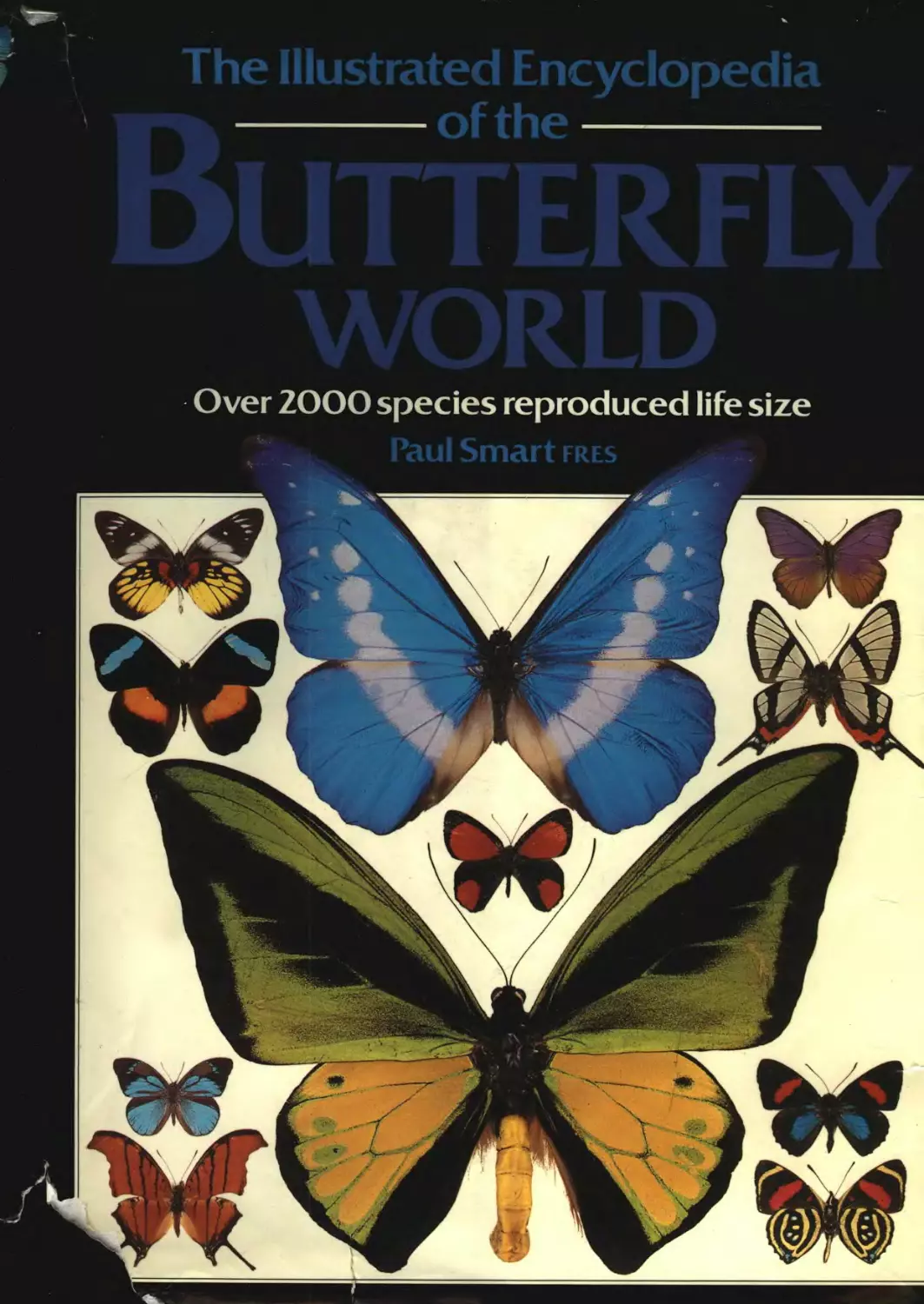
                    The Illustrated Encyclopedia
---------- --------------
Over 2000species reproduced life size
,	Paul Smart fres

Contents
WW

г
demand for orderliness; a feeling perhaps shared
Enormous collections have been amassed in the
past and the study of butterflies, particularly the
determination of species and geographical
distribution, owes a great deal to the energetic
professional. A similar situation is found with the
the study of the group), and even today
malacology, like entomology, rests on a firm
However, to see butterflies merely as pretty
exceptional interest in many other ways. The
evidence of their ancestry, like the quarterings on
the shields of ancient nobles. This feature makes
in which all living things evolve. Moreover, the
selective breeding of races and forms has revealed
some of the complexities involved in the
mechanism of inheritance. The results of these
studies may in some cases be of direct benefit to
Perhaps the most dramatic example of such a
Rhesus disease; one of the major causes of infant
transmitted to the unborn child was initially
suggested by quite unrelated research into the
dardanus. Other butterflies, or their early ?*»««»
many virus infections.
Because butterflies are so skilled in flight they
have achieved an almost world-wide distribution,
though as with most animal groups (particularly
cold-blooded ones) there is a greater diversity to
be found in the tropics. However, a butterfly can
between the butterflies which live in widely-
separated continental land masses. The
zoogeographical distribution of butterflies is a
fundamental element of their biology and frequent
reference is made throughout this book to the
major faunal regions of the world (see map).
The butterfly life cycle is no less remarkable than
the beauty of the adult. The transformation of the
frequently ugly and often bizarre caterpillar into
an elegant butterfly is one of the regularly
performed miracles of Nature. This natural
conjuring trick of turning beast into beauty also
includes an ecological subtlety: the larva and the
adult are able to lead totally different life styles—
thus enabling these two stages of the life cycle to
avoid competing with each other for the same
The first part of this book attempts to show not
only what the butterfly is, but also how it comes to
be that way and what it does. The second part
aims to illustrate the traditionally recognized
family groups of butterflies, showing similarity and
diversity within the family and also how each
differs from the next. This should help not only
to provide an illustrated catalogue of butterflies
but also, by reference to the colour plates of study
specimens, provide a useful recognition guide.
A single volume cannot hope to cover more
than a fraction of the world’s butterflies and
therefore considerable care has been taken with
the systematic list involving much heartache. The
arrangement adopted is naturally a compromise,
but in eight families (Papilionidae, Libytheidae,
Heliconiidae, Acraeidae, Amathusiidae,
Morphidae, Brassolidae, and Danaidae) all known
species are included. In three more families,
are covered, and for the remaining families
(Hesperiidae, Lycaenidae, Nemeobiidae, and
Satyridae) selected genera in all tribes are
represented. The colour plates are arranged to
illustrate this section on a proportional basis,
The arrangement of these families, and indeed
their basic validity as natural groups, has been
deserve to be singled out. In no other group of
thoroughly bedevilled by a profusion of names,
revisions and repeated attempts to sort out the
muddle. The uninitiated should not despair but
seek broad guidance from Chapters i and 13.
Sadly, butterflies are threatened by habitat
destruction almost everywhere. Some of the
richest areas for wildlife are being cleared and
planted with agricultural crops. Even if the
butterflies could survive in the new habitat, their
larvae probably would not, because of the loss
of their specific food plants. If they took to
deliberately destroyed as pests. In some countries
but even here many important food plants are
regarded as ‘weeds’ and removed—patches of
rough, wild vegetation are anathema to town
planners and highways authorities. It is no use
protecting butterflies because they are attractive
unless we take even greater care to conserve their
The lepidopterist may be accused of adding to
these destructive forces, but the informed
collector is the first to realize the dangers and
may often be foremost in acting to conserve
dwindling populations. A certain type of
collector, however, can be the most dangerous
menace. With single-minded determination he
deliberately sets out to collect as many different
forms as possible, and certain species have had
uncommon local populations all but exterminated
by selfish and irresponsible collectors.
The modern collector has a duty to make sure
that he does not contribute to the problems facing
wildlife in general. Certainly, no more specimens
than are absolutely necessary for study should be
killed, and species already threatened with
extinction should not be taken at all.
restrict and control the collecting of certain
species, and the collector should accept that
legislation may^be necessary to ensure the survival
positive contribution may be made by aiding
conservation projects and by helping to breed and
release healthy butterflies in suitable habitats,
though this should always be done as part of a
Paul Smart
Chapter 1
The Lepidoptera-
their origin and classification
About three-quarters of all animal species are insects. Their
present day abundance and diversity of form suggest a long
and complex evolutionary history. In some orders of insects,
at least part of this history may be traced by the study of fossils, but
butterflies are delicate creatures whose bodies are likely to disinte-
grate after death and be lost rather than preserved as fossils. Conse-
quently our knowledge of the past history of butterflies is very incom-
But terfly and moth fossils which show details of wing venation
(the structure and pattern of wing veins is an important clue to
evolutionary relationships) are usually in the form of impressions in
shale deposits. These were laid down about 30 million years ago
during the Oligocene period. In evolutionary terms this is com-
paratively recent, and it is thus hardly surprising that these fossil
butterflies are very similar to those alive today. We are left to guess
about foe more primitive forms which must have preceded it,
the lush gloomy fern forests of the Carboniferous period (perhaps 300
million years ago) whose curious vegetation later formed our coal
Today large dragonflies hunt butterflies among^other insects, but it
is unlikely that early butterflies were contemporary with Meganeura
monyi. It is more probable that the Lepidoptera (butterflies and
moths) evolved much, later, perhaps from ancestors of the Mecop-
tera (scorpion flies) which did not appear until the Lower Permian
period 250 million years ago.
The characteristic association of many Lepidoptera with flower-
ing plants might suggest that the two evolved in parallel over a similar
period of time. The earliest flowering plants are known from Upper
of families and genera already present by then strongly suggests that
be 150-200 million years old. They would thus have originated in
the Triassic period as contemporaries of the first mammals.
The nature of these ancestral butterflies is purely speculative.
The early butterflies were probably dull in colour, mainly brown and
white, with little of the variety and splendour seen in modern forms.
Perhaps the modern Lepidoptera have some giants among their
Alternatively and more likely, the Lepidoptera may have always
been small and the nearest they have come to evolving giant forms
are the birdwing butterflies and atlas moths living in Asia at the
present; none of which have a wingspan in excess of 30cm.
There are several groups of butterflies alive today which might
changed little from the presumed ancestral form. Yet these same
species may be highly advanced in other respects, for example,
having evolved complex breeding patterns. Other modem butter-
flies would be considered as advanced, having anatomical features
which differ in many respects from the primitive plan as well as
specializations in other aspects of their biology. However, the fact
that both primitive and advanced species are alive today does not
mean that the latter are directly descended from the former (any


butterflies (Hesperiidae, Papilionidae, Pieridae, Lycaenidae, Nemeo-
biidae, Libytheidae, Heliconiidae, Acraeidae, Nymphalidae, Ama-
thusiidae, Morphidae, Brassolidae, Satyridae, Ithomiidae and Danai-
dae) some authorities would regard nine as constituting a single
complex family, the Nymphalidae, but such an arrangement would
be unwieldly and unhelpful.
As a small guide amidst apparent confusion, readers should note
that all family names in the Animal Kingdom end in - idae to dis-
tinguish them from super family names (ending in - oidea) and sub
families which end in - inae.


The Butterfly Body
digestive tract. The fat body is usually better developed in the
female since it is also needed to provide nourishment for her
developing eggs.
tubules. In their mode of functioning they closely resemble kidneys
although in appearance they are very different. The tubules are long
filaments attached to the alimentary canal at the beginning of the
hind gut. They float freely in the haemocoel and extract waste
products from the circulating blood. These substances (collectively
referred to as urine) are passed through the tubules and into the
hind gut, from here they leave the body with the faeces.
The nervous system is composed of nerve cells or neurones and
these are grouped together in nerve centres or ganglia. One of these
is situated in the head and is generally referred to as the brain. The
brain is connected to a nerve cord which lies under the digestive
tract and passes to the hind end of the body. The nerve cord has a
number of subsidiary nerve centres or ganglia along its length. Most
butterflies have two ganglia in the thorax and four in the abdomen.
From these centres smaller nerves pass to all parts of the body.
Special nerve cells (visceral nerves) are associated with the digestive
system and reproductive system whilst others (peripheral nerves)
innervate the surface of the body.
The internal reproductive organs of insects consist of a pair of
sperm or eggs) to the outside of the body. In the female each ovary
of eggs at various stages of development. There is a special sac-like
storage chamber (bursa) which retains the sperms until the eggs are
ripe and about to be laid, only then are they fertilized. The female
also has accessory glands associated with the reproductive system
which secrete a sticky substance used for cementing her eggs to the
substrate on which they are laid. The male has a pair of testes which
are fused^together in some butterflies. Sperm reservoirs are also
body by the blood but in butterflies (and other insects) the organs of
the body are ^separately supplied with oxygen by a system of ‘air
aperturesJn the^exosl^leton called spiracles, of which there are nine
simple diffusion at the ends of the tracheae, where the tubes become
very narrow. In active insects the diffusion of oxygen into the body
actions of the body comparable with our own breathing movement?
Even so the system is relatively inefficient and the amount of oxygen
available to the insect is quite small. This crucial point represents
one of the main limitations on the size of butterflies, and without a
major redesign of their whole system they cannot ever be more than
if disturbed (X 15)P	fl'9ht

The Butterfly Life Cycle-

field and probably only detect the difference between dark and light.
The Butterfly Life Cycle
sixth segments. A final pair on the last segment are called claspers,
and some larvae will be tom in half rather than release their hold
with them. The end of each proleg is flattened and has a series of
hooks or crochets which help the larva in locomotion. When not
arrangement of the hooks on the prolegs is a useful guide in the
classification oflarval types. . f
related species (X 20). "
the adult). Consequently the body has to be kept turgid by the pres-
sure of the body fluid (haemolymph) rather Hke an earthworm. The
tion between the muscles of the body wall and the internal pressure
of the haemolymph.
As the larvae grow they entirely fill their skin, which becomes very
tight. In order that a further size increase may occur this skin is shed
from time to time, exposing a new and larger one which has formed
beneath it. Rapid expansion of the ‘new’ larva occurs before the skin
becomes toughened. This shedding of the skin is known as moulting
is full-grown. Each growth stage between moults is known as an
instar. Moulting in insects is very carefully and precisely controlled
of food may cause variations in the duration of the instars.
The larvae feed mainly on the leaves of flowering plants and
trees. Ferns or mosses appear never to be eaten. They are extra-
ordinarily specific in their feeding habits and will usually only feed
on a small number of closely related plant species. If a suitable food
plant is not available then larvae will starve to death rather than eat
vegetable oils which they contain. It is generally thought that
selection may depend upon the detection of chemical attractants in
the food species and of repellents in other plants.
The larva is the main feeding stage in the life cycle, and when
they are present in sufficient numbers caterpillars can defoliate large
areas of vegetation. This means that those butterfly species whose
larvae feed on agricultural crops can be a serious pest. Single larvae
may consume an entire leaf before moving on to the next, but more
often only a part of the leaf is eaten. The way in which a larva tackles
a leaf is often characteristic of the species; some eat holes in the leaf,
whilst others attack the leaf margin. In some species feeding occurs
at night and in others by day. Generally periods of active feeding
alternate with periods of rest. Feeding ceases a day or so before a
moult, but is resumed as soon as the new skin is fully developed.
A diet of plant leaves, in addition to requiring mouth parts for
chewing the food, necessitates some modifications of the digestive
tract. A large quantity of food is passed through the alimentary
canal which is consequently a wide straight tube. The stomach is the
largest region and has muscular walls which maintain continual
The droppings of the larvae are discrete oval structures and are
referred to as frass. Since much of the plant material consists of
indigestible celulose a large amount of frass is produced and may
even form a distinct layer under small trees or shrubs on which
many larvae have been feeding.
The internal organization of the other systems closely resembles
that found in the adult insect. However, the salivary glands, which
in the adult produce substances to accelerate digestion, take on a
The end of larval life is marked by another moult which gives rise
to a pupa or chrysalis. Fully grown larvae often select special sites
to undergo this transformation and may for example leave their
food plant and enter the soil. The digestive tract is emptied and the
The Butterfly Life Cycle
larval skin shrivels and eventually splits to expose the pupa. During
the pupal period much of the larval tissue is remoulded to give rise
to adult structures, particularly the wings, mouth parts and repro-
mouth and anus are sealed over. The only functional openings in
the pupal case are the spiracles which permit the exchange of
respiratory gases. The legs and antennae are firmly stuck down and
cannot be moved. Externally the pupa usually appears brown or
green, and the abdominal region, with prominent segmental rings
and tapering posteriorly, is very distinct from the thoracic part. All
the major features of the adult can be seen within the pupal skin, but
one specialized structure is to be found at the end of the abdomen,
attachment of the pupa to the substrate.
adult emerges, and this is not usually difficult. In the male there is a
single genital opening on the ninth abdominal segment whilst in the
on the ninth segment of the abdomen.
Since the pupa is immobile it is particularly vulnerable to attack
by predators and frequently pupation proceeds within a silken
cocoon. This may take the form of a hollow of earth lined with silk,
or a roll of leaves fastened together with silk threads (eg Hesperiidae
and some Satyridae). Silk cocoons are generally much better develop-
ed among moths. In some butterflies the pupa is naked but it is then
usually protectively coloured. The naked pupa may hang upside
down attached only by the cremaster (many Satyridae and Nympha-
lidae) or it may be attached by the terminal cremaster but also sup-
ported head upwards by a silken girdle (Lycaenidae, Pieridae and ।
which the hooks of the cremaster are firmly embedded.
The adult

The emergence of the adult or imago is preceded by the colour pig-
ment appearing in the wing scales, so that the wing patterns of the
adult can be seen through the pupal case. The skin of the pupa
splits behind the head, the insect first frees its legs and antennae and
after a short while withdraws the rest of its body. Those species
pupating within a cocoon have to free themselves from this as well
as the pupal skin. In some Saturniid moths there may be a special
arrangement of the silk to facilitate this, whilst in others a special
softening fluid is produced.
Immediately after emergence the wings are soft and crumpled.
The butterfly moves to a place from where its wings can hang down- The®e ,hree photographs (X 2) show
wards and blood is forced into them. The wings expand by the
flattening of the numerous tiny folds and soon become the typical from a |arva int0 a pupa.
thin sheets supported by hollow veins. Once they have reached their 1. using specialised appendages, the
full size the insect holds them apart until they are completely dry fully grown larva spins a silken tail
and hardened. The excretory material which has accumulated in the !?а? an? 9|r5jle ^ri?rnto р“Рн'°а?|
closed digestive tract during the pupal period is ejected from the toughed off towards the tail. The
anus. The time of adult emergence varies, it may occur early in the fjne white |arva| breathing tubes
morning or in the evening; in the latter case they rest until the next (tracheae) may be seen coming away.
day before becoming active.	3. The pupa is finally revealed, supported

Interruption of the life cycle
The duration of the life cycle varies in different species. Some may
have a single complete generation in a year whilst others have two
The Butterfly Life Cycle
its first exploratory flight (X 8).
breaks out of the pupal shell (X 2).


or even more. Unfavourable climatic conditions such as the winter
tate an interruption in the life cycle. Any of the developmental
stages - egg, larva or pupa - may enter a period of arrested develop-
ment (or diapause). This delay in development is induced by en-
vironmental conditions such as day length, but cannot then be ter-
minated until a pre-determined period has passed. This ensures
that the insects do not emerge too early during temporary favour-
able periods only to be caught out by a resumption of harsh condi-
tions. The eggs and pupae are protected by their outer shell or skins
respectively, whilst the overwintering larvae usually shelter at the
base of their food plant or in a specially produced larval cocoon
formed from plant leaves and silk. The stage in the life cycle which
regularly undergoes hibernation (or aestivation in the tropics) varies
in different species and also within the same species in different


Butterf ly Mobility
plentiful supply of its food plant, vidrillos (Batis maritima). The
slowly through the country as a result of daily movement in the
form of short random ‘non-migratory’ flights to find flowers on


Coloration


may be formed.
The example shown on page 66 illustrates three sub-species of
the birdwing butterfly Ornithopter a priamus, which occur in different
regions of the Australasian archipelago. These widely different forms
were selected to make the point dramatically obvious, but O.
priamus is even more variable than this, for at least a dozen separate
green forms alone have been distinguished.
The apollo butterfly Parnassius apollo (Papilionidae) is probably
the best-known example of a variable species in Europe. This very
attractive butterfly inhabits hillsides and mountain meadows
throughout Europe and parts of Asia. It has tended to become
isolated on different mountains or mountain ranges and a great many
different local races have been described as a result of the great
variability^ the intensity of the black markings and the size and
separate and the species shows a continuous gradation of forms over
its geographical range. A progressive gradation from one extreme
form to another from a distant area is described as a cline. An
example of this clinal variation may be found in the large heath
Coenonympha tullia in the British Isles. Southern forms of this
butterfly have more spots and a deeper ground colour than the
northern examples but there is no clear demarcation between the
forms, and many subtle blends of intermediate coloration are found
in localities lying between the geographical extremes.
In places where a number of closely related species of the same
genus occur in different geographical areas the inter-relationship can
be indicated by the use of a group name. Members of a species-
group are not connected by intermediate forms but they are very
stock. These groups may be referred to by the name of the ‘focal’
species; for example, the various members of the Indo-Australian
genus Troides (Papilionidae) are subdivided into the amphrysus
species group, the helena species group and so on. Similarly there
are sub-species groups, which are more recently evolved, where the
individuals in the group are usually connected by intermediate
WWW
WWU
WWW


Variation
ww
ww
w M
ww


Variation
spain₽fritillary Issoria latho'nia: 5, 6.
camberwell beauty Nymphalis antiopa.
proportion, however small, of the total population. Aberrations are
variations of irregular or random appearance, and where special
names have been assigned to them these are preceded by the
abbreviation ‘ab’.
Melanism______________________________________________________
the normal pigmentation mechanism of butterflies.§Ме1атс variants
are an example. Melanins are pigments which are responsible for the
development by the action of an oxidizing agent, tyrosinase, on the
influenced by genetic factors to produce butterflies in which the
dark markings are much extended to give an overall dark appearance.
One of these dark, or melanic, forms is shown opposite. Melanic
forms of a number of the machaon group of swallowtails (Papilion-
idae) occur as rare varieties and are probably genetic recessives. In
it has been suggested that this may be a reversion to an ancestral
type. This is supported by the theory that the drab brown females
for protection, while the males have
Albinism
by white are not strictly albinos. Albinism fs the absence of the pig-
been isolated in breeding experiments and is therefore an inheritable
factor. An albino form of the meadow brown Maniola jurtina is
shown opposite.
Homeosis is another type of variation in which the normal develop-
mental processes have become muddled. Homeotic specimens have
part of the fore wing appearance exhibited on the hind wing or
vice versa. This assumption of the form and character proper to
stage of development. Extreme examples are rare. A specimen of the
clouded yellow Colias crocea (Pieridae), where the dark central spot,
appropriate to the fore wing, is reproduced on the hind wings, is
shown opposite. Strictly, this is also an example of heteromor-
phosis, since in the right fore wing this dark colour has also ap-
peared in the ‘wrong’ area but on the same wing. Homeosis is, how-
ever, the general term used to describe both these phenomena.


Mimicry
ot the Nymphalidae, which is shown on
stances a member of the family Nymphalidae is mimicking a species
actual unpleasant ex

their models, such as members of the Nymphalid
Mimicry
Butterfly History-


Chapter 11
Collecting-
unless it is accompanied by information on the date and place
data - a description of the habitat for example - and collecting ifotes
relating to time of day, altitude, weather, wind speed, height above
ground and so on. No butterfly collector can honestly justify his
activities on the grounds of ‘scientific investigation’ unless he
seriously collects large quantities of information as well as butterflies.
We might truthfully say that the genuine collector’s most im-
portant piece of equipment is not his net but his notebook. This
would usefully record the facts and measurements suggested above,
together with observations on feeding habits and species of flowers
visited, courtship and social behaviour and indeed anything relevant
to the life of the butterfly. Notes of how many are seen (and of which
sex) in a given time and place may provide a useful guide to popula-
tion size and structure, but the observer should not be tempted to
species females appear much rarer than the males, but^his may be
be more secretive and so harder to see and count. They may fly in
different areas to the males or at different heights, or (as in many
cases) they may only appear later in the season. Fairly accurate
estimates of population size can be made by capturing specimens
the population taken later will then include a proportion of marked
size to be made. However, the method is only as accurate as the
sampling technique used and this is subject to all the same sources of
Photography
The miniature camera is a piece of the modern collector’s equip-
This is a pity because photographs are a useful adjunct to observa-
taken in one place during successive weeks or seasons may docu-
spectrum of butterfly species collected there.
successfully without fairly elaborate equipment and a fair amount
of expertise. Whereas any simple camera can be used to document
a habitat, close-up pictures of insects or flowers really need a
single lens reflex camera with extension tubes or a supplementary
photographer should aim to record the butterfly as it is in life,
feeding or basking; nothing looks worse than a dead specimen
pinned to a flower or a live one carelessly photographed so that it
looks dead or distorted.
Photographing insects in the wild needs great patience and the
number of the photographs of living butterflies in this book, shows
pencil sketches can capture the attitudes of a living butterfly more
effectively than any description.
Collecting equipment
Making a good collection can be a very stimulating and satisfying
activity. It can also be very useful if done properly. As a collector’s

skill and knowledge increase, more equipment may become neces-
made or purchased fairly cheaply from entomological suppliers.
Apart from the notebook (and pencil) the essential things are a
Two styles of net are in general use; the ‘ring’ pattern and the larger
the net should be of soft, fine-mesh, preferably green or black, and
as deep as the collector’s arm. A round-ended net is preferable to
a square-ended one, for the latter will have corners into which
net or by attempts to extract them from it.
hints may prove helpful. Netting butterflies is an art that can only
stalked and any sudden movements should be avoided until the
most effective, followed immediately by a twist to fold the bag and
and here the best procedure is to cover the quarry with the net and
hold the bag free above it, so that it flies up into the end. This tech-
to take refuge deep among the grass stems and are difficult to
Not all butterflies are obliging enough to settle, or even fly,
sary to resort to trickery. Some aggressive species like the Morphos
can use a dead specimen as a decoy to lure the living butterflies
within range of his net. Another useful technique is to put out ‘bait’,
menting banana or a piece of rotting meat. An extension of this idea
like the African Charaxes which are strong fliers and difficult to
slit by the presence of an attractive bait in the trap chamber,
top of the netting, unable to find their way out.
not to brush scales from its wings. The boxes are often called ‘pill
boxes’, harking back to the time when collectors really did use little
round cardboard containers produced originally for the storage of
pills. The modem entomologist’s pill box is made for holding in-
allow close examination of the specimen. Butterflies can be kept and
purposes. If they are kept in the dark during a journey, butterflies
The specimens which are destined for the cabinet collection
if provided with a well-fitting lid or cork bung; a pad of cotton wool
moistened with ethyl acetate in the bottom soon kills most butter-
insects or render them too stiff for setting. The traditional killing
Collecting
Setting the specimens


nliil
I: Mil I iiijij
US -X


The
Butterfly Families
103
The Butterfly Families-


has been subdivided until now the genera run into thousands,
nized that within a species there may be several recognizably dif-
ferent forms, each of which differs consistently from the rest of the
these variants possess fixed characteristics which enable them to be
species, then a third name is added to the binomial designation to
denote a subspecies. Thus the green-veined white was first described
subspecies Pieris napi napi L.; whilst the one occurring in Ireland
nated P. napi britannica Vty. In the latter case, ‘Vty’ refers to
Verity who was responsible for describing this as a separate sub-
also studied in minute detail, we often find that many different
ОТ7
consistently occur in a particular region only, and merit considera-
warrant the status of subspecies, so are designated as ‘forms’. Where
viation f. and follows the standard Linnean binomial. Random
have been given their own name and this is preceded by the abbre-
Forms and aberrations are considered briefly in Chapter 8
in the systematic section of this book. These categories have no
multiplicity of names has meant that the classification of butterflies
has been more confused by a tangle of nomenclature than probably
named, sometimes elevated to full species or subspecies status
still more. This whole situation is regrettable and probably stems
tali Illi hWffifliMhfefflh
i|| i nil &  an 1	Д8& №811
I bBSiAtoiMhtoiiiilliiiiill
jjl fah illl laihrfhite 11^0
o ihiiiii ih iiliil Лимин ill si!
.: sW! J1


Hesperndae
Pyrrochalcia
1	iphis Dry. (S. Leone.)
2	iphis Dry. ?. (S. Leone.)
Coeliades
3	chalybe Westw. (Ugan.)
4	hanno Plotz V. (Ugan.)
Oxynetra
5	semihyalina Feld.f.felderi Hopff.
(Peru)
Hasora
6	discolor Feld. V. (N.G.)
7	bomeensis Elwes & Edw. s.sp.
mavis Evans (Phil.)
Odontoptilum
8	angulata Feld. (Ind.)
Bibasis
9	harisa Moore V. (Ind.)
Choaspes
10	benjaminii Guerin. V. (Chin.)
Phocides
11	pigmalion Cr. (Peru)
112
Jemadia
12	hospita Btlr. (Peru)
Mimoniades
13	versicolor Latr. (Braz.)
14	nurscia Swains. (Peru)
Amems
15	pionia Hew. (Venez.)
Autochton
16	itylus Hbn. (Ecua.)
Phareas
17	coeleste Westw. V. (Peru)
Pyrrhopyge
18	aziza Hew.s.sp.araethyrea Hew.
(Ecua.)
19	telassa Hew.s.sp.phaeax Hopff.
(Peru)
20	maculosa Hew. V. (Col.)
Astraptes
21	anaphus Cr. (Peru)
Mysoria
22	barcastus Sepp s.sp.venezuelae
Scudder V. (Venez.)
Caprona
23	agama Moore (Java)
Mylon
24	cajus Plotz (Ecua.)
Myscelus
25	phoronis Hew. (Peru)
Achlyodes
26	busiris Cr.s.sp. heros Ehrman V.
(Peru)
Pythonides
27	herennius Geyer s.sp.proxenus
Godm. & Salv. (Ecua.)
28	lancea Hew. (Braz.)
Celaenorrhinus
29	illustris Mab.s.sp. daroa Evans
(Ugan.)
30	proximo Mab. (Ugan.) JS
31	ratna Fruhst.s.sp.pulomaya
Moore (Ind.) Tagiades
32	flesus Fab. $. (Tan.)
33	japetus Stoll s.sp.obscurus
Mab. $. (Sri Lank.)
34 hngiosa Mosch. (Ind.)
35	dan Fab. (Ind.)
Eagris
36	lucetia Hew. (Ken.)
Netrobalane
37	canopus Trim. (Ugan.)
Gomalia
38	elma Trim. (Ugan.)
Noctuana
39	noctua Feld.s.sp.bipunctata Plotz
(Mex.)
Sarangesa
40	bouvieri Mab. V. (Ugan.)
41	maculata Mab. (Ken.)
Antigonus
42	erosus Hbn. (Mex.)
Systasea
43	pulverulenta Feld. (Guat.)
Heliopetes
44	laviana Hew. (Mex.)
Ampittia
71 fuliginosa Miskin (Aus.)
73 Ussa Evans (Ugan.)
hylaeus Dry. (Mex.)
52 simplicius Stoll (Ecua.)
Dispar .
79 lineola Ochs. $. V. (Eng.)
80 acteon Rott. (Eng.)
49 malvae L. (Eng.)
Spialia
50 galba Fab. (Ind.)
62 orientalis Auriv. (Ken.)
63 willemi Wallen. 2- V. (Ugan.)
Carterocephalus
64 palaemon Pallas (Eng.)
51 djaelaelae Wallen, s.sp.maculifera
Mab. & Boullet (Ugan.)
Vjeraincma	™	_
58 flava Hew.s.sp.semilikensis J. & T. 70 pumilio Hoffmansegg s.sp.gambica 81 vibius Hew. $. (Cam.)
(Ugan.)
54 salsala Moore V. (Ind.)
Ochlodes
55 sylvanoides Bsdv. ?. (Can.)
56 venata Bremer & Grey $. (Eng.)
Artitropa
67 erinnys Trim. (S. Af.)
Perichares
68 philetes Gmelin (Venez.)
77 sator Westw.s.sp.pusiella Mab. 2.
(Ugan.)
Thymelicus
78 sylvestris Poda (Eng.)
Parphorus
88 decora H.-Schaff. V. (Ecua.)
Megathymus
89 streckeri Skinner 2- (USA>
113
Chapter 15
Papilionidae-
apollos, swallowtails and birdwings
I throughout the world. They are generally powerful fliers and
the most splendid of all butterflies.
(Ornithoptera), found principally in the Australian region. Females
males, although smaller, are often arrayed in dazzling gold or green.
To give an idea of the size range within the family, at the other end
50mm.
The swallowtails are so called as most have tailed hind wings.
true swallowtails, kite swallowtails and poison-eaters. Represent-
most familiar species. Kite swallowtails (Eurytides and Graphium)
fashioned kite. The poison-eaters (Parides and Troides) are so
they derive poisonous substances. Poison-eaters are examples of
‘protected’ species, ie they are less subject to attack by predators,
them seem to share this protection.
very unlike other members of the family. They have rounded, semi-
They are confined to higher altitudes in northern regions and are
members of the Papilionidae they are relatively slow and lazy fliers.
One strange little butterfly Baronia brevicornis, found only in


that it is placed in a subfamily of its own. It is considered by experts
to be one of the most primitive members of the Papilionidae.
The attractive colours and wing shapes of many species of this
lepidopterists everywhere. Consequently they have received more
attention and study than the more numerous members of some
other butterfly families.
The eggs of the Papilionidae are usually spherical and un-
remarkable. However, the smooth-skinned caterpillars possess a
very curious structure called an osmeterium. This is a strong-
pillar can erect just behind the head. This device is believed to deter
would-be predators. The pupae are angular with two projecting
points at the head end. They are usually formed upright within a
Papilionidae
Baronia
1 brevicornis Salv. (Mex.)
2 brevicornis Salv. $. (Mex.)
Archon
3 apollinus Hbst. $. (Tky.)
Hypermnestra
4	helios Nick. 9. (Iran)
Parnassius
5	honrathi Stgr. s.sp.alburnus Stich. (USSR)
6	phoebus Fab. s.sp.sayii Edw. 9. (USA)
7	eversmanni Menetr, s.sp.felderi Brem. (USSR)
8	glaaalis Btlr. (Jap.)
9	jaquemontii Bsdv. s.sp.variabilis Stich. (USSR)
10	epaphus Oberth. s.sp.cachemiriensis
Oberth. 9 (Ind.)
11	eversmanni Menetr. (USSR)
12	hardviickii Gray (Ind.)
13	szechenyii Friv. 9. (Tib.)
14	apollonius Evers. (USSR)
15	apollo L. s.sp.nevadensis Oberth. (Spain)
16	tianschanicus Oberth. f.insignis Stgr. (USSR)
17	nomion Hbn. s.sp.nominulus Stgr. (USSR)
18	clodius Menetr.s.sp.baldur Edw. $. (USA)
19	acco Gray s.sp.gemmifer Fruhst. (Tib.)
20	delphius Evers, s.sp.staudingeri B-H. (USSR)
21	autocrator Avin. ?. (Afghan.)
22	charltonius Gray, s.sp.deckerti Vty. (Ind.)
23	imperator Oberth. $. (Tib.)
24	tenedius Evers, s.sp.vulcanus Bryk
& Eisn. (USSR)
25	simo Gray f.gylippus Fruhst. (USSR)
Luehdorfia
26	puziloi Ersch. (Jap.)
27	japonica Leech (Jap.)
Pamalius
28	rumina L. (Fran.)
29	polyxena. Denis & Schiff. $. (Fran.)
30	cerisy Godt. (Greece)
Sericinus
31	montela Gray ?. (Chin.)
Bhutanitis
32	thaidina Blanch. (Chin.)
33	lidderdalii Atk. (Ind.)
Lamproptera
34	curius Fab. (Ind.)
Eurytides
8 harmodius Dbldy. (Peru)
9 harmodius Dbldy.s.sp.imaus R. & J. ?. (Peru)
10 ariarathes Esp.s.sp. gayi Lucas (Peru)
11 ariarathes Esp.s.sp.gayi Lucas f.
cyamon Gray (Peru)
lysithous Hbn. (Braz.)
lysithous Hbn.f.extendatus Weym. (Braz.)
Papilionidae
Teinopalpus
1 imperialis Hope (Ind.)
2 imperialis Hope $. (Ind.)
1з
14 marcellinus Dbldy. JamT R’ & 1 (Braz^
15prOtodawaiGodt f chor.damas Bsdy (&a2
16 asius Fab. (Braz.)
18 Ж	I2 bDe“erOphO,\LDaim- (Braz.)
10 new-(Feru)	pausanias Hew (Peni'i
20 philola^2dl^C°n°Phos Gray CMex‘) еиГУ1еОП HeW-S SP ha“schi R- & J. (Ecua.)
119
Papilionidae
Protographium
1	leosthenes Dbldy. (Aus.)
Eurytides
2	lacandones Bates (Guat.)
3	orthosilaus Weym. (Braz.)
4	leucaspis Godt. (Peru)
5	thyastes Dry.s.sp.thyastinus Oberth. (Peru)
6	stenodesmus R. & J. (Braz.)
7	molops R. & J. s.sp.hetarius R. & J. (Col.)
8	protesilaus L.s.sp.penthesilaus Feld. (Mex )

120
17 columbus Koll. (Col.)
9	protesilaus L.s.sp.macrosilaus Gray. (Hond.)
10	telesilaus Feld. (Peru)
11	marchandi Bsdv. (Mex.)
12	salvini Bates (Guat.)
13	glaucolaus Bates (Pan.)
14	agesilaus Guer.s.sp.fortis. R. & J- (Mex.)
15	dolicaon Cr.s.sp.deileon Feld. (Feju) }
16	protesilaus L.s.sp.mgncomis Stgr. (Braz.)
Papilionidae
Graphtum
1 meyeri Hopff. (Celeb.)
)22 ^’^Btlr.s.sp.seminigra Btlr. ?. (N. BriL)
3	macfarlanei Btlr. (N G )
4	milon Feld. (Celeb.)
5	macleayanus Leach (Aus )
6	empedocles Fab. (Born )
sarpedon L.f.semifasciatus Honr. (Chin.)

12	codrus Cr.s.sp.auratus Roths. (Manus I.)
13	stresemanni Roths. (Serang)
14	gelon Bsdv. (N. Caled.)
15	codrus Cr.s.sp.segonax Godm. & Salv. (N. Brit.)
16	cloanthus Westw. (Ind.)
17	evemon Bsdv.s.sp.eventus Fruhst. V. (Malay.)
18	mendana Godm. & Salv. s.sp.acous Ribbe.
(Bougain.)
19	browni Godm. & Salv. (N. Brit.)
20	arycles Bsdv. V. (Malay.)
21	agamemnon L. (Ind.)
22	agamemnon L.s.sp.admiralis Roths. (Manus I.)
23	agamemnon L.s.sp.comodus Fruhst. $. (Celeb.)
24	wallacei Hew. (N.G.)
123
Papilionidae
Graplnum
1	pylades. Fab.s.sp.angolanus Goeze $. V. (S. Af.)
2	policenes Or. (C.A.R.)
3	porthaon Hew. (Ken.)
4	taboranus Oberth. V. (Tan.)
5	evombar Bsdv. (Madgr.)
6	ucalegon Hew.s.sp.schoutedeni Berger (Ugan.)
7	agamedes Westw. (C.A.R.)
8	illyris Hew. (Cong.)
9	ridleyanus White (C.A.R.)
10	kirbyi Hew. (Ken.)
11	leonidas Fab. (Cam.)
12	cymus Bsdv. (Madgr.)
.124
13 hachei Dew. (Cong )
14 pylades Fab. (Cam.)
17 polistratus G.-Smith (S Af.)
18	odin Strand (C.A.R.)
19	almansor Hon.s.sp.Uganda Lathy
20	gudenusi Rebel (Ugan.) У '
21	endochus Bsdv. V. (Madgr )
adamastor Bsdv. $. (C.A.R )
?. (Ugan.)
23 philonoe Ward. (Ken )
24 tynderaeus Fab. (Cong.)
125
8 macareus Godt. (Ind.) *
9 caschmirensis Roths. (Ind
10 androcles Bsdv. (Celeb.)
И megarus Westw. s.sp.mega
Fruhst (Malay.)
3 mandarinus Oberth. (Chin.)
4 deucalion Bsdv.s.sp.leucadion Stgr. (Halm )
5 encelades Bsdv. (Celeb.)	;
6 nomius Esp. (Ind.)
’ гййаг" <
Papilionidae
Graphium
1 rhesus Bsdv. (Celeb.)
2 ansteus Cr.s.sp.parmatus Gray (N.G.)
 12 glycerion. Gray 0®d.)
I nx^Dbldy.IndO
I 14 euphratesFeW-(Вмп.)
15 alebion Gray. (Chin.)
16 epaminondas Oberth- (And.)
;ISS^^“<NG>
_!7
Papilionidae
Papilio
2 agestor Gray (Ind.)
3 polytes L. $. f.romulus Cr. (Ind.)
5 epicydes Hew. (Ind.)
128
17
10 paradoxa Zink.f.danisepa Btlr. (Ind.)
11 paradoxa Zink. $. f.haasei Roths. (Malay)
15 oberon G.-Smith V. (St. Cruz.)	(Biak)
16 phestus Guer.s.sp.reductus Roths. (Manus I.)	19 ambrax Bsdv. (N.G.)
17 castor Westw. (Ind.)	20 ambrax Bsdv. .. f.ambracia Wall. (N.G.)
129
Papilionidae
Papilio
1 woodfordi Godm. & Salv. (Bougain.)
2	weymeri Niepelt $. (Manus I.)
3	albinus Walks.sp.lesches Godm. & Salv. (N.G.)
4	ilioneus Don.s.sp.amynthor Bsdv. V. (N.Caled.)
5	fuscus Goeze s.sp.beccarii Oberth. (N.G.)
130

132
133
, a
Papilionidae
Papilio
1 bootes Westw. (Ind.)
2	rumanzovia Esch. $. (Phil.)
3	ascalaphus Bsdv. $. (Celeb.)
4	mayo Atk. (Andam.)
5	lowi Druce (Palawan)
134
Sulzer (Chin.)
12 taufDruce $. f. suffusus Lathy (Pal.)
6 elwesi Leech (Form.)
7 memnon L. $. f. achates
8 memnon L. ?. f. agenor L. (Chm.)
9 janaka Moore (Ind.)
Papilionidae
Papilio
1	ophidicephalus Oberth. (S. Af.)
136
2	menestheus Dry. (Cam.)
3	grosesmithi Roths. (Madgr.)
4	oregonia Edw. (USA)
5	hippocrates Feld. (Jap.)
6	morondavana G.-Smith (Madgr.)
7	demolion Cr. (Born.)
8	indra Reak.s.sp.fordi Coms. & Mart. (USA)
9	alexanor Esp. (Fran.)
machaon L.s.sp.sylvina Hem. V. (Form.)
hospiton Guen. (Sard.)
hesperus Westw. (Cam.)
137
Pap:|ionidae	3 buddha Westw. (Ind.)
Papilio	4 crino Fab. (Sri Lank.)
1 blumei Bsdv. (Celeb.)	5 bianor Cr.s.sp.dehaani Feld. (Jap.)
2 montrouzieri Bsdv.f.ulyssellus Westw. (New. Cal.) 6 krishna Moore (Ind.)
15
7	palmurus Fab.s.sp.angustatus Stgr. (Pal.)
8	polyctor Bsdv.s.sp.ganesa Dbldy. (Ind.)
9	paris L.s.sp.decorosa Fruhst. (Ind.)
10	hoppd. Mats. (Form.)
11	paris L.s.sp.arjuna Horsf. (Java.)
12	arcturus Westw. (Ind.;
13	peranthus Fab. (Java.)
14	peranthus Fab.s.sp.adamantius Feld. (Celeb.)
15	pericles Wall. (Timor)
16	dialis Leech s.sp.andronicus Fruhst. (Form.)
139
Papilionidae
Papilio
1 mackinnoni Sharpe (Ken.)
4 nobilis Rogen. (Ken.)
5 jacksoni Sharpe (Ugan.)
delalandii Godt. (Madgr.)
echerioides Trim. (Tan.)
140
10 zoroastres Druce s.sp.homeyeri Plotz.	,. (Ugan.)	14	sjoestedti Auriv. (Tan.)	Druryeia
11 mangoura Hew. I. (Madgr.)	15	zenobia Fab. (Ugan.)	17 antimachus Drury .(Ugan.)
12 plagiatus Auriv. (C.A.R.)	16	nobilis Rogen. . . ab.josetta n.ab. (Ugan.)	18 antimachus Drury (Cam.)
13 mechowi Dewitz. (Cam.)
Papilionidae
Papilio
3	charopus Westw. (Ugan.)
4	bromius Dbldy. (C.A.R.)
5	aethiops Roths. & Jord. (Eth.)
6	epiphorbas Bsdv. (Madgr.)
142

Papilionidae
Papilio
1 cresphontes Cr. (Mex.)
5	androgeos Cr. (Peru).
6	andraemon Hbn. (Cuba)
7	hectorides Esp. (Braz.)
8	pilumnus Bsdv. (Guat.)
144
rutulus Lucas. (Can.)
caiguanabus Poey (Cuba)
machaonides Esp. (Haiti)
aristodemus Esp. s.sp.ponceanus Schaus (USA)
ornythion Bsdv. (Mex.)
145
Papilionidae
Euryades
1 duponchelii Lucas (Argent.)
2	corethrus Bsdv. (Braz.)
Papilio
3	aristeus Cr.s.sp.bitias Godt. (Peru)
4	cacicus Lucas (Peru)
5	rogeri Bsdv. (Hond.)
6	warscewiczi Hopff. s.sp. mercedes Roths. & Jord.
(Peru)
7	anchisiades Esp. (Peru)
146
12
15
8	hellanichus Hew. (Urug.)
9	pharnaces Dbldy. (Mex.)
10	scamander Bsdv. (Braz.)
11	homerus Fab. (Jam.)
12	xanthopleura Godm. & Salv. (Braz.)
13	isidorus Dbldy. (Peru)
14	erostratus Westw. (Mex.)
15	cleotas Gray s.sp. phaeton Lucas (Col.)
16	victorinus Dbldy.s.sp.morelius Roths. & Jord.
(Mex.)
17	hyppason Gr.(aberrant) (Peru)
18	anchisiades Esp. $. (Peru)
147
Papilionidae
Papilio
1	garamas Hbn. $. (dark form) (Mex.)
Parides
2	photinus Dbldy. $. (Mex.)
148
3 ascanius Cr. (Braz.) •
4 timias Gray $. (Ecua.'l
5 agavus Drury (Braz.)
6 gundalachianus Feld. (Cuba)
7 triopas Godt. (Guy.)
8 triopas Godt. $. (Guy.)
9	neophilus Hbn.s.sp.olivencius Bates (Peru)
10	montezuma Westw. (Mex.)
11	chamissonia Esch. V. (Braz.)
12	perrhebus Bsdv. (Braz.)
13	erithalion Bsdv. $. (Col.)
14	alopius Godm. & Salv. (Nicar.)
I
15	tros Fab. (Braz.)
16	childrenae Gray s.sp.oedippus Lucas (Col.)
17	coelus Bsdv. (Guy.)
18	echemon Hbn. '(Braz.)
19	lysander Cr. . .f.parsodes Gray (Braz.)
20	vertumnus Cr. (Peru)
21	aeneas L.s.sp.damis Roths. & Jord. (Peru)
22	areas Cr.s.sp.mylotes Bates (Hond.)
23	zacynthus Fab.s.sp.polymetus Godt. (Braz.)
24	aeneas L.s.sp.marcius Hbn. (Braz.)
25	erlaces Gray s.sp.xanthias Roths. & Jord. (Peru)
26	sesostris Cr. (Peru)
27	drucei Btlr. (Ecua.)
28	panthonus Cr. (Guy.)
29	iphidamas Fab. (Mex.)
149
Papilionidae
Atrophaneura
1 priapus Bsdv. (Java)
150
8 oblongomaculatus Goeze s.sp.papuensis Wall.
10 vandepolli Snell. (Java)
151
Papilionidae
Omithoptera
1 victoriae Gray s.sp.epiphanes Schmid $. (San
Cristoval)
2 croesus Wallace s.sp.lydius Feld. $. (Halmaheira)
3 paradisea Stgr. (N.G.)
152
4 meridionalis Roths. (N.G.)
Traides
5 aeacus Feld.s.sp.thomsonii Bates (Malay.)
6 cuneifer Oberth. (Java)
Trogonoptera
7 trojana Stgr. (Palawan)
8 trojana Stgr. $. (Palawan)
153
Papilionidae
Ormthoptera
1 chimaera Roths.s.sp.flavidior Roths. (N.G.)
154
9 croesus Wallace s.sp.lydius Feld. (Halmaheira)
155
Papilionidae
Omithoptera
1	alexandrae Roths. (N.G.)
2	alexandrae Roths. $. (N.G.)
156
157
Papilionidae
Atrophaneura
1 alcinous Klug s.sp.mansonensis Fruhst. V.
(Form.)
2	polyeuctes Dbldy. V. (Ind.)
3	neptunus Guerin. (Malay.)
4	coon Fab. (Java)
5	latreillei Don. $. (Ind.)
Pachliopta
6	annae Feld.s.sp.phlegon Feld. (Mindanao)
7	hector L. (Ind.)
8	aristolochiae Fab. V. (Ind.)
9	aristolochiae Fab.s.sp.kotzebuea Esch. V. (Phil.)
10	polydorus L.s.sp.manus Talbot $. V. (Manus I.)
158
11	jophon Gray (Sri Lank.)
Battus
12	devilliers Godt. V. (Cuba)
13	philetas Hew. V. (Ecua.)
14	laodamas Feld. (Col.)
15	lycidas Cr. (Guat.)
16	crassus Cr. (Peru)
17	polydamas L. (Mex.)
18	belus Cr.s.sp.cochabamba Weeks (Peru)
19	archidamas Bsdv. V. (Chile)
20	madyes Dbldy. s.sp.chlorodamas Guen. V.
(Peru)
159
Chapter 16
Pieridae-
whites, jezebels, orange tips, brimstones and sulphurs
ioomm (Hebomoia). Although the ground colour is usually white
brightly coloured than the upper. This fascinating genus includes
several species which are rarely seen.
Orange-tipped species are found in the Pierini and the Colotini.
The latter sub-family is almost exclusively found in the Old World
The strange narrow-winged Dismorphiinae are characteristic

Pieridae 14
Vw/ypso Drury s.sp.dentigera I
2	Ward V. (Madgr)
3 rubrosigruta Weym- v- (Ang')
4 solilucis Btlr.„(Gam)
smithi Mab. (Madgr.)
ndice Leecn v. 4 *
yomae Ochs-J (Germ.)
otodice L. (USA)
"ptoGodt. (Eth.)
17*‘agathon Gray s.sp.moltre<
18 leucodice Evers. (USSR)
.euryxanthe Hon.
162
33
34
37
..Xi®
eucharis Dry. $. V. (Ind.)
rosenbergi Voll. V. (Celeb.)
timorensis Bsdv.s.sp.gardineri
schoenbergi Roths. $. V. (Solom.)
ligata Roths. V. (N.G.)
pratti Kenrick V. (N.G.)
13 mira Roths. V. (N.G.)
164
“SSKSKKKK
165

167

SSwrhuelli Hoev.s.sp.herodotus Fruh
(Malay.)
56 lycorias Dbldy. (Ind.)
Kricogonia
57 castalia Fab. (Mex.)
33 iole Bsdv. (USA)
34 cesonia Stoll (USA)
35 eurydice Bsdv. (Mex.)
36 therapis Feld. (Venez.)
30 elathea Cr. (Braz.)
31 westwoodi Bsdv. (Mex.)
32 mexicana Bsdv. (Mex.)
C°lias. U • C J	44 Wiskotti Stgr. (US$R)
37 wiskotti Stgr.s.sp.draconis	45 romanovi Gr.-Grsh. $. (USSR)
Gr.-Grsh. (USSR)	46 eogene Feld. (Afghan.)
38 australis Vty. (Spain)	47 dimera Dbldy. & Hew. (Ecua.)
39 fieldi Menetr. (Ind.)	48 cristophi Gr.-Grsh. (USSR)
40 crate Esp.s.sp.nilagiriensis Feld. (Ind.) 49 phicomone Esp. (Fran.)
41 eury theme Bsdv. (USA)	50 lesbia Fab. (Ecua.)
42 philodice Godt. (USA)	51 hyale L. (Fran.)
->	ь.„	, cn harbara	52 staudingeri Alph. $. (USSR)
Chapter 17
Lycaenidae-
hairstreaks, blues, coppers etc
This family Lycaenidae is well represented in all world regions
and comprises several thousand small to medium-sized
than 15mm and even the exceptional ‘giants’ span less than 80mm.
Most species have metallic upper side colouring, usually shades of
blue but sometimes coppery orange-red. In contrast the females of
some species, particularly Polyommatinae or ‘blues’, may be dark
streaked in intricate patterns and hind wing tailTare often*present.
in all regions this subfamily reaches a peak of development in
tropical America where members of the genera Evenus, Areas, etc,
must rank among the most exquisite of all butterflies.
‘Blues’ (Polyommatinae) are also found in all regions, but in
The pattern of the under side spotting is very characteristic but sub-
ject to enormous variation. They are particularly associated with
grasslands and in European alpine meadows, for example, their
seasonal abundance is a fascinating sight.
The third broad division ‘coppers’ (Lycaeninae) is smaller in
numbers and rather more northerly in distribution than the previous
two groups - all but a few species being Holarctic. In addition to
the brilliant copper-gold many exhibit a violet flush, and con-
fusingly a few species are blue. The under side patterns of this
attractive group are very similar to those of the Polyommatinae.
Several of the other subfamilies include species which are
most unlike Lycaenidae in appearance - in particular the African
Lipteninae, which may resemble Acraeidae or Pieridae. Another
most curious subfamily is the Liphyrinae, in which the adults are
very moth-like and in the early stages live together with ants; a


habit which is more or less developed in many other subfamilies.
ribbed or pitted. The larvae are somewhat like woodlice in appear-
green or brown in colouring. As might be expected in such a large
hairstreaks are associated with trees and shrubs, ‘blues’ with
are short and stout and usually attached by a silk girdle to the leaves
of the food plant. Some curiously resemble bird droppings and those
of Feniseca and some other genera present the appearance of a tiny
monkey’s head. This feature has led to a great deal of amusing


Lycaenidae
1	debora Hbn. $. V. (Mex.)
2	minyas Hbn. (USA)
Evenus
3	gabriela Cr. 9. V. (Braz.)
4	coronata Hew. 9- (Ecua.)
5	regalis Cr. (Braz.)
6	pholeus Cr.f.meridionalis Draudt V (Braz.)
Calycopis
7	cerata Hew. V. (Ecua.)
8	atrius H.-Schaff. (Braz.)
Theritas
9	manors Hbn. (Braz.)
10	tagyra Hew.f.floralia Druce V. (Peru)
Cycnus
11	battus Cr. 9- (Ecua.)
12	battus Cr. V. (Mex.)
28	silica Hew. (Braz.)
29	pelion Cr. V. (Braz.)
Atlides
30	torfrida Hew. (Braz.)
Areas
31	ducalis Westw. V. (Braz.)
32	imperialis Cr. (Peru)
Laesopsis
33	roboris Esp. V. (Spain)
^ZXBdw.(USA)
Callophrys
36 spini Schiff V. (Fran.)
38 califomica Edw. V. (USA)
Nordmamia
39 ilids Esp. 9- (Fran.)
13	phaleros L. ?. V. (Braz.)
Theda’
14	auda Hew. V. (Col.)
15	Hsus Stoll ?. (Ecua.)
16	bitias Cr. (Braz.)
17	phydda Hew. (Braz.)
18	phydda Hew. 9. V. (Braz.)
19	loxurina Feld, (red form) 9- (Ecua.)
20	gibberosa Hew. (Ecua.)
21	gabatha Hew. 9. (Col.)
22	cyllarus Cr. (Braz.)
Pseudolycaena
no	О XT /'КЛ/av >
Japonica
25 saepestriata Hew. V. (Jap.)
Arawacus
26 site Bsdv. (Mex.)
27 logarna Hew. (Ecua.)
Panthiades
M^michaelis Oberth. (USSR)
41°pim Horsf.s.sp.dohertyi Fruhst. ?. (Malay.)
Quercusia
42 quercus L. 9. (Eng.)
Chrysozephyrus
43 smaragdina Brem. Gap.)
Favonius
44 saphirinus Stgr. (USSR)
ts’forsteri Esaki & Shirozu (Form.)
46	milionia Hew. V. (Ind.)
Tamutheira
47	timon Fab. (Cam.)
Jacoona
48	anasuga Feld. 9. (Malay.)
49	anasuga Feld. (Malay.)
Sinthusa
172
173
174
175
Chapter 18
Libytheidae- snouts»
Nemeobiidae-
The two families covered in this section will frequently be
ed as separate the very small size of the former (withumly
Libytheidae
Several species are migratory and although very small the family
Libytheidae is represented in all world regions. They are readily
developed labial palps - which give a curious and rather comical
appearance to the head. In size and angular wing shape they are
fairly uniform with a wing-span of about 40mm to 65mm. Most
species are dark^brown with lighter markings although one (L.
The eggs are oval with delicate ribbing. The larvae are green,
clothed with tiny hairs and reminiscent of Pieridae. Most species
feed on Celtis. The pupae are smooth, conspicuously hump-backed
with prominent wing cases. They are suspended by the tail from the
leaves of the food plant.
Nemeobiidae
In contrast to the last family the Nemeobiidae is one of the largest Peru—one of the finest areas in the world
butterfly families, with nearly two thousand species. The vast ^ХТраь'гх lOi^Xf'm^nTsSes
majority of these are confined to the Neotropical region, and else- curious dotted eye-spots. Bdow Is
where the family is very scantily represented - Europe, for example, the elegant Lasaia moeros Stgr. (X 5).
Although so numerous many species are not often seen because
of their secretive behaviour, resting under leaves in moth-fashion.
Other species may visit flowers or congregate in damp places.
Most species are small, ranging in wing-span from 20mm to
about 65mm. However, in wing shape, pattern and colouring they
family. Many exhibit vivid colour combinations or brilliant metallic
and iridescent shades. Examples of the latter are members of the
Neotropical Ancyluris species, which are often referred to as ‘living
jewels’. The wings may be rounded or angular and in some cases
variation it is hardly surprising that many closely resemble members
The larvae are shaped rather like woodlice, usually green or whitish
in colour and covered with fine hairs. Some have brilliantly coloured
protuberances. They feed on a very wide variety of plants. The pupae
exhibit great variety of form. Some are suspended freely by the tail
while others are girdled with silk to the surface of leaves, rather like
Lycaenidae.
(Nymphalidae) OCIO).
Libytheidae
Libythea
1	myrrha Godt. (Ind.)
2	labdaca Westw. (Nig.)
3	carinenta Cr. (USA)
4	geoffroyi Godt.s.sp.maenia Fruhst.
(N.G.)
Nemeobiidae
Dicallaneura
5	decorata Hew.s.sp.conos Fruhst. $.
V. (N.G.)
6 ribbei Rober.s.sp.arfakensis Fruhst.
V. (N.G.)
Praetaxila
7	segecia Hew.s.sp.yaniya Fruhst. V.
(N.G.)
8	satraps G.-Smith & Kirby (N.G.)
Dodona
9	ouida Moore (Ind.)
10	ouida Moore (spring fin.) V. (Ind.)
11	eugenes Bates s.sp.venox Fruhst. V.
(Ind.)
12	durga Koll. (Ind.)
Zemeros
13	flegyas Cr. V. (Ind.)
Abisara
14	rogersi Druce $. (Cong.)
15	kausambi Feld. V. (Malay.)
Stalachtis
16	phlegia Cr.f.phlegetonia Petty.
(Braz.)
17	zephyritis Dalm.s.sp.evelina Btlr.
(Braz.)
18	calliope L. (Braz.)
Teratophthalma
19	marsena Hew.f.semivitrea Seitz V.
(Peru)
Styx
20	infernalis Stgr. (Peru)
Mesosemia
21	loruhama Hew. (Ecua.)
Semomesia
22	croesus Fab. $. f.trilineata Btlr.
(Braz.)
Diophtalma
23	matisca Hew. ?. (Peru)
Sarota
24	chrysus Stoll f.dematria Westw.V.
(Ecua.)
Euselasia
25	erythraea Hew. (Ecua.)
26	orfita Cr.f.euodias Hew. V. (Braz.)
27	thucydides Fab. (Braz.)
Methone
28	cecilia Cr.f.magnarea Seitz. (Braz.)
Parcella
29	amarynthina Feld. V. (Argent.)
Napaea
30	nepos Fab. (Peru)
Themone
31	pais Hbn. (Braz.)
Helicopis
32	endymion Cr. V. (Guy.)
33	cupido L.f.erotica Seitz V. (Braz.)
34	acis Fab. $. (Braz.)
35	amesis Cr. ?. (Peru)
Riodina
36	lysippoides Berg. (Argent.)
Panara
37	phereclus L. (Peru)
Menander
38	hebrus Cr. (Braz.)
Symmachia
39	rubina Bates ?. (Col.)
40	championi Godm. & Salv. (Mex.)
41	domitianus Fab.f.ino Godm. & Salv.
(Mex.)
42	rhacotis Godm. & Salv. ?. V.
(Mex.)
43	mantinea Feld.f.amazonica Bates
(Braz.)
178
44	mandana Cr. (Braz.)
45	lucinda Cr. $. V. (Ecua.)
46	incoides Schaus (Argent.)
Melanis ( = Lymnas)
47	pixe Bsdv. (Chile)
48	cephise Menetr. V. (Mex.)
Hopfferia
49	militaris Hopff. (Peru)
Siseme
50	neurodes Feld.f.caudalis Bates
(Ecua.)
51	alectryo Westw.f.spectanda Stich.
(Peru)
Theope
52	terambus Godt. (Braz.)
Thisbe
53	lycorias Hew. (Hond.)
54	irenea Stoll (Ecua.)
Chorinea = Zeonia
55	batesii Sndrs. (Peru)
56	faunus Fab. (Braz.)
57	sylphina Bates V. (Bol.)
Hyphilaria
58	parthenis Westw.f.virgatula Stich.
(Braz.)
Rhetus ( = Diorina)
59	dysonii Sndrs.f.psecas Sndrs. (Pen
60	periander Cr. $. (Peru)
61	arcius L.f.huanus Sndrs. (Peru)
Echenais
62	penthea Cr. (Braz.)
Notheme
63	erota Cr. (Peru)
Nymphidium
64	lands Stoll (Ecua.)
Baeotis
65	bacaenis Hew.f.elegantula Hopff.
(Peru)
Metachans
66	regalis Btlr.f.indissimilis Weeks
(Ecua.)
Calliona
67	siaka Hew. (Peru)
Calospila
68	lasthenes Hew.f.zeurippa Bsdv.
(Mex.)
69	emylius Cr. (Peru)
Aricoris
70	ftammula Bates (Peru)
Ancyluris
71	meliboeus Fab. V. (Peru)
72	formosissima Hew. V. (Peru)
73	huascar Sndrs. (Peru)
74	inca Sndrs. $. (Col.)
75	mira Hew. (Peru)
76	aulestes Cr.f.lamprotaenia Stich. ?.
(Ecua.)
77	pulchra Hew.s.sp.formosa Hew.
(Ecua.)
Necyria
78	vetulonia Hew. (Ecua.)
79	duellona Westw. V. (Peru)
80	manco Sndrs. (Col.)
Calydna
81	caieta Hew. (Braz.)
82	calamisa Hew. (Braz.)
Cyrenia
83	martia Westw. V. (Peru).
Lasaia
84	agesilas Latr.f.narses Stgr.
(Argent.)
Apodemia
85	mormo Feld.f.cythera Edw. (USA)
Audre
86	epulus Cr. (Argent.)
Crocozona
87	caecias Hew. V. (Ecua.)
Charts
88	mlus ?. V. (Mex.)
Anteros
89	carausius Westw.f.principalis
Hopff. V. (Ecua.)
90	bracteata Hew. V. (Ecua.)
179
Chapter 19
Heliconiidae-

Heliconiidae
Heliconius
1	antiochus L. (Col.)
2	cydno Dbldy.s.sp.zelinde Btlr. (Col.)
3	sapho Drury s.sp.leuce Dbldy. (Hond.)
4	cydno Dbldy. (Col.)
5	eleuchia Hew. (Col.)
6	eleuchia Hew.s.sp.primularis Btlr. (Ecua.)
7	cydno Dbldy.s.sp.weymeri Stgr. (Col.)
8	sapho Drury s.sp.nov. ? (Ecua.)
9	cydno Dbldy.s.sp.galanthus Bates (Hond.)
10	sara Fab.s.sp.sprucei Bates (Ecua.)
11	erato L.s.sp.chestertonii Hew. (Col.)
12	wallacei Reak.s.sp.flavescens Weym. (Peru)
13	sara Fab. (Col.)
14	antiochus L.s.sp.salvinii Dewitz. (Col.)
15	antiochus L.s.sp.aranea Fab. (Col.)
16	hecuba Hew.f.cassandra Feld. V. (Ecua.)
17	cydno Dbldy.s.sp.weymeri Stgr.f.gustavi Stgr. V.
(Col.)
18	erato L.s.sp.cyrbia Latr. & Godt. (Ecua.)
19	melpomene L.s.sp.sticheli Riffarth (Ecua.)
20	melpomene L.s.sp.vulcanus Btlr. (Col.)
182
29

pachinus Salvin (Pan.)
doris L.f.transiens Stgr. (aberrant) (Col.)
doris L.s.sp.aristomache Riffarth f.viridis Stgr.
(aberrant) (Col.)
doris L.f.viridana Stich. (Col.)
doris L.f.metharmina Stgr. (Braz.)
melpomene L.s.sp.aglaope Feld. f. gratiosa
30	erato L.f.leda Stgr. (Braz.)
31	melpomene L.s.sp.thelxiope Hbn. (Braz.)
32	melpomene L.s.sp.vicinus Menetr. (Braz.)
melpomene L.s.sp.penelope Stgr.f.penelopeia
Stgr. (Braz.)
Eueides
36 vibilia Godt.s.sp.vialis Stich. $>. (Hond.)
37 earns Hew.f.aides Stich. (Peru)
183
Heliconiidae
clysonimus Latr.s.sp.hygiana Hew. (Ecua.)
melpomene L.s.sp.amaryllis Feld. (Peru)
erato L.s.sp.phyllis Fab.f.artifex Stich. (Braz.)
erato L.s.sp.petiverana Dbldy. (Mex.)
erato L.s.sp.amalfreda Riffarth.f.dryope Riffarth.
melpomene L.f.eltringhami Joicey & Kaye (Braz.)
erato L.s.sp.hydara Hew.f.tristis Riffarth.
(Venez.)
melpomene L.f.lucinda Riffarth. (Guy.)
2 erato L.s.sp.phyllis Fab.f.anacreon G.-Smith &
Kirby (aberrant) (Bol.)
3 melpomene L.f.funebris Mdschler (Guy.)
27
23	hortense Guer. (Mex.)
24	erato L.f. amazona Stgr. (Braz.)
25	melpomene L.s.sp.penelope Stgr. (Braz.)
26	timareta Hew.f.insolita Riffarth (Ecua.)
27	besckei Menetr.V. (Braz.)
28	melpomene L.s.sp.xenoclea Hew. (Peru)
29	erato L.s.sp.amalfreda Riffarth f.elimaea
Erichson (Braz.)
'I
30	erato L.s.sp.amalfreda Riffarth (aberrant) (Braz.)
31	erato L.s.sp.amalfreda Riffarth (Braz.)
32	hecalesia Hew.s.sp.formosus Bates (C. Rica)
33	hecalesia Hew. (Col.)
Eueides
34	tales Cr.f.surdus Stich. (Braz.)
35	tales Cr. (Guy.)
36	tales Cr.f.pythagoras Kirby ?. (Braz.)
185
186
23
187
Chapter 20
Acraeidae-

mimicked by other butterflies. Members of widely differing families
and pattern and even behave in a similar way. In many respects the
The Neotropical representatives (Actinote) dwell largely in
they may also show a metallic blue. The wings are more hairy than
those of their African counterparts.
Passifloraceae. The Neotropical Actinote, by contrast, feed on a wide
Acraeidae
Acraea
1	pentapolis Ward (Ugan.)
2	quirina Fab. (Ugan.)
3	iturina G.-Smith. (Ugan.)
4	hamata J. & T. (Cong.)
5	eltnnghami J. & T. (Ugan.)
6	anacreon Trim. (Ugan.)
7	penelope Stgr. (Ugan.)
8	excelsior Sharpe (Ken.)
190
9	sotikensis Sharpe (Ugan.)
10	goetzi Thurau V. (Ugan.)
11	caldarena Hew. (Ken.)
12	pudorella Auriv. (Ken.)
13	equatorialis Neave (Ken.)
14	rabbaiae Ward (Moz.)
15	terpsichore L. ?. (S. Af.)
16	tgati Bsdv. (Madgr.)
17	admatha Hew.f.leucographa Ribbe
(Ken.)
18	asboloplintha Karsch (Ugan.)
21	burgessiJack.?. (Ugan.)
22	aglaonice Westw. (Rhod.)
23	bonasia Fab.s.sp.alicia Sharpe (Ken.)
24	anerea Neave f.alberta Elt. (Ugan.)
25	hurmhs Sharpe (Ugan.)
26	alciopoides J. & T. (Ugan.)
27	ansorgei G.-Smith (Ugan.)
28	amicitiae Heron (Ugan.)
29	servona Godt. (Ugan.)
30	semivitrea Auriv. (Ugan.)
31	areas Sharpe (Ugan.)
35 grosvenori Elt. ?. (Ugan.)
36 rogersi Hew. (Ugan.)
37 niobe Sharpe (SSo Tome)
191
Chapter 21
Nymphalidae-

genera are closely allied to the splendid rajahs (Charaxes) which are
among the most powerfully flying butterflies. These are found in all
Old World regions but the great majority are confined to Africa.
Admirals (Limenitini) take their name from the banded ap-
pearance of their wings, г—-----------------------1 —
and their numerous allies
egions and include
The Old World map butterflies (Cyrestis) have strange map-
are their New World relatives (Marpesia) which have 1
butterflies (Papilionidae).


11 cytheris Dry. V. (Chile)
12 hanningtoni Elwes V. (Uj
13 gemmata Btlr.s.sp.altissin
14 diamina Lang (Germ.)
15 didyma Esp. V. (Switz.)
16 cinxia L. $. (Eng.)
^Austria)
лТ<Х?Ра|
72 hyperbius J
195

197
Nymphalidae
4 kunowi Dewitz.s.sp.burgessi Jack.
Siproeta
3 dolomena Hew.f.albostriata Lathy.
13 sikorana Rogen. (Ugan.)
Pseudoneptis
14 coenobita Fab. (S. Leone)
1 opts Dry. (Cam.)
Metamorpha
2 elissa Hbn. $. V. (Peru)
(Ugan.) 8 boisduvali Dbldy.f.trimeni Btlr. $. (Ken.)
16	jucunda Hbn. (Peru)
Hypolimnas
17	dinarcha Hew. (C.A.R.)
18	dubius de Beauvais f.anthedon
Dbldy. (aberrant) (Nig.)
19	antevorta Dist.. (Tan.)
20	bolina L.s.sp.nerina Fab. $.
f.pallescens Btlr. (Fiji)
21	antilope Cr.s'.sp.truentus Fruhst.
(Phil.)
22	dexithea Hew. (Madgr.)
23	deois Hew.s.sp.divina Fruhst.
24	anteva Ward. (Madgr.)
25	cytora Dbldy. & Hew. (S. Leone)
Doleschallia
26	dascon Godm. & Salv. (N.G.)
Kallima
27	ansorgei Roths. (Cam.)
28	rumia Dbldy. & Westw. (Cam.)
30 horsfieldi Koll.s.sp.philarchus
29 jacksoni Sharpe $. (Ugan.)
Westw. (Sri Lank.)
Yoma
31	sabina Cr.s.sp.vasuki Doherty
(Form.)
Amnesia
32	decora Dbldy. & Hew. $. (Bom.)
199

(Braz j
33	alcmena Dbldy. & Hew.f.irma Fruhst.
V.(Peru)
34	excelsa Godm. & Salv. (Peru)
35	bechina Hew.s.sp.chorienes Fruhst. V.
(Braz.)
36	cabira Feld.s.sp.carias Hew. (Col.)
37	chlorochroa Salv. V. (Peru)
38	eurota Cr.s.sp.flora Feld. (Peru)
39	margarita Godt. (Braz.)
40	norica Hew. (Peru)
41	amelia Cr. V. (Braz.)
42	orphise Cr. (Guy.)
43	monima Cr.s.sp.modesta Bates (Col.)
Nica
44	flavilla Hbn. V. (Braz.)
59
52 bartletti Godm. & Salv. V. (Braz.)
53 markii Hew. (Braz.)
54 davisi Btlr. (Col.)
55 davisi Btlr.s.sp.tirapatensis Kaye V.
(Peru)
56 adamsi Lathy V. (Peru)
57 bartletti Godm. & Salv. V. (aberrant)
(Peru)
58 optima Btlr. V. (Ecua.)
59 buckleyi Hew.f.staudingeri Rob. (Braz.)
201
Nymphalidae
Diaethria
1 clymena Cr. V. (Peru)
2 neglecta Salv. V. (Col.)
3 astala Guer. (Mex.)
4 meridionalis Bates V. (Braz.)
5 anna Guer. V. (Mex.)
6 marchalii Guer. V. (Col
j, 7 pavira Guen. (Peru)
8	candrena Godt. V. (Argent.)
9	lidwina Feld. (Peru)
10	dodone Guen. (Col.)
Perisama
11	euriclea Dbldy. & Hew. V. (Peru)
12	cloelia Hew. (Peru)
13	bonplandii Guer.f.d’orbigyni Guer.
14	priene Hopff. V. (Peru)
15	vaninka Hew. (Col.)
16	philinus Dbldy.f.saussurei Guen.
17	plistia Fruhst. V. (Peru)
18	comnena Hew. V. (Peru)
19	oppelii Latr. V. (Col.)
21	xanthica Hew. V. (Peru)
22	humboldtii Guer. V. (Col.)
23	clisithera Hew. (Bol.)
24	cecidas Hew. V. (Ecua.)
25	clisithera Hew. V. (Bol.)
26	patara Hew. (Peru)
27	cabirnia Hew. V. (Bol.)
28	oppelii Latr.s.sp.viridinota Btlr.
29	morona Hew. V. (Peru)
30	bonplandii Guer.s.sp.mola Dognin
(Ecua.)
31	bonplandii Guer.f.albipennis Btlr.
V. (Col.)
32	bonplandii Guer. V. (Peru)
33	eminens Oberth. (Peru)
Callidula
34	pyramus Fab. $. (Braz.)
Callicore
35	discrepant Stich. (Peru)
36	maimuna Hew. (Peru)
37	pitheas Latr. V. (Col.)
202

cyclops Stgr. ?. V. (Braz.)
maximillia Fruhst. (Peru)
cyllene Dbldy. & Westw. V. (Braz.)
hystaSpes Fab. (Peru)
hydaspes Dry. (Braz.)
tolima Hew. (Ecua.)
hesperis Guer. V. (Peru)
eucale Fruhst. $. (Braz.)
hystaspes Fab. V. (Peru)
hydaspes Dry. V. (Braz.)
eunomia Hew.f.aurantiaca Oberth.
49 pygas Godt.t.splendens---------
50 cajetani Guen. V. (Peru)
51 excelsior Hew.f.excelsissima Stgr.
52 astarte Cr. ?. (Braz.)
53 selima Guen. V. (Braz.)
54 michaeli Stgr. (Braz.)
55 atacama Hew. (Ecua.)
56 aegina Feld. (Peru)
57 casta Salv. (Mex.)
58 patelina Hew. (Hond.)
59 mengeli Dillon (Peru)
60 lyca Dbldy. & Hew. (Мех.)
61 arirambae Ducke (Braz.)
62 manova Fruhst. V. (Col.)
63 mionina Hew. V. (Venez.)
64 hydarnis Godt. (Braz.)
65 sorana Godt. $. (Braz.)
66 sorana Godt. V. (Braz.)
67 titania Salv. V. (Mex.)
68 patelina Hew. $. V. (Hond.)
69 brome Bsdv. (Col.)
Paulogramma
70	pyracmon Godt. (Braz.)
Catacore
71	kolyma Hew. (Peru)
72	kolyma Hew. V. (Ecua.)
Cybdelis
73	phaesyla J .s.sp.boliviana Salv. (Peru)
Cyclogramma
74	pandama Dbldy. & Hew. V. (Mex.)
Antigoms
75	pharsalia Hew. V. (Peru)
203
3	miah Moore (Ind.)
4	zaida Westw. (Ind.)
5	agatha Stoll. (Ken.)
6	hesione Leech ?. V. (Chin.)
7	soma Moore (Ind.)
8	saclava Bsdv.s.sp.marpessa Hopff. (Ugan.)
13	kasa Moore (Phil.)
14	cama Moore (Ind.)
15	venilia L. $. (N.G.)
16	hordonia Stoll. $. (Burma)
17	epimethis Feld. (Phil.)
18	ranga Moore (Ind.)
23	martha Fab. (Malay.)
Athytna
24	perius L.V. (Ind.)
Abrota
25	ganga Moore (Ind.)
Phaedyma
204
26 shepherdi Moore (Aus.)
27	reducta Stgr. (Fran.)
28	daraxa Dbldy. (Ind.;
29	trivena Moore V. (Ind.)
30	albomaculata Leech (Chin.)
31	zayla Dbldy. (Ind.)
32	urdaneta Feld. (Phil.)
33	procris Cr. (Ind.)
34	arthemis Dry. (USA)
35	dudu Westw. (Malay.)
36	popuh L.V. (Austria)
37	bredowii Geyer V. (Mex.)
38	astyanax Fab. V. (USA)
39	lycone Hew. (Celeb.)
40	lymire Hew. (Celeb.)
Adelpha
41	epione Godt. V. (Peru)
42	melona Hew. V. (Bol.)
43	melanthe Bates V. (Pan.)
44	iphicla L.s.sp.massilia Feld. (Mex.)
45	aricia Hew.s.sp.serenita Fruhst. V. (Peru)
46	ethelda Hew. (Ecua.)
47	syma Godt. V. (Braz.)
48	celerio Btlr. V. (Peru)
49	saundersi Hew. V. (Ecua.)
50	serpa Bsdv. V. (Braz.)
51	olynthia Feld.s.sp.olynthina Fruhst. (Peru)
52	mythra Godt. V. (Braz.)
53	lara Hew. (Peru)
54	alala Hew. f. cor a Fruhst. (Peru)
55	fessonia Hew. V. (Mex.)
205
Nymphalidae
1	baeotus Dbldy. & Hew. (Ecua.)
2	japetus Stgr. V. (Peru)
5	oxione Hew. $. (Angola)
6	ikelemba Auriv. (Ugan.)
7	zonara Btlr. (Nig.)
9	barce Dbldy. (S. Leone)
10	plistonax Hew. $. (Cam.)
Euriphene
11	leonis Auriv. (S. Leone)
12	gambiae Feisth. $. V. (Cam.)
13	atrovirens Mab. (Cam.)
Euryphura
14	chaicis Feld. (Nig.)
Pycina
15	zatnba Dbldy. & Hew. V. (Bol.)
206
16	doubledayi Westw. (Ind.)
Aterica
17	galene Brown (Cam.)
Parthenos
18	sylvia Cr.s.sp.lilacinus Btlr. (Malay.)
19	aspila Hon. (N.G.)
20	tigrina Fruhst.s.sp.cynailuris Fruhst. (N.G.)
Euphaedra
22	francina Godt. (S. Leone)
23	eupalus Fab. $. (S. Leone)
24	eusemoides G.-Smith & Kirby. (Cam.)
25	cyparissa Cr. (C.A.R.)
26	losinga Hew. (Cam.)
27	neophron Hopff.f.violacea Btlr. (Ken.)
28	imperialis Lindemans V. (Cam.)
29	gausape Btlr.f.extensa Bartel $. V. (Cam.)
30	zaddachi Dew.f.christyi Sharpe V. (Ugan.)
31	edwardsi Hoev. (C.A.R.)
32	medon L. (Cam.)
207
4	pelea Fab. (Malay.)
Euthalia
5	nais Forster (Ind.)
6	aconthea Cr. (Java)
7	adonia Cr. (Java)
8	evelina Stoll s.sp.laudabilis
Swinhoe (Ind.)
9	kosempona Fruhst. (Form.)
208
23 glauconome Bates (Mex.)
28 februa Hbn.s.sp.gudula Fruhst.
34 hypochlora Feld.s.sp.hemichrysa
29 belladonna Bates (Braz.)
209
Nymphalidae
3 themire Hon. (Malay.)
4 thyodamas Bsdv.s.sp.formosana
6 acilia Godt.s.sp.tervisia Fruhst.
(N.G.)
Apaturopsis
7 cleochares Hew. (Ugan.)
Asterocampa
8 celtis Bsdv. (USA)
Doxocopa	___________ T. k_____,
9 lavinia Btlr.f.omata Fruhst. (Peru) 18 seraphina Hbn. $. (Braz.)
13 cyane Latr.s.sp.reducta Rob. (Peru) 21 coresia Godt. V. (Mex.)
14 pavon Latr. (Bol.)	22 iole Dry. (Col.)
15 selina Bates (Braz.)	23 harmonia Dbldy. & Hew. $. (Mex.)
16 felderi Godm. & Salv. V. (Venez.) 24 petreus Bates (Peru)
210
Feld. (Malay.)
Helcyra
27	superba Leech s.sp.takamukui
Mats. $. (Form.)
28	plesseni Fruhst. $. V. (Form.)
Stibochiona
29	coresia Hbn. (Java)
30	nicea Gray s.sp.subucula Fruhst.
Chersonesia
31	risa Dbldy. (Ind.)
Herona
32	marathus Dbldy. (Ind.)
Sephisa
33	daimio Mats. (Form.)
34	chandra Moore V. (Ind.
Hestina
36	assimilis L.s.sp.formosana Moore
(Form.)
Apatura
37	ulupi Doherty s.sp.arakii Naritomi
?. V. (Form.)
38	parisatis Westw. V. (Ind.)
39	parisatis Westw. $. (Ind.)
40	schrenckii Menetr. V. (Korea)
41	iris L. (Germ.)
42	ambica Koll. V. (Ind.)
43	chrysolora Fruhst. (Form.)
Apaturina
44	erminea Cr.s.sp.papuana Ribbe
. (N.G.)
Dichorragia
45	nesimachus Bsdv. (Ind.)
211

12 claudina Godt.s.sp.amazonica
Stgr.f.vesta Fruhst. (Braz.)
13 claudina Godt.trans.f.subsahlkei
14 claudina Godt.f.sahlkei Hon. (Guy.)
15 claudina Godt.f.maroniensis
Le Moult (Guy.)
16 claudina Godt. V. (Guy.)
17 aedon Hew.s.sp.narcissus Stgr. V.
(Braz.)
18 beata Stgr. (Peru)
19 beata Stgr.f.staudingeri Michener
(Peru)
20 beata Stgr.s.sp.stuarti Godm.
& Salv. (Col.)
21 beata Stgr. V. (Peru)
22 amydon Hew.s.sp.tryphon
23	amydon Hew.f.muzoensis (Col.)
24	amydon Hew.s.sp.boliviensis
Fruhst. (aberrant) (Bol.)
25	amydon Hew.s.sp.pericles Bates f.
trajanus Fruhst. $. (Braz.)
26	amydon Hew.s.sp.tryphon Fruhst.
ab. citrinarius Lathy V. (Peru)
Nymphalidae
9	pheridamas Cr. (Braz.)
10	eugenes Bates V. (Peru)
11	chalciope Hbn.s.sp.domna Fru
12	subomphale Le Moult (Guat.)

214
14 dexamenus Hopff. (Peru)
trajanus Ward (Cam.)
15 splendida Roths. (Peru)
eurinome Cr. (Ugan.)
wakefieldi Ward (Tan.)
215
Nymphalidae
Charaxes
1	fulvescens Auriv. (C.A.R.)
2	analava Ward. V. (Madgr.)
216
3	candiope Godt. V. (Cam.)
4	cowani Btlr. (Madgr.)
5	protoclea Feisth.s.sp.azota Hew.
(Ken.)
6	zingha Stoll. (Cam.)
7	lucretius Cr.s.sp.intermedius
van Som. (C.A.R.)
8	opinatus Heron (Ugan.)
9	pleione Godt. V. (Cam.)
10	jahlusa Trim. $. V. (S. Af.)
11	eupale Dry. V. (S. Leone)
12	subornatus Schultze V. (Cam.)
13	acraeoides Druce (Cam.)
14	hildebrandti ’Dew. (C.A.R.)
15	pollux Cr.V. (Cam.)
23 nichetes G.-Smith. (Ugan.)
24 pelias Cr. V. (S. Af.)
25 eudoxus Dry.s.sp.mechowi Roths.
V. (Cam.)
26 druceanus Btlr.s.sp.teita van
Som. $. V. (Ken.)
27 lactetinctus Karsch s.sp.busogus
van Som. $. (Ugan.)
217
Nymphalidae
bohemani Feld. (Tan.)
aubyni van Som. & Jack.?. (Ken.)
etesipe Godt. V. (Cam.)
laodice Dry. (Cong.)
218
13	ameliae Doumet (C.A.R.)
14	distanti Hon. V. (Malay.)
15	hadrianus Ward (Cam.)
16	nobilis Druce V. (C.A.R.)
17	lydiae Holl. (Cam.)
18	nitebis Hew. (Celeb.)
19	latona Btlr.s.sp.papuensis Btlr. (N.G.)
Polyura
20	pyrrhus L.s.sp.sempronius Fab. V. (Aus.)
21	dehaani Dbldy. V. (Java)
22 jalysus Feld. V. (Malay.)
23 athamas Dry.s.sp.samatha Moore V. (Malay.)
24 moori Dist. V. (Malay.)
25 narcaea Hew.s.sp.meghaduta Fruhst. V. (Form.)
26 schreiberi Godt.s.sp.tisamenus Fruhst. V. (Malay.)
219
Nymphalidae
1	ussheri Btlr. (C.A.R.)
2	violinitens Crowley $. (Cam.)
3	decius Cr. (Cong.)
4	fabius Cr.s.sp.cecrops Dbldy. & Hew. (Col.)
5	cubana Druce (Cuba)
6	philumena Dbldy. (Bol.)
7	glaucone Feld. (Peru)
8	nessus Latr. (Peru)
9	electra Westw. (Mex.)
10	archidona Hew. V. (Col.)
11	xenocles Westw. (Peru)
12	tehuana Hall (Mex.)
13	glycerium Dbldy. (Mex.)
14	syene Hew. (Col.)
220
221
Chapter 22
Amathusiidae-
fauns, saturns, palm-kings, duffers, jungle-glories, jungle-queens etc
are almost entire
morning half-light. They are not found at high altitudes or in ex-
posed places but may be attracted into clearings by over-ripe fruit.
The Malaysian saturns (Zeuxidia) are notable for their unusual
the latter have most strikingly banded under sides.
enera with more rounded wings are Thaumantis (jungle-
coloured. In contrast to these
the jungle queens (Stichophthalma) are very large with long chains


Amathusiidae
4 noureddin Westw. 9. (Malay.)
1 odana Godt.s.sp.pishuna Fruhst. (Malay.)
2 klugius Zink.f.lucipor Westw. (Bom.)
5	doubledayi Westw. 9. (Malay.)
6	aurelius Cr. (Malay.)
7	amethystus Btlr. (Malay.)
224
Enispe
14	euthymius Dbldy.f.tesselata Moore (Ind.)
15	cycnus Westw.s.sp.verbanus Fruhst. (Ind.)
Xanthotaema
16	busiris Westw. V. (Malay.)
Discophora
17	necho Feld.s.sp.engamon Fruhst. (Malay.)
18	amythaon Dbldy.s.sp.dilucida Hon. (Malay.)
Stichophthalma
19	neumogeni Leech (Chin.)
225

Amathusiidae	—
^chophthalma
J	ifiSSS/®""-’	««^Нгиь,..,.,^,».,,.	4
226	estw-ssp.pseudaliris Btlr. (Malay) Hyantis
1 hodeva Hew.f.infumata Stgr $ y QJ
Тагпа^^^^ .. ,	13 catops Westw.s.sp.mylaechoides Fruhst. V.	Morptop* Oberth.s.sp.astrolabiensis Stich. V.
| SSHewds.Tp.areLC Fruhst. V. (N.G.)	Kirsch s.sp.saturatior Fruhst- V. (N.G.)	(N.G.)
JVpS^sfp^S^^V.(N.Brit.) 18 u/a Roths. & Jor . (N.	.
12 horsfieldi Swains. V. (Java)
Chapter 23
Morphidae-
morphos
Mpriate for the members of the small family Morphidae. In
any museum or display of butterflies it is the dazzling blue
of the public. There are about 80 species, all of which are confined
to the Neotropical region. There they are among the most con-
species (M. rhodopteron) is a little more than 75mm in wing-span
and the largest (M. hecuba) is more than 200, making them giants
relative to body size gives them an effortless soaring flight.
it is virtually confined to the males. The peculiarly intense reflective

Morpho neoptolemus Wood (X 2). The
to their wings being widely used for jewellery and butterfly-wing
group) or shades of brown (Hercules group and others) have in com-
underside of the wings.
brightly-coloured ‘hair tufts’ and often a tail fork, recalling that of
distinctly projecting wing cases and small head processes. They are

Morphidae
Morpho
1 hecuba L.s.sp.obidona Fruhst. (Braz.)
2 cisseis Feld. (Braz.)
230
3	Hercules Dalman. V. (Braz.)
4	amphitrion Stgr. (Peru)
5	telemachus L.f.metellus Cr. V. (Braz.)
6	hecuba L.s.sp.obidona Fruhst. V. (Braz.)
7	phanodemus Hew. V. (Peru)
231

Morphidae
Morpho
1 rhetenor Cr. (Guy.)
2	cypris Westw. (Col.)
3	adonis Cr.s.sp.huallaga Michael $. (Peru)
4	adonis Cr. (Guy.)
5	adonis Cr.s.sp.huallaga Michael (? = marcus
232
Schaller) V. (Peru)
6	helena Stgr. ?. (Peru)
7	aurora Westw. s.sp.aureola Fruhst. (Peru)
8	aurora Westw.s.sp.aureola Fruhst. V. (Peru)
9	diana Dixey s.sp.augustinae Le Cerf (Guy.)
10	helena Stgr. (Peru)
11	anaxibia Esp. ?. (Braz.)
233
Morpho	Fruhst. V. (Braz.)
1 sulkowskyi Koll. (Braz.)	4 amathonte Deyrolle (Col.)
234
5 polyphemus Dbldy. & Hew. (Mex
6 godarti Guer. (Bol.)
7 didius Hopff. ?. (Peru)
8 thamyris Feld. V. (Braz.)
9 ockendeni Roths. $. (Peru)
10 luna Btlr. (Mex.)
11 nestira Hbn. (Braz.)
235
Morphidae
Morpho
1 deidamia Hbn. (Guy.)
2	deidamia Hbn. V. (Guy.)
3	menelaus L.s.sp.terrestris Btlr. $. (Braz.)
4	menelaus L.s.sp.guyanensis Le Moult (Guy.)
5	patroclus Feld.s.sp.orestes Weber V. (Peru)
10 achilleana Hbn.f.violacea Fruhst. (Braz.)
11 achilleana Hbn.f.violacea Fruhst. V. (Braz.)
12 patroclus Feld.s.sp.orestes Weber (Peru)
6 hyacinthus Btlr. (Mex.)
7 peleides Koll. (Col.)
8 montezuma Guen. V. (Hond.)
9 achilles L. (Braz.)
237
Chapter 24
Brassolidae-

d by the flapping of the gi
palm, banana and other monocotyledons. They are longitudinally
purple-flushed wings, duller than those of the Morphi

Brassolidae
Dynastor
1 napoleon Westw. V. (Braz.)
Dasyophthalma
2 creusa Hbn. V. (Braz.)
* 3 rusina Godt. (Braz.)
4 rusina Godt.f.geraensis auct? (Braz.)
Brassolis
5 sophorae L. ?. V. (Guy.)
6 astyra Godt. (Braz.)
240
1
Narope
7 cyllastros Westw. (Braz.)
8 sarastro Stgr. V. (Col.)
Catoblepia
10 berecynthia Cr.s.sp.midas Stich. $. V. (Peru)
Caligo
11	beltrao Ill. V. (Braz.)
12	idomeneus L.s.sp.agamemnon Weym. $. V. (Ecua.
13	idomeneus L.s.sp.idomenides Fruhst. V. (Peru)
Brassolidae
Caligo
1	uranus H.-Schaff. (Mex.)
2	oberthurii Deyrolle.s.sp.phokilides
Fruhst. V. (Peru)
3	eurilochus Cr.s.sp.livius Stgr. $. V. (Peru)
4	placidianus Stgr. V. (Peru)
Opoptera
5	sulcius Stgr. V. (Braz.)
6	aorsa Godt.s.sp.hilara Stich. (Peru)
242
I у
Opsiphanes
7	invirae Hbn.s.sp.agasthenes Fruhst. (Peru)
8	batea Hbn. V. (Braz.)
9	quiteria Cr.s.sp.farraga Stich. V. (Bol.)
10	boisduvali Westw. (Mex.)
11	boisdtruali Westw. V. (Mex.)
12	tamarindi Feld.s.sp.bogotanus Dist. (Col.)
Eryphanis
13	aesacus H.-Schaff. (Mex.)
14	polyxena Meerb.s.sp.amphimedon Feld. (Braz.)
243
Chapter 25
Satyridae-
browns and satyrs
found there are not represented in other regions.

Satyridae
Cithaerias
1	esmeralda Dbldy. (Braz.)
2	philis Cr. (Guy.)
3	aurorina Weym. (Peru)
4	pireta Cr.s.sp.menander Dry. ?.
(Ecua.)
Pierella
5	lena L.s.sp.glaucolena Stgr. (Peru)
6 hortona Hew.f.ocellata f.nov. (Peru)
7 nereis Dry. (Braz.)
Melanitis
8	leda L. (Ken.)
Ragadia
9	crisia Gey. V. (Java)
Paralethe
10	dendrophilus Trim. (S. Af.)
Aeropetes
11	tulbaghia L. (S. Af.)
Caerois
12	gerdrudtus Fab. (Ecua.)
Antirrhea
13	philoctetes L. (Braz.)
Aphysoneura
14	pigmentaria Karsch (Ken.)
Enodia
15	andromacha Hbn. (USA)
Paramecera
16	xicaque Reak. V. (Mex.)
17	actorion L. (Peru)
Montana
18	maculata Hopff. V. (C. Rica)
Patala
19	yama Moore V. (Ind.)
20	pulaha Moore s.sp.didia Fruhst.
(Form.)
Ethope
21	himachala Moore (Ind.)
246
KmpkaEr.V.CPhU..)
&MraHorsf.V.aav.)
^aA-iv.V.(Xnd.)
28 ita Feld. (Phil.)
29 phidan Hew. V. (N.U.)
30 malsarida Btlr. V. (Ind.)
35 megera L. (Eng.)
Pararg®	tircis Btlr. (Eng.)
3SSfS*
£”X~ №.(№»•>
Lopinga	у (Fran.)
39 achine Scop.
Tatmga . v. (Chin.)
40 praeusta Leecn v v
StXo Dbldy. & Hew. ?.V.
(Ugan.)
Elymmas	fraterna Btlr.
42 hypermnestw L.s.»p.«
o. (Sri Lank.)	.
sssss-'*1"'-’
Kirinia	. ,
45 roxelana Cr. И ку9
KirbyT'CUSA)31
Satyrodes
6	eurydice Johannson J. (USA)
Heteronympha
7	merope Fab. (Aus.)
Lamprolenis
8	nitida Godm. & Salv. (N.G.)
Argyrophenga
9	antipodum Dbldy. V. (N.Z.)
Tisiphone
10	abeona Don. (Aus.)
Euptychia
11	chloris Cr. V. (Braz.)
12	cephus Fab. (Braz.)
Satyridae
Calinaga
1	buddha Moore s.sp.brahma Btlr.
Oreixenica
2	lathionella Westw.s.sp.herceus
Waterhouse & Lyell (Aus.)
Geitoneura
3	acantha Don. (Aus.)
Oressinoma
4	typhia Dbldy. & Hew. V. (Ecua.)
Cercyonis
5	pegala Fab.f.nephele
13	metaleuca Bsdv. (C. Rica)
Taygetis
14	chrysogone Dbldy. & Hew. (Peru)
15	albinotata Btlr. V. (Peru)
Pseudonympha
16	hyperbius L. ?. (S. Af.)
17	trimeni Btlr. (S. Af.)
Ypthima
18	tamatevae Bsdv. V. (Madgr.)
19	huebneri Kirby. V. (Ind.)
Physcaeneura
20	pione Godm. V. (Ken.)
Coenonympha
21	pamphilus L. (Eng.)
22	California Westw. V. (USA)
23	dorus Esp. (Fran.)
24	hero L. ?. V. (Swed.)
25	arcania L. (Germ.)
26	sunbecca Ev. V. (USSR)
27	scanda Moore V. (Ind.)
Pampasatyrus
28	limonias Phil. (Argent.)
Pyronia
29	tithonus L. (Eng.)
Erebia
30	ligea L. V. (Swed.)
31	zapateri Oberth. (Spain)
248
Haworth (Eng.)
33	aethiops Esp. $. V. (Eng.)
Dira
34	mintha Geyer V. (S. Af.)
35	cassus L. ?. (S. Af.)
Daedalma
36	inconspicua Btlr. V. (Ecua.)
Oxeoschistus
37	pronax Hew. $. V. (Peru)
Pronophila
38	unifasciata Lathy V. (Ecua.)
39	uhleri Reak. ?. (Can.)
40	hysius Godt. V. (Haiti)
Pseudosteroma
41	pronophila Feld. V. (Col.)
Corades
42	iduna Hew.f.peruviana Btlr. (Peru)
43	cistene Hew.f.dymantis Thieme V.
(Ecua.)
Lasiophila
44	cirta Feld. (Peru)
45	prosymna Hew. (Ecua.)
46	gita sp.nov. (Peru)
Aulocera
47	saraswati Koll. (Ind.)
48	palaearcticus Stgr.s.sp.sikkimensis
Stgr. (Tib.)
Drucina
49	orsedice Hew. (Ecua.)
Eretris
50	porphyria Feld.s.sp.rubricaria
Thieme V. (Peru)
Melanargia
51	occitanica Esp. (Fran.)
Hipparchia
52	semele L. (Eng.)
Neominois
53	ridingsii Edw. (USA)
Lymanopoda
54	nivea Stgr.s.sp.sororcula Thieme
(Ecua.)
55	acraeida Btlr. (Peru)
56	leaena Hew.V. (Ecua.)
57	labda Hew. V. (Col.)
Pedaliodes
58	hopfferi Stgr. (Peru)
59	phaedra Hew. V. (Col.)
Argyrophorus
60	argenteus Blanch. V. (Chile)
Junea
61	whitelyi Druce V. (Ecua.)
249


13
Ithomiidae
Db'dy- & Hew- ?• (Venez.)
2 cassandrina Srnka V. (Col 1
T thor0"" В'1Г' ^Ecua)
4 harmania Cr.s.sp.pseudethra Btlr. (Braz 1
s tamcma Hew. (Col.)	J
Еи^,С,Па HewssPduenna Bates (Mex.)
7 hyP"<™ Dbldy. & Hew. (Venez )
252
Melinaea
8 comma Forbes s.sp.simulator Fox (Ecua ) *S cp^^°ides FeldssPdeceptus Btlr.
9 maeln Hew.s.sp.cydon Godm. & Salv 1e ?	„
(Peru)	“16 lyctdtce Bates (Venez.)
11	ew)s'sP-2®neka Btlr. (Ecua )	BtlrssP-huallaga Stgr. (Peru)
11 mnemopsis Berg (Bol.)	k ' nypothyns
>“	18	antonia Hew. ?. (Ecua.)
12 rosalia Cr.s.sp.mosella Hew. f (Venez	1	9n	^“"Fab.s.sp.dionaea Hew. ?. (Mex )
13 zitella Hew. (Peru)	t venez.)	20	euclea Latr. $. (Ecua.)	k	J
Mechanitis	21	Pyrippe Hopff. (Ecua.)
14 mantineus Hew. ?. (Ecua )	??	.d“'a Bsdv- (Braz.)
(jodyris
Hyalyris
26	& Salv FFeld s sp decumana Godm.
. (GRica)'
27	avmoffi Fox (Venez.)
28	oulua Hew.?. (Peru)
29	сото Dbldy. & Hew. ?. (Venez.)
253


Danaidae
1	limniace Cr.s.sp.petiverana Dbldy. & Hew.
(Cam.)
2	affinis Fab. V. (Aus.)
3	genutia Cr.s.sp.conspicua Btlr. ?. (Celeb.)
4	melanippus Cr.s.sp.lotis Cr. V. (Bom.)
5	fumata Btlr. (Sri Lank.)
6	chrysippus L.f.alcippus Cr. (S. Af.)
7	melanippus Cr.s.sp.hegesippus Cr. (Malay.)
8	aspasia Fab. $. (Malay.)
9	pumila Bsdv. (Loyalty Isles)
10	eryx Fab. $. (Burma)
11	weiskei Roths. (N.G.)
12	vulgaris Btlr.s.sp.macrina Fruhst. (Malay.)
13	melusine G.-Smith s.sp.cythion Fruhst. (N.G.)
14	cleona Cr.s.sp.luciplena Fruhst. (Celeb.)
15	choaspes Btlr. (Celeb.)
256
15
20
Danaidae
Euploea
1	wallacei Feld.s.sp.melia Fruhst. (N.G.)
2	treitschkei Bsdv. $. (N.G.)
3	eurianassa Hew. (N.G.)
4	dufresne Godt. (Phil)
5	leucostictos Gmelin (Bom.)
6	Sylvester Fab. (Aus.)
7	batesi Feld.s.sp.honesta Btlr. V. (Solom.)
8	core Cr.s.sp.corinna Macleay ?. (Aus.)
9	radamanthus Fab. (Ind.)
10	tulliolus Fab.s.sp.niveata Btlr. (Aus.)
11	tulliolus Fab.s.sp.saundersi Btlr. (Aru.)
12	callithoe Bsdv.f.hansemanni Hon. (N.G.)
13	phaenareta Schaller s.sp.unibrunnea Godm. &
258
Salv. (N. Brit.)
14	redtenbacheri Feld.s.sp.malayica Btlr. (Malay.)
15	stephensii Feld.s.sp.pumila Btlr. (N.G.)
16	boisduvali Lucas s.sp.bakeri Poulton (N. Heb.)
17	mniszechi Feld. (Celeb.)
algea Godt.f.fruhstorferi Rob. (Celeb.)
nemertes Hbn.s.sp.novarum-ebudum Carpenter
Ideopsis
23 gaura Horsf.s.sp.perakana Fruhst. (Malay.)
24 yitrea Blanch. ?. (Celeb.)
259
The World's Butterflies-
a systematic list
As set out below, this list includes all known species from
eight butterfly families, all genera from three and all tribes
from the remaining four. We were obliged to make this
selection because of limitations of space.
All known species included.
Papilionidae, Libytheidae,
Heliconiidae, Acraeidae.
Amathusiidae, Morphidae,
Brassolidae. and Danaidae.
All genera covered. (In very
many cases all known species
within each genus are
included.)
All tribes covered. (Where
these are small all genera
are included - and in several
cases all known species.)
Pieridae, Nymphalidae, and
Ithomiidae.
Hesperiidae, Lycaenidae,
Nemeobiidae, and Satyridae.
Abbreviations employed:
(in addition to those for descriptors and countries on
pages 108-109)
*	illustrated
cj	male
$	female
@	about
ab.	aberration
Af.	African
Aust Australasian
comp, compare
f/w fore-wing(s)
Gc ground colou
Grp group
h/w hind-wing(s)
Lfp larval food plant(s)
Pal. Palearctic
poss. possibly
R recto or upperside
sg. subgenus
s.sp. subspecies
TS type-species
V	verso or underside
w- wing
?	status doubtful
It should be pointed out that it has long been a convention
to place the author of a specific name in brackets where
the generic name employed is not that under which the
species was originally included. Since this now applies to the
vast majority of species and has additionally been greatly
misused, this convention is not observed in the present
For each butterfly the information given is as follows:
a) Always included:
name of descriptor.
indication of type-species,
distribution.
b) Included wherever
particularly important
or possible:
larval foodplants.
earlier latin names of
families, genera and species.
descriptive points (for
species not illustrated).
special features - such as

mimicry, doubtful status.
260
Systematic list
261

Systematic list
Genus Epitola 80+ species.
'honorius Fab.
  и -e APPENDIX 11).
Genus Poritia @ 6 species.
Subfamily Liphyrinae @ 6 species mostly
Genus Liphyra.
/a//axFeldTS @
a tribe of Theclinae).
1	I I №
A vast number of species, often
Tribe Theclini @ 30 genera mainly
Monotypic (see APPENDIX 12)
'forsteri Esaki & Shirdzu
species. Lfp Quercus.
Lfp Quercus.
'saphir/nus Stgr. .
(Zephyrus))^
up to 3 h/w tails
hypomuta Hew. is often employed
for this genus) @ 200 species
Lfp Hopea etc. Larvae ant-

' horsfietdi Pag.
Tribe Zesiini 4 small Indo-Aust. genera.
Species usually tailed. Lfp Acacia.
Tribe Amblypodiini 2 Indo-Aust. genera
and 1 African Spec es ч г . I nl >
'narada Horsf TS
Genus Iraota 5 species.
Tribe Oxylidini A single African genus.
Genus Oxylides @ 12 species.
Tribe Hypotheclini Indo-Aust. 1 h/w tail
Genus Hypochlorosis @ 6 species.
astyta Feld IS
atymnus Stoll TS Lfp Dioscorea.
'hiematis Godm. & Salv. (nivea G. & S.) TS.
Rem-lining jenera in this tribe are
Tribe Horagini Oriental Species have
onyx Moore TS Lfp Coraria.
Genus Rathinda poss Monotypic, (other
species doubtful).
Tribe Cheritrini 6 Oriental & 1
African genus. Species have 2 h/w
Genus Cheritra Lfp Xylia.
freja Fab. TS dark brown, long tails.
Tribe lolaini 30+ Oriental & African
Genus Tajuria @ 30 Oriental species.
'cippus Fab. TS Variable.
'jatindra Horsf.
’mandarina Hew. (subgenus Charana).
Neocheritra TS amrita Feld.)
'anasuga Feld. TS
tp Loranthus.
Genus Argiolaus
’silas Westw. TS
crawshayi Btlr.
Genus Stugeta @ 6 species.
'caecutus Hopff. TS
'jangata Horsf. TS recto with blue.
'ctesia Hew. TS (see APPENDIX 13).
Genus Hypolycaena 30+ species. Majority
'tiara Druce
'amasa Hew. (eiotus Fab.) TS
Lfp Cotyledon etc.
phidias Fab. TS Similar to next.
Larvae feed on fruits of Punica,
the last)
Genus Artipe @ 4 Oriental species.
Genus Pilodeudorix 12 African species
camerona Plotz TS Similar to next.
Genus Sinthusa @ 8 Oriental species.
subgenera. Lfp Nephalium etc.
'selira Moore (subgenus Hysudra).
1 or 2 h/w tails (see APPENDIX 14).
Genus Caiiophrys @ 30 Holarctic species
Genus Normannia @ 5 Palearctic species.
myrtate Klug TS Lebanon. Close to next.
'iticis Esp.
Genus Strymondia 1 6+ Palearctic species.
thatia Leech TS Chin.
'spini Schiff.
Neotropical. Lfp Trema, Malva etc.
(see APPENDIX 15).
fulginosa Edw. TS No tails.
Genus Caiycopis 25+ Neotropical species.
cecrops Fab. TS Also found in USA.
'atrius H.-Schaff.
species. Lfp Quercus.
m-album Bsdv. & Leconte Also USA.
Genus Arawacus 20+ Neotropical species.
Hnus Fab. TS Close to next.
'site Bsdv.
’phaleros L. TS
'battus Cr.

halesus Cr. TS Recto like next. Also USA.
Genus Thestius 5+ Neotropical species.
'photeus Cr. TS
(The following allied ‘Thecia’ species are
'bitias Cr. (syncetlus Cr.).
'Hsus Stoll
(name often misused).
'tagyra Hew. (provisional placing).
ata/a Poey USA Close to last.
Tribe Lucinii 8 genera mostly Australasian,
ant-associated.
aurifer Blanch. Close to last.
'hetena Snell. Larger & darker.
(Remaining genera in this tribe are
Tribe Aphnaeini 15 African & Oriental
Genus Apharitis @ 6 African & Paleo-
Oriental species. Lfp Cassia.
epargyros Evers. TS Close to next.
zohra Donzel TS
Genus Spindasis 40+ African & Oriental
'natatensis Dbldy. & Hew. TS
'tohita Horsf.
etta Hew. S. Africa (as last).
'harpax Fab. (perion Cr.) TS
Genus Aloeides @ 24 African species.
pierus Cr. TS More orange than next.
Genus Poecilmitis @ 30 African species
, ' . • n TS Similar to next.
'thysbe L.
Tribe Tomarini @ 6 Palearctic species.
(Lycaeninae) but closer to last. Lfp
'nogetii H.-Schaff.
Subfamily Curetinae @ 10 principally
thetis Dry. TS Similar to next.
'santana Moore
Subfamily Polyommatinae blues'. Vast
number of genera & species. All
African. Lfp Cassia. Nephelium etc
(Formerly included in Lycaenesthes
'larydas Cr. TS
'sylvanus Dry.
robusta Auriv. (subgenus Cupidesthes).
Neurypexina, Neurellipes, Monile &
Tribe Candalidini 8 Australasian genera.
Species unusually coloured. No tails.
Genus Candalides
Tribe Niphandini Oriental. No tails.
hundreds of species. All world regions
Lfp Leguminosae.
'jobates Hopff. TS
'sicheta Wallen.
dana de Nicdv. (TS of Petrelaea).
Genus Nacaduba @ 10 Oriental species.
kurava Moore TS
'agricola Westw. TS
'serpentata H.-Schaff.
Genus Danis (Thysonotis) @ 20 Aust.
'danis Cr. TS

Lfp Leguminosae.
'boeticus L. TS Migrant. All Old World.
Genus Jamides @ 30 Indo-Aust. tailed
'bochus Stoll TS
ceteno Cr. Close to last.
tailed species. Lfp Leguminosae.
'strabo Fab. TS
'cyara Hew. TS
Genus Cacyreus @ 8 African tailed
'tingeus Stoll TS
African & Oriental. Lfp Zizyphus.
Genus Zizina @ 6 Old World species.
stellata Trim.
species. Tiny h/w tails. Lfp Medicago
'argiades Pallas TS (see APPENDIX 16).
' cornyntas Godt.
Genus Cupido 3 or 4 tiny Palearctic
corax Fruhst. TS Verso close to next.
Genus Azanus @ 12 Ethiopian & Oriental
'moriqua Wallen.
hara/dus Feld.) No tails. Lfp
Genus Parelodina N.G. Monotypic.
'aroa B.-Baker TS Resembles Pierid.
Genus Glaucopsyche @ 6 Holarctic
'lygdamus Dbldy. TS
'atexis Poda (cytiarus Rott.)
Genus lolana Palearctic. Monotypic.
'iotas Ochs. TS Lfp Colutea.
Genus Maculinea @ 6 Palearctic species.
‘te/eius Berg.
African some Indo-Aust. (formerly
'cnejus Fab. TS
species. Lfp Selago etc. Larvae
ant-associated.
'gigantea Trim.
APPENDI)Tl 76)9Um n°Sae (See
'icarus Rott. TS typical $ duller.
'argus L. TS
Genus Cyaniris 3 or 4 Palearctic species.
semiargus Rotx. (acis Schiff.) TS
'agestis Denis & Schiff. TS
lattous Geyer (form of last).
Lfp Primulaceae.
'glandon de Prunner TS Also USA.
'optHete Knoch TS
Genus Albulina Palearctic, poss.
Genus Meleageria Palearctic poss.
Monotypic. Lfp Thymus etc.
'daphnis Schiff, (me/eager Esp.) TS.
species. Lfp Onbrychis.
'damon Schiff. TS
'coridon Poda TS Variable (see p. 73).
Lfp Astragalus.
'dorytas Schiff. TS
with Chilades TS laius Stoll).
Genus Freyeria Old World, poss. Monotypic
antibubastus Hbn. TS (?form of next).
Subfamily Lycaeninae coppers . Largely
Holarctic. Most species red-gold.
Genus Lycaena (Chrysophanus) Lfp
APPENDIX 17).
'phtaeas L. TS Holarctic.
'sptendens Stgr.
*// Oberth.
'evansi de Nicev.
irmae Bailey Palearctic.
tseng Oberth. Palearctic.
caspius Lederer Pal (sg. Hyrcanana).
sarthus Stgr. Pal. (sg. Sarthusia).
phoenicurus Led. Pal. (sg. Phoenicurusia)
'cupreus Edw.
'thoe G u6r.
'arota Bsdv. (subgenus Tharsalea).
'epixanthe Bsdv. (subgenus Epidemia).
editha Mead Nearctic.
dorcas Kirby Nearctic.
'orus Cr. Ethiopian. Lfp Polygonum.
abotti Holl (poss. phlaeas-fom).
APPENDIX 18).	P V
'boldernarum Btlr. Lfp Muhlenbeckia.
'feredayi Hudson As last.
Genus Palaeochrysophanus. Palearctic.
'hippothoe L. (chryseis Den. & Shf.) TS
'thetis Klug s.sp. shown poss. of next.
Genus Heliophorus (llerda) @ 10
Resemble Theclinae. Lfp Rumex. etc.
'epides Godt. TS
'pyrrhias Godm. & Salv. (see APPENDIX 19)
263
264
265

Systematic list
268
Systematic list
'zoHus Fab. TS
Ifa/lax Stgr.
Genus Rhodussa Brazil etc. ?Monotypic.
ninonia Hbn. TS Close to next.
*coeno Dbldy. & Hew. TS
ribe Ithomiini
'antonia Hew.
*daeta Bsdv.
karschina Hbst. TS
Genus Xanthocleis (Aprotopus) @ 5
'truncate Btlr. (subgenus Forbestra).
Genus Seis
Genus Athesis Monotypic.
'dearista Dbldy. & Hew. TS
Genus Eutresis
'hypereia Dbldy. & Hew. TS

dercyllidas Hew. TS Colombia & Ecuador
humboldtii Latr. Colombia & Ecuador.
Genus Mechanics @ 17 species
included in Leucothyris (Oleria)).
Tribe Oleriini
Genus Oleria (part as Leucothyris). @


'elodina Stgr.
Genu* Pagyris @ 3 species formerly with
cymothoe Hew. TS Venezuela & Colombia.
only slightly thickened at the tips,
(see APPENDIX 49).
Subfamily Tellervinae Aust
Genus Teiiarvo Monotypic. The forms
269
Index
All species illustrated or mentioned in	the general text are included here. Many	Argyreus 195
more will be found classified in the appropriate sections of the systematic list. Note: Bold figures indicate where butterflies are illustrated elsewhere than on the large double-spreads. Abantis 26-27	alurgis. Teri nos 196 abeona. Tisiphone 248	amanga. Axiocerces 174 Abisara	amarynthina. Parcella 178 abnormis. Cepora 162	amasa. Zeltus 173 Abrota 204	amata. Co/otis 166 abyssinica. Antanartia 197	amathea. Anartia 192-193 acamas. Apharitis 174	amathonte. Morpho 234 acantha. Geitoneura 248	Amathusia 222. 224 acco. Parnassius 91,117	Amathusiidae 17, 62. 64-65, 222-223. acheloia. BybHa 192-193	224-227 achilleana, Morpho 237	Amathuxidia 225 achilles. Morpho 64-65	Amauris 76-77, 79. 257 achilles. Morpho 64-65, 237	ambica. Apatura 211 achine. Lopinga 247	Ambtypodia 173 Achlyodes 112	ambrax. PapiHo 129 acilia. Cyrestis 210	amelia. Eunice 201 acis. Helicopis 178	ame/iae. Charaxes 219 Ac/eros 113	Amenis 112 aconthea. EuthaHa 208	amesis. Aiesa 178 acontius. Catonepheie 200	amethystus, Zeuxidia 224 Acraea 188-191	amicitiae. Acraea 190 Acraeidae 17, 59, 65 76-77, 79, 81, amintha. Gonepteryx 168 188-189, 190-191	Amnosia 199 acraeida, Lymanopoda 249	amor. Rathinda 173 acraeoides. Charaxes 216	amphione. Dismorphia 167 acrita. Acraea 191	amphinome, Hamadryas 96 acteon. Thymelicus 113	amphirhoe. Catoblepia 241 Actinote 188-189, 191	amphitrion. Morpho 231 actinotis. Catasticta 163	amphrysus. Troides 67 Act is 173	Ampittia 113 Actizera 174	amulia. Asterope 200 actorion. Bia 246	amydon. Agrias 212, 213 acuta. Curetis 175	amythaon. Amathuxidia 225 adamastor. Graphium 125	anacreon. Acraea 188-189, 190-191 adamsi. Callithea 201	anactus. PapiHo 128 Ade/pha 205	anadyomene, Argynnis 195		Argyronome 195 Argyrophenga 248 Argyrophorus 249 Arhopala 173 ariarathes. Eurytides 118 Aricia 175 aricia. Ade/pha 205 Aricoris 179 arinome, Hamadryas 209 arion. Maculinea 40-41 arirambae. Callicore 203 aristeus. Graphium 126 aristeus, PapiHo 146 aristiona. Heliconi us 81 aristodemus, PapiHo 145 aristolochiae. Pachliopta 158 aroa. Delias 164 aroa. Parelodina 174 arota. Lycaena 175 arsinoe. Vindula 192-193 artaxerxes. Aricia 175 arthemis. Limenitis 78, 205 Artipe 173 Artitropa 113 aruna. Delias 165 arydes. Graphium 123 asabinus. Thersamonia 175 asboloplintha. Acraea 190 ascalaphus. PapiHo 134 ascanius. Parides 148 Ascia 45. 47. 49. 162 ascolius. PapiHo 145 asius. Eurytides 119 aspasia. Cepora 162 aspasia. Danaus 256 aspHa, Parthenos 207 assimilis. Hestina 211 astala. Diaethria 202 astarte. Callicore 203 Asterope 200 Astraptes 112 astyanax. Limenitis 81, 205 astyra. Brassolis 240 atacama. Callicore 203 atalanta. Vanessa 85, 104 Aterica 207 athalia. Mellicta 194 athamanthis. Lycaena 175 athamas. Poly и fa 219 Athesis 252 Athyma 204 at/antis. Hamadryas 209 At!ides 172 atrius. Calycopis 172 Atrophaneura 1 58 atrovirens. Euriphene 206 atthis. Hdiconius 80-81 aubyni. Charaxes 218 auda. Theda 172 Audre 179 augias. Telicota 113 augusta. Eunica 200 autestes. Ancyluris 179 Aulocera 249 a и rdius. Zeuxidia 222-223, 224 aurigineus, Colotis 166 aurora. Morpho 233 aurorina. Cithaerias 246 aurinia. Euphydryas 194 aurota. Belenois 48-49 ausonia, Euchloe 166 australis. Colias 169 australis. Prothoe 215 Autochton 112 autocrator. Parnassius 117 autothisbe. Prioneris 166 avellaneda. Phoebis 168 avinoffi. Hyalyris 253 Axiocerces 174 azeca.Syila 192-193 aziza. Pyrrhopyge 112 bacaenis. Baeotis 179 bach us. PapiHo 81, 144 Baeotus 206 baeotus. Baeotus 206 ballus. Tomares 174 bammakoo. Elymniopsis 80-81 barcastus, Mysoria 112 barce. Bebearia 206 Baronia 116 bart/etti. Callithea 201 batea. Opsiphanes 243 batesi. Euploea 258 batesii. Callithea 201 batesii. Chorinea 179 bathydes. Graphium 20-21 Battus 20-21, 81. 159 battus. Cycnus 172 beata. Agrias 213 Bebearia 206 bechina. Eunica 201 beckeri, Cymothoe 208 belemia. Euchloe 166 Belenois 48-49, 1 62 belia. Anthocharis 167 be Usama. Delias 165 belladonna. Hamadryas 209 bellargus. Lysandra 42. 52-53, 54 bellerophon. Eurytides 119 bellona. Archonias 78-79 beltrao. Caligo 241 belus. Battus 159 Bematistes 78-77, 79, 80-81, 188, 189, 191 benjaminii. Choaspes 112 berecynthia. Catoblepia 241 besckei. Hdiconius 185 betulae. Theda 30-31, 106-107 Bhutanitis 117 Bia. 246 bianor. PapiHo 138 Bibasis 112 biblis. Cethosia 196 binghami. Amathusia 224 bi оси!at us. Tae naris 227
admatha. Acraea 190 admirals 22. 30. 33. 38. 104. 192. 193 adonia. Euthaiia 208 adonis blue 42. 52-53, 54 adonis. Morpho 232 adrasta. Epiphiie 200 aeacus. Troides 153 aedesia. Xanthoc/eis 253 aedon. Agrias 68-69, 213 aega. Morpho 55, 74-75 aegeria. Pararge 30-31 aegeus. PapiHo 128, 129 aegina. Callicore 203 Aemona 225 aeneas, Parides 149 Aeria 253 aeropa. Lexias 208 aerope. Fa unis 225 Aeropetes 246 aesacus. Eryphanis 243 aethiops. Erebia 249 aethiops. PapiHo 142 aexone. Arhopala 173 atfinis. Danaus 256 адата. Caprona 112 agamedes. Graphium. 124 agamemnon. Graphium 123 agarithe. Phoebis 160-161 agasides. Mathania 167 agatha. Neptis 204 agathina. Doxocopa 210 agathon. Metaporia 162 agavus. Parides 148 agesilaus. Eurytides 121 agesiias. Lasaia 179 agestis. Aricia 175 agestor. PapiHo 128 agetes. Graphium 127 agiaia. Delias 34-35 Aglais 36-37, 58, 62, 104-105, 197 aglaja. Mesoacidalia 85, 194 aglaonice. Acraea 190 aglaura. Nessaea 200 agostina. Delias 165 Agraulis 187 Agriades 174 Agrias 68-69, 81.99, 192, 212-213 agri col a. Neolucia 174 Agrodiaetus 174 alala. Ade/pha 205 alberta. Anaea 221 albertisi. Delias 165 albertisi. Morph opsis 227 albimaculata. Amauris 257 albinotata. Taygetis 248 albinus. PapiHo 130 albocaerulea. Celestrina 174 albomaculata. Limenitis 205 Albulina 1 74 alcimeda. Cymothoe 208 alcinoe. Bematistes 191 aid nous. Atrophaneura 158 alcmena, Eunica 200 alcmenor. PapiHo 133 a lei ope. Acraea 191 alciphron. Heodes 175 alciopoides. Acraea 190 alebion. Graphium 127 alectryo. Si seme 179 Alera 113 Aiesa 178 alexandra. Colias 169 alexandrae. Ornithoptera 91, 156 alexanor. PapiHo 136 alexis. Glaucopsyche 175 algea. Euploea 259 alicia. Hamadryas 209 aliphera. Eueides 187 a/iris, Thau ria 226 AHancastria 117 allotei. Ornothoptera 99 AHotinus 175 almana. Precis 197 a/mansor. Graphium 125 Aloeides 174 alopius. Parides 148 alteratus. Tarucus 174 althoffi. Acraea 191	Anaeomorpha 215 ana lava. Charaxes 216 anaph/ssa. Ithomia 253 anaphus. Astraptes 112 Anartia 197 anasuga. Jacoona 172 anaxibia. Morpho 233 anaxo. Actinote 191 ancaeus. Nessaea 200 Ancema 173 anchisiades. PapiHo 146,147 Ancyluris 177, 179 andraemon. PapiHo 144 andranodorus. Charaxes 217 androdes. Graphium 126 androdes. Heliophorus 175 androgeos. PapiHo 54-55, 144 andromacha. Acraea 191 andromacha. Enodia 246 andromica. Hypoleria 253 anemosa. Acraea 190 aenea. Pa rd и ci a 174 Anetia 196 angulata. Odontoptilum 112 ankoleensis. PhHodeudorix 173 anna. Anaea 221 anna. Diaethria 202 annae. Pachliopta 158 ansorgei. Acraea 190 ansorgei Kallima 199 Antanartia 197 anteas. Actinote 191 Anteos 168 Anteros 179 anteva. Salamis 199 antevorta. Hypolimnas 199 Anthene 174 Anthocharis 39, 52-53, 54. 166 antidea. Charaxes 217 Antigonis 203 Antigonus 112 anti lope. Hypolimnas 199 antimachus. Druryeia 141 antiochus. Heli coni us 182 antiopa. NymphaHs 74-75, 102-103 antiphates. Graphium 20-21 antipodum. Argyrophenga 248 Antirrhea 246 antonia. Hypothyris 252 antsianaka. Belenois 162 aorsa. Opoptera 242 Apatura 32, 59. 60, 211 Apaturina 211 Apaturopsis 210 Aphantopus 54-55. 244-245 Apharitis 174, aphnaeoides. Epamera 173 Aphnaeus 174 Aphysoneura 246 Apodemia 179 apollinus. Archon 116 apollo. Parnassius 44-45, 67, 116 apollonius. Parnassius 116 Aporia 161, 1 62 Appias 20-21, 167 Araschnia 68-69 Arawacus 172 arbela. Eurema 168 arcania. Coenonympha 248 Areas 170. 172 areas, Parides 149 archidamas. Battus 159 archidona. Anaea 220 archippus. Limenitis 78. 80-81 Archon 116 Archonias 78-79, 1 63 arcius. Rhetus 179 arcturus. PapiHo 139 areste. Arhopala 173 argante.Phoebis} 68 argenteus. Argyrophorus 249 argia. Nepheronia 167 argiades, Everes 175 arginussa. Anaea 221 Argiolaus 173 argiolus. Celastrina 52-53 argus. Plebejus 52-53 Argynnis 32, 52, 70-71, 72. 74-75,195
270
Index
271
huascar. Ancyluris 179
huebneri. Ypthima 248
humboldtii. Perisama 202
Hades 112
humilis. Acraea 190
japonica. Luehdorfia 117
jaquemontii. Parnassius 116
jasonia. Idea 259
jatrophae. Anartia 197
J emadia 112
Hara. Hypolycaena 170-171
Hbethris. Hypoleria 253
Hburnia. Plastingia 113
Libythea 176. 178
Libytheidae 17. 176-178
H. Lycaena 175
joiceyi. Delias 1 65
jophon. PachHopta 159
judies176,177, 178, 179
hyperbius. Argyreus 195
hyperbius. Pseudonympha 248
hypereia. Eutresis 252
Hypermnestra 116
hypermnestra. Elymnias 247
Hyphilaria 179
hypochtora. Batesia 209
Hypochlorosis 173
Hypochrysops 173
Hypoleria 60-61, 253
Hypolimnas 50-51, 76-77, 78. 96-97,
199
hypolitus. Troides 151
Hypolycaena 173
Hypomenitis 253
Hypothyris 252
hyppason. PapiHo 147
hypsea. Cethosia 196
hypselis. Symbrenthia 197
hysius. Calisto 249
hystaspes. Callicore 202
ianthe. Phyciodes 195
icarioides. Plebejus 175
idalia. Speyeria 194
Idea 94-95, 254-255, 259

iduna. Euphydryas 194
ikelemba. Bebearia 206
Hdica. Phyciodes 195
ilicis. Nord man nia 172
Hioneus. PapiHo 130
illioneus. Caligo 64-65
illustris. Celaenorrhinus 112
illyris. Graphium 124
imperialis. Areas 172
imperialis. Euphaedra 207
incoides. Emesis 179
inconspicua. Daedalma 249
indra. PapiHo 136
infernal is. Styx 178
/'no, Brenthis 194
insignis, Anetia 196
Hcomedes. Prepona 214
lidderdalii. Bhutanitis 117
Hdwina. Diaethria 202
lolaus 64
iole. Marpesia 210
iole. Nathalis 169
lophanus 175
iphianassa. Ithomia 253
iphic/a. Adelpha 205
Iphiclides 85
isabellae. Eueides 187
ismenius. Heliconi us 186
issoria. Pare ba 191
iswara. PapiHo 132
iswaroides PapiHo 132
ita. Mycalesis 247
Itaballia 163
Iterus 143
Ithomia 61.250-251, 253
Hhomiuds 250, 261, 252-253
250-251, 252—253
Ituna 59. 254. 257
jacksoni. Kallima 199
jacksoni. PapiHo 140
jahlusa. Charaxes 216
ja Iindra. Tajuria 173
jalysus. Polyura 219
J amides 175
janais. Chlosyne 195
janaka. PapiHo 135
jangala. Remelana 173
LasiophHa 249
lasthenes. Calospila 179
lasti. Charaxes 217
machaon. PapiHo 22-23,
84-85, 106, 137
32.
272
Index
oberon. Papiliо 129
oberthurii. Caligo 242
obscura. Cethosia 196
oca lea. Corbulis 253
occitanica. Melanargia 249
parisatis. Apatura 32, 211
parmeno. Gnophodes 247
Parnalius 117
Parnassius 44-45, 59. 60-61, 67, 91
Ochlodes 113
ockendeni. Morpho 235
оспа. Hyalyris 253
octavia. Precis 68-69, 71
odana. Thaumantis 224
odin. Graphium 125
odius. Historis 206
Odontoptilum 112
Oeneis 61, 244, 249
Ogyris 174
oileus. Pyrgus 113
Oleria 253
olynthia. Adelpha 205
omphale. Prepona 214
onolaus. Taenaris 227
ophidicephalus. PapHio 136
opinatus. Charaxes 216
opis. Cynandra 198
Opoptera 242
oppelii. Perisama 202
Opsiphanes 243
optHete. Vacciniina 175
optima. Callithea 201
orange-tip 52-53
orbitulus. Albulina 174
orcas. Aphnaeus 174
orea. EpiphHe 200
oreas. Acraea 190
oregonia. PapHio 136
Oreixenica 248
Oressinoma 248
orfita. Eusetasia 178
oribazus, PapHio 143
orientalis. Metisella 113
orise. Dismorphia 167
Ornithoptera 14-15, 66-67, 88-89, 90.
ornythion. PapHio 145
ornytion, Delias 165
orpheus. Cheritra 173
orphise. Eunica 201
orsedice. Drucina 249
orsilochus. Marpesia 210
jrsis, Myscelia 200
Orsotriaena 247
orthosila us. Eurytides 120
orus. Lycaena 175
Osmodes 113
otolais. Pyrrhogyra 200
Otis. Zizina 174
ouida. Dodona 178
oulita. Hyalyris 253
owls 62, 238-239, 240-243
Oxeoschistus 249
oxione. Bebearia 206
Oxylides 173
Oxynetra 112
pachinus, Heliconius 182
Pachliopta 158, 159
paeon. PapHio 144
painted lady 30-31, 44, 49, 85,
104-105, 192
pais. Themone 178
palaearcticus. Paroeneis 249
palaemon. Carterocephalus 113
palaeno. Colias 169
Palaeochrysophanus 175
palamedes. PapHio 143
pales. Boloria 194
palinurus. PapHio 139
Palla 220
palla. Chlosyne 195
palm-kings 222, 223
Pamela. Perryhybris 163
Pampasatyrus 248
pamphanis. Penetes 238-239
pamphilus. Coenonympha 248
Panacea 209
Panara 178
panariste. Anaea 221
pandama. Cydogramma 203
pandava. Euchrysops 174
pandavus, Hypolimnas 97-97
pandione, Appias 167
pandora. Pandoriana 194
Pandoriana 194
pang. Lycaena 175
Panthiades 172
panthonus. Parides 149
Pantoporia 204
paphia. Argynnis 32, 52, 70-71, 72,
74-75
paphianus. Charaxes 217
PapHio 20-21, 22-23, 32, 33, 42, 50,
80-81, 84-85, 106, 114, 115,
128-148
Papilionidae 14-15, 17, 20-21, 22-23,
30-31/32, 33, 38, 39, 42. 44-45,
54-55, 56. 58-59, 60-61, 65. 66-67,
74-75, 78-79, 80-81, 84-85,
86-87, 88—89, 99, 106, 114-115,
116-159
paradisea. Abantis 26-27
paradisea. Ornithoptera 152
paradoxa. PapHio 78-79, 129
paradoxa. Pseudopontia 160, 167
paralekta. Kai Iima 61,62-63
Paralethe 246
Paralucia 174
Paramecera 246
Pararge 30-31, 247
parasites 40-41
Parcella 178
Pardaleodes 113
Pardopsis 191
Pareba 188, 189. 191
Parelodina 174
Parides 114, 148-149
paris. PapHio 139
Paroeneis 249
Parphorus 113
parthen is. H у phi lari a 179
Parthenos 207
pasibula. Anaea 221
pastazza. Callicore 65
Patala 246
patara. Perisama 202
patelina. Callicore 203
patnia. Mycalesis 247
patria, Neorina 244-245
patricia. Lepidochrysops 174
patrodus. Morpho 236, 237
paulina. Appias 167
Paulogramma 203
pausanias. Eurytides 119
pavana. Lycaena 175
pavira. Diaethria 202
pavon. Doxocopa 210
pavonii. Elzunia 80-81, 252
payeni, Dabasa 127
pechueli. Asterope 200
Pedaliodes 249
pegala. Cercyonis 248
pel arg a. Precis 71
pelea. Tan aecia 208
peleides. Morpho 237
petias, Charaxes 217
pel ion. Panthiades 172
Pelopidas 113
penelope. Acraea 190
pentapolis. Acraea 190
penthea. Echenais 179
penthesHea. Cethosia 196
penthica. Leptophobia 163
peranthus. PapHio 139
Pere ute 163
periander, Rhetus 179
periboea. Delias 164
Perichares 113
peri des. PapHio 139
peridia, Napeogenes 253
peri male. Cepora 163
Perisama 192, 202
peri us. Athyma 204
perrhebus. Parides 148
Perrhybris 163
persimilis. Hestina 211
perspicua. Henotesia 247
petreus. Marpesia 210
phaedra. Pedaliodes 249
Phaedyma 205
phaenareta. Euploea 258, 259
phaesyla. Cybdelis 203
phaeton. Euphydryas 194
phaetusa. Dryad и la 187
phagesia. Callithomia 253
Phalanta 195
phaleros, Cycnus 172
phanodemus. Morpho 231
phaon. Eurytides 118
Phareas 112
pharnaces. PapHio 147
pharsalia. Antigonis 203
Phasis 174
pheredus, Panara 178
pheridamas. Prepona 214
phestus. PapHio 129
phicomone, Colias 169
phidippus. Amathusia 224
phidon. Mycalesis 247
Philaethria 187
ph'Hatus. Jamides 175
philea. Phoebis 168
philene. Dana us 257
phi tenor. Battus 20-21, 81
philetas. Battus 159
philetes. Perichares 113
philinus. Perisama 202
Philiris 173
philis. Cithaerias 246
philoctetes. Antirrhea 246
philodice. Colias 169
philolaus. Eurytides 119
philonoe, Graphium 125
philonome. Prioneris 166
phi lota. Poritia 175..
Phi totes 174
philotima. Callithea 201
phHumena, Anaea 220
ph'Hyra. Phyciodes 195
phlaeas. Lycaena 42. 52,170-171
phlegia. Stalachtis 178
Phlyaria 174
phoebe, Melitaea 194
Phoebis 88, 168
phoebus. Parnassius 116
phoebus, Thersamonia 175
photeus. Thestius 172
phorbanta. PapHio 142
phorcas. PapHio 140
phorcas, Taenaris 227
phoronis. Myscelus 112
photinus. Parides 148
Phyciodes 195
phydela. Theda 172
phylaeus. Hylephila 113
Physcaeneura 248
pigma/ion, Choaspes 112
pigmentaria. Aphysoneura 246
piera. Haetera 60-61
Pierella 56-57, 58, 244-245, 246
Pieridae 17. 20-21, 24-25, 30-31, 33.
34-35, 42. 48—49, 52-53, 56. 59.
68, 74-75, 78-79, 88. 160-161,
Pieris 30, 38, 40, 47. 52-53, 106,
160-161, 162
pieris. Catasticta 163
pigea. Dixeia 162
Pilodeudorix 173
pHumnus. PapHio 144
pima. Anthocharis 167
pimplea, Zethera 247
Pinacopteryx 162
pyranthe. CatopsiHa 168
pyrene. Ixias 166
Pyrgus 113
pyrippe. Hypothyris 252
Pyronia 34-35, 248
Pyrrhogyra 200
pyrrhias. I ophan us 175
Pyrrhopyge 112
pyrrhus. Pohyura 219
Pyrrochalcia 112
Pythonides 112
quadri color. Bematistes 191
Queen of Spain fritillary, 74-75
quercus. Quercusia 32, 172
Quercusia 172
quintilla. Phyciodes 195
quirina. Acraea 190
pione. Physcaeneura 248
pionia. Amenis 112
pipe-vine swallowtail 20-21, 81
pireta, Cithaerias 246
pi son is. Itaballia 163
pita. Yasoda 172
pitheas. Callicore 203
Pithecops 175
pixe, Melan is 179
placidianus. Caligo 242
plagiatus. PapHio 141
plain tiger 28-29
Plastingia 113
Plebejus 53, 175
Plebicula 174
pleione. Charaxes 216
plexippus. Danaus 32. 34-35, 40, quiteria. Opsiphanes 243
46-47, 48-49, 65, 78. 80-81,
ptinius. Syntarucus 174
plistia. Perisama 202
plistonax. Bebearia 206
Poanes 113
podalirius. I phi di des 85, 114—115
Podotricha 78-79, 81, 187
Poecilmitis 174
poggei. Bematistes 76-77, 79. 191
poison-eaters 114
polistratus. Graphium 125
pollux. Charaxes 216
policenes. Graphium 124
polychloros. Nymphalis 85. 104-105
polycletus. Hypochrysops 173
pohyctor. PapHio 139
polydamas. Battus 159
polydorus. Pachliopta 158
polyeuctes. Atrophaneura 1 58
Polygonia 56-57, 1 97
polymnestor. PapHio 32, 135
pohymnia. Mechanics 250-251
polymorphism 50-51, 52. 62-63,
66-69
poly nice. R hi nopal pa 196
Polyommatus 175
polyphemus. Morpho 235
polytes. PapHio 128
Pohyura 219
pohyxena, Eryphanis 243
polyxena. Parnalius 117
pohyxenes. PapHio 74-75
pohyxo. Anaea 221
pomona. CatopsiHa 20-21, 168
Pontia 162
population regulation 36-41
populi. Limenitis 205
Poritia 175
porphyria, Eretris 249
porthaon. Graphium 124
posidion. AHotinus 175
praeneste. Prepona 214
Praetaxila 178
praeusta, Tatinga 247
pratti, Delias 164
praxias, Anaea 221
Precis 62-63, 68-69, 71. 108, 197	„„„„ . _
predation 38-39, 40, 62, 64, 65, 78, 80 romanovi. Colias 169
Prepona 99, 192, 214, 21 5	--------- T-------
priamus, Ornithoptera 14-15, 66-67,
rex. PapHio 78-79
rhacotis. Caria 178
rhadama. Precis 197
rhamni. Gonepteryx 24-25, 1 68
rhesus. Graphium 126
rhetenor, Morpho 232
Rhetus 179
R hi nopal pa 196
rhodopteron. Morpho 228
ribbei. Dicallaneura 178
ricini. Heliconius 185
ridleyanus. Graphium 124
Riodina 178
rise. Chersonesia 211
roboris, Laesopsis 172
rogeri. PapHio 146
rogersi. A bisara 178
rogersi, Acraea 190
rosaceus. Tarucus 174
rosalia. Sais 252
rosenbergi, Delias 164
rosimon, Castalius 174
rothschildi, Ornithoptera 155
roxelana. Kirinia 247
rubi, Caiiophrys 172
rubidus. Lycaena 175
rubina. Symmachia 178
rubrosignata. Belenois 162
rumanzovia. PapHio 132, 133, 134
rumia. KaiIima 199
rumina. Parnalius 117
rurina. Phoebis 168
rusina. Dasyophthalma 240
rutulus. PapHio 145
ryphea, Anaea 221
32,34-35, Sabera 113
priapus, Atrophaneura 1 50
priene. Peri sama 202
primula. Pteronymia 253
Prioneris 166
procilla. Panacea 209
proc lea. Phyciodes 195
Prodossiana 194
procris. Limenitis 205
prola. Panacea 209
pronax. Oxeoschistus 249
Pronophila 249
pronophila. Pseudosteroma 249
prosope, Cupha 196
prosymna, LasiophHa 249
protective mechanisms,
38-40, 60-61, 62-63, 64, 79-80, sabina. Yoma 199
ллл .-.с ™ <ол 188. sadava. Neptis 204
saepestriata. Japonica 172
sagana, Damora 195
sagessa. Delias 165
Sais 252
salacia, Catonephele 200
Salamis 199
Saletara 167
salsala, lambrix 113
salustius. Lycaena 175
salvini. Delias 164
salvini, Eurytides 121
salvinia. Episcada 253
Sancus 113
sangaris, Cymothoe 209
santana. Curetis 175
saphirinus. Favonius 172
sapho. Heliconius 182
sapor. Vi nd и la 196 F
sapphira. Callithea 201
sara. Anthocharis 166
sara. Heliconius 180-181, 182
' Sarangesa 112
sarastro. Nагоре 241
saraswati, Aulocera 249
sardanapalus, Agrias 213
Sarota 178
sarpedon. Graphium 122
Sasaki a 82-83, 192
sataspes. PapHio 133
sator. Pardaleodes 113
satraps, Praetaxila 178
saturns 222, 223

238-239, 250. 254
protenor. PapHio 133
proterpia. Eurema 168
protesilaus. Eurytides 120, 121
Prothoe 215
protodea. Charaxes 216
protodamas. Eurytides 119
protodice. Pieris 162
protogenes. Hypochrysops 173
Protographium 120
protomedia. Colotis 166
proxima. Celaenorrhinus 112
pruni. Strymondia 60-61
Pseudacraea 80-81,198
Pseudalmenus 173
Pseudolycaena 172
Pseudonacaduba 174
Pseudoneptis 198
Pseudonympha 248
Pseudopontia 160. 167
Pseudosteroma 249
psidii. Thyridia 253
Pteronymia 253
ptolychus. PapHio 131
Ptychandra 247
pudorella. Acraea 190
ри/aha. Neope 246
pulchra. Ancyluris 179
pulchra. Temenis 200
pulverulenta, Systasea 112
pum'Ha. Danaus 254, 256
pumHio. Gegenes 113
punctatissima. Pardopsis 191
pupa 28. 32-33, 34-35, 39,
177, 180. 192. 222, 228, 238, 244*
250, 255
puziloi. Luehdorfia 117
Pycina 206
pygas, Callicore 203
pylades. Graphium 124, 125
pyracmon. Paulogramma 203
pyramus, Callidula 202
Satyrodes 248
saundersi. Adelpha 205
Scada 250
scamander. PapHio 147
scanda, Callerebia 248
scent 23, 39, 40/115. 238
schenkii. Dana us 257
schmassmanni. Delias 164
schoenbergi. Delias 164
schoenbergi. Morphotenaris 226
schreiberi, Polyura 219
schrenckii. Apatura 211
scolymus. Falcapica 167
segecia, Praetaxila 178
selene, Clossiana 104, 194
selica. Panthiades 172
selima. Callicore 203
selina. Doxocopa 210
selira. Rapala 173
semele. Hipparchia 42, 61, 64, 249
semihyalina, Oxynetra 112
semi re. Pseudacraea 198
semivitrea, Acraea 190
Semomesia 178
semperi, Atrophaneura 150
sena. Heliophorus 175
sen пае, Phoebis 168
sense organs 22-23, 30
Sephisa 211
seraphina, Doxocopa 210
Sericinus 117
serpa. Adelpha 205
serpentata, Neolucia 174
servona, Acraea 190
sesostris. Parides 149
severina, Belenois 162
sex determination 53-55
sexual dimorphism 42-43, 50-51,
52-53, 71-73
shepherdi. Phaedyma 205
siaka. Calliona 179
sichela, Pseudonacaduba 174
si da. Lucinia 201
sidus. Epamera 173
sikorana, Catuna 198
silas. Argiolaus 173
si ten us. Myrina 173
silk production 32., 33. 36-37, 102, 111,
rabbaiae. Acraea 190
racidula. Dynamine 195
radamanthus, Euploea 258
rafflesia. Euschemon 110-111
raffrayi. Belenois 162
Ragadia 246
Rajah Brooke's birdwing 30-31,
100-101
ramaceus. Graphium 20-21
range. Pantoporia 204
rapae. Pieris 160, 162
Rapala 173
rarasana. Horaga 173
Rathinda 173
ratna. Celaenorrhinus 112
red admiral 85, 104
redtenbacheri. Euploea 259
reducta. Limenitis 205
regalis. Elzunia 80-81
regal is. Even us 172
regalis. Metacharis 179
regina. Cirrochroa 196
regina. Colotis 1 66
reinholdi, Cymothoe 208
Remelana 173
reproduction 23 24, 26, 28-29, 30,
silver-studded blue 52-53
silver-washed fritillary 32, 52,
similis, Hewitsonia 175
simo. Parnassius 117
si mois, Phyciodes 195
Simplicius. Urbanus 113
sinapis, Leptidea 160-161
Sinthusa 172
Siproeta 198
sisamnus. Catasticta 163
Siseme 179
sita. Danaus 257
sito, Arawacus 172
sjoestedti, PapHio 141
skippers 20, 26-27, 33. 38. 110-111,
40,
40. 41. 42, 56-57, 58. 59. 60-61, 62*
74-75, 80-81, 244-245, 246-249
slateri. PapHio 129
small copper 42. 52. 170-171
small pearl-bordered fritillary 18-19,
22-23, 38-39
small tortoiseshell 36-37, 58. 62, 68,
104-105
smaragdina. Chrysozephyrus 172
smilax. Teri as 168
smithi. Mylothris 162
Smyrna 206
snouts 176, 178
socialis. Eucheira 163
solilucis, Belenois 162
soma. Neptis 204
sonorensis. PhHotes 174
sophia. Precis 197
sophonisba. Eunica 200
sophorae. Brass oils 240
sophus, Bebearia 206
sorana. Callicore 203
sotikensis, Acraea 190
Speyeria 194
Spialia 113
Spindasis 174
spini. Strymondia 172
splendens. Lycaena 175
splendida. Anaeomorpha 215
splendida, Delias 165
Stalachtis 178
statira, Phoebis 168
staudingeri. Colias 169
stelenes. Siproeta 198
stenodesmus. Eurytides 120
stephensii. Euploea 259
Stibochiona 211
Stig^phthalma 222. 225-226
sa&j, Catochrysops 174
straminea, Catasticta 163
stratonice, Actinote 191
streckeri. Megathymus 113
stresemanni, Graphium 123
strigata. Neptis 204
Strymondia 172
Stugeta 173
Styx 178
subomphale. Prepona 214
subornatus. Charaxes 216
sulcius. Opoptera 242
sulkowskyi, Morpho 234
sulphurs 160, 161
sultan. Lycaena 175
sunbecca. Coenonympha 248
superba. Helcyra 211
superba. Siproeta 198
surima. Actinote 191
swallowtails 20-21, 22-23, 32, 33,
38. 39. 42. 54-55, 56. 59. 60. 64. 74,
79, 81. 84-85, 114, 118-117,
syene. Anaea 220
sylphina, Chorinea 179
sylphis, Bolboneura 200
sylvanoides, Ochlodes 113
Sylvester. Euploea 258
sylvestris. Thymelicus 113
sylvia. Parthenos 207
syma. Adelpha 205
Symbrenthia 197
symeth us. Miletus 175
Symmachia 178
273
Synchloe 162
Syntarucus 174
Systematics 104-268
szechenyii. Parnassius 116
TaenarisSB^^222-223. 227
tages. Erynnis 113
tagyra. Theritas 1 72
taikosama. Aloeides 174
tales. Eueides 185
Talicada 174
tamarindi. Opsiphanes 243
tamatevae, Ypthima 248
tamedanus. (Graphium 124
Tanaecia 208
Tanuetheira 172
tarricina. Tithorea 252
tatila. Eunica 200
Tatinga 247
Tatochila 162
Taygetis 248
tehuana. Anaea 220
Teinopalpus 118
teita. Cymothoe 209
telassa. Pyrrhopyge 112
teleius. Maculinea 175
telemachus. Morpho 231
telesilaus. Eurytides 121
telesip he. Heliconius 78-79, 81, 185
telesiphe. Podotricha 78-79, 187
teletusa. Phyciodes 195
Telicota 113
Tetipna 175
Tellervo 250
telthusa. Pereute 163
Temenis 200
tenedius. Parnassius 117
terambus. Theope 1 79
Teratophthalma 178
tereas, Archonias 163
Terias 20-21, 168
Terinos 196
terpsichore. Acraea 190
tethys, Terinos 196
teutila. Catasticta 163
thaidina. Bhutanitis 117
thai wanes, PapiHo 133
thalassina. Nepheronia 1 67
thamyris. Morpho 234, 235
tharis, Eooxylides 1 73
tharos, Phyciodes 1 95
Thaumantis 222, 224
Thauria 226
thauruma. CatopsiHa 168
Theda 30-31, 106
themire. Cyrestis 210
them is. Delias 165
theobene. Cymothoe 208
Theope 179
therapis. Zerene 169
Theritas 172
thero. Phasis 174
thersites. PapiHo 145
theseus. Dynamine 195
Thestius 172
thestylis. Prioneris 166
thetis. Thersamonia 175
theudelinda. Hypomenitis 253
Thisbe 179
thomasi, H emi arg us 174
thora. Osmodes 113
thrax. Erionota 113
thucydides. Euseiasia 178
thuie, Graphium 127
thuraui. PapiHo 143
thyastes. Eurytides 120
thymbraeus. Eurytides 119
ThymeHcus 113
thyodamas. Cyrestis 210
thyonneus. Cyrestis 210
thyra, Aloeides 174
Thyridia 250. 253
thysbe, Delias 165
thysbe. Poecilmitis 174
tianschanicus. Parnassius 11 6
tiberius. Euxanthe 21 5
tigers 254, 255
tigilia. Oleria 253
tigrina. Parthenos 207
tHaha, Terias 168
timareta. Heli coni us 185
Timelaea 195
timias. Parides 148
timoleon. Iraota 173
timon. Tanuetheira 172
timorensis. Delias 164
Tisiphone 248
titan. А пае a 221
titania. Callicore 203
titania. Clossiana 1 94
tithonus. Pyronia 34-35, 248
Tithorea 252
tityrus. Heodes 175
toboroi. PapiHo 128
togarna. Arawacus 172
tolima. Callicore 203
to/osa. Napeogenes 253
Tom ares 174
torfrida. At!ides 172
torquatus. PapiHo 145
trapeza. Eurytides 119
treitschkei. Euploea 258
trimeni. Asterope 200
trimeni. Pseudonympha 248
triopas. Parides 148
trivena. Limenitis 205
trivia. Melitaea 194
Trogonoptera 30-31,100-101, 153
Appendix
troilus. PapiHo 64, 81, 143
tros, Parides 149
tugela. Precis 62-63
tulbaghia. Aero petes 246
tullia, Coenonympha 66-67
tuiHolus. Euploea 258
tynderaeus. Graphium 1 25
typhia, Oressinoma 248
tyrianthina. Anaea 221
ucalegon. Graphium 124
uhleri, Oeneis 249°	*
и la. Morphopsis 227
umbra, Bematistes 191
unifasciata, Pronophila 249
Union jack 160-161
uranus, Caligo 242
uranus, Poecilmitis 174
Urbanus 113
urdaneta. Limenitis 205
urticae. Aglais 36-37, 58, 62, 68,
104-105
ussheri. Pa!la 220
zamba. Pycina 206
zapateri. Erebia 248
zavaleta, Godyris 253
zayla. Limenitis 205
zebra butterfly 62, 198
zelica, Oleria 253
zelicaon, PapiHo 137
Zeltus 173
Zemeros 178
zenobia. Dynamine 195
zenobia. PapiHo 141
zenobius. PapiHo 140
zephyritis. Stalachtis 178
zephyrus. Polygonia 197
Zerene 169
zetes. Acraea 188-189, 190
Zethera 247
Zeuxidia 222, 223, 224
zing ha. Charaxes 216
zitella. Sais 252
Zizina 174
zoe. Colotis 166
zoilus. Tellervo 250-251
zonara. Bebearia 206
zoolina. Charaxes 217
zoroastres. PapiHo 141
zosine. Ogyris 174
zygia. Godyris 252
very seldom seen).
their unique character. Early authors linked them with Troidini which is even less justified.
oft-repeated suggestion that antimachus is a mimic of some lost Acraea. is an example of
more primitive than is generally believed, indeed ancestral antimachus-iovrns. which may have
been smaller, possibly provided a pattern for other species.
zagreus-group might well present the survival of a more primitive type, albeit with secondary
'Mullerian' changes rather than a subsequent modification.
Vacciniina 175
Vagrans 196
Valeria 163
Valeria. Valeria 163
Vanessa 30-31, 44, 49. 85, 104-105,
of Ornithoptera particularly paradisea and goliath - most of these are best disregarded.
O.p.urvilleanusYO.v.regis is still in doubt, although larvae produced from such a mating
5 Scudder (1875) selected the African creona Cr. as the type of the genus Anaphaeis but
vanessas 22, 30-31, 33, 39, 44,
Vanessu/a 197
vaninka. Perisama 202
variation 66-71, 72-75
varuna. Atrophaneura 1 50
vashti, Amauris 257
vasudeva. Ebymnias 247
vau-album. Nymphalis 197
veiovis, PapiHo 129
velutina. Hamadryas 209
venata. Ochlodes 113
venilia. Ixias 166
veniHa, Pantoporia 204
venusta, Eurema 168
verhuelli. Dercas 169
versicolor, Mimoniades 112
vertumnus, Parides 149
Vettius 113
vetuIonia, Necyria 1 79
vibilia. Eueides 185
vibius. Xanthodisca 113
victoriae, Ornithoptera 91, 152, 154,
Pieridae, which takes its name from Getrudis Gomez de Avellaneda (1814-1873) Cuba's
according to their type-species, as divided into New World (Eurema) and Old World (Terias)
12 It should be noted that 'Theda is still used indiscriminately for species in a vast number
of other genera, particularly Neotropical.
type-species is deva Moore.
14 For many Neotropical species the generic designation 'Theda will be found even in
genus Theda (type-species betulae L.). A thorough revision of this tribe is long overdue.
victorious. PapiHo 147
Vindula 1 96
violae. Acraea 191
violetta. Charaxes 218
violinitens. Pal la 220
vitrea. I deopsis 259
vu/can us, Spindasis 174
vulgaris. Dana us 256
vulpina, Alera 113
waigensis, Notocrypta 113
wakefieldi. Euxanthe 21 5
wallacei, Euploea 258
wallacei. Graphium 123
wallacei. Heliconius 182
warscewiczi, PapiHo 146
wedah. Pseudergolis 192-193
weiskei, Danaus 256
weiskei, Delias 164
weymeri, PapiHo 130
white admiral 38
whitelyi. Junea 249
whites 30, 38, 40, 42. 47, 48-49,
52-53, 160-161
wilemani, Delias 165
willemi. Metisella 113
wiskotti, Colias 169
woodwardi. Neptis 204
16 The exact species limits within this genus are uncertain £ the form of argiades figured is
18	The complete isolation of these three species and certain small but significant
subgeneric rank. Accordingly the name Antipodolycaena gen.nov. (type-species boldernarum
19 Two species which seem closely allied to this genus have recently been reported from
20 The only extensive monograph on this enormous section (Seitz. Macrolepidoptera vol. V
opinion suggests that it is correctly placed here but its affinities are still not clear.
(Papilionidae) Mdinaea mothone. M. comma. Mechanics messenoides & Hyposcada fallax
25	The unfortunate situation that the type-species of Eueides is now regarded as an
isabellae-(om will need to be rectified.
26	The two preceding families and all of those which follow are frequently united - either as
the second as a number of smaller families such as Charaxidae. Limenitidae etc. Both these
xanthica. Perisama 202
Xanthodeis 253
xa nth odes, Heliconius 78-79, 183
xanthodice. Tatochila 162
Xanthodisca 113
xanthoides. Lycaena 175
xanthomelas. Nymphalis 197
xanthopleura. PapiHo 147
Xanthotaenia 225
xenagoras, Prepona 214
xenodes, Anaea 220
xenodes. Graphium 127
xenocrates, Anaea 221
xicaque. Paramecera 246
xiphares. Charaxes 218
xuthus. PapiHo 114-115
xynias. Eurytides 119
introductory work. Therefore the 'traditional' view of Nymphalidae is retained here. Much
which are indicated here, despite imperfections, should be helpful to the beginner. 'Sections'
here; they have several features in common with Cupha. Vagrans and Vindula (Nymphalinae).
Their placement here is only tentative - there is some evidence of affinity with Melitaeini.
30 This Holarctic species also known as l-album Esp. or j-album Bsdv. & Leconte has
31 It should be pointed out that swollen sub-costal veins are found in other genera for
diagnostic.
to the recto surface recalling a small Callicore-species.
yama. Patala 246
Yasoda 172
Yoma 199
Ypthima 248
34	( ,
zacynthus. Parides 149
zaddachi. Euphaedra 207
zagreus. PapiHo 145
zaida, Neptis 204
zalmoxis. Iterus 143
(i) Catagramma was based on a mis-identified type-species hydaspes Bsdv (= pygas Godt.). *'
subfamily. Both the early stages and the adult structure exhibit specialised features and there
274
37	i- but Shirdzu (1955) suggested that it
38 Fruhstorfer. in Seitz Macrolepidoptera (1927). placed this genus in Nymphalinae but it
39 The specimens figured of /aure, cyane. cherubina and lavinia have a somewhat
inclusion of Apaturops/	t	i	’ t authorities refer them to
41 A 1 t........................... bat । I 1 । • i jzen species, the
any study of the genus is likely to be hampered by two factors. Firstly the difficulty and
to disci ......a tk alitie rendering gaps inevitable in any distribution survey.

Emsley. M. G. (1964) The geographical distribution of the color-pattern components of
Emsley. M. G. (1965) Speciation in Heliconius. Zoologica 50:191-254.
Euw. J. V. et al. (1967) Cardenolides. Nature. 214:5083.
Evans. W. H. (1939-1955) A catalogue of the Hesperiidae. Brit. Mus. nat. Hist.
Evans. W. H. (1957) A revision of the Arhopala group of Oriental Lycaenidae. Bull. Brit.
Mus. nat. Hist. (Ent.) (5) 3:85-141.
Forbes. W. T. M. (1932) How old are the Lepidoptera? Amer. Nat. 66:452-460.
Forster. W. (1964) Beitrage zur kenntnis der Insecktenfauna Bolivians XIX Lepidopetra III
Fox, R. M. (1956) A monograph of the Ithomiidae part I. Bull. Amer. Mus. Nat. Hist. 111:1.
(1960) Part II. Trans. Amer. Ent. Soc. LXXXVI: 109-171.
(1967) Part III. Trans. Amer. Ent. Soc. XCIII: 190pp.
(1971) Part IV. (completed by H. G. Real). Mem. Amer. Ent. Inst. 15.

Higgins. L. G. (1941) An illustrated catalogue of the Palearctic Melitaea Trans. R. ent. Soc.
Lond. 91:7. 175-365.
Soc. Lond. 101:12.435-496.
юб?1.Э131рр.	9	9
related species. Entomologist 92.1154.133-136.
i	11	। lard London.

Minnich. D. E. (1936) The responses of caterpillars to sounds. J. exp. zool.. 72:439-453.
Morphidae and Amathusiid e and cannot I . I
verso, f/w similar to. but paler than, recto with silver-grey patch at the costal apex.
Rebillard. P. (1961) Revision systematique des lepidopteres Nymphalidaes du genre Agrias
Mem. Mus. Nat. Hist. Pans. zool. XXII 2.
13:412-752.
283-287.310-316.336-341.384-388
Proc. Amer. Acad. Art. & Sc. 10:91-203.
Shirdzu. T. (1955) Butterflies in Fauna and flora of Nepal Himalaya. Kyoto University.
Suppl. 10: 300pp.
Teale. E. W (1947) Near horizons. New York.
Ti.te. G. E. & Dickson. C. G. C. (1973) The genus Aloeides and allied genera. Bull. Brit. Mus.
van Someren. V. G. L. (1963-1975) Bull. Brit. Mus. nat. Hist. (Ent ) 13. 15. 18. 23. 25-27.

References
Beebe. W (1950) High jungle**
Soc. Lond 987.
Brooks. C J. (1950) A revision of the genus Taenans Trans. R, ent. Soc. Lond. 101.179 238.
Evolution 12 3
Bryk, F. (1935) Lepidoptera Parnass.idae II. 65:790pp.
Nat. Hist. Soc Suppl 8 48pp.
insects. Psyche 37.15-34
r 3 I II 4 l> 1-lu -	1	.  f beak-marks on butterflies of different
edibility to birds. Proc. zool. Soc. Lond. 111.223-231.
Carpenter G D H (1953) The genus lEup/oea ’i res a e ares.a esia ft
Vane-Wright, R. I. & Smiles. R. L. (1975) The species of the genus Zethera J. of
Entomology. R. ent. Soc. Lond. (B) 44(1) 81-100.
126:61^-36
Verity. R. (1940) Revision of the athalia group of the genus Melitaea. Trans. R. ent. Soc.
Lond. 89:14.591-706
Warren. В. C. S. (1936) Monograph of the genus Erebia Brit. Mus. nat Hist
Ask arm i. В 	'-m: I mh  i.
Picture Credits
if e ed ted by page number Where more than one photograph appears

NHPA: Natural History Photographic Agency
Clarke. C A and Sheppard. P M (1959-1962) The genetics of PapiHo dardanus Genetics.

Cover: SPA. Endpapers: T. Scott. SPA. Title page: A. Bannister. NHPA. Contents page:
R. Revels. SPA. Author s photo: SPA. Introduction : A. Bannister. NHPA.
Clarke. C A and Sheppard. P. M (1972) The genetics of PapiHo polytes. Phil. Trans. Roy.
14-15: F. Baillie. NHPA. 17: SPA. 19: H. Angel. 20: J. C. S. Marsh. SPA. 21: E. Ross.


\n-A 30	31
R. Revels. SPA/A. Bannister. NHPA. 32: E. Ross. NSP/E. Ross. NSP/R. Revels. SPA/E Ross.
NSP/J. C. S. Marsh. SPA/J. C. S. Marsh. SPA/R. Revels. SPA/R. Revels. SPA/R. Revels,
SPA. 33: A. Bannister, NHPA/A. Bannister. NHPA/A. Bannister. NHPA. 34: S. Dalton.
NHPA/R. Revels, SPA/S. Dalton, NHPA/J. C. S. Marsh. SPA/R. Revels. SPA/M. Rees. SPA.
M. Rees. SPA. 35: E. Ross. NSP. 36-37: H Angel. 38-39: H. Angel. 40-41: R. Goodden.
42-43: T. Scott, SPA. 44-45: H. W. O'Donnell. NHPA. 46-47: E. Ross. NSP 48-49: A
Bannister. NHPA. 50-51: E. Elms. NHPA. 51: E. Elms. NHPA. 53: SPA. 54-55: SPA/
R. Revels. SPA. 56: SPA. 56-57: R. Revels. SPA. 58-59: SPA/SPA. 60: R. Revels. SPA/
R. Revels. SPA. 61: SPA. 62: A. Bannister. NHPA. 63: SPA. 64-65: SPA. 66: SPA.
67: SPA. 68: SPA/SPA/J. C. S. Marsh. SPA. 69: SPA. 70: R. Revels, SPA/R. Revels.
SPA 72: R. Revels. SPA/R. Revels. SPA. 73: R. Revels. SPA/R. Revels. SPA/R. Revels,


SPA. 83: SPA. 84: SPA. 85: SPA. 86-87: SPA. 87: SPA. 88-89: Illustrated London News/
SPA. 90-91: Illustrated London News/SPA. 93: SPA. 94: SPA. 95: SPA. 96: SPA. 97: D
Lacombe. NSP/SPA. 98: SPA/SPA. 100: J. C. S. Marsh. SPA. 101: SPA. 102-103: P. E.
Smart. SPA. 104: R. Revels. SPA. 105: R. Revels. SPA. 106: SPA/SPA. 107: SPA.
110: R. Revels, SPA/E. Elms. NHPA. 111: E. Ross, NSP. 112-113: SPA. 114: F. Baillie.
NHPA/S. Dalton, NHPA. 115: F. Baillie, NHPA. 116-159: SPA. 160: P. E. Smart. SPA/
S. Dalton. NHPA/E. Elms. NHPA. 161: S. Dalton. NHPA. 162-169: SPA. 170: E. Ross.
NSP. 171: R. Revels. SPA/E. Ross. NSP. 172-175: SPA. 176: R. Revels. SPA/E. Ross.
NSP. 177: E. Ross. NSP. 178-179: SPA. 180: E. Ross, NSP. 181: S. Dalton, NHPA/E. Ross.
NSP. 182-187: SPA. 188: A. Bannister. NHPA. 189: E. Ross. NSP. 189: A. Bannister.
NHPA. 190-191: SPA. 192: E Elms. NHPA/SPA. 193: E. Ross. NSP/E. Ross. NSP.
194-221 : SPA. 223: SPA/SPA/J. C. S. Marsh. SPA. 224—227: SPA. 228: E. Ross. NSP.
229: E. Ross. NSP. 230-237: SPA. 238-239: E. Clifton. SPA/SPA/E. Ross. NSP.
240-243: SPA. 244: R Revels. SPA 244-245: E Ross, NSP/R. Revels. SPA. 245: SPA.
246-249: SPA. 250: E. Ross. NSP. 251: E. Elms. NHPA/F. Baillie. NHPA. 252-253: SPA.
254: R. Revels. SPA. 254-255: P. E. Smart. SPA. 255: SPA. 256-259: SPA
275
This book will appeal both to the serious
naturalist and to all those with an interest in wildlife.
It encompasses the entire world of butterflies,
their evolution, habitats, history, classification, structure
and ecology. Thousands of species are described
and illustrated in superb full colour.