/




Текст
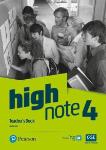
Teacher's Book
Angela Bandis
5
§
102030405060708090
MODIFY MASTER ONLY!!
Learn more about the Global Scale of English at english.com/gse
<A1A1A2A2+B1B1+B2B2+C1 C2
CEFR
Level 4
Level 3
Level 2
Level 1
Level 5
5
T
e
a
c
h
e
r
'
s
B
o
o
k
A
n
g
e
l
a
B
a
n
d
i
s
Teacher’s Book
• Student’s Book pages with an overprinted answer key
• Teacher’s notes (ideas for extra activities, references to additional materials
and course assessment)
• Photocopiable resources
• Culture notes
• Ideas for debate lessons
• Student’s Book audio script
• Workbook audio script and answer key
High Note is an intensive five-level course
for upper-secondary students that bridges
the gap between school life and young
adulthood. Designed to inspire modern
teenagers to reach their ambitious goals,
the course equips them with language
skills alongside the life and career
competencies that are indispensable to
succeed in exams, in the workplace and in
their future lives.
S
k
i
l
l
s
f
o
r
n
o
w
a
n
d
t
h
e
f
u
t
u
r
e
GSE:73-85 CEFR:B2+/C1
For Students
• Student’s Book
and eBook, with
extra digital activities
and resources
• Student’s Book
and eBook, with Online
Practice (interactive
workbook), extra digital
activities and resources
• Student's eBook
• Student's eBook
with Online Practice
(interactive workbook),
extra digital activities
and resources
• Pearson Practice
English App
• Workbook
For Teachers
• Teacher’s Book
with Presentation Tool,
Teacher’s Resources,
interactive workbook,
extra digital activities,
Assessment Package,
Test Generator, and
Student's eBook
• Class CDs
pearsonenglish.com/highnote
Teacher’s Book comes with an access code to:
• Front-of-class presentation tool with fully interactive version of the
Student’s Book and Workbook activities with integrated audio and video
• Teacher’s Resources
• Teacher’s view of Online Practice and extra digital activities with the
option of assigning tasks and automatic grading
• Assessment Package
• Test Generator
• Student's eBook
• Pearson Practice English App
HighNote_GLB_L5_TBK_CVR.indd 1
17/05/2021 10:31
Your course comes with a Presentation Tool, Teacher’s
Resources and access to Online Practice with extra digital
activities on the Pearson English Portal, and audio and
video resources on the Pearson Practice English App.
To access the Portal:
1 Go to english.com/activate
2 Sign in or create an account
3 Enter the access code below and click activate
This code can only be used once and the user subscription is valid for 36 months from the date of registration.
To access the app:
1 Download Pearson Practice English App:
- For iOS: english.com/ppe-ios
- For Android: english.com/ppe-android
2 Follow the on-screen instructions to unlock your content, using either
the QR or the numerical code below.
ESSHRS-DROLL -ALARY-CADET-GLAIR -ESEBO
The user subscription is valid for 24 months from the date of registration.
Need help?
Go to english.com/help for support with:
•
Creating your account
•
Activating your access code
•
Checking technical requirements
HighNote_GLB_L5_TBK_IFC.indd 1
13/05/2021 11:45
Teacher's Book
5
HighNote_GLB_L5_TBK_TTL.indd 1
13/05/2021 11:48
Pearson
KAO TWO
KAO Park
Hockham Way
Harlow, Essex
CM17 9SR
England
and Associated Companies throughout the world
www.english.com/highnote
© Pearson Education Limited 2021
All rights reserved. No part of this publication may be reproduced,
stored in a retrieval system, or transmitted in any form or by any means,
electronic, mechanical, photocopying, recording or otherwise without
the prior written permission of the Publishers.
First published in 2021
ISBN: 978-1 -292 -20989-0
Set in Akko Pro
Printed in Slovakia by Neografia
Acknowledgements
The publishers would like to thank the following people for their
feedback and comments during the development of this course:
Anna Bator, Ingrida Breidaka, Gordana Bujanic Tretinjak, Nida Burnekaite,
Anna Czernielewska, Justyna Deja, Izabela Gojny, Ewa Goldnik-Ciok,
Daniela Ille, Anita Jokic, Zrinka Juric, Justyna Kostecka, Magdalena Loska,
Magdalena Marmucka, Anna Milewska, Olivera Milovanovic, Alexandra
Novikova, Ivana Plockinic, Biljana Pršic, Merike Saar, Tomasz Siuta,
Aleksandra Strahinic, Olga Strelchenko, Małgorzata Syc-Jedrychowska,
Katarzyna Tobolska, Beata Towarnicka, Beata Trapnell, Anna Wisniewska
Image Credit(s)
The publisher would like to thank the following for their kind permission
to reproduce their photographs:
Students’ Book pages
123RF.com: 5phonrf 62, Aleksandr Davydov 17, Aleksandr Khakimullin
141, Anton Starikov 110, Antonio Diaz 143, arsty 154, Brian Jackson 46,
Cathy Yeulet 90, 111, dizanna 177, Dmytro 16, Elnur Amikishiyev 83,
Evgenii Matrosov 87, Evgeniy Shkolenko 133, Evgeny Atamanenko 12,
golubovy 78, handmadepictures 62, iofoto 121, Katarzyna Białasiewicz
81, kitipol pimseang 4, Lesia Sementsova 9, lightfieldstudios 62, Maksim
Kabakou 183, Maryia Kryvaltsevich 186, Mykola Kravchenko 78, nito500
8, Nuthawut Somsuk 182, Olena Kachmar 52, Olga Yastremska 62, racorn
146, ragsac 9, rawpixel 120, Richard Villalon 43, rostislavsedlacek 143,
Ruslan Sitarchuk 23, Scott Betts 22, Sergey Nivens 18, sjenner13 143,
stevanovicigor 78, theartofphoto 55, ufabizphoto 9, 123, Vitalij Sova
85, Volodymyr Melnyk 150, Wannarat Jumnongtoy 110; Alamy Stock
Photo: allesalltag 55, Arcaid Images 181, CHROMORANGE/Jeanette
Atherton 110, Erickson Stock 138, JG Photography 42, Peter Horree 52,
Simon Turner 185, Sylvie Jarrossay 187, Zone3 36; Bridgeman Images:
De Agostini Picture Library/M. Leigheb 100; Getty Images: 4FR/iStock/
Getty Images Plus 84, © Hiya Images/Corbis 111, agsandrew/iStock/
Getty Images Plus 129, Amer Ghazzal/Moment 11, Andersen Ross
Photography Inc/Digital Vision/Getty Images Plus 26, Andrew Peacock/
Stone 25, AndreyPopov/iStock/Getty Images Plus 84, Antanas Melaika/
EyeEm 18, Antonio Busiello/Moment 33, Archive Photos 110, Ariel
Skelley/Digital Vision 73, Astrid Stawiarz/Getty Images Entertainment
178, AzmanL/E+ 31, Bryn Lennon/Getty Images Sport 22, Buyenlarge/
Hulton Fine Art Collection 96, Cara Weil/EyeEm 18, Caroline Purser/The
Image Bank 38, clubfoto/iStock/Getty Images Plus 155, Colors Hunter
-
Chasseur de Couleurs/Moment 100, cyano66/iStock/Getty Images
Plus 137, DamienGeso/iStock/Getty Images Plus 102, Dan Istitene/
Getty Images Sport 22, David Paul Morris/Getty Images News 153, David
Provoost/Moment 180, davidf/E+ 51, DEA/G.DAGLI ORTI/De Agostini
108, Digital Vision/Photodisc 151, dneelanjan/iStock/Getty Images
Plus 154, domoyega/E+ 51, Donald Iain Smith 185, Dougal Waters/
DigitalVision 116, 186, Edward Berthelot/Getty Images Entertainment
94, Erika Goldring/Getty Images Entertainment 152, Fabrice Coffrini/
AFP 152, Fairfax Media 108, FatCamera/E+ 64, ferrantraite/E+ 18,
filmstudio/E+ 123, Fine Art/Corbis Historical 96, 96, Frank Hoensch/
Getty Images Entertainment 124, Geography Photos/Universal Images
Group 131, 131, georgeclerk/E+ 11, Gizelka/iStock/Getty Images Plus 69,
Granger Wootz 12, hadynyah/iStock/Getty Images Plus 11, Halfpoint/
iStock/Getty Images Plus 116, Heritage Images/Hulton Archive 184,
Hill Street Studios/DigitalVision 128, Historical/Corbis Historical 108,
Hugh Sitton/Stone 4, Hulton Archive 153, Ian Spanier/Image Source 57,
Ignacio Palacios 32, Image Source/Stockbyte 78, Jacob Ammentorp Lund/
iStock/Getty Images Plus 64, janiecbros/iStock/Getty Images Plus 24, Jeff
Junter/Photographer’s Choice RF 25, Jim Cumming/Moment 114, Jim
Dyson/Getty Images News 124, JodiJacobson/E+ 189, Joel Nito/AFP 128,
Jordan Siemens/Stone 187, Julia Garan/iStock/Getty Images Plus 102,
kali9/E+ 66, KingMatz1980/iStock/Getty Images Plus 125, LeoPatrizi/E+
31, 82, Linas Toleikis/iStock/Getty Images Plus 34, Ludovic Marin/AFP 187,
Luis Alvarez/DigitalVision 144, LumiNola/E+ 151, Malcolm MacGregor/
Moment 84, Marccophoto/iStock/Getty Images Plus 54, martin-dm/
E+ 64, Maskot 138, Matthew Sperzel/Getty Images Entertainment 94,
94, Miguel Navarrp/DigitalVision 102, monstArrr_/iStock/Getty Images
Plus 48, moodboard/Getty Images Plus 72, Nick Dolding/Stone 40,
nicolamargaret/E+ 189, NurPhoto 94, oversnap/iStock/Getty Images
Plus 155, Pawel Toczynski/The Image Bank 33, PeopleImages/E+ 4,
Peopleimages/iStock/Getty Images Plus 55, Peter Dazeley/The Image
Bank 54, Photodisc 78, Photos.com/Getty Images Plus 110, Pierre-Yves
Babelon/Moment 33, PIKSEL/iStock/Getty Images Plus 116, portishead1/
E+ 100, Ralph Gatti/AFP 97, ridvan_celik/iStock/Getty Images Plus 39,
Rob Kroenert/Moment 10, Rob Lewine 8, Rushay Booysen/EyeEm
78, SDI Productions/E+ 77, serengeti130/E+ 115, shironosov/iStock/
Getty Images Plus 128, SolStock/E+ 138, stevendocwra/Moment 155,
supersizer/E+ 122, Tara Moore/Digital Vision 6, thodonal/iStock/Getty
Images Plus 8, Thomas Barwick/DigitalVision 78, 78, TommL/E+ 61,
track5/E+ 4, urbazon/E+ 61, valentinrussanov 122, vicnt/iStock/Getty
Images Plus 56, Victor Boyko/Getty Images Entertainment 94, Victor
VIRGILE/Gamma-Rapho 94, Viktoria Rodriguez/Moment 179, Wachara
Kireewong/EyeEm 68, Westend61 12, 34, 51, 78; ITN Productions
Education: 5, 35, 65, 95, 125, 162, 163, 164, 165, 166; Prudence
Staite: 48; Rose Dyson: Rose Dyson, Founder of Pura Cosmetics www.
puracosmetics.co .uk, @puracosmetics. Photography by Picture Perfect
Photography www.picture-perfect-photo.co .uk 140; Shutterstock:
161, addkm 54, Anna Kutukova 70, ariadna de raadt 56, Arthimedes
54, baranq 71, beats1 60, Christian Schwier 34, Columbia/Kobal 124,
Columbia/MGM/Scott Rudin Prod/Kobal 127, Ealing Studios/Kobal
161, Evgeny Atamanenko 12, Feylite 41, HQuality 18, Jane Hobson 86,
86, 86, Jo Cournoyer/Paramount/MGMKobal 92, Konmac 189, Laurie
Sparham/Working Title/Kobal 113, Milan M 100, Moviestore 126,
Moviestore Collection 156, 159, Nigel Dennis/imageBROKER 53, Ollyy
91, Paramount/Miramax/Kobal 158, peterschreiber.media 47, racorn
78, Roger-Viollet 183, See-Saw Films/Universal/Kobal 127, Serhil Yurkiv
112, Startraks 77, Studio Ghibli/Kobal 101, Sunny studio 143, Svetlana
Lazarenka 124, tigristiara 132, Toa55 30, Tom Eversley 21, United Artists/
Kobal 156, Universal/Celandine/Monty Python/Kobal 156, WAYHOME
studio 107
Photocopiable Resources
123RF.com: liligraphie 306, Mariia Kvetsinskaia 293, Wang Aizhong 301;
Getty Images: aaa 301, bergserg 310, Birdimages 301, FierceAbin 305,
Hendri Venter 301, Peopleimages 315, 315, RDA/RETIRED 305, sharply_
done 284, Tanya Constantine 291; Shutterstock.com: Justin Lane/EPA-
EFE 289, Mark Lennihan/AP 289, metamorworks 299
Cover Image: Front: Getty Images: FatCamera
Text Credit(s):
Excerpt on page 113 from ABOUT A BOY by Nick Hornby, copyright ©
1998 by Nick Hornby. Used by permission of Riverhead, an imprint of
Penguin Publishing Group, a division of Penguin Random House LLC.
All rights reserved; Excerpt on pages 68-69 from THE INNER GAME OF
STRESS: OUTSMART LIFE’S CHALLENGES AND FULFILL YOUR POTENTIAL by
W. Timothy Gallwey, 2009 by W. Timothy Gallwey, Edward S. Hanzelik,
M.D. and John Horton, M.D. Used by permission of Random House, an
imprint and division of Penguin Random House LLC. All rights reserved;
Excerpt on page 21 from KING SOLOMON’S CARPET by Barbara Vine,
copyright © 1992 by Barbara Vine. Used by permission of Crown Books,
an imprint of Random House, a division of Penguin Random House LLC.
All rights reserved.
Illustration Acknowledgements
Students’ Book pages
Stephen Collins (Central Illustration) p37, 67; Amber Day (illustrationX)
p63; Adam Larkum (illustrationX) p7, 145; Mariajose Gajate Molina p99
Photocopiable Resources
Rupert Van Wyk p304
F01 High Note TB5 09890.indd 2
06/05/2021 15:20
Pearson
KAO TWO
KAO Park
Hockham Way
Harlow, Essex
CM17 9SR
England
and Associated Companies throughout the world
www.english.com/highnote
© Pearson Education Limited 2021
All rights reserved. No part of this publication may be reproduced,
stored in a retrieval system, or transmitted in any form or by any means,
electronic, mechanical, photocopying, recording or otherwise without
the prior written permission of the Publishers.
First published in 2021
ISBN: 978-1 -292 -20989-0
Set in Akko Pro
Printed in Slovakia by Neografia
Acknowledgements
The publishers would like to thank the following people for their
feedback and comments during the development of this course:
Anna Bator, Ingrida Breidaka, Gordana Bujanic Tretinjak, Nida Burnekaite,
Anna Czernielewska, Justyna Deja, Izabela Gojny, Ewa Goldnik-Ciok,
Daniela Ille, Anita Jokic, Zrinka Juric, Justyna Kostecka, Magdalena Loska,
Magdalena Marmucka, Anna Milewska, Olivera Milovanovic, Alexandra
Novikova, Ivana Plockinic, Biljana Pršic, Merike Saar, Tomasz Siuta,
Aleksandra Strahinic, Olga Strelchenko, Małgorzata Syc-Jedrychowska,
Katarzyna Tobolska, Beata Towarnicka, Beata Trapnell, Anna Wisniewska
Image Credit(s)
The publisher would like to thank the following for their kind permission
to reproduce their photographs:
Students’ Book pages
123RF.com: 5phonrf 62, Aleksandr Davydov 17, Aleksandr Khakimullin
141, Anton Starikov 110, Antonio Diaz 143, arsty 154, Brian Jackson 46,
Cathy Yeulet 90, 111, dizanna 177, Dmytro 16, Elnur Amikishiyev 83,
Evgenii Matrosov 87, Evgeniy Shkolenko 133, Evgeny Atamanenko 12,
golubovy 78, handmadepictures 62, iofoto 121, Katarzyna Białasiewicz
81, kitipol pimseang 4, Lesia Sementsova 9, lightfieldstudios 62, Maksim
Kabakou 183, Maryia Kryvaltsevich 186, Mykola Kravchenko 78, nito500
8, Nuthawut Somsuk 182, Olena Kachmar 52, Olga Yastremska 62, racorn
146, ragsac 9, rawpixel 120, Richard Villalon 43, rostislavsedlacek 143,
Ruslan Sitarchuk 23, Scott Betts 22, Sergey Nivens 18, sjenner13 143,
stevanovicigor 78, theartofphoto 55, ufabizphoto 9, 123, Vitalij Sova
85, Volodymyr Melnyk 150, Wannarat Jumnongtoy 110; Alamy Stock
Photo: allesalltag 55, Arcaid Images 181, CHROMORANGE/Jeanette
Atherton 110, Erickson Stock 138, JG Photography 42, Peter Horree 52,
Simon Turner 185, Sylvie Jarrossay 187, Zone3 36; Bridgeman Images:
De Agostini Picture Library/M. Leigheb 100; Getty Images: 4FR/iStock/
Getty Images Plus 84, © Hiya Images/Corbis 111, agsandrew/iStock/
Getty Images Plus 129, Amer Ghazzal/Moment 11, Andersen Ross
Photography Inc/Digital Vision/Getty Images Plus 26, Andrew Peacock/
Stone 25, AndreyPopov/iStock/Getty Images Plus 84, Antanas Melaika/
EyeEm 18, Antonio Busiello/Moment 33, Archive Photos 110, Ariel
Skelley/Digital Vision 73, Astrid Stawiarz/Getty Images Entertainment
178, AzmanL/E+ 31, Bryn Lennon/Getty Images Sport 22, Buyenlarge/
Hulton Fine Art Collection 96, Cara Weil/EyeEm 18, Caroline Purser/The
Image Bank 38, clubfoto/iStock/Getty Images Plus 155, Colors Hunter
-
Chasseur de Couleurs/Moment 100, cyano66/iStock/Getty Images
Plus 137, DamienGeso/iStock/Getty Images Plus 102, Dan Istitene/
Getty Images Sport 22, David Paul Morris/Getty Images News 153, David
Provoost/Moment 180, davidf/E+ 51, DEA/G.DAGLI ORTI/De Agostini
108, Digital Vision/Photodisc 151, dneelanjan/iStock/Getty Images
Plus 154, domoyega/E+ 51, Donald Iain Smith 185, Dougal Waters/
DigitalVision 116, 186, Edward Berthelot/Getty Images Entertainment
94, Erika Goldring/Getty Images Entertainment 152, Fabrice Coffrini/
AFP 152, Fairfax Media 108, FatCamera/E+ 64, ferrantraite/E+ 18,
filmstudio/E+ 123, Fine Art/Corbis Historical 96, 96, Frank Hoensch/
Getty Images Entertainment 124, Geography Photos/Universal Images
Group 131, 131, georgeclerk/E+ 11, Gizelka/iStock/Getty Images Plus 69,
Granger Wootz 12, hadynyah/iStock/Getty Images Plus 11, Halfpoint/
iStock/Getty Images Plus 116, Heritage Images/Hulton Archive 184,
Hill Street Studios/DigitalVision 128, Historical/Corbis Historical 108,
Hugh Sitton/Stone 4, Hulton Archive 153, Ian Spanier/Image Source 57,
Ignacio Palacios 32, Image Source/Stockbyte 78, Jacob Ammentorp Lund/
iStock/Getty Images Plus 64, janiecbros/iStock/Getty Images Plus 24, Jeff
Junter/Photographer’s Choice RF 25, Jim Cumming/Moment 114, Jim
Dyson/Getty Images News 124, JodiJacobson/E+ 189, Joel Nito/AFP 128,
Jordan Siemens/Stone 187, Julia Garan/iStock/Getty Images Plus 102,
kali9/E+ 66, KingMatz1980/iStock/Getty Images Plus 125, LeoPatrizi/E+
31, 82, Linas Toleikis/iStock/Getty Images Plus 34, Ludovic Marin/AFP 187,
Luis Alvarez/DigitalVision 144, LumiNola/E+ 151, Malcolm MacGregor/
Moment 84, Marccophoto/iStock/Getty Images Plus 54, martin-dm/
E+ 64, Maskot 138, Matthew Sperzel/Getty Images Entertainment 94,
94, Miguel Navarrp/DigitalVision 102, monstArrr_/iStock/Getty Images
Plus 48, moodboard/Getty Images Plus 72, Nick Dolding/Stone 40,
nicolamargaret/E+ 189, NurPhoto 94, oversnap/iStock/Getty Images
Plus 155, Pawel Toczynski/The Image Bank 33, PeopleImages/E+ 4,
Peopleimages/iStock/Getty Images Plus 55, Peter Dazeley/The Image
Bank 54, Photodisc 78, Photos.com/Getty Images Plus 110, Pierre-Yves
Babelon/Moment 33, PIKSEL/iStock/Getty Images Plus 116, portishead1/
E+ 100, Ralph Gatti/AFP 97, ridvan_celik/iStock/Getty Images Plus 39,
Rob Kroenert/Moment 10, Rob Lewine 8, Rushay Booysen/EyeEm
78, SDI Productions/E+ 77, serengeti130/E+ 115, shironosov/iStock/
Getty Images Plus 128, SolStock/E+ 138, stevendocwra/Moment 155,
supersizer/E+ 122, Tara Moore/Digital Vision 6, thodonal/iStock/Getty
Images Plus 8, Thomas Barwick/DigitalVision 78, 78, TommL/E+ 61,
track5/E+ 4, urbazon/E+ 61, valentinrussanov 122, vicnt/iStock/Getty
Images Plus 56, Victor Boyko/Getty Images Entertainment 94, Victor
VIRGILE/Gamma-Rapho 94, Viktoria Rodriguez/Moment 179, Wachara
Kireewong/EyeEm 68, Westend61 12, 34, 51, 78; ITN Productions
Education: 5, 35, 65, 95, 125, 162, 163, 164, 165, 166; Prudence
Staite: 48; Rose Dyson: Rose Dyson, Founder of Pura Cosmetics www.
puracosmetics.co .uk, @puracosmetics. Photography by Picture Perfect
Photography www.picture-perfect-photo.co .uk 140; Shutterstock:
161, addkm 54, Anna Kutukova 70, ariadna de raadt 56, Arthimedes
54, baranq 71, beats1 60, Christian Schwier 34, Columbia/Kobal 124,
Columbia/MGM/Scott Rudin Prod/Kobal 127, Ealing Studios/Kobal
161, Evgeny Atamanenko 12, Feylite 41, HQuality 18, Jane Hobson 86,
86, 86, Jo Cournoyer/Paramount/MGMKobal 92, Konmac 189, Laurie
Sparham/Working Title/Kobal 113, Milan M 100, Moviestore 126,
Moviestore Collection 156, 159, Nigel Dennis/imageBROKER 53, Ollyy
91, Paramount/Miramax/Kobal 158, peterschreiber.media 47, racorn
78, Roger-Viollet 183, See-Saw Films/Universal/Kobal 127, Serhil Yurkiv
112, Startraks 77, Studio Ghibli/Kobal 101, Sunny studio 143, Svetlana
Lazarenka 124, tigristiara 132, Toa55 30, Tom Eversley 21, United Artists/
Kobal 156, Universal/Celandine/Monty Python/Kobal 156, WAYHOME
studio 107
Photocopiable Resources
123RF.com: liligraphie 306, Mariia Kvetsinskaia 293, Wang Aizhong 301;
Getty Images: aaa 301, bergserg 310, Birdimages 301, FierceAbin 305,
Hendri Venter 301, Peopleimages 315, 315, RDA/RETIRED 305, sharply_
done 284, Tanya Constantine 291; Shutterstock.com: Justin Lane/EPA-
EFE 289, Mark Lennihan/AP 289, metamorworks 299
Cover Image: Front: Getty Images: FatCamera
Text Credit(s):
Excerpt on page 113 from ABOUT A BOY by Nick Hornby, copyright ©
1998 by Nick Hornby. Used by permission of Riverhead, an imprint of
Penguin Publishing Group, a division of Penguin Random House LLC.
All rights reserved; Excerpt on pages 68-69 from THE INNER GAME OF
STRESS: OUTSMART LIFE’S CHALLENGES AND FULFILL YOUR POTENTIAL by
W. Timothy Gallwey, 2009 by W. Timothy Gallwey, Edward S. Hanzelik,
M.D. and John Horton, M.D. Used by permission of Random House, an
imprint and division of Penguin Random House LLC. All rights reserved;
Excerpt on page 21 from KING SOLOMON’S CARPET by Barbara Vine,
copyright © 1992 by Barbara Vine. Used by permission of Crown Books,
an imprint of Random House, a division of Penguin Random House LLC.
All rights reserved.
Illustration Acknowledgements
Students’ Book pages
Stephen Collins (Central Illustration) p37, 67; Amber Day (illustrationX)
p63; Adam Larkum (illustrationX) p7, 145; Mariajose Gajate Molina p99
Photocopiable Resources
Rupert Van Wyk p304
F01 High Note TB5 09890.indd 2
06/05/2021 15:20
CONTENTS
INTRODUCTION
4
What is High Note?
4
What is the High Note methodology?
4
Key concepts behind High Note
6
Course components
8
High Note unit walkthrough
10
High Note videos
16
Teaching pathways
17
How to teach for exams with High Note
18
How to flip the classroom with High Note
19
STUDENT’S BOOK PAGES WITH TEACHER’S NOTES
20
Contents
20
01 Identity
22
02 On the move
36
03 Hard sell
52
04 Tastes
66
05 Do your best
82
06 Feels good
96
07 The creative urge
112
08 Follow the crowd?
126
09 Unbelievable
142
10 Up the ladder
156
Culture Spot
172
Literature Spot
176
Watch and Reflect
180
Grammar Reference
185
Use of English
195
Communication
205
CULTURE NOTES
208
STUDENT’S BOOK AUDIO SCRIPT
216
STUDENT’S BOOK VIDEO SCRIPT
243
WORKBOOK ANSWER KEY
247
WORKBOOK AUDIO SCRIPT
258
CLASS DEBATES
265
PHOTOCOPIABLE RESOURCES
267
F01 High Note TB5 09890.indd 3
06/05/2021 15:20
WHAT IS HIGH NOTE?
High Note is a dynamic and intensive five-level course for
upper secondary students, ranging from A2 to C1 level of
the Common European Framework of Reference (CEFR) and
from 30 to 85 on the Global Scale of English (GSE).
The course aims to bridge the gap between school reality
and young adult life. It has been designed to inspire and
challenge modern teenagers so that they can fulfil their
ambitious goals: pass school-leaving and external exams,
communicate fluently and accurately in English in a variety
of situations, become successful university students and
increase their employability perspectives. This is achieved
by equipping learners with a combination of language skills
and life competencies as well as systematically building their
confidence when speaking English.
Not only does High Note present new vocabulary and
grammar, practise receptive and productive skills and
acquaint students with typical exam tasks but it also teaches
practical, everyday life skills that students will find useful
both now and in the future. A specially prepared Life Skills
development programme develops the types of skills
that are needed at school, at university and at the future
workplace:
• academic and career-related skills (e.g. giving persuasive
presentations, debating, managing an online image,
planning a future career),
• social skills (e.g . making the most of volunteering,
understanding how the media works, identifying fake
news) and
• personal development skills (e.g . time management,
building resilience, setting SMART goals).
Throughout the course, students are also encouraged to think
critically, use their creativity, assimilate new information
and points of view, express and defend their opinions,
develop research techniques, work alone and with others
and reflect on their own learning. Additionally, High Note
deepens students’ understanding of important social issues
and increases their cultural awareness, which helps them
become fully rounded citizens of the global community.
The High Note syllabus is based on a combination of school
curricula, school-leaving and external exam requirements
and the Global Scale of English. This ensures comprehensive
language coverage and the right balance of general English,
exam and life skills. Students will be learning the right
language and getting the right kind of practice to help them
excel in their exams and communicate with confidence.
Although the course has been designed for use in state
sector schools, it is also suitable for use in private language
schools, and the activities will work well with both smaller
and larger groups. It offers a lot of flexibility of use as it
contains a wealth of materials to provide extra support or
further challenge for students, and extra ideas and resources
for teachers to allow them to tailor their teaching package to
their classroom.
WHAT IS THE HIGH NOTE METHODOLOGY?
High Note is the direct result of extensive research and
analysis of learners’ needs and wants. This research has
shown that the learning objectives of many students aged
15–19 are increasingly ambitious. The course addresses these
needs by building on four notions: inspiration, intensity,
interaction and independence.
INTRODUCTION
INSPIRATION
The course material has been carefully prepared to appeal
to students’ interests, inspire discussion and engage them in
learning English both inside and outside the classroom.
Relevant
The lessons in High Note are relevant to students in that they
connect to their experiences. The reading and listening texts
cover topics that learners at this age are naturally interested
in and talk about in their everyday lives, such as technology,
media, travel, relationships and sport, but also psychology,
culture and future careers. New vocabulary and grammar are
practised through questions about the students’ own lives
and experiences, which makes lessons more personal and
memorable.
Authentic
Wherever possible, reading and listening texts come from
authentic sources. Authentic Documentary Videos tell the
stories of real people and present real places and events.
Grammar Videos – ‘vox pop’ interviews with real people
filmed on the streets of London – introduce students to
authentic accents and real experiences and stories. All of this
encourages authentic language learning.
Purposeful
Each lesson in High Note has a clear purpose, whether it
is vocabulary and grammar presentation and practice,
general language skills development or exam practice. Every
unit begins with a list of unit objectives to help students
understand the learning goals. There is also a clear can-do
statement at the foot of each lesson so that students and
teachers know exactly what they are doing, and which
students can tick when they feel they have achieved the
lesson aim.
The purposefulness of the material is enhanced by the
practical Life Skills lessons, which help practise new
competencies through engaging content and in a practical,
discussion-driven way.
Absorbing
The texts in High Note are thought-provoking and
information-rich. They enhance students’ knowledge of the
world and allow them to further investigate the themes they
find interesting. Also, well-known topics are presented from
unusual angles with the intention of sparking off natural
opinion sharing, agreement and disagreement. Students’
knowledge of British culture and other English-speaking
countries is systematically developed throughout the course
through a variety of curious cultural facts in the main units,
as well as in the Culture Spot and Literature Spot sections at
the back of the Student’s Book.
Well-balanced
High Note is a course which is well-balanced on many
different levels and helps students engage more with the
material. In terms of topics, there is a balance of light,
humorous issues and more serious themes. In terms of
lessons, there is a harmonious topic flow from one lesson
to another. Exam training is also seamlessly woven into
the course: students increase their exam readiness through
step-by-step activities and task-based exam tips. Finally,
video clips are naturally integrated into the lessons, and the
course components complement one another.
INTRODUCTION
4
F01 High Note TB5 09890.indd 4
06/05/2021 15:20
INTRODUCTION
INTRODUCTION
INTENSITY
High Note challenges students both at a cognitive and
linguistic level.
The reading and listening texts push them to think critically
and to raise their cultural and social awareness.
The intensive grammar syllabus and wide vocabulary
coverage encourage them to explore the language,
understand how it works and improve accuracy. The video
material, audio recordings and numerous speaking activities,
(discussions, debates and role-plays), naturally foster fluency:
students become immersed in the language and learn to talk
at length in a variety of personalised and meaningful contexts.
INTERACTION
When students are involved in the course material, the
progress of their learning is quicker. In High Note, learners
are encouraged to interact with the course and actively
participate in every stage of the learning process.
Grammar
• Students analyse examples of language and arrive at the
grammar rules themselves; the guided inductive approach
helps them understand and remember the rules better.
• Watch out! boxes draw students’ attention to areas of
special difficulty and help pre-empt common errors.
Vocabulary
• New lexis is presented and activated in most lessons, with
the main lexical set of the unit in a separate Vocabulary
lesson. It is then recycled, consolidated and practised in
the following lessons.
• There are references to the language students have already
come across in the course, which are called Think Back. This
activates the knowledge students have already acquired.
• The Remember More section activates the words from the
word list through a series of exercises. Additionally, the
Active Vocabulary boxes provide practical tips on how to
activate the students’ memory when learning new words.
• Vocabulary Extension sections in the Workbook introduce
more words and phrases, focusing on such areas as phrasal
verbs, collocations and wordbuilding.
Skills strategies
• Active Reading and Active Listening boxes contain crucial
general reading and listening skills strategies, such
as predicting, understanding the main idea, finding
specific information, dealing with new words or making
inferences. These boxes also include critical thinking
skills like distinguishing facts from opinions, identifying
the author’s opinion or recognising bias. Students can
experience the strategy by completing exercises that
accompany it.
• Active Writing boxes in the Workbook highlight the crucial
stages in the process of writing a specific type of text.
Pronunciation
Active Pronunciation boxes in the Listening sections in the
Workbook help students perceive the interdependencies
between sounds and give tips on how to pronounce
particular sounds correctly.
INDEPENDENCE
High Note reinforces students’ independence by making
them responsible for their own learning. In the context
of language learning, independent learners are those
who are able to recognise their learning needs, locate
relevant information about language and develop relevant
language skills on their own or with other learners. This
results in increased recognition of strengths, weaknesses
and progress, greater levels of confidence, more motivation,
better management of learning and improved performance.
High Note supports independent learning in a variety of
different sections and exercises in the book.
Clear learning goals and models for success
The goals at the beginning of each unit describe what
the student will be able or better able to do at the end of
the lesson.
Skills strategies
Active Reading and Active Listening boxes contain concise
descriptions of the most important skills strategies, which
students can actively practise through a series of exercises
and use in the future.
Exam strategies
Strategy boxes contain useful tips on how to deal with most
typical exam tasks.
Active Writing boxes in the Workbook
These contain a series of scaffolded tasks designed to
develop the skills students need to write a given text type.
Project work
The Life Skills projects help students develop creative and
collaboration skills and make decisions about the learning
process and how to complete the project.
Resources for self-study
Resources such as word lists with the Remember More section
at the end of each unit, the Grammar Reference and Practice
section at the back of the Student’s Book, the Workbook,
Online Practice and extra digital activities reinforce active
consolidation of the material from the main units.
Self-assessment sections in the Workbook
These provide an opportunity for students to assess their
progress and reflect on their learning.
5
F01 High Note TB5 09890.indd 5
06/05/2021 15:20
INTRODUCTION
KEY CONCEPTS BEHIND HIGH NOTE
21ST-CENTURY EDUCATION
In today’s world of an ever-increasing flow of information
and a rapidly changing workplace, an education based on
learning facts at a one-size-fits-all pace does not seem to
work anymore. These days, learners can find answers to any
questions they might have in just a few seconds and can
teach themselves about any topic they are interested in.
They do not need school to do what they can do themselves.
What they do need, however, is guidance in how to use
the available information in smart and efficient ways and
the development of social and professional skills that
are needed to succeed in the modern world. The aim of
21st-century education is, therefore, to equip students with
those skills and help them grow in confidence to practise
them both at and beyond school.
21st-century students
We believe that today’s students are sophisticated,
intelligent and independent. They multitask very capably and
usually know a lot about other cultures. They are comfortable
with global and intercultural communication, and feel at
ease with using different types of technology. They typically
have a point of view and are not afraid of expressing
themselves. They are also comfortable with change and
keen to keep their interests and abilities up to date. In terms
of their future career, they would like to find a job that
reflects their interests and offers flexibility (e.g . living and
working anywhere in the world, choosing their own hours
and office space, working with peers across the globe). All
these characteristics and skills provide a unique opportunity
for teaching English. When students realise their needs and
interests are met and feel inspired by the course, the learning
process can be quick and extremely rewarding.
21st-century teachers
Modern teachers are forward-thinking leaders who are ready
to address their students’ needs. With such a widespread
access to information and resources of all kinds, it may often
be the case that students will know more than teachers in
some areas. Most likely, they will also be a step ahead of
teachers in using technology. This means that the teacher’s
role is likely to shift from an all-knowing expert to that of
a guide or a mentor who supports students in the learning
process, challenges them and motivates them.
21st-century skills and High Note
High Note provides students not just with English language
skills, grammar and vocabulary, but also develops the key
skills needed in the global 21st-century community.
Learning and Innovation Skills (the five Cs)
Communication and collaboration: These skills are practised
throughout the entire course. The large number of
discussions and role plays entail natural communication and
collaboration among students. Additionally, the Life Skills
projects require students to decide on their roles in a team
and take responsibility for their work.
Creativity: This skill is developed through a range of
thought-provoking questions students need to answer and
a variety of authentic problems and tasks they need to solve,
e.g . in the Life Skills projects.
Cultural awareness: Students have numerous opportunities
to discuss various culture-related issues (Reflect: Culture
exercises). Documentary Videos cover a range of cultural
topics and Grammar Videos expose students to a wide variety
of native and foreign accents, which will develop their
sensitivity to other cultures and their listening skills. At the
back of the Student’s Book, students will also find Culture
Spot lessons, which provide a wider perspective of cultural
aspects linked to the unit topics and enable learners to
compare cultural aspects of the English-speaking world with
their own. The Literature Spot lessons, in turn, familiarise
students with well-known literary works that have made an
impact on popular culture.
Critical thinking: Problem solving and reasoning skills
are developed throughout the course, especially via the
reading and listening activities. Students are encouraged to
differentiate facts from opinions, critically assess different
viewpoints, look at problems from various perspectives,
assimilate new information and points of view, as well as
express and defend their own opinions.
Digital Literacy
The content, as well as the means of delivery of High Note,
are rooted in today’s digital environment and reflect the
way today’s teenagers already manage their lives: the
topics cover up-to-date technology and media, the Life Skills
projects encourage the use of digital tools, and the digital
components of the course increase students’ engagement
with the course material.
Life and Career Skills
High Note offers a specially prepared Life Skills development
programme which focuses on three key educational paths:
academic and career-related skills (e.g. giving successful
presentations, debating, using online resources for school
projects, planning a future career), social skills (e.g. working
in a team, making the most of volunteering) and personal
development skills (e.g. time management, building
resilience). The programme is introduced through the
Life Skills lessons at the end of every second unit. They offer
engaging content and practise new competencies in an active,
discussion-driven way. The Life Skills projects at the end of
each Life Skills lesson involve research, collaboration, critical
thinking and creativity.
THE COMMON EUROPEAN FRAMEWORK
FOR LANGUAGES
The Common European Framework of Reference for
Languages: learning, teaching, assessment (CEFR) is a
guideline published in 2001 by the Council of Europe which
describes what language learners can do at different stages
of their learning. In 2017, the CEFR Companion Volume with
New Descriptors was published, which complements the
original publication. The document enriches the existing
list of descriptors and gives a lot of focus to cross-linguistic
mediation and plurilingual/pluricultural competence.
The term mediation is understood as mediating
communication, a text and concepts. It combines reception,
production and interaction and is a common part of
everyday language use. It makes communication possible
between people who, for whatever reason, are unable to
communicate successfully with each other: they may speak
different languages and require a translation, they may not
have the same subject knowledge information and need an
explanation or simplification, they may not be of the same
6
F01 High Note TB5 09890.indd 6
06/05/2021 15:20
INTRODUCTION
KEY CONCEPTS BEHIND HIGH NOTE
opinion and need someone to identify common ground.
Mediation can also involve written texts – with the reader
summarising, paraphrasing or interpreting the information
for a different audience.
High Note contains numerous mediation activities.
They include open reading and listening comprehension
tasks, transformation tasks, gapped summaries, rewriting
texts in a different register, picture description, speculating
or drawing conclusions. There are also tasks which cater
for mediating concepts and communication such as
communicative pairwork or groupwork tasks, projects or
problem-solving activities.
THE GLOBAL SCALE OF ENGLISH
The Global Scale of English (GSE) is a standardised, granular
scale that measures English language proficiency. Using
the Global Scale of English, students and teachers can now
answer three questions accurately: Exactly how good is my
English? What progress have I made towards my learning goal?
What do I need to do next if I want to improve?
Unlike some other frameworks that measure English
proficiency in broad bands, the Global Scale of English
identifies what a learner can do at each point on a scale from
10 to 90, across each of the four skills (listening, reading,
speaking and writing) as well as the enabling skills of
grammar and vocabulary. This allows learners and teachers
to understand a learner’s exact level of proficiency, what
progress they have made and what they need to learn next.
The Global Scale of English is designed to motivate learners
by making it easier to demonstrate granular progress in
their language ability. Teachers can use their knowledge of
their students’ GSE levels to choose course materials that
are precisely matched to ability and learning goals. The
Global Scale of English serves as a standard against which
English language courses and assessments worldwide
can be benchmarked, offering a truly global and shared
understanding of language proficiency levels.
Visit www.english.com/gse for more information about
the Global Scale of English.
ASSESSMENT FOR LEARNING
With the GSE as the solid framework for syllabus design
and assessment, High Note offers a uniquely sound and
comprehensive Assessment for Learning package.
Any test can be used either as an assessment of learning
or an assessment for learning. Assessment of learning
usually takes place after the learning has happened and
provides information about what the student has achieved
by giving them a mark or grade. You can also use tests as
assessment for learning by providing specific feedback on
students’ strengths and weaknesses, and suggestions for
improvement as part of the continual learning process. It
is the combination of both types of assessment which can
provide a powerful tool for helping your students’ progress.
Assessment for Learning is embedded throughout the High
Note materials: in the Student’s Book, Workbook, Online
Practice and Assessment Package.
Student’s Book
Every unit begins with a list of unit objectives to help
students understand the learning goals. There is also a clear
can-do statement as the end line of each lesson so that
students and teachers know exactly what they are doing.
Students can tick the can-do box when they feel they have
achieved the lesson aim.
Every unit has a Revision section which includes exam
training. Its goal is to provide examples of and practice in
the specific tasks students are likely to face in test situations,
focussing particularly on the relevant Cambridge English and
Pearson Test of English General exams.
Workbook
Every unit contains a Self-assessment page where students
assess how well they did in each lesson: in which areas
they feel confident and where they feel they need more
practice. This encourages students to reflect on their
learning and helps them become independent learners.
The Self-assessment page is followed by a Self-check page
where students can do activities checking their knowledge
of vocabulary and grammar from the unit with an additional
focus on Use of English. The key to these exercises is
at the end of the Workbook so that students can check
their answers.
Assessment Package
There are downloadable tests in A and B versions.
The Assessment Package includes:
• Placement test
• Grammar quizzes
• Vocabulary quizzes
• Unit tests:
–
Vocabulary, Grammar, Use of English
–
Dictation, Listening, Reading and Communication
–
Writing
• Cumulative review tests: Vocabulary, Grammar, Use of English
• Exam Speaking tests
Each test is provided in a Word format, so it can be easily
modified if needed.
The full Assessment Package is provided through an access
code in the Teacher’s Book.
Extra digital activities and
Online Practice (interactive workbook)
By doing digital exercises, students can check their readiness
for class tests and monitor their progress. For most exercises,
wrong answer feedback and correct answers are provided.
When teachers set up classes and assign activities, the
gradebook function collects students’ results so that it
is possible to diagnose and adjust one’s teaching to the
performance of each individual or class.
7
F01 High Note TB5 09890.indd 7
06/05/2021 15:20
INTRODUCTION
COURSE COMPONENTS
WORKBOOK
• Mirrors the Student’s Book unit structure
• Additional grammar, vocabulary and skills practice to reinforce
material in the Student’s Book
• New reading and listening texts
• Vocabulary extension in the Reading and Listening lessons
• Pronunciation programme
• Self-Checks after each unit
• Self-Assessment sections after each unit
• Lists of phrasal verbs and dependent prepositions
STUDENT’S BOOK with ONLINE PRACTICE
This version of the Student’s Book contains everything
described above (Student’s Book, extra digital activities
and resources, Pearson Practice English app) PLUS:
• Interactive Workbook with instant feedback
• Gradebook to review students’ performance
• 10 topic-based units divided into six main teaching lessons
• 5 Life Skills sections at the end of every second unit which teach competencies
indispensable to success in 21st century society
• Flexible order of lessons apart from the first spread (Vocabulary and Speaking)
and the last spread (Writing)
• Clear lesson objectives (‘I can...’) based on the Global Scale of English (GSE)
• Documentary video after every second unit
• Revision for every unit: practice of language and skills in an exam task format
• Word list at the end of each unit with exercises activating key vocabulary and
tips on how to learn new words
• Grammar Reference: detailed explanations of all the grammar topics
covered in the units with examples
• Use of English: more exam-orientated practice of the language
• 2 Culture Spots
• 2 Literature Spots
• Watch and Reflect: worksheets for the Documentary Videos
STUDENT’S BOOK
na miarę nowej szkoły
PEARSON ENGLISH PORTAL DLA NAUCZYCIELA
Indywidualny kod dostępu do Pearson English Portal znajduje się w książce nauczyciela. Z oprogramowania
można korzystać online lub pobrać je na komputer i uruchamiać bez dostępu do Internetu.
Wejdź na stronę pearson.pl/pep i już dziś zobacz, jakie możliwości daje
Pearson English Portal!
ONLINE PRACTICE DLA UCZNIA
Online Practice to cyfrowe wsparcie dla ucznia, które obejmuje:
dostęp do materiału audio i wideo do kursu,
Grammar Checkpoints, czyli dodatkowe interaktywne ćwiczenia utrwalające zagadnienia gramatyczne
z rozdziału,
Vocabulary Checkpoints, czyli powtórka słownictwa w wygodnej interaktywnej formie,
Unit Checkpoints, czyli zestawy interaktywnych zadań dających okazję do przećwiczenia zagadnień
gramatycznych, leksykalnych i komunikacyjnych przed sprawdzianem.
Lubisz korzystać
z rozwiązań cyfrowych?
Cyfryzację klasy
zostawiasz uczniom?
Utwórz klasę w ramach Online Practice, podaj
uczniom jej numer ID i śledź ich postępy z pomocą
szczegółowego zestawienia Gradebook.
Z Online Practice zapewniasz im pakiet
dodatkowych interaktywnych ćwiczeń do
samodzielnej powtórki, a Ty prowadzisz lekcje
tak, jak lubisz!
HIT!
25
• Grammar and Vocabulary Checkpoints to help students check
their readiness for class tests and monitor their progress
• Reading, Listening and Use of English banks of texts and exercises
• All audio and video resources
Access code to EXTRA DIGITAL ACTIVITIES AND RESOURCES
• Student’s Book audio
• Workbook audio
• Video
Access code to PEARSON PRACTICE ENGLISH APP
4
INTERESTS
Some people findit easy tofollow their passion.They’ve
always been nutsabout
been nutsabout music orhorsesorfashion. But what
been nuts about music or horses or fashion. But what
music or horses or fashion. But what
been nuts about
if we are not really sure what our thingis? Maybe we could
think about the timesin the last few weekswhen we have felt
absorbed by something, or remember the things we used to
get a kick out of
get a kick out ofwhen we were children. One ofthose might
get a kick out of when we were children. One of those might
when we were children. One of those might
get a kick out of
just turn intoa lifelonghobby oreven a career.
VALUES
What values do we set great store by
set great store by? Dowe prize
spontaneity or stability? Are we rather laid-back or strong-
willed? How crucial is commitment? How highly do we
rate tactfulnessover frankness? When we know this, we
canconsider whether the choices we make are in linewith
are in line with
these values.
POS SE SS IONS
What kind of car would we ideally plump for
plump for? Maybe
we always buy the same type of phone?These sortsof
decisions canalsosay a lot about us
say a lot about us. Or maybe we
are not that into
arenot that into possessions themselves, but have a small
collectionofitems with real sentimental value. The things
we choose to use regularly or to surroundourselveswith
canalso define us, which iswhy we might find new friends
checkingout our booksor music collection.
TR IBE
Who do we choose tospend time with? Our ‘tribe’ isa key
part ofour identity.If we are a Real Madrid supporter,
or a history student,or akind-hearted volunteer,we’re
already hanging out withlike-minded people. Ifyou haven’t
found your tribe yet, be more open-minded – get out there,
try some new things and meet some new people.
When we know these things, it’seasier to be ourselvesand
to find careers and the tribe that we really clickwith
click with.
A
C
Howwell do weknow ourselves? Do we understand
what makes us tick
what makes us tick?Take a moment to stop and think
about thethings that define us.
VOCABULARY Personality: (compound) adjectives, fixed expressions, idiomatic phrases,
verbs for thinking and understanding
GRAMMAR Continuous and perfect tenses
LISTENING Understandingthe main pointsof complex talks
SPEAKING Keeping conversations going
WRITING
Ablog post about the past
Identity
01
1AVOCABULARY AND SPEAKING
1 SPEAKINGImagineyouwereinaradioprogramme
about identitiesin which people were asked to
describe themselves.What would you say?
2 1.2
1.2 Listentothreepeoplebeingaskedtodescribe
themselves.What aspects of theiridentity does each
person mention? Which aspects of identity are shown
inphotosA–D?
THE PERSON
THE PERSON I KNOW BEST?
D
B
5
01
3 THINKBACKIn pairs, decide which of the adjectivesin
theboxdescribeeachspeakerfrom Exercise2best.
Completethetableandexplainyourchoices.
cap able com pa ssion ate con ceite d d edica ted
defensive passionate resilient self-aware self-centred
self-obsessed tough trustworthy underconfident
Carrie
Sarah
James
Compound adjectives (personality)
4 1.2 Study Active Vocabulary.Then match the
wordsfrom boxAwiththewordsfrom boxBtomake
compound adjectivesdescribing personality.Listen
to the recording again and decide which of these
adjectives you would use to describe the speakers.
A absent forward high highly kind laid like
narrow street strong thin tight
B back fisted hearted looking minded(x3)
skinned spirited strung willed wise
ACTIVEVOCABULARY|Compound adjectives
A compoundadjectiveis made up of more than one
word,but describes a singleidea.They often use
ahyphenwhenthey comebeforeanoun,e.g .She’s
a world-famoussinger.Whentheygoafteranoun,
thehyphenisgenerallydropped,e .g. The singer isworld
fa m ous.
Thereare many possible ways of forming compound
ad ject ives :
• adjective + adjective, e.g. old-fashioned
• adverb + adjective, e.g. hard-working,forward-looking
• noun + adjective, e.g. lifelong,world-famous,streetwise
• adjective + noun, e.g. full-time,cutting-edge
• adjective + gerund or past participle,e.g .good-looking,
long-legged
• adverb + past participle, e.g. highly-strung
• noun +gerundor pastparticiple,e.g.eye-catching
• noun + past participle, e.g. tongue-tied
• prefix + adjective, e.g. underconfident,overcooked
Most compound adjectives arestressed on the second
part of thecompound,but compoundsformedby a noun
+ gerund or past participle are usually stressed on the
first part of thecompound.
5 SPEAKINGWhich of the adjectivesfrom Exercises 3
and4wouldorwouldn’tyouusetodescribeyourself?
Explain why. What adjectives would other peopleuse
todescribeyou?Thinkaboutyourparents,siblings,
neighbours,friendsorteachers.
6 Read thearticle about identity on page 4. In pairs,
discuss the questions.
1 Whyisitimportanttogettoknowyourself?
2 Whichofthefourelementsofidentitydoyoufind
most important? Say why.
7 Findfivenounsinthetext thatdescribedifferent
values andform adjectivesfrom them. Which of these
valuesareimportant toyou?Say why.
passion– passionate
Personality adjectives and values
8 Usetheadjectivesfromtheboxto form nouns
describing values. Put the qualitiesin order of
importance.Thencompareyourlistsin smallgroups.
Use a dictionary if necessary.
assertive discreet humble inclusive merciful
sincer e
Fixed expressions
9 Match thehighlighted expressionsfrom the text with
thedefinitions.
1 Have afeeling of excitement and energy.
2 Not be very keen on something.
3 Match with.
4 Somethingwhichmakesusbehaveinacertainway.
5 Hitit off with someone.
6 Reveal our traits.
7 Be crazy about something.
8 Choose.
9 Consider something to beimportant.
10 Look at thehighlighted expressionsagain and
10 Lookat thehighlightedexpressionsagainand
Look at the highlighted expressionsagain and
10 completethe questions with oneword in each gap.
Thendiscussthemin pairs.
1 Giventhe choicebetween a day out walking inthe
hillsandaday inbed,which wouldyou
fo r?
Say why.
2 Doyouagreethatyourclothescan
a lot
aboutyou?
3 Whatcartooncharacterswereyou
abo ut
asakid?
4 Whatisthebestwaytofindoutwhatmakessomeone
?
11 SPEAKINGMakesomenotesabout yourselfunderthe
headingsbelow.Thendiscusstheminpairs.Usethe
vocabularyfromthelesson.
• Interests • Values • Possessions • Tribe
D
O
C
U
M
E
N
T
A
R
Y
V
I
D
E
O
1 WATCH AND REFLECT
Gotopage162.
Watch thedocumentary
GlobalCitizen anddo
the exercises.
□I can use compound adjectives to talk about personality.
8
F01 High Note TB5 09890.indd 8
06/05/2021 15:20
INTRODUCTION
(Idioms related to movement, travel verbs)
Lookat thelist of situationsbelow.Whichofthesethingshavehappenedtoyou?Tick three.
Tell adifferentstudent abouteach situation.He/Shehastoguessthe phrasefromthetable
What have I done?
2AVOCABULARY AND SPEAKING
(Idioms related to movement, travel verbs)
RESOURCE 4
Lookat thelist of situationsbelow.Whichofthesethingshavehappenedto you? Tick three.
You are going totell otherstudentsabout theexperiences you choseinExercise 1.
Tell adifferentstudent abouteach situation.He/Shehastoguessthe phrase from the table
thatmatchesthat situation.Makesure thatyou do NOT usethat phraseinyour description.
(Idioms related to movement, travel verbs)
Look at thelist of situationsbelow. Which ofthesethingshavehappenedtoyou?Tick three.
You are going totell otherstudents about theexperiences you choseinExercise 1.
Tell adifferent student about each situation. He/Shehastoguessthe phrasefromthetable
that matchesthat situation. Make sure thatyou do NOT usethat phraseinyourdescription.
Max and I were chatting
happily online when
my screen suddenly
went blank.
After she’d received
her excellentexam
results, she rang her
parents to give them the
good news.
By the end ofthis year,
Jane and Kate will have
been living in London for
adecade.
Past Continuous
for longer actions
interrupted by a shorter
past action
Past Perfect Simple
fora clearsequence
ofevents
Future Perfect
Continuous for
something continuing
up toa certain point in
the future
283
PHOTOCOPIABLE ©PEARSON EDUCATION LIMITED 2021
(Idioms related to movement, travel verbs)
RESOURCE 3
It’s functional
1DGRAMMAR
(Continuous and perfect tenses)
The company was
conducting interviews
lastweekfor new staff.
Whileunemployed, he’d
developed the habit of
sleeping in and found it
difficult tobreak when
hefoundajob.
Ithad been raining all
nightandthestreets
were flooded when we
woke up.
been living in London for
Past Continuous for
actions oractivitiesin
progressataspecific
time in the past
PastPerfectSimple
for actionsor states
thathappened before
a specificpast time
PastPerfectContinuous
for continuousactions
orsituations which
happened before
aspecifictimein the past
PHOTOCOPIABLE ©PEARSON EDUCATION LIMITED 2021
(Continuous and perfect tenses)
The company was
conducting interviews
lastweekfor new staff.
Whileunemployed, he’d
developed the habit of
sleeping in and found it
difficult tobreakwhen
hefound ajob.
Ithad been raining all
nightand the streets
were flooded when we
woke up.
Past Continuousfor
actions oractivitiesin
progressata specific
time in the past
PastPerfectSimple
for actionsor states
thathappened before
a specificpasttime
PastPerfectContinuous
for continuousactions
orsituations which
happened before
a specifictime in the past
PHOTOCOPIABLE ©PEARSON EDUCATION LIMITED 2021
Lookat theexpressionsin bold intheextract.In pairs, discusshow you saythemin yourlanguage.
and got married asecondtime to different women
called Betty.They bothenjoyed mechanical drawing
and carpentry,and their favourite school subject was
Maths.Andhowmany people cansay that?
The longlist of similaritiesbetween them could
imply that the way they were brought up had very
/ with theirgenes.
However,when youlook moreclosely, it is important
to recognisethat these twinstudies often go to show
almost theopposite: that while your personality may
begenetically influenced, yourenvironment definitely
canmake adifference. If you are brought up to have
aconfident,strong-willedpersonality, for example,
orto be thin-skinnedandhave little faith 14for /
for //
for in
/to how successfulyou
arein laterlife.It isn’t an excuse 16for /
for //
for at not handing
at not handing
not handing
at
time though!
,theopportunitiesyou have 18with / in
lifearealsokey.Another setof twins, Ann and Judy,
demonstrate this. Theirmotherwasextremely poor
and unable to keep both twins,so Ann was adopted by
aricher, middle-class relative,while Judy stayed with
theirbirth mother.Judy was surrounded by other kids
andspenthertimeplayingoutin the street, whileAnn
becamean only childandwasalways reading.
Probably unsurprisingly, withbetter opportunities
and acalmerenvironment,Ann did better at school
and later in her career, and even has much better
health than her sister. However, they both had similar
difficulties in their marriages,suggesting a genetic
predisposition to choose aparticular type of man. So,
what does this tellus? Well,while genes are obviously
many cases, it is environment,
early childhoodexperiences and upbringing that
determinewhetheror not aparticular gene is ever
.Forexample, thereis a
specific gene, known as thewarrior gene, which tends
to makepeople more aggressive. However, a child
with this genewhois brought up in a loving family,
willalmost certainly only everuse this aggression
todowellonthefootballfieldorin theboardroom.
,itisanoversimplification tolook to
eithernature ornurturetoexplain our personality.
Realistically,it hasto be seenas a complex mixture
COURSE COMPONENTS
• Student’s Book pages with an overprinted answer key
• Ideas for extra activities
• References to additional materials and the course assessment
• Student’s Book audio and video scripts
• Workbook audio script
• Workbook answer key
• 38 photocopiable resources
• Culture notes
• Ideas for debate lessons
TEACHER’S BOOK
Audio material for use in class (Student’s Book)
CLASS AUDIO CDS
A series of booklets which provide additional, intensive practice and support for important
international exams. These books work alongside the Level 5 Students’ Book:
• Cambridge English Advanced (CAE)
• Pearson Test of English General Level 4 (C1).
The audio and answer keys are available in the Teacher’s Resources.
EXAM PRACTICE BOOKS
Additional information and support available on www.pearsonenglish.com/highnote
PRESENTATION TOOL
• Front-of-class teacher’s tool with fully interactive version of
Student’s Book and Workbook activities with integrated
audio and video
• Easy navigation via either book page or lesson flow
ONLINE PRACTICE, EXTRA DIGITAL ACTIVITIES AND RESOURCES
• Teacher view of Online Practice and extra digital activities
• Access to the Gradebook and student’s performance area
• Assigning tasks to the whole class, groups or individual students
• Automatic marking to save time
TEACHER’S RESOURCES
• Photocopiable resources
• Culture notes
• Ideas for debate lessons
• Student’s Book and Workbook answer keys
• Audio and video with scripts
• Word lists with audio recordings
• Assessment Package consisting of ready-made tests in versions A and B
• A series of video clips on how to use the course material
ONLINE PRACTICE, EXTRA DIGITAL ACTIVITIES AND RESOURCES
Access code to:
(Continuous and perfect tenses)
Nature or nurture?
1CLISTENING AND VOCABULARY
(Audio script: extra activities)
RESOURCE 2
Choosethe correctprepositionsto complete theextractfromatalk.
Lookat theexpressionsin bold intheextract.In pairs, discusshow you say them in your language.
Thenwriteexample sentencesor mini-conversations withthe expressions.
and got married a second time to different women
called Betty.They both enjoyed mechanical drawing
and carpentry,and their favourite school subject was
Maths.Andhowmany people can say that?
The longlist of similarities between them could
imply that the way they were brought up had very
little impact compared 13from /
However,when you look more closely, it is important
to recognisethat these twin studies often
almost theopposite: that while your personality may
begenetically influenced, your environment definitely
canmake adifference. If you are brought up to have
aconfident,strong-willed personality, for example,
orto be thin-skinned and have little faith
yourself,that will impact 15on /
areinlaterlife.Itisn’t an excuse
17on/ intimethough!
Withoutdoubt, the opportunities you have
lifearealsokey. Another set of twins, Ann and Judy,
demonstrate this. Their mother was extremely poor
andunabletokeep both twins, so Ann was adopted by
aricher,middle-class relative, while Judy stayed with
theirbirth mother. Judy was surrounded by other kids
and spent hertime playing out in the street, while Ann
becamean only child and was always reading.
Probably unsurprisingly, with better opportunities
and acalmerenvironment, Ann did better at school
and later in her career, and even has much better
health than her sister. However, they both had similar
difficultiesintheir marriages, suggesting a genetic
predisposition to choose a particular type of man. So,
what does this tell us? Well, while genes are obviously
for /
for //
for in many cases, it is environment,
early childhood experiences and upbringing that
determinewhether or not a particular gene is ever
really switched 20up / on. For example, there is a
specific gene, known as the warrior gene, which tends
to makepeople more aggressive. However, a child
with this genewho is brought up in a loving family,
willalmost certainly only ever use this aggression
to do well on the football field or in the boardroom.
, it is an oversimplification to look to
eithernature ornurture to explain our personality.
Realistically,it has to be seen as a complex mixture
Choosethe correctprepositionsto complete theextractfromatalk.
Look at theexpressionsin bold intheextract.In pairs, discusshow you saythemin yourlanguage.
Thenwriteexample sentences or mini-conversations withthe expressions.
and got married a secondtime to different women
called Betty. They both enjoyed mechanical drawing
and carpentry, and their favourite school subject was
Maths. Andhow many people can say that?
The longlist of similaritiesbetween them could
imply that the way they were brought up had very
little impact compared
However, when youlook more closely,it is important
to recognisethat these twin studies often
almost the opposite: that while your personality may
begenetically influenced, your environment definitely
can make adifference. If you arebrought upto have
a confident, strong-willedpersonality,for example,
or to be thin-skinned andhave little faith
yourself, that will impact
are in laterlife. It isn’t an excuse
Without doubt
lifearealsokey.Another set of twins, Ann and Judy,
demonstrate this. Their mother was extremely poor
and unable to keep both twins, so Ann was adoptedby
a richer, middle-class relative, whileJudy stayed with
theirbirth mother. Judy was surroundedby other kids
and spent hertime playing out in the street, whileAnn
became an only child and was always reading.
Probably unsurprisingly, with better opportunities
and a calmer environment,Ann did better at school
and later in her career, and evenhas much better
health than her sister. However, they both had similar
difficulties in their marriages, suggesting agenetic
predisposition to choose aparticular type of man. So,
what does this tell us? Well, whilegenes are obviously
for
early childhood experiences and upbringing that
determine whether or not aparticulargene is ever
really switched
specific gene, known as the warrior gene, whichtends
to makepeople more aggressive. However, a child
with this gene whois brought up in alovingfamily,
will almost certainly only ever usethis aggression
to do well on thefootballfield orin theboardroom.
, it is an oversimplification tolook to
either nature or nurtureto explain ourpersonality.
Realistically,it hasto be seen as a complex mixture
Your other half
1AVOCABULARY ANDSPEAKING
(Compound adjectives – personality)
RESOURCE 1
Student A’s cards
highly
str ung
high
spirited
narrow
mi nded
sel f
aware
str ong
willed
thin
ski nn ed
tongue
tied
Answer key
StudentB’s adjectives:
abs en t-mi nde d
streetwise
forward-looking
ki nd- hear ted
laid-back
s elf- centre d
tig ht-fi s ted
Student B’s cards
absent
minded
str eet
w ise
forward
looki ng
kind
hearted
laid
back
sel f
cen tred
tight
fisted
Answer key
Student A’s adjectives:
highly-strung
high-spirited
nar row -mi nd ed
self-aware
strong-willed
thin-skinned
ton gu e-ti ed
281
PHOTOCOPIABLE©PEARSON EDUCATION LIMITED 2021
9
F01 High Note TB5 09890.indd 9
06/05/2021 15:20
INTRODUCTION
Each Student’s Book unit is divided into six lessons (Lessons A–F). It always starts with Vocabulary and Speaking (Lesson A) and
ends with Writing (Lesson F). The order of the other lessons varies from unit to unit and is determined by the most natural and
harmonious flow of the presented topics. This helps make teaching and learning more flexible and varied.
Vocabulary is a vital element of each unit. It is integrated into all lessons and systematically developed.
• The first lesson (Lesson A) combines new vocabulary with speaking. This lesson is an introduction to the whole unit and focuses
on developing the unit topic vocabulary as well as building vocabulary through different skills, especially speaking.
• There is additional vocabulary input in the Reading, Listening, and some Speaking and Writing lessons.
• There are extra exercises activating the word lists and tips on how to best memorise new words.
Goat Rental Service
Do you need a lawn mowing or
to get rid of a large area of weeds?
Rather than considering what
kind of machine to hire, why not
rent some goats? This goat rental
rent some goats? This goat rental
company will come and look at
company will come and look at
your land, provide a
your land, provide a quote
quote and
then bring along an appropriate
number of peckish goats.
The USP of this kind of service
is that it is very eco-friendly:
no need for electric mowers or
for pesticides. Not only do goats
apparently particularly relish
eating weeds, the service is also
extremely cost-effective: just
thirty-eight goats can ‘mow ’ 50,000
square feet of grass in a single day.
One-of-a-kind Furniture
When Craig confided in his wife his
dream of launching
launching a business based on
making furniture that many people would
consider an eyesore, she thought he’d
completely lost his marbles. How could
that possibly be a profit-making venture?
Craig was skilful at making furniture –
Craig was skilful at making furniture –
that was his bread and butter. But why
that was his bread and butter. But why
tell people he was creating eyesores?
tell people he was creating eyesores?
Confident in his idea nevertheless, Craig
started promoting his ugly and weird
furniture online and, believe it or not,
within three months, his company had
a turnover of more than $10,000 a month!
The ‘eyesore’ tag was obviously a bit of
a gimmick, but it worked even though
his furniture is not exactly priced as an
impulse buy. Fortunately, there was not
much upfront investment needed as Craig
already had all the equipment he needed.
Now he’s thinking about branching out
branching out
into one-of-a -kind ugly accessories.
34
VOCABULARY Business-related vocabulary, compound nouns, phrasal verbs, synonyms
(persuasion), economics-related vocabulary, synonyms (decision making)
GRAMMAR The Passive
LISTENING Inferring meaning, opinion and attitude
SPEAKING Negotiating
WRITING
A for-and-against essay
Hard sell
03
3A VOCABULARY AND SPEAKING
1 SPEAKING Look at the photos before
you read the texts about some
unusual business ideas. What do
you think each business is about?
2 Read the texts andcompare your ideas from Exercise 1.
Then answer the questions about each business.
1 Why is there a need for this business? (if you think there is one)
2 Would you buy or use these goods or services? Say why.
Choco
Choco Shoe
Like chocolate? Like designer shoes? How
about a business concept
business concept that effortlessly
combines both things? Master chocolatier
Brianna Heel designs and produces spectacular
footwear that looks realistic, but is actually
edible, under the tradename Choco Shoe.
The start-up initially didn’t have the capital
The start-up initially didn’t have the capital
for a bricks and mortar
bricks and mortar store, so began as purely
bricks and mortar store, so began as purely
store, so began as purely
bricks and mortar
e-commerce. However, the business grew so
e-commerce. However, the business grew so
fast through word-of-mouth that Brianna was
able to set up a physical store within a year.
With a price tag
price tag of £50 a pair, the shoes are not
exactly bargain basement
bargain basement, but each pair
is bespoke
bespoke, designed with meticulous attention
to detail and absolutely delicious. They are so
realistic looking that the website has to point
out that they are definitely not ready to wear.
Their customers are sure to fall head over
heels in love with Brianna’s chocolate shoes
and they’re always going tobe delighted
as ChocoShoe prides itself on excellent
customer service. As well as a must-have for
every fashionista, they are definitely a must-eat
for every foodie!
for every foodie!
35
03
6 SPEAKING Discuss the questions about the three
businesses from the texts.
1 Which of these ventures do you think has the best
business concept? Say why.
2 Which of the following factors do you think was most
important in making these start-ups successful:
a good profit margin, having great word-of-mouth
or having a truly original business concept? Say why.
3 What do you think aboutthe tradenames One-of-a-kind
Furniture and Choco Shoe? Can you think of any
alternative tradenames for these businesses?
7 1.15 Listen to an interview withthe owner of the
goat business. Inpairs, discuss the positive aspects of
the business andany problems Josh has had. Use the
vocabulary from the previous exercises.
Phrasal verbs
8 1.15 Replace the underlined parts of the sentences
with the correct forms of the phrasal verbs fromthe box.
Then listenagainand check.
breakinto build up knocksth off pass up set up
sign up spring up win over
1 So, what gave you the idea to start the business?
2 I heard about goat rental companies starting to
starting to
appear
appear all over the States.
3 It seemed like it might be a good market to get
get
involved with.
4 It was too good an opportunity to fail to take
advantage of
advantage of.
5 We often get
get new customers to commit on the spot.
6 We’d been gradually increasing
gradually increasing customer loyalty in
that area.
7 Eventually, we did manage to persuade them
persuade them.
8 We had to reduce the price by a lot
by a lot.
9 SPEAKING Think of successful small businesses inyour
area, e.g. a café, hairdresser, shop or some kind of
service. Why are they successful? Discuss the questions.
1 Do they have an original business concept or are
similar businesses springing up everywhere?
2 How do they win their customers over? Good value?
Personal service?
3 How have they built up their business (advertising,etc.)?
101010 SPEAKING In small groups, think of a new business
concept, what it would do or sell. Come up with its
tradename and think about upfront investments
and advertising necessaryfor the business tosucceed.
Then present your business idea to the class.
□I can use compound nouns and phrasal verbs to talk about business ideas.
Business-related vocabulary
3 Match the highlighted words and phrases from the
texts with definitions 1–12.
1Good value for money.
2Extremely cheap.
3Specially made for a particular person.
4The feature that makes a product different from and
better than anything else, its unique selling point.
5The estimated price that will be charged for a service.
6Buildings such as houses, offices, factories.
7A new business activity.
8The amount of business a company does in a set
period of time.
9Making a new product available to be sold.
10 Extended or expanded on the work normally done.
11 The amount that something costs.
12 An idea for a business.
Compound nouns
4 Read Active Vocabulary and find seven business-
related compound nouns in the texts onpage 34.
ACTIVE VOCABULARY | Compound nouns
A compound noun is created by joining two or more
words together to create a single idea. Compound nouns
can be spelled
• as separate words, e.g . customer service, electric mower.
• with a hyphen, e.g . X-ray, e-commerce, 18-year-old.
• as one word, e.g . website, fundraiser, speechwriter.
5 Match the words from box A with the words from box B
to make compound nouns. Then use them to complete
the sentences.
A impulse luxury niche profit sales start- trade
upfront word-of-
B buy gimmick goods investment margin market
mouth name up
1 Some fast food restaurants give away free toys with
children’s meals as a/an
.
2 The government may charge more tax on
,
such as jewellery and make-up.
3 A product-based company often requires a lot more
than providing a service.
than providing a service.
than providing a service.
4 Sometimes it is better to sell to a/an
than
than
to make a product that appeals to everyone.
55
is the difference between the cost of
is the difference between the cost of
is the difference between the cost of
making something and the price you sell it for.
making something and the price you sell it for.
6 Agood
is important – people need to
is important – people need to
is important – people need to
recognise it and remember it.
recognise it and remember it.
7 I didn’t intend to purchase it – it was a/an
I didn’t intend to purchase it – it was a/an
.
8 I discovered the shop by
I discovered the shop by
rather than having
rather than having
rather than having
seen an advertisement.
seen an advertisement.
9 This town has above-average growth in jobs and
This town has above-average growth in jobs and
business
business
.
D
O
C
U
M
E
N
T
A
R
Y
V
I
D
E
O
2 WATCH AND REFLECT
Go to page 163.
Watch the documentary
Put Yourself in My Shoes!
and do the exercises.
REMEMBER MORE
1 Decideifthemeaning ofthe
sentences in eachpairis the
same (S)ordifferent(D).Then
check withthewordlist.
1 □aMyfamilysetupthis
business 100years ago.
bMyfamily startedthisbusiness
100years ago.
2 □aIgotachancetoworkfor
a start-up,but Idecidedtopass
up on the opportunity.
bIgotachancetoworkfor
a start-up, andI decidedtosign
up for the opportunity.
3 □a Afterselling myproductsin
Europefor fiveyears, Idecidedto
breakintothe Chinesemarket.
bAfterselling myproducts in
Europe forfive years, Idecided
tostart sellinginChina too.
2 Choosethecorrect wordsto
completethesentences. Then
check withthewordlist.
1 Ididn’t want tobuythe ring,
butthe sales assistant was so
nice and coerced /sweet-talked
me intogettingit.
2 Ihadto entice/ sway my daughter
sway my daughter
my daughter
sway
away fromtheplayground.
3 Thenewmanagerpersuaded/
persuaded//
persuaded
urged metotake thejob even
urgedmetotake thejobeven
metotake thejobeven
urged
though Iwasn’t entirely sure.
3 Matchthe words inthe box with
their near synonymsbelow.
Decide whichwordin eachpairis
more formal.Thencheck withthe
word list.
damaging impartial pitfall
tendency
1 trap
2 detrimental
3 objective
4 propensity
ACTIVE
VOCABULARY| Synonyms
When looking up synonyms, make
sure you checkthedifferences
between them:
• connotation: has the word got
a positive or negative meaning?
• register:istheword used in
formal or informal situations?
• collocation:dotheygowith the
same words?
• grammar: dothe wordsfollow
a specificpattern?
44
Word List
3AVOCABULARY ANDSPEAKING
5. 13
bargainbasement(n) /
ˌ
bɑːɡən
ˈ
beɪsmənt/
bespoke (adj) /bɪ
ˈ
spəʊk/
branchout (phr v)/
ˌ
br ɑːnt ʃ
ˈ
aʊ t/
breadandbutter /
ˌ
bredən
ˈ
bʌtə/
break into (phr v) /
ˌ
breɪk
ˈ
ɪntə/
break out (phr v) /
ˌ
breɪk
ˈ
aʊ t/
bricksandmortar(store) /
ˌ
brɪksən
ˈ
mɔːtə (
ˌ
stɔː)/
build up (phr v)/
ˌ
bɪld
ˈ
ʌp/
busi ness concept /
ˈ
bɪznəs
ˌ
kɒnsept/
chocolatier(n)/
ˌ
tʃɒkə
ˈ
lætiə/
combine(v) /kəm
ˈ
baɪn/
compensate (v) /
ˈ
kɒmpənseɪt/
confidein sb(phr v)/kən
ˈ
faɪd ɪn
ˌ
sʌmbɒdi/
cost-effective(adj)/
ˌ
kɒst ɪ
ˈ
fektɪv/
crave(v)/kreɪv/
custo mer loy a lty /
ˌ
kʌstəmə
ˈ
lɔɪəlti/
custo mer ser vi ce /
ˌ
kʌstəmə
ˈ
sɜːvɪs/
e-commerce(n)/
ˈ
iː kɒmɜːs/
edible (adj) /
ˈ
edəbəl/
effortlessly (adv)/
ˈ
efətləsli/
electricfence /ɪ
ˈ
lektrɪk
ˌ
fen s/
electricmower /ɪ
ˈ
lektrɪk
ˌ
məʊə/
eyesore(n)/
ˈ
aɪsɔː/
fallheadoverheelsinlove /
ˌ
fɔː l
ˈ
hed
ˌ
əʊvə
ˈ
hi ːlz
ɪn
ˌ
lʌ v/
fashionista (n)/
ˌ
fæʃə
ˈ
niːstə/
footwear(n)/
ˈ
fʊtweə/
fundraiser(n)/
ˈ
fʌn d
ˌ
reɪzə/
goat rentalcompany /
ˌ
ɡəʊ t
ˈ
rentl
ˌ
kʌmpəni/
impulsebuy /
ˈ
ɪmpʌls
ˌ
ba ɪ/
ivy (n)/
ˈ
aɪvi/
knock sthoff (phr v)/ˌnɒk ˌsʌmθɪŋ ˈɒf/
kudzu(n)/
ˈ
kʊ dzuː /
launch a business/
ˌ
lɔːntʃ ə
ˈ
bɪ znə s/
li v estock (n) /
ˈ
laɪvstɒk/
lose your marbles /
ˌ
luːzjə
ˈ
mɑː bl z/
luxury goods /
ˈ
lʌkʃəri
ˌ
ɡʊd z/
meticulous (adj)/mə
ˈ
tɪkjələs/
mowalawn/
ˌ
məʊə
ˈ
l ɔːn/
nichemarket /
ˈ
n iːʃ
ˌ
mɑːkət/
on the spot /
ˌ
ɒn ðə
ˈ
spɒt/
one of a kind (adj) /
ˌ
wʌnəvə kaɪnd/
passup(phr v)/
ˌ
pɑːs
ˈ
ʌp/
paste sth ontosth /
ˈ
peɪst
ˌ
sʌmθɪŋ
ˈ
ɒn tə
ˌ
sʌmθɪŋ/
peckish (adj)/
ˈ
pekɪʃ/
physical store /
ˈ
fɪzɪkəl
ˌ
stɔː/
pricetag(n)/
ˈ
praɪs
ˌ
tæ ɡ/
pride oneself on sth /
ˈ
praɪd wʌn
ˌ
selfɒn
ˌ
sʌmθɪŋ/
prized (adj)/praɪzd/
product-basedcompany /
ˈ
prɒdʌktbeɪst
ˌ
kʌmpəni/
profitmargin(n)/
ˈ
prɒ fɪt
ˌ
mɑːdʒɪn/
profit-making (adj)/ˈprɒfɪt ˌmeɪkɪŋ/
providea quote /prə
ˌ
vaɪd ə
ˈ
kwəʊt/
relish(v)/
ˈ
relɪʃ/
sales gimmick /
ˈ
seɪəlz
ˌ
ɡɪmɪk/
setup(phrv)/
ˌ
set
ˈ
ʌp/
signup (phr v) /
ˌ
saɪn
ˈ
ʌp/
speechwriter (n)/
ˈ
spiːtʃ
ˌ
raɪtə/
springup(phrv)/
ˌ
sprɪŋ
ˈ
ʌp/
start-up(n)/
ˈ
stɑːtʌp/
tag(n)/tæɡ/
tradename(n)/
ˈ
treɪdneɪm/
turnover(n)/
ˈ
t ɜːn
ˌ
əʊvə/
upfront investment /
ˌ
ʌp
ˈ
frʌnt ɪn
ˌ
vestmənt/
USP (unique sellingpoint) /juː es
ˈ
piː (juː
ˈ
niː k
ˌ
selɪŋ
ˌ
pɔɪnt)/
utterly (adv) /
ˈ
ʌtəli/
venture(n) /
ˈ
ventʃə/
weed(n)/wiːd/
winover(phrv)/
ˌ
wɪn
ˈ
əʊvə/
word-of-mouth(n)/
ˌ
wɜːdəv
ˈ
maʊθ/
3B LISTENING ANDVOCABULARY
5.14
betaken aback (phr v)/bi
ˌ
teɪkən ə
ˈ
bæ k/
bewildered(adj)/bɪ
ˈ
wɪldəd/
clinical psychologist /
ˌ
klɪnɪkəl saɪ
ˈ
kɒlədʒɪst/
coax (v)/kəʊks/
coerce(v) /kəʊ
ˈ
ɜːs /
connotation(n) /
ˌ
k ɒnə
ˈ
teɪʃən/
convince(v)/kən
ˈ
vɪns/
crafty(adj)/
ˈ
krɑːfti/
credulous(adj)/
ˈ
kredjələs/
cunning (adj) /
ˈ
kʌnɪŋ/
devious(adj)/
ˈ
diːviəs/
diner(n) /
ˈ
daɪnə/
distant (adj)/
ˈ
dɪstənt/
drivesbinsane /ˌdraɪv ˌsʌmbɒdi ɪnˈseɪn/
effortless (adj) /
ˈ
efətləs/
encourage(v)/ɪn
ˈ
kʌrɪdʒ/
entertained (adj)/
ˌ
entə
ˈ
teɪnd/
entice(v) /ɪn
ˈ
taɪs/
03
45
enticing(adj)/ɪn
ˈ
taɪsɪŋ/
envious(adj)/
ˈ
enviəs/
framing (n)/
ˈ
freɪmɪŋ/
gullible(adj)/
ˈ
ɡʌləbəl/
incite(v)/ɪn
ˈ
saɪt/
infer(v)/ɪn
ˈ
fɜː /
i nf erence (n) /
ˈ
ɪnfərəns/
ingenious(adj)/ɪn
ˈ
dʒiːniəs/
livid(adj)/
ˈ
lɪvɪd/
missout(on)(phrv) /
ˌ
mɪs
ˈ
aʊt (
ˌ
ɒn)/
naive(adj)/naɪ
ˈ
i ːv/
persuasion(n) /pə
ˈ
sweɪʒən/
pressure (sb into) (v)/
ˈ
preʃə(
ˌ
sʌmbɒdi
ˌ
ɪntə)/
prevail upon (v)/prɪ
ˈ
veɪl ə
ˌ
pɒ n/
reciprocate(v)/rɪ
ˈ
sɪprəkeɪt/
reciprocation(n)/rɪ
ˌ
sɪprə
ˈ
keɪʃən/
scarcity principle /
ˈ
skeəsəti
ˌ
prɪnsəpəl/
seduce (v)/sɪ
ˈ
djuːs/
shrewd (adj)/ʃruːd/
simplistic(adj)/sɪm
ˈ
plɪstɪk/
social proof /
ˈ
səʊʃəl
ˌ
pr uːf/
staggering difference /
ˌ
stæɡərɪŋ
ˈ
dɪfərəns/
sway (v) /sweɪ/
sweet-talk (v)/
ˈ
swiːt tɔːk/
tempt (v)/tempt/
thelongand (the) short of it /ðə
ˈ
lɒŋən(ðə)
ˈ
ʃ ɔːt
əvɪt/
trusting(adj)/
ˈ
trʌstɪŋ/
unsurprised(adj)/
ˌ
ʌnsə
ˈ
praɪzd/
unsuspecting (adj)/
ˌ
ʌns ə
ˈ
spektɪŋ/
urge(v) /ɜːdʒ/
wary(adj)/
ˈ
weəri/
3C SPEAKING 5.15
attheendoftheday/ətði
ˌ
endəvðə
ˈ
deɪ/
comedown(by)(phr v)/
ˌ
kʌm
ˈ
daʊn (
ˌ
baɪ)/
company policy /
ˈ
kʌm pə ni
ˌ
pɒləsi/
credit note (n)/
ˈ
kredɪt
ˌ
nəʊt/
giftcard /
ˈ
ɡɪf t
ˌ
kɑ ːd/
meethalfway /ˌmiːt ˌhɑːfˈweɪ/
reasonablypriced /
ˌ
riːzənəbli
ˈ
praɪst/
returnpolicy /rɪ
ˈ
tɜː n
ˌ
pɒləsi/
thebottomlineis /ðə
ˌ
bɒtəm
ˈ
laɪn ɪs/
3DREADING ANDVOCABULARY
5 .16
adverseimpact /
ˌ
ædv ɜːs
ˈ
ɪm pæk t/
againstone’sbestinterest /əˌɡenstwʌnz best
ˈɪntrəst/
anticipate (v)/æn
ˈ
tɪsəpeɪt/
applicable(adj)/ə
ˈ
plɪkəbəl/
bearinmind /
ˌ
beər ɪn
ˈ
maɪnd/
behaviouraleconomics /bɪ
ˈ
heɪvjərəl iːkə
ˌ
nɒm ɪk s/
bias(n)/
ˈ
baɪəs/
cancel out (phr v)/
ˌ
kænsəl
ˈ
aʊ t/
concept (n) /
ˈ
kɒnsept/
cost-benefitanalysis /ˌkɒstˈbenɪfɪt əˌnælɪsɪs/
damaging (adj)/
ˈ
dæmɪdʒɪŋ/
detrimental(adj)/
ˌ
detrə
ˈ
mentl/
dispassionate (adj)/dɪs
ˈ
pæʃənət/
enhanced(adj)/ɪn
ˈ
hɑːn st /
fallprey to /
ˌ
fɔ ːl
ˈ
preɪ tə/
fallacy (n)/
ˈ
fæləsi/
feelnauseous /
ˌ
fiːl
ˈ
nɔːziəs/
immediatereward /ɪ
ˌ
miːdiətrɪ
ˈ
wɔːd/
impartial(adj)/ɪm
ˈ
pɑːʃəl/
inbuilt(adj)/
ˈ
ɪnb ɪl t/
inclined(to) (adj) /ɪn
ˈ
klaɪnd (tə)/
ineffective tool /ˌɪnəˌfektɪv ˈtuːl/
lawofdiminishingreturns /ˌlɔːəv dɪˌmɪnɪʃɪŋ
rɪ ˈtɜ ːnz/
long-term payoff /
ˌ
lɒŋ
ˌ
tɜːm
ˈ
peɪɒf/
negate (v)/nɪ
ˈ
ɡeɪt/
notion(n)/
ˈ
nəʊʃən/
notwithstanding /
ˌ
nɒtwɪθ
ˈ
stændɪŋ/
objective(adj)/əb
ˈ
dʒektɪv/
outweigh(v)/aʊt
ˈ
weɪ/
overdothings/
ˌ
əʊvə
ˈ
duː
ˌ
θɪ ŋz/
overvalue(v)/
ˌ
əʊvə
ˈ
væl j uː/
palatable (adj)/
ˈ
pælətəbəl/
persevere (v) /
ˌ
pɜːs ə
ˈ
vɪ ə/
persist withsth(v)/pə
ˈ
sɪst wɪð
ˌ
sʌmθɪŋ/
pitfall (n)/
ˈ
pɪ tfɔ ːl/
plough on (phr v)/
ˌ
plaʊ
ˈ
ɒn/
present bias /
ˈ
pr ez ənt
ˌ
baɪəs/
principle(n)/
ˈ
prɪnsəpəl/
procrastinate(v)/prə
ˈ
kræstəneɪt/
propensity(n)/prə
ˈ
pensəti/
putsthoff(phrv) /ˌpʊtˌsʌmθɪŋˈɒf/
snare(n)/sneə/
sophisticated(adj)/sə
ˈ
fɪstɪkeɪtɪd/
(be) subject to a law/rule/penalty
/(bi) ˌsʌbdʒɪkt tə ə ˈlɔː / ˈruːl / ˈpenəlti/
sunk-costfallacy /
ˌ
sʌŋk
ˈ
kɒst
ˌ
fæləsi/
takeintoaccount /ˌteɪk ˌɪntʊəˈkaʊnt/
tendency (n)/
ˈ
tendənsi/
toomany cooksspoilthebroth /tuː ˌmeni ˈkʊks
ˌspɔɪlðə ˈbrɒθ/
trap(n)/træp/
unaffected (adj) /
ˌ
ʌnə
ˈ
fek tɪ d/
willpower (n)/
ˈ
wɪl
ˌ
paʊə/
3E GRAMMAR 5.17
civil service(n) /
ˌ
sɪvəl
ˈ
sɜːvɪs/
consistently (adv)/kən
ˈ
sɪstəntli/
contrarytopopularbelief /
ˈ
kɒntrəri tə
ˌ
pɒpjələ
bə
ˈ
li ːf/
digitally altered /
ˌ
dɪdʒɪtəli
ˈ
ɔːltəd/
downturn(n) /
ˈ
daʊntɜːn/
income(n)/
ˈ
ɪŋkʌm/
game-changer (n)/
ˈ
ɡeɪm
ˌ
tʃeɪndʒə/
putsthaside(phrv)/ˌpʊt ˌsʌmθɪŋ əˈsaɪd/
subconscious(adj)/sʌb
ˈ
kɒnʃəs/
subtract (v)/səb
ˈ
trækt/
transferableskills /træns
ˌ
fɜːr əb əl
ˈ
skɪlz/
unconscious(adj)/ʌn
ˈ
kɒnʃəs/
versatile (adj)/
ˈ
vɜːsətaɪl/
3F WRITING ANDVOCABULARY
5. 18
5. 18
buy in bulk /
ˌ
baɪ ɪn
ˈ
bʌlk/
carrytheproducts /
ˌ
kæri ðə
ˈ
prɒdʌkts/
conveniencestore(n)/kən
ˈ
viːniəns
ˌ
stɔː/
display wares /dɪ
ˌ
spleɪ
ˈ
weəz/
(the) downside to doing sth /(ðə)
ˈ
daʊnsaɪd tə
ˌ
duːɪ ŋ
ˌ
sʌmθɪŋ/
economise(v) /ɪ
ˈ
kɒnəmaɪz/
foodstuff (n) /
ˈ
fuːdstʌf/
go ona shoppingspree /
ˌ
ɡəʊɒnə
ˈ
ʃɒpɪŋ
ˌ
spriː/
modern slavery /
ˌ
m ɒdn
ˈ
sleɪvəri/
moocharoundtheshops /
ˈ
muːtʃ ə
ˌ
raʊndðə
ˌ
ʃɒps/
rationale(n)/
ˌ
ræʃə
ˈ
nɑːl/
retailer (n)/
ˈ
riːteɪlə/
runafewerrands /
ˌ
rʌn əfjuː
ˈ
erəndz/
shop aroundfor thebest deal /
ˌ
ʃɒp ə
ˈ
raʊndfə ðə
ˌ
best
ˈ
diːl/
stallholder (n)/
ˈ
stɔːl
ˌ
həʊldə/
stock up onessentials /
ˌ
st ɒk
ˈ
ʌpɒnɪ
ˌ
sentʃəlz/
HIGH NOTE UNIT WALKTHROUGH
Clear summary of unit content.
1
Vocabulary introduced through a
variety of reading and listening texts
and activities.
2
Active Vocabulary boxes support
students in learning new vocabulary.
• In the Vocabulary and Speaking
lessons, Active Vocabulary boxes draw
students’ attention to the intricacies of
some of the key lexical areas taught in
the lesson, such as idioms, compound
nouns, collocations and phrasal verbs,
and help pre-empt frequent errors.
• In the Remember More sections,
Active Vocabulary boxes provide tips
for students on how to improve their
ability to remember and learn new
words, encouraging their independent
learning skills.
4
Frequent opportunities for using the
new vocabulary in speaking contexts.
3
Additional vocabulary input in the
Reading, Listening, and some Speaking
and Writing lessons (in pink boxes or
with pink highlight).
6
Watch and Reflect sections with
authentic Documentary Videos
that extend the topics of the units.
The clips are accompanied by the
video worksheets at the back of the
Student’s Book.
5
Clearly organised word lists include all the explicitly taught vocabulary from
the unit. All entries are recorded, which facilitates pronunciation practice.
7
Remember More section provides further vocabulary practice and
activates the words from the list, which helps more efficient learning.
8
VOCABULARY
WORKBOOK
• Vocabulary Extensions in Reading and Listening lessons introduce more words and phrases, focusing on such areas as
phrasal verbs, collocations and word building.
• There is also an extra Unit Vocabulary Practice section, which gathers the lexis from the entire unit.
44
36
3B LISTENING AND VOCABULARY
□I caninfer meaning, opinion and attitude from aninterview andtalk aboutpersuasion.
1 Decide which ofthese words mightbe usedtodescribe
the maninthe picture andwhich coulddescribehis
ideal customer. Which wordshave a morepositiveor
negative connotation?
crafty credulous cunning devious gullible
ingenious naive shrewd trusting unsuspecting
2 1.16 Listento some experts discussingfive
different psychological techniques for persuading
people. Make notes about what each technique
involves.
1 ‘Yesquestions’
2 The scarcityprinciple
3 Framing
4 Reciprocation
5 Social proof
3 SPEAKINGInpairs, answer the questions.
1 Which strategydoyouthink might be most effective?
2 Haveyoueverbeenpersuadedtobuy somethingyou
didn’t really want?Sayhow.
3 Is being skilful atpersuadingpeople a goodthing?
Sa y how.
4 1.16 StudyActive Listening. Thenlisten again and
choosethe correct answers.
1 What is Jill’s attitude towardsthe salesperson
describedbytheinterviewer?
a horrified
b admiring
c critical
d smart
2 HowdidDave describe the salesperson’s techniques?
a i nge nious
b ethical
c effortless
d devious
3 Howdidthe interviewerfeel aboutherbrotherwhen
they were young?
a bewildered
b distant
c envious
d lov ing
4 What is theinterviewer’s reactiontolearning about
the impact of leaving sweets withthebill?
a livid
b unsurprised
c taken aback
d entertained
5 What does Dave imply about the interviewerwhen
he says he didn’t buy a bright orange coat?
a Shemade a mistake.
b Shewas abitnaive.
c The colourdidn’t really suit her.
d Shedidn’t really want thecoat.
ACTIVE LISTENING|Inferring meaning, opinion
a nd a ttitude
Aninference is an idea or a conclusion based on evidence.
Sometimes, a speaker will not state something orgive
their opiniondirectly,but stillitispossible toinfertheir
opinion. Inferences are based on cluesinthe text and
on our backgroundknowledge or experience.
While listening, consider:
• thewordsthe speaker uses: dotheyhave a positive or
a negativeconnotation?
• what youalreadyknow about the topic andabout the
speaker’s attitude.
5 Allthe words andphrasesinthe box are synonyms for
the verbpersuade, butthe connotationand usage of
each is slightlydifferent.Answerthequestionsbelow.
Use a dictionaryif necessary.
coax coerce convince encourage entice incite
pressure prevail upon seduce sway sweet-talk
urge
1 Divide thewordsintothree categories:
a strong persuasionwithout much choice
b persuadingby being extra nice
c neutral
2 Whichtwowordshave the senseof tempting
someone todo something?
3 Which wordhas thesense of persuadingpeople to
choose betweentwothings?
4 Which wordhas thesense of persuadingsomeone to
dosomething violent or unpleasant?
5 Which wordis more informal thanthe others?
6 Divide thewordsintothree categories accordingto
theirpossible verbpatterns.
a
someone todo somethingand
someone intodoing something
b
someone todo something
c
someone intodoing something
6 Complete thesecond sentence usingthe wordinbold
sothatitmeansthe same asthe first one. Then, inpairs,
discuss anydifference in meaning.
1 Sheconvincedthe childtocleanhis teeth.COAX
She
.
2 He encouragedhertoleave herjob withpromises of
a bettersalary.ENTICE
He
.
3 Shepersuadedhimto stay.SWEET-TALK
She
.
4 Shepressuredhimintotaking responsibility.URGE
She
.
5 He triedtocoerce herintodoingit.INCITE
He
.
7 SPEAKINGInpairs, think of more examples ofthe
persuasion strategies inExercise 2thatyouhave noticed
inadvertisements or when out shopping.Doyouthink
these strategies would convince youtobuy something?
1
3
8
2
4
4
6
7
5
10
F01 High Note TB5 09890.indd 10
06/05/2021 15:20
INTRODUCTION
96
7B GRAMMAR
1 SPEAKINGLook at the paintings, which are all by
the same artist. In pairs or small groups, discuss the
questions.
1 When (roughly) do you think these paintings were
created?
2 What can you guess about the life of the painter from
looking at the paintings? Are they male or female?
Which country do they come from?
3 How does each of the paintings make you feel?
Say why.
4 How would you title each of the paintings? Say why.
2 3.15 Listen to a podcast about the artist and works
of art A–C, and compare with your ideas.
Relative clauses
3 THINK BACK Look at extracts a–h from the podcast and
choose the correct options to complete rules 1–6.
1 A defining relative clause gives us essential / extra
information about a person or a thing, and a non-defining
relative clause gives us essential / extra information.
We use commas in defining / non-defining relative
clauses.
2 The pronoun which in sentence b could be replaced by
that /
that //
that what.
3 The pronoun which in sentence a / sentence b could /
could not be omitted. (Explain why.)
a The painting reminds us of the stories from Arabian
Nights, which had recently been translated into
several European languages.
b The jungle setting is something which Rousseau
painted again and again.
4 In extracts c and d, a full relative clause is replaced
by a present /
present //
present past participle.
past participle.
participle.
past
c ‘Tiger in a Tropical Storm’ was the first of many of
his paintings set in the jungle.
d In ‘Carnival Evening’ a strange couple, dressed in
carnival costumes, stand in the front.
5 The relative pronouns (where, when, why) in extracts
e–g can be used in both defining and non-defining /
only in defining clauses.
e Suddenly, a snarling tiger appears from the long
grass, where it has been hiding.
f 1893 was the year when Rousseau retired from his
f 1893 was the year when Rousseau retired from his
1893 was the year when Rousseau retired from his
f
work as a customs officer.
g This is the reason why he is often referred to as
‘Le Douanier’.
6 The preposition of could also be placed at the
of could also be placed at the
could also be placed at the
of
beginning of the relative clause. This would make
the sentence more / less formal.
h The established art world, of which Rousseau
longed to become an accepted part, was unable
to appreciate or understand his work.
Grammar Reference > page 173
A
B
C
97
□ I can use relative clauses to add emphasis.
07
Prepositional relative phrases
4 Look at the examples of relative phrases (a–c). Then
complete sentences 1–6 with the correct prepositions
and whom or which.
a Looking at these paintings, all of which are at night
or during a dark storm.
b A number of other leading artists, many of whom
many of whom
admired his work.
c Rousseau could have decided to study art formally,
in which case modern art as we know it might never
have happened.
1 Rousseau painted in his spare time until he was 49,
point he retired to paint full time.
2 His first employer fired him, as a result
he joined the army.
3 He painted exotic scenes, none
were based
on first-hand experience.
4 The late 1800s was a period
art was
developing rapidly.
5 He was friends with Picasso and Jarry, both
supported his work.
6 He exhibited his final painting in 1910,
time he was already seriously ill.
Grammar Reference > page 173
Nominal relative clauses
5 Read Watch out! Then rewrite the underlined phrases
using whatever, whenever, whichever, wherever or
whoever.
1 Anyone who
Anyone who painted that is a genius.
2 You can visit the gallery any time
any time you like.
3 Anywhere
Anywhere I go, I always bring my drawing chalks
with me.
4 No matter what I say, you’ll disagree.
5 Sitinany
any chair you like.
6 Stop everything
everything you’re doing!
WATCH OUT!
In defining relative clauses, we can modify the pronoun
or determiner with -ever to give the emphatic meaning
ever to give the emphatic meaning
to give the emphatic meaning
ever
of anyone, anything, anywhere, etc.
Choose whichever painting you prefer.
whichever painting you prefer.
painting you prefer.
whichever
(It doesn’t matter
which one you choose.)
Grammar Reference > page 173
6 Complete the article about Picasso with the words and
phrases from the box.
at which which whichever which was when (x2)
whenever who who was with whom
7 SPEAKINGChoose a famous painter. Use the fact sheet
on page 188 or do your own online research using the
questions below. Then give a short presentation about
the painter to your partner, using as many relative
clauses as possible.
1 When was he/she born?
2 Where was he/she born?
3 Why is he/she famous?
4 What is one of his/her most famous paintings?
5 What does the painting show?
6 What else do we know about his/her life?
Van Gogh was a painter, who is probably most famous for
painting a series of pictures of sunflowers, one of which is
currently on display in the Van Gogh museum in Amsterdam.
Van Gogh, who was Dutch, was born in the small town of
Zundert in 1853, but died in France, where he ...
8 REFLECT | Culture Andy Warhol once defined an artist
as someone who produces things that people don’t
need to have, but that he/she believes it would be
a good idea to give them. Do you think that art has
an important role to play in society? Say why.
PABLO PICASSO, 1
born in Malaga in 1881,
was always likely to become a professional artist.
His father was an art teacher 2
taught him to draw.
Famously, he vowed never to paint again, 3
he saw just how talented his young son already was.
Picasso’s father showed him the work of the Spanish Old
Masters, such as Velasquez and El Greco, 4
the family could afford to visit the galleries in Madrid. It is
anecdotally reported that they intended him to become
an academic painter, 5
would have brought them
respect and money. Picasso, however, had other ideas,
a fertile imagination and his own unique style. He began
by painting solely in shades of blue. Then, in 1904, he moved
to Paris, 6
point he began using more shades of
pink. The years 7
he predominantly used these
colours are known as his Blue and Rose Periods.
In 1906, he met Georges Braque, 8
he
co-developed the Cubist style of art. Picasso’s
‘Les Demoiselles d’Avignon’, 9
completed in 1907,
is widely considered to be the first Cubist painting. Picasso
continued to develop new styles throughout his life. It is said
that 10
twentieth century artistic movement you
consider, Picasso created it, contributed to it or inspired it.
I can use relative clauses to add emphasis.
172
• Verb + (object) + preposition + (not) gerund
They apologised for not having cleaned their bedrooms.
He insisted on inviting Sally to his birthday party even
though nobody liked her bossy attitude.
He congratulated me on passing the driving test.
Other verbs: apologise for, comment on, complain about,
confess to, insist on, object to, reflect on.
Other verbs with object: accuse sb of, blame sb for,
compliment sb on, congratulate sb on, criticise sb for,
thank sb for.
Verbs with prepositions can also be followed by an object/
genitive.
They complained about me/my having to share a room.
Impersonal reporting structures
When we want to report what people generally say/think/
feel we can use reporting verbs in the Passive. We also use
them when it is not important to mention who is being
reported or for distancing the speaker from another opinion.
There are two basic structures.
It + passive form of reporting verb + that
It is believed that nature sounds help you relax.
It has been announced that there is an outbreak of a new
It has been announced that there is an outbreak of a new
there is an outbreak of a new
It has been announced that
deadly disease.
It has been demonstrated that music which is slower than
72 beats per minute can help us unwind.
It was declared that the virus had caused a pandemic.
It is thought that endorphins are released during exercise.
Common verbs:
accept, agree, announce, argue, assume, believe, calculate,
claim, decide, declare, demonstrate, discover, estimate, expect,
feel, find, hope, intend, know, learn, mention, plan, propose,
recommend, report, reveal, rumour, say, see, show, suggest,
suspect, suppose, think, understand
subject + passive form of reporting verb + to infinitive
This position
This position is believed to be effective in stimulating the brain.
Nature sounds are supposed to help you sleep better.
Knitting and yoga
Knitting and yoga have been shown to be therapeutic.
In ancient Greece saffron was believed to be an effective
remedy for anxiety.
Endorphins
Endorphins are thought to be released
are thought to be released during exercise.
(passive)
To emphasise that a situation/fact happened before the time
it was reported we use a perfect infinitive (to have + Past
Participle).
The fire is thought to have been started deliberately.
Infectious diseases were once considered to have occurred
as a punishment for people’s sins.
To emphasise that a situation/trend is/was continuing at the
time it was reported we can use the continuous form of the
infinitive (to be + -ing).
More and more young people are thought to be skipping
breakfast. (an ongoing trend)
He was rumoured to be living in London. (a continuing
situation at that time in the past)
Common verbs:
agree, assume, believe, calculate, claim, declare, demonstrate,
discover, estimate, expect, feel, find, intend, know, plan, report,
reveal, rumour, say, see, show, suppose, think, understand
Reported speech basic rules
When we report what people said, we usually:
• move the original verb ‘one tense back’, except for the
Past Perfect and modal verbs (see below for when we do
not do this).
• change pronouns as necessary:
‘I’ve found you a dog.’
He said/told me (that) he had found me a dog.
• use say (that) or tell + object (that) to report statements:
He said he would come.
She told me she was home at that time.
• use ask +(object) +
ask + (object) +
+ (object) +
ask
if/whether for
if/whether forfor
if/whether yes/no questions.
The word order of the question becomes a statement:
He asked (me) if/whether I could write.
• use tell + object + (not) + infinitive to report commands:
He told me to meet him there that night.
to meet him there that night.
him there that night.
to meet
She told her little sister not to scream.
• useask+object+(
ask+object+(
+object+(
ask
not) + infinitive to report requests:
He asked me to take the fish finger out of the soup.
We use reporting verbs like, e.g. say, tell, ask, reply, answer,
enquire, announce, order.
References to time, place and this/that
place: here there
time: now then
tomorrow/next week the following day/week or
the following day/week oror
the following day/week the next
day/week
yesterday/last week the day/week before
tonight/today/this evening that night/day/evening
this that (in time expressions)
that (in time expressions)
(in time expressions)
that
this/that the
Modal verbs
can/may could/might
must must or
must oror
must had to
Other modal verbs (could, would, should, might) do not
change:
‘You should pack your things. We must go to Hong Kong
must go to Hong Kong
go to Hong Kong
must
tomorrow.’
He said I should pack my things because we had to go to Hong
Kong the following day.
No change
It is not necessary to change the verb tenses in reported
speech when:
• we use a Present Simple/Present Perfect reporting verb:
He says/has said he’ll be back next week.
• the statement is reported soon after it was said so the
situation is still relevant:
He said he’ll be back next week. (It’s the same week.)
• the reporter believes that the fact/opinion is still true:
Dad said that secrets always come out in the end.
come out in the end.
in the end.
come out
Grammar Reference
173
7B Relative clauses
We use relative clauses to identify or give additional
information about people, things, places, etc.
In relative clauses, we use the relative pronouns/adverbs
who(m), which, that, whose, where, why and
who(m), which, that, whose, where, why and
and
who(m), which, that, whose, where, why when.
Defining relative clauses identify a person,thing, place, etc.
They provide essential information without which the
sentence would be meaningless or ambiguous. Commas are
never used.
• When the relative clause defines the subject of the
sentence, we must use the relative pronoun.
Edward Hopper was a painter. He painted Nighthawks. ➝
Edward Hopper was a painter who/that painted Nighthawks.
• When the relative clause defines the object of the
sentence, we may drop the relative pronoun.
Nighthawks is a painting by Edward Hopper. I love it. ➝
Nighthawks is a painting by Edward Hopper (which/that)
I love.
But we must not use the object pronoun even if we drop the
relative pronoun.
Nighthawks is a painting by Edward Hopper (which/that) I love itit.
Non-defining relative clauses provide additional information
about people, things, places, etc. They are separated from
the rest of the sentence by commas. We don’t drop the
relative pronoun.
• We use who/whom (NOT that) for people; who for subjects
and who/whom for objects. Whom sounds rather formal.
Edward Hopper, who was an American painter, lived and
died in New York.
Hopper, who/whom I admire, painted Nighthawks.
• We use which (NOT that) for things.
Nighthawks, which was painted by Edward Hopper,
is a very famous painting.
• We use which (NOT that or
that oror
that what) to give extra information
about a complete clause.
Hopper inspired many artists, which is really good news.
Prepositional relative clauses
Prepositions can come either before the relative pronoun
or at the end of the relative clause.
• It is less formal, and so more common in spoken English,
to put the preposition at the end. In this case, we use who/
that (NOT
that (NOT
(NOT
that whom) for people and which/that for things. Very
which/that for things. Very
for things. Very
which/that
often we drop the relative pronoun.
That’s the painter (who/that) I told you about.
I wasn’t sure if this was the painting (which/that) you were
thinking of.
• It is more formal to put the preposition before the relative
pronoun. In this case, we use whom (NOT that or
that oror
that who) for
people and which (NOT that) for things, and we cannot
drop the relative pronoun.
The painter to whom you are referring was Mark Rothko.
• With a long relative clause, it is common to put the
preposition before the relative pronoun because it makes
the clause easier to understand.
I read a story in which a sailor survived in a whale’s stomach.
Nominal relative clauses
• What is a nominal relative pronoun meaning the thing(s)
(that)/everything (that). It does not refer to a preceding
noun/pronoun.
I like what you do.
what you do.
you do.
what
NOT I like the things what you do./I like
I like the things what you do./I like
that what you do
that what you do.
• Whatever is more emphatic and means
Whatever is more emphatic and means
is more emphatic and means
Whatever
anything that or
no matter what.
I’ll do whatever you want me to do. = I’ll do
whatever you want me to do. = I’ll do
youwantmetodo.=I’lldo
whatever
anything that
you want me to do.
Whatever you’re doing, stop it.
Whatever you’re doing, stop it.
you’re doing, stop it.
Whatever
= No matter what you’re
No matter what you’re
you’re
No matter what
doing, stop it.
Wherever, whoever, whenever and whichever function in
whichever function in
function in
whichever
a similar way.
Reduced relative clauses
Relative clauses are sometimes shortened. We can use a
participle instead of a relative pronoun and full verb, e.g.
The man who sits next to Jane is my father’s friend. =
The man sitting next to Jane is my father’s friend.
Who is the man who is sitting next to your grandmother? =
Who is the man sitting next to your grandmother?
Did you know that a man who works at the supermarket has
won The Great British Bake Off this year? =
Did you know that a man working at the supermarket has won
The Great British Bake Off this year?
The lady who lives next door has got three noisy cats. =
The lady living next door has got three noisy cats.
I have read a book which was written by Jo Nesbo lately. =
I have read a book written by Jo Nesbo lately.
My brothers who were invited to the wedding came a bit
too late. =
My brothers invited to the wedding came a bit too late.
Anyone who enters the headquarters without permission will
be severely punished. =
Anyone entering the headquarters without permission will be
severely punished.
Please book all the seats that are available. =
Please book all the seats available.
Useful phrases
We use quantifiers such as none, some, half,
half,,
half many, most, both,
all+of+
of ++
of whom/which in relative clauses.
The potato has many uses, none of which involve hats.
Ninety people have died, half of whom were killed by
mosquitoes.
Other useful relative phrases are:
at which point, by which time, since when, a period in which,
in which case, the part where, no reason why, the reason why,
the extent to which, as a result of which
8E Articles
The indefinite article – a/an
We use a/an with a singular countable noun when the listener
doesn’t know which particular thing is being referred to,
or it doesn’t matter which one. This is because:
• it is one of many of the same class, e.g. a computer,
an orange
• we mention a person or thing for the first time: I’ve read
a really good book.
The definite article – the
We use the (with any noun) when it is known which particular
item is being referred to. This is because the thing/person:
• was mentioned before: I’ve read a really good book.
The book is about ...
• is unique: The Earth revolves around the sun.
HIGH NOTE UNIT WALKTHROUGH
There is one two-page grammar lesson in each unit. It is naturally divided into two parts with two presentations of different
aspects of the same grammar area. The two parts are well-connected to ensure the lesson flow.
The new grammar is always presented in context and is introduced via reading or listening texts. Each grammar lesson ensures
practice of all language skills
GRAMMAR
1
3
2
4
5
5
7
6
Learning objectives
with an immediate
opportunity for
self-assessment.
1
Grammar presented
through a variety of
text types (blogs,
magazine articles,
dialogues, etc.) or
recorded conversations.
2
Guided discovery
approach to grammar
makes new language
more memorable and
enhances motivation.
Students check their
guesses about grammar
in the Grammar
Reference at the back of
the book.
4
Grammar lessons often
include a wide range of
grammar structures and
they involve comparison
of grammar forms
students learnt in lower
levels. The Think Back
exercise aims to activate
grammar students
are already familiar
with, before the main
presentation.
3
Grammar Reference
section at the back of
the book, with more
explanations, can be
used for remediation or
in a flipped classroom
scenario.
5
Watch out! boxes draw
students’ attention to
areas of special difficulty
and help pre-empt
common errors.
6
Variety of exercises provide
meaningful practice of new
structures in relevant contexts.
7
11
F01 High Note TB5 09890.indd 11
06/05/2021 15:20
INTRODUCTION
LISTENING
7
1C LISTENING AND VOCABULARY
LISTENING AND VOCABULARY
□I can understand the main points of a talk about genes and personality.
01
2 Match the words from the box with definitions 1–11 .
Use a dictionary if necessary.
destiny disposition hereditary imply moulded
nurture offspring oversimplification proponents
trait vulnerability
1Character or personality.
2Influenced or changed.
3People who publicly support an idea.
4The quality of being easily hurt.
5A particular characteristic or way of behaving.
6Helping something or somebody, e.g . young children
or plants, to develop.
7Passed from parent to child.
8Children.
9Making something so easy to understand that it is
no longer t rue.
10 What will happen in the future.
11 Suggest.
3 1.4 PRONUNCIATION Look at the words in the box in
Exercise 2 again and underline the syllables with the
main stress. Listen and check.
4 You are going to listen to part of a talk about the
relative influence of genes or environment on
personality.Make a list of four key points you think
the speaker will make. Use the new vocabulary from
Exercise 2.
5 1.5 Study Active Listening. Then listen and check
which of your ideas from Exercise 4 are mentioned.
What other ideas (if any) did the speaker talk about?
ACTIVE LISTENING | Understanding the main
points of complex talks
When speakers want to highlight the main points they
are making, they often
• use a phrase that indicates something important, e.g .
Perhaps the first thing to say is that ...
It is important to recognise that ...
... is also key. / Without doubt, ... / The fact is ...
• use a rhetorical question, e.g.
So, what exactly do we mean by this?
So, what does this tell us?
• repeat key words, e.g .
While your personality may be genetically influenced,
personality may be genetically influenced,
may be genetically influenced,
personality
your environment definitely can make a difference.
If your parents encourage you to have a confident
personality, for example, that will surely have an impact
personality, for example, that will surely have an impact
, for example, that will surely have an impact
personality
on how successful you are in later life.
• paraphrase to emphasise a point, e.g.
Nature refers to hereditary factors, everything handed
down to us biologically from our parents, and their
parents before them. In other words, that our genes
predispose us to act a certain way.
• slow down the pace to emphasise a key point.
6 1.5 Listen again and complete the sentences with
1–3 words in each gap.
1 Aristotle believed people were formed by
.
2 People generally prefer to believe that they are in
charge of their
.
3 Research shows that being likely to suffer from
is a trait we probably inherit from our parents.
4 Separated shortly after birth, the Jim twins didn’t
meet again until they were
.
5 The speaker thinks someone could infer from the Jim
twins story that their
had the strongest
influence on their lives.
6 Ann and Judy had very different upbringings, and Ann
spent a lot of time
.
7 In adulthood, Ann and Judy both struggled
with
.
8 The warrior gene is unlikely to lead to problems for
a child brought up in
.
7 SPEAKINGIn pairs or small groups,discuss the questions.
1 Why is it an oversimplification to say that your
personality is due to solely hereditary factors or solely
nu rt ure?
2 In what ways do you think that your disposition can
affect your destiny? Give examples.
3 Give at least one example of ways in which your
parents or caregivers have attempted to mould your
personality. Have they been successful? Say why.
8 REFLECT | Values In the future,scientists may be able
to change someone’s personality through genetic
engineering. What is your opinion on this?
1 SPEAKING
SPEAKING In pairs or small groups, look at the cartoons.
What do you think they mean? Explain why.
What do you think they mean? Explain why.
The Reading lessons feature
a variety of information-rich and
thought-provoking texts. They
contain a range of exercises that
practise reading for the main idea,
followed by focusing on specific
information, vocabulary practice
and discussion.
The Listening lessons offer varied text types and tasks, and numerous
opportunities for students to practise listening skills with new vocabulary.
READING
1
3
4
2
Main comprehension
exercises in the format of
exam-specific tasks.
2
Active Reading boxes cover
all crucial skills strategies,
which students can actively
practise through a series of
exercises.
1
New vocabulary is clearly highlighted or presented in coloured
boxes, making it easy to find.
1
Frequent opportunities for personalisation and building fluency.
4
Main comprehension exercises in the format of exam-specific tasks.
3
Active Listening boxes cover crucial strategies, which students can
practise in the lesson.
2
Vocabulary-from-the-text
activities encourage students
to notice and absorb new
words and phrases.
3
WORKBOOK
New reading texts recycle the grammar and vocabulary covered in the Student’s Book and provide more skills practice.
WORKBOOK
• New listening texts recycle the grammar and vocabulary covered in the
Student’s Book and provide more skills practice.
• Active Pronunciation boxes help students see superintendencies between
sounds and give tips on how to pronounce particular sounds correctly.
All reading texts are recorded so that students can listen to them in their own time
to focus on pronunciation.
5
Reflect exercises develop critical thinking, asking students to think more deeply
about various social, cultural and value-related issues and consider various
viewpoints. They can be found in different lessons within a unit.
4
practise reading for the main idea,
4
20 □ I can understand reference devices and talk about public transport.
• visiting the non-tourist area of a town or city,
• sampling food never before tasted,
• switching off phones while travelling.
21
see it still, made an ineffectual grab at it, seized
only a girl’s skirt instead and, relinquishing it with
a gasp, saw its wearer’s face loom close to Dhers,
as distressed as her own must be.
breath, rich with garlic, fanned hotly into her nostrils.
Her throat had dried. She had no voice.
2B READING AND VOCABULARY
1 SPEAKINGIn pairs, make a list of the drawbacks of
using public transport during rush hour. Compare your
list with another pair.
2 Read the extract from a story,ignoring the gaps,
and compare your ideas.
3 Study Active Reading. Then, in the sentences below,
identify the reference devices and what they refer to.
1 When I set out,the sky was full of clouds, but they’d
cleared by the time I reached the bus stop.
2 What I hate about flying is all the waiting about.
It really drives me up the wall.
3 I recently read some stories about travel insurance
claims. The one that made me laugh was about
claiming for damage to a woman’s hairstyle on her
way to a wedding.
4 In spite of their fears over delays,the students still
made it to the exam with time to spare.
5 The travel news was depressing. More than fifty percent
of planes had been grounded due to thestorm.
ACTIVE READING |Understanding reference
devices
Reference devices are often used to avoid repetition.
They can refer back to earlier information or forward
to information that will come up later.
The most common reference devices are:
• pronouns and possessive pronouns, e.g. you, your, yours,
he, him, his,it, its
• indefinite pronouns, e.g . something,anything,
everything, no one
• relative pronouns: who, whom,which, that, whose
• demonstratives: this/that,these/those, such, etc.
• comparatives: another, other, etc.
• the words: one/ones
Referring back
As a child, I loved the sudden rush of air when a tube train
the sudden rush of air when a tube train
when a tube train
the sudden rush of air
was approaching. It would fill me with excitement.
It would fill me with excitement.
would fill me with excitement.
It
I usually get on the last car of the train. I go for
the last car of the train. I go for
of the train. I go for
the last car
that one
because it’s mostly nearly empty.
Referring forward
Although she hated travelling by tube, Katy decided that it
Katy decided that it
decided that it
Katy
would be the fastest way home.
Sometimes reference is made by stating something which
is then explained, exemplified or clarified in the following
sentence(s), e.g.
The atmosphere inside the tube was terrible. There seemed
tobenoairatall.
4 Look at underlined words/phrases A–H in the text.
In pairs, decide what type of reference words they are,
if they refer back or forward and what they actually
refer to.
5 Read the extract again. Match sentences A–G with gaps
1–7 in the text.
A Each stamped with a kind of purposeful, hungry
urgency, a determination to get into this train.
B Whether this happened without dangerous cause,
whether it often happened, what it signified, of all
this she had no idea.
C Looking up at the illuminated sign overhead she was
glad she had not attempted to push her way in.
D Some held their chins high, stretching necks,their
expressions agonised, like martyrs in paintings.
E The back of a head pushed one aside and pressed so
close into her face that hair came into her mouth,
she could smell the less than clean hair and see the
beads of dandruff.
F It was possible to walk in without pushing or being
pushed, though there was no question of finding
a seat.
G A man, pushing past her, swept the dress bag out of
her hand, carrying it along with him in his thrusting
progress.
6 Match the highlighted words from the text with their
synonyms. Discuss what differences there are between
the pairs of words and when you would use each one.
1 adapting
2 pulling
3 held
4 letting go
5 pushing
6 stopped
7 twitching
Shoving involves pushing, but implies harder pressure,
with no thought for the person being pushed.
7 Look at the highlighted words and decide what
their literal meaning is. Then discuss their figurative
meaning in phrases 1–8 .Why do you think the writer
meaning in phrases 1–8. Why do you think the writer
has used the words in these phrases? Find a few more
words in the text that have a different figurative
meaning from their literal one.
1 The doors groaned shut.
2 ... each stamped with a purposeful urgency.
3 The dense wad of people.
4 She saw a sea of faces.
5 A marching army
ar my.
6 A battering ram of men and women.
7 A man swept the dress.
8 Everyone froze into stillness.
8 SPEAKINGIn pairs, discuss the questions.
1 What do you think happens next in the story?
2 How would you react in a similar situation?
3 If you were in a similar situation, would you have
spoken to people around you or stayed silent? Say why.
9 REFLECT| Society In pairs, discuss how important you
think it is for people to have experiences that are
outside their comfort zone.Think about:
• visiting the non-tourist area of a town or city,
02
Once she went wrong. She waited for some minutes
on a platform, a train came and she would have got
into it if that had been possible. She could not have
brought herself to do as some did, step in and squash
her body against the bodies of Athose who formed
the dense wad of people which already bulged from
the open doors.
The doors ground to a close.
1
The train was
going eastwards, bound for a place called Hainault
she had never heard of.
She made the transfer to the right platform. Entering
the train was not so bad as entering the eastbound
Bone would have been. 2
Others stood,
so she could too, it would not be for long. What she
should have done was obey the voice that told her to
pass right along the car. Instead she stayed near the
doors, holding on as best she could to an upright rail,
the bag with the dress in it clutched in her other hand.
At St Paul’s, a great throng crammed the platform.
She saw a sea of faces. 3
As before, when
she was on the Northern Line, she thought there must
be some rule, some operating law that would stop
more than a limited, controlled number getting in.
Authority would appear and stop it.
But authority did not appear, not even in the form of
a disembodied voice, and the people came on in,
on and on, more and more of Cthem, a marching army.
A shoving, crushing, battering ram of men and women.
She could not see if the platform emptied because she
could not see the platform. 4
She could
see it still, made an ineffectual grab at it, seized
5
10
15
20
25
30
KING SOLOMON’S
KING SOLOMON’S
KING SOLOMON’S
KING SOLOMON’S
KING SOLOMON’S
KING SOLOMON’S
KING SOLOMON’S
CARPET
CARPET BY BARBARA VINE
BY BARBARA VINE
BY BARBARA VINE
The bag was bundled, squeezed, stretched and squashed,
between the legs of the stumbling mass. There was no
possibility of her reaching Eit. She did not dare let go,
hung onto the rail, where another four hands also hung
on, for dear life. Faces were closer to hers than faces
had ever been. 5
She turned her face, twisted
her neck, found her eyes meeting a man’s eyes, their
eyes close and gazing. His eyes were dead, purposely
glazed over, blinded to deny contact.
And then, as the doors groaned shut and the train
moved, the fidgeting, the adjusting of positions, the
of positions, the
shifting of hands, ceased and all became still. Everyone
froze into stillness like people playing the statues game
when the music stops. She knew why. If the heaving
had continued, if there had been continuous restless
movement, existence inside the train would have been
impossible. People would begin to scream. People would
begin to beat each other in their frenzy at F something
something so
intolerable imposed upon them.
imposed upon them.
They were still. 6
Others hung their heads in
meek submission. It was worst for the very short, like
the girl she could see between face and face and back
of head, standing with nothing to hold onto, supported
by Gthose who surrounded her, her head under the men’s
elbows, a woman’s handbag, clutched under an arm,
driving Hits hard contents into her throat.
When the train stopped, she thought they were there.
She wondered why the doors were not opening. Outside
the windows all was darkness and she understood that
they had stopped in a tunnel. 7
She would
have liked to ask, speak into the face of the man whose
breath, rich with garlic, fanned hotly into her nostrils.
35
40
45
50
55
60
65
1.9
1.9
1.9
1
2
3
4
5
12
F01 High Note TB5 09890.indd 12
06/05/2021 15:20
INTRODUCTION
26
2F WRITING AND VOCABULARY | A letter of complaint
Hi Jon,
What a nightmare journey! As you know, we were getting a coach to the airport – save on some money – and it didn’t get off
to a great start! Coach was half an hour late picking us up. Rain was forecast – and guess what – while we were waiting, down
it came! In buckets! The next thing that went wrong was on the coach itself. You know how cold it was on Thursday? Well,
the heating on the coach stopped working after ten minutes. How we didn’t all catch our death of cold sitting there in our wet
clothes was a miracle! Then to top it all there was engine trouble and the coach stopped on the motorway! We had to wait
another hour for a replacement coach to arrive and then luckily we just managed to catch the plane by the skin of our teeth!
Talk about cutting it fine. And not an apology from anyone! Will tell you more when I’m back.
Mx
Dear Sir,
I am writing to complain about a journey my friends and I recently made on one of your coaches. Although your company had
been recommended to us as reliable and offering good value for money, the service definitely did not meet our expectations.
We had booked the coach to arrive at 8.15 which would have enabled us to arrive at the airport in good time for our flight to
Italy. We were disappointed when the coach failed to arrive on time. In fact, it was in excess of thirty minutes late. The driver
admitted to having first gone to a completely different pick-up point.
The second issue was with the heating system on the coach. You may remember that last Thursday was a particularly cold
morning. Unfortunately, the coach’s heating system was faulty and did not work properly for the majority of our journey.
Finally, to our utter disbelief, the coach suffered an engine problem and broke down on the motorway. This could not be
repaired by roadside assistance and necessitated the driver arranging a replacement coach to take us the final ten kilometres.
What was, in my view, completely inexcusable, was that at no time were we offered an apology of any kind, either by the driver
on the day, or by the company in the days that followed.
I would like to express in the strongest terms, how deeply disappointed we were with your company’s service. Not only was
it clear that the coach had not been properly serviced, but also that sufficient care had not been taken over administrative
matters, such as ensuring the driver had the correct address. While we were extremely fortunate in that we reached the airport
just in time to catch our flight, we believe we should receive monetary compensation for the inconvenience we suffered and
the disruption to the smooth running of our journey. Obviously, we hope that your coach service will be drastically improved for
future customers.
Yours faithfully,
Matthew South
A
B
27
7 Complete the collocations with the words from the box.
Use a collocations dictionary if necessary.
flawed inaccurate mistaken obvious opposed
overrated preferable unjustified
1 blindingly
2 fundamentally
/
3 gravely
/
4 infinitely
5 vastly
6 vehemently
7 wildly
/
8 wholly
8 Complete the comments with the collocations from
Exercise 7 .
1 You are
if you think we are going to let
the matter rest.
2 Your information regarding the cost of local transport
was
.
3 The hotel recommended by you was
in the reviews you have on your website.
4 In our opinion, you are
in increasing
the holiday costs at this stage.
5 It would be
to be given a refund rather
than the upgrade on a future flight as you suggest.
6 Itwas
that your company had not
checked out the hotel in years.
9 Read an advert for a trip organised by a ferry company
9 Read an advert for a trip organised by a ferry company
Read an advert for a trip organised by a ferry company
9
with notes made about the experience. In pairs, discuss
how you would plan your letter of complaint.
10 WRITING TASK Use your notes from Exercise 9 to write
your letter of complaint.
02
1 SPEAKINGIn pairs, discuss what might go wrong on an
organised holiday.
2 In pairs, discuss whatdifferences in language there
might be between the types of texts below.Use the
ideas in the box.
contractions choice of vocabulary organisation
punctuation use of idioms and phrasal verbs
use of tenses writing conventions
• an email or message to a friend, complaining about
a bad holiday experience
• an email or letter to an organisation/company,
complaining about a bad holiday experience
3 Read the emails on page 26 and check your ideas from
Exerci se 2.
4 Find formal equivalents for the following phrases in
email B.
1 It didn’t arrive on time.
2 More than thirty minutes late ...
3 The next thing that went wrong was ...
4 You know that ...
5 Totopitall...
6 Not an apology from anyone.
7 Luckily ...
8 Bytheskinofourteeth...
5 Study the Writing box and add an example for each
point from email B.
WRITING | A letter of complaint
• Use clauses of concession to give balance.
Although a short delay might be acceptable, .. .
1
• Use passives to be less direct and more formal.
We were only informed of the timetable change ...
2
• Remain polite and be assertive but not aggressive.
I would like to emphasise that treatment such as this
cannot be tolerated.
3
• Use emphasis to strengthen your position.
Never have I experienced such discomfort.
4
• Use initial comment adverbs: realistically,ultimately.
Ultimately, the fault lies with the supplier.
5
6 Complete the adverb-adjective collocations from email B
Complete the adverb-adjective collocations from email B
with the correct words.
with the correct words.
1 deeply
2 drastically
3 completely
WHY NOT GO FOR A SHORT
GETAWAY WITH BARTON FERRIES THIS SUMMER?
Our ferry company operates between the south of England and ports
in northern France and we have a special offer you just can’t ignore!
LE HAVRE CHERBOURG ST MALO CALAIS
OUR UNMATCHABLE PRICE OF £500 INCLUDES
• return ferry crossing for two passengers to one of these ports
• 2 nights in a four-star hotel
• free transport to town centre for shopping or sightseeing
• excursion to a local place of interest (depending on destination)
Book now to avoid disappointment: tel. 0800 123 456.
• both crossings delayed with NO explanation
or apology
• room – v. noisy,dirty;nowi-fi
• free hotel bus – every three hours!
• excursion – no translator; four hours and
nowhere to have refreshments
• got ill after eating meal on return crossing
• request refund
The Speaking lessons prepare students for everyday
interactions such as participating in conversations, being
polite, giving instructions, expressing and challenging
opinions. The dialogues present the functional language
in a real-life context and make it both meaningful
and memorable.
The Writing lessons are carefully staged: they begin with an engaging input text relevant to students’ lives,
which is followed up by a series of preparation exercises that lead to students completing the final writing task.
1
3
2
Engaging and relevant model text.
1
Writing boxes with useful tips and
key language.
2
Writing tasks provide students
with opportunities to practise
their writing skills.
3
Speaking boxes contain key functional language.
The phrases are recorded in the Workbook.
1
Pairwork activities and role plays encourage
students to use the functional language from
the lesson and increase their confidence in
speaking English.
2
SPEAKING
WRITING
1
WORKBOOK
The Active Writing section guides students through all the stages of the process of writing a specific type of text.
□ I can consider and compare alternatives when talking about tourism.
25
02
3 1.12 Study the Speaking box. Then listen again and
complete the phrases.
SPEAKING | Considering and comparing alternatives
When presented with different options to consider, in both
formal and informal situations, try to balance your
discussion by weighing up the pros and cons before giving
your preference.
Considering alternatives
There’s a lot to be 1
for (a couple of days in the
capital). But on the other hand, ...
Alternatively, we could put 2
the idea of ...
You have to consider the fact that ... and likewise with this
option, there are some drawbacks too.
There are a lot of points in 3
of...
Well, you could 4
that ...
If you’re thinking about cost, then ... but if we’re talking
enjoyment, then it’s a whole different ball game.
Giving preferences
I’d go for ... anytime!
A canal trip? No 5
(about it)! Definitely!
It’s pretty clear cut to me that ...
On balance, I’d say ...
No two ways about it, my choice would be ...
I’m split between the ... and ...
I’mintwo6
here. There are pros and cons for
each.
If you really wanted to 7
me down, I’d have to
gofor...
4 In pairs, discuss the pros and cons of the following
topics, using the phrases from the Speaking box.
1 Tourists going on last chance holidays.
2 Holidaying in your own country instead of visiting
other countries.
3 Holidaying in a large group or a small one.
5 Work in pairs. Choose a quotation to use in a talk about
the benefits of travelling. Prepare a short presentation.
2E SPEAKING
Do not follow where the path may lead.
Go instead where there is no path
and leave a trail. Ralph Waldo Emerson
The world is a book and those who do not
travel read only one page. St Augustine
1 Read the definition of ‘last chance tourism’ and answer
Read the definition of ‘last chance tourism’ and answer
the questions.
last chance tourism – a growing trend where people
are travelling to visit places or see aspects of cultures
that are in danger of getting wiped out because of
climate change (among other factors)
1 Which places in the world do you think are last chance
destinations?
2 Do you think there are other reasons why the places
in the photos are endangered?
3 Are there any such destinations in your country?
Are there any such destinations in your country?
2 1.12
1.12 Listen to some students discussing where
to choose for a group outing to celebrate the end of
school. Then answer the questions.
1 Where do they decide to go and why?
2 Which suggestion would you go for? Say why.
The Great Barrier Reef
Antarctica
2
1
13
F01 High Note TB5 09890.indd 13
06/05/2021 15:20
INTRODUCTION
178
5 Avoid the more popular tourist areas in the city and
you’ll have a great time. CLEAR
You’ll have a great time
the more
popular tourist areas in the city.
6 This time next week, (I / have / lunch)
withmy French friends ontheir balcony in the sunshine.
Use of English
Unit 2
1 Choose the correct words a–d to complete the text.
1aFew
b Less
c Hardly
d Little
2 a forever b infinitely c eternally d mainly
3 a wobble b steer
c stride
d lurch
4 a misled b wrong
c incorrect d mistaken
5 a outcome b outlook c outset
d outlay
6aneck
b leg
c back
d hear
2 Complete the second sentence using the word in bold
so that it means the same as the first one.Use not more
than six words including the word in bold.
1 I thought you might like to come to Scotland with me?
WONDERING
What
might like to come to Scotland
with me?
2 An airport official took our details, not the tour
operator. WHO
It
our details, not the tour operator.
3 I didn’t understand the plot of the film until I’d read
the review. AFTER
Only
understand the plot of the film.
understand the plot of the film.
4 Many changes in the travel industry have come about
because of Richard Branson. FORCE
Richard Branson
a lot of changes in
a lot of changes in
the travel industry.
5 Avoid the more popular tourist areas in the city and
3 Complete the text with one word in each gap.
Many peopleexperience the intense heat on
underground trains crammed with commuters,
particularly in summer months. 1
did I realise
that this heatcan beused as an energy source for
buildings above ground, which is 2
preferable
to using fossil fuels. One of the many disused tube
stations in central London has beenfitted with
ventilation shafts and giant fans which pushthe hot air
upwards to heat water for local residents. Pedestrians in
the street above might think that a red building they
3
past every day is a modern office block,
but they would be gravely 4
. In fact, it houses
anenergy centre.Thought to be thefirst of its kind in the
world, this use of air from the old City Road underground
tunnels of north- and southbound trains has been seen
as a breakthrough in helping cities reduce their carbon
emissions and the 5
for more such schemes
across London is good. What is more,the fans canbe
reversed to cool the tunnels in summer.So, while you
aretravelling along at break- 6
speed on the
tube, clutching the handrail and melting in the heat,
think how useful all that wasted heat could actually be.
SURPRISING HEATING SYSTEM
4 Complete each gap using the words in brackets so
that the sentence is logical and grammatically correct.
Change the form of the words given or add other words
if necessary. Use up to six words including the words
given. Do not change the order of the words in brackets.
1 (Scarcely / the bus / set off)
Scarcely / the bus / set off))
Scarcely / the bus / set off
than it
developed engine trouble.
2 The flight is only forty-five minutes so (we/ land / by)
5.30 at the latest.
3 The (tour guide / previously / work)
in London and spoke excellent English.
4 (Not only / the ticket / cost)
a fortune,
but I also had to stand all the way to my destination.
5 (I / see / the holiday representative)
at 2.30, so I should have a better idea of what’s going
on then.
6 This time next week, (I / have / lunch)
A time
to travel
Rarely 1
a concept
for a TV series stood the test
of time – in more ways than
one – as well as the much-
loved sci-fi stories of Doctor
Who.
For those unfamiliar with
the Doctor, ‘the test of
time’ is also a reference
to his occupation – Time
Lord. This character has
2
travelling back
and forth through time,
fighting enemies and righting
wrongs, 3
his first
appearance in 1963 (although
there was a slight break in the nineties). Not 4
does he visit alien planets, but he also meets famous
people from Earth’s past, such as Charles Dickens and
famous presidents, always making his own contribution
to the resolution of difficult issues. 5
is
especially clever about the Doctor Who concept is that
the character can regenerate from time to time and
each new incarnation is very different to the previous
one. However, not until the thirteenth regeneration
6
the Doctor become a woman, played by
Jodie Whittaker! The series has run for far longer than
the original writers 7
intended, and with its
quirky and eccentric leading characters both adults and
children will surely 8
continuing to watch it for
many years to come.
REVISION
02 Revision
30
VOCABULARY AND GRAMMAR
1 Complete the sentences with the correct form of the
words in brackets.
1 The punctuality of the train service has been going
(hill) since the beginning of this year.
2 The increase in airline taxes is
(just) and
should definitely not be implemented.
3 Sometimes it’s nearly impossible to understand the
(body) platform announcer’s words when
you’re waiting for a train.
4 Wehadto
(come) a lot of hurdles when
setting up our travel website, but now it’s doing well.
5 In my opinion, the new car model is
(rate)
because it isn’t as reliable as the previous one.
6 Surely, it’s
(blind) obvious that we cannot
reduce car emissions quickly.
2 Choose the correct words to complete the email.
3 Complete the sentences with the correct form of the
verbs in the box.
adjust leave relinquish steer surge take
1 I don’t mind paying a lot for a holiday, but I hate being
for a ride by unscrupulous agents.
2 If you’re choosing a holiday insurer, I would
clear of those who promise a lot for very little cost.
3 When they opened the doors of the concert hall,
the crowd
forward and they nearly
knocked over the door attendants.
4 My mother always has to
the driver’s seat
after my dad’s been driving the car.
5 There was a groupof football fans travellingon the train
and they certainly
their mark; there were
sandwich wrappers anddrinks cans all over the floor!
6 When Tara took me round the racing track, I refused to
my hold of the grab handle – she was
driving so fast!
Hi Dean,
Excellent trip apart from the fact that the museum was
1crammed / overcome with tourists and we all had to
2hobble / shuffle round following this guide who was
SO slow! The theatre was brilliant. I’ve seen my fair
3boat / share of musicals in life, but this was something
very special. The 4driving / shoving force behind the
production was a new, unknown director and from the
5outset / outlook we knew we were in for something
outset / outlook we knew we were in for something
we knew we were in for something
outset / outlook
really different. There was none of the usual 6stumbling /
fidgeting when the lights went down and the first effect
– of a huge robot 7lurching / steering from side to side
across the stage – made everyone gasp! You must try to
get to see it. So, how was your weekend?
Best,
Dan
4 Rewrite the sentences using the phrases in the box.
At no time In no way Little did he know No sooner
Only when Under no circumstances
1 I wouldn’t lie to you whatever the situation.
2 I didn’t change platforms until I saw the sign.
3 We had just set off for York when the car broke down.
4 I have never had a problem with my passport.
5 He had no idea that the plane was already boarding.
6 The cyclist was definitely not to blame for the accident.
5 Rewrite the sentences in two ways starting with the
words given.
1 I just can’t understand the cost of space research.
What
. /It
.
2 I meant to send the query to James, not Helena.
The person
. /It
.
3 We need to check the insurance cover for winter
sports before we book.
What
. /It’s
.
4 I was astonished by the complete lack of
communication from the airline.
What
. /It
.
USE OF ENGLISH
6 Choose the correct words a–d to complete the text.
STRATEGY | Multiple choice
Read the whole text first, and then focus on the sentence
with the gap. Sometimes your instinct will give you the
answer. If not, choose the option that fits the best.
1 a wobbled b lurched
c staggered d surged
2 aback
b head
climb
d neck
3 a shooting b flying
cjumping
d bragging
4 a setbacks b cutbacks coutcries
d outlays
5 a ineffectual b disaffected cunsatisfying d unstable
6 a outlook b turnout
c breakthrough d outcome
Use of English > page 178
This year has seen a significant rise in the number of
dash cam images that have been uploaded from cars
whose drivers were 1
by car crashes they'd
seen. People have been sending in clips of incidents
from those driving at break- 2
speeds to
drivers 3
the lights in town centres. Many
believe that the 4
in police budgets over recent
years have meant that traffic control is becoming more
and more 5
. This overload of digital images –
more than 10,000 last year – is having a negative effect,
and the 6
is that many police hours are spent
watching footage of minor incidents.
Dash cams and road accidents
Dash cams and road accidents
Dash cams and road accidents
Dash cams and road accidents
Dash cams and road accidents
Dash cams and road accidents
Dash cams and road accidents
9 The photos show different ways of travelling.Take it in
turns to compare the pictures. In pairs, ask and answer
the questions below.
31313131
LISTENING
7 1.13
1.13 You are going to hear three short conversations.
For questions 1–6, choose the answer A,B or C which
fits best according to what you hear.
1 You hear a couple talking about their son.
1 The couple have different opinions about the
A speed of cars at that time of day.
B their son’s cycling skills.
C the poor air quality on the cycle paths.
2 When talking about dangers to cyclists, the man
and woman disagree about
A the seriousness of the problem.
B the best solution to the problem.
C whose fault the problem is.
2 You hear a couple at an airport security check.
3 According to the woman, the machine
A should havebeen installed in every airport
by now.
B won’t cause any problems to their possessions.
C will save time for travellers in the future.
4 The woman mentions her shoes
A as part of an explanation.
B as a complaint about their quality.
C as a criticism of the way the security personnel
percei ve them .
3 You overhear a man and a woman talking about
a future holiday plan.
5 From what the woman says about flygskam (flight
shame), we can understand that
A it was an idea invented by Greta Thunberg,
the Swedish environmental campaigner.
B although popular in theory, the idea hasn’t led to
any significant changes in behaviour yet.
C without Greta Thunberg, people outside Sweden
might not have heard about the idea.
6 The woman makes a promise about
A reducing the time spent travelling.
B preparing food for the journey.
C reducing the stress of the journey.
SPEAKING
8 In pairs, take it in turns to ask and answer the questions.
Student A
1 Do you enjoy living in your town? Say why.
2 Do youever use English outside the classroom? Say why.
3 Which famous person do you most admire?
Student B
1 Would you like to live in another part of your country?
Say why.
2 How do you think you will use English in the future?
3 Which famous person would you most like to meet?
Say why.
Student A
1 What might the people in the photos be thinking and
why might they have chosen this form of transport?
2 Which of these forms of transport can be more stressful?
Student B
1 Which of these forms of transport should people be
encouraged to use more frequently and which less?
Say why.
2 How could each travelling experience be improved
for those using it?
WRITING
10 You travel regularly to school by train and have
10 You travel regularly to school by train and have
You travel regularly to school by train and have
10 amonthly pass. Recently, there have been a lot of
cancellations and delays to the services, and the trains
that do run are always very crowded. Write a letter
of complaint to the director of the railway company
explaining the problem and how it has affected you.
In your complaint, ask for a discount on your next pass
in recognition of the poor service.
Unit revisions reinforce skills and
practise the language covered
in the unit. They have two parts:
a review of vocabulary and
grammar with a focus on the Use
of English type of tasks, and an
integrated skills section.
The Vocabulary and
Grammar section focuses on
reviewing the key language
from the unit.
1
• The Use of English section
consolidates the grammar
and vocabulary through task
types that are often used
in exams.
• The Use of English section
at the back of the Student’s
Book provides more
exam-oriented practice of the
language taught in the unit.
2
Useful strategies to deal with
typical exam task types.
3
Carefully developed
speaking activities help
students review and practise
speaking skills.
5
Writing exercises are based
on the most frequent exam
task types.
6
WORKBOOK
• The Self-assessment page
provides an opportunity
for students to assess their
progress and reflect on their
learning.
• The Self-check page lets
students verify how much they
have learnt with regard to the
unit objectives.
1
6
5
3
2
2
6
4
Exam-style listening tasks
(and reading tasks in
other units) help students
to review and practise
listening/reading skills.
4
14
F01 High Note TB5 09890.indd 14
06/05/2021 15:20
INTRODUCTION
LITERATURE SPOT 2 The Picture of Dorian Gray
161
He winced, and taking up fromthe table an oval glass
, and taking up from the table an oval glass
framed in ivory cupids, one of Lord Henry’s many
framed in ivory cupids, one of Lord Henry’s many
presentsto him, glanced hurriedly into its polished
presents to him, glanced hurriedly into itspolished
depths. No line likethat
depths. No line likethat warped hisred lips. What did
British humour
CULTURE SPOT 2
157
ADDITIONAL LESSONS
How to develop leadership skills
LIFE SKILLS
09–10
153
Complete the advicein the Life Skillsboxwith one
attributes calling envision failures shy step
to be
yourself in thatrole,
give ita go – you maysurpriseyourself.Learn about
people over andwhy people listento them.
andtry to
up andlead,
away from it, buttry to takeiton with
enthusiasmand think abouthow much you can learn
Workin pairs.Choose someoneyou know personally
who isagood leader and make some noteson what
Prepare ashortpresentationabout awell-known leader.
Useat leasttwodifferent sources to find outinformation
–In whatways is/was this personaneffectiveleader?
–What do/did they (orothers led by them)achieve?
–Howwould you describe this person’s leadership style?
–Arethereany ways inwhich this person could perhaps
Finish by explainingwhy you chose this person and how
you think they mightinfluence yourown leadership style
How to be a good team member
LIFE SKILLS
07–08
123
Studythe Life Skillsbox and match tips1–6with texts
A–B in Exercise 4.Some tipsmatch both texts.Which
Always listen towhatothers haveto say and respect
Make sureyou areclearaboutyourrole, andthat this
Be reliableand takeresponsibilityfor yourpart in
Communicatewith otherteam members, andmake
Rememberthatgood teamwork is aboutthesuccess
asocialaction project together.Beforeyoustart,chooseroles
forthediscussion,e.g. whowill takenotes,whowill keep
time,whowill makesureeveryonegets achancetospeak.
Whatcause will youchooseto help?Thinkaboutwhat
support?Arethereany issues or problems in yourlocal
Clarify yourgoal.Sum up thepurpose oftheproject
Finally, discuss how well you worked as a teamduring
thediscussion. Didyoufollowthe tips from theLifeSkills
box?Howcould you work(even) bettertogether going
How to develop a growth mindset
LIFE SKILLS
05–06
93
1 Workin pairs. Do youhave a growth mindset?
Readthe statements anddecideif you agree(A)
or disagree (D).
1 □You canlearn newthings, but you can’t really
6 Work inpairs. Studythe Life Skillsbox and discuss
which of these strategiesEmily used and how.
LIFESKILLS |How to develop agrowth mindset
Understandthatthebrainisn’tfixed.You can always
Acceptthat criticismcanbea positive thing, anda great
Usetheword‘yet’. It’s notthatyou can’tdo something,
Take (sensible) risks and don’t worry about whatothers
Be realisticabout timeand effort.Learning does take
struggled, butultimatelysucceeded. Make notes
under the headingsbelow. Then,in pairs,discuss your
thesituationyoufound difficult, and say why itwas
some of the things you tried whichdidn’tsucceed,
Work inpairs.Tell yourpartneraboutwhatyouwantto
Think ofsomethingyouwantto achieveinthe future
Discuss togetherhowyou could overcomethe challenges
Writeyourselfaletter. Date it in thefuture, when you
will have achieved yourgoal. Describethestumbling
Congratulations on achieving... Iknew you coulddoit,
though itcertainlywasn’teasy.Theprocess ofgetting
partner.Howcan youhelpeachotherachieveyourgoals?
How to think critically about food choices
LIFE SKILLS
03–04
1 Look at photos 1–4 . Which isthe healthier option?
Say why.
• Cereal bar ordark chocolate bar?
• Regular peanutbutter or reduced-fatpeanutbutter?
Choose one of the following types offood:breakfast
cereals,biscuits,confectionery,ready meals. Carry out
aninvestigation into yourchosen food (athome and
nutritional information.Which ones arehealthier or less
Look atthesuggested portions and compare themwith
whatyou would usually eat. Do any oftheseportion
Doany oftheproducts setout to appearhealthier than
63
THE TRIP
TRIPOF MY
MY
DREAMS?
DREAMS?
DREAMS?
DREAMS?
DREAMS?
It had always been on my bucket list. A country of such
Ithadalwaysbeenonmybucket list.A country of such
amazing contrasts, theAtacama Desert atoneendof
amazingcontrasts, theAtacama Desert at one end of
thecountry, andtheedge of Antarctica attheother.
thecountry,andtheedgeof Antarctica attheother.
Old colonial towns, and the modern skyscrapers of
Oldcolonial towns, andthemodern skyscrapers of
Santiago. Where amI talking about? Chileof course!
Santiago. Where amI talking about? Chileof course!
Santiago. Where amI talking about? Chileof course!
Iwas going with my newbestfriend, Daisy. We hadn’t
known each otherthat long, but we’d reallyhitit off right
fromthestart.I’m quite reserved, whereas sheis a reallive
wire, but we seemed to complement each otherwell. And
when I mentioned my fascinationwith Chile, she became
the driving force in actually making my dreamhappen.
Before Iknewit, we were arrivingin Santiago. What an
incredible city! I loved spending the days walking around
the different neighbourhoods, trying some typicaldishes
such as caldillo de congrio(eel soup –don’t knock it‘til
you’ve tried it) and soaking up theatmosphere. But, after
a fewdays, things started to go downhill. Daisy was bored.
She wanted to go skiing in the Valle Nevado. The problem
was, not only had I neverbeen skiing, butthat itwas also
likely to completelyblow mybudget.WhenI explained this
to her, she sulked. I wasn’t sure what to do. I couldn’t really
afford the trip, but, then again, I didn’t want to fall out with
her, especially so early onin our holiday. So, we went.
Daisy loved it and being thesocialbutterfly she is, she
soon made a whole load of newfriends. Being in the
mountains was great, butIcan’t say that Ireally clicked
How to make a good decision
LIFE SKILLS
32
withthenewcrowd. And Iwas also itching to get on
with the new crowd. And I was also itching to get on
withthenewcrowd. And Iwas also itching to get on
withthenewcrowd. And I was also itching to get on
withourtour and visit the Atacamadesert. Eventually,
with our tour and visit the Atacama desert. Eventually,
with our tour and visit the Atacama desert. Eventually,
withourtourandvisit the Atacamadesert. Eventually,
I managed to drag her away, and we set off north.
I managed to drag her away, and we set off north.
Imanagedtodragheraway, and we set off north.
Wow. Whata landscape! We visited Moon Valleyand
Wow. What a landscap e! We visited Moon Valley and
Wow. What a landscap e! We visited Moon Valley and
Wow.Whatalandscap e! We visited Moon Valley and
Mars Valley, and it reallydid feel as ifwewere on another
planet. Butit wasn’t long before anotherproblem reared
itshead.I had noticed that Daisy kept taking photos of
the localpeople. Some of themdid lookprettyincredible,
wearingbrightcolours and big widehats, but it never
seemed to occur to herto askthemforpermission first.
It drove meup the wall!And then, to make matters even
worse, I sawthat she was postingthemonline with stupid
commentslaughing atthem. I wanted to say something
toher, but ourfriendship was alreadygetting pretty
frayed around theedges soIjust bitmytongue.
Then something happened whichpushed me overthe
edge. Wehadtravelled back downtoValparaiso, which
is areallybeautiful old cityjust northofSantiago, on the
Pacificcoast. It’s gorgeous, butthere’s also quitealot of
poverty. To my surprise, Daisy announcedthat she had
booked us onto a ‘slumstour’, visiting the poorest parts
ofthe cityto take photos. I was outraged, but she just
couldn’t grasp whyIfound itproblematic.
After this, the trip went frombad toworse. Bytheend,
Icouldn’t wait to gethome. Needless to say, we haven’t
seen much of each othersince we returned.
01–02
33
1 In pairs, look atthephotos anddiscussthe questions.
1 Which countrydoyouthink allthephotos weretakenin?
2 Does it look like somewhereyou wouldliketo go?
Say why.
3 Who would you like to go with?What makes a good
travelling companion?
2 Read theblog post aboutAmy’s trip to the country
in the photos and answer thequestions.
1 Which countrydid she visit?
2 Whatdid shedothere?
3 Did Amy choose her travelling companion well?
Say why.
4 Whatdilemmas did travelling with Daisy causeAmy?
Do you think Amy always madethe rightdecisions?
Say wh y.
3 1.14 Listen toJane Boden, an ethics specialist,
talking about ethical travel dilemmas. Whichtwo
issuesdoes she mention?
4 REFLECT| SocietySome cities arebecoming very
overcrowded with tourists. Do you thinktourist
numbers should belimited, or that accommodation
should be restricted?Say why.
5 1.14 Completethe advice in theLifeSkills box with
1–3 wordsin each gap.Then listen again and check.
LIFE SKILLS|Howto make agood decision
1 Gather relevant information – do
.
2 Make a list ofpossible options, and considerthepros
and cons and
of each.
3 Considerhowthese options relate toyour
.
4 Get somedifferent
– a sk others fortheir
views or experience.
5 Makethedecision and later consider what
from this experience.
6 In pairs, talk about somedecisionsyou made connected
with a trip, e.g. whereto go, who to travel with,
or perhaps a more complicated ethical decision.
How did you make thatdecision?
7 Do the taskbelow.
LIFE SKILLS|Project
Work in pairs or small groups.
• Choose one ofthe ethicaltravel dilemmas:
1 You arevisiting South Africa and are given the
opportunitytogo diving (in acage) and comeface to
facewith thegreat white shark. Would you go?
2 You arevisiting a country with agreatdeal ofpoverty;
thelocal children ask you for sweets. Should you give
them?
3 You aremountaintrekking in apoor country.
Yourequipmentis extremelyheavy.Shouldyou use
porters who suffer appalling working conditions to
carry your luggage?
• Using thetips in the LifeSkills box, analysethe dilemma
and cometo a conclusion.
• Join up with apair who chose adifferentdilemma
and explain the decision-making process you went
through, as well as whatyoufinally decided.
1 Inpairs,answerthequestions. Then readthe article
In pairs, answer thequestions. Then readthearticle
and compareyouranswers.
and compareyour answers.
1 Do you think different cultures find different things
Do you think different cultures find different things
funny? Say why.
2 Do you know any British comedies and comedians?
Do you know any British comedies and comedians?
4 Completethe collocationsfrom the article with one
word in each gap.
1 You need to
an opportunity
an opportunity
an opportunityto enjoylife
toenjoylife
wheneveryou can.
2 My English friend always
a joke
a joke
a joke
ajokewith a very
with a very
ofajoke and
havetoask for an explanation.It’s embarrassing.
The comedienne manages to be funnywhile keeping
foryoung
comedians who wanttogo professional.
oflaughter by the end.
by theend.
Listen to an extractfrom aradio phone-in
programme about laugh-out-loud moments. Match
His/Herfavouritelaugh-out-loud moment...
is differentfrom theonethepresenter is thinking of.
involves themaincomedianand his relative.
is typical ofthe work ofaparticular actor.
Completetheexpressionsfrom the recording with the
bring chuckle lighten mood put there
Withall this terribleweather, we justneed
abit. Let’s watchsomecomedy!
going outthis evening,
I’m notusuallya laugh-out-loud sortofperson, I tend
Life of Brian
–Ireallygetthe
giggles and can'tdifferentapostrophe stop laughing.
.You’vewon thecompetition!
The momentwhen the comedian sits on an invisible
the bestofthem.
Which ofthemoments discussedbythe speakers
mightyou bemost interestedin watching? Say why.
Doyouusuallylaughoutloud or chuckle when you
Inpairs, discussthe questions.
ComparetheBritish senseofhumourwiththe type of
Which aspect of British humourwouldcause people
fromyour country themost problems?Say why.
How does your country’s senseofhumour reflect the
the Seaside
the Seaside
the Seaside
Today, I’m sharing some really
interesting information about
the traditional British seaside
holiday. Everyone I know has
deeply embedded memories about
goingto the seaside as a child,
building sandcastles with buckets
and spades under (as we probably
mistakenly recall) cloudless skies.
I’d never really thought about it
as a very British tradition before,
but apparently it’s quintessentially
quintessentially
British! So, check this out!
An island nation
As an island nation, the British have
always had a special relationship with
the sea. We’ve depended on the sea
for food and protection from invaders,
for food and protection from invaders,
and we have alwaysloved messing
about in boats. It is therefore quite
logical that the British coastline should
have played an important part in the
relatively recent growth of the tourist
industry, and seenthe rise of thegreat
B ritish se a sid e resor ts.
Royal connections
The transformationof seaside towns
into resorts started in1789 whenKing
George III was advised to spend time
closeto thesea for his health.
The sea air, sea bathing and even
drinking seawater were considered
beneficial for your health and the king
took his royal family to Weymouth,
a seasidetown onthesouth coast.
The advice benefitted both the king
and the town of Weymouth, which
became the king’s favourite holiday
des ti na tion,
destination, one to whichhe regularly
one to whichhe regularly
returned until 1805. Following the king’s
lead, holidaying at theseaside became
extremely fashionableforthose in high
society and resorts sprang up all round
the coast. GeorgeIV, his son, was also
advised to take the sea airfor medical
reasons. Hefavoured Brighton as it was
closerto the capitalthan Weymouth,
5
10
15
20
25
30
35
40
45
and this resulted in the rapid growth
and this resulted in the rapid growth and
popularity of the resort and its nickname
popularity of the resort and its nickname
of ‘London by thesea’.
of ‘London by thesea’ .
This king’s legacy was the construction
This king’s legacy wasthe construction
of the Brighton Pavilion, an innovative
of the Brighton Pavilion, an innovative
and elegant building, incorporating
and elegantbuilding, incorporating
both architectural and interior
architectural and interior
decorative features from all round
decorative features from all round
the world. The seaside became
theworld. The seaside became
a playground for the rich, the artistic
a playground for the rich, the artistic
and the frivolous!
and the frivolous!
Holidays for all
Holidays for all
For a long time, the seaside remained
For a long time, theseaside remained
an exclusive escape for the upper
an exclusive escape for the upper
classesbecause of the cost and
classesbecause of the cost and
difficulty of access. However, all this
difficultyof access. However, all this
changed with the development of
changed with the development of
the railways
the railways in the 1840s. Middle-
and working-class people now had
and working-class people now had
and working-class people now had
and working-class people now had
affordable transport and this led to the
affordable transport and this led to the
growth of internationally renowned
growth of internationally renowned
resorts such as Blackpool. What also
resortssuch as Blackpool. What also
contributed to the
contributed to the phenomenon was
the fact that factories closed down
thefactthat factories closed down
annually for a week every summer
annuallyfor a week every summer
for machinery repairs, allowing
for machinery repairs, allowing
workers a regular, annual break,
workersaregular, annual break,
which the majority took – surprise,
which the majority took – surprise,
surprise – by the sea. A huge tourist
surprise– by the sea. A huge tourist
industry blossomed with buildings for
industry blossomed with buildings for
accommodation and attractions. People
accommodation and attractions. People
enjoyed walking along promenades
enjoyed walking along promenades
and piers and the wonderful British
and piers and the wonderful British
tradition of end-of-pier entertainment
tradition of end-of-pier entertainment
started with theatres, dance halls and
started with theatres, dance halls and
amusements. And of course, holiday
amusements. And of course, holiday
makers loved swimming. At that time,
makers loved swimming. At that time,
male and female swimmers were
male and female swimmers were
strictly segregated, and special bathing
strictly segregated, and special bathing
machines were used until well into the
machines were used until well into the
twentieth century. These were like small
twentieth century. These were like small
twentieth century. These were like small
huts on wheels that were pushed to the
water’s edge. Swimmers changed inside
them and then swam, protected from
the view of the people on the beach!
Eventually, by the end of the 1800s,
there were more than 100 big seaside
resorts along the British coastline.
50
55
60
65
70
75
80
85
90
95
The heyday
The heyday
The heyday of the seaside resorts in
The heyday of theseaside resorts in
theUK camein thelate 1940s, inthe
theUK camein thelate 1940s, inthe
post-war years. Morepeoplecould
post-war years. Morepeople could
afford to travelgreater distances to
afford to travelgreater distances to
stay in theresorts of their choice.
stay in theresorts of their choice.
Bynow, many seaside traditions were
Bynow, many seaside traditions were
well-established, and these annual
well-established, and these annual
breaks were thetime for the traditionally
breaks were thetime for the traditionally
straitlaced Brits to let their hair down and
exhibit another side to their character!
exhibit another sideto their character!
The seaside brought the opportunity
The seasidebrought the opportunity
to indulge in food, enjoy the sunshine,
to indulge infood, enjoy the sunshine,
and have a lot of fun! Thechildren were
and havea lot of fun! Thechildren were
treated to sugary candyfloss, rock and
candyfloss, rock and
ice creams and theparents bought saucy
ice creams and theparents bought saucy
postcards and covered themselves in
postcards and covered themselves in
baby oil toget suntans – sunburn not
babyoil toget suntans – sunburn not
being considered dangerous until later in
being considered dangerous until later in
thecentury. Many stereotypical images
century. Many stereotypical images
of the British onthe beach date from this
of the British onthe beach date from this
of the British onthe beach date from this
time: menwithsocks and sandals and
time: menwithsocks and sandals and
knotted handkerchiefs on their heads;
knotted handkerchiefs on their heads;
pink-skinned sunbathers whose fair skin
pink-skinned sunbathers whose fair skin
couldn’t take thesunshine; the stoicism
couldn’t take the sunshine; the stoicism
of thosedetermined to enjoy a beach
of thosedetermined to enjoy a beach
holiday at allcosts, inspite of the rain,
holiday at all costs, in spiteof therain,
wind and cold!
Decline and rejuvenation
rejuvenation
rejuvenation
rejuvenation
rejuvenation
The British love affair with the seaside
The British love affair with the seaside
came to a suddenend in the late
came to a sudden end in the late
twentieth century when chea p fli ght s
tw entieth ce ntury w hen chea p fli ght s
made it more affordable to visit other
made it more affordable to visit other
countries, where the weather was better
countries, where the weather was better
and more reliable. Package holidays
and more reliable. Package holidays
meantthat a family could buy flights and
meant that a family could buy flights and
accommodation abroad for the same
accommodation abroad for the same
price as a week at the British seaside,
price as a week at the British seaside,
if not less. Seaside hotels
if not less. Seaside hotels closed,
piers deteriorated and the end-of-pier
and the end-of-pier
entertainers looked forwork elsewhere.
entertainers looked for work elsewhere.
However, today, after decades of
However, today, after decades of
However, today, after decades of
globetrotting
globetrotting, the popularity of the
, the popularity of the
‘staycation’
‘staycation’, whether for economic
, whether for economic
reasons or through choice, is growing
reasons or through choice, is growing
again. Many British seaside resorts are
again. Many British seaside resorts are
reinventing themselves and a ttra c ting
reinv enting them s elv es a nd a ttra c ting
large numbers of foreigntourists,
large numbers of foreign tourists,
hoping to sample some aspects of the
hoping to sample some aspects of the
British seasideculture too.
British seaside culture too.
100
105
110
115
120
125
130
135
140
145
154
The British and the seaside
CULTURE SPOT 1
self-deprecation and extreme politeness as a source of
Love, Actually
Mocking themselves, others, and their social systems
The Brits also enjoy mocking their own social ineptitude and
Mr Bean
. Many British sitcoms makefun of those pretentious
social climberswho aspire to higher status. There’snothing
the Brits like more than taking the pompousand privileged
down a peg or two. This is clear in the use of satire, where
humour is used to mock the rich and famous, with politicians
If aBrit describes you as ‘witty’, it is one of the greatest
compliments. It includes the ability to respond quickly
and cleverly to a comment or in a situation, often by using
wordswith double or triple meanings, or playing with
intonation and word stress. The English language offers
a wealth ofopportunities for word-play and puns. You just
need to take alook at the names of many shops and stores
in the UK and you’ll find examples. There’s a computer
called ‘Bits and PCs’ (bits and pieces), a kebab shop
called ‘Abra-kebabra’ and a fish and chip shop with the
So, the weird sense of humour that the British have
doesnot rely on one aspect ofhumour alone, but on
combination of irony, sarcasm, slapstick, understatement,
self-deprecation, word-play and absurdity. It’s the mixture
of all these ingredientsthat makes British humour what it is,
and it may go some way towards explaining the difficulty
other nationalities might have in understanding just what
or ISN’T funny to a Brit! The brilliant Richard Ayoade
) uses nearly every aspect of
British humour in his work, and famous stand-up comedians
such as Michael McIntyre and Jack Whitehall, current kings
of British comedy, are also great examples. And, of course,
? Take heart.
and many comedians and filmsuse understatement,
Stereotypical British characteristics, such as a dislike of
showing extreme emotions and hatred of arrogance, give
an insight into other aspects oftheir humour. For example,
they are fond of understatement and self-deprecation.
You might hear ‘It’s rather warm,’ when in fact the
temperatures are over forty degrees, and abest-selling
‘I’ve had some success,’ also reflecting
the traditional British embarrassment with success.
This apparent humility is approved ofby fellow Brits,
155
1 Do you enjoy seasideholidays? How do you think
British seaside resorts differ fromthoseyou know?
2 You are going to read a blog about the development
of British seaside resorts. Think ofinformation it might
include. Read the blog and check your ideas.
3 Readtheblog and decide if statements1–6 are true(T)
or false (F), or if the information is not given (NG).
1 □The firstUK seaside towntobecome a resort was
Weymouth.
2 □Recently, members ofthe royal family have
preferred east coast seaside destinations.
3 □Until thetwentieth century, people used to change
their clothes in special huts.
4 □British men used to protecttheir heads with
unusual coverings.
5 □In the nineteenth century, people were concerned
about sunburn.
6 □Packageholidays are the mostpopulartype of
holiday forforeign visitors.
4 Matchthehighlighted wordsfrom the text with their
definitions. Then use themin your own sentences.
1 Aholiday spentin your own country.
2 When something is given a newlife.
3 Travelling around the world.
4 Very typically.
5 Strict and moral.
6 Gotin abad condition.
7 Relax and enjoy.
8 Good for you.
5 Inpairs, take turns to summarise consecutive
paragraphs. Use the wordsfrom Exercise 4.
6 4.23 Listen to apodcast abouttheBritish seaside
and answer the questions.
1 Whomightfind this programme useful?
2 Whatpersonal examples does Anna give when talking
aboutthedifferenttraditions?
7 4.23 Listen again and complete the factfiles with
1–3 wordsin eachgap.
Pleasure piers
The first ones were built in the 1
century.
The purpose wasto transferpeople from the 2
to the shore.
The longest is Southend-On-Sea at 3
km.
The oldest is at Ryde on the Isle of Wight, over
4
years old.
Deck cha ir s
Invented in 5
by John Moore.
First used by passengers on the decks of 6
.
Traditional colour of beach deckchairs was 7
and white stripes.
Seaside rock
Very hard and very sweet.
First sold in 8
Skill can take 9
to perfect.
Brighton Rock is
Brighton Rock isis
Brighton Rock 10
Gra ham G ree ne.
Fish and chips
The first fish and chip shop inthe UK opened in 11
.
Fish and chips were traditionally wrapped in 12
.
Packaging had to change due to 13
regulations.
GLOSSARY
frivolous – behavingin a silly way ratherthan doing
serious or sensible things
heyday –the time when something was mostpopular,
successful, or powerful
8 Choose the correct prepositions to completethe
sentences.
1 Since the decline of end-of-pier entertainments,
councils havegone on/ forwardto install leisure
activities on many piers.
2 Thesecrets ofthe recipes for seaside rockhave been
handed out /
out//
out downthrough generations.
3 Waybefore/ backinthe 1960s, seafronts saw clashes
backinthe 1960s,seafronts sawclashes
inthe 1960s,seafronts sawclashes
back
between teenagegangs called ‘mods’ and ‘rockers’.
4 Getting sunburned used to bepart andparcel for/
for//for of
going on a seaside holiday.
5 Children used to gather up/ round ice cream vendors
on the beach to getice cream cornets.
6 Lookout/
out//
out over for old-fashioned sweet shops onthe
over for old-fashioned sweetshops onthe
for old-fashioned sweetshops onthe
over
seafrontthat often sell candyfloss.
7 Back in/ attheday, swimmers wore knitted swimsuits.
attheday, swimmerswore knittedswimsuits.
theday, swimmerswore knittedswimsuits.
at
9 REFLECT| CultureWhat aspects ofyour country’s
national identity or culture are reflected inthethings
people do on holiday?
1 Readthe FactBox aboutOscarWilde, a famous writer.
Haveyou read any of his works or seen any ofhisplays?
2 4.26
4.26 Listen to two studentstalking about
ThePicture of Dorian Gray byWilde, and answer the
ThePictureof Dorian Gray byWilde, and answer the
byWilde, and answer the
ThePictureof Dorian Gray
6 In small groups, discussthequestions.
1 What evidence is there in thetextthatDorian’s nature
may be changing?
2 The author uses personification(attributing human
depths. No line likethat
depths. No line likethat warped
warped hisred lips. What did
it me an?
Herubbed his eyes, and came close to the picture, and
He rubbed his eyes, and came close to thepicture, and
examined it again. There were no signs of any change
examined it again. There were no signsof any change
when he looked into the actual painting, and yet there
when he looked into the actual painting, and yet there
was no doubt that the whole expression had altered.
was no doubt that the whole expression had altered.
It was not amere fancy of his own. The thing was
It was not a mere fancy of his own. The thing was
It was not a mere fancy of his own. The thing was
It was not a mere fancy of his own. The thing was
He threw himself into a chair, and began to think.
Suddenly there flashed across his mind what he had
Hallward’s studio, the day the picture
had been finished. Yes, he remembered it perfectly.
a mad wish thathe himself might
remain young, and the portrait grow old; that his own
beauty might be untarnished, and the face on the
his sins;
thatthe painted image mightbe seared with the lines
of suffering and thought, and he mightkeep all the
delicatebloom and loveliness of his then justconscious
delicatebloom and loveliness of his then justconscious
boyhood.Surely his wish had notbeen fulfilled? Such
things were impossible.Itseemed monstrous to even
of them. And yet, there was thepicture before
No; it was merely an illusion wrought onthe troubled
senses. The horrible night thathe had passed had left
phantoms behind it. Suddenly there had fallen on his
that tiny scarlet speck that makes men mad.
The picture had not changed. It wasfolly to think so.
Yet it was watching him, with its beautiful marred
face and its cruelsmile. Its bright hair gleamed in the
early sunlight. Its blue eyes met his own. A sense of
himself, butfor the painted image
of himself, came over him. It had altered already, and
into grey.
For every sin that he committed, a stain would fleck
and wreck itsfairness. But he would not sin.
changed or unchanged, would be to him
He gotup from the chair, and drew a large screen
right in front of the portrait, shuddering as he glanced
at it. ‘How horrible!’ he murmured to himself, and he
to thewindow and opened it. When he
stepped out onto the grass, he drew adeep breath.
stepped out onto the grass, he drew adeep breath.
The fresh morning air seemed to drive away all his
45
5050
also admired forhis flamboyantfashionsense.Wilde was
fascinatedby thenature ofartandbeautyandthis is
158
1 In pairs, discussthe questions.
1 Haveyou read any novels by twentieth century British
writers?
2 Mrs Dallowayis one of the best-known novels by
Mrs Dallowayis one of the best-known novels by
is one of the best-known novels by
Mrs Dalloway
VirginiaWoolf,but she is alsothe author ofTothe
VirginiaWoolf,butshe is alsothe authorofTothe
Tothe
VirginiaWoolf,butshe is alsothe authorof
Lighthouseand TheWaves. Have you read any ofthe
books or seen theirfilm adaptations?
2 4.25
4.25 Listen to an extract of an interview with an
English Literaturelecturer and seeif your ideas about
thebook change.
3 4.25
4.25 Listen again and answer the questions.
1 Whydoes thelecturer think somepeople mayhave
the wrong opinion aboutVirginiaWoolf’s novels?
2 In what ways didWoolf andJoyce’s novels differfrom
novels by previous writers?
3 Whatis interesting aboutthe timescale ofMrs Dalloway?
4 Whatis unusual aboutthe stylein which Mrs Dalloway
is written?
4 In pairs, think again about the recordingin Exercise3
and read the Factbox aboutVirginiaWoolf.Whydo you
think she was considered one of the most influential
writers of the twentieth century?
5 Read From Pageto Life and the extract from
Mrs Dalloway on page 159.Wouldyou like to read
Mrs Dalloway on page 159.Wouldyou like to read
on page 159.Wouldyou like to read
Mrs Dalloway
thewholebook or watch a film based on it?Say why.
6 Read the extract again and answer the questions.
1 Whyis Lucyin a rush in thefirstparagraph?
2 Whatis Mrs Walker’s probable attitudetolearning that
the Prime Minister is coming?
3 Whyis Mrs Walker concerned aboutthe salmon?
4 Whatdo welearn aboutMrs Barnet’s character?
5 Whatis LadyLovejoy’s opinion ofMrWilkins?
7 Replace the underlined parts of the sentences with
the correct forms of the highlighted words from the
ext ra ct.
1 The teacherlooked critically at
looked criticallyat all the students’
artwork and announcedherself extremely pleased
with everyone’s efforts.
2 Itisn’t dangerousifbeefis alittle pink
pink, but other
meats mustbe cooked thoroughly.
3 On hearingher father, the child ran as fast as she could
and nearlytripped onthe doorstep.
4 Iwentfor aquick visit
wentforaquickvisittomy friend’s house and soon
realised that I’d accidentally walked into
accidentally walked into the middle
of a rowbetween her and her husband.
5 The manner in which the policehandledthe case was
impossible to criticise
impossible tocriticise.
6 The decorative little objects
decorativelittleobjects in my grandmother’s
room gather a lot ofdust.
7 In spite of herhighly successful career, the author
remained an unpretentious and modest
unpretentious and modest person.
8 Competition judges need to showthat theydo not
that theydo not
favour anyone
favouranyone, otherwisethey won’t beinvited to
judge again.
GLOSSARY
chintz – smooth cotton cloth thatis printed with aflowery
pattern, used for making curtains, furniture covers, etc.
damper – a piece of equipmentthat stops a movement
frombeing too strong
fire-iron – a metal tool usedto move or put coal or wood
on a firein afireplace
scullery – a room next to thekitchen in a largehouse,
where cleaning jobs weredonein pasttimes
8 In small groups, discussthe questions.
1 Howdoes the writer convey a sense of excitement
and hurryin the firstparagraph?
2 What effect does the writer’s use of the verbs in bold
cre ate ?
. .. whilethefireblared and roared,thelights glared ...
9 SPEAKINGInpairs, answer thequestions.
1 Whatis your reaction to readingthis extract?Say why.
2 What difficulties might there be in making a film of
VirginiaWoolf’s books?
101010 REFLECT| CultureIn pairs, discuss the questions.
1 Whatdoes this extracttell us about society in London
at the timeVirginiaWoolf was writing?
2 Do you know any otherfamous writers who used/use
a similar writing styleto Woolf?
111111 WRITINGTASKImagine you were aguest(oroneof the
staff)atMrsDalloway’s party.Write a letterto afriend
the following dayto tell him/herabout the party.
FROM PAGE TO LIFE
Mrs Dalloway, written in1925, was madeinto a very
successful film in1997 with VanessaRedgrave as
Clarissa, and Rupert Graves as Septimus. Anotherfilm,
TheHours, was made in 2002,based on an award-
winningbook ofthe same name by Michael
Cunningham. Thebook and film revolve around
a day inthe lives ofthree women fromdifferent
generations, but who are linked by the novel,
Mrs Dalloway.In this critically acclaimed film,
Clarissa, playedby Julianne
Moore, is a modern
interpretation of the original
Mrs Dalloway and in 2001
is preparingfor aparty.
Laura, played by Meryl Streep,
is a1951housewife who
escapes her complicated life
by reading MrsDalloway.
The third character isVirginia
Woolf herself, played by
NicoleKidman, who won
an Oscarfor her role.
LITERATURE SPOT 1 Mrs Dalloway
– afloweryoufasten to yourclothes
–a picture,shapeorobjectthatis used to
– averystupid thing to do, especiallyonethat is
– athinshiny material, suchas goldor something
– theimage ofa dead personor strangething
– alargepieceofheavy cloth on whichcoloured
threads arewovento produce apicture,pattern, etc.
– brightand fresh, notdull ormarked
Dorian whatI wouldliketo be– in otherages,
’This is oneofthe reasons whythe novel has
inspired so many dramatisations.One of the most
well-respected film versions was made in 1945,in
black andwhite, andthe mostrecentwas in 2009
starring Ben Barnes and ColinFirth.The novel has
also been adapted forstage andtelevision.
Afilmversion of a1976 theatrical production
starring Sir John Gielgud and Peter Firthstillremains
very popular.Therehavealso beenmanymusicals
written featuring the story, an operain1996, andin
2008,a balletby Matthew Bournewas developed
The author uses personification(attributing human
qualities to something whichis nothuman) inhis
descriptions.Whateffectdoes thishaveinthefollowing
‘(Thelight) sweptthefantastic shadowsinto dusty
In pairs, discussthe questions.
Can you understandDorian’s ‘mad wish’ (line 56)?
Doyouthinkpeoplearetoo concerned aboutbeauty
Writea description of howyou imagine
theportraitmightlookafter twentyyears if Dorian
Basil Hallward is
whatIthink Iam; LordHenry whatthe worldthinks me;
Dorian whatI wouldliketo be– in otherages,
theportraitmightlookafter twentyyears if Dorian
caused ascandal when it
appearedin 1890.OscarWildeidentified himself
Basil Hallward is
The author uses personification(attributing human
159
Lucy came running full tilt downstairs, having just
nipped intothedrawing-room to smooth a cover,
thedrawing-room to smooth a cover,
tostraightena chair, to pause a moment and feel
whoever came in must think how clean, how bright,
how beautifully cared for, whenthey saw the beautiful
silver, thebrass fire-irons, the new chair-covers,
and the curtains ofyellow chintz: she appraised each;
heard a roar of voices;peoplealready coming up from
dinner;she must fly!
ThePrimeMinister was coming,Agnes said: so she
had heard them say inthedining room, she said, when
she was coming in with atray ofglasses. Did it matter,
did it matterintheleast, one PrimeMinister more
or less? It made no difference at thishour of the night
toMrs Walker who was amongtheplates, saucepans,
colanders, frying-pans, chicken in aspic, ice-cream
freezers, trimmed crusts of bread, lemons, soup dishes,
and puddingbasins which, however hard they washed
up in the kitchen, seemed to be all on top ofher,
on thekitchen table, on chairs, whilethefireblared and
roared,the electric lights glared, and still supperhadto
belaid.All shefelt was, one Prime Minister more orless
made not a scrap ofdifferenceto Mrs Walker.
Theladies were going upstairs already, said Lucy;
theladies were going up, one by one, Mrs Dalloway
walking last and almost always sending back some
messagetothekitchen, ‘My love toMrs Walker,’ that
was it one night. Next morning they would go over the
dishes – the soup, the salmon;the salmon, Mrs Walker
knew, as usual underdone, for she always got nervous
about the pudding and leftittoJenny; soit happened,
thesalmon was always underdone. But some lady with
fairhair and silver ornaments had said, Lucy said,
about the entrée, was it really made at home?But it
was the salmonthatbothered Mrs Walker, as she spun
theplates round and round, and pushed in dampers
and pulled out dampers; and there came a burst of
laughter from the dining room; a voice speaking;then
another burst of laughter – thegentlemen enjoying
themselves whentheladies had gone. The tokay, said
Lucy running in. MrDalloway had sent for thetokay
from theEmperor’s cellars, the Imperial Tokay.
Itwas borne through the kitchen. Over her shoulder
5
10
15
20
25
30
35
40
Lucy reported how Miss Elizabeth lookedquite lovely;
she couldn’t take her eyes off her;in her pink dress,
wearing thenecklaceMrDalloway had given her.
Jenny must rememberthedog, Miss Elizabeth’s
fox-terrier, which, since itbit,had to be shut up and
might, Elizabeththought, want something. Jenny must
rememberthedog. But Jenny was notgoing upstairs
with allthosepeople about. There was a motor at the
dooralready! There was a ring atthebell – and the
gentlemen stillinthe dining room, drinkingtokay!
There, they were going upstairs; that was thefirst to
come, and now they would comefaster and faster,
so that Mrs Parkinson(hired for parties) would
leave the hall door ajar, and thehall would befull of
gentlemen waiting (they stood waiting, sleekingdown
theirhair) while theladies took their cloaks offin the
room along thepassage; where Mrs Barnethelped
them, old EllenBarnet, who had been with the family
forforty years, and came every summer to help the
ladies, and remembered mothers whenthey were girls,
and though very unassuming
unassumingdid shakehands; said
unassumingdid shakehands;said
did shakehands;said
unassuming
‘milady’ very respectfully, yet had a humorous way with
her, looking at the young ladies, and ever so tactfully
helpingLadyLovejoy, whohad sometrouble with her
dress. And they could not help feeling, LadyLovejoy
and Miss Alice, that some littleprivilege inthe matter
of brush and comb was awarded them forhaving
known MrsBarnet – ‘thirtyyears, milady.’ Young ladies
did not use to wear rouge, said LadyLovejoy, whenthey
stayed atBourtonin the old days. And Miss Alice didn’t
need rouge, said Mrs Barnet,looking at herfondly.
There Mrs Barnet would sit, inthe cloakroom, patting
down thefurs, smoothing out theSpanish shawls,
tidyingthedressing-table, and knowing perfectly well,
in spiteofthe furs and the embroideries, which were
nice ladies, which were not. Thedear old body, said
LadyLovejoy, mounting the stairs, Clarissa’s old nurse.
And thenLadyLovejoy stiffened. ‘Lady and Miss
Lovejoy,’ she said to MrWilkins (hired for parties).
He had an admirable manner, as hebent and
straightened himself, and announced withperfect
impartiality
impartiality ‘Lady and MissLovejoy ... Sir John and
impartiality‘Lady and MissLovejoy... Sir Johnand
‘Lady and MissLovejoy... Sir Johnand
impartiality
LadyNeedham ... Miss Weld ...Mr Walsh.’ His manner
was admirable; his family life must beirreproachable,
exceptthatit seemed impossiblethat abeing with
greenish lips and shaven cheeks could ever have
blundered intothebusiness of children.
45
50
55
60
65
70
75
80
85
90
FACT BOX
FACT BOX Virginia Woolf
Virginia Woolf
VirginiaWoolf was bornin1882 into an aristocratic and
wealthy family in London. The family was intellectual,
but very traditional in their attitudes to women.
This influencedVirginia’s beliefsthat womenin society
should be treatedthe same as men. Her work was an
important inspiration to the feminist movement.
Inher20s, Virginia andherbrother founded an
intellectual circle called the BloomsburyGroup which
included famous writers, philosophers, artists and
politicians ofthe time. She and herhusband,Leonard,
started the Hogarth Press which published the work
of someimportant writers. Virginia wrote seven major
novels, of whichMrsDalloway and
MrsDalloway andand
MrsDalloway To the Lighthouse are
probably the most well-known.
Virginia Woolf
Mrs Dalloway
LIFE SKILLS
The Life Skills lessons at the end of every second
unit teach practical skills that are indispensable to
achieve success in the modern 21st-century world.
Engaging content and an integrated skills
approach help practise new competencies
in an active, discussion-driven way.
1
How to ... boxes summarise the lessons and
give useful life skills tips.
2
Life Skills projects involve research and
encourage collaboration, critical thinking
and creativity.
3
LITERATURE SPOTS
The Literature Spot lessons familiarise students with
well-known literary works that have made an impact on
popular culture.
The literary texts have been carefully selected to
offer a mixture of classic and contemporary writing
and to appeal to students at this age. The language
difficulty has been adjusted to the course level.
All reading texts have been recorded.
1
Fact Boxes contain crucial information about the
author of the literary text.
2
New vocabulary is introduced and practised.
3
CULTURE SPOTS
Culture Spot lessons provide intriguing and useful
information about various aspects of British culture.
Culture topics are introduced through reading texts,
all of which have been recorded.
1
Listening exercises extend the information introduced
in the reading texts and offer extra skills practice.
2
New, culturally relevant vocabulary is introduced.
4
From Page to Life boxes explain why this particular literary text
is important for mass culture and what impact it has made.
4
1
1
2
2
3
4
4
3
1
3
2
The final activity (Reflect I Culture) encourages
students to compare the introduced aspects of
British culture with those of their own culture.
3
15
F01 High Note TB5 09890.indd 15
06/05/2021 15:21
INTRODUCTION
HIGH NOTE VIDEOS
These are 3–4-minute-long authentic,
thought-provoking documentary
films produced in cooperation with
ITN Productions. The intention for the High
Note documentaries concept is to provide
film extension to the topics and themes
raised in the units, which will enable
students to get more insight into a given
issue, think about it critically and discuss it
at length. Authentic documentary videos
will boost students’ motivation, expose
them to natural, real-life language, extend
their vocabulary and develop their receptive
fluency and critical thinking skills.
Number of videos: 5 (every second unit)
Place in the book: Vocabulary and Speaking
lessons, Units 1, 3, 5, 7, 9
Video activities: in the Watch and Reflect
section at the back of the Student’s Book
DOCUMENTARY VIDEOS
16
F01 High Note TB5 09890.indd 16
06/05/2021 15:21
INTRODUCTION
HIGH NOTE VIDEOS
TEACHING PATHWAYS
There are many different ways to teach English, which are influenced by such factors as a teacher’s specific teaching context,
a preferred teaching style, the number of students in class, their level and background. For this reason, High Note was designed
to be easily customised for each unique teaching situation. It was also created to make it easy and rewarding to integrate digital
tools in one’s teaching in a gradual, step-by-step way.
This diagram describes how High Note was prepared to be used and how all the components fit together to enable students to
achieve the stated learning objectives most efficiently.
Core units 1–10
and Revisions
100–120 hours
+ Life Skills
110–130 hours
+ Culture Spot
+ Literature Spot
118–138 hours
+ Watch and Reflect
+ Use of English
+ Grammar Reference
and Practice
148–168 hours
+ Photocopiable
Resources
+ Tests
168+ hours
TEACHER
ASSIGNED
COURSE ASSESSMENT AND
EXAM PREPARATION
TESTS
EXAM
BOOKLET
PRACTICE
IN CLASS
INPUT
SB
This diagram shows the estimated numbers of hours needed to cover specific sections of the Student’s Book. Depending on one’s
teaching situation, these numbers may vary.
IN CLASS
REVIEW
SB WB
ONLINE
PRACTICE
EXTRA DIGITAL
ACTIVITIES
HOMEWORK
REMEDIATION /
FURTHER PRACTICE
SB WB
ONLINE
PRACTICE
TEACHER’S
RESOURCES
EXTRA DIGITAL
ACTIVITIES
IN CLASS or
HOMEWORK SB WB ONLINE
PRACTICE
EXTRA DIGITAL
ACTIVITIES
IN CLASS
PRODUCTION /
PERSONALISATION
SB WB
ONLINE
PRACTICE
EXTRA DIGITAL
ACTIVITIES
17
F01 High Note TB5 09890.indd 17
06/05/2021 15:21
INTRODUCTION
HOW TO TEACH FOR EXAMS WITH HIGH NOTE
High Note is a general English course that is beneficial for
both exam and non-exam students. It provides a number of
resources that help develop the technical skills students need
to deal with exam tasks, while also improving and extending
their general language skills.
Exam training is woven seamlessly into the flow of a lesson.
Each unit includes types of exam tasks that are typical of most
school-leaving and international exams such as multiple
choice, matching or gap fill and which test crucial subskills
such as finding specific information or identifying facts
from opinions. Students are exposed to realistic tasks with
a focus on the target language of the unit. Over the course
of the book, students build their exam strategies and their
confidence through step-by-step activities and task-based
exam tips.
DEVELOPMENT OF LANGUAGE
Exam tasks require students to demonstrate a range of
language at the appropriate level. The grammar and
vocabulary sections in High Note develop this range in topic-
related units, which makes it easy for students to apply them
to exam tasks and to the real world.
SKILLS STRATEGIES
High Note carefully develops students’ general reading and
listening strategies which students can use both in exams
and in real life. The Active Reading and Active Listening boxes
contain concise descriptions of such crucial sub-skills as
understanding the main idea, finding specific information,
differentiating fact from opinion, understanding the author’s
attitude, understanding links in a text, and summarising. The
descriptions are then followed by a series of practice exercises
which help students apply and internalise a given strategy.
GRADED EXAM TASKS
Exam tasks are introduced to students early in the course,
but in a graded way. This may mean that a task has fewer
questions or a simpler text or that it tests a more limited
range of language. This helps them understand the exam
task and therefore learn to deal with it more effectively.
EXAM STRATEGIES
There are exam strategies in every Revision section. They focus
on those aspects of a given exam task that will help students
deal with it effectively. The tips help students understand
exactly what is being tested, what to look out for and develop
a bank of appropriate exam techniques that they can refer to.
As they work through the Student’s Book and become familiar
with the tips, the exam tasks become easier.
WRITING TASKS
To help students identify good practice in writing tasks,
lessons in the Student’s Book provide model texts. There
are also tasks that encourage students to analyse the model
texts, which gives them greater understanding of how to
complete the tasks themselves. There is a task at the end
of each Writing section which mirrors the model so that
students can practise writing an answer themselves. In the
Workbook, there is an Active Writing section which guides
students through all the stages of the process of writing
a specific type of text.
RESOURCES FOR SELF-STUDY
There are numerous resources which provide opportunities
for self-study, give supplementary information and further
practice. These can be used in class or at home. They include:
• a Word List at the end of each unit in the Student’s Book
• a Use of English section at the back of the Student’s Book
• a Grammar Reference and Practice section at the back of the
Student’s Book
• audio scripts for the listening tasks
• the Workbook/Online Practice
• extra digital activities
EXAM PRACTICE BOOKS
High Note comes with a series of booklets which provide
additional practice and support for Pearson Test of English
General exams and Cambridge English exams. The books
have been matched to the specific levels of the course.
Please see page 9 for more details.
EXAM CORRELATION
The table below shows the correlation between the
language level of each part of the High Note series and
international exam requirements.
GSE
CEFR EXAMS
High Note 1 30–40 A2/A2+
Pearson Test of
English Level 1,
Cambridge Key (KET)
and Preliminary
(PET)
High Note 2 37–52 A2+/B1
Pearson Test of
English Level 1
& 2, Cambridge
Preliminary (PET)
High Note 3 50–62
B1+/
B2
Pearson Test of
English Level 2
& 3, Cambridge
Preliminary (PET)
and First (FCE)
High Note 4 61–75
B2/
B2+
Pearson Test of
English Level 3 & 4,
Cambridge First (FCE)
High Note 5 73–85 B2+/C1
Pearson Test of
English Level 4,
Cambridge Advanced
(CAE)
It is worth noting that a careful development of language in
High Note, its systematic development of skills strategies, and
a wide variety of exam tasks covered in the course may prove
beneficial also for those students who intend to take other
international exams than those described above, e.g . TOEFL,
IELTS or International GCSE.
18
F01 High Note TB5 09890.indd 18
06/05/2021 15:21
INTRODUCTION
HOW TO TEACH FOR EXAMS WITH HIGH NOTE
HOW TO FLIP THE CLASSROOM WITH HIGH NOTE
The flipped classroom is an approach where classroom
instruction is given to students at home via a video, tasks
are usually given for homework and then completed in
class with the teacher’s support. Teachers who flip their
classrooms believe that the approach allows students to
become more independent in their learning: rather than
receive information in the classroom, they take more control
and ensure they learn outside the classroom. In class,
students have time to ask the teacher questions if they still
do not understand and choose when they need support.
This autonomy can motivate students and may result in
a higher level of engagement. What is more, they gain more
practice time and receive more feedback from the teacher
on performance.
In English language learning, flipping the classroom means
students listen to or read information about language at
home before a lesson, leaving more time for practice of
that language in the classroom. Alternatively, it could be
information about an exam technique or how to write
a specific type of text. Students can tackle the same tasks or
collaborate in groups on different tasks to ensure they work
at a level suitable for them.
In the lesson, the teacher begins by checking students’
understanding of the material that was set as homework
(video, reading, listening or a grammar explanation), then
gives several practice tasks to complete. Finally, at the end
of the lesson, students reflect on what they have learnt
to help them identify progress and areas where they still
need to improve. This reflection allows students to gain
a greater understanding of their strengths and weaknesses,
and encourages them to set achievable learning goals for
future lessons.
High Note provides the following resources that will help flip
the classroom:
VIDEO
The teacher can ask students to watch any of the video clips
at home. This allows the teacher to check understanding
before the lesson and adjust their lesson plan if students
have found the language particularly easy or difficult.
READING AND LISTENING TEXTS
The teacher can also set a reading text (and its recorded
version) or a listening text in a lesson as homework for the
next class. By doing this, the time in class can be spent on
checking comprehension and the actual discussion about the
text rather than reading it or listening to it for the first time,
which usually takes a lot of time. Another advantage of this
approach is that students’ involvement with the text will be
greater if they have seen it several times, which accelerates
the learning process.
GRAMMAR REFERENCE AND PRACTICE
The Grammar Reference and Practice section at the back of
the Student’s Book contains detailed information about the
meaning, function and form of the target language, with
examples and practice exercises. These can be used by the
teacher in class, when explaining language, but they can
also be set as homework for students.
VOCABULARY: WORD LISTS AND
THE REMEMBER MORE SECTION
The teacher can also start a unit by checking students’
knowledge of the unit vocabulary with the aim of identifying
the areas which need more focus and maximising student’s
exposure to the new words. For this purpose, he or she can
ask students to analyse the word lists at the end of each unit
and complete the exercises in the corresponding Remember
More section.
WORKBOOK SUPPORT
The Workbook contains exercises on the grammar points
taught in each unit. These can be used as homework prior to
the Grammar lesson to check what students already know.
With students at this level, the grammar is unlikely to be
completely new to them and so a test-teach-test approach
can be used. Alternatively, the Workbook exercises can be
completed in class to provide as much practice as possible
while the teacher is available to offer support and clarify any
confusing aspects of the language.
ONLINE PRACTICE
Similarly to the paper Workbook, some of the exercises
can be completed online prior to the lesson to maximise
learning. This is particularly beneficial as the interactive
Workbook exercises have an instant feedback functionality,
which enables students to quickly check their answers.
EXTRA DIGITAL ACTIVITIES
The extra digital activities contain Grammar and Vocabulary
Checkpoints as well as Reading, Listening and Use of English
banks of texts and exercises which help students prepare
for class tests, check their progress and exam readiness.
A teacher may choose to ask students to complete them
before the class.
19
F01 High Note TB5 09890.indd 19
06/05/2021 15:21
UNIT
VOCABULARY
SPEAKING
01 Identity
pp4–5 Personality adjectives and fixed expressions
Active Vocabulary: Compound adjectives
p6 Personality: idiomatic phrases; p10 Verbs for thinking and understanding
p162 Global Citizen Documentary Video
pp14–15 Word List
p6 Paraphrasing what you hear
(checking understanding, summarising)
An interview with a careers advisor
about psychometric tests
02 On the move
pp18–19 Verbs of movement, idioms related to movement, travel verbs
Active Vocabulary: Idioms; p20 Vocabulary related to public transport
p24 Phrasal nouns; p27 Adverb-adjective collocations
pp28–29 Word List
p25 Considering and comparing
alternatives
A discussion about last chance tourism
LIFE SKILLS How to make a good decision pp32–33
03 Hard sell
pp34–35 Business-related vocabulary, compound nouns, phrasal verbs
Active Vocabulary: Compound nouns; p36 Opinion and attitude adjectives,
synonyms for persuade; p38 Vocabulary related to behavioural economics
p43 Vocabulary related to shopping
p163 Put Yourself in My Shoes! Documentary Video
pp44–45 Word List
p37 Successful negotiations in daily life
04 Tastes
pp48–49 Adjectives related to food, partitives; Active Vocabulary: Partitives
p50 Verbs related to senses of taste and smell; p55 Vocabulary related to table
manners; p57 Vocabulary for restaurant review (nominalisations, synonyms,
words and phrases of comparison and contrast and phrases of recommendation)
pp58–59 Word List
p54 Proposing solutions, giving
reasons and justifications
A discussion about problems related
to food and their potential solutions
LIFE SKILLS How to think critically about food choices pp62–63
05 Do your best pp64–65 Idioms related to studying, collocations with attempt and
attempt and
and
attempt effort, verbs +
dependent prepositions; Active Vocabulary: Verbs + dependent prepositions
p68 Vocabulary related to sporting success and motivation
p70 Prepositional phrases related to discipline and motivation
p164 Programming Bootcamp Documentary Video
pp74–75 Word List
p71 Buying time in interview situations
Pronunciation: Fall-rise intonation
06 Feels good
pp78–79 Body language, body-related collocations and idioms
Active Vocabulary: Collocations; p80 Vocabulary related to emotions
p84 Vocabulary related to sounds and ASMR; adverb + verb collocations
p87 Compound adjectives
pp88–89 Word List
p85 Evaluating ideas
A street survey about stress-busting
activities
Pronunciation: Falling intonation when
having reservations about something
LIFE SKILLS How to develop a growth mindset pp92–93
07 The creative
urge
pp94–95 Vague language, fashion-related adjectives, idioms and phrases
Active Vocabulary: Vague language
p98 The most loved and most hated words in the English language, animal idioms
p100 Adjectives to describe art; p101 Film genres
p165 The Second Life of Second-hand Clothes Documentary Video
pp104–105 Word List
p101 Describing a film
A radio podcast with a film review
08 Follow the
crowd?
pp108–109 Vocabulary related to permission, prohibition, protest and influence,
phrasal verbs with come, hold, set, take; Active Vocabulary: Key words in phrasal verbs
p110 Adjective-noun collocations related to looks
p112 Vocabulary related to lifestyles; p116 Vocabulary related to values
pp118–119 Word List
p111 Hyperbole and understatement
A conversation about the dress code
at school
LIFE SKILLS How to be a good team member pp122–123
09 Unbelievable pp124–125 Expressions and adjectives related to illusion, surprise and incredulity
Active Vocabulary: Word families
p129 Adjective-noun collocations related to sleep and dreams
p130 Vocabulary related to commenting and unexplained events; collocations
with raise
p166 That’s Magic! Documentary Video
pp134–135 Word List
p128 Making speculations about the
past, present and future
A conversation about aphantasia and
hyperphantasia
10 Up the ladder pp138–139 Work-life balance collocations and idioms; Active Vocabulary: Register
p142 Collocations and prepositional phrases related to career dreams and
ambitions; p144 Qualities of a leader; idioms related to working life
p145 Personality adjectives, idioms related to communication
pp148–149 Word List
p145 Toning language down
Expressing opinions about people
and work
LIFE SKILLS How to develop leadership skills pp152–153
pp154–157 Culture Spot pp158–161 Literature Spot pp162–166 Watch and Reflect (Documentary Video worksheets)
CONTENTS
20
M01 High Note TB5 09890.indd 20
06/05/2021 15:21
LISTENING
GRAMMAR
READING
WRITING
REVISION
p7 A talk about genes and personality
Active Listening: Understanding the
main points of complex talks
Pronunciation: Syllables with the main
stress
pp8–9 Continuous
and perfect tenses
pp10–11 Does language change
how you see the world?
pp12–13 A blog post pp16–17
Revision 01
Use of English > p177
p24 Conversations about space tourism pp22–23 Inversion,
cleft sentences and
fronting
pp20–21 An extract from King
Solomon’s Carpet by Barbara Vine
Solomon’s Carpet by Barbara Vine
by Barbara Vine
Solomon’s Carpet
Active Reading: Understanding
reference devices
Literal versus figurative
meaning of words
pp26–27 A letter of
complaint
pp30–31
Revision 02
Use of English > p178
p36 A discussion about psychological
techniques for persuading people
Active Listening: Inferring meaning,
opinion and attitude
pp40–41 The Passive
Pronunciation: Weak
pronunciation
(contracted forms,
verb to be in the
Passive)
pp38–39 How to Apply
Behavioural Economics to Your
Daily Life
pp42–43
A for-and-against
essay
Active Writing:
Paraphrasing
pp46–47
Revision 03
Use of English > p179
p55 A vlog about table manners
pp52–53 Advanced
conditional structures;
inversion in
conditional forms
pp50–51 What Tickles Your Taste
Buds
Active Reading: Identifying
paraphrases
pp56–57 A restaurant
review
pp60–61
Revision 04
Use of English > p180
p70 A radio phone-in on how to
motivate yourself
Active Listening: Recognising word
clusters in fast speech
Pronunciation: Word clusters in fast
speech
pp66–67 Modal and
related verbs
Pronunciation: Word
stress in sentences
with modal verbs
pp68–69 Our Two Selves – an
extract from The Inner Game of
Stress: Outsmart Life’s Challenges
and Fulfil Your Potential by
Timothy Gallwey
pp72–73 An essay
pp76–77
Revision 05
Use of English > p181
p84 A radio interview about ASMR and
the importance of sounds in our lives
pp82–83 Reporting
verbs and verb
patterns
pp80–81 Put On a Brave Face or
... Should We?
Active Reading: Understanding
purpose and function
pp86–87 An article pp90–91
Revision 06
Use of English > p182
p100 Conversations about works of art pp96–97 Relative
clauses; prepositional
relative phrases
pp98–99 Pretty Words, a poem
by Elinor Morton Wylie
Active Reading: Understanding
metaphors
pp102–103 A letter
to the editor
Active Writing:
Hedging
pp106–107
Revision 07
Use of English > p183
p110 A radio programme about beauty
standards
pp114–115 Articles pp112–113 An extract from
About a Boy by Nick Hornby
About a Boy by Nick Hornby
by Nick Hornby
About a Boy
What’s Wrong With Being a
Loner?
pp116–117
An opinion essay
Active Writing: Using
formal register in
essays
pp120–121
Revision 08
Use of English > p184
p129 A radio programme about dreams
Distinguishing between facts and
opinions
pp126–127 Uses of
will, will versus would
Pronunciation: Word
stress to express a fact
or irritation
pp130–131 The Mystery of
Rendlesham Forest
pp132–133
A proposal
pp136–137
Revision 09
Use of English > p185
p144 A radio interview with a manager
talking about her job
pp140–141 Gerunds
and infinitives
pp142–143 Dreams Shape Your
Future
pp146–147 A report pp150–151
Revision 10
Use of English > p186
pp167–175 Grammar Reference p176 Irregular Verbs pp177–186 Use of English pp187–189 Communication
21
M01 High Note TB5 09890.indd 21
06/05/2021 15:21
4
INTERESTS
Some people find it easy to follow their passion. They’ve
always been nuts about
been nuts about music or horses or fashion. But what
been nuts about music or horses or fashion. But what
music or horses or fashion. But what
been nuts about
if we are not really sure what our thing is? Maybe we could
think about the times in the last few weeks when we have felt
absorbed by something, or remember the things we used to
get a kick out of
get a kick out of when we were children. One of those might
get a kick out of when we were children. One of those might
when we were children. One of those might
get a kick out of
just turn into a lifelong hobby or even a career.
VALUES
What values do we set great store by
set great store by? Do we prize
spontaneity or stability? Are we rather laid-back or strong-
willed? How crucial is commitment? How highly do we
rate tactfulness over frankness? When we know this, we
can consider whether the choices we make are in line with
are in line with
these values.
POSSESSIONS
What kind of car would we ideally plump for
plump for? Maybe
we always buy the same type of phone? These sorts of
decisions can also say a lot about us
say a lot about us. Or maybe we
are not that into
are not that into possessions themselves, but have a small
collection of items with real sentimental value. The things
we choose to use regularly or to surround ourselves with
can also define us, which is why we might find new friends
checking out our books or music collection.
TRIBE
Who do we choose to spend time with? Our ‘tribe’ is a key
part of our identity. If we are a Real Madrid supporter,
or a history student, or a kind-hearted volunteer, we’re
already hanging out with like-minded people. If you haven’t
found your tribe yet, be more open-minded – get out there,
try some new things and meet some new people.
When we know these things, it’s easier to be ourselves and
to find careers and the tribe that we really click with
click with.
A
C
How well do we know ourselves? Do we understand
what makes us tick
what makes us tick? Take a moment to stop and think
about the things that define us.
VOCABULARY Personality: compound adjectives, fixed expressions, idiomatic phrases, verbs
for thinking and understanding
GRAMMAR Continuous and perfect tenses
LISTENING Understanding the main points of complex talks
SPEAKING Keeping conversations going
WRITING
A blog post about the past
Identity
01
1A VOCABULARY AND SPEAKING
1 SPEAKING Imagine you were in a radio programme
about identities in which people were asked to
describe themselves. What would you say?
2 1.2
1.2 Listen to three people being asked to describe
themselves. What aspects of their identity does each
person mention? Which aspects of identity are shown
in photos A–D?
THE PERSON
THE PERSON I KNOW BEST?
D
B
REFERENCES
AUDIO SCRIPT page 216
VIDEO SCRIPT page 243
EXTRA ACTIVITIES IN CLASS
• After Exercise 3, ask students to choose
six adjectives from the task and write
six gap-fill sentences. In pairs, they
swap sentences, complete them and
check their answers with their partner.
• After Exercise 8 (or for homework),
ask students to write a short paragraph
about a person they know who is
assertive, humble or sincere, including
examples of their behaviour. They can
then share their paragraphs in pairs or
small groups.
Exercise 2
Carrie: where she comes from
and where her family originally
came from
Sarah: her job
James: his family and his identity as
a collector of Queen memorabilia
Photo A: culture, nationality, hobby
Photo B: ‘tribe’ and hobby
Photo C: family, values: dedication,
devotion
Photo D: nationality, values:
patriotism
22
M01 High Note TB5 09890.indd 22
06/05/2021 15:21
5
01
3 THINK BACK In pairs, decide which of the adjectives in
the box describe each speaker from Exercise 2 best.
Complete the table and explain your choices.
capable compassionate conceited dedicated
defensive passionate resilient self-aware self-centred
self-obsessed tough trustworthy underconfident
Carrie
Sarah
James
Compound adjectives (personality)
4 1.2
1.2 Study Active Vocabulary. Then match the
words from box A with the words from box B to make
compound adjectives describing personality. Listen
to the recording again and decide which of these
adjectives you would use to describe the speakers.
A absent forward high highly kind laid like
narrow street strong thin tight
B back fisted hearted looking minded (x3)
skinned spirited strung willed wise
ACTIVE VOCABULARY | Compound adjectives
A compound adjective is made up of more than one
word, but describes a single idea. They often use
a hyphen when they come before a noun, e.g. She’s
a world-famous singer. When they go after a noun,
the hyphen is generally dropped, e.g. The singer is world
famous.
There are many possible ways of forming compound
adjectives:
• adjective + adjective, e.g. red-hot
• adverb + adjective, e.g . hard-working, forward-looking
• noun + adjective, e.g . lifelong, world-famous, streetwise
• adjective + noun, e.g . full-time, cutting-edge
• adjective + gerund, e.g. good-looking
• adverb + past participle, e.g . highly-strung
• noun + gerund, e.g . eye-catching
• noun + past participle, e.g. tongue-tied
• prefix + adjective, e.g . underconfident, overcooked
Most compound adjectives are stressed on the second
part of the compound, but compounds formed by a noun
+ gerund or past participle are usually stressed on the
first part of the compound.
5 SPEAKING Which of the adjectives from Exercises 3
and 4 would or wouldn’t you use to describe yourself?
Explain why. What adjectives would other people use
to describe you? Think about your parents, siblings,
neighbours, friends or teachers.
6 Read the article about identity on page 4. In pairs,
discuss the questions.
1 Why is it important to get to know yourself?
2 Which of the four elements of identity do you find
most important? Say why.
Personality adjectives and values
7 Find five nouns in the text that describe different
values and form adjectives from them. Which of these
values are important to you? Say why.
passion – passionate
8 Use the adjectives from the box to form nouns
describing values. Put the qualities in order of
importance. Then compare your lists in small groups.
Use a dictionary if necessary.
assertive discreet humble inclusive merciful
sincere
Fixed expressions
9 Match the highlighted expressions from the text with
the definitions.
1 Have a feeling of excitement and energy.
2 Not be very keen on something.
3 Match with.
4 Something which makes us behave in a certain way.
5 Hit it off with someone.
6 Reveal our traits.
7 Be crazy about something.
8 Choose.
9 Consider something to be important.
10 Look at the highlighted expressions again and
10 Look at the highlighted expressions again and
Look at the highlighted expressions again and
10
complete the questions with one word in each gap.
Then discuss them in pairs.
1 Given the choice between a day out walking in the
hills and a day in bed, which would you
for?
Say why.
2 Do you agree that your clothes can
a lot
about you?
3 What cartoon characters were you
about
as a kid?
4 What is the best way to find out what makes someone
?
11 SPEAKING Make some notes about yourself under the
headings below. Then discuss them in pairs. Use the
vocabulary from the lesson.
• Interests • Values • Possessions • Tribe
D
O
C
U
M
E
N
T
A
R
Y
V
I
D
E
O
1 WATCH AND REFLECT
Go to page 162.
Watch the documentary
Global Citizen and do
the exercises.
□ I can use compound adjectives to talk about personality.
FURTHER PRACTICE
• Workbook pages 4–5/Online Practice
• Photocopiable resource 1:
Your other half, pages 269, 281
• Extra digital activities: Vocabulary
Checkpoint 1
ASSESSMENT
Vocabulary Quiz 1
NEXT CLASS
Ask students to look for personality
quizzes online and bring one to class –
as a printout or saved on their phones.
Exercise 3
Suggested answers
Carrie: self-aware, dedicated,
passionate, underconfident
Sarah: capable, compassionate,
dedicated, tough, resilient,
trustworthy
James: conceited, dedicated,
passionate, self-obsessed,
self-centred
Exercise 4
absent-minded
forward-looking
high-spirited
highly-strung
kind-hearted
laid-back
like-minded
narrow-minded
streetwise
strong-willed
thin-skinned
tight-fisted
Carrie: high-spirited
Sarah: kind hearted, streetwise
James: narrow-minded
Exercise 6
1 Knowing yourself makes it
easier to get the life you want.
Exercise 7
spontaneity – spontaneous,
stability – stable, commitment –
committed, tactfulness – tactful,
frankness – frank
Exercise 9
1getakickoutof
2 be not that into
3 be in line with
4 what makes us tick
5 click with
6sayalotaboutus
7 be nuts about
8 plump for
9 set great store by
assertiveness, discretion, humility, inclusiveness/inclusivity, mercy, sincerity
say
plump
nuts
tick
23
M01 High Note TB5 Global 09890.indd 23
11/11/21 3:58 PM
6
1 Ifyougotoaparty,howdoyoumake
an entrance?
a I’m the one playing the trumpet as
I walk in.
b I quickly look round the room and go
and join someone I know.
c I don’t go to parties.
2 If you turn up at a fancy dress party
and discover you’re the only one in
costume, what do you do?
a Try to see the funny side.
b Enjoy being the centre of attention.
c Fancy dress parties should be banned!
1B SPEAKING AND VOCABULARY
□ I can use paraphrases to check and summarise information.
1 Look at the example of an online personality quiz.
In pairs or small groups, discuss the questions.
1 Do you ever do online personality quizzes? Say why.
2 Based on the questions, what do you think a live wire
and a wet blanket mean?
a wet blanket mean?
mean?
a wet blanket
2 Look at some other idioms describing personality.
What do you think they mean? How would you express
them in your own language?
a cold fish a dark horse a go-getter
a mover and shaker a smart alec a smart cookie
a soft touch
3 Answer the questions.
1 Are any kinds of personality quizzes accurate?
Say why.
2 When might personality tests be used to make serious
decisions in life?
4 1.3
1.3 Listen to a careers advisor being interviewed
about how she uses personality tests and decide if
statements 1–6 are true (T) or false (F).
1 □ It is usual for someone to leave university without
a clear idea of their future career.
2 □ Rose believes you need to be self-aware in order
to find the right career.
3 □ Psychometric tests are usually quick and easy to do.
4 □ Rose thinks it is more important to get the right
qualifications for a job than to have the right
personality.
5 □ Rose thinks the interviewer should change the job
he’s doing at the moment.
6 □ The interviewer agrees with Rose’s assessment of
his personality.
5 How did the interviewer show that he is interested in
and listening to the speaker?
6 1.3
1.3 Study the Speaking box. Then listen again and
tick the phrases which are used in the interview.
SPEAKING | Paraphrasing what you hear
Checking understanding
□ To put it another way ...
□ In other words ...
□ If I’m hearing you correctly ...
□ So you’re saying (that) ...
□ Let me get this straight ...
Summarising
□ Essentially, ...
□ Simply put, ...
□ In a nutshell, ...
□ So, what it boils down to is that ...
7 Are the following statements arguments in favour of (F)
or against (A) using psychometric tests as part of a job
interview?
1 □ If a candidate is nervous, they may not show much
of their personality during an oral interview.
2 □ The candidate may answer the test questions
dishonestly, especially if they know what the
interviewer wants to hear.
3 □ It can be expensive to administer and mark the tests.
4 □ Hiring the wrong person can be an expensive
mistake so it’s better to know as much about them
as possible.
5 □ People who find exams anxiety-provoking may do
badly in psychometric tests.
6 □ A candidate for a job is unlikely to tell you about
a weakness themselves.
8 In pairs, follow the instructions.
• Student A, use the information in Exercise 7 in favour of
psychometric testing to explain why it is a good idea.
• Student B, listen and use the phrases from the
Speaking box to check understanding.
• Change roles. Student B, explain why psychometric
testing is not a good idea, and Student A, check
understanding.
3 If the party you’re at is dull, what do you do?
If the party you’re at is dull, what do you do?
a I’m a mover and shaker – I try to inject some life into
I’m a mover and shaker – I try to inject some life into
the party!
b Leave the party as soon as I can and find something
Leave the party as soon as I can and find something
better to do.
c Have a bite to eat and talk to my friends – I’m
Have a bite to eat and talk to my friends – I’m
a smart cookie so I won’t miss such an opportunity.
a smart cookie so I won’t miss such an opportunity.
4 There is a dance competition at the party you’re at.
There is a dance competition at the party you’re at.
Do you take part in it?
a I’m going to win! I’m a go-getter – I’ll dance till I drop!
I’m going to win! I’m a go-getter – I’ll dance till I drop!
b Nobody knows my dancing moves – I’m a dark horse of
Nobody knows my dancing moves – I’m a dark horse of
the dance floor. I want to surprise everybody and win
the dance floor. I want to surprise everybody and win
the competition.
c I’m a bit thin-skinned and not competitive at
I’m a bit thin-skinned and not competitive at
all so I’ll pass this time.
all so I’ll pass this time.
Areyouareallivewireorabitofawet
Are you a real live wire or a bit of a wet blanket?
blanket?
REFERENCES
AUDIO SCRIPT page 216
CULTURE NOTES page 208
EXTRA ACTIVITIES IN CLASS
• Lead in to Exercise 1 by choosing one of
the quizzes students have brought and
reading it out to the class. Have students
note down their answers. Then read out
the results and see if students agree with
their results. Time permitting, do another
quiz. If students have brought printouts,
you could display the remaining quizzes
on the classroom wall.
• Do this activity after Exercise 2. In pairs,
one student should choose an idiom
from the exercise and explain the
meaning without using any of the words
that form the idiom. Their partner must
guess the idiom. They take it in turns until
all the idioms have been covered.
FURTHER PRACTICE
Workbook page 6/Online Practice
NEXT CLASS
Ask students to do an Internet search to
find out about nature vs nurture, and how
these affect personality.
Exercise 1
2 A live wire is someone who is
very active and full of energy. A wet
blanket is a person who doesn’t
enjoy anything and stops other
people enjoying themselves.
Exercise 2
A cold fish is a person who doesn’t
show their feelings.
A dark horse is a person who keeps
their abilities secret.
A go-getter is a person who is
determined to be successful.
A mover and shaker is a person
with a lot of power and influence.
A smart alec is a person who tries to
look clever in an annoying way.
A smart cookie is a clever person.
A soft touch is a person you can
easily deceive or persuade to do
what you want.
Exercise 5
by rephrasing and summarising
what she said to make certain he
was following her
T
T
F
F
F
T
F
A
A
F
A
F
✓
✓
✓
✓
24
M01 High Note TB5 09890.indd 24
06/05/2021 15:21
7
1C LISTENING AND VOCABULARY
LISTENING AND VOCABULARY
□ I can understand the main points of a talk about genes and personality.
01
2 Match the words from the box with definitions 1–11 .
Use a dictionary if necessary.
destiny disposition hereditary imply moulded
nurture offspring oversimplification proponents
trait vulnerability
1Character or personality.
2Influenced or changed.
3People who publicly support an idea.
4The quality of being easily hurt.
5A particular characteristic or way of behaving.
6Helping something or somebody, e.g. young children
or plants, to develop.
7Passed from parent to child.
8Children.
9Making something so easy to understand that it is
no longer true.
10 What will happen in the future.
11 Suggest.
3 1.4
1.4 PRONUNCIATION Look at the words in the box in
Exercise 2 again and underline the syllables with the
main stress. Listen and check.
4 You are going to listen to part of a talk about the
relative influence of genes or environment on
personality. Make a list of four key points you think
the speaker will make. Use the new vocabulary from
Exercise 2.
5 1.5
1.5 Study Active Listening. Then listen and check
which of your ideas from Exercise 4 are mentioned.
What other ideas (if any) did the speaker talk about?
ACTIVE LISTENING | Understanding the main
points of complex talks
When speakers want to highlight the main points they
are making, they often
• use a phrase that indicates something important, e.g .
Perhaps the first thing to say is that ...
It is important to recognise that ...
... is also key. / Without doubt, ... / The fact is ...
• use a rhetorical question, e.g.
So, what exactly do we mean by this?
So, what does this tell us?
• repeat key words, e.g .
While your personality may be genetically influenced,
personality may be genetically influenced,
may be genetically influenced,
personality
your environment definitely can make a difference.
If your parents encourage you to have a confident
personality, for example, that will surely have an impact
personality, for example, that will surely have an impact
, for example, that will surely have an impact
personality
on how successful you are in later life.
• paraphrase to emphasise a point, e.g.
Nature refers to hereditary factors, everything handed
down to us biologically from our parents, and their
parents before them. In other words, that our genes
predispose us to act a certain way.
• slow down the pace to emphasise a key point.
6 1.5
1.5 Listen again and complete the sentences with
1–3 words in each gap.
1 Aristotle believed people were formed by
.
2 People generally prefer to believe that they are in
charge of their
.
3 Research shows that being likely to suffer from
is a trait we probably inherit from our parents.
4 Separated shortly after birth, the Jim twins didn’t
meet again until they were
.
5 The speaker thinks someone could infer from the Jim
twins story that their
had the strongest
influence on their lives.
6 Ann and Judy had very different upbringings, and Ann
spent a lot of time
.
7 In adulthood, Ann and Judy both struggled
with
.
8 The warrior gene is unlikely to lead to problems for
a child brought up in
.
7 SPEAKING In pairs or small groups, discuss the questions.
1 Why is it an oversimplification to say that your
personality is due to solely hereditary factors or solely
nurture?
2 In what ways do you think that your disposition can
affect your destiny? Give examples.
3 Give at least one example of ways in which your
parents or caregivers have attempted to mould your
personality. Have they been successful? Say why.
8 REFLECT | Values In the future, scientists may be able
to change someone’s personality through genetic
engineering. What is your opinion on this?
1 SPEAKING
SPEAKING In pairs or small groups, look at the cartoons.
What do you think they mean? Explain why.
What do you think they mean? Explain why.
REFERENCES
AUDIO SCRIPT page 216
CULTURE NOTES page 208
EXTRA ACTIVITIES IN CLASS
• Lead in to Exercise 1 by asking students
to discuss their findings regarding
nature vs nurture in pairs or small
groups. Which do they think is more
important? Or do they play equal
roles in determining character and
personality? Why?
• After Exercise 7, ask students to work
in the same pairs or groups to make
a list of pros and cons of genetic
engineering. Then discuss these as
a class.
FURTHER PRACTICE
• Workbook page 7/Online Practice
• Photocopiable resource 2:
Nature or nurture?, pages 269, 282
NEXT CLASS
Ask students to make a list of their good
and bad habits.
Exercise 5
Key ideas mentioned in the text
(and how these are highlighted):
1 Perhaps the first thing to say
is that historically, ... the biggest
influence is environment.
2 The fact is that it is probably
more comfortable ... how our
personality develops.
3 It has become clear that [slower
pace] our disposition does actually
owe a great deal to our genes.
4 It is important to recognise that
these twin studies ... can make
a difference. [slower pace here]
Without doubt, the opportunities
you have in life are also key ...
(Probably unsurprisingly, with
better opportunities, Ann has ...
[repetition of key words])
5 So, what does this tell us? In
many cases, ... a particular gene is
ever really switched on.
Exercise 6
1 (their) experiences
2 (own) destiny
3 stress
4 39 (years old)
5 genes
6 reading
7 their marriages
8 a loving family
disposition
moulded
proponents
vulnerability
nurture
hereditary
offspring
oversimplification
destiny
imply
trait
25
M01 High Note TB5 09890.indd 25
06/05/2021 15:21
8
1 In pairs or small groups, discuss the questions.
1 Which of the habits in the photos do you think are
good or bad? Say why.
2 Which of these habits do you have?
3 How easy do you think it is to change a habit?
Say why.
2 What is the equivalent of these sayings in your
language? Do you agree with their meaning? Say why.
3 1.6
1.6 Listen and write down four pieces of advice
Jack gives Cerys about how to develop better habits.
4 SPEAKING What do you think is the best piece of advice
that Jack gives Cerys? Say why. Do you have any
other advice for developing good habits or breaking
unwanted ones?
1D GRAMMAR
Continuous and perfect tenses
5 THINK BACK Look at the extracts from the recording.
What tenses are used in the underlined parts?
Explain why.
Cerys 1Are you feeling
Are you feeling OK? You look a bit hot and
sweaty.
Jack I’m fine, 2I’ve just been running
I’ve just been running.
Cerys Oh, right. I didn’t know you were into that.
Jack 3I’ve just started
I’ve just started, really.
4
I’ve been doing
I’ve been doing
the Couch to 5k challenge.
Cerys 5I’ve never been able to run far without getting
completely out of breath.
Jack I can’t run quite that far yet, but 6I’ll be doing
I’ll be doing
a 5k run for charity in a few weeks.
Cerys 7Had you done
Had you done much running before?
Jack 8I’m reading
I’m reading this really good book about how to
develop good habits.
Jack Next week 9I will have been running
I will have been running every day for
2 months.
Jack I found that 10I was starting
I was starting to make excuses.
Jack 11I had been keeping
I had been keeping quiet about my running,
but then I realised if I told everyone I was running
5k for charity, I’d have to keep it up.
Jack Next time I see you, 12you will have completely
you will have completely
changed
changed your eating habits!
Grammar Reference > page 167
You can’ t teach an old
dog new tricks.
dog new tricks.
A LEOPARD CANNOT CHANGE ITS SPOTS.
A LEOPARD CANNOT CHANGE ITS SPOTS.
A LEOPARD CANNOT CHANGE ITS SPOTS.
A LEOPARD CANNOT CHANGE ITS SPOTS.
A LEOPARD CANNOT CHANGE ITS SPOTS.
A LEOPARD CANNOT CHANGE ITS SPOTS.
A LEOPARD CANNOT CHANGE ITS SPOTS.
A LEOPARD CANNOT CHANGE ITS SPOTS.
A LEOPARD CANNOT CHANGE ITS SPOTS.
A LEOPARD CANNOT CHANGE ITS SPOTS.
A LEOPARD CANNOT CHANGE ITS SPOTS.
A LEOPARD CANNOT CHANGE ITS SPOTS.
A LEOPARD CANNOT CHANGE ITS SPOTS.
A LEOPARD CANNOT CHANGE ITS SPOTS.
A LEOPARD CANNOT CHANGE ITS SPOTS.
A LEOPARD CANNOT CHANGE ITS SPOTS.
A LEOPARD CANNOT CHANGE ITS SPOTS.
A LEOPARD CANNOT CHANGE ITS SPOTS.
A LEOPARD CANNOT CHANGE ITS SPOTS.
A LEOPARD CANNOT CHANGE ITS SPOTS.
A LEOPARD CANNOT CHANGE ITS SPOTS.
A LEOPARD CANNOT CHANGE ITS SPOTS.
A LEOPARD CANNOT CHANGE ITS SPOTS.
A LEOPARD CANNOT CHANGE ITS SPOTS.
A LEOPARD CANNOT CHANGE ITS SPOTS.
A LEOPARD CANNOT CHANGE ITS SPOTS.
A LEOPARD CANNOT CHANGE ITS SPOTS.
A LEOPARD CANNOT CHANGE ITS SPOTS.
A LEOPARD CANNOT CHANGE ITS SPOTS.
A LEOPARD CANNOT CHANGE ITS SPOTS.
A LEOPARD CANNOT CHANGE ITS SPOTS.
A LEOPARD CANNOT CHANGE ITS SPOTS.
A LEOPARD CANNOT CHANGE ITS SPOTS.
A LEOPARD CANNOT CHANGE ITS SPOTS.
A LEOPARD CANNOT CHANGE ITS SPOTS.
A LEOPARD CANNOT CHANGE ITS SPOTS.
A LEOPARD CANNOT CHANGE ITS SPOTS.
A LEOPARD CANNOT CHANGE ITS SPOTS.
A LEOPARD CANNOT CHANGE ITS SPOTS.
A LEOPARD CANNOT CHANGE ITS SPOTS.
A LEOPARD CANNOT CHANGE ITS SPOTS.
A LEOPARD CANNOT CHANGE ITS SPOTS.
A LEOPARD CANNOT CHANGE ITS SPOTS.
A LEOPARD CANNOT CHANGE ITS SPOTS.
A LEOPARD CANNOT CHANGE ITS SPOTS.
A LEOPARD CANNOT CHANGE ITS SPOTS.
A LEOPARD CANNOT CHANGE ITS SPOTS.
A LEOPARD CANNOT CHANGE ITS SPOTS.
A LEOPARD CANNOT CHANGE ITS SPOTS.
A LEOPARD CANNOT CHANGE ITS SPOTS.
A LEOPARD CANNOT CHANGE ITS SPOTS.
A LEOPARD CANNOT CHANGE ITS SPOTS.
A LEOPARD CANNOT CHANGE ITS SPOTS.
A LEOPARD CANNOT CHANGE ITS SPOTS.
A LEOPARD CANNOT CHANGE ITS SPOTS.
A LEOPARD CANNOT CHANGE ITS SPOTS.
A LEOPARD CANNOT CHANGE ITS SPOTS.
A LEOPARD CANNOT CHANGE ITS SPOTS.
A LEOPARD CANNOT CHANGE ITS SPOTS.
A LEOPARD CANNOT CHANGE ITS SPOTS.
A LEOPARD CANNOT CHANGE ITS SPOTS.
A LEOPARD CANNOT CHANGE ITS SPOTS.
A LEOPARD CANNOT CHANGE ITS SPOTS.
A LEOPARD CANNOT CHANGE ITS SPOTS.
A LEOPARD CANNOT CHANGE ITS SPOTS.
A LEOPARD CANNOT CHANGE ITS SPOTS.
A LEOPARD CANNOT CHANGE ITS SPOTS.
A LEOPARD CANNOT CHANGE ITS SPOTS.
A LEOPARD CANNOT CHANGE ITS SPOTS.
A LEOPARD CANNOT CHANGE ITS SPOTS.
A LEOPARD CANNOT CHANGE ITS SPOTS.
A LEOPARD CANNOT CHANGE ITS SPOTS.
A LEOPARD CANNOT CHANGE ITS SPOTS.
A LEOPARD CANNOT CHANGE ITS SPOTS.
A LEOPARD CANNOT CHANGE ITS SPOTS.
A LEOPARD CANNOT CHANGE ITS SPOTS.
A LEOPARD CANNOT CHANGE ITS SPOTS.
A LEOPARD CANNOT CHANGE ITS SPOTS.
A LEOPARD CANNOT CHANGE ITS SPOTS.
A LEOPARD CANNOT CHANGE ITS SPOTS.
A LEOPARD CANNOT CHANGE ITS SPOTS.
A LEOPARD CANNOT CHANGE ITS SPOTS.
A LEOPARD CANNOT CHANGE ITS SPOTS.
A LEOPARD CANNOT CHANGE ITS SPOTS.
A LEOPARD CANNOT CHANGE ITS SPOTS.
A LEOPARD CANNOT CHANGE ITS SPOTS.
A LEOPARD CANNOT CHANGE ITS SPOTS.
A LEOPARD CANNOT CHANGE ITS SPOTS.
A LEOPARD CANNOT CHANGE ITS SPOTS.
A LEOPARD CANNOT CHANGE ITS SPOTS.
A LEOPARD CANNOT CHANGE ITS SPOTS.
A LEOPARD CANNOT CHANGE ITS SPOTS.
A LEOPARD CANNOT CHANGE ITS SPOTS.
A LEOPARD CANNOT CHANGE ITS SPOTS.
A LEOPARD CANNOT CHANGE ITS SPOTS.
A LEOPARD CANNOT CHANGE ITS SPOTS.
A LEOPARD CANNOT CHANGE ITS SPOTS.
A LEOPARD CANNOT CHANGE ITS SPOTS.
A LEOPARD CANNOT CHANGE ITS SPOTS.
A LEOPARD CANNOT CHANGE ITS SPOTS.
A LEOPARD CANNOT CHANGE ITS SPOTS.
A LEOPARD CANNOT CHANGE ITS SPOTS.
A LEOPARD CANNOT CHANGE ITS SPOTS.
A LEOPARD CANNOT CHANGE ITS SPOTS.
A LEOPARD CANNOT CHANGE ITS SPOTS.
A LEOPARD CANNOT CHANGE ITS SPOTS.
A LEOPARD CANNOT CHANGE ITS SPOTS.
A LEOPARD CANNOT CHANGE ITS SPOTS.
A LEOPARD CANNOT CHANGE ITS SPOTS.
A LEOPARD CANNOT CHANGE ITS SPOTS.
A LEOPARD CANNOT CHANGE ITS SPOTS.
A LEOPARD CANNOT CHANGE ITS SPOTS.
A LEOPARD CANNOT CHANGE ITS SPOTS.
A LEOPARD CANNOT CHANGE ITS SPOTS.
A LEOPARD CANNOT CHANGE ITS SPOTS.
A LEOPARD CANNOT CHANGE ITS SPOTS.
A LEOPARD CANNOT CHANGE ITS SPOTS.
A LEOPARD CANNOT CHANGE ITS SPOTS.
A LEOPARD CANNOT CHANGE ITS SPOTS.
A LEOPARD CANNOT CHANGE ITS SPOTS.
A LEOPARD CANNOT CHANGE ITS SPOTS.
A LEOPARD CANNOT CHANGE ITS SPOTS.
A LEOPARD CANNOT CHANGE ITS SPOTS.
A LEOPARD CANNOT CHANGE ITS SPOTS.
A LEOPARD CANNOT CHANGE ITS SPOTS.
A LEOPARD CANNOT CHANGE ITS SPOTS.
A LEOPARD CANNOT CHANGE ITS SPOTS.
A LEOPARD CANNOT CHANGE ITS SPOTS.
A LEOPARD CANNOT CHANGE ITS SPOTS.
A LEOPARD CANNOT CHANGE ITS SPOTS.
A LEOPARD CANNOT CHANGE ITS SPOTS.
A LEOPARD CANNOT CHANGE ITS SPOTS.
A LEOPARD CANNOT CHANGE ITS SPOTS.
A LEOPARD CANNOT CHANGE ITS SPOTS.
A LEOPARD CANNOT CHANGE ITS SPOTS.
A LEOPARD CANNOT CHANGE ITS SPOTS.
A LEOPARD CANNOT CHANGE ITS SPOTS.
A LEOPARD CANNOT CHANGE ITS SPOTS.
A LEOPARD CANNOT CHANGE ITS SPOTS.
A LEOPARD CANNOT CHANGE ITS SPOTS.
A LEOPARD CANNOT CHANGE ITS SPOTS.
A LEOPARD CANNOT CHANGE ITS SPOTS.
A LEOPARD CANNOT CHANGE ITS SPOTS.
A LEOPARD CANNOT CHANGE ITS SPOTS.
A LEOPARD CANNOT CHANGE ITS SPOTS.
A LEOPARD CANNOT CHANGE ITS SPOTS.
A LEOPARD CANNOT CHANGE ITS SPOTS.
A LEOPARD CANNOT CHANGE ITS SPOTS.
A LEOPARD CANNOT CHANGE ITS SPOTS.
A LEOPARD CANNOT CHANGE ITS SPOTS.
A LEOPARD CANNOT CHANGE ITS SPOTS.
A LEOPARD CANNOT CHANGE ITS SPOTS.
A LEOPARD CANNOT CHANGE ITS SPOTS.
A LEOPARD CANNOT CHANGE ITS SPOTS.
A LEOPARD CANNOT CHANGE ITS SPOTS.
A LEOPARD CANNOT CHANGE ITS SPOTS.
A LEOPARD CANNOT CHANGE ITS SPOTS.
A LEOPARD CANNOT CHANGE ITS SPOTS.
A LEOPARD CANNOT CHANGE ITS SPOTS.
A LEOPARD CANNOT CHANGE ITS SPOTS.
A LEOPARD CANNOT CHANGE ITS SPOTS.
A LEOPARD CANNOT CHANGE ITS SPOTS.
A LEOPARD CANNOT CHANGE ITS SPOTS.
A LEOPARD CANNOT CHANGE ITS SPOTS.
A LEOPARD CANNOT CHANGE ITS SPOTS.
A LEOPARD CANNOT CHANGE ITS SPOTS.
A LEOPARD CANNOT CHANGE ITS SPOTS.
A LEOPARD CANNOT CHANGE ITS SPOTS.
A LEOPARD CANNOT CHANGE ITS SPOTS.
A LEOPARD CANNOT CHANGE ITS SPOTS.
A LEOPARD CANNOT CHANGE ITS SPOTS.
A LEOPARD CANNOT CHANGE ITS SPOTS.
A LEOPARD CANNOT CHANGE ITS SPOTS.
A LEOPARD CANNOT CHANGE ITS SPOTS.
A LEOPARD CANNOT CHANGE ITS SPOTS.
A LEOPARD CANNOT CHANGE ITS SPOTS.
A LEOPARD CANNOT CHANGE ITS SPOTS.
A LEOPARD CANNOT CHANGE ITS SPOTS.
A LEOPARD CANNOT CHANGE ITS SPOTS.
A LEOPARD CANNOT CHANGE ITS SPOTS.
A LEOPARD CANNOT CHANGE ITS SPOTS.
A LEOPARD CANNOT CHANGE ITS SPOTS.
A LEOPARD CANNOT CHANGE ITS SPOTS.
A LEOPARD CANNOT CHANGE ITS SPOTS.
A LEOPARD CANNOT CHANGE ITS SPOTS.
A LEOPARD CANNOT CHANGE ITS SPOTS.
A LEOPARD CANNOT CHANGE ITS SPOTS.
A LEOPARD CANNOT CHANGE ITS SPOTS.
A LEOPARD CANNOT CHANGE ITS SPOTS.
A LEOPARD CANNOT CHANGE ITS SPOTS.
A LEOPARD CANNOT CHANGE ITS SPOTS.
A LEOPARD CANNOT CHANGE ITS SPOTS.
A LEOPARD CANNOT CHANGE ITS SPOTS.
A LEOPARD CANNOT CHANGE ITS SPOTS.
A LEOPARD CANNOT CHANGE ITS SPOTS.
A LEOPARD CANNOT CHANGE ITS SPOTS.
A LEOPARD CANNOT CHANGE ITS SPOTS.
A LEOPARD CANNOT CHANGE ITS SPOTS.
A LEOPARD CANNOT CHANGE ITS SPOTS.
A LEOPARD CANNOT CHANGE ITS SPOTS.
A LEOPARD CANNOT CHANGE ITS SPOTS.
A LEOPARD CANNOT CHANGE ITS SPOTS.
A LEOPARD CANNOT CHANGE ITS SPOTS.
A LEOPARD CANNOT CHANGE ITS SPOTS.
A LEOPARD CANNOT CHANGE ITS SPOTS.
REFERENCES
AUDIO SCRIPT page 217
CULTURE NOTES page 208
EXTRA ACTIVITIES IN CLASS
• Start the class by referring students
to the lists they made at home and
getting them to discuss in pairs. If time
allows, invite a few students to share
their lists with the class.
• Do this activity after Exercise 5. In pairs,
ask students to think of another
physical activity (e.g . swimming,
skiing, doing aerobics) and rewrite the
extract from the recording accordingly.
Students can then act out their
dialogues for the class.
• As an extension to Exercise 6, ask
students to write their own paired
sentences as in the task, using only
continuous and perfect tenses. In
pairs, they swap sentences, complete
the task and check their answers with
their partner. Alternatively, they could
write their sentences in pairs and
then swap tasks and check answers
in groups of four.
Exercise 3
1 Don’t make big changes all at
once – do it in small steps.
2 Make the good habit easier and
more attractive and the bad habit
harder and less attractive.
3 Try to change your view of who
you are, e.g. I’m a person who
doesn’t eat junk food.
4 Tell other people about
what you’re doing so you’ll be
embarrassed if you stop.
Exercise 5
1 Present Continuous – at this exact
moment
2 Present Perfect Continuous –
explaining a present result
3 Present Perfect Simple – recent
action with present relevance
(with just)
4 Present Perfect Continuous –
ongoing action which started in the
past and is still continuing
5 Present Perfect Simple – state that
started in the past and continues to
the present
6 Future Continuous – action that
will be taking place in the future at
a specific time
7 Past Perfect Simple – action
completed before a time in the past
8 Present Continuous – action
taking place around now
9 Future Perfect Continuous –
action still ongoing at a point in
the future
10 Past Continuous – action in
progress at a point of time in
the past
11 Past Perfect Continuous –
ongoing situation before a specific
time in the past
12 Future Perfect Simple – action
we expect to be completed by
a point in the future
26
M01 High Note TB5 09890.indd 26
06/05/2021 15:21
I was always late for school, and
I1
into more and more
trouble with the teachers. I would set
my alarm, but fall asleep again straight
after it 2
. I’m not exactly
strong-willed. But now I 3
it
much easier to get up. Want to know
my secret? The only way to turn off my
alarmistoscanaQRcodeIkeepinthe
bathroom. Next week I 4
on time every day
for a month! My teachers can’t believe it. Such a good
idea – I’m a smart cookie, that’s for sure!
I5
way too much time on
social media. One day I realised that
I6
my account more than fifty
times that day! I 7
deleting
my account altogether, but that seemed
a bit extreme, so I decided that I would
always log out of the app. Just having to
fill in the password every time makes it enough of
a pain that I can’t be bothered to keep logging in and
I8
the number of times I check it to maybe
once or twice a day.
I used to be a bit of a couch potato, but
my parents bought me a fitness tracker
for my birthday and I started walking
10,000 steps a day.
I9
it every day now since
I got the tracker. It’s been so many
days now that I don’t ever want to miss
a day, so that keeps me really motivated. Next week,
I10
10,000 steps a day for a total of six
months! I 11
so much healthier.
□ I can use continuous and perfect tenses.
9
01
8 Complete the texts with the correct continuous
or perfect forms of the verbs from the box.
be find get gooff
check reduce spend think of
do feel take
9 SPEAKING Read the questions and make a few notes.
Then, in pairs, answer the questions and give each
other some useful advice.
1 Think about a habit you have that you would like to
change or a new habit you’d like to develop.
What impact has this habit (or not having this habit)
had on your life up to now? Give specific examples.
2 What can you do to help yourself give up this habit
or start the new habit? How will things be different
in six months’ time?
6 Match the sentences with meanings a or b.
Match the sentences with meanings a or b.
Match the sentences with meanings a or b.
1 □ I’ve been reading a book about habits.
I’ve been reading a book about habits.
I’ve been reading a book about habits.
□ I’ve read a book about habits.
I’ve read a book about habits.
I’ve read a book about habits.
a I’ve finished the book.
I’ve finished the book.
I’ve finished the book.
b I’m still reading the book.
I’m still reading the book.
I’m still reading the book.
2 □ I will be working.
I will be working.
I will be working.
□ I will have been working.
I will have been working.
I will have been working.
a I will be in the middle of my work.
I will be in the middle of my work.
I will be in the middle of my work.
b I will have finished my work.
I will have finished my work.
I will have finished my work.
3 □ I had been eating all day.
I had been eating all day.
I had been eating all day.
□ I had eaten that day.
I had eaten that day.
I had eaten that day.
aIate.
b I was eating continuously or very often.
I was eating continuously or very often.
I was eating continuously or very often.
4 □ I’ve come up with a great idea.
I’ve come up with a great idea.
I’ve come up with a great idea.
□ I had a great idea.
I had a great idea.
I had a great idea.
a I have a great idea now.
I have a great idea now.
I have a great idea now.
b I came up with a great idea at some point in the
I came up with a great idea at some point in the
I came up with a great idea at some point in the
past.
5 □ I’m playing a lot of football.
I’m playing a lot of football.
I’m playing a lot of football.
□ I play a lot of football.
I play a lot of football.
I play a lot of football.
a This is something I always do.
This is something I always do.
This is something I always do.
b This is something I’ve been doing recently
This is something I’ve been doing recently
This is something I’ve been doing recently
or temporarily.
or temporarily.
or temporarily.
7 Complete the sentences with the correct continuous
Complete the sentences with the correct continuous
Complete the sentences with the correct continuous
or perfect forms of the verbs in bold. Use a different
or perfect forms of the verbs in bold. Use a different
or perfect forms of the verbs in bold. Use a different
form in each sentence.
form in each sentence.
form in each sentence.
RUN
1 Recently, I
five kilometres every day.
2 When I finish the marathon, I
When I finish the marathon, I
When I finish the marathon, I
an incredible forty-two kilometres.
an incredible forty-two kilometres.
an incredible forty-two kilometres.
333 III
for the bus when I tripped over my
shoelace and fell flat on my face.
4 When I started training for the marathon,
I
(never) for more than a few minutes.
READ
5 I’m a real bookworm. So far this month
I
six books.
6 I had a bad dream last night, probably because
I
a scary book before I went to sleep.
7 Don’t message me this evening. I
my book and I don’t like being interrupted.
8 I’ve got a headache. Maybe it’s because
I
without wearing my glasses.
LIVE
9While I
here, I want to make the most
of the weather and go for a walk every day.
10 By the time you come and visit, I
here
for six months.
11I
in several different countries.
12 I didn’t eat very healthily when I
in New York – too much fast food.
FURTHER PRACTICE
• Workbook pages 8–9/Online Practice
• Photocopiable resource 3:
It’s functional, pages 269, 283
• Extra digital activities: Grammar
Checkpoint 1
ASSESSMENT
Grammar Quiz 1
NEXT CLASS
Ask students to find information online
about an unusual language that is not
spoken by many people.
Exercise 7
1 have been running / have run
2 will have run
3 was running
4 had never run
5 have read
6 had been reading / had read
7 will be reading
8 have been reading
9 am living
10 will have been living /
will have lived
11 have lived
12 was living
Exercise 8
1 had been getting/was getting
2 had gone off
3 am finding
4 will have been
5 was spending
6 had checked
7 was thinking of
8 have reduced
9 have been doing
10 will have been taking/
will have taken
11 am feeling
b
a
a
b
b
a
a
b
b
a
27
M01 High Note TB5 Global 09890.indd 27
11/11/21 3:59 PM
10 □ I can identify specific details in a text and use verbs connected with understanding.
1E READING AND VOCABULARY
1 SPEAKING Look at the photos and discuss the questions.
1 What adjectives would you use to describe the bridge
in picture A?
2 How many birds are there in picture B? How do you
know?
3 How would you describe the position of the woman
in picture C?
4 How would you describe the snow in picture D?
2 Read the article. How might speakers of different
languages answer the questions in Exercise 1?
3 Read the article again and match questions 1–7 with
paragraphs A–D. Each paragraph may be chosen more
than once.
In which paragraph does the author ...
1 □ describe research into the impact of a grammatical
feature on the speaker’s perception?
2 □ point out shortcomings in a specific piece of
research?
3 □ suggest an alternative explanation for linguistic
relativity?
4 □ outline a well-known theory about the effect of
language on how we see the world?
5 □ comment on the personal impact of speaking
another language?
6 □ mention a benefit to perceiving the world
differently?
7 □ refer to research into the effect of language on
character?
4 SPEAKING What did you learn from reading the article
that you did not know before?
5 Look at the highlighted verbs for thinking and
understanding in the article. Then, for each sentence,
choose one word that does NOT complete it correctly.
1 Because you had lived in Brazil, I you spoke
Portuguese.
a grasped
b assumed
c concluded
2 It’s hard to how much the world is likely to
change in the next 50 years.
a comprehend b conceive
c reflect
3 They failed to just how important the decision was.
a recognise
b contemplate c perceive
4 We’re moving abroad.
a deducing
b considering c contemplating
5 With difficulty, he managed to what she was trying
to explain.
a assume
b comprehend c grasp
6 From what I can , she’s actually been fired,
rather than resigning.
a gather
b conceive
c deduce
WATCH OUT!
Conclude has a similar meaning to deduce, but also
has the sense of being a judgement arrived at after
some thought, whereas deduce implies an immediate
judgement.
6 Complete the sentences with the correct words from
Exercise 5. Then look back at the text and check.
1 Because snow is so much more present in their lives,
they actually
snow differently,
and
more subtle distinctions.
2 The key question is whether this implies that the
languages mould the way they
the world.
3 You may
that counting is a universal
human trait but, in fact, not all languages have
numbers.
4 We can probably
from this that they don’t
feel the need to quantify precisely.
5 So, should we
that speakers of different
languages do indeed see the world from a different
perspective?
6 It is possible to
something even if you don’t
have a specific word for it.
7 You may not have a word for every colour you see,
but you will obviously
that these colours
are different from each other.
8 It’s fascinating to
that you might actually
be a different person when speaking a second
language.
7 SPEAKING In pairs, discuss the questions.
1 Do you feel as if you have a different identity when
you speak English?
2 How would you feel about people using an
anglicisation of your name, e.g. Kate for Kasia?
3 Do you think you have changed as an individual
because of the language(s) you have learned?
A
REFERENCES
CULTURE NOTES page 208
EXTRA ACTIVITIES IN CLASS
• As an extension to Exercise 4, ask
students to tell the class about the
unusual language they researched at
home. Encourage discussion about why
languages can develop differently.
• After Exercise 7, put students in small
groups and ask them to compare their
native language with English. They
should consider similarities as well as
differences. Give them a few minutes
to discuss in their groups, then open up
the discussion to the class.
FURTHER PRACTICE
Workbook pages 10–11/Online Practice
NEXT CLASS
Ask students to think about smells or
songs that bring back memories for them,
which they are happy to share with their
classmates. Ask them to make notes for
the next lesson.
Exercise 6
1 perceive, recognise
2 conceive of/perceive
3 assume
4 deduce/conclude
5 conclude/deduce
6 comprehend/grasp
7 grasp/comprehend
8 consider/reflect
B
A
C
A
D
B
D
28
M01 High Note TB5 09890.indd 28
06/05/2021 15:21
11
A Have you heard that the Inuit have hundreds of different
A Have you heard that the Inuit have hundreds of different
Have you heard that the Inuit have hundreds of different
Awords for snow? The theory goes that because snow is so
much more present in their lives, and often of vital importance,
they actually perceive it differently, and
it differently, and recognise
recognise more
more
subtle distinctions between different types of snow and ice
than those of us living in warmer climes. In fact, this theory
is something of a myth, not least because there isn’t a single
Inuit language, but a variety of dialects. However, recent
research has shown that there is at least some truth in the idea
that these dialects have more ways of distinguishing different
types of snow than many other languages do. The key question
though, isn’t really whether there are more words to describe
frozen water so much as whether this implies that the languages
spoken by the Inuit mould the way they conceive of
conceive of the world.
conceive of the world.
the world.
conceive of
conceive of the world.
the world.
conceive of
This concept is referred to as linguistic relativity or, more
famously, the Sapir-Whorf hypothesis, after two scientists who
both wrote, separately, about this idea.
B There is certainly plenty of evidence that different
languages (and cultures) appear to see the world through
different filters. For example, speakers of Guugu Yimithirr,
a language used in North Queensland, Australia, would always
refer to someone’s position using the words for the directions:
north, south, east and west. They wouldn’t say ‘that woman
is standing in front of her house’, but something like ‘that
woman is standing west of her house’. As a result, speakers
of Guugu Yimithirr will naturally be far better than most of us
at instantly knowing which direction they are facing. To give
another example, you may assume that counting is a universal
that counting is a universal
human trait, but, in fact, not all languages have numbers.
The Pirahã people of the Amazon rainforest in Brazil simply
distinguish between a smaller amount and a larger amount.
We can probably deduce from this that they don’t feel the
from this that they don’t feel the
need to quantify precisely in the way that many of us do.
European languages also differ in the way they see the world.
For example, the word for bridge has a masculine gender
in Spanish and a feminine gender in German. The cognitive
scientist Lera Boroditsky carried out research where she asked
Spanish and German speakers to describe a bridge and found
that the Spanish speakers tended to use more stereotypically
masculine adjectives, such as big and strong, whereas
the German speakers used more stereotypically feminine
adjectives, such as beautiful and
beautiful and
and
beautiful elegant.
5
10
15
20
25
30
35
40
C So, should we conclude
conclude that speakers of different
that speakers of different
that speakers of different
that speakers of different
that speakers of different
languages do indeed see the world from a different
languages do indeed see the world from a different
perspective? Perhaps, frustratingly, the answer is likely to
be yes and no. To begin with, it is possible to comprehend
something even if you don’t have a specific word for it.
Imagine you were mixing paint, like you did in primary
school, adding a drop of blue to a pot of red paint. You may
not have a word for every colour you see as you add the blue
drop by drop, but you will obviously grasp
grasp that these colours
that these colours
are different from each other. Similarly, while blue and green
are clearly different colours, many languages don’t recognise
this difference and have a word which describes both colours.
This doesn’t mean that they see colour differently, but that
they categorise it differently. The same could be said for
the different types of snow, or different ways of looking at
numbers and quantity. Ultimately, someone’s culture may say
a lot about how they see the world, and their culture is likely to
be reflected in their language. Whether that means that their
language affects their thinking is yet to be conclusively proven.
D That said, many people do feel they take on a new
identity when using another language. A 2006 study of
bilingual Mexican-Americans, asked them to take a personality
test in both English and Spanish. Amazingly, the results
varied, depending on which language each individual was
using. Undoubtedly, how much you pick up a culture
alongside a language will depend on how and why you are
learning it, and whether you wish to become part of the
second language culture, but it’s fascinating to consider that
that
you might actually be a (slightly) different person when
speaking a second language.
45
50
55
60
65
70
GLOSSARY
linguistic relativity – a principle claiming that the
structure of a language affects its speakers’ world view
or cognition, and thus people’s perceptions are relative
to their spoken language
C
D
DOES LANGUAGE CHANGE
HOW YOU SEE THE WORLD?
B
01
1.7
1.7
29
M01 High Note TB5 09890.indd 29
06/05/2021 15:22
I recently had a big clear-out of my bedroom and,
tucked behind the wardrobe, I found my old teddy
bear, George. Seeing him again brought all the
memories flooding back.
I had had George from when I was very little and,
for as long as I could remember, he had only had
one eye. It wasn’t important to me, I loved him no
matter how shabby and old he was. George was my
constant companion and we did everything together.
One day, I discovered that George had lost his one
remaining eye. I took him to my mother and, much to
my delight, she promised that she could give him his
sight back.
The next day she presented George to me. She had
decided she might as well sew on two new buttons,
rather than just one. I clearly recall how much his new
12
appearance came as a shock. I’ve never forgotten
how upset I was to see him looking so different!
George was not meant to have two eyes! He looked
all wrong! I started crying and screaming (I was very
young, remember). My mother was really worried.
She didn’t have a clue what was wrong with me.
Eventually, I made her understand and she had no
choice but to cut off one of the buttons so that,
once again, he was my familiar one-eyed bear.
I don’t know how I failed to realise he had gone
missing down the back of the wardrobe, but I’ve
already decided he’ll be coming with me to university,
where I can keep an eye on him. I may not want to
play with him anymore, but looking at him still evokes
so many precious memories.
EXTRA ACTIVITIES IN CLASS
• Lead in to Exercise 1 by referring
students to the notes they made at
home and asking them to tell the class
about smells and/or songs that bring
back memories for them. If there is
time, you could get them to discuss in
pairs or small groups first.
• After Exercise 5, ask students to choose
four of the expressions from the task
and use them in their own sentences.
They can then swap with a partner
and check that they have used the
expressions correctly. If there is time,
invite different students to share some
of their sentences with the class.
• After Exercise 8, put students in
pairs and ask them to write down
as many words and phrases as they
can think of connected to memory
and remembering. Set a time limit of
2–3 minutes. Pairs then read out their
words/phrases and the class keeps
a tally. At the end, the pair with the
most items wins.
30
M01 High Note TB5 09890.indd 30
06/05/2021 15:22
13
1F WRITING AND VOCABULARY | A blog post about the past
01
5 Complete the sentences with one word in each gap.
Then check your answers in the blog post.
1 I loved him
matter how shabby and old
how shabby and old
how shabby and old
he was.
2 I took him to my mother and,
to my delight,
she promised that she could give him his sight back.
3 She had decided she
as well sew on two
new buttons.
4 I clearly recall how much his new appearance
as a shock.
5 She didn’t have a
what was wrong with me.
what was wrong with me.
6 She had no choice
tocutoffoneofthe
cut off one of the
buttons.
7 Idon’tknowhowI
to realise he had gone
he had gone
missing.
8 He'll be coming with me to university, where I can
an eye on him.
WATCH OUT!
These kinds of expressions tend to be very ‘fixed’, so it is
important to use exactly the right words in the right order,
e.g . be on tip of the tongue
be on tip of the tongue be on the tip of my tongue.
6 Complete the second sentence using the word in bold
so that it means the same as the first one.
1 I didn’t realise what a bad idea it was. FAILED
I
.
2 I took him with me everywhere I went. MATTER
No
.
3 I had to wait for him. CHOICE
I had
.
4 I was delighted when he agreed to come to the party.
TO
Much
.
5 I have no reason not to work today. MIGHT
I
.
6 I was really shocked by what you said. CAME
What you said
.
7 I had no idea what was happening. CLUE
I
.
8 I had to watch my little brother carefully. EYE
Ihadto
.
7 Choose one of your childhood memories that you are
happy to write about. Read the questions and make
notes.
1 How old were you? What was the occasion?
2 What happened exactly?
3 What emotions do you associate with this memory?
4 Why is the memory significant to you?
5 What does the memory say about you, e.g . your
background, personality, values or life experiences?
8 WRITING TASK Write a blog post about your childhood
memory. Use the advice and some of the phrases from
the Writing box, plus a range of tenses. If possible,
try to use some of the expressions from Exercise 5.
1 SPEAKING In pairs, discuss what your warmest
childhood memories are. What did you learn about
your partner?
2 Read a blog post about a childhood memory and
discuss the questions.
1 Why do you think the writer remembers this moment
in particular?
2 What do you think this story tells you about the writer?
What could you say about their background, age,
personality, values, etc.?
3 Put the paragraphs of the blog post in the correct
order.
A □ Describe the main events of the memory.
B □ Explain why the memory is still significant for you.
C □ Give the background to the memory (how old you
were, where it took place, etc.)
D □ Introduce the memory by explaining why you are
talking about it.
E □ Relate the past events to the present day.
4 Study the Writing box and tick the phrases used in the
blog post.
WRITING | A blog post about the past
Introduction
Blog posts are often quite personal, so you might begin
by explaining to your audience why you are telling them
about this memory:
□ ... brought all the memories flooding back.
□ I clearly recall ...
□ I was reminded of ...
□ One of my fondest childhood memories is ...
□ ... evokes so many precious memories.
Style
Use time linkers to show when things happened:
□ one day
□ at that time
□ during these years
□ by the time
□asachild/whenIwasachild
□ for the time being
□ for as long as I could remember
□ on rare occasions
Conclusion
Explain why the memory was significant:
□ ... had a profound influence on ...
□ This experience convinced me that ...
□ I’ve never forgotten ...
□ I can write a blog post about the past.
FURTHER PRACTICE
Workbook page 12/Online Practice
NEXT CLASS
Ask students to study the word list and
do the Remember More exercises on
Student’s Book pages 14–15.
Exercise 2
Suggested answers
1 because it had a big emotional
impact
2 They are going to university,
so probably about eighteen,
well-educated, still living with
their parents at the moment. They
may be quite sensitive because of
the way they reacted, and perhaps
a little sentimental. They aren’t
worried about what people at
university might think if they bring
the bear.
3
5
2
1
4
✓
✓
✓
✓
✓
✓
no
much
might
came
clue
but
failed
keep
failed to realise what a bad idea it was
matter where I went, I took him with me
no choice but to wait for him
to my delight, he agreed to come to the party
might as well work today
came as a shock to me
had no / didn’t have a clue what was happening
keep my/an eye on my little brother
31
M01 High Note TB5 Global 09890.indd 31
11/11/21 3:59 PM
REMEMBER MORE
1 Complete the questions with
prepositions. Then check with
the word list. Answer the
questions with your partner.
1 What are you nuts
?
2 Are your choices in line
what your parents want?
3 Are there any people that you
don’t click
? Say who.
4 What do you set great
store
?
2 Complete the compound
adjectives. Then check with
the word list. Write your own
example sentences using the
words.
1 self-
,-
,-
2
-,
-,
- minded
3 Complete the sentences with the
correct adjectives formed from
the words in bold. Then check
with the word list.
1 Don’t be afraid to tell your boss
whatyouthink–trytobeabit
more
(ASSERTION).
2 Our courses are
(INCLUSIVITY) – anyone can join.
3 Jemma is a very
(DISCRETION) hairdresser.
She never tells anyone what
her celebrity clients tell her.
4 Calisa
(SINCERITY)
employee, he’s very honest
and says what he thinks.
4 Read Active Vocabulary. Then
complete the table with some of
the vocabulary from this unit.
Key word
(K)
Information
(I)
Memory clue
(M)
absent-
minded
forgetful
I forget
everything –
I'm absent-
minded.
ACTIVE
VOCABULARY | KIM strategy
The KIM strategy is a visual way
of recording and remembering
vocabulary. In a table similar to
the one above, write the key word
(K), the information about the
word (I), usually a definition,
a synonym or a translation,
and a memory clue (M) – this
could be a drawing or an example
sentence.
Word List
14
1A VOCABULARY AND SPEAKING
5.1
5.1
absent-minded (adj) /ˌæbsəntˈmaɪndɪd/
absorbed by sth /əbˈzɔːbd baɪ ˌsʌmθɪŋ/
assertive (adj) /əˈsɜːtɪv/
assertiveness (n) /əˈsɜːtɪvnəs/
be in line with sth /bi ɪn ˈlaɪn wɪð ˌsʌmθɪŋ/
be into sth (phr v) /bi ˈɪntə ˌsʌmθɪŋ/
be nuts about sth /bi ˈnʌts ˌəbaʊt ˌsʌmθɪŋ/
by nature /baɪˈ neɪtʃə/
capable (adj) /ˈkeɪpəbəl/
click with sb /ˈklɪk wɪð ˌsʌmbɒdi/
come across as /ˌkʌm əˈkrɒs əz/
commitment (n) /kəˈmɪtmənt/
committed (adj) /kəˈmɪtəd/
compassionate (adj) /kəmˈpæʃənət/
conceited (adj) /kənˈsiːtɪd/
cutting-edge (adj) /ˌkʌtɪŋˈedʒ/
dedicated (adj) /ˈdedɪkeɪtɪd/
defensive (adj) /dɪˈfensɪv/
discreet (adj) /dɪˈskriːt/
discretion (n) /dɪˈskreʃən/
eye-catching (adj) /ˈaɪ ˌkætʃɪŋ/
forward-looking (adj) /ˌfɔːwəd ˈlʊkɪŋ/
frank (adj) /fræŋk/
frankness (n) /ˈfræŋknəs/
get a kick out of sth /ɡet ə ˈkɪk aʊt əv ˌsʌmθɪŋ/
heritage (n) /ˈherətɪdʒ/
highly strung (adj) /ˌhaɪli ˈstrʌŋ/
high-spirited (adj) /ˌhaɪ ˈspɪrɪtɪd/
humble (adj) /ˈhʌmbəl/
humility (n) /hjuːˈmɪləti/
inclusive (adj) /ɪnˈkluːsɪv/
inclusiveness (n) /ɪnˈkluːsɪvnəs/
inclusivity (n) /ˌɪnkluːˈsɪvəti/
kind-hearted (adj) /ˌkaɪnd ˈhɑːtɪd/
laid-back (adj) /ˌleɪd ˈbæk/
lifelong (adj) /ˈlaɪflɒŋ/
like-minded (adj) /ˌlaɪk ˈmaɪndɪd/
memorabilia (n) /ˌmemərəˈbɪliə/
merciful (adj) /ˈmɜːsɪfəl/
mercy (n) /ˈmɜːsi/
narrow-minded (adj) /ˌnærəʊ ˈmaɪndɪd/
over-the-top (adj) /ˌəʊvə ðə ˈtɒp/
overcooked (adj) /ˌəʊvəˈkʊkt/
paramedic (n) /ˌpærəˈmedɪk/
passionate about sth (adj) /ˈpæʃənət əˌbaʊt
ˌsʌmθɪŋ/
plump for (v) /ˈplʌmp fə/
rate (v) /reɪt/
resilient (adj) /rɪˈzɪliənt/
say a lot about sb /ˌseɪ ə ˈlɒt əˌbaʊt ˌsʌmbɒdi/
self-aware (adj) /ˌself əˈweə/
self-centred (adj) /ˌself ˈsentəd/
self-obsessed (adj) /ˌself əbˈsest/
set great store by sth /ˌset ˌɡreɪt ˈstɔː baɪ ˌsʌmθɪŋ/
sincere (adj) /sɪnˈsɪə/
sincerity (n) /sɪnˈserəti/
spontaneity (n) /ˌspɒntəˈneɪəti/
spontaneous (adj) /spɒnˈteɪniəs/
stability (n) /stəˈbɪləti/
stable (adj) /ˈsteɪbəl/
streetwise (adj) /ˈstriːtwaɪz/
strong-willed (adj) /ˌstrɒŋ ˈwɪld/
tactful (adj) /ˈtæktfəl/
tactfulness (n) /ˈtæktfəlnəs/
thin-skinned (adj) /ˌθɪn ˈskɪnd/
tight-fisted (adj) /ˌtaɪt ˈfɪstɪd/
tongue-tied (adj) /ˈtʌŋ taɪd/
tough (adj) /tʌf/
tribe (n) /traɪb/
trustworthy (adj) /ˈtrʌstˌwɜːði/
underconfident (adj) /ˌʌndəˈkɒnfɪdənt/
what makes us tick /ˌwɒt ˌmeɪks əs ˈtɪk/
1B SPEAKING AND VOCABULARY
5.2
5.2
administer a test /ədˌmɪnɪstər ə ˈtest/
anxiety-provoking /æŋˈzaɪəti prəˌvəʊkɪŋ/
assessment (n) /əˈsesmənt/
career path /kəˈrɪə ˌpɑːθ/
centre of attention /ˈsentər əv əˌtenʃən/
cold fish (n) /ˌkəʊld ˈfɪʃ/
comprehensive (adj) /ˌkɒmprɪˈhensɪv/
dark horse (n) /ˌdɑːk ˈhɔːs/
essentially (adv) /ɪˈsenʃəli/
have a bite to eat /ˌhəv ə ˈbaɪt tə ˌiːt/
go-getter (n) /ˌɡəʊ ˈɡetə/
hand down (phr v) /ˌhænd ˈdaʊn/
if I’m hearing you correctly /ɪf aɪm ˌhɪərɪŋ jə
kəˈrektli/
I'll pass /aɪl ˈpɑːs/
in a nutshell /ɪn ə ˈnʌt-ʃel/
in other words /ɪn ˈʌðə wɜːdz/
inject (v) /ɪnˈdʒekt/
let me get this straight /ˌlet mi ɡet ðɪs ˈstreɪt/
EXTRA ACTIVITIES IN CLASS
• Individually, students think of one or
two sentences to describe a compound
adjective from the word list for Lesson
1A. They then say their sentence to a
partner, who has to guess the adjective.
• Individually, students write down as
many of the verbs for thinking and
understanding as they can remember
from Lesson 1E. In pairs, they then
compare their items and check with
the word list. Who has the most
correct items?
• Individually, students write gap-fill
sentences with words or phrases from
the word list. To make the exercise easier,
they could supply the first letter of each
gapped word. Then, in pairs, they swap
sentences, complete them and check
their answers with their partner.
• Students play Taboo. Put them in pairs
and ask them to choose 8–10 words
from the word list they would like to
remember and write each word on
about
with
with
by
centred
aware
narrow
assertive
inclusive
discreet
sincere
absent
like
obsessed
32
M01 High Note TB5 09890.indd 32
06/05/2021 15:22
01
15
live wire (n) /ˌlaɪv ˈwaɪə/
make an entrance /ˌmeɪk ən ˈentrəns/
mover and shaker (n) /ˈmuːvər ənd ˌʃeɪkə/
overnight (adv) /ˌəʊvəˈnaɪt/
pathway (n) /ˈpɑːθweɪ/
psychometric test /ˌsaɪkəʊˈmetrɪk test/
(right) up your street /(ˌraɪt) ˌʌp jə ˈstriːt/
simply put /ˌsɪmpli ˈpʊt/
smart alec (n) /ˌsmɑːt ˈælək/
smart cookie (n) /ˌsmɑːt ˈkʊki/
soft touch (n) /ˌsɒft ˈtʌtʃ/
so you’re saying (that) /ˌsəʊ jə ˈseɪ-ɪŋ (ˌðæt)/
so, what it boils down to is that /ˌsəʊ wɒt ɪt
bɔɪlz ˈdaʊn tə s ˌðæt/
super-driven /ˈsuːpə ˌdrɪvən/
to put it another way /tə ˌpʊt ɪt əˈnʌðə weɪ/
wet blanket (n) /ˌwet ˈblæŋkɪt/
1C LISTENING AND VOCABULARY
5.3
5.3
behaviourist (n) /bɪˈheɪvjərɪst/
boardroom (n) /ˈbɔːdruːm/
caregiver (n) /ˈkeəˌɡɪvə/
carpentry (n) /ˈkɑːpəntri/
destiny (n) /ˈdestəni/
disposition (n) /ˌdɪspəˈzɪʃən/
genetic engineering (n) /dʒəˌnetɪk ˌendʒəˈnɪərɪŋ/
hand sth down (phr v) /ˌhænd ˌsʌmθɪŋ ˈdaʊn/
hereditary (adj) /həˈredətəri/
imply (v) /ɪmˈplaɪ/
inherit (sth) from sb /ɪnˈherət (ˌsʌmθɪŋ) frəm
ˌsʌmbɒdi/
mechanical drawing /mɪˌkænɪkəl ˈdrɔːɪŋ/
moulded (adj) /ˈməʊldɪd/
nurture (n) /ˈnɜːtʃə/
obedience (n) /əˈbiːdiəns/
offspring (n) /ˈɒfˌsprɪŋ/
oversimplification (n) /ˌəʊvəsɪmplɪfɪˈkeɪʃən/
owe a great deal to sth /ˌəʊ ə ˌɡreɪt ˈdiːl tə
ˌsʌmθɪŋ/
predispose (v) /ˌpriːdɪsˈpəʊz/
proponent (n) /prəˈpəʊnənt/
ring a bell /ˌrɪŋ ə ˈbel/
salivate (v) /ˈsæləveɪt/
solely (adv) /ˈsəʊl-li/
trait (n) /treɪt/
unsurprisingly (adv) /ˌʌnsəˈpraɪzɪŋli/
upbringing (n) /ˈʌpˌbrɪŋɪŋ/
vulnerability (n) /ˌvʌlnərəˈbɪləti/
warrior gene /ˈwɒriə ˌdʒiːn/
willingness (n) /ˈwɪlɪŋnəs/
1D GRAMMAR 5.4
5.4
bookworm (n) /ˈbʊkwɜːm/
can’t be bothered (to do sth) /ˌkɑːnt bi ˈbɒðəd
(tə duː ˌsʌmθɪŋ)/
develop a habit /dɪˌveləp ə ˈhæbɪt/
fall flat on your face /ˌfɔːl ˈflæt ɒn jə ˌfeɪs/
get out of breath /ˌɡet aʊt əv ˈbreθ/
keep quiet about sth /ˌkiːp ˈkwaɪət əˌbaʊt
ˌsʌmθɪŋ/
make the most of sth /ˌmeɪk ðə ˈməʊst əv
ˌsʌmθɪŋ/
running kit /ˈrʌnɪŋ kɪt/
spot (n) /spɒt/
trip over sth (v) /ˈtrɪp ˌəʊvə ˌsʌmθɪŋ/
1E READING AND VOCABULARY
5.5
5.5
anglicisation (n) /ˌæŋɡlɪsaɪˈzeɪʃən/
assume (v) /əˈsjuːm/
categorise sth (v) /ˈkætəɡəraɪz ˌsʌmθɪŋ/
clime (n) /klaɪm/
cognition (n) /kɒɡˈnɪʃən/
cognitive scientist /ˌkɒɡnətɪv ˈsaɪəntɪst/
comprehend (v) /ˌkɒmprɪˈhend/
conceive of sth (v) /kənˈsiːv əv ˌsʌmθɪŋ/
conclude (v) /kənˈkluːd/
conclusively (adv) /kənˈkluːsɪvli/
consider (v) /kənˈsɪdə/
contemplate (v) /ˈkɒntəmpleɪt/
deduce (v) /dɪˈdjuːs/
frustratingly (adv) /frʌsˈtreɪtɪŋli/
gather (v) /ˈɡæðə/
grammatical feature /ɡrəˌmætɪkəl ˈfiːtʃə/
grasp (v) /ɡrɑːsp/
imply (v) /ɪmˈplaɪ/
linguistic relativity /lɪŋˌɡwɪstɪk ˌreləˈtɪvəti/
mould (v) /məʊld/
of vital importance /əv ˌvaɪtl ɪmˈpɔːtəns/
outline sth (v) /ˈaʊtlaɪn ˌsʌmθɪŋ/
perceive (v) /pəˈsiːv/
perception (n) /pəˈsepʃən/
quantify (v) /ˈkwɒntɪfaɪ/
recognise (v) /ˈrekəɡnaɪz/
reflect (v) /rɪˈflekt/
research into sth /rɪˈsɜːtʃ ˌɪntə ˌsʌmθɪŋ/
shortcomings (n) /ˈʃɔːtˌkʌmɪŋz/
subtle distinction /ˌsʌtl dɪˈstɪŋkʃən/
take on a new identity /ˌteɪk ˈɒn ə ˌnju:
aɪˈdentəti/
the theory goes that /ðə ˈθɪəri ˌɡəʊz ðət/
there is plenty of evidence that /ðeəz ˈplenti əv
ˌevɪdəns ðət/
1F WRITING AND VOCABULARY
5.6
5.6
be on the tip of your tongue /ˌbi ɒn ðə ˈtɪp əv
jə ˌtʌŋ/
bring back memories /ˌbrɪŋ ˌbæk ˈmeməriz/
clear-out (n) /ˈklɪəraʊt/
come as a shock /ˌkʌm əz ə ˈʃɒk/
constant companion /ˌkɒnstənt kəmˈpænjən/
don’t have a clue /ˌdəʊnt həv ə ˈkluː/
evoke precious memories /ɪˌvəʊk ˌpreʃəs
ˈmeməriz/
fail to realise /ˌfeɪl tə ˈrɪəlaɪz/
flood back (phr v) /ˌflʌd ˈbæk/
fondest childhood memories /ˌfɒndɪst
ˌtʃaɪldhʊd ˈmeməriz/
go missing /ˌɡəʊ ˈmɪsɪŋ/
have no choice but to /həv ˌnəʊ ˈtʃɔɪs bət tə/
hold many memories /ˈhəʊld ˌmeni ˌmeməriz/
keep an eye on sb/sth /ˌkiːp ən ˈaɪ ɒn ˌsʌmbɒdi/
ˌsʌmθɪŋ/
might as well /ˈmaɪt əz ˌwel/
much to my delight /ˌmʌtʃ tə maɪ dɪˈlaɪt/
no matter /nəʊ ˈmætə/
profound influence on /prəˌfaʊnd ˈɪnfluəns ɒn/
shabby (adj) /ˈʃæbi/
tuck sth behind sth /ˈtʌk ˌsʌmθɪŋ bɪˌhaɪnd
ˌsʌmθɪŋ/
a separate piece of paper. On the same
piece of paper, they should write three
more words which should not be used
when giving a definition of that word.
Join pairs together into groups of four
and get them to put their cards in two
piles face down on the desk. They take
it in turns to pick one card from the
other pair’s pile and give a definition
of the word on the card without using
the ‘taboo’ words. If their partner
guesses the word, they win a point.
If not, or if the student giving the
definition uses one of the taboo words,
the card is ‘burnt’ and no points are
scored. The pair with the most points
at the end are the winners.
FURTHER PRACTICE
Workbook page 13/Online Practice
NEXT CLASS
Ask students to revise Unit 1.
33
M01 High Note TB5 09890.indd 33
06/05/2021 15:22
01 Revision
4 Choose the correct words to complete the sentences.
1 It had rained / had been raining for a while by the time
we left the theatre.
2 I’ve had / been having this habit of counting my steps
ever since I started primary school.
3 We’ll have looked / be looking at the past and present
tenses over the next few lessons.
4 I’ve dreamt / been dreaming about our old town
several times recently.
5 By the time this train gets in, they’ll have waited / have
been waiting for us for over an hour.
5 Complete the conversation with the continuous, perfect
or perfect continuous form of the verbs in brackets.
A Hi. I haven’t heard from you for a while, what
1
(you / do) with yourself?
B Good to see you! Sorry, I 2
(plan) to call you
last night, but never got round to it.
I3
(watch) a highly interesting TV series on
and off for a while now – it’s about researching your
ancestry. So, I decided to have a go and I 4
(find) several really useful websites. I 5
(never / realise) before that it could be so fascinating.
A Yeah–I6
(mean) to catch that series too.
I7
(find) college work a bit heavy at the
moment. How 8
(you / get on) with the
research?
B I know what you mean about the assignments!
I’ve missed a couple, so no doubt I 9
(spend)
next week catching up! But, by the end of the month,
I10
(research) my family history for a good
three weeks, so I should have some results!
USE OF ENGLISH
6 Complete the text with the correct form of the words
in capitals.
STRATEGY | Word formation
Read the text through first to have an idea of the general
meaning before you focus on the individual gaps. You may
need to make more than one change to the base word.
Use of English > page 177
ARE YOU THE RIGHT PERSON?
We are looking for volunteers to staff our hostels and
help street sleepers during the winter months. It would
be a(n) 1
(SIMPLIFY) to say that the ideal
SIMPLIFY) to say that the ideal
) to say that the ideal
SIMPLIFY
volunteer is kind-hearted and of a friendly 2
(DISPOSE). Our people need to be able to deal with
many issues so we would hope to attract people who
are 3
(COMPASSION) but also tactful and able
to use their 4
(DISCREET). The
DISCREET). The
). The
DISCREET 5
(VULNERABLE
(VULNERABLE
VULNERABLE
(
) of homeless people cannot be
overstated as they have little 6
(STABLE)
in their lives. Our volunteers need to be 7
(DEDICATE) individuals with a high sense of 8
(COMMIT), so please apply if you are willing to devote
COMMIT), so please apply if you are willing to devote
), so please apply if you are willing to devote
COMMIT
significant amounts of your time.
VOCABULARY AND GRAMMAR
1 Choose the correct words to complete the sentences.
1 He’s very conceited / humble / tough and brags about
how good he is at everything all the time.
2 Are you deciding / implying / conceiving that people are
more influenced by their upbringing than their genes?
3 The writer of the article is a mover / proponent /
go-getter of the theory that early childhood habits last
a lifetime.
4 There is very little discretion / humility / spontaneity
in my cousin’s life as he always plans everything
down to the last detail.
5 I simply can’t conclude / assume / comprehend why
two sisters with the same parents have such different
personalities.
6 I suppose our boss is very forward -seeing / -looking /
- minded and always thinks about the long-term future
of the business, rather than what’s just round the corner.
2 Find one mistake in every sentence and correct it.
1 She thinks she’s a real clever alec, but she actually got
the answer wrong.
2 The story is about the life of an old man who was so
close-fisted that he refused to give any of his family
birthday cards.
3 In my opinion, Katy is a black horse and I’m sure she
knows much more about the situation than she’s
letting on.
4 You must not be thin-minded when entering into
discussions on this topic as our own views are not
always that well-informed.
5 The new teacher is a real bright wire and lessons are
certainly more interesting these days!
6 Don’t be so negative, you’re such a damp blanket!
I’m sure we’ll have a great time.
3 Complete the words in the sentences.
1 Iwouldjustlovetobeas
butterfly,
but unfortunately, I’m way too shy.
2 Many parents encourage their o
to be streetwise in order to be really successful in life.
3 His particular sense of humour is a personality
t
shared by his whole family.
4 The nature versus n
debate is one
that will continue to engage people for a very long
time.
5 His extreme physical flexibility is
h
: both his father and
grandfather were very flexible too.
6 My uncle has always been a s
touch and was
forever giving me and my brother money when
we were young.
16
16
16
16
16
16
16
16
FURTHER PRACTICE
• Use of English, Student’s Book page 177
• Class debates pages 265–266
• Self-assessment 1 and Self-check 1,
Workbook pages 14–15/Online Practice
• Extra digital activities: Use of English,
Reading, Listening
ASSESSMENT
• Unit 1 Language Test (Vocabulary,
Grammar, Use of English)
• Unit 1 Skills Test (Dictation, Listening,
Reading, Communication)
• Unit 1 Writing Test
Exercise 5
1 have you been doing
2 was planning
3 ’ve been watching
4 ’ve found
5 ’d never realised
6 ’ve been meaning
7 ’m finding
8 are you getting on
9 ’ll be spending
10 ’ll have been researching
Exercise 6
1 (over)simplification
2 disposition
3 compassionate
4 discretion
5 vulnerability
6 stability
7 dedicated
8 commitment
smart
tight
dark
narrow
wet
live
o
f
u
r
c
f
r
a
i
s
t
i
a
p
u
t
l
r
r
i
e
ng
ered
a
o
ir
f
ty
t
34
M01 High Note TB5 Global 09890.indd 34
11/11/21 4:00 PM
READING
7 Read five texts about the significance
of first impressions. For questions 1–10,
choose from the texts A–E . Each text
may be chosen more than once.
A First impressions are important in our personal and
professional lives, which is why we need to be aware of the
signals we are sending out and, if necessary, change them.
Most people understand that a smile and eye contact are
generally perceived positively so they make use of these
strategically. On the other hand, they may be completely
oblivious to the fact that their crossed arms can make them
look closed or even hostile. Occasionally, even the most
amiable person can have something on their mind which can
affect how they feel. Rather than letting this show, they can
use a technique such as thinking of something amusing that
will put a smile on their face as they enter the room to meet
and greet the people there.
B So, you’ve conquered your nerves and turned up at the
party. You stride into the room, smile at everyone and greet
them with a firm handshake. But what now? After all, first
impressions are not just about physical appearance. We also
make judgements about people when we start to talk to
them. Introverted people seem to be at a disadvantage, but
all is not lost. There are tried and tested topics, such as the
weather, for example, or you can use visual or oral clues to
stimulate the conversation: an interesting accent – ‘Where
are you from?’ A band T-shirt – ‘Oh are you a fan?’
If you are lucky, the person you ask will be a chatty
extrovert happy to be in the company of someone who
doesn’t interrupt their well-practised anecdotes.
C Whenever the topic of first impressions is raised,
job interviews are sure to be mentioned. Many of them
start off with a few introductory questions aimed at
settling the interviewee’s nerves, as if this was a friendly
encounter rather than a serious assessment of suitability.
In an interesting study, objective outsiders were split into
two groups to watch a video of the interview. One group
watched the entire thing, the other missed out the initial,
informal chat. The first group’s judgement of the candidate’s
performance was, to a large extent, dependent on the
impression they made at the start. So, it turns out that
a talented candidate may be rejected for a position simply
because they find social chit-chat difficult.
D To a certain extent, we can influence the impressions
we make on other people, for example by controlling our
facial expression and not frowning or looking bored.
Unfortunately, we are at the mercy of what nature has
given us. Our appearance may be perceived as positive in
some situations, but not in others. A good example can be
an attractive baby face on a police officer which may lead
to a perception of weakness and fallibility and, if we remind
another person of someone disagreeable in some way,
this association will be hard to shake off whatever we do.
We just have to make the most of what we have got and
hope that this will be enough.
E Some experts claim that there are two main aspects
to first impressions: trustworthiness and competence.
It may be assumed that the importance of each depends
on the situation, for example, trustworthiness in personal
relationships and competence in more professional
situations. However, research indicates that competence
always takes second place to trustworthiness. This isn’t as
remarkable as it may at first appear. After all, without trust,
how can we be sure that the air of competence we notice is
genuine? Conflicting clues to our true feelings or personality
can make us difficult to trust. As a result, a seemingly warm
smile can be more off-putting than inviting if our tone of
voice doesn't go hand in hand with it.
Which person makes the following statements?
1 □ You can overcome a personality trait to improve
the impression you make.
2 □ A negative first impression can lead to an
unfavourable outcome.
3 □ There are ways to overcome temporary mood swings.
4 □ There is a simple reason for a rather surprising finding.
5 □ It’s important to keep your ears and eyes open for
small talk openers.
6 □ Certain aspects of first impressions are beyond our
control.
7 □ We may come across more negatively than we realise.
8 □ Not everything about how people perceive us
depends on us.
9 □ A positive expression may not always create
a favourable first impression.
10 □ A first impression can have an important effect on
an overall impression.
17171717
Impressions
Impressions
Impressions
First
Impressions
First
First
Impressions
B
C
A
E
B
D
A
D
E
C
35
M01 High Note TB5 09890.indd 35
06/05/2021 15:22
18
C
D
B
E
VOCABULARY Verbs of movement, travel and transport, idioms related to movement,
collocations, intensifying adverb + adjective
GRAMMAR Inversion, fronting, cleft sentences
READING
Using referencing, appreciating distinctions of style
SPEAKING Comparing options, expressing preferences and choices
WRITING
A letter of complaint
On the move
02
2A VOCABULARY AND SPEAKING
1 SPEAKING In pairs, discuss how you spend your time on
a journey. How often do you read, take photos, stare out
of the window, watch other people or chat with them?
2 Work in pairs. Look at photos A–E of unusual things
seen on a journey. Describe what you see and try to
explain the situations. What difficulties might the
people in the photos have had using the forms of
transport? Say why.
3 1.8
1.8 Listen to three people talking about unusual
things they have seen on journeys and answer the
questions.
1 Which photo is each speaker talking about?
2 What did each speaker see that was unusual?
3 What does each speaker say about their own
behaviour when travelling?
4 How do the speakers explain the events?
A
REFERENCES
AUDIO SCRIPT page 218
EXTRA ACTIVITIES IN CLASS
• After Exercise 1, in the same or new
pairs, students tell a partner about
a memorable travel experience they
have had. They should mention the
destination, when and how they
travelled, and what happened to make
the experience memorable.
• After Exercise 9, put students in pairs
and allocate the idioms from Exercise 7
to one student, and the idioms from
Exercise 9 to the other student.
Give them a few minutes to revise their
sets of idioms and then ask them to
cover their set, but not their partner’s.
In turns, they read out an idiom from
their partner’s set, and their partner
must give an example sentence using
the idiom. To turn this into a game,
students win one point for each
correctly used idiom, and the student
with the most points at the end wins.
Exercise 3
1S1:D,S2:E,S3:C
2 S1: two exceptional-looking
people: the rhino man, the
golden man
S2: a pair of women’s shoes in
decent condition, on the floor in
a totally empty carriage
S3: a mass of brightly-coloured
balloons in midair, fastened to
a bike, on a bridge
3 S1 likes to watch people when
travelling.
S2 avoids rush hour – runs up to
last train carriage.
S3 checks out car/motorbike
makes on long car journeys.
4 S1: fancy dress parties / rhino
man = campaign supporter /
gold man = human statue
S2: sore feet / new pair of shoes
S3: The woman had just got
married.
36
M01 High Note TB5 09890.indd 36
06/05/2021 15:22
19
02
Verbs of movement
4 Match the verbs from the recording with the type of
movement they describe. Use a dictionary if necessary.
hobble lurch shuffle stagger stride stumble
surge wobble
Which verbs describe moving
Which verbs describe moving
1 quickly? lurch /
/
2 slowly?
/
/
3 unsteadily?
/
/
/
4 without lifting your feet off the ground?
without lifting your feet off the ground?
5 with difficulty?
/
/
/
/
//
5 Complete the sentences with the correct forms of the
Complete the sentences with the correct forms of the
verbs from Exercise 4.
1 Look at that guy
along the platform,
carrying an enormous suitcase. He can hardly walk
carrying an enormous suitcase. He can hardly walk
in a straight line.
2 It felt quite scary when crowds of passengers on the
It felt quite scary when crowds of passengers on the
ferry suddenly
to the back of the ship.
3 I put my sister’s shoes on by mistake and found myself
I put my sister’s shoes on by mistake and found myself
around in sandals two sizes too big!
around in sandals two sizes too big!
4I
across to the other side of the car when
across to the other side of the car when
the tube hurtled round a bend at top speed.
the tube hurtled round a bend at top speed.
5I
getting off my motorbike and hurt my
getting off my motorbike and hurt my
ankle so I
around for days.
6 Dan was so angry that he
Dan was so angry that he
quickly over to
the ticket collector and demanded his money back.
the ticket collector and demanded his money back.
7 Peter
up the hill on his bike on a good day,
up the hill on his bike on a good day,
but
on the bad days.
on the bad days.
Idioms related to movement
Idioms related to movement
6 Look at the highlighted idiom from the recording.
Look at the highlighted idiom from the recording.
What do you think it means? Choose a or b. Do you
What do you think it means? Choose a or b. Do you
know any other idioms related to travel or movement?
know any other idioms related to travel or movement?
‘Or maybe the rhino man could have been part of a save
‘Or maybe the rhino man could have been part of a save
the rhinos campaign or something. I suppose –
the rhinos campaign or something. I suppose – whatever
floats your boat, huh?’
a People can do whatever they like.
People can do whatever they like.
b Some people are very strange.
Some people are very strange.
7 Study Active Vocabulary. Then complete the sentences
Study Active Vocabulary. Then complete the sentences
with the words from the box.
with the words from the box.
boat downhill force plain ride steer wall
boat downhill force plain ride steer wall
1 There are new roadworks in the town centre, and it is
There are new roadworks in the town centre, and it is
driving motorists up the
. So you’d better
clear of
clear of the main junction for at least a week.
the main junction for at least a week.
the main junction for at least a week.
2 He encountered some obstacles while training to
He encountered some obstacles while training to
become a pilot. It wasn’t all
become a pilot. It wasn’t all
sailing .
3 It was because of Angela’s commitment that the
It was because of Angela’s commitment that the
new rail project was successful. She was
new rail project was successful. She was
the driving
behind it.
behind it.
4 The airline used to have an excellent reputation, but
The airline used to have an excellent reputation, but
in recent months, it’s been going
quickly.
quickly.
5 Everyone’s furious about the increase in car parking
fees. We’re all in the same
–
we have no
–wehaveno
other option. We know the city needs money, but no
one likes to be taken for a
.
ACTIVE VOCABULARY | Idioms
Idioms have a figurative meaning and we shouldn’t take
them literally, e.g . I’m completely at sea with the new
computer system means I’m totally confused or not sure
what to do with it.
• Idioms are used mainly in informal or colloquial
language.
• It is important not to change any word in an idiom
or the meaning is lost.
• It is better not to overuse idioms, as this can sound
unnatural.
8 In pairs, think of a situation when you could use
each of the idioms from Exercise 7. Write down the
sentences and share with the class.
When the café opened, it sold amazing food at really low
prices, but since the new owners took over, it’s been going
downhill rapidly.
Travel verbs
9 Study
9 Study
Study
9
Watch out! and give both a literal and figurative
meaning of the verbs in the box. Then complete the
sentences with the correct forms of these verbs. Use
a dictionary if necessary.
backpedal drive fly jump park sail stagger
stumble
1 Ella
through her interview to become
a tour guide.
2 My cousin
himself too hard in his work as
a holiday rep and he’ll be ill if he’s not careful.
3 I was so stressed while reading the speech that
I
over some of the words.
4 We were
by the amount of homework
the teacher gave us to do over the weekend.
5 I was late this morning and I
down the
road to catch the bus with a few seconds to spare.
6 No one can agree about whether or not to install
speed bumps so let’s just
that idea for now.
7 Hewasinsuchahurrythathe
the lights
and nearly had a crash.
8 The teacher was about to tell us off for leaving our
bicycles outside the front door when he realised the
head teacher was with us. He
very quickly!
WATCH OUT!
Some verbs, apart from having a literal meaning, also
have a figurative one. For example, the literal meaning
oftofly is
flyisis
fl y to move in the air, and its figurative meaning is
to move quickly and suddenly, e.g . I saw an opening in the
crowd and fl e w down the platform.
fl e w down the platform.
down the platform.
flew
10 SPEAKING In pairs, choose one of the photos on page 18
not referred to in the recording and invent a story
about a traveller seeing these events. Use the verbs
from Exercise 4. Tell your stories to the class.
□ I can use verbs and idioms related to movement to talk about travelling.
FURTHER PRACTICE
• Workbook pages 16–17/Online Practice
• Photocopiable resource 4:
What have I done?, pages 270, 284
• Extra digital activities: Vocabulary
Checkpoint 2
ASSESSMENT
Vocabulary Quiz 2
NEXT CLASS
Ask students to do an Internet search to
find out about the book King Solomon’s
Carpet by Barbara Vine, and write a brief
synopsis of the story for the next lesson.
Exercise 5
1 staggering
2 surged
3 shuffling
4 lurched
5 stumbled, was hobbling/hobbled
6 strode
7 surged, wobbled
hobble
stride
lurch
lurch
stagger
shuffle
surge
stagger
hobble
stumble
wobble
stumble
shuffle
wobble
wobble
shuffle
wall
plain
force
downhill
boat
ride
steer
sailed
drives
stumbled
staggered
flew
park
jumped
backpedalled
37
M01 High Note TB5 09890.indd 37
06/05/2021 15:22
20
2B READING AND VOCABULARY
□ I can understand reference devices and talk about public transport.
1 SPEAKING In pairs, make a list of the drawbacks of
using public transport during rush hour. Compare your
list with another pair.
2 Read the extract from a story, ignoring the gaps,
and compare your ideas.
3 Study Active Reading. Then, in the sentences below,
identify the reference devices and what they refer to.
1 When I set out, the sky was full of clouds, but they’d
cleared by the time I reached the bus stop.
2 What I hate about flying is all the waiting about.
It really drives me up the wall.
3 I recently read some stories about travel insurance
claims. The one that made me laugh was about
claiming for damage to a woman’s hairstyle on her
way to a wedding.
4 In spite of their fears over delays, the students still
made it to the exam with time to spare.
5 The travel news was depressing. More than fifty percent
of planes had been grounded due to the storm.
ACTIVE READING | Understanding reference
devices
Reference devices are often used to avoid repetition.
They can refer back to earlier information or forward
to information that will come up later.
The most common reference devices are:
• pronouns and possessive pronouns, e.g. you, your, yours,
he, him, his, it, its
• indefinite pronouns, e.g . something, anything,
everything, no one
• relative pronouns: who, whom, which, that, whose
• demonstratives: this/that, these/those, such, etc.
• determiners: another, other, etc.
• the words: one/ones
Referring back
As a child, I loved the sudden rush of air when a tube train
the sudden rush of air when a tube train
when a tube train
the sudden rush of air
was approaching. It would fill me with excitement.
It would fill me with excitement.
would fill me with excitement.
It
I usually get on the last car of the train. I go for
the last car of the train. I go for
of the train. I go for
the last car
that one
because it’s mostly nearly empty.
Referring forward
Although she hated travelling by tube, Katy decided that it
Katy decided that it
decided that it
Katy
would be the fastest way home.
Sometimes reference is made by stating something which
is then explained, exemplified or clarified in the following
sentence(s), e.g.
The atmosphere inside the tube was terrible. There seemed
tobenoairatall.
4 Look at underlined words/phrases A–H in the text.
In pairs, decide what type of reference words they are,
if they refer back or forward and what they actually
refer to.
5 Read the extract again. Match sentences A–G with gaps
1–7 in the text.
A Each stamped with a kind of purposeful, hungry
urgency, a determination to get into this train.
B Whether this happened without dangerous cause,
whether it often happened, what it signified, of all
this she had no idea.
C Looking up at the illuminated sign overhead she was
glad she had not attempted to push her way in.
D Some held their chins high, stretching necks, their
expressions agonised, like martyrs in paintings.
E The back of a head pushed one aside and pressed so
close into her face that hair came into her mouth,
she could smell the less than clean hair and see the
beads of dandruff.
F It was possible to walk in without pushing or being
pushed, though there was no question of finding
a seat.
G A man, pushing past her, swept the dress bag out of
her hand, carrying it along with him in his thrusting
progress.
6 Match the highlighted words from the text with their
synonyms. Discuss what differences there are between
the pairs of words and when you would use each one.
1 adapting
2 pulling
3 held
4 letting go
5 pushing
6 stopped
7 twitching
Shoving involves pushing, but implies harder pressure,
with no thought for the person being pushed.
7 Look at the highlighted words and decide what
their literal meaning is. Then discuss their figurative
meaning in phrases 1–8 . Why do you think the writer
meaning in phrases 1–8. Why do you think the writer
has used the words in these phrases? Find a few more
words in the text that have a different figurative
meaning from their literal one.
1 The doors groaned shut.
2 ... each stamped with a purposeful urgency.
3 The dense wad of people.
4 She saw a sea of faces.
5 A marching army
army.
6 A battering ram of men and women.
7 A man swept the dress.
8 Everyone froze into stillness.
8 SPEAKING In pairs, discuss the questions.
1 What do you think happens next in the story?
2 How would you react in a similar situation?
3 If you were in a similar situation, would you have
spoken to people around you or stayed silent? Say why.
9 REFLECT | Society In pairs, discuss how important you
think it is for people to have experiences that are
outside their comfort zone. Think about:
• visiting the non-tourist area of a town or city,
• sampling food never before tasted,
• switching off phones while travelling.
REFERENCES
CULTURE NOTES page 208
EXTRA ACTIVITIES IN CLASS
• After Exercise 2, ask students to share
their synopses in pairs or small groups.
Then hold a brief class discussion about
whether students think the story is
interesting and if they would like to
read the whole book.
• After Exercise 5, ask students to choose
a gap from the extract and write their
own sentence to complete it. Remind
them that they can use reference
devices to link their sentences to the
sentence before or after the gap – refer
them to the Active Reading box. They
then give their sentence to a partner,
who must decide where it fits in
the extract.
Exercise 7
1 normally when people are in
pain or suffering; here: implies
it was an effort for the doors to shut
2 usually an official mark; here:
implies the people’s expressions
were similar and fixed
3 usually used for mass or lump
of paper, etc.; here: implies lack
of identity
4 implies an uncountable number,
continually moving
5 refers to a group of people
involved in the same activity
6 normally used to force an
entry; here: implies combined
determination to push forward
7 here: implies someone pushed
the dress along like a broom
pushes dust, not considering the
nature of the item, lack of control
8 here: implies people became
like statues
Exercise 4
A demonstrative referring forward
(wad of people)
B pronoun referring back
(eastbound train)
C object pronoun referring back
(people coming on the train)
D possessive pronoun referring
back (face)
E object pronoun referring back
(the bag)
F phrase with indefinite pronoun
referring back (heaving;
continuous restless movement)
G demonstrative referring forward
(two men and woman with a
handbag)
H possessive adjective referring
back (handbag’s)
clouds
all the waiting about
stories
students
more than fifty percent of planes had been grounded due to the storm
The second verb in each pair contains the meaning of the first but adds emphasis to it.
adjusting
shoving
ceased
fidgeting
heaving
clutched
relinquishing
38
M01 High Note TB5 Global 09890.indd 38
11/11/21 4:00 PM
21
02
Once she went wrong. She waited for some minutes
on a platform, a train came and she would have got
into it if that had been possible. She could not have
brought herself to do as some did, step in and squash
her body against the bodies of Athose who formed
the dense wad of people which already bulged from
the open doors.
The doors ground to a close.
1
The train was
going eastwards, bound for a place called Hainault
she had never heard of.
She made the transfer to the right platform. Entering
the train was not so bad as entering the eastbound
Bone would have been. 2
Others stood,
so she could too, it would not be for long. What she
should have done was obey the voice that told her to
pass right along the car. Instead she stayed near the
doors, holding on as best she could to an upright rail,
the bag with the dress in it clutched in her other hand.
At St Paul’s, a great throng crammed the platform.
She saw a sea of faces.
3
As before, when
she was on the Northern Line, she thought there must
be some rule, some operating law that would stop
more than a limited, controlled number getting in.
Authority would appear and stop it.
But authority did not appear, not even in the form of
a disembodied voice, and the people came on in,
on and on, more and more of Cthem, a marching army.
A shoving, crushing, battering ram of men and women.
She could not see if the platform emptied because she
could not see the platform.
4
She could
see it still, made an ineffectual grab at it, seized
only a girl’s skirt instead and, relinquishing it with
a gasp, saw its wearer’s face loom close to Dhers,
as distressed as her own must be.
5
10
15
20
25
30
KING SOLOMON’S
KING SOLOMON’S
KING SOLOMON’S
KING SOLOMON’S
KING SOLOMON’S
KING SOLOMON’S
KING SOLOMON’S
CARPET
CARPET BY BARBARA VINE
BY BARBARA VINE
BY BARBARA VINE
The bag was bundled, squeezed, stretched and squashed,
between the legs of the stumbling mass. There was no
possibility of her reaching Eit. She did not dare let go,
hung onto the rail, where another four hands also hung
on, for dear life. Faces were closer to hers than faces
had ever been. 5
She turned her face, twisted
her neck, found her eyes meeting a man’s eyes, their
eyes close and gazing. His eyes were dead, purposely
glazed over, blinded to deny contact.
And then, as the doors groaned shut and the train
moved, the fidgeting, the adjusting of positions, the
of positions, the
shifting of hands, ceased and all became still. Everyone
froze into stillness like people playing the statues game
when the music stops. She knew why. If the heaving
had continued, if there had been continuous restless
movement, existence inside the train would have been
impossible. People would begin to scream. People would
begin to beat each other in their frenzy at F something
something so
intolerable imposed upon them.
imposed upon them.
They were still.
6
Others hung their heads in
meek submission. It was worst for the very short, like
the girl she could see between face and face and back
of head, standing with nothing to hold onto, supported
by Gthose who surrounded her, her head under the men’s
elbows, a woman’s handbag, clutched under an arm,
driving Hits hard contents into her throat.
When the train stopped, she thought they were there.
She wondered why the doors were not opening. Outside
the windows all was darkness and she understood that
they had stopped in a tunnel.
7
She would
have liked to ask, speak into the face of the man whose
breath, rich with garlic, fanned hotly into her nostrils.
Her throat had dried. She had no voice.
35
40
45
50
55
60
65
1.9
1.9
1.9
FURTHER PRACTICE
• Workbook pages 18–19/Online Practice
• Photocopiable resource 5:
The scariest flight, pages 270, 285
NEXT CLASS
Ask students to think about an exciting
or extreme sport they would like to try,
and to make some notes about it for
the next lesson.
C
F
A
G
B
D
E
39
M01 High Note TB5 09890.indd 39
06/05/2021 15:22
The studio audience is hushed. We’re all waiting for
the famous guest to be announced. Then it comes: ‘Billy
Monger!’ Onto the stage walks a fresh-faced, confident
nineteen-year-old. All around the auditorium people
rise to their feet. Enthusiastically, they applaud. For they
know what this inspirational teenager has been through.
Billy started racing when he was only six. All he wanted
was to become a Formula One driver. But scarcely had
It was in 2017 that it happened. Little did Billy know
going to change. In a horrific car crash Billy lost both his
legs and ended up in a wheelchair. What the crash also
seemed to do was to destroy his dream of becoming
a racing driver. However, so determined was Billy to
achieve his goals that before long he was back behind
the wheel of a car. Not only has Billy learned to drive
without legs, but he has also started to race again.
He had to work incredibly hard to recover, but not once
did he think of giving up. And now he’s back winning
races in Formula Three!
Here he stands, delighted to be on stage. What the future
holds for Billy is uncertain. But such is the inspiration
that Billy has given to others that one thing is sure. What
he has done is to show us that no matter what happens,
never should we lose our fighting spirit.
22
2C GRAMMAR
1 SPEAKING Look at the photos and discuss
the questions in pairs.
1 What do you think are the attractions of
travelling at high speeds?
2 Would you like the opportunity to drive in
or watch one of these events? Say why.
2 Read the text and answer the questions.
1 What type of text is it? Where would you
find it published?
2 Can you think of another sportsperson who
did something similar? Tell your partner
about him/her.
Inversion, cleft sentences and fronting
3 THINK BACK Compare the sentence from the text
with the sentence with a similar meaning. Which is
an example of negative inversion? What do we use
negative inversion for? Find four similar examples
of inversion in the text.
Not only has Billy learned to drive without legs, but he has
also started to race again.
He has learned to drive without legs and he has also
started to race again.
4 Compare sentences a from the article with sentences b.
How are they different? Underline what is emphasised
in sentences a.
1 a All around the auditorium people rise to their feet.
bPeople rise to their feet all around the auditorium.
2 a It was in 2017 that it happened.
bIt happened in 2017.
3 a So determined was Billy to achieve his goals that
before long he was back behind the wheel of a car.
bBilly was so determined to achieve his goals that
before long he was back behind the wheel of a car.
4 a What the future holds for Billy is uncertain.
bBilly’s future is uncertain.
5 Match options a of sentences 1–4 from Exercise 4 with
explanations a–c below.
a □ To add emphasis, we can begin a sentence with
words like So and Such but, as with negative inversion,
the verb comes before the subject.
the verb comes before the subject.
b□□
□□ We can use cleft sentences to emphasise
information in a sentence and make it sound more
memorable or dramatic. These often begin with What,
It’s, All (that) or The (only) thing.
c □ When we want to focus on something important in
a sentence (e.g. a place, a time or the way something
happened), we bring it to the front of the sentence.
This is called fronting.
Grammar Reference > page 167
THE FIGHTING SPIRIT OF
BILLY MONGER
MONGER
REFERENCES
AUDIO SCRIPT page 218
CULTURE NOTES page 209
EXTRA ACTIVITIES IN CLASS
• As an extension to Exercise 1, refer
students to the notes they made at
home and ask them to tell the class
about the exciting or extreme sport they
would like to try. If you have a large
class, students could do this in groups
instead. Encourage the class/groups to
ask questions about the sport.
• After going through the second Watch
Out box on page 23 with the class, ask
students to write five true sentences
about themselves using the sentence
starters in the box (The (only) thing
that, The day when, The place where,
The reason why, The person/people who).
They can then share their sentences in
pairs or groups, or with the class.
Exercise 3
The first sentence is an example
of negative inversion. It is
used to emphasise a negative
adverb or adverbial expression
and to make a sentence sound
more dramatic or memorable.
(Examples are highlighted in
the text.)
a biographical article; in a sports magazine
The word order is different.
3
2
1
4
was to become a Formula One driver. But scarcely had
his racing career begun when tragedy struck.
It was in 2017 that it happened. Little did Billy know
when lining up for the race that day how his life was
going to change. In a horrific car crash Billy lost both his
did he think of giving up. And now he’s back winning
never should we lose our fighting spirit.
He had to work incredibly hard to recover, but not once
40
M01 High Note TB5 09890.indd 40
06/05/2021 15:22
23
02
WATCH OUT!
Cleft sentences start not only with It’s and What, but can
also start with The (only) thing that, The day when, The place
where, The reason why or The person/people who,
or The person/people who,
The person/people who,
or
e.g .
The only thing that unites the group is a passion for cars.
The only thing that unites the group is a passion for cars.
unites the group is a passion for cars.
The only thing that
The person I want to see is you.
The day when I learnt how to use cleft sentences was the
best day of my life!
13 1.10
1.10 Listen to Marie. Which countries did she and
Mike visit? What did she enjoy about the rally?
14 1.10
1.10 Correct the statements about the rally from
the interview, using the words in bold. Listen again
and check.
1 Marie was driving the Ferrari in the rally. IT
No, it was Mike who was driving the Ferrari in the rally.
2 Marie did a lot of things to help Mike. ALL
3 After reading a blog Mike talked about lots of things.
ONLY
4 Marie applied to do the rally. IT
5 The rally started in France. WHERE
6 Marie liked driving a Ferrari the most. THING
7 Marie didn’t like the hotels. WHAT
8 To enter the rally Sam’s brother needs to write a letter.
ONLY
15 Rewrite the underlined parts of the text using
15 Rewrite the underlined parts of the text using
Rewrite the underlined parts of the text using
15 inversion, fronting and cleft sentences.
In pairs, compare your texts.
16 SPEAKING In pairs, discuss your answers to these
questions about driving and travelling. Use structures
for emphasising.
1 What do you like or dislike about long journeys?
It’s the boredom that gets me. I really do get bored after
the first hour or so.
2 What do you enjoy or dislike about motor racing
sports?
3 What do you think is difficult about overcoming
physical challenges?
17 REFLECT | Society Do you think the risks involved in
motorsports should stop people from practising them?
Say why.
Kate shuffled over to the motorbike.
1
She was tired, but she was also
afraid. 2She had never raced on
such a dangerous track before.
3
She wanted to get off the bike and
She wanted to get off the bike and
go home, but she knew she couldn’t
let down her team.
4
At the first corner
the motorbike wobbled on the wet
tarmac.
5
Her quick reactions saved her.
Her quick reactions saved her.
She didn’t fall off.
6
Her bike surged forward
Her bike surged forward
powerfully. The weather got worse, but
powerfully. The weather got worse, but 7she didn’t think
of giving up once.
of giving up once. 8She won her first race.
□ I can use inversion, fronting and clefting to add emphasis.
6 Read the text again and find:
Read the text again and find:
• one example of inversion after
one example of inversion after Such,
• three more examples of cleft sentences,
three more examples of cleft sentences,
• four more examples of fronting.
four more examples of fronting.
7 Rewrite the sentences from Exercise 6 in normal
Rewrite the sentences from Exercise 6 in normal
word order.
word order.
8 Study Watch out!
Watch out! Then, in pairs, rewrite the text about
Billy to make it sound more natural.
Billy to make it sound more natural.
WATCH OUT!
WATCH OUT!
Don't overuse inversion, fronting and cleft sentences
Don't overuse inversion, fronting and cleft sentences
as it can make a text sound unnatural, just like the text
as it can make a text sound unnatural, just like the text
about Billy created for the purpose of this lesson.
about Billy created for the purpose of this lesson.
9 Rewrite the sentences using inversion. Start with
Rewrite the sentences using inversion. Start with
the words in bold.
the words in bold.
1 He never felt sorry for himself.
He never felt sorry for himself. NOT ONCE
2 He didn’t realise how hard it would be.
He didn’t realise how hard it would be. LITTLE
3 His injuries were so severe that he feared he’d never
His injuries were so severe that he feared he’d never
walk again.
walk again. SO
4 The pain he felt was so bad that he cried.
The pain he felt was so bad that he cried. SUCH
10 Rewrite the sentences using fronting.
Rewrite the sentences using fronting.
10 Rewrite the sentences using fronting.
Rewrite the sentences using fronting.
10
1 They got him out of the car quickly.
They got him out of the car quickly.
2 In a Formula One race concentration is vital.
In a Formula One race concentration is vital.
3 Although he is young, Billy is striding forward in
Although he is young, Billy is striding forward in
his career.
his career.
4 He’s taking part in a race next month.
11 Read an advert about the European Rally. Have you
11 Read an advert about the European Rally. Have you
Read an advert about the European Rally. Have you
11 heard of rallies like this? What might they involve?
12 Look at cleft sentences 1a and 1b. Which information is
12 Look at cleft sentences 1a and 1b. Which information is
Look at cleft sentences 1a and 1b. Which information is
12
emphasised? Rewrite sentences 2–4 in a similar way.
1 The camaraderie is amazing.
a It’s the camaraderie that’s amazing.
b What you’ll find amazing is the camaraderie.
2 You can expect good food, fast cars and great roads.
a It’s
.
b What
.
3 A passion for cars unites the group.
a It’s
.
b What
.
4 Car racing is the thing that floats Billy’s boat.
a It’s
.
b What
.
us to learn more about how YOU can take
us to learn more about how YOU can take
us to learn more about how YOU can take
part in next year’s annual European Rally. What you can
part in next year’s annual European Rally. What you can
expect is good food, fast cars and great roads. What
expect is good food, fast cars and great roads. What
you’ll find amazing is the camaraderie that makes this
you’ll find amazing is the camaraderie that makes this
a once in a lifetime adventure.
a once in a lifetime adventure.
LOVE CARS AND
THE THRILL OF SPEED?
WANT TO ENJOY A UNIQUE
DRIVING EXPERIENCE?
us to learn more about how YOU can take
CONTACT us to learn more about how YOU can take
CONTACT
CONTACT us to learn more about how YOU can take
• After Exercise 12, ask students to find
three lead sentences in the text on
page 22 and rewrite them in two ways,
using cleft sentences. They then swap
with a partner and check each other’s
work or, time permitting, read their
sentences out to the class.
FURTHER PRACTICE
• Workbook pages 20–21/Online Practice
• Photocopiable resource 6: Under no
circumstances ... , pages 270, 286
• Extra digital activities: Grammar
Checkpoint 2
ASSESSMENT
Grammar Quiz 2
NEXT CLASS
Ask students to think about space tourism,
what a space trip would involve and the
kind of person who might take a space
trip, and to make notes for the next lesson.
Exercise 7
• But Billy has given to others such
inspiration that ...
• He wanted to become a Formula
One driver.
The crash also seemed to destroy
his dream ...
He has shown us that ...
• A fresh-faced, confident nineteen-
year-old walks onto the stage.
They applaud enthusiastically.
Billy lost both his legs in ...
He stands here.
Exercise 9
1 Not once did he feel sorry ...
2 Little did he realise how hard ...
3 So severe were his injuries that
he feared ...
4 Such was the pain he felt that ...
Exercise 10
1 Quickly, they got him out of the car.
2 Concentration is vital in a ...
3 Although he is young, Billy is ...
4 Next month he’s taking part in ...
Exercise 12
2 a It’s good food, fast cars and great
roads that you can expect.
b What you can expect is good ...
3 a It’s a passion for cars that unites ...
b What unites the group is a ...
4 a It’s car racing that floats ...
b What floats Billy’s boat is ...
Exercise 14
2 No, all Marie did was to give
directions.
3 No, after reading a blog the only
thing Mike talked about was the rally.
4 No, it was Mike who applied to do
the rally.
5 No, Spain is where the rally started. /
The place where the rally started
was Spain.
6 No, the thing that Marie liked the
most was the food in France.
7 No, what Marie didn’t like was not
being able to understand the people
in Spain.
8 No, the only things Sam’s brother
needs to do to enter the rally are to
write a letter and find a fast car.
Exercise 15
1 Not only was she tired
2 Never had she raced
3 All / The only thing she wanted
to do was
4 It was at the first corner that the
motorbike wobbled
5 What saved her were her quick
reactions. / It was her quick reactions
that saved her.
6 Powerfully, her bike surged forward.
7 not once did she think of giving up
8 It was her first race she had won.
Spain, France, Germany; the cars, the food in France and the hotels
41
M01 High Note TB5 Global 09890.indd 41
11/11/21 4:01 PM
24
2D LISTENING AND VOCABULARY
1 In pairs, discuss whether you think the trend for
developing space tourism will grow or decline in
the future. Would you go on a trip to space? Say why.
2 1.11
1.11 Listen to three conversations about space
tourism. Tick the topic which is NOT mentioned.
1 □ costs of tickets to go into space
2 □ possible collisions of objects in space
3 □ life on the Space Station
4 □ likelihood of future settlements on planets
5 □ projects to clear space junk
3 1.11
1.11 Listen again and choose the correct answers.
Conversation 1
1 The woman feels
a critical of the type of people who will be going.
b regretful that she doesn’t have enough money to go.
c hopeful this will become a possibility relatively soon.
2 In the man’s opinion the attraction of becoming
a space tourist is
a to join an elite group of people.
b to have new physical experiences.
c to understand more about science.
Conversation 2
3 The woman
a explains why space junk is a problem.
b is astounded by the amount of traffic in space.
c complains about the lack of progress in dealing
with space junk.
4 The woman says the ClearSpace-1 mission
a is already operating.
b will destroy debris in outer space.
c will tow debris to earth to have it destroyed.
Conversation 3
5 The boy is surprised about
a the length of time the tourist was able to spend
in space.
b the fact that the man’s outlook on life changed.
c the cost of the trip.
6 The tourist appreciated the trip because
a he was entertained by the astronauts.
b he could float in the spaceship.
c it influenced his attitude to life in general.
4 Complete the highlighted phrases from the recording
Complete the highlighted phrases from the recording
with the words from the box. Then, in pairs, ask and
with the words from the box. Then, in pairs, ask and
answer the questions.
brag effect hurdles mark share speed
1 Do you think the space industry gets its fair
of government money?
2 What
might you have to overcome
overcome to be
successful in your chosen career?
3 Do you think you would enjoy travelling at breakneck
at breakneck
?
4 Do you think there are any areas on Earth where
Do you think there are any areas on Earth where
humans have not left their
?
5 Have you done anything recently that you might be
Have you done anything recently that you might be
tempted to
about ?
6 What might be the knock-on
of
governments making cutbacks in their spending on
governments making cutbacks in their spending on
space research?
5 Complete the sentences with the phrasal nouns made
Complete the sentences with the phrasal nouns made
from the words in the box and the prepositions in
from the words in the box and the prepositions in
brackets.
break come cry cut get lay look set (x2)
break come cry cut get lay look set (x2)
1 We’re going for a quick
(away) to Scotland
(away) to Scotland
at the weekend.
2 The
(out) of the investigation into the
(out) of the investigation into the
collision will not be known before March.
3 They’ve recently made an amazing
(through) in developing driverless cars.
4 The weather
(out) for August sounds really
(out) for August sounds really
good, so let’s book a holiday for then.
5 Our aim was to print the report on Friday, but due to
Our aim was to print the report on Friday, but due to
a
(back) it won’t be finished until next week.
(back) it won’t be finished until next week.
(back) it won’t be finished until next week.
6 From the
(out), scientists have warned of
(out), scientists have warned of
the potential dangers of space junk.
7 The initial
(out) for developing a space
(out) for developing a space
tourist programme was immense, but it will
tourist programme was immense, but it will
eventually make a good profit.
8 There would be a public
(out) if the
(out) if the
government made too many
(backs)
(backs)
in education.
6 SPEAKING In pairs, discuss ways to advertise a trip into
space. Use phrasal nouns from Exercise 5. Think about:
cost, attractions, dangers, timings.
7 REFLECT | Society In pairs, discuss whether it is better
for space research to be in the hands of commercial
companies or governments.
□ I can identify specific information in a conversation and talk about space.
REFERENCES
AUDIO SCRIPT page 218
CULTURE NOTES page 209
EXTRA ACTIVITIES IN CLASS
• Lead in to the topic of the lesson by
referring students to the notes they
made at home. Put them in pairs or
small groups to discuss their views and
ideas, then invite a few students to
share them with the class.
• As an extension to Exercise 6, put
students in groups and ask them to
prepare a space trip itinerary that
includes information about the type of
spacecraft, place and time of departure,
duration of trip, destination(s) and
on-board activities.
FURTHER PRACTICE
• Workbook page 22/Online Practice
• Photocopiable resource 7:
Space tourism, pages 271, 287
NEXT CLASS
Ask students to make a list of places they
could visit with a group of friends to
celebrate the end of school.
✓
share
hurdles
speed
mark
brag
effect
getaway
outcome
outlook
breakthrough
setback
outset
outlay
outcry
cutbacks
42
M01 High Note TB5 Global 09890.indd 42
11/11/21 4:01 PM
□ I can consider and compare alternatives when talking about tourism.
25
02
3 1.12
1.12 Study the Speaking box. Then listen again and
complete the phrases.
SPEAKING | Considering and comparing alternatives
When presented with different options to consider, in both
formal and informal situations, try to balance your
discussion by weighing up the pros and cons before giving
your preference.
Considering alternatives
There’s a lot to be 1
for (a couple of days in the
capital). But on the other hand, ...
Alternatively, we could put 2
the idea of ...
You have to consider the fact that ... and likewise with this
option, there are some drawbacks too.
There are a lot of points in 3
of...
Well, you could 4
that ...
If you’re thinking about cost, then ... but if we’re talking
enjoyment, then it’s a whole different ball game.
Giving preferences
I’d go for ... anytime!
A canal trip? No 5
(about it)! Definitely!
It’s pretty clear cut to me that ...
On balance, I’d say ...
No two ways about it, my choice would be ...
I’m split between the ... and ...
I’mintwo6
here. There are pros and cons for
each.
If you really wanted to 7
me down, I’d have to
gofor...
4 In pairs, discuss the pros and cons of the following
topics, using the phrases from the Speaking box.
1 Tourists going on last chance holidays.
2 Holidaying in your own country instead of visiting
other countries.
3 Holidaying in a large group or a small one.
5 Work in pairs. Choose a quotation to use in a talk about
the benefits of travelling. Prepare a short presentation.
2E SPEAKING
Do not follow where the path may lead.
Go instead where there is no path
and leave a trail. Ralph Waldo Emerson
The world is a book and those who do not
travel read only one page. St Augustine
1 Read the definition of ‘last chance tourism’ and answer
Read the definition of ‘last chance tourism’ and answer
the questions.
last chance tourism – a growing trend where people
are travelling to visit places or see aspects of cultures
that are in danger of getting wiped out because of
climate change (among other factors)
1 Which places in the world do you think are last chance
destinations?
2 Do you think there are other reasons why the places
in the photos are endangered?
3 Are there any such destinations in your country?
Are there any such destinations in your country?
2 1.12
1.12 Listen to some students discussing where
to choose for a group outing to celebrate the end of
school. Then answer the questions.
1 Where do they decide to go and why?
2 Which suggestion would you go for? Say why.
The Great Barrier Reef
Antarctica
REFERENCES
AUDIO SCRIPT page 219
EXTRA ACTIVITIES IN CLASS
• After Exercise 3, put students in small
groups and refer them to the lists
they made at home. Explain that they
are going to plan their own outing
to celebrate the end of school. They
should share their lists and then, as
a group, make a final decision, using
phrases from the Speaking box in their
discussion. They can then present their
decision to the class.
• As an extension to Exercise 4, ask
students to discuss the following
statement in pairs or small groups:
As inhabitants of this planet, we all have
a right to travel wherever we choose. Then
open up the discussion to the class.
FURTHER PRACTICE
Workbook page 23/Online Practice
Exercise 2
1 Either the seaside
or the canal – they
need to decide with
the rest of the group.
The city would be too
hot in summer.
question
minds
pin
argue
favour
forward
said
43
M01 High Note TB5 09890.indd 43
06/05/2021 15:22
26
2F WRITING AND VOCABULARY | A letter of complaint
Hi Jon,
What a nightmare journey! As you know, we were getting a coach to the airport – save on some money – and it didn’t get off
to a great start! Coach was half an hour late picking us up. Rain was forecast – and guess what – while we were waiting, down
it came! In buckets! The next thing that went wrong was on the coach itself. You know how cold it was on Thursday? Well,
the heating on the coach stopped working after ten minutes. How we didn’t all catch our death of cold sitting there in our wet
clothes was a miracle! Then to top it all there was engine trouble and the coach stopped on the motorway! We had to wait
another hour for a replacement coach to arrive and then luckily we just managed to catch the plane by the skin of our teeth!
Talk about cutting it fine. And not an apology from anyone! Will tell you more when I’m back.
Mx
Dear Sir,
I am writing to complain about a journey my friends and I recently made on one of your coaches. Although your company had
been recommended to us as reliable and offering good value for money, the service definitely did not meet our expectations.
We had booked the coach to arrive at 8.15 which would have enabled us to arrive at the airport in good time for our flight to
Italy. We were disappointed when the coach failed to arrive on time. In fact, it was in excess of thirty minutes late. The driver
admitted to having first gone to a completely different pick-up point.
The second issue was with the heating system on the coach. You may remember that last Thursday was a particularly cold
morning. Unfortunately, the coach’s heating system was faulty and did not work properly for the majority of our journey.
Finally, to our utter disbelief, the coach suffered an engine problem and broke down on the motorway. This could not be
repaired by roadside assistance and necessitated the driver arranging a replacement coach to take us the final ten kilometres.
What was, in my view, completely inexcusable, was that at no time were we offered an apology of any kind, either by the driver
on the day, or by the company in the days that followed.
I would like to express in the strongest terms, how deeply disappointed we were with your company’s service. Not only was
it clear that the coach had not been properly serviced, but also that sufficient care had not been taken over administrative
matters, such as ensuring the driver had the correct address. While we were extremely fortunate in that we reached the airport
just in time to catch our flight, we believe we should receive monetary compensation for the inconvenience we suffered and
the disruption to the smooth running of our journey. Obviously, we hope that your coach service will be drastically improved for
future customers.
Yours faithfully,
Matthew South
A
B
REFERENCES
CULTURE NOTES page 209
EXTRA ACTIVITIES IN CLASS
• After Exercise 7, put students in pairs
and get them to test each other on the
adverb + adjective collocations from
Exercises 6 and 7. They should begin
by writing down a list of the adverbs.
Then, with books closed, they take it
in turns to say an adverb from the list
for their partner to provide a suitable
adjective to complete the collocation.
• For Exercise 9, after students look at the
notes and before they plan their letter
of complaint, ask them to imagine they
were on the ferry trip. In their pairs,
they should relate to their partner
some of the problems they faced.
As there are six notes, these can be
divided into three per student. They
should expand on the notes by giving
extra information they make up.
• After Exercise 10, students look at the
advert in Exercise 9 again and, in pairs,
come up with 5–6 different problems
to those in Exercise 9. They make notes
and then use them to write a second
letter of complaint as homework.
44
M01 High Note TB5 09890.indd 44
06/05/2021 15:22
27
7 Complete the collocations with the words from the box.
Use a collocations dictionary if necessary.
flawed inaccurate mistaken obvious opposed
overrated preferable unjustified
1 blindingly
2 fundamentally
/
3 gravely
/
4 infinitely
5 vastly
6 vehemently
7 wildly
/
8 wholly
8 Complete the comments with the collocations from
Exercise 7.
1 You are
if you think we are going to let
the matter rest.
2 Your information regarding the cost of local transport
was
.
3 The hotel recommended by you was
in the reviews you have on your website.
4 In our opinion, you are
in increasing
the holiday costs at this stage.
5 It would be
to be given a refund rather
than the upgrade on a future flight as you suggest.
6 Itwas
that your company had not
checked out the hotel in years.
9 Read an advert for a trip organised by a ferry company
9 Read an advert for a trip organised by a ferry company
Read an advert for a trip organised by a ferry company
9
with notes made about the experience. In pairs, discuss
how you would plan your letter of complaint.
10 WRITING TASK Use your notes from Exercise 9 to write
your letter of complaint.
02
1 SPEAKING In pairs, discuss what might go wrong on an
organised holiday.
2 In pairs, discuss what differences in language there
might be between the types of texts below. Use the
ideas in the box.
contractions choice of vocabulary organisation
punctuation use of idioms and phrasal verbs
use of tenses writing conventions
• an email or message to a friend, complaining about
a bad holiday experience
• an email or letter to an organisation/company,
complaining about a bad holiday experience
3 Read the emails on page 26 and check your ideas from
Exercise 2.
4 Find formal equivalents for the following phrases in
email B.
1 It didn’t arrive on time.
2 More than thirty minutes late ...
3 The next thing that went wrong was ...
4 You know that ...
5 Totopitall...
6 Not an apology from anyone.
7 Luckily ...
8 Bytheskinofourteeth...
5 Study the Writing box and add an example for each
point from email B.
WRITING | A letter of complaint
• Use clauses of concession to give balance.
Although a short delay might be acceptable, ...
1
• Use passives to be less direct and more formal.
We were only informed of the timetable change ...
2
• Remain polite and be assertive but not aggressive.
I would like to emphasise that treatment such as this
cannot be tolerated.
3
• Use emphasis to strengthen your position.
Never have I experienced such discomfort.
4
• Use initial comment adverbs: realistically, ultimately.
Ultimately, the fault lies with the supplier.
5
6 Complete the adverb-adjective collocations from email B
Complete the adverb-adjective collocations from email B
with the correct words.
with the correct words.
1 deeply
2 drastically
3 completely
WHY NOT GO FOR A SHORT
GETAWAY WITH BARTON FERRIES THIS SUMMER?
Our ferry company operates between the south of England and ports
in northern France and we have a special offer you just can’t ignore!
LE HAVRE CHERBOURG ST MALO CALAIS
OUR UNMATCHABLE PRICE OF £500 INCLUDES
• return ferry crossing for two passengers to one of these ports
• 2 nights in a four-star hotel
• free transport to town centre for shopping or sightseeing
• excursion to a local place of interest (depending on destination)
Book now to avoid disappointment: tel. 0800 123 456.
• both crossings delayed with NO explanation
or apology
• room – v. noisy, dirty; no wi-fi
• free hotel bus – every three hours!
• excursion – no translator; four hours and
nowhere to have refreshments
• got ill after eating meal on return crossing
• request refund
FURTHER PRACTICE
Workbook page 24/Online Practice
NEXT CLASS
Ask students to study the word list and
do the Remember More exercises on
Student’s Book pages 28–29.
Exercise 5
1 While we were extremely
fortunate ... to catch our flight,
we believe we should receive ...
2 the coach had not been
properly serviced
3 I would like to express in the
strongest terms, how deeply
disappointed we were
4 What was, in my view,
completely inexcusable, was that
atnotimewerewe...
5 Obviously, we hope that ...
Exercise 8
1 gravely mistaken
2 wildly inaccurate
3 vastly/wildly overrated
4 wholly unjustified
5 infinitely preferable
6 blindingly obvious
Exercise 3
email/message to a friend:
abbreviations; miss out
unimportant words; use idioms/
colloquialisms; expressive
punctuation; familiar greeting
and closing; direct questions
formal email/letter:
conventional greeting and
closing; complete sentences;
well-structured paragraphing;
more precise choice of
vocabulary; avoid idioms/
colloquialisms; more complex
grammatical structures; use
linkers and discourse markers;
use passive voice
It failed to arrive on time.
In excess of thirty minutes late ...
Our second issue was ...
You may remember that ...
Finally, to our utter disbelief ...
At no time were we offered an apology.
We were extremely fortunate ...
Just in time ...
disappointed
improved
inexcusable
obvious
flawed
mistaken
preferable
inaccurate
overrated
unjustified
opposed
overrated
inaccurate
flawed
45
M01 High Note TB5 09890.indd 45
06/05/2021 15:22
REMEMBER MORE
1 Are the statements true (T) or
false (F)? Correct the false ones.
Then check with the word list.
1 □ When someone lurches, they
move suddenly in an unsteady
way.
2 □ A person who staggers has
difficulty walking.
3 □ Cease and stop are antonyms.
4 □ If you stumbled through
a speech, it means you did well.
5 □ When someone parks an idea,
they decide not to deal with it
until later.
2 Rewrite the sentences with the
missing words in the correct
places. Then check with the
word list.
1 The noise from the building
site is driving up the wall.
2 There’s a huge traffic jam on
the motorway, so steer clear it.
3 I realised he was taking me
a ride when he asked for the
money.
4 The local government was the
driving force the development
of the new school.
3 Rewrite the sentences by
replacing the phrasal verbs
with phrasal nouns. Then check
with the word list.
The children broke out in a rash.
broke out in a rash.
in a rash.
broke out
There was an outbreak of rash.
an outbreak of rash.
of rash.
an outbreak
1 We want to get away every
weekend this summer.
2 The school had to cut back on
its spending.
3 We don’t know what will come
out of this meeting.
4 The opening of the new school
has been set back temporarily.
4 Choose the correct words to
complete the sentences. Then
check with the word list.
1 It was blindingly obvious /
unjustified that there was no
money left in the budget.
2 The description of the hotel
was wildly preferable /
inaccurate, so we’ll be making
a complaint.
3 The review was full of lies –
it was gravely /
gravely //
gravely fundamentally
flawed.
4 The whole community is
vehemently /
vehemently //
vehemently wholly opposed
wholly opposed
opposed
wholly
to the new road.
28
2A VOCABULARY AND SPEAKING
5.7
5.7
at sea /ət siː/
backpedal (v) /ˌbækˈpedl/
barefoot (adj) /ˈbeəfʊt/
be plain sailing /bi ˌpleɪn ˈseɪlɪŋ/
bizarre (adj) /bɪˈzɑː/
board (v) /bɔːd/
bored silly /ˌbɔːd ˈsɪli/
cluster around (phr v) /ˌklʌstər əˈraʊnd/
cram (v) /kræm/
disrupt (v) /dɪsˈrʌpt/
drive oneself /ˈdraɪv wʌnˌself/
drive sb up the wall /ˌdraɪv ˌsʌmbɒdi ʌp ðə ˈwɔːl/
driving force behind sth /ˈdraɪvɪŋ fɔːs bɪˌhaɪnd
ˌsʌmθɪŋ/
flash up /ˌflæʃ ˈʌp/
fly down the road /ˌflaɪ daʊn ðə ˈrəʊd/
for the life of me /fə ðə ˈlaɪf əv mi/
go downhill /ɡəʊ ˌdaʊnˈhɪl/
gust (v) /ɡʌst/
hobble (v) /ˈhɒbəl/
hurtle (v) /ˈhɜːtl/
in the same boat /ɪn ðə ˌseɪm ˈbəʊt/
jump the lights /ˌdʒʌmp ðə ˈlaɪts/
lurch (v) /lɜːtʃ/
midair (n) /ˌmɪdˈeə/
outfit (n) /ˈaʊtfɪt/
pad (v) /pæd/
park an idea /ˌpɑːk ən aɪˈdɪə/
pinstripe (n) /ˈpɪnstraɪp/
round the bend (v) /ˌraʊnd ðə ˈbend/
rush hour (n) /ˈrʌʃ aʊə/
sail through sth (phr v) /ˈseɪl θruː ˌsʌmθɪŋ/
scramble for sth /ˈskræmbəl fə ˌsʌmθɪŋ/
shove your way through /ˌʃʌv jə ˌweɪ ˈθruː/
shuffle (v) /ˈʃʌfəl/
sink into a seat /ˌsɪŋk ˌɪntʊ ə ˈsiːt/
speed bump (n) /ˈspiːd bʌmp/
stagger (v) /ˈstæɡə/
stagger sb / be staggered by /ˈstæɡə ˌsʌmbɒdi /
bi ˈstæɡəd baɪ/
station concourse /ˈsteɪʃən ˌkɒŋkɔːs/
steer clear of sth /ˌstɪə ˈklɪər əv ˌsʌmθɪŋ/
stride (v) /straɪd/
stumble (over words) (v) /ˈstʌmbəl (əʊvə ˌwɜːdz)/
surge (v) /sɜːdʒ/
take sb for a ride /ˈteɪk ˌsʌmbɒdi fər ə ˈraɪd/
whatever floats your boat /wɒtˌevə ˌfləʊts jə ˈbəʊt/
wobble (v) /ˈwɒbəl/
2B READING AND VOCABULARY
5.8
5.8
adjust (v) /əˈdʒʌst/
battering ram (n) /ˈbætərɪŋ ˌræm/
bead (n) /biːd/
blinded (adj) /ˈblaɪndɪd/
bound for (London) (adj) /ˈbaʊnd fə (ˌlʌndən)/
bulge (n) /bʌldʒ/
bundle (v) /ˈbʌndl/
cease (v) /siːs/
claim for damage to sth /ˌkleɪm fə ˈdæmɪdʒ
tə ˌsʌmθɪŋ/
clutch (v) /klʌtʃ/
dandruff (n) /ˈdændrəf/
disembodied (adj) /ˌdɪsəmˈbɒdid/
distressed (adj) /dɪˈstrest/
eastbound (adj) /ˈiːstbaʊnd/
eastwards (adv) /ˈiːstwədz/
fan (v) /fæn/
fears over sth /ˈfɪərz ˌəʊvə ˌsʌmθɪŋ/
fidget (v) /ˈfɪdʒɪt/
for dear life /fə ˌdɪə ˈlaɪf/
gasp (v) /ɡɑːsp/
glaze over (v) /ˌɡleɪz ˈəʊvə/
groan (v) /ɡrəʊn/
grind (v) /ɡraɪnd/
haul (v) /hɔːl/
heave (v) /hiːv/
hungry urgency /ˌhʌŋɡri ˈɜːdʒəntsi/
in a frenzy /ɪn ə ˈfrenzi/
ineffectual (adj) /ˌɪnəˈfektʃuəl/
insurance claim /ɪnˈʃʊərəns ˌkleɪm/
loom (v) /luːm/
make a grab /ˌmeɪk ə ˈɡræb/
marching army /ˌmɑːtʃɪŋ ˈɑːmi/
martyr (n) /ˈmɑːtə/
meek submission /ˌmiːk səbˈmɪʃən/
operating law /ˈɒpəreɪtɪŋ lɔː/
purposely (adv) /ˈpɜːpəsli/
relinquish (v) /rɪˈlɪŋkwɪʃ/
rush of air /ˌrʌʃ əv ˈeə/
shove (v) /ʃʌv/
squash sth against sth /ˈskwɒʃ ˌsʌmθɪŋ əˈɡenst
ˌsʌmθɪŋ/
squeeze (v) /skwiːz/
Word List
EXTRA ACTIVITIES IN CLASS
• Write the heading Verbs of movement
on the board, followed by anagrams
of the verbs in Lesson 2A (hobble,
lurch, shuffle, stagger, stride, stumble,
surge, wobble). Individually or in pairs,
students try to solve the anagrams as
quickly as they can. The first student/
pair to do so wins.
• Divide the class into teams. Give each
team in turn a phrasal noun from the
word list for Lesson 2D. Give them
some time to confer and then to use
it in a sentence. Each correct sentence
gives each team one point, and the
team with the most points at the end
are the winners. To make the activity
more challenging, only one person
from the team can answer the question
each time, and all team members must
have a go. If the answer is wrong, the
other team can nominate one of their
players to answer the question and
earn a point.
Exercise 2
1 ... driving me/everyone/
people up the wall.
2 ... steer clear of it
3...takingmeforaride...
4 ... the driving force
behind the development ...
Exercise 3
1Wewanttogofora
getaway every weekend
this summer.
2 The school had to make
cutbacks in (its) spending.
3 We don’t know what the
outcome of this meeting
will be.
4 There has been a
temporary setback in the
opening of the new school.
T
T
F
F
T
46
M01 High Note TB5 09890.indd 46
06/05/2021 15:22
02
29
stamp (v) /stæmp/
stillness (n) /ˈstɪlnəs/
stretch (v) /stretʃ/
throng (n) /θrɒŋ/
thrusting (adj) /ˈθrʌstɪŋ/
twitch (v) /twɪtʃ/
upright rail /ˈʌpraɪt reɪl/
urgency (n) /ˈɜːdʒəntsi/
wad of sth /ˈwɒd əv ˌsʌmθɪŋ/
2C GRAMMAR 5.9
5.9
auditorium (n) /ˌɔːdəˈtɔːriəm/
before long /bɪˌfɔː ˈlɒŋ/
camaraderie (n) /ˌkæməˈrɑːdəri/
emphasis (n) /ˈemfəsɪs/
fighting spirit /ˌfaɪtɪŋ ˈspɪrət/
fresh-faced (adj) /ˌfreʃˈfeɪst/
hush (v) /hʌʃ/
line up (phr v) /ˌlaɪn ˈʌp/
rally (n) /ˈræli/
scarcely (adv) /ˈskeəsli/
severe injuries /səˌvɪər ˈɪnʤəriz/
stride forward /ˌstraɪd ˈfɔːwəd/
tarmac (n) /ˈtɑːmæk/
thrill of speed /ˌθrɪl əv ˈspiːd/
tragedy struck /ˈtrædʒədi ˌstrʌk/
what the future holds /ˌwɒt ðə ˈfjuːtʃə ˌhəʊldz/
2D LISTENING AND VOCABULARY
5.10
5.10
afield (adv) /əˈfiːld/
astound (v) /əˈstaʊnd/
at breakneck speed /ət ˌbreɪkˌnek ˈspiːd/
brag about sth (v) /ˈbræɡ əˌbaʊt ˌsʌmθɪŋ/
breakthrough (n) /ˈbreɪkθruː/
build-up (n) /ˈbɪldʌp/
castaway (n) /ˈkɑːstəweɪ/
cut back on sth (phr v) /ˌkʌt ˈbæk ɒn ˌsʌmθɪŋ/
cutback (n) /ˈkʌtbæk/
debris (n) /dəˈbriː/
defunct (adj) /dɪˈfʌŋkt/
exhilaration of speed /ɪɡˌzɪləˌreɪʃən əv ˈspiːd/
get a fair share /ˌɡet ə ˌfeə ˈʃeə/
get away (phr v) /ˌget əˈweɪ/
get underway /ˌɡet ˌʌndəˈweɪ/
getaway (n) /ˈɡetəweɪ/
it goes without saying /ɪt ˌɡəʊz wɪðˌaʊt ˈseɪɪŋ/
knock-on effect /ˈnɒkɒn ɪˌfekt/
leave your mark /ˌliːv jə ˈmɑːk/
likelihood (n) /ˈlaɪklihʊd/
loss of gravity /ˌlɒs əv ˈɡrævəti/
outbreak (n) /ˈaʊtbreɪk/
outcome (n) /ˈaʊtkʌm/
outcry (n) /ˈaʊtkraɪ/
outlay (n) /ˈaʊtleɪ/
outlook (n) /ˈaʊtlʊk/
outset (n) /ˈaʊtset/
overcome hurdles /ˌəʊvəˌkʌm ˈhɜːdlz/
regretful (adj) /rɪˈɡretfəl/
rodent (n) /ˈrəʊdənt/
set sth back (phr v) /ˌset ˌsʌmθɪŋ ˈbæk/
setback (n) /ˈsetbæk/
shuttle (n) /ˈʃʌtl/
soar through (phr v) /ˌsɔː ˈθruː/
space junk /ˈspeɪs ˌdʒʌŋk/
tow (v) /təʊ/
towtruck (n) /ˈtəʊtrʌk/
trap (v) /træp/
vastness (n) /ˈvɑːstnəs/
weightlessness (n) /ˈweɪtləsnəs/
whizz round /ˈwɪz ˌraʊnd/
2E SPEAKING 5.11
5.11
(there are) no two ways about it /(ðeər ə) ˌnəʊ
tuː ˈweɪz əˌbaʊt ɪt/
baking hot /ˌbeɪkɪŋ ˈhɒt/
be in two minds /ˌbi ɪn tuː ˈmaɪndz/
be split between /bi ˈsplɪt bɪˌtwiːn/
check sth out (phr v) /ˌtʃek ˌsʌmθɪŋ ˈaʊt/
come down in buckets /ˌkʌm ˈdaʊn ɪn ˈbʌkɪts/
crunch (n) /krʌntʃ/
go for sth (phr v) /ˈɡəʊ fə ˌsʌmθɪŋ/
group outing /ˈɡruːp ˌaʊtɪŋ/
have a lot going for /ˌhəv ə ˈlɒt ˌɡəʊɪŋ fə/
hence (adv) /hens/
in favour of sth /ɪn ˈfeɪvər əv ˌsʌmθɪŋ/
make a pledge /ˌmeɪk ə ˈpledʒ/
money to throw around /ˌmʌni tə θrəʊ əˈraʊnd/
on balance /ɒn ˈbæləns/
on fire /ɒn ˈfaɪə/
pin sb down (phr v) /ˌpɪn ˌsʌmbɒdi ˈdaʊn/
something to be said for sth /ˌsʌmθɪŋ tə bi ˈsed
fə ˌsʌmθɪŋ/
sweltering (adj) /ˈsweltərɪŋ/
wander (v) /ˈwɒndə/
wipe out (phr v) /ˌwaɪp ˈaʊt/
work sth out (phr v) /ˌwɜːk ˌsʌmθɪŋ ˈaʊt/
2F WRITING AND VOCABULARY
5.12
5.12
blindingly obvious /ˌblaɪndɪŋli ˈɒbviəs/
by the skin of one’s teeth /baɪ ðə ˌskɪn əv ˌwʌnz
ˈtiːθ/
cut sth fine /ˌkʌt ˌsʌmθɪŋ ˈfaɪn/
faulty (adj) /ˈfɔːlti/
ferry crossing /ˈferi ˌkrɒsɪŋ/
fundamentally flawed /ˌfʌndəˌmentəli ˈflɔːd/
fundamentally inaccurate /ˌfʌndəˌmentəli
ɪnˈækjərət/
get off to a good/bad start /ɡet ˌɒf tʊ ə ˌɡʊd /
ˌbæd ˈstɑːt/
gravely flawed /ˌɡreɪvli ˈflɔːd/
gravely mistaken /ˌɡreɪvli məˈsteɪkən/
in excess of /ɪn ɪkˈses əv/
in the strongest terms /ɪn ðə ˌstrɒŋɡɪst ˈtɜːmz/
inexcusable (adj) /ˌɪnɪkˈskjuːzəbəl/
infinitely preferable /ˌɪnfənətli ˈprefərəbəl/
let sth rest /ˌlet ˌsʌmθɪŋ ˈrest/
monetary compensation /ˌmʌnətəri
ˌkɒmpənˈseɪʃən/
necessitate (v) /nəˈsesəteɪt/
pick-up point /ˈpɪkʌp ˌpɔɪnt/
replacement (n) /rɪˈpleɪsmənt/
roadside assistance /ˌrəʊdsaɪd əˈsɪstəns/
suffer inconvenience /ˌsʌfə ˌɪnkənˈviːniəns/
to one’s disbelief /tə ˌwʌnz ˌdɪsbəˈliːf/
unmatchable (adj) /ˌʌnˈmæʧəbl/
vastly overrated /ˌvɑːstli ˌəʊvəˈreɪtɪd/
vehemently opposed /ˌviːəməntli əˈpəʊzd/
wholly unjustified /ˌhəʊli ʌnˈdʒʌstəfaɪd/
wildly inaccurate /ˌwaɪldli ɪnˈækjərət/
wildly overrated /ˌwaɪldli ˌəʊvəˈreɪtɪd/
• Put students in pairs and ask them to
write a short paragraph using at least
one word/phrase from each of the six
sections of the word list (2A–2F) in the
word list. If time allows, they can then
can read out their paragraphs to the
class, who can take a vote on the most
original text.
• Divide the class into teams. Dictate
to each team in turn a word from the
word list to spell correctly for one
point. Ensure each pair of words has
similar spelling difficulty. Students get
an extra point if they can use it correctly
in a sentence. The team with the most
points at the end are the winners.
FURTHER PRACTICE
Workbook page 25/Online Practice
NEXT CLASS
Ask students to revise Unit 2.
47
M01 High Note TB5 09890.indd 47
06/05/2021 15:22
02 Revision
30
VOCABULARY AND GRAMMAR
1 Complete the sentences with the correct form of the
words in brackets.
1 The punctuality of the train service has been going
(hill) since the beginning of this year.
2 The increase in airline taxes is
(just) and
should definitely not be implemented.
3 Sometimes it’s nearly impossible to understand the
(body) platform announcer’s words when
you’re waiting for a train.
4 Wehadto
(come) a lot of hurdles when
setting up our travel website, but now it’s doing well.
5 In my opinion, the new car model is
(rate)
because it isn’t as reliable as the previous one.
6 Surely, it’s
(blind) obvious that we cannot
reduce car emissions quickly.
2 Choose the correct words to complete the email.
3 Complete the sentences with the correct form of the
verbs in the box.
adjust leave relinquish steer surge take
1 I don’t mind paying a lot for a holiday, but I hate being
for a ride by unscrupulous agents.
2 If you’re choosing a holiday insurer, I would
clear of those who promise a lot for very little cost.
3 When they opened the doors of the concert hall,
the crowd
forward and they nearly
knocked over the door attendants.
4 My mother always has to
the driver’s seat
after my dad’s been driving the car.
5 There was a group of football fans travelling on the train
and they certainly
their mark; there were
sandwich wrappers and drinks cans all over the floor!
6 When Tara took me round the racing track, I refused to
my hold of the grab handle – she was
driving so fast!
Hi Dean,
Excellent trip apart from the fact that the museum was
1crammed / overcome with tourists and we all had to
2hobble / shuffle round following this guide who was
SO slow! The theatre was brilliant. I’ve seen my fair
3
boat / share of musicals in life, but this was something
very special. The 4driving / shoving force behind the
production was a new, unknown director and from the
5
outset / outlook we knew we were in for something
outset / outlook we knew we were in for something
we knew we were in for something
outset / outlook
really different. There was none of the usual 6stumbling /
fidgeting when the lights went down and the first effect
– of a huge robot 7lurching / steering from side to side
across the stage – made everyone gasp! You must try to
get to see it. So, how was your weekend?
Best,
Dan
4 Rewrite the sentences using the phrases in the box.
At no time In no way Little did he know No sooner
Only when Under no circumstances
1 I wouldn’t lie to you whatever the situation.
2 I didn’t change platforms until I saw the sign.
3 We had just set off for York when the car broke down.
4 I have never had a problem with my passport.
5 He had no idea that the plane was already boarding.
6 The cyclist was definitely not to blame for the accident.
5 Rewrite the sentences in two ways starting with the
words given.
1 I just can’t understand the cost of space research.
What
. /It
.
2 I meant to send the query to James, not Helena.
The person
. /It
.
3 We need to check the insurance cover for winter
sports before we book.
What
. /It’s
.
4 I was astonished by the complete lack of
communication from the airline.
What
. /It
.
USE OF ENGLISH
6 Choose the correct words a–d to complete the text.
STRATEGY | Multiple choice
Read the whole text first, and then focus on the sentence
with the gap. Sometimes your instinct will give you the
answer. If not, choose the option that fits the best.
1 a wobbled b lurched
c staggered d surged
2 aback
b head
c limb
d neck
3 a shooting b flying
c jumping
d bragging
4 a setbacks b cutbacks c outcries
d outlays
5 a ineffectual b disaffected c unsatisfying d unstable
6 a outlook b turnout
c breakthrough d outcome
Use of English > page 178
This year has seen a significant rise in the number of
dash cam images that have been uploaded from cars
whose drivers were 1
by car crashes they'd
seen. People have been sending in clips of incidents
from those driving at break- 2
speeds to
drivers 3
the lights in town centres. Many
believe that the 4
in police budgets over recent
years have meant that traffic control is becoming more
and more 5
. This overload of digital images –
more than 10,000 last year – is having a negative effect,
and the 6
is that many police hours are spent
watching footage of minor incidents.
Dash cams and road accidents
Dash cams and road accidents
Dash cams and road accidents
Dash cams and road accidents
Dash cams and road accidents
Dash cams and road accidents
Dash cams and road accidents
REFERENCES
AUDIO SCRIPT page 220
CULTURE NOTES page 209
FURTHER PRACTICE
• Use of English, Student’s Book page 178
• Class debates pages 265–266
• Self-assessment 2 and Self-check 2,
Workbook pages 26–27/Online Practice
• Extra digital activities: Use of English,
Reading, Listening
ASSESSMENT
• Unit 2 Language Test (Vocabulary,
Grammar, Use of English)
• Unit 2 Skills Test (Dictation, Listening,
Reading, Communication)
• Unit 2 Writing Test
• Units 1–2 Cumulative Review Test
• Units 1–2 Exam Speaking
Exercise 4
1 Under no circumstances would
I lie to you.
2 Only when I saw the sign did
I change platforms.
3 No sooner had we set off for
New York than the car broke down.
4AtnotimehaveIeverhad
a problem with my passport.
5 Little did he know that the plane
was already boarding.
6 In no way was the cyclist to
blame for the accident.
Exercise 5
1 What I can’t understand is the
cost of space research. / It’s the
cost of space research that I can’t
understand.
2 The person I meant to send the
query to was James, not Helena. /
It was James I meant to send the
query to, not Helena.
3 What we need to check before
we book is the insurance cover for
winter sports. / It’s the insurance
cover for winter sports that we
need to check before we book.
4 What astonished me was the
complete lack of communication
from the airline. / It was the
complete lack of communication
from the airline that astonished me.
downhill
unjustified
disembodied
overcome
overrated
blindingly
taken
steer
surged
adjust
left
relinquish
48
M01 High Note TB5 09890.indd 48
06/05/2021 15:22
9 The photos show different ways of travelling. Take it in
turns to compare the pictures. In pairs, ask and answer
the questions below.
31313131
LISTENING
7 1.13
1.13 You are going to hear three short conversations.
For questions 1–6, choose the answer A, B or C which
fits best according to what you hear.
1 You hear a couple talking about their son.
1 The couple have different opinions about the
A speed of cars at that time of day.
B their son’s cycling skills.
C the poor air quality on the cycle paths.
2 When talking about dangers to cyclists, the man
and woman disagree about
A the seriousness of the problem.
B the best solution to the problem.
C whose fault the problem is.
2 You hear a couple at an airport security check.
3 According to the woman, the machine
A should have been installed in every airport
by now.
B won’t cause any problems to their possessions.
C will save time for travellers in the future.
4 The woman mentions her shoes
A as part of an explanation.
B as a complaint about their quality.
C as a criticism of the way the security personnel
perceive them.
3 You overhear a man and a woman talking about
a future holiday plan.
5 From what the woman says about flygskam (flight
shame), we can understand that
A it was an idea invented by Greta Thunberg,
the Swedish environmental campaigner.
B although popular in theory, the idea hasn’t led to
any significant changes in behaviour yet.
C without Greta Thunberg, people outside Sweden
might not have heard about the idea.
6 The woman makes a promise about
A reducing the time spent travelling.
B preparing food for the journey.
C making sure the journey is pleasant.
SPEAKING
8 In pairs, take it in turns to ask and answer the questions.
Student A
1 Do you enjoy living in your town? Say why.
2 Do you ever use English outside the classroom? Say why.
3 Which famous person do you most admire?
Student B
1 Would you like to live in another part of your country?
Say why.
2 How do you think you will use English in the future?
3 Which famous person would you most like to meet?
Say why.
Student A
1 What might the people in the photos be thinking and
why might they have chosen this form of transport?
2 Which of these forms of transport can be more stressful?
Student B
1 Which of these forms of transport should people be
encouraged to use more frequently and which less?
Say why.
2 How could each travelling experience be improved
for those using it?
WRITING
10 You travel regularly to school by train and have
10 You travel regularly to school by train and have
You travel regularly to school by train and have
10
a monthly pass. Recently, there have been a lot of
cancellations and delays to the services, and the trains
that do run are always very crowded. Write a letter
of complaint to the director of the railway company
explaining the problem and how it has affected you.
In your complaint, ask for a discount on your next pass
in recognition of the poor service.
49
M01 High Note TB5 Global 09890.indd 49
11/11/21 4:02 PM
THE TRIP
TRIPOF MY
MY
DREAMS?
DREAMS?
DREAMS?
DREAMS?
DREAMS?
DREAMS?
It had always been on my bucket list. A country of such
It had always been on my bucket list. A country of such
amazing contrasts, the Atacama Desert at one end of
amazing contrasts, the Atacama Desert at one end of
the country, and the edge of Antarctica at the other.
the country, and the edge of Antarctica at the other.
Old colonial towns, and the modern skyscrapers of
Old colonial towns, and the modern skyscrapers of
Santiago. Where am I talking about? Chile of course!
Santiago. Where am I talking about? Chile of course!
Santiago. Where am I talking about? Chile of course!
I was going with my new best friend, Daisy. We hadn’t
known each other that long, but we’d really hit it off right
from the start. I’m quite reserved, whereas she is a real live
wire, but we seemed to complement each other well. And
when I mentioned my fascination with Chile, she became
the driving force in actually making my dream happen.
Before I knew it, we were arriving in Santiago. What an
incredible city! I loved spending the days walking around
the different neighbourhoods, trying some typical dishes
such as caldillo de congrio (eel soup – don’t knock it ‘til
you’ve tried it) and soaking up the atmosphere. But, after
a few days, things started to go downhill. Daisy was bored.
She wanted to go skiing in the Valle Nevado. The problem
was, not only had I never been skiing, but that it was also
likely to completely blow my budget. When I explained this
to her, she sulked. I wasn’t sure what to do. I couldn’t really
afford the trip, but, then again, I didn’t want to fall out with
her, especially so early on in our holiday. So, we went.
Daisy loved it and being the social butterfly she is, she
soon made a whole load of new friends. Being in the
mountains was great, but I can’t say that I really clicked
How to make a good decision
LIFE SKILLS
32
with the new crowd. And I was also itching to get on
with the new crowd. And I was also itching to get on
with the new crowd. And I was also itching to get on
with the new crowd. And I was also itching to get on
with our tour and visit the Atacama desert. Eventually,
with our tour and visit the Atacama desert. Eventually,
with our tour and visit the Atacama desert. Eventually,
with our tour and visit the Atacama desert. Eventually,
I managed to drag her away, and we set off north.
I managed to drag her away, and we set off north.
I managed to drag her away, and we set off north.
Wow. What a landscape! We visited Moon Valley and
Wow. What a landscape! We visited Moon Valley and
Wow. What a landscape! We visited Moon Valley and
Wow. What a landscape! We visited Moon Valley and
Mars Valley, and it really did feel as if we were on another
planet. But it wasn’t long before another problem reared
its head. I had noticed that Daisy kept taking photos of
the local people. Some of them did look pretty incredible,
wearing bright colours and big wide hats, but it never
seemed to occur to her to ask them for permission first.
It drove me up the wall! And then, to make matters even
worse, I saw that she was posting them online with stupid
comments laughing at them. I wanted to say something
to her, but our friendship was already getting pretty
frayed around the edges so I just bit my tongue.
Then something happened which pushed me over the
edge. We had travelled back down to Valparaiso, which
is a really beautiful old city just north of Santiago, on the
Pacific coast. It’s gorgeous, but there’s also quite a lot of
poverty. To my surprise, Daisy announced that she had
booked us onto a ‘slums tour’, visiting the poorest parts
of the city to take photos. I was outraged, but she just
couldn’t grasp why I found it problematic.
After this, the trip went from bad to worse. By the end,
I couldn’t wait to get home. Needless to say, we haven’t
seen much of each other since we returned.
REFERENCES
AUDIO SCRIPT page 220
CULTURE NOTES page 210
EXTRA ACTIVITIES IN CLASS
• Lead in to the topic of the lesson by
putting students in pairs and asking
them to tell their partner about the trip
of their dreams. They can talk about
why they want to go there, what they
would like to see and do, when they
would like to go and who they would
like to travel with. If there is time, ask
a few students to share their answers
with the class.
• After students complete the Life
Skills project, ask them to think
about a time when they were faced
with a complicated ethical decision.
It doesn’t have to be about a trip – they
can talk about anything they like. Did
they follow any of the tips in the Life
Skills box? If yes, which ones and how
50
M01 High Note TB5 09890.indd 50
06/05/2021 15:23
01–02
33
1 In pairs, look at the photos and discuss the questions.
1 Which country do you think all the photos were taken in?
2 Does it look like somewhere you would like to go?
Say why.
3 Who would you like to go with? What makes a good
travelling companion?
2 Read the blog post about Amy’s trip to the country
in the photos and answer the questions.
1 Which country did she visit?
2 What did she do there?
3 Did Amy choose her travelling companion well?
Say why.
4 What dilemmas did travelling with Daisy cause Amy?
Do you think Amy always made the right decisions?
Say why.
3 1.14
1.14 Listen to Jane Boden, an ethics specialist,
talking about ethical travel dilemmas. Which two
issues does she mention?
4 REFLECT | Society Some cities are becoming very
overcrowded with tourists. Do you think tourist
numbers should be limited, or that accommodation
should be restricted? Say why.
5 1.14
1.14 Complete the advice in the Life Skills box with
1–3 words in each gap. Then listen again and check.
LIFE SKILLS | How to make a good decision
1 Gather relevant information – do
.
2 Make a list of possible options, and consider the pros
and cons and
of each.
3 Consider how these options relate to your
.
4 Get some different
–
ask others for their
views or experience.
5 Make the decision and later consider what
from this experience.
6 In pairs, talk about some decisions you made connected
with a trip, e.g. where to go, who to travel with,
or perhaps a more complicated ethical decision.
How did you make that decision?
7 Do the task below.
LIFE SKILLS | Project
Work in pairs or small groups.
• Choose one of the ethical travel dilemmas:
1 You are visiting South Africa and are given the
opportunity to go diving (in a cage) and come face to
face with the great white shark. Would you go?
2 You are visiting a country with a great deal of poverty;
the local children ask you for sweets. Should you give
them?
3 You are mountain trekking in a poor country.
Your equipment is extremely heavy. Should you use
porters who suffer appalling working conditions to
carry your luggage?
• Using the tips in the Life Skills box, analyse the dilemma
and come to a conclusion.
• Join up with a pair who chose a different dilemma
and explain the decision-making process you went
through, as well as what you finally decided.
did that help them make their decision?
If not, do they think their decision
might have been different if they had
followed these tips? Give them a few
minutes to think about their experience
and make notes, then get them to tell
their partner/group about it. If there
is time, invite a few students to share
their experiences with the class.
Exercise 3
tourist destinations are
overcrowded, which may have
impact on the environment
and local communities; visiting
countries with questionable
human rights records
Exercise 5
1 some research
2 possible outcomes
3 values and beliefs
4 perspectives
5 you can learn
Exercise 2
1 Chile
2 She visited Santiago, Valle
Nevado to go skiing, Moon Valley
and Mars Valley, and Valparaiso.
3 No. They wanted to do different
things. They didn’t agree on where
to go and Amy didn’t approve of
how her friend behaved in certain
places.
4 Daisy wanted to go skiing and
Amy didn’t. She went with her
though. Amy didn’t like that Daisy
was taking photos of local people
and then posting them online to
make fun of the locals.
51
M01 High Note TB5 09890.indd 51
06/05/2021 15:23
Goat Rental Service
Do you need a lawn mowing or
to get rid of a large area of weeds?
Rather than considering what
kind of machine to hire, why not
rent some goats? This goat rental
rent some goats? This goat rental
company will come and look at
company will come and look at
your land, provide a
your land, provide a quote
quote and
and
then bring along an appropriate
number of peckish goats.
The USP of this kind of service
of this kind of service
is that it is very eco-friendly:
no need for electric mowers or
for pesticides. Not only do goats
apparently particularly relish
eating weeds, the service is also
extremely cost-effective: just
thirty-eight goats can ‘mow ’ 50,000
square feet of grass in a single day.
One-of-a-kind Furniture
When Craig confided in his wife his
dream of launching
launching a business based on
making furniture that many people would
consider an eyesore, she thought he’d
completely lost his marbles. How could
that possibly be a profit-making venture?
Craig was skilful at making furniture –
Craig was skilful at making furniture –
that was his bread and butter. But why
that was his bread and butter. But why
tell people he was creating eyesores?
tell people he was creating eyesores?
Confident in his idea nevertheless, Craig
started promoting his ugly and weird
furniture online and, believe it or not,
within three months, his company had
a turnover of more than $10,000 a month!
The ‘eyesore’ tag was obviously a bit of
a gimmick, but it worked even though
his furniture is not exactly priced as an
impulse buy. Fortunately, there was not
much upfront investment needed as Craig
already had all the equipment he needed.
Now he’s thinking about branching out
branching out
into one-of-a-kind ugly accessories.
34
VOCABULARY Business-related vocabulary, compound nouns, phrasal verbs, synonyms
(persuasion), economics-related vocabulary, synonyms (decision making)
GRAMMAR The Passive
LISTENING Inferring meaning, opinion and attitude
SPEAKING Negotiating
WRITING
A for-and-against essay
Hard sell
03
3A VOCABULARY AND SPEAKING
1 SPEAKING Look at the photos before
you read the texts about some
unusual business ideas. What do
you think each business is about?
2 Read the texts and compare your ideas from Exercise 1.
Then answer the questions about each business.
1 Why is there a need for this business? (if you think there is one)
2 Would you buy or use these goods or services? Say why.
Choco
Choco Shoe
Like chocolate? Like designer shoes? How
about a business concept
business concept that effortlessly
combines both things? Master chocolatier
Brianna Heel designs and produces spectacular
footwear that looks realistic, but is actually
edible, under the tradename Choco Shoe.
The start-up initially didn’t have the capital
The start-up initially didn’t have the capital
for a bricks and mortar
bricks and mortar store, so began as purely
store, so began as purely
bricks and mortar store, so began as purely
store, so began as purely
bricks and mortar
bricks and mortar store, so began as purely
store, so began as purely
bricks and mortar
e-commerce. However, the business grew so
e-commerce. However, the business grew so
fast through word-of-mouth that Brianna was
able to set up a physical store within a year.
With a price tag
price tag of £50 a pair, the shoes are not
exactly bargain basement
bargain basement, but each pair
is bespoke
bespoke, designed with meticulous attention
, designed with meticulous attention
to detail and absolutely delicious. They are so
realistic looking that the website has to point
out that they are definitely not ready to wear.
Their customers are sure to fall head over
heels in love with Brianna’s chocolate shoes
and they ’re always going to be delighted
as Choco Shoe prides itself on excellent
customer service. As well as a must-have for
every fashionista, they are definitely a must-eat
for every foodie!
for every foodie!
REFERENCES
AUDIO SCRIPT page 221
VIDEO SCRIPT page 243
CULTURE NOTES page 210
EXTRA ACTIVITIES IN CLASS
• After Exercise 2, ask students to
compare bricks and mortar stores with
e-commerce stores. They should discuss
which goods and services they prefer to
buy from each place. They can do this in
pairs or small groups. Then open up the
discussion to the class.
• After Exercise 8, put students in groups
of three and tell them that they each
have to talk for one minute. They
should use as many words
from Exercises 3, 4, 5 and 8 as they
can. One student times them and
the other counts the words. If they
make a mistake, the other students
can correct them. Give students
1–2 minutes to prepare before they
begin. The winner is the student with
the most words.
52
M01 High Note TB5 09890.indd 52
06/05/2021 15:23
35
03
6 SPEAKING Discuss the questions about the three
businesses from the texts.
1 Which of these ventures do you think has the best
business concept? Say why.
2 Which of the following factors do you think was most
important in making these start-ups successful:
a good profit margin, having great word-of-mouth
or having a truly original business concept? Say why.
3 What do you think about the tradenames One-of-a -kind
Furniture and Choco Shoe? Can you think of any
alternative tradenames for these businesses?
7 1.15
1.15 Listen to an interview with the owner of the
goat business. In pairs, discuss the positive aspects of
the business and any problems Josh has had. Use the
vocabulary from the previous exercises.
Phrasal verbs
8 1.15
1.15 Replace the underlined parts of the sentences
with the correct forms of the phrasal verbs from the box.
Then listen again and check.
break into build up knock sth off pass up set up
sign up spring up win over
1 So, what gave you the idea to start the business?
2 I heard about goat rental companies starting to
starting to
appear
appear all over the States.
3 It seemed like it might be a good market to get
get
involved with.
4 It was too good an opportunity to fail to take
advantage of
advantage of.
5 We often get
get new customers to commit on the spot.
6 We’d been gradually increasing
gradually increasing customer loyalty in
that area.
7 Eventually, we did manage to persuade them
persuade them.
8 We had to reduce the price by a lot
by a lot.
9 SPEAKING Think of successful small businesses in your
area, e.g. a café, hairdresser, shop or some kind of
service. Why are they successful? Discuss the questions.
1 Do they have an original business concept or are
similar businesses springing up everywhere?
2 How do they win their customers over? Good value?
Personal service?
3 How have they built up their business (advertising, etc.)?
101010 SPEAKING In small groups, think of a new business
concept, what it would do or sell. Come up with its
tradename and think about upfront investments
and advertising necessary for the business to succeed.
Then present your business idea to the class.
□ I can use compound nouns and phrasal verbs to talk about business ideas.
Business-related vocabulary
3 Match the highlighted words and phrases from the
texts with definitions 1–12 .
1Good value for money.
2Extremely cheap.
3Specially made for a particular person.
4The feature that makes a product different from and
better than anything else, its unique selling point.
5The estimated price that will be charged for a service.
6Buildings such as houses, offices, factories.
7A new business activity.
8The amount of business a company does in a set
period of time.
9Making a new product available to be sold.
10 Extended or expanded on the work normally done.
11 The amount that something costs.
12 An idea for a business.
Compound nouns
4 Read Active Vocabulary and find seven business-
related compound nouns in the texts on page 34.
ACTIVE VOCABULARY | Compound nouns
A compound noun is created by joining two or more
words together to create a single idea. Compound nouns
can be spelled
• as separate words, e.g . customer service, electric mower.
• with a hyphen, e.g. X-ray, e-commerce, 18-year-old.
• as one word, e.g . website, fundraiser, speechwriter.
5 Match the words from box A with the words from box B
to make compound nouns. Then use them to complete
the sentences.
A impulse luxury niche profit sales start- trade
upfront word-of-
B buy gimmick goods investment margin market
mouth name up
1 Some fast food restaurants give away free toys with
children’s meals as a/an
.
2 The government may charge more tax on
,
such as jewellery and make-up.
3 A product-based company often requires a lot more
than providing a service.
than providing a service.
than providing a service.
4 Sometimes it is better to sell to a/an
than
than
to make a product that appeals to everyone.
55
is the difference between the cost of
is the difference between the cost of
is the difference between the cost of
making something and the price you sell it for.
making something and the price you sell it for.
6 Agood
is important – people need to
is important – people need to
is important – people need to
recognise it and remember it.
recognise it and remember it.
7 I didn’t intend to purchase it – it was a/an
I didn’t intend to purchase it – it was a/an
.
8 I discovered the shop by
I discovered the shop by
rather than having
rather than having
rather than having
seen an advertisement.
seen an advertisement.
9 This town has above-average growth in jobs and
This town has above-average growth in jobs and
business
business
.
D
O
C
U
M
E
N
T
A
R
Y
V
I
D
E
O
2 WATCH AND REFLECT
Go to page 163.
Watch the documentary
Put Yourself in My Shoes!
and do the exercises.
FURTHER PRACTICE
• Workbook pages 28–29/Online Practice
• Photocopiable resource 8:
A head for business, pages 271, 288
• Extra digital activities: Vocabulary
Checkpoint 3
ASSESSMENT
Vocabulary Quiz 3
NEXT CLASS
Ask students to make two separate lists
of words, phrases or idioms that mean
‘(be) sneaky’ and ‘(be) easily fooled’. They
can use an online dictionary or thesaurus.
Exercise 5
1 sales gimmick
2 luxury goods
3 upfront investment
4 niche market
5 Profit margin
6 tradename
7 impulse buy
8 word-of-mouth
9 start-up
Exercise 7
Positive aspects:
• He had experience with
livestock.
• There wasn’t any
competition in his area.
• He doesn’t have to feed
the goats much –
that’s cost-effective.
• Free word-of-mouth
advertising.
Problems:
• Upfront investment
(buying goats, insurance,
transport and electric
fences).
• The goats escaped and
went into the neighbours’
gardens (and houses).
cost-effective
bargain basement
bespoke
USP
quote
bricks and mortar
venture
turnover
launching
branched out
price tag
business concept
set up
springing up
break into
pass up
sign up
building up
win them over
knock a lot off the price
53
M01 High Note TB5 09890.indd 53
06/05/2021 15:23
36
3B LISTENING AND VOCABULARY
□ I can infer meaning, opinion and attitude from an interview and talk about persuasion.
1 Decide which of these words might be used to describe
the man in the picture and which could describe his
ideal customer. Which words have a more positive or
negative connotation?
crafty credulous cunning devious gullible
ingenious naive shrewd trusting unsuspecting
2 1.16
1.16 Listen to some experts discussing five
different psychological techniques for persuading
people. Make notes about what each technique
involves.
1 ‘Yes questions’
2 The scarcity principle
3 Framing
4 Reciprocation
5 Social proof
3 SPEAKING In pairs, answer the questions.
1 Which strategy do you think might be most effective?
2 Have you ever been persuaded to buy something you
didn’t really want? Say how.
3 Is being skilful at persuading people a good thing?
Say how.
4 1.16
1.16 Study Active Listening. Then listen again and
choose the correct answers.
1 What is Jill’s attitude towards the salesperson
described by the interviewer?
a horrified
b admiring
c critical
d smart
2 How did Dave describe the salesperson’s techniques?
a ingenious
b ethical
c effortless
d devious
3 How did the interviewer feel about her brother when
they were young?
a bewildered
b distant
c envious
d loving
4 What is the interviewer’s reaction to learning about
the impact of leaving sweets with the bill?
a livid
b unsurprised
c taken aback
d entertained
5 What does Dave imply about the interviewer when
he says he didn’t buy a bright orange coat?
a She made a mistake.
b She was a bit naive.
c The colour didn’t really suit her.
d She didn’t really want the coat.
ACTIVE LISTENING | Inferring meaning, opinion
and attitude
An inference is an idea or a conclusion based on evidence.
Sometimes, a speaker will not state something or give
their opinion directly, but still it is possible to infer their
opinion. Inferences are based on clues in the text and
on our background knowledge or experience.
While listening, consider:
• the words the speaker uses: do they have a positive or
a negative connotation?
• what you already know about the topic and about the
speaker’s attitude.
5 All the words and phrases in the box are synonyms for
the verb persuade, but the connotation and usage of
each is slightly different. Answer the questions below.
Use a dictionary if necessary.
coax coerce convince encourage entice incite
pressure prevail upon seduce sway sweet-talk
urge
1 Divide the words into three categories:
a strong persuasion without much choice
b persuading by being extra nice
c neutral
2 Which two words have the sense of tempting
someone to do something?
3 Which word has the sense of persuading people to
choose between two things?
4 Which word has the sense of persuading someone to
do something violent or unpleasant?
5 Which word is more informal than the others?
6 Divide the words into three categories according to
their possible verb patterns.
a
someone to do something and
someone into doing something
b
someone to do something
c
someone into doing something
6 Complete the second sentence using the word in bold
so that it means the same as the first one. Then, in pairs,
discuss any difference in meaning.
1 She convinced the child to clean his teeth. COAX
She
.
2 He encouraged her to leave her job with promises of
a better salary. ENTICE
He
.
3 She persuaded him to stay. SWEET-TALK
She
.
4 She pressured him into taking responsibility. URGE
She
.
5 He tried to coerce her into doing it. INCITE
He
.
7 SPEAKING In pairs, think of more examples of the
persuasion strategies in Exercise 2 that you have noticed
in advertisements or when out shopping. Do you think
these strategies would convince you to buy something?
REFERENCES
AUDIO SCRIPT page 221
EXTRA ACTIVITY IN CLASS
Start the lesson by eliciting students’
vocabulary from the lists they made at
home. Write any relevant words on the
board. Give students one point for a
relevant word and two points for
a phrase or idiom. Congratulate the
winner. Then proceed to Exercise 1 and
see if students came up with any of the
words in the box.
FURTHER PRACTICE
• Workbook page 30/Online Practice
• Photocopiable resource 9: The art of
persuasion, pages 271, 289
NEXT CLASS
Ask students to make notes about the
kinds of settings or businesses where
haggling (= negotiating over the cost of
a good or service) is acceptable and those
where it is not.
Exercise 1
Man:
negative: crafty, cunning,
devious; positive:
ingenious, shrewd
Customer:
negative: credulous,
gullible, naive; positive:
trusting, unsuspecting
Exercise 2
1 Asking a series of
questions that people
will say ‘yes’ to until
you get to the thing
you really want them to
agree to.
2 Make people feel
something is scarce
and that they will miss
out if they don’t get it
straightaway.
3 How you present the
idea, e.g. negatively or
positively.
4Ifyoudoafavourfor
someone, they will
feel the need to do
something for you, even
if you only did them a
very small favour.
5 People believe if
others like something it
must be good.
Exercise 5
1a coerce, incite,
pressure, urge
1b coax, entice, seduce,
sway, sweet-talk
1c convince, encourage,
prevail upon
2 entice, seduce
3 sway
4 incite
5 sweet-talk
6a entice, pressure
coax, coerce
6b encourage, convince,
incite, prevail upon, urge
6c coerce, seduce,
sweet-talk, sway
coaxed the child to clean/into cleaning his teeth
tried to incite her to do it
urged him to take responsibility
sweet-talked him into staying
enticed her away from her job
54
M01 High Note TB5 09890.indd 54
06/05/2021 15:23
37
3C3C SPEAKING
□ I can accept or refuse an offer in a negotiation.
03
1 Look at the cartoon. In pairs or small groups, discuss
Look at the cartoon. In pairs or small groups, discuss
the questions.
1 Have you ever tried to negotiate with anyone, e.g.
parents, teachers, schoolmates, salespeople? What
was the reason, and what was the outcome? Say why.
2 Do you feel comfortable negotiating? Say why.
2 1.17
1.17 Listen to two conversations which involve
1.17 Listen to two conversations which involve
Listen to two conversations which involve
1.17
negotiation. For each conversation, answer the questions.
1 Who is negotiating?
2 What are they negotiating for?
3 How successful is the negotiation? Say why.
3 What advice would you give someone about
negotiating successfully? Discuss with a partner and
make a list of at least five points. Then share your ideas
with another pair.
4 1.17
1.17 Study the Speaking box. Then listen again
1.17 Study the Speaking box. Then listen again
Study the Speaking box. Then listen again
1.17
and write A for the phrases you hear in the first
conversation or B for the phrases you hear in the
second conversation.
SPEAKING | Negotiating
Asking for what you want
□ This is a bit awkward, but ...
□ Would you be prepared to ...?
□ I’m wondering if there’s any flexibility ...?
□Howaboutifwewereto...?
Refusing an offer
□I’dliketosayyes,but...
□ I’m afraid that’s a bit out of my price range / budget /
a bit less than I’d be willing to accept.
□ The bottom line is ...
□Attheendoftheday...
□Ithastobea‘no’.
Accepting an offer
□ Great, you’ve got yourself a deal.
□ Let’s shake on that, then.
□ OK, I can live with that.
Trying to get to a win-win situation
□ I can see what you’re saying, but ...
□ Is there any room for compromise?
□ Provided you ..., I see no reason why I couldn’t ...
□ Can we try and meet halfway on this?
□ How does that sound?
5 1.18
1.18 Complete the conversation with the phrases
from the Speaking box. Listen and check.
Keira
Sorry to bother you. Is this a good time?
My mum told me you were looking for
a babysitter.
Mrs Smith Yes, that’s right. It’ll be a Friday or Saturday
night for about four hours, say eight ‘til
midnight. Would that suit you?
Keira
Well, 1
yes, but midnight is a bit
late for me on a Friday night. I have climbing
club at 9 a.m . on Saturday.
Mrs Smith 2
say 11.30 . Would that be OK?
Keira
Yes, that should be fine. I usually charge £8
an hour.
Mrs Smith Oh, I’m afraid 3
.
4
the
children really won’t be any bother, they’re
quite self-sufficient. You won’t have to do
anything except watch TV. Would you
5
accept £7 an hour?
Keira
Canwetryand6
? Would £7.50
be OK?
Mrs Smith Yes, I expect so. OK, thanks. I’ll give you a ring
about when we’re next going out.
6 In pairs, role-play two negotiation situations. Student A
go to page 187. Student B go to page 189.
7 REFLECT | Society Kevin O’Leary, a Canadian businessman
and author, believes that life is all about negotiation,
and even if you are not in business, you have
opportunities to practise it on an everyday basis.
Do you agree with him? Say why.
REFERENCES
AUDIO SCRIPT page 222
EXTRA ACTIVITIES IN CLASS
• Lead in to Exercise 1 by putting
students in pairs or small groups and
asking them to discuss the ideas about
haggling they made notes about
at home.
• After Exercise 7, have a class discussion
about negotiating. Talk about the
characteristics or personality traits that
make someone good at negotiating,
and those that may lead to poor
negotiating.
FURTHER PRACTICE
Workbook page 31/Online Practice
Exercise 2
1 A student is negotiating
with a shop assistant to get
a refund. The negotiation
is unsuccessful. The student
doesn’t get the money back,
or a credit note.
2 A student is negotiating with
their landlord about rent. The
negotiation is quite successful.
The student gets a reduction,
though perhaps not as much
as they wanted.
Exercise 5
1 I’d like to say
2 How about if we were to
3 that’s a bit out of my budget
4Attheendoftheday
5 be prepared to
6 meet halfway on this
A
A
B
A
B
B
A
A
A
B
55
M01 High Note TB5 09890.indd 55
06/05/2021 15:23
38
3D READING AND VOCABULARY
1 What is ‘economics’? In pairs, make a list of words or
phrases you associate with this term.
2 Read the first paragraph of an article about economics
and compare your ideas from Exercise 1 with the ones
in the text.
3 SPEAKING Before you read the rest of the article,
choose two situations and discuss them in pairs or
small groups.
1 □ You have been given expensive tickets to a concert,
but you feel ill. You like the band, but you don’t love
them. Would you still go?
2 □ You have an essay due in a month’s time. Would you
start on it straightaway or wait until the last minute?
3 □Youhaveanexamat9a.m.thenextday.Youhave
done some revision, but you don’t feel completely
confident. Would you stay up late revising?
4 □ You are offered a free email service, with excellent
spam filters. All you have to do is let them offer you
advertising based on key words in your emails. Would
you use it?
5 □ You have to choose between two different
universities. One has a better reputation, but it would
mean leaving home and paying for accommodation,
whereas choosing the other one you can stay living
at home. Which university would you choose and why?
4 Questions 1–5 from Exercise 3 could be answered using
behavioural economics. Read the rest of the article and
match these questions with paragraphs A–E .
5 Read the article again and choose the correct answers.
1 Why does the author consider that a pros and cons list
isn’t very effective?
a It doesn’t take the relative importance into account.
b It gives a false illusion of control over the outcome.
c We only use it because we’re used to doing it.
d A problem isn’t always just about two alternatives.
2 The author implies that we put things off because
a we are naturally inclined to be lazy.
b we don’t care enough about future benefits.
c we don’t have enough willpower.
d we don’t sufficiently analyse our motives.
3 What had the biggest impact on whether people ate
the chocolate cake?
a How full they were feeling at the time.
b How difficult they thought it was to get.
c Who made the cake.
d How fond they were of chocolate cake.
4 Which phrase could correctly replace ‘falling prey to’
in line 54?
a being left unaffected by c being influenced by
b being damaged by
d being enhanced by
5 What lesson does the author think we should learn
from the law of diminishing returns?
a Don’t expect too much.
b Don’t make risky investments.
c Don’t do anything too obvious.
d Don’t overdo things.
6 Study the words in the box and discuss their meaning
with a partner. Then replace the underlined parts of
the sentences from the text with one or two synonyms
from the box.
bear in mind cancel out detrimental dispassionate
impartial negate notion persevere pitfall
plough on propensity snare
1 Just one of the cons might easily outweigh
outweigh all of the
pros.
2 A cost-benefit analysis allows you to be more
objective
objective.
3 There are also other costs to take into account, such as
the cost in your time.
4 People have a tendency
tendency to overvalue immediate
rewards.
5 Another trap
trap is the sunk-cost fallacy.
6 Because you have already invested, you should persist
persist
no matter what.
7 After a certain point, investing more money does not
lead to increased benefits, and may even have
a damaging
damaging impact.
8 Nowadays, it’s worth considering this concept
concept when
it comes to free social media sites.
7 SPEAKING In pairs or small groups, discuss the questions.
Use the words from Exercise 6.
1 Give an example of a decision you need(ed) to make
Give an example of a decision you need(ed) to make
Give an example of a decision you need(ed) to make
where a cost-benefit analysis could be applicable,
where a cost-benefit analysis could be applicable,
where a cost-benefit analysis could be applicable,
and explain why.
2 One way of negating the effect of present bias is to
One way of negating the effect of present bias is to
imagine what your future self would tell you. What
imagine what your future self would tell you. What
do you think your future self would tell you about
do you think your future self would tell you about
a decision you have to make soon?
3 Try to think of another example of the sunk-cost
Try to think of another example of the sunk-cost
fallacy, where having already invested time or effort
fallacy, where having already invested time or effort
doesn’t necessarily mean you should continue.
doesn’t necessarily mean you should continue.
4 Which behavioural economics principle does the
Which behavioural economics principle does the
saying ‘too many cooks spoil the broth’ refer to?
saying ‘too many cooks spoil the broth’ refer to?
How would you express the saying in your language?
How would you express the saying in your language?
5 Do you agree that ‘there’s no such thing as a free
Do you agree that ‘there’s no such thing as a free
lunch’? Say why.
□ I can identify specific details in an article and talk about behavioural economics.
REFERENCES
CULTURE NOTES page 210
EXTRA ACTIVITIES IN CLASS
• As an extension to Exercise 3, put
students in pairs and ask them to
choose a third situation from the task.
They have to adopt opposing views and
argue their case.
• After Exercise 7, have a class discussion.
Write the following statement on
the board: If you aren’t paying for
a product, you are the product. Discuss
the implications of the statement
and how students feel about the
social media platforms they use.
(The statement means that nothing
is actually free, and if you are not
paying for something, you are not the
customer; you are the product being sold
because social media platforms sell user
data to advertisers.)
FURTHER PRACTICE
Workbook pages 32–33/Online Practice
C
B
D
E
A
cancel out, negate
dispassionate, impartial
bear in mind
propensity
pitfall, snare
persevere, plough on
detrimental
notion
56
M01 High Note TB5 09890.indd 56
06/05/2021 15:23
3939
03
A Possibly, the first thing we can take from economics
A Possibly, the first thing we can take from economics
Possibly, the first thing we can take from economics
A
is the importance of doing a cost-benefit analysis when
making big decisions. Comfortable though we may be
with making a list of pros and cons, we should recognise
that it is actually a rather ineffective tool. Just one of the
cons might easily outweigh all of the pros. A cost-benefit
analysis is something altogether more sophisticated,
which allows you to be more objective. For example, let’s
say that you have to decide whether to make a journey
by train or aeroplane. The financial cost of each journey
is obvious, but there are also other costs to take into
account, such as the cost in your time, the cost in terms
of how tired you’ll be on arrival, the environmental cost
and so on. Give each of these a score out of five, and
then weigh them up against the potential benefits, scored
in the same way, and the choice becomes much easier.
B There are also certain in-built human biases we ought
to bear in mind, for example, something known as ‘present
bias’. Behavioural economics teaches us that people have
a tendency to overvalue immediate rewards over long-term
payoffs. A famous study showed that given the choice
between receiving less money now, or more money later,
most people would choose the former, even though they’d
end up less well-off. This is also the reason why people
procrastinate, or why you should never go food shopping
when you’re hungry. Once aware of this propensity
however, you can make sure you avoid it. For example,
if you put your money in a savings account where you
can’t get at it easily, you’ll overcome the tendency to want
to spend it straightaway, rather than wait.
5
10
15
20
25
30
HO
HOW
WTO
WTO
TO
W APPLY
BEBEHAAV
AVV
AAVV
A IOURAL
ECONOMICS
ECONOMICS
ECONOMICS
ECONOMICS TO
TO
TO
YOUR DAILY LIFE
YOUR DAILY LIFE
YOUR DAILY LIFE
YOUR DAILY LIFE
Most people think that economics is all about money,
Most people think that economics is all about money,
Most people think that economics is all about money,
but in fact, it’s far broader than that. Economics is
but in fact, it’s far broader than that. Economics is
but in fact, it’s far broader than that. Economics is
really all about making choices and decisions. These
really all about making choices and decisions. These
really all about making choices and decisions. These
might indeed be related to money. For example,
might indeed be related to money. For example,
might indeed be related to money. For example,
might indeed be related to money. For example, is it
more economical to go to a cheaper supermarket if
more economical to go to a cheaper supermarket if
more economical to go to a cheaper supermarket if
more economical to go to a cheaper supermarket if
more economical to go to a cheaper supermarket if
more economical to go to a cheaper supermarket if
more economical to go to a cheaper supermarket if
more economical to go to a cheaper supermarket if
more economical to go to a cheaper supermarket if
more economical to go to a cheaper supermarket if
more economical to go to a cheaper supermarket if
a taxi there and back needs to be included in the cost?
a taxi there and back needs to be included in the cost?
a taxi there and back needs to be included in the cost?
However, economic principles, especially those of
However, economic principles, especially those of
However, economic principles, especially those of
behavioural economics, can be usefully applied
behavioural economics, can be usefully applied
behavioural economics, can be usefully applied
to all areas of our lives.
to all areas of our lives.
to all areas of our lives.
C Another trap many people fall into is the
sunk-cost fallacy. A fallacy is an idea that is
A fallacy is an idea that is
often believed to be true, but which is, in fact,
false. The sunk-cost fallacy is the idea that
because you have already invested time or money in
something, you should persist with it no matter what.
One study which demonstrated this tendency asked
people to imagine they were at a party and that they
were offered chocolate cake. The researchers told some
people this was from a local supermarket, and others that
it was an expensive handmade cake from a shop almost
an hour away. Having been told the cake had required
Having been told the cake had required
a significant investment of time and money seemed to
a significant investment of time and money seemed to
make people much more likely to eat it all
make people much more likely to eat it all, even though
they felt uncomfortably full, or weren’t that keen on
chocolate cake. The sunk-cost fallacy often leads us to
do things which are really against our best interests.
For example, maintaining a friendship with someone we
don’t really like anymore, because we have known them
a long time, and feel that nothing can be done about it
nothing can be done about it.
Or persisting with a business idea, even when it’s clear
that it isn’t working and is actually losing us money.
Our decision-making ability can be dramatically
Our decision-making ability can be dramatically
improved by recognising when we may be falling prey
improved by recognising when we may be falling prey
to this fallacy
to this fallacy.
D Even when we’ve made a good decision, we should
also be aware of the law of diminishing returns. This
economic concept states that after a certain point,
investing more money (or effort) does not lead to
increased benefits, and, notwithstanding the objective
risk, may even have an adverse impact. For example,
if you get your friends round to help you decorate your
room. To begin with, having more people to help seems
constructive, but if you invite too many friends round,
you’ll end up with a problem: imagine twenty or thirty
people all trying to paint the same room at the same
time! This law can also be applied to eating pizza; the first
few slices are great, but after that, it becomes less and
less palatable, and if you kept going, you might even
feel nauseous. This principle might seem obvious, but it
is really a reminder that doing your best is good enough.
If you keep pushing and trying to do even more, you’ll
end up subject to the law of diminishing returns.
E Finally, be aware that, according to economists, there’s
no such thing as a free lunch. Apparently, this expression
comes from a time when it was common to give away
lunch when you bought a drink. The lunch would be made
as salty as possible
as salty as possible, so you’d end up spending far more
than anticipated on (expensive) beverages. Nowadays,
it’s worth considering this concept when it comes to free
social media sites: watch for the snare – if you aren’t
paying for a product, you ARE the product.
35
40
45
50
55
60
65
70
75
80
1.19
1.19
NEXT CLASS
Ask students to do an Internet search for
photos of a famous person as a young
adult and as an older adult, and bring
them to the next class. They should
make notes about the person’s age in
both photos.
57
M01 High Note TB5 09890.indd 57
06/05/2021 15:23
40
3E GRAMMAR
1 SPEAKING In pairs, discuss the questions.
1 Have you ever used an app to see what you might
look like when you are older? Say why.
2 How could using an app like this help you to
overcome ‘present bias’?
2 Read the extract from an online article and check your
ideas from Exercise 1. Why do you think this was the
outcome of the experiment?
The Passive
3 Look at the underlined phrases in the text in Exercise 2
and answer the questions.
1 What do all three phrases have in common
grammatically?
2 How are they grammatically different?
4 THINK BACK In pairs, look at the sentences from the
text on page 39 and discuss why you think the Passive
has been used in each case.
1 A fallacy is an idea that is often believed to be true,
but which is, in fact, false.
2 Having been told the cake had required a significant
investment of time and money seemed to make
people much more likely to eat it all.
3 Our decision-making ability can be dramatically
improved by recognising when we may be falling
prey to this fallacy.
4 Nothing can be done about it.
5 The lunch would be made as salty as possible.
6 Is it more economical to go to a cheaper supermarket if
a taxi there and back needs to be included in the cost?
5 Match sentences 1–6 from Exercise 4 with reasons for
using the Passive a–f.
a □ We are more interested in the action, e.g.
describing a process, than who does it.
b □ The agent is unknown, irrelevant or so obvious we
don’t need to express it.
c □ We want to avoid personal responsibility or blame.
d □ We want to sound more objective or talk about
general opinions.
e □ There is a tendency to put the new information
at the end of the sentence.
f □ There is a tendency not to start a sentence with
a long complex subject.
Grammar Reference > page 168
Arecent experiment asked participants how
much of their income should be put aside
should be put aside
for retirement. Before asking the question,
they showed half the participants a photo of
themselves. The researchers had had the photos
The researchers had had the photos
digitally
digitally altered to make the people in them look
older. Those participants who were shown the
Those participants who were shown the
photos of themselves
photos of themselves consistently chose to put
more of their savings aside for their future selves.
REFERENCES
AUDIO SCRIPT page 222
EXTRA ACTIVITIES IN CLASS
• Lead in to Exercise 1 by asking students
to share the photos and information they
looked up at home. Ask them if they ever
think about getting old themselves and
what they think their life might be like.
• Before Exercise 10, ask students to
write 5–6 active sentences using verbs
that have two objects, then rewrite
each one in two ways. Alternatively,
they can swap with a partner and
rewrite their partner’s sentences.
To help them, elicit and list a few
double-object verbs on the board or
refer them to page 169 of the Grammar
reference section. When they are ready,
they can check their sentences in pairs,
referring to the Grammar reference
section if they need help.
Exercise 2
Suggested answer
Because they could visualise
their future selves, they were
less prone to present bias
and thought more about
the future.
Exercise 3
1 They are all passive forms.
2 The first one is a passive
using a modal verb, the
second one is a causative
(have something done), the
third one is a reduced relative
clause (who were shown).
2
5
4
1
6
3
58
M01 High Note TB5 09890.indd 58
06/05/2021 15:23
41
□ I can use the Passive to focus on the action and be more objective.
03
9 Study Watch out! and choose the best way of
continuing the sentences.
1 Behavioural Economics is well worth studying.
a Good decisions are made in all areas of life
when people use it.
b It is used for making good decisions in all areas
of life.
2 A new role is being created in my department.
a George will probably be given the job.
b The job will probably be given to George.
3 My brother is an economist.
a He has just been awarded a promotion.
b A promotion has just been awarded to him.
4 Despite the promotion, he was not entirely happy.
a A bigger pay rise had been promised to him.
b He had been promised a bigger pay rise.
WATCH OUT!
In passive sentences where the verbs have two objects
(e.g. give, show, tell, lend, promise, buy, etc.) either
object can come at the beginning. We usually put the
‘new’ information at the end.
10 Choose the best options to complete the text.
10 Choose the best options to complete the text.
Choose the best options to complete the text.
10
11 SPEAKING In pairs or small groups, discuss the questions.
1 Do you agree that everyone should be taught basic
economics? Say why.
2 What transferable skills do you think could be learned
from other academic subjects, e.g. History?
6 Rewrite the sentences using the Passive where
appropriate. In pairs, discuss and explain your choices.
1The fact that he had already spent good money on the
ticket convinced him to stay.
2An unknown person had added too much salt to the
food.
3People are hardly ever aware of their unconscious
biases.
4People believe that animals never fall into the trap of
the sunk-cost fallacy, only humans.
5In a cost-benefit analysis the person sums up the
benefits of an action and then subtracts the costs of
taking that action.
6I made a terrible mistake.
7A cost-benefit analysis is more complex than a list of
pros and cons.
8The study found that the people who understood
present bias tended to make the best choices.
9Even when we’ve made a good decision, we should
still remember about the law of diminishing returns.
10 This concept states that investing more money may
not lead to increased benefits.
7 1.20
1.20 PRONUNCIATION Listen to six sentences
and write down how many words you hear in each
sentence (contractions such as I’ve count as two
words). What do you notice about the pronunciation
of the verb to be? Listen again and repeat.
8 Complete a text about Economics with the Passive
form of the verbs in brackets in the correct tense.
Then, in pairs, discuss if you would like to study
Economics. Say why.
VERSATILE
CAREER OPTIONS
Economics is about much more than money
and the skills that can 1_____ (develop) from
studying it, like an analytical mind and a strong
economic awareness of the world, may 2_____
(transfer) to numerous industries. During the
course, you 3_____ (require) to employ critical
thinking skills (for example interpretation,
evaluation, inference, problem solving
and decision making) so be prepared for
a lot of challenges, but it is worth the effort.
It 4_____ (find) that Economics graduates earn
more than any other graduates, apart from
those who 5_____ (award) a medical degree.
After having completed their studies, they
may 6_____ (employ) in business, industry,
education or the civil service. Economists
7_____ (often/perceive) as game-changers in
many industries, which makes the job pretty
exciting, contrary to popular belief.
Economics. Why bother?
Economics. Why bother?
You may think that the only time
You may think that the only time 1you use economics /
economics is used is when you’re trying to decide
is when you’re trying to decide
economics is used is when you’re trying to decide
is when you’re trying to decide
economics is used
which pair of jeans you can afford, or when you’re
which pair of jeans you can afford, or when you’re
saving for a special gig. However,
saving for a special gig. However, 2at least a basic
knowledge of economics is required
knowledge of economics is required
knowledge of economics is required
knowledge of economics is required //
knowledge of economics is required //
knowledge of economics is required
knowledge of economics is required //
knowledge of economics is required you require at
you require at
least a basic knowledge of economics
least a basic knowledge of economics for many areas
least a basic knowledge of economics for many areas
for many areas
least a basic knowledge of economics
of our lives, not just financial decisions.
of our lives, not just financial decisions.
3
It is often said /
It is often said //
It is often said People often say
People often say that in economics
People often say that in economics
that in economics
People often say
the majority is always wrong. Through studying
the majority is always wrong. Through studying
economics 4people teach us
people teach us
people teach us
people teach us // we are taught
we are taught how
how
to make better decisions than we might otherwise.
to make better decisions than we might otherwise.
to make better decisions than we might otherwise.
5Our unconscious biases and tendencies have
Our unconscious biases and tendencies have
to be taken into account /
to be taken into account //
to be taken into account We have to take our
We have to take our
unconscious biases and tendencies into account
unconscious biases and tendencies into account,
and it’s difficult to do that if 6no one has ever made
us aware of them
us aware of them // we have never been made aware
we have never been made aware
we have never been made aware
we have never been made aware
of them.
The transferable skills which 77teachers teach us /
teachers teach us //
teachers teach us
we are taught in Economics make it a great foundation
in Economics make it a great foundation
we are taught in Economics make it a great foundation
in Economics make it a great foundation
we are taught
for many careers.
FURTHER PRACTICE
• Workbook pages 34–35/Online Practice
• Photocopiable resource 10:
Buying and selling, pages 271, 290
• Extra digital activities: Grammar
Checkpoint 3
ASSESSMENT
Grammar Quiz 3
NEXT CLASS
Ask students to do an Internet search
for information about the ‘Buy Local’
movement, and to make notes about the
concept and what produce and products
they can buy in their local area.
Exercise 6
1 He was convinced to stay by
the fact that he ... (better not
to start a sentence with a long
complex subject)
2 Too much salt had been
added to the food. (the agent is
unknown or irrelevant)
3–
4 It is believed that animals ...
(talking about general
opinions)
5 In a cost-benefit analysis
the benefits of an action are
summed up and then the
costs of taking that action
are subtracted. (we are more
interested in the action or
process; the agent is unknown
or irrelevant)
6 A terrible mistake was made.
(appropriate if you want to
avoid responsibility)
7–
8 The study found that the
best choices were made by
the people who ... (new
information at the end)
9 Even when a good decision
has been made, we should ...
(talking about general opinions)
10–
Exercise 7
1 The economy has been
affected by the downturn. (8)
2 Every day we’re exposed
to thousands of advertising
messages. (10)
3 The business is slowly being
built up. (7)
4 The final prices will be
decided later. (7)
5 Customers are signed up on
the spot. (7)
6 The marketing plan had been
decided much earlier. (8)
When the sentences are
pronounced naturally and not
slowly and clearly, the verb
to be is not separated, but
becomes part of a cluster of
sounds (e.g . has been affected
sounds like sbinaffected).
Exercise 8
1 be developed
2 be transferred
3 are/will be required
4 has been found
5 have been awarded
6 be employed
7 are often perceived
59
M01 High Note TB5 09890.indd 59
06/05/2021 15:23
In recent years, there has been a move away from
stocking up on essentials
stocking up on essentials at mega supermarkets
towards buying more frequently from local retailers.
In my opinion, there are several excellent reasons for
this trend, but also a number of pitfalls to buying local.
Perhaps the most important rationale for buying local
goods is the growing awareness of climate change,
and the obvious issues related to goods being flown
in from the other side of the world. In addition, more
and more people are perturbed about products having
been manufactured under terrible working conditions.
Cheaper though the items may be, worries about
modern slavery often negate any discount.
Another benefit of buying local is that such shops
frequently offer fresher foodstuffs, and display their
display their
wares for the customer to choose from. It is also quite
easy to get in contact with the owner and ask them to
carry the products
carry the products you need.
you need.
Last but not least, there is the positive aspect of time
one saves when shopping locally – you do not need to
spend the whole day in a shopping centre; instead you
are able to devote some of it to your family and friends.
In spite of these benefits, it should be recognised that
there are some clear drawbacks to shopping locally.
Price is definitely an issue; although shopping in big
supermarkets is time-consuming and definitely not
eco-friendly, convenience stores are always more
expensive so many people economise by buying in
buying in
bulk
bulk from chain stores and prefer to
bulk from chain stores and prefer to
from chain stores and prefer to
bulk
shop around for
shop around for
the best deals
the best deals.
There is also likely to be much less choice available
in local shops. Many people enjoy spending hours
mooching around the shops
mooching around the shops in a big shopping centre
in a big shopping centre
–
whether we like it or not, it has become part of our
culture. It is somewhat harder to go on a shopping
go on a shopping
spree
spree if there is only one local clothes boutique.
In conclusion, while there are undoubtedly some
downsides to buying locally, no one wants bricks
and mortar shops to disappear and to be forced into
a situation where they are unable to run errands
run errands
in their neighbourhood. I would argue that the
potential benefits for our local economy and for the
world as a whole clearly cancel out any disadvantages.
BUYING LOCAL: GOOD OR BAD?
42
EXTRA ACTIVITIES IN CLASS
• Start the lesson by putting students in
pairs or small groups and asking them
to discuss the ideas they made notes
about at home. If there is time, open up
the discussion to the class.
• After Exercise 4, ask students to write
four gap-fill sentences to practise the
collocations from Exercise 3. They
should only gap one word from each
collocation. In pairs, they then swap
sentences, complete them, and check
their answers with their partner.
FURTHER PRACTICE
Workbook page 36/Online Practice
NEXT CLASS
Ask students to study the word list and
do the Remember More exercises on
Student’s Book pages 44–45 .
60
M01 High Note TB5 09890.indd 60
06/05/2021 15:23
43
03
1 SPEAKING Work in pairs or small groups. Look at the
photo. What reasons does it suggest for buying local,
rather than from a national or international chain of
shops? What other reasons can you think of?
2 Read an essay about buying local and make a list of
reasons the author mentions for and against buying
local.
3 Complete the collocations with the words from the box.
Then check your answers in the essay.
buy carry display go on mooch around run
shop around for stock up on
1
a shopping spree
2
the best deal
3
essentials
4
a few errands
5
in bulk
6
their wares
7
the shops
8
the products
4 Complete the sentences with the correct forms of the
Complete the sentences with the correct forms of the
collocations from Exercise 3.
collocations from Exercise 3.
1 I really enjoy
the shops, even when I don’t
actually have any money to spend.
actually have any money to spend.
2 As long as you have somewhere to store the goods,
As long as you have somewhere to store the goods,
it’s usually cheaper to
it’s usually cheaper to
.
3 I don’t have time to
I don’t have time to
I don’t have time to
, Ijustwanttobuy
whatever I need quickly, even if it costs more.
whatever I need quickly, even if it costs more.
4 I love wandering round the market looking at
I love wandering round the market looking at
everything. The stallholders
everything. The stallholders
so beautifully.
5 I’ll post the letter for you. I have to
I’ll post the letter for you. I have to
in town
today anyway.
today anyway.
6 TherewasagreatsaleonsoI
There was a great sale on so I
for school,
like pens and pencils.
like pens and pencils.
7 He inherited £1,000, but it disappeared very quickly
He inherited £1,000, but it disappeared very quickly
when he
in all the designer stores.
8 I love this shop! It
I love this shop! It
vintage jewellery and
antiques.
5 Look at this alternative introduction to the essay in
Look at this alternative introduction to the essay in
Exercise 2. Which introduction is better? Say why.
Exercise 2. Which introduction is better? Say why.
In recent years, there has been a growing movement
towards buying local. People are starting to see that this
is more beneficial for the environment, and for the local
economy.
6 Study Active Writing. Then find examples of ways in
Study Active Writing. Then find examples of ways in
which extracts 2–5 are paraphrased in the essay in
which extracts 2–5 are paraphrased in the essay in
Exercise 2.
1 There is a growing movement towards buying local.
There is a growing movement towards buying local.
In recent years, there has been a move away from stocking
In recent years, there has been a move away from stocking
up on essentials at mega supermarkets.
up on essentials at mega supermarkets.
2 disadvantages
disadvantages
3 reason
4 a growing number of people are concerned about
a growing number of people are concerned about
5 I would argue that
I would argue that
ACTIVE WRITING | Paraphrasing
It is important to use paraphrasing in order to avoid
repetition, which may cause the reader to lose interest in
your writing. Paraphrasing words and phrases also helps
the reader to follow the way in which your ideas are
linked through the text.
Some common ways of paraphrasing are:
• using synonyms,
• changing the form of words, e.g . from verbs to nouns or
adjectives, or vice versa,
• changing from active to passive, or vice versa,
• changing the grammatical structure.
Note that successful paraphrasing requires the use of
multiple techniques each time.
7 Write a paraphrased background statement for each of
Write a paraphrased background statement for each of
these essay titles.
these essay titles.
1 Recent growth in e-commerce is impacting upon the
way we do our shopping. Some people see this as
a positive development, while others see negative
consequences. Discuss the arguments of both sides
and give your opinion.
2 More and more people are choosing to run
a business from home, rather than being employed
by a company. What are the advantages and
disadvantages of this?
8 Complete the introduction for each of the essay
questions in Exercise 7 by adding a thesis statement,
summarising what you are going to say in the essay.
9 In pairs, read the essay question and make a list of
arguments for and against it.
Increasingly, people see shopping not as a necessity
but as a leisure activity. Is this a positive thing? Discuss
the arguments of both sides and give your opinion.
10 WRITING TASK Write your essay. Use your ideas from
Exercise 9 and remember about paraphrasing.
□ I can use paraphrases when writing a for-and-against essay.
3F WRITING AND VOCABULARY | A for-and-against essay
A for-and-against essay
Exercise 2
for: climate change, goods
produced in bad working
conditions, local economy,
risk of losing local shops,
possibility of fresher or more
unusual goods
against: more expensive,
less choice available
Exercise 4
1 mooching around
2 buy in bulk
3 shop around for the best deals
4 display their wares
5 run a few errands
6 stocked up on essentials
7 went on a shopping spree
8 carries
Exercise 5
The original example is better.
• The background statement
paraphrases the question,
rather than repeating it word
for word.
• It contains a clear thesis
statement, setting out what
the writer is going to do in
the essay.
Exercise 6
2 pitfalls/drawbacks/downsides
3 rationale
4 more and more people are
perturbed about
5 in my opinion
Exercise 7
Sample answers
1 More and more people are
choosing to do their shopping
online rather than using bricks
and mortar shops.
2 A growing number of people
are opting to run a business
out of their own home rather
than becoming an employee in
someone else’s business.
Exercise 8
Sample answers
1 More and more people are
choosing to do their shopping
online rather than using bricks
and mortar shops. While
it is clearly convenient to
shop online, there are some
significant drawbacks.
2 A growing number of people
are opting to run a business
out of their own home rather
than becoming an employee in
someone else’s business. There
are several practical advantages
to doing this. However, there
are also a number of pitfalls.
go on
stock up on
shop around for
run
buy
display
mooch around
carry
61
M01 High Note TB5 09890.indd 61
06/05/2021 15:23
REMEMBER MORE
1 Decide if the meaning of the
sentences in each pair is the
same (S) or different (D). Then
check with the word list.
1 □aMyfamilysetupthis
business 100 years ago.
bMy family started this business
100 years ago.
2 □aIgotachancetoworkfor
a start-up, but I decided to pass
up on the opportunity.
bI got a chance to work for
a start-up, and I decided to sign
up for the opportunity.
3 □ a After selling my products in
Europe for five years, I decided to
break into the Chinese market.
bAfter selling my products in
Europe for five years, I decided
to start selling in China too.
2 Choose the correct words
to complete the sentences.
Sometimes more than one
answer is correct. Then check
with the word list.
1 I didn’t want to buy the ring,
but the sales assistant was so
nice and coerced / sweet-talked
me into getting it.
2 I had to entice / sway my daughter
sway my daughter
my daughter
sway
away from the playground.
3 The new manager persuaded /
persuaded //
persuaded
urged me to take the job even
urged me to take the job even
me to take the job even
urged
though I wasn’t entirely sure.
3 Match the words in the box with
their near synonyms below.
Decide which word in each pair is
more formal. Then check with the
word list.
damaging impartial pitfall
tendency
1 trap
2 detrimental
3 objective
4 propensity
ACTIVE
VOCABULARY | Synonyms
When looking up synonyms, make
sure you check the differences
between them:
• c onnotation: has the word got
a positive or negative meaning?
• r egister: is the word used in
formal or informal situations?
• c ollocation: do they go with the
same words?
• grammar: do the words follow
a specific pattern?
44
Word List
3A VOCABULARY AND SPEAKING
5.13
5.13
bargain basement (n) /ˌbɑːɡən ˈbeɪsmənt/
bespoke (adj) /bɪˈspəʊk/
branch out (phr v) /ˌbrɑːntʃ ˈaʊt/
bread and butter /ˌbred ən ˈbʌtə/
break into (phr v) /ˌbreɪk ˈɪntə/
break out (phr v) /ˌbreɪk ˈaʊt/
bricks and mortar (store) /ˌbrɪks ən ˈmɔːtə (ˌstɔː)/
build up (phr v) /ˌbɪld ˈʌp/
business concept /ˈbɪznəs ˌkɒnsept/
chocolatier (n) /ˌtʃɒkəˈlætiə/
combine (v) /kəmˈbaɪn/
compensate (v) /ˈkɒmpənseɪt/
confide in sb (phr v) /kənˈfaɪd ɪn ˌsʌmbɒdi/
cost-effective (adj) /ˌkɒst ɪˈfektɪv/
crave (v) /kreɪv/
customer loyalty /ˌkʌstəmə ˈlɔɪəlti/
customer service /ˌkʌstəmə ˈsɜːvɪs/
e-commerce (n) /ˈiː kɒmɜːs/
edible (adj) /ˈedəbəl/
effortlessly (adv) /ˈefətləsli/
electric fence /ɪˈlektrɪk ˌfens/
electric mower /ɪˈlektrɪk ˌməʊə/
eyesore (n) /ˈaɪsɔː/
fall head over heels in love /ˌfɔːl ˈhed ˌəʊvə ˈhiːlz
ɪn ˌlʌv/
fashionista (n) /ˌfæʃəˈniːstə/
footwear (n) /ˈfʊtweə/
fundraiser (n) /ˈfʌndˌreɪzə/
goat rental company /ˌɡəʊt ˈrentl ˌkʌmpəni/
impulse buy /ˈɪmpʌls ˌbaɪ/
ivy (n) /ˈaɪvi/
knock sth off (phr v) /ˌnɒk ˌsʌmθɪŋ ˈɒf/
kudzu (n) /ˈkʊdzuː/
launch a business /ˌlɔːntʃ ə ˈbɪznəs/
livestock (n) /ˈlaɪvstɒk/
lose your marbles /ˌluːz jə ˈmɑːblz/
luxury goods /ˈlʌkʃəri ˌɡʊdz/
meticulous (adj) /məˈtɪkjələs/
mow a lawn /ˌməʊ ə ˈlɔːn/
niche market /ˈniːʃ ˌmɑːkət/
on the spot /ˌɒn ðə ˈspɒt/
one of a kind (adj) /ˌwʌn əv ə kaɪnd/
pass up (phr v) /ˌpɑːs ˈʌp/
paste sth onto sth /ˈpeɪst ˌsʌmθɪŋ ˈɒntə ˌsʌmθɪŋ/
peckish (adj) /ˈpekɪʃ/
physical store /ˈfɪzɪkəl ˌstɔː/
price tag (n) /ˈpraɪs ˌtæɡ/
pride oneself on sth /ˈpraɪd wʌnˌself ɒn ˌsʌmθɪŋ/
prized (adj) /praɪzd/
product-based company /ˈprɒdʌkt beɪst
ˌkʌmpəni/
profit margin (n) /ˈprɒfɪt ˌmɑːdʒɪn/
profit-making (adj) /ˈprɒfɪt ˌmeɪkɪŋ/
provide a quote /prəˌvaɪd ə ˈkwəʊt/
relish (v) /ˈrelɪʃ/
sales gimmick /ˈseɪəlz ˌɡɪmɪk/
set up (phr v) /ˌset ˈʌp/
sign up (phr v) /ˌsaɪn ˈʌp/
speechwriter (n) /ˈspiːtʃˌraɪtə/
spring up (phr v) /ˌsprɪŋ ˈʌp/
start-up (n) /ˈstɑːtʌp/
tag (n) /tæɡ/
tradename (n) /ˈtreɪdneɪm/
turnover (n) /ˈtɜːnˌəʊvə/
upfront investment /ˌʌpˈfrʌnt ɪnˌvestmənt/
USP (unique selling point) /juː es ˈpiː (juːˈniːk
ˌselɪŋ ˌpɔɪnt)/
utterly (adv) /ˈʌtəli/
venture (n) /ˈventʃə/
weed (n) /wiːd/
win over (phr v) /ˌwɪn ˈəʊvə/
word-of-mouth (n) /ˌwɜːd əv ˈmaʊθ/
3B LISTENING AND VOCABULARY
5.14
be taken aback (phr v) /bi ˌteɪkən əˈbæk/
bewildered (adj) /bɪˈwɪldəd/
clinical psychologist /ˌklɪnɪkəl saɪˈkɒlədʒɪst/
coax (v) /kəʊks/
coerce (v) /kəʊˈɜːs/
connotation (n) /ˌkɒnəˈteɪʃən/
convince (v) /kənˈvɪns/
crafty (adj) /ˈkrɑːfti/
credulous (adj) /ˈkredjələs/
cunning (adj) /ˈkʌnɪŋ/
devious (adj) /ˈdiːviəs/
diner (n) /ˈdaɪnə/
distant (adj) /ˈdɪstənt/
drive sb insane /ˌdraɪv ˌsʌmbɒdi ɪnˈseɪn/
effortless (adj) /ˈefətləs/
encourage (v) /ɪnˈkʌrɪdʒ/
entertained (adj) /ˌentəˈteɪnd/
entice (v) /ɪnˈtaɪs/
EXTRA ACTIVITIES IN CLASS
• Write Phrasal verbs on the board.
Dictate short definitions of phrasal
verbs from Lesson 3A, e.g. start
a business (set up). Students supply the
correct phrasal verb for each definition.
As a follow-up, you could ask students
to write a mini-conversation using at
least two of the phrasal verbs.
• Play Charades. Divide the class into
teams. In turn, give a member of
each team a word or phrase from the
word list to mime for their team. The
rest of the team must not see or hear
the word. Each time a team guesses
the correct word or phrase, they earn
a point, and the team with the most
points at the end are the winners.
S
D
S
Exercise 3
1 pitfall
(Pitfall is more formal.)
2 damaging
(Detrimental is more formal.)
3 impartial
(Impartial is more formal.)
4 tendency
(Propensity is more formal.)
62
M01 High Note TB5 Global 09890.indd 62
11/01/22 2:50 PM
03
45
enticing (adj) /ɪnˈtaɪsɪŋ/
envious (adj) /ˈenviəs/
framing (n) /ˈfreɪmɪŋ/
gullible (adj) /ˈɡʌləbəl/
incite (v) /ɪnˈsaɪt/
infer (v) /ɪnˈfɜː/
inference (n) /ˈɪnfərəns/
ingenious (adj) /ɪnˈdʒiːniəs/
livid (adj) /ˈlɪvɪd/
miss out (on) (phr v) /ˌmɪs ˈaʊt (ˌɒn)/
naive (adj) /naɪˈiːv/
persuasion (n) /pəˈsweɪʒən/
pressure (sb into) (v) /ˈpreʃə (ˌsʌmbɒdi ˌɪntə)/
prevail upon (v) /prɪˈveɪl əˌpɒn/
reciprocate (v) /rɪˈsɪprəkeɪt/
reciprocation (n) /rɪˌsɪprəˈkeɪʃən/
scarcity principle /ˈskeəsəti ˌprɪnsəpəl/
seduce (v) /sɪˈdjuːs/
shrewd (adj) /ʃruːd/
simplistic (adj) /sɪmˈplɪstɪk/
social proof /ˈsəʊʃəl ˌpruːf/
staggering difference /ˌstæɡərɪŋ ˈdɪfərəns/
sway (v) /sweɪ/
sweet-talk (v) /ˈswiːt tɔːk/
tempt (v) /tempt/
the long and (the) short of it /ðə ˈlɒŋ ən (ðə) ˈʃɔːt
əv ɪt/
trusting (adj) /ˈtrʌstɪŋ/
unsurprised (adj) /ˌʌnsəˈpraɪzd/
unsuspecting (adj) /ˌʌnsəˈspektɪŋ/
urge (v) /ɜːdʒ/
wary (adj) /ˈweəri/
3C SPEAKING 5.15
5.15
at the end of the day /ət ði ˌend əv ðə ˈdeɪ/
come down (by) (phr v) /ˌkʌm ˈdaʊn (ˌbaɪ)/
company policy /ˈkʌmpəni ˌpɒləsi/
credit note (n) /ˈkredɪt ˌnəʊt/
gift card /ˈɡɪft ˌkɑːd/
meet halfway /ˌmiːt ˌhɑːfˈweɪ/
reasonably priced /ˌriːzənəbli ˈpraɪst/
return policy /rɪˈtɜːn ˌpɒləsi/
the bottom line is /ðə ˌbɒtəm ˈlaɪn ɪs/
3D READING AND VOCABULARY
5.16
5.16
adverse impact /ˌædvɜːs ˈɪmpækt/
against one’s best interest /əˌɡenst wʌnz best
ˈɪntrəst/
anticipate (v) /ænˈtɪsəpeɪt/
applicable (adj) /əˈplɪkəbəl/
bear in mind /ˌbeər ɪn ˈmaɪnd/
behavioural economics /bɪˈheɪvjərəl iːkəˌnɒmɪks/
bias (n) /ˈbaɪəs/
cancel out (phr v) /ˌkænsəl ˈaʊt/
concept (n) /ˈkɒnsept/
cost-benefit analysis /ˌkɒst ˈbenɪfɪt əˌnælɪsɪs/
damaging (adj) /ˈdæmɪdʒɪŋ/
detrimental (adj) /ˌdetrəˈmentl/
dispassionate (adj) /dɪsˈpæʃənət/
enhanced (adj) /ɪnˈhɑːnst/
fall prey to /ˌfɔːl ˈpreɪ tə/
fallacy (n) /ˈfæləsi/
feel nauseous /ˌfiːl ˈnɔːziəs/
immediate reward /ɪˌmiːdiət rɪˈwɔːd/
impartial (adj) /ɪmˈpɑːʃəl/
inbuilt (adj) /ˈɪnbɪlt/
inclined (to) (adj) /ɪnˈklaɪnd (tə)/
ineffective tool /ˌɪnəˌfektɪv ˈtuːl/
law of diminishing returns /ˌlɔː əv dɪˌmɪnɪʃɪŋ
rɪˈtɜːnz/
long-term payoff /ˌlɒŋ ˌtɜːm ˈpeɪɒf/
negate (v) /nɪˈɡeɪt/
notion (n) /ˈnəʊʃən/
notwithstanding /ˌnɒtwɪθˈstændɪŋ/
objective (adj) /əbˈdʒektɪv/
outweigh (v) /aʊtˈweɪ/
overdo things /ˌəʊvəˈduː ˌθɪŋz/
overvalue (v) /ˌəʊvəˈvæljuː/
palatable (adj) /ˈpælətəbəl/
persevere (v) /ˌpɜːsəˈvɪə/
persist with sth (v) /pəˈsɪst wɪð ˌsʌmθɪŋ/
pitfall (n) /ˈpɪtfɔːl/
plough on (phr v) /ˌplaʊ ˈɒn/
present bias /ˈprezənt ˌbaɪəs/
principle (n) /ˈprɪnsəpəl/
procrastinate (v) /prəˈkræstəneɪt/
propensity (n) /prəˈpensəti/
put sth off (phr v) /ˌpʊt ˌsʌmθɪŋ ˈɒf/
snare (n) /sneə/
sophisticated (adj) /səˈfɪstɪkeɪtɪd/
(be) subject to a law/rule/penalty
/(bi) ˌsʌbdʒɪkt tə ə ˈlɔː / ˈruːl / ˈpenəlti/
sunk-cost fallacy /ˌsʌŋk ˈkɒst ˌfæləsi/
take into account /ˌteɪk ˌɪntʊ əˈkaʊnt/
tendency (n) /ˈtendənsi/
too many cooks spoil the broth /tuː ˌmeni ˈkʊks
ˌspɔɪl ðə ˈbrɒθ/
trap (n) /træp/
unaffected (adj) /ˌʌnəˈfektɪd/
willpower (n) /ˈwɪlˌpaʊə/
3E GRAMMAR 5.17
5.17
civil service (n) /ˌsɪvəl ˈsɜːvɪs/
consistently (adv) /kənˈsɪstəntli/
contrary to popular belief /ˈkɒntrəri tə ˌpɒpjələ
bəˈliːf/
digitally altered /ˌdɪdʒɪtəli ˈɔːltəd/
downturn (n) /ˈdaʊntɜːn/
income (n) /ˈɪŋkʌm/
game-changer (n) /ˈɡeɪm ˌtʃeɪndʒə/
put sth aside (phr v) /ˌpʊt ˌsʌmθɪŋ əˈsaɪd/
subconscious (adj) /sʌbˈkɒnʃəs/
subtract (v) /səbˈtrækt/
transferable skills /trænsˌfɜːrəbəl ˈskɪlz/
unconscious (adj) /ʌnˈkɒnʃəs/
versatile (adj) /ˈvɜːsətaɪl/
3F WRITING AND VOCABULARY
5.18
5.18
buy in bulk /ˌbaɪ ɪn ˈbʌlk/
carry the products /ˌkæri ðə ˈprɒdʌkts/
convenience store (n) /kənˈviːniəns ˌstɔː/
display wares /dɪˌspleɪ ˈweəz/
(the) downside to doing sth /(ðə) ˈdaʊnsaɪd tə
ˌduːɪŋ ˌsʌmθɪŋ/
economise (v) /ɪˈkɒnəmaɪz/
foodstuff (n) /ˈfuːdstʌf/
go on a shopping spree /ˌɡəʊ ɒn ə ˈʃɒpɪŋ ˌspriː/
modern slavery /ˌmɒdn ˈsleɪvəri/
mooch around the shops /ˈmuːtʃ əˌraʊnd ðə
ˌʃɒps/
rationale (n) /ˌræʃəˈnɑːl/
retailer (n) /ˈriːteɪlə/
run a few errands /ˌrʌn ə fjuː ˈerəndz/
shop around for the best deal /ˌʃɒp əˈraʊnd fə ðə
ˌbest ˈdiːl/
stallholder (n) /ˈstɔːlˌhəʊldə/
stock up on essentials /ˌstɒk ˈʌp ɒn ɪˌsentʃəlz/
• In pairs, students write a conversation
about a word or phrase in the word
list but without mentioning the
word itself. They can then act out the
conversation to another pair for them
to guess the word/phrase. If the second
pair cannot guess, the first pair can give
them a clue by saying which section the
word is in. If students still cannot guess,
the original pair can role play their
conversation for the class to guess at
the end of the activity.
FURTHER PRACTICE
Workbook page 37/Online Practice
NEXT CLASS
Ask students to revise Unit 3.
63
M01 High Note TB5 09890.indd 63
06/05/2021 15:23
03 Revision
46
46
46
46
VOCABULARY AND GRAMMAR
1 Complete the collocations in the sentences.
1 The High Street shops need to keep coming up with new
sales g
to encourage people into the shops.
2 I have to return this jacket. It was an i
buy
when I was browsing online last week. I can’t afford it,
and I don’t need it.
3 The company’s profit m
are low this year,
so they will be hoping for better sales next year.
4 When someone wins a large amount of money,
the first thing they will probably do is go on
a shopping s
and splash out on things
they’ve always dreamed about.
5 You would imagine that in a recession the sale of
luxury g
would be the first to suffer,
but that is not always the case.
6 It took a lot of creative meetings before we came up
with a new business c
for a chain of bakeries.
2 Choose the correct words to complete the text.
3 Complete the sentences with the correct form of the
phrasal verbs in the box.
cancel out plough on set up spring up stock up
win over
1 My grandparents
a very lucrative furniture
business thirty years ago and it is still doing well.
2 I’m afraid the recent downturn in sales has
any profits we made in the last quarter.
3 The management is hoping that the wide range of
special offers will
new customers.
4 When the microphone stopped working in the middle
of his speech, he just
and spoke more
loudly! I really admired him.
5 There are warnings of food shortages and many
people are
on pasta and rice.
6 Charity shops are
in High Streets all over
the country where traditional shops are closing down.
4 Rewrite each sentence in two ways using the Passive.
1 They lent us the money to develop the website.
We
. / The money
.
2 The accountants will give their reports to the board
next week.
The board
. / The reports
.
3 The bank had sent thousands of clients warnings
about the new scams.
Thousands of clients
. / Warnings
.
4 Some customers have owed her significant amounts
of money for a long time.
She
. / Significant amounts of money
.
5 Complete the dialogue with the Passive verb forms.
A Hey! I’ve got a challenge for you.
B Whatdoyou1
(need / have / do) this time?
A No! It’s about how you 2
(might / help)
by something I’ve just been informed about.
B Right. It’s just that when I 3
(give)
a challenge by you, it’s usually like ... getting me to
finish an assignment in return for a free lunch out!
A No,thistimeI4
(ask) by a cousin of mine to
(ask) by a cousin of mine to
help set up a website for sending cards. He and I are good
at tech and business, but the cards 5
(should /
(should /
design) by someone with your talent! Please say yes!
B Well, having 6
(ask) so politely, and having
7
(give) the opportunity to 8
(pay)
for indulging in my hobby, how could I say no?
USE OF ENGLISH
6 Complete the second sentence using the word in bold
so that it means the same as the first one. Use no more
than six words, including the word given.
STRATEGY | Sentence transformation
Remember that the word given must not be changed.
This can give you an indication whether you need to
create a passive form, use a gerund, etc.
1 Managers need to implement the recent health and
safety regulations before the end of March. HAVE
The recent health and safety regulations
.
2 If you buy a lot of things at once, you can often save
money. BULK
It can be a good idea
want to save money.
want to save money.
3 Are they giving us a choice about how we want to pay?
GIVEN
Are
about how we want to pay?
4 Some children help their parents out by doing a few
things for them. RUN
It is helpful for some parents when their
.
5 The company sold us insurance after we had booked
tickets. BOOKING
After
by the company.
by the company.
6 We must remember that the shops do not open until
10.30 . BEAR
We
the shops do not open until 10.30 .
Use of English > page 179
SCAMS GALORE
SCAMS GALORE
SCAMS GALORE
Online and phone scams have been on the rise for
several years and many people have been 1coerced /
enticed / prevailed upon to part with significant
amounts of money.
And it is not only the 2crafty / gullible / impartial who
have been taken in by the scammers. The scams are
becoming ever more 3devious / naive / credulous and
often use well-known 4USPs /
USPs //
USPs tradenames /
tradenames //
tradenames niches to
niches toto
niches
hide behind. Emails 5persevering / signing / urging us
to click on a link to check a balance or a potential
benefit can catch out even the 6most impulsive /
shrewdest / most bespoke of us. Some fraudsters
develop extremely elaborate and 7detrimental /
dispassionate / ingenious scenarios designed as a
8
snare / gimmick / incitement for us, and we could well
be giving away confidential details before we’re aware
of what is really going on.
REFERENCES
CULTURE NOTES page 210
FURTHER PRACTICE
• Use of English, Student’s Book page 179
• Class debates pages 265–266
• Self-assessment 3 and Self-check 3,
Workbook pages 38–39/Online Practice
• Extra digital activities: Use of English,
Reading, Listening
ASSESSMENT
• Unit 3 Language Test (Vocabulary,
Grammar, Use of English)
• Unit 3 Skills Test (Dictation, Listening,
Reading, Communication)
• Unit 3 Writing Test
Exercise 4
1 We were lent the money
to develop the website. /
The money was lent to us to
develop the website.
2 The board will be given
reports by the accountants next
week. / The reports will be given
to the board by the accountants
next week.
3 Thousands of clients had been
sent warnings about the new
scams by the bank. / Warnings
about the new scams had been
sent by the bank to thousands of
clients / to thousands of clients
by the bank.
4 She has been owed significant
amounts of money by some
customers for a long time. /
Significant amounts of money
have been owed to her by some
customers for a long time.
Exercise 5
1 need to have done
2 might be helped
3 am given
4 ’ve been asked
5 should be designed
6 been asked
7 been given
8 get/be paid
Exercise 6
1 need to have been
implemented before/by the end
of March
2 to buy in bulk if/should you
3 we being given a choice
4 children run errands (for them)
5 booking tickets we were sold
insurance
6 must bear in mind (that)
immicks
mpulse
argins
pree
oods
oncept
set up
cancelled out
win over
ploughed on
stocking up
springing up
64
M01 High Note TB5 Global 09890.indd 64
11/01/22 2:49 PM
The issue of targeted advertising has aroused strong
opinions in recent times, but what exactly is it and what
do opponents object to?
The idea of targeted advertising is as old as the industry itself
and its aim is to direct adverts only to those who are likely
to buy the items being promoted. This kind of advertising is
focused on audiences with certain demographic traits and
its origins can be traced back to the 1920s when the soap
opera was born. It started as a serialised drama aired several
times a week on the radio. The storyline was melodramatic
and sentimental so it appealed mostly to women. The
assumption that the majority of listeners would be female led
to the advertising of domestic products, like soap, during the
commercial breaks, hence the name of the genre which is now
mainly associated with television. In the same way, adverts
during sports events would have targeted mostly male
spectators with products such as cars or shaving creams. At
a time when there were marked differences in male and female
behaviour patterns, this worked to a large extent. However, in
today’s changing world, the division is becoming less obvious.
With the growth of the Internet, targeted advertising has
become much more effective, but critics complain about the
lack of privacy. Unless users have the technological skills
to prevent it, web browsers and social media sites are able
to harvest huge amounts of data on our viewing habits and
histories which they can monetise by selling the information
to advertisers. In addition, almost every website we visit
will install cookies onto our computers which, quietly and
unbeknown to the unaware, will also collect information
about us. Apart from not liking the idea of being spied
upon for commercial reasons, there is also a fear that this
information may end up in the wrong hands and be used
for less honest purposes.
Apparently, it isn’t just cookies and browsing history that
is being used to spy on us. There are stories about people
having conversations about a particular product and then
seeing an advert for that exact same thing online. Are we
being listened to or is it just pure coincidence, unlikely as that
may seem? Perhaps, instead, a family member may have used
our computer to browse websites without our knowledge?
Whatever the reason, as we fill our homes with more and
more smart gadgets, along with their obvious advantages,
they give advertisers a greater opportunity to find out
information about us. Our smart TVs track our viewing habits,
our smart fridges make our eating habits public and voice
assistants may listen to us at any time.
Even if the Orwellian nature of targeted advertising disturbs
you, you may find it comforting that the software isn’t always
effective enough. Ironically, the more advertisers find out
about us, the more mistakes are made. We may, for example,
research home appliances and, when we have purchased one,
find that the webpages we browse are full of adverts for a
product we no longer need. If people were involved in the
process, they would notice the problem, but the artificial
intelligence used to match adverts to customers hasn’t been
perfected yet. Advertisers may also be wasting their time with
adverts for products which we buy very often. If someone
regularly goes to the same restaurant, why advertise it to
them at all?
However invasive advertising has been so far, the future may
see the industry becoming even more personal. A new idea
is contextual advertising, which works in real time and uses
key words in a web search or online articles to bring us links
to related adverts. So, if you go online to search for fridges,
you will get adverts for many other household items. As soon
as you move to another website, the adverts will change to
reflect its content. It is a good idea but, at this early stage,
there are still teething problems. An article about a plane
crash, for example, may be wrongly paired with adverts for
flights to exotic destinations.
Whatever happens, targeted advertising is here to stay and,
as more and more of our lives are spent online, it seems
inevitable that advertisers will keep on hunting for us.
47474747
1 According to the writer, in the past, targeted advertising
amade untrue assumptions about the target audience.
bwas ineffective as it often missed its target audience.
cwas based on research of customers’ buying habits.
ddepended on the audience’s gender.
2 In the text, the writer claims that information about us
acan be collected even if we try to block access.
bis worth collecting for financial reasons.
cis kept by Internet providers for their own use.
dis sometimes used dishonestly.
3 The writer suggests that we
amight be listened to by smart devices.
bneed to switch off computers when not using them.
cshould not allow other people to use our computers.
dcan disregard suggestions that we are being spied on.
4 Nowadays, targeted advertising isn’t successful because it
acan be affected by human error.
bcan advertise goods people are unlikely to buy.
cdoesn’t know what products we really like.
dcan put people off buying a product.
5 One similarity between contextual advertising and
targeted advertising is that they both
ause past behaviour to decide what you will see.
bmay show you adverts for recently bought items.
cmatch the adverts to the website you are looking at.
drely on an imperfect form of artificial intelligence.
READING
7 Read the article about advertising and choose
the correct answers.
On the hunt for
On the hunt for
On the hunt for customers
customers
customers
65
M01 High Note TB5 09890.indd 65
06/05/2021 15:23
48
VOCABULARY Adjectives related to food, partitives, verbs related to eating,
food items extended, idioms
GRAMMAR Advanced conditional structures, inversion in conditional forms
READING
Identifying paraphrases, synthesising information
SPEAKING Proposing solutions, giving reasons and justifications
WRITING
A restaurant review
Tastes
04
4A VOCABULARY AND SPEAKING
1 SPEAKING In pairs, discuss the questions.
1 What do you think a food stylist and food artist do?
2 What does each job involve?
2 In pairs, describe the photos. Which shows the work of
a food stylist and which the work of a food artist? Read
the college course adverts and check your answers.
3 2.1
2.1 Listen to a food stylist talking about her job
and answer the questions.
1 What personality traits and skills does a food stylist
need?
2 Why is a food stylist necessary?
3 What tools of her trade does she mention?
Explore your creative side during our weekend course
on food art. Watch demonstrations by experienced food
artists and try your hand at it yourself. Create flamingos
from strawberries, the Mona Lisa using seeds and berries,
or make edible asparagus forests.
B
A Learn about a food stylist’s work. Create the perfect
picture of a gooey chocolate cake, oozing with light
fluffy cream, tempting burgers glistening with cheese.
Discover how to make food look its best. Our ten-week
course will train you in the basic skills required to
enhance food for photography sessions.
REFERENCES
AUDIO SCRIPT page 222
CULTURE NOTES page 210
EXTRA ACTIVITIES IN CLASS
• Do this activity after Exercise 3.
Draw students’ attention to photo A
on page 48 again and ask them what
they think about food that is styled for
advertising purposes. Ask if food should
be shown as it is in reality or styled
to look its best. Students can initially
discuss in pairs and then as a class.
• Do this activity after Exercise 6.
Put students in pairs and ask them
to tell their partner about a good
restaurant experience they have
had and a bad one. They should use
as many adjectives as appropriate
from Exercises 4–6. This can become
a game where a point is earned for
each adjective correctly used, with the
winner amassing the most points.
Exercise 3
1 patience, creativity, imagination,
craft – ability to use tools
2 to make food look good for
photos
3 blowtorch, paintbrush, wood
varnish, cocktail sticks – paint on
varnish to make shiny / hold up
food that is drooping
66
M01 High Note TB5 09890.indd 66
06/05/2021 15:23
49
04
Partitives
9 2.2
2.2 Study Active Vocabulary. Then listen again
and complete the partitives with the nouns to make
collocations from the recording.
1a clove of
2a dab of
3a drop of
4a dusting of
5a handful of
6a heel of
7a scoop of
8a segment of
9a slab of
10 a slice of
11 a spoonful of
12 a sprig of
13 a sprinkle of
ACTIVE VOCABULARY | Partitives
Partitive expressions allow us to quantify things, usually
uncountable ones, e.g . information is uncountable, but if
we use a piece of with
a piece of with
with
a piece of information, then we can count it
(one piece of information, two pieces of information, etc.)
It is possible to use some partitives with different nouns,
e.g . a piece of advice / fruit, but there are often specific
nouns that collocate with specific partitives, e.g . a fit of
anger, a clove of garlic.
10 Choose the correct partitives to complete the sentences.
10 Choose the correct partitives to complete the sentences.
Choose the correct partitives to complete the sentences.
10
1 Always add a pinch / drop of salt to beaten eggs.
2 I had two handfuls / scoops of vanilla ice cream with
a sprig / sprinkle of grated chocolate and it was
delicious.
3 We used to dip segments / slabs of oranges into sugar
as a snack when we were children.
4 She finished off the cake with a dab / dusting of sugar.
5 I like a scoop / heel of bread with my soup.
6 There was a pinch / dab of chocolate sauce on her
nose after she’d made the cake.
7 The only green vegetable my dad will eat is a handful /
sprig of peas now and again.
8 We should all eat five portions / cloves of fruit and
vegetables every day.
11 SPEAKING If you could choose to have a job related to
food, what would it be and why? Think about: food
stylist, food artist, chef, chocolate taster.
12 REFLECT | Culture In pairs, discuss the questions.
1 Is the local food and cuisine in your country more
popular than the cuisine of other cultures? Say why.
2 What is your regional cuisine famous for? Describe
the food using the words and phrases from this
lesson.
3 Why are traditional foods important to a culture?
□ I can use adjectives and partitive expressions to talk about food.
Adjectives to describe food
4 2.1
2.1 Listen again and match the food from the
recording with the adjectives that describe it.
1 tender
2 velvety
3 scalding
4 soggy
5 gristly
6 mouldy
7 stodgy
8 succulent
9 gooey
5 Match adjectives 1–7 with their synonyms a–g.
1 □ succulent
2 □ velvety
3 □ scalding
4 □ soggy
5 □ gristly
6 □ stodgy
7 □ gooey
a heavy
b juicy
c hot
d smooth
e moist
f sticky and soft
g chewy
6 Decide whether the adjectives in the box have
negative (N) or positive (P) connotations. Then complete
the customer comments with the correct adjectives.
□ chewy □ fluffy □ greasy □ mouldy □ scalding
□ soggy □ stodgy □ tempting □ tender □ velvety
1 I was expecting the steak to be
,
but instead, it was tough and very
.
2 I couldn’t drink the tea immediately – it was
and burned my tongue!
3 The mashed potatoes were light and
–
better than the
chips my sister had –
dripping with oil!
4 They served the fish with a smooth and
sauce.
5 The chocolate pudding looked lovely, but it was
too heavy and
for me.
6 The croutons should have been light and crisp,
but they’d been in the soup too long and were all
– yuk!
7 I sent back my cheese board because the cheese
was
!
8 The cheesecake looked
, but I’d eaten
a lot and I just finished off the meal with a peach.
7 In pairs, name two foods that could be described using
the adjectives from Exercise 6.
8 2.2
2.2 Listen to a food artist talking about his job.
Complete the sentences with 1–4 words in each gap.
1 The job of a food artist is considered
by many.
2 The speaker was impressed when he saw a cake that
resembled a
.
3 Some food art is
as its main purpose is to
be displayed.
4 The speaker suggests that people can look up
on the Internet.
FURTHER PRACTICE
• Workbook pages 40–41/Online Practice
• Photocopiable resource 11:
A fine example, pages 272, 291
• Extra digital activities: Vocabulary
Checkpoint 4
ASSESSMENT
Vocabulary Quiz 4
NEXT CLASS
Ask students to think about the situations
that trigger their appetite and the kind
of food they tend to develop cravings for,
and to make notes.
beef
sauce
pudding
soup
chicken
cabbage
cake
meat
cheese
b
d
c
e
g
a
f
N
PNN
N
NNP
P
P
tempting
mouldy
soggy
stodgy
velvety
greasy
scalding
chewy
tender
fluffy
(to be) strange/weird
examples/images of food art
country cottage
not edible /
inedible
garlic
glue
oil
icing sugar
peas
bread
ice cream
fruit
chocolate
lemon
tomato sauce
herbs
grated chocolate
67
M01 High Note TB5 Global 09890.indd 67
11/01/22 2:46 PM
50
4B READING AND VOCABULARY
□ I can identify paraphrases in an article and talk about appetite triggers.
1 SPEAKING Read the introduction to an online article
about appetite triggers. In pairs, discuss what you
think might be mentioned in the contributions.
2 Read contributions A–D. Do they mention any points
that came up in your discussion?
3 Read extract a and its paraphrase b. Then study Active
Reading and answer questions 1–3 below.
a I used to be a midnight snacker. I’m sure this is what
triggered my sleepless nights.
b He blames the onset of his insomnia on late night
eating habits.
ACTIVE READING | Identifying paraphrases
• You can use reporting verbs to introduce paraphrased
opinions and information, e.g . criticise, blame, point out,
acknowledge, verify, etc.
Some people don’t know when to stop eating and
he says that this is completely their own fault.
Paraphrase: He criticises people who lack self-control
over their eating.
• The paraphrase may use synonyms:
He thinks that ... – He is of the opinion that ...
a catastrophic event – a disastrous incident
power – immense influence.
• The paraphrase may be shorter and combine
information from more than one sentence, e.g.
Research suggests that there is no specific area of the
brain involved in prompting us to eat. On the other hand,
recent statistics seem to indicate the opposite.
Paraphrase: He mentions contradictory research
evidence regarding parts of the brain responsible for
appetite triggers.
1 Which phrase from extract a is reflected in the
reporting verb blame in paraphrase b?
2 In sentence b, find synonyms for triggered, sleepless
nights and I used to be a midnight snacker.
3 What other main difference do you notice between
the extract and the paraphrase?
4 Match questions 1–10 with writers A–D. Each writer
may be chosen more than once.
Which writer ...
1□ connects an appetite trigger to an emotion
or a state of mind?
2□ wants the reader to visualise a situation?
3□ believes people are manipulated to eat
unhealthily?
4□ mentions something that does not only trigger
a desire for food?
5□ considers his food weakness quite unusual?
6□ rarely finds what he initially had a desire to eat?
7□ mentions more than one sense that reacts to
the appetite trigger?
8□ compares his appetite trigger with other people’s?
9□ cites other appetite triggers that do not affect him?
10 □ is not usually negatively affected after indulging
his habit?
5 Look at the highlighted phrases in the text and guess
their meaning. Then match them with the underlined
parts of the sentences.
1 I’m always tempted
always tempted byby the gorgeous meals I see in
magazine adverts.
2 Even if you’re not particularly hungry, if you smell
freshly baked bread, you get a sudden message from
you get a sudden message from
your stomach
your stomach.
3 It’s important to let your body digest dinner
let your body digest dinner before
doing anything energetic.
4 When I come home from sports training, I usually
eat everything I can find
everything I can find.
5 Come over now and I’m sure I can quickly cook
quickly cook
something to eat.
6 Even when you’re watching your diet, I think it’s OK
to go for something tasty and full of unhealthy things
something tasty and full of unhealthy things,
just occasionally!
6 Complete the sentences with the correct forms of the
verbs from the box.
bombard devour sneak strike succumb trawl
trigger waft water waver
1I had to
through all my old emails to find
the information I was looking for.
2I was starving and
the whole plate of
sandwiches in five minutes.
3The smell of roast lamb
from the kitchen
always makes my stomach rumble.
4By the fifth kilometre of the marathon my enthusiasm
for the experience
.
5When I was young, I used to
into the
kitchen to snack at night.
6We’re
with adverts for fast food every day
on TV and online.
7The smell of my mum's lemon cheesecake always
makes my mouth _______.
8His action _______ a massive response from the
people.
9My hunger demons ________ when I get anxious
about something.
10 John _________ to temptation and had a second
serving of the stew.
7 Work in pairs. Tell your partner about:
• things we are bombarded with on a regular basis,
• places you sneaked into when you were young,
• times your enthusiasm has wavered,
• items you’ve trawled through recently,
• food you can devour very quickly.
• a smell (pleasant or disgusting) that seems to waft
through the air in a place you visit.
8 SPEAKING In pairs, discuss another appetite trigger.
Then write your own contribution for the article.
REFERENCES
CULTURE NOTES page 210
EXTRA ACTIVITIES IN CLASS
• Before Exercise 1, refer students to the
notes they made at home and get them
to share their answers in pairs or small
groups. After Exercise 2, ask them if any
of their own triggers were mentioned
in contributions A–D on page 51.
• After Exercise 8, divide the class into
two teams, A and B, and have a class
debate about the role of TV advertising
in poor health outcomes around the
world. Team A must support the view
that advertising can be blamed, in part,
for a number of serious health issues,
while Team B must support the view
that advertising is not responsible for
the choices of individuals.
Exercise 3
1 I’m sure this is what triggered
2 onset, insomnia, late night
eating habits
3 The paraphrase is shorter.
B
A
C
C
D
D
A
B
A
D
an absolute sucker for
your stomach gives a lurch
let your dinner go down
eat everything in sight
rustle up
naughty indulgences
trawl
devoured
wafting
had wavered / was wavering
sneak
bombarded
water
triggered
strike
succumbed
68
M01 High Note TB5 09890.indd 68
06/05/2021 15:23
04
51
icture the moment. ou e had a really lling meal of
dumplings and tender chicken casserole, and you’re
chilling out on the sofa watching an hour or so of mindless TV to
let your dinner go down and forget the day’s issues. It’s a police
series, nothing too exciting. But then, oh no – the detective goes
into a sh and chip shop. our senses are suddenly on full alert.
You can smell the vinegar, hear the chips sizzling in the fryer,
and your stomach gives a lurch. The policeman bites into the
sh, and your mouth starts to water. hat do you do ell, what
I do is head for the kitchen, rustle up what I’ve just seen on the
screen – and then feel awful afterwards. I’m an absolute
sucker for the foodie delights I see on TV. The saltiness of
the sh, the feeling of greasy chips on my ngers. rresistible.
Pictures in a book or magazine or online don’t do it for me,
but moving visuals do. It’s useless trying to ignore the pangs,
I’m afraid I’m a lost cause.
I’m usually careful to avoid the temptations that lead
to snacking between meals. But, unfortunately, when
boredom sets in, the healthy habits waver. Some of my friends
maintain that it’s stress or anger that leads them straight to
the crisp packet or a slice of gooey cream cake. They say that
comfort eating helps them cope with whatever situation it is that
they’re facing. I have no such excuses. My hunger demons strike
when I’m between activities. Work’s done, but I have an hour to
kill before meeting up with friends, and more likely than not,
I’m fed up with trawling social media. My brain thinks, ‘What shall
do now nd my stomach ic s in with, ell, e got an idea
emember that bo of chocolates you got for your birthday
nd before now it, the bo is beside me, half empty
nd, unli e my friends – I don’t feel better afterwards – I’m just
too full
5
10
15
20
25
30
We’re continually being bombarded with information,
advice, warnings and threats relating to healthy eating,
but then the shops and supermarkets sabotage everything.
I could be walking down the street to the bus stop without
a thought of food in my head – when the smell of freshly
baked bread wafts out of the baker’s and stops me in my
tracks. I’m sure most people would agree that smells like
this have the uncanny ability to communicate directly with
our stomachs, completely bypassing the brain. So, then
I devour a hot sausage sandwich (or two) and feel really guilty.
The supermarkets are even worse. They’ve researched the
smells that trigger food responses in us, and they purposely
release them in certain aisles to encourage us to buy.
For me smell is a very powerful sense and it can take me
back to a childhood walk in the country, or, in the case of
bread, chocolate and coffee straight into a caf or a shop
My problem is a little odd – I’m a midnight snacker, and it’s
all down to the power of my dreams. pparently, eating is
rare in dreams. Experts say you can see the food and be about
to eat it, but then your imagination will jump to the point after
you have eaten and there is no experience of actually tasting or
swallowing. Well, in my dreams I don’t usually get as far as the
eaten stage – I wake up at the about to eat point and nd myself
about to eat point and nd myself
point and nd myself
about to eat
absolutely ravenous. So, I sneak downstairs to the kitchen.
I don’t binge and eat everything in sight – just a few pieces
– just a few pieces
of cheese or a handful of crisps will be enough. I’ve usually
forgotten what I wanted in the dream, which is just as well as
we don’t keep great supplies of chicken curry or wedding cake
(two things I quite often dream about) in our kitchen. You’d think
cheese in the middle of the night would give me nightmares,
but I usually sleep like a baby after my naughty indulgences.
35
40
45
50
55
60
your taste buds?
your taste buds?
your taste buds?
your taste buds?
your taste buds?
What tickles
What tickles
your taste buds?
What tickles
What tickles
your taste buds?
Everyone knows that it’s important to have a regular
Everyone knows that it’s important to have a regular
Everyone knows that it’s important to have a regular
routine regarding meals, but it’s also true to say that
routine regarding meals, but it’s also true to say that
routine regarding meals, but it’s also true to say that
it’s often impossible to ignore hunger pangs outside
it’s often impossible to ignore hunger pangs outside
it’s often impossible to ignore hunger pangs outside
regular mealtimes, when we give in to temptation of
regular mealtimes, when we give in to temptation of
regular mealtimes, when we give in to temptation of
regular mealtimes, when we give in to temptation of
regular mealtimes, when we give in to temptation of
one type or another and indulge ourselves.
one type or another and indulge ourselves.
one type or another and indulge ourselves.
We wanted to hear what can trigger people’s
We wanted to hear what can trigger people’s
We wanted to hear what can trigger people’s
appetites – when and why they succumb to
appetites – when and why they succumb to
appetites – when and why they succumb to
temptation. Here are some contributions from
temptation. Here are some contributions from
temptation. Here are some contributions from
temptation. Here are some contributions from
temptation. Here are some contributions from
different readers. Can you relate to any of these?
2.3
2.3
A
B
C
D
FURTHER PRACTICE
• Workbook pages 42–43/Online Practice
• Photocopiable resource 12: Are you
ready to cook? Go!, pages 272, 292
NEXT CLASS
Ask students to look online for
information about an organic farming
technique, preferably one that is used in
their country, and to make notes.
69
M01 High Note TB5 09890.indd 69
06/05/2021 15:23
52
4C GRAMMAR
1 SPEAKING In pairs, discuss what the benefits and
drawbacks of eating organic foods might be. Make
a list and compare with the class.
2 2.4
2.4 Read the questions from the survey. In pairs,
discuss your answers. Then listen to the survey,
summarise the speakers’ answers and compare them
with your ideas.
Advanced conditional structures
3 Sentences 1–6 from the recording in Exercise 2 use
advanced conditional forms. Read them and answer
questions a–c .
a □□ Find two sentences where the proposition is
less likely than with a normal conditional form.
b □□ Find two sentences which emphasise and focus
on nouns by using the structure If+noun/pronoun+to be.
What is the difference in time reference between them?
c □□ Find two sentences where if has been replaced.
if has been replaced.
has been replaced.
if
How do these changes affect the meaning?
1 But for the greed of the big industrial manufacturers,
we wouldn’t be in this situation now.
2 If the big food producers were to find
If the big food producers were to find alternative ways
to protect crops, this might safeguard people’s health.
3 If it weren’t for farmers having used these pesticides
so much over the decades, the bee populations would
be much safer now.
4 Aslongas
As long as more and more people demand it, then
things will change!
5 If you should
If you should ever talk to a beekeeper, they’ll tell you
about the real problems bees are encountering.
6 If it hadn’t been for lack of information, I’m sure
people would have started eating organic foods
a long time ago.
Grammar Reference > page 169
4 Rewrite the sentences in Exercise 3 using basic
conditional structures.
Inversion in conditional forms
5 Look at the photo above. Why do you think the ducks
are in the field? Read the article and check your ideas.
6 Look at the three underlined sentences in the text and
answer the questions. Then rewrite the sentences
using basic conditional forms.
1 Which word that usually appears in basic conditional
sentences has been omitted?
2 What has happened to the word order of these
sentences?
3 What has happened to the word not in the sentence
not in the sentence
in the sentence
not
that is negative?
4 Why has inversion been used in the sentences?
Grammar Reference > page 169
7 Rewrite the sentences using conditional sentences
with inversion.
1 They don’t use insecticides because they don’t want
the rice to be contaminated with chemicals.
Were they
.
2 They shared the advice online so that other farmers
could learn about it. Had
.
3 The ducks eat the weeds so that the crops aren’t
strangled by them. Should
.
4 They don’t spend a lot of money on researching
natural alternatives to pesticides which could help
farmers. Were
.
5 Reversing climate change would lower global
temperatures. Should
.
1 Why don’t more people eat organic foods?
2 Why is it important to develop organic foods?
3 What can big food producers do to help?
4 Why have pesticides been used for so long?
5 Do you think pesticides will be completely banned
in the future?
Chinese farmer, Tang, employs a strange group of
workers in his fields – ducks! They gorge themselves on
the insects and weeds, which would otherwise destroy his
crops, and in addition to this, they also fertilise the soil.
AHad this ancient Chinese tradition not been rediscovered,
Had this ancient Chinese tradition not been rediscovered,
farmers, like Tang, would be forced into using a whole range
farmers, like Tang, would be forced into using a whole range
of pesticides
of pesticides to deal with increasing numbers of insects,
breeding because of today’s higher temperatures. As it is,
his organic rice now commands high prices. However, as the
tempting crops begin to bear fruit, the ducks are withdrawn.
BWere they to continue, the crop itself might well disappear
Were they to continue, the crop itself might well disappear
along with the insects and weeds!
along with the insects and weeds! This technique is being
copied in villages all across Asia, in France, Iran and South
Africa. CShould it be adopted on a larger scale in other places
Should it be adopted on a larger scale in other places,,
it could reduce our dependency on pesticides.
it could reduce our dependency on pesticides.
it could reduce our dependency on pesticides.
it could reduce our dependency on pesticides.
it could reduce our dependency on pesticides.
it could reduce our dependency on pesticides.
DUCKS LEND A HELPING BEAK
ORGANIC
FOODS AND
PESTICIDES
SURVEY
REFERENCES
AUDIO SCRIPT page 223
CULTURE NOTES page 210
EXTRA ACTIVITIES IN CLASS
• Before Exercise 1, ask students what
their understanding of organic farming
is and if organic foods are grown in
their area. Then refer them to the notes
they made at home and ask them to
share their information about organic
farming techniques. This can be done
initially as pair or group work and then
opened up to a class discussion.
• As an extension to Exercise 12, put
students in pairs and ask them to think
of another sentence/situation like the
ones in the exercise and write it on
a piece of paper. When they are ready,
they swap sentences with another pair,
who have to make as many conditional
sentences as they can using if, inversion
and alternatives to if.
Exercise 3
b 3 has a present result,
6 has a past result.
c But for strengthens focus on
the following noun. As long as
strengthens the condition.
Exercise 4
1 If the big industrial
manufacturers hadn’t been so
greedy, we wouldn’t be in this
situation now.
2 If the big food producers
found ..., this might ...
3 If farmers hadn’t used ...,
the bee populations would be ...
4 If more and more people
demand it, then things will
change!
5 If you ever talk to a beekeeper,
they’ll tell you ...
6 If there had been more
information, people would
have started ...
Exercise 6
1 If this ancient Chinese
tradition had not been
rediscovered, farmers ...
2 If they continued, the crop
itself ...
3 If it were adopted on
a larger scale ...
Exercise 7
1 to use insecticides, the rice
would be contaminated with
chemicals
2 they not shared the advice
online, other farmers wouldn’t
have been able to learn about it
3 the ducks not eat the weeds,
the crops would be strangled
by them
4 they to spend more money on
researching natural alternatives
to pesticides, it could help
farmers
5 climate change be reversed /
scientists reverse climate
change, this would lower
global temperatures / global
temperatures would be
lowered
2
3
1
5
6
4
if
The subject and verb have been inverted.
It has been moved to later in the sentence, after the subject.
To make the sentences more formal.
70
M01 High Note TB5 09890.indd 70
06/05/2021 15:24
53
04
8 Choose the correct options to replace the underlined
words and phrases in the text. Then decide which
of them have similar use.
1
1Unless / Imagine
2
2If you knew / If you didn’t know
3
3Ifyouhaddone/Ifyouweretodo
4If you served / If you didn’t serve
5If they were / If they weren’t
6If / Unless
7If you had / If you didn’t have
8If/Ifnot
9Apart from / If not
10 If it’s / Should it be
9 Complete the table with the words and expressions
9 Complete the table with the words and expressions
Complete the table with the words and expressions
9
from the box.
assuming on condition otherwise provided (that)
should + noun without
Very similar to if. Normal
condition.
as long as
The condition is taken for
granted.
supposing
Adds a negative meaning to
the condition.
unless
Adds a negative meaning to
the condition and requires
a gerund or a noun.
but for
10 Choose the correct words and phrases to complete
10 Choose the correct words and phrases to complete
Choose the correct words and phrases to complete
10
the article about a bird called the greater honeyguide.
In pairs, discuss what would happen if this relationship
between the birds and humans did not exist.
11 Complete the sentences with your own words. Then,
11 Complete the sentences with your own words. Then,
Complete the sentences with your own words. Then,
11 in pairs, compare your answers. Ask for and give more
details.
1 Were I to be asked to cook for ten people,
I
.
2 Should I ever go to Africa, I
.
3 Had I known at the age of fifteen that
.
4 But for the cost of the ticket
.
5 Provided that you come with me,
.
6 Unless I’m completely mistaken,
.
7 I wouldn’t be here now if I
.
8 If it hadn’t been for my first teacher, I
.
12 Read sentences 1 and 2 and make as many conditional
12 Read sentences 1 and 2 and make as many conditional
Read sentences 1 and 2 and make as many conditional
12
sentences as possible, using if, inversion, and words
if, inversion, and words
, inversion, and words
if
and phrases to replace if.if.
.
if
1 You need to finish preparing your part of the meal
soon or we won’t be able to serve it on time.
2 The council gave local farmers some funding and they
found alternatives to using so many pesticides.
13 SPEAKING Think about the steps involved in food
production – farming, animal husbandry, shopping
or cooking. Tell your partner under what conditions
you might take part in these activities.
1
Supposing /
Supposing //
Supposing Provided that you were trying to find a hive
Provided that you were trying to find a hive
that you were trying to find a hive
Provided
full of honey in the wild (2unless / assuming you weren’t
assuming you weren’t
you weren’t
assuming
a bee!) – how would you go about it? Well, 3should / but for
you belong to a certain African tribe, the Yao in Mozambique,
you’d give a particular call involving a complicated rolling rrrr
sound and,
4
otherwise / provided that your call was correct,
that your call was correct,
your call was correct,
that
a bird called the greater honeyguide might appear and show
you the way. 5But for /
But for //
But for Assuming the help of this amazing bird,
Assuming the help of this amazing bird,
the help of this amazing bird,
Assuming
the search for honey would be long and complex and, more
often than not, unsuccessful. Scientists call this an example
of mutualistic behaviour – animal and man interacting for
a common outcome. The Yao need the honey from hives,
which are usually hidden high up in tall trees, and 6on condition
that / unless guided there by the honeyguide, there would
unless guided there by the honeyguide, there would
guided there by the honeyguide, there would
unless
be little chance of finding them. In return, the birds feed on
the wax and grubs that remain after the honey has been
extracted.
7
Unless /
Unless //
Unless As long as the Yao don’t deny the birds
As long as the Yao don’t deny the birds
the Yao don’t deny the birds
As long as
their reward, as has unfortunately happened in other places,
the special relationship will go on. And long may it continue,
8
without /
without //
without otherwise, a nourishing food source would remain
otherwise, a nourishing food source would remain
, a nourishing food source would remain
otherwise
unexploited.
unexploited.
YOU SCRATCH MY BACK ...
□ I can use conditional forms to make hypotheses about the past, present and future.
1
Supposing
Supposing you had to organise a feast, what sort
of food would you serve? 2Without knowing
Without knowing all
your guests’ dietary preferences, it would be hard
to decide. You could play safe and get in a huge
amount of pizza, chicken nuggets or burgers.
But 3should you do
should you do that, the vegetarians might feel
left out. However,
4
as long as you served up
as long as you served up fluffy
roast potatoes and succulent cheesy omelettes,
they should be happy. 5Unless they were
Unless they were vegans,
of course.
6
Assuming
Assuming you decided to go for a buffet,
you would encounter other problems. 7Provided
that you had
that you had plenty of space and enough money to
hire a cook, it would be a great option.
8
Otherwise,
people would have to eat standing up and you’d
have to cook yourself. In any case, you should avoid
scalding hot soups that get cold fast and deep-fried
food that may become soggy. 9But for dishes like
those, anything could be on the table.
10
On condition that it’s healthy and fresh.
PONDERING
OVER A MENU
FURTHER PRACTICE
• Workbook pages 44–45/Online Practice
• Photocopiable resource 13: Say it like
this, pages 272, 293
• Photocopiable resource 14: What if?,
pages 272, 294
• Extra digital activities: Grammar
Checkpoint 4
ASSESSMENT
Grammar Quiz 4
NEXT CLASS
Ask students to look online for
information about the world’s growing
population and its effect on food supply,
and to make notes. Tell them also to note
down possible solutions to the problem.
The food source would not be exploited.
should + noun
on condition
assuming
otherwise
without
provided (that)
71
M01 High Note TB5 09890.indd 71
06/05/2021 15:24
54
1 Look at photos showing potential problems related
to food. What issues do they show? What might the
consequences be?
2 2.5
2.5 Listen to two students talking about one of the
topics from Exercise 1 and answer the questions.
1 Which problem are they discussing?
2 What consequences do they talk about?
3 What solutions do they propose?
3 Work in pairs. Do you agree with the solutions that
the students proposed? Discuss other solutions for this
problem and share them with another pair.
4 2.5
2.5 Listen again and complete the phrases in the
Speaking box with one word in each gap.
SPEAKING | Proposing solutions, giving reasons and
justifications
When discussing and justifying options, always
acknowledge the other person’s suggestions politely,
even if you disagree.
Proposing options
Another 1
forward could be (organising courses).
In my opinion, we should also be 2
at (giving
tips about ...)
Weneedto3
this problem by (getting people
into ...)
Given the difficulty/urgency of the problem, we need to ...
Giving reasons ( justifications)
My4
for saying that is ...
The reasoning 5
that is that ...
The logic underpinning such an approach is that ...
What I’m
6
to say is that some people ...
Acknowledging another person’s suggestions
Yes, I see where you’re
7
with that.
Actually, that’s a really 8
option.
Good 9
. You’re spot on!
5 2.6
2.6 Complete the conversation about another
problem from Exercise 1 with the correct words and
phrases from the Speaking box. Listen and check.
Mark What else could we write about ... How about
food waste? Did you know that a third of the
food that we produce is wasted?
Sarah What are the 1
that, do you think?
Mark Let me see ... Hmm ..., as supermarkets have
Let me see ... Hmm ..., as supermarkets have
appearance quality standards, they reject
appearance quality standards, they reject
perfectly good food just because it doesn’t look
perfectly good food just because it doesn’t look
right.
Sarah I see where you’re 2
that. What
that. What
else ... We should also 3
at bulk-
size packaging at shops.
Mark And large portions served in restaurants? We’re
And large portions served in restaurants? We’re
consuming ever bigger meals than thirty years
consuming ever bigger meals than thirty years
ago. People will rarely buy a second helping,
ago. People will rarely buy a second helping,
but they’ll take the option of a larger size.
but they’ll take the option of a larger size.
Sarah 4
thinking.
Mark What I’m
5
say is that they do it so
say is that they do it so
as not to appear so gluttonous.
Sarah Probably. Last but not least, households buy
Probably. Last but not least, households buy
more food than needed.
Mark You’re
6
on! OK, so we’ve got the
on! OK, so we’ve got the
reasons. Now what about the solutions to the
reasons. Now what about the solutions to the
problem?
6 In pairs, discuss solutions for the problem in Exercise 5.
In pairs, discuss solutions for the problem in Exercise 5.
Compare with another pair. Use the phrases from the
Compare with another pair. Use the phrases from the
Speaking box.
7 Work in small groups. Choose one of the problems
Work in small groups. Choose one of the problems
from Exercise 1 that hasn’t been discussed yet. Talk
from Exercise 1 that hasn’t been discussed yet. Talk
about why this problem has occurred, its consequences
about why this problem has occurred, its consequences
and potential solutions. Then share your ideas with the
and potential solutions. Then share your ideas with the
rest of the class.
□ I can propose solutions, and give reasons and justifications when talking about food.
4D SPEAKING
REFERENCES
AUDIO SCRIPT page 223
EXTRA ACTIVITY IN CLASS
After Exercise 7, put students in pairs
and ask them to discuss the information
they prepared at home. They should use
phrases from the Speaking box to discuss
their solutions.
FURTHER PRACTICE
Workbook page 46/Online Practice
NEXT CLASS
Ask students to find information online
about unusual table manners in other
countries, and to make notes.
Exercise 1
Problems
left: overpopulation
right, top left: climate change
right, top right: food waste
right, bottom: food poverty
Exercise 2
1 food poverty
2 People on really low incomes
are often having to choose
between rent, heating, clothes
or food. They often go hungry /
are malnourished.
3 food banks, getting people
into permanent employment,
organising courses to give
budgetary advice – helping people
manage their incomes, giving tips
about how to eat well for less
thinking
feasible
going
trying
behind
reason
confront
looking
way
reasons behind
going with
be looking
Good
trying to
spot
72
M01 High Note TB5 Global 09890.indd 72
11/11/21 4:04 PM
55555555
04
4E LISTENING AND VOCABULARY
LISTENING AND VOCABULARY
1 SPEAKING
SPEAKING Look at photos A–C . Would you ever do these
things when eating with other people? What other
things when eating with other people? What other
things would you not do when eating in public?
things would you not do when eating in public?
2 2.72.7
2.7 Listen to Kate talking about table manners
2.7 Listen to Kate talking about table manners
Listen to Kate talking about table manners
2.7
on her vlog. Which of the things in the photos does she
on her vlog. Which of the things in the photos does she
mention?
mention?
3 Put topics a–f in the order Kate mentions them.
Put topics a–f in the order Kate mentions them.
a □ Reasons for the importance of good table manners.
Reasons for the importance of good table manners.
b □ Whose responsibility developing children’s
Whose responsibility developing children’s
manners is.
c □ Imposing rules at mealtimes.
Imposing rules at mealtimes.
d □ Kate’s own manners.
Kate’s own manners.
e □ Reasons for the decline in manners.
Reasons for the decline in manners.
f □ How she found out about changes in table manners.
How she found out about changes in table manners.
4 2.72.7
2.7 Listen again and complete each sentence with
2.7 Listen again and complete each sentence with
Listen again and complete each sentence with
2.7
a word or a short phrase in each gap.
a word or a short phrase in each gap.
1 Kate thinks her parents would most object to her not
Kate thinks her parents would most object to her not
using a
using a
when eating on her own.
2 Kate was particularly surprised by a
Kate was particularly surprised by a
about
modern table manners.
modern table manners.
3 Kate uses the word
Kate uses the word
to describe a hypothetical
experience in a restaurant.
experience in a restaurant.
4 Kate believes that the most important thing about
Kate believes that the most important thing about
having good table manners is that it is a sign of
having good table manners is that it is a sign of
for others.
5 According to Kate, children are using
According to Kate, children are using
as role models for table manners.
as role models for table manners.
6 Kate mentions that certain schools currently use
to help develop good manners in their
students.
7 Kate would most like to see a phone ban in
.
8 Kate uses the word
to describe her attitude
to people playing with food at the table.
to people playing with food at the table.
5 Complete the sentences with the correct forms of the
words from the box.
become bring feeling go haul mind slurp
1 The programme on nutrition really
it home
to me how dangerous some foods are for our health.
2 Igot
over the coals a lot as a child for
sneaking chocolate bars into class and eating them.
3 I hate hearing someone
their drink – it is so
rude!
4 I’ve got a sinking
that the bill for this meal
that the bill for this meal
is going to be astronomical.
5 My manners completely
by the board when
I’m hungry and eating alone.
6 Children asking permission to leave the table has
definitely
a thing of the past in my country.
in my country.
7 Mymumusedtotellmeto
my manners
when I had tea at schoolfriends’ houses.
6 REFLECT | Culture In pairs, discuss the questions.
1 Do you think good table manners are important
today? Say why. What can we learn about a person
from their table manners?
2 Do you think table manners have changed in your
country since you were a child? Is this a good or a bad
thing in your opinion? Say why.
3 List any table manners you think are special to your
country. Do you know of examples of table manners
in other countries that are different to yours? Give
examples.
□ I can understand the development of ideas in a vlog and talk about table manners.
I can understand the development of ideas in a vlog and talk about table manners.
I can understand the development of ideas in a vlog and talk about table manners.
I can understand the development of ideas in a vlog and talk about table manners.
I can understand the development of ideas in a vlog and talk about table manners.
I can understand the development of ideas in a vlog and talk about table manners.
A
B
C
REFERENCES
AUDIO SCRIPT page 223
EXTRA ACTIVITY IN CLASS
As an extension to Exercise 6, students
can tell the class about the unusual table
manners they researched at home, and
following the discussion, the class can
take a vote on the strangest or funniest
table manners.
FURTHER PRACTICE
• Workbook page 47/Online Practice
• Photocopiable resource 15:
Table manners, pages 273, 295
NEXT CLASS
Ask students to think about the last time
they ate at a restaurant or a café and to
make notes with marks or stars out of 5
for the service, the cost, the quality of
the food and the cleanliness of the
establishment.
photo C: not using cutlery (eating straight from a
takeaway carton or wrapper and not a plate)
3
5
6
1
4
2
indefensible
restaurants
(mealtime) supervision
respect
TV characters
nightmare
documentary
plate
brought
hauled
slurp/slurping
feeling
go
become
mind
73
M01 High Note TB5 09890.indd 73
06/05/2021 15:24
Do you appreciate the delicate spices that flavour
Do you appreciate the delicate spices that flavour
Asian food and yet often yearn for some naughtily
Asian food and yet often yearn for some naughtily
unhealthy American burgers or deep-fried
unhealthy American burgers or deep-fried
chicken? Yes? Then you will love the new fusion
chicken? Yes? Then you will love the new fusion
restaurant – The Big Combo. In common with
restaurant – The Big Combo. In common with
other fusion restaurants, it brings together the
other fusion restaurants, it brings together the
tastes of different cultures in an unexpected way.
tastes of different cultures in an unexpected way.
I ate there last night and, as I’m a great fan of
I ate there last night and, as I’m a great fan of
both American and Asian cuisine, I’d been really
both American and Asian cuisine, I’d been really
looking forward to the evening. It certainly
looking forward to the evening. It certainly
didn’t disappoint.
didn’t disappoint.
The décor is stunning. Clever use of various
The décor is stunning. Clever use of various
shades of blue has created a relaxing eating
shades of blue has created a relaxing eating
area, and there are some amazing food art
area, and there are some amazing food art
works on the walls. The tables were simple in
works on the walls. The tables were simple in
a classy, minimalistic way with a total absence
a classy, minimalistic way with a total absence
of flowery centrepieces or sauces.
of flowery centrepieces or sauces.
However, what made a lasting impression on
However, what made a lasting impression on
me was the food. Every dish on the menu
me was the food. Every dish on the menu
sounded tempting, but I eventually went for
sounded tempting, but I eventually went for
the southern fried duck. This combined
the southern fried duck. This combined
deep-fried breadcrumbed duck (a US dish)
deep-fried breadcrumbed duck (a US dish)
with a velvety Peking sauce and a generous
with a velvety Peking sauce and a generous
portion of pancakes (from Asia). It was
portion of pancakes (from Asia). It was
a combination that I would never have believed
a combination that I would never have believed
would work, had I not tried it myself. The meat
would work, had I not tried it myself. The meat
would work, had I not tried it myself. The meat
was both tender and crisp – a difficult balance.
was both tender and crisp – a difficult balance.
In the hands of a less skilled chef it could have
In the hands of a less skilled chef it could have
become either tough and chewy, or greasy and
become either tough and chewy, or greasy and
soggy. Here, it was perfect.
soggy. Here, it was perfect.
If you are looking for somewhere new and good
If you are looking for somewhere new and good
value for money to go that provides an exciting
value for money to go that provides an exciting
eating experience, then you need look no
eating experience, then you need look no
further than The Big Combo. I cannot praise it
further than The Big Combo. I cannot praise it
highly enough. The service, atmosphere and
highly enough. The service, atmosphere and
quality of the food were all excellent. Were
quality of the food were all excellent. Were
it not for the calorie content of many of the
it not for the calorie content of many of the
dishes, I would be happy to eat there every day
dishes, I would be happy to eat there every day
of the week!
of the week!
Went to the new fusion restaurant that’s just
Went to the new fusion restaurant that’s just
Went to the new fusion restaurant that’s just
opened in Timborne High Street and what
opened in Timborne High Street and what
opened in Timborne High Street and what
a letdown! All the hype made out that it was
a letdown! All the hype made out that it was
a letdown! All the hype made out that it was
going to be a really affordable eatery with
going to be a really affordable eatery with
going to be a really affordable eatery with
a menu to suit all tastes. No way. Pricy, tiny
a menu to suit all tastes. No way. Pricy, tiny
a menu to suit all tastes. No way. Pricy, tiny
a menu to suit all tastes. No way. Pricy, tiny
a menu to suit all tastes. No way. Pricy, tiny
portions, dirty cutlery and rude staff. And if you
portions, dirty cutlery and rude staff. And if you
portions, dirty cutlery and rude staff. And if you
don’t like curry, then you’re out of luck. Décor’s
don’t like curry, then you’re out of luck. Décor’s
don’t like curry, then you’re out of luck. Décor’s
good – will give it that. But take my advice and
good – will give it that. But take my advice and
good – will give it that. But take my advice and
give it a wide berth!
give it a wide berth!
THE BIG COMBO – BIG TASTES
(NEVER) MIND THE DINER!
(NEVER) MIND THE DINER!
A
B
REFERENCES
CULTURE NOTES page 210
EXTRA ACTIVITIES IN CLASS
• After Exercise 1, refer students to the
notes they made at home and get them
to share their views with the class. Ask
if any other students have eaten at the
same establishment and if they agree
with the ratings given.
• As an extension to Exercise 2, have
a class discussion about online reviews.
Ask students if they read them, which
sites they use and what they pay the
most attention to in a review, i.e . is
it the overall score? Do they read all
the negative reviews? Do they see
how many other reviews the reviewer
has posted?
74
M01 High Note TB5 09890.indd 74
06/05/2021 15:24
57
□ I can write a restaurant review.
1 SPEAKING Discuss the restaurants and bars in your local area.
Think about: target customers, cost, décor and atmosphere,
service, menu.
2 Where might you expect to find reviews for restaurants and
cafés? Are you influenced by such reviews? Say why.
3 Read two reviews of the same restaurant and answer the
questions.
1 What facts do the reviewers agree and disagree about?
2 Do you consider both reviews informative and fair? Say why.
3 Who do you think the target audience is for the reviews?
Say why.
4 Why might some people leave an inaccurate / incorrect
review online?
4 Read the reviews again and tick the pieces of advice about
writing a review that are correct.
1 □ Always use a formal style.
2 □ Offer a recommendation.
3 □ Summarise your opinion in the conclusion.
4 □ Give brief background details, including the name and
when you went there.
5 □ Describe the restaurant in detail.
6 □ Use direct language if you disapproved of something.
7 □ Give your personal impression.
8 □ Engage the reader from the beginning.
5 Match the colloquial words and phrases from the box with
their more formal synonyms.
give it a wide berth hype I’ll give it that a letdown
made out that value for money yearn for
1 a disappointment
2 indicated
3 avoid
4 advertising and previews
5 really desire
6 not too expensive
7 that’s one point in its favour
04
6 Study the Writing box and complete it with
examples from review A.
WRITING | A restaurant review
• Use nominalisation (verb becomes a noun) to
avoid wordiness, e.g.
The designers have cleverly used various shades
of blue to create a beautifully relaxing eating
area =
1
• Use synonyms to avoid repetition, e.g .
stunning = amazing duck = 2
• Use words and phrases of comparison and
contrast, e.g.
In common with ...
As many other restaurants have done ...
Other restaurants have done likewise/similarly ...
By way of contrast ...
• Use phrases of recommendation, e.g .
I cannot praise it 3
.
If4
somewhere new and exciting then ...
This restaurant should be a first choice for a big
celebration.
I would have to say that the restaurant doesn’t
score highly on the value for money scale.
Should the technical problems be resolved quickly
then I wouldn’t hesitate to recommend ...
7 Rewrite the sentences using nominalisation,
starting with the words given.
1 Fusion food has risen in popularity in recent
years and this has influenced many restaurant
menus.
The
.
2 The restaurant is easily accessed from a rear
car park, which has contributed to its success.
Easy
.
3 Experts have advised people to eat more
healthily and this is beginning to affect the
number of fast food outlets.
Expert
.
8 Rewrite review B to make it less direct and better
balanced. Use as many points from the Writing
box as you can.
9 In pairs, design the menu for a new fusion
restaurant. First, decide which cultures’ food you
would like to combine. Share your menus with
the class and vote on the best ideas.
10 WRITING TASK Write a review, either for a review
website or for a magazine. You can use the
restaurant discussed in Exercise 9 or choose
a place you have visited recently. Remember to
follow the rules from the Writing box.
4F WRITING AND VOCABULARY | A restaurant review
• After Exercise 3, put students in pairs
and ask them to discuss the restaurant
in the reviews on page 56. Tell them to
consider whether they would eat there
and if fusion food in general interests
them. This can also be opened up to
a class discussion about fusion food,
time permitting.
FURTHER PRACTICE
Workbook page 48/Online Practice
NEXT CLASS
Ask students to study the word list and
do the Remember More exercises on
Student’s Book pages 58–59.
Exercise 3
1 agree: décor is good;
disagree: price/quality of
food, size of portions
2 Review B is negative and
uninformative. Review A is
positive, with examples and
details, which make it more
informative.
3 B: online audience
who are looking for brief
comments; A: audience
more interested in detail
4Theyhadabad
experience. / They may have
a competing restaurant.
Exercise 6
1 Clever use of various
shades of blue has created
a relaxing eating area
2 the meat
3 highly enough
4 you are looking for
Exercise 7
1 The recent rise in
popularity of fusion food
has influenced many
restaurant menus.
2 Easy access from a rear car
park has contributed to the
restaurant’s success.
3 Expert advice on eating
more healthily is beginning
to affect the number of fast
food outlets.
✓
✓
✓
✓
✓
a letdown
made out that
give it a wide berth
hype
yearn for
value for money
I’ll give it that
75
M01 High Note TB5 Global 09890.indd 75
11/11/21 4:05 PM
58
4A VOCABULARY AND SPEAKING
5.19
5.19
appetising (adj) /ˈæpətaɪzɪŋ/
blowtorch (n) /ˈbləʊtɔːtʃ/
canvas (n) /ˈkænvəs/
chewy (adj) /ˈtʃuːi/
clove of garlic /ˌkləʊv əv ˈɡɑːlɪk/
cocktail stick (n) /ˈkɒkteɪl stɪk/
con (v) /kɒn/
craft (n) /krɑːft/
crouton (n) /ˈkruːtɒn/
crumble (v) /ˈkrʌmbəl/
dab of glue /ˌdæb əv ˈɡluː/
dripping with oil /ˌdrɪpɪŋ wɪð ˈɔɪl/
drop of oil /ˌdrɒp əv ˈɔɪl/
dusting of icing sugar /ˌdʌstɪŋ əv ˈaɪsɪŋ ˌʃʊɡə/
enhance (v) /ɪnˈhɑːns/
facelift (n) /ˈfeɪslɪft/
finish sth off (v) /ˌfɪnɪʃ ˌsʌmθɪŋ ˈɒf/
fit of anger /ˌfɪt əv ˈæŋɡə/
fluffy (adj) /ˈflʌfi/
food artist/stylist /ˈfuːd ˌɑːtɪst/ˌstaɪlɪst/
glisten with sth (v) /ˈɡlɪsən wɪð ˌsʌmθɪŋ/
gooey (adj) /ˈɡuːi/
greasy (adj) /ˈɡriːsi/
gristly (adj) /ˈɡrɪsli/
handful of peas /ˌhændfʊl əv ˈpiːz/
heel of bread /ˌhiːl əv ˈbred/
knock sth up (phr v) /ˌnɒk ˌsʌmθɪŋ ˈʌp/
limp (adj) /lɪmp/
mouldy (adj) /ˈməʊldi/
ooze with sth (v) /ˈuːz wɪð ˌsʌmθɪŋ/
pinch of salt /ˌpɪntʃ əv ˈsɔːlt/
scalding (adj) /ˈskɔːldɪŋ/
scoop of ice cream /ˌskuːp əv ˌaɪs ˈkriːm/
segment of fruit /ˌseɡmənt əv ˈfruːt/
slab of chocolate /ˌslæb əv ˈtʃɒklət/
slice of lemon /ˌslaɪs əv ˈlemən/
soggy (adj) /ˈsɒɡi/
spoonful of tomato sauce /ˌspuːnfʊl əv
təˈmɑːtəʊ sɔːs/
sprig of herbs /ˌsprɪɡ əv ˈhɜːbz/
sprinkle of grated chocolate /ˌsprɪŋkəl əv
ˌɡreɪtɪd ˈtʃɒklət/
stodgy (adj) /ˈstɒdʒi/
succulent (adj) /ˈsʌkjələnt/
tempting (adj) /ˈtemptɪŋ/
tender (adj) /ˈtendə/
tired-looking (adj) /ˌtaɪəd ˈlʊkɪŋ/
trade secret (n) /ˌtreɪd ˈsiːkrət/
try your hand at sth /ˈtraɪ ˌjə ˈhænd ət ˌsʌmθɪŋ/
velvety (adj) /ˈvelvəti/
wood varnish /ˈwʊd ˌvɑːnɪʃ/
4B READING AND VOCABULARY
5.20
acknowledge sth (v) /əkˈnɒlɪdʒ ˌsʌmθɪŋ/
appetite trigger /ˈæpətaɪt ˌtrɪɡə/
be (all) down to sb/sth /bi (ɔːl) ˈdaʊn tə
ˌsʌmbɒdi / ˌsʌmθɪŋ/
be a sucker for sth /bi ə ˈsʌkə fə ˌsʌmθɪŋ/
be about to do sth /bi əˈbaʊt tə duː ˌsʌmθɪŋ/
be bombarded with information
/bi bɒmˈbɑːdɪd wɪð ˌɪnfəˌmeɪʃən/
binge (v) /bɪndʒ/
bombard (v) /bɒmˈbɑːd/
bypass (v) /ˈbaɪpɑːs/
catastrophic event /ˌkætəˈstrɒfɪk ɪˌvent/
chicken casserole /ˌtʃɪkən ˈkæsərəʊl/
comfort eating /ˈkʌmfət ˌiːtɪŋ/
contradictory evidence /ˌkɒntrəˈdɪktəri ˌevɪdəns/
creep (v) /kriːp/
devour (v) /dɪˈvaʊə/
digest (v) /daɪˈdʒest/
disastrous incident /dɪˈzɑːstrəs ˌɪnsɪdənt/
dumpling (n) /ˈdʌmplɪŋ/
eat everything in sight /ˌiːt ˌevriθɪŋ ɪn ˈsaɪt/
filling meal /ˌfɪlɪŋ ˈmiːl/
foodie delights /ˌfuːdi dɪˈlaɪts/
fryer (frier) (n) /ˈfraɪə/
give in to sth (phr v) /ˌɡɪv ˈɪn tə ˌsʌmθɪŋ/
give sb nightmares /ˌɡɪv ˌsʌmbɒdi ˈnaɪtmeəz/
head for (a place) (v) /ˈhed ˌfə(r) (ə pleɪs)/
hunger demons /ˈhʌŋɡə ˌdiːmənz/
hunger pangs /ˈhʌŋɡə ˌpæŋz/
indulge yourself /ɪnˈdʌldʒ jɔːˌself/
insomnia (n) /ɪnˈsɒmniə/
just as well /ˈdʒəst əz ˌwel/
kick in (phr v) /ˌkɪk ˈɪn/
let your dinner go down /ˌlet jə ˈdɪnə ˌɡəʊ ˈdaʊn/
lost cause /ˌlɒst ˈkɔːz/
make one’s mouth water /ˌmeɪk ˌwʌnz ˌmaʊθ
ˈwɔːtə/
midnight snacker /ˌmɪdnaɪt ˈsnækə/
mindless (adj) /ˈmaɪndləs/
more likely than not /ˌmɔː ˈlaɪkli ðən ˌnɒt/
REMEMBER MORE
1 Find and correct a mistake in
each sentence. Then check with
the word list.
1 The meat was really soft and
juicy – it was gristly.
2 The fried potato was full of oil –
I couldn’t eat it, it was so gooey.
3 The cake was really sweet and
heavy – quite scalding actually.
4 The chocolate cream just melted
in my mouth – it was so chewy.
2 Are the behaviours below
positive (P) or negative (N)?
Explain why. Then check with
the word list.
1 □ slurp your drink
2 □ succumb to temptation
3 □ have manners
4 □ eat everything in sight
3 Complete the pairs of sentences
with one word. Then check with
the word list.
1 a After a long drive, we finally
stopped at one of the
outlets on the road.
b With the number of hungry
people increasing, we
should try to reduce the
amount of
waste.
2 a It’s a fact that eating cheese
can
you nightmares.
b The food at this restaurant
isn't really good; you should
it a wide berth.
4 Complete the sentences with the
words from the word list.
1 Our meal was terrible, it was
a real
.
2 The takeaway was really cheap –
good
for money.
3 The food wasn’t better than
anything else we had eaten,
but it was well-priced, I’ll
it that.
4 The review
out that it
was a really good restaurant,
but we actually didn’t like it.
5 Do the task below.
A good way to learn and remember
new vocabulary is to see how it
is used in authentic contexts, for
example in recipes. Choose 4–6
food-related words or phrases and
check online if you can find a recipe
which uses these words. Share it
with the class.
Word List
EXTRA ACTIVITIES IN CLASS
• Students choose 4–5 partitives from
the word list for Lesson 4A and write
gap-fill sentences. In pairs, they swap
sentences, complete them and check
answers with their partner.
• Put students in pairs and ask them to
choose eight two-part nouns from the
word list for Lessons 4B and 4D (e.g .
appetite trigger, food waste). Get them
to fold an A4 piece of paper in half
four times, to give them sixteen small
rectangles. Ask them to tear the paper
down the lines to make sixteen bits of
paper. On them they should write the
nouns, putting the first part of each
noun in one pile and the second part in
another pile. They can then swap piles
with another pair to match up. Finally,
they should check their answers with
the other pair.
• In pairs, students take it in turns to
describe to their partner a familiar
dish without saying its name, using
adjectives and phrases from the word
Exercise 1
1 gristly succulent
2 gooey soggy/greasy
3 scalding stodgy
4 chewy velvety/smooth
N
N
P
N
give
made
value
letdown
give
give
food
food
76
M01 High Note TB5 Global 09890.indd 76
11/11/21 4:05 PM
04
59
(your) mouth starts to water /(jə) ˈmaʊθ ˌstɑːts
tə ˈwɔːtə/
moving visuals /ˌmuːvɪŋ ˈvɪʒuəlz/
naughty indulgence /ˌnɔːti ɪnˈdʌldʒəns/
on full alert /ɒn ˈfʊl əˌlɜːt/
onset (n) /ˈɒnset/
prompt sb to do sth /ˈprɒmpt ˌsʌmbɒdi tə duː
ˌsʌmθɪŋ/
purposely (adv) /ˈpɜːpəsli/
ravenous (adj) /ˈrævənəs/
rustle up sth (phr v) /ˌrʌsəl ˈʌp ˌsʌmθɪŋ/
sabotage sth (v) /ˈsæbətɑːʒ ˌsʌmθɪŋ/
saltiness (n) /ˈsɔːltɪnəs/
self-control over sth /ˌself kənˈtrəʊl ˌəʊvə ˌsʌmθɪŋ/
set in (phr v) /ˌset ˈɪn/
sizzle (v) /ˈsɪzəl/
snack between meals /ˈsnæk bɪˌtwiːn ˌmiːəlz/
sneak into a place /ˈsniːk ˌɪntʊ ə ˌpleɪs/
(your) stomach gives a lurch / stomach lurches
/(jə) ˌstʌmək ˌɡɪvz ə ˈlɜːtʃ / ˈstʌmək ˌlɜːtʃɪz/
stop in your tracks /ˌstɒp ɪn jə ˈtræks/
succumb to temptation /səˌkʌm tə tempˈteɪʃən/
tickle your taste buds /ˌtɪkəl jə ˈteɪst ˌbʌdz/
trawl (through) (phr v) /ˌtrɔːl ˈθruː/
trigger sth (v) /ˈtrɪɡə ˌsʌmθɪŋ/
uncanny (adj) /ʌnˈkæni/
waft (v) /wɑːft/
waver (v) /ˈweɪvə/
4C GRAMMAR 5.21
5.21
animal husbandry (n) /ˌænəməl ˈhʌzbəndri/
assuming that /əˈsjuːmɪŋ ðət/
be forced into doing sth /bi ˈfɔːst ɪntə ˌduːɪŋ
ˌsʌmθɪŋ/
bear fruit /ˌbeə ˈfruːt/
breed (v) /briːd/
but for /ˈbʌt fə/
command (high prices) (v) /kəˈmɑːnd (ˌhaɪ
ˈpraɪsɪz)/
common outcome /ˌkɒmən ˈaʊtkʌm/
contaminate (v) /kənˈtæməneɪt/
crops (n) /krɒps/
dependency on sth /dɪˈpendənsi ɒn ˌsʌmθɪŋ/
dietary preferences /ˌdaɪətəri ˈprɛfərənsɪz/
extract (v) /ɪkˈstrækt/
feast (n) /fiːst/
feed on sth (phr v) /ˈfiːd ɒn ˌsʌmθɪŋ/
fertilise (v) /ˈfɜːtəlaɪz/
gorge yourself on sth /ˈɡɔːdʒ jɔːˌself ɒn ˌsʌmθɪŋ/
greed (n) /ɡriːd/
grub (n) /ɡrʌb/
hive (n) /haɪv/
honeyguide (n) /ˈhʌnigaɪd/
in any case /ɪn ˈeni ˌkeɪs/
insecticide (n) /ɪnˈsektəsaɪd/
lend a helping hand /ˌlend ə ˌhelpɪŋ ˈhænd/
more often than not /ˌmɔːr ˈɒfən ðən ˌnɒt/
Mozambique /ˌməʊzəmˈbiːk/
mutualistic behaviour /ˈmjuːtjʊəlɪstɪk bɪˌheɪvjə/
on condition that /ɒn kənˈdɪʃən ˌðæt/
pesticide (n) /ˈpestɪsaɪd/
play (it) safe /ˌpleɪ (ɪt) ˈseɪf/
ponder over sth (v) /ˈpɒndər ˌəʊvə ˌsʌmθɪŋ/
provided that (conj) /prəˈvaɪdɪd ðət/
reverse (v) /rɪˈvɜːs/
rolling r sound
r sound
sound
r
/ˌrəʊlɪŋ ˈɑː ˌsaʊnd/
safeguard (v) /ˈseɪfɡɑːd/
scald (v) /skɔːld/
strangle (v) /ˈstræŋɡəl/
unexploited (adj) /ˌʌnɪksˈplɔɪtɪd/
wax (n) /wæks/
withdraw (v) /wɪðˈdrɔː/
you scratch my back, I’ll scratch yours /ju: ˌskrætʃ
ˈmaɪ ˌbæk ˌaɪl ˌskrætʃ ˈjɔːz/
4D SPEAKING 5.22
5.22
appearance quality standards /əˈpɪərəns ˌkwɒləti
ˌstændədz/
budgetary advice /ˈbʌdʒətəri ədˌvaɪs/
bulk-size packaging /ˌbʌlk saɪz ˈpækɪdʒɪŋ/
confront a problem /kənˌfrʌnt ə ˈprɒbləm/
deteriorate (v) /dɪˈtɪəriəreɪt/
feasible option /ˌfiːzəbəl ˈɒpʃən/
food bank (n) /ˈfuːd ˌbæŋk/
food poverty /ˈfuːd ˌpɒvəti/
food waste /ˈfuːd ˌweɪst/
get to the root of the problem /ˌɡet tə ðə ˌruːt
əv ðə ˈprɒbləm/
given the difficulty / urgency of the problem
/ˌɡɪvən ðə ˈdɪfɪkəlti / ˈɜːdʒəntsi əv ðə ˌprɒbləm/
gluttonous (adj) /ˈɡlʌtənəs/
I see where you’re going with that /aɪ ˈsiː weə jə
ˈɡəʊɪŋ wɪð ˌðæt/
last but not least /ˈlɑːst bət nɒt ˌliːst/
logic underpinning an approach /ˈlɒdʒɪk
ˌʌndəˌpɪnɪŋ ən əˈprəʊtʃ/
malnourished (adj) /ˌmælˈnʌrɪʃt/
reasoning/reason behind sth /ˈriːzənɪŋ / ˈriːzən
bɪˌhaɪnd ˌsʌmθɪŋ/
second helping /ˌsekənd ˈhelpɪŋ/
sticking plaster solution /ˈstɪkɪŋ ˌplɑːstə səˌluːʃən/
you’re spot on /jə ˌspɒt ˈɒn/
4E LISTENING AND VOCABULARY
5.23
5.23
appalling (adj) /əˈpɔːlɪŋ/
become a thing of the past /bɪˌkʌm ə ˌθɪŋ əv ðə
ˈpɑːst/
bring sth home to sb /ˌbrɪŋ ˌsʌmθɪŋ ˈhəʊm tə
ˌsʌmbɒdi/
bugbear (n) /ˈbʌɡbeə/
culprit (n) /ˈkʌlprɪt/
cutlery (n) /ˈkʌtləri/
finger food (n) /ˈfɪŋɡə ˌfuːd/
go by the board /ˌɡəʊ ˌbaɪ ðə ˈbɔːd/
haul sb over the coals /ˈhɔːl ˌsʌmbɒdi ˌəʊvə ðə
ˈkəʊlz/
indefensible (adj) /ˌɪndɪˈfensəbəl/
mind your manners /ˌmaɪnd jə ˈmænəz/
rigid rules /ˈrɪdʒɪd ˌruːlz/
sinking feeling /ˈsɪŋkɪŋ ˌfiːlɪŋ/
slurp your drink /ˌslɜːp jə ˈdrɪŋk/
snatch (v) /snætʃ/
table manners (n) /ˈteɪbəl ˌmænəz/
talk with your mouthful /ˌtɔːk wɪð jə maʊθˈfʊl/
toe-curling (adj) /ˈtəʊ ˌkɜːlɪŋ/
when all is said and done /ˌwen ˈɔːl s ˌsed ən
ˈdʌn/
wrapper (n) /ˈræpə/
4F WRITING AND VOCABULARY
5.24
5.24
calorie content /ˈkæləri ˌkɒntent/
centrepiece (n) /ˈsentəpiːs/
classy (adj) /ˈklɑːsi/
décor (n) /ˈdeɪkɔː/
eatery (n) /ˈiːtəri/
food outlet /ˈfuːd ˌaʊtlet/
fusion (n) /ˈfjuːʒən/
give sth a wide berth /ˌɡɪv ˌsʌmθɪŋ ə ˌwaɪd ˈbɜːθ/
hype (n) /haɪp/
I’ll give it that /ˌaɪəl ˌɡɪv ɪt ˈðæt/
lasting (adj) /ˈlɑːstɪŋ/
letdown (n) /ˈletdaʊn/
make out (that) (phr v) /ˌmeɪk ˈaʊt (ðət)/
praise (v) /preɪz/
value for money /ˌvæljuː fə ˈmʌni/
yearn for sth /ˈjɜːn fə ˌsʌmθɪŋ/
list, as well as some extra information
such as when it is eaten, what utensils
are used to eat it, if it is usually home-
made or bought, etc. Their partner must
guess the dish and then have a turn.
• Put students in groups of four to play
a game of word association. Ask
a student to choose a word from the
word list. The student says the word,
then the next student should say
a word they associate with the first
word. It is then that student’s turn to
choose a word for the next person in
the group, etc. The group continues in
this way until one student cannot think
of a word. They are out and the game
continues until there is a winner.
FURTHER PRACTICE
Workbook page 49/Online Practice
NEXT CLASS
Ask students to revise Unit 4.
77
M01 High Note TB5 09890.indd 77
06/05/2021 15:24
04 Revision
VOCABULARY AND GRAMMAR
1 Complete the sentences with the correct form of the
words in the box.
drop dusting pinch segment slab slice spoonful
1 Don’t forget to add a
of salt to the mixture
before baking it in the oven.
2 Breakfast at the hotel was a full English with two
of toast, a couple of eggs, some mushrooms
and several
of baked beans.
3 After my daughter made a cake, there was a
of flour over the whole work surface.
4 I’m concerned because all he’s eaten today is a few
of orange.
5 You will only need a couple of
of chilli oil,
otherwise it will be far too fiery!
6 The cook on the programme used an enormous
of tofu and it looked really unappetising.
2 Choose the correct words a–d to complete the dialogue.
A So, are you ready for this evening’s competition?
B As ready as I can be. Just hoping that the beef comes
out 1
. My nightmare is to watch the judges
chewing for ages on a 2
piece of meat!
A No, that won’t happen. You’ll be fine. I have to say,
looking at your recipes – my stomach is 3
.
B Well, I’m so nervous that I certainly haven’t got much
of4
.
A Once you’re up there under the spotlight, any ideas
willgobythe5
.
B You’re right. I have a 6
feeling that my
pudding will be 7
, but with luck, the judges
will be 8
and won’t notice.
1 a velvety
b tender
c fluffy
d stodgy
2 a gristly
b mouldy c greasy
d gooey
3 a trawling b rumbling c killing
d lurching
4 a an appetite b hunger c a trigger d indulgence
5 a coals
b board
c tracks
d cause
6 a dropping b rustling c wavering d sinking
7 a chewy
b succulent c soggy
d wafting
8 a slurping b ravenous c devouring d wavering
3 Complete the sentences with the missing words.
1 This dessert t
me back to my childhood
when my gran used to cook it every Sunday.
2 The smell of fish and chips was w
down the road, and we had to stop and buy some.
It was lovely!
3 I just can’t cut down on chocolate! I’m afraid I’m
al
cause.
4 I was so hungry I started on the soup immediately.
Itwass
and I burned my tongue.
5 The chocolate cake looked extremely
t
, but I was good and just had
a biscuit.
6 I read about the effects of too much salt and sugar in
our food. It brought it h
to me how unhealthy
my diet actually is.
4 Choose the correct words to complete the sentences.
1 Without / But for Maria’s help, we would not have
Without / But for Maria’s help, we would not have
for Maria’s help, we would not have
Without / But
been able to present the report on time.
2 If it hadn’t been / weren’t for the lecture by a local chef,
been / weren’t for the lecture by a local chef,
for the lecture by a local chef,
been / weren’t
my brother would never have gone into hospitality.
3 If you would / should arrive before the main group,
could you please check that the restaurant has laid
enough places at the tables?
4 Were they to change / Should they have changed
to a plant-based diet, their health might improve.
5 There will be a dramatic reduction in plastic waste
if / should the new packaging policy be adopted.
5 Complete sentences 1–7 using the information from
the sentence in italics and the words in bold.
We need enough people to enrol on the nutrition course for
it to start on 4 September.
1
, the nutrition course will start on
4 September. SHOULD
2
the nutrition course would start on
4 September. WERE
3
, the nutrition course won’t start on
4 September. UNLESS
4
, the nutrition course will start on
4 September. PROVIDED
5
, the nutrition course will start on
4 September. AS LONG
6 We need
the nutrition course,
.
OTHERWISE
7 The nutrition course will start on 4 September
. CONDITION
USE OF ENGLISH
6 Complete the text with one word in each gap.
STRATEGY | Gaps completion
Read the whole text for global meaning and then focus
on the gapped sentence. Pay attention to the words
before and after the gap as they will help you decide
which part of speech is missing.
Use of English > page 180
60
60
60
60
onsidering its impact on our daily lives, you would find research
into the sense of taste rather limited 1
you to compare
it to research into our other senses. nd if it hadn’t been
2
the work of a few scientists, we 3
still
be thinking that our tongues could only detect four basic tastes.
4
asked, anyone could probably reel off the standard
list salt, sugar, bitter and sour, and 5
someone had
been in isolation for the last few years, they 6
be aware
of the addition of a fifth taste umami’. What may be news to
people is that a si th taste, fat’, and even potentially a seventh
taste, carbohydrates’, are being investigated.
7
these
be confirmed, it could e plain why some people are more prone to
e cessive calorific and fat intakes.
What a taste!
REFERENCES
AUDIO SCRIPT page 224
CULTURE NOTES page 210
FURTHER PRACTICE
• Use of English, Student’s Book page 180
• Class debates pages 265–266
• Self-assessment 4 and Self-check 4,
Workbook pages 50–51/Online Practice
• Extra digital activities: Use of English,
Reading, Listening
ASSESSMENT
• Unit 4 Language Test (Vocabulary,
Grammar, Use of English)
• Unit 4 Skills Test (Dictation, Listening,
Reading, Communication)
• Unit 4 Writing Test
• Units 3–4 Cumulative Review Test
• Units 3–4 Exam Speaking
Exercise 5
1 Should enough people enrol
2 If enough people were to
enrol / Were enough people
to enrol
3 Unless enough people enrol
4 Provided (that) enough people
enrol
5 As long as enough people
enrol
6 enough people to enrol on
(...), otherwise it will not start on
4 September.
7 on condition that enough
people enrol
pinch
slices
spoonfuls
dusting
segments
drops
slab
o
em
calding
a
akes
fting
ost
pting
me
were
would
unless
would
Should
for
If
78
M01 High Note TB5 09890.indd 78
06/05/2021 15:24
LISTENING
7 2.8
2.8 You are going to hear a lecturer talking about
how ethnic cuisine adapts in different parts of the world.
Complete sentences 1–8 with a word or short phrase.
1 According to the speaker, in the Far East, dishes often
include a mixture of
.
2 The earliest Chinese immigrants to the USA found
employment in the
industry.
3 The speaker says that more Chinese nationals arrived
in the USA during the
.
4 At home, the Chinese would never combine ideas
from
.
5 The speaker mentions that, as well as lots of unusual
flavours, Americans particularly liked that the Chinese
meals contained
.
6 Nowadays, many people in the USA, especially those
who
, are looking to eat something more
authentic.
7 According to the speaker, early Indian takeaway
restaurants in the UK were often opened in what used
to be
.
8 The use of curry tree leaves in Indian cooking is
restricted to cuisines from some
in the
south of the country.
SPEAKING
8 The photos show different part-time jobs young
people can get in the food industry. Take it in turns
to compare the pictures. In pairs, ask and answer the
questions below.
Student A
1 What might the people in the photos like about their
work and what difficulties might they face?
2 Which of these jobs do you think might be the most
memorable experience? Say why.
Student B
1 What skills would be needed to be a success in each
job and what kind of people should avoid them?
2 Which of these jobs requires the most motivation?
Say why.
9 Look at the prompts showing some habits that people
sometimes get into regarding food. In pairs, talk to
each other about why people might get into these
habits. Then decide which situation you think would
be the easiest to change for someone who wants to
save money.
Why might people get into these habits regarding
food?
• Using ready-made or pre-packed food
• Wasting food
• Eating out
• Buying out of season fruit and vegetables
• Not using the cheapest supermarket
WRITING
10 You see the following announcement on a website.
10 You see the following announcement on a website.
You see the following announcement on a website.
10
We’re trying to find out about the sort of places today’s
teenagers enjoy spending time in. Send us a review of
a place that you and your friends like to hang out in.
Explain why you have chosen it as a place to meet.
How did it first attract you? Who else goes there regularly?
Is there anything about it that could be improved?
Write your review.
61
Exercise 7
1 sweet and sour ingredients
2 construction
3 1960s
4 different parts of the country
5 (a lot of / plenty of) meat
6 have travelled/been to China
7 fish and chip restaurants
8 coastal states
79
M01 High Note TB5 09890.indd 79
06/05/2021 15:24
TRICKS
TRICKS THAT
THAT THE FOOD
FOOD
INDUSTRY
INDUSTRY FEEDS US
FEEDS US
FEEDS US
INDUSTRY FEEDS US
FEEDS US
INDUSTRY
How to think critically about food choices
LIFE SKILLS
62
These days manufacturers know that quite
These days manufacturers know that quite
These days manufacturers know that quite
a lot of people want to feel that they are
a lot of people want to feel that they are
a lot of people want to feel that they are
eating more healthily.
eating more healthily. Yet there is generally
Yet there is generally
a bigger profit margin on junk food and it’s more likely
a bigger profit margin on junk food and it’s more likely
a bigger profit margin on junk food and it’s more likely
to be purchased as an impulse buy. So, they reason,
to be purchased as an impulse buy. So, they reason,
to be purchased as an impulse buy. So, they reason,
rather than actually producing healthier food, why not
rather than actually producing healthier food, why not
rather than actually producing healthier food, why not
just make it
just make it seem healthier?
You might notice breakfast cereal with a big splash of
You might notice breakfast cereal with a big splash of
You might notice breakfast cereal with a big splash of
colour on the packet, announcing, ‘no artificial flavours
colour on the packet, announcing, ‘no artificial flavours
colour on the packet, announcing, ‘no artificial flavours
or colouring’. Fair enough, but if you concluded that
or colouring’. Fair enough, but if you concluded that
or colouring’. Fair enough, but if you concluded that
or colouring’. Fair enough, but if you concluded that
or colouring’. Fair enough, but if you concluded that
made it healthy, you’d be gravely mistaken. What
made it healthy, you’d be gravely mistaken. What
made it healthy, you’d be gravely mistaken. What
about the nine teaspoons of sugar in every serving?
about the nine teaspoons of sugar in every serving?
about the nine teaspoons of sugar in every serving?
Or how about reduced-fat peanut butter? Surely this
Or how about reduced-fat peanut butter? Surely this
Or how about reduced-fat peanut butter? Surely this
must be better for you than the regular kind? Not if
must be better for you than the regular kind? Not if
must be better for you than the regular kind? Not if
the fat has been replaced by sugar or corn syrup.
the fat has been replaced by sugar or corn syrup.
the fat has been replaced by sugar or corn syrup.
If we want to eat healthily, we need to take some
If we want to eat healthily, we need to take some
If we want to eat healthily, we need to take some
responsibility for casting a more critical eye over
responsibility for casting a more critical eye over
responsibility for casting a more critical eye over
some of the manufacturer’s claims. Look at the label.
some of the manufacturer’s claims. Look at the label.
some of the manufacturer’s claims. Look at the label.
The ingredients are listed in weight order, from
The ingredients are listed in weight order, from
The ingredients are listed in weight order, from
biggest to smallest. So, if sugar is in the top three
biggest to smallest. So, if sugar is in the top three
biggest to smallest. So, if sugar is in the top three
ingredients, as it is in most cereals, you can be sure
ingredients, as it is in most cereals, you can be sure
ingredients, as it is in most cereals, you can be sure
that there’s a lot. Also, when comparing products,
that there’s a lot. Also, when comparing products,
that there’s a lot. Also, when comparing products,
1
2
3
4
look at the amount per 100 grams, not per portion
look at the amount per 100 grams, not per portion
look at the amount per 100 grams, not per portion
(the manufacturers might be giving an unrealistically
(the manufacturers might be giving an unrealistically
(the manufacturers might be giving an unrealistically
tiny portion to make it look better).
tiny portion to make it look better).
Generally speaking, you can assume that the longer
Generally speaking, you can assume that the longer
Generally speaking, you can assume that the longer
the list of ingredients, the worse it is likely to be for you.
the list of ingredients, the worse it is likely to be for you.
the list of ingredients, the worse it is likely to be for you.
That’s why a slab of dark chocolate is likely to have
That’s why a slab of dark chocolate is likely to have
That’s why a slab of dark chocolate is likely to have
much less sugar and other additives than a so-called
much less sugar and other additives than a so-called
much less sugar and other additives than a so-called
healthy cereal bar. Research by the consumer group,
healthy cereal bar. Research by the consumer group,
healthy cereal bar. Research by the consumer group,
Which?, found that more than half the cereal bars they
, found that more than half the cereal bars they
, found that more than half the cereal bars they
analysed contained over thirty percent sugar. Veggie
analysed contained over thirty percent sugar. Veggie
analysed contained over thirty percent sugar. Veggie
crisps may be made of vegetables, but if they’re deep
crisps may be made of vegetables, but if they’re deep
crisps may be made of vegetables, but if they’re deep
crisps may be made of vegetables, but if they’re deep
fried and greasy, with high levels of sodium, plain
fried and greasy, with high levels of sodium, plain
fried and greasy, with high levels of sodium, plain
popcorn would be a much healthier choice.
popcorn would be a much healthier choice.
And watch out for other clever tricks from the junk
And watch out for other clever tricks from the junk
And watch out for other clever tricks from the junk
food industry aimed at getting you to eat more,
food industry aimed at getting you to eat more,
food industry aimed at getting you to eat more,
such as biscuit packets that won’t seal until you have
such as biscuit packets that won’t seal until you have
such as biscuit packets that won’t seal until you have
devoured six or seven of them, extra large ‘grab
devoured six or seven of them, extra large ‘grab
devoured six or seven of them, extra large ‘grab
bags’ of crisps, or ploys used by supermarkets to get
bags’ of crisps, or ploys used by supermarkets to get
bags’ of crisps, or ploys used by supermarkets to get
you to buy more unhealthy food, such as tempting
you to buy more unhealthy food, such as tempting
you to buy more unhealthy food, such as tempting
BOGOF deals (‘buy one, get one free’). As a final tip,
BOGOF deals (‘buy one, get one free’). As a final tip,
BOGOF deals (‘buy one, get one free’). As a final tip,
you’ll probably buy healthier food if you plan ahead
you’ll probably buy healthier food if you plan ahead
you’ll probably buy healthier food if you plan ahead
what to get, and remember – don’t go shopping
what to get, and remember – don’t go shopping
what to get, and remember – don’t go shopping
when you’re ravenous.
when you’re ravenous.
REFERENCES
AUDIO SCRIPT page 224
EXTRA ACTIVITY IN CLASS
After Exercise 6, ask students to imagine
that they will be taking part in a new
government initiative called ‘The Truth
About Food.’ It requires food producers
and advertisers to be completely honest
about the food or drinks they are selling
and promoting. In pairs or small groups,
students choose a food or drink product
and make a list of the information that
should be included on the packaging and
in TV and print advertising. Encourage
them to think about the information in
the Life Skills box. They then present their
ideas to the class.
80
M01 High Note TB5 09890.indd 80
06/05/2021 15:24
03–04
1 Look at photos 1–4. Which is the healthier option?
Say why.
• Cereal bar or dark chocolate bar?
• Regular peanut butter or reduced-fat peanut butter?
• Veggie crisps or popcorn?
2 Read the article and check your answers to Exercise 1.
Then look at the illustrations showing two packets of
snacks and compare the nutritional information. Which
one is healthier or less healthy? Say why.
3 Complete the advice in the Life Skills box with 1–3
words in each gap. Then read the article again and
check.
LIFE SKILLS | How to think critically about food
choices
1 Don’t assume that 1
fat,orno2
or colouring means that food is healthy.
2 Look at the labels. The ingredients are printed in
3
, with the first few items being the most
important. It is vital to check how much saturated fat,
sugar and 4
the product contains.
3 When making comparisons between different foods,
don’t look at the amount of saturated fat and other
ingredients per 5
, but per 100 grams, so you
can be sure you’re comparing like-for-like.
4 As a general rule, the lengthier the 6
, the less
healthy a food item is likely to be, as there are likely to
bealotof7
.
5 Don’t let the 8
industry entice you into eating
more than you had planned.
6 If you’re feeling 9
, it probably isn’t a great
time to do your weekly food shopping.
4 2.9
2.9 Listen to four interviews with shoppers buying
food in a supermarket and decide if the speakers are
thinking critically about their food purchases. Say why.
5 DEBATE In groups, discuss the question. Use the
arguments below to help you.
What are the pros and cons of introducing a tax on
junk food?
FOR
• Would encourage people to eat less sugar, salt
and fat.
• Could encourage manufacturers to make food
healthier.
• Tax could be spent on healthcare.
AGAINST
• Difficulty in deciding which foods to tax.
• Poorer people are likely to be taxed more as junk
food is cheaper.
• Exercise is as important as healthy eating.
6 Do the task below.
LIFE SKILLS | Project
Work in pairs or small groups.
• Choose one of the following types of food: breakfast
cereals, biscuits, confectionery, ready meals. Carry out
an investigation into your chosen food (at home and
perhaps in a shop).
• Look at some different examples and compare the
nutritional information. Which ones are healthier or less
healthy? Say why.
• Look at the suggested portions and compare them with
what you would usually eat. Do any of these portion
sizes surprise you?
• Do any of the products set out to appear healthier than
they really are? How? Think about what aspects are
emphasised, or maybe hidden away in small print.
• Report back to your class.
63
Exercise 2
Chocolate bar: A slab of
dark chocolate is likely
to have much less sugar
and other additives than a
so-called healthy cereal bar.
Regular peanut butter:
Reduced-fat is not healthier
if the fat has been replaced
by sugar or corn syrup.
Popcorn: Veggie crisps may
be made of vegetables,
but if they’re deep fried
and greasy, with high levels
of sodium, plain popcorn
would be a much healthier
choice.
Exercise 4
1 Not thinking critically.
She didn’t follow points
2and6.
2 Not thinking critically.
He didn’t follow point 5
(and was also influenced
by an advert).
3 Thinking critically.
She followed points 2 and 4.
4 Not thinking critically.
He didn’t follow point 2.
ravenous
junk food
additives
list of
ingredients
portion
sodium/salt
weight order
reduced
artificial flavours
81
M01 High Note TB5 09890.indd 81
06/05/2021 15:24
64
VOCABULARY Idioms (studying), collocations with attempt and
attempt and
and
attempt effort, verbs + dependent
prepositions; discipline, personal qualities; prepositional phrases; synonyms
GRAMMAR Modals and related verbs
LISTENING Recognising word clusters in fast speech
SPEAKING Buying time
WRITING
An essay
Do your best
05
5A VOCABULARY AND SPEAKING
1 SPEAKING Look at the photos. Which of these ways of
studying do you like best or find most productive?
Say why. What can stop you from working efficiently?
2 2.10
2.10 Listen to three students talking about their
learning preferences and answer the questions.
1 Where and how does each student prefer to study?
Say why.
2 What can stop them from being able to study or
perform effectively?
Idioms
3 2.11
2.11 Complete the sentences from the recording
with the correct forms of the idioms from the box.
There are two extra idioms. Then listen and check.
be on a steep learning curve
breeze through something
drum something into someone
get your head down get the hang of something
give something your best shot go blank
keep (someone) on track run on empty
1 I’m exhausted and really
.
22 You might just
You might just
and be unable to think of
anything when you get into the exam room.
3 They just
the information
us,
repeating it again and again.
4 I’ve always
exams, really. Never had to
make much effort.
5 I realised that I would really need to
,
concentrate and work harder.
6 We don’t mess about, and we
each other
; this helps us to stay focused.
7 I’m really
what’s needed for the exam now.
I understand it all much better.
REFERENCES
AUDIO SCRIPT page 225
VIDEO SCRIPT page 244
CULTURE NOTES page 211
EXTRA ACTIVITIES IN CLASS
• This activity can be done after Exercise 3.
Put students in pairs and ask them to
write a dialogue using some of the
idioms from the exercise as well as the
two extra idioms that were not used
in the task. When they have finished,
invite different pairs to read out their
dialogues to the class.
• To finish the lesson, put students in
small groups and ask them to make
a checklist of what not to do when
preparing for an exam. They can head
their list with Don’t ... and then add
their tips below it. Allow 4–5 minutes
for this, then invite students from
different groups to share their ideas
with the class.
Exercise 2
Speaker 1: Bedroom,
listening to music.
They might go blank if
they don’t have music.
Speaker 2: Outside in
the fresh air. Too much
wind or heat can be
a problem.
Speaker 3: With other
people in a study
group. Working alone,
they find it hard to
concentrate.
Exercise 3
1 running on empty
2 go blank
3 drummed, into
4 breezed through
5 get my head down
6 keep, on track
7 getting the hang of
82
M01 High Note TB5 09890.indd 82
06/05/2021 15:24
65
D
O
C
U
M
E
N
T
A
R
Y
V
I
D
E
O
3 WATCH AND REFLECT
Go to page 164. Watch
the documentary
Programming
Bootcamp and do the
exercises.
□ I can use verbs and dependent prepositions, collocations and idioms to talk about studying.
4 Complete the sentences with the correct forms of the
idioms from Exercise 3. Are the sentences true for you?
1 I find studying quite easy and
my work.
2 I get easily distracted and then it’s hard for me to
and work.
3 Even when I find something difficult, I’m always
willing to give it
.
4 If I’m finding something too much of a steep
, Itendtogiveup.
5 Some things are easy to remember, while others
I have to
my head.
6 I love having a study partner to keep me
.
Collocations with attempt and
attempt and
and
attempt
effort
5 Study Watch out! Then match the collocating adjectives
for attempt and
attempt and
and
attempt
effort with their definitions.
effort with their definitions.
with their definitions.
effort
frantic futile half-hearted last-ditch misguided
strenuous sustained valiant
1 Very brave.
6 After a series of failures.
2 With no enthusiasm.
7 Almost out of control.
3 Achieving nothing.
8 Using a lot of energy.
4 Determined and continuing for a long time.
5 Based on wrong information.
WATCH OUT!
An attempt is when you try to achieve a specific goal, e.g.
attempt is when you try to achieve a specific goal, e.g.
is when you try to achieve a specific goal, e.g.
attempt
I made a few half-hearted attempts.
An effort can replace an
effort can replace an
can replace an
effort
attempt in many cases, especially
attempt in many cases, especially
in many cases, especially
attempt
when you are more positive about the outcome, e.g.
a determined effort/attempt.
More negative adjectives are used with attempt,
but effort can collocate with both positive and negative
effort can collocate with both positive and negative
can collocate with both positive and negative
effort
adjectives.
6 SPEAKING Complete the questions with the correct
adjectives from Exercise 5. Discuss the questions in
pairs.
1 Are there some subjects where you need to put in
a/an
effort to do well? Which?
2 Have you ever put some work off and then had to
make a/an
attempt to get it finished?
7 What advice would you give someone who wanted to
use their study time more efficiently? Read the discussion
forum above ignoring the gaps and compare with your
ideas.
Verbs + dependent prepositions
8 Read Active Vocabulary. Then complete the discussion
forum in Exercise 7 with correct prepositions.
ACTIVE VOCABULARY | Verbs + dependent
prepositions
Some verbs are usually followed by a specific preposition
before the object of the verb, e.g . He apologised for
handing his homework in late.
Some verbs pair with different prepositions with a change
in meaning, e.g. You’ll be in a better mental state to start
cramming for your exam.
cramming for your exam.
your exam.
cramming for
Trying to cram too many different tasks in/into the same
couple of hours is quite challenging.
9 Rewrite each sentence using the word in bold so that it
9 Rewrite each sentence using the word in bold so that it
Rewrite each sentence using the word in bold so that it
9
means the same as the sentence that is given.
1 Cheating in an exam may blow up in your face. BACKFIRE
2 Put the books in three piles. SORT
3 If you make an effort with the work, you’ll succeed.
APPLY
4 The magician made a big noise to divert the
audience’s attention away. DEFLECT
5 The guard stared at me with no emotion and I felt
awkward. BLANKLY
6 His success came about through many years of hard
work. ASSOCIATED
10 SPEAKING In pairs, talk about a new study habit
presented in this lesson that you would like to
implement. Say why.
How to use your time most productively
BJ20
My top tip is to stop trying to multitask. I used to think it was very efficient but, in fact, it usually backfires
1
you. Rather than trying to cram too many different tasks 2
the same couple of hours,
I now apply myself 3
one task at a time, and get loads more done.
Jimbo3
Get your desk tidy first – as the saying goes, ‘a cluttered desk is a sign of a cluttered mind’. It may take you an hour
to sort the papers 4
piles, but you’ll be in a better mental state to start cramming 5
your exam.
MariaM
I do think it’s important to work at a desk. Working on a sofa is a terrible idea. Your brain associates this place
6
sleep and rest, and you’ll soon find your studying is a lost cause.
BroomX
Take more breaks. Most people find it hard to concentrate for more than thirty minutes at a time. They get started
and then their focus goes and they spend ages gaping blankly 7
the screen. Turn off all your notifications
–
they’re designed to deflect you 8
what you’re doing. Try using the Pomodoro Technique: you work for
twenty-five minutes, then take a five-minute break. Do that four times and then take a longer break: go for a walk
or munch 9
something. You’ll be amazed how much more you get done.
05
FURTHER PRACTICE
• Workbook pages 52–53/Online Practice
• Photocopiable resource 16:
Time for a pep talk, pages 273, 296
• Extra digital activities: Vocabulary
Checkpoint 5
ASSESSMENT
Vocabulary Quiz 5
NEXT CLASS
Ask students to make notes about the
way secondary students are assessed for
university entrance in their country and
in another country that approaches it
differently. Ask them to think about which
system they prefer and why.
Exercise 4
1 breeze through
2 get my head down
3 my best shot
4 learning curve
5 drum into
6 on track
Exercise 5
1 valiant
2 half-hearted
3 futile
4 sustained
5 misguided
6 last-ditch
7 frantic
8 strenuous
Exercise 6
1 strenuous/determined/
sustained
2 strenuous/sustained/
frantic/last-ditch
Exercise 9
1 Cheating in an exam may
backfire on you.
2 Sort the books into three
piles.
3 If you apply yourself to
the work, you’ll succeed.
4 The magician made a
big noise to deflect the
audience’s attention.
5 The guard gaped at me
blankly and I felt awkward.
6 His success is associated
with many years of hard
work.
on
to
into/in
into
with
from
at
for
on
83
M01 High Note TB5 Global 09890.indd 83
11/01/22 4:10 PM
66
5B GRAMMAR
1 SPEAKING In pairs or small groups, discuss the questions.
1 Write down three adjectives you associate with doing
exams. Compare your words with your partner(s).
Why do you feel this way?
2 How do you prepare for an exam? Do you start
revising weeks or months before, or cram everything
in at the last minute? Which do you think works best?
Say why.
3 Do you think your test results usually reflect your true
abilities? Say why.
2 2.12
2.12 Listen to Jake, Eloise and Cara talking about
their experiences of exams. For each speaker, note
down what exam or test they were taking, and what
happened to them on the day.
Modal and related verbs
3 2.13
2.13 THINK BACK Choose the correct forms to
complete the sentences from the recording. Then listen
again and check.
1I can’t /
can’t //
can’t mustn’t say I enjoyed the exams though.
mustn’t say I enjoyed the exams though.
say I enjoyed the exams though.
mustn’t
2I probably must /
must //
must ought to have put in a bit more effort.
3I need to / can’t do a lot of revision to get stuff to stick.
4IknewIhadtoget/
had to get //
had to get must have got at least a 6 in order
must have got at least a 6 in order
at least a 6 in order
must have got
to study Psychology next year.
5Oh dear, I can imagine what can’t /
can’t //
can’t must have
happened.
6I needn’t have bothered / didn’t need to bother revising
didn’t need to bother revising
revising
didn’t need to bother
at all!
7Surely they have to / must give you a second chance
must give you a second chance
give you a second chance
must
when something like that happens?
8It mustn’t /
mustn’t //
mustn’t can’t have been that bad, you passed after all,
can’t have been that bad, you passed after all,
have been that bad, you passed after all,
can’t
didn’t you?
9I needn’t /
needn’t //
needn’t mustn’t be impatient.
mustn’t be impatient.
be impatient.
mustn’t
10 The driving inspector turned to me and said,
‘You can / may drive on now.’
may drive on now.’
drive on now.’
may
11 I couldn’t /
couldn’t //
couldn’t didn’t need to understand what he meant.
12 Imust/
must //
must should have been practising every day,
but I hadn't taken the trumpet out of the box for weeks.
4 Match sentences 1–12 from Exercise 3 with their
functions a–g . Say if the sentences refer to the past or
present. How is the form of the verbs different when
we refer to the past?
a □□ ability
b □□ mild obligation
c □□□ strong obligation
d □ lack of obligation
Grammar Reference > page 170
5 Rewrite the sentences from Exercise 3 changing tenses
from present to past or from past to present. When do
you need to use a completely different verb?
6 2.14
2.14 Study Watch out! Then think of two different
possible meanings for sentences 1–3 . Listen and check
your ideas.
1 He must be responsible.
2 He could have eaten it.
3 He won’t tell anyone.
WATCH OUT!
Modal verbs are weak words in a sentence so they are not
emphasised. However, sometimes we can stress them to
convey different meanings and so their functions change.
• If we stress the modal verb may/might/could, it expresses
possibility, e.g . You may/
may//
may might/
might//
might could have told me.
(It was possible.) Compare: If we stress the main verb, we
can use may/might/could with a similar meaning to
use may/might/could with a similar meaning to
with a similar meaning to
use may/might/could
should
to complain, e.g. You might/could have helped me!
helped me!me!
helped (Why
didn’t you?)
• If we stress the modal verb must, it will express
speculation, e.g. She must be home. I can hear
must be home. I can hear
be home. I can hear
must
somebody talking. Compare: He must stay home and do
stay home and do
home and do
stay
homework. (obligation)
• If we stress the modal verb won’t, it will express
refusal, e.g. She won’t go to school. I can do nothing
won’t go to school. I can do nothing
go to school. I can do nothing
won’t
about it. Compare: He won’t do it again. It was too
stressful. (prediction)
Grammar Reference > page 170
e □ permission
f □ prohibition
g □□ speculation
REFERENCES
AUDIO SCRIPT page 225
EXTRA ACTIVITIES IN CLASS
• In pairs or small groups, students use
the notes they made at home to talk
about university entrance exams and
if they think such exams are a true
reflection of a student’s abilities.
This can be done as an extension to
Exercise 1 or at the end of the lesson,
after Exercise 10.
• After Exercise 4, ask students to write
a sentence for each function using
appropriate modal and related verbs.
They then swap with a partner and
check each other’s work. Ask individual
students to read out their sentences to
the class.
• Do this activity after Exercise 9. Put
students in pairs and ask them to fold
an A4 piece of paper in half four times
to make sixteen squares and tear down
the folds to make sixteen small pieces of
paper. On each piece they should write
a modal or related verb from the lesson.
To help them, you could refer them to
page 170 of the Grammar reference
section or elicit verbs they could write
Exercise 2
Jake: maths exam; stayed up late
studying and overslept
Cara: driving test; mistook a line of
parked cars for a traffic jam
Eloise: music exam; had a spider
come out of her trumpet
Exercise 4
Present: 1, 3, 7, 9, 10
Past:2,4,5,6,8,11,12
When referring to the past, we use
past modals: modal verb + have +
past participle.
Exercise 5
1 I couldn’t say I had enjoyed ...
2 I probably ought to put in ...
3Ineededtodoalotofrevision...
4IknowIhaveto/mustgetat
leasta6...
5 Oh dear, I can imagine what
might/may/will happen.
6 I don’t need to bother revising
at all!
7 Surely they had to give you a
second chance ...
8 It can’t be that bad, ...
9 I had to not / wasn’t allowed to
be impatient.
10 The driving inspector turned to
me and said I could drive on.
11 I can’t understand what he
means.
12 I should be practising every day,
but I haven’t taken the trumpet ...
speculation, obligation
speculation, complaint
refusal, prediction
1
10
2
9
3
5
6
11
12
4
8
7
84
M01 High Note TB5 09890.indd 84
06/05/2021 15:24
67
□ I can use modal and related verbs to complain or express possibility.
05
7 Rewrite the underlined parts of the sentences with
modal verbs and the correct forms of the verbs. There
is one sentence where this is not possible. Say why.
1 I don’t seem to be able to keep
don’t seem to be able to keep the information in my
head.
2 I was required to pass
was required to pass it in order to study Psychology.
3 I was supposed to get up
was supposed to get up at about 7 a.m .
4 I was so tired I managed to sleep
managed to sleep right through the
alarm.
5 Were you allowed to take
Were you allowed to take the test again?
6 I mean, surely I wasn’t meant to overtake all the cars.
7 I was forced to practise
was forced to practise every night in front of them
for a few months.
8 I was banned from going out
was banned from going out with my friends for
a couple of weekends.
8 Complete the second sentence using the word in bold
so that it means the same as the first one.
1 It wasn’t necessary for you to make so much effort.
NEEDN’T
You
.
2 I can’t find my key anywhere. Perhaps I left it at home?
MIGHT
I can’t find my key anywhere. I
.
3 He wasn’t allowed to enter the building. BANNED
He
.
4 You shouldn’t have told him. SUPPOSED
You
.
5 They made me attempt it, even though I knew it was
futile. FORCED
They
.
6 You weren’t meant to see that! SEEN
You
!
7 I think it was a mistake to tell him about the party.
OUGHT
I don’t think
.
8 The school says I have to study for three hours a night.
REQUIRE
I
.
9 Complete the story with the correct forms of the verbs
from the box.
be forced to couldn’t can’t have might not
manage to must be must have need to
not be allowed to shouldn’t
A COOING DISTRACTION
This is the kind of story that you 1
even
believe really happened – but I promise it did!
I was taking my final exams at school and we
were all sitting in the big hall. It was really hot so
the teacher 2
to open all the windows.
Usually the school kept them closed because
they were very high up, which meant the teacher
3
climb up a step ladder to open them.
Anyway, the exam started and I was just getting my
head down when I heard a kind of rustling noise.
To be honest, I thought it 4
someone
fiddling with the exam papers or looking for
fiddling with the exam papers or looking for
something in their bag, though we weren’t actually
allowed to bring in bags. I didn’t give it too much
thought until I heard another strange noise, a kind
of cooing. I looked up and saw that a bird,
a pigeon to be precise, was flying round the room.
It5
come in through the open windows.
The teacher made a speech about how we
6
let it deflect our attention from our
exam, and that we 7
talk or anything,
and then she started going around, climbing on
the step ladder and trying to shoo the pigeon
out of one of the windows. But the pigeon just
8
find its way out at all. It was getting
more and more agitated, and making more and
more noise. The teacher 9
expected us
to just ignore it all!
Eventually, she 10
direct the pigeon
towards an open window, and it flew off, no doubt
very relieved to have escaped.
10 SPEAKING Tell your partner about an exam experience
Tell your partner about an exam experience
you had, either positive or negative. What did you learn
you had, either positive or negative. What did you learn
from the experience? Use modal and related verbs.
from the experience? Use modal and related verbs.
on their cards and list them on the board.
Students put the cards face down on the
table and take it in turns to turn them over
and make a sentence using the verb. Their
partner has to decide if the verb has been
used correctly or not.
FURTHER PRACTICE
• Workbook pages 54–55/Online Practice
• Photocopiable resource 17: You’ve got
to think of a sentence!, pages 273, 297
• Extra digital activities: Grammar
Checkpoint 5
ASSESSMENT
Grammar Quiz 5
NEXT CLASS
Ask students to do an Internet search
for an underdog sports story about (an)
unlikely champion(s) in an individual or
team sport. Tell them to consider why
the person or team managed to win.
They should make some notes for the
next lesson.
Exercise 7
1 can’t keep
2 had to pass
3 ought to have got up
4 Not possible – the closest
modal, could, has a different
meaning from managed to.
5 Could you take
6 couldn’t/shouldn’t overtake
7 had to practise
8 couldn’t go out
Exercise 9
1 might not
2 was forced
3 needed to
4 must have been / must be
5 must have
6 shouldn’t
7 weren’t allowed to / shouldn’t
8 couldn’t
9 can’t have
10 managed to
am required to study three hours a night by the school
you ought to have told him about the party
shouldn’t have seen that
forced me to attempt it, even though I knew it was futile
weren’t supposed to tell him
was banned from entering the building
needn’t have made so much effort
might have left it at home
85
M01 High Note TB5 09890.indd 85
06/05/2021 15:24
68
1 What factors do you think contribute to sporting
success? In pairs, choose three most important
qualities from the box.
being a self-starter boundless energy
natural aptitude perseverance raw talent rivalry
willingness to make sacrifice(s) self-conviction
stubborn streak tenacity
2 Read the extract from The Inner Game of Stress:
Outsmart Life's Challenges and Fulfil Your Potential by
Timothy Gallwey. Complete gaps 1–4 in the text with
paragraphs A–E. There is one extra paragraph.
3 In pairs or small groups, discuss the questions.
1 How would you describe the difference between
Self 1 and Self 2?
2 What did the author do to help Molly to improve her
tennis game?
3 How does he explain her rapid improvement?
4 Match the words from the box with their definitions 1–7.
adroit barrage exuberance interference leap
mediocrity pertinent
1 The quality of not being very good.
2 Directly relevant.
3 A malicious attempt to prevent someone from
completing a task.
4 A great number of questions, criticisms, etc. directed
at someone.
5 To make a large jump.
6 Skilful.
7 The quality of being very energetic.
5 Complete the sentences with the highlighted
collocations from the text, making any necessary
changes.
1 There was no way he would ever agree to give her
a pay rise. It was
!
2 The ballerina was incredibly graceful. Watching her
was
.
3 Who is going to
when Sally retires? She’ll
be very hard to replace.
4 There is simply
doubt. It must have been
him!
5 A British scientist has finally
of the Yeti.
6 Just how vital it is that we care for the environment
really
after the bushfires in Australia.
6 SPEAKING In pairs, think of any times when your Self 1
has got in the way of your success. What advice do you
think Timothy Gallwey would give you?
7 SPEAKING What do you think is more important for
success, hard work or your mental mindset? Say why.
5C READING AND VOCABULARY
A It’s a laughable idea
a laughable idea. Learning to walk is not
achieved with a set of instructions and positions.
It’s natural. Children pick themselves up, move, fall,
get up, and try again. There is no self-judgment,
just trial and correction. There is both simplicity
and joy in this natural learning.
C One day, while reflecting about the relationship
between Self 1 and Self 2 in tennis, I saw a cycle
of reactions that I called the ’uh-oh‘ experience.
This cycle is very pertinent to many of the stress
reactions we experience in everyday life.
E Self 1 was filled with the concepts and
expectations of others, and usually delivered
them with the voice of a drill sergeant. He couldn’t
play, but, boy, did he have plenty of criticisms!
The dialogue created an inner environment of
stress that was ultimately destructive to the goal of
hitting the ball well. The more Self 1 was engaged,
the worse Self 2 performed.
D She missed the first shot. I encouraged her
not to worry, but to just keep saying ’bounce-hit‘
on time, and she didn’t miss another ball. Not
only did she not miss, but I could see her stroke
developing before my eyes. Her rhythm was
natural and synchronised. After about seventeen
shots, she finally ran all the way across the court
and stretched out to hit a forehand, which struck
the top of the net and fell onto my side of the
court, winning the point. She leaped up in the air
with spontaneous exuberance. Molly’s Self 2 was
displaying what natural learning could look like.
It was poetry in motion
poetry in motion.
B This realisation came into focus
came into focus many years
ago when I was coaching tennis, and it unlocked
unlocked
a mystery
a mystery for me. Why was it that I and my students
for me. Why was it that I and my students
played so well at times, only to see our games fall
back into a habitual mediocrity. In both myself and
my students, I saw a continuous inner dialogue
going on. While the ball was approaching, there was
a barrage of self-instructional thoughts: Bend your
knees ... get your racquet back early, meet the ball
in front of you, follow through ... Damn! You missed
it ... Watch the ball ... Oh, this is embarrassing ...
Comeon...Comeon...
□ I can identify specific details in an article and talk
about success.
about success.
EXTRA ACTIVITIES IN CLASS
• This activity can be done as a lead-
in to Exercise 1 or at the end of the
lesson, after Exercise 7. In pairs or
small groups, students use the notes
they made at home to talk about the
unlikely winners they researched.
Open this up to a class discussion
about what it takes to win.
• After Exercise 7, put students in pairs
and ask them to talk about their
goals in life and what they need to
do to achieve them. They can use
the qualities in the box in Exercise 1.
If there is time, invite a few students
to share their ideas with the class.
FURTHER PRACTICE
Workbook pages 56–57/Online Practice
NEXT CLASS
Ask students to look up the carrot and
stick approach to positive and negative
motivation and to make notes for the
next lesson.
Exercise 3
1 Self 1 is the ‘invented’ self
that we have developed as a
result of criticism and wanting
to please others. Self 2 is the
real self, with the naturalness
and confidence of a child.
2 The author encouraged her
not to think about what she
was doing, but just to do what
came naturally to her.
3 The author helped Molly to
stop listening to Self 1, which
was only holding her back,
and trust her natural instincts.
Exercise 5
1 a laughable idea
2 poetry in motion
3 run the show
4 no room for
5 unlocked the mystery
6 came into focus
exuberance
adroit
leap
barrage
interference
pertinent
mediocrity
86
M01 High Note TB5 09890.indd 86
06/05/2021 15:24
1 Clearly, there were two ’selves‘ on the court –
Clearly, there were two ’selves‘ on the court –
the one who was actually playing tennis, and the
one who was instructing, judging and worrying.
I called the one doing the talking Self 1 –
the invented self that was filled with concepts and
the invented self that was filled with concepts and
expectations about right and wrong, should and
shouldn’t, desirable and not desirable. I called
the one doing the actual playing – Self 2.
The problem in tennis – and, I came to see, in life
problem in tennis – and, I came to see, in life
– was that Self 1 was like a dime-store calculator
trying to run the show
run the show, and in the process getting
, and in the process getting
in the way of the performance of a billion-dollar
supercomputer, Self 2.
2 I started thinking about the body’s natural
wisdom. I like to describe it in terms of learning
to walk. What would happen if we taught children
to walk. What would happen if we taught children
to walk the way we teach people to play tennis?
You can imagine the instructions: ’Hold your
left foot parallel to your right foot ... lift it three
inches off the ground ... now set it down three
inches to the front, while moving your body
forward ... then lift your right foot ... watch your
arms ... they should be swinging slightly forward
... no, not too much ...’
... no, not too much ...’
10
15
20
25
30
33 My aim as a tennis coach became to help
My aim as a tennis coach became to help
My aim as a tennis coach became to help
My aim as a tennis coach became to help
people learn to play tennis ignoring the stressful
people learn to play tennis ignoring the stressful
people learn to play tennis ignoring the stressful
people learn to play tennis ignoring the stressful
interference of Self 1 and calling on their own
interference of Self 1 and calling on their own
interference of Self 1 and calling on their own
natural abilities.
natural abilities.
natural abilities.
My experience with a woman named Molly shows
My experience with a woman named Molly shows
My experience with a woman named Molly shows
My experience with a woman named Molly shows
what is possible when Self 1 is silenced. Molly was
what is possible when Self 1 is silenced. Molly was
what is possible when Self 1 is silenced. Molly was
what is possible when Self 1 is silenced. Molly was
a white-haired, somewhat overweight woman in
a white-haired, somewhat overweight woman in
a white-haired, somewhat overweight woman in
a white-haired, somewhat overweight woman in
her fifties, who was sure that nothing could make
her fifties, who was sure that nothing could make
her fifties, who was sure that nothing could make
her fifties, who was sure that nothing could make
her able to play tennis. During the warm-up, Molly
her able to play tennis. During the warm-up, Molly
her able to play tennis. During the warm-up, Molly
her able to play tennis. During the warm-up, Molly
completely missed every ball that was hit to her.
completely missed every ball that was hit to her.
completely missed every ball that was hit to her.
completely missed every ball that was hit to her.
I asked Molly to do a simple focusing exercise.
I asked Molly to do a simple focusing exercise.
I asked Molly to do a simple focusing exercise.
’First, I’ll hit a few balls, and I want you to say
’First, I’ll hit a few balls, and I want you to say
’First, I’ll hit a few balls, and I want you to say
the word “bounce” the moment the ball hits the
the word “bounce” the moment the ball hits the
the word “bounce” the moment the ball hits the
the word “bounce” the moment the ball hits the
court, and “hit” the moment the ball would hit the
court, and “hit” the moment the ball would hit the
court, and “hit” the moment the ball would hit the
court, and “hit” the moment the ball would hit the
racquet.
racquet. Don’t worry about hitting the ball, just say
Don’t worry about hitting the ball, just say
“hit” when you would hit the ball.’
“hit” when you would hit the ball.’
“hit” when you would hit the ball.’
I observed Molly carefully as she was watching the
I observed Molly carefully as she was watching the
I observed Molly carefully as she was watching the
I observed Molly carefully as she was watching the
ball, and after a few moments I noticed that she
ball, and after a few moments I noticed that she
ball, and after a few moments I noticed that she
ball, and after a few moments I noticed that she
was quite focused and relaxed. I saw that she was
was quite focused and relaxed. I saw that she was
was quite focused and relaxed. I saw that she was
was quite focused and relaxed. I saw that she was
unconsciously micro moving her racquet in perfect
unconsciously micro moving her racquet in perfect
unconsciously micro moving her racquet in perfect
unconsciously micro moving her racquet in perfect
time with the ’bounce-hits‘. Then I asked her to go
time with the ’bounce-hits‘. Then I asked her to go
time with the ’bounce-hits‘. Then I asked her to go
time with the ’bounce-hits‘. Then I asked her to go
ahead and swing whenever she felt comfortable.
ahead and swing whenever she felt comfortable.
ahead and swing whenever she felt comfortable.
ahead and swing whenever she felt comfortable.
44 There are many ways to explain this beginning
There are many ways to explain this beginning
There are many ways to explain this beginning
performance. One is that the lady
performance. One is that the lady
performance. One is that the lady focused her
attention so completely in the present that there
attention so completely in the present that there
attention so completely in the present that there
attention so completely in the present that there
attention so completely in the present that there
was simply
was simply
was simply no room for
no room for Self 1’s stressful instructions
Self 1’s stressful instructions
or judgments, good or bad. Rather, Self 2, in a very
or judgments, good or bad. Rather, Self 2, in a very
or judgments, good or bad. Rather, Self 2, in a very
or judgments, good or bad. Rather, Self 2, in a very
childlike but adroit manner, was allowed to express
childlike but adroit manner, was allowed to express
childlike but adroit manner, was allowed to express
childlike but adroit manner, was allowed to express
the talent she didn’t know she had.
the talent she didn’t know she had.
the talent she didn’t know she had.
Another way to explain it is that Molly was in a state
Another way to explain it is that Molly was in a state
Another way to explain it is that Molly was in a state
Another way to explain it is that Molly was in a state
of relaxed concentration for the entire lesson, and
of relaxed concentration for the entire lesson, and
of relaxed concentration for the entire lesson, and
of relaxed concentration for the entire lesson, and
the learning environment was safe enough (free of
the learning environment was safe enough (free of
the learning environment was safe enough (free of
the learning environment was safe enough (free of
judgment) that in spite of all the reasons she might
judgment) that in spite of all the reasons she might
judgment) that in spite of all the reasons she might
judgment) that in spite of all the reasons she might
have had for being stressed, her stress system was
have had for being stressed, her stress system was
have had for being stressed, her stress system was
have had for being stressed, her stress system was
never triggered. It was a remarkable example of
never triggered. It was a remarkable example of
never triggered. It was a remarkable example of
never triggered. It was a remarkable example of
Self 1 being silenced so that Self 2’s inner resources
Self 1 being silenced so that Self 2’s inner resources
Self 1 being silenced so that Self 2’s inner resources
Self 1 being silenced so that Self 2’s inner resources
could be manifested.
could be manifested.
could be manifested.
35
40
45
50
55
60
65
FACT BOX
FACT BOX Timothy Gallwey
Timothy Gallwey
Timothy Gallwey is a sports psychologist who has
developed a method of coaching called ‘the inner
game’. The principles have been applied to the fields
of sport, stress management and business as well as
education.
69
05
2.15
2.15
2.15
B
E
D
A
87
M01 High Note TB5 09890.indd 87
06/05/2021 15:24
70 □ I can recognise word clusters in fast speech and talk about motivation.
5D LISTENING AND VOCABULARY
11 SPEAKING
SPEAKING In pairs or small groups, discuss the questions.
In pairs or small groups, discuss the questions.
1 Can you give an example of a time when you felt very
motivated?
2 What motivates you best, wanting to achieve
something or fear of not achieving it? Say why.
3 Do you find it motivating to get a reward for your
effort? Say why.
2 2.16
2.16 Listen to a radio phone-in where four people
describe how they motivate themselves. Answer the
questions.
1 What are they trying to motivate themselves to do?
2 What method do they use to motivate themselves?
3 2.17
2.17 Study Active Listening. Then listen to six word
2.17 Study Active Listening. Then listen to six word
Study Active Listening. Then listen to six word
2.17
clusters and write down what you hear.
ACTIVE LISTENING | Recognising word clusters
in fast speech
In more careful speech, we can identify specific rules
for the way words run together in the stream of speech,
e.g. elision, assimilation or intrusion. However, in faster
speech, and when groups of words are very commonly
said together, these rules may not apply, and the sounds
in words are reduced and changed further. This can
make them difficult to recognise and understand, e.g .
Do you know what I mean? can sound like narp meme?
and then they can sound like
and then they can sound like
can sound like
and then they
anenay
something special can sound like sumink speshal
we don’t have any can sound like
we don’t have any can sound like
can sound like
we don’t have any
wedunnavenay
Learning to expect and recognise these kinds of word
clusters can really help with understanding natural fast
speech.
4 2.18
2.18 Listen to the word clusters in more context.
Can you understand them better now? Say why.
5 2.16
2.16 Listen to the radio phone-in again.
For Task One, match each speaker with the aspect of
their personality which prevents them from making
progress. For Task Two, match each speaker with the
disadvantage of the method they use. There are two
extra options for each task.
TaskOne–Speaker:1□2□3□4□
a being easily distracted
b being disorganised
c having little self-belief
d being unable to maintain motivation
e being overambitious
f being overly self-critical
TaskTwo–Speaker:1□2□3□4□
a It requires a constant fresh supply.
b It wastes valuable time.
c It can be very expensive.
d The method is rather complicated.
e It can undo what you’re trying to achieve.
f Choosing a suitable partner is vital.
6 SPEAKING Which of the four speakers do you think
is most likely to succeed in their task? Say why.
7 Complete the sentences from the recording with
prepositions.
1After a few weeks, I run
steam
and stop.
2Someone who would check
me from time to time.
3Someone to pat you
the back
your achievements.
4I’m really
going, it sounds great.
going, it sounds great.
5I’d love to go abroad
a change.
6I know that there’s a lot
stake.
7
personal experience , I know that ...
8I can sometimes lose faith
myself.
myself.
9One of my favourite motivational quotes
faris...
10 We have to be willing to step
our comfort zone.
8 Replace the underlined parts of the sentences with
the prepositional phrases from Exercise 7. Make any
necessary changes. Then ask and answer the questions.
1 Why do you think people are often reluctant to
do something different
do something different?
2 If you were trying to learn a new skill, but losing
losing
motivation, what could you do to get the motivation
back?
3 Who is the first person you would tell about an
achievement, so they could congratulate you on
congratulate you on it?
4 What would you be interested in doing
interested in doing: learning to
drive or learning to ski? Say why.
9 SPEAKING Do you agree with the final speaker that if
we want to achieve anything, we have to be willing
to step out of our comfort zone, and do something
difficult or different? Say why.
REFERENCES
AUDIO SCRIPT page 226
EXTRA ACTIVITIES IN CLASS
• After Exercise 1, put students in pairs to
discuss the notes they made at home.
They should discuss their views and
consider in which situations ‘the carrot’
might be more effective than ‘the stick’,
and vice versa. If there is time, open up
the discussion to the class.
• After Exercise 7, put students in pairs
and get them to discuss items 8–10.
Is 8 true for them? How would they
complete 9? Do they agree with 10?
If there is time, invite different students
to share their ideas with the class.
FURTHER PRACTICE
• Workbook page 58/Online Practice
• Photocopiable resource 18:
Self-motivation, pages 274, 298
Exercise 2
Speaker 1: 1 get fit; 2 using
an accountability partner to
keep yourself motivated and
on track
Speaker 2: 1 needs to get
the money together for a trip
around Europe; 2 making
a vision board to try and
visualise what you want
Speaker 3: 1 studying for
exams next year; 2 giving
yourself little rewards along
the way
Speaker 4: 1 preparing for
university interviews; 2 using
motivational quotes
Exercises 3–4
1 Well, for example, a group
of my friends are planning to
do a trip.
2Whatyoudoistocutout
pictures of what you want to
achieve.
3 I don’t know about you, but
I find it hard to stay motivated.
4 You have to be a bit careful
though.
5SolongasIdon’tsettoo
many targets.
6 I’ve actually got loads of
quotes.
Exercise 8
1 step out of their comfort zone
2 running out of steam
3 pat you on the back for
4upfor
d
f
a
b
e
e
c
a
out
of
in
by
From
at
for
up
for
on
for
in
out
of
on
88
M01 High Note TB5 09890.indd 88
06/05/2021 15:25
71
□ I can use phrases to buy myself time to think.
05
5E SPEAKING
1 Read some real questions asked at job interviews.
In pairs or small groups, discuss what you would say
if you were asked these questions.
1 If you were a tree, what kind of tree would you be,
and why?
2 You’ve been given an elephant. You can’t give it away
or sell it. What would you do with it?
3 If you had a choice between two superpowers, being
invisible or flying, which would you choose, and why?
2 In pairs, discuss the questions.
1 Why do you think companies might ask the kinds of
questions in Exercise 1?
2 What experience do you have of being interviewed?
3 What different things might you be interviewed for
in the future?
3 Look at some more typical job interview questions and
decide on what would be a good answer to each one.
What should you not say?
1 What work experience do you have? What did you
learn from it?
2 What’s your biggest achievement so far?
3 Where do you see yourself in five years’ time?
4 In pairs, look at the selection of possible questions
and answers for an interview to get a university place.
Choose the better answer in each case. Say why.
1 Why did you choose this university?
a Because I heard that the nightlife is great.
b Because the facilities here are so good.
2 Why did you choose to study Dentistry?
a Because I like working with people and helping
them.
b Because I didn’t think my grades would be good
enough to study Medicine.
3 What is your biggest weakness?
a I’m not very good at taking criticism.
b I can be a bit too over-optimistic about how long
something will take. I’m working on that.
5 2.19
2.19 Listen to two interviews and answer the
questions.
1 How well does each interviewee do in your opinion?
Say why.
2 What does each interviewee do when they are given
a difficult question?
6 2.19
2.19 Study the Speaking box. Then listen to the
interviews again and tick the phrases that you hear.
SPEAKING | Buying time
In any interview situation you may be asked a tricky
question and find that you just can’t think of what to say.
You can use these phrases to buy yourself time to think.
□ I’m sorry, I’m really nervous and my mind has gone
blank. Let me think about it for a minute.
□ I’m not certain I follow you. Could you explain a bit
more about what you mean?
□ Well, I’m glad you asked that question ...
□So,letmesee...Isuppose...
□ That’s quite a tough question. Let me have a minute
to think about it.
□ Well, to be honest, that requires a bit of thought ...
□ Actually, I don’t really have strong feelings one way
or the other, but if I had to choose, I would say ...
□ Could you just explain what you mean by ...?
□ Wow, that really needs a moment’s thought ...
□ I suppose it depends on what you mean by ...
7 2.20
2.20 PRONUNCIATION Listen to three of the phrases
from the Speaking box. What function does the first
word have in each case? What do you notice about the
way that word is pronounced?
8 2.20
2.20 PRONUNCIATION Listen again and repeat.
9 Work in pairs. Imagine you are being interviewed
for a place on a sports team. In turns, interview each
other using the questions on page 187 (Student A)
and 189 (Student B). If you can’t answer a question
immediately, use the phrases from the Speaking box
to buy yourself time.
10 What is the key thing you will take away from this
10 What is the key thing you will take away from this
What is the key thing you will take away from this
10
lesson about doing well in an interview? Tell your
lesson about doing well in an interview? Tell your
partner about it and explain why.
partner about it and explain why.
REFERENCES
AUDIO SCRIPT page 227
EXTRA ACTIVITY IN CLASS
After Exercise 10, put students in pairs and
ask them to choose a context/situation
for an interview (e.g. for a university
place, a job, a scholarship), and to write
4–5 interview questions, one of which is
unusual, as in Exercise 1. In pairs, students
practise their interview using phrases
from the Speaking box.
FURTHER PRACTICE
Workbook page 59/Online Practice
NEXT CLASS
Ask students to think about the kinds of
things they have had to memorise and
what methods they used to memorise
them. They should make some notes for
the next lesson.
Exercise 2
Suggested answer
1 to find out whether
people can think creatively,
and something about their
personality
Exercise 4
1 b; Obviously better to show
an interest in studying than in
nightlife.
2 a; No university or course
wants to be seen as second
choice.
3 b; This weakness is less likely
to cause problems.
Exercise 5
Suggested answers
1 Interviewee 1 does better.
Her answers are more fluent
and she comes across as
interested in her subject and
fairly knowledgeable.
2 Interviewee 1 plays for time
to think. Interviewee 2 tries to
avoid the question altogether –
though not successfully.
Exercise 7
The first word is elongated and
pronounced with a fall–rise
intonation, which is often
used when the speaker is not
quite sure of the answer or is
reluctant to answer.
✓
✓
✓
✓
✓
89
M01 High Note TB5 Global 09890.indd 89
11/11/21 4:06 PM
72
Being able to look up facts and figures
eing able to look up facts and figures
instantly online, it is debatable whether
it is still necessary for students to learn
information by heart. However, I believe that
there are substantial benefits to memorising
key facts.
Those who would agree that memorisation is now
an outmoded skill would contend that the time
teachers spend drumming information into their
students could be better employed in teaching
them how to think. It is certainly a practical
approach as this way students learn how to
interpret and apply the knowledge. This critical
thinking skill comes in handy when looking for
a job as it is now highly valued by employers,
leading to an overall greater emphasis on such
skills within the field of education.
On the other hand, having spent a great deal of time
On the other hand, having spent a great deal of time
learning my times tables as a child, I am now able to
learning my times tables as a child, I am now able to
learning my times tables as a child, I am now able to
easily do simple sums in my head, and I greatly value
that ability. Naturally, we all have access to a calculator
on our phones these days, but do we really want to be
so utterly dependent on technology?
We should be able to do basic maths unaided,
and we ought to have at least a rudimentary
knowledge of world history and science. There is
also an argument that we need to continue to use
our capacity to memorise or it is likely to atrophy.
The brain is quick to adapt to the new normal,
and discard any skills it perceives as unnecessary.
In conclusion, while it is of course important to leave
room in the curriculum for developing creativity and
thinking skills, it is ultimately vital that we continue
to memorise. I would therefore argue that we need
to retain both our ability to do so, and our ability to
function without being reliant on technology.
Memorisation of facts
Memorisation of facts
Memorisation of facts
and figures is useless for
and figures is useless for
the ‘Google generation’
‘Google generation’.
‘Google generation’..
‘Google generation’
REFERENCES
CULTURE NOTES page 211
EXTRA ACTIVITIES IN CLASS
• This activity can be done as a lead-in
to the lesson or after Exercise 1.
Students use the notes they made at
home to talk about memorisation.
They compare notes with a partner
before discussing as a class. Find out
what students think is a good way to
memorise something.
• After Exercise 6, ask students to write
a few sentences about their own
experience of learning English, using
a range of participle clauses. They can
read them out to the class or share
them with a partner.
• After Exercise 8, put students in pairs
for some peer correction. Get them
to read each other’s essays and think
about what their partner has done well
and what could be improved. Students
can then rewrite their essays at home,
using their partner’s feedback.
90
M01 High Note TB5 09890.indd 90
06/05/2021 15:25
73
5F WRITING AND VOCABULARY | An essay
05
1 SPEAKING Read the title of the essay on page 72.
In pairs or small groups, discuss how far you agree.
2 Look at the Writing task. Do the notes agree or
disagree with the topic of the panel discussion?
Are any of the ideas in the notes similar to your ideas?
3 Read an essay written for the task in Exercise 2.
Answer the questions.
1 Which two ideas did the student choose to discuss
from the question?
2 Which idea did the student consider most important?
What reasons did they give?
3 What is the topic of each paragraph?
4 Find synonyms for these words in the essay.
1 arguable
2 old-fashioned
3 argue
4 completely
5 without help
6 basic
7 weaken
8 throw away
5 Study Watch out! Then rewrite the sentences without
using the underlined participle clauses.
1 Being able to
Being able to look up facts and figures instantly
online, it is arguably no longer necessary for students
to learn information by heart.
2 Critical thinking skills are now highly valued by
employers, leading to
leading to a greater emphasis on them
within education.
3 On the other hand, having spent
having spent a great deal of time
learning my times tables when I was younger, I am
now able to easily do simple sums in my head.
WATCH OUT!
Participle clauses are an alternative way of explaining
the reason for / result of something, e.g.
As he cannot use a calculator, he will have to work out the
sum in his head.
Not being able to use
Not being able to use a calculator, he will have to work out
the sum in his head.
Many people automatically use calculators these days,
which has resulted in an inability to do mental arithmetic.
Many people automatically use calculators these days,
resulting in
resulting in an inability to do mental arithmetic.
6 Replace the underlined parts of the sentences with
participle clauses.
1 Due to the fact that I memorised certain poems at
school, I can still recite them.
2 Because I did a lot of revision, I passed the test easily.
3 I missed a lot of classes, which left me struggling in
the exam.
4 Because they know
Because they know critical thinking is important,
teachers try to include it in lessons.
5 I got up late, which meant that I missed my bus to
school.
6 AsIamnotverygood
As I am not very good at Maths, I need to practise more.
7 Work in pairs. Read the essay question. Which of these
methods do you think is most effective and why?
Do you agree with the opinions expressed?
8 WRITING TASK Write an essay discussing two of the
ways of learning a language in the notes in Exercise 7.
You should explain which way is the best and provide
reasons to support your opinion.
□ I can write an essay considering other people’s points of view.
Your class has attended a panel discussion on the topic
Memorisation of facts and figures is useless for the
‘Google generation’. You have made the notes below:
• Memorisation is a necessary first step in learning.
For example, learning letters and sounds in order to
read.
• If we don’t spend too much time memorising facts,
that frees up our time and brain power to do more
challenging things.
• If we are too reliant on technology to remember things
for us, we may lose our ability to memorise.
Write an essay for your tutor discussing two of the ideas
in your notes. Explain which idea is most important and
provide reasons to support your opinion.
Your class has listened to a radio discussion about
different ways to learn a language. You have made the
notes below.
Ways of learning a language:
• with a self-study app,
• with a teacher,
• living in the country where the language is spoken.
Some opinions expressed in the programme:
• ‘A teacher isn’t always available in the way that an app is.’
• ‘Having lived abroad, I think it’s much easier to learn the
language because you’re surrounded by it all the time.’
• ‘A teacher can explain things so you really understand.’
FURTHER PRACTICE
Workbook page 60/Online Practice
NEXT CLASS
Ask students to study the word list and
do the Remember More exercises on
Student’s Book pages 74–75.
Exercise 3
1 the second two ideas
2 They chose the last idea as
the most important.
Reasons: 1 [...] do we
really want to be so utterly
dependent on technology?
We should be able to do
basic maths unaided, and [...]
have at least a rudimentary
knowledge of world history
and science. 2 The brain is
quick to adapt to the new
normal, and discard any skills
it perceives as unnecessary.
3 Paragraph 1: introduction
(summarising the debate and
mentioning the writer’s own
opinion); Paragraph 2: The
time spent on memorising
facts and figures could be
better employed in learning
how to think. Paragraph 3:
The brain needs practice to
function properly.
Paragraph 4: conclusion
Exercise 5
1 Because they can / are able to
2 with the result that there is /
which has led to
3 because I spent
Exercise 6
1 Having memorised
2 Having done
3 leaving me
4 Knowing
5 missing
6 Not being very good
disagree
agree
disagree
discard
atrophy
rudimentary
unaided
utterly
contend
outmoded
debatable
91
M01 High Note TB5 09890.indd 91
06/05/2021 15:25
REMEMBER MORE
1 Complete the pairs of phrases
with one verb. Then check with
the word list.
1
little self-belief / plenty
of criticisms
2
out of steam / on empty
3
something into piles /
something out
4
in handy / into focus
2 Rewrite the sentences using the
words in bold. Do not change
their form. Then check with the
word list.
1 We’re finding it difficult to
learn all the new things. STEEP
2 You should always try as hard
as possible. SHOT
3 I’m starting to understand how
this system works. GET
4 The test was very easy and
I finished it quickly. THROUGH
3 Choose the correct words. Then
check with the word list.
1 What do you call a final
attempt? last-ditch / misguided
2 What is the quality of not
giving up called? self-conviction /
tenacity
3 What is another word for
‘throw away’? free up / discard
4 Which word collocates with
‘idea’? laughable / adroit
4 Complete the questions with
prepositions. Then check with
the word list. Ask and answer
the questions with your partner.
1 Do you have a natural aptitude
anything? What is it?
2 Have you ever crammed
a test? How did the test go?
3 When would you be willing to
step
your comfort zone?
4 What kind of things do you
have to learn
heart?
ACTIVE VOCABULARY |
Dependent prepositions
When you learn new words
always check if they come with
any prepositions.
Look at the word list and find
five words and their dependent
prepositions. Write sentences
using these words.
Word List
74
5A VOCABULARY AND SPEAKING
5.25
5.25
apply yourself to sth /əˈplaɪ jɔːˌself tə ˌsʌmθɪŋ/
associate sth with (v) /əˈsəʊʃieɪt ˌsʌmθɪŋ wɪð/
aversion (n) /əˈvɜːʃən/
backfire on sb (v) /ˌbækˈfaɪə ɒn ˌsʌmbɒdi/
background music /ˈbækɡraʊnd ˌmjuːzɪk/
be on a steep learning curve /bi ɒn ə ˌstiːp
ˈlɜːnɪŋ ˌkɜːv/
blankly (adv) /ˈblæŋkli/
blow up in one’s face /ˌbləʊ ˈʌp ɪn ˌwʌns ˌfeɪs/
breeze through sth (phr v) /ˌbriːz ˈθruː ˌsʌmθɪŋ/
cluttered (adj) /ˈklʌtəd/
come about (phr v) /ˌkʌm əˈbaʊt/
cram in/into/for (phr v) /ˌkræm ˈɪn / ˈɪntəː / ˈfɔː/
deflect sb from sth (v) /dɪˈflekt ˌsʌmbɒdi frəm
ˌsʌmθɪŋ/
determined (adj) /dɪˈtɜːmɪnd/
divert sb/sth (away) (v) /daɪˈvɜːt ˌsʌmbɒdi /
ˌsʌmθɪŋ (əˈweɪ)/
driving inspector /ˈdraɪvɪŋ ɪnˌspektə/
drum sth into sb (phr v) /ˌdrʌm ˌsʌmθɪŋ ˈɪntə
ˌsʌmbɒdi/
frantic (adj) /ˈfræntɪk/
futile (adj) /ˈfjuːtaɪl/
gape at sth (v) /ˈɡeɪp ət ˌsʌmθɪŋ/
get the hang of sth /ˌget ðə ˈhæŋ əv ˌsʌmθɪŋ/
get your head down /ˌget jə ˈhed ˌdaʊn/
give sth your best shot /ˌɡɪv ˌsʌmθɪŋ jə ˌbest ˈʃɒt/
go blank /ˌɡəʊ ˈblæŋk/
half-hearted (adj) /ˌhɑːf ˈhɑːtɪd/
hand sth in (phr v) /ˌhænd ˌsʌmθɪŋ ˈɪn/
keep (sb) on track /ˌkiːp (ˌsʌmbɒdi) ɒn ˈtræk/
last-ditch (adj) /ˌlɑːstˈdɪtʃ/
make an effort /ˌmeɪk ən ˈefət/
mature student /məˌtʃʊə ˈstjuːdənt/
mental state /ˈmentl ˌsteɪt/
mess about (phr v) /ˌmes əˈbaʊt/
misguided (adj) /mɪsˈɡaɪdɪd/
multitask (v) /ˈmʌltɪˌtɑːsk/
munch on sth (v) /ˈmʌntʃ ɒn ˌsʌmθɪŋ/
nowhere near /ˌnəʊweə ˈnɪə/
opt to do sth /ˈɒpt tə ˌduː ˌsʌmθɪŋ/
put more effort into sth /ˌpʊt mɔːr ˈefət ˌɪntə
ˌsʌmθɪŋ/
put sb off doing sth /ˌpʊt ˌsʌmbɒdi ˈɒf ˌduːɪŋ
ˌsʌmθɪŋ/
run on empty /ˌrʌn ɒn ˈempti/
see the point /ˌsiː ðə ˈpɔɪnt/
set up a group /ˌset ˈʌp ə ˌɡruːp/
sleep through sth /ˌsliːp ˈθruː ˌsʌmθɪŋ/
sort sth into (piles) (phr v) /ˈsɔːt ˌsʌmθɪŋ ɪntə
(ˌpaɪlz)/
strenuous (adj) /ˈstrenjuəs/
study aid /ˈstʌdi ˌeɪd/
sustained (adj) /səˈsteɪnd/
tricky (adj) /ˈtrɪki/
valiant (adj) /ˈvæliənt/
5B GRAMMAR 5.26
5.26
agitated (adj) /ˈædʒɪteɪtɪd/
ban from (v) /ˈbæn frəm/
coo (v) /kuː/
crawl (v) /krɔːl/
fiddle with sth (phr v) /ˈfɪdl wɪð ˌsʌmθɪŋ/
get a fright /ˌɡet ə ˈfraɪt/
junction (n) /ˈdʒʌŋkʃən/
mess about (phr v) /ˌmes əˈbaʊt/
mouthpiece (n) /ˈmaʊθpiːs/
overtake (v) /ˌəʊvəˈteɪk/
rustling noise /ˌrʌsəlɪŋ ˈnɔɪz/
shoo sb out/away (phr v) /ˌʃuː ˌsʌmbɒdi ˈaʊt /
əˈweɪ/
sleep through (phr v) /ˌsliːp ˈθruː/
5C READING AND VOCABULARY
5.27
5.27
adroit (adj) /əˈdrɔɪt/
barrage (n) /ˈbærɑːʒ/
bend the knees /ˌbend ðə ˈniːz/
bounce (v) /baʊns/
boundless energy /ˌbaʊndləs ˈenədʒi/
call on sb/sth (phr v) /ˈkɔːl ɒn ˌsʌmbɒdi / ˌsʌmθɪŋ/
come into focus /ˌkʌm ˌɪntə ˈfəʊkəs/
cycle of reactions /ˌsaɪkəl əv riˈækʃənz/
desirable (adj) /dɪˈzaɪərəbəl/
destructive (to sth) (adj) /dɪˈstrʌktɪv (tə ˌsʌmθɪŋ)/
dime-store calculator /ˌdaɪm stɔː ˈkælkjəleɪtə/
drill sergeant /ˈdrɪl ˌsɑːdʒənt/
exuberance (n) /ɪɡˈzjuːbərənts/
fall back into sth (phr v) /ˌfɔːl ˈbæk ˌɪntə ˌsʌmθɪŋ/
focusing exercise /ˈfəʊkəsɪŋ ˌeksəsaɪz/
fulfil your potential /fʊlˌfɪl jə pəˈtenʃəl/
get in the way /ˌɡet ɪn ðə ˈweɪ/
habitual (adj) /həˈbɪtʃuəl/
have plenty of criticisms /ˌhæv ˈplenti əv
ˈkrɪtɪˌsɪzəmz/
hit a forehand /ˌhɪt ə ˈfɔːhænd/
EXTRA ACTIVITIES IN CLASS
• Divide the class into two teams and
give them a few minutes to look over
the word list for Lesson 5A. Then, with
books closed, students list as many
idioms from Lesson 5A as they can in
a given time limit. When the time is
up, the team with the most idioms
write them on the board. If the idiom
is correct, the team gets a point. If it is
incorrect, the team loses a point and
another team can challenge. If the
challenger provides the correct idiom,
they earn the point. The team with the
most points are the winners.
• Ask students to choose 3–4 words or
phrases from the word list and write
each word/phrase on a piece of paper.
Collect all the pieces of paper, put them
in a bag and get each student to take
out 3–4 pieces of paper. They must
write one sentence with each of the
words/phrases they picked. To make
the activity more challenging, you
could ask students to use the words/
phrases in such a way that they form
a cohesive piece of writing.
Exercise 2
1 We’re on a steep learning curve.
2 You should always give it your
best shot.
3 I’m starting to get the hang of
this system.
4 I breezed through the test.
have
run
sort
come
for
for
out of
by
92
M01 High Note TB5 09890.indd 92
06/05/2021 15:25
05
75
inner dialogue /ˌɪnə ˈdaɪəlɒɡ/
interference (n) /ˌɪntəˈfɪərəns/
laughable idea /ˈlɑːfəbəl aɪˌdɪə/
leap up in the air /ˌliːp ˈʌp ɪn ði ˌeə/
lift sth off the ground /ˌlɪft ˌsʌmθɪŋ ɒf ðə
ˈɡraʊnd/
manifest (v) /ˈmænəfest/
mediocrity (n) /ˌmiːdiˈɒkrəti/
mental mindset /ˌmentl ˈmaɪndset/
micro move /ˌmaɪkrəʊ ˈmuːv/
natural aptitude for sth /ˌnætʃərəl ˈæptɪtjuːd
fə ˌsʌmθɪŋ/
(there is) no room for /(ðeər ɪz) nəʊ ˈruːm fə/
outsmart sb (v) /aʊtˈsmɑːt ˌsʌmbɒdi/
parallel (to sth) (adj) /ˈpærəlel (tə ˌsʌmθɪŋ)/
perseverance (n) /ˌpɜːsəˈvɪərəns/
pertinent (to sth) (adj) /ˈpɜːtɪnənt (tə ˌsʌmθɪŋ)/
poetry in motion /ˌpəʊətri ɪn ˈməʊʃən/
proposition (n) /ˌprɒpəˈzɪʃən/
racquet (n) /ˈrækɪt/
rapid improvement /ˌræpɪd ɪmˈpruːvmənt/
raw talent /ˌrɔː ˈtælənt/
rivalry (n) /ˈraɪvəlri/
run the show /ˌrʌn ðə ˈʃəʊ/
self-conviction (n) /ˌself kənˈvɪkʃən/
self-instructional thoughts /ˌself ɪnˌstrʌkʃənəl
ˈθɔːts/
self-judgement (n) /ˌself ˈdʒʌdʒmənt/
self-starter (n) /ˌself ˈstɑːtə/
silence (v) /ˈsaɪləns/
simplicity (n) /sɪmˈplɪsəti/
stretch out to do sth /ˌstretʃ ˈaʊt tə duː ˌsʌmθɪŋ/
stroke (n) /strəʊk/
stubborn streak /ˌstʌbən ˈstriːk/
swing sth forward /ˌswɪŋ ˌsʌmθɪŋ ˈfɔːwəd/
synchronised (adj) /ˈsɪŋkrənaɪzd/
tenacity (n) /təˈnæsəti/
trial and correction /ˌtraɪəl ən kəˈrekʃən/
unlock a mystery /ʌnˌlɒk ə ˈmɪstəri/
willingness to make a sacrifice /ˌwɪlɪŋnəs tə
ˌmeɪk ə ˈsækrɪfaɪs/
wisdom (n) /ˈwɪzdəm/
5D LISTENING AND VOCABULARY
5.28
5.28
accountability partner /əˌkaʊntəˈbɪləti ˌpɑːtnə/
be critical of sb /bi ˈkrɪtɪkəl əv ˌsʌmbɒdi/
be easily distracted /bi ˌiːzəli dɪˈstræktəd/
be up for (doing) sth /bi ˈʌp fə (ˌduːɪŋ) ˌsʌmθɪŋ/
build your confidence /ˌbɪld jə ˈkɒnfɪdəns/
by far /ˌbaɪ ˈfɑː/
check in on sb/sth (phr v) /ˌtʃek ˈɪn ɒn ˌsʌmbɒdi/
ˌsʌmθɪŋ/
congratulate sb on sth (v) /kənˈɡrætʃəleɪt
ˌsʌmbɒdi ɒn ˌsʌmθɪŋ/
cost a fortune /ˌkɒst ə ˈfɔːtʃən/
disorganised (adj) /dɪsˈɔːɡənaɪzd/
for a change /fər ə ˈtʃeɪndʒ/
from personal experience /ˌfrəm ˈpɜːsənəl
ɪkˌspɪəriəns/
have little self-belief /ˌhæv ˌlɪtl self bəˈliːf/
imaginative (adj) /ɪˈmædʒənətɪv/
lose faith in yourself /ˌluːz ˈfeɪθ ɪn jɔːˌself/
maintain motivation /meɪnˌteɪn ˌməʊtəˈveɪʃən/
motivational quotes /ˌməʊtɪˈveɪʃənəl ˌkwəʊts/
overambitious (adj) /ˌəʊvəræmˈbɪʃəs/
overly self-critical /ˈəʊvəli ˌselfˈkrɪtɪkəl/
pat sb on the back for sth /ˈpæt ˌsʌmbɒdi ɒn ðə
ˈbæk fə ˌsʌmθɪŋ/
reluctant (to do sth) (adj) /rɪˈlʌktənt (tə duː
ˌsʌmθɪŋ)/
run out of steam /ˌrʌn ˌaʊt əv ˈstiːm/
rush of motivation /ˌrʌʃ əv ˌməʊtəˈveɪʃən/
set a target /ˌset ə ˈtɑːɡɪt/
step out of your comfort zone /ˌstep ˈaʊt əv jə
ˈkʌmfət ˌzəʊn/
there’s a lot at stake /ˌðeəz ə ˈlɒt ət ˌsteɪk/
vision board /ˈvɪʒən ˌbɔːd/
5E SPEAKING 5.29
5.29
buy yourself time to think /ˌbaɪ jɔːˌself ˌtaɪm tə
ˈθɪŋk/
deal with conflict /ˌdiːl wɪð ˈkɒnflɪkt/
either way /ˈaɪðə weɪ/
fit around /ˌfɪt əˈraʊnd/
front-facing (adj) /ˌfrʌnt ˈfeɪsɪŋ/
have strong feelings /ˌhæv ˈstrɒŋ ˌfiːəlɪŋz/
insight (into sth) (n) /ˈɪnsaɪt (ˌɪntə ˌsʌmθɪŋ)/
interviewee (n) /ˌɪntəvjuˈiː/
over-optimistic about sth /ˌəʊvə ɒptəˈmɪstɪk
əˌbaʊt ˌsʌmθɪŋ/
piece of literature /ˌpiːs əv ˈlɪtərətʃə/
portray (v) /pɔːˈtreɪ/
relate (v) /rɪˈleɪt/
self-obsession (n) /ˌself əbˈseʃən/
sort sth out (phr v) /ˌsɔːt ˌsʌmθɪŋ ˈaʊt/
take criticism /ˌteɪk ˈkrɪtɪsɪzəm/
tricky question /ˈtrɪki ˌkwestʃən/
5F WRITING AND VOCABULARY
5.30
apply knowledge /əˌplaɪ ˈnɒlɪdʒ/
atrophy (v) /ˈætrəfi/
attend a panel discussion /əˌtend ə ˈpænl
dɪˌskʌʃən/
be employed in (doing) sth /bi ɪmˈplɔɪd ɪn
(ˌduːɪŋ) ˌsʌmθɪŋ/
be reliant on sth /bi rɪˈlaɪənt ɒn ˌsʌmθɪŋ/
be utterly dependent on sth /bi ˌʌtəli dɪˈpendənt
ɒn ˌsʌmθɪŋ/
capacity to do sth /kəˈpæsəti tə duː ˌsʌmθɪŋ/
come in handy /ˌkʌm ɪn ˈhændi/
contend (v) /kənˈtend/
curriculum (n) /kəˈrɪkjələm/
debatable (adj) /dɪˈbeɪtəbəl/
discard (v) /dɪsˈkɑːd/
do simple sums in your head /ˌduː ˌsɪmpəl ˈsʌmz
ɪn jə ˈhed/
free up (phr v) /ˌfriː ˈʌp/
highly valued /ˌhaɪli ˈvæljuːd/
instantly (adv) /ˈɪnstəntli/
learn sth by heart /ˈlɜːn ˌsʌmθɪŋ baɪ ˈhɑːt/
look up sth online /ˌlʊk ˈʌp ˌsʌmθɪŋ ˌɒnlaɪn/
memorisation (n) /ˌmeməraɪzˈeɪʃən/
memorise sth /ˈmeməraɪz ˌsʌmθɪŋ/
mental arithmetic (n) /ˈmentl əˌrɪθmətɪk/
outmoded skill /aʊtˈməʊdɪd ˌskɪl/
practical approach /ˈpræktɪkəl əˌprəʊtʃ/
quick to adapt /ˌkwɪk tʊ əˈdæpt/
retain sth (v) /rɪˈteɪn ˌsʌmθɪŋ/
rudimentary knowledge /ˌruːdəˈmentəri ˌnɒlɪdʒ/
struggle in an exam /ˌstrʌɡəl ɪn ən ɪɡˈzæm/
substantial benefits /səbˈstænʃəl ˌbɛnɪfɪts/
times table (n) /ˌtaɪmz ˈteɪbəl/
unaided (adj) /ʌnˈeɪdɪd/
• In pairs, students take it in turns to
say a word from the word list for their
partner to write a definition. Allow 3–4
minutes for this, then ask pairs to say
how many definitions they came up
with. Ask the pair with the most words
and definitions to read them out to the
class. The class can decide if they are all
correct. Congratulate the pair with the
most correct definitions.
FURTHER PRACTICE
Workbook page 61/Online Practice
NEXT CLASS
Ask students to revise Unit 5.
93
M01 High Note TB5 09890.indd 93
06/05/2021 15:25
05 Revision
76
VOCABULARY AND GRAMMAR
1 Choose the correct words to complete the sentences.
1 Trying to finish the assignment before bedtime was
futile / adroit / valiant. I couldn’t concentrate at all.
2 There is a lot of initiative / rivalry / aptitude between
the sisters to achieve the best results at school.
3 He has a real stubborn part / streak / aspect when it
part / streak / aspect when it
when it
part / streak / aspect
comes to working well in teams because he generally
thinks his ideas are the best.
4 The police will investigate anything that they feel
is addressed / pertinent / valued to their enquiry
regarding the thefts.
5 When I read the exam question, I just saw / thought /
went blank and couldn’t remember a thing!
went blank and couldn’t remember a thing!
blank and couldn’t remember a thing!
went
6 It’s a sharp / steep / boundless learning curve and
it will be difficult for a while, but I won't give up.
7 The programme received a shot / barrage / motion
of complaints for the way it dealt with the issue.
2 Complete the sentences with the correct prepositions.
1 I think the promise of bonuses at the end of the year is
keeping us all
track with our targets.
2 The report is due in tomorrow, so I need to get my
head
this afternoon and work on it.
3 I’ve been training for a half-marathon, but after about
eight kilometres yesterday I simply ran
of steam and had to stop.
4 We need to address the complaints from this client as
soon as possible as there’s a lot
stake.
He’s a highly influential YouTuber!
5 I’ve had so much misinformation from this website
that I’ve completely lost faith
it.
6 The best advice I’ve ever received is to apply yourself
whatever you’re given and do your very best.
3 Complete the sentences with the correct form of the
verbs in the box.
breeze check cram drum get give pat step
1 The interview was hard, but I
it my best
shot and with luck I should get the job.
2 It’s vital to
into children the importance of
good personal hygiene.
3 My boss
me on the back for the results I had
last month.
4 My cousin’s
for his law exams next week
and won’t be coming out with us this evening.
5 I hate it when my dad keeps
up on whether
I’m revising or not, always peering round my bedroom
door.
6 I think it’s invaluable to
out of your comfort
zone from time to time as challenges are good for us all.
7 My brother
through his driving test and got
hardly any comments from the examiner.
8 I just can’t
the hang of the rules governing
modal verbs. They seem so complex!
4 Find and correct seven mistakes made with modal
verbs and expressions in the conversation. Some
modal forms are correct.
A I really enjoyed the performance. You had so many
lines. It can have been horrific trying to learn them!
B You’d think it would get easier the more plays you do.
But I could assure you – it doesn’t. I must say that this
role took ages to learn. We were supposing to put
down books three weeks before the performance,
but several of us needed another week. OK, I can
have put down my book when the director said,
but I would have allowed to be prompted so much
that the rehearsals would have taken forever! I guess
I must have started learning my lines earlier, but I was
on holiday. I didn’t fancy sitting on the beach with
a playscript when I needed to have been swimming
and socialising! As it was, I was still nervous about
my lines during the performance last night.
A Well, you needn’t have worried. You were word perfect.
How on earth do you approach learning hundreds of
lines in a play?
B It’s all a matter of repetition. You just have to go over
them again and again in your head!
USE OF ENGLISH
5 Complete the text with the correct form of the words
in capitals.
STRATEGY | Word formation
The new word that you form must make sense within
the context, so be sure to read your final text carefully
and check that it is coherent and logical. Pay particular
attention to whether the newly formed word should have
a negative or a positive meaning.
SELF-TESTING
It might be considered 1
(LAUGH) by some,
but the idea of testing oneself on a regular basis can
actually be a highly effective way of learning. Many
students studying for exams take notes and test
themselves on the key information, which is good, but it
would be 2
(GUIDE) to think that self-testing
like this should only take place at the end of a period
of learning. In fact, leaving such revision to the very last
minute could indeed 3
(FIRE) on us as it’s too
much for our brains to take in. Educators recommend
setting ourselves series of regular questions to focus
our learning, and these should be quite challenging.
We might write open questions, or ones that require
us to explain the differences between various factors,
results, causes, etc.
4
(PERSEVERE) with such
testing involves 5
, (TENACIOUS) but this can
definitely pay off and students will be able to take exams
with the self- 6
(CONVINCE) that they have
consolidated their learning as well as possible.
Use of English > page 181
REFERENCES
CULTURE NOTES page 211
FURTHER PRACTICE
• Use of English, Student’s Book page 181
• Class debates pages 265–266
• Self-assessment 5 and Self-check 5,
Workbook pages 62–63/Online Practice
• Extra digital activities: Use of English,
Reading, Listening
ASSESSMENT
• Unit 5 Language Test (Vocabulary,
Grammar, Use of English)
• Unit 5 Skills Test (Dictation, Listening,
Reading, Communication)
• Unit 5 Writing Test
Exercise 4
1 It can have been horrific – must
2 I could assure you – can
3 We were supposing – supposed
4 I can have put down – could
5 I would have allowed – needed
6 I must have started –
ought to / should
7 when I needed to – could
on
down
out
at
in
to
get
breezed
step
checking
cramming
patted
drum
gave
laughable
misguided
backfire
Perseverance
tenacity
conviction
94
M01 High Note TB5 09890.indd 94
06/05/2021 15:25
READING
6 Read the article about life coaching. Match paragraphs
A–E with gaps 1–4 . There is one extra paragraph.
What exactly is life coaching? At its most
basic, a life coach is someone who you pay
to give you advice about how to improve
your life. Unlike a therapist, who requires
professional qualifications, anyone can be
a life coach and they can provide a useful
service as long as both parties are aware
that a life coach is not certified to deal with
problems such as depression or anxiety.
1 As a college degree has been proven to be vital for
economic and social advancement, more and more stressed-
out students become their patients. Sometimes, educators
suggest life coaching to the troubled young people who
distrust the authority figures in their lives and need the
security of being able to talk to someone non-judgemental.
What is even more important, they need to know the person
is reliable and won’t reveal their secrets.
2 This is one of the reasons why the
life coaching organisation Beyond 12 was
set up: to assist the underprivileged.
Its founder is Alexandra Bernadotte,
whose family moved to the USA when
she was a child. As a straight-A student,
she was offered a place at the prestigious
Dartmouth College. Although she managed
to graduate, she found the years spent at school extremely
demanding. he was among people from very different
backgrounds to her own so she struggled to fit in. iving on
the breadline, she could not afford to pay for a life coach so
only her will to succeed allowed her to continue. hen, after
graduating, she was determined to help other students in
the same situation.
3 he reasons for these depressing figures are easily
explicable. Most students have some sort of problem
adjusting when they leave home to go to university.
For some, this may be in the form of homesickness; for others,
stress and lack of confidence. o make matters worse, those
who are the first college entrants from their family often
suffer from loneliness and lack of professional help.
4 Thanks to Alexandra and the life coaches her
organisation employs, more and more young people are
benefitting from an education which will ensure that they
and their children can achieve more and have meaningful
economic and personal prospects.
77777777
SUCCESS IN
COLLEGE
II
A ndoubtedly, life coaching can be highly beneficial in
such cases so no wonder that its perception is changing.
Instead of being a sign of inadequacy or shame, life
coaching is now becoming a lifestyle choice. Fairly soon,
the sympathy may not be for those who have a life coach,
but for those who are unable to afford one.
B That’s where
That’s where Beyond 12 can come in. The team is
small, but they are bold and committed, and they draw
from their own e perience. y offering their advice to
low-income students, the coaches help them to survive
the college e perience. n average, after si years, only
forty-two percent of poorer students graduate or remain
in their studies. With Beyond 12’s support, this figure rises
to eighty five percent.
C What they are, in essence, is a replacement for
friends or family who people would traditionally turn to
for advice and encouragement. They support clients in
recognising their strengths and weaknesses and show
them how to achieve their goals or, if necessary, identify
what these might be. In doing this, they help people to
overcome any problems that stand in their way.
D The International Coach Federation ensures they
all abide by a common set of rules. A coach registered
with the ICF is obliged to follow their code of ethics
and standards of behaviour which include client
confidentiality. owever, not all coaches are members of
this organisation so care must be taken when choosing
someone for guidance.
E his support is definitely necessary. ccording to
his support is definitely necessary. ccording to
statistics, only nine percent of low-income students
in the United States have graduated from university
by their mid-20s compared to seventy-seven percent
of high-income students. What’s more, many poorer
students who left secondary school planning on going
to university never get there. Those that do are twice
as likely as the children of graduates to drop out during
their first year if their parents didn’t go to college.
C
A
E
B
95
M01 High Note TB5 09890.indd 95
06/05/2021 15:25
VOCABULARY Body language, body-related collocations and idioms, emotions, sounds,
compound adjectives, adverb + verb collocations
GRAMMAR Reporting verbs and verb patterns, impersonal reporting structures
READING
Understanding purpose and function
SPEAKING Evaluating ideas
WRITING
An article
Feels good
06
Doyou...
1 □ fold your arms when you are feeling
?
2 □ purse your lips when you are
?
3 □ furrow your brow when you are
?
4 □ drum your ngers when you are
?
5 □ rub your hands together when you are
?
6 □ tilt your head when you are
when you are
?
7 □ cross your ankles when you are
?
8 □ steeple your hands when you are
?
9 □ wrinkle your nose when you nd something
?
10 □ stroke your chin when you are
?
78
A
E
I
B
F
J
C
G
D
H
What does
say about you?
your body language
What does
your body language
your body language
What does
REFERENCES
AUDIO SCRIPT page 227
EXTRA ACTIVITIES IN CLASS
• After Exercise 4, put students in pairs
and tell them that they will take it in
turns to complete words by ‘buying’
vowels and consonants. Student A
chooses a word from Exercise 4 and
draws short lines in their notebook to
represent the letters of a word. Student
B has fifty game-dollars. In order to
guess the word, he/she must buy
consonants for five game-dollars each
or vowels for ten game-dollars each.
They must guess the word before they
run out of game-dollars. If they guess
correctly, they win a point. If not, the
point goes to the other student. The
student with the most points wins.
• Do this activity after Exercise 9 or at
the end of the lesson. Choose sixteen
phrases in total from Exercises 3,
7 and 9. Fold an A4 piece of paper in
half four times to create sixteen small
H
I
J
F
C
D
G
A
E
B
defensive
irritated/
nervous
concentrating
impatient
excited
attentive
nervous/
irritated
in control
distasteful
indecisive
96
M01 High Note TB5 09890.indd 96
06/05/2021 15:25
6A VOCABULARY AND SPEAKING
79
06
□ I can use body-related collocations and idioms.
ACTIVE VOCABULARY | Collocations
Collocations are words that naturally go together.
A common collocation is verb + noun (or verb + pronoun
+ noun), e.g. tilt your head. If we substituted the verb tilt
for bend, it would not be correct although the verbs are
synonymous.
• Strong collocation is when the connection between two
wordsisfixed–awordisonlyusedaspartofoneorafew
collocations, e.g . She pursed her lips. He steepled his hands.
• Words that collocate with a lot of other words form weak
collocations. For example, tilt collocates with body parts
tilt collocates with body parts
collocates with body parts
tilt
(head, chin, mouth), but also with boat, chair, plane.
7 Complete the collocations from the blog with the
correct forms of the verbs from the box.
bite clear cross flick give grind shrug twirl
1 I often
my throat before giving a talk.
before giving a talk.
2 My mum complains because my dad sometimes
his teeth when he’s asleep.
when he’s asleep.
3 It’s my exam later on today. Please
your
fingers for me!
for me!
4 I asked Dan if he could help me and he simply
his shoulders .
5 Many people
their lip if they’re
if they’re
concentrating hard.
6 It may be a bit annoying when someone’s
their hair in their fingers while they’re talking to you.
while they’re talking to you.
7 I didn’t speak to Paul after the exam, but I saw him
at the bus stop and he
me the thumbs up.
8 I always know when it’s time for a haircut because
I start needing to
my hair back from my face.
from my face.
from my face.
my hair back from my face.
from my face.
my hair back
8 REFLECT | Culture In pairs, discuss whether the body
language collocations in this lesson mean the same in
your country. Think of other gestures people in your
country often do that haven’t been mentioned.
Body-related idioms
9 In pairs, discuss what the highlighted idioms featuring
parts of the body mean. Choose four idioms and write
similar sentences for each to show their meaning.
1 Some people turn up their nose if they’re asked to do
something that they think is not good enough for them.
2 I can’t think of anything off the top of my head,
but give me half an hour and I’ll get back to you.
3 I won’t tell anyone about it – my lips are sealed!
4 Be careful you don’t take on too much extra work and
get in over your head.
5 Blake gave me the cold shoulder this morning, and all
because he was upset that I couldn’t go to his party.
6 I know the results were depressing, but keep your
chin up and try again. You can do it!
7 I wish my dad would get off my back. He’s always
going on about me deciding what to study at uni.
8 You said you’d audition for the play. Be brave and
sign up now – don’t get cold feet!
10 REFLECT | Society Much of our communication is virtual
these days. How can this affect our interaction?
1 SPEAKING Discuss the questions.
1 What do you first notice when you meet someone new?
2 What do you think you can learn from a person’s body
language?
3 Look at pictures A–J. Who would you feel comfortable
or uncomfortable talking to? Say why.
2 In pairs, note down as many examples of body
language as you can, e.g. touch your nose.
Body language
3 Read the survey on body language. Match the
highlighted phrases with pictures A–J .
4 3.1
3.1 In pairs, complete the survey on page 78
with the words from the box. Then listen to a radio
programme about body language and check.
attentive concentrating defensive distasteful
excited impatient in control indecisive irritated
nervous
5 3.2
3.2 Listen to a phone-in programme. Which body
language gestures from Exercise 3 are the people talking
about? Sometimes more than one answer is possible.
Ellen
Megan
Luke
Connor
Lisa
Body-related collocations
6 Study Active Vocabulary. Then read the blog entry and
find eight verb + pronoun + noun collocations related
to body language.
Your body speaks!
I was on the train this morning people watching
and one guy was looking really sad. Without
him saying a word, I knew how he was feeling.
Sometimes a gesture can say so much more than
words. I mean, if you’re just about to go into an
exam and someone gives you a thumbs up from
across the room, or crosses their fingers to wish
you luck, it can really cheer you up. But then
again – there are all those bad habits that can
annoy people no end – like my dad’s got a friend
who’s always clearing his throat! It’s OK to do it
when you’re about to give a speech, but every
few minutes – it drives me up the wall! Another
thing that gets on my nerves is when people shrug
their shoulders and can’t give a direct answer to
a question! Oh, and yes – my sister used to grind
her teeth when she was asleep – ugggh. When
I was young, I had the habit of twirling my hair
in my fingers or flicking it back off my face.
And biting my lip when I was thinking. I never
realised I was doing it. Do you have any habits
like that? Post below.
rectangles, then tear the paper down
the lines to make sixteen bits of paper.
On them, write the phrases. Divide
the class into teams and in turn, give
a member of each team a phrase to
mime for their team to guess. The team
wins a point for every correct guess.
The team with the most points wins.
FURTHER PRACTICE
• Workbook pages 64–65/Online Practice
• Photocopiable resource 19: Do it!,
pages 274, 299
• Extra digital activities: Vocabulary
Checkpoint 6
ASSESSMENT
Vocabulary Quiz 6
NEXT CLASS
Ask students to make a list of as many
nouns for emotions as they can think of,
and bring it to the next lesson.
Exercise 9
1 reject because not good enough
2 right now
3 I shall stay silent
4 have too much to do
5 ignored me
6 be brave and stay determined
7 stop criticising me
8 get too nervous to do something
1/2
6
5/10
4
8
flick
gave
twirling
bite
shrugged
grinds
clear
cross
97
M01 High Note TB5 Global 09890.indd 97
11/11/21 4:06 PM
80
6B READING AND VOCABULARY
□ I can understand the purpose of specific sections in an article and talk about emotions.
1 Match emotions from the box with their close synonyms.
Are they stronger or weaker than their synonyms?
anticipation apprehension awe contempt
loathing rage remorse serenity
1 admiration
2 fear
3 calmness
4 disrespect
5 anger
6 expectation
7 hatred
8 regret
2 Study Active Reading. Then read the article and choose
the correct answers.
1 By giving the example of a performance in paragraph 1
the writer wants to
a illustrate the importance of maintaining emotional
health.
b introduce the idea of the mental impact of stress.
c exemplify the effects certain emotions can have on us.
d compare the ways different situations provoke stress.
2 In paragraph 3, the writer uses the word
‘counterintuitive’ to comment on
a the link between facial expressions and emotion.
b the implication that we should do something
seemingly unnatural.
c the suggestion that we should indulge our emotion.
d the desire of scientists to tell us how to feel.
3 In paragraph 4, the writer says that
a we should not be frightened to show emotions.
b opinions about the value of influencing our emotions
are divided.
c research has confirmed that depression is a result
of hiding emotions.
d the emotions we feel are solely a result of mental
activity.
4 The writer’s purpose in paragraph 5 is to
a correct a misunderstanding about a woman’s role
today.
b avoid the negative consequences of emotional
labour.
c advocate emotional labour in maintaining good
customer relations.
d outline the possible dangers of emotional labour.
5 In the final paragraph, the writer expresses the
opinion that
a unsmiling staff can cause a store to lose customers.
b people who show their emotions should avoid
working directly with the public.
c people should consider scientific advice and act
accordingly.
d people should decide how best to control their
emotions.
6 The purpose of the article is to
a interest readers in accessing further scientific articles.
b inform us of various attitudes on whether we
should show emotions.
c praise the research into emotions and their impact
on our health.
d persuade us to pursue happiness in our lives.
3 Rewrite the underlined words and phrases in the
sentences using the highlighted words from the text.
1 When I was younger and feeling sorry for myself for
no reason, my mother would always say ‘Chin up!
Indulging
Indulging in self-pity is for wimps!’
2 My dad put some old vinyl records up for sale online
and he’s been flooded with offers.
3 I got a message about a brilliant job offer to work in
New York while I was coming home from college.
It was very hard to hide my excitement all the way
home on the bus.
4 The company tries hard to consult all its employees on
factors that may affect their working conditions.
5 If you get angry and lose your temper, it will only
make the problem worse
make the problem worse.
6 Some people believe animals experience the same
believe animals experience the same
emotions as humans and, just like humans, they can
express their emotions through actions.
4 Complete the sentences with the correct forms of the
highlighted verbs from the text. In pairs, discuss the
questions.
1 What do people do when they
in self-pity?
Do you ever do this yourself?
2 Think of a problem you have encountered recently.
What
it? Say why.
3 What kind of advice do you find yourself
with these days? Say why.
4 When do you think people should endeavour to
their emotions? Say why.
5 What would you
your present mood to?
Say why.
5 SPEAKING In pairs, discuss the questions.
1 Do you ever fake emotions? For example, do you
pretend to be happy when you are not? Say why.
2 Do you think faking emotions can be good or bad
for people? Say why.
ACTIVE READING | Understanding purpose and
function
The purpose of a text as a whole
To understand the purpose of a text, we need to think
about:
• the target reader – who is expected to read the piece?
(e.g . an academic, people interested in the topic)
• the text type (e.g. a story, a blog, an article in a specialist
magazine)
• how the reader has been affected by the writing.
Has the reader learned something new? Has the reader
been persuaded to do something?
To answer these questions, you need to look at the title
and any visuals, the style, the tone, the vocabulary and
the complexity of language.
The purpose of a section or paragraph
An individual paragraph may have its own specific
purpose, e.g. to warn us about something, or make
a suggestion.
REFERENCES
CULTURE NOTES page 211
EXTRA ACTIVITIES IN CLASS
• Lead in to Exercise 1 by referring
students to the lists they made at home
and inviting them to share their nouns
with the class. List students’ nouns on
the board. After Exercise 1, students can
check how many of the nouns in the
exercise were already on their list.
• Extend Exercise 1 by putting students
in pairs and asking them to add one or
two more synonyms to the eight pairs
of nouns. They may use a dictionary
and/or thesaurus to do the activity.
When they are ready, have them read
out their synonyms to the class.
FURTHER PRACTICE
• Workbook pages 66–67/Online Practice
• Photocopiable resource 20: Too much
information, pages 274, 300
NEXT CLASS
Ask students to look online for a funny
short video or a joke and bring it to the
next lesson.
Exercise 1
1 awe
2 apprehension
3 serenity
4 contempt
5 rage
6 anticipation
7 loathing
8 remorse
They are stronger.
Exercise 3
1 Wallowing
2 inundated
3 suppress
4 endeavours
5 exacerbate the problem
6 ascribe human
emotions to animals
exacerbated
wallow
inundated
suppress
ascribe
98
M01 High Note TB5 09890.indd 98
06/05/2021 15:25
1 It is widely accepted that mood and emotion can have
It is widely accepted that mood and emotion can have
It is widely accepted that mood and emotion can have
a significant impact on a person’s physical as well as
a significant impact on a person’s physical as well as
a significant impact on a person’s physical as well as
mental health. While we are all only too well aware that moving
mental health. While we are all only too well aware that moving
mental health. While we are all only too well aware that moving
home, starting a new job or receiving bad news, for example,
home, starting a new job or receiving bad news, for example,
home, starting a new job or receiving bad news, for example,
home, starting a new job or receiving bad news, for example,
can considerably raise anxiety levels, we are not necessarily
always able to make the connection between other health
problems that we may experience with stress too. Another
scenario might be that of going on stage to give a public
talk or a performance. It would seem logical to ascribe
a racing heart and raised blood pressure to nervousness
and apprehension, but would we automatically link those
nerves to a stomach upset or back pain? The truth is that our
emotions can trigger a host of physical reactions and that is
why we need to concern ourselves with maintaining a good
state of emotional health.
2That is easier said than done, you might say, and you would
be right. Emotions are not easy to control, particularly
negative ones. So, is it actually possible for us to make
ourselves feel happier and less negative? ‘How to become
a happier you’ is a hot topic at the moment and we are being
inundated with advice and tips. There is an abundance
of websites with surveys, questionnaires, tips and shared
personal experiences available to us. Even schools are running
mindfulness classes for their students as part of the curriculum.
3A new take on the topic is coming from scientists who
have recently come up with a seemingly simple solution
which is based on the link between emotion and facial
expression. They say that rather than frown when we’re
feeling low or upset, we should try smiling. This may sound
counterintuitive, but studies have shown that facial
expressions do not only reflect an emotion, but they can
influence them. In other words, we may smile because we are
happy, but we can also feel happy because we smile!
4So, if making ourselves smile can lift our spirits, do other
facial expressions affect our mood too? Apparently, they
do. There are studies that show that if we are experiencing
pain, yet endeavour not to show it on our faces, the degree of
not to show it on our faces, the degree of
pain we experience can be less intense than if we wince and
frown. Likewise, if we show that we are frightened when faced
with danger, this can actually exacerbate the fear that we’re
the fear that we’re
feeling. According to the experts, this is because the way we
experience emotion does not just involve the brain; it is far
5
10
15
20
25
30
35
40
06
more complex. However, not all scientists are in complete
more complex. However, not all scientists are in complete
more complex. However, not all scientists are in complete
more complex. However, not all scientists are in complete
agreement over the benefit of
agreement over the benefit of suppressing or faking facial
facial
expressions to influence our moods. Research done at the
expressions to influence our moods. Research done at the
expressions to influence our moods. Research done at the
University of Groningen in the Netherlands suggests that
University of Groningen in the Netherlands suggests that
University of Groningen in the Netherlands suggests that
University of Groningen in the Netherlands suggests that
although faking emotions can help in the short term,
continually suppressing emotions can have a negative effect
continually suppressing emotions can have a negative effect
on our general health. If the face is not involved in expressing
an emotion, that emotion may eventually find another outlet,
such as depression, a pessimistic outlook, or even physical
illness.
5Linked with this latter belief is the concept of emotional
labour, which was first identified in 1983. A recent
labour, which was first identified in 1983. A recent
, which was first identified in 1983. A recent
labour
interpretation of the term, started by an American journalist
in 2017, references the need for people, often the stay-
at-home partner in a relationship, to concern themselves
with routine chores that often result in grumpiness and
dissatisfaction. However, the term was originally invented to
describe the requirement for certain employees, for instance
those in the service industries such as flight attendants
and shop assistants, to present a happy face to clients,
however bad they may be feeling. In other words, it is part
of their job to pretend to be happy and hide any negative
emotions. Otherwise they risk offending their clients. In the
opinion of many experts, this faking of emotion can lead to
depression. As well as this, it can contribute to breakdowns of
relationships, when the person who has had to force a smile all
day returns home and takes their frustration out on their family
or partner, snapping and shouting at the least disagreement.
6Taking all the studies and theories into account, it seems
sensible to conclude that although raising a smile and
putting on a brave face can often work in the moment, it is not
advisable in the long term. Whilst wallowing in negativity is
not going to help anyone, there are definitely times when we
should allow ourselves to show our true feelings. No one wants
to be greeted in shops by surly staff showing contempt for
the customer, but constant grinning should not be a requisite
for a job involving interaction with clients. Balancing when or
when not to express emotions is a delicate thing, but certainly
something we need to be aware of and address for the sake of
our health.
4545
50
55
60
65
70
75
80
81
3.3
3.3
99
M01 High Note TB5 09890.indd 99
06/05/2021 15:25
82
5 Read the sentences and match verb patterns 1–7 from
Exercise 4 with the underlined verbs in sentences a–g .
a □ The interview was great. It really convinced me to
go out and buy the book.
b □ The interviewer kept complimenting
complimenting the writer on
having received the award.
c □ He claimed that laughter was an early form of
communication, but is there any evidence of that?
d □ The writer suggested
suggested watching comedy films with
other people. I go along with that!
e □ The interviewer wondered why laughter was
contagious.
f □ The interviewer informed the audience that his
next guest was a yoga teacher.
g □ My mother offered to buy a copy of the book for me.
Grammar Reference > page 171
6 Read a report of what happened in an English class.
Read a report of what happened in an English class.
Do you think the teacher had a point? What body
language do the people where you live use? Do they
overuse it?
7 Match the underlined verbs from Exercise 6 with the
lists below according to the verb patterns they use.
lists below according to the verb patterns they use.
lists below according to the verb patterns they use.
1 congratulate (on), compliment (on),
congratulate (on), compliment (on), criticise (for)
criticise (for)
2 regret, suggest,
3 explain, claim,
4 ask, wonder,
5 advise, convince,
6 promise, offer,
7 remind, inform,
8 In pairs, match the verbs from the box with the lists in
In pairs, match the verbs from the box with the lists in
Exercise 7. Some verbs follow more than one pattern.
Exercise 7. Some verbs follow more than one pattern.
admit blame (for) complain demand deny
discourage (from) invite maintain notify predict
discourage (from) invite maintain notify predict
question urge
Go verbal!
Something funny happened in the English class
yesterday. Mr Johnson queried
queried why students
seemed to prefer body language to speech.
He argued
argued that we shrugged our shoulders instead
of speaking. He criticised us for twirling our hair
and stroking our chins throughout every lesson.
He begged
begged us to stop it. He threatened to punish
us if we didn’t stop doing it. He warned us that it
would ruin our career prospects if we didn’t change
our ways. Everyone thought he was being serious.
Until he went too far. He recommended sitting on
our hands all the time. There was a moment’s
silence and then we all burst out laughing.
6C GRAMMAR
1 SPEAKING In pairs, think about what makes you laugh.
When did you last crack up, groan at a bad joke or get
When did you last crack up, groan at a bad joke or get
the giggles?
2 3.4
3.4 Do you find laughter contagious? Why do you
Do you find laughter contagious? Why do you
think that is so for many people? Listen to a radio
interview with the author of The Magic of Laughter
The Magic of Laughter and
The Magic of Laughter and
and
The Magic of Laughter
check your ideas.
Reporting verbs and verb patterns
3 THINK BACK Choose the correct structures to complete
Choose the correct structures to complete
the sentences. Pay attention to the underlined
reporting verbs.
1 The interviewer congratulated
congratulated a prestigious book
a prestigious book
award.
a Paul on having won b Paul had won
2 The writer regretted
regretted sooner.
a notdoingit bnottodo
3 The writer explained
explained down to a very old response.
down to a very old response.
a himthatitwas bthatitwas
4 The interviewer asked really good for us.
a if was laughter b if laughter was
5 The writer advised themselves with those who
have a sense of humour.
a people to surround b people surrounding
6 The interviewer promised
promised that.
a doing btodo
7 The interviewer reminded on sale from Friday.
a that the book would be
b listeners that the book would be
4 In pairs, study the verb patterns following the
underlined reporting verbs in Exercise 3 and decide
which verb(s) are followed by:
1 a different word order from a usual question
2 (that) clause
3 object + (that) clause
4 to infinitive
5 object + to infinitive
6 gerund
7 object + preposition + gerund
REFERENCES
AUDIO SCRIPT page 228
CULTURE NOTES page 211
EXTRA ACTIVITIES IN CLASS
• After Exercise 1, students can share the
jokes or videos they found at home in
pairs or groups. Time permitting, they
can then share these with the class,
and then the class can take a vote on
the funniest joke or video.
• After Exercise 8, ask students to
write their own sentences using six
of the verbs from the updated list in
Exercise 7. The sentences could be
about things someone has said to
them or someone they know. Students
can then swap their sentences with
a partner for peer checking. They
should check their partner’s sentences
against the information in Exercise 4 or
the Grammar Reference section.
Exercise 8
1 blame (for), discourage (from)
2 admit, deny
3 admit, complain, demand,
maintain, predict
4 question
5 invite, urge
6 threaten, demand
7 notify
explain
remind
ask
promise
advise
regret
congratulate
warn
threaten
beg
query
argue
recommend
5
7
2
6
1
3
4
100
M01 High Note TB5 09890.indd 100
06/05/2021 15:25
For many people a clown’s place is in a circus – for
others – it is in a nightmare! However, in recent years
clowns have been appearing in hospital wards all
over the world on a regular basis – not simply as
entertainment for the patients, but as a therapeutic
measure. 1It is now believed that specially trained
It is now believed that specially trained
medical clowns can help
medical clowns can help actively reduce the length of
children’s hospital stays. 2It was thought that hospital
It was thought that hospital
clowning first started
clowning first started in the 1970s – with the famous
Patch Adams (a US doctor made famous in the
film of the same name), but cartoons have recently
suggested that the first clowns were working with
children as far back as the early twentieth century.
3Clowning was originally assumed to help children
Clowning was originally assumed to help children
by distracting them
by distracting them from the starkness of the clinical
hospital wards, which could be very frightening
places. However, 4the benefits of clowning are now
the benefits of clowning are now
thought not to have been fully understood at that
thought not to have been fully understood at that
time. Recent studies have shown that interacting
with clowns can actually reduce the amount of some
medication the children are taking and speed up
recovery times after surgery.
A GOOD LAUGH
IS A MIGHTY
GOOD THING!
□ I can use reporting verbs and impersonal
I can use reporting verbs and impersonal
I can use reporting verbs and impersonal
reporting structures.
reporting structures.
8383
06
9 Study Watch out! Make these sentences more formal.
1 He suggested crossing our fingers, but it didn’t help.
2 She recommended keeping our chins up.
3 He proposed telling jokes to cheer ourselves up.
4 He requested her to stop grinding her teeth.
WATCH OUT!
Remember that some verbs follow more than one pattern,
sometimes with a change in register, e.g .
He suggested watching a film. (less formal)
He suggested (that) we (should) watch a film. (more formal)
10 3.5
3.5 Listen to the recording and use the prompts
to report the conversation. Avoid that where possible.
that where possible.
where possible.
that
1Paul / admit
Paul admitted not having listened / listening to
Gemma.
2Gemma / advise
3Paul / urge
4Gemma / notify
5Paul / compliment
6Gemma / mention
7Paul / wonder
8Gemma / inform
9Paul / complain
10 Gemma / explain
11 Gemma / suggest
Impersonal reporting structures
11 Read an article about hospital clowning. What
11 Read an article about hospital clowning.What
Read an article about hospital clowning. What
11 misconceptions did people have about hospital clowns?
12 Read the underlined sentences in the text and answer
12 Read the underlined sentences in the text and answer
Read the underlined sentences in the text and answer
12
the questions.
1 Which sentences follow similar patterns? In pairs,
discuss in what way they are similar.
2 Which sentences express these ideas:
a past belief about something in the past
b present belief about something that happened
in the past
c past belief about something that is always true
d present belief about something that happens
in the present
Grammar Reference > page 172
13 Complete the second sentence so that it means the
13 Complete the second sentence so that it means the
Complete the second sentence so that it means the
13
same as the first one.
1 It is now believed that specially trained clowns can
help reduce the length of children’s hospital stays.
Specially trained clowns
help reduce the
help reduce the
length of children’s hospital stays.
2 It was thought that hospital clowning first started in
the 1970s.
Hospital clowning
in the 1970s.
3 Clowning was originally assumed to help children
primarily by distracting them.
It
clowning primarily helped children by
clowning primarily helped children by
distracting them.
4 The benefits of clowning are now thought not to have
been fully understood at that time.
It
fully understood at that time.
fully understood at that time.
14 Report each of these comments in two ways using
14 Report each of these comments in two ways using
Report each of these comments in two ways using
14
impersonal reporting structures.
1 The report found that ninety-five percent of children
look forward to the clowns’ visits.
2 They say that clowns work in pairs because it can be
stressful for them.
3 They discovered that the clown make-up did not
distress the children.
4 Studies have shown that clowning also helps
dementia sufferers.
5 People felt that the value of clowning had
been underestimated.
15 REFLECT | Society The English comedian John Cleese
said that laughter never failed to awe him with its
ability to connect people. Can you think of social
benefits of laughter? Give examples.
reporting structures.
reporting structures.
reporting structures.
reporting structures.
FURTHER PRACTICE
• Workbook pages 68–69/Online Practice
• Photocopiable resource 21:
What did they say?, pages 274, 301
• Photocopiable resource 22: They’re
known to be clever!, pages 275, 302
• Extra digital activities: Grammar
Checkpoint 6
ASSESSMENT
Grammar Quiz 6
NEXT CLASS
Ask students to think about sounds that
relax them and sounds that irritate them.
How do they feel and what do they do
when they hear them? They should make
notes for the next lesson.
Exercise 9
1 He suggested (that) we (should)
cross our fingers but it didn’t help.
2 She recommended (that) we
(should) keep our chins up.
3 He proposed (that) we (should)
tell jokes to cheer ourselves up.
4 He requested (that) she (should)
stop grinding her teeth.
Exercise 10
(A certain amount of variation is
possible.)
1 Paul admitted not having listened / not
listening to Gemma.
2 Gemma advised Paul to pay attention.
3 Paul urged Gemma to repeat what
she said.
4 Gemma notified Paul of the sale of the
rights to his book.
5 Paul complimented Gemma on being
the best literary agent in London.
6 Gemma thanked him and mentioned it
was the best deal she had ever made.
7 Paul wondered whether they would
make a film based on the book.
8 Gemma informed Paul they wouldn’t
make a film..
9 Paul complained his book wasn’t good
enough for a film.
10 Gemma denied that and explained
that his book was too long for a film.
11 Gemma suggested that he should
make it into a TV series.
Exercise 11
They thought hospital clowning started
later than it did and underestimated the
good clowns can do.
Exercise 12
1 Sentences 1 and 2: it + passive form
of reporting verb + that clause
Sentences 3 and 4: subject + passive
form of reporting verb + infinitive
clause
Exercise 13
1 are believed to be able to
2 was thought to have first started
3 was originally assumed that
4 is now thought that the benefits of
clowning were
Exercise 14
1 It was found that ninety-five
percent ... / Ninety-five percent of
children were found to look forward ...
2 It is said that clowns work in pairs
because ... / Clowns are said to work in
pairs because ...
3 It was discovered that the clown
make-up ... / The clown make-up was
discovered not to have distressed ...
4 It has been shown that clowning
helps ... / Clowning has also been
shown to help ...
5Itwasfeltthatthevalueof.../
The value of clowning was felt to have
been underestimated.
2
4
3
1
101
M01 High Note TB5 09890.indd 101
06/05/2021 15:25
1 Look at the photos. How do the sounds illustrated in
them make you feel?
2 3.6
3.6 Listen to a conversation about the importance
of sounds in our lives. Answer the questions.
1 Which sounds do they mention?
2 What is their response to these sounds?
3 Why does the girl think some sounds are relaxing?
3 3.7
3.7 Listen and number the sounds in the order you
3.7 Listen and number the sounds in the order you
Listen and number the sounds in the order you
3.7
hear them. Which noises affect you and in what way?
a □ cats purring
b □ waves crashing
c □ the cracking of knuckles
d □ a baby gurgling
e □ horns blaring
f □ thunder rumbling
g □ the rustling of leaves
h □ ice cubes crunching
i □ the clinking of bottles
j □ the chiming of clocks
k □ brakes screeching
l □ doors creaking
4 3.8
3.8 Look at the person in the photo below. What
do you think she is doing and why? Listen to a radio
interview and check your answers.
84 □ I can identify specific details in a conversation and talk about sounds.
6D LISTENING AND VOCABULARY
5 3.8
3.8 Listen again and choose the correct answers.
1 In his introduction, the interviewer is questioning the
reason for
a the variety of clips available.
b the unusual content of the clips.
c the difficulty of accessing the clips.
d the popularity of watching online clips.
2 According to Simone, ASMR is
a a common medical problem.
b a complicated reaction to some sounds.
c a welcome experience for some people.
d a pain in your brain.
3 It is believed that people with ASMR
a might think it’s normal for everyone.
b react to similar sounds.
c trigger this sensation themselves.
d don’t know others who also have it.
4 The interviewer is
a surprised at the number of ASMR clips available.
b unresponsive to what the ASMR clips show.
c impressed by what they can achieve.
d unsure about what to do while watching the clips.
5 Simone is
a hopeful that studies of ASMR will help in the future.
b disappointed that more research has not been done.
c determined to contribute to the studies herself.
d aware that research may not have a result soon.
6 Choose the correct alternatives to complete the adverb +
verb collocations in the sentences.
1 Daisy felt that her boss didn’t largely /
largely //
largely fully appreciate
fully appreciate
appreciate
fully
how hard she was working, so she decided to look for
a new job.
2 It has been colloquially /
colloquially //
colloquially anecdotally reported
anecdotally reported
reported
anecdotally
that listening to some sounds can make us more
that listening to some sounds can make us more
intelligent.
3 The celebrity warmly /
warmly //
warmly hotly denied
denied
hotly denied
denied
hotly
being rejected for
a role in the most recent superhero movie.
a role in the most recent superhero movie.
4 Many people freely /
freely //
freely clearly admit
admit
clearly admit
admit
clearly that they do not
always observe rules about silence in some libraries.
always observe rules about silence in some libraries.
5 It’s claimed that constant exposure to sounds above
It’s claimed that constant exposure to sounds above
a number of decibels allegedly
allegedly /
allegedly //
allegedly decidedly causes
decidedly causes
causes
decidedly
hearing loss later in life.
6 Reports mention some workers not being supplied
Reports mention some workers not being supplied
with protective ear coverings and this will be
with protective ear coverings and this will be tightly /
tightly //
tightly
closely examined
closely examined
examined
closely
.
7 SPEAKING Discuss the questions.
1 Do you think ASMR is a real phenomenon or is it
a pseudoscience? Say why.
2 Work in pairs and discuss a new ASMR video clip to
create. Think about an unusual sound that you could
use/produce to relax ASMR experiencers.
8 REFLECT | Society Most of us are not disturbed by sounds
in everyday life. But when do sounds become ‘noise
pollution’ and what steps could be taken to limit this?
REFERENCES
AUDIO SCRIPT page 228
CULTURE NOTES page 211
EXTRA ACTIVITY IN CLASS
Lead in to Exercise 1 or extend the
discussion by putting students in pairs to
share the information they made notes
on at home. Then open up the discussion
to the class.
FURTHER PRACTICE
• Workbook page 70/Online Practice
• Photocopiable resource 23: The
importance of sounds, pages 275, 303
NEXT CLASS
Ask students to interview family and
friends of different ages about the things
that cause them stress. They should make
notes for the next lesson.
Exercise 2
1 waves crashing, cats purring,
baby gurgling, meat sizzling,
cracking knuckles, horns
blaring, brakes screeching,
sniffing, electric drill
2 waves crashing, cats
purring, baby gurgling, meat
sizzling: relaxing; cracking
knuckles, horns blaring, brakes
screeching, sniffing, electric
drill: drive you crazy
3 link to our body rhythm
Exercise 4
She is making sounds for
online videos for people
experiencing ASMR. (ASMR –
Autonomous Sensory Meridian
Response – a type of physical
response to certain sounds,
not a disorder).
4
6
1
2
9
12
3
5
10
8
11
7
102
M01 High Note TB5 09890.indd 102
06/05/2021 15:25
85
□ I can evaluate ideas when talking about stress.
06
6E SPEAKING
1 Life is said to be getting more and more stressful for
people. How far would you agree? Say why. Think
about the different age groups in the box.
adolescents children middle-aged people parents
retired and elderly young adults
2 Read the web article and discuss your answers to the
final two questions in the text.
3 3.9
3.9 Listen to a student doing a street survey about
stress-busting activities and answer the questions.
1 Which activities do the people mention?
2 What reasons do they give for and against doing
these activities?
3 Which person do you think you are most similar to?
Say why.
4 3.9
3.9 Study the Speaking box. Then listen again and
complete the phrases in the Speaking box with one
word in each gap. Decide if the phrases are positive (P)
or negative (N). Which phrases can be used for more
formal evaluation?
SPEAKING | Evaluating ideas
It doesn’t go 1
enough.
□ That’s all very well, but what if ...
□ It sounds a pretty half-baked theory to me.
□ It sounds good 2
theory.
□ I don’t think they’ve thought this through.
□ I think this idea has legs.
□There’salottobe3
for ...
□Thisideahasalot4
for it.
□ It’s a perfectly reasonable idea, but ...
□ I take issue with some of the claims, namely ...
5 3.10
3.10 PRONUNCIATION When we have reservations
about something, we use falling intonation on the
last word(s) of the first clause and then pause slightly
before continuing. Listen and repeat the sentences.
1 It sounds good in theory, but in practice I can’t see it
working.
2 The idea has a lot going for it, but there are too many
negatives for me.
3 It’s a perfectly reasonable idea, but I don’t think
anyone will accept it.
4 It sounds a pretty half-baked theory to me,
but I imagine a lot of people will go for it.
6 In pairs, think of stress-busting ideas. Then work with
another pair and discuss them, using the phrases from
the Speaking box.
7 REFLECT | Society Do you think there are occasions
when talking about stress helps sufferers, or is it
always better to do activities to distract yourself
from it? Say why.
So, it’s official! According to a recent survey of people
of all ages and from various backgrounds, a whopping
eighty-five percent admitted to experiencing stress on
a regular basis. It’s clear that everyone gets stressed
by any number of things – minor or major. The survey
indicates that only the most optimistic of us will remain
unaffected by the stress caused by things such as
travelling, using technology, working, money, relationships,
studying, etc. We want your comments. Have you got
any pointers on how to prevent your inner self from
raging? Any stress-busters you’d suggest that can help
distract us from feeling stressed out?
STRESS-BUSTERS
STRESS-BUSTERS
REFERENCES
AUDIO SCRIPT page 229
EXTRA ACTIVITY IN CLASS
Do this activity as a lead-in to Exercise 1.
Put students in pairs and ask them to
share the information they found out
about their family members and friends.
Open up the discussion to the class and
see if there is consensus on what different
age groups find stressful.
FURTHER PRACTICE
Workbook page 71/Online Practice
NEXT CLASS
Ask students to do an Internet search
about a person who overcame a disability
to achieve something worthwhile.
What was their disability? What did
they achieve? What difficulties did they
encounter along the way? How did they
feel when they achieved their goal? They
should make notes for the next lesson.
Exercise 3
1 knitting, running, yoga, lifting
weights, painting, video games
2 for: therapeutic, get blood
pumping, focus on breathing and
posture, sweat out the stress, paint
your stress away
against: dismiss as a waste of time,
risking injury
going
said
in
far
N
N
N
P
N
P
P
P
N
N
103
M01 High Note TB5 09890.indd 103
06/05/2021 15:25
86
Candoco, founded in 1991, is widely accepted as
a world leader in the development of inclusive dance
practice. It runs learning programmes for those who
wish to follow a professional dance career, and also for
those who want to dance for pure enjoyment.
In their first twenty-five years, they visited over sixty
countries and they currently offer life-enhancing,
training opportunities to 2,000 people every year.
Their groundbreaking approach has diversity and
collaboration at its core.
Expressing yourself through dance or singing has
been shown to be good for both your physical and
mental well-being, in addition to bringing pleasure to
those who watch or listen. The founders of Candoco
were well aware of these facts. Their focus was on
bringing together people of all physical abilities to
create group dances that would help the individuals
develop both as people, and as creative artists.
The company showcases the talents of the group in
powerful public performances, which are exciting,
challenging and designed to broaden people’s
perception of art.
Exposure to a wider audience came recently when the
group were invited to perform on a popular television
reality dance show and reviewers congratulated them
on putting on a spectacular and heartwarming show.
After the brilliant reviews, millions of people went
online to see the performances for themselves and
undoubtedly we shall be seeing much more from this
amazing company in the media over the coming years.
Candoco’s level of brilliance is an example to all of us,
showing that whatever our physical limitations we can
develop our talents to their utmost, and engage with
audiences everywhere. Artistic companies like this are
creating a new form of art through inclusion and,
in my opinion, this is definitely the way forward.
I highly recommend checking out some of their
performances online to see exactly what I mean!
Have you heard of Candoco? Well, if you’re
interested in dance as entertainment, then you
certainly should have! Candoco is an inclusive
dance group which attracts members that
are both able-bodied and disabled. And their
performances are pure magic.
CANDOCO
DEFINITELY
CAN DO!
REFERENCES
AUDIO SCRIPT page 229
EXTRA ACTIVITIES IN CLASS
• After Exercise 2, put students in pairs
or small groups and ask them to discuss
the people they made notes about
at home. Time permitting, you could
then ask different students to share
their information with the class.
• Do this activity to help students with
ideas for the writing task in Exercise 9.
Once students have discussed their
ideas in pairs in Exercise 8, invite
representatives from different pairs
to share their ideas with the class.
List students’ ideas on the board and
get them to copy the list into their
notebooks. This will give them a larger
pool of ideas to choose from when they
do the writing task.
104
M01 High Note TB5 09890.indd 104
06/05/2021 15:26
It is important to include disabled performers
It is important to include disabled performers
in artistic events for many reasons. One
is that their talents can contribute to a
wonderful experience. Secondly, they can
show people what they can also achieve.
Chris Fonseca is deaf. He caught meningitis,
an inflammation of the brain, when he was
a baby. This left him completely deaf in both
ears. However, he loved watching films
about dancing. He was impressed by
all the street dance moves and taught
himself to copy them. When he was at
university, he joined a dance group for
deaf people. Afterwards, he continued
to train as a street dancer. He also
taught dancing to students. Chris became
taught dancing to students. Chris became
famous when he was in a dance competition
on TV. He didn’t win, but he impressed a lot of
people. Chris can dance in spite of being deaf.
He has a hearing aid and he can hear slight
sounds and feel the vibrations of the music.
He likes lyrical hip-hop music because it has
strong rhythms and beats. He also wears a
special backpack when he dances. This makes
the vibrations stronger. Chris believes that
everyone can dance. He thinks that it’s good
for artistic events to be inclusive. He’s a very
good example of someone who has shown
that it’s possible.
87
6F WRITING AND VOCABULARY
WRITING AND VOCABULARY | An article
06
1 SPEAKING In pairs, discuss what benefits there might
In pairs, discuss what benefits there might
be in doing these activities in a group.
be in doing these activities in a group.
dancing painting playing an instrument singing
dancing painting playing an instrument singing
2 Look at the photos and answer the questions.
Look at the photos and answer the questions.
1 What challenges and rewards might there be for these
What challenges and rewards might there be for these
performers working together?
performers working together?
2 How might audiences react to the performances?
How might audiences react to the performances?
3 3.11
3.11 Listen to someone talking about attending
Listen to someone talking about attending
one of the performances. How close was her reaction
one of the performances. How close was her reaction
to your ideas in Exercise 2? What does
to your ideas in Exercise 2? What does inclusion /
inclusive mean?
4 Read the article. In pairs, discuss its structure, vocabulary,
Read the article. In pairs, discuss its structure, vocabulary,
style, grammar and interest.
style, grammar and interest.
5 Study the Writing box and complete it with the words
Study the Writing box and complete it with the words
from the box. Then add examples from the model
from the box. Then add examples from the model
article to illustrate the points.
article to illustrate the points.
appropriate complex directly engage intriguing
appropriate complex directly engage intriguing
memorable paragraphs short variety
memorable paragraphs short variety
WRITING | An article
• Give your article an interesting, or
1
title to
interest the reader.
•
2
the reader immediately with an interesting
opening sentence.
• Speak 3
to the reader to involve him.
You could ask questions or make direct suggestions,
e.g.
• Organise your article by dividing it into clear 4
.
• Use a range of vocabulary, for example a 5
of adjectives, e.g.
•Use6
sentences to show a range of structures
and linking devices, e.g.
• Vary the length of sentences. Sometimes a 7
sentence is effective, e.g.
• Conclude with something 8
such as a question,
amusing point or personal comment.
• Usean9
style, depending on the target
audience for your article.
6 Read another article below and discuss why it is not as
good as the first. Then rewrite it using the tips from the
Writing box.
7 Look at the compound adjectives. Then write examples
of nouns the adjectives could describe. Use a dictionary
if necessary. Choose three and tell your partner about
an experience using the adjectives.
1mind-blowing
2life-enhancing
3confidence-building
4groundbreaking
5spine-chilling
6nerve-wracking
7thought-provoking
8eye-watering
9record-breaking
10 heartwarming
8 Read the Writing task. Then read some extracts from
emails to the local centre from both residents and
visitors. In pairs, discuss what points might be included
in the article.
Group singing seems to really lift my gran’s spirits! She has
memory problems, but the songs remind her of the past.
My sister is a really shy person, but getting involved in the
acting with the visiting group has really brought her out a lot.
She’s much more confident in herself these days. Keep up
the good work.
The centre used to be quite a quiet place, with everyone
sitting on their own, not talking. Now it’s amazing! You can’t
get a word in edgeways!
9 WRITING TASK Plan and write your article.
You volunteer at a local day centre for elderly disabled
people where they can participate in singing, dancing
and music-making activities with visiting performing
groups. The council is considering closing the centre as it
wants to use the land for other purposes. Write an article
for a newspaper in which you describe the benefits of the
centre and put your case for keeping the centre open.
□ I can write an article.
CHRIS
CHRIS
CHRIS
CHRIS
CHRIS
CHRIS
CHRIS
CHRIS
CHRIS
CHRIS
CHRIS
CHRIS
CHRIS
CHRIS
CHRIS
CHRIS
CHRIS
CHRIS
CHRIS
CHRIS
CHRIS
CHRIS
CHRIS
CHRIS
CHRIS
CHRIS
CHRIS
CHRIS
CHRIS
CHRIS
CHRIS
CHRIS
CHRIS
CHRIS
CHRIS
CHRIS
CHRIS
CHRIS
CHRIS
CHRIS
CHRIS
CHRIS
CHRIS
CHRIS
CHRIS
CHRIS
CHRIS
CHRIS
CHRIS
CHRIS
CHRIS
CHRIS
CHRIS
CHRIS
CHRIS
CHRIS
CHRIS
CHRIS
CHRIS
CHRIS
CHRIS
CHRIS
CHRIS
CHRIS
CHRIS
CHRIS
CHRIS
CHRIS
CHRIS
CHRIS
CHRIS
CHRIS
CHRIS
CHRIS
CHRIS
CHRIS
CHRIS
CHRIS
CHRIS
CHRIS
CHRIS
CHRIS
CHRIS
CHRIS
CHRIS
CHRIS
CHRIS
CHRIS
CHRIS
CHRIS
CHRIS
CHRIS
CHRIS
CHRIS
CHRIS
CHRIS
CHRIS
CHRIS
CHRIS
CHRIS
CHRIS
CHRIS
CHRIS
CHRIS
CHRIS
CHRIS
CHRIS
CHRIS
CHRIS
CHRIS
CHRIS
CHRIS
CHRIS
CHRIS
CHRIS
CHRIS
CHRIS
CHRIS
CHRIS
CHRIS
CHRIS
CHRIS
CHRIS
CHRIS
CHRIS
CHRIS
CHRIS
CHRIS
CHRIS
CHRIS
CHRIS
CHRIS
CHRIS
CHRIS
CHRIS
CHRIS
CHRIS
CHRIS
CHRIS
CHRIS
CHRIS
CHRIS
CHRIS
CHRIS
CHRIS
CHRIS
CHRIS
CHRIS
CHRIS
CHRIS
CHRIS
CHRIS
CHRIS
CHRIS
CHRIS
CHRIS
CHRIS
CHRIS
CHRIS
CHRIS
CHRIS
CHRIS
CHRIS
CHRIS
CHRIS
CHRIS
CHRIS
CHRIS
CHRIS
CHRIS
CHRIS
CHRIS
FONSECA
FONSECA
FONSECA
FONSECA
FONSECA
FONSECA
FONSECA
FONSECA
FONSECA
FONSECA
FONSECA
FONSECA
FONSECA
FONSECA
FONSECA
FONSECA
FONSECA
FONSECA
FONSECA
FONSECA
FONSECA
FONSECA
FONSECA
FONSECA
FONSECA
FONSECA
FONSECA
FONSECA
FONSECA
FONSECA
FONSECA
FONSECA
FONSECA
FONSECA
FONSECA
FONSECA
FONSECA
FONSECA
FONSECA
FONSECA
FONSECA
FONSECA
FONSECA
FONSECA
FONSECA
FONSECA
FONSECA
FONSECA
FONSECA
FONSECA
FONSECA
FONSECA
FONSECA
FONSECA
FONSECA
FONSECA
FONSECA
FONSECA
FONSECA
FONSECA
FONSECA
FONSECA
FONSECA
FONSECA
FONSECA
FONSECA
FONSECA
FONSECA
FONSECA
FONSECA
FONSECA
FONSECA
FONSECA
FONSECA
FONSECA
FONSECA
FONSECA
FONSECA
FONSECA
FONSECA
FONSECA
FONSECA
FONSECA
FONSECA
FONSECA
FONSECA
FONSECA
FONSECA
FONSECA
FONSECA
FONSECA
FONSECA
FONSECA
FONSECA
FONSECA
FONSECA
FONSECA
FONSECA
FONSECA
FONSECA
FONSECA
FONSECA
FONSECA
FONSECA
FONSECA
FONSECA
FONSECA
FONSECA
FONSECA
FONSECA
FONSECA
FONSECA
FONSECA
FONSECA
FONSECA
FONSECA
FONSECA
FONSECA
FONSECA
FONSECA
FONSECA
FONSECA
FONSECA
FONSECA
FONSECA
FONSECA
FONSECA
FONSECA
FONSECA
FONSECA
FONSECA
FONSECA
FONSECA
FONSECA
FONSECA
FONSECA
FONSECA
FONSECA
FONSECA
FONSECA
FONSECA
FONSECA
FONSECA
FONSECA
FONSECA
FONSECA
FONSECA
FONSECA
FONSECA
FONSECA
FONSECA
FONSECA
FONSECA
FONSECA
FONSECA
FONSECA
FONSECA
FONSECA
FONSECA
FONSECA
FONSECA
FONSECA
FONSECA
FONSECA
FONSECA
FONSECA
FONSECA
FONSECA
FONSECA
FONSECA
FONSECA
FONSECA
FONSECA
FONSECA
FONSECA
FONSECA
FONSECA
FONSECA
FONSECA
FONSECA
FONSECA
FONSECA
FONSECA
FONSECA
FONSECA
FONSECA
FONSECA
FONSECA
FONSECA
FONSECA
FONSECA
FONSECA
FONSECA
FONSECA
FONSECA
FONSECA
FONSECA
FONSECA
FONSECA
FONSECA
FONSECA
FONSECA
FONSECA
FONSECA
FONSECA
FONSECA
FONSECA
FONSECA
FONSECA
FONSECA
FONSECA
FONSECA
FONSECA
FONSECA
FONSECA
FONSECA
FONSECA
FONSECA
FONSECA
FONSECA
FONSECA
FONSECA
FONSECA
FONSECA
FONSECA
FONSECA
FONSECA
FONSECA
FONSECA
FONSECA
FONSECA
FONSECA
FONSECA
FONSECA
FONSECA
FONSECA
FONSECA
FONSECA
FONSECA
FONSECA
FONSECA
FONSECA
FONSECA
FONSECA
FONSECA
FONSECA
FONSECA
FONSECA
FONSECA
FONSECA
FONSECA
FONSECA
FONSECA
FONSECA
FONSECA
FONSECA
FONSECA
FONSECA
FONSECA
FONSECA
FONSECA
FONSECA
FONSECA
FONSECA
FONSECA
FONSECA
FONSECA
FONSECA
FONSECA
FONSECA
FONSECA
FONSECA
FONSECA
FONSECA
FONSECA
FONSECA
FONSECA
FONSECA
FONSECA
FONSECA
FONSECA
FONSECA
FONSECA
FONSECA
FONSECA
FONSECA
FONSECA
FONSECA
FONSECA
FONSECA
FONSECA
FONSECA
FONSECA
FONSECA
FONSECA
FONSECA
FONSECA
FONSECA
FONSECA
FONSECA
FONSECA
FONSECA
FONSECA
FONSECA
FONSECA
FONSECA
FONSECA
FONSECA
FONSECA
FONSECA
FONSECA
FONSECA
FONSECA
FONSECA
FONSECA
FONSECA
FONSECA
FONSECA
FONSECA
FONSECA
FONSECA
FONSECA
FONSECA
FONSECA
FONSECA
FONSECA
FONSECA
FONSECA
FONSECA
FONSECA
FONSECA
FONSECA
FONSECA
FONSECA
FONSECA
FONSECA
FONSECA
FONSECA
FONSECA
FONSECA
FONSECA
FONSECA
FONSECA
FONSECA
FONSECA
FONSECA
FONSECA
FONSECA
FONSECA
FONSECA
FONSECA
FONSECA
FONSECA
FONSECA
FONSECA
FONSECA
FONSECA
FONSECA
FONSECA
FONSECA
FONSECA
FONSECA
FONSECA
FONSECA
FONSECA
FONSECA
FONSECA
FONSECA
FONSECA
FONSECA
FONSECA
FONSECA
FONSECA
FONSECA
FONSECA
FONSECA
FONSECA
FONSECA
FONSECA
FONSECA
FONSECA
FONSECA
FONSECA
FONSECA
FONSECA
• At any point during the lesson, have
a class discussion about inclusiveness.
How important is it for people to feel
included? What happens when people
feel excluded? What groups in society
can feel excluded? What can societies
do to become more inclusive?
FURTHER PRACTICE
Workbook page 72/Online Practice
NEXT CLASS
Ask students to study the word list and
do the Remember More exercises on
Student’s Book pages 88–89.
Exercise 4
Suggested answers
• interesting, fun title;
intriguing
• starts with direct question –
involves reader
• variety of sentence lengths;
And their performances
are pure magic = short and
effective
• well-balanced paragraphs
• shows good complexity
of sentences / range of
vocabulary
• is informative and engaging
• relates directly to reader
• finishes memorably with
advice to reader
Exercise 5
3 Have you heard of Candoco?;
you certainly should have
5 groundbreaking, spectacular,
heartwarming, brilliant
6 The company showcases
the talents of the group
in powerful, public
performances, which are
exciting, challenging and
designed to broaden people’s
perception of art.
7 And their performances are
pure magic.
Exercise 6
• title not interesting
• opening not engaging –
boring statement
• sentences simple – could
be linked
• lots of repetition, e.g. he
• no clear concluding
paragraph; second
paragraph too long –
needs dividing
• ending not memorable
• not clearly doing the task –
all about Chris and how he
got to this point
appropriate
memorable
short
variety
paragraphs
complex
directly
Engage
intriguing
105
M01 High Note TB5 09890.indd 105
06/05/2021 15:26
REMEMBER MORE
1 Are the underlined descriptions
positive (P) or negative (N)?
Check with the word list.
1 My sister has been giving me
giving me
the cold shoulder all week.
2 I’ll cross my fingers
cross my fingers for you.
3 He got in over his head
got in over his head when
he first started his new job.
4 He shrugs his shoulders
shrugs his shoulders
whenever I ask him a question.
2 Complete the pairs of sentences
with one word. Then check with
the word list.
1 a The boy wrinkled his
when he saw the vegetables.
bShe turned up her
when she was offered the low
rank job.
2 a Thehost
our table as
soon as we finished eating.
bHe
his throat before
he started his speech.
3 aIwon’ttellanyone–my
are sealed.
bWhen she didn’t get a refund,
she pursed her
and left.
3 Choose the correct words
to complete the sentences.
Sometimes both answers are
possible. Then check with the
word list.
1 These days we’re suppressed /
inundated with information
from all sorts of media.
2 She felt great regret /
regret //
regret remorse
after being caught stealing at
the store.
3 The behaviour of certain
fans will be closely /
closely //
closely largely
examined in the CCTV footage.
4 I got scared when I heard the
door rustling / creaking.
4 Match the two parts of the
compound adjectives. Then
check with the word list.
1 confidence- a watering
2 eye-
b chilling
3 life-
c provoking
4 spine-
d enhancing
5 thought-
e building
5 Do the task.
Look at the word list and find
collocations that contain the same
word, e.g . wrinkle your nose and
turn up your nose. Then write
sentences with these phrases.
Word List
88
6A VOCABULARY AND SPEAKING
5.31
5.31
annoy sb no end /əˈnɔɪ ˌsʌmbɒdi ˌnəʊ ˈend/
attentive (adj) /əˈtentɪv/
audition for sth (v) /ɔːˈdɪʃən fə ˌsʌmθɪŋ/
biggy (n) /ˈbɪɡi/
bite your lip /ˌbaɪt jə ˈlɪp/
but then again /bət ˌðen əˈɡen/
clear your throat /ˌklɪə jər ˈθrəʊt/
consider sth beneath you /kənˌsɪdə ˌsʌmθɪŋ
bɪˈniːθ jʊ/
cross your ankles /ˌkrɒs jər ˈæŋkəlz/
cross your fingers /ˌkrɒs jə ˈfɪŋɡəz/
dead giveaway /ˌded ˈɡɪvəweɪ/
demon (for sth) (n) /ˈdiːmən (fə ˌsʌmθɪŋ)/
distasteful (adj) /dɪsˈteɪstfəl/
doubt yourself (v) /ˈdaʊt jɔːˌself/
drum your fingers /ˌdrʌm jə ˈfɪŋɡəz/
flick your hair back (off your face) /ˌflɪk jə ˈheə
ˌbæk (ɒf jə ˌfeɪs)/
fold your arms /ˌfəʊld jər ˈɑːmz/
furrow your brow /ˌfʌrəʊ jə ˈbraʊ/
get cold feet /ˌɡet ˌkəʊld ˈfiːt/
get in over your head /ˌɡet ɪn ˌəʊvə jə ˈhed/
get off one’s back /ˌɡet ˈɒf wʌns ˈbæk/
give sb the cold shoulder /ˌɡɪv ˌsʌmbɒdi ðə
ˌkəʊld ˈʃəʊldə/
give sb the thumbs up /ˌɡɪv ˌsʌmbɒdi ðə ˌθʌmz ˈʌp/
grind your teeth /ˌɡraɪnd jə ˈtiːθ/
keep your chin up /ˌkiːp jə ˈtʃɪn ˌʌp/
moan at sb (v) /ˈməʊn ət ˌsʌmbɒdi/
my lips are sealed /ˌmaɪ ˌlɪps ə ˈsiːld/
off the top of one’s head /ɒf ðə ˈtɒp əv ˌwʌns ˈhed/
off-putting (adj) /ˈɒfˌpʊtɪŋ/
purse your lips /ˌpɜːs jə ˈlɪps/
rub your hands together /ˌrʌb jə ˈhændz təˌɡeðə/
shrug your shoulders /ˌʃrʌɡ jə ˈʃəʊldəz/
steeple your hands /ˌstiːpəl jə ˈhændz/
stick out your chin /ˌstɪk ˌaʊt jə ˈtʃɪn/
stroke your chin /ˌstrəʊk jə ˈtʃɪn/
substitute (n) /ˈsʌbstətjuːt/
take no notice /ˌteɪk nəʊ ˈnəʊtɪs/
tilt a boat/chair /ˌtɪlt ə ˈbəʊt / ˈtʃeə/
tilt your head /ˌtɪlt jə ˈhed/
turn up your nose /ˌtɜːn ˌʌp jə ˈnəʊz/
twirl your hair (in your fingers) /ˌtwɜːl jə ˈheə
(ɪn jə ˌfɪŋɡəz)/
wrinkle your nose /ˌrɪŋkəl jə ˈnəʊz/
6B READING AND VOCABULARY
5.32
5.32
abundance (n) /əˈbʌndəns/
academic (n) /ˌækəˈdemɪk/
act accordingly /ˌækt əˈkɔːdɪŋli/
advocate sth (v) /ˈædvəkeɪt ˌsʌmθɪŋ/
anticipation (n) /ænˌtɪsəˈpeɪʃən/
anxiety (n) /æŋˈzaɪəti/
apprehension (n) /ˌæprɪˈhenʃən/
ascribe sth to sth (v) /əˈskraɪb ˌsʌmθɪŋ tə ˌsʌmθɪŋ/
awe (n) /ɔː/
be in complete agreement over sth /ˌbi ɪn
kəmˌpliːt əˈɡriːmənt ˌəʊvə ˌsʌmθɪŋ/
be inundated (with/by sth) /bi ˈɪnəndeɪtɪd
(wɪθ/baɪ ˌsʌmθɪŋ)/
bewilderment (n) /bɪˈwɪldəmənt/
contempt (n) /kənˈtempt/
counterintuitive (adj) /ˌkaʊntərɪnˈtjuːətɪv/
dissatisfaction (n) /dɪˌsætəsˈfækʃən/
easier said than done /ˌiːzɪə ˌsed ðən ˈdʌn/
emotional labour /ɪˈməʊʃənəl ˌleɪbə/
endeavour (v) /ɪnˈdevə/
exacerbate (v) /ɪɡˈzæsəbeɪt/
exasperation (n) /ɪɡˌzɑːspəˈreɪʃən/
exemplify sth (v) /ɪɡˈzempləfaɪ ˌsʌmθɪŋ/
fake sth (v) /ˈfeɪk ˌsʌmθɪŋ/
feel sorry for yourself /ˌfiːl ˈsɒri fə jɔːˌself/
frown (v) /fraʊn/
grin (v) /ɡrɪn/
grumpiness (n) /ˈgrʌmpɪnəs/
host of (people/things) /ˈhəʊst əv (ˌpiːpəl / ˌθɪŋz)/
implication (n) /ˌɪmpləˈkeɪʃən/
lift sb’s spirits /ˌlɪft ˌsʌmbədiz ˈspɪrɪts/
likewise (adv) /ˈlaɪkwaɪz/
loathing (n) /ˈləʊðɪŋ/
negativity (n) /ˌneɡəˈtɪvəti/
nervousness (n) /ˈnɜːvəsnəs/
only too /ˈəʊnli tuː/
outlet (n) /ˈaʊtlet/
pessimistic outlook /ˌpesəˌmɪstɪk ˈaʊtlʊk/
provoke sth (v) /prəˈvəʊk ˌsʌmθɪŋ/
pursue (v) /pəˈsjuː/
put on a brave face /ˌpʊt ɒn ə ˌbreɪv ˈfeɪs/
put sth up for sale online /ˌpʊt ˌsʌmθɪŋ ˌʌp fə ˌseɪl
ˈɒnlaɪn/
racing heart /ˌreɪsɪŋ ˈhɑːt/
rage (n) /reɪdʒ/
raise a smile /ˌreɪz ə ˈsmaɪl/
EXTRA ACTIVITIES IN CLASS
• Put students in pairs and ask them to
look at the words/phrases for sounds
in the word list for Lesson 6D. Then,
with books closed, they take it in
turns to give a definition of a sound or
a description of a situation in which
you might hear the sound (e.g . when
this animal is happy = cat purring). Their
partner must guess the correct sound.
• Put students in pairs or small groups
and ask them to choose ten words
from the word list to make a story with.
They have 5 minutes to write their
story, then share it with another pair/
group. The other pair/group should try
to write down the ten words they think
are from the word list.
• Put students in groups of four and
divide each group into two pairs.
Ask each pair to choose three words
from the word list which they think the
other pair might not know the meaning
of. They should write a definition for
N
P
N
N
lips
lips
cleared
cleared
nose
nose
106
M01 High Note TB5 09890.indd 106
06/05/2021 15:26
06
89
raise anxiety levels /ˌreɪz æŋˈzaɪəti ˌlevəlz/
raised blood pressure /ˌreɪzd ˈblʌd ˌpreʃə/
remorse (n) /rɪˈmɔːs/
requisite for sth (n) /ˈrekwəzət fə ˌsʌmθɪŋ/
run a class /ˌrʌn ə ˈklɑːs/
seemingly (adv) /ˈsiːmɪŋli/
self-pity (n) /ˌself ˈpɪti/
serenity (n) /səˈrenəti/
service industry (n) /ˈsɜːvɪs ˌɪndəstri/
show contempt for sb /ˌʃəʊ kənˈtempt fə
ˌsʌmbɒdi/
snap (v) /snæp/
solely (adv) /ˈsəʊlli/
stay-at-home partner /ˈsteɪətˌhəʊm ˌpɑːtnə/
stomach upset /ˈstʌmək ˌʌpset/
suppress (emotions) /səˈpres (ɪˌməʊʃənz)/
surly (adj) /ˈsɜːli/
take on sth (v) /ˌteɪk ˈɒn ˌsʌmθɪŋ/
take your frustration out on sb /ˌteɪk jə
frʌˌstreɪʃən ˈaʊt ɒn ˌsʌmbɒdi/
unsmiling staff /ʌnˈsmaɪlɪŋ ˌstɑːf/
wallow (v) /ˈwɒləʊ/
wimp (n) /wɪmp/
wince (v) /wɪns/
6C GRAMMAR 5.33
5.33
ancestor (n) /ˈænsəstə/
bonding (n) /ˈbɒndɪŋ/
career prospects /kəˈrɪə ˌprɒspekts/
compliment sb on sth (v) /ˈkɒmpləmənt ˌsʌmbɒdi
ɒn ˌsʌmθɪŋ/
contagious (adj) /kənˈteɪdʒəs/
crack up (phr v) /ˌkræk ˈʌp/
dementia sufferer /dɪˈmenʃə ˌsʌfərə/
distress (n) /dɪˈstres/
get the giggles /ˌɡet ðə ˈgɪglz/
giggle (v) /ˈɡɪɡəl/
hospital ward /ˈhɒspɪtl ˌwɔːd/
interact with sb (v) /ˌɪntərˈækt wɪð ˌsʌmbɒdi/
literary agent /ˈlɪtərəri ˌeɪdʒənt/
mighty (adj) /ˈmaɪti/
misconception (n) /ˌmɪskənˈsepʃən/
pick up on sth (phr v) /ˌpɪk ˈʌp ɒn ˌsʌmθɪŋ/
primarily (adv) /ˈpraɪmərəli/
query (v) /ˈkwɪəri/
recovery time /rɪˈkʌvəri ˌtaɪm/
starkness (n) /ˈstɑːknəs/
therapeutic measure /ˌθerəˈpjuːtɪk ˌmeʒə/
underestimated (adj) /ˌʌndəˈrɛstɪmeɪtɪd/
6D LISTENING AND VOCABULARY
5.34
5.34
allegedly cause /əˈledʒədli ˌkɔːz/
apprehensive (adj) /ˌæprɪˈhensɪv/
baby gurgling /ˌbeɪbi ˈgɜːglɪŋ/
brakes screeching /ˌbreɪks ˈskriːtʃɪŋ/
cat purring /ˌkæt ˈpɜːrɪŋ/
chiming of clocks /ˌtʃaɪmɪŋ əv ˈklɒks/
clinking of bottles /ˌklɪŋkɪŋ əv ˈbɒtlz/
cracking of knuckles /ˌkrækɪŋ əv ˈnʌklz/
disorder (n) /dɪsˈɔːdə/
doors creaking /ˌdɔːz ˈkriːkɪŋ/
electric drill /ɪˈlektrɪk ˌdrɪl/
examine closely /ɪɡˌzæmən ˈkləʊsli/
fold (v) /fəʊld/
freely admit /ˌfriːli ədˈmɪt/
fully appreciate /ˌfʊli əˈpriːʃieɪt/
fuzzy (adj) /ˈfʌzi/
heart thudding /ˌhɑːt ˈθʌdɪŋ/
horns blaring /ˌhɔːnz ˈbleərɪŋ/
hotly deny /ˌhɒtli dɪˈnaɪ/
ice cubes crunching /aɪs ˌkjuːbz ˈkrʌntʃɪŋ/
layman (n) /ˈleɪmən/
meat sizzling /ˌmiːt ˈsɪzəlɪŋ/
meridian (n) /məˈrɪdiən/
mindfulness (n) /ˈmaɪndfəlnəs/
(be) reported anecdotally /bi rɪˈpɔːtɪd
ænɪkˈdəʊtəli/
response (n) /rɪˈspɒns/
rustling of leaves /ˌrʌsəlɪŋ əv ˈliːvz/
send sb to sleep /ˌsend ˌsʌmbɒdi tə ˈsliːp/
sensation (n) /senˈseɪʃən/
sensory (adj) /ˈsensəri/
sniffing (n) /ˈsnɪfɪŋ/
strike a match /ˌstraɪk ə ˈmætʃ/
stumble across (phr v) /ˌstʌmbəl əˈkrɒs/
tap (v) /tæp/
thunder rumbling /ˌθʌndə ˈrʌmblɪŋ/
tingle (v) /ˈtɪŋɡəl/
waves crashing /ˌweɪvz ˈkræʃɪŋ/
6E SPEAKING 5.35
5.35
different strokes for different folks /ˌdɪfərənt
ˈstrəʊks fə ˌdɪfərənt ˈfəʊks/
dismiss (v) /dɪsˈmɪs/
filter away /ˌfɪltər əˈweɪ/
half-baked (adj) /ˌhɑːfˈbeɪkt/
I think this idea has legs. /aɪ ˈθɪŋk ðɪs aɪˌdɪə həz
ˈlegz/
it doesn’t go far enough /ɪt ˈdʌzənt ɡəʊ ˌfɑːr ɪˈnʌf/
it has a lot going for it /ɪt əz ə ˌlɒt ˈɡəʊɪŋ fər ɪt/
knitting (n) /ˈnɪtɪŋ/
paint the stress away /ˌpeɪnt ðə ˌstres əˈweɪ/
pointer (n) /ˈpɔɪntə/
posture (n) /ˈpɒstʃə/
pound the streets /ˌpaʊnd ðə ˈstriːts/
pump the blood /ˌpʌmp ðə ˈblʌd/
stress-buster (n) /ˈstres ˌbʌstə/
stress-busting activities /ˌstres ˈbʌstɪŋ ækˌtɪvɪtiz/
sweat out (phr v) /ˌswet ˈaʊt/
there’s a lot to be said for /ˌðeəz ə ˈlɒt tə bi ˌsed ˌfə/
wear sth out (phr v) /ˌweə ˌsʌmθɪŋ ˈaʊt/
whopping (adj) /ˈwɒpɪŋ/
wind down (phr v) /ˌwaɪnd ˈdaʊn/
6F WRITING AND VOCABULARY
5.36
5.36
able-bodied (adj) /ˌeɪbəl ˈbɒdid/
blossom (n) /ˈblɒsəm/
brilliance (n) /ˈbrɪljəns/
confidence-building (adj) /ˌkɒnfɪdəns ˈbɪldɪŋ/
diversity (n) /daɪˈvɜːsəti/
exposure (n) /ɪkˈspəʊʒə/
eye-watering (adj) /ˌaɪ ˈwɔːtərɪŋ/
flo w (n)/fləʊ/
get a word in edgeways /ˌɡet ə ˌwɜːd ɪn
ˈedʒweɪz/
groundbreaking (adj) /ˈɡraʊndˌbreɪkɪŋ/
guest act /ˈɡest ˌækt/
hearing aid (n) /ˈhɪərɪŋ ˌeɪd/
heartwarming (adj) /ˈhɑːtˌwɔːmɪŋ/
inclusion (n) /ɪnˈkluːʒən/
inflammation (n) /ˌɪnfləˈmeɪʃən/
life-enhancing (adj) /ˈlaɪf ɪnˌhɑːnsɪŋ/
meningitis (n) /ˌmenənˈdʒaɪtəs/
mind-blowing (adj) /ˈmaɪnd ˌbləʊɪŋ/
nerve-wracking (adj) /ˈnɜːv ˌrækɪŋ/
record-breaking (adj) /ˈrekɔːd ˌbreɪkɪŋ/
showcase (v) /ˈʃəʊkeɪs/
slight sounds /ˌslaɪt ˈsaʊndz/
spine-chilling (adj) /ˈspaɪn ˌtʃɪlɪŋ/
thought-provoking (adj) /ˈθɔːt prəˌvəʊkɪŋ/
to the utmost /tə ði ˈʌtməʊst/
each word – two should be correct, and
one incorrect. When they are ready,
they should read out their words and
definitions, for the other pair to guess
the incorrect definition. If any pairs had
definitions which were not guessed
correctly as false, they can share them
with the class to guess at the end of
the activity.
FURTHER PRACTICE
Workbook page 73/Online Practice
NEXT CLASS
Ask students to revise Unit 6.
107
M01 High Note TB5 09890.indd 107
06/05/2021 15:26
06 Revision
VOCABULARY AND GRAMMAR
1 Choose the correct words to complete the sentences.
1 You really shouldn’t rub / furrow your brow when
furrow your brow when
your brow when
furrow
you’re concentrating – you’ll get lines!
2 People often bite / grind their teeth at night and this
can cause dental problems.
3 I asked Jon about the exam, but he shrugged / tilted
his shoulders and said he had no idea.
4 Iusedtopurse/turnupmynosewhenMumgaveme
broccoli, but now I really like it.
5 She has this annoying habit of steepling / drumming
her fingers on the desk while waiting for something.
6 I couldn’t suppress / wallow a giggle when I saw those
wallow a giggle when I saw those
a giggle when I saw those
wallow
old photographs. My dress sense was weird then!
2 Complete the body-related idioms with the missing
words.
1 I know I need to declutter my room, but I wish my
parents would get off my
about it.
2 I don’t know the answer off the top of my
,
but I’ll go and find out.
3 Your secret’s safe with me – my
are sealed!
4 When I asked him to explain the situation, he just
folded his
and said nothing, which I thought
was very rude.
5 I’m taking my driving test later today, so please cross
your
for me!
6 Everyone gets bad results from time to time, so just
keep your
up and try again.
3 Complete the text with the correct words.
4 Report each sentence starting with the word He.
1 ‘It certainly wasn’t me who left the front door open.’
2 ‘Those cartoons you drew were wonderful!’
3 ‘I am not sure how accurate these statistics are.’
4 ‘By the way, I went to the exhibition when it was in
London last year.’
5 ‘It’s my younger brother’s fault because he kept me
awake the night before the exam.’
6 ‘I really wish I hadn’t got cold feet.’
5 Report the statements in two ways using the verbs in
bold.
1 The auditions for the new dance show will be
announced within the next few days. EXPECT
The auditions
.
It
.
2 People thought that Keira Martin had been chosen for
the whole series, but it wasn't true. RUMOUR
Keira Martin
.
It
.
3 We think most people are happy with the new codes
of practice unless they comment otherwise. ASSUME
Most people
.
It
.
4 The new drug can tackle the virus efficiently.
DEMONSTRATE
The new drug
.
It
.
5 They think visits to the portal will increase by fifty
percent over the next two months. INCREASE
Visits to the portal
.
It
.
USE OF ENGLISH
6 Complete the second sentence using the word in bold
so that it means the same as the first one. Use no more
than six words, including the word given.
STRATEGY | Sentence transformation
Although you need to use the word given, remember that
you can change other words from the first sentence and
add any other words to make your sentence correct.
1 Laughter therapy has been effective in several studies
of people suffering from stress. REPORTED
Laughter therapy
effective in several
studies of people suffering from stress.
2 ‘You have to complete your assignment before the
weekend,’ the teacher said to me. INSISTED
The teacher
before the weekend.
3 Darren ignored me when I saw him. SHOULDER
Darren
when I saw him.
4 We received a lot of queries about the new product.
INUNDATED
We
about the new product.
about the new product.
5 Many enthusiasts say that face yoga is great for
reducing lines. PRAISED
Face yoga
reduce lines by many
reduce lines by many
enthusiasts.
6 I was apprehensive about starting the course. FILLED
Starting the new course
.
Use of English > page 182
I recently read a 1thought-p
article
about music, which listed the benefits of singing in groups.
I2f
appreciate that this can be extremely
good for us, both physically (we are using our lungs)
and mentally ( joined voices can be uplifting). However,
I certainly don’t 3rrr
my hands together in
4
a
of the chance to sing
out loud, the reason being that I am tone-deaf.
If I tell people I’m unable to hear the difference between
musical notes, they generally 5a
this to
shyness, or nervousness. They are unable to understand
that I genuinely cannot tell the difference between notes.
I freely 6a
that if I endeavour to sing, I shall either
7s
like an owl or 8rrr
like a train.
And enthusiasm only 9e
the
problem! This is not because of a lack of musical training.
From what I’ve read, it’s all,
10a
,
down to a group of nerves in the brain which are related
to perception and production of sound. So, give me (and
yourselves) a break – don’t ask me to sing any time soon!
90
DON’T ASK ME
DON’T ASK ME TO SING
TO SING!
REFERENCES
AUDIO SCRIPT page 229
CULTURE NOTES page 211
FURTHER PRACTICE
• Use of English, Student’s Book page 182
• Class debates pages 265–266
• Self-assessment 6 and Self-check 6,
Workbook pages 74–75/Online Practice
• Extra digital activities: Use of English,
Reading, Listening
ASSESSMENT
• Unit 6 Language Test (Vocabulary,
Grammar, Use of English)
• Unit 6 Skills Test (Dictation, Listening,
Reading, Communication)
• Unit 6 Writing Test
• Units 5–6 Cumulative Review Test
• Units 5–6 Exam Speaking
Exercise 4
1 He denied having left the
front door open.
2 He complimented me on the
cartoons I had drawn.
3 He questioned how accurate
the statistics were.
4 He mentioned having been to
the exhibition when it had been
in London the previous year.
5 He blamed his younger
brother for keeping him awake
the night before the exam.
6 He regretted getting cold feet.
Exercise 5
1 The auditions for the new
dance show are expected to
be announced within ... / It is
expected that the auditions for
the new dance show will be
announced within ...
2 Keira Martin was rumoured to
have been chosen for ... / It was
rumoured that Keira Martin had
been chosen for ...
3 Most people are assumed to be
happy with ... / It is assumed that
most people are happy with ...
4 The new drug has been
demonstrated to tackle ... /
It has been demonstrated that
the new drug tackles ...
5 Visits to the portal are
expected to increase ... / It is
expected that visits to the
portal will increase ...
Exercise 6
1 is reported to have been
2 insisted on my/me
completing my assignment
3 gave me the cold shoulder
4 were inundated with queries
5 is praised for its ability to /
being able to (reduce)
6 filled me with apprehension
back
head
lips
arms
fingers
chin
l
ecax
hce
dm
scribe
nticipation
ub
ul ly
rovoking
it
erc
l
r
e
b
umble
g
a
e
t
d
e
l
s
y
108
M01 High Note TB5 Global 09890.indd 108
11/11/21 4:07 PM
LISTENING
7 3.12
3.12 You are going to hear an interview with
a writer about her new book. For questions 1–6,
choose the answer A–D which fits best.
1 The studies in Sweden
A reinforce the sentiments expressed in the song
mentioned.
B show that people sometimes involuntarily change
their facial expression without a change in mood.
C involved some volunteers being asked to smile
to see how it affected other volunteers’ moods.
D included instructions not to smile if at all possible.
2 According to the speaker, smiling
A can indicate different feelings in different countries.
B is not necessarily a natural facial expression.
C happens with the same frequency everywhere.
D is not always socially acceptable in different societies.
3 Americans and Japanese people might have problems
when meeting because
A of differences in the importance of making eye
contact.
B they smile at different things.
C they both misunderstand the other’s attitudes
to showing emotion.
D their smiles can look fake to the other person.
4 When talking about Mark Twain’s quote, the speaker
says that
A she has experienced regretting things that made
her smile.
B it may not be true for all age groups.
C she was unable to stop herself smiling at the actions
of her children.
D her children are proof that it is true.
5 The writer’s reaction to Marilyn Monroe’s quote is that
A she didn’t have to worry about making herself more
attractive.
B it is understandable that she used the language
she did.
C she was factually wrong, but can be forgiven
for her mistake.
D it is no longer relevant in the twenty-first century.
6 What has the research in Wales shown?
A When a person smiles, they look as if they are
in better health.
B Make-up can enhance a smile even more.
C Most people prefer a smiling face than
a non-smiling one.
D Any kind of smile can be beneficial to health.
SPEAKING
8 Your school wants to help students who feel stressed.
Look at the prompts showing some ideas about how
to reduce stress amongst students. Talk to each other
about how useful these tips might be in reducing
students’ stress. Then decide which two ideas would
be the easiest for the school to introduce.
How useful are these things in reducing students’ stress?
• yoga classes in PE
• relaxing music during lessons
• breathing exercises before lessons and exams
• time management lessons
• homework- and test-free weeks
9 In pairs, take it in turns to ask and answer the questions.
1 How important are other people to you when you feel
stressed?
2 If you get stressed, do you find it useful to talk to other
people? Say why.
3 Some people say that being a doctor can be a stressful
job. How far would you agree? Say why.
4 Many people believe that they work better under stress.
Why do you think they say this?
WRITING
10 Your class has been discussing how a donation from
10 Your class has been discussing how a donation from
Your class has been discussing how a donation from
10
an ex-resident of your town could best be used to
improve the quality of life for the people living there.
You have made the notes below.
• Free concerts and performances at the theatre.
• Organised exercise classes in gyms and guided walks
in the countryside.
• Community events such as picnics and sports days.
Some opinions expressed in the discussion:
‘People don’t always enjoy exercising together.’
‘We have to involve as many people and age groups
as possible.’
‘There’s no point in duplicating opportunities that already
exist.’
Write an essay discussing two of the ideas in the notes.
You should explain which idea would be better to
use the money for, giving reasons in support of your
answer. You may, if you wish, make use of the opinions
expressed in the discussion, but you should use your
own words as far as possible.
91919191
109
M01 High Note TB5 09890.indd 109
06/05/2021 15:26
How to develop a growth mindset
LIFE SKILLS
92
Emily Blunt is well-known for her many roles,
for example, in the horror film, A Quiet Place and the
A Quiet Place and the
and the
A Quiet Place
rather contrasting Mary Poppins Returns, but she has
Mary Poppins Returns, but she has
, but she has
Mary Poppins Returns
also become known for something that might initially
surprise you – as someone who has a stutter.
Although acting runs in her family, Emily never
considered it as a career because of her speech
disorder. She struggled at school, and hated being put
on the spot and asked to read aloud, or even answer
questions in front of the class. But then, one of the
teachers suggested that she try using an accent and,
lo and behold, her stutter more or less vanished.
Because acting was never part of her life plan, Blunt
was under a lot less pressure to succeed than many
other aspiring actors. She decided to give it her best
shot, and not to worry if she turned out to be hopeless.
However, she discovered that she had a natural aptitude
for acting, and the stage was set for a glittering career.
Emily says that nowadays she doesn’t think twice about
her stutter when choosing a role. Sometimes, she does
trip up, particularly when playing roles in fast-paced
thrillers, but she has a stubborn streak, and just
perseveres until she can find a way around it. For Blunt,
making mistakes is a good thing, because it’s how you
learn, and ultimately, how you grow as a person.
How did she come to terms with her disorder? First
of all, she found the idea that she might be ashamed
of her stutter laughable. It’s simply part of her, like
the colour of her eyes. She also feels that having to
constantly step out of her comfort zone has made
her a better listener, and more empathic with the
struggles of others, something she now encourages
in her children.
There is some evidence to suggest that the process of
acting, where you are empathising with someone else’s
life, may use a completely different part of the brain,
and therefore avoid triggering the stutter. Certainly,
there are plenty of other famous actors who also have
a stutter, like Julia Roberts, Samuel L. Jackson or
Bruce Willis, to name just a few. Blunt’s success and
her openness about her speech disorder may well
encourage many more.
HOW
EMILY BLUNT
CHANGED HER
STUTTERING MINDSET
REFERENCES
AUDIO SCRIPT page 230
CULTURE NOTES page 211
EXTRA ACTIVITIES IN CLASS
• This activity can be done after
Exercise 6. If students have access to the
Internet in class, they could do a search
for another public figure who had/
has a stutter, and the ways in which
they have dealt with it (e.g . Joe Biden,
Ed Sheeran, Samuel L. Jackson, Winston
Churchill). Did they use any of the
strategies in the Life Skills box?
• After students discuss their experiences
in Exercise 7, ask them if they used
any of the strategies in the Life Skills
box. If so, which ones? What other
strategies did they use? Can they add
any other tips to the list in the box?
Invite students from different pairs
to contribute, and list their ideas on
the board.
110
M01 High Note TB5 09890.indd 110
06/05/2021 15:26
05–06
93
1 Work in pairs. Do you have a growth mindset?
Read the statements and decide if you agree (A)
or disagree (D).
1 □ You can learn new things, but you can’t really
change how intelligent you are.
2 □ I enjoy my work best when it’s really challenging,
and makes me think hard.
3 □ I don’t worry about making mistakes so long as
I don’t keep making the same ones.
4 □ When something is really difficult, it can make
me feel that I’m not very clever.
5 □ You are either naturally good at maths, or you
aren’t.
2 3.13
3.13 Listen to Lauren giving a presentation to
her psychology class about growth mindset. Which
statements in Exercise 1 indicate a growth mindset,
and which a fixed mindset?
3 3.13
3.13 Listen again and complete the statements
from the recording with 1–3 words in each gap.
1 According to Carol Dweck, intelligence is
not
, but is something that can grow.
2 The ability we now have to
has
subsequently supported Dweck’s theories.
3 The research into London taxi drivers proved that
the hippocampus actually
as a result of
memorisation.
4 A fear of failure may lead to some people choosing to
.
5 Growth mindset does not mean that everyone can
break Olympics records or be a
.
6 The research proves that everybody is able to fulfil
their
, but they need to get the right
mindset for success.
4 In pairs, discuss the questions.
1 After learning more about growth mindset, would
you now change any of your answers to Exercise 1?
2 How could changing how you think about learning
help you to do better in your studies?
5 Read the article and answer the questions.
1 What did Emily Blunt find challenging about school?
2 How did a teacher’s suggestion change her life?
3 What was Emily's attitude to acting when she was
younger?
4 What did she find out about herself after her first
attempts at acting?
5 What kind of roles does she find more challenging
in terms of her stutter?
6 What does she think are the benefits of having
a stutter?
7 How do actors with a stutter cope with their speech
disorder when performing?
6 Work in pairs. Study the Life Skills box and discuss
which of these strategies Emily used and how.
LIFE SKILLS | How to develop a growth mindset
1 See a challenge as an opportunity.
2 If your first attempt doesn’t work, don’t give up.
Try a different approach.
3 Understand that the brain isn’t fixed. You can always
learn new things.
4 Accept that criticism can be a positive thing, and a great
way to learn.
5 Use the word ‘yet’. It’s not that you can’t do something,
you just can’t do it yet.
6 Take (sensible) risks and don’t worry about what others
think of you.
7 Acknowledge and embrace your imperfections.
8 Be realistic about time and effort. Learning does take
time so be patient.
7 Think about a situation in the past where you
struggled, but ultimately succeeded. Make notes
under the headings below. Then, in pairs, discuss your
experience.
Describe:
• the situation you found difficult, and say why it was
challenging,
• some of the things you tried which didn’t succeed,
• how you finally succeeded,
• what you learned from the experience.
8 Do the task below.
LIFE SKILLS | Project
Work in pairs. Tell your partner about what you want to
achieve.
• Think of something you want to achieve in the future
that you expect to be challenging.
• Make a list of possible challenges or obstacles to
achieving this.
• Discuss together how you could overcome the challenges
and obstacles you have listed.
• Write yourself a letter. Date it in the future, when you
will have achieved your goal. Describe the stumbling
blocks you overcame, the milestones you achieved
and the insights you gained.
• You could begin like this:
Dear Me,
Congratulations on achieving ... I knew you could do it,
though it certainly wasn’t easy. The process of getting
where you are today started when ...
• When you have finished, share your letter with your
partner. How can you help each other achieve your goals?
Exercise 3
1 fixed
2 scan brains
3 increased in volume
4 do easier tasks
5 scientific genius
6 potential
Exercise 5
Suggested answers
1 She hated being put on the
spot in front of the class.
2 She tried using an accent to
act a role and discovered she
was good at acting.
3 She never considered it as
part of her life plan.
4 She discovered she had
a natural aptitude for acting.
5 Roles in fast-paced thrillers.
6 It makes you a better
listener, more empathetic,
and more willing to take risks.
7 When they empathise with
someone else’s life, the stutter
seems to disappear.
Exercise 6
1 She sees the challenge of her
stutter as an opportunity to
develop skills such as listening
and empathy.
2 If she trips on words, she
finds a way round it.
6 She didn’t worry too much
about whether she would be
any good at acting.
fixed
growth
growth
fixed
fixed
111
M01 High Note TB5 09890.indd 111
06/05/2021 15:26
94
VOCABULARY Vague language, fashion-related adjectives, idioms and phrases,
sensory adjectives, animal idioms, adjectives to describe art, film genres
GRAMMAR Relative clauses, prepositional relative phrases, nominal relative clauses
READING
Understanding metaphors
SPEAKING Describing the plot of a film
WRITING
A letter to the editor
The creative urge
07
7A VOCABULARY AND SPEAKING
1 SPEAKING Look at the photos. In pairs or small groups, discuss the
questions.
1 Which of the outfits in the photos do you think look good? Say why.
2 Are you interested in fashion? Say why.
3 Do you think fashion can be a form of art? Say why.
2 3.14
3.14 Listen to fashion students
discussing four of the photos.
Put the outfits in the order that
they are mentioned.
A
B
C
D
E
F
REFERENCES
AUDIO SCRIPT page 231
VIDEO SCRIPT page 245
EXTRA ACTIVITIES IN CLASS
• As a follow-up to Exercise 1, ask
students to also discuss how trends
are set. Who makes a style or an item
fashionable? How are the new season’s
fashions determined? What role do
students think influencers play?
• After Exercise 11, put students in pairs
and have them describe to their partner
the clothes a classmate is wearing,
using adjectives from the lesson as
well as vague language if they are not
sure of the correct word for something.
Their partner must guess which
classmate is being described.
1
2
4
3
112
M01 High Note TB5 09890.indd 112
06/05/2021 15:26
95
07
□ I can use vague language and fashion-related words to talk about fashion.
Fashion-related adjectives
3 3.14
3.14 Listen again and tick the words that you hear.
□ baggy □ chiffon □ clashing □ corduroy
□ cropped □ diamanté □ flamboyant □ flared
□ funky □ garish □ gigantic □ metallic
□ navy □ neon □ oversized □ pastel □ plaid
□ pleated □ polo neck □ satin □ scarlet
□ sparkly □ stretchy □ suede □ teeny □ velvet
□ V-neck □ wide-leg
4 Complete the table with the words from Exercise 3.
Opinion Size
Shape Colour Pattern Material
5 Write six sentences describing the outfits in the photos.
Use at least three adjectives in each sentence. Make
sure the order of the adjectives is correct.
Vague language
6 Read Active Vocabulary. Then complete the dialogue
with the words from the box.
greenish shortish sort of stuff stuff like that
thingy
Amy What is she wearing?
Beth Oh, it’s 1
like a jumpsuit, I think,
but with wide trousers.
Amy And what’s that 2
round her waist?
Beth I’m not really sure, to be honest. Is it a belt?
It looks like it’s made of 3
metal.
Amy And she’s got sparkly 4
in her hair!
Beth Yes, I think it’s glitter.
Amy I like her hair. It suits her to have it cut 5
like that. Does she usually wear diamanté and
6
?
Beth Yes, she’s quite flamboyant.
ACTIVE VOCABULARY | Vague language
Spoken language is often quite vague or imprecise.
We use vague language when
• we are not sure or have forgotten the precise word, e.g.
whatsername / whatsisname / stuff (for uncountable
items) / thingy (for countable items)
/ thingy (for countable items)
(for countable items)
/ thingy
.
... l i ke, er, whatsisname, Karl Lagerfeld.
I love those thingies on her shoes.
• we are giving an example, e.g . and so on / and everything /
and stuff / stuff like that.
... the earrings and so on. I don’t really like stuff like that.
• we are approximating, e.g . somewhere in the region of /
give or take (amounts of numbers), -ish / sort of / kind of
(qualities).
There are somewhere in the region of a hundred shows.
somewhere in the region of a hundred shows.
a hundred shows.
somewhere in the region of
Jackets look better when they’re biggish.
7 SPEAKING In pairs, discuss what you would wear in the
following imaginary situations. Give as much detail as
possible and use vague language where appropriate.
• You’re a film star going to the Oscars Award Ceremony.
• You’re interviewing a member of the royal family.
• You’re a fashion student going to a fashion show.
Fashion-related idioms and phrases
8 SPEAKING Look at the following statements. Which
would you use to describe yourself? Say why.
1 I’m a slave to fashion.
2 I’m not a fashion victim, but I am fashion-conscious.
3 What I wear would probably upset the fashion police.
4 I don’t have much fashion sense.
5 I like my clothes to make a fashion statement.
9 Read the definition of a capsule wardrobe. Do you
9 Read the definition of a capsule wardrobe. Do you
Read the definition of a capsule wardrobe. Do you
9
have one? Do you think it is useful? Read the text
ignoring the gaps and compare with your ideas.
capsule wardrobe (n) – a small collection of essential
clothes that can be put together in different ways to suit
any occasion.
10 Complete the expressions in the text in Exercise 9 with
10 Complete the expressions in the text in Exercise 9 with
Complete the expressions in the text in Exercise 9 with
10
the words from the box.
complement eye-catching finishing jazz mixing
pair roll untuck
11 SPEAKING Work in pairs. Close your eyes, then describe
what your partner is wearing in as much detail as
possible.
D
O
C
U
M
E
N
T
A
R
Y
V
I
D
E
O
4 WATCH AND REFLECT
Go to page 165. Watch
the documentary
The Second Life of
Second-hand Clothes
and do the exercises.
You don’t need a lot of clothes to always look put together.
Often it’s about the way you combine different items,
and those little 1
touches. For example, everyone
needs a plain white shirt. You can do so much with it:
2
up the sleeves,
3
the shirt at the
back, wear it like a loose jacket over a contrasting T-shirt.
And of course, you can also 4
it up with fashion
accessories such as a tie or a belt!
You don’t need to always 5
the same items
together. For example, have you tried wearing a long-sleeved
T-shirt under a favourite short-sleeved one?
You could also experiment with 6
and matching
more unusual colour combinations. Who says blue and green
don’t 7
each other?
Get creative with your capsule wardrobe and it will look like
you have dozens of 8
outfits.
GET CREATIVE WITH YOUR CAPSULE WARDROBE
FURTHER PRACTICE
• Workbook pages 76–77/Online Practice
• Photocopiable resource 24: Trendsetter,
pages 275, 304
• Extra digital activities: Vocabulary
Checkpoint 7
ASSESSMENT
Vocabulary Quiz 7
NEXT CLASS
Ask students to think about a painting
or sculpture they like very much.
They should make notes about it and
bring a picture of it to the next lesson,
either as a print-out or on their phones.
Exercise 4
Opinion: clashing,
flamboyant, funky, garish
Size:cropped, gigantic,
oversized, teeny
Shape: baggy, flared,
pleated, polo neck, V-neck,
wide-leg
Colour: metallic, navy, neon,
pastel, scarlet, sparkly
Pattern: plaid
Material: corduroy, chiffon,
diamanté, plaid, satin,
stretchy, suede, velvet
✓
✓
✓
✓
✓
✓
✓
✓
✓
stuff like that
shortish
stuff
greenish
thingy
sort of
eye-catching
complement
mixing
pair
jazz
untuck
finishing
roll
113
M01 High Note TB5 09890.indd 113
06/05/2021 15:26
96
7B GRAMMAR
1 SPEAKING Look at the paintings, which are all by
the same artist. In pairs or small groups, discuss the
questions.
1 When (roughly) do you think these paintings were
created?
2 What can you guess about the life of the painter from
looking at the paintings? Are they male or female?
Which country do they come from?
3 How does each of the paintings make you feel?
Say why.
4 How would you title each of the paintings? Say why.
2 3.15
3.15 Listen to a podcast about the artist and works
of art A–C, and compare with your ideas.
Relative clauses
3 THINK BACK Look at extracts a–h from the podcast and
choose the correct options to complete rules 1–6.
1 A defining relative clause gives us essential / extra
information about a person or a thing, and a non-defining
relative clause gives us essential / extra information.
We use commas in defining / non-defining relative
clauses.
2 The pronoun which in sentence b could be replaced by
that /
that //
that what.
3 The pronoun which in sentence a / sentence b could /
could not be omitted. (Explain why.)
a The painting reminds us of the stories from Arabian
Nights, which had recently been translated into
several European languages.
b The jungle setting is something which Rousseau
painted again and again.
4 In extracts c and d, a full relative clause is replaced
by a present /
present //
present past participle.
past participle.
participle.
past
c ‘Tiger in a Tropical Storm’ was the first of many of
his paintings set in the jungle.
d In ‘Carnival Evening’ a strange couple, dressed in
carnival costumes, stand in the front.
5 The relative pronouns (where, when, why) in extracts
e–g can be used in both defining and non-defining /
only in defining clauses.
e Suddenly, a snarling tiger appears from the long
grass, where it has been hiding.
f 1893 was the year when Rousseau retired from his
f 1893 was the year when Rousseau retired from his
1893 was the year when Rousseau retired from his
f
work as a customs officer.
g This is the reason why he is often referred to as
‘Le Douanier’.
6 The preposition of could also be placed at the
of could also be placed at the
could also be placed at the
of
beginning of the relative clause. This would make
the sentence more / less formal.
h The established art world, of which Rousseau
longed to become an accepted part, was unable
to appreciate or understand his work.
Grammar Reference > page 173
A
B
C
REFERENCES
AUDIO SCRIPT page 231
CULTURE NOTES page 211
EXTRA ACTIVITIES IN CLASS
• Extend Exercise 1 by putting students in
pairs and having them share the notes
they made at home, as well as the
picture of the work of art they chose.
They should explain why they like it.
Then open up the discussion to the
class and see if any students chose the
same work.
• After Exercise 6, ask students to write
six gap-fill sentences requiring nominal
relative clauses. In pairs, they then
swap sentences, complete them and
check their answers with their partner.
If they need help during the activity,
they can refer to page 173 of the
Grammar Reference section.
FURTHER PRACTICE
• Workbook pages 78–79/Online Practice
• Photocopiable resource 25: He was
an artist who ..., pages 276, 305
Exercise 2
Rousseau was French,
born in 1844, and most of his
paintings were created in the
1880s. He never left France.
because it refers to the
object of the sentence
114
M01 High Note TB5 09890.indd 114
06/05/2021 15:26
97
□ I can use relative clauses to add emphasis.
07
Prepositional relative phrases
4 Look at the examples of relative phrases (a–c). Then
complete sentences 1–6 with the correct prepositions
and whom or which.
a Looking at these paintings, all of which are at night
or during a dark storm.
b A number of other leading artists, many of whom
many of whom
admired his work.
c Rousseau could have decided to study art formally,
in which case modern art as we know it might never
have happened.
1 Rousseau painted in his spare time until he was 49,
point he retired to paint full time.
2 His first employer fired him, as a result
he joined the army.
3 He painted exotic scenes, none
were based
on first-hand experience.
4 The late 1800s was a period
art was
developing rapidly.
5 He was friends with Picasso and Jarry, both
supported his work.
6 He exhibited his final painting in 1910,
time he was already seriously ill.
Grammar Reference > page 173
Nominal relative clauses
5 Read Watch out! Then rewrite the underlined phrases
using whatever, whenever, whichever, wherever or
whoever.
1 Anyone who
Anyone who painted that is a genius.
2 You can visit the gallery any time
any time you like.
3 Anywhere
Anywhere I go, I always bring my drawing chalks
with me.
4 No matter what I say, you’ll disagree.
5 Sitinany
any chair you like.
6 Stop everything
everything you’re doing!
WATCH OUT!
In defining relative clauses, we can modify the pronoun
or determiner with -ever to give the emphatic meaning
ever to give the emphatic meaning
to give the emphatic meaning
ever
of anyone, anything, anywhere, etc.
Choose whichever painting you prefer.
whichever painting you prefer.
painting you prefer.
whichever
(It doesn’t matter
which one you choose.)
Grammar Reference > page 173
6 Complete the article about Picasso with the words and
phrases from the box.
at which which whichever which was when (x2)
whenever who who was with whom
7 SPEAKING Choose a famous painter. Use the fact sheet
on page 188 or do your own online research using the
questions below. Then give a short presentation about
the painter to your partner, using as many relative
clauses as possible.
1 When was he/she born?
2 Where was he/she born?
3 Why is he/she famous?
4 What is one of his/her most famous paintings?
5 What does the painting show?
6 What else do we know about his/her life?
Van Gogh was a painter, who is probably most famous for
painting a series of pictures of sunflowers, one of which is
currently on display in the Van Gogh museum in Amsterdam.
Van Gogh, who was Dutch, was born in the small town of
Zundert in 1853, but died in France, where he ...
8 REFLECT | Culture Andy Warhol once defined an artist
as someone who produces things that people don’t
need to have, but that he/she believes it would be
a good idea to give them. Do you think that art has
an important role to play in society? Say why.
PABLO PICASSO, 1
born in Malaga in 1881,
was always likely to become a professional artist.
His father was an art teacher 2
taught him to draw.
Famously, he vowed never to paint again, 3
he saw just how talented his young son already was.
Picasso’s father showed him the work of the Spanish Old
Masters, such as Velasquez and El Greco,
4
the family could afford to visit the galleries in Madrid. It is
anecdotally reported that they intended him to become
an academic painter,
5
would have brought them
respect and money. Picasso, however, had other ideas,
a fertile imagination and his own unique style. He began
by painting solely in shades of blue. Then, in 1904, he moved
to Paris, 6
point he began using more shades of
pink. The years 7
he predominantly used these
colours are known as his Blue and Rose Periods.
In 1906, he met Georges Braque, 8
he
co-developed the Cubist style of art. Picasso’s
‘ Les Demoiselles d’Avignon’,
9
completed in 1907,
is widely considered to be the first Cubist painting. Picasso
continued to develop new styles throughout his life. It is said
that 10
twentieth century artistic movement you
consider, Picasso created it, contributed to it or inspired it.
• Photocopiable resource 26:
Extraordinary talents, pages 276, 306
• Extra digital activities: Grammar
Checkpoint 7
ASSESSMENT
Grammar Quiz 7
NEXT CLASS
Ask students to do an Internet search for
a poem they like. Tell them to copy it for
the next lesson and make notes about
why they like it and any interesting
language used by the poet.
by/at which
of which
in which
of which
at which
of which
Whoever
whenever
Wherever
Whatever
wherever / in whichever chair
whatever
whichever
which was
with whom
when
at which
which
whenever
when
who
who was
115
M01 High Note TB5 09890.indd 115
06/05/2021 15:26
98
1 SPEAKING Look at the words in the box and check their
meaning if necessary. These are said to be some of
the most loved and most hated words in the English
language. Can you identify which is which? Why do
people love or hate them?
dollop kerfuffle pulp scissors serendipity slurp
velvety vivacious
2 Read the text and compare with your ideas.
3 SPEAKING What are some of your favourite and least
favourite words in English or in your own or another
language? Explain why.
4 Match the adjectives from the box with the definitions.
dappled docile downy gilded luminous
opalescent silken tender
1 Soft, smooth and shiny.
2 Marked with spots of colour.
3 Able to shine in the dark.
4 Quiet and easy to control.
5 Soft and delicate to the touch.
6 Which reflects light and changes colour.
7 Covered with a thin layer of gold.
8 Gentle and kind.
5 3.16
3.16 Listen and check your answers. Which of these
words do you like best? Say why.
7C READING AND VOCABULARY
6 Read the poem on page 99 and answer the questions.
1 How do you think the poet ‘makes pets’ of words?
2 What types of words does the poet say she likes?
3 What creatures does she compare different types of
words to?
4 What evidence can you find that the poet feels in
control of the words she uses?
5 Does the poet only like nice words? What evidence
can you find?
7 Study Active Reading. Then find examples of a simile,
personification and other metaphors within the poem.
ACTIVE READING | Understanding metaphors
• A metaphor is a kind of poetic device where we use
a word or phrase which compares two things in order
to make a description more vivid or striking, e.g . All the
world’s a stage (Shakespeare).
• There are different kinds of metaphors. When the phrase
explicitly says that something is like something else,
that is called a simile, e.g. My love is like a red, red, rose
(Robert Burns).
• When the phrase describes an inanimate object as if it
were a person, that is called personification, e.g.
A host of golden daffodils ... fluttering and dancing in the
breeze (William Wordsworth).
8 3.17
3.17 Listen to the poem and write down your
3.17 Listen to the poem and write down your
Listen to the poem and write down your
3.17
favourite phrases. What makes these phrases sound good?
9 Look at the following examples of poetic devices used
in the poem to add emphasis or create an effect. Find
more examples in the text.
alliteration – when the first sound of a word is repeated,
e.g. dappled, deep-eyed deer.
sibilance – when an s or a sh or ch sound is repeated, e.g .
which circle slowly with a silken swish.
onomatopoeia – where the word sounds like the sound
being described, e.g. swish.
10 The poet uses animals as metaphors. Many idiomatic
10 The poet uses animals as metaphors. Many idiomatic
The poet uses animals as metaphors. Many idiomatic
10
phrases in English do the same thing. Complete the
idioms with the animal words from the box.
bear bee lark lion monkey pony rat weasel worm
1 He’s so greedy, he always takes the
’s share.
2 You promised to help me clear up, don’t try and
out of it.
3 Be careful what you say to Tim – he’s like a
with a sore head today!
4 Stop
ing around and get on with your work!
5 I mentioned the job and he rang them up
straightaway – like a
up a drainpipe!
6 We were up with the
today because we
today because we
had to be at the airport by 5 a.m.
7 It seems the
has turned – he won’t put up
with it any longer!
8 He’s great at selling, but he’s a bit of a one-trick
–
he can’t do anything else.
– he can’t do anything else.
9 Shewasasbusyasa
all day long.
all day long.
□ I can understand metaphors in a text and talk about emotions.
Do you have a favourite or a least favourite word?
If so, have you ever thought about why you love it or
hate it? Is it the meaning of the word, or is it the way
it sounds?
Some of the least popular words in English end in
the letter p. For example, dollop (a small amount of
something soft, like cream), pulp (the solid bits of
fruit in juice) or slurp (to drink noisily). You could
argue that the meaning is also important here – after
all, no one likes the sound of slurping, but there does
seem to be something unpleasant about those uh/oh
vowel sounds added to p.
It may be coincidental, but many of the most popular
words in the English language have i /e vowel sounds
and repeat the consonant sounds f, k or
f, k oror
f, k v. For example,
v. For example,
. For example,
v
kerfuffle (noise and excitement), scissors and velvety.
When these words also have positive meanings,
such as vivacious (full of life) and serendipity (a lucky
serendipity (a lucky
(a lucky
serendipity
chance), they regularly get voted in the UK as the
nation’s favourite words.
What’s in a word?
REFERENCES
CULTURE NOTES page 212
EXTRA ACTIVITIES IN CLASS
• After Exercise 10, put students in pairs
and ask them to take it in turns to
choose one of the animal metaphors
and try to explain why that particular
animal is fitting for the metaphor.
Alternatively, this can be done as
a class activity.
• After Exercise 12, put students in pairs
and ask them to share the poem they
found online. They should read it out
to get their partner’s opinion and also
identify any metaphors.
FURTHER PRACTICE
• Workbook pages 80–81/Online Practice
• Photocopiable resource 27:
I Wandered Lonely as a Cloud,
pages 276, 307
Exercises 1–2
Most hated: dollop (sounds),
pulp (sounds), slurp (sounds and
meaning)
Most loved: kerfuffle (sounds),
serendipity (sounds and
meaning), scissors (sounds),
vivacious (sounds and meaning),
velvety (sounds and meaning)
Exercise 6
Suggested answers
1 The poet is saying that she
loves words and treasures them
like pets.
2 She likes smooth, tender, shy,
bright, luminous, warm and
lazy, opalescent, cool and pearly,
honeyed words, and words
that are gilded and sticky with
a little sting.
3 fish, birds, deer, kittens, cattle,
moths, bees
4 the words ‘come to my hand’
and they are playful ‘if I wish’
5 She also likes words with
a little sting.
Exercise 7
Simile: smooth words, like
gold-enamelled fish; tender
ones, like downy-feathered
birds; Like midsummer moths;
honeyed words like bees
Personification: (Words) come
to my hand, and playful; words
up and singing early; Warm lazy
words
Metaphor: Poets make pets of
pretty, docile words; Words shy
and dappled, deep-eyed deer in
herds; Blue Persian kittens fed on
cream; white cattle under trees
Exercise 9
Alliteration: Poets make pets
of pretty; cream and curds;
Warm lazy words, white;
midsummer moths
Sibilance: softly at a silver dish
Onomatopoeia: purr
tender
gilded
opalescent
downy
docile
luminous
dappled
silken
lion
weasel
bear
monkey
rat
lark
worm
pony
bee
116
M01 High Note TB5 09890.indd 116
06/05/2021 15:27
99
Poets make pets of pretty, docile words:
Or purring softly at a silver dish,
Like midsummer moths, and honeyed words like bees,
ords
ords
11 Replace the underlined parts of the questions with
11 Replace the underlined parts of the questions with
Replace the underlined parts of the questions with
11
the correct idioms from Exercise 10. Then discuss the
questions in pairs.
1 Do you like to keep yourself occupied all the time
keep yourself occupied all the time,
or are you fine with doing nothing?
2 Do you think it’s better to be good at just one thing
good at just one thing,
or fairly good at a number of things?
3 What’s the best way to deal with someone who is
feeling really grumpy and irritable
feeling really grumpy and irritable?
4 Do you have a younger sibling who is always messing
messing
about? If so, how do you deal with it?
5 When was the last time you got up really early
got up really early? What
did you do?
6 Which school subject takes up most of your time?
Say why.
12 SPEAKING Read the quote. Do you agree? What do you
think is the purpose of poetry? Why do you (or don’t you)
read poetry yourself?
Poetry lifts the veil from the hidden
beauty of the world, and makes familiar
objects be as if they were not familiar.
Percy Bysshe Shelley
13 Choose an emotion such as anger, fear or love. Think
13 Choose an emotion such as anger, fear or love. Think
Choose an emotion such as anger, fear or love. Think
13
about what you could compare this emotion to.
For example, an animal, a plant or a kind of food.
Write a paragraph (or a poem if you wish) comparing
the emotion to different things. Use some of the
vocabulary from the lesson or unit as appropriate.
07
3.17
3.17
NEXT CLASS
Ask students to do an Internet search
about a style or period of art they
like (e.g . Renaissance, Baroque,
Impressionism, Pop art) and make notes
about it and some famous artists who
best represent the style or period.
beasbusyasabee
a one-trick pony
a bear with a sore head
monkeying around
were up with the lark
the lion’s share
117
M01 High Note TB5 09890.indd 117
06/05/2021 15:27
100 □ I can identify specific details in a conversation and talk about art.
7D LISTENING AND VOCABULARY
1 THINK BACK In pairs, make a list of different forms of
visual art (e.g . painting). How many can you think of?
2 SPEAKING In pairs, discuss the questions.
1 Which of the art forms do you enjoy? Say why.
Which of the art forms do you enjoy? Say why.
2 Where was the last piece of art you remember
seeing? Tell your partner about it.
3 3.18
3.18 Listen to three conversations Jan has about
the pieces of art above and answer the questions.
1 What can you guess about the people Jan is talking to?
How old are they? What is their relationship to her?
2 Where do you think the conversations are taking place
and where are the pieces of art being discussed?
4 3.18
3.18 Listen again and choose the correct answers.
Conversation 1
1 What does Jan think about reverse graffiti?
a She admires the work it took to make.
b She doesn’t consider it art.
c She’s surprised anyone likes it.
2 The man says that reverse graffiti
a is of a high standard.
b won’t last very long.
c could work for advertising.
Conversation 2
3 What did the boy’s teacher think about his drawing?
a He should work on his technical skills.
b He didn’t have any real talent or vision.
c He was wasting his talent.
4 Why does the boy love drawing anime?
a He finds drawing it straightforward.
b He is able to depict a range of feelings through it.
c He is fascinated by Japanese culture.
Conversation 3
5 What opinion does the man have about the sculpture?
a It's overrated, with marble from Italy, not Brazil.
b It's mediocre – its impact is from the reflection.
c It's thought-provoking – it symbolises both
difference and unity.
6 What does the woman say about Bruno Giorgi,
the sculptor?
a He had great admiration for the labourers who built
the city.
b He was also the architect of the building in the photo.
c He was a close friend of Oscar Niemayer.
5 SPEAKING Look at photos A–C again. In pairs or small
groups, discuss the questions.
1 Which piece of art do you like best/least? Say why.
2 Which do you think requires the most skill?
3 Do you think any of the pieces of art shown are trying
to convey a message? If so, what are they trying to say?
6 Replace the underlined parts of the extracts from the
recording with the correct synonyms from the box.
There are more words than necessary.
creepy dire gimmicky grisly impenetrable
jaw-dropping mediocre overrated
tongue-in-cheek trashy
1 It’s kind of ironic, isn’t it, using dirt to create a picture
of nature?
2 She said anime was too low-quality
low-quality and that I needed
to learn to draw properly.
3 Anime is praised too much
praised too much, isn’t it?
4 Oh, that’s sensational! I’ve seen photos, but ...
5 The reflection in the water garden might seem a bit
clichéd ...
7 Complete the sentences with the remaining words
from the box in Exercise 6.
1 Apparently, he painted it using his own blood.
Ugh, it’s so
!
2 That is really
, I’ve rarely seen anything
worse!
3 It’s OK, I suppose, but really no more than
.
4 I found it rather
. What do you think it was
trying to say?
5 It’sabit
. It makes me feel uncomfortable.
8 SPEAKING Which of the following art forms do you
enjoy looking at? Describe any examples you can think
of to your partner. Use the words from Exercise 6.
folk art landscapes photography portraits street art
A
B
C
REFERENCES
AUDIO SCRIPT page 231
CULTURE NOTES page 212
EXTRA ACTIVITIES IN CLASS
• During Exercise 2, students can share
the notes they made at home about
a style or period of art. Then, during
class feedback on the exercise, you
could invite students to also share their
notes with the class.
• After Exercise 7, students, in pairs,
take it in turns to give a definition of
an adjective from Exercise 6, for their
partner to guess. If the adjective was
matched with a synonym in Exercise 6,
the partner should guess both words.
FURTHER PRACTICE
• Workbook page 82/Online Practice
• Photocopiable resource 28: Is it art?,
pages 277, 308
Exercise 1
Possible answers
painting, sculpture,
carving, drawing, ceramics,
photography, print-making,
architecture
Exercise 3
Conversation 1
The man Jan is talking to is a
friend of hers, possibly her
partner. They are outside in
a town or city and the art is
on the wall.
Conversation 2
Probably at home or at Jan’s
parents’ home. The boy
could be Jan’s little brother.
Art is in a comic book.
Conversation 3
The man Jan is talking to is a
stranger. They are probably
at an art gallery.
tongue-in-cheek
trashy
overrated
jaw-dropping
gimmicky
grisly
dire
mediocre
impenetrable
creepy
118
M01 High Note TB5 09890.indd 118
06/05/2021 15:27
101
□ I can describe the plot of a film and give my opinion when talking about films.
07
7E SPEAKING AND VOCABULARY
1 In pairs or small groups, discuss the questions.
In pairs or small groups, discuss the questions.
1 What genre do you think the film still above comes
What genre do you think the film still above comes
from? How do you know?
from? How do you know?
2 Can you think of a film that fits each of the following
Can you think of a film that fits each of the following
genres? Give examples.
genres? Give examples.
biopic disaster movie epic fantasy gangster movie
period drama post-apocalyptic psychological horror
rom com 3D/CGI animation traditional animation
2 3.19
3.19 Listen to a radio podcast reviewing a film
called Spirited Away and make notes under the
Spirited Away and make notes under the
and make notes under the
Spirited Away
following headings.
• Genre of film • Setting
• Main characters
• Plot
• Overall opinion
3 3.19
3.19 Study the Speaking box. Then listen to the
review again and number the phrases in the order that
you hear them. Some phrases do not come from the script.
SPEAKING | Describing a film
Summarising the plot
□ There’s simply no other way to describe this film than
tosay...
□ It’s impossible to sum up this story; there’s just too
much going on.
□ It tells the superficially mundane story of ...
Describing the plot in detail
□ The film kicks off with ...
□Justasitstartstolookasif...
□ A fantastical, fairytale element is introduced.
□ To Chihiro’s horror, they turn into ...
□ There’s a parallel plot involving ...
□ Our heroine finds herself having to work ...
Giving your opinion
□ I wasn’t sure that I was really a fan of ...
□ My expectations were low, and they were met.
□ It had me captivated from the very start.
□ It wasn't on a par with ...
□ It was worth staying until the end.
□ It's no great surprise that this ...
4 Replace the underlined parts of the sentences with
the phrases from the Speaking box. Make any
necessary changes.
1 It wasn’t as good as
It wasn’t as good as Miyazaki’s earlier films.
2 The basic plotline is quite unoriginal
The basic plotline is quite unoriginal, but the story
is told in a unique and illuminating way.
3 He is shocked to discover that the house was built
on an Indian burial ground.
4 I didn’t think I was very keen on
I didn’t think I was very keen on animation, but this
film is a work of art.
5 I thought it would be bad, and it was
I thought it would be bad, and it was – totally
overrated in my opinion.
6 It is beautifully drawn and wonderfully composed
and I’m glad I didn’t leave halfway through
I’m glad I didn’t leave halfway through.
7 We might have expected that this
We might have expected that this would become
a cult film.
8 The plot is incredibly complicated
The plot is incredibly complicated. However, it had me
captivated from the start.
5 Choose a film that you have seen recently or know
quite well and prepare to tell your partner about it.
Make notes under the headings in Exercise 2.
6 Tell your partner about the film. Try to talk for 2–3
minutes. Your partner should listen and think of three
questions to ask you at the end.
7 REFLECT | Culture There is a trend towards ‘crossover’
films and books, which are enjoyed by both adults
and children. Which of the following opinions do you
agree with most and why?
The quality of children’s books and films is so high
these days that there is plenty to appeal to older
teens or adults as well.
Older teens and adults are reading children’s books
or watching children’s films because they want to
escape from reality.
REFERENCES
AUDIO SCRIPT page 232
EXTRA ACTIVITY IN CLASS
At the end of the lesson, students play
Twenty Questions in pairs. They must think
of a film, and their partner can ask up
to twenty yes/no questions to guess the
film. Alternatively, do this as a whole class
activity, with individual students fielding
questions from the rest of the class.
FURTHER PRACTICE
Workbook page 83/Online Practice
NEXT CLASS
Ask students to do an Internet search for
news items about works of art that have
sold for record-breaking amounts. They
should make notes for the next lesson.
Exercise 1
1 Traditional animation.
It’s a cartoon drawing.
2 Examples of different genres:
biopic – Bohemian Rhapsody;
disaster movie – The Day after
Tomorrow; epic fantasy –
Lord of the Rings; gangster
movie – The Godfather series;
period drama – Downton Abbey;
post-apocalyptic – The Hunger
Games; psychological horror –
The Shining, The Orphanage;
rom com – Love, Actually; 3D CGI
animation – Toy Story series;
traditional animation – Disney’s
Snow White
Exercise 2
Genre: traditional animation
Setting: modern-day Japan
and fantasy in the abandoned
theme park
Main characters: ten-year-old
girl, Chihiro; her parents; her
friend, Haku
Plot: Chihiro and her parents
are on their way to a new life in
the provinces when they stop at
an abandoned theme park. Her
parents are turned into animals
and she has to stay there and
work for monsters.
Overall opinion: very positive
Exercise 4
1 It wasn’t on a par with
2 It tells a rather superficially
mundane story
3 To his horror, he discovers that
4 I wasn’t sure that I was really
afanof
5 My expectations were low,
and they were met
6 It was worth staying until
the end
7 It’s no great surprise that this
8 It’s impossible to sum up this
story; there’s just too much
going on
2
8
11
3
4
5
6
7
1
9
10
119
M01 High Note TB5 09890.indd 119
06/05/2021 15:27
7F WRITING | A letter to the editor
102
1 SPEAKING Look at the photos showing
modern installation artworks and answer
the questions.
1 What is your opinion of modern art?
What is your opinion of modern art?
2 Do you consider the installations in the photos to be art? Say why.
Do you consider the installations in the photos to be art? Say why.
3 What do you think is the difference in experiencing a traditional form
What do you think is the difference in experiencing a traditional form
of art, such as a sculpture or a painting, and a modern installation?
of art, such as a sculpture or a painting, and a modern installation?
Dear Editor,
I am writing in response to the recent article
in your publication about government
funding of the arts. Despite an outwardly
persuasive argument, I believe that the
ideas presented were perhaps somewhat
oversimplistic.
While I would not dispute the figure quoted
of £900 million, this actually represents no
more than £14 per head, which means that it
is far from the enormous personal investment
implied by the author. To use figures in this
way is at the very least disingenuous, if not
outright manipulative.
I would also take issue with the notion
that there is no justification for this kind of
investment in the arts. On the contrary, there
are clearly many benefits. The arts often play
a vital role not only in our own self-expression,
but also in the way they can enable us to
experience someone else’s reality. Art is
a universal language, which can have an
enormous impact on someone’s life.
The author mentions spending on education
as a priority, but surely the arts are a crucial
component of a well-rounded education?
Nor can it be argued that the creative industries
do not contribute to the economy. In point of
fact, these industries are estimated to have
generated around $250 billion worldwide last
year, hardly a small contribution.
Finally, the author puts forward the opinion
that patronage of the arts should be the
responsibility of those who already enjoy and
can afford to support the arts. Were we to
take this approach, we would ultimately risk
excluding many people from something which
might otherwise enrich their lives.
To summarise, I feel strongly that there are in
fact many arguments in favour of government
funding of the arts, and that the article could
probably have done more to present
a balanced picture of the situation.
Yours faithfully,
Peter Smith
EXTRA ACTIVITIES IN CLASS
• Lead in to Exercise 2 by putting students
in pairs and having them share the
notes they made at home about
record-breaking artwork prices. Open
up the discussion to the class and talk
about the factors that can lead to high
prices for artwork.
• At any point in the lesson, have a class
discussion about the arts (various
branches of creative activity, such as
painting, acting, dance, literature
and music). Elicit what this term
refers to and ask students if they think
governments should spend as much
money on the arts as they do on sports,
for example.
• For additional writing practice, you
could ask students to write a letter in
support of the point of view expressed
in the extract in Exercise 8. They could
do this in class or as homework. Before
writing their letters, they could work in
pairs to come up with arguments and
plan their work.
120
M01 High Note TB5 09890.indd 120
06/05/2021 15:27
103
07
6 Study Active Writing. Then find examples of hedging in
the model letter.
ACTIVE WRITING | Hedging
In a more formal or academic style, it is common to
express ideas with some degree of caution or hesitation.
This is known as hedging. There are various ways of
doing this, e.g . by using:
• verbs such as believe, assume, suggest, appear, seem,
• modal verbs such as will, would, might, could,
• adverbs of frequency such as often, sometimes,
• adverbs and adjectives such as certain/ly, probable/ly,
perhaps, surely,
• conditional structures such as were this to be the case,
it would,
• softeners such as somewhat, to some extent.
7 Rewrite the following statements in a more cautious way,
using the language from Active Writing.
1 Once again I disagree.
2 This is wrong.
3 They have made a mistake.
4 This is not an insoluble problem.
5 Creative industries contribute to the economy.
6 The author is misinformed.
7 If this is true, it’s a disaster.
8 It’s not true.
8 Read an extract from a different newspaper article.
To what extent do you agree with the writer’s opinion?
The world is an increasingly competitive place
and we should be encouraging students to
study STEM (Science, Technology, Engineering and
Maths) subjects, rather than spending precious time
and energy on Art. Only by doing this, will we be
able to compete in the world market.
Furthermore, most students will grow up to do jobs
where numeracy and a scientific approach are far
more useful than an ability to paint a mediocre
picture or to play a musical instrument reasonably
well. Such things are hobbies, and should not be part
of the core education curriculum.
9 In pairs, come up with more arguments against the
point of view in the extract in Exercise 8.
– Art helps to develop creativity, which is a skill that will
always be needed.
– Only better-off students can afford private music lessons
so they should be provided in school.
10 WRITING TASK Use the tips and language from the Writing
TASK Use the tips and language from the Writing
Use the tips and language from the Writing
TASK
box to write a letter to the editor of the newspaper
from Exercise 8, arguing against what the author of the
extract has to say. Use hedging as appropriate.
22 Read an extract from a newspaper article. Do you
agree with the writer’s point of view? Say why.
The government currently spends around £900
million a year on the arts, a mind-blowing amount
of money, which could be much better spent
elsewhere.
In the current economic climate, this simply cannot
be justified. We need to prioritise spending on
healthcare, education, and developing the
infrastructure of the country.
Why should people who have little or no interest in
the arts subsidise the leisure pursuits of those who do?
If an artist’s work is sufficiently good, they will easily
find private sponsors and patrons.
33 Read a letter to the editor of the newspaper that
published the article in Exercise 2. What five main
points does it include?
44 Read the letter again and complete gaps 1–6 in the
Writing box with your ideas.
55 Look at the model letter again and complete gaps 7–16
in the Writing box with one word.
WRITING | A letter to the editor
Organisation
• You should open the letter with an appropriate
salutation, e.g.
1
.
• Begin the letter by explaining 2
and why you
are writing.
• Take each point made by the original author and
explain to what extent you 3
and any
4
why you disagree.
• Conclude by reiterating and 5
your point
of view.
• Sign off appropriately, e.g.
6
.
Language
• Paraphrase the points made by the original author.
The author mentions ...
The author puts 7
the opinion that ...
• Concede the points made by the original author,
and then argue against them.
Despite an 8
persuasive argument, I felt that
the ideas presented were ...
While I would not 9
... this actually ...
• Put forward contrasting arguments.
I would also take 10
with the notion that ...
11
can it be argued that ...
On the 12
,...
In 13
of fact ...
• Use emphatic language.
Itis14
from ...
a15
role
a16
component
□ I can write a letter to the editor.
FURTHER PRACTICE
Workbook page 84/Online Practice
NEXT CLASS
Ask students to study the word list and
do the Remember More exercises on
Student’s Book pages 104–105.
Exercise 3
1 The sum of money actually
represents just £14 per person.
2 The arts help us express
ourselves and understand
someone else’s experience.
3 The arts are an important part
of our education.
4 The creative industries
contribute a lot to the economy.
5 Not funding the arts means
many people will be excluded.
Exercise 7
1 Once again I would have to
disagree.
2 It would appear that this might
be wrong.
3 They seem to have perhaps
made a mistake.
4 This is almost certainly not
a completely insoluble problem.
5 Creative industries often clearly
make some contribution to the
economy.
6 I might suggest that the author
is somewhat misinformed.
7 Were this to be the case,
it would probably be a disaster.
8 It is surely not the case.
Exercises 4–5
1 Dear Editor / Dear Sir/Madam
2 what you are responding to
3 agree
4 reasons
5 summarising
6 Yours faithfully / Yours sincerely
7 forward
8 outwardly
9 dispute
10 issue
11 nor
12 contrary
13 point
14 far
15 vital
16 crucial
Exercise 9
Possible answers
We don’t need to divide science
and art – look at Leonardo da
Vinci.
The arts help to develop
personality and empathy as well
as creativity.
The arts can help build
confidence, teamwork and
problem-solving skills.
Apart from basic arithmetic,
most people will never use what
they learn in Maths and Science
subjects, but they will use what
they learn from the arts.
121
M01 High Note TB5 09890.indd 121
06/05/2021 15:27
REMEMBER MORE
1 Find and correct one mistake in
each sentence. Then check with
the word list. In pairs, discuss if
you agree or disagree with the
statements.
1 I think that the colours we wear
should mix each other.
2 It’s important to always be as
busy as a bear – you won’t have
time to overthink things.
3 The best traditional drama has
to be Spiderman!
2 Make the sentences more vague.
Use the words in bold and make
any other necessary changes. Then
check with the word list.
1 She paid $200,000 for her
wedding dress. SOMEWHERE
2 The materials this designer uses
are extravagant. OF
3 She was never a famous model
because she wasn’t tall enough.
SHORTISH
4 I’m not into these kinds of
clothes. STUFF
3 Choose the nouns that these
adjectives can describe. Sometimes
two or more answers are correct.
Then check with the word list.
1 cropped T-shirt / trousers / jacket
2 chiffon blouse / boots / collar
3 stretchy material / clothes /
texture
4 garish colours / shape / pattern
4 Complete the map of the word
impenetrable. Check with the word
list or use a dictionary if necessary.
Word List
104
7A VOCABULARY AND SPEAKING
5.37
5.37
be in awe /ˌbi ɪn ˈɔː/
biggish (adj) /ˈbɪɡɪʃ/
capsule wardrobe /ˈkæpsjuːl ˌwɔːdrəʊb/
checked (adj) /tʃekt/
chiffon (n) /ˈʃɪfɒn/
clashing (adj) /ˈklæʃɪŋ/
collar (n) /ˈkɒlə/
combine items /kəmˈbaɪn ˌaɪtəmz/
complement each other /ˈkɒmpləmənt ˌiːtʃ ˌʌðə/
contrast with (v) /ˈkɒntrɑːst wɪð/
corduroy (n) /ˈkɔːrdərɔɪ/
cropped (adj) /krɒpt/
diamanté (adj) /ˌdiːəˈmɒnteɪ/
established (adj) /ɪˈstæblɪʃt/
eye-catching outfits /ˌaɪkætʃɪŋ ˈaʊtfɪts/
fashion police /ˈfæʃən pəˌliːs/
fashion sense /ˈfæʃən ˌsens/
fashion statement (n) /ˈfæʃən ˌsteɪtmənt/
fashion victim (n) /ˈfæʃən ˌvɪktɪm/
fashion-conscious (adj) /ˈfæʃən ˌkɒnʃəs/
finishing touches /ˌfɪnɪʃɪŋ ˈtʌtʃɪz/
flamboyant (adj) /flæmˈbɔɪənt/
flared (adj) /fleəd/
funky (adj) /ˈfʌŋki/
garish (adj) /ˈɡeərɪʃ/
gigantic (adj) /dʒaɪˈɡæntɪk/
glitter (v) /ˈɡlɪtə/
grant (v) /ɡrɑːnt/
greenish (adj) /ˈɡriːnɪʃ/
jazz it up with /ˌdʒæz ɪt ˈʌp ˌwɪð/
jumpsuit (n) /ˈdʒʌmpsuːt/
look put together /ˌlʊk pʊt təˈɡeðə/
metallic (adj) /məˈtælɪk/
mixing and matching /ˌmɪksɪŋ ən ˈmætʃɪŋ/
navy (adj) /ˈneɪvi/
neon (adj) /ˈniːɒn/
oversized (adj) /ˌəʊvəˈsaɪzd/
pair the same items together /ˌpeə ðə ˌseɪm
ˌaɪtəmz təˈɡeðə/
pastel (adj) /ˈpæstl/
plaid (n) /plæd/
platforms (n) /ˈplætfɔːmz/
pleated (adj) /ˈpliːtɪd/
polo neck (n) /ˈpəʊləʊ ˌnek/
puffer jacket /ˈpʌfə ˌdʒækɪt/
roll up the sleeves /ˌrəʊl ˈʌp ðə ˌsliːvz/
satin (n) /ˈsætɪn/
scarlet (adj) /ˈskɑːlət/
shortish (adj) /ˈʃɔːtɪʃ/
slave to fashion /ˌsleɪv tə ˈfæʃən/
somewhere in the region of /ˌsʌmweə ɪn
ðə ˈriːdʒən əv/
sort of /ˈsɔːt əv/
sparkly (adj) /ˈspɑːkli/
stretchy (adj) /ˈstretʃi/
stuff (n) /stʌf/
stuff like that /ˈstʌf ˌlaɪk ˌðæt/
suede (n) /sweɪd/
teeny (adj) /ˈtiːni/
texture (n) /ˈtekstʃə/
thingy (n) /ˈθɪŋi/
timeless (adj) /ˈtaɪmləs/
untuck the shirt /ˌʌnˈtʌk ðə ˌʃɜːt/
up and coming /ˌʌp ən ˈkʌmɪŋ/
velvet (n) /ˈvelvɪt/
V-neck (n) /ˈviː nek/
wide-leg (adj) /ˈwaɪd ˌleɡ/
with a twist /ˌwɪð ə ˈtwɪst/
7B GRAMMAR 5.38
5.38
anything but /ˈeniθɪŋ bʌt/
bleak (adj) /bliːk/
customs inspector/officer /ˈkʌstəmz ɪnˌspektə /
ˌɒfəsə/
dreamlike (adj) /driːmlaɪk/
fertile imagination /ˌfɜːtaɪl ɪˌmædʒəˈneɪʃən/
first-hand experience /ˌfɜːsthænd ɪkˈspɪəriəns/
gypsy (n) /ˈdʒɪpsi/
hothouse (n) /ˈhɒthaʊs/
in debt /ɪn ˈdet/
in evidence /ɪn ˈevɪdəns/
leading (adj) /ˈliːdɪŋ/
lush (adj) /lʌʃ/
metalworker (n) /ˈmetəlˌwɜːkə/
predominantly (adv) /prɪˈdɒmənəntli/
self-taught (adj) /ˌselfˈtɔːt/
setting (n) /ˈsetɪŋ/
shades of blue /ˌʃeɪdz əv ˈbluː/
snarl (v) /snɑːl/
turning point (n) /ˈtɜːnɪŋ ˌpɔɪnt/
vow (n) /vaʊ/
wintry (adj) /ˈwɪntri/
What is the
synonym?
What is the
antonym?
Use ‘impenetrable’
in a sentence.
Example of
something that can
be ‘impenetrable’.
IMPENETRABLE
ACTIVE VOCABULARY |
Semantic mapping
Semantic mapping is used to show
concepts in a graphic way. Through
such maps, we can illustrate the
meaning of words and phrases
and their relationships with other
words.
Choose four words from the word
list and draw similar maps to the
one above for these words.
EXTRA ACTIVITIES IN CLASS
• In pairs or groups of three, students
take it in turns to describe the outfits
on page 94 of the Student’s Book,
using vocabulary from Lesson 7A in the
word list. You could then ask them to
each give the outfits a mark out of ten.
Ask the class for their marks and add
up the score for each outfit, to find
the winning outfit.
• Ask students to close their books, and
dictate only the first or second part
of compound nouns and adjectives
from the word list (e.g. victim –
fashion victim; capsule – capsule
wardrobe; stick – stick thin; conscious –
fashion-conscious). Students try to
complete them as quickly as they can.
The first student to do so is the winner.
• Divide the class into teams. Dictate
to each team in turn a word from the
Exercise 2
1 She paid somewhere in the
region of $200,000 for her
wedding dress.
2 The materials this designer
uses are sort of extravagant.
3 She was never a famous model
because she was shortish.
4 I’m not into stuff like that.
complement
bee
animation
incomprehensible
An impenetrable fog
halted traffic.
idea, story
clear
122
M01 High Note TB5 09890.indd 122
06/05/2021 15:27
07
105
7C READING AND VOCABULARY
5.39
5.39
alliteration (n) /əˌlɪtəˈreɪʃən/
beasbusyasabee /ˌbi əz ˈbɪzi əz ə ˈbiː/
be up with the lark /ˌbi ˈʌp wɪð ðə ˈlɑːk/
coincidental (adj) /kəʊˌɪnsəˈdentl/
curd (n) /kɜːd/
dappled (adj) /ˈdæpəld/
docile (adj) /ˈdəʊsaɪl/
dollop (n) /ˈdɒləp/
downy (adj) /ˈdaʊni/
downy-feathered (adj) /ˌdaʊni ˈfeðəd/
ethereal beauty /ɪˌθɪəriəl ˈbjuːti/
explicitly (adv) /ɪkˈsplɪsɪtli/
flutter (v) /ˈflʌtə/
gilded (adj) /ˈɡɪldɪd/
gold-enamelled (adj) /ˌɡəʊld ɪˈnæməld/
grumpy (adj) /ˈɡrʌmpi/
herd (n) /hɜːd/
honeyed (adj) /ˈhʌnid/
inanimate object /ɪnˌænəmət ˈɒbdʒɪkt/
kerfuffle (n) /kəˈfʌfəl/
like a bear with a sore head /ˌlaɪk ə ˈbeə wɪð
ə ˌsɔː ˈhed/
like a rat up a drainpipe /ˌlaɪk ə ˈræt ˌʌp
ə ˈdreɪnpaɪp/
luminous (adj) /ˈluːmənəs/
melodious (adj) /məˈləʊdiəs/
midsummer (n) /ˌmɪdˈsʌmə/
monkey around (phr v) /ˌmʌŋki əˈraʊnd/
moth (n) /mɒθ/
one-trick pony /ˌwʌn trɪk ˈpəʊni/
onomatopoeia (n) /ˌɒnəmætəˈpiːə/
opalescent (adj) /ˌəʊpəˈlesənt/
pearly (adj) /ˈpɜːli/
personification (n) /pəˌsɒnɪfɪˈkeɪʃən/
playful (adj) /ˈpleɪfəl/
poetic device /pəʊˌetɪk dɪˈvaɪs/
pulp (n) /pʌlp/
purr (v) /pɜː/
sensuous (adj) /ˈsenʃuəs/
serendipity (n) /ˌserənˈdɪpəti/
sibilance (n) /ˈsɪbɪlənts/
silken (adj) /ˈsɪlkən/
simile (n) /ˈsɪməli/
slurp (v) /slɜːp/
striking (adj) /ˈstraɪkɪŋ/
swish (v) /swɪʃ/
take the lion’s share /ˌteɪk ðə ˌlaɪənz ˈʃeə/
tender (adj) /ˈtendə/
the worm has turned /ðə ˌwɜːm həz ˈtɜːnd/
treasure (v) /ˈtreʒə/
veil (n) /veɪl/
vivacious (adj) /vəˈveɪʃəs/
weasel out of sth (phr v) /ˌwiːzəl ˈaʊt əv ˌsʌmθɪŋ/
7D LISTENING AND VOCABULARY
5.40
5.40
creepy (adj) /ˈkriːpi/
deface (v) /dɪˈfeɪs/
dire (adj) /daɪə/
easy on the eye /ˌiːzi ɒn ði ˈaɪ/
emerging superpower /ɪˌmɜːdʒɪŋ ˈsuːpəˌpaʊə/
fade away (phr v) /ˌfeɪd əˈweɪ/
gimmicky (adj) /ˈɡɪmɪki/
grisly (adj) /ˈɡrɪzli/
impenetrable (adj) /ɪmˈpenətrəbəl/
jaw-dropping (adj) /ˈdʒɔː ˌdrɒpɪŋ/
make a point /ˌmeɪk ə ˈpɔɪnt/
marble (n) /ˈmɑːbəl/
mediocre (adj) /ˌmiːdiˈəʊkə/
overrated (adj) /ˌəʊvəˈreɪtəd/
recycled junk /ˌriːˌsaɪkld ˈdʒʌŋk/
repurpose (v) /ˌriːˈpɜːpəs/
stick thin /ˌstɪk ˈθɪn/
tongue-in-cheek (adj) /ˌtʌŋɪnˈtʃiːk/
trashy (adj) /ˈtræʃi/
widespread poverty /ˌwaɪdspred ˈpɒvəti/
7E SPEAKING AND VOCABULARY
5.41
5.41
3D / CGI animation /ˌθriː ˈdiː / ˌsiː dʒiː ˈaɪ
ˌænəˌmeɪʃən/
banquet (n) /ˈbæŋkwɪt/
biopic (n) /ˈbaɪəʊˌpɪk/
burial ground /ˈberiəl ˌɡraʊnd/
captivate (v) /ˈkæptəveɪt/
cater for sb/sth (phr v) /ˈkeɪtə fə ˌsʌmbɒdi /
ˌsʌmθɪŋ/
crossover (n) /ˈkrɒsəʊvə/
detour (n) /ˈdiːtʊə/
disaster movie /dɪˈzɑːstə ˌmuːvi/
epic fantasy /ˈepɪk ˌfæntəsi/
fairy-tale element /ˈfeəri teɪəl ˌeləmənt/
fantastical (adj) /fænˈtæstɪkəl/
gangster movie /ˈɡæŋstə ˌmuːvi/
genre (n) /ˈʒɒnrə/
illuminating (adj) /ɪˈluːməneɪtɪŋ/
kick off (phr v) /ˌkɪk ˈɒf/
lay out (phr v) /ˌleɪ ˈaʊt/
mundane (adj) /mʌnˈdeɪn/
on a par with /ˌɒn ə ˈpɑː wɪθ/
overall opinion /ˌəʊvərˈɔːl əˈpɪnjən/
period drama /ˈpɪəriəd ˌdrɑːmə/
post-apocalyptic (adj) /pəʊst əˌpɒkəˈlɪptɪk/
psychological horror /ˌsaɪkəˈlɒdʒɪkəl ˌhɒrə/
rom com (n) /ˈrɒm ˌkɒm/
setting (n) /ˈsetɪŋ/
smug (adj) /smʌɡ/
superficially (adv) /ˌsuːpəˈfɪʃəli/
traditional animation /trəˈdɪʃənəl ˌænəˌmeɪʃən/
7F WRITING 5.42
5.42
auction house /ˈɔːkʃən ˌhaʊs/
authentication body /ɔːˌθentɪˈkeɪʃən ˌbɒdi/
disingenuous (adj) /ˌdɪsənˈdʒenjuəs/
in point of fact /ɪn ˌpɔɪnt əv ˈfækt/
intervention (n) /ˌɪntəˈvenʃən/
numeracy (n) /ˈnjuːmərəsi/
on the contrary /ˌɒn ðə ˈkɒntrəri/
onlooker (n) /ˈɒnˌlʊkə/
outright (adj) /ˈaʊtraɪt/
outwardly persuasive /ˌaʊtwədli pəˈsweɪsɪv/
oversimplistic (adj) /ˌəʊvəsɪmˈplɪstɪk/
patron (n) /ˈpeɪtrən/
patronage (n) /ˈpætrənɪdʒ/
pose (v) /pəʊz/
put forward (phr v) /ˌpʊt ˈfɔːwəd/
reiterate (v) /riːˈɪtəreɪt/
self-destruct (v) /ˌself dɪˈstrʌkt/
shredder (n) /ˈʃredə/
somewhat (adv) /ˈsʌmwɒt/
subsidise (v) /ˈsʌbsədaɪz/
take issue with /ˌteɪk ˈɪʃuː wɪð/
well-rounded (adj) /ˌwelˈraʊndɪd/
word list to spell correctly for one point.
Ensure each pair of words has similar
spelling difficulty. Students get an
extra point if they can use it correctly
in a sentence. The team with the most
points at the end are the winners.
FURTHER PRACTICE
Workbook page 85/Online Practice
NEXT CLASS
Ask students to revise Unit 7.
123
M01 High Note TB5 09890.indd 123
06/05/2021 15:27
07 Revision
106
VOCABULARY AND GRAMMAR
1 Choose the option that is NOT correct.
1 One of my capsule wardrobe items is a pair of cropped /
wide-leg / full trousers.
2 The trend at the moment is to wear pastel / suede /
flamboyant colours.
flamboyant colours.
colours.
flamboyant
3 The performance wasn’t very enjoyable at all.
In fact, I thought it was dire / mediocre / evocative.
4 The most recent designs from this fashion house are
made from a stretchy / clashing / silken fabric.
5 Patterns such as checked / plaid / flared don’t
necessarily suit everyone.
6 The sun created a dappled / luminous / docile effect
on the water in this painting.
2 Complete sentences 1–6 with their endings a–f.
1 My brother is definitely a morning person. He’s always
up
.
2 Jacquie can’t resist buying whatever the designer
comes up with. She’s
.
3 I’m enjoying the new TV series because it doesn’t take
itself too seriously. It’s
.
4 When my father has a problem at work,
he’s a nightmare to live with. He’s like
.
5 Sometimes, you don’t need to buy new clothes to get
a new look. It’s a question of
.
6 Ben is very careful with his money. When it’s his turn
to buy coffees, he usually
.
a weasels out of it
b with the lark
c mixing and matching
d a slave to fashion
e very tongue-in-cheek
f a bear with a sore head
3 Complete the sentences with the correct form of the
words in the box.
accessory corduroy pony share statement touch
1 Putting a stripy top and a floral skirt together was a bit
of a fashion
, but I wasn’t impressed by the
result.
2 I found some burgundy
trousers that used
to be fashionable when I was a child; today, they
would be considered vintage, I imagine.
3 Although we usually split the work, I seem to get the
lion’s
more often than not.
4 I’ve bought my outfit for the wedding, but I still need
togetafew
like a handbag, a hat and
a scarf.
5 The artist put the finishing
to the painting
just before the film crew came in to video it.
6 It’s a successful product, but we don’t want to be
a one-trick
. We will need to diversify.
4 Rewrite the sentences using the words in bold.
1 You sent an email to a person in this department,
but unfortunately, he is absent from work today. WHOM
2 There will come a point when we need to reconsider
our options and that is fast approaching. AT
3 This decision will affect a lot of our staff and many
of them are naturally becoming anxious. WHOM
4 Please contact your supervisor if, at any time,
you are concerned about any issues. WHENEVER
5 It doesn’t matter who asks about the situation,
the answer will remain the same. WHOEVER
5 Choose the correct words to complete the dialogue.
A The exhibition in the college main hall is spectacular.
1
Who / Whoever organised it should be congratulated.
Who / Whoever organised it should be congratulated.
organised it should be congratulated.
Who / Whoever
B I agree. It was a group of art students who planned it,
one of 2them / whom is my best friend. They invited
all the schools in the area to contribute their students’
paintings – some of 3which / whom were painted by
primary school children. They asked for the artwork
to be done in no longer than two hours,
4
what / which
I thought was a great idea. On the final day, there’s
going to be a party in the main hall 5which / where
prizes will be awarded for the best pictures. The judges
will be artists from this area 6who / whom used to
attend local schools. 7However / Whatever you’re
However / Whatever you’re
you’re
However / Whatever
doing on that afternoon, cancel it!
USE OF ENGLISH
6 Complete the text with one word in each gap.
STRATEGY | Gap filling
When you have finished, check if the text makes sense. Make
sure you have used the correct relative pronouns to complete
the gaps.
SUSTAINABLE FASHION
When it comes to buying clothes these days, we find
ourselves in a quandary. We want to follow fashions,
and yet the amount of clothing thrown away is bad
news for the environment and a waste of natural
resources, all of 1
contributes to a moral
dilemma. 2
way you look at it, there is
no clear solution. The fashion industry is of huge
importance to the economy, a fact 3
cannot
be ignored. On the other hand, we tend to buy far
too much and, according to figures 4
were
recently released, about 30 billion pounds worth of
clothes lie unused in wardrobes in the UK. The situation
needs to change, which is 5
the emerging
trend of clothes rental is becoming so popular. There
are many sites and stores 6
which you can
subscribe and rent 7
clothes you fancy.
There are even sites 8
the owners of items of
clothing can pick customers with 9
they wish
to e change outfits. he idea of being able to rent
10
you need for special occasions is not new,
but now it is extending to casual wear too. Is this the
answer to finding really sustainable fashion
Use of English > page 183
FURTHER PRACTICE
• Use of English, Student’s Book page 183
• Class debates pages 265–266
• Self-assessment 7 and Self-check 7,
Workbook pages 86–87/Online Practice
• Extra digital activities: Use of English,
Reading, Listening
ASSESSMENT
• Unit 7 Language Test (Vocabulary,
Grammar, Use of English)
• Unit 7 Skills Test (Dictation, Listening,
Reading, Communication)
• Unit 7 Writing Test
Exercise 4
1 Unfortunately, the person in this
department to whom you sent an
email is absent from work today.
2 The point at which we’ll need
to reconsider our options is fast
approaching.
3 This decision will affect a lot
of our staff, many of whom are
naturally becoming anxious.
4 Whenever you are concerned
about any issues, please contact
your supervisor. / Please contact
your supervisor whenever you are
concerned about any issues.
5 Whoever asks about the situation,
the answer will remain the same. /
The answer will remain the same
whoever asks about the situation.
b
d
e
f
c
a
pony
touches
accessories
share
corduroy
statement
what
whom
where
whatever/
whichever
to
why
which/that
which/that
Whichever
which
124
M01 High Note TB5 Global 09890.indd 124
11/11/21 4:08 PM
READING
7 Read five texts about creativity. For questions 1–10, choose from
texts A–E . Each text may be chosen more than once.
A How can a firm make the most of their employees’ creative
abilities? One way is to have regular meetings in which ideas
are brainstormed. To get the most out of it, people need to
be informed about the aim of the meeting in advance to be
able to come up with outlines of ideas themselves. Much less
effective is trying to force creativity, whether using a carrot
or a stick approach. If ideas are demanded, it can stress you
out and you probably won’t think of anything useful. On the
other hand, in an experiment, a group of experts looked at
artwork which, unknown to them, had either been produced
for pleasure or to sell. They consistently judged the works
of art made just for sheer pleasure to be better, so it would
seem that the promise of financial benefit didn’t help the
quality of creativity either.
B Are we born creative or is creativity something we can
B Are we born creative or is creativity something we can
Are we born creative or is creativity something we can
B
learn? Ever yone is capable of thinking outside the box,
although they may not be aware of this fact. At the most
basic level, we may, for example, go off the beaten path one
morning and decide to add new ingredients to our breakfast
cereal because we imagine that it will taste nicer – that’s
also being creative. On the other hand, there are creative
abilities that only a few people possess and which can’t be
learned. Those who are blessed with these qualities are often
referred to as geniuses. In between are amateur painters,
musicians and inventors who combine natural and learned
talents, not to earn money but to entertain themselves and,
if they are lucky, a small number of others.
C When thinking about creativity, many people assume
C When thinking about creativity, many people assume
When thinking about creativity, many people assume
C
that they need to have a completely new and original idea
to be considered truly creative. Nothing could be further
from the truth: creativity is about taking a current idea and
developing it further or in a new direction. But what about
that Eureka moment when an idea pops into someone’s head
out of the blue? In reality, this isn’t what happens. Parts of
our brains, our subconscious, are always working away in
the background without us being aware of it, sorting through
information and sending the final results and conclusions to
our conscious mind, often when we are relaxing or thinking
about something completely different.
D Is creativity important for society? The obvious answer
is ‘yes,’ as it gives us not only the arts but innovations and
inventions. We should therefore value it and make sure
that creativity isn’t neglected, particularly in schools.
The problem is judging how important it is compared to other
subjects. Inevitably, parents are often obsessed with their
children’s job prospects and, as a result, pressure is brought
upon schools to squeeze less essential subjects, like arts,
out of the curriculum. How can we persuade decision makers
that creativity is vital? Perhaps by focusing on its importance
to employers and the financial rewards it can lead to, so that
the link between creativity and career success is clear.
E Although not everyone can be a genius, we are all,
to a certain extent, creative. This is most notable in very
young children who spend their time exploring, testing and
experimenting. Regrettably, it seems that as soon as kids
reach school age, they are dissuaded from showing the
same inquisitiveness towards their learning and, instead,
are expected to conform to numerous rules. This, in turn,
proves counterproductive when developing imagination
and creativity. However, as children grow up and join the
world of work, they are often required to think outside
the box in order to solve problems in a new way and are
criticised when found to be incapable of doing so.
But, all is not lost – research demonstrates that creativity
is eighty percent learned so this innovative thinking can be
trained, just like anything else. Practice makes perfect.
The Many Aspects of Creativity
Creativity
Creativity
Creativity
Creativity
Which text contains the following statements?
1 □ Creativity may be stifled because of worries
about your offspring’s futures.
2 □ Neither threats nor rewards will produce the
optimal form of creativity.
3 □ Sudden ideas are the result of thought processes
we are oblivious to.
4 □ Both nature and nurture are responsible for our
creative skills.
5 □ Creativity is not only neglected but also
consciously discouraged.
6 □ Ideas should not be expected to flow
spontaneously.
7 □ Being creative can lead to advantages at work.
8 □ Creativity is also about adapting and expanding
existing solutions.
9 □ Anyone can demonstrate everyday acts of
creativity.
10 □ Suppressing our instinctive
creativity limits our potential.
107
107
107
107
D
A
C
B
E
A
D
C
B
E
125
M01 High Note TB5 09890.indd 125
06/05/2021 15:27
History is full of rebels who took a stance
istory is full of rebels who took a stance
against the norms of their day, and in doing so,
against the norms of their day, and in doing so,
changed the world.
The Renaissance created many such rebels. For example,
The Renaissance created many such rebels. For example,
Galileo Galilei, who decided to disprove a scientific
Galileo Galilei, who decided to disprove a scientific
theory which had been taught for nearly 2,000 years –
theory which had been taught for nearly 2,000 years –
that heavy objects fall faster than lighter ones. He did
that heavy objects fall faster than lighter ones. He did
this by dropping a 100-pound cannonball and a one-
this by dropping a 100-pound cannonball and a one-
pound musket ball from the Leaning Tower of Pisa.
pound musket ball from the Leaning Tower of Pisa.
The experiment had been sanctioned by the university
by the university
authorities, but they were far from happy when the
authorities, but they were far from happy when the
objects landed simultaneously and Galileo actually
objects landed simultaneously and Galileo actually
proved his point. Later on, when he set out to show that
proved his point. Later on, when he set out to show that
the earth actually revolved around the sun, the
the earth actually revolved around the sun, the
authorities felt they had no choice but to clamp down
clamp down
on him. He was forced to say that he had been wrong,
him. He was forced to say that he had been wrong,
and ended his days living under a form of house arrest.
and ended his days living under a form of house arrest.
A rebel from more recent history, Harriet Tubman, was
A rebel from more recent history, Harriet Tubman, was
born into slavery in Maryland, USA, in around 1820.
born into slavery in Maryland, USA, in around 1820.
born into slavery in Maryland, USA, in around 1820.
born into slavery in Maryland, USA, in around 1820.
When she was twenty, her owner died, and Harriet was
When she was twenty, her owner died, and Harriet was
When she was twenty, her owner died, and Harriet was
delighted to discover that in his will, he had
delighted to discover that in his will, he had
delighted to discover that in his will, he had authorised
her whole family to be set free. Unfortunately, his son
decided to ignore the will, so Harriet fled to freedom
in the North. Although slavery was outlawed in the
Northern States, the Fugitive Slave Act still condoned it,
and meant that any runaway slaves would be returned
and meant that any runaway slaves would be returned
to their owners if caught so Harriet was still in danger.
to their owners if caught so Harriet was still in danger.
Despite this, she set about creating a route called the
Despite this, she set about creating a route called the
Underground Railroad to enable other slaves to escape.
Underground Railroad to enable other slaves to escape.
It is thought that she may have helped up to 300 slaves!
It is thought that she may have helped up to 300 slaves!
She became well-known within the Abolition Movement,
She became well-known within the Abolition Movement,
which aimed to force the government to
which aimed to force the government to put an end to
slavery throughout the USA. She also campaigned to
slavery throughout the USA. She also campaigned to
allow for women to vote who were barred from
barred from voting
at that time.
In modern times, we have rebels such as Malala
In modern times, we have rebels such as Malala
Yousafzai, at seventeen in 2014, the youngest person
Yousafzai, at seventeen in 2014, the youngest person
ever to be awarded the Nobel Peace Prize for her
ever to be awarded the Nobel Peace Prize for her
struggle to ensure that all girls have access to education.
struggle to ensure that all girls have access to education.
Malala grew up in Pakistan, where she went to school,
Malala grew up in Pakistan, where she went to school,
until one day it was announced that girls were no longer
until one day it was announced that girls were no longer
entitled to education. Malala’s father was a teacher
to education. Malala’s father was a teacher
and did not endorse this decision. He encouraged
this decision. He encouraged
her to speak out against it, and she appeared on TV.
her to speak out against it, and she appeared on TV.
her to speak out against it, and she appeared on TV.
her to speak out against it, and she appeared on TV.
Unfortunately, some of those who had closed the
Unfortunately, some of those who had closed the
Unfortunately, some of those who had closed the
schools were watching her and on October 9
schools were watching her and on October 9
schools were watching her and on October 9th
, 2012,
Malala experienced an attack on her life. Miraculously,
she survived and was flown to the UK for surgery. Once
she recovered, she showed great perseverance by
continuing to condemn what was happening in her
country, and anywhere around the world where girls’
education is proscribed.
Rebel, rebel!
108
VOCABULARY Describing prohibition and permission, protest and influence; phrasal verbs
with come, hold, set, take; adjective-noun collocations; describing lifestyles
GRAMMAR Articles
READING
Understanding ellipsis
SPEAKING Hyperbole and understatement
WRITING
An opinion essay
Follow the crowd?
08
A Malala Yousafzai
B Harriet Tubman
B
C Galileo Galilei
REFERENCES
AUDIO SCRIPT page 232
CULTURE NOTES page 213
EXTRA ACTIVITIES IN CLASS
• After Exercise 4, ask students to write
down some questions they would like
to ask each of the rebels featured in the
reading text. Then put them in pairs for
a role play in which one student is the
interviewer and the other is the rebel.
Students take turns interviewing and
answering questions.
• After Exercise 9, put students in pairs
and ask them to write the ten phrasal
verbs from the Active Vocabulary box
on pieces of paper and spread them
on the desk, face down. Each student
chooses five pieces of paper and writes
five different sentences using the
phrasal verbs. When they are ready,
they read out their sentences one by
one to their partner, who has to explain
what each phrasal verb means.
126
M01 High Note TB5 09890.indd 126
06/05/2021 15:27
109
08
8A VOCABULARY AND SPEAKING
□ I can use words and phrasal verbs to talk about permission and prohibition.
1 SPEAKING What famous people can you think of that
you might describe as rebels? In what ways did/do
they rebel?
2 Look at the famous rebels in photos A–C and answer
the questions.
Which of the rebels ...
1 had ideas which caused a scandal so shocking that it
led to his/her imprisonment?
2 was blamed for spreading ideas about girls’ education?
3 lobbied for women to be allowed to vote in elections?
4 had an impact on the world which still matters more
than 500 years later?
5 put pressure on the government to ban slavery?
3 Read the text and compare with your answers in
Exercise 2. What idea did each of the rebels oppose?
How did their opposition make a difference to the world?
4 SPEAKING Which of the rebels mentioned in the text do
you admire most? Say why.
Permission and prohibition
5 Look at the highlighted words and phrases in the texts.
Which express permission and which prohibition?
6 Complete the second sentence with the correct form of
the word in bold so that it means the same as the first one.
1The students have been given permission to leave
early. AUTHORISE
The students have been
.
2The Government has given permission for an increase
in public spending. SANCTION
The Government has
.
3I fully agree with everything he said. ENDORSE
I fully
.
4Everyone should have access to free emergency
healthcare. ENTITLE
Everyone should
.
5The new law will make such behaviour illegal.
OUTLAW
The new law will
.
6How can we stop the constant arguing? PUT
How can we
?
7In my opinion, there is no excuse for this behaviour.
CONDONE
In my opinion, this behaviour cannot
.
8Torture is forbidden by international law. PROSCRIBE
International law
.
9The government is taking strong action against
cybercrime. CLAMP
The government
.
10 He was not allowed to enter the country. BAR
He was ______ the country.
7 3.20
3.20 In pairs, discuss whether teenage rebellion is
a good thing. Then listen to a radio interview with the
author of the book Why Rebellion Rocks and compare
your ideas.
Phrasal verbs
8 3.20
3.20 Study Active Vocabulary. Then complete the
sentences from the recording with the correct forms of
the verbs from the box. Listen again and check.
come hold set take
1 It is natural for teenagers to
about trying to
trying to
do things differently from their parents.
2 When I was a teenager, I
to wearing jeans
wearing jeans
with loads of holes in them.
3 Teenagers whose parents
them
them back from
doing that may eventually lose confidence in
themselves.
4 Arguing about this kind of thing can really
teenagers and parents against each other.
each other.
5 Parents shouldn’t
down too hard on
teenagers.
6 If the parents are too strict, their kids may
it against them later on.
7 Parents should let teenagers
forth their
their
views, even if they don’t agree with them.
8 That doesn’t mean parents can’t explain why they
think their kids might be wrong, or why what they
have just
out with is a bad idea.
9 So parents should
off on criticising what
criticising what
teenagers have said until they’ve really listened to
them and
everything
everything in properly.
properly.
ACTIVE VOCABULARY | Key words in phrasal verbs
There are certain verbs which are commonly used in
phrasal verbs and can therefore be easily confused.
Pay attention to the particles, e.g .
• come: come down hard on sb, come out with sth
• hold: hold (sb) back from doing sth,
back from doing sth,
from doing sth,
back
hold (a grudge/sth) against sb, hold
against sb, hold
sb, hold
against
off on doing sth
• set: set about doing a task, set sb
about doing a task, set sb
doing a task, set sb
about
against sb else,
against sb else,
sb else,
against
set forth an idea/solution
• take: take to doing sth, take sth in
9 Complete the sentences with the correct particles.
9 Complete the sentences with the correct particles.
Complete the sentences with the correct particles.
9
1 I’m going to hold
making
a decision until I’ve read all the information.
2 Her parents were furious and came
on her.
3 It was so complicated. I tried to understand, but I just
couldn’t take it
.
4 I wasn’t very happy with what you did, but I don’t hold
it
you.
5 She set
her proposal and the committee
listened carefully.
6 I don’t think this is the best way to set
trying to change his mind.
10 REFLECT | Culture Jack Kerouac, an American novelist
and poet, once famously said that no great things are
achieved if you follow trends and popular opinion.
How far do you agree with this statement?
FURTHER PRACTICE
• Workbook pages 88–89/Online Practice
• Photocopiable resource 29:
Rebel with a cause, pages 277, 309
• Extra digital activities: Vocabulary
Checkpoint 8
ASSESSMENT
Vocabulary Quiz 8
NEXT CLASS
Ask students to make notes on their views
on plastic surgery, the use of fillers and
Botox, and current standards of beauty.
Exercise 2
1 Galileo Galilei
2 Malala Yousafzai
3 Harriet Tubman
4 Galileo Galilei
5 Harriet Tubman
Exercise 3
1 Galileo Galilei: decided to
disprove that heavy objects fall
faster than lighter ones; then
decided to show the earth
revolved around the sun
2 Harriet Tubman: rebelled
against slavery – active in the
Abolition Movement; created
route to enable slaves to
escape from the South; also
campaigned for women to be
able to vote in elections
3 Malala Yousafzai: has been
fighting for women’s right to
education
Exercise 5
Permission: sanction,
authorised, condoned,
entitled, endorse
Prohibition: clamp down on,
barred from, outlawed, put an
end to, proscribed (sanction –
but not in this context)
Exercise 6
1 authorised to leave early
2 sanctioned an increase in
public spending
3 endorse everything he said
4 be entitled to free
emergency healthcare
5 outlaw such behaviour
6 put an end to the constant
arguing
7 be condoned
8 proscribes torture
9 is clamping down on
cybercrime
10 barred from entering
set
took
hold
set
come
hold
set
come
hold
taken
off
on
down
in
against
forth
about
127
M01 High Note TB5 09890.indd 127
06/05/2021 15:27
110
8B LISTENING AND VOCABULARY
□ I can identify specific details in a radio programme and talk about beauty.
1 SPEAKING Look at the photos showing things used
to help men and women conform to the beauty
standards of their time. In pairs, discuss the questions.
1 How do you think each thing works/worked?
2 How effective are/were they?
3 Do you agree with the saying that you need to suffer
to be beautiful? Say why.
2 3.21
3.21 Listen to a radio programme and compare
what you hear with your ideas from Exercise 1.
3 3.21
3.21 Listen again and complete the notes with 1–3
words in each gap. Do you agree with the speaker’s
final point? Say why.
1 Surprisingly, the ancient practice of dyeing your teeth
black
the teeth enamel.
2 Arsenic has been used for
since ancient
Egyptian times.
3 One of the unintended effects of using belladonna
was that people could go
.
4 When
came along, more beauty devices
were invented.
5 In the past, well-off men thought having a/an
physique might make them look poor.
6
seem to be the social group most likely to
moisturise their faces with snail slime.
7 Jameela Jamil thinks that
photos makes
women feel bad about themselves.
8 Escape the Corset are videos in which young women
Escape the Corset are videos in which young women
are videos in which young women
Escape the Corset
their beauty products.
4 Complete the collocations with the adjectives from the
box. Some adjectives can be used more than once.
arched athletic chubby dimpled full glossy
glowing heavy lank lean luminous muscular
olive pale rosy silky sleek soft sparkling tight
weedy willowy
1
/
/ heavy / skinny /
/
smooth brows
2
/
/ full / rosy cheeks
3 glowing /
glowing /
glowing /
glowing /
////
/ pale / rosy complexion
4
/ sparkling eyes
5 athletic / full /
figure
6
/
/
/ silky /
/
/ hair
7 athletic /
/ muscular /
physique
8
/
/olive/pale/
skin
9
/ tight waves and curls
5 Complete the text about beauty below with the correct
adjectives from Exercise 4. Sometimes more than one
answer is possible.
6 REFLECT | Society Why is there generally more pressure
to conform to a standard of beauty for women? Is this
changing? Say why.
Looking at art throughout the ages, it’s evident how
much standards of beauty have changed.
Nowadays, women wear their eyebrows as they wish to:
some go for a natural look, some have them tattooed,
yet others pluck them to create a perfect 1
brow to open up the eyes and make the face appear
thinner. But in ancient times, one long 2
brow,
now sometimes called a unibrow, was preferred. Some
women even wore fake brows made from goat hair!
In Renaissance portraits, women often have very high
foreheads, achieved by plucking the hair. Their faces
were alabaster and 3
while the eyebrows were
4
and barely visible. Elizabeth I, daughter
of Henry VIII, personified the beauty ideal of the era
and many women dyed their brows and hair reddish to
resemble the famous monarch.
In eighteenth-century portraits, men and women wore
white or grey wigs at all times, so their real hair was
probably extremely 5
and dirty. They also had
very white skin and 6
cheeks.
The women of the early twentieth century look very
different, with a long, slim 7
figure and short
bobbed hair, sometimes permed into 8
curls
or waves.
Beauty really does come in all shapes and sizes.
A
B
C
D
A Very Brief
History of
Beauty
REFERENCES
AUDIO SCRIPT page 233
CULTURE NOTES page 213
EXTRA ACTIVITIES IN CLASS
• After Exercise 3, put students in pairs or
small groups to discuss the notes they
made at home. Ask them to consider
why people are willing to undergo
surgical procedures or have chemicals
injected into their faces. Do they think
surgically altered faces or the ‘trout
pout’ are attractive?
• At the end of the lesson, ask students
to write down their ideal of beauty, for
either men or women. They can use the
collocations in Exercise 4 to help them.
When they are ready, they can read out
their views to the class.
FURTHER PRACTICE
• Workbook page 90/Online Practice
• Photocopiable resource 30:
Beauty standards, pages 277, 310
Exercise 3
1 protected
2 hair removal
3 blind
4 electricity
5 muscular/athletic
6 Men
7 airbrushing
8 destroy / damage / get rid of
Exercise 4
1 arched, full, sleek
2 chubby, dimpled
3 luminous, olive
4 luminous (Glowing eyes
would be scary!)
5 willowy
6 full, glossy, lank, sleek, soft
7 lean, weedy
8 luminous, silky, soft
(Dimpled skin is possible but
usually not seen as a positive
thing.)
9 soft
arched/sleek
heavy/full
pale
skinny
lank
rosy
willowy
tight
128
M01 High Note TB5 Global 09890.indd 128
11/11/21 4:09 PM
111
□ I can use hyperboles and understatements when talking about rules.
08
8C SPEAKING
SPEAKING
1 In pairs or small groups, discuss the questions.
In pairs or small groups, discuss the questions.
1 Why do you think the people in the photos are
Why do you think the people in the photos are
wearing the same clothes? Why might this be
wearing the same clothes? Why might this be
important?
important?
2 What other examples can you think of where people
What other examples can you think of where people
choose to, or have to, wear the same thing?
choose to, or have to, wear the same thing?
3 When do we dress to stand out, and when do we
When do we dress to stand out, and when do we
dress to blend in?
dress to blend in?
2 REFLECT
REFLECT | Culture Many schools in the UK now require
their sixth form students (ages 16–18) to follow
their sixth form students (ages 16–18) to follow
a smart ‘business attire’ dress code. Do you think it
a smart ‘business attire’ dress code. Do you think it
is a good idea? Say why. What is the situation in your
is a good idea? Say why. What is the situation in your
country?
country?
3 3.22
3.22
3.22 Listen to Jack and Eve talking about the dress
code at their sixth form college and make a list of points
code at their sixth form college and make a list of points
they make in favour of and against the dress code.
they make in favour of and against the dress code.
4 3.22
3.22
3.22 Study the Speaking box and complete gaps
1–2 with the words
1–2 with the words hyperbole or understatement. Then
listen to the conversation again and tick the phrases in
listen to the conversation again and tick the phrases in
the box you hear.
the box you hear.
Hyperbole and understatement are both ways of
Hyperbole and understatement are both ways of
distorting facts in order to emphasise a point or evoke
distorting facts in order to emphasise a point or evoke
humour.
humour. 1
makes something seem bigger or
more important than it really is, while
more important than it really is, while 2
makes
something seem less important.
something seem less important.
SPEAKING | Hyperbole and understatement
Hyperbole
Using extreme numbers/amounts
□ I’ve spent about a million years wearing school
uniform.
□ This jacket weighs a ton!
□ I’ve been there tons of times!
□ It cost my parents a small fortune.
Using extreme adjectives
□ gigantic (rather than big)
□ ancient (rather than old)
□ ravenous (rather than hungry)
□ soaked (rather than wet)
□ incinerated (rather than burnt)
Using superlatives
□ the tiniest diamond you’ve ever seen
Using the word literally (when something isn’t true)
literally (when something isn’t true)
(when something isn’t true)
literally
□ It’s literally the most ridiculous thing I’ve ever heard!
Understatement
Using ‘softeners’
□ a bit/slightly/kind of/rather ...
Using phrases with not/no
□ not exactly/terribly/entirely
□ not the most/not the ... - est
□ no big deal
5 Rewrite the sentences in two ways: making them
hyperbolic and understated. In pairs, compare your
ideas.
1 It’s hot today.
It must be the hottest day in history. (hyperbole)
It’s not exactly cold today, is it? (understatement)
2 The lake is deep.
3 Itwasabadideatosaythat.
4 He knows a lot about fashion.
5 The food is burnt.
6 I live a long way away.
7 She has a lot of friends.
8 You shouldn’t eat cake for breakfast.
6 In pairs, make a list of some of the things that are
allowed or not allowed in the situations in the box.
at your school or college in a football match
at the airport in traffic in your home
7 In pairs, talk about the following questions. Try to use
some of the prohibition and permission phrases from
Lesson 8A and emphasise your points using hyperbole
or understatement.
1 Why exactly is it important to follow the rules in the
situations in Exercise 6?
2 In which two situations given is it most important to
follow the rules? Say why.
REFERENCES
AUDIO SCRIPT page 233
CULTURE NOTES page 214
EXTRA ACTIVITY IN CLASS
After Exercise 5, students write 4–5
sentences like those in the task. They
swap sentences with a partner and
rewrite their partner’s sentences
in two ways, using hyperbole and
understatement. When they are ready,
they can check each other’s work.
FURTHER PRACTICE
Workbook page 91/Online Practice
NEXT CLASS
Ask students to do an Internet search for
individuals or groups who choose/chose
to live in isolation, far from society. They
should make notes for the next lesson.
Exercise 1
1 Suggested answers: top photo:
important because they need to
recognise people on the same
team; bottom photo: wearing
dark colour means the audience
isn’t distracted from the music
2 Example answers: paramilitary
organisations (police, emergency
services, security guards); in some
workplaces (doctors and nurses);
schools; inmates in prisons
3 Example answers: we dress
to stand out: to show our
individuality, creativity, self-
confidence, when you want to
be noticed; we dress to blend in:
to hide, when we are shy, when
we want to show unity/solidarity
with a group
Exercise 3
In favour: just about looking
smart; preparing students for the
world of work; people might turn
up wearing ripped jeans, etc.
Against: has spent a long time
wearing uniform, now old
enough to choose what to wear;
many jobs don’t now ask for
a suit and tie anyway; universities
don’t ask for smart business wear;
buying smart clothes is expensive
and not everyone can afford it;
it’s hot and uncomfortable
Exercise 5
Suggested answers
2 The lake is about a thousand
miles deep. / The lake isn’t exactly
shallow, is it?
3 That was the worst thing you
could possibly have said. / Saying
that wasn’t exactly the best idea.
4 He’s the world’s biggest expert
on fashion. / He knows a little bit
about fashion.
5 The food is completely
incinerated. / The food is just
slightly overcooked.
6 I live about a hundred miles
away. / I don’t live exactly close.
7 She has tons of friends. / She has
one or two friends.
8 It’s a gigantic mistake to eat
cake for breakfast. / Eating
cake for breakfast is not exactly
recommended.
hyperbole
understatement
✓
✓
✓
✓
✓
✓
129
M01 High Note TB5 09890.indd 129
06/05/2021 15:27
112
8D READING AND VOCABULARY
1 SPEAKING Would you rather spend time alone in
a beautiful place or at a party with friends? Say why.
2 In pairs, put the words and phrases from the box into
two categories: sociable (A) or solitary (B). Do any of
the words have a negative connotation? Why do you
think these traits might be seen negatively?
□ a loner □ a party animal □ a social butterfly
□ a team player □ antisocial
□ enjoying your own company □ gregarious
□ introspective □ reserved □ self-sufficient
□ standoffish □ the life and soul of the party
3 Read the extract from the novel About a Boy and
About a Boy and
and
About a Boy
discuss the questions.
1 Why does the boy, Marcus, describe himself as ‘weird’?
2 Which words from Exercise 2 would you use to
describe him? Say why.
4 Read the title of the blog post on page 113. In pairs,
make a list of arguments in favour of being a loner.
Then read the blog post and compare with your ideas.
5 Read both texts again and choose the correct answers.
Text 1
1 In paragraph 1, Marcus
a notices the girls might be having fun at his expense.
b gives his schoolmates a cold shoulder.
c does not mind that his schoolmates find him odd.
d appreciates the interest of the girls.
2 In paragraph 2, Marcus describes some of the other
kids as ‘sharks’ because they were
a often very violent towards their classmates.
b always searching for victims.
c very high-spirited and excitable.
d rather superior and standoffish.
3 Marcus holds his mum responsible for his failure to
fit in because she
a has imposed her tastes and values on him.
b has taught him to be solitary and introspective.
c hadn’t asked him if he wanted to move to London.
d doesn’t approve of him being fashion-conscious.
4 The sentence underlined in the text implies that Marcus
a preferred losing an argument to winning one.
b enjoyed being told what to do.
c had no confidence in his own opinions.
d respected his mum’s ability to win an argument.
5 In paragraph 4, we learn why Marcus
a thinks listening to Joni Mitchell is a bad idea.
b is socially awkward and academically poor.
c enjoys curling up with a good book.
d had left his previous school in Cambridge.
Text 2
6 Look at gaps 1–4 . Where does the following sentence
fit best?
Since ancient times people have believed that
isolation is important for mental focus.
agap1 bgap2 cgap3 dgap4
□ I can compare different styles of texts.
7The example of the albatross implies that being
a loner
a makes you more willing to commit.
b makes you more socially awkward.
c is likely to help a species evolve.
d doesn’t mean you are more self-sufficient.
8Polar bears seek to live in isolation because
a they are genetically predisposed to loneliness.
b there is not enough food in the wild.
c social interactions prevent them from being
efficient.
d they are affected by fear and anxiety.
9According to research, being lonely is not a good thing
because it
a can negatively affect our longevity.
b isn’t natural for either animals or people.
c impacts our personal space.
d can destabilise your relationships with others.
10 Which of the following is NOT mentioned by the
author as a potential benefit of being a loner?
a Getting to know yourself better as a person.
b Being an effective manager of others.
c Enjoying good health most of the time.
d Having several very close friends.
6 What two genres are the two texts? What differences
do you notice in terms of style?
7 REFLECT | Society In many European countries, around
a third of households are now one-person. Why do you
think this is? What are the good and bad points about
living on your own? Discuss in small groups.
REFERENCES
CULTURE NOTES page 214
EXTRA ACTIVITIES IN CLASS
• Do this activity at any point after
students have read Text 1. Ask them
to write 4–5 gap-fill sentences with
the words and phrases in Exercise 2 to
describe Marcus. Each sentence should
be contextualised so that it is clear
which word/phrase to use. To make
the exercise easier, they could supply
the first letter of the word(s). Then, in
pairs, they swap sentences, complete
them and check their answers with
their partner.
• After Exercise 7, students use the notes
they made at home to tell a partner
about a person or group living in
isolation. They should discuss the
reasons why they think these people
chose that way of life. As feedback,
invite different students to share their
ideas with the class.
Exercise 3
Suggested answers
1 because he feels that he is
different from the other kids
2 introspective, reserved,
a loner
Exercise 4
Reasons given in the text:
helps with being artistic,
makes you a better listener,
makes you self-sufficient
Exercise 6
The first text is a novel. The
register is quite informal.
It is written in the third
person, but also relates
the thoughts of the main
character, Marcus, so it
reflects the kind of language
a boy of his age would use.
The second text is a blog
post. The register is also
informal. It is written in
the first person and uses
rhetorical devices such as
asking rhetorical questions
or addressing the reader
directly.
B
A
A
A
B
B
A
B
B
B
B
A
130
M01 High Note TB5 09890.indd 130
06/05/2021 15:27
08
113
1 He got to school early, went to the form room, sat down at
his desk ... There were a couple of girls in the room, but they
ignored him, unless the snort of laughter he heard while he was
getting his reading book out had anything to do with him.
2 What was there to laugh at? Not much, really, unless you were the
kind of person who was on permanent lookout for something to laugh
at. Unfortunately, that was exactly the kind of person most kids were,
in his experience. They patrolled up and down school corridors like
sharks, except that what they were on the lookout for wasn’t flesh
but the wrong trousers, or the wrong haircut, or the wrong shoes,
any or all of which sent them wild with excitement. As he was usually
wearing the wrong shoes or the wrong trousers, and his haircut was
wrong all the time, every day of the week, he didn’t have to do very
much to send them all demented.
3 Marcus knew he was weird, and he knew that part of the reason
he was weird was because his mum was weird. She just didn’t get
this, any of it. She was always telling him that only shallow people
made judgements on the basis of clothes or hair; she didn’t want him
to watch rubbish television, or listen to rubbish music, or play rubbish
computer games (she thought they were all rubbish), which meant
that if he wanted to do anything that any of the other kids spent their
time doing, he had to argue with her for hours. He usually
He usually lost, and she
lost, and she
was so good at arguing that he felt good about losing
was so good at arguing that he felt good about losing.
5
10
15
20
What’s wrong with being a loner?
What’s wrong with being a loner?
What’s wrong with being a loner?
What’s wrong with being a loner?
What’s wrong with being a loner?
What’s wrong with being a loner?
What’s wrong with being a loner?
I’vealwaysenjoyedmyowncompany. To be honest,
’ve always enjoyed my own company. To be honest,
’ve always enjoyed my own company. To be honest,
I like nothing better than curling up with a book, and
I like nothing better than curling up with a book, and
I like nothing better than curling up with a book, and
not having to make the effort to engage in small talk.
not having to make the effort to engage in small talk.
not having to make the effort to engage in small talk.
It’s not exactly that I’m antisocial, I do get a kick out of
It’s not exactly that I’m antisocial, I do get a kick out of
It’s not exactly that I’m antisocial, I do get a kick out of
seeing friends, but I’d be just fine stranded on a desert
seeing friends, but I’d be just fine stranded on a desert
seeing friends, but I’d be just fine stranded on a desert
island in the middle of the Pacific Ocean.
island in the middle of the Pacific Ocean.
island in the middle of the Pacific Ocean.
island in the middle of the Pacific Ocean.
1
Sociability is very highly prized in our society and
Sociability is very highly prized in our society and
Sociability is very highly prized in our society and
sometimes it seems as if everyone wants to be seen as
sometimes it seems as if everyone wants to be seen as
sometimes it seems as if everyone wants to be seen as
a gregarious party animal. Think about all those group
a gregarious party animal. Think about all those group
a gregarious party animal. Think about all those group
photos that get posted online. But research shows
photos that get posted online. But research shows
photos that get posted online. But research shows
that being the life and soul of the party may actually
that being the life and soul of the party may actually
that being the life and soul of the party may actually
be overrated. Apparently, one of the key personality
be overrated. Apparently, one of the key personality
be overrated. Apparently, one of the key personality
features of highly artistic people is a lack of interest in
features of highly artistic people is a lack of interest in
features of highly artistic people is a lack of interest in
socialising. 2
Who knew, right? It may be
Who knew, right? It may be
Who knew, right? It may be that artists
need the time alone to reflect introspectively on their
need the time alone to reflect introspectively on their
need the time alone to reflect introspectively on their
experiences, and to learn about their inner world, before
experiences, and to learn about their inner world, before
experiences, and to learn about their inner world, before
transforming this into art.
transforming this into art.
Another study found that managers who were more
Another study found that managers who were more
Another study found that managers who were more
introverted were actually highly effective when
introverted were actually highly effective when
introverted were actually highly effective when
managing more vivacious employees because they
managing more vivacious employees because they
managing more vivacious employees because they
were more likely to listen to what their employees were
were more likely to listen to what their employees were
were more likely to listen to what their employees were
telling them. So, loners can be good team players, just
telling them. So, loners can be good team players, just
telling them. So, loners can be good team players, just
not in the way you might have been expecting.
not in the way you might have been expecting.
not in the way you might have been expecting.
not in the way you might have been expecting.
not in the way you might have been expecting. 3
There is also plenty of evidence from the natural world
There is also plenty of evidence from the natural world
There is also plenty of evidence from the natural world
There is also plenty of evidence from the natural world
that you don’t have to enjoy going round in a pack
that you don’t have to enjoy going round in a pack
that you don’t have to enjoy going round in a pack
that you don’t have to enjoy going round in a pack
to survive, or even thrive. Take the Laysan albatross,
to survive, or even thrive. Take the Laysan albatross,
to survive, or even thrive. Take the Laysan albatross,
to survive, or even thrive. Take the Laysan albatross,
to survive, or even thrive. Take the Laysan albatross,
5
10
15
20
25
boy
about a
boy
about a
about a
boy
by nick hornby
boy
by nick hornby
by nick hornby
boy
She could explain why listening to Joni Mitchell and Bob Marley (who
She could explain why listening to Joni Mitchell and Bob Marley (who
She could explain why listening to Joni Mitchell and Bob Marley (who
happened to be her two favourite singers) was much better for him
than listening to Snoop Doggy Dogg, and why it was more important
to read books than to play on the Gameboy his dad had given him.
But he couldn’t pass any of this on to the kids at school. If he tried to tell
Lee Hartley – the biggest and loudest and nastiest of the kids he’d met
yesterday – that he didn’t approve of Snoop Doggy Dogg because
Snoop Doggy Dogg had a bad attitude to women, Lee Hartley would
thump him, or call him something that he didn’t want to be called.
It wasn’t so bad at the school he’d gone to in Cambridge, because there
were loads of kids who weren’t right for school, and loads of mums who
had made them that way, but in London it was different.
4 He was quite happy at home, listening to Joni Mitchell and reading
books, but it didn’t do him any good at school. It was funny, because
most people would probably think the opposite – that reading books
at home was bound to help, but it didn’t: it made him different, and
because he was different he felt uncomfortable, and because he felt
uncomfortable he could feel himself floating away from everyone and
everything, kids and teachers and lessons.
2525
30
35
40
for example. When these birds fly for the first time,
they head off out to sea alone, where they will stay for
the next three to five years. They’re not completely
standoffish though. Eventually, something tells them
that it’s time to find a partner and mate for life, even if
they actually only meet up once a year. In human terms,
introverts may spend a lot of time alone, but their
relationships tend to be much more deep-rooted,
and more enduring.
Animals that like to stay together in a herd are often
those animals that feel most threatened, and huddle
together for safety. Larger predators, such as polar
bears, don’t feel the need to be social butterflies.
They’re just as happy on their lonesome most of the
time. In fact, they actively avoid each other probably
because of the scarcity of available resources. Being
a loner can make you very self-sufficient.
Of course, choosing to be a bit of a loner isn’t the same
thing at all as being lonely. We need connections with
others, even if we also like our own space.
4
Research
in the UK found that loneliness can exacerbate your risk
level for premature death, and prolonged solitude can
even lead to hallucinations and mental instability. Being
with others can also improve our immune system (though
perhaps not if those others have a streaming cold).
The world needs all different kinds of people.
30
35
40
45
50
1
2
boy
3.23
3.23
boy
3.23
FURTHER PRACTICE
Workbook pages 92–93/Online Practice
NEXT CLASS
Ask students to think about and/or do
an Internet search for the following
statement by Aristotle: Man is by nature
a political animal. They should make notes
about what the philosopher meant by the
statement for the next lesson.
131
M01 High Note TB5 09890.indd 131
06/05/2021 15:27
114
8E GRAMMAR
1 What connotations do you have when you look at the
groups of animals in the photos?
Articles
2 THINK BACK Look at sentences a and b from the blog
post on page 113 and discuss the questions.
1 Explain why the article a is used before pack and
pack and
and
pack herd.
2 Explain why the word animals at the beginning of
sentence b doesn’t have an article.
a You don’t have to enjoy going round in a pack to
survive, or even thrive.
b Animals that like to stay together in a herd are
often those animals that feel most threatened.
3 Match rules 1–12 with sentences a–l from the texts
in Lesson 8D.
We use the when the topic is known. It can be ‘known’
because
1□ it has been mentioned before.
2□ it is clear from the context what we’re
referring to.
3□ it is unique.
4□ a superlative makes it unique (also with first,
last, next, only, etc.) .
5□ a relative clause makes it ‘known’.
We also use the with some geographical names:
6□ plural names for countries and mountain ranges.
7□ seas, rivers and areas.
We generally don’t use any article when
8□ we are referring to a group, class or species in
general.
9□ we are referring to an abstract noun.
10 □ we are referring to a place such as church, hospital,
prison, school as places serving their purpose.
Less commonly, we can use the
11 □ to refer to a whole group or class of something,
or species.
12 □ with abstract nouns and places when we want to
be more specific.
a He got to school early.
b There were a couple of girls in the room, but they
ignored him.
c ... unless the snort of laughter
the snort of laughter he heard while he was
getting his reading book out had anything to do with him.
d But he couldn’t pass any of this on to the kids at school.
e ... the nastiest of the kids he’d met yesterday.
f It wasn’t so bad at the school he’d gone to in Cambridge.
g I’d be just fine stranded on a desert island in the
middle of the Pacific Ocean.
h There is also plenty of evidence from the natural world.
i Take the Laysan albatross
the Laysan albatross, for example, ...
j Larger predators, such as polar bears
polar bears ...
k Research in the UK found ...
l ... that loneliness had a significantly increased risk level.
Grammar Reference > page 173
4 In pairs, explain the differences in meaning between
the underlined parts of sentences.
1 a The orang-utan
The orang-utan is the most solitary of the great
apes.
b An orang-utan
An orang-utan had been killed by poachers.
Sentence a is talking about the species as a whole,
whereas sentence b is talking about an individual
orang-utan.
2 a Unlike most species of deer, the moose does not
form a herd.
bThe herd of deer at Belton Park has been there for
over 300 years.
3 a I had never seen a sloth before in the wild.
bThe sloth didn’t seem very interested in me.
4 a Wolves are highly social animals that live in packs.
bThe alpha wolves
The alpha wolves in the pack decide when they will
travel and hunt.
5 a Laysan albatrosses
Laysan albatrosses will spend several years
choosing the right mate.
bThe Laysan albatross
The Laysan albatross will spend several years
choosing the right mate.
6 a An adult male polar bear
An adult male polar bear weighs around 350–700
kilograms.
bI saw a polar bear
a polar bear running towards me and
screamed.
7 a The last known white rhinos are both female.
bThe species
The species is therefore considered extinct.
8 a He was attacked by a hippo and ended up
in hospital
in hospital.
bA friend of the man, who works in the hospital
in the hospital,
said his condition was stable.
REFERENCES
CULTURE NOTES page 214
EXTRA ACTIVITIES IN CLASS
• Do this activity after Exercise 4.
Individually or in pairs, students write
paired sentences like those in the
exercise, using definite and indefinite
articles. They can then remove the
articles to create a gap-fill exercise
and give it to another student/pair
to complete.
• After Exercise 7, refer students to the
notes they made at home and invite
them to share them with a partner or
the class. Do they understand what
Aristotle meant?
FURTHER PRACTICE
• Workbook pages 94–95/Online Practice
• Photocopiable resource 31:
People and places quiz, pages 278, 311
• Extra digital activities: Grammar
Checkpoint 8
Exercise 2
1 ‘A’ is used to mean any pack or
herd, or one of many.
2 It doesn’t have an article
because it is referring to a class
or group.
Exercise 4
2 a: any herd, one of many;
b: a specific herd
3 a: mentioning the sloth for
the first time; b: referring back
to the sloth already mentioned
4 a: the species as a whole;
b: specific wolves within a pack
5 Both forms are used to talk
about classes or species.
6 a: any adult male polar bear;
b: a specific bear for the first
time
7 a: a superlative makes the
noun ‘known’; b: referring back
to the previously mentioned
species
8 a: the function of the place;
b: a specific hospital
b
d
h
e
c
k
g
j
l
a
i
f
132
M01 High Note TB5 09890.indd 132
06/05/2021 15:27
115
□ I can use articles to express different meanings.
08
5 Complete the text with a/an, the or no article (ø). In pairs,
explain your choices, using the rules from Exercises 2 and 3.
6 Study Watch out! In pairs, find more examples
of fixed phrases using the in the texts in
Lesson 8D.
WATCH OUT!
Many fixed phrases and expressions use the definite
article the. Try to notice the use of articles in such
phrases and learn them as ‘chunks’, e.g.
do the same thing
be a pain in the neck
be under the impression
For the record, ...
on the way to ...
7 SPEAKING Work in pairs. Think about a situation
when following the crowd may have good
or bad consequences. For example, rescuing
someone in danger, getting carried away
by emotions at a concert or sporting event.
Prepare to talk for 1–2 minutes about your
chosen situation and what happened. Listen to
your partner and make a note of how they use
articles. At the end, give them feedback both on
the content of what they said and any correct or
incorrect use of articles that you noticed.
1
Human beings are social creatures. On average,
we spend around seventy-five percent of our waking time in
direct communication with other people, and very often we
are indeed influenced by what 2
others think, especially by
what those around us think.
If we already hold 3
strong opinions, listening to others
who think differently may make no difference. But 4
research does show that when we are surrounded by people
who think 5
same as us, but more strongly, our own views
will become more forceful, and we may feel more entitled to
act on them. This is how 6
crowds can be manipulated and
turned into angry mobs.
We may also feel that what others do gives us ‘permission’
to do the same. In one experiment,
7
psychologist Robert
Cialdini compared people’s behaviour in 8
national park in
9
USA, on two different trails. On one trail, there was 10
sign asking people not to take pieces of ancient petrified
wood home, explaining that fourteen tons was taken each
year by walkers. On the other trail there was no such sign.
You might imagine that 11
sign which asked people not
to take the wood would have a positive impact, but in fact,
the opposite happened. People on 12
trail which had the
sign took 13 largest amount because they reasoned that it
couldn’t be that bad if lots of other people were doing it too.
Why do we
follow the crowd?
ASSESSMENT
Grammar Quiz 8
NEXT CLASS
Ask students to make notes about their
grandparents’, parents’ and their own
values and to note examples. Who is
more traditional or conservative? Who is
more modern and open-minded?
Exercise 5
1 species in general
2 group in general (other people)
3 group in general (opinions)
4 abstract noun
5 fixed phrase
6 group in general (crowds)
7 unique (no article also possible)
8 one of many
9 plural name of country
10 first mention
11 previously mentioned
12 previously mentioned
13 superlative
Exercise 6
Possible answers
Text 1: the kind of person who,
every day of the week, make
a judgement on the basis of,
think the opposite
Text 2: make the effort to do
something (can also use an), the
life and soul of the party, feel the
need to do something, isn’t the
same thing at all, most of the time
ø
ø
ø
ø
the
ø
the/ø
a
the
the
the
the
a
133
M01 High Note TB5 09890.indd 133
06/05/2021 15:27
116
Without doubt, the world is changing very rapidly, and,
as society changes, we may ask ourselves just how
relevant old-fashioned values are in our modern world.
For example, many older people would say that you
should always put your family first, and prioritise their
needs over anything else. However, it is no longer
common for people to live with their extended family.
In fact, around a third of households in Europe contain
just one person, meaning that people have had to
become more self-sufficient. People also often have
to move some distance from their family in order to
get work or progress their careers. While it would be
wrong to endorse the idea that people should actively
neglect their family, it is inevitable that they will not be
in a position to give the care and support that might
be possible if they were all living together, in a more
traditional way.
Similarly, most people do not know their neighbours
in the way they used to. Whereas in the past people
might stay in the same village all their lives, and their
families would know each other well, nowadays people
move around more. In addition, most people are
out at work all day, with the result that there is less
opportunity to be neighbourly, and people therefore
tend to be more reserved with each other.
‘Everyone has the right to
‘Everyone has the right to
make a career for themselves.’
make a career for themselves.’
‘People should be able to
produce their own food.’
‘The younger
generation should
take care of their
parents as they age.’
parents as they age.’
parents as they age.’
A
B
C
IN NAVIGATING MODERN LIFE?
ARE TRADITIONAL
VALUES HELPFUL
Having said all this, although our lives may have changed,
it cannot be argued that traditional values have become
obsolete. While we may not be as available for our
family and neighbours, it is still important that we do
whatever we can to help our fellow humans. And some
traditional values remain as important as they ever were.
For example, working hard is no less necessary in the
modern world, even if we may work different hours,
or online rather than in an office.
In conclusion, while our circumstances may change,
our basic moral code should not. Caring for others
and having values that we endeavour to live by should
never be regarded as old-fashioned.
EXTRA ACTIVITIES IN CLASS
• As an extension to Exercise 2, put
students in pairs or small groups
to discuss the notes they made at
home. Give them a few minutes, then
open up the discussion to the class.
Ask them which generations in their
families are closer in terms of values –
their grandparents and parents or their
parents and them?
• Do this activity after Exercise 9. In the
same pairs, students think of specific
examples that can be used to support
their arguments for the Writing task.
When they have finished, they can
compare notes with another pair.
FURTHER PRACTICE
Workbook page 96/Online Practice
NEXT CLASS
Ask students to study the word list and
do the Remember More exercises on
Student’s Book pages 118–119.
134
M01 High Note TB5 09890.indd 134
06/05/2021 15:27
117
8F8F WRITING | An opinion essay
08
6 Find other examples of formal language in the essay.
Compare in pairs and rewrite them in more informal
language.
7 Compare the following two sentences. Which sentence
is a compound sentence, with two main clauses, and
which is a complex sentence, with a main clause and
a subordinate clause?
1 We might not have as much time for our family or
neighbours nowadays, but we still need to help
people.
2 While we may not be as available for our family and
neighbours, it is still important that we do whatever
we can to help our fellow humans.
8 Rewrite the sentences as complex sentences using the
words in brackets.
1 Our lives have changed, but we don’t need to change
how we treat each other. (despite)
Despite the fact that our lives have changed, there is no
need to change how we treat each other.
2 People often go away to study at university. They
have to leave their families. (which)
3 People have to get work so they often have to move
away from their families. (so as to)
4 In the past, people would live in the same place all
their lives, but now they move around more. (while)
5 People lived in bigger family groups and they helped
each other more. (living)
6 People aren’t at home during the day. They don’t
know their neighbours well. (if)
7 Our circumstances may change, but our moral code
should not. (whereas)
9 Read the Writing task and make notes to support your
opinion. In pairs, compare your ideas.
10 WRITING TASK Write an essay for the task in Exercise 9.
Remember to use formal language conventions and
complex sentences where appropriate.
1 SPEAKING In pairs, discuss the questions.
1 Look at the opinions in photos A–C. Do you think these
represent traditional or modern values? Say why.
2 Make a list of some more traditional and modern
values. For example, think about family, local
community, work, and gender roles. Then compare
with a partner.
2 REFLECT | Values Do you think that your values are
more traditional or more modern? Say why. What
do you think are the positive and negative aspects of
traditional or more modern values?
3 Read the Writing task. In pairs, come up with at least
Read the Writing task. In pairs, come up with at least
three ways in which people might think traditional
values are not helpful in modern life.
4 Read the essay on page 116 written for the task in
Read the essay on page 116 written for the task in
Exercise 3. Does the student mention any of your ideas?
5 Study Active Writing. Then complete it with examples
Study Active Writing. Then complete it with examples
of formal language from the essay.
ACTIVE WRITING
ACTIVE WRITING | Using a formal register in essays
As a type of academic writing, essays should generally use
As a type of academic writing, essays should generally use
a formal register. See the comparisons below. When you
a formal register. See the comparisons below. When you
write an essay:
write an essay:
• don’t use contractions or abbreviations.
• don’t use contractions or abbreviations.
informal:
informal: However, it’s no longer common for people ...
formal:
formal: 1
• don’t use colloquialisms.
• don’t use colloquialisms.
informal:
informal: Their families would live in each other’s pockets.
formal:
formal: 2
• be objective.
• be objective.
informal:
informal: I don’t think traditional values are out of date.
formal:
formal: 3
• use more formal vocabulary choices.
• use more formal vocabulary choices.
informal:
informal: Obviously, the world is changing very fast.
formal:
formal: 4
• use more complex sentences, rather than always
• use more complex sentences, rather than always
joining clauses with and, but or
and, but oror
and, but so.
informal:
informal: We might not have as much time for our family
or neighbours nowadays, but we still need to help people.
formal:
formal: 5
Young people often rebel against the more traditional
values of their parents or grandparents, believing
that these traditional ideas are not helpful in
navigating modern life. Write an essay in which you
will present your opinions on this subject, referring
to the importance of the family, having a strong work
ethic, neighbourliness.
In some families, children are expected to follow
certain rules given by their parents very strictly,
whereas in other families they are perhaps given
too much freedom. Write an essay in which you will
present your opinions on this subject, referring to:
• the impact of following rules (or not) on the
children themselves.
• the impact on society as a whole.
• any ways in which you feel society’s attitude
towards children’s behaviour has changed.
□ I can write an opinion essay.
Exercise 1
1 Probably the first one is more
modern and the other two more
traditional.
Exercise 6
it is inevitable that (more formal
vocabulary)
Whereas in the past people might
stay in the same village all their
lives, and their families would
know each other well, nowadays
people move around more.
(complex sentence)
we may ask ourselves just how
relevant old-fashioned values are
in our modern world. (objective)
Exercise 5
1 However, it is no longer common
for people ...
2 Their families would know each
other well.
3 It cannot be argued that
traditional values have therefore
become obsolete.
4 Without doubt, the world is
changing very rapidly.
5 While we may not be as available
for our family and neighbours, it is
still important that we do whatever
we can to help our fellow humans.
Exercise 8
Suggested answers
2 People often go away to study at
university, which means they have
to leave their families.
3 People often have to move
away from their families so as to
get work.
4 While in the past people would
live in the same place all their lives,
now they move around more.
5 Living in bigger family groups,
people helped each other more.
6 If people were at home during
the day, they would know their
neighbours better.
7 Whereas our circumstances may
change, our moral code should not.
compound sentence
complex sentence
135
M01 High Note TB5 09890.indd 135
06/05/2021 15:28
REMEMBER MORE
1 Decide if the meaning of the
sentences in each pair is the
same (S) or different (D). Then
check with the word list.
1 □ a Demonstrations are
proscribed in our town.
bDemonstrations are banned
in our town.
2 □ a We condone all violent
behaviour at this school.
bWe don’t allow any violent
behaviour at this school.
3 □ a The government is
clamping down on people who
don’t recycle their rubbish.
bThe government is coming
down hard on people who
don’t recycle their rubbish.
2 Rewrite the sentences using
phrasal verbs with the particle
in bold. Then check with the
word list.
1 It is difficult for parents to
completely understand what
their children want. IN
2 Sometimes it helps to wait
before making a life-changing
decision. OFF
3 Teens may start doing things their
parents don’t approve of. TO
4 We were delayed by the traffic. UP
3 Choose the correct words. Then
check with the word list.
1 ‘Did she come back with
a suntan from her holiday?’
‘I don't know. Her complexion
is naturally-tanned and pale /
olive / dimpled.’
2 ‘She exercises every day and
has strong muscles.’ ‘Yes, her
physique is very weedy /
weedy //
weedy chubby
/ lean.’
3 ‘Have you always had heavy
brows like this?’ ‘No, they used
tobelank/
lank //
lank arched / skinny.’
4 ‘How does she manage to get
her hair so straight and shiny?’
‘I’m not sure, but it’s always so
glowing / willowy /
willowy //
willowy sleek.’
4 Do the task.
Find a picture of a person in this
book or online. Write a description
using at least eight words from the
word list.
Word List
118
8A VOCABULARY AND SPEAKING
5.43
5.43
(the) Abolition Movement /(ði) ˌæbəˈlɪʃən
ˌmuːvmənt/
authorise sb to do sth /ˈɔːθəraɪz ˌsʌmbɒdi tə duː
ˌsʌmθɪŋ/
bar sb from (doing) sth /ˈbɑː ˌsʌmbɒdi frəm
(ˌduːɪŋ) ˌsʌmθɪŋ/
born into slavery /ˌbɔːn ɪntə ˈsleɪvəri/
cannonball (n) /ˈkænənbɔːl/
clamp down on sb/sth (phr v) /ˌklæmp ˈdaʊn ɒn
ˌsʌmbɒdi / ˌsʌmθɪŋ/
come down on sb (phr v) /ˌkʌm ˈdaʊn ɒn ˌsʌmbɒdi/
come out with sth (phr v) /ˌkʌm ˈaʊt wɪð ˌsʌmθɪŋ/
condemn (v) /kənˈdem/
condone (v) /kənˈdəʊn/
disprove (v) /dɪsˈpruːv/
endorse (v) /ɪnˈdɔːs/
entitle sb to (do) sth (v) /ɪnˈtaɪtl ˌsʌmbɒdi tə (duː)
ˌsʌmθɪŋ/
fad (n) /fæd/
flee to freedom /ˌfliː tə ˈfriːdəm/
(the) Fugitive Slave Act /(ðə) ˌfjuːdʒətɪv ˈsleɪv ˌækt/
give permission for sth / to do sth /ˌɡɪv pəˈmɪʃən
fə ˌsʌmθɪŋ / tə duː ˌsʌmθɪŋ/
hold off on (phr v) /ˌhəʊld ˈɒf ɒn/
hold sb back from (phr v) /ˌhəʊld ˌsʌmbɒdi ˈbæk
frəm/
hold sth against sb (phr v) /ˌhəʊld ˌsʌmθɪŋ əˈɡenst
ˌsʌmbɒdi/
lobby for (v) /ˈlɒbi fə/
musket ball /ˈmʌskət ˌbɔːl/
outlaw (v) /ˈaʊtlɔː/
perseverance (n) /ˌpɜːsəˈvɪərəns/
proscribe (v) /prəʊˈskraɪb/
put an end to sth /ˌpʊt ən ˈend tə ˌsʌmθɪŋ/
rebel (n) /ˈrebəl/
rebellion (n) /rɪˈbeljən/
(the) Renaissance /(ðə) rɪˈneɪsəns/
revolve (v) /rɪˈvɒlv/
sanction (v) /ˈsæŋkʃən/
scruffy (adj) /ˈskrʌfi/
set about doing sth (phr v) /ˌset əˈbaʊt ˌduːɪŋ
ˌsʌmθɪŋ/
set forth (phr v) /ˌset ˈfɔːθ/
set out to do sth (phr v) /ˌset ˈaʊt tə ˌduː ˌsʌmθɪŋ/
set sb against (phr v) /ˌset ˌsʌmbɒdi əˈɡenst/
simultaneously (adv) /ˌsɪməlˈteɪniəsli/
speak out against sth (phr v) /ˌspiːk ˈaʊt əˌɡenst
ˌsʌmθɪŋ/
take a stance against sth /ˌteɪk ə ˈstɑːns əˌɡenst
ˌsʌmθɪŋ/
take sth in (phr v) /ˌteɪk ˌsʌmθɪŋ ˈɪn/
take strong action against sth /ˌteɪk ˌstrɒŋ ˈækʃən
əˌɡenst ˌsʌmθɪŋ/
take to doing sth (phr v) /ˌteɪk tə ˈduːɪŋ ˌsʌmθɪŋ/
under house arrest /ˌʌndə ˈhaʊs əˌrest/
will (n) /wɪl/
yield to (v) /ˈjiːld tə/
youthful (adj) /ˈjuːθfəl/
8B LISTENING AND VOCABULARY
5.44
5.44
airbrushing (n) /ˈeəbrʌʃɪŋ/
alabaster (n) /ˈæləbɑːstə/
antioxidant (n) /ˌæntiˈɒksɪdənt/
arched (adj) /ɑːtʃt/
arsenic (n) /ˈɑːsənɪk/
athletic (adj) /æθˈletɪk/
beauty treatment /ˈbjuːti ˌtriːtmənt/
beholder (n) /biˈhəʊldə/
belladonna (n) /ˌbeləˈdɒnə/
bobbed (hair) (adj) /ˈbɒbd (ˌheə)/
chest expander /ˈtʃest ɪksˌpændə/
chubby (adj) /ˈtʃʌbi/
circumference (n) /səˈkʌmfərəns/
conform to sth (v) /kənˈfɔːm tə ˌsʌmθɪŋ/
corset (n) /ˈkɔːsɪt/
decay (n) /dɪˈkeɪ/
dimpled (adj) /ˈdɪmpld/
dissolve (v) /dɪˈzɒlv/
do whatever it takes /duː wɒtˌevər ɪt ˈteɪks/
dye sth black /ˈdaɪ ˌsʌmθɪŋ ˌblæk/
enlarge (v) /ɪnˈlɑːdʒ/
evident (adj) /ˈevɪdənt/
eye drops (n) /ˈaɪ ˌdrɒps/
figure (n) /ˈfɪɡə/
filing (n) /ˈfaɪlɪŋ/
fine lines /ˈfaɪn ˌlaɪnz/
full (adj) /fʊl/
glossy (adj) /ˈɡlɒsi/
glowing (adj) /ˈɡləʊɪŋ/
go for a natural look /ˌɡəʊ fər ə ˌnætʃərəl ˈlʊk/
heavy (adj) /ˈhevi/
hold sb up (phr v) /ˌhəʊld ˌsʌmbɒdi ˈʌp/
hyaluronic acid /ˌhaɪəlʊˈrɒnɪk ˌæsɪd/
lank (adj) /læŋk/
lean (v) /liːn/
EXTRA ACTIVITIES IN CLASS
• Put students in pairs and ask them to
write a dialogue using at least one
word or phrase from each section of
the word list (8A–8F). When they are
ready, they can perform their dialogues
for their classmates, who must count/
keep track of the vocabulary used.
The pair that uses the most words/
phrases from the word list wins.
• Put students in groups of four to play
a game of word association. Ask
a student to choose a word from the
word list. The student says the word,
then the next student should say
a word that they associate with the first
word. It is then that student’s turn to
choose a word for the next person in
the group, etc. The group continues in
this way until one student cannot think
of a word. They are out and the game
continues until there is a winner.
• Write anagrams of 6–8 words from the
word list on the board. Individually
Exercise 2
1 It is difficult for parents
to take in what their
children want.
2 Sometimes it helps to
hold off on making a
life-changing decision.
3 Teens may take to
doing things their
parents don’t approve of.
4Wewereheldupby
the traffic.
S
S
D
136
M01 High Note TB5 09890.indd 136
06/05/2021 15:28
08
119
moisturise (v) /ˈmɔɪstʃəraɪz/
muscular (adj) /ˈmʌskjələ/
olive (adj) /ˈɒləv/
pale (adj) /peɪl/
perm (permanent wave) (n) /pɜːm (ˌpɜːmənənt
ˈweɪv)/
permed into curls/waves /ˈpɜːmd ˌɪntə kɜːlz /
weɪvz/
personify (v) /pəˈsɒnəfaɪ/
physique (n) /fəˈziːk/
pluck (v) /plʌk/
prompt sb to do sth (v) /ˈprɒmpt ˌsʌmbɒdi tə duː
ˌsʌmθɪŋ/
pupil (of the eye) (n) /ˈpjuːpəl (əv ði ˌaɪ)/
rosy (adj) /ˈrəʊzi/
silky (adj) /ˈsɪlki/
six-pack (n) /ˈsɪkspæk/
skinny (adj) /ˈskɪni/
sleek (adj) /sliːk/
slim (adj) /slɪm/
smooth (adj) /smuːð/
snail slime /ˈsneɪl ˌslaɪm/
soft (adj) /sɒft/
sparkling (adj) /ˈspɑːklɪŋ/
spring (n) /sprɪŋ/
tight (adj) /taɪt/
tooth enamel /ˈtuːθ ɪˌnæməl/
unforeseen (adj) /ˌʌnfɔːˈsiːn/
unibrow (n) /ˈjunəˌbraʊ/
unintended (adj) /ˌʌnɪnˈtendɪd/
vinegar (n) /ˈvɪnɪɡə/
weedy (adj) /ˈwiːdi/
willowy (adj) /ˈwɪləʊi/
8C SPEAKING 5.45
5.45
blend in (phr v) /ˌblend ˈɪn/
business attire /ˈbɪznəs əˌtaɪə/
cost a small fortune /ˌkɒst ə ˌsmɔːl ˈfɔːtʃən/
distort facts /dɪˌstɔːt ˈfækts/
dress code (n) /ˈdres ˌkəʊd/
evoke humour /ɪˌvəʊk ˈhjuːmə/
hyperbole (n) /haɪˈpɜːbəli/
incinerated (adj) /ɪnˈsɪnəreɪtɪd/
literally (adv) /ˈlɪtərəli/
middle ground /ˌmɪdl ˈɡraʊnd/
ravenous (adj) /ˈrævənəs/
ripped (adj) /rɪpt/
smart (adj) /smɑːt/
soaked (adj) /səʊkt/
stand out (phr v) /ˌstænd ˈaʊt/
understatement (n) /ˌʌndəˈsteɪtmənt/
8D READING AND VOCABULARY
5.46
5.46
academically poor /ˌækəˈdɛmɪkəli ˌpɔː/
antisocial (adj) /ˌæntiˈsəʊʃəl/
at sb’s expense /ət ˌsʌmbɒdiz ɪkˈspens/
be on the lookout for sth /bi ɒn ðə ˈlʊkaʊt fə
ˌsʌmθɪŋ/
commit (v) /kəˈmɪt/
curl up (with a book) (phr v) /ˌkɜːl ˈʌp (wɪð ə ˌbʊk)/
deep-rooted (adj) /ˌdiːpˈruːtɪd/
demented (adj) /dɪˈmentɪd/
destabilise (v) /diːˈsteɪbəlaɪz/
do sb good /ˌduː ˌsʌmbɒdi ˈɡʊd/
enduring (adj) /ɪnˈdjʊərɪŋ/
engage in small talk /ɪnˌɡeɪdʒ ɪn ˈsmɔːl ˌtɔːk/
enjoying your own company /ɪnˌdʒɔɪɪŋ jər ˌəʊn
ˈkʌmpəni/
excitable (adj) /ɪkˈsaɪtəbəl/
exacerbate (v) /ɪɡˈzæsəbeɪt/
fit in (phr v) /ˌfɪt ˈɪn/
flesh (n) /fleʃ/
float away (v) /ˌfləʊt əˈweɪ/
form room /ˈfɔːm ˌruːm/
gregarious (adj) /ɡrɪˈɡeəriəs/
hallucination (n) /həˌluːsəˈneɪʃən/
head off (phr v) /ˌhed ˈɒf/
helicopter mother /ˈheləkɒptə ˌmʌðə/
highly prized /ˌhaɪli ˈpraɪzd/
high-spirited (adj) /ˌhaɪˈspɪrɪtɪd/
huddle together /ˌhʌdl təˈɡeðə/
impose sth on sb (v) /ɪmˈpəʊz ˌsʌmθɪŋ ɒn
ˌsʌmbɒdi/
in human terms /ɪn ˈhjuːmən ˌtɜːmz/
introspective (adj) /ˌɪntrəˈspektɪv/
introspectively (adv) /ˌɪntrəʊˈspektɪvli/
(the) life and soul of the party /(ðə) ˌlaɪf ən ˈsəʊl
əv ðə ˈpɑːti/
loner (n) /ˈləʊnə/
lonesome (adj) /ˈləʊnsəm/
longevity (n) /lɒnˈdʒevəti/
mate (v, n) /meɪt/
mental instability /ˌmentl ˌɪnstəˈbɪləti/
mental focus /ˌmentl ˈfəʊkəs/
odd (adj) /ɒd/
on your lonesome /ɒn jə ˈləʊnsəm/
pack (n) /pæk/
party animal (n) /ˈpɑːti ˌænəməl/
pass sth on to sb (v) /ˌpɑːs ˌsʌmθɪŋ ˈɒn tə
ˌsʌmbɒdi/
patrol (v) /pəˈtrəʊl/
predator (n) /ˈpredətə/
predispose (v) /ˌpriːdɪsˈpəʊz/
premature death /ˌpremətʃə ˈdeθ/
prolonged solitude /prəˌlɒŋd ˈsɒlətjuːd/
reflect on sth (v) /rɪˈflekt ɒn ˌsʌmθɪŋ/
reserved (adj) /rɪˈzɜːvd/
scarcity (n) /ˈskeəsəti/
self-sufficient (adj) /ˌself səˈfɪʃənt/
snort of laughter /ˌsnɔːt əv ˈlɑːftə/
sociability (n) /ˌsəʊʃəˈbɪləti/
sociable (adj) /ˈsəʊʃəbəl/
social butterfly /ˈsəʊʃəl ˌbʌtəflaɪ/
socially awkward /ˌsəʊʃəli ˈɔːkwəd/
solitary (adj) /ˈsɒlətəri/
standoffish (adj) /ˌstændˈɒfɪʃ/
stranded (adj) /ˈstrændɪd/
streaming cold /ˌstriːmɪŋ ˈkəʊld/
superior (adj) /suːˈpɪəriə/
team player (n) /ˈtiːm ˌpleɪə/
thrive (v) /θraɪv/
thump sb (v) /ˈθʌmp ˌsʌmbɒdi/
8E GRAMMAR 5.47
5.47
forceful (adj) /ˈfɔːsfəl/
get carried away /ɡet ˌkærid əˈweɪ/
hold strong opinions /ˌhəʊld ˌstrɒŋ əˈpɪnjənz/
mob (n) /mɒb/
moose (n) /muːs/
orang-utan (n) /ɔːˌræŋuːˈtæŋ/
petrified wood /ˈpetrəfaɪd ˌwʊd/
poacher (n) /ˈpəʊtʃə/
sloth (n) /sləʊθ/
waking time /ˈweɪkɪŋ ˌtaɪm/
8F WRITING 5.48
5.48
live in each other’s pockets /ˌlɪv ɪn iːtʃ ˌʌðəz
ˈpɒkɪts/
navigate sth (v) /ˈnævəɡeɪt ˌsʌmθɪŋ/
neglect (v) /nɪˈɡlekt/
neighbourliness (n) /ˈneɪbəlɪnəs/
neighbourly (adj) /ˈneɪbəli/
obsolete (adj) /ˈɒbsəliːt/
or in pairs, students try to solve the
anagrams as quickly as they can.
The first student/pair to do so wins.
To make the activity easier, you could
give them the first letter of each word
(e.g . by circling or underlining it in the
anagrams) or by choosing words from
one section only – 8A, 8B, 8D, etc. –
and telling students which section.
FURTHER PRACTICE
Workbook page 97/Online Practice
NEXT CLASS
Ask students to revise Unit 8.
137
M01 High Note TB5 09890.indd 137
06/05/2021 15:28
08 Revision
120
VOCABULARY AND GRAMMAR
1 Complete the sentences with the correct form of the
words in brackets.
1 Students are encouraged to be more
(athlete) and participate in sports to maintain their
health and fitness.
2 Some people appear to be
(stand),
but in fact it’s a result of their being shy.
3 We rely on supermarkets for all our food supplies.
Perhaps we’ll need to become more
(suffice) in the future.
4 My brother doesn’t look very
, (muscle)
but in fact he is remarkably strong.
5 Toget
(gloss) hair, you need to drink plenty
of water and eat lots of fruit and vegetables.
6 Iwas
(weed) at primary school, but I have
definitely filled out since then.
2 Complete the phrasal verbs in the sentences with the
correct particles.
1 The teachers come
hard
any
student caught cheating in tests or exams.
2 The manuscript looked extremely old, but it didn’t
hold
scrutiny and was declared a fake by
the experts.
3 The police are clamping
protests for safety
reasons.
4 I certainly didn’t set
become a team leader,
but my boss thought I could do the job.
5 Just because you weren’t invited to the party, there’s
no need to take it
me!
6 Emily came
the strangest comment at the
meeting yesterday and it shocked everyone.
7 You can’t stop trying just because you’ve come
a few small problems.
8 The company is going to hold
implementing the changes because of opposition.
3 Complete the blog post with the correct words.
4 Correct the mistakes with articles in the sentences.
The number of mistakes in each sentence is given in
brackets.
1 Poor are usually people who are most affected by
changes in the taxation. (3)
2 A fraudster we reported on last year has been sent to
the prison for two years for scamming the people out
of thousands of pounds. (3)
3 We all had the glowing cheeks after the brisk walk
across the park. (2)
4 Head teacher decided to put an end to uniform policy
and the most students welcomed the decision. (3)
5 The large number of young teenagers prefer to be in the
background rather than be focus of the attention. (3)
6 Nelson Mandela was the great leader and paved the
way for the enormous social changes. (2)
5 Complete the text with a / an / the or no article (ø).
I’ve always been a bit of a
I’ve always been a bit of a 1l
and
enjoyed my own
2c
. It started after being
at boarding school for five years where you have
to share everything and there is no opportunity
to have some time alone. I now find myself to be
much more
3r
than my friends and really
quite introspective. I wouldn’t say that I’m actively
4
a
and at work I’m definitely a team
5
p
, but if I have to attend a social event,
there’s no way you could ever describe me as the life
and
6
s
of the party! I’m the one standing
in the corner, taking
7
e
in, but hoping to
escape as soon as possible! My sister, on the other
hand, is a real party 8a
and can’t understand
my introspection at all.
SUBCULTURES
It’s 1
interesting question: what are 2
main subcultures in today’s world? Back in previous
generations, 3
rebellious had many tribes to
choose from. There were, for example,
4
Goths,
with black hair and pale ghost-like faces, and 5
punk rockers with gelled, spiky hair. Or you might have
decided to become 6
kaftan-wearing hippy with
7
flowers and peace signs that were universally
recognised. As long as society has existed, there have been
those who did not want to conform, and their ideologies
combined with 8
fashion trends and music genres
made them stand out from 9
crowd. Perhaps
10
most recent identifiable subculture revolved
around hipsters, but what is happening today? Could it be
that young people identify with their parents more and have
less to rebel against? Or, have subcultures become more
difficult to identify through
difficult to identify through
difficult to identify through 11
fashion or musical
fashion or musical
fashion or musical
affiliations? There again, perhaps
affiliations? There again, perhaps
affiliations? There again, perhaps 12
biggest
biggest
subculture today consists of
subculture today consists of 13
fresh, clean,
fresh, clean,
healthy-living environmentalists, who are rebelling against
healthy-living environmentalists, who are rebelling against
healthy-living environmentalists, who are rebelling against
previous generations’ destruction of
previous generations’ destruction of 14
planet.
planet.
REFERENCES
AUDIO SCRIPT page 233
CULTURE NOTES page 214
FURTHER PRACTICE
• Use of English, Student’s Book page 184
• Class debates pages 265–266
• Self-assessment 8 and Self-check 8,
Workbook pages 98–99/Online Practice
• Extra digital activities: Use of English,
Reading, Listening
ASSESSMENT
• Unit 8 Language Test (Vocabulary,
Grammar, Use of English)
• Unit 8 Skills Test (Dictation, Listening,
Reading, Communication)
• Unit 8 Writing Test
• Units 7–8 Cumulative Review Test
• Units 7–8 Exam Speaking
Exercise 4
1 The poor are usually the people
who are most affected by changes
in taxation.
2 The fraudster we reported on last
year has been sent to prison for
two years for scamming people out
of thousands of pounds.
3 We all had glowing cheeks after
a brisk walk across the park.
4 The head teacher decided to
put an end to the uniform policy
and most students welcomed the
decision.
5 A large number of young
teenagers prefer to be in the
background rather than be the
focus of attention.
6 Nelson Mandela was a great
leader and paved the way for
enormous social changes.
athletic
standoffish
self-sufficient
muscular
glossy
weedy
down
on
up to
down on
out to
out on
out with
up against
off on
oner
ompany
eserved
nti-social
layer
oul
verything
nimal
the
the
the
Ø
the
the
Ø
the
a
the/Ø
the/Ø
the
the
an
138
M01 High Note TB5 09890.indd 138
06/05/2021 15:28
121
121
121
121
SPEAKING
8 Look at the prompts showing some ways in which
people change as they grow older. Talk to each other
about how and why these things change over time.
Then decide which of these things change the most
during our teenage years.
How can these things change over time?
• Interests
• Study habits
• Appearance and dress
• Attitudes and opinions
• Personality
9 In pairs, take it in turns to ask and answer the questions.
1 In what ways would you say you were similar or
different to your parents or other family members?
2 Do you think you generally fit in with or stand out
from the crowd? Give examples.
3 How much can you tell about someone from the
clothes they wear, the music they listen to or films
they like?
4 Some people say that ‘opposites attract’. When might
this be true and when might it be a problem?
WRITING
10 Your class has just had a discussion about whether
10 Your class has just had a discussion about whether
Your class has just had a discussion about whether
10
your school should impose some rules about
appearance. You have made the notes below.
Possible new school rules
• A ban on ‘extreme’ hairstyles
• A ban on jewellery and make-up
• Rules about unacceptable clothes (T-shirts with
slogans, clothes with holes, etc.)
Some opinions expressed in the discussion:
‘The rules need to be clear and unambiguous.’
‘We should make sure they don’t affect certain groups
more than others.’
‘There should be a real reason for any new rules imposed.’
Write an essay discussing the ideas in the notes.
Explain your views on whether they are reasonable
or not, giving reasons in support of your answer.
You may, if you wish, make use of the opinions,
but you should use your own words as far as possible.
USE OF ENGLISH
6 Complete the second sentence using the word in bold
so that it means the same as the first one. Use no more
than six words, including the word given.
STRATEGY | Sentence transformation
Remember that contractions count as two words, not one.
This can often help you in deciding which structure you
need to use.
1 People are worried about economic uncertainties and
the government needs to do something to stop this.
PUT
The government should act
economic
uncertainties that are worrying a lot of people.
2 Very few people who were questioned supported the
new policy. MINORITY
The new policy was only supported
who
were questioned.
3 I tend to remember the bad things people have done,
and it’s not a good thing. HOLD
I tend
, and it’s not a good thing.
4 If members of a family have differing political views,
it can create problems between them. AGAINST
Differing political views can
each other.
5 Some young people think that looking different from
their peers means they might not be accepted into
a group. AS
Some young people opt
their peers in
their peers in
order to be accepted into a group.
Use of English > page 184
LISTENING
LISTENING
7 3.24
3.24 You are going to hear a lecture about the
generation gap. Complete sentences 1–8 with a word
or a short phrase.
1 The speaker says that the generation gap used to be
a uniquely
problem.
2 The generation gap now affects people in many
countries because the
is having more
impact on our lives.
3 The speaker imagines that parents and children might
have disagreed about
, even in the 1920s.
, even in the 1920s.
4 Parents of teenagers in the 1950s often felt that their
Parents of teenagers in the 1950s often felt that their
children wore
.
5 The speaker suggests that changes in music and
fashion came about because young people felt
a need to
previous generations.
6 At Glastonbury Festival nowadays, the number of
people who are in their forties make up
of the audience.
7 To express the idea of an attitude being very
old-fashioned, the speaker uses the phrase: ‘to be
’.
8 One reason why there is a generation gap is that the
One reason why there is a generation gap is that the
elderly naturally prefer things that they have become
elderly naturally prefer things that they have become
.
Exercise 6
1toputanendto
2 by a minority of the people
3 to hold grudges against people
4 set/turn members of a family
against
5 to look the same as
Exercise 7
1 first world / western world
2 Internet
3 (tastes in) music and fashion
4 outlandish clothes
5 rebel against
6 17.5%
7 stuck in the Dark Ages
8 accustomed to
139
M01 High Note TB5 09890.indd 139
06/05/2021 15:28
How to be a good team member
LIFE SKILLS
122
My team decided pretty quickly to do something
to help poor people in our town, and we had the
idea that we wanted to support our local food bank.
The first thought I had was to raise some money
to support the food bank, but everyone had a
different idea, and we were all trying to persuade
everyone else that our plan was the best. To be
honest, we wasted a lot of time arguing the toss
about it so no wonder no one could hear what
Gemma was trying to say. When I took in what it
was, I got everyone else to listen.
The point she was making was that any money we
raised would only go so far, and that we needed
to do something that would have a longer-term
impact. Her idea was that people often forget to
pick up a few extra items for the food bank when
they’re shopping, and that perhaps we could get
the supermarket to put signs next to items that
the food bank really needs to remind people to buy
them and donate them on their way out of the store.
We all instantly recognised that it was a much
better idea, and so that’s what we did. And now it’s
happening on a national level. It’s amazing to know
that our social action project had such an impact!
FOOD FOR THOUGHT
We really wanted to do something a bit different
and perhaps more creative. We already knew that
quite a few of us were musical, so I suggested
that perhaps we could write and record a kind of
tongue-in-cheek song about our CYP experience
and sell the MP3 for charity.
Everyone was really enthusiastic about the idea,
but we did have some issues trying to sort out who
should do what. Several people wanted to be the
main vocalist, and no one actually knew that much
about the process of recording or editing the song.
Eventually, we managed to agree on everyone’s
roles, and I volunteered to find out how to use the
recording software. I figured it could be a useful
skill to put on my CV. I found someone from the
local college to help me, and they let us use their
recording studio as well.
It wasn’t the easiest project to work on, but
when we had finally completed it, there was an
enormous sense of satisfaction. It wasn’t a top
40 biggest song ever, but we did manage to sell
several hundred copies and raised quite a lot of
money for a children’s charity.
CHARITY SINGLE
A
B
REFERENCES
AUDIO SCRIPT page 234
CULTURE NOTES page 214
EXTRA ACTIVITIES IN CLASS
• As an extension to Exercise 1, students
discuss the level of involvement of
youth in their local communities. Is it
common for teenagers to get involved
in community projects or charities? If
so, what kind of projects or charities do
they help? If not, why not?
• After Exercise 5, put students in pairs
or small groups and ask them to talk
about a time when they needed the
skills in the Life Skills box or a time in
the future when they think they may
need them. Give them 2–3 minutes
to discuss in their pairs/groups, then
invite different students to share their
answers with the class.
140
M01 High Note TB5 09890.indd 140
06/05/2021 15:28
07–08
123
5 Study the Life Skills box and match tips 1–6 with texts
A–B in Exercise 4. Some tips match both texts. Which
of these skills did each person demonstrate?
LIFE SKILLS | How to be a good team member
1 Always listen to what others have to say and respect
their viewpoints.
2 Make sure you are clear about your role, and that this
is suited to your skills and experience.
3 Be reliable and take responsibility for your part in
the team effort.
4 Communicate with other team members, and make
sure everyone is on the same page.
5 Be flexible and willing to try something new.
6 Remember that good teamwork is about the success
of the team, and not your personal.
6 Do the task below.
LIFE SKILLS | Project
Work in groups of four. Prepare for a discussion to plan
a social action project together. Before you start, choose roles
for the discussion, e.g. who will take notes, who will keep
time, who will make sure everyone gets a chance to speak.
Questions for discussion.
• What cause will you choose to help? Think about what
causes are important to you. What charities do you
support? Are there any issues or problems in your local
area that you could help with?
• Clarify your goal. Sum up the purpose of the project
in one sentence.
• How will you know you have been successful?
Summarise the outcome(s) you hope for.
• Decide who is going to do what, and when.
What equipment or help does each of you need?
• Decide when you will meet again.
• Finally, discuss how well you worked as a team during
the discussion. Did you follow the tips from the Life Skills
box? How could you work (even) better together going
forward with this project?
1 In pairs, look at the photos and discuss the questions.
1 Which different kinds of groups can you see in these
photos? Do they represent teams, or are they simply
groups of people? What is the difference between
a group and a team?
2 What groups are you / have you been part of?
What did you gain from being part of these groups?
What did you give to these groups?
2 In pairs, read the quotes and explain what they mean.
Which is your favourite quote? Say why.
3 3.25
3.25 Listen to Jude, a CYP (Citizenship Youth
Programme) team leader talking about the organisation
she is part of and answer the FAQs about CYP.
4 Work in pairs. Read two forum entries (A–B) from
teenagers who took part in the CYP programme. What
did each of them take away from their experience? Which
of the projects appeals to you most/least? Say why.
Teamwork is the ability to work together
toward a common vision. It is the fuel
that allows common people to attain
uncommon results. Andrew Carnegie
Coming together is a beginning, staying
together is progress, and working
together is success. Henry Ford
Got a question? Get your answer.
1 What is CYP?
2 Who will I be with?
3 What happens in each week?
4 What is a social action project?
5 What happens after the programme?
CITIZEN YOUTH
PROGRAMME
Exercise 3
1 A voluntary youth programme
where teenagers work over
a three-week period to deliver
a social action project in their
local community.
2 You’ll be working together
with thirty other teenagers from
your area.
3 The first two weeks, you’ll be
away from home. In the first week,
we’ll be staying at an activity
centre in the countryside. You’ll do
some exciting physical activities,
e.g . rock climbing or canoeing
to get to know others, and build
confidence in each other. Then you
have a weekend break and in the
second week, you’ll also be staying
away from home. You’ll cook for
yourself or each other, and there
will be social events each evening.
This week you’ll plan your social
action project. Then in week three
you carry out your plans, living at
home, but coming in to meet up
every day.
4 A social action project might help
tackle discrimination or poverty,
protect the local environment,
or perhaps support isolated or
lonely people.
5 After a few weeks, you’ll meet
up for a graduation ceremony
and a party. You can join your
regional youth board and carry on
delivering community projects.
A
B
B
B
A,B
A,B
141
M01 High Note TB5 09890.indd 141
06/05/2021 15:28
124
VOCABULARY Expressions and adjectives related to illusion, surprise and incredulity,
word families, adjective-noun collocations, collocations related to science
GRAMMAR Uses of will and would
LISTENING Fact or opinion – understanding implication
SPEAKING Making speculations about the past, present and future
WRITING
A proposal
Unbelievable
09
9A VOCABULARY AND SPEAKING
1 SPEAKING Look at photos A–D showing different types
of illusions created for entertainment. Discuss the
questions.
1 Have you ever seen illusions like these? If so, when
and where was it?
2 How might the people watching these illusions react?
Say why.
3 What difficulties might have been involved in creating
these illusions?
2 4.1
4.1 Listen to people talking about their experiences
and match speakers 1–4 with photos A–D.
Speaker:1□ 2□ 3□ 4□
3 4.1
4.1 Listen again. Match speakers 1–4 with
sentences a–f. There are two extra options.
The speaker mentions ...
a □ the time devoted to the preparation of the trick.
b □ trying to work out how an illusion is created.
c □ completely involving the audience
in a performance.
d □ an example of a childhood experience.
e □ the reactions of other people as well as his/her own.
f □ his/her broad knowledge of the subject of illusion.
A
D
B
C
REFERENCES
AUDIO SCRIPT page 234
VIDEO SCRIPT page 245
CULTURE NOTES page 215
EXTRA ACTIVITIES IN CLASS
• After Exercise 5, ask students to add
as many adjectives for disbelief and
surprise as they can to the ones in
Exercise 4 in 3 minutes. If they cannot
think of any, they can use an online
thesaurus to look them up. Elicit words
from the class, list them on the board
and elicit or explain their meanings.
Encourage students to record any new
adjectives in their notebooks.
• As an extension to Exercise 10, list
the following words from the text
in Exercise 8 on the board, and ask
students to make derivatives: grown,
creative, involved, truth, essential,
employed, trust, alternative. They
should do this individually and, if time
allows, compare answers in pairs
before class feedback.
C
D
B
A
1
2
4
3
142
M01 High Note TB5 09890.indd 142
06/05/2021 15:28
125
09
□ I can use adjectives and expressions to describe disbelief and surprise.
Word families
9 Study Active Vocabulary. Then complete the article
9 Study Active Vocabulary. Then complete the article
Study Active Vocabulary. Then complete the article
9
above with words formed from the words in bold.
ACTIVE VOCABULARY | Word families
Recording word families is a way of building vocabulary,
but remember that sometimes the basic root of a word
family can produce two or more words of the same class,
adjectives and nouns, with differing meanings, e.g.
deceive – deceptive – deceitful
10 How many words (nouns, verbs, adjectives, opposites,
10 How many words (nouns, verbs, adjectives, opposites,
How many words (nouns, verbs, adjectives, opposites,
10
etc.) can you make from the same root?
believe convince explain illusion imagine real
11 SPEAKING Tricks and optical illusions are a very popular
form of entertainment. Why do you think there is such
an interest in this?
Adjectives to describe disbelief and surprise
4 Match the adjectives in the box with their meanings 1–3.
□ baffling □ breathtaking □ electrifying
□ heart-stopping □ mesmerising
□ mind-boggling □ mystifying □ riveting
1 You can’t explain or believe it.
//
/
2 You can’t look away.
You can’t look away.
/
3 You can’t move; very exciting.
You can’t move; very exciting.
/
/
5 4.1
4.1
4.1 Look at Exercise 4 and tick the adjectives in
the box the speakers used in their descriptions. Listen
the box the speakers used in their descriptions. Listen
again and check. Then complete the sentences below
again and check. Then complete the sentences below
with the remaining words from the box.
with the remaining words from the box.
1 The atmosphere was completely
The atmosphere was completely
as the
performer prepared to reveal the illusion.
performer prepared to reveal the illusion.
2 The size of the giant puppets was totally
The size of the giant puppets was totally
as they moved through the city streets.
as they moved through the city streets.
3 The illusionist’s hands moved so quickly they were
The illusionist’s hands moved so quickly they were
and no one in the crowd could look away.
Expressions related to disbelief and surprise
Expressions related to disbelief and surprise
6 Read the posts about other illusions. Complete the
Read the posts about other illusions. Complete the
highlighted expressions with the words from the box.
highlighted expressions with the words from the box.
aback against beats belief blew bowled heads
aback against beats belief blew bowled heads
something pulled taken
something pulled taken
A That show where the illusionist made someone vanish
had everyone scratching their
had everyone scratching their
had everyone scratching their 1
.
B The jug looked as though it were suspended in midair.
It2
me how it didn’t fall down and smash into
it didn’t fall down and smash into
pieces. It seemed to go
to go
togo3
all the rules of gravity!
C The performance was spectacular. It 4
me over
– I was completely
– I was completely
–
I was completely 5
in by
in by
in by the clever card tricks.
D Those weird mirrors at the show were really incredible!
Seeing yourself a completely different shape was 6
else, mind-boggling and rather disconcerting.
E The conjuror produced a rabbit and three birds from his
small pocket! We had no idea how he 7
it off
it off!
F I saw a photo of a house once that completely defied
completely defied
completely defied
8
. It looked transparent. It was all done with
mirrors, but for a moment I was really taken
was really taken
was really taken 9
,,
thinking the house was invisible!
G In the film Inception, there’s a scene where the whole of
Paris seems to fold up. It completely
It completely
It completely 10
me away
me away
me away!
77 In pairs, think of special effects that you have seen
In pairs, think of special effects that you have seen
recently in a film. How were they created? Think about
the work of the people listed in the box.
animatronics experts computer animators
explosives experts make-up artists model makers
puppeteers sound effect artists
D
O
C
U
M
E
N
T
A
R
Y
V
I
D
E
O
5 WATCH AND REFLECT
Go to page 166.
Watch the
documentary And
that’s Magic! and do
the exercises.
8 Read the article about creating special effects in films,
ignoring the gaps. What do people often think about
special effects that is not true?
WOULD YOU
BELIEVE THAT?
Most of us have grown so used to films that feature
incredible special effects that we have almost become
blasé about it. Some of the techniques seem 1
(DECEIVE) easy. But, in order for each special effect to
be2
(BELIEVE), a whole range of creative
artists needs to be involved. There is a general 3
(ASSUME) that everything is in the hands of computer
animators, but nothing could be further from the truth.
Yes, computers are essential in creating apparently
4
(EXPLAIN) scenes, but many imaginative
old-school tricks are still employed in the 5
(DECEIVE). Among these are the model makers who
fashion miniatures which can be computer scanned,
make-up artists, who spend an 6
(IMAGINE)
amount of time building alien heads that are 7
(CONVINCE), and animatronics experts who design and
build mechanical puppets. We know that the worlds
created are 8
(ILLUSION), but we are in the
hands of masters, and their aim is to make us trust the
truth of these alternative 9
(REALITY).
FURTHER PRACTICE
• Workbook pages 100–101/
Online Practice
• Photocopiable resource 32: The word
I’m thinking of is ... , pages 278, 312
• Extra digital activities: Vocabulary
Checkpoint 9
ASSESSMENT
Vocabulary Quiz 9
NEXT CLASS
Ask students to do an Internet search
about method acting and to find an
example – if possible, in an online video.
They should make notes and bring them
(and their video) to the next lesson.
Exercise 10
believe: disbelief, unbelief,
(un)believable, (un)believably
convince: conviction,
(un)convincing, unconvincingly
explain: explanation,
(in)explicable, (in)explicably,
explanatory, explicit
illusion: illusory, disillusioned
imagine: imagination, image,
(un)imaginable, (un)imaginably,
(un)imaginative, (un)imaginatively
real: reality, realism, unreal,
(un)realistic, (un)realistically, really
heads
beats
against
bowled
taken
something
pulled
belief
aback
blew
electrifying
breathtaking
riveting
Everything is done by computer animators.
deceptively
believable
assumption
inexplicable
deception
unimaginable
convincing
illusory
realities
✓
✓
✓
✓
✓
baffling
mind-boggling
riveting
mesmerising
mystifying
heart-stopping
breathtaking electrifying
143
M01 High Note TB5 09890.indd 143
06/05/2021 15:28
126
1 SPEAKING In pairs, discuss if you have ever acted
in a play or film and how you prepared for the role.
How would you imagine actors prepare?
Uses of will
2 Read an online article about method acting. Choose
the correct forms to complete the text. Then summarise
it in two sentences.
3 THINK BACK Look at the text in Exercise 2 again.
In pairs, discuss the reasons for your answers.
4 4.2
4.2 Listen to a radio interview with the wife
of an actor and answer the questions.
1 How does the actor prepare for a role?
2 What irritates his wife about his preparation?
3 What happened last year? Say why.
5 Match examples a–f from the interview in Exercise 4
with different uses of will in 1–6 .
1 Certainty
It’s seven o’clock. They’ll be at the theatre by now.
□
2 Typical behaviour
Every evening he’ll shut himself into his study and
spend an hour going over his lines.
□
3 Typical behaviour that is irritating
He will leave his books all over the floor after
he’s been trying to find something.
□
4 Insistence
He will take on these difficult roles.
□
5 Insistence as part of a conditional
If he will come home late, what can he expect?
□
6 Replaces refuse in the present tense
He won’t accept any advice on the matter.
□
a He’ll research his character thoroughly.
b He will bring his character home with him.
c If he will keep accepting the sorts of parts he does, ...
d That quote will be from a director of the play.
e He won’t discuss new projects in the early stages.
f He’ll adopt outrageous habits at mealtimes.
Grammar Reference > page 174
9B GRAMMAR
In reviews of upcoming movies over the next few
years, it’s highly likely that you 1
’ll hear /
’ll hear //
’ll hear are hearing
the term ‘method acting’ bandied about in connection
with some big-name actors like Rooney Mara,
Joaquin Phoenix and Leonardo DiCaprio. But just
what does it mean and how recent an acting
technique is this? The truth is that the term 2will
mean / will have meant different things to different
will have meant different things to different
different things to different
will have meant
people, but it basically goes back to a Russian
director, Constantin Stanislavski, who developed the
idea that an actor should really ‘live’ a part and get
completely inside the character, rather than impose
emotions superficially. You 3
’ll see / ’ll have seen
recent dramatic reports of actors like Jared Leto
insisting on maintaining their character off-screen as
well as on. This is something we’ll
4
probably be
4probably be
probably be
4
seeing / have been seeing a lot more of, as articles
about the lengths that actors will go to in order to
‘inhabit’ a role can make extremely good publicity for
a film in an increasingly competitive market.
WHAT’S THE
METHOD?
REFERENCES
AUDIO SCRIPT page 235
CULTURE NOTES page 215
EXTRA ACTIVITIES IN CLASS
• Students can refer to the notes they
made at home during their discussion
in Exercise 1, and if they have a video
clip, show it to a partner or to the class.
• After Exercise 5, ask students to add one
more example sentence for each use of
will. They can then swap with a partner
to check each other’s work. As class
feedback, invite a different student to
read out one of their sentences each
time, and continue until all uses of will
have been covered.
FURTHER PRACTICE
• Workbook pages 102–103/
Online Practice
• Photocopiable resource 33:
Perfect pairs, pages 278, 313
Exercise 3
1 The Present Continuous is used
for arrangements.
2 not focus on something finished
3 not referring to future event
4 not focus on something finished
Exercise 4
1 researches a character’s
background; visits places to
observe and become familiar;
imagines how character grew up;
stays in character
2 stays in character at home;
stays up all night; changes table
manners, etc.
3 took on too much and was ill;
did two plays at the same time;
got tired and run down
d
a
f
b
c
e
144
M01 High Note TB5 Global 09890.indd 144
11/11/21 4:09 PM
127
□ I can use will and would to express attitude.
09
Will versus would
6 Study Watch out! In pairs, look at the different uses of
will in Exercise 5 and decide in which examples will
could be replaced by would to talk about the past.
He will take on these difficult roles. = He would take on
those difficult roles.
WATCH OUT!
• As many of the uses of will presented in Exercise 5
express the attitude of the speaker, it is more common
to find them referring to someone else and not the
speaker himself/herself, e.g .
He will scroll through messages when I’m trying to talk
to him.
• Sometimes, we use would to soften or distance
a statement, opinion or hope, e.g.
That would be my responsibility.
Compare: That is my responsibility ...
I would think that he’ll get an award.
Compare: I think that he’ll ...
I would suppose that he will resign his post after
allegations of corruption.
Compare: I suppose he'll ...
I would imagine that he’s pretty tired right now.
Compare: I imagine that he's ...
Grammar Reference > page 174
7 Rewrite these sentences using will or would.
1He’s bound to be exhausted because he goes to bed
so late.
If
.
2My hope is for her to get into drama school this
autumn.
I
.
3I’m sure they’re at the after-show party now.
They
.
4She refuses to have live flowers backstage because
of a superstition.
She
.
5Before the play begins, she always walks up and
down the corridor repeating her lines.
She
.
6That’s my signature on the programme.
That
.
7He always phoned me just as I was in the middle of
watching something interesting on TV!
He
.
8I know he’s waiting in the wings just about to go
on stage at this moment.
He
.
9He used to call me every night at 10 to wish me good
night.
He
.
10 Every morning, my mother got up to open the balcony
door wide and let the freezing cold air in!
Every morning, my mother
.
8 4.3
4.3 PRONUNCIATION Using word stress, we can
change a statement of fact into an expression of
irritation. Listen to the sentences from Exercise 4.
Decide which of them express a fact (F), and which
express irritation (I). In pairs, discuss what makes the
difference.
1 □ He will bring his character home with him!
2 □ He’ll adopt outrageous habits at mealtimes and
stay up all night sometimes!
3 □ He would insist that he was superman!
4 □ He just wouldn’t accept that he was only human.
9 4.4
4.4 Read the sentences so that they express a fact,
and then read again to express irritation. Listen and
check.
1 He would / ‘d get up at 5.30 every morning during
a film shoot, but it wasn’t necessary.
2 He will / ‘ll wear his stage costume at home for days
before a performance.
3 She would / ‘d make me practise her lines with her.
4 She will / ‘d pick a fight with everyone the week
before a show.
10 SPEAKING In pairs, tell your partner about ...
1 an actor you really like whose performances are very
convincing, and how he/she makes them so realistic.
2 a TV programme you would never miss when you
were a child. Say why.
3 something that annoys you about the way a certain
actor performs. Say why.
• Photocopiable resource 34:
Finish my sentences, pages 279, 314
• Extra digital activities: Grammar
Checkpoint 9
ASSESSMENT
Grammar Quiz 9
NEXT CLASS
Ask students to look online or in
magazines for photos of people in
happy situations and bring them to the
next class.
Exercise 6
It is possible in all sentences except
‘They’ll be at the theatre by now.’
not contracting, but emphasising will and would
I
F
I
F
he will go to bed so late, he’s bound to get exhausted
would hope she’ll get into drama school this autumn
’ll be at the after-show party now
won’t have live flowers backstage ...
’ll walk up and down the corridor repeating her lines ...
would be / will be my signature on the programme
would always phone me just as I was in the middle of ...
’ll be waiting in the wings, just about to go ...
would call me every night at 10 to ...
would get up to open ...
145
M01 High Note TB5 09890.indd 145
06/05/2021 15:28
128
9C SPEAKING
1 In pairs, discuss the questions.
1 Would you say that you have a vivid imagination?
Can you make up stories or picture places in your mind?
2 What is visualisation? Do you find it easy to visualise
a different reality? When do you think this could be
a useful thing to do?
3 What might the photo represent?
2 Read the definitions. How might having these conditions
affect a person’s life?
hyperphantasia (n) – a condition where some people
experience extreme mental imagery, visualising
images, smells, sounds, etc.
aphantasia (n) – a condition where some people
cannot voluntarily visualise images.
3 4.5
4.5 Listen to two friends talking about aphantasia
and hyperphantasia and answer the questions.
1 What examples of having aphantasia and
hyperphantasia do they mention?
2 What is the man’s problem and how might he solve it?
3 Do you think the solution will work or not? Say why.
4 4.6
4.6 Complete the sentences the speakers use to
make speculations with 1–3 words in each gap. Listen
and check.
1 I’m
that it
affect all sorts of
aspects of their lives.
2I
that if he’s always had the problem,
he
to live with it.
3 That’s
what artists have, wouldn’t you say?
4It
that a picture just pops into their brain.
5I
that
work.
5 Study the Speaking box. Then, in pairs, use the correct
Study the Speaking box. Then, in pairs, use the correct
phrases to speculate about ...
1 the past (e.g . the reasons why your friend did not
come to your birthday party).
2 the present (e.g . what some of your friends and
family are doing now).
3 the future (e.g . results of a test you are waiting for).
the future (e.g. results of a test you are waiting for).
SPEAKING | Making speculations about the past,
present and future
The phrases we use for speculating can usually be used
for the past, present and future, with the appropriate
grammatical changes.
It might involve / have involved imagining ...
She must be / have been extremely busy ...
It can’t make / have made things any worse ...
I would imagine they’ll decide to / they have decided to ...
There’s always the chance that they’ll / they have ...
It’s highly likely that they’ll / they’ve ...
They may well decide / have decided that ...
I’d say it’s pretty certain that they’ll / they have ...
It’s my guess that they’ll / they have ...
It could be / have been that ...
I’m guessing they must put / have put you in ...
It could well be / have been out of his control ...
My gut feeling is that ...
I presume that would involve ...
6 Work in pairs. Look at the two photos below showing
difficult situations. Speculate on what might be
happening, what might have led to these situations
and what might be done to solve the problems.
More photos for making speculations – Student A,
go to page 187; Student B, go to page 189.
7 In pairs, discuss the questions.
1 How could social media be used to help people with
aphantasia or hyperphantasia?
2 What do you think is the best way to develop a child’s
imagination? Should this be the role of a parent or
a teacher? Say why.
□ I can make speculations about
the past, present and future.
the past, present and future.
REFERENCES
AUDIO SCRIPT page 235
EXTRA ACTIVITY IN CLASS
Do this activity after Exercise 6.
Put students in pairs and ask them to
share the photos they have brought
from home and speculate about them
in the same way they did in Exercise 6.
They should use phrases from the
Speaking box.
FURTHER PRACTICE
Workbook page 104/Online Practice
NEXT CLASS
Ask students to think and make notes
about any particularly memorable or
recurring dreams they have had.
Exercise 3
1 aphantasia: a boy not being
able to recall his girlfriend’s face;
hyperphantasia: work of artists
2 He needs to get some ideas for
a short story. He could try relaxing
and letting some pictures come
into his mind at night.
Exercise 4
1 guessing, must
2 would imagine, must have
learned
3 probably
4 could be
5 suppose, might
146
M01 High Note TB5 09890.indd 146
06/05/2021 15:28
□ I can tell the difference between a fact and an opinion. 129
09
1 SPEAKING In pairs, discuss the questions.
1 People love to talk about their dreams, but it is boring
to hear about someone else’s. Do you agree?
2 Do you think that dreams can reveal things about our
health, emotions or the future? Say why.
2 4.7
4.7 Listen to a sleep expert Professor Wilson
4.7 Listen to a sleep expert Professor Wilson
Listen to a sleep expert Professor Wilson
4.7
talking about dreams on a radio programme and
answer the questions.
1 What is known and what is thought about sleep
dreaming?
2 What is exciting about a recent breakthrough?
3 Choose the correct words to complete the sentences.
1 It’s all very well putting / giving forward a theory
forward a theory,
but you need evidence to prove it.
2 No one can give a certain / definitive answer to the
question of where dreams come from.
3 Researchers have developed an ingenious /
encouraging technique to test dreamers.
4 The research has been seriously / well -documented
and is available on the website.
and is available on the website.
5 My sister is still unsure which
My sister is still unsure which scientific prospect /
discipline she would like to follow.
she would like to follow.
6 The researchers’ work
The researchers’ work has proven decidedly /
conclusively
conclusively that there are limits to the amount of time
that there are limits to the amount of time
conclusively that there are limits to the amount of time
that there are limits to the amount of time
conclusively
we spend dreaming.
we spend dreaming.
4 CRITICAL THINKING Read the extract from the recording.
Read the extract from the recording.
Is it more a fact or an opinion, or a combination of
Is it more a fact or an opinion, or a combination of
both? Say why.
DOES EVERYONE DREAM?
Many people will insist that they do not dream, but this
is probably because they have no memory of what
happens during a particular stage of sleep. Research
has shown us that dreaming is definitely an essential
part of our nightly recuperation programme.
5 Based on the information from the recording, do these
Based on the information from the recording, do these
statements express an opinion (O) or a fact (F)? How
statements express an opinion (O) or a fact (F)? How
did you decide?
1 □ Sleep is essential for our health.
Sleep is essential for our health.
2 □ We dream in order for our brains to process
We dream in order for our brains to process
memories.
3 □ Lucid dreamers are in a real dreaming state.
Lucid dreamers are in a real dreaming state.
4 □ Lucid dreamers can direct the content of their dreams.
Lucid dreamers can direct the content of their dreams.
6 4.8
4.8 Listen to people talking about what they felt
about their recurring dreams. Match speakers 1–5 with
sentences a–h. There are three extra options.
Speaker: 1□ 2□ 3□ 4□ 5□
The speaker felt ...
a worried by the repetition of a certain dream.
b intrigued by the way experiences are linked in a dream.
c confused by his/her dreams’ connection with the past.
d concerned that he/she might not get a certain type of
dream again.
e sad that he/she doesn’t get a certain type of dream
anymore.
f upset by the memories a dream brings back.
g scared of getting locked in one of his dreams.
h fascinated by what his/her dreams reveal about
his/her emotions.
7 4.8
4.8 Listen again and match speakers 1–5 with
reasons for having the dream a–h. There are three
extra reasons.
Speaker: 1□ 2□ 3□ 4□ 5□
a eating something
b an argument
c choice of bedtime
d deadline pressures
e illness
f a comment
g exhaustion
h a pre-sleeping activity
8 Complete the adjective-noun collocations with the
adjectives from the box. Can you identify with any of
the statements? Talk to your partner about it.
broken graphic light prophetic recurring vivid
1 When it’s unbearably warm at night, I often get
a
night’s sleep .
2 Iusedtogetvery
dreams when I was
a child, but I don’t so much now.
3 One of my friends always gives us a
description of his dreams the following morning,
which is pretty boring!
4 Ioncehada
dream and sure enough,
and sure enough,
I dreamt about what actually happened two days later!
5 I’m quite a
sleeper and I wake up at the
andIwakeupatthe
least noise.
6My
dreams are definitely anxiety-based.
are definitely anxiety-based.
They tend to repeat until I have completed the task
in my waking life.
9 Work in pairs. Tell your partner a dream you have had
(real or invented). Your partner has to guess whether
it is true or not. Share the best dreams with the class.
9D LISTENING AND VOCABULARY
REFERENCES
AUDIO SCRIPT page 235
EXTRA ACTIVITIES IN CLASS
• As a lead-in to the lesson, refer students
to the notes they made at home and
put them in pairs or small groups to
discuss them. Tell them to describe
how they felt when they woke from
their dreams.
• After Exercise 8, ask students to choose
4–5 adjective-noun collocations
from Exercises 3 and 8, and to write
anagrams for the adjectives (e.g .
nengosiui – ingenious). They then swap
the anagrams with a partner, who must
write the correct adjective and its noun
to form the collocation (e.g . ingenious
technique).
FURTHER PRACTICE
• Workbook page 105/Online Practice
• Photocopiable resource 35: Dreaming,
pages 279, 315
Exercise 2
1 Sleep is a way of recharging
our bodies and dreaming is
an essential part of sleep.
Some people think they
don’t dream, but everyone
dreams; dreams might be
to store memories, deal
with emotions, reflect
experiences.
2 Dreamers of lucid dreams
may be able to communicate
while they are dreaming.
Exercise 4
Probably in the first sentence
suggests an opinion, but
shown in the second sentence
implies a fact. Both sentences
contribute to the implication
that ‘everyone dreams’
without stating it in those
exact words. We need to read
both sentences to understand
correctly.
F
F
O
F
broken
vivid
graphic
prophetic
light
recurring
d
a
a
g
c
b
h
d
f
c
147
M01 High Note TB5 09890.indd 147
06/05/2021 15:28
130 □ I can identify specific details in a comment and talk about unexplained events.
9E READING AND VOCABULARY
1 Look at old newspaper headlines from 1980. Speculate
what the story might be about.
2 4.9
4.9 Listen to an extract from a radio interview and
check your ideas. Answer the questions.
1 Why is the Roswell incident mentioned and why is
the Suffolk event taken more seriously?
2 Summarise the sequence of events.
3 Read four comments A–D on a TV documentary about
UFO sightings in Suffolk. Do you agree with any of the
writers’ general opinions about UFOs?
4 Read the comments again and match questions 1–4
with commenters A–D.
Which commenter ...
1 □ has a different attitude to the others regarding
the value of watching the documentary?
2 □ agrees with commenter A about the truthfulness of
the people who reported the events discussed in
the documentary?
3 □ has a different view to commenter C about the
filming of certain scenes in the documentary?
4 □ supports commenter B regarding the reason
behind the sightings?
5 Complete the sentences with the highlighted
adjectives from the comments.
1 The sighting raises some
questions which
people have been puzzling over for many years.
2 A highly qualified and
expert contributed
to the article.
3 It’sa
theory , which some might actually
call ‘ridiculous’ and it has no basis in fact whatsoever.
4 The gang came up with a successful but
plan
to scam people which involved rerouting emails
across the world.
5 The government has a
policy regarding
the treatment of reported UFO sightings, and focuses
on only one angle.
6 She had trouble sleeping, but was
to take
sleeping pills.
6 Complete the collocations from the recording and the
comments with the verbs from the box.
disregard have lay make open ridicule
1 The company needs to
to rest the rumours
about the new policies.
2 People need to
an open mind about the
value of further research into the issue.
3 Military intelligence are planning to
an investigation into the reports.
the reports.
4 Noonecan
the possibility that the
evidence was faked.
5 It’s quite normal for opposition parties to
ideas put forward by the government.
6 The newspapers
detailed mention of the
of the
claims made by several witnesses in the case.
7 Choose the correct alternatives to complete the
collocations with the verb raise.
1 The investigation raised questions / discussions about
about
the authenticity of the reports.
2 Celebrities do a lot of work in raising knowledge /
awareness of many world health issues.
3 The teacher raised confusion / doubts about some of
her students’ readiness to take the exam.
4 The choice of recipient for the science award raised
a few hairs / eyebrows as it was completely unexpected.
5 The recent progress in developing new antibiotics has
raised hopes / dreams that current medications will be
replaced soon.
6 The speaker had to raise his words / voice to be heard
over the protesters at the climate change meeting.
8 SPEAKING In pairs, talk about ...
1 a time when you had to raise your voice recently.
2 something you would like to raise public awareness of.
3 something that has recently raised a few eyebrows in
your family.
9 REFLECT | Society In pairs, discuss the questions.
1 Should governments invest time and money
in investigating UFO sightings? Say why.
2 Some people believe that we are too quick
to associate UFOs with extraterrestrial life.
What is your opinion?
10 Research another well-known
Research another well-known
Research another well-known
10 Research another well-known
Research another well-known
10
unexplained event. Prepare
unexplained event. Prepare
a fact sheet and present
your findings to the class.
your findings to the class.
ANIMALS FLEE FROM
STRANGE GLOWING OBJECT
MYSTERY CRAFT IN EXPLODING
WALL OF COLOUR
COLONEL’S TOP SECRET
REPORT TELLS THE FACTS
UFO LANDS IN SUFFOLK
And that’s OFFICIAL
REFERENCES
AUDIO SCRIPT page 236
CULTURE NOTES page 215
EXTRA ACTIVITIES IN CLASS
• After Exercise 5, put students in pairs
and ask them to write an interview
about an unexplained event.
One student is a reporter and the other
is an eyewitness to the event. They
should use some of the adjectives in
Exercise 5. When they are ready, they
can act out their interview for the
class. If time is short, ask students to
write their dialogues as homework.
They could then share them with a
partner or act them out for the class
in the next lesson.
• Do this activity at the end of the lesson.
Put students in pairs or small groups
and have them brainstorm a list of
arguments both for and against the
existence of advanced life forms in
the universe. When they are ready,
ask them to share their ideas with the
class. Have a class discussion and then
take a vote on the question ‘Are we
alone in the universe?’.
Exercise 2
1 Roswell was the most
well-known; because Suffolk
was a series of events /
because of the number and
calibre of witnesses
2 On three nights in 1980,
several people, including
army officers, saw mysterious
flashing lights in the forest.
One saw a red ball which
seemed to explode. Since
then, research and further
investigation has continued.
Last year a dog walker
recorded lights in the sky over
the forest.
D
B
C
A
intriguing
reputable
far-fetched
elaborate
single-minded
reluctant
make
ridicule
open
disregard
have
lay
148
M01 High Note TB5 09890.indd 148
06/05/2021 15:28
A doctorbeavis
I’ve had a long interest in what are popularly known
as UFOs, and in the reactions provoked by reported
sightings of them, both of the general public and of
those in positions of authority. I like to think that I have
an open mind on whether these objects are a result of
a natural phenomenon or attempts at communication
from other life forms in the universe. However, I do
believe that most people who report sightings are
neither hallucinating nor simply looking for attention,
as it is often claimed. The recent documentary you
will no doubt have seen, about one of the world’s
most documented sightings in Rendlesham Forest,
England, in 1980, provided, as far as I’m concerned,
excellent coverage of an intriguing series of events,
and I challenge anyone to raise doubts over the
authenticity of those witness reports. Governments
may be reluctant to release information about sightings
for whatever reason, but documentaries like this show
that there are definitely events that need further
systematic investigation.
B Scifiver
Science fiction is a genre that I enjoy, both in literature
and in film, and I, like many others, have experienced
that need to feel that we are not alone in the universe.
However, as the documentary on the Rendlesham Forest
UFO sightings last week showed very clearly, the fact
that we want something to be true does not make it so.
Although I must praise the dramatic way in which
the reimagined scenes were filmed, it was clear that
those who reported seeing the lights descending into
the forest were exaggerating the event. The fact that
these witnesses were from a nearby military base does
not automatically give them credibility. I do not doubt
that they saw something unusual, but the assumption
that it was an alien craft was illogical. There are other
natural explanations for what they saw. However,
the documentary disregarded even the possibility of
this and unfortunately, did not live up to my expectations.
5
10
15
20
25
30
35
The documentary on a series of UFO sightings in Suffolk, UK, was shown last Monday and provoked some
different reactions. Our comments page today features some of them. Who do you agree with?
C luxurydroid
The documentary had been billed as ‘exciting’ and
‘revealing’, and unsurprisingly, viewing figures showed
that vast numbers of people watched it. This is a reflection
of the interest many have in the existence of alien life.
However I, personally, was underwhelmed and unimpressed.
Disappointingly, I found that the real discussion of a possible
cover-up and its implications were lost in the way the
documentary was presented. The re-enactment of the
events was, I felt, indulgent and overdramatic with a lot
of investment in special lighting effects and powerful
background music. This all proved for me a distraction from
the fascinating factual accounts of some reliable witnesses,
that could have raised some interesting questions, one
being that the whole thing could have been an elaborate
hoax. But by whom, and for what reason, seems a question
destined to remain unanswered.
D bobbafat
There have been many documentaries about possible alien
spacecraft over the years, which have looked at various
conspiracy theories from a single-minded perspective.
Last week’s offering on the Rendlesham Forest events was,
unfortunately, no exception. It was a good example of why
the governments’ strategy of ridiculing the idea of ‘little
green men’ has been so successful. It has meant that
UFOs are forever associated with the far-fetched notion
of extraterrestrials, and thereby discouraged any real
investigation into the true nature of the sightings, which
is far more likely to relate to unusual natural phenomena.
The documentary missed the opportunity of raising
awareness of these possibilities and I found it so
predictable and boring that I couldn’t finish watching it.
There have been recent comments in reputable US
newspapers, relating to a subtle change in attitude of
the government towards acknowledging sightings and
developing a systemised approach to reporting and analysis.
This approach would, to my mind, contribute to a much more
interesting documentary.
40
45
50
55
60
65
70
The Mystery of
Rendlesham Forest
131
09
4.10
4.10
FURTHER PRACTICE
Workbook pages 106–107/Online Practice
NEXT CLASS
Ask students to make notes about a club
they would like to have at their school/
college or local youth centre. They should
write what the club is, what people
could do at the club and why it would be
worthwhile for them.
149
M01 High Note TB5 Global 09890.indd 149
11/11/21 4:10 PM
Introduction
The purpose of this proposal is to outline the
benefits for students of the school photography
club, should it be expanded. I shall explain how
the students already benefit from the club’s work
and then outline what is required to accommodate
the higher number of members we have.
Current situation
The photography club meets on a regular basis
to discuss, practise and share ideas. We are also
extremely lucky to have the expertise of an
experienced teacher to call on, who will give group
or individual advice on improving techniques.
In addition to this, we benefit from occasional talks
by visiting speakers and one of our main priorities
is to arrange field trips for outdoor photography.
The club is extremely popular, and our membership
has risen dramatically over the last few months.
PROPOSAL
PROPOSAL
PROPOSAL
PROPOSAL
PROPOSAL
PROPOSAL
FOR EXPANSION
FOR EXPANSION
FOR EXPANSION
FOR EXPANSION
FOR EXPANSION
FOR EXPANSION
FOR EXPANSION
OF THE
OF THE
OF THE
OF THE
OF THE
OF THE
PHOTOGRAPHY
PHOTOGRAPHY
PHOTOGRAPHY
PHOTOGRAPHY
PHOTOGRAPHY
PHOTOGRAPHY
PHOTOGRAPHY
CLUB
CLUB
CLUB
Needs and benefits
With such an increased number of members the
studio we currently use is proving far too small and
we are having to limit attendance and access to the
teacher’s individual advice sessions. It is important
to be able to encourage students who are not that
experienced, otherwise they may lose their enthusiasm
for the hobby. An attempt must be made to meet the
needs of all our members.
Recommendations
Provision of a much larger room would allow all
members to profit from meetings and talks.
As well as this, it would be extremely helpful to have
the presence of another teacher with a detailed
knowledge of photographic techniques in order to
advise members who need help in getting started
or progressing. This additional teacher would also
prove invaluable when the club goes on field trips.
Conclusion
Some of the students will go on to have careers
Some of the students will go on to have careers
Some of the students will go on to have careers
Some of the students will go on to have careers
Some of the students will go on to have careers
Some of the students will go on to have careers
Some of the students will go on to have careers
in art and film-making while others simply find it
in art and film-making while others simply find it
in art and film-making while others simply find it
in art and film-making while others simply find it
a wonderful hobby. We believe that we should
a wonderful hobby. We believe that we should
a wonderful hobby. We believe that we should
do our utmost to provide our members with the
do our utmost to provide our members with the
do our utmost to provide our members with the
do our utmost to provide our members with the
do our utmost to provide our members with the
do our utmost to provide our members with the
do our utmost to provide our members with the
means to further their hobby or career ambitions.
means to further their hobby or career ambitions.
means to further their hobby or career ambitions.
means to further their hobby or career ambitions.
Expansion of the club would open up opportunities
Expansion of the club would open up opportunities
Expansion of the club would open up opportunities
Expansion of the club would open up opportunities
Expansion of the club would open up opportunities
Expansion of the club would open up opportunities
Expansion of the club would open up opportunities
to many more students and we are confident that
to many more students and we are confident that
to many more students and we are confident that
to many more students and we are confident that
you will consider this proposal favourably.
you will consider this proposal favourably.
you will consider this proposal favourably.
132
REFERENCES
AUDIO SCRIPT page 237
EXTRA ACTIVITIES IN CLASS
• Lead in to Exercise 2 by referring
students to the notes they made at
home and asking them to share their
ideas in pairs. After Exercise 2, ask if
anyone wanted a photography club
and invite any of the students who
answer ‘yes’ to share their ideas with
the class. If none of the students chose
a photography club, ask them whether
they think it would be nice to have one
at their school/college/youth centre
and why/why not.
• After students discuss their ideas in
Exercise 7, get them to plan their
proposal in the same pairs. Ask them to
make an outline of their proposal and
organise their ideas using the headings
from the Writing box. They should
make notes about points to include as
well as language from the Writing box
they can use in each section.
150
M01 High Note TB5 09890.indd 150
06/05/2021 15:28
133
09
Your amateur dramatic society needs to attract more
members. As a member of the society you have
been asked to write a proposal for the committee.
In your proposal, you should explain why you
think membership has gone down and make
recommendations about how more members could
be attracted to the club.
Numbers down again! I think it’s because we don’t put
Numbers down again! I think it’s because we don’t put
on enough plays and people get fed up and bored.
hey want to act and do stuff, don t they lso, we e
hey want to act and do stuff, don t they lso, we e
gottoad ertisemore weha ente engotawebsite
gottoad ertisemore weha ente engotawebsite
uch a shame. rama gets all sorts of different people
working together and really helps out the shy ones.
lus, it s great for future public spea ers
□ I can write a proposal.
9F WRITING
WRITING | A proposal
1 SPEAKING In pairs, discuss what you enjoy taking
In pairs, discuss what you enjoy taking
photographs of and whether you have ever used any
photographs of and whether you have ever used any
techniques to enhance your pictures.
techniques to enhance your pictures.
2 4.11
4.11 Listen to a student talking about the college
Listen to a student talking about the college
photography club. What problems is the club facing?
photography club. What problems is the club facing?
3 Read the Writing task and model answer. Which points
Read the Writing task and model answer. Which points
made by the speaker in Exercise 2 are mentioned?
made by the speaker in Exercise 2 are mentioned?
4 Study the Writing box. Has the writer of the proposal
Study the Writing box. Has the writer of the proposal
followed all the advice? Complete the phrases with
followed all the advice? Complete the phrases with
the words from the box.
the words from the box.
address confident consideration doubt enable
address confident consideration doubt enable
ensure key lacking maintain priorities purpose urge
ensure key lacking maintain priorities purpose urge
WRITING | A proposal
When writing a proposal, divide it into sections and give
headings as this helps organise your points clearly.
• Introducing a proposal
In this section, you should outline the reason you are
writing the proposal, but without going into detail.
The aim of this proposal is to ...
The 1
of this proposal is to evaluate/outline/
recommend/suggest ...
• Giving information about the current situation
One of our main 2
is...
A3
aspect of what we do is ...
What is 4
at the moment is ...
• Recommendations and benefits
This would 5
that ...
Providing additional space would 6
the issue of ...
Extra investment would 7
usto...
There is no 8
that ...
• Concluding
To finish you should provide a final reason to back up
your proposal, sometimes a more general statement.
There is a real need for ...
To9
the current ... it is essential that ...
I would 10
you to consider ...
I feel 11
that you will consider this proposal
favourably.
I would hope that you will give this proposal your full
12
.
Remember to use formal and objective language
throughout as a proposal is a relatively formal document.
The photography club at your school has proved very
popular and the members feel that it needs to be
expanded to meet current demand. You have been asked
to write a proposal for the school head. In your proposal,
you should explain the current situation, why it needs
to be expanded and make recommendations on what
could be done.
5 In pairs, go back to the model text and find examples
for each point of the advice in the Writing box. Find
some key phrases to add to the box.
6 Rewrite the informal sentences in a more appropriate
style to be included in a proposal. More than one
answer is possible for each.
1 I’m writing to ask you to think about starting up a new
music club at our school.
2 One important thing we do at this club is discuss
recent news stories.
3 If we advertise in the local press, we’ll definitely get
the word to more people.
4 We need more money and then we can buy equipment
for everyone.
5 We can’t help everyone at the moment, so we’ve got
to find some more people to help out.
6 I really hope that you’ll look at all my suggestions.
7 Read the comment by a member of an amateur
dramatic society. In pairs, discuss what else could
be done to increase membership, and why joining
a drama group might be a good idea.
8 WRITING
WRITING TASK Read the Writing task. Use the ideas
from the comment and your discussion in Exercise 7
from the comment and your discussion in Exercise 7
to write your proposal for the committee.
to write your proposal for the committee.
• If students do the writing task in class,
ask them to swap proposals with
a partner for some peer-correction.
They should check each other’s work and
make suggestions for improvements.
They can then rewrite their proposals,
in class or as homework, taking in their
partner’s suggestions.
FURTHER PRACTICE
Workbook page 108/Online Practice
NEXT CLASS
Ask students to study the word list and
do the Remember More exercises on
Student’s Book pages 134–135 .
Exercise 2
limited amount of individual
help, small room, not enough
equipment
Exercise 3
increasing membership, talks,
teacher’s help, studio, field
trips, hobby – career
Exercise 6
Suggested answers
1 The aim of this proposal is
to suggest setting up a new
music club at our school.
2Akeyaspectofwhatwedo
at this club is to discuss recent
news stories.
3 Advertising in the local press
would enable us to reach
more people.
4 Extra investment would
solve the issue of providing
equipment for everyone.
5 There is no doubt that
enlisting other people to help
out is essential.
6 I would hope that you will
give this proposal your full
consideration.
purpose
priorities
key
lacking
ensure
address
enable
doubt
maintain
urge
confident
consideration
151
M01 High Note TB5 09890.indd 151
06/05/2021 15:28
REMEMBER MORE
1 Complete the gaps with the
correct form of the words in
brackets. Then check with the
word list.
1 Itwas
(REAL) to expect
her to arrive on time. She’s
always late!
2 I don’t trust his
(DECEIVE) smile at all!
3 Itwasa
(DECEPTION)
simple illusion, but required
a lot of skill and experience.
4 The show was really boring and
(IMAGINE).
2 Complete the text with the words
in the box. Then check with the
word list.
broken definitive graphic light
recurring
Even though I’m a 1
sleeper,
I tend to have a lot of vivid and
2
dreams.
After yet another 3
night’s
sleep, I decided to consult a
specialist. Having given him a
4
description of one of my
dreams, he couldn’t give me a
5
answer as to what was
causing my dreams.
3 Choose the correct options. Then
check with the word list.
1 If you disregard a possibility, you
aforget about it. b ignore it.
c explore it.
2 When people raise their eyebrows
at something, they are
asurprised. b angry. c upset.
3 Ridiculing an idea means
arejecting it. b making fun of it.
c considering it.
4 Add two more words or phrases
to each category below.
1 Words about sleep:
a broken night’s sleep,
2 Adjectives: breathtaking,
3 Collocations with raise:
raise a question,
4 Expressing disbelief and
surprise: baffling,
ACTIVE VOCABULARY |
Categorising
Categorising helps to remember
words and phrases. Think of five
categories and add two words
from the word list to each category.
Word List
134
9A VOCABULARY AND SPEAKING
5.49
5.49
agile (adj) /ˈædʒaɪl/
animatronics expert /ˌænəməˈtrɒnɪks ˌekspɜːt/
assumption (n) /əˈsʌmpʃən/
baffling (adj) /ˈbæflɪŋ/
be sth else /ˌbi ˌsʌmθɪŋ ˈels/
be taken aback (phr v) /bi ˌteɪkən əˈbæk/
be taken in by sth /bi ˌteɪkən ˈɪn baɪ ˌsʌmθɪŋ/
believable (adj) /bəˈliːvəbəl/
blasé about sth (adj) /ˈblɑːzeɪ əˌbaʊt ˌsʌmθɪŋ/
blow sb away (phr v) /ˌbləʊ ˌsʌmbɒdi əˈweɪ/
bowl sb over (phr v) /ˌbəʊl ˌsʌmbɒdi ˈəʊvə/
breathtaking (adj) /ˈbreθˌteɪkɪŋ/
captivated (adj) /ˈkæptɪveɪtɪd/
conjuror (n) /ˈkʌndʒərə/
contort (v) /kənˈtɔːt/
conviction (n) /kənˈvɪkʃən/
deceit (n) /dɪˈsiːt/
deceitful (adj) /dɪˈsiːtfəl/
deception (n) /dɪˈsepʃən/
deceptive (adj) /dɪˈseptɪv/
deceptively (adv) /dɪˈseptɪvli/
defy belief /dɪˌfaɪ bəˈliːf/
disconcerting (adj) /ˌdɪskənˈsɜːtɪŋ/
disenchanted (adj) /ˌdɪsənˈtʃɑːntɪd/
disillusioned (adj) /ˌdɪsəˈluːʒənd/
electrifying (adj) /ɪˈlektrɪfaɪɪŋ/
employ a trick/technique /ɪmˌplɔɪ ə ˈtrɪk /
tekˈniːk/
explanatory (adj) /ɪkˈsplænətəri/
explicable (adj) /ekˈsplɪkəbəl/
explicit (adj) /ɪkˈsplɪsɪt/
fashion sth (v) /ˈfæʃən ˌsʌmθɪŋ/
go against sth (phr v) /ɡəʊ əˈɡenst ˌsʌmθɪŋ/
have an inkling /ˌhæv ən ˈɪŋklɪŋ/
have sb scratching their head /ˌhæv ˌsʌmbɒdi
ˌskrætʃɪŋ ðə ˈhed/
heart-stopping (adj) /ˈhɑːtˌstɒpɪŋ/
illusory (adj) /ɪˈluːsəri/
incredible (adj) /ɪnˈkredəbəl/
inexplicable (adj) /ˌɪnɪkˈsplɪkəbəl/
it beats me /ɪt ˌbiːts ˈmiː/
jiggle (v) /ˈdʒɪɡəl/
levitate sb (v) /ˈlevəteɪt ˌsʌmbɒdi/
mesmerising (adj) /ˈmezməraɪzɪŋ/
mind-boggling (adj) /ˈmaɪndˌbɒɡəlɪŋ/
mystifying (adj) /ˈmɪstɪfaɪɪŋ/
pull sth off (phr v) /ˌpʊl ˌsʌmθɪŋ ˈɒf/
puppet (n) /ˈpʌpət/
puppeteer (n) /ˌpʌpəˈtɪə/
reel (v) /riːl/
riveting (adj) /ˈrɪvətɪŋ/
seamlessly (adv) /ˈsiːmləsli/
string puppet /ˈstrɪŋ ˌpʌpət/
submission (n) /səbˈmɪʃən/
suspend (v) /səˈspend/
transparent (adj) /trænˈspærənt/
unimaginable (adj) /ˌʌnɪˈmædʒənəbəl/
unimaginative (adj) /ˌʌnɪˈmædʒənətɪv/
unrealistic (adj) /ˌʌnrɪəˈlɪstɪk/
vanish (v) /ˈvænɪʃ/
9B GRAMMAR 5.50
5.50
acting technique /ˈæktɪŋ tekˌniːk/
bandy sth about (phr v) /ˌbændi ˌsʌmθɪŋ əˈbaʊt/
go to any lengths /ˌɡəʊ tə ˈeni ˌleŋkθs/
impose (v) /ɪmˈpəʊz/
inhabit (v) /ɪnˈhæbɪt/
insistence (n) /ɪnˈsɪstəns/
learn the lines /ˌlɜːn ðə ˈlaɪnz/
look back (phr v) /ˌlʊk ˈbæk/
make good publicity /ˌmeɪk ˌɡʊd pʌˈblɪsəti/
method acting /ˈmeθəd ˌæktɪŋ/
off-screen (adv) /ˌɒf ˈskriːn/
on-screen (adv) /ˌɒn ˈskriːn/
outrageous (adj) /aʊtˈreɪdʒəs/
run-down (adj) /ˌrʌnˈdaʊn/
superficially (adv) /ˌsuːpəˈfɪʃəli/
take on a role /ˌteɪk ɒn ə ˈrəʊl/
the wings (n) /ðə ˈwɪŋz/
touchy (adj) /ˈtʌtʃi/
upcoming (adj) /ˈʌpˌkʌmɪŋ/
9C SPEAKING 5.51
5.51
aphantasia (n) /əfænˈteɪziə/
beef stew /ˌbiːf ˈstjuː/
chunk (n) /tʃʌŋk/
gut feeling /ˌɡʌt ˈfiːlɪŋ/
hyperphantasia (n) /ˌhaɪpəfænˈteɪziə/
overload (v) /ˌəʊvəˈləʊd/
pop into (phr v) /ˌpɒp ˈɪntə/
presume (v) /prɪˈzjuːm/
vivid imagination /ˌvɪvəd ɪˌmædʒəˈneɪʃən/
EXTRA ACTIVITIES IN CLASS
• Ask students to look for and highlight
phrases and expressions related to
disbelief and surprise in the word
list for Lesson 9A. Ask them to close
their books, and dictate some of the
phrases, gapping the first or second
part (e.g . be taken... (aback); ... (defy)
belief). Students should write down
the completed phrases. After checking
answers with the class, you could ask
students to write example sentences
for the phrases, individually or in pairs.
• Play True or False with vocabulary from
the word list. Divide students into teams.
Give teams in turn true/false statements
about a word/phrase, e.g . When you are
in a fix, you have a problem. (T) When
something is far-fetched, it’s easy to
believe. (F). Students have to decide
if each statement is true or false.
unrealistic
deceitful
deceptively
unimaginative
definitive
graphic
broken
recurring
light
Exercise 4
1 drift off to sleep, light
sleeper
2 inexplicable, mesmerising
3 raise (a few) eyebrows,
raise awareness
4 mind-boggling, mystifying
152
M01 High Note TB5 09890.indd 152
06/05/2021 15:28
09
135
9D LISTENING AND VOCABULARY
5.52
5.52
anxiety-based /æŋˌzaɪəti ˈbeɪst/
beinafix /ˌbi ɪn ə ˈfɪks/
broken night’s sleep /ˌbrəʊkən ˌnaɪts ˈsliːp/
core features /ˌkɔː ˈfiːʧəz/
deadline pressure /ˈdedlaɪn ˌpreʃə/
definitive answer /dɪˌfɪnətɪv ˈɑːnsə/
drift off to sleep /ˌdrɪft ˌɒf tə ˈsliːp/
exponent (n) /ɪkˈspəʊnənt/
figure (v) /ˈfɪɡə/
graphic description /ˌɡræfɪk dɪˈskrɪpʃən/
have no memory of sth /ˌhəv nəʊ ˈmeməri
əv ˌsʌmθɪŋ/
implication (n) /ˌɪmpləˈkeɪʃən/
ingenious technique /ɪnˌdʒiːniəs tekˈniːk/
light sleeper /ˌlaɪt ˈsliːpə/
lucid dreaming /ˌluːsɪd ˈdriːmɪŋ/
occurrence (n) /əˈkʌrəns/
overreliance (n) /ˌəʊvərɪˈlaɪəns/
prearranged (adj) /ˌpriːəˈreɪndʒd/
prophetic dream /prəˌfetɪk ˈdriːm/
prove (sth) conclusively (that) /ˌpruːv (ˌsʌmθɪŋ)
kənˈkluːsɪvli (ˌðæt)/
put forward a theory /ˌpʊt ˌfɔːwəd ə ˈθɪəri/
random (adj) /ˈrændəm/
recharge (v) /ˌriːˈtʃɑːdʒ/
recuperation (n) /rɪˌkjuːpəˈreɪʃən/
recurring dreams /rɪˌkɜːrɪŋ ˈdriːmz/
reveal (v) /rɪˈviːl/
scientific discipline /ˌsaɪənˌtɪfɪk ˈdɪsɪplɪn/
smidgen (n) /ˈsmɪdʒɪn/
storage (n) /ˈstɔːrɪdʒ/
subconscious (n) /sʌbˈkɒnʃəs/
tie in knots /ˌtaɪ ɪn ˈnɒts/
vivid dreams /ˌvɪvɪd ˈdriːmz/
well-documented (adj) /ˌwel ˈdɒkjumentɪd/
9E READING AND VOCABULARY
5.53
5.53
acknowledge (v) /əkˈnɒlɪdʒ/
authenticity (n) /ˌɔːθenˈtɪsəti/
be in a position of authority /ˌbi ɪn ə pəˈzɪʃən
əv ɔːˈθɒrəti/
bill (v) /bɪl/
challenge sb (v) /ˈtʃæləndʒ ˌsʌmbɒdi/
cold case /ˌkəʊld ˈkeɪs/
colonel (n) /ˈkɜːnl/
contribute to sth /kənˈtrɪbjuːt tə ˌsʌmθɪŋ/
coverage (n) /ˈkʌvərɪdʒ/
cover-up (n) /ˈkʌvərʌp/
craft (n) /krɑːft/
credibility (n) /ˌkredəˈbɪləti/
credible (adj) /ˈkredəbəl/
descend (v) /dɪˈsend/
destined to (adj) /ˈdestənd tə/
disregard the possibility /ˌdɪsrɪˌɡɑːd
ðə ˌpɒsəˈbɪləti/
distraction (n) /dɪˈstrækʃən/
elaborate (adj) /ɪˈlæbərət/
extraterrestrial (adj) /ˌekstrətəˈrestriəl/
factual account /ˌfaktʃuəl əˈkaʊnt/
fake (v) /feɪk/
far-fetched (adj) /ˌfɑː ˈfetʃt/
feature (v) /ˈfiːtʃə/
flashing (adj) /ˈflæʃɪŋ/
flee (v) /fliː/
forest floor /ˌfɒrəst ˈflɔː/
hallucinate (v) /həˈluːsəneɪt/
have an open mind /ˌhæv ən ˌəʊpən ˈmaɪnd/
have no basis /ˌhæv ˌnəʊ ˈbeɪsəs/
hoax (n) /həʊks/
incident (n) /ˈɪnsɪdənt/
indentation (n) /ˌɪndenˈteɪʃən/
indulgent (adj) /ɪnˈdʌldʒənt/
intriguing (adj) /ɪnˈtriːɡɪŋ/
lay sth to rest /ˌleɪ ˌsʌmθɪŋ tə ˈrest/
lift off (phr v) /ˌlɪft ˈɒf/
live up to sth (phr v) /ˌlɪv ˈʌp tə ˌsʌmθɪŋ/
make detailed mention /ˌmeɪk ˌdiːteɪld ˈmenʃən/
make the headlines /ˌmeɪk ðə ˈhedlaɪnz/
military intelligence /ˌmɪlətəri ɪnˈtelədʒəns/
miss the opportunity /ˌmɪs ði ˌɒpəˈtjuːnəti/
open an investigation into /ˌəʊpən
ən ɪnˌvestɪˈɡeɪʃən ˌɪntə/
overdramatic (adj) /ˌəʊvədrəˈmætɪk/
prank (n) /præŋk/
puzzle over sth (phr v) /ˌpʌzəl ˈəʊvə ˌsʌmθɪŋ/
raise awareness /ˌreɪz əˈweənəs/
raise (a few) eyebrows /ˌreɪz (ə ˌfjuː) ˈaɪbraʊz/
raise doubts /ˌreɪz ˈdaʊts/
raise hopes /ˌreɪz ˈhəʊps/
raise one’s voice /ˌreɪz ˌwʌns ˈvɔɪs/
raise questions /ˌreɪz ˈkwestʃənz/
readiness (n) /ˈredinəs/
recipient (n) /rɪˈsɪpiənt/
re-enactment (n) /ˌriː ɪˈnæktmənt/
reimagined (adj) /ˌriːɪˈmæʤɪnd/
reluctant (adj) /rɪˈlʌktənt/
remarkable (adj) /rɪˈmɑːkəbəl/
reputable (adj) /ˈrepjətəbəl/
reroute (v) /ˌriːˈruːt/
ridicule an idea /ˌrɪdəkjuːl ən aɪˈdɪə/
scam (n) /skæm/
senior army officer /ˌsiːniər ˈɑːmi ˌɒfəsə/
sighting (n) /ˈsaɪtɪŋ/
single-minded (adj) /ˌsɪŋɡəlˈmaɪndɪd/
spacecraft (n) /ˈspeɪskrɑːft/
surface (v) /ˈsɜːfəs/
systemised approach to sth /ˌsɪstəmaɪzd əˈprəʊtʃ
tə ˌsʌmθɪŋ/
truthfulness (n) /ˈtruːθfəlnəs/
underwhelmed (adj) /ˌʌndəˈwelmd/
unidentifiable (adj) /ˌʌnaɪˈdentɪfaɪəbl/
unimpressed (adj) /ˌʌnɪmˈprest/
upload (v) /ʌpˈləʊd/
winking light /ˌwɪŋkɪŋ ˈlaɪt/
9F WRITING 5.54
5.54
accommodate (v) /əˈkɒmədeɪt/
address an issue /əˌdres ən ˈɪʃuː/
attendance (n) /əˈtendəns/
benefit from (v) /ˈbenəfɪt frəm/
committee (n) /kəˈmɪti/
dramatic society /drəˌmætɪk səˈsaɪəti/
enhance (v) /ɪnˈhɑːns/
expand (v) /ɪkˈspænd/
expansion (n) /ɪkˈspænʃən/
expertise (n) /ˌekspɜːˈtiːz/
give sth consideration /ˌɡɪv ˌsʌmθɪŋ
kənˌsɪdəˈreɪʃən/
inspirational (adj) /ˌɪnspəˈreɪʃənəl/
membership (n) /ˈmembəʃɪp/
outline (v) /ˈaʊtlaɪn/
provision of sth (n) /prəˈvɪʒən əv ˌsʌmθɪŋ/
tenfold (adj) /ˈtenfəʊld/
In stronger classes, students could also
play in groups, with players taking it in
turns to give statements for their group
to decide if they are true or false. Each
correct answer gives teams one point,
and the team with the most points wins.
• Put students in pairs and ask them to
choose one phrase from each section
of the word list (9A–9F). They should
then give their phrases to another pair.
Pairs now have to write a dialogue
including all the phrases. When they
have finished, they should swap texts
with the other pair for checking.
FURTHER PRACTICE
Workbook page 109/Online Practice
NEXT CLASS
Ask students to revise Unit 9.
153
M01 High Note TB5 09890.indd 153
06/05/2021 15:28
09 Revision
136
VOCABULARY AND GRAMMAR
1 Complete the sentences with the correct form of the
verbs in the box.
blow carry defy disregard prove put
1 Some scientists have
forward the theory
that in our dreams we can actually solve issues that
concern us during the day.
2 Noonecan
conclusively that eating late
at night causes a broken night’s sleep.
3 The amazing black and white photograph that won
the competition completely
me away.
4 You must watch the film about the French tightrope
walker – it really
belief.
5 In the conjuring trick, if you
the possibility
that there is a false back to the box, then it surely
becomes a complete impossibility.
6 The researchers are
out an experiment into
the thinking processes of identical twins.
2 Complete the sentences with the correct form of the
words in brackets.
1 There has been no
(definite) answer yet
as to whether life forms exist on other planets.
2 In my opinion, it’s
(real) to think that
people will ever be able to read the thoughts of
others.
3 There is a really
(graph) description at the
beginning of the sci-fi novel of the destruction caused
by the intergalactic war.
4 The scene in the painting is
(identity)
because the painter left no indications of its location
whatsoever.
5 The acrobats in the show were
(electricity)
to watch as they soared over the audience.
6 People used to
(ridiculous) scientists who
said that our brains could exacerbate or help relieve
physical illnesses. Interestingly, the scientists have
been proven right.
3 Choose the correct words to complete the email.
Hi,
About the auditions tomorrow ... As arranged, I
1
’ll pick /
pick you up at about 6.30 .
pick you up at about 6.30.
you up at about 6.30.
pick
2Are you / Will you be waiting
on the corner by the Post Office as usual? It 3is going to
be / would be good if you could bring along your copy
of the play. I
4
will / would imagine that there
will / would imagine that there
imagine that there
will / would
5
will only
be / are only a few scripts to share. I’ve acted for Dave
be / are only a few scripts to share. I’ve acted for Dave
a few scripts to share. I’ve acted for Dave
be / are only
before and I’m sure he 6will be / is doing everything
to keep costs down! Knowing Dave, we 7will bring /
’ll be bringing our own coffee to rehearsals and making
our own costumes too! I 8will / would think that we
will / would think that we
think that we
will / would
9are finishing / ’ll finish around 10.30.
10We’ll be working
/ We’ll have been working hard for over three hours by
then and Dave 11will hear / will have heard enough to
will hear / will have heard enough to
enough to
will hear / will have heard
make decisions on casting.
See you soon,
Arthur
4 Rewrite the sentences using the words in bold.
1 It’s not surprising that he’s always tired because
he insists on working late at night. WILL
If
.
2 When dad had flu, my mum often got mad because he
refused to listen to the doctor’s advice. WOULD
When dad had flu, my mum often got mad because
he
.
3 James usually gets to the beach on Sunday mornings
before anyone else is awake. WILL
On Sunday mornings,
.
4 I imagine he’s jogging at the moment as it’s 8.30,
so there’s no point calling him now. WILL
There’s
.
5 She has the bad habit of leaving everything until the
last minute and that is so frustrating! WILL
She
!
6 We tried to complain several times, but the manager
just refused to accept our calls. WOULD
We
.
USE OF ENGLISH
5 Choose the correct words a–d to complete the text.
STRATEGY | Multiple choice
There are usually similarities in meaning or form between
all four options, but only one will fit because of a collocation
or a particular preposition, for example.
CAN YOU BELIEVE YOUR EYES?
The French term trompe l’oeil means that the eye is being
trompe l’oeil means that the eye is being
means that the eye is being
trompe l’oeil
1
, and this technique, which is used to create the
2
that a two-dimensional painting is actually a three-
dimensional object, has been used by artists, architects and
sculptors for centuries. 3
mention is even made in
descriptions of murals discovered in old Roman villas. These
paintings 4
doubts in the mind of the observer about
the height of the ceiling or depth of the rooms. Pavement artists
take the art one step further and challenge us directly as we pass.
Their artistic portrayals of deep chasms or waterfalls seem to go
5
all the rules and even when our brains reassure
us that there simply cannot be a deep hole in the pavement,
we continue to 6
our heads. It takes great skill on the
part of the artists to 7
off such optical trickery and the
public will certainly continue to be taken 8
by these
devious works of art however often the techniques are explained.
1 a deceitful b dishonest c deceived d disillusioned
2 a mistake b illusion
c disbelief d imagination
3 a Far-fetched b Reputable c Detailed d Baffling
4 alift
b rise
c question d raise
5 a against
b opposing c after
d over
6 aitch
b rub
c scratch d wrinkle
7 ablow
b let
c take
d pull
8 a along
b over
c for
d aback
Use of English > page 185
FURTHER PRACTICE
• Use of English, Student’s Book page 185
• Class debates pages 265–266
• Self-assessment 9 and Self-check 9,
Workbook pages 110–111/
Online Practice
• Extra digital activities: Use of English,
Reading, Listening
ASSESSMENT
• Unit 9 Language Test (Vocabulary,
Grammar, Use of English)
• Unit 9 Skills Test (Dictation, Listening,
Reading, Communication)
• Unit 9 Writing Test
put
prove
blew
defies
disregard
carrying
definitive
unrealistic
graphic
unidentifiable
electrifying
ridicule
tried to complain several times but the manager just would not
accept our calls
will leave everything until the last minute and that is so frustrating
no point calling him right now as it’s 8.30 and he’ll be jogging
James will get to the beach before anyone else
is awake
would refuse to listen to the doctor’s advice
he will work late at night, it’s not surprising he’s always tired
154
M01 High Note TB5 09890.indd 154
06/05/2021 15:29
READING
6 Read four texts about a feeling of déjà vu.
For questions 1–4, choose from writers A–D.
A Emily Stevens
Researchers have identified various possible causes of déjà vu
(pronounced day-zhaa voo, it’s French for ‘already seen’).
day-zhaa voo, it’s French for ‘already seen’).
, it’s French for ‘already seen’).
day-zhaa voo
At the most basic level, it can be triggered by a real memory,
even if it is one we are not consciously aware of. Many details
of our early lives are lost as we grow older.
In research that I have been studying, a number of three-
year-olds were interviewed about a recent experience.
By the age of seven, the children could still recall about sixty
percent of those events but, within a further year or two,
the level of recall had dropped well below half, which might
indicate that the memories disappear. However, there have
been cases where adults have experienced a feeling of déjà vu
and then subsequently found out that they had actually been
to the same place as very young children. I believe that this
indicates that our early childhood memories are never lost
completely, and it would appear logical to assume that we
could all experience this form of déjà vu at any time in our lives.
B David Nicholson
There are several theories about déjà vu, but the most
convincing one involves familiarity. In this case, what the
brain is showing us is not a flashback, but a sense that
connects a present experience to something recognisable
from our lives. This, in turn, provokes a feeling which we
perceive as a memory, even though it isn’t. As we age,
we have experienced so many things that it isn’t surprising
that some of them share similarities. Castles, for example,
may give us a feeling of déjà vu because they are often so
similar in design. In some cases, this sense of familiarity
can even lead to premonition, the feeling of knowing what
will happen next or what is awaiting us around the next
corner. Sometimes, we may be proved correct, although
this is probably mere coincidence as research suggests that
people experiencing this feeling are, in fact, no more likely to
predict the future correctly than anyone else.
C Alison Rogers
Research into déjà vu shows that about seventy percent of
people will experience it at some point in their lives. However,
from what I have read, it seems that there is a tendency for
this to occur earlier in life, during the late teens and twenties,
rather than later. In addition, research indicates other factors
which can contribute to the experience. Those with higher
education and frequent travellers also feel it more often than
normal. In my opinion, the link between these groups is that
they have a greater likelihood of suffering from tiredness
or stress. Déjà vu to my mind could be a kind of defence
mechanism in which the brain is trying to keep us alert
with the fascinating experience being a quick shock.
with the fascinating experience being a quick shock.
However, although the hypothesis is supported by some
However, although the hypothesis is supported by some
studies, others show no correlation between levels of
studies, others show no correlation between levels of
tiredness and the likelihood of experiencing déjà vu. Perhaps
tiredness and the likelihood of experiencing déjà vu. Perhaps
tiredness and the likelihood of experiencing déjà vu. Perhaps
tiredness and the likelihood of experiencing déjà vu. Perhaps
tiredness and the likelihood of experiencing déjà vu. Perhaps
there are two different forms of déjà vu and it is sometimes
there are two different forms of déjà vu and it is sometimes
caused by a real memory, even if not of our own experiences.
For example, we may be remembering someone else’s
holiday photos rather than a holiday we once took ourselves.
D Andrew Baker
It’s fascinating to read the range of theories about déjà vu,
which apparently date back to the Ancient Greeks. There are
many convincing theories but none which have been totally
proved. However, I feel that an interesting piece of research
into how the brain works may give us a clue as to the cause
of déjà vu. In a test, the subjects were shown postcards;
half of them were presented while the subjects were under
hypnosis in which they were instructed to forget what they
had seen. When all the postcards were presented again,
the people remembered the ones shown to them before
the trance-like state. Apparently, they couldn’t clearly recall
the other ones, so the hypnosis clearly worked, but their
minds weren’t a complete blank. They felt a vague sense of
familiarity when looking at the pictures. To me, this indicates
that there could be memories locked away in our brain from
different stages in our lives that we can’t consciously access,
but which perhaps could lead to us feeling a sense of déjà vu
that we can’t explain.
Which person:
1 □ has the same view as Emily about how our brains work?
2 □ shares Alison’s view that déjà vu can’t be fully
explained by one specific theory?
3 □ has a different view from Emily on who is most likely to
experience déjà vu?
4 □ disagrees with the others about the importance of
memory to déjà vu?
BEEN THERE,
BEEN THERE,
BEEN THERE,
BEEN THERE,
BEEN THERE,
BEEN THERE,
BEEN THERE,
BEEN THERE,
BEEN THERE,
BEEN THERE,
BEEN THERE,
BEEN THERE,
BEEN THERE,
BEEN THERE,
BEEN THERE,
BEEN THERE,
BEEN THERE,
BEEN THERE,
BEEN THERE,
BEEN THERE,
BEEN THERE,
BEEN THERE,
BEEN THERE,
BEEN THERE,
BEEN THERE,
BEEN THERE,
BEEN THERE,
BEEN THERE,
BEEN THERE,
BEEN THERE,
BEEN THERE,
BEEN THERE,
BEEN THERE,
BEEN THERE,
BEEN THERE,
BEEN THERE,
BEEN THERE,
BEEN THERE,
BEEN THERE,
BEEN THERE,
BEEN THERE,
BEEN THERE,
BEEN THERE,
BEEN THERE,
BEEN THERE,
BEEN THERE,
BEEN THERE,
BEEN THERE,
BEEN THERE,
BEEN THERE,
BEEN THERE,
BEEN THERE,
BEEN THERE,
BEEN THERE,
BEEN THERE,
BEEN THERE,
BEEN THERE,
BEEN THERE,
BEEN THERE,
BEEN THERE,
BEEN THERE,
BEEN THERE,
BEEN THERE,
BEEN THERE,
BEEN THERE,
BEEN THERE,
BEEN THERE,
BEEN THERE,
BEEN THERE,
BEEN THERE,
BEEN THERE,
BEEN THERE,
BEEN THERE,
BEEN THERE,
BEEN THERE,
DONE THAT?
DONE THAT?
DONE THAT?
DONE THAT?
DONE THAT?
DONE THAT?
DONE THAT?
DONE THAT?
DONE THAT?
DONE THAT?
DONE THAT?
DONE THAT?
DONE THAT?
DONE THAT?
DONE THAT?
DONE THAT?
DONE THAT?
DONE THAT?
DONE THAT?
DONE THAT?
DONE THAT?
DONE THAT?
DONE THAT?
DONE THAT?
DONE THAT?
DONE THAT?
DONE THAT?
DONE THAT?
DONE THAT?
DONE THAT?
DONE THAT?
DONE THAT?
DONE THAT?
DONE THAT?
DONE THAT?
DONE THAT?
DONE THAT?
DONE THAT?
DONE THAT?
DONE THAT?
DONE THAT?
DONE THAT?
DONE THAT?
DONE THAT?
DONE THAT?
DONE THAT?
DONE THAT?
DONE THAT?
DONE THAT?
DONE THAT?
DONE THAT?
DONE THAT?
DONE THAT?
DONE THAT?
DONE THAT?
DONE THAT?
DONE THAT?
DONE THAT?
DONE THAT?
DONE THAT?
DONE THAT?
DONE THAT?
DONE THAT?
DONE THAT?
DONE THAT?
DONE THAT?
DONE THAT?
DONE THAT?
DONE THAT?
DONE THAT?
DONE THAT?
DONE THAT?
DONE THAT?
DONE THAT?
DONE THAT?
DONE THAT?
DONE THAT?
137
137
137
137
137
137
137
137
137
137
137
137
137
137
137
137
D
A
C
B
155
M01 High Note TB5 09890.indd 155
06/05/2021 15:29
10A VOCABULARY AND SPEAKING
10A VOCABULARY AND SPEAKING
VOCABULARY AND SPEAKING
10A
1 SPEAKING Work in pairs. Think about the last few days.
What percentage of the time did you spend doing the
things in the box? Do you think the balance was right?
Say why. Rank the activities in order of importance
during a typical day.
doing sports or a hobby multi-tasking
relaxing with friends or family sleeping studying
using social media
2 SPEAKING In pairs, answer the questions.
1 Look at the photos. What jobs can a teenager get?
Think about summer/part-time jobs, vocational
training, etc.
2 Have you ever had a job? If so, what kind of job
was it? How did you find it? What were your duties?
What was that experience like?
3 Read an advert for an internship. What do you think
are the advantages and disadvantages of this job?
This is a busy role and your responsibilities will include:
• providing support to the Marketing Assistant
to ensure the smooth running of the department
• writing content for our website and our social media
channels
• co-operating with the sales team
• responding to customers’ queries
What we offer:
• training in different online marketing tools
• remuneration: €400 a month
Should you demonstrate dedication to work and going
above and beyond the call of duty, we may offer you
a permanent position with our company, with full
perks and benefits.
Are you the perfect candidate? Apply now and we will
contact you as soon as possible.
Are you looking for
a challenge?
a challenge?
a challenge?
Join our international division in Edinburgh. During your
content marketing internship, you will get full training,
so online marketing knowledge is not required.
138
VOCABULARY Work-life balance idioms and collocations, qualities of a leader, idioms
related to working life and communication, personality adjectives
GRAMMAR Gerunds and infinitives
READING
Identifying specific details in an article
SPEAKING Toning language down
WRITING
A report
Up the ladder
10
REFERENCES
AUDIO SCRIPT page 237
EXTRA ACTIVITIES IN CLASS
• Do this activity after Exercise 3. Ask
students to look at the advert again,
think about the four responsibilities
of the job and decide which ones they
would be good at and which they
would find difficult. They can then
discuss with a partner or share their
ideas with the class.
• Do this activity at the end of the lesson.
Put students in pairs and ask them to
talk about how they maintain their
own school-/work-life balance. They
should try to use vocabulary from
Exercises 5, 7 and 9.
FURTHER PRACTICE
• Workbook pages 112–113/
Online Practice
• Photocopiable resource 36: Work to
live or live to work?, pages 279, 316
• Extra digital activities: Vocabulary
Checkpoint 10
Exercise 2
Possible answers
1 garden work (mowing, raking,
earth removal, possibly for local
construction firms), babysitting,
dog walking, cleaning houses,
pet sitting, house sitting, doing
small jobs around the house
(hanging shelves, setting up a TV),
tutoring (Maths, English), shopping
Exercise 3
Suggested answers
Advantages: challenge;
international team; full training in
different online marketing tools –
no previous knowledge necessary;
learning new skills, including people
skills; co-operation with other
departments; decent remuneration;
possibility of permanent job with
perks and benefits
Disadvantages: busy role; ‘going
over and beyond the call of duty’
suggests the job may involve
working extra hours
156
M01 High Note TB5 09890.indd 156
06/05/2021 15:29
139
10
□ I can tell the difference between formal and informal registers when talking about work.
ACTIVE VOCABULARY | Register
Language register is the level of formality that we use
when speaking or writing. The register depends on who
we are talking to, what we are talking about, and how
light-hearted or formal we wish to sound. You will be
safe using neutral register.
9 Match idioms and phrases 1–7 from the recording with
9 Match idioms and phrases 1–7 from the recording with
Match idioms and phrases 1–7 from the recording with
9
their definitions a–g.
1 □ be upfront about something
2 □throwitallin
3 □ pop down somewhere
4 □beaone-off
be a one-off
5 □ have your say
6 □ give somebody a real taste for the job
7 □beagiven
a Gain some hands-on experience in a role at work.
b Give up.
c Happen only once.
d Be accepted.
e Have the opportunity to give your opinion.
f Go somewhere for a short time.
g Be open about problems and not hide them.
10 Complete the sentences containing the idioms and
10 Complete the sentences containing the idioms and
Complete the sentences containing the idioms and
10
phrases from Exercise 9 with the correct words.
1 In my family, I like to have my
when we
make decisions.
2 When I get a bad grade, I feel like
it all in.
But then I pull myself together and fight.
3 I think it’s good to
down to the shops to
grab a snack when I’m studying.
4 It’sa
that when you’re down with
something, you need to stay home and rest.
11 Read a career’s advisor’s blog and complete it with
11 Read a career’s advisor’s blog and complete it with
Read a career’s advisor’s blog and complete it with
11 the correct words.
12 SPEAKING Some people say that flexibility of working
times and places is the most important thing to consider
when looking for a job. How far do you agree?
4 4.12
4.12 You are going to listen to an expert talking
about work/study and life balance. Why is it important
to maintain a balance between these areas of life?
Work-life balance collocations
5 4.12
4.12 Look at collocations 1–8 from the recording
and discuss their possible meaning in relation to work/
studying. Then listen again and check.
1 constant connectivity
2 juggle unremitting demands
juggle unremitting demands
3 strike the right balance
4 grasp the significance
5 draw a line (between something)
6 maintain a balance
7 strive for something
8 pay dividends
6 4.13
4.13 Listen to the rest of the programme and
answer the questions.
1 What did Maria and Bradley do during their
internships and what were their duties?
2 Were they satisfied with their internships? Say why.
Work-life balance idioms
7 4.13
4.13 Listen again and complete the sentences with
the correct forms of the verbs from the box.
call intrude learn meet (x2) sign throw work
1 Igotto
the ropes, had terrific role models
and it gave me a real taste for the job.
2 My health improved rather than being jeopardised
and no one I knew ever needed to
a sickie.
3 It really wasn’t what I’d
up for.
4 Sometimes I just felt like
itaday.
5 Itwasthewayit
on my personal life that
was the problem.
6 I know everyone is under considerable pressure to
targets at work.
at work.
7 There were permanent staff there
their
socks off
socks off trying to
their work demands.
Register
8 Read Active Vocabulary. Then look at the sentences and
decide what register they are: formal (F), neutral (N)
or informal (I). Try to rewrite them, using other registers.
1 □Givemeacall.
2 □ Online marketing knowledge is not required.
3 □ Should you decide to continue in our employment,
we may offer you a long-term position in the firm.
4 □ My dad subscribes to the theory that employees
should always talk about what’s bothering them.
5 □ It was the way it intruded on my personal life that
was the problem.
6 □Igottolearntheropesanditgavemearealtaste
for the job.
A free bit of advice
OK, guys, so you’ve finished school – or on your way to
–
and a new life beckons! There’s an awful lot of doom
and gloom out there about how work can just take over
your life and 1
on your personal life. So, at the
beginning, it’s all about learning the 2
and
not 3
it all in the first problem you encounter.
And what’s really important is to be 4
about anything you’re not sure of – talk about it, ask
questions – that’s how we learn. It is of paramount
importance to 5
the right balance between
work and play, otherwise you will be 6
your
socks off trying to meet your work 7
and
you’ll feel like calling it a 8
pretty soon. But if
you organise your time well, and pace yourself to meet
9
, itwillpay10
in the long run!
ASSESSMENT
Vocabulary Quiz 10
NEXT CLASS
Ask students to do an Internet search for
a successful young entrepreneur and to
make notes for the next lesson.
Exercise 4
Suggested answer
People have to maintain a healthy
work-/study-life balance, not only
for the health benefits but for
productivity at work/school too.
Exercise 5
1 being ‘on call’, always present and
ready to respond
2 multi-task
3 be assertive at work and work
only during office hours / be able
to divide your time appropriately
between work and private life
4 understand the importance of
certain tasks
5 keep your work and private life
separate
6 keep the right balance you
managed to strike
7 make a great effort to achieve sth
8 be very useful and bring a lot of
advantages, especially in the future
Exercise 6
1 Maria was an assistant providing
support to the sales team. Bradley
was an intern in the marketing
dept; he had to write content for
the website and their social media
channels, and respond to customers’
queries.
2 Maria thinks she was lucky –
the company followed good
employment practices; her
internship was brilliant, she was
able to keep the right work-life
balance; her health improved and
she never thought about throwing
it all in. She got a permanent job in
the company. Bradley’s company
exploited him. He loved the work,
but the work-life balance was a
nightmare – he wasn’t able to draw
a line between work and life as he
was expected to be on call, always
ready to respond to clients; he got
anxious about his private life and
felt guilty about popping down to
the gym or meeting up with friends.
Although the money was good,
he didn’t want to work full time for
the company.
Exercise 8
1 Formal: Would you call me, please?
Neutral: Can you give me a call?
2 Neutral: You don’t need to know
anything about online marketing.
3 Neutral: If you decided you’d like
to work for us, we may give you
a permanent job.
4 Neutral: My dad believes that
employees/workers should always
talk ...
5 Neutral: I didn’t like the way it
affected my personal life.
6 Neutral: I gained some hands-on
experience in the role.
learn
throw
signed
calling
intruded
meet
working
meet
targets
dividends
day
demands
working
strike
upfront
ropes
intrude
throwing
I
F
F
F
F
I
say
throwing
pop
given
g
b
f
c
e
a
d
157
M01 High Note TB5 09890.indd 157
06/05/2021 15:29
140
Respect, Rose!
Since a local enterprise competition encouraged
encouraged
18-year-old Rose Dyson hasn’t looked back. The £25 that was given to her
in the competition, enabled her to produce an ethical lip balm. Her mum
let her use the kitchen to try out recipes, and her first batch brought her
a £40 profit! Most entrepreneurs tend to succeed because they follow their
instinct, like Rose. At times, they risk losing everything, but they
risk losing everything, but they
losing everything, but they
risk
to be
deterred by this and continue to follow their conviction. Rose has never
stopped
stopped believing in her dream. She envisaged
envisaged producing affordable
vegan cosmetics, and she has managed
managed to do that.
She is grateful her parents didn’t make her follow
a fixed educational path (she decided against
decided against going to
university) and to one customer who had difficulty
had difficulty
believing that Rose, at fifteen, could possibly be
running her own business! I can’t help
can’t help admiring Rose’s
creativity and tenacity. She’ll go a very long way,
and will have to get used to
get used to being a very successful
businesswoman. Students, like Rose used to be,
encouraging to find fulfilment that a more traditional
educational path cannot always provide.
Who gets your respect?
We asked for reader comments about young
entrepreneurs they admire. Add your own!
10B GRAMMAR
1 SPEAKING In pairs, discuss the questions.
1 Who is the most successful person you know
personally? Do you admire them? Say why.
2 What qualities does a person need to become
successful? Say why.
2 Read the text. Does Rose have any of the qualities you
mentioned in Exercise 1?
Gerunds and infinitives
3 THINK BACK Put the underlined verbs or verb phrases
from the online comment in Exercise 2 in the correct
categories.
verb, e.g. appreciate / deny /
admit (to) / can’t bear + gerund
verb, e.g. choose / happen +
infinitive with to
verb, e.g. hope / force / help +
object + infinitive with to
verb, e.g. notice + object +
infinitive without to
Grammar Reference > page 175
4 4.14
4.14 What difficulties might someone who has
become successful face? Listen to an entrepreneur
talking about his success to a group of students and
compare your answers.
5 4.15
4.15 There are various forms of both the gerund
and the infinitive depending on time aspect and verb
pattern. Complete the sentences with the correct forms
of the verbs in brackets. Listen and check.
1I was lucky
(give) a reasonable amount
of money by my parents.
2Despite
(work) on the film for ages,
I hadn’t expected to be rewarded.
3It was wonderful
(work) on something
I loved.
4Although I was a success, I needed
(maintain) it.
5I remembered
(tell) once about an author
who’d said ‘You’re only as good as your last book’.
6Most successful people will admit
(experience) self-doubt at points in their career.
7One temptation is to avoid
(take) risks so
that you don’t fail.
8Everyone would prefer
(turn out) success
after success.
9Success needs
(put) into perspective.
10 Otherwise you risk
(remember) for one
thing only.
6 Look at the sentences in Exercise 5 again. Which forms:
a are gerunds or infinitives?
b are active or passive?
c refer to a time before another time in the past?
Grammar Reference > page 175
REFERENCES
AUDIO SCRIPT page 238
EXTRA ACTIVITIES IN CLASS
• Lead in to Exercise 1 by asking students
to share the information they found
online. They could do this in pairs or
small groups. If there is time, open
the discussion up to the class. How
much of a role in success does luck
play? Does wealth equal success? If not,
what does it mean to students?
• After Exercise 6, ask students to write
six gap-fill sentences using various
forms of the gerund and the infinitive,
as in Exercise 5. In pairs, they swap
sentences, complete them and check
their answers with their partner.
• As an extension to Exercise 8, ask
students to write two pairs of sentences
about the young entrepreneur they
made notes on at home. They should
try to use verbs that can be followed by
either a gerund or an infinitive.
Exercise 5
1 to have been given
2 having been working
3 to have been working
4 to maintain
5 having been told
6 to having experienced
7 taking
8 to be turning out
9tobeput
10 being remembered
Exercise 6
agerunds:2,3,5,6,7,10
infinitives: 1, 4, 8, 9
bactive:2,3,4,6,7,8
passive: 1, 5, 9, 10
c1,2,3,5,6
risk, stop, envisage, decide
against, have difficulty, can’t help,
get used to, need
tend, fail, continue, manage
encourage, enable
let, make
158
M01 High Note TB5 09890.indd 158
06/05/2021 15:29
141
□ I can use gerunds and infinitives.
10
7 Complete the text with the correct infinitive or gerund
forms of the verbs in brackets. Do you ever experience
the imposter phenomenon? In what circumstances?
8 Read the pairs of sentences and decide if they have
the same meaning.
1
a I regret to say that there is no more work for you.
b I regret saying that there is no more work for you.
2
a The teacher went on to tell us about the new project.
b The teacher went on telling us about the new project.
3
a Starting a new job means getting up early in the
morning.
b To start a new job means getting up early every
morning for it.
4
a I propose to discuss the issue with the boss.
b I propose discussing the issue with the boss.
Grammar Reference > page 175
9 Rewrite the sentences using the words in bold.
1 By chance, I was listening to the radio when they
announced the news. HAPPENED
I
to the radio when the news was
announced.
2 Sara was disappointed that the teacher hadn’t chosen
her for the project. HAVE
Sara was disappointed
by the teacher for
by the teacher for
the project.
3 Back then, the school never let the students leave
before 3.30 on Fridays. TO
The students were
before 3.30 on Fridays.
before 3.30 on Fridays.
4 A show of hands finally decided the results of the
competition. ENDED UP
The results of the competition
a show of
hands.
5 The coach will leave you behind unless you hurry up.
RISK
You
by the coach unless you hurry up.
by the coach unless you hurry up.
6 Ihavetowakeupearliertogotomynewjob,
and it’s hard. USED
It’s hard
earlier to go to my new job.
earlier to go to my new job.
7 I tried to clean the cut on my sister’s hand, but she
wouldn’t let me touch it. BEAR
I tried to clean the cut on my sister’s hand, but she
it.
10 In pairs, think of examples of the following situations
10 In pairs, think of examples of the following situations
In pairs, think of examples of the following situations
10
and talk about them.
1 Something you can’t bear people doing.
2 Something you are ashamed of having done in your
life so far.
3 An opportunity you were lucky to have been given
when you were younger.
4 An event you regret attending over the last few months.
5 A mistake you went on to make again in recent days.
6 What trying to achieve your dream will mean for you.
11 SPEAKING In pairs, discuss your opinions about
imposter syndrome. How do you feel when you have
achieved something difficult?
The term ‘imposter syndrome’ is generally used
1
(refer) to successful people who
doubt their own abilities. The name is thought
2
(coin) in the 1970s and was associated
with the idea of being a fraud. In other words, people
felt lucky
felt lucky 3
(be) successful, not deserving.
(be) successful, not deserving.
Instead of being proud of 4
(achieve)
great things, some dismissed their own success
as simply 5
(be) in the right place at the
right time. Back then, the imposter phenomenon
was generally linked with famous people, or high
was generally linked with famous people, or high
was generally linked with famous people, or high
flying businessmen, but today, according to an
article published in the International Journal of
Behavioural Science, around seventy percent of both
men and women experience this syndrome at some
points of their lives. In spite of 6
(do)
a job successfully for a very long time, people worry
that they have been fooling others and that one day
their ineptitude will be discovered. We all, at times,
need 7
(be reassured) that we are right
for what we do professionally so as not to feel like
imposters. It is important
imposters. It is important 8
(not undermine)
(not undermine)
(not undermine)
9
FEEL LIKE A
FRAUD?
YOU’RE NOT
ALONE!
FURTHER PRACTICE
• Workbook pages 114–115/
Online Practice
• Photocopiable resource 37:
Speedy scribe, pages 279, 317
• Extra digital activities: Grammar
Checkpoint 10
ASSESSMENT
Grammar Quiz 10
NEXT CLASS
Ask students to do an Internet search
about a famous person and what
they wanted to be when they were
younger. Ask them to make notes for
the next lesson.
Exercise 7
1 to refer
2 to have been coined
3 to have been
4 having achieved
5 having been
6 having been doing
7 to be reassured
8 not to undermine
9tobe
Exercise 8
1 a present meaning;
b happened in the past
2 a started speaking about new
topic; b continued speaking
about the same topic
3 same meaning
4 a speaker states what he/she
intends to do; b speaker makes
a suggestion
Exercise 9
1 happened to be listening
2 not to have been chosen
3 never allowed to leave
4 ended up being decided by
5 risk being left behind
6 to get used to waking up
7 couldn’t bear my/me touching
159
M01 High Note TB5 09890.indd 159
06/05/2021 15:29
142
10C READING AND VOCABULARY
1 SPEAKING In pairs, look at the chart and discuss the
questions. What can you notice about the top career
aspirations for young people? How do they change
over the years? Why do you think they change?
□ I can identify specific details in an article.
2 Read the article and compare with your ideas in
Exercise 1.
3 Read the article again and answer the questions.
1 What shapes the dream careers of preschoolers
and primary school children?
2 What influences teenagers’ plans?
3 What are the trends in job careers nowadays?
4 What influenced the career choices of each of the
people sharing their life stories?
4 Complete the sentences with 1–3 words in each gap.
1 Many young children’s early ambitions are shaped
by a desire to
parents.
2 Characters in
sometimes provide role
models for children not yet at school.
3 Children sometimes have unattainable goals and
the likelihood of
is low.
4 The gaming industry is providing proper
for young people.
5 Jax28 was unaware of what her
was until
graduation.
6 Taxman lost interest in a particular ambition because
of the
that was involved.
7 Allegra is proof that if you’re devoted to your dream,
you are apt to
career.
5 Complete the collocations with the correct forms of the
Complete the collocations with the correct forms of the
verbs from the box. Then, in pairs, discuss the questions.
verbs from the box. Then, in pairs, discuss the questions.
play realise shape spark top
play realise shape spark top
1 When was the last time something
When was the last time something
your
excitement? What was it?
2 What dreams have you
in the last five
years?
3 Would you mind if your parents tried to
Would you mind if your parents tried to
your future ? Say why.
? Say why.
4 Does it ever happen that you
down
the issue of your grades? When was the last time
the issue of your grades? When was the last time
it happened and why?
5 What
your list of the best jobs? Say why.
of the best jobs? Say why.
of the best jobs? Say why.
6 Replace the underlined words and phrases with the
Replace the underlined words and phrases with the
correct forms of their highlighted synonyms from the
correct forms of their highlighted synonyms from the
article.
1 This was the job he had desired since his youth.
This was the job he had desired since his youth.
This was the job he had desired since his youth.
This was the job he had desired since his youth.
2 I’d love to get a job working at a space research
I’d love to get a job working at a space research
centre, but it’s impossible to realise.
centre, but it’s impossible to realise.
centre, but it’s impossible to realise.
centre, but it’s impossible to realise.
3 Once she started working as a nurse, she knew it was
Once she started working as a nurse, she knew it was
her dream profession.
her dream profession.
4 Not many people imagine themselves remaining in
Not many people imagine themselves remaining in
Not many people imagine themselves remaining in
the same job for their whole lives these days.
the same job for their whole lives these days.
5 I was hoping for promotion, but it doesn’t seem to be
I was hoping for promotion, but it doesn’t seem to be
likely to happen now.
likely to happen now.
6 There are a lot of opportunities for being creative in
There are a lot of opportunities for being creative in
There are a lot of opportunities for being creative in
There are a lot of opportunities for being creative in
this job.
7 In pairs, discuss the questions.
1 Did you use to have a pipe dream when you were
Did you use to have a pipe dream when you were
a child? What was it?
2 Do you think it is important to find your calling in life?
Do you think it is important to find your calling in life?
Say why.
3 What has been on the cards for you for a long time now?
What has been on the cards for you for a long time now?
4 Is there much scope for using your talents in what you
Is there much scope for using your talents in what you
do at school at the moment?
8 Complete the sentences with the correct prepositions
Complete the sentences with the correct prepositions
from the box.
at back of to (x3)
1 I’m apt
forget people’s names if I’m
forget people’s names if I’m
forget people’s names if I’m
introduced to too many at once.
introduced to too many at once.
2 You can succeed
something difficult if you
something difficult if you
something difficult if you
really set your mind
it.it.
3 Watching these cartoons is really
Watching these cartoons is really rolling
the years for me!
for me!
4 Many jobs that exist today are
Many jobs that exist today are destined
disappear when the roles are taken over by robots.
disappear when the roles are taken over by robots.
5 I coveted that job and was doing my best to get
I coveted that job and was doing my best to get
it so my boss was very supportive
supportive
my
my
promotion.
9 REFLECT | Society In pairs, discuss the questions.
In pairs, discuss the questions.
1 Do you think it is important for young people today to
Do you think it is important for young people today to
make early decisions on a future career? Say why.
make early decisions on a future career? Say why.
2 How far do your childhood aspirations relate to your
How far do your childhood aspirations relate to your
present goals? What has influenced your choices so far?
present goals? What has influenced your choices so far?
Age
Job
1–3
ballerina/dancer
1–3
ballerina/dancer 18.6%
musician/singer 14.3%
doctor
11.4%
4–7
astronaut
4–7
astronaut
9.8%
veterinarian 9.8%
doctor
7.5%
8–11
scientist
8–11
scientist
13.7%
veterinarian 9.8%
artist
7.8%
12–14
doctor
12–14 doctor
10.6%
engineer
10.6%
scientist
9.1%
15–17
engineer
15–17 engineer
12.5%
teacher
10.7%
actor
7.1%
18 or older teacher
18 or older teacher
12.4%
writer/author 7.8%
doctor
7%
WHAT DO KIDS TODAY
WANT TO BE?
Top career aspirations for young people today by age group.
REFERENCES
CULTURE NOTES page 215
EXTRA ACTIVITIES IN CLASS
• Lead in to Exercise 1 by asking students
to share the information they found at
home about the famous person – they
could do this in pairs or small groups.
What do they think of the person’s early
career aspirations?
• Do this activity before or after Exercise 9.
Ask students to write down their name
and (main) career choice on a small
piece of paper. Collect the papers,
shuffle them and pick one at random.
Read it out to the class and choose a
student to conduct a short interview
with the student named on the paper
about the reasons for their choice.
Encourage students to use vocabulary
from the lesson. Continue until every
student has been both interviewer
and interviewee. For a shorter activity,
students could do their interviews in
pairs or groups of four.
Exercise 3
1 preschoolers: their parents’
careers, fairytales; primary
school children: money, fame
2 someone’s personality
traits, interests and talents;
popularity of online gaming
and YouTube celebrities
3 vloggers, professional
gamers and game designers,
a racing car driver
4 Taxman: he realised what
amount of training being
an acrobat entailed and he
switched ambitions and
trained to be an accountant
Jax28: when she was at uni,
she felt teaching was her
calling – she could make a
difference to the students’ lives
Allegra: has always
been passionate about
being a dancer; a teacher
encouraged her to go to an
arts training school
Exercise 4
Possible answers
1 copy their
2 fairytales
3 achieving them
4 career options/
opportunities / jobs
5 calling/vocation
6 training / amount of training
7 make it your
sparked
realised
shape
play
tops
coveted
a pipe dream
calling
envision
on the cards
is a lot of scope
to
at
to
back
to
of
160
M01 High Note TB5 Global 09890.indd 160
11/11/21 4:10 PM
10
Preschoolers often envision their future careers as copies
their future careers as copies
of their parents, such as a teacher or a truck driver,
for example, or perhaps as the princess or prince they
for example, or perhaps as the princess or prince they
see in their storybooks. However, as they grow older,
see in their storybooks. However, as they grow older,
the scope for
scope for dreaming extends too. The world is your
dreaming extends too. The world is your
oyster, as the popular saying goes.
oyster, as the popular saying goes.
At primary school, children’s ambitions tend towards the
fantastic – perhaps not quite as unrealistic as the princesses
or princes of fairytales, but singers, actors and athletes
are high on the lists today, and interestingly money as
well as fame are prime motivators. A nine-year-old may
well covet the idea of being a superstar while another
may set their mind on being a proud owner of numerous
aeroplanes one day. Realistically, the chances of achieving
these aims are incredibly slim. The probability of becoming
an astronaut (another favourite) is remarkably low as is
the possibility of winning medals at the Olympics. But
primary school is the time to dream big and be optimistic.
5
10
15
Dreams
shape your
future
shape your
future
future
shape your
Dreams and aspirations are what fuel us when
we’re young and often shape our future.
Whatever our abilities, there is always a fulfilling
career on the cards, but these dreams are apt to
change at various stages of our lives.
Jax28
I remember watching a TV courtroom drama and deciding I wanted to be a defence
lawyer – the one that always found the real murderer in the end – much more exciting
than his counterpart – the prosecutor. But that faded at some point. I didn’t really
know what I wanted to do after that, but I was absolutely certain I didn’t want to be
a teacher; all the stick the teachers get from the kids and standing up there every day
– oh, no! It wasn’t until I finished uni that I felt teaching was my calling – I could make
a difference to my students’ lives. So that’s what I am now – an English teacher!
Taxman
When I was young, I saw Cirque du Soleil in Las Vegas and I was totally blown away.
I was in a gymnastics club – so that was it. I was going to become an acrobat and join
the circus. My parents were extremely supportive of my choice (which hadn’t always
been the case). But, needless to say, when I later realised the amount of training it
entailed, I switched ambitions and trained to be an accountant. My parents just said,
‘Whatever floats your boat, son.’ Sometimes I think I missed my vocation though ...
Allegra
A career in dance was on the cards from day one. I did a lot of street dancing in my
early teens, but I was apt to play down my talent. That’s until a teacher encouraged
me to go to an arts training school. I did a lot of singing, acting, mime and music,
but my love was still dancing – and it’s now my career, and I’m loving it! Shows you
can realise your ambition if it’s something you’re passionate about.
40
45
50
55
143
Aspirations generally change at secondary school, and the
Aspirations generally change at secondary school, and the
dreams become less glamorous. Rather than taking off,
dreams become less glamorous. Rather than taking off,
dreams of flying spaceships plummet. Possible future careers
dreams of flying spaceships plummet. Possible future careers
are more informed by someone’s personality traits, interests
and talents, and careers in science, writing, engineering and
teaching top the lists. What is also having a considerable
impact on ambitions for this age group is the rocketing
popularity of online gaming and YouTube celebrities.
Vloggers, professional gamers and game designers are all
valid career options today and are beginning to beat the
more traditional career paths teenagers used to aspire to
follow. Bucking the trend, there is one new fantasy-driven
aspiration, probably destined to remain a pipe dream
for most, that has joined the most popular list – and that’s
becoming a racing car driver.
So, do let us know about any ambitions you had when you
were younger. What sparked the excitement in you? Did you
realise your childhood dreams? Did you find your calling?
Or are you still dreaming?
20
25
30
35
4.16
4.16
4.16
FURTHER PRACTICE
Workbook pages 116–117/Online Practice
NEXT CLASS
Ask students to think about the qualities
of a good leader and to make notes for
the next lesson.
161
M01 High Note TB5 09890.indd 161
06/05/2021 15:29
144 □ I can draw inferences from the interview and talk about leadership qualities.
I can draw inferences from the interview and talk about leadership qualities.
10D LISTENING AND VOCABULARY
1 SPEAKING Look at the list of best qualities of a leader in
the box. In pairs, discuss why you think a leader needs
to have these qualities. What other features would you
add?
committed confident decisive emphatic optimistic
problem solver self-aware upfront
2 SPEAKING Do you think you have the qualities to be
a leader? Say why. Do you know any good leaders?
Who are/were they?
3 4.17
4.17 Listen to a radio interview with a manager
4.17 Listen to a radio interview with a manager
Listen to a radio interview with a manager
4.17
talking about her job. Which qualities of a good leader
from Exercise 1 does she mention?
4 4.17
4.17 Listen again and choose the correct answers.
4.17 Listen again and choose the correct answers.
Listen again and choose the correct answers.
4.17
1 What does Jenna think about herself as a child?
a She believes she hasn’t changed over the years.
b She regrets being a troublesome child.
c She admits to having a strong character.
d She thinks that she was too adventurous.
2 Jenna values her work background because
a it gave her a vast knowledge of her business.
b it brought her into contact with managerial staff.
c it showed her the importance of hard work.
d it made her self-reliant and independent.
3 In Jenna’s opinion, the most important skill of a leader is
a being clear in setting goals and targets.
b supporting employees’ development.
c forcing others to accept your decisions.
d organising people’s work.
4 How would you summarise Jenna’s advice to
potential leaders?
a If you don’t have the skills at first, you can learn
them on the job.
b Everyone has the ability to become a good leader,
so they shouldn’t be put off.
c You need to be ready to bear some harsh criticism.
d If you want to make a lot of money, you need to
become a leader.
5 4.18
4.18 Complete the extracts from the interview with
the correct words from the box. Then listen and check.
book buck cut fuse lap rut seat stead way
1 I wasn’t the type of person to take a back
and let others make decisions for me.
2 Some of those personality traits hold me in good
for doing my current job.
for doing my current job.
3 The position didn’t just land in my
–
I had
to work my socks off.
4 Let me say, first off, that not everyone is
out to be a leader.
be a leader.
5 The
stops with you. In other words,
you have the ultimate responsibility for this project.
6 My parents would’ve blown a
had they
known!
7 I started at the bottom and gradually worked my
up.
8 If your team feel they’re stuck in a
,
the likelihood is that they are not going to be
co-operative.
9 That’s detrimental to goal achievement – a sign of
a bad leader in my
.
6 Replace the underlined phrases in the questions with
the idioms from Exercise 5. Then, in pairs, ask and
answer the questions.
1 When did you last get very angry
get very angry? Say why.
2 Have you ever had a good opportunity surprisingly
surprisingly
given to you
given to you? Talk about it.
3 Do you know anyone who is doing something they
doing something they
don’t enjoy and can’t get out of
don’t enjoy and can’t get out of? Talk about him/her.
4 What skills or interests do you have now that you
think will be useful to you
be useful to you in your future career?
5 What job do you think the person sitting next to you
now is just right for
just right for? Say why.
6 Would you rather enter a profession at a high level
or start at the bottom? Say why.
7 REFLECT | Society Do you think that schools can help
develop the qualities needed for people to become
good leaders? Say why.
REFERENCES
AUDIO SCRIPT page 238
EXTRA ACTIVITIES IN CLASS
• Before Exercise 1, put students in pairs
and ask them to share the notes they
made at home. Why are the qualities
important? During Exercise 1, they can
compare the qualities in the box with
those they chose. Are they similar?
• After Exercise 5, ask students to write
example sentences for the phrases in
the exercise. They can then share their
sentences with a partner or the class,
or work in pairs to check each other’s
sentences.
FURTHER PRACTICE
• Workbook page 118/Online Practice
• Photocopiable resource 38:
Career paths, pages 280, 318
Exercise 1
Possible answers
supportive, creative,
passionate, inspirational,
communicative,
respectful, selfless,
determined
Exercise 3
honest (upfront),
risk-taker (confident),
impose solutions
(problem-solver), team
player, decisive
Exercise 6
1 blow a fuse
2 land in your lap
3stuckinarut
4 hold you in good stead
5 cut out for
6 work your way up
seat
lap
stead
buck
cut
fuse
way
rut
book
162
M01 High Note TB5 09890.indd 162
06/05/2021 15:29
145
□ I can tell the difference between positive and negative connotations and talk about honesty.
10E SPEAKING AND VOCABULARY
10
5 How would you tone down the language in these
sentences? Replace the highlighted adjectives with the
adjectives from the box or your own ideas.
(overly) assertive confident defensive opinionated
oversensitive resolute shy sincere straightforward
trusting unapproachable underconfident vocal
1 He’s very controlling. He’s always telling everyone
what to do.
He’s just confident and knows what he’s doing.
2 He’s loudmouthed. He never stops talking rubbish.
3 He’s gullible. He never questions anything.
4 He’s abrasive. He’s never polite to people, and puts
everyone’s backs up.
5 He’s adamant. Stubborn like a donkey, and rather
confrontational.
6 He’s aloof
aloof. He’s unfriendly and deliberately not
talking to other people.
66 Divide the adjectives according to whether you think
they have a more positive or negative connotation.
Note that some words can belong to both categories.
abrasive adamant approachable articulate
assertive confrontational controlling defensive
gullible loudmouthed opinionated resolute vocal
7 4.19
4.19 Study the Speaking box. Then listen to Joe and
his mum discussing his job and complete the phrases.
SPEAKING | Toning language down
Choose adjectives or rephrase in ways that are less abrupt,
or have a more positive connotation, e.g.
inconsiderate – unkind
confrontational – likes to face problems
Rephrasing negative comments
I wouldn’t say that. I think it’s more a
1
of them
taking time to evaluate your work.
I’d be more 2
to say that it’s a challenge.
That’s one way of 3
it.
Surely, that’s an 4
. He’s just getting up to speed.
I don’t think that’s
5
helpful. It might be better ...
That’s a bit 6
, don’t you think?
It might be a little 7
at times, but generally ...
I8
it seems rather complex.
8 Reply to the statements trying to tone the language
down. Then, in pairs, role-play two situations. Student A
go to page 187. Student B go to page 189.
1 The food in that restaurant was utterly revolting!
I admit it wasn’t the best meal of my life but, generally
speaking, it could have been worse.
2 His last book was an absolute joke!
3 It was totally inconsiderate of her to keep us waiting.
9 REFLECT | Values In pairs, give examples of situations
when it might be better to be brutally honest and
when it might be better to tone down your language.
1 Look at the cartoon. In pairs, discuss why the two
people might be getting angry.
2 Read the comments. Which do you most agree with
and why?
and why?
My friend is really frank about things. He likes to have
his say and he always speaks his mind – he’s always
upfront about things. He certainly doesn’t mince his
words when it comes to giving feedback. He is not
a person to beat around the bush, but people seem to
respect him for that. At least you know where you stand
with him.
Yes, I believe there’s a time and a place for saying
exactly what you think, but it’s also true that there are
times when you need to be a bit tactful or diplomatic
and tone down your language. It’s a given that being
brutally honest can put people’s backs up and you don’t
get what you want from them. It can appear really rude
at times too.
3 Look at the highlighted phrases in the comments.
Which of them mean ...
1 saying exactly what you think?
2 saying something that may antagonise people?
3 rephrasing something more sensitively?
4 When talking to people, do you speak your mind or try
to tone down your language? What does it depend on?
REFERENCES
AUDIO SCRIPT page 239
EXTRA ACTIVITY IN CLASS
After Exercise 8, put students in pairs and
ask them to write 3–4 similar statements,
using direct/abrupt language. When they
are ready, they swap statements with
another pair and reply using language
from the Speaking box. If there is time,
get them to compare and discuss their
answers in groups of four.
FURTHER PRACTICE
Workbook page 119/Online Practice
NEXT CLASS
Ask students to research the concept
of work experience for high school or
college students and to make notes for
the next lesson.
Exercise 3
1 speaks his mind, not mince
his words, being brutally
honest, you know where
you stand with him
2 put people’s backs up
3 tone down your language,
beat around the bush
Exercise 5
Possible answers
1 He’s just confident
and knows what he’s
doing; likes to make
sure everybody is being
productive/ everybody is
doing their best.
2 I think he’s just vocal and
straightforward.
3 I think he’s just trusting
and honest
4 I find him sincere,
a bit opinionated, a bit
unapproachable and
(overly) assertive.
5 Adamant? Don’t you
think he’s just resolute?
Confrontational? Nah, just
quite opinionated, vocal
and assertive.
6 I think he’s just a bit
shy, oversensitive and
underconfident.
Exercise 6
Positive: assertive,
articulate, approachable,
resolute, gullible, defensive
Negative: abrasive,
adamant, opinionated,
controlling, confrontational,
loudmouthed, vocal (but
may be perceived as positive
in certain situations)
case
inclined
putting
exaggeration
particularly
harsh
challenging
admit
163
M01 High Note TB5 09890.indd 163
06/05/2021 15:29
WORK EXPERIENCE
WORK EXPERIENCE
WORK EXPERIENCE
WORK EXPERIENCE
WORK EXPERIENCE
AT LEYTON PRIMARY SCHOOL
AT LEYTON PRIMARY SCHOOL
AT LEYTON PRIMARY SCHOOL
AT LEYTON PRIMARY SCHOOL
REPORT ON
REPORT ON
REPORT ON
146
INTRODUCTION
The purpose of this report is to describe my work
experience as a teaching assistant at Leyton Primary
School, evaluate the benefits and recommend any
changes that could improve the experience for future
work placements.
WHAT THE PLACEMENT INCLUDED
I was assigned Year 1 Group B, and my duties entailed
supporting both the children and their teacher,
Mr Barlow. It was part of my routine to set up the
classroom, ensuring that all the relevant supplies were
in place, and clear everything away after the lessons.
This involved, for example, putting books away and
cleaning paint pots. During classes, I circulated to give
additional assistance to the children.
BENEFITS
The experience was beneficial to me in many ways,
not least giving me an insight into the learning processes
in young children. I was also made aware of the
commitment required by the teacher and the need for
effective classroom management techniques to control
a large group of boisterous six-year-olds. Mr Barlow
maintained discipline without dampening the children’s
enthusiasm.
RECOMMENDATIONS FOR IMPROVEMENTS FOR
FUTURE PLACEMENTS
It is impossible to overestimate the benefits of this type
of work experience for students who are considering
a teaching career. I would recommend that in the f uture,
teaching assistants be allowed more responsibility, such as
giving extra reading practice to children who are struggling
in the group. Observation of more than one level could
also be taken into consideration. These things would give
a wider picture of what primary teaching entails.
CONCLUSION
Overall, my experience was extremely positive, and I would
definitely recommend it for future work placements.
REFERENCES
AUDIO SCRIPT page 239
EXTRA ACTIVITIES IN CLASS
• Lead in to Exercise 1 by putting students
in pairs and asking them to share the
information they found at home about
work experience for students. Would
they like to do work experience? What
type of work would they like to do?
• After students read the writing task in
Exercise 4, but before they read the
report, ask them who might read such
a report and why it might be useful to
write one.
FURTHER PRACTICE
Workbook page 120/Online Practice
NEXT CLASS
Ask students to study the word list and
do the Remember More exercises on
Student’s Book pages 148–149.
164
M01 High Note TB5 09890.indd 164
06/05/2021 15:29
5 Study the Writing box and tick what the writer has NOT
done in the report in Exercise 4.
WRITING | A report
When writing a report you should:
• □ clearly state the topic of the report in an introduction.
• □ outline what will be included in the report.
• □ use formal and objective language throughout.
• □ give headings to the individual sections.
• □ describe events succinctly.
• □ avoid repetition by using rephrasing, reference
devices or substitution.
• □ make clear recommendations with justification and
anticipated outcomes.
• □ link the conclusion to the rest of the report.
Language
• Signalling intent in a report
This report is intended to ... The purpose of this report is to ...
This report sets out to ... The report will comment on ...
This report will serve as a record of ...
• Concluding a report
All in all, ... Overall, this experience ...
If these recommendations are implemented ...
6 Read the report on page 146. Has the writer done
what the task requires?
7 In pairs, read the Writing task and discuss why young
people might want to spend a period of time working
in another country. Think about the points below.
contacts different culture friends and family language
new working environment personal development
8 WRITING TASK Read the notes. What else would you add?
TASK Read the notes. What else would you add?
Read the notes. What else would you add?
TASK
Use your ideas from Exercise 7 and write your report.
6 weeks – international legal firm – observing /
some translation, etc.
Good – picked up some language, good to
compare systems – very big firm, didn’t
Most arrangements good – quick responses
to queries, travel arrangements OK,
accommodation NOT good – changed twice
maybe smaller firm, more interaction?
147
10
1 SPEAKING In pairs, discuss what type of work experience
might be offered to students in local media, education,
retail outlets, public services and hospitality.
2 Read the information sheet for secondary school
students and think about the benefits and drawbacks
of such an opportunity.
WORK EXPERIENCE OCTOBER/NOVEMBER
As every year, Year 12 students will be offered work
experience with local companies for a three-week
period from March 2nd to 23rd
. Interviews will be
arranged with class tutors where individual students
will be able to discuss how they can best benefit
from the opportunity. Following the work experience
period, students will be expected to write a report on
their experience.
3 4.20
4.20 Listen to a college student telling about her
work experience and answer the questions.
1 What was her work experience?
2 Why does she refer to it as ‘weird’?
3 What did she have to do?
4 How does she think it benefitted her?
5 What improvements would she like to see for a future
work placement?
4 Read the Writing task and student’s report below. Discuss
whether the report includes everything necessary.
□ I can write a report.
Your college arranged a period of work experience as
part of your course. The aim of the placement was to give
students experience working and observing professionals
working in their envisaged field of employment.
You have been asked to write a report for the college.
Your report should:
• cover what your work experience involved,
• explain what (if any) benefits you got from the
experience,
• make recommendations regarding improving this
work experience placement for future students.
You decided to spend some time working in another
country before starting university and you used a company
to find a placement and make the arrangements.
The company has asked you to write a report on your
experience. Your report should:
• outline what the work experience involved,
• explain what (if any) benefits you got from the experience,
• evaluate the company that found the placement,
• make recommendations for how the placement and
arrangements could be improved for future students.
I was at Leyton Primary School for three weeks as
my work placement and I thoroughly enjoyed myself.
The kids were all great and the teacher, Mr Barlow,
was amazing! I helped him out with all the lesson
prep and cleared up the classroom afterwards. I also
got to help out during the lessons and went round
the class to see if the kids were doing the right
things. They usually were!
The whole experience was beneficial to me and now
I know that I really want to be a teacher. It was also
a welcome break from college and exams! It was
a lot of fun and I think it’s cool for students like me
to see what we’re letting ourselves in for before we
choose a career. I certainly didn’t get bored. I was
sad to leave and I really hope to keep in touch with
the kids and Mr Barlow. Thanks for everything Mr B!
I hope your next teaching assistant appreciates your
advice as much as I did.
advice as much as I did.
10F WRITING | A report
Exercise 3
1 teaching assistant in a primary
school
2 It was her own first school,
so it was awkward to be back
there but in a different role.
3 preparing the classroom,
clearing up, helping students
4 She saw how children
learned, how enthusiastic they
were, learned about planning
and classroom management
from the teacher.
5 more responsibility, e.g .
helping individual students;
less physical work; watch more
than one level
✓
✓
✓
✓
✓
✓
165
M01 High Note TB5 09890.indd 165
06/05/2021 15:29
REMEMBER MORE
1 Find and correct one mistake in
each sentence. Then check with
the word list.
1 Ever since joining the company,
I’ve been working my socks out.
2 After working here for ten years,
I think it’s time I called it a night.
3 When I first started, my manager
helped me learn the strings.
2 Complete the idioms with the
correct verbs. Then check with
the word list.
1
a one-off
2
it all in
3
your say
4
sb a real taste for the job
3 Complete the questions with the
words from the box. Then check
with the word list. Answer the
questions with your partner.
dream envision mind shape
1 Did you ever have plans that
were just a pipe
? What
were they?
2 Howdoyou
your life after
you finish secondary school?
3 What do you think of people
who always speak their
?
4 Are there any people who try to
your future? Say who.
4 Choose the correct words to
complete the text. Then check
with the word list.
My dad never 1mixes / minces his
words. But at least you always
know where you 2sit / stand with
him. He taught me to never take
a back 3seat / chair. He also told me
that not everyone is 4cut / born out
to be a leader.
5 Study Active Vocabulary and do
the task.
Word List
148
10A VOCABULARY AND SPEAKING
5.55
5.55
be a given /bi ə ˈɡɪvən/
be a one-off /bi ə ˌwʌn ˈɒf/
be of paramount importance /bi əv ˌpærəmaʊnt
ɪmˈpɔːtəns/
be upfront about sth /bi ˌʌpˈfrʌnt əˌbaʊt
ˌsʌmθɪŋ/
beckon (v) /ˈbekən/
busy role /ˌbɪzi ˈrəʊl/
call it a day /ˌkɔːl ɪt ə ˈdeɪ/
call of duty /ˌkɔːl əv ˈdjuːti/
constant connectivity /ˌkɒnstənt ˌkɒnekˈtɪvəti/
content / online marketing /ˌkɒntent / ˌɒnlaɪn
ˈmɑːkətɪŋ/
cope with a heavy workload /ˌkəʊp wɪð ə ˌhevi
ˈwɜːkləʊd/
dedication to work /ˌdedɪˌkeɪʃən tə ˈwɜːk/
demonstrate dedication to work /ˌdemənstreɪt
ˌdedɪˌkeɪʃən tə ˈwɜːk/
division (n) /dəˈvɪʒən/
doom and gloom /ˌduːm ən ˈɡluːm/
draw a line (between sth) /ˌdrɔː ə ˈlaɪn (bɪˌtwiːn
ˌsʌmθɪŋ)/
encounter a problem /ɪnˌkaʊntər ə ˈprɒbləm/
ensure sth (v) /ɪnˈʃʊə ˌsʌmθɪŋ/
give sb a real taste for the job /ˌɡɪv ˌsʌmbɒdi
ə ˌrɪəl ˈteɪst fə ðə ˌdʒɒb/
gloomy picture /ˌɡluːmi ˈpɪktʃə/
go above and beyond /ˌɡəʊ əˌbʌv ən bɪˈjɒnd/
grasp the significance /ˌɡrɑːsp ðə sɪɡˈnɪfɪkəns/
have high hopes /ˌhæv ˌhaɪ ˈhəʊps/
have your say /ˌhæv jə ˈseɪ/
in the long run /ɪn ðə ˈlɒŋ ˌrʌn/
intern (n) /ˈɪntɜːn/
internship (n) /ˈɪntɜːnʃɪp/
intrude on sth (v) /ɪnˈtruːd ɒn ˌsʌmθɪŋ/
jeopardise (v) /ˈdʒepədaɪz/
juggle unremitting demands /ˌdʒʌɡəl ˌʌnrɪˌmɪtɪŋ
diˈmɑːndz/
learn the ropes /ˌlɜːn ðə ˈrəʊps/
maintain a balance /ˌmeɪnˌteɪn ə ˈbæləns/
marketing tools /ˈmɑːkətɪŋ ˌtuːlz/
meet targets /ˌmiːt ˈtɑːgɪts/
meet work demands /ˌmiːt ˈwɜːk diˌmɑːndz/
pace yourself /ˈpeɪs jɔːˌself/
pay dividends /ˌpeɪ ˈdɪvɪdendz/
perks and benefits (of a job) /ˌpɜːks ən ˈbenəfɪts
(əv ə ˌdʒɒb)/
permanent position /ˌpɜːmənənt pəˈzɪʃən/
pop down somewhere (phr v) /ˌpɒp ˈdaʊn
ˌsʌmweə/
productivity at work /ˌprɒdʌkˌtɪvəti ət ˈwɜːk/
provide support /prəˌvaɪd səˈpɔːt/
query (n) /ˈkwɪəri/
remuneration (n) /rɪˌmjuːnəˈreɪʃən/
shattered (adj) /ˈʃætəd/
sign up for sth (phr v) /ˌsaɪn ˈʌp fə ˌsʌmθɪŋ/
smooth running /ˈsmuːð ˌrʌnɪŋ/
stay on board /ˌsteɪ ɒn ˈbɔːd/
stay the course /ˌsteɪ ðə ˈkɔːs/
strike the right balance /ˌstraɪk ðə ˌraɪt ˈbæləns/
strive for sth (v) /ˈstraɪv fə ˌsʌmθɪŋ/
subscribe to sth (v) /səbˈskraɪb tə ˌsʌmθɪŋ/
take advantage of sb /ˌteɪk ədˈvɑːntɪdʒ
əv ˌsʌmbɒdi/
throw a sickie /ˌθrəʊ ə ˈsɪki/
throw it all in /ˌθrəʊ ɪt ˌɔːl ˈɪn/
tutoring (n) /ˈtjuːtərɪŋ/
vocational training /vəʊˌkeɪʃənəl ˈtreɪnɪŋ/
work outside office hours /ˌwɜːk aʊtˌsaɪd ˈɒfɪs
ˌaʊəz/
work your socks off /ˌwɜːk jə ˈsɒks ˌɒf/
10B GRAMMAR 5.56
5.56
batch (n) /bætʃ/
coin a term /ˌkɔɪn ə ˈtɜːm/
culminate (v) /ˈkʌlməneɪt/
deter (v) /dɪˈtɜː/
enter for sth (v) /ˈentə fə ˌsʌmθɪŋ/
enterprise (n) /ˈentəpraɪz/
entrepreneur (n) /ˌɒntrəprəˈnɜː/
envisage (v) /ɪnˈvɪzɪdʒ/
exceed expectations /ɪkˌsiːd ˌekspekˈteɪʃənz/
flop (v) /flɒp/
fraud (n) /frɔːd/
high-flying (adj) /ˌhaɪˈflaɪɪŋ/
imposter syndrome /ɪmˈpɒstə ˌsɪndrəʊm/
ineptitude (n) /ɪˈneptətjuːd/
innovative (adj) /ˈɪnəvətɪv/
intoxicating (adj) /ɪnˈtɒksəkeɪtɪŋ/
lip balm (n) /ˈlɪp ˌbɑːm/
live up to expectations /ˌlɪv ˈʌp tʊ ˌekspekˈteɪʃənz/
put sth into perspective /ˌpʊt ˌsʌmθɪŋ ˌɪntə
pəˈspektɪv/
reassure (v) /ˌriːəˈʃʊə/
show of hands (n) /ˌʃəʊ əv ˈhændz/
top (v) /tɒp/
ACTIVE VOCABULARY |
Connotation
Sometimes the words we use may
offend other people so it is important
to understand the connotation that
words have. Two words can have the
same definition, but their
connotations may differ (positive,
negative or neutral).
Find five words which have
a negative connotation. Then add
words which have a similar meaning
but a neutral connotation.
EXTRA ACTIVITIES IN CLASS
• Divide the class into two teams. On the
board, write an anagram of a word
from the word list for each team in turn
to guess correctly for one point. Ensure
each pair of words has a similar level of
difficulty. Set a time limit of 30 seconds
per word. Students get an extra point if
they can use it correctly in a sentence.
The team with the most points at the
end are the winners.
• Students play Memory Challenge.
Give them 2–3 minutes to study the
word list, then ask them to close their
books. Write Collocations and idioms
on the board, put students in pairs or
small groups and set a time limit (e.g.
3 minutes). In their pairs/groups, they
should write as many collocations and
idioms from the word list as they can.
The pair/group with the most items on
their lists at the end of the time limit
are the winners.
Exercise 1
1out–off
2 night – day
3 strings – ropes
be
throw
have
give
dream
envision
mind
shape
166
M01 High Note TB5 09890.indd 166
06/05/2021 15:29
10
149
turn sth out (phr v) /ˌtɜːn ˌsʌmθɪŋ ˈaʊt/
undermine (v) /ˌʌndəˈmaɪn/
wear off (phr v) /ˌweər ˈɒf/
10C READING AND VOCABULARY
5.57
5.57
be apt to do sth /bi ˈæpt tə duː ˌsʌmθɪŋ/
be destined to /bi ˈdestənd tə/
be supportive of /bi səˈpɔːtɪv əv/
buck (v) /bʌk/
calling (n) /ˈkɔːlɪŋ/
counterpart (n) /ˈkaʊntəpɑːt/
courtroom drama /ˌkɔːtruːm ˈdrɑːmə/
covet (v) /ˈkʌvət/
defence lawyer /dɪˈfens ˌlɔːjə/
entail (v) /ɪnˈteɪl/
envision (v) /ɪnˈvɪʒən/
fade (v) /feɪd/
fuel (v) /ˈfjuːəl/
informed (adj) /ɪnˈfɔːmd/
miss one’s vocation /ˌmɪs ˌwʌns vəʊˈkeɪʃən/
needless to say /ˌniːdləs tə ˈseɪ/
on the cards /ˌɒn ðə ˈkɑːdz/
pipe dream /ˈpaɪp ˌdriːm/
play sth down (phr v) /ˌpleɪ ˌsʌmθɪŋ ˈdaʊn/
plummet (v) /ˈplʌmət/
prosecutor (n) /ˈprɒsɪkjuːtə/
realise your dreams /ˌrɪəlaɪz jə ˈdriːmz/
rocketing popularity /ˌrɒkɪtɪŋ ˌpɒpjəˈlærəti/
roll sth back (phr v) /ˌrəʊl ˌsʌmθɪŋ ˈbæk/
scope for sth (n) /ˈskəʊp fə ˌsʌmθɪŋ/
set your mind to sth /ˌset jə ˈmaɪnd tə ˌsʌmθɪŋ/
shape your future /ˌʃeɪp jə ˈfjuːtʃə/
slim chance /ˌslɪm ˈtʃɑːns/
spark one’s excitement /ˌspɑːk ˌwʌns ɪkˈsaɪtmənt/
switch ambitions /ˌswɪtʃ æmˈbɪʃənz/
top your list /ˌtɒp jə ˈlɪst/
unattainable (adj) /ˌʌnəˈteɪnəbəl/
vocation (n) /vəʊˈkeɪʃən/
10D LISTENING AND VOCABULARY
5.58
5.58
be cut out to be sth /bi ˌkʌt ˈaʊt tə bi ˌsʌmθɪŋ/
be itching (for sth / to do sth) /bi ˈɪtʃɪŋ
(fə ˌsʌmθɪŋ / tə ˌduː ˌsʌmθɪŋ)/
be stuck in a rut /bi ˌstʌk ɪn ə ˈrʌt/
bear criticism /ˌbeə ˈkrɪtəsɪzəm/
blow a fuse /ˌbləʊ ə ˈfjuːz/
delegate responsibility /ˌdeləɡeɪt rɪˌspɒnsəˈbɪləti/
get (some) stick /ˌɡet (ˌsʌm) ˈstɪk/
hold sb in good stead /ˌhəʊld ˌsʌmbɒdi ɪn ˌɡʊd
ˈsted/
hospitality chain /ˌhɒspəˈtæləti ˌtʃeɪn/
in my book /ɪn ˈmaɪ bʊk/
keep one’s ear to the ground /ˌkiːp ˌwʌns ˈɪə
tə ðə ˈɡraʊnd/
land in one’s lap /ˌlænd ɪn ˌwʌns ˈlæp/
line of work /ˌlaɪn əv ˈwɜːk/
lucrative (adj) /ˈluːkrətɪv/
mellow (adj) /ˈmeləʊ/
mischief (n) /ˈmɪstʃɪf/
precocious (adj) /prɪˈkəʊʃəs/
rewarding (adj) /rɪˈwɔːdɪŋ/
self-reliant (adj) /ˌself rɪˈlaɪənt/
signpost (n) /ˈsaɪnpəʊst/
take a back seat /ˌteɪk ə ˌbæk ˈsiːt/
the buck stops with sb /ðə ˌbʌk ˈstɒps wɪð
ˌsʌmbɒdi/
thick-skinned (adj) /ˌθɪkˈskɪnd/
troublesome (adj) /ˈtrʌbəlsəm/
turn down a dare /ˌtɜːn ˌdaʊn ə ˈdeə/
work your way up /ˌwɜːk jə ˌweɪ ˈʌp/
10E SPEAKING AND VOCABULARY
5.59
5.59
abrasive (adj) /əˈbreɪsɪv/
adamant (adj) /ˈædəmənt/
aloof (adj) /əˈluːf/
amenable (adj) /əˈmiːnəbəl/
antagonise (v) /ænˈtæɡənaɪz/
approachable (adj) /əˈprəʊtʃəbəl/
articulate (adj) /ɑːˈtɪkjələt/
ask for the moon /ˌɑːsk ˌfə ðə ˈmuːn/
be brutally honest /bi ˌbruːtəli ˈɒnɪst/
be willing to do sth /bi ˈwɪlɪŋ tə duː ˌsʌmθɪŋ/
beat around the bush /biːt əˌraʊnd ðə ˈbʊʃ/
confident (adj) /ˈkɒnfɪdənt/
confrontational (adj) /ˌkɒnfrənˈteɪʃənəl/
controlling (adj) /kənˈtrəʊlɪŋ/
courteous (adj) /ˈkɜːtiəs/
get up to speed /ˌɡet ˌʌp tə ˈspiːd/
hotheaded (adj) /ˌhɒtˈhedɪd/
I’d be inclined to say /ˌaɪd bi ɪnˈklaɪnd tə ˌseɪ/
loudmouthed (adj) /ˈlaʊdmaʊθt/
not mince (your) words /ˌnɒt ˌmɪns (jə) ˈwɜːdz/
opinionated (adj) /əˈpɪnjəneɪtɪd/
oversensitive (adj) /ˌəʊvəˈsensətɪv/
peacemaker (n) /ˈpiːsmeɪkə/
put sb’s back up /pʊt ˌsʌmbədiz ˌbæk ˈʌp/
rephrase (v) /ˌriːˈfreɪz/
resolute (adj) /ˈrezəluːt/
revolting (adj) /rɪˈvəʊltɪŋ/
rise to a challenge /ˌraɪz tʊ ə ˈtʃæləndʒ/
sensitively (adv) /ˈsentsətɪvli/
speak your mind /ˌspiːk jə ˈmaɪnd/
straightforward (adj) /ˌstreɪtˈfɔːwəd/
That’s a bit harsh. /ˌðæts ə ˌbɪt ˈhɑːʃ/
That’s an exaggeration. /ˌðæts ən
ɪɡˌzædʒəˈreɪʃən/
That’s one way of putting it. /ˌðæts ˈwʌn ˌweɪ əv
ˈpʊtɪŋ ɪt/
tone down your language /ˌtəʊn ˌdaʊn jə
ˈlæŋɡwɪdʒ/
unapproachable (adj) /ˌʌnəˈprəʊtʃəbəl/
unsure (adj) /ˌʌnˈʃɔː/
vocal (adj) /ˈvəʊkəl/
you know where you stand with sb /jə ˌnəʊ ˌweə
jə ˈstænd wɪð ˌsʌmbɒdi/
10F WRITING 5.60
5.60
anticipated outcome /ænˌtɪsɪpeɪtɪd ˈaʊtkʌm/
boisterous (adj) /ˈbɔɪstərəs/
circulate (v) /ˈsɜːkjəleɪt/
classroom management /ˈklɑːsrʊm
ˌmænɪdʒmənt/
dampen sb’s enthusiasm /ˌdæmpən ˌsʌmbədiz
ɪnˈθjuːziæzəm/
give assistance to sb /ɡɪv əˈsɪstəns tə ˌsʌmbɒdi/
give sb an insight into sth /ɡɪv ˌsʌmbɒdi ən
ˈɪnsaɪt ˌɪntə ˌsʌmθɪŋ/
let yourself in for sth /let jɔːˌself ˈɪn fə ˌsʌmθɪŋ/
maintain discipline /meɪnˌteɪn ˈdɪsɪplɪn/
public service (n) /ˌpʌblɪk ˈsɜːvɪs/
retail outlet /ˈriːteɪl ˌaʊtlet/
set up a classroom /ˌset ˈʌp ə ˌklɑːsrʊm/
succinctly (adv) /səkˈsɪŋktli/
vet sth (v) /ˈvet ˌsʌmθɪŋ/
work placement /ˈwɜːk ˌpleɪsmənt/
• Individually, students write gap-fill
sentences with words or phrases from
the word list. To make the exercise
easier, they could supply the first letter
of each gapped word. Then, in pairs,
they swap sentences, complete
them and check their answers with
their partner.
FURTHER PRACTICE
Workbook page 121/Online Practice
NEXT CLASS
Ask students to revise Unit 10.
167
M01 High Note TB5 09890.indd 167
06/05/2021 15:29
10 Revision
150
VOCABULARY AND GRAMMAR
1 Complete the sentences with the correct form of the
verbs in the box.
cut grasp hold strike spark set
1 It is never easy to
the right balance
between work and leisure, but it’s important to try.
2 They are advertising for students to work weekends
at the local vets and this opportunity has really
my excitement.
3 A group of us have decided to train for the marathon,
but I’m not sure that we are all
out to be
runners.
4 People need to
the importance of talking
about problems if they’re feeling stressed at school
or work.
5 Learning one or two languages will
you
in good stead when you enter the work market after
college.
6 My father believed that you can do anything if you
your mind to it.
2 Choose the correct words to complete the sentences.
1 My cousin has definitely been going beyond the need /
pressure / call of duty this week and putting in very
long hours at work.
2 I worked my socks / shoes / toes off for this exam
and I still didn’t get good grades.
3 Being approachable / opinionated / articulate is
definitely a requisite for becoming a lawyer.
They need to be clear and convincing in court.
4 The manager didn’t chop / mince / tone his words.
He said if productivity didn’t increase, there would
be redundancies.
5 What I fear is getting stuck in a buck / rut / seat and
buck / rut / seat and
and
buck / rut / seat
finding I’m still doing the same things in fifteen years’
time.
6 The new boss is completely confrontational / cynical /
adamant and refuses to change his decisions on
adamant and refuses to change his decisions on
and refuses to change his decisions on
adamant
anything.
3 Complete the sentences with the correct words.
1 If people make mistakes, they should be u
about what they’ve done, and it can be dealt with.
2 Itwasallabitofap
dream really – there
was no way he could ever realistically become an
astronaut.
3 Working parents often have to juggle u
demands to keep both family and working life
running smoothly.
4 My brother is following in our mother’s fff
and going into nursing.
5 Karl is under a lot of pressure right now, but he hopes
his work will pay d
eventually.
6 There were plenty of stressful situations at work
when I wanted to t
it all in and start selling
potatoes instead.
4 Complete the dialogue with the correct form of the
verbs in brackets. Add a pronoun where necessary.
A Hi–gosh–
1
(get) used to driving myself
across town for my weekend job is difficult! It’s great
2
(pass) my driving test, but being forced to
sit in traffic jams when it's so busy is a nightmare.
B IsyourbossOKwith3
(arrive) a bit late from
time to time?
A Obviously, she isn’t that keen on 4
(turn up)
too late, but generally she’s fairly easy-going. It’s not
as though I’m risking 5
(lose) the job. I’ve
worked extra afternoons a couple of times to catch up
and they’ve appreciated 6
(stay on).
B Doyouthinkyoumightgoon7
(work)
there full time once you’ve graduated?
A I haven’t really given it much thought yet. It means
8
(look at) all my options seriously soon.
How about you?
B I really need 9
(make) some decisions
by the end of the month as I’m hoping 10
(study for) another degree, so we’ll see.
5 Choose the correct words to complete the text.
The recent TV programme entitled Me at twenty-five was
fascinating to watch. It followed up on a project started by
teachers for their ten-year-old students fifteen years ago.
The youngsters were asked to write an essay in which they
envisaged themselves 1working / to work at the age of
to work at the age of
at the age of
to work
twenty-five. They were encouraged 2detailing / to detail
exactly what they saw themselves doing. Then earlier this
year, several of the students (now aged twenty-five) were
filmed talking about what they had managed or failed
3achieving / to achieve, and discussing what they were
proud of 4having done / to have done or what choices they
regretted 5to have made / having made. The majority of
the children tended 6having completely changed / to have
completely changed their ambitions as they grew older.
completely changed their ambitions as they grew older.
their ambitions as they grew older.
completely changed
One, who had imagined becoming a politician, ended up
7working / to work as business executive, and one who
to work as business executive, and one who
as business executive, and one who
to work
is now a lawyer had decided against 8opening / to open
his own sweet shop! Both were happy 9to make / to have
made those decisions.
Me at twenty-five
Me at twenty-five
Me at twenty-five
Me at twenty-five
Me at twenty-five
Me at twenty-five
REFERENCES
AUDIO SCRIPT page 239
FURTHER PRACTICE
• Use of English, Student’s Book page 186
• Class debates pages 265–266
• Self-assessment 10 and Self-check 10,
Workbook pages 122–123/
Online Practice
• Extra digital activities: Use of English,
Reading, Listening
ASSESSMENT
• Unit 10 Language Test (Vocabulary,
Grammar, Use of English)
• Unit 10 Skills Test (Dictation, Listening,
Reading, Communication)
• Unit 10 Writing Test
• Units 9–10 Cumulative Review Test
• Units 9–10 Exam Speaking
Exercise 4
1 getting
2 to have passed
3 you/your arriving
4 me/my turning up
5 losing
6 me/my staying on
7 to work
8 looking at
9 to have made
10 to study for
strike
sparked
set
hold
grasp
cut
pfront
ipe
nremitting
ootsteps
ividends
hrow
168
M01 High Note TB5 Global 09890.indd 168
11/01/22 2:56 PM
USE OF ENGLISH
6 Complete the second sentence using the word in bold
so that it has a similar meaning to the first one. Use no
more than six words, including the word given.
STRATEGY | Sentence transformation
Sentence transformations often test direct and indirect
speech, comparative and superlative forms, active and
passive forms, quantifiers, conditionals and verb patterns.
1 I’m afraid I have to let you know that your application
has been unsuccessful. INFORM
I regret
been unsuccessful in your application.
2 It’s highly likely that I will be finishing my university
thesis next year. EXPECT
I would
my university thesis next year.
my university thesis next year.
3 You can annoy people and risk losing their cooperation
if you are too critical of their work. BACKS
Being too critical of people’s work can really
risk losing their cooperation.
4 In court, the fraudster said that he’d targeted a lot of
elderly people earlier in the year. HAVING
In court, the fraudster
elderly people
elderly people
earlier in the year.
5 My father is now a director of the company where he
started at the bottom. WAY
My father
company of which he is now
company of which he is now
a director.
Use of English > page 186
LISTENING
7 4.21
4.21 Listen to five people talking about job
interviews. For TASK ONE, choose from options a–h
the speakers’ opinions about the application process or
interview. For TASK TWO, choose from options a–h what
we know about each speaker. There are three extra
options for each task.
TASK ONE
Speaker:1□ 2□ 3□ 4□ 5□
a not worth the effort
b surprisingly short
c quite amusing
d inexpertly assessed
TASK TWO
Speaker:1□ 2□ 3□ 4□ 5□
a They rejected a job offer after their interview.
b They have already started working in the position
applied for.
c They don’t come across well in interviews.
d They didn’t complete the application.
e They accept that they are not the sort of candidate
required.
f They were offered a better job than they applied for.
g They are about to start the job they successfully
applied for.
h They are currently between two stages of the
interview process.
e bitterly competitive
f delayed for no reason
g very impressive
h suitable for a different post
SPEAKING
8 The photos show people in different work situations.
Take it in turns to compare the pictures. In pairs, ask
and answer the questions below.
Student A
1 What different aspects of stress at work do the pictures
show and how might the stress be reduced?
2 In which situation do you think stress might cause
the most problems? Say why.
Student B
1 What could be the effects of stress in these situations
and how might the people have avoided getting
stressed in the first place?
2 In which situation do you think it might be more
difficult for people to avoid stress? Say why.
9 In pairs, take it in turns to ask and answer the questions.
1 When you choose a career, which will be more
important: salary or enjoyment?
2 Some people prioritise their working life over their
family life. Why do you think that is?
3 Do you think schools should organise work placements
for students one day a week as part of the curriculum?
Say why.
4 Why do you think some people, such as footballers,
celebrities or top executives, get paid more than
essential workers like nurses?
WRITING
10 The local authority is thinking of implementing
10 The local authority is thinking of implementing
The local authority is thinking of implementing
10
an organised babysitting service to help both parents
and job seekers in the town. You decide to write
a proposal for the service. Your proposal should
mention minimum age limits for the babysitters,
assessing suitability of applicants, ways of contacting
babysitters and the possibility of reviewing both
babysitters and parents to help avoid problems.
Write your proposal.
151
151
151
151
Exercise 6
1 to inform you that you have
2 expect to be finishing
3 put their backs up and you
4 admitted having targeted a lot of
5 worked his way up in the
H
G
A
D
G
H
C
B
D
C
169
M01 High Note TB5 09890.indd 169
06/05/2021 15:29
How to develop leadership skills
LIFE SKILLS
152
An accidental leader
I’ve always been quite shy and retiring, or as my granny would say, backwards in coming
forwards! But last year I found myself accidentally becoming a leader, and after my initial shock,
I actually enjoyed the experience.
How do you accidentally become a leader? Well, my history class went on a school trip to Berlin.
Because the trip had been organised by the history department, the teachers who went didn’t
speak any German ... and guess who did?
My father is German, so we grew up speaking both languages at home. Once the teachers
realised I was fluent in German, they delegated all the tasks of speaking to the tour guides
and people in the ticket offices, or asking for directions or ordering food to me.
To begin with I was horrified. I’ve never seen myself as very assertive, and now I was having
to juggle unremitting demands from different people on the trip, negotiate with strangers
and generally take a lot of responsibility for everything going smoothly (or not). I would have
suggested someone else, but no one else spoke decent German.
I worked my socks off on that trip, but in terms of building my confidence it paid dividends,
and now I’m even thinking about training to become a translator!
Josie
MICHELLE OBAMA
GRETA THUNBERG
Out of the back seat
There were plenty of people at school who saw themselves as ‘destined to lead’. In all too many
cases, what this meant was that they made a virtue out of being bossy and domineering,
or perhaps even worse, patronising and overly helpful. So, I didn’t really think that I was cut out to
be a leader, and that was, to be honest, just fine with me – I wasn’t exactly itching to take on all
the extra work involved in leadership either. But little did I know that life had other plans for me.
It all started in my first job straight out of school. I was working for a charity, and they had
a ‘suggestions box’ in reception. One day, I had a cool idea for an app that could pair up people
with a bit of time on their hands with lonely old people needing a chat, so I slipped it into the
box. My boss loved the idea so much that she put me in charge of implementing it. I just wanted
the charity to be able to raise more money, but I found that I actually enjoyed not taking a back
seat for once.
The rest, as they say, is history. I’m now local area manager for the charity and I absolutely love it!
Nick
REFERENCES
AUDIO SCRIPT page 240
CULTURE NOTES page 215
EXTRA ACTIVITIES IN CLASS
• Lead in to the topic of the lesson by
asking students what they know about
the people in the photos. If they have
access to the Internet in class, they
could search online for information.
• After students complete the Life Skills
project, ask them to think about
leadership qualities for different
leadership roles, e.g. the leader of
a country, a company CEO, a school
head teacher. Do they require the same
qualities? Which leaders do students
think have the most difficult or most
important roles? Do they think people
are born leaders or are made leaders by
the circumstances they encounter in life?
Give them a few minutes to think about
their views and make notes, then get
them to discuss in pairs or small groups.
If there is time, invite a few students to
share their ideas with the class.
170
M01 High Note TB5 09890.indd 170
06/05/2021 15:29
09–10
153
1 In pairs, make a list of the typical characteristics of
a leader and of a follower. Which list do you think
describes you better? Say why.
2 ‘Are you a leader or a follower?’ is a classic interview
question. What do you think would be the best way
to answer this question? Say why.
3 Read two blog posts written by people who became
leaders. How did they feel at first, and what did the
experience give them?
4 Read the online quiz below. Which of these signs did
Josie and Nick show?
5 Do you recognise yourself in any of the signs listed
in Exercise 4? What could be the benefit of questioning
these beliefs or behaviours if you have them?
6 4.22
4.22 Listen to Anna, an educational consultant,
talking about leadership skills. Decide if she would
agree (A) or disagree (D) with the statements.
1 □ Leadership skills are only important when you
reach management-level positions at work.
2 □ Some people aren’t really cut out to be leaders.
3 □ Teamwork is important in companies these days.
4 □ People who are reluctant to lead are generally
not very effective in that role.
5 □ A lot of people have a fairly stereotypical idea of
what makes a good manager.
6 □ If you are a good follower, you’re unlikely to make
a good leader.
7 Complete the advice in the Life Skills box with one
word in each gap. There is one extra word.
attributes calling envision failures shy step
styles win
LIFE SKILLS | How to develop leadership skills
• Even if you don’t think you have a 1
to be
a leader, or you can’t 2
yourself in that role,
give it a go – you may surprise yourself. Learn about
well-known leaders and study which of their 3
made them good leaders.
• Think about people around you who are leaders –
observe them and analyse how they are able to
4
people over and why people listen to them.
people over and why people listen to them.
• Learn about different leadership 5
and try to
and try to
identify your own.
• If there is an opportunity to 6
up and lead,
up and lead,
don’t
7
away from it, but try to take it on with
away from it, but try to take it on with
enthusiasm and think about how much you can learn
from this experience.
8 Work in pairs. Choose someone you know personally
who is a good leader and make some notes on what
makes them effective.
9 Do the task below.
LIFE SKILLS | Project
Prepare a short presentation about a well-known leader.
• Choose someone you personally admire.
• Use at least two different sources to find out information
about them.
–
In what ways is/was this person an effective leader?
– What do/did they (or others led by them) achieve?
–
How would you describe this person’s leadership style?
–
How do/did other people feel about them?
–
Are there any ways in which this person could perhaps
have been a better leader? Say why.
• Finish by explaining why you chose this person and how
you think they might influence your own leadership style
in the future.
STEVE JOBS
WINSTON CHURCHILL
1 □ You find it a bit embarrassing to be in the limelight.
2 □ People often come to you for advice, but it always
surprises you when they do.
3 □ You can think of a lot of people who’d be better at being
a leader than you would.
4 □ People who like leading others aren’t the kind of people
you tend to get on with.
5 □ You are really good at thinking of excuses as to why
you can’t take a leadership role.
FIVE SIGNS YOU’RE A RELUCTANT LEADER
Exercise 2
Both options have both
positive and negative
connotations. A follower could
be someone who is good at
doing whatever is necessary
to help the team, or they could
be someone who never wants
to take responsibility, and can’t
think for themselves. A leader
could be someone who brings
out the best in others, or they
could be someone that can’t
take orders and always wants
to be in the limelight.
The best answer, depending
on the job, would be to
explain how you can take both
roles as needed.
Exercise 3
Josie was horrified at first,
but it built her confidence
and now she’s thinking about
a career as a translator.
Nick didn’t think he was cut
out to be a leader, but the
experience he had led to
a career in management.
Exercise 4
Josie: 1, 3, 5
Nick: 4
D
D
A
D
A
D
calling
envision
attributes
win
styles
step
shy
171
M01 High Note TB5 09890.indd 171
06/05/2021 15:29
the Seaside
the Seaside
the Seaside
Today, I’m sharing some really
interesting information about
the traditional British seaside
holiday. Everyone I know has
deeply embedded memories about
going to the seaside as a child,
building sandcastles with buckets
and spades under (as we probably
mistakenly recall) cloudless skies.
I’d never really thought about it
as a very British tradition before,
but apparently it’s quintessentially
quintessentially
British! So, check this out!
An island nation
As an island nation, the British have
always had a special relationship with
the sea. We’ve depended on the sea
for food and protection from invaders,
for food and protection from invaders,
and we have always loved messing
about in boats. It is therefore quite
logical that the British coastline should
have played an important part in the
relatively recent growth of the tourist
industry, and seen the rise of the great
British seaside resorts.
Royal connections
The transformation of seaside towns
into resorts started in 1789 when King
George III was advised to spend time
close to the sea for his health.
The sea air, sea bathing and even
drinking seawater were considered
beneficial for your health and the king
took his royal family to Weymouth,
a seaside town on the south coast.
The advice benefitted both the king
and the town of Weymouth, which
became the king’s favourite holiday
destination,
destination, one to which he regularly
one to which he regularly
returned until 1805. Following the king’s
lead, holidaying at the seaside became
extremely fashionable for those in high
society and resorts sprang up all round
the coast. George IV, his son, was also
advised to take the sea air for medical
reasons. He favoured Brighton as it was
closer to the capital than Weymouth,
5
10
15
20
25
30
35
40
45
and this resulted in the rapid growth
and this resulted in the rapid growth and
popularity of the resort and its nickname
popularity of the resort and its nickname
of ‘London by the sea’.
of ‘London by the sea’.
This king’s legacy was the construction
This king’s legacy was the construction
of the Brighton Pavilion, an innovative
of the Brighton Pavilion, an innovative
and elegant building, incorporating
and elegant building, incorporating
both architectural and interior
architectural and interior
decorative features from all round
decorative features from all round
the world. The seaside became
the world. The seaside became
a playground for the rich, the artistic
a playground for the rich, the artistic
and the frivolous!
and the frivolous!
Holidays for all
Holidays for all
For a long time, the seaside remained
For a long time, the seaside remained
an exclusive escape for the upper
an exclusive escape for the upper
classes because of the cost and
classes because of the cost and
difficulty of access. However, all this
difficulty of access. However, all this
changed with the development of
changed with the development of
the railways
the railways in the 1840s. Middle-
and working-class people now had
and working-class people now had
and working-class people now had
and working-class people now had
affordable transport and this led to the
affordable transport and this led to the
growth of internationally renowned
growth of internationally renowned
resorts such as Blackpool. What also
resorts such as Blackpool. What also
contributed to the
contributed to the phenomenon was
the fact that factories closed down
the fact that factories closed down
annually for a week every summer
annually for a week every summer
for machinery repairs, allowing
for machinery repairs, allowing
workers a regular, annual break,
workers a regular, annual break,
which the majority took – surprise,
which the majority took – surprise,
surprise – by the sea. A huge tourist
surprise – by the sea. A huge tourist
industry blossomed with buildings for
industry blossomed with buildings for
accommodation and attractions. People
accommodation and attractions. People
enjoyed walking along promenades
enjoyed walking along promenades
and piers and the wonderful British
and piers and the wonderful British
tradition of end-of-pier entertainment
tradition of end-of-pier entertainment
started with theatres, dance halls and
started with theatres, dance halls and
amusements. And of course, holiday
amusements. And of course, holiday
makers loved swimming. At that time,
makers loved swimming. At that time,
male and female swimmers were
male and female swimmers were
strictly segregated, and special bathing
strictly segregated, and special bathing
machines were used until well into the
machines were used until well into the
twentieth century. These were like small
twentieth century. These were like small
twentieth century. These were like small
huts on wheels that were pushed to the
water’s edge. Swimmers changed inside
them and then swam, protected from
the view of the people on the beach!
Eventually, by the end of the 1800s,
there were more than 100 big seaside
resorts along the British coastline.
50
55
60
65
70
75
80
85
90
95
The heyday
The heyday
The heyday of the seaside resorts in
The heyday of the seaside resorts in
the UK came in the late 1940s, in the
the UK came in the late 1940s, in the
post-war years. More people could
post-war years. More people could
afford to travel greater distances to
afford to travel greater distances to
stay in the resorts of their choice.
stay in the resorts of their choice.
By now, many seaside traditions were
By now, many seaside traditions were
well-established, and these annual
well-established, and these annual
breaks were the time for the traditionally
breaks were the time for the traditionally
straitlaced Brits to let their hair down and
exhibit another side to their character!
exhibit another side to their character!
The seaside brought the opportunity
The seaside brought the opportunity
to indulge in food, enjoy the sunshine,
to indulge in food, enjoy the sunshine,
and have a lot of fun! The children were
and have a lot of fun! The children were
treated to sugary candyfloss, rock and
candyfloss, rock and
ice creams and the parents bought saucy
ice creams and the parents bought saucy
postcards and covered themselves in
postcards and covered themselves in
baby oil to get suntans – sunburn not
baby oil to get suntans – sunburn not
being considered dangerous until later in
being considered dangerous until later in
the century. Many stereotypical images
century. Many stereotypical images
century. Many stereotypical images
of the British on the beach date from this
of the British on the beach date from this
time: men with socks and sandals and
time: men with socks and sandals and
knotted handkerchiefs on their heads;
knotted handkerchiefs on their heads;
pink-skinned sunbathers whose fair skin
pink-skinned sunbathers whose fair skin
couldn’t take the sunshine; the stoicism
couldn’t take the sunshine; the stoicism
of those determined to enjoy a beach
of those determined to enjoy a beach
holiday at all costs, in spite of the rain,
holiday at all costs, in spite of the rain,
wind and cold!
Decline and rejuvenation
rejuvenation
rejuvenation
rejuvenation
rejuvenation
The British love affair with the seaside
The British love affair with the seaside
came to a sudden end in the late
came to a sudden end in the late
twentieth century when cheap flights
twentieth century when cheap flights
made it more affordable to visit other
made it more affordable to visit other
countries, where the weather was better
countries, where the weather was better
and more reliable. Package holidays
and more reliable. Package holidays
meant that a family could buy flights and
meant that a family could buy flights and
accommodation abroad for the same
accommodation abroad for the same
price as a week at the British seaside,
price as a week at the British seaside,
if not less. Seaside hotels
if not less. Seaside hotels closed,
piers deteriorated and the end-of-pier
and the end-of-pier
entertainers looked for work elsewhere.
entertainers looked for work elsewhere.
However, today, after decades of
However, today, after decades of
globetrotting
globetrotting, the popularity of the
, the popularity of the
‘staycation’
‘staycation’, whether for economic
, whether for economic
reasons or through choice, is growing
reasons or through choice, is growing
again. Many British seaside resorts are
again. Many British seaside resorts are
reinventing themselves and attracting
reinventing themselves and attracting
large numbers of foreign tourists,
large numbers of foreign tourists,
hoping to sample some aspects of the
hoping to sample some aspects of the
British seaside culture too.
British seaside culture too.
100
105
110
115
120
125
130
135
140
145
154
The British and the seaside
CULTURE SPOT 1
REFERENCES
AUDIO SCRIPT page 240
172
M01 High Note TB5 09890.indd 172
06/05/2021 15:30
155
1 Do you enjoy seaside holidays? How do you think
British seaside resorts differ from those you know?
2 You are going to read a blog about the development
of British seaside resorts. Think of information it might
include. Read the blog and check your ideas.
3 Read the blog and decide if statements 1–6 are true (T)
or false (F), or if the information is not given (NG).
1 □ The first UK seaside town to become a resort was
Weymouth.
2 □ Recently, members of the royal family have
preferred east coast seaside destinations.
3 □ Until the twentieth century, people used to change
their clothes in special huts.
4 □ British men used to protect their heads with
unusual coverings.
5 □ In the nineteenth century, people were concerned
about sunburn.
6 □ Package holidays are the most popular type of
holiday for foreign visitors.
4 Match the highlighted words from the text with their
definitions. Then use them in your own sentences.
1 A holiday spent in your own country.
2 When something is given a new life.
3 Travelling around the world.
4 Very typically.
5 Strict and moral.
6 Got in a bad condition.
7 Relax and enjoy.
8 Good for you.
5 In pairs, take turns to summarise consecutive
paragraphs. Use the words from Exercise 4.
6 4.23
4.23 Listen to a podcast about the British seaside
and answer the questions.
1 Who might find this programme useful?
2 What personal examples does Anna give when talking
about the different traditions?
7 4.23
4.23 Listen again and complete the factfiles with
1–3 words in each gap.
Pleasure piers
The first ones were built in the 1
century.
The purpose was to transfer people from the 2
to the shore.
The longest is Southend-On-Sea at 3
km.
The oldest is at Ryde on the Isle of Wight, over
4
years old.
Deckchairs
Invented in 5
by John Moore.
First used by passengers on the decks of 6
.
Traditional colour of beach deckchairs was 7
and white stripes.
Seaside rock
Very hard and very sweet.
First sold in 8
Skill can take 9
to perfect.
Brighton Rock is
Brighton Rock isis
Brighton Rock 10
by
Graham Greene.
Fish and chips
The first fish and chip shop in the UK opened in 11
.
Fish and chips were traditionally wrapped in 12
.
Packaging had to change due to 13
regulations.
GLOSSARY
frivolous – behaving in a silly way rather than doing
serious or sensible things
heyday – the time when something was most popular,
successful, or powerful
8 Choose the correct prepositions to complete the
sentences.
1 Since the decline of end-of-pier entertainments,
councils have gone on / forward to install leisure
activities on many piers.
2 The secrets of the recipes for seaside rock have been
handed out /
out //
out down through generations.
3 Way before / back in the 1960s, seafronts saw clashes
back in the 1960s, seafronts saw clashes
in the 1960s, seafronts saw clashes
back
between teenage gangs called ‘mods’ and ‘rockers’.
4 Getting sunburned used to be part and parcel for /
for //
for of
going on a seaside holiday.
5 Children used to gather up / round ice cream vendors
on the beach to get ice cream cornets.
6 Lookout/
out //
out over for old-fashioned sweet shops on the
over for old-fashioned sweet shops on the
for old-fashioned sweet shops on the
over
seafront that often sell candyfloss.
7 Back in / at the day, swimmers wore knitted swimsuits.
at the day, swimmers wore knitted swimsuits.
the day, swimmers wore knitted swimsuits.
at
9 REFLECT | Culture What aspects of your country’s
national identity or culture are reflected in the things
people do on holiday?
Exercise 6
1 non-British tourists who may be
planning to visit the UK
2 childhood holidays at the
seaside; walking along piers when
you can see the water below;
having a deckchair collapse on her;
nearly breaking a tooth on some
rock when she was eight years old
T
F
NG
T
NG
NG
staycation
rejuvenation
globetrotting
quintessentially
straitlaced
deteriorated
let your hair down
beneficial
nineteenth
ship
1.3
200
1886
ships
green
Blackpool
ten
a book
1860
newspaper
health and safety
173
M01 High Note TB5 09890.indd 173
06/05/2021 15:30
156
Non-stop and deadpan
For some nationalities, there may be a time and a place for
using humour and making jokes. Not in the UK. One of the
difficult things to get your head round is that the British
grab every opportunity to slip a joke into a conversation or
make a comic allusion. Banter, where light-hearted teasing
remarks are exchanged (often with strangers), is part of
daily life. Humour never gets turned off. What makes this
even more difficult is that so much British humour is dry
and deadpan – jokes are made with a straight face, without
gestures, and delivered in a serious tone of voice.
So sometimes it even takes the British a while to twig that
the other person has just said something funny. For those
not used to it, it can be a nightmare knowing whether to
laugh or not.
Irony and sarcasm
Of course, much of British humour involves those things
that make us all laugh – the slapstick of Charlie Chaplin,
witty one-liners, humour arising from misunderstanding
or farce, but there are elements of British humour that are
quintessentially British. The real essence of the British sense
of humour is irony – when things are incongruous, when
reality is at odds with what is expected and often amusing
because of this. Like when someone posts something on
social media to complain about the influence of social
media, or when a fire station burns down. Its derivative,
sarcasm, comes very naturally to the British too. It’s common
to hear people say the opposite of what they mean.
If your English friend refers to receiving an enormous bill
for something as ‘Well, that’s just wonderful!’ believe me –
it’s a joke. He hasn’t suddenly gone insane.
10
15
20
25
30
35
Understatement and self-deprecation
Stereotypical British characteristics, such as a dislike of
showing extreme emotions and hatred of arrogance, give
an insight into other aspects of their humour. For example,
they are fond of understatement and self-deprecation.
You might hear ‘It’s rather warm,’ when in fact the
temperatures are over forty degrees, and a best-selling
writer might say ‘I’ve had some success,’ also reflecting
the traditional British embarrassment with success.
This apparent humility is approved of by fellow Brits,
and many comedians and films use understatement,
self-deprecation and extreme politeness as a source of
comedy. Think of Hugh Grant in Love, Actually. No great
dramatic declarations of passion for the Brits!
Mocking themselves, others, and their social systems
The Brits also enjoy mocking their own social ineptitude and
class structure, like Rowan Atkinson in Mr Bean and Johnny
English. Many British sitcoms make fun of those pretentious
social climbers who aspire to higher status. There’s nothing
the Brits like more than taking the pompous and privileged
down a peg or two. This is clear in the use of satire, where
humour is used to mock the rich and famous, with politicians
often providing the main target.
Word-play and wit
If a Brit describes you as ‘witty’, it is one of the greatest
compliments. It includes the ability to respond quickly
and cleverly to a comment or in a situation, often by using
words with double or triple meanings, or playing with
intonation and word stress. The English language offers
a wealth of opportunities for word-play and puns. You just
need to take a look at the names of many shops and stores
in the UK and you’ll find examples. There’s a computer
store called ‘Bits and PCs’ (bits and pieces), a kebab shop
called ‘Abra-kebabra’ and a fish and chip shop with the
name ‘The Cod Father’ (Godfather).
Godfather).).
Godfather
So, the weird sense of humour that the British have
does not rely on one aspect of humour alone, but on
a combination of irony, sarcasm, slapstick, understatement,
self-deprecation, word-play and absurdity. It’s the mixture
of all these ingredients that makes British humour what it is,
and it may go some way towards explaining the difficulty
other nationalities might have in understanding just what
IS or ISN’T funny to a Brit! The brilliant Richard Ayoade
(The IT Crowd and Travel Man) uses nearly every aspect of
British humour in his work, and famous stand-up comedians
such as Michael McIntyre and Jack Whitehall, current kings
of British comedy, are also great examples. And, of course,
who could forget the amazing Monty Python? Take heart.
You’ll get there.
40
45
50
55
60
65
70
75
80
85
Have you ever been baffled by a UK comedy
series which shows audiences in fits of laughter,
but leaves you waiting for a punchline? You’re not
alone. The British sense of humour is quite unique
and takes a lot of getting used to. With luck, our
quick guide may help.
5
Rowan
Atkinson
THAT’S
THAT’S SOSO
NOT FUNNY!
NOT FUNNY!
British humour
CULTURE SPOT 2
Charlie
Chaplin
Monty
Python
REFERENCES
AUDIO SCRIPT page 241
174
M01 High Note TB5 09890.indd 174
06/05/2021 15:30
1 In pairs, answer the questions. Then read the article
In pairs, answer the questions. Then read the article
and compare your answers.
and compare your answers.
1 Do you think different cultures find different things
Do you think different cultures find different things
funny? Say why.
2 Do you know any British comedies and comedians?
Do you know any British comedies and comedians?
Do you like them? Say why.
Do you like them? Say why.
3 Do you find British humour easy to understand?
Do you find British humour easy to understand?
Say why.
2 In pairs, match the types of humour from the box with
In pairs, match the types of humour from the box with
examples 1–5. Sometimes more than one answer is
examples 1–5 . Sometimes more than one answer is
possible.
deadpan irony sarcasm understatement
deadpan irony sarcasm understatement
word-play
word-play
1 I see you’ve finished then. (piles of work still on desk)
2 I think it might be a bit busy today. (queues of people
waiting outside shop doors)
3 I hear the police station got robbed last night.
4 A Where can you find a prehistoric moose?
BI don’t know.
AAt the back of Mummy’s fridge.
5 A You must have caught that passing shower they
were talking about. (friend is soaking wet)
BAh – yes – very dry!
3 Read the article again and answer the questions.
1 Why might the British themselves not understand
some humour?
2 What examples does the writer give of irony and
sarcasm?
3 Why are the Brits good at using understatement
in jokes?
4 Who are usually the targets when mockery is used
in humour?
5 Why is some British humour very hard for foreign
speakers to understand?
6 What is the purpose of the article? How well do you
think the writer succeeds? Say why.
4 Complete the collocations from the article with one
word in each gap.
1 You need to
an opportunity to enjoy life
an opportunity to enjoy life
an opportunity to enjoy life
an opportunity to enjoy life
whenever you can.
2 My English friend always
a joke with a very
a joke with a very
a joke with a very
a joke with a very
serious expression.
3 Sometimes I don’t get the
Sometimes I don’t get the
of a joke and
of a joke and
of a joke and
have to ask for an explanation. It’s embarrassing.
4 The comedienne manages to be funny while keeping
a completely
face.
face.
face.
5 There’s a
of opportunities for young
of opportunities for young
of opportunities for young
of opportunities for young
comedians who want to go professional.
6 The story had me in
The story had me in
of laughter by the end.
of laughter by the end.
of laughter by the end.
of laughter by the end.
5 4.24
4.24 Listen to an extract from a radio phone-in
programme about laugh-out-loud moments. Match
speakers 1–3 with statements a–f.
Speaker 1
2
3
His/Her favourite laugh-out-loud moment ...
a does not rely on dialogue.
b is different from the one the presenter is thinking of.
c involves the main comedian and his relative.
d involves anticipation.
e happens in another country.
f is typical of the work of a particular actor.
6 Complete the expressions from the recording with the
correct forms of the words from the box.
bring chuckle lighten mood put there
1 With all this terrible weather, we just need
to
up a bit. Let’s watch some comedy!
up a bit. Let’s watch some comedy!
up a bit. Let’s watch some comedy!
up a bit. Let’s watch some comedy!
2 I’mnotinthe
I’m not in the
for going out this evening,
for going out this evening,
for going out this evening,
for going out this evening,
I’m afraid. I’m a bit too tired.
3 I’m not usually a laugh-out-loud sort of person, I tend
I’m not usually a laugh-out-loud sort of person, I tend
to
or have a sly smirk.
or have a sly smirk.
or have a sly smirk.
4 There’s one moment in Monty Python’s Life of Brian
that
tears to my eyes – I really get the
tears to my eyes – I really get the
tears to my eyes – I really get the
tears to my eyes – I really get the
giggles and can't stop laughing.
5 I’ve got some news that will definitely
a smile on your face. You’ve won the competition!
a smile on your face. You’ve won the competition!
6 The moment when the comedian sits on an invisible
chair is up
chair is up
with the best of them.
with the best of them.
with the best of them.
7 In pairs, discuss the questions.
1 Which of the moments discussed by the speakers
might you be most interested in watching? Say why.
2 Do you usually laugh out loud or chuckle when you
find something funny?
8 REFLECT | Culture In pairs, discuss the questions.
1 Compare the British sense of humour with the type of
humour people like in your country.
2 Which aspect of British humour would cause people
from your country the most problems? Say why.
3 How does your country’s sense of humour reflect the
typical characteristics of the people?
GLOSSARY
banter – friendly conversation in which people make a lot
of jokes with, and amusing remarks about each other
deadpan – sounding and looking completely serious
when you are saying or doing something funny
derivative – something that has developed or been
produced from something else
incongruous – unexpected or unsuitable in a particular
situation
ineptitude – lack of skill, incompetence
slapstick – humorous acting in which the performers fall over,
slapstick – humorous acting in which the performers fall over,
– humorous acting in which the performers fall over,
slapstick
throw things at each other etc.
157
Exercise 2
Possible answers
1 irony/deadpan
2 understatement
3 irony/deadpan
4 word-play
5 deadpan/word-play/sarcasm
Exercise 3
1 because the speaker’s face
and expression doesn’t change –
it’s difficult to know if they’re
joking
2 a fire station burning down
(ironic because firefighters
usually put out fires); complaining
about the influence on social
media posting it on social media;
someone describing a bill as
‘wonderful’ when it clearly isn’t
3 because it’s a national
characteristic not to show
excessive emotion
4 the speaker him/herself,
British society, the arrogant and
pompous, the privileged
5 because it depends on word-
play, double meanings, etc. and is
often delivered deadpan
6 to help understand the British
sense of humour
fits
wealth
straight
punchline
delivers
grab
bca
def
lighten
mood
chuckle
brings
put
there
175
M01 High Note TB5 Global 09890.indd 175
11/11/21 4:13 PM
158
1 In pairs, discuss the questions.
1 Have you read any novels by twentieth century British
writers?
2 Mrs Dalloway is one of the best-known novels by
Mrs Dalloway is one of the best-known novels by
is one of the best-known novels by
Mrs Dalloway
Virginia Woolf, but she is also the author of To the
Virginia Woolf, but she is also the author of To the
To the
Virginia Woolf, but she is also the author of
Lighthouse and The Waves. Have you read any of the
books or seen their film adaptations?
2 4.25
4.25 Listen to an extract of an interview with an
English Literature lecturer and see if your ideas about
the book change.
3 4.25
4.25 Listen again and answer the questions.
1 Why does the lecturer think some people may have
the wrong opinion about Virginia Woolf’s novels?
2 In what ways did Woolf and Joyce’s novels differ from
novels by previous writers?
3 What is interesting about the timescale of Mrs Dalloway?
4 What is unusual about the style in which Mrs Dalloway
is written?
4 In pairs, think again about the recording in Exercise 3
and read the Fact box about Virginia Woolf. Why do you
think she was considered one of the most influential
writers of the twentieth century?
5 Read From Page to Life and the extract from
Mrs Dalloway on page 159. Would you like to read
Mrs Dalloway on page 159. Would you like to read
on page 159. Would you like to read
Mrs Dalloway
the whole book or watch a film based on it? Say why.
6 Read the extract again and answer the questions.
1 Why is Lucy in a rush in the first paragraph?
2 What is Mrs Walker’s probable attitude to learning that
the Prime Minister is coming?
3 Why is Mrs Walker concerned about the salmon?
4 What do we learn about Mrs Barnet’s character?
5 What is Lady Lovejoy’s opinion of Mr Wilkins?
7 Replace the underlined parts of the sentences with
the correct forms of the highlighted words from the
extract.
1 The teacher looked critically at all the students’
The teacher looked critically at all the students’
artwork and announced herself extremely pleased
with everyone’s efforts.
2 It isn’t dangerous if beef is a little pink, but other
It isn’t dangerous if beef is a little pink, but other
meats must be cooked thoroughly.
3 On hearing her father, the child ran as fast as she could
On hearing her father, the child ran as fast as she could
and nearly tripped on the doorstep.
4 I went for a quick visit to my friend’s house and soon
I went for a quick visit to my friend’s house and soon
realised that I’d accidentally walked into the middle
realised that I’d accidentally walked into the middle
of a row between her and her husband.
5 The manner in which the police handled the case was
impossible to criticise.
impossible to criticise.
6 The decorative little objects in my grandmother’s
The decorative little objects in my grandmother’s
room gather a lot of dust.
7 In spite of her highly successful career, the author
remained an unpretentious and modest person.
remained an unpretentious and modest person.
8 Competition judges need to show that they do not
Competition judges need to show that they do not
favour anyone, otherwise they won’t be invited to
favour anyone, otherwise they won’t be invited to
judge again.
GLOSSARY
chintz – smooth cotton cloth that is printed with a flowery
pattern, used for making curtains, furniture covers, etc.
damper – a piece of equipment that stops a movement
from being too strong
fire-iron – a metal tool used to move or put coal or wood
on a fire in a fireplace
scullery – a room next to the kitchen in a large house,
where cleaning jobs were done in past times
8 In small groups, discuss the questions.
1 How does the writer convey a sense of excitement
and hurry in the first paragraph?
2 What effect does the writer’s use of the verbs in bold
create?
. .. while the fire blared and roared, the lights glared ...
9 SPEAKING In pairs, answer the questions.
1 What is your reaction to reading this extract? Say why.
2 What difficulties might there be in making a film of
Virginia Woolf’s books?
101010 REFLECT | Culture In pairs, discuss the questions.
1 What does this extract tell us about society in London
at the time Virginia Woolf was writing?
2 Do you know any other famous writers who used/use
a similar writing style to Woolf?
111111 WRITING TASK Imagine you were a guest (or one of the
staff) at Mrs Dalloway’s party. Write a letter to a friend
the following day to tell him/her about the party.
FROM PAGE TO LIFE
Mrs Dalloway, written in 1925, was made into a very
successful film in 1997 with Vanessa Redgrave as
Clarissa, and Rupert Graves as Septimus. Another film,
The Hours, was made in 2002, based on an award-
winning book of the same name by Michael
Cunningham. The book and film revolve around
a day in the lives of three women from different
generations, but who are linked by the novel,
Mrs Dalloway. In this critically acclaimed film,
Clarissa, played by Meryl
Streep, is a modern
interpretation of the original
Mrs Dalloway and in 2001
is preparing for a party.
Laura, played by Julianne
Moore, is a 1951 housewife
who escapes her complicated
life by reading Mrs Dalloway.
The third character is Virginia
Woolf herself, played by
Nicole Kidman, who won
an Oscar for her role.
LITERATURE SPOT 1 Mrs Dalloway
REFERENCES
AUDIO SCRIPT page 241
Exercise 3
1 They may think it’s difficult or
strange because it’s different in
content and style to what has
been previously written.
2 They dealt more with character
and psychology and less with
adventure and action, and used
a different style of writing.
3 A moment in the present time
recalls longer periods of time
in the past – rather like a time
machine / all events take place
in one day.
4 It follows the thought processes
of the characters, sometimes
with long sentences, unusual
punctuation or ideas expressed in
a disorderly way.
Exercise 6
1 She is hurrying to get everything
in the house tidy for the visitors.
2 She probably wouldn’t care.
3 It wouldn’t be completely
cooked (underdone) because
she always let Jenny do it, as
she herself was always more
concerned about the pudding.
4 She is respectful, helpful, tactful,
kind, discerning – a good judge
of character, but also accepting
of her role.
6 He played his part perfectly
and seemed to be a perfect
gentleman, but his manner made
him seem like someone who was
not passionate about anything.
Exercise 7
1 appraised
2 underdone
3 full tilt
4 nipped into, blundered into
5 irreproachable
6 ornaments
7 unassuming
8 impartiality
Exercise 8
1 The whole paragraph is one
sentence made of lots of short
incomplete phrases, which gives
the impression of someone’s
thoughts jumping very quickly
from one idea to another.
2 blared/roared = loud, like a lion
or a horn glared = the light was
harsh and angry
176
M01 High Note TB5 Global 09890.indd 176
11/11/21 4:15 PM
159
Lucy came r unning full tilt downstairs, having just
nipped into the drawing-room to smooth a cover,
the drawing-room to smooth a cover,
to straighten a chair, to pause a moment and feel
whoever came in must think how clean, how bright,
how beautifully cared for, when they saw the beautiful
silver, the brass fire-irons, the new chair-covers,
and the curtains of yellow chintz: she appraised each;
heard a roar of voices; people already coming up from
dinner; she must fly!
The Prime Minister was coming, Agnes said: so she
had heard them say in the dining room, she said, when
she was coming in with a tray of glasses. Did it matter,
did it matter in the least, one Prime Minister more
or less? It made no difference at this hour of the night
to Mrs Walker who was among the plates, saucepans,
colanders, frying-pans, chicken in aspic, ice-cream
freezers, trimmed crusts of bread, lemons, soup dishes,
and pudding basins which, however hard they washed
up in the kitchen, seemed to be all on top of her,
on the kitchen table, on chairs, while the fire blared and
roared, the electric lights glared, and still supper had to
be laid. All she felt was, one Prime Minister more or less
made not a scrap of difference to Mrs Walker.
The ladies were going upstairs already, said Lucy;
the ladies were going up, one by one, Mrs Dalloway
walking last and almost always sending back some
message to the kitchen, ‘My love to Mrs Walker,’ that
was it one night. Next morning they would go over the
dishes – the soup, the salmon; the salmon, Mrs Walker
knew, as usual underdone, for she always got ner vous
about the pudding and left it to Jenny; so it happened,
the salmon was always underdone. But some lady with
fair hair and silver ornaments had said, Lucy said,
about the entrée, was it really made at home? But it
was the salmon that bothered Mrs Walker, as she spun
the plates round and round, and pushed in dampers
and pulled out dampers; and there came a burst of
laughter from the dining room; a voice speaking; then
another burst of laughter – the gentlemen enjoying
themselves when the ladies had gone. The tokay, said
Lucy running in. Mr Dalloway had sent for the tokay
from the Emperor’s cellars, the Imperial Tokay.
It was borne through the kitchen. Over her shoulder
5
10
15
20
25
30
35
40
Lucy repor ted how Miss Elizabeth looked quite lovely;
she couldn’t take her eyes off her; in her pink dress,
wearing the necklace Mr Dalloway had given her.
Jenny must remember the dog, Miss Elizabeth’s
fox-terrier, which, since it bit, had to be shut up and
might, Elizabeth thought, want something. Jenny must
remember the dog. But Jenny was not going upstairs
with all those people about. There was a motor at the
door already! There was a r ing at the bell – and the
gentlemen still in the dining room, drinking tokay!
There, they were going upstairs; that was the first to
come, and now they would come faster and faster,
so that Mrs Parkinson (hired for parties) would
leave the hall door ajar, and the hall would be full of
gentlemen waiting (they stood waiting, sleeking down
their hair) while the ladies took their cloaks off in the
room along the passage; where Mrs Bar net helped
them, old Ellen Barnet, who had been with the family
for for ty years, and came ever y summer to help the
ladies, and remembered mothers when they were girls,
and though ver y unassuming
unassuming did shake hands; said
unassuming did shake hands; said
did shake hands; said
unassuming
‘milady’ ver y respectfully, yet had a humorous way with
her, looking at the young ladies, and ever so tactfully
helping Lady Lovejoy, who had some trouble with her
dress. And they could not help feeling, Lady Lovejoy
and Miss Alice, that some little privilege in the matter
of brush and comb was awarded them for having
known Mrs Barnet – ‘thirty years, milady.’ Young ladies
did not use to wear rouge, said Lady Lovejoy, when they
stayed at Bourton in the old days. And Miss Alice didn’t
need rouge, said Mrs Barnet, looking at her fondly.
There Mrs Bar net would sit, in the cloakroom, patting
down the furs, smoothing out the Spanish shawls,
tidying the dressing-table, and knowing perfectly well,
in spite of the furs and the embroideries, which were
nice ladies, which were not. The dear old body, said
Lady Lovejoy, mounting the stairs, Clar issa’s old nurse.
And then Lady Lovejoy stiffened. ‘Lady and Miss
Lovejoy,’ she said to Mr Wilkins (hired for parties).
He had an admirable manner, as he bent and
straightened himself, and announced with perfect
impar tiality
impar tiality ‘Lady and Miss Lovejoy ... Sir John and
impartiality ‘Lady and Miss Lovejoy ... Sir John and
‘Lady and Miss Lovejoy ... Sir John and
impartiality
Lady Needham ... Miss Weld ... Mr Walsh.’ His manner
was admirable; his family life must be irreproachable,
except that it seemed impossible that a being with
greenish lips and shaven cheeks could ever have
blundered into the business of children.
the business of children.
45
50
55
60
65
70
75
80
85
90
FACT BOX
FACT BOX Virginia Woolf
Virginia Woolf
Virginia Woolf was born in 1882 into an aristocratic and
wealthy family in London. The family was intellectual,
but very traditional in their attitudes to women.
This influenced Virginia’s beliefs that women in society
should be treated the same as men. Her work was an
important inspiration to the feminist movement.
In her 20s, Virginia and her brother founded an
intellectual circle called the Bloomsbury Group which
included famous writers, philosophers, artists and
politicians of the time. She and her husband, Leonard,
started the Hogarth Press which published the work
of some important writers. Virginia wrote seven major
novels, of which Mrs Dalloway and
Mrs Dalloway and
and
Mrs Dalloway To the Lighthouse are
probably the most well-known.
Virginia Woolf
Mrs Dalloway
177
M01 High Note TB5 09890.indd 177
06/05/2021 15:30
160
LITERATURE SPOT 2 The Picture of Dorian Gray
1 Read the Fact Box about Oscar Wilde, a famous writer.
Have you read any of his works or seen any of his plays?
2 4.26
4.26 Listen to two students talking about
The Picture of Dorian Gray by Wilde, and answer the
The Picture of Dorian Gray by Wilde, and answer the
by Wilde, and answer the
The Picture of Dorian Gray
questions.
1 Why is the girl going to read The Picture of Dorian Gray?
2 According to the boy, how is the novel both similar
and different in nature to the plays by Oscar Wilde?
3 Why is the girl concerned about reading the novel?
4 What abstract themes in the novel does the boy
mention?
5 Why will the boy not tell the girl about the central
question?
3 Look at the picture on page 161. What do you think the
main story might be about? Read the extract and check
your ideas.
4 Read the extract again. Decide if statements 1–8 are
true (T) or false (F).
1 □ Dorian has recently changed his attitude to a
materialistic lifestyle.
2 □ He examines the portrait as soon as he notices
something unusual.
3 □ The change in the portrait’s expression is more
noticeable in natural light.
4 □ The changed portrait resembles Dorian more
accurately than before.
5 □ Dorian cannot detect any sign of physical changes
to the painting.
6 □ Dorian’s early desire had been to prolong his youth
indefinitely.
7 □ In future, the portrait will reflect every change on
Dorian’s own face.
8 □ Dorian decides to live a better life.
5 Complete the sentences with the correct forms of the
highlighted verbs from the extract.
1 Her twisted ankle caused a lot of pain and she
every time she put any weight on it.
2 Sometimes, if a book is really enjoyable, I
over the final chapters because I don’t want it to
finish.
3 Time and weather had
the window frame
so that it didn’t shut properly and let in a draught.
4 Without enough water for months, the crops had
and died.
5 The singer’s nervousness was noticeable as her voice
when she started the song.
when she started the song.
6 The children were so entranced by the film that they
didn’t
a word for at least an hour.
7 After the accident, she
every time she
thought of what could have happened.
6 In small groups, discuss the questions.
1 What evidence is there in the text that Dorian’s nature
may be changing?
2 The author uses personification (attributing human
qualities to something which is not human) in his
descriptions. What effect does this have in the following
phrases?
‘The light struggled through the blind ...’
‘(The light) swept the fantastic shadows into dusty
corners where they lay shuddering.’
‘the quivering sunlight’
7 REFLECT | Culture In pairs, discuss the questions.
1 Can you understand Dorian’s ‘mad wish’ (line 56)?
Say why.
2 Would you like to live forever? Say why.
3 Do you think people are too concerned about beauty
and appearance these days? Say why.
8 WRITING TASK Write a description of how you imagine
the portrait might look after twenty years if Dorian
doesn’t change his lifestyle.
GLOSSARY
buttonhole – a flower you fasten to your clothes
emblem – a picture, shape or object that is used to
represent a country, organisation
fleck – to mark or spot
folly – a very stupid thing to do, especially one that is
likely to have serious results
gilt – a thin shiny material, such as gold or something
similar, used to cover objects for decoration
phantom – the image of a dead person or strange thing
that someone thinks they see
tapestry – a large piece of heavy cloth on which coloured
threads are woven to produce a picture, pattern, etc.
untarnished – bright and fresh, not dull or marked
FROM PAGE TO LIFE
The Picture of Dorian Gray caused a scandal when it
The Picture of Dorian Gray caused a scandal when it
caused a scandal when it
The Picture of Dorian Gray
appeared in 1890. Oscar Wilde identified himself
with the characters from his book, ‘Basil Hallward is
what I think I am; Lord Henry what the world thinks me;
Dorian what I would like to be – in other ages,
perhaps.’This is one of the reasons why the novel has
inspired so many dramatisations. One of the most
well-respected film versions was made in 1945, in
black and white, and the most recent was in 2009
starring Ben Barnes and Colin Firth. The novel has
also been adapted for stage and television.
A film version of a 1976 theatrical production
starring Sir John Gielgud and Peter Firth still remains
very popular. There have also been many musicals
written featuring the story, an opera in 1996, and in
2008, a ballet by Matthew Bourne was developed
for the Edinburgh Festival.
REFERENCES
AUDIO SCRIPT page 242
Exercise 2
1 She’s going to study it on
a literature course.
2 similar: there is wit;
different: themes are more
complex and dark
3 She’s not sure about the
intellectual and abstract
aspect to the novel.
4 nature of art, relationships
between art and artist
5 He doesn’t want to spoil
it for her.
Exercise 6
1 His attitude to luxury; at the
end of the extract, he turns
away from the picture.
2 a It gives the effect that
the light is weak and only
filtering through
b The light blasts like
a broom and fills the room;
the shadows are limited
to the corners; we feel the
energy and power of the
light.
c The sunlight is not steady,
almost as though it is afraid
of what it is revealing.
F
T
F
T
T
T
F
T
winced
linger
warped
withered
quivered
utter
shuddered
178
M01 High Note TB5 09890.indd 178
06/05/2021 15:30
161
Dorian Gray is a handsome, young aristocrat who
orian Gray is a handsome, young aristocrat who
has had his portrait painted by the talented
has had his portrait painted by the talented
artist, Basil Hallward. Lord Henry is an older, wealthy
artist, Basil Hallward. Lord Henry is an older, wealthy
man of society who loves life and indulges in all its
man of society who loves life and indulges in all its
pleasures. He has become friendly with Dorian and
become friendly with Dorian and
an influence on the younger man. In the extract,
an influence on the younger man. In the extract,
Dorian has just returned from a night out, where he
Dorian has just returned from a night out, where he
Dorian has just returned from a night out, where he
Dorian has just returned from a night out, where he
cruelly broke off a love affair.
cruelly broke off a love affair.
In the huge gilt Venetian lantern, that hung from the
In the huge gilt Venetian lantern, that hung from the
ceiling of the great oak-panelled hall of entrance, lights
ceiling of the great oak-panelled hall of entrance, lights
ceiling of the great oak-panelled hall of entrance, lights
were still burning from three flickering jets: thin blue
were still burning from three flickering jets: thin blue
petals of flame they seemed, rimmed with white fire.
petals of flame they seemed, rimmed with white fire.
He turned them out, and having thrown his hat and
He turned them out, and having thrown his hat and
cape on the table, passed through the library towards
cape on the table, passed through the library towards
the door of his bedroom. It was a large octagonal
the door of his bedroom. It was a large octagonal
chamber on the ground floor that, in his new-born
ground floor that, in his new-born
feeling for luxury, he had just decorated for himself,
feeling for luxury, he had just decorated for himself,
and hung with some curious Renaissance tapestries
and hung with some curious Renaissance tapestries
that had been discovered stored in a disused attic.
that had been discovered stored in a disused attic.
that had been discovered stored in a disused attic.
that had been discovered stored in a disused attic.
As he was turning the handle of the door, his eye fell
As he was turning the handle of the door, his eye fell
upon the portrait Basil Hallward had painted of him.
the portrait Basil Hallward had painted of him.
He started back as if in surprise. Then he went on into
He started back as if in surprise. Then he went on into
his own room looking somewhat puzzled. After he
his own room looking somewhat puzzled. After he
had taken the buttonhole out of his coat, he seemed
had taken the buttonhole out of his coat, he seemed
to hesitate. Finally, he came back, went over to the
to hesitate. Finally, he came back, went over to the
to hesitate. Finally, he came back, went over to the
to hesitate. Finally, he came back, went over to the
picture, and examined it. In the dim arrested light
and examined it. In the dim arrested light
that struggled through the cream-coloured silk blinds,
that struggled through the cream-coloured silk blinds,
the face appeared to him to be a little changed. The
the face appeared to him to be a little changed. The
expression looked different. One would have said
expression looked different. One would have said
that there was a touch of cruelty in the mouth. It was
that there was a touch of cruelty in the mouth. It was
certainly strange.
He turned round, and walking to the window, drew up
He turned round, and walking to the window, drew up
the blind. The bright dawn flooded the room, and
the blind. The bright dawn flooded the room, and
swept the fantastic shadows into dusty corners, where
swept the fantastic shadows into dusty corners, where
they lay shuddering
shuddering. But the strange expression that he
. But the strange expression that he
had noticed in the face of the portrait seemed to
had noticed in the face of the portrait seemed to linger
linger
there, to be more intensified even. The
to be more intensified even. The quivering
quivering,
ardent sunlight showed him the lines of cruelty round
ardent sunlight showed him the lines of cruelty round
ardent sunlight showed him the lines of cruelty round
the mouth as clearly as if he had been looking into a
mirror after he had done some dreadful thing.
5
10
15
20
25
30
35
40
He winced, and taking up from the table an oval glass
, and taking up from the table an oval glass
framed in ivory cupids, one of Lord Henry’s many
framed in ivory cupids, one of Lord Henry’s many
presents to him, glanced hurriedly into its polished
presents to him, glanced hurriedly into its polished
depths. No line like that
depths. No line like that warped
warped his red lips. What did
it mean?
He rubbed his eyes, and came close to the picture, and
He rubbed his eyes, and came close to the picture, and
examined it again. There were no signs of any change
examined it again. There were no signs of any change
when he looked into the actual painting, and yet there
when he looked into the actual painting, and yet there
was no doubt that the whole expression had altered.
was no doubt that the whole expression had altered.
was no doubt that the whole expression had altered.
was no doubt that the whole expression had altered.
It was not a mere fancy of his own. The thing was
It was not a mere fancy of his own. The thing was
horribly apparent.
He threw himself into a chair, and began to think.
He threw himself into a chair, and began to think.
Suddenly there flashed across his mind what he had
Suddenly there flashed across his mind what he had
said in Basil Hallward’s studio, the day the picture
Hallward’s studio, the day the picture
had been finished. Yes, he remembered it perfectly.
had been finished. Yes, he remembered it perfectly.
He had uttered a mad wish that he himself might
a mad wish that he himself might
remain young, and the portrait grow old; that his own
remain young, and the portrait grow old; that his own
beauty might be untarnished, and the face on the
beauty might be untarnished, and the face on the
canvas bear the burden of his passions and
canvas bear the burden of his passions and his sins;
that the painted image might be seared with the lines
that the painted image might be seared with the lines
of suffering and thought, and he might keep all the
of suffering and thought, and he might keep all the
delicate bloom and loveliness of his then just conscious
delicate bloom and loveliness of his then just conscious
delicate bloom and loveliness of his then just conscious
delicate bloom and loveliness of his then just conscious
boyhood. Surely his wish had not been fulfilled? Such
boyhood. Surely his wish had not been fulfilled? Such
things were impossible. It seemed monstrous to even
things were impossible. It seemed monstrous to even
think of them. And yet, there was the picture before
of them. And yet, there was the picture before
him, with the touch of cruelty in the mouth.
him, with the touch of cruelty in the mouth.
No; it was merely an illusion wrought on the troubled
No; it was merely an illusion wrought on the troubled
senses. The horrible night that he had passed had left
senses. The horrible night that he had passed had left
phantoms behind it. Suddenly there had fallen on his
phantoms behind it. Suddenly there had fallen on his
brain that tiny scarlet speck that makes men mad.
that tiny scarlet speck that makes men mad.
The picture had not changed. It was folly to think so.
The picture had not changed. It was folly to think so.
Yet it was watching him, with its beautiful marred
Yet it was watching him, with its beautiful marred
face and its cruel smile. Its bright hair gleamed in the
face and its cruel smile. Its bright hair gleamed in the
early sunlight. Its blue eyes met his own. A sense of
early sunlight. Its blue eyes met his own. A sense of
early sunlight. Its blue eyes met his own. A sense of
early sunlight. Its blue eyes met his own. A sense of
infinite pity, not for himself, but for the painted image
himself, but for the painted image
of himself, came over him. It had altered already, and
of himself, came over him. It had altered already, and
would alter more. Its gold would
would alter more. Its gold would wither into grey.
Its red and white roses would die.
Its red and white roses would die.
For every sin that he committed, a stain would fleck
For every sin that he committed, a stain would fleck
and wreck its fairness. But he would not sin.
and wreck its fairness. But he would not sin.
The picture, changed or unchanged, would be to him
changed or unchanged, would be to him
the emblem of conscience.
the emblem of conscience.
He got up from the chair, and drew a large screen
He got up from the chair, and drew a large screen
right in front of the portrait, shuddering as he glanced
right in front of the portrait, shuddering as he glanced
at it. ‘How horrible!’ he murmured to himself, and he
at it. ‘How horrible!’ he murmured to himself, and he
walked across to the window and opened it. When he
to the window and opened it. When he
stepped out onto the grass, he drew a deep breath.
stepped out onto the grass, he drew a deep breath.
stepped out onto the grass, he drew a deep breath.
The fresh morning air seemed to drive away all his
sombre passions.
45
50
55
60
65
70
75
85
80
FACT BOX
FACT BOX Oscar Wilde
Oscar Wilde
Oscar Wilde is probably best known
for his witty society plays, but he
also wrote one novel, The Picture of
Dorian Gray. He was born in Dublin in
1854 to Anglo-Irish parents. After his
studies, he moved to London where
he worked as a journalist, and there
he became one of the celebrities of
the day. This was not only because
of his writing talent, but because he
had a very clever intellect and was
a witty conversationalist. He was
also admired for his flamboyant fashion sense. Wilde was
fascinated by the nature of art and beauty and this is
reflected in his novel. He died in Paris in 1900.
The picture of
179
M01 High Note TB5 09890.indd 179
06/05/2021 15:30
162
WATCH AND REFLECT
Global Citizen
01
1 SPEAKING In pairs, look at the photo and answer the
questions.
1 What kind of event is this and why is it taking place?
2 Have you ever taken part in an event like this? Say why.
3 What do you think it means to be a global citizen?
2 11 Watch the video and answer the questions.
1 What is globalisation and what effect does it have on
the world?
2 What are Mark Massie and his partner developing,
and why?
3 Why are more and more people interested in nuclear
engineering?
4 What is the objective of Janne and Rauli’s book?
5 Why did Eric join Janne and Rauli?
6 According to the video, what is essential for global
citizens?
3 Where do you stand on the issue of nuclear energy?
Say why.
4 11 Complete the summary of the video with the
words from the box. Then watch again and check.
alternative awareness civil embrace exposure
fuelled fuels identify initiative opponents
tackling two-pronged
5 SPEAKING In pairs or small groups, discuss the questions.
Then share your opinions with another group.
1 What global problems are you aware of?
2 Do you think globalisation has affected you or your
family?
3 Do you consider yourself a global citizen? Say why.
6 WRITING TASK Write an essay about the effects of
globalisation on your town.
• Describe the problem and explain why action is
required.
• List the possible measures that could help improve
the situation.
• Make suggestions for the most effective measures to take.
GLOSSARY
embrace sth – accept or adopt an idea or change
exposure to sth – being in the presence of something
harmful or dangerous
fuel sth – sustain or power something
renewable energy – energy from any source that is
continually replenished, such as sunlight, rain, tides,
waves, and geothermal heat
tackle a problem – attempt to solve a problem
two-pronged attack – an attempt to solve a problem
approaching it from two different angles
Thanks to the developments in transport, technology
and communication over the last century, our world is
more connected than ever before. This unprecedented
1
to different cultures influences our sense of
identity, so more and more people 2
themselves
as global citizens committed to 3
problems on
a global scale, as part of an international community.
One of the issues that demonstrates global citizenship in
action is climate change which is 4
by worldwide
consumption of fossil 5
. In order to succeed,
the world needs a 6
attack: a combination of
scientific and 7
action. Mark Massie and his
partner are global-minded engineers working on a new
breed of nuclear reactors that can produce low-carbon
energy to the masses as a/an 8
to fossil fuels.
However, the nuclear energy has a rather poor reputation,
so the engineers are supported by another group of young
individuals trying to convince people to 9
the
possibility of nuclear power. Rauli Partanen and Janne
Korhonen’s book Climate Gamble is part of a global
10
to raise 11
of the potentials of nuclear
energy. They have been joined by Eric Meyer, an opera
singer, whose passion and dedication surely win over the
hearts of 12
to the use of nuclear power.
REFERENCES
VIDEO SCRIPT page 243
Exercise 2
1 Globalisation is the process
of interaction and integration
among people, companies,
and governments worldwide.
It is caused by developments in
technology, communication and
transport. The result of it is a more
connected world.
2 They are developing a new
breed of nuclear reactors that will
produce high-volume, low-carbon
energy. They are trying to solve the
climate change problem.
3 As Professor. Peterson says,
more and more young people think
nuclear energy is ‘an area where
they can actually do something
that is important for humanity’.
4 Their book aims to change
negative perceptions about
nuclear power; it is pro-nuclear,
pro-renewables, pro-efficiency and
pro-evidence based solutions for
climate change.
5 Because he didn’t know many
people who agreed with him that
nuclear energy needed to be a big
part of the solution, and he wanted
to help Janne and Rauli to spread
the message.
6 Information is key.
exposure
identify
tackling
fuelled
fuels
two-pronged
civil
initiative
awareness
opponents
embrace
alternative
180
M01 High Note TB5 09890.indd 180
06/05/2021 15:30
163
Put Yourself in My Shoes
03
WATCH AND REFLECT
1 SPEAKING In pairs, look at the photo and answer the
questions.
1 What is your first impression of this man? Say why.
2 What do you think he does for a living?
2 22 Watch the video and compare your answers from
Exercise 1. Then answer the questions.
1 What does LFLS stand for?
2 What inspired Eric Jones to come up with his business
concept?
3 What is the company’s USP?
4 What personal and business problems did Eric have
as graduation approached?
5 What two events kept Eric in business?
6 What advice does Eric have for people who want to
set up their own business and be successful?
3 Would you be interested in becoming an entrepreneur?
Say why.
4 22 Complete the sentences with the correct words
formed from the words in brackets. Then watch again
and check.
1 Eric Jones is a
(FIND) and CEO of
(FIND) and CEO of LFLS Shoes.
2
(ENTREPRENEUR) hasn’t always been easy
for Eric.
3 He was able to produce the high quality product
he had
(VISION).
4 If you don’t have social media
(PRESENT),
(PRESENT),
it’s like you don’t really exist.
5 Eric chose to set up his company in Arkansas, where
there’s less
(COMPETE) than in larger
(COMPETE) than in larger
start-up hubs like New York and California.
6 What advice does he have for budding
(ENTERPRISE) seeking to start a profit-making venture?
7 Having experienced so many personal and professional
(SET), Eric believes that the real keys to
(SET), Eric believes that the real keys to
success are passion and
(RESILIENT).
(RESILIENT).
5 22 Complete the extracts from the video with the
words from the box in the correct form. Then watch
the video again and check.
brick concept cut debt effective flourish
handcrafted launch margin niche stroke
turnover upfront USP
Eric Jones is a young entrepreneur and an owner of LFLS
Shoes who came up with his unique business
Shoes who came up with his unique business
who came up with his unique business
Shoes
1
after spotting a 2
market of high quality shoe
lovers in his local community. Its 3
? Rather
than being mass-produced by machines, the shoes are
4
in Brazil.
Motivated to create a better life for himself than he had
growing up, Eric 5
his business while he was in
his junior year of college.
Eric decided to set up LFLS Shoes purely as an e-commerce
Shoes purely as an e-commerce
purely as an e-commerce
Shoes
shop, instead of a 6
and mortar business. For
a while, business was 7
.
He soon discovered that the New York agent had been
overcharging him for their services and delivering a low
quality product. Eric was living in 8
, and didn’t
think his business would survive into the new year.
The factory in Brazil reached out to Eric directly, and by
9
out the agent and establishing a personal
relationship with them, he was able to produce the high
quality product [...] at a more cost- 10
price.
His second 11
of luck came when he met a man
willing to sign up to make an 12
investment in
LFLS Shoes. With a profit 13
of 100 percent, and
a projected six-figure annual 14
, Eric now runs
a successful business.
6 SPEAKING In pairs or small groups, discuss the questions.
Then share your opinions with another group.
1 What could be the pros and cons of: launching a startup /
word-of-mouth marketing / advertising on social media?
2 Which do you think is easier: saving a failing business
or setting up a completely new business? Say why.
7 WRITING TASK Imagine you created a startup some time
TASK Imagine you created a startup some time
Imagine you created a startup some time
TASK
ago. You now need more money to make the company
grow. Write an email to a wealthy acquaintance asking
for financial backing for your company.
• Describe your business concept and its USPs.
• Point out why your company is worth investing in.
• Describe its future objectives and ambitions.
• Explain what you will use the investment for.
GLOSSARY
big fish in a small pond – someone important or
influential in a small area
CEO – Chief Executive Officer; the person with the most
authority and power in a large company
credit sth/sb for sth – assign sb/sth as the cause of sth else
cut out sb – eliminate sb from sth
flourish – develop well and successfully
unravel – fall apart, fail
REFERENCES
VIDEO SCRIPT page 243
Exercise 2
1 Like Father Like Son
2 He spotted a niche market of
high-quality shoe lovers in his local
community.
3 Its USP is non-mass-produced
handcrafted shoes and loafers
from Brazil.
4 Personal: his mother passed
away, and so she could no longer
help him. Business: Eric realised
his New York agent had been
overcharging him for their services.
5 1 The Brazilian factory contacted
him directly (allowing him to
reduce costs and to increase the
quality of his products). 2 He met
an investor willing to invest to take
his business to the next level.
6 Social media is essential to
ensure you find customers. To
succeed, you need passion/
resilience/drive/purpose.
founder
Entrepreneurship
envisioned
presence
competition
entrepreneurs
setbacks
resilience
concept
niche
USP
handcrafted
launched
brick
flourishing
debt
cutting
effective
stroke
upfront
margin
turnover
181
M01 High Note TB5 09890.indd 181
06/05/2021 15:30
164
WATCH AND REFLECT
Programming Bootcamp
05
1 33 SPEAKING In pairs, look at the photo showing
a list of instructions and answer the questions.
Then watch the video to check your answers.
1 What is coding? Do you know how to code?
2 Where would you find a list like this one?
3 Why do you think these instructions were put up?
2 33 Watch the video again and complete the sentences
with 1–4 words in each gap.
1 Dev Bootcamp was an intensive training course for
aspiring
and engineers.
2 Dev Bootcamp was set up in
by
entrepreneur Shareef Bishay who wanted it to help
fill in the niche for talented programmers.
3 The course took just
to complete, but
to complete, but
students had to
a day coding because there
a day coding because there
were
hours crammed in such a short time.
4 Felicia Curcuru, a
, was invited to graduation
days so she could offer
.
5 It was easy to find work after Dev Bootcamp because
there
on the market.
6 More than
percent of the graduates got
percent of the graduates got
jobs within a few months of finishing the course and
the average salary was in the range of
.
3 Would you like to take part in an intensive training
course such as this one? Say why.
4 33 Complete the summary by one of Dev Bootcamp’s
recruits with the words and phrases from the box.
Then watch the video again and check.
best shot bootcamp crammed demand forward
get the hang head down immersive environment
learning curve on track supply
5 SPEAKING In pairs or small groups, discuss the questions.
Then share your opinions with another group.
1 Do you prefer to study intensively for a short time,
or to learn more gradually over a longer period of
time? Say why.
2 What subjects or activities can be learned fast,
and which require long-term practice or study?
3 How often do you revise things you have already
learned? Do you tend to remember things for a long
time or do you forget them rapidly?
6 WRITING TASK Imagine you want to apply for a bootcamp
TASK Imagine you want to apply for a bootcamp
Imagine you want to apply for a bootcamp
TASK
similar to Dev Bootcamp (for example, an intensive
business course, horse riding course, foreign language
course). Write an application letter for such a bootcamp.
• Explain why you wish to participate in the bootcamp
and what your motivation is.
• Say what level you are already at in the skill.
• Why you think you will be able to cope with the
challenges of the bootcamp.
GLOSSARY
bootcamp – place where you train recruits
fast-track – help something happen or make progress
more quickly than usual
gruelling – very difficult and tiring
immersive – making someone feel completely involved
and engaged
portfolio – collection of pictures, photographs,
or documents that you use as examples of work you have done
surpass – be greater than, exceed
tech hub – physical space (a suite of offices, a town,
an area) that helps technology startups develop
I think Dev Bootcamp was an amazing project.
First and foremost, it worked because it’s a totally
1
–
you coded 24/7! It’s a real 2
:
students were forced to make a sustained effort
to keep themselves 3
.
You had very little time to 4
of coding and
soyouwereonasteep5
. There was so much
material 6
in such a short time that I really had
togetmy7
to graduate, but I gave it my
8
and it was worth it.
Nevertheless, I definitely enjoyed the experience and
the fact that I was able to fast-9
my way into
a career in the tech industry, where 10
for
talent often surpasses 11
.
REFERENCES
VIDEO SCRIPT page 244
Exercise 2
1 web/software developers,
programmers
2 2011, tech companies
3 over two months/nine weeks,
spend 14–15 hours, a thousand
4 recruiter, graduates jobs / jobs
to graduates
5 aren’t enough (talented/
skilful) developers/professionals/
programmers/coders
6 95, $80,000
Exercise 4
1 immersive environment
2 bootcamp
3 on track
4 get the hang
5 learning curve
6 crammed
7 head down
8 best shot
9 forward
10 demand
11 supply
182
M01 High Note TB5 09890.indd 182
06/05/2021 15:30
165
The Second Life of Second-hand Clothes
07
WATCH AND REFLECT
1 44 SPEAKING In pairs, look at the photo and answer
the questions. Then watch the video to check your
answers.
1 Where do you think the photo might have been taken?
2 What do you think the video is about?
2 44 Watch the video again and complete the gaps.
1 Every day, huge amounts of used clothes are donated
to
across the UK.
2 The charity shops sell the clothes to
businesses and eventually, the clothes end up
in
, Africa.
3 Ade Adepitan visited Accra, the
of the
country, where about
tonnes of used
clothes arrive every year from the UK.
4 The donated clothes have generated a whole
new
which is now worth
a year.
a year.
5 Imported clothes make up more than
percent of all the clothes bought in Africa which may
make the Ghanaian clothing industry
as it
definitely has negative impact on
.
6 Kente is a hand-woven Ghanaian
in
flamboyant colours worn on special occasions by
and
.
7 Osei Bonsu, a historian, believes that Kente and
traditional clothes speak volumes about Ghanaian
when the people were illiterate.
8 On Fridays, some Ghanaians make a fashion
statement by wearing
, but the young like
to mix and match the
with an
.
3 How do you feel about second-hand clothes? Say why.
4 44 Complete the summary with the words from
the box. Then watch the video again and check.
conscious dispose donations fabric fast hang-ups
influx overtake sense tailor-made upcycle
wholesalers
Having 1
about wearing someone else’s old
clothes used to be fine as it was a sign of poverty.
But this attitude is a thing of the past. Today, lots of
people are showing off their fashion 2
by
experimenting with used clothes. The second-hand
clothes market is growing fast and it’s set to 3
the sales of new clothes soon. It’s because most shops
sell 4
fashion – cheap imitations of the latest
fashion trends produced in large quantities.
Nevertheless, we still buy and 5
of too many
clothes. Our 6
to charity shops often end up in
Africa where 7
sell bales of clothes to market
traders who, in turn, sell the top quality clothes for
a higher price to well-off, fashion-8
Ghanaians,
and 9
the second-class garments by repairing
them. Unfortunately, the 10
of cheap clothes
from the west has its downside: fewer people are
wearing traditional 11
African clothing as it’s
more expensive. It may eventually lead to a loss of
Ghanaian culture as the traditional 12
called
Kente will soon disappear from the market.
5 SPEAKING In pairs or small groups, discuss the questions.
Then share your opinions with another group.
Although people try to help by donating clothes to
charity shops, it can lead to negative consequences,
like the disappearing of traditional African clothing.
1 Can you think of other situations where good
intentions have/had negative consequences?
2 Can you think of possible solutions?
6 WRITING TASK Imagine you want to volunteer for a
charitable organisation and see this advertisement.
Do you enjoy helping others? Would you like to have work
experience? Would you like to volunteer in one of our
charity shops?
Typical volunteering tasks include serving customers, sorting
donated items, creating eye-catching displays. You could
also get involved in local charity events, like fashion shows
and promotions. If you’d like to join us, please write a letter of
application.
• Summarise your past experience in the tasks
mentioned.
• Describe your personality and any other useful skills.
• Say why you want to volunteer for this charity.
GLOSSARY
bales of clothes – several pieces of clothing attached
together for transport
dress down – wear less elegant or informal clothes
economy – the system by which a country’s money and
goods are produced and used
hand-woven – woven cloth is made by crossing threads
over and under each other, and it is done by hand
hang-ups about sth – irrational feeling of worry about
something
influx – arrival of many goods in a short period of time
shop floor – where the work is done in a business
upcycle sth – turn one object into a more valuable one
REFERENCES
VIDEO SCRIPT page 245
Exercise 2
1 charity shops
2 recycling, Ghana
3 capital, 30,000
4 economy, 50 million pounds
5 50, disappear/obsolete,
traditional (tailor-made African)
clothes
6 cloth, royalty, state officials
7 Possible answers: history,
traditions, philosophy, literature,
culture
8 traditional (Ghanaian) clothes,
western style/clothes, African print
hang-ups
sense
overtake
fast
dispose
donations
wholesalers
conscious
upcycle
influx
tailor-made
fabric
183
M01 High Note TB5 09890.indd 183
06/05/2021 15:30
166
WATCH AND REFLECT
And That’s Magic!
1 SPEAKING In pairs, look at the photo and answer the
questions.
1 What do you think about magic tricks? Have you ever
had a go at magic?
2 How do you think the magic trick in the photo is done?
2 55 Watch the video and complete the sentences
with 1–4 words in each gap.
1 Stephen Mulhern is best known as a
,
but he started his career as a
when he
was only
.
2 Paul Daniels was the first magician to
to prime-time Saturday night television in the UK,
in
.
3 The Paul Daniels Show lasted for
The Paul Daniels Show lasted for
lasted for
The Paul Daniels Show
years
during which time
people saw more than
magic tricks.
4 Paul’s most famous catchphrase is
.
3 Who were your idols when you were a child? Do you
still admire them?
4 55 Complete the summary with the correct words a–d.
Then watch the video again and check.
Stephen Mulhern is a TV personality who loves both
watching and 1
magic tricks. He remains taken
2
by magic to this day so no wonder he is
absolutely excited to visit his childhood idol Paul Daniels.
Paul Daniels is a household name in Britain because he
3
the first magic-based show to air in the UK.
Paul started developing his 4
magic style in local
clubs in North East England. His shows were 5
,
with things happening quickly, punctuated with lots of
witty 6
jokes. It was there that he came up
with his most memorable 7
, like ‘And that’s
magic!’ that have become part of everyday language.
magic!’ that have become part of everyday language.
’ that have become part of everyday language.
magic!
His audiences were blown 8
by Paul’s
9
tricks as he always left his fans scratching
their 10
over his magic.
1a deceiving b making
c playing
c playing
playing
c
d performing
2a on
bin
c for
c forfor
c
dat
3a managed b hosted
c followed
c followed
followed
c
d entertained
4a deceitful
b riveting
c illusory
c illusory
illusory
c
d trademark
5a slow motion b fast-paced
c quick-witted
c quick-witted
quick-witted
c
d disconcerting
6a go-getter b prime time c one-line
c one-line
one-line
c
d knee-slapper
7a signatures b deceptions c illusions
c illusions
illusions
c
d catchphrases
8a out
b aback
c away
c away
away
c
din
9a disbelieving b believable c blowing
c blowing
blowing
c
d mesmerising
10 a backs
b minds
c heads
c heads
heads
c
d brains
5 SPEAKING In pairs or small groups, discuss the questions.
Then share your opinions with another group.
1 Do you agree that magic is a form of art? Say why.
2 How is magic different from other forms of art?
3 What differentiates popular entertainment and art
in your opinion?
6 WRITING TASK Imagine you have seen an amazing
magic show. Write a review of the performance.
• Describe the show.
• Talk about the positive and negative aspects of the
show.
• Say whether you recommend the show or not and why.
GLOSSARY
be a household name – be very well known
catchphrase – short phrase repeated very often by a famous
person, so that people link the phrase and the person
grit your teeth – prepare for something painful
or otherwise unpleasant, by pressing your teeth together
prime time – the time at which the most audience is
connected while watching television
punctuate – interrupt something with repeated pauses,
or another short activity
09
REFERENCES
VIDEO SCRIPT page 245
Exercise 2
1 TV presenter, magician, eleven/11
2 bring magic, 1979
3 15/fifteen, seventeen/17 million,
1,000 (a/one thousand)
4 ‘And that’s magic!’
3 Students’ own answers
184
M01 High Note TB5 09890.indd 184
06/05/2021 15:30
167
Grammar Reference
1D Continuous and perfect tenses
Continuous tenses
We use the Present Continuous to talk about:
• actions in progress at the time of speaking:
Emma is having a shower right now.
• temporary situations in progress now: I’m playing a lot of
football.
• changes and developments: We’re becoming tired of your
lies.
We also use the Present Continuous with always or
continually when something unexpected happens very often.
continually when something unexpected happens very often.
when something unexpected happens very often.
continually
This sometimes, but not always, indicates annoyance:
She’s always disturbing me when I’m on the phone.
We use the Past Continuous to talk about:
• actions or activities in progress at a specific time in
the past: This time last year I was painting my bedroom.
• longer actions interrupted by a shorter past action:
She was doing an online personality quiz when her boss
walked into the room.
We use the Future Continuous:
• to predict something in progress at a point in the future:
Six months from now we’ll be studying in different cities.
• to talk about something that is expected to happen:
You’ll all be coming back here in one year’s time.
• to ask politely about someone’s plans: Will you be coming
to the party after the show?
Perfect tenses
We use the Present Perfect Simple to talk about:
• completed past actions that happened at an unspecified
time: I’ve visited many European cities in my life.
• recent actions with a present relevance/result:
We’ve recently discovered
recently discovered
discovered
recently
a fabulous vegan restaurant.
Let’s go there tomorrow.
• states or actions that began in the past and continue
up to now: She’s been
She’s been
s been
She’
a translator for a few years.
• recent actions where we focus on the result, not the
activity: John’s published
John’s published
s published
John’
a book about horses.
We use the Past Perfect Simple to describe:
• actions or states that happened before a specific past
time: It was strange because she’d bought lots of apples
d bought lots of apples
lots of apples
d bought
the night before and when she entered the kitchen there
was only one.
• a clear sequence of events. We use the Past Perfect for the
earlier action: As soon as I’d heard the news, I went round
to their house.
We use the Future Perfect Simple to talk about an action that
will be completed before a particular time in the future:
Next time I see you, you will have completely changed your
eating habits!
We use the Present Perfect Continuous to focus on the
continuity of:
• actions that began in the past and continue to the present:
They’ve been running for more than an hour.
• recent actions where we focus on the activity, not the result:
I’ve been sending off job applications.
ve been sending off job applications.
job applications.
ve been sending off
We use the Past Perfect Continuous to talk about continuous
actions or situations which happened before a specific time
in the past: I had been keeping quiet about my running,
and then I won the race and it was not a secret anymore.
We use the Future Perfect Continuous to talk about something
continuing up to a certain point in the future:
By the end of this month we’ll have been writing this book for
two years.
Mind the trap!
Will can be used like must to make deductions.
must to make deductions.
to make deductions.
must
A: Why isn’t she back yet?
B: Don’t worry. She’ll have been working late.
She’ll have got stuck in traffic.
ll have got stuck in traffic.
stuck in traffic.
ll have got
She’ll be sitting in a traffic jam.
2C Inversion, cleft sentences and fronting
We use inversion, cleft sentences and fronting for emphasis.
Inversion
In statements, the subject normally comes before the verb.
Sometimes, after certain words or expressions, this word
order is reversed and this is called inversion. We add the
auxiliary do with simple tenses such as Present Simple and
Past Simple. Inversion is used for dramatic emphasis and is
most common in formal English.
Words and phrases that can be followed by inversion
• Some time expressions with never
Never, Never before, Never again
Never again will I travel by ferry!
Never before have I seen such a brilliant performance!
• Some expressions with no/not/neither
No sooner ... than, No longer, Nowhere, Not until,
Not since, Not often, Not only ... but, Neither ... nor
No sooner had I written the essay than I had to start
preparing for the final exam.
Not until I knew all the details of the conference
did I organise my business trip to Berlin.
Not only did they forget to service the bus,
Not only did they forget to service the bus,
did they forget to service the bus,
Not only
but the driver
also had no idea where we were going.
• Some expressions with only
Only when, Only then, Only later
Only later did I realise I had booked only one ticket.
Only later did I realise I had booked only one ticket.
did I realise I had booked only one ticket.
Only later
Only when I noticed the price did I regret my decision.
• Some other negative adverbials
Scarcely/Hardly/Barely ... when, Rarely, Seldom, Little
Barely had we set off
Barely had we set off
had we set off
Barely
when we realised that the coach was
going in the wrong direction.
Rarely have we worked with such an expert.
Rarely have we worked with such an expert.
have we worked with such an expert.
Rarely
Little did we understand from the lecture.
• So/Such ... that
So emphasises an adjective; Such emphasises a noun.
So happy were my friends when I told them about my
engagement that they started dancing.
Such was the happiness of my friends when I told them
about my engagement that they started dancing.
Some formal expressions can also be followed by inversion.
Under no circumstances are passengers permitted to go
beyond this point.
On no account should this door be opened.
On no account should this door be opened.
should this door be opened.
On no account
At no time are dictionaries to be removed from the library.
185
M01 High Note TB5 09890.indd 185
06/05/2021 15:30
168
Cleft sentences
We can emphasise certain information in sentences to make
it sound more memorable/dramatic (or to contrast it with
a previous statement) by adding certain structures. These
include what + be and it + be.
What +
What ++
What be can emphasise both subjects and objects (but not
if they are people).
Being away from home annoys me when I’m travelling. (being
away from home = subject)
What annoys me about travelling is being away from home.
I didn’t enjoy the journey on the crowded train. (the journey on
the crowded train = object)
What I didn’t enjoy yesterday
What I didn’t enjoy yesterday
I didn’t enjoy yesterday
What
was the journey on the crowded
train.
I saw Jim at the station. NOT What/Who I saw was Jim at the station.
What/Who I saw was Jim at the station.
What + be can also emphasise verbs by adding the auxiliary do.
People began to scream.
What people
What people
people
What
did was (to) begin to scream.
It + be can emphasise almost any part of a sentence, but NOT
verbs. We use it with a relative pronoun (that, which, who,
why, etc).
It is this particular picture which/that intrigues me.
which/that intrigues me.
intrigues me.
which/that
It was the outdoor concert which/that I didn’t enjoy.
which/that I didn’t enjoy.
I didn’t enjoy.
which/that
It was Jim who/that I saw at the station.
who/that I saw at the station.
I saw at the station.
who/that
It was last month that I went the concert. (NOT when
when)
We don’t usually omit that in such sentences.
that in such sentences.
in such sentences.
that
In written English, cleft sentences can make a text less
repetitive, or more stylish and ‘literary’. In spoken English,
they are commonly used when the speaker wants to draw
attention to a contrast with a previous statement.
I love the idea – what I don’t like is how he’s tried to do it.
(= but I don’t like ...)
It is also typically used to show strong emotion such as
irritation or indignation.
What he told us was absolutely absurd!
Overusing cleft sentences in spoken English can make your
English sound rather artificial.
Fronting
We use fronting when we want to focus on something
important in a sentence (e.g. a place, a time or the way
something happened) and we bring it to the front of the
sentence.
He opened the door quickly.
Quickly, he opened the door.
Quickly, he opened the door.
, he opened the door.
Quickly
If the fronted expression is a prepositional phrase, (e.g. on
the platform, in front of the building, etc.) we change the
order of the subject and verb.
Hundreds of people waited on the platform.
On the platform waited hundreds of people.
Beautiful flowers grow in front of her house.
In front of her house grow beautiful flowers.
Inversion, cleft sentences and fronting are quite common in
both written and spoken English, but should be used with
care; they shouldn’t be overused, as they can make the text
sound unnatural.
3E The Passive
Present
Simple
The power is provided by hydrogen fuel-cells.
Behavioural Economics is used for making
good decisions in all areas of life.
Present
Continuous
The documents are being prepared for you.
A new role is being created in my department.
Past Simple The first fully electric vehicle was developed
in 2013.
The participants were shown photos of
themselves.
Past
Continuous
Too much water was being wasted.
The goods were being flown in from the other
side of the world.
Present
Perfect
Many of the Australian bushfires have been
extinguished by rain.
My brother has just been awarded
a promotion.
Past Perfect Rescuers set up tents for people whose homes
had been washed away in floods.
had been washed away in floods.
in floods.
had been washed away
A bigger pay rise had been promised
to George.
Modal
verbs
The energy can only be stored for a short time.
The skills that can be developed from studying
Economics may be transferred to numerous
industries.
will
The job will probably be given to George.
How much will I be charged for the service?
going to
They are going to be given wonderful
presents.
The customers are going to be served
the chef’s finest dishes.
The Passive
infinitive
A difficult decision had to be made.
George is expecting to be given a pay rise.
The Passive
gerund
The crisis will result in more and more shops
being closed down.
I’d appreciate being explained the concept
once again.
We use the Passive when:
• we emphasise the action more than the agent: Florida was
destroyed. (We’re only concerned with what happened to
Florida, not the cause.)
Florida was destroyed by Hurricane Irma.
by Hurricane Irma.
Hurricane Irma.
by
(We use by
when we mention the agent in Passive sentences:
when the action is old information and the agent is new
information.)
Hurricane Irma destroyed Florida. (In the active sentence,
we’re focusing on the agent, on what Hurricane Irma did.)
• the agent is unknown or unimportant: A fully electric
vehicle was developed. (We don’t know or don’t care
who developed it, the important thing is the fact that it
happened.)
• the agent is ‘people in general’: Much less energy was
consumed. (Logically, it was everyone or people in general
who consumed the energy.)
• the agent is so obvious we don’t need to express it:
Aviation fuel is taxed. (Logically we can deduct that the
agent must be the government.)
Grammar Reference
186
M01 High Note TB5 09890.indd 186
06/05/2021 15:30
169
• we don’t want to start the sentence with a long complex
subject: The amount of CO2 in the atmosphere was further
reduced by storing the gas in carbon ‘sinks’ in abandoned
storing the gas in carbon ‘sinks’ in abandoned
mines deep underground
mines deep underground. (The agent, underlined here,
would be a very long and clumsy subject to begin
a sentence with.)
• when we want to be tactful and not mention the agent:
All the cookies have been eaten. (instead of: You’ve eaten
all the cookies!)
In spoken English, the Passive form is often replaced with
an active form with the verb get.
Suddenly, the car got broken and we were in the middle of
nowhere.
I got hit by a bicycle while walking my dog.
got hit by a bicycle while walking my dog.
by a bicycle while walking my dog.
got hit
His leg got broken when he was skiing.
Contexts for the Passive
We often use the Passive when we wish to sound more
formal, particularly in academic, journalistic and scientific
contexts.
We cannot use the Passive with intransitive verbs because
there’s no object to become the subject of the Passive
sentence: Sea levels rose by four metres.
The Passive with two objects
In the case of verbs with two objects (give, show, tell, lend,
promise, buy, write, send, pay, refuse, offer, etc.) either object
can become the subject of a Passive sentence. The topic of
the sentence (what we are talking about) comes first.
They offered a new flat (direct object)
(direct object)
a new flat (direct object)
(direct object)
a new flat
to my neighbours
my neighbours
(indirect object).
My neighbours were offered a new flat. (We’re focusing on
the neighbours.)
A new flat was offered to my neighbours. (We’re focusing on
the flat.)
Suggest and explain can only take one Passive form.
Taking part in the competition was suggested to her.
NOT She was suggested taking part in the competition.
She was suggested taking part in the competition.
When put into the Passive, some verbs with prepositions take
the preposition immediately after them:
I borrowed this book from Clare. This book was borrowed
from Clare.
The policeman accused him of lying. He was accused of lying
was accused of lying
lying
was accused of
by the policeman.
Impersonal Passive structures
We can report beliefs and opinions using verbs such as:
say, think, believe, know, claim, estimate, expect and a Passive
say, think, believe, know, claim, estimate, expect and a Passive
and a Passive
say, think, believe, know, claim, estimate, expect
structure:
• it + Passive + that clause
that clause
clause
that
:
It is believed that Berners-Lee would now be the richest
is believed that Berners-Lee would now be the richest
Berners-Lee would now be the richest
is believed that
man in the world. (present belief)
It was revealed that hackers had interfered ...
It was revealed that hackers had interfered ...
hackers had interfered ...
It was revealed that
(past belief)
• subject + Passive + to infinitive:
His new system, called Solid, is reported to be a platform.
(present belief).
• subject + Passive (be + Past Participle) + perfect infinitive
(to have been + Past Participle):
More than 700,000 people are believed to have been
affected by the virus. (present belief about a past event)
4C Conditionals
Basic types of conditionals
Zero Conditional describes situations which are always true.
If I eat organic vegetables, I
eat organic vegetables, I
organic vegetables, I
eat
feel better.
If there is too much rain, the crops are destroyed.
First Conditional describes a possible situation in the future.
If the virus spreads, it will expose the population to another
deadly disease.
If the farmers use too many pesticides, this species of bird will
become extinct.
Second Conditional describes an unlikely or imaginary
situation in the present or future.
I’d consider cutting down on sugar if I
consider cutting down on sugar if I
cutting down on sugar if I
consider
were you.
If I didn’t have to work so much, I’d prepare my meals myself.
Third Conditional describes an imaginary situation in the
past (something that had a chance of happening, but didn’t).
If Bill hadn’t inherited a lot of money, he wouldn’t have
opened a restaurant.
If there had been more information, people would have
started eating organic foods a long time ago.
Mixed conditionals
These are a mixture of second and third conditionals. They
are used to describe:
• the consequences in the present of an imaginary situation
in the past. We use the Past Perfect after the if clause.
if clause.
clause.
if
Would Bill be a restaurant owner if he hadn’t inherited a lot
of money? (But he did inherit a lot of money, and he owns
a restaurant now.)
• something that didn’t happen in the past as a consequence
of a present/ongoing situation. We use the Past Simple
after the if clause.
If he liked cooking more, he wouldn’t have ordered a pizza
last night. (He doesn’t like cooking, so he did order a
pizza.)
Variations of First and Second Conditionals
• We can add should to First Conditional sentences to refer
to a realistic but hypothetical situation in the future.
It sounds a little more tentative/less certain and the effect
is often more literary/formal.
If these trends continue, there may be major consequences
for our health.
If these trends should continue, there may be major
consequences for our health. (more tentative/formal)
• We can add were to to Second Conditional sentences to
refer to an unreal, hypothetical situation in the present/
future. Again, it sounds a little more tentative/less
probable and the effect is often more literary/formal.
If you consumed a lot of protein, you would gain weight.
If you were to consume a lot of protein, you would gain
weight. (more tentative/formal)
Inversion with conditionals
We can use inversion with three types of conditionals.
As with other examples of inversion, we tend to use it in
rather formal, literary or dramatic contexts.
Conditional sentences with should
To form inversion, we replace if + subject + infinitive with
if + subject + infinitive with
+ subject + infinitive with
if
should + subject + infinitive at the beginning of the clause.
If these trends should continue, there may be major
consequences for our health.
187
M01 High Note TB5 09890.indd 187
06/05/2021 15:30
170
Should these trends continue, there may be major
consequences for our health.
Conditional sentences with were to
To form inversion, we replace if + subject + were to with were
+ subject + to + infinitive at the beginning of the clause.
If you were to consume a lot of protein, you would gain weight.
Were you to consume a lot of protein, you would gain weight.
Conditional sentences with had (Third Conditional)
To form inversion, we replace if + subject + Past Perfect with
had + subject + Past Participle at the beginning of the clause.
If the government had reacted faster, we might have avoided
the economic crisis.
Had the government reacted faster, we might have avoided
the economic crisis.
5B Modal and related verbs
We use modal auxiliary verbs and phrases to convey the
attitude of the speaker to an event.
Obligation and necessity
We use must/have to to talk about what is right or necessary.
• To express a strong obligation coming from the speaker,
we use must or have got to:
I must/
must//
must have got to do my homework.
• To express a strong obligation coming from an external
authority, we use have to or be required to:
Yo u have to/ are required to obey the law.
• To express a negative obligation or prohibition, we use
mustn’t or
mustn’t oror
mustn’t can’t:
Yo u mustn’t/
mustn’t//
mustn’t can’t cheat in an exam. (it’s wrong)
• To express lack of obligation or necessity, we use needn’t,
don’t need to or don’t have to:
Yo u needn’t/
needn’t//
needn’t don’t need to/don’t have to write this essay.
(but you can)
• didn’t need to or didn’t have to mean it was not necessary
to do something. The action may or may not have taken
place. I didn’t need/have to learn the poem by heart.
(so I didn’t)
• Needn’t have means someone did something and later
discovered it was not necessary. It indicates regret or relief.
I needn’t have learned the poem by heart. (but I didn’t
know that, so I did)
Another useful phrase:
may as well = there is no reason not to
I may as well stay at home!
Related verbs
We use verbs like be required to / be obliged to in all tenses
to refer to an ‘outside authority’ that gives orders or sets
rules:
He was required to get proper qualifications in order to work as
a doctor.
We are obliged to come to school on time.
Recommendation and advice
• To express an advisable, but not obligatory action, we use
should, ought to or had better.
Yo u should/ought to/had better tell your friend the truth.
For the past we use should and ought to, but not had better.
They suggest the action was not fulfilled.
Yo u should have let me know. (but you didn’t)
Yo u ought not to have painted the wall red. (but you did)
• We can use might or
might oror
might could for an advisable but probably
unfulfilled action, but we have to stress the main verb,
not the modal verb.
She might/could say something. (but she probably won’t)
You might/could have told me. (but you didn’t)
Other useful phrases are:
be meant to and be supposed to – the meaning is similar to
should
Yo u’re not supposed to lie.
Yo u’re not meant to work for this company.
Related verbs
We use be supposed to to talk about what should/shouldn’t
happen according to rules or according to what is generally
expected. It is not used in continuous tenses:
They are supposed to be free.
Animals are not supposed to suffer like this.
Ability and willingness
• To express ability, we use can and be (un)able to:
I can’t/am unable to give you her phone number.
• To express a general ability over a period of time in the
past, we use could or be able to:
She could/was able to climb trees when she was younger.
• To express the ability to perform a specific action in the
past, we use be able to or managed to, but not could:
She could
could/was able to/managed to prepare the speech in
one hour.
We can use couldn’t in negative sentences:
They couldn’t/weren’t able to/didn’t manage to reach an
agreement.
• To express a conditional ability, we use could, but not may
or might:
I could/may
/may/
may//
may might
/might show you how to do it.
might show you how to do it.
show you how to do it.
might
(but I’m not
going to)
He could/might
might/may
may have told us
may have told us
have told us
may
may have told us
have told us
may
. (but he chose not to)
• To express our willingness to do something, we use will
and would. The meaning is similar to ‘want to’. We use
won’t/wouldn’t to express unwillingness.
won’t/wouldn’t to express unwillingness.
to express unwillingness.
won’t/wouldn’t
Pete will always help you if you need something. He is very
kind.
Would you get me a glass of water, please?
My sister won’t help me do my homework.
Her boyfriend wouldn’t even text her.
Related verbs
The police managed to find the bomb in time.
He succeeded in persuading her to help.
Deduction and possibility
• To express how much we believe something from logical
deduction we use must, can’t or might.
He must be a dancer. (from the way he walks)
She can’t have studied in Sweden. (she doesn’t even know
how to say ‘school’ in Swedish)
It might have been a gift. (I suppose she didn’t buy it herself,
she doesn’t like this colour)
• To say something is possible, we use could, may or
could, may oror
could, may might,
but not can.
He can
can/could/may/
may//
may might be working on a new song now.
Adding (very) well shows you think the possibility is
stronger.
He could/may/might very well have been somewhere else.
Grammar Reference
188
M01 High Note TB5 09890.indd 188
06/05/2021 15:30
171
Adding even or just shows you think the possibility is
just shows you think the possibility is
shows you think the possibility is
just
weaker.
They could/may/might even have lost all their money.
It could/may/might just be true.
• To express a negative possibility, we use may not or
may not oror
may not might not,
but not couldn’t.
He couldn’t
couldn’t/may not/might not remember where he left
the books.
• To show that we have doubts about something, we stress
the pronunciation of the modal verbs:
She may/
may//
may might/could write something. (but she probably
won’t)
He may/
may//
may might/could have done it. (it’s possible, I can’t
remember)
Related verbs
This film is likely to (might) win a number of Oscars.
It’s a very diffcult test. Some people are bound to (are sure to)
fail it.
No obligation
We use don’t have to and needn’t to mean ‘it isn’t necessary’:
He doesn’t have to be glamorous. (but it is not a problem if he is)
Needn’t is a modal verb and has the same meaning as
Needn’t is a modal verb and has the same meaning as
is a modal verb and has the same meaning as
Needn’t
don’t
need to:
Pupils don’t need to/needn’t do this.
needn’t do this.
do this.
needn’t
The past forms of these verbs have differences in their
meanings:
She didn’t need to go there. (we don’t know if she went or not)
She needn’t have gone there. (she went, now we know she
could have stayed away)
Related verbs
Human divers are not required to do the job.
Secret agents are not obliged to be glamorous.
Permission
We use can/could to ask for and give permission. Could is
generally a little more polite, though intonation is most
important in terms of politeness:
Can/Could I ask you a question?
You can stay out late tonight. / I couldn’t stay out late when
couldn’t stay out late when
stay out late when
couldn’t
I was younger.
Related verbs
Why has cruelty to animals been allowed in this country?
We are permitted to enter the lab.
Prohibition
We use mustn’t, can’t and
can’t and
and
can’t
couldn’t to say that something is
couldn’t to say that something is
to say that something is
couldn’t
not permitted:
People can’t treat animals badly.
can’t treat animals badly.
treat animals badly.
can’t
Related verbs
Students are not allowed to take mobile phones into exams.
In my last job, we were forbidden to use the Internet in the
office.
6C Reporting verbs and impersonal
reporting structures
Reporting verbs and their patterns
Many reporting verbs can be followed by several different
patterns (underlined below), but this sometimes involves
a change in register or meaning.
• Verb + (that) + reported statement
He confessed that he had broken the vase.
He predicted there would be a crisis.
Other verbs: add, admit,
admit,,
admit agree
agree, announce, answer,
argue, boast, claim, complain, confess, demand, deny
deny,
deny,,
deny
doubt,
doubt,,
doubt explain
explain, insist,
insist,,
insist mention, predict, promise
promise, propose
propose,
recommend, regret
regret, reply,
regret, reply,
, reply,
regret report
report,
report,,
report request
request,
request,,
request say
say,
say,,
say suggest
suggest,
suggest,,
suggest
swear,
swear,,
swear threaten, warn.
• Verb + object + (that) + reported statement
He informed me that all the shops were closed.
He told me his brother had lost his job.
Other verbs: advise, convince, inform, notify, persuade
persuade,
promise
promise, remind, tell.
We often omit that with some common reporting verbs
that with some common reporting verbs
with some common reporting verbs
that
such as agree, mention, promise, say in informal English.
agree, mention, promise, say in informal English.
in informal English.
agree, mention, promise, say
We are less likely to omit it in formal written English and
with verbs such as add, answer, complain, deny, propose,
regret, reply, report.
• Verb + if/if//if wh- word (whether, why, which, what, how, etc.)
+ reported statement
They asked how often I exercised at home.
The children wondered why schools had to remain closed
for another month.
The doctor explained which treatment we had to use.
Other verbs: ask, describe, discuss,
ask, describe, discuss,
, describe, discuss,
ask
explain
explain, report
report,
report,,
report say
say,
say,,
say
warn, wonder.
• Verb + (that) + personal pronoun + (should) + infinitive
without to (= the present subjunctive)
They recommended that
recommended that
that
recommended we (should) wear protective gloves.
Our boss demanded that we
demanded that wewe
demanded that reveal the truth about the
accident.
Other verbs: beg
beg, demand, insist,
insist,,
insist order,
order,,
order propose
propose,
recommend, request
request,
request,,
request suggest
suggest.
This pattern is very formal, especially when should is
omitted.
She demanded that she (
demanded that she (
she (
demanded that
should) speak to the manager.
speak to the manager.
to the manager.
speak
They suggested that she (
suggested that she (
she (
suggested that
should) reconsider her decision.
reconsider her decision.
her decision.
reconsider
In everyday English we usually use an alternative form.
She demanded to speak/
to speak//
to speak that she speak to the manager.
that she speak to the manager.
to the manager.
that she speak
They suggested reconsidering/that she reconsidered her
decision.
• Verb + (not) infinitive
He promised to cook dinner for the whole family.
promised to cook dinner for the whole family.
dinner for the whole family.
promised to cook
He offered to help me with my History assignment.
Other verbs: agree
agree, ask,
ask,,
ask claim, demand, offer, promise
promise,
request
request,
request,,
request swear,
swear,,
swear threaten.
• Verb + object + (not) infinitive
He encouraged me to buy his book about elves and wizards
My brother persuaded me to try wind-surfing next time we
persuaded me to try wind-surfing next time we
wind-surfing next time we
persuaded me to try
go to the seaside.
Other verbs: advise, ask,
ask,,
ask beg
beg, convince, encourage
encourage, invite,
order,
order,,
order persuade
persuade, remind, request
request,
request,,
request tell, urge
urge, warn.
• Verb + (not) gerund
They admitted being unreasonable.
Bob regretted criticising out latest idea in front of the whole
team.
Other verbs: admit,
admit,,
admit advise, confess, deny
deny,
deny,,
deny doubt,
doubt,,
doubt mention,
propose
propose, recommend, regret
regret,
regret,,
regret report
report,
report,,
report request
request,
request,,
request suggest
suggest.
189
M01 High Note TB5 09890.indd 189
06/05/2021 15:31
172
• Verb + (object) + preposition + (not) gerund
They apologised for not having cleaned their bedrooms.
He insisted on inviting Sally to his birthday party even
though nobody liked her bossy attitude.
He congratulated me on passing the driving test.
Other verbs: apologise for, comment on, complain about,
confess to, insist on, object to, reflect on.
Other verbs with object: accuse sb of, blame sb for,
compliment sb on, congratulate sb on, criticise sb for,
thank sb for.
Verbs with prepositions can also be followed by an object/
genitive.
They complained about me/my having to share a room.
Impersonal reporting structures
When we want to report what people generally say/think/
feel we can use reporting verbs in the Passive. We also use
them when it is not important to mention who is being
reported or for distancing the speaker from another opinion.
There are two basic structures.
It + passive form of reporting verb + that
It is believed that nature sounds help you relax.
It has been announced that there is an outbreak of a new
It has been announced that there is an outbreak of a new
there is an outbreak of a new
It has been announced that
deadly disease.
It has been demonstrated that music which is slower than
72 beats per minute can help us unwind.
It was declared that the virus had caused a pandemic.
It is thought that endorphins are released during exercise.
Common verbs:
accept, agree, announce, argue, assume, believe, calculate,
claim, decide, declare, demonstrate, discover, estimate, expect,
feel, find, hope, intend, know, learn, mention, plan, propose,
recommend, report, reveal, rumour, say, see, show, suggest,
suspect, suppose, think, understand
subject + passive form of reporting verb + to infinitive
This position
This position is believed to be effective in stimulating the brain.
Nature sounds are supposed to help you sleep better.
Knitting and yoga
Knitting and yoga have been shown to be therapeutic.
In ancient Greece saffron was believed to be an effective
remedy for anxiety.
Endorphins
Endorphins are thought to be released
are thought to be released during exercise.
(passive)
To emphasise that a situation/fact happened before the time
it was reported we use a perfect infinitive (to have + Past
Participle).
The fire is thought to have been started deliberately.
Infectious diseases were once considered to have occurred
as a punishment for people’s sins.
To emphasise that a situation/trend is/was continuing at the
time it was reported we can use the continuous form of the
infinitive (to be + -ing).
More and more young people are thought to be skipping
breakfast. (an ongoing trend)
He was rumoured to be living in London. (a continuing
situation at that time in the past)
Common verbs:
agree, assume, believe, calculate, claim, declare, demonstrate,
discover, estimate, expect, feel, find, intend, know, plan, report,
reveal, rumour, say, see, show, suppose, think, understand
Reported speech basic rules
When we report what people said, we usually:
• move the original verb ‘one tense back’, except for the
Past Perfect and modal verbs (see below for when we do
not do this).
• change pronouns as necessary:
‘I’ve found you a dog.’
He said/told me (that) he had found me a dog.
• use say (that) or tell + object (that) to report statements:
He said he would come.
She told me she was home at that time.
• use ask + (object) +
ask + (object) +
+ (object) +
ask
if/whether for
if/whether forfor
if/whether yes/no questions.
The word order of the question becomes a statement:
He asked (me) if/whether I could write.
• use tell + object + (not) + infinitive to report commands:
He told me to meet him there that night.
to meet him there that night.
him there that night.
to meet
She told her little sister not to scream.
• useask+object+(
ask+object+(
+object+(
ask
not) + infinitive to report requests:
He asked me to take the fish finger out of the soup.
We use reporting verbs like, e.g. say, tell, ask, reply, answer,
enquire, announce, order.
References to time, place and this/that
place: here there
time: now then
tomorrow/next week the following day/week or
the following day/week oror
the following day/week the next
day/week
yesterday/last week the day/week before
tonight/today/this evening that night/day/evening
this that (in time expressions)
that (in time expressions)
(in time expressions)
that
this/that the
Modal verbs
can/may could/might
must must or
must oror
must had to
Other modal verbs (could, would, should, might) do not
change:
‘You should pack your things. We must go to Hong Kong
must go to Hong Kong
go to Hong Kong
must
tomorrow.’
He said I should pack my things because we had to go to Hong
Kong the following day.
No change
It is not necessary to change the verb tenses in reported
speech when:
• we use a Present Simple/Present Perfect reporting verb:
He says/has said he’ll be back next week.
• the statement is reported soon after it was said so the
situation is still relevant:
He said he’ll be back next week. (It’s the same week.)
• the reporter believes that the fact/opinion is still true:
Dad said that secrets always come out in the end.
come out in the end.
in the end.
come out
Grammar Reference
190
M01 High Note TB5 09890.indd 190
06/05/2021 15:31
173
7B Relative clauses
We use relative clauses to identify or give additional
information about people, things, places, etc.
In relative clauses, we use the relative pronouns/adverbs
who(m), which, that, whose, where, why and
who(m), which, that, whose, where, why and
and
who(m), which, that, whose, where, why when.
Defining relative clauses identify a person, thing, place, etc.
They provide essential information without which the
sentence would be meaningless or ambiguous. Commas are
never used.
• When the relative clause defines the subject of the
sentence, we must use the relative pronoun.
Edward Hopper was a painter. He painted Nighthawks. ➝
Edward Hopper was a painter who/that painted Nighthawks.
• When the relative clause defines the object of the
sentence, we may drop the relative pronoun.
Nighthawks is a painting by Edward Hopper. I love it. ➝
Nighthawks is a painting by Edward Hopper (which/that)
I love.
But we must not use the object pronoun even if we drop the
relative pronoun.
Nighthawks is a painting by Edward Hopper (which/that) I love itit.
Non-defining relative clauses provide additional information
about people, things, places, etc. They are separated from
the rest of the sentence by commas. We don’t drop the
relative pronoun.
• We use who/whom (NOT that) for people; who for subjects
and who/whom for objects. Whom sounds rather formal.
Edward Hopper, who was an American painter, lived and
died in New York.
Hopper, who/whom I admire, painted Nighthawks.
• We use which (NOT that) for things.
Nighthawks, which was painted by Edward Hopper,
is a very famous painting.
• We use which (NOT that or
that oror
that what) to give extra information
about a complete clause.
Hopper inspired many artists, which is really good news.
Prepositional relative clauses
Prepositions can come either before the relative pronoun
or at the end of the relative clause.
• It is less formal, and so more common in spoken English,
to put the preposition at the end. In this case, we use who/
that (NOT
that (NOT
(NOT
that
whom) for people and which/that for things. Very
which/that for things. Very
for things. Very
which/that
often we drop the relative pronoun.
That’s the painter (who/that) I told you about.
I wasn’t sure if this was the painting (which/that) you were
thinking of.
• It is more formal to put the preposition before the relative
pronoun. In this case, we use whom (NOT that or
that oror
that who) for
people and which (NOT that) for things, and we cannot
drop the relative pronoun.
The painter to whom you are referring was Mark Rothko.
• With a long relative clause, it is common to put the
preposition before the relative pronoun because it makes
the clause easier to understand.
I read a story in which a sailor survived in a whale’s stomach.
Nominal relative clauses
• What is a nominal relative pronoun meaning the thing(s)
(that)/everything (that). It does not refer to a preceding
noun/pronoun.
I like what you do.
what you do.
you do.
what
NOT I like the things what you do./I like
I like the things what you do./I like
that what you do
that what you do.
• Whatever is more emphatic and means
Whatever is more emphatic and means
is more emphatic and means
Whatever
anything that or
no matter what.
I’ll do whatever you want me to do. = I’ll do
whatever you want me to do. = I’ll do
youwantmetodo.=I’lldo
whatever
anything that
you want me to do.
Whatever you’re doing, stop it.
Whatever you’re doing, stop it.
you’re doing, stop it.
Whatever
= No matter what you’re
No matter what you’re
you’re
No matter what
doing, stop it.
Wherever, whoever, whenever and whichever function in
whichever function in
function in
whichever
a similar way.
Reduced relative clauses
Relative clauses are sometimes shortened. We can use a
participle instead of a relative pronoun and full verb, e.g.
The man who sits next to Jane is my father’s friend. =
The man sitting next to Jane is my father’s friend.
Who is the man who is sitting next to your grandmother? =
Who is the man sitting next to your grandmother?
Did you know that a man who works at the supermarket has
won The Great British Bake Off this year? =
Did you know that a man working at the supermarket has won
The Great British Bake Off this year?
The lady who lives next door has got three noisy cats. =
The lady living next door has got three noisy cats.
I have read a book which was written by Jo Nesbo lately. =
I have read a book written by Jo Nesbo lately.
My brothers who were invited to the wedding came a bit
too late. =
My brothers invited to the wedding came a bit too late.
Anyone who enters the headquarters without permission will
be severely punished. =
Anyone entering the headquarters without permission will be
severely punished.
Please book all the seats that are available. =
Please book all the seats available.
Useful phrases
We use quantifiers such as none, some, half,
half,,
half many, most, both,
all+of+
of ++
of whom/which in relative clauses.
The potato has many uses, none of which involve hats.
Ninety people have died, half of whom were killed by
mosquitoes.
Other useful relative phrases are:
at which point, by which time, since when, a period in which,
in which case, the part where, no reason why, the reason why,
the extent to which, as a result of which
8E Articles
The indefinite article – a/an
We use a/an with a singular countable noun when the listener
doesn’t know which particular thing is being referred to,
or it doesn’t matter which one. This is because:
• it is one of many of the same class, e.g. a computer,
an orange
• we mention a person or thing for the first time: I’ve read
a really good book.
The definite article – the
We use the (with any noun) when it is known which particular
item is being referred to. This is because the thing/person:
• was mentioned before: I’ve read a really good book.
The book is about ...
• is unique: The Earth revolves around the sun.
191
M01 High Note TB5 09890.indd 191
06/05/2021 15:31
174
Grammar Reference
• is defined specifically by the words that follow, e.g.
a relative clause: I love the book that my brother gave to me
a few years ago. Or a proper name: I like the crime novels of
Agatha Christie.
We also use the with:
• superlatives: The longest river in England is the Severn.
• comparatives (when identifying one of a pair): I have two
dogs. The bigger (of the two) is my favourite.
The bigger (of the two) is my favourite.
(of the two) is my favourite.
The bigger
• ordinal numbers: The first man to walk on the moon was
Neil Armstrong.
• decades, centuries: in the 1970s; in the 21st century
st century
century
st
• plural names for countries, groups of islands and
mountain ranges: the Netherlands, the Philippines, the Alps
• seas, oceans, rivers, deserts and areas: the Baltic sea,
the Pacific ocean, the Thames, the Atacama desert,
the Highlands
• The is also used when we refer to a group of people by
their surname: the Smiths, the Joneses
No article
• We use no article with plural and uncountable nouns
when we make general statements: Life was very hard and
over one million people emigrated.
• We use no article with words like church, prison, hospital,
school, college, etc. when we are talking about their
purpose as an institution, e.g . I go to work every day.
to work every day.
every day.
to work
He’s gone to college and he’s living in another city now.
• We use no article when we are referring to abstract nouns,
e.g. peace, justice, courage.
• We use no article when referring to lakes, single islands,
individual mountains: Lake Ontario, Ibiza, Snowdon
• We use no article with most geographical names,
continents, countries, cities and towns, states: Europe,
England, Glasgow, Arizona, (exceptions: the USA, the UK,
the Czech Republic, the Hague)
• We use no article when we are referring to a group, class
or species in general: Blackbirds can be seen all year round.
It is also possible to use the, but with the singular noun:
The red-winged blackbird breeds in wetlands across North
America.
9B Uses of will and would
Uses of will
We use will to talk about:
• certainty:
We know John will be cooking when we arrive.
• deductions:
A: Why aren’t they here yet?
B: Don’t worry. They’ll have been working late.
They’ll have got stuck in traffic.
ll have got stuck in traffic.
stuck in traffic.
ll have got
They will be sitting in a traffic jam.
• typical behaviour:
Every afternoon my parents will spend at least 20 minutes
discussing the current political situation.
It’s five o'clock. Sarah and George will be having their
afternoon tea.
• typical behaviour that is irritating:
He will leave his schoolbag on the floor after he’s come back
from school.
• insistence:
She will scroll through photos when we’re together.
If he will come home late, what can he expect?
• spontaneous decisions made at the moment of speaking:
Don’t worry, I’ll help you do this assignment.
• predictions or promises in the future:
It will be a fantastic opportunity to finally meet the writer.
My dad will probably be fixing his bike.
By next month, my grandparents will have finished
renovating their house.
Will not (won’t) replaces refuse in the present tense: He won’t
help his sister do her homework.
We use will + have + Past Participle to express presumptions
about the past.
As you will have noticed, the report contains some factual
mistakes. (You have probably noticed./I’m sure you have
noticed.)
Uses of would
Would is used:
• in conditional sentences, to talk about hypothetical
situations in the present or in the past:
If I were you, I would join the choir.
If we had known about the concert, we would have bought
tickets.
• in reported speech when the reporting verb is in the past
form to report will:
He promised he would come to see us.
• to talk about predictions or promises made in the past for
what was then the future:
It would be a fantastic opportunity to finally meet the writer.
We knew John would be cooking when we arrived.
By the following month, my grandparents would have
finished renovating their house.
• in certain expressions: would like, would prefer, would
rather
We’d like to order two pizzas.
I would prefer to stay at home this evening.
I would prefer it if you didn’t work so much.
I’d rather stay at home this evening.
d rather stay at home this evening.
stay at home this evening.
d rather
I’d rather you didn’t work so much.
d rather you didn’t work so much.
you didn’t work so much.
d rather
We use would + have + Past Participle when we are making
an assumption about what happened in the past or drawing
a logical conclusion:
They would have been quite happy to see us. (assumption)
Josh would have left his family home in the country so he was
would have left his family home in the country so he was
his family home in the country so he was
would have left
able to start working in the capital city. (logical conclusion)
To express our willingness to do something, we use will and
would. The meaning is similar to (don’t) want to.
We use won’t/wouldn’t to express unwillingness.
wouldn’t to express unwillingness.
to express unwillingness.
wouldn’t
I will call you as soon as I have more news.
Would you lend me your car, please?
She won’t listen to me anymore.
He wouldn’t even eat dinner with us.
Would is also used to soften or distance a statement, opinion
or hope:
That would be your duty ... (That is your duty ...)
I would suppose that they’ll get married. (I suppose that
they’ll ...)
I would think that my mum is pretty tired right now. (I think ...)
192
M01 High Note TB5 09890.indd 192
06/05/2021 15:31
175
10B Gerunds and infinitives
Gerunds
We use the gerund after:
• certain verbs/verbal phrases: admit, appreciate, avoid, can’t
bear, can’t help, can’t stand, consider, contemplate, delay,
deny, detest, dislike, don’t mind, enjoy, face, fancy, finish,
imagine, involve, keep, mention, miss, practise, resent,
resist, risk, spend (time, years, a while), suggest, understand
• prepositions: after, before, by, for, in, on, with, without
• verb + preposition: apologise for, burst out, carry on,
compare with, dream about, end up, feel like, get round to,
give up, insist on, join in, keep on, look forward to, plan on,
put off, succeed at/in, think about/of, etc.
• noun + preposition: congratulations on, not much hope of,
no hope of, intention of, preference for, the thought of,
the idea of, a good chance of, etc.
• adjective + preposition: famous for, good at, hopeless at,
interested in, nervous about, proud of, responsible for, scared of,
sorry for, tired of, (be/get) used to, worried about, etc.
Infinitives
We use the infinitive without to after:
• modal verbs: must, can, should, could, will, etc.
• certain verbs/verb phrases: had better, would rather, let,
make
We use the infinitive with to after:
• certain verbs/verb phrases: advise 1, afford, agree, aim,
allow 1, appear, arrange 3, ask 2, attempt, beg 2, cause 1,
choose 2, claim, command 1, compel 1, dare 2, decide,
deserve, earn, encourage 1, expect 2, fail, forbid 1, force 1,
get 1,
get 1,1,
get guarantee, happen, help 2, hesitate, hope, instruct 1,
hesitate, hope, instruct 1,1,
hesitate, hope, instruct
intend 2, invite 1, leave 1, long 3, manage, need 2, neglect,
oblige 1, offer, order 1,
offer, order 1,1,
offer, order permit 1,
permit 1,1,
permit persuade 1, plan 3, prepare,
pretend, promise, recommend 1, refuse, remind 1, request 1,
request 1,1,
request
seem, supposed to, swear, take 3 (ages/a long time/months),
teach 1, tell 1, tempt 1,
tempt 1,1,
tempt tend, threaten, train 1, trouble 1,
urge 1, volunteer, wait 3, want 2,
want 2,2,
want warn 1, wish 2, would like 2,
would love 2, yearn 3
1 = must take object
2 = can also take object
3 = can also take for + object
for + object
+ object
for
• most nouns: aim, ambition, attempt, decision, fool, mistake,
need, nuisance, opportunity, plans, pleasure, refusal, the right,
target, (it’s) time, (no) wish
• most adjectives: able, advisable, afraid, anxious, bound,
careful, certain, dangerous, delighted, desperate,
determined, difficult, due, easy, fit, (feel) free, happy, hard,
helpful, impatient, (im)possible, keen, likely, lucky, pleased,
ready, right, sad, shocked, stupid, sure, surprised, welcome,
wrong
• indefinite pronouns: somewhere, nothing, someone, etc.
We use the infinitive with/without to after dare, help.
Gerund or infinitive
The following verbs can be followed by an infinitive or
a gerund, with a difference in meaning.
forget + gerund: lose a memory of something you have
done
I will never forget seeing The Grand Canyon for the first time
–
what a spectacular view!
forget +
forget ++
forget infinitive: fail to do something because it slips
your mind
Sally forgot to tell her manager about a meeting and she is in
trouble now.
go on + gerund: continue with the same activity
James went on practising martial arts despite his numerous
injuries.
go on + infinitive: start another activity after finishing
something else
After Bill had quit his office job, he went on to become
a farmer.
like + gerund: to enjoy something
Believe or not, but I really like knitting – it’s so relaxing.
like + infinitive: to do something because it is a good idea
Sometimes I just like to switch my phone off and spend
an afternoon listening to the music in my garden.
mean + gerund: involve, result in something
Accepting this job meant getting up early in the morning and
commuting for more than an hour every single day.
mean + infinitive: intend to do something
I meant to call you yesterday to tell you about the concert,
but I completely forgot.
propose + gerund: suggest a plan
I proposed having a garden party, but nobody liked the idea.
propose + infinitive: intend to do something
How do you propose to resolve this problem?
regret +
regret ++
regret gerund: be ashamed of having done something
I honestly regret lying to you – I shouldn’t have done it.
regret +
regret ++
regret infinitive: feel bad about doing something at the
moment of speaking
We regret to inform you that your application has been
rejected.
remember + gerund: have a memory of something you
have done
I remember locking the door, but can't seem to find the key.
remember + infinitive: keep something in your mind in
order to do it
Please remember to keep your rooms clean.
stop + gerund: to no longer do something
I stopped drinking fizzy drinks since they are full of sugars
and additives.
stop + infinitive: to stop something in order to do
something else
We stopped to ask for directions because our Sat-Nav wasn’t
stopped to ask for directions because our Sat-Nav wasn’t
for directions because our Sat-Nav wasn’t
stopped to ask
working properly.
try +
try ++
try gerund: do something to see what it’s like/if it works
If you’re stuck with your essay, try taking a break – go for
a walk or listen to some music.
try +
try ++
try infinitive: make an effort to do something
We tried to convince Mum to go on holiday in the mountains
this summer, but she just loves the beach too much to change
her mind.
193
M01 High Note TB5 09890.indd 193
06/05/2021 15:31
176
Irregular verbs
awake /əˈweɪk/
awoke /əˈwəʊk/
awoken /əˈwəʊkən/
be /biː/
was/were /wɒz/wɜː/
been /biːn/
beat /biːt/
beat /biːt/
beaten /ˈbiːtn/
become /bɪˈkʌm/
became /bɪˈkeɪm/
become /bɪˈkʌm/
begin /bɪˈgɪn/
began /bɪˈgæn/
begun /bɪˈgʌn/
bet /bet/
bet /bet/
bet /bet/
bite /baɪt/
bit /bɪt/
bitten /ˈbɪtn/
bleed /bliːd/
bled /bled/
bled /bled/
blow /bləʊ/
blew /bluː/
blown /bləʊn/
break /breɪk/
broke /brəʊk/
broken /ˈbrəʊkən/
bring /brɪŋ/
brought /brɔːt/
brought /brɔːt/
build /bɪld/
built /bɪlt/
built /bɪlt/
burn /bɜːn/
burned /bɜːnd/ or
burnt /bɜːnt/
burned /bɜːnd/ or
burnt /bɜːnt/
burst /bɜːst/
burst /bɜːst/
burst /bɜːst/
buy /baɪ/
bought /bɔːt/
bought /bɔːt/
catch /kætʃ/
caught /kɔːt/
caught /kɔːt/
choose /tʃʊːz/
chose /tʃəʊz/
chosen /ˈtʃəʊzən/
come /kʌm/
came /keɪm/
come /kʌm/
cost /kɒst/
cost /kɒst/
cost /kɒst/
creep /kriːp/
crept /krept/
crept /krept/
cut /kʌt/
cut /kʌt/
cut /kʌt/
deal /diːl/
dealt /delt/
dealt /delt/
dig /dɪg/
dug /dʌg/
dug /dʌg/
do /duː/
did /dɪd/
done /dʌn/
draw /drɔː/
drew /druː/
drawn /drɔːn/
dream /driːm/
dreamed /driːmd/ or
dreamt /dremt/
dreamed /driːmd/ or
dreamt /dremt/
drink /drɪŋk/
drank /dræŋk/
drunk /drʌŋk/
drive /draɪv/
drove /drəʊv/
driven /ˈdrɪvən/
eat /iːt/
ate /et/
eaten /ˈiːtən/
fall /fɔːl/
fell /fel/
fallen /ˈfɔːlən/
feed /fiːd/
fed /fed/
fed /fed/
feel /fiːl/
felt /felt/
felt /felt/
fight /faɪt/
fought /fɔːt/
fought /fɔːt/
find /faɪnd/
found /faʊnd/
found /faʊnd/
fl y /flaɪ/
flew /fluː/
flown /fləʊn/
forbid /fəˈbɪd/
forbade /fəˈbæd/
forbidden /fəˈbɪdn/
forget /fəˈget/
forgot /fəˈgɒt/
forgotten /fəˈgɒtn/
forgive /fəˈgɪv/
forgave /fəˈgeɪv/
forgiven /fəˈgɪvən/
freeze /friːz/
froze /frəʊz/
frozen /ˈfrəʊzən/
get /get/
got /gɒt/
got /gɒt/
give /gɪv/
gave /geɪv/
given /ˈgɪvən/
go /gəʊ/
went /went/
gone /gɒn/
grow /grəʊ/
grew /gruː/
grown /grəʊn/
hang /hæŋ/
hung /hʌŋ/
hung /hʌŋ/
have /hæv/
had /hæd/
had /hæd/
hear /hɪə/
heard /hɜːd/
heard /hɜːd/
hide /haɪd/
hid /hɪd/
hidden /ˈhɪdn/
hit /hɪt/
hit /hɪt/
hit /hɪt/
hold /həʊld/
held /held/
held /held/
hurt /hɜːt/
hurt /hɜːt/
hurt /hɜːt/
keep /kiːp/
kept /kept/
kept /kept/
know /nəʊ/
knew /njuː/
known /nəʊn/
lead /liːd/
led /led/
led /led/
lean /liːn/
leaned /liːnd/ or
leant /lent/
leaned /liːnd/ or
leant /lent/
learn /lɜːn/
learned /lɜːnd/ or
learnt /lɜːnt/
learned /lɜːnd/ or
learnt /lɜːnt/
leave /liːv/
left /left/
left /left/
lend /lend/
lent /lent/
lent /lent/
let /let/
let /let/
let /let/
lie /laɪ/
lay /leɪ/
lain /leɪn/
light /laɪt/
lighted /ˈlaɪtəd/ or
lit /lɪt/
lighted /ˈlaɪtəd/ or
lit /lɪt/
lose /luːz/
lost /lɒst/
lost /lɒst/
make /meɪk/
made /meɪd/
made /meɪd/
mean /miːn/
meant /ment/
meant /ment/
meet /miːt/
met /met/
met /met/
overcome /ˌəʊvəˈkʌm/ overcame /ˌəʊvəˈkeɪm/
overcome /ˌəʊvəˈkʌm/
pay /peɪ/
paid /peɪd/
paid /peɪd/
prove /pruːv/
proved /pruːvd/
proved /pruːvd/ or
proven /pruːvən/
put /pʊt/
put /pʊt/
put /pʊt/
quit /kwɪt/
quit /kwɪt/
quit /kwɪt/
read /riːd/
read /red/
read /red/
ride /raɪd/
rode /rəʊd/
ridden /ˈrɪdən/
ring /rɪŋ/
rang /ræŋ/
rung /rʌŋ/
rise /raɪz/
rose /rəʊz/
risen /ˈrɪzən/
run /rʌn/
ran /ræn/
run /rʌn/
say /seɪ/
said /sed/
said /sed/
see /siː/
saw /sɔː/
seen /siːn/
seek /siːk/
sought /sɔːt/
sought /sɔːt/
sell /sel/
sold /səʊld/
sold /səʊld/
send /send/
sent /sent/
sent /sent/
set /set/
set /set/
set /set/
shake /ʃeɪk/
shook /ʃʊk/
shaken /ˈʃeɪkən/
shine /ʃaɪn/
shone /ʃɒn/
shone /ʃɒn/
shoot /ʃuːt/
shot /ʃɒt/
shot /ʃɒt/
show /ʃəʊ/
showed /ʃəʊd/
shown /ʃəʊn/
shrink /ʃrɪŋk/
shrank /ʃræŋk/
shrunk /ʃrʌŋk/
shut /ʃʌt/
shut /ʃʌt/
shut /ʃʌt/
sing /sɪŋ/
sang /sæŋ/
sung /sʌŋ/
sink /sɪŋk/
sank /sæŋk/
sunk /sʌŋk/
sit /sɪt/
sat /sæt/
sat /sæt/
sleep /sliːp/
slept /slept/
slept /slept/
smell /smel/
smelled /smeld/ or
smelt /smelt/
smelled /smeld/ or
smelt /smelt/
speak /spiːk/
spoke /spəʊk/
spoken /ˈspəʊkən/
speed /spiːd/
speeded /ˈspiːdəd/ or
sped /sped/
speeded /ˈspiːdəd/ or
sped /sped/
spell /spel/
spend /spend/
spelt /spelt/
spent /spent/
spelt /spelt/
spent /spent/
spill /spɪl/
spilled /spɪld/ or
spilt /spɪlt/
spilled /spɪld/ or
spilt /spɪlt/
split /splɪt/
split /splɪt/
split /splɪt/
spoil /spɔɪl/
spoiled /spɔɪld/ or
spoilt /spɔɪlt/
spoiled /spɔɪld/ or
spoilt /spɔɪlt/
spread /spred/
spread /spred/
spread /spred/
stand /stænd/
stood /stʊd/
stood /stʊd/
steal /stiːl/
stole /stəʊl/
stolen /ˈstəʊlən/
stick /stɪk/
stuck /stʌk/
stuck /stʌk/
strike /straɪk/
struck /strʌk/
struck /strʌk/
sweep /swiːp/
swept /swept/
swept /swept/
swim /swɪm/
swam /swæm/
swum /swʌm/
swing /swɪŋ/
swung /swʌŋ/
swung /swʌŋ/
take /teɪk/
took /tʊk/
taken /ˈteɪkən/
teach /tiːtʃ/
taught /tɔːt/
taught /tɔːt/
tear /teə/
tore /tɔː/
torn /tɔːn/
tell /tel/
told /təʊld/
told /təʊld/
think /θɪŋk/
thought /θɔːt/
thought /θɔːt/
throw /θrəʊ/
threw /θruː/
thrown /θrəʊn/
understand
/ˌʌndəˈstænd/
understood /ˌʌndəˈstʊd/ understood /ˌʌndəˈstʊd/
upset /ˌʌpˈset/
upset /ˌʌpˈset/
upset /ˌʌpˈset/
wake /weɪk/
woke /wəʊk/
woken /ˈwəʊkən/
wear /weə/
wore /wɔː/
worn /wɔːn/
win /wɪn/
won /wʌn/
won /wʌn/
wind /waɪnd/
wound /waʊnd/
wound /waʊnd/
withdraw /wɪðˈdrɔː/
withdrew /wɪðˈdruː/
withdrawn /wɪðˈdrɔːn/
write /raɪt/
wrote /rəʊt/
written /ˈrɪtn/
5.5 .61
194
M01 High Note TB5 09890.indd 194
06/05/2021 15:31
177
3 Choose the correct words a–d to complete the text.
1awork
b tick
c live
d behave
2 a are taking
b had taken
c have taken
d have been taking
3 a have conducted b had been conducting
c conducted
d had been conducted
4 a comprehended b perceived
c assumed
d conceived
5 a considered
b grasped
c gathered
d debated
6 a assessors
b go-getters
c proponents
d researchers
7 a still work
b have still worked
c are still working on d are still being worked on
4 Complete the second sentence using the word in bold
so that it means the same as the first one. Use not more
than six words including the word in bold.
1 I’m not sure why, but it’s hard for me to concentrate at
the moment. PROBLEMS
At the moment, I
some reason.
2 He researched the topic all day and his eyes were
starting to ache. BEEN
His eyes were starting to ache because he
the topic all day.
3 Everyone loves my personality quizzes so I’ll spend
the next few days designing several more. BE
Due to the popularity of my personality quizzes,
I
over the next few days.
4 Every time I see my books on display in a bookshop,
it makes me very proud. KICK
I
seeing my books on display in
a bookshop.
5 The recent college announcement on policy has
resulted in these new regulations. LINE
The new regulations
the recent
college announcement.
Unit 1
1 Complete the text with the correct form of the words in
brackets.
2 Complete all three sentences with the same word.
A
1 I was unable to exactly what he wanted me to do.
2 We must the opportunity to help others whenever
we can.
3 The woman suddenly felt a little dizzy and had to
the back of the chair to stop herself falling.
B
1 We’re planning to watch the broadcast by
the government representative this evening.
2 The new website is going at the end of the week.
3 John is a real wire and brightens up any party.
C
1 No one really knows what’s in for them over the
coming years.
2 Mia sets great by her ability to speak several
languages.
3 My grandmother always keeps a of tinned food in
case there’s a shortage.
Use of English
It takes a certain 1
(HUMBLE) for people to
accept that some of their personality traits might not
be particularly attractive. Perhaps a trustworthy
friend has pointed out that they could improve on
their 2
(TACT) or become kinder and more
compassionate. And it takes someone with a very
determined 3
(DISPOSE) to actively try to
change and persevere with what may seem
impossible. One of the problems is that most of us
believe that our 4
(DESTINED) is to live with
the personalities we have now, tending to think that
our natures are fixed and unchangeable. However,
psychologists are convinced that although many of
our traits are 5
(INHERIT) or, as some
believe, 6
(MOULD) by nurture before the
age of five or six, there are elements that we can
work on to become a ‘better’ version of ourselves.
Some even suggest that we should learn to fake
certain traits, like showing more 7
(SPONTANEOUS) or acting as though we are more
ofa8
(GET), and eventually these will
become second nature. Our basic personality will
always remain relatively fixed, but we can definitely
always remain relatively fixed, but we can definitely
always remain relatively fixed, but we can definitely
always remain relatively fixed, but we can definitely
always remain relatively fixed, but we can definitely
alter some of our habits and learn to grow as people.
alter some of our habits and learn to grow as people.
alter some of our habits and learn to grow as people.
alter some of our habits and learn to grow as people.
TIME TO CHANGE?
Check out any magazine or popular website and you’ll
find a plethora of personality quizzes. Although we might
think that finding out what makes us 1
is an
obsession for Millennials, this isn’t in fact true. People
2
various tests and quizzes for a very long time
indeed. And scientific interest in personality is also nothing
new. Long before the likes of Freud or Jung put forward
their theories in the twentieth century, psychologists and
physicians 3
research in the field. It was the
Greek physicians who made the first studies of behaviour.
Hippocrates (450 BCE) 4
that people’s mentality
and behaviour were inextricably linked to blood and other
bodily fluids. It was even 5
that food had an
effect on mood. Galen (190 CE), for example, believed
that the intake of cold food resulted in melancholy. One
of the first 6
of the theory that personality was
something separate from the body was Wilhelm Wundt
(1879). Since then, the science has surged forward. What
researchers 7
though is to discover exactly why
so many of us are fascinated by these quizzes.
NOT ANOTHER QUIZ!
Exercise 4
1 ‘m having problems
concentrating for
2 ’d been researching
3 ’ll be designing several more
4getarealkickoutof
5 are in line with
humility
tactfulness
disposition
destiny
hereditary /
inherited
moulded
spontaneity
go-getter
grasp
live
store
195
M01 High Note TB5 09890.indd 195
06/05/2021 15:31
178
Use of English
Unit 2
1 Choose the correct words a–d to complete the text.
1aFew
b Less
c Hardly d Little
2 a forever
b infinitely c eternally d mainly
3 a wobble b steer
c stride
d lurch
4 a misled b wrong
c incorrect d mistaken
5 a outcome b outlook c outset
d outlay
6aneck
b leg
c back
d hear
2 Complete the second sentence using the word in bold
so that it means the same as the first one. Use not more
than six words including the word in bold.
1 I thought you might like to come to Scotland with me?
WONDERING
What
might like to come to Scotland
with me?
2 An airport official took our details, not the tour
operator. WHO
It
our details, not the tour operator.
3 I didn’t understand the plot of the film until I’d read
the review. AFTER
Only
understand the plot of the film.
understand the plot of the film.
4 Many changes in the travel industry have come about
because of Richard Branson. FORCE
Richard Branson
a lot of changes in
a lot of changes in
the travel industry.
5 Avoid the more popular tourist areas in the city and
you’ll have a great time. CLEAR
You’ll have a great time
the more
popular tourist areas in the city.
3 Complete the text with one word in each gap.
Many people experience the intense heat on
underground trains crammed with commuters,
particularly in summer months. 1
did I realise
that this heat can be used as an energy source for
buildings above ground, which is 2
preferable
to using fossil fuels. One of the many disused tube
stations in central London has been fitted with
ventilation shafts and giant fans which push the hot air
upwards to heat water for local residents. Pedestrians in
the street above might think that a red building they
3
past every day is a modern office block,
but they would be gravely 4
. In fact, it houses
an energy centre. Thought to be the first of its kind in the
world, this use of air from the old City Road underground
tunnels of north- and southbound trains has been seen
as a breakthrough in helping cities reduce their carbon
emissions and the 5
for more such schemes
across London is good. What is more, the fans can be
reversed to cool the tunnels in summer. So, while you
are travelling along at break- 6
speed on the
tube, clutching the handrail and melting in the heat,
think how useful all that wasted heat could actually be.
SURPRISING HEATING SYSTEM
4 Complete each gap using the words in brackets so
that the sentence is logical and grammatically correct.
Change the form of the words given or add other words
if necessary. Use up to six words including the words
given. Do not change the order of the words in brackets.
1 (Scarcely / the bus / set off)
Scarcely / the bus / set off))
Scarcely / the bus / set off
than it
developed engine trouble.
2 The flight is only forty-five minutes so (we / land / by)
5.30 at the latest.
3 The (tour guide / previously / work)
in London and spoke excellent English.
4 (Not only / the ticket / cost)
a fortune,
but I also had to stand all the way to my destination.
5 (I / see / the holiday representative)
at 2.30, so I should have a better idea of what’s going
on then.
6 This time next week, (I / have / lunch)
with my French friends on their balcony in the sunshine.
A time
to travel
Rarely 1
a concept
for a TV series stood the test
of time – in more ways than
one – as well as the much-
loved sci-fi stories of Doctor
Who.
For those unfamiliar with
the Doctor, ‘the test of
time’ is also a reference
to his occupation – Time
Lord. This character has
2
travelling back
and forth through time,
fighting enemies and righting
wrongs, 3
his first
appearance in 1963 (although
there was a slight break in the nineties). Not 4
does he visit alien planets, but he also meets famous
people from Earth’s past, such as Charles Dickens and
famous presidents, always making his own contribution
to the resolution of difficult issues.
5
is
especially clever about the Doctor Who concept is that
the character can regenerate from time to time and
each new incarnation is very different to the previous
one. However, not until the thirteenth regeneration
6
the Doctor become a woman, played by
Jodie Whittaker! The series has run for far longer than
the original writers 7
intended, and with its
quirky and eccentric leading characters both adults and
children will surely 8
continuing to watch it for
many years to come.
Exercise 2
1 I was wondering was
whether/if you
2 was an airport official
who took
3 after reading the review
did I
4 has been the driving force
behind
5 if you steer clear of
Exercise 4
1 Scarcely had the bus set off
2 we’ll have landed by
3 tour guide had previously
worked
4 Not only did the ticket cost
5 I am seeing the holiday
representative
6 I shall/will be having lunch
has
been
since
only
What
did
had
be
196
M01 High Note TB5 09890.indd 196
06/05/2021 15:31
179
When did you last pay for something in cash? How many
coins do you have jingling in your pockets at the moment?
It appears that these days we are all being 1
to use
less cash when we’re out and about, whether we’re going
on a shopping 2
or just to get a coffee. This is
not 3
down to health concerns – coins and notes
transmit any number of viruses or bacteria – but the purpose
is also to streamline payments using cards and mobile apps,
and ultimately, no doubt, to 4
bitcoin accounts.
However, I have a fondness for old coins and notes – not the
new,
5
ones that can’t be torn or forged, but the
old, crumpled, paper ones. Each coin or note comes with
a story attached, from the 6
designs on our fifty
pence pieces, and portraits of the famous on our notes, to
the imagined hands that have 7
these items during
their lifetimes. Personally, I believe there would be a public
8
if coins were completely taken out of the currency.
Our
disappearing
disappearing
disappearing
cash
cash
cash
cash
cash
cash
cash
cash
disappearing
cash
cash
disappearing
disappearing
cash
cash
disappearing
disappearing
cash
cash
disappearing
3 Choose the correct words a–d to complete the text above.
1 a enticed b swayed c urged
d seduced
2 a gimmick b venture c impulse d spree
3 a hardly b only
c certainly d presumably
4 asetup
b spring up c sign up
d pass up
5 a crafty
b credulous c resilient
d moulded
6 a hereditary b devious c ingenious d shrewd
7 a gathered b plumped c relinquished d clutched
8 a outcry b outlay
c turnout
d setback
4 Complete all three sentences with the same word.
A
1 If you’re planning to shop later today, you need to
in mind the early closing times this weekend.
2 The amount of money I spent online last month
doesn’t thinking about!
3 Can the company the cost if there’s a downturn in
the economy this year?
B
1 If I’m not careful, I’m going to up a huge bill on this
gaming website!
2 You might into difficulties trying to pay for these
items as the website is playing up at the moment.
3 I just need to some errands for my mum, and then
I’ll check out the prices for our tickets.
C
1 He has a great competitive streak and now it’s him
to get the best results.
2 He’s always talking about how much money he’s
spent and it’s me up the wall.
3 They say that the new regulations are down prices,
but I haven’t seen any evidence of that yet.
Unit 3
1 Complete the text with words formed from those in
the box. There are two words you do not need to use.
bespeak coerce detriment invest passion speak
suspect sway turn
2 Complete the second sentence using the word in bold
so that it means the same as the first one. Use no more
than six words including the word in bold.
1 I remember that she sweet-talked me into lending
John the money. BEING
I
into lending John the money by her.
2 It’s important to make sure that you have a good
supply of food before going on a camping trip. STOCK
It’s important
going on a camping trip.
going on a camping trip.
3 Someone had given me the book for my birthday
when I was at secondary school. AS
I
a birthday present when I was at
secondary school.
4 Sales of the product increased because people told
each other how much they liked it. MOUTH
Positive reactions to the product were spread
and sales increased.
5 It was necessary for my grandfather to ask the
supermarket to deliver his food when he was ill and
couldn’t drive last month. HAVE
My grandfather
by the supermarket
by the supermarket
when he was ill and couldn’t drive last month.
In the world of advertising, the copywriter may
not be king, but she/he is very close. Without good
1
copy – that is copy specifically designed
for the purpose – a product, however amazing, will
struggle to get noticed. 2
in top copy-
writers is imperative – this is not money wasted.
Failure to do this will radically affect the company’s
3
. But just what does a good copywriter
need to do? Being able to write well is clearly important,
but some copywriters approach writing copy as they
would a novel and this may be 4
to the
outcome. They forget that copy is not a product but
a tool to persuade the 5
public to buy
a product. A copywriter must know her/his target
market and speak to them in their language. And
she/he shouldn’t get too emotional or indulge
in lengthy descriptive prose. She/He must be
6
and be able to cut the writing down to
the essentials. Finally, a good copywriter must not
bow to pressure when her/his ideas are challenged,
but defend them and not be 7
into changes
that she/he is unhappy with.
Copywriters
Exercise 2
1 was being sweet-talked
2 to stock up on essentials/
food before
3 had been given the book as
4 by word of mouth
5 needed/had to have his
food delivered
bespoke
Investment
turnover
detrimental
unsuspecting
dispassionate
coerced
bear
run
driving
197
M01 High Note TB5 Global 09890.indd 197
11/01/22 2:58 PM
180
Unit 4
1 Complete the text with one word in each gap.
2 Complete the second sentence using the word in bold
so that it means the same as the first one. Use no more
than six words including the word in bold.
1 I trained to be a chef because I love cooking. HAVE
If I didn’t love cooking, I
be a chef.
2 Unfortunately, many families have got out of the habit
of eating together. THING
Unfortunately, eating together has
for many families.
3 I couldn’t reserve a table because someone had
booked the whole restaurant for a party. RESERVED
The whole restaurant was booked for a party,
otherwise
a table.
4 Running for a bus yesterday made me realise just how
unfit I am! HOME
Running for a bus yesterday
how unfit
I am!
5 I have a peanut allergy so I couldn’t have that amazing
looking dessert. NOT
If it
, I could have had that amazing
looking dessert.
6 I didn’t keep to my diet when we went out for
a birthday meal last weekend. BOARD
My diet
last weekend when we went
out for a birthday meal.
Use of English
3 Complete the text above with the correct form of the
words in brackets.
4 Complete the second sentence using the word in bold
so that it means the same as the first one. Use no more
than six words including the word in bold.
1 He got very angry and threw the cakes he had burned
on the floor. FIT
He burned the cakes and
threw them
on the floor.
2 They’re encouraging everyone to take the nutritional
course. SIGN
Everyone
for the nutritional course.
3 Going out for a meal would be lovely and I can come
after 7.30 . AS
I’d love to go out for a meal,
start
before 7.30 .
4 Yesterday, I ate a lot of snacks during the day and
I wasn’t hungry in the evening. BECAUSE
I wasn’t hungry yesterday evening
snacks all day.
5 It’s common knowledge that you should never eat red
mushrooms found in the forest. UNDER
It’s common knowledge that
red mushrooms found in the forest.
Imagine you’ve been invited to a friend’s for
dinner. 1
you to be asked about any
foods you usually avoid, should you say that you
eat anything 2
that it isn’t chicken
or beef, doesn’t contain tomatoes, aubergines,
or rice, or .... and watch your friend’s face fall?
Or3
it be better to say nothing and
risk trying to swallow something you hate? Many
people have foods that they love or hate – but
where do our food preferences come from?
Sometimes, we’re following in parental footsteps.
This 4
me back to my own childhood.
5
I been offered curry at an early age,
I might not be so averse to it now. And if it
hadn’t been 6
my school friend’s
mother introducing me to garlic, I could well
7
grown up like my father, detesting
the taste! However, experts also believe that
children’s tastes are more sensitive than adults,
particularly to bitterness, so even 8
you constantly offer a child liver, he or she will
probably not get to love it until they are a lot
older, 9
that they’re ever brave enough
to try it again!
I’m sorry,
but I don’t ...
I’m sorry,
but I don’t ...
but I don’t ...
I’m sorry,
Critics might consider cookery shows on TV to be 1
,
(RATE) but the fans of The Great British Menu would most
definitely disagree. This competition for chefs to create different
themed dishes for a prestigious banquet attracts large numbers
of viewers every year. The 2
(TEMPT) plates of food
use the latest cutting-edge techniques to enhance both taste
and presentation and are judged by a panel of experts whose
3
(FRANK) regarding the meals is legendary. The chefs
FRANK) regarding the meals is legendary. The chefs
) regarding the meals is legendary. The chefs
FRANK
certainly need to be able to withstand the 4
(PRESS)
when facing the comments. However, the 5
(COME)
is worth it. The winning chefs cook their courses for the banquet and
serve hundreds of guests, including royalty, celebrities and heroes
from all walks of life. This year’s theme – ‘Children’s literature’ –
has seen everything from 6
(FLUFF) meringues and
7
(VELVET) chocolate delights inspired by Willy Wonka’s
Chocolate Factory to an edible Beatrix Potter garden where people
can help themselves to 8
(HAND) of chocolate covered
ants! What a gastronomic adventure to be at that banquet!
Gastronomic adventures
Gastronomic adventures
Exercise 2
1 would not have trained to
2 become a thing of the past
3 I would have reserved
4 brought (it) home to me
5 weren’t for my peanut allergy
6 went by the board
Exercise 4
1inafitofanger(he)
2 is being encouraged to
sign up
3aslongasitdoesnot
4 because I had been eating
5 under no circumstances
should you eat
Were
provided
would
takes
Had
for
have
if
assuming/
provided
overrated
tempting
frankness
pressure
outcome
fluffy
velvety
handfuls
198
M01 High Note TB5 09890.indd 198
06/05/2021 15:31
181
It is a well-known fact that the learning environment has
an enormous impact on how efficiently people learn.
There is a wealth of information online about innovative
school architectural designs which have 1
engineered to promote a variety of learning styles.
The most prestigious design 2
be that of the
Danish college of Ørestad in Copenhagen. 3
is unique about this college is the way different types of
spaces link in order to 4
students to benefit
in many different ways. There are open spaces where
lessons or parts of lessons 5
be held, but also
more intimate, enclosed areas where students are able
to find peace when they need to. However,
6
is
the wide wooden staircases between floors that are most
striking. They act as meeting points for the students and
sweep through the building, adding to the impression of
space and freedom.
7
it not been for the vision
of the architects, this college would 8
been
built with traditional classrooms and corridors. As it is, the
amazing award-winning design has focused on providing
a diversity of spaces addressing a variety of learning styles.
A SCHOOL
WITH A DIFFERENCE
Unit 5
1 Choose the correct words a–d to complete the text.
TO BE OR NOT TO BE A TEACHER?
Teaching is not for everyone. It is not a good career choice
for someone who is unprepared for the difficulties of the job,
or unwilling to 1
certain sacrifices. A prospective
teacher needs to have a 2
aptitude for interacting
with children and the 3
to keep trying, or finding
different ways to reach those who appear to be unwilling
to learn. By putting yourself in front of a class, you are
4
out of your comfort zone, and dealing with
a5
of questions or maybe worse, a sea of students
6
blankly at you. Training to teach involves
a7
learning curve. In addition to this, the discipline
problems to be overcome before any real teaching can begin
can cause many student teachers to lose 8
and
leave the profession before they have really started. However,
the rewards that come when a teacher realises that he or she
has 9
a student’s potential can be remarkable and
for the right person, teaching can be an exciting career.
1ado
b take
c offer d make
2 a natural
b raw
c born d usual
3 a perseverance b firmness c effort d consistency
4 a standing b stepping c moving d travelling
5 a cloud
b sheet
c barrage d gale
6 a glimpsing b seeing
c yawning d gaping
7 a sharp
b quick
c steep d sudden
8 a belief
b faith
c steam d focus
9 a opened
b explained c undone d unlocked
2 Complete the second sentence using the word in bold
so that it means the same as the first one. Use no more
than six words including the word in bold.
1 Unfortunately, the teacher didn’t let us use dictionaries
during the written test. TO
Unfortunately,
use dictionaries during
use dictionaries during
the written test.
2 I regret going out last night when I should have been
revising. GONE
I ought
last night instead of revising.
last night instead of revising.
3 If I don’t concentrate on this assignment this evening,
I won’t get it in on time. HEAD
To get this assignment in on time I need
this evening.
4 My sister didn’t take the opportunity to study Italian
at college. HAVE
My sister
Italian at college, but she
Italian at college, but she
didn’t.
5 Sara wanted to finish work on her presentation,
but she got too tired to continue at about midnight.
STEAM
Sara wanted to finish work on her presentation,
but
at about midnight.
at about midnight.
6 A lot depends on the results of the students’ final
exams. STAKE
There
for students who are taking
for students who are taking
their final exams.
3 Complete the text above with one word in each gap.
4 Complete each gap using the words in brackets so
that the sentence is logical and grammatically correct.
Change the form of the words given or add other words
if necessary. Use up to six words including the words
given. Do not change the order of the words in brackets.
1 (I / need / revise)
the Napoleonic
period in history because it didn’t come up in the exam.
I was so disappointed.
2 Seeing the programme about the job of an interpreter
yesterday (make / me / think / take up)
another second language.
3 They (suppose / extend)
the school
buildings without planning permission, but they did.
4 (Should / students / ask)
more time,
the teacher is sure to allow it.
5 We always (papers / check)
by an
external examiner before we give students the full
results.
6 (It/often/say)
that memorising facts
just before going to sleep is a good technique, but it
doesn’t work for me.
Exercise 2
1 we weren’t allowed to
2 not to have gone out
3 to get my head down
4 could have studied
5 she ran out of steam
6’salotatstake
Exercise 4
1 I needn’t have revised
2 made me think about taking up
3 weren’t supposed to extend /
have extended
4 Should students ask for
5 have/get the papers checked
6 It is often said
been
must
What
allow
can
it
Had
have
199
M01 High Note TB5 09890.indd 199
06/05/2021 15:31
182
Use of English
Unit 6
1 Choose the correct words a–d to complete the text.
Can you hear me?
It’s 9.55 and I’m waiting for my meeting, staring at
a screen which shows me myself. And the expression
onmyfaceisnotoneof1
of an interesting
half an hour, but of frustration with technology that has
only just allowed me to get this far. Virtual meetings.
Nothing 2
about the technology. Then why
can each meeting make me 3
my fingers
with impatience? From the moment I’m
4
of a meeting involving more than four participants,
the concern sets in. How many times will someone’s
face freeze or the microphones go mute? Virtual
meetings were originally thought 5
a universal
solution. They would lead to smooth meetings and
balance contributions. The truth is that sometimes
these meetings can silence people who can’t get
a word in, are forgotten about or are simply dropped
from a discussion because of technical issues.
Try turning it off and turning it on again, my boss
6
. Surprisingly – no luck! I 7
appreciate that virtual meetings are the norm these
days, but I sometimes long for the old face-to-face
ones where you can see the interaction and read the
body 8
, not just stare at the faces on the
screens!
1 a enthusiasm
b anticipation
c expectation
d perception
2 a thought-provoking b nerve-wracking
c groundbreaking
d record-breaking
3 a crunch
b cross
c rub
d drum
4 a messaged b notified c invited
d mentioned
5atobe
b for being c to being d having been
6 a explains b mentions c advises
d informs
7avery
b hotly
c fully
d freely
8 a position b script
c movements d language
2 Complete all three sentences with the same word.
A
1 The bathroom upstairs flooded, bringing the ceiling
down.
2 There’s nothing better than going to sleep with the
sound of the waves on the beach.
3 The company had to recall the PCs because many of
them were and losing vital data.
B
1 I’ve my desk so that I have the time to take on this
new project.
2 He his throat about ten times during the speech,
but I think it’s just because he was nervous.
3 I always do the cooking, so I think it’s time someone
else the table.
C
1 My brother was very towards me for about six
months after our argument.
2 The government got feet and backed out of the
planned deal.
3 There’s nothing that irritates me more than getting
calls on my mobile.
3 Complete the text with the correct form of the words in
brackets.
4 Complete the second sentence using the word in bold
so that it means the same as the first one. Use no more
than six words including the word in bold.
1 Laura said that she had had a chocolate addiction
when she’d been a student. ADMITTED
Laura
chocolate addiction when she’d
been a student.
2 I rushed to meet the essay deadline but, luckily,
my teacher is still on holiday until tomorrow. NOT
I
to meet the deadline as my teacher
is still on holiday until tomorrow.
3 No suggestions come to mind immediately, but I’ll get
back to you later on today. HEAD
I can’t think of any suggestions
, but I’ll
get back to you later on today.
4 The reviewer said that the director should have
auditioned a deaf actor for the role. FOR
The director
auditioning a deaf actor
auditioning a deaf actor
for the role by the reviewer.
5 I’ve received so many contributions to the webpage
that we will have to limit the number we use. WITH
I’ve been
to the webpage and will
to the webpage and will
have to limit the number we use.
6 People used to think that Tim Weaver wrote the play,
but it later came out that it was his father. ORIGINALLY
Tim Weaver was
the play, but it later
the play, but it later
came out that it was his father.
Hello there!
Hello there!
Hello there!
Hello there!
We instinctively know how to greet someone we are well
acquainted with, but there can be a little 1
(APPREHEND) at a first meeting, particularly if we’re
in another country. The question is – do we shake
hands, nod at each other, bow or offer a kiss on the
cheek? And if we get it wrong, are we being offensive?
There are so many cultural 2
(FALL)! In the UK,
some people favour a firm handshake, but others
consider this an indication of 3
(ASSERT) and
dominance. Something that would be 4
(LAUGH) to others. At the root of many of our greeting
habits there is the consideration of personal space. When
people invade this, it may create an awkwardness that
canbe5
(DETRIMENT) to later interaction.
However, personal space differs between cultures.
For example, Romanians 6
(ALLEGE) keep
a 140cm distance in order to feel comfortable, whereas
Bulgarians, their neighbours, are happy to be
approached at just 81cm. Interesting indeed!
Exercise 4
1 admitted to having had a
2 need not have rushed
3offthetopofmyhead
4 was criticised for not
5 inundated with contributions
6 originally thought to have
written
apprehension
pitfalls
assertiveness
laughable
detrimental
allegedly
crashing
cleared
cold
200
M01 High Note TB5 09890.indd 200
06/05/2021 15:31
183
3 Choose the correct words a–d to complete the text.
1 a wildly b grossly c bitterly
d fully
2 a bright b original c designated d ingenious
3 a dappled b silken
c downy
d gilded
4 a rustle b rumble c purr
d crunch
5adire
b trashy c funky
d creepy
6 a clinking b creaking c stretching d crashing
7ato
bon
c with
dat
8 a cracking b freezing c breaking d chilling
4 Complete the second sentence using the word in bold
so that it means the same as the first one. Use no more
than six words including the word in bold.
1 When you receive our cancellation email, you should
contact the office to request a refund. AT
You will receive a cancellation email,
should contact the office to request a refund.
2 Remember that any donations will be used to help
fund the theatre’s future productions. WHATEVER
Remember that
will be used to help
will be used to help
fund the theatre’s future productions.
3 Greg is always very irritable while he’s planning
a new book, so don’t call him just yet. SORE
Don’t call Greg just yet as he’s always like
while he’s planning a new book.
while he’s planning a new book.
4 Jack must be congratulated on his excellent
performance. BACK
Jack deserves to
for his performance.
for his performance.
5 Without the bank’s financial support, our small clothes
store would have closed down. FOR
If
the bank’s financial support,
the bank’s financial support,
our small clothes store would have closed down.
Unit 7
1 Complete the text with the correct form of the words in
brackets.
2 Complete the second sentence using the word in bold
so that it means the same as the first one. Use no more
than six words including the word in bold.
1 If I require further help with the designs, I’ll let you
know. CASE
I may require further help with the designs,
I’ll let you know.
2 The audience consisted of children from the local area
and a lot of them had hearing impairments. MANY
The audience was made up of local
had hearing impairments.
3 I’ll have finished the painting in a moment. TOUCHES
I’m just
the painting.
the painting.
4 No matter which career in management you choose,
you’ll need experience. BUT
You can go for any career in management
, you’ll need experience.
5 Marie had a lot more lines in the play than anyone
else, but she was word-perfect every night. SHARE
In the play, Marie
lines, but she was
lines, but she was
word-perfect every night.
Ask anyone who was a teenager in the 1960s to name
a memorable fashion model and they might well
say ‘Twiggy.’ The oval face with huge black outlined
eyes and an 1
(PENETRATE) gaze stared
out directly at readers from the cover of Vogue, and
seemed to sum up the essence of the sixties. Twiggy
was perhaps the first international supermodel
admired by teenage girls across the world. Her eye-
2
(CATCH) style brought her millions of fans
and whether she was posing in baggy 3
(SIZE) shirts or mini-skirts, every outfit was a fashion
4
(S TAT E ). Twiggy launched many different
looks, from simple 5
(SUMMER) dresses
to more sophisticated evening wear and always with
stylish 6
(ACCESS) and make-up.
No one would ever forget her 7
(OPAL)
lip glosses and long, curly eyelashes, nor the chunky
8
(METAL) earrings and belts she wore.
Twiggy continued to be in the spotlight long after
her modelling days were over, going on to become
an award-winning actor and singer.
Face of
the sixties
Face of
the sixties
the sixties
Face of
ost obs in the film in ustry re uire creati ity an
ima ination an hile e as au iences usually
1
appreciate the talents o actors or irectors
emaynotbea areo theobo the oleyartist.
Itisthe2
or o thisartistthata ssoun s
to scenes. hen an actress in a 3
ress
brushes past a chair it is the oley artist ho i es us
the 4
o that abric. hen a oor opens in
a5
haunte house it s the oley artist ho
a sthe6
soun. ame aterac oley
a man amous or his creati e soun e ects these
artists recreate soun s in ays that e oul not
normally associate 7
the action on screen
loescanmaethesoun o birs in s appin
an crisppac etscan i ethesoun o firecraclin .
ne amous soun e ect is eature in the spine
8
scene in Jurassic Park here a elociraptor is
Jurassic Park here a elociraptor is
here a elociraptor is
Jurassic Park
hatchin . e hear the soun o the shell brea in but in
reality it as a oley artist crunchin ice cream cones
THE FOLEY ARTIST
Exercise 2
1 in which case
2 children, many of whom
3 putting/adding the finishing
touches to
4 but whichever you choose
5 had the lion’s share of
Exercise 4
1 at which point you
2 whatever you give/donate
3 a bear with a sore head
4 be patted on the back
5 it hadn’t been for
impenetrable
catching
oversized
statement
summery
accessories
opalescent
metallic
201
M01 High Note TB5 09890.indd 201
06/05/2021 15:31
184
Use of English
Unit 8
1 Complete the text with the correct form of the words
in brackets.
2 Complete all three sentences with the same word.
A
1 The law certainly isn’t on anyone who breaks the
rules about protesting in city centres.
2 The skirt was made of a very material that felt very
silky.
3 My grandfather is a bit of a touch and will lend
money to anyone in the family who asks him.
B
1 Could you off on circulating the college newsletter
until I’ve checked it?
2 When the tube train enters the tunnel, you’ll need to
tight to the rail as there’s a sharp bend.
3 I was asked to the line while the operator
connected me to the person in charge of refunds.
C
1 Some political differences have families against
each other.
2 This morning, I about contacting everyone involved
about contacting everyone involved
in our school project.
3 The leaflets out how we can try to beat bicycle
thefts at the college.
3 Complete the text A Rebel Remembered with one word
in each gap.
4 Complete the second sentence using the word in bold
so that it means the same as the first one. Use no more
than six words including the word in bold.
1 Letting things go is much better than staying angry
with someone for ages. HOLD
It’s much better to let things go
someone for ages.
2 I’ve definitely never met anyone who dislikes
socialising as much as he does. MOST
He
I have ever met.
3 You can come, but only if you get up very early. LARK
You’ll need to
if you want to come.
if you want to come.
4 He told me that I had done well in the school debate.
COMPLIMENTED
He
well in the school debate.
5 There are going to be much tougher controls on
students who don’t wear the correct uniform. HARD
The school is going
who don’t wear
the correct uniform.
6 They expected to have had the new beauty product on
shelves last week, but there’s been a delay. BEEN
The new beauty product
on shelves
last week, but there’s been a delay.
an a single voice make a difference in today’s world
It appears that reta hunberg might ust be able to
achieve that. ver recent years, the young, 1
(ROSE cheeked teenager has called on young people
worldwide to take action against climate change. he
believes that they are 2
(TITLE to have their
say on governments’ actions as the environment will
eventually become their responsibility. tarting in
by staging weekly protests absences not 3
(AUTHOR by her school reta has progressed to
giving speeches on the global stage to both peers and
politicians. he looks an unlikely rebel long plaits
frame a pale but earnest face with a fresh 4
(COMPLEX) and 5
(SPARK eyes. reta has
sperger yndrome, and this may cause her to appear
introspective and even a little 6
(STAND)
at times, but she believes that this condition has
helped her stay focused. he does have, of course,
powerful opponents who try to 7
(LAW)
the protests, but she has definitely raised international
awareness of environmental problems and is
considered a hero by her followers across the world.
A POWERFUL
VOICE FOR CHANGE
As we all know, the Houses of Parliament are one of 1
must-see sights in London, but 2
might be less
well-known is the existence of a beautiful chapel deep under
St Stephen’s Hall, St Mary Undercroft. Perhaps an even more
interesting fact is that this lovely chapel has 3
secret all of its own. A plaque on a small cupboard door, put up
4
the respected politician, Tony Benn in 1999
commemorates a woman called Emily Wilding Davison. Emily
was a suffragette, who along with many other women in the
early twentieth century campaigned to be given 5
right to vote. The women, many of 6
were from the
working classes, were often imprisoned for their actions.
In 1911, a census was carried out to record the address of every
person living in the UK. On that day, Emily Davison is said to
7
crept into St Mary Undercroft chapel and hidden in
the cupboard so that her address would 8
recorded
as ‘The House of Commons’, showing that she claimed the
same political rights as men. She was successful, but she never
saw the success of the suffrage campaign, as she died before
women were granted the vote.
A REBEL
REMEMBERED
Exercise 4
1 rather than hold a grudge against
2 is the most antisocial person
3 be up with the lark
4 complimented me on doing
5 to come down hard on students
6 was expected to have been
soft
hold
set
rosy
entitled
authorised
complexion
sparkling
standoffish
outlaw
the
what
a
by
the
whom
have
be
202
M01 High Note TB5 09890.indd 202
06/05/2021 15:31
185
Unit 9
1 Complete the text with words formed from those in
the box. There are two words you do not need to use.
back conclude deceive define graph imagine
incredible real repute science
2 Complete the second sentence using the word in bold
so that it means the same as the first one. Use no more
than six words including the word in bold.
1 My young brother won’t go to bed before he’s
checked the sky for UFOs every evening. INSIST
My young brother
the sky for UFOs
the sky for UFOs
before he goes to bed every evening.
2 The cinema is bound to be packed as I’m sure most
people have seen the film trailer. HAVE
Most people
the film so I imagine the
the film so I imagine the
cinema will be packed.
3 I would think that doing the magic trick in front of
such a large crowd was difficult. PULL
The magic trick must
in front of such
a large crowd.
4 I’m concerned about the time the show finishes.
CONCERNS
the time the show finishes.
5 You should follow your dream and not allow anyone
to stop you. HOLD
You shouldn’t let
your dream.
your dream.
6 It’s a hard time, but everything will be fine if you just
stay positive. CHIN
It’s a hard time, but
and everything
and everything
will eventually be fine.
3 Choose the correct words a–d to complete the text above.
1 a silky
b glossy c dimpled d pearly
2 a unreal
b baffling c incredible d deceptive
3 a deceit
b illusion c conviction d imagination
4 a unsuspecting b intriguing
c mystifying d untrustworthy
5 a nearly
b fully c closely d completely
6 a shoulder b hair
c head
d elbow
7 a riveting
b futile c valiant
d elaborate
8 a negative
b trashy c detrimental d pertinent
4 Complete each gap using the words in brackets so
that the sentence is logical and grammatically correct.
Change the form of the words given or add other words
if necessary. Use up to six words including the words
given. Do not change the order of the words in brackets.
1 If you come to the school hall at about five, (I / hang)
all the paintings for the exhibition by
then.
2 (He/setup)
cameras for the filming
right now, so I wouldn’t disturb him if I were you.
3 Every day (my father / make / same)
comment about my uniform and it was really irritating.
4 I recently read an article about special effects,
and not until (then / I / realise)
how
each particular effect was created.
5 We didn’t know it, but (we / film)
for
a news programme at that very moment.
6 (we/not/book)
for the show as soon
as tickets came on sale, we wouldn’t be sitting here!
At first glance, the row of mid-Victorian town houses in an
upmarket area of central London looks like a regular row of town
houses with 1
front doors framed by white columns.
However, appearances can be 2
. The houses have
been constructed to give the 3
of an unbroken
terraced row, but should a(n) 4
passer-by
5
examine the front doors of numbers 23 and 24, he
might scratch his 6
and wonder why there are no
handles or letter boxes, or why the windows have no cur tains. In
fact, the fronts of both these houses are a(n) 7
fake.
Behind the doors there are no rooms, stairs or gardens, just a
gaping hole. When the first tunnels for underground steam trains
were built across London, houses were tor n down and then rebuilt
over the tracks, but for the two houses in Leinster Gardens as
there had to be open sections where the steam could escape.
However, it would have been 8
to the appearance of a
street in such a rich par t of the city to leave an empty gap, so the
facades were built.
Leinster Gardens
The Cottingley Fairies
The Cottingley Fairies
The Cottingley Fairies
The Cottingley Fairies
On being told that tiny people with wings in a photograph
On being told that tiny people with wings in a photograph
On being told that tiny people with wings in a photograph
On being told that tiny people with wings in a photograph
were fairies, even the most gullible of us would be
were fairies, even the most gullible of us would be
were fairies, even the most gullible of us would be
1
and think ‘fake’! However, in the early 1900s,
and think ‘fake’! However, in the early 1900s,
and think ‘fake’! However, in the early 1900s,
and think ‘fake’! However, in the early 1900s,
two young girls, Elsie and Frances, managed to convince
evena2
author of the time, Sir Arthur Conan
Doyle, that they had photographed some fairies in their
garden. The photos seemed to prove 3
that
fairies existed. The public were completely taken
4
by the pictures. Even people with 5
backgrounds believed the girls’ clever 6
.
Because that is was it was, an idea born in the girls’ fertile
7
. It wasn’t until the 1980s that the girls – by then
elderly ladies – admitted that they had cut out pictures of
fairies and created the 8
photographs
themselves. This elaborate hoax, known as ‘The Cottingley
Fairies’, is an early example of photo manipulation.
Exercise 2
1 will insist on checking
2 will have seen the trailer for
3 have been difficult to pull off
4 What concerns me is
5 anyone hold you back from
following
6 (just) keep your chin up
Exercise 4
1 I’ll have hung
2 He’ll be setting up the cameras
3 my father would make the same
4 then did I realise
5 we were being filmed
6 Had we not booked
incredulous
reputable
conclusively
scientific
deception
aback
imaginations
realistic
203
M01 High Note TB5 09890.indd 203
06/05/2021 15:31
186
3 Complete the text with the correct form of the words
in brackets.
4 Complete the second sentence using the word in bold
so that it has a similar meaning to the first one. Use no
more than six words including the word in bold.
1 I was happy when they transferred me to another
branch, as it meant promotion. MIND
I
to another branch as it meant
promotion.
2 If my brother were really determined to do something,
he would succeed because he’s so smart. SET
My brother is so smart that he could achieve anything
it.
3 He told me that he’d previously worked as a teacher,
which was something that I’d forgotten. NOT
I
that he’d previously worked as
a teacher.
4 Having fixed ideas about your future career prospects
is not a good thing. OPEN
It’s important
your future career
your future career
prospects.
5 He said it was my fault that the client was upset,
which was completely unfair. UPSETTING
He
the client, which was completely
the client, which was completely
unfair.
6 Getting some work experience while studying can
prove useful for your future job prospects. STEAD
Getting some work experience while studying can
for future job prospects.
for future job prospects.
Unit 10
1 Choose the correct words a–d to complete the text.
It’s a(n) 1
that working as a top lawyer in the city
of London is a stressful job, but many people thrive on this and
would find it hard to work otherwise. Not my Uncle Gary.
He worked his socks 2
to get his qualifications and
then worked his 3
up to the top of his profession.
However, after ten years of 4
all his work demands
and raising a family, he admitted to me that he was not really
5
to be a lawyer. In short, after discussing it with
his wife, he decided to 6
it all in and do something
that he had been itching to do for a long time – move to the
countryside and become a gardener! Colleagues tried to
persuade him to stay, saying he couldn’t manage such
a dramatic drop in income, but he was 7
and within
two months they had moved, and he had found a job with
a local gardening business. I have never seen him or his family
happier, and he is nowhere near being on the breadline! I would
advise anyone who feels 8
in a rut or overcome by
the pressure of a demanding job to follow his example.
1 a acceptance b conception c expected d given
2aoff
bon
c out
din
3apath
b way
c line
d route
4 a targeting b joining
c meeting d retaining
5 amadeout bcutout
ctakenup dsetout
6acall
b land
c play
d throw
7 a destined b vocal
c resolute d assertive
8aheld
b stuck
c put
d drawn
2 Complete each gap using the words in brackets so
that the sentence is logical and grammatically correct.
Change the form of the words given or add other words
if necessary. Use up to six words including the words
given. Do not change the order of the words in brackets.
1 (Despite / tell / take)
another few days
off work, my colleague returned after only three days
of sick leave.
2 (I/regret/have/tell)
you that
unfortunately we’ll be laying off some employees
next month.
3 If(take/job/mean/get)
up earlier,
I’m fine with that.
4 We(be/lucky/see)
the art exhibition
before it transferred to another gallery.
5 The doctor (tell / she / avoid / do)
any
strenuous exercise for the time being.
6 (leave / company / prove / be)
the best
career choice he’d ever made.
Use of English
JOB SWAP
If you’re feeling dissatisfied
at work and have a boss
that is not 1
(APPROACH), you’re not
alone. Many of those in
management positions,
however 2
(SUPPORT) they like to
think they are, do not
always consider the ways
employees see their own or their colleagues’ roles.
We all know someone who thinks ‘I’m in the wrong job,’
or ‘Surely HIS ability is 3
(RATE) – I could
do the job much better ...’ This is why job swapping,
where employees exchange roles for a short time,
is a policy that can pay 4
(DIVIDE). It would
bean5
(SIMPLE) to say that it’s easy to
arrange. It isn’t. Firstly, you have to overcome a sense
of6
(VULNERABLE) in some employees who
may see this as a subtle hint that they are not good at
their own job. It’s also a matter of persuading others not
to7
(REGARD) the possibility that they could
benefit from seeing working life from another person’s
perspective. Experiencing their colleagues’ problems
first-hand can help employees become less 8
(CONFRONT) and engage in less brinksmanship than
before. Definitely something worth trying.
Exercise 2
1 Despite having been told to
take / being told to take
2 I regret to have to tell
3 taking the job means getting
4 are lucky to have seen /
were lucky to see
5 told her to avoid doing
6 Leaving the company proved to be
Exercise 3
1 approachable
2 supportive
3 overrated
4 dividends
5 oversimplification
6 vulnerability
7 disregard
8 confrontational
Exercise 4
1 did not mind being transferred
2ifhesethismindto
3 do not remember him (his)
telling me
4 to have an open mind regarding /
to be open to
5 blamed me for / accused me of
upsetting
6 hold you in good stead
204
M01 High Note TB5 09890.indd 204
06/05/2021 15:31
187
Communication
STUDENT A
3C Exercise 6, page 37
In pairs, role-play two negotiation situations.
Then decide who was the best negotiator. Say why.
Role-play 1
1 You have decided to sell your comic collection at a car
boot sale. Decide how much you think it’s worth, and
what is the minimum price you will accept. Be aware
that buyers at these kinds of sales are very much
looking for bargains.
Role-play 2
2 You are going to a vintage fair and want to buy
a really unique outfit – a vintage dress or dinner suit
–
to wear at your school’s leaving prom. You spot the
perfect item, but you are a bit worried it will be out of
your price range.
5E Exercise 9, page 71
Work in pairs. Imagine you are being interviewed for
a place on a sports team (you can choose the sport).
Take it in turns to interview each other using the
questions below. If you can’t answer a question
immediately, use the phrases in the Speaking box
on page 71 to buy yourself time.
1 How did you first become interested in (name of
sport)?
2 Who is a sporting hero of yours? Say why.
3 What’s your proudest sporting moment?
4 What do your friends and family think about your
interest in this sport? Are they supportive?
5 What is the best part about competing?
9C Exercise 7, page 128
Work in pairs. Look at the photos showing difficult
situations. Speculate on what might be happening,
what might have led to these situations and what
might be done to solve the problems.
10E Exercise 8, page 145
In pairs, role-play the situations. Use the statements
for toning language down from the Speaking box
on page 145.
1 You start the conversation. You went out for dinner
with Student B. The restaurant was good value for
money, the service and atmosphere all excellent,
the food not that great, but it could have been worse.
Your companion is of a different opinion. Try to tone
his/her language down.
2 Student B is talking about the latest book he/she has
read and he/she absolutely loved it. You have read
the book too, but your opinion is rather different.
You always speak your mind and you are upfront
about things. React to your classmate’s opinion
saying: This book is an absolute joke!
205
M01 High Note TB5 09890.indd 205
06/05/2021 15:31
188
Fact Sheet
Name of painter:
What year was he/she born and when did
he/she pass away?
What jobs did he/she have before he/she
became an artist?
Where was he/she born?
What art movement was he/she a part of?
Why is he/she famous?
What does the painting show?
Where is it held now?
What/who influenced his/her style?
When was it created? How did he/she
make it?
How did his/her paintings change over
the years?
What else can you find out about
the painter?
What is one of his/her most famous
paintings?
ALL STUDENTS
7B Exercise 7, page 97
Choose a famous painter. Use the fact sheet below and
do the online research. Then give a short presentation
about the painter to your partner, using as many
relative clauses as possible.
206
M01 High Note TB5 09890.indd 206
06/05/2021 15:31
189
STUDENT B
3C Exercise 6, page 37
In pairs, role-play two negotiation situations.
Then decide who was the best negotiator. Say why.
Role-play 1
You are a collector of rare comics. You have spotted
an amazing collection at a car boot sale. You would be
willing to pay quite a lot for it, but you’re hoping to get
a real bargain.
Role-play 2
You are selling clothes at a vintage fair. You have hand
selected every item and know that they are quite
valuable. However, you haven’t actually sold very much
today and you would like to get rid of a few more items,
even if you have to come down on the price.
5E Exercise 9, page 71
Work in pairs. Imagine you are being interviewed for
a place on a sports team (you can choose the sport).
Take it in turns to interview each other using the
questions below. If you can’t answer a question
immediately, use the phrases in the Speaking box
on page 71 to buy yourself time.
1 Have you had any sporting injuries? What
happened?
2 How do you manage to fit in practice for your
sport?
3 Have you ever had any difficulties with team-
mates? What happened and how did you deal
with it?
4 What emotions do you feel when you play well?
5 How do you see your future within this sport?
10E Exercise 8, page 145
In pairs, role-play the situations. Use the statements
for toning language down from the Speaking box
on page 145.
1 You went out for dinner with Student A. The restaurant
was good value for money, the service and atmosphere
all excellent, but the food left much to be desired.
You don’t mince your words when it comes to giving
feedback so here’s your opinion: The food in that
restaurant was utterly revolting! Let Student A respond
to your statement.
2 You start the conversation. You have just read an
excellent book by your favourite author. You know
that Student A has read it too. Tell Student A how
you feel about the book. You’d like to know his/her
thoughts on it. Then react to his/her opinion, trying to
tone his/her language down.
9C Exercise 7, page 128
Work in pairs. Look at the photos showing a difficult
situation. Speculate on what might be happening,
what might have led to these situations and what
might be done to solve the problems.
207
M01 High Note TB5 09890.indd 207
06/05/2021 15:32
CULTURE NOTES
Unit 1
1B SPEAKING AND VOCABULARY
Psychometric tests are a common part of job interviews
and assessments. They examine an individual’s suitability
for a position and organisation. The ‘metrics’ part refers
to measuring, while the ‘psycho’ part refers to a person’s
psychology. There are two kinds of psychometric tests:
ability tests and personality tests. Ability tests measure
abilities like numeracy skills, ability to understand written
information, ability to tackle abstract concepts and
general problem-solving skills. Such tests have right and
wrong answers and there is a time limit for answering the
questions. Personality tests examine how an individual
is likely to behave in the workplace – for example, their
interpersonal style, task management preferences and how
they organise their time. There are no right or wrong answers
for personality tests.
1C LISTENING AND VOCABULARY
Aristotle (384–322 BC) was a Greek philosopher who
greatly contributed to the expansion of human knowledge
in fields ranging from logic to biology. He became Plato’s
student in his Athens Academy at the age of seventeen.
He studied and taught there for twenty years. When Plato
died in 347, Aristotle left Athens to spend five years on his
pioneering research into marine biology. In 342, he was
summoned to Macedonia by King Philip II to tutor his son,
the future Alexander the Great. He later returned to Athens
and founded what would be one of the world’s first great
libraries. Here, Aristotle composed approximately 200 works
of philosophical or scientific investigation, theories, practical
works and poetry, of which only thirty-one survive in total.
1D GRAMMAR
The Couch to 5k challenge is a nine-week running plan for
people who are new to the activity. It involves running three
times a week, with a day of rest in between, and a different
schedule for each of the nine weeks. Couch to 5K starts with
a combination of running and walking to build up fitness and
stamina steadily over a period of time. For example, the runs
in week 1 begin with a five-minute warm-up walk, followed
by alternate sixty seconds of running and ninety seconds
of walking, for a total of twenty minutes. The challenge
is completed in week 9, with a five-minute warm-up
walk followed by thirty minutes of running. Runners can
download an app which helps to track their progress.
QR code stands for ‘Quick Response code’. A QR code has
information that can be read by a smartphone camera.
It resembles a barcode but, instead of vertical stripes, it is
made up of square-shaped patterns. The technology was
developed in Japan. When scanned, the QR code allows
the user to access information instantly – hence why it is
called a Quick Response code. It can store a lot of data,
including words and phrases such as internet addresses.
Current mobile phones have a QR Code reader in the phone
camera. In addition, there are free downloadable code
reader apps for phones that do not come equipped with
a built-in reader.
1E READING AND VOCABULARY
The Inuit are an indigenous people inhabiting the regions of
northern Canada, as well as parts of Alaska and Greenland.
They consider the land, water and ice contained in the Arctic
region to be their homeland. For hundreds of years, the Inuit
have relied on their natural resources, tools and skills to
survive in the cold, bleak environments of the Arctic north.
Being respectful of their environment and the creatures
within it, they use all parts of the animal for food, clothes and
tools, using them to make hunting equipment, warm coats,
blankets and boats. However, dwindling numbers of ocean
animals, such as whales, have left Inuit communities without
a staple food source. As a result, the Canadian government
has relocated the nomadic Inuit and settled them in
permanent communities. By adapting to a Western lifestyle,
their traditional way of life has come under threat. There
are approximately 65,000 Inuit spread across fifty-three
communities in Canada.
The Pirahã are a hunter-gatherer tribe living in Brazil’s
Amazon rainforest, with a population of only a few hundred.
Brazilians first came across them in the 1700s. The Pirahã
reject everything from the outside world, have resisted
change and lead a primitive existence. Their language is
extremely simple. It is unrelated to any other and is based
on eight consonants and three vowels. It has no numbers,
no colour words, no perfect tense and no way of talking
about the past. Whatever is not important in the present
is quickly forgotten. The language also lacks subordinate
clauses, that is, clauses that make a sentence more detailed.
This has intrigued linguists because it departs from what
were believed to be essential features of every language and
has led to much research into linguistic theory.
Lera Boroditsky was born in Belarus in 1976. She is one
of the world’s leading authorities in the field of cognitive
science. She is an Associate Professor at the University of
California San Diego and the editor in chief of Frontiers in
Cultural Psychology, one of the largest journals in its field.
She has been a faculty member at the highly regarded MIT
(Massachusetts Institute of Technology) and at Stanford
University. Cognitive science is the study of the human
mind and intelligence, combining ideas and methods from
psychology, philosophy, artificial intelligence, neuroscience,
linguistics and anthropology. Its goal is to understand
the nature of human knowledge and how we acquire,
process and use that knowledge.
Unit 2
2B READING AND VOCABULARY
Barbara Vine was the pseudonym of Ruth Rendell
(1930–2015), an English crime and mystery novelist. She was
best-known for creating Chief Inspector Reginal Wexford,
a recurring character in twenty-four of her novels. Her first
novel, From Doom with Death, was published in 1964 and
introduced Wexford. Some of her other works include A Fatal
Inversion (1987), King Solomon’s Carpet (1991) and The Saint
Zita Society (2012).
Hainault is an urban area in northeast London. There is
large suburban housing estate (a group of homes and other
buildings built together as a single development, usually to
provide low-cost housing), which is adjacent to the Hainault
Forest Country Park.
CULTURE NOTES
208
M02 High Note TB5 09890.indd 208
06/05/2021 15:33
CULTURE NOTES
St Augustine (354–430) was born and died in present-day
Algeria. He was the Bishop of Hippo (an ancient port on
the coast of North Africa), and one of the most significant
figures of the early Christian church. He adapted classical
Greek thought to Christian teaching, thereby creating a
highly influential theological system. He wrote numerous
works, including Confessions (c. 400) and The City of God
(c. 413–426). These works lay the foundation for much of
subsequent Christian thought. He was canonised (officially
declared to be a saint) in 1298 by Pope Boniface VIII.
2F WRITING AND VOCABULARY
Le Havre is a port city in north-western France, on the English
Channel in Normandy. Until 1517, it was a fishing village.
Then King Francis I had a harbour built there. Over time,
the harbour was enlarged and fortified. Nowadays, it is the
second port of France, after Marseille. Many imports enter
France through Le Havre. Easy access from the UK has made
it a popular holiday destination.
Cherbourg is a port city located on the English Channel
coast in Normandy, France. It is the largest artificial harbour
in Europe and the second largest in the world. It has been
an important naval base since Napoleonic times. There is a
cruise ship terminal for transatlantic crossings and ferries
carry passengers between France and the UK. The Titanic
made its final stop here on its ill-fated journey in 1912.
St Malo (also known as Saint-Malo) is a French port in
Brittany on the English Channel coast. It is Brittany’s most-
visited city with long sandy beaches and a number of popular
sights and attractions. The ferry terminal serves the Channel
Islands of Jersey and Guernsey, as well as southern English
ports. Originally built as a walled citadel, it was home to
pirates for centuries, which contributed to its wealth.
Calais is the largest port in mainland Europe and a gateway
to France. It sits on the Strait of Dover, just 34 km from the
English coast. Being the closest port to England, it is easily
accessible by ferry or via the Channel Tunnel. Calais was
originally a fishing village, but since the Middle Ages it
has been an important trading port with England and was
actually ruled by England until 1558. Many people from the
UK cross to Calais for a day or two to buy French goods.
REVISION 2
Flygskam is a Swedish term, roughly translated as ‘flight
shame’, and was coined in 2017. It encourages people to
stop flying and travel by other means in order to lower
carbon emissions. Greta Thunberg (see below) popularised
the concept, and often spoke about how she reduced her
carbon footprint by avoiding air travel. To get to the US in
2019, she sailed there and back from Sweden. Flygskam
has led to Swedes reassessing their travel habits. Now
many are choosing train travel over flying where possible,
while more and more businesspeople are taking the train
to meetings in places like Frankfurt and Geneva despite
the long journey times.
St Paul’s Tube station is a London Underground station in the
City of London (the name given to London’s financial district)
on the Central Line. It was opened in 1900 and was originally
named Post Office. It received its current name from the
nearby St Paul’s Cathedral.
The Northern Line is a London Underground line opened
in 1890. It is coloured black on the London Tube transport
map. Carrying more than 200 million passengers a year,
the line is the busiest in the Underground system. There
are fifty stations on the line, with thirty-six of those
being underground.
2C GRAMMAR
Formula One (also called F1 in short) is an international
motor racing sport. It is the highest level of professional
motor racing, and the cars are the fastest of all the racing
genres. The name ‘Formula’ comes from the set of rules that
must be followed by constructors and drivers. A series of
races, known as Grands Prix, make up a single season. Points
in a race are awarded to the first ten drivers and constructors.
At the end of each season, the driver with the most points is
the champion, as is the highest-scoring constructor. The first
Formula One World Championship race took place in 1950.
Formula Three (also called F3 in short) is a third-level class
of motor racing. Like F1, the various races are held around the
world. However, unlike F1, the cars are all designed and built
by an Italian manufacturer called Dallara, and competing
teams are not allowed to make changes to the design.
The cars are mainly driven by younger drivers with ambitions
to race in F1. They progress from F3 to F2 and, if all goes well,
they are taken on by the big names in the sport, initially as
F1 test drivers. The most talented become F1 main drivers.
The European Rally, known as the European Rally
Championship (ERC), was created in 1953. It is made up of
eight races across Europe, from March to November. It is the
oldest international rally series. The rallies take place on
public or private roads with specially built and modified cars.
2D LISTENING AND VOCABULARY
The ClearSpace-1 mission is an initiative to remove orbital
space debris. Using a space module, it involves four stages:
to locate and target satellites that are orbiting at a speed of
7 km/s at 720 km above sea level; to capture target satellites
that have not been designed to allow for capture; to remove
satellites and reduce risks of collisions; to repeat the cycle of
targeting, capture and removal stages. The world’s first space
debris removal has been commissioned by the European
Space Agency (ESA) and is planned for launch in 2025. Today,
space debris is a serious issue with nearly 2,000 live satellites
and more than 3,000 failed ones floating around in space.
Ralph Waldo Emerson (1803–1882) was an American
poet, lecturer and essayist, and one of the leading figures
of Transcendentalism (an American philosophic and literary
movement which arose as a reaction against scientific
rationalism). He wrote on a number of subjects, developing
ideas such as individuality, freedom and the relationship
between the soul and the surrounding world. His most
well-known works include Nature (1836), Self-Reliance
(1841) and Experience (1844).
CULTURE NOTES
209
M02 High Note TB5 09890.indd 209
06/05/2021 15:33
CULTURE NOTES
REVISION 3
A charity shop, or second-hand shop in the UK, known
as a thrift shop in the US, is a shop that sells second-hand
or ‘preloved’ items such as clothes, sports equipment,
household objects and furniture. Usually, people donate old
items they no longer want to the shop, to save them being
thrown away. Charity shops are often run by charities and
a proportion of the earnings goes to that charity.
Orwellian is an adjective used to describe a political system
in which the government tries to control every part of
people’s lives, similar to that described in the novel 1984, by
George Orwell (1903–1950), a British author. His best-known
works are the novels Animal Farm (1944) and 1984 (1949).
Unit 4
4A VOCABULARY AND SPEAKING
The Mona Lisa is a famous painting and one of Leonardo da
Vinci’s best-known works. It is believed to be a portrait of
Italian noblewoman Lisa Gherardini, likely painted between
1503 and 1506, but perhaps finished as late as 1517. The
portrait, one of the most valuable in the world, can be seen
at the Louvre Museum in Paris, where it has been since 1797.
4B READING AND VOCABULARY
A fish and chip shop is a fast food restaurant that specialises
in selling fish and chips, a dish of fish covered with batter
(a mixture of flour, eggs and milk) and then deep-fried
and served with deep-fried chips. Salt and vinegar are
traditionally sprinkled over fish and chips. The dish originated
in England and is a very common takeaway food in the UK.
4C GRAMMAR
The Ya o people live in Tanzania, Mozambique and Malawi in
Africa. They are part of the Bantu-speaking population of East
and Central Africa. There are about 2 million Yao people and
they are predominantly Muslim.
4F WRITING AND VOCABULARY
Fusion food, or fusion cuisine, is a form of cooking that
combines traditional elements from two or more distinct
cuisines or cultures. An example would be an American
burger seasoned with Indian spices.
REVISION 4
A full English breakfast is a breakfast dish that usually
includes sausages, bacon, baked beans, fried mushrooms,
grilled tomatoes, eggs, toast and black pudding (a sausage
made with animal blood mixed with fat and a grain, served
boiled, fried or grilled and cut into slices). What is included in
the dish is a matter of taste, as well as region.
Umami translates as ‘yummy’ or ‘pleasant savoury taste’ in
Japanese, and is one of the five basic tastes alongside bitter,
sweet, salty and sour. The umami taste is often described as
meaty and its compounds are often found in high-protein
foods. Foods with a strong umami flavour include broths,
gravies, soups, mushrooms, meat extract, yeast extract,
soy-based foods, aged cheeses, shellfish, seaweed, tomatoes
and soy sauce. Umami was discovered in 1908 by a Japanese
chemist, Dr Kikunae Ikeda, but it was recognised as the fifth
taste as late as 1985.
Greta Thunberg (2003–) is a Swedish activist. She rose to
prominence in 2018 when she skipped school on Fridays
to protest in front of the Swedish parliament building,
urging her government to meet the carbon emissions target
agreed by world leaders, known as the Paris Accord. Her
actions inspired an international movement that led to
children around the world organising their own protests.
Interestingly, her father is a descendant of Svante Arrhenius,
who was awarded the Nobel Prize for Chemistry in 1903
for his work on the greenhouse effect. Greta has Asperger’s
syndrome, which she describes as her superpower.
LIFE SKILLS 1–2
The Atacama Desert covers a 1,000-km long area of land
along the Pacific coast of Chile. The average rainfall is 15 mm
a year, although some areas receive much less and some
weather stations in the desert have never received any rain.
Santiago is the capital city of Chile and was founded in
1541. It became the capital in 1818, when Chile gained
its independence from Spain. It has a population of
approximately 7 million people. The city is famous for
its Spanish colonial architecture and is a popular tourist
destination. It is situated on the west coast of South America,
on the Pacific Ring of Fire, which is an area where many
earthquakes and volcanic eruptions occur.
Valle Nevado, which means ‘Snowy Valley’ in Spanish, is
a popular ski resort located in the foothills of the Andes
Mountains. It is situated 46 km east of Santiago, at an
elevation of 3,000 metres. French investors established
the resort in 1988, building accommodation facilities and
creating around 900 hectares of skiable area.
Moon Valley, or Valle de la Luna in Spanish, is a valley
in Chile’s Atacama Desert. It gets its name due to its
resemblance to a lunar landscape with sand dunes, rugged
mountains and rocky ridges formed by wind erosion. It is
situated 2,550 m above sea level and was formed 22 million
years ago.
Mars Valley, or Valle de la Marte in Spanish, is a valley in
Chile’s Atacama Desert. It gets its name from the red rocks
that resemble the landscape of the planet Mars. The area,
along with Moon Valley, is popular for biking, sandboarding
and hiking.
Unit 3
3A VOCABULARY AND SPEAKING
USP stands for ‘unique selling point’. It is a marketing term
used to refer to a feature of a product that makes it different
from and better than similar products on the market, and
that can be emphasised when marketing or advertising
the product.
3D READING AND VOCABULARY
Behavioural economics is the study of how psychological
factors, such as emotions and opinions, influence economic
decision-making in individuals. This knowledge is important
for advertisers and marketers as it allows for a better
understanding of the human mind and how to influence it.
210
M02 High Note TB5 09890.indd 210
06/05/2021 15:33
CULTURE NOTES
REVISION 6
Face yoga is a beauty routine that involves using simple
exercises to strengthen, tone, lift and relax the facial muscles
that support the skin.
LIFE SKILLS 5–6
Emily Blunt (1983–) is a British actress who is known for her
roles in The Young Victoria (2009), Edge of Tomorrow (2014)
and The Girl on the Train (2016), among many others. In
2019, she was nominated for a Golden Globe Award for her
role as Mary Poppins in Mary Poppins Returns (2018).
Mary Poppins is a character that first appeared in an eight-
book series of the same name by Australian author P.L .
Travers, which was published in 1934. The character was
inspired by Travers’ real-life great aunt Helen Morehead,
who raised her after both her parents died. The film Mary
Poppins was released in 1964 and was the highest-grossing
film of that year. It won five Oscars, including the award for
best actress for Julie Andrews, who played the role of Mary
Poppins. Mary Poppins Returns (2018), starring Emily Blunt as
Mary Poppins, is a sequel to the 1964 film.
Carol Dweck (1946–) is an American psychologist. She
is a professor of Psychology at Stanford University, and
a pioneering researcher in the field of motivation, why
people succeed and how to foster success.
Unit 7
7B GRAMMAR
Arabian Nights (also known as The Thousand and One Nights),
form a collection of Middle Eastern and Indian stories.
Included are the stories of Aladdin, Ali Baba and Sindbad
the Sailor, which are well-known in the West. According
to folklore, the stories came about in the following way:
an Eastern king who had been betrayed by his wife loathed
all women. To punish them, he married and killed a new
wife each day. Scheherazade, his assistant’s daughter, came
up with a plan to save herself and others, and insisted she
become the king’s wife. Once married, she would tell him
a story every evening, leaving it unfinished and promising to
finish it the following night. The stories were so entertaining,
and the king was so eager to hear the end of the tale, that he
put off killing her from day to day, until he finally abandoned
the executions altogether.
Henri Rousseau (1844–1910) was a French post-
impressionist painter, considered an avant-garde artist for
painting in a childlike manner called Naïve. He is known for
his use of rich colours and pictures of verdant jungles, wild
beasts and exotic scenes. His most famous works include
Carnival Evening (1886) and Tiger in a Tropical Storm (1891).
He was a self-taught artist, who was unable to paint full-
time until he retired from his job as a customs agent in 1893.
Although he was ridiculed by many established artists and
critics in his life, he was later recognised as a genius and was
admired by Pablo Picasso.
Alfred Jarry (1873–1907) was a French writer who published
stories, novels and poems. He was a contemporary of Henri
Rousseau (see above) and they were both from the town
of Laval, in France. His most famous work was a satirical
play called Ubu Roi (King Ubu, 1896), which portrayed
the bourgeoisie as being foolish and greedy.
Unit 5
5A VOCABULARY AND SPEAKING
The Pomodoro Technique is a time-management technique.
Using this method, the workday is broken into twenty-five-
minute chunks separated by five-minute breaks. The intervals
are referred to as ‘pomodoros’. After four pomodoros, a longer
break of about 15–20 minutes is taken. The technique was
developed by Francesco Cirillo in the 1980s. He created
a tomato-shaped timer (‘pomodoro’ is Italian for ‘tomato’)
that can be used to set the twenty-five-minute blocks.
5F WRITING AND VOCABULARY
The Google generation is a phrase that refers to young
people born after 1993, who have grown up with the
internet in their lives. They are comfortable with internet and
wi-fi technology, and are adept users of it. Being constantly
connected to friends and family at any time is of the utmost
importance in the way they lead their lives. Whereas
older generations gained their knowledge in libraries and
with books, this generation turns to the internet for its
knowledge, hence the reference to Google.
REVISION 5
The International Coach Federation (ICF) is a non-profit
organisation dedicated to professional coaching. Founded
in 1995, it aims to advance the coaching profession by
setting high professional standards, providing independent
certification, offering coach training programmes and
building a global network of trained coaches. Its headquarters
are in Lexington, Kentucky, USA.
Unit 6
6B READING AND VOCABULARY
The University of Groningen is a public university in the
city of Groningen in the Netherlands. It was founded in
1614 and is the second oldest university in the Netherlands.
It consistently ranks within the top 100 universities in the
world.
6C GRAMMAR
Patch Adams (1945–), born Hunter Doherty Adams, is an
American doctor, activist, clown and writer. He believes in
using laughter to help patients feel better and get better.
To this end, he founded the Gesundheit! Institute in 1971
(‘Gesundheit!’ – German for ‘health’ – is an exclamation used
to wish good health to a person who has just sneezed).
It was a free community hospital until 1984, when he was
forced to close it due to lack of funding. Since then he has
taken clown trips to countries around the world. Dressed in
colourful clown clothing, he visits hospitals, orphanages,
homes for the elderly, war zones, refugee camps and natural
disaster sites to bring good cheer. In 1998, the film Patch
Adams, starring Robin Williams as Patch Adams, was released.
It was based on his life and his views on medicine.
6D LISTENING AND VOCABULARY
ASMR (Autonomous Sensory Meridian Response) is a feeling
of well-being combined with a pleasant tingling feeling
that some people experience on their skin, especially on the
head and neck, when they hear certain soft sounds such as
whispering, brushing, paper tearing and gentle crackling.
211
M02 High Note TB5 09890.indd 211
06/05/2021 15:33
CULTURE NOTES
The Cubist style, or Cubism, was an innovative art
movement created by the artists Georges Braque and Pablo
Picasso. The movement started in 1908 and lasted through
the 1920s. In this style, artists began to look at subjects
in new ways in order to depict three dimensions on a flat
canvas. They did this by breaking up the subject into many
different shapes and then repainting it from different angles.
7C READING AND VOCABULARY
William Shakespeare (1564–1616) was an English poet
and playwright, often called the English national poet and
considered by many to be the greatest dramatist of all time.
He was born and educated in Stratford-upon-Avon before
moving to London to become an actor. From here, he went
on to write thirty-seven plays, from about 1590 to 1613. His
early plays were primarily comedies and histories. Later, he
wrote mainly tragedies, among them Hamlet, Macbeth and
Othello. In his final period, he wrote several tragicomedies,
such as The Winter’s Tale and The Tempest.
Robert Burns (1759–1796) was the national poet of
Scotland and is considered a pioneer of the Romantic
Movement. He is celebrated every year on ‘Burns Night,’ 25
January, his birthday. He is famous for his lyrical poetry and
his rewriting of Scottish folk. His most famous works include
the song Auld Lang Syne (1788), which is sung on the stroke
of midnight on New Year’s Eve, and A Red, Red Rose (1794).
William Wordsworth (1770–1850) was an English poet
who, along with Samuel Taylor Coleridge, founded the
English Romantic Movement. He was greatly inspired by
nature and walks in the English countryside. In 1843, he
became poet laureate (a poet who is given a special position
by the reigning monarch, and asked to write poems about
important public occasions). His famous works include
I Wandered Lonely as a Cloud (1804) and The Prelude,
an autobiographical poem published after his death.
Percy Bysshe Shelley (1792–1822) was an English novelist
and Romantic poet. His best-known works are the poems
Queen Mab (1813) and Ozymandias (1818), and the play
Prometheus Unbound (1820). He was married to Mary Shelley,
the famous English novelist who wrote the Gothic novel
Frankenstein. Shortly before his thirtieth birthday, he was
drowned in a storm while sailing in Italy, the country where
he had spent the last four years of his life.
7D LISTENING AND VOCABULARY
Bruno Giorgi (1905–1993) was a Brazilian sculptor who
mainly worked in bronze. A number of his works are
displayed at the Museu Nacional de Belas Artes, in Rio
de Janeiro, Brazil.
Oscar Niemayer (1907–2012) was a Brazilian architect
and one of the key figures in the development of modern
architecture. He helped design the Brasília – the new capital
city of Brazil – in the late 1950s. His modernist architecture
made Brazil’s new capital a UNESCO World Heritage site
in 1987.
Vincent Van Gogh (1853–1890) was a Dutch post-
impressionist painter. He is considered one of the greatest
artists of all time and one of the most important people in
the history of western art. His paintings Sunflowers (1888)
and Starry Night (1889) are among the most recognisable,
though he did not enjoy success in his lifetime and was
unknown until after his death. In fact, he sold very few works
and was practically destitute. He created more than 2,100
works, including oil paintings, watercolours, drawings and
sketches. Several of his paintings now rank among the most
expensive ever sold. Van Gogh was known to suffer from
mental illness and is believed to have cut off his own ear.
He died of a self-inflicted gunshot wound.
The Van Gogh Museum opened in Amsterdam in 1973.
It is dedicated to making the works of Vincent Van Gogh
accessible to the public at large. Housed in the museum are
more than 200 paintings, 500 drawings and 750 written
documents, including letters to Vincent’s brother and art
dealer, Theo. It features the artist’s self-portraits and the
famous works The Potato Eaters (1885), The Bedroom (1888)
and Sunflowers (1888).
Andy Warhol (1928–1987), born Andrew Warhola, was
an American artist, director and producer. He grew up in
Pittsburgh, Pennsylvania. He first received recognition for
his artwork after an exhibition in the late 1950s. Warhol is
well-known for controversial art and his role in the pop art
movement. In his work, he explored the interaction between
artistic expression, celebrity culture and advertising. His
studio in New York was a gathering place for a variety of
personas. His art is quite valuable, the most expensive
piece, Silver Car Crash (Double Disaster), having sold for
$105 million. Some of his other best-known works include
Campbell’s Soup Cans (1962) and Marilyn Diptych (1962).
Diego Rodriguez de Silva y Velasquez (1599–1660) was
a Spanish painter who was the leading artist in the court
of King Philip IV of Spain. He was an important portrait
artist, producing many portraits of the Spanish royal family
(including forty alone of Philip) and notable European
figures, as well as common folk. The painting Las Meninas
(1656) is considered to be his masterpiece and one of
the most important paintings in the history of Western art.
El Greco (Spanish for ‘the Greek’), byname of Doménikos
Theotokópoulos (1541–1614) was a Greek painter who spent
most of his life in Spain. His unique style differed greatly
from that of his contemporaries. As a young man, he studied
in Venice with Titian, the greatest painter of the day. Later,
leaving Italy for Spain, he established himself in Toledo,
where he would spend the rest of his life. His masterpieces
include The Burial of the Count of Orgaz (1587), Madonna and
Child with Saint Martina and Saint Agnes (1597–99) and View
of Toledo (1598–99).
Georges Braque (1882–1963) was a major twentieth-
century French painter. He is best known as the founder of
Cubism (see below) along with Pablo Picasso, a style which
they created between 1908 and 1914. They wanted to
develop a new way of seeing which reflected the modern
age. Despite their Cubist works being very similar, Braque
was eclipsed by Picasso’s fame. However, Braque’s long
career continued well beyond the Cubist period.
212
M02 High Note TB5 09890.indd 212
06/05/2021 15:33
CULTURE NOTES
The Fugitive Slave Act was a law passed in the United States
in 1850, such that runaway slaves who were found in free
states had to be returned to their owners in the South. Thus,
it protected slaveholders’ rights even in states that did not
allow slavery. The law made the government responsible
for finding and returning escaped slaves. In light of this, it
became exceedingly difficult for the Underground Railroad
(see Harriet Tubman above) to help escaped slaves in the USA,
and thus, slaves were transported to Canada in order to be
safe from being captured again.
The Abolition Movement was an organised effort to
abolish slavery in the USA. It started in the late 1700s with
people who opposed slavery because they believed it to be
unchristian. The southern states supported slavery because
there were many cotton plantations there needing free
labour to pick the cotton. Thus, it was the north that became
the centre of the Abolition Movement. Some abolitionists
wanted the government to pass laws ending slavery. Others
established the Underground Railroad (see Harriet Tubman
above) to help slaves reach places of safety. Slavery was
finally abolished in 1865 with the thirteenth amendment to
the US Constitution.
The Nobel Peace Prize is one of six categories of prizes
awarded annually from a fund left by the Swedish inventor
and industrialist Alfred Nobel. In his will of 1895, Nobel
instructed that most of his fortune be set aside for annual
prizes to be given ‘to those who, during the preceding year,
shall have conferred the greatest benefit on mankind’ in
the categories of Physics, Chemistry, Medicine, Literature,
Economic Sciences and Peace. Each prize consists of a gold
medal, a diploma bearing a citation and a sum of money.
As of 2020, the Peace Prize has been awarded to 106
individuals and twenty-four organisations.
Jack Kerouac (1922–1969), born Jean-Louis Lebris de
Kérouac, was an American author and poet. He was part
of the ‘beat’ generation of writers and artists of the 1950s
and 1960s, and gave the movement its name. The Beat
Movement was a social and literary experiment, originating
with bohemian artists in San Francisco and New York in the
late 1950s. Its followers felt alienated from conventional
society and adopted unconventional lifestyles. Kerouac’s
most famous work was a novel titled On the Road (1957).
8B LISTENING AND VOCABULARY
Jameela Jamil (1986–) is an English-born actress of Indian
and Pakistani heritage. She is an actress, writer, activist,
model and radio host. She played the character of Tahani
Al-Jamil in The Good Place (2016–2020), an American fantasy
comedy series. She is also the founder of an Instagram
account called I Weigh, which is a protest against diet culture
and body shaming.
Elizabeth I (1533–1603) was Queen of England and Ireland
from 1558 to 1603. She was the daughter of Henry VIII
and his second wife, Anne Boleyn. She was a very popular
monarch and her reign is considered a ‘Golden Age’ in British
history. However, despite all the glory, Elizabeth became
notorious for having her cousin, Queen Mary of Scotland,
beheaded. She feared that Mary would become a threat
to her throne and imprisoned her for nineteen years, then
had her executed. Elizabeth died at the age of seventy, and
the cause of her death was never determined. However,
it is believed she may have had blood poisoning from the
make-up she wore, which contained toxic lead.
Unit 8
8A VOCABULARY AND SPEAKING
Malala Yousafzai (1997–) is an activist from Pakistan.
Her father, who was a teacher, encouraged Malala’s
love of learning. However, when the Taliban (a terrorist
organisation) captured their town, a lot of things were
banned. Owning a television and playing music were
deemed crimes, and girls were forbidden from attending
school. Malala became a target for the Taliban when she
spoke out about all girls’ right to learn. In October 2012,
a gunman boarded her school bus and shot her. She survived
and was flown to the UK for emergency treatment. After
months of surgeries and rehabilitation, she established
a charity with her father – the Malala Fund – to ensure all
girls receive twelve years of education. For their work, they
were awarded the Nobel Peace Prize in 2014 and Malala
became the youngest-ever Nobel laureate. In 2020, she
completed her three-year Philosophy, Politics and Economics
undergraduate degree at Oxford University.
Harriet Tubman (1820–1913) was a former slave and civil
rights activist. After escaping from slavery in the South in
1849, she rescued hundreds of enslaved people, leading
them to freedom in the North using the Underground
Railroad, a secret network of activists and safe houses
organised for that purpose.
Galileo Galilei (1564–1642), also known simply as Galileo,
was an Italian astronomer, physicist and mathematician
who made fundamental contributions to the sciences of
astronomy, motion and strength of materials, as well as
to the development of the scientific method. He studied
Philosophy and Mathematics at Pisa, then became
a professor at the University of Padua. On hearing about the
invention of the telescope in Holland in 1609, he set out to
construct one himself and by trial and error he managed to
build a superior version, with which he made discoveries and
observations that revolutionised astronomy. In 1614, he was
convicted of heresy for claiming that the sun orbits the earth
and spent his remaining years under house arrest.
The Renaissance (French, meaning ‘rebirth’) was an
important period of ‘rebirth’ in Europe following the Middle
Ages (also known as the Dark Ages). Generally accepted
as beginning in the fourteenth century and ending in the
seventeenth century, the Renaissance came about through
the rediscovery of classical philosophy, literature and art.
It was a period of extraordinary cultural, artistic, political
and economic advancement. Some of the greatest thinkers,
scientists and artists of all time flourished during this era,
such as Leonardo Da Vinci, Michelangelo, Dante, Niccolò
Machiavelli, Galileo, William Shakespeare, René Descartes,
Nicolaus Copernicus and Geoffrey Chaucer.
The Leaning Tower of Pisa is a bell tower in Pisa, Italy. It is
famous because it is not vertical. Construction of the tower
began in 1173, although it was not finished until 200 years
later due to several wars. The tower once leant at a more
acute angle, but recent restoration work has prevented it
from collapsing completely. Its original height was 60 m,
but its current height is approximately 56 m on its highest
side. The lean began shortly after construction commenced
as the foundations laid were not sufficient and the soil
beneath it is soft. The tower is expected to stand for at least
another 200 years in its current state.
213
M02 High Note TB5 09890.indd 213
06/05/2021 15:33
CULTURE NOTES
8E GRAMMAR
Robert Cialdini (1945–) is a professor in psychology and
marketing at Arizona State University in the USA. He is an
expert in the science of influence and has spent his career
conducting research on what leads people to agree to
requests. His books, including Influence: Science and Practice
(1984) and Pre-Suasion: A Revolutionary Way to Influence and
Persuade (2016), have sold more than 5 million copies in
forty-one different languages.
REVISION 8
Nelson Mandela (1918–2013) was a human rights activist
who became South Africa’s first black president (1994–1998).
He was strongly opposed to ‘apartheid’ – the racist system
of segregation introduced in 1948 that kept blacks and
whites apart, with blacks working in low-paid jobs, living
in disadvantaged communities, having fewer rights and not
being allowed to vote in elections. Mandela’s activism to end
apartheid angered the authorities and he was imprisoned
for twenty-seven years. There was global pressure to free
him and in 1990, he was finally set free by South Africa’s
president Frederik Willem de Klerk. The two worked together
to end apartheid, and for this they won the Nobel Peace Prize
in 1993. Black people were able to vote in the 1994 general
election and Nelson Mandela became South Africa’s first
black president. He wrote a book called Long Walk to Freedom
(1994), about his struggles and his fight for equality.
The Glastonbury Festival, which was first held in 1970,
is a five-day music event that takes place at Worthy Farm,
near Glastonbury, England, during the last weekend in
June. The world’s top music artists have performed there.
The event regularly attracts around 100,000 people, who
camp in tents and often endure wet conditions.
LIFE SKILLS 7–8
Andrew Carnegie (1835–1919) was a Scottish-born
American entrepreneur who made a fortune in the steel
industry and then became a major philanthropist. He came
from a poor family that left Scotland for America in 1948,
seeking a brighter future. Carnegie worked hard from
a young age – he did not attend school in order to work and
provide for his family. He invested his earnings wisely and,
over time, became hugely successful. He never forgot his
humble origins or the pain of poverty, and dedicated his later
life to helping those in need.
Henry Ford (1863–1947) was an American industrialist who
revolutionised factory production by helping to develop the
assembly-line method of production, thereby cutting costs
and manufacturing the first car that middle-class Americans
could afford to buy. He was famous for founding the Ford
Motor Company (1901). Ford also introduced the forty-hour
work week, believing that too many hours were bad for his
employees’ productivity.
Henry VIII (1491–1547) was King of England and Ireland
from 1509 to 1547. His parents were Henry VII and Elizabeth
of York. Portraits of the time show him as being tall and
obese. He left the Catholic Church when the Pope refused to
grant him a divorce from his first wife, and created the Church
of England, thus changing the face of Christianity in England.
He married six times, his wives being Catherine of Aragon
(divorced), Anne Boleyn (beheaded), Jane Seymour (died),
Anne of Cleves (divorced), Kathryn Howard (beheaded) and
Catherine Parr (outlived him). He did not hesitate to execute
anyone who fell out of favour with him. Three of his children
went on to rule England after him: Edward VI, Mary I and
Elizabeth I.
8C SPEAKING
The sixth form in British schools refers to the two final years
at school for students between the ages of sixteen and
eighteen who are preparing for advanced qualifications,
such as A-levels.
8D READING AND VOCABULARY
About a Boy (1998) is a novel written by Nick Hornby about
Will, a rich and irresponsible thirty-six-year-old man who
invents an imaginary son and starts attending single parent
meetings in order to meet women. As a result of meeting
Fiona, he gets to know her son Marcus, an odd twelve-year-
old boy who is having problems at school because he is
‘uncool’. Gradually, Will and Marcus become friends and as
Will teaches Marcus how to be a cool kid, Marcus helps him to
finally grow up and become a mature adult. The novel was
adapted into a film, starring Hugh Grant as Will.
Nick Hornby (1957–) is an English writer. He has a degree in
English literature from the University of Cambridge. His works
include the novels High Fidelity (1995), About a Boy (1998),
A Long Way Down (2005) and an autobiographical account
of his life as an obsessive supporter of the English football
club Arsenal called Fever Pitch (1992), all of which have been
adapted into films.
Joni Mitchell (1943–), born Roberta Joan Anderson, is
a Canadian singer-songwriter who has released over twenty
albums. She rose to prominence in the 1960s and 1970s,
when her style of folk music about social issues and the
environment was popular. She has won a number of Grammy
Awards and was inducted into the Rock and Roll Hall of Fame
in 1997.
Bob Marley (1945–1981) was a Jamaican reggae singer-
songwriter who achieved international fame. Starting out
in 1963 with the group The Wailers, he created a distinctive
style that became popular with audiences worldwide.
He was a Rastafarian (Rastafarianism is a religion that
developed in Jamaica during the 1930s), and this influenced
his musical style. His best-known songs include Get Up
Stand Up, Is This Love, Could You Be Loved, Buffalo Soldier and
Stir It Up.
Snoop Doggy Dogg, Snoop Lion and Snoop Dogg are the
professional names of Calvin Cordozar Broadus Jr (1971–),
an American rapper and songwriter who became one of
the best-known figures in rap in the 1990s. For many people,
he epitomises West Coast hip hop culture.
214
M02 High Note TB5 09890.indd 214
06/05/2021 15:33
CULTURE NOTES
The Rendlesham Forest incident was an alleged UFO
sighting in the UK. In December 1980, there were reports
by several United States Air Force personnel stationed at
a base in Woodbridge, Suffolk, claiming to have seen and
investigated strange lights in the surrounding forest. The
theories that were subsequently developed to explain the
incident ranged from it being an alien visitation to a hoax.
Unit 10
10C READING AND VOCABULARY
Cirque du Soleil (French for ‘Circus of the Sun’) is a Canadian
entertainment company and the largest contemporary circus
producer in the world. Formed by twenty street performers
in 1984, Cirque du Soleil Entertainment Group completely
reinvented circus arts and has become a world leader in
live entertainment. It has performed to over 180 million
spectators with productions in sixty countries. The company
employs close to 4,000 people, including 1,300 artists from
nearly fifty countries.
LIFE SKILLS 9–10
Michelle Obama (1964–) is an American lawyer and author
who was the First Lady of the United States when her
husband, Barack Obama, served as the forty-fourth President
from 2009 to 2017. She was the first African-American
First Lady. She graduated from Princeton University and
Harvard Law School. She is admired for her intelligence
and compassion. As First Lady, she focused her attention on
social issues such as poverty, healthy living and education.
Her memoir, Becoming (2018), which was an international
bestseller, discusses the formative experiences in her life,
from her childhood in Chicago to her years living in the
White House.
Greta Thunberg (See Unit 2 Culture notes, page 210.)
Steve Jobs (1955–2011) was an American inventor, designer
and entrepreneur, and co-founder, chief executive and
chairman of Apple. He was one of the first people to realise
how popular personal computers could become. Jobs and his
high school friend Steve Wozniak co-founded Apple in 1977
and produced the first Apple computers. Jobs also introduced
the iPod, iPhone and iPad, which transformed technology
and communication.
Winston Churchill (1874–1965) was a British orator
and author, and one of the best-known statesmen of
the twentieth century. He served as prime minister twice
(1940–1945 and 1951–1955) and his leadership helped
Britain to stand strong against Hitler and the Germans during
World War II. He is also famous for his inspiring speeches
and quotes. He won the Nobel Prize for Literature in 1953
for his six-volume history of World War II. In 1951, at the
age of seventy-seven, he became prime minister for the
second time. He spent most of his second term working to
build good relations between the East and the West, but
was unsuccessful and the Cold War ensued. In 1953, Queen
Elizabeth knighted Winston Churchill who thus became Sir
Winston Churchill. He died in 1965, one year after retiring
from Parliament.
Unit 9
9A VOCABULARY AND SPEAKING
Inception (2010) is film about a thief who steals his victims’
corporate secrets from deep within their subconscious while
they are dreaming. He is considered a criminal in corporate
spying, but he is given the chance to redeem himself if he
can achieve a near impossible task known as inception –
that is, he must plant an idea, not steal one. The film stars
Leonardo DiCaprio as Dom Cobb, the thief, and was directed
by Christopher Nolan. Inception was awarded four Oscars.
9B GRAMMAR
Rooney Mara (1985–), is an American actress. Her best-
known performances were in The Girl with the Dragon Tattoo
(2011), for which she was nominated for an Academy Award
and a Golden Globe Award, and the film Carol (2015), for
which she won the Best Actress Award at the 2015 Cannes
Film Festival, and was nominated for both an Academy
Award and a Golden Globe Award.
Joaquin Phoenix (1974–), is an American actor. He has
played in over forty films, but the one that confirmed him
as a star was Gladiator (2000). More recently, he played the
title role in the film Joker (2019). He has received numerous
awards and nominations, including one Academy Award for
Best Actor, for his role as the Joker.
Leonardo DiCaprio (1974–) is an American actor. He has
received countless awards and nominations, including
the Academy Award for Best Actor in the film The Revenant
(2015). Some of his most famous films include Titanic (1997),
Catch Me If You Can (2002), The Aviator (2004), Inception (2010),
The Wolf of Wall Street (2013) and Once Upon a Time in
Hollywood (2019).
Constantin Stanislavsky (1863–1938) was a Russian actor
and director who developed a natural style of acting known
as the Stanislavsky Method, or method acting. It helps actors to
build believable characters by encouraging them to draw from
personal experiences and memories in order to show real
emotions. Some famous method actors are Robert De Niro,
Al Pacino, Christian Bale, Charlize Theron and Joaquin Phoenix.
Jared Leto (1971–) is an American actor, singer, songwriter
and director. He was born in Mississippi and began his TV
acting career in the early 1990s, eventually landing a lead
role on My So-Called Life (1994). His first film was How to
Make an American Quilt (1995). The films he has been in since
include Requiem for a Dream (2000), Blade Runner 2049
(2017), The Outsider (2018) and The Little Things (2021).
9E READING AND VOCABULARY
The Roswell incident took place in Roswell, New Mexico,
USA, in the year 1947. That year, the US Army Air Forces sent
out a press release, announcing they had recovered a UFO
from a ranch near Roswell. To this day, the incident remains a
mystery and many conspiracy theorists consider the Roswell
incident to be one of the strongest pieces of evidence
that the US government has covered up the existence of
extraterrestrial life on Earth.
215
M02 High Note TB5 09890.indd 215
06/05/2021 15:33
STUDENT’S BOOK AUDIO SCRIPT
I: So, you’re saying it’s important for
them to understand themselves
better, as well as you getting to
know them?
R: Yes, it goes both ways. Once
they’ve done the test, which can
take a while, because these tests
are usually pretty comprehensive,
we can then look at what kind of
job might suit their personality
type. In some ways personality
is even more important than
qualifications – you can always
get more qualifications, but it’s
pretty hard to change who you are
fundamentally. If you’re pretty laid-
back, you’re unlikely to become
super-driven overnight.
I: In other words, personality is
the first thing that should be
considered?
R: Absolutely.
I: I’ve done a few tests and
apparently, I’m quite extrovert and
outgoing. What kind of job should
I be doing?
R: Not the job you’re currently doing ...
No, I’m kidding. Actually,
a journalist or presenter is a
great job for an extrovert. You
have excellent people skills, so
interviewing is right up your street.
You have loads of enthusiasm, but
you need to have a lot of variety.
You’ll get bored quickly if you’re
doing the same thing every day.
I: So, what it boils down to is that my
job suits me, but I need to make
sure I keep getting new challenges?
R: Yes, does that sound right to you?
I: Yes, definitely. I’m always
interviewing different people
about different things, and that
keeps it interesting for me. And
I have a lot of autonomy, which
I like.
R: Yes, that makes sense.
I: But enough about me, fascinating
though it is ... What else do you do
with a new client?
R: Well, I also like to ...
1C LISTENING AND
VOCABULARY
1.5 Exercises 5–6, page 7
Today, I’m going to be talking about
where our personality comes from,
exploring the history of the so-called
‘nature-nurture debate’. To clarify, nature
refers to hereditary factors, everything
handed down to us biologically from
our parents, and their parents before
them. In other words, that our genes
predispose us to act a certain way.
Nurture refers to the influence of our
environment: the way we were brought
Unit 1
1A VOCABULARY AND
SPEAKING
1.2 Exercises 2 and 4, pages 4–5
I = Interviewer C = Carrie S = Sarah
1
I: Carrie, how would you describe
yourself? What’s your identity?
C: Well, I’m most definitely
a California girl, but, you know,
I also have a Danish identity.
I: Danish? Is that where your family
came from originally?
C: Yes, my great-grandfather came
here from Copenhagen, along
with a lot of other Danes. You
know, Solvang is kinda famous
in California for being a Danish
town. We have Danish architecture,
Danish folk festivals, where we
wear quite eye-catching costumes –
and, of course, lots of Danish
baking. I’m proud of my heritage!
I: Do you speak any Danish?
C: Abit,butit’sfartoobadformeto
let you record me! And I’m quite
introverted, although I’m aware
I may come across as an extrovert ...
I still consider myself Danish,
though, even if I don’t speak Danish
that well. It’s in my blood, isn’t it?
And I’m not bad at baking.
2
I: Sarah, hi. Can you tell us, what’s the
first thing you usually tell people
about your identity?
S: Well, I don’t know if it’s the first
thing I’d say, but my job is a big
part of who I am. It’s much more
than a job, really, it’s a vocation.
I’m a paramedic.
I: Oh, that must be challenging at
times ...
S: Yes, it can be. You’re trying to help
people at probably one of the
worst moments of their lives. It can
be really stressful and upsetting,
but then again, it’s amazing when
you realise that if you hadn’t been
there ... that you’ve saved their
lives.
I: That must make you feel good
inside?
S: Yes, and even when things go
wrong, at least you can feel that
someone was there, that they
did their best. Even though I’m
pretty strong and hard-working by
nature, I do get exhausted and fed
up sometimes. I work really long
hours, but I don’t think I could go
back to doing an ordinary nine to
five full-time job now.
3
I: So, James, what do you say when
people ask who you are?
J: Well, obviously there are the basics,
that I’m married, have a family
and so on. But probably the most
interesting thing about me is that
I’m probably the world’s number
one fan of the band Queen.
I: Number one fan?
J: Definitely. I don’t think there’s
anyone who comes close actually.
I have a HUGE collection of
memorabilia, for starters. It takes
up two of the bedrooms in the
house. Actually, the kids get a bit
annoyed about that because the
three of them have to share
a bedroom. But I’ve got to keep
it somewhere, haven’t I?
I: I suppose so.
J: And I won’t let anyone play any
music in the house that isn’t Queen.
I mean, nothing else is worth
listening to, is it? They’re world-
famous.
I: Don’t you think that perhaps your
attitude is a bit over-the-top?
J: No, why would you say that?
I mean, it’s important to me ...
1B SPEAKING AND
VOCABULARY
1.3 Exercises 4 and 6, page 6
I = Interviewer R = Rose
I: So, with us in the studio today we
have Rose Bright, a careers advisor.
She’s going to be talking to us
about how exactly a careers advisor
goes about helping people decide
on a career. Rose?
R: Well, obviously some people
know from an early age what they
want to do in life, but a surprising
number of people leave school,
or even university with really very
little idea. They usually know what
they like doing, but the pathway
into a career isn’t always clear.
I: Essentially, they can’t see
a connection between their
hobbies or even their studies,
and their future career path?
R: Exactly, or they do have a few ideas,
but aren’t aware of a whole other
range of possibilities that I can help
them find.
I: So, what’s the first thing you’d do
with a client?
R: Well, the key thing is for me to
really get to know them, and
actually, for them to really get to
know themselves, so I always start
with some psychometric tests.
STUDENT’S BOOK AUDIO SCRIPT
216
Z01 High Note TB5 09890.indd 216
06/05/2021 15:33
STUDENT’S BOOK AUDIO SCRIPT
J: No, not at all, unless you count
running to catch the bus occasionally!
It’s all about changing your habits.
I’m reading this really good book
about how to develop good habits,
and break any bad habits you
don’t want.
C: Oh, give me some tips then! I’d love
to get into the habit of eating more
fruit rather than junk food, but
although I buy loads of it, I never
seem to actually eat it before it
goes bad. What am I doing wrong?
J: Well, the first thing he says in this
book is that you shouldn’t try to
make really big changes all at once.
So, with the running, I started off
by just running for one minute and
then walking for nine minutes, and
built it up gradually.
C: So, I could buy less and just start
by eating one more piece of fruit
a day, for example?
J: Yes, that’s the kind of thing.
C: So, how long have you been
training now?
J: Next week, I will have been
running every day for two months,
and I can now run for nearly thirty
minutes without having to stop.
C: That’s really impressive. So, any
more tips?
J: Well, the guy also says that you
need to make the good habit easier
and more attractive. So, you could
make sure that it’s easier to see the
fruit in your fridge, and that you’ve
already washed it and so on. With
my running, after a couple of weeks
I found that I was starting to make
excuses, like I couldn’t find my
running kit. So I started getting it
ready the night before and leaving
it by the front door. And he also says
you have to make the bad habits
more difficult and less attractive.
So you could stop buying junk food,
so if you fancy a bar of chocolate
you have to go out in the cold to
the shop to get it.
C: OK, that could work ...
J: But maybe the key thing is that he
says you have to really change your
view of who you are. So, you need
to see yourself as someone who
eats healthily, and practise saying
things like, ‘Oh, I tend to avoid junk
food.’
C: Interesting. I hadn’t thought about
it like that.
J: Another thing is to tell people
what you’re trying to do, so you’re
a bit embarrassed if you don’t do
it. I had been keeping quiet about
my running, but then I realised if
I told everyone I was running 5k for
charity, I’d have to keep it up.
are in later life. It isn’t an excuse for not
handing in your essays on time though ...
Without doubt, the opportunities you
have in life are also key. Another set
of twins, Ann and Judy, demonstrate
this. Their mother was extremely poor
and unable to keep both twins, so Ann
was adopted by a richer, middle class
relative, while Judy stayed with their
birth mother. Judy was surrounded by
other kids and spent her time playing
out in the street, while Ann became an
only child and was always reading.
Probably unsurprisingly, with better
opportunities and a calmer environment,
Ann did better at school and later in her
career, and even has much better health
than her sister. However, they both had
similar difficulties in their marriages,
suggesting a genetic predisposition
to choose a particular type of man.
So, what does this tell us? Well, while
genes are obviously important, in many
cases, it is environment, early childhood
experiences and upbringing that
determine whether or not a particular
gene is ever really switched on.
For example, there is a specific gene,
known as the warrior gene, which
tends to make people more aggressive.
However, a child with this gene who
is brought up in a loving family, will
almost certainly only ever use this
aggression to do well on the football
field or in the boardroom. Ultimately,
it is an oversimplification to look to
either nature or nurture to explain our
personality – realistically it has to be
seen as a complex mixture of both.
1D GRAMMAR
1.6 Exercise 3, page 8
C=Cerys J=Jack
C: Hey, Jack! Are you feeling OK? You
look a bit hot and sweaty.
J: Thanks for that! I’m fine, I’ve just
been running.
C: Oh, right. I didn’t know you were
into that.
J: I’ve just started, really. I decided
I wanted to get a bit fitter, so
I’ve been doing the Couch to 5k
challenge – you know where you
build up from being a couch potato
who never does any exercise to
being able to run five kilometres.
C: I can do the couch potato bit!
Seriously, how do you work up to
being able to run 5k? I’ve never
been able to run far without
getting completely out of breath.
J: I can’t run quite that far yet, but
I’ll be doing a 5k run for charity in
a few weeks, so I’ll have to be able
to by then!
C: How do you get motivated to do
something like that? Had you done
much running before?
up, our early childhood experiences and
our society and culture.
Perhaps the first thing to say is that
historically, philosophers have tended
to believe that, while some traits may
well be inherited, the biggest influence
is environment. The Ancient Greek
philosopher, Aristotle, believed that
people were entirely moulded by their
experiences.
The behaviourists in the 1950s and 60s
were also enthusiastic proponents of
the idea that our personality is formed
through what happens to us and around
us. A famous example is Pavlov’s dog.
Does that ring a bell? Pavlov trained
his dog by ringing a bell every time he
gave the dog food. Eventually, the dog
salivated at the thought of food every
time the bell rang, showing that he
now associated the bell with getting
fed. Of course, the dog may have been
training Pavlov to feed him more often!
The fact is that it is probably more
comfortable for people to believe that
our environment is the most important
factor in how our personality develops.
This gives us more of a sense of control
over our own destiny and the destiny
of our offspring. However, as we have
discovered more and more about
genetics, it has become clear that our
disposition does actually owe a great
deal to our genes. According to research,
many of our traits, such as assertiveness
or obedience to authority, willingness to
take risks or vulnerability to stress, may
be inherited. This has been supported by
studies into pairs of twins who had been
separated at birth. For example, the ‘two
Jims’. They were adopted separately at
one month old, and, although they were
brought up just forty-five miles apart,
there was no contact between them
until they were thirty-nine years old.
As well as both being called Jim, they
had both married and divorced different
women called Linda, and got married
a second time to different women called
Betty. They both enjoyed mechanical
drawing and carpentry, and their
favourite school subject was Maths. And
how many people can say that?!
The long list of similarities between
them could imply that the way they
were brought up had very little impact
compared with their genes. However,
when you look more closely, it is
important to recognise that these twin
studies often go to show almost the
opposite: that while your personality
may be genetically influenced, your
environment definitely can make
a difference. If you are brought up
to have a confident, strong-willed
personality, for example, or to be thin-
skinned and have little faith in yourself,
that will impact on how successful you
STUDENT’S BOOK AUDIO SCRIPT
217
Z01 High Note TB5 09890.indd 217
06/05/2021 15:33
STUDENT’S BOOK AUDIO SCRIPT
directions! Oh! It was such a cool
experience!
S: How come you did it?
M: Well, what happened was that
Mike read a blog by a guy who did
the rally last year and after that the
only thing he talked about was the
rally.
S: So he asked you if you wanted to
do it too?
M: No! What he did was to sign us both
up for it without asking me! But I
didn’t mind because we’re both
car-crazy and a two-week rally –
what’s not to like?
S: That would drive me up the wall,
but whatever floats your boat!
Where did you go, then?
M: We started in Spain and ended up
in Germany, but France is where we
spent most of the time.
S: What did you like the most about it?
M: What Mike liked the most was
driving his Ferrari every day. But the
thing I liked the most was the food
in France, oh it was fantastic! The
hotels were great, too.
S: Was there anything you didn’t like?
M: Not really. Oh, yeah! What I didn’t
like was not being able to
understand the people in Spain.
I’ve got to learn Spanish.
S: My brother loves cars so if he
wanted to enter this rally, what
would he have to do?
M: The only thing he needs to do is to
go online and sign up for it! Oh, and
find a fast car to drive.
2D LISTENING AND
VOCABULARY
1.11 Exercises 2–3, page 24
1
A: So, I guess you must be really
happy to read these latest reports
about space tourism! I can see
you booking a ticket as soon as
possible.
B: Yes – great news that it’s all getting
that much closer – and yes, if
I suddenly became a millionaire,
I might well be tempted! Seriously
though, there are still a lot of
hurdles left for these private
companies to overcome before
people start hurtling through space
on a regular basis. There have
been lots of setbacks already. But
if it all goes well and it becomes
more affordable for members of
the general public, then I would
love the experience. Don’t tell me
you wouldn’t seize the opportunity
yourself if it arose?
The train was waiting, and I knew
everyone would be scrambling
madly for a seat so when I saw
an opening in the crowd, I flew
down the platform to the very
end of the train. And, as usual,
I entered a totally empty carriage.
With a sigh, I sank into a seat by
the window – or rather I was about
to sink, when I noticed something
odd on the floor. There was a pair
of shoes – exactly where a pair of
feet would be placed! The shoes
were a woman’s pair, in fairly
good condition. For the life of me,
I couldn’t comprehend why the
owner might have left them. Was
she at this very moment padding
barefoot back along the platform in
search of her forgotten shoes? Had
she taken them off because her feet
were hurting? Maybe she’d bought
a new pair? Intriguing. However,
by now the carriage had filled up,
the train lurched forward and with
a foot I pushed the shoes forward
under the seat in front.
C: Have you seen that amazing film
Up? There’s a great scene where the
old man attaches a load of balloons
to his house and they lift him up,
up, and away.
I was reminded of that the other day
while I was in my mate’s car. I tend
to spend car journeys checking
out car makes and motorbikes –
it’s a hobby of mine. We rounded
a bend and there on the bridge
was a quite incredible sight: a mass
of brightly-coloured balloons
in midair! It took me a moment
to realise that they were tied to
the back of a bike! The cyclist,
a woman, was pedalling furiously –
I hoped she wasn’t about to take
off! Suddenly, the wind gusted and
she started to wobble dangerously.
Then the wind lifted the balloons
and the woman couldn’t keep the
bike upright! It slid to the ground.
She stumbled for a moment but
then got her balance and managed
to grab the balloons, which seemed
to have detached themselves from
the bike. She staggered to the side
of the road with them. It was then
that I saw a banner on the bike: Just
married! It was rather bizarre!
2C GRAMMAR
1.10 Exercises 13–14, page 23
S=Sam M=Marie
S: Hey, Marie, you’re back safe from
the rally!
M: Yeah! It was Mike who was driving,
not me! I steer clear of driving as
muchasIcan.AllIdidwastogive
So, will you sponsor me? How
about a couple of quid per
kilometre? OK?
C: Oh! OK, I guess if it’s for charity ...
This has turned out to be an
expensive chat!
J: But look how much you’ve learnt
as well! Next time I see you, you
will have completely changed your
eating habits!
C: You never know!
Unit 2
2A VOCABULARY AND
SPEAKING
1.8 Exercise 3, page 18
A: Thishasgottobetopofmylist
of weird things seen on the way
to college! I get bored silly when
I’m travelling. I’m not a reader, so
what I love to do is people-watch.
Last week, bus services had been
disrupted because of the storm so
I took the tube. I’d got on a few
stops before these characters, and
luckily, I had a seat because when
the doors opened at Oxford Circus,
a guy wearing a rhinoceros outfit
boarded the train and shuffled
over to sit by a businessman in his
pinstripe suit – who disappeared
pretty quickly, I can tell you. But
then on hops a tall thin man,
painted head to toe in gold!
I can only guess that the two were
on their way to a fancy-dress
party – alternatively, I suppose, the
gold man could have been one of
those human statues? Or maybe,
the rhino man could have been part
of a ‘save the rhinos’ campaign or
something. I suppose – whatever
floats your boat, huh? Anyway, they
got off after two stops and the poor
old rhino man hobbled down the
platform, clearly uncomfortable,
while the gold guy strode off, with
the crowds of commuters parting in
front of him! Amazing what you see
on the tube!
B: I had a very strange experience last
week on the 4.40 from Waterloo.
Got there at 4.30 and the station
concourse was crammed. Usually,
I try to steer clear of rush hour
– but I had no choice that day.
Everyone was clustering round
the info boards, waiting for
platform numbers to flash up. And
there it came. Platform fourteen.
Immediately, the crowd surged
forward, and everyone pushed
and shoved their way through
the barriers. It would drive me
up the wall to do that every day!
218
Z01 High Note TB5 09890.indd 218
06/05/2021 15:33
STUDENT’S BOOK AUDIO SCRIPT
S: Well – leaving school’s an
important point in our lives –
I’d love to go somewhere really
interesting. How about postponing
the pleasure and going for
something big, like a last chance
holiday in some remote, beautiful
place that will soon disappear
because of climate change? Like
Antarctica, for example, or the
Great Barrier Reef?
A: You’re on fire today, Sam! You’re
always the driving force behind
the crazy adventures. I wouldn’t
want to take out a bank loan to see
melting ice though.
S: Me neither, that’s why I’m talking
about going there next year. That
would be something, wouldn’t it?
A: It certainly would. But I’d really like
to celebrate this year so let’s be
realistic here. We had a great day
out in London last year, didn’t we?
We could stretch it to a weekend
stay, maybe? There’s a lot to be said
for a couple of days in the capital,
don’t you think? Like checking
out art galleries or museums, and
taking in a show? Mind you, on
the other hand, I’m not that keen
on going round a city when it’s
probably going to be sweltering.
S: I know what you’re saying –
I assume it’ll be baking hot at the
end of June – it was last year and
I can’t stand the heat hence ...
Antarctica – nice and cold, snow
crunching ... mmmm ... But OK.
Thinking about it, there are a lot of
points in favour of having a couple
of days on the windy, rainy coast.
We could take a trip to Brighton and
chill out at the seaside for a while?
That would be fun! Alternatively,
we could put forward the idea of
going along the canal for a few
days – fresh air, great scenery – that
would be something different,
wouldn’t it? And it’s not too far to
travel to.
A: True. If we’re thinking about
something different and fun, that
could be popular. What we have
to remember is that we’d need to
hire a couple of boats to take all of
us, and I’m not sure how much that
would cost.
S: Well, you could argue that with
everyone contributing it might be
cheaper than the cost of train travel
to the city, hotel rooms, tickets to
the show ...?
A: OK, I’ll do some checking and work
out some costs for the different
options and then we can see what
everyone thinks. Which would you
go for?
2025. A real breakthrough which
involves a vehicle to trap objects,
then drag them down into the
earth’s atmosphere where they’ll
burn up. Sounds promising.
B: Well, hope it works and gets
underway before tourists start
holidaying in space – crashing into
a piece of satellite at that speed
would be horrific!
3
A: I was just reading about a man who
spent eleven days on the Space
Station as a tourist.
B: No way! I thought such trips would
be much shorter? You know, up
and back and that’s it. How did he
manage that?
A: Well, apparently, he got taken
up on a Russian shuttle with
astronauts who were going to
work on the Space Station and
stayed up there for eleven days.
It must’ve cost him a small fortune ...
He’s been writing about how the
experience has changed him.
B: So what was it that he thinks has
changed him?
A: Of course, the whole experience was
incredible – the weightlessness ...
He explains how they tie
themselves to posts to sleep at
night, and the camaraderie of
the astronauts. But what really
astounded him was the view of
planet Earth.
B: Yeah, I’ve heard it’s a beautiful
sight.
A: It wasn’t so much the beauty.
What amazed him was how small
and insignificant it made him
feel. Being up there, isolated in
the great vastness of space and
looking at our planet really made
him rethink his life and our place
in the universe. It turned him quite
philosophical apparently!
B: I’ve heard that SpaceX is going
to send three tourists on a trip of
similar length soon enough. They’ll
spend two days travelling to and
from the orbital space station and
the rest of the time on board. The
ticket is about $55 million. Two
seats left. Wanna go?
2E SPEAKING
1.12 Exercises 2–3, page 25
A=Ann S=Sam
A: OK. So our graduation day is coming
up fast. We need to decide how
we’re going to celebrate it. Maybe
with a trip somewhere great?
Having said that – none of us will
have that much money to throw
around – so it’s got to suit all our
pockets. Any thoughts?
A: Well, it certainly would be
a getaway with a difference!
Obviously, for a long time, it’s only
going to be available to people
with a lot of money and maybe
I’m being cynical, but I’m sure that
for most of them it won’t be about
having a magical experience but
about being able to brag about it to
their friends. Not including you in
that generalisation, it goes without
saying ...
B: Thanks for that! Yes, you may have
a point, but I’m not concerned
about other people and what they
think. Everyone will have their own
reasons for buying a ticket, you
can’t change human nature. But
what would fascinate me would be
that sudden exhilaration of speed
as the rocket soars through space
and then that loss of gravity. Wow –
it’s incredible just to contemplate!
2
A: I saw a fascinating documentary
about debris in space the other
night. I’d never realised how
dangerously cluttered space was
getting. Naturally, people tend to
focus on environmental problems
that abound here on Earth, but we
should look a bit further afield, you
know – space is getting its fair share
too!
B: I wouldn’t say it’s cluttered exactly.
I know humans are certainly
leaving their mark, bits of metal
and things. But, to be realistic,
space is vast – we’re not causing
too much damage, are we? I mean,
it’s not as though rockets and
spaceships are travelling through
space all the time, other than to
and from the Space Stations.
A: Don’t forget about all those
satellites and things. Apparently,
there are nearly 2,000 live
satellites in space and more than
3,000 failed ones. The debris from
defunct satellites is whizzing
round at break-neck speed, over
17,000 miles an hour! The build-up
is getting so bad that the risk of
collision between these objects is
getting higher and higher and the
knock-on effect would mean more
and more debris.
B: I hadn’t realised the situation was
so serious. Definitely, there’s the
need for a ‘towtruck’ to remove the
failed satellites. Is anything being
done about it?
A: Well, the outlay for developing
any ideas is enormous, as you
can imagine. I’ve heard about
ClearSpace-1 – the first space
mission to remove debris from
orbit – it’s planned for launch in
219
Z01 High Note TB5 09890.indd 219
06/05/2021 15:33
STUDENT’S BOOK AUDIO SCRIPT
Boden, an ethics specialist. Jane
is going to be talking about some
ethical travel dilemmas, and giving
us advice about making good
decisions when we need to. Jane,
welcome.
J: Thank you for inviting me.
P: Travelling certainly involves making
a lot of decisions. Obviously, there
are the day to day decisions, such
as where to go, and how to get
there ...
J: Well, even those can involve ethical
considerations. For example, with
the huge growth in travel and
tourism, a lot of places are now
really overcrowded with tourists,
and it can impact on the natural
environment, or the quality of life
for local residents.
P: So, how would you go about
making that kind of decision?
J: Well, I think the first step in making
any decision is almost always to do
some research. So, in this case, you
could find out more about what
impact tourism is having, and if
there are any ways of visiting that
could minimise it. You could then
make a list of options – perhaps
going out of season, or with
a local guide, and then reflect on
the pros and cons and the possible
outcomes of each of those.
P: These kinds of decisions aren’t
always easy though, are they?
I mean, if you decide not to go,
won’t that be hurting the local
economy?
J: Yes, that brings me to my next point ...
when you’re weighing up your
options, you really do need to think
about what’s most important to
you, what your values and beliefs
are. I mean, for example, one
dilemma a lot of travellers have
is whether to visit countries with
questionable human rights records.
It isn’t an easy decision in many
ways. If you go, are you supporting
the regime? But, if you don’t go,
are you denying locals the chance
to make some perhaps badly
needed money? As well as doing
some research, another tip I would
give here is to get some different
perspectives on the trip. Talk to
people who have been there,
or read their blogs. If possible,
get a perspective from someone
who actually lives there.
P: Good advice. You don’t want to get
there and realise you’ve made the
wrong decision, do you?
J: No, obviously, but, you know,
however carefully you make
a decision you can’t know for sure
that it’s always going to be the
years. The idea is to speed up the
queues, but I imagine they’ll think
of something else to delay us. Don’t
look so worried. The radiation
may play havoc with old style
undeveloped camera films but not
with modern devices. Right, it’s our
turn now. Let’s go.
M: Don’t forget to take off your shoes.
You won’t be going through the
new machine. They’ll need to check
them.
W: Not these shoes. The security
personnel can see that they’re
too flimsy and lightweight to
be capable of hiding anything
suspicious. I always get waved
through when I’m wearing them.
Unlike you in those boots. Hurry up
and take them off! I’ll see you on
the other side!
3
W: We should take the train to Spain
when we go.
M: The train? We can pick up cheap
flights for next to nothing out of
season.
W: Haven’t you heard of Flygskam? It’s
a Swedish word for flight shame.
A lot of people assume it started
with Greta Thunberg but, actually,
the issue precedes her involvement.
Of course, it is because of her and
the publicity surrounding her that
a lot more people all over Europe
are also cutting down on flights
and instead are travelling by train.
I think we should go by rail to
be a bit more environmentally
friendly, too.
M: I’m not keen on sitting on trains for
hours on end, especially when you
have to sprint from one platform
to another with your arms full of
luggage so you don’t miss your
connection. Railway food is vile,
too.
W: Don’t worry, the time will fly past
but I’ll make sure we have at least
one hour between connections.
I’m sure French and Spanish trains
have good quality food, but I’ll
check out some restaurants in the
vicinity of each station we have to
get off at. That’s better than taking
sandwiches. What do you think?
M: OK, but make sure you get window
seats.
Life Skills 1–2
1.14 Exercises 3 and 5, page 33
P = Presenter J = Jane
P: Hello and welcome to the Travel
Bug, our weekly podcast on all
things related to travel. Today, we
are delighted to welcome Jane
S: Oh, a canal trip – no question! I love
being on the water! And you?
A: Well, I’m in two minds here –
I’m not that keen on going back to
London, but I’m split between the
beach and the canal. Both ideas
have got a lot going for them. If
you really wanted to pin me down,
I’d probably say – if Antarctica is
definitely out, then the seaside!
But it will be fun whatever!
S: And we’ll stay in touch and make
a pledge that next year – or in two
years’ time – we’ll go on a last
chance holiday together? Right?
A: You’re on!
REVISION 2
1.13 Exercise 7, page 31
M=Man W=Woman
1
M: Has Simon left for school?
W: Yes, he left on his bike a few
minutes ago. I’m worried about
him. The roads are very busy at this
time of day. The cycle paths are just
lines painted onto the surface of
the road. Not only is it dangerous
but he’s breathing in all the fumes
and the traffic races past him!
M: Nothing races in the rush hour,
you’re lucky if you get out of first
gear. I should think he’s the one
doing the overtaking, not the cars.
Don’t worry, he’s a good cyclist.
As long as he goes in a straight line,
he’ll be alright.
W: That’s the problem. There are pot
holes all over the place so it’s
almost impossible not to keep
swerving over into the path of the
traffic regardless of your cycling
abilities.
M: That’s true. I’ve noticed the same
thing myself when driving to work.
It’s a disgrace and it’s high time
something was done about it. The
council should have fixed the holes
long ago. What do we pay our local
taxes for?
W: Well, to be honest, I’d prefer the
council to build separate cycle
paths. I know it’s expensive, but the
accident statistics are appalling and
getting worse every year.
2
W: Oh look, they’ve got those new
CT scanners here. They bombard
your bags with radiation from
all different angles and build up
a really accurate 3D image for
the security guards to examine.
Not many places have them yet,
unsurprisingly, considering the
exorbitant costs involved, but
they’ll be everywhere within a few
220
Z01 High Note TB5 09890.indd 220
06/05/2021 15:33
STUDENT’S BOOK AUDIO SCRIPT
want them to say yes to. Without
doubt, this salesperson had been
trained to manipulate you. She
was also shrewd enough to use
another well-known persuasion
technique on you – the principle
of scarcity. When she told you that
they wouldn’t be getting any more
stock in, that made you wonder
if you might be missing out if you
didn’t get it right away, which is
very enticing.
I: Yes, that did make me want it more.
Can’t believe I was so gullible ...
J: You can use either scarcity of the
object, like the way companies
bring out limited editions of certain
products, or scarcity of time – like
when they say the offer is only valid
for twenty-four hours.
I: It’s a good thing I do actually like
the coat! So, what other typical
persuasion techniques might
people use?
D: A lot of it is about framing; that
means how you present the idea.
A classic example is the idea of
whether a glass is half empty or
half full – it’s all about how you
look at it. It’s often about the words
you use, and their connotations.
For example, persuade has
a much more positive connotation
than manipulate. If you present
something positively, people are
more likely to be persuaded. Let’s
say you’re a teenager and you want
to convince your parents to let
you go out for the evening. You’d
probably instinctively try and frame
it in the most positive way possible,
wouldn’t you?
I: Oh yes, my brother was a master
at that, really devious! Even when
our parents had said no initially,
he could always win them over.
It drove me insane!
J: It’s a useful skill! Growing up, my
sister was brilliant at sweet-talking
me into doing things and, looking
back, she often used the technique
of reciprocation. Basically, what
that means is that if we do a favour
for someone they’re likely to do us
a favour back, or reciprocate – even
ifwethenaskthemtodoamuch
bigger favour.
D: I’ve got a good example of that. You
know how sometimes restaurants
give you a little sweet with the bill?
There was a piece of research that
showed that leaving just one sweet
led to a three percent increase in
the tip left by the diner. Leaving
two sweets led to a fourteen
percent increase, and if the waiter
left just one sweet initially and
then went back and added another
a regular fence, and we had over
100 goats working on someone’s
garden when they unfortunately
managed to break out!
I: Oh no!
J: Too right. They got everywhere.
They were in the neighbours’
gardens, eating all their prized
flowers ... One even got into
someone’s kitchen and ate their
tablecloth! We’d been building
up customer loyalty in that area
and we were worried no one was
going to want to use our business
after that. Eventually, we did
manage to win them over. We had
to knock quite a lot off the price
and compensate the neighbours. It
wouldn’t happen now though, we
learned our lesson!
3B LISTENING AND
VOCABULARY
1.16 Exercises 2 and 4, page 36
I = Interviewer J = Jill D = Dave
I: The other day I bought myself
a new coat. I hadn’t really planned
to get a coat at all, I was actually
looking for a pair of trousers, but
the colour caught my eye, it was
a gorgeous shade of orange, and
Itookitofftheracktolookat
it. That’s when the salesperson
started talking to me. She asked
me if I thought the weather was
quite cold for the time of year.
I said it was. Then she asked me
if I liked the colour of the coat.
I said I did. Then she told me that
it was on sale at thirty percent off
and that they wouldn’t be getting
any more stock in ... The long
and short of it is that I ended up
buying that coat. Was I persuaded,
or even manipulated? Here in the
studio today, we have two experts
in the art of persuasion: Dave
Wakefield, clinical psychologist and
Jill Bowles, marketing specialist.
I don’t perceive myself as naive
or ingenuous, so Jill, Dave, was
I manipulated?
J: Well, manipulated is quite a strong
word, but certainly I can see that
the salesperson was crafty – she
obviously knew what she was
doing! She started with a technique
I call ‘yes questions’. She asked you
a series of questions that she knew
you would say ‘yes’ to, which then
made it more likely that you would
agree with her about trying on the
coat and eventually purchasing it.
D: Yes, that’s absolutely right. This
technique is sometimes called the
‘yes ladder’ because you climb
up from very small requests or
questions up to what you really
right one. It often takes experience
to make a good choice so, when
you’ve made a decision like that,
make sure you look back on what
you can learn from the outcome –
good or bad.
P: Thanks, Jane.
Unit 3
3A VOCABULARY AND
SPEAKING
1.15 Exercises 7–8, page 35
I = Interviewer J = Josh
I: So, Josh, you run a goat rental
business, is that right?
J: Yes, it’s called ‘Goat a problem with
weeds?’!
I: Goat a ... oh I see, goat instead of
got.
J: Yes, exactly. Our goats will get
rid of any weeds you have. They
especially love things like ivy and
kudzu which can be pretty hard
work to get rid of.
I: So, what gave you the idea to set
up the business?
J: Well, I already had some
experience looking after livestock,
and when I heard about goat rental
companies springing up all over the
States, it seemed like it might be
a good market to break into. Then
I realised that we didn’t have any
competition in the area, so it was
too good an opportunity to pass up.
I: What kind of costs are involved in
starting up this kind of business?
J: Well, obviously you’ve got to buy
the goats, but there are a lot of
other costs before you even begin:
transport, insurance, electric
fencing ... I’ll tell you why that’s so
important in a minute ... Oh there’s
quite a lot of upfront investment.
I: But once you have all that stuff,
is the profit margin good?
J: Well, it helps that we don’t have to
feed the goats much! That’s quite
cost-effective.
I: What about marketing and
promotion?
J: Well, we get a lot of our customers
through word-of-mouth. When our
goats are in the neighbourhood,
a lot of people hear about it and
come and have a look at what
they’re doing and we often sign
up new customers on the spot. But
when we first started, we had a bit
of a disaster, and it wasn’t so good
that everyone was talking about us!
I: What happened?
J: Well, at that time we didn’t have
the electric fence I mentioned, just
221
Z01 High Note TB5 09890.indd 221
06/05/2021 15:33
STUDENT’S BOOK AUDIO SCRIPT
Unit 4
4A VOCABULARY AND
SPEAKING
2.1 Exercises 3–4, pages 48–49
To do my job, you need patience, boy
you do need patience! It can take forever
to refresh a chicken. If it’s been out of
the oven for a while and is looking
pretty pale and limp, it takes time to
make it look shiny and succulent again.
You need flair and imagination to know
what something can be made to look
like. Also, you need the craft to be able
to use the right tools to achieve that!
It’s all a big con really! I don’t think I’m
giving away too many trade secrets
when I say that those amazing pictures
in magazines or on menus of tempting,
tender beef steaks covered in a velvety
sauce, or an oozing, gooey cake aren’t
real. Neither is the steam rising from
a bowl of scalding soup. They actually
owe their appearance to people
like me and some serious work with
a blowtorch! My skills can make soggy
cabbage look fresh and crunchy again
and gristly meat appear tender and
ready to melt in your mouth.
It can give mouldy cheese a facelift
and make a stodgy pudding look
really appetising! With the help of
a paintbrush, wood varnish and cocktail
sticks, miracles can be worked on
cold, tired-looking food. You would
be amazed!
4A VOCABULARY AND
SPEAKING
2.2 Exercises 8–9, page 49
When I first tell people I’m a food artist,
I get some odd looks! They automatically
think I play around with things like
egg yolks, a spoonful of tomato sauce
and slices of cucumber to make funny
faces on a plate. And while that is food
art, there’s definitely a lot more to it.
The genre includes all sorts of art. For
example, there are tempting edible cake
sculptures – I recently saw an amazing
creation representing a country cottage
with slices of lemon on the roof, slabs
of chocolate for the walls and sprigs of
different herbs to form hedges in the
garden. Biscuits had been crumbled
to make a path and a dusting of icing
sugar made it appear that snow had
just fallen. A final scoop of ice cream
just before serving with some strategic
sprinkles of grated chocolate and you
have a snowman! A mum just needs
a bit of imagination and she can knock
up a fabulous birthday cake for a child!
At the other end of the scale, there are
artists who actually create works of art
not designed to be eaten. These can be
2
L: So, this is really an ideal flat for
a student. It’s near the university,
it’s very reasonably priced. I’m sure
you’d be happy here.
S: It’s pretty convenient, but, I don’t
know, it’s pretty small. I guess I’m
wondering if there’s any flexibility
on how much you want for the
rent?
L: What were you thinking?
S: Maybe £100 a month less?
L: I’m afraid that’s a bit less than I’d be
willing to accept. The bottom line
is–thisisagoodflatandIwon’t
have any difficulty finding a tenant.
S: Can we try and meet halfway on
this?
L: I suppose I could come down by
£40 a month.
S: That would be great, thank you.
In that case I’d love to take it.
3C SPEAKING
1.18 Exercise 5, page 37
K=Keira MS=MrsSmith
K: Sorry to bother you. Is this a good
time? My mum told me you were
looking for a babysitter.
MS: Yes, that’s right. It’ll be a Friday or
Saturday night for about four hours,
say eight ‘til midnight. Would that
suit you?
K: Well, I’d like to say yes, but
midnight is a bit late for me on
a Friday night. I have climbing club
at 9 a.m. on Saturday.
MS: How about if we were to say 11.30.
Would that be OK?
K: Yes, that should be fine. I usually
charge £8 an hour.
MS: Oh, I’m afraid that’s a bit out of my
budget. At the end of the day the
children really won’t be any bother,
they’re quite self-sufficient. You
won’t have to do anything except
watch TV. Would you be prepared to
accept £7 an hour?
K: Can we try and meet halfway on
this? Would £7.50 be OK?
MS: Yes, I expect so. OK, thanks. I’ll give
you a ring about when we’re next
going out.
3E GRAMMAR
1.20 Exercise 7, page 41
1 The economy has been affected by
the downturn.
2 Every day we’re exposed to
thousands of advertising messages.
3 Slowly the business is being built up.
4 The final prices will be decided later.
5 Customers are signed up on the spot.
6 The marketing plan had been
decided much earlier.
one (saying it was because the
diners were so nice) the tips went
up by twenty-three percent.
I: Wow, that’s a staggering difference!
I’m going to be suspicious of
anyone being nice to me now!
J: Maybe you should be at least a little
bit more wary ... But that isn’t the
only thing to look out for. Perhaps
one of the key tricks people use to
influence others is something called
‘social proof’. This is when you see
things in advertising such as ‘Eight
out of ten cat owners prefer this
cat food.’ It ’s surprisingly powerful
because people tend to believe that
if others like it, it must be good.
D: That concept always seems a bit
simplistic to me. Do you really
think it works to pressure people
into doing something? I mean,
I remember saying to my parents
that everyone was going to this
party, thinking that would convince
them to let me go, and they just
said ‘If everyone was jumping off
a cliff, would you?’
I: It had worked on you though,
hadn’t it? I mean, you wanted to
go to the party everyone else was
going to, didn’t you?
D: Yes, I guess you’re right ... I didn’t
just buy a bright orange coat
though!
3C SPEAKING
1.17 Exercises 2 and 4, page 37
S = Student SA = Shop assistant
L = Landlord
1
S: Excuse me, I wonder if you could
help me, please?
SA: Yes, of course. How can I help?
S: Well, this is a bit awkward but
I was bought this top as a birthday
present, and it just doesn’t suit me.
Can I return it?
SA: Do you have the receipt?
S: Oh, no, well, it was a present you
see.
SA: Well, I’d like to say yes, but I’m
afraid it isn’t company policy.
S: I can see what you’re saying, but
it’s clearly from this shop. Look at
the label. Would you be prepared
to give me a store gift card or credit
so I can buy something else from
the store?
SA: I’m really sorry, but at the end of
the day, we don’t know when it
was purchased, you see, and we
have a fourteen-day return policy.
S: But my birthday was only yesterday,
it can’t have been bought very long
ago.
SA: I’m so sorry, but it has to be a ‘no’.
222
Z01 High Note TB5 09890.indd 222
06/05/2021 15:33
STUDENT’S BOOK AUDIO SCRIPT
M: Let me see ... Hmm, as supermarkets
have appearance quality standards,
they reject perfectly good food just
because it doesn’t look right.
S: I see where you’re going with that.
What else ... We should also be
looking at bulk-size packaging in
shops.
M: And large portions served in
restaurants? We’re consuming ever
bigger meals than thirty years ago.
People will rarely buy a second
helping, but they’ll take the option
of a larger size.
S: Good thinking.
M: What I’m trying to say is that
they do it so as not to appear so
gluttonous.
S: Probably. Last but not least,
households buy more food than
needed.
M: You’re spot on! OK, so we’ve got
the reasons. Now what about the
solutions to the problem?
4E LISTENING AND
VOCABULARY
2.7 Exercises 2 and 4, page 55
OK, so today I’m going to talk about
one of my favourite bugbears of the
moment – table manners! I know I’m not
perfect and when no one’s around I may
be a little – how shall I say – relaxed
in my manners. I guess my parents
would haul me over the coals for not
using cutlery, or even worse eating
straight from a takeaway carton or
wrapper and not a plate! But who’s to
see? However, if I’m out with friends or
family, I’m always careful to mind my
manners. No talking with mouth full or
stretching across the table to grab the
salt! I have a sinking feeling though that
I may be in a minority here and I was
wondering how you all feel about it?
I’ve been noticing deteriorating table
manners a lot recently and I read an
article outlining how table manners
seem to be becoming a thing of the
past. But what really brought it home to
me was a documentary last week, with
one toe-curling scene of kids at a meal
out with their family. Did you see it?
Ouch! Interrupting each other, slurping
their drinks, snatching food from plates
with their fingers! It must have been
a nightmare just to be in the same
restaurant, let alone at the next table!
Perhaps I’m old-fashioned but the thing
is – I believe having good table manners
is still important, it’s a social skill that
everyone needs to develop. It shows
that you’ve had a good upbringing, but
more than that – it means that you have
respect for the people sitting with you.
4D SPEAKING
2.5 Exercises 2 and 4, page 54
A: OK, so let’s do some brainstorming
before writing the essay ...
Fortunately, food-related issues are
stimulating topics so it shouldn’t
be that hard ... So what should we
write about?
B: What about food poverty? People
on really low incomes are often
having to choose between rent,
heating, clothes or food. They’re
often malnourished. It’s a real
issue.
A: So what could be the solution to
the problem? The food banks are
a great idea, but I feel that’s only
a sticking plaster solution. My reason
for saying that is because it’s only
temporary and doesn’t get to the
root of the problem.
B: Yes, I see where you’re going with
that. We need to confront this
problem straight on. How about
getting people into permanent
employment? The reasoning
behind that is that it’d be more of
a long-term solution. Then surely
no one would go hungry?
A: Yes, you’re right – that’s a
possibility – but would it work?
What I’m trying to say is that some
people would prioritise other things
over food, and it’s always down to
individual choice as to what people
spend their money on, isn’t it?
B: I see what you mean. So, maybe
another way forward could
be organising courses to give
budgetary advice – helping people
manage their incomes?
A: Actually, that’s a really feasible
option. And, in my opinion we
should also be looking at giving
tips about how to eat well for less.
A lot of people spend lots of money
on getting in take-aways – whereas
they could be cooking really
healthy meals for a lot less, don’t
you think?
B: Good thinking. Whatever, it’s
important to do something sooner
rather than later. Should nothing
be done to address the issue, the
situation could rapidly deteriorate
and ...
4D SPEAKING
2.6 Exercise 5, page 54
M=MarkS=Sarah
M: What else could we write about ...
How about food waste? Did you
know that a third of the food that
we produce is wasted?
S: What are the reasons behind that,
do you think?
constructed on a canvas to be hung on
a wall in which case a dab of glue fixes the
seeds, pasta, cloves of garlic or whatever
to be photographed. It is quite incredible
what can be designed using a handful
of peas or lentils, segments of fruit,
a humble heel of bread and drops of
coloured oils! Check out images of food
art online and you’ll find a whole range
of artistic masterpieces.
4C GRAMMAR
2.4 Exercise 2, page 52
I = Interviewer J = James
I: Today, we’re talking with James
Monroe, whose vlog, Mind Over
Matter, has got over 120 thousand
subscribers. Not bad! So, James,
why don’t more people eat organic
foods?
J: You know, for a long time I didn’t
realise what they were! Just a word
on a label. I think if it hadn’t been
for lack of information, I’m sure
people would have started eating
organic foods a long time ago. I do
now.
I: Why is it important to develop
organic foods?
J: Well, because of the pesticides,
right? We’ve used them on crops
for so long. And it’s not just the
health risks for us – they can have
a devastating effect on wildlife
too. If it weren’t for farmers having
used these pesticides so much over
the decades, the bee populations
would be much safer now. If you
should ever talk to a beekeeper,
they’ll tell you about the real
problems bees are encountering
right now.
I: What can big food producers do to
help?
J: I think if the big food producers
were to find alternative ways
to protect crops against insects
and things, this might safeguard
people’s health.
I: Why have pesticides been used for
so long?
J: They didn’t research properly
in the first place. Too expensive
probably. But for the greed of the
big industrial manufacturers we
wouldn’t be in this situation now.
I: Do you think pesticides will be
completely banned in the future?
J: I hope so. Organic food is easily
available and as long as more
and more people demand it, then
things will change! But change is
never easy. If we want healthier
food, we have to fight for it!
223
Z01 High Note TB5 09890.indd 223
06/05/2021 15:33
STUDENT’S BOOK AUDIO SCRIPT
a curry, you would probably be met with
blank faces. Although they are familiar
with the word, as there is a curry tree,
which grows in the south of the country,
and its leaves are used in some of the
southern, coastal states’ cuisine, it is not
the name of an actual dish.
Things are now changing in the UK too
for the same reasons as Chinese food
is changing in the USA. There are now
a greater number of restaurants serving
authentic Indian dishes, and with menus
on which the word ‘curry’ is absent. And
while there are people who still say they
are going out for ‘a curry’, the majority
would now refer to having an Indian
meal instead.
Well, I hope that hasn’t made you too
hungry.
Life Skills 3–4
2.9 Exercise 4, page 63
I = Interviewer JS = Josie D = Derek
W=Woman E=Emily JO=Joe
I: So, we’re here today in Johnson’s
supermarket, and I’m going to be
asking a few clients about their
shopping. Excuse me, sorry, could
I just ask you what prompted your
purchase today?
JS: Oh, oops, you caught me! I just
popped in to get a sandwich, but
I ended up getting a drink and
a packet of crisps as well because
itwasonamealdeal,andtobe
honest, I’m so hungry I could eat
a horse!
I: How did you choose the sandwich
you bought? Did you look at the
ingredients?
JS: Huh? No, but it’s pretty healthy
I think. I got a cheese and ham salad
sandwich ... Oh I guess with the
mayonnaise there is quite a lot of
fat in there. Oh well, as I said, I’m
pretty ravenous.
I: Enjoy your lunch!
Excuse me, sorry, could I just ask
you what you bought today, and
why?
D: Oh, well, I suppose so. I’ve just been
buying some biscuits to have with
my cup of tea in the afternoon.
I: How did you choose which biscuits
to buy, if you don’t mind me asking?
D: Well, you know, usually I get the
same ones, I’m quite partial to
a rich tea biscuit as it happens,
but I saw these chocolatey ones
advertised on TV and they really did
look good. Quite expensive, mind
you, but there was a special offer
on and I got two packs for the price
of one, so it’s all good.
I: They certainly do look chocolatey ...
D: OK, so I’d better get off home then.
differences depending on which part
of the world you were brought up in.
In Europe, generally, dishes are created
with similar tasting ingredients whereas
the Far East is known for its sweet and
sour combinations. As a result, when
dishes are brought from one country to
another, they are often adapted to suit
the local population’s tastes.
Let’s look at Chinese food in the USA.
Chinese workers first came to the USA in
the nineteenth century at the time of the
California gold rush, although they were
mainly working in construction rather
than trying to dig for riches.
For almost a century, Chinese food
in the USA was generally ignored by
the non-ethnic Chinese population.
This changed in the 1960s with a new
wave of immigration. The new arrivals
started to do something unimaginable
in China itself: they incorporated ideas
from various parts of the country into
one, new dish. They also used local
ingredients, which changed the taste
of the food. Americans looking for new
experiences, started going to Chinese
restaurants and were especially keen
on fried dishes which were full of
exotic flavours and which contained
plenty of meat. The food bore very little
resemblance to Chinese food back home
but, if the customers were happy, so
were the restaurant owners. Now, a new
change is taking place. There are several
reasons for this: people have travelled
to China so they know what real Chinese
food tastes like; secondly, there is
a growing market for healthier diets
with less meat and also a desire to have
more authentic experiences in general.
And so, the wheel turns full circle as
dishes which were adapted to suit the
local tastes back in the day are now
reverting to their original state to serve
the same purpose, although, it must be
said, there is still a huge market for what
has been known as Chinese food for the
last fifty or more years.
A similar pattern can be seen in the
UK. After the Second World War, big
influxes of immigrants arrived from the
Indian sub-continent. Some took over
abandoned fish and chip restaurants
and opened takeaways serving
a uniquely English combination of curry
and chips. As in the USA, restaurant
owners soon realised that the local
population wanted a combination of
spices and colours that gave their food
both an exotic appearance and taste and
adapted their recipes to achieve this.
Some Indian visitors to London were
shocked to realise that the Indian food
there was nothing like anything they
had ever had in India. Not only was it
different from traditional Indian food,
but it didn’t even bear the same name.
If you were to go to India and ask for
And just think about it, in the future what
decent company is going to employ
a bad-mannered person? So, just why
are people’s manners getting worse?
You could blame it on the sofa eating
trend, or on fast food itself – which is
often finger-food. People are busy and
home cooking goes by the board in
a lot of families. But I would say it’s all
about having good examples. So, are
parents the real culprits here? Well,
when all’s said and done, children
tend to copy their parents, therefore,
if their manners aren’t that good, then
the child will follow. Having said that,
in my opinion, TV may have even more
influence these days. After all, kids
probably watch TV characters eating
more often than they watch their
parents, and the behaviour on screen
at meal times can be appalling! I guess
it’s the parents who have the ultimate
responsibility for encouraging good
manners in their children, but there has
been some debate recently too about
how schools can get involved. Should
it perhaps be discussed in lessons – it is
after all a social skill. Some schools do
already use mealtime supervision by
teachers to raise awareness of the issue
with younger children, and it has had
some good results. It will be interesting
to see if any improvements resulting
from teacher involvement will have
a knock-on effect on children’s siblings
as they in turn set examples. I know I’m
going on a bit about this whole manners
thing, and the truth is that over time,
cultures and customs do change. What
was unacceptable when I was very
young is possibly OK now. But there
are still lines that we shouldn’t cross.
Throwing food around the table is one
of them. It’s indefensible. And talking
with a mouthful of food is another –
that is particularly disgusting! However,
perhaps rigid rules about not putting
your elbows on the table could be
relaxed a little. And something else that
I think should be banned is using phones
at mealtimes, not only in the kitchen
or dining room at home, but more
importantly in restaurants too. I certainly
hate paying for a nice meal in a quiet
atmosphere and have my evening
disrupted by ringtones and message
alerts all round me! Right, those are my
thoughts on the topic of manners. Do
you agree? Let me know and post your
comments!
REVISION 4
2.8 Exercise 7, page 61
Good morning everybody! Today, we
are going to be looking at food. Our
tastes are influenced, unsurprisingly,
by the food we are given as young
children, and there are some significant
224
Z01 High Note TB5 09890.indd 224
06/05/2021 15:33
STUDENT’S BOOK AUDIO SCRIPT
C: Oh, dear, I can imagine what must
have happened.
J: Hmm, yes. I went to sleep at about
4 a.m., and I was supposed to get
up at about 7 a.m. I set my alarm,
but I was so tired I managed to
sleep right through it and I missed
the exam altogether. I needn’t have
bothered revising at all as that was
an automatic fail.
E: Oh, no! How frustrating. Were you
allowed to take it again? Surely
they have to give you a second
chance when something like that
happens?
J: Yes, but it was embarrassing.
C: I’ve got a much more embarrassing
story than that. I took my driving
test a few weeks ago. It was awful.
I did something really dumb.
E: It can’t have been that bad, you
passed after all, didn’t you?
C: Yes, but I’m not sure how. I was
sitting in a queue of traffic at
a junction, and I was getting a bit
frustrated because the traffic just
wasn’t moving at all. I kept telling
myself I mustn’t be impatient.
Anyway, after quite a few minutes
the driving inspector turned to me
and said, ‘You may drive on now.’
I looked at him confused because
I couldn’t understand what he
meant, I mean, surely I wasn’t
meant to overtake all the cars ...
and then I realised that what
I had thought was a traffic jam was
actually a row of parked cars in
front of me!
E: I love both those stories, but I have
an even worse one. It happened
a few years ago, but I still have
nightmares about it. I was doing
my trumpet Grade 6 music exam.
I should have been practising every
day, but I actually hadn’t taken the
trumpet out of the box for weeks.
You could see all the dust on it.
Anyway, I got it out of the box, put
it together and I was just about
toputittomylipswhenIsaw
a huge spider crawling out of the
mouthpiece!
J: Oh my God, what did you do?
E: I screamed and threw the trumpet
on the floor! My parents were
furious with me because it got
damaged, and they said it was my
fault because I hadn’t even made
a last-ditch attempt to practice
before the exam. I was forced to
practise every night in front of them
for a few months and I was banned
from going out with my friends
for a couple of weekends. Looking
back, it was quite funny though.
C: It’s a hilarious story, but you must
have got the fright of your life!
music you might just go blank and be
unable to think of anything when you
get into the quiet of the exam room!
2
When I was at school, History was all
about facts and dates. We had to learn
all the dates of important battles by
heart, and, to be honest, I could never
really see the point. They just drummed
the information into us, repeating it
again and again, so we could pass the
exams, and I hated it. Having to cram
the facts into my head like that really
put me off learning altogether. But as
I got older, I have to say, I got more and
more intrigued by reading history books,
especially modern history, so I opted to
do a History degree as a mature student.
I still have a bit of an aversion to sitting
in classrooms though, so I study outside
whenever I can. But it can be a bit tricky.
One time all my papers blew away, and
another time my tablet got so hot in the
sun that I had to run inside and put it in
the freezer!
3
I’ve always breezed through exams,
really. Never had to make much effort.
But the course I’m doing now is a lot
more demanding, and I realised that if
I was going to pass, I would really need
to get my head down, concentrate and
work hard. I made a few half-hearted
attempts at working on my own in the
library, trying to cram the facts into my
head, but I was just so bored, and I got
too easily deflected from what I was
doing. So I decided to set up a study
group with a few friends. We are all
really motivated to pass, so we don’t
mess about, and we keep each other on
track, staying really focused. It’s great,
and I’m really getting the hang of what’s
needed for the exam now, I understand
it all much better.
5B GRAMMAR
2.12 Exercise 2, page 66
J=Jake C=Cara E=Eloise
J: How did your exams go, Cara?
C: Not too bad, thanks. I can’t say
I enjoyed them though. I probably
ought to have put in a bit more
effort.
J: I really find exams stressful. I don’t
seem to be able to keep the
information in my head easily like
some people, and I need to do a lot
of revision to get stuff to stick. Last
year was a disaster though ...
E: Why, what happened?
J: Well, I had an important test for
Maths. I knew I had to do well,
I was required to get at least a 6 in
order to study Psychology this year,
so I decided to get my head down
and stay up late revising the night
before the test.
I: Thank you ... Oh, er. Excuse me, can
I just ask you a couple of questions
about your purchase today?
W: No, you can’t.
I: Oh, er, sorry. Oh dear ... Erm, excuse
me, can I just ask you a couple of
questions about your purchase
today?
E: Er, yes, OK then. How can I help?
I: Could you perhaps just tell me what
you bought today?
E: I was buying a few nibbles for
a little gathering we’re having
tonight. You know nuts, crisps, that
kind of thing.
I: Oh, that’s nice. And how did you
choose what to buy?
E: Well, actually I was quite careful
about looking at the packets and
so on because I didn’t want to
overload people with salt and
fat. So, I got some unsalted nuts –
they’re really quite healthy you
know, and no added ingredients –
and some olives as well as a few
crisps.
I: Thank you. Enjoy your evening
then.
E: Thank you.
I: Excuse me, I wonder if you’d
be able to spare me a couple of
minutes to answer some questions
about your purchase today?
J: Sure.
I: So, what did you buy if you don’t
mind me asking?
J: No, that’s fine. I was getting some
yogurt. It’s my favourite breakfast
and I’ve run out.
I: Can I ask, did you look at
different brands and compare the
ingredients?
J: Goodness, no. I know what I like.
I always get this one, it’s really nice,
my mum used to get it for me.
I: Thank you. I won’t take up any
more of your time.
J: Oh that’s OK. Bye.
I: Bye, and thanks again.
Unit 5
5A VOCABULARY AND
SPEAKING
2.10 Exercise 2, page 64
1
I really like listening to music while
I study in my bedroom. I think it helps me
relax and concentrate, even when I’m
exhausted and really running on empty.
But someone told me the other day
that there was some research into using
music as a study aid and they found that
if you’re used to having background
225
Z01 High Note TB5 09890.indd 225
06/05/2021 15:33
STUDENT’S BOOK AUDIO SCRIPT
M: Hi. Well, I don’t know about you,
but I find it hard to keep on track
when the thing I want to achieve is
still a long way away. Like revising
for my exams next year. I know
I’ll be really motivated the night
before and get my head down,
but a few months earlier – not so
much, even though I know that
there’s a lot at stake. I don’t really
have that much natural aptitude for
studying. So I find it really helps to
give myself little rewards along the
way. Like when I test myself and
get all the answers right. You have
to be a bit careful though – there’s
not much point rewarding yourself
with a bar of chocolate if your goal
is to eat more healthily! But it isn’t
that complicated. From personal
experience, I know that so long as
I don’t set too many targets, or make
it too difficult to achieve them –
both of which I have a tendency to
do – it works really well.
P: Thank you. We’re getting some
great ideas here. Let’s just have one
more caller before the news. Josh,
how do you get motivated?
JO: Well, I’m busy applying for uni
at the moment, and preparing
for interviews. I’m pretty
motivated already, to be honest,
but sometimes I can get a bit
overwhelmed with it all and lose
faith in myself. I find motivational
quotes really inspiring. They
help to build my confidence that
I actually can do something. It might
sound like a laughable idea, but
I’ve actually got loads of quotes
written on post-it notes all around
my mirror. I have to keep finding
new ones that will give me that
rush of motivation and the tenacity
to achieve my goals. One of my
favourite motivational quotes by
far is ‘great things never come from
comfort zones.’ It means that if
we want to achieve anything, we
have to be willing to step out of our
comfort zone, and do something
difficult or different.
P: Well, hopefully that’s given us all
some inspiration for new things to
try. Coming up after the news we’ll
be talking to ...
5D LISTENING AND
VOCABULARY
2.17 Exercise 3, page 70
1 For example
2 Whatyoudoisto
3 I don’t know about you
4 Youhavetobeabit
5 SolongasIdon’t
6 I’ve actually got
talk to Stuart from Worcester. Stuart,
you’ve got a great idea. Tell us
about it.
S: Hi. Well, I recently decided that
I wanted to get fitter and go to
the gym regularly, but, you know,
I’ve always been the same. I get
started on something with loads
of enthusiasm and then, after
a few weeks, I run out of steam
and stop. So I decided to find
myself an accountability partner,
someone who would check in on
me from time to time to see how
I’m getting on with achieving my
goals. It’s been really good because
she encourages me and makes me
feel really positive about what I’m
doing.
It’s great having someone to
pat you on the back for your
achievements, and, even better,
it doesn’t cost a fortune or anything.
Obviously, you need the right
kind of person. I wouldn’t want
someone being too critical of me,
but it’s really helped me to keep on
track.
P: That sounds like a really good idea.
But maybe you’d like something
a bit more imaginative? We’ve got
Jenny on line two. Jenny, can you
tell us about how you motivate
yourself?
JE: I use a vision board.
P: Sorry, what’s that?
JE: Well, for example, a group of my
friends are planning to do a trip
travelling around Europe later
this year. I’m really up for going,
it sounds great, and I’d love to go
abroad for a change – I usually stay
here, in the UK. But, the thing is,
I don’t know if I’ll be able to afford it,
really. I need to do a few extra jobs
to try and get the money together,
but, I know myself too well. I’m
not really a self-starter. I kind of
get deflected by other things and
forget all about it. So, I’ve made
a vision board to help remind me
of my dreams. What you do is cut
out pictures of what you want to
achieve, like I’ve got some lovely
pictures of Italy. I’ve always wanted
to go there, but it’s so expensive.
This is to help you really visualise
what you want, and give you the
self-conviction that you can turn it
into a reality. It’s really fun to do,
and I’ve spent hours on it. I guess
I could have used that time to earn
some money! Hopefully, it’ll all
work out though.
P: I really hope you succeed. Have
a great trip. Let’s talk now to Maria.
Maria, what do you do to stay
motivated?
5B GRAMMAR
2.14 Exercise 6, page 66
1
A: Where did that cake go? Did Jack
eat it?
B: He says not.
A: Oh, come on! He must be
responsible. He could have eaten
it while the rest of us were in that
meeting.
B: No, he says he was busy doing
something else.
A: What?
B: That’s the strange bit, he won’t tell
anyone what he was doing. He just
refuses to talk about it.
A: There you go then, he was eating
Julie’s birthday cake!
2
A: That was awkward last night,
wasn’t it? Maria had spent all that
time cooking and Luke wouldn’t
touch the food at all.
B: Yes, he told me it’s because he
doesn’t like vegan food. But it was
a bit rude, I thought.
A: Yes, he could have eaten it and just
pretended to like it. It wouldn’t
have killed him.
3
A: Don’t worry, he won’t tell anyone
what he saw.
B: It’s just so embarrassing. I’d die if
anyone at work found out about
my hobby.
A: You mean dressing up as Star
Wars characters? That’s not that
embarrassing, really. You should
hear what Dave does in his free
time ...
4
A: I’m sorry to tell you this, Mrs Grant,
but Cameron did not do very well in
his recent exams. Not very well at
all.
B: Oh dear.
A: He just can’t continue messing
about. He must be responsible
and get his head down and work
harder. If he doesn’t make
a sustained effort between now and
the final exams, he is not going to
get the grades he needs.
5D LISTENING AND
VOCABULARY
2.16 Exercises 2 and 5, page 70
P = Presenter S = Stuart JE = Jenny
M=Maria JO=Josh
P: So, today we’re talking about
motivation. How to get it, how to
keep it. We’re looking for some
practical tips. To start us off, let’s
226
Z01 High Note TB5 09890.indd 226
06/05/2021 15:33
STUDENT’S BOOK AUDIO SCRIPT
decision, that they’re indecisive. And
steepling your hands is a sign that
someone feels, or wants to be in control.
Apparently, touching your nose is a dead
giveaway that you’re lying! Useful
that one! And crossing your ankles can
mean that you’re nervous. But, maybe
they’re not true for everybody? For me
personally, I know I’m a demon for
drumming my fingers on the desk when
I’m impatient and people get really
irritated with me. And I also wrinkle my
nose if something is distasteful – my
flatmate hates that – I do it when he’s
cooking garlic! I moan at him because he
purses his lips when he’s irritated – I tell
him it will make him ugly when he’s
older. He takes no notice. How about
you? Do members of your family or any
of your friends have body language
habits that you’ve noticed a lot? Phone in
later and share!
6A VOCABULARY AND
SPEAKING
3.2 Exercise 5, page 79
P = Presenter E = Ellen M = Megan
LU=Luke C=Connor LI=Lisa
P: Welcome to the phone-in section
of the programme. As I mentioned
earlier, we’re asking people to talk
about body language and habits
their friends and family might have.
First up, is that Ellen?
E: Yes – hi! I think body language is
really fascinating. And something
you mentioned earlier – my
grandad used to [fold his arms]
when anyone argued with him and
he didn’t want to admit he might
be wrong. He used to stick out his
chin as well. But we just laughed!
P: I can imagine! And Megan? What’s
your comment?
M: Hi, yes. I had a secondary school
teacher who [steepled her hands]
whenever she was talking to
me about breaking a rule or
something. She was rather
controlling. It made me feel very
small. I broke quite a lot of rules,
soIsawitalot.
P: Ah yes, my dad used to do that
too when we were kids. It’s pretty
annoying, I think. Luke, your turn
now.
LU: I was thinking about moving
a part of your body, especially your
head, upwards or to the side ...
I think it applies to animals too.
Our dog [tilts his head] when he
hears his name or when we’re
talking directly to him. Just like
he’s listening. My gran does it quite
often, but I think that’s because
she’s a bit deaf!
J: Actually, er, I don’t really have
strong feelings either way, but if
I had to choose, I’d say working in
the kitchen. But I’d give either my
best shot!
I: Can you tell me about a conflict or
challenge you had when you were
working as a waiter before, and
how you dealt with it?
J: Well, to be honest, that requires
a bit of thought. I don’t tend to get
into conflict ... But a challenge?
Well, I’m quite introverted really,
so having to chat to members of the
public was quite a challenge at first.
But with practice, I got more used
to it, though I don’t think I have
a natural aptitude for it if you know
what I mean ...
I: OK,so,ifIcanjustgobackto
looking at how you deal with
conflict? What would you do if
someone refused to pay?
J: Well, I guess I would have to go and
speak to the manager first. I mean,
it’s their job really, isn’t it to sort
that kind of stuff out?
5E SPEAKING
2.19 Exercises 7–8, page 71
1 So,letmesee...
2 Actually, I don’t really have strong
feelings either way.
3 Well, to be honest, that requires
a bit of thought.
Unit 6
6A VOCABULARY AND
SPEAKING
3.1 Exercise 4, page 79
Hi everyone. Today’s topic is body
language and we’re having a phone-
in later on where you can let us know
your views. We’ve all heard about body
language in some shape or form. It’s an
alternative way of communication of
certain messages, either subconsciously
or consciously in everyday life. But just
how good are we at reading other
people’s messages? Sometimes it’s just
a natural body reaction, for example,
if you’re distressed for some reason you
might walk a bit slowly. Other gestures
are pretty obvious too – I mean tilting
your head when someone’s speaking,
clearly shows you’re being attentive.
I think most people furrow their brows
when they’re concentrating, and rub
their hands together when they’re
excited. But some are less so – like if
someone folds their arms, the experts
say they’re being defensive. Stroking
your chin is a signal that someone
is unable to make a clear choice or
5D LISTENING AND
VOCABULARY
2.18 Exercise 4, page 70
1 Well, for example, a group of my
friends are planning to do a trip.
2 What you do is to cut out pictures of
what you want to achieve.
3 I don’t know about you, but I find it
hard to stay motivated.
4 You have to be a bit careful though.
5 So long as I don’t set too many
targets.
6 I’ve actually got loads of quotes.
5E SPEAKING
2.19 Exercises 5–6, page 71
I = Interviewer L = Lucy J = Jack
1
I: So, Lucy, why do you want to study
English Literature?
L: I’ve always loved reading and I
really enjoyed studying English
Literature at A level, so I guess
I’d just like to learn even more
about it, look at a wider variety of
poems, plays, novels. I do have my
favourites though. I particularly
love Jane Austen.
I: What appeals to you about Austen?
L: It’s the insight she has into human
nature.
I: Can you give me an example?
L: Oh, er, well, I’m glad you asked that
question. So, let me see ... I suppose
the way she portrays Sir Walter
Elliot’s lack of character and his
self-obsession in Persuasion when
she says he never read a book. Her
positive characters all like reading.
I: Yes, that’s true. Though Isabella
in Northanger Abbey likes reading
too ...
L: Yes, but she reads really bad books!
I: Tell me about a piece of literature
you really hated.
L: Oh, that’s quite a tough question.
Let me have a minute to think
about it ... I suppose I’d have to say
Ulysses by James Joyce. I know it’s
a great work of literature, but I just
couldn’t relate to the characters at
all, or the way it is written.
I: Can you tell me a bit more about
that?
2
I: So, Jack, can you tell me why you’re
interested in this job?
J: Well, I’d really like a job that I can
fit around my studies, so evening
work would be good, and I have
done waitering before, so I feel
quite confident about it.
I: Would you rather work in the
kitchen, or front-facing with the
public?
227
Z01 High Note TB5 09890.indd 227
06/05/2021 15:33
STUDENT’S BOOK AUDIO SCRIPT
B: Oh, I missed it. What did it mention?
A: It was all about how sounds affect
people. You know, there are some
sounds that are really rhythmic and
relaxing – like listening to waves
crashing on the beach or a cat
purring. I guess they link somehow
to our own body rhythms.
B: You’re right, I love listening to those –
they send me to sleep. And then
there are those sounds that can
drive you crazy! I hate hearing
people cracking their knuckles,
or sniffing ...
A: Oh, yes – and horns blaring or
brakes screeching!
B: Yuk! And the sound of an electric
drill always reminds me of the
dentist!
A: Let’s not go there – how about nice
sounds – a baby gurgling, or meat
sizzling ...
B: Mmm ... I’m hungry straightaway ...
6D LISTENING AND
VOCABULARY
3.8 Exercises 4–5, page 84
I = Interviewer S = Simone
I: Just why would anyone choose
to spend a lot of time watching
and re-watching online videos of
people folding towels, brushing
hair, doing complicated paper
folds in origami? Weird or what?
Stumbling across these videos by
chance, you would be forgiven
for thinking the makers might
have lost their minds – but it has
been anecdotally reported that
watching these videos is like a form
of therapy and can make a real
difference to people’s lives. I have
with me in the studio today expert
Simone Fellows to help explain
this strange phenomenon. Simone,
please let us in on the secret. Just
what are these video clips all
about?
S: Yes, I fully appreciate that to
an onlooker these must be
strange clips indeed. But they are
increasing in popularity and have
become a major online trend. The
people who seek out these videos
have one thing in common. They
experience ASMR – which stands
for Autonomous Sensory Meridian
Response. Now, that sounds far
more complicated than it is as,
basically, it’s a type of physical
response to certain sounds, and
definitely not a disorder. To the
layman, the best way to describe
it is as a sort of tingle in your
brain. A sensation that starts at
the top of the head and produces
an extremely pleasant feeling
language as a way of bonding and
being accepted. The same goes for
laughing!
J: Ah – so that’s why we sometimes
laugh when we don’t get the
joke? Just because someone else is
laughing!
P: Exactly! And it’s also why we laugh
more at a film when we’re in
a cinema with a group, rather than
on our own.
J: And is it true that laughter is really
very good for us?
P: Oh, yes, on so many levels – most
importantly, it lifts our spirits. You
know, there are actual laughter
therapy sessions or even what
they call ‘laughter yoga’ groups.
In a group, the laughter just shoots
round the circle and you feel so
good – I tried and it works! But,
whatever, my advice is to surround
yourself with people who have
a sense of humour!
J: Yes, I promise I’ll do that! Thank you
very much Paul for talking to us
today. And don’t forget everyone,
Paul’s book, The Magic of Laughter,
will be on sale from Friday. And that
leads us on nicely to our second
guest who is a yoga teacher, Sophie
Moore, who ...
6C GRAMMAR
3.5 Exercise 10, page 83
P=Paul G=Gemma
P: Sorry, Gemma. I’m afraid I wasn’t
listening to you.
G: You really should pay attention,
Paul.
P: Oh Gemma, please say it again!
I really am listening now!
G: All right. So the rights to your book
have been sold.
P: Brilliant! Gemma, you’re the best
literary agent in London.
G: Thanks. It’s the best deal I’ve ever
made.
P: Do you think they’ll make a film
based on the book?
G: No, they won’t make a film.
P: Oh no! My book isn’t good enough
for a movie?
G: Not at all, your book is too long for
a movie. I think you should make it
into a TV series.
P: Yes, why not?!
6D LISTENING AND
VOCABULARY
3.6 Exercise 2, page 84
A: Did you catch the first programme
on Radio 5 about sounds this
morning? I thought it was really
fascinating.
P: Ha – that’s a very good point. And
what do you have to add, Connor?
C: What you were saying about
when you’re impatient. It is SO
annoying. My brother [is drumming
his fingers] all the time when he’s
bored or waiting for something to
happen. It really irritates me.
P: That reminds me ... I have to stop
myself! But at least I’m not the only
one. And finally, Lisa.
LI: Hi! The gesture I want to talk about
is quite funny, but not everyone
does it. I associate this with my
grandmother. She always [rubs
her hands] together just before
something nice – like when my
mum was bringing her birthday
cake out of the kitchen. She also
likes to [stroke her chin] – that’s
a signal that she’s going through
the decision-making process of
what to make for dinner!
P: You should see me now, Lisa!
That’s very common. Should I stay
or should I go ... and finish our
programme ...
6C GRAMMAR
3.4 Exercise 2, page 82
J = Journalist P = Paul
J: Welcome to The Morning Chat here
on Radio 505. Today, we’re going
to be talking about the power
of laughter. Let me introduce my
first guest, Paul Grin, the author
of a new book called The Magic
of Laughter. Paul is fresh from The
National Book Awards for Non-
Fiction, where he received a top
prize for the book. Welcome Paul,
and first I must say: well done! It’s
a prestigious award to win!
P: Thank you. I really enjoyed
researching and writing the book.
I’ve always been interested in
laughter and I wish I’d done it
sooner!
J: Tell me something – what I’ve
always found amazing is how
contagious laughter is. You know,
someone starts laughing or
giggling and you can’t help but
laugh too. Just why is that?
P: You’ve picked up on an interesting
point there. Let me explain.
Apparently, it’s down to a very old
response – going back to before
we had language to communicate.
It’s thought that our ancestors used
to laugh to show other groups
that they were friendly – and
the others responded. We know
today that when we’re interacting
with people, we often copy their
behaviour – their words, their body
228
Z01 High Note TB5 09890.indd 228
06/05/2021 15:33
STUDENT’S BOOK AUDIO SCRIPT
a great stress-buster. You don’t
need to be the next Picasso – just
get some paints, brushes and a
canvas and – paint your stress away
– o r, that’s what they say! Haven’t
tried it myself.
JA: Thanks a lot guys. I guess each to
his own – or different strokes for
different folks as they say. If it works
for you, then that’s fine. Me – I wear
out my thumbs on fast and furious
video games. Shut the door so no
one can hear me yelling! Works
every time!
6F WRITING AND VOCABULARY
3.11 Exercise 3, page 87
The first time I saw this dance group
inactionwasasaguestactonaTV
talent show. The show was a dance
competition and usually they featured
a popular singing artist as a guest,
singing while a couple of professional
dancers performed to the music. But
for the final – oh wow – they had this
group on, which is formed of both
disabled and non-disabled dancers.
It was one of the most mind-blowing
performances I’d ever seen. The dancers
worked together as a completely united
group, supporting each other, blending
with each other, and creating a unique
artistic performance which earned
a standing ovation from everyone in the
audience. Like all dancing – it appeared
effortless and flowed beautifully. It is
so good to see how inclusive groups
like this benefit and blossom from the
inclusion, each dancer learning from the
others. It shows just how artistic ability
is not limited by age, gender or physical
issues. Inclusion benefits both those
who participate and those who are
entertained.
REVISION 6
3.12 Exercise 7, page 91
P = Presenter L = Lorna
P: My guest today is Lorna Fisher, who
has just published her new book
entitled Smile. Welcome, Lorna.
L: Thank you.
P: Can you tell us a little about your
book? What inspired you to write it?
L: I’ve had the idea for ages. When
I was young, I remember my
grandparents singing an old song
at parties and it went like this
‘When you’re smiling, when you’re
smiling, the whole world smiles
with you’. That always struck me
as a wonderful thought. In the
book, I look at a number of similar
quotes about smiling and each
one introduces a short chapter
which discusses the quote. For
do have a positive effect on the
body or mind, or is it all anecdotal?
S: Yes, research has shown that
for someone with ASMR who is
stressed or apprehensive, watching
and listening to these clips can
dramatically reduce a high heart
rate. The result is the equivalent to
practising mindfulness. Scientists
have only recently started to
seriously investigate this type of
therapy, but it could very well
become an extremely useful tool in
the treatment of anxiety. The claims
need to be very closely examined.
Certainly, millions and millions of
online subscribers seem to find it
works for them!
6E SPEAKING
3.9 Exercises 3–4, page 85
JA=Jake T=Tommy MA=Manda
JS=Jason MK=Mark
JA: Hey – I’m doing a survey about
what people do to get rid of stress.
Have you got a moment to tell me
about your favourite stress-busters?
T: OK – well, don’t laugh, but in my
opinion there’s a lot to be said for
knitting! Yes – knitting! I do some
from time to time. It can be really
therapeutic – particularly after a
stressful day. You don’t have to be
very good at it, but just listening to
the click of the needles helps me
wind down.
JA: Good thinking. Must try that some
time! And ... Excuse me! How do
you relieve stress?
MA: Ah – I’m a fitness freak. I’m always
out pounding the streets. Exercise
gets the blood pumping and if you
focus on your breathing and your
movements, the stress just filters
away. That’s what you need –
a good run.
JA: Yes – I’d agree with you there!
And you, sir. Do you do anything
interesting to deal with stress?
JS: Well,Idoabitofyoga.Ithinkalot
of people dismiss yoga as a waste
of time, but personally, I think it
has a lot going for it. You focus
on breathing and posture – a bit
like running. I must say though,
I sometimes get a bit bored. When
I’m really stressed, it doesn’t go
far enough. I prefer to be doing
something that makes you sweat
out the stress – like lifting weights.
JA: Hi – I’m asking about activities to
get rid of stress. This gentleman lifts
weights to sweat out the stress –
is that something you do too?
MK: It sounds good in theory, but you
risk injury if you’re not used to it
and then you’ve got more stress!
Painting is also claimed to be
that travels down through your
shoulders and stomach, through
your legs and into your feet.
It warms and relaxes you.
I: And this allegedly happens when
some people hear certain sounds?
S: Exactly. It’s triggered by a particular
sound.
I: Well, it’s all quite new to me. Is this
something we all experience,
or can learn to experience?
S: Not at all and no one really knows
why some people respond to
the sounds and others don’t.
In addition to this, the sounds
that trigger this response can be
different for different people. For
some, it might be a soft whispering,
or leaves rustling, for others it
might be the sound of someone
tapping gently on a table, or
a heart thudding. It is suspected
that a number of people might
experience ASMR but could be
unaware that others don’t. One
person reported getting a warm,
fuzzy feeling when, as a child, her
mother brushed her hair, but it
wasn’t until she was older that she
realised other people didn’t have
the same reaction!
I: Very interesting. So, what’s the
link with the abundance of ASMR
video clips at the moment? Is it
just that people are indulging the
sensation?
S: No, and they would hotly deny
this. Those ASMR experiencers
who watch these clips are doing
it to relieve stress or anxiety.
Watching clips of people producing
these sounds has been found to
completely relax the viewer. They
are particularly beneficial for
people who are unable to sleep.
I: I actually watched a couple. One
was of someone folding paper into
different shapes – origami, and
there was no sound apart from the
paper being folded. I freely admit
that they did nothing for me, and
I just found my mind wandering.
S: Yes, the clip you refer to is very
popular. It’s called ‘No talking’ and
is twenty minutes long! You might
be surprised but there are more
than twelve million of these clips
online. You can find ones of people
brushing microphones, people
whispering – as you previously
mentioned, even striking matches,
again and again. What became
really popular in China particularly
a few years back, were clips of
people crunching ice cubes!
I: You’re not joking, are you?
Crunching ice cubes? Is there any
evidence that these sounds really
229
Z01 High Note TB5 09890.indd 229
06/05/2021 15:33
STUDENT’S BOOK AUDIO SCRIPT
Life Skills 5–6
3.13 Exercises 2–3, page 93
L=Lauren B=Bree C=Cameron
ML=MrLee
L: So, you’ve all had a go at the quiz
now, right? OK, well, my mini
presentation is going to look at
these statements and how they
relate to growth mindset. So, first
of all, a short introduction. Growth
mindset is a concept which was
first developed by Carol Dweck,
a Professor of Psychology at
Stanford University in the United
States. By growth mindset she
means the belief that intelligence
is not something fixed, but is
something that can grow through
the experiences we have. Based
on her observations, Dweck had
been developing this idea for
a long time, but because we can
now scan the brain and see it in
action, we know for sure that you
can physically change the size of
different areas of the brain as you
learn new things. For example,
when London taxi drivers were
studied as they learned the routes
around central London by heart, the
hippocampus, which is the part of
the brain associated with memory,
actually increased in volume.
B: Really? That’s amazing.
L: I know. I guess it’s like the way
we can make our muscles bigger
by going to the gym. So, if we
know that using our brain makes
it develop more, it makes sense
that challenging ourselves is
a good thing. People with more of
a fixed mindset – that’s the opposite
of a growth mindset by the way,
sometimes prefer to do easier
tasks because they don’t want to
risk looking stupid if they fail. But
they’re missing the point – we
often learn fastest by making a few
mistakes. As Einstein is supposed
to have said, ‘the man who never
made a mistake never made
anything.’ If something is a bit
tricky, that’s a good thing because
there are more opportunities to
learn. I can’t say I always feel that
way though, if I’m honest.
C: So, does that mean that we can all
be good at Maths then?
L: Yes, essentially it does. I think
some people might have more of
a natural aptitude for it, but that
doesn’t mean that the rest of us
can’t do it. That’s just an excuse!
B: So, a growth mindset is about
believing that you can do anything
if you try?
in hindsight, they possibly should
regret, even if they don’t.
P: What do you mean?
L: Well, there was the time my two
toddlers decided to make a cake
while I was working in the garden,
which turned into a flour and egg
fight. I hope that, while they were
cleaning up, they thought twice
about making such a mess again.
P: Can you tell us about one more
quote from your book?
L: Do you know who said that a smile
is the best make-up for a girl?
P: Actually I do! My mum loved Marilyn
Monroe – it’s her quote and I think
she’s right.
L: Well done! I know some people
think this is rather sexist and ask:
‘Why just females? Why does she
say girls and not women?’ Some
even question the idea of making
yourself attractive for other people.
However, I think we can forgive
her for not conforming to the
twenty-first century attitudes half
a century beforehand. Interestingly,
a Canadian survey asked men and
women to judge the attractiveness
of members of the opposite sex
from a number of photographs.
While the men did find a smiling
face attractive, this didn’t work
the other way round. The women
preferred the sort of strong, serious
look you may associate with James
Bond or Indiana Jones. Another
study, in Wales, asked volunteers to
judge people’s physical condition
from a photo and, again, those
that were smiling were perceived
to be more fit than those who
weren’t. One of the conclusions
actually states that the effect of
having a positive expression was
as powerful as foundation, blusher
and mascara, so Marilyn Monroe’s
quote was right on the button, both
with the reference to females and
the comparison with make-up. They
also found that people who smiled
more when younger, and I mean
with a genuine smile, actually lived
longer than people who smile less
or with a fake smile. They don’t just
look healthier but really do seem to
be doing themselves good.
P: That’s fascinating. Thank you so
much for coming and, for our
listeners, I’d just like to say that
Lorna has been smiling throughout
the interview and made me smile
too. Her book, Smile, is available at
all good bookshops or online now.
example, the song lyrics indicate
that laughter is contagious, and
studies in Sweden have proved that
this actually is the case. Volunteers
were shown photos of people with
various expressions on their faces:
blank, frowning or smiling. Faced
with the photo of someone smiling,
the participants actually started
involuntarily smiling themselves
and reported a positive effect on
their own mood whereas, when
commanded to smile when looking
at a frowning person, they had to
force themselves to smile.
P: Sort of like yawning where
one person can set the rest off,
regardless of how tired they feel ...
L: Exactly. Another quote which I love
is by George Carlin, who famously
said that a smile is universal – there
are no language barriers when
it comes to smiling. However,
one does have to be aware that,
in some countries smiling is not
as positively seen as in others.
In fact, you could say that, in some
countries, smiling is frowned
upon and, although it is a natural
reaction, it can be suppressed with
a little effort.
P: Really?
L: Yes, and this can cause cultural
misunderstandings. Let’s take two
contrasting countries. In the USA,
smiling is very important, which
is why, even if you go into a store
or restaurant right at the end of
a shift and the person serving you
is exhausted and fed-up, you’ll
always be warmly welcomed and
greeted by a huge, friendly smile.
It just comes naturally to them. At the
other end of the scale, the Japanese
value humility and visible emotions
tend to be suppressed. When the
two meet, the Japanese person can
feel disrespected and the American
may think that the other person
is unfriendly. Interestingly, as the
Japanese restrict facial expressions
to a minimum, they have become
experts at reading signals from the
eyes and can tell whether or not
a smile is genuine.
P: Well, they do say that the eyes are
the windows to the soul.
L: Yes. Another quote that I find
interesting is by Mark Twain.
He said that we should never regret
anything that made us smile. I’m
not sure it’s always true, especially
where children are concerned.
As a parent, I’m well aware of
some of the things kids get up to,
often things which make them
giggle uncontrollably but which,
230
Z01 High Note TB5 09890.indd 230
06/05/2021 15:33
STUDENT’S BOOK AUDIO SCRIPT
could. The established art world of
which Rousseau longed to become
an accepted part, was unable to
appreciate or understand his work.
However, he was able to show
his work in annual exhibitions
organised by the Société des
Artistes Indépendants. These
exhibitions led to his work being
seen by artists such as Pissarro
and Signac, who praised his style.
1893 was the year when Rousseau
retired from his work as a customs
officer and met the writer Alfred
Jarry, who introduced him to
Picasso and a number of other
leading artists, many of whom
admired his work. It should have
been a turning point for his career
as an artist, but, while he became
better known in his later years, he
never made much money from his
art.
7D LISTENING AND
VOCABULARY
3.18 Exercises 3–4, page 100
M=Man J=Jan L=Liam W=Woman
1
M: Look, over there, on the wall
behind that bus stop.
J: Is it some kind of graffiti?
M: Not exactly. It’s called reverse
graffiti because the artist makes it
by removing the dirt from the wall
or pavement or whatever.
J: Ha! I suppose that’s quite clever,
and it’s certainly eye-catching. But,
how is it really any different from
ordinary graffiti?
M: There was a whole load of fuss
about this recently in Leeds,
where my friend James lives, you
remember him right? Anyway,
apparently the local council agreed
that reverse graffiti could be used
for advertising, and a lot of people
complained and said it brought
down the neighbourhood and so
on. Can’t see it myself.
J: I can. I mean, whoever does it,
and whether they use paint or
cleaning fluids, it’s still just graffiti,
isn’t it? It’s defacing the building.
I’m surprised the council agreed to
such a thing in the first place, to be
honest.
M: No, I don’t see it that way at all.
Apart from anything else it fades
away in a few weeks, when the
building gets dirty again. And it’s
art, isn’t it, even if it isn’t Picasso?
I mean, wouldn’t you rather look
at flowers and birds than just dirt
caused by pollution? It’s kind of
tongue-in-cheek, isn’t it, using dirt
M: I actually love it, even with the
bright orange. It’s really funky.
E: I love the diamanté belt pulling in
the full skirt, it really jazzes up the
outfit.
M: And the scarf is diamanté too.
Gorgeous, and a really imaginative
finishing touch!
7B GRAMMAR
3.15 Exercise 2, page 96
M=Man S=Speaker
M: ‘When I step into the hothouses and
see the plants from exotic lands, it
seems to me that I am in a dream.’
S: Looking at these paintings, all of
which are at night or during a dark
storm, that dreamlike quality is
very much in evidence. The first
one, titled ‘Carnival Evening’,
shows a strange couple, dressed
in flamboyant carnival costumes,
standing in front of a bleak wintry
forest. In the second one, called
‘The Sleeping Gypsy’, the gypsy
lies peacefully in the moonlight,
under the stars, wrapped in a long,
pastel-striped tunic, while the lion
approaches curiously, but does not
harm her. The painting reminds us
of the stories from Arabian Nights,
which had recently been translated
into several European languages.
‘Tiger in a Tropical Storm’ was the
first of many of Henri Rousseau’s
paintings set in the jungle. The
lush trees and plants are waving
wildly in the storm when, suddenly,
a snarling tiger appears from the
long grass, where it has been
hiding. The jungle setting is
something which Rousseau painted
again and again, and yet he never
actually travelled outside his home
country of France. He was born into
a lower middle-class family in the
small town of Laval, in northwest
France, in 1844. His father was
a metalworker, who was constantly
in debt. At seventeen, he left school
and began working for a local
lawyer, before joining the army
for seven years. He left the army in
1868 and moved to Paris, where
he began working as a customs
inspector. This is the reason why he
is often referred to as ‘Le Douanier’,
or ‘the customs officer’ in French.
His life was really very ordinary,
and yet his art was anything but.
It is thought that he got many of
his ideas from sketching in the
city’s botanical gardens, but his
style was very much his own. He
clearly had a natural aptitude but
he was completely self-taught and
picked up inspiration wherever he
L: Well, maybe not anything ...
I mean, we aren’t all capable
of being a scientific genius
or a record-breaking Olympic
sportsperson, but we will generally
get the hang of most things pretty
well if we try. A growth mindset is
about not telling yourself that you
can’t do something before you’ve
even put in any effort. The evidence
shows that our mindset can have
quite a significant impact on how
well we can achieve our potential,
so it’s well worth considering if your
mindset could be holding you back.
ML: Thank you, Lauren, that was great.
So, does anyone have any other
questions?
Unit 7
7A VOCABULARY AND
SPEAKING
3.14 Exercises 2–3, pages 94–95
M=Maisie E=Emily
M: How was Paris Fashion week? You
were so lucky to be able to go!
E: It was incredible. I saw some
really cool shows by some
brilliantly creative established and
up-and-coming designers. There
are somewhere in the region of
a hundred shows over the week.
M: Wow.
E: And there was so much amazing
fashion to see just on people
walking around the streets. I was
just in awe, really. Look, this blog
post has some great examples of
the kind of things I saw there and in
the shows.
M: Oh, I love that black puffer jacket.
Is it made of velvet? The texture
is amazing, and it contrasts really
well with the gold satin blouse and
the earrings and so on.
E: Yes, gorgeous, isn’t it? This is
one of my favourites. It’s really
classic, but with a twist. I love the
oversized jacket with the bright
red platforms, though I can’t help
feeling she should roll up her
sleeves a bit ... But the red and pink
look so good together!
M: Yes, so-called clashing colours
often really complement each
other, don’t they? Ooh, I’m not
so sure about this one, though.
I don’t really like stuff like that. It’s
too eighties-style for me, all those
garish neon colours. I wouldn’t pair
them together like that.
E: Hmm, well, it’s certainly eye-catching.
What do you think about this one
with the chiffon collar and skirt?
231
Z01 High Note TB5 09890.indd 231
06/05/2021 15:33
STUDENT’S BOOK AUDIO SCRIPT
had me captivated from the very
start. It’s no great surprise that this
has become a cult film. It tells the
superficially mundane story of
a girl’s coming of age and maturity,
but in a completely unique and
illuminating way. I thought it was
jaw-droppingly good.
J: It’s a children’s film, isn’t it? What
do you think is the appeal to adults?
Unit 8
8A VOCABULARY AND
SPEAKING
3.20 Exercises 7–8, page 109
S = Presenter C = Claire
P: Ever since the word ‘teenager’
came into use, sometime in the
50s, adolescence has been seen as
a time for youthful rebellion, and
causing a bit of a kerfuffle. Why is
that, and is it necessarily always
a bad thing? Here to talk to us today
is Claire Osbourne, author of Why
Rebellion Rocks. Claire, just why
do you think that rebellion can be
a good thing?
C: First of all, let me just say that
I don’t think that rebellion is always
a good thing. It’s absolutely not
a good thing if it involves behaviour
that ultimately harms the person
who is rebelling – or anyone
else come to that! That said,
adolescence is a time when we are
trying to find our own way in the
world and it is natural for teenagers
to set about trying to do things
differently from their parents.
P: When I was a teenager, I took to
wearing jeans with loads of holes
in them. It drove my parents mad.
C: That’s understandable when
parents just want their kids to
look ‘nice’, but, really, it’s all about
finding your own style. It’s really
important to experiment, and
teenagers whose parents hold
them back from doing that may
eventually lose confidence in
themselves. Unless they’re going
for a job interview, or getting into
trouble at school, it doesn’t really
matter if they wear clashing colours
or look a bit scruffy, or strange,
does it? Arguing about this kind of
thing can really set teenagers and
parents against each other. In fact,
so long as we aren’t talking about
things which are dangerous or
damaging, I think parents shouldn’t
come down too hard on teenagers.
If the parents are too strict, their
kids may hold it against them
later on.
M: Sorry, whatever’s that?
W: Whoever, actually. Bruno Giorgi
was the sculptor, not Niemayer.
Oscar Niemayer was a sculptor as
well, but he didn’t create Meteoro –
this sculpture. He did design the
building behind it though. I actually
wrote my PhD thesis about Giorgi.
He also created another famous
sculpture near here, Os Candangos.
It’s a tribute to the workers who
built Brasilia out of nothing in
just three years, at great personal
sacrifice.
7E SPEAKING AND
VOCABULARY
3.19 Exercises 2–3, page 101
S=Speaker J=Jim
S: So, today on our weekly film review
section, I’m going to be talking
about Spirited Away. Have you seen
it, Jim?
J: No, I’ve heard of it though, I think.
Hasn’t it won loads of awards?
S: Yes, in the region of twenty or
thirty, I believe, but I’d never seen
it either. To be honest, I wasn’t sure
that I was really a fan of animation,
especially this kind of traditional
animation. You know me, I usually
prefer a psychological horror
movie, or a grisly post-apocalyptic
action film, stuff like that. But
there’s simply no other way to
describe this film, than to say that
it’s a work of art. It is beautifully
drawn and wonderfully composed,
and utterly magical from beginning
to end.
The film kicks off with a realistic
picture of modern Japanese family
life. A mother, father and 10-year-
old daughter, Chihiro, are headed
for a new life in the provinces. The
parents, who have a brand new
four-wheel-drive car, are smug; the
daughter, miserable about leaving
all her friends behind. Just as it
starts to look as if the film is about
everyday life, everything changes,
and a fantastical, fairytale element
is introduced. The family takes
a detour into a creepy abandoned
theme park and decides to explore.
The girl’s parents then insist on
eating a mysterious banquet, which
seems to have been laid out for
them, and, to Chihiro’s horror, they
turn into a pair of giant animals.
Our heroine finds herself having
to work in a strange bath house,
which caters for bizarre, and far
from docile, monsters, helped by
her new friend, a slightly older
boy called Haku. It’s impossible
to sum up this story; there’s just
too much going on. However, it
to create a picture of nature? And
surely it’s easier on the eye than
a great big advertising billboard?
J: Oh, typical of you to think dirt is
somehow an art form! Is that why
you never clean the kitchen?
2
L: I’ve always liked drawing anime,
but my art teacher recently told
me I wasn’t allowed to draw it any
more. She said it was too trashy,
and that I needed to learn to draw
properly.
J: That seems a bit harsh, who’s your
teacher?
L: Mrs Knowles.
J: Oh, she was really good when she
taught me. You know, she might
have her reasons. If she said you
needed to learn to draw properly,
she might just mean you need to
work on your technique first. The
teachers are there to help you,
you know.
L: I guess so. A lot of people think
drawing anime is really easy, but
you have to have talent to be able
to draw something so simple, and
make it work.
J: There you go then, that must be
what she meant. I’m not really a fan
of anime though, I have to say. All
those big luminous eyes and stick
thin legs. It’s a bit overrated, isn’t it?
I mean, it’s OK if you’re Japanese,
but why copy it if you’re not?
L: No, I couldn’t disagree more.
It doesn’t matter whether it’s your
culture, it’s more universal than
that. And, you can get so much
emotion into the faces, and really
show what you’re feeling. It means
so much to me.
J: Maybe I just don’t know enough
about it. It’s not an art form I’ve
ever really studied.
L: I can show you, look at this one,
for example.
3
W: Oh, that’s jaw-dropping! I’ve seen
photos, but ...
M: It is pretty amazing, isn’t it? The
sculptor made it out of a single
block of Carrara marble, imported
from Italy. The sculpture represents
the five continents. By using just
one block of marble to make
the five separate continents like
that he’s endeavouring to say
something about how we are all
connected.
W: Yes,I ...
M: And the reflection in the water
garden might seem a bit gimmicky,
but Niemayer really asks us to
reflect about what ...
W: Actually, it’s Giorgi.
232
Z01 High Note TB5 09890.indd 232
06/05/2021 15:33
STUDENT’S BOOK AUDIO SCRIPT
8C SPEAKING
3.22 Exercises 3–4, page 111
J=Jack E=Eve
J: Urgh, this tie is SO uncomfortable!
E: Maybe you could loosen it a bit?
Here, let me help you ...
J: Thanks! I really hate having to wear
a tie ... I’m sorry, but I just don’t
see why we have to wear business
attire at sixth form college. I’ve
spent about a million years
wearing a school uniform, and now
I’m seventeen I really think I should
be allowed to wear what I want.
E: Oh, I don’t know, It’s just about
looking smart, isn’t it?
J: It’s OK for you, you have a lot more
choice. You can wear a skirt and
top, or a dress, or trousers, whereas
the boys have to wear suits and
ties.
E: But it’s about preparing us for the
world of work, don’t you think?
J: Really? How many jobs these days
require you to wear a suit and
tie? Certainly not in the creative
industries. And, anyway, I’ll be
going to university, and I certainly
won’t be wearing a suit and
tie there. It’s literally the most
ridiculous thing I’ve ever heard of.
E: Hmm. I think maybe the college is
worried if they don’t ask for smart
clothes that people will just turn up
in ripped jeans and leather jackets
and so on. And we need to set
a good example.
J: Surely there’s a middle ground?
I mean, why not say jeans can’t be
ripped, and no leather jackets or
whatever? It’s not exactly difficult,
is it? And then there’s the cost of it.
Buying a couple of suits and leather
shoes and ties and shirts has cost
my parents a small fortune ... it’s
not the most inclusive approach,
I guess ...
E: I haven’t spent anything like that.
J: No, well, as I said it’s easier for
girls ... and it’s so uncomfortable
when it’s hot. I have to wear this
thick jacket, which weighs a ton ...
REVISION 8
3.24 Exercise 7, page 121
Good afternoon. Today, we’re looking at
the generation gap. For a long time, this
phenomenon was what we refer to as
a ‘first world problem’ that is something
that mainly affected western countries
as those societies were the only places
where the younger generation had the
opportunity to express different attitudes
and have the freedom and desire
to behave differently to their older
the permanent wave, or perm, was the
German hairdresser, Karl Nessler. Rather
than experimenting on his customers,
he asked his wife to try out the device.
Unfortunately, he came up against a
few problems – he actually burnt off all
her hair on his first misguided attempt!
Certainly an eye-catching look, but
I doubt his wife was pleased.
Regardless of the fact that people
naturally vary in size and shape, we
see constant efforts to conform to an
ideal figure or physique, the notion
of what constitutes perfection often
changing completely from generation
to generation. For example, at one
time only working men had a muscular
physique, and richer men wanted to
look as if they didn’t need to work in
the fields. In the 1950s though, a more
athletic body came into fashion, and
prompted men to start working out.
The chest expander, a device designed
to build chest muscles by stretching
a very strong spring, was very popular at
that time and was primarily advertised
by making men feel ashamed of their
apparently weak, weedy bodies.
Strange, and often uncomfortable
beauty treatments continue to this
day. There is a renewed fashion, led
by certain celebrities, for constantly
wearing corsets to ‘train the waist’,
in an attempt to permanently reduce its
circumference.
And a very popular, if rather gimmicky,
new treatment involves putting snail
slime on your face, benefiting from its
natural antioxidants and hyaluronic
acid, which are reported to reduce fine
lines and improve the appearance of the
skin. Snail slime is apparently very big
amongst men, more than women. Can
you believe it?
At the same time though, there does
seem to be an increasingly strong
movement against holding ourselves
up to such beauty standards. The actress
Jameela Jamil has been leading
a campaign against airbrushing photos,
which, she says, leads women reading
the magazines to set themselves
impossibly high standards of beauty.
In South Korea, where many young
women have had plastic surgery, a new
movement, ‘Escape the corset’ has seen
women posting videos where they
destroy their makeup. Men are also
starting to question the need to spend
hours in the gym getting a six-pack.
People should have the freedom to look
however they want. That said, maybe it’s
time for both men and women to rebel
against being held to external beauty
standards, and start perceiving beauty in
the way nature made us?
P: So, do you think parents should
let teenagers set forth their views,
even if they don’t agree with them?
C: Yes, of course. That doesn’t mean
parents can’t explain why they
think their kids might be wrong,
or why what they’ve just come
out with is a bad idea, but in order
to form views, you’ve got to be
able to express them. So parents
should hold off on criticising what
teenagers have said until they’ve
really listened to them and taken
everything in properly. And they
should consider the possibility that
their teenagers might actually be
right!
8B LISTENING AND
VOCABULARY
3.21 Exercises 2–3, page 110
What is considered attractive has
changed through the ages, but people’s
willingness to do whatever it takes to
achieve an ideal standard of beauty
is recorded throughout history, and
sometimes it was pretty extreme. I’m
Janey Vickers and in this episode of
Human Beings, I’ll be looking at beauty
standards and beauty treatments
through time. If you think some of the
things people do to make themselves
more ‘beautiful’ today are sometimes
over the top, what about the ancient
practice in Japan of dying your teeth
black? People spend a lot of time, effort
and money getting sparkling white teeth
these days, but for hundreds of years
it was something of a status symbol to
have your teeth dyed black, using iron
filings dissolved in vinegar.
You might imagine that this particular
fashion statement would destroy the
teeth but in fact, unlike some beauty
fads, it was apparently good for the
enamel, protecting it from decay.
One beauty treatment that was
definitely NOT good for people was the
use of arsenic, a poison, to remove hair.
Both men and women used this from
Ancient Egyptian times right up until
the Victorian age, looking for smooth,
hairless skin. Another toxin that was
used as a beauty aid was belladonna.
The name actually means beautiful
woman, as it was used in eye drops to
enlarge the pupils of the eyes, and make
the eyes appear more luminous and
sparkling. Unfortunately, the unforeseen
long-term consequences were dire,
leading to visual disturbances and even
blindness. The invention of electricity
enabled more beauty devices to be
invented. In the 1920s, shorter hair with
soft silken waves and curls became
fashionable, and permanent waves
were created. One of the first creators of
233
Z01 High Note TB5 09890.indd 233
06/05/2021 15:33
STUDENT’S BOOK AUDIO SCRIPT
but this time you’ll be somewhere like
a university hall of residence. You’ll
be able to cook for yourself or each
other, and there will be social events
every evening. During the day, you’ll be
learning some more new skills, but less
physical ones this time. For example,
presentation skills and, of course,
developing your team building skills.
This week is also when you plan your
social action project.
So, what exactly is a social action
project? We want you to really make
a difference in your community, so your
project might set out to help tackle
discrimination or poverty, or you might
do something to help protect the local
environment, or perhaps support people
who are isolated or lonely.
It’s up to you to decide what to do, and
to plan exactly how you’re going to do
it. Then in week three, you carry out your
plans. You’ll be living at home this week,
but coming in to meet up every day.
At the end of the week, we’ll look back
on what you’ve achieved, and then,
a few weeks later we’ll all meet up again
for a graduation ceremony and a party!
It doesn’t have to stop there, either.
If you want to, you can join your regional
youth board and carry on delivering
community projects throughout
the year. So, I hope that sounds like
something you’d be interested in. It’s
really an amazing opportunity. Now, any
questions out there from anyone?
Unit 9
9A VOCABULARY AND
SPEAKING
4.1 Exercises 3–5, pages 124–125
1
You’re sitting there watching, scratching
your head and thinking – this defies
belief – it goes against everything
you know about science and logic.
It shouldn’t be happening, but it is!
Whenever I see shows like this, it’s
completely baffling. However hard
I look to see mirrors or strings, I can’t.
Completely mystifying! But I guess that’s
what it’s all about. If we knew how they
did it, we’d be completely disenchanted,
wouldn’t we?
2
You know the moment! When you sit
back and think – did that just happen?
How they manage to manufacture
scenes where your mind is just reeling
with the impossibility of it all and yet
believing in it at the same time. The
things they can do take you right into
the heart of the action, so you feel the
same heart-stopping moments as the
characters – well, it beats me how they
pull it off again and again. You’d think
we’d get used to it!
screen during a family holiday rather
than taking in the sights. At the same
time, accusations from the younger
generation that their parents’ political
attitudes are ‘stuck in the Dark Ages’ are
hurtful for a generation which fought
for equality, for civil rights and against
poverty.
What will the future hold? Almost
certainly a new generation gap but
with an alternate set of differences.
Generation Z is the first generation to
grow up from childhood with mobile
phones so they have a different attitude
towards them than their parents.
Undoubtedly, there will be new forms
of technology that the next generation
will embrace with open arms. And while
their parents will try to keep up and
take advantage of whatever it has to
offer, there will always, naturally, be
a preference for those things which they
are accustomed to. And, inevitably, one
phrase, always said with intonation that
indicates a measure of disapproval of
the world today, will be passed down
from generation to generation: ‘It was
different in our day’.
Life Skills 7–8
3.25 Exercises 3–4, page 123
Hello, and welcome to this CYP
information evening. My name’s Jude
and I’m a team leader with CYP. I’m
going to try and answer some of your
questions about the programme so you
can decide if it’s something you’d like to
take part in this summer.
So, to get started, let me just run through
a few frequently asked questions.
First of all, what exactly is CYP? It stands
for the Citizenship Youth Programme and
it was set up in 2012 to provide young
people with an opportunity to learn
some new skills, including teamworking
skills, make new friends, and, of course,
have some fun! If you join us, you’ll be
working together with somewhere
in the region of thirty other teenagers
from your area, but not necessarily your
school, over a three-week period.
The first two weeks, you’ll be staying
away from home. In the first week,
we’ll be staying at an activity centre
somewhere in the countryside. It won’t
be more than a couple of hours away
from home. You might be sleeping in
a tent, or maybe in a dormitory, and
you’ll get the chance to do some exciting
physical activities like maybe rock
climbing or canoeing. It’s also a chance
to get to know your new friends, and
build some trust and confidence in each
other and so on. After the first week, you
can go home for the weekend, get some
washing done and stuff like that and
then it’s time for week two. In this week,
you’ll also be staying away from home,
relatives. Now, as the world becomes
more connected and the Internet’s
influence on the younger generation
continues to increase, this phenomenon
appears all around the globe. Before the
1950s, the generation gap was rarely
mentioned. That’s because it didn’t really
exist to any great extent. A few parents
in the 1920s might have despaired
of their children’s tastes in music and
fashion (it was a time of short skirts,
bobbed hair and the rise of jazz). But for
the vast majority of the population there
was neither time nor money to spend on
such things. For them, school ended at
the age of fourteen and children were
forced to go to work and share all the
responsibilities of adulthood.
The first idea of a generation gap, in
fact, the first use of the word ‘teenagers’
to describe a homogenous mass, very
different to adults or children, was
in the 1950s. Parents were shocked
by the raw energy and magnetism of
the young Elvis Presley and couldn’t
understand why their teenage children
were dressing in outlandish clothes and
listening to rock’n’roll.
In turn, this generation was unable to
understand the increasingly long hair
and anti-war marches of the 1960s.
Then, just as parents were coming to
terms with these things, the world was
turned upside down once more when
punk rock emerged in the mid-1970s.
It seemed that, every decade, music
and fashion changed completely with
the next generation rebelling against
everything that had come before.
Encouragement for this came from the
fashion industry inspired by the new
trends.
Nowadays, although a generation
gap still exists, it is no longer music
and fashion which cause the most
problems. This is demonstrated by
a look at Glastonbury Festival, Britain’s
largest annual rock event, which started
in 1971. Back then, parents might have
worried when their children set out
to spend three days camped out in
a muddy field but, by 2018, the average
age of attendees was thirty-nine, and
while eighteen percent of the audience
were in their twenties, almost the same
number, 17.5 percent, were people
in their forties. Music now seems to
bring parents and children together
rather than dividing them. The Internet
introduces the younger generation to
music from all sorts of eras, even songs
their parents or grandparents used to
listen to. Today, the generation gap is
mainly about attitudes.
Many parents disapprove of their
children spending so much time
online and, whilst overusing mobile
phones themselves, may become upset
when their offspring are glued to the
234
Z01 High Note TB5 09890.indd 234
06/05/2021 15:33
STUDENT’S BOOK AUDIO SCRIPT
B: Nope – it’s called aphantasia – and
I’m guessing that it must affect
all sorts of aspects of their lives.
According to the article, this one
guy can’t even recall his girlfriend’s
face! He knows she’s got long hair
and blue eyes, but he can’t picture
her.
A: Wow! But I would imagine that if
he’s always had the problem, he
must have learned to live with it.
B: True. And, interestingly there are
people with the opposite – it’s
called hyperphantasia. Their
imaginations work overtime and
they’ll get an overload of pictures.
A: That’s probably what artists have,
wouldn’t you say? I’ve often
wondered how they come up with
ideas for paintings or stories just
like – out of nowhere.
B: Yeah – it could be that a picture just
pops into their brain and that’s the
start of a painting or a book.
A: How brilliant would that be! I’ve
got to write a short story for English
next week and I haven’t got a clue
where to start. Maybe I should just
close my eyes and see if a picture
pops in!
B: I suppose that might work. The
article says that people with this
ability get most pictures just before
they go to sleep.
A: Right – so, tonight I’ll lie down,
close my eyes and see what
happens.
B: It certainly can’t do any harm to try.
But if you do get any ideas, write
them down immediately, and don’t
fall asleep or you’ll forget them in
the morning!
A: Good thinking. Right now, I can’t
get that image of the beef stew out
of my mind – it is SO realistic my
mouth’s watering, so let’s order!
9D LISTENING AND
VOCABULARY
4.7 Exercise 2, page 129
I = Interviewer PW = Professor
Wilson
I: What are dreams and why do we
have them? These are questions
that continue to fascinate scientists.
Professor Wilson is here today to try
to explain this phenomenon.
PW: Yes, well – the need for sleep
has been well-documented and
it is agreed that regular sleep is
vital biologically for the body
to recharge, but the nature and
function of dreaming is still
relatively unknown. Many people
will insist that they do not dream,
but this is probably because they
I: What’s it like then, when a play
finishes?
M: Well, he puts so much into
giving convincing, electrifying
performances that he often gets
really run-down. He’ll be tired,
touchy, a bit depressed sometimes.
But if he will keep accepting the
sort of parts he does, he has to
accept the consequences.
I: I have a quote here from a director
saying that your husband is the
hardest working professional on
the scene at the moment.
M: Ah, yes, that quote will be from
the director of a play he did last
year. Danny was doing two plays
at the same time – performing
one, two days a week and the
other three days. It was crazy
times. He would insist that he was
Superman! He would be out of the
house eighteen hours a day! He just
wouldn’t accept that he was only
human, and of course, he got ill.
I: How are his preparations for the
new play going?
M: I don’t know much, because he
won’t discuss new projects at
the early stages. Today is actually
the first read through. Well, this
morning was. They’ll have finished
that by now. They’ll no doubt be
starting to discuss character and
relationships. It’s always an exciting
time in a theatrical project.
I: How did he get involved in method
acting in the first place?
M: Ah – that would be my fault,
I’m afraid! I lent him a book on
Stanislavski and that was it – he’s
never looked back! It’s hard work,
I know, and I would very much hope
that he takes on fewer roles in the
future, but he is truly one of the
best actors I’ve ever seen on stage,
his performances can be totally
mesmerising. I’m his wife, and I’m
allowed to say that!
9C SPEAKING
4.5 Exercise 3, page 128
A: I’m going to have the beef stew.
It sounds delicious – I can see it now
– a steaming bowl full of chunks of
beef and fluffy dumplings. Ah!
B: Me too. You know, that reminds
me of something I read online
yesterday. It was riveting.
Apparently, there are some people
who can’t picture things like you’ve
just pictured the stew. It’s not that
they’re just unimaginative.
A: Really? That must be strange. They
can’t visualise anything?
3
I saw a performance by this company
in London a while back and I was
blown away by it. It was completely
mesmerising, and involved nothing
more than the performers, a stage
and special lighting. The performers
were extremely agile and clever, and
each movement flowed into the next,
seamlessly. I mean, I simply haven’t got
a clue how they managed to contort
themselves into those complicated
positions in order to create shapes and
project images that lasted over half an
hour. The kids in the row behind us had
no inkling of how the whole thing was
created, they were just completely taken
in and captivated by the magic of the
illusion.
4
The size was what was completely mind-
boggling. I mean I remember puppet
shows when I was still at school – those
string puppets where you hid behind
a little stage and jiggled the strings
to make them dance and gave them
voices. But this was something else.
Talk about larger than life! The sight of
those enormous figures moving slowly
through the streets was quite incredible.
They looked so human and ... well ...
they just bowled me over.
9B GRAMMAR
4.2 Exercise 4, page 126
I = Interviewer M = Maria
I: Maria, thanks for coming to the
studio today for this interview.
So, what’s it like living with such
a famous actor?
M: In a word – unpredictable! When
he’s getting into a new role, he
won’t simply learn his lines and
turn up at rehearsals like a lot of
actors. As you know, his technique
is method acting, so a new role
involves quite a baffling and
lengthy process.
I: Can you explain that to our
listeners?
M: Well, to start with, he’ll research
his character thoroughly – he’ll visit
schools, hospitals – even prisons to
get a feeling for the background.
Then he’ll visualise how his
character might have grown up and
developed.
I: Does this have an impact on your
home life?
M: Absolutely. He will bring his
character home with him! He’ll
adopt outrageous habits at
mealtimes and stay up all night
sometimes! I’m no longer taken
aback by it, I just have to be patient.
But some people are incredulous
when I tell them!
235
Z01 High Note TB5 09890.indd 235
06/05/2021 15:33
STUDENT’S BOOK AUDIO SCRIPT
have happened to me. But it’s just
fragments and my subconscious
somehow fits them together in
strange and wonderful stories. It’s
fascinating! My friends love the
graphic descriptions the following
day. I’d love to know the reasons
behind my dreams but I guess I’ll
never really know. But, I’ve worked
out that the later I go to bed, the
more vivid and random the dreams
are, which is interesting.
P: Fascinating! I’d love to hear one of
the dreams, Anna, but we’ve got
Pete on line? Hello, Pete!
S4: Good Evening! With me, it’s a little
bit different as I use my dreams
for work. When I run out of ideas,
I tend to rely on my brain for an
overnight solution. It’s just my brain
ties itself in knots sometimes when
I’m under pressure to think up
something new and exciting and
no matter how hard I work at it,
I’ll just sit staring at a blank screen.
So, one answer I’ve found is sitting
in bed, in the dark with music
playing just before drifting off to
sleep and I can almost guarantee
that something will come to me in
a dream. It beats me how! However,
I’m wary of overreliance on this
because one day it’s not going to
work and I’ll still be in a fix when
I get up!
P: You’re definitely not wasting
your time, Pete! Last but not least,
Lynda?
S5: Yes, hello. My recurring dreams
are about times gone by. I don’t
think it’s really strange for scenes
and events from our childhood
to figure in dreams, but what I do
find interesting is the fact that
my brain seems to bring back
memories that are time- and age-
related. For example, ten years
ago, I would dream about primary
school, but now I tend to dream
about college (which I finished
way back). My dream memories
shift with my age! Why is that? Very
odd ... And of course, they’re not
regular night-time occurrences – it’s
mainly triggered by something that
someone said during the day. Some
people dream about the future, but
I don’t really believe in prophetic
dreams, do you?
P: That’s all we’ve got time for
tonight. Thank you for being ...
9E READING AND VOCABULARY
4.9 Exercise 2, page 130
A: In the studio today, we have Marcus
Turner who has been interested in
UFO sightings for several decades
and has written two books about
9D LISTENING AND
VOCABULARY
4.8 Exercises 6–7, page 129
P = Presenter S1 = Speaker 1
S2 = Speaker 2 S3 = Speaker 1
S4 = Speaker 4 S5 = Speaker 5
P: We are, of course, live! Tonight’s
phone-in is on dreams. Tell us
about your recurring dream. Who
do we have on line now?
S1: It’s Emma. Hi! So, I’ve always had
this baffling sort of dream where
I’m trying to do something but
getting nowhere fast. You know,
some people experience dreams
where they’re trying to run but
can’t? With me, it’s things like
I know I’ve got to make an important
phone call, but I’ll lose track of
the number and then can’t bring
to mind the code to access the
phone! Not exactly a nightmare but
frustrating. It’s usually down to not
being able to get work stuff done
by an agreed time the previous
day – a common enough problem,
I think! I get these dreams a lot and
they’re beginning to bother me
a bit. Maybe I need to see someone
about them.
P: Been there, done that ... I feel your
pain, Emma. Thanks for sharing
with us! Now let’s hear from
Colin ...
S2: Yes, hi! They say, well experts do,
that you should be careful of what
you do just before going to bed
or it can affect your sleep pattern,
and I’m the living truth of that.
I’m not usually a light sleeper but
just a smidgen of cheese in the
evening and it’s pretty certain that
I’ll have a broken night’s sleep
and a lucid dream. Sometimes,
they can be fascinating, because
I have a degree of control over what
happens, but other times it’s not
nice to wake up inside your dream
and then not being able to wake
up properly. I have a fear that one
day I won’t ever actually be able to
wake up at all, that I’ll be shut in!
That may sound a bit melodramatic
though.
P: That sounds a bit of a nightmare ...
And we have the next caller: Anna?
S3: Yes, hello! It’s always a bit
mystifying, how the brain
reconstructs things in dreams. In the
past, experts have suggested that
there are all sorts of psychological
assumptions that can be made from
the content of our dreams – like
a reflection of our personalities and
feelings – but I’m well aware that in
mine I see reflections of things that
have no memory of what happens
during a particular stage of sleep.
Research has shown us that
dreaming is definitely an essential
part of our nightly recuperation
programme. It features in the
REM (which stands for Rapid Eye
Movement) stage of sleep when
paralysis blocks all possible
physical movement, apart from our
eyes. However, nothing has been
proven conclusively regarding the
reason for the content of dreams.
I: And what is the function of dreams?
PW: Interesting question. There are
several theories put forward by
exponents of several scientific
disciplines, from psychiatry and
psychology to neurobiology. Some
claim that the purpose of dreaming
is one way of processing memory.
Dreams consolidate what we’ve
learned and assist in moving new
memories to long-term memory
storage. Others suggest that in
a dream our minds will work through
emotions and problems we have
encountered during the day.
However, whatever the purpose
of dreams, there is unlikely to be
a definitive answer because of the
impossibility of getting dreamers to
actively participate in experiments
– they’re asleep!
I: Is there a way to communicate with
dreamers while they’re dreaming?
PW: Well, lucid dreaming happens
when a dreamer is aware that he
or she is dreaming and can control
what happens in the dream. In the
past, it’s been suggested that these
are only ‘so-called’ dreams, not
real dreams and a lucid dreamer
is simply in a state of relaxation.
However, recent studies have
shown that although different to
non-lucid dreams, they do still
have the core features of REM sleep
and are therefore dreams. This
has allowed development of an
ingenious technique whereby it
is hoped that lucid dreamers can
communicate through prearranged
signals using their eye movements.
It’s an amazing breakthrough
and has opened up a wonderful
opportunity to learn much more
about the function of dreams!
I: Fascinating! Could you tell us more
about ...
236
Z01 High Note TB5 09890.indd 236
06/05/2021 15:33
STUDENT’S BOOK AUDIO SCRIPT
importance for their future. Too
many people don’t grasp the
significance of balance on their
well-being. But getting it right will
pay dividends in the end.
10A VOCABULARY AND
SPEAKING
4.13 Exercises 6–7, page 139
P = Presenter M = Maria B = Bradley
P: Thanks a lot, Professor. A really
important point. We have Maria
in the studio to tell us about her
intern experience. What was your
internship like?
M: I guess I was really lucky. I did
the internship last year and it
was brilliant. I was an assistant
providing support to the sales
team. I got to learn the ropes, had
terrific role models and it gave me
a real taste for the job. I was never
expected to work outside my office
hours, and I was never tempted
to give up. OK, I occasionally got
a call from the office after-hours,
but those were one offs and didn’t
have any effect on my social life.
I’ve heard the stories about being
under considerable pressure
and being taken advantage of as
an intern, but I can say that my
health improved rather than being
jeopardised and none of the interns
needed to throw a sickie. The
company looked after us so well
that all us interns stayed the course
and some even took on permanent
jobs in the end.
P: What about you? Did you decide to
stay on board?
M: I really wanted to and as I’d
‘demonstrated dedication to work,
and gone above and beyond
the call of duty,’ they offered me
a permanent position!
P: Congratulations! That’s a positive
outcome. Now, Bradley, what’s
your story?
B: Well, I wasn’t so lucky although the
job advert was really promising
so I did have high hopes. I was
an intern in the marketing
department. My main tasks were
writing content for the website and
for their social media channels, and
responding to customers’ queries.
Don’t get me wrong – I loved the
work – but it really wasn’t what
I’d signed up for! Sometimes, I just
felt like calling it a day. It was the
way it intruded on my personal
life that was the problem – I was
expected to be available all
the time and respond to clients
immediately – I could get emails
9F WRITING
4.11 Exercise 2, page 133
Hi there. Today, I’m going to talk about
the photography club as it’s a really
important place at our college. Its
membership has increased tenfold
over the last few months! One of the
really great things about it is that we’ll
regularly get talks and advice on how
to improve and raising awareness of
new techniques – some things you can
do are mind-blowing! One of the most
important things we do, in my opinion,
is go off on field trips so we can take
photos in different outdoor places.
My problem is that I will stick with
techniques and subjects that I know –
I don’t stretch myself. The teacher who
helps out in the photography club is
really inspirational. But now, with so
many members, we don’t get as much
individual help as we need. We’ve also
only got the one room, which is way
too small for everyone, and it would
be good to have a bigger one, with
extra equipment too, obviously. For me,
photography is just a hobby, but who
knows, one day I might go into a career
in film. All this experience will come in
very useful!
Unit 10
10A VOCABULARY AND
SPEAKING
4.12 Exercises 4–5, page 139
P = Presenter E = Expert
P: So, today we’re looking at students’
first taste of the workplace and
some of their experiences of being
interns. We have Professor Sigmund
Dartford with us to talk a little
about one particular problem that
we all face. Professor?
E: Yes. It’s a given these days that
improved technology and constant
connectivity is having a dramatic
effect on people’s lives. We’re
working faster and longer and
it’s getting harder to draw a
line between our work and our
personal lives. It’s difficult to juggle
all the unremitting demands and
to strike the right balance. People
have to maintain a healthy work/
life balance, not only for the health
benefits, but for productivity at
work. And this does not only relate
to their professional life – students
get put under pressure from all
sides too. Being at university is a
time to enjoy themselves, find new
hobbies, meet new friends, but
it’s also a time when striving for
good results can create enormous
pressure as they’re of paramount
them. Thanks for coming on the
programme, Marcus. There have
been several well-documented
reported sightings of what we
know as UFOs, haven’t there?
B: Absolutely. The most well-known
is probably the Roswell incident
in the New Mexico desert in
1947, but perhaps the most
well-documented happened a lot
closer to home, here in the east of
England.
A: It was in 1980, if I remember
rightly?
B: Yes, it made the headlines back
then, but also more recently as
the government opened a cold
case investigation, and even more
recently claims of it all being
a prank have surfaced.
A: An investigation? Sounds as though
it has been taken seriously. So, is
it any more credible than other
supposed sightings?
B: Well, it’s very interesting. I think
a lot of attention was paid to these
initial reports because it wasn’t
a single event – it was a series, and
also because of the people who
saw the events. Several dozen
different witnesses were involved
on different nights and one of
them was a senior army officer.
It happened in Suffolk. There were
reports of a suspected plane crash
in the forest very late at night
and the investigating officers saw
flashing bright blue, red, orange
and white lights in the trees. One
officer reported seeing the lights
lift off into the sky while the other
made more detailed mention
of seeing an actual craft on the
forest floor, covered in strange
writing. Indentations in the soil
at the site were indeed recorded
the next day. Two days later, other
officers saw the same thing and
one recorded his impressions
on a tape. He mentions seeing
a winking light, moving, coming
down to the ground and moving
off again. Lights were seen again
the following night and according
to one witness a red ball seemed
to explode, releasing a strange
unidentifiable craft. The rumours of
an alien landing have never been
laid to rest. Research and further
investigations into the mystery
have continued and there is even
a UFO guided walk through the forest
for visitors! Only last year, a man
walking his dog uploaded images
of strange lights in the sky above
the forest.
A: That is quite remarkable.
I understand a documentary about
the incidents will be shown on ...
237
Z01 High Note TB5 09890.indd 237
06/05/2021 15:33
STUDENT’S BOOK AUDIO SCRIPT
how you reached the position you
have now?
J: Well – this position didn’t just
landinmylap.Ihadtoworkmy
socks off for it. And I think that has
alottodowiththewayIseemy
role now. I started at the bottom
in my industry – as a waitress in
a restaurant – and I gradually
worked my way up. My managers
recognised certain skills I had and
helped me develop. But what I’m
saying is, having experienced every
stage on my career path, I got to
learn the ropes so I know exactly
what the work – in every sector
and at every level – entails, and I’ve
come to appreciate the challenges
workers face. I’m in the position
now where I know my industry
and the people who work in it
extremely well, and as operations
manager I can communicate with
the staff and interact with my
counterparts, confident that I know
what I’m talking about.
I: So, just what makes a good leader
in your view, Jenna?
J: Most people think that a leader
needs to be creative and see
ways round problems, and be
a good communicator, a good
listener, a good organiser etcetera,
etcetera ... But for me, being
a leader is all about how you deal
with your team. The main thing
is that you have to understand
people’s strengths and weaknesses
and help them be the best that they
can be. Then, you need to be able
to delegate responsibility, rather
than thinking you always know
best and do everything yourself,
imposing solutions – which is
what the young Jenna was like! It’s
working together that produces the
best results, it’s a given – as a leader
you give direction – but in the end,
if your team feel they’re stuck in
a rut and not going anywhere,
it’s likely that they are not going
to be co-operative, and that’s
detrimental to goal achievement –
a sign of a bad leader in my book.
I: Is there any advice that you would
give to potential leaders out there?
J: Let me say, first off, that not
everyone is cut out to be a leader.
It’s hard work and involves a lot
of responsibility. Remember that
often the buck stops with you.
In other words, you have the ultimate
responsibility, so you have to be
prepared for that. You need to be
totally focused and dedicated, and
although it’s exciting, rewarding
and potentially lucrative, you also
have to be quite thick-skinned
to put up with a lot of stick from
to allow yourself to fail, in order to
maintain success. Of course, everyone
would prefer to be turning out success
after success, but that is not realistic.
Success needs to be put into perspective
with failure as part of the process you
learn from. Otherwise you risk being
remembered for one thing only – ‘Jimmy
who? Oh yes – I remember him getting
an award once for an amazing film.’
That’s so not going to be me!
10D LISTENING AND
VOCABULARY
4.17 Exercises 3–4, page 144
I = Interviewer J = Jenna
I: This morning in our series about
career paths I’m talking to Jenna
Wayne, operations manager for
a big hospitality chain. Jenna, hi –
thanks for coming on Jobs Today to
talk about your role and leadership
in general. My first question has got
to be – was this a position you’d
always envisioned yourself doing?
J: That’s a hard one to answer. I guess
I didn’t set out specifically to do
what I’m doing at the moment,
but looking back I think the
signs were there from childhood
really, that I wasn’t the type of
person to take a back seat and
let others make decisions for me.
At school, I was the bossy one,
the one who organised everyone
else – whether it was thinking
up a new playground game and
getting my schoolmates to play
it – or encouraging mischief and
getting us all into trouble! I also
never turned down a challenge
or a dare and learned all manner
of tricks on my bike – my parents
would have blown a fuse had they
known! In fact, I think the sort of
people who make good leaders are
usually those who like doing things
that are a bit more difficult – it’s
all related to risk-taking. Anyway,
asIwassaying,IthinkIwasabit
precocious as a child – and quite
honestly, I don’t think I can have
been a particularly nice person to
know. I certainly wouldn’t like me
if I were at school again – always
itching to have my say, always
upfront about things that bothered
me ... But some of those personality
traits held me in good stead for
doing my current job. However,
I have to say I have mellowed
a bit over the years, and I hope I’m
a nicer colleague to have than I was
a schoolmate.
I: I think that goes for a lot of us!
Jenna, I’m asking everyone on the
show this week about their career
paths. What can you tell us about
well into the evening ... I started
to feel guilty about going out with
mates or popping down to the
gym because I might have missed
something important. But it wasn’t
only me. I know everyone is under
considerable pressure to meet
targets at work, but there were
permanent staff there working
their socks off trying to meet their
work demands, and that is not
right. Sometimes, I just felt so
shattered, or unable to cope with
my workload that I was tempted to
throw it all in ... My dad subscribes
to the theory that employees
should always talk about what’s
bothering them. The people where
I was working really need to talk to
their bosses about the whole work-
life balance thing. And although the
remuneration was quite decent,
I wouldn’t take a full-time job with
that company, believe me!
P: That’s a rather gloomy picture ...
Professor Dartford, what do you
think could’ve ...
10B GRAMMAR
4.14 Exercise 4, page 140
Hi everyone! My name’s Jimmy Backer.
Thanks for inviting me to talk about my
story. It all started three years ago. I was
lucky to have been given a reasonable
amount of money by my parents to set
up my own small film company after
university. I spent years developing
new special effects techniques which
culminated in the production of
a short film which we entered for
a prestigious film award. Despite having
been working on the film for ages,
I hadn’t expected to be rewarded in
such a fashion. And not only did I win,
but I was given a small fortune as prize
money to help grow the business. It was
wonderful to have been working on
something I loved and for that project
to exceed all expectations. It really was
intoxicating! But then the euphoria
wore off. My big question was ‘What
next?’ And I realised that although I was
a success, I needed to maintain it, to
top it, and that feeling was very scary.
What if the next project flopped? What
if I lost my creativity, what if I couldn’t
live up to people’s expectations of me?
I remembered having been told once
about an author who’d said, ‘You’re only
as good as your last book.’ It stressed me
out! Most successful people will admit to
having experienced self-doubt at points
in their career, but it’s how you deal
with it that’s important. One temptation
is to avoid taking risks so that you don’t
fail. But that’s not how you reached this
point. You got here because you were
innovative in the first place. You need
238
Z01 High Note TB5 09890.indd 238
06/05/2021 15:33
STUDENT’S BOOK AUDIO SCRIPT
on another level – I stayed with the
same class all the time. Not that I’m
complaining really. I did enjoy it and
it gave me a real insight into how
kids learn and what the job of the
teacher really involves. But maybe
for next year’s work experience
there could be a couple of changes.
So, how about you? Where was it
you did yours ...
REVISION 10
4.21 Exercise 7, page 151
1
I was excited when I was offered an
interview for a part-time job as a waiter.
I’ve had similar summer jobs and I’ve
always enjoyed them. I assumed the
interview process would be a foregone
conclusion as they were crying out
for employees who could make an
immediate start. I imagined there
would be a short chat and maybe some
questions to find out how I’d cope
in an unexpected emergency. In the
end, it lasted a little longer but it was
no more difficult than I’d imagined.
However, some of the questions were
more appropriate for a managerial
post. Perhaps when I turn up on Monday
morning, I’ll find out that I’m in charge!
2
There was a story in the newspapers
recently about labour shortages in the
summer fruit picking market. The jobs
were on the other side of the country
so the application process took place
online. I filled in a fairly simple form
and was then instructed to film myself
answering a few predictable questions
and send this to them. I must have
passed that stage as I received an email
a few days later with more forms to fill
in. When I got to the third page only to
be asked for a 1,000-word essay about
my motivation for applying, I decided
I had better things to do with my time.
I gave up and sought out something
more local and less ridiculous.
3
I understand the need for a rigorous
interviewing process, so when I was
asked to attend an all-day interview,
I wasn’t particularly taken aback. We
started with individual, informal chats,
then a whole series of team building
tasks. There was a very good atmosphere
amongst all the candidates, as if we
all wanted each other to succeed.
Following lunch, there was a more
nerve-wracking interview with a panel
of stern faces behind a desk. It was all
extremely thorough and well prepared
and made me want to work for the
company even more. I’ll find out what
else they’ve got up their sleeves, as I’ve
now been invited to a second stage
along with a handful of other applicants.
J: But we part-timers end up doing all
the work! It’s a nightmare working
there sometimes.
M: Oh come on. Yes, it might be a little
challenging at times, but generally
speaking, it could be worse.
J: And another thing – the system
for sending orders through to the
kitchen is an absolute joke! They’ve
done nothing to improve it.
M: Yes, you said that before. I admit
it seems rather complex, but it’s
better than the last system they
had.
J: You think?
M: Well, you ...
10F WRITING
4.20 Exercise 2, page 147
A: Hi! So, the work placements are all
finished now!
B: Hi – yes, all done!
A: How did yours go? You were at
a primary school, weren’t you?
B: Yes – it was quite weird. I chose
to do my work experience as
a teaching assistant, because I really
want to go into teaching. And guess
where they put me? In my old
primary school! It was strange to be
back and seeing the whole thing
from a teacher’s perspective and
not as a little kid!
A: I can imagine! What did you have to
do?
B: Well, assistants are there to support
both students and the teachers.
I did a lot of preparation to help out
the teacher – like getting the tables
set up before classes and making
sure there were enough books
and pencils and things like that.
And I cleared up after classes too.
During the lessons, I moved around
the groups and helped out the
children by answering questions or
encouraging them with their work.
It was fun!
A: So, it didn’t put you off becoming
a teacher?
B: Quite the opposite! I loved seeing
how the children reacted and
how enthusiastic they all were
to learn. Also, I learned a lot from
watching the teacher, how he
planned activities and dealt with the
children. Quite honestly though, I’d
like to have been given a bit more
responsibility, you know? Like taking
aside kids who were struggling
a little and listen to them read, or give
them extra help. But there was a lot
of physical activities for me instead –
like all the tidying and putting chairs
on desks at the end of the day,
cleaning out paint pots and so on. It
would have also been great to sit in
people who may think they could
do a better job! And of course, in my
line of work, I’m often involved in
the hiring and firing – and whereas
the hiring can be a fascinating
process, the firing – or as we say
these days ‘the letting-go’ – can be
depressing. I find myself dealing
with people at their happiest and
at their lowest. However, if you
think you’ve got the personality
and the skills required, then go for
it. But think very carefully first, after
all, as well as leaders, the world
needs followers, and good ones,
or nothing will ever get done!
10E SPEAKING AND
VOCABULARY
4.19 Exercise 7, page 145
J=Joe M=Mum
J: It’s ridiculous! They won’t confirm
whether I can keep up this part-
time job next term.
M: I wouldn’t say that. I think it’s
more a case of them taking time to
evaluate your work.
J: Maybe ... As long as they come
good in the end. But these forms
they want us to fill in each week
are impossible!
M: I’ve seen them ... I’d be more
inclined to say that it’s a challenge –
and we rise to challenges, don’t
we, Joe?
J: That’s one way of putting it. I’d say
they’re asking for the moon. I just
don’t have the time to complete
them. And the new student they’ve
just taken on – he doesn’t have
a clue what he’s doing!
M: Surely, that’s an exaggeration. He’s
just getting up to speed. It’s always
hard coming into an established
team, don’t you think?
J: Whatever! I’m just going to ignore
the request to fill in these forms.
I’ve plenty of other stuff to keep me
busy.
M: I don’t think that’s particularly
helpful. It might be better to point
out that you need more time, and
then they may be willing to rethink
it.
J: You’re always so amenable, mum.
Anything for a quiet life! You need
to speak your mind – that’s what
dad says – or you’ll never get on in
life!
M: Hey – that’s a bit harsh, don’t you
think? You are so cynical ... How
did it happen and when ... Anyway,
I don’t think being confrontational
is a wise thing. You’ve got to work
together – and it’s better to be
polite and get on, isn’t it?
239
Z01 High Note TB5 09890.indd 239
06/05/2021 15:33
STUDENT’S BOOK AUDIO SCRIPT
Culture Spot 1
4.23 Exercises 6–7, page 155
I = Interviewer A = Anna
I: OK, so, today I’m talking to Anna,
from the Bournemouth tourist
information office – Bournemouth,
of course, being one of the UK’s
most popular and famous seaside
destinations. Anna – thanks for
talking to us about what people
can expect if they visit a seaside
resort in the UK.
A: It’s a pleasure! When I was growing
up, my parents would take me
and my brother for a week at the
seaside every summer. I have
some amazing memories of those
times and now that I’m working
in the tourist industry, I’ve really
come to appreciate this great
British tradition. There are so
many fascinating inventions and
traditions related to the seaside
that have gone on to influence
resorts around the world. So, it’s
wonderful to be able to share
them.
I: Excellent! Let’s start with one of
the most iconic images people
have of British seaside resorts, and
that’s of the piers. Bournemouth
has a fabulous one. Where did that
tradition start?
A: You’re right, there are over fifty
pleasure piers at resorts in England
and Wales! Mind you, there used
to be nearly double that. In the
nineteenth century more than
a hundred were built. Their original
function was to allow upper-
class holidaymakers, who were
travelling on big ships that could
only moor in deeper water, to
alight and walk to the shore. Then
they developed to be a feature
of the resorts with theatres and
entertainment and an opportunity
for visitors to ‘promenade’ or walk
along and enjoy themselves. The
longest is in Southend-on-Sea
which is 1.3 kilometres, while the
oldest is at Ryde on the Isle of Wight
which is over 200 years old! Some
of them are a bit scary to walk
along, because they’re just planks
of wood and you can see through
them to the water below!
I: Wow! Now, something else that
everyone associates with the
seaside is deckchairs. Were those
a British invention?
A: Absolutely! Way back in 1886, a guy
called John Moore invented a chair
which consisted of pieces of wood
with a single stretch of material
to allow people to sit and ‘rock’
worked their way up and become
managers later on in their career?
And some people aren’t really cut
out to be leaders anyway, are they?
A: Well, certainly some people are
more naturally confident leaders,
but in my book, everyone can be
a good leader – they just might do
it in different ways. It’s perfectly
possible to be an excellent leader
and still be quite shy or introverted.
Those kinds of leaders lead from
behind, and really get the best
out of their teams. Rather than
being vocal or opinionated, they’re
approachable and encouraging.
And, these days, most companies
have a much flatter structure, rather
than a very rigid hierarchy. There’s
a lot more working in teams, and
teams need leaders. So, I’d say that
these are skills which employers
are looking for right from the off.
P: Interesting ... Yes, I can see what
you mean. So, how can students go
about developing their leadership
skills?
A: Well, probably the first thing is
for them to be able to envision
themselves in that role. Reluctant
leaders often turn out to be some of
the best leaders because they don’t
put people’s backs up by being
bossy or always wanting to do
things their way. However, they do
need to stop making excuses and
shying away from responsibility.
They need to be willing to step
up. What often helps with this is
if they can become more aware
of different styles of leadership.
For example, some leaders are
more visionary, and inspire others
to follow them, whereas others
have a more democratic style.
Some people may have a very
fixed idea in their head of what
a leader is like, and feel that this just
isn’t them. So, I’d suggest learning
about some successful leaders of
all types and choosing some that
resonate with their style or feel
they could follow in their footsteps
to a degree. Obviously, they may
not be destined to become famous
themselves, but we can learn a lot
from these kinds of role models.
P: Yes, absolutely. And what about
role models a little closer to home?
A: You mean like people they know –
teachers and peers? Yes, definitely
it’s worth observing the people
around them who are successful
leaders, and thinking about how
and why they are able to influence
others positively. Being a good
follower can also be part of
learning to be a great leader.
4
I’m in my fifties so it’s been a while
since I had to apply for a job. In my
day, you just took in your CV which the
interviewer gave a cursory glance to and
then had a thirty-minute chat. So, it was
a bit disconcerting to be given a grilling
by someone younger than my own
children, followed by a whole range of
tasks and problem-solving activities. It
was hard to keep a straight face at the
absurdity of it all, but I managed. Now,
I’m doing my best to introduce some
good, old-fashioned work ethics, but
my ideas so far have fallen on deaf ears.
Still, Rome wasn’t built in a day, as they
say so I’m not giving up!
5
A lot of attention is given to ensuring
that psychologically proven questions
and tasks designed to find the ideal
candidate are incorporated into the
interview process. Unfortunately,
it seems to me that few companies
take as much care over training their
staff to actually carry out and assess
the performance of candidates. So
much comes down to first impression
bias. I was nervous during my recent
interview and I was quite hesitant at
first. I became more confident when we
got on to work-related matters but it’s
been proven that the first few minutes or
even seconds of an interview can cloud
the interviewer’s judgement later on.
That’s what happened to me. It’s quite
ridiculous that conscientious, diligent,
highly adept but introverted candidates
are rejected for being a little bit shy.
Life Skills 9–10
4.22 Exercise 6, page 153
P = Presenter A = Anna
P: Hello and welcome to the
Education Today podcast. We’re
going to be talking to Anna Cook,
an educational consultant, about
the importance of leadership skills
in education these days. Anna,
it seems that increasingly we are
seeing a move towards teaching
students not just about Maths or
Science or whatever, but teaching
them skills they may need in life
and in their careers?
A: Yes, very much so. Employers don’t
just want employees with good
grades, they want them to be able
to work independently, take the
initiative and be able to make
good decisions, and so on. And
leadership skills are very much part
of this.
P: But why are leadership skills so
important? Surely students won’t
really need these until they’ve
240
Z01 High Note TB5 09890.indd 240
06/05/2021 15:33
STUDENT’S BOOK AUDIO SCRIPT
Mine is. I adore Rowan Atkinson
in Johnny English. I think his facial
expressions are always just perfect.
He is such an observant comic actor.
I think one of the best examples
of this is in Johnny English Reborn,
where he’s trying so hard to appear
confident and intellectual at
a meeting, and he plays with the
height of his chair, the result of
which is that it goes up and down
like a yo-yo while he’s trying to
speak and listen to important stuff
that’s going on! I think it’s because
of the contrast – you know, the
serious situation and the absurdity
of what’s happening to him!
It brings tears to my eyes every time!
I: Oh, I remember – at one point his
chin is at the level of the table! That
is so funny! Well thanks guys, some
brilliant moments there. Keep them
coming! Now for some music ...
Literature Spot 1
4.25 Exercises 2–3, page 158
I = Interviewer B = Ben
I: Everyone knows the name of the
writer ‘Virginia Woolf’, but just why
was she so important? My guest
this morning Ben Harper, lecturer
in English Literature, can probably
give us an answer!
B: You’re right, I certainly can! Most
people have heard of Virginia
Woolf, but not everyone has read
any of her books. They have the
reputation of being a bit difficult,
a little strange.
I: And would you say that’s true?
B: There’s an element of truth to it,
I suppose. But to be honest, it’s more
that they are different to what we
expect to find in a novel. Once you
accept that and engage with the
writing, it’s very rewarding to read.
I: Can you explain why and how it’s
different, Ben?
B: I shall try. You see, Woolf was
writing in the early twentieth
century and she, along with James
Joyce and a few other writers
were pioneers of a new type of
novel, as well as a new style of
writing. Their work focused more
on character and psychology.
No, we don’t have adventures, fast
moving action, crime, and so on,
but we learn about people, what
makes them tick, how they feel,
what they’re thinking. And on the
surface not much happens. In Mrs
Dalloway, everything takes place in
one day, in less than twenty-four
hours. Clarissa is preparing to host
a society party at her home
Culture Spot 2
4.24 Exercise 5, page 157
I = Interviewer S = Sandy J = John
F = Freya
I: Good morning everyone. I hope
you’re in the mood for a good
laugh today – with all this terrible
weather, we need to lighten up
a bit. We know it’s good for us, so
we asked you to share some of
your favourite ‘laugh-out-loud’
moments. Hopefully, some of these
should put a smile on your faces!
Sandy, you’re first.
S: Hi there. Well, first up I have to
say that I’m not usually a laugh-
out-loud sort of person, I tend to
chuckle or have a sly smirk. But
there are a couple of moments –
particularly from the Monty Python
team – that I can watch time after
time and still laugh out loud.
I: I think I know what’s coming!
Something to do with parrots?
S: Actually no – although I do love
that sketch! It’s the one about the
funniest joke in the world. There’s
this guy, Ernest Scribbler – now,
that’s a wonderful name, isn’t it?
He’s a joke manufacturer – and
he writes this joke and it’s the
funniest joke in the world and he
dies laughing! My moment isn’t
when he dies, it’s when his mother
comes in and thinks he’s holding
a suicide note and you just know
what’s going to happen – she reads
it and ... drops dead too! Brilliant!
I: You’re right. That is up there with
the best of them. And if you haven’t
seen it guys, what have you been
doing? Find the clip! OK, and rectify
the situation straight away! And
next, John, isn’t it, can you match
that?
J: Tricky – but my favourite is, like
Sandy, one I watch again and again.
It’s the Thai face massage scene
from Jack Whitehall’s Travels with my
father. It’s an excellent series about
him and his dad on road trips –
very, very funny. And the massage
scene is when they’re shown
a particular type of face and shoulder
massage technique which involves
slapping – and Jack has a go. Oh –
I just couldn’t stop laughing when
I saw it! He’s so funny and the whole
thing is so British and deadpan.
Yo u must watch it.
I: Oh, I have to say that I love that
guy’s sense of humour. The whole
series is worth a watch, definitely.
How about Freya?
F: It’s interesting, isn’t it? Our laugh-
out-loud moments are often visual.
on the decks of ships – which is
where the name ’deckchair’ came
from! Later Atkins, another inventor,
used brightly coloured canvas
in the chairs for use on beaches.
Back in the day, every beach hired
out deckchairs for use on the
sand. They’re really comfortable
but once you’re in them it’s quite
tricky to get out again, and putting
them together is a bit of a puzzle.
I remember one collapsing on me
once!
I: Oh yes, those rows of deck chairs,
green and white stripes! So cheerful!
Now, moving on, seaside rock is
something else that is very British,
isn’t it?
A: You’re right – you can’t have
a resort without rock! We’re not
talking rock as in cliffs or stones –
rock is a very hard stick-shaped
sweet made of boiled sugar, and
the clever thing is that the name
of the resort goes right through it
as it’s built into the stick and never
disappears as you suck it right
down. The first piece of rock was
sold in Blackpool in 1887 – and it’s
still made today – you know the
skill of making this takes about ten
years to get right. It’s a popular
souvenir for people to take home
to give to friends. Some people
might recognise the title of a book
by Graham Greene, Brighton
Rock? This confectionery is quite
amazing – very sweet – certainly
not beneficial for health – very hard
and I remember almost breaking
a tooth when I was about eight,
biting on one!
I: Ouch! I guess another popular
foodie item from the seaside has
got to be the old favourite – fish
and chips – less likely to break your
teeth.
A: Very true. And you’re right – always
part and parcel of a visit to the
seaside. But you know – although
everyone associates fish and
chips with the UK – the first shop
was opened back in 1860 – not
everyone knows how it used to be
sold and eaten. The tradition was
for fish and chips to be sold, not in
a plastic container or white paper,
but in newspapers! The sellers
used the previous days’ unsold
newspapers to wrap the fish and
chips. That tradition was stopped
for health and safety reasons,
unfortunately!
I: Yes, it always seemed to taste so
good in newspaper! What a fount
of information you are, Anna,
thanks very much! See you at the
seaside, guys!
241
Z01 High Note TB5 09890.indd 241
06/05/2021 15:33
STUDENT’S BOOK AUDIO SCRIPT
Literature Spot 2
4.26 Exercise 2, page 160
G=Girl B=Boy
G: Hi – I’ve just got my reading list
for our literature course. There are
some great titles here, but there’s
one I haven’t heard much about –
it’s by Oscar Wilde. I thought he
wrote plays, but this is a novel.
IthinkIsawafilmbasedononeof
his plays, The Importance of Being
Earnest, but I didn’t like it very
much, to be honest.
B: Yeah – they can be difficult. He only
wrote one novel, but you’ll enjoy
it – it’s really good.
G: Although I didn’t like it, the
film was a comedy, quite witty,
I suppose. Is the novel the same?
B: Well – er – no, not exactly! It’s a bit
different – you’ll see. I mean there
is a lot of wit in it, but the themes
are quite complex and a bit dark.
G: The Picture of Dorian Gray ... Is it
about art?
B: Well, yes – that’s one of the main
themes – about the nature of art,
the relationship between an artist
and his work, and so on.
G: That sounds pretty deep and
intellectual. Am I really going to
enjoy this?
B: You will, promise! That’s true –
there are quite a few intellectual
questions discussed throughout the
novel, but the fact is it’s a brilliant
story, really memorable. There’s
a central question I think, which is
universal and gives rise to lots of
discussions.
G: Which is?
B: I’m not going to tell you! Read it
and you’ll find out!
G: Spoilsport!
B: That’s exactly what I’m not going
to do! Spoil it for you! Seriously,
it’s very interesting. It’s about lots
of things – beauty, love, passion,
pleasure – and there’s horror too –
a couple of gruesome murders!
G: OK, thanks! I’ll let you know when
I’ve found the central question!
and during the day she walks
across London and meets different
people. But that summary tells us
next to nothing. The book is about
so much more than that. It’s about
the intersecting of people’s lives
and also about the intersecting of
different periods in time. Although
only perhaps a few minutes pass
in the present, Clarissa’s memory
plays back past events that
covered much longer periods. Big
Ben regularly sounds the hours
during the day to remind us – the
reader, and Clarissa herself – of the
passage of time. And we are also
made to consider other aspects
of life, existence, experience,
love, disappointment, the
inevitability of death, society, class,
responsibility ... I could go on! It’s
enough to say – it is a wonderfully
structured novel.
I: And why is the style of writing
unusual?
B: OK, so normally sentences in
a book follow logically, they are
grammatically correct and they
lead us through events in a linear
way. But Woolf challenged this
traditional way of writing. She
wanted to show the thought
processes of her characters. Not by
telling us what they thought, but
almost by helping us experience
these thoughts for ourselves. Her
writing style uses what is called
‘stream of consciousness’. This
means we don’t get neat, tidy
sentences. Events don’t unfold
logically. Instead, we listen in to
our characters’ thoughts and on the
page these might be incomplete
ideas, fragments, ideas which jump
around and backtrack, ideas which
interrupt other ideas – exactly the
way we all think. With Mrs Dalloway
we often get long sentences,
sometimes rambling, with unusual
punctuation. And the result is that
we get caught up in our characters,
feeling what they’re feeling. It is
fascinating!
I: Well, you’re obviously a fan! So, is
this style similar to Joyce in Ulysses
and ...
242
Z01 High Note TB5 09890.indd 242
06/05/2021 15:33
STUDENT’S BOOK VIDEO SCRIPT
STUDENT’S BOOK VIDEO SCRIPT
Unit 3
3A VOCABULARY AND
SPEAKING
2 DOCUMENTARY VIDEO page 35
Put yourself in my shoes
N = Narrator E = Eric
N: Meet Eric Jones – founder and CEO
of LFLS shoes. The trade name of
the company stands for Like Father
Like Son. LFLS shoes is a start up
that produces luxury goods – dress
shoes and loafers. Eric came up
with his unique business concept
after spotting a niche market of
high-quality shoe lovers in his
local community. Its USP? Rather
than being mass produced, the
shoes are handcrafted in Brazil.
Entrepreneurship hasn’t been easy
for Eric, who grew up in a low-
income household – something he
credits for his strong work ethic.
E: Being poor – it kind of humbled
me.Igrewupwithmymum–she
worked like two or three jobs, and
my grandma took care of me and
stuff like that. She barely made
ends meet still doing that so I guess
I grew up learning how to, like,
work and go get it. You know,
nothing is ever given.
N: Motivated to create a better life for
himself, Eric launched his business
while he was in his junior year
of college, with the help of his
mother. Eric decided to set up LFLS
shoes purely as an e-commerce
shop, instead of a brick and mortar
business. He found a New York
agent who connected him with
a factory in Brazil that could make
his designs come to life. And for
a while, business was flourishing.
But things started to unravel as he
approached graduation. Tragically,
his mother passed away, leaving
Eric to navigate the early days
of entrepreneurship alone. And
to make things worse, he soon
discovered that the New York agent
had been overcharging him for
their services and delivering a low-
quality product.
E: When I graduated, that’s when all
the kind of like horror stuff started
happening, like, the production
was done late, the agent paid them
late. When the shoes actually came
in, they were lower quality than
what I wanted. I had to throw away
a lot of shoes and it was terrible.
N: Eric was living in debt, and didn’t
think his business would survive
into the new year. But amazingly,
the factory in Brazil reached out to
N: And being a global citizen gives
them a unique motivation to
succeed.
PP: The kids that have been coming
into nuclear engineering over
the last decade have been
exceptionally talented; they’re not
coming into this field because they
think they can get rich – they’re
coming into it because they think
that this is an area where they
can actually do something that’s
important for humanity.
N: But nuclear power has a bad
reputation – particularly amongst
traditional environmental
organisations. So, these young
engineers are being supported
by a community of global climate
activists – like Janne and Rauli.
They’ve written a forward-thinking
book that aims to change the
negative perception of nuclear
power.
RP: It’s pro-nuclear, pro-renewables,
pro-efficiency, pro evidence-based
solutions for climate change.
N: Janne and Rauli travel to different
climate events around the world
to hand out their books and
encourage other dedicated activists
to embrace the possibility of
a nuclear future. And they’ve been
joined by another global citizen
who is helping raise awareness
in his own unique and passionate
way.
EM: I wasn’t really able to meet a lot
of people who agreed with me
that nuclear needed to be a big
part of the solution. Until I met
Rauli and Janne. These guys get
it. I’m glad to do anything I can to
help them succeed in that goal. ...
Listen friends to what I’m saying,
we must stop playing with all our
futures. This is the moment! This is
the moment! When we all decide to
fight as one for the Earth!
N: The combined effort of these
strong-willed engineers and
climate activists is just one example
of global citizens working together
to effect change. And with more
than fifty percent of people around
the world now self-identifying
as a global citizen, these types of
multi-faceted global initiatives
look set to continue. The notion
of global identity is a complicated
concept, and in some ways,
an ironic result of globalisation.
But one thing is for sure – for
a global citizen, information is key.
EM: If you don’t give people a chance to
learn and change their mind, they
never will.
Unit 1
1A VOCABULARY AND
SPEAKING
1 DOCUMENTARY VIDEO page 5
Global citizen
N = Narrator KE = Kerry Emanuel
MM = Mark Massie PP = Per Peterson
RP = Rauli Partanen EM = Eric Meyer
N: Global citizen – someone who
self-identifies not as a member of
a nation or a tribe, but as a member
of the human race prepared to act
on that belief, to tackle our world’s
greatest challenges.
N: We live in an age of globalisation.
Thanks to developments in
transport, technology and
communication over the last
century, our world is more
connected than ever before. And
this unprecedented exposure to
different countries and cultures
isn’t just changing the way the
world works. It’s also changing
our sense of identity. With an
increased awareness of the world
around us, more and more people
are identifying as a global citizen
with a commitment to solving
global challenges as part of an
international community. But
what does it mean to be a global
citizen? One of the issues that
demonstrates global citizenship in
action is climate change. Fuelled by
worldwide consumption of fossil
fuels, climate change is a problem
that can only be solved with
a global effort. To succeed, we need
to make a two-pronged attack that
combines scientific and civil action.
And when it comes to the science,
we can’t afford to be narrow-
minded. That means finding
alternatives to current renewable
energy sources that can lack
stability in changeable climates,
like solar and wind power.
KE: It makes sense to scale up
renewables up to some point – like
twenty percent or so. After that, you
need something called baseload.
You know, sort of a source of power
that goes day and night, twenty-
four seven. And what could possibly
supply that? Well, it’s gonna be
fossil fuels, or it’s gonna be nuclear.
N: So a group of young, global-
minded engineers are developing
a new breed of nuclear reactors
that can produce high-volume,
low-carbon energy to the masses.
MM: I want to build an advanced reactor
in the next decade, so that we can
build them all across the planet.
243
Z01 High Note TB5 09890.indd 243
06/05/2021 15:33
STUDENT’S BOOK VIDEO SCRIPT
AR: It’s really efficient. What we’ve
learned in the last nine weeks
would have taken at least a year
if not years on my own. And it’s
been really fun. I’ve made amazing
friends here.
N: Recruiters like Felicia Curcuru are
invited along to graduation days.
For her and many others, coding
bootcamps are the perfect place
to find top quality recruits for tech
jobs.
FC: I came today because we’re hiring
engineers. And one of our portfolio
companies had hired a developer
out of Dev Bootcamp and has
been really happy with them. So,
we thought we’d check it out. It’s
a big challenge right now to find
technical talent, and Dev Bootcamp
is addressing a really important
problem.
N: So how successful is the programme
in securing candidate jobs?
SB: More than ninety-five percent
of our graduates get jobs within
a few months of graduating
and the average salary is in the
$80,000 range.
N: Ken Shimizu graduated from Dev
Bootcamp in summer 2012. He’s
one of the programme’s many
success stories.
KS: Yeah, I quit my job, kind of prepared
myself for a month or month and
a half, did Dev Bootcamp over the
summer and then I got a job right
away. The market here is crazy.
There’s not enough talent, and
there are so many jobs and there’s
so much work to be done.
N: Over the last decade, coding
training courses like Dev bootcamp
have become so efficient at placing
people in jobs that they have
exploded in popularity – with
hundreds of similar schools and
programmes opening up in tech
hubs all around the world. The
short, intensive courses allow hard-
working students from all kinds of
backgrounds to fast track their way
into a career in the tech industry,
proving just how effective we can
be when we really get our heads
down and give it our best shot.
Unit 5
5A VOCABULARY AND
SPEAKING
3 DOCUMENTARY VIDEO page 65
Programming bootcamp
N = Narrator SB = Shereef Bishay
EC = Eno Compton AR = Alyssa
Ravasio FC = Felicia Curcuru KS = Ken
Shimizu
N: Bootcamp – a short, intensive, and
rigorous course of training.
N: Welcome to Dev Bootcamp – an
intensive training course which
aims to give aspiring software
developers and engineers all the
computer coding skills they need
to land a job in the tech industry
– in just over two months. Tech
entrepreneur Shareef Bishay set
up the bootcamp in 2011 to help
tech companies fill jobs with new
recruits quickly, in an industry
where demand for talent often
surpasses supply. And with just
over two months to get the hang
of coding, students here are on
a steep learning curve.
SB: Dev Bootcamp is an intensive
learning environment. It is nine
weeks and we cram a thousand
hours in those nine weeks. We try
to create an optimal environment
where people learn all they need
to basically get paid to continue
learning as a web developer, as
a software developer. I think this
works because it’s an immersive
environment. People walk in
through the door, and for fourteen,
fifteen hours a day, that’s all they’re
doing day in, day out. By day four or
five, our students are dreaming in
code.
N: Cramming a thousand hours of
training into sixty-three days isn’t
for the half-hearted. Students really
need to apply themselves and
make a sustained effort to keep
themselves on track.
EC: I think it’s a fantastic experience.
I think, number one though, that
when Dev Bootcamp says that it’s
a bootcamp and that it’s intense,
they literally mean that it’s intense.
And it’s a true bootcamp and that
it’s quite gruelling. They push you
very hard. I was thinking that after
a year of programming on my own,
that I’d have an easy time of it, and
quite the contrary. I was pushed to
the limit of what I could learn.
N: But for students like Alyssa Ravasio,
the hard work is worth it.
Eric directly, and by establishing
a personal relationship with them,
Eric was able to produce the high-
quality product he had envisioned
– at a more cost-effective price that
could win over target clients. His
second stroke of luck came when
he met a man willing to sign up to
make an upfront investment in his
business.
E: It allowed me to keep pushing
forward, like keep working ... And
sales right now, I sell thirty, forty
pairs a month, and that’s pretty
good for a start-up you know.
I’m already raking revenue from
last year. And I’m projecting to,
like, to start makings six figures
in revenue next year.
N: With a profit margin of 100 percent,
and a projected six-figure annual
turnover, Eric now runs a successful
business. So, what advice does he
have for budding entrepreneurs
seeking to start a profit-making
venture?
E: Social media is very, very important.
If you don’t have social media
presence, it’s, like, you don’t really
exist. That’s really my – where
everything comes from. Like, when
I look at my analytics, everything
comes from the social. And that’s
where I get all my customers that
click through and go and just check
out the website.
N: Eric also chose to set up his
company in Arkansas, where
there’s less competition than larger
start-up hubs like New York and
California.
E: People say ‘oh go to New York’ –
but I’m like, being here in a ... big
fish in a small pond. It helps out
alot.IfeellikeifIwasinaplace
like New York or something, it
would be too saturated.
N: But, having experienced so many
personal and professional setbacks
in the early days of his business,
Eric believes that the real keys to
success are passion and resilience.
E: Entrepreneurship is not easy, you
know, but if you have the passion
and the purpose and the drive
behind it, you can do anything
you want to do, no matter where
you come from, like, what you go
through, no matter the colour of
your skin or whatever it is ... The
sky’s the limit, for real.
244
Z01 High Note TB5 09890.indd 244
06/05/2021 15:33
STUDENT’S BOOK VIDEO SCRIPT
N: Mixing and matching western
clothing with traditional African
clothing might not be a perfect
solution to the problem. But,
in an increasingly complicated
globalised world, it’s a creative way
for young Ghanaians to keep their
African roots alive on a daily basis.
N: Ade is heading back to the UK with
a lot to reflect upon.
AA: It does make me think, you know,
do we really need that many
clothes? But then on the flip side,
I think, it’s making a lot of people
happy over here, and it’s given
a lot of people work so you know,
there’s definitely pros and cons.
But, I know I definitely don’t need
as many clothes as I have. I don’t.
I don’t! I don’t need twenty pairs
of jeans!
Unit 9
9A VOCABULARY AND
SPEAKING
5 DOCUMENTARY VIDEO page 125
And that’s magic!
N = Narrator SM = Stephen PD = Paul
Daniels V = Volunteer A = Audience
N: This is British television personality
Stephen Mulhern. Stephen is best
known for his work as a TV presenter,
but he actually started out his career
as a magician, after discovering his
passion for magic at age eleven.
SM: Magic was really my life until about
the age of nineteen or twenty. My
dad taught me from a very young
age. And I’ve got two brothers and
a sister, and what he would do
rather than telling us a story before
we went to bed, he would do
a magic trick, making coins disappear
behind our ears and stuff. And I was
just fascinated by it – I just loved it!
N: And Stephen remains completely
taken in by magic to this day.
SM: The thing about magic is that it’s
one of the art forms that people
are just intrigued by – because you
make the impossible, possible. ...
And her head – it’s here!
SM: And that’s why I love it – and I love
it a lot!
N: Today, he’s on his way to meet
his idol – Paul Daniels, one of
the UK’s most influential and
successful magicians. Like many
people his age, Stephen grew
up watching The Paul Daniels
Show – the very first magic-based,
prime-time television programme
to air in the UK. First broadcast in
SP: I just want the jeans to be brand
new so that if I show it to them,
they will buy it fast.
N: But the influx of second-hand
clothes from the west isn’t all
good news. Western clothes have
now become so popular that they
make up more than half of all
the clothes bought in Africa. That
means fewer people are wearing
traditional tailor-made African
clothing, which is more expensive
and takes longer to produce than
‘ready to wear’, second-hand
clothes. Osai Bonsu is a historian
who specialises in Kente, an eye
catching, hand-woven Ghanaian
cloth in flamboyant colours that is
traditionally worn at formal events
by royalty and state officials. Like
many others, he’s worried that
the popularity of western clothes
will lead to a loss of traditional
Ghanaian culture.
OB: There were times that we could
not read and write and so we were
keeping our history in the clothes
that we wear. So, the clothes speak
volumes. History, philosophy and
literature. Everything.
AA: So, are traditional prints still as
popular – not just Kente, but the
traditional clothing?
OB: Economics come to play. Second-
hand clothing brought in from
Europe and America – it’s cheaper,
far cheaper.
AA: And what kind of impact do you
think that’s having to the culture in
Ghana?
OB: If we are not very careful,
sometime, somewhere, someday,
we would have to – we would not
see any of our own things anymore.
AA: But Ade discovers a new trend
when he visits this office in Accra,
where workers make a fashion
statement by dressing in traditional
clothes on Fridays.
OM: It’s still a working day, so it’s not
as we’re dressing down, but we
are dressing traditional, and also
making the place a fun place to
work, isn’t it?
AA: Yeah! ... I noticed not all of your
workers are wearing traditional
dress because I can see some
people in that office over there ...
OM: Ah ... Actually, she is. She has
combined the Western style with
an African print. So, she’s just trying
to be trendy. You know, these are
younger people, so ...
OW: It’s cool to merge the two now –
a couple of years back, it was cool
to be only European. Now, it’s
cooler to be African.
Unit 7
7A VOCABULARY AND
SPEAKING
4 DOCUMENTARY VIDEO page 95
The second life of second-hand
clothes
N = Narrator AA = Ade Adepitan
SP = Sales person OB = Osai Bonsu
OM = Office manager OW = Office
worker
N: All over the world, people are
discovering their creative vibe and
showing off their fashion sense by
experimenting with second-hand
clothes. Having hang ups about
wearing used clothes is officially
a thing of the past. In fact, the
second-hand clothes market is
doing so well, it’s predicted to
overtake fast fashion in the next
ten years. But the amount of
clothes we throw away is still a big
problem. Every day, thousands of
bags of used clothes are donated
to charity shops across the UK. You
might think this is where their
journey ends, but for most of our
old clothes, it’s just the beginning.
In fact, the majority of the clothes
we donate to charity are sold to
recycling businesses like this one –
rather than being sold on the shop
floor. So, where do they end up?
Basketball player and TV presenter
Ade Adepitan has travelled all the
way from the UK to Ghana to find
out. He’s starting his journey in
Accra, the nation’s capital, where
around 30,000 tonnes of used
clothes arrive every year from the
UK.
AA: Everywhere as far as the eye can
see – is bales of clothes. Oh my
word! That shirt that you gave away
last week, or those trousers, or
those unwanted shoes have ended
up here.
N: Second-hand clothes from the
UK have created a whole new
economy in Ghana – now worth 50
million pounds a year. Wholesalers
sell bales of clothes to market
traders, who separate clothing
into first-, second- and third-class
items and sell them all around
the country. The top quality, first
class items come with a higher
price tag, and are quickly snapped
up by wealthy, fashion-conscious
Ghanaians. Second- and third-class
clothes are older and more worn,
so they’re sold at lower prices, or
upcycled into higher-quality items
so they can be sold quickly, for
a higher profit.
245
Z01 High Note TB5 09890.indd 245
06/05/2021 15:33
STUDENT’S BOOK VIDEO SCRIPT
N: It was also where he came up with
the memorable catch-phrases that
would become his signature for the
rest of his career.
PD: And you’ll like this – not a lot, but
you’ll like it. ... And that’s magic!
N: After years of performing in clubs
and guest spots, landing his own
television show gave Paul the
platform he needed to create the
bigger, breath-taking magic tricks
he’d always dreamed of: like this
heart-stopping guillotine illusion.
PD: Rest my head in there – and I really
want you to be very careful. Ok, just
sort of grit your teeth – could you
pull the screen across fellas? NOW!
A: One, two three, four ...
PD: That’s ok!
N: Audiences were blown away by
Paul’s incredible performances.
And today, mega-fan Stephen isn’t
leaving without seeing a mind-
boggling trick for himself.
PD: Any card – just here. It really doesn’t
matter.
SM: Oh ok – yeah.
PD: Tell me when you’ve got one – have
you got one?
SM: Yes, I have.
PD: Ten of hearts – saves time.
SM: Amazing! Yeah, he can even do it
behind his back!
SM and PD: Now that’s magic!
1979, the show transmitted over
1,000 mesmerising magic tricks
to an audience of 17 million UK
viewers over its fifteen-year run.
SM: This is a very exciting moment for
me. I’m just about to meet one of
my childhood heroes. He brought
magic to the masses on prime time
Saturday night telly, and it was the
biggest TV magic show ever in this
country. And you know what?
I loved it!
N: After getting a tour of the house,
Stephen sits down with Paul and
his wife and assistant, Debbie
McGee, to talk about the origins
of Paul’s career. Like Stephen,
Paul got into magic at age eleven,
and started out performing in
local clubs in North East England.
Here, he was able to develop
his trademark magic style – fast
paced, electrifying performances
punctuated with his characteristic,
one line jokes.
PD: Now look through there – what can
you see besides wax?
V: Ten of clubs.
PD: The ten of clubs is absolutely
correct – amazing!
PD: These people could see four, five,
six acts a night, seven nights
a week – they’d seen it all. You had
to get out there, you had to attack!
I would go on and I would pow,
pow, pow – I was a one-line king,
you know?
246
Z01 High Note TB5 09890.indd 246
06/05/2021 15:33
WORKBOOK ANSWER KEY
Unit 1
1A VOCABULARY AND
SPEAKING
1
2about 3by 4with 5for
6 about 7 into 8 with
2
2 clicked with
3 is nuts about
4 says a lot about
5 plump for
6 just not that into
7 set great store by money
8 in line with
3
2 like-minded
3 strong-willed
4 kind-hearted
5 highly strung
6 absent-minded
7 streetwise
8 thin-skinned
9 high-spirited
10 forward-looking
11 narrow-minded
12 laid-back
4
2 Commitment 3 Frankness
4 Assertiveness 5 Stability
6 Tactfulness 7 Sincerity
8 Discretion 9 Mercy
10 Inclusivity 11 Humility
5
2 tactful 3 committed
4 merciful 5 discreet
6 humble 7 spontaneous
8 stable 9 inclusive
10 sincere 11 assertive
6
2 transformation 3 tactful
4 absent-minded
5 kind-hearted
6 highly strung 7 laid-back
8 narrow-minded
9 thin-skinned 10 inclusive
1B SPEAKING AND
VOCABULARY
2
1h2b3a4e5f6c7i8d9g
3
2 Essentially 3 straight
4 nutshell 5 boils
5
2 ’ll/will have been
3 was
4 ’ll/will be
5 ’ve/have been
6 ’m/am
7 haven’t/have not
8 hadn’t/had not been
6
2 you’ve/you have ever
done
3 hasn’t/has not yet
decided/made a decision /
hasn’t/has not decided/
made a decision yet
4 won’t/will not have
finished until/before
5 I’ll/I will be talking
6 have been having/taking
7
2 Have you been training
3 ’ve/have started
4 ’ve/have been eating
5 will you be running
8
2 were living
3 has prioritised
4 ’re/are doing
5 ’ve/have come
1E READING AND
VOCABULARY
1
c
2
1G2F3D4D5E6B7A
3
1B
2A
4
2 assimilate 3 superficial
4 acclimatise 5 intimidating
6 pent-up 7 disorientation
8 lapses 9 enriching
10 infatuated 11 nuances
12 venture
5
2 idealize / idealise
3 accessorized /
accessorised
4 advised
5 prioritize / prioritise
6 fictionalize / fictionalise
7 agonized / agonised
8 customized / customised
9 jeopardize / jeopardise
4
2On–In
3put–get
4 listening to – hearing
5 taken – put
6 that – what
7 another – other
8 speaking – saying
1C LISTENING AND
VOCABULARY
1
2 about a third
3 fingerprints
4 myth
5 genetic/hereditary
6 competitive
7 shared experience
8 not be trusted/be treated
with caution
2
2 popped 3 skip 4 clashed
5 fluke
3
1 as 2 exception 3 out
4
2 make 3 thumb
4 unwritten 5 petty
5
willed, strung
6
a2b1c2d1e2f1g1h1i2j2
1D GRAMMAR
1
1c2d3a4g5h6e7i8b9f
10j
2
1 all day
2 been running
3 this week
4 had you drunk
5 You’ve been sitting
6 we’d just been talking
3
2 ’ve/have had
3 haven’t/have not been
waiting / haven’t/have not
waited
4 have, been
5 have, been feeling
6 ’s/has been sitting
7 ’s/has been eating
8 ’s/has been chatting
4
1a2b3c4a5b6a
1F WRITING AND
VOCABULARY
1
1 because it was so exciting
and unusual
2 wildly joyful
3 Now they aren’t that
excited about sweets,
but enjoy seeing their
grandchildren getting
excited.
2
One of my fondest
childhood memories
is ..., much to my delight,
I clearly recall ..., I didn’t
have a clue ..., brings all the
memories flooding back.
I’ve never forgotten ...
3
1a2e3f4d5b6c
4
2 During the nineties /
these years
3 With hindsight
4 come flooding back
5 profound effect on me
UNIT VOCABULARY
PRACTICE
1
2 highly strung
3 into
4 click
5 says
6 nuts about
7 get, kick out
8 humble
9 kind-hearted
10 high-spirited
2
2 movers and shakers
3 soft touch
4 smart alec
5 dark horse
6 smart cookie
7 go-getter
3
2 imply 3 moulded
4 Proponents 5 trait
6 destiny 7 disposition
8 hereditary
9 vulnerabilities
4
2 reflect 3 conceive
4 gather 5 deduce
6 contemplating
7 perceived 8 comprehends
9 assume
WORKBOOK ANSWER KEY
247
Z02 High Note TB5 09890.indd 247
06/05/2021 15:34
WORKBOOK ANSWER KEY
5
2 came 3 matter 4 failed
5clue 6eye 7well
Unit 2
2A VOCABULARY AND
SPEAKING
1
2 staggers 3 strides
4 surges 5 wobbles
6 shuffles 7 lurches
8 stumbled
Photos:
A–6
B–8
C–2
D–5
2
1 strode 2 surged
3 wobbles 4 lurch
5 stumbled 6 stagger
7 hobble 8 shuffle
3
1b2c3a4c5b6c7b8c
4
2 steer clear of
3 plain sailing
4 the driving force
5 taken for a ride
5
Number 9 isn’t figurative
2 staggered
3 stumbling
4 jump
5 drive
6 flew
7 backpedal
8 parked
9 riding
6
2 stumbled
3 hobbling
4 downhill
5 staggered
6 park
7 ride
8 sailed
9 surged
7
Aviator321
2 wobbling
3 steer clear
4 staggering
5 jumped
6 drove us up
5 How Lenny avoided the
crash was a miracle.
6 On the results board
was the winner’s name
highlighted in red.
6
1What 2why 3All 4The
5It 6who
7
1 I wanted was a mountain
bike, not a road one
2 only thing I said was that
it was getting late / I said
was that it was getting late
3 I was thinking about
was driving over to visit
my grandparents / I was
thinking about was
driving over to visit my
grandparents
4wasinacarparkthatIfirst
learned to ride a bike /
where I first learned to ride
abikewasinacarpark
5 who was my favourite
teacher at primary school
was Miss Saunders / was
Miss Saunders who was
my favourite teacher at
primary school
6 thing I don’t know about
the course is the start
date / I don’t know about
the course is the start date
8
2 It’s not
3 what annoys
4 is that
5upto
6 How he managed
7 Who he’s
8ishow
9 Little do
10 It was
9
2did 3what 4was 5thing
6was 7it 8What 9How
10 all 11 Only 12 did
2D LISTENING AND
VOCABULARY
1
1b, 2c 3a
2
1b2a3c4a5b6c
3
2 missed 3 whittled
4 brought 5 push 6 hold
2B READING AND
VOCABULARY
1
c
2
2and5
3
1E2B3G4F5D6A7C
4
2 endure 3 enraged
4 enlighten 5 engender
6 ensued
5
2 flow 3 tangent 4 motions
5 saying 6 grain
2C GRAMMAR
1
1F2I3I4F5F6C
2
2Only 3Such 4once 5So
6 Scarcely
3
2 was the driving examiner
that very few students
passed first time.
3 talented driver was Katya
that she won every race
she entered for two years.
4 was the experience that
he never forgot it.
5 he’d got out of the car did
Jack realise that he’d won
the race.
6 had I seen such an exciting
event.
4
2LaterinthedayIgotan
excited phone call.
3 Outside our house was
a blue car.
4 In the driving seat sat my
friend.
5 Smiling, she showed me
her driving licence.
6 In I jumped, and she
drove off.
5
2 Where the road led
nobody knew, but we all
turned off and followed it
anyway.
3 At this very minute the
members are discussing
the new rules.
4 Who came second in the
race I later learned from
the newspapers, but
I didn’t know at the time.
5
Will: What I’d really like
[F–R] is to have a holiday in
Egypt! [F]
Lena: What I’m wondering
[F–R] is whether we’ll
colonise other planets. [F]
Zac: All I’m hoping for [F–R]
is a short break in Paris. [F]
6
1a not news 1b news
2a not news 2b news
7
1 a it’s the History paper [F]
that really concerns me.
[F–R]
b it’s the History paper [F]
that I need to pass to get
to uni. [F]
2 a but it’s their physical
health [F] that has
always worried
scientists. [F–R]
b but it’s humanity’s need
for progress [F] that will
ensure that the projects
continue. [F]
2E SPEAKING
2
2 you have to consider
the fact
3 you could argue
4 It’s pretty clear cut
5 If you’re thinking about
6 no question about it
7 I’m split between
8 On balance
9 no two ways about it
3
2 question 3 forward
4 favour 5 argue 6 pretty
7 minds 8 talking 9 have
10 drawbacks 11 likewise
12 balance
2F WRITING AND
VOCABULARY
1
2,3,5
2
2 vehemently 3 wholly
4 blindingly 5 wildly
6 deeply
UNIT VOCABULARY
PRACTICE
1
2 lurched 3 strides
4 hobble 5 shuffling
248
Z02 High Note TB5 09890.indd 248
06/05/2021 15:34
WORKBOOK ANSWER KEY
2
2aflew bfly
3 a staggered b staggers
4 a sailed b sailing
5aride bride
6 a jump b jumped
3
2 adjust 3 heaving
4 clutched 5 relinquish
6 ceased
4
2 outlay 3 cutbacks
4 outcome 5 setback
6 outcry
5
1 grossly 2 blindingly
3 wholly 4 infinitely
5 vehemently 6 gravely
Unit 3
3A VOCABULARY AND
SPEAKING
1
2 venture 3 price tag
4 bargain basement
5 bespoke 6 launch
7 quote 8 turnover
9 cost-effective
10 branch out
2
1c2d3b4f5e6g7a8h9i
3
1 price tag
2 impulse buys
3 word-of-mouth
4 start-up
5 sales gimmick
6 tradename
7 luxury
8 profit margin
9 niche
4
2 impulse buys
3 start-ups
4 tradename
5 niche market
6 sales gimmick
7 upfront investment
8 word-of-mouth
9 price tag
5
2 knocked off
3 springing up
4 signed up
5 won, over
6 setting up
7 pass up
4
2 prepared/willing
3 provided
4 awkward
5 willing/prepared
6 room
7 day
8 were
9 like
10 with
11 deal
12 shake
3D READING
1
No, neither of them.
2
1a2c3d4b5c
3
1SA 2SP 3SA 4SA 5SA
6SP 7SP
4
2 throwing money down
the drain
3 cheapskate
4 frugally
5 disposable income
6 stingy
7 squirrel away
5
2 disincentive 3 disobedient
4 disinherit 5 disintegrate
6 discontented 7 disquiet
8 disinfect
3E GRAMMAR
1
2 altered – be altered
3 traded – was traded
4 been – has been
5 considered – is considered
6 have been serving –
will have been serving
2
2 of consumers have been
convinced to make a
purchase after reading the
review
3 was sacked (by the
manager)
4 ninety-three percent of
consumers are influenced
by genuine individual
online reviews of products
5 is thought that shopping
will always be a social
experience
6 media is being integrated
into more and more
commercial sites
6
2 spring 3 win 4 sign
5 knocked 6 building
7
1 profit 2 customer 3 break
8
2 concept
3 start-up
4 niche market
5 break
6 USP
7 profit margin
8 bricks, mortar
9 upfront investment
10 launch
11 cost-effective
12 win over
13 word, mouth
3B LISTENING AND
VOCABULARY
1
b
2
1c2b3a4d5a
3
2 knack
3 brainwave, freebie
4 flair
5 acumen, lightbulb
4
All the words lose one
syllable when pronounced.
5
2 frightening 3 national
4 secondary 5 memory
6 thankfully 7 perhaps
8 mystery
6
government, national,
secondary, Secretary,
specialist, complementary,
different, traditional
3C SPEAKING
2
1 bottom 2 yes 3 awkward
4no 5sound 6end 7see
8 were 9 live 10 prepared
3
2 got yourself a deal
3 if there’s any flexibility
4 out of my price range
5 shake on that
3
a5b2c3d1e6f4
4
1b2a3a4b5a6b
5
2 ‘ve/have been designed /
are designed
3 to come across
4 is known
5 occurs
6 is named
7 is said
8 be experienced
6
2 to stop
3 will be delivered
4 have been using
5 has been ordered
6 will be ironed out
7
2 A discount will be offered
to all employees.
3 A refund is owed to me.
4 The plans for the new
shopping mall have been
shown to me.
5 A shopping basket had
been given to her.
6 A freebie was given to all
the customers.
8
2be 3was 4been
5 decorated 6 It 7 who
8 was 9 purchased/bought
3F WRITING AND
VOCABULARY
1
1b2d3a4c
2
2 stock 3 spree
4 disposable 5 carry
6 modern
3
1g2a3e4d5c6b7h8f
4
B
UNIT VOCABULARY
PRACTICE
1
2 broke out of
3 pass up
4 signed up for
5 springing up
6 break into
7 build up
8 branching out
249
Z02 High Note TB5 09890.indd 249
06/05/2021 15:34
WORKBOOK ANSWER KEY
2
2 USP 3 lost 4 gimmick
5 venture 6 win 7 word
8 investment
3
2 seduces/entices
3 gullible/naive
4 trusting/open
5 ingenious/clever
6 devious/crafty
4
2 inference
3 persuasion
4 simplistic
5 scarcity
6 unsuspecting
5
2 pitfall 3 notion
4 adverse effects
5 propensity 6 plough on
7 falling prey to 8 palatable
9 outweigh
6
1run 2around 3up 4to
5in 6on
Unit 4
4A VOCABULARY AND
SPEAKING
1
2 clove 3 scoop 4 dab
5 slice 6 handful 7 sprinkle
8 heel 9 slab 10 sprig
2
1 cake, bread
2 garlic
3 mashed potato
4 parsley
5 grapefruit, orange
6 nuts
7 breadcrumbs, grated
cheese
8 icing sugar
3
1 piece 2 slabs 3 pinch
4 heel 5 portions 6 drops
4
2 slices 3 sprinkle/dusting
4dabs 5heel 6slab
7 cloves 8 pinch
9 portion/scoop 10 handful
11 sprigs 12 segments
13 scoops
14 sprinkle/dusting
5
1a2b3b4a5b6b7a
8a 9b
5
2 Without 3 Unless
4 Assuming 5 condition
6 Should
6
2 farmers to adopt new
techniques, insecticides
would have no place in
agriculture
3 it not been for Maria’s
experience, we wouldn’t
be eating this amazing
meal
4 it turn out that the
restaurant breached
hygiene standards, they
will have to close
5 we start eating soon I’m
going to die of hunger
6 for the creative ideas of
one small company, this
trend would not have
developed
7
2Hadyoubeen/Ifyouhad
been
3 would have had to
4haditnotbeen/ifit
hadn’t been
5 would have taken
6 I ’d/would have known
7 Should / If customers
enquire
8 someone has
9 has given us / gives us
10 complains
11 should / if you fail
12 were you to spill / if you
were to spill / you spill
13 ’ll/will be replaced
14 Were a customer to
offer / If a customer were
to offer
15 wanted
16 should never have
applied
17 tables have all been
laid / are all laid
18 I ’m/am
19 should you be involved /
if you are involved
20 if you have
4D SPEAKING
2
1a2f3b4e5d6c
3
2 The logic underpinning
3 Given the urgency of
4 Another way forward
5 to address the
6 reasoning behind that
is that
6
2 greasy 3 tender
4 tempting 5 scalding
6 chewy
7
A
2 velvety 3 scalding 4 fluffy
5 gooey 6 spoonfuls
B
1 segments 2 sprinkle
3 slice 4 sprinkle 5 drop
6 mouldy
C
1 chewy 2 soggy
3 succulent 4 scoop 5 sprigs
D
1 slab 2 gristly 3 cloves
4 handful 5 stodgy
4B READING AND
VOCABULARY
1
2,4
2
1C2A3D4A5D6C7B8C9A
10B
3
2 held to account for
3 in abundance
4 due to popular demand
5 discard
6 meet, standards
4
2 misbehaviour
3 misunderstanding
4 misspelling 5 misinterpret
6 mismatch 7 mistimed
8 misgivings
4C GRAMMAR
1
1b2a3a4b5b6a7a8b
9b 10a
2
1 thought, ’d have stopped
2 graze, ’ll get
3 opened, ’d
4 hadn’t been, ’d still be
thinking
5 didn’t, would be
3
1 both correct
2 both correct
3 it hadn’t been for
4If
5 you were to rustle
4
2 hadn’t 3 long 4 But
5 been 6 were
4
2 spot 3 looking 4 going
5 Given 6 reasoning
7 thinking 8 forward
9 option 10 logic
4E LISTENING AND
VOCABULARY
1
b
2
2 14th
3 (fragile) drinking glasses
4 afternoon tea
5 relevant
6 second serving
7 still enforce / use
8 hundred years’
3
2face 3wind 4odds
5 dreamed 6 ostracised
6
1b2a3a4b5b
7
2 completely 3 dramatically
4 rapidly
4F WRITING AND
VOCABULARY
1
c
2
1 common 2 likewise
3 As 4 looking 5 should
6 would, highly 7 Should
UNIT VOCABULARY
PRACTICE
1
2 stodgy 3 mouldy
4 greasy 5 scalding 6 gristly
2
1 heel 2 spoonful
3 handful 4 sprigs 5 cloves
6 dusting
3
1b2d3f4a5c6e
4
2 naughty 3 lurch 4 go
5 sucker 6 rustle
5
2 over the coals
3 sinking feeling
4 thing of
5hometome
6 by the board
6
2 made 3 give 4 value
5 letdown 6 berth
250
Z02 High Note TB5 09890.indd 250
06/05/2021 15:34
WORKBOOK ANSWER KEY
Unit 5
5A VOCABULARY AND
SPEAKING
1
1 curve 2 breezed 3 head
4 blank 5 drummed 6 on
7 running 8 get 9 best
2
a7b9c3d1e5f8g2h4i6
3
1c2e3a4b5d6f
4
1 frantic 2 strenuous
3 half-hearted 4 sustained
5 valiant
5
2at 3on 4from 5on 6for
7to 8with 9into 10into
6
2 gapes at
3 sort, into
4 to associate, with
5 apply, to
6 deflect, from
7 cram, into
8 backfire on
9 cramming for
7
2 six of us crammed into
3 made a misguided
attempt (effort)
4 give it your best shot
5 on a steep learning curve
6 mind went blank
7 breezed through
8 got your head down
9 ‘ve/have been running on
empty lately
8
2 cramming 3 go blank
4 associate 5 valiant
6 apply 7 hang 8 breeze
5B GRAMMAR
1
2 can’t
3 oughtn’t
4 can’t
5 may
6 mustn’t
7 must
8 needn’t have
9 should have
10 didn’t need to
11 have to
12 might have
7
2 must have
3 been able to
4 couldn’t
5 oughtn’t to
6 must
7 managed
8hadto
8
2 was forced to study harder
3 didn’t need to buy
4 are required to
5 were banned from
wearing
6 weren’t meant to tell him
9
1b2a3c4d5d6b7c8a9b
5C READING AND
VOCABULARY
2
1C2A3E4D
3
2 ramifications
3 substantiate 4 barrier
5 acknowledge 6 coherent
4
2 barriers 3 coherent
4 undertake 5 ramifications
6 substantiated
5
Improve: enhance,
enrich, rectify
Get/Make worse:
deteriorate, diminish,
hinder, impair, undermine
6
1 boost 2 enriched
3 rectified 4 deteriorate
5 undermine 6 hindered
7 diminished 8 enhanced
5D LISTENING AND
VOCABULARY
1
c
2
Task 1
1a2c3d4e
Task 2
1c2f3a4b
3
2 not hear a peep
3 get over yourself
4putasockinit
5 egg someone on
6 go through the roof
7 give someone a dirty look
8 go without a hitch
2
a2b6c1d12e5f10g4h9i8
j11 k3 l7
3
2 I don’t know what to do!
I have broken my right arm
and I don’t have the ability
to write with my left hand!
3 That result is
disappointing. It would
have been a good idea for
you to not have taken so
much time off.
4 It’s almost impossible
that Jimmy failed, he’s
the strongest student in
the class.
5 You have permission to
start writing on the exam
paper only when I say so.
6 You are not allowed to
make any noise in the
exam room or you’ll be
thrown out.
7Ididsobadlyinmymock
exams, I have no option/
choice but to work harder
if I want to pass.
8IwishIhadknownthe
lecture didn’t start until
ten. It wasn’t necessary to
get/have got up so early.
9 It was a mistake to tell her
about it. It would have
been a good idea to keep
quiet/have kept quiet.
10 It wasn’t necessary to get
up early that day so I had
a lie-in until midday.
11 I was sick today, so I have
no choice but to take the
exam tomorrow instead.
12 It’s possible you did
better than you think –
you can’t know until the
results come out.
4
1aC bP 2aC bP
3aP bC
5
1 must
2 don’t have to
3 could
4 could
5 didn’t need to rush
6 Could
6
1 may/might/could
2 could/might/should/
ought to
3 could
4 can’t/may not/mustn’t
5 could
6 can’t
4
2 ran into difficulties
3putasockinit
4 get over yourself
5 hadn’t egged him on
6 went through the roof
7 hear a peep
7
1 singer
2 stronger, longer, hunger
3 passenger, danger
8
1 scavenger /ndzə/ 3
2 linger /ŋgə/ 2
3 plunger /ndzə/ 3
4 banger /ŋə/ 1
5 sponger /ndzə/ 3
6 ranger /ndzə/ 3
7 zinger /ŋə/ 1
8 whinger /ndzə/ 3
9 malinger /ŋgə/ 2
10 warmonger /ŋgə/ 2
5E SPEAKING
2
1 follow 2 tough 3 gone
4on 5glad 6had 7see
3
2 tough question
3 that really needs
a moment’s thought.
4 my mind has gone blank
5 I’m glad you asked that
question.
6 that requires a bit of
thought
7 follow you
4
It’s a way of signalling polite
disagreement.
5
2 be honest
3 bit of thought
4 quite a tough
5 it depends on
6 strong feelings
7 other
5F WRITING AND
VOCABULARY
1
Benefits: 1, 2
Opinions: b, c
2
1 of education on equality
follows closely behind
2 which leaves
them significantly
disadvantaged
251
Z02 High Note TB5 09890.indd 251
06/05/2021 15:34
WORKBOOK ANSWER KEY
3 death rates are also
significantly cut if the
mothers have had a
primary education
UNIT VOCABULARY
PRACTICE
1
2with 3through 4at 5on
6on 7on
2
2 backfire 3 last-ditch
4 cram 5 apply 6 drum
3
1d2b3g4a5e6c7f8h
4
2 laughable 3 raw talent
4 an adroit 5 perseverance
6 barrage 7 mediocrity
5
2Ihavetopassthisexam–
there’s a lot at stake.
3 Lucy is by far the best
player on the team.
4 Don’t lose faith, it will
happen.
5 He’s been ill, so I call him
every day to check up on
him.
6 You deserve a pat on the
back for that performance.
7 The park again? Let’s go to
the seaside for a change.
6
1 debatable 2 unaided
3 atrophied 4 contend
5 discards 6 outmoded
7 rudimentary 8 utterly
Unit 6
6A VOCABULARY AND
SPEAKING
1
1h2g3f4e5d6c7b8a
2
2 folds his arms
3 rub your hands together
4 tilting his/its head
5 cross your ankles
6 purses her lips
3
1 clears 2 shrug 3 Cross
4 grind 5 twirling 6 thumbs
7 bites 8 flicking
4
2 steeple 3 shrug
4 stroking 5 tilted
6 throat 7 hair
4
1 how the evening had gone
2 that they couldn’t
concentrate on the play
and suggested she and
Andy leave
3 getting the giggles
4 both for not being able to
control ourselves
5 trying to think of
something serious
whenever we felt the urge
6 to call the management
if they didn’t leave/unless
they left
7 (that) he told her a joke
8 whether/if I could get
a refund on the tickets
9 he was going to make
a scene
10 if there was any chance
they could choose
another cinema to eat
their crisps in
5
2 has been shown that
3 was demonstrated
4 had been assumed that
5 has been announced that
6 is expected that
6
2 has been estimated that
tuition costs at universities
have risen by more than
ten percent in the last
decade
3 used to be recommended
that people eat five
portions of fruit and
vegetables a day, but
now they say getting ten
portions is important
4 is now thought that
supressing emotions is
bad for our health
5 has been agreed that
laughter therapy sessions
will be introduced at the
clinic
7
2 The first modern circus
is thought to have been
staged in 1777.
3 Shakespeare is understood
to have been living in
Stratford when he died in
1616.
4 The change in rules was
intended to have been for
a temporary period.
5 The criminal is rumoured
to be hiding somewhere
in this locality.
5
2 head 3 nose 4 shoulder
5feet 6chin 7back
6
2 lips are sealed
3 got cold feet
4 turn your nose up
5getoffmyback
6 Keep your chin up
7 got in over my head
7
2 get cold feet
3 giving you the cold
shoulder
4 tilts his head
5 crosses his ankles
6 flicks back his hair
7 folding your arms
8 shrugging your shoulders
9 drum your fingers
10 purse your lips
6B READING AND
VOCABULARY
1
c
2
1c2c3a4c5d6b
3
2 unwieldy 3 embossed
4 tactile 5 impaired
6 coherently
4
2 enriched 3 enclosed
4 embodies 5 enable
6 embittered 7 enforce
8 entrust
6C GRAMMAR
1
1hehad
2 on giving
3 to give
4 might like
5 sending
6 to download
7 that laughter is
8 from constantly
suppressing
2
1b2a3f4e5h6g7c8d
3
2 not working / not having
worked
3 everyone to do
4 that doing
5 who would be next to give
6 (that) Katie try (tries) to
stop grinding
6 An English man was
claimed to have
developed the invention,
but it was in fact an
American.
8
2It 3have 4to 5are
6going 7my
8 whether/if 9 be 10 being
6D LISTENING AND
VOCABULARY
1
b
2
1b2a3c4d5a
3
2between 3into 4on 5to
6to 7up 8in
5
2 anecdotally reported
3 closely examined
4 fully aware
5 hotly denied
6E SPEAKING
2
2 It’s a perfectly reasonable
idea
3 I don’t think they’ve
thought this through
4 all very well, but what if
5 take issue with some of
the claims
6 think this idea has legs
7 idea has a lot going for it
8’salottobesaidfor
9 sounds good in theory
3
2 in theory
3 all very well
4 the idea has
5 has a lot going for
6tobesaidfor
6F WRITING AND
VOCABULARY
1
a9b2c8d5e7f1g3
2
2 jaw-dropping
3 a record-breaking eighth
time
4 is confidence-building
5 are thought-provoking
252
Z02 High Note TB5 09890.indd 252
06/05/2021 15:34
WORKBOOK ANSWER KEY
UNIT VOCABULARY
PRACTICE
1
1 cross 2 shrugs 3 pursed
4 cleared 5 stroking
6 steeple
2
2head 3head 4chin
5 nose 6 lips 7 shoulder
8 back
3
1 loathing 2 endeavoured
3 remorse 4 exacerbate
5 supress 6 apprehension
4
2 clinking 3 rustling
4 rumble 5 chimed
6 screech 7 blared
8 crunched
5
2 causes 3 examined
4 denied 5 admit
6 reported
6
2 spine 3 jaw 4 ground
5 thought 6 confidence
Unit 7
7A VOCABULARY AND
SPEAKING
1
2 plaid 3 neon 4 metallic
5 navy 6 scarlet
2
Across
5 flamboyant 8 oversized
Down
1 chiffon 2 pleated 3 satin
4 clashing 6 suede 7 velvet
3
the order of adjectives
opinion – size – physical
quality – shape – age –
colour – pattern – origin –
material – type –
purpose
2 trendy, Italian, suede
(Italian – origin)
3 funky, navy, velvet
4 garish, plaid, satin
5 baggy, navy, V-neck,
6 a vintage pastel blue
chiffon evening dress
(vintage – age)
4
2 whatsisname
3 stuff like that
4 thingies
5 greenish
4 , which had a formative
effect on his work
5 , who was only nineteen
at the time,
6 , which was about Vincent
van Gogh
7 who was self-taught; no
commas
8,whichhadalushand
dreamlike quality,
9 , who is a painter,
10 which was released on
Friday; no commas
3
2 Whose are those paintings
exhibited in the first
gallery?
3 The man living next door is
a well-known artist.
4 A painting lost for decades
has just resurfaced.
5 No change possible.
6 Please let me have all the
paintings available.
4
2 This is something about
which we have already
spoken.
3 The music to which I listen
is usually quite calming.
4 A gallery is a place in
which pictures are
displayed.
5 Georges Braque is an artist
about whom I know very
little.
6 Picasso met Georges
Braque in 1906, after
which he developed the
Cubist style of art.
7 Jarry was a person in
whom Rousseau could
trust.
5
2 many of whom
3 by which time
4 all three of whom
5 as a result of which
6
2 whenever 3 Whatever
4 whenever 5 whoever
6 whichever 7 Whoever
8 Wherever
7
1a2c3d4d5a6b7d8c9d
10b 11c
7C READING AND
VOCABULARY
1
1b2c3a
5
2 victim 3 polo 4 fashion
5 police 6 cropped
6
1d2b3a4f5c6e
7
1 jazz
2 sense
3 mix and match
4 slave to fashion
5 pair
6 fashion
8
2 so 3 cropped
4 flamboyant 5 metallic
6 region 7 sense 8 flared
9 rolled 10 pastel 11 baggy
12 tucked 13 clashing
14 neon
7B GRAMMAR
1
2 No comma needed: Is this
the evening dress which
you bought in Paris?
3 Missing word: I know
someone who designs
flamboyant jewellery.
4 Missing comma: Alex is
a slave to fashion, which
means she never has any
spare cash.
5 Unnecessary word:
I would love to go back
to Madrid, in where we
first met.
6 Unnecessary word: This
is the reason for why
I usually buy vintage
clothing.
7 Missing word: You need
to speak to a designer
who/that specialises in
wedding dresses.
8 Unnecessary word or
missing word: The model,
was dressed in a long
metallic gown, strode
down the catwalk. / The
model, who was dressed
in a long metallic gown,
strode down the catwalk.
9 Missing word: The world
of fashion, in which he
hoped to make his career /
which he hoped to make
his career in, was very
competitive.
10 No comma needed
2
2 , who was born in Spain,
3 who bought this sculpture;
no commas
2
2 probably not, because he
is gnawing all day and
calls for more ‘bones’
3 splashing up against the
rocks
4 teeth, jaws, paws, feet,
sides, head
5 moan, snuff, howl, hollo,
snore
6 quietly lapping the shore
3
1O 2A,O 3A,S 4A,S
5A,S 6O 7O
4
Sounds: moan, roar, rumble,
sniff,
Movements: bound, clash,
gnaw, rock, roll, tumble
5
2 clashing 3 rumbling
4 bounded 5 tumbled
6 howling 7 sniffed
8 gnawing 9 roared
6
1c2j3a4h5e6b7d8g
9f 10i
7D LISTENING AND
VOCABULARY
1
1 different 2 music
3 inspiration
2
1b2a3c4b5a6b
3
2 profound 3 tangible
4 intricate 5 commercial
6 intimidating 7 visceral
4
2 intricate 3 ambiguous
4 commercial 5 intimidating
6 tangible 7 profound
6
The stress falls on a different
syllable.
7
2 MElody/meLODious
3 anALysis/anaLYtic
4 BENefit/beneFICial
5 CONfidence/confiDENtial
6 adVANtage/advanTAGEous
7 NOmad/noMADic
8 aROma/aroMAtic
9 COURage/couRAGEous
10 INfluence/influENtial
11 MIRacle/miRAculous
12 INstinct/insTINctive
13 RIDicule/riDIculous
253
Z02 High Note TB5 09890.indd 253
06/05/2021 15:34
WORKBOOK ANSWER KEY
14 DRAma/draMAtic
15 PRESident/presiDENtial
16 GLAmour/GLAmorous
17 HUMour/HUMorous
18 SENse/SENsuous,
SENsitive
7E SPEAKING
2
2up 3off 4on 5until
3
1 I can’t sum up the plot
2 there’s a parallel plot
involving
3 I wasn’t sure that I was
really a fan
4 Superficially, mundane
5 It’s no great surprise
6 It had me captivated
4
2 kicks off
3 captivated
4 par
5 surprise
6 mundane
7 simply
7F WRITING AND
VOCABULARY
1
b
2
2 completely overlooks
3 dispute
4 still remains
5 completely failed to
address
6 free to all
UNIT VOCABULARY
PRACTICE
1
2 garish 3 pastel 4 navy
5 complement
6 eye-catching 7 paired
8 clashing
2
2 docile 3 luminous
4 dappled 5 downy
6 opalescent 7 silken
8 tender
3
2busyasabee
3 (bit of a) one-trick pony
4 to weasel out of (doing)
5 rats up a drainpipe
3
2 lay 3 hone 4 address
5 engaging 6 conform
4
2 conform 3 concerned
4wentup 5workout
6 took
5
1 I’m looking FORWARD
to it.
2 The college doesn’t
approve of students ...
3 People used to laugh at ...
4 Look OUT for me!
5 ... set people against each
other.
6 Please don’t involve me
in...
7 Which celebrities do you
really look UP to?
8IhavetocutBACKon...
9 I didn’t look up the word.
8C SPEAKING
2
2 A new bicycle is going to
cost a (small) fortune.
3 I did rather well in the
exam.
4 I left the chicken in the
oven far too long and it
was incinerated when it
came out.
5 This is the very first time
I’ve ever handed in an
assignment late.
6 We got soaked walking to
college this morning.
7 Changing my phone
contract is going to be no
big deal.
3
2 most 3 million 4 fortune
5 exactly 6 most 7 entirely
8 big
4
2 I’m ravenous
3abit/rather/kindof/
slightly tired
4 not exactly looking
forward to
5 literally
6 million years
8D READING AND
VOCABULARY
1
Suggested answers
1 the tranquillity and
unspoiled beauty of the
4
1 trashy
2 gimmicky
3 impenetrable
4 creepy
5 tongue-in-cheek
5
1d2g3b4f5h6e7c8a
Unit 8
8A VOCABULARY AND
SPEAKING
1
1 barred 2 entitle
3 authorised 4 endorse
5 clamping 6 sanction
7 condone 8 proscribes
9 put 10 outlawed
2
1e2a3c4f5d6b
3
2 clamp 3 bars 4 endorse
5 sanctions 6 condone
4
2 endorsed 3 entitled
4 condone 5 outlaw 6 put
5
1c2b3a4b5a6b7c8b
6
2 comes down hard
3holdoffon
4 hold it against
5 hold anyone back
6 set about
7 take in
8 set families against
9 sets forth
10 comes out with
7
2comes 3put 4set
5 down 6 barred 7 took
8 set 9 grudge 10 held
11 took 12 clamp
8B LISTENING AND
VOCABULARY
1
abdeghj
2
2 ladders
3 military training skills
4 Father of Gymnastics
5 functional
6 indoors
7 attractive physique
8 excess weight
ocean / being able to do
things when and how she
wanted / being able go
where she wanted
2 He knew he would take
over his family’s estate
so he didn’t need to try
hard at school; he took
for granted everything
there was inside and
outside the house and was
never asked to join in the
housework.
2
1a2c3b4b5b6d7b8d
3
2 inquisitive 3 unobstructed
4 token 5 requisite
6 complacent
4
1g2a3f4e5d6b7h8c
8E GRAMMAR
1
2The 3The 4the 5the 6ø
7ø 8the
2
bø cthe dthe ethe fø
gthe hthe ithe jthe
kthe lthe
1k2i3d4j5e6f7b8l
3
1ø 2The,ø,the 3The,the
4a,ø,ø ,ø 5a,ø,ø 6the,
the,ø 7the 8the,the
9the,ø 10ø,a
4
2ø3ø4The5a6a7ø
8the 9a 10ø 11The
12the 13ø 14ø1 15the
16 the
5
2 The poor
3 The owl is a nocturnal bird
4 the courage Phil showed
was exceptional
5 The oak tree
6
2 Human beings need to
belong to social groups,
as is evident from the
range of terms we have to
describe groups, such as
congregations, audiences
and so on.
3 The loyalty shown by
members of this group is
particularly encouraging.
254
Z02 High Note TB5 09890.indd 254
06/05/2021 15:34
WORKBOOK ANSWER KEY
4 Brian Turner is a/the
leading voice in the
campaign I mentioned
previously to provide more
signed performances
for the deaf in theatrical
productions nationwide.
5 The Krays were an
infamous pair of brothers
who terrorised parts of
London in the mid-1900s.
6 We are studying animal
behaviour in class at the
moment.
7
2kind 3need 4soul
5 way 6 basis
8
2ø 3the 4the 5ø 6the
7ø 8the 9the 10ø 11ø
12ø 13ø 14a
8F WRITING
1
2 interdependence
3 within a marital
relationship
4 leanings
5 assistance
6 yearn for
7 unfettered
2
1a2b3a
UNIT VOCABULARY
PRACTICE
1
2 barred 3 entitles
4 condone 5 outlawed
6 endorsed 7 clamp
8 sanctioned
2
2set 3take 4hastaken
5hold 6set
3
2 full 3 glossy 4 rosy
5 pearly 6 chubby
7 dimpled 8 willowy
9 silky 10 tight
4
1 glowing
2 lank
3 muscular, weedy, lean
4 luminous, olive, sleek
5
1a2c3b4b5c6b
3
1d2f3a4e5c6b
4
2 ‘ll/will do
3 ‘ll/will try
4 will have
5 won’t/will not choose
6willbe/‘llbe
7 ‘ll/will whistle
5
2 He’ll have spent
3 will change
4 ‘ll/will arrive
5 ‘ll/will tell
6 The director will be
waiting
7 ‘ll/will take on
6
1c2a3b4b5a6c
7
2 would prefer
3 would be your decision.
4 would really like / want /
would hope
5 would be very grateful if
you could
6 would expect / hope
8
2 won’t shut
3 will have
4 will be standing
5 will have put
6 will go
7 would say
8 would agree
9 will choose
9C SPEAKING
2
2 highly likely (that)
3 pretty certain
4 presume
5 ‘m guessing
6 always the chance
7 must have been
8 can’t have made
3
2 I presume that would have
involved a lot of research.
3 I’d say it’s pretty certain
that he’ll go / he’ll be
going away for a well-
needed break.
4 It’s highly likely that she’ll
have overslept.
5 There’s always the chance
that he’ll refuse.
6 She must be waiting to see
how we’ll react / we react.
Unit 9
9A VOCABULARY AND
SPEAKING
1
2 beats 3 bowled 4 aback
5 taken 6 else 7 blew
8 defied 9 scratching
10 pull
2
2 baffling 3 mystifying
4 riveting 5 heart-stopping
6 mind-boggling
7 breathtaking 8 electrifying
3
2 breathtaking – baffling /
mystifying
3 take – pull
4 different – else
5 reality – belief
6 rubbing – scratching
4
1 b unrealistic
2 a unimaginative
b unimaginable
3 a disillusioned b illusory
4 a deceit b deception
5 a explanatory
b inexplicable
5
1e2b3f4c5a6d
6
2 assumption
3 unrealistic
4 deception
5 imaginative
6 unimaginable
7 inexplicable
8 disillusioned
7
2 convincingly 3 baffling
4 taken 5 riveting 6 pulled
7 inexplicable 8 electrifying
9 deceptive 10 deception
11 defies
9B GRAMMAR
1
1 book
2 be calling
3 be, be having
4 have been told, have had
5 be sitting
6 ’ll make
7be
8 be, been working
2
a7b3c4d2e1f6g5
4
2 must
3 would
4 presume / guess / imagine
5 well
6 might
7 gut
8 always
9 highly
9D LISTENING AND
VOCABULARY
1
2347
2
1e2h3d4b5f
3
1e2f3a4g5c
4
2 lingers
3 retrieve
4 cease
5 welled up
6 rectify
7
1b2b3a4a5b
8
It’s not that I don’t like his
films. It’s just that I prefer
some actors to others.
How did Emily enjoy it? Did
you tell her that it wasn’t
a comedy? That director –
where did he work before
he went to Hollywood?
9E READING AND
VOCABULARY
1
1 Writing
212
3 authors / writers / novelists
4 space
2
1C2A3B4D
3
2 hand 3 feedback 4 spark
5 stifle 6 run
4
2 down 3 time 4 innocent
5cards 6up 7part 8ball
9F WRITING AND
VOCABULARY
1
a3b6c2d5e1f4
255
Z02 High Note TB5 09890.indd 255
06/05/2021 15:34
WORKBOOK ANSWER KEY
2
1 address 2 priority 3 key
4 urge 5 consideration
UNIT VOCABULARY
PRACTICE
1
1 blown 2 unimaginable
3 explanatory 4 deceptive
5 aback 6 captivated
2
1d2c3a4c5d6c
3
2 well-documented 3 light
4 ingenious 5 recurring
6 graphic
4
2 intriguing
3 single-minded 4 reluctant
5 far-fetched 6 elaborate
5
1open 2have 3made
4 disregarded 5 raised
6 ridiculed 7 lay
Unit 10
10A VOCABULARY
AND SPEAKING
1
1 balance 2 dividends
3 significance 4 unremitting
5 line 6 demands
7 Constant
2
2 juggling 3 pay
4 maintain 5 grasp 6 draw
3
2 strive
3 juggling, demands
4 strike, balance
5 grasping
6 maintain, balance
7 Constant connectivity
8 draw, line
4
1g2e3b4d5a6f7c
5
2 call – throw
3 strike – intrude
4 throw – learn
5 strive – sign
6pay–work
6
1h2d3a4f5e6b7g8c
6
1 b having told
2 a raising b to raise
3atobe bbeing
4 a to talk b talking
5atosave bsaving
7
2 appears to have been
3 to have been chosen / that
I have been chosen
4 finishing college do you
envision working
5 can’t avoid being
recognised
8
2 working
3 being given
4 doing
5 working
6 becoming
7 having been advised
8 to learn
9 to have chosen
10 saying
11 to have
12 worrying
13 reflecting
14 putting
10C READING AND
VOCABULARY
1
b
2
1C2A3D4A5F6B7E
3
2 a project
3 realities
4 not comfortable
5 portfolio career
6 individual
4
2 keep your options open
3 first hand
4 As far as your progress this
year goes
5 have many strings to your
bow
6 a highly sought-after
position
7 slog through
8 set your sights
5
1f2c3e4b5d6a
7
2 have your say
3 throw it all in
4 a one-off
5 upfront
6 meet his work demands
7 pop down
8 real taste for the job
8
2 worked my socks
3 pop down
4 sign up
5 It’s a given
6 intrude on
7 throw it all
8 have your say
9callitaday
10 a one-off
10B GRAMMAR
1
1h2e3a4f5b6g7c8d
2
2 to make
3 to do, finishing, call
4 not asking, thinking
5 to be able, know, to lay off
6 to discuss
3
1tospend 2toearn
3 selling 4 making
5 investing 6 starting
7 studying 8 to leave
9 to go/going 10 to take
11todo 12togiveup
13towork 14tobe
15todo 16tohave
17 to follow
4
2 to be offered
3 being cheated
4 to be reassured
5 being given
6tobeseen
5
2 offered to drive us
3 to have been given a ticket
4 After being told
5tohavetogo
6 needed to sell
7 without checking / having
checked the date
8 has been ordered to go /
was ordered
9 is important to have
explored/explore
10 before making
11togo
12 are supposed to be
6
2Attheendoftheday
3 in this day and age
4 made my day
5 all in a day’s work
6 give him the time of day
10D LISTENING AND
VOCABULARY
1
248
2
1b2d3a4b5d
3
2 board 3 line 4 company
5dark 6oil
5
A lot of people enjoy the
interaction of being around
other people // physically.
However, // mandatory
working from home //
may soon be on the cards,
// meaning people won’t
always have the choice. //
And there are considerable
benefits of remote working.
// First and foremost //
is that there is no longer
the need to commute. //
Commuting takes time,
// costs money, // causes
pollution // and can be
stressful. // At home // you
only need to travel from
one room to another! //
Just think about it. // Your
working hours are much
more under your control. //
You have flexibility. // Not
only can you get up later
// – meaning your brain
is brighter and less tired
//–butyoucanalsoputin
hours when it suits you. //
In my book, // some people
work better in the evening,
// so sitting down to work
later in the day // would
suit them better // – in some
cases, // even burning the
midnight oil!
256
Z02 High Note TB5 09890.indd 256
06/05/2021 15:34
WORKBOOK ANSWER KEY
6
2WhatIwanttosay//is
that I would be only too
happy to work from home.
3 It’s an interesting point.
// And then there are all
those people who literally
cannot work from home.
4 To start with // students
need to be given a variety
of experiences while they
are still studying.
5 It’s crazy // the time we
waste. // Think about
travelling to the station, //
waiting on the platform, //
sitting on the train //... And
then there’s the journey
// – maybe only short, //
but still taking time // –
from the station to your
workplace.
10E SPEAKING AND
VOCABULARY
2
2 That’s a bit harsh
3 I wouldn’t say
4 it’s more a case
5 It might be a little
challenging
6 think that’s particularly
helpful
7 admit it seems rather
8 one way of putting
3
2 That’s one way of putting it
3 I wouldn’t say that
4 Surely that’s an
exaggeration
5 It’s more a case of
6 I’d be more inclined to ...
10F WRITING AND
VOCABULARY
1
2 It is highly recommended
that
3 more articulate
4 sufficient
5 were not intent on giving
2
1 purpose 2 serve 3 out to
4 Overall 5 implemented
UNIT VOCABULARY
PRACTICE
1
2 have your say
3 draw a line
4 targets to meet
5 throw it all in
6 intrude on
2
2 covet 3 cards 4 apt
5 spark 6 calling 7 destined
3
1b2c3a4c5b6a
4
1d2b3h4a5f6e7g8c
5
1 brutally 2 stand 3 words
4 down 5 speak
257
Z02 High Note TB5 09890.indd 257
06/05/2021 15:34
WORKBOOK AUDIO SCRIPT
Unit 1
1C LISTENING AND
VOCABULARY
4 Exercise 1, page 7
Good morning everybody! Today we’re
going to be looking a little more at the
topic of twins. As I’m sure you’re aware
by now, twins are endlessly fascinating
to psychologists. We already heard about
the famous twin studies when we were
looking at the topic of nature versus
nurture, but what I didn’t mention at the
time is that I’m actually a twin myself.
When I tell people this, they are usually
taken aback at first. And then maybe a
little bit inquisitive – they always want
to ask questions. No wonder really,
because it is estimated that only three
percent of the population are twins, so
it’s fairly unusual, though actually much
more common than it used to be. The
percentage was closer to two percent
until relatively recently. This is largely due
to scientific advances, but also partly as a
result of many women choosing to have
babies later in life, when the chances of
having twins increase.
Now, let me see if I can guess the first
question that popped into your mind ...
‘Are you an identical twin?’ I know this
because that’s the first question that
everyone asks. And the answer is ...
no, we’re not identical. Only about a third
of twins actually are, and the others are
fraternal. Yet somehow people still seem
to expect that we’ll be like two peas in
a pod.
In fact, whether identical or fraternal,
twins are absolutely not clones of each
other. They may look alike or have similar
traits, but differences may even develop
in their DNA, despite it having started off
as exactly the same. And their fingerprints
also vary. So, all those murder mysteries
where the evil twin commits the crime
wouldn’t work the same in these days of
forensic evidence!
Another topic that often comes up is
the question of whether having twins
is genetic. Many people believe that, as
a rule, twins skip a generation. In other
words, if your grandmother had twins, so
might you. There’s no evidence to back up
this myth, but it is true that having twins
can be genetic – at least with fraternal
twins. A woman who has a set of fraternal
twins as siblings is 2.5 times more likely to
produce twins herself.
Having identical twins is, however, not
hereditary at all. Fascinating, isn’t it? So,
what’s it like being a twin? Well, obviously
I can’t speak for all twins, but I like it. It
was great when I was a kid always having
someone to play with. We know from
research that offspring who are very close
Unit 2
2D LISTENING AND
VOCABULARY
7 Exercises 1 and 2, page 22
W=Woman M=Man
1
W: I’ve just been reading about the
latest astronauts to blast off to join
the International Space Station.
It brought back vivid memories of
desperately wanting to become an
astronaut when I was old enough
to start dreaming about the future!
M: I have to say the thought never
crossed my mind – it all seemed
too fantastical, and way beyond
my abilities – I was a pretty realistic
kid and even at a tender age,
I somehow knew it wouldn’t be
for the likes of me.
W: But someone has to get the job –
well, that was my thinking at the
time. Later on it became clear that
not only did you have to be in
superb physical condition, but you
had to have impressive brain power
too. What’s also important is being
the right age and the right height.
Add to that the need for enormous
confidence and determination, and
that cuts out a fair share of aspiring
astronauts.
M: And apparently, the application
process is really gruelling and
takes forever. Tim Peake, the British
astronaut, was originally one of
10,000 who applied back in 2008.
He was subjected to test after
test and they finally whittled the
number down to six. He eventually
got to the space station in 2018 –
that’s an amazingly lengthy
process, isn’t it?
W: Absolutely. When kids, like I was,
envision flying to the moon, there’s
no conception at all of the length
of time it really might take to get
there – or the number of setbacks
you might face!
M: But going back to your first
comment – you’re right. We do
need dreams, don’t we?
2
M: Do you think NASA and other
space organisations are going to
push ahead with plans to send
astronauts to Mars, or is it just a
pipe dream?
in age tend to be more competitive with
each other, but it seems as if twins might
be an exception to the rule – especially
identical twins, it must be said. My twin
and I are both quite strong-willed, so we
clashed a fair bit as kids. Of course, he’s
far more highly strung than me. And what
about the famous ‘twintuition’? No, that’s
not a real word! I mean the sixth sense
that twins are supposed to have about
each other, or the ability to read each
others’ minds. Does it really exist?
Well, I think it’s important to recognise
that any two people who have so much
shared experience would probably get
pretty good at being able to finish each
others’ sentences or sensing how the
other one was feeling.
You can see the same kind of thing in long
and happy marriages. Being together so
much can certainly mould you. However,
as we saw in the twin studies, there are
many examples of twins separated at
birth who nonetheless marry people
with the same names, and so on. Are
examples like these just a fluke, or is there
something about being a twin which
makes them have such similar tastes?
Or what about the stories of twins
who communicate with each other
telepathically, alerting one of them to
the other being in danger? Of course, it’s
hard to prove this one way or another, but
we do need to remember that these are
the stories we hear about, and there are
probably many more sets of twins where
these odd things don’t happen. This kind
of thing has certainly never happened to
me and Will, my brother, but then again,
I don’t know that either of us has ever yet
been in that much danger, so perhaps
I shouldn’t rule it out.
So, anyway, what do these studies tell us
about ...
5 Exercise 2, page 7
1 And then maybe a little bit
inquisitive – they always want to
ask questions.
2 Now, let me see if I can guess the first
question that popped into your mind.
3 Many people believe that, as a rule,
twins skip a generation.
4 My twin and I are both quite
strong-willed, so we clashed a fair bit
as kids.
5 Are examples like these just a fluke?
WORKBOOK AUDIO SCRIPT
258
Z02 High Note TB5 09890.indd 258
06/05/2021 15:34
WORKBOOK AUDIO SCRIPT
WORKBOOK AUDIO SCRIPT
W: You know, I think it’s something
that we’ll see in our lifetime.
There’s no real reason to hold back,
is there? The finance is there, even
if it is partly commercially funded
because of cutbacks. That’s not
saying that I think they should press
on, because we’re talking maybe
three years to get somewhere like
Mars and they still aren’t sure of
how long space flights would affect
the human body.
M: No, we certainly don’t want
astronauts arriving there unhealthy
and unable to make the most of the
opportunity. The experiment that
we read about in class last month
didn’t come to any real conclusions,
did it? I thought that comparing
the biological changes in identical
twins after one has been in space
for a year was a really interesting
experiment.
But I’d expected the results to be
more conclusive. It was a bit of
a shame that a year’s research
couldn’t have produced more
useful results.
W: I don’t know how feasible it is to
study the effects after just one
year in space. But, they did find
indications that the ageing process
accelerated after all that time in
zero gravity. It’s the long-term
effects that they can’t really assess
properly yet.
M: And that’s understandable I suppose!
3
W: Elon Musk has been in the news
again about his partnership with
NASA in sending some astronauts
to the Space Station. Do you
remember when his company sent
the Tesla car into space?
M: Oh yes, I watched the launch live!
It’s quite surreal to think about that
car still hurtling through space at
breakneck speed with the dummy
driver in his space suit ...
W: Yeah, I admit it was definitely a novel
idea, although I’m not sure it’s got
much real value. It just cost a load
of money and all it’s done is add
one more item to the load of space
debris circling our planet.
M: That’s a bit hard, don’t you think?
It was mainly financed privately
and for me it’s a brilliant work
of art! Whether or not it survives
the ravages of radiation and
everything else up there, I just love
the idea – it’s carrying some of our
best science fiction books – and its
radio is belting out David Bowie!
I also found out recently that it’s got
‘Made on Earth by humans’ written
inside it.
So, he pivoted the business, and
started selling baking powder.
But he had realised the powerful
attraction of getting something for
nothing, and the way it can build
brand loyalty, so he started putting
in a complimentary packet of gum
with the baking powder, to entice
people to buy. And, guess what ...
P: Er, people wanted the gum more
than the baking powder?
S: Exactly! So, in another about-face,
he changed his business model yet
again. I think one of the key lessons
we can learn from Wrigley is just
how willing he was to take risks
and make changes if he saw they
were necessary.
J: You could argue that he was
sometimes a bit hasty, but it
has to be said that his gambles
always paid off, which suggests
they weren’t really gambles at
all. A good example is what he
did in 1907, when there was an
economic depression happening.
People stopped buying chewing
gum, which had always been an
impulse buy. Rather than cutting
back on his business expenses,
Wrigley splashed out a fortune on
a massive advertising campaign.
He mortgaged his house and
everything he owned.
S: I can’t imagine that his wife was
especially pleased!
J: No, probably not, but, while risky,
what he did was a stroke of genius,
probably never replicated to this
day. Wrigley’s became a household
name. Within three years, he
was selling three million dollars’
worth a year. And that was in the
1900s, so the equivalent would
be a lot more now. He had also
learnt a valuable lesson from the
economic depression in 1907.
He didn’t want chewing gum to
be just an impulse buy that people
would stop purchasing when
times were hard. So, instead,
he repositioned the product to
highlight its, perhaps dubious,
health benefits. Using his flair for
marketing, he prevailed upon
people to buy gum to chew after
a meal to aid digestion and clean
teeth. He managed to convince
them that not only was it not
rude to chew gum, but that it was
essential for good health, and that
even children should chew it.
P: I’m not sure if that’s ingenious or
devious!
S: It’s certainly clever. And his business
acumen didn’t stop there. A few
years later, he had another lightbulb
moment, and basically invented
W: Mmm...IhavetosayI’mnotthat
worried to have missed out on the
live launch. Aren’t you even a little
bothered that it might carry bacteria
from earth and contaminate
something, or someone out there?
M: But then you’d have to really
believe in little green men,
wouldn’t you?
Unit 3
3B LISTENING AND
VOCABULARY
13 Exercises 1 and 2, page 30
P=Presenter S=Sarah J=Joe
P: Welcome to the Young Entrepreneur
podcast, where we look at all of
the different aspects of setting up
your own business – whether that’s
a modest side gig to earn you a
little bit more spending money as
you go through college or the start
of a multimillion pound business.
Today, I’d like to welcome Sarah
Eastley and Joe Briggs, authors of
a new book – Lessons to be learnt
from business superstars. Sarah, Joe,
what do you mean by a business
superstar?
S: Well, we’ve chosen people with the
most interesting stories, of course.
But also those who can, as the title
suggests, teach us something if we
want to run our own business.
J: The names might be renowned,
but you probably didn’t know
their stories. For example, what’s
the first tradename that pops into
your head when you think about
chewing gum?
P: Er, probably Wrigleys?
S: Yes, absolutely. And William Wrigley
has a fascinating story. His family
owned a manufacturing company,
and William started working as
a salesman at the age of 13, selling
soap from a basket on the streets of
Philadelphia. This was the 1870s by
the way, so that wasn’t so unusual,
but it’s clear that he had a knack
for selling even then. It’s possible
that having such a harsh start to life
was ultimately what drove him on,
though I wouldn’t like to say that
you have to suffer to be successful.
J: Anyway, when Wrigley grew up,
he moved to Chicago and set up
a branch of his family’s company.
That’s when he had a brainwave –
he would start giving away baking
powder as a freebie when people
bought soap. And he discovered
that actually, the baking powder
was more popular than the soap.
259
Z02 High Note TB5 09890.indd 259
06/05/2021 15:34
WORKBOOK AUDIO SCRIPT
direct marketing. I suppose he
reasoned that everyone who owned
a telephone – then an innovative
product – was probably pretty well-
off and could easily afford his gum.
So, he sent all of them a free packet
through the post. He even sent extra
packs on children’s birthdays!
P : He was determined, wasn’t he?
4E LISTENING AND
VOCABULARY
23 Exercises 1 and 2, page 47
Good afternoon. As part of our series
on the history of various traditions
and customs, today I’d like to focus on
something quite close to my heart – and
that is etiquette, or to put it perhaps a
little more clearly – table manners. What
is amazing is how rapidly trends come
and go and our notions of what is or isn’t
acceptable can change like the wind. What
was considered good table manners for
one generation is simply not necessarily
the same for their children. And this is
not down to sloppiness or defiance at
all. Having said that, yes, there are some
people who take a perverse delight in
being outrageous and flying in the face of
what is expected of them. But generally,
I would say people are social animals and
we mostly try to fit in with our peers. Our
basic need is to be accepted, so adopting
different behaviour – for example while
eating – would make us stand out and
sometimes perhaps even result in our
being ostracised.
Another point I should like to make is
that table manners are not a recent
invention. They are not something
dreamed up by our grandparents or even
our grandparents’ grandparents! Manners
of some kind have existed for a very long
time, in fact there are references going
back to the writer Chaucer’s time. In the
14th century – one of the characters in
The Canterbury Tales talks of not letting
any food drop from her mouth. However,
ask anyone how people used to eat in
medieval times, and it’s odds on that they
would talk about people eating meat
with their hands – greasy fingers – not a
big problem then! In fact, it wasn’t until
Renaissance times that paintings show
how eating and drinking became a more
sophisticated affair. Pictures of beautifully
fragile Venetian drinking glasses indicate
how impossible it would have been to
handle these roughly. Paintings continue
to reveal how table manners developed
in later centuries. There is a 1740 painting
by Chardin, a French artist, in which two
children are being taught to eat properly
at a table, minding their manners.
Using fingers has given way to using
cutlery and sitting on stools, benches or
on floors has been replaced with straight
starting to close up, which is not exactly
what you want, as you really need to be
able to breathe when you’re singing.
Luckily, I remembered an exercise where
you work through your body from top to
toe, letting the tension release as you go.
It worked, and I really didn’t do a bad job
atallintheend.Igaveitmybestshotat
least, and I think I’m a stronger person
for the experience of stepping out of my
comfort zone.
2
I was the first one of my friends to learn
to drive, and of course, they all wanted to
go out for a drive with me once I passed.
So, I had three passengers, all of them a
bit overexcited. I was up for it at first, it
was fun to show off a bit, but they soon
started egging me on to go faster and
faster. They were just having a laugh,
really, but it was tricky, because obviously
I didn’t want to put us in any danger, but
I also didn’t want to fall out with them
or anything. The whole situation was
making me really anxious. I had this little
voice in my head saying, ‘If you get into a
row with them, maybe they won’t want to
hang out with you anymore’.
Eventually, I realised that I didn’t have to
take any notice of that little voice, and
I told them all to put a sock in it, especially
as none of them even knew how to drive.
It worked, and I didn’t hear another peep
from them the whole time.
3
Last summer, I got a job working in
a local café. It was my first job, and I
hadn’t realised just what hard work it
would be. The café was really popular,
and the queues at lunchtime were much
longer than I had imagined. Lots of people
suffering from hunger and low blood
sugar, and feeling irritable, all wanting
what they wanted, and preferably
immediately. And then I couldn’t get the
coffee machine to work. I quickly lost faith
in my ability to do this job, and I could
literally feel my anxiety going through the
roof! But I took a few deep breaths and
told some of the customers that it was
my first day, and they were actually really
nice about it. And it got easier. I’ve been
working there a couple of months now,
and I love it.
4
I was really pleased when I was chosen
to give a presentation on behalf of my
class. We’d been doing an environmental
project in the town, and it was my job
to tell a group of local councillors about
the project and to try and get some
more funding for it. I was chuffed to
be asked, but there was a lot at stake.
Imean,whatifImadeamessofit?
Eventually, I confided in the teacher
and she reminded me that it wouldn’t
just be me doing it unaided in a room
backed chairs. There are rules to follow.
Around this time other eating occasions,
such as afternoon tea, were being
introduced as opportunities to socialise,
rather than simply to eat. Etiquette
developed about how to pour tea, how to
drink tea, without slurping, how to hold
a sandwich or a piece of cake and so on.
Initially, these forms of etiquette were
adopted by the upper classes, but slowly
filtered through to the rest of society on
simpler levels.
A hundred years after Chardin’s painting,
a journalist called Mrs Beeton published
what became the bible for cooks and
those wanting to use socially acceptable
table etiquette. Whereas today, many
of her recipes and tips are still relevant,
her advice on manners has considerably
dated. However, it serves to show us that
manners were important and, at that
time, extremely strict. There were complex
rules about the order of serving guests at
the table – starting with the gentleman on
the left – and what one should or should
not do at the table. For example, dinner
guests were not encouraged to ask for
a second serving of soup or fish, as this
might delay the next course for the other
guests. Of course, rules like these have
mainly disappeared, but you might be
interested to know that they do, in fact,
live on in the dining halls and rooms of
ancient establishments, such as Oxbridge
colleges.
If we look around today, 150 years after
Mrs Beeton, we see that in some ways we
have gone backwards. Always sitting at
tables is a thing of the past, we eat with
our fingers. But the notion of ‘proper’
dining continues in restaurants, with
tablecloths, high back chairs, individual
glasses, using the right cutlery for the right
food and so on. It would be interesting to
hazard a guess as to how table manners
might change and develop further, over
the next hundred years. Any thoughts?
Unit 5
5D LISTENING AND
VOCABULARY
28 Exercises 1 and 2, page 58
1
I love singing in the shower or whatever,
but I’ve never really thought of myself as
a singer. So, when my sister suggested
that I sang a song at a charity gig she was
organising, I was horror-struck. But then
again, it was for charity, and maybe I just
needed to get over myself? So, I agreed.
But on the day of the performance,
I started to get really nervous, imagining
the audience giving me dirty looks and
muttering to themselves, ‘Just who does
she think she is?’ I could feel my throat
260
Z02 High Note TB5 09890.indd 260
06/05/2021 15:34
WORKBOOK AUDIO SCRIPT
full of strangers. We’d be preparing the
presentation as a group, and if I did
run into difficulties, then someone else
could always step in. Just knowing that
made me feel better, and it actually went
without a hitch on the day.
31 Exercise 8, page 58
1 A scavenger is someone who collects
things that people have thrown away.
2 If you linger somewhere, you take
a long time to leave.
3 A plunger is used to unblock a pipe.
4 A banger is an informal way to
describe an old car.
5 A sponger is an informal way to
describe someone who takes money
from others instead of working.
6 A ranger is someone whose job is to
protect a forest or natural park.
7 A zinger is an informal word for
a funny or clever comment.
8 A whinger is an informal word for
someone who complains a lot.
9 If you malinger you are pretending to
be ill in order to avoid work.
10 A warmonger is a leader who
encourages a country to go to war.
Unit 6
6D LISTENING AND
VOCABULARY
35 Exercises 1 and 2, page 70
I = Interviewer D = Dave
I: This morning I’m pleased to
welcome Dave Judd onto the
programme. Dave is an expert
on animal senses and his recent
documentary series on the subject
is quite fascinating. We fully
appreciate how busy you are, so
your sparing some time to join us
today is great. Thanks, and good to
meet you, Dave.
D: Likewise. I’m a regular listener to
the show.
I: Interesting that you start off with
the word ‘listener’. Your speciality is
how animals listen, or rather how
they hear, isn’t it?
D: You’re absolutely right. I’ve always
been intrigued by how animals
communicate and ultimately how
they perceive sounds. It all started
when I realised that our dog could
hear sounds that I couldn’t. His
ears would twitch, and he’d move
to the door, and a moment later
I’d hear my dad’s car turning up
the drive. And a dog’s sensitive
hearing is surpassed by that of the
domestic cat. Their ears are tuned
to pick up high frequency sounds
on the whale. This is all down
to shipping. It’s been common
knowledge for a while now that
whales use special songs, or
calls, to communicate over huge
distances. It’s also been believed
that ships’ sonar systems operate
on the same frequencies as those
that the whales use, and that this
causes disruption to the whales’
communication, causing distress
and even death. But what has
recently come to light is that the
main culprit is the ships’ motors
and the sounds of the propellers.
In episode 4 of the documentary,
we closely examine these claims and
find out what we can do about it.
I: One thing I got having watched the
programmes, Dave, was a very poor
impression of humans’ hearing
abilities, compared to the animal
world.
D: You’re right. But having said that,
we do have superior hearing to
a few. Take the poor snake – it’s
said to have to rely on ground
vibrations to know if anyone is near
it. At least we have ears!
Unit 7
7D LISTENING AND
VOCABULARY
40 Exercises 1 and 2, page 82
1
S=Sam B=Becky
S: What did you think about the
exhibition, Becky?
B: Honestly? I thought it was dire.
Those weren’t portraits, they
were just a collection of different
geometric shapes.
S: Admittedly it was a bit different,
and probably not what most people
would expect. But who says that
a portrait has to be a picture of
someone’s face or head and
shoulders?
B: Isn’t that obvious, Sam?
S: I agree that it’s a bit more
ambiguous this way, less obvious,
but I think we can get a real sense
of the person the artist is trying
to capture through an abstract
painting. I think it’s really profound.
It’s like a window straight into the
soul of the person. The exhibition
was a breath of fresh air.
over a distance of up to fifty metres.
Noises like a mouse rustling in the
grass will carry straight to them!
I: So, are these sounds always picked
up through their ears, like we do?
D: This is where it gets very interesting.
Take the elephant – you would
imagine that with its enormous ears
it can hear sounds over a very wide
area. And that is true. What they can
pick up is what we call ‘infrasound’
waves. For example, for us these
sounds would be like a low rumble
of thunder. But in addition to this,
elephants can actually ‘hear’ the
movement of clouds. This tells them
where rain clouds are gathering
and therefore where to find water.
And it’s not only the way their ear
canals are structured that is
responsible for their hearing, they
can also use nerves in their feet to
pick up vibrations in the ground
from other elephants pounding the
earth a long way away. It’s a way of
letting other elephants know their
location.
I: Incredible. Another animal that
always fascinates people is the bat.
It’s anecdotally reported that they
can’t see, but is that really true? Do
bats navigate completely by sound?
D: It is not quite true. Bats do have
vision, but it’s limited. Being
nocturnal creatures, they are
active in the darkness, and their
eyes are tuned to differentiate
between shades of grey and
black, as opposed to humans and
other animals who have colour
vision. To assist in flying they
have developed an acute hearing
system, echolocation, which is
when the animal produces a very
high frequency sound. This bounces
back to them when it hits objects
and they get a picture – map-like –
in their brains of the area and
how to avoid obstacles safely. And
similar to elephants, they don’t
depend solely on their ears for
hearing – really tiny hairs on their
wings pass on information to their
brains about changes in the air,
helping create the perfect map.
I: Wow! I freely admit that my
knowledge about such things is
limited. Something else that you
touch on in your series is noise
pollution. We are all fully aware of
how it can affect our lives, but you
suggest that it affects animals too.
D: Oh, big time! It’s a huge topic,
but suffice to say that one of
the worst impacts we have had
is on sea life, and in particular
261
Z02 High Note TB5 09890.indd 261
06/05/2021 15:34
WORKBOOK AUDIO SCRIPT
B: It’s not that they were badly painted,
but if I’m going to look at a portrait,
I do want to see what the person
looks like, not just an impression of
their personality.
S: Fair enough. But I think if you went
back and looked again, you might
get a different perspective.
B: Hmm. I guess this kind of thing just
isn’t my cup of tea.
2
A=Alice J=Jim
A: I’d never really thought about folk
art as a ‘proper’ art form before.
Had you?
J: Yes, of course, but I must say that
the programme was great at
showing the breadth of what could
be included in the term, I mean
that it isn’t limited to solid tangible
items, such as pottery or textiles.
A: Yes, that’s a good point, and
obviously spot on. Funnily enough,
I would definitely have thought
of folk music as an art form,
I just hadn’t considered all the
aspects that might come under the
umbrella of folk art, such as dance
or storytelling.
J: I really liked the way they explored
how an artist can express his or her
individuality within the tradition.
You know, there’s often a particular
style or colour scheme to follow,
but they can still make personal
choices, and of course some artists
are more skilled and others more
mediocre.
A: I loved seeing all the examples of
folk art from different countries
as well. All those detailed and
intricate patterns ... but I think they
missed a trick in not clarifying how
the way people lived, and the work
they did clearly influenced the kind
of art they produced.
J: And still do produce in many cases.
A: Yes, that’s right, though a lot of
it is just commercial, and factory
produced these days, sadly. They
did mention that in the conclusion,
didn’t they?
J: Yes, I seem to remember that. It’s
quite sad, really, all those skills
that were handed down from
generation to generation will be
dying out now, I guess.
3
T=Tom Je=Jenny
T: I’m really interested to hear about
your process. Do you find that you
tend to wait for inspiration, or do
you just get cracking?
lift, throw, etc. and as a consequence
he was strong, flexible and no doubt,
in very good shape for his age. When we
made the move to becoming farmers and
growing crops and raising cattle, daily life
was still physically hard, but the range of
activities was more limited. The need for
certain activities and skills diminished – for
example climbing was now being done
on ladders, and there was less demand
for people to crawl, balance or throw with
accuracy.
In later centuries however, the need for
a whole range of physical skills went up
dramatically as the great ancient Empires
required their young men to engage
in battle. Greek and Roman empires
organised structured physical training
sessions in specific locations which
focused on the same natural skills as
early man had. They learned to run, jump,
throw and catch, and fight. And from this,
competitive sports developed – most
notably the Greeks’ Olympic Games. Based
on military training skills, the sports of
sprinting and marathon running, jumping,
discus and javelin throwing, and wrestling
had their beginnings here. In addition to
this, the idea of honing the body to look
both muscular and beautiful became
popular.
Following the fall of the great empires,
the everyday man’s exercise came from
working in the fields. And despite an
academic interest in the benefits of
physical exercise for health during the
Renaissance years, little was introduced
on a practical scale until the early 19th
century. An important open-air
gymnasium was opened in Berlin in 1811
by Friedrich Jahn, who was known as ‘The
Father of Gymnastics,’ and his ideas spread
throughout Europe and across the seas
to the Americas. People attending these
gymnasiums would have been using
some familiar equipment – the horizontal
bars, the rings, the pommel horse – all
used by today’s gymnasts. Whereas the
Greeks had striven for beautiful athletic
bodies, Jahn’s main motivation was
functional. He wanted young soldiers
to be able to avoid the humiliation his
country suffered at the hands of Napoleon.
With fitness training now an accepted
and popular activity, a Swedish pioneer
Pehr Ling took an approach aimed at
developing muscular beauty and he
introduced a form of light gymnastics
which involved breathing and stretching.
Then, in the late 1840s, in Brussels and
Paris, commercial gyms started – and
the big change here was that they were
established indoors. These gyms included
the first elements of circuit training,
with sequences of activities using light
weights done to a backdrop of drumbeats.
The trainers were focusing not on the
ability to fight in combat but to develop
Je: It can take me a while to get into
the flow, but once I’m there,
I’m completely absorbed by the
process, and can carry on for hours.
Nothing else matters, really.
T: Yes, I’m the same. What would you
say was your signature style as
a photographer?
Je: Well, I like to get really close to my
subjects, so their facial expression
dominates the picture. I do think
that sometimes people find that
a bit intimidating, or even scary,
and I’ll admit that I can be a bit rude
even, but sometimes it is necessary
to get a great shot.
T: Your work certainly often has
a really visceral impact, it can be
like a punch to the gut.
Je: Thank you. I love your work too. It’s
so atmospheric. Creepy even, but in
a good way.
T: Thanks, I think it’s changing a bit
these days though, and becoming
sharper and more focused. I look
back and I can see the beauty in
what I was doing, but I guess I’ve
changed with more life experience,
perhaps.
Je: I’d love to see some of your latest
stuff then. Do you have any
exhibitions coming up?
Unit 8
8B LISTENING AND
VOCABULARY
46 Exercises 1 and 2, page 90
Hello everybody and welcome! How’s
everybody? Good? OK. Let’s get started
then. So, today I’m going to talk about
the history of fitness training. We are well
used to the influence of changing trends
in fashion and beauty and, although not
everyone wishes to follow them, it is
undeniable that a large number of people
do, unwilling to stand out from the
crowd as looking different. This desire to
conform to popular standards concerning
appearance includes attitudes to
keeping fit and developing an accepted
or sometimes idealised body shape.
To this end, the number of fitness and
health clubs and gyms is becoming ever
more widespread, catering to both men
and women of all ages and from all
backgrounds. Have we always been so
concerned about our levels of fitness?
The answer is – not at all. Let’s look at
the timeline of our interest in keeping
in shape.
Going right back to our roots – early
man was naturally fit. He didn’t need to
work out! The work of a hunter-gatherer
required him to run, jump, climb, balance,
262
Z02 High Note TB5 09890.indd 262
06/05/2021 15:34
WORKBOOK AUDIO SCRIPT
an attractive physique. The foundations
of our modern fitness practices had
been laid.
Nearly up to date on our timeline,
post-World War One saw gyms dividing
along two paths – those for men who
were determined to build muscle, and
often took up training for competitions,
and those for others whose aim was to
be generally fit and healthy, and to look
good. Finally, women’s requirements
were also being addressed, as opposed
to previously having had to follow scaled
down versions of the men’s workouts.
Today, as we know, the fitness industry
is huge regarding the numbers who
attend and a new need has arisen. With
some of the biggest health issues of our
day centring on excess weight, perhaps
there needs to be another type of gym.
People who are not in shape can feel
uncomfortable attending the same gyms
as the ultra-fit. Maybe there needs to be
a new pioneer, and who knows, perhaps
he or she is waiting just ahead of us on the
fitness timeline!
Unit 9
9D LISTENING AND
VOCABULARY
53 Exercises 1, 2 and 3, page 105
1
Yes, I never cease to be amazed at how
weird our memories are. Obviously,
scientists are making more and more
progress into how memory works, but
I’m pretty sure they’re nowhere near
proving conclusively exactly how we store
or access things in our brains. The way
we retrieve memories may give a clue,
I think. A while back I was scratching my
head, trying to recall the name of a pop
group and I came up with The Dolls. In fact,
what I wanted was the name The Toys,
but I guess my brain was automatically
searching for a category or a similar type
and threw dolls at me! Interesting!
2
I dream a lot, as everyone does, and
sometimes have a vivid or interesting
dream I’d like to remember, but an hour
after waking it’s gone, disappeared down
some black hole in my brain. This mystifies
me, and I would love to know why it
happens. Apparently, it’s said that if you
tell someone your dream, or even say it
out loud – to yourself, there’s far more
chance that you’ll remember it. I tried this
the other day and it does work! Again –
I would really like to know why. Of course,
writing it down when you wake is the best
way, but it’d take a lot of time to do that.
Unit 10
10D LISTENING AND
VOCABULARY
58 Exercises 1 and 2, page 118
W=Woman R=Ron
W: Welcome to our weekly podcast
Business Matters. There have been
significant changes in working
practices over the last few years
and to talk about them today we
have Ron Green, whose series of
documentaries So, you want to work
from home? is about to be aired on
TV. Ron, hello. Tell us first of all why
you decided to make this series of
documentaries.
R: Hello. Yes – I think it’s quite clear to
everyone that technology is having
a dramatic effect on all areas of our
lives – educational, entertainment,
social and working. Obviously, it
depends on your line of work, but
generally, because of constant
connectivity, employees are being
asked ever more frequently to
work from home, sometimes for
efficiency reasons, and sometimes
because of cost of office space, etc.
In addition to this, many people
are making the choice themselves
for a variety of reasons and are
requesting their employers to
endorse this form of working.
However, the idea of ‘working
from home’ may not be as
straightforward and attractive as
people seem to imagine. So, we
decided to make this series to show
what the reality of working from
home is actually like with all its pros
and cons and to give advice, so that
people who have set their minds on
this are not completely in the dark
about what it involves. Over the
series, we follow the experiences
of a range of people and hope that
potential home workers will take
on board some of the pitfalls. This
should hold them in good stead for
when they make that jump. Some
people may think twice and decide
that they are not cut out for this way
of working at all. Others may think
that it’s definitely the way forward
for them.
W: This all sounds very interesting,
Ron. Personally, I cannot imagine
not coming into work. What are the
benefits?
3
You know that strange term ‘earworm’?
When you get a tune in your head and
youcan’tgetridofit–Igetthatalot,and
sometimes it’s just an annoying jingle I’ve
heard on an advert or a catchy verse from
a pop song, but why oh why is it that once
you’ve got it in there, it won’t go away? It’s
baffling! The more you think about it, the
longer it lingers. The experience is actually
well-documented. I read once that if you
tell someone to avoid thinking about
something, it’s nearly impossible. Like, if
I say, ‘Don’t think about a polar bear’, it’s
highly likely that you won’t get the image
of a polar bear out of your mind for ages!
4
What is it about our memories that long
forgotten ones can surface and override
everything else at times? I was recently
round at a friend’s, everything was good,
and we had the radio on. A song came on
and suddenly, for no apparent reason, my
eyes just welled up with tears! When the
song originally came out, I was having
an amazing summer in France: sunshine,
friends, parties on the beach ...
The following September, I was back
studying hard at university and I guess the
song just reminded me of a carefree time
in my life that I would never be able to
recapture. Crazy really.
5
People think I have a terrible memory.
It’s true that they often refer to something
they’ve mentioned to me previously which
I have no idea about, no recollection at
all. But it’s not that I’ve forgotten – this is
one of my failings and something that
I definitely need to rectify. The problem
is that I don’t focus all the time. People
can be talking to me, but my mind is
often somewhere else – thinking about
a problem I need to resolve, or even
checking my emails while someone’s
talking to me on the phone. So, of course
I misremember what I’m told. And hands
up – it’s my own fault and I know it. Guilty
as charged!
56, 57 Exercises 8 and 9, page 105
It’s not that I don’t like his films. It’s
just that I prefer some actors to others.
How did Emily enjoy it? Did you tell her
that it wasn’t a comedy? That director –
where did he work before he went to
Hollywood?
263
Z02 High Note TB5 09890.indd 263
06/05/2021 15:34
WORKBOOK AUDIO SCRIPT
R: You’re in good company. A lot of
people enjoy the interaction
of being around other people
physically. However, mandatory
working from home may soon
be on the cards, meaning people
won’t always have the choice. And
there are considerable benefits of
remote working. First and foremost
is that there is no longer the need
to commute. Commuting takes
time, costs money, causes pollution
and can be stressful. At home,
you only need to travel from one
room to another! Just think about
it. Your working hours are much
more under your control. You have
flexibility. Not only can you get
up later – meaning your brain is
brighter and less tired – but you
can also put in hours when it suits
you. In my book, some people work
better in the evening, so sitting
down to work later in the day
would suit them better – in some
cases, even burning the midnight
oil! In addition to this, it has been
proven that remote working
improves efficiency. Reliable online
platforms allow meetings of larger
groups of people than might
otherwise be the case, and more
frequently than might be practical
for physical meetings. People make
better use of their work time, with
fewer distractions from colleagues,
contacting others only when really
necessary, and all in all being more
productive.
W: Ah – I see your point. I know it’s
possible for radio presenters like
myself to get the equipment to work
from home, technology allows the
linking these days, but something
you’ve just mentioned makes me
wonder. There must be downsides
too – you talk about lack of
distraction from colleagues – but
what about home distractions?
R: You’re right. I don’t mean to paint
the wrong picture. It’s not all plain
sailing. There are negatives. From
a work angle – online meetings
come with their problems.
Technology can fail and in a large
meeting there has to be a different
etiquette; people need to be more
self-disciplined and not talk across
each other. They need to listen
more carefully and so on. Also, on
screen you cannot rely on body
language to help send a message.
On the other hand, people who
normally take a back seat can
get more of a fair share of the
interaction!
But with respect to your point about
distraction – it can be problematic.
If you have pre-schoolers at home,
it’s going to be noisy! But the key
is organisation and self-discipline.
You need your own work space
that you can close off to family
members at times – also close off
to pets! One of our contributors in
the series had a cat that used to
sit on her keyboard! And you need
to organise your time – plan what
you’re going to be doing and when.
And stick to it. Self-discipline means
that you have your own working
times and you adhere to them.
W: A fair point, Ron. I think I need
the discipline of laid down hours.
So, if there is going to be an
inevitable shift to working from
home, are there any other tips your
documentaries offer?
R: You’ll have to watch to find out!
But seriously – it’s vital to get your
IT up-to-date and reliable as that’s
what you will be dependent on.
And something we don’t always
think about – health and safety at
home! If you’ve got a bad back –
get a proper office chair, make
sure the screen is the right height,
and things like that.
Also, if you are going to be engaging
in online video conferences – make
an effort to look professional. Check
yourself in the mirror before you
go online – you may be wearing
pyjama bottoms, but make sure
your top half looks presentable.
W: Now that is a great tip to finish on!
Thanks, Ron. And next week, we’re
going to talk about ...
264
Z02 High Note TB5 09890.indd 264
06/05/2021 15:34
Useful language
Photocopy and provide students the useful language for debating on the
next page, for them to refer to during the school year.
Debate topics
Unit 1 The media provides poor role models for young people.
Unit 2 There is no value to humanity in space tourism.
Unit 3 When it comes to survival, money is more important than morals.
Unit 4 Genetically modified food should be banned.
Unit 5 Students are too dependent on technology.
Unit 6 Keeping your problems to yourself makes you stronger.
Unit 7 There should be no censorship of the arts.
Unit 8 If no one ever broke the rules, then we’d never advance.
Unit 9 Imagination is more important than knowledge.
Unit 10 Work-life balance is overrated.
CLASS DEBATES
TEACHER’S NOTES
Time: 15 minutes
There are five simple steps to take in order to run a successful class debate:
1 Propose a motion or controversial
statement.
Write the topic of the debate on the
board. Ask students to work in pairs
or groups of three and to discuss it
for 2–3 minutes. They should think of
some arguments for or against the
statement and decide which side
of the argument they want to take.
Alternatively, you can assign this task
as homework and allow students to
research the topic and think of their
arguments at home.
2 Make teams: proposers and
opposers.
Divide the class into groups of no
more than six. Half the groups should
be ‘the proposers’, arguing for the
statement. The other half should be
‘the opposers’, arguing against it.
If most students hold similar views,
you may assign them to teams
randomly. For variety or an extra
challenge, you may also ask them
to argue for the view opposite to
their own.
3 Prepare for the debate.
Give groups five minutes to
prepare. They should make a list of
arguments in support of their view.
They may also try to anticipate the
counterarguments the opposing
team may present and think of how
to refute them. Finally, they should
plan a strategy for their team, i.e .
decide who is going to present
which argument and in what order.
Tell them that during the debate,
each member of the team needs to
speak at least once.
4 Hold the debate.
The debate structure has five simple steps:
Step Instructions
Timing
1
Each team has a turn to present their arguments.
2 minutes per team
(4 minutes in total)
2
Both teams have 2 minutes to prepare the rebuttal of their opponents’ arguments.
2 minutes
3
Each team present their rebuttal for 2 minutes.
2 minutes per team
(4 minutes in total)
4
Both teams have 2 minutes to prepare a summary of their position.
2 minutes
5
Each team summarises their view and makes final comments for 1 minute.
1 minute per team
(2 minutes in total)
• Ask students to remain silent while their opponents are speaking and take notes of the points they make.
• If you have more than two teams, tell students which teams are going to argue against each other.
• For the sake of fairness, you may want to alternate the order in which the teams make their presentations, with the team
arguing for the statement speaking first in step 1 and second in step 3.
• If pressed for time, you may combine steps 3 and 5 so that students present both the rebuttal and summary in one stage.
5 Provide feedback.
• After the debate, ask students whether
they have been convinced by the
opposing team’s arguments and who, in
their opinion, won the debate and why.
• You could ask students to raise their
hands to vote on which side they really
stand in the debate. Count the show
of hands for each side and declare the
winning argument.
• Provide feedback on how well the teams
argued their case and suggest things
they could improve in the future.
• As a follow-up activity, you could ask
groups to switch sides so that students
get to argue both sides of the same
discussion. You could also ask students to
write a ‘for and against’ essay using the
arguments from the debate.
CLASS DEBATES 265
Z03 High Note TB5 09890.indd 265
06/05/2021 15:34
Presenting the motion
We are going to speak in favour of/against the statement/
motion that ...
I am going to try to explain why we think/don’t think that ...
Today I hope to persuade you to agree that ...
This morning we have the easy task of convincing you that ...
First, I will talk about ... I shall also argue that ...
Consider this ...
I would like to put forward the idea/motion that ...
Introducing the speakers
I, as the first speaker, will talk/will be talking about ...
The next speakers will then explain why/discuss ...
[Pablo] will elaborate on, ...
[Marta] will then talk about ...
The next speakers will explain why ...
[Greta] will conclude by ...
Presenting the most important point
The main thing/point is ...
The (single) most important thing/point is ...
Most importantly, ...
Primarily, ...
Central to this debate is (the fact that), ...
Presenting a list of arguments
First of all, ...
Firstly, ...
To begin with, ...
Secondly, ...
My first/second argument is ...
Let me come to my first/
second/next argument.
Perhaps I should also
mention that ...
In addition, ...
What’s more, ...
Also, ...
We also need to think
about ...
Something else to think
about is ...
Another important point is ...
Furthermore, ...
In addition to that, ...
Moreover, ...
Giving your opinion
In my view/opinion, ...
My view is that ...
I am of the opinion that ...
I hold the view that ...
ThewayIseeit, ...
Ifyouaskme, ...
As far as I’m concerned, ...
It goes without saying that ...
It seems to me that ...
I firmly believe that ...
(Personally,) I feel/believe
that ...
We are convinced that ...
It is our belief that ...
Expressing certainty
Clearly/Obviously, ...
There is no doubt that ...
Let the facts speak for themselves.
In fact, ...
Without a shadow of a doubt, ...
Frankly, I think it’s obvious that ...
It cannot be denied that ...
Clarifying/Reiterating
I’m talking about ...
What I’m trying to say is ...
What I mean (by that) is ...
I’m saying that ...
In other words, ...
The whole point of this is that ...
Put simply, ...
Essentially, ...
To clarify, ...
To reiterate, ...
To elaborate, ...
Supporting your view with examples/
evidence
For example, ...
For instance, ...
Let me give you an example: ...
Take, for example, ...
An example of this is ...
Look no further than ...
To illustrate ...
Recent research has shown
that ...
New studies confirm that ...
Discussing advantages and
disadvantages
On the one hand, ... On the other hand, ...
Some people believe that ... while others say that ...
While ... , we should not forget that ...
An argument for/in favour of/against ...
Concluding/Summarising
So, finally, ...
So, in short, ...
Tosumup, ...
All in all, ...
In summary, ...
In a nutshell, ...
Let me summarise our position in this debate.
To conclude, let me stress that ...
So, as we have seen ... Therefore, we must conclude that ...
This clearly reinforces everything I have said up until this point.
In light of what was said earlier, we can see that ...
DEBATING
Useful language
PHOTOCOPIABLE © PEARSON EDUCATION LIMITED 2021
266
Z03 High Note TB5 09890.indd 266
06/05/2021 15:34
RESOURCE
FOCUS
WHEN TO USE
TIME (MINUTES)
01 IDENTITY
1 Your other half
Vocabulary: compound adjectives –
personality
After 1A VOCABULARY AND SPEAKING
15
2 Nature or nurture?
Audio script: extra activities
After 1C LISTENING AND VOCABULARY
15
3 It’s functional
Grammar: continuous and perfect tenses After 1D GRAMMAR
10
02 ON THE MOVE
4 What have I done?
Vocabulary: idioms related to movement,
travel verbs
After 2A VOCABULARY AND SPEAKING
15
5 The scariest flight
Reading: understanding reference devices After 2B READING AND VOCABULARY
15
6 Under no circumstances ...
Grammar: inversion and cleft sentences
After 2C GRAMMAR
15
7 Space tourism
Audio script: extra activities
After 2D LISTENING AND VOCABULARY
15
03 HARD SELL
8 A head for business
Vocabulary: business-related vocabulary,
compound nouns, phrasal verbs
After 3A VOCABULARY AND SPEAKING
15
9 The art of persuasion
Audio script: extra activities
After 3B LISTENING AND VOCABULARY
15
10 Buying and selling
Grammar: the Passive
After 3E GRAMMAR
15
04 TASTES
11 A fine example
Vocabulary: adjectives to describe food
After 4A VOCABULARY AND SPEAKING
10
12 Are you ready to cook? Go!
Reading: identifying paraphrases
After 4B READING AND VOCABULARY
15
13 Say it like this
Grammar: advanced conditional structures After 4C GRAMMAR
10
14 What if?
Grammar: inversion in conditional forms
After 4C GRAMMAR
15
15 Table manners
Audio script: extra activities
After 4E LISTENING AND VOCABULARY
15
05 DO YOUR BEST
16 Time for a pep talk
Vocabulary: idioms, verbs + dependent
prepositions
After 5A VOCABULARY AND SPEAKING
10
17 You’ve got to think of
a sentence!
Grammar: modal and related verbs
After 5B GRAMMAR
15
18 Self-motivation
Audio script: extra activities
After 5D LISTENING AND VOCABULARY
15
CONTENTS
PHOTOCOPIABLE RESOURCES
267
Z04 High Note TB5 09890.indd 267
06/05/2021 15:34
268
06 FEELS GOOD
19 Do it!
Vocabulary: body-related collocations
After 6A VOCABULARY AND SPEAKING
10
20 Too much information
Reading: understanding purpose and
function
After 6B READING AND VOCABULARY
15
21 What did they say?
Grammar: reporting verbs and verb
patterns
After 6C GRAMMAR
15
22 They’re known to be clever! Grammar: impersonal reporting structures After 6C GRAMMAR
15
23 The importance of sounds
Audio script: extra activities
After 6D LISTENING AND VOCABULARY
15
07 THE CREATIVE URGE
24 Trendsetter
Vocabulary: fashion-related adjectives,
idioms and phrases
After 7A VOCABULARY AND SPEAKING
10
25 He was an artist who ...
Grammar: relative clauses
After 7B GRAMMAR
15
26 Extraordinary talents
Grammar: prepositional relative phrases
After 7B GRAMMAR
15
27 I Wandered Lonely as a Cloud Reading: understanding metaphors
After 7C READING AND VOCABULARY
15
28 Is it art?
Audio script: extra activities
After 7D LISTENING AND VOCABULARY
15
08 FOLLOW THE CROWD?
29 Rebel with a cause
Vocabulary: permission and prohibition
After 8A VOCABULARY AND SPEAKING
15
30 Beauty standards
Audio script: extra activities
After 8B LISTENING AND VOCABULARY
15
31 People and places quiz
Grammar: articles
After 8E GRAMMAR
15
09 UNBELIEVABLE
32 The word I’m thinking of is ... Vocabulary: words and expressions
related to disbelief, surprise and illusion
After 9A VOCABULARY AND SPEAKING
10
33 Perfect pairs
Grammar: uses of will
After 9B GRAMMAR
10
34 Finish my sentences
Grammar: will versus would
After 9B GRAMMAR
15
35 Dreaming
Audio script: extra activities
After 9D LISTENING AND VOCABULARY
15
10 UP THE LADDER
36 Work to live or live to work? Vocabulary: work-life balance collocations
and idioms
After 10A VOCABULARY AND SPEAKING
15
37 Speedy scribe
Grammar: gerunds and infinitives
After 10B GRAMMAR
10
38 Career paths
Audio script: extra activities
After 10D LISTENING AND VOCABULARY
15
268
Z04 High Note TB5 09890.indd 268
06/05/2021 15:34
269
PHOTOCOPIABLE RESOURCES – TEACHER’S NOTES
TEACHER’S NOTES
PHOTOCOPIABLE RESOURCES
Unit 1
1 Your other half
(1A Vocabulary and speaking)
Aim: to practise compound adjectives related to personality
Interaction: pairs
Type of activity: card game
Time: 15 minutes
Materials: one set of Student A cards and one set of
Student B cards per pair
In class: (1) Copy the worksheet and cut out the cards as
indicated. (2) Put students in A and B pairs and hand out one
set of white cards, one set of grey cards and one answer key
to each student. Tell them that they should not look at their
own or their partner’s cards. Explain that the grey and white
cards need to be matched to form compound adjectives
related to personality. The answer key card shows the correct
compound nouns for their partner’s cards. (3) Ask students
to spread their word cards out face down on the table in
two sets. (4) Explain the activity: in their pairs, students
take it in turns to turn over one card from each set. If the
two words make a compound noun, the student scores
a point and keeps the cards. Their partner checks that the
compound adjective is correct by looking at their answer key
card. The student then tries to make a sentence using the
compound adjective. If they do, they score an extra point and
have another turn. If they cannot form a sentence or if their
sentence is incorrect, play passes to the other student. If the
cards do not match, the student has to turn them back over,
keeping them in the same place, and play then passes to the
other student. (5) The game continues until all the cards have
been matched or for as long as time permits. The winner is
the student with the most cards at the end of the activity.
2 Nature or nurture?
(1C Listening and vocabulary)
Aim: to practise useful language from the main listening
of the unit
Interaction: individual, pairs
Type of activity: gap-fill
Time: 15 minutes
Materials: one worksheet per student
In class: (1) Students can complete Exercise 1 individually
or in pairs. If they work individually, get them to compare
answers in pairs before class feedback. (2) Allow students
enough time to complete the activity, then play track 1.5
for them to check/complete their answers. Alternatively,
check answers by going through the extract with the class.
(3) During class feedback, clarify any points as necessary and
answer any questions students may have. (4) Put students
in pairs for Exercise 2 and give them time to discuss the
meanings of the expressions. They can then write their
example sentences or mini-conversations individually,
in class or as homework.
Answers:
11to 2down 3to 4up 5by 6with 7in 8over
9to 10to 11into 12at 13with 14in 15on
16for 17on 18in 19in 20on
3 It’s functional
(1D Grammar)
Aim: to practise continuous and perfect tenses and
their functions
Interaction: pairs or groups of three
Type of activity: matching game
Time: 10 minutes
Materials: one set of sentence cards and one set of function
cards per pair/group
In class: (1) Copy the worksheet and cut out the cards as
indicated. (2) Put students in pairs or groups of three and
give each pair/group one set of sentence cards and one set
of function cards. They should shuffle them and put them in
two piles face down on the table. (3) Explain the activity:
students have to work together to match the sentences on
the sentence cards with the correct tenses and functions on
the function cards, pairing off all the cards. You can either
set a time limit for this stage or let students match until
one or more pairs/groups have finished, depending on the
time available. (4) You could suggest that students find and
underline the examples of continuous and perfect tenses in
the sentences before they begin. They could do this in their
pairs/groups and then check that they have identified the
verbs correctly as a class. (5) Point out that some sentences
have more than one verb. For those sentences, students
should match the first verb with one of the function cards.
(6) Start the activity. Students play until all the cards have
been matched or for as long as time allows. (7) Ask students
to count up their pairs, then check answers with the class.
Elicit further example sentences to check understanding.
Congratulate the pairs/groups with the highest score.
Answers:
Present Continuous for temporary situations in progress now:
I’m trying to be more laid-back and relaxed these days ...
Present Continuous for changes and developments: I think
people are becoming more selfish and are caring less and ...
Past Continuous for actions or activities in progress at
a specific time in the past: The company was conducting ...
Past Continuous for longer actions interrupted by a shorter
past action: Max and I were chatting happily online when ...
Future Continuous to predict something in progress at
a point in the future: This time next year my friends and
I will be travelling around Europe in a camper van.
Present Perfect Simple for recent actions with a present
relevance or result: I’ve fallen out with my best friend ...
Past Perfect Simple for actions or states that happened before
a specific past time: While unemployed, he’d developed
the habit of sleeping in and found it difficult to break ...
Past Perfect Simple for a clear sequence of events: After
she’d received her excellent exam results, she rang her ...
Future Perfect Simple for an action that will be completed
before a particular time in the future: By six o’clock, most of
the office workers will have left the building.
Present Perfect Continuous for actions that began in the past
and continue to the present: I’ve been waiting to talk to ...
Past Perfect Continuous for continuous actions or situations
which happened before a specific time in the past: It had
been raining all night and the streets were flooded when ...
269
Z04 High Note TB5 09890.indd 269
06/05/2021 15:34
270 PHOTOCOPIABLE RESOURCES – TEACHER’S NOTES
Answers:
1 Suggested answers: turbulence/bad weather/struck
by lightning; hijacking; passenger/pilot becoming ill;
mechanical fault
2 a It = the rain b They = the baggage handlers and other
airport workers c one = a raindrop d she = a cabin crew
member e it = the situation f the former = stay (on the
plane) g something = gripped the armrests of my seat
(tightly) h this way = petrified i them = those who had
laughed at me
3 1 C (The word downpour links back to rain, rain and
more rain.)
2 E (Or, worse in the question suggests that it follows
the prior question about cancellation.)
3 A (As I dried myself follows from one [raindrop] landed
squarely on my head; suppress their laughter links to
hilarious in the following sentence; guys in the sentence
after the gap refers to the passengers mentioned in
Sentence A)
4 F (I scanned the cabin for empty seats links to the
following sentence, I looked for one as far from mine
as possible, where one refers to a seat.)
5 B (To me, it was the most thrilling experience in sentence
B refers to the writer’s enjoyment of flying in the previous
sentence.)
6 D (the seats directly behind me in the previous sentence
are those referred to in sentence D, where the water fell
further back.)
6 Under no circumstances ...
(2C Grammar)
Aim: to practise inversion and cleft sentences
Interaction: pairs
Type of activity: rewriting sentences
Time: 15 minutes
Materials: one worksheet per pair
In class: (1) Put students in pairs and hand out the
worksheet. Explain that they are going to read some
sentences and rewrite them using the phrases for inversion
and cleft sentences on their worksheet. Point out that there
are more phrases than sentences. (2) With weaker classes,
you might like to review the grammar from pages 22–23 of
the Student’s Book first, and/or refer them to the Grammar
Reference, pages 167–168. (3) Allow students 6–7 minutes to
complete the activity, then elicit sentences around the class.
(4) Pairs now write two sentences for another pair to rewrite.
They should be sentences which can be rewritten using the
remaining phrases from Exercise 1. (5) They swap sentences
with another pair, rewrite them, and check their answers
with that pair.
Possible answers:
1 1 What I love about travelling is exploring new places.
2 Hardly had he got to the platform when the train left.
3 Under no circumstances should you disturb the driver
when you are travelling by bus.
4 Not once had she travelled without a valid ticket on
public transport.
5 Little did I know that the mountain was much higher
than I had imagined.
Future Perfect Continuous for something continuing up to
a certain point in the future: By the end of this year, Jane and
Kate will have been living in London for a decade.
Unit 2
4 What have I done?
(2A Vocabulary and speaking)
Aim: to practise the figurative use of idioms related to
movement and travel verbs
Interaction: individual, pairs
Type of activity: mingling activity
Time: 15 minutes
Materials: one worksheet per student
In class: (1) Hand out the worksheet and give students
time to look at the list of situations and complete Exercise 1.
Point out that they should not let anyone see which activities
they have chosen. Depending on the time available, you
could ask students to choose more than three activities here.
(2) Move on to Exercise 2. Explain that students are going to
tell a partner about the situations they chose in Exercise 1.
Give them time to think about what they are going to say and
make notes in the table. (3) When they are ready, put them in
pairs and explain that Student A should stay at their desk for
the duration of the activity and Student B will move around
the room to a new partner every sixty seconds. Alternatively,
if your classroom set-up does not permit mingling activities,
students can remain with the same partner throughout the
activity. (4) Ask students to talk to their partner about one
of their situations. Explain that they each have 1 minute to
describe the situation. When the time is up, their partner has
to guess the phrase which matches the situation that has
just been described. Student B should then move around
the class to the next Student A. Time students and let them
know when they should change partners. (5) For weaker
students, you might like to go over the phrases in the table
before the activity starts, to check their understanding.
(6) Monitor students and note any good examples of
language. Continue the activity until all students have talked
about their situations or for as long as time permits.
5 The scariest flight
(2B Reading and vocabulary)
Aim: to practise the skill of understanding reference devices
Interaction: individual, pairs
Type of activity: reading text and activities
Time: 15 minutes
Materials: one worksheet per student
In class: (1) Put students in pairs and go through the
instructions to Exercise 1 with them. Give them a minute
to discuss the title, then elicit ideas around the class,
encouraging students to use their imagination. If time
is short, this can also be done as a quick class activity.
(2) Students should do Exercise 2 individually and then,
if time allows, compare and discuss their answers in pairs.
(3) Check answers with the class. (4) Get students to do
Exercise 3 individually first, then get them to discuss their
answers in pairs. (5) Check answers with the class.
270
Z04 High Note TB5 09890.indd 270
06/05/2021 15:34
271
PHOTOCOPIABLE RESOURCES – TEACHER’S NOTES
9 The art of persuasion
(3B Listening and vocabulary)
Aim: to practise useful language from the main listening
of the unit
Interaction: individual, pairs
Type of activity: gap-fill
Time: 15 minutes
Materials: one worksheet per student
In class: (1) Students can complete Exercise 1 individually
or in pairs. If they work individually, get them to compare
answers in pairs before class feedback. (2) Allow students
enough time to complete the activity, then play track 1.16 for
them to check/complete their answers. Alternatively, check
answers by going through the discussion with the class.
(3) During class feedback, clarify any points as necessary and
answer any questions students may have. (4) Put students
in pairs for Exercise 2 and give them time to discuss the
meanings of the expressions. They can then write their
example sentences or mini-conversations individually,
in class or as homework.
Answers:
1 1 looking for 2 ended up 3 trying on 4 climb up
5missingout 6bringout 7lookat 8goout
9 win (them) over 10 Growing up 11 looking back
10 Buying and selling
(3E Grammar)
Aim: to practise the Passive
Interaction: pairs
Type of activity: error correction
Time: 15 minutes
Materials: one worksheet per pair
In class: (1) Put students in pairs and hand out the
worksheet. (2) As a class, discuss the photos. Elicit that they
show the New York Stock Exchange (NYSE) building and the
area where trading takes place, known as the trading floor.
Elicit also that stocks and shares are bought and sold there.
Ask students if they have ever seen any films or TV shows
about the stock market. (3) Explain Exercise 2: tell students
that there are mistakes in the sentences with the use of the
Passive, which they must correct. Tell them that in one of
the sentences, there are two mistakes, but do not say which
sentence it is (sentence 7). Explain that when they have
finished, they will swap with another pair to check that
pair’s answers. (4) Give students a minute or two to read
the sentences. Explain any unknown vocabulary. Then give
them time to complete the task. (5) When they are ready, get
them to swap worksheets with another pair and check the
corrections. They should mark whether that pair’s answers
were correct in the Right or wrong? column of the table.
(6) Check answers with the class. You could ask each pair to
say how many of the sentences they checked were correct
and congratulate the pairs with the most correct answers.
6 So bad was the weather that the port authority
cancelled all ferry services.
7 The only thing he doesn’t like about living in the city
is the traffic.
8 Not only is the train service quick, but it is also regular.
7 Space tourism
(2D Listening and vocabulary)
Aim: to practise useful language from the main listening
of the unit
Interaction: individual, pairs
Type of activity: gap-fill
Time: 15 minutes
Materials: one worksheet per student
In class: (1) Students can complete Exercise 1 individually
or in pairs. If they work individually, get them to compare
answers in pairs before class feedback. (2) Allow students
enough time to complete the activity, then play track 1.11
for them to check/complete their answers. Alternatively,
check answers by going through the conversations with
the class. (3) During class feedback, clarify any points as
necessary and answer any questions students may have.
(4) Put students in pairs for Exercise 2 and give them time to
discuss the meanings of the expressions. They can then write
their example sentences or mini-conversations individually,
in class or as homework.
Answers:
1 1as 2be 3before 4if 5would 6being
7goes 8what 9what 10how 11look 12as
13than 14at 15so 16for 17as
Unit 3
8 A head for business
(3A Vocabulary and speaking)
Aim: to practise vocabulary related to business
Interaction: pairs
Type of activity: collaborative writing, presentation
Time: 15 minutes
Materials: one worksheet per pair
In class: (1) Put students in pairs and hand out the
worksheet. Tell students that they are going to write about
an unusual business idea. Explain that the object of the
activity is to try to include as many of the words and phrases
on the worksheet in their descriptions as they can – they
will receive one point for each word/phrase they have
used correctly. They should circle the words/phrases after
they use them, to keep track of how many they have used.
(2) Give students 10 minutes to choose a business idea and
then plan and write their descriptions in the space provided.
Depending on the time available and the level of your
class, you might like to set a word limit. (3) When students
have finished, ask them to count up how many words from
Exercise 1 they have used and invite pairs with the highest
number of examples to read their descriptions to the class.
The class count the number of correctly used vocabulary
items and the pair with the most wins.
271
Z04 High Note TB5 09890.indd 271
06/05/2021 15:34
272 PHOTOCOPIABLE RESOURCES – TEACHER’S NOTES
Answers:
1 1 The NYSE was founded on May 17, 1792.
2 The main building is located on Wall Street ...
3 Wall Street got its name from a real wall that had been
built by ...
4 At the time, Manhattan was also being threatened ...
5 Over the years, many fortunes have been made and
lost at the NYSE.
6 Millions of investors would be left penniless by ...
7 However, as long as there are still opportunities for
money to be made, investors won’t be put off.
8 Having been considered the centre of ...
9 As more and more stocks are now being traded ...
10
However, due to security concerns, the NYSE building
can’t be visited by the public.
Unit 4
11 A fine example
(4A Vocabulary and speaking)
Aim: to practise adjectives used to describe food
Interaction: whole class
Type of activity: card game
Time: 10 minutes
Materials: one set of cards for the whole class
In class: (1) Divide the class into two teams down the
middle of the room. Explain to students that they are going
to play a game. You are going to call out an adjective that
describes food and teams have to shout out an example of
such a food for a point (or, if you prefer, they can put their
hand up to answer). Do a practice run with the class. Say:
Give me an example of a tender food and wait for students to
answer. Tell them that for each correct answer, they get to
keep the card with the word, and score one point for their
team. If a student answers incorrectly, the card goes to the
other team. (2) Start the game. Call out the words in turn
and after each answer, award points and give the card to
the winning team. Continue until all the cards have been
used up. (3) At the end of the game, teams count up their
cards. The team with the most cards are the winners.
12 Are you ready to cook? Go!
(4B Reading and vocabulary)
Aim: to practise the skill of identifying paraphrases
Interaction: individual and pairs
Type of activity: reading text and activities
Time: 15 minutes
Materials: one worksheet per student
In class: (1) Hand out the worksheet and go through
the instructions to Exercise 1 with students. They should
complete the exercise individually and then, if time allows,
discuss their answers in pairs. Before they begin, point out
that they should underline the parts of the texts where they
find the answers. (2) Check answers with the class. (3) Get
students to do Exercise 2 individually first, and then to discuss
their answers in pairs. (4) Check answers with the class.
Answers:
1 1 B (I think it’s well deserved ... even get their own shows
on TV.)
2 B (There’s always drama: ... Will it all end in tears?)
3 A (It’s full of people with stars in their eyes ... in the blink
of an eye?)
4 A (It’s fake, it’s scripted and there’s always a villain.)
5 B (Some viewers are put off by ... cook for 100 hungry
firefighters!)
6 A (Winning isn’t the aim, exposure is.)
2 1 A: You’re shallow and desperate to be on TV.
2 A: Can you cook? ‘Sort of.’ ... a TV cooking competition
waiting for you.
3 A: Just be the mean one on the show ... gossip
magazines will write about you.
4 A: Once you’ve got your name out there, you’re a Z-list
celebrity. Congratulations!
5 B: There’s always drama: ... Will it all end in tears?
6 B: Some viewers are put off by ... Though that criticism
is valid ...
7 B: I must say I’ve picked up lots of tips ... Who knew?
8 B: As for the contestants, some of them are very
talented ... even get their own shows on TV.
13 Say it like this
(4C Grammar)
Aim: to practise advanced conditional structures
Interaction: pairs or small groups
Type of activity: card game
Time: 10 minutes
Materials: one set of cards per pair/group
In class: (1) Copy the worksheet and cut out the cards as
indicated. (2) Put students in pairs or small groups and
hand out one set of cards to each pair/group. They should
shuffle them and put them in a pile face down on the table.
(3) Explain to students that they are going to play a game
using conditional structures. They will take it in turns to
pick up a card, read the conditional stem, complete the
sentence and then say if it is a mixed conditional sentence
or a zero, first, second or third conditional one. The other
student(s) in the pair/group must decide if the student is
correct. If the sentence is correct, the student keeps the card
and play passes to the next student. If it is incorrect, the card
is returned to the bottom of the pile and the next student
has a turn. If there is disagreement, students should ask
you to confirm whether a student’s answer is correct or not.
(4) Students play until all the cards have been used or for as
long as time allows. The student with the most cards at the
end of the game is the winner.
272
Z04 High Note TB5 09890.indd 272
06/05/2021 15:34
273
PHOTOCOPIABLE RESOURCES – TEACHER’S NOTES
14 What if?
(4C Grammar)
Aim: to practise inversion in conditional forms
Interaction: pairs or small groups
Type of activity: collaborative writing, presentation
Time: 15 minutes
Materials: one worksheet per pair/group
In class: (1) Put students in pairs or small groups and hand
out the worksheet. Tell them that they are going to write
sentences using inverted conditional structures. (2) Draw
students’ attention to the mini flow-charts. Point out or elicit
that they show the causes and effects of an environmental
problem. If necessary, explain, or have a strong student
explain, the events in the chart to the rest of the class.
Make sure students understand the relationships. (3) Point
out that they must use the correct inverted conditional
form beginning with Had, Should, or Were. (4) Allow a few
minutes for students to think about their sentences and what
they are going to write, then give them time to write their
sentences. (5) When they have finished, ask students from
different pairs/groups to read out their sentences. Correct,
or elicit corrections, as necessary. (6) Pairs/Groups then add
up the number of correct sentences and count up their score.
The pair with the most correct answers wins.
Answers:
1 Had global warming not occurred, Australia wouldn’t have
had catastrophic bushfires.
2 Had conditions not been so dry, there wouldn’t have been
huge fires.
3 Had there not been any fires/Had there been no fires,
over one billion animals wouldn’t have died.
4 Were there less methane gas in the atmosphere, global
warming would be less extensive.
5 Should red meat consumption be reduced, there would
be less methane gas in the atmosphere.
6 Should we stop eating red meat, we could mitigate the
environmental impact of animal agriculture.
7 Were there no more red meat, what would you do?
15 Table manners
(4E Listening and vocabulary)
Aim: to practise useful language from the main listening
of the unit
Interaction: individual, pairs
Type of activity: gap-fill
Time: 15 minutes
Materials: one worksheet per student
In class: (1) Students can complete Exercise 1 individually
or in pairs. If they work individually, get them to compare
answers in pairs before class feedback. (2) Allow students
enough time to complete the activity, then play track 2.7
for them to check/complete their answers. Alternatively,
check answers by going through the extract with the class.
(3) During class feedback, clarify any points as necessary and
answer any questions students may have. (4) Put students
in pairs for Exercise 2 and give them time to discuss the
meanings of the expressions. They can then write their
example sentences or mini-conversations individually,
in class or as homework.
Answers:
1 1 minority 2 deteriorating 3 documentary
4 upbringing 5 influence 6 behaviour 7 appalling
8 responsibility 9 supervision 10 awareness
11 improvement(s) 12 involvement 13 unacceptable
14 indefensible 15 mouthful 16 disgusting
17 importantly 18 thoughts
Unit 5
16 Time for a pep talk
(5A Vocabulary and speaking)
Aim: to practise idioms related to studying and
verbs + dependent prepositions
Interaction: pairs
Type of activity: discussion
Time: 10 minutes
Materials: one worksheet per student
In class: (1) Put students in pairs and hand out the
worksheet. (2) Explain the activity: students will take it in
turns to choose a problem and ask their partner for advice.
They must have a discussion rather than just pose their
problem and wait for the advice. In their discussions, they
must use as many of the phrases on the worksheet as they
can. (3) Start the activity. Students take turns to choose
a problem for discussion. Monitor and help if necessary.
17 You’ve got to think of a sentence!
(5B Grammar)
Aim: to practise modal and related verbs
Interaction: pairs or small groups
Type of activity: card game
Time: 15 minutes
Materials: one set of cards per pair/group
In class: (1) Copy the worksheet and cut out the cards as
indicated. (2) Put students in pairs or small groups and
hand out one set of cards to each pair/group. They should
shuffle them and put them in a pile face down on the table.
(3) Explain to students that they are going to play a game
using modal and related verbs. They will take it in turns
to pick up a card, look at the verb on it and then make
a sentence with it. The other student(s) in the pair/group
must decide if the sentence is correct. If it is, the student
who made the sentence keeps the card and play passes to
the next student. If it is incorrect, the card is returned to the
bottom of the pile and the next student has a turn. If there is
disagreement, students should ask you to confirm whether
a student’s answer is correct or not. To make the game more
challenging, the student making each sentence can be
asked to say the function of the modal verb in that sentence
(ability, obligation, lack of necessity, etc.) . The student cannot
keep the card unless both the sentence and the function are
correct. (4) Students play until all the cards have been used
or for as long as time allows. The student with the most cards
at the end of the game is the winner.
Alternative approach: Do this as a whole-class game: divide
the class into two teams and read out each verb for teams
to answer in turn, scoring a point for each correct answer.
The team with the most points at the end are the winners.
273
Z04 High Note TB5 09890.indd 273
06/05/2021 15:34
274 PHOTOCOPIABLE RESOURCES – TEACHER’S NOTES
18 Self-motivation
(5D Listening and vocabulary)
Aim: to practise useful language from the main listening
of the unit
Interaction: individual, pairs
Type of activity: gap-fill
Time: 15 minutes
Materials: one worksheet per student
In class: (1) Students can complete Exercise 1 individually
or in pairs. If they work individually, get them to compare
answers in pairs before class feedback. (2) Allow students
enough time to complete the activity, then play track 2.16
for them to check/complete their answers. Alternatively,
check answers by going through the discussion with
the class. (3) During class feedback, clarify any points as
necessary and answer any questions students may have.
(4) Put students in pairs for Exercise 2 and give them time to
discuss the meanings of the expressions. They can then write
their example sentences or mini-conversations individually,
in class or as homework.
Answers:
1 1To 2been 3would/will 4how 5even 6being
7able 8What 9into 10have 11on 12though
13 much 14 long 15 which
Unit 6
19 Do it!
(6A Vocabulary and speaking)
Aim: to practise body-related collocations
Interaction: pairs
Type of activity: card game
Time: 10 minutes
Materials: one set of cards per pair
In class: (1) Copy the worksheet and cut out the cards as
indicated. (2) Put students in pairs and hand out the cards.
(3) Explain the activity: students shuffle the cards and divide
them equally so that each student has eight cards. They take
it in turns to choose a card from their half of the set and read
it out to their partner, who must mime the body movement
on the card. If the movement is a correct interpretation
of the phrase on the card, the student receives a point.
(4) The game continues until all the cards have been used.
The student with the most points at the end wins.
Optional follow-up: The cards are put aside and, in the
same pairs, students take it in turns to act out a body
movement and have their partner say what the movement is.
If the student guesses correctly, they earn a point, which they
add to their score from the first stage of the game.
20 Too much information
(6B Reading and vocabulary)
Aim: to practise the skill of understanding purpose
and function
Interaction: individual, pairs
Type of activity: reading text and activities
Time: 15 minutes
Materials: one worksheet per student
In class: (1) Put students in pairs and go through the
instructions to Exercise 1 with them. Give them a minute
to discuss the title, then elicit ideas around the class.
(2) Students should do Exercise 2 in the same pairs
as Exercise 1. Again, let them discuss in their pairs for
1–2 minutes, then get brief feedback from the class.
(3) Have students do Exercise 3 individually and, if time
allows, get them to discuss their answers in pairs.
(4) Check answers with the class.
Answers:
3 1 to discuss the phenomenon of oversharing, which is
now so prevalent in society
2 Suggested answers:
Paragraph 1: explains where we are most likely to
come across oversharing
Paragraph 2: expresses the view that oversharing
has become normalised
Paragraph 3: looks at some reasons why people
engage in oversharing
Paragraph 4: considers the impact and negative
consequences of oversharing
21 What did they say?
(6C Grammar)
Aim: to practise reporting verbs and their patterns
Interaction: groups of three or four
Type of activity: board game
Time: 15 minutes
Materials: one worksheet per group. Dice and counters are
needed or students can use their own coins for counters
and a dice app on their phones. Alternatively, prepare
small pieces of paper labelled 1–6 in small boxes/bags as
substitutes for dice.
In class: (1) Put students in groups of three or four and give
each group a copy of the board game, a dice and a counter
for each student. (See Materials above for alternatives to
dice and counters.) (2) Explain to students that they are
going to play a board game using reporting verbs. They
take it in turns to throw the dice and move their counter to
the correct square on the board. The student then reads the
direct statement on the board and reports it using one of the
reporting verbs at the top of the sheet. (3) The other students
in the group must decide if the sentence is correct. If they
agree the sentence is correct, the next student has a turn.
If the student’s sentence is incorrect, they must move their
counter back to the ‘Start’ square and start again (or miss a
turn, depending on which you prefer). Before students begin,
point out the other instructions in bold on the game board
and if necessary, go over them with the class. (4) The first
student to reach the ‘Finish’ square wins the game.
274
Z04 High Note TB5 09890.indd 274
06/05/2021 15:34
275
PHOTOCOPIABLE RESOURCES – TEACHER’S NOTES
Answers:
1 Peter confessed that he had stolen the money. /
Peter confessed to stealing the money.
3 The lifeguard warned us not to swim there because it
wasn’t safe.
5 Bob insisted on paying for dinner (and asked me to put
my wallet away).
6 Jo encouraged Ian to tell Ann how he felt (and said it
would be fine).
7 My parents advised me to take my studies seriously.
9 The thief refused to say where he/she had got the
gold watch.
11
Mrs Fox threatened to call the police if her neighbours
didn’t turn the music down.
13
Nina begged Tony not to repeat what she’d told him.
14
Amanda blamed Jim for losing her phone.
15
Anna agreed to meet Nick the following/next day.
16
Beth regretted telling/having told Lisa her secret.
17
Jack predicted that France was going to win the next
World Cup.
19
Harry wondered if/whether it was rude to drum his
fingers while someone was speaking to him.
21
Kevin offered to show us how to work the new 3D printer.
22
Helen apologised for being late.
23
Mr Lee reminded the/his class to hand in their
assignments.
22 They’re known to be clever!
(6C Grammar)
Aim: to practise impersonal reporting structures
Interaction: small groups
Type of activity: collaborative writing, presentation
Time: 15 minutes
Materials: one worksheet for the whole class
In class: (1) Copy the worksheet and cut the cards as
indicated. (2) Divide the class into four groups. Make sure
the groups contain a mix of abilities as the task may be
challenging for weaker students. (3) Hand each group a card
and explain that the cards provide information about the
intelligence of different animals. (4) Explain the activity: in
their groups, students must write sentences using impersonal
reporting structures and the information on their cards.
Encourage them to use a range of reporting verbs and direct
them to the Grammar reference on page 171 of the Student’s
Book if necessary. Time permitting, you may prefer to revise
before students begin the activity. (5) Assign a strong student
in each group to write the sentences and start the activity.
During the activity, monitor for any difficulties and offer help
where necessary. (6) When all the groups have finished,
have them share their sentences with the rest of the class.
Optional follow-up: Have a class discussion about the most
surprising or interesting information.
23 The importance of sounds
(6D Listening and vocabulary)
Aim: to practise useful language from the main listening
of the unit
Interaction: individual, pairs
Type of activity: gap-fill
Time: 15 minutes
Materials: one worksheet per student
In class: (1) Students can complete Exercise 1 individually
or in pairs. If they work individually, get them to compare
answers in pairs before class feedback. (2) Allow students
enough time to complete the activity, then play track 3.8 for
them to check/complete their answers. Alternatively, check
answers by going through the interview with the class.
(3) During class feedback, clarify any points as necessary and
answer any questions students may have. (4) Put students
in pairs for Exercise 2 and give them time to discuss the
meanings of the expressions. They can then write their
example sentences or mini-conversations individually,
in class or as homework.
Answers:
1 1or 2by 3been 4let 5are 6in 7more
8as 9to 10In 11until 12being 13did
14as 15are 16on 17be
Unit 7
24 Trendsetter
(7A Vocabulary and speaking)
Aim: to practise fashion-related adjectives, idioms
and phrases
Interaction: pairs
Type of activity: describing pictures
Time: 10 minutes
Materials: one worksheet per student
In class: (1) Put students in pairs and hand out the
worksheet. (2) Explain the activity: students will take it
in turns to describe to each other the clothes worn by the
people in the pictures, using the words on the worksheet.
They must use as many of those words as they can. Explain
that they can also use conjecture about things that are not
immediately obvious, for example, the fabrics/material,
etc. For example, I think it could be a suede jacket. Tell them
that they will also need to offer a personal opinion about
the styles in the pictures. Explain that they will each have
about a minute to talk about each person, and that they will
each describe two people. (3) Weaker students might find it
difficult to complete the task. For these students, you might
like to go over the vocabulary items on the worksheet before
the activity starts, to check their understanding. (4) Start
the activity. Monitor pairs and note any good examples
of language. Go over them in a brief feedback session at
the end of the activity.
Optional follow-up: Have students tell the rest of class what
they are wearing using vocabulary from the worksheet.
275
Z04 High Note TB5 09890.indd 275
06/05/2021 15:34
276 PHOTOCOPIABLE RESOURCES – TEACHER’S NOTES
25 He was an artist who ...
(7B Grammar)
Aim: to practise relative clauses
Interaction: pairs
Type of activity: information exchange, collaborative
writing
Time: 15 minutes
Materials: one set of cards per pair
In class: (1) Copy the worksheet and cut out the cards as
indicated. (2) Put students in A and B pairs and hand out one
set of cards to each pair. Student A must keep their cards in
same order as the worksheet. Student B must shuffle their
cards and place them face up on the table. (3) Explain to
students that there are two parts to the task, and explain the
first part: the two sets of cards can be matched to form pairs
of connected or additional information. Student A reveals
their card and Student B must find the card it pairs with. They
must do this until all the cards have been paired. (4) Explain
the second part: once the cards have been paired, students
use the information to write a paragraph about the artist,
using defining and non-defining relative clauses. (5) Give
students 3–4 minutes to complete the first part of the task.
(6) Check answers with the class. (7) Now ask students to
write their paragraphs. While they are writing, monitor and
offer help as necessary. (8) Depending on the time available,
you could ask pairs to exchange and read each other’s
paragraphs, or invite a few pairs to read out their paragraphs
to the class.
Optional follow-up: Have a class discussion about
Andy Warhol’s work. Bring in photos of his soup cans and
Coca Cola bottles, and discuss students’ views on what
constitutes ‘art’.
Answers:
Matching activity:
• Andy Warhol, famous artist + born in 1928
• his immigrant family moved to the USA + he was born
there
• had first drawing lessons at age of eight + taught by his
mother
• his career began in magazines + worked as an illustrator
• started a new art movement + it was known as pop art
• paintings depicted everyday objects + included soup cans
and Coca Cola bottles
• also made avant-garde films + one of them was called
Empire and involved eight hours of the same view of the
Empire State Building
• spent most of his life in New York + died there in 1987
Model answer:
Andy Warhol, who was a famous artist, was born in 1928.
His immigrant family moved to the USA, where he was born.
He was eight years old when he had his first drawing lessons
from his mother. His career began in magazines, where he
worked as an illustrator. He started a new art movement
which was known as pop art. His paintings, which depicted
everyday objects, included soup cans and Coca Cola bottles.
He also made avant-garde films, one of which was called
Empire and involved eight hours of the same view of the
Empire State Building. Andy Warhol spent most of his life in
New York, where he died in 1987.
26 Extraordinary talents
(7B Grammar)
Aim: to practise prepositional relative phrases
Interaction: pairs
Type of activity: collaborative writing
Time: 15 minutes
Materials: one worksheet per group of four
In class: (1) Copy the worksheet and cut out the cards as
indicated. (2) Divide the class into two groups, A and B, and
assign Leonardo da Vinci to Group A, and Alfred Hitchcock
to Group B. Put the students in each group in pairs, and
hand out one Leonardo da Vinci card to each Pair A, and one
Alfred Hitchcock card to each Pair B. (3) Explain to students
that, in their pairs, they will use the information to write
a short biography of their famous person. They should use
prepositional relative phrases for each bulleted piece of
information. (4) You may wish to do the first bullet point
for each person with the class. Ask for examples and write
them on the board (see Answers below). Explain that there
may be more than one way to write the information so
that it contains a prepositional relative phrase. (5) Start the
activity. While students are writing, monitor and offer help
where necessary. For weaker students, you could write the
following phrases on the board for guidance: all/some/
none/few/many/most of which/whom; in which case; at
which point/time; a period in which; because of/as a result of
which. (6) Continue until all the pairs have completed their
biographies.
Model answers:
Leonardo da Vinci was active during the Renaissance period,
at which time he produced his masterpieces. He created
works in Italy and France, most of which were for rulers and
kings. He was curious about nature and the human body,
both of which he researched extensively. He had original
ideas, some of which include a diving suit, a flying machine
and an armoured tank. He was famous in his lifetime for
his paintings and sculptures, few of which survive today.
The Mona Lisa, in which an Italian noblewoman is depicted,
is one of his best-known works and probably the most
famous painting in the world.
Alfred Hitchcock began his career in the UK before moving
to Hollywood, as a result of which he had huge success. His
first American film, for which he won the Academy Award for
Best Picture in 1940, was Rebecca. He made psychological
thrillers, thanks to which he became known as the ‘Master
of Suspense’. His thrillers, the most famous of which are
Psycho, The Birds and Rear Window, were extremely popular.
His career lasted six decades, in which time he directed more
than fifty films. He made cameo appearances in many of his
own films, in which he was only seen for a brief moment.
276
Z04 High Note TB5 09890.indd 276
06/05/2021 15:34
277
PHOTOCOPIABLE RESOURCES – TEACHER’S NOTES
27 I Wandered Lonely as a Cloud
(7C Reading and vocabulary)
Aim: to practise the skill of understanding metaphors
Interaction: individual, pairs
Type of activity: reading text and activities
Time: 15 minutes
Materials: one worksheet per student
In class: (1) Put students in pairs and go through the
instructions to Exercise 1 with them. Give them a minute
to discuss the title and think of suitable adjectives, then
elicit ideas around the class. (2) Continue with Exercise 2 –
students could do it individually or in pairs. (3) Check
answers with the class. (4) Get students to do Exercise 3
individually first, then get them to discuss their answers
in pairs. (5) Check answers with the class.
Answers:
1 Suggested answers: The poet walks alone, similar to
a solitary cloud in the sky floating over hills and valleys.
Other adjectives: white, snowy, fluffy, puffy, ominous,
oppressive, thick, rolling, golden, rosy.
2 At the beginning of the poem, the poet feels lonely and
sad. As he walks along, he sees an area of daffodils by
a lake, blowing in the breeze. The sight of the flowers
cheers him greatly. To the poet, these flowers are not just
pretty, but cheerful and joyous company that brings him
out of his loneliness. In the final part of the poem, he finds
that the memory of the daffodils stays with him, giving
him companionship and joy when he is ‘in vacant or in
pensive mood’.
3 1 He compares himself to a cloud. This is an example
of a simile.
2 The stars are the simile. There are as many daffodils
as there are stars in the Milky Way.
3 It is an example of personification. It refers to the
waves. The waves ‘danced’.
4 Throughout the poem, personification is used when
describing the daffodils as dancing: ‘dancing in the
breeze’ (line 6); ‘Tossing their heads in sprightly dance’
(line 12). In lines 3 and 4, the daffodils are described
as a crowd of people. In line 16, the poet says he’s in
‘jocund company’, which means in ‘good/fun company’
as he would be among friends.
5 They provide him with rich memories.
6 At a later time, on the couch of the poet’s home.
28 Is it art?
(7D Listening and vocabulary)
Aim: to practise useful language from the main listening
of the unit
Interaction: individual, pairs
Type of activity: gap-fill
Time: 15 minutes
Materials: one worksheet per student
In class: (1) Students can complete Exercise 1 individually
or in pairs. If they work individually, get them to compare
answers in pairs before class feedback. (2) Allow students
enough time to complete the activity, then play track 3.18
for them to check/complete their answers. Alternatively,
check answers by going through the conversations with
the class. (3) During class feedback, clarify any points as
necessary and answer any questions students may have.
(4) Put students in pairs for Exercise 2 and give them time to
discuss the meanings of the expressions. They can then write
their example sentences or mini-conversations individually,
in class or as homework.
Answers:
1 1of 2by 3from/to 4for 5down 6to 7in
8from 9of 10on 11of 12into 13to 14about
Unit 8
29 Rebel with a cause
(8A Vocabulary and speaking)
Aim: to practise vocabulary related to permission
and prohibition
Interaction: pairs
Type of activity: collaborative writing, presentation
Time: 15 minutes
Materials: one worksheet per pair
In class: (1) Put students in pairs and hand out the
worksheet. (2) Tell students that they are going to choose
and discuss one topic from a range of options. They will write
their arguments to support or reject the idea expressed in
the topic and then present them to the class. Explain that the
object of the activity is to try to use the words for permission
and prohibition on the worksheet in their presentations.
(3) Give students time to choose a topic and then plan and
write their presentations in the space provided. Depending
on the time available and the level of your class, you might
like to set a word limit. (4) When they are ready, invite
students from different pairs to present their arguments to
the class. The class can then decide if the arguments were
convincing for their topic and/or which pair they think had
the most convincing arguments.
277
Z04 High Note TB5 09890.indd 277
06/05/2021 15:34
278 PHOTOCOPIABLE RESOURCES – TEACHER’S NOTES
Unit 9
32 The word I’m thinking of is ...
(9A Vocabulary and speaking)
Aim: to practise vocabulary related to disbelief,
surprise and illusion
Interaction: whole class
Type of activity: word game
Time: 10 minutes
Materials: one worksheet for the whole class
In class: (1) Divide the class into two teams down the middle
of the room. Divide the board into two using a marker,
and provide one marker for each team. Shuffle and place
the cards in a pile face down at the front of the classroom.
Appoint one student from each team to time-keep. (2) Tell
students that they are going to play a game with vocabulary
related to disbelief, surprise and illusion. Explain the game:
two students, one from each team, come to the front, pick
up one card and read it to themselves. At this point the
time-keeper should start the clock for 30 seconds. The two
students have to help their team guess the word(s) on the
card by drawing pictures on their side of the board, miming
or giving an explanation, but they cannot use the word itself.
They can tell their team the number of words on the card and
also tell them if it’s an adjective, noun, phrase, etc. Members
of the teams can guess the word/phrase at any time. If they
guess correctly, the student puts the card face up on the table
and another student comes to the front for a turn. If neither
team has guessed the word(s) by the end of the 30 seconds,
the students return to their seats putting the card face up on
the table and the next two students have a turn. (3) Start the
game and monitor to ensure fair play. The winning team is
the team with the most correct guesses.
33 Perfect pairs
(9B Grammar)
Aim: to practise the different uses of will
Interaction: pairs or groups of three
Type of activity: matching game
Time: 10 minutes
Materials: one set of sentence cards and one set of function
cards per pair/group
In class: (1) Copy the worksheet and cut out the cards as
indicated. (2) Put students in pairs or groups of three and
give each pair/group one set of sentence cards and one set
of function cards. They should shuffle them and put them in
two piles face down on the table. (3) Explain the activity:
students have to work together to match the sentences
on the sentence cards with the correct uses of will on the
function cards, pairing off all the cards. You can either set
a time limit for this stage or let students match until one or
more pairs/groups have finished, depending on the time
available. (4) Start the activity. Students play until all the
cards have been matched or for as long as time allows.
(5) Ask students to count up their pairs, then check answers
with the class. Elicit further example sentences to check
understanding. Congratulate the pairs/groups with the
highest number of pairs.
30 Beauty standards
(8B Listening and vocabulary)
Aim: to practise useful language from the main listening
of the unit
Interaction: individual, pairs
Type of activity: gap-fill
Time: 15 minutes
Materials: one worksheet per student
In class: (1) Students can complete Exercise 1 individually
or in pairs. If they work individually, get them to compare
answers in pairs before class feedback. (2) Allow students
enough time to complete the activity, then play track 3.21
for them to check/complete their answers. Alternatively,
check answers by going through the extract with the class.
(3) During class feedback, clarify any points as necessary and
answer any questions students may have. (4) Put students
in pairs for Exercise 2 and give them time to discuss the
meanings of the expressions. They can then write their
example sentences or mini-conversations individually,
in class or as homework.
Answers:
1 1 attractive 2 willingness 3 themselves 4 statement
5 enlarge 6 blindness 7 electricity 8 fashionable
9 creators 10 perfection 11 primarily 12 ashamed
13 uncomfortable 14 appearance 15 increasingly
16 freedom
31 People and places quiz
(8E Grammar)
Aim: to practise articles
Interaction: individual, pairs
Type of activity: quiz
Time: 15 minutes
Materials: one worksheet per pair
In class: (1) Put students in pairs and hand out the
worksheet. Explain that they are going to do a quiz about
people and places, but some of the articles in the quiz are
gapped. (2) Students first complete the gaps with a/an, the
or – (no article). They should do this individually, then, if time
allows, compare their answers in pairs. (3) Check answers
with the class. (4) Students then do the quiz in their pairs.
(5) When they have finished, check answers with the class,
ask students to total up their scores and congratulate the
pair with the highest score.
Answers:
11the2–3–4–5a,–
6a 7The 8– 9the
10the 11an 12a
21c2b3b4a5c6b7b8a9c10b
11c 12a
278
Z04 High Note TB5 09890.indd 278
06/05/2021 15:34
279
PHOTOCOPIABLE RESOURCES – TEACHER’S NOTES
Optional follow-up: Students play in pairs using only the
function cards, which are placed face down on the table.
One student turns over and reads a card, and challenges their
partner to make a sentence. If the student makes a correct
sentence, they get to keep the card. If they can’t, the first
student can have a go. Students take it in turns until all the
cards have been claimed. The student with the most cards is
the winner.
Answers:
to talk about certainty: I know that the film will be worth ...
for deductions: A: Why aren’t they here yet? B: Their audition ...
for typical behaviour: Every week, he’ll consult the cinema ...
for typical behaviour that is irritating: Ugh, they will make
a mess in the living room with their popcorn and chips ...
for insistence: They will keep making sequels instead of ...
for spontaneous decisions made at the moment of speaking:
Oh you’re here, finally! OK, stay here – I’ll get some drinks ...
for predictions or promises in the future: The third season will
likely be filmed next summer.
to replace refuse in the present tense: She says that director’s
too demanding and she won’t work with him ...
for presumptions about the past: As you will have heard,
we have been able to find investors for the project.
34 Finish my sentences
(9B Grammar)
Aim: to practise the different uses of will and would
Interaction: pairs
Type of activity: sentence completion
Time: 15
Materials: one worksheet per pair, cut in half (A and B)
In class: (1) Put students in pairs and give each student their
half of the worksheet (A or B). Tell them that they should
not show their worksheet to their partner. (2) Explain the
activity: Student A has the beginnings and Student B has the
endings of sentences containing will or would. They need to
complete their sentence halves using their own ideas. Point
out that if their sentence half does not already have will or
would, they will need to add it in. (3) Start the activity. You
may wish to allow weaker students to refer to the Grammar
reference on page 173 of the Student’s Book for help with
structures and functions. During the activity, monitor and
offer help where necessary. (4) Once students have finished
writing, have them swap sentences and compare their ideas.
35 Dreaming
(9D Listening and vocabulary)
Aim: to practise useful language from the main listening
of the unit
Interaction: individual, pairs
Type of activity: gap-fill
Time: 15 minutes
Materials: one worksheet per student
In class: (1) Students can complete Exercise 1 individually
or in pairs. If they work individually, get them to compare
answers in pairs before class feedback. (2) Allow students
enough time to complete the activity, then play track 4.8
for them to check/complete their answers. Alternatively,
check answers by going through the extract with the class.
(3) During class feedback, clarify any points as necessary and
answer any questions students may have. (4) Put students
in pairs for Exercise 2 and give them time to discuss the
meanings of the expressions. They can then write their
example sentences or mini-conversations individually,
in class or as homework.
Answers:
1 1 experience 2 make 3 lose 4 access 5 get
6bother 7see 8feel 9affect 10shutin
11 made 12 worked out 13 run out of 14 think up
15 drifting off 16 work
Unit 10
36 Work to live or live to work?
(10A Vocabulary and speaking)
Aim: to practise vocabulary related to the work-life balance
Interaction: pairs
Type of activity: gap-fill, survey
Time: 15 minutes
Materials: one worksheet per pair, cut in half (A and B)
In class: (1) Put students in pairs and give each student their
half of the worksheet (A or B). Tell them that they should
not show their worksheet to their partner. (2) Individually,
students unscramble the words to complete Exercise 1.
(3) Check answers with the class. (4) Students do Exercise 2
in pairs. Tell them to take turns to ask and answer each
other’s questions from Exercise 1 and note down their
partner’s answers. (5) Elicit unusual and interesting answers
from students around the class. Encourage them to use
reported speech, e.g . Nick said that he would throw a sickie if
he felt really tired. He said he would justify it by telling himself
he was exhausted because his boss had been overworking him.
Answers:
1 1 strive 2 learn the ropes 3 intrude 4 unremitting
5 sickie 6 connectivity 7 call it a day 8 your socks off
9 maintain 10 signed up for 11 significance
12 pay dividends 13 targets 14 draw a line
279
Z04 High Note TB5 09890.indd 279
06/05/2021 15:34
280 PHOTOCOPIABLE RESOURCES – TEACHER’S NOTES
37 Speedy scribe
(10B Grammar)
Aim: to practise verbs with gerunds and infinitives
Interaction: pairs
Type of activity: game
Time: 10 minutes
Materials: one worksheet per pair, cut in half (A and B)
In class: (1) Put students in pairs and give each student their
half of the worksheet (A or B). Tell them that they should
not show their worksheet to their partner and ask them to
write their partner’s name in the second column of the table
in Exercise 1. (2) Get students to do Exercise 1 individually:
they complete the sentences with the correct form of the
verbs in brackets. Do not check answers yet – students will
do this in Exercise 3. (3) Students do Exercise 2 in their pairs.
They swap worksheets, and their partner completes the
second column of the table in Exercise 1. Point out that they
have 15 seconds to write each answer, i.e . 75 seconds for the
five answers. Students could time each other in their pairs or
you could time-keep: get the whole class to start at the same
time and ask students to move on to the next answer every
15 seconds. (4) Students now count up their scores to find
the winner: they check their answers to Exercise 1 using the
answer key on their worksheet and then check their partner’s
answers in the second column. Explain that they get one
point for each correct answer in Exercise 1 and one point for
each complete answer in Exercise 2. The student with the
most points is the winner.
38 Career paths
(10D Listening and vocabulary)
Aim: to practise useful language from the main listening
of the unit
Interaction: individual, pairs
Type of activity: gap-fill
Time: 15 minutes
Materials: one worksheet per student
In class: (1) Students can complete Exercise 1 individually
or in pairs. If they work individually, get them to compare
answers in pairs before class feedback. (2) Allow students
enough time to complete the activity, then play track 4.17
for them to check/complete their answers. Alternatively,
check answers by going through the extract with the class.
(3) During class feedback, clarify any points as necessary and
answer any questions students may have. (4) Put students
in pairs for Exercise 2 and give them time to discuss the
meanings of the expressions. They can then write their
example sentences or mini-conversations individually,
in class or as homework.
Answers:
1 1coming 2doing 3toanswer 4make 5toplay
6 doing 7 to know 8 develop 9 to learn
10 to appreciate 11 communicate 12 to be 13 being
14 understand 15 to delegate 16 thinking
280
Z04 High Note TB5 09890.indd 280
06/05/2021 15:34
Your other half
1A VOCABULARY AND SPEAKING
(Compound adjectives – personality)
RESOURCE 1
Student A’s cards
highly
strung
high
spirited
narrow
minded
self
aware
strong
willed
thin
skinned
tongue
tied
Answer key
Student B’s adjectives:
absent-minded
streetwise
forward-looking
kind-hearted
laid-back
self-centred
tight-fisted
Student B’s cards
absent
minded
street
wise
forward
looking
kind
hearted
laid
back
self
centred
tight
fisted
Answer key
Student A’s adjectives:
highly-strung
high-spirited
narrow-minded
self-aware
strong-willed
thin-skinned
tongue-tied
281
PHOTOCOPIABLE © PEARSON EDUCATION LIMITED 2021
Z05 High Note TB5 09890.indd 281
06/05/2021 15:35
Nature or nurture?
1C LISTENING AND VOCABULARY
(Audio script: extra activities)
RESOURCE 2
1 1.5 Choose the correct prepositions to complete the extract from a talk.
2 Look at the expressions in bold in the extract. In pairs, discuss how you say them in your language.
Then write example sentences or mini-conversations with the expressions.
Today I’m going to be talking about where our
personality comes from, exploring the history of the
so-called ‘nature-nurture debate’. To clarify, nature
refers 1at / to hereditary factors – everything handed
2o ff / down to us biologically from our parents, and
their parents before them. In other words, that our
genes predispose us to act a certain way. Nurture
refers 3at / to the influence of our environment:
the way we were brought 4up / in, our early childhood
experiences, and our society and culture.
Perhaps the first thing to say is that historically,
philosophers have tended to believe that, while some
traits may well be inherited, the biggest influence is
environment. The Ancient Greek philosopher Aristotle
believed that people were entirely moulded 5by / with
their experiences.
The behaviourists in the 1950s and 60s were
also enthusiastic proponents of the idea that our
personality is formed through what happens to us and
around us. A famous example is Pavlov’s dog. Does
that ring a bell? Pavlov trained his dog by ringing a
bell every time he gave the dog food. Eventually, the
dog salivated at the thought of food every time the
bell rang, showing that he now associated the bell
6by / with getting fed. Of course, the dog may have
been training Pavlov to feed him more often! The fact
is that it is probably more comfortable for people to
believe that our environment is the most important
factor 7for / in how our personality develops. This
gives us more of a sense of control 8over / onto
our own destiny and the destiny of our offspring.
However, as we have discovered more and more about
genetics, it has become clear that our disposition does
actually owe a great deal to our genes. According to
research, many of our traits, such as assertiveness or
obedience 9to / with authority, willingness to take risks
or vulnerability 10to / at stress, may be inherited.
This has been supported by studies 11onto / into pairs
of twins who had been separated 12at / on birth. For
example, the ‘two Jims’. They were adopted separately
at one month old and, although they were brought
up just forty-five miles apart, there was no contact
between them until they were thirty-nine years old.
As well as both being called Jim, they had both
married and divorced different women called Linda
and got married a second time to different women
called Betty. They both enjoyed mechanical drawing
and carpentry, and their favourite school subject was
Maths. And how many people can say that?
The long list of similarities between them could
imply that the way they were brought up had very
little impact compared 13from / with their genes.
However, when you look more closely, it is important
to recognise that these twin studies often go to show
almost the opposite: that while your personality may
be genetically influenced, your environment definitely
can make a difference. If you are brought up to have
a confident, strong-willed personality, for example,
or to be thin-skinned and have little faith 14for / in
yourself, that will impact 15on / to how successful you
are in later life. It isn’t an excuse 16for / at not handing
in your essays 17on / in time though!
Without doubt, the opportunities you have 18with / in
life are also key. Another set of twins, Ann and Judy,
demonstrate this. Their mother was extremely poor
and unable to keep both twins, so Ann was adopted by
a richer, middle-class relative, while Judy stayed with
their birth mother. Judy was surrounded by other kids
and spent her time playing out in the street, while Ann
became an only child and was always reading.
Probably unsurprisingly, with better opportunities
and a calmer environment, Ann did better at school
and later in her career, and even has much better
health than her sister. However, they both had similar
difficulties in their marriages, suggesting a genetic
predisposition to choose a particular type of man. So,
what does this tell us? Well, while genes are obviously
important, 19for / in many cases, it is environment,
early childhood experiences and upbringing that
determine whether or not a particular gene is ever
really switched 20up / on. For example, there is a
specific gene, known as the warrior gene, which tends
to make people more aggressive. However, a child
with this gene who is brought up in a loving family,
will almost certainly only ever use this aggression
to do well on the football field or in the boardroom.
Ultimately, it is an oversimplification to look to
either nature or nurture to explain our personality.
Realistically, it has to be seen as a complex mixture
of both.
PHOTOCOPIABLE © PEARSON EDUCATION LIMITED 2021
282
Z05 High Note TB5 09890.indd 282
06/05/2021 15:35
RESOURCE 3
It’s functional
1D GRAMMAR
(Continuous and perfect tenses)
Sentence cards
I’m trying to be more
laid-back and relaxed
these days, but it’s
difficult because
of exams.
I think people are
becoming more selfish
and are caring less and
less about each other.
The company was
conducting interviews
last week for new staff.
Max and I were chatting
happily online when
my screen suddenly
went blank.
This time next year my
friends and I will be
travelling around Europe
in a camper van.
I’ve fallen out with my
best friend and I’m quite
upset about it!
While unemployed, he’d
developed the habit of
sleeping in and found it
difficult to break when
he found a job.
After she’d received
her excellent exam
results, she rang her
parents to give them the
good news.
By six o’clock, most of
the office workers will
have left the building.
I’ve been waiting to talk
to a customer service
representative for over
an hour!
It had been raining all
night and the streets
were flooded when we
woke up.
By the end of this year,
Jane and Kate will have
been living in London for
a decade.
Function cards
Present Continuous for
temporary situations in
progress now
Present Continuous
for changes and
developments
Past Continuous for
actions or activities in
progress at a specific
time in the past
Past Continuous
for longer actions
interrupted by a shorter
past action
Future Continuous to
predict something in
progress at a point in
the future
Present Perfect Simple
for recent actions with
a present relevance
or result
Past Perfect Simple
for actions or states
that happened before
a specific past time
Past Perfect Simple
for a clear sequence
of events
Future Perfect Simple
for an action that will
be completed before
a particular time in
the future
Present Perfect
Continuous for actions
that began in the
past and continue to
the present
Past Perfect Continuous
for continuous actions
or situations which
happened before
a specific time in the past
Future Perfect
Continuous for
something continuing
up to a certain point in
the future
283
PHOTOCOPIABLE © PEARSON EDUCATION LIMITED 2021
Z05 High Note TB5 09890.indd 283
06/05/2021 15:35
What have I done?
2A VOCABULARY AND SPEAKING
(Idioms related to movement, travel verbs)
RESOURCE 4
1 Look at the list of situations below. Which of these things have happened to you? Tick three.
Think about a time when you:
Notes
backpedalled on an idea or opinion.
drove yourself hard.
jumped a light.
parked an idea.
sailed through an exam/interview.
were staggered by something.
stumbled over your words.
steered clear of someone/something.
were taken for a ride.
drove somebody up the wall.
were in a situation that wasn’t all
plain sailing.
were the driving force behind something.
2 You are going to tell other students about the experiences you chose in Exercise 1.
Think about what you are going to say and make notes in the table above.
3 Tell a different student about each situation. He/She has to guess the phrase from the table
that matches that situation. Make sure that you do NOT use that phrase in your description.
PHOTOCOPIABLE © PEARSON EDUCATION LIMITED 2021
284
Z05 High Note TB5 09890.indd 284
06/05/2021 15:35
RESOURCE 5
The scariest flight
2B READING AND VOCABULARY
(Understanding reference devices)
1 Read the title of the story. What can make a flight scary? In pairs, discuss your ideas.
Then read the story quickly. Does it mention any of your ideas?
2 Read the story again, ignoring the gaps. What do the words in bold (a–i) refer to?
3 Read the story again. Match sentences A–F with gaps 1–6 in the text.
A As I dried myself with a tissue, I could hear the passengers behind me trying to suppress their laughter.
B To me, it was the most thrilling experience, soaring above the clouds at 35,000 feet.
C Quite a downpour, in fact, which had seemingly come out of nowhere.
D The plane climbing at an angle meant that the water no longer landed on me but, rather, fell further back.
E Or, worse, would we take off as scheduled in this appalling weather?
F Raising my head like a periscope emerging from a submarine, I scanned the cabin for empty seats.
THE
SCARIEST
FLIGHT
The view from the plane wasn’t encouraging – rain, rain
and more rain.
1
a
It made the baggage handlers
and other airport workers dash for cover. bThey didn’t
seem to mind, though. It was, after all, the rainy season
in India. However, this was quite concerning. Would the
flight be cancelled? 2
I was already seated. Was it
too late for a change of heart and a change of plans?
Fat, heavy raindrops pounded the runway. As if to
emphasise the point,
c
one landed squarely on my head.
Plop! Then another, and yet another. That meant one
thing: rain had entered the cabin.
3
Yeah right,
guys – hilarious. Well, I didn’t find it funny! I summoned
one of the cabin crew and pointed out the problem.
Smiling reassuringly, as though calming a nervous
first-time flyer, dshe said everything was fine. Outwardly,
I smiled in return. Inwardly, I questioned her sanity.
Clearly, she was unbothered by the situation. I, however,
was in two minds about eit. Do I stay or do I get off this
plane asap? Not feeling in the least bit confident in my
decision, I opted for fthe former.
4
I looked for
one as far from mine as possible. There were none. I’d
have to stay in my allotted place. With the leak. On my
head. Great.
I’d always enjoyed flying.
5
But as the plane
thundered down the runway and then left the ground,
I gripped the armrests of my seat tightly. It was
gsomething I’d never done before. My knuckles turned
white and, for the first time in my life, I was petrified.
Was I the only one feeling hthis way? Then I heard
a gasp, followed by a shout. It had come from the seats
directly behind me, where those who had laughed at me
were seated.
6
Hah! Now it was my turn to laugh
at ithem.
Soon, we were above the clouds and therefore rain-free.
Finally, I could release my grip and, if not exactly enjoy
the flight, at least not spend its duration in stomach-turning
fear and panic.
285
PHOTOCOPIABLE © PEARSON EDUCATION LIMITED 2021
Z05 High Note TB5 09890.indd 285
06/05/2021 15:35
Under no circumstances ...
2C GRAMMAR
(Inversion and cleft sentences)
RESOURCE 6
1 In pairs, rewrite sentences 1–8 below using these phrases. You do not need to use all the phrases
but you should choose a different phrase for each sentence.
1
2
3
4
5
6
7
8
2 Think of two sentences that can be rewritten using the phrases from Exercise 1 that you did not choose.
Give them to another pair to rewrite.
1
2
1 I love travelling because I enjoy exploring new places.
2 He’d only just got to the platform when the train left.
3 When you are travelling by bus, you shouldn’t disturb the driver.
4 She’d never travelled without a valid ticket on public transport.
5 I had no idea the mountain was much higher than I had imagined.
6 The port authority cancelled all ferry services due to bad weather.
7 He likes everything about living in the city, but not the traffic.
8 The train service is quick and regular.
seldom
barely ... when ...
no sooner
in no way
not once
not only ... but also ...
hardly ... when ...
at no time
little
on no account
so/such ... that ...
what ... is/was ...
the (only) thing ...
under no circumstances
PHOTOCOPIABLE © PEARSON EDUCATION LIMITED 2021
286
Z05 High Note TB5 09890.indd 286
06/05/2021 15:35
RESOURCE 7
Space tourism
2D LISTENING AND VOCABULARY
(Audio script: extra activities)
1 1.11 Complete the conversations with one word in each gap.
Conversation 1
A: So, I guess you must be really happy to read these latest reports about space tourism!
I can see you booking a ticket as soon 1
possible.
B: Yes – great news that it’s all getting that much closer – and yes, if I suddenly became
a millionaire, I might well 2
tempted! Seriously though, there are still
a lot of hurdles left for these private companies to overcome 3
people
start hurtling through space on a regular basis. There have been lots of setbacks already.
But if it all goes well and it becomes more affordable for members of the general public,
then I would love the experience. Don’t tell me you wouldn’t seize the opportunity yourself
4
it arose.
A: Well, it certainly 5
be a getaway with a difference. Obviously, for
a long time, it’s only going to be available to people with a lot of money and maybe I’m
6
cynical, but I’m sure that for most of them it won’t be about having
a magical experience but about being able to brag about it to their friends. Not including
you in that generalisation, it 7
without saying.
B: Thanks for that! Yes, you may have a point, but I’m not concerned about other people and
8
they think. Everyone will have their own reasons for buying a ticket;
you can’t change human nature. But 9
would fascinate me would be
that sudden exhilaration of speed as the rocket soars through space and then that loss of
gravity. Wow – it’s incredible just to contemplate!
Conversation 2
A: I saw a fascinating documentary about debris in space the other night. I’d never realised
10
dangerously cluttered space was getting. Naturally, people
tend to focus on environmental problems that abound here on Earth, but we should
11
a bit further afield, you know – space is getting its fair share too!
B: I wouldn’t say it’s cluttered exactly. I know humans are certainly leaving their mark –
bits of metal and things. But, to be realistic, space is vast – we’re not causing too much
damage, are we? I mean, it’s not 12
though rockets and spaceships are
travelling through space all the time, other 13
to and from the Space
Stations.
A : Don’t forget about all those satellites and things. Apparently, there are nearly 2,000 live
satellites in space and more than 3,000 failed ones. The debris from defunct satellites is
whizzing round 14
break-neck speed – over 17,000 miles an hour!
The build-up is getting 15
bad that the risk of collision between these
objects is getting higher and higher and the knock-on effect would mean more and
more debris.
B: I hadn’t realised the situation was so serious. Definitely, there’s the need
16
a ‘tow truck’ to remove the failed satellites. Is anything being done
about it?
A: Well, the outlay for developing any ideas is enormous,
17
you can imagine.
I’ve heard about ClearSpace-1 – the first space mission to remove debris from orbit – it’s
planned for launch in 2025. A real breakthrough which involves a vehicle to trap objects,
then drag them down into the earth’s atmosphere where they’ll burn up. Sounds promising.
B: Well, hope it works and gets underway before tourists start holidaying in space – crashing
into a piece of satellite at that speed would be horrific!
2 Look at the expressions in bold in the conversations. In pairs, discuss how you say them in
your language. Then write example sentences or mini-conversations with the expressions.
287
PHOTOCOPIABLE © PEARSON EDUCATION LIMITED 2021
Z05 High Note TB5 09890.indd 287
06/05/2021 15:35
A head for business
3A VOCABULARY AND SPEAKING
(Business-related vocabulary, compound nouns, phrasal verbs)
RESOURCE 8
1 In pairs, follow the steps below.
1 You are going to write about an unusual business idea. It can be about any type of product or service that
you know of or something you make up, but it should include as many of the words below as possible.
2 Think about your business idea, what you are going to write and which words you can use.
3 Write about your business idea in the space below. Circle each word after you use it to keep track of how
many you have used.
2 Read your business idea to the class. They count the words from Exercise 1 you have used correctly.
The pair with the most words wins!
bespoke
branch out
break into
bricks and mortar store
build up
impulse buy
knock something off
launch
luxury goods
niche market
pass up
profit margin
quote
sales gimmick
set up
sign up
spring up
start-up
trade name
turnover
up-front investment
USP
venture
win over
word-of-mouth
PHOTOCOPIABLE © PEARSON EDUCATION LIMITED 2021
288
Z05 High Note TB5 09890.indd 288
06/05/2021 15:35
RESOURCE 9
The art of persuasion
3B LISTENING AND VOCABULARY
(Audio script: extra activities)
1 1.16 Complete the discussion with the correct form of the phrasal verbs from the box.
bring out climb up end up go out grow up look at look back look for miss out try on win over
Interviewer: The other day I bought myself a new coat. I hadn’t really planned to get a coat at all –
I was actually 1
a pair of trousers – but the colour caught my eye;
it was a gorgeous shade of orange, and I took it off the rack to look at it. That’s when the
salesperson started talking to me. She asked me if I thought the weather was quite cold for
the time of year. I said it was. Then she asked me if I liked the colour of the coat. I said I did.
Then she told me that it was on sale at thirty percent off and that they wouldn’t be getting
any more stock in. The long and short of it is that I 2
buying that coat.
Was I persuaded, or even manipulated? Here in the studio today, we have two experts in
the art of persuasion: Dave Wakefield, clinical psychologist, and Jill Bowles, marketing
specialist. I don’t perceive myself as naive or ingenuous, so Jill, Dave, was I manipulated?
Jill:
W e l l , manipulated is quite a strong word, but certainly I can see that the salesperson was
crafty – she obviously knew what she was doing! She started with a technique I call ‘yes
questions’. She asked you a series of questions that she knew you would say ‘yes’ to, which
then made it more likely that you would agree with her about 3
the
coat and eventually purchasing it.
Dave:
Yes, that’s absolutely right. This technique is sometimes called ‘the yes ladder’ because
you 4
from very small requests or questions up to what you really want
them to say ‘yes’ to. Without doubt, this salesperson had been trained to manipulate you.
She was also shrewd enough to use another well-known persuasion technique on you:
the principle of scarcity. When she told you that they wouldn’t be getting any more stock in,
that made you wonder if you might be 5
if you didn’t get it right away,
which is very enticing.
Interviewer: Yes, that did make me want it more. Can’t believe I was so gullible!
Jill:
You can use either scarcity of the object, like the way companies 6
limited editions of certain products, or scarcity of time, like when they say the offer is only
valid for twenty-four hours.
Interviewer: It’s a good thing I do actually like the coat! So, what other typical persuasion techniques
might people use?
Dave:
A lot of it is about framing; that means how you present the idea. A classic example
is the idea of whether a glass is half empty or half full – it’s all about how you
7
it. It’s often about the words you use and their connotations.
For example, persuade has a much more positive connotation than manipulate. If you
present something positively, people are more likely to be persuaded. Let’s say you’re
a teenager and you want to convince your parents to let you 8
for
the evening. You’d probably instinctively try and frame it in the most positive way possible,
wouldn’t you?
Interviewer: Oh yes, my brother was a master at that – really devious! Even when our parents had said
‘no’ initially, he could always 9
them
. It drove me insane!
Jill:
It’s a useful skill! 10
, my sister was brilliant at sweet-talking me into
doing things and,
11
, she often used the technique of reciprocation.
Basically, what that means is that if we do a favour for someone, they’re likely to do us
a favour back, or reciprocate, even if we then ask them to do a much bigger favour.
2 Look at the expressions in bold in the discussion. In pairs, discuss how you say them in your language.
Then write example sentences or mini-conversations with the expressions.
289
PHOTOCOPIABLE © PEARSON EDUCATION LIMITED 2021
Z05 High Note TB5 09890.indd 289
06/05/2021 15:35
Buying and selling
3E GRAMMAR
(The Passive)
RESOURCE 10
1 Look at the photos and discuss what this place is and what happens there.
2 In pairs, correct the sentences about the New York Stock Exchange (NYSE). Then swap with another pair and check
each other’s answers.
Corrections
Right or wrong?
1 The NYSE was founding on May 17, 1792.
2 The main building locates on Wall Street in
Lower Manhattan, where it has stood since 1903.
3 Wall Street got its name from a real wall that
had been building by Dutch settlers to keep out
British forces.
4 At the time, Manhattan was also threatening
with attack by pirates.
5 Over the years, many fortunes have made and
lost at the NYSE.
6 Millions of investors would leave penniless by
the crashes of 1929, 1987 and 2008.
7 However, as long as there are still opportunities
for money to make, investors won’t be
putting off.
8 Having considered the centre of global
finance for many years, it stands as a symbol
of capitalism.
9 As more and more stocks are now be traded
electronically, the trading area, though less
lively, is still exciting.
10 However, due to security concerns, the NYSE
building can’t be visiting by the public.
A
B
PHOTOCOPIABLE © PEARSON EDUCATION LIMITED 2021
290
Z05 High Note TB5 09890.indd 290
06/05/2021 15:35
A fine example
4A VOCABULARY AND SPEAKING
(Adjectives to describe food)
RESOURCE 11
tender
velvety
scalding
soggy
gristly
mouldy
stodgy
succulent
gooey
chewy
fluffy
greasy
light
crisp
tough
291
PHOTOCOPIABLE © PEARSON EDUCATION LIMITED 2021
Z05 High Note TB5 09890.indd 291
06/05/2021 15:35
Are you ready to cook? Go!
4B READING AND VOCABULARY
(Identifying paraphrases)
RESOURCE 12
1 Read the articles about TV cooking competitions. Match the texts (A and B) with the
statements (1–6). Underline the parts of the texts where you find the answers.
1
There are opportunities to forge meaningful careers.
2 The shows are filled with anxious moments.
3 Contestants are looking for an easy path to success.
4
There is no basis in reality for the shows.
5
A few aspects of the shows aren’t popular with viewers.
6
Contestants have ulterior motives.
2 Find and underline the parts of the contributions reflected in these paraphrases.
1 The writer criticises the desire to be in the public eye.
2 Ability is not a prerequisite for participation in TV
cooking competitions.
3 The writer is of the opinion that poor behaviour is
encouraged.
4 The writer ridicules the contestants’ celebrity status.
5 Episodes are suspense-filled and emotional.
6 The writer acknowledges there are elements to the shows
that are annoying.
7 Learning opportunities abound for viewers.
8 The writer points out some participants are worthy of their
subsequent success.
Master Cooks and Best Chefs: TV cooking competitions – you can’t avoid them. Every network has its own
version of the same format: cook, judge, eliminate. Are you a fan? Do these shows still have a future?
Share your thoughts!
ARE YOU READY TO COOK? GO!
In terms of light entertainment, there’s nothing better than
cooking competitions. There’s always drama: will the cake
rise? Will the soufflé fall? Is the chicken cooked? Is the dish
properly seasoned? Has the contestant done justice to their
grandmother’s recipe? Will it all end in tears? I sit back with
a bowl of popcorn and watch it all unfold. Some viewers
are put off by complicated dishes requiring a supermarket
full of different ingredients. Others find the challenges silly
or unrealistic – as if any of us would ever have to cook for
100 hungry firefighters! Though that criticism is valid, I must
say I’ve picked up lots of tips along the way. I now know that
I should salt the pasta water, never add oil to it, and never
rinse the pasta. Who knew? I’ve become more creative in the
kitchen and I’m having fun experimenting with new flavours.
Sometimes the results are inedible (yuk!), but I’ve had my
successes too. As for the contestants, some of them are very
talented and I marvel at their ability. I think it’s well deserved
when they go on to open their own restaurants, advertise
products, write cookbooks or even get their own shows on
TV. In fact, I, along with millions of others, am right here
watching them!
B
Imagine this scenario: you’re shallow and desperate
to be on TV. In your mind, television exposure is the
fastest track to fame. You’re not an actor, though.
Nor are you a journalist to present the news or
appear on one of the current affairs programmes
we love to watch. What can you do to get on TV?
Can you cook? ‘Sort of.’ Great! There’s a TV cooking
competition waiting for you. Just be the mean one
on the show – the producers will love it and all the
gossip magazines will write about you. Winning isn’t
the aim, exposure is. Once you’ve got your name
out there, you’re a Z-list celebrity. Congratulations!
All of the above is what I hate about reality TV.
It’s fake, it’s scripted and there’s always a villain.
It’s full of people with stars in their eyes, trying to
avoid the hard work that goes with a profession.
Why attend culinary college, followed by long hours
as an apprentice in a restaurant, when you can go
from home cook to TV chef in the blink of an eye?
The whole thing stinks and audiences have come to
realise it too!
A
PHOTOCOPIABLE © PEARSON EDUCATION LIMITED 2021
292
Z05 High Note TB5 09890.indd 292
06/05/2021 15:35
Say it like this
4C GRAMMAR
(Advanced conditional structures)
RESOURCE 13
But for the work of
the volunteers, ...
If food supplies
should run out, ...
If you were to
invest in my
restaurant, ...
If it weren’t for the
recent rainfall, ...
As long as you
continue to eat
junk food, ...
If it hadn’t been
for chemical
dumping in
rivers, ...
But for your
generous
donation, ...
If everyone
were to become
vegetarian, ...
If you should ever
travel to Spain, ...
If it weren’t for
overfishing, ...
As long as they
grew their own
vegetables, ...
If it hadn’t been
for a good harvest
this year, ...
But for the number
of fast food
adverts on TV, ...
If farmers weren’t
to use pesticides
on their crops, ...
If it weren’t for
dairy farmers, ...
As long as we
only eat organic
foods, ...
If you should ever
go fishing, ...
If it hadn’t been
for his interest in
cooking, ...
But for my
grandmother
teaching me
to cook, ...
If scientists were
to invent a good
alternative
to meat, ...
293
PHOTOCOPIABLE © PEARSON EDUCATION LIMITED 2021
Z05 High Note TB5 09890.indd 293
06/05/2021 15:35
What if?
4C GRAMMAR
(Inversion in conditional forms)
RESOURCE 14
1 In pairs or small groups, follow the steps below.
1 You are going to write sentences for a report based on the information below. Each piece of information is the
result of a previous action or event. Your sentences must be completed with the correct inverted conditional forms.
2 Look at the information and the beginning of each sentence (1–7), and think about which conditional forms
you are going to use.
3 Write your sentences.
2 Check your answers with your teacher and count the number of correct sentences.
The pair/group with the most wins!
global warming not occur
conditions not so dry
no fires
less methane gas in atmosphere
red meat consumption reduced
we stop eating red meat
no more red meat
Australia not have catastrophic bushfires
not be huge fires
over one billion animals not die
global warming less extensive
less methane gas in atmosphere
mitigate environmental impact of animal agriculture
what you do?
1
2
3
4
5
6
7
1 Had
.
2 Had
.
3 Had
.
4 Were
.
5 Should
.
6 Should
.
7 Were
?
PHOTOCOPIABLE © PEARSON EDUCATION LIMITED 2021
294
Z05 High Note TB5 09890.indd 294
06/05/2021 15:35
Table manners
4E LISTENING AND VOCABULARY
(Audio script: extra activities)
RESOURCE 15
1 2.7 Complete the extract from a vlog with words formed from the words in brackets.
2 Look at the expressions in bold in the extract. In pairs, discuss how you say them in your language.
Then write example sentences or mini-conversations with the expressions.
OK, so today I’m going to talk about one of my
favourite bugbears of the moment: table manners!
I know I’m not perfect and when no one’s around I may
be a little – how shall I say – relaxed in my manners.
I guess my parents would haul me over the coals for
not using cutlery or, even worse, eating straight from
a takeaway carton or wrapper and not a plate! But
who’s to see? However, if I’m out with friends or family,
I’m always careful to mind my manners. No talking
with mouth full or stretching across the table to grab
the salt! I have a sinking feeling though that I may
beina1
(MINOR) here and I was
wondering how you all feel about it.
I’ve been noticing 2
(DETERIORATE) table manners a lot recently and
I read an article outlining how table manners seem
to be becoming a thing of the past. But what really
brought it home to me was a 3
(DOCUMENT) last week, with one toe-curling scene
of kids at a meal out with their family. Did you see it?
Ouch! Interrupting each other, slurping their drinks,
snatching food from plates with their fingers! It must
have been a nightmare just to be in the same
restaurant, let alone at the next table! Perhaps I’m
old-fashioned but the thing is – I believe having good
table manners is still important; it’s a social skill that
everyone needs to develop. It shows that you’ve had
agood4
(BRING UP) but more
than that, it means that you have respect for the
people sitting with you. And just think about it: in
the future what decent company is going to employ
a bad-mannered person?
So, just why are people’s manners getting worse?
You could blame it on the sofa eating trend, or on
fast food itself, which is often finger-food. People are
busy and home cooking goes by the board in a lot
of families. But I would say it’s all about having good
examples. So, are parents the real culprits here? Well,
when all’s said and done, children tend to copy their
parents, therefore, if their manners aren’t that good,
then the child will follow. Having said that, in my
opinion, TV may have even more 5
(INFLUENTIAL) these days. After all, kids probably
watch TV characters eating more often than they
watch their parents, and the 6
(BEHAVE) on screen at meal times can be
7
(APPAL)!
I guess it’s the parents who have the ultimate
8
(RESPONSIBLE) for encouraging
good manners in their children, but there has been
some debate recently too about how schools can get
involved. Should it perhaps be discussed in lessons?
It is, after all, a social skill. Some schools do already
use mealtime 9
(SUPERVISE)
by teachers to raise 10
(AWARE)
of the issue with younger children, and it has had
some good results. It will be interesting to see if any
11
(IMPROVE) resulting from
teacher 12
(INVOLVE) will have
a knock-on effect on children’s siblings as they,
in turn, set examples.
I know I’m going on a bit about this whole manners
thing, and the truth is that over time, cultures and
customs do change. What was 13
(ACCEPT) when I was very young is possibly OK now.
But there are still lines that we shouldn’t cross.
Throwing food around the table is one of them. It’s
14
(DEFENSE). And talking with
a15
(MOUTH) of food is another –
that is particularly 16
(DISGUST)!
However, perhaps rigid rules about not putting your
elbows on the table could be relaxed a little. And
something else that I think should be banned is
using phones at mealtimes, not only in the kitchen or
dining room at home, but more 17
(IMPORTANT) in restaurants too. I certainly hate paying
for a nice meal in a quiet atmosphere and having my
evening disrupted by ringtones and message alerts all
around me!
Right, those are my 18
(THINK) on
the topic of manners. Do you agree? Let me know and
post your comments!
295
PHOTOCOPIABLE © PEARSON EDUCATION LIMITED 2021
Z05 High Note TB5 09890.indd 295
06/05/2021 15:35
Time for a pep talk
5A VOCABULARY AND SPEAKING
(Idioms, verbs + dependent prepositions)
RESOURCE 16
In pairs, follow the steps below.
• Student A: You have a problem and you need advice. Choose one of the problems below (1–4) and discuss
it with your partner.
• Student B: Listen to your partner and give him/her some advice.
• You should both include as many of the words and phrases below as possible.
• Swap roles and take turns to ask for and give advice.
1 I give up too easily. As soon as something starts to
challenge me, I quit. How can I change this behaviour?
2 Exams are so stressful! I’m going crazy!
How can I cope with the pressure?
3 I study for hours, but I can’t remember
a thing later! What am I doing wrong?
4 Am I wasting my time studying for
exams? Maybe I should just cheat?
5 I can’t focus on studying without my mind
wandering off. What can I do to stay focused?
6 I often put off doing things, leaving them to the
very last moment. How can I stop procrastinating?
a steep learning curve
apply yourself to
associate with
backfire on
breeze through something
cram for
cram in(to)
deflect from
drum into
gape/stare blankly at
get the hang of something
get your head down
go blank
give it your best shot
keep on track
munch on
run on empty
sort into
PHOTOCOPIABLE © PEARSON EDUCATION LIMITED 2021
296
Z05 High Note TB5 09890.indd 296
06/05/2021 15:35
RESOURCE 17 You’ve got to think of a sentence!
5B GRAMMAR
(Modal and related verbs)
must/have
got to
be required to
don’t have to
needn’t have +
past participle
ought not to
should have +
past participle
be supposed to
didn’t manage to
was/were
able to
won’t
can’t have +
past participle
might very
well have +
past participle
didn’t need to
may as well
shouldn’t have +
past participle
be unable to
may not
must have +
past participle
could have +
past participle
mustn’t
297
PHOTOCOPIABLE © PEARSON EDUCATION LIMITED 2021
Z05 High Note TB5 09890.indd 297
06/05/2021 15:35
RESOURCE 18 Self-motivation
5D LISTENING AND VOCABULARY
(Audio script: extra activities)
1 2.16 Complete the discussion with one word in each gap.
Presenter: So, today we’re talking about motivation. How to get it, how to keep it.
We’re looking for some practical tips.
1
start us off, let’s talk
to Stuart from Worcester. Stuart, you’ve got a great idea. Tell us about it.
Stuart:
Hi. Well, I recently decided that I wanted to get fitter and go to the gym regularly,
but, you know, I’ve always 2
the same. I get started on
something with loads of enthusiasm and then, after a few weeks, I run out
of steam and stop. So I decided to find myself an accountability partner,
someone who 3
check in on me from time to time to see
4
I’m getting on with achieving my goals. It’s been really good
because she encourages me and makes me feel really positive about what I’m
doing. It’s great having someone to pat you on the back for your achievements,
and,
5
better, it doesn’t cost a fortune or anything. Obviously,
you need the right kind of person. I wouldn’t want someone 6
too critical of me, but it’s really helped me to keep on track.
Presenter: That sounds like a really good idea. But maybe you’d like something a bit more
imaginative. We’ve got Jenny on line two. Jenny, can you tell us about how you
motivate yourself?
Jenny:
I use a vision board.
Presenter: Sorry, what’s that?
Jenny:
Well, for example, a group of my friends are planning to do a trip travelling
around Europe later this year. I’m really up for going, it sounds great, and I’d love
to go abroad for a change – I usually stay here, in the UK. But, the thing is, I don’t
know if I’ll be 7
to afford it, really. I need to do a few extra
jobs to try and get the money together, but I know myself too well. I’m not really
a self-starter. I kind of get deflected by other things and forget all about it. So,
I’ve made a vision board to help remind me of my dreams. 8
you do is cut out pictures of what you want to achieve, like, I’ve got some lovely
pictures of Italy. I’ve always wanted to go there, but it’s so expensive. This is to
help you really visualise what you want, and give you the self-conviction that you
can turn it 9
a reality. It’s really fun to do, and I’ve spent hours
on it. I guess I could 10
used that time to earn some money!
Hopefully, it’ll all work out though.
Presenter: I really hope you succeed. Have a great trip. Let’s talk now to Maria. Maria, what do
you do to stay motivated?
Maria:
Hi. Well, I don’t know about you, but I find it hard to keep 11
track when the thing I want to achieve is still a long way away. Like revising for
my exams next year. I know I’ll be really motivated the night before and get my
head down, but a few months earlier, not so much, even 12
I know that there’s a lot at stake. I don’t really have that much natural aptitude
for studying. So I find it really helps to give myself little rewards along the
way. Like when I test myself and get all the answers right. You have to be a bit
careful though – there’s not 13
point rewarding yourself
with a bar of chocolate if your goal is to eat more healthily! But it isn’t that
complicated. From personal experience, I know that so 14
as I don’t set too many targets, or make it too difficult to achieve them – both of
15
I have a tendency to do – it works really well.
2 Look at the expressions in bold in the discussion. In pairs, discuss how you say them in your
language. Then write example sentences or mini-conversations with the expressions.
PHOTOCOPIABLE © PEARSON EDUCATION LIMITED 2021
298
Z05 High Note TB5 09890.indd 298
06/05/2021 15:35
Do it!
6A VOCABULARY AND SPEAKING
(Body-related collocations)
RESOURCE 19
clear your
throat
flick your
hair back
rub your
hands together
shrug your
shoulders
fold your
arms
furrow your
brow
bite
your lip
drum
your fingers
purse
your lips
cross
your fingers
steeple your
hands
wrinkle
your nose
grind
your teeth
tilt
your head
stroke
your chin
give the
thumbs up
299
PHOTOCOPIABLE © PEARSON EDUCATION LIMITED 2021
Z05 High Note TB5 09890.indd 299
06/05/2021 15:35
Too much information
6B READING AND VOCABULARY
(Understanding purpose and function)
RESOURCE 20
1 Read the title of the article. When can information be ‘too much’? In pairs, discuss your ideas.
2 Read the article quickly. Does it mention any of your ideas from Exercise 1?
3 Read the article again and answer the questions.
1 What is the purpose of the text as a whole?
2 What is the purpose of the four main paragraphs of the text (1–4)?
Paragraph 1:
Paragraph 2:
Paragraph 3:
Paragraph 4:
Get real, people. Not every thought you have is so utterly
brilliant that it would be a crime against humanity not to share
it. Are you really that clever? Be honest with yourself. Does the
world truly want, or need, to know how you’re feeling?
Social media are the perfect platform for TMI. And thus we
are bombarded with a constant stream of ‘clever thoughts’
and attention-grabbing information, from people sharing
in the hope of standing out. They can vent, boast, affront,
reveal – basically do whatever takes their fancy.
Is it worth it, though? Whether it’s on TV, social media
or amongst friends, oversharers risk appearing unsound
or untrustworthy. Friends, family, employers, even potential
employers, are unlikely to have confidence in a person who
so readily reveals every thought and every personal detail
of their life. Such people display a lack of judgement and
don’t understand appropriate boundaries. Boundaries are
important – acquaintances and strangers are not on an
equal footing with close friends and family, and therefore
have no right to know your business.
As with most things in life, balance is key. While being
open and talking about problems can be brave,
revealing too much is decidedly misguided.
3
4
Watch a talk show or catch an episode of reality TV
and you’ll see people freely divulging their most personal
thoughts and feelings. These can be embarrassing,
cringeworthy, deeply private – things that shouldn’t be for
public consumption. Scroll through social media and you’ll
see photos of friends’ parties, holidays and fun in general.
There’ll be updates about relationships and current moods.
Some posts might put a smile on your face or make you
a tad envious, but it’s all fairly innocuous. There are other
times, though, when you see or read something that makes
you uneasy and your good sense tells you it shouldn’t
be there for all the world to see. Welcome to the age of
oversharing: TMI – too much information!
We never used to be so open in revealing our innermost
thoughts and feelings. We’ve come a long way since the
time when keeping a stiff upper lip was expected and
encouraged. In those days, exercising self-restraint during
times of emotional upset was the preferred manner –
there were no trembling lips followed by floods of tears.
Nowadays, some might argue that we have become too
soft, while others believe we are emotionally healthier than
our forefathers. Either way, we are sharing like never before.
1
2
TOO MUCH
INFORMATION
PHOTOCOPIABLE © PEARSON EDUCATION LIMITED 2021
300
Z05 High Note TB5 09890.indd 300
06/05/2021 15:35
RESOURCE 21 What did they say?
6C GRAMMAR
(Reporting verbs and verb patterns)
advise agree apologise beg blame confess encourage insist
offer predict refuse regret remind threaten warn wonder
S
T
A
R
T
F
I
N
I
S
H
1
Peter: Yes, it’s true.
I stole the money.
Mrs Fox to her
neighbours: Turn
the music down or
I’ll call the police!
Beth: I wish
I hadn’t told Lisa
my secret.
Move forward
three squares.
Swap places on
the board with
the person to
your left.
Kevin to us:
I’ll show you how
to work the new
3D printer.
Jack: Without
a doubt, France is
going to win the
next World Cup.
Lifeguard to
us: Don’t swim
here because it
isn’t safe.
The thief:
No, I won’t say
where I got the
gold watch!
Miss a turn.
Go back to
square 9.
Go to
square 11.
Miss a turn.
Have another
turn.
Anna to Nick:
Yes, I can meet
you tomorrow.
No problem.
Bob to me:
Put your wallet
away, please!
I’m paying
for dinner.
Jo to Ian:
Go on, tell Ann
how you feel.
It’ll be fine!
Harry: Is it rude
to drum my
fingers while
someone’s
speaking to me?
Mr Lee to class:
Don’t forget to
hand in your
assignments.
Amanda to Jim:
It’s your fault
I lost my phone!
My parents
to me: You
should take
your studies
seriously.
Nina to Tony:
Please, please
don’t repeat
what I’ve
told you!
Helen: Oh gosh!
I’m so sorry
I’m late!
16
22
23
19
11
3
18
20
9
2
17
21
10
4
5
15
6
14
7
13
8
12
301
PHOTOCOPIABLE © PEARSON EDUCATION LIMITED 2021
Z05 High Note TB5 09890.indd 301
06/05/2021 15:35
They’re known to be clever!
6C GRAMMAR
(Impersonal reporting structures)
RESOURCE 22
• make and use tools.
• hunt in organised groups.
• can learn sign language.
• laugh when they play.
• are capable of empathy,
selflessness and
self-awareness.
• remember the name
sign for individuals
they have not seen for
several years.
• use symbols for objects
and combine the symbols
to express a complex idea.
In one experiment, chimps performed better than humans
on a number of memory tests.
Another experiment, where they used tools to gain access
to food, showed they are quite adept at problem-solving.
• are curious about their
surroundings.
• can multi-task.
• have the ability to learn
from their experiences.
• can navigate their way
through mazes.
• have good short-term memory.
• can use tools to get food.
• can solve problems.
In one experiment, an octopus was placed in a jar with
the lid screwed on. Using its arms, it unscrewed the lid
and exited the jar.
An octopus can explore a cave for food with one arm while
another arm cracks open a shellfish.
• are caring and loving.
• show empathy.
• play with each other in water.
• communicate with each
other via vibrations sensed
in their feet.
• clean their food before
eating it.
• use tools in various
ways in the wild.
• follow human
commands in captivity.
In one experiment, elephants comforted grieving family
members, and helped other species in times of need,
for example, to save them from predators.
Their complex behaviour is shared only with humans,
apes and dolphins.
• make tools from various objects
to reach hard-to-get food.
• are innovative problem-solvers.
• communicate in dialects
specific to their own group.
• never forget a face.
• teach other crows
how to identify
mean humans.
• are vengeful.
• play tricks on
each other.
In one experiment, a crow bent a straight wire into a hook
to get food from a tube.
Crows often put nuts in the street for passing cars to crack
open the shells.
Octopi
crows
Chimps
Elephants
PHOTOCOPIABLE © PEARSON EDUCATION LIMITED 2021
302
Z05 High Note TB5 09890.indd 302
06/05/2021 15:35
RESOURCE 23 The importance of sounds
6D LISTENING AND VOCABULARY
(Audio script: extra activities)
1 3.8 Complete the interview with one word in each gap.
Interviewer: Just why would anyone choose to spend a lot of time watching and rewatching online videos
of people folding towels, brushing hair, doing complicated paper folds in origami? Weird
1
what? Stumbling across these videos 2
chance,
you would be forgiven for thinking the makers might have lost their minds – but it has
3
anecdotally reported that watching these videos is like a form of therapy
and can make a real difference to people’s lives. I have with me in the studio today expert Simone
Fellows to help explain this strange phenomenon. Simone, please 4
usinon
the secret. Just what are these video clips all about?
Simone:
Yes, I fully appreciate that to an onlooker, these must be strange clips indeed. But they
5
increasing in popularity and have become a major online trend.
The people who seek out these videos have one thing 6
common: they
experience ASMR, which stands for Autonomous Sensory Meridian Response. Now, that sounds
far 7
complicated than it is as, basically, it’s a type of physical response
to certain sounds, and definitely not a disorder. To the layman, the best way to describe it is
8
a sort of tingle in your brain. A sensation that starts at the top of the head
and produces an extremely pleasant feeling that travels down through your shoulders and
stomach, through your legs and into your feet. It warms and relaxes you.
Interviewer: And this allegedly happens when some people hear certain sounds?
Simone:
Exactly. It’s triggered by a particular sound.
Interviewer: Well, it’s all quite new 9
me. Is this something we all experience, or can learn
to experience?
Simone:
Not at all and no one really knows why some people respond to the sounds and others don’t.
10
addition to this, the sounds that trigger this response can be different
for different people. For some, it might be a soft whispering or leaves rustling, for others it
might be the sound of someone tapping gently on a table or a heart thudding. It is suspected
that a number of people might experience ASMR but could be unaware that others don’t. One
person reported getting a warm, fuzzy feeling when, as a child, her mother brushed her hair,
but it wasn’t
11
she was older that she realised other people didn’t have
the same reaction!
Interviewer: Very interesting. So, what’s the link with the abundance of ASMR video clips at the moment?
Is it just that people are indulging the sensation?
Simone:
No, and they would hotly deny this. Those ASMR experiencers who watch these clips are doing it
to relieve stress or anxiety. Watching clips of people producing these sounds has been found to
completely relax the viewer. They are particularly beneficial for people who are unable to sleep.
Interviewer: I actually watched a couple. One was of someone folding paper into different shapes – origami –
and there was no sound apart from the paper 12
folded. I freely admit that
they 13
nothing for me, and I just found my mind wandering.
Simone:
Yes, the clip you refer to is very popular. It’s called ‘No talking’ and is twenty minutes long.
You might be surprised but there are more than 12 million of these clips online. You can find
ones of people brushing microphones, people whispering –
14
you previously
mentioned, even striking matches, again and again. What became really popular in China
particularly a few years back, were clips of people crunching ice cubes!
Interviewer: You’re not joking,
15
you? Crunching ice cubes? Is there any evidence that
these sounds really do have a positive effect 16
the body or mind, or is it all
anecdotal?
Simone:
Yes, research has shown that for someone with ASMR who is stressed or apprehensive, watching
and listening to these clips can dramatically reduce a high heart rate. The result is the equivalent
to practising mindfulness. Scientists have only recently started to seriously investigate this type
of therapy, but it could very well become an extremely useful tool in the treatment of anxiety.
The claims need to 17
very closely examined. Certainly, millions and millions
of online subscribers seem to find it works for them!
2 Look at the expressions in bold in the interview. In pairs, discuss how you say them in your language.
Then write example sentences or mini-conversations with the expressions.
303
PHOTOCOPIABLE © PEARSON EDUCATION LIMITED 2021
Z05 High Note TB5 09890.indd 303
06/05/2021 15:35
Trendsetter
7A VOCABULARY AND SPEAKING
(Fashion-related adjectives, idioms and phrases)
RESOURCE 24
In pairs, choose two pictures each to describe, using as many of the words below as you can.
Include a personal opinion about the styles shown. You have one minute per picture.
baggy
chiffon
clashing
corduroy
cropped
diamante
fashion sense
fashion victim
fashion-conscious
flamboyant
flared
funky
garish
gigantic
make a fashion
statement
metallic
oversized
plaid
pleated
polo neck
satin
slave to fashion
sparkly
stretchy
suede
teeny
the fashion police
velvet
V-neck
wide-leg
A
B
C
D
PHOTOCOPIABLE © PEARSON EDUCATION LIMITED 2021
304
Z05 High Note TB5 09890.indd 304
06/05/2021 15:35
RESOURCE 25 He was an artist who ...
7B GRAMMAR
(Relative clauses)
Student A
Andy Warhol, famous artist
his immigrant family moved to the USA
had first drawing lessons at age of eight
his career began in magazines
started a new art movement
paintings depicted everyday objects
also made avant-garde films
spent most of his life in New York
Student B
born in 1928
he was born there
taught by his mother
worked as an illustrator
it was known as pop art
included soup cans and Coca Cola bottles
one of them was called Empire and involved
eight hours of the same view of the
Empire State Building
he died there in 1987
305
PHOTOCOPIABLE © PEARSON EDUCATION LIMITED 2021
Z05 High Note TB5 09890.indd 305
06/05/2021 15:35
Extraordinary talents
7B GRAMMAR
(Prepositional relative phrases)
RESOURCE 26
• began career in the UK before moving to
Hollywood; had huge success as a result
• first American film: Rebecca; won the Academy
Award for Best Picture in 1940 for it
• made psychological thrillers; became known
as the ‘Master of Suspense’ thanks to them
• his thrillers were extremely popular; the most
famous of them are Psycho, The Birds and
Rear Window
• directed more than fifty films in a career
lasting six decades
• made cameo appearances in many of his
own films; in them, he was only seen for
a brief moment
Alfred Hitchcock
(1899–1980)
English film director, producer and screenwriter
• was active during the Renaissance period and
produced his masterpieces then
• created works in Italy and France; most of them
were for rulers and kings
• was curious about nature and the human body,
and researched them extensively
• some original ideas include a diving suit, a flying
machine and an armoured tank
• famous in his lifetime for his paintings and
sculptures; few of them survive today
• the Mona Lisa is one of his best-known works and
probably the most famous painting in the world;
an Italian noblewoman is depicted in it
Leonardo da Vinci
(1452–1519)
Italian painter, sculptor, architect and inventor
PHOTOCOPIABLE © PEARSON EDUCATION LIMITED 2021
306
Z05 High Note TB5 09890.indd 306
06/05/2021 15:35
RESOURCE 27 I Wandered Lonely as a Cloud
7C READING AND VOCABULARY
(Understanding metaphors)
1 In pairs, read the title of the poem. What do you think the poet means by ‘lonely as a cloud’?
Think of other adjectives you could use to describe a cloud.
2 Read the poem. How does the poet feel in the beginning? How does his mood change later?
3 Read the poem again and answer the questions.
1 What does the poet compare himself to in line 1? Is this an example of a simile or personification?
2 What is the simile used in lines 7–8?
3 Is danced in line 13 an example of a simile or personification? What does it refer to?
4 What are two examples of personification used to describe the daffodils?
5 In what way do the daffodils bring ‘wealth’ to the poet? (line 18)
6 Where is the last stanza of the poem set?
by William Wordsworth
I wandered lonely as a cloud
That floats on high o’er vales and hills,
When all at once I saw a crowd,
A host, of golden daffodils;
Beside the lake, beneath the trees,
Fluttering and dancing in the breeze.
Continuous as the stars that shine
And twinkle on the Milky Way,
They stretched in never-ending line
Along the margin of a bay:
Ten thousand saw I at a glance,
Tossing their heads in sprightly dance.
The waves beside them danced; but they
Out-did the sparkling waves in glee:
A poet could not but be gay,
In such a jocund company:
I gazed – and gazed – but little thought
What wealth the show to me had brought:
For oft, when on my couch I lie
In vacant or in pensive mood,
They flash upon that inward eye
Which is the bliss of solitude;
And then my heart with pleasure fills,
And dances with the daffodils.
1
5
10
15
20
I Wandered Lonely as a Cloud
GLOSSARY
gay – (old-fashioned) cheerful and excited
glee – happiness, excitement, pleasure
jocund – in a happy mood
o’er – over
oft – often
307
PHOTOCOPIABLE © PEARSON EDUCATION LIMITED 2021
Z05 High Note TB5 09890.indd 307
06/05/2021 15:35
Is it art?
7D LISTENING AND VOCABULARY
(Audio script: extra activities)
RESOURCE 28
1 3.18 Complete the conversations with the correct prepositions.
Conversation 1
Liam: Look, over there, on the wall behind that bus stop.
Jan:
Is it some kind 1
graffiti?
Liam: Not exactly. It’s called reverse graffiti because the artist makes it 2
removing the dirt from the wall or pavement or whatever.
Jan:
Ha! I suppose that’s quite clever, and it’s certainly eye-catching. But how is it really any
different 3
ordinary graffiti?
Liam: There was a whole load of fuss about this recently in Leeds, where my friend James
lives – you remember him, right? Anyway, apparently, the local council agreed that
reverse graffiti could be used 4
advertising, and a lot of people
complained and said it brought 5
the neighbourhood and so on.
Can’t see it myself.
Jan:
I can. I mean, whoever does it, and whether they use paint or cleaning fluids, it’s
still just graffiti, isn’t it? It’s defacing the building. I’m surprised the council agreed
6
such a thing 7
the first place, to be honest.
Liam: No, I don’t see it that way at all. Apart 8
anything else, it fades
away in a few weeks, when the building gets dirty again. And it’s art, isn’t it, even if
it isn’t Picasso? I mean, wouldn’t you rather look at flowers and birds than just dirt
caused by pollution? It’s kind of tongue-in-cheek, isn’t it, using dirt to create a picture
of nature? And, surely, it’s easier on the eye than a great big advertising billboard.
Jan:
Oh, typical 9
you to think dirt is somehow an art form! Is that
why you never clean the kitchen?
Conversation 2
Ben:
I’ve always liked drawing anime, but my art teacher recently told me that I wasn’t
allowed to draw it any more. She said it was too trashy, and that I needed to learn
to draw properly.
Ann: That seems a bit harsh. Who’s your teacher?
Ben:
Mrs Knowles.
Ann: Oh, she was really good when she taught me. You know, she might have her reasons.
If she said you needed to learn to draw properly, she might just mean you need to work
10
your technique first. The teachers are there to help you, you
know.
Ben:
I guess so. A lot of people think drawing anime is really easy, but you have to have
talent to be able to draw something so simple and make it work.
Ann: There you go then, that must be what she meant. I’m not really a fan
11
anime though, I have to say. All those big luminous eyes and
stick thin legs. It’s a bit overrated, isn’t it? I mean, it’s OK if you’re Japanese, but why
copy it if you’re not?
Ben:
No, I couldn’t disagree more. And it doesn’t matter whether it’s your culture; it’s more
universal than that. And you can get so much emotion 12
the faces
and really show what you’re feeling. It means so much 13
me.
Ann: Maybe I just don’t know enough 14
it. It’s not an art form I’ve ever
really studied.
Ben:
I can show you. Look at this one, for example.
2 Look at the expressions in bold in the conversations. In pairs, discuss how you say them in
your language. Then write example sentences or mini-conversations with the expressions.
PHOTOCOPIABLE © PEARSON EDUCATION LIMITED 2021
308
Z05 High Note TB5 09890.indd 308
06/05/2021 15:35
RESOURCE 29 Rebel with a cause
8A VOCABULARY AND SPEAKING
(Permission and prohibition)
1 In pairs, follow the steps below.
1 You are going to write your views on one of the topics below. You can be for or against the topic you choose,
but you should include as many of the words and phrases in the box below as possible.
2 Decide which topic you would like to write about. Think about the arguments you will use to support your
views and which words/phrases from the box you can use.
3 Write your opinion in the space below.
authorise bar clamp down on condone endorse entitle (sb) to outlaw proscribe put an end to sanction
2 Read your views to the class. Take a vote at the end to see which pair has the most convincing arguments.
Free university education
Give sixteen-year-olds the right to vote
Equal pay for men and women
Serious jail time for cyberbullies
Abolish all social media
Stop using fossil fuels
Free gym memberships for everyone
No more reality TV
Compulsory military service for all
Government-funded annual holiday for all workers
Longer summer holidays for students
309
PHOTOCOPIABLE © PEARSON EDUCATION LIMITED 2021
Z05 High Note TB5 09890.indd 309
06/05/2021 15:35
Beauty standards
8B LISTENING AND VOCABULARY
(Audio script: extra activities)
RESOURCE 30
What is considered 1
(ATTRACT)
has changed through the ages, but people’s
2
(WILLING) to do whatever
it takes to achieve an ideal standard of beauty is
recorded throughout history, and sometimes it was
pretty extreme. I’m Janey Vickers and in this episode of
Human Beings, I’ll be looking at beauty standards and
beauty treatments through time.
If you think some of the things people do to make
3
(THEM) more ‘beautiful’ today
are sometimes over the top, what about the ancient
practice in Japan of dying your teeth black? People
spend a lot of time, effort and money getting sparkling
white teeth these days, but for hundreds of years
it was something of a status symbol to have your
teeth dyed black, using iron filings dissolved in vinegar.
You might imagine that this particular fashion
4
(STATE) would destroy the teeth
but in fact, unlike some beauty fads, it was apparently
good for the enamel, protecting it from decay.
One beauty treatment that was definitely not good
for people was the use of arsenic, a poison, to
remove hair. Both men and women used this from
Ancient Egyptian times right up until the Victorian
age, looking for smooth, hairless skin. Another toxin
that was used as a beauty aid was belladonna. The
name actually means beautiful woman, as it was used
in eye drops to 5
(LARGE) the
pupils of the eyes, and make the eyes appear more
luminous and sparkling. Unfortunately, the unforeseen
long-term consequences were dire, leading to visual
disturbances and even 6
(BLIND).
The invention of 7
(ELECTRIC)
enabled more beauty devices to be invented. In
the 1920s, shorter hair with soft silken waves and
curls became 8
(FASHION), and
permanent waves were created. One of the first
9
(CREATE) of the permanent
wave, or perm, was the German hairdresser, Karl
Nessler. Rather than experimenting on his customers,
he asked his wife to try out the device. Unfortunately,
he came up against a few problems – he actually burnt
off all her hair on his first misguided attempt! Certainly
an eye-catching look, but I doubt his wife was pleased.
Regardless of the fact that people naturally vary in
size and shape, we see constant efforts to conform
to an ideal figure or physique, the notion of what
constitutes 10
(PERFECT) often
changing completely from generation to generation.
For example, at one time only working men had a
muscular physique, and richer men wanted to look as
if they didn’t need to work in the fields. In the 1950s
though, a more athletic body came into fashion,
and prompted men to start working out. The chest
expander, a device designed to build chest muscles
by stretching a very strong spring, was very popular at
that time and was 11
(PRIMARY)
advertised by making men feel 12
(SHAME) of their apparently weak, weedy bodies.
Strange, and often 13
(COMFORT)
beauty treatments continue to this day. There is
a renewed fashion, led by certain celebrities, for
constantly wearing corsets to ‘train the waist’, in an
attempt to permanently reduce its circumference.
And a very popular, if rather gimmicky, new treatment
involves putting snail slime on your face, benefiting
from its natural antioxidants and hyaluronic acid,
which are reported to reduce fine lines and improve
the 14
(APPEAR) of the skin. Snail
slime is apparently very big amongst men, more than
women. Can you believe it?
At the same time though, there does seem to
bean15
(INCREASE) strong
movement against holding ourselves up to such
beauty standards. The actress Jameela Jamil has been
leading a campaign against airbrushing photos, which,
she says, leads women reading the magazines to set
themselves impossibly high standards of beauty. In
South Korea, where many young women have had
plastic surgery, a new movement, ‘Escape the corset’
has seen women posting videos where they destroy
their make-up. Men are also starting to question the
need to spend hours in the gym getting a six-pack.
People should have the 16
(FREE)
to look however they want. That said, maybe it’s time
for both men and women to rebel against being held
to external beauty standards, and start perceiving
beauty in the way nature made us.
1 3.21 Complete the extract from a radio programme with words formed from the words in brackets.
2 Look at the expressions in bold in the extract. In pairs, discuss how you say them in your language.
Then write example sentences or mini-conversations with the expressions.
PHOTOCOPIABLE © PEARSON EDUCATION LIMITED 2021
310
Z05 High Note TB5 09890.indd 310
06/05/2021 15:35
RESOURCE 31 People and places quiz
8E GRAMMAR
(Articles)
1 Complete the quiz questions with a/an, the or – (no article).
2 In pairs, do the quiz in Exercise 1. Then listen to your teacher and check your answers.
How many did you guess correctly? How many did you already know?
1 Complete the quiz questions with a/an, the or – (no article).
Who led the slaves against
Romans?
a Augustus
b Romulus
c Spartacus
Which country was the first to allow
women to vote?
a Japan
b New Zealand
c Norway
In which year was Valentina Tereshkova
the first woman in
space?
a 1959
b 1963
c 1970
Whose real name is
Stefani Joanne
Angelina Germanotta?
a Lady Gaga
b Cardi B
c Madonna
Which of these is the name of
river in
Australia?
a Delightful
b Dearest
c Darling
Which of these is
lake?
a Yangtze
b Titicaca
c Iguazu
USA is made up
of how many states?
a40
b50
c60
1
2
3
4
5
6
7
PEOPLE AND PLACES QUIZ
Who said, ‘
life is really simple,
but we insist on making it complicated’?
a Confucius
b Copernicus
c Charlemagne
Which is the largest island in
Mediterranean Sea?
a Corsica
b Majorca
c Sicily
Which of these countries has never won
FIFA World Cup?
a Uruguay
b Turkey
c Spain
Which of these people was not
activist?
a Nelson Mandela
b Lech Walesa
c Steve Jobs
Which country has not had
female
leader?
a France
b Pakistan
c Australia
8
9
10
11
12
311
PHOTOCOPIABLE © PEARSON EDUCATION LIMITED 2021
Z05 High Note TB5 09890.indd 311
06/05/2021 15:35
The word I’m thinking of is ...
9A VOCABULARY AND SPEAKING (Words and expressions
related to disbelief, surprise and illusion)
RESOURCE 32
baffling
be taken aback
convince
breathtaking
have sb
scratching
their head
deceptive
mystifying
be bowled over
believable
heart-stopping
be taken in
convincing
mesmerising
pull something
off
illusionary
it beats me
mind-boggling
defy belief
go against
the rules
electrifying
reality
be something
else
blow sb away
riveting
unimaginable
PHOTOCOPIABLE © PEARSON EDUCATION LIMITED 2021
312
Z05 High Note TB5 09890.indd 312
06/05/2021 15:35
RESOURCE 33 Perfect pairs
9B GRAMMAR
(Uses of will)
Sentence cards
I know that the film will
be worth seeing.
A: Why aren’t they here yet?
B: Their audition is tomorrow.
They’ll probably be
rehearsing for it all day!
Every week, he’ll consult the
cinema guide to see what’s
screening.
Ugh, they will make a mess in the
living room with their popcorn
and chips! Every time!
They will keep making sequels
instead of doing something
original.
Oh you’re here, finally! OK,
stay here – I’ll get some drinks
and snacks for us.
The third season will likely be
filmed next summer.
She says that director’s too
demanding and she won’t work
with him no matter how much
they offer her.
As you will have heard, we have
been able to find investors for
the project.
Function cards
to talk about certainty
for deductions
for typical behaviour
for typical behaviour
that is irritating
for insistence
for spontaneous decisions
made at the moment
of speaking
for predictions or
promises in the future
to replace refuse in
the present tense
for presumptions
about the past
313
PHOTOCOPIABLE © PEARSON EDUCATION LIMITED 2021
Z05 High Note TB5 09890.indd 313
06/05/2021 15:35
Finish my sentences
9B GRAMMAR
(will versus would)
RESOURCE 34
Finish my sentences | Student A
1 Complete the sentences using your own ideas.
If I were you,
He would have written a great review
They promised they
We will call you
I’d rather you
They will
She wouldn’t
By the following week, they
I’m sure
I would think
2 Swap cards with Student B and read his/her sentences. Compare your ideas.
Finish my sentences | Student B
1 Complete the sentences using your own ideas.
I would get a good acting coach.
if the film had been better.
would send me the script.
as soon as we have an update.
watched less reality TV.
keep talking during the performance. It’s so rude!
even say hello to me when I saw her.
would have chosen the cast.
it will be a great experience.
that they want to get the best deal.
2 Swap cards with Student A and read his/her sentences. Compare your ideas.
PHOTOCOPIABLE © PEARSON EDUCATION LIMITED 2021
314
Z05 High Note TB5 09890.indd 314
06/05/2021 15:35
RESOURCE 35 Dreaming
9D LISTENING AND VOCABULARY
(Audio script: extra activities)
1 4.8 Complete the extract from a radio programme with the correct form of the verbs
from the box.
access affect bother drift off experience feel get lose make (x2) run out of see
shut in think up work work out
Presenter: We are, of course, live! Tonight’s phone-in is on dreams. Tell us about your
recurring dream. Who do we have on line now?
Emma:
It’s Emma. Hi! So, I’ve always had this baffling sort of dream where I’m trying
to do something but getting nowhere fast. You know, some people
1
dreams where they’re trying to run but can’t? With me,
it’s things like I know I’ve got to 2
an important phone call,
but I’ll
3
track of the number and then can’t bring to mind the
code to 4
the phone! Not exactly a nightmare, but frustrating.
It’s usually down to not being able to 5
work stuff done by
an agreed time the previous day – a common enough problem, I think! I get these
dreams a lot and they’re beginning to 6
me a bit. Maybe
Ineedto7
someone about them.
Presenter: Been there, done that. I 8
your pain, Emma. Thanks for
sharing with us! Now let’s hear from Colin.
Colin:
Yes, hi! They say, well experts do, that you should be careful of what you do just
before going to bed or it can 9
your sleep pattern, and I’m the
living truth of that. I’m not usually a light sleeper but just a smidgen of cheese in
the evening and it’s pretty certain that I’ll have a broken night’s sleep and a lucid
dream. Sometimes, they can be fascinating because I have a degree of control over
what happens, but other times it’s not nice to wake up inside your dream and
then not being able to wake up properly. I have a fear that one day I won’t ever
actually be able to wake up at all, that I’ll be 10
! That may
sound a bit melodramatic though.
Presenter: That sounds a bit of a nightmare! And we have the next caller: Anna?
Anna:
Yes, hello! It’s always a bit mystifying, how the brain reconstructs things in dreams.
In the past, experts have suggested that there are all sorts of psychological
assumptions that can be 11
from the content of our dreams –
like a reflection of our personalities and feelings – but I’m well aware that in mine
I see reflections of things that have happened to me. But it’s just fragments and
my subconscious somehow fits them together in strange and wonderful stories.
It’s fascinating! My friends love the graphic descriptions the following day. I’d love
to know the reasons behind my dreams but I guess I’ll never really know. But, I’ve
12
that the later I go to bed, the more vivid and random the
dreams are, which is interesting.
Presenter: Fascinating! I’d love to hear one of the dreams, Anna, but we’ve got Pete on line?
Hello, Pete!
Pete:
Good evening! With me, it’s a little bit different as I use my dreams for work.
When I 13
ideas, I tend to rely on my brain for an overnight
solution. It’s just my brain ties itself in knots sometimes when I’m under pressure
to 14
something new and exciting and no matter how hard
I work at it, I’ll just sit staring at a blank screen. So, one answer I’ve found is sitting
in bed, in the dark, with music playing just before 15
to sleep
and I can almost guarantee that something will come to me in a dream. It beats
me how! However, I’m wary of overreliance on this because one day it’s not going
to 16
andI’llstillbeinafixwhenIgetup!
2 Look at the expressions in bold in the extract. In pairs, discuss how you say them in your
language. Then write example sentences or mini-conversations with the expressions.
315
PHOTOCOPIABLE © PEARSON EDUCATION LIMITED 2021
Z05 High Note TB5 09890.indd 315
06/05/2021 15:35
RESOURCE 36 Work to live or live to work?
10A VOCABULARY AND SPEAKING
(Work-life balance collocations and idioms)
Work to live or live to work? | Student A
1 Unscramble the words in bold to make words/phrases about
work-life balance.
1 How important is it for you to rivset
for something? Can you give a personal example of a time
when you succeeded because of your effort?
2 Have you ever had to arnel eth prose
at a new job or in some other new situation? Was it
straightforward or difficult to achieve?
3 Is it ever acceptable for a job to direnut
on your personal life? In what ways can work do this?
4 What are the consequences of juggling trimgutnine
demands? How can you cope with
the pressure?
5 If you didn’t feel like going to work one day, would you throw
a kisice
? How would you justify it to
yourself?
6 Do you find constant niceyvoinct
is
a problem for you? In what ways does the use of devices
affect your health?
7 What would it take for you to lalc ti a yad
and quit a job? How do you think
you’d feel afterwards?
2 Work with Student B. Take turns to ask and answer
the questions in Exercise 1.
Work to live or live to work? | Student B
1 Unscramble the words in bold to make words/phrases about
work-life balance.
8 When was the last time you had to work oryu ossck fof
? What did you achieve by doing that?
9 How important to you is to antinima
a balance? How do you juggle the different aspects of your life?
10 What would you do if a situation, such as a new job, wasn’t
what you’d dinges pu rof
? Would you
remain in the situation or leave?
11 Why is it important to grasp the fiscinagienc
of a balance between work and personal
life? Why do you think some people work too much?
12 Do you think a good balance between work/study and life can
yap vindedsid
? How would you benefit
personally?
13 What kind of pressure is involved in meeting gertast
at work? Should employees receive
bonuses for this?
14 Why do you think some people find it difficult to wrda a neli
between work and life? Should there be
laws preventing bosses from contacting workers outside of
work hours?
2 Work with Student A. Take turns to ask and answer
the questions in Exercise 1.
PHOTOCOPIABLE © PEARSON EDUCATION LIMITED 2021
316
Z05 High Note TB5 09890.indd 316
06/05/2021 15:35
Speedy scribe
10B GRAMMAR
(Gerunds and infinitives)
RESOURCE 37
Speedy scribe | Student A
1 Complete the sentences in the first column of the table with the correct forms of the verbs in brackets.
Write:
’s answers
1 three chores you can’t stand
(do) at home.
2 three places you yearn
(visit) anywhere in
the world.
3 three things you’d better not
(forget) to do
tomorrow.
4 three activities you’re keen
(try) but haven’t yet.
5 three things you regret
(buy) for yourself.
2 Give your sentences to Student B. He/She must write his/her answers in the second column.
Give him/her no more than 15 seconds for each answer!
3 In your pairs, count up your score:
1 Check your sentences using the answer key. You get one point
for each correct answer.
2 Check your answers in the second column. You get one point
for each complete answer.
Speedy scribe | Student B
1 Complete the sentences in the first column of the table with the correct forms of the verbs in brackets.
Write:
’s answers
1 three dishes you’re good at
(cook) on your own.
2 three series you enjoy
(watch) on TV.
3 three items you’re not allowed
(bring) to school
or work.
4 three things you’d rather not
(do) at the
weekend.
5 two things you were shocked
(read) about in
the news.
2 Give your sentences to Student A. He/She must write his/her answers in the second column.
Give him/her no more than 15 seconds for each answer!
3 In your pairs, count up your score:
1 Check your sentences using the answer key. You get one point for
each correct answer.
2 Check your answers in the second column. You get one point for
each complete answer.
Answer key: Student B’s answers
1 cooking 2 watching 3 to bring 4 do 5 to read
Answer key: Student A’s answers
1 doing 2 to visit 3 forget 4 to try 5 buying
317
PHOTOCOPIABLE © PEARSON EDUCATION LIMITED 2021
Z05 High Note TB5 09890.indd 317
06/05/2021 15:35
Career paths
10D LISTENING AND VOCABULARY
(Audio script: extra activities)
RESOURCE 38
1 4.17 Choose the correct words to complete the extract from a radio interview.
Interviewer: This morning in our series about career paths I’m talking to Jenna Wayne,
operations manager for a big hospitality chain. Jenna, hi – thanks for 1come /
coming on Jobs Today to talk about your role and leadership in general. My first
question has got to be: was this a position you’d always envisioned yourself
2to do / doing?
Jenna:
That’s a hard one 3answer / to answer. I guess I didn’t set out specifically to do
what I’m doing at the moment, but looking back, I think the signs were there
from childhood, really, that I wasn’t the type of person to take a back seat and
let others 4make / to make decisions for me. At school, I was the bossy one,
the one who organised everyone else – whether it was thinking up a new
playground game and getting my schoolmates 5play / to play it or encouraging
mischief and getting us all into trouble! I also never turned down a challenge
or a dare and learned all manner of tricks on my bike – my parents would have
blown a fuse had they known! In fact, I think the sort of people who make
good leaders are usually those who like 6do / doing things that are a bit more
difficult – it’s all related to risk-taking. Anyway, as I was saying, I think I was
a bit precocious as a child; and quite honestly, I don’t think I can have been
a particularly nice person 7know / to know. I certainly wouldn’t like me if I were
at school again – always itching to have my say, always upfront about things
that bothered me ... But some of those personality traits held me in good stead
for doing my current job. However, I have to say I have mellowed a bit over the
years, and I hope I’m a nicer colleague to have than I was a schoolmate.
Interviewer: I think that goes for a lot of us! Jenna, I’m asking everyone on the show this
week about their career paths. What can you tell us about how you reached
the position you have now?
Jenna:
Well, this position didn’t just land in my lap. I had to work my socks off for it.
And I think that has a lot to do with the way I see my role now. I started at the
bottom in my industry – as a waitress in a restaurant – and I gradually worked
my way up. My managers recognised certain skills I had and helped me
8develop / developing. But what I’m saying is, having experienced every stage
on my career path, I got 9to learn / learning the ropes so I know exactly what the
work – in every sector and at every level – entails, and I’ve come 10
to appreciate /
appreciating the challenges workers face. I’m in the position now where I know
my industry and the people who work in it extremely well, and as operations
manager, I can 11communicate / to communicate with the staff and interact with
my counterparts, confident that I know what I’m talking about.
Interviewer: So, just what makes a good leader in your view, Jenna?
Jenna:
Most people think that a leader needs 12be / to be creative and see ways round
problems, and be a good communicator, a good listener, a good organiser,
etc. etc. But for me,
13
be / being a leader is all about how you deal with your
team. The main thing is that you have to 14understand / understanding people’s
strengths and weaknesses and help them be the best that they can be. Then you
need to be able 15delegate / to delegate responsibility rather than 16to think /
thinking you always know best and do everything yourself, imposing solutions –
which is what the young Jenna was like! It’s working together that produces the
best results – it’s a given. As a leader you give direction but in the end, if your
team feel they’re stuck in a rut and not going anywhere, it’s likely that they are
not going to be co-operative, and that’s detrimental to goal achievement –
a sign of a bad leader in my book.
2 Look at the expressions in bold in the extract. In pairs, discuss how you say them in your
language. Then write example sentences or mini-conversations with the expressions.
PHOTOCOPIABLE © PEARSON EDUCATION LIMITED 2021
318
Z05 High Note TB5 09890.indd 318
06/05/2021 15:35
Teacher's Book
Angela Bandis
5
§
102030405060708090
MODIFY MASTER ONLY!!
Learn more about the Global Scale of English at english.com/gse
<A1A1A2A2+B1B1+B2B2+C1 C2
CEFR
Level 4
Level 3
Level 2
Level 1
Level 5
5
T
e
a
c
h
e
r
'
s
B
o
o
k
A
n
g
e
l
a
B
a
n
d
i
s
Teacher’s Book
• Student’s Book pages with an overprinted answer key
• Teacher’s notes (ideas for extra activities, references to additional materials
and course assessment)
• Photocopiable resources
• Culture notes
• Ideas for debate lessons
• Student’s Book audio script
• Workbook audio script and answer key
High Note is an intensive five-level course
for upper-secondary students that bridges
the gap between school life and young
adulthood. Designed to inspire modern
teenagers to reach their ambitious goals,
the course equips them with language
skills alongside the life and career
competencies that are indispensable to
succeed in exams, in the workplace and in
their future lives.
S
k
i
l
l
s
f
o
r
n
o
w
a
n
d
t
h
e
f
u
t
u
r
e
GSE:73-85 CEFR:B2+/C1
For Students
• Student’s Book
and eBook, with
extra digital activities
and resources
• Student’s Book
and eBook, with Online
Practice (interactive
workbook), extra digital
activities and resources
• Student's eBook
• Student's eBook
with Online Practice
(interactive workbook),
extra digital activities
and resources
• Pearson Practice
English App
• Workbook
For Teachers
• Teacher’s Book
with Presentation Tool,
Teacher’s Resources,
interactive workbook,
extra digital activities,
Assessment Package,
Test Generator, and
Student's eBook
• Class CDs
pearsonenglish.com/highnote
Teacher’s Book comes with an access code to:
• Front-of-class presentation tool with fully interactive version of the
Student’s Book and Workbook activities with integrated audio and video
• Teacher’s Resources
• Teacher’s view of Online Practice and extra digital activities with the
option of assigning tasks and automatic grading
• Assessment Package
• Test Generator
• Student's eBook
• Pearson Practice English App
HighNote_GLB_L5_TBK_CVR.indd 1
17/05/2021 10:31