/



































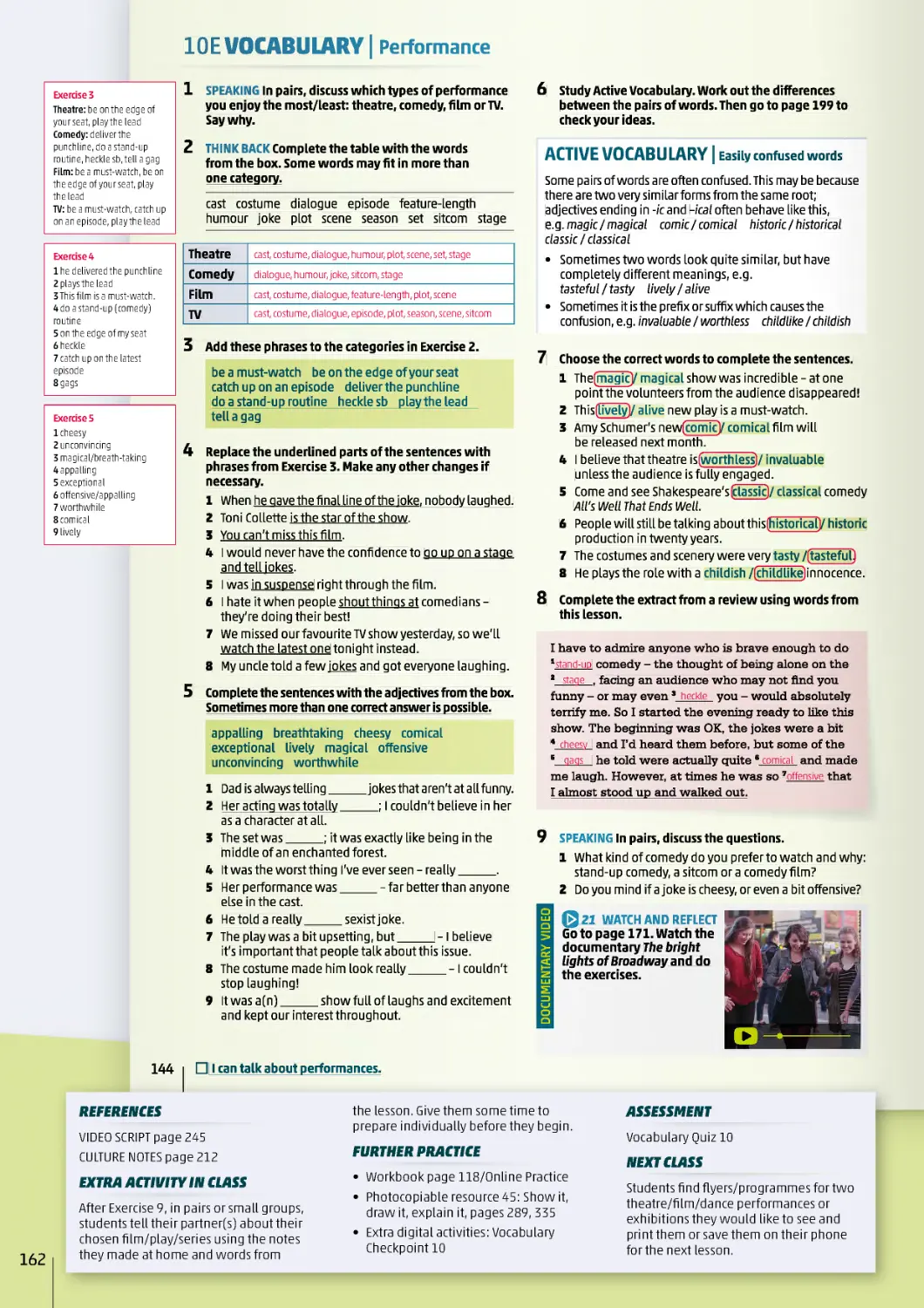















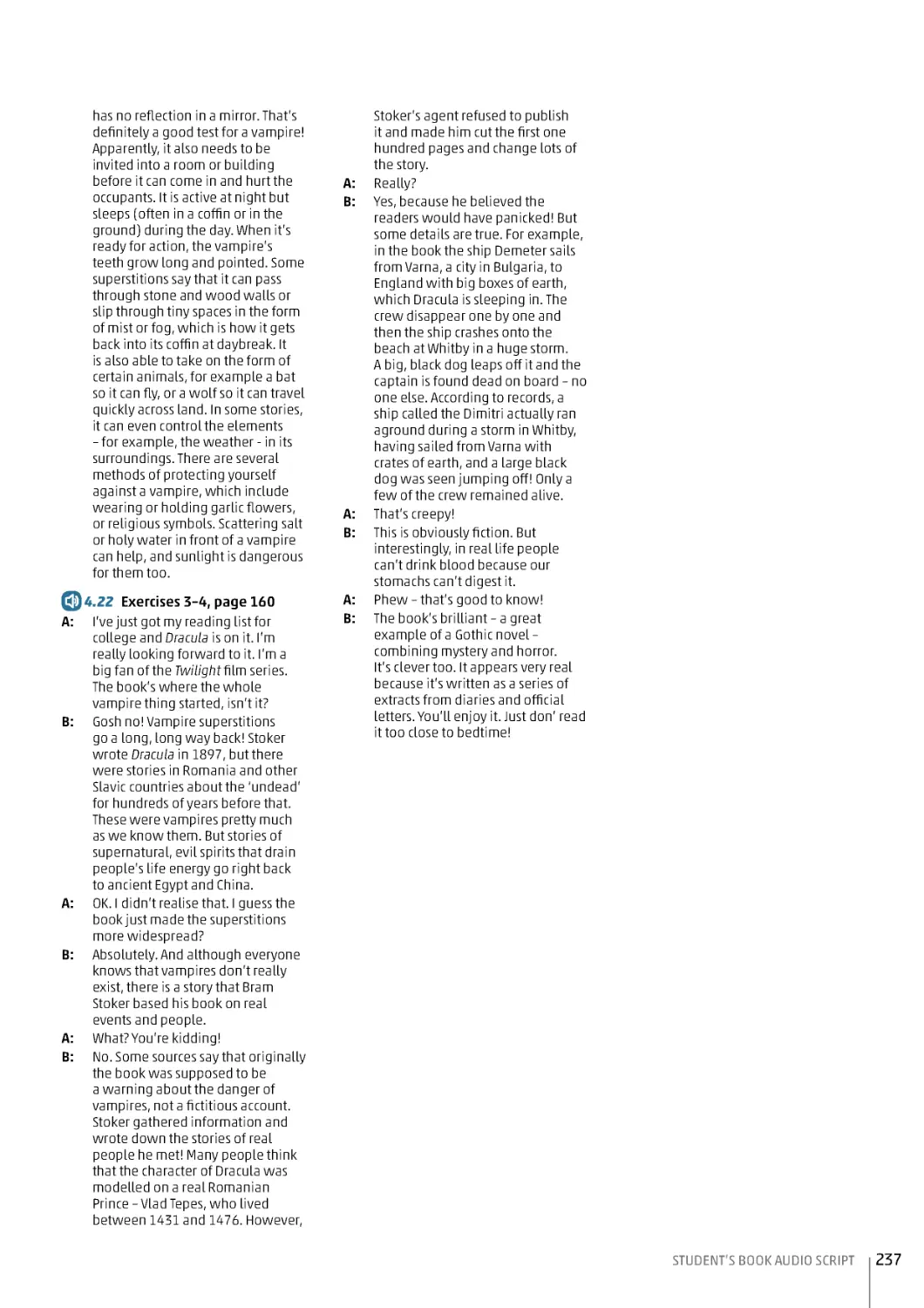


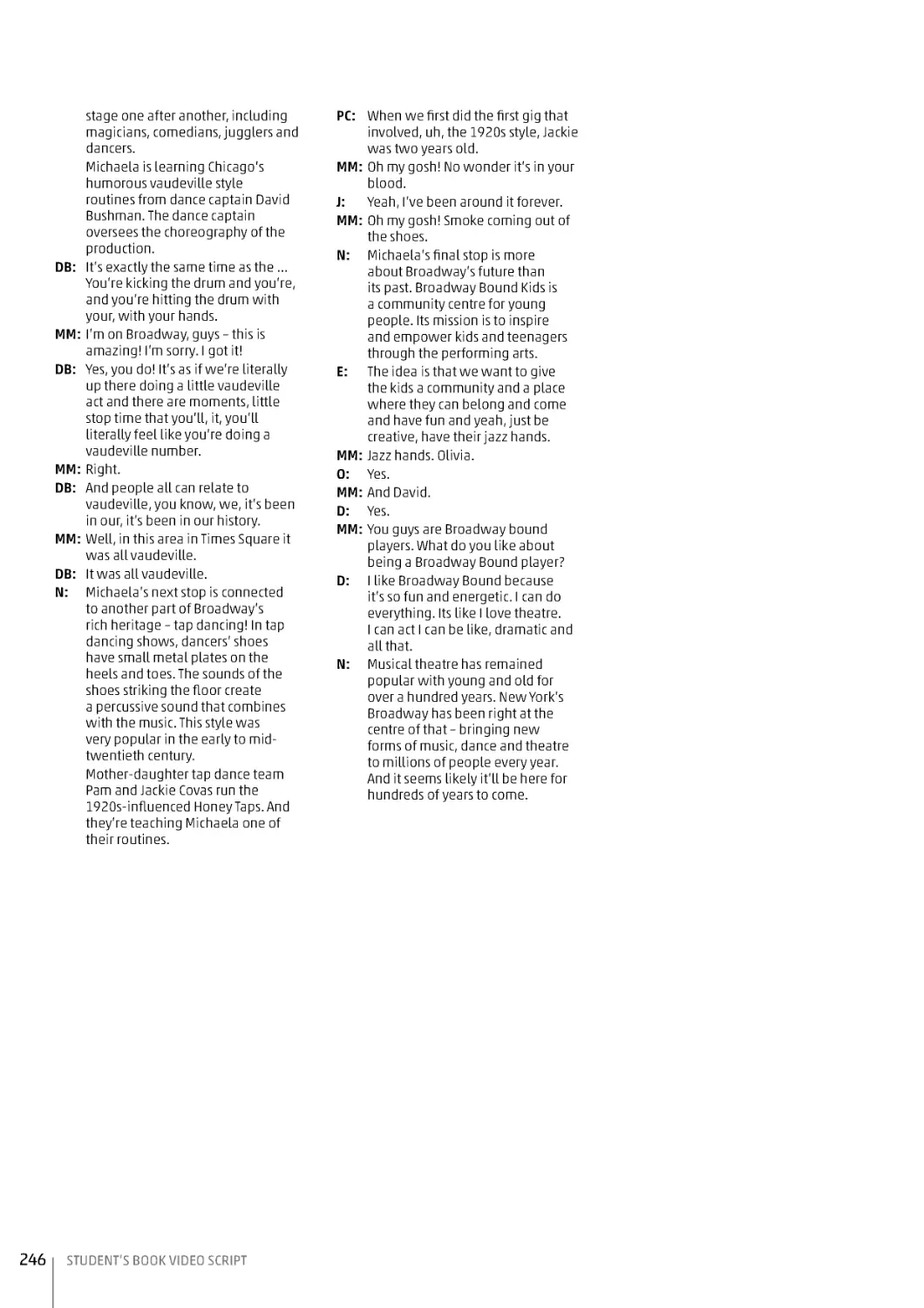


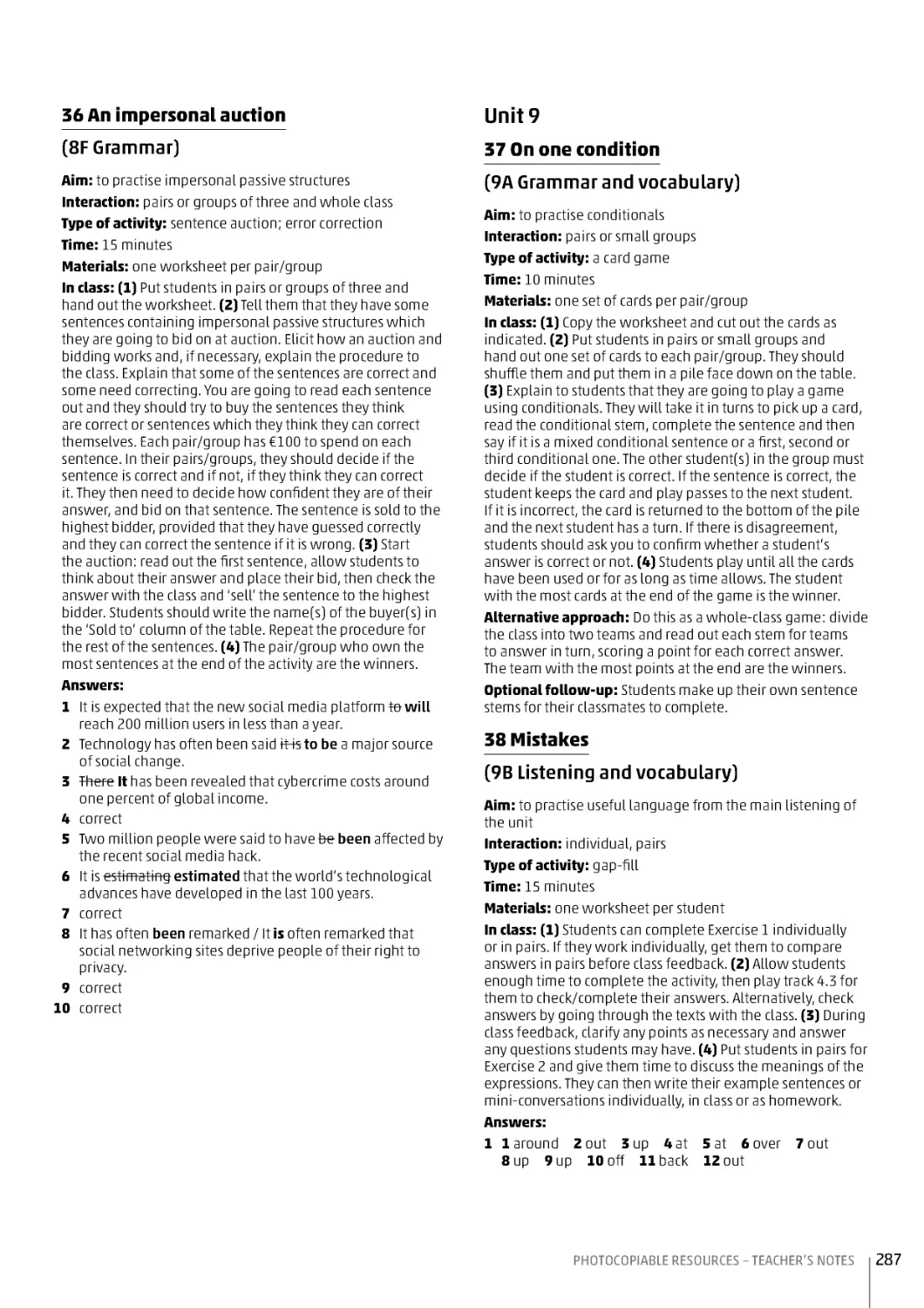


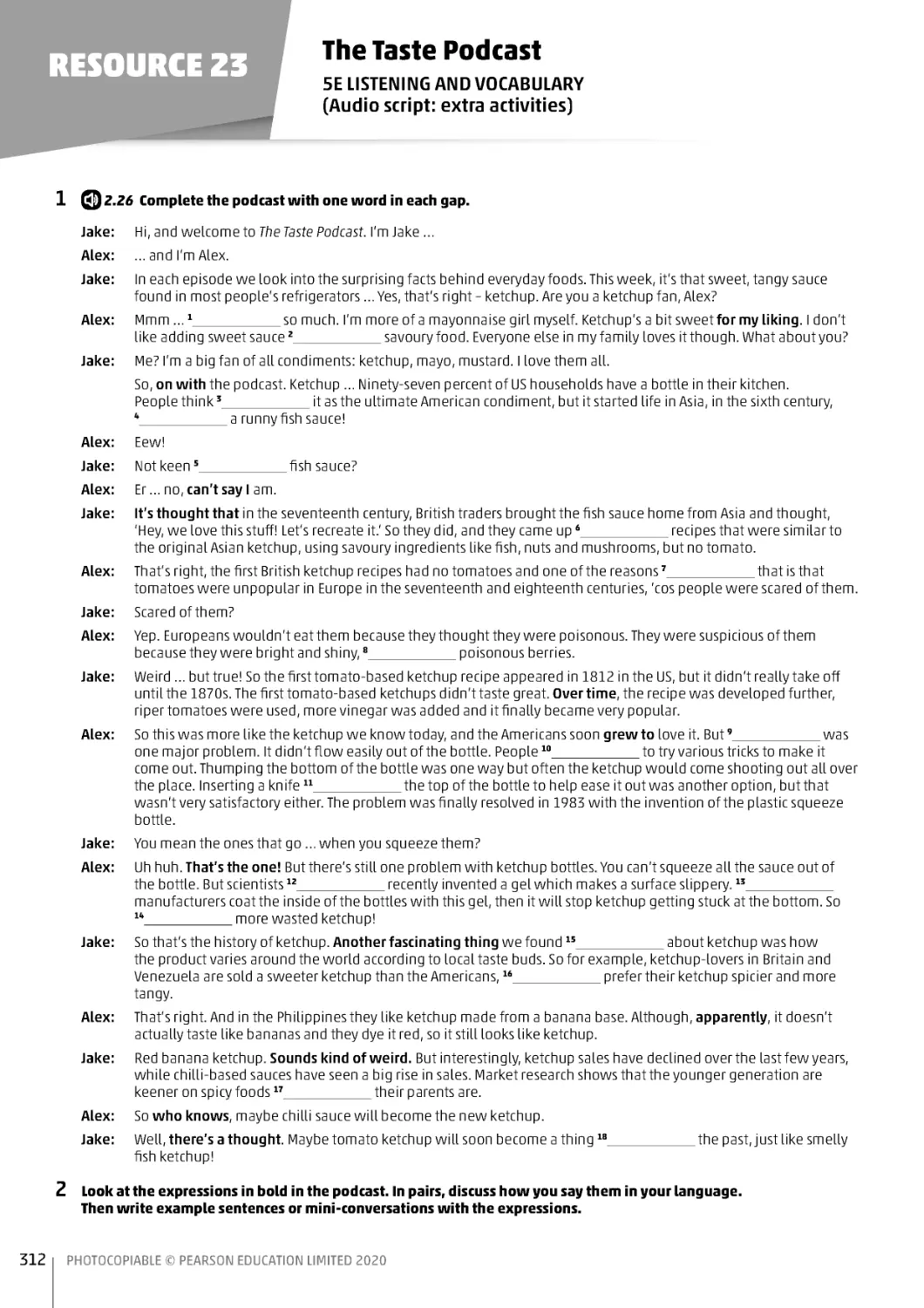






Текст
CONTENTS
INTRODUCTION
4
What is High Note?
4
What is the High Note methodology?
4
Key concepts behind High Note
6
Course components
8
High Note unit walkthrough
10
High Note videos
16
Teaching pathways
17
How to teach for exams with High Note
18
How to flip the classroom with High Note
19
STUDENT’S BOOK PAGES WITH TEACHER’S NOTES
20
Contents
20
01 Get the message
22
02 Looking ahead
36
03 Influences
52
04 Inside story
66
05 Making sense of the senses
82
06 Where we live
96
07 Is it fair?
112
08 Digital perspectives
126
09 Highs and lows
142
10 Culture vulture
156
Culture Spot
172
Literature Spot
176
Watch and Reflect
180
Grammar Reference and Practice
190
Use of English
199
Communication
202
CULTURE NOTES
205
STUDENT’S BOOK AUDIO SCRIPT
215
STUDENT’S BOOK VIDEO SCRIPT
238
WORKBOOK ANSWER KEY
247
WORKBOOK AUDIO SCRIPT
261
CLASS DEBATES
268
GRAMMAR VIDEOS – EXTRA ACTIVITIES
270
PHOTOCOPIABLE RESOURCES
274
WHAT IS HIGH NOTE?
High Note is a dynamic and intensive five-level course for
upper secondary students, ranging from A2 to C1 level of
the Common European Framework of Reference (CEFR) and
from 30 to 85 on the Global Scale of English (GSE).
The course aims to bridge the gap between school reality
and young adult life. It has been designed to inspire and
challenge modern teenagers so that they can fulfil their
ambitious goals: pass school-leaving and external exams,
communicate fluently and accurately in English in a variety
of situations, become successful university students and
increase their employability perspectives. This is achieved
by equipping learners with a combination of language skills
and life competencies as well as systematically building their
confidence when speaking English.
Not only does High Note present new vocabulary and
grammar, practise receptive and productive skills and
acquaint students with typical exam tasks but it also teaches
practical, everyday life skills that students will find useful
both now and in the future. A specially prepared Life Skills
development programme develops the types of skills
that are needed at school, at university and at the future
workplace:
• academic and career-related skills (e.g. giving persuasive
presentations, debating, managing an online image,
planning a future career),
• social skills (e.g. making the most of volunteering,
understanding how the media works, identifying fake
news) and
• personal development skills (e.g. time management,
building resilience, setting SMART goals).
Throughout the course, students are also encouraged to think
critically, use their creativity, assimilate new information
and points of view, express and defend their opinions,
develop research techniques, work alone and with others
and reflect on their own learning. Additionally, High Note
deepens students’ understanding of important social issues
and increases their cultural awareness, which helps them
become fully rounded citizens of the global community.
The High Note syllabus is based on a combination of school
curricula, school-leaving and external exam requirements
and the Global Scale of English. This ensures comprehensive
language coverage and the right balance of general English,
exam and life skills. Students will be learning the right
language and getting the right kind of practice to help them
excel in their exams and communicate with confidence.
Although the course has been designed for use in state
sector schools, it is also suitable for use in private language
schools, and the activities will work well with both smaller
and larger groups. It offers a lot of flexibility of use as it
contains a wealth of materials to provide extra support or
further challenge for students, and extra ideas and resources
for teachers to allow them to tailor their teaching package to
their classroom.
WHAT IS THE HIGH NOTE METHODOLOGY?
High Note is the direct result of extensive research and
analysis of learners’ needs and wants. This research has
shown that the learning objectives of many students aged
15–19 are increasingly ambitious. The course addresses these
needs by building on four notions: inspiration, intensity,
interaction and independence.
INTRODUCTION
INSPIRATION
The course material has been carefully prepared to appeal
to students’ interests, inspire discussion and engage them in
learning English both inside and outside the classroom.
Relevant
The lessons in High Note are relevant to students in that they
connect to their experiences. The reading and listening texts
cover topics that learners at this age are naturally interested
in and talk about in their everyday lives, such as technology,
media, travel, relationships and sport, but also psychology,
culture and future careers. New vocabulary and grammar are
practised through questions about the students’ own lives
and experiences, which makes lessons more personal and
memorable.
Authentic
Wherever possible, reading and listening texts come from
authentic sources. Authentic Documentary Videos tell the
stories of real people and present real places and events.
Grammar Videos – ‘vox pop’ interviews with real people
filmed on the streets of London – introduce students to
authentic accents and real experiences and stories. All of this
encourages authentic language learning.
Purposeful
Each lesson in High Note has a clear purpose, whether it
is vocabulary and grammar presentation and practice,
general language skills development or exam practice. Every
unit begins with a list of unit objectives to help students
understand the learning goals. There is also a clear can-do
statement at the foot of each lesson so that students and
teachers know exactly what they are doing, and which
students can tick when they feel they have achieved the
lesson aim.
The purposefulness of the material is enhanced by the
practical Life Skills lessons, which help practise new
competencies through engaging content and in a practical,
discussion-driven way.
Absorbing
The texts in High Note are thought-provoking and
information-rich. They enhance students’ knowledge of the
world and allow them to further investigate the themes they
find interesting. Also, well-known topics are presented from
unusual angles with the intention of sparking off natural
opinion sharing, agreement and disagreement. Students’
knowledge of British culture and other English-speaking
countries is systematically developed throughout the course
through a variety of curious cultural facts in the main units,
as well as in the Culture Spot and Literature Spot sections at
the back of the Student’s Book.
Well-balanced
High Note is a course which is well-balanced on many
different levels and helps students engage more with the
material. In terms of topics, there is a balance of light,
humorous issues and more serious themes. In terms of
lessons, there is a harmonious topic flow from one lesson
to another. Exam training is also seamlessly woven into
the course: students increase their exam readiness through
step-by-step activities and task-based exam tips. Finally,
video clips are naturally integrated into the lessons, and the
course components complement one another.
INTRODUCTION
4
INTRODUCTION
INTRODUCTION
INTENSITY
High Note challenges students both at a cognitive and
linguistic level.
The reading and listening texts push them to think critically
and to raise their cultural and social awareness.
The intensive grammar syllabus and wide vocabulary
coverage encourage them to explore the language,
understand how it works and improve accuracy. The video
material, audio recordings and numerous speaking activities,
(discussions, debates and role-plays), naturally foster fluency:
students become immersed in the language and learn to talk
at length in a variety of personalised and meaningful contexts.
INTERACTION
When students are involved in the course material, the
progress of their learning is quicker. In High Note, learners
are encouraged to interact with the course and actively
participate in every stage of the learning process.
Grammar
• Students analyse examples of language and arrive at the
grammar rules themselves; the guided inductive approach
helps them understand and remember the rules better.
• Watch out! boxes draw students’ attention to areas of
special difficulty and help pre-empt common errors.
Vocabulary
• New lexis is presented and activated in most lessons, with
the main lexical set of the unit in a separate Vocabulary
lesson. It is then recycled, consolidated and practised in
the following lessons.
• There are references to the language students have already
come across in the course, which are called Think Back. This
activates the knowledge students have already acquired.
• The Remember More section activates the words from the
word list through a series of exercises. Additionally, the
Active Vocabulary boxes provide practical tips on how to
activate the students’ memory when learning new words.
• Vocabulary Extension sections in the Workbook introduce
more words and phrases, focusing on such areas as phrasal
verbs, collocations and wordbuilding.
Skills strategies
• Active Reading and Active Listening boxes contain crucial
general reading and listening skills strategies, such
as predicting, understanding the main idea, finding
specific information, dealing with new words or making
inferences. These boxes also include critical thinking
skills like distinguishing facts from opinions, identifying
the author’s opinion or recognising bias. Students can
experience the strategy by completing exercises that
accompany it.
• Active Writing boxes in the Workbook highlight the crucial
stages in the process of writing a specific type of text.
Pronunciation
Active Pronunciation boxes in the Listening sections in the
Workbook help students perceive the interdependencies
between sounds and give tips on how to pronounce
particular sounds correctly.
INDEPENDENCE
High Note reinforces students’ independence by making
them responsible for their own learning. In the context
of language learning, independent learners are those
who are able to recognise their learning needs, locate
relevant information about language and develop relevant
language skills on their own or with other learners. This
results in increased recognition of strengths, weaknesses
and progress, greater levels of confidence, more motivation,
better management of learning and improved performance.
High Note supports independent learning in a variety of
different sections and exercises in the book.
Clear learning goals and models for success
The goals at the beginning of each unit describe what
the student will be able or better able to do at the end of
the lesson.
Skills strategies
Active Reading and Active Listening boxes contain concise
descriptions of the most important skills strategies, which
students can actively practise through a series of exercises
and use in the future.
Exam strategies
Strategy boxes contain useful tips on how to deal with most
typical exam tasks.
Active Writing boxes in the Workbook
These contain a series of scaffolded tasks designed to
develop the skills students need to write a given text type.
Project work
The Life Skills projects help students develop creative and
collaboration skills and make decisions about the learning
process and how to complete the project.
Resources for self-study
Resources such as word lists with the Remember More section
at the end of each unit, the Grammar Reference and Practice
section at the back of the Student’s Book, the Workbook,
Online Practice and extra digital activities reinforce active
consolidation of the material from the main units.
Self-assessment sections in the Workbook
These provide an opportunity for students to assess their
progress and reflect on their learning.
5
INTRODUCTION
KEY CONCEPTS BEHIND HIGH NOTE
21ST-CENTURY EDUCATION
In today’s world of an ever-increasing flow of information
and a rapidly changing workplace, an education based on
learning facts at a one-size-fits-all pace does not seem to
work anymore. These days, learners can find answers to any
questions they might have in just a few seconds and can
teach themselves about any topic they are interested in.
They do not need school to do what they can do themselves.
What they do need, however, is guidance in how to use
the available information in smart and efficient ways and
the development of social and professional skills that
are needed to succeed in the modern world. The aim of
21st-century education is, therefore, to equip students with
those skills and help them grow in confidence to practise
them both at and beyond school.
21st-century students
We believe that today’s students are sophisticated,
intelligent and independent. They multitask very capably and
usually know a lot about other cultures. They are comfortable
with global and intercultural communication, and feel at
ease with using different types of technology. They typically
have a point of view and are not afraid of expressing
themselves. They are also comfortable with change and
keen to keep their interests and abilities up to date. In terms
of their future career, they would like to find a job that
reflects their interests and offers flexibility (e.g . living and
working anywhere in the world, choosing their own hours
and office space, working with peers across the globe). All
these characteristics and skills provide a unique opportunity
for teaching English. When students realise their needs and
interests are met and feel inspired by the course, the learning
process can be quick and extremely rewarding.
21st-century teachers
Modern teachers are forward-thinking leaders who are ready
to address their students’ needs. With such a widespread
access to information and resources of all kinds, it may often
be the case that students will know more than teachers in
some areas. Most likely, they will also be a step ahead of
teachers in using technology. This means that the teacher’s
role is likely to shift from an all-knowing expert to that of
a guide or a mentor who supports students in the learning
process, challenges them and motivates them.
21st-century skills and High Note
High Note provides students not just with English language
skills, grammar and vocabulary, but also develops the key
skills needed in the global 21st-century community.
Learning and Innovation Skills (the five Cs)
Communication and collaboration: These skills are practised
throughout the entire course. The large number of
discussions and role plays entail natural communication and
collaboration among students. Additionally, the Life Skills
projects require students to decide on their roles in a team
and take responsibility for their work.
Creativity: This skill is developed through a range of
thought-provoking questions students need to answer and
a variety of authentic problems and tasks they need to solve,
e.g. in the Life Skills projects.
Cultural awareness: Students have numerous opportunities
to discuss various culture-related issues (Reflect: Culture
exercises). Documentary Videos cover a range of cultural
topics and Grammar Videos expose students to a wide variety
of native and foreign accents, which will develop their
sensitivity to other cultures and their listening skills. At the
back of the Student’s Book, students will also find Culture
Spot lessons, which provide a wider perspective of cultural
aspects linked to the unit topics and enable learners to
compare cultural aspects of the English-speaking world with
their own. The Literature Spot lessons, in turn, familiarise
students with well-known literary works that have made an
impact on popular culture.
Critical thinking: Problem solving and reasoning skills
are developed throughout the course, especially via the
reading and listening activities. Students are encouraged to
differentiate facts from opinions, critically assess different
viewpoints, look at problems from various perspectives,
assimilate new information and points of view, as well as
express and defend their own opinions.
Digital Literacy
The content, as well as the means of delivery of High Note,
are rooted in today’s digital environment and reflect the
way today’s teenagers already manage their lives: the
topics cover up-to-date technology and media, the Life Skills
projects encourage the use of digital tools, and the digital
components of the course increase students’ engagement
with the course material.
Life and Career Skills
High Note offers a specially prepared Life Skills development
programme which focuses on three key educational paths:
academic and career-related skills (e.g. giving successful
presentations, debating, using online resources for school
projects, planning a future career), social skills (e.g . working
in a team, making the most of volunteering) and personal
development skills (e.g. time management, building
resilience). The programme is introduced through the
Life Skills lessons at the end of every second unit. They offer
engaging content and practise new competencies in an active,
discussion-driven way. The Life Skills projects at the end of
each Life Skills lesson involve research, collaboration, critical
thinking and creativity.
THE COMMON EUROPEAN FRAMEWORK
FOR LANGUAGES
The Common European Framework of Reference for
Languages: learning, teaching, assessment (CEFR) is a
guideline published in 2001 by the Council of Europe which
describes what language learners can do at different stages
of their learning. In 2017, the CEFR Companion Volume with
New Descriptors was published, which complements the
original publication. The document enriches the existing
list of descriptors and gives a lot of focus to cross-linguistic
mediation and plurilingual/pluricultural competence.
The term mediation is understood as mediating
communication, a text and concepts. It combines reception,
production and interaction and is a common part of
everyday language use. It makes communication possible
between people who, for whatever reason, are unable to
communicate successfully with each other: they may speak
different languages and require a translation, they may not
have the same subject knowledge information and need an
explanation or simplification, they may not be of the same
6
INTRODUCTION
KEY CONCEPTS BEHIND HIGH NOTE
opinion and need someone to identify common ground.
Mediation can also involve written texts – with the reader
summarising, paraphrasing or interpreting the information
for a different audience.
High Note contains numerous mediation activities.
They include open reading and listening comprehension
tasks, transformation tasks, gapped summaries, rewriting
texts in a different register, picture description, speculating
or drawing conclusions. There are also tasks which cater
for mediating concepts and communication such as
communicative pairwork or groupwork tasks, projects or
problem-solving activities.
THE GLOBAL SCALE OF ENGLISH
The Global Scale of English (GSE) is a standardised, granular
scale that measures English language proficiency. Using
the Global Scale of English, students and teachers can now
answer three questions accurately: Exactly how good is my
English? What progress have I made towards my learning goal?
What do I need to do next if I want to improve?
Unlike some other frameworks that measure English
proficiency in broad bands, the Global Scale of English
identifies what a learner can do at each point on a scale from
10 to 90, across each of the four skills (listening, reading,
speaking and writing) as well as the enabling skills of
grammar and vocabulary. This allows learners and teachers
to understand a learner’s exact level of proficiency, what
progress they have made and what they need to learn next.
The Global Scale of English is designed to motivate learners
by making it easier to demonstrate granular progress in
their language ability. Teachers can use their knowledge of
their students’ GSE levels to choose course materials that
are precisely matched to ability and learning goals. The
Global Scale of English serves as a standard against which
English language courses and assessments worldwide
can be benchmarked, offering a truly global and shared
understanding of language proficiency levels.
Visit www.english.com/gse for more information about
the Global Scale of English.
ASSESSMENT FOR LEARNING
With the GSE as the solid framework for syllabus design
and assessment, High Note offers a uniquely sound and
comprehensive Assessment for Learning package.
Any test can be used either as an assessment of learning
or an assessment for learning. Assessment of learning
usually takes place after the learning has happened and
provides information about what the student has achieved
by giving them a mark or grade. You can also use tests as
assessment for learning by providing specific feedback on
students’ strengths and weaknesses, and suggestions for
improvement as part of the continual learning process. It
is the combination of both types of assessment which can
provide a powerful tool for helping your students’ progress.
Assessment for Learning is embedded throughout the High
Note materials: in the Student’s Book, Workbook, Online
Practice and Assessment Package.
Student’s Book
Every unit begins with a list of unit objectives to help
students understand the learning goals. There is also a clear
can-do statement as the end line of each lesson so that
students and teachers know exactly what they are doing.
Students can tick the can-do box when they feel they have
achieved the lesson aim.
Every unit has a Revision section which includes exam
training. Its goal is to provide examples of and practice in
the specific tasks students are likely to face in test situations,
focussing particularly on the relevant Cambridge English and
Pearson Test of English General exams.
Workbook
Every unit contains a Self-assessment page where students
assess how well they did in each lesson: in which areas
they feel confident and where they feel they need more
practice. This encourages students to reflect on their
learning and helps them become independent learners.
The Self-assessment page is followed by a Self-check page
where students can do activities checking their knowledge
of vocabulary and grammar from the unit with an additional
focus on Use of English. The key to these exercises is
at the end of the Workbook so that students can check
their answers.
Assessment Package
There are downloadable tests in A and B versions.
The Assessment Package includes:
• Placement test
• Grammar quizzes
• Vocabulary quizzes
• Unit tests:
–
Vocabulary, Grammar, Use of English
–
Dictation, Listening, Reading and Communication
–
Writing
• Cumulative review tests: Vocabulary, Grammar, Use of English
• Exam Speaking tests
Each test is provided in a Word format, so it can be easily
modified if needed.
The full Assessment Package is provided through an access
code in the Teacher’s Book.
Extra digital activities and
Online Practice (interactive workbook)
By doing digital exercises, students can check their readiness
for class tests and monitor their progress. For most exercises,
wrong answer feedback and correct answers are provided.
When teachers set up classes and assign activities, the
gradebook function collects students’ results so that it
is possible to diagnose and adjust one’s teaching to the
performance of each individual or class.
7
INTRODUCTION
COURSE COMPONENTS
WORKBOOK
• Mirrors the Student’s Book unit structure
• Additional grammar, vocabulary and skills practice to reinforce
material in the Student’s Book
• New reading and listening texts
• Vocabulary extension in the Reading and Listening lessons
• Pronunciation programme
• Self-Checks after each unit
• Self-Assessment sections after each unit
• Lists of phrasal verbs and dependent prepositions
STUDENT’S BOOK with ONLINE PRACTICE
This version of the Student’s Book contains everything
described above (Student’s Book, extra digital activities
and resources, Pearson Practice English app) PLUS:
• Interactive Workbook with instant feedback
• Gradebook to review students’ performance
• 10 topic-based units divided into seven main teaching lessons
• 5 Life Skills sections at the end of every second unit which teach competencies
indispensable to success in 21st century society
• Flexible order of lessons apart from the first spread (Grammar and Vocabulary)
and the last spread (Writing)
• Clear lesson objectives (‘I can...’) based on the Global Scale of English (GSE)
• Video in every unit (grammar, documentary)
• Revision for every unit: practice of language and skills in an exam task format
• Word list at the end of each unit with exercises activating key vocabulary and
tips on how to learn new words
• Grammar Reference and Practice: detailed explanations of all the grammar topics
covered in the units with examples and exercises.
• Use of English: more exam-orientated practice of the language
• 2 Culture Spots
• 2 Literature Spots
• Watch and Reflect: worksheets for the Documentary Videos
STUDENT’S BOOK
na miarę nowej szkoły
PEARSON ENGLISH PORTAL DLA NAUCZYCIELA
Indywidualny kod dostępu do Pearson English Portal znajduje się w książce nauczyciela. Z oprogramowania
można korzystać online lub pobrać je na komputer i uruchamiać bez dostępu do Internetu.
Wejdź na stronę pearson.pl/pep i już dziś zobacz, jakie możliwości daje
Pearson English Portal!
ONLINE PRACTICE DLA UCZNIA
Online Practice to cyfrowe wsparcie dla ucznia, które obejmuje:
dostęp do materiału audio i wideo do kursu,
Grammar Checkpoints, czyli dodatkowe interaktywne ćwiczenia utrwalające zagadnienia gramatyczne
z rozdziału,
Vocabulary Checkpoints, czyli powtórka słownictwa w wygodnej interaktywnej formie,
Unit Checkpoints, czyli zestawy interaktywnych zadań dających okazję do przećwiczenia zagadnień
gramatycznych, leksykalnych i komunikacyjnych przed sprawdzianem.
Lubisz korzystać
z rozwiązań cyfrowych?
Cyfryzację klasy
zostawiasz uczniom?
Utwórz klasę w ramach Online Practice, podaj
uczniom jej numer ID i śledź ichpostępy z pomocą
szczegółowego zestawienia Gradebook.
Z Online Practice zapewniasz im pakiet
dodatkowych interaktywnych ćwiczeń do
samodzielnej powtórki, a Ty prowadzisz lekcje
tak, jak lubisz!
HIT!
25
• Grammar and Vocabulary Checkpoints to help students check
their readiness for class tests and monitor their progress
• Reading, Listening and Use of English banks of texts and exercises
• All audio and video resources
Access code to EXTRA DIGITAL ACTIVITIES AND RESOURCES
• Student’s Book audio
• Workbook audio
• Video
Access code to PEARSON PRACTICE ENGLISH APP
1 Inpairs,discussthequestions.Thenreadthearticle
andcheckwhichformsofcommunication...
• makeiteasiertostayintouchnowadays?
• usedtobeagoodwaytoquicklyspreadthemessage
thatanenemywascoming?
• can carryamessageoveralongdistance?
• canbeusedtoconveyashortandsimplemessage?
• couldbeagoodwaytomakecontactifyouwerestuck
on adesertisland?
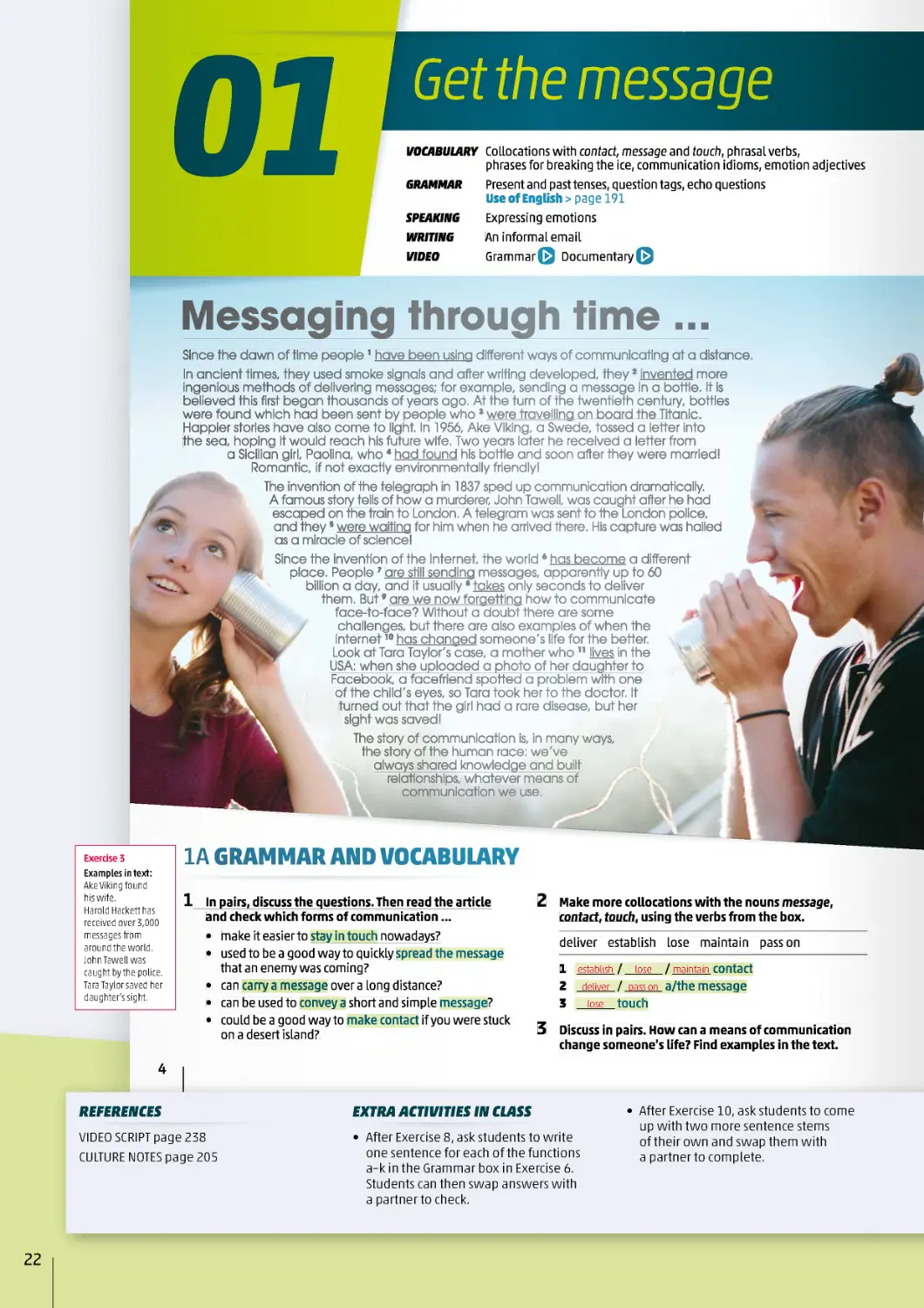
Sincethedawnof timepeople
Sincethedawnoftimepeople1havebeenusing
have been using different waysof communicating at a distance.
different waysofcommunicating at a distance.
Inancient times, they used smokesignalsandafter writing developed,they
Inancienttimes,theyusedsmokesignalsandafter writing developed,they
In ancient times, they used smoke signals and after writing developed, they2 invented more
ingenious methods of delivering messages;for example,sending amessagein abottle.It is
ingeniousmethodsof delivering messages;for example, sending a messagein abottle.It is
ingenious methods of delivering messages; for example, sending a message in a bottle. It is
believedthisfirstbeganthousandsof yearsago.At the turnof thetwentieth century,bottles
believedthisfirstbeganthousands of yearsago. At the turn of thetwentieth century,bottles
believedthisfirstbeganthousandsof yearsago.At the turnof thetwentieth century,bottles
were found whichhad beensentbypeoplewho
werefoundwhichhadbeensentbypeoplewho 3weretravelling
were travelling on board the Titanic.
onboardtheTitanic.
Happier storieshave also cometolight.In1956,AkeViking,a Swede,tossed aletterinto
Happierstorieshavealsocometolight.In1956,AkeViking,a Swede,tossed aletterinto
Happierstorieshave also cometolight.In1956,AkeViking,a Swede,tossed aletterinto
thesea, hoping it would reachhisfuturewife.Two yearslaterhereceived a letter from
thesea,hopingitwouldreachhisfuturewife.Two yearslaterhereceived a letter from
the sea, hoping it would reach his future wife. Two years later he received a letter from
aSiciliangirl,Paolina,who
aSiciliangirl,Paolina,who 4had foundhisbottle and soon after theyweremarried!
hisbottleandsoonafter theyweremarried!
Romantic, ifnot exactlyenvironmentallyfriendly!
Romantic, ifnot exactly environmentallyfriendly!
The invention ofthetelegraphin1837spedupcommunicationdramatically.
The inventionofthetelegraphin1837sped up communicationdramatically.
The invention of the telegraph in 1837 sped up communication dramatically.
Afamousstorytellsofhowa murderer,JohnTawell,wascaught afterhehad
Afamousstorytellsofhowa murderer,JohnTawell,wascaught afterhehad
A famous story tells of how a murderer, John Tawell, was caught after he had
escaped onthetraintoLondon.Atelegramwassent to theLondonpolice,
escapedonthetraintoLondon.Atelegramwassent to theLondonpolice,
escaped onthetraintoLondon.Atelegramwassent to theLondonpolice,
and they5werewaiting
werewaiting
werewaitingforhimwhenhearrived there.Hiscapturewashailed
forhimwhenhearrived there.Hiscapture washailed
as a miracle ofscience!
asamiracleof science!
Sincetheinventionof the Internet, theworld
Sincetheinventionof the Internet, theworld 6hasbecome
hasbecomeadifferent
place. People
place. People
place. People
place.People 77arestillsending
arestillsending
are still sending messages, apparently up to 60
messages, apparently up to 60
messages,apparentlyupto 60
messages, apparently up to 60
billion aday,and itusually
billionaday,and itusually8takesonlysecondstodeliver
onlysecondstodeliver
them. But
them. But 9are we now forgetting
are we now forgetting how to communicate
how to communicate
face-to-face? Without a doubt there are some
face-to-face?Withouta doubt therearesome
face-to-face? Without a doubt there are some
challenges,butthere are alsoexamplesofwhenthe
challenges,butthere are alsoexamplesofwhenthe
challenges, but there are also examples of when the
Internet
Internet10haschanged
changedsomeone’s lifeforthebetter.
someone’slifeforthebetter.
Lookat TaraTaylor’scase,a mother who
Lookat TaraTaylor’scase,a mother who11lives
livesin the
USA: whensheuploaded aphotoofherdaughterto
USA:whensheuploaded aphotoofherdaughterto
USA: whensheuploaded aphotoofherdaughterto
Facebook,a facefriend spotted aproblemwithone
Facebook,a facefriend spotted aproblemwithone
Facebook, a facefriend spotted a problem with one
of the child’seyes, so Tara took her to the doctor. It
ofthechild’seyes, soTara took herto the doctor. It
of the child’seyes, so Tara took her to the doctor. It
turned out that thegirlhad araredisease,but her
turned out that thegirlhad araredisease,but her
turned out that the girl had a rare disease, but her
sight wassaved!
sight wassaved!
Thestoryofcommunicationis,inmanyways,
Thestoryofcommunicationis,inmanyways,
The story of communication is, in many ways,
thestoryofthehumanrace:we’ve
alwayssharedknowledge and built
relationships,whatevermeansof
communicationweuse.
2 Makemorecollocationswiththenounsmessage,
contact,touch,usingtheverbsfromthebox.
deliver establish lose maintain passon
1
/
/
contact
2
/
a/themessage
3
touch
3 Discussinpairs.Howcanameansofcommunication
changesomeone’slife?Findexamplesinthetext.
Messaging through time ...
Messaging through time ...
Messaging through time ...
Messaging through time ...
4
1A GRAMMAR ANDVOCABULARY
VOCABULARY Collocationswithcontact,messageandtouch,phrasalverbs,
phrasesforbreakingtheice,communicationidioms,emotionadjectives
GRAMMAR Presentandpasttenses, questiontags,echoquestions
UseofEnglish>page191
SPEAKING Expressingemotions
WRITING
Aninformal email
VIDEO
Gramma r Do cu ment ary
Get the message
01
7 Matchthesentencehalves.Inpairs,discussthereasonsfor
youranswers.
1 Thephoneisringing
. Thephone rings
.
a allthetimenowthatwerunabusiness
b andIcan’tfindwhereI’veputit
2 I’vebeencallingMike
.I’vecalledMike
.
a alldaytoday b acoupleoftimestoday
3 It’sgetting
. It gets
.
a easierandeasiertostayintouchwithpeople
b lessdifficulteverytimeIwriteanessay
4 Iwaswatchingafilm
.Iwatchedafilm
.
a whenthelightssuddenlywentout
b whenIgothomefromschool
5 Shehassentmealotofemailsrecently,
.
Shesent melong emailseveryday
.
a whileshewastravellingabroad
b soImightgetonetoday
6 WhenIlookedatmyphone,themessagearrived
.
WhenIlookedatmyphone,themessagehadarrived,
.
a butIdidn’t noticeitbuzzingearlier
b atexactlythesamemoment
7 What doyouthink
. W hat areyouthinking
?
a ofmyphone b about
8 1.2 Completethetextwiththecorrectformsofthe verbs
inbrackets.Sometimesmorethanoneformispossible.
Listenandcheck.
Present and past tenses
4 StudytheGrammarbox and matchthe
underlinedphrases1–11inthearticlewith
themeanings a–k.
Presentandpasttenses
WeusethePresentSimplefor:
a □routinesandhabits
b □factsandthingsthat aregenerallytrue
WeusethePresentContinuousfor:
c □thingshappeningnoworaroundnow
d □situations whicharechangingduringthe
presenttime
WeusethePastSimplefor:
e □actionsthatstartedandfinishedat
a specifictimeinthepast
WeusethePastContinuousfor:
f □actionsinprogressat a specifictimein
thepast
g □alongactivityinterruptedbyashortone
WeusethePresentPerfectSimplefor:
h □actionsandstateswhichbeganinthe
pastandcontinueuntilnow
i □finishedactionsinthepast when we
don’t say exactly whentheyhappened
WeusethePresentPerfectContinuousfor:
j □anactioninprogress orrepeated over
aperiodoftimeupuntilnow
WeusethePastPerfectfor:
k □anactioninthepastthatwascompleted
before anotheractionortimeinthepast
GrammarReference andPractice>page172
5 Matchtimeexpressionsbelowwith
thetensesinExercise4.Findmoretime
expressionsinthearticle.
atthemoment atthetime currently
earliertoday eversince everysooften for
fromtimetotime inrecentyears nowadays
onceinawhile recently rightnow since
thedaybeforeyesterday thesedays
6 ReadWatch out! and explainthedifference
inmeaningbetween sentencesa andb.
WATCHOUT!
Somestateverbscanbeusedincontinuous
formtoexpress adifferent meaning or
atemporaryaction.
1 a Shehaslotsof onlinefriends.
bWe’rehavingareallygoodtimeinGreece.
2 a Markappearstoknowalotaboutapps.
bLyndais appearing asCinderellainthe
newschoolplaynextweek.
In1992,NeilPapworth, asoftwareengineer anddeveloper,
1
(send)thefirsttext message, whichsaidsimply,
‘HappyChristmas’. Atthattime, he 2
(work)forSema
Telecoms,acompanywhich3
(develop) the technology
forVodaphone.Inthosedays,mobilephones 4
(not have)
keyboards, so hehadtotypethemessage on a computer.
Papworthwasnot, however, thefirstpersontothink of sending
ashortmessage.AmancalledFriedhelm Hillebrand5
(already/suggest)theideaback in1984.AnditwasHillebrand
wholimitedthemessageto160 characters.
Text messagingwasnotimmediatelypopular,butinrecent yearsit
6
(grow)veryrapidly.Infact,thesedayswe
(grow) very rapidly. In fact, thesedayswe7
(s end)
(s end)
over 15milliontext messages every minute!Platformssuch as
Twitter, 8
(also/contribute)totextinghavingbecomesuch
(also/contribute) to texting having become such
anessentialpartofourlivestoday.
9 SPEAKINGCompletethesentences withyour ownideas.
1 Iwastalkingtoafriendtheotherdaywhen...
2 Nowadays,moreandmorepeoplearekeepingintouchby...
3 Bylunchtimeyesterday,Ihadalready ...
1 Readthequestionand
watchthevideo.Saywhatthe
speakersanswer.Theninpairs,
askandanswerthequestion.
Howhassocialmediachanged
thewaywecommunicate?
G
R
A
M
M
A
R
V
I
D
E
O
5
01
□Icanusethepresentandpasttensestotalk aboutdifferentactions.
8
INTRODUCTION
own sentence.
Swap placeson
theboard with
theperson to
Move forward
three squares.
Go backto
square 1.
... isn’tit?
Go to
square 15.
...hadn’t he?
... don’tyou?
4
5
6
7
8
293
PHOTOCOPIABLE©PEARSONEDUCATIONLIMITED2020
RESOURCE 4 Let’s play tag!
1D GRAMMAR (Question tags)
... shall we?
... aren’tI?
Choose your
own sentence.
Swap places on
theboard with
theperson to
yourleft.
... hadn’t he?
19
3
18
20
9
PHOTOCOPIABLE©PEARSONEDUCATIONLIMITED2020
Choose your
own sentence.
Swap placeson
theboard with
theperson to
PHOTOCOPIABLE©PEARSONEDUCATIONLIMITED2020
(Phrasesforbreaking theice, idiomsrelated to communication)
tryto hitit off
have alaugh
makesmall talk
asktostay in touch
Nice to meetyou
1C VOCABULARY
(Phrasesforbreaking theice, idioms relatedto communication)
RESOURCE 3
trytohititoff
have alaugh
makesmall talk
ask to stay in touch
(Phrasesforbreaking theice, idioms relatedto communication)
(Phrasesforbreaking theice, idioms relatedto communication)
how you say it
how you say it
how
Read the titleof thearticle.Why doyouthink theword ‘how’ isinlarger font and in bold? What doyou think the
articlemight be about? In pairs,discussyour ideas.Then read thearticle quickly tocheck them.
As aspecies,wehavehadremarkablesuccess in evolvingourability to communicate.Over thousands of years
wehavedevelopednotonly thousandsofsophisticatedlanguagesandover twenty different alphabets, but
alsotheskill tointerpret thenon-verbal messages behindthem,usingthem alltobuildanything from personal
relationships toempires.But in less thantwenty years ofthedawn of theInternet andsocial media, we have
becomesointent on reachingas many peopleas possibleusingas littleeffort as possible,that we may be
Haveyouever read asocial media messagefrom afriend and not been surewhat they meant? Was it sarcasm?
Werethey being critical? Howdoyougetacrossyouremotions inashort message?How do you avoid offending
someonewhenit’s hardfor themtopick up thesignalswithout seeing you?It is saidthatover eighty percent of
our communicationisnon-verbal – that is,weusebody languageandgesturestoconvey how we are feeling and
what wereally mean.Instead,wenowuseemojis toaddartificialemotiontowhat wewrite. For example, if we
makefunofour friendin aface-to-faceconversation,then alook or grincanlet themknowwemeanno harm.
Butin asocial mediamessage,weadda laughing emoji tolet themknowwearejoking without explaining the
wholejoke.Insituations likethese,emojis arepossibly apoor substitutefortheskillbody language employs in
conveyingourfeelings and intentions.It’s abit likeadding dried garlic out of apacket toour spaghetti because
youcan’t bebotheredtopeel andchopa garlic clove;it does thejobbut it’s notthereal deal.
Peopleareincreasingly using iconsas asubstitutefor not onlybody languagebut for thewritten language as
well;theseiconsensureyoucanget information acrossquickly, without much effort.Younger generations spend
moretimecommunicatingin this way than usingface-to-facecommunicationor indeedby carefully writing in the
you say it
291
PHOTOCOPIABLE©PEARSONEDUCATIONLIMITED2020
COURSE COMPONENTS
• Student’s Book pages with an overprinted answer key
• Ideas for extra activities
• References to additional materials and the course assessment
• Student’s Book audio and video scripts
• Workbook audio script
• Workbook answer key
• 45 photocopiable resources
• Culture notes
• Ideas for debate lessons
• Extra activities for the Grammar Videos
TEACHER’S BOOK
Audio material for use in class (Student’s Book)
CLASS AUDIO CDS
A series of booklets which provide additional, intensive practice and support for important
international exams. These books work alongside the Level 4 Students’ Book:
• Cambridge English First (FCE)
• Pearson Test of English General Level 3 (B2/B2+).
The audio and answer keys are available in the Teacher’s Resources.
EXAM PRACTICE BOOKS
Additional information and support available on www.english.com/highnote
PRESENTATION TOOL
• Front-of-class teacher’s tool with fully interactive version of
Student’s Book and Workbook activities with integrated
audio and video
• Easy navigation via either book page or lesson flow
ONLINE PRACTICE, EXTRA DIGITAL ACTIVITIES AND RESOURCES
• Teacher view of Online Practice and extra digital activities
• Access to the Gradebook and student’s performance area
• Assigning tasks to the whole class, groups or individual students
• Automatic marking to save time
TEACHER’S RESOURCES
• Photocopiable resources
• Culture notes
• Ideas for debate lessons
• Extra activities for the Grammar Videos
• Student’s Book and Workbook answer keys
• Audio and video with scripts
ONLINE PRACTICE, EXTRA DIGITAL ACTIVITIES AND RESOURCES
Access code to:
• Word lists with audio recordings
• Assessment Package consisting of ready-made tests in versions A and B
• Lesson plans
• A series of video clips on how to use the course material
(Phrasesforbreaking theice, idiomsrelatedto communication)
RESOURCE 2 It’s notwhat you say,it’s how
1B READING ANDVOCABULARY
(Identifying the author’s opinion)
Read the titleof thearticle.Why doyouthink theword ‘how’ isinlarger font and in bold? What doyou think the
articlemight be about? In pairs,discussyour ideas.Then read thearticle quickly tocheck them.
Read the first paragraph of the article again and choosethe correct answer.
the Internet and socialmedia is toblame for us losing the ability to communicate.
In which paragraphdoes the writer give their main message? What is this message?
As aspecies,wehavehadremarkablesuccess in evolvingourability to communicate. Over thousands of years
wehavedevelopednotonly thousandsofsophisticatedlanguagesandover twenty different alphabets, but
alsotheskill tointerpret thenon-verbal messages behindthem,usingthem all to build anything from personal
relationships toempires.But in less thantwenty years ofthedawn of theInternet and social media, we have
becomesointent on reachingas many peopleas possibleusingas littleeffort as possible, that we may be
Haveyouever read asocial media messagefrom afriend and not been surewhat they meant? Was it sarcasm?
Werethey being critical? Howdoyougetacrossyouremotions inashort message? How do you avoid offending
someonewhenit’s hardfor themtopick up thesignalswithout seeing you?It is said that over eighty percent of
our communicationisnon-verbal – that is,weusebody languageandgestures to convey how we are feeling and
what wereally mean.Instead,wenowuseemojis toaddartificialemotionto what we write. For example, if we
makefunofour friendin aface-to-faceconversation,then alook or grincan let them know we mean no harm.
Butin asocial mediamessage,weadda laughing emoji tolet themknowwearejoking without explaining the
wholejoke.Insituations likethese,emojis arepossibly apoor substitutefor the skill body language employs in
conveyingourfeelings and intentions.It’s abit likeadding dried garlic out of a packet to our spaghetti because
youcan’t bebotheredtopeel andchopa garlic clove;it does thejobbut it’s not the real deal.
Peopleareincreasingly using iconsas asubstitutefor not onlybody language but for the written language as
well;theseiconsensureyoucanget information acrossquickly, without much effort. Younger generations spend
moretimecommunicatingin this way than usingface-to-facecommunication or indeed by carefully writing in the
traditional way that that older generationswereusedto.Maybethey arenowmoreat
homein ‘chatting’than talking to someone.This is evidencedwhenyou see
friends satin coffeeshopsmessagingeachotherover thetableor at home
how you say it
PHOTOCOPIABLE©PEARSONEDUCATIONLIMITED2020
(Identifying the author’s opinion)
Read the titleof thearticle.Why doyouthink theword ‘how’ isinlarger font and in bold? What doyou think the
articlemight be about? In pairs,discussyour ideas.Then read thearticle quickly tocheck them.
Read the first paragraph of the article again and choosethe correct answer.
the Internet and socialmedia is toblame for us losing the ability to communicate.
In which paragraphdoes the writer give their main message? What is this message?
As aspecies,wehavehadremarkablesuccess in evolvingourability to communicate.Overthousands of years
wehavedevelopednotonly thousandsofsophisticatedlanguagesandover twenty different alphabets,but
alsotheskill tointerpret thenon-verbal messages behindthem,usingthem alltobuildanythingfrompersonal
relationships toempires.But in less thantwenty years ofthedawn of theInternet andsocialmedia,wehave
becomesointent on reachingas many peopleas possibleusingas littleeffort as possible,thatwe may be
Haveyouever read asocial media messagefrom afriend and not been surewhat they meant?Was itsarcasm?
Werethey being critical? Howdoyougetacrossyouremotions inashort message?How doyou avoidoffending
someonewhenit’s hardfor themtopick up thesignalswithout seeing you?It is saidthatover eighty percent of
our communicationisnon-verbal – that is,weusebody languageandgesturestoconvey howwearefeeling and
what wereally mean.Instead,wenowuseemojis toaddartificialemotiontowhat wewrite.Forexample,ifwe
makefunofour friendin aface-to-faceconversation,then alook or grincanlet themknowwemeannoharm.
Butin asocial mediamessage,weadda laughing emoji tolet themknowwearejoking without explaining the
wholejoke.Insituations likethese,emojis arepossibly apoor substitutefortheskillbody languageemploys in
conveyingourfeelings and intentions.It’s abit likeadding dried garlic out of apacket toour spaghetti because
youcan’t bebotheredtopeel andchopa garlic clove;it does thejobbut it’s notthereal deal.
Peopleareincreasingly using iconsas asubstitutefor not onlybody languagebut for thewrittenlanguageas
well;theseiconsensureyoucanget information acrossquickly, without much effort.Younger generations spend
moretimecommunicatingin this way than usingface-to-facecommunicationor indeedby carefully writing in the
traditional way that that older generationswereusedto.Maybethey arenowmoreat
homein ‘chatting’than talking to someone.This is evidencedwhenyou see
friends satin coffeeshopsmessagingeachotherover thetableor at home
how
PHOTOCOPIABLE©PEARSONEDUCATIONLIMITED2020
Snap is a tense game!
1A GRAMMAR AND VOCABULARY
(Present and past tenses)
RESOURCE 1
Sentence cards
Iupload around
fifty photosaday to
Instagram.
People usually stay in
touch using message
appsor textmessages.
I’m looking for a
newlaptop–atouch
screen.
Instant messaging is
getting moreandmore
popular with older
pe op le.
Beforetheinvention
oftheInternet and
telephone,people
communicatedbyletter.
Theresearchteam
wereworkingwith
familiesin anIndian
villagelastmonth.
Thevideocallmeeting
was going really well
untiltheInternet
wentdown.
Ihavebeenablogger
forabout ayear.
Social mediahas
changedtheway we
communicateforever.
Ihavebeenusing
Facebook fortenyears
but Snapchatisbetter.
Ihadlostmy phone
and couldn’t callmy
parentsto say IwasOK.
Function cards
Present Simplefor
routinesandhabits/
things that happen
repeatedly
PresentSimple forfacts
andthingsthatare
generally true
PresentContinuousfor
things happening now
oraroundnow
PresentContinuousfor
situationswhich are
changing during the
present time
PastSimplefor actions
that started andfinished
ataspecifictimein
the past
PastContinuousfor
actionsinprogressata
specifictimeinthepast
Past Continuous
foralong activity
interruptedby a
shortone
PresentPerfectSimple
foractionsand states
which began inthe
pastandcontinue
untilnow
PresentPerfectSimple
for finished actionsin
thepastwhen wedon’t
sayexactly whenthey
happened
PresentPerfect
Continuousforan
action inprogressor
repeatedoveraperiod
oftimeupuntilnow
PastPerfectforan
actioninthepastthat
wascompletedbefore
anotheractionortime
in thepast
PHOTOCOPIABLE © PEARSONEDUCATION LIMITED 2020
290
9
INTRODUCTION
6 Inpairs, look atthe echo questionin italics. Then
answer questions1−3below.
Cameron Actually, it ’s my birthday tomorrow.
Emma Isit?Do you have anything specialplanned?
Isit?Do you haveanythingspecialplanned?
Is it?
1 Whatisthefunction of an echoquestion?
2 Do we use a positive or a negative questionto reply to
a positive statement?
3 Which intonationpatternfromExercise4do we use
withanechoquestion: Aor B?
Grammar Reference and Practice > page172
7 1.9 Completethe conversations with no morethan
three wordsin each gap.Listen and check your answers.
Ben Where would you live if you could live anywhere
inthe world?
Meg 1
a goodquestion, isn’t it? I don’t think
I’ve ever really thought about it before. Hmm ...
Somewhere abit warmer,I guess.
Ben Yes, 2
toomuch raininthis country,isn’t there?
toomuchraininthiscountry,isn’tthere?
Meg Oh yes,thereis.ButI wouldn’t want tolive
somewheretoohot.I mean, in some countriesit
can be 45degreesinthe summer. That would be
unbearable, 3
?
Ben Actually, I used tolive inDubai.
Meg 4
you?Ibet5
reallyhot, wasn’t it?
Ben Boiling!But we had air conditioning,and apool.
Meg That soundsgreat.I wouldn’t mindliving
somewherelikethat, actually.
Ira Move up, 6
?Ireally need to sit down!
Kate Have you beendancing?
Ira Yes, Ilove the musicthey’re playing.7
?
Kate It’s not really my thing, actually.I findit abitboring.
Ira 8
?But everyone loves thisband, 9
?
Kate Not me.
Ira You have no taste in musicthen.
Kate Erm, seriously?
IraIra Oh, sorry, I’m being abit annoying,
Oh, sorry, I’mbeingabitannoying,
Oh, sorry, I’m being abit annoying, 1010
??
Let’s stoptalking aboutmusic then,
Let’sstoptalkingabout music then, 11
?
Kate Yes, Ithinkthat mightbebest!
Yes,Ithinkthatmightbe best!
8 SPEAKINGInpairs, writeand r
Inpairs,writeand roleplay a conversation.
aconversation.
Go topage 196.
1 1.6 Look at thephoto. Listento three conversations
at aparty. Whichdo you thinkisthe bestquestion they
use to keep a conversationgoing?
2 Think ofthree morequestions you could askto get to
know someone better.
Question tags and echo questions
3 Look atthe underlined examples ofquestion tagsfrom
the dialogues.Then completethe sentences1−4below
with thewordsin the box.
negative end positive modal
It’s such agreat city, isn’t it?
Wow, so you’d never beentherebefore, had you?
had yo u?
Ishouldn’t be sofussy, should I?
1 Aquestiontagis a shortquestion added to the
of a sentence.
2 Weform aquestion tag using an auxiliary or
a
verb and apronoun.
3 Apositive statement usually hasa
question tag.
question tag.
4 Anegative statement usuallyhas a
questiontag.
questiontag.
4 1.7 PRONUNCIATIONListen and match what you
hear with intonationpatternA orB below.Which
patternis used for a realquestion and which for
confirming something the speaker alreadyknows?
5 1.8 Look at these more unusual questiontags.
Choosethe correct wordsto completethe sentences.
Listen and check.
1 Thisis silly,isn’t it/it/it this?
2 Nothing ever changes, do/doesit?
3 Comeandlook atthis, will/don’t you?
don’tyou?
don’t
4 Everyone was there,weren’t/
weren’t/
weren’t wasn’t they?
wasn’tthey?
wasn’t
55 Don’t be late,
Don’t be late,
Don’t be late, are
are // will
will you?
you?
6 No onelikeshim,
No onelikeshim, do/doesthey?
7 Let’s stay here,
Let’sstay here, do/ shall we?
8 I’m a bit late,
I’mabitlate,don’t/
don’t/
don’t aren’t I?
aren’t I?
aren’t
9 Pick me up at eight,
Pickmeup at eight,don’t/
don’t/
don’t could you?
you?
A
B
9
01
□ Ican use questiontags and echo questionsto keep a conversationgoing.
1D GRAMMAR
1 In pairs, discussthe questions. Then read the article
and check which forms of communication ...
• make it easier to stay in touch nowadays?
• used to be a good way to quickly spreadthe message
that an enemy was coming?
• can carry a message over a longdistance?
• can be used to convey a short and simple message?
• could be a good way to make contactif you were stuck
on a desert island?
Since the dawn of time people
Since the dawnof time people 1 have been using
have been using different ways of communicating at a distance.
different ways of communicating at a distance.
In ancient times, they used smoke signals and after writing developed, they
In ancient times, they used smoke signals and after writing developed, they
In ancient times, they used smoke signals and after writing developed, they 2 invented more
ingenious methods of delivering messages; for example, sending a message in a bottle. It is
ingenious methods of delivering messages; for example, sending a message in a bottle. It is
ingenious methods of delivering messages; for example, sending a message in a bottle. It is
believed this first began thousands of years ago. At the turn of the twentieth century, bottles
believed this first began thousands of years ago. At the turn of the twentieth century, bottles
believed this first began thousands of years ago. At the turn of the twentieth century, bottles
were found which had been sent by people who
were found which had been sent by people who 3 were travelling
were travelling on board the Titanic.
on board the Titanic.
Happier stories have also come to light. In 1956, Ake Viking, a Swede, tossed a letter into
Happier stories have also come to light. In 1956, Ake Viking, a Swede, tossed a letter into
Happier stories have also come to light. In 1956, Ake Viking, a Swede, tossed a letter into
the sea, hoping it would reach his future wife. Two years later he received a letter from
the sea, hoping it would reach his future wife. Two years later he received a letter from
the sea, hoping it would reach his future wife. Two years later he received a letter from
a Sicilian girl, Paolina, who
a Sicilian girl, Paolina, who 4 had found his bottle and soon after they were married!
his bottleand soon after they were married!
Romantic, if not exactly environmentally friendly!
Romantic, if not exactly environmentally friendly!
The invention of the telegraph in 1837 sped up communication dramatically.
The invention of the telegraph in 1837 sped up communication dramatically.
The invention of the telegraph in 1837 sped up communication dramatically.
A famous story tells of how a murderer, John Tawell, was caught after he had
A famous story tells of how a murderer, John Tawell, was caught after he had
A famous story tells of how a murderer, John Tawell, was caught after he had
escaped on the train to London. A telegram was sent to the London police,
escapedon the train to London. A telegram was sent to the London police,
escaped on the train to London. A telegram was sent to the London police,
and they 5 were waiting
were waiting
were waiting for him when he arrived there. His capture was hailed
for him when he arrived there. His capture was hailed
as a miracle of science!
as amiracle of science!
Since the invention of the Internet, the world
Sincethe invention of the Internet, the world 6 has become
has become a different
place. People
place. People
place. People
place. People 77 are still sending
are still sending
are still sending messages, apparently up to 60
messages, apparently up to 60
messages, apparently up to 60
messages, apparently up to 60
billion a day, and it usually
billion a day, and it usually 8 takes only seconds to deliver
only seconds to deliver
them. But
them. But 9 are we now forgetting
are we now forgetting how to communicate
how to communicate
face-to-face? Without a doubt there are some
face-to-face? Without a doubt there are some
face-to-face? Without a doubt there are some
challenges, but there are also examples of when the
challenges, but there are also examples of when the
challenges, but there are also examples of when the
Internet
Internet 10 has changed
changed someone’s life for the better.
someone’s life for the better.
Look at Tara Taylor’s case, a mother who
Look at Tara Taylor’s case, a mother who 11 lives
lives in the
USA: when she uploaded a photo of her daughter to
USA: when she uploaded a photo of her daughter to
USA: when she uploaded a photo of her daughter to
Facebook, a facefriend spotted a problem with one
Facebook, a facefriend spotted a problem with one
Facebook, a facefriend spotted a problem with one
of the child’s eyes, so Tara took her to the doctor. It
of the child’s eyes, so Tara took her to the doctor. It
of the child’s eyes, so Tara took her to the doctor. It
turned out that the girl had a rare disease, but her
turned out that the girl had a rare disease, but her
turned out that the girl had a rare disease, but her
sight was saved!
sight was saved!
The story of communication is, in many ways,
The story of communication is, in many ways,
The story of communication is, in many ways,
the story of the human race: we’ve
always shared knowledge and built
relationships, whatever means of
communication we use.
2 Make more collocations with the nouns message,
contact, touch, using the verbs fromthe box.
deliver establish lose maintain pass on
1
/
/
co nta ct
2
/
a/the message
3
touch
3 Discuss in pairs. How can a means of communication
change someone’s life? Find examples in the text.
Messaging through time ...
Messaging through time ...
Messaging through time ...
Messaging through time ...
4
1A GRAMMAR AND VOCABULARY
VOCABULARY Collocations with contact, message and touch,phrasal verbs,
phrases forbreaking the ice, communicationidioms, emotion adjectives
GRAMMAR Present and past tenses, question tags, echoquestions
Use of English > page 191
SPEAKING Expressing emotions
WRITING
Aninformal email
VIDEO
Grammar Documentary
Get the message
01
7 Match the sentencehalves. In pairs, discuss the reasons for
your answers.
1 The phone is ringing
. T he phone rings
.
a all the time now that we run a business
b and I can’t find where I’ve put it
2 I’ve been callingMike
.I’ve calledMike
.
a all day today b a couple of timestoday
3 It’s getting
. It gets
.
a easier and easier to stay in touch with people
b lessdifficult every time I write an essay
4 I was watching a film
. I watched a film
.
a whenthe lights suddenly went out
b whenI gothome from school
5 She has sent me a lot of emails recently,
.
She sent me long emails every day
.
a while she was travelling abroad
b so I might get one today
6 When I looked at my phone, the message arrived
.
When Ilooked at my phone, the message had arrived,
.
a but Ididn’t notice it buzzing earlier
b at exactly the same moment
7 What do you think
. W hat are you thinking
?
a of my phone b about
8 1.2
1.2 Complete the text with the correct forms of the verbs
in brackets. Sometimesmore than one form is possible.
Listen and check.
Present and past tenses
4 Study theGrammar box and match the
underlined phrases 1–11 in the article with
the meanings a–k.
Present and past tenses
We use the Present Simplefor:
a □ routines andhabits
b □ facts andthings that are generally true
We use the Present Continuous for:
c □ thingshappening now or around now
d □ situations which are changing during the
present time
We use the Past Simple for:
e □ actionsthat started and finished at
a specific time in the past
We use the Past Continuous for:
f □ actionsin progress at a specific time in
the past
g □ a long activity interrupted by a short one
We use the Present PerfectSimple for:
h □ actions and states which beganinthe
past and continue until now
i □ finished actions in the past when we
don’t say exactly when they happened
We use the Present PerfectContinuous for:
j □ anaction in progress or repeated over
a period of time up until now
We use the Past Perfect for:
k □ anaction in the pastthat was completed
before another action or time inthe past
Grammar Reference and Practice > page172
5 Match time expressions below with
the tenses in Exercise 4. Find more time
expressions in the article.
at the moment at the time currently
earlier today ever since every so often for
from time to time in recent years nowadays
once in a while recently right now since
the day before yesterday these days
6 Read Watch out! and explain thedifference
in meaning between sentences a and b.
WATCH OUT!
Some state verbs canbe used in continuous
form to express a different meaning or
a temporary action.
1 a She has lots of online friends.
bWe’re having a really goodtime in Greece.
2 a Mark appears toknow a lot about apps.
bLynda is appearing as Cinderella in the
new school play next week.
In 1992, Neil Papworth, a software engineer and developer,
1
(send) the first text message, which said simply,
‘Happy Christmas’. At that time, he 2
(work) for Sema
Telecoms, a company which 3
(develop) the technology
for Vodaphone. In those days, mobile phones 4
(not have)
keyboards, so he had to type the message on a computer.
Papworth was not, however, the first person to think of sending
a short message. A man called Friedhelm Hillebrand 5
(already/suggest) the idea back in 1984. And it was Hillebrand
who limited the message to 160 characters.
Text messaging was not immediately popular, but in recent years it
6
(grow) very rapidly. In fact, these days we
(grow) very rapidly. In fact, these days we 7
(send)
(send)
over 15 million text messages every minute! Platforms such as
Twitt er,
8
(also/contribute) to texting having become such
(also/contribute) to texting having become such
an essential part of ourlives today.
9 SPEAKING Complete the sentences with your own ideas.
1 I was talkingto a friend the other day when ...
2 Nowadays, more and more people are keepingin touch by ...
3 By lunchtime yesterday,I had already ...
1 Read thequestion and
watch the video. Say what the
speakers answer. Then in pairs,
ask and answer thequestion.
How has social media changed
the way we communicate?
G
R
A
M
M
A
R
V
I
D
E
O
5
01
□I can use the present and past tensesto talk about different actions.
9
01
1A Present andpast tenses
We use thePresentSimple to talk about:
• habits and routines: Heoftenlosestouch withhis
co lleag ue s.
• permanent situations around thepresent time:
Henow shares aflat with afriend.
• states(verbs not usually used in the continuousform),
e.g.love, like, believe,think (opinion),know, look
(appearance): Heloves gettingtraditionalletters.
Shelooks very fit.
Somestate verbs changetheir meaning and canbe used
in the continuous form,e .g .think of/
think of/
think of about, see (goout
with),look at:
Whatdo you thinkofthis message?
thinkofthismessage?
think
(opinion)
ofthismessage?(opinion)
ofthismessage?
What are you thinking about?
Idon’t see why you want to stayin touch withhim.
(understand)
I’m seeingDave thesedays. (go out with)
I’dliketo establish contact withthat company,but my boss
doesn’t lookatitthat way. (thinkin aparticular way)
Why areyou looking at methat way?
We use thePresentContinuous to talk about:
• actionsin progress at thetime of speaking:
Heistalking onhis mobile.
• temporary actionsin progress around now:
He’s thinking ofgetting anew phone.
’sthinkingofgettinganewphone.
’sthinkingof
• changes anddevelopments:
Thenews is spreadingquickly.
Wealso often use thePresentSimple andPresent
Continuous totalk about thefuture. SeeUnit 2,page25.
Present PerfectSimple and Continuous
Theselinkthe past and thepresent.
We use thePresentPerfect Simpletotalkabout:
• the duration of statesthatbeganinthepast and
continue up to now: He’s been stuck hereforfive years.
• completedpast actions with apresent relevance/result:
Thelightshave gone out. (And now it’s pitchdark here).
He’s changeddramatically.
’schangeddramatically.
’schanged
(Helooksvery different now.)
• experiencesduring apresentperiod oftime:
I’ve sent five thousand text messages sofar.
’vesentfivethousandtext messagessofar.
’vesent
We use thePresentPerfect Continuous totalk about:
• the duration of actionsthatbegan inthe past and
continue up tothepresent:I’ve been here since9a.m.
• past processes with apresent relevance/result:
I’vegotbettergradesbecause I’ve been studing alotlately.
We use thePast Simpletotalk about actions or events
completed at a specifictimein thepast:
NeilPapworth sentthefirsttext messagein1992.
We use thePastContinuous totalk about actionsthat were:
• in progress at a specifictimeinthepast(thisoften
providesbackground to other past events):
WhileMark was waiting for us, his mum
waswaiting forus,hismum
waswaiting for
was texting.
• interrupted by a shorterpast action:
She was studying when suddenly somebody tossed
a brick through the window.
We use thePast Perfect to show the relationshipbetween
a situationinthepast and an earlier state or action.
Therulesare similar tothe rulesforthePresentPerfect:
BeforeColin methiswife,he hadbeen singlefor adecade.
We use thePast Perfect Continuous totalk about an
activity which startedbefore a secondpast event and was
stillinprogress,or had recently finished when the second
event happened.We often say how longthe activityhad
been going on: They hadbeentalking for anhour before
Dannyarrived.
Itisformed usinghad +
had +
had (not)+ been + PresentParticiple:
WhenI woke up,I saw that my brother hadbeen cooking.
(Ithadn't been completed orthe result was thatthe
kitchen was a mess.)
1D Question tags and echoquestions
Aquestiontag is a shortquestion added to the end
of a sentence. It isformed usingdo/does/did(insimple
tenses)orthe auxiliary + a pronoun.
Apositive statement usually has a negative questiontag
and a negative statementhas apositive questiontag:
You don’t understand,
Youdon’t understand,
Youdon’t
doyou?
She usually comesinlate, doesn’t she?
You are coming totheparty, aren ’t you?
Theyhaven’t been toLondon yet,
Theyhaven’t been toLondonyet,
Theyhaven’t
havethey?
They went to school,didn’t they?
Theywenttoschool,didn’t they?
Theywent
Shehad abreak,didn’t she?
Wehad met thembefore,
met thembefore,
met
hadn’t we?
Thisis an amazinghouse, isn’t it?
Nothinghashappend sofar,hasit?
ThoseareMartha’s guests, aren ’t they?
Modal verbsare usually repeatedin thetag questions,
just like auxiliaries: I can email my CV, can ’t I?
Exceptions: Let’s gotothe cinema, shall we?
Someonehasbumpedinto your car, haven’t they?
Nobody cametothepresentation,did they?
I’m still employed, aren ’t I?
Questiontags can also be used for:
• requests: Buy me the newspaper, could you?
You’ll cook thedinnertoday, won’t you?
• invitations: Cometo visit us next summer, won’t you?
• commands: Writeitdown,willyou?
Don’t makea mess,will you?
Questiontags are also used in echoquestions.The main
use of such questionsisto show interest or express
surprise and make a conversationgo smoothly:
A Iused tolive inMoscow.
B Didyou? I betis wasamazing!
172
Grammar Reference and Practice
1 1A Completethe sentences usingthe correcttense and
a time expression fromthebox.
at thetime ever since fromtime to time
inrecent years right now once a week thesedays
earlier today for
1I
(lose touch)with afew of my friends
.
2 Dad
(make contact)with his cousin
,
so they’re not close.
3 She
(chat)onher mobile
ages.
Can’t they
(see) each other inperson?
4I
(establish contact)withMrFarley
, but
he hasn’t responded yet.
5
(you / use)thelaptop
?Ineedtosend
an emai l.
6 My teachertook my mobilephone off me yesterday –
I
(talk)tomy friend
!
7He
(stayintouch)with me
wehad
that argument.
8I
(love)goingfor a regular run
.
9
Ja mie
(prefer)tostay in on Saturday nights
.
10 Mike wanted to sit down because he
(st an d)
all day at work.
2 1ACompletethe sentences using the correct tense and
the verbs fromthebox. Use every verb twice.
appear have look see smell think
1 Doyou know that man?He
at you all evening.
2 Why
themilk? Do you thinkit hasgonebad?
3We
lunch now. Will you join us,please?
4 Just look athisface: I bethe
about something
amazing!
5 Apologies, but I
much time atthe moment.
I’llget backto you soon, I promise.
6 DanielCraig
inthelatestJamesBond movie,
NoTimetoDie.
7 She
tobehighly intelligent,but he’s awfully
lazy too.What a waste!
8I
what you mean, butI can’t agree with you.
9 Mymum
it’s thebest idea.
10 Andy
much better with hishair cut.
11 WhenIgot home,theflat
of cigarette smoke.
12
you
anybodythese days, Frank?
3 1A Completethetext usingthe correcttense andthe
verbs fromthebox.
agree be x3 read send x2 tell work write
Software programmer NeilPapworth 1
the first
text messagein1992.It 2
: ‘Merry Christmas!’ .
Papworth 3
forVodafone atthetime. Sincethe
timeofthat very first message, people 4
really
long messages, so it 5
so easy to forgetthatthere
6
a limit of160 charactersper messagebackthen!
Papworth said that he only recently 7
hischildren
thatit washe who 8
the very firsttext message.
Sincethen,there 9
many innovationsinphone
technology,butPapworth 10
thatthis was perhaps
a key momentin mobilehistory.
4 1DMatch the sentencehalves.
1 Let’s go to theparty,
2 Sorry, I’mputting you on the spot,
3 Somebodytold you,
4 Nobody gave you the message,
5 Don’t forget,
6 He’llturn thelaptop off,
7 You couldn’t help me,
8 Cometotheparty,
5 1DCompletethequestions with the correctquestiontag.
1 He doesn’t come across very well,
?
2 You can’t letitdrop,
?
3 You’re going to Paris,
?
4 You haven’t seen my mobile,
?
5 Ishould pay her a compliment when we first
meet,
?
6 He’s not goingtotake to you if you insist onhaving
thelast word,
?
7 The roomlooksdifferent ...Someonehas moved the
couch,
?
8 Let’s get someice cream,
?
9 Comesit with us,
?
10 Parents needtoteach children nottodroplitter,
?
11 Pickit up,
?
12 Nobody helpedher,
?
13 I’m havinglunch withthem,
?
14 Don’t go out tonight,
?
6 1D Completethe conversation with question tags or
echo questions.
Bella It’s Jade’s birthday party tomorrow.
Tia
1
?Oh, no!I haven’t bought her apresent yet!
Bella Well, you only needtobuy a little something,
2
?
Tia Isupposeso– 3
that close, are we? What
have you bought her?
Bella Some earrings – they’re silver.
Tia
4
?That’s nice.You’ve beenfriendsfor
a longtime now ... Well,I’llhave to thinkof
somethingtoo. Let’s go to thepartytogether,
5
?
Bella Goodidea!7p.m . at mine?Don’t belate,6
?
a could you?
b aren’t I?
c shall we?
d won’t you?
e won’the?
f didthey?
g will you?
h didn’t they?
173
Each Student’s Book unit is divided into seven lessons (Lessons A-G). It always starts with Grammar and Vocabulary (Lesson A) and
ends with Writing (Lesson G). The order of the other lessons varies from unit to unit and is determined by the most natural and
harmonious flow of the presented topics. This helps make teaching and learning more flexible and varied.
HIGH NOTE UNIT WALKTHROUGH
There are two grammar lessons in each unit:
• The first grammar point is introduced at the beginning of each unit and is combined with vocabulary for more integrated
learning (Lesson A: Grammar and Vocabulary). This lesson is additionally supported by Grammar Videos, which provide authentic,
manageable chunks of the target grammar in a real context. The grammar is then recycled throughout the rest of the unit.
• The second grammar lesson comes later in the unit and introduces another grammar point.
GRAMMAR
1
3
2
4
4
5
7
8
6
5
5
7
9
Clear summary of unit
contents.
1
Learning objectives
with an immediate
opportunity for
self-assessment.
2
Grammar presented
through a variety of
text types (blogs,
magazine articles,
dialogues, etc.) or
recorded conversations.
3
Guided discovery
approach to grammar
makes new language
more memorable and
enhances motivation.
Students check their
guesses about grammar
either with the Grammar
box on the page, if
present, or in the
Grammar Reference at
the back of the book.
4
Grammar Reference and
Practice section at the
back of the book, with
more explanations and
exercises. It can be used
for remediation, extra
practice or in a flipped
classroom scenario.
5
Watch out! boxes draw
students’ attention
to areas of special
difficulty and help
pre-empt common
errors.
6
Variety of
exercises provide
meaningful
practice of new
structures in
relevant contexts.
7
Grammar Videos provide
authentic examples of
the presented grammar,
which students can use
as a model for their
speaking.
8
Pronunciation exercises
focus students’
attention on different
aspects of pronouncing
individual sounds and
groups of sounds.
9
10
INTRODUCTION
7 Match theidioms 1–6 with their definitions a–f .
1 □ jump down somebody’s throat
jumpdown somebody’s throat
2 □ putsomebody onthespot
3 □ fire questions at someone
4 □ refusetolet something drop
5 □ insist onhavingthelast word
6 □ not get awordinedgeways
a To be unable to sayanything because someone else
is talking all the time.
b To embarrasssomeone by forcingthemtoanswer
a difficult question.
c To have tomake the finalpointina discussion
orargument.
d To not stop talking about a particular subject.
e To react angrily tosomethingsomeone hassaid.
f To asksomeone a lot of questionsquickly.
8 Study ActiveVocabulary anddiscuss how you would
express theidioms inExercise7in your own language.
Howcouldyouillustratetheidioms with a drawing?
ACTIVE VOCABULARY |Idioms
• Anidiomis a fixedphrase that hasa specialmeaning
which isdifferentfromthe usualmeaningof the
individualwords, e.g. He jumpeddown my throat
meansHereacted angrily.
• Idioms rarely translate exactly into another language.
• Manyidioms describe animage. Ifyoucan visualise
the image – or evendraw it –that might helpyou to
rememberand learnthe idiom.
9 Whichof theidioms in Exercise7arethingsyou dislike
someone doing whenyou’re talking to them? Say why.
10
REFLECT |Society Inpairs,makea list of top fiverules
for making a goodimpression or communicating well
with other people at a party.
1 Look at thecartoonand thetitleof thearticle.Inpairs,
answer thequestions.
1 Canyou work out the meaningofthe title from
the context?
2 Doyou findit easy or difficult tobreak the ice with
people you don’t know? Say why.
2 Read the article. Whichpiece of advicedo you think is
the most useful? Say why.
3 Study thephrases highlighted in the article. Then
completethesecondsentenceso that it means the
sameas thefirst,includingtheword given incapitals.
1 He startedtalkingtoher inthe hallway. STRUCK
He
withher inthe hallway.
2 She gave the impressionof beingveryself-confident.
ACROSS
She
beingveryself-confident.
3 Alice commented onhow nice hisshoeswere.PAID
Alice
abouthis shoes.
4 I immediately liked him. TOOK
I
immediately.
5 We foundit really funny. LAUGH
We really
about it.
6 I didn’treally like her friendswhenI met them.OFF
I didn’treally
withher friendswhen I metthem.
4 Inpairs, discusshowyoumet yourbest friend. Use some
of the phrasesfromExercise 3.
5 1.4 Listen to someone talking about breaking the
ice. What kind of behaviour does shefind annoying
whenmeetingnewpeople?
6 1.5 Listen againandwritedownwhat you hear.
This time there will bepauses.
Don’t worry too much about
Don’t worrytoomuch about making a favourable impression.
Often the best way to
Often the best way to strike up a conversation is simply to
is simply to
comment on the weather, or say something funny about what’s
comment on the weather, or say something funny about what’s
comment on the weather, or say something funny about what’s
comment on the weather, or say something funny about what’s
happening around you. If you can
happening around you. If you can
happening around you. If you can have a laugh about the situation
about the situation
you’re in, it can really create a bond or connection between you.
or connection between you.
People often like it if you
People often like it if you pay them a compliment, but don’t try
too hard or you’ll sound insincere. Just
too hard or you’ll sound insincere. Just
too hard or you’ll sound insincere. Just make small talk about
whereyou live, what you’re studying and so on. You may find
where you live, what you’re studying and so on. You may find
where you live, what you’re studying and so on. You may find
where you live, what you’re studying and so on. You may find
that in the end you really hit it off and become friends for life.
that in the end you really hit it off and become friends for life.
that in the end you really hit it off and become friends for life.
that in the end you really hit it off and become friends for life.
People are more likely to
People are more likely to take to you if you come across as
a warm and approachable person. So, make eye contact (though
a warm and approachable person. So, make eye contact (though
a warm and approachable person. So, make eye contact (though
a warm and approachable person. So, make eye contact (though
don’t stare) and smile.
and make new friends
and make new friends
and make new friends
8
How to
How to
Nice
hammer!
Thanks, I got
it for my
birthday.
it for my
birthday.
it for my
□Icantalk about makingnew friends.
1C VOCABULARY | Idioms and phrases related to communication
Vocabulary is a vital element of each unit. It is integrated into all lessons and systematically developed.
• The first lesson (Lesson A) combines new grammar with new vocabulary.
• There is a separate Vocabulary lesson which presents the main lexical set(s) of the unit.
• There is additional vocabulary input in the Reading, Listening, and some Speaking and Writing lessons.
• There are extra exercises activating the word lists and tips on how to best memorise new words.
2
4
1
3
3
5
1AGRAMMAR ANDVOCABULARY
5.1
be stuck/ˌbi ˈstʌk/
build relationships /ˌbɪld rɪˈleɪʃənʃɪps/
buzz (v)/bʌz/
capture (n)/ˈkæptʃə/
carry a message /ˌkæri ə ˈmesɪdʒ/
come tolight /ˌkʌm tə ˈlaɪt/
contribute (v)/kənˈtrɪbjuːt/
communicateface-to-face/kəˈmjuːnɪkeɪt
ˌfeɪs tə ˈfeɪs/
convey a message/kənˌveɪ ə ˈmesɪdʒ/
deliver a message /dɪˌlɪvər ə ˈmesɪdʒ/
essential(adj)/ɪˈsenʃəl/
establishcontact withsb/ɪˌstæblɪʃ ˈkɒntækt
wɪθ ˌsʌmbɒdi/
get a response/ˌget ə rɪˈspɒns/
goout (lights)/ˌɡəʊ ˈaʊt (laɪts)/
hail (v)/heɪl/
ingenious (adj)/ɪnˈdʒiːniəs/
keep/stayintouch withsb/ˌkiːp/ˌsteɪ ɪn ˈtʌtʃ
wɪθ ˌsʌmbɒdi/
lose contact/touch withsb/ˌluːz ˈkɒntækt/ˈtʌtʃ
wɪθ ˌsʌmbɒdi/
maintain contact withsb/meɪnˌteɪn ˈkɒntækt
wɪθ ˌsʌmbɒdi/
make contact withsb/ˌmeɪk ˈkɒntækt wɪθ
ˌsʌ mbɒdi/
means of communication/ˌmiːnz əv
kəˌmjuːnɪˈkeɪʃən/
pass ona message /ˌpɑːs ˈɒn ə ˌmesɪdʒ/
rapidly(adv)/ˈræpɪdli/
rare (adj)/reə/
share knowledge/ˌʃeə ˈnɒlɪdʒ/
sincethe dawn oftime /ˌsɪns ðə ˈdɔːn əv ˌtaɪm/
smoke signals(n)/ˈsməʊk ˌsɪɡnəlz/
speed up(phrv)/ˌspiːd ˈʌp/
spot a problem /ˌspɒt ə ˈprɒbləm/
spreadthemessage/ˌspredðə ˈmesɪdʒ/
stayintouch/ˌsteɪ ɪn ˈtʌtʃ/
text (v)/tekst/
text messaging/ˈtekst ˌmesɪdʒɪŋ/
toss(v)/tɒs/
turnout(phr v)/ˌtɜːn ˈaʊt/
without adoubt /wɪðˌaʊt ə ˈdaʊt/
1B READINGAND VOCABULARY
5.2
alien civilisation/ˌeɪliən ˌsɪvəlaɪˈzeɪʃən/
assume (v)/əˈsjuːm/
assumption(n)/əˈsʌmpʃən/
being (n)/ˈbiːɪŋ/
billion (num)/ˈbɪljən/
brand-new (adj)/ˌbrænd ˈnjuː/
bring about (phr v)/ˌbrɪŋ əˈbaʊt/
bychance /ˌbaɪ ˈtʃɑːns/
come across (phr v)/ˌkʌm əˈkrɒs/
diagram (n)/ˈdaɪəɡræm/
distant (adj)/ˈdɪstənt/
enormous (adj)/ɪˈnɔːməs/
estimate(v)/ˈestəmət/
evolve(v)/ɪˈvɒlv/
extraterrestial(adj,n)/ˌekstrətəˈrestriəl/
fear sb/sth(v)/ˈfɪə ˌsʌmbɒdi/ˌsʌmθɪŋ/
figure out (phr v)/ˌfɪɡər ˈaʊt/
gaze (v)/ɡeɪz/
get across (phr v)/ˌɡet əˈkrɒs/
giventhat/ˈɡɪvən ðæt/
gold-plated(adj)/ˌɡəʊld ˈpleɪtəd/
habitable (adj)/ˈhæbətəbəl/
hazardous (adj)/ˈhæzədəs/
highly likely /ˌhaɪli ˈlaɪkli/
humanity (n)/hjuːˈmænəti/
humankind (n)/ˌhjuːmənˈkaɪnd/
insurmountable (adj)/ˌɪnsəˈmaʊntəbəl/
launchinto space/ˌlɔːntʃˌɪntə ˈspeɪs/
linguist(n)/ˈlɪŋɡwɪst/
make out (phrv)/ˌmeɪk ˈaʊt/
nuisance(n)/ˈnjuːsəns/
outer space(n)/ˌaʊtə ˈspeɪs/
pass on (phr v)/ˌpɑːs ˈɒn/
physicist(n)/ˈfɪzɪsɪst/
pick up (phr v)/ˌpɪk ˈʌp/
point out(phr v)/ˌpɔɪnt ˈaʊt/
process (v)/ˈprəʊses/
puttogether(phr v)/ˌpʊt təˈɡeðə/
radiodish/ˈreɪdiəʊ ˌdɪʃ/
random (ad j) /ˈ r ændə m/
realm (n)/relm/
ridiculous (adj)/rɪˈdɪkjələs/
sophisticated(adj)/səˈfɪstɪkeɪtɪd/
spacecraft /ˈspeɪskrɑːft/
REMEMBER MORE
1 Twoverbs collocateineach
Two verbs collocate in each
T
case.Cross out the wrong verb.
Then check with the word list.
1 You’ve gottolearn how
to release / carry /manage
your emotions positively.
2 It’sunlikely we will ever
deliver /make/ establish
contact withaliens.
3 The article aimstoconvey /
process/ spread an important
message.
4 Idon’twantto come /get/turn
into conflict with anybody.
intoconflict with anybody.
intoconflict
2 Complete the sentences with
the correct form of the verbs
of movement. Then check with
the wordlist.
1 I offeredher a coffee to
the ice.
2 Why are you
dow n
my throat? Calm down.
3 I don’tthinkAnn and Tim
it off when they met.
I guess theydon’t have much
incommon.
4 Iam
onair! I passed
my driving test!
3 Complete thephrasal verbs
with prepositions. Then check
with the word list.
1 figure
(how todosth)
2 point
(mistakes)
3 spell
(how todosth)
4 pick
(signals)
5 strike
(a conversation)
6 speed
(your plans)
4 Writesynonyms (endingin -ed)
for each of these adjectives.
1 totally confused –b
2 intelligent or made in
a complicatedway–s
3 extremelyupset–d
4 annoyed – e
ACTIVE VOCABULARY |
Phrases
When you learn phrasesfromthe
word lists, you may divide them
intogroupsaccording to the way
they are built. Forexample,find all
phrases with prepositions(with,
off, up, etc.), like in Exercise 3
above or words that collocate with
the samenoun, like in Exercise 1.
14
Word List
species(n)/ˈspiːʃiːz/
spell out (phr v)/ˌspel ˈaʊt/
subtly (adv)/ˈsʌtlɪ/
superior(adj)/suːˈpɪəriə/
takein(phr v)/ˌteɪk ˈɪn/
vital(adj)/ˈvaɪtəl/
wipe out (phrv)/ˌwaɪp ˈaʊt/
1C VOCABULARY 5.3
approachable (adj)/əˈprəʊtʃəbəl/
breakthe ice/ˌbreɪk ði ˈaɪs/
come across as (phr v)/ˌkʌm əˈkrɒs əz/
comment on sth/ˈkɒment ɒn ˌsʌmθɪŋ/
create abond/connection/kriˌeɪt ə ˈbɒnd/
kə ˈnek ʃən/
firequestionsat sb/ˌfaɪə ˈkwestʃənz ət ˌsʌmbɒdi/
friendsforlife /ˈfrendz fə ˌlaɪf/
get a wordin edgeways/ˌget ə ˈwɜːd ɪn ˌedʒweɪz/
give (somebody)an impression /ˌɡɪv (ˌsʌmbɒdi)
ən ɪmˈpreʃən/
have a laugh/ˌhəv ə ˈlɑːf/
havethelast word/ˌhəv ðə ˌlɑːst ˈwɜːd/
hit it off(withsomebody)/ˌhɪt ɪt ˈɒf
(wɪθ ˌsʌmbɒdi)/
insincere (adj)/ˌɪnsɪnˈsɪə/
jumpdown sb’s throat /ˌdʒʌmp ˈdaʊn
ˌsʌmbɒdiz ˈθrəʊt/
let somethingdrop/ˌlet ˌsʌmθɪŋ ˈdrɒp/
make afavourableimpression/ˌmeɪk ə
ˌfeɪvərəbəl ɪmˈpreʃən/
make eye contact /ˌmeɪk ˈaɪ ˌkɒntækt/
make smalltalk/ˌmeɪk ˈsmɔːl ˌtɔːk/
pay a compliment /ˌpeɪ ə ˈkɒmpləmənt/
put sb onthe spot /ˌpʊt ˌsʌmbɒdi ɒn ðə ˈspɒt/
strike upa conversation/ˌstraɪk ˈʌp ə
ˌk ɒnvəˈ seɪ ʃ ən/
taketo sb/ˈteɪk tə ˌsʌmbɒdi/
1D GRAMM AR 5.4
airconditioning /ˈeə kənˌdɪʃənɪŋ/
annoy ing (ad j) / əˈnɔɪ ɪ ŋ/
bet (v)/bet/
boiling hot /ˌbɔɪlɪŋ ˈhɒt/
fussy (adj)/ˈfʌsi/
have(no)taste in sth/ˌhəv(
/ˌhəv(
/ˌhəv nəʊ) ˈteɪst ɪn
ˌsʌmθɪŋ/
unbearable (adj)/ʌnˈbeərəbəl/
1E LISTENINGANDVOCABULARY
55 .5
annoyed (adj)/əˈnɔɪd/
apparently(adv)/əˈpærəntli/
astonished(adj)/əˈstɒnɪʃt/
be conscious of sth /ˌbi ˈkɒnʃəs əv ˌsʌmθɪŋ/
bewildered(adj)/bɪˈwɪldəd/
clenchjaws /ˌklentʃˈdʒɔːs/
confused(adj)/kənˈfjuːzd/
devastated(adj)/ˈdevəsteɪtɪd/
ecstatic(adj)/ɪkˈstætɪk/
emotionalintelligence /ɪˌməʊʃənəl ɪnˈtelədʒəns/
empathy(n)/ˈempəθi/
EQ(emotionalquotient)(n)/ˌi: ˈkjuː (ɪˌməʊʃənəl
ˈkwəʊʃənt)/
exasperated(adj)/ɪɡˈzɑːspəreɪtɪd/
fixed (adj)/fɪkst/
get into conflict /ˌɡet ˌɪntə ˈkɒnflɪkt/
grunt (v)/ɡrʌnt/
IQ(intelligence quotient) (n)/ˌaɪ ˈkjuː
(ɪnˌtelədʒəns ˈkwəʊʃənt)/
livid (adj)/ˈlɪvɪd/
nod(v)/nɒd/
piece of research/ˌpi:s əv rɪˈsɜːtʃ/
problem-solve (v)/ˈprɒbləm ˌsɒlv/
put oneself in sb’s shoes /ˌpʊt wʌnˌself ˌɪn
ˌsʌmbɒdiz ˈʃuːz/
reason(v)/ˈriːzən/
release negativeemotions/rɪˌliːs ˌneɡətɪv
ɪˈməʊʃəns/
self-aware (adj)/ˌself əˈweə/
self-awareness (n)/ˌself əˈweənəs/
significant(adj)/sɪɡˈnɪfɪkənt/
snap (v)/snæp/
take responsibilityforsth/ˌteɪk rɪˌspɒnsəˈbɪləti
fə ˌsʌmθɪŋ/
tense(adj)/tens/
terrified(adj)/ˈterɪfaɪd/
thrilled (adj)/θrɪld/
toa largedegree/extent /ˌtʊ ə ˌlɑːdʒ dɪˈɡriː/
toa largedegree/extent /ˌtʊ ə ˌlɑːdʒ dɪˈɡriː/
toa largedegree/extent
ɪkˈstent/
1F SPEAKING 5.6
annoyance (n) /əˈnɔɪəns/
anxiety/æŋˈzaɪəti/
befed upwithsth/ˌbi fed ˈʌp wɪð ˌsʌmθɪŋ/
beheartbroken/ˌbi ˈhɑːtˌbrəʊkən/
beworried sick about sth/ˌbi ˌwʌridˈsɪk əˌbaʊt
ˌsʌmθɪŋ/
blamesbfor sth/ˈbleɪm ˌsʌmbɒdi fə ˌsʌmθɪŋ/
breathe asigh of relief/ˌbriːð ə ˌsaɪ əv rɪˈliːf/
be concerned about sth/ˌbi kənˈsɜːnd əˌbaʊt
ˌsʌmθɪŋ/
disbelief (n)/ˌdɪsbəˈliːf/
drive sbupthewall/ˌdraɪv ˌsʌmbɒdi ˈʌp
ðə ˈwɔːl/
feelblue/ˌfiːl ˈbluː/
feeldowninthedumps/ˌfiːl ˈdaʊn ɪn
ðə ˈdʌmps/
get on sb’s nerves /ˌɡet ˈɒn ˌsʌmbɒdiz ˈnɜːvz/
get out ofhere /ˌɡet ˈaʊt əv ˌhɪə/
havehadit uptohere withsth/həv ˌhæd ɪt ˈʌp
tə ˌhɪə wɪð ˌsʌmθɪŋ/
keep sb up at night /ˌkiːp ˌsʌmbɒdi ˈʌp ət ˌnaɪt/
relief (n)/rɪˈliːf/
walk onair/ˌwɔːk ɒn ˈeə/
weightoff(one’s) mind/ˌweɪt ˈɒf (wʌnz)
ˌmaɪnd/
1GWRITING 5.7
bebetteroff/ˌbi ˌbetər ˈɒf/
bedeadimpressed/ˌbi ˌded ɪmˈprest/
be off /ˌbi ˈɒf/
convinced (adj)/kənˈvɪnst/
cross (adj)/krɒs/
half-term(n)/ˌhɑːf ˈtɜːm/
leadrole/ˈliːd ˌrəʊl/
loads of work/ˌləʊdz əv ˈwɜːk/
longtimenosee/ˌlɒŋ ˈtaɪm ˌnəʊ ˌsiː/
nauseous (adj)/ˈnɔːziəs/
put on a musical/ˌpʊt ˈɒn ə ˌmjuːzɪkəl/
reckon(v)/ˈrekən/
rehearse (v)/rɪˈhɜːs/
relieved(adj)/rɪˈliːvd/
step out(phr v)/ˌstep ˈaʊt/
tedious(adj)/ˈtiːdiəs/
tutor(n)/ˈtjuːtə/
15
01
6
7
HIGH NOTE UNIT WALKTHROUGH
Main lexical input of the unit in a
separate Vocabulary lesson (the
page in the same colour as the
course level, i.e. green).
2
Vocabulary introduced through a
variety of reading and listening
texts and activities.
1
Active Vocabulary boxes support
students in learning new
vocabulary.
• In the Vocabulary lessons, Active
Vocabulary boxes draw students’
attention to the intricacies of some
of the key lexical areas taught
in the lesson, such as idioms,
compound nouns, collocations and
phrasal verbs, and help pre-empt
frequent errors.
• In the Remember More sections
Active Vocabulary boxes provide
tips for students on how to
improve their ability to remember
and learn new words, encouraging
their independent learning skills.
4
Frequent opportunities for using
the new vocabulary in speaking
contexts.
3
Additional vocabulary input in
the Reading, Listening, and some
Speaking and Writing lessons
(in green boxes or with green
highlight).
5
Clearly organised word lists include all the explicitly taught
vocabulary from the unit. All entries are recorded, which
facilitates pronunciation practice.
6
Remember More section provides further vocabulary
practice and activates the words from the list, which
helps more efficient learning.
7
VOCABULARY
WORKBOOK
• Vocabulary Extensions in Reading and Listening lessons introduce more words and phrases, focusing on such areas as
phrasal verbs, collocations and word building.
• There is also an extra Unit Vocabulary Practice section, which gathers the lexis from the entire unit.
There are extra exercises activating the word lists and tips on how to best memorise new words.
5 1 SPEAKINGInpairs,lookatthephotosonpage7and
discussthequestions.
1 Doyourecogniseanyofthesefilms?Doyouenjoy
watchingfilmsaboutaliens?Saywhy.
2 Whatdo youthinkwouldhappen ifweevermade
contact with extraterrestrials?
2 CRITICALTHINKINGRead the article and studyActive
Reading. What opinions about the contact between
humansandaliensdoestheauthorexpress?Howfar
do youagreewith him?
ACTIVEREADING|Identifying the author’s opinion
In a text, the author presents his/her pointof view on
atopicanddifferentargumentstosupportthatview.
• Writers often use opinion verbs and phrases to signal
theirposition,e.g .Ifeel...,Ithink...
• Sometimes they express theirviews more subtlyby
usingmodal verbs,e.g .Weshould...
• Theymayalsousephrasesofprobability,e.g.
Possibly ..., etc.
• You will often find the author’smain message towards
theendofthearticle.
Remember that you can form yourown opinion, rather
than uncritically accepting what the author has to say.
3 Read the article again and choose the correctanswers.
1 Howcan theauthor’sopinionofthe
Recordbestbesummarised?
a Itcontainedtheperfectselectionofitems.
b It was very challenging to puttogether.
c Ithassucceededincommunicatingwithaliens.
d It was too focused on one or two cultures.
2 According to the author, aliens
a probablyonlyexist in films and books.
b are statisticallylikely to exist.
c are certainlyouttheresomewhere.
d have picked up our messages already.
3 What does the author think aboutthe possibility of
communication between humans and aliens?
a Aliens would be intelligentenough to workout
a means of communication.
b Culture differenceswouldmake communication
impossible.
c It would be ridiculous to tryand communicate
withaliens.
d Aliens would assume that humans couldn’t
understandthem.
4 What does the author believemight happen if
humans made contact with an alien civilisation?
a Theymighttreatpeople as a lowerform oflife.
b It might be acomplete waste oftime.
c It might lead to the destruction ofthe world.
d Theymighthelp us to develop as aspecies.
6 □ I can identify the author’s opinion and talkaboutlife on other planets.
1BREADING ANDVOCABULARY
Inpairs,lookatthe photos onpage 7 and
Doyourecogniseanyofthesefilms?Doyouenjoy
watchingfilmsaboutaliens? Saywhy.
Whatdo youthinkwouldhappen if we ever made
contactwithextraterrestrials?
eadthearticleandstudyActive
Reading.Whatopinionsaboutthecontactbetween
humansandaliensdoestheauthorexpress?Howfar
Identifyingtheauthor’sopinion
Inatext,theauthorpresentshis/her pointof view on
atopicanddifferentarguments to supportthat view.
• Writersoftenuseopinionverbs and phrases to signal
Ithink ..., Inmy opinion ..., etc.
• Sometimestheyexpresstheirviews more subtlyby
Weshould...,Itmustbe..., etc.
• Theymayalsousephrasesof probability, e.g . Maybe ...,
• Youwilloftenfindtheauthor’smainmessagetowards
Rememberthatyoucanformyourown opinion, rather
thanuncriticallyacceptingwhattheauthorhastosay.
Readthearticleagainandchoose the correctanswers.
Howcan theauthor’sopinion of the VoyagerGolden
bestbesummarised?
Itcontainedtheperfect selection ofitems.
Itwasverychallengingto puttogether.
Ithassucceededincommunicating with aliens.
4 StudyActiveReadingagain.Whichmodalverbs,
phrasesofprobabilityandexpressionsofopinion
helpedyoutoanswerquestionsinExercise3?
5 Matchthehighlightedphrasalverbsfromthearticle
withtheirdefinitionsbelow.
1 Toreceive(abroadcast).
2 Tocausesomethingtohappen.
3 Totellsomeonesomethingyouthinktheydon’tknow.
4 To see something with difficulty.
5 Todestroysomethingcompletely.
6 Tosuccessfullycommunicateamessage/anidea.
7 Toexplainsomethingveryclearly.
8 Tomeetorfindsomethingbychance.
9 Tosolveaproblem.
10 Tounderstandandremembersomethingyouaretold.
6 Completethesentenceswith thephrasalverbsfrom
thearticle,inthecorrectform.
1 Iwasembarrassedwhenhe
thatIhadmade
somebasic spellingmistakes.
2 Itwas cloudy, buthe could still
the distantstar.
3I
aninterestingarticleaboutspaceexploration
theotherday.
4 Technologyhas
manychangesintheway
welive.
READING AND VOCABULARY
Ithassucceededin communicating with aliens.
Itwastoo focused on one or two cultures.
Accordingtotheauthor,aliens
probablyonlyexist in films and books.
arestatisticallylikely to exist.
arecertainlyouttheresomewhere.
havepickedupourmessagesalready.
Whatdoestheauthor think aboutthe possibility of
communicationbetween humans and aliens?
Alienswouldbeintelligentenough to workout
ameansofcommunication.
Culturedifferenceswouldmakecommunication
Itwouldberidiculous to tryand communicate
Alienswouldassume that humans couldn’t
understandthem.
Whatdoestheauthor believemight happen if
humansmadecontact with an alien civilisation?
Theymighttreatpeople as a lowerform oflife.
Itmightbeacomplete waste oftime.
Itmightleadtothe destruction ofthe world.
Theymighthelpus to develop as aspecies.
Ican identifytheauthor’sopinionandtalkaboutlifeonotherplanets.
Ithassucceededincommunicating with aliens.
Itwastoo focusedononeor two cultures.
Accordingtotheauthor,aliens
probablyonlyexistinfilms and books.
arestatisticallylikelytoexist.
arecertainlyouttheresomewhere.
havepickedupourmessagesalready.
Whatdoestheauthorthink aboutthe possibility of
communicationbetween humans and aliens?
Alienswouldbeintelligentenough to workout
ameansofcommunication.
Culturedifferenceswouldmake communication
Itwouldberidiculousto tryand communicate
Alienswouldassumethat humans couldn’t
Whatdoestheauthorbelievemight happen if
humansmadecontactwith an alien civilisation?
Theymighttreatpeople as a lowerform oflife.
Itmightbeacompletewaste oftime.
Itmightleadtothedestruction ofthe world.
Theymighthelpustodevelop as aspecies.
Ican identifytheauthor’sopinion and talkaboutlife on other planets.
2 Yourbrotherorsisterseemsquitedepressed.
Theyrarelycomeoutoftheirroomandwhenyou
trytotalktothemtheyjustgrunt.You’regetting
abitworried.
2 □Beingabletoreasonandproblem-solve.
3 □Beingabletomanageyouremotions.
4 □Beingabletofeelandshowempathy.
5 □Beingabletorememberinformation.
6 □Beingabletomotivateyourself.
7 □Beingabletodealwithconflict.
8 □Beingabletomanipulatepeople’semotions.
9 □Beingagoodlistener.
10 □Icanidentifyspecificinformationinaradiointerviewand talkaboutemotionalintelligence.
thanuncriticallyacceptingwhattheauthor has to say.
Readthearticleagainandchoosethecorrectanswers.
VoyagerGolden
Itcontainedtheperfectselectionofitems.
Itwasverychallengingtoputtogether.
Ithassucceededincommunicating with aliens.
5 That’swhatI’vebeentryingto
to you,butyou
won’tlisten!
6 Ittookmeagesto
exactlyhowtouse
thetelescope.
7 You don’tunderstand?DoIhaveto
whatImean?
8 Arewe
actualsignals,orisitjustrandom
spacenoise?
9 WhentheEuropeansarrivedinMexico,theybrought
Ithassucceededincommunicating with aliens.
Itwastoo focusedononeortwocultures.
probablyonlyexistinfilmsandbooks.
arecertainlyouttheresomewhere.
havepickedupourmessagesalready.
9 WhentheEuropeansarrivedinMexico,theybrought
adiseasewhich
15million Aztecs.
10 Afterthediscussion,Timrealisedthathe
anything shesaid.Hewascompletelyconfused!
7 SPEAKINGInsmallgroups,askandanswerthequestions.
1 Howdoyouthinkextraterrestrialsmightdifferfromus?
6 1.10 Listen toaninterviewand ticktheideas
inExercise5 whichthespeakersdescribedas
being relatedtoemotionalintelligence.
7 1.10 Listen again andcompletethesentences
withaword,aphraseoranumber.
1 Onepieceofresearchshowed thatpeoplewith
highemotionalintelligenceearned$
morethanthosewith alowEQ.
2 Emotionalintelligenceisnot
, whichis
differentfrom IQ.
3 Onewayto becomemoreself-awareistowrite
a
.
4 Weneedtolearnhowtorecogniseournegative
emotionsinordertobeableto
them.
5 Otherpeoplecannotmakeusfeelacertainway;
wearelargely
forourownmoods.
6 Bodylanguage,suchas
candemonstrate
that you arelistening.
7 Activelisteningcanalsohelpyoutoavoid
.
8 SPEAKINGInpairs,discussthequestions.
1 Whichaspectsofemotional intelligencedo you
thinkyouarestrongestat?
2 Howcouldyoufurtherimproveyouremotional
intelligence?Whatcouldbethebenefits?
9 SPEAKINGIngroups,discuss thebestwayto
approachthesituationsbelow.Thinkabouthow
you coulduseself-awareness,manageyourown
emotions andlistentoandempathisewiththe
otherpersoninthesituation.
1 Aclosefriendhasstartedhangingoutwith
adifferentgroupoffriends.Yougettheimpression
thattheyareavoidingyou.Youfeelhurt,andquite
confusedaboutwhat’shappening.
1 THINKBACKHowgoodareyouatidentifyingemotions?
Inpairs,lookatthephotosanddiscusswhatemotionsyou
thinkthepeoplearefeeling.Usethewordsfromthebox.
annoyed confused frightened furious nervous sad
surprised thrilled
2 Matchtheadjectivesbelowwiththeirsynonymsin
Exercise1.Whichofthewordshaveastrongermeaning
thantheirsynonyms?
1 terrified frightened
2 astonished
3 exasperated
4 livid
5 tense
6 ecstatic
7 bewildered
8 devastated
3 Completethesentenceswith theadjectivesfrom
Exercise2.Sometimesmorethanoneanswerispossible.
1 I’mcompletely
aboutmyexamresults–Inever
thoughtI’d do so well!
2 Hehasnoideahowhegothomelastnight.Hefeels
completely
.
3 She was absolutely
when shefoundouthehad
cheatedintheexamagain.
4 She felt very
asshewaitedforherjobinterview.
5 He’s
thatsomeonewillfindouthissecret.
6 Nothingischangingandheisbecomingmoreandmore
aboutthesituation.
4 Inpairs,talkaboutoccasionswhenyoufeltsomeof
theemotionsinExercises1 and2.Givereasonsfor
your answers.
5 Whatisemotionalintelligence?Whichoftheideas1–9
doyouthinkarerelated tothisterm? Discussinpairs.
1 □Beingawareofyourownemotions.
2 □Beingabletoreasonandproblem-solve.
A
B
C
1ELISTENING AND VOCABULARY
4
11
INTRODUCTION
LISTENING
6 1.10 Listen to an interview and tickthe ideas
in Exercise 5 which the speakers described as
being related to emotional intelligence.
7 1.10 Listen again and completethe sentences
with a word,a phrase or anumber.
1 One piece of researchshowedthatpeople with
highemotionalintelligence earned $
morethan those with alow EQ.
2 Emotional intelligence is not
, which is
differentfrom IQ.
3 One way to become moreself-aware is to write
a
.
4 We needto learn how to recogniseour negative
emotions in order to beableto
them.
5 Other people cannot make us feel acertain way;
we are largely
for our ownmoods.
6 Body language,such as
can demonstrate
that you are listening.
7 Activelisteningcan also helpyou to avoid
.
8 SPEAKING In pairs, discuss thequestions.
1 Whichaspects ofemotionalintelligencedo you
think you arestrongest at?
2 How could youfurther improveyour emotional
intelligence? What could be thebenefits?
9 SPEAKINGIn groups,discuss the best way to
approach the situations below.Thinkabout how
you could use self-awareness,manage yourown
emotions and listento and empathise with the
otherperson in thesituation.
1 Aclosefriendhas started hanging out with
a different group of friends.You get theimpression
thatthey are avoidingyou. You feel hurt, andquite
confused about what’shappening.
2 Your brother or sister seems quite depressed.
They rarelycome out oftheir room and when you
try totalk to them they just grunt.You’re getting
abitworried.
1 THINK BACK How good areyou at identifying emotions?
In pairs, look at the photos and discuss what emotions you
thinkthepeople are feeling. Usethe words fromthe box.
annoyed confused frightened furious nervous sad
surprised thrilled
2 Match theadjectives below with theirsynonyms in
Exercise 1.Which of thewords havea strongermeaning
than their synonyms?
1 terrified frightened
2 astonished
3 exasperated
4 livid
5 tense
6 ecstatic
7 bewildered
8 devastated
3 Complete the sentences with the adjectives from
Exercise2.Sometimesmorethan oneanswer ispossible.
1 I’m completely
about myexam results – I never
thought I’d do so well!
2 Hehas no ideahow he got homelast night.He feels
completely
.
3 Shewasabsolutely
when shefound out hehad
cheated in theexam again.
4 She felt very
as she waited for her jobinterview.
5 He’s
thatsomeonewillfind out his secret.
6 Nothing is changingand he is becomingmore andmore
about thesituation.
4 In pairs, talk about occasions when youfelt some of
theemotions in Exercises 1 and 2.Give reasons for
youranswers.
5 What is emotionalintelligence?Which of the ideas 1–9
do you thinkare related to this term?Discuss in pairs.
1 □ Being awareof your own emotions.
2 □ Being able to reason andproblem-solve.
3 □ Being able to manage your emotions.
4 □ Being able to feel and showempathy.
5 □ Being able to remember information.
6 □ Being able to motivate yourself.
7 □ Being able to dealwithconflict.
8 □ Being able to manipulate people’s emotions.
9 □ Being agoodlistener.
A
B
C
10 □ Ican identify specific information in a radio interview and talk about emotionalintelligence.
1E LISTENING AND VOCABULARY
The Reading lessons feature a variety of information-rich
and thought-provoking texts. They contain a range of
exercises that practise reading for the main idea, followed
by focusing on specific information, vocabulary practice
and discussion. The Active Reading boxes cover all crucial
skills strategies, which students can actively practise
through a series of exercises. This lesson is additionally
supported by Documentary Videos, which provide highly
engaging clips that can be used as an extension to the
themes raised in the reading texts.
The Listening lessons offer varied text types and tasks, and numerous
opportunities for students to practise listening skills with new vocabulary.
READING
1
3
2
Main comprehension exercises in the format of
exam-specific tasks.
2
Active Reading boxes cover all crucial skills
strategies, which students can actively practise
through a series of exercises.
1
New vocabulary is clearly highlighted or presented in coloured
boxes, making it easy to find.
1
Frequent opportunities for personalisation and building fluency.
3
Main comprehension exercises in the format of exam-specific tasks.
2
Vocabulary-from-the-text activities encourage
students to notice and absorb new words and
phrases.
3
All reading texts are
recorded so that students
can listen to them in their
own time to focus on
pronunciation.
6
Watch and Reflect
sections with authentic
Documentary Videos that
extend the topics of the
reading texts. The clips are
accompanied by the video
worksheets at the back of
the Student’s Book.
5
WORKBOOK
New reading texts recycle the grammar and vocabulary covered in the Student’s Book and provide more skills practice.
WORKBOOK
• New listening texts recycle the grammar and vocabulary covered in the
Student’s Book and provide more skills practice.
• Active Pronunciation boxes help students see superintendencies between
sounds and give tips on how to pronounce particular sounds correctly.
Reflect exercises develop critical thinking, asking
students to think more deeply about various
social, cultural and value-related issues and
consider various viewpoints. They can be found in
different lessons within a unit and provide extra
speaking practice and help build fluency.
4
1 SPEAKINGInpairs, look atthephotos onpage7 and
discussthequestions.
1 Do you recognise any ofthese films?Do you enjoy
watchingfilmsabout aliens?Saywhy.
2 What doyou think would happen if we ever made
contact with extraterrestrials?
2 CRITICALTHINKINGRead the article and studyActive
Reading.What opinions about the contact between
humansand aliensdoesthe authorexpress?How far
doyou agree with him?
ACTIVE READING|Identifyingtheauthor’s opinion
In atext,the authorpresentshis/her point of view on
a topicand different argumentsto supportthat view.
• Writers often use opinion verbs andphrasesto signal
theirposition,e.g.Ifeel..., Ithink..., Inmyopinion..., etc.
• Sometimesthey expresstheir views more subtlyby
using modal verbs, e .g .We should ... , It mustbe ..., etc.
• They mayalso use phrasesofprobability, e.g .Maybe... ,
Possibly ..., etc.
• You will oftenfind the author’s main messagetowards
theend ofthe article.
Rememberthat youcan formyour own opinion,rather
than uncriticallyaccepting whatthe authorhasto say.
3 Read the article again and choosethe correct answers.
1 Howcanthe author’s opinion ofthe VoyagerGolden
Record bestbe summarised?
a It containedtheperfect selection ofitems.
b It wasvery challengingtoputtogether.
c It has succeeded in communicating with aliens.
d It wastoo focused on one or two cultures.
2 According to the author, aliens
a probablyonlyexistinfilms and books.
b arestatisticallylikelyto exist.
c are certainlyoutthere somewhere.
d havepicked up our messages already.
3 What doesthe authorthink aboutthepossibilityof
communicationbetweenhumans and aliens?
a Aliens wouldbe intelligent enough towork out
a means of communication.
b Culturedifferences would make communication
imp o ssib le.
c It wouldbe ridiculousto try and communicate
with aliens.
d Alienswould assumethathumanscouldn’t
understandthem.
4 What doesthe authorbelieve mighthappenif
humansmade contact with an alien civilisation?
a They mighttreatpeopleasalower form oflife.
b It mightbea complete waste oftime.
c It mightleadto thedestruction of the world.
d They mighthelp usto develop as a species.
4 StudyActiveReading again. Which modal verbs,
phrases ofprobabilityand expressions of opinion
helpedyou to answerquestions in Exercise3?
5 Match thehighlighted phrasal verbsfromthe article
with their definitions below.
1 To receive (abroadcast).
2 To causesomethingto happen.
3 Totell someone something you thinktheydon’t know.
4 To seesomething with difficulty.
5 To destroysomething completely.
6 To successfullycommunicate a message/an idea.
7 To explain something veryclearly.
8 To meet or find somethingbychance.
9 To solve a problem.
10 To understand and remember something you aretold.
6 Completethe sentences withthe phrasal verbsfrom
thearticle, in the correct form.
1 Iwasembarrassed when he
thatIhad made
some basic spelling mistakes.
2 Itwascloudy,but he could still
the distant star.
3I
an interesting article about space exploration
the otherday.
4 Technologyhas
manychangesinthe way
we l ive.
5 That’s whatI’ve been trying to
to you, butyou
won’t listen!
6 Ittookmeagesto
exactlyhowto use
the telescope.
7 You don’t understand?Do Ihave to
what I mean?
8 Arewe
actual signals, or is itjust random
space noise?
9 WhentheEuropeans arrivedinMexico, they brought
a disease which
15millionAztecs.
10 After the discussion, Tim realised thathe
anything she said.He was completelyconfused!
7 SPEAKINGInsmallgroups,ask and answerthequestions.
1 Howdoyou think extraterrestrials mightdifferfrom us?
2 What could welearnfromthemifthey visited ourplanet?
3 Should webe scared of communicating with aliens?
Say why.
8 REFLECT| Culture In smallgroups, discuss whatyou
would includein a message to send into space like the
Voyager GoldenRecord.What doyouthink represents
thebest of human culture?
2 WATCHANDREFLECT
Goto page162.Watch
the documentaryGetting
through toanimals and do
the exercises.
D
O
C
U
M
E
N
T
A
R
Y
V
I
D
E
O
6 □Ican identifythe author’s opinion andtalk about life on otherplanets.
1B READING AND VOCABULARY
For centuries, peoplehave gazed at the stars and wondered if
therecould be other beings out there. If so, how could we get
a messageto them? Inthe 1800s, peopleexperimented with
drawing enormous symbols on the ground, which theyhoped
could be made out from space. But ever since spacetravel became
possiblein thelater part ofthe twentieth century, people have been
looking for more sophisticated waysto make contact.
In 1977,the Voyager spacecrafts were launched into space, each
carrying a copy of theVoyagerGolden Record, a twelve-inch
gold-plated disc, with sounds and images intended to introduce the
human race to any extraterrestrials that might find it.But how can you
possiblyget across to an alien civilisation what it meansto be human
and to live on our planet?Among other things, the Voyager record
contained an X-ray of a human hand, an image of a streetin Pakistan,
diagrams of the structure of DNA, greetingsfrom Earth in fifty-five
languages and ninety minutes of classical, popular and traditional music
tracksfrom around the world.More than fortyyearslater, Voyagers1 and
2 arestill sending back vital information about outer spacebut, as far as
we know, the messages about humanity have not been passed on.
You might assume that thisisbecause aliens are simplysomething we
will only ever come across in movies, but you’d probablybe wrong.In fact,
ithasbeen estimated thatthere maybe as many as two billion potentially
habitableplanets in our galaxy alone, which meansthat we should take the
possibility seriously.Chinais so convinced that we will soon make contact,
that ithasinvested billions ofpoundsin buildingthe world’s largest radio
dish, which canpick up signalsfrom even the very deepest realms of space.
However, as thePolish philosopher and science fiction writer, Stanislaw Lem,
pointed out,itis highly likely that, even if we do make contact, we won’t be
abletotake in orprocess whatthe aliens aretrying totell us. There are, he
said,two insurmountable barriers: language and intelligence. The speakers of
any two languages around the world will understand each other when they refer
to concepts such as food, life anddeath and day and night.But with an alien
culture, we can’t make any such assumptions. Thenthereis the fact that in order
to travel to our planet,the aliens would have to befar more advanced than we are.
Would we be able to figure out what they were saying any morethan most animals
understand what we say tothem? I think we have tohope thattheir superior
development would mean thatthey were abletofind a solutiontothis problem.
And mightit be actually hazardous to send out signalsto attract the attention
And mightit be actually hazardous to send out signalsto attract the attention
of these superior beings?The well-known physicist and cosmologist Stephen
Hawking certainlythought so. He often spelt out what he feared mayhappen,
sayingthat aliens might treat us the same way we would treat bacteria –
as a nuisance to be cleaned up.We’ve seen this scenarioplayed out manytimes
infilms, such asIndependence Day, where the aliens’ one goal isto wipe
out humanity. It’s probably natural to fear that something sodifferent from
ourselves could bring about the end of the world.
However, given that any visiting aliens arelikely to be considerably more
developed than us, mightthey perhaps have something to teach us?
In thefilm Arrival,learningthe aliens’ language changes thebrain ofthe
linguistinthe film, leading her to evolve. She becomes ableto see thepast
and thefuture as clearly as the present, just as the aliens do, and we are
led to believe that she will be able to teach us all to do this. As a result,
humankind will become able to seethe world from a brand-new
perspective. Maybe, just as on this planet, we need to stop fearing those
who are different and open our minds tothe possibilities that greater
connection with others could bring.
MAKING
contact
By Danny Exeter
5
10
15
2020
25
30
35
40
45
50
55
7
GLOSSARY
extraterrestrial – a creaturethat people think may
exist on another planet
habitable – good enough forpeopletolivein
outer space – the space outsidetheEarth’s air,
wherethe planets and stars are
radiodish – a pieceof equipmentthat collects radio
waves fromspace and is usedtofind objectsin space
(radiotelescope)
realm – area
superiorbeing –highlyintelligentthingthat exists
1.3
01
1 SPEAKING Inpairs, look atthephoto of
a scientist communicating withaparrot
and answerthequestions.
1 What question doyouthink thescientist
isasking theparrot?
2 Inwhat ways can humans and animals
communicate? Mentionyour own
experiences.
2 2 Watchthevideo and answerthe
questions.
1 What isthemain reason why mammals
can’t speaklikehumans?
2 What isthepurpose of Catherine
Hobaiter’s research withchimpanzees?
3 What does achimp mean whenit
touches anotherchimpgentlyunder
the chin?
4 What has Professor Pepperberg’s
research shown?
5 What isimpressive about Griffinthe
parrot’s abilitytolie?
6 What has scientific research into human-
animal communicationshown us sofar?
3 Whoseresearch in thevideodoyoufind
more valuable orinteresting?Say why.
What other researchinto communication
withanimals doyouknow about?
4 2 Completethesentences withthe
words fromthebox. Then watch the
video again and check.
body concepts forms gesture insight
level relatives similarities speech
1 Most mammals actuallyhavethesame
mechanical capacity toproduce
that humans do.
2 To what extent can wedevelop non-
verbal
of communicationwith
mammals? Chimpanzees are our closest
living
. Andtheir main methods
of communicationare
and
movement.They use
language
so much that primatologistCatherine
Hobaiteris compiling a dictionary
tohelp peoplefigure out what
chimpanzees are saying.
3 By deliberately choosingthewrong
words, Griffin(theparrot)shows that
heunderstands abstract
and is
capable of using languageto deceive.
Deceptiondemonstrates a veryhigh
of intelligence.
4 There’s stillalot left toexploreinthis
field,but theresearch sofarshows
some striking
betweenhuman
and animal communication, giving us a
remarkable
into whattheyfeel,
and how theybehave.
5 SPEAKING Inpairs or smallgroups, discuss thequestions. Thenshare
youropinions withanothergroup.
1 How couldtechnologyhelp animals andhumansto communicate
inthefuture?
2 What aretheadvantagesforhumans of being ableto communicate
with animals?What aretheadvantages for animals?
3 Which animals wouldyou most like tobe able to communicate with?
Whatquestionswouldyou askthem?
6 WRITINGTASK Imagine you are an animalthathas learntto
communicate withhumans. Writeablogpost(200–300words)
in which youdescribeyour experience. Mention:
• theprocess of learningtocommunicate withhumans
• what youhavelearnt about humans
• howyoufeel about yourexperience
GLOSSARY
cerebral cortex– theouterpart of thebrain
deceive – cause someone tobelieve something untrue
deception – theactionof deceiving someone
mechanical capacity – physical ability
mimicry –theactionof imitating someone or something
nerves – fibres that carry messagesbetweenthebody andthebrain
neuron – a nerve cell that makes up thenervoussystem and sends
messages to otherparts of thebody orthebrain
vocal tract –thepassageinthemouthandthroat through which we
produce sounds
162
WATCH AND REFLECT
01
Getting through to animals
1
2
3
4
5
6
5
12
INTRODUCTION
12
the rise of messagingonline. Do youthink there is any
truth in this point of view?
9 WRITINGTASKWritean email from Maisieto Scarlett,
in responseto heremail in Exercise2.
• Sharesomerecent personalnews.
• Answer the questions Scarlett asks inher email.
• Ask Maisiequestionsabout her musical theatreshow.
b Ibiza is a fabulous holidaydestination because
it’s warm sunnyand a lotof fun.
2 a Actually, I’m prettysureshehad theleadrolein
the show.
b Actually I’mpretty sure, shehadthelead rolein
theshow.
3 a MycousinJacques –theFrenchone– iscoming
to stay.
b My cousinJacques(the French one) iscoming
tostay.
13
□Ican writean informalemail.
1 Discuss in groups.Which of thefollowing forms
of communication do you use most often? Do you
communicatewith different peoplein different ways?
communicatewith different peoplein different ways?
communicatewith different peoplein different ways?
Givereasons for youranswer.
Givereasons for youranswer.
emailing messagingthroughsocial media phoning
emailing messagingthroughsocial media phoning
texting video calling writing a letter
texting video calling writing a letter
Hi Maisie,
Long time no see. How are things? I was sorry to hear that you’ve been ill. Hope you’re feeling better now?
Things have been pretty busy here. I’ve beenrehearsing for a musical, Bugsy Malone, which we’re putting on
in a few weeks’ time. You like musicals too, don’t you?I’m playing the part of Blousey Brown, which is a pretty big
role, so it’s loads of work! I’m really enjoying it, though I’m sure I’ll be terrified when I actually have to step out in front
of an audience. We’re expecting over 200 people!
BTW, I saw Janie the other day at a party. She said she was working hard for her exams, and that’s why she wasn’t
keeping in touch with you. Hmm ... I’m not sure I believed her, someone told me that she was livid with youfor having
moved away. How ridiculous is that? It’s not like you could help it, is it? I wouldn’t let it keep you up at night, reckon
you’re better off without her if that’s how she feels.
Great news about you getting into Oxford University, BTW. Wow! I’m dead impressed. I’m still hoping to get a place
at Sheffield University. Actually, I need to speak to one of the tutors about the course. Do you think I should email her,
or ring her? What’s the best way to communicate?
What else? Well, we’re all off to the coast for a few days for half-term – sun, sand, sea, and sleep. I’m exhausted!
What kind of holidays do you enjoy best?
Anyway, I guess I’d better go and get on with some revision for my exams. :(
Give my love to your family.
2 Read the emailand answerthe questions.
1 What has Scarlett been busy with recently?
2 Why is Maisielikelytobeinterestedin news
about Janie?
3 What three questions does Scarlett ask Maisie?
3 What is the relationship between Scarlett and Maisie?
What is the relationship between Scarlett and Maisie?
What words orphrases makethis relationship clear?
What words orphrases makethis relationship clear?
From: Scarlett
To: Maisie
Subject: What’s up?
1G WRITING | An informal email
WATCH OUT!
We usecommas
• after thegreeting, and also after wesign off, e.g. Hi Al,
• after introductoryadverbs, e.g. Well, However,
Suddenly, Meanwhile,
• to separatea series of threeor morewords or phrases
We use
• brackets and dashestoaddextra information or make
a comment on what youhavejustwritten
• exclamation marks to express emotions
• multiple questionmarksor exclamation marks to put
more emphasis (informalwriting)
7 Read theemailfrom aseventeen-year-oldboy to his
friend of thesameage.Rewriteit to makeit more
informal.Use thephrases in the Writing box.
To: Harry
Subject: Personal update
Dear Sir,
I hope that you are quite well? It has been quite a long
time since we last made contact.
You will be surprised to hear that I was able to pass all of
my exams. I feel greatly relieved. I was quite convinced
that I had made a great number of mistakes.
I will shortly be going on holiday with my parents to
Madeira. I am afraid that it may be a little tedious as I
believe that only rather elderly people tend to holiday
there. I would much prefer to go to Ibiza and go
dancing with you. I am convinced that we would enjoy
ourselves greatly.
My parents would rather eat out in nice restaurants,
particularly seafood restaurants, but I greatly dislike
seafood. Do you? The thought of it makes me feel
a little nauseous.
Please do tell me in your next email what your holiday
plans are.
Kind regards,
Stefan
8 REFLECT |Society Somepeople believethat
the youngergenerationis losingtheability to
communicateface-to-faceorin any depth becauseof
the riseof messagingonline. Do youthink there is any
4 Complete the Writing box withexamplesfrom
Scarlett’semail.
WRITING|An informalemail
Organisation
• Start with a friendly greeting, e.g. Hi/Hithere.
• Mention your last contactwith the other person, e.g .
Long time 1
./Howare 2
?/Haven’t seen you
inages.
• Mentionanynewsfromyour friend,e.g.I wassorry to
hearthat ...
• Cover each topic in a separateparagraph.
• Finishwitha friendly, informal goodbye, e.g .
Well, that’sallfor now./Hopingto hear from yousoon./
Can’t wait to seeyou!/Givemy 3
to .../
Take4
,/Love, /Best,/Cheers,
Informal style
• Usecontractions, e.g. Hope you’re feeling better.
• Usemoreinformalquantifiers and intensifiers, e.g.
... whichisa5
big role./I’m
6
impressed./
It ’s
7
work.
• Leave out thesubject andauxiliaryverbif themeaning
is obvious, e.g. Great newsabout you getting into
OxfordUniversity!/Reckonyou’re better off without him.
• You mayusequestion tagsandrhetoricalquestions,
e.g. Youlike musicals too, 8
?/9
else ?
5 Matchtheinterjections 1–9with theirmeaningsa–i.
Inpairs,taketurns to makestatements andresponses.
A I won thelottery!
B Yay!
1 □Aha!
2 □Oops!
3 □Argh!
4 □Hmm.
5 □Phew!
6 □Yuck!
7 □Wow!
8 □Yikes!
9 □Yay!
a That’s amazing!
b I (or someone else)
made a smallmistake.
c Now I understand!
d I’m cross or frustrated.
e I’m notsure.
f That’sscary or
worrying.
g That’sbrilliant news!
Congra tul a ti ons!
h What a relief!
i That’sdisgusting.
6 StudyWatch out!Then choosethe sentences whichare
correctly punctuated. Give reasons foryour answers.
1 a Ibiza isa fabulous holidaydestinationbecause
it’swarm, sunnyanda lot of fun.
b Ibiza is a fabulous holidaydestination because
01
The Speaking lessons prepare students for everyday
interactions such as participating in conversations, being
polite, giving instructions, expressing and challenging
opinions. The dialogues present the functional language
in a real-life context and make it both meaningful
and memorable.
The Writing lessons are carefully staged: they begin with an engaging input text relevant to students’ lives,
which is followed up by a series of preparation exercises that lead to students completing the final writing task.
1
3
2
Engaging and relevant model text.
1
Writing boxes with useful tips and
key language.
2
Graded writing tasks provide
students with opportunities to
practise their writing skills.
3
Speaking boxes contain key functional language.
The phrases are recorded in the Workbook.
1
Pairwork activities and role plays encourage
students to use the functional language from
the lesson and increase their confidence in
speaking English.
2
SPEAKING
WRITING
1
WORKBOOK
The Active Writing section guides students through all the stages of the process of writing a specific type of text.
3 1.12 Listen to six statements.When you hear a beep,
choose and say a suitable response from the box.
I don’t blame you. I know, right?
I’m really pleased for you. I’m so sorry to hear that.
What a pain! What’s the worst that could happen?
4 Replace the underlined words with phrases from the
Speaking box and suitable responses in Exercise 3.
1 A I’m extremely concerned
I’m extremely concerned about my cat – she isn’t
very well.
B That’s awful. It’s horrible when a pet is sick.
2 A I’ve got to give a presentation in class next week.
I’m really nervous. I’ve been worrying about it a lot
I’ve been worrying about it a lot.
B There’s no need to worry
There’s no need to worry. You’ll be great!
3 A My parents are taking me to Florida this summer.
B I don’t believe you
I don’t believe you! You lucky thing!
A Yes, I’m so happy
I’m so happy.
4 A I’m completely fed up with
I’m completely fed up with people gossiping
behind my back.
B I don’t blame you. It’s awful.
5 A I finally finished my Geography project.
B That must be a relief for you
a relief for you.
5 In pairs, role play the situations. Student A, read the
instructions below. Student B, go to page 200.
STUDENT A
In pairs, role play the two situations. Use language
for expressing emotions and for responding from
this lesson.
1 You can’t decide what subjects to choose for your
final year at school. You’re really worried about this.
Tell your friend how you feel.
2 You did badly in your exams. Tell your friend how
you feel.
For each situation which your partner describes,
respond according to these instructions.
1 Express your happiness at the situation.
2 Express your surprise and pleasure.
1 1.11 Listen to six short conversations. What is the
main emotion each speaker expresses? Why did each
speaker feel that way?
2 Complete the Speaking box with the phrases from
the box.
Get out of here! I’m feeling a bit blue.
I’m heartbroken. I’m worried sick about ...
I’ve had it up to here with ...
That’s a weight off my mind.
SPEAKING | Expressing emotions
Expressing anxiety
It’s been keeping me up at night.
1
Expressing relief
I can breathe a sigh of relief now.
2
Thank goodness.
Expressing annoyance and frustration
... is driving me up the wall!
... re ally gets on my nerves.
3
Expressing surprise or disbelief
You’ve got to be kidding me!
4
Who would have thought it?
Expressing sadness
I’m feeling a bit down in the dumps.
5
6
Expressing enjoyment or happiness
I’m walking on air!
I can’t stop smiling!
D
E
F
01
11
□ I can use fixed phrases to express emotions.
1F SPEAKING
2
1
13
INTRODUCTION
Unit 2
1 Complete the sentences withthecorrect form of the
words in brackets.Addextra words were necessary.
1 You
(get/soak) unless you take an umbrella.
2 Theworldpopulationwassix billion
(turn/twenty-first) century.
3 Whenyouarestudyingtill4 a.m., you
(be/bound/feel) exhausted the next day.
4 People thought that the useof robots
(do/job)
such ascleaningandcooking.Butthere’s stilla long
wayto go.
5 By theend of this month,they
(fight/control)
of thecompany for twoyears.
6 My unclehadsigneda contractand
(be /op en)
anicecreamparlour when his businesspartner
backed out.
2 Choose the correct words a–d to complete thetext.
Although air travel is more popular than ever, only three
percent of the world’s population chose this means of
transportation in 2017, and only eighteen percent have
ever done so. But things are changing. In 2016, there were
around four billion air passengers. Every year the numbers
are higher and this is a/an 1
trend. According to
estimations, this figure 2
to 7.2 billion by 2035.
The whole aviation sector 3
to five percent of global
heating. Even if we assume that only three percent of
the world’s population fly, we must admit that such high
percentage of global emissions is brought 4
by
a relatively small group.
There is no other human activity that emits as much CO2
as flying over such a short period of time. For example,
a person taking one roundtrip flight from Europe to the
Caribbean is 5
to produce the same amount ofCO2
as 80 Tanzanians within a year. So even if you eat vegan,
rely on solar power and feel 6
about endangered
species but still take a plane, you shouldn’t consider
yourself green.
So what can be done about it? There seems to be a solution,
although an expensive one: 7
fuels such as coal or
gas need to be more expensive. Unfortunately, this will
surely 8
in higher air fares. But the real question is
whether we really need to fly so much.
Fly green!
or be
green!
or be
green!
1 a similar
b upwa rd
c maximum ddownward
2 a willhave risen b will be rising c isrising
disgoing torise
3 a makes
b produces
c causes
dcontributes
4 aby
b about
cin
dover
5 a likely
b due
c co mmon
dsignificant
6 a strongly
b deeply
c considerably dmerely
7 a exhaust
b renewable c acid
dfossil
8 a affect
b lead
c result
dcause
Unit 1
1 Complete thesecond sentenceusing the word in
capitals sothat it means the sameas thefirst one.Use
no morethanfour words,including the word in bold.
1 We heard the good news onour waybackhome.WERE
Weheard thegood news
back home.
2 I have a lot todobefore I go on holidays.LOADS
There is
before I go on holidays.
3 When I’m very sad,I watch funny videos.DUMPS
When I’m
, I watchfunnyvideos on You Tube.
4 Sheseemedrather arrogant at first. ACROSS
She
as arrogant at first.
5 I haven’t eatenmeat for nearlya year.LAST
The
meat was a year ago.
6 After anhour,wefounda wayhowto turn off
unwanted messages.FIGURE
It tookusan hour
toturn off unwanted
messages.
7 Thelast time Sara cametothe cinema waslast
winter.SINCE
Sara hasn’t
Dec emb er.
8 Thisapp enables peopleto maintainregular
contacts.TOUCH
Thanks to this app,peoplecan
.
2 Complete thetext withthecorrect form of the words
from thebox.There aretwo extrawords.
annoy astonish become carry celebrate find
get high send
Message in a balloon
A 10-year-old Laura Buxton 1
her grandparents’
50th wedding anniversary in Staffordshire, England.
Encouraged by her grandfather, Laura decided to have
a bit of fun with one of the helium balloons decorating the
party. Before letting it loose, she attached a note which
2
the message ‘Please return to Laura Buxton’
together with her address and phone number. Two days
later and 140 miles away in Milton Lilbourne, a farmer
3
the balloon message in his field. Surprisingly,
his neighbours were named the Buxtons, and they had
a daughter whose name was Laura, so he passed the
message on to them. This started a series of extraordinary
coincidences. When Laura Buxton received the message,
she contacted the Laura Buxton who 4
it.
When the two met up, they realized there were other
similarities apart from their names. The girls were 5
to discover that they were both the same age, fair-haired,
blue-eyed and the same height! On top of that, the girls
had the same pets: female black Labrador dogs, grey
rabbits and guinea pigs. The two hit it off right from the
start and 6
friends for life.
The story of the Buxton girls is a reminder that just
because something is 7
unlikely, it doesn’t mean
it’s impossible.
191
Use of English
REVISION
VOCABULARY AND GRAMMAR
1 Complete the sentences with the words fromthebox.
Thereare fourextrawords.
carry contact get across hit itoff impression
laugh passon realbond strikeup took to
1We
right from thestart.We talked all evening!
2 Wecreated a
. I felt like I’d known her for
a year,not an hour.
3 I don’tusually like someoneimmediately but I really
him .
4 Mygrandparentsare reallyfunny.We alwayshave
a good
.
5 It’ssometimes difficult to
a conversation at
parties with peopleyou don’tknow.
6 The canteen will be closedtomorrow.Can you please
themessage to the others?
2 Complete the second sentence using theword in bold
so that it means the same as the first one.Useno more
than fivewords, including the word in bold.
1 I found it hard to understand what the physics teacher
was talking about.FIGURE
I found
what the physics teacher was talking
about.
2 Youmust explain your ideavery clearly so he
understands.SPELL
Youmust
your ideaso he understands.
3 Maryhas drawn my attention to aproblem.POINTED
Mary
aproblem to me.
4 I couldn’t processso muchinformation.TAKE
I
allthe information.
5 Thearrival of aliens could causepanic.ABOUT
Thearrival of aliens could
.
3 Choose the correct words to complete thetext.
I’ma verygoodstudent, so I wasreally 1ecstatic /devastated
whenI foundout I’d failedan exam. I wasreally
2livid /downinthe dumpswhilemyfriendswho had
passed felt like they were walking on air!I genuinely felt
3thrilled /heartbrokenfor thembutat thesametimeI was
4hazardous/ bewildered as towhyI hadn’t passed. I was
5exasperated /worried sicktoo asI hadtotellmy parents.
worried sicktoo asI hadtotellmy parents.
worried sick
Then thehead teacher called me. She apologised and
explained there hadbeena terrible mistake. I hadcome
top,not bottom!What a weightoff my6nerves /mind!
4 Choose the correct words to complete thesentences.
1 I’ve been talking /talkedonthe phone all afternoon.
2 Urgh,that issounding / soundsawful!
3 I amthinking /think that youngpeople generally spend /
are generallyspendingtoo much timeonsocial media.
4 Nowadays,it’s getting/ itgetseasier and easier to stay
in touch with people.
5 I saw / was seeingafamousYouTuber yesterday while
I shopped/ wasshopping.
6 When we arrived,Lucy hadcooked/ cookeddinner –
it wasreadyonthe table!
7 I’ve had/ been havinga phone for as long as I can
remember.
5 Complete the mini-dialogues with aquestion tag or
an echo question.
1 A I’msureyoufelt stressedout,
?
BI suredid.
2 A Hepaidmea lot of compliments.
B
?That’s nice!
3 A Don’t tell anyone my secret,
?
BOf coursenot!
4 A I’m always making the samemistake,
?
BButyoualwayscorrect yourself, whichisgreat!
5 A Wehadn’t had such a goodlaughfor ages,
?
BRigh t! I r eally enjo yed m yse lf.
6 A Let’sgo to thecoast,
?
BThat’s agreat idea!
7 A I think I’ve reallyhurt Sasha’s feelings.
B
?Why don’t youtalk to her about it?
USE OF ENGLISH
6 Choosethe correct words a–d to completethetext.
STRATEGY| Multiple choice
Readthe completetext to haveglobalunderstanding.
Look for clues around eachgapasthe word before or after
the gap may bepart of aset phrase,e.g. pay a compliment.
1 awere bhadbeen chavebeen dare
2 abeen bgone
c discovered d come
3 a convey b carry
c write
d receive
4 a Staying b Passing
c Maintaining d Spreading
5 alast
b recently c these
d recent
6 achat
b speak
c talk
d conve rs ati on
Use of English > page 191
People 1
recording information in the form of writing
since ancient times. Latin, the language of religion, and
French, the language of the rich and powerful, were
the preferred languages in the Middle Ages in Europe.
Subjects were usually connected to religion, trade and
government, although historians have also 2
acr oss
love letters people wrote to stay in touch in those times.
After the invention of the printing press in the mid-fifteenth
century, books and documents in people’s native languages
became readily available. This, together with improvements
in education and the spread of postal services in the
nineteenth centur y, permitted families and friends to
3
messages to each other by letter.
messages to each other by letter. 4
co nt act
was much easier than it had ever been.
In5
years, though, everything has changed. Mobile
years, though, everything has changed. Mobile
phones, emails and text messages are replacing letters.
Why bother writing a letter when you can make small
6
on the phone for very little cost? Most people
on the phone for very little cost? Most people
would agree, however, that there is something very special
about receiving a personal, handwritten letter.
Staying In touch
01 Revision
16
READING
7 Read thetext. Match sentences A–G with gaps 1–6in
the text.There is oneextra sentence.
A Finally, we shouldn’t forgetthat when students learn
a foreign language,they are alsolearning about the
cultureof the country or countries whereit is spoken.
B Learninga foreign languagehasonceagain been
given the importanceit deserves.
C It is easyto get your messageacross in ahotelor
restaurant in Spanish and French,but neither is as
widely spoken or as simple to learn as English.
D This was attributed to amixtureof culturalreasons
and pastgovernment policies.
E Perhaps students in theUK are wasting their time
bylearning French and German, and should be
turning their attention to Mandarin, the most spoken
language inthe world?
F Brazil,Russia,Indiaand China areconsideredto bethe
main emerging economies,so it would seem tomake
sense to study one of the mainlanguages spoken in
these countries.
G Thevast majority of students at secondary school
learna foreign language,which is oftenEnglish.
SPEAKING
8 In pairs,role play the situationbelow.Then change
roles and dothe taskagain.
STRATEGY | Role play
Read thetaskandnotedownsome statements and
questions you could use.Decide if you haveto role play
aconversationbetween friends or strangers anduse
appropriateformalor informalregister. Remember to be
polite and speak clearly.
Student A
You feela classmateis ignoringyou.You thought he/
shewasyour friend and you arerather upset.Discuss
theproblem withStudent B.Your goalis to find thebest
possible solutionto theproblem.
Student B
You area friend of Student A, who shares a problem with
you. Discussthe problem and suggest some solutions.
Do your best to help.Use thephrases below tohelp you.
You start first.
• Is anythingthe matter?Youlook a bit down.
• You’ve got to be kiddingme! Canyouthinkof something
youhave done that mighthave upset him/her?
• Try andget itin perspective.Maybe he/she hasproblems
and itisn’t youat all.
• Why don’t youhave a serious chatwithhim/her?
WRITING
9 Read this emailyoureceived from yourEnglish-
speaking friend, Marianne.
Going to study in the USA!
Hi,
How are you? I haven’t seen you in ages. How are
your studies going? Have you been doing anything
exciting recently?
Hey, I’ve got an offer of a place at university in the
US! It’ll be a great opportunity for me to get a degree
in engineering from a top college, but it’ll mean going
abroad for a long time, and probably losing touch with
all my friends here. I’m worried sick about this.
I’m really not sure what to do − have you got any
advice for me?
Take care,
Marianne
Write yourreply.
A recent study in the UK revealed that only about
twenty-five percent of adults in the UK can hold
a conversation in a foreign language. 1
However,
However,
foreign language learning is now being prioritised in
schools. French, Spanish and German are three of
the languages identified as the most important.
On the other hand, the situation in Europe is different.
2
English is now a compulsory subject in
English is now a compulsory subject in
many primary schools too. Fluency in a foreign
language in general and English in particular is
considered highly important fora student’s future.
There are many reasons for this. Firstly, having
a good command of a foreign language is a useful skill
to include on a curriculum vitae and can help young
people be successful in their chosen career. What’s
more, proficiency in a different language than your
native one also makes travelling less stressful and
fun! 3
This is a great way of promoting global
This is a great way of promoting global
understanding too.
However, is English really as crucial as the large
number of students of English would suggest?
4
The question of which languages will dominate
The question of which languages will dominate
the future is a difficult one to answer. It really depends
upon which future we are considering. Take the
future of business, for example. 5
Re p orts
Reports
also suggest Arabic and Spanish will be important
languages to do business in the future. This is all
ratherbewildering!
As faras travelling is concerned, Chinese is the
most spoken language in the world today, but as it
is rather complex and more unevenly geographically
distributed, it isn’t the ideal lingua franca. 6
So, English as a vehicle of international communication
would seem to be here to stay.
The next lingua franca
17
Unit revisions reinforce skills and
practise the language covered
in the unit. They have two parts:
a review of vocabulary and
grammar with a focus on the Use
of English type of tasks, and an
integrated skills section.
The Vocabulary and
Grammar section focuses on
reviewing the key language
from the unit.
1
• The Use of English section
consolidates the grammar
and vocabulary through task
types that are often used
in exams.
• The Use of English section
at the back of the Student’s
Book provides more
exam-oriented practice of the
language taught in the unit.
2
Useful strategies to deal with
typical exam task types.
3
Carefully developed
speaking activities help
students review and practise
speaking skills.
5
Writing exercises are based
on the most frequent exam
task types.
6
WORKBOOK
• The Self-assessment page
provides an opportunity
for students to assess their
progress and reflect on their
learning.
• The Self-check page lets
students verify how much they
have learnt with regard to the
unit objectives.
1
5
3
2
2
6
4
Graded exam-style reading
tasks (and listening tasks in
other units) help students to
review and practise reading/
listening skills.
4
14
INTRODUCTION
CULTURE SPOT 2 Houses of Parliament
157
157
How to give a persuasive presentation
LIFE SKILLS
01–02
5 1.23 5Watchorlistento Jenny,astudent,
giving a presentation.Answer the questions.
1 WhatdoesJenny sayisthekeymessageofhertalk?
2 Howdoesshemakethebeginningofhertalk
7 Rewrite the sentences following theinstructions
inbrackets.
1 Doing wellin examsrequires severaldifferent things.
(Think of three thingsand use tripling.)
I have never forgotten my first day at primary school
or at secondary school.(Use repetition by repeating
It’sprobably agood ideato stand up for our beliefs.
(Make this statement moreconvincing. Use emotional
Listen to three pairs of sentences.In each
pair, which sentence sounds more interesting and
ookat some sentences from Jenny’s talk
and underline key words (words that carry the most
I’d liketotalk about the aims and ambitions we all have.
We need tohavesomethingto reach for and to help
If you’ve got something you really want to do,then
For as long asI can remember,I’veloved to swim.
But if you arereally passionate about something,
ork in pairs.Choose one of thetopics below, or think
of another one that you feelstrongly about. Make a list
It is moreimportant to enjoy life than make money.
Developing self-disciplineis essential to success in life.
Use your notes from Ex.10 to give a short presentation.
• Organiseyour arguments and examples into clear sections.
presentation aspersuasive andmotivating as possible.
• Use someoftherhetorical devices from the Speakingbox.
• Give your talk to the class. Think about stress andintonation.
techniques they use to maketheir presentationimpactful.
33
D
eb
a
t
i
ng Cl
u
b
LIFE SKILLS How to be good at debating
03–04
R
o
u
n
d
h
i
lls
R
o
u
n
d
h
i
lls
D
eb
a
t
i
ng Cl
u
b
D
eb
a
t
i
ng Cl
u
b
A
rey
o
u rea
d
yf
o
r the
R
o
un
d
hills
D
e
b
a tin
g
C
lu
b
meetin
g
next Thurs
d
ay?
In case you are still
w
orking on your talks,
w
e’ve asked our last
m
onth’s debate cha
m
pions
In case you are still
w
orking on your talks,
w
e’ve asked our last
m
onth’s debate cha
m
pions
3 Study the Life Skillsbox and match tips 1–6 with
textsA–C .Sometextsmatchwithmorethanonetip.
LIFE SKILLS |How to be good at debating
63
7 2.19 Study the Speaking box.Listen again and
complete the phrases with the wordsfrom thebox.
case conclude evidence point reinforces several
support vital
Supporting your arguments in a debate
isthat ...
It iseasy to think of many instances of thisin daily life.
cases w her e this has happ ened ...
that ...
Work in pairs.Choose one of the topics and make alist
Themedia does not have the right to report on the
Thegovernment should have some control over what is
Teenagersshouldshare the responsibility for running
Work in groupsof four. Prepare for a debate in the next
class.Use thetips from the lesson and the language from
• Find a pair who have chosen thesame topic as you
• With your partner,analyseyour argumentsandfind
• ThenStudentB ineach pair presents the second argument.
• Listen to the argumentsof theother pair and think of
• At the endof thedebate,assessyour argumentsand
LIFE SKILLS How to make the most of volunteering
05–06
Giant Beach
Clean-up
Giant Beach
Clean-up
Giant Beach
Day
C
Last year the annualGiant Beach Clean-up
1 In pairs, look at the photos showing different
volunteering opportunities anddiscussthequestions.
1 How are thevolunteersin eachpicture helping others,
or the environment? What otherkindsof volunteering
7 Study the LifeSkillsbox and think about your answers
tothequestions.Then,interviewyourpartnerusing
thebox.Discusswhatkindof volunteeringprojects
would suit each of you.
How to make the most of volunteering
a commitment. Whenapplying to be avolunteer,make
responsibledecisionsabout the project you want to be
• What experience do I havethat will help meto be
• Would Irather work from home or face-to-face?
• Could I organise a smaller project myself (in school or
Read a statement below. In small groups, make a list
of argumentsfor and against that you could use in
It is better to donate money to established charitiesthan
to volunteer your timeas an inexperienced amateur?
In pairs, discuss the question. What smaller volunteer
projects could you set up (e.g.holding abake sale,
• Consider how you willgather your volunteers – asking
93
LIFE SKILLS How to manage your online image
Last year the annualGiant Beach Clean-up
07–08
Silence and respect
Silence and respect
Lindsey Stonewas a carer working with a group of adults with
Lindsey Stone was a carer working with a group of adults with
tips 1–6 with extra
How to manage your online image
Don’t post anything online without thinking about its
Do a search on your nameevery six monthsor so.
Remember that posting something privately doesn’t
Ask yourself if you would be comfortable with your
Set up an alert to let you know when someonetags
Add a lot of new poststo move something you don’t
want people to see to the third or fourth pageof
Don't download or shareanythingthat belongs to
Could someone else
access and impact your digitalfootprint? How well do
In pairs or small groups,discuss this statement.
Adults should not be allowedto post pictures of their
children on social mediawithout their explicit permission.
Work in pairs. Make aplanto improveyour online presence.
• Look at your current online presence and consider if
• Writedownat least five actions you will take in the
123
out and about, theywould often take and postsilly photosof
One day they visited Arlington National Cemetery in Washington.
number of war veterans. Lindseyand Jamie saw a sign saying
‘Silence and Respect’ and thoughtit would befunnyto takea
photo of Lindsey pretending to shout. They posted the photo,
Theyreally had never thought about their privacysettings or
who mightbe sharing the photo untilLindseywoke up one day
to find reporters and camera crews outsideher door. 12,000
people had signed an online petition to haveher fired fromher
job, because of the lackof respectshown by her photo. Soon
she was one of themost hated women in America – and shedid
indeed lose her job as aresult of her negative onlinepresence.
learning difficulties. She and her friend and colleague Jamie
often took thegroup on daytrips and holidays. Thetwo friends
often took thegroup on daytrips and holidays. Thetwo friends
had something of a running joke going on. When theywere
out and about, theywould often take and postsilly photosof
RESILIENCE: skillsandstrategies
A
B
Peoplesometimes think thata resilient person is
someone whoisneverupset orworried by stressful
situations, butinfact, resilienceis somethingthat
people buildbygoing throughdifficulties and
coming out the other side.Everyonecanlearn to
be more resilient.
Asmuch as anything, building resilienceis about
changing howyou look at the world.When
difficult situations arise, tryto keep themin
perspective. Don’t assume that because something
hasgonewrong, everything will continue thatway.
See the problemasa challenge, and trust that
eventuallyyou willovercome it, even if it takesa few
tries.Trysetting yourselfsmall, manageable tasks
that will moveyou slowlytowardsyourfinal goal.
Sometimes, youreallycan’t doanythingtoimprovethe
situationbutyoucanalwayslearn fromit.Maybethat’s
aboutlearning what you might dodifferentlyanother
time, or simplygainingaheightenedawareness of the
positivethingsinyour life. Accept that change happens
andthat you can’talwayscontrol it.
Whengoing throughtoughtime,it’simportanttotake
careof yourself.Eatfoodsthat willnourish andsustain
you, getenoughsleepand exercise. Make timefor
activitiesthat you enjoyand that bringyoupleasure.
Andrememberthat you don’t havetodoeverything
alone. Thesupport of otherscanmake all the
differencebetweenbeing resilient andfeeling
overwhelmed. Appreciateand makeuseof any
supportoffered, anddon’tbeafraid to ask forhelp
when inneed.
152
LIFE SKILLS How to build resilience
out and about, they would often take and post silly photos of
1 Read thedefinition of resilience. In what way does each photo
symbolisetheidea of resilience?
resilience(n)– theabilitytokeepgoingwhenlifeisdifficult,
andevenlearn somethingfromtheexperience
2 In pairs, discuss the questions.
1 What different lifesituationscanyou think of whereit would be
usefulor necessary to have resilience?
2 Doyouthinkitispossibletodevelopresilience?
3 4.16 ListentoAnnaandJoetalkingaboutadifficultsituation
in theirlife. Make notes about the situations andhow they were
dealt with.
4 Read the article and usetheinformation to complete the
summary intheLifeSkillsbox.
LIFE SKILLS |How to build resilience
• Acceptthat1
happensandthatitisn’talwayspossibleto
2
it.
• Try tokeepthingsin3
andhaveapositiveandhopeful
outlook.
• Bedeterminedanddon’t 4
upeasily.Break tasksdown
intosmallmanageablechunks.
• Seeasetbackor disappointmentasanopportunity to5
something aboutyourself or aboutlife.
• Takecareofyourself.6
wellandgetenoughsleep and
exercise.
• Even ifyou’re busy,makesureyouhavetimeto7
yourself.
• Bewillingtoaskfor 8
orhelp from yourfriends
and family.
5 What advice would you giveto the
following people to help them
deal with their problem?
I think I’ve done something
toupsetmybestfriend.
I don’tknow whatitis,butIcan
tell fromthewayshelooksatme
that she’s annoyed with me. I think she’s
going to start hanging out with someone
else,and ifthathappens,I’ll havenofriends
atallbecausethey’llalllikeherbetter.
Mygrannyhashadtogointo
hospital.I canhear myparents
whisperingaboutitinthe
kitchen, but they aren’t telling
mewhat’sgoingonor ifshe’s
goingto bealright.I ’mreally worried.
6 Inpairs,discussthequestions.
1 Describe atime you found really stressful
atschool.
2 How do you deal with pressure?
3 Talkaboutatimeyoufailedatsomething.
7 Interviewersforjobsoruniversityplaces
often ask questionslike thosein Exercise 6.
Why do you thinkthat is?
8 DEBATEReadthestatement.Insmallgroups,
makealistof argumentsfor andagainstthat
youcoulduseinadebate.
Should resiliencebetaughtin schools or isit
p aren ts’ resp onsi bilit y?
9 Dothetaskbelow.
LIFE SKILLS|Project
Work in small groups. Choosea famous person
whoyouthinkisresilient.Dosomeresearchabout
theperson and prepare a mini-presentation
for theclass.Make notes under thefollowing
h eadin gs:
• Briefdescriptionof theperson and what
diffi cult ies t hey ex per ience d.
• How they dealt with thedifficulties.(They
may not havedealt with them well at first).
• How they were supported by others,if
appr op riat e.
• Whatthey learnt and/orhow they changed
asa result.
• The positiveimpact they havehad on others
or on the world.
C
153
09–10
JonathanHarker, a solicitor, is staying at
CountDracula’scastleto arrangethesaleof
a propertyon behalfofhis employer.TheCount
isa strangeman who forces Jonathan tohaveall
161
EVERYTHING YOU NEED TO KNOW ABOUT THE
EVERYTHING YOU NEED TO KNOW ABOUT THE
BRITISH PARLIAMENT
BRITISH PARLIAMENT
1 Workingroups.What doyouknowabout theBritish
Houses of Parliament?
2 Readtheinterviewonpage156andcheckyour ideas
inExercise1.
6 4.4 .19 Listen toa conversation and check your answers
to the quiz questions.
7 Complete the sentences with the correct form of verbs
from thebox.
drag honour inherit overrun precede reclaim
The town hallwasreopened last week after
atransformation – it has been completely modernised.
with tourists and
ahuge
The builderscouldn’t lift the stones,so they hadto
by afilm about
Alarge number of houseswere built on the site that
with an award for excellencein
answer the questions.
How isthe home of your country’sgovernment
different from the Houses ofParliament?
Doyou think it’s better to keep traditions in
government,like those in the British Houses
of Parliament, or to modernise the rulesand
– (BrE) an areaof acountry that elects
– to make an area of desert,wetland, etc. suitable
A greatnumberofmusicians featuredthe themes and
quotes from Shakespeare’splaysin awholerange of
works: fromthe Beatles andDireStraits toMetallica andthe
Lumineers. TaylorSwiftwas alsoinspiredbythe playwright
andrecorded an award-winningsong‘Romeoand Juliet’.
The smash musical hitThe Lion Kingis aretellingofthe
plotofHamlet, anda thrillernovelMacbeth bythemajor
Scandinavian writer, JoNesbo, brings tolife the famous
protagonistagain as an inspector dealingwith gangs, and
aimingfor the toppolice jobofcommissioner. There is also
a groupcalledTheHip-hop Shakespeare Company, which
combinesrapandShakespeare tobringthe playsand
sonnetstoyoungaudience.
Although controversy still remains about the authenticity
ofmanyShakespeareanworks,it is relatively safe to
assumethathe wrote the majority ofthe thirty-sevenplays
and a hundred and fifty-four sonnets attributed to him.
All ofthese works have led toa variety ofinterpretations
andadaptations whichhave impacted ourlives invarious
ways.There is a magic aboutShakespeare’sstories and
characters thatreachoutacross the centuries.Andthat’s
because he dealtwith the issue:whatit means tobe
human.His playsfeature universal themesand emotions,
andthe questions he poses engage people from century to
centuryall over the world.Every one ofus canunderstand
(if not identify with) such emotions as falling in and out of
love,jealousy,betrayal,ambition,ruthlessness, deception,
misguidedbeliefs,etc.Shakespeare’splays mirrorour
societytoday andthe messages are still relevant.Thatis
whytheycanbe performed ina multitude ofdifferentways
andplaces –Macbethcanbe the ScottishKing,orhe can
be a police inspector,Romeoand Julietcanbe children
offeudingfamilies,or membersofdifferent gangs inthe
streets ofNewYork.
CULTURE SPOT 1 The influence of Shakespeare
Not of an age, but for all time.
all time.
all
– Ben Jonson
1
2
And thequestions Shakespeare asksin hisplaysare
justthat–questions. Heleavesittous, his audiences to
discuss and findourown responses. This is anotherway
Shakespeare hasinfluencededucation today. Lookingat
Shakespeare’s playsandanalysingthe motivation ofthe
protagonists can help students develop critical thinking
skills. Byquestioningour assumptions and beliefs we
become better thinkers. The tragedy Romeo and Juliet
raisesquestions, such as whetherfamilytiesare stronger
than romantic love. In Othellowelearn aboutracismand
intolerance. The issuesofsocialdivision, crime, war, death,
mentalhealth, religion andmanymoreare alltouchedon
by Shakespeareandprovoke debatetodayasmuch asthey
didin his era. One ofthe mostfamous quotationsisHamlet’s
‘tobeor nottobe’, anditisasvalidtodayasithaseverbeen.
Shakespeare alsohadothersignificant impacts onour
culture.Itwas his work that helpedredefine modern
theatre.He interactedwithpeople fromall backgrounds
andclasses andhis staging ofplaysbrought theatre
tothe general public,ratherthan only to those ofthe
upperclasses. Back inthe day,hisaudiences were loud
andinteractive,shoutingcomments,cheering,booing.
The theatre after Shakespeare was never the same again.
His plots alsohelpedmoderncinematic techniques
develop; familiarity with the storylines of Shakespeare’s
plays allowedearly cinema pioneers to experimentwith
silentmovies;KingJohn in1899andearly special effects
with the flyingand disappearingfairies inA Midsummer
Night’s Dream.Inadditiontothis,Shakespeare shaped
what we know abouthistory andhistorical figures;his
plays supplement historicalrecords about the kings and
queens he portrayed.As well as this,questionshe
raised about people’s thought processes and behaviour,
prompted early investigations into psychoanalysis.
Sigmund Freud admitted to being influenced by
Shakespeare’s portrayal ofHamlet’s obsessions.
Lastbut notleast,ofcourse, one ofShakespeare’s major
influences wason the Englishlanguage itself.He added
a huge amountofvocabularytoenrich the English
language so every day English speakers unthinkingly use
Shakespearean words orphrases.Check outour website
todiscoverhowyoumightbe quoting Shakespeare when
youspeak!
10
15
20
25
30
35
40
45
50
55
60
65
70
75
80
5
Shakespearedied over400 years ago, but today
his plays and sonnets arestillstudied by overhalf
thepupils in theworld and thewriter’s influence
is literally everywhere.Let’s have aquick look at
modern pop culture.
Hamlet’s ‘to be or not to be’ is as
‘tobeornottobe’isas
‘tobeornottobe’
valid today as it has ever been.
154
1 Workin pairs and answer the questions.
1 HowmanyShakespeare’splayscanyouname?
2 Look at photos 1–3 below. Matchtheplays A–C tothe
photos.Whatdoyouknowaboutthestories?
A Hamlet B Macbeth C AMidsummerNight’sDream
2 Inpairs,discussdifferentwaysShakespeare’sworkhas
influencedculture.Thinkabout:film,literature,music,
psychology, theatre.
3 Readthearticleonpage154.Whichof your ideasfrom
Exercise 2 are mentioned?
4 Read the article again and answer the questions.
1 Whydoesthe writer mentionTaylor Swift?
2 What isthe writer’s opinion about the authorshipof
Shakespeare’s playsand sonnets?
3 Why,according to the writer,are Shakespeare’splays
stillvalid today?
4 How can studying Shakespeare help studentstoday?
5 How did Shakespeare change the theatreinhis
lif etim e?
6 Why areShakespeare’s history plays important for us?
5 Completesentences1–6withnounsformedfrom the
wordsinthebox.
assume authentic betray deceive familiar ruthless
1 Studentsneedtoshow
with Shakespeare’s
Hamlet to answer the questions.
2 The
ofthepoemisnotindoubt.
3 Youcan’ttellKatyaboutourconversation–itwould
bea
oftrust.
4 A key characteristic of many dictatorsis
.
5 People often make
about things without
knowing all thefacts.
6 Thejudge foundhim guilty of
and finedhim
hea vily .
6 4.17 Listentoaconversationabout new words
17 Listen to a conversation about new words
17
thatShakespeareisbelievedtohavecreatedand
complete the sentences.
1 Shakespeareappearstohaveinventedbetween
wor ds.
2 Hisplayswere recordedbecause of theinvention of
the
.
3 Today,peopleuseabout
of thesewords.
4 Thetechniqueof creating new words as Shakespeare
didisknownas
.
5 An example of a simple wordhe created is
.
6 Today,weusehisword‘rant’todescribewhenwe
.
7 Lookat some expressionsmade popularby Shakespeare.
What doyou think they mean?
1 aheart of gold
2 tobeinapickle
3 tocomefullcircle
4 tobeonawildgoosechase
5 todosomethingbytheskinof yourteeth
8 4.18
4.18 Listen to the rest of the conversation and
checkyour answers.
9 Inpairs,tellyourpartnerabout...
1 atimewhenyouwereinabitofapickle.
2 something that has comefull circle.
3 atimewhenyouwereonawildgoosechase.
4 something you recently managed to doby the skin
of your teeth.
5 someoneyouknowwhohasaheartofgold.
10
REFLECT | Culture Look at thequotes from
Shakespeare’s plays and answer the questions.
1 What do thequotes mean?Givean explanationin
En glish .
2 Doyou have any similar sayings in your language?
3 Can you think of a playwright or novelist whohashad
asimilarinfluence on your language andculture?
Talk abo ut h im/he r.
All’s well that ends well.
All that glisters is not gold.
Brevity is the soul of wit.
The robb’d that smiles, steals
something from the thief.
GLOSSARY
boo–toshout‘boo’ toshowthatyoudonotlike
aperson, performance, idea, etc.
enrich – make richer
feuding – engaged in along quarrel,dispute
portray – show, describe
pose aquestion – ask aquestion
promptsbtodosth–tomakesomeonedecideto
do som et hing
protagonist – main character
sonnet – type of poem withfourteen lines
3
155
WhatI saw wasthe Count’s headcomingout from the
WhatI saw wasthe Count’s headcomingout from the
window. I didnotsee the face, but I knewthe man by the
window. I didnotsee the face, but I knewthe man by the
neck and the movementof hisback and arms. In any case
neck and the movementof hisback and arms. In any case
I couldnotmistake the handswhichI had had so many
I couldnotmistake the handswhichI had hadso many
opportunitiesofstudying. I wasat firstinterested and
opportunitiesofstudying. I wasat firstinterestedand
somewhatamused, forit is wonderful how a small matter
somewhatamused, forit is wonderful how a small matter
will interestandamuse a manwhen he isa prisoner. But
will interestandamuse a manwhen he isa prisoner. But
and terror when
and terror when
and terror when
I saw the whole man slowly emerge from the window and
I saw the whole man slowly emerge from the window and
beginto crawl downthe castle wall overthatterrifying
beginto crawl downthe castle wall overthat terrifying
abyss, face down withhiscloak spreadingoutaround
abyss, face down withhiscloak spreadingout around
himlike greatwings. Atfirst, I could not believe my eyes.
himlike greatwings. Atfirst, I could not believe my eyes.
I thoughtitwassome trick ofthe moonlight, some weird
I thoughtitwassome trick ofthe moonlight, some weird
effectof shadow;butI kept looking, anditcould be no
effectof shadow;butI kept looking, anditcould be no
. I saw the fingersandtoesgrasp the cornersof
. I saw the fingersandtoesgrasp the cornersof
the stones,worn smoothby time, andby usinginthis
the stones,worn smoothby time, andby using in this
way every irregularity of the wall, move downwardswith
way every irregularity of the wall, move downwards with
considerable speed, justasa lizardmoves alonga wall.
considerable speed, justasa lizardmoves along a wall.
What type of man isthis, or what type of creature is it
What type of man isthis, or what type of creature is it
of thishorrible
of thishorrible
place overpoweringme; Iam infear– inawful fear –
placeoverpoweringme;Iaminfear–inawful fear –
andthere isno escape for me; Iamsurrounded by
– a dark deep hole which seems to have no bottom
– a word usedinthe past to mean a bedroom
– a deep narrowvalley between hills
Bram Stoker, anovelist and short story writer, was born in
Ireland in 1847.As a student hedeveloped an interest in
thetheatre and becamea theatre critic. Hewrote many
, pu blish ed
isa strangeman who forces Jonathan tohaveall
their conversationsatnight andwarnshim not
to move around the castle alone. Jonathan soon
realises that heis a prisoner in the castle.
exams,she smiled
and said she’d beenlucky.
4 Mozartissaidtohavebeenachild
, w riting
musicfromaveryearlyage.
5 Thedirector chosesome
musicfor that scene
and ithelped createthe right atmosphere.
6 Don’tcallmea
! You didn’t know theanswer
eit her.
158
ofthesong was.Hetold meitwas‘AMaiden’sGrave
AMaiden’sGrave
ofthesong was.Hetold meitwas‘AMaiden’sGrave
ofthesongwas.Hetoldmeitwas‘
’
.
Hesays,‘Neverheardof it.’
Melaniecontinues,‘I wanted to play itonthepiano.
Melaniecontinues,‘I wanted to play itonthepiano.
Theday aftertheconcertI asked my brother to stop
Theday after the concert I asked my brother to stop
byamusic storeandgetsomesheetmusic for me.
byamusic storeandgetsomesheetmusic for me.
Heasked mewhich song. ‘A Maiden’sGrave
Heasked mewhich song. ‘AMaiden’sGrave
Heasked mewhich song. ‘
,’Itoldhim.
,’ I told him.
‘What song’s that?’ he wasfrowning.
I laughed. ‘Attheconcert, dummy.Thesongshefinished
I laughed. ‘At the concert, dummy.The song shefinished
the concert with.That song. You told me the title.’
inahundredandfiftycountriesandhe israrelyoutofthe
bestsellerlists worldwide.
He says that hisinspiration to write fiction camefrom reading
the James Bondnovelby IanFlemingFrom Russia withLove
whenhewasjust11.Yearslater,he wasinvitedtowrite an
additionalbookinthe Bond series entitledCarte Blanche
whichheisimmensely proudof. Otherbooksby this author:
The Blue Nowhere, The October List,The Bone Collector, Praying
forSleep,TheSteel Kiss,RoadsideCrosses,TheVanishedMan.
50
159
LITERATURE SPOT 2 Dracula
1 Doyouknowanybooksorfilmsaboutvampires?
Doyouenjoy them?Saywhy.
2 4.21 Inpairs,askandanswerthequestions
aboutvampires.Thenlistentoapodcastandcheck
7 Complete the sentences with the correct wordshi
inthetext.
1 Owlsare
birds andit’simpossible to seethem
beforedusk.
1 ReadthefactboxaboutJeffreyDeaver,apopular
modernAmericanwriter.Haveyoureadanyofhis
books?Ifso,whatdoyoulikeaboutthem?
2 Lookatthewordsinthebox.Whatdoyouthinkthe
bookAMaiden’sGravemightbeabout?Shareyour
ideaswith the class.
hostage negotiator abandonedbarn students
dem ands
3 4.20 Listentoaconversationbetweentwo
students and checkyour ideasfrom Exercise 2.
4 4.20 Listenagainanddecideifthesentencesare
trueor false.
1 □ Dave usually reads well written books.
2 □Thebookheisreadingnowwaswritteninthe
pre vio us cent ur y.
3 □ Dave likes this writer becauseheisa typical
thr iller wr iter .
4 □ The writer developsplotsaround problems that
haverelevance today.
5 □ Thebookis about a criminalwhohas adisability.
6 □ Dave likes the style thewriter uses.
7 □ Melanie, theteacher,sometimesimaginesthat
sheisnot deaf.
8 □ Melanie makesfriends with the negotiator.
5 Inpairs,discusswhat youthinkmight beinMelanie’s
imaginarymusicroom.ReadExtract1andcheck
your ideas.
6 Read Extract 2 and answer thequestions.
1 WhydidMelaniestart imaginingthe secret music room?
2 Whyisthere no naturallightin the musicroom?
3 What do youthink Melanie’s attitude to signingis?
Say why.
4 What was Melanie’s talent before shebecamedeaf?
5 How did Melanierealise that she wasgoing deaf?
7 Findthesewordsinthetextandtry toguesstheir
meanings.Then completethesentences below with
the words.
bashfully dummy haunting grasp prodigy salvation
1 Living in thecountrysidefor six months was very
isolating and installing wi-fi wasmy
.
2 Thelecturer sometimesuses such complex sentences
thatIcan’t
what hemeans.
3 When IcomplimentedHelen onher marksin the
exams,she smiled
and said she’d beenlucky.
8 Insmallgroups,discuss the meaningof thefollowing
phrasesfrom theextract.
1 YoucanbeDeafbuthearing.
2 Peoplewholiveaccordingtotheirownhearts.
9 SPEAKINGIn pairs,discuss the questions.
1 On what occasionsmight people need to use
‘visualisation’ to helpthem? Say why.
2 Visualise y our own p erf ect esc ape place . D escr ibe
itto your partner.
10
REFLECT | Culture In pairs, discussthequestions.
1 Are people withdisabilities reflected in novels,films
orTVseriesinyourcountry?Doyouthink thisisagood
thin g? Say why .
2 Which other modern thriller writers arepopularin your
country?Doyouenjoytheirbooks?Saywhy.
11
WRITING TASK
TASK
T Imaginethatyoucanhavea
conversationwithanyoneyouchooseinanimaginary
place,someoneyouhaveorhaven’tmetorsomeone
whois alive or dead. Write the conversation.
FROM PAGE TO LIFE
Thebook
ThebookAMaiden’s Gravewasmadeintoafilm
DeadSilencein 1997,featuring James Garner as
the FBIhostagenegotiator and Marlee Matlinas
Melanie,the youngdeaf teacher.Thefilm received
critical acclaim.It is a tensethriller which also raises
awareness of problems encountered by thedeaf and
hearing-impaired.The titleof thebook comesfrom
the song‘AmazingGrace’ written in 1779.
‘AmazingGrace’ written in 1779.
‘AmazingGrace’
GLOSSARY
harpsichord – a musicalinstrument from theeighteenth
century,like asmall piano
pelt sb with sth – to attack sbby throwinga lot of things
at them
pitch–adegreeofhighnessorlownessofamusical
tone/ note
sheet music – musicinitsprinted form, especially single
sheetsof paper not formedinto a book
signing – aform of communicationfor deaf peopleusing
handsandfingers
tapestry – apicture madefrom sewing different
colo ur ed thr eads
taunt –aremark orjokeintendedtomakesomeoneupset
vibes–atypeofpercussioninstrument
LITERATURE SPOT 1 AMaiden’s Grave
JonathanHarker, a solicitor, is staying at
CountDracula’scastleto arrangethesaleof
a propertyon behalfofhis employer.TheCount
Dracula
Complete the sentences with the correct words highlighted
birds and it’simpossible to seethem
a propertyon behalfofhis employer.TheCount
isa strangeman who forces Jonathan tohaveall
their conversationsatnight andwarnshim not
to move around the castle alone. Jonathan soon
realises that heis a prisoner in the castle.
Dracula
Extract1
Melaniedid the only thing she could – what she’d doneearlier:
Melaniedid theonly thing shecould –what she’d done earlier:
closing hereyes,lowering her head,she wentaway.Theplace
closing hereyes,lowering her head,she went away. The place
she’descapedto earlier today.Her secret place,her music
she’descapedto earlier today.Her secret place, her music
room.
It’s aroom ofdark wood,tapestries,pillows,smokyair.
It’s aroom ofdark wood,tapestries,pillows,smoky air.
Notawindowintheplace. TheOutsidecannotgetinhere.
Notawindowintheplace. TheOutsidecannotget inhere.
Here’saharpsichordcarvedofdelicate rosewood,inlaid
Here’saharpsichordcarvedofdelicate rosewood, inlaid
with ivory andebony.Here’sa piano whosetone sounds like
with ivory andebony.Here’sa piano whosetone sounds like
resonating crystal.Asetof golden vibes,acrisp,pre-war
resonating crystal.Asetof golden vibes,acrisp,pre-war
Martin guitar.
Extract 2
It wasaplace that never existedandnever would.
It wasaplace that never existedandnever would.
Butit wasMelanie’s salvation.Whenthe taunts
at school hadgrown too much,when shesimply
at school hadgrown too much,when shesimply
couldn’tgraspwhat someonewassaying toher,
couldn’tgraspwhat someonewassaying toher,
her music room was theonly placeshe couldgo to
her music room was theonly placeshe couldgo to
be safe,to be comforted.
Melanie,sittingon thecomfortablecouchin her
Melanie,sittingon thecomfortablecouchin her
secret place,decides shedoesn’t wanttobe alone.
secret place,decides shedoesn’t wanttobe alone.
She needs someonewithher.Someoneto talkwith.
She needs someonewithher.Someoneto talkwith.
Someone with whom shecanshare human words.
Someone with whom shecanshare human words.
Who shouldsheinvite?
Today,when sheopens thedoor,she sees amiddle-
Today,when sheopens thedoor,she sees amiddle-
agedmanwithgreying hair,wearing an ill-fitting navy
agedmanwithgreying hair,wearing an ill-fitting navy
bluejacketandblack-framedglasses.Themanfrom
bluejacketandblack-framedglasses.Themanfrom
the fieldoutside.
the field outside.
‘Hello,’ shesaysin avoicelike aglassbell.
‘Andto you too.’ She pictureshim taking her hand
‘Andto you too.’ She pictureshim taking her hand
and kissing it, rather bashfully, rather firmly.
‘You’reapoliceman,aren’t you?’she asks.
‘Yes,’ hesays.
‘Canwetalk forawhile? That’swhat Imissmost,talking. ’
‘Canwetalk forawhile? That’swhat Imissmost,talking.’
Onceyou’vespokentosomeone,pelted them with
Onceyou’vespokentosomeone,pelted them with
wordsand felt theirsin your ears, signing isn’tthesame
wordsand felt theirsin your ears, signing isn’tthesame
atall.
‘Iwant totellyouastory.AbouthowI learnedI was deaf. ’
‘Iwant totellyouastory.AbouthowI learnedI wasdeaf.’
Melaniehad planned to beamusician, shetellshim.
Melaniehad planned to beamusician, shetellshim.
From thetimeshewas four or five.Shewas no prodigy,
From thetimeshewas four or five.Shewas no prodigy,
but shedid havethe giftofperfectpitch.Classical,
but shedid havethe giftofperfectpitch.Classical,
Celtic, or country-western –sheloved itall. She could
Celtic, or country-western –sheloved itall. She could
hear atuneonceandpick itout from memory on the
hear atuneonceandpick itout from memory on the
family’sYamahapiano.
‘Andthen...whenIwaseight, almostnine,Iwentto
‘Andthen...whenIwaseight, almostnine,Iwentto
a Judy Collinsconcert.Shewassinging a songI’dnever
a Judy Collinsconcert.Shewassinging a songI’dnever
heard before.Itwashaunting.Mybrotherhadtheconcert
heard before.Itwashaunting.Mybrotherhadtheconcert
program andI leanedoverand askedhimwhatthename
program andI leanedoverand askedhimwhatthename
ofthesong was.Hetold meitwas‘AMaiden’sGrave
AMaiden’sGrave
ofthesong was.Hetold meitwas‘AMaiden’sGrave
ofthesongwas.Hetoldmeitwas‘
’
.
FACTBOX
FACTBOX Jeffrey Deaver
JeffreyDeaver
JeffreyDeaverisafamousandwell-respectedbestselling
crime andmysteryauthor.Hewasbornin1950intheUSA
andhasdegreesinJournalismandLaw.Heistheauthorof
over thirty-five novels andthreebooks ofshort stories for
whichhehasreceivednumerous awards.Hehasalsowritten
thelyricsfora countryandwesternalbum.Hisbooksaresold
inahundredandfiftycountriesandhe israrelyoutofthe
Then he laughed.‘Who’sa dummy? ‘
Then he laughed. ‘Who’sa dummy? ‘A Maiden’s
Then he laughed.‘Who’sa dummy? ‘A Maiden’s
Then he laughed.‘Who’sa dummy? ‘
Grave’?What’reyou talking about? Itwas ‘
’? What’reyou talking about? Itwas ‘Amazing
’?What’reyou talking about? Itwas ‘Amazing
’?What’reyou talking about? Itwas ‘
Grace.’ The oldgospel.That’swhatI toldyou.’
.’Theoldgospel.That’swhatI toldyou.’
‘No!’ IwassureI heard him say ‘
‘No!’ IwassureI heard him say ‘A Maiden’s Grave
‘No!’ IwassureI heard him say ‘A Maiden’s Grave
‘No!’ IwassureI heard him say ‘
,’
Iwaspositive! Andjust then Irealisedthat I’dbeen
Iwaspositive! Andjust then I realised that I’dbeen
leaningforward to hear him andthat wheneither
leaningforwardto hear him and that when either
ofusturnedaway Icouldn’treally hear what he was
ofusturnedawayIcouldn’treally hear what he was
saying at all.Andthatwhen Iwaslooking athim,Iwas
sayingatall.Andthatwhen Iwaslooking athim,Iwas
looking only at his lips,never hiseyes or the restofhis
lookingonlyathis lips,never hiseyes or the restofhis
face.The same way I’dbeenlooking ateveryone else
face.Thesameway I’dbeenlooking ateveryone else
I’d talked to for thelast six or eightmonths.’
I’dtalkedtoforthelast six or eightmonths.’
After a moment she says, ‘I think that you’re Deaf.’
Afteramomentshesays,‘Ithinkthatyou’re Deaf.’
‘Deaf? Me?’ He grins awkwardly.‘But Ican hear.’
‘Deaf? Me?’ He grins awkwardly. ‘ But I can hear.’
‘Oh,you canbeDeafbuthearing.’
‘Oh,you canbeDeafbut hearing.’
He looks confused.
He looks confused.
‘Deaf but hearing,’ shecontinues.‘See,wecallpeople
‘Deafbuthearing,’ shecontinues. ‘See,wecallpeople
who can hear Others.ButsomeoftheOthers are
who can hear Others. But some of theOthers are
more likeus.’
‘Whatsortofpeopleare those?’ heasks.Is he proud
‘Whatsortofpeople are those?’ he asks. Is he proud
to beincluded? Shethinks he is.
to beincluded? She thinks he is.
‘People who live according totheir own hearts,’
‘Peoplewho live according to their own hearts,’
Melanieanswers,‘not someone else’s.’
Melanieanswers,‘not someone else’s.’
Fora moment she’sashamed,for she’s not sure that
Foramomentshe’sashamed,for she’s not sure that
shealways listensto her own.
shealwayslistensto her own.
5
10
15
20
2525
30
35
40
45
55
60
65
70
75
ADDITIONAL LESSONS
LIFE SKILLS
The Life Skills lessons at the end of every second
unit teach practical skills that are indispensable to
achieve success in the modern 21st-century world.
Engaging content and an integrated skills
approach help practise new competencies
in an active, discussion-driven way.
1
How to ... boxes summarise the lessons and
give useful life skills tips.
2
Life Skills projects involve research and
encourage collaboration, critical thinking
and creativity.
3
LITERATURE SPOTS
The Literature Spot lessons familiarise students with
well-known literary works that have made an impact on
popular culture.
The literary texts have been carefully selected to
offer a mixture of classic and contemporary writing
and to appeal to students at this age. The language
difficulty has been adjusted to the course level.
All reading texts have been recorded.
1
Fact Boxes contain crucial information about the
author of the literary text.
2
New vocabulary is introduced and practised.
3
CULTURE SPOTS
Culture Spot lessons provide intriguing and useful
information about various aspects of British culture.
Culture topics are introduced through reading texts,
all of which have been recorded.
1
Listening exercises extend the information introduced
in the reading texts and offer extra skills practice.
2
New, culturally relevant vocabulary is introduced.
4
From Page to Life boxes explain why this particular literary text
is important for mass culture and what impact it has made.
4
1
1
2
2
3
4
4
3
1
3
2
The final activity (Reflect I Culture) encourages
students to compare the introduced aspects of
British culture with those of their own culture.
3
15
INTRODUCTION
HIGH NOTE VIDEOS
In High Note 4, there is an extra Life Skills Video. It is an integral part of
the first Life Skills lesson (Life Skills 01–02) which teaches techniques of
using body language in presentations.
LIFE SKILLS VIDEO
These are short clips of real people filmed
on the streets of London, answering
questions about their lives and opinions,
following the topics and themes of the
lesson. The purpose of this type of video
is to provide short, manageable chunks of
the target grammar structures presented in
the lesson in a real context, which students
can use as a model for their own speech,
thus improving their productive accuracy.
Because the vox pops are unscripted,
authentic, spontaneous speech, students
are exposed to real language uttered by
speakers of English from the UK as well as
from other countries.
Number of videos: 10 (1 per unit)
Place in the book: first grammar lesson in
the unit (first spread)
Video activities: in the Teacher’s Book
(pages 270–273)
GRAMMAR VIDEOS (VOX POPS)
These are 3–4 -minute-long authentic,
thought-provoking documentary films
produced in cooperation with ITN
Productions. The intention for the High Note
documentaries concept is to provide film
extension to the topics and themes raised in
the units, which will enable students to get
more insight into a given issue, think about
it critically and discuss it at length. Authentic
documentary videos will boost students’
motivation, expose them to natural,
real-life language, extend their vocabulary
and develop their receptive fluency and
critical thinking skills.
Number of videos: 10 (1 per unit)
Place in the book: Reading or Vocabulary
lessons
Video activities: in the Watch and Reflect
section at the back of the Student’s Book
DOCUMENTARY VIDEOS
16
INTRODUCTION
HIGH NOTE VIDEOS
TEACHING PATHWAYS
There are many different ways to teach English, which are influenced by such factors as a teacher’s specific teaching context,
a preferred teaching style, the number of students in class, their level and background. For this reason, High Note was designed
to be easily customised for each unique teaching situation. It was also created to make it easy and rewarding to integrate digital
tools in one’s teaching in a gradual, step-by-step way.
This diagram describes how High Note was prepared to be used and how all the components fit together to enable students to
achieve the stated learning objectives most efficiently.
Core units 1–10
and Revisions
100–120 hours
+ Life Skills
110–130 hours
+ Culture Spot
+ Literature Spot
118–138 hours
+ Watch and Reflect
+ Use of English
+ Grammar Reference
and Practice
148–168 hours
+ Photocopiable
Resources
+ Tests
168+ hours
TEACHER
ASSIGNED
COURSE ASSESSMENT AND
EXAM PREPARATION
TESTS
EXAM
BOOKLET
PRACTICE
IN CLASS
INPUT
SB
This diagram shows the estimated numbers of hours needed to cover specific sections of the Student’s Book. Depending on one’s
teaching situation, these numbers may vary.
IN CLASS
REVIEW
SB WB
ONLINE
PRACTICE
EXTRA DIGITAL
ACTIVITIES
HOMEWORK
REMEDIATION /
FURTHER PRACTICE
SB WB
ONLINE
PRACTICE
TEACHER’S
RESOURCES
EXTRA DIGITAL
ACTIVITIES
IN CLASS or
HOMEWORK SB WB
ONLINE
PRACTICE
EXTRA DIGITAL
ACTIVITIES
IN CLASS
PRODUCTION /
PERSONALISATION
SB WB
ONLINE
PRACTICE
EXTRA DIGITAL
ACTIVITIES
17
INTRODUCTION
HOW TO TEACH FOR EXAMS WITH HIGH NOTE
High Note is a general English course that is beneficial for
both exam and non-exam students. It provides a number of
resources that help develop the technical skills students need
to deal with exam tasks, while also improving and extending
their general language skills.
Exam training is woven seamlessly into the flow of a lesson.
Each unit includes types of exam tasks that are typical of most
school-leaving and international exams such as multiple
choice, matching or gap fill and which test crucial subskills
such as finding specific information or identifying facts
from opinions. Students are exposed to realistic tasks with
a focus on the target language of the unit. Over the course
of the book, students build their exam strategies and their
confidence through step-by-step activities and task-based
exam tips.
DEVELOPMENT OF LANGUAGE
Exam tasks require students to demonstrate a range of
language at the appropriate level. The grammar and
vocabulary sections in High Note develop this range in topic-
related units, which makes it easy for students to apply them
to exam tasks and to the real world.
SKILLS STRATEGIES
High Note carefully develops students’ general reading and
listening strategies which students can use both in exams
and in real life. The Active Reading and Active Listening boxes
contain concise descriptions of such crucial sub-skills as
understanding the main idea, finding specific information,
differentiating fact from opinion, understanding the author’s
attitude, understanding links in a text, and summarising. The
descriptions are then followed by a series of practice exercises
which help students apply and internalise a given strategy.
GRADED EXAM TASKS
Exam tasks are introduced to students early in the course,
but in a graded way. This may mean that a task has fewer
questions or a simpler text or that it tests a more limited
range of language. This helps them understand the exam
task and therefore learn to deal with it more effectively.
EXAM STRATEGIES
There are exam strategies in every Revision section. They focus
on those aspects of a given exam task that will help students
deal with it effectively. The tips help students understand
exactly what is being tested, what to look out for and develop
a bank of appropriate exam techniques that they can refer to.
As they work through the Student’s Book and become familiar
with the tips, the exam tasks become easier.
WRITING TASKS
To help students identify good practice in writing tasks,
lessons in the Student’s Book provide model texts. There
are also tasks that encourage students to analyse the model
texts, which gives them greater understanding of how to
complete the tasks themselves. There is a task at the end
of each Writing section which mirrors the model so that
students can practise writing an answer themselves. In the
Workbook, there is an Active Writing section which guides
students through all the stages of the process of writing
a specific type of text.
RESOURCES FOR SELF-STUDY
There are numerous resources which provide opportunities
for self-study, give supplementary information and further
practice. These can be used in class or at home. They include:
• a Word List at the end of each unit in the Student’s Book
• a Use of English section at the back of the Student’s Book
• a Grammar Reference and Practice section at the back of the
Student’s Book
• audio scripts for the listening tasks
• the Workbook/Online Practice
• extra digital activities
EXAM PRACTICE BOOKS
High Note comes with a series of booklets which provide
additional practice and support for Pearson Test of English
General exams and Cambridge English exams. The books
have been matched to the specific levels of the course.
Please see page 9 for more details.
EXAM CORRELATION
The table below shows the correlation between the
language level of each part of the High Note series and
international exam requirements.
GSE
CEFR EXAMS
High Note 1 30–40 A2/A2+
Pearson Test of
English Level 1,
Cambridge Key (KET)
and Preliminary
(PET)
High Note 2 37–52 A2+/B1
Pearson Test of
English Level 1
& 2, Cambridge
Preliminary (PET)
High Note 3 50–62
B1+/
B2
Pearson Test of
English Level 2
& 3, Cambridge
Preliminary (PET)
and First (FCE)
High Note 4 61–75
B2/
B2+
Pearson Test of
English Level 3 & 4,
Cambridge First (FCE)
High Note 5 73–85 B2+/C1
Pearson Test of
English Level 4,
Cambridge Advanced
(CAE)
It is worth noting that a careful development of language in
High Note, its systematic development of skills strategies, and
a wide variety of exam tasks covered in the course may prove
beneficial also for those students who intend to take other
international exams than those described above, e.g . TOEFL,
IELTS or International GCSE.
18
INTRODUCTION
HOW TO TEACH FOR EXAMS WITH HIGH NOTE
HOW TO FLIP THE CLASSROOM WITH HIGH NOTE
The flipped classroom is an approach where classroom
instruction is given to students at home via a video, tasks
are usually given for homework and then completed in
class with the teacher’s support. Teachers who flip their
classrooms believe that the approach allows students to
become more independent in their learning: rather than
receive information in the classroom, they take more control
and ensure they learn outside the classroom. In class,
students have time to ask the teacher questions if they still
do not understand and choose when they need support.
This autonomy can motivate students and may result in
a higher level of engagement. What is more, they gain more
practice time and receive more feedback from the teacher
on performance.
In English language learning, flipping the classroom means
students listen to or read information about language at
home before a lesson, leaving more time for practice of
that language in the classroom. Alternatively, it could be
information about an exam technique or how to write
a specific type of text. Students can tackle the same tasks or
collaborate in groups on different tasks to ensure they work
at a level suitable for them.
In the lesson, the teacher begins by checking students’
understanding of the material that was set as homework
(video, reading, listening or a grammar explanation), then
gives several practice tasks to complete. Finally, at the end
of the lesson, students reflect on what they have learnt
to help them identify progress and areas where they still
need to improve. This reflection allows students to gain
a greater understanding of their strengths and weaknesses,
and encourages them to set achievable learning goals for
future lessons.
High Note provides the following resources that will help flip
the classroom:
VIDEO
The teacher can ask students to watch any of the wide variety
of video clips at home. This allows the teacher to check
understanding before the lesson and adjust their lesson
plan if students have found the language particularly easy or
difficult.
READING AND LISTENING TEXTS
The teacher can also set a reading text (and its recorded
version) or a listening text in a lesson as homework for the
next class. By doing this, the time in class can be spent on
checking comprehension and the actual discussion about the
text rather than reading it or listening to it for the first time,
which usually takes a lot of time. Another advantage of this
approach is that students’ involvement with the text will be
greater if they have seen it several times, which accelerates
the learning process.
GRAMMAR REFERENCE AND PRACTICE
The Grammar Reference and Practice section at the back of
the Student’s Book contains detailed information about the
meaning, function and form of the target language, with
examples and practice exercises. These can be used by the
teacher in class, when explaining language, but they can
also be set as homework for students.
VOCABULARY: WORD LISTS AND
THE REMEMBER MORE SECTION
The teacher can also start a unit by checking students’
knowledge of the unit vocabulary with the aim of identifying
the areas which need more focus and maximising student’s
exposure to the new words. For this purpose, he or she can
ask students to analyse the word lists at the end of each unit
and complete the exercises in the corresponding Remember
More section.
WORKBOOK SUPPORT
The Workbook contains exercises on the grammar points
taught in each unit. These can be used as homework prior to
the Grammar lesson to check what students already know.
With students at this level, the grammar is unlikely to be
completely new to them and so a test-teach-test approach
can be used. Alternatively, the Workbook exercises can be
completed in class to provide as much practice as possible
while the teacher is available to offer support and clarify any
confusing aspects of the language.
ONLINE PRACTICE
Similarly to the paper Workbook, some of the exercises
can be completed online prior to the lesson to maximise
learning. This is particularly beneficial as the interactive
Workbook exercises have an instant feedback functionality,
which enables students to quickly check their answers.
EXTRA DIGITAL ACTIVITIES
The extra digital activities contain Grammar and Vocabulary
Checkpoints as well as Reading, Listening and Use of English
banks of texts and exercises which help students prepare
for class tests, check their progress and exam readiness.
A teacher may choose to ask students to complete them
before the class.
19
CONTENTS
UNIT
GRAMMAR
VOCABULARY
01 Get the message
pp4–5 Present and past tenses Grammar Video
p9 Question tags and echo questions
Pronunciation: Intonation patterns
pp4–5 Collocations with contact, message and touch
p8 Idioms and phrases related to communication
Active Vocabulary: Idioms
p10 Emotion adjectives
pp14–15 Word List
02 Looking ahead
pp18–19 Future forms for predictions
Grammar Video
p25 Future forms for plans and hopes
p19 Cause and effect phrases
p20 Threats to the environment Documentary Video
Active Vocabulary: Compound nouns
Pronunciation: Stress in compound nouns
p21 Weather-related vocabulary
p22 Endangered species
pp28–29 Word List
LIFE SKILLS How to give a persuasive presentation Life Skills Video pp32–33
pp32–33
03 Influences
pp34–35 Past and present habits Grammar Video
p40 Relative and participle clauses
pp34–35 Phrases for ways of behaving
p36 Life events
p37 Personal qualities and behaviour
Pronunciation: Stress patterns in adjectives
pp44–45 Word List
04 Inside story
pp48–49 Narrative tenses; Past Perfect Simple and
Continuous Grammar Video
Pronunciation: Weak pronunciation
p51 Negative inversion
pp48–49 Conspiracy theories
p50 News reporting Documentary Video
Active Vocabulary: Collocations
p54 Photography
pp58–59 Word List
LIFE SKILLS How to be good at debating pp62–63
05 Making sense of the senses pp64–65 Gerunds and infinitives Grammar Video
p67 Verbs with gerunds and infinitives
pp64–66 The senses
p68–69 Social work and education
p70 Food and cooking
pp74–75 Word List
06 Where we live
pp78–79 Modal and related verbs Grammar Video
p81 Articles
p80 Nomadic lifestyle
p82 Houses
p84 Household problems and solutions
Active Vocabulary: Phrasal verbs
pp88–89 Word List
LIFE SKILLS How to make the most of volunteering pp92–93
07 Is it fair?
pp94–95 Reported speech Grammar Video
p100 Reporting verbs
pp94–95 Protests
p97 Social issues Documentary Video
Pronunciation: Stress in word families
Active Vocabulary: Word building
pp104–105 Word List
08 Digital perspectives
pp108–109 The passive Grammar Video
p115 Impersonal passive structures
pp108–109 The Internet of Things
p111 Technology, synonyms
Active Vocabulary: Synonyms
pp98–99 Cyberbullying
pp112–113 Virtual Reality
pp118–119 Word List
LIFE SKILLS How to manage your online image pp122–123
09 Highs and lows
pp124–125 Conditionals Grammar Video
Pronunciation: Intonation in conditional sentences
p130 wish, if only, past modals
pp124–125 Rags-to-riches stories
p126 Failure and success
p127 Chance and risk Documentary Video
Active Vocabulary: Binomials
pp134–135 Word List
10 Culture vulture
pp138–139 Past modals of speculation
Grammar Video
p141 Reduced adverbial clauses
pp138–139 Ancient artefacts
p140 New Orleans and music
p142 Spoilers
p144 Performance Documentary Video
Active Vocabulary: Easily confused words
pp148–149 Word List
LIFE SKILLS How to build resilience pp152–153
pp154–157 Culture Spot pp158–161 Literature Spot pp162–171 Watch and Reflect (Documentary Video worksheets)
20
READING
LISTENING
SPEAKING
WRITING
REVISION
pp6–7 Making contact
Active Reading: Identifying
the author’s opinion
Documentary Video
p10 A radio interview about
emotional intelligence
p11 Using fixed phrases to
express emotions
pp12–13 An informal
email
pp16–17
Revision 01
Use of English > p191
pp22–23 They need saving too! p21 A lecture about climate
change
Active listening: Understanding
signposting
p24 Using fixed phrases
to express indecision,
agreement, disagreement
and to reach a decision
pp26–27 A formal
email
pp30–31
Revision 02
Use of English > p191
pp38–39 Extract from Lion:
A long way home
Documentary Video
p36 A radio programme about
life events
Active listening: Distinguishing
between facts and opinion
p41 Using generalisations to
talk about something that is
usually true
pp42–43 An opinion
essay
Active Writing: Creating
a line of reasoning
pp46–47
Revision 03
Use of English > p192
pp52–53 Secret plan to
massacre 17,500 trees revealed:
How locals fought to protect one
of Europe’s greenest cities
Active Reading: Recognising
bias
p54 A radio programme about
famous photos
p55 Telling an anecdote
pp56–57 A story
pp60–61
Revision 04
Use of English > p192
pp68–69 Sabriye Tenberken:
A blind woman with a vision
Active Reading: Making
inferences
Documentary Video
p70 A podcast about the history
of ketchup
Pronunciation: Stress in
international food words
p71 Asking and answering
questions about preferences
pp72–73 A review
pp76–77
Revision 05
Use of English > p193
pp82–83 Living small
Documentary Video
p82 A radio programme about
mobile lifestyle
Active Listening: Understanding
fast speech (1)
p85 Giving instructions
pp86–87 A report
pp90–91
Revision 06
Use of English > p193
pp98–99 Dancing man
Active Reading:
Understanding complex and
compound sentences
p97 Films and TV series about
social issues
p101 Expressing and
challenging opinions
pp102–103 An article pp106–107
Revision 07
Use of English > p194
pp112–113 Virtual Reality:
Walking in someone else’s
shoes
Documentary Video
p114 A radio programme about
selfies
Active Listening: Understanding
fast speech (2)
p110 Describing trends
pp116–117 A for-and-
against essay
Active Writing:
Evaluating other
people’s views
pp120–121
Revision 08
Use of English > p194
pp128–129 Inspiring stories of
resilience
Active Reading: Following
events in a narrative
p126 Personal stories about
failure and success
p131 Discussing advantages
and disadvantages
pp132–133
A competition entry/
A letter of application
pp136–137
Revision 09
Use of English > p195
pp142–143 Spoliers: Love ‘em
or hate ‘em?
p140 A podcast about music
p145 Negotiating informally
Pronunciation: Connected
speech
pp146–147 An article pp150–151
Revision 10
Use of English > p195
pp172–189 Grammar Reference and Practice p190 Irregular Verbs pp191–195 Use of English pp196–200 Communication
21
1 In pairs, discuss the questions. Then read the article
and check which forms of communication ...
• make it easier to stay in touch nowadays?
• used to be a good way to quickly spread the message
that an enemy was coming?
• can carry a message over a long distance?
• can be used to convey a short and simple message?
• could be a good way to make contact if you were stuck
on a desert island?
Since the dawn of time people
Since the dawn of time people 1 have been using
have been using different ways of communicating at a distance.
different ways of communicating at a distance.
In ancient times, they used smoke signals and after writing developed, they
In ancient times, they used smoke signals and after writing developed, they
In ancient times, they used smoke signals and after writing developed, they 2 invented more
ingenious methods of delivering messages; for example, sending a message in a bottle. It is
ingenious methods of delivering messages; for example, sending a message in a bottle. It is
ingenious methods of delivering messages; for example, sending a message in a bottle. It is
believed this first began thousands of years ago. At the turn of the twentieth century, bottles
believed this first began thousands of years ago. At the turn of the twentieth century, bottles
believed this first began thousands of years ago. At the turn of the twentieth century, bottles
were found which had been sent by people who
were found which had been sent by people who 3 were travelling
were travelling on board the Titanic.
on board the Titanic.
Happier stories have also come to light. In 1956, Ake Viking, a Swede, tossed a letter into
Happier stories have also come to light. In 1956, Ake Viking, a Swede, tossed a letter into
Happier stories have also come to light. In 1956, Ake Viking, a Swede, tossed a letter into
the sea, hoping it would reach his future wife. Two years later he received a letter from
the sea, hoping it would reach his future wife. Two years later he received a letter from
the sea, hoping it would reach his future wife. Two years later he received a letter from
a Sicilian girl, Paolina, who
a Sicilian girl, Paolina, who 4 had found his bottle and soon after they were married!
his bottle and soon after they were married!
Romantic, if not exactly environmentally friendly!
Romantic, if not exactly environmentally friendly!
The invention of the telegraph in 1837 sped up communication dramatically.
The invention of the telegraph in 1837 sped up communication dramatically.
The invention of the telegraph in 1837 sped up communication dramatically.
A famous story tells of how a murderer, John Tawell, was caught after he had
A famous story tells of how a murderer, John Tawell, was caught after he had
A famous story tells of how a murderer, John Tawell, was caught after he had
escaped on the train to London. A telegram was sent to the London police,
escaped on the train to London. A telegram was sent to the London police,
escaped on the train to London. A telegram was sent to the London police,
and they 5 were waiting
were waiting
were waiting
were waiting
were waiting for him when he arrived there. His capture was hailed
for him when he arrived there. His capture was hailed
as a miracle of science!
as a miracle of science!
Since the invention of the Internet, the world
Since the invention of the Internet, the world 6 has become
has become a different
place. People
place. People
place. People
place. People 77 are still sending
are still sending
are still sending messages, apparently up to 60
messages, apparently up to 60
messages, apparently up to 60
messages, apparently up to 60
billion a day, and it usually
billion a day, and it usually 8 takes only seconds to deliver
only seconds to deliver
them. But
them. But 9 are we now forgetting
are we now forgetting how to communicate
how to communicate
face-to-face? Without a doubt there are some
face-to-face? Without a doubt there are some
face-to-face? Without a doubt there are some
challenges, but there are also examples of when the
challenges, but there are also examples of when the
challenges, but there are also examples of when the
Internet
Internet 10 has changed
changed someone’s life for the better.
someone’s life for the better.
Look at Tara Taylor’s case, a mother who
Look at Tara Taylor’s case , a mother who 11 lives
lives in the
USA: when she uploaded a photo of her daughter to
USA: when she uploaded a photo of her daughter to
USA: when she uploaded a photo of her daughter to
Facebook, a facefriend spotted a problem with one
Facebook, a facefriend spotted a problem with one
Facebook, a facefriend spotted a problem with one
of the child’s eyes, so Tara took her to the doctor. It
of the child’s eyes, so Tara took her to the doctor. It
of the child’s eyes, so Tara took her to the doctor. It
turned out that the girl had a rare disease, but her
turned out that the girl had a rare disease, but her
turned out that the girl had a rare disease, but her
sight was saved!
sight was saved!
The story of communication is, in many ways,
The story of communication is, in many ways,
The story of communication is, in many ways,
the story of the human race: we’ve
always shared knowledge and built
relationships, whatever means of
communication we use.
2 Make more collocations with the nouns message,
contact, touch, using the verbs from the box.
deliver establish lose maintain pass on
1
/
/
contact
2
/
a/the message
3
touch
3 Discuss in pairs. How can a means of communication
change someone’s life? Find examples in the text.
Messaging through time ...
Messaging through time ...
Messaging through time ...
Messaging through time ...
4
1A GRAMMAR AND VOCABULARY
VOCABULARY Collocations with contact, message and touch, phrasal verbs,
phrases for breaking the ice, communication idioms, emotion adjectives
GRAMMAR Present and past tenses, question tags, echo questions
Use of English > page 191
SPEAKING Expressing emotions
WRITING
An informal email
VIDEO
Grammar Documentary
Get the message
01
REFERENCES
VIDEO SCRIPT page 238
CULTURE NOTES page 205
EXTRA ACTIVITIES IN CLASS
• After Exercise 8, ask students to write
one sentence for each of the functions
a–k in the Grammar box in Exercise 6.
Students can then swap answers with
a partner to check.
• After Exercise 10, ask students to come
up with two more sentence stems
of their own and swap them with
a partner to complete.
establish lose
maintain
deliver pass on
lose
Exercise 3
Examples in text:
Ake Viking found
his wife.
Harold Hackett has
received over 3,000
messages from
around the world.
John Tawell was
caught by the police.
Tara Taylor saved her
daughter’s sight.
22
7 Match the sentence halves. In pairs, discuss the reasons for
your answers.
1 The phone is ringing
. The phone rings
.
a all the time now that we run a business
b and I can’t find where I’ve put it
2 I’ve been calling Mike
. I’ve called Mike
.
a all day today b a couple of times today
3 It’s getting
. Itgets
.
a easier and easier to stay in touch with people
b less difficult every time I write an essay
4 I was watching a film
. I watched a film
.
a when the lights suddenly went out
b when I got home from school
5 She has sent me a lot of emails recently,
.
She sent me long emails every day
.
a while she was travelling abroad
b so I might get one today
6 When I looked at my phone, the message arrived
.
When I looked at my phone, the message had arrived,
.
a but I didn’t notice it buzzing earlier
b at exactly the same moment
7 What do you think
. What are you thinking
?
a of my phone b about
8 1.2 Complete the text with the correct forms of the verbs
in brackets. Sometimes more than one form is possible.
Listen and check.
Present and past tenses
4 Study the Grammar box and match the
underlined phrases 1–11 in the article with
the meanings a–k.
Present and past tenses
We use the Present Simple for:
a □ routines and habits
b □ facts and things that are generally true
We use the Present Continuous for:
c □ things happening now or around now
d □ situations which are changing during the
present time
We use the Past Simple for:
e □ actions that started and finished at
a specific time in the past
We use the Past Continuous for:
f □ actions in progress at a specific time in
the past
g □ a long activity interrupted by a short one
We use the Present Perfect Simple for:
h □ actions and states which began in the
past and continue until now
i □ finished actions in the past when we
don’t say exactly when they happened
We use the Present Perfect Continuous for:
j □ an action in progress or repeated over
a period of time up until now
We use the Past Perfect for:
k □ an action in the past that was completed
before another action or time in the past
Grammar Reference and Practice > page 172
5 Match time expressions below with
the tenses in Exercise 4. Find more time
expressions in the article.
at the moment at the time currently
earlier today ever since every so often for
from time to time in recent years nowadays
once in a while recently right now since
the day before yesterday these days
6 Read Watch out! and explain the difference
in meaning between sentences a and b.
WATCH OUT!
Some state verbs can be used in continuous
form to express a different meaning or
a temporary action.
1 a She has lots of online friends.
bWe’re having a really good time in Greece.
2 a Mark appears to know a lot about apps.
bLynda is appearing as Cinderella in the
new school play next week.
In 1992, Neil Papworth, a software engineer and developer,
1
(send) the first text message, which said simply,
‘ Happy Christmas’. At that time, he 2
(work) for Sema
Telecoms, a company which 3
(develop) the technology
for Vodaphone. In those days, mobile phones 4
(not have)
keyboards, so he had to type the message on a computer.
Papworth was not, however, the first person to think of sending
a short message. A man called Friedhelm Hillebrand 5
(already/suggest) the idea back in 1984. And it was Hillebrand
who limited the message to 160 characters.
Text messaging was not immediately popular, but in recent years it
6
(grow) very rapidly. In fact, these days we
(grow) very rapidly. In fact, these days we 7
(send)
(send)
over 15 million text messages every minute! Platforms such as
Twitter,
8
(also/contribute) to texting having become such
(also/contribute) to texting having become such
an essential part of our lives today.
9 SPEAKING Complete the sentences with your own ideas.
1 I was talking to a friend the other day when ...
2 Nowadays, more and more people are keeping in touch by ...
3 By lunchtime yesterday, I had already ...
1 Read the question and
watch the video. Say what the
speakers answer. Then in pairs,
ask and answer the question.
How has social media changed
the way we communicate?
G
R
A
M
M
A
R
V
I
D
E
O
5
01
□ I can use the present and past tenses to talk about different actions.
FURTHER PRACTICE
• Photocopiable extra Grammar Video
activity 1, page 270
• Grammar Reference and Practice,
Student’s Book page 172
• Workbook pages 4–5/Online Practice
• Photocopiable resource 1: Snap is
a tense game!, pages 276, 290
• Extra digital activities: Grammar
Checkpoint 1A
ASSESSMENT
Grammar Quiz 1A
NEXT CLASS
Ask students to think about their favourite
film about space or aliens and prepare a
short synopsis to deliver to the class next
lesson. Alternatively, ask students to write
their synopses and display them around
the class for other students to read.
7
6
5
10
2
3
8
9
11
1
4
Exercise 5
(Time expressions from the
article are in brackets.)
Present Simple: every so
often, from time to time,
nowadays, once in a while
Present Continuous: at the
moment, currently, right now,
these days
Present Perfect Simple/
Continuous: ever since, for,
in recent years, recently, since,
(since the dawn of time)
Past Simple/Continuous: at
the time, earlier today, the
day before yesterday, a little
while back (in ancient times,
thousands of years ago, at the
turn of the twentieth century,
in 1956, two years later, soon
after, in 1837, when)
Past Perfect: ever since, for,
since (after)
Exercise 6
1 a have (got) – shows
possession; state verb,
so Present Simple
b have – situation at the
moment of speaking (part of
fixed expression have a good
time), so Present Continuous
2 a appear – used when
saying how someone or
something seems; state verb,
so Present Simple
b appear – take part in a
film, play, concert, television
programme; action verb,
so Present Continuous (for
future arrangements)
b
a
b
b
a
a
a
b
a
a
a
b
b
b
Exercise 8
1 sent
2 was working
3 was developing
4 didn’t have
5 had already suggested
6 has grown/has been
growing
7 send
8 have also contributed
23
1 SPEAKING In pairs, look at the photos on page 7 and
discuss the questions.
1 Do you recognise any of these films? Do you enjoy
watching films about aliens? Say why.
2 What do you think would happen if we ever made
contact with extraterrestrials?
2 CRITICAL THINKING Read the article and study Active
Reading. What opinions about the contact between
humans and aliens does the author express? How far
do you agree with him?
ACTIVE READING | Identifying the author’s opinion
In a text, the author presents his/her point of view on
a topic and different arguments to support that view.
• Writers often use opinion verbs and phrases to signal
their position, e.g . I feel ..., I think ..., In my opinion ..., etc.
• Sometimes they express their views more subtly by
using modal verbs, e.g. We should ..., It must be ..., etc.
• They may also use phrases of probability, e.g. Maybe ...,
Possibly ..., etc.
• You will often find the author’s main message towards
the end of the article.
Remember that you can form your own opinion, rather
than uncritically accepting what the author has to say.
3 Read the article again and choose the correct answers.
1 How can the author’s opinion of the Voyager Golden
Record best be summarised?
a It contained the perfect selection of items.
b It was very challenging to put together.
c It has succeeded in communicating with aliens.
d It was too focused on one or two cultures.
2 According to the author, aliens
a probably only exist in films and books.
b are statistically likely to exist.
c are certainly out there somewhere.
d have picked up our messages already.
3 What does the author think about the possibility of
communication between humans and aliens?
a Aliens would be intelligent enough to work out
a means of communication.
b Culture differences would make communication
impossible.
c It would be ridiculous to try and communicate
with aliens.
d Aliens would assume that humans couldn’t
understand them.
4 What does the author believe might happen if
humans made contact with an alien civilisation?
a They might treat people as a lower form of life.
b It might be a complete waste of time.
c It might lead to the destruction of the world.
d They might help us to develop as a species.
4 Study Active Reading again. Which modal verbs,
phrases of probability and expressions of opinion
helped you to answer questions in Exercise 3?
5 Match the highlighted phrasal verbs from the article
with their definitions below.
1 To receive (a broadcast).
2 To cause something to happen.
3 To tell someone something you think they don’t know.
4 To see something with difficulty.
5 To destroy something completely.
6 To successfully communicate a message/an idea.
7 To explain something very clearly.
8 To meet or find something by chance.
9 To solve a problem.
10 To understand and remember something you are told.
6 Complete the sentences with the phrasal verbs from
the article, in the correct form.
1 I was embarrassed when he
that I had made
some basic spelling mistakes.
2 It was cloudy, but he could still
the distant star.
3I
an interesting article about space exploration
the other day.
4 Technology has
many changes in the way
we live.
5 That’s what I’ve been trying to
to you, but you
won’t listen!
6 Ittookmeagesto
exactly how to use
the telescope.
7 You don’t understand? Do I have to
what I mean?
8 Arewe
actual signals, or is it just random
space noise?
9 When the Europeans arrived in Mexico, they brought
a disease which
15 million Aztecs.
10 After the discussion, Tim realised that he
anything she said. He was completely confused!
7 SPEAKING In small groups, ask and answer the questions.
1 How do you think extraterrestrials might differ from us?
2 What could we learn from them if they visited our planet?
3 Should we be scared of communicating with aliens?
Say why.
8 REFLECT | Culture In small groups, discuss what you
would include in a message to send into space like the
Voyager Golden Record. What do you think represents
the best of human culture?
2 WATCH AND REFLECT
Go to page 162. Watch
the documentary Getting
through to animals and do
the exercises.
D
O
C
U
M
E
N
T
A
R
Y
V
I
D
E
O
6 □ I can identify the author’s opinion and talk about life on other planets.
1B READING AND VOCABULARY
REFERENCES
VIDEO SCRIPT page 238
CULTURE NOTES page 205
EXTRA ACTIVITIES IN CLASS
• As an extension to Exercise 1, ask
students to share their synopses with
the class (or in groups of three if you
have a large class). Encourage discussion
about which film or films students like
the sound of and might watch.
• After Exercise 7 (or for homework), ask
students to write a review of the film
they wrote a synopsis for. How many of
the highlighted phrasal verbs from the
text can they include in their review?
Exercise 2
Opinions expressed by
author: The human race
is very likely to encounter
an alien civilisation at
some point and when that
happens, we should use
the contact as a learning
experience.
Exercise 4
1 But how can you possibly
get across to an alien
civilisation ...
2 You might assume that this
is because ...; there may be
asmanyas...;weshould
take the possibility seriously
3 I think we have to hope
that ... ; they were able to
resolve this issue
4 ... might they perhaps have
something to teach us?; She
becomes able to see the
past...;shewillbeableto
teach us all ... ; humankind
will become able to see
theworld...;weneedto
stop fearing those who ... ;
... greater connection with
others could bring
Exercise 6
1 pointed out
2 make out
3 came across
4 brought about
5 get across
6 figure out
7 spell out
8 picking up
9 wiped out
10 hadn’t taken in
Exercise 5
1 pick up
2 bring about
3 point out
4 make out
5 wipe out
6 get across
7 spell out
8 come across
9 figure out
10 take in
24
For centuries, people have gazed at the stars and wondered if
there could be other beings out there. If so, how could we get
a message to them? In the 1800s, people experimented with
drawing enormous symbols on the ground, which they hoped
could be made out from space. But ever since space travel became
possible in the later part of the twentieth century, people have been
looking for more sophisticated ways to make contact.
In 1977, the Voyager spacecrafts were launched into space, each
carrying a copy of the Voyager Golden Record, a twelve-inch
gold-plated disc, with sounds and images intended to introduce the
human race to any extraterrestrials that might find it. But how can you
possibly get across to an alien civilisation what it means to be human
and to live on our planet? Among other things, the Voyager record
contained an X-ray of a human hand, an image of a street in Pakistan,
diagrams of the structure of DNA, greetings from Earth in fifty-five
languages and ninety minutes of classical, popular and traditional music
tracks from around the world. More than forty years later, Voyagers 1 and
2 are still sending back vital information about outer space but, as far as
we know, the messages about humanity have not been passed on.
You might assume that this is because aliens are simply something we
will only ever come across in movies, but you’d probably be wrong. In fact,
it has been estimated that there may be as many as two billion potentially
habitable planets in our galaxy alone, which means that we should take the
possibility seriously. China is so convinced that we will soon make contact,
that it has invested billions of pounds in building the world’s largest radio
dish, which can pick up signals from even the very deepest realms of space.
However, as the Polish philosopher and science fiction writer, Stanislaw Lem,
pointed out, it is highly likely that, even if we do make contact, we won’t be
able to take in or process what the aliens are trying to tell us. There are, he
said, two insurmountable barriers: language and intelligence. The speakers of
any two languages around the world will understand each other when they refer
to concepts such as food, life and death and day and night. But with an alien
culture, we can’t make any such assumptions. Then there is the fact that in order
to travel to our planet, the aliens would have to be far more advanced than we are.
Would we be able to figure out what they were saying any more than most animals
understand what we say to them? I think we have to hope that their superior
development would mean that they were able to find a solution to this problem.
And might it be actually hazardous to send out signals to attract the attention
And might it be actually hazardous to send out signals to attract the attention
of these superior beings? The well-known physicist and cosmologist Stephen
Hawking certainly thought so. He often spelt out what he feared may happen,
saying that aliens might treat us the same way we would treat bacteria –
as a nuisance to be cleaned up. We’ve seen this scenario played out many times
in films, such as Independence Day, where the aliens’ one goal is to wipe
out humanity. It’s probably natural to fear that something so different from
ourselves could bring about the end of the world.
However, given that any visiting aliens are likely to be considerably more
developed than us, might they perhaps have something to teach us?
In the film Arrival, learning the aliens’ language changes the brain of the
linguist in the film, leading her to evolve. She becomes able to see the past
and the future as clearly as the present, just as the aliens do, and we are
led to believe that she will be able to teach us all to do this. As a result,
humankind will become able to see the world from a brand-new
perspective. Maybe, just as on this planet, we need to stop fearing those
who are different and open our minds to the possibilities that greater
connection with others could bring.
MAKING
contact
By Danny Exeter
5
10
15
20
20
25
30
35
40
45
50
55
7
GLOSSARY
extraterrestrial – a creature that people think may
exist on another planet
habitable – good enough for people to live in
outer space – the space outside the Earth’s air,
where the planets and stars are
radio dish – a piece of equipment that collects radio
waves from space and is used to find objects in space
(radio telescope)
realm – area
superior being – highly intelligent thing that exists
1.3
01
FURTHER PRACTICE
• Workbook pages 6–7/Online Practice
• Photocopiable resource 2: It’s not
what you say, it’s how you say it,
pages 276, 291
NEXT CLASS
Ask students to make a list of all the words
they know relating to communication.
Can they think of any idioms?
25
7 Match the idioms 1–6 with their definitions a–f.
1 □ jump down somebody’s throat
jump down somebody’s throat
2 □ put somebody on the spot
3 □ fire questions at someone
4 □ refuse to let something drop
5 □ insist on having the last word
6 □ not get a word in edgeways
a To be unable to say anything because someone else
is talking all the time.
b To embarrass someone by forcing them to answer
a difficult question.
c To have to make the final point in a discussion
or argument.
d To not stop talking about a particular subject.
e To react angrily to something someone has said.
f To ask someone a lot of questions quickly.
8 Study Active Vocabulary and discuss how you would
express the idioms in Exercise 7 in your own language.
How could you illustrate the idioms with a drawing?
ACTIVE VOCABULARY | Idioms
• An idiom is a fixed phrase that has a special meaning
which is different from the usual meaning of the
individual words, e.g. He jumped down my throat
means He reacted angrily.
• Idioms rarely translate exactly into another language.
• Many idioms describe an image. If you can visualise
the image – or even draw it – that might help you to
remember and learn the idiom.
9 Which of the idioms in Exercise 7 are things you dislike
someone doing when you’re talking to them? Say why.
10
REFLECT | Society In pairs, make a list of top five rules
for making a good impression or communicating well
with other people at a party.
1 Look at the cartoon and the title of the article. In pairs,
answer the questions.
1 Can you work out the meaning of the title from
the context?
2 Do you find it easy or difficult to break the ice with
people you don’t know? Say why.
2 Read the article. Which piece of advice do you think is
the most useful? Say why.
3 Study the phrases highlighted in the article. Then
complete the second sentence so that it means the
same as the first, including the word given in capitals.
1 He started talking to her in the hallway. STRUCK
He
with her in the hallway.
2 She gave the impression of being very self-confident.
ACROSS
She
being very self-confident.
3 Alice commented on how nice his shoes were. PAID
Alice
about his shoes.
4 I immediately liked him. TOOK
I
immediately.
5 We found it really funny. LAUGH
We really
about it.
6 I didn’t really like her friends when I met them. OFF
I didn’t really
with her friends when I met them.
4 In pairs, discuss how you met your best friend. Use some
of the phrases from Exercise 3.
5 1.4 Listen to someone talking about breaking the
ice. What kind of behaviour does she find annoying
when meeting new people?
6 1.5 Listen again and write down what you hear.
This time there will be pauses.
Don’t worry too much about
Don’t worry too much about making a favourable impression.
Often the best way to
Often the best way to strike up a conversation is simply to
is simply to
comment on the weather, or say something funny about what’s
comment on the weather, or say something funny about what’s
comment on the weather, or say something funny about what’s
comment on the weather, or say something funny about what’s
happening around you. If you can
happening around you. If you can
happening around you. If you can have a laugh about the situation
about the situation
you’re in, it can really create a bond or connection between you.
or connection between you.
People often like it if you
People often like it if you pay them a compliment, but don’t try
too hard or you’ll sound insincere. Just
too hard or you’ll sound insincere. Just
too hard or you’ll sound insincere. Just make small talk about
where you live, what you’re studying and so on. You may find
where you live, what you’re studying and so on. You may find
where you live, what you’re studying and so on. You may find
where you live, what you’re studying and so on. You may find
that in the end you really hit it off and become friends for life.
that in the end you really hit it off and become friends for life.
that in the end you really hit it off and become friends for life.
that in the end you really hit it off and become friends for life.
People are more likely to
People are more likely to take to you if you come across as
a warm and approachable person. So, make eye contact (though
a warm and approachable person. So, make eye contact (though
a warm and approachable person. So, make eye contact (though
a warm and approachable person. So, make eye contact (though
don’t stare) and smile.
and make new friends
and make new friends
and make new friends
8
How to
How to
Nice
hammer!
Thanks, I got
it for my
birthday.
it for my
birthday.
it for my
□ I can talk about making new friends.
1C VOCABULARY | Idioms and phrases related to communication
8 □ I can talk about making new friends.
8 □ I can talk about making new friends.
REFERENCES
AUDIO SCRIPT page 215
EXTRA ACTIVITIES IN CLASS
• Start the lesson by eliciting students’
vocabulary from the list they made at
home. Write any relevant words on
the board. Give students one point for
a relevant word and two points for
an idiom. Congratulate the winner.
• After Exercise 7, put students in groups
of three and tell them that each student
has to talk for one minute. They should
include as many phrases and idioms
from Exercises 3 and 7 as they can.
One student times them and the other
counts the idioms. If they make a
mistake, the other students can correct
them. The winner is the student with
the most idioms.
FURTHER PRACTICE
• Workbook page 8/Online Practice
• Photocopiable resource 3: Nice to meet
you, pages 277, 292
• Extra digital activities: Vocabulary
Checkpoint 1
ASSESSMENT
Vocabulary Quiz 1
Exercise 3
1 struck up a conversation
2 came across as
3 paid him a compliment
4 took to him
5 had a laugh
6hititoff
Exercise 5
She finds it annoying when
someone talks too much,
but she thinks it’s even
worse when someone
keeps firing questions at
you and thus makes you do
all the talking.
Exercise 6
I hate it when someone
talks so much that I just
can’t get a word in
edgeways. I know it’s often
because they’re nervous,
but it’s really annoying.
However, maybe it’s even
worse when someone
keeps firing questions at
you and making you do
all the talking. To make
a favourable impression
on someone, you have
to learn to get a balance
between speaking and
listening.
e
b
f
c
d
a
make people feel more friendly and willing to talk to each other
26
6 In pairs, look at the echo question in italics. Then
answer questions 1−3 below.
Cameron Actually, it’s my birthday tomorrow.
Emma Is it? Do you have anything special planned?
Is it? Do you have anything special planned?
Is it?
1 What is the function of an echo question?
2 Do we use a positive or a negative question to reply to
a positive statement?
3 Which intonation pattern from Exercise 4 do we use
with an echo question: A or B?
Grammar Reference and Practice > page 172
7 1.9 Complete the conversations with no more than
three words in each gap. Listen and check your answers.
Ben Where would you live if you could live anywhere
in the world?
Meg 1
a good question, isn’t it? I don’t think
I’ve ever really thought about it before. Hmm ...
Somewhere a bit warmer, I guess.
Ben Yes, 2
too much rain in this country, isn’t there?
too much rain in this country, isn’t there?
Meg Oh yes, there is. But I wouldn’t want to live
somewhere too hot. I mean, in some countries it
can be 45 degrees in the summer. That would be
unbearable, 3
?
Ben Actually, I used to live in Dubai.
Meg 4
you?Ibet5
really hot, wasn’t it?
Ben Boiling! But we had air conditioning, and a pool.
Meg That sounds great. I wouldn’t mind living
somewhere like that, actually.
Ira Move up, 6
? I really need to sit down!
Kate Have you been dancing?
Ira Yes, I love the music they’re playing. 7
?
Kate It’s not really my thing, actually. I find it a bit boring.
Ira 8
? But everyone loves this band, 9
?
Kate Not me.
Ira You have no taste in music then.
Kate Erm, seriously?
Ira
Ira Oh, sorry, I’m being a bit annoying,
Oh, sorry, I’m being a bit annoying,
Oh, sorry, I’m being a bit annoying, 10
10
??
Let’s stop talking about music then,
Let’s stop talking about music then, 11
?
Kate Yes, I think that might be best!
Yes, I think that might be best!
8 SPEAKING In pairs, write and r
In pairs, write and role play a conversation.
a conversation.
Go to page 196.
1 1.6 Look at the photo. Listen to three conversations
at a party. Which do you think is the best question they
use to keep a conversation going?
2 Think of three more questions you could ask to get to
know someone better.
Question tags and echo questions
3 Look at the underlined examples of question tags from
the dialogues. Then complete the sentences 1−4 below
with the words in the box.
negative end positive modal
It’s such a great city, isn’t it?
Wow, so you’d never been there before, had you?
had you?
I shouldn’t be so fussy, should I?
1 A question tag is a short question added to the
of a sentence.
2 We form a question tag using an auxiliary or
a
verb and a pronoun.
3 A positive statement usually has a
question tag.
question tag.
4 A negative statement usually has a
question tag.
question tag.
4 1.7 PRONUNCIATION Listen and match what you
hear with intonation pattern A or B below. Which
pattern is used for a real question and which for
confirming something the speaker already knows?
5 1.8 Look at these more unusual question tags.
Choose the correct words to complete the sentences.
Listen and check.
1 This is silly, isn’t it /it /it this?
2 Nothing ever changes, do / does it?
3 Come and look at this, will / don’t you?
don’t you?
don’t
4 Everyone was there, weren’t /
weren’t /
weren’t wasn’t they?
wasn’t they?
wasn’t
55 Don’t be late,
Don’t be late,
Don’t be late, are
are // will
will you?
you?
6 No one likes him,
No one likes him, do / does they?
7 Let’s stay here,
Let’s stay here, do / shall we?
8 I’m a bit late,
I’m a bit late, don’t /
don’t /
don’t aren’t I?
aren’t I?
aren’t
9 Pick me up at eight,
Pick me up at eight, don’t /
don’t /
don’t could you?
you?
A
B
9
01
□ I can use question tags and echo questions to keep a conversation going.
1D GRAMMAR
REFERENCES
AUDIO SCRIPT page 215
EXTRA ACTIVITY IN CLASS
As an extension to Exercise 5, ask students
to write a different sentence for each of
the incorrect tag options in Exercise 5.
Students swap with a partner to check
their answers.
FURTHER PRACTICE
• Grammar Reference and Practice,
Student’s Book page 173
• Workbook page 9/Online Practice
• Photocopiable resource 4: Let’s play
tag!, pages 277, 293
• Extra digital activities: Grammar
Checkpoint 1D
ASSESSMENT
Grammar Quiz 1D
NEXT CLASS
Ask students to think about two situations
in which they have felt a strong emotion,
one negative and one positive, which
they are happy to share with the class.
Exercise 4
1 B (confirmation)
2 A (real question)
3 B (confirmation)
4 B (confirmation)
Exercise 6
1 to show interest
or show that we’re
listening
2 We use a positive
question to reply to a
positive statement.
3A
end
modal
negative
positive
Exercise 7
1 That’s
2 There’s
3 wouldn’t it
4 Did
5 that was
6 will you
7 don’t you
8Doyou
9 don’t they
10 aren’t I
11 shall we
27
6 1.10 Listen to an interview and tick the ideas
in Exercise 5 which the speakers described as
being related to emotional intelligence.
7 1.10 Listen again and complete the sentences
with a word, a phrase or a number.
1 One piece of research showed that people with
high emotional intelligence earned $
more than those with a low EQ.
2 Emotional intelligence is not
, which is
different from IQ.
3 One way to become more self-aware is to write
a
.
4 We need to learn how to recognise our negative
emotions in order to be able to
them.
5 Other people cannot make us feel a certain way;
we are largely
for our own moods.
6 Body language, such as
can demonstrate
that you are listening.
7 Active listening can also help you to avoid
.
8 SPEAKING In pairs, discuss the questions.
1 Which aspects of emotional intelligence do you
think you are strongest at?
2 How could you further improve your emotional
intelligence? What could be the benefits?
9 SPEAKING In groups, discuss the best way to
approach the situations below. Think about how
you could use self-awareness, manage your own
emotions and listen to and empathise with the
other person in the situation.
1 A close friend has started hanging out with
a different group of friends. You get the impression
that they are avoiding you. You feel hurt, and quite
confused about what’s happening.
2 Your brother or sister seems quite depressed.
They rarely come out of their room and when you
try to talk to them they just grunt. You’re getting
a bit worried.
1 THINK BACK How good are you at identifying emotions?
In pairs, look at the photos and discuss what emotions you
think the people are feeling. Use the words from the box.
annoyed confused frightened furious nervous sad
surprised thrilled
2 Match the adjectives below with their synonyms in
Exercise 1. Which of the words have a stronger meaning
than their synonyms?
1 terrified frightened
2 astonished
3 exasperated
4 livid
5 tense
6 ecstatic
7 bewildered
8 devastated
3 Complete the sentences with the adjectives from
Exercise 2. Sometimes more than one answer is possible.
1 I’m completely
about my exam results – I never
thought I’d do so well!
2 He has no idea how he got home last night. He feels
completely
.
3 She was absolutely
when she found out he had
cheated in the exam again.
4 She felt very
as she waited for her job interview.
5 He’s
that someone will find out his secret.
6 Nothing is changing and he is becoming more and more
about the situation.
4 In pairs, talk about occasions when you felt some of
the emotions in Exercises 1 and 2. Give reasons for
your answers.
5 What is emotional intelligence? Which of the ideas 1–9
do you think are related to this term? Discuss in pairs.
1 □ Being aware of your own emotions.
2 □ Being able to reason and problem-solve.
3 □ Being able to manage your emotions.
4 □ Being able to feel and show empathy.
5 □ Being able to remember information.
6 □ Being able to motivate yourself.
7 □ Being able to deal with conflict.
8 □ Being able to manipulate people’s emotions.
9 □ Being a good listener.
A
B
C
10 □ I can identify specific information in a radio interview and talk about emotional intelligence.
1E LISTENING AND VOCABULARY
REFERENCES
AUDIO SCRIPT page 215
EXTRA ACTIVITIES IN CLASS
• Lead in to Exercise 1 by asking students
to describe the emotions they made
notes on at home in groups of three but
without saying the word itself. Can the
other group members guess what the
emotion is?
• After Exercise 9, in the same groups,
students think of one more situation to
discuss. They then join another group,
share their situations and discuss them.
FURTHER PRACTICE
• Workbook page 10/Online Practice
• Photocopiable resource 5: What’s
your EQ?, pages 277, 294
Exercise 1
A furious, annoyed, nervous
B confused
C frightened
D nervous, confused
E thrilled
F sad
1, 2, 3, 4 and 8 have a stronger meaning.
surprised
annoyed
furious
nervous
thrilled
confused
sad
Exercise 3
1 ecstatic
2 bewildered
3 livid
4 tense
5 terrified
6 exasperated
Exercise 5
Emotional intelligence is
the capacity to be aware
of, control, and express
one’s emotions, and to
handle interpersonal
relationships judiciously and
empathetically.
The following ideas could
be related to emotional
intelligence 1, 3, 4, 6, 7, 9.
Exercise 7
1 29,000
2 fixed
3 diary
4 release
5 responsible for
6 nodding
7 conflict
✓
✓
✓
✓
✓
28
3 1.12 Listen to six statements. When you hear a beep,
choose and say a suitable response from the box.
I don’t blame you. I know, right?
I’m really pleased for you. I’m so sorry to hear that.
What a pain! What’s the worst that could happen?
4 Replace the underlined words with phrases from the
Speaking box and suitable responses in Exercise 3.
1 A I’m extremely concerned
I’m extremely concerned about my cat – she isn’t
about my cat – she isn’t
very well.
B That’s awful. It’s horrible when a pet is sick.
2 A I’ve got to give a presentation in class next week.
I’m really nervous. I’ve been worrying about it a lot
I’ve been worrying about it a lot.
B There’s no need to worry
There’s no need to worry. You’ll be great!
3 A My parents are taking me to Florida this summer.
B I don’t believe you
I don’t believe you! You lucky thing!
A Yes, I’m so happy
I’m so happy.
4 A I’m completely fed up with
I’m completely fed up with people gossiping
behind my back.
B I don’t blame you. It’s awful.
5 A I finally finished my Geography project.
B That must be a relief for you
a relief for you.
5 In pairs, role play the situations. Student A, read the
instructions below. Student B, go to page 200.
STUDENT A
In pairs, role play the two situations. Use language
for expressing emotions and for responding from
this lesson.
1 You can’t decide what subjects to choose for your
final year at school. You’re really worried about this.
Tell your friend how you feel.
2 You did badly in your exams. Tell your friend how
you feel.
For each situation which your partner describes,
respond according to these instructions.
1 Express your happiness at the situation.
2 Express your surprise and pleasure.
1 1.11 Listen to six short conversations. What is the
main emotion each speaker expresses? Why did each
speaker feel that way?
2 Complete the Speaking box with the phrases from
the box.
Get out of here! I’m feeling a bit blue.
I’m heartbroken. I’m worried sick about ...
I’ve had it up to here with ...
That’s a weight off my mind.
SPEAKING | Expressing emotions
Expressing anxiety
It’s been keeping me up at night.
1
Expressing relief
I can breathe a sigh of relief now.
2
Thank goodness.
Expressing annoyance and frustration
... is driving me up the wall!
... really gets on my nerves.
3
Expressing surprise or disbelief
You’ve got to be kidding me!
4
Who would have thought it?
Expressing sadness
I’m feeling a bit down in the dumps.
5
6
Expressing enjoyment or happiness
I’m walking on air!
I can’t stop smiling!
D
E
F
01
11
□ I can use fixed phrases to express emotions.
1F SPEAKING
REFERENCES
AUDIO SCRIPT page 216
EXTRA ACTIVITY IN CLASS
Do this activity after Exercise 4. In pairs,
one student should choose a phrase from
the Speaking box to say to their partner.
Their partner should think of a response
in order to start a short exchange. Pick out
any good conversations and ask pairs to
repeat them for the class.
FURTHER PRACTICE
Workbook page 11/Online Practice
NEXT CLASS
Ask students to do an Internet search
to find out about the stage musical
Bugsy Malone.
Exercise 1
1 anxiety (because of
impending exams)
2 relief (because she found
her phone)
3 enjoyment/happiness
(because he got his choice of
university)
4 surprise/disbelief (because
Andrew and Marta didn’t use
to like each other)
5 anger/annoyance/
frustration (because she
keeps receiving chain
messages)
6 sadness/empathy (because
his grandfather is in hospital)
Exercise 3
1 What’s the worst that could
happen?
2 I’m really pleased for you.
3 What a pain!
4 I’m so sorry to hear that.
5 I know, right?
6 I don’t blame you.
Exercise 4
1 A I’m worried sick
B I’m so sorry to hear that.
2 A It’s been keeping me up
at night.
B What’s the worst that could
happen?
3 B You’ve got to be kidding
me!
A I’m walking on air! / I can’t
stop smiling!
4AI’vehadituptoherewith
5 B a weight off your mind
I’m worried sick about ...
That’s a weight off my mind.
I’ve had it up to here with ...
Get out of here!
I’m feeling a bit blue.
I’m heartbroken.
29
1 Discuss in groups. Which of the following forms
of communication do you use most often? Do you
communicate with different people in different ways?
communicate with different people in different ways?
communicate with different people in different ways?
Give reasons for your answer.
Give reasons for your answer.
emailing messaging through social media phoning
emailing messaging through social media phoning
texting video calling writing a letter
texting video calling writing a letter
Hi Maisie,
Long time no see. How are things? I was sorry to hear that you’ve been ill. Hope you’re feeling better now?
Things have been pretty busy here. I’ve been rehearsing for a musical, Bugsy Malone, which we’re putting on
in a few weeks’ time. You like musicals too, don’t you? I’m playing the part of Blousey Brown, which is a pretty big
role, so it’s loads of work! I’m really enjoying it, though I’m sure I’ll be terrified when I actually have to step out in front
of an audience. We’re expecting over 200 people!
BTW, I saw Janie the other day at a party. She said she was working hard for her exams, and that’s why she wasn’t
keeping in touch with you. Hmm ... I’m not sure I believed her, someone told me that she was livid with you for having
moved away. How ridiculous is that? It’s not like you could help it, is it? I wouldn’t let it keep you up at night, reckon
you’re better off without her if that’s how she feels.
Great news about you getting into Oxford University, BTW. Wow! I’m dead impressed. I’m still hoping to get a place
at Sheffield University. Actually, I need to speak to one of the tutors about the course. Do you think I should email her,
or ring her? What’s the best way to communicate?
What else? Well, we’re all off to the coast for a few days for half-term – sun, sand, sea, and sleep. I’m exhausted!
What kind of holidays do you enjoy best?
Anyway, I guess I’d better go and get on with some revision for my exams. :(
Give my love to your family.
2 Read the email and answer the questions.
1 What has Scarlett been busy with recently?
2 Why is Maisie likely to be interested in news
about Janie?
3 What three questions does Scarlett ask Maisie?
3 What is the relationship between Scarlett and Maisie?
What is the relationship between Scarlett and Maisie?
What words or phrases make this relationship clear?
What words or phrases make this relationship clear?
From: Scarlett
To: Maisie
Subject: What’s up?
1G WRITING | An informal email
12
REFERENCES
CULTURE NOTES page 206
EXTRA ACTIVITIES IN CLASS
• As a follow-up to Exercise 1, ask
students to discuss when it’s
appropriate to write an email instead
of a text message or social media
chat. When is it appropriate to send
an informal vs. a formal email?
• Before Exercise 2, ask students to
tell the class what they found out
about Bugsy Malone. Ask for a show
of hands for who would go to watch
the musical. Why?
Exercise 2
1 Rehearsing for a musical.
2 It seems that she may have
been friends with Janie,
but they have lost contact
because Masie moved
away and now Janie is cross
with her.
3 She asks whether she
should phone or email one
of her course tutors, what the
best way to communicate is,
and what kind of holidays
Maisie enjoys best.
Exercise 3
They are friends. We can tell
because of the informal style
used, e.g. Hi, ... sorryto hear
that you’ve been ill, Give my
love to your family, Take care.
30
WATCH OUT!
We use commas
• after the greeting, and also after we sign off, e.g. Hi Al,
• after introductory adverbs, e.g. Well, However,
Suddenly, Meanwhile,
• to separate a series of three or more words or phrases
We use
• brackets and dashes to add extra information or make
a comment on what you have just written
• exclamation marks to express emotions
• multiple question marks or exclamation marks to put
more emphasis (informal writing)
7 Read the email from a seventeen-year-old boy to his
friend of the same age. Rewrite it to make it more
informal. Use the phrases in the Writing box.
To: Harry
Subject: Personal update
Dear Sir,
I hope that you are quite well? It has been quite a long
time since we last made contact.
You will be surprised to hear that I was able to pass all of
my exams. I feel greatly relieved. I was quite convinced
that I had made a great number of mistakes.
I will shortly be going on holiday with my parents to
Madeira. I am afraid that it may be a little tedious as I
believe that only rather elderly people tend to holiday
there. I would much prefer to go to Ibiza and go
dancing with you. I am convinced that we would enjoy
ourselves greatly.
My parents would rather eat out in nice restaurants,
particularly seafood restaurants, but I greatly dislike
seafood. Do you? The thought of it makes me feel
a little nauseous.
Please do tell me in your next email what your holiday
plans are.
Kind regards,
Stefan
8 REFLECT | Society Some people believe that
the younger generation is losing the ability to
communicate face-to-face or in any depth because of
the rise of messaging online. Do you think there is any
truth in this point of view?
9 WRITING TASK Write an email from Maisie to Scarlett,
in response to her email in Exercise 2.
• Share some recent personal news.
• Answer the questions Scarlett asks in her email.
• Ask Maisie questions about her musical theatre show.
4 Complete the Writing box with examples from
Scarlett’s email.
WRITING | An informal email
Organisation
• Start with a friendly greeting, e.g. Hi/Hi there.
• Mention your last contact with the other person, e.g.
Long time 1
./Howare2
?/Haven’t seen you
in ages.
• Mention any news from your friend, e.g. I was sorry to
hear that ...
• Cover each topic in a separate paragraph.
• Finish with a friendly, informal goodbye, e.g.
Well, that’s all for now./Hoping to hear from you soon./
Can’t wait to see you!/Give my 3
to .../
Take 4
,/Love,/Best,/Cheers,
Informal style
• Use contractions, e.g. Hope you’re feeling better.
• Use more informal quantifiers and intensifiers, e.g.
... whichisa5
big role./I’m 6
impressed./
It’s
7
work.
• Leave out the subject and auxiliary verb if the meaning
is obvious, e.g. Great news about you getting into
Oxford University!/Reckon you’re better off without him.
• You may use question tags and rhetorical questions,
e.g. You like musicals too, 8
?/9
else?
5 Match the interjections 1–9 with their meanings a–i .
In pairs, take turns to make statements and responses.
A I won the lottery!
B Yay!
1 □Aha!
2 □ Oops!
3 □ Argh!
4 □Hmm.
5 □ Phew!
6 □ Yuck!
7 □Wow!
8 □ Yikes!
9 □Yay!
a That’s amazing!
b I (or someone else)
made a small mistake.
c Now I understand!
d I’m cross or frustrated.
e I’m not sure.
f That’s scary or
worrying.
g That’s brilliant news!
Congratulations!
h What a relief!
i That’s disgusting.
6 Study Watch out! Then choose the sentences which are
correctly punctuated. Give reasons for your answers.
1 a Ibiza is a fabulous holiday destination because
it’s warm, sunny and a lot of fun.
b Ibiza is a fabulous holiday destination because
it’s warm sunny and a lot of fun.
2 a Actually, I’m pretty sure she had the lead role in
the show.
b Actually I’m pretty sure, she had the lead role in
the show.
3 a My cousin Jacques – the French one – is coming
to stay.
b My cousin Jacques (the French one) is coming
to stay.
01
13
□ I can write an informal email.
• After Exercise 9, put students in pairs
for some peer correction. Get them
to read each other’s emails and think
about what their partner has done well
and what could be improved. Students
can then rewrite their emails at home,
based on their partner’s feedback.
FURTHER PRACTICE
Workbook page 12/Online Practice
NEXT CLASS
Ask students to study the word list and
do the Remember More exercises on
Student’s Book pages 14–15.
Exercise 4
1nosee
2 things
3 love
4 care
5 pretty
6 dead
7 loads of
9 don’t you
10 What
c
e
g
b
h
f
d
i
a
31
1A GRAMMAR AND VOCABULARY
5.1
be stuck /ˌbi ˈstʌk/
build relationships /ˌbɪld rɪˈleɪʃənʃɪps/
buzz (v) /bʌz/
capture (n) /ˈkæptʃə/
carry a message /ˌkæri ə ˈmesɪdʒ/
come to light /ˌkʌm tə ˈlaɪt/
contribute (v) /kənˈtrɪbjuːt/
communicate face-to-face /kəˈmjuːnɪkeɪt
ˌfeɪs tə ˈfeɪs/
convey a message /kənˌveɪ ə ˈmesɪdʒ/
deliver a message /dɪˌlɪvər ə ˈmesɪdʒ/
essential (adj) /ɪˈsenʃəl/
establish contact with sb /ɪˌstæblɪʃ ˈkɒntækt
wɪθ ˌsʌmbɒdi/
get a response /ˌget ə rɪˈspɒns/
go out (lights) /ˌɡəʊ ˈaʊt (laɪts)/
hail (v) /heɪl/
ingenious (adj) /ɪnˈdʒiːniəs/
keep/stay in touch with sb /ˌkiːp/ˌsteɪ ɪn ˈtʌtʃ
wɪθ ˌsʌmbɒdi/
lose contact/touch with sb /ˌluːz ˈkɒntækt/ˈtʌtʃ
wɪθ ˌsʌmbɒdi/
maintain contact with sb /meɪnˌteɪn ˈkɒntækt
wɪθ ˌsʌmbɒdi/
make contact with sb /ˌmeɪk ˈkɒntækt wɪθ
ˌ sʌmbɒdi/
means of communication /ˌmiːnz əv
kəˌmjuːnɪˈkeɪʃən/
pass on a message /ˌpɑːs ˈɒn ə ˌmesɪdʒ/
rapidly (adv) /ˈræpɪdli/
rare (adj) /reə/
share knowledge /ˌ ʃeə ˈnɒlɪdʒ/
since the dawn of time /ˌsɪns ðə ˈdɔːn əv ˌtaɪm/
smoke signals (n) /ˈsməʊk ˌsɪɡnəlz/
speed up (phr v) /ˌspiːd ˈʌp/
spot a problem /ˌspɒt ə ˈprɒbləm/
spread the message /ˌspred ðə ˈmesɪdʒ/
stay in touch /ˌsteɪ ɪn ˈtʌtʃ/
text (v) /tekst/
text messaging / ˈtekst ˌmesɪdʒɪŋ/
toss (v) /tɒs/
turn out (phr v) /ˌtɜːn ˈaʊt/
without a doubt /wɪðˌaʊt ə ˈdaʊt/
1B READING AND VOCABULARY
5.2
alien civilisation /ˌeɪliən ˌsɪvəlaɪˈzeɪʃən/
assume (v) /əˈsjuːm/
assumption (n) /əˈsʌmpʃən/
being (n) /ˈbiːɪŋ/
billion (num) /ˈbɪljən/
brand-new (adj) /ˌbrænd ˈnjuː/
bring about (phr v) /ˌbrɪŋ əˈbaʊt/
by chance /ˌbaɪ ˈtʃɑːns/
come across (phr v) /ˌkʌm əˈkrɒs/
diagram (n) /ˈdaɪəɡræm/
distant (adj) /ˈdɪstənt/
enormous (adj) /ɪˈnɔːməs/
estimate (v) /ˈestəmət/
evolve (v) /ɪˈvɒlv/
extraterrestial (adj,n) /ˌekstrətəˈrestriəl/
fear sb/sth (v) /ˈfɪə ˌsʌmbɒdi/ˌsʌmθɪŋ/
figure out (phr v) /ˌfɪɡər ˈaʊt/
gaze (v) /ɡeɪz/
get across (phr v) /ˌɡet əˈkrɒs/
given that /ˈɡɪvən ðæt/
gold-plated (adj) /ˌɡəʊld ˈpleɪtəd/
habitable (adj) /ˈhæbətəbəl/
hazardous (adj) /ˈhæzədəs/
highly likely /ˌhaɪli ˈlaɪkli/
humanity (n) /hjuːˈmænəti/
humankind (n) /ˌhjuːmənˈkaɪnd/
insurmountable (adj) /ˌɪnsə ˈmaʊntəbəl/
launch into space /ˌlɔːntʃ ˌɪntə ˈspeɪs/
linguist (n) /ˈlɪŋɡwɪst/
make out (phr v) /ˌmeɪk ˈaʊt/
nuisance (n) /ˈnjuːsəns/
outer space (n) /ˌaʊtə ˈspeɪs/
pass on (phr v) /ˌpɑːs ˈɒn/
physicist (n) /ˈfɪzɪsɪst/
pick up (phr v) /ˌpɪk ˈʌp/
point out (phr v) /ˌpɔɪnt ˈaʊt/
process (v) /ˈprəʊses/
put together (phr v) /ˌpʊt təˈɡeðə/
radio dish /ˈreɪdiəʊ ˌdɪʃ/
random (adj) /ˈrændəm/
realm (n) /relm/
ridiculous (adj) /rɪˈdɪkjələs/
sophisticated (adj) /səˈfɪstɪkeɪtɪd/
spacecraft /ˈspeɪskrɑːft/
REMEMBER MORE
1 Two verbs collocate in each
Two verbs collocate in each
T
case. Cross out the wrong verb.
Then check with the word list.
1 You’ve got to learn how
to release / carry / manage
your emotions positively.
2 It’s unlikely we will ever
deliver / make / establish
contact with aliens.
3 The article aims to convey /
process / spread an important
message.
4 Idon’twanttocome/get/turn
into conflict with anybody.
into conflict with anybody.
into conflict
2 Complete the sentences with
the correct form of the verbs
of movement. Then check with
the word list.
1 I offered her a coffee to
the ice.
2 Why are you
down
my throat? Calm down.
3 I don’t think Ann and Tim
it off when they met.
I guess they don’t have much
in common.
4 Iam
on air! I passed
my driving test!
3 Complete the phrasal verbs
with prepositions. Then check
with the word list.
1 figure
(how to do sth)
2 point
(mistakes)
3 spell
(how to do sth)
4 pick
(signals)
5 strike
(a conversation)
6 speed
(your plans)
4 Write synonyms (ending in -ed)
for each of these adjectives.
1 totally confused – b
2 intelligent or made in
a complicated way – s
3 extremely upset – d
4 annoyed – e
ACTIVE VOCABULARY |
Phrases
When you learn phrases from the
word lists, you may divide them
into groups according to the way
they are built. For example, find all
phrases with prepositions (with,
off, up, etc.), like in Exercise 3
above or words that collocate with
the same noun, like in Exercise 1.
14
Word List
EXTRA ACTIVITIES IN CLASS
• Individually, students think of one or
two sentences to describe an idiom or
phrase from the word list for Lessons
1C or 1F. They then say their sentence to
a partner, who has to guess the idiom/
phrase.
• Individually, students think of one
word to describe an adjective from
Lesson 1E and tell it to a partner, who
has to guess it. They should try to use
emotion when they are speaking, to
help convey the meaning of the word,
e.g . Yippee! (ecstatic).
• Students play Taboo. Put them in pairs
and ask them to choose 8–10 words
from the word list they would like to
remember and write each word on a
separate piece of paper. On the same
piece of paper, they should write three
more words which should not be used
when giving a definition of that word.
break
jumping
hit
walking
out
up
out
up
up
up
ewildered
ophisticated
evastated
xasperated
32
species (n) /ˈspiːʃiːz/
spell out (phr v) /ˌspel ˈaʊt/
subtly (adv) /ˈsʌtlɪ/
superior (adj) /suːˈpɪəriə/
take in (phr v) /ˌteɪk ˈɪn/
vital (adj) /ˈvaɪtəl/
wipe out (phr v) /ˌwaɪp ˈaʊt/
1C VOCABULARY 5.3
approachable (adj) /əˈprəʊtʃəbəl/
break the ice /ˌbreɪk ði ˈaɪs/
come across as (phr v) /ˌkʌm əˈkrɒs əz/
comment on sth /ˈkɒment ɒn ˌsʌmθɪŋ/
create a bond/connection /kriˌeɪt ə ˈbɒnd/
kəˈnekʃən/
fire questions at sb /ˌfaɪə ˈkwestʃənz ət ˌsʌmbɒdi/
friends for life /ˈfrendz fə ˌlaɪf/
get a word in edgeways /ˌget ə ˈwɜːd ɪn ˌedʒweɪz/
give (somebody) an impression /ˌɡɪv (ˌsʌmbɒdi)
ən ɪmˈpreʃən/
have a laugh /ˌhəv ə ˈlɑːf/
have the last word /ˌhəv ðə ˌlɑːst ˈwɜːd/
hit it off (with somebody) /ˌhɪt ɪt ˈɒf
(wɪθ ˌsʌmbɒdi)/
insincere (adj) /ˌɪnsɪnˈsɪə/
jump down sb’s throat /ˌdʒʌmp ˈdaʊn
ˌ sʌmbɒdiz ˈθrəʊt/
let something drop /ˌlet ˌsʌmθɪŋ ˈdrɒp/
make a favourable impression /ˌmeɪk ə
ˌfeɪvərəbəl ɪmˈpreʃən/
make eye contact /ˌmeɪk ˈaɪ ˌkɒntækt/
make small talk /ˌmeɪk ˈsmɔːl ˌtɔːk/
pay a compliment /ˌpeɪ ə ˈkɒmpləmənt/
put sb on the spot /ˌpʊt ˌsʌmbɒdi ɒn ðə ˈspɒt/
strike up a conversation /ˌstraɪk ˈʌp ə
ˌkɒnvəˈseɪʃən/
take to sb /ˈteɪk tə ˌsʌmbɒdi/
1D GRAMMAR 55.4
air conditioning /ˈeə kənˌdɪʃənɪŋ/
annoying (adj) /əˈnɔɪɪŋ/
bet (v) /bet/
boiling hot /ˌbɔɪlɪŋ ˈhɒt/
fussy (adj) /ˈfʌsi/
have (no) taste in sth /ˌhəv (
/ˌhəv (
/ˌhəv nəʊ) ˈteɪst ɪn
ˌ sʌmθɪŋ/
unbearable (adj) /ʌnˈbeərəbəl/
1E LISTENING AND VOCABULARY
5.5
annoyed (adj) /əˈnɔɪd/
apparently (adv) /əˈpærəntli/
astonished (adj) /əˈstɒnɪʃt/
be conscious of sth /ˌbi ˈkɒnʃəs əv ˌsʌmθɪŋ/
bewildered (adj) /bɪˈwɪldəd/
clench jaws /ˌklentʃ ˈdʒɔːs/
confused (adj) /kənˈfjuːzd/
devastated (adj) /ˈdevəsteɪtɪd/
ecstatic (adj) /ɪkˈstætɪk/
emotional intelligence /ɪˌməʊʃənəl ɪnˈtelədʒəns/
empathy (n) /ˈempəθi/
EQ (emotional quotient) (n) /ˌi: ˈkjuː (ɪˌməʊʃənəl
ˈkwəʊʃənt)/
exasperated (adj) /ɪɡˈzɑːspəreɪtɪd/
fixed (adj) /fɪkst/
get into conflict /ˌɡet ˌɪntə ˈkɒnflɪkt/
grunt (v) /ɡrʌnt/
IQ (intelligence quotient) (n) /ˌaɪ ˈkjuː
(ɪnˌtelədʒəns ˈkwəʊʃənt)/
livid (adj) /ˈlɪvɪd/
nod (v) /nɒd/
piece of research /ˌpi:s əv rɪˈsɜːtʃ/
problem-solve (v) /ˈprɒbləm ˌsɒlv/
put oneself in sb’s shoes /ˌpʊt wʌnˌself ˌɪn
ˌsʌmbɒdiz ˈʃuːz/
reason (v) /ˈriːzən/
release negative emotions /rɪˌliːs ˌneɡətɪv
ɪˈməʊʃəns/
self-aware (adj) /ˌself əˈweə/
self-awareness (n) /ˌself əˈweənəs/
significant (adj) /sɪɡˈnɪfɪkənt/
snap (v) /snæp/
take responsibility for sth /ˌteɪk rɪˌspɒnsəˈbɪləti
fə ˌsʌmθɪŋ/
tense (adj) /tens/
terrified (adj) /ˈterɪfaɪd/
thrilled (adj) /θrɪld/
to a large degree/extent /ˌtʊ ə ˌlɑːdʒ dɪˈɡriː/
to a large degree/extent /ˌtʊ ə ˌlɑːdʒ dɪˈɡriː/
to a large degree/extent
ɪkˈstent/
1F SPEAKING 5.6
annoyance (n) /əˈnɔɪəns/
anxiety /æŋˈzaɪəti/
be fed up with sth /ˌbi fed ˈʌp wɪð ˌsʌmθɪŋ/
be heartbroken /ˌbi ˈhɑːtˌbrəʊkən/
be worried sick about sth /ˌbi ˌwʌrid ˈsɪk əˌbaʊt
ˌ sʌmθɪŋ/
blame sb for sth /ˈbleɪm ˌsʌmbɒdi fə ˌsʌmθɪŋ/
breathe a sigh of relief /ˌbriːð ə ˌsaɪ əv rɪ ˈliːf/
be concerned about sth /ˌbi kənˈsɜːnd əˌbaʊt
ˌ sʌmθɪŋ/
disbelief (n) /ˌdɪsbəˈliːf/
drive sb up the wall /ˌdraɪv ˌsʌmbɒdi ˈʌp
ðə ˈwɔːl/
feel blue /ˌfiːl ˈbluː/
feel down in the dumps /ˌfiːl ˈdaʊn ɪn
ðə ˈdʌmps/
get on sb’s nerves /ˌɡet ˈɒn ˌsʌmbɒdiz ˈnɜːvz/
get out of here /ˌɡet ˈaʊt əv ˌhɪə/
have had it up to here with sth /həv ˌhæd ɪt ˈʌp
tə ˌhɪə wɪð ˌsʌmθɪŋ/
keep sb up at night /ˌkiːp ˌsʌmbɒdi ˈʌp ət ˌnaɪt/
relief (n) /rɪˈliːf/
walk on air /ˌwɔːk ɒn ˈeə/
weight off (one’s) mind /ˌweɪt ˈɒf (wʌnz)
ˌmaɪnd/
1G WRITING 5.7
be better off /ˌbi ˌbetər ˈɒf/
be dead impressed /ˌbi ˌded ɪmˈprest/
be off /ˌbi ˈɒf/
convinced (adj) /kənˈvɪnst/
cross (adj) /krɒs/
half-term (n) /ˌhɑːf ˈtɜːm/
lead role /ˈliːd ˌrəʊl/
loads of work /ˌləʊdz əv ˈwɜːk/
long time no see /ˌlɒŋ ˈtaɪm ˌnəʊ ˌsiː/
nauseous (adj) /ˈnɔːziəs/
put on a musical /ˌpʊt ˈɒn ə ˌmjuːzɪkəl/
reckon (v) /ˈrekən/
rehearse (v) /rɪˈhɜːs/
relieved (adj) /rɪˈliːvd/
step out (phr v) /ˌstep ˈaʊt/
tedious (adj) /ˈtiːdiəs/
tutor (n) /ˈtjuːtə/
15
01
Join pairs together into groups of four
and get them to put their cards in two
piles face down on the desk. They take
it in turns to pick one card from the
other pair’s pile and give a definition of
the word on the card without using the
‘taboo’ words. If their partner guesses
the word, they win a point. If not, or
if the student giving the definition
uses one of the taboo words, the card
is ‘burnt’ and no points are scored.
The pair with the most points at the end
are the winners.
FURTHER PRACTICE
Workbook page 13/Online Practice
NEXT CLASS
Ask students to revise Unit 1.
33
VOCABULARY AND GRAMMAR
1 Complete the sentences with the words from the box.
There are four extra words.
carry contact get across hit it off impression
laugh pass on real bond strike up took to
1We
right from the start. We talked all evening!
2 We created a
. I felt like I’d known her for
a year, not an hour.
3 I don’t usually like someone immediately but I really
him.
4 My grandparents are really funny. We always have
a good
.
5 It’s sometimes difficult to
a conversation at
parties with people you don’t know.
6 The canteen will be closed tomorrow. Can you please
the message to the others?
2 Complete the second sentence using the word in bold
so that it means the same as the first one. Use no more
than five words, including the word in bold.
1 I found it hard to understand what the physics teacher
was talking about. FIGURE
I found
what the physics teacher was talking
about.
2 You must explain your idea very clearly so he
understands. SPELL
You must
your idea so he understands.
3 Mary has drawn my attention to a problem. POINTED
Mary
a problem to me.
4 I couldn’t process so much information. TAKE
I
all the information.
5 The arrival of aliens could cause panic. ABOUT
The arrival of aliens could
.
3 Choose the correct words to complete the text.
I’m a very good student, so I was really 1ecstatic / devastated
when I found out I’d failed an exam. I was really
2
livid / down in the dumps while my friends who had
passed felt like they were walking on air! I genuinely felt
3thrilled / heartbroken for them but at the same time I was
4
hazardous / bewildered as to why I hadn’t passed. I was
5exasperated / worried sick too as I had to tell my parents.
worried sick too as I had to tell my parents.
worried sick
Then the head teacher called me. She apologised and
explained there had been a terrible mistake. I had come
top, not bottom! What a weight off my 6nerves / mind!
4 Choose the correct words to complete the sentences.
1 I’ve been talking / talked on the phone all afternoon.
2 Urgh, that is sounding / sounds awful!
3 I am thinking / think that young people generally spend /
are generally spending too much time on social media.
4 Nowadays, it’s getting / it gets easier and easier to stay
in touch with people.
5 I saw / was seeing a famous YouTuber yesterday while
I shopped / was shopping.
6 When we arrived, Lucy had cooked / cooked dinner –
it was ready on the table!
7 I’ve had / been having a phone for as long as I can
remember.
5 Complete the mini-dialogues with a question tag or
an echo question.
1 A I’m sure you felt stressed out,
?
BI sure did.
2 A He paid me a lot of compliments.
B
? That’s nice!
3 A Don’t tell anyone my secret,
?
BOf course not!
4 A I’m always making the same mistake,
?
BBut you always correct yourself, which is great!
5 A We hadn’t had such a good laugh for ages,
?
BRight! I really enjoyed myself.
6 A Let’s go to the coast,
?
BThat’s a great idea!
7 A I think I’ve really hurt Sasha’s feelings.
B
? Why don’t you talk to her about it?
USE OF ENGLISH
6 Choose the correct words a–d to complete the text.
STRATEGY | Multiple choice
Read the complete text to have global understanding.
Look for clues around each gap as the word before or after
the gap may be part of a set phrase, e.g. pay a compliment.
1 awere
bhadbeen chavebeen dare
2 abeen bgone
c discovered d come
3 a convey b carry
c write
d receive
4 a Staying b Passing
c Maintaining d Spreading
5 alast
b recently c these
d recent
6 achat
b speak
c talk
d conversation
Use of English > page 191
People 1
recording information in the form of writing
since ancient times. Latin, the language of religion, and
French, the language of the rich and powerful, were
the preferred languages in the Middle Ages in Europe.
Subjects were usually connected to religion, trade and
government, although historians have also 2
across
love letters people wrote to stay in touch in those times.
After the invention of the printing press in the mid-fifteenth
century, books and documents in people’s native languages
became readily available. This, together with improvements
in education and the spread of postal ser vices in the
nineteenth century, permitted families and friends to
3
messages to each other by letter.
messages to each other by letter. 4
contact
was much easier than it had ever been.
In5
years, though, ever ything has changed. Mobile
years, though, everything has changed. Mobile
phones, emails and text messages are replacing letters.
Why bother writing a letter when you can make small
6
on the phone for ver y little cost? Most people
on the phone for very little cost? Most people
would agree, however, that there is something ver y special
about receiving a personal, handwritten letter.
Staying In touch
01 Revision
16
FURTHER PRACTICE
• Use of English, Student’s Book
page 191
• Class debates pages 268–269
• Self-assessment 1 and Self-check 1,
Workbook pages 14–15/Online Practice
• Extra digital activities: Use of English,
Reading, Listening.
ASSESSMENT
• Unit 1 Language Test (Vocabulary,
Grammar, Use of English)
• Unit 1 Skills Test (Dictation, Listening,
Reading, Communication)
• Unit 1 Writing Test
Exercise 1
1hititoff
2 real bond
3 took to
4 laugh
5 strike up
6 pass on
Exercise 2
1 it hard to figure out
2 spell out your idea /
spell your idea out
3 has pointed out
4 couldn’t take in
5 bring about panic
Exercise 5
1 didn’t you
2Didhe
3 will you
4 aren’t I
5hadwe
6 shall we
7 Have you
34
READING
7 Read the text. Match sentences A–G with gaps 1–6 in
the text. There is one extra sentence.
A Finally, we shouldn’t forget that when students learn
a foreign language, they are also learning about the
culture of the country or countries where it is spoken.
B Learning a foreign language has once again been
given the importance it deserves.
C It is easy to get your message across in a hotel or
restaurant in Spanish and French, but neither is as
widely spoken or as simple to learn as English.
D This was attributed to a mixture of cultural reasons
and past government policies.
E Perhaps students in the UK are wasting their time
by learning French and German, and should be
turning their attention to Mandarin, the most spoken
language in the world?
F Brazil, Russia, India and China are considered to be the
main emerging economies, so it would seem to make
sense to study one of the main languages spoken in
these countries.
G The vast majority of students at secondary school
learn a foreign language, which is often English.
SPEAKING
8 In pairs, role play the situation below. Then change
roles and do the task again.
STRATEGY | Role play
Read the task and note down some statements and
questions you could use. Decide if you have to role play
a conversation between friends or strangers and use
appropriate formal or informal register. Remember to be
polite and speak clearly.
Student A
You feel a classmate is ignoring you. You thought he/
she was your friend and you are rather upset. Discuss
the problem with Student B. Your goal is to find the best
possible solution to the problem.
Student B
You are a friend of Student A, who shares a problem with
you. Discuss the problem and suggest some solutions.
Do your best to help. Use the phrases below to help you.
You start first.
• Is anything the matter? You look a bit down.
• You’ve got to be kidding me! Can you think of something
you have done that might have upset him/her?
• Try and get it in perspective. Maybe he/she has problems
and it isn’t you at all.
• Why don’t you have a serious chat with him/her?
WRITING
9 Read this email you received from your English-
speaking friend, Marianne.
Going to study in the USA!
Hi,
How are you? I haven’t seen you in ages. How are
your studies going? Have you been doing anything
exciting recently?
Hey, I’ve got an offer of a place at university in the
US! It’ll be a great opportunity for me to get a degree
in engineering from a top college, but it’ll mean going
abroad for a long time, and probably losing touch with
all my friends here. I’m worried sick about this.
I’m really not sure what to do − have you got any
advice for me?
Take care,
Marianne
Write your reply.
A recent study in the UK revealed that only about
twenty-five percent of adults in the UK can hold
a conversation in a foreign language. 1
However,
However,
foreign language learning is now being prioritised in
schools. French, Spanish and German are three of
the languages identified as the most important.
On the other hand, the situation in Europe is different.
2
English is now a compulsory subject in
English is now a compulsory subject in
many primary schools too. Fluency in a foreign
language in general and English in particular is
considered highly important for a student’s future.
There are many reasons for this. Firstly, having
a good command of a foreign language is a useful skill
to include on a curriculum vitae and can help young
people be successful in their chosen career. What’s
more, proficiency in a different language than your
native one also makes travelling less stressful and
fun! 3
This is a great way of promoting global
This is a great way of promoting global
understanding too.
However, is English really as crucial as the large
number of students of English would suggest?
4
The question of which languages will dominate
The question of which languages will dominate
the future is a difficult one to answer. It really depends
upon which future we are considering. Take the
future of business, for example.
5
Reports
Reports
also suggest Arabic and Spanish will be important
languages to do business in the future. This is all
rather bewildering!
As far as travelling is concerned, Chinese is the
most spoken language in the world today, but as it
is rather complex and more unevenly geographically
distributed, it isn’t the ideal lingua franca. 6
So, English as a vehicle of international communication
would seem to be here to stay.
The next lingua franca
17
D
G
A
F
C
E
35
Let ’s be honest. We may have seen some improvement
in poverty and crime figures in recent decades, but why
assume that this pattern will continue? I’d argue that for
most people life is actually unlikely to get better from
now on.
Advances in robotics and artificial intelligence will not only
drastically reduce the number of unskilled jobs available,
but will also eliminate semi-skilled administrative jobs
which can be done by a computer. By 2050, young people
graduating today 2 will have been trying
will have been trying, and failing, to get
a permanent job for most of their ‘working’ lives! In twenty
to thirty years’ time, a few lucky people will be rich and the
rest of us will be much poorer than we are now.
Within twenty years, people
3 will have stopped
will have stopped fighting
over oil – 4 we’ll be fighting
we’ll be fighting
over water instead, as global
heating is certain to lead to
water shortages in many
countries.
In many ways, human life on this planet
is better than it’s ever been. In many
countries across the world, violence and
crime have been dropping steadily.
This may be due to better education, or
perhaps to a reduction in extreme poverty.
In 2016, the proportion of the world’s
population living in extreme poverty fell to
below ten percent for the first time. With
any luck, no one 1 will be living
will be living in this way
within a few decades.
Technology is also making our lives easier and safer, and this trend
is bound to continue as we develop more and more ways to use it.
For example, driving is sure to become safer. Human error is the key
reason for most car accidents, and well-programmed and designed
driverless cars may save huge numbers of lives. Such cars are already
a reality and are going to become more and more common in the
next few years.
And finally, life expectancy is already higher than it’s ever been and
as a result of better nutrition and medicine, young people today are
likely to live their increasingly happy lives until the age of 150.
FUTURE’S...
FUTURE’S...
FUTURE’S...
T
H
E
... BRIGHT
... TERRIFYING!
1 In pairs, read the definition of ‘dystopia’ and discuss the questions.
1 Do you enjoy reading books, watching films or playing video
games set in a dystopia? Give reasons for your answers.
2 What examples of books/films/series can you think of?
2 Read the magazine article about two
different visions of the future. Which text is
dystopian? Which of them is closest to your
opinion about the future of our world?
18
dystopia /dɪsˈtəʊpiə/
an imaginary place where life is
extremely difficult and a lot of
unfair or immoral things happen
2A GRAMMAR AND VOCABULARY
VOCABULARY Cause and effect phrases, compound nouns for threats to the environment,
describing wildlife and threats to wildlife
GRAMMAR Future forms for predictions, plans and hopes Use of English > page 191
SPEAKING Problem solving
WRITING
A formal email
VIDEO
Grammar Documentary
Looking ahead
02
REFERENCES
VIDEO SCRIPT page 239
CULTURE NOTES page 206
EXTRA ACTIVITY IN CLASS
Do this activity at any point after
Exercise 8 or at the end of the lesson. Put
students in groups of three or four and
ask them to come up with three ideas
about what the English classroom will be
like in fifty years. They should incorporate
future forms for predictions in their ideas.
After 3–5 minutes, groups share their
ideas with the class. Have a class vote on
the predictions students think will most
likely come true.
FURTHER PRACTICE
• Photocopiable extra Grammar Video
activity 2, page 270
36
9 1.13 Complete the article with the phrases from the box.
Then listen and check.
is likely to mean is unlikely will be eating will be living
will definitely have to will have will have been working
will have switched will have risen will probably taste
Future forms for predictions
3 THINK BACK Look at two predictions from the
texts. Which verb form is used when there is
some evidence now for the prediction?
1 Driverless cars are already a reality and are
going to become
going to become commonplace in the next
few years.
2 A few lucky people will be rich and the rest of
us will be much poorer than we are now.
4 Match the underlined phrases (1–4) in the
article to these tenses.
a □ Future Perfect Simple
b □ Future Perfect Continuous
c □ Future Continuous
5 Now match the tenses a–c in Exercise 4 to the
explanations 1–3 below.
1 □ an activity in progress at a specific time
in the future
2 □ an activity which will be completed by
a specific time in the future
3 □ an activity which continues up to a specific
point in the future
6 Choose the correct answers to complete the
sentences.
1 By 2025, software will be able / will have been
able to predict traffic jams before they even
start.
2 In a few years, tablets won’t exist anymore.
They will be / will have been replaced by
a projection from your watch.
3 By the time today’s young people retire, they
will be working / will have been working for
seventy years or more.
4 I don’t think we will need / are going to need
passwords anymore because computers will
be able to recognise our faces.
5 In a few decades, everyone will be growing /
will have been growing their own food on the
roof of their house or apartment building.
6 In fifty years, we are all going to live / will all be
living on Mars because we will have destroyed /
will have been destroying our own planet.
7 Look at the underlined phrase in the sentence.
How likely does the author think the
prediction is ?
a almost definite b probable c improbable
Technology is also making our lives easier and
this trend is bound to continue as we develop
continue as we develop
more ways to use it.
Find four more examples of structures using
be + adjective + infinitive in the articles and
decide how definite the author is.
Grammar Reference and Practice > page 174
8 Read through the predictions in Exercise 6 again.
In pairs, discuss how likely you think they are
to happen. Use phrases from Exercise 7 and the
article to explain your views.
10
Read the sentences from the articles on page 18. Which
highlighted phrases refer to cause and which to effect?
1 This may be due to better education.
2 Asaresultof
a result of better nutrition and medicine, young people
a result of better nutrition and medicine, young people
a result of
today are likely to live until the age of 150.
3 Global heating is certain to lead to water shortages.
11
Rewrite the sentences in Exercise 10 using the phrases from
the box. You can rewrite two of the sentences in several ways.
a big cause of as a consequence of bring about cause (v)
give rise to result from result in
12
SPEAKING In groups, complete the sentence beginnings with
your predictions for the future. Explain your choices.
1 By2089,...
2 BythetimeI...
3 Within our lifetime ...
4 A hundred years from now ...
5 In fifty years’ time, ...
6 By the time this school
year ends, ...
G
R
A
M
M
A
R
V
I
D
E
O
3 Read the prompt and
watch the video. Say what
the speakers answer. Then in
pairs, complete the sentence.
By the time I’m 65, I will have ...
At the turn of the twenty-first century, the population of the
world was just under seven billion people, but according to
the United Nations, by 2075 that figure 1
to more than
nine billion. This 2
that we will need to use more and
more land for housing, especially as it is predicted that by 2050
a third of people 3
alone.
It is obvious what impact this 4
on the environment as
more and more trees are bound to be cut down to make way
for houses. We will also need to produce more and more food
andit5
that we will be able to produce enough meat
that we will be able to produce enough meat
to feed all those people without further damaging the natural
environment. Our eating habits 6
change.
change.
Luckily, scientists are already working on alternatives to
meat, such as insects and synthetic protein. It may sound
disgusting, but in a few years, all of us 7
it! In fact,
it! In fact,
most scientists believe that by 2025, we 8
completely to
completely to
cheap synthetic meat which 9
identical to the real thing.
identical to the real thing.
Chiara Wilton, who works for a company developing artificial
meat says, ‘By the end of this year, we 10
on this project
on this project
for ten years and over that time we have seen incredible
developments. It’s now almost impossible to tell the
difference between our artificial meat and the real thing. ’
What will we be eating in the future?
19
02
□ I can use a variety of forms to talk about future predictions.
• Grammar Reference and Practice,
Student’s Book page 174
• Workbook pages 16–17/Online Practice
• Photocopiable resource 6: 2050,
pages 277, 295
• Extra digital activities: Grammar
Checkpoint 2A
ASSESSMENT
Grammar Quiz 2A
NEXT CLASS
Ask students to think about the
environmental issues in their home town
and make notes.
be going to
Exercise 7
Examples from the articles:
driving is sure to become
safer – a
young people today are likely
tolive–b
life is actually unlikely to get
better – c
global heating is certain to
lead to water shortages – a
Exercise 8
1 will have risen
2 is likely to mean
3 will be living
4 will have
5 is unlikely
6 will definitely have to
7 will be eating
8 will have switched
9 will probably taste
10 will have been working
Exercise 11
1 This may have been
brought about/caused by/
have resulted from better
education.
2 As a consequence of better
nutrition and medicine,
young people today ...
3 Global heating is certain to
bring about/cause/give rise
to/result in water shortages.
3
c
a
b
2
1
cause
cause
effect
37
3 PRONUNCIATION Read the compound nouns in Exercise 2
aloud. Is the stress on the first or the second word for
each compound noun? Underline the correct word.
4 11.14 Study Active Vocabulary. Then listen again
and check your answers to Exercise 3. Practise saying
the compound nouns.
ACTIVE VOCABULARY | Compound nouns
• A compound noun is made up of two words. Usually the
first part of the compound tells us the type or purpose
of the second noun, e.g . climate change (climate tells us
what type of change we are talking about).
• The first word can be a noun, adjective or a verb, but the
second word is always a noun, e.g. climate change (noun,
noun), industrial waste (adjective, noun), swimming pool
(verb, noun).
• When both words are nouns, the stress is always on the
first noun, e.g. climate change. When the first word is an
adjective or a verb, the stress is on the second word, e.g.
industrial waste.
5 Complete the sentences with compound nouns from
Exercise 2.
1 Average temperatures around the world have risen by
1.5 degrees in the last century, almost certainly
as a result of
.
2 Eighty percent of the energy we consume is provided
by
which pollute the atmosphere.
3 Deforestation causes
because tree roots are no
longer in place to bind the earth together.
4 It is claimed that
from cars kill twice as many
people as accidents caused by vehicles.
5 Up to 300 homes can be powered by one
,
using
.
6
is the greatest threat to
which are close
to extinction.
7 For safety reasons,
must be stored in sealed
containers underground.
8
damages buildings, forests, and kills fish.
9 By 2025, around 1.8 billion people are likely to face
as a result of climate change (mainly droughts
and floods).
6 REFLECT | Culture In small groups, make a list of at least
three environmental issues for each of the categories
below. Then choose one category and present your
choices to the class. Give reasons for your answers and
say what people could do to deal with these problems.
1 The most urgent issues to deal with.
2 The issues where it would be easier to change
people’s behaviour.
3 The issues which most affect people living in
poorer countries.
4 WATCH AND REFLECT
Go to page 163. Watch
the documentary
The plastic whale and do
the exercises.
D
O
C
U
M
E
N
T
A
R
Y
V
I
D
E
O
1 In pairs, look at the ‘before and after’ photos.
What do you think happened? What impact did it have?
2 1.14 Complete the compound nouns with the
nouns from the box. Then listen and check.
effect emissions energy erosion fuels
fumes layer loss rain scarcity species
turbine heating waste
1 acid
2 endangered
3 exhaust
4 fossil
5 global
6 greenhouse
7 habitat
8 ozone
9 renewable
10 soil
11 toxic
12 vehicle
13 water
14 wind
Before ...
After ...
2B VOCABULARY | Threats to the environment
20 □ I can talk about threats to the environment.
REFERENCES
VIDEO SCRIPT page 239
EXTRA ACTIVITIES IN CLASS
• Before Exercise 1, elicit information on
environmental issues faced in students’
local areas. Write any common ones
on the board and try to establish which
issue poses the biggest threat.
• After Exercise 6, put students in groups
and allocate one of the issues from
Exercise 2 to each group. Groups
research the issue online for 2 minutes,
then present their findings to the class
in quick presentations. Students can
also complete the task for homework
and present their ideas at the
beginning of the next lesson.
FURTHER PRACTICE
• Workbook page 18/Online Practice
• Photocopiable resource 7: It’s a match,
pages 278, 296
• Extra digital activities: Vocabulary
Checkpoint 2
ASSESSMENT
Vocabulary Quiz 2
rain
layer
species
energy
fumes
erosion
fuels
waste
heating
emissions
effect
scarcity
loss
turbine
Exercise 3
1 acid rain
2 endangered species
3 exhaust fumes
4 fossil fuels
5 global heating
6 greenhouse effect
7 habitat loss
8 ozone layer
9 renewable energy
10 soil erosion
11 toxic waste
12 vehicle emissions
13 water scarcity
14 wind turbine
Exercise 5
1 global heating
2 fossil fuels
3 soil erosion
4 exhaust fumes/
vehicle emissions
5 wind turbine,
renewable energy
6 habitat loss,
endangered species
7 toxic waste
8 Acid rain
9 water scarcity
38
5 Study Active Listening. Then match the phrases for
signposting 1–10 with the functions a–f.
1 □ I’m going to be talking about ...
2 □Tobeginwith,...
3 □ ... when, in reality,/in fact, ...
4 □ In other words, ...
5 □ The second thing that people often seem to think is ...
6 □Thefactisthat...
7 □ Then there are the people who ...
8 □...whereas...
9 □ Similarly, ...
10 □So,tosumup,...
a sequencing an argument
b indicating that the speaker is going to paraphrase what
he/she just said
c indicating that the speaker is going to argue against
what he/she just said
d introducing the topic
e concluding
f indicating that the speaker is going to give another
example
ACTIVE LISTENING | Understanding signposting
‘Signposts’ are words or phrases that help you to follow
what a speaker is saying, especially in a presentation or
lecture. They can also indicate how something relates
to what has already been said.
6 1.15 Listen again and complete the notes with no
more than three words in each gap.
1 The percentage of scientists who believe that climate
change is real is about
.
2 To understand changes to climate, it is necessary to
look at the
rather than the current weather.
3 It is possible that warmer weather may actually cause
more
.
4 In the past temperature changes were gradual and
caused by natural factors such as solar activity and
.
5 Industrial developments have been responsible for
increased emissions of greenhouse gases, which have
risen sharply, particularly since
.
6 While carbon dioxide may help plants to grow, it also
causes freak weather which destroys
.
7 Higher temperatures may benefit people living in
but not elsewhere.
7 REFLECT | Society In groups, discuss the questions.
1 Do you think recent changes in climate and weather
are due to natural or human causes? Do you find the
arguments in the lecture convincing? Say why.
2 Is climate change something that you worry about?
Say why.
3 What do you think individuals can do to make
a difference?
1 SPEAKING In pairs, look at the photos and make a list
of weather-related vocabulary to describe them.
Which of the types of weather have you heard about
or experienced recently?
2 Make more weather-related collocations, using the
nouns from the box.
floods heat humidity rain snow temperatures
weather winds
1 blistering
/
2 freak
/
/
3 gale-force
4 heavy
/
5 high
/
6 scorching
/
/
7 soaring
8 sub-zero
9 torrential
3 In groups, discuss the questions.
1 What problems do such weather conditions cause?
2 Do you think that the weather is changing? If so, what
is causing that?
3 Look at some arguments people make about climate
change. Do you think there is any truth in them?
• Many scientists say that climate change isn’t real.
• The temperature is actually cooling rather than
heating up.
• Climate change is not being caused by human
beings, it’s just a natural temporary change in
temperature.
• Climate change has more positive than negative
effects.
4 1.15 Listen to a lecture about climate change
myths and facts. Does the speaker agree with any of
the arguments in Exercise 3?
A
C
B
D
21
02
□ I can understand signposting in a lecture and talk about climate change.
2C LISTENING AND VOCABULARY
REFERENCES
AUDIO SCRIPT page 216
EXTRA ACTIVITY IN CLASS
Do this activity after Exercise 6. In pairs,
students each choose a collocation from
Exercise 2 but do not tell their partner
which one. They pretend to look outside
and say one sentence to describe the
weather they have chosen. Their partner
guesses the collocation.
FURTHER PRACTICE
• Workbook page 19/Online Practice
• Photocopiable resource 8:
Climate change myths and facts,
pages 278, 297
NEXT CLASS
Ask students to research and make notes
on one endangered animal and what
threats it faces.
Exercise 2
1 heat, temperatures
2 weather, temperatures,
winds
3 winds
4 rain, snow
5 temperatures, humidity
6 heat, temperatures,
weather
7 temperatures
8 temperatures
9 rain
no
d
b
a
a
a
c
c
c
f
e
Exercise 6
1 97 percent
2 (overall weather) trends
3 snowfall
4 volcanic eruptions
5 the 1950s
6 crops
7 (northern) Europe
39
6 Complete the short texts below with words from
Exercise 4 and 5.
1 In pairs, look at the photos on page 23. What do you
think all these creatures have in common?
2 Read the article on page 23 quickly and find two things
the creatures have in common.
3 Read the article again and match questions 1–10 with
paragraphs A–E . Each paragraph may be chosen more
than once.
In which paragraph does the author ...
1 □ suggest that a creature’s natural defence
mechanism makes it more vulnerable to humans?
2 □ tell us what kind of creatures get the least funding
in terms of research and preservation?
3 □ explain how the behaviour of a particular creature
protects the environment in which it lives?
4 □ tell us about a creature whose body is perceived as
useful by some humans?
5 □ mention a belief that a particular creature might
be a good/bad sign
6 □ explain how a creature’s physical features protect
it from an extreme environment?
7 □ explain why wildlife conservation institutions
often choose certain animals to represent them?
8 □ mention that a specific creature had disappeared
completely from the wild before being brought back?
9 □ describe an animal that is very different from
others in its class?
10 □ mention that one of the species is likely to become
extinct as a result of chemical pollution?
4 Write the highlighted words from the article under the
correct heading.
Animals Parts of the body Adjectives to describe
a creature
5 Complete the collocations from the article with the
correct words from the box. Then check your answers
in the text.
chemical critically extinct natural poisoning
1 Animals that are classified as ‘endangered’ are at risk
of becoming
.
2 Lead
is life-threatening and requires
immediate care.
3 Tigers – the largest living cats on Earth – are at the top
of their food chain so they have no
predators.
4 Potentially harmful
pesticides are used to kill
pests such as insects, rodents, fungi or weeds.
5 The orangutan, black rhino or Amur leopard are
endangered which means they are facing an
extremely high risk of extinction.
TheThe
blue whale
blue whale
blue whale
blue whale
The
blue whale
The
The blue whale is the largest (and noisiest!) animal on
the planet, but with less than 25,000 of these creatures
left, they are critically 1
. Blue whales are 2
animals, preferring to travel alone or in small groups.
They have few natural 3
other than man.
Nowadays, they are a protected species, but they are
still very much threatened by habitat loss caused by
pollution and global heating.
Until 2008, the tiny pygmy tarsier was assumed to be
4
; nobody had seen one for many years before
a team of anthropologists found a small group
in the mountains of Sulawesi Island in Indonesia.
The animals look very cute and 5
, with
what looks like a permanent smile. Unlike larger
tarsiers, they have 6
on their hands and feet,
rather than nails – possibly to help them climb the
slippery trees in their damp environment.
TheThe
pygmy tarsier
pygmy tarsier
pygmy tarsier
The
pygmy tarsier
The
7 SPEAKING In groups, discuss these statistics. What can
be done about the situations? How could less popular
species be ‘marketed’?
1
2
3
8 SPEAKING Work in pairs. Go to page 196.
Prepare a presentation.
In the last 500 years, human activity has
caused the extinction of over 800 species.
One in four mammals, one in eight birds and one
in three amphibians are in danger of extinction.
In the UK last year, the government allocated £5,735 per
vertebrate species, £95 .82 per plant species and £4.32
per invertebrate species for research and protection.
□ I can identify specific details in an article and talk about endangered species.
I can identify specific details in an article and talk about endangered species.
22
2D READING AND VOCABULARY
REFERENCES
CULTURE NOTES page 206
EXTRA ACTIVITIES IN CLASS
• Lead in to the topic of the lesson by
referring students to the notes they
made at home. Put them in pairs or
small groups to discuss and compare
their answers, then invite a few
students to share their answers with
the class.
• As an extension to Exercise 7, ask groups
to research one of the statistics to
find out more information. Give them
2 minutes to research the issue using
the Internet, then ask groups to present
their findings to the class in a quick
thirty-second presentation. If students
do not have access to the Internet in
class, ask them to complete the task for
homework and present their ideas at
the beginning of the next lesson.
Exercise 2
• They are endangered
species.
• They are less known,
considered not ‘exciting’
enough to get as much
media coverage as
‘ carismatic megafauna’.
D
A
C
D
E
B
A
C
D
C
invertebrates
crustaceans
mammals
reptile
primate
backbone
fins
skeleton
beaks
scales
claws
extinct
slimy
marine
cuddly
endangered
nocturnal
furry
solitary
extinct
natural
chemical
critically
poisoning
Exercise 6
1 endangered
2 solitary
3 predators
4 extinct
5 cuddly
6 claws
40
AAA Think of an endangered species. What comes to mind? The giant
panda, the blue whale, the snow leopard? And what do these
creatures all have in common? They’re known as ‘charismatic
megafauna’, in other words, large species of animals which appeal
to a lot of people. It’s no accident that the symbol of the World Wide
Fund for Nature is a giant panda. These animals are cute or beautiful,
or both, and of course we all want to save them. This popularity enables
organisations such as the WWF to raise much-needed money to support
a range of critically endangered species and protect their habitats.
However, less well-known or ‘exciting’ creatures are far more likely to
actually become extinct because they don't get enough attention from
researchers. Invertebrates
Invertebrates (animals without a backbone
backbone) make up over
ninety percent of all the creatures on Earth, but get only a tiny percentage
of the money available to protect our wildlife because people just don’t
connect to them in the way that they do to a tiger or an elephant.
B And what about those creatures that many people would find positively
ugly? The Ugly Animal Preservation Society’s mascot is the blob fish, voted
the world’s ugliest animal. With its tiny eyes, big mouth and slimy
slimy pink body
it’s far from attractive. This marine creature lives deep in the ocean, where the
pressure is very high. As a result, it has tiny fi n sfi n s and no skeleton
skeleton, which keeps
it from being crushed by the water pressure. Unfortunately, when fishing boats
sweep the ocean floor, looking for other fish and crustaceans, these fish can get
swept into the nets accidentally, which is causing their numbers to drop.
C The California condor is another accidental victim of human activity. These huge
birds with bald heads and big beaks
beaks weigh up to fourteen kilos, have a wingspan of
weigh up to fourteen kilos, have a wingspan of
up to two metres and can live as long as sixty years. They play an important role in
the ecosystem by feeding on dead animals, thus preventing the spread of disease.
Reintroduced into the wild after becoming extinct, other than in captivity, they are
now under threat once more because of chemical pesticides introduced into the food
chain and lead poisoning from the ammunition used to kill the animals they feed on.
D The threat faced by the pangolin, however, is far from accidental. They are more
often targeted by poachers than any other animal in the world. Unique among
mammals
mammals, it is covered in scales
scales, like a reptile
reptile. They may not look very cuddly
cuddly or cute,
but these scales are highly prized in traditional Chinese medicine, which has caused
the population of pangolins in China to fall by up to ninety-nine percent since the
1960s. However, there is no research evidence that the medicine actually has a beneficial
effect. Pangolins are a type of anteater. They have no teeth, but their claws
claws are strong
enough to dig through concrete. Their name in Cantonese means ‘the animal
that digs through the mountain’ . They are easy to catch because when
threatened they roll up into a ball. Their scales protect them from their natural
predators, which cannot bite them, but it’s simple for a poacher to just pick
them up.
E Other creatures become endangered precisely because people find them ugly.
Take the aye aye for example. Found only on the island of Madagascar, the aye aye
is the world’s largest nocturnal
nocturnal primate
primate. During the day they sleep in nests in the trees,
coming out to hunt at night. They are solitary
solitary creatures, furry
furry, but strange looking, with big
eyes, large ears and long, thin, pointed fingers. The middle finger is particularly thin and
they use it to gently knock on trees. Then they reach into the tree and pull out any insects
that respond to the knocking. Unfortunately, the way they look means that
they are traditionally considered an omen of bad luck. Some people even
believe that if they point that thin middle finger at someone, they will die.
As a result, they are often killed, even though, like many endangered species,
they are now protected by law.
5
10
15
20
25
30
35
40
45
50
THEY NEED SAVING TOO!
the California condor
the blob fish
the aye aye
the pangolin
1.16
GLOSSARY
poacher – someone who illegally
catches or shoots animals
predator – an animal that kills and
eats other animals
reintroduce – bring an animal back to
an area after it has not existed there
for some time
wingspan – the distance from the end
of one wing to the end of the other
02
2323
FURTHER PRACTICE
Workbook pages 20–21/Online Practice
NEXT CLASS
Ask students to note down what recycling
facilities there are in their area. If they
don’t know, they should do an Internet
search to find out. Students should think
about whether they recycle enough and
what else they can do to reduce waste.
41
2E SPEAKING
4 1.18 Complete the discussion with phrases
from the Speaking box. Listen and check.
Sam Which poster do you prefer?
Milo I don’t know. I’m
1
this one with
the water bottle, and that one with the
bright colours.
Jess I can’t put 2
, but the one with the
water bottle doesn’t
3
.
Milo Maybe it’s just not as original?
Sam I don’t think this idea will really inspire
people to take part. It takes a lot of effort
to remember to bring in a reusable bottle.
We need to think about how to motivate
people to do it.
Milo That’s a
4
, but maybe that depends
on how we present the concept?
Jess Yes, you’re
5
, Milo! That’s why we
need a poster that really makes an impact.
Sam OK, let’s make a decision on which poster
then. Will 6
the one with the bright
colours?
Jess Yes, it looks 7
that one is the
best idea.
5 In pairs, discuss the ideas for the competition
in Exercise 1 and reach a decision. Use the
language in the Speaking box.
6 In small groups, look at three posters on
page 197. Choose one of the posters, giving
reasons for your choice. Use language from the
Speaking box.
1 In pairs, look at the notice for a competition. Can you
think of an idea that could help your school to protect the
your school to protect the
your
environment?
2 11.17 Go to page 197 and study some ideas for the
competition in Exercise 1. Then listen to a student committee
discussing the ideas. Which idea do they finally choose?
3 11.17 Complete the Speaking box with the words from the
.17 Complete the Speaking box with the words from the
.17
box. Listen to the conversation again and check your answers.
fence finger grab mind second spot track what with
SPEAKING | Problem-solving
Expressing indecision
I’m torn between ... and ...
I’monthe1
(about) ...
I’m having 2
thoughts.
Ican’tmakeupmy3
.
On the one hand, ... but on the other hand, ...
Ican’tputmy4
onit,but...
Expressing agreement
You’re 5
on!
That’s 6
I was going to say!
Absolutely!
Expressing disagreement
It doesn’t 7
me.
I think we’re on the wrong 8
.
That’s a good point, but ...
Ok, but another option might be ...
Seriously?!
Reaching a decision
So, let’s make a decision on this.
Okay, so shall we go 9
...?
It looks as if we agree that ...
Do you have an idea
to help our school better
protect the environment?
protect the environment?
We have up to £1000 available to help
We have up to £1000 available to help
you get your idea off the ground!
Complete the form to tell us about
Complete the form to tell us about
your idea and you might get
a grant to make it a reality!
24 □ I can use fixed phrases to express indecision, agreement, disagreement.
REFERENCES
AUDIO SCRIPT page 217
EXTRA ACTIVITIES IN CLASS
• Before Exercise 1, refer students to the
notes they made at home and invite
them to share their findings with the
class. List their ideas on the board and
keep them till the end of the lesson.
• After Exercise 6, refer students to the
list on the board. In pairs, ask them
to discuss and decide on two ideas
to adopt to help their own local
environment, using language from
the Speaking box. If there is time,
invite different pairs to share their
ideas with the class.
FURTHER PRACTICE
Workbook page 22/Online Practice
fence
second
mind
finger
spot
what
grab
track
with
banning single-use bottles
Exercise 4
1 torn between
2 my finger on it
3 grab me
4 good point
5 spot on
6wegowith
7asifweagree
42
6 1.20 Look at these sentences from the recording.
Then read the rules a–d below and complete the
sentences with an appropriate form. Listen and check.
1 So,I
set up a small business recycling and
customising denim.
2I
selling them online once I have enough items
to sell.
3I
start working on a project to design a shop
window display.
4It
go on display to the public at the beginning
of next week.
5 So,I
get an expert to come in and talk to the
whole school about the topic.
6It
at 7 p.m . at the auditorium.
We use these phrases to talk about the future:
a for plans, we can use be planning/hoping to + infinitive
or be thinking of + gerund
b for things happening very soon, we can use
be about to + infinitive
c for timetabled events, we can use be due to + infinitive
d for formal or official arrangements, instructions or
commands, we can use be to + infinitive
Grammar Reference and Practice > page 174
7 Look at the rules in Exercise 6 again. Choose the correct
verb forms to complete the mini-conversations.
Jon I’ve decided. I 1am going to give up / will give up
buying new clothes for a year.
Amy Really? Why’s that?
Jon I think we all buy too many clothes and
I 2am thinking / am hoping to save some money
as well.
Mary Why are you still awake?
Emma The online sale 3starts / is about to start at 2 a.m.
Mary Are you really 4planning / due to stay up that long?
Emma You’re right. I think I 5have / will have a nap now
and set my alarm for 1.55 a.m .
Mary You’re crazy!
8 SPEAKING In groups, discuss these ideas.
1 An item of clothing you’re about to buy.
2 A project you’re hoping to complete soon.
3 An exciting activity you’re doing this weekend.
4 An event which is due to take place in your town
this month.
5 Something you’re going to do when you have
enough money.
1 In pairs, look at the infographic and discuss the questions.
1 Do these statistics surprise or shock you? Say why.
2 Do you ever consider environmental issues when
buying clothes? Say why.
2 1.19 Listen to three students talking on a radio
programme. What projects are they involved in?
3 1.19 Listen again. Why are denim and cotton bad for
the environment? How is Erin planning to sell her denim?
How is Janie hoping to change people’s opinions?
Future forms for plans and hopes
4 Match the examples of future forms from the recording
with the explanations a–e.
1 □ I’m going to turn
I’m going to turn them into pairs of shorts.
2 □ Send me the details ... and I’ll take a look.
3 □ She’ll be explaining
She’ll be explaining how to understand the labels
on clothes.
4 □ I’m meeting her
I’m meeting her next week to finalise the plans.
5 □ It starts at 7 p.m. in the auditorium.
a to talk about an action that is expected to happen in
the normal course of events
b to talk about a timetabled or scheduled future event
c to talk about something which has already been
decided
d to talk about a future arrangement with another person
e to talk about a future action decided at the moment
of speaking
5 In pairs, discuss the pairs of sentences. Explain the
difference in meaning, if any.
1 a I’m having lunch with Josie tomorrow.
b I’m going to have lunch outside today because the
weather’s lovely.
2 a Which platform does the train leave from?
b The train will be leaving soon. Hurry up!
3 a Sorry about breaking your favourite mug. I’ll buy
you a new one, I promise.
b I’m going to buy a new coat this afternoon.
I’m going to buy a new coat this afternoon.
I’m going to buy
THE CLOTHING INDUSTRY
Clothing production doubled from 2000
to 2014, and the number of garments
purchased each year by the average
consumer increased by 60 percent.
Consumer s keep clothing items about
half as long as they did fifteen years
ago, throwing them away after just
seven or eight wears.
seven or eight wears.
seven or eight
Making one kilo of fabric
generates an average
of twenty-three kilos
of greenhouse gases!
GREENHOUSE GASES
GREENHOUSE GASES
23
02
25
□ I can use a variety of forms to talk about plans and hopes.
2F GRAMMAR
25
□ I can use a variety of forms to talk about plans and hopes.
25
□ I can use a variety of forms to talk about plans and hopes.
REFERENCES
AUDIO SCRIPT page 217
EXTRA ACTIVITY IN CLASS
After Exercise 8, students imagine
they want to help the environment by
changing the way they consume clothing.
In pairs or groups, they discuss what they
areabouttodo/aregoingtodo/willbe
doing next year.
FURTHER PRACTICE
• Grammar Reference and Practice,
Student’s Book page 174
• Workbook page 23/Online Practice
• Photocopiable resource 9: Cover it!,
pages 278, 298
• Extra digital activities: Grammar
Checkpoint 2F
ASSESSMENT
Grammar Quiz 2F
NEXT CLASS
Ask students to make a list of situations
when they might need to send a formal
email.
Exercise 2
• recycling and customising
denim clothes
• designing a shop window
display using only recycled
clothes and textiles
• educating other students
about sustainable fabrics
Exercise 3
Because of all the chemicals
involved in making it dark
blue. She’ll sell the items
online. Janie wants to design
a shop window display using
only recycled clothes and
textiles for people to see how
great recycled clothes can
look so that people would
think twice before they throw
old clothes away.
Exercise 5
1 Both are used for future
plans, but the Present
Continuous is specifically
about an arrangement with
another person.
2 The Present Simple is used
for a timetabled or scheduled
event; the Future Continuous
is used here to talk about
what the speaker expects to
happen in the normal course
of events (trains usually leave
when expected).
3 Will is used to describe a
decision at the moment of
speaking (the speaker didn’t
know beforehand that they
would break the mug); be
going to describes an action
which has already been
planned or decided.
Exercise 6
1 am planning/hoping to (a)
2 am thinking of (a)
3 am just about to (b)
4isdueto(c)
5 am planning to (a)
6 starts (c)
c
a
e
d
b
43
1 In pairs, look at the photos and answer the questions.
1 In which photo do the vegetables look more
appealing? Say why.
2 What environmental problems do you think the
plastic packaging might cause?
A
B
Dear Sir or Madam,
A I am writing to draw your attention to
I am writing to draw your attention to a pressing problem to which your stores are contributing significantly by their
use of non-biodegradable plastic packaging.
Like many others, B I am deeply concerned by
I am deeply concerned by the huge quantity of plastic used to package items which simply do
I am deeply concerned by the huge quantity of plastic used to package items which simply do
I am deeply concerned by
not require it. We are told that since the 1950s the world has produced 8.3 billion tonnes of plastic, of which around
seventy-nine percent has been thrown into a landfill or left as waste in the general environment. C It is essential that
we all take immediate action to prevent this.
Much of this plastic is a result of unnecessary packaging. It is vital that this is reduced as much as possible. Some
supermarkets have managed to cut the amount of plastic packaging by using sustainable cardboard instead of
plastic, or simply by removing unnecessary plastic from tissue boxes, pizza boxes and other items. I would ask you
to investigate alternative forms of packaging for your products as a matter of urgency.
In the meantime, perhaps the quickest way to start to tackle this problem would be to sell fruit and vegetables
without any extra packaging, creating a plastic-free aisle, where customers could use paper bags or their own
reusable containers. Around a third of consumers say that they base their buying decisions on ethical practices,
so providing an opportunity to buy fruit and vegetables plastic-free could help you to win over a large number of
new customers.
DIurgeyouto
I urge you to consider these possible solutions very seriously, and do everything in your power to reduce the
amount of plastic you use in packaging, to protect the future of the planet.
I look forward to your response.
Yours faithfully,
Sean Bright
From: Sean Bright
yesterday at 20.13
To: Customer Service
Subject: Reduce plastic!
2 Read Sean's email to Customer Service. What problem
does he describe and what three solutions does
he suggest?
3 Read the email again. Do you think that the problems
and solutions the writer describes are likely to
persuade the reader that something should be done?
26
2G WRITING AND VOCABULARY | A formal email
□ I can write a formal email.
EXTRA ACTIVITIES IN CLASS
• Lead in to Exercise 1 by referring
students to the notes they made at
home. Elicit some of their ideas and
write them on the board. Encourage
polite disagreement if appropriate.
• Do this activity to help students with
ideas for the writing task in Exercise 9.
Once students have discussed their
ideas in pairs or groups in Exercise 8,
invite representatives from different
pairs/groups to share their ideas with
the class. List students’ ideas on the
board and get them to copy the list into
their notebooks. This will give them
a larger pool of ideas to choose from
when they do the writing task.
FURTHER PRACTICE
Workbook page 24/Online Practice
NEXT CLASS
Ask students to study the word list and
do the Remember More exercises on
Student’s Book pages 28–29.
Exercise 2
Sean describes the use
of unnecessary plastic
packaging. He suggests
using sustainable cardboard,
removing unnecessary
plastic, and selling fruit and
vegetables without any extra
packaging.
44
6 Rewrite the sentences in a more formal style using the
words in brackets.
1 I heard that plastic litter in the sea is harming more
than 600 species. (estimated)
2 It’s important to look after nature. (vital)
3 You’ve got to stop using plastic packaging! (urge)
4 All the best, James. (faithfully)
5 I’m really bothered by the amount of plastic we use.
(concerned)
6 Get rid of plastic packaging! (banned)
7 I’m writing to tell you how bothered I am about ...
(express)
8 You should look into other options. (ask/investigate)
9 It’s important to do this right away. (essential/action)
10 You must do this very soon. (done/urgency)
7 Match adjectives from box A and verbs from box B to
sentences 1–4 to make collocations with the words
problem and solution.
A complex ideal fundamental minor realistic
significant simple workable
B address deal with face implement offer provide
1 I am writing to draw your attention to a pressing /
/
/
/
problem ...
2 However, probably the simplest way to tackle /
/
/
this problem would be ...
3 I would suggest that this could be a(n) viable /
/
/
/
solution.
4 A committee might be able to devise /
/
/
a solution to the problem.
8 SPEAKING Read the factfile below. Is the situation similar
in your country? Can you think of any other solutions to
the problems caused by this type of coffee cup?
9 WRITING TASK Write a formal email to a coffee shop
chain in your country. Describe the problem of
disposable cups and urge the chain to take action.
Use your ideas from Exercise 8 and the language
from this lesson to help you.
4 Complete the Writing box by matching the sentence
beginnings 1–12 with the endings a–l .
WRITING | A formal email
Greeting and signing off
1 □ If you know the name of the person,
2 □ If you don’t know the name of the person,
3 □ If you start a letter Dear Sir/Madam,
4 □ If you start a letter with the name of the person,
a end the letter Yours sincerely.
b start the letter Dear Sir or Madam or Dear Sir/Madam.
c start the letter Dear Mr/Mrs/Ms Smith.
d end the letter Yours faithfully.
Structure of the email (or letter)
5 □ In the introduction,
6 □ In the main paragraphs,
7 □ In the final paragraph,
8 □ Before you sign off,
e ask the recipient of the email/letter to take some action.
f state the problem(s) and offer some solutions.
f state the problem(s) and offer some solutions.
f
g mention that you expect a reply.
h state your reasons for writing.
Formal writing conventions
9 □ Don’t use contractions, e.g.
10 □ Avoid using phrasal verbs, e.g.
11 □ Make points less personal/direct by using
passives, e.g.
12 □ Make your tone less direct by using hypothetical
constructions, e.g.
i use reduce rather than cut down on.
j use We are told that rather than Some people say.
k use I would ask you to rather than Please ... .
l use I am writing not I’m writing.
5 Read the email again. Match the underlined phrases
A–D to the categories below.
Giving your reasons for writing
I am writing to express my concern about ...
1
I am writing with regard to ...
Explaining why the issue is important
2
I am extremely worried that ...
I find it unacceptable that ...
It is for these reasons that I ...
Making a point forcefully
3
The situation cannot be allowed to continue.
Call to action/asking for action
Iwouldaskyouto...
4
I would be grateful if you could ...
02
27
The problem
The UK uses 2.5 billion paper coffee cups
The UK uses 2.5 billion paper coffee cups
per year – less than 1 percent of them are
per year – less than 1 percent of them are
recycled. The cups have a plastic coating
recycled. The cups have a plastic coating
which can only be recycled at specialist units.
which can only be recycled at specialist units.
which can only be recycled at specialist units.
Possible solutions
• The cups could be changed so there is a plastic lining
• The cups could be changed so there is a plastic lining
• The cups could be changed so there is a plastic lining
• The cups could be changed so there is a plastic lining
which can be detached.
• Customers could pay a fee to ‘rent’ a reusable cup and
• Customers could pay a fee to ‘rent’ a reusable cup and
• Customers could pay a fee to ‘rent’ a reusable cup and
get the money back when they return it.
get the money back when they return it.
• Cups could be made of something edible, like an ice
• Cups could be made of something edible, like an ice
• Cups could be made of something edible, like an ice
cream cone.
• Customers could be charged extra if they don’t bring
• Customers could be charged extra if they don’t bring
• Customers could be charged extra if they don’t bring
their own cup (rather than getting a discount if they do).
their own cup (rather than getting a discount if they do).
their own cup (rather than getting a discount if they do).
coffee cups
coffee cups
coffee cups
coffee cups
coffee cups
coffee cups
Disposable
coffee cups
Disposable
coffee cups
c
h
l
b
f
i
d
e
j
a
g
k
It is essential that ...
Iurgeyouto...
I am deeply concerned by ...
I am writing to draw your attention to ...
Exercise 6
1 It is estimated that plastic
litter in the sea ...
2 It is vital to look after nature.
3 I urge you to stop using
plastic packaging.
4 Yours faithfully, James
(+ surname)
5 I am deeply concerned by
the amount of ...
6 Plastic packaging should
be banned.
7 I am writing to express my
concern about ...
8Iwouldaskyouto
investigate other options.
9 It is essential to take
immediate action.
10 This must be done as a
matter of urgency.
Exercise 7
1 complex, fundamental,
minor, significant
2 address, deal with, face
3 ideal, realistic, simple,
workable
4 implement, offer, provide
45
2A GRAMMAR AND VOCABULARY
5.8
advances in sth /ədˈvɑːnsəs ɪn ˌsʌmθɪŋ/
alternative to sth /ɔːlˈtɜːnətɪv tə ˌsʌmθɪŋ/
artificial intelligence /ˌɑːtɪˈfɪʃəl ɪnˈtelədʒəns/
as a consequence/result of /əz ə ˈkɒnsəkwəns/
rɪˈzʌlt əv/
be bound to /ˌbi ˈbaʊnd tə/
be due to /ˌbi ˈdjuː tə/
be likely/unlikely to /ˌbi ˈlaɪkli/ʌnˈlaɪkli tə/
be sure to /ˌbi ˈʃɔː tə/
bring about (phr v) /ˌbrɪŋ əˈbaʊt/
cause (n, v) /kɔːz/
countless (adj) /ˈkaʊntləs/
driverless car /ˈdraɪvələs ˌkɑː/
drop steadily /ˈdrɒp ˌstedəli/
dystopia (n) /dɪsˈtəʊpiə/
dystopian (adj) /dɪsˈtəʊpɪən/
face sth /ˈfeɪs ˌsʌmθɪŋ/
fight over sth /ˌfaɪt ˈəʊvə ˌsʌmθɪŋ/
give rise to sth /ˌɡɪv ˈraɪz tə ˌsʌmθɪŋ/
human error (n) /ˌhjuːmən ˈerə/
improvement (n) /ɪmˈpruːvmənt/
increasingly (adv) /ɪnˈkriːsɪŋli/
key reason /ˈkiː ˌriːzən/
lead to sth /ˈliːd tə ˌsʌmθɪŋ/
life expectancy (n) /ˌlaɪf ɪkˈspektənsi/
nutrition (n) /njuːˈtrɪʃən/
obvious (adj) /ˈɒbviəs/
permanent (adj) /ˈpɜːmənənt/
predict (v) /prɪˈdɪkt/
projection (n) /prəˈdʒekʃən/
reduce (v) /rɪˈdjuːs/
reduction (n) /rɪˈdʌkʃən/
result from/in sth /rɪˈzʌlt frəm/ɪn ˌsʌmθɪŋ/
semi-skilled job /ˌsemiˈskɪld ˌdʒɒb/
switch (v) /swɪtʃ/
synthetic protein /sɪnˌθetɪk ˈprəʊtiːn/
unskilled job /ˌʌnˈskɪld ˌdʒɒb/
water shortage (n) /ˈwɔːtə ˌ ʃɔːtɪdʒ/
with any luck /wɪð ˌeni ˈlʌk/
2B VOCABULARY 5.9
acid rain (n) /ˌæsɪd ˈreɪn/
bind sth together /ˈbaɪnd ˌsʌmθɪŋ təˌɡeðə/
deforestation (n) /diːˌfɒrəˈsteɪʃən/
endangered species /ɪnˌdeɪndʒəd ˈspiːʃiːz/
exhaust fumes /ɪɡˈzɔːst ˌfjuːmz/
extinction (n) /ɪkˈstɪŋkʃən/
for safety reasons /fə ˈseɪfti ˌriːzənz/
fossil fuel (n) /ˈfɒsəl ˌfjuːəl/
global heating /ˌɡləʊbəl ˈhiːtɪŋ/
greenhouse effect (n) /ˌɡriːnhaʊs ɪˈfekt/
habitat loss (n) /ˌhæbətæt ˈlɒs/
industrial waste /ɪnˌdʌstriəl ˈweɪst/
ozone layer (n) /ˈəʊzəʊn ˌleɪə/
pollute (v) /pəˈluːt/
provide sth (v) /prəˈvaɪd ˌsʌmθɪŋ/
renewable energy /rɪˌnjuːəbəl ˈenədʒi/
sealed container /ˌsiːld kənˈteɪnə/
soil erosion (n) /ˈsɔɪl ɪˌrəʊʒən/
store (v) /stɔː/
threat to sth (n) /ˈθret tə ˌsʌmθɪŋ/
toxic waste (n) /ˌtɒksɪk ˈweɪst/
vehicle emissions (n) /ˌviːɪkəl ɪˈmɪʃənz/
water scarcity (n) /ˈwɔːtə ˌskeəsəti/
wind turbine (n) /ˈwɪnd ˌtɜːbaɪn/
2C LISTENING AND VOCABULARY
5.10
benefit sb (v) /ˈbenəfɪt ˌsʌmbɒdi/
blistering heat/temperature /ˌblɪstərɪŋ ˌhiːt/
ˌ temprətʃə/
carbon dioxide (n) /ˌkɑːbən daɪˈɒksaɪd/
freak weather /ˌfriːk ˈweðə/
gale-force wind /ˈɡeɪlˌfɔːs ˌwɪnd/
gradual (adj) /ˈɡrædʒuəl/
greenhouse gas /ˌɡriːnhaʊs ˌɡæs/
heat wave /ˈhi:t weɪv/
heavy snow/rain /ˌhevi ˈsnəʊ/ˈrein/
humidity (n) /hjuːˈmɪdəti/
rise sharply /ˈraɪz ˌ ʃɑːpli/
scorching temperature /ˈskɔːtʃɪŋ ˌtemprətʃə/
soaring (adj) /ˈsɔːrɪŋ/
solar activity /ˌsəʊlə ækˈtɪvəti/
sub-zero temperature /ˌsʌb ˈzɪərəʊ ˈtemprətʃə/
temporary (adj) /ˈtempərəri/
torrential rain /təˈrenʃəl ˈreɪn/
variation (n) /ˌveəriˈeɪʃən/
REMEMBER MORE
1 Complete the statements with
words from the word list in
the correct form. Then decide
which statements are false.
1 □ Japan is a country with
one of the lowest average
life e
(84.2 years).
2 □ A simple and effective way
to reduce vehicle e
is to drive at steady speed.
3 □Sugarhasab
effect
on the brain – it helps us
learn faster and remember
more.
4 □ Each year, over 140 million
pound's worth of clothing
is thrown away and ends
upinl
.
5□D
plastic cutlery and
plastic cutlery and
straws are on the way out.
There are plenty of eco-
friendly alternatives.
2 Make collocations, using the
verbs from the box. Then check
with the word list.
draw express go/become
make tackle
1
extinct
2
an impact
3
concern
4
a problem
5
attention
3 Write words or phrases with
opposite meanings. Then check
with the word list.
1 vertebrate –
2 sub-zero temperatures –
3 drop steadily –
4 single-use –
4 Complete the phrases with the
correct adjectives formed from
the words in bold. Then check
with the word list.
1
changes GRADE
2
puppies FUR
3
possibilities COUNT
4
flowers EAT
5
energy NEW
5 Do the task below.
Write your own quiz similar to
the one in Exercise 1 above. Find
some interesting facts and write
4 true/false sentences with the
phrases from the word list. You
may challenge your classmates
or publish your quiz online.
28
Word List
EXTRA ACTIVITIES IN CLASS
• Write anagrams of 6–8 words from the
word list on the board. Individually
or in pairs, students try to solve the
anagrams as quickly as they can.
The first student/pair to do so wins.
To make the activity easier, you
could choose words from a category
(e.g . Threats to the environment,
Weather, Describing animals) and
give students that category before
they begin.
• Students choose 6–8 words from the
word list (or one word from each
lesson) to describe to a partner. In
pairs, they take turns to describe
the words for their partner to guess.
To make it easier, students can tell each
other which section the word is in.
• Divide the class into teams. Give each
team in turn a word of phrase from the
word list. They have to use it correctly
in a sentence. Each correct sentence
gives each team one point, and the
team with the most points at the end
are the winners.
F
F
Exercise 1
1 expectancy
2 emissions
3 beneficial
4 landfill
5 Disposable
go
express
make
tackle
draw
invertebrate
blistering/scorching temperatures
rise sharply
reusable
Exercise 4
1 gradual
2 furry
3 countless
4 edible
5 renewable
46
2D READING AND VOCABULARY
55.11
allocate (v) /ˈæləkeɪt/
amphibian (n) /æmˈfɪbiən/
anteater (n) /ˈæntˌiːtə/
anthropologist (n) /ˌænθrəˈpɒlədʒɪst/
appeal to sb (v) /əˈpiːl tə ˌsʌmbɒdi/
backbone (n) /ˈbækbəʊn/
be under threat /ˌbi ˌʌndə ˈθret/
beak (n) /biːk/
become/go extinct /bɪˌkʌm/ˌɡəʊ ɪkˈstɪŋkt/
become/go extinct /bɪˌkʌm/ˌɡəʊ ɪkˈstɪŋkt/
become/go extinct
beneficial effect /ˌbenɪˈfɪʃəl ɪˈfekt/
blue whale (n) /ˈbluː ˌweɪl/
chemical pesticides /ˌkemɪkəl ˈpestɪsaɪdz/
claw (n) /klɔː/
concrete (n) /ˈkɒŋkriːt/
conservation (n) /ˌkɒnsəˈveɪʃən/
critically endangered /ˌkrɪtɪkli ɪnˈdeɪndʒəd/
crustacean (n) /krʌˈsteɪʃən/
cuddly (adj) /ˈkʌdli/
damp (adj) /dæmp/
defence mechanism (n) /dɪˈfens ˌmekənɪzəm/
feed on sth (phr v) /ˌfiːd ˈɒn ˌsʌmθɪŋ/
fi n (n) /fɪn/
food chain /ˈfuːd tʃeɪn/
furry (adj) /ˈfɜːri/
get swept /ˌget ˈswept/
highly prized (adj) /ˌhaɪli ˈpraɪzd/
in captivity /ˌɪn kæpˈtɪvəti/
in danger of extinction /ɪn ˈdeɪndʒər əv
ɪkˈstɪŋkʃən/
invertebrate (n) /ɪnˈvɜːtəbrət/
lead poisoning (n) /ˈled ˌpɔɪzənɪŋ/
make up (phr v) /ˌmeɪk ˈʌp/
mammal (n) /ˈmæməl/
marine (adj) /məˈriːn/
megafauna (n) /ˌmeɡəˈfɔːnə/
natural predator /ˌnætʃərəl ˈpredətə/
natural predator /ˌnætʃərəl ˈpredətə/
natural predator
nocturnal (adj) /nɒkˈtɜːnl/
ocean floor /ˌəʊʃən ˈflɔː/
omen (n) /ˈəʊmən/
pangolin (n) /pæŋˈgəʊlɪn/
poacher (n) /ˈpəʊtʃə/
preservation (n) /ˌprezəˈveɪʃən/
prevent sth (v) /prɪˈvent ˌsʌmθɪŋ/
primate (n) /ˈpraɪmeɪt/
pygmy tarsier (n) /ˌpɪgmi ˈtɑːsɪə/
raise money /ˌreɪz ˈmʌni/
reintroduce (v) /ˌriːɪntrəˈdjuːs/
reptile (n) /ˈreptaɪl/
research evidence /rɪˈsɜːtʃ ˌevɪdəns/
scale (n) /skeɪl/
skeleton (n) /ˈskelətən/
slimy (adj) /ˈslaɪmi/
slippery (adj) /ˈslɪpəri/
solitary (adj) /ˈsɒlətəri/
spread of disease /ˌspred əv dɪˈziːz/
toxic waste (n) /ˌtɒksɪk ˈweɪst/
vertebrate (n) /ˈvɜːtəbrət/
vulnerable (adj) /ˈvʌlnərəbəl/
water pressure (n) /ˈwɔːtə ˌpreʃə/
wingspan (n) /ˈwɪŋspæn/
2E SPEAKING 55.12
be on the fence (about sth) /ˌbi ɒn ðə ˈfens
(əˌbaʊt ˌsʌmθɪŋ)/
be on the right/wrong track /ˌbi ɒn ðə ˌraɪt/rɒŋ
be on the right/wrong track /ˌbi ɒn ðə ˌraɪt/rɒŋ
be on the right/wrong track
ˈ træk/
be spot on /ˌbi ˌspɒt-ˈɒn/
be torn between /ˌbi ˈtɔːn bɪˌtwiːn/
get a grant /ˌɡet ə ˈgrɑːnt/
get your idea off the ground /ˌɡet jə aɪˈdɪə ɒf ðə
ˌ ɡraʊnd/
go with (phr v) /ˌɡəʊ ˈwɪð/
grab sb /ˈɡræb ˌsʌmbɒdi/
have second thoughts /ˌhəv ˌsekənd ˈθɔːts/
make a decision /ˌmeɪk ə dɪˈsɪʒən/
make an impact /ˌmeɪk ən ˈɪmpækt/
make up your mind /ˌmeɪk ˈʌp jə ˌmaɪnd/
put your finger on something /ˌpʊt ˌjə ˈfɪŋɡə ɒn
ˌ sʌmθɪŋ/
reusable (adj) /ˌriːˈjuːzəbəl/
single-use (adj) /ˈsɪŋɡəl juːz/
2F GRAMMAR 5.13
auditorium (n) /ˌɔːdəˈtɔːriəm/
average consumer /ˌævərɪdʒ kənˈsjuːmə/
clothing item /ˌkləʊðɪŋ ˈaɪtəm/
customise (v) /ˈkʌstəmaɪz/
denim (n) /ˈdenɪm/
double (v) /ˈdʌbəl/
garment (n) /ˈɡɑːmənt/
generate (v) /ˈdʒenəreɪt/
on display /ɒn dɪˈspleɪ/
purchase (v) /ˈpɜːtʃɪs/
set up a business /ˌset ˈʌp ə ˌbɪznəs/
window display (n) /ˈwɪndəʊ dɪˌspleɪ/
2G WRITING AND VOCABULARY
5.14
address a problem /əˌdres ə ˈprɒbləm/
aisle (n) /aɪl/
appealing (adj) /əˈpiːlɪŋ/
as a matter of urgency /əz ə ˌmætər əv ˈɜːdʒənsi/
ban (v) bæn
biodegradable (adj) /ˌbaɪəʊdɪˈɡreɪdəbəl/
bothered (adj) /ˈbɒðəd/
charge sb (v) /ˈtʃɑːdʒ ˌsʌmbɒdi/
cut down on sth (phr v) /ˌkʌt ˈdaʊn ɒn ˌsʌmθɪŋ/
deal with a problem /ˌdiːl wɪð ə ˈprɒbləm/
detach (v) /dɪˈtætʃ/
devise a solution /dɪˌvaɪz ə səˈluːʃən/
disposable (adj) /dɪˈspəʊzəbəl/
draw (sb’s) attention to sth /ˌdrɔː (ˌsʌmbɒdiz)
əˈtenʃən tə ˌsʌmθɪŋ/
edible (adj) /ˈedəbəl/
ethical practices /ˌeθɪkəl ˈpræktɪsəz/
express (your) concern about sth /ɪkˌspres (jə)
kənˈsɜːn əˌbaʊt ˌsʌmθɪŋ/
face a problem /ˌfeɪs ə ˈprɒbləm/
find sth unacceptable /faɪnd ˌsʌmθɪŋ
ˌʌnəkˈseptəbəl/
fundamental (adj) /ˌfʌndəˈmentl/
implement (v) /ˈɪmpləment/
landfill (n) /ˈlændfɪl/
offer a solution /ˌɒfə ə səˈluːʃən/
plastic coating /ˌplæstɪk ˈkəʊtɪŋ/
plastic lining /ˌplæstɪk ˈlaɪnɪŋ/
pressing problem /ˌpresɪŋ ˈprɒbləm/
provide a solution /prəˌvaɪd ə səˈluːʃən/
realistic/simple solution /rɪəˌlɪstɪk/ˌsɪmpəl
səˈluːʃən/
sustainable /səˈsteɪnəbəl/
tackle a problem /ˌtækəl ə ˈprɒbləm/
take immediate action /ˌteɪk ɪˌmiːdiət ˈækʃən/
tissue box (n) /ˈtɪʃuː bɒks/
urge sb to do sth /ˈɜːdʒ ˌsʌmbɒdi tə ˈduː ˌsʌmθɪŋ/
viable/workable solution /ˌvaɪəbəl/ˌwɜːkəbəl
səˈluːʃən/
with regard to sth /wɪð rɪˈgɑːd tə ˌsʌmθɪŋ/
29
02
FURTHER PRACTICE
Workbook page 25/Online Practice
NEXT CLASS
Ask students to revise Unit 2.
47
VOCABULARY AND GRAMMAR
1 Complete the sentences with the words from the box.
There are three extra words.
acid blistering boiling erosion freak freezing
fumes greenhouse layer ozone scarcity
torrential turbines vehicle
1 The weather is really weird. It’s
cold one
minute and then
hot the next.
2 Pollution in the atmosphere results in
rain.
3 Soil
happens when the plants and trees that
keep it in place are destroyed by the elements or man.
4 The
heat caused the pavement to melt!
5 Powerful wind
use wind power to create energy.
use wind power to create energy.
6 A good way of reducing
emissions is to
promote the production of electric cars, which don’t
produce harmful exhaust
.
7 Because of global heating,
weather conditions
are more common with periods of drought followed
by
rain.
8 Below average rainfall can result in water
.
2 Choose the correct words to complete the sentences.
1 My dad works at sea. They sometimes catch slimy /
soaked marine creatures by mistake, as well as fish!
2 A fish’s scales / fins help it to move through the water
in the right direction.
33 It isn’t easy to take a good photo of an owl. As they
It isn’t easy to take a good photo of an owl. As they
are solitary / nocturnal, they are much more active
at night!
4 Poachers / Predators capture rare creatures which are
sometimes endangered / extinct, and sell them for
a lot of money.
5 Lead poisoning / Pesticides used by human beings not
only kill harmful insects but other creatures as well.
3 Look at the underlined expressions. Tick (
Look at the underlined expressions. Tick (✔) the correct
ones, cross (✘) those that are wrong and correct them.
1 I hope I’ll earn ✘ so much money by the time
I’m 40 that I won’t need to work anymore
won’t need to work anymore ✔ .
will have earned
2 This time next week, you are going to give
are going to give our
our
presentation about climate change but you won’t
have finished yet!
3 Some scientists think that by the end of the twenty-
first century we will be discovering
will be discovering a cure to many
serious illnesses so probably we are going to live
are going to live
a lot longer.
4 I’m certain most people in the future will have driven
electric cars. I just hope it won’t be too late for the
environment.
5 By six o’clock, they will be working for
will be working for twenty-four
twenty-four
hours non-stop to clear up the damage caused by the
flood. Extra help is certain to arrive soon.
soon.
4 Complete the dialogues with the correct future forms
of the verbs in brackets.
1 A What are you up to later?
B Well, I
(hope) to finish my university project.
After that, I
(go) on the ‘Save the Planet’
protest! I’ve arranged to meet everyone at 5 p.m .
2 A Are you ready yet? The guests
(arrive) soon.
It’s almost seven o’clock!
B They
(come) at eight, not seven. Don’t panic!
(come) at eight, not seven. Don’t panic!
3 A What do you think of the new weather app?
B I haven’t used it yet. I
(give) it a try later on.
Then I
(let) you know.
4AI
(plan) to go to the lecture on the blob fish.
What time
it
(start)?
B At2p.m.Sohurryup!
USE OF ENGLISH
5 Complete the second sentence using the word in bold
so that it means the same as the first one. Use between
two and five words, including the word in bold.
1 The lecture is going to start soon. ABOUT
The lecture
.
2 It's been so hot today that it’s very probable there will
be a storm here. BOUND
It’s been so hot today that a storm
here.
3 The bridge was closed because of gale force winds. TO
The bridge was closed
.
4 It is probable global heating will be worse in fifty
years. LIKELY
Global heating
in fifty years.
5 We have arranged to meet on Thursday morning.
PLANNING
on Thursday morning.
6 Global heating has caused freak weather in many
parts of the world. RISE
Global heating
freak weather in many parts of
the world.
Use of English > page 191
02 Revision
30
REFERENCES
AUDIO SCRIPT page 218
FURTHER PRACTICE
• Use of English, Student’s Book
page 191
• Class debates pages 268–269
• Self-assessment 2 and Self-check 2,
Workbook pages 26–27/Online Practice
• Extra digital activities: Use of English,
Reading, Listening
ASSESSMENT
• Unit 2 Language Test (Vocabulary,
Grammar, Use of English)
• Unit 2 Skills Test (Dictation, Listening,
Reading, Communication)
• Unit 2 Writing Test
• Units 1–2 Cumulative Review Test
• Units 1–2 Exam Speaking
freezing
boiling
acid
erosion
blistering
turbines
vehicle
fumes
freak
scarcity
torrential
✗
✗
✗
✗
✗
✓
✓
✓
Exercise 3
2 ✗ (will be giving), ✓
3 ✗ (will have discovered),
✗ (will live)
4 ✗ (will drive / will be
driving), ✓
5 ✗ (will have been working), ✓
Exercise 4
1 am hoping, am going
2 will be arriving, are coming
3 will give, will let
4 am planning, does (it) start
Exercise 5
1 is about to start
2 is bound to happen
3 due to gale force winds
4 is likely to be worse
5 We are planning to meet
6 has given rise to
48
LISTENING
6 1.21 You are going to hear six short recordings.
Read questions 1–6 and the possible answers.
Then listen and choose the correct answer for each
recording.
STRATEGY | Multiple choice
• Read the questions and underline key words. Decide
on the focus of each question, so you know what
you’re listening for.
• The task may include questions where you have
to decide if the speakers agree or disagree about
something. Remember the speakers may agree about
some issues but disagree about others.
• Before you choose the answer, listen to the whole
recording.
1 You are going to hear a radio weather forecast.
What does the presenter announce?
a A hurricane is about to cross Britain.
b The weather will get better.
c Temperatures are below freezing everywhere.
2 You are going to hear two friends discussing
a TV documentary. What do they disagree about?
a That a TV programme about GM foods was interesting.
b That GM crops are necessary.
c People aren’t aware what animals eat.
3 You are going to hear two friends talking about
something. What are they discussing?
a which animal to sponsor
b which animal photo to put on a website
c which animals are in the greatest danger of extinction
4 You are going to hear a woman talking on a radio
programme. What is the speaker’s purpose?
a to review a film
b to review a book
c to explain her vision of the future
5 You are going to hear a student talking to a teacher.
Why did the student choose this volunteering project?
a It was recommended to him.
b It will help him to learn people skills.
c He would like to work with animals.
6 You are going to hear a young woman talking about
a hobby. How does she feel about it?
a She finds it boring.
b She finds it addictive.
c She would like to be better at it.
SPEAKING
7 A local youth group is organising a talk for teenagers
called The future is almost here. The group has asked
you to help them to decide which is the most interesting
topic for teenagers. Talk about the possible topics and
then decide which is the most inspiring.
STRATEGY | Collaborative task
Try to keep speaking rather than finish your discussion
early. Show that you can use a range of vocabulary and
grammatical structures.
Recycling:
clothes of the
future!
The future
of plastic.
Getting around
in 2050: the
future of
transport.
The weather in
our town in ten
years’ time.
What will
we be eating
twenty years
from now?
WHICH TOPIC
IS THE MOST
INTERESTING?
8 Now discuss these questions.
1 Do you think transport in your town or city will be the
same in twenty years’ time? How might it be different?
2 Some people say we will eat pills instead of food in
the future. Do you agree? Say why.
3 Why do people buy clothes from second-hand shops?
4 Do you think it’s a good idea to ban plastic containers?
Say why.
WRITING
9 You see this leaflet about the proposed construction of
a new road. You agree with the objections and decide
to write a letter to the council.
Say NO now!
The Council has proposed the construction of a new
road link to the town centre to improve access and
help businesses including shops.
It is a BIG MISTAKE!
• It will increase levels of noise pollution.
• Vehicle emissions will rise.
• It will damage both the environment and tourism.
Write your letter.
31
49
1 Do you ever watch inspiring or motivating short
talks online? Why do you think they are popular?
Discuss in pairs.
2 Look at the list of popular topics for motivating talks.
Which would you like to watch? Say why.
• How to be happy.
• Why stress can be a good thing.
• The importance of creativity.
• Why looking good isn’t really that important.
• How to be a more effective public speaker.
• The power of believing in your dreams.
3 1.22 Listen to two students talking about giving
talks. One of them recently gave a motivational
talk for the first time. What did she learn from
the experience?
4 11.22 Complete the advice in the Life Skills box with
one word in each gap. Then listen again and check.
LIFE SKILLS | How to give a persuasive presentation (1)
Planning and delivery
• Focus on getting across just one key 1
.
Everything you say should clearly relate to this.
• Plan a strong 2
and 3
. Practise exactly
what you’re going to say at these points.
• It’s vital to 4
with the audience. You can do
this through:
–
keeping good eye contact
–
engaging them with some 5
facts, saying
facts, saying
something funny, or telling a 6
anecdote
–
making your voice sound 7
–
using 8
aids and props.
aids and props.
32
How to give a persuasive presentation
LIFE SKILLS
REFERENCES
AUDIO SCRIPT page 218
VIDEO SCRIPT page 239
EXTRA ACTIVITY IN CLASS
You could do this activity before Exercise 1
or before Exercise 5. Invite students to tell
the class about a presentation they found
boring. Why was it boring? What exactly
didn’t they like about it? What would they
change in it to make it more interesting?
If there is time, let them discuss in pairs/
groups first, then share ideas with the class.
NEXT CLASS
Students think about their classmates’
feedback from Exercise 11 and prepare a
new presentation. They record it and play
it for the class in the next lesson or, if time
allows, give their new presentations in
front of the class. Conduct class feedback:
was their classmates’ feedback helpful?
Did it help them improve? How?
that you have to connect with your audience
Exercise 4
1 message
2 beginning
3 ending
4 connect
5 surprising
6 personal
7 enthusiastic
8 visual
50
5 1.23 5 Watch or listen to Jenny, a student,
giving a presentation. Answer the questions.
1 What does Jenny say is the key message of her talk?
2 How does she make the beginning of her talk
memorable and engaging?
3 What personal stories does she tell?
4 What is the prop she uses towards the end of the talk,
and why does she use it?
L
I
F
E
S
K
I
L
L
S
V
I
D
E
O
6 1.24 Study the Life Skills box. Then listen to four
extracts from Jenny’s presentation. Write the number
of each extract next to the rhetorical feature she uses.
Some extracts relate to more than one point.
LIFE SKILLS | How to give a persuasive presentation (2)
Using rhetorical devices
Rhetorical devices are techniques used by a speaker to
make their language or arguments more persuasive or
convincing.
□ Emotion
People tend to respond to emotional language, or an
appeal to their emotions.
□ Rhetorical questions
A rhetorical question is asked to make a point, rather than
to get an answer.
□ Quotations
A well-selected quotation from a famous person can give
your argument more weight.
□ Repetition
The repetition of a particular word or phrase, usually
something which carries a key meaning.
□ Tripling
People seem to respond to information in threes, so
speeches often list three similar things, or make three
similar points.
7 Rewrite the sentences following the instructions
in brackets.
1 Doing well in exams requires several different things.
(Think of three things and use tripling.)
Hard work, motivation and determination are all
required for exam success.
2 I think you probably all agree with me.
(Use a rhetorical question.)
3 I have never forgotten my first day at primary school
or at secondary school. (Use repetition by repeating
I have never forgotten)
4 It’s probably a good idea to stand up for our beliefs.
(Make this statement more convincing. Use emotional
adjectives or adverbs. Start with If we ...)
5 This issue affects a lot of different people.
(Think of three people or groups of people the
problem affects and use tripling.)
6 I’m not sure what we should do about this.
(Use a rhetorical question.)
8 1.25 Listen to three pairs of sentences. In each
pair, which sentence sounds more interesting and
engaging? Say why.
9 1.26 Look at some sentences from Jenny’s talk
and underline key words (words that carry the most
meaning). Listen and check which words Jenny
stresses. Repeat the stress and intonation.
1 I’d like to talk about the aims and ambitions we all have.
2 We need to have something to reach for and to help
us move forward.
3 If you’ve got something you really want to do, then
you shouldn’t let anything stop you.
4 For as long as I can remember, I’ve loved to swim.
5 But what they hadn’t realised was just how
determined I was.
6 But if you are really passionate about something,
don’t be afraid to take the risk.
10
Work in pairs. Choose one of the topics below, or think
of another one that you feel strongly about. Make a list
of arguments and examples to support them.
1 It is more important to enjoy life than make money.
2 Developing self-discipline is essential to success in life.
3 Video games are good for you.
11
Do the task below.
LIFE SKILLS | Project
Use your notes from Ex.10 to give a short presentation.
• Prepare a presentation based on your plan.
• Organise your arguments and examples into clear sections.
• Use the tips from the Life Skills box to make your
presentation as persuasive and motivating as possible.
• Use some of the rhetorical devices from the Speaking box.
• Give your talk to the class. Think about stress and intonation.
• Listen to other students’ presentations. Notice what
techniques they use to make their presentation impactful.
• Choose the most persuasive presentation.
33
01–02
Exercise 5
1 The power of believing in
your dreams.
2 She uses a quote from Martin
Luther King.
3 She talks about winning her
first swimming competition
and becoming determined
to swim competitively. Later,
she describes a time when she
nearly gave up after losing an
important tournament.
4 The swimming cap she was
wearing when she decided
to become a competitive
swimmer; the size and
childishness of it illustrate just
how far she has come.
Exercise 7
Possible answers
2 Would you all agree with me?
3 I have never forgotten my
first day at primary school and
I have never forgotten my first
day at secondary school.
4 If we don’t stand up for our
beliefs, then we should be
ashamed of ourselves!
5 This issue affects me, it
affects you, it affects everyone.
6 I ask you, what should we do
about this?
Exercise 8
1B2B3A
2
3
1
4
4
51
3 Match the definitions 1–9 with the phrases for ways of
behaving from the box.
be the peacemaker blow things out of proportion
burst into tears have a go at sb make a fuss of sb
mess about show off tell sb off wind sb up
1 To say things in order to annoy somebody.
2 To react as if what has happened is much worse than
it is.
3 To try and impress somebody.
4 To suddenly start crying.
5 To behave in a silly way.
6 To criticise someone.
7 To give someone a lot of attention.
8 To help other people resolve an argument.
9 To speak to somebody angrily about something
wrong that they have done.
4 SPEAKING In pairs, talk about how you get on with
different members of your family. Use the phrases
from Exercises 2 and 3. Do you think being the oldest,
youngest or middle child, or an only child, affects your
personality?
1 SPEAKING In pairs, ask and answer the questions.
1 Look at the photos. What are the benefits of being
from a small/large family?
2 If you don’t have siblings, what do you think are the
good or bad things about being an only child? If you
do have siblings, how well do you get on with them?
2 THINK BACK Look at the phrases describing ways of
behaving towards other people. Are these positive or
negative things to do? Can you add any other phrases?
empathise with sb fall out with sb
give sb a compliment let sb down lose your temper
make fun of sb/sth make up with sb
put up with sb/sth talk behind sb’s back
34
3A GRAMMAR AND VOCABULARY
VOCABULARY Behaviour, life events, role models, community and poverty
GRAMMAR Past and present habits, defining and non-defining relative clauses,
participle clauses Use of English > page 192
SPEAKING Generalising
WRITING
An opinion essay
VIDEO
Grammar Documentary
Influences
03
REFERENCES
VIDEO SCRIPT page 240
EXTRA ACTIVITIES IN CLASS
• Students can briefly talk about their
own families after discussing the
questions in Exercise 1. If they are
allowed mobile phones in class, they
can also show each other pictures of
their family.
• After Exercise 10 or as an extension
to Exercise 11, ask students to tell
a partner three things each that they
used to do / would do in their childhood
which they don’t do now. Students
can then write a paragraph about
their or their partner’s past habits
for homework.
Exercise 2
Positive: empathise with sb,
give sb a compliment, make
up with sb
Negative: fall out with sb,
let sb down, lose your temper,
make fun of sb/sth, put up with
sb/sth, talk behind sb’s back
Exercise 3
1windsbup
2 blow things out of
proportion
3 show off
4 burst into tears
5 mess about
6haveagoatsb
7makeafussofsb
8 be the peacemaker
9 tell sb off
52
8 Look at sentences a–d and complete rules 1–3 with
used to or would.
a As a child, I used to spend
used to spend my weekends playing with
my friends. We would play
would play all day together.
b I was an only child and I used to feel bored at home
on my own.
c On Saturdays, I would go
would go swimming with my dad.
d Iusedtogetup
used to get up early when I was younger, but I nearly
always have a lie-in now.
1 Weoftenuse1
to set the scene, and then, when
the time reference is clear, we can use 2
for
other examples of past habitual behaviour.
2 WeDON’Tuse3
to describe a past state.
3 Weuse4
to talk about a past state or a situation
that doesn’t happen any longer.
Grammar Reference and Practice > page 176
9 Complete the short texts with used to or would.
Sometimes both are possible.
A When he was younger, Simon 1
play basketball.
He2
be quite tall for his age, but then all the
other boys caught up. In fact, his younger brother,
who 3
be tiny, is now quite a bit taller than him.
B Every Sunday, my grandmother 4
bake a cake.
Sometimes she 5
make a Victoria sponge,
sometimes a chocolate cake. I 6
love helping
her.I7
try and eat the raw cake mixture, though
try and eat the raw cake mixture, though
she 8
stopmeifshesawme!I
stopmeifshesawme!I9
doalotof
cooking with her, but nowadays I don’t do much at all.
10
Replace the underlined parts in each sentence with
a different structure for talking about habits.
1 If a friend does something silly, I am usually
am usually
quite sympathetic.
2 I hated it when my big brother wound me up,
but now I just ignore him.
3 I have a bad habit of putting things off
have a bad habit of putting things off.
4 When I tied my hair in a ponytail, my brother
constantly pulled
constantly pulled it.
5 If you show off, people won’t like you as much.
6 When I was little and I went to fancy dress parties,
I dressed up
I dressed up as a cowboy.
11
Complete the sentences so they are true for you.
1 I’m always ... . It’s a really bad habit.
2 When I was little, I would ...
3 The most annoying thing my friend does is that
he/she will ...
6 Read the question
and watch the video.
Say what the speakers
answer. Then in pairs,
answer the question.
What did you find annoying
in your parents’/siblings’
behaviour when you
were younger?
G
R
A
M
M
A
R
V
I
D
E
O
5 Read the short texts. Which one describes an only
or oldest child, a middle child and a youngest child?
Go to page 197 to check your ideas.
Past and present habits
6 Look at the examples showing two forms which can
be used to talk about past and present habits. Find five
more examples of such forms in the texts in Exercise 5.
Then answer the questions below.
Habits in the present
My brother is always showing off.
Habits in the past
When I was little, my parents were forever telling me off.
1 What effect on meaning does using the words forever,
continually or
continually or
continually always have?
2 What is the difference in meaning or emphasis
between using Past Simple and used to?
7 2.01 PRONUNCIATION Listen to sentences
about present and past habits. Does each speaker
sound neutral (N) or annoyed (A)? How does the
intonation change?
1
2
3
4
5
6
7
A When I was little, my parents were forever telling me
off about the things I’d done. I was quite naughty and
I used to mess about from time to time, sure. I mean, there
was one time when I dressed up in my dad’s clothes and
went down the High Street pretending to be him! It was
hilarious, but my parents didn’t get the joke. They took it
way too seriously and blew it completely out of proportion.
I really wasn’t that bad as a child! I just didn’t like being
told what to do, and I would rebel a bit if anyone tried,
but I always did my homework and helped around the
house and that sort of thing.
B My brother is always showing off. I ’m not sure he even
realises he’s doing it. He’ll go on and on about how
great he’s doing at school, and everyone always makes
a big fuss of him. It really winds me up, but if I say anything,
my parents tell me I’m being jealous. It’s not fair.
C My brother gets attention for being great at school,
and my sister is the clown of the family. Me? I’m not
really sure what my role is. I’m certainly the peacemaker
when my brother and sister fight. They’re really loud and
emotional, whereas I tend to keep my emotions to myself,
really. I don’t burst into tears easily or start shouting.
I usually just stay quiet and go off to my room.
35
03
□ I can use a variety of forms to talk about present and past habits.
FURTHER PRACTICE
• Photocopiable extra Grammar Video
activity 3, page 270
• Grammar Reference and Practice,
Student’s Book page 176
• Workbook pages 28–29/Online Practice
• Photocopiable resource 10: Would I lie
to you?, pages 279, 299
• Extra digital activities: Grammar
Checkpoint 3A
ASSESSMENT
Grammar Quiz 3A
NEXT CLASS
Ask students to make notes about
a stressful event they have experienced,
which they are happy to share with
the class. How did they react? Was the
outcome positive or negative? What did
they learn from the experience?
Exercise 6
1 They show that a habit is/
was annoying.
2 The Past Simple can be used
to describe a past incident
or past habit which may still
exist the present. The use of
used to shows the action/
state no longer exist in the
present.
Exercise 9
1 used to (setting the scene
and a habit)
2 used to (state)
3 used to (state)
4 used to (setting the scene
and a habit; would is also
possible)
5 would (past habitual
behaviour; used to is also
possible)
6 used to (state)
7 would/used to (past habit)
8 would/used to (past habit)
9 used to (doesn’t happen in
the present)
Exercise 10
1 will be
2 used to hate
3 am forever/constantly
putting things off/ always put
things off
4 was always pulling
5 are always/constantly/
forever showing off
6usedtogoto,Iwould
always dress up
The intonation rises on adverbs when the speaker is annoyed.
A
A
N
A
A
N
N
used to
would
would
used to
53
5 22.03 Listen again and choose the correct answers.
1 What prevented Dan from doing well at secondary
school?
a He wasn’t being challenged enough by
his teachers.
b He wasn’t very academically gifted.
c He was friends with people who didn’t pay
attention in class.
2 Which of the following is an opinion and not a fact?
a Colic can have a variety of causes.
b Colic is usually worse in the evening and at night.
c Lying flat makes colic more of a problem.
3 What was the hardest thing for Daisy when she went
to school in Germany?
a Struggling to communicate with people.
b Leaving her old friends behind in the UK.
c Not being treated well by the other kids.
4 The bullies stopped teasing Ben because
a the new pupil defended Ben.
b Ben grew taller as he got older.
c Ben learnt to ignore them.
6 Do you agree with the presenter that stressful or
upsetting life experiences can have positive outcomes?
In pairs, discuss your ideas.
7 In pairs, read the underlined phrases in the extracts
from the recording and discuss their meaning.
1 He helped me to see that this attitude really wasn’t
doing me any favours.
2 This experience really changed me because I saw that
even when things don’t immediately go my way, that
doesn’t mean that they won’t turn out to be positive
in the long run.
3 And now, I speak German pretty well, so I’m really
glad I kept trying. It’s taught me the value of sticking
at something.
4 When I first went to secondary school, I had a really
hard time. I was quite small for my age and the bigger
kids used to wind me up about it.
5 I learnt a lot from watching how he handled the
situation, and pretty soon they’d stopped teasing me
as well.
8 SPEAKING In pairs, add more life events to the list in
Exercise 1. Then decide which of them might be the
least or most diffcult to deal with. Say why.
1 Which of the life events in the box can you see in photos
A–C? Which of them can be the most challenging?
a clash between you and a parent/sibling
a newborn baby in the family
a row/misunderstanding with your best friend
flunking an important exam
relocating to a different town or country
splitting up with somebody
2 2.02 Listen to the first part of a radio programme
about the influence of life events and answer the
questions.
1 Why does the speaker think that what happens to us
can influence our personality?
2 Does the speaker think that negative events are to be
avoided? Say why.
3 CRITICAL THINKING Study Active Listening. Are the
extracts from the recording below facts or opinions?
How do you know?
1 We know from recent findings in neuroscience, that the
brain makes new connections based on what we learn
from events which have happened to us.
2 People sometimes think that stressful or upsetting events
shape us negatively, and joyful events have a positive
effect, but to my mind, the opposite can also be true.
ACTIVE LISTENING | Distinguishing between facts and
opinion
To assess what a speaker is saying critically, it is vital to be
able to distinguish between something that is a fact, and
something that is simply the speaker’s opinion.
• An opinion is an individual’s belief or viewpoint. It is
subjective, rather than being based on evidence.
It may be signalled by the use of such words as feel,
believe or think or phrases such as
think or phrases such as
think
Ifyouaskme.../
I have the impression that ...
• A fact is something for which there is some objective
evidence which can be checked or verified. It may
be signalled by a phrase such as The data shows ... /
The research indicates ...
4 2.03 Listen to the rest of the programme and make
notes for the four speakers: Dan, Lila, Daisy and Ben.
1 What was the life event?
2 How was it stressful?
3 What influence did it have?
4 What did he/she learn from it?
36 □ I can distinguish between opinion and facts in a radio programme and talk about life events.
3B LISTENING AND VOCABULARY
A
B
C
REFERENCES
AUDIO SCRIPT page 219
EXTRA ACTIVITIES IN CLASS
• Students use the notes they made at
home in Exercise 6. They can share
their experiences before discussing
the question or use it as an example to
support their answers.
• After Exercise 7, students stay in their
pairs and think of an experience from
their past which they can describe
using each of the highlighted phrases.
For example, studying hard and
passing their exams might have taught
them the value of sticking at something.
FURTHER PRACTICE
• Workbook page 30/Online Practice
• Photocopiable resource 11: Life events,
pages 279, 300
NEXT CLASS
Ask students to think about a famous
person who is a role model for them
and why, and another person who they
consider to be a bad role model. If they
are able, they could bring in a photo of
them to share with the class.
C
B
A
Exercise 2
1 Because events cause the brain
to make new connections, which
changes us.
2 No, because negative events
can also influence us positively. It
depends what we learn from them.
Exercise 3
1 fact (We know from recent
findings ...)
2 opinion (People sometimes
think...;tomymind, ...)
Exercise 4
Dan
1 Transferring from primary to
secondary school.
2 He did badly at school.
3 He often got into trouble at
school.
4 He learnt that he should put
in more of an effort and not be
scared of failing.
Lila
1 The birth of her little sister Carly.
2 She couldn’t accept the fact that
her parents gave all their attention
to her sister.
3 She felt unhappy.
4 She saw that even when things
don’t immediately go her way,
they may still turn out positive in
the long run.
Daisy
1 Her family relocated to Germany
for two years.
2 She hated not being able to
communicate with people.
3 She felt down in the dumps.
4 She learnt the value of sticking at
something even when it’s not easy.
Ben
1 He was bullied when he started
secondary school.
2 He felt upset a lot of the time.
3 He burst into tears.
4 He realised he doesn’t have to
worry about what other people
think of him.
Exercise 7
1 wasn’t helpful to me
2 things don’t immediately
happen in the way I want; happen
in a particular way or have a
particular result; later in the future,
not immediately
3 it’s taught me that it’s
worthwhile to continue doing
something in a determined way in
order to achieve something
4 had a lot of problems or bad
experiences
5 dealt with the situation
54
6 PRONUNCIATION Match the adjectives from
Exercise 2 to the correct stress patterns in the
table. There are several adjectives for some of
the stress patterns.
1
2
3
4
5
conceited
6
7
8
9
10
7 2.05 Listen and check. Then practise saying
the words.
8 In your opinion, what makes a good role model?
Do you think any of the people in Exercise 1 are
good role models? Give reasons for your answer.
9 Look at the words and phrases in the box. Which
ones could you use to talk about someone who is
a good role model?
□ a bad influence (on sb)
□ a good/shining example of ...
□ admire
□ despise
□ find sb inspirational
□ follow in sb’s footsteps
□ idolise
□ loathe
□ look down on
□lookupto
□ put sb on a pedestal
□ set a good example
10
2.06 Listen to Kara and Jake talking about
good and bad role models. Tick the words and
phrases in Exercise 9 which you hear.
11
Replace the underlined parts of the sentences
with words and phrases from Exercise 9.
1 You should be a good role model
be a good role model for the children.
2 He admired his mother and copied her
copied her by
becoming a lawyer.
3 I can’t stand people who are arrogant and
conceited.
4 Everyone has faults so don’t put her on
put her on
a pedestal
a pedestal.
5 The behaviour of some celebrities has a negative
a negative
effect on many young people.
12
SPEAKING In small groups, ask and answer the
questions.
1 Do famous people have a responsibility to be
good role models? Say why.
2 Who do you think has more influence on you –
public figures, your friends or your family?
Say why.
3 Who could you be a role model for? Say why.
1 In pairs, ask and answer the questions.
Mark Zuckerberg Emma Watson Neymar Junior
Serena Williams George R.R . Martin
1 Which of the people in the box do you recognise?
What are they known for?
2 Do you admire any of them? Say why.
3 What personal qualities do you think they possess?
2 In pairs, decide if the adjectives in the box are positive or
negative. Are there any which could be both?
bigoted capable charming compassionate conceited
decent dedicated defensive hypocritical idealistic
immature inspirational modest passionate pushy
sincere tough trustworthy
3 2.04 Listen and match the definitions you hear to ten of
the words from Exercise 2.
4 Complete the sentences with the remaining words from
Exercise 2.
1 He’s really
; always telling everyone how great
he is.
2 She’s so
; she’s determined to get what she wants.
3 He’s so
that he refuses to accept anyone who thinks
differently from him.
4 She’s really
about animals; they’re so important
to her.
5 He’s quite
; you would never know that he’s
a big star.
6 You can’t say anything to criticise her at all or she gets
angry; she’s so
.
7 He will look after your dog well; he’s reliable, responsible
and completely
.
8 She can deal with the most difficult situations;
she’s very
.
5 Complete the description of Meghan Markle with
adjectives from Exercise 2.
Meghan, the Duchess of Sussex, has been an ambassador
for more than one charity, and it’s pretty clear that
she’s 1
about making the world a better place.
about making the world a better place.
She famously gave a(n) 2
speech at the UN
speech at the UN
(United Nations) Women’s Conference about the
importance of speaking up for your values.
As an actor, she was used
to being in the public
eye, and she seems
pretty 3
and able
to deal with criticism
without getting angry or
4
. These qualities
could be useful, because she
has already been accused of
being a ‘5
princess’,
princess’,
who only married Prince Harry
to become rich and famous.
03
37
□ I can talk about personal qualities and behaviour.
3C VOCABULARY | Personal qualities and behaviour
REFERENCES
AUDIO SCRIPT page 219
CULTURE NOTES page 206
EXTRA ACTIVITY IN CLASS
After Exercise 9, students, in pairs, discuss
the role models they made notes about at
home. They should explain their answers
using the language in Exercises 2 and 9.
If students have brought in any photos,
they can share them with their partner.
FURTHER PRACTICE
• Workbook page 31/Online Practice
• Photocopiable resource 12: Say it how
you mean it, pages 279, 301
• Extra digital activities: Vocabulary
Checkpoint 3
ASSESSMENT
Vocabulary Quiz 3
NEXT CLASS
Ask students to do a search for people
who have been on an epic journey
and make notes. Why did they go on
the journey? Did they encounter any
difficulties along the way? Did they learn
anything from their experience?
Exercise 2
Positive: capable, charming,
compassionate, decent,
dedicated, idealistic,
inspirational, modest,
passionate, sincere,
trustworthy
Negative: bigoted, conceited,
defensive, hypocritical,
immature, pushy
Both: tough
Exercise 3
1 immature
2 charming
3 hypocritical
4 dedicated
5 sincere
6 compassionate
7 idealistic
8 inspirational
9 capable
10 decent
Exercise 11
1 set a good example
2 looked up to, followed in
her footsteps
3 despise/loathe
4 idolise her
5 a bad influence
Exercise 4
1 conceited
2 pushy
3 bigoted
4 passionate
5 modest
6 defensive
7 trustworthy
8 tough
Exercise 5
1 passionate
2 inspirational
3 tough
4 defensive
5 pushy
Exercise 6
1 tough
2 sincere
3 charming, decent, modest,
pushy
4 conceited, defensive
5 immature
6 dedicated
7 bigoted, capable,
passionate, trustworthy
8 compassionate
9 hypocritical, inspirational
10 idealistic
✓
✓
✓
✓
✓
✓
✓
✓
✓
✓
✓
55
6 Complete the table with the highlighted words/phrases
from the text. Add other words/phrases you know.
Community
Poverty
keep someone company
deprivation
7 Match the highlighted words/phrases in the text with
their definitions below. For some of the definitions
there is more than one correct answer.
1 Have just enough money to buy what you need.
2 Dealing with things without thinking about the future.
3 Didn’t have enough food.
4 Sit or stand very close to other people.
5 Asked for money or food from strangers.
6 Very thin.
7 Be comfortable in a particular place.
8 SPEAKING In small groups, discuss the questions.
1 How did the author’s life change as a result of getting
lost at the age of five?
2 Why was Saroo so determined to find his birth family?
9 REFLECT | Society How do you think poverty influences
someone’s life? Can there be any positive outcomes to
being poor?
7 WATCH AND REFLECT
Go to page 164. Watch
the documentary Long
lost sisters and do the
exercises.
D
O
C
U
M
E
N
T
A
R
Y
V
I
D
E
O
1 SPEAKING In pairs, look at the film poster. Have you
seen this film? If not, what do you think it is about?
2 Read the blurb for the book on which the film is based
and check your ideas.
This is the incredible true story of a little boy who
boarded a train, got lost and eventually found his way
home, twenty-five years later.
Five-year-old Saroo found himself utterly lost and alone on
the streets of Calcutta. He survived and ended up being
adopted by a middle-class couple from Australia, but he
always remembered his birth family. Against all the odds,
he eventually located his home town and retraced his steps
to find his way back to them.
3 In pairs, ask and answer the questions.
1 How do you think Saroo finally managed to locate his
birth family?
2 What do you think happened when he did?
4 Read an extract from the book on page 39 and answer
the questions below.
1 Why did Saroo’s adoptive mum decorate the house
with a map of India and Indian ornaments? Did Saroo
understand why she did that at the time?
2 Why couldn’t Saroo find the place of his birth on
the map?
3 How do you think he felt about his family in India?
What evidence do you have from the text?
5 Read the text again and choose the correct answers.
1 Why was the author so intrigued by the map of India?
a Because he could imagine all the wild animals
living there.
b Because the country was so enormous.
c Because his home town was on that map.
d Because his adoptive mother had given it to him.
2 Why did the author initially not talk much about his
previous life in India?
a He didn’t have the right words in English.
b He couldn’t remember much about it.
c He didn’t care much about what had
happened before.
d He preferred to think about it on his own.
3 How did the author feel about the time he spent with
his family in India and their neighbours?
a He felt he was part of a community.
b He felt upset about being hungry.
c He felt anxious about his sister.
d He felt ashamed of his family’s poverty.
4 What does ‘oddly enough’ mean in lines 40–41?
a sadly
b understandably
c in fact
d surprisingly
5 What does ‘it’ in line 41 refer to?
a begging for money on the streets
b having to share everything
c always feeling in need of food
d feeling upset and unhappy
38 □ I can identify attitudes and feelings of characters in a text and talk about different cultural backgrounds.
3D READING AND VOCABULARY
REFERENCES
VIDEO SCRIPT page 240
CULTURE NOTES page 207
EXTRA ACTIVITIES IN CLASS
• Lead in to Exercise 1 by putting students
in pairs or small groups and asking
them to discuss the ideas they made
notes about at home.
• As a follow-up to Exercise 6, ask students
to discuss what they think of Saroo. Is he
a good role model? Why? You could ask
them to try to incorporate vocabulary
from Lesson 3C in their answer.
• To extend Exercise 9, expand the
discussion into a class debate. Write
the following motion on the board:
There can never be a positive outcome to
being poor.
Split the class into two and ask pairs
from each half to present one point
for or against the motion to the class.
At the end of the debate, have a class
vote for or against the motion.
Exercise 4
1 To help him feel at home.
No, he didn’t because he
thought all houses had these
things.
2 Because he didn’t know the
exact name or where it was.
3 He loved them. The days
he spent watching over his
baby sister, he says he loved
and looked up to his older
brothers.
Exercise 6
Community: feel at home,
gather together, sense of
belonging, huddle together
Poverty: make ends meet,
went hungry, begged,
subsistence, living day-to-
day, hand-to-mouth, skinny,
malnourished
Exercise 7
1 make ends meet,
subsistence, hand-to-mouth
2 living day-to-day
3 went hungry, malnourished
4 gather together, huddle
together
5 begged
6 skinny
7 feel at home
Exercise 8
1 Saroo came from a very
poor family in India. They
lived day-to-day and hand-
to-mouth. The children often
went hungry. Saroo didn’t go
to school in India. After he
got lost, he was adopted by
a middle class couple from
Australia so his life must have
changed dramatically. We
can assume that he started
going to school, had his
own room, and never went
hungry again.
2 Saroo had really warm
memories of his past and
thought about them all
the time. Although he was
malnourished and often
went hungry, Saroo was
not too distressed about it.
It was part of his life and
he accepted it. What really
mattered was his family and
a real sense of belonging and
wellbeing.
56
LION:
LION:
LION:
LION:
A LONG
A LONG
A LONG
A LONG
WAY HOME
WAY HOME
WAY HOME
WAY HOME
When I was growing up in Hobart, I had a map of India on my bedroom wall.
When I was growing up in Hobart, I had a map of India on my bedroom wall.
When I was growing up in Hobart, I had a map of India on my bedroom wall.
When I was growing up in Hobart, I had a map of India on my bedroom wall.
My mother – my adoptive mother, Mum – had put it there to help me
My mother – my adoptive mother, Mum – had put it there to help me
My mother – my adoptive mother, Mum – had put it there to help me
My mother – my adoptive mother, Mum – had put it there to help me
My mother – my adoptive mother, Mum – had put it there to help me feel at
home when I arrived from that country at the age of six to live with them,
when I arrived from that country at the age of six to live with them,
when I arrived from that country at the age of six to live with them,
when I arrived from that country at the age of six to live with them,
in 1987. She had to teach me what the map represented – I was completely
in 1987. She had to teach me what the map represented – I was completely
in 1987. She had to teach me what the map represented – I was completely
in 1987. She had to teach me what the map represented – I was completely
uneducated and don’t think I even knew what a map was, let alone the
uneducated and don’t think I even knew what a map was, let alone the
uneducated and don’t think I even knew what a map was, let alone the
uneducated and don’t think I even knew what a map was, let alone the
shape of India. Mum had decorated the house with Indian objects – there
shape of India. Mum had decorated the house with Indian objects – there
shape of India. Mum had decorated the house with Indian objects – there
shape of India. Mum had decorated the house with Indian objects – there
were some Hindu statues, brass ornaments and bells, and lots of little
were some Hindu statues, brass ornaments and bells, and lots of little
were some Hindu statues, brass ornaments and bells, and lots of little
were some Hindu statues, brass ornaments and bells, and lots of little
elephant figurines. I didn’t know then that these weren’t normal objects
elephant figurines. I didn’t know then that these weren’t normal objects
elephant figurines. I didn’t know then that these weren’t normal objects
elephant figurines. I didn’t know then that these weren’t normal objects
to have in an Australian house.
to have in an Australian house.
The map’s hundreds of place names swam before me in my childhood.
The map’s hundreds of place names swam before me in my childhood.
The map’s hundreds of place names swam before me in my childhood.
The map’s hundreds of place names swam before me in my childhood.
Long before I could read them, I knew that the immense V of the Indian
Long before I could read them, I knew that the immense V of the Indian
Long before I could read them, I knew that the immense V of the Indian
Long before I could read them, I knew that the immense V of the Indian
Long before I could read them, I knew that the immense V of the Indian
Long before I could read them, I knew that the immense V of the Indian
subcontinent was a place teeming with cities and towns, with deserts
subcontinent was a place teeming with cities and towns, with deserts
subcontinent was a place teeming with cities and towns, with deserts
subcontinent was a place teeming with cities and towns, with deserts
and mountains, rivers and forests – the Ganges, the Himalayas, tigers,
and mountains, rivers and forests – the Ganges, the Himalayas, tigers,
and mountains, rivers and forests – the Ganges, the Himalayas, tigers,
and mountains, rivers and forests – the Ganges, the Himalayas, tigers,
gods! – and it came to fascinate me. I would stare up at the map, lost in the
gods! – and it came to fascinate me. I would stare up at the map, lost in the
gods! – and it came to fascinate me. I would stare up at the map, lost in the
gods! – and it came to fascinate me. I would stare up at the map, lost in the
thought that somewhere among all those names was the place I had come
thought that somewhere among all those names was the place I had come
thought that somewhere among all those names was the place I had come
thought that somewhere among all those names was the place I had come
from, the place of my birth. I knew it was called ‘Ginestlay’, but whether that was
from, the place of my birth. I knew it was called ‘Ginestlay’, but whether that was
from, the place of my birth. I knew it was called ‘Ginestlay’, but whether that was
from, the place of my birth. I knew it was called ‘Ginestlay’, but whether that was
the name of a city, or a town, or a village, or maybe even a street – and where to
the name of a city, or a town, or a village, or maybe even a street – and where to
the name of a city, or a town, or a village, or maybe even a street – and where to
the name of a city, or a town, or a village, or maybe even a street – and where to
start looking for it on that map – I had no idea.
As children do, I picked up my new language quite quickly. But at first I spoke very
little about my past in India. My parents didn’t want to push me to talk about it until
I was ready, and apparently I didn’t show many signs that I gave it much thought.
... But deep down, it did matter to me. My memories were all I had of my past, and
privately I thought about them over and over ...
First of all, I remember days spent watching over my baby sister, Shekila, her grubby
face smiling up at me as we played peekaboo. And I remember long, warm nights
during the hot months of the year, when my family would join the others with whom
we shared the house and gather together
gather together outside in the courtyard, while someone
gather together outside in the courtyard, while someone
gather together
played the harmonium and others sang. I had a real sense of belonging and well-
being on those nights. The women would bring out bedding and blankets, and we
would all huddle together
huddle together, gazing up at the stars, before closing our eyes in sleep.
huddle together, gazing up at the stars, before closing our eyes in sleep.
huddle together
As well as my mother and my baby sister, there were also my older brothers, Guddu
and Kallu, whom I loved and looked up to. To help make ends meet, when Guddu
was around ten, he took a job washing dishes in a restaurant. Even then, we often
went hungry
went hungry. We lived one day at a time. There were many occasions when we
begged for food from neighbours, or begged for money and food on the streets
by the marketplace and around the railway station, but somehow we managed
a subsistence, living day-to-day
living day-to-day and
living day-to-day and
living day-to-day hand-to-mouth. Everyone used to go out at the
start of the day and get whatever they could, be it money or food, and at the end
of each day we would return, put whatever we had managed to find on the table,
and everyone would share. I remember feeling hungry most of the time, but oddly
enough I wasn’t too distressed by it. It became part of life and I accepted it. We
were very skinny
skinny children, with blown-up stomachs from gas and no food. We were
skinny children, with blown-up stomachs from gas and no food. We were
skinny
probably malnourished, but then so were poor children all across India, so it was
nothing out of the ordinary.
5
10
15
20
25
30
35
40
EXTRACT FROM
BY SAROO BRIERLEY
GLOSSARY
brass – a very hard bright yellow metal
that is a mixture of copper and zinc
distressed – very upset
figurine – a small model of a person or
animal used as a decoration
grubby – fairly dirty
peekaboo – a game you play to amuse
young children, in which you hide
your face and then show it again
teem with somebody/something –
to be very full of people or animals,
all moving about
2.07
03
39
FURTHER PRACTICE
Workbook pages 32–33/Online Practice
NEXT CLASS
Ask students to do an Internet search for
1–2 phrases or idioms about technology or
the Internet and their origins. They should
make notes.
57
6 Rewrite the pairs of sentences as one sentence
using a relative clause. In which sentences can
the pronoun be omitted?
1 Televisions used to have a dial. The dial was used
to change channel.
2 Technology is always changing. I find this exciting.
3 Holly sent a text message. She sent the message
to her grandfather.
4 Liam has lost his phone. It was very expensive.
5 Eugene has lost his phone. He is very absent-
minded.
6 The UK generally has good wi-fi. Ninety-nine
percent of young Britons use the Internet.
7 My grandmother struggles to stream videos.
Her wi-fi is very slow.
8 Holly was asking about some items. Carbon
paper was one of the items.
7 Study two participle clauses from the conversation
in Exercise 2, and compare them with similar
sentences using full relative clauses. What do
you notice? Complete the rules below with the
correct word.
a There was a wire attaching
attaching the phone to the
wall. (present participle clause)
There was a wire which attached the phone to
the wall. (relative clause)
b The copy made by the carbon paper was called
the carbon copy. (past participle clause)
The copy which was made by the carbon paper
was called the carbon copy. (relative clause)
1 We use a present participle to replace a relative
clause with an active / a passive verb.
2 We use a past participle to replace a relative
clause with an active / a passive verb.
Grammar Reference and Practice > page 176
8 Replace the underlined parts of the relative
clauses in each sentence with a present or past
participle.
1 Did you take the charger that was plugged in
that was plugged in
next to the TV?
2 Anyone who wanted to speak
who wanted to speak on the phone had
to go into the hall.
3 The only people who use non-smart mobile
phones now are the elderly.
4 I don’t want to sit next to that woman who is
shouting
shouting into her phone.
5 Mobiles are bad for the environment because of
the metals that are needed to make them.
6 People who are buying
who are buying that smartphone don’t
realise that a new model is about to come out.
9 SPEAKING In pairs, tell your partner about a piece
of technology, using relative and participle
clauses. Student A, go to page 196. Student B, go
to page 200.
1 SPEAKING In pairs, discuss the question.
What do you think is the origin of these phrases?
hang up the phone go online cc an email dial a number
2 2.08 Listen to Holly talking to her grandfather.
Check your ideas from Exercise 1. What new expressions
does Holly teach him?
Relative and participle clauses
3 THINK BACK Study the underlined relative clauses a and b
and answer the questions.
a The house which we just walked past
which we just walked past belongs to my
grandfather.
b My grandfather's house, which I love, isn’t very modern.
1 Which sentence gives essential information that cannot be
omitted? (defining relative clause)
2 Which sentence gives some extra information that can be
omitted? (non-defining relative clause)
4 Read some extracts from the conversation between Holly
and her grandfather. Which of the underlined relative
clauses are defining?
1 ... phones are something that you can keep in your pocket
that you can keep in your pocket.
2 I had to go into the hall, where the phone was kept
where the phone was kept, and
everyone could hear every word I said.
3 My girlfriend, who I was usually talking to
who I was usually talking to, used to get fed
up with me whispering all the time!
4 ... you had to have a wire that connected your computer
that connected your computer
with the telephone line
with the telephone line.
5 And it took ages to get a connection, which was really
which was really
irritating
irritating.
6 Carbon paper was something which people used to make
which people used to make
a copy of a note or letter with
a copy of a note or letter with.
5 Read the sentences in Exercise 4 and answer the questions.
1 In which type of relative clause can we use that instead of
that instead of
that
which or who?
2 In which two sentences can you omit the relative pronoun
without affecting the meaning? Why is this?
3 What does the relative pronoun in Sentence 2 refer to?
What relative pronoun is used to refer to possession?
4 In which sentence is the relative clause a comment on the
whole of the main clause?
5 Look at this more formal version of Sentence 3:
My girlfriend, to whom I was usually talking
to whom I was usually talking, used to ... .
Rewrite Sentence 6 in the same way.
Grammar Reference and Practice > page 176
40 □ I can use defining and non-defining relative clauses to give additional information.
3E GRAMMAR
REFERENCES
AUDIO SCRIPT page 220
EXTRA ACTIVITIES IN CLASS
• During Exercise 1, students can share
their findings about the idioms/phrases
they looked up at home.
• After Exercise 8, in pairs, students swap
their sentences for peer checking.
FURTHER PRACTICE
• Grammar Reference and Practice,
Student’s Book page 176
• Workbook page 34/Online Practice
• Photocopiable resource 13: It’s a word
you need to guess, pages 279, 302
• Extra digital activities: Grammar
Checkpoint 3E
ASSESSMENT
Grammar Quiz 3E
NEXT CLASS
Ask students to do an Internet search or
ask parents/carers to find out the name of
the generation they belong to and what
characterises it (what their generation is
like). They should make some notes.
Exercise 2
See underlined text in audio script
2.08, page 220. Holly teaches her
grandfather I’ve got to bounce and
I’ll ping you.
Exercise 5
1 In defining relative clauses.
2 The pronoun can be omitted
in sentences 1 and 6. When the
relative pronoun is the object of
the clause in a defining relative
clause, we can omit it.
3 It refers to a place. Whose.
4 Sentence 5.
5 Carbon paper was something
with which people used to make a
copy of a note or letter.
Exercise 6
1 Televisions used to have a dial
which was used to change the
channel.
2 Technology is always changing,
which I find exciting.
3 The person to whom Holly
sent the text message was her
grandfather. / The person who(m)/
that Holly sent the text message to
was her grandfather.
4 Liam has lost his phone, which
was very expensive.
5 Eugene, who is very absent-
minded, has lost his phone.
6 The UK, where ninety-nine
percent of young Britons use the
Internet, generally has good wi-fi.
7 My grandmother, whose wi-fi
is very slow, struggles to stream
videos.
8 Carbon paper was one of the items
about which Holly was asking. /
Carbon paper was one of the items
that/which Holly was asking about.
(The pronoun can be omitted in
sentences 3 and 8.
The person Holly sent the message to
was her grandfather.
Carbon paper was one of the items
Holly was asking about.)
Exercise 9
Student A (page 196)
1 which is
2 which/that is
3 which is
4 that was
5 which were
6 where
Student B (page 200)
1 which was
2 when
3 which was
4 which/that
5 which/that
6 where
7 where/when
a
b
1,4and6
plugged in
using
shouting
needed
buying
wanting to speak
58
5 Rewrite the sentences as generalisations using the
words in brackets.
1 In small groups, look at memes A–D about different
generations. What characteristics are they joking
about? Are the jokes fair? Say why.
2 2.09 Listen to a radio phone-in programme about
three different generations and make notes in the table.
Baby
boomers
(born 1946–1964)
Generation X
(born 1965–1980)
Millennials
(born 1981–2000)
Events which
influenced
them
Attitude
towards work
Personality
characteristics
3 In pairs, discuss what you heard. Do you think there
is any truth in these generalisations about different
generations? Say why.
4 2.09 Study the Speaking box. Then listen again
and tick the phrases which are used in the phone-in
programme.
SPEAKING | Generalising
Talking about what you think is generally true
□ On the whole, ...
□ In general, ...
□ In some/many/most cases, ...
□ Broadly speaking, ...
□ By and large, ...
□ More often than not, ...
□ Nine times out of ten, ...
□ Ninety percent of the time, ...
□ To some/a great extent, ...
□ ... tend to think/say/believe ...
□ There’s a tendency for ... to ...
Acknowledging that you are generalising
□ This is a bit of a sweeping statement, but ...
□ I may be overgeneralising, but ...
□ You might think this is an overgeneralisation, but ...
6 In pairs, discuss the questions.
1 Do you feel you belong to Generation Z? Say why.
2 Do you agree with the generalisations about
Generation Z in Exercise 5? Say why.
3 Can you think of any other generalisations that people
make about Gen Z?
7 In pairs, prepare a short presentation about your
generation. Use these questions to help you.
1 Which events do you think have influenced your
generation?
2 What is your generation’s attitude towards work /
relationships / technology?
3 What personal qualities do you think are typical of
your generation?
8 Give your presentation to another pair. Use generalising
language where appropriate. Do you agree with each
other about what typifies your generation?
9 REFLECT | Society Do you think it is possible for people
of different generations to be friends? How can society
overcome generation gaps?
Baby boomers: retired at fifty-
five on a full pension – think
young people are lazy.
How Gen X sent
text messages.
Millennial elevator has three
buttons: up, down and whatever.
Gen Z: You can’t say that –
it hurts my feelings!
A
B
C
D
1 Generation Z spend a lot of time online. (general)
2 They use Instagram rather than Facebook. (whole)
3 They take offence very easily. (tend)
4 They have an entrepreneurial spirit. (nine)
5 They like getting a bargain. (cases)
6 They are into experiences rather than material
possessions. (extent)
7 They avoid clicking online ads. (more)
8 They are into healthy eating and good habits. (broadly)
9 Generation Z tend not to take too many risks. (tendency)
10 They live much of their lives online. (overgeneralisation)
Generation Z (or Gen Z):
people born from 2001 onwards
03
41
□ I can use generalisations to talk about something that is usually true.
3F SPEAKING
REFERENCES
AUDIO SCRIPT page 220
CULTURE NOTES page 207
EXTRA ACTIVITY IN CLASS
After Exercise 8, pairs can join another
pair and share the information they found
out about their parents/carers at home.
They should pool their information to
make some generalisations about the
generation(s) using the language in the
Speaking box. Get feedback from the class
and formulate two or three points which
were true for all the groups.
FURTHER PRACTICE
Workbook page 35/Online Practice
NEXT CLASS
Ask students to interview a parent or
carer and ask their opinion on time
spent as a family. Do they feel they get
enough? Does technology get in the way?
When was the last time the whole family
spent time together? Were families closer
in the past? Students make notes for the
next lesson.
born not long
after WW2
fall of the
Berlin wall
9/11
work harder
than any other
generation
work hard, but
also want a good
work-life balance
work the hardest
– less holiday,
longer hours
determined and
resourceful
value freedom,
very independent
people say they
are selfish and
entitled
Exercise 5
1 In general, Generation Z
spend ...
2 On the whole, they use
Instagram ...
3 They tend to take offence ...
4 Nine times out of ten,
they have ...
5 In some/many/most cases,
they like ...
6 To a great/some extent,
they are into ...
7 More often than not,
they avoid ...
8 Broadly speaking,
they are into ...
9 There’s a tendency for
Generation Z not to take ...
10 You might think this
is an overgeneralisation,
but they live ...
✓
✓
✓
✓
59
ARE FAMILIES AS CLOSE AS THEY USED TO BE?
ARE FAMILIES AS CLOSE AS THEY USED TO BE?
ARE FAMILIES AS CLOSE AS THEY USED TO BE?
ARE FAMILIES AS CLOSE AS THEY USED TO BE?
ARE FAMILIES AS CLOSE AS THEY USED TO BE?
ARE FAMILIES AS CLOSE AS THEY USED TO BE?
ARE FAMILIES AS CLOSE AS THEY USED TO BE?
Many people today feel that
Many people today feel that
Many people today feel that
Many people today feel that
Many people today feel that
Many people today feel that relationships between members of the same family are not as close as they were perhaps
relationships between members of the same family are not as close as they were perhaps
relationships between members of the same family are not as close as they were perhaps
relationships between members of the same family are not as close as they were perhaps
a few generations ago. Changes in our working lives and the advent of technology have certainly altered how families
a few generations ago. Changes in our working lives and the advent of technology have certainly altered how families
a few generations ago. Changes in our working lives and the advent of technology have certainly altered how families
a few generations ago. Changes in our working lives and the advent of technology have certainly altered how families
a few generations ago. Changes in our working lives and the advent of technology have certainly altered how families
interact, but
interact, but I would argue that
I would argue that families generally remain as close as they ever were.
families generally remain as close as they ever were.
families generally remain as close as they ever were.
Increasingly, parents are seeking a greater work-life balance and more flexibility in their working hours. This means
Increasingly, parents are seeking a greater work-life balance and more flexibility in their working hours. This means
Increasingly, parents are seeking a greater work-life balance and more flexibility in their working hours. This means
Increasingly, parents are seeking a greater work-life balance and more flexibility in their working hours. This means
Increasingly, parents are seeking a greater work-life balance and more flexibility in their working hours. This means
that even in a family where both parents work, they are often able to ensure that at least one parent is available to take
that even in a family where both parents work, they are often able to ensure that at least one parent is available to take
that even in a family where both parents work, they are often able to ensure that at least one parent is available to take
that even in a family where both parents work, they are often able to ensure that at least one parent is available to take
that even in a family where both parents work, they are often able to ensure that at least one parent is available to take
their children to after-school activities or to attend shows and concerts at the school. A better work-life balance also
their children to after-school activities or to attend shows and concerts at the school. A better work-life balance also
their children to after-school activities or to attend shows and concerts at the school. A better work-life balance also
their children to after-school activities or to attend shows and concerts at the school. A better work-life balance also
their children to after-school activities or to attend shows and concerts at the school. A better work-life balance also
enables families to spend more quality time together than was perhaps the case a generation ago.
enables families to spend more quality time together than was perhaps the case a generation ago.
enables families to spend more quality time together than was perhaps the case a generation ago.
enables families to spend more quality time together than was perhaps the case a generation ago.
It is commonly accepted that
It is commonly accepted that
It is commonly accepted that
It is commonly accepted that
It is commonly accepted that
It is commonly accepted that the time needed to run a household has also decreased over the last few decades as
the time needed to run a household has also decreased over the last few decades as
the time needed to run a household has also decreased over the last few decades as
the time needed to run a household has also decreased over the last few decades as
more and more labour-saving devices have been invented. A striking example of this is the humble washing machine,
more and more labour-saving devices have been invented. A striking example of this is the humble washing machine,
more and more labour-saving devices have been invented. A striking example of this is the humble washing machine,
more and more labour-saving devices have been invented. A striking example of this is the humble washing machine,
more and more labour-saving devices have been invented. A striking example of this is the humble washing machine,
which Hans Rosling, a well-known Swedish statistician, called ‘the greatest invention of the industrial revolution’
which Hans Rosling, a well-known Swedish statistician, called ‘the greatest invention of the industrial revolution’
which Hans Rosling, a well-known Swedish statistician, called ‘the greatest invention of the industrial revolution’
which Hans Rosling, a well-known Swedish statistician, called ‘the greatest invention of the industrial revolution’
which Hans Rosling, a well-known Swedish statistician, called ‘the greatest invention of the industrial revolution’
because of the way that it liberated parents to spend more time with their children. Prior to its invention, it was usual to
because of the way that it liberated parents to spend more time with their children. Prior to its invention, it was usual to
because of the way that it liberated parents to spend more time with their children. Prior to its invention, it was usual to
because of the way that it liberated parents to spend more time with their children. Prior to its invention, it was usual to
because of the way that it liberated parents to spend more time with their children. Prior to its invention, it was usual to
spend an entire day doing laundry – now the task is easily completed at the touch of a button or two.
spend an entire day doing laundry – now the task is easily completed at the touch of a button or two.
spend an entire day doing laundry – now the task is easily completed at the touch of a button or two.
spend an entire day doing laundry – now the task is easily completed at the touch of a button or two.
spend an entire day doing laundry – now the task is easily completed at the touch of a button or two.
spend an entire day doing laundry – now the task is easily completed at the touch of a button or two.
Going online
Going online can be seen as
can be seen as a way of bringing families together as well as a distraction. Whereas in the past family
a way of bringing families together as well as a distraction. Whereas in the past family
a way of bringing families together as well as a distraction. Whereas in the past family
a way of bringing families together as well as a distraction. Whereas in the past family
a way of bringing families together as well as a distraction. Whereas in the past family
members living apart would have to write letters and often wait a long time for a reply, nowadays there are many
members living apart would have to write letters and often wait a long time for a reply, nowadays there are many
members living apart would have to write letters and often wait a long time for a reply, nowadays there are many
members living apart would have to write letters and often wait a long time for a reply, nowadays there are many
members living apart would have to write letters and often wait a long time for a reply, nowadays there are many
members living apart would have to write letters and often wait a long time for a reply, nowadays there are many
members living apart would have to write letters and often wait a long time for a reply, nowadays there are many
more ways to keep in touch, such as social media and video calls. Overall,
more ways to keep in touch, such as social media and video calls. Overall,
more ways to keep in touch, such as social media and video calls. Overall,
more ways to keep in touch, such as social media and video calls. Overall, I believe that family members do actually
family members do actually
communicate with each other more than they may have done in the past, whether through technology or face-to-face.
communicate with each other more than they may have done in the past, whether through technology or face-to-face.
communicate with each other more than they may have done in the past, whether through technology or face-to-face.
communicate with each other more than they may have done in the past, whether through technology or face-to-face.
communicate with each other more than they may have done in the past, whether through technology or face-to-face.
In conclusion,
In conclusion, I would say that
I would say that while society may have changed, families remain as close as they were, aided by
while society may have changed, families remain as close as they were, aided by
while society may have changed, families remain as close as they were, aided by
while society may have changed, families remain as close as they were, aided by
technology and greater flexibility in working patterns.
technology and greater flexibility in working patterns.
technology and greater flexibility in working patterns.
FACT BOX
FACT BOX Family life in the UK
Family life in the UK
• 10% of people surveyed said that the last time they spent quality
time* with their family was more than a year ago.
• 27% of parents said they’re so busy that in an average day they
often don’t spend any time whatsoever with their children.
• 42% of parents are worried that social media is distracting their
children from quality family time.
• 48% of those taking part in the survey said they feel guilty that
they don’t spend enough time with their loved ones.
* Time where you give your full attention to someone.
42
REFERENCES
CULTURE NOTES page 207
EXTRA ACTIVITIES IN CLASS
• In Exercise 1, students discuss their
findings from their home interviews
to support their answers.
• After Exercise 5, ask students to look
back at the opinions they gave in
Exercise 1 and change them into
impersonal views using the phrases
from the Writing box.
FURTHER PRACTICE
Workbook page 36/Online Practice
NEXT CLASS
Ask students to study the word list and
do the Remember More exercises on
Student’s Book pages 44–45.
60
1 In pairs, read the Fact Box with the statistics about
family life in the UK and answer the questions.
1 Is the situation similar in your country? Say why.
2 Would you agree that families have less quality time
together than in the past?
3 Are families less close than they used to be?
2 Read one student’s answer to the essay question given
below and compare it with your ideas from Exercise 1.
Some people think that families are not as close as they
used to be. Do you agree? Write about ...
• mobile technology and the Internet.
• changes in working life.
• your own ideas.
3 Read the essay again. Which paragraphs are about the
topics listed in the essay question? Which idea of their
own has the writer included?
4 Study the Writing box and answer the questions.
1 What is the thesis of the essay?
2 What arguments does the writer give to support
the thesis?
3 How does the thesis relate to the conclusion?
WRITING | An opinion essay
Content and organisation
Introduction:
Summarise the topic of the essay, using your own words as
far as possible, and state your position (thesis) with regard
to the topic.
Main body:
Include two or three paragraphs setting out your
arguments. You must include the two topics given in the
essay question, plus an idea of your own. Each paragraph
should be about one main idea.
Conclusion:
Summarise the main points of the essay and restate your
opinion or thesis on the topic.
Style and register
• Use semi-formal or quite formal register, depending on
the context.
• Give your personal opinion using phrases such as:
Personally, ... /In my opinion, ... /My personal conviction
is that ... /1
/2
/3
.
Include more impersonal views using phrases such as:
It is often argued that ... /It is often held that ... /
It is widely believed that ... /4
/5
/6
.
• Try to use a variety of linkers, including more formal
ones, e.g . Nevertheless, ..., In addition, ..., Therefore, ...
5 Complete the Writing box with the underlined phrases
from the essay.
6 CRITICAL THINKING Study Active Writing. Then underline
the topic sentences in paragraphs 2, 3 and 4 of the
model essay in Exercise 2. What is the main idea in
each case?
ACTIVE WRITING | Creating a line of reasoning
• To construct a good argument, the reader needs to
be able to follow your line of reasoning. A coherent
paragraph will have sentences in a logical order.
• In academic writing, each paragraph has a ‘topic
sentence’ which contains the main idea of the
paragraph which follows. The other sentences should
support the topic sentence, giving further details,
reasons or examples.
7 Read sentences a–d and identify which one is the topic
sentence. Then put the sentences into the correct order
to make a coherent paragraph. There is one sentence
which you do not need.
a □ For example, it is only too common to see families
eating out together with every member glued to
his or her own screen.
b □ Technology may have brought some benefits
to society, but it has undoubtedly been bad for
family life.
c □ Technology has revolutionised our lives in ways
that no one would ever have predicted.
d □ This cannot help but contribute to the breakdown of
the family, with everyone in their own little world.
8 How do the sentences you chose in Exercise 7 support
the topic sentence?
9 Complete the phrases which can be used to support
a topic sentence.
1 For
, / For example, / To give just one example
2 A good/notable/
example of this is the ...
3 There are many ways to communicate with family
members,
social media, video calls or instant
messaging.
10
For each topic sentence below, write a paragraph with
two supporting sentences. Use the statistics in the Fact
Box as examples.
1 Social media is often seen as a key reason people are
interacting less face-to-face.
2 Working parents are simply too busy to spend time
with their family.
3 We all know that time spent with friends and family
is precious.
11
Read the essay question below. Do you agree or
disagree? Make notes to support your opinion.
What else could be a strong influence?
The friends you choose are more influential in your life
than the family you are born into, or any other influence.
Do you agree?
Write about ...
• how families influence us.
• how friends influence us.
• your own ideas.
12
WRITING TASK Write your essay. Use the Writing box,
include topic sentences and examples. Don’t forget to
give your personal opinion and some impersonal views.
03
43
□ I can write an opinion essay.
3G WRITING | An opinion essay
Exercise 3
Paragraph 4 is about mobile
technology and the Internet.
Paragraph 2 is about changes
in working life.
Paragraph 3 includes the
writer’s own idea: how
modern labour-saving
technology allows family
members to spend more time
together.
Exercise 4
1 Families remain as close as
they ever were.
2 Greater work-life balance
means parents are more
available to their children
and able to spend more
quality time together.
Greater automation of
housework has had a similar
effect. The Internet and
social media give more
opportunities for families
to communicate with each
other when at a distance.
3 The conclusion restates the
thesis: ... while society may
have changed, families remain
as close as they were, aided
by technology and greater
flexibility in working patterns.
Exercise 5
1 I would argue that ...
2 I believe that ...
3Iwouldsaythat...
4 Many people today feel
that ...
5 It is commonly accepted
that ...
6...canbeseenas...
Exercise 6
Paragraph 2: The main idea
is that parents have more
availability for their family
nowadays because of flexible
working practices.
Paragraph 3: The main idea
is that technology has made
running a household less
time-consuming than in the
past, allowing more family
time.
Paragraph 4: The main idea
is that mobile technology
and the Internet can connect
families more, rather than
pulling them apart.
Exercise 8
The second sentence gives an
example of how technology
has been bad for the family.
The third sentence clarifies
how the example relates to
the topic sentence.
instance
striking
such as
2
1
3
61
REMEMBER MORE
1 Complete the text with words
from the word list.
It is sometimes 1h
that my
that my
generation (Gen Z) is a bunch of
snowflakes who 2l
their
lives online and tend to burst into
3t
when they
when they 4f
any
any
exam. And I could not disagree
more! By and 5l
, we're
actually a 6s
example for
example for
the younger generation. We want
to make the world a 7b
place. Unlike Millennials, we give
everything a lot of 8t
,
especially the environment. We are
compassionate and speak up for
our 9v
.
2 Complete the sentences with
the correct particles. Then check
with the word list.
1 Ilook
to people who
have achieved something
all the odds.
2 After she had split
with her husband, her life
turned upside
.
3 I’m lost
thoughts
when I’m plugged
.
4 After the accident, he tried to
live day-
-day, one day
a time.
3 Match the two parts of the
collocations which describe
rows and arguments. Then
check with the word list.
1 lose
2 get
3 fall
4 resolve
4 Complete the phrases with
make or do. Then check with
the word list.
1
fun of somebody
2
connections
3
somebody a favour
4
up with somebody
(end a quarrel)
ACTIVE VOCABULARY |
Short story or article
To learn phrases, use them in short
stories or mini newspaper articles
similar to the one in Exercise 1.
By placing the new phrases in your
own ’world’ of ideas, you help
your brain to remember them.
a out with sb
b an argument
c your temper
d fedupwithsb
3A GRAMMAR AND VOCABULARY
5.15
blow things out of proportion /ˌbləʊ ˌθɪŋs ˈaʊt
əv prəˈpɔːʃən/
burst into tears /ˌbɜːst ˌɪntə ˈtɪəz/
catch up (phr v) /ˌkætʃ ˈʌp/
empathise with sb /ˈempəθaɪz wɪð ˌsʌmbɒdi/
fall out with sb /ˌfɔːl ˈaʊt wɪð ˌsʌmbɒdi/
get attention for sth /ˌget əˈtenʃən fə ˌsʌmθɪŋ/
get on with sb /ˌget ˈɒn wɪð ˌsʌmbɒdi/
get the joke /ˌget ðə ˈdʒəʊk/
give sb a compliment /ˌɡɪv ˌsʌmbɒdi
ə ˈkɒmpləmənt/
go off (phr v) /ˌɡəʊ ˈɒf/
have a go at sb /ˌhəv ə ˈɡəʊ ət ˌsʌmbɒdi/
have a lie-in /ˌhəv ə ˈlaɪ-ɪn/
let sb down (phr v) /ˌlet ˌsʌmbɒdi ˈdaʊn/
lose your temper /ˌluːz jə ˈtempə/
make a fuss of sb /ˌmeɪk ə ˈfʌs əv ˌsʌmbɒdi/
make fun of sb /ˌmeik ˈfʌn əv ˌsʌmbɒdi/
make up with sb /ˌmeɪk ˈʌp wɪð ˌsʌmbɒdi/
mess about (phr v) /ˌmes əˈbaʊt/
middle child /ˌmɪdl ˈtʃaɪld/
naughty (adj) /ˈnɔːti/
only child /ˌəʊnli ˈtʃaɪld/
peacemaker (n) /ˈpiːsmeɪkə/
put sth off (phr v) /ˌpʊt sʌmθɪŋ ˈɒf/
put up with sb/sth (phr v) /ˌpʊt ˈʌp wɪð
ˌ sʌmbɒdi/sʌmθɪŋ/
raw cake mixture /ˌrɔː ˌkeɪk ˈmɪkstʃə/
rebel (v) /rɪˈbel/
resolve an argument /rɪˌzɒlv ən ˈɑːɡjəmənt/
show off (phr v) /ˌ ʃəʊ ˈɒf/
sympathetic (adj) /ˌsɪmpəˈθetɪk/
talk behind sb’s back /ˈtɔːk bɪˌhaɪnd
ˌ sʌmbɒdiz ˈbæk/
tell sb off about sth (phr v) /ˌtel ˌsʌmbɒdi ˈɒf
əˌbaʊt ˌsʌmθɪŋ/
Victoria sponge (n) /vɪkˈtɔːriə ˌspʌndʒ/
wind sb up (phr v) /ˌwaɪnd ˌsʌmbɒdi ˈʌp/
3B LISTENING AND VOCABULARY
55.16
academically gifted /ˌækəˌdemɪkli ˈɡɪftɪd/
be challenged enough /bi ˈtʃæləndʒd ɪˌnʌf/
clash between you and a parent /ˈklæʃ bɪˌtwiːn
ˌjə ənd ə ˈpeərənt/
colic (n) /ˈkɒlɪk/
do sb a favour /ˌduː ˌsʌmbɒdi ə ˈfeɪvə/
flunk an exam /ˌflʌŋk ən ɪɡˈzæm/
handle a situation /ˌhændl ə ˌsɪtʃuˈeɪʃən/
have a hard time /ˌhəv ə ˌhɑːd ˈtaɪm/
in the long run /ɪn ðə ˌlɒŋ ˈrʌn/
make connections /ˌmeɪk kəˈnekʃəns/
misunderstanding (n) /ˌmɪsʌndəˈstændɪŋ/
neuroscience (n) /ˈnjʊərəʊˌsaɪəns/
newborn baby /ˌnjuːbɔːn ˈbeɪbi/
prevent sb from doing sth /prɪˈvent ˌsʌmbɒdi
frəm ˈduːɪŋ ˌsʌmθɪŋ/
recent findings /ˈriːsənt ˌfaɪndɪŋz/
relocate to a different place /ˌriːləʊkeɪt tə
ə ˌdɪfərənt ˈpleɪs/
row with sb (v) /ˈraʊ wɪð ˌsʌmbɒdi/
shape (v) /ʃeɪp/
split up with sb (phr v) /ˌsplɪt ˈʌp wɪð ˌsʌmbɒdi/
stick at sth (phr v) /ˈstɪk ət ˌsʌmθɪŋ/
teach sb the value of sth /ˈtiːtʃ ˌsʌmbɒdi ðə
ˈvæljuː əv ˌsʌmθɪŋ/
tease sb (v) /ˈtiːz ˌsʌmbɒdi/
to my mind /tə ˌmaɪ ˈmaɪnd/
turn out (phr v) /ˌtɜːn ˈaʊt/
turn sth upside down /ˈtɜːn ˌsʌmθɪŋ ˌʌpsaɪd
ˈdaʊn/
3C VOCABULARY 5.17
admire (v) /ədˈmaɪə/
bad influence (on sb) /ˌbæd ˈɪnfluəns
(ɒn ˌsʌmbɒdi)/
bigoted (adj) /ˈbɪɡətɪd/
capable (adj) /ˈkeɪpəbəl/
charming (adj) /ˈtʃɑːmɪŋ/
compassionate (adj) /kəmˈpæʃənət/
conceited (adj) /kənˈsiːtɪd/
decent (adj) /ˈdiːsənt/
dedicated (adj) /ˈdedɪkeɪtɪd/
defensive (adj) /dɪˈfensɪv/
despise (v) /dɪˈspaɪz/
find sb inspirational /ˌfaɪnd ˌsʌmbɒdi
ˌɪnspəˈreɪʃənəl/
follow in sb’s footsteps /ˌfɒləʊ ɪn ˌsʌmbɒdiz
ˈfʊtsteps/
good/shining example of sth /ˌɡʊd/ˌ ʃaɪnɪŋ
ɪɡˈzɑːmpəl əv ˌsʌmθɪŋ/
hypocritical (adj) /ˌhɪpəˈkrɪtɪkəl/
idealistic (adj) /aɪˌdɪəˈlɪstɪk/
idolise (v) /ˈaɪdəlaɪz/
immature (adj) /ˌɪməˈtʃʊə/
in the public eye /ˌɪn ðə ˌpʌblɪk ˈaɪ/
inspirational (adj) /ˌɪnspəˈreɪʃənəl/
44
Word List
EXTRA ACTIVITIES IN CLASS
• In pairs, students write a conversation
about a word or phrase in the word
list but without mentioning the
word itself. They can then act out the
conversation to another pair for them
to guess the word/phrase. If the second
pair can’t guess, the first pair can give
them a clue by saying which section the
word is in. If students still can’t guess,
the original pair can role play their
conversation for the class to guess at
the end of the activity.
• Write Phrases relating to behaviour on
the board. Dictate short definitions of
phrases from Lesson 3A, e.g . suddenly
start crying (burst into tears). Students
supply the correct phrase for each
definition. To make the activity easier,
you could let students refer to the word
eld
ive
ears
lunk
arge
hining
etter
hought
alues
up
against
up
down
in
in
to
at
c
a
d
b
make
make
do
make
62
loathe (v) /ləʊð/
look down on sb (phr v) /ˌlʊk ˈdaʊn ɒn ˌsʌmbɒdi/
look up to sb (phr v) /ˌlʊk ˈʌp tə ˌsʌmbɒdi/
modest (adj) /ˈmɒdɪst/
passionate (adj) /ˈpæʃənət/
personal qualities /ˌpɜːsənəl ˈkwɒlətis/
public figure /ˌpʌblɪk ˈfɪɡə/
pushy (adj) /ˈpʊʃi/
put sb on a pedestal /ˌpʊt ˌsʌmbɒdi ɒn
ə ˈpedəstəl/
role model /ˈrəʊl ˌmɒdl/
set a good example /ˌset ə ˌgʊd ɪɡˈzɑːmpəl/
sincere (adj) /sɪnˈsɪə/
speak up for sth /ˌspiːk ˈʌp fə ˌsʌmθɪŋ/
tough (adj) /tʌf/
trustworthy (adj) /ˈtrʌstˌwɜːði/
3D READING AND VOCABULARY
55.18
adoptive mother /əˌdɒptɪv ˈmʌðə/
against all the odds /əˌɡenst ɔːl ði ˈɒdz/
anxious about sth /ˌbi ˈæŋkʃəs əˈbaʊt ˌsʌmθɪŋ/
beg (v) /beg/
blow up (phr v) /ˌbləʊ ˈʌp/
blurb (n) /blɜːb/
brass ornament /ˌbrɑːs ˈɔːnəmənt/
deprivation (n) /ˌdeprəˈveɪʃən/
distressed by sth /dɪˈstrest baɪ ˌsʌmθɪŋ/
feel at home /ˌfiːl ət ˈhəʊm/
figurine (n) /ˌfɪɡjəˈriːn/
gather together /ˈɡæðə təˌɡeðə/
gaze at sth (v) /ˈɡeɪz ət ˌsʌmθɪŋ/
go hungry /ˌɡəʊ ˈhʌŋɡri/
grubby (adj) /ˈɡrʌbi/
huddle together /ˈhʌdl təˌɡeðə/
immense (adj) /ɪˈmens/
intrigued by sth /ɪnˈtriːɡd baɪ ˌsʌmθɪŋ/
keep sb company /ˌkiːp ˌsʌmbɒdi ˈkʌmpəni/
let alone /ˌlet əˈləʊn/
live day-to-day /ˌlɪv ˌdeɪ tə ˈdeɪ/
live hand-to-mouth /ˌlɪv ˌhænd tə ˈmaʊθ/
live one day at a time /ˌlɪv ˈwʌn ˌdeɪ ət ə ˈtaɪm/
locate (v) /ləʊˈkeɪt/
lost in the thought /ˌlɒst ɪn ðə ˈθɔːt/
make ends meet /ˌmeɪk ˈends ˌmiːt/
malnourished (adj) /ˌmælˈnʌrɪʃt/
nothing out of the ordinary /ˈnʌθɪŋ ˌaʊt əv ði
ˈɔːdənəri/
oddly enough /ˌɒdli ɪˈnʌf/
pick up a language /ˌpɪk ˈʌp ə ˌlæŋɡwɪdʒ/
play peekaboo /ˌpleɪ ˌpiːkəˈbuː/
retrace (v) /rɪˈtreɪs/
sense of belonging /ˌsens əv bɪˈlɒŋɪŋ/
sense of security /ˌsens əv sɪˈkjʊərəti/
skinny (adj) /ˈskɪni/
stare at sth (v) /ˈsteə ət ˌsʌmθɪŋ/
subcontinent (n) /ˌsʌbˈkɒntɪnənt/
subsistence (n) /səbˈsɪstəns/
teem with sth /ˈtiːm wɪð ˌsʌmθɪŋ/
understandably (adv) /ˌʌndəˈstændəbəli/
utterly lost /ˌʌtəli ˈlɒst/
well-being (n) /ˌwel- ˈbiːɪŋ/
3E GRAMMAR 5.19
carbon copy (n) /ˌkɑːbən ˈkɒpi/
carbon paper (n) /ˌkɑːbən ˈpeɪpə/
cc an email /ˌsiːˈsiː ən ˈiː meɪl/
dial a number /ˌdaɪəl ə ˈnʌmbə/
get a connection /ˌget ə kəˈnekʃən/
get fed up with sth /ˌget ˌfed ˈʌp wɪð ˌsʌmθɪŋ/
go online /ˌɡəʊ ˌɒnˈlaɪn/
hang up the phone /ˌhæŋ ˈʌp ðə ˌfəʊn/
origin (n) /ˈɒrɪdʒɪn/
stream a video /ˌstriːm ə ˈvɪdiəʊ/
take ages to do sth /ˌteɪk ˈeɪdʒəs tə ˌduː ˌsʌmθɪŋ/
the elderly (n) /ði ˈeldəli/
3F SPEAKING 5.20
baby boomer (n)
baby boomer (n)
baby boomer /ˈbeɪbi ˌbuːmə/
bargain (n) /ˈbɑːɡɪn/
be into sth /ˌbi ˈɪntə ˌsʌmθɪŋ/
be typical of sb/sth /ˌbi ˈtɪpɪkəl əv ˌsʌmbɒdi/
ˌ sʌmθɪŋ/
broadly speaking /ˌbrɔːdli ˈspiːk ɪŋ/
by and large /ˌbaɪ ənd ˈlɑːdʒ/
characteristic (n) /ˌkærəktəˈrɪstɪk/
entrepreneurial (adj) /ˌɒntrəprəˈnɜːriəl/
full pension /ˌfʊl ˈpenʃən/
generalisation (n) /ˌdʒenərəlaɪˈzeɪʃən/
generalise (v) /ˈdʒenərəlaɪz/
generation gap (n) /ˌdʒenəˈreɪʃən ˌɡæp/
Generation X (n) /ˌdʒenəˌreɪʃən ˈeks/
Generation Z (n) /ˌdʒenəˌreɪʃən ˈzed/
material possession /məˌtɪəriəl pəˈzeʃən/
millenial (adj) /mɪˈleniəl/
more often than not /ˌmɔː ˈɒfən ðən ˌnɒt/
on the whole /ɒn ðə ˈhəʊl/
onwards (adv) /ˈɒnwədz/
overgeneralisation (n) /ˌəʊvəˌdʒenərəlaɪˈzeɪʃən/
overgeneralise (v) /ˌəʊvəˈdʒenərəlaɪz/
personality (n) /ˌpɜːsəˈnæləti/
phone-in programme /ˌfəʊn-ɪn ˈprəʊɡræm/
sweeping statement /ˌswiːpɪŋ ˈsteɪtmənt/
take a risk /ˌteɪk ə ˈrɪsk/
take offence /ˌteɪk əˈfens/
3G WRITING 55.21
advent of technology /ˌædvent əv tekˈnɒlədʒi/
alter (v) /ˈɔːltə/
breakdown (n) /ˈbreɪkdaʊn/
bring benefits /ˌbrɪŋ ˈbenəfɪts/
coherent (adj) /kəʊˈhɪərənt/
conviction (n) /kənˈvɪkʃən/
decrease (v) /dɪˈkriːs/
distraction (n) /dɪˈstrækʃən/
ensure (v) /ɪnˈʃʊə/
flexibility (n) /ˌfleksəbɪləti/
humble (adj) /ˈhʌmbəl/
impersonal (adj) /ɪmˈpɜːsənəl/
it is held that /ˌɪt ˌəz ˈheld ˌðæt/
labour-saving device /ˈleɪbə ˌseɪvɪŋ dɪˈvaɪs/
liberate (v) /ˈlɪbəreɪt/
line of reasoning /ˌlaɪn əv ˈriːzənɪŋ/
live apart /ˌlɪv əˈpɑːt/
notable (adj) /ˈnəʊtəbəl/
prior to sth /ˈpraɪə tə ˌsʌmθɪŋ/
quality time /ˈkwɒləti ˌtaɪm/
register (n) /ˈredʒɪstə/
restate (v) /ˌriːˈsteɪt/
revolutionise (v) /ˌrevəˈluːʃənaɪz/
run a household /ˌrʌn ə ˈhaʊshəʊld/
semi-formal (adj) /ˌsemi ˈfɔːməl/
set out (phr v) /ˌset ˈaʊt/
state (v) /steɪt/
statistician (n) /ˌstætəˈstɪʃən/
striking (adj) /ˈstraɪkɪŋ/
survey (v) /səˈveɪ/
thesis (n) /ˈθiːsɪs/
undoubtedly (adv) /ʌnˈdaʊtɪdli/
working life /ˌwɜːkɪŋ ˈlaɪf/
work-life balance /ˌwɜːk-ˈlaɪf ˌbæləns/
45
03
list for Lesson 3A during the activity.
As a follow-up, you could ask students
to write an example sentence for
each phrase.
• Divide the class into teams. Give each
team in turn a word of phrase from the
word list. They have to use it correctly in
a sentence. Each correct sentence gives
each team one point, and the team
with the most points at the end are
the winners.
FURTHER PRACTICE
Workbook page 37/Online Practice
NEXT CLASS
Ask students to revise Unit 3.
63
VOCABULARY AND GRAMMAR
1 Complete the text with the words/phrases from the
box. There are two extra words.
compassionate decent despise idolize immature
influence making a fuss modest pushy showing
split up
News stories about 1
citizens who help old women
citizens who help old women
across the road, and 2
individuals who are
concerned about others do make the news from time to
concerned about others do make the news from time to
concerned about others do make the news from time to
time. 3
people who perform heroic acts without
people who perform heroic acts without
people who perform heroic acts without
4
and telling everyone about it can be interesting,
and telling everyone about it can be interesting,
and telling everyone about it can be interesting,
especially if they are charming too and know how to talk
especially if they are charming too and know how to talk
especially if they are charming too and know how to talk
especially if they are charming too and know how to talk
especially if they are charming too and know how to talk
to the camera.
However, the stories in some types of newspapers and
However, the stories in some types of newspapers and
However, the stories in some types of newspapers and
websites are often about
websites are often about 5
, attention-seeking
, attention-seeking
individuals, who simply love
individuals, who simply love 6
off. Some of these
off. Some of these
‘celebrities’ even have their own TV shows giving
‘celebrities’ even have their own TV shows giving
detailed information about their lives and relationships.
detailed information about their lives and relationships.
detailed information about their lives and relationships.
Why should the public be interested in who they
Why should the public be interested in who they 7
or row with? People like this are a bad
or row with? People like this are a bad 8
on young
on young
people. Surely, we shouldn’t
people. Surely, we shouldn’t 9
them and give
them and give
them celebrity status!
2 Choose the correct words to complete the sentences.
1 I lost my temper / empathised with my sister last night.
I usually control myself.
2 He’s the peacemaker / capable and always does his
best to resolve arguments.
3 A good friend should never talk about / fall out with
you behind your back.
4 She doesn’t earn much money and finds it hard to
make ends meet / live hand-to-mouth.
5 They are both very defensive / sincere and always tell
the truth.
6 I admire / loathe people who behave like that.
What she did was unacceptable and shocking!
7 You can always count on her. She’s the most
trustworthy / compassionate person I know.
8 It’s important that your friends huddle together /
huddle together /
huddle together
feel at home when they visit.
3 Complete the sentences. Use the Present Continuous
or Past Continuous, will, used to or would. Sometimes
more than one answer is possible.
1 My sister
forever
(borrow) my clothes
without asking me. It’s very irritating!
2 WhenIwasachild,we
(live) in a house by the
sea, but now we live in a city.
3 My brother can’t keep a secret. He
(post)
anything you tell him on his blog immediately.
4 When they were children, his older sister
constantly
(criticise) him, but they’re best
friends now.
5 A few years ago, we
(go out) every Saturday
night, but we don’t any more.
6 My computer
always
(send) me error
messages I don’t understand!
4 Rewrite the sentences as one sentence using
a defining or non-defining relative clause.
In which sentences can the pronouns be omitted?
1 My neighbours have a new-born baby. They are
moving to a bigger house.
My neighbours
.
2 That boy’s mum is Japanese. He’s fluent in five languages.
That boy
.
3 My grandma’s house has no wi-fi. It’s very annoying.
My
.
4 They go to that beach in summer. It’s their favourite place.
The beach
.
5 She bought a camera yesterday. It’s an antique.
The camera
.
6 I just saw a girl. My brother used to be friends with her.
I just saw the
.
7 He lost his wallet. It was very worrying.
He
.
5 Replace the underlined phrase with a participle clause.
1 People who want to make an appointment should do
so online.
2 Did you see that car which was parked
which was parked next to ours?
3 They were behind a woman in the queue who was
complaining
complaining about the service.
4 The advertisement which was recently posted
which was recently posted on the
site is very interesting.
5 Teenagers who grew up
who grew up in the 1970s and 80s didn’t
have mobile phones.
USE OF ENGLISH
6 Complete the text with one word in each gap.
You might think this is an overgeneralisation but on
1
whole I believe that people don’t change much.
Take my old school friend, Jackie MacDougall. Jackie was
a quiet girl who everyone looked 2
to because
she always did the right thing. She was a dedicated
student who 3
always come top of the class in
everything. When she was fourteen, she seemed to be
very grown up in relation to the rest of us. She never
behaved badly and always
behaved badly and always
behaved badly and always 4
a good example.
a good example.
a good example.
Jackie never went out much but was a very popular girl.
Jackie never went out much but was a very popular girl.
Jackie never went out much but was a very popular girl.
Jackie never went out much but was a very popular girl.
Byand5
, most of us put her on a pedestal.
, most of us put her on a pedestal.
I didn’t hear much about Jackie after we left school.
I didn’t hear much about Jackie after we left school.
I didn’t hear much about Jackie after we left school.
I didn’t hear much about Jackie after we left school.
I didn’t hear much about Jackie after we left school.
I didn’t hear much about Jackie after we left school.
I didn’t hear much about Jackie after we left school.
Many years later, I was picking up my eleven-year-old
Many years later, I was picking up my eleven-year-old
Many years later, I was picking up my eleven-year-old
Many years later, I was picking up my eleven-year-old
daughter from her new school one day. She said, ‘Look,
daughter from her new school one day. She said, ‘Look,
daughter from her new school one day. She said, ‘Look,
daughter from her new school one day. She said, ‘Look,
that’s the new teacher who I was talking
that’s the new teacher who I was talking
that’s the new teacher who I was talking 6
.
I want to be like her when I grow up.’ I looked up and
I want to be like her when I grow up.’ I looked up and
I want to be like her when I grow up.’ I looked up and
I want to be like her when I grow up.’ I looked up and
saw Jackie MacDougall! I was delighted my daughter
saw Jackie MacDougall! I was delighted my daughter
saw Jackie MacDougall! I was delighted my daughter
saw Jackie MacDougall! I was delighted my daughter
wanted to 7
in her footsteps.
in her footsteps.
Use of English > page 192
Role model?
46
03 Revision
FURTHER PRACTICE
• Use of English, Student’s Book
page 192
• Class debates pages 268–269
• Self-assessment 3 and Self-check 3,
Workbook pages 38–39/Online Practice
• Extra digital activities: Use of English,
Reading, Listening
ASSESSMENT
• Unit 3 Language Test (Vocabulary,
Grammar, Use of English)
• Unit 3 Skills Test (Dictation, Listening,
Reading, Communication)
• Unit 3 Writing Test
Exercise 1
1 decent/compassionate
2 compassionate/decent
3 Modest
4 making a fuss
5 pushy
6 showing
7 split up
8 influence
9 idolise
Exercise 3
1 is (forever) borrowing
2 used to live / lived
3 will post / is posting
4 was (constantly) criticising
5wouldgoout/usedto
go out
6 is (always) sending
Exercise 4
(Pronouns which can be
omitted are in brackets.)
1 My neighbours, who have a
newborn baby, are moving to
a bigger house.
2 That boy, whose mum is
Japanese, is fluent in five
languages.
3 My grandma’s house has no
wi-fi, which is very annoying.
4 The beach where they go
in summer is their favourite
place. / The beach (which)
they go to in summer is their
favourite place.
5 The camera (which/that)
she bought yesterday is an
antique.
6 I just saw the girl (who) my
brother used to go out with.
7 He lost his wallet, which
was very worrying.
Exercise 5
1 wanting to make
2 parked
3 complaining
4 recently posted
5 growing up
the
up
would
set
large
about
follow
64
It is often held that technology in general does little to help family relationships as, in many cases, family
members are more interested in their smartphones, and the TV than they are in each other.
In the days before smartphones, the TV was blamed the most for breakdowns in communication between
parents and children. It was argued that not only did ‘the box’ stop them from talking to each other, but
clashes between family members over what programmes to watch created barriers and caused resentment.
Some people still believe this is true today, ignoring the fact that TV programmes can be informative as
well as just entertaining. In fact, TV programmes often provide topics for families to discuss, bringing them
closer together rather than driving them further apart. What’s more, twenty-first century families don’t
need to all watch the same programme at the same time, and they certainly don’t need to gather round
a traditional television in the living room. The number of people watching TV online is increasing all the time.
The fact that people can watch what they want, when and where they want should result in more time for
families to be together rather than less, providing it is well-planned.
The smartphone has perhaps taken over nowadays from the TV as the major reason given for a lack
of communication between family members. Parents are often heard saying things like, ‘My teenage
children never talk to me because they are playing games on their phones or messaging their friends,’
or, ‘My teenage son flunks his exams because he’s always chatting online.’ Parents often don’t see why
their sons and daughters spend so much time online and fail to see the importance of having an online
identity while most teens feel their online image is part of who they are. Nine times out of ten, they criticise
the amount of time their children spend online rather than attempting to understand why they do it and
manage it. In fact, adults are often not very good examples themselves. Who hasn’t witnessed a table at
a restaurant where all the family members, young and old, are silently focused on their mobile devices?
My personal conviction is that, broadly speaking, smartphones do have some negative effects on family
relationships. One important reason for this is that this technology is still relatively new, and many families
haven’t yet learned how to deal with it. However, with time everyone will understand the communication
problems associated with our online lives better. Parents and children should discuss how they use
technology to help them all make the most of technology instead of blaming it for their problems.
READING
7 Read the article above and complete the notes with
1–3 words in each gap.
STRATEGY | Note completion
Read the sentences carefully and underline the key words
in each of them. The text may include the same key words
or their synonyms. Try to predict what kind of information
is missing. Then scan the reading text to find the missing
information.
1 Some people think that families are less interested
than they are in the TV and smartphones.
2 Before smartphones existed, TV was thought to be
responsible for a
responsible for a
between family members.
3 Some people today don’t realise that TV shows are
often not just entertaining but are also
often not just entertaining but are also
.
4 A family’s viewing habits should be
so they
can spend time together.
5
is one reason given by parents for failure
at school.
6 Parents frequently don’t understand why it’s
important for young people to have
.
7 Smartphones are
, whichiswhyalotof
families don’t know how to manage their use yet.
SPEAKING
8 ‘Modern technology leads to increasing isolation
rather than creating a sense of belonging.’ What do
you think? Discuss in pairs. Use the arguments below
to help you.
For the statement:
• We interact with technology, not people, and end
up feeling lonely.
• Technology can’t help solve our problems.
Against the statement:
• Technology can be used to strengthen our
relationships with our friends and family.
• Club or school websites and forums connected to our
interests make us feel we belong.
WRITING
9 Read the task below.
‘We learn more from our school environment than
we do from our friends and family.’ Do you agree?
Write about ...
1 values such as honesty.
2 skills.
3 your own idea.
Write your essay.
FAMILY RELATIONSHIPS
HOW TECHNOLOGY AFFECTS
47
Exercise 7
1 in each other
2 breakdown in
communication
3 informative
4 well-planned
5 Chatting online / Spending
time online / The smartphone
6 an online identity
7 (still) (relatively) new
65
The Large Hadron
Collider (LHC)
Paul McCartney
1 In pairs, discuss the questions.
1 What is a conspiracy theory?
2 What conspiracy theories have you heard of?
3 What conspiracy theories do you think the photos
relate to?
2 2.10 Listen to a podcast about conspiracy theories
and check your ideas from Exercise 1. Do you think
there is any truth in these theories? Say why.
3 Check you understand the words from the podcast in
the box. Find two synonyms for each word 1–8 below.
abduct assassinate bizarre capture claim clues
eliminate enigma expose fraud hints hoax
maintain puzzle reveal weird
1 fake (n)
2 kidnap
3 kill
4 mystery
5 signs
6 state (v)
7 strange
8 uncover
Amelia Earhart
Beyoncé
Elvis Presley
48
4A GRAMMAR AND VOCABULARY
VOCABULARY Conspiracy theories, news reporting, collocations, noun suffixes
GRAMMAR Narrative tenses, Past Perfect Simple and Continuous, negative inversion
Use of English > page 192
SPEAKING Telling anecdotes
WRITING
A story
VIDEO
Grammar Documentary
Inside story
04
4 22.10 Complete the questions with words from
Exercise 3. Sometimes more than one answer is possible.
Then listen again and answer the questions.
1 What possible solutions to the
of Amelia
Earhart’s disappearance are mentioned?
2 According to conspiracy theorists, who or what
her and held her prisoner?
3 According to the podcast,
about which
conspiracy theory are hidden in Beatles songs?
4 What did the video about CERN, recently
as
a hoax, claim to show?
5 Which of the conspiracy theories mentioned do you
think is the strangest or most
?
REFERENCES
AUDIO SCRIPT page 220
VIDEO SCRIPT page 241
CULTURE NOTES page 208
EXTRA ACTIVITIES IN CLASS
• Do this activity at the beginning of the
lesson. Draw students’ attention to
the photos on page 48 and ask them
what they know about the people/
object shown. Elicit students’ answers
and share some information from the
Culture notes with them. Tell students
that they are going to find out more
about these people/object later in
the lesson.
• Do this activity after Exercise 9.
Put students in pairs and ask them to
write two sentences in the Past Simple
on a piece of paper, then give them to
another pair. They should then write
Exercise 4
1 enigma/puzzle
2 abducted/captured
3 hints/clues
4 exposed/revealed
5 bizarre/weird
1 that her plane crashed
somewhere in the ocean,
leaving no evidence; that
she was an undercover
intelligence agent who had
been spying on Japan for the
US government and that her
plane was shot down and
she was captured; that she
landed on a remote island
and was never rescued; that
she was abducted by aliens
2 aliens
3 the idea that Paul
McCartney died in 1966
4 a human sacrifice
the idea that a group/groups of
people are working secretly to
create a particular event or outcome
fraud, hoax
clues, hints
abduct, capture
claim, maintain
assassinate, eliminate
bizarre, weird
enigma, puzzle
expose, reveal
66
WATCH OUT!
• We use the Past Perfect Continuous when we want to
focus on the duration of an activity or when we are
explaining a past result, e.g .
She was tired because she had been flying for hours.
• We do not use the Past Perfect Continuous with repeated
actions when we say how many times something
happened, e.g . She had been visiting him regularly.
9 Complete the article with the correct past tense forms
of the verbs in brackets.
Narrative tenses; Past Perfect Simple and
Continuous
5 THINK BACK Which past tense is used in each of the
underlined parts of the extract from the podcast? Can
you explain the difference in meaning between them?
6 Match the underlined phrases in the extracts to the
descriptions.
1 □ In the years following her Atlantic achievement,
she had set seven women’s speed and distance
aviation records.
2 □ But some people suspect she was an
undercover intelligence agent who had been
spying
spying on Japan for the US government.
a This is an action in progress in the past.
b This is a completed action.
7 Complete the rules by writing Past Perfect Simple,
Past Perfect Continuous or both.
1 Weuse
to make clear that a past action
happened earlier than another past action.
2 Weuse
to talk about an earlier completed
action.
3 Weuse
to talk about a situation or action
which continued up to a certain time in the past.
Grammar Reference and Practice > page 178
8 Study Watch out! Then complete the short text about
Watch out! Then complete the short text about
Watch out!
Amelia Earhart with the Past Perfect Simple or Past
Perfect Continuous forms of the verbs in brackets.
10
2.11 PRONUNCIATION Listen to the sentences from
the text. What do you notice about the way that the
words had, was and been are pronounced?
1 Diana herself had often expressed a belief that
someone was planning to kill her.
2 They had certainly been driving dangerously.
11
2.11 Listen again. Use a weak pronunciation for
had /həd/, was /wəz/ and been /bin/. In pairs, practise
reading the text in Exercise 9 aloud.
12
REFLECT | Society Why do you think people believe
conspiracy theories? Give reasons for your answer.
13
SPEAKING In pairs, invent your own conspiracy theory.
Go to page 197.
8 Read the sentence
below and watch the
video. Say what the
speakers answer. Then
in pairs, ask and answer
the question.
Tell us about a surprising
event in your life.
G
R
A
M
M
A
R
V
I
D
E
O
On the night of 31 August 1997, Princess Diana 1
(die)
tragically in a car crash in Paris. Was it an accident or 2
(someone/arrange) for her to be assassinated? Many people
believed in such a conspiracy partly because Diana herself
3
(often/express) a belief that someone
(often/express) a belief that someone 4
(plan) to
(plan) to
kill her in a car crash, making it look like an accident.
The rumours were so disturbing that in 2004 the Metropolitan
Police in London 5
(decide) to launch an investigation
into what 6
(happen) that night.
Did the paparazzi following Diana cause the crash on purpose?
They 7
(certainly/drive) dangerously, but was it
possible that they 8
(actually/try) to kill her?
After months of investigations, the police finally 9
(conclude) that it had simply been an accident, but many people
still maintain it was not, and that she was killed to prevent her
exposing secrets about the British royal family.
WAS DIANA’S DEATH
REALLY AN ACCIDENT
On 2 July 1937, Amelia Earhart’s plane disappeared.
She 1
(try) to fly around the world. She 2
(already/complete) about 22,000 miles of the journey,
with 7,000 miles left to go. She 3
(travel) for just
over three weeks and 4
(visit) Brazil, Dakar,
Khartoum and Bangkok when she lost radio contact.
We know that Earhart 5
( just/run out) of fuel when
she disappeared. It’s possible that she landed on a nearby
island. In 1998, bones which a British expedition 6
(find) on an island in the Pacific in 1940 were analysed
again. Scientists 7
(think) they belonged to a man,
but they recently changed their minds and linked them
to a tall white female who 8
(die) in around 1937.
Could the bones be the remains of Amelia Earhart?
The mystery of Amelia Earhart
49
04
□ I can use narrative tenses to talk about past events.
In 1932, Amelia Earhart 1b ecame the first female
aviator to fly solo across the Atlantic. Five years
later, she set out to fly around the globe. In the years
following her Atlantic achievement, she 2had set seven
women’s speed and distance aviation records and she
was more than ready to take on this challenge. However,
while she 3was flying
was flying over the Pacific O cean, she
disapp eared
disappeared without a trace, never to be seen again.
a Past Perfect Continuous sentence
about an event that took place before
the Past Simple event they now have.
Pairs can then swap sentences for
checking.
FURTHER PRACTICE
• Photocopiable extra Grammar Video
activity 4, page 271
• Grammar Reference and Practice,
Student’s Book page 178
• Workbook pages 40–41/Online Practice
• Photocopiable resource 14: We never
went to the moon?, pages 280, 303
• Extra digital activities: Grammar
Checkpoint 4A
ASSESSMENT
Grammar Quiz 4A
Exercise 5
1 Past Simple
2 Past Perfect Simple
3 Past Continuous
4 Past Simple
The Past Simple is used to talk
about a completed action at
a specific time in the past,
whereas the Past Continuous
describes an ongoing or
interrupted past action.
The Past Perfect is used to
indicate that something
happened before another
event or action in the past.
Exercise 7
1 both
2 Past Perfect Simple
3 Past Perfect Continuous
Exercise 8
1 had been trying
2 had already completed
3 had been travelling
4 had visited
5 had just run out
6 had found
7 had thought
8 had died
Exercise 9
1 died
2 had someone arranged /
did someone arrange
3 had often expressed
4 was planning to
5 decided
6 had happened / happened
7 had certainly been driving
8 had actually tried / actually
tried
9 concluded
Exercise 10
The words had, was and been
are all pronounced using
a weak form.
b
a
67
4 22.12 Complete the sentences with the words from
the box to make collocations. Listen again and check.
attention awareness clickbait corruption
generates go hit light present public verify
1 I’m responsible for creating all those
headlines that attract attention.
that attract attention.
2 If the posts I write
viral, that could mean
hundreds of thousands of page views, which
more advertising revenue for the news site.
for the news site.
3 Articles published online need to be very brief because
everyone has such a short
span these days.
4 I’m helping to raise
of important issues.
5 The articles I write rarely shed much
on the
key issues that have
the headlines.
6 I’d love to cover traditional news stories which are
in the
interest, where I could expose
.
7 I’d also prefer to have the time to
my sources
or the space to
both sides of the story.
5 Complete the sentences with collocations from Ex. 4.
1 The video was so amazing that it
.
2 A news article should
because a balanced
view is vital.
3 They say that most people’s
is fourteen
minutes on average.
4 A good journalist should be able to
on what
is happening in the world.
6 The court decided that it was not
for the story
to be published.
6 Match the adjectives from the box with their definitions
1–10 . Are the adjectives related to clickbait viral news
stories or more traditional journalism?
balanced exclusive hard-hitting heartbreaking
heartwarming newsworthy off the record quirky
sensational topical
1 Includes strong criticism of someone or something.
2 Unusual in an interesting way.
3 Very sad.
4 Interesting enough to be reported.
5 Considering all sides equally.
6 Related to things that are happening at the moment.
7 Not meant to be publicly reported.
8 Shocking and exciting, not serious.
9 (a news story) Published only in one place.
10 Causing feelings of happiness.
7 SPEAKING Would you like to work as a journalist?
What do you think are the good and bad things about
this job?
9 WATCH AND REFLECT
Go to page 165. Watch the
documentary Making the
news and do the exercises.
D
O
C
U
M
E
N
T
A
R
Y
V
I
D
E
O
1 In pairs, look at the headlines and discuss the questions.
1 Why do you think news sites write these kinds
of headlines?
2 Why do you think people want to click on them and
share the story?
3 Do you think the information in these kinds of stories
is reliable? Say why.
2 22.12 Listen to a clickbait journalist talking about
his work. Why does he think news sites write these
kinds of headlines?
3 Study Active Vocabulary and find two more examples
of collocations in the headlines in Exercise 1.
ACTIVE VOCABULARY | Collocations
A collocation is a combination of two or more words that
often go together, e.g. take someone hostage (NOT make
make
someone hostage
someone hostage.)
The most common structures for collocations are:
• adjective + noun, e.g. a bizarre theory
• verb + noun, e.g. reveal the truth
• adverb + adjective, e.g. potentially embarrassing
• verb + adverb, e.g. discuss calmly
Trending now
A father and son from Cardiff
tried out their device to protect
swimmers from shark attacks.
You won’t believe what
happened next!
SHARK SURPRISE!
Hurricane Harvey brings
kindness as well as destruction.
This story will melt your heart.
HARVEY DEVELOPS EMPATHY
The devastating truth behind
those delicious prawns.
SECRETS OF SHRIMP FARMING
50 □ I can talk about the news.
4B VOCABULARY | News reporting
REFERENCES
AUDIO SCRIPT page 221
VIDEO SCRIPT page 241
EXTRA ACTIVITY IN CLASS
Do this activity after Exercise 6. Ask
students to write a short fake news article
in pairs or groups of three. Give students
5 minutes for this, then ask them to swap
articles with another pair/group. The
new pair/group should give the article a
headline and also choose as many words/
phrases from Exercises 4 and 6 as they can
to describe it to the class.
FURTHER PRACTICE
• Workbook page 42/Online Practice
• Photocopiable resource 15: Newsflash!,
pages 280, 304
• Extra digital activities: Vocabulary
Checkpoint 4
ASSESSMENT
Vocabulary Quiz 4
Exercise 2
Because each page view is
worth money in terms of
advertising revenue. People
want to click on the headlines
and share the stories because
they make us feel good or
look better to other people.
Exercise 3
melt your heart, devastating
truth
Exercise 4
1 clickbait
2 go, generates
3 attention
4 awareness
5 light, hit
6 public, corruption
7 verify, present
Exercise 5
1 went viral
2 present both sides of the
story
3 attention span
4 shed light
5 public interest
hard-hitting
quirky
heartbreaking
newsworthy
balanced
topical
off the record
sensational
exclusive
heartwarming
clickbait viral news stories
68
1 Look at the different types of text you can find in
a print or online newspaper. Which kind do you enjoy
reading? Say why.
gossip column human interest story news item
opinion piece celebrity profile book/film review
2 Read the newspaper article. What type of text is it?
How do you know?
3 Read the text again. In pairs, answer the questions.
1 Do you find the examples of intuition in the article
convincing? Say why.
2 Tell us about a situation where you used your intuition.
Negative inversion
4 Look at sentences a–b from the article and answer
questions 1–2. Then study the Grammar box and check.
Find more examples of negative adverbials in the text.
a Not only had he been
Not only had he been looking forward to it, but he
had also told all his friends.
b Little did he imagine
Little did he imagine that he would come to thank his
mum a week later.
1 What do you notice about the word order in these
sentences after the negative adverbials?
2 What effect does using negative adverbial phrases
like these have on the reader?
Negative inversion
We use negative inversion to add emphasis (special
meaning) to a sentence. After a negative adverb or phrase
the word order changes:
negative adverbial + auxiliary verb + subject + clause
I had never felt so afraid. → Never had I felt so afraid.
Some common adverbs and adverbial phrases are:
• seldom/rarely
• hardly/barely/scarcely ... when ...
• never/at no time
• under no circumstances/in no way
• no sooner
• notonly...butalso...
• little (did I/they know/imagine ...)
Grammar Reference and Practice > page 178
5 Rewrite the sentences without changing their
meaning. Start with the words in brackets.
1 They had only just left when the house exploded.
(Scarcely)
2 You should not approach the suspect, who is armed
and dangerous. (Under)
3 As well as stopping the mugger, he also drove the
victim home. (Not only)
4 He didn’t imagine that his wife was a spy! (Little)
5 There has never been such a poor election turnout!
(Never)
6 There is rarely a disaster on such a large scale as this.
(Rarely)
6 2.13 Listen and write the sentences. Then rewrite
each of them using a negative adverbial. Sometimes
more than one answer is possible.
7 2.14 Listen and check your answers.
8 SPEAKING In pairs, look at the sentences you wrote in
Exercise 6. Imagine each one is part of a different news
story. What could each news story be about?
Have you ever had a moment where you ‘just knew’ what
was going to happen, or what you should do? Intuition is
when we know something without having to work it out,
from deep inside our subconscious mind.
Take Megan Smith’s story, for example. When she was
little, she went with her dad and little sister to the toyshop.
Her dad bought her a toy she had been longing for and
she was so excited when they got home that she stayed
in the car to play with it while the others went inside.
‘Suddenly,’ she said, ‘I had an overwhelming urge to get
out of the car and go into the house. ’ So she did. Just
as well, because no sooner had she gone inside than
the wind started blowing so hard that an enormous tree
branch fell onto the car, exactly where she had been sitting
only moments before!
Dan Crossland had a similarly narrow escape, but this was
due to his mum’s intuition. The family had been planning
a trip to Australia. Everything was organised, but then,
just a week before they were due to leave, Dan’s mum
suddenly decided that under no circumstances should
they go. ‘T here was no good reason for it that I could see,’
Dan said. ‘She just said that she couldn’t ignore the bad
feeling she had. ’ He was furious. Not only had he been
looking forward to it, but he had also told all his friends.
He felt stupid. Little did he imagine that he would come to
thank his mum a week later ... when the plane they were
supposed to travel on crashed!
Some might say these were just bizarre coincidences but
in fact, there is some evidence that intuition really exists
and that we can trust it. In no way should we abandon our
logical conscious mind but we should perhaps also use the
power of the unconscious.
Meet two readers who believe
they’ve experienced it.
DOES INTUITION
REALLY EXIST?
REALLY EXIST?
REALLY
04
51
□ I can use negative inversion to add emphasis.
4C GRAMMAR
REFERENCES
CULTURE NOTES page 208
EXTRA ACTIVITY IN CLASS
As a follow-up to Exercise 8, ask students
to choose one news story to write, in class
or as homework.
FURTHER PRACTICE
• Grammar Reference and Practice,
Student’s Book page 178
• Workbook page 43/Online Practice
• Photocopiable resource 16: Little did
I know ... , pages 280, 305
• Extra digital activities: Grammar
Checkpoint 4C
ASSESSMENT
Grammar Quiz 4C
NEXT CLASS
Ask students to look online for two news
stories reported by different sources.
They should screenshot or print the
stories if possible, and make notes on any
differences between the sources.
Exercise 2
It’s a human interest story.
It talks about personal
incidents which don’t have
a wider social or political
impact/interest. ( ... readers
who believe they’ve
experienced it.)
Exercise 4
1 The word order changes –
words are inverted.
2 It has a stronger effect and
attracts more attention as it
carries a stronger meaning/
emphasis.
Exercise 5
1 Scarcely had they left when
the house exploded.
2 Under no circumstances
should you approach the
suspect, who is armed and
dangerous.
3 Not only did he stop the
mugger, but he also drove
the victim home.
4 Little did he imagine that
his wife was a spy!
5 Never has there been such a
poor election turnout!
6 Rarely is there a disaster on
such a large scale as this.
Exercise 6
1 The film had only just
begun when people started
to walk out.
2 I have seldom seen
anything more shocking.
3 He definitely didn’t intend
to offend anyone.
4Heisrichaswellas
attractive.
5 He had absolutely no
intention of doing it again.
6 They had no idea who he
really was.
Exercise 7
1 Scarcely/Hardly/Barely had
the film begun when /
No sooner had the film
begun than people started to
walk out.
2 Rarely/Seldom have I seen
anything more shocking.
3Innowayhadhe
intended / did he intend to
offend anyone.
4 Not only is he rich, but he
is also attractive.
5 Under no circumstances
would he do it again.
6 Little did they know who he
really was.
69
The battle started in Rustlings Road, a leafy neighbourhood
in the city of Sheffield. Residents of the street were woken
in the middle of the night and ordered to get out of bed
and move their cars, or have them taken away. 1
Several of the residents, many elderly, were arrested, and,
Several of the residents, many elderly, were arrested, and,
Several of the residents, many elderly, were arrested, and,
by the time they returned to their homes the following
day, the council had seized the opportunity and the trees
had been cut down.
The eight trees were just the first to fall. Two cherry trees
commemorating WWII heroes were chopped down with
no warning, and all over the city other trees started to
disappear. The council released a statement about their
‘ improvement scheme’, claiming that replacement trees
would be planted and that all the trees that they had
cut down were diseased or blocking the pavement in
a dangerous way. 2
Only a few of the trees really
seemed to fit the criteria published by the council.
Concerned individuals put in a Freedom of Information
request, which eventually revealed a secret operation
to cut down a shocking total of 17,500 trees.
3
These weren’t political activists, simply local
residents, the majority elderly or middle-aged, who
wanted a say on what was happening in their own
streets. Undoubtedly, there was tension between the
council workers and the residents, but to send in
private security guards and police wearing riot gear
seems excessive. 4
Such an overreaction is
surely laughable.
To date, almost 6,000 trees have been chopped down,
but in the face of pressure, not just from the protesters,
but also from the government, it now looks likely that
the massacre will stop, thanks to the bravery of these
protesters and their musical instruments!
5
10
15
20
25
30
How locals fought to protect
one of Europe’s greenest cities
GLOSSARY
accusation – a statement saying that someone is guilty
of a crime or of doing something wrong
assault – attacking someone physically
commemorate – to do something to show that you remember
and respect someone important or an important event in the past
Freedom of Information request – a petition asking for access
to recorded information held by public sector organisations
obstruction – when someone or something prevents or delays
a legal or political process
riot gear – a set of equipment or tools the police need for
a situation in which people are behaving in a violent way,
especially when they are protesting about something
A controversial £2.2 billion scheme to improve
roads and footpaths in Sheffield has been paused
after claims that innocent workmen may have been
POISONED by local residents. Suspiciously, the road
where the alleged incident took place is at the centre
of year-long protests about trees being cut down.
The three workmen say that they were given cups of
tea by residents in the neighbourhood and that they
later became violently ill. 5
Their symptoms
were severe enough for them to report the incident
to the police. Locals living on the street at the centre
of the police investigation laughed off the accusation.
‘W hat a joke,’ said one woman from the street in
question.
6
In fact, there have been several
ar rests for obstruction and even assault.
Perhaps the local council and residents can take advantage
of this suspension in the work to sit down and try to
work out a solution. They'd better do it before the
situation gets blown even more out of proportion.
CONTRACTORS HALT
SHEFFIELD ENVIRONMENTAL
IMPROVEMENT SCHEME
AFTER ALLEGATIONS OF
INTIMIDATION AND ASSAULT
5
10
15
SECRET PLAN TO
MASSACRE 17,500
TREES REVEALED:
2.15
52
REFERENCES
CULTURE NOTES page 209
EXTRA ACTIVITY IN CLASS
After Exercise 5, put students in groups
of three and ask them to look at the
news stories they researched at home.
They should study the differences
between them to try to locate any bias in
either story, using the Active Reading box
as a reference point. If students find any
bias, they should consider the source of
the story and try to determine why there
might be bias. After 5 minutes, elicit any
findings from the groups.
FURTHER PRACTICE
• Workbook pages 44–45/Online Practice
• Photocopiable resource 17: Your word
against mine, pages 280, 306
E
F
A
B
D
G
70
6 Find examples of nouns in the news reports with the
suffixes in the table. Which suffixes are used to refer
to people?
Suffixes
Nouns
-ment
statement, ...
- tion
information, ...
- sion/-cion
tension, ...
- ist
- er/-or
worker, ...
- ity
opportunity, ...
- hood
- dom
7 Complete the sentences with the correct noun forms of
the words from the box.
active allege improve replace solve tense
1 The political
between the two countries
continues.
2 The two sides need to sit down and find a(n)
.
3 It will be difficult to find a suitable
for Emma
when she leaves her post.
4 The
against him are shocking, but he denies
all of them.
5 There has been a(n)
in the standard of living in
in the standard of living in
my country.
6 Human rights
have protested against the
prisoners’ treatment.
8 Complete the collocations from the articles with the
correct verbs from the box. Then check your answers in
the text.
come up with laugh off
laugh off
laugh off put in release report
reveal seize
1 Their symptoms were severe enough for them to
the incident to the police.
2 Locals living on the street
the accusation.
3 Perhaps they can try to
a solution.
4 The council had
their opportunity.
5 The council
a statement about their
‘improvement’ scheme.
6 Concerned individuals
a request, which
eventually
a secret operation.
9 REFLECT | Society Do you think that it is the job
of a journalist to avoid any bias in their reporting?
Is this even possible? Say why.
1 In pairs, look at the photos from two news reports.
What do you think the reports are about?
2 Read the news reports and answer the questions.
1 What happened in Rustlings Road?
2 Why did the council say they needed to cut down the
trees?
3 Who did the council send to protect the workers from
the residents?
4 Why were some protesters accused of assault?
5 What is the current situation in this battle?
3 Read the reports again. Match sentences A–H with
gaps 1–6 in the texts. There are two extra sentences.
A However, despite her lack of sympathy, she did admit
that the confrontations between the workers and
the angry protesters had become more heated in
recent weeks.
B However, suspicion grew that perfectly healthy and
safe trees were also being cut down.
C A newly planted tree is much cheaper to maintain
than a larger, older tree.
D People were furious and took to the streets in protest.
E They had been trying to save eight trees in their street
for over a year, and, it seems, the council had finally
lost patience with the campaigners.
F When they realised that all three of them had been
taken ill at the same time, they became convinced
that they had been poisoned.
G In recent weeks, one woman was arrested for
blowing a toy horn, while a vicar was taken into
custody for obstructing the road and playing his
tambourine.
H She stressed it was ridiculous to believe the residents
could be guilty of harming the workers.
4 Look at the articles again. Which side in the dispute is
each writer taking? How do you know? Underline the
appropriate parts of the texts.
5 CRITICAL THINKING Study Active Reading. Then read
the news reports again and find examples which
demonstrate bias. Why is it important to recognise bias?
ACTIVE READING | Recognising bias
Very few texts are completely balanced or objective, and
even the topic someone chooses to write about – or to
ignore – can show their bias. However, there are some key
indicators that a text is more strongly biased:
• facts are exaggerated or distorted,
• there are stereotypes and overgeneralisations,
• there is little or no respect for different opinions,
• the language is very dramatic or emotive,
• there are quotation marks to indicate that the writer
does not agree with a different opinion,
• key facts which might undermine the writer’s view
are missing.
04
53
□ I can recognise bias in news reports and talk about protests.
4D READING AND VOCABULARY
NEXT CLASS
Ask students to find a famous photo that
they know of and bring to the next class,
either as a print-out or saved on their
phone. Ask them to consider what made
the photo famous.
Exercise 2
1 The residents of the streets were
trying to save eight trees in their
street for over a year after the local
council released a statement about
their improvement scheme.
2 The trees needed to be cut down
as they were either diseased or
were blocking the pavement.
3 The council sent security guards
and police.
4 The residents were furious and
took to the streets in protest; they
were obstructing the road and
playing musical instruments. Also,
the residents were accused of
poisoning the workers with tea.
5 Almost 6,000 trees have been
chopped down, but the massacre
is about to stop. Now the residents
and the council are likely to work
out a solution.
Exercise 5
First article
Emotive language such as
massacre, seized their opportunity
and with no warning is used.
Quotation marks are set around
improvement scheme.
Nothing is mentioned about
the suspected poisoning or any
aggression on the part of the
protesters. The protesters are twice
described as elderly, which makes
them seem more innocent.
Second article
The workmen are described as
innocent and the protesters as
angry.
Capitals are used for POISONED.
There is little or no respect for
different opinions; the women
interviewed about the suspected
poisoning is portrayed as not
caring.
The author doesn’t mention what
the people arrested for obstruction
were actually doing, because that
would make their actions seem
less serious.
Exercise 6
- ment: improvement, replacement,
pavement, government,
instrument
- tion: operation, reaction,
allegation, intimidation, question,
confrontation, obstruction,
solution, situation, proportion
- sion/-cion: suspension, suspicion
- ist: activist
- er/-or: campaigner, protester,
contractor
- ity: majority, security
- hood: neighbourhood
- dom: freedom
Exercise 8
1 report
2 laughed off
3 come up with
4 seized
5 released
6 put in, revealed
Exercise 7
1 tension
2 solution
3 replacement
4 allegations
5 improvement
6 activists
- ist and -er/-or
Exercise 4
The first article seems to be on
the side of the protesters, while
the second seems to be more on
the side of the council.
71
2 Check you understand the highlighted words. Then
look at photos A–D and match them with these
descriptions.
1 Sometimes the shot also shows his companions in
the back of a car; sometimes it’s cropped to show just
his likeness.
2 This works well as a landscape photo because the eye
goes across the photo from left to right. The subject
matter might even evoke a feeling of dizziness in
some people, so brilliantly does it illustrate the long
drop below them.
3 The image really captures the close relationship she
developed with all the animals she worked with over
her long career.
4 The men are shown having their lunch break; they
look very natural, not as if they were posing.
5 This poignant photo is carefully composed; it doesn’t
show the people shouting and throwing rocks at the
little girl – just her and her security guards.
3 Which photo do you find most striking? Say why.
4 2.16 Listen to four people (1–4) talking about
famous photos. Match each speaker with their
statement (a–g). There are three extra statements.
Speaker: 1□ 2□ 3□ 4□
a The photographer knew immediately that the photo
would become iconic.
b The photo was one of many images taken that day.
c Someone in the photo was about to change history.
d The photo was taken as a kind of positive
propaganda.
e Someone in the photo was later killed.
f The subject of this photo only became well-known after
it was taken.
g The subject of the photo was embarrassed about
the image.
5 22.16 Listen again and answer the questions.
1 Why is the year that the photo of the workers was
taken significant?
2 Where did Ruby go to school? What had just
happened to change her life?
3 How did Ruby’s parents feel about her going
to school?
4 Why was Jane’s relationship with David Greybeard
particularly important?
5 Why did Einstein stick out his tongue?
6 What evidence did the editors hear that proved
Einstein loved the photo?
6 What effect do photos like these have on the world?
Can you think of any other examples of iconic photos?
7 SPEAKING In pairs, share some of your favourite photos
on your phones. Ask and answer the questions.
1 Who or what is the subject matter of the photo?
2 What does the photo mean to you and what does
it capture?
3 What had happened just before the photo was taken?
1 In pairs, answer the question.
A picture is worth a thousand words. Do you think this
saying is true? Say why.
D
C
B
A
54 □ I can identify specific details in a radio programme and talk about photos.
4E LISTENING AND VOCABULARY
REFERENCES
AUDIO SCRIPT page 221
CULTURE NOTES page 209
EXTRA ACTIVITIES IN CLASS
• In Exercise 6, students can support
their discussion with the photos they
brought in from home.
• As an extension to Exercise 7,
students comment on their partner’s
photo(s) using vocabulary from
Exercise 2.
FURTHER PRACTICE
• Workbook page 46/Online Practice
• Photocopiable resource 18: Famous
photos, pages 281, 307
NEXT CLASS
Ask students to think of something funny,
embarrassing or scary that has happened
to them and make notes.
Exercise 5
1 Because it was in the middle of
the Great Depression.
2 In New Orleans, USA. The law
had just changed to allow her,
and other black children, to attend
previously all-white schools.
3 Her father was afraid she would
be attacked and didn’t want
her to go. Her mother felt it was
important for her to go to help all
African-American children.
4 Because once he had accepted
her, the rest of the tribe followed.
This enabled her to carry out
important research.
5 Because he was fed up with
smiling for the photographer.
6 He had already bought several
copies to send to his friends.
D
A
C
A
B
d
c
f
b
72
5 2.17 Listen again and tick the phrases in the
Speaking box that you hear.
6 Choose the most suitable comment adverb to complete
the sentences. In pairs, explain your choices.
1 Obviously, / Theoretically, you don’t need any help with
this – you’re doing brilliantly!
2 Disappointingly, / Foolishly, I forgot to take an
umbrella. I should have known it would rain.
3 Presumably, / Apparently, attention spans are getting
shorter – I read that somewhere.
4 Surely, / Fortunately, you don’t expect me to
believe that?
5 Presumably, / Unbelievably, he doesn’t like vegetable;
I’ve never seen him eating any.
6 Personally, / Surely, I like him, but a lot of people can’t
stand him.
7 Theoretically, / Clearly, your job is not important to you,
or you wouldn’t keep turning up late.
8 Unbelievably, / Surely, she was rude to a customer not
just once, but four times!
9 Fortunately, / Theoretically, you can buy a ticket at the
station, but the machine is always broken.
10 Personally, / Disappointingly, we lost the football
match, even though we had a strong team.
7 Plan an anecdote that could become an urban myth.
Use an incident that happened to you or someone you
know, or the ideas below. Use the phrases from the
Speaking box and the adverbs in Exercise 6.
a stranger a wild animal on the loose
someone embarrassing themselves the supernatural
unusual or disgusting ingredients in a certain food
8 In pairs, tell your anecdotes. Is your partner’s story
false or are there some elements of truth in it?
1 What is an urban myth? Read the short explanation
and check your ideas.
2 Look at the photos. How do you think they are
connected to three urban myths? What do you
think happens in these stories?
3 2.17 Listen and check your ideas. Which of these
stories do you think are true, false or partly true?
Then go to page 197 to check the answer.
4 Study the Speaking box and complete it with the
phrases from the box.
Guess what?
I was travelling down to London from Oxford on the train ...
It was probably the most embarrassing moment of my life!
Obviously, I was a bit taken aback.
You’ll never believe what happened to me the other day.
SPEAKING | Telling an anecdote
Anecdotes tend to have quite specific and predictable
stages.
Saying that an anecdote is about to start
□1
□ That reminds me of (a time when) ... .
□ Have I ever told you about ...?
□ A friend of a friend told me this story.
Giving background information (people, time, place)
□2
□ Well, I’m not sure if you know ..., but ...
□ There was this guy who had been working there ...
Introducing a turning point in the sequence of events
□ Anyway, to cut a long story short, ...
□ Suddenly, ...
□Nosoonerhad...than...
□Hardlyhadwe...when...
□ It turned out that ...
□ Before we knew what was happening ...
□3
Showing the speaker’s attitude (this can happen at any
point, and more than once)
□4
□ I couldn’t believe what was happening.
□ Obviously,/Presumably,/Unbelievably,/Apparently,/etc.
□Andthen,totopitall, ...
□ I mean – I’ve done it, haven’t you?
□Nowordofalie!
□ Would you believe it?
Rounding off the anecdote
□5
□ I’ll never forget ...
□ I’ll never ... again.
An urban myth is a modern story that is usually completely
An urban myth is a modern story that is usually completely
false, though it may be based on some truth. It usually has
false, though it may be based on some truth. It usually has
some elements of humour and/or horror. For example,
some elements of humour and/or horror. For example,
that there are alligators living in the New York sewer
that there are alligators living in the New York sewer
system. These stories are often reported as having
system. These stories are often reported as having
happened to ‘a friend of a friend’ and they spread widely.
happened to ‘a friend of a friend’ and they spread widely.
A
B
C
04
55
□ I can tell an anecdote.
4F SPEAKING
REFERENCES
AUDIO SCRIPT page 222
EXTRA ACTIVITY IN CLASS
Students can use the notes they made
at home either as a warm-up activity
by sharing them with a partner, or as
material for their anecdote in Exercise 7,
changing some details if required.
FURTHER PRACTICE
Workbook page 47/Online Practice
NEXT CLASS
Ask students to make notes on their
favourite story or novel and say what
makes it interesting: how does the author
keep the reader interested?
Exercise 4
1 You’ll never believe what
happened to me the other
day.
2 I was travelling down to
London from Oxford on the
train.
3 Guess what?
4 Obviously, I was a bit taken
aback.
5 It was probably the most
embarrassing moment of
my life!
✓
✓
✓
✓
✓
✓
✓
✓
✓
✓
✓
73
1 Work in pairs. Read the writing task and the story.
The last paragraph of the story is missing. What do you
think happens at the end?
Write a story for a magazine beginning with the sentence:
‘Hey, come here!’ he yelled.
2 Now, read the last paragraph and check your predictions.
A Villain in Brighton
3 Study the Writing box and discuss the questions.
1 How does the writer make the start of the story
interesting?
2 What is the plot twist in this story?
3 Find an example of negative inversion in the story.
4 What different verbs to describe speaking, looking
and moving can you find in the story?
And now here I was, out of breath and scared. Suddenly, I felt a hand grab my ar m. It was all over for me.
The man had brought a policeman with him and I was being arrested – for stealing his briefcase. I thought I’d
got away with it, as I had many times before. But not this time. Shame flooded through me. Now I was going
to get my just desserts.
‘ Hey, come here!’ he yelled
yelled. I turned and ran.
a
My heart was pounding furiously in my chest as I
My heart was pounding furiously in my chest as I raced
raced through
through
the narrow lanes. I wasn’t even sure if he was following me, but I wasn’t about to find out. Finally, completely
out of breath, I stopped, with my back to the wall and quickly glanced
glanced around. I couldn’t see him. b I let out
a sigh of relief
a sigh of relief.
c
The day had started so well
The day had started so well. d I had been wandering
wandering
wandering
wandering
wandering aimlessly around the city,
aimlessly around the city, taking photographs, stopping
occasionally for an ice cream or a coffee here and there, without a care in the world – doing what I always did
occasionally for an ice cream or a coffee here and there, without a care in the world – doing what I always did
every weekend in the parks and streets of the city. Little did I know that my life was about to change forever.
every weekend in the parks and streets of the city. Little did I know that my life was about to change forever.
I first spotted
spotted him walking along the beach. He looked out of place among the families and young couples.
him walking along the beach. He looked out of place among the families and young couples.
him walking along the beach. He looked out of place among the families and young couples.
e
He was wearing a black suit and carrying a briefcase
He was wearing a black suit and carrying a briefcase
He was wearing a black suit and carrying a briefcase
He was wearing a black suit and carrying a briefcase. He was muttering
muttering into a mobile phone, paying no
attention to the flowers or the beautiful sunny weather.
attention to the flowers or the beautiful sunny weather.
I had the bizarre thought that maybe he was a spy. I watched him as he sat down heavily
I had the bizarre thought that maybe he was a spy. I watched him as he sat down heavily
I had the bizarre thought that maybe he was a spy. I watched him as he sat down heavily
on a bench. He peered
peered curiously at me as I walked past him, but his attention was soon
distracted by another call on his mobile.
A few minutes later, I heard shouting behind me. ‘You!’ he bellowed
bellowed angrily. ‘I ’m going to
get you!’ I started running. ‘ Hey, come here!’ he yelled.
5656
4G WRITING AND VOCABULARY | A story
REFERENCES
CULTURE NOTES page 209
EXTRA ACTIVITIES IN CLASS
• Use this activity to lead in to Exercise 1.
Put students in pairs or small groups
and refer them to the notes they made
at home. Get them to tell their partner/
group about their favourite story/
novel, reminding them to say why
it is particularly interesting to them.
As feedback, invite a few students to
share their answers with the class.
• Before students do the writing task
in Exercise 10, put them in pairs to
plan and make notes on their story.
They should think about the points
in the Writing and Watch out! boxes,
the details of the story and their
discussions in the Lead-in about their
own favourite story and what made it
interesting. When they have finished
writing, they can swap stories with
a partner for them to check the story
adheres to all the points in the Writing
and Watch out! boxes.
Exercise 3
1 By starting in the middle of
the story.
2 That the writer, and not
the mysterious man, is the
criminal, or ‘baddie’.
3 Little did I know that my life
was about to change forever.
4 speaking: yelled, muttering,
bellowed; looking: glanced,
spotted, peered; moving:
raced, wandering
74
WRITING | A story
Title
Give your story a catchy/interesting title.
Structure
Your story should have a beginning, middle and end. You
could also try starting the story in the middle of the action
for dramatic effect, or by using a twist, where the ending is
very different from what is expected.
Language
• Make sure you use a variety of past tenses.
• Use time linkers to show when things happened, e.g.
before, after, when.
• Use direct speech to make your story more interesting,
e.g. ‘Hey! Come here!’ he yelled.
• Use negative inversion to add emphasis, e.g.
No sooner had ...
• Use a range of vocabulary including a different verbs to
describe ways of speaking, looking and moving, and
adverbs to add extra description to the verbs in your story.
4 Read underlined sentences a–e in the story. Which past
tenses are used in each example?
5 Now match sentences a–e in the story with functions
1–5 below.
1 □ Describing an ongoing action that forms the
background to a story.
2 □ Contrasting an event in progress with a single
action that interrupts it.
3 □ Describing an action which was completed before
a time in the past.
4 □ Describing a single completed action in the past.
5 □ Describing a situation or action which was in
progress up to a time in the past.
6 Work out the meaning of the highlighted words in the
story. Then match them with their definitions.
1 Look at something closely and carefully.
2 Take a quick look at something.
3 Notice something or someone.
4 Shout angrily in a low deep voice (like a bull).
5 Shout loudly, usually because you are excited or angry.
6 Speak so quietly that you cannot be heard easily.
7 Go somewhere as quickly as possible.
8 Walk in a casual way, often in no particular direction.
7 Complete the sentences with the correct forms of the
verbs from the box.
gaze mumble shriek shuffle snap stare tiptoe
1 The dress looked wonderful. She
at herself in
the mirror, pleased beyond words.
2He
in his sleep so I couldn’t understand him.
3 I didn’t want to wake her, so I
out of the room.
4 ‘Aargh!’ she
. ‘You frightened me to death!’
5 ‘Stop it!’ she
. ‘What on earth are you doing?’
6 She
at me as if she had seen a ghost.
7He
slowly along the pavement, like an old man.
slowly along the pavement, like an old man.
8 Complete the word map with the adverbs and
adverbial phrases from the box.
aimlessly angrily completely out of breath curiously
aimlessly angrily completely out of breath curiously
for hours furiously heavily here and there later
occasionally on a bench quickly
with my back to the wall
ADVERBS
Manner
,
,
,
,
,
,
Place
,
,
Time
,
,
9 Study Watch out! Then put the words in the correct
order to make sentences. Sometimes more than one
option is possible.
1 he/inmyear/yelledloudly
2 she / blankly / at him / for several seconds / stared
3 they / worked / all day / very hard / in the factory
4 I / on the bench / sat / for over two hours / patiently
5 she / proudly / the winner / announced / at midnight
6 inthetaxi/I/suddenly/realisedthatIhadleft/mybag
7 she / curiously / before her exam / felt
8 began to drive / around London / he / aimlessly
WATCH OUT!
There are three common positions for adverbs within a clause.
1 At the end of a clause (for adverbs of manner, place
and time), e.g.
I ran away quickly. / I’m sitting here. / I’ve been waiting
for ages.
2 Before the main verb (adverbs of manner can go in this
position), e.g . I quickly ran away.
quickly ran away.
quickly
3 At the beginning of a clause to add emphasis (adverbs
of place and time can go in this position), e.g.
With my back to the wall, I waited.
• If all three types of adverb (manner, place, time) are
used in the same clause, the order is:
manner → place → time
I had been wandering aimlessly around the city for hours.
10
WRITING TASK Complete the writing task. Use the
Writing box and Watch out! to help you.
Write a story for a magazine beginning or ending with
the sentence: Julia had never imagined that her day would
turn out to be such a disaster.
04
57
□ I can write a story.
FURTHER PRACTICE
Workbook page 48/Online Practice
NEXT CLASS
Ask students to study the word list and
do the Remember More exercises on
Student’s Book pages 58–59.
Exercise 4
a Past Continuous and Past
Simple
b Past Simple
c Past Perfect
d Past Perfect Continuous
e Past Continuous
Exercise 6
1 peer
2 glance
3 spot
4 bellow
5 yell
6 mutter
7 race
8 wander
Exercise 8
Manner: aimlessly, angrily,
completely out of breath,
curiously, furiously, heavily,
quickly
Place: here and there, on
a bench, with my back to
the wall
Time: occasionally
Exercise 9
1 He yelled loudly in my ear.
2 She stared at him blankly
for several seconds. /
For several seconds, she
stared blankly at him.
3 They worked very hard in
the factory all day. / They
worked very hard all day in
the factory.
4 I sat patiently on the
bench for over two hours./
I patiently sat on the bench
for over two hours.
5 She proudly announced
the winner at midnight. /
At midnight, she proudly
announced the winner.
6 I suddenly realised that
I had left my bag in the taxi.
7 She felt curiously before her
exam. / Before her exam, she
felt curiously.
8 He began to drive around
London aimlessly. / He began
to aimlessly drive around
London.
e
a
c
b
d
gazed
mumbled
tiptoed
shrieked
snapped
stared
shuffled
75
4A GRAMMAR AND VOCABULARY
5.22
abduct (v) /əbˈdʌkt/
assassinate (v) /əˈsæsəneɪt/
aviation (n) /ˌeɪviˈeɪʃən/
aviator (n) /ˈeɪvieɪtə/
bizarre (adj) /bəˈzɑː/
capture (v) /ˈkæptʃə/
cause a crash /ˌkɔːz ə ˈkræʃ/
claim (v) /kleɪm/
clue (n) /kluː/
conclude (v) /kənˈkluːd/
disappear without a trace /ˌdɪsəˈpɪə wɪðˌaʊt
ə ˈtreɪs/
disappearance (n) /ˌdɪsəˈpɪərəns/
disturbing (adj) /dɪˈstɜːbɪŋ/
eliminate (v) /ɪˈlɪməneɪt/
enigma (n) /ɪˈnɪɡmə/
expose a secret /ɪkˌspəʊz ə ˈsiːkrɪt/
fake (adj, n) /feɪk/
fraud (n) /frɔːd/
hint (n) /hɪnt/
hoax (n) /həʊks/
hold sb prisoner /ˌhəʊld ˌsʌmbɒdi ˈprɪzənə/
intelligence agent (n) /ɪnˈtelədʒəns ˌeɪdʒənt/
Large Hadron Collider /ˌlɑːdʒ ˈhædrɒn kəˈlaɪdə/
launch an investigation /ˌlɔːntʃ ən
ɪnˌvestɪˈɡeɪʃən/
maintain (v) /meɪnˈteɪn/
puzzle (n) /ˈpʌzəl/
reveal (v) /rɪˈviːl/
run out of fuel /ˌrʌn ˈaʊt əv ˈfjuːəl/
set a record /ˌset ə ˈrekɔːd/
set out to do sth (phr v) /ˌset ˈaʊt tə ˌduː ˌsʌmθɪŋ/
suspect (v) /səˈspekt/
take on a challenge /ˌteɪk ɒn ə ˈtʃæləndʒ/
uncover (v) /ʌnˈkʌvə/
undercover (adj) /ˌʌndəˈkʌvə/
weird (adj) /wɪəd/
4B VOCABULARY 5.23
attention span (n) /əˈtenʃən ˌspæn/
balanced view /ˌbælənst ˈvjuː/
bizzare theory /bəˌzɑː ˈθɪəri/
clickbait headlines /ˈklɪkˌbeɪt ˌhedlaɪnz/
cover a story /ˌkʌvə ə ˈstɔːri/
discuss calmly /dɪˈskʌs ˌkɑːmli/
exclusive (adj) /ɪkˈskluːsɪv/
expose corruption /ɪkˌspəʊz kəˈrʌpʃən/
generate revenue /ˌdʒenəreɪt ˈrevənjuː/
go viral /ˌɡəʊ ˈvaɪərəl/
hard-hitting (adj) /ˌhɑːd- ˈ hɪtɪŋ/
heartbreaking (adj) /ˈhɑːtˌbreɪkɪŋ/
heartwarming (adj) /ˈhɑːtˌwɔːmɪŋ/
hit the headlines /ˌhɪt ðə ˈhedlaɪnz/
in the public interest /ɪn ðə ˈpʌblɪk ˌɪntrɪst/
kindness (n) /ˈkaɪndnəs/
melt (v) /melt/
newsworthy (adj) /ˈnjuːzˌwɜːði/
off the record /ˌɒf ðə ˈrekɔːd/
potentially embarrassing /pəˌtenʃəli ɪmˈbærəsɪŋ/
present both sides of the story /prɪˈzent ˌbəʊθ
ˌsaɪdz əv ðə ˈstɔːri/
quirky (adj) /ˈkwɜːki/
raise awareness /ˌreɪz əˈweənəs/
reveal the truth /rɪˌviːl ðə ˈtruːθ/
sensational (adj) /senˈseɪʃənəl/
shed light on something /ˌ ʃed ˈlaɪt ɒn ˌsʌmθɪŋ/
take sb hostage /ˌteɪk ˌsʌmbɒdi ˈhɒstɪdʒ/
topical (adj) /ˈtɒpɪkəl/
verify sources /ˌverɪfaɪ ˈsɔːsəs/
viral news /ˈvaɪərəl ˌnjuːz/
4C GRAMMAR 5.24
abandon (v) /əˈbændən/
celebrity profile /səˈlebrəti ˌprəʊfaɪl/
coincidence (n) /kəʊˈɪnsɪdəns/
conscious (adj) /ˈkɒnʃəs/
election turnout (n)
election turnout (n)
election turnout /ɪˈlekʃən ˌtɜːnaʊt/
gossip column (n) /ˈɡɒsɪp ˌkɒləm/
human interest story (n) /ˌhjuːmən ˈɪntrɪst ˌstɔːri/
look forward to sth /ˌlʊk ˈfɔːwəd tə ˌsʌmθɪŋ/
long for sth /ˈlɒŋ fə ˌsʌmθɪŋ/
narrow escape /ˌnærəʊ ɪˈskeɪp/
news item (n) /ˈnjuːz ˌaɪtəm/
opinion piece /əˈpɪnjən ˌpiːs/
subconscious (adj) /sʌbˈkɒnʃəs/
suspect (n)
suspect (n)
suspect /ˈsʌspekt/
under no circumstances /ˌʌndə nəʊ
ˈsɜːkəmstænsəz/
urge (n) /ɜːdʒ/
REMEMBER MORE
1 Choose the correct words. Then
check with the word list.
1 Newspapers use clickbait /
hit headlines to grab readers’
attention.
2 The mysterious creatures
captured / maintained the
child on his way to school.
3 The £10 note he used was
fake / fraud.
4 I was shocked by that
documentary, it was really
heartwarming / hard-hitting.
2 Complete pairs of sentences
with one word from the
word list.
1 This is strictly off the
.
It cannot be made public.
The swimmer broke the
for the 100m butterfly.
2 The media is more likely
to cover a
if it’s
attention-grabbing.
To cut a long
short,
two months later we finally
published the book.
3 Complete the text with the
correct form of the words in
brackets. Then check with the
word list.
In my dream, I was walking
1
(aim) around my
(aim) around my
2
(neighbour) for hours.
(neighbour) for hours.
The 3
(pave) were wet and
(pave) were wet and
slippery. 4
(presume),
(presume),
it was raining but it didn’t seem to
bothermeat all. 5
(sudden),
(sudden),
I saw a crowd of strange looking
6
(campaign) who were
(campaign) who were
causing an 7
(obstruct)
(obstruct)
in the road. I didn’t want to risk
8
(confront) them so
(confront) them so
I turned around to go home.
Then I woke up.
4 Match the two parts of the
collocations. Then check with
the word list.
1 attention
2 election
3 gossip
4 narrow
a column
b span
c escape
d turnout
5 Do the task below.
Write 2–3 standard and clickbait
headlines for events that
happened globally or locally.
Remember that the clickbait
headlines must grab the reader’s
attention.
58
Word List
EXTRA ACTIVITY IN CLASS
• Ask pairs to choose 6–8 verb + noun
collocations from the word list for
Lesson 4B. Get them to fold an A4 piece
of paper in half four times, to give them
sixteen small rectangles. Ask them to
tear the paper down the lines to make
sixteen bits of paper. On them they
should write the collocations, putting
the first half of each collocation in one
pile and the second half in another
pile. They can then swap piles with
another pair to match up. Finally,
they should check their answers
with the other pair.
• Individually, students write gap-fill
sentences using the collocations they
matched in the previous activity. They
should only gap one word from each
collocation. To make the exercise
easier, they could supply the first letter
of each word. Then, in new pairs, they
swap sentences, complete them and
check their answers with their partner.
record
record
story
story
Exercise 3
1 aimlessly
2 neighbourhood
3 pavements
4 Presumably
5 Suddenly
6 campaigners
7 obstruction
8 confronting
b
d
a
c
76
4D READING AND VOCABULARY
55.25
accusation (n) /ˌækjəˈzeɪʃən/
activist (n) /ˈæktɪvɪst/
allegation (n) /ˌælɪˈɡeɪʃən/
alleged (adj) /əˈledʒd/
assault (n) /əˈsɔːlt/
bias (n) /ˈbaɪəs/
bravery (n) /ˈbreɪvəri/
campaigner (n) /kæmˈpeɪnə/
chop sth down (phr v) /ˌtʃɒp ˌsʌmθɪŋ ˈdaʊn/
come up with sth (phr v) /ˌkʌm ˈʌp wɪθ ˌsʌmθɪŋ/
commemorate (v) /kəˈmeməreɪt/
concerned (adj) /kənˈsɜːnd/
confrontation (n) /ˌkɒnfrənˈteɪʃən/
contractor (n) /kənˈtræktə/
council (n) /ˈkaʊnsəl/
excessive (adj) /ɪkˈsesɪv/
fit the criteria /ˌfɪt ðə kraɪˈtɪəriə/
footpath (n) /ˈfʊtpɑːθ/
freedom of information /ˌfriːdəm əv ˌɪnfəˈmeɪʃən/
get blown out of proportion /ˌget ˈbləʊn ˌaʊt əv
prəˈpɔːʃən/
halt (v) /hɔːlt/
heated (adj) /ˈhiːtɪd/
horn (n) /ˌhɔːn/
human rights (n) /ˌhjuːmən ˈraɪts/
improvement scheme (n) /ɪmˈpruːvmənt ˌskiːm/
intimidation (n) /ɪnˌtɪməˈdeɪʃən/
lack of sympathy /ˌlæk əv ˈsɪmpəθi/
laugh sth off (phr v) /ˌlɑːf ˌsʌmθɪŋ ˈɒf/
laughable (adj) /ˈlɑːfəbəl/
leafy (adj) /ˈliːfi/
lose patience /ˌluːz ˈpeɪʃəns/
massacre (n, v) /ˈmæsəkə/
neighbourhood (n) /ˈneɪbəhʊd/
obstruct (v) /əbˈstrʌkt/
obstruction (n) /əbˈstrʌkʃən/
overreaction (n) /ˌəʊvəriˈækʃən/
pavement (n) /ˈpeɪvmənt/
poison (v) /ˈpɔɪzən/
put sth in (phr v) /ˌpʊt ˌsʌmθɪŋ ˈɪn/
release a statement /rɪˌliːz ə ˈsteɪtmənt/
replacement (n) /rɪˈpleɪsmənt/
report sth to the police /rɪˈpɔːt ˌsʌmθɪŋ tə
ðə pəˈliːs/
request (n) /rɪˈkwest/
resident (n) /ˈrezɪdənt/
reveal a secret operation /rɪˌviːl ə ˌsiːkrɪt
ˌɒpəˈreɪʃən/
riot gear (n) /ˈraɪət ˌɡɪə/
seize an opportunity /ˌsiːz ən ˌɒpəˈtjuːnəti/
severe (adj) /səˈvɪə/
solution (n) /səˈluːʃən/
suspension (n) /səˈspenʃən/
suspicion (n) /səˈspɪʃən/
suspiciously (adv) /səˈspɪʃəsli/
take advantage of sth /ˌteɪk ədˈvɑːntɪdʒ əv
ˌ sʌmθɪŋ/
take into custody /ˌteɪk ˌɪntə ˈkʌstədi/
take to the streets /ˌteɪk tə ðə ˈstriːts/
tambourine (n) /ˌtæmbəˈriːn/
tension (n) /ˈtenʃən/
to date /tə ˈdeɪt/
vicar (n) /ˈvɪkə/
violently ill /ˈvaɪələntli ˌɪl/
want a say on sth /ˌwɒnt ə ˈseɪ ɒn ˌsʌmθɪŋ/
4E LISTENING AND VOCABULARY
5.26
capture an image /ˌkæptʃə ən ˈɪmɪdʒ/
composed (adj) /kəmˈpəʊzd/
cropped (adj) /krɒpt/
dizziness (n) /ˈdɪzinəs/
evoke (v) /ɪˈvəʊk/
iconic (adj) /aɪˈkɒnɪk/
landscape photo (n) /ˌlændskeɪp ˈfəʊtəʊ/
likeness (n) /ˈlaɪknəs/
poignant (adj) /ˈpɔɪnjənt/
pose (v) /pəʊz/
propaganda (n) /ˌprɒpəˈɡændə/
reluctant (adj) /rɪˈlʌktənt/
shot (n) /ʃɒt/
significant (adj) /sɪɡˈnɪfɪkənt/
stick out (phr v) /ˌstɪk ˈaʊt/
subject matter (n) /ˈsʌbdʒɪkt ˌmætə/
4F SPEAKING 55.27
be taken aback (phr v) /ˌbi ˌteɪkən əˈbæk/
car park attendant /ˌkɑː ˌpɑːk əˈtendənt/
clearly (adv) /ˈklɪəli/
crackling noise /ˈkræklɪŋ ˌnɔɪz/
disappointingly (adv) /ˌdɪsəˈpɔɪntɪŋli/
foolishly (adv) /ˈfuːlɪʃli/
obviously (adv) /ˈɒbviəsli/
on the loose /ɒn ðə ˈluːs/
personally (adv) /ˈpɜːsənəli/
presumably (adv) /prɪˈzjuːməbli/
remind sb of sth /rɪˈmaɪnd ˌsʌmbɒdi əv ˌsʌmθɪŋ/
sewer system (n) /ˈsjuːə ˌsɪstɪm/
spread widely /ˈspred ˌwaɪdli/
surely (adv) /ˈʃɔːli/
theoretically (adv) /θɪəˈretɪkli /
to cut a long story short /tə ˈkʌt ə ˌlɒŋ ˈstɔːri ˌ ʃɔːt/
unbelievably (adv) /ˌʌnbəˈliːvəbəli/
urban myth (n) /ˌɜːbən ˈmɪθ/
4G WRITING AND VOCABULARY
5.28
aimlessly (adv) /ˈeɪmləsli/
bellow (v) /ˈbeləʊ/
completely out of breath (adv phr) /kəmˈpliːtli
ˌaʊt əv ˈbreθ/
curiously (adv) /ˈkjʊəriəsli/
furiously (adv) /ˈfjʊəriəzli/
gaze (v) /ɡeɪz/
get away with sth (phr v) /ˌget əˈweɪ wɪθ
ˌ sʌmθɪŋ/
get your just desserts /ˌget jər ˌdʒəst dɪˈzɜːts/
glance (v) /ɡlɑːns/
here and there (adv phr) /ˌhɪə ənd ˈðeə/
mumble (v) /ˈmʌmbəl/
mutter (v) /ˈmʌtə/
occasionally (adv) /əˈkeɪʒənəli/
peer (v) /pɪə/
pound (v) /paʊnd/
race (v) /reɪs/
shriek (v) /ʃriːk/
shuffle (v) /ˈʃʌfəl/
snap (v) /snæp/
spot sth (v) /ˈspɒt ˌsʌmθɪŋ/
stare (v) /steə/
tiptoe (v) /ˈtɪptəʊ/
wander (v) /ˈwɒndə/
yell (v) /jel/
59
04
• Students choose one or two words/
phrases from each lesson that they
want to remember and write example
sentences. Tell them to try to think of
sentences about themselves or people
they know if possible. This will help
them remember the words/phrases.
FURTHER PRACTICE
Workbook page 49/Online Practice
NEXT CLASS
Ask students to revise Unit 4.
77
VOCABULARY AND GRAMMAR
1 Choose the correct words to complete the sentences.
1 The spy exposed / claimed his story was true, although
it is difficult to believe him.
2 The millionaire who disappeared had probably been
abducted / captured by gangsters.
3 She spent four years in prison for hoax / fraud.
4 No one will ever know what really happened.
It remains a clue / an enigma.
5 They were arrested on suspicion / allegation of
drug dealing.
6 I love taking landscape / composed photos of the
countryside.
7 What I’m about to tell you is off the record /
hard-hitting. You mustn’t tell anyone I told you!
8 This photo captures / evokes a feeling of nostalgia.
2 Complete the dialogue with the missing words.
A I’d like to work in journalism. I think it would be very
rewarding to help 1e _ _ _ _ _ corruption.
B I agree, although it depends what type of a journalist
you are! Some don’t work in the 2p _ _ _ _ _ interest.
Theyloveexaggeratingandwrite3s__________
stories about things that aren’t really very important
at all, just to get people to read their reports. People
seemtoloveclickingontheirclickbait4h________,
whatever the story.
A True. What makes a story worth publishing depends on
the newspaper or site. Some of them seem to think that
storiesaboutabsoluterubbishare5n_________ .
I’d like to write 6b _ _ _ _ _ _ _ articles presenting both
7s____ofastory.I’dreallyliketoshed8l____on
issues of real importance that people should know
about.
B What if you had to write a really sad,
9h____________story?Couldyoudoit?
A I guess so, but I’d like to work on happy,
10
h___________onestoowhichhelpreaders
feel good.
3 Circle the odd one out.
1 glance / race / spot / peer
2 shuffle / snap / wander / tiptoe
3 bellow / yell / shriek / whisper
4 shriek / mumble / mutter / gaze
4 Complete the sentences with the correct form of the
verbs in brackets.
1 They were delighted as they
(just / solve)
the puzzle.
2 Julian
(break) his leg last week. Before he
(fall), he
(try) to climb to the top of the
mountain.
3 The concert was great, but when the band
(play) their second song, the lights
(go) out.
It was a shame because it is my favourite song!
4 The protesters
(stand) outside the council
building for two hours when the reporters
(arrive).
5 The airport
(close) two days ago because
someone
(phone) to say there
(be)
a bomb in the terminal building. Luckily, it
(be)
only a hoax.
6I
(travel) to a football match on a train when
suddenly I
(realise) it was going in the wrong
direction!
7 He explained he was late because he
(work)
all night and was very tired. He added that it was the
second time that week that he
(not have)
any sleep.
8 It was only after the photographer
(take) the
photo that I
(realise) what he
(do)!
5 Complete the sentences with the phrases from the box.
Little did Never have I heard No sooner had
Not only did Rarely do Scarcely had Seldom do I see
Under no circumstances
1
such a weird story!
2
should you leave the building.
3
such poignant photos.
4
he run a marathon, but he did it alone!
5
she made the statement than she realised she
had made a big mistake.
6
he know what a lucky escape he had had.
7
she started reading when she realised it was
a hoax.
8
they publish stories as interesting as this one.
USE OF ENGLISH
6 Complete the text on page 61 with the correct words
formed from the verbs in bold.
Use of English > page 192
04 Revision
60
REFERENCES
AUDIO SCRIPT page 222
FURTHER PRACTICE
• Use of English, Student’s Book
page 192
• Class debates pages 268–269
• Self-assessment 4 and Self-check 4,
Workbook pages 50–51/Online Practice
• Extra digital activities: Use of English,
Reading, Listening
ASSESSMENT
• Unit 4 Language Test (Vocabulary,
Grammar, Use of English)
• Unit 4 Skills Test (Dictation, Listening,
Reading, Communication)
• Unit 4 Writing Test
• Units 3–4 Cumulative Review Test
• Units 3–4 Exam Speaking
Exercise 4
1 had just solved
2 broke, fell, had been trying
3 was/were playing, went
4 had been standing, arrived
5 closed, had phoned, was,
was
6 was travelling, realised
7 had been working,
hadn’t had
8 had taken, realised,
had been doing/had done
Exercise 5
1 Never have I heard
2 Under no circumstances
3 Seldom do I see
4 Not only did
5 No sooner had
6 Little did
7 Scarcely had
8 Rarely do
Exercise 6
1 majority
2 improvement(s)
3 organisations
4 Clearly
5 unbelievably
6 replacement
7 freedom
The others are related to looking.
The others are ways of moving.
The others are loud.
The others are related to talking.
xpose
ublic
ensational
eadlines
ewsworthy
alanced
eartbreaking
eartwarming
ight
ides
78
LISTENING
7 2.18 You are going to hear part of a radio
You are going to hear part of a radio
Y
interview with a journalist. Read questions 1–6 and
the possible answers. Then listen and choose the
correct answer.
STRATEGY | Multiple choice
In this task, you need to listen for specific information to
choose the correct answer. You won’t hear exactly the
same words that are in the options. While listening, pay
attention to the meaning, not individual words.
1 Who or what influences people the most?
a the Internet
b the mass media
c people we know and respect
2 Why does Ray tell the story about The War of the Worlds
broadcast?
a To show what a good writer Orson Welles was.
b To demonstrate people usually trust the media.
c To show that Americans still believe in aliens.
3 What opinion about the media does Ray express?
a It should keep people informed about important
subjects and people.
b Journalists should be better trained.
c It is often deliberately biased.
4 What does Ray say about fake news?
a The social media is responsible for it.
b People enjoy passing round untrue stories.
c It is passed round because people believe it.
5 How does Ray feel about people’s attitude to news?
a confused
b worried
c frustrated
6 Why does Ray mention crowdfunding?
a To show how the media can be used to do
positive things.
b To explain how to use it to start a new business.
c To draw attention to some social issues.
SPEAKING
8 Look at the photos showing news stories. Compare the
pictures and say what you think the stories are. Then say
which of the news stories would you prefer to read.
A
B
WRITING
9 You read this advertisement on your college website
about a competition and decide to enter.
Enter our competition for new authors!
Write a story beginning or ending with the sentence:
It was the most unusual day Jeremy had ever had!
The best three entries will be posted on this website
next week. We look forward to reading your story!
Writing Club
Writing Club
Writing Club
Writing Club
Writing Club
Writing Club
Writing Club
Writing Club
Writing Club
Writing Club
Writing Club
Writing Club
Write your story.
61
By the year 2000, online news sites had begun to spread,
By the year 2000, online news sites had begun to spread,
although the vast 1
(MAJOR) of people still read
their news in a traditional print newspaper. Soon after,
their news in a traditional print newspaper. Soon after,
many people switched to online news sites because of rapid
many people switched to online news sites because of rapid
many people switched to online news sites because of rapid
2
(IMPROVE) in mobile Internet technology and the
in mobile Internet technology and the
digital media itself.
Many employees of print media 33
(ORGANISE) in
the UK lost their jobs due to the widespread closures of local
the UK lost their jobs due to the widespread closures of local
and regional press offices. In order to survive, the national
and regional press offices. In order to survive, the national
daily print newspapers took the opportunity to develop
daily print newspapers took the opportunity to develop
digital media alternatives. 4
(CLEAR), this strategy
worked as it pleased both readers who preferred print and
worked as it pleased both readers who preferred print and
THE DEATH OF THE
THE DEATH OF THE PRINT MEDIA
PRINT MEDIA?
the new online readership. However, and perhaps
the new online readership. However, and perhaps 5
(BELIEVE), not only are the big printed dailies still here, but
, not only are the big printed dailies still here, but
they rely on their print versions for profit, generating revenue
they rely on their print versions for profit, generating revenue
through advertising. In fact, 18- to 34-year-olds spend much
through advertising. In fact, 18- to 34-year-olds spend much
more time reading paper newspapers than they do their
more time reading paper newspapers than they do their
online equivalent!
So, we can perhaps conclude that digital media isn’t simply
So, we can perhaps conclude that digital media isn’t simply
So, we can perhaps conclude that digital media isn’t simply
a6
(REPLACE)
(REPLACE) for old-fashioned print media, but
for old-fashioned print media, but
rather a compliment. Anyway, surely it is the
rather a compliment. Anyway, surely it is the 7
(FREE)
(FREE)
of the press that matters, rather than the way information is
of the press that matters, rather than the way information is
of the press that matters, rather than the way information is
presented to us?
presented to us?
79
1 In pairs, discuss the questions.
1 How is a debate different from a conversation?
2 What is a typical structure of a formal debate? Put the
points below in the correct order.
a □ The debate is summed up and winner announced.
b □ The speakers for the proposition and opposition
present the main arguments.
c □ Teams hear the statement for the debate and in
their groups come up with arguments.
d □ Speakers from both teams present their rebuttals.
2 Read some advice on a student Debating Club website
on how to be good at debating. Choose the three pieces
of advice you find most useful. Compare your ideas with
a partner.
R
o
u
n
d
h
i
l
l
s
R
o
u
n
d
h
i
l
l
s
D
e
b
a
t
i
n
g
C
l
u
b
D
e
b
a
t
i
n
g
C
l
u
b
A
r
e
y
o
u
r
e
a
d
y
f
o
rt
h
e
R
o
u
n
d
h
ill
s
D
e
b
a
ti
n
g
C
l
u
b
m
e
e
ti
n
g
n
e
x
t
T
h
u
r
s
d
a
y
?
I
n
c
a
s
e
y
o
u
a
r
e
s
t
ill
w
o
r
k
i
n
g
o
n
y
o
u
r
t
a
l
k
s,
w
e
’
v
e
a
s
k
e
d
o
u
r
l
a
s
t
m
o
n
t
h
’s
d
e
b
a
t
e
c
h
a
m
p
io
n
s
I
n
c
a
s
e
y
o
u
a
r
e
s
t
ill
w
o
r
k
i
n
g
o
n
y
o
u
r
t
a
l
k
s,
w
e
’
v
e
a
s
k
e
d
o
u
r
l
a
s
t
m
o
n
t
h
’s
d
e
b
a
t
e
c
h
a
m
p
io
n
s
t
o
g
i
v
e
so
m
e
t
i
p
s.
Martin
Preparation is really important. Take some time to think through all
Preparation is really important. Take some time to think through all
your arguments really well. Do you have any evidence to support
your arguments really well. Do you have any evidence to support
what you’re saying? Think of some good examples you can give;
what you’re saying? Think of some good examples you can give;
it can be hard to think of these on the spot. Are you sure that the
it can be hard to think of these on the spot. Are you sure that the
point you want to make is really relevant or logical? Be sure that
point you want to make is really relevant or logical? Be sure that
your opponent can’t easily find flaws in what you’re saying.
your opponent can’t easily find flaws in what you’re saying.
Huan
If you want to be good at debating, you have to learn to put
If you want to be good at debating, you have to learn to put
your personal views to one side. It doesn’t really matter what
your personal views to one side. It doesn’t really matter what
you personally believe, you have to stay objective. It’s fine to be
you personally believe, you have to stay objective. It’s fine to be
passionate and try to get people on your side, but that isn’t the
passionate and try to get people on your side, but that isn’t the
same thing as being aggressive or bursting into tears.
Sinead
Sinead
You have to be flexible, because you might have to argue
You have to be flexible, because you might have to argue
for something you don’t even agree with. It’s a good idea
for something you don’t even agree with. It’s a good idea
just to try and come up with lots of different arguments to
just to try and come up with lots of different arguments to
begin with. Then you can start to analyse them and see if they
begin with. Then you can start to analyse them and see if they
really are strong arguments or not. A good tip is to avoid any
really are strong arguments or not. A good tip is to avoid any
statements that are too extreme. As soon as you find yourself
statements that are too extreme. As soon as you find yourself
using language such as ‘always’ or ‘never’, it’s a clue that your
using language such as ‘always’ or ‘never’, it’s a clue that your
argument might not actually be that strong.
argument might not actually be that strong.
62
LIFE SKILLS How to be good at debating
REFERENCES
AUDIO SCRIPT page 223
EXTRA ACTIVITY IN CLASS
After students hold their debate, get
them to discuss their experience in
groups or as a whole class. Did they
use language from the Speaking box?
Did they follow the tips from the lesson?
Were they helpful? What did they find
easy/difficult? What do they think went
well? What would they do differently next
time? If appropriate, students can also
provide positive feedback on each other’s
performance.
Exercise 1
1 The exact format of
a debate can vary, but it is
much more formal than
a conversation, with each
‘side’ in the debate having
a set opportunity to put
forward their arguments, or
to argue against the other
‘side’s’ arguments.
4
2
1
3
80
3 Study the Life Skills box and match tips 1–6 with
texts A–C. Some texts match with more than one tip.
LIFE SKILLS | How to be good at debating
1 □ Think of lots of possible arguments to support your
statement.
2 □ Analyse the arguments to see how strong they are,
and adapt them as needed.
3 □ Back up your arguments with good reasons and
examples or research.
4 □ Make your arguments persuasive, but avoid being
too overly emotional.
5 □ Keep your points relevant.
6 □ Don’t exaggerate or make wild claims.
4 Read the statement below and the counterargument
to it. Which do you agree with most? Say why.
Statement: There is too much explicit footage of
violence, crime and war shown on television news.
Counterargument: The use of such footage is
justified. People need to see exactly what is going on
in the world, so they can do something about it.
5 2.19 Listen to two students starting to debate on
the topic from Exercise 4. Match arguments a–f below
to each speaker, in the order they are mentioned.
Speaker1 1□2□3□
Speaker2 1□2□3□
a Watching violence on TV creates more violence.
There have been cases where seeing news items
about brutal crime has led to copycat crimes being
carried out.
b There is little research evidence to back up the idea
that watching violence makes you aggressive.
c Watching war, crime and violence on TV news has a
negative impact on our emotions. There was research
carried out on this at the University of Sussex.
d People have always been interested in violence,
e.g. Shakespeare’s plays are sometimes violent.
e The speaker doesn’t enjoy watching violence and
feels it is unnecessary to show it on the news.
f Watching upsetting news items can make people
care more, not less. Research shows that it may make
people give more to charity.
6 Look again at the arguments in Exercise 5. Which of
them are the strongest/weakest? Which Speaker will
be more successful at the debate? Say why.
63
03–04
7 2.19 Study the Speaking box. Listen again and
complete the phrases with the words from the box.
case conclude evidence point reinforces several
support vital
SPEAKING | Supporting your arguments in a debate
Explaining why your argument is valid
Itis1
to realise that ... The crucial 2
is that ...
It is clearly the 3
that ... I would argue that ...
that ... I would argue that ...
Referring to research/statistics
In4
of this, I could point to ...
of this, I could point to ...
In a recent study, researchers found that ...
According to ... It has been found that ...
There is some 5
that ...
Giving examples to back up your argument
It is easy to think of many instances of this in daily life.
For instance, ...
There have been 6
cases where this has happened ...
cases where this has happened ...
Summarising/Linking your argument to what has
already been said
So, as we have seen ... therefore we must 7
that ...
This clearly 8
everything I have said up until
everything I have said up until
this point.
In light of what was said earlier, we can see that ...
8 Work in pairs. Choose one of the topics and make a list
of arguments for and against the statement.
The media does not have the right to report on the
private lives of well-known people.
The government should have some control over what is
published by the media.
Friends are more important in life than family.
Teenagers should share the responsibility for running
the household with their parents.
9 Do the task below.
LIFE SKILLS | Project
Work in groups of four. Prepare for a debate in the next
class. Use the tips from the lesson and the language from
the Speaking box to help you.
• Find a pair who have chosen the same topic as you
in Exercise 8. Decide which pair will argue for and
which against.
• With your partner, analyse your arguments and find
the best two.
• In each pair, Student A presents the first argument.
• Then Student B in each pair presents the second argument.
• Listen to the arguments of the other pair and think of
some counterarguments.
• At the end of the debate, assess your arguments and
decide who won the debate.
vital
point
case
support
evidence
several
conclude
reinforces
c
b
a
f
e
d
B
B
C
A
C
B
81
1 The human finger is so sensitive that it is capable of
detecting a surface bump only 0.0001 mm high – the
diameter of a bacterial cell. By contrast, the human eye
cannot detect anything smaller than 0.01 mm.
2 Rhinoceroses are so short-sighted
short-sighted that they are unable
to tell a person and a tree apart
apart from a distance of
five metres.
3 Men have a keener sense of smell than women.
4 Around twenty-five percent of people are ‘supertasters’.
Supertasters have more taste buds than the average
person, which means they have a particularly sensitive
palate
palate and tend to dislike bitter foods.
5 For the Ongee people of the Andaman Islands, smell is the
most important sense. When greeting
When greeting an Ongee, instead of
asking
asking, ‘How are you?’ it is usual to ask, ‘How is your nose?’
6 Touch is the first sense to develop
first sense to develop in babies and the last to
fade at the end of our lives.
7 If you sit too close to a television screen, you risk damaging
risk damaging
your eyesight
eyesight.
8 Standing
Standing close to loudspeakers at concerts (where sound
levels can reach 120 decibels) can cause hearing
hearing loss in
7.5 minutes.
9 It is not possible to perceive
perceive smells while you are asleep.
10 Elephants use infrasonic sound to communicate. These low
frequency sounds, which are not audible to humans, enable
elephants to make out sounds from 285 kilometres away.
11 Males are much more likely to be colour-blind than females.
12 Seeing sounds, hearing colours and tasting words
are examples of what happens when somebody has
synaesthesia, a brain condition which creates connections
between the senses.
Fascinating facts about the
Fascinating facts about the
Fascinating facts about the
Fascinating facts about the
Fascinating facts about the
Fascinating facts about the
FIVE SENSES
FIVE SENSES
FIVE SENSES
FIVE SENSES
FIVE SENSES
FIVE SENSES
FIVE SENSES
FIVE SENSES
64
Making sense of the senses
05 VOCABULARYThe senses, words with more than one meaning, food and cooking
GRAMMAR Gerunds and infinitives, used to, be/get used to, verbs with gerunds and
infinitives (change in meaning) Use of English > page 193
SPEAKING Asking and answering about preferences
WRITING
A review
VIDEO
Grammar Documentary
REFERENCES
VIDEO SCRIPT page 242
CULTURE NOTES page 209
EXTRA ACTIVITIES IN CLASS
• After Exercise 7, put students in pairs and
ask them to take turns to say one thing
they used to do, one thing they are used
to doing and one thing they are getting
used to. When they have finished, invite
different students to tell the class what
they found out about their partner.
• As an extension to Exercise 8,
put students in groups according to
which sense they said they would
find most difficult to live without.
They should brainstorm ways to adapt
to make living without that sense easier.
Allow 2–4 minutes for this, then invite
students from different groups to share
their ideas with the class.
82
5A GRAMMAR AND VOCABULARY
6 2.20 Complete the text above with the correct forms
of the verbs in brackets. Then listen and check.
7 Study Watch out! Then complete the sentences with the
correct forms of used to, be used to or get used to.
1 My contact lenses felt weird at first, but I
(wear)
(wear)
them eventually.
2I
(not like) eating fish, but I love it now.
3He
(sleep) on a hard mattress – it doesn’t bother him.
(sleep) on a hard mattress – it doesn’t bother him.
4 How
people
(deal) with poor eyesight
before the invention of glasses?
5 I’mfull–I
(not eat) so much food.
6 Itcanbehardto
(balance) on a skateboard.
WATCH OUT!
• We use be/get used to + -ing to say we are accustomed
to doing something:
I’m used to wearing glasses. (= This is normal for me.)
I’m getting used to wearing glasses. ( = This is slowly
becoming normal for me.)
• We use used to + infinitive when we refer to things in
the past which are no longer true:
I used to wear glasses
wear glasses
wear
. (= I don’t wear them now.)
8 SPEAKING In pairs, ask and answer the questions.
1 Which sense would you find it most difficult to live
without? Say why.
2 If you could have one super-heightened sense, what
would it be and what could it help you to do?
10 Read the question
below and watch the
video. Say what the
speakers answer. Then in
pairs, ask and answer the
question.
What are you used
to doing on Saturday
morning?
G
R
A
M
M
A
R
V
I
D
E
O
1 In pairs, discuss the questions.
1 What are the names of the five senses?
2 Which is your strongest sense? Say why.
3 How are animal senses different to human senses?
Give some examples of animals with powerful
sensory abilities.
2 Read the fact sheet on page 64. In pairs, identify two
facts which are not true. Go to page 198 to check your
answers.
3 Complete the sentences with the highlighted words
and phrases from the fact sheet.
1 Your
is your ability to see.
2 Ifyouare
, you can’t tell the difference
between some colours.
3 Ifyou
something
, you can see, hear,
or understand someone or something with difficulty.
4 Ifyouhavea
, you have a good sense of taste.
5 Youhavea
if you are better than other people
at detecting smells.
6
is another word for ‘notice’.
7 You are
if you are only able to see things that
are close to you.
8 You
things
when you distinguish
between two or more things.
9
are the tiny bumps on your tongue that allow
you to recognise flavours.
10
is another way of saying ‘deafness’.
Gerunds and infinitives
4 Match the underlined phrases in the fact sheet with
the rules.
We use the infinitive:
1 after certain verbs, e.g.
2 after many adjectives, e.g.
3 to express purpose, e.g.
4 after first, second, third, last, etc., e.g .
We use the gerund:
5 after certain verbs, e.g.
6 after prepositions, e.g.
7 as the subject of a sentence, e.g.
8 after conjunctions like when, before, after, while, e.g .
5 Write the verbs and verb phrases from the box under
the correct headings.
can’t help encourage fail feel like force happen
have difficulty let make
+ gerund
risk, ...
+ infinitive
tend, ...
+ object + infinitive with to
enable, ...
+ object + infinitive without to help, ...
Grammar Reference and Practice > page 179
If you share the common belief that there are five senses,
it’s time to think again! It was Aristotle who was responsible
for 1
(encourage) us
(encourage) us 2
(believe) that we have
(believe) that we have
five of them, but common sense suggests we possess more
than that number. In fact, the current scientific consensus
is that we have a further five senses. One of these is
‘proprioception’ – the sense of 3
(know) which parts
(know) which parts
of our body are where. This enables us 4
(type)
(type)
without 5
(look) at the keyboard or walk around
(look) at the keyboard or walk around
without having to watch our feet. Try this experiment
6
(test) your proprioception: close your eyes and
(test) your proprioception: close your eyes and
slowly move your finger 7
(touch) your nose. If you
(touch) your nose. If you
have difficulty 8
(do) this, then your proprioception
(do) this, then your proprioception
is unlikely 9
(be) as good as it could be.
(be) as good as it could be.
The myth of the
five senses
65
05
□ I can use gerunds and infinitives to talk about different actions.
FURTHER PRACTICE
• Photocopiable extra Grammar Video
activity 5, page 271
• Grammar Reference and Practice,
Student’s Book page 179
• Workbook pages 52–53/Online Practice
• Photocopiable resource 19: Pelmanism,
pages 281, 308
• Extra digital activities: Grammar
Checkpoint 5A
ASSESSMENT
Grammar Quiz 5A
NEXT CLASS
Ask students to read the questions in
Exercise 1 in Lesson 5B and make notes
on them for the next lesson.
Exercise 7
1 got used to wearing
2 didn’t use to like
3 is used to sleeping
4 did (people) use to deal
5 am not used to eating
6 get used to balancing
Exercise 6
1 encouraging
2 to believe
3 knowing
4 to type
5 looking
6 to test
7 to touch
8 doing
9tobe
Exercise 3
1 eyesight
2 colour-blind
3 make (something) out
4 sensitive palate
5 keener/keen sense of smell
6 Perceive
7 short-sighted
8 tell (things) apart
9 Taste buds
10 Hearing loss
Exercise 2
Items 3 and 7 are not true.
Women have a keener sense
of smell than men.
Contrary to popular
myth, sitting too close to a TV
will not damage your eyes,
but it may cause eyestrain.
Exercise 1
1 sight/eyesight, smell, taste,
touch, hearing
tend to dislike
usual to ask
to communicate
first sense to develop
risk damaging
instead of asking
Standing
When greeting
can’t help, feel like, have difficulty
tend to, fail, happen
encourage, force
let, make
83
4 2.21
2.21 Listen and number the sounds in the order
that you hear them.
a □ the crunching of snow
b □ bubble gum popping
c □ the rustling of paper
d □ meat sizzling
e □ birds chirping
f □ a washing machine humming
g □ the thud of something falling
h □ a parrot screeching
i □ the roar of an engine
j □ a bee buzzing
5 Study Watch out! Then choose two sounds from
Exercise 4 and write your own sentences.
Use the same word as a noun and a verb.
WATCH OUT!
Many words for sounds, e.g . crunch, crash, pop, rustle, hum,
thud, screech, buzz are both verbs and nouns/gerunds:
buzz are both verbs and nouns/gerunds:
buzz
I can hear the hum/humming of a washing machine.
The computers were humming softly in the office.
6 Check the meaning of the words in the box and match
them with the pictures. Some words can be matched
with more than one picture.
coarse fluffy prickly silky smooth spiky
squishy sticky
1 SPEAKING In pairs, discuss the questions.
1 What are your favourite sounds and smells?
2 Are there any sounds or smells you really dislike?
3 Did you have a favourite toy or something else to
comfort you when you were young? What did it
feel like?
4 Do you hold an object to help with stress?
What does it feel like?
2 Read the post. Are any of the sounds or smells the
same as your ideas in Exercise 1?
3 Use the highlighted words from the post in Exercise 2
to answer the questions.
1 Which adjective describes the smell of something
delicious cooking?
2 Which adjective describes a mild smell which may be
difficult to detect?
3 Which adjective describes a smell which is too strong?
4 Which adjective describes a bad/unpleasant smell?
5 Which verb means ‘smell horrible’?
6 Which noun describes a horrible smell?
7 Which noun describes a pleasant smell of food?
8 Which noun describes a pleasant smell of flowers?
7 SPEAKING In pairs, think of items to match the
descriptions.
1 a perfume / aftershave that you find overpowering
2 a flower with a subtle scent
3 food that has a mouth-watering aroma when
it’s cooking
4 something that stinks when it goes off
5 an animal that makes a high-pitched noise
6 something that crunches when you step on it
7 a machine which sounds deafening
8 a fruit or vegetable with coarse skin
9 an animal that’s fluffy when it’s young
love_my_life_16 says:
Sounds I love : waves crashing on the seashore,
the crunching of snow, bubble wrap popping, leaves
rustling in the wind, meat sizzling on a barbecue, birds
chirping, cats purring, the thudding sound of my dog’s
tail wagging against the wall.
pete_against_noise says:
Sounds I hate
: the high-pitched noise of a dentist’s
drill or a knife scraping against a plate, the buzzing of
flies, the deafening noise of motorbikes revving their
engines outside my window.
busy_bee_17 says:
Smells I love : the scent of roses, bacon, the delicious
scent of roses, bacon, the delicious
scent
aroma of bread baking in the oven, ... mm m .. . totally
mouth-watering
mouth-watering, aftershave or perfume (as long as it’s
subtle and not too overpowering
overpowering).
nosy_neighbour_101 says:
Smells I hate
: the stench of drains and bins on
a hot day, smelly
smelly socks, public toilets – they
socks, public toilets – they stink
stink! Yuck!
What are your favourite
and least favourite
sounds and smells?
Join the discussion
eloise_loves_rain_2005 says:
A
D
C
F
B
E
66 □ I can talk about the senses.
5B VOCABULARY | The senses
66□
EXTRA ACTIVITIES IN CLASS
• Start the class by referring students
to the notes they made at home and
getting them to compare and discuss
in pairs. Encourage them to elaborate
and give reasons. If time allows, invite
a few students to share their answers
with the class.
• As a follow-up to Exercise 6, get
students to think of one more object for
each of the adjectives in the box.
FURTHER PRACTICE
• Workbook page 54/Online Practice
• Photocopiable resource 20: You name
it, pages 281, 309
• Extra digital activities: Vocabulary
Checkpoint 5
ASSESSMENT
Vocabulary Quiz 5
Exercise 6
A fluffy
B spiky, prickly
C silky, smooth
D sticky
E coarse
F squishy
Exercise 3
1 mouth-watering
2 subtle
3 overpowering
4 smelly
5 stink
6 stench
7 aroma
8 scent
7
1
6
3
3
5
10
9
8
2
84
5 Complete the pairs of sentences with the correct forms
of the verbs in brackets. Give reasons for your answers.
1 a Itried
(give) my cat some medicine, but it
didn’t make her better.
b I tried
(give) my cat some medicine, but she
wouldn’t swallow it.
2 a Remember
(take) your swimming kit.
b I remember
(bring) my swimming kit, but
now I can’t find it.
3 a Becoming a perfumer means
(give) up
spicy food.
b Oops! I didn’t mean
(put) so much chilli
sauce on my chips!
4 a I’ll never forget
(taste) ice cream for the
first time.
b Don’t forget
(put) the ice cream in the freezer.
(put) the ice cream in the freezer.
5 a We regret
(inform) you that the restaurant
has closed down.
b I regret
(not study) harder last year.
6 Complete the sentences with the correct forms of the
verbs from the box.
burn crash drive get land practise score
sign wash
1 I could smell something
when I walked into
the house.
2 Hesawtheman
into the car and
off.
3 I can hear my neighbour
his violin.
4 She felt the mosquito
on her leg.
5 I love listening to waves
on the shore.
6 Did you see him
the winning goal?
7 Do these grapes need
?
8 These documents require
.
7 2.24 In pairs, listen to the sounds and say what
you heard.
1 I heard someone whistling. 2 I heard a door slam.
8 SPEAKING In pairs, talk about something ...
1 you meant to do, but haven’t had time for.
2 that needs cleaning regularly.
3 you remember doing when you were a child.
4 you sometimes try doing when you can’t sleep.
1 In pairs, think of jobs which require a very good sense
of smell, hearing, touch, taste or very good eyesight.
A physiotherapist needs a good sense of touch.
A sound engineer has to have very good hearing.
2 2.22 Listen and match speakers 1–4 with photos A–D .
Verbs with gerunds and infinitives
3 22.23 Complete the extracts from the listening
with the correct forms of the verbs in brackets.
Use a gerund or an infinitive (with or without to).
Then listen and check.
1 Obviously, the animal would need
(have) an
X-ray for confirmation, but you can diagnose a lot just
by touch.
2 You need good hearing too because if someone is
trapped in a building, you need to be able to hear
them
(shout).
3 In an emergency, you can’t stop
(ask)
questions.
4 Or worse – they’ll stop
(come) here to eat!
5 My job requires me to have excellent hearing, so that
when I listen to my students
(sing), I can work out
(sing), I can work out
exactly what needs
(improve).
(improve).
4 Look at the sentences in Exercise 3. Then complete
rules a–d below with words infinitive and gerund
or choose the correct word.
a Some verbs like forget, go on, mean, regret, remember,
stop and try can be followed by
try can be followed by
try
1
or2
,
but the meaning changes depending on which form
we use.
b To talk about a completed action after the verbs
feel, hear, listen to, see and watch, we use
object + 3
.
c To talk about an action in progress after those verbs,
we use object + 4
.
d After the verbs need, deserve and require the gerund
has 5a passive / an active sense.
Grammar Reference and Practice > page 179
□A
□C
□B
□D
05
67
□ I can use verbs with gerunds and infinitives to talk about different actions.
5C GRAMMAR
67
□ I can use verbs with gerunds and infinitives to talk about different actions.
REFERENCES
AUDIO SCRIPT page 223
EXTRA ACTIVITY IN CLASS
Do this activity at any point after
Exercise 6. Ask pairs to prepare sixteen
small pieces of paper. On each piece they
should write a verb from Exercises 3, 4,
5 or 6. Students put the cards face down
on the table and take turns to turn them
over and make a sentence using either
a gerund or an infinitive. Their partner
then has to make a sentence with the
same word using the form their classmate
didn’t use (gerund or infinitive).
FURTHER PRACTICE
• Grammar Reference and Practice,
Student’s Book page 179
• Workbook page 55/Online Practice
• Photocopiable resource 21: Fifteen-
second rule, pages 282, 310
• Extra digital activities: Grammar
Checkpoint 5C
ASSESSMENT
Grammar Quiz 5C
4
3
1
2
improving
to have
shouting
to ask
infinitive
infinitive
gerund
gerund
coming
sing
Exercise 5
1 a giving (try + gerund = do
something as an experiment
to see if it works)
b to give (try + infinitive =
attempt to do something)
2 a to take (remember +
infinitive = you remember
first, then you do it)
b bringing (remember +
gerund = you do something
and then you remember this)
3 a giving (mean + gerund =
involve, result in)
b to put = (mean + infinitive =
intend)
4 a tasting (forget + gerund =
do something first, then
forget you did it)
b to put (forget + infinitive =
not do something because
you didn’t remember)
5 a to inform (regret +
infinitive = a way of offering
an apology)
b not studying (regret +
gerund = regret a past action)
Exercise 6
1 burning
2 get, drive
3 practising
4 land/landing
5 crashing
6 score
7 washing / to be washed
8 signing / to be signed
Exercise 8
3 I heard (some) children
laughing.
4 I heard a man cough.
5 I heard a woman scream.
6 I heard a dog barking.
7 I heard people clapping.
8 I heard someone whistle.
85
7 Look at the highlighted words in the article and discuss
what other meanings each word could have in a different
context. Then complete the pairs of sentences using the
highlighted words.
1 a Hediditinamomentof
panic.
b She trains guide dogs for the
.
2 a Weneedtotake
action.
b Heisher
boss.
3 a Iwouldliketo
a career in journalism.
b The police didn’t
the speeding car as it was
going too fast.
4 a The new head teacher explained her
for
the future of the school.
b Cats have very good night
.
5 a Her accident
her
riding horses.
bHe
his degree for a year.
6aShe
her ambition of becoming a pilot.
b She
no one was listening.
7 a He found the exam very
.
b She’s a very
person. She isn’t easily
defeated.
8 Complete the sentences with the correct prepositions
from the box. Then check your answers with the text.
about (x2) ofofof to (x2) with
1 Her vision has been to educate sighted people
sighted people
what it means to be blind.
2 It wasn’t until she went to boarding school for the
blind that she finally came to terms
her
blindness.
3 She decided to travel to rural Tibet, to spread the word
her Braille system.
4 Sabriye wanted to prove the world that she was as
capable
doing things as anyone else.
5 Sabriye explains that to adjust
her blindness,
she had to make herself focus on what she could
rather than couldn’t do.
6 Desperate
fit in, she did all she could to hide
her blindness.
9 REFLECT | Society In pairs, ask and answer the questions.
1 What kind of challenges and prejudices do disabled
people face in your country?
2 What do you think of the Paralympic Games? Have
they improved attitudes towards disability? Say why.
11 WATCH AND REFLECT
Go to page 166. Watch the
documentary Making sense
of synesthesia and do the
exercises.
D
O
C
U
M
E
N
T
A
R
Y
V
I
D
E
O
1 SPEAKING In pairs, look at the photos on page 69 and
describe what you can see.
2 Read the article quickly and explain how the photos
are related to the text.
3 Read the quote by Sabriye Tenberen on page 69.
What does it tell you about her personality?
4 Read the article again and answer the questions.
1 What was the cause of Sabriye’s blindness?
2 How did her classmates treat her before she
changed schools?
3 Why was it difficult for Sabriye to read Tibetan texts
when she first went to university?
4 What is the main reason for the high incidence of
blindness in Tibet?
5 What was her parents’ reaction to her decision to
travel to Tibet?
6 Why are many Tibetans ashamed of blindness?
7 How does the school founded by Sabriye and Paul
help children?
8 According to Sabriye, what helped her to accept
her blindness?
9 What personal skills does Sabriye attribute to
her blindness?
10 In what sense does Sabriye think being blind is
a positive thing?
5 CRITICAL THINKING Study Active Reading. Then Look
at the statements below and decide if they are true
or false. Find the corresponding underlined sections
in the text (1–6) and explain why you think the
information is implied.
1 Sabriye used to feel ashamed of being blind.
We can make a guess that this sentence is true, because
it says ‘she did all she could to hide her blindness’.
However, this is implied, not stated directly.
2 She felt better when she changed schools because
she no longer felt isolated.
3 While at Bonn University, Sabriye wanted to study the
Tibetan language but wasn’t able to.
4 Tibetans believe that we have more than one life.
5 Sabriye founded ‘Braille without Borders’ on her own.
6 Sabriye won the Nobel Peace Prize.
ACTIVE READING | Making inferences
Sometimes writers do not state information directly. They
leave out details which they think are unnecessary. You
can work out the missing information by making guesses
or inferences. Inferences are made based on clues in the
text and on our background knowledge and experience.
6 SPEAKING In pairs, discuss the question.
Do you agree with Sabriye’s philosophy that
‘it’s a blessing not to have too many options in life’?
Give reasons for your answer.
68 □ I can identify clues in a text and talk about disabilities.
5D READING AND VOCABULARY
REFERENCES
VIDEO SCRIPT page 242
CULTURE NOTES page 210
EXTRA ACTIVITIES IN CLASS
• As a Lead-in, ask students if they
know of anyone who has overcome a
disability to achieve something great.
Invite any students who volunteer to
share their answers with the class.
If there is time and if students have
Internet access, you could ask them to
do a quick Internet search.
• After Exercise 7, put students in pairs
and ask them to try to think of at least
two more homonyms to add to the
seven in Exercise 7 and put them into
sentences. You could let them use their
dictionaries if they need help.
Exercise 2
Suggested answers
Photo 1: This photo shows Sabriye
riding her horse. This is how she
was travelling in Tibet.
Photo 2: These are children from
the school that Sabriye and Paul set
up in Tibet.
Exercise 4
1 She was born with an eye disease.
2 They teased her and excluded her.
3 Because there was no Braille for
the Tibetan language.
4 The high altitude means that
people are exposed to sun rays
which cause eye damage.
5 They were supportive of her
decision.
6 They believe blindness is
a punishment for bad deeds
committed in an earlier life.
7 Children are taught how to
read, write and speak in Tibetan,
Chinese and English, but also
learn skills that enable them to be
independent.
8 She made herself focus on the
things she could do rather than the
things she couldn’t.
9 Developing good communication
skills and becoming good at
solving problems.
10 It’s good not to have too many
choices in life, since this forces you
to focus on the important things.
Exercise 7
(The underlined meaning is the
one used in the text.)
1 a seeming to be unreasonable,
out of control; b not able to see
2 a without delay; b nearest in
relationship or rank
3 a try to achieve something over
a period of time; b chase
4 a dream for the future; b ability
to see
5 a make somebody lose interest in
something; b delay, postpone
6 a achieve something you want to
do; b become aware of something
about
blind
blind
immediate
immediate
pursue
pursue
vision
vision
off
put
put
realised
realised
tough
tough
off
with
about
of
to
to
Exercise 5
2 True – She was no longer isolated
when she went to a school for
the blind. It’s implied that she
felt better because ‘she came to
terms with it,’ which means she
accepted it.
3 True – It ’s implied because there
was no Braille writing system in
Tibet, although it doesn’t mention
a reading system.
4 True – It mentions ‘in their past
life’.
5 False – Paul Kronberg, her
partner ... set up ‘Braille Without
Borders’ with Sabriye.
6 False – She has achieved a
‘n omination for the Nobel Peace
Prize’ but does not say if she
won this.
86
Sabriye Tenberken was just twenty-six years old when,
Sabriye Tenberken was just twenty-six years old when,
in 1997, she rode horseback into Tibet to
in 1997, she rode horseback into Tibet to
in 1997, she rode horseback into Tibet to pursue
pursue her dream
of founding a school for visually impaired children.
of founding a school for visually impaired children.
Born in Germany, with poor vision because of an eye
disease, Sabriye had once been able to make out faces,
colours and landscapes, but by the age of twelve she was
totally blind. At school she was teased and left out by her
classmates and patronised by her teachers in a way that set
her apart from the other children. 1Desperate to fit in, she did
Desperate to fit in, she did
all she could to hide her blindness and prove to the world
all she could to hide her blindness and prove to the world
that she was as capable of doing things as anyone else.
that she was as capable of doing things as anyone else.
2But not accepting her blindness made her miserable and it
But not accepting her blindness made her miserable and it
wasn’t until she went to a boarding school for the blind that,
wasn’t until she went to a boarding school for the blind that,
surrounded by people like herself, she finally came to terms
surrounded by people like herself, she finally came to terms
with it. At the school, students were taught Braille, horse
riding, swimming, whitewater kayaking and downhill skiing,
and most importantly, self-confidence and self-reliance.
3
When, a few years later, Sabriye studied Tibetology at Bonn
When, a few years later, Sabriye studied Tibetology at Bonn
University, she discovered that the Braille writing system
University, she discovered that the Braille writing system
did not exist in Tibetan, but she didn’t let that
did not exist in Tibetan, but she didn’t let that put her off
put her off
put her off
put her off.
Instead, she devised her own Tibetan Braille system.
Instead, she devised her own Tibetan Braille system. This
gave her the idea of going to Tibet to introduce her new
system to the local people. She had also learned through her
studies that there was a particularly high occurrence of visual
impairment in Tibet, partly due to poor diet and inadequate
medical care in remote areas, but mostly because of eye
damage caused by the sun’s rays at high altitude.
So just before her final year, despite a lack of support from
everyone apart from her immediate family, she decided to
family, she decided to
travel to rural Tibet, to spread the word about her Braille
system and the school she was planning to set up. She
figured that the best way to travel was on horseback, so this
is what she did, accompanied by three companions, two of
whom were Tibetan.
The journey was tough
tough, but for Sabriye the hardest part
was seeing the way blind children are treated. Some were
abandoned or left in the streets, and almost all were illiterate
and uneducated. 4The reason for this neglect is that many
The reason for this neglect is that many
Tibetans believe blindness is a punishment for bad acts
Tibetans believe blindness is a punishment for bad acts
committed in their past life.
committed in their past life. When the local people saw
Sabriye walking and riding a horse, they refused to believe
she was blind at first. But she managed to persuade them
that through her school their children too would be able to
ride horses, read and write.
5During her travels, Sabriye met Paul Kronenberg who
During her travels, Sabriye met Paul Kronenberg who
During her travels, Sabriye met Paul Kronenberg who
During her travels, Sabriye met Paul Kronenberg who
During her travels, Sabriye met Paul Kronenberg who
During her travels, Sabriye met Paul Kronenberg who
became her partner both personally and professionally,
became her partner both personally and professionally,
became her partner both personally and professionally,
became her partner both personally and professionally,
became her partner both personally and professionally,
became her partner both personally and professionally,
became her partner both personally and professionally,
became her partner both personally and professionally,
became her partner both personally and professionally,
became her partner both personally and professionally,
and together they set up ‘Braille Without Borders’, a school
and together they set up ‘Braille Without Borders’, a school
and together they set up ‘Braille Without Borders’, a school
and together they set up ‘Braille Without Borders’, a school
where children were taught how to read, write and speak
where children were taught how to read, write and speak
in Tibetan, Chinese and English, and lear nt skills which
in Tibetan, Chinese and English, and learnt skills which
would enable them to live independently.
would enable them to live independently. From there
students have been able to establish their own businesses
and earn a living. They have since also opened Kanthari,
an International Leadership Training Institute in Kerala.
Its aim is to help people situated on the margins of society
to start their own social projects.
Sabriye may be blind, but she does not lack vision. Her
vision has been to help blind people integrate themselves
into their communities and educate sighted people about
what it means to be blind.
In a magazine interview, Sabriye explains that to adjust to
her blindness, she had to make herself focus on what she
could rather than couldn’t do. She admits it took her a
few years to realise the gifts that blindness had given her.
For example, it has forced her to
develop good communication
skills, to become a good
problem-solver, and given her
a stronger and more colourful
imagination. It is often assumed
that all blind people can see is
darkness, but she says her world
is colourful as she can colour it
however she likes.
In the same interview, when
asked what her life would have been like had she not
become blind, she replied, ‘This may sound surprising, but
I think it’s a blessing not to have too many options in life.
Limits can be very fortunate. They let you focus on what is
necessary, on what is meaningful. ’
6Sabriye’s work has achieved worldwide recognition,
Sabriye’s work has achieved worldwide recognition,
including a nomination for the Nobel Peace Prize.
including a nomination for the Nobel Peace Prize. In 2006,
she was awarded two Mother Theresa Awards, one for
herself and one for ‘Braille Without Borders’ – the only
time the same person has received this honour twice in the
same year. Sabriye shared her inspiring story in her book
My Path Leads to Tibet.
5
10
15
20
25
30
35
40
45
50
55
60
65
70
75
80
85
2.25
05
69
SABRIYE
SABRIYE
TENBERKEN
TENBERKEN
A blind woman with a vision
A blind woman with a vision
Sabriye teaching in her
school for visually impaired
children in Lhasa, Tibet
“
A lot of people
say I can’t do it
because I’m blind,
or I have red hair, or
my feet are too big.
Get the right team
around you, don’t set
boundaries and go
for it.
”
FURTHER PRACTICE
• Workbook pages 56–57/Online Practice
• Photocopiable resource 22: The longest
200 metres, pages 282, 311
NEXT CLASS
Ask students to think about their favourite
food and why they like it. They should
make some notes for the next class.
87
5 Match the words 1–5 with their opposites a–e .
1 □ thick
a sweet
2 □ crunchy
b runny/watery
3 □ savoury
c tasty
4 □ bland
d mild
5 □ spicy
e smooth
6 Use the words and phrases in Exercise 5 to describe the
condiments (sauces, pickles, etc.) in the pictures.
1 Do you like tomato ketchup? If so, what food do you
like to eat it with?
2 Complete the recipe for tomato ketchup with the
words from the box.
boil chill food processor pan peel puree
simmer slice stir whizz
3 2.26 Listen to a podcast about ketchup and tick the
topics that are mentioned.
1 □ the origins of ketchup
2 □ the meaning of ‘ketchup’
3 □ attitudes to tomatoes
4 □ ketchup bottles
5 □ ketchup sales
6 □ different countries’ tastes in ketchup
7 □ where to store ketchup
4 2.26 In pairs, read the sentences and decide what
kind of words might fit in each gap. Then listen again
and complete the sentences. Use no more than three
words in each gap.
1 Ketchup was first created in
in the sixth century.
in the sixth century.
2 The first British ketchup recipes contained fish,
mushrooms and
, but not tomatoes.
3 In the seventeenth and eighteenth centuries,
Europeans thought that tomatoes were
.
4 Tomato-based ketchup recipes didn’t gain popularity
until
.
5 The
was invented in 1983.
6 Scientists have recently developed a substance that
could prevent ketchup from
at the bottom
of a bottle.
7 In the UK and Venezuela, ketchup is
than the
ketchup in the USA.
8 Although ketchup in the Philippines is made from
, it doesn’t taste like it.
9 Consumer research shows that young people like
food more than their parents do.
7 SPEAKING In pairs, discuss the questions.
1 What food have you discovered through travelling
abroad or within your country, which you now eat
regularly?
2 Do you agree that young people prefer spicier food?
Is this true in your family?
3 Are there any tastes that you dislike? What do you
think has influenced your dislike?
8 22.27 PRONUNCIATION Listen and underline the
stressed syllable in the international food words.
Listen again and repeat.
croissant falafel gnocchi guacamole lasagne
mayonnaise meringue mustard pretzel quiche
schnitzel yoghurt
9 REFLECT | Culture Why do you think some tastes are
universal and some are specific to a particular country?
Take 2kg of tomatoes and 1
them in half
(no need to 2
them).
Place in a large 3
,then4
in 500ml of
vinegar, 300g of sugar and some salt and pepper.
Bring to the 5
, then reduce the heat and
6
gently for about 20 to 25 minutes.
Transfer to a blender or 7
and 8
until
you have a smooth 9
.
10
before serving.
EASY
TOMATO
TOMATO
KETCHUP
KETCHUP
mustard
barbecue sauce
pickled gherkins
curry mango sauce
mayonnaise
chilli sauce
70 □ I can identify specific details in a podcast and talk about food and cooking.
5E LISTENING AND VOCABULARY
REFERENCES
AUDIO SCRIPT page 223
EXTRA ACTIVITIES IN CLASS
• After Exercise 6, put students in pairs
to tell each other about their favourite
food they made notes on at home,
using the vocabulary in Exercise 6.
• Students make their own thirty-second
podcast about their favourite food,
using the one in Exercise 3 as a model.
If they have access to the Internet in
class, they can research their food with
a partner. They can then record their
podcasts on their phones at home, to
share with the class in the next lesson.
FURTHER PRACTICE
• Workbook page 58/Online Practice
• Photocopiable resource 23: The Taste
Podcast, pages 282, 312
slice
peel
pan
boil
simmer
food
processor
whizz
puree
chill
stir
Exercise 4
1 Asia
2 nuts
3 poisonous
4 the 1870s
5 plastic squeeze bottle
6 getting stuck
7 sweeter
8 bananas / a banana base
9 spicy
✓
✓
✓
✓
b
e
a
c
d
88
4 Study the Speaking box and Watch Out! Then complete
the second sentence so that it means the same as
the first.
1 I don’t want to eat too late.
I’d rather
.
2 I like home-cooked meals more than takeaways.
I prefer
.
3 Would you rather eat inside or outside?
Which
?
4 I really don’t mind.
I’m
.
5 If I could choose, I’d prefer to go somewhere quiet.
Given
.
6 I don’t like one more than the other.
I like
.
7 I don’t mind where we go.
I’ll go
.
8 I would prefer you not to complain about the food.
I’d rather
.
WATCH OUT!
• We use an infinitive without to after would rather and
would rather and
would rather
would sooner:
I’d rather eat something light.
d rather eat something light.
d rather eat
I’d rather not go out tonight.
out tonight.
out
I’d sooner sit outside.
d sooner sit outside.
d sooner sit
(This is more formal.)
• We use I prefer + gerund to talk about general
I prefer + gerund to talk about general
I prefer
preferences: I prefer eating home cooked food.
• We use would prefer + infinitive with
would prefer + infinitive with
would prefer
to for a specific
situation: I would prefer to eat at home this evening.
would prefer to eat at home this evening.
would prefer to eat
• We use would rather + subject + past tense to say that
would rather + subject + past tense to say that
would rather
we don’t want somebody to do something:
I’d rather you didn’t tell me what to order!
Grammar Reference and Practice > page 179
5 In pairs, ask and answer questions about the topics
below. Give examples and reasons for your preferences.
• sweet / savoury food
• eating with the family / eating in front of the TV
• Italian food / Chinese food
• getting a takeaway / eating out
• informal cafés / traditional restaurants
A Which do you prefer: sweet or savoury food?
B I favour savoury over sweet food, because I don’t have
a sweet tooth. So, if I’m hungry between meals, given the
choice, I’d rather have some nuts than a biscuit.
6 In groups of three, look at the restaurant adverts on
page 198. Role play the conversation and decide which
of the restaurant you would like to go to. Discuss the
options, explaining your preferences.
• Student A, go to page 196.
• Student B, go to page 200.
• Student C, go to page 200.
1 In pairs, discuss the questions.
1 What is your favourite savoury dish?
2 What is your favourite dessert?
3 Which is your favourite restaurant?
4 What do you usually order there?
2 2.28 Listen to a conversation. What do the friends
choose to eat?
3 2.28 Study the Speaking box. Then listen again
and tick the phrases in the box which the friends use in
their conversation.
SPEAKING | Asking and answering about preferences
Asking about preferences
□ Which do/would you prefer? ... or ...?
□ What would you rather do? ... or ...?
Expressing general preferences
□ I prefer ... (gerund) to ... (gerund).
□ I don’t like either of them.
□ I like them both equally.
□ I generally favour ... over ...
Making a choice
□ I’d prefer (to) ... rather than ...
□ I’d rather ...
□ I’d sooner (do) ... than ...
□ Given the choice, ...
□ I’d go for ... any day/every time.
□ I have a (slight) preference for (+ noun/gerund)
Giving someone else the choice
□ It’s up to you.
□ It’s your call.
□ I’m easy.
□ Whatever/Wherever/Whichever you prefer.
05
71
□ I can ask and answer questions about preferences.
5F SPEAKING
REFERENCES
AUDIO SCRIPT page 224
EXTRA ACTIVITY IN CLASS
After Exercise 6, students write three or
four true sentences using phrases from
the Speaking and Watch out! boxes –
they can be about any topic they like.
They then work in pairs or groups to
share their sentences and find out if their
partner/group agree with them.
FURTHER PRACTICE
Workbook page 59/Online Practice
NEXT CLASS
Ask students to think about a café,
a computer game, a music album,
a restaurant or an exhibition they feel
strongly about, and make notes on what
they particularly liked/didn’t like about it.
Mexican food
✓
✓
✓
✓
✓
✓
✓
✓
Exercise 4
1 not eat too late
2 home-cooked meals
to takeaways
3 would you rather do,
eat inside or outside?
4 easy
5 the choice, I’d prefer
to go somewhere quiet
6 them both equally
7 wherever you prefer/
like/want
8 you didn’t complain
about the food
89
I happened to come across this gem of a museum last week on
a family trip to Prague, so we decided to check it out. I’m so glad
we did as it turned out to be a thoroughly enjoyable experience.
The exhibits in the museum are designed to challenge your
senses. There are lots of optical and other sensory illusions,
which are totally mind-blowing. You start by walking through
a dark tunnel, where you can just about make out a stream
of water, then you see it flowing upwards. Seriously freaky!
Everything’s accompanied by scents so you can actually
smell the water (even though it’s not real) and then you
get the odour of stinky drains. That was pretty gross!
Next you walk through a (virtual) park where you can hear
birds chirping, then you suddenly walk through a vortex
tunnel, which is a sort of rotating cylinder with flashing
lights that makes you feel completely disorientated.
What I particularly liked was the room where you seem
to be walking along a rope between two skyscrapers.
That was super scary! You really feel like you’re about to
fall. Another highlight was the bed of 3,000 spiky nails
which you lie on – without feeling any pain. I was also
impressed by an intriguing machine called a Chladni
Frequency Generator, which lets you turn sounds into
visual patterns of fine powder.
My only criticism of the museum is that the experience
just went by too fast. I really enjoyed all the exhibits,
but would love to have been able to see and
experience even more.
Despite that, I’d definitely recommend going if
you’re in Prague because not only is it informative
and fun, it’s highly instagrammable so you’ll
definitely come away with some invaluable
souvenirs in the form of funny pics!
of the Senses
review by Isaac Rogers
The Museum
72
EXTRA ACTIVITIES IN CLASS
• Students use the notes they made at
home to help them write a review
in Exercise 7. Before they begin their
review, ask them to add to their notes
in pairs, including all the information
they need from the Writing and
Watch out! boxes. They can then swap
notes with a new partner for them to
comment on anything they might have
missed or any mistakes they might
have made. Ask students to refer to the
adjectives in Exercise 5 and include
one or two in their review, if possible,
along with an intensifier for each from
the Watch out! box.
• When students have written their
review, they can swap answers with
a partner for peer correction. While
reading their partner’s review, they
should pay special attention to any
errors in content and organisation,
style and register and use of
intensifiers. They can use the Writing
and Watch out! boxes as guides.
90
4 Study Watch Out! Then find six more examples of
intensifiers in the review.
WATCH OUT!
We can use an intensifier (e.g. very, extremely, absolutely)
before an adjective to make its meaning stronger.
Use a range of intensifiers to make your writing
more interesting.
• Very, extremely, super, hugely, highly, incredibly can only
be used with gradable adjectives, e.g.
The sound effects were extremely loud.
• Absolutely, completely, totally and utterly can only be
utterly can only be
utterly
used with non-gradable adjectives, e.g.
The exhibition was absolutely fascinating.
• Pretty, really and
really and
really seriously can be used with both types
seriously can be used with both types
seriously
of adjectives. (These adverbs are for informal use.)
5 Complete the sentences with the adjectives from the box.
bad deafening fascinating gross impressive
interesting loud mind-blowing petrified
ridiculous scared silly
1 a The stench of drains was really
.
b You’re right. It was absolutely
.
2 a I was seriously
when we walked across the
tight rope.
b I was totally
.
3 a The sound effects were incredibly
.
b Yes, they were really
!
4 a I look completely
in this photo.
How embarrassing!
b Yes, you do look pretty
.
5 a The Chladni Frequency Generator was utterly
.
b Yes, I found it very
too.
6 a The optical illusions were extremely
.
b I thought they were totally
.
6 Complete the sentences with intensifiers.
Use a different word in each sentence.
1 The museum was
packed.
2 The special effects
mind-blowing.
3 There were some
noisy kids there.
4 Some the photos I took were
hilarious.
5 The entry tickets were
expensive.
6 The museum staff were
helpful.
7 WRITING TASK Write a review of one of the items in the
box. Use the Writing box and Watch out! to help you.
a café a computer game a music album
a restaurant an exhibition
• Write about something you know well.
• Before you begin, make notes about what you liked/
didn’t like.
• Use a lively, informal style.
• Use a range of adjectives and adjective intensifiers to
emphasise your opinions
• Give a clear recommendation at the end. It can be
positive or negative.
1 SPEAKING In pairs, look at the photos from The Museum
of the Senses in Prague and discuss the questions.
1 What can you see in the photos?
2 What aspect of the senses do the photos illustrate?
2 Read a review of the museum and answer the
questions.
1 Was the reviewer’s overall impression positive or
negative? Which words tell you this?
2 Would you describe the tone of the review as formal
or informal? Say why.
3 What was the reviewer most impressed by?
4 Was there anything he didn’t like about it?
3 Study the Writing box. Then complete the gaps in the
box with examples from Isaac’s review.
WRITING | A review
Introduction
Give brief details of where and when you went, and your
overall impression.
First main paragraph
Describe the event/exhibition/museum/show, etc. Include
information of what you did and what you saw/heard.
Second main paragraph
Describe the positive aspects. Use phrases such as:
WhatI1
liked was ...
The/A/One/Another 2
was ...
I was (also) 3
/blown away by ...
Third main paragraph
Write about any negative aspects. Use phrases such as:
My only 4
is...
If I have one criticism, it’s ...
It didn’t live up to my expectations.
Ifeelthisletit5
a bit.
I was (also) disappointed by ...
Conclusion
Make recommendations with phrases such as:
I’d
6
recommend going ...
I don’t recommend seeing ...
I would give this museum a miss if ...
It’s (not) worth visiting ...
Style and register
• Use an informal, personal style.
• Use informal, conversational vocabulary, e.g. lots of,
mind-blowing, gross, etc.
• Use phrasal verbs, e.g. come across, check out, etc.
• Share your personal feelings, e.g. What I liked was ...,
I was disappointed by ...
• Use exclamation marks, e.g. That was super scary!
05
73
□ I can write a review.
5G WRITING AND VOCABULARY | A review
FURTHER PRACTICE
Workbook page 60/Online Practice
NEXT CLASS
Ask students to study the word list and
do the Remember More exercises on
Student’s Book pages 74–75.
Exercise 2
1 positive (gem, enjoyable,
mind-blowing, my only
criticism, definitely
recommend)
2 informal; use of: vocabulary
(mind-blowing, freaky, gross,
instagrammable); phrasal verbs
(check it out); exclamation
marks and abbreviations;
informal intensifiers (pretty,
super, seriously)
3 the room with illusion of
walking between skyscrapers,
the spiky bed, the Chladni
Frequency Generator
4 He felt he didn’t spend
enough time there, so he
couldn’t enjoy all the exhibits.
Exercise 6
Suggested answers
1 absolutely/totally/utterly
2 absolutely/totally/utterly
3 extremely/incredibly/
seriously
4 absolutely/totally/utterly
5 extremely/incredibly/
seriously
6 extremely/incredibly/
seriously
Exercise 3
1 particularly
2 highlight
3 impressed
4 criticism
5 down
6 definitely
thoroughly, totally, seriously,
pretty, super, highly
Exercise 5
1abad bgross
2 a scared b petrified
3 a loud b deafening
4 a ridiculous b silly
5 a fascinating b interesting
6 a impressive b mind-blowing
91
5A GRAMMAR AND VOCABULARY
5.29
audible (adj) /ˈɔːdəbəl/
be capable of (doing) sth /ˌbi ˈkeɪpəbəl əv
(ˈduːɪŋ) ˌsʌmθɪŋ/
brain condition (n) /ˈbreɪn kənˌdɪʃən/
bacterial cell /bækˌtɪəriəl ˈsel/
colour-blind (adj) /ˈkʌlə-ˌblaɪnd/
common sense (n) /ˌkɒmən ˈsens/
contact lenses (n) /ˈkɒntækt ˌlenzəs/
deafness (n) /ˈdefnəs/
decibel (n) /ˈdesəbel/
detect (v) /dɪˈtekt/
distinguish (v) /dɪˈstɪŋɡwɪʃ/
eyesight (n) /ˈaɪsaɪt/
flavour (n) /ˈfleɪvə/
hearing loss (n) /ˈhɪərɪŋ ˌlɒs/
infrasonic (adj) /ˌɪnfrəˈsɒnɪk/
keen sense of smell /ˌkiːn ˌsens əv ˈsmel/
low frequency /ˌləʊˈfriːkwənsi/
make out (phr v) /ˌmeɪk ˈaʊt/
perceive (v) /pəˈsiːv/
possess (v) /pəˈzes/
proprioception (n) /ˌprəʊpriəˈsepʃən/
sensitive palate /ˌsensətɪv ˈpælət/
sensory ability (n) /ˌsensəri əˈbɪləti/
short-sighted (adj) /ˌ ʃɔːt-ˈsaɪtɪd/
super-heightened (adj) /ˌsuːpə-ˈhaɪtnəd/
synaesthesia (n) /ˌsɪnəsˈθiːziə/
taste bud (n) /ˈteɪst ˌbʌd/
tell sb/sth apart /ˌtel ˌsʌmbɒdi/ˌsʌmθɪŋ əˈpɑːt/
tell sb/sth apart /ˌtel ˌsʌmbɒdi/ˌsʌmθɪŋ əˈpɑːt/
tell sb/sth apart
5B VOCABULARY 5.30
aroma (n) /əˈrəʊmə/
bee buzzing /ˈbiːˌbʌzɪŋ/
birds chirping /ˈbɜːds ˌtʃɜːpɪŋ/
bubble gum popping /ˈbʌbəl ˌgʌm ˌpɒpɪŋ/
coarse (adj) /kɔːs/
comfort sb (v) /ˈkʌmfət ˌsʌmbɒdi/
crunching of snow /ˈkrʌntʃɪŋ əv ˌsnəʊ/
deafening (adj) /ˈdefənɪŋ/
fluffy (adj) /ˈflʌfi/
go off (phr v) /ˌɡəʊ ˈɒf/
high-pitched (adj) /ˌhaɪ- ˈpɪtʃt/
machine humming /məˈʃiːn ˌhʌmɪŋ/
meat sizzling /ˈmiːt ˌsɪzəlɪŋ/
mouth-watering (adj) /ˈmaʊθ-ˌwɔːtərɪŋ/
overpowering (adj) /ˌəʊvəˈpaʊərɪŋ/
parrot screeching /ˈpærət ˌskriːtʃɪŋ/
prickly (adj) /ˈprɪkli/
purr (v) /pɜː/
rev (v) /rev/
roar of an engine /ˈrɔː əv ən ˌendʒɪn/
rustling of paper /ˈrʌsəlɪŋ əv ˌpeɪpə/
scent (n) /sent/
scrape (v) /skreɪp/
silky (adj) /ˈsɪlki/
smelly (adj) /ˈsmeli/
smooth (adj) /smuːð/
spiky (adj) /ˈspaɪki/
squishy (adj) /ˈskwɪʃi/
stench (n) /stentʃ/
sticky (adj) /ˈstɪki/
stink (v) /stɪŋk/
subtle (adj) /ˈsʌtl/
thud of sth falling /ˈθʌd əv ˌsʌmθɪŋ ˌfɔːlɪŋ/
wag (v) /wæɡ/
5C GRAMMAR 5.31
confirmation (n) /ˌkɒnfəˈmeɪʃən/
diagnose (n) /ˈdaɪəɡnəʊz/
perfumer (n) /pəˈfjuːmə/
physiotherapist (n) /ˌfɪziəʊˈθerəpɪst/
sound engineer (n)
sound engineer (n)
sound engineer /ˈsaʊnd ˌendʒəˈnɪə/
swimming kit (n) /ˈswɪmɪŋ ˌkɪt/
trap (v) /træp/
5D READING AND VOCABULARY
5.32
adjust to sth (v) /əˈdʒʌst tə ˌsʌmθɪŋ/
abandon (v) /əˈbændən/
attribute to sth (v) /əˈtrɪbjuːt tə ˌsʌmθɪŋ/
be left out /ˌbi ˌleft ˈaʊt/
blessing (n) /ˈblesɪŋ/
blind (adj) /blaɪnd/
blind panic /ˌblaɪnd ˈpænɪk/
blindness (n) /ˈblaɪndnəs/
boarding school for the blind /ˈbɔːdɪŋ ˌskuːl fə
ðə ˈblaɪnd/
Braille (n) /breɪl/
capable of (doing) sth /ˈkeɪpəbəl əv (ˌduːɪŋ)
ˌ sʌmθɪŋ/
come to terms with sth /ˌkʌm tə ˈtɜːms wɪð
ˌ sʌmθɪŋ/
commit (v) /kəˈmɪt/
desperate to do sth /ˈdespərət tə ˌduː ˌsʌmθɪŋ/
disability (n) /ˌdɪsəˈbɪləti/
REMEMBER MORE
1 Write the missing nouns from
the noun compounds. Then
check with the word list.
1 I don’t like wearing glasses so
I switched to contact
a year ago.
2 You can test your eye
online to see how good your
vision is.
3 This model of food
is
a perfect combination of a
blender, mixer and chopper.
4 The taste
for something
for something
sweet are on the tip of the
tongue.
2 Complete the phrases with no
article, a/an or the. Then check
with the word list.
1 Ihave
sweet tooth
which is bad for my figure.
2 We need to make sure that
blind are given equal
opportunities.
3 Given
choice, I prefer
the scent of roses to the smell
of violets.
4 It’s not easy to earn
living with a degree in
literature.
3 Choose the right verb. Then
check with the word list.
1 My teacher tells me to always
find / pursue my dreams.
2 Ifoundithardtocome/goto
terms with the fact that I had
been rejected.
3 It comes / goes without saying
that exams generate stress.
4 Tomorrow the student council
will do / make
/ make
/ a recommendation
for their candidate.
ACTIVE VOCABULARY |
Word puzzles
A good and amusing way to
remember some phrases is to
replace the words with photos or
drawings and glue them to a piece
of paper. For example, you could
use these pictures
for the
for the
phrase ‘blind panic’.
74
Word List
EXTRA ACTIVITIES IN CLASS
• Students choose an adjective from the
word list for Lesson 5B for their partner
to guess, but can only describe it using
nouns which the adjective describes,
e.g . cat, hat, jumper, cloud (fl u ff y ).
• Ask students to choose 3–4 words or
phrases from the word list and write
each word/phrase on a piece of paper.
Collect all the pieces of paper, put them
in a bag and get each student to take
out 3–4 pieces of paper. They must
write one sentence with each of the
words/phrases they picked. To make
the activity more challenging, you
could ask students to use the words/
phrases in such a way that they form
a cohesive piece of writing.
lenses
sight
processor
buds
a
the
the
a
92
disabled (adj) /dɪsˈeɪbəld/
downhill skiing /daʊnˌhɪl ˈskiːɪŋ/
earn a living /ˌɜːn ə ˈlɪvɪŋ/
educate sb about sth /ˈedjʊkeɪt ˌsʌmbɒdi əˌbaʊt
ˌ sʌmθɪŋ/
enable sb to do sth /ɪˈneɪbəl ˌsʌmbɒdi tə ˈduː
ˌ sʌmθɪŋ/
establish a business /ɪˌstæblɪʃ ə ˈbɪznəs/
eye damage (n) /ˈaɪ ˌdæmɪdʒ/
fit in (phr v) /ˌfɪt ˈɪn/
force sb to do sth /ˈfɔːs ˌsʌmbɒdi tə ˈduː ˌsʌmθɪŋ/
found a school /ˌfaʊnd ə ˈskuːl/
high altitude /ˌhaɪ ˈæltɪtjuːd/
illiterate (adj) /ɪˈlɪtərət/
immediate family /ɪˌmiːdiət ˈfæməli/
imply sth (v) /ɪmˈplaɪ ˌsʌmθɪŋ/
inadequate (adj) /ɪnˈædəkwət/
incidence (n) /ˈɪnsɪdəns/
integrate (somebody) into sth /ˈɪntɪɡreɪt
(ˌsʌmbɒdi) ˌɪntə ˌsʌmθɪŋ/
make inferences /ˌmeɪk ˈɪnfərənsɪz/
meaningful (adj) /ˈmiːnɪŋfəl/
miserable (adj) /ˈmɪzərəbəl/
neglect (v) /nɪˈɡlekt/
occurrence (n) /əˈkʌrəns/
Paralympic Games (n) /ˌpærəˈlɪmpɪk ˈɡeɪmz/
patronise sb (v) /ˈpætrənaɪz ˌsʌmbɒdi/
prejudice (n) /ˈpredʒədɪs/
problem-solver (n) /ˈprɒbləm ˌsɒlvə/
pursue a dream /pəˌsjuː ə ˈdriːm/
put sb off (phr v) /ˈpʊt ˌsʌmbɒdi ˈɒf/
realise (v) /ˈrɪəlaɪz/
recognised (adj) /ˈrekəɡnaɪzd/
recognition (n) /ˌrekəɡˈnɪʃən/
remote (adj) /rɪˈməʊt/
ride horseback /ˌraɪd ˈhɔːsbæk/
rural (adj) /ˈrʊərəl/
self-confidence (n) /ˌself ˈkɒnfɪdəns/
self-reliance (n) /ˌself rɪˈlaɪəns/
set sb apart (phr v) /ˌset ˌsʌmbɒdi əˈpɑːt/
sighted (adj) /ˈsaɪtɪd/
spread the word about sth /ˌspred ðə ˈwɜːd
əˌbaʊt ˌsʌmθɪŋ/
surround (v) /səˈraʊnd/
the blind (n) /ðə ˈblaɪnd/
Tibet (n) /tɪˈbet/
Tibetan (adj, n) /tɪˈbetn/
tough (adj) /tʌf/
uneducated (adj) /ʌnˈedjəkeɪtɪd/
vision (n) /ˈvɪʒən/
visual impairment /ˈvɪʒuəl ɪmˈpeəmənt/
visually impaired /ˈvɪʒuəli ɪmˈpeəd/
whitewater kayaking (n) /ˌwaɪtˌwɔːtə ˈkaɪækɪŋ/
5E LISTENING AND VOCABULARY
5.33
bland (adj) /blænd/
boil (v) /bɔɪl/
bring to the boil /ˌbrɪŋ tə ðə ˈbɔɪl/
chill (v) /tʃɪl/
condiment (n) /ˈkɒndəmənt/
croissant (n) /ˈkwɑːsɒŋ/
crunchy (adj) /ˈkrʌntʃi/
decline (v) /dɪˈklaɪn/
falafel (n) /fəˈlæfəl/
food processor (n) /ˈfuːd ˌprəʊsesə/
gain popularity /ˌɡeɪn ˌpɒpjəˈlærəti/
gnocchi (n) /ˈnjɒki/
guacamole (n) /ˌɡwɑːkəˈməʊli/
lasagne (n) /ləˈzænjə/
mayonnaise (n) /ˌmeɪəˈneɪz/
meringue (n) /məˈræŋ/
mild (adj) /maɪld/
mustard (n) /ˈmʌstəd/
pan (n) /pæn/
peel (v) /piːl/
pickled gherkins /ˌpɪkəld ˈɡɜːkɪnz/
pretzel (n) /ˈpretsəl/
puree (n) /ˈpjʊəreɪ/
quiche (n) /kiːʃ/
runny (adj) /ˈrʌni/
savoury (adj) /ˈseɪvəri/
schnitzel (n) /ˈʃnɪtsəl/
simmer (v) /ˈsɪmə/
slice (v) /slaɪs/
spicy (adj) /ˈspaɪsi/
stir (v) /stɜː/
suspicious of sth (adj) /səˈspɪʃəs əv ˌsʌmθɪŋ/
tasty (adj) /ˈteɪsti/
thick (adj) /θɪk/
thump (v) /θʌmp/
vinegar (n) /ˈvɪnɪɡə/
watery (adj) /ˈwɔːtəri/
whizz (v) /wɪz/
5F SPEAKING 5.34
complain about sth /kəmˈpleɪn əˌbaʊt ˌsʌmθɪŋ/
contemporary (adj) /kənˈtempərəri/
favour sth over sth /ˈfeɪvə ˌsʌmθɪŋ ˈəʊvə
ˌ sʌmθɪŋ/
given the choice /ˌɡɪvən ðə ˈtʃɔɪs/
have a sweet tooth /ˌhəv ə ˌswiːt ˈtuːθ/
home-cooked meal /ˈhəʊmˌkʊkt ˌmiːl/
It’s your call. /ˌɪts jə ˈkɔːl/
takeaway (n) /ˈteɪkəweɪ/
5G WRITING AND VOCABULARY
55.35
accompanied by /əˈkʌmpənid baɪ/
come across (phr v) /ˌkʌm əˈkrɒs/
come away (phr v) /ˌkʌm əˈweɪ/
deafening (adj) /ˈdefənɪŋ/
disorientated (adj) /dɪsˈɔːrientɪd/
drain (n) /dreɪn/
even though /ˈiːvən ˌðəʊ/
fine powder /ˈfaɪn ˌpaʊdə/
flashing lights /ˌflæʃɪŋ ˈlaɪts/
freaky (adj) /ˈfriːki/
frequency generator (n) /ˈfriːkwənsi ˌdʒenəreɪtə/
gem (n) /dʒem/
gross (adj) /ɡrəʊs/
highlight (n) /ˈhaɪlaɪt/
impressive (adj) /ɪmˈpresɪv/
informative (adj) /ɪnˈfɔːmətɪv/
instagrammable (adj) /ˈɪnstəɡræməbəl/
intriguing (adj) /ɪnˈtriːɡɪŋ/
invaluable (adj) /ɪnˈvæljuəbəl/
mind-blowing (adj) /ˈmaɪndˌbləʊɪŋ/
nail (n) /neɪl/
odour (n) /ˈəʊdə/
petrified (adj) /ˈpetrɪfaɪd/
ridiculous (adj) /rɪˈdɪkjələs/
rotating cylinder /rəʊˌteɪtɪŋ ˈsɪləndə/
sensory illusion (n) /ˌsensəri ɪˈluːʒən/
stinky (adj) /ˈstɪŋki/
thoroughly (adv) /ˈθʌrəli/
tight rope /ˌtaɪt ˈrəʊp/
upwards (adv) /ˈʌpwədz/
utterly (adv) /ˈʌtəli/
vortex (n) /ˈvɔːteks/
75
05
• In teams and with books closed,
students list as many cooking verbs and
adjectives from Lesson 5E as they can
in a given time limit. When the time
is up, the team with the most words
write them on the board in two lists
(Verbs and Adjectives). The other teams
take it in turns to add more words to
each list. They all get one point for each
correct word on their list and the team
with the most points are the winners.
FURTHER PRACTICE
Workbook page 61/Online Practice
NEXT CLASS
Ask students to revise Unit 5.
93
VOCABULARY AND GRAMMAR
1 Choose the correct words to complete the text.
As soon as I walked into the empty restaurant, I suspected
it wasn’t going to be a good evening. I have a keen
sense of 1aroma / smell and I could tell something was
burning in the kitchen. Not a good start. Unfortunately,
my friend and I were seated at a table near to the toilets.
The 2stench / scent when someone opened the door was
so 3subtle / overpowering that we immediately moved
over to a window seat.
Then, my friend told me the colour scheme wasn’t very
attractive either. I am 4short-sighted / colour-blind,
so I couldn’t 5tell / see the loud red and sickly green
everywhere apart. But she assured me it was enough
to put you 6o ff / away from your food.
I don’t like strong,
I don’t like strong,
I don’t like strong, 7savoury
savoury // spicy
spicy food so I ordered a mild
food so I ordered a mild
food so I ordered a mild
food so I ordered a mild
spicy food so I ordered a mild
spicy
spicy food so I ordered a mild
spicy
curry. It looked 88tasty / sweet enough, but the reality was
enough, but the reality was
enough, but the reality was
sweet enough, but the reality was
sweet
disappointing. It was
disappointing. It was 9bland / mouth-watering
mouth-watering and had very
and had very
little taste. After, I ordered a chocolate mousse for dessert,
little taste. After, I ordered a chocolate mousse for dessert,
little taste. After, I ordered a chocolate mousse for dessert,
little taste. After, I ordered a chocolate mousse for dessert,
little taste. After, I ordered a chocolate mousse for dessert,
little taste. After, I ordered a chocolate mousse for dessert,
little taste. After, I ordered a chocolate mousse for dessert,
which was very 10runny / thick, like chocolate water.
, like chocolate water.
2 Choose the correct words to complete the sentences.
Sometimes more than one answer is possible.
1 His immediate family encouraged him to perceive /
pursue / make out his dreams.
out his dreams.
out
2 Don’t touch that cactus. It’s super prickly / silky / squishy.
3 The child’s hands are very sticky / coarse / spiky
because she has been playing with glue.
4 We could smell the subtle scent / aroma / stink of roses
as we entered the room.
5 The Maths exam was really smooth / tough / bland but
I managed to get a good grade.
6 There was no noise except for the humming / buzzing /
rustling of paper as the students began the test.
3 Complete the sentences with the correct form of the
verbs in brackets.
1 My grandma always encourages me
(try)
new recipes.
2 If you listen to very loud music, you risk
(damage) your hearing.
3 You should never use your phone while
(drive).
(drive).
4 Look at this cool gadget. It’s for
(wake) you up
in the morning.
5 My aunt can’t see very well, but she won’t let me
(help) her.
6 His grandpa used
(have) good eye-sight but
now he’s totally blind.
7 I quickly got used
(live) in the city centre
although I didn’t like it at first.
8 I make my family dinner every day so I am used
(cook) for other people.
4 Complete the sentences with the correct form of the
verbs in brackets.
1 Soon after the car stopped
(make) a funny
noise, I stopped
(buy) some petrol.
2 Look at that boy
(leave) the shop! I saw him
(steal) some chocolate from the shop counter!
3 A This wardrobe needs
(sort) out. It’s full of
old clothes!
B Sorry. I meant
(do) it last week!
4 A Did you remember
(bring) the tickets?
B Oh no! I remember
(put) them in my wallet
but I can’t find them now!
5 This email says, ‘We regret
(inform) you that
your job application arrived too late to be considered.
6 A Shall we go to the new photography exhibition on
Thursday?
B I’d prefer
(go) on Sunday if that’s OK.
A Actually, I’d rather not
(go) at the weekend.
I prefer
(go) to exhibitions during the week
when it’s quieter.
USE OF ENGLISH
5 Choose the correct words a–d to complete the text.
noise
noise
More people than we realise suffer from insomnia.
They just can’t get to sleep or stay asleep. Their
1
family suffer too as people who can’t sleep
aren’t usually good company. Some insomniacs
trytoput2
going to bed and when they are
eventually ready, they do the most bizzare things
just to fall asleep, such as counting sheep. They think
it’s worth 3
anything! Others 4
thinking
of a place they love.
Well, help may be at hand! Scientists have found
that gentle sound simulation, when synchronised
to the rhythm of your brain waves, can significantly
improve deep sleep. This is called ‘pink noise’. We
can make 5
the low frequency sounds while
sleeping, but they aren’t loud enough to wake us
up. Ocean waves, waterfalls, heart beats and even
traffic are natural examples. Listening to pink noise
is6
safe so there’s no need to worry about
potential hearing loss.
Pink
Pink
1 anext
b near
c direct d immediate
2 aon
bup
coff
d down
3 a making b suggesting c trying d recommending
4 akeep
b would
c prefer d are
5 aup
b out
coff
d through
6 a finally b absolutely c utterly d hugely
Use of English > page 193
05 Revision
76
FURTHER PRACTICE
• Use of English, Student’s Book
page 193
• Class debates pages 268–269
• Self-assessment 5 and Self-check 5,
Workbook pages 62–63/Online Practice
• Extra digital activities: Use of English,
Reading, Listening
ASSESSMENT
• Unit 5 Language Test (Vocabulary,
Grammar, Use of English)
• Unit 5 Skills Test (Dictation, Listening,
Reading, Communication)
• Unit 5 Writing Test
to try
damaging
driving
waking
help
to have
to living
to cooking
Exercise 4
1 making, to buy
2 leaving, stealing
3 sorting / to be sorted, to do
4 to bring, putting
5 to inform
6 to go, go, going
94
SPEAKING
7 In pairs, role play the situation below. Then change roles
and do the task again.
Student A
You are going to cook a birthday dinner for a friend with
Student B. Your friend likes eating most things. Personally,
you love fish, vegetables and healthy food. You don’t think
people should eat sugary desserts. You don’t want to spend
too long cooking.
Persuade your friend you should cook a healthy dish that is
economical and easy.
Student B
You are going to cook a birthday dinner for a friend with
Student A. Your friend likes eating most things. You’d like to
cook a sophisticated dinner, no matter how long it takes.
You’d love to try out a new recipe you’ve seen for a chocolate
cake. You start first.
• So, what kind of a meal would you prefer to cook?
• To be honest, given the choice I’d rather cook something special.
• I’d go for (meat) any time!
• Whatever you prefer is fine by me.
WRITING
8 You have read this advertisement on a student website.
We’re looking for reviews of the best places for student s
to hang out and to eat in town. Tell us about your
experiences! We’d love to know!
• Describe your favourite places.
• Tell us why you recommend them.
• Is there anywhere you would advise against?
We look forward to hearing from you!
WHAT’S ON IN TOWN?
Write your review.
READING
6 Read the article and choose the correct answers.
1 What does ’gastronomy’ mean?
a the knowledge involved in preparing or
eating good food
b a field of study on food
c a technique used by famous cooks and foodies
d a kind of sophisticated recipe
2 The information on the Yale University
Babylonian tablets tells us
a how to cook dishes.
b what people ate every day.
c what dishes were popular with the wealthy.
d meat stews were similar to stews today.
3 What happened in the 1800s?
a The French studied the science of food preparation.
b People started to enjoy food more.
c Gastronomy began in France.
d People started to consider eating as a sensual
experience.
4 The author thinks restaurant owners and
cooks should
a pay more attention to the chemical aspects
of cooking.
b introduce molecular cuisine.
c consider the diner’s whole sensory experience.
d read more books about gastronomy.
5 The writer’s purpose is to
a criticise the use of science in food preparation.
b show how gastronomy has changed over time.
c explain why our senses are important when
we eat.
d teach us about molecular gastronomy.
The art and science of choosing, preparing and appreciating
food is known as ‘gastronomy’. We tend to associate this
concept with top chefs and food connoisseurs who spend
their time fine dining and writing reviews of their eating
experiences. In fact, it covers such diverse areas as food
science, cultural food studies and food manufacturing.
science, cultural food studies and food manufacturing.
Gastronomy itself has been around as long as food has.
Cookery books from different periods in time reveal a lot not
only about the food people liked to eat then, but also about
society. The oldest ‘cookery’ books are in fact three tablets
from Yale University Babylonian collection dating back to
1700 BCE. They show us the kinds of things the rich liked to
eat: mainly meat-based stews and different kinds of breads.
Interestingly, only the ingredients are listed and there are no
cooking instructions.
It was in the 1800s that gastronomy began to emerge
as a field of study that went beyond food preparation and
simple enjoyment. Led by the French, gastronomists began
to view dining as an experience in which all of the senses
interacted, enabling us to fully enjoy a meal. From that time
on, our understanding of how our senses work and interact
with our environment increased hugely.
One interesting scientific development that made a big
impact on the world of restaurant and home cooking at the
end of the twentieth century was molecular gastronomy.
This concerns the physical and chemical transformations
that occur during cooking. Chefs who understand this can
create mouth-watering and unusual dishes. For instance,
create mouth-watering and unusual dishes. For instance,
they can make fruit look and taste like meat!
Gastrophysics, or the science of flavour perception,
is another fascinating scientific approach to food. Its
followers know that tasting with the tongue is only part
of the overall pleasure of eating. Charles Spence, in
The New Science of Eating, explains that noise interferes
The New Science of Eating, explains that noise interferes
The New Science of Eating
with our ability to taste sweetness. He provides lots of
other examples, such as the fact that food eaten off a red
plate tastes worse, and that we think crisps with a noisy
crunch are better than quieter ones. This is all something
to be taken into account by restaurant owners and chefs.
The world of gastronomy today is, without a doubt, strongly
influenced by science. However, there are some people
who believe that fresh ingredients and well-prepared
food served with respect for the consumer are the most
important things of all.
FOOD AND SCIENCE
77
95
Modal and related verbs
3 THINK BACK Complete the table with the modal verbs.
be able to can can’t could couldn’t don’t have to
have to may must mustn’t need to
need to needn’t
ought to should shouldn’t
Obligation and necessity
need to
No obligation / No necessity
Prohibition
Duty and advice
need to
Ability / Lack of ability
Permission
1 In pairs, look at the photos and answer the questions.
1 What do you know about these places? If you could go
to one of these places to study for six months, which
would you choose? Say why.
2 What challenges might you face? What aspects of your
home country might you miss?
2 3.1 Listen to Joshua and Alice talking about moving
to a different country. Which of these topics do they
mention? What do they say about those topics?
□ food □ language □ local laws □ missing friends
□ people’s behaviour □ weather
Alberta, Canada
Stockholm, Sweden
Dubai, United Arab Emirates
Singapore
78
Where we live
06 VOCABULARYWords and phrases for comparing and contrasting, nomadic lifestyle,
size and space, household problems and solutions
GRAMMAR Modal and related verbs, articles Use of English > page 193
SPEAKING Giving instructions
WRITING
A report
VIDEO
Grammar Documentary
6A GRAMMAR AND VOCABULARY
REFERENCES
AUDIO SCRIPT page 224
VIDEO SCRIPT page 242
EXTRA ACTIVITIES IN CLASS
• As an extension to Exercise 1, students
could do an Internet search for the
study opportunities in the country they
chose in question 1 and present them
in pairs or groups of four.
• Do this activity as an extension to
Exercise 3. Put students in pairs and ask
them to discuss what different things
they need to / don’t need to / mustn’t
do, etc. when moving to a new country
to study (e.g . You have to learn the
language otherwise you won’t be able to
communicate with people.) . Encourage
them to use as many of the modal
verbs from the table as they can.
✓
✓
✓
✓
have to
don’t have to, needn’t
must, mustn’t
could, ought to, should,
must, mustn’t
be able to, can’t, could, couldn’t
may, mustn’t
96
4 3.2 Complete these extracts from the recording
with the words from the box. Listen and check.
allowed forbidden managed obliged permitted
required succeeded supposed
1 I’ve
to settle in pretty well.
2 I’ve
in making quite a few friends.
3 Even my younger sister, who’s only fourteen, is
to drive.
4 Obviously, she’s
to have an adult driver with her.
5 It’s
to chew gum in Singapore.
6 When you use a public toilet, you’re
by law to
flush it afterwards.
7 Whereas at home, I’m not
to stay out after
10 p.m.
8 If you really need to blow your nose, you’re
to
go to the bathroom.
5 Match each sentence in Exercise 4 with meanings a–e
below.
a □ □ ability
b □ □ permission
c □ □ obligation
d □ prohibition
e □ duty and advice
6 Study Watch out! Then choose the best option to complete
Watch out! Then choose the best option to complete
Watch out!
the sentences. Sometimes both options are correct.
1 Hattie could / was able to pass her driving test.
2 I couldn’t / wasn’t able to cope with the heat.
3 Ann could / was able to speak four languages.
4 My sister didn’t want to move to Germany at first,
but my parents could / managed to persuade her.
5 He wanted to check what was behind the cupboard,
but wasn’t able to / couldn’t move it away from the
couldn’t move it away from the
couldn’t
wall as it was too heavy.
6 How did you manage to / could you stay so slim when
living at your grandma’s? She’s an excellent cook!
7 I somehow managed to / could make him believe me.
8 Manchester United could / were able to score two
goals in the last ten minutes!
WATCH OUT!
• For ability on a specific occasion, we use
be able/managed to (NOT could), e.g.
My parents were able to/managed to find a nice
apartment.
Not My parents could find a nice apartment.
My parents could find a nice apartment.
• In negative sentences, we can use couldn’t for both
couldn’t for both
couldn’t
general and specific ability, e.g. I couldn’t settle in.
Grammar Reference and Practice > page 181
8 Replace the underlined words with words and phrases
from the box. There are several alternatives for each
underlined part. Which phrases sound more formal?
a lot considerably far marginally miles nothing like
nowhere near significantly slightly way
1 Winter in Canada is much colder than in Singapore,
but only a bit colder than in Sweden.
2 Winter in Singapore is not nearly
not nearly as cold as in Canada.
9 Choose the correct words to complete the sentences.
Sometimes more than one answer is possible.
1 Singapore is very safe compared with / to / from other
countries.
2 Dubai is expensive in / by /
by/
by on comparison with many
countries.
3 In Sweden, the days are very long in summer
whereas / wherever /
wherever /
wherever but in winter they are very short.
but in winter they are very short.
but
10
SPEAKING Use the words and phrases from Exercises 8
and 9 to make comparisons between the places in the
photos on page 78 and your own country.
12 Read the question
below and watch the
video. Say what the
speakers answer. Then
in pairs, ask and answer
the question.
What were you supposed
to do recently but didn’t
manage to?
G
R
A
M
M
A
R
V
I
D
E
O
Shopping
You 1
jump the queue in shops. You
jump the queue in shops. You 2
get
get
a ticket from the machine and wait for your number to be
called. Also, don’t bring too much cash. You 3
use it
in most places. And don’t wait for the cashier to pack your
bags – you’re 4
pack your own!
pack your own!
The environment
Swedes are really green. Littering is 5
everywhere, and
everywhere, and
if you’re caught dropping even the tiniest bit, you 6
pay
pay
a fine. You are also 7
by law to sort out your recycling.
by law to sort out your recycling.
Social etiquette
Don’t expect Swedes to be chatty. They don’t talk to you if
they 8
. Punctuality is important though. You 9
turn up late or early. In some other ways they’re quite
informal: at school, you 10
call your teacher
call your teacher Professor
orMror
Mr or
Mr Mrs as they prefer to be called by their first names.
Things you should know
before moving to Sweden
7 Complete the text with the words and phrases from
the box. Sometimes more than one answer is possible.
don’t have to (x2) forbidden mustn’t need to
obliged shouldn’t supposed to will have to
won’t be able to
79
06
□ I can use modal and related verbs to talk about obligation, necessity, prohibition, advice, ability or permission.
FURTHER PRACTICE
• Photocopiable extra Grammar Video
activity 6, page 271
• Grammar Reference and Practice,
Student’s Book page 181
• Workbook pages 64–65/Online Practice
• Photocopiable resource 24: Read my
mind, pages 283, 313
• Extra digital activities: Grammar
Checkpoint 6A
ASSESSMENT
Grammar Quiz 6A
NEXT CLASS
Ask students to think about what jobs you
can do from anywhere in the world using
just a laptop, and make notes for the
next lesson.
Exercise 7
1 mustn’t/shouldn’t
2 need to
3 won’t be able to
4 supposed to
5 forbidden
6 will have to
7 obliged
8 don’t have to
9 shouldn’t/mustn’t
10 don’t have to
Exercise 8
1 much: a lot,
considerably, far,
miles, significantly,
way; a bit: slightly,
marginally
2 not nearly as:
nothing like,
nowhere near
Exercise 4
1 managed
2 succeeded
3 permitted
4 required
5 forbidden
6 obliged
7 allowed
8 supposed
1
3
4
5
8
2
7
6
97
4 33.4 Study Active Listening. Listen and repeat the
phrases.
ACTIVE LISTENING | Understanding fast speech (1)
When English is spoken at a fast speed, sounds can change.
• Whenawordendsin-tor
-t or
-t -d and the next word begins
with a consonant, we don’t say the t or
t ort d, e.g.
1 permanent home sounds like ‘permanenhome’
2 good job sounds like ‘goojob’
• This sometimes happens with t or
tor
t d with in a single word,
d with in a single word,
d
e.g . 3 friends sounds like ‘friens’
• When a word ends with a vowel sound and the next
word begins with a vowel sound, we add a y, w or
wor
wr
sound to link the words, e.g.
4 be a nomad sounds like ‘beyanomad
yanomad
y
’
5 go away sounds like ‘
go away sounds like ‘
go away
gowaway’
6 China and India sounds like ‘ChinarandIndia’
5 33.5 PRONUNCIATION Read sentences 1–5 out loud.
Then underline the features of fast speech. Listen,
check and repeat.
1 He lives in an apartment.
2 She wants to be a digital nomad.
3 I’ve worked in Australia and New Zealand.
4 He goes to an Internet café to work.
5 He changed location last month.
6 3.6
3.6 Listen and write the phrases. Which features of
fast speech can you hear? Listen again and repeat.
7 Complete phrases which you heard in the radio
programme with the words from the box.
comforts down move remotely roots
space to one place
1 onthe
2 home
3 work
4 put down
5 co-working
6 settle
7 tied down
8 Complete the sentences with the phrases from Exercise 7.
1 Does the idea of a life
appeal to you?
2 Would you prefer to
or in a company office?
3 Would you prefer to work from home or in a
?
4 If you became a digital nomad, which of your
would you miss the most?
5 What do you think is a suitable age to
with
a partner?
6 If you had to move to another country, what would
help you to
in the new place?
7 Why do you think some people hate being
?
Why do they prefer a nomadic lifestyle?
9 SPEAKING In pairs, take turns to ask and answer the
questions in Exercise 8. Give reasons for your answers.
1 In pairs, read the advert for a radio programme and
discuss the questions.
1 What do you understand by the phrase ‘digital nomad’?
2 What do you imagine are the advantages and
disadvantages of this lifestyle?
2 3.3 Listen to the programme and answer
the questions.
1 What is Dan Hoyle’s job?
2 Where is he working from at the moment?
3 Is he successful in his job?
4 Is he generally happy with his lifestyle? Say why.
3 3.3 Listen again and choose the correct answers.
1 What did Dan most dislike about his life before
becoming a digital nomad?
a Not enough holidays.
b The repetitive work routine.
c The long commute to work.
2 How did Dan’s parents feel about his decision to
adopt the nomad lifestyle?
a They were concerned he might never come back.
b They were worried he wouldn’t earn enough money.
c They feared he might get homesick.
3 When choosing a new location, Dan is most interested
in places
a which offer an exciting lifestyle.
b which are by the sea.
c where there are a range of shared working spaces.
4 What does Dan say about life on the move?
a It can be hard to meet like-minded people.
b It’s not easy to maintain relationships with his circle
of friends. .
c He occasionally misses his home comforts.
5 For Dan, what is the biggest challenge of working
remotely?
a The inability to switch off from work.
b Poor Internet connectivity in some places.
c Feeling like you’re on holiday and not wanting
to work.
A growing number of people are becoming
digital nomads, who can do their job from
anywhere in the world. Find out more about
this mobile lifestyle in today’s programme.
9 P.M.
18 AUGUST MAKING THE WORLD
YOUR HOME
80 □ I can understand fast speech and talk about mobile lifestyle.
6B LISTENING AND VOCABULARY
REFERENCES
AUDIO SCRIPT page 225
EXTRA ACTIVITIES IN CLASS
• Students use the notes they made at
home to support their discussions in
Exercise 1.
• After Exercise 7, put students in groups
and ask them to choose one of the
phrases each. They take it in turns to
describe the phrase without saying
the phrase itself and avoiding giving
a definition of the word, e.g . I don’t
have time to sit down for lunch. I usually
eat a sandwich while I’m travelling
on the underground. (on the move).
The other students in the group try to
guess the phrase.
FURTHER PRACTICE
• Workbook page 66/Online Practice
• Photocopiable resource 25: Making
the world your home, pages 283, 314
Exercise 8
1 on the move
2 work remotely
3 co-working space
4 home comforts
5 put down roots
6 settle down
7 tied down to one place
Exercise 6
1 from one location to
another (toowanaother)
2 the idea of working
remotely. (theyidearof ...
remoly)
3 to be affordable
(beyaffordable)
4 a permanent base
(permanentbase)
5 make new friends (friens)
Exercise 1
1 A digital nomad is
a person who uses
telecommunications
technologies to earn a
living and, more generally,
conducts their life in a
nomadic manner. They often
work remotely from foreign
countries, coffee shops,
public libraries, co-working
spaces, etc.
Exercise 2
1 He’s a website designer.
2 He’s in Bali.
3 Yes. (His business is going
well.)
4 Yes. (He wouldn’t give it up
for anything.)
Exercise 5
1 He lives in an apartment.
(aparment)
2 She wants to be a digital
nomad. (wanstebeya)
3 I’ve worked in Australia
and New Zealand
(australiarandnewzealand)
4 He goes to an Internet café
to work. (towaninternecafé)
5 He changed
location last month.
(changelocationlasmonth)
move
space
comforts
down
remotely
to one place
roots
98
6 Write sentences, adding
Write sentences, adding
Write sentences, adding a/an or the where necessary.
where necessary.
1 I/live/in/flat/near/citycentre/in/Dublin
I/live/in/flat/near/citycentre/in/Dublin
I/live/in/flat/near/citycentre/in/Dublin
I/live/in/flat/near/citycentre/in/Dublin
2 I / have / dream / of climbing / Mount Kilimanjaro
I / have / dream / of climbing / Mount Kilimanjaro
I / have / dream / of climbing / Mount Kilimanjaro
3 I/prefer/mountains/to/sea
I / prefer / mountains / to / sea
4 I/once/went/to/hospital/for/operation
5 I/wouldlike/togo/to/college/in/USA
6 I/geton/well/with/people/who/live/nextdoor
7 I/go/to/Bahamas/on/holidays/once/year
8 I live near / River Thames / which flows through / London
9 riveris/second/longest/river/in/UK
7 SPEAKING In pairs, rework the sentences in Exercise 6
so they are true for you.
8 Go to page 198. Use the notes to write a paragraph.
Leaving home comforts to enjoy nature
Leaving home comforts to enjoy nature
Leaving home comforts to enjoy nature
At the age of sixteen, Zeki Basan decided to give up his
At the age of sixteen, Zeki Basan decided to give up his
At the age of sixteen, Zeki Basan decided to give up his
At the age of sixteen, Zeki Basan decided to give up his
home comforts and live alone in
home comforts and live alone in 1
tent. At the
time, he was 2
youngest student doing a two-year
youngest student doing a two-year
youngest student doing a two-year
course at the School of Adventure Studies on
course at the School of Adventure Studies on
course at the School of Adventure Studies on the Isle of
Skye in 3
Scotland.
Scotland. 4
tent was in a remote
tent was in a remote
tent was in a remote
tent was in a remote
part of 5
island and almost impossible to find
island and almost impossible to find
island and almost impossible to find
island and almost impossible to find
island and almost impossible to find
without 6
detailed directions. Every morning,
detailed directions. Every morning,
detailed directions. Every morning,
detailed directions. Every morning,
hewouldget up at6a.m., wash in
hewouldget up at6a.m., wash in
hewouldgetupat6a.m., washin7
river, light
river, light
88
fire and drink
fire and drink 9
cup of tea before going
cup of tea before going
cup of tea before going
tototo 1010
college. He had very little contact with his
college. He had very little contact with his
college. He had very little contact with his
college. He had very little contact with his
friends and his mother, who he only saw once
friends and his mother, who he only saw once
friends and his mother, who he only saw once
friends and his mother, who he only saw once
friends and his mother, who he only saw once
friends and his mother, who he only saw once 1111
month. His love of
month. His love of 12
nature had begun at an
nature had begun at an
nature had begun at an
nature had begun at an
early age as he had grown up in
early age as he had grown up in
early age as he had grown up in 13
Cairngorm
Cairngorm
Cairngorm
Mountains in a very remote home. In the winter, he
Mountains in a very remote home. In the winter, he
Mountains in a very remote home. In the winter, he
Mountains in a very remote home. In the winter, he
sometimes had to ski to and from
sometimes had to ski to and from
sometimes had to ski to and from 14
school!
school!
While studying at the Adventure School, he also gave
While studying at the Adventure School, he also gave
While studying at the Adventure School, he also gave
While studying at the Adventure School, he also gave
15
lessons to 1616
conservation experts about
conservation experts about
conservation experts about
conservation experts about
conservation experts about
how to survive in
how to survive in
how to survive in 17
wild.
wild.
4 Write the categories from the box under the correct
headings. Use the place names below to help you.
buildings/locations that include the name of a town
cities continents countries with plural names
countries containing a noun like Republic, Kingdom
monuments mountains mountain ranges
oceans, seas and rivers regions
Use the with ...
Use no article (ø) with ...
rivers
cities
1 In pairs, describe the house in the photo. Would you
like to stay in a house like this? Say why.
2 Read the article. What do you think about the lifestyle
that Emma has chosen?
Articles
3 Complete rules 1–9 with a/an, the or no article (ø).
Then match the underlined examples in the text above
with the rules.
1 □Weuse
when we mention a thing, place,
etc. for the first time.
2 □Weuse
when we mention the same thing,
place, etc. for a second time.
3 □Weuse
to say that a thing is one of many.
4 □Weuse
in general statements with plural
□ countable or uncountable nouns.
5 □Weuse
when we know what thing or
person it is because it is unique or refers to
something specific.
6 □Weuse
with superlatives.
7 □Weuse
to relate two different measures,
e.g. twice a day, £3 a kilo.
8 □Weuse
to talk about the physical
environment, e.g. the town, the country, the sea.
9 □Weuse
with words like prison, hospital,
school, college, etc. when we are talking about
their purpose as an institution.
Grammar Reference and Practice > page 182
5 Complete the article with a, the or no article (ø).
In pairs, explain your choices.
Europe the Mediterranean the Danube
the Netherlands the Alps Oxford University
Mount Everest the Eiffel Tower the Czech Republic
Bangkok the Middle East
Meet Mrs
BILBO BAGGINS:
BILBO BAGGINS:
A an Oxford graduate
an Oxford graduate who quit society to live a hobbit-style
who quit society to live a hobbit-style
existence in a mud roundhouse in Bthe Welsh hills.
Emma Orbach lives without Celectricity
electricity, gas or running
water in D a self-made roundhouse in rural Wales. The
daughter of a wealthy musician, she grew up in an old
castle. She was educated at one of Ethe most expensive
the most expensive
boarding schools in England. She also studied Chinese
F at university
at university. After such a privileged start, she could have
done anything she wanted with her life, but for her the key
to happiness was being in the natural world. G
The house is
made from wood, mud and straw. She lives there all year
round, sourcing as much food as possible from the land.
She gets eggs from her chickens, milk from her goats and
keeps horses, which she uses for transport. Technology is
banned from her home. ‘Electricity makes me feel weird,’
and ‘H microwaves are not good for the Earth,’ says Emma.
She has an outdoor bathtub, which she heats over an open
fire about Ionce a month. She rarely goes into Jthe local
village
village, but when she does, she either goes on foot or on
horseback, but never uses motorised transport.
06
81
□ I can use articles to talk about general and specific things.
6C GRAMMAR
REFERENCES
CULTURE NOTES page 210
EXTRA ACTIVITY IN CLASS
After Exercise 4, write a list of nouns on
the board, some which take the and some
which take no article. Split the class into
two teams and have one student from
each team take a turn. Call out a word
and invite the students to say the article.
The first student to say the correct article
gets a point for their team. Continue until
all the words have been read.
FURTHER PRACTICE
• Grammar Reference and Practice,
Student’s Book page 182
• Workbook page 67/Online Practice
• Photocopiable resource 26: Geography
quiz, pages 283, 315
• Extra digital activities: Grammar
Checkpoint 6C
ASSESSMENT
Grammar Quiz 6C
Exercise 4
Use the with: countries
containing a noun like
Republic, Kingdom, countries
with plural names,
monuments, mountain
ranges, oceans, seas and
rivers, regions
Use no article (ø) with:
buildings and locations that
use the name of a town,
cities, continents, mountains
Exercise 6
1Iliveinaflatnearthecity
centre in Dublin.
2 I have a dream of climbing
Mount Kilimanjaro.
3 I prefer (the) mountains to
the sea.
4 I once went to hospital for
an operation.
5 I would like to go to college
in the USA.
6Igetonwellwiththe
people who live next door.
7IgototheBahamason
holidays once a year.
8 I live near the River Thames
which flows through London.
9 The river is the second
longest river in the UK.
D
G
A
C
H
J
E
I
B
F
a/an
the
a/an
ø
the
the
a/an
the
ø
a
The
the
ø
the
ø
the/a
a
a
ø
the
ø
ø
ø
the
ø
a
99
5 Complete the questions with words from Exercise 4.
Then ask and answer the questions in pairs.
1 What are some of the largest and most
cities
in the world?
2 How do you feel about being in a
space like
a lift?
3 Would you describe your room as small, large or
?
4 If you lived in a location where space was non-existent,
which of your
items would you throw away?
Say why.
5 Do you prefer large,
cafés or small, cosy ones?
Say why.
6 Is your room
enough to fit in a desk, bed and
closet, or is it
and allows for doing cartwheels
in it?
7 Is there a window in your bathroom that makes it
and light?
8 Have you ever slept in uncomfortable
conditions, with a lot of people in one room?
Tell about it.
9 Would you like to live in a 90m2 studio flat in which
the living room, kitchen and bathroom are in one
open space? Say why.
6 SPEAKING In pairs or small groups, discuss the questions.
Give reasons and examples.
1 In what way is ‘living small’ a more environmentally
friendly way of living?
2 Do you agree that living in a very large home might
have disadvantages? Say why.
3 Has reading this article changed your views about
how much space people need? Say why.
4 Do you think the space where we live affects our
well-being? Say why.
5 Ratethethingsintheboxbelowfrom1to5(1=very
important, 5 = not at all important).
having your own room space a friendly community
location a nice view
7 REFLECT | Culture Do you think people from different
cultures have different expectations about how much
living space they need? Say why.
13
13 WATCH AND REFLECT
Go to page 167. Watch
the documentary Sailing
your dreams and do the
exercises.
D
O
C
U
M
E
N
T
A
R
Y
V
I
D
E
O
1 SPEAKING In pairs, look at the photos on page 83 and
answer the questions.
1 How would you feel about living in a house or flat as
small as those shown in the photos?
2 When you are at home, how much time do you like to
spend alone?
3 Do you share or have you shared a bedroom with
a sibling? How do/did you feel about that?
4 When you are in a space with other people, e.g . in
a library or on public transport, how do you feel if
someone sits too close to you? How close is ‘too close’?
2 Read the article and match questions 1–7 with
paragraphs A–G.
In which paragraph does the author ...
1 □ give examples of ways to design a home to make
the most of limited space?
2 □ discuss the factors leading to a move towards
smaller properties in some countries?
3 □ refer to a person who feels nostalgic about a time
when he/she had less space?
4 □ summarise the answer to the question asked in
the title?
5 □ describe the negative social impact of living in an
outsized home?
6 □ explain that in some cultures too much privacy is
seen as a negative concept?
7 □ outline the findings of an investigation into the
implications of living with others in an enclosed
space?
3 In pairs, read the article again and answer the
questions.
1 What advantages of living in a tiny home are
mentioned?
2 What suggestions for maximizing space in a small
home are mentioned?
3 What were the findings of the HI-SEAS experiment?
4 What aspect of his life in Kenya does Simon Okelo
miss?
5 According to Ellen Prader, what are the advantages of
sharing a space with others?
6 According to Dak Kopec, how can living in a very large
home be harmful?
4 Match the highlighted words and phrases from the
article with their definitions.
1 Additional and not needed because there is already
enough of something.
2 With lots of room.
3 Very small and restricted, surrounded by walls.
4 Small, but arranged so that everything fits neatly into
the space available.
5 (In a city) having a lot of people living close together.
6 with plenty of fresh air.
7 Extremely large.
8 Not having enough space.
9 Neither small, nor large.
82 □ I can identify specific details in an article and talk about houses and space.
6D READING AND VOCABULARY
REFERENCES
VIDEO SCRIPT page 242
EXTRA ACTIVITY IN CLASS
Do this activity after Exercise 7. Put
students in pairs or small groups and
ask them to design the ideal compact
home. Ask them to draw a floor plan
on an A4 piece of paper. It should be no
more than 30 m2 in size. Ask students to
include everything people would need
to live, e.g . a kitchen, bathroom, eating
area, living space and sleeping space,
and any special features they can think of.
They should think about the inside and
the outside. Give students 5–6 minutes
to design their homes, then ask them to
present their ideas to another pair or to
the class if there is time. Alternatively,
students can pin their plans up around
the classroom for other students to read
and comment on.
FURTHER PRACTICE
Workbook pages 68–69/Online Practice
Exercise 3
1 more affordable, more
ecological, less wasteful,
encourages you to engage
with rest of the world
2 folding bedding into deep
closets so rooms can be used
for different purposes, sliding
doors
3 People need some personal
space, but they get on better
if they spend some time
socialising, instead of always
going to their private space.
4 He misses the sense of
community and being close
to others.
5 It encourages you to
respect others and to learn to
negotiate.
6 Living in a large home
prevents you from going
outside because all your
needs are met within the
home. You don’t get to mix
with people who aren’t your
friends, so you don’t learn
how to deal with conflict.
Exercise 4
1 excess
2 spacious
3 confined
4 compact
5 densely populated
6 airy
7 vast
8 cramped
9 medium-sized
Exercise 5
1 densely populated
2 confined
3 medium-sized
4 excess
5 spacious
6 compact, spacious
7 airy
8 cramped
9 vast
B
A
D
G
F
E
C
100
D So is there a benefit to sharing smaller spaces with
a number of people? Simon Okelo believes so.
Brought up in a crowded slum in Kenya, he shared a house
with twenty-four others and people would often just cram
into one room. He often slept in a storeroom next to the
living room because it was cool and airy
airy. Now Simon has
settled down in Seattle with his wife and two children,
in a three-bedroom house, with a kitchen, living room,
study and playroom. But while he appreciates the space,
he misses the sense of community and being close to
others. He claims that whenever he goes back to his
childhood home, he sleeps better.
E Professor Ellen Pader from the University of
Massachusetts, who has published research on
the impact of space on relationships, believes a major
benefit of sharing space with others is that you learn
respect for other people, and you also learn to negotiate
with people, instead of just withdrawing when things get
difficult. In the USA and other western countries, there
is an assumption that we all need privacy, but this is
not a universally shared belief. In Mexico for example,
according to Pader’s research, people often prefer to
share bedrooms and bathrooms because being alone
feels like a punishment.
F Is it possible that living in larger, spacious
environments can actually be harmful?
Environmental psychologist Dak Kopec, of the University
of Las Vegas, has concerns about the number of vast
mansions being built in the area, which have parental
suites on one side of the house and children’s suites on
the other. He fears that such arrangements could limit
social interaction between parents and children. He also
points out that there isn’t a need for children to go outside
because they have everything they need at home.
G So why is living space important? We need to get
the right balance of having enough of it to allow
some privacy, but not so much that we no longer interact
with others. Whilst everyone needs some personal space,
shared areas may be equally important.
A Could you live in a home that is only thirty-seven
square metres in size? That is the size of a so-called
‘tiny home’, which has become a big craze in some
parts of the world, giving rise to a new social trend: the
‘tiny house movement’. These compact properties have
become considerably more popular as people recognise
the benefits of ‘living small’. For some, it’s the only way
to afford a home, but for others it’s a positive lifestyle
choice, offering a way of living more ecologically and less
wastefully. Living in a small space means that you have to
get rid of your excess possessions. It also forces you to
go out and engage with the rest of the world.
B Living small requires careful planning and creativity
and who better to turn to for inspiration than
the Japanese, the masters in the art of saving space.
In densely populated cities like Tokyo, many people live
in apartments smaller than ten square metres. They
have managed to come up with ingenious space-saving
solutions to make the apartments feel less cramped,
such as the use of deep wardrobes and cupboards for
storage. In this way, bedding can be folded and put away
every day, allowing the room to be used for purposes
other than sleeping. Another method is the use of sliding
doors which can divide the room into different living areas
as and when required.
5
10
15
20
25
30
35
40
45
50
55
60
65
70
75
80
LIVING small
How much living space
do we really need?
really need?
really
C Living in a compact home might work for one,
or even two people, but what about when you are
obliged to compete for space with several others? This
is a question being investigated by the HI-SEAS project
in Hawaii – a NASA-funded Mars simulation experiment.
HI-SEAS is a ‘habitat’ located on the slopes of a volcano
in the Pacific Ocean, and its goal is to understand how
people can successfully live and work together on trips
into space. Six crew members share a space which is
eleven metres in diameter, i.e. the size of a medium-
sized, one-bedroom apartment. They each have their
own personal space, big enough for a tiny bed and
chair. They are not permitted to leave the capsule unless
they are wearing a spacesuit, so ‘popping outside for
a breath of fresh air’ is not an option. There have been five
‘missions’ so far, lasting between six and twelve months.
The experiment shows that although some privacy is
essential, people in confined spaces get on better when
they spend more time together rather than retreating to
their own private or personal space.
3.7
06
83
NEXT CLASS
Ask students to think of a task in the home
which they don’t know how to do and
to research how to do it, either by asking
a family member or by searching online
for a tutorial. They should make notes
in order to explain how to do the task to
a partner in the next lesson.
101
5 Study Active Vocabulary and complete the text
with the correct forms of the phrasal verbs from
the box.
break down come across deal with do up
mop up sweep up wipe down
The other day I went into the kitchen and
1
a puddle of water
a puddle of water on the kitchen floor.
It turned out that the freezer 2
and
was leaking. So I 3
the water. Shortly
afterwards, my brother went into the kitchen
and slipped on the wet floor. Unfortunately,
he was carrying a cup of coffee, which he
dropped and it smashed into pieces, and the
coffee splashed all over the wall, covering it
with brown stains! The worst thing was that
the kitchen had only recently been 4
and the walls were freshly painted (white,
of course!). So I 5
the wall with a damp
cloth while my brother 6
the bits of
broken coffee cup.
broken coffee cup. Luckily, we managed to
7
all the mess before our parents
came home.
ACTIVE VOCABULARY | Phrasal verbs
A phrasal verb is made up of a verb and a particle
(adverb or preposition).
• Some phrasal verbs have no object, e.g.
The freezer broke down.
The door handle has come off.
has come off.
has come off
• When a phrasal verb has an object, sometimes
the verb and particle can be separated, e.g .
Switch the light on. / Switch on the light.
• If the object is a pronoun, it must go between
the verb and particle, e.g . Switch it off
it off
it .off.
off
(NOT Switch off it
Switch off it.)
Other separable phrasal verbs include:
wipe down/o ff ,
off,
off mopup,doup,sweepup,
clear up, carry out.
• With some phrasal verbs, the verb and particle
cannot be separated, e.g. We’ve run out of
run out of
run out
toilet paper. (NOT We’ve run toilet paper out of
. (NOT We’ve run toilet paper out of.)
We’ve run toilet paper out of.)
We’ve run toilet paper out of
Other inseparable phrasal verbs include:
deal with, go with, keep up with, come across.
6 Replace the underlined parts in Exercise 5
with pronouns. Change the word order where
necessary.
7 SPEAKING In pairs, talk about similar household
disasters. Use words and phrases from this
lesson.
8 REFLECT | Society Do you think that some
jobs around the house are still considered
men’s or women’s jobs, or has this changed?
Give reasons for your answer.
1 THINK BACK In pairs, discuss the questions.
1 Are you a practical person? Do you how know to:
• change
change a bulb?
• remove a carpet stain?
• fi x a leaking pipe?
• repair
repair a flat tyre?
2 Have you ever helped to decorate your house (with paint or
wallpaper)?
3 Have you ever climbed a high ladder? What for?
2 Replace the underlined verbs in Exercise 1 with the verbs from
the box. Use one of the verbs twice.
do up get rid of mend replace
3 Look at the photos. Have you ever had any of these problems?
If so, how did you deal with them? If not, how would you deal
with them?
4 Check you understand the highlighted words. Read the online
article. Match hacks 1–6 below with problems a–f in Exercise 3.
Which of the hacks do you like best? Which might you try?
1 □ First sweep it up with a dustpan and brush. Then press a
slice of bread onto the floor to pick up the remaining
tiny pieces.
2 □ Fill a bag with vinegar, tie it round the head and fix it with
a rubber band. Leave until all the dirt
dirt has dissolved.
dirt has dissolved.
dirt
3 □ Blow hot air on the area with a hairdryer until the mark
fades. Rub with olive oil to polish the surface.
4 □ Rub toothpaste on it and then wipe down with a damp
with a damp
dishcloth.
5 □ Arrange the cables and label them with folded
masking tape.
6 □ Soak it in warm soapy water. Then gently pull it until
it regains its original size and shape.
Deal with common household problems
using these great hacks!
Have you got ...
a
a blocked showerhead?
c
a water stain on
on
a wooden table?
e
clothes which have shrunk
in the tumble-dryer?
ff
a scratched screen?
d
shattered glass
on the floor?
b
tangled leads and wires?
84 □ I can talk about household problems and solutions.
6E VOCABULARY | Household problems and solutions
EXTRA ACTIVITY IN CLASS
After Exercise 6, ask students to use the
notes they made at home to explain
the household task they have learnt to
a partner. When they have finished, ask
each student from each pair to explain
their partner’s task to the class in order
to check that they have understood. They
should incorporate any relevant new
vocabulary from Exercises 2, 4 or 5.
FURTHER PRACTICE
• Workbook page 70/Online Practice
• Photocopiable resource 27: Mend it,
fix it, rent it, pages 283, 316
• Extra digital activities: Vocabulary
Checkpoint 6
ASSESSMENT
Vocabulary Quiz 6
NEXT CLASS
Ask students to find and watch online
a simple origami (paper model making)
video, e.g . for a cat, bird or plane, and
learn how to make the paper model. They
should make notes so that they can show
a partner in the next lesson.
Exercise 2
change – replace
remove – get rid of
fix/repair – mend
decorate – do up
Exercise 5
1 came across
2 had broken down
3 mopped up
4 done up
5 wiped down
6 swept up
7 deal with
Exercise 6
1 came across it
3 mopped it up
5 wiped it down
6 swept them up
7 deal with it
d
a
c
f
b
e
102
4 Study Watch out! Then rewrite the sentences starting
with the words given.
1 You just need some scissors and masking tape.
All
.
2 You turn on the oven by pressing this switch.
The way
.
3 I used a damp dishcloth to remove the stain.
What
.
4 Next you soak it in water. What
.
5 I only touched the glass and it shattered! All
.
6 He’s really good at DIY. What
.
7 Rub the surface with some olive oil. What
.
8 You start a car by turning the key in the ignition.
The way
.
WATCH OUT!
• We can make a sentence more emphatic by beginning
with What ..., e.g .
Slide the door to the right. → What you do is slide the
door to the right.
I covered it with tape. → What I did was cover it with tape.
• We can use All (that) ... in the same way, e.g.
Press the button. → All you do is press the button.
He just turned the handle and it came off. → All he did
was turn the handle and it came off.
• We can use ... the way (that) ... to emphasise how
something is done, e.g.
Thewaythatyoudoitisto.../by+-ing...
Thewaythatyoudoitisto.../by+-ing...
The way that
The way it works is ...
The way it works is ...
The way
5 In pairs, go to page 198 and explain how to make
a speaker. Use phrases from the Speaking box and
Exercise 4.
6 In pairs, discuss how to carry out these DIY tasks.
Use the phrases from the Speaking box and Watch out!
to help you.
• Putting up a picture.
• Changing a light bulb.
• Decorating your room.
1 In pairs, discuss the questions.
1 Have you ever decorated your room?
2 How do you personalise your room to make it your
own space?
3 Have you ever assembled flat-pack furniture?
Did you enjoy it? Say why.
2 3.8 Listen to Tom and Natalie giving DIY (Do It
Yourself) instructions. Who mentions the following
things? Write T (Tom), N (Natalie) or B (Both).
a □ parents
b □ following instructions
c □ cleaning
d □ using a screwdriver
3 3.8 Study the Speaking box. Listen again and
complete the phrases with one word in each gap.
SPEAKING | Giving instructions
Explaining what to do
It’s advisable to ...
The first 1
youdois...
When/2
you’ve done that, ...
Whatyoudois...
3
youhavetodois...
The key/main thing to remember is ...
It’s vital/essential 4
you ...
5
sure the ...
The next 6
isto...
Thewayyou...itis...
Explaining what not to do
Make sure you don’t ...
Be careful 7
to...
Try to avoid (+ -ing) ...
I’d advise you not to ...
There’s no need to ...
8
you do, don’t ...
Finishing the instructions
And that’s it.
And that’s all there is 9
it!
85
□ I can give instructions.
6F SPEAKING
REFERENCES
AUDIO SCRIPT page 225
EXTRA ACTIVITY IN CLASS
Do this activity after Exercise 5 or 6.
Put students in pairs or groups and get
them to show each other how to make
the paper model they learnt at home,
using language from the Speaking box.
FURTHER PRACTICE
Workbook page 71/Online Practice
NEXT CLASS
Ask students to think about things they
would like to change about their school
or college. Does it need any new facilities
or repairs? Ask them to make notes
on how they would set about making
these changes.
Exercise 4
1 you need are some scissors
and masking tape.
2youturnontheovenisby
pressing this switch.
3Ididwas(to)useadamp
dishcloth to remove the stain.
4 you do next is (to) soak it
in water.
5 I did was touch the glass
and it shattered!
6 he’s really good at is DIY.
7youneedtodoisrubthe
surface with some oil.
8 you start the car is by
turning the key in the
ignition.
T
T
N
B
thing
Once
All
Make
step
not
Whatever
to
that
103
1 SPEAKING In pairs, look at the photos of a school
common room and discuss the questions.
1 Does your school have a common room where students
can study, socialise and relax between lessons?
If so, how does it compare with the ones in the photos?
2 What would your ideal common room be like? Think
about the ideas in the box.
décor entertainment facilities food light
seating space
Aims
The aim of this report is to identify areas for improvement in
the student common room and make suggestions for how to
achieve this. The report is based on a survey of fifty students.
A Seating
Nearly all students felt that the chairs and sofas were in bad
condition. Several cushions are stained and many chairs legs
are badly scratched. Many students also complained that the
chairs were heavy and should be replaced with ones that were
easy to move around.
B Entertainment
All of the students were of the opinion that there should be
some form of entertainment. Several suggested a table tennis
table. Opinions were divided about whether there should be
a smart TV. Approximately half felt this would be beneficial,
whereas the other half expressed concern that this might
distract from study and conversation.
C Décor
Regarding wall colour, whilst a few expressed a preference
for bright colours, around three quarters of students had no
strong feelings on the matter.
D Space
A few students expressed a wish for the common room to
contain storage lockers where they could place their bags.
The vast majority of students, however, were concerned
this would make the room feel cramped.
E Food facilities
Very few students were satisfied with the current food
preparation facilities, namely, a toaster. A significant
number complained they were obliged to go to the
nearby supermarket to get food. A few suggested
installing a vending machine. However, a considerably
larger number wanted to be able to use a fridge and
microwave.
Conclusion and recommendations
In conclusion, it seems that the priority is to replace the
seating, provide a table tennis table, repaint the walls
and install a fridge and microwave. Regarding the
unresolved question of installing a smart TV, I would
recommend asking all students in Years 11 and 12 to
vote on this.
report: Student Common
Room Renovation
2 Read the Writing task below and the report. What kinds
of problems are described? What are the solutions?
The director of a school wants to renovate and update
the school common room to make it a better place to
study, socialise and relax. You have been asked to conduct
a student survey and write a report about what needs to
be improved, and make suggestions.
86
6G WRITING | A report
EXTRA ACTIVITY IN CLASS
• Start the class by referring students
to the notes they made at home and
getting them to discuss the ideas and
their reasons. This can be done in pairs,
small groups or as a class.
• Before students attempt the writing
task in Exercise 8 on their own, ask
them to plan another report in pairs,
using the ideas from the notes they
made at home. They should follow the
steps in the Writing box, then swap
their plan with another pair for peer
checking. Students could then write the
report at home, using their notes.
FURTHER PRACTICE
Workbook page 72/Online Practice
NEXT CLASS
Ask students to study the word list and
do the Remember More exercises on
Student’s Book pages 88–89.
Exercise 2
Problems: seating,
entertainment, décor, space,
food facilities
Suggested solutions: replace
the seating, provide a table
tennis table, repaint the
walls, install a fridge and
microwave
104
On the street (37%)
At a friend’s house (26%)
Shopping centre (15%)
Fast food outlet (13%)
Sports centre (9%)
h
a
n
g
o
u
t wit
h
f
r
i
e
n
d
s
?
W
h
e
r
e
d
oy
o
u
m
o
s
t
l
y
WATCH OUT!
• Weuseofafter(
of after (
of
a) few, (a) little, much, many, some,
several, most when they are followed by a pronoun
most when they are followed by a pronoun
most
(it, them) or another determiner (a, the, this, my), e.g.
Some of the students ... (NOT Some the students ...
Some the students ...)
• When they are followed by a noun, we do not use of, e.g.
of, e.g.
of
Some students (NOT Some of students
Some of students)
• After (nearly) all or both, we often drop of before
of before
of
a determiner, e.g. All (of)of)of the students ...
• We always use of after long quantifying phrases, e.g.
of after long quantifying phrases, e.g.
of
a number of ...
the majority of ...
7 Write four sentences about what is happening in your
classroom at the moment. Use a different quantifier in
each sentence.
8 WRITING TASK Read the Writing task, study the survey
results and write a report. Use the Writing box to
help you.
Your local council wants to address the problem of a lack
of recreational facilities where young people can meet up
with their friends. You have been asked to write a report
about the situation and make suggestions. You have
already done the survey and the results are shown below.
3 Complete the Writing box with examples from the report.
WRITING | A report
Organisation
• Give your report a simple and concise title.
• Begin with an introduction explaining the purpose of
the report and how you obtained the information, e.g.
The 1
/purpose of this report is to ...
The report is intended to ...
The report is 2
onasurveyof...
Twenty-five students took part in the survey.
• Use headings and bullet points.
• Use linkers like regarding or with regard to
to announce a change of topic.
Style
• Use an impersonal, semi-formal style.
• Include your personal opinion in the final paragraph.
Body
• Report the opinions
Some...3
a wish for/preference for/ concern that ...
a wish for/preference for/ concern that ...
Many ... were 4
the opinion/view that ...
the opinion/view that ...
... had no strong 5
onthe6
Opinions were 7
about ...
Some people commented that ...
• Use quantifiers to express people’s opinions
Just over half ...
8
half ... The majority of ...
Some/Several/Many/All/None/Hardly anybody ...
A few/A large/A 9
number of ...
• Conclusion and recommendations
In conclusion, it 10
/appears that ...
Taking everything into consideration, ...
I would strongly recommend ...
The best solution would seem to be ...
4 Complete the diagram with quantifiers from the report.
100%
0%
All
1
/Almost all
Most/2
Many/3
Many/3
Many/
/Several (of)/Much
/Several (of)/Much
Some/Just over half/4
Some/Just over half/4
Some/Just over half/
/Around half
A handful of/5
A handful of/5
A handful of/
/A small number of
6
/Hardly any/Very little
/Hardly any/Very little
None
5 Which of the quantifiers in Exercise 4 can be used with ...
a countable nouns?
b uncountable nouns?
c both countable and uncountable nouns?
6 Study Watch out! Then read the sentences and correct
the mistakes.
1 A few of the floorboards are loose.
2 Nearly all the stains have been removed.
3 Most the chairs need repairing.
4 The majority us use the common room every day.
5 Several of light bulbs weren’t working.
6 There’s very little storage space.
Survey results based on interviews with 40 young people.
RECREATIONAL
FACILITIES SURVEY
No (90%)
Yes (9%)
No opinion (1%)
y
o
u
n
g
p
e
o
ple
a
d
e
q
u
a
t
e
?
A
r
e
t
h
e
facilit
i
e
s
f
o
r
Youth café (28%)
Youth cinema (9%)
Swimming pool, AstroTurf* (25%)
Under 18, alcohol-free discos,
karaoke live bands (21%)
Dance, drama and
music classes (17%)
y
o
u
m
o
s
t lik
e
t
o
s
e
e
?
W
h
a
t
f
a
c
ilitie
s
w
o
u
l
d
* an artificial surface like grass
that sports are played on
06
87
□ I can write a report.
Exercise 3
1 aim
2 based
3 expressed
4of
5 feelings
6 matter
7 divided
8 Approximately
9 significant
10 seems
Exercise 4
1 Nearly all
2 The vast majority of
3 A significant number
4 Approximately half
5Afew
6 Very few
Exercise 5
a many, several, a significant
number of, a handful of,
a small number, a few,
very few
b much, very little
c all, nearly all, almost all,
most, some, the vast majority,
just over half, around half,
hardly any, none
Exercise 6
1 correct
2 correct
3 Most of the chairs need
repairing.
4 The majority of us use the
common room every day.
5 Several light bulbs weren’t
working.
6 correct
105
6A GRAMMAR AND VOCABULARY
5.36
be supposed to do sth /bi səˈpəʊzd tə ˌdu:
ˌ sʌmθɪŋ/
blow your nose /ˌbləʊ jə ˈnəʊz/
chatty (adj) /ˈtʃæti/
considerably (adv) /kənˈsɪdərəbli/
duty (n) /ˈdjuːti/
embrace the differences /ɪmˌbreɪs ðə
ˈdɪfərənsəz/
flush a toilet /ˌflʌʃ ə ˈtɔɪlɪt/
forbid (v) /fəˈbɪd/
jump the queue /ˌdʒʌmp ðə ˈkjuː/
marginally (adv) /ˈmɑːdʒənəli/
nothing like /ˈnʌθɪŋ ˌlaɪk/
nowhere near /ˈnəʊweə ˌnɪə/
obligation (n) /ˌɒbləˈɡeɪʃən/
oblige (v) /əˈblaɪdʒ/
pay a fine /ˌpeɪ ə ˈfaɪn/
permission (n) /pəˈmɪʃən/
permit (v) /pəˈmɪt/
prohibition (n) /ˌprəʊhəˈbɪʃən/
punctuality (n) /ˌpʌŋktʃuˈæləti/
settle in (phr v) /ˌsetl ˈɪn/
significantly (adv) /sɪɡˈnɪfɪkəntli/
slightly (adv) /ˈslaɪtli/
sniff (v)
sniff (v)
sniff /snɪf/
social etiquette (n) /ˌsəʊʃəl ˈetɪket/
stay out (phr v) /ˌsteɪ ˈaʊt/
strict rule /ˌstrɪkt ˈruːl/
succeed (v) /səkˈsiːd/
6B LISTENING AND VOCABULARY
55.37
adopt a lifestyle /əˌdɒpt ə ˈlaɪfstaɪl/
annual holiday /ˌænjuəl ˈhɒlədi/
commute (n, v) /kəˈmjuːt/
connectivity (n) /ˌkɒnekˈtɪvəti/
co-working space /ˌkəʊˈwɜːkɪŋ ˌspeɪs/
digital nomad (n) /ˌdɪdʒətl ˈnəʊmæd/
home comforts (n) /ˈhəʊm ˌkʌmfəts/
like-minded (adj) /ˌlaɪkˈmaɪn ˌdɪd/
maintain relationships /meɪnˌteɪn rɪˈleɪʃənʃɪps/
mobile lifestyle /ˌməʊbaɪl ˈlaɪfstaɪl/
nomad lifestyle /ˌnəʊmæd ˈlaɪfstaɪl/
on the move /ɒn ðə ˈmuːv/
put down roots /ˌpʊt ˈdaʊn ˌruːts/
settle down (phr v) /ˌsetl ˈdaʊn/
shared working space /ˌ ʃeəd ˈwɜːkɪŋ ˌspeɪs/
switch off from work /ˌswɪtʃ ˈɒf frəm ˌwɜːk/
(be) tied down to one place /(bi) ˌtaɪd ˈdaʊn tə
wʌn ˌpleɪs/
work remotely /ˌwɜːk rɪˈməʊtli/
6C GRAMMAR 5.38
Cairngorm Mountains, the /ˈkeənɡɔːm ˌmaʊntɪnz/
conservation expert (n) /ˌkɒnsəˈveɪʃən ˌekspɜːt/
Danube, the /ˈdænjuːb/
go on foot /ˌɡəʊ ɒn ˈfʊt/
Isle of Skye, the /ˌaɪl əv ˈskaɪ/
Mediterranean, the /ˌmedətəˈreɪniən/
Netherlands, the /ˈneðələndz/
Oxford graduate (n) / ˈɒksfəd ˌɡrædʒuət/
privileged (adj) /ˈprɪvəlɪdʒd/
quit (v) /kwɪt/
roundhouse (n) /ˈraʊndˌhaʊs/
running water /ˈrʌnɪŋ ˌwɔːtə/
source (v) /sɔːs/
6D READING AND VOCABULARY
5.39
afford sth (v) /əˈfɔːd ˌsʌmθɪŋ/
airy (adj) /ˈeəri/
appreciate (v) /əˈpriːʃieɪt/
arrangement (n) /əˈreɪndʒmənt/
bedding (n) /ˈbedɪŋ/
capsule (n) /ˈkæpsjuːl/
compact (adj) /kəmˈpækt/
compete for sth (v) /kəmˈpiːt fə ˌsʌmθɪŋ/
confined (adj) /kənˈfaɪnd/
cram (v) /kræm/
cramped (adj) /kræmpt/
craze (n) /kreɪz/
densely populated (adj) /ˌdensli ˈpɒpjəleɪtəd/
diameter (n) /daɪˈæmɪtə/
enclosed (adj) /ɪnˈkləʊzd/
engage with sth (v) /ɪnˈɡeɪdʒ wɪð ˌsʌmθɪŋ/
environmental psychologist (n) /ɪnˌvaɪrənmentl
saɪˈkɒlədʒɪst/
environmentally friendly /ɪnˌvaɪrənmentli
ˈfrendli/
excess (adj) /ˈekses/
finding (n) /ˈfaɪndɪŋz/
fold (v) /fəʊld/
get on (phr v) /ˌget ˈɒn/
have concerns about sth /ˌhəv kənˈsɜːns əˈbaʊt
ˌ sʌmθɪŋ/
REMEMBER MORE
1 Add more words and phrases
from the word list to the
vocabulary map.
PROBLEMS
puddle of water
ACTIVITIES
change a bulb
DOMESTIC
CHORES
2 Find three phrases to describe
living in one place.
3 Complete the phrases in the
text with up or down. Then
check with the word list.
If a vacuum cleaner breaks
1
, I sweep the floors. If my
guest spills something, I wipe it
2
. If my younger brother
dropsatoy,Ipickit3
.
It seems that I’m the only one in
this house who has any duties!
Ievenhavetodo4
my
my
own room. When I graduate, I’ll
be on the move so I won’t be tied
5
to any place that needs
to any place that needs
cleaning. As soon as it gets dirty
or messed 6
, I’ll be gone!
4 Write the opposites. Then check
with the word list.
1 lacking –
2 spacious (house) –
3 urban (surroundings) –
4 (environmentally) harmful –
5 Match the two parts of the
adjectives. Then check with the
word list.
1 like-
2 densely
3 space-
4 medium-
6 Do the task below.
Look at the word list and
choose five phrasal verbs
that you would like to learn.
Write a short story with them
similar to the one in Exercise 2
above or use the phrases in
sentences. Remember to make
your sentences meaningful,
e.g. I always stand up for my
stand up for my
stand up for
friends when they are in trouble.
a populated
b sized
c saving
d minded
88
Word List
EXTRA ACTIVITIES IN CLASS
• Put students in pairs and assign one
category from Exercise 1 to each
student (Domestic chores – problems
and Domestic chores – activities).
Each student writes anagrams with
words/phrases from their category,
then both students close their books.
Point out that they should not show
their anagrams to their partner.
Students then swap lists and the first
student to solve all the anagrams is
the winner.
• Put students in pairs or small groups
and ask them to choose ten words
from the word list to make a story with.
They have 5 minutes to write their
story, then share it with another pair/
group. The other pair/group should try
to write down the ten words they think
are from the word list.
down
down
up
up
down
up
excess
cramped
rural
environmentally friendly
c
a
d
b
Exercise 1
Problems: blocked
showerhead, carpet stain,
dirt, leaking pipe, scratched
screen, shattered glass,
tangled leads, water stain
Activities: clear up, do up,
decorate a room, mend,
mop up, polish a surface,
sweep up
Exercise 2
put down roots
settle down
be tied down to one place
106
ingenious (adj) /ɪnˈdʒiːniəs/
limit (v) /ˈlɪmɪt/
living small /ˈlɪvɪŋ ˌsmɔːl/
living space (n) /ˌlɪvɪŋ ˈspeɪs/
mansion (n) /ˈmænʃən/
maximize (v) /ˈmæksəmaɪz/
medium-sized (adj) /ˈmiːdiəmˌsaɪzd/
nostalgic (adj) /nɒˈstældʒɪk/
outline (v) /ˈaʊtlaɪn/
outsized (adj) /ˈaʊtsaɪzd/
parental (adj) /pəˈrentl/
plenty (pron) /ˈplenti/
point sth out (phr v) /ˌpɔɪnt ˌsʌmθɪŋ ˈaʊt/
pop outside /ˌpɒp aʊtˈsaɪd/
property (n) /ˈprɒpəti/
punishment (n) /ˈpʌnɪʃmənt/
put sth away (phr v) /ˌpʊt ˌsʌmθɪŋ əˈweɪ/
restricted (adj) /rɪˈstrɪktɪd/
retreat (v) /rɪˈtriːt/
room (n, uncountable) /ruːm/
sense of community /ˌsens əv kəˈmjuːnəti/
sliding door (n) /ˌslaɪdɪŋ ˈdɔː/
slope (n) /sləʊp/
slum (n) /slʌm/
so-called (adj) /ˌsəʊˈkɔːld/
social interaction /ˌsəʊʃəl ˌɪntərˈækʃən/
space-saving (adj) /ˈspeɪsˌseɪvɪŋ/
spacious (adj) /ˈspeɪʃəs/
storage (n) /ˈstɔːrɪdʒ/
storeroom (n) /ˈstɔːrʊm/
suite (n) /swiːt/
vast (adj) /vɑːst/
wastefully (adv) /ˈweɪstfəli/
withdraw (v) /wɪðˈdrɔː/
whilst (conj) /waɪlst/
6E VOCABULARY 5.40
arrange (v) /əˈreɪndʒ/
blocked showerhead /ˌblɒkt ˈʃaʊəhed/
break down (phr v) /ˌbreɪk ˈdaʊn/
brush (n) /brʌʃ/
carpet stain (n) /ˈkɑːpɪt ˌsteɪn/
carry out (phr v) /ˌkæri ˈaʊt/
change a bulb /ˌtʃeɪndʒ ə ˈbʌlb/
clear up (phr v) /ˌklɪə ˈʌp/
come off (phr v) /ˌkʌm ˈɒf/
decorate a room /ˌdekəreɪt ə ˈruːm/
dirt (n) /dɜːt/
dishcloth (n) /ˈdɪʃklɒθ/
dissolve (v) /dɪˈzɒlv/
do up (phr v) /ˌduː ˈʌp/
door handle (n) /ˌdɔː ˈhændl/
dustpan (n) /ˈdʌstpæn/
fade (v) /feɪd/
fi x (v) /fɪks/
flat tyre /ˌflæt ˈtaɪə/
hack (n) /hæk/
keep up with (phr v) /ˌkiːp ˈʌp ˌwɪð/
label (v) /ˈleɪbəl/
leak (v) /liːk/
leaking pipe /ˈliːkɪŋ ˌpaɪp/
masking tape /ˈmɑːskɪŋ ˌteɪp/
mend (v) /mend/
mop up (phr v) /ˌmɒp ˈʌp/
pick up (phr v) /ˌpɪk ˌsʌmθɪŋ ˈʌp/
polish a surface /ˌpɒlɪʃ ə ˈsɜːfɪs/
puddle (n) /pʌdl/
regain (v) /rɪˈɡeɪn/
remove (v) /rɪˈmuːv/
replace (v) /rɪˈpleɪs/
rub (v) /rʌb/
rubber band (n) /ˌrʌbə ˈbænd/
scratched screen /ˌskrætʃt ˈskriːn/
shattered glass /ˌ ʃætəd ˈɡlɑːs/
shrink (v) /ʃrɪŋk/
slip on sth (v) /ˈslɪp ɒn ˌsʌmθɪŋ/
smash into pieces /ˌsmæʃ ˌɪntə ˈpiːsəz/
soak (v) /səʊk/
soapy (adj) /ˈsəʊpi/
sweep up (phr v) /ˌswiːp ˈʌp/
switch on (phr v) /ˌswɪtʃ ˈɒn/
switch off (phr v) /ˌswɪtʃ ˈɒf/
tangled leads /ˌtæŋɡəld ˈliːdz/
tumble dryer (n) /ˌtʌmbəl ˈdraɪə/
water stain /ˌwɔːtə ˈsteɪn/
wipe down (phr v) /ˌwaɪp ˈdaʊn/
wipe off (phr v) /ˌwaɪp ˈɒf/
6F SPEAKING 55.41
assemble (v) /əˈsembəl/
cut out (phr v) /ˌkʌt ˈaʊt/
diagonally (adv) /daɪˈæɡənəli/
DIY /ˌdiː aɪ ˈwaɪ/
fitting (n) /ˈfɪtɪŋ/
flat pack /ˈflætˌpæk/
follow instructions /ˌfɒləʊ ɪnˈstrʌkʃənz/
It’s advisable to /ˌɪts ədˈvaɪzəbəl tə/
horizontally (adv) /ˌhɒrəˈzɒntli/
ignition (n) /ɪɡˈnɪʃən/
personalise (v) /ˈpɜːsənəlaɪz/
put up (phr v) /pʊt ˈʌp/
rectangle (n)
rectangular (adj)
slide (v) /slaɪd/
screw sth in /ˌskruː ˌsʌmθɪŋ ˈɪn/
screwdriver (n) /ˈskruːˌdraɪvə/
switch plate /ˈswɪtʃ pleɪt/
vertically (adv) /ˈvɜːtɪkli/
unscrew (v) /ʌnˈskruː/
washi tape /ˈwɒʃi ˌteɪp/
6G WRITING 55.42
adequate (adj) /ˈædɪkwət/
AstroTurf (n) /ˈæstrəʊtɜːf/
common room (n) /ˈkɒmən ˌruːm/
conduct a survey /kənˌdʌkt ə ˈsɜːveɪ/
décor (n) /ˈdeɪkɔː/
express a wish/a preference /ɪkˌspres ə
ˈwɪʃ/ə ˈprefərəns/
facility (n) /fəˈsɪləti/
fast food outlet (n) /ˈfɑːst ˌfuːd ˌaʊtlet/
floorboard (n) /ˈflɔːbɔːd/
handful (n) /ˈhændfʊl/
hang out (phr v) /ˌhæŋ ˈaʊt/
have strong feelings on sth /ˌhəv ˌstrɒŋ ˈfiːlɪŋz
ɒn ˌsʌmθɪŋ/
loose (adj) /luːs/
priority (n) /praɪˈɒrəti/
recreational (adj) /ˌrekriˈeɪʃənəl/
regarding (prep) /rɪˈɡɑːdɪŋ/
seating (n) /ˈsiːtɪŋ/
socialise (v) /ˈsəʊʃəlaɪz/
storage locker /ˈstɔːrɪdʒ ˌlɒkə/
table tennis table /ˈteɪbəl ˌtenɪs ˌteɪbəl/
take sth into consideration /ˈteɪk ˌsʌmθɪŋ ˌɪntə
kənˌsɪdəˈreɪʃən/
unresolved (adj) /ˌʌnrɪˈzɒlvd/
vast majority /ˌvɑːst məˈdʒɒrəti/
vending machine (n) /ˈvendɪŋ məˌ ʃiːn/
89
06
• Put students in groups of four and
divide each group into two pairs. Ask
each pair to choose three words from
the word list which they think the other
pair might not know the meaning of.
They should write a definition for each
word – two should be correct, and
one incorrect. When they are ready,
they should read out their words and
definitions, for the other pair to guess
the incorrect definition. If any pairs
had definitions which weren’t guessed
correctly as false, they can share them
with the class to guess at the end of
the activity.
FURTHER PRACTICE
Workbook page 73/Online Practice
NEXT CLASS
Ask students to revise Unit 6.
107
VOCABULARY AND GRAMMAR
1 Complete the sentences with the words from the box.
There are two extra words.
co-working space cramped far nothing like
nowhere near on the move settle down
spacious tied down
Flo used to work in an office and unlike her friends, she
had never wanted to travel the world. She had always
wanted to buy a house and 1
with her husband,
Mark, who was also keen to stay in the town where
they were living. He didn’t like being 2
all the
time as he found living in different places stressful.
They both agreed that staying in one place was
a3
better option than travelling. However, one
day Flo decided to leave her office job as the regular
nine to six schedule made her feel very 4
. She
wanted to feel free! Getting another job was 5
as easy as she had thought it would be. Finally, she
came to a decision: she would set up her own company.
As their home was small and quite 6
, she found
a7
in their area where she could base her office
and meet other independent workers at the same time.
2 Choose the correct words to complete the sentences.
1 Comfortable, medium-sized / confined room for rent
in shared house with storage.
2 Animals in zoos often suffer because they have to live
in confined / vast spaces.
3 Can you change / repair this light bulb, please?
repair this light bulb, please?
repair
This one’s stopping working.
4 They live on a remote / densely populated island
in the north of England which does not have
many inhabitants.
5 You need a dustpan and brush / dishcloth to sweep up
that shattered glass.
6 Oh no! There’s a stain / soak on the new
soak on the new
soak
carpet.
I hope I can remove it.
7 All the leads behind the TV are blocked / tangled.
3 Replace the object with a pronoun. Change the word
order where necessary.
1 I’ll wipe down the table.
I’ll wipe it down.
I’ll wipe it down.
2 We’re doing up the kitchen.
3 I came across this ring when I was
vacuuming.
4 Get rid of these empty bottles, please.
5 Can you pick up the fork, please?
6 They can’t deal with so much work.
7 You need to mop up that water.
4 Choose two correct options to complete the sentences.
1 We have to / mustn’t / ought to call the plumber.
I can’t fix this leaking pipe myself.
2 Luckily, I could / was able to / managed to make new
friends quickly at university.
3 You needn’t / don’t have to / can’t repair the flat tyre
can’t repair the flat tyre
can’t
today. We can do it tomorrow.
4 The shop isn’t obliged to / mustn’t /
mustn’t /
mustn’t doesn’t have to
remove the scratches from your smartphone screen
free of charge, but you can ask.
5 You aren’t permitted to / aren’t forbidden to / mustn’t
bring pets on the train. You’ll have to go by bus.
6 When I moved to Madrid, I wasn’t able to / couldn’t /
didn’t manage to understand Spanish, but now
I’m fluent.
7 You are not allowed to / not permitted to / not obliged to
work unless you have a visa.
8 People driving a car are required to / are able to /
should carry a driving licence.
5 Complete the text with ø (no article), a/an or the.
Although some people in
Although some people in
Although some people in
Although some people in
Although some people in
Although some people in
Although some people in 1
UK live in flats, 2
awful lot of people prefer houses. They tend to be more
awful lot of people prefer houses. They tend to be more
awful lot of people prefer houses. They tend to be more
awful lot of people prefer houses. They tend to be more
awful lot of people prefer houses. They tend to be more
awful lot of people prefer houses. They tend to be more
awful lot of people prefer houses. They tend to be more
awful lot of people prefer houses. They tend to be more
awful lot of people prefer houses. They tend to be more
awful lot of people prefer houses. They tend to be more
awful lot of people prefer houses. They tend to be more
spacious and often have
spacious and often have
spacious and often have 33
garden. My uncle and
garden. My uncle and
garden. My uncle and
garden. My uncle and
garden. My uncle and
aunt live in
aunt live in 4
small house in
small house in
small house in
small house in
small house in
small house in
small house in
small house in
small house in 555
country.
country.
country.
country.
country.
The view from
The view from
The view from 66
top of
top of
top of
topof7
nearby cliffs over
nearby cliffs over
nearby cliffs over
nearby cliffs over
8
North Sea is
North Sea is
North Sea is
North Sea is 9
most amazing one I have
most amazing one I have
most amazing one I have
most amazing one I have
ever seen! I’ve been to visit them four or five times
ever seen! I’ve been to visit them four or five times
ever seen! I’ve been to visit them four or five times
ever seen! I’ve been to visit them four or five times
ever seen! I’ve been to visit them four or five times
ever seen! I’ve been to visit them four or five times
ever seen! I’ve been to visit them four or five times
10
year ever since I can remember and we often
year ever since I can remember and we often
year ever since I can remember and we often
year ever since I can remember and we often
year ever since I can remember and we often
year ever since I can remember and we often
year ever since I can remember and we often
drive to
drive to 11
Pennines and go hiking. Now that I’m at
Pennines and go hiking. Now that I’m at
Pennines and go hiking. Now that I’m at
12
college, I can’t visit so often.
college, I can’t visit so often.
Next year, I’m going to study in
Next year, I’m going to study in 13
USA at 14
Washington University, and after that I want to travel
Washington University, and after that I want to travel
round
round 15
South America. But I know I’ll always
South America. But I know I’ll always
South America. But I know I’ll always
come and visit my aunt and uncle in their beautiful home
come and visit my aunt and uncle in their beautiful home
come and visit my aunt and uncle in their beautiful home
come and visit my aunt and uncle in their beautiful home
come and visit my aunt and uncle in their beautiful home
come and visit my aunt and uncle in their beautiful home
come and visit my aunt and uncle in their beautiful home
near the sea.
near the sea.
near the sea.
6 Complete the sentences with the correct form of the
words in brackets. Add extra words were necessary.
1 Do you think it’s true that there’s an old law in
Scotland saying that if a stranger knocks on your door,
asking to use the toilet, you
(suppose/let/
they) in?
2 My parents would like
(I/settle) and get
married, and I feel like travelling the world!
3 Because of her father’s job, her family had to move
a lot and
(able/put) roots anywhere.
4 When I finish school, I’m going to live like a digital
nomad because I don’t want
(be/tie)
(be/tie)
one place.
5 Back then, he
(be/always/the move), never
staying in one town more than a few days.
Snapshots
Snapshots of My
of My
of My Life
Life
Life
BY PETE
BY PETE
06 Revision
90
REFERENCES
AUDIO SCRIPT page 226
FURTHER PRACTICE
• Use of English, Student’s Book
page 193
• Class debates pages 268–269
• Self-assessment 6 and Self-check 6,
Workbook pages 74–75/Online Practice
• Extra digital activities: Use of English,
Reading, Listening
ASSESSMENT
• Unit 6 Language Test (Vocabulary,
Grammar, Use of English)
• Unit 6 Skills Test (Dictation, Listening,
Reading, Communication)
• Unit 6 Writing Test
• Units 5–6 Cumulative Review Test
• Units 5–6 Exam Speaking
Exercise 6
1 are supposed to let them
2 me to settle down
3 wasn’t able to put down
roots
4tobetieddownto
5 was always on the move
Exercise 3
2 We’re doing it up.
3 I came across this/it when I
was vacuuming.
4 Get rid of them, please.
5 Can you pick it up, please?
6 They can’t deal with it.
7 You need to mop that/it up.
Exercise 1
1 settle down
2 on the move
3 far
4 tied down
5 nowhere near
6 cramped
7 co-working space
the
a
a
the
the
the
the
the
a
the
the
ø
ø
ø
an
108
USE OF ENGLISH
7 Complete the second sentence using the word in bold
so that it means the same as the first one. Use no more
than five words, including the word in bold.
STRATEGY | Transformations
Do not change the key word. Remember that there is
a word limit so always check the number of words.
1 It’s a lot colder in England in winter than in the south
of France. SIGNIFICANTLY
in the south of France in winter than it
is in England.
2 I managed to find somewhere to study German
as soon as I arrived. ABLE
somewhere to study German as soon as
I arrived.
3 You’re allowed to ride a bike on local roads.
PERMITTED
Bike riders
on local roads.
4 In Spain you should eat an orange with a knife
and fork. SUPPOSED
In Spain
an orange with a knife and fork.
an orange with a knife and fork.
5 I think Maths is slightly more difficult than Physics.
MARGINALLY
I think Physics
.
6 How many bags can I take on the plane? ALLOWED
How many bags
on the plane?
7 I was able to pick up the language quickly.
SUCCEEDED
the language quickly.
8 In the UK, it isn’t necessary to carry an ID card.
REQUIRED
You
an ID card in the UK.
Use of English > page 193
LISTENING
8 3.9 You are going to listen to an international
student called Stephanie talking about her life.
Complete the notes below with 1–3 words in each gap.
• Stephanie says people who have grown up in different
cultures are known as 1
.
• Many of Stephanie’s new friends want to 2
.
• Stephanie speaks 3
fluently.
• It is neither 4
nor fancy for Stephanie to pop
over to see her family just for a weekend.
• The most important factor in keeping up friendships at
a distance is 5
.
• Stephanie will complete her university course in 6
.
SPEAKING
9 Look at the photos. In pairs, turns to describe the
photos and then discuss the questions below.
STRATEGY | Photo comparison
Do not describe each photo individually. Find some things
which are similar and some things that are different.
A
B
1 Would you prefer to live in the house or the apartment
block? Say why.
2 Some people believe that getting rid of unnecessary
things in your house makes you happier. How far do
you agree with this opinion?
3 Some people say that the location of a house is more
important than its size. Do you agree? Say why.
WRITING
10
Your local government wants to improve the town
centre and make it better for people. Your college
principal has asked students to write a report on the
situation to send to the local government. In your
report, you should:
• describe some of the problems in the town centre,
• suggest what improvements should be made to solve
these problems.
Write your report.
91
Exercise 8
1 third culture kids
2 travel the world
3 Spanish and English
4 cheap
5 (having) (a) routine
6 2022
Exercise 7
1 It’s significantly colder
2Iwasabletofind
3 are permitted to ride
4 you are supposed to eat
5 is marginally easier than
Maths
6 am I allowed to take
7 I succeeded in picking up
8 are not required to carry
109
A
B
Giant Beach
Clean-up
Giant Beach
Clean-up
Giant Beach
Day
C
Last year the annual Giant Beach Clean-up
Day saw volunteers collect nearly 65 tonnes of
plastic and other litter from beaches around
the country! Join us for a day of fresh air, fun
with others and a real sense of achievement
in making the beach a cleaner and safer place
for local wildlife, as well as nicer for us.
Contact your local Giant Beach Clean-up
organiser and turn up on the day with your
own bin bags and gloves. Send any photos
you take on the day to us, and we’ll post them
online to encourage even more people to join
us in cleaning up our beaches.
Derwick Hot Meals provides around
30,000 hot meals a year for homeless and
vulnerable people. We are looking for
volunteers to join our outreach team who
go out onto the streets every Monday,
Thursday and Sunday evening, delivering
hot food – and friendship – from the vans.
A driving licence would be helpful.
We are seeking people with good
communication skills, enthusiasm and
understanding. You would need to be
available for at least one evening a week,
for three or four hours.
Become a befriender
As a befriending volunteer you will
be visiting an elderly person either in
their own home, or in a care home,
spending time with them and doing
the things they want to do. You will be
helping to reduce their social isolation
by giving them some contact with the
world outside their home.
It’s a direct way to make a difference
to someone’s life, and you might make
a new friend. You will be expected
to call or visit the older person for
between 30 and 60 minutes once a
week, over an extended period of
time. Agreed expenses are paid.
PROVIDE HOT MEALS
AND FRIENDSHIP
92
LIFE SKILLS How to make the most of volunteering
REFERENCES
AUDIO SCRIPT page 226
EXTRA ACTIVITY IN CLASS
If students have access to the Internet
in class, they could do a search for
volunteering opportunities in their area
in small groups. They can then present
one volunteering opportunity to the class,
with the aim of selling the idea to them.
At the end of the presentations, have
a class vote on which presentation was
the most effective.
110
1 In pairs, look at the photos showing different
volunteering opportunities and discuss the questions.
1 How are the volunteers in each picture helping others,
or the environment? What other kinds of volunteering
can you think of?
2 Have you done any volunteering? If so, tell your
partner what you did and what you learned from
the experience.
2 Read notices A–C on a volunteering website.
Match them with questions 1–6. Some texts match
more than one question.
Which volunteering opportunity ...
1 □ would pay any costs involved?
2 □ asks for a specific qualification?
3 □ asks you to bring your own equipment?
4 □ does not involve working in a team?
5 □ requires the least commitment in terms of time?
6 □ uses social media accounts to recruit volunteers?
3 In pairs, discuss the questions.
1 How would volunteering at these places benefit other
people or the local community?
2 What kind of commitment does each volunteering
opportunity require?
3 Which opportunity appeals to you the most/the least?
Say why.
4 3.10 Listen to a radio programme about the personal
benefits of volunteering. Using the headings below,
list the benefits the speaker mentions.
• Social life
• Personal development
• Career development
5 3.10 Listen to the recording again and complete
the sentences with the missing words.
1 A lot of volunteering involves working in a team so
you get a chance to
required to work closely
with others.
2 Volunteering can be a good way to
people.
3 You might also
within an area that you hope to
build a career in when you’re a bit older.
4 Volunteering has been shown to
of stress and
anxiety, and that it can help with depression too.
5 We know that being helpful to others
to
produce ‘feel good’ chemicals.
6
others, and doing something meaningful is
pretty powerful.
6 Work in pairs. Look back at your notes in Exercise 4.
For each project on page 92, discuss possible
personal benefits in terms of the volunteer’s personal
development, social life and career development.
7 Study the Life Skills box and think about your answers
to the questions. Then, interview your partner using
the box. Discuss what kind of volunteering projects
would suit each of you.
LIFE SKILLS | How to make the most of volunteering
It’s important to remember than volunteering is
a commitment. When applying to be a volunteer, make
responsible decisions about the project you want to be
involved in. Ask yourself these questions:
1 What can I offer?
• What causes are important to me?
• What skills do I have that I could offer?
• What experience do I have that will help me to be
a volunteer?
2 What can I realistically commit to?
• How much time can I afford to give?
• Am I better at working alone or in a team?
• Would I rather work from home or face-to-face?
• Could I organise a smaller project myself (in school or
local community)?
3 What can I learn?
• What skills would I like to learn?
• What experience can I get?
• What else could I learn from volunteering?
8 Read a statement below. In small groups, make a list
of arguments for and against that you could use in
a debate.
It is better to donate money to established charities than
to volunteer your time as an inexperienced amateur?
9 In pairs, discuss the question. What smaller volunteer
projects could you set up (e.g. holding a bake sale,
delivering meals or books to patients in a local
hospital)? Make a list of possible projects.
10
Do the task below.
LIFE SKILLS | Project
Work in pairs or small groups.
• Choose one of the projects you listed in Exercise 9.
• Think about what the aims of your project are
specifically – to raise money/awareness, help the
community, other?
• Decide on the scale of your project – is it a one-off
event, or something that happens regularly?
• Make a list of the skills you would need from your
volunteers.
• Decide if there is anyone you need to ask for
permission.
• Consider how you will gather your volunteers – asking
individuals, word of mouth, poster, social media?
• Present your ideas to the class.
93
05–06
Exercise 2
1 A (expenses are paid)
2 B (a driving licence would
be helpful)
3 C (bring your own bin bag
and gloves)
4 A (working one to one with
an elderly person)
5 C (it’s one day a year)
6 C (it mentions sharing
photos online)
Exercise 4
Possible answers
Social life: a way to meet
new people and make
friends; good if you are shy
Personal development:
reduces stress and anxiety;
improves symptoms of
depression; makes you
happier; pleasure from doing
something meaningful
Career development:
learn to work in a team;
develop ‘soft skills’, s uch
as communication skills,
problem-solving or project
planning; learn specific
skills such as doing the
accounts, building or making
something; gain experience
relevant to a future career,
e.g. events planning
Exercise 5
1 develop the skills
2 get to know
3 get some experience
4 reduce the effects
5 stimulates the brain
6 Connecting with
111
1 SPEAKING In pairs, read the quote. What do you think
it means? Give reasons for your answers.
3 Use the words in the box to complete the phrases and
collocations from the news reports in Exercise 2.
cause chant lobby for put pressure on rally against
stage take to wave
1
a protest
2
a change
3
gun violence
4
placards
5
slogans
6
the government
7
the streets
8
a public outcry
2 3.11 Listen to three news reports about different
protests. What is each protest about? Which one is
shown in the photo above?
Our lives begin to end the day we become
silent about things that matter.
matter.
matter
Mar tin L uther King
94
7A GRAMMAR AND VOCABULARY
Is it fair?
07 VOCABULARYLanguage to describe protest, social issues, easily confused words, online
abuse, common prefixes and suffixes, dependent prepositions
GRAMMAR Reported speech, reporting verb patterns Use of English > page 194
SPEAKING Expressing your opinion and challenging somebody else’s opinion
WRITING
An article
VIDEO
Grammar Documentary
REFERENCES
AUDIO SCRIPT page 227
VIDEO SCRIPT page 243
CULTURE NOTES page 210
EXTRA ACTIVITY IN CLASS
This activity can be done before or after
Exercise 10. Put students in pairs and
ask them to write a short news report
using reported speech. However, they
have to try to get in all the phrases in
Exercise 4. Ask pairs to raise their hands
when they have finished. When the first
pair has finished, invite them to read out
their report to the class and invite the
class to check for reported speech and all
the phrases in Exercise 4. Alternatively,
join pairs together into groups of four
to check their reports.
Exercise 2
1 students’ rally against
gun violence
2 environmentalists’
protest against the
government’s decision to
allow further construction
in the National Park
3 students’ march against
tuition fees
The photo shows protest 2.
Exercise 3
1 stage
2 lobby for
3 rally against
4 wave
5 chant
6 put pressure on
7 take to
8 cause
Exercise 4
1 rally against
2 took to the streets, stage a protest, lobby for a change
3 chanting the slogan, waving placards, causing a public outcry, put pressure on
the government
112
9 Look at examples a–c from the recording in Exercise 8.
What do you notice about the use of tenses? Match the
examples with rules 1–3 below.
a ‘She said she’s going to go to the one next week as well.’
b ‘She says it’s really important to keep protesting until
something changes.’
c ‘She says she’s really determined.’
1 □ We do NOT change direct speech into reported
speech when the reporting verb is in the present
tense.
2 □ We may choose NOT to change direct speech into
reported speech when the action in the direct
speech is still happening or is going to happen.
3 □ We may also choose NOT to change direct speech
into reported speech when the direct speech
describes a general truth or fact that is unlikely
to change.
Grammar Reference and Practice > page 183
10
Rewrite each statement in reported speech.
Factory workers staged a rally yesterday to
lobby for higher pay. They were chanting
slogans and waving banners. The factory has
been a major employer in the area for many
years. I spoke to an employee who had been
working at the factory for thirty years.
1 The journalist said that
.
The pay is so bad now that we can’t survive
on it. Everyone has the right to enough
money to live on. I ’d like the management
to take this situation seriously. Why is no
one listening to us?
2 The factory employee said that
.
11
SPEAKING In pairs, each choose one of the questions
below and ask your partner for their opinion. Listen to
their answer. Then find a new partner and report what
your first partner said.
1 What are some situations that have caused a public
outcry in your country?
2 Is it better to take to the streets or to sign a petition?
3 What can you do to protest, other than staging a rally?
14 Read the
sentence below and
watch the video. Say
what the speakers
answer. Then in pairs,
tell your stories.
Tell us about a situation
when you needed
someone’s help.
G
R
A
M
M
A
R
V
I
D
E
O
4 3.11 Listen again. In which news story
(1, 2 or 3) did you hear each phrase?
5 In pairs, describe what happened at each of the three
protests using the phrases in Exercise 3.
Reported speech
6 3.12 THINK BACK Look at these sentences reporting
what people said in Exercise 2. Write what they said
originally in direct speech. Listen and check.
1 She said that approximately 250 students were
gathering at that time.
gathering at that time.
‘Approximately
.’
2 She said that there had been more than 520 shootings
in the city that year
that year.
‘There
.’
3 He asked why lawmakers couldn’t understand how
gun violence impacted their lives.
‘Why
?’
4 He asked lawmakers to come and see what it was like
to live there.
‘If any lawmakers are listening,
.’
5 She said that could lead to as much as forty-eight
percent of the park being destroyed.
'This
.’
6 He said it seemed unlikely that day’s
that day’s demonstration
would make any difference.
‘It
.’
7 He said that education should clearly be free.
‘It
.’
8 He ordered the cameraman to stop filming there.
‘
!’
7 In pairs, discuss the questions, giving examples in each
case from Exercise 6.
1 What usually happens to tenses in reported speech?
2 How does the word order change when we report
a question? Think about Wh- and Yes/No questions.
3 What verb could you use to report a command?
4 How do will and can change in reported speech?
5 How do could and should change in reported speech?
Do you know any other modal verbs which also
behave like this?
6 What happens to pronouns, place and time phrases in
reported speech?
7 What verb(s) do we use to report requests?
8 3.13 Listen to two students discussing a friend
who joined the protest against tuition fees and answer
the questions.
1 Did Kathy think the protest was a success?
2 What does she plan to do next? Say why.
95
07
□ I can use reported speech to talk about what someone else said.
FURTHER PRACTICE
• Photocopiable extra Grammar Video
activity 7, page 272
• Grammar Reference and Practice,
Student’s Book page 183
• Workbook pages 76–77/Online Practice
• Photocopiable resource 28: There’s no
Planet B, pages 284, 317
• Extra digital activities: Grammar
Checkpoint 7A
ASSESSMENT
Grammar Quiz 7A
NEXT CLASS
Students finish and/or illustrate their
reports and upload them to the online
classroom space if you have one, or pin
them up around the classroom at the
beginning of the next class for other
students to read and comment on.
Exercise 6
1 250 students are gathering
right now
2 have been more than 520
shootings in the city this year
3 can’t they/lawmakers understand
how gun violence impacts our lives
4 come and see what it’s like to
live here
5 could lead to 48 percent of the
park being destroyed
6 seems unlikely that today’s
demonstration will make any
difference
7 should clearly be free
8 Stop filming here
Exercise 7
1 Tenses shift backwards
(e.g . 1 are gathering →
were gathering; 2 have been →
had been; 6 seems → seemed).
2 In Wh- questions, the word
order changes to be the same
as a statement (e.g. 3 Why can’t
lawmakers understand → why
lawmakers couldn’t understand). In
Yes/No questions, we use if in the
reported question and the word
order of a statement.
3 tell, order, demand, etc. (e.g. 8 He
ordered the cameraman to stop ...)
4 will → would (e.g. 6 will make →
would make); can → could (e.g .
3 Why can’t ...? → Why ... couldn’t)
5 They don’t change (e.g . 5 that
could lead to → that could lead to;
7 should clearly be → should clearly
be). Might, need, ought to and
would do not change in reported
speech.
6 These also change in reported
speech (e.g . 2 this year → that year;
6 today’s → that day’s; 3 our lives →
their lives; 8 here → there).
7 We use ask/request to report a
request (e.g. 4 come and see → He
asked lawmakers to come and see)
Exercise 10
1 The journalist said that factory
workers had staged a rally the
day before / the previous day to
lobby for higher pay. They had
been chanting slogans and waving
banners. The factory has been a
major employer in the area for
many years. I spoke to an employee
who had been working at the
factory for thirty years.
2 The factory employee said that
he pay was so bad now that they
couldn’t survive on it. Everyone
has the right to enough money to
live on. He’d like the management
to take this situation seriously. He
asked why no one was listening
to them.
She said she was going to keep protesting until something
changed. She was going to go to another protest the
following week.
yes
c
a
b
113
ACTIVE VOCABULARY | Word building
A suffix added to the base form of a word can often
indicate what class of word it is.
To form nouns we commonly use:
• -ism (sexism) • -dom (freedom) • -ment (
ment (
ment government)
• -sion/tion/cion (suspicion, population) • -ity (
ity (
ity brutality)
• -ness (weakness) • -ance/ence (defence, reliance)
• -ice (practice).
To form verbs we commonly use:
• -ate (complicate) • -ify (ify (ify clarify) • -ise (victimise)
• -en (shorten) • -ute (commute) or the base form of the word.
To form adjectives we commonly use:
• -able/ible (flexible) • -al (formal) • -ful (useful)
• -ive (productive) • -less (homeless) • -ous (nervous)
• -ory(
ory (
ory contradictory) or the past participle form.
6 Complete the sentences with the correct form of words
from Exercise 5.
1 Harry felt that there was a good reason for what he
did and that his actions were
.
2 Feminism aims to overcome the
of women
by society.
3 The government completely crushed the
and
re-established order.
4 She felt she had been
against because of the
colour of her skin.
5 Criminal networks are constantly finding new ways to
people and force them to work for nothing.
6 We need to find the criminals and bring them to
.
7 Everything is being done to ensure
of
opportunity for everyone.
8 Does your lawyer think the contract is
?
7 3.14
3.14 PRONUNCIATION Listen to eight pairs of
words from the same family. Write S (same) when
the main stress in both words is on the same syllable,
and D (different) when the word stress changes.
1 □ equality
equalise
2 □ discrimination discriminatory
3 □ institution
institutionalise
4 □ enforcement
enforceable
5 □ exploitation
exploitative
6 □ justify
justifiable
7 □ rebel
rebel
8 □ persecution
persecute
8 SPEAKING In small groups, discuss which of the facts
in the fact file about social issues you found most
shocking. Say why.
15
15 WATCH AND REFLECT
Go to page 168. Watch
the documentary Driving
social change and do the
exercises.
D
O
C
U
M
E
N
T
A
R
Y
V
I
D
E
O
1 THINK BACK Work in pairs. Which of these social issues
are a particular problem in your country? Say why.
homelessness immigration petty crime racism
unemployment vandalism
2 Check you understand the phrases in the box. Which of
these social issues have you read/heard about lately?
domestic violence gender equality hate crime
institutional racism juvenile delinquency
modern slavery organised crime relative poverty
3 Read the fact file about current social issues worldwide
and choose the correct numbers from the box to
complete it. Check your answers on page 198.
43 million 77% 16 100 19.1% $150 billion
4 Find nouns in the text which are from the same word
family as the root words in the box. What other words
in the same families do you know?
discriminate enforce equal expand exploit persecute
5 Study Active Vocabulary and complete the table.
Verb
Noun
Adjective
enforce
1
enforceable
2
3
equal
4
expansion
expansive
exploit
5
6
7
discrimination
8
institutionalise institution
9
10
11
justifiable/justified
oppress
12
13
14
rebel/rebellion 15
persecute
16
17
18
victimised
The exploitation of workers, sometimes called
modern slavery, generates around 1
each year.
each year.
Women in Australia still only earn about 2
of
the salary their male counterparts receive, which is
a clear example of gender inequality.
Studies into law enforcement in the US show
institutional racism with African Americans who
receive sentences on average 3
longer than
white Americans receive for the same crimes.
More than 4
people around the world have
been forced to leave their homes as a result of
conflict and persecution.
Statistics from the US show that more than half
of all juvenile delinquency court cases involved
juveniles under the age of 5
.
The police in England and Wales receive around
6
calls an hour related to domestic violence.
1
1
2
2
3
3
4
4
5
6
SHOCKING WAYS the world needs to change!
the world needs to change!
6
96 □ I can talk about social issues.
7B VOCABULARY | Social issues
REFERENCES
VIDEO SCRIPT page 243
EXTRA ACTIVITY IN CLASS
After Exercise 2, ask students to close their
books and dictate only the first or second
part of each of the compound nouns in
Exercise 2. Students try to complete them
as quickly as they can. The first student to
do so is the winner.
FURTHER PRACTICE
• Workbook page 78/Online Practice
• Photocopiable resource 29: It’s an
issue, pages 284, 318
• Extra digital activities: Vocabulary
Checkpoint 7
ASSESSMENT
Vocabulary Quiz 7
NEXT CLASS
Ask students to think of (or do an Internet
search for) a film which addresses a
particular social issue and make notes
on it.
Exercise 3
1 $150 billion
2 77%
3 19.1%
4 43 million
516
6 100
Exercise 4
discriminate – discrimination
(discriminatory)
enforce – enforcement
(enforceable, unenforceable)
equal – inequality (equality,
equalise)
expand – expansion
(expanse, expansive,
expandable)
exploit – exploitation
(exploitative)
persecute – persecution
(persecutor)
Exercise 6
1 justified
2 oppression
3 rebellion
4 discriminated
5 exploit
6 justice
7 equality
8 enforceable
D
D
S
S
D
D
D
D
equalise
(in)equality
enforcement
exploitation
exploitative
expand
discriminate
discriminatory
institutional
justify
justification
rebel
rebellious
victimise
victim
persecution
oppression
oppressive
114
A
B
C
4 3.15
3.15 Listen again and decide if statements 1–7 are
true (T) or false (F), or if the information is not given (NG).
1 □ Leandro Firmino, who plays L’il Ze, lived in the area called
Cidade de Deus (City of God) before starring in the film.
2 □ The City of God area of the city was too dangerous to be
made safe.
3 □ Jess’s parents thought that football was not a suitable
game for a girl.
4 □ Morgan Spurlock was a vegan before he started filming
Super Size Me.
5 □ The fast food company ended up thanking the film
maker for his intervention.
6 □ Sean McElwee always wanted to be on television or
in a film.
7 □ People now approach Sean McElwee in the street
because they recognise him from TV.
5 In pairs, compare sentences a from the audioscript in
Exercise 2 with sentences b. Work out the differences in
meaning of the highlighted words. Check your ideas on
page 198. Then write your own sentences with these words.
1 a The area is probably somewhere for a tourist to avoid.
b The escaped prisoner will not be able to evade capture
for long!
2 a He consumed over 5000 calories a day.
b It was two degrees above zero.
3 a Spurlock set out to prove the harm caused by eating
fast food.
b They tested his blood for glucose.
4 a The diet raised his cholesterol significantly.
b The magic carpet rose up into the air.
5 a At the end of the film, the hero dies.
b We were thinking of moving house, but in the end we
decided against it.
6 SPEAKING In pairs or small groups, discuss the questions.
1 What social issues did you hear discussed in the audio?
2 What other films or TV series can you think of that have
tried to raise awareness of social issues? How successful
were they in this?
1 SPEAKING Look at the photos. Have you seen any
of these films? Do you like it when films have a
serious message? Say why.
2 Read the descriptions of four films/TV series. What
social issues do they touch?
1 City of God is a Brazilian film which depicts the
growth of violence in the poverty-stricken
suburbs of Rio de Janeiro from the 1960s to the
1980s. The main character, Rocket, accidentally
starts documenting the life of the gangs there.
2 Super Size Me is a documentary film which follows
the film maker, Morgan Spurlock, as he spends
thirty days eating only fast food and measuring
the impact on his physical and mental health.
3 Born This Way is an American reality TV series
Born This Way is an American reality TV series
Born This Way
which features seven young adults with Down
syndrome as they navigate relationships and jobs,
and grow more independent.
4 Bend It Like Beckham is a British-Indian romantic
comedy which tells the story of an eighteen-
year-old British-Asian girl whose parents have
forbidden her from playing her beloved football.
3 3.15 Listen to four people talking about the
films and TV series in Exercise 1. Match Speakers
1–4 with what they say about the film/series (a–g).
There are three extra options.
Speaker:1□ 2□ 3□ 4□
a It had little to no effect on the situation as a whole.
b It featured someone who put their own life in
danger to tell the world about a situation.
c It was probably part of a general shift in how
society felt about something.
d It helped reduce poverty in a particular city.
e It has helped people to be more accepting
of others.
f It aimed to encourage greater cultural awareness.
g It led to a short-lived but dramatic improvement
in the situation.
Bend It Like Beckham
City of God
Super Size Me
07
97
□ I can identify specific details and talk about social issues in films.
7C LISTENING AND VOCABULARY
REFERENCES
AUDIO SCRIPT page 227
CULTURE NOTES page 210
EXTRA ACTIVITIES IN CLASS
• After Exercise 4, students, in pairs,
make two more sentences for two
or three of the easily confused pairs
of words. They can then swap with
another pair for checking.
• Students can use the notes they made
at home to support their discussions in
Exercise 6.
FURTHER PRACTICE
• Workbook page 79/Online Practice
• Photocopiable resource 30: Films and
social issues, pages 284, 319
d
c
b
e
Exercise 2
1 organised crime, poverty,
violence, homelessness, drug
abuse, relative poverty
2 fast food, obesity,
unhealthy lifestyle
3 intolerance
4 gender equality
Exercise 4
1T
2 F (It was made safe in 2009.)
3T
4 NG (We only know his
girlfriend was a vegan.)
5 F (They denied that his film
it had any impact on their
policies.)
6NG
7T
115
5 Choose the correct answers.
1 What is the writer emphasising in the first paragraph?
a Sean was old enough to have developed some
self-confidence.
b It was nothing new for Sean to be ridiculed for his
weight.
c Being humiliated online was far worse than being
mocked in person.
d Internet trolls hide their identities online because
they are cowardly.
2 What is Sean’s attitude towards the people who
posted the video of him online?
a He feels very sorry for them.
b He tries not to think about them at all.
c He thinks they probably feel bad about themselves.
d He is grateful to them for what happened.
3 What is the writer’s main point in the final paragraph?
a If you ignore bullies, they usually give up and go away.
b The bullies made a big mistake doing what they did.
c Sean’s case was rather different from other cases
of bullying.
d We all have a responsibility to take a stance
against bullying.
4 What do we learn about Sean’s character from
reading this article?
a He would like the bullies to suffer themselves.
b He is quite sensitive to criticism.
c He wants to give something back to society.
d He enjoys being the centre of attention.
6 Work out the meaning of the words from the article.
Then match their prefixes with correct meanings 1–7.
overweight unaware immature nonsense
rethought extra-special anti-bullying
multi-talented insecurities unfortunately
discovered unsafe illegal distress impossible
misjudged uncomfortable disagree unacceptable
1 against
2 wrongly or badly
3 more than expected
4 more than is wanted
5 again
6 many
7 a negative meaning (6 prefixes)
7 Think of other words with the prefixes and write
sentences with them.
8 REFLECT | Society In pairs or small groups, discuss
the question.
Think of another situation where it was difficult to do
the right thing, but you managed to do it. What factors
helped you to do this? Tell your partner/group about it.
1 SPEAKING In pairs, read the title. What do you think
might have happened? Read the article and check
your ideas.
2 Match the highlighted words and phrases from the
news story with their definitions.
1 To make somebody feel bad about their weight.
2 In a way which is intended to hurt someone.
3 To treat something as unimportant and not worry
about it.
4 To finally be successful after other people have
criticised you.
5 To laugh at someone and try to make them look
stupid by saying unkind things about them.
6 To stand up for what you believe.
7 To make someone feel ashamed or stupid, especially
when other people are present.
3 Study Active Reading. Then look at the underlined
sentences (1–3) in the text and separate out the
clauses in the same way.
ACTIVE READING Understanding complex and
compound sentences
Long sentences often include a mixture of dependent
and independent clauses, e.g. A group of women in Los
Angeles, who were campaigning to encourage everyone to
have a positive body image, decided to take action.
• A clause which makes sense on its own is known as
an independent clause, e.g. A group of women in Los
Angeles decided to take action.
• A clause which doesn’t make sense on its own is known
as a dependent clause, e.g. ... , who were campaigning
to encourage everyone to have a positive body image, ...
Breaking the sentence down into its separate elements
can help you understand the meaning better, e.g.
But this time, as well as laughing at him in person, someone
decided to publicly fat-shame him by posting the video
online, with a hurtful comment.
1 Someone laughed at Sean in person.
2 They decided that this time they would also post
a video of Sean online.
3 They added a hurtful comment.
4 Read the article again and complete the notes with
1–3 words in each gap.
1 Sean O’Brien was targeted by
after a video of
him dancing was posted online.
2 A message to Sean was posted on Twitter by a group
of Californian women who believed that a positive
body image should not depend on your
.
3 With celebrity support, the movement
despite
Sean’s initial assumption that people would quickly
lose interest.
4 Sean had thought that not many people would go
to the party, but
when he saw a long line of
people at the door.
5
is illegal in the UK.
6 The fact that online bullies often use
makes
them harder to prosecute.
98 □ I can understand complex and compound sentences in articles.
7D READING AND VOCABULARY
REFERENCES
CULTURE NOTES page 210
EXTRA ACTIVITIES IN CLASS
• Do this activity after Exercise 6. Put
students in pairs and tell them the class
is going to have a race to see who can
be the first to come up with one new
word for each of the prefixes in the box
in Exercise 6. Ask students to put their
hands up when they have finished.
Allow most of the class to finish, then
check the words of the first pair. If the
words are all correct, congratulate
them as being the winners. If not,
check the answers of the second pair
and so on.
• As a follow-up to Exercise 8, ask
students to also discuss other ways in
which people can be bullied and what
can be done to tackle it.
Exercise 3
1 a The forty-seven -year-old (Sean)
knew that people sometimes
mocked him for being overweight.
b Sean is head of finance for a
chain of hotels.
c Sean was usually able to shrug off
people mocking him.
2 a Sean wasn’t aware of the fact
that the people laughing at him
had posted a video.
b The post about Sean was shared
widely.
c The post prompted a wave of
abuse from other internet trolls.
3 a The women raised $40,000 in
just a few days.
b The money was both to finance
the trip and to support a number of
anti-bullying charities.
c Sean was soon on his way to
California.
Exercise 4
1 (immature) internet trolls
2 size
3 got bigger
4 realised his mistake / was
surprised
5 Sending malicious
communications
6 fake profiles
Exercise 6
1 anti- (anti-bullying)
2 mis- (misjudged)
3 extra- (extra-special)
4 over- (overweight)
5 re- (rethought)
6 multi- (multi-talented)
7 dis- (disagree, discovered,
distress); un- (unaware,
unfortunately, unsafe,
uncomfortable, unacceptable);
il- (illegal); in- (insecurities);
im- (immature, impossible); non-
(nonsense)
Exercise 2
1 fat-shame
2 maliciously
3 shrug it off
4 had the last laugh
5 mocked
6 took a stance against
7 humiliate
116
‘DANCING MAN’
‘DANCING MAN’
‘DANCING MAN’
‘DANCING MAN’
‘DANCING MAN’
Sean O’Brien, shamed by online bullies, has the last laugh
Sean O’Brien, shamed by online bullies, has the last laugh
Sean O’Brien, shamed by online bullies, has the last laugh
Sean O’Brien, shamed by online bullies, has the last laugh
Sean O’Brien, shamed by online bullies, has the last laugh
Sean O’Brien, shamed by online bullies, has the last laugh
Sean O’Brien, shamed by online bullies, has the last laugh
Sean O’Brien, shamed by online bullies, has the last laugh
they had been bullied or victimised could receive support.
The ‘dancing man’ himself has become a fundraiser for several
anti-bullying charities.
Sean commented in an interview at the time that he was
amazed that something which started out so badly, had
become such a positive movement. He said that he had
actually never really thought about the people who posted
the original images, concluding that they must have their
own insecurities, to put the spotlight on someone else so
maliciously. Sean certainly had the last laugh.
We will probably never know exactly why they decided to
try and publicly humiliate Sean, but unfortunately, it is
certainly the case that the Internet is full of such bullies.
A recent UK survey discovered that forty-two percent of
people under twenty-five had felt unsafe online and fifty-six
percent said they had witnessed online bullying. In the UK at
least, cyberbullying itself is not illegal, but sending ‘malicious
communications’ for the purpose of causing anxiety or distress
is punishable by up to six months in prison. Unless the bully
is known to the victim, however, it can be almost impossible
to find them and enforce the law, as they usually hide behind
fake profiles.
However, in this particular case, the bullies completely
misjudged the impact their actions would have in the end.
We are often told that the best idea is not to give bullies
any attention, but it may be that the best way to deal with
cyberbullying is to act as these women did and be brave
enough to make it clear that we are uncomfortable with this
kind of behaviour, that we disagree with what is being said
and that bullying is completely unacceptable.
For Sean O’Brien, it was just an ordinary night out with
friends. 1 The forty-seven-year-old head of finance for a chain
The forty-seven-year-old head of finance for a chain
of hotels, knew that people sometimes
of hotels, knew that people sometimes mocked him for being
him for being
him for being
him for being
him for being
overweight, and he was usually able to
overweight, and he was usually able to shrug it off
shrug it off
shrug it off. But this
time, as well as laughing at him in person, someone decided
to publicly fat-shame him by posting a video of him dancing
him by posting a video of him dancing
online, with a hurtful comment. 2 Sean was completely
Sean was completely
unaware of it, but the post about him was shared widely, and
unaware of it, but the post about him was shared widely, and
it prompted a wave of abuse from immature Internet trolls
prompted a wave of abuse from immature Internet trolls.
However, as well as the cyberbullies, other people were
watching. A group of women in California, who were
campaigning to encourage people to have a positive body
image whatever their size, decided to take action. They put
out a message on Twitter, inviting Sean on an all-expenses-
paid trip from London to Los Angeles, to meet and dance with
them. There was just one problem: they had no idea who he
was! They started a hashtag #FindDancingMan.
When Sean’s friends first told him about the search for
‘dancing man’, he figured it was a bit of nonsense which
would soon blow over, and decided not to bother doing
anything about it. But the movement got bigger and bigger,
and was soon joined by celebrities such as Ellie Goulding
and Pharrell Williams. So, Sean rethought his decision, made
contact, and the women – all 1,700 of them – started raising
money to throw him an extra-special party in LA. 3 In just a few
In just a few
days, they had raised $40,000, both for the trip and to support
days, they had raised $40,000, both for the trip and to support
a number of anti-bullying charities, and Sean was on his way
a number of anti-bullying charities, and Sean was on his way.
First stop was New York, where he appeared on the Today
show, dancing with the singer-songwriter, Meghan Trainor,
famous for her body positive anthem, ‘All About That Bass’.
Then it was off to the party in California. Sean had assumed
that just a few people would turn up, but he realised his
mistake as soon as he saw over 1,000 people queuing to
get into the nightclub! The event was deejayed by the multi-
talented musician, record producer, singer, songwriter and
photographer, Moby, and guests included a number of other
celebrities. Sean danced all night and the story of how he
and the women’s group in California took a stance against
cyberbullying was reported around the world.
As a result of the event, some of the women set up Dance
Free Movement, an online forum where anyone who felt
Free Movement, an online forum where anyone who felt
Free Movement
of hotels, knew that people sometimes
of hotels, knew that people sometimes
5
10
15
20
25
30
35
40
45
50
55
60
65
70
GLOSSARY
anxiety – an uncomfortable feeling of nervousness or
worry about something
blow over – If an argument or unpleasant situation blows
over, it ends or is forgotten.
distress – a feeling of extreme worry, sadness, or pain
insecurity – a feeling of lacking confidence and not being
sure of your own abilities
wave of abuse – a sudden increase in cruel or violent
treatment of someone
3.16
07
99
FURTHER PRACTICE
• Workbook pages 80–81/Online Practice
• Photocopiable resource 31:
Cyberbullying – don’t stand for it,
pages 285, 320
NEXT CLASS
Ask students to report a short
conversation they hear on the day before
the next lesson. They should write it in
their notebooks.
117
5 Study the Grammar box and complete it with the verbs
from the sentences in Exercise 4.
Reporting verbs
Reporting verbs are used to summarise what someone
said. They follow these patterns:
• verb + that + clause, e.g.
that + clause, e.g.
that
agree, deny, explain, promise,
regret, suggest,
1
• verb + object + that clause, e.g.
that clause, e.g.
that
advise, remind, warn
• verb + to-infinitive, e.g. offer, promise, regret,
2
,
3
• verb + object + to-infinitive, e.g. encourage, remind,
warn, 4
,
5
• verb + gerund, e.g. admit, advise, deny, recommend,
suggest,
6
• verb + preposition + gerund, e.g. apologise for,
7
• verb + preposition (+ object) + gerund, e.g.
8
• verb + object + preposition + gerund, e.g. accuse sb of,
congratulate sb on, praise sb for, warn sb aginst/about
9
Grammar Reference and Practice > page 183
6 Rewrite the sentences in reported speech, using
reporting verbs from the Grammar box.
1 Kate: ‘It was that man who stole the money!’
2 Callum: ‘I didn’t break Tim’s phone!’
3 Harry: ‘I’ll help you with the boxes.’
4 Adele: ‘You should get more exercise, Lee.’
5 Peter: ‘I’ll leave you if you do that, Maria!’
6 Michael: ‘I’ll always remember you!’
7 Jenny: ‘I hear you’ve got engaged, Sandra.
Congratulations!’
8 Amal: ‘I’m really sorry I forgot your birthday, Kerry.’
7 SPEAKING In pairs, report unfair situations. Student A,
go to page 196. Student B, go to page 200.
1 Read the news headlines. What do you think happened
in the stories?
2 Now read the reports. Do you agree that the situations
were unfair? Do you think the outcome in each case
was the right one? Say why.
3 3.17 Listen to some students discussing the news
3.17 Listen to some students discussing the news
3.17
reports. Whose opinion do you agree with more in
each case? Say why.
Reporting verbs
4 3.18 Complete these extracts from the recording
with the correct forms of the verbs in brackets.
Listen and check.
1 The school refused
(let) them wear shorts in
a heat wave, didn’t they?
2 They insisted on them
(wear) really hot
trousers.
3 It’s not surprising that the boys objected to
objected to
(do) that, is it?
4 Well, I heard that they successfully persuaded the
persuaded the
school
(change) the uniform policy.
5 The company admitted that
(make) a mistake
in hiring her.
6 But they agreed
agreed
(give) her the job in the
first place, didn’t they?
7 How can they then criticise her for
(be) young?
8 Maybe they regretted
regretted
(give) her the job.
9 It’s a pity someone didn’t advise them
(not fire) her for being too young.
SKIRTING ROUND THE RULES
A heatwave in Britain this week caused a rebellion at
a school in Exeter aer boys were told that they were
not allowed to wear shorts despite soaring temperatures.
The young rebels decided to stage a protest, arguing that
it was discriminatory for girls to be allowed to wear skirts
or trousers, when they did not have this choice. To make
the point about equality, the boys turned up wearing skirts.
As a result, the school has changed its uniform policy to allow
the wearing of shorts.
SACKED FOR BEING TOO YOUNG!
Megan Thomas, aged twenty, from Surrey, has become the first
person to win a discrimination claim when she was fired aer
being told she was too young to do her job properly. Under age
discrimination laws, it is illegal to discriminate in any way on
the basis of age. The London club where Megan was employed
justified their actions by saying that she did not have the necessary
maturity for the role. She was awarded a sum of £10,000 .
100 □ I can use reporting verbs to summarise what someone said.
7E GRAMMAR
REFERENCES
AUDIO SCRIPT page 228
EXTRA ACTIVITY IN CLASS
After Exercise 5, in pairs, students swap
the conversations they wrote at home and
rewrite them, but this time using a variety
of reporting verbs. Students can then
swap back conversations for marking.
FURTHER PRACTICE
• Grammar Reference and Practice,
Student’s Book page 183
• Workbook page 82/Online Practice
• Photocopiable resource 32: Tell me
what they said, pages 285, 321
• Extra digital activities: Grammar
Checkpoint 7E
ASSESSMENT
Grammar Quiz 7E
NEXT CLASS
Ask students to think about any new laws
they would like to make and why, and
make notes.
Exercise 5
1 admit
2 refuse
3 agree
4 persuade
5 advise
6 regret
7 object to
8 insist on
9 criticise sb for
Exercise 6
Suggested answers
1 Kate accused him / the man of
stealing the money.
2 Callum denied breaking / that he
had broken Tim’s phone.
3 Harry offered to help me/her/
him/us/them with the boxes.
4 Adele suggested getting / that
Lee should get more exercise. /
Adele advised Lee to get / that Lee
should get more exercise.
5 Peter warned Maria that he
would leave if she did that.
6 Michael promised that he would
always remember / to always
remember him/her.
7 Jenny congratulated Sandra on
getting engaged.
8 Amal apologised for forgetting
Kerry’s birthday.
to let
wearing
doing
to change
had made
to give
being
giving
not to fire
118
5 Look again at the phrases in the Speaking box.
What makes the phrases stronger or more tentative?
6 3.20 Listen to three pairs of sentences. Which
speaker in each pair sounds as if they have a strong (S)
opinion? Which speaker sounds more tentative (T)?
Say why.
1 Speaker 1
Speaker 2
2 Speaker 1
Speaker 2
3 Speaker 1
Speaker 2
7 3.20 Listen again and practise saying the sentences
with the correct intonation.
8 Complete the conversation with phrases from the
Speaking box. Then practise reading it in pairs.
Al Do you think the law should be changed to make
punishments for shoplifting more severe?
Bob 1
that people would be less likely to shoplift
if they knew they’d get an automatic prison
sentence.
2
it would be much more effective
than banning them from the shop, for example.
Al3
, but studies have shown that a lot of
shoplifters are shoplifting food and clothes
because they can’t afford to buy them. How would
sending them to prison help?
Bob 4
we should just let them steal, then?
Al No, but it isn’t as simple as you say.
5
we need
to look at each case and see why they did it: if they’ve
done it before, if they’re likely to do it again and
so on.
Bob I can see what you mean, but 6
that we need
to have a strong deterrent, to stop people from
doing it at all.
9 REFLECT | Society In groups, discuss the questions.
1 What is your opinion about the suggested ‘new laws’
discussed on the message board? Are any of them
appealing or practical?
2 What new laws do you think should be introduced?
1 Do you think that rules and laws are always right? Give reasons for your answer.
2 Read the message board discussion. Which suggestions do you agree or disagree with? Say why.
3 3.19 Listen to Kyle, Anna and Lauren discussing the
suggested laws. Make notes about their opinions.
Law discussed
Kyle’s
opinion
Anna’s
opinion
Lauren’s
opinion
1 Playing loud
music on public
transport
2 No automatic
right to treatment
3 Hunting and
fishing
4 3.19 Study the Speaking box. Listen again and
complete the phrases with the words from the box.
concerned debatable entitled saying expert
frankly goes inclined principle see shadow tend
SPEAKING | Expressing and challenging opinions
Expressing your opinion
Strong opinion
It1
without saying that ...
I really think/don’t think that ...
Without a 2
of a doubt, ...
3
, I think it’s obvious that ...
Less strong opinion
My impression is that ...
I’m of the opinion that ...
As far as I’m
4
,...
Counter opinion
It’s a good idea in 5
,but...
Ican6
where they’re/you’re coming from, but ...
Tentative opinion
I’m no
7
,but...
I8
to think (that) ...
I’m
9
to think (that) ...
Challenging somebody else’s opinion
That’s 10
, isn’t it?
You’re
11
to your opinion, but ...
Are you 12
that ...?
Dreamer4U added a question
Jul 19, 2019
I’m curious: can you think of any laws that don’t exist, but really should? For
example, people who play loud music on public transport should be fined.
1010man added an answer
Jul 19
I’ve got loads of ideas: people who don’t look after their health shouldn’t
get free medical treatment. Also, people who shoplift should be banned
from shopping centres.
JulieJools added an answer
Jul 20
Wow, @1010man, you’re tough! I think we should do more to protect animals.
All forms of hunting and fishing should be banned. It’s unnecessary and cruel.
07
101
□ I can express and challenge opinions.
7F SPEAKING
REFERENCES
AUDIO SCRIPT page 228
EXTRA ACTIVITY IN CLASS
To support their discussion in Exercise 8,
students can refer to the notes they
made at home. Encourage them to agree
or disagree using the language in the
Speaking box.
FURTHER PRACTICE
Workbook page 83/Online Practice
Exercise 3
1 Kyle: This should be a law, but
maybe it’s not practical.
Anna: It’s not practical. Who would
enforce the law?
Lauren: Thinks the bus driver could
enforce the law.
2 Kyle: How would you decide who
should be subject to this law?
Anna: It wouldn’t work.
Lauren: It’s impractical because it
would not be possible to work out
who was responsible for what.
3 Kyle: Hurting animals is always
wrong.
Anna: People should decide for
themselves.
Lauren: Hunting should be banned,
but maybe not fishing as fish don’t
feel pain.
Exercise 5
The more tentative expressions
are less firm/direct. The speaker
qualifies his/her opinion with words
such as tend, but, I’m no expert, etc.
Exercise 6
1 Speaker 1 S (She uses highly,
which makes her sound more sure
of her opinion.)
Speaker 2 T (He uses Well, a common
way of making something sound less
direct. He uses a a question tag to
invite agreement. The intonation also
expresses a much less decided view.)
2 Speaker 1 T (She uses Well and
probably. The intonation is also more
tentative.)
Speaker 2 S (The utterance is very
plain, with no qualifying phrases,
adverbs, etc. which makes it more
direct and stronger.)
3 Speaker 1 S (The utterance is very
plain, which makes it more direct
and stronger.)
Speaker 2 T (He uses Well, and
probably. He uses a question tag to
invite agreement. The intonation is
also tentative.)
Exercise 8
Suggested answers
1 I think
2 As far as I’m concerned
3 I can see where you’re coming from,
4 Are you saying that
5 I’m of the opinion that
6 I’m inclined to think
goes
shadow
Frankly
concerned
principle
see
expert
tend
inclined
debatable
entitled
saying
119
1 SPEAKING What is a ‘cat café’? Have you ever been to
one? Read the article and compare it with your ideas
or experience.
2 Read the Writing task. In which paragraph of the
article does the writer address the two underlined
parts of the task?
You recently found out about an initiative to help stray
animals. Write an article for a youth magazine in which
you describe this initiative
you describe this initiative and express your opinion on
express your opinion on
how worthwhile such actions are.
Pws
ws for thought
for thought
for thought
for thought
Did you know that there are at least nine million stray
cats living wild in the UK, surviving on scraps? In the
UK at least, local councils have no legal responsibility
to deal with them, and their numbers are growing. But
there is one initiative that is trying to help. All across the
country, people are setting up ‘cat cafés’ and I visited
one last month.
From the outside it looked like any other café, but once
I was inside I saw why it’s called a cat café. Curled up
on every piece of furniture were a dozen or so cats, just
hoping for us to make a fuss of them. I ordered a cup
of tea and a cake (with absolutely no cat hairs in it!) and
the owner explained that the Cat Café was a way of
introducing people to stray cats and that they might then
choose to adopt one and take it home. I love cats, but
it would be impractical for me to have one. I discovered
though, that there are lots of other things the people
3 Study the Writing box and discuss the questions.
1 Which tip from the Writing box does the writer use
in the title?
2 Which tips in the Writing box does the writer use to
make the introduction engaging?
3 How does the conclusion emphasise the ideas in the
introduction?
who run the café are doing to help. For example, there is
a scheme that they’re running to build shelters for other
stray cats, to protect them against the weather.
I had no idea of the scale of the problem before visiting
the Cat Café and my visit really opened my eyes to this
situation, and to everything that is being done to help.
Participating in such projects is, without a shadow of
a doubt, worthwhile because they educate the public
as well as helping individual animals.
If you want to get a kitten, think carefully about what you
will need to do in order to look after it properly. Don’t just
think about how cute the kitten looks: ‘paws for thought’!
Consider the time, energy and expense involved before
you get a cat. I don’t want to discourage you from
adopting a cat, but remember that once you have taken
it into your home, you are responsible for its well-being
and safety.
102
7G WRITING AND VOCABULARY | An article
EXTRA ACTIVITIES IN CLASS
• After Exercise 4, play a quick dictation
game with the class. Ask students to
close their books. Read out some of
the words in the table randomly for
students to write down the correct
dependent preposition. To check
answers, ask students to swap papers
with a partner for marking, and give the
class the correct answers. The student
with the most correct answers wins.
• After Exercise 10, put students in
pairs and ask them to read each
other’s articles and give their partner
feedback. Has their partner followed
the tips in the Writing box? Have they
included a range of dependent
prepositions? What have they done well?
What could be improved?
FURTHER PRACTICE
Workbook page 84/Online Practice
Exercise 1
A cat café is a theme café
whose attraction is cats that
can be watched and played
with. Some cat cafés even
offer living-room-like areas
where you can play with the
cats while enjoying a drink.
Exercise 3
1 The writer uses a pun: Paws
(pause) for thought.
2 The writer asks a rhetorical
question and gives a
surprising statistic.
3 It returns to the problem
stated in the introduction
(millions of stray cats) and
appeals to people to think
carefully before getting a cat;
it also repeats the pun from
the title.
paragraph 3
120
6 Complete the sentences with a correct preposition in
each gap.
1 If they keep increasing money paid to a university,
students may rebel
the high cost of education.
2 People sometimes feel they don’t want to interfere
someone else’s relationship.
3 Although it is difficult, people need to speak out
racial discrimination.
4 People need to be discouraged
throwing
litter on the streets.
5 Women need to negotiate
equal pay with men.
equal pay with men.
6 The growth in organised crime is related
increased poverty.
7 Older people may find it more difficult to cope
long working hours.
8 How are students expected to survive
so little money?
7 Match the sentences in Exercise 6 with some of the
issues from the box.
□ age discrimination □ animal rights
□ domestic violence □ gender equality
□ gun violence □ racism □ the environment
□ □ tuition fees
8 Read the Writing task and choose a topic from the box
in Exercise 7, or your own idea, to write about. Use
the Writing box to help you. Write a topic sentence for
each paragraph.
You recently took part in a demonstration about an issue
you feel strongly about. Write an article in which you
describe the protest, explaining why it was important
and what you hoped to achieve.
9 Read two possible introductions for the Writing task in
Exercise 8. Rewrite them in a more suitable style using
the ideas in the Writing box to help you.
1 Women have become more equal over the last few
decades, but it’s still difficult for them to succeed
professionally. They also often don’t earn the same
salary.
2 Universities are planning to increase their fees
to more than £10,000 a year. I think this isn’t fair.
Students whose families are on a low income won’t
be able to attend university.
10
WRITING TASK Write your article. Use the Writing box to
help you.
• Use your notes and topic sentences from Exercise 8.
• Use a lively, informal style.
• Don’t forget to include a range of dependent
prepositions.
WRITING | An article
Title
Attract your reader’s attention with a catchy/interesting
title. You could:
• use a question form, e.g. Can we save stray cats?
• use a pun, e.g. Paws for thought,
• use alliteration, e.g. Captivating Cat Café.
Introduction
Clearly define what your article is about. You could:
• address your readers directly,
• give a surprising fact or statistic,
• tell a personal anecdote,
• ask a rhetorical question.
Main paragraphs
• Each paragraph should have a clear topic.
• Use an informal, chatty style throughout.
• Use informal punctuation, e.g. exclamation marks.
Conclusion
Return to the main idea from the introduction; leave the
reader with something to think about. You could:
• repeat the words form the title,
• make a suggestion,
• give a personal opinion,
• ask a thought-provoking question.
4 Many verbs are often followed by a specific preposition.
Complete the table with examples from the article on
page 102.
against A defend, 1
B campaign, rebel, fight back, demonstrate,
speak out
for
C2
, lobby, beg, wish, negotiate
from
Dban,3
, prohibit
in
E engage, intervene, interfere, 4
on
F exist, get by, live, 5
to
G6
, connect, join, relate
with
H7
, cope, struggle
5 Verbs with similar meanings often use the same
dependent preposition. Look at the groups of verbs
A–H in the table in Exercise 4 and match them with the
general meanings 1–8 below.
1 be involved
2 stop someone or something
3 make connections
4 manage a situation (well or badly)
5 take care of someone or something
6 want or try to get something
7 manage to live on few resources
8 oppose someone or something
07
103
□ I can write an article.
NEXT CLASS
• Students illustrate their articles using
photos and create a poster. The posters
can then be displayed around the
classroom for other students to read.
• Ask students to study the word list and
do the Remember More exercises on
Student’s Book pages 104–105 .
protect
hope
discourage
participate
survive
introduce
deal
E
A
G
F
D
C
H
B
7
2
5
6
3
4
18
against
in
against
from
for
to
with
on
121
7A GRAMMAR AND VOCABULARY
5.43
cause a public outcry /ˌkɔːz ə ˌpʌblɪk ˈaʊtkraɪ/
chant slogans /ˌtʃɑːnt ˈsləʊɡənz/
clashes with the police /ˌklæʃɪz wɪð ðə pəˈliːs/
clear majority /ˌklɪə məˈdʒɒrəti/
demonstration (n) /ˌdemənˈstreɪʃən/
environmentalist (n) /ɪnˌvaɪrən ˈmentəlɪst/
grant (n) /ɡrɑːnt/
lawmaker (n) /ˈlɔːmeɪkə/
lobby for change /ˌlɒbi fə ˈtʃeɪndʒ/
online petition (n) /ˌɒnlaɪn pəˈtɪʃən/
protestor (n) /prəˈtestə/
push for development /ˌpʊʃ fə dɪˈveləpmənt/
put pressure on the government /ˌpʊt ˈpreʃə ɒn
ðə ˈɡʌvəmənt/
rally against gun violence /ˈræli əˌɡenst ˈɡʌn
ˌvaɪələns/
shooting (n) /ˈʃuːtɪŋ/
social issues /ˌsəʊʃəl ˈɪʃuːz/
stage a protest /ˌsteɪdʒ ə ˈprəʊtest/
take to the streets /ˌteɪk tə ðə ˈstriːts/
troublemaker (n) /ˈtrʌbəlˌmeɪkə/
tuition fee (n) /tjuˈɪʃən ˌfiː/
wave placards /ˌweɪv ˈplækɑːdz/
7B VOCABULARY 55.44
aim to do sth /ˈeɪm tə ˌduː ˌsʌmθɪŋ/
contradictory (adj) /ˌkɒntrəˈdɪktəri/
defence (n) /dɪˈfens/
discriminate (v) /dɪˈskrɪməneɪt/
discrimination (n) /dɪˌskrɪməˈneɪʃən/
discriminatory (adj) /dɪˈskrɪmənətəri/
domestic violence /dəˌmestɪk ˈvaɪələns/
enforce (v) /ɪnˈfɔːs/
enforceable (adj) /ɪnˈfɔːsəbl/
enforcement (n) /ɪnˈfɔːsmənt/
equal (adj) /ˈiːkwəl/
equalise (v) /ˈiːkwəlaɪz/
equality (n) /ɪˈkwɒləti/
expand (v) /ɪkˈspænd/
expansion (n) /ɪkˈspænʃən/
expansive (adj) /ɪkˈspænsɪv/
exploit (v) /ɪkˈsplɔɪt/
exploitation (n) /ˌeksplɔɪˈteɪʃən/
exploitative (adj) /ɪkˈsplɔɪtətɪv/
gender equality (n) /ˈdʒendə ɪˈkwɒləti/
hate crime (n) /ˈheɪt ˌkraɪm/
inequality (n) /ˌɪnɪ ˈkwɒləti/
institution (n) /ˌɪnstɪˈtjuːʃən/
institutional (adj) /ˌɪnstəˈtjuːʃənəl/
institutional racism /ˌɪnstəˈtjuːʃənəl ˌreɪsɪzəm/
institutionalise (v) /ˌɪnstəˈtjuːʃənəlaɪz/
justifiable (adj) /ˈdʒʌstəfaɪəbəl/
justification (n) /ˌdʒʌstɪfɪˈkeɪʃən/
justified (adj) /ˈdʒʌstɪfaɪd/
justify (v) /ˈdʒʌstɪfaɪ/
juvenile (adj, n) /ˈdʒuːvənaɪl/
juvenile delinquency (n) /ˌdʒuːvənaɪl
dɪˈlɪŋkwənsi/
modern slavery (n) /ˌmɒdn ˈsleɪvəri/
on average /ɒn ˈævərɪdʒ/
oppress (v) /əˈpres/
oppression (n) /əˈpreʃən/
oppressive (adj) /əˈpresɪv/
organised crime /ˌɔːɡənaɪzd ˈkraɪm/
persecute (v) /ˈpɜːsɪkjuːt/
persecution (n) /ˌpɜːsɪˈkjuːʃən/
petty crime /ˌpeti ˈkraɪm/
rebel (n) /ˈrebəl/
rebel (v)
rebel (v)
rebel /rɪˈbel/
rebellion (n) /rɪˈbeljən/
rebellious (adj) /rɪˈbeljəs/
receive a sentence /rɪˌsiːv ə ˈsentəns/
relative poverty /ˌrelətɪv ˈpɒvəti/
reliance (n) /rɪˈlaɪəns/
suspicion (n) /səˈspɪʃən/
victim (n) /ˈvɪktɪm/
victimise (v) /ˈvɪktəmaɪz/
victimised (adj) /ˈvɪktəmaɪzd/
7C LISTENING AND VOCABULARY
5.45
approach (v) /əˈprəʊtʃ/
as a whole /əz ə ˈhəʊl/
at the end /ət ði ˈend/
avoid (v) /əˈvɔɪd/
be accepting of others /ˌbi əkˈseptɪŋ əv ˌʌðəz/
beloved (adj) /bɪˈlʌvɪd/
cultural awareness /ˌkʌltʃərəl əˈweənəs/
depict (v) /dɪˈpɪkt/
dramatic improvement /drəˌmætɪk
ɪmˈpruːvmənt/
evade (v) /ɪˈveɪd/
feature (v) /ˈfiːtʃə/
grow independent /ˌɡrəʊ ˌɪndəˈpendənt/
REMEMBER MORE
1 Complete the text with the
correct form of the verbs from
the word list.
My class wanted to 1p
pressure on the local authorities
to build a swimming pool in our
school. Last Monday we 2t
action and we 3s
a protest
a protest
outside the town hall. About
100 students 4w
banners
and placards. We even 5c
slogans like: ‘Swimming pool
in our school!’. Sadly, the school
head said we shouldn't have
6t
to the streets. He said
we could have signed a 7p
instead.
2 Complete the sentences with
the correct negative words
formed from the words in bold.
Then check with the word list.
1 My teachers complain that my
handwriting is completely
(LEGIBLE).
2 The driver
(JUDGE)
the situation on the road and
drove into the barrier.
3 Wemustdomoretofixthe
problems of poverty and
(EQUAL) in the world.
4 When she went to university,
she was still
(MATURE)
and dropped out after her
first year.
3 Match the two parts of the
noun compounds. Then check
with the word list.
1 hate
2 gender
3 gun
4 tuition
5 juvenile
ACTIVE VOCABULARY |
Word families
If you are studying for an exam,
create lists of words that belong
to the same word family
(e.g. justify (v) / justice (n) /
justify (v) / justice (n) /
justify
justified (adj) / justifiable (adj),
and add to them words for other
parts of speech (i.e. negative
adjective: unjustified or adverb:
justifiably). Grouping words in this
way is useful to practise for word
formation type tasks. You can use
an online dictionary to help you,
e.g. www.ldoceonline.com.
a violence
b delinquency
c crime
d equality
e fee
104
Word List
EXTRA ACTIVITIES IN CLASS
• Write the following words on the
board: justify, enforce, discriminate,
equal, rebel, expand, persecute, exploit,
oppress. Ask students to form a noun
for each word using suffixes. If there is
time, you could then ask them to write
an example sentence for each noun.
• Divide the class into teams. Dictate
to each team in turn a word from the
word list to spell correctly for one point.
Ensure each pair of words has similar
spelling difficulty. Students get an
extra point of they can use it correctly
in a sentence. The team with the most
points at the end are the winners.
• In pairs, students take it in turns to
say a word from the word list for their
partner to write a definition. Allow 3–4
minutes for this, then ask pairs to say
how many definitions they came up
with. Ask the pair with the most words
and definitions to read them out to the
class. The class can decide if they are all
correct. Congratulate the pair with the
most correct definitions.
ut
ook
taged
aved
hanted
aken
etition
Exercise 2
1 illegible
2 misjudged
3 inequality
4 immature
c
d
a
e
b
122
harm (n) /hɑːm/
in the end /ɪn ði ˈend/
insight (n) /ˈɪnsaɪt/
notorious (adj) /nəʊˈtɔːriəs/
put sb’s life in danger /ˌpʊt ˌsʌmbɒdiz ˈlaɪf ɪn
ˈ deɪndʒə/
raise (v) /reɪz/
rise (v) /raɪz/
shift (n) /ʃɪft/
short-lived (adj) /ˌ ʃɔːt ˈlɪvd/
test blood for glucose /ˌtest ˈblʌd fə ˈɡluːkəʊs/
7D READING AND VOCABULARY
55.46
abuse (n) /əˈbjuːs/
all-expenses-paid trip /ˌɔːl ɪkˈspensɪz ˌpeɪd ˈtrɪp/
anthem (n) /ˈænθəm/
anti-bullying charity /ˌæntɪˈbʊliɪŋ ˈtʃærəti/
anxiety (n) /æŋˈzaɪəti/
blow over (phr v) /ˌbləʊ ˈəʊvə/
chain of hotels /ˌtʃeɪn əv həʊˈtelz/
cowardly (adj) /ˈkaʊədli/
cyberbully (n) /ˈsaɪbəˌbʊli/
cyberbullying (n) /ˈsaɪbəˌbʊliɪŋ/
deejay (v) /ˈdiːdʒeɪ/
distress (n) /dɪˈstres/
fat-shame sb (v) /ˈfætˌ ʃeɪm ˌsʌmbɒdi/
have the last laugh /ˌhəv ðə ˌlɑːst ˈlɑːf/
head of finance (n) /ˌhed əv ˈfaɪnæns/
humiliate sb (v) /hjuːˈmɪlieɪt ˌsʌmbɒdi/
hurtful comment /ˌhɜːtfəl ˈkɒment/
illegal (adj) /ɪˈliːɡəl/
immature (adj) /ˌɪməˈtʃʊə/
indecisive (adj) /ˌɪndɪˈsaɪsɪv/
insecurity (n) /ˌɪnsɪˈkjʊərəti/
maliciously (adv) /məˈlɪʃəsli/
misjudge (v) /ˌmɪsˈdʒʌdʒ/
mock sb (v) /ˈmɒk ˌsʌmbɒdi/
multi-talented (adj) /ˌmʌltiˈtæləntɪd/
prompt sth /ˈprɒmpt ˌsʌmθɪŋ/
prosecute (v) /ˈprɒsɪkjuːt/
punishable (adj) /ˈpʌnɪʃəbəl/
put the spotlight on sb /ˌpʊt ðə ˈspɒtlaɪt ɒn
ˌ sʌmbɒdi/
receive support /rɪˌsiːv səˈpɔːt/
rethink (v) /riːˈθɪŋk/
ridicule sb (v) /ˈrɪdəkjuːl ˌsʌmbɒdi/
sensitive to sth /ˈsensətɪv tə ˌsʌmθɪŋ/
shrug sth off (phr v) /ˌ ʃrʌɡ ˌsʌmθɪŋ ˈɒf/
start a hashtag /ˌstɑːt ə ˈhæʃtæɡ/
take a stance against sth /ˌteɪk ə ˈstɑːns əˌɡenst
ˌ sʌmθɪŋ/
take action /ˌteɪk ˈækʃən/
target (v) /ˈtɑːɡɪt/
throw a party /ˌθrəʊ ə ˈpɑːti/
turn up (phr v) /ˌtɜːn ˈʌp/
unaware (adj) /ˌʌnəˈweə/
wave of abuse /ˌweɪv əv əˈbjuːs/
7E GRAMMAR 55.47
apologise for (v) /əˈpɒlədʒaɪz fə/
be fired/sacked /ˌbi ˈfaɪəd/sækt/
deny (v) /dɪˈnaɪ/
discrimination claim /dɪˌskrɪməˈneɪʃən ˌkleɪm/
heatwave (n) /ˈhiːtˌweɪv/
insist on (doing) sth /ɪnˈsɪst ɒn (ˌduːɪŋ) ˌsʌmθɪŋ/
make a point /ˌmeɪk ə ˈpɔɪnt/
maturity (n) /məˈtʃʊərəti/
object to (doing) sth /əbˈdʒekt tə (ˌduːɪŋ)
ˌsʌmθɪŋ/
praise sb for sth /ˈpreɪz ˌsʌmbɒdi fə ˌsʌmθɪŋ/
skirt round sth /ˈskɜːt ˌraʊnd ˌsʌmθɪŋ/
uniform policy /ˈjuːnəfɔːm ˌpɒləsi/
warn sb about sth /ˈwɔːn ˌsʌmbɒdi əˌbaʊt
ˌ sʌmθɪŋ/
7F SPEAKING 55.48
be entitled to sth /ˌbi ɪnˈtaɪtləd tə ˌsʌmθɪŋ/
be inclined (to do sth) /ˌbi ɪnˈklaɪnd (tə duː
ˌ sʌmθɪŋ)/
curious (adj) /ˈkjʊəriəs/
debatable (adj) /dɪˈbeɪtəbəl/
deterrent (n) /dɪˈterənt/
frankly /ˈfræŋkli/
in principle /ɪn ˈprɪnsəpəl/
loads of ideas /ˈləʊdz əv aɪˌdɪəz/
medical treatment /ˈmedɪkəl ˌtriːtmənt/
shoplift (v) /ˈʃɒpˌlɪft/
tag (n) /tæɡ/
7G WRITING AND VOCABULARY
5.49
ban sb from (v) /ˈbæn ˌsʌmbɒdi frəm/
beg for (v) /ˈbeɡ fə/
campaign against (v) /kæmˈpeɪn əˈɡenst/
captivating (adj) /ˈkæptəveɪtɪŋ/
connect to sth (v) /kəˈnekt tə ˌsʌmθɪŋ/
cope with sth (v) / ˈkəʊp wɪθ ˌsʌmθɪŋ/
curl up (phr v) /ˌkɜːl ˈʌp/
defend against sth (v) /dɪˈfend əˌɡenst ˌsʌmθɪŋ/
demonstrate against sth (v) /ˈdemənstreɪt
əˌɡenst ˌsʌmθɪŋ/
discourage from (v) /dɪsˈkʌrɪdʒ frəm/
engage in (v) /ɪnˈɡeɪdʒ ɪn/
exist on (v) /ɪɡˈzɪst ɒn/
fight back against (phr v) /ˌfaɪt ˈbæk əˈɡenst/
get by on (phr v) /ˌget ˈbaɪ ɒn/
hope for (v) /ˈhəʊp fə/
interfere in (v) /ˌɪntəˈfɪə ɪn/
intervene in (v) /ˌɪntəˈviːn ɪn/
introduce sb to (v) /ˌɪntrəˈdjuːs ˌsʌmbɒdi tə/
join to (v) /ˈdʒɔɪn tə/
legal responsibility /ˌliːɡəl rɪˌspɒnsəˈbɪləti/
live on sth (v) /ˈlɪv ɒn ˌsʌmθɪŋ/
negotiate for (v) /nɪˈɡəʊʃieɪt fə/
participate in (v) /pɑːˈtɪsəpeɪt ɪn/
paw (n) /pɔː/
prohibit from (v) /prəˈhɪbɪt frəm/
protect against (v) /prəˈtekt əˈɡenst/
relate to (v) /rɪˈleɪt tə/
scale of the problem /ˈskeɪl əv ðə ˈprɒbləm/
speak out against (phr v) /ˌspiːk ˈaʊt əˌɡenst/
stray (adj) /streɪ/
survive on scraps /səˈvaɪv ɒn ˈskræps/
wish for (v) /ˈwɪʃ fə/
worthwhile (adj) /ˌwɜːθˈwaɪl/
105
07
FURTHER PRACTICE
Workbook page 85/Online Practice
NEXT CLASS
Ask students to revise Unit 7.
123
VOCABULARY AND GRAMMAR
1 Choose the correct words to complete the dialogue.
A Look! There must be 1above/ over a thousand
over a thousand
over
people in the square. They look like they’re staging
a 2public outcry / protest against something. They’re
protest against something. They’re
protest
waving 3banners / slogans.
B That one says, ‘Stop modern 4slavery / delinquency
now!’ This type of organised 5poverty / crime is much
more common than many people think. Criminals
make people job offers which look good, but the
money is terrible and they can’t leave! This kind of
6exploitation / discrimination of people who just want
an honest job is disgusting! We really should do more
to 7prevent / discourage this from happening.
A I agree. More people should 8rebel / speak out against
it. I think the people over there are doing a great job
of 9rising / raising awareness of the problem.
B I really admire people who 10
take a stance against /
interfere in something that is wrong.
2 Complete the sentences with the correct form of the
words from the box.
accept discriminate enforce equal judge
judge
rebel victim
1He
how many sandwiches he would need for
the party and didn’t make enough.
2 We think some of the boss’s attitudes are
as he
tends to give men more opportunities than women.
3 The school called the boy’s parents because his
behaviour in class was completely
.
4 Bullies sometimes
other people because they
are jealous of them.
5 Law
is hard if there are not enough police officers.
is hard if there are not enough police officers.
6
means that everyone has exactly the same rights.
means that everyone has exactly the same rights.
7 When I was a teenager, I was
and didn’t do
what my parents wanted.
3 Rewrite the sentences in reported speech, making any
necessary changes.
1 ‘The report the newspaper published yesterday has
caused a scandal’.
Mr Jones said
.
2 ‘Don’t block the doors of the building!’
We ordered them
.
3 ‘They were campaigning against gun violence when
they were arrested.’
She said that
.
4 ‘More people live in relative poverty than we think.’
It is thought that
.
5 ‘Why can’t you listen to what we are saying?’
He asked her
.
6 ‘Everyone who has taken part in the rally today will
come back next week.’
We told the journalists that
.
7 ‘We are going to be at the rally against gun violence
this afternoon.’
They said that
.
4 Rewrite the sentences in reported speech, using the
reporting verbs from the box.
accuse advise apologise deny insist promise
1 Mark: ‘I didn’t take a photo of her!’
2 Jenny: ‘I’ll work hard at university, honestly!’
3 ‘I’m really sorry I mocked your idea,’ Marta said.
4 Bob: ‘You really must come to the talk next week!’
5 The teacher: ‘I think you copied the essay from the
Internet.’
6 Aunt Susan: ‘It’s a good idea to arrive early.’
USE OF ENGLISH
5 Complete the text with the correct form of the words
in brackets.
STRATEGY | Word formation
First, decide if you need a noun/verb/adjective, etc. in a gap.
For example, if you have a determiner (e.g. the, a/an, my/
your/their, etc, whose, another, other) in a sentence, you
need to form a noun.
Remember that a few words in the text will be negative
(e.g. favour – unfavourable).
Use of English > page 194
Students’ Unions
When you register at a university in the UK, you
automatically become a member of its Students’
Union. It is an 1
(ORGANISE) which represents
students during their time at university.
In addition to providing 2
(ENTERTAIN) during
the new students’ first week, the Students’ Union is
perhaps best known for organising student societies
which any student can join.
Some students are quite 3
(MATURE) when
they start their studies and need support. They can
feel very awkward and 4
(COMFORT) at parties
where they hardly know anyone, and might easily
get depressed. The Students’ Union offers important
services to help with this. Even if you simply lack
confidence and your 5
(SECURE) get the
better of you because of your new environment,
there is always someone to talk to.
And that’s not all. The Union will also help to answer
questions on day-to-day matters, such as the cost of
transport passes and accommodation. They will be
pleased to 6
(CLEAR) any doubts you have,
however small you think they are.
Finally, the Union campaigns for its members’ rights
on a wide range of issues. It lobbies the university
and government for real change, but never engages in
any 7
((LEGAL) activities. If you wish to start a
campaign for something you believe in, the Union will
support you, provided your cause is 8
((JUST
(JUST
().
JUST).
JUST
07 Revision
106
FURTHER PRACTICE
• Use of English, Student’s Book
page 194
• Class debates pages 268–269
• Self-assessment 7 and Self-check 7,
Workbook pages 86–87/Online Practice
• Extra digital activities: Use of English,
Reading, Listening
ASSESSMENT
• Unit 7 Language Test (Vocabulary,
Grammar, Use of English)
• Unit 7 Skills Test (Dictation, Listening,
Reading, Communication)
• Unit 7 Writing Test
Exercise 2
1 misjudged
2 discriminatory
3 unacceptable
4 victimise
5 enforcement
6 Equality
7 rebellious
Exercise 3
1 (that) the report the
newspaper had published
the day before had caused
a scandal
2 not to block the doors of
the building
3 they had been campaigning
against gun violence when
they were arrested
4 more people live in relative
poverty than we think
5 why she couldn’t listen to
what they were saying
6 everyone who had taken
part in the rally that day
would come/go back the
following week
7 they were going to be at
the rally against gun violence
that afternoon
Exercise 4
1 Mark denied having taken a
photo of her.
2 Jenny promised (that) she
would work hard / to work
hard at university.
3 Marta apologised for
mocking my/his/her/our/
their/the idea.
4 Bob insisted on me/her/
him/us/them coming / that I/
he/she/we/they come to the
talk the following week.
5 The teacher accused me/
him/her/a student of copying
the essay from the Internet.
6 Aunt Susan advised me/him/
her/us/them to arrive early.
Exercise 5
1 organisation
2 entertainment
3 immature
4 uncomfortable
5 insecurities
6 clarify
7 illegal
8 justifiable/just
124
READING
6 Read four texts about how some people protest.
For questions 1–7, choose from texts A–D. Each
text may be chosen more than once.
Which person ...
1 believes you don’t need any money to protest
against something?
2 changed his/her approach to protesting?
3 describes an imaginative protest?
4 has never been involved in a protest?
5 has used social media to protest?
6 is involved in a campaign that hasn’t been
successful yet?
7 doesn’t see himself/herself as a leader?
SPEAKING
7 Your town wants to reduce the amount of
vandalism and has proposed different solutions.
In pairs, talk about the different ideas and then
decide which two you think will work best.
heavier punishment
for vandals
more youth clubs so
young people have
something to do
more police
on the streets
to enforce
law and order
talks at schools
to explain why
it’s wrong
make offenders’
parents pay for
damage
WHAT ACTION SHOULD
BE TAKEN TO REDUCE
VANDALISM IN YOUR TOWN?
8 In pairs, take it in turns to ask and answer the
questions.
1 What do you think causes juvenile delinquency
and vandalism?
2 Some people think the social issues we are
concerned about change as we get older.
Do you agree? Say why.
3 Why do you think people do things they know
are wrong?
WRITING
9 You saw this advertisement on a student website.
ARTICLES WANTED
GENDER EQUALITY
Are girls and boys treated the same at school?
Are the same subjects popular with girls and boys?
Are there any differences between the careers boys
and girls are encouraged to follow?
Write an article answering these questions.
The best article will be posted on our website.
Write your article.
107
Have you ever protested about something? We asked four
people to tell us what they think about the different ways
people make themselves heard.
A I think that what you do really depends on who
you want to reach with your message. It also
depends on whether lots of others share your
belief, and on your personality. And, of course,
whether you have funding. One memorable protest
that comes to mind happened a few years ago
now. Some people dressed up as giant pigeons and
blocked traffic near Trafalgar Square in London. They
aimed to put pressure on the London authorities to lift
the ban on selling pigeon food in the square. I could see
where they were coming from, but I disagreed. In fact,
I successfully led a campaign in favour of the ban.
C As far as I’m concerned, social media is the
obvious way to get your message across.
Politicians know this. In fact, some rarely take
to the streets! All you need to do is to pay for
a good Internet connection which most people
have anyway these days. On a more personal level,
I let my friends know my views on social networks,
but organising a campaign against something would
be much harder. It isn’t something I’d feel comfortable
doing as I’m much happier following others. I really
don’t like being in charge as I don’t think I have the
necessary skills. I’d like to support a campaign one day
though. Maybe to protect animal rights.
D Last year, I joined a group that wanted to clean
up the town where I live. It was seriously dirty
when we began. I used to go to the town centre
two days a week after school, pick up litter and
clean pigeon poo off old monuments, all for free!
I soon realised that volunteering like this helped but
didn’t solve the problem. The only way to change the
town authorities’ attitude and to get them to spend more
money on this kind of thing was to campaign for real,
long-lasting change. So, I used networking websites to
organise a petition and a small street rally. I ’m pleased to
say the authorities have just confirmed they will spend
more money on keeping the town clean!
B Some people say you need financial support in
order to organise a campaign or to lobby the
authorities for change, so they do nothing.
Having resources is important, but in reality all
you need is determination and a little time. Even
someone who isn’t very creative like me can make
a simple banner or placard. I’ve been lobbying my town
authorities with some friends to persuade the local
government to plant more trees in our town for two
years now. It still hasn’t worked but I’m sure
our persistence will pay off eventually!
MESSAGE ACROSS
GETTING YOUR
B
D
A
C
D
B
C
125
S
M
A
R
T
H
O
U
SE
L
i
ght
s
turn on
a
ndo
ff
a
uto
m
a
t
i
c
a
l
l
y
;
front door
op
e
n
s
w
i
th
a
d
i
g
i
t
a
l
fing
e
rpr
i
nt
W
E
A
R
A
B
L
ES
S
m
a
rt
w
a
t
c
hto
m
e
a
s
ur
e
a
c
t
i
v
i
t
y
,
h
e
a
rtr
a
t
e
,
e
t
c
SEC
U
R
I
T
Y
P
e
ttr
a
c
k
e
r
V
E
H
IC
L
ES
S
e
l
f-dr
i
v
i
ng
c
a
r
s
H
E
A
L
T
H
E
m
b
e
dd
e
dh
e
a
rtr
a
t
e
a
nd
b
l
ood pr
e
s
s
ur
e
s
e
n
s
or
s
M
a
c
h
i
n
e
s
w
h
ic
h
g
a
t
h
e
r
,
s
t
o
r
e
a
n
d
a
n
a
l
y
s
e
d
a
t
a
a
n
d
c
a
n
u
p
l
o
a
d
i
t
t
o
t
h
e
I
n
t
e
r
n
e
t
1 In pairs, look at the infographic and discuss the questions.
1 What other examples of technology (either current
or future) can you think of for each category?
2 Are you excited about the possibilities offered by the
Internet of Things (IoT)? Say why.
2 Check you understand the words and phrases in the box.
Then use them to complete the sentences.
alert (v) embedded facial recognition software
hack (v) household appliances malfunction
sensors smart devices track wearables
1
and other
, such as clothing, could be
used to
your body’s fat and water content.
2
which can monitor your heart rate could be
in your body and
the doctor if there
are any problems.
3 Some people are concerned that it is easy to
into a self-driving car, or that there might be a
causing an accident.
4 Increasingly, smart devices use a digital fingerprint
or
rather than a PIN.
5 A smart feeder that lets you feed your pet remotely
or a smart fridge that keeps grocery lists are just a few
examples of
.
T
H
E
I
N
T
E
R
N
E
T
O
F
T
H
I
N
G
S
108
8A GRAMMAR AND VOCABULARY
Digital perspectives
08 VOCABULARYThe Internet of Things, technology synonyms, phrasal verbs
GRAMMAR Infinitive and gerund forms of the passive, impersonal passive structures
Use of English > page 194
SPEAKING Describing trends
WRITING
A for-and-against essay
VIDEO
Grammar Documentary
REFERENCES
AUDIO SCRIPT page 229
VIDEO SCRIPT page 244
CULTURE NOTES page 211
EXTRA ACTIVITIES IN CLASS
• Do this activity after Exercise 7. Refer
students back to the infographic on IoT
on page 108 and get them to write two
questions about it using the passive
(e.g . What kind of people will smart
watches be worn by?). In pairs, they
swap questions, answer them and
discuss their answers with their partner.
• Do this activity after Exercise 8.
Put students in small groups and ask
them to prepare a short presentation
on IoT using the passive. Ask them to
think about what is available now and
what might be available in the future.
If they have access to the Internet in
class, they can research what might
be available in the future, otherwise
they can speculate. Give students 5–6
minutes to prepare, then ask them to
present their ideas to another group or
to the class.
Exercise 2
1 Smart devices, wearables,
track
2 Sensors, embedded, alert
3 hack, malfunction
4 facial recognition software
5 household appliances
126
7 Complete the second sentence so that it means the
same as the first one, using infinitive or gerund
passive forms.
1 It appears that a magic mirror is now available.
A magic mirror now appears
.
2 You can ask it to check the weather.
The mirror can
.
3 You can arrange for the mirror to turn the water on.
You can arrange for the water
.
4 You won’t risk a flood in the bathroom because the
taps stop automatically.
Because the taps stop automatically, there is no risk
of the bathroom
.
5 The mirror knows that if nobody is in the bathroom,
it needs to turn the lights off.
The mirror knows that if nobody is in the bathroom,
the lights
.
6 I believe most people would enjoy this kind of
‘virtual servant’ looking after them.
I believe most people would enjoy
this kind
of ‘virtual servant’.
8 Complete the text with the correct passive form of the
verbs in brackets. Add by or
by or
by with when appropriate.
3 3.21 Listen to an extract from a podcast about the
Internet of Things and discuss the questions.
1 Did the speakers talk about any of your ideas from
Exercise 1?
2 Give some examples from the podcast of arguments
for and against the Internet of Things.
The passive
4 THINK BACK Look at the examples of the passive from
the recording. Identify the tense or grammatical form
(e.g . a modal) in each example.
1 The next big thing in technology is the Internet of
Things, or the process by which more and more of
the devices and appliances which we use every day
are made ‘smart’ and connected to the Internet.
2 Within a decade or so almost every appliance in your
house could be connected.
3 The fridge will be designed
will be designed to reorder food as you use it.
4 Your front door will use facial recognition software to
decide if you should be allowed into the house or not.
5 Studies are being carried
are being carried out which claim that it will
revolutionise our lives.
6 It has even been referred to as ‘the fourth Industrial
Revolution’.
7 Look at the recent crash which was caused by a sensor
malfunction in a self-driving car in the USA.
8 The number of humans who were required to be in
the self-driving car – ready to take control of it in an
emergency – had recently been reduced
had recently been reduced from two
to one.
9 Can you imagine how many accidents are going to be
going to be
caused by computer error when no one is watching
the road?
10 I was regularly being kept
was regularly being kept awake at night.
5 Look at the sentences in Exercise 4 again and answer
the questions.
1 How do we form the passive in each of the sentences?
2 When we use the passive, are we focusing more on
the action or on the person or thing doing the action?
3 The ‘agent’ (the person or thing which causes the
action) is mentioned in two sentences. Why is it
necessary in those cases?
4 What word do we use instead of by when we talk about
by when we talk about
by
the material or ingredients used to do something?
The cake was made
gluten-free flour.
gluten-free flour.
6 Some verbs are followed by the infinitive and others
by a gerund form. Study sentences a–b from the
recording and answer questions 1–2 about them.
a The number of humans who were required to be in
the self-driving car ...
b I don’t really fancy being monitored at all!
1 Which sentence contains a passive infinitive and
which a passive gerund?
2 Why are passive infinitives and gerunds used? Look at
the words in bold.
Grammar Reference and Practice > page 185
Nowadays, more and more everyday objects 1
(turn into) smart devices, often with surprising benefits.
For example, have you ever considered getting
a smart pillow? A friend bought me one when
I told her that my wife had been complaining about
2
(keep) awake at night by my snoring!
The pillow 3
(can/set) to play your favourite
music to help you to get to sleep, and then the quality
of your sleep 4
(will/track) throughout the night.
Every time you snore, it 5
(should/detect)
the pillow, which will vibrate so that you turn onto
your side. You can also set a vibrating alarm to avoid
6
(wake up) a loud bell or a buzzer. The pillow is
extremely comfortable too as it 7
(make) natural
fibres and is very soft. When I tried it, it felt like my
head 8
(support) clouds!
9 In pairs, look at the photo of smart luggage on page 199
and answer the questions.
16 Read the
question and watch
the video. Say what
the speakers answer.
Then in pairs, ask and
answer the question.
Would you mind being
served by a robot?
G
R
A
M
M
A
R
V
I
D
E
O
109
08
□ I can use the passive to talk about actions.
FURTHER PRACTICE
• Photocopiable extra Grammar Video
activity 8, page 272
• Grammar Reference and Practice,
Student’s Book page 185
• Workbook pages 88–89/Online Practice
• Photocopiable resource 33: Find
someone who ... , pages 286, 322
• Extra digital activities: Grammar
Checkpoint 8A
ASSESSMENT
Grammar Quiz 8A
NEXT CLASS
Ask students to bring a copy of a simple
line graph to class (or save one on their
phones). It can be about any topic they like.
Exercise 3
2 For: it will make life easier
and more efficient, leaving
free time to do other things;
benefits of, for example,
being able to monitor your
heart rate
Against: safety aspects;
potential for criminals to hack
into systems; some devices
are unnecessary
Exercise 4
1 Present Simple
2 a modal
3 Future Simple
4 a modal
5 Present Continuous
6 Present Perfect
7 Past Simple
8 Past Perfect
9 (future with) going to
10 Past Continuous
Exercise 5
1 with the correct form/tense
of the verb be + the past
participle of the main verb
2 on the action
3 Sentences 7 and 9 use an
agent. The information that
it was the sensor/computer
error that caused the crash is
the most important or newest
information. To emphasise
this, we use the passive
and put this information at
the end (the information
principle).
4 with
Exercise 6
1 Sentence a contains a
passive infinitive; sentence b
contains a passive gerund.
2 A passive infinitive is used
when a is followed by an
infinitive (require sb to do
sth). A passive gerund is used
when a verb is followed by a
gerund (fancy doing sth).
Exercise 7
1 to be available
2 be asked to check the
weather
3 to be turned on
4 being flooded
5 need to be turned off
6 being looked after by
Exercise 8
1 are being turned into
2 being kept
3canbeset
4 will be tracked
5 should be detected by
6 being woken up by
7 is made with
8 was being supported by
127
Number of IoT connected devices in billions
7
6
5
4
3
2
1
0
2007
2010
2013
2016
2019
2021
Latin America
Asia
Central and Eastern Europe
United States and Canada
Western Europe
Middle East and Africa
1 In pairs, discuss the questions. Then look at the graph
and check your ideas.
1 When do you think IoT devices first became available?
When did they start to get really popular?
2 Where do you think IoT devices are most popular:
Asia, Western Europe or the United States and Canada?
2 Study the graph and complete the sentences with the
phrases from the box.
grew slightly stayed the same steady rise
went up quite dramatically
1 Overall, there was a
in the number of IoT
devices used globally.
2 In Central and Eastern Europe, the number of devices
pretty much
between 2013 and 2016.
3 The number of devices in the Middle East and Africa
between 2016 and 2019.
4 Western Europe and the United States and Canada
had a similar number of devices until 2016 when the
number of devices in Western Europe
.
3 3.22 Listen to somebody talking about the graph
and check your answers.
4 Study the Speaking box. Then rewrite the sentences
in Exercise 2 using one of the patterns from the
Speaking box.
Overall, there was a gradual increase in the numbers of
IoT devices used globally.
OR
Overall, the number of IoT devices used globally rose steadily.
SPEAKING | Describing trends
Introducing data
The graph illustrates ...
In this graph, we can see ...
Describing changes over time
• noun + verb + adverb
The number of ... /Sales ... /Users ...
➚ ... increased/rose/grew/went up ...
➘ ... declined/decreased/went down/dropped ...
... slightly/sharply/steadily/gradually/dramatically ...
➙ ... stayed the same/remained steady ...
• There + is/was/has been/etc + adjective + noun
There will be a ...
... slight/sharp/steady/gradual/dramatic ...
➚ ... increase/rise/growth (in the number of users/
sales/etc)
➘ ... decrease/fall/drop/decline (in the number of
users/sales/etc)
Summarising data
Overall, the trend in ... is upwards/downwards.
Between 2013 and 2018, ...
During the period ... It is noticeable that ...
5 In pairs, study the (incomplete) chart below and
discuss the questions. Use patterns and phrases
from the Speaking box.
1 Which of these wearables do you own?
2 Which would you like to own? Say why.
3 Why do you think some wearables became popular so
quickly? Did this trend continue? Say why.
4 Which type of wearable do you expect to be the most/
the least popular in the future? Say why.
6 3.23
3.23 Listen and complete the graph with a line
for fitness trackers. Compare the line you have drawn
with your partner.
200
150
100
50
0 2013 2014 2015 2016 2017 2018 2019 2020 2021 2022 2023
Smartwatches
Fitness trackers
Smart clothing
Wearable cameras
Smart glasses
Wearable devices sold in world markets (in thousands)
7 In pairs, use your own ideas to complete the graph for
the other wearables. Which kind of smart device do
you think will become more or less popular? Present
your completed graph to the class, using language
from the Speaking Box.
110 □ I can describe trends and talk about the Internet of Things.
8B SPEAKING AND VOCABULARY
REFERENCES
AUDIO SCRIPT page 229
EXTRA ACTIVITY IN CLASS
After Exercise 7, put students in new pairs
or small groups and refer them to the
graphs they have brought with them.
Ask them to take it in turns to present it to
their partner/group using language from
the Speaking box.
FURTHER PRACTICE
Workbook page 90/Online Practice
Exercise 4
2 In Central and Eastern
Europe, the number of
devices remained steady
between ...
3 There was a slight increase
in the number of devices in
the Middle East and Africa
between ...
4 Western Europe and the
United States and Canada
had a similar number of
devices until 2016 when the
number of devices in Western
Europe increased/rose/grew
sharply. / when there was
a sharp/dramatic increase/
growth/rise in the number of
devices in Western Europe.
Exercise 2
1 steady rise
2 stayed the same
3 grew slightly
4 went up quite dramatically
128
Are you the kind of person who queues up all night because
you can’t wait to get your hands on the latest tech gadget
gadget?
Do you always upgrade
upgrade to the newest version of your
to the newest version of your
favourite device immediately? Or do you wait until your
device is so old and outdated that it can’t handle new apps,
new apps,
or keeps crashing
crashing or overheating
overheating and when it needs to be
backed up
backed up, there isn’t enough memory
memory left to do it?
If you just have to have that improved functionality
functionality, or try out
a new trend before everyone else, then you’re what’s known
as an ‘early adopter’. On the other hand, if your phone is so
old that you can’t even swipe
swipe on it, then you’re a ‘laggard’.
Early adopters tend to be young, but not always that young,
that young,
that
because buying state-of-the-art technology is expensive.
Essentially, you’re paying more to have your device first and
as soon as you’ve bought it, its value will go down, and, of
course, it will eventually become obsolete.
New devices often come with compatibility
compatibility issues, so that
you also need to buy new adaptors
adaptors or cables. Being a
pioneer also means dealing with any bugs
bugs or
or glitches
glitches that
the manufacturers didn’t or couldn’t predict. It's worth
thinking twice before you splash out on that shiny new
gadget on the day it’s released.
EARLY ADOPTER OR LAGGARD?
6 Read Active Vocabulary and complete the sentences
with synonyms from the boxes below. Sometimes
more than one answer is possible.
dated obsolete old-fashioned outdated
1 That style of trousers looks really
now.
2 The software isn’t working very well because it’s
rather
.
3 He has what I call good
manners, such as
opening the door for a lady.
4 My phone is so old it’s
– you can’t even get
a charger for it anymore.
appliance(s) gadget(s) device(s)
5 The kitchen drawer is full of handy
to slice
onions or peel eggs and so on.
6 The spy’s listening
was hidden inside a pen.
7 We will need a van to move the kitchen
, such
as the freezer and cooker.
ACTIVE VOCABULARY | Synonyms
Synonyms are words or phrases which have exactly or
nearly the same meaning as other words or phrases.
• There is usually some small difference in meaning or
register, e.g. an appliance is something electrical used
in the house (a fridge). Gadgets and devices tend to be
smaller (gadget is used in an informal register).
gadget is used in an informal register).
gadget
• Sometimes synonyms have different connotations:
dated and old-fashioned both mean ‘not modern’,
but dated has a negative connotation, whereas
old-fashioned can have a positive connotation if the
speaker believes things were better in the past.
7 SPEAKING Tell your partner about a piece of technology
you or your family own which used to be state-of-the-
art and which is now outdated or even obsolete.
1 SPEAKING In pairs, look at the cartoon and the title of
the article. What do you think an ‘early adopter’ is in
terms of technology?
2 Read the short article below and check your ideas from
Exercise 1. Are you an early adopter? Say why.
3 THINK BACK In pairs, explain the meanings of the
underlined words in the article.
4 Match the highlighted words and phrases from the
article with their definitions.
1 Not in use any more because a newer invention exists.
2 Small problems that prevent a device from working well.
3 Everything a piece of software can do.
4 Old-fashioned.
5 Most modern.
6 Using the most recent ideas and methods.
7 Deal with.
8 The ability of one piece of equipment/software to be
used with another.
9 Change for something newer or better.
10 Stored on a computer/other device so it won’t be lost.
5 Choose the correct words to complete the sentences.
1 Before I turn off the computer, I always upgrade /
back up all my work.
2 Upgrading the software caused some gadget /
gadget /
gadget
compatibility problems.
compatibility problems.
compatibility
3 A glitch / device caused the computer to shut down.
4 The computer didn’t have enough memory to crash /
handle the program.
5 If the browser is outdated, some of the functionalities /
adaptors on the website may not work.
6 They replaced their outdated / state-of-the-art desktop
state-of-the-art desktop
state-of-the-art
computers with faster, lighter tablets.
That’s the
That’s the
trouble with being
trouble with being
an early adopter.
an early adopter.
08
111
□ I can talk about technology and gadgets.
8C VOCABULARY | Technology, synonyms
EXTRA ACTIVITY IN CLASS
Do this activity after Exercise 5.
Individually, students write sentences
with the words from the incorrect options
in Exercise 5. If there is time, you could
then put them in pairs and get them to
swap sentences for their partner to check
for sense.
FURTHER PRACTICE
• Workbook page 91/Online Practice
• Photocopiable resource 34: Pitch it!,
pages 286, 323
• Extra digital activities: Vocabulary
Checkpoint 8
ASSESSMENT
Vocabulary Quiz 8
NEXT CLASS
Ask students to do an Internet search
for devices which help people with
disabilities. They should choose one
device and make notes.
Exercises 1 and 2
Suggested answer
The term early adopter
refers to a person who
uses a new product before
others. They are likely to pay
more for the product than
later adopters and do it for
a variety of reasons, e.g. if
using the product improves
efficiency, reduces cost or
raises the early adopter’s
social status. Companies rely
on early adopters to provide
feedback about product
deficiencies.
Exercise 4
1 obsolete
2 bugs or glitches
3 functionality
4 outdated
5 state-of-the-art/latest
6 state-of-the-art/latest
7 handle
8 compatibility
9 upgrade
10 backed up
Exercise 6
1 dated/old-fashioned
2 outdated
3 old-fashioned (positive
connotation)
4 obsolete
5 gadgets (devices also
possible, but less likely)
6 device
7 appliances
129
1 3.24 SPEAKING Read and listen to the first
paragraph of the article. Does it describe a positive
or a negative experience? Why do you think the
person is feeling that way?
2 Read the rest of the article and check your ideas.
What other experiences are described in the article?
3 Read the article again and choose the correct answers.
1 Why does the writer describe an experience of going
shopping in the first paragraph?
a To explain exactly why some people suffer from ASD.
b To demonstrate why having ASD can cause
someone to get upset.
c To emphasise the social problems created by large
shopping malls.
d To justify the use of Virtual Reality to help people to
understand an experience.
2 Which of these statements best reflects what the
writer says about ASD?
a People with ASD can’t cope with noisy
environments.
b Many people feel upset or angry about having ASD.
c Different people will experience ASD in different
ways.
d Public places should be better designed for people
with ASD.
3 The writer cites Chris Milk to illustrate that
a VR can also be a way for people to communicate
over a distance.
b video may actually separate us from the people
we see onscreen.
c VR is so powerful it could cause people to
break down emotionally.
d VR has the potential to alter how we interact
with each other.
4 What do the examples in Paragraph 4 indicate?
a That it is relatively easy to trick people into
doing something.
b That many people are inspired to visit the
places they see through VR.
c That VR can stimulate people’s willingness to
take action.
d That people generally believe what they want
to believe.
5 What attitude towards VR is expressed by the writer
in the last paragraph?
a It has some value but should be treated with caution.
b It is fairly pointless compared with real life experience.
c It is hardly comparable to real life experience.
d It is a passing fashion that will fade away.
4 Summarise the arguments in the text for and against
using VR to help people ‘walk in someone else’s shoes’.
Overall, do you think it is a good idea? Say why.
5 Study the words related to ASD from the text and
discuss their meaning with a partner. What other
situations might someone with ASD find difficult?
Say why.
hypersensitivity meltdown neurotypical
overwhelming sensory overload a wave of anxiety
6 Replace the underlined parts of the sentences with the
correct forms of the highlighted phrasal verbs from the
article.
1 You can’t expect to keep
keep a job if you’re always late!
2 I have never really felt part of the group
felt part of the group at school.
3 Every time she thought about it, the anxiety made her
feel very bad
feel very bad.
4 He stopped
stopped what he was doing to talk to her.
5 The noise was too much for her and she finished by
finished by
running from the room.
6 I didn’t expect to see you here!
7 Experiencing
Experiencing something difficult can help you to grow
as a person.
8 Relax – it’s going to be OK.
9 If you encounter any problems, let me know.
7 SPEAKING In pairs, discuss the questions.
1 Apart from VR, how else could technology help
people with disabilities or those whose brains
are not neurotypical?
2 What would you include in a VR experience to
help people understand what it is like to have
a disability or to be homeless?
17
17 WATCH AND REFLECT
Go to page 169. Watch
the documentary Virtual
medicine and do the
exercises.
D
O
C
U
M
E
N
T
A
R
Y
V
I
D
E
O
112 □ I can identify specific details in a text and talk about virtual reality.
8D READING AND VOCABULARY
REFERENCES
VIDEO SCRIPT page 244
CULTURE NOTES page 211
EXTRA ACTIVITIES IN CLASS
• Do this activity after Exercise 6.
Individually, students write gap-fill
sentences with the phrasal verbs in
Exercise 6. To make the exercise easier,
they could supply the first letter of both
parts of the verbs. Then, in pairs, they
swap sentences, complete them and
check their answers with their partner.
• After or during Exercise 7, students use
the notes they made at home to present
their chosen device to their partner.
FURTHER PRACTICE
Workbook pages 92–93/Online Practice
NEXT CLASS
Ask students to do an Internet search for
interesting facts/statistics about selfies
and make notes.
a negative experience (clues: anxious;
lights are too bright; really loud; so overwhelming; anxiety)
Exercise 2
Other experiences:
• having problems at school or
holding down a job;
• a VR experience to help
neurotypical people fully take
in what sensory overload feels
like (People can watch the video
using special 3D glasses, which
take them more fully into the
experience.)
• In another experiment,
some people went through the
virtual experience of chopping
down a tree.
• ... the experience of being in a
refugee camp or being disabled
or being in a war zone.
Exercise 4
For:
• It’s 3D, not just 2D.
• It connects humans to other
humans.
• It can change people’s
perceptions.
• It can encourage people to take
action.
Against:
It’s a voluntary experience but you
can’t escape from real life.
We can stop the experience any
time, unlike real life.
It doesn’t include feelings – just
sights and sounds.
We experience it for a limited
time only.
Exercise 5
hypersensitivity – if someone is
hypersensitive to a drug, substance
etc., their
body reacts very badly to it
meltdown – an occasion when a
person becomes extremely upset
and cannot deal with a situation
neurotypical – without autism or
Asperger’s syndrome
overwhelming – having such a
great effect on you that you do not
know how to react
sensory overload – a condition
where one or more of the body’s
senses experience over-stimulation
from environmental elements such
as urbanization, crowding, noise,
mass media, technology
a wave of anxiety – exhilaration
and adrenaline rush that come
with each rise and fall
Exercise 6
1 hold down
2 fitted in
3 ate away
4 broke off from
5 ended up
6 bump inyo
7 Going through
8 Calm down
9 come up against
130
V
i
r
t
u
a
l
r
e
a
l
i
t
y
V
i
r
t
u
a
l
r
e
a
l
i
t
y
V
i
r
t
u
a
l
r
e
a
l
i
t
y
V
i
r
t
u
a
l
r
e
a
l
i
t
y
V
i
r
t
u
a
l
r
e
a
l
i
t
y
V
i
r
t
u
a
l
r
e
a
l
i
t
y
w
a
l
k
i
n
g
i
n
s
o
m
e
o
n
e
e
l
s
e
’
s
s
h
o
e
s
w
a
l
k
i
n
g
i
n
s
o
m
e
o
n
e
e
l
s
e
’
s
s
h
o
e
s
w
a
l
k
i
n
g
i
n
s
o
m
e
o
n
e
e
l
s
e
’
s
s
h
o
e
s
w
a
l
k
i
n
g
i
n
s
o
m
e
o
n
e
e
l
s
e
’
s
s
h
o
e
s
V
i
r
t
u
a
l
r
e
a
l
i
t
y
w
a
l
k
i
n
g
i
n
s
o
m
e
o
n
e
e
l
s
e
’
s
s
h
o
e
s
V
i
r
t
u
a
l
r
e
a
l
i
t
y
V
i
r
t
u
a
l
r
e
a
l
i
t
y
w
a
l
k
i
n
g
i
n
s
o
m
e
o
n
e
e
l
s
e
’
s
s
h
o
e
s
V
i
r
t
u
a
l
r
e
a
l
i
t
y
V
i
r
t
u
a
l
r
e
a
l
i
t
y
w
a
l
k
i
n
g
i
n
s
o
m
e
o
n
e
e
l
s
e
’
s
s
h
o
e
s
V
i
r
t
u
a
l
r
e
a
l
i
t
y
V
i
r
t
u
a
l
r
e
a
l
i
t
y
w
a
l
k
i
n
g
i
n
s
o
m
e
o
n
e
e
l
s
e
’
s
s
h
o
e
s
V
i
r
t
u
a
l
r
e
a
l
i
t
y
The doors shut with a thud behind me as I walk into the
shopping centre. Immediately, there’s a buzz of noise. I can
hear two or three different types of music being played
in various shops. A woman walks past me, carrying lots
of shopping bags. I can hear the sound of them rubbing
against each other. I try to shrug it off, but it’s made me
feel a bit more anxious. The lights are too bright. A man is
shaking a pot full of coins – I think he’s collecting money
for charity. It’s really loud. I carry on through the shopping
centre. I can smell fried food. There’s a ride-on children’s
toy train playing music and spinning around. I bump into
a friend, but I can’t stop to talk to her because it’s all so
overwhelming. I need to calm down. A wave of anxiety
overcomes me. I need to get out of here.
This is a description of what it might feel like for some
people with ASD (autism spectrum disorder) to go to a
shopping centre. While people’s experiences vary a lot, as
does the degree of their symptoms, one of the key issues
for many individuals with autism is a hypersensitivity to
sights, sounds, smells and tastes, which can make a simple
activity, such as going shopping in a public place, extremely
stressful. Some people are able to cope with this kind of
sensory overload reasonably well, though the stress might
eat away at them inside. But for others, it all becomes too
much and they end up having a meltdown – in other words,
they get upset or angry. This can make it difficult to fit in with
with
or even to keep friends because neurotypical people just don’t
understand the pressure that has led the person with autism
to act in this way. It can also lead to people with autism
having problems at school or with holding down a job, as they
may come across as unreliable or bad-tempered.
may come across as unreliable or bad-tempered.
may come across as unreliable or bad-tempered.
1
2
5
10
20
25
30
35
40
45
50
55
60
65
70
3.25
In order to help neurotypical people understand what it’s like
n order to help neurotypical people understand what it’s like
to have autism, could Virtual Reality (VR) help? Virtual Reality
to have autism, could Virtual Reality (VR) help? Virtual Reality
is a computer-generated simulation of an experience, which
is a computer-generated simulation of an experience, which
is seen in 3D, and which can feel almost exactly like really
is seen in 3D, and which can feel almost exactly like really
being in that situation. While 2D video can sometimes almost
being in that situation. While 2D video can sometimes almost
put up a wall between us and other people’s experiences, VR
put up a wall between us and other people’s experiences, VR
can help to break that wall down. According to Chris Milk in his
can help to break that wall down. According to Chris Milk in his
TED talk, Virtual Reality connects humans to other humans
TED talk, Virtual Reality connects humans to other humans
in a unique and profound way which can change people’s
in a unique and profound way which can change people’s
perceptions of each other. Perhaps in response to such ideas,
perceptions of each other. Perhaps in response to such ideas,
the National Autistic Society has developed a VR experience
the National Autistic Society has developed a VR experience
to help neurotypical people fully take in what sensory
overload feels like. People can watch the video using special
overload feels like. People can watch the video using special
3D glasses, which take them more fully into the experience.
3D glasses, which take them more fully into the experience.
So far, it has had six million views, and the comments
certainly indicate that it’s having a powerful effect.
The potential impact of VR in helping us to understand one
The potential impact of VR in helping us to understand one
another and the world around us is exciting. For example,
another and the world around us is exciting. For example,
Greenpeace has reported that a VR experience which
transported people to the Amazon rain forest doubled the
transported people to the Amazon rain forest doubled the
number of charitable donations. In another experiment, some
number of charitable donations. In another experiment, some
people went through the virtual experience of chopping
down a tree. Afterwards, the researcher ‘accidentally’ spilt
down a tree. Afterwards, the researcher ‘accidentally’ spilt
his drink and those people who had been ‘chopping down
his drink and those people who had been ‘chopping down
trees’ reached for fewer paper napkins, suggesting that their
trees’ reached for fewer paper napkins, suggesting that their
experience had subconsciously encouraged them to stop
experience had subconsciously encouraged them to stop
experience had subconsciously encouraged them to stop
wasting paper.
VR has also been used to give people the experience of
being in a refugee camp, or being disabled, or being in a war
being in a refugee camp, or being disabled, or being in a war
zone. But can these experiences really help us to walk in
zone. But can these experiences really help us to walk in
someone else’s shoes? A major difference between simulated
someone else’s shoes? A major difference between simulated
and actual experiences is that we volunteer to put on the
and actual experiences is that we volunteer to put on the
VR headset. We can break off at any time and go back to
at any time and go back to
our normal lives, whereas the people whose lives we’re
experiencing don’t have that luxury. And, while we can
experience the sounds and sights of a refugee camp, we don’t
experience the sounds and sights of a refugee camp, we don’t
come up against the same difficulties. There is also the fact
the same difficulties. There is also the fact
that trying out something for a few minutes is very different
that trying out something for a few minutes is very different
from experiencing it over several months, years or a lifetime.
from experiencing it over several months, years or a lifetime.
Virtual Reality can certainly provide another way of looking
Virtual Reality can certainly provide another way of looking
at the world, but ultimately, it’s still no substitute for real life
at the world, but ultimately, it’s still no substitute for real life
experience, and shouldn’t be considered as such.
experience, and shouldn’t be considered as such.
3
4
5
08
113
131
1 SPEAKING In pairs, discuss the questions.
1 Why do people take selfies?
2 Do you ever take selfies? Say why.
2 3.26 Listen to a radio programme about selfies.
What reasons for taking them are mentioned?
3 3.26 Listen to the programme again and choose the
correct answers.
1 Lucy thinks the main reason selfies became so popular
is because
a people wanted to be able to create an ideal image
of themselves.
b social networking provided a reason for people to
share self-portraits.
c modern technology made it more straightforward
to take photos of ourselves.
d people like looking at photos of themselves.
2 What does Lucy think about the habit of taking group
selfies on a night out?
a It’s a good way to record memories.
b It’s boring for other people who weren’t present at
the time.
c It’s a way of making people envious of your popularity.
d It gets in the way of people having fun.
3 Which of the following is stated as a fact and not
an opinion?
a Some people don’t want photos of themselves to
look like selfies.
b It’s fashionable to employ a local photographer to
capture perfect images.
c Young people reject most of the photos which they
take of themselves.
d People who are bothered about what they look like,
don’t worry how much they spend.
4 How does Lucy define ‘selfitis’?
a Feeling compelled to constantly take and post selfies.
b A modern-day version of being self-obsessed.
c A made-up disorder that someone created as a hoax.
d Having a constant need for other people to like you.
5 How does Lucy feel about people who take dangerous
selfies?
a admiring b sympathetic c excited d confused
4 Complete the extracts from the recording with the
words from the box.
attributes curate deceptive enhance features
flattering flaws superficial
People started taking selfies not just to present a 1
picture of themselves, but also to manage and 2
what they wanted to tell the world about their physical
3
, their personality, their relationships, their
hobbies.
Ona4
level, their holiday photos look relaxed and
level, their holiday photos look relaxed and
natural, but in reality they’ve been very carefully planned –
and paid for. Appearances can be 5
. You can add
filters to 6
how you look, remove any
how you look, remove any 7
or
even change the shape or size of your facial 8
.
5 3.27
3.27 Study Active Listening, then look at the
3.27 Study Active Listening, then look at the
3.27
extracts below. What do you think changes in the
underlined final consonant sounds in fast speech?
1 Every third photo taken by
taken by those aged 18–24 .. .
2 But more to the point.
3 It isn't a good girls'
good girls' night out.
4 It's about making
about making other people feel jealous.
other people feel jealous.
5 But that would mean they didn't have the opportunity ...
6 For every photo that gets
that gets posted ...
7 You can get
can get some really great pictures
great pictures.
8 ... just in case someone might judge them.
9 But for others, it could become a problem.
10
It doesn't help when people
when people ‘like’ the photos.
ACTIVE LISTENING | Understanding fast speech (2)
When English is spoken at fast speed, the consonant
sounds /t/, /d/ and /n/ at the end of a word can change to
become more like the consonant sound at the beginning
of the next word. Being aware of these processes will
help you to understand fast English better.
• before /m/, /b/ and /p/
that man sounds like ‘thapman’
good boy sounds like ‘
good boy sounds like ‘
good boy
goob’boy’
in public sounds like ‘impublic’
• before /g/ and /k/
that gate sounds like ‘thak’gate’
mad cow sounds like ‘magcow’
green car sounds like ‘greengcar’
6 REFLECT | Society In pairs, discuss the questions.
1 Why do many people only post flattering pictures of
themselves? Does this make other people like them
more?
2 Can someone’s flaws make them more likeable?
Say why.
114 □ I can understand fast speech and talk about taking selfies.
8E LISTENING AND VOCABULARY
REFERENCES
AUDIO SCRIPT page 230
EXTRA ACTIVITIES IN CLASS
• Before or after Exercise 1, refer students
to the notes they made at home and
invite them to share any interesting
information they found with the class.
• Individually or in pairs, students write
example sentences with the words
in Exercise 6. They can then remove
the words to create a gap-fill exercise
and give it to another student/pair
to complete.
FURTHER PRACTICE
• Workbook page 94/Online Practice
• Photocopiable resource 35: Selfies are
everywhere!, pages 286, 324
NEXT CLASS
Ask students to do an Internet search to
find out about the invention of Solid by
Tim Berners-Lee and make notes.
Exercise 2
presenting a flattering picture
of yourself; managing how
the world sees you; changing
other people’s perceptions;
remembering an event;
making other people feel
jealous; showing off about
your life
Exercise 5
1 [takem’by]
2 [bup’more]
3 [goog’girls]
4 [aboup’making]
5 [woulb’mean]
6 [thak’ge’s]
7 [cangge’] , [greap’pictures]
8 [ingcase]
9 [coulb’become]
10 [whem’people]
Exercise 4
1 flattering
2 curate
3 attributes
4 superficial
5 deceptive
6 enhance
7 flaws
8 features
132
Impersonal passive structures
3 Match sentences 1–3 from the text with patterns a–c in
the Grammar box below. Then find five more examples
of the patterns in the text.
1 □ Nearly 700,000 of users are thought to have
been affected.
2 □ It is believed that Berners-Lee would now be the
richest man in the world ...
3 □ His new system, called Solid, is reported to be
a platform whereby users can control access ...
Impersonal passive structures
We can report people’s beliefs and opinions using verbs
such as say, think, believe, know, claim, estimate, expect
and a passive structure. There are three patterns:
a for present or past belief:
it + passive (be + past participle) + that clause
that clause
that
b for present belief:
subject + passive (be + past participle) + to-infinitive
c for present belief about a past event:
subject + passive (be + past participle) +
perfect infinitive (to have been + past participle)
Grammar Reference and Practice > page 185
4 Rewrite the sentences using the first pattern (a) from
the Grammar box.
1 People say that Berners-Lee never made a penny from
his invention.
It is said that Berners-Lee never made a penny from his
invention.
2 Experts expect that Internet users will lose more and
more privacy.
3 Some people have suggested that the Internet should
be privatised.
4 Initially people thought the Internet was just for
computer geeks.
5 Experts have estimated that more than half the world
can now access the Internet.
6 Some people have claimed that the Internet is a failed
experiment.
5 Rewrite the sentences using patterns b and c from the
c from the
c
Grammar box.
1 People say that Berners-Lee never made a penny from
his invention.
2 Experts expect that Internet users will lose more and
more privacy.
3 Initially, people thought the Internet was just for
computer geeks.
4 Experts have estimated that more than half the world
can now access the Internet.
5 Research has found that Facebook has more than one
billion active users.
SPEAKING In pairs, rewrite the sentences and discuss
them. Student A, go to page 196. Student B, go to
page 200.
1 SPEAKING Tim Berners-Lee, the inventor of the Internet,
famously said that being able to monitor Internet
activity meant that you could get more intimate details
about someone’s life than anyone they ever spoke to.
Does this worry you? Say why.
2 Read the article about Tim Berners-Lee and list five
potentially problematic issues with the Internet which
are mentioned. How do you feel about these issues?
Three decades ago, Tim Berners-Lee created something
that changed the course of human history – the World
Wide Web, also known as the Internet. It is believed that
Berners-Lee would now be the richest man in the world
if he had not decided to release the source code for free.
The Internet was always expected to generate profits
for big business, but perhaps even Berners-Lee could
not have predicted that just a few huge corporations
would come to control it. It is estimated that around
seventy-five percent of Internet traffic is generated by
three giant companies.
Berners-Lee says that he has been ‘devastated’ at some
of the uses his invention has been put to. For example,
when it was revealed that hackers had influenced certain
presidential elections, or when a social media site admitted
carrying out secret psychological experiments – nearly
700,000 are thought to have been affected.
It has often been remarked that if you’re not paying for
a service or product, you’re not the customer – you’re
the product! In other words, all the information you are
giving away about every aspect of your life is what is
valuable. Top Internet companies are thought to have
already filed patent applications for devices which are
designed to listen out for changes in mood or emotion
in the voice, indicating that they plan to find out even
more about us in the future.
Berners-Lee is now working on a new idea: a way to give
back control to the people. His new system, called Solid,
is reported to be a platform whereby users can control
is reported to be a platform whereby users can control
is reported to be a platform whereby users can control
is reported to be a platform whereby users can control
is reported to be a platform whereby users can control
access to the data and content
access to the data and content
access to the data and content
they generate on the Internet.
they generate on the Internet.
they generate on the Internet.
He might just change the world
He might just change the world
He might just change the world
all over again ...
all over again ...
May Tim Berners-Lee
change the world again?
08
115
□ I can use impersonal passive structures
to talk about beliefs and opinions.
8F GRAMMAR
to talk about beliefs and opinions.
to talk about beliefs and opinions.
REFERENCES
CULTURE NOTES page 211
EXTRA ACTIVITIES IN CLASS
• Before students read the text in
Exercise 2, ask them to share their
notes on Solid with the class so that
everyone has the benefit of the
shared knowledge.
• After Exercise 5, ask students to write
2–3 statements about Solid using
impersonal passive structures. They
should use the information they shared
as a class to help them.
FURTHER PRACTICE
• Grammar Reference and Practice,
Student’s Book page 185
• Workbook page 95/Online Practice
• Photocopiable resource 36: An
impersonal auction, pages 287, 325
• Extra digital activities: Grammar
Checkpoint 8F
ASSESSMENT
Grammar Quiz 8F
Exercise 2
1 It is largely controlled by just four
companies.
2 Hackers have used it to interfere
with elections.
3 A social media site carried out
secret experiments on users.
4 People using free sites give away
data that can be used or sold.
5 Some companies are planning
to listen to people’s mood and
emotions.
Exercise 4
2 It is expected that Internet users
will lose ...
3 It has been suggested that the
Internet ...
4 Initially it was thought that the
Internet ...
5 It has been estimated that more
than ...
6 It has been claimed that the
Internet ...
Exercise 5
1 Berners-Lee is said to have never
made a penny ...
2 Internet users are expected to
lose more ...
3 Initially, the Internet was thought
tobejustfor...
4 More than half the world has
been estimated to be able to access
the Internet now.
5 Facebook has been found to have
more than ...
c
a
b
133
1 What kind of information about yourself might you be giving
away? Do the quiz then check your answers on page 199.
2 Read the Writing task. In pairs, make a note
of some possible arguments for and against
tracking Internet users’ personal data.
Nowadays many companies track Internet users’
personal data using ‘cookies’ in order to deliver
personalised content or advertising. Write an essay
discussing the advantages and disadvantages of
this practice.
3 Read one student’s essay. List the arguments
for and against tracking online personal data.
Are you giving away
too much information?
You do an online quiz to find out more about the
characteristics of your sign of the zodiac. What could happen
as a result?
You go on holiday and tag your location on social media.
What might you then notice online?
You fill in a form online and give the day and month of your
birth, but not the year. Is this risky?
1
2
3
Q
U
I
Z
THE PROS AND CONS
OF TRACKING OUR
PERSONAL DATA
These days it is extremely common
for companies to track Internet users’ data in
order to target them with personalised content or advertising.
1Some people feel quite comfortable with
Some people feel quite comfortable with this, and may even find
this, and may even find
it helpful, whereas others consider it an
it helpful, whereas others consider it an invasion of privacy.
invasion of privacy.
It is estimated that seven in ten Internet users are happy to give
away personal data while browsing online. There may be some
clear benefits to doing this. 2Although most people are careful
Although most people are careful
with data such as online banking details, many actually prefer
with data such as online banking details, many actually prefer
more personalised marketing
personalised marketing and feel that their search results
are likely to be more accurate and relevant if the search
company better understands their needs. Another positive
aspect of data tracking is that people can be automatically
logged onto a site, rather than having to enter a password.
3This is clearly far more
This is clearly far more convenient, even though it is, of
convenient, even though it is, of
course, less secure.
course, less secure.
4In spite of these potential benefits, a significant number of
In spite of these potential benefits, a significant number of
people are choosing to use ad-blocking software in order
people are choosing to use ad-blocking software in order
to avoid digital advertising altogether.
to avoid digital advertising altogether. In some cases,
In some cases,
this is simply because they find the adverts annoying or
intrusive, but it is also because of a desire to avoid being
tracked online. In most cases, this is probably harmless.
5Nevertheless, a surprising amount of information can
Nevertheless, a surprising amount of information can
be collected: what you have bought, where you have
been, what you have ‘liked’ on social media, and a great
deal more. Most people really have very little idea how
much data is being given away every time they click, or
what that data will be used for.
In conclusion, it seems obvious that while people
remain largely unaware and unable to make informed
choices, the ability of companies to collect data
should be limited or they should be required to
specifically ask for permission.
116
8G WRITING | A for-and-against essay
EXTRA ACTIVITIES IN CLASS
• Before students do Exercise 6, put
them in pairs or groups of three to
discuss possible arguments for and
against sharing data. Give groups a few
minutes for discussion, then elicit some
ideas from different groups. Write any
valid ideas on the board for the whole
class to have available for their essays.
• Do this activity after Exercise 9. Put
students in pairs and ask them to read
each other’s essays and give their partner
feedback. Is the information organised
into four clear paragraphs? Are the ideas
expressed clearly? Has their partner
contrasted ideas using the ways set out
in the Writing box? What have they done
well? What could be improved?
FURTHER PRACTICE
Workbook page 96/Online Practice
NEXT CLASS
Ask students to study the word list and
do the Remember More exercises on
Student’s Book pages 118–119.
Exercise 3
For: search results are
likely to be more accurate
and relevant if the search
company better understands
their needs; people can be
automatically logged onto
a site, rather than having to
enter a password
Against: some adverts are
annoying or intrusive; desire
to avoid being tracked online
134
4 Complete the Writing box with examples from the text.
WRITING | A for-and-against essay
Introduction
• Summarise the topic of the essay, using your own words:
1
it is extremely common for companies to ...
In recent years, it has become more and more common ...
• Outline points of view which you are going to discuss:
2
feel ... whereas others ...
Main body
• In your first main paragraph, give arguments in favour
of the situation from the task:
There may be some clear 3
to doing ...
Another positive 4
of...is...
Note: We often use tentative language when
presenting the arguments:
There may be some clear benefits to doing ...
• In your second main paragraph, give arguments against
the situation from the task:
In spite of these 5
benefits many people ...
Nevertheless, many people feel ...
Note: When you are giving other people’s opinions, use
a mixture of impersonal passive forms and more direct
ways of describing what people feel or think:
Itis6
that ...
It is commonly believed that ...
It is argued by some people that ...
Many people are of the opinion that ...
Conclusion
• Summarise the main points and give your opinion:
In conclusion, it seems 7
that ... (indirectly)
In my considered opinion ... (directly)
5 In pairs, study sentences 1–5 in the essay and the linkers
(words or phrases used to link ideas) in the table.
Then answer the questions below.
Conjunctions of contrast
while, whereas
Conjunctions of concession although, even though
Prepositions of contrast
despite, in spite of
Adverbs of contrast
however, nevertheless,
nonetheless
1 In sentence 1, is while also possible with no change
of meaning? Which option is more formal?
2 In sentence 2, which conjunction, although or
even though, adds more emphasis?
3 Is it possible to change the order of the clauses in
sentence 3 with although and even though?
4 In sentence 4, is it possible to replace in spite of with
in spite of with
in spite of
despite without making any other changes?
5 In sentence 5, is there any difference in meaning
or formality between nevertheless, however and
nonetheless?
6 Combine sentences 1–5 with sentences a–e using the
words in brackets.
1 Many cookies are harmless.
2 There were several major cyber attacks last year.
3 Many people are aware that cookies are embedded
in websites.
4 Internet searches which use facial recognition
software will soon be possible.
5 Good cookies make websites more user-friendly.
a Most of us have no idea what they do. (while)
b People will need to actively agree to this. (although)
c Some are designed to steal private information.
(however)
d It should be possible to use the sites without
accepting them. (nevertheless)
e Most companies have not changed their security
systems. (in spite of)
7 Rewrite the sentences in Exercise 6 using different
phrases of contrast in Exercise 5.
8 CRITICAL THINKING Study Active Writing and read the
essay topic below. Make a note of different perspectives
on the topic that you could use in your essay.
Nowadays, young people have the ability to create their
presence on social media through the photos, updates
and comments they post. Write an essay discussing the
advantages and disadvantages of this practice.
ACTIVE WRITING | Evaluating other people’s views
A for-and-against essay needs to introduce different
perspectives, and critically evaluate them, considering
in what ways they may have good arguments as well as
any flaws. In your essay, explain how arguments made
by others are strong as well as point out any weaknesses
in them.
9 WRITING TASK Write your essay. Use the Writing box to
help you.
• Make an outline plan and notes for each paragraph.
Use your ideas from Exercise 8.
• Make sure you consider both sides of the argument.
• Use impersonal passive structures where possible.
• Don’t forget to include phrases of contrast where
appropriate.
08
117
□ I can write a balanced for-and-against essay.
Exercise 4
1 These days
2 Some people
3 benefits
4 aspect
5 potential
6 estimated
7 obvious
Exercise 5
1 yes; whereas is a little more
formal.
2 even though
3 yes
4 yes
5 no difference in meaning, but
nevertheless and nonetheless are
more formal than however
Exercise 6
1 (c) Many cookies are harmless.
However, some are designed to
steal private information.
2 (e) In spite of there having been /
In spite of the fact that there were
several major cyber attacks last
year, most companies have not
changed their security systems.
3 (a) While many people are aware
that cookies are embedded in
websites, most of us have no idea
what they do. / Many people are
aware that cookies are embedded
in websites, while most of us have
no idea what they do.
4 (b) Internet searches which use
facial recognition software will
soon be possible although people
will need to actively agree to this. /
Although internet searches which
use facial recognition software will
soon be possible, people will need
to actively agree to this.
5 (d) Good cookies make websites
more user-friendly. Nevertheless, it
should be possible to use the sites
without accepting them.
Exercise 7
Possible answers
1 Many cookies are harmless.
Nevertheless/Nonetheless, some
are designed to steal private
information.
2 Although there were several
major cyber attacks last year, most
companies have not changed their
security systems.
3 Whereas/Although many
people are aware that cookies are
embedded in websites, most of us
have no idea what they do.
4 While internet searches which
use facial recognition software will
soon be possible, people will need
to actively agree to this.
5 Good cookies make websites
more user-friendly. Nonetheless/
However, it should be possible to
use the sites without accepting
them.
135
8A GRAMMAR AND VOCABULARY
5.50
alert your doctor /əˌlɜːt jə ˈdɒktə/
analyse (v) /ˈænəlaɪz/
detect (v) /dɪˈtekt/
digital fingerprint /ˌdɪdʒətl ˈfɪŋɡəˌprɪnt/
embedded in your body /ɪmˌbedəd ɪn jə ˈbɒdi/
facial recognition software /ˌfeɪʃəl ˌrekəɡˈnɪʃən
ˌ sɒftweə/
gluten-free flour /ˌɡluːtən ˈfriː flaʊə/
hack into something /ˈhæk ˌɪntə ˌsʌmθɪŋ/
heart rate (n) /ˈhɑːt ˌreɪt/
household appliance (n) /ˈhaʊshəʊld əˌplaɪəns/
Internet of Things /ˌɪntənet əv ˈθɪŋz/
malfunction (n) /mælˈfʌŋkʃən/
monitor (v) /ˈmɒnɪtə/
natural fibre /ˌnætʃərəl ˈfaɪbə/
pillow (n) /ˈpɪləʊ/
remotely (adj) /rɪˈməʊtli/
reorder (v) /riˈɔːdə/
require sb to do sth /rɪˈkwaɪə ˌsʌmbɒdi tə ˈduː
ˌ sʌmθɪŋ/
revolutionise (v) /ˌrevəˈluːʃənaɪz/
self-driving car /ˌselfdraɪvɪŋ ˈkɑː/
sensor (n) /ˈsensə/
set an alarm /ˌset ən əˈlɑːm/
smart device /ˌsmɑːt dɪˈvaɪs/
snore (v) /snɔː/
tap (n) /tæp/
track your body’s fat and water content /ˌtræk jə
ˌbɒdis ˈfæt ənd ˈwɔːtə ˌkɒntent/
use a wearable /ˌjuːz ə ˈweərəbəl/
vibrate (v) /vaɪˈbreɪt/
virtual servant /ˌvɜːtʃuəl ˈsɜːvənt/
8B SPEAKING AND VOCABULARY
5.51
decline (n,v) /dɪˈklaɪn/
decrease (n) /ˈdiːkriːs/
decrease (v) /dɪˈkriːs/
downwards (adv) /ˈdaʊnwədz/
drop (n,v) /drɒp/
fall (n,v) /fɔːl/
fitness tracker (n) /ˈfɪtnəs ˌtrækə/
go down (phr v) /ˌɡəʊ ˈdaʊn/
go up dramatically /ˌɡəʊ ˈʌp drəˈmætɪkli/
gradual (adj) /ˈɡrædʒuəl/
gradually (adv) /ˈɡrædʒuəli/
graph (n) /ɡrɑːf/
grow slightly /ˌɡrəʊ ˈslaɪtli/
growth (n) /ɡrəʊθ/
illustrate (v) /ˈɪləstreɪt/
increase (n) /ˈɪnkriːs/
increase (v) /ɪnˈkriːs/
noticeable (adj) /ˈnəʊtəsəbəl/
overall (adj) /ˌəʊvərˈɔːl/
pretty much /ˈprɪti mʌtʃ/
remain steady /rɪˈmeɪn ˌstedi/
rise steadily /ˌraɪz ˈstedili/
sharply (adv) /ˈʃɑːpli/
slightly (adv) /ˈslaɪtli/
smart clothing (n) /ˈsmɑːt ˌkləʊðɪŋ/
smart glasses (n) /ˈsmɑːt ˌɡlɑːsɪz/
stay the same /ˌsteɪ ðə ˈseɪm/
steadily (adv) /ˈstedəli/
steady rise /ˈstedi ˌraɪz/
upwards (adv) /ˈʌpwədz/
wearable camera /ˌweərəbəl ˈkæmərə/
8C VOCABULARY 5.52
adaptor (n) /əˈdæptə/
appliance (n) /əˈplaɪəns/
back up (phr v) /ˌbæk ˈʌp/
browser (n) /ˈbraʊzə/
bug (n) /bʌɡ/
compatibility (n) /kəmˌpætəˈbɪləti/
crash (v) /kræʃ/
dated (adj) /ˈdeɪtɪd/
early adopter /ˌɜːli əˈdɒptə/
functionality (n) /ˌfʌŋkʃəˈnæləti/
glitch (n) /ɡlɪtʃ/
handle /ˈhændl/
handy (adj) /ˈhændi/
laggard (n) /ˈlæɡəd/
latest (adj) /ˈleɪtɪst/
obsolete (adj) /ˈɒbsəliːt/
old-fashioned (adj) /ˌəʊld ˈfæʃənd/
outdated (adj) /ˌaʊtˈdeɪtɪd/
overheat (v) /ˌəʊvəˈhiːt/
release (v) /rɪˈliːs/
shut down (phr v) /ˌ ʃʌt ˈdaʊn/
splash out on sth (phr v) /ˌsplæʃ ˈaʊt ɒn ˌsʌmθɪŋ/
state-of-the-art technology /ˌsteɪt əv ðiː ˈɑːt
tekˈnɒlədʒi/
REMEMBER MORE
1 Choose the correct words.
Then check with the word list.
1 What prevents something from
working as well as it should?
glitch / laggard
2 What do you do when you
move your finger across
a touch screen in order to
activate a function?
handle / swipe
3 What do you call a thing
which is no longer useful,
because something newer
and better has been
invented?
latest / obsolete
4 What do you call someone
who is very interested in
a particular subject and
knows a lot about it?
adopter / geek
2 Make nouns from these verbs.
Then check with the word list.
1 wear–
2 apply –
3 function –
4 browse –
3 Complete the phrasal verbs
with the prepositions up, o ff
and down. Then check with the
word list.
1 shrug it
(and don’t
worry)
2 calm
(after a fight)
3 break
(a conversation)
4 end
(living in the
middle of nowhere)
4 Choose the correct verbs in the
phrases. Then check with the
word list.
1 fall / break down emotionally
break down emotionally
break
2 launch / generate profits
3 track / spill your body’s fat
4 walk / wear in someone else’s
walk / wear in someone else’s
walk / wear
shoes
5 Do the task below.
Are mobile phones a threat or
a blessing when in hands of
small children?
Write three sentences using
impersonal passives in which
you present some facts and/or
opinions. Start your sentences
with phrases from section 8G, e.g .
It is argued by some people that ...
It is argued by some people that ...
It is argued by some people that
118
Word List
EXTRA ACTIVITIES IN CLASS
• Write the following words on the
board: functional, track, sense, browse,
compatible. Ask students to find nouns
in the word list which are formed from
these verbs, and to write an example
sentence for each one.
• Put students in groups of four for
a game of word association. Ask a
student to choose a word from the
word list. The student says the word,
then the next student should say a
word they associate with the first word.
It is then that student’s turn to choose a
word for the next person in the group,
etc. The group continues in this way
until one student can’t think of a word.
They are out and the game continues
until there is a winner.
• Write anagrams of 6–8 words from the
word list on the board. Individually
or in pairs, students try to solve the
anagrams as quickly as they can.
The first student/pair to do so wins.
To make the activity easier, you could
give them the first letter of each word
(e.g . by circling or underlining it in
the anagrams).
wearable
appliance
functionality
browser
off
down
off
up
136
swipe (v) /swaɪp/
tech gadget (n) /ˈtek ˌɡædʒɪt/
upgrade (v) /ʌpˈɡreɪd/
8D READING AND VOCABULARY
5.53
5.53
alter (v) /ˈɔːltə/
ASD (autism spectrum disorder) /ˌeɪ es ˈdiː
(ˌɔːtɪzəm ˈspektrəm dɪsˈɔːdə)/
bad-tempered (adj) /ˌbæd ˈtempəd/
break down emotionally (phr v) /ˌbreɪk ˈdaʊn
ɪˌməʊʃənəli/
break off (phr v) /ˌbreɪk ˈɒf/
bump into sth (phr v) /ˌbʌmp ˈɪntə ˌsʌmθɪŋ/
buzz of noise /ˌbʌz əv ˈnɔɪz/
calm down (phr v) /ˌkɑːm ˈdaʊn/
charitable donation /ˌtʃærətəbəl dəʊˈneɪʃən/
come up against sb/sth (phr v) /ˌkʌm ˈʌp əˌɡenst
ˌ sʌmbɒdi/ˌsʌmθɪŋ/
comparable (adj) /ˈkɒmpərəbəl/
computer-generated simulation /kəmpjuːtə
ˌ dʒenəreɪtəd ˌsɪmjəˈleɪʃən/
despair (n) /dɪˈspeə/
disabled (adj) /dɪsˈeɪbəld/
eat away at sb/sth (phr v) /ˌiːt əˈweɪ ət ˌsʌmbɒdi/
ˌ sʌmθɪŋ/
emphasise (v) /ˈemfəsaɪz/
encounter a problem /ɪnˌkaʊntə ə ˈprɒbləm/
end up doing sth (phr v) /ˌend ˈʌp ˌduːɪŋ ˌsʌmθɪŋ/
fade away (v) /ˌfeɪd əˈweɪ/
fit in (phr v) /ˌfɪt ˈɪn/
go through sth (phr v) /ˌɡəʊ ˈθruː ˌsʌmθɪŋ/
headset (n) /ˈhedset/
hold sth down (phr v) /ˌhəʊld ˌsʌmθɪŋ ˈdaʊn/
hypersensitivity (n) /ˌhaɪpəsensəˈtɪvəti/
key issue /ˌkiː ˈɪʃuː/
meltdown (n) /ˈmeltdaʊn/
neurotypical (adj) /ˌnjʊərəʊˈtɪpɪkəl/
onscreen (adv) /ˈɒnskriːn/
overcome (v) /ˌəʊvəˈkʌm/
overwhelming (adj) /ˌəʊvəˈwelmɪŋ/
paper napkin (n) /ˈpeɪpə ˌnæpkɪn/
passing fashion /ˌpɑːsɪŋ ˈfæʃən/
passing glimpse /ˌpɑːsɪŋ ˈɡlɪmps/
pointless (adj) /ˈpɔɪntləs/
profound (adj) /prəˈfaʊnd/
put up a wall /ˌpʊt ˈʌp ə ˌwɔːl/
reasonably well /ˌriːzənəbli ˈwel/
reasonably well /ˌriːzənəbli ˈwel/
reasonably well
refugee camp (n) /ˌrefjʊˈdʒiː ˌkæmp/
rub against sth /ˈrʌb əˌɡenst ˌsʌmθɪŋ/
sensory overload (n) /ˌsensəri ˈəʊvəˈləʊd/
shrug sth off (phr v) /ˌ ʃrʌɡ ˌsʌmθɪŋ ˈɒf/
spill sth (v) /ˈspɪl ˌsʌmθɪŋ/
spin around (v) /ˈspɪn əˌraʊnd/
stimulate (v) /ˈstɪmjəleɪt/
subconsciously (adv) /sʌbˈkɒnʃəsli/
substitute (n) /ˈsʌbstɪtjuːt/
take in (phr v) /ˌteɪk ˈɪn/
thud (n) /θʌd/
treat with caution /ˌtriːt wɪθ ˈkɔːʃən/
trick sb into doing sth /ˈtrɪk ˌsʌmbɒdi ˌɪntə ˌduːɪŋ
ˌ sʌmθɪŋ/
ultimately (adv) /ˈʌltəmətli/
unreliable (adj) /ˌʌnrɪˈlaɪəbəl/
vary (v) /ˈveəri/
VR (Virtual Reality) /ˌviː ˈɑː (ˌvɜːtjuəl riˈælɪti)/
walk in someone else's shoes /ˌwɔːk ɪn ˌsʌmwʌn
ˈelsəs ˌ ʃuːz/
war zone (n) /ˈwɔː ˌzəʊn/
wave of anxiety /ˌweɪv əv æŋˈzaɪəti/
willingness (n) /ˈwɪlɪŋnəs/
8E LISTENING AND VOCABULARY
5.54
affect (v) /əˈfekt/
appearance (n) /əˈpɪərəns/
attribute (n) /ˈætrəbjuːt/
bother about sth (v) /ˈbɒðə əˌbaʊt ˌsʌmθɪŋ/
capture an image /ˌkæptʃə ən ˈɪmɪdʒ/
curate (v) /ˈkjʊərət/
deceptive (adj) /dɪˈseptɪv/
enhance (v) /ɪnˈhɑːns/
envious (adj) /ˈenviəs/
feature (n) /ˈfiːtʃə/
feel compelled to do sth /ˌfiːl kəmˈpeld tə
ˌduː ˌsʌmθɪŋ/
flattering (adj) /ˈflætərɪŋ/
flaw (n) /flɔː/
likeable (adj) /ˈlaɪkəbəl/
self-obsessed (adj) /ˌself əbˈsest/
self-portrait (n) /ˌself ˈpɔːtrɪt/
straightforward (adj) /ˌstreɪtˈfɔːwəd/
superficial (adj) /ˌsuːpəˈfɪʃəl/
8F GRAMMAR 5.55
carry out an experiment /ˌkæri ˈaʊt ən
ɪkˈsperəmənt/
change the course of sth /ˌtʃeɪndʒ ðə ˈkɔːs əv
ˌ sʌmθɪŋ/
devastated (adj) /ˈdevəsteɪtɪd/
file a patent application /ˌfaɪl ə ˈpeɪtnt
ˌæplɪˈkeɪʃən/
generate profits /ˌdʒenəreɪt ˈprɒfɪts/
geek (n) /ɡiːk/
give sth away (phr v) /ˌɡɪv ˌsʌmθɪŋ əˈweɪ/
have control over sb/sth /ˌhəv kənˈtrəʊl ˌəʊvə
ˌ sʌmbɒdi/ˌsʌmθɪŋ/
intimate details /ˌɪntəmət ˈdiːteɪlz/
Internet traffic (n) /ˈɪntənet ˌtræfɪk/
listen out for sth (phr v) /ˌlɪsən ˈaʊt fə ˌsʌmθɪŋ/
make a penny of sth /ˌmeɪk ə ˈpeni əv ˌsʌmθɪŋ/
privacy (n) /ˈprɪvəsi/
privatise (v) /ˈpraɪvətaɪz/
remark (v) /rɪˈmɑːk/
self-portrait (n) /ˌself ˈpɔːtrɪt/
source code /ˈsɔːs ˌkəʊd/
whereby (adv) /weəˈbaɪ/
8G WRITING 5.56
accurate (adj) /ˈækjərət/
ad-blocking software /ˈæd ˌblɒkɪŋ ˌsɒftweə/
altogether (adv) /ˌɔːltəˈɡeðə/
as a result of sth /əz ə rɪˈzʌlt əv ˌsʌmθɪŋ/
convenient (adj) /kənˈviːniənt/
deliver personalised content /dɪˌlɪvə
ˈpɜːsənəlaɪzd ˌkɒntent/
digital advertising /ˌdɪdʒətl ˈædvətaɪzɪŋ/
informed choice /ɪnˌfɔːmd ˈtʃɔɪs/
intrusive (adj) /ɪnˈtruːsɪv/
invasion of privacy /ɪnˈveɪʒən əv ˌprɪvəsi/
nevertheless (adv) /ˌnevəðəˈles/
notice (v) /ˈnəʊtɪs/
nowadays (adv) /ˈnaʊədeɪz/
relevant (adj) /ˈreləvənt/
search company (n) /ˈsɜːtʃ ˌkʌmpəni/
tag a location /ˌtæɡ ə ləʊˈkeɪʃən/
target sb (v) /ˈtɑːɡɪt ˌsʌmbɒdi/
whereas (conj) /weərˈæz/
zodiac (n) /ˈzəʊdiæk/
119
08
FURTHER PRACTICE
Workbook page 97/Online Practice
NEXT CLASS
Ask students to revise Unit 8.
137
VOCABULARY AND GRAMMAR
1 Choose the correct words to complete the text.
Many young people spend a lot of time working on
their online image. Some of them 1feature / curate their
image like this for fun, others feel it is an important
part of who they are, and some just want to 2fit in /
hold down with a certain group of friends. Teens use
their smart 3gadgets / devices to blog, comment and
communicate their ideas and often post photos that have
been 4embedded / enhanced with the 5latest / outdated
app installed on their phones. Many people feel that
posting only 6flattering / superficial photos is 7deceptive /
hypersensitive as these aren’t the real person. Not only this,
but it can lead to negative body image, with many teens
8
ending up / going through with mental health issues.
2 Complete the sentences with the words from the box.
There are two extra words.
alert bug dated device embedded handle
household malfunctioning outdated overheating
track wearables
1 This software is very
. Itcan’t
this new
programme. That’s why it’s crashing all the time.
2 Wepaidalotforthis
appliance and now it’s
. I’m going to take it back to the shop.
3 People use
, such as smartwatches at the gym,
to measure how their body reacts to training.
4 Her computer is
. I t’s so hot you can’t even
touch it! I think she should back up all her data and
buy a new
.
5 My smartphone still works, but is already
.
I bought it three years ago.
6 I think that in the future everyone will have a sensor
in their body which will
their body’s fat
and water content.
3 Complete the sentences with the passive form of the
verbs in brackets and by/y/y with where necessary.
1 The number of smart devices that
(use)
globally is going up all the time.
2I
(wake up) the neighbour’s faulty burglar
alarm again last night.
3 They didn’t remember they
(ask) to write
a review of the new app.
4 The factory
(just / automate) so some people
have lost their jobs.
5 I think all our houses
(control) powerful
computers soon.
6 Our dishes
(prepare) the highest quality
natural ingredients.
7 I didn’t enjoy
(speak) to like that. That woman
was very rude.
4 Rewrite the sentences in the passive.
1 More people are buying smart household appliances
these days.
More smart household appliances
.
2 People claim that virtual reality experiences are
exactly the same as the real thing.
It
.
3 People expect self-driving cars will reduce the
number of traffic accidents.
It
.
4 They require you to have proof of identity to get in.
You
.
5 We believe that at least twenty companies have lost
important data due to the recent computer virus.
Important data
.
6 People think that shoppers bought over five hundred
fake smartwatches here last month.
It
.
USE OF ENGLISH
5 Complete the second sentence using the word in bold
so that it means the same as the first one. Use no more
than five words, including the word in bold.
1 The number of users increased dramatically.
DRAMATIC
There
the number of users.
2 I met an old friend by chance yesterday. BUMPED
an old friend yesterday.
3 Someone revealed the organisation didn’t have
a software licence. REVEALED
the organisation didn’t have a software
licence.
4 There has been a slight drop in the number of sales
recently. DROPPED
The number of sales
.
5 Some people find it difficult to keep a job. DOWN
Some people find it difficult to
.
6 They make the appliance with the latest
state-of-the-art material. MADE
The appliance
the latest state-of-the-art
material.
08 Revision
120
REFERENCES
AUDIO SCRIPT page 230
FURTHER PRACTICE
• Use of English, Student’s Book
page 194
• Class debates pages 268–269
• Self-assessment 8 and Self-check 8,
Workbook pages 98–99/Online Practice
• Extra digital activities: Use of English,
Reading, Listening
ASSESSMENT
• Unit 8 Language Test (Vocabulary,
Grammar, Use of English)
• Unit 8 Skills Test (Dictation, Listening,
Reading, Communication)
• Unit 8 Writing Test
• Units 7–8 Cumulative Review Test
• Units 7–8 Exam Speaking
Exercise 3
1 are used
2 was woken up, by
3 had been asked
4 has just been automated
5 will be controlled by
6 are prepared with
7 being spoken
Exercise 2
1 outdated, handle
2 household, malfunctioning
3 wearables
4 overheating, device
5 dated
6 embedded, track
Exercise 4
1 are being bought these
days
2 is claimed that virtual
reality experiences are ...
3 is expected that self-driving
cars will reduce ...
4 are required to have proof
of identity to get in
5 is believed to have been
lost by at least ...
6 is thought that over five
hundred fake smart watches
were bought here last month
(by shoppers)
Exercise 5
1 was a dramatic increase in
2 I bumped into
3 It was revealed (that)
4 has dropped slightly
recently / has recently
dropped slightly / has slightly
dropped recently
5 hold down a job
6 is made with
138
SPEAKING
8 The photos show technology being used in public
places. Take it in turns to compare the photos.
Then ask the questions below.
A
B
Questions to ask your partner:
Student A: Where do we have security cameras? Say why.
Student B: Some people are against security cameras.
Say why.
WRITING
9 Young people spend a lot of time curating their online
profiles. Write an essay providing arguments for and
against this practice.
6 Choose the correct words a–d to complete the text.
MOOC stands for Massive Open Online Course.
There has been a 1
growth in their number
since they appeared early this century. In fact,
paper and envelope-based distance-learning
courses are rarely found these days and are
considered 2
.
MOOCs use Internet-based learning platforms,
whose 3
is improving all the time. Glitches
are unusual. Students rarely come 4
against
technical issues provided the device they are
using to access their course isn’t outdated.
5
in the past educational opportunities were
in the past educational opportunities were
limited by financial resources and geographical
location, anyone anywhere can study on a MOOC as
long as they have Internet access. It is 6
believed
that education is being revolutionised by MOOCs,
as the vast majority are free and qualifications are
not required to register for them. They are usually
taken by people genuinely interested in improving
their knowledge, or by those who wish to see if
they are sufficiently interested in a subject to study
it in more depth.
7
, MOOCs currently have no
formal assessment system or certification.
1 a slight
b dramatic c short
d forward
2 a upgraded b declined c embedded d obsolete
3 a functionality b appliance c use
d function
4 adown
bon
cup
d back
5 a Nevertheless b Despite c However d Whereas
6 a obviously b very
c much
d commonly
7 a Though
b Although c However d Despite
Use of English > page 194
LISTENING
7 3.28 You are going to hear five short extracts in
which people are talking about how they make money
from the Internet. Match speakers 1–5 with questions
a–h . There are three extra questions.
STRATEGY | Listening for gist
First, skim through the questions to find out what
information is needed. Sometimes you will be asked to
get the gist – the whole picture – and not details so listen
out for words that create that picture.
1□2□3□4□5□
What is the most difficult:
a hosting people you don’t like?
b having an old computer?
c unequal pay for men and women?
d dealing with the unexpected?
e not earning much money?
f online sales and marketing?
g finding enough time?
h not selling things he/she likes?
121
f
g
h
a
c
139
Silence and respect
Silence and respect
MEME SCHEME
MEME SCHEME
It’s many students’ dream, an offer of a place at
Harvard, one of the most prestigious universities in
the world. But for ten students, that dream crashed
and burnt after university administrators discovered
a private group chat.
The administrators were horrified to find a number
of very offensive memes being posted by the group
of friends, who had found each other through an
official university group for upcoming students.
The private group chat had been created specifically
to post shocking memes, and only those who could
come up with something truly offensive were admitted
as members.
No doubt, these students believed that the private
nature of the group meant that no one would ever
see what they posted. Unfortunately, they were
wrong, and all of them had their offers of a place at
Harvard withdrawn.
Lindsey Stone was a carer working with a group of adults with
Lindsey Stone was a carer working with a group of adults with
learning difficulties. She and her friend and colleague Jamie
learning difficulties. She and her friend and colleague Jamie
often took the group on day trips and holidays. The two friends
often took the group on day trips and holidays. The two friends
had something of a running joke going on. When they were
had something of a running joke going on. When they were
out and about, they would often take and post silly photos of
out and about, they would often take and post silly photos of
themselves online.
themselves online.
One day they visited Arlington National Cemetery in Washington.
One day they visited Arlington National Cemetery in Washington.
Many famous people are buried there, as well as a great
Many famous people are buried there, as well as a great
number of war veterans. Lindsey and Jamie saw a sign saying
number of war veterans. Lindsey and Jamie saw a sign saying
‘Silence and Respect’ and thought it would be funny to take a
‘Silence and Respect’ and thought it would be funny to take a
photo of Lindsey pretending to shout. They posted the photo,
photo of Lindsey pretending to shout. They posted the photo,
had a giggle ... and didn’t think much more about it.
had a giggle ... and didn’t think much more about it.
They really had never thought about their privacy settings or
They really had never thought about their privacy settings or
who might be sharing the photo until Lindsey woke up one day
who might be sharing the photo until Lindsey woke up one day
who might be sharing the photo until Lindsey woke up one day
to find reporters and camera crews outside her door. 12,000
to find reporters and camera crews outside her door. 12,000
people had signed an online petition to have her fired from her
people had signed an online petition to have her fired from her
job, because of the lack of respect shown by her photo. Soon
job, because of the lack of respect shown by her photo. Soon
she was one of the most hated women in America – and she did
she was one of the most hated women in America – and she did
indeed lose her job as a result of her negative online presence.
indeed lose her job as a result of her negative online presence.
Just because of one thoughtless post on social media.
Just because of one thoughtless post on social media.
122
LIFE SKILLS How to manage your online image
REFERENCES
AUDIO SCRIPT page 231
CULTURE NOTES page 211
EXTRA ACTIVITY IN CLASS
As a follow-up to Exercise 6 or during
Exercise 7, students Google their own
name to find out what information
is stored about them on the Internet.
Students discuss in pairs or small groups
how the information available about
them makes them feel. Are they happy
with the amount of information available?
Do they think it’s too much or not enough?
What can they do to change it?
140
1 In pairs, read the definition and discuss the questions.
digital footprint – the information about a particular
person that exists on the Internet as a result of their
online activity
1 Give some examples of how someone could create
a negative digital footprint.
2 In what ways could a negative digital footprint affect
your life?
2 Work in pairs. Read two newspaper articles about the
consequences of a negative digital footprint. Student A
read Silence and Respect and Student B read
Silence and Respect and Student B read
Silence and Respect
Meme
Scheme. Then answer the questions.
Text 1
1 What was Lindsey’s intention in posting the photo?
2 Why did the photo provoke such a strong reaction?
3 Do you think Lindsey deserved to lose her job?
Say why.
Text 2
1 Why were the university administrators horrified?
2 Why did the students think no one outside the group
would see what they had posted?
3 What was the outcome of them posting the memes?
3 Tell your partner what happened in the incident you
read about and discuss the questions.
1 Do you think what happened in each case was too
harsh? Say why.
2 How do you think the people’s lives were affected in
the years after the incident.
3 What could they have done differently?
4 In pairs, decide if the following statements are
true or false.
1 What you post online stays online forever.
2 Once you have a negative online reputation,
you can’t do anything about it.
3 It’s better to have no online profile at all.
4 What you post in a private message cannot be seen
by others.
5 3.29 Listen to a radio podcast with the author of
a book about online etiquette and check whether the
speaker agrees with your answers to Exercise 4.
6 Study the Life Skills box and match tips 1–6 with extra
information a–f.
LIFE SKILLS | How to manage your online image
1 Don’t post anything online without thinking about its
consequences first.
2 Take steps to remove or hide anything negative.
3 The same rules apply online as in real life.
4 Do a search on your name every six months or so.
5 Check your privacy settings regularly.
6 Don’t avoid an online presence altogether.
a Remember that posting something privately doesn’t
necessarily protect you.
b Ask yourself if you would be comfortable with your
grandmother seeing or reading it.
c Set up an alert to let you know when someone tags
you, or mentions you online.
d Add a lot of new posts to move something you don’t
want people to see to the third or fourth page of
search results.
e Employers actively look for employees who are
comfortable in the online world.
f Don't download or share anything that belongs to
anyone else without permission.
7 In pairs, discuss the questions. Could someone else
access and impact your digital footprint? How well do
you guard your privacy?
8 DEBATE In pairs or small groups, discuss this statement.
Adults should not be allowed to post pictures of their
children on social media without their explicit permission.
9 Do the task below.
LIFE SKILLS | Project
Work in pairs. Make a plan to improve your online presence.
• Look at your current online presence and consider if
anything should be removed.
• Think about what you could add to make a good
impression on universities or future employers.
• Write down at least five actions you will take in the
next few weeks.
• Share some of your ideas with the class.
123
07–08
Exercise 1
Possible answers
1 everything you have said or
posted online and everything
that has been said or posted
about you online; images
where you are tagged; social
media profiles; reviews
you’ve posted; comments
you’ve made
2 relationships with others;
employability; credit rating;
having to adhere to a
professional code of conduct
Exercise 2
Text 1
1 She thought it was funny
and would make her friends
laugh. It was for fun.
2 Because it was seen as
being highly disrespectful to
the war veterans buried at
Arlington Cemetery.
Text 2
1 They found a lot of
offensive memes.
2 It was a private group, so
they thought nobody else
would read their posts..
3 Their offers of a place at
Harvard were withdrawn.
Exercise 5
1 Basically true. Even if you
delete it, you don’t know
who may have saved it to
re-post.
2 False. In many countries,
you can file a ‘right to be
forgotten’ request. You can
also ‘bury’ the problem by
posting a lot of positive stuff
about yourself.
3 False. It’s better to have a
positive online presence than
no presence.
4 False. People may
screenshot it and then share,
or the app may be hacked.
f
d
b
a
c
e
141
Conditionals
4 THINK BACK Match the conditional sentences 1–4
with their types and functions a–d .
1 □ If his father hadn’t broken his ankle, Schultz’s
life might have turned out differently.
2 □ If Natalia wasn’t beautiful, she wouldn’t be
a model.
3 □ If you work hard, you’ll get rich.
4 □ Anyone can be successful if they’re determined
enough.
a zero conditional (A situation that the speaker
considers is always or generally true.)
b first conditional (A situation that the speaker
considers is likely to happen in the future.)
c second conditional (A hypothetical or improbable
situation in the present or future.)
d third conditional (A hypothetical situation in the past.)
5 Look at the sentences in Exercise 4 again and answer
the questions.
1 Which two modal verbs (other than will/would)
are used?
2 In which sentence can you replace if with
if with
if
when?
3 Rewrite Sentence 3 using unless instead of if.
1 What do you think the phrase ‘rags-to-riches’ means?
Do you know any rags-to-riches stories?
2 4.1 Listen to a radio programme about some real-life
rags-to-riches stories. Whose opinions do you agree with
most, Andrea’s or Dominic’s? Say why.
3 4.1 Complete the sentences using the words in the
box. Then listen again and check your answers. In some
cases more than one answer is possible.
affluent costly extravagant hardship inheritance
lucrative put aside splash out well-off
1 Lots of successful business people used to live in
,
but became very
through their own hard work,
through their own hard work,
rather than through a family
.
2 Some people are born into
families, and there’s
families, and there’s
no doubt that makes life easier.
3 Natalia Vodianova started out poor, but by the age of 17
she had a
modelling contract.
modelling contract.
4 She doesn’t seem to have a particularly
lifestyle for
lifestyle for
a millionaire, apart from all the
clothes of course.
5 All these rags-to-riches stories, which encourage people
to
on designer clothes and so on! I’d like to hear
on designer clothes and so on! I’d like to hear
more stories about people who
money to deal
money to deal
with unexpected bills or decided to invest their money.
124
9A GRAMMAR AND VOCABULARY
Highs and lows
09 VOCABULARYWords related to money, failure and success, binomials, collocations
GRAMMAR Zero, first, second and third conditionals, mixed conditionals, wish and
if only, past modals for regrets Use of English > page 195
SPEAKING Discussing advantages and disadvantages
WRITING
A competition entry/Letter of application
VIDEO
Grammar Documentary
Natalia Vodianova
REFERENCES
AUDIO SCRIPT page 231
VIDEO SCRIPT page 244
CULTURE NOTES page 212
EXTRA ACTIVITY IN CLASS
Do this activity after Exercise 10. Put
students in pairs and ask them to
imagine what their life would be like
now if they had had more opportunities,
fewer opportunities or different ones.
Ask students to share their ideas with
a partner using mixed conditionals. Give
an example about yourself if necessary.
FURTHER PRACTICE
• Photocopiable extra Grammar Video
activity 9, page 272
• Grammar Reference and Practice,
Student’s Book page 187
• Workbook pages 100–101/Online
Practice
Exercise 3
1 hardship, well-off/affluent,
inheritance
2 affluent/well-off
3 lucrative
4 extravagant, costly
5 splash out, put aside
Exercise 5
1 might, can
2 sentence 4
3 Unless you work hard,
you won’t get rich.
when someone goes from poverty to being very rich
d
c
b
a
142
6 Study pairs of sentences (a–b) of the same meaning.
Why are sentences a known as mixed conditionals?
Which two types of conditionals do they mix? Study
the Grammar box and check your answers.
1 a If Natalia Vodianova hadn’t become a model,
she wouldn’t be famous now.
b Natalia Vodianova became a model, so she is
famous now.
2 a If she wasn’t a supermodel, she wouldn’t have
raised so much money for charity.
b She raised so much money for charity because
she is a supermodel.
Mixed conditionals
Mixed conditionals combine clauses from both second
and third conditionals. There are two types:
• If + Past Perfect, would(n’t) + infinitive
We use this to talk about the present consequences of
a hypothetical past situation:
If I’d gone to university, I would have a better job.
• If + Past Simple,
If + Past Simple,
If
would(n’t) + perfect infinitive
We use this to talk about the effects of a hypothetical
present situation in the past:
If she wasn’t smart, she wouldn’t have earned all
that money.
Grammar Reference and Practice > page 187
7 Use the information to write two conditional sentences:
one second or third conditional, and one mixed.
1 Natalia Vodianova likes children.
She has five children of her own.
She decided to have a large family.
2 Howard Schultz visited Italy.
He decided to start selling Italian-style coffee in the USA.
Italian-style coffee is very popular in the USA today.
3 Starbucks now has over 28,000 stores in seventy-
seven countries.
Shultz earned billions of dollars in his role as CEO.
Starbucks wouldn’t be such a famous brand.
8 Choose the correct verb forms to complete the sentences.
Which type of conditional is used in each sentence?
1 If his father didn’t break /
didn’t break /
didn’t break hadn’t broken his ankle,
he would / wouldn’t have lost his job.
wouldn’t have lost his job.
wouldn’t
2 You would have to / will have to work for a living
unless you will inherit /
will inherit /
will inherit inherit a lot of money.
inherit a lot of money.
inherit
3 If you don’t go / hadn’t gone in to work today,
you may /
may /
may can get fired.
4 You won’t have any money left if you keep / kept
splashing out like that.
5 If you could do anything, which job will / would
you choose?
6 If you didn’t /
didn’t /
didn’t hadn’t have a lucrative job, you might
hadn’t have a lucrative job, you might
hadn’t
not be able to afford that car.
7 It can be difficult to put money aside if you weren’t /
weren’t /
weren’t
aren’t well-off.
aren’t well-off.
aren’t
8 What would she have done if she didn’t /
didn’t /
didn’t hadn’t
become a model?
9 4.2 PRONUNCIATION Listen and check your answers
from Exercise 8. What happens to the intonation in
sentences where the clauses are divided by a comma?
10
Read the article about Oprah Winfrey and complete the
sentences with correct conditional structures.
1 Ifshe
so poor, she
so motivated to
succeed.
2 Ifshe
in East Nashville High, she
decided to pursue a career in media.
3 She
America’s first black female news
presenter before she was twenty if she
so determined.
4 Ifshe
so determined to get ahead, she might
when she was fired.
5 Ifshe
such drive and determination, she
her own media empire today.
6 Ifshe
for president, she
the first female
American president ever.
OPRAH WINFREY’S
RAGS-TO-RICHES
RAGS-TO-RICHES STORY
STORY
11
SPEAKING In pairs, take it in turns to tell rags-to-riches
stories. Student A, go to page 196. Student B, go to
page 200.
18 Read the question
below and watch the
video. Say what the
speakers answer. Then in
pairs, ask and answer the
question.
How would your life
be different now if you
had chosen a career you
dreamt about as a child?
G
R
A
M
M
A
R
V
I
D
E
O
Oprah Winfrey is a TV personality, actress, entrepreneur,
Oprah Winfrey is a TV personality, actress, entrepreneur,
Oprah Winfrey is a TV personality, actress, entrepreneur,
and one of the richest and most influential women in
and one of the richest and most influential women in
the USA. Her s is a real rags-to-riches story as she grew
the USA. Her s is a real rags-to-riches story as she grew
the USA. Her s is a real rags-to-riches story as she grew
the USA. Her s is a real rags-to-riches story as she grew
the USA. Her s is a real rags-to-riches story as she grew
up in great hardship. As a child, Oprah was so poor that
up in great hardship. As a child, Oprah was so poor that
up in great hardship. As a child, Oprah was so poor that
up in great hardship. As a child, Oprah was so poor that
up in great hardship. As a child, Oprah was so poor that
she sometimes wore potato sacks instead of clothes.
she sometimes wore potato sacks instead of clothes.
she sometimes wore potato sacks instead of clothes.
she sometimes wore potato sacks instead of clothes.
Now, her net worth is estimated at around $3 billion.
Now, her net worth is estimated at around $3 billion.
Now, her net worth is estimated at around $3 billion.
Oprah believes that her success is partially due to her
Oprah believes that her success is partially due to her
Oprah believes that her success is partially due to her
Oprah believes that her success is partially due to her
excellent education at East Nashville High, where she
excellent education at East Nashville High, where she
excellent education at East Nashville High, where she
excellent education at East Nashville High, where she
excellent education at East Nashville High, where she
discovered her interest in media.
discovered her interest in media.
Before she was twenty, she had become America’s fir st
Before she was twenty, she had become America’s fir st
Before she was twenty, she had become America’s fir st
Before she was twenty, she had become America’s fir st
Before she was twenty, she had become America’s fir st
Before she was twenty, she had become America’s fir st
black female news presenter. Although she was fired
black female news presenter. Although she was fired
black female news presenter. Although she was fired
black female news presenter. Although she was fired
from this job after just a few months, she didn’t give
from this job after just a few months, she didn’t give
from this job after just a few months, she didn’t give
from this job after just a few months, she didn’t give
from this job after just a few months, she didn’t give
up. She quickly got a new job on a talk show named
up. She quickly got a new job on a talk show named
up. She quickly got a new job on a talk show named
up. She quickly got a new job on a talk show named
up. She quickly got a new job on a talk show named
The Oprah Winfrey Show.
The Oprah Winfrey Show.
The Oprah Winfrey Show.
Now Oprah has her own lucrative media empire.
Now Oprah has her own lucrative media empire.
Now Oprah has her own lucrative media empire.
Now Oprah has her own lucrative media empire.
Now Oprah has her own lucrative media empire.
All of this has only been possible because of her dri ve
All of this has only been possible because of her dri ve
All of this has only been possible because of her dri ve
All of this has only been possible because of her dri ve
All of this has only been possible because of her dri ve
and determination. There is even some talk of her
and determination. There is even some talk of her
and determination. There is even some talk of her
and determination. There is even some talk of her
and determination. There is even some talk of her
running for president, becoming the fir st ever female
running for president, becoming the first ever female
running for president, becoming the fir st ever female
running for president, becoming the fir st ever female
running for president, becoming the fir st ever female
American president.
American president.
Such stories are very inspiring, but are they realistic?
Such stories are very inspiring, but are they realistic?
Such stories are very inspiring, but are they realistic?
Such stories are very inspiring, but are they realistic?
Such stories are very inspiring, but are they realistic?
Such stories are very inspiring, but are they realistic?
Is it really that easy for those who are born into
Is it really that easy for those who are born into
Is it really that easy for those who are born into
Is it really that easy for those who are born into
Is it really that easy for those who are born into
Is it really that easy for those who are born into
Is it really that easy for those who are born into
Is it really that easy for those who are born into
hardship to succeed like Oprah?
hardship to succeed like Oprah?
125
09
□ I can use mixed conditionals to talk about present effects of a hypothetical situation in the past.
• Photocopiable resource 37: On one
condition, pages 287, 326
• Extra digital activities: Grammar
Checkpoint 9A
ASSESSMENT
Grammar Quiz 9A
NEXT CLASS
Ask students to think of a think of a time
when they failed at something and what
they learnt from the experience. They
should make notes for the next lesson.
Exercise 6
Sentences a are known
as mixed conditionals as
they combine clauses from
both second and third
conditionals.
Exercise 7
1 If Natalia Vodianova didn’t
like children, ...
... she wouldn’t have five
children of her own. (second
conditional)
... she wouldn’t have decided
to have a large family. (mixed
conditionals)
2 If Howard Schultz hadn’t
visited Italy, ...
... he wouldn’t have decided
to start selling Italian-style
coffee in the USA. (third
conditional)
... Italian style coffee
wouldn’t be so popular
in the USA today. (mixed
conditionals)
3 If Starbucks didn’t have over
28,000 stores in seventy-
seven countries, ...
... Schultz wouldn’t have
earned billions of dollars
in his role as CEO. (mixed
conditionals)
... Starbucks wouldn’t be such
a famous brand. (second
conditional)
Exercise 9
In sentences with a comma,
i.e . where the conditional
clause comes first, there is
a rise in intonation on the
first clause and a fall on the
second clause.
Exercise 10
1 hadn’t been, wouldn’t/
might not have been/be
2 hadn’t studied, might
not have
3 would/might have never /
wouldn’t/might not have
become , wasn ’t/weren’t
4 hadn’t been, have given up
5 hadn’t had/didn’t have,
wouldn’t have
6 runs/ran, will/would be
(third)
(first)
(first, with may replacing will)
(first)
(second)
(second)
(first, with can replacing will)
(third)
143
3 4.3
4.3 Listen again and answer the questions.
1 How did Speaker 1 eventually get into the
meeting room?
2 Why didn’t Speaker 2 get into Oxford University?
3 How would her life have been different if she hadn’t
made that mistake?
4 What exactly was Speaker 3’s business idea?
5 Why didn’t his business idea work?
6 What does Speaker 4 think was the main reason for
the mistake she made?
7 What has she learned from her mistake?
4 Complete the table with the words from the box.
Then complete the extracts from the recording with
the correct form of words from the box.
blunder flop flourish get nowhere masterstroke
mess up pay off setback
Success
Failure
1 I was embarrassed and felt like I’d really
.
2 Itwasahuge
and I didn’t get the marks
I needed to go to Oxford.
3 Intheend,I
at Bristol and got a great degree.
4 I had what I thought was a really good idea – a
.
5 I really tried, but just
,andintheendIgaveup.
6 If I’d invested a few weeks in finding out about my
business idea, it would have really
.
7 But I did learn something from the
– do your
market research first.
8 The idea was a complete
.
5 Complete these extracts from the recording with the
words from the box.
attempt blessing (x2) lot
1 I started walking around in a vain
to find
another door.
2 There was a
at stake because I had to get top
marks to have any chance of getting in.
3 I guess what we think is a complete disaster often
turns out to be a
in disguise.
4 Itwasabitofamixed
really because I was
really too young to have so much money.
6 SPEAKING In pairs, discuss the questions.
1 Do you agree that a setback can sometimes be
a blessing in disguise? Can you give an example from
your own experience?
2 Can you think of any famous people who really
messed up but learnt from the experience and made
a success of their lives?
7 REFLECT | Society In pairs, discuss the quote.
Anyone who never made a mistake,
never made anything new.
Albert Einstein
1 SPEAKING In pairs, look at the photos and discuss
the questions.
1 What is the common theme in all the photos?
2 What is the problem in each photo?
3 Could failure be a step towards success?
Say why.
A
B
C
2 4.3 Listen to four people talking about mistakes
they made. For Speakers 1–4, choose from the list (a–g)
what each speaker says. There are three extra options.
Speaker: 1□ 2□ 3□ 4□
a This mistake was about doing things in the wrong order.
b The speaker felt this mistake was really someone
else’s fault.
c Other people took the mistake less seriously than the
speaker initially did.
d The speaker thinks they made the mistake because
they didn’t work hard enough.
e The speaker lost a relationship as a result of their
mistake.
f This mistake came as a shock to the speaker.
g The speaker believes their life would be better now
if they hadn’t made the mistake.
126 □ I can identify specific details in a recording and talk about failure and success.
9B LISTENING AND VOCABULARY
REFERENCES
AUDIO SCRIPT page 232
EXTRA ACTIVITIES IN CLASS
• After Exercise 4 or 5, ask students to
add as many success and failure words
to the table as they can in 2 minutes.
If they can’t think of any, they can use
an online thesaurus to look them up.
Elicit words from the class, write any
new words on the board and elicit
or explain their meaning. Encourage
students to record any new words in
their notebooks.
• Students can refer to the notes they
made at home during their discussion
in Exercise 6.
FURTHER PRACTICE
• Workbook page 102/Online Practice
• Photocopiable resource 38: Mistakes,
pages 287, 327
Exercise 3
1 He climbed through the
window.
2 She didn’t turn over the
page and therefore missed
out the last question on her
exam paper.
3 She wouldn’t have gone
to Bristol University and
she wouldn’t have met her
husband.
4 To create a website to help
people decide which gym to
sign up to.
5 Because the gym owners
weren’t interested in it.
6 She was too young and
immature.
7 She has learned to save
some of her money.
Exercise 4
1 messed up
2 blunder
3 flourished
4 masterstroke
5 got nowhere
6 paid off
7 setback
8 flop
c
f
a
g
flourish, masterstroke, pay off
blunder, flop, get nowhere, mess up, setback
attempt
lot
blessing
blessing
144
1 Would you ever do a bungee jump?
a No, it wouldn’t be worth the risk .
b I’d love to have the opportunity.
c I’ve already done one.
2 What do you look for in a friendship?
a Give and take on both sides.
b Someone to push me out of my comfort zone.
c Someone who thinks just like me.
3 Your friend is cooking some food you’ve never tried
before. Do you
a grab the chance to try something new?
b wait and see what it looks like before you decide?
c explain politely that it doesn’t look like something
you’d like?
4 You’re parking your car when someone leaving the
car park gives you their ticket, which is still valid.
What do you do?
a Consider it a lucky break – now you don’t have to
pay for a ticket.
b Tell them it’s wrong and that you refuse to run the
risk of getting caught by the car park attendant.
c Thank them, but still buy your own ticket, just to
be on the safe side.
5 Complete the sentences with risk, chance, opportunity
or luck. Sometimes more than one correct answer is
possible.
1 Given the
, where would you most like to travel?
2 Alice is so much more experienced than Ross;
he doesn’t stand much
of getting the job.
3 I’d like to take this
to thank you for all your help.
to thank you for all your help.
to thank you for all your help.
4 As soon as I heard about the trip, I grabbed the
togoonit.
5 What a piece of
! I just found £10 on the floor!
6 This is your last
; I won’t make the offer again.
7 We only found the house by
because he’d
forgotten to bring a map.
8 I’m sure parachuting would be exciting, but it wouldn’t
be worth the
in my opinion.
in my opinion.
in my opinion.
9 I stayed at home because I didn’t want to
catching a cold.
10 You’d have more
of passing your exams
if you studied more.
6 SPEAKING Complete the sentences so they are true
for you. Then in groups, compare your answers.
1 The biggest piece of luck I’ve ever had was when ...
2 Given the chance, I’d love to ...
3 I would definitely grab the chance to ...
4 Iwillhavetowaitandseeif...
5 ... isn’t worth the risk.
19 WATCH AND REFLECT
Go to page 170. Watch the
documentary Houston,
we’ve had a problem and
do the exercises.
D
O
C
U
M
E
N
T
A
R
Y
V
I
D
E
O
1 Are you a risk taker? Do the quiz and find out.
Check your score on page 199.
2 Study Active Vocabulary and complete the binomials
with the words from the box using the correct
conjunctions. Then find two binomials in the quiz.
give more pick safe sooner take it there
touch ups
1
choose
2
downs
3
later
4
leave it
5
less
6
sound
7
take
8
then
9
go
ACTIVE VOCABULARY | Binomials
Binomials are phrases where two words are joined with
a conjunction, usually and or or (or (or touch and go).
• The two words often begin with the same sound
(slowly but surely).
• Sometimes they have a similar or opposite meaning
(peace and quiet, highs and lows).
• The order of the words is fixed and needs to be learnt
as part of the expression.
3 Replace the underlined words with binomials in
Exercise 2.
1 At some point
At some point, you will have to make a decision.
2 The best universities can select which students to accept.
3 They wanted me to sign up for the course immediately
immediately,
with no time at all to consider.
4 You have to learn to compromise
compromise in a relationship.
5 I’m offering you £50; you can accept
accept it or not.
6 Although she was ten years older, she looked about
the same age.
7 After a hazardous journey, they were relieved to get
home with no problems
with no problems.
8 They’ve had some good and bad times
good and bad times, but are doing
well now.
4 Study Watch out! Then find five expressions with these
words in the quiz in Exercise 1.
WATCH OUT!
The words risk, chance, opportunity and
opportunity and
opportunity luck have related
luck have related
luck
meanings and are easily confused. In particular, the word
chance can be used in several different ways:
I’d love to have the chance (opportunity) to bungee jump.
There’s a slim chance (possibility) that we might succeed,
but we’d need a lucky break.
If you do sports, there’s always a chance (risk) of injury.
It was pure chance (luck) that we met that night.
Risk-taking QUIZ
QUIZ
QUIZ 09
□ I can talk about chance, risk opportunity and luck. 127
9C VOCABULARY | Chance and risk
REFERENCES
VIDEO SCRIPT page 245
EXTRA ACTIVITY IN CLASS
After Exercise 1, students, in pairs, talk
about whether they think the results
of the quiz are accurate for them and
whether they believe they are (or are not)
indeed risk-takers. What do they think the
consequence of being a risk-taker is? Is it
important to take risks?
FURTHER PRACTICE
• Workbook page 103/Online Practice
• Photocopiable resource 39: What’s on
my card?, pages 288, 328
• Extra digital activities: Vocabulary
Checkpoint 9
ASSESSMENT
Vocabulary Quiz 9
Exercise 5
1 chance/opportunity
2 chance
3 opportunity
4 chance/opportunity
5 luck
6 chance/opportunity
7 chance
8 risk
9 risk
10 chance
Exercise 3
1 Sooner or later
2 pick and choose
3 there and then
4 give and take
5 take it or leave it
6 more or less
7 safe and sound
8 ups and downs
Exercise 2
1 pick and
2 ups and
3 sooner or
4takeitor
5 more or
6 safe and
7 give and
8 there and
9 touch and
145
After this setback, he really started to worry. To try
and take his mind off
take his mind off his situation he sang, read and
take his mind off his situation he sang, read and
take his mind off
prayed. However, the isolation took its toll
took its toll on him.
He admitted that at one point he almost gave up
He admitted that at one point he almost gave up
He admitted that at one point he almost gave up
kept him going
kept him going.
C
Safely back home with his family, Aldi
Safely back home with his family, Aldi considered
considered
his options
his options. His family lived in some hardship and his
. His family lived in some hardship and his
job was, from his perspective, relatively lucrative at
job was, from his perspective, relatively lucrative at
$134 a month. However, having found himself drifting
$134 a month. However, having found himself drifting
three times since he started the job aged sixteen,
three times since he started the job aged sixteen,
he and his family decided it simply wasn’t worth the
he and his family decided it simply wasn’t worth the
risk. From now on, he’ll be staying firmly on dry land.
risk. From now on, he’ll be staying firmly on dry land.
risk. From now on, he’ll be staying firmly on dry land.
risk. From now on, he’ll be staying firmly on dry land.
risk. From now on, he’ll be staying firmly on dry land.
D
His survival skills were keeping him alive, but he
was starting to wonder if he would ever be rescued.
was starting to wonder if he would ever be rescued.
was starting to wonder if he would ever be rescued.
He saw more than ten ships sail past him, but none
He saw more than ten ships sail past him, but none
of them seemed to have a clue
have a clue that he was there.
that he was there.
He tried waving a towel, and communicating via his
He tried waving a towel, and communicating via his
He tried waving a towel, and communicating via his
He tried waving a towel, and communicating via his
radio, but got nowhere. After a few weeks, he
radio, but got nowhere. After a few weeks, he
thought he had at last got his lucky break when he
thought he had at last got his lucky break when he
thought he had at last got his lucky break when he
managed to talk to the captain of an Indonesian ship
managed to talk to the captain of an Indonesian ship
managed to talk to the captain of an Indonesian ship
by walkie-talkie. The captain promised he would return
by walkie-talkie. The captain promised he would return
by walkie-talkie. The captain promised he would return
and pick him up once they had finished work for the
and pick him up once they had finished work for the
and pick him up once they had finished work for the
day. Heartbreakingly, Aldi never saw the ship again.
day. Heartbreakingly, Aldi never saw the ship again.
day. Heartbreakingly, Aldi never saw the ship again.
G
In the end, after forty-nine days, he saw
In the end, after forty-nine days, he saw
a Panamanian ship, the Arpeggio. Desperate to
a Panamanian ship, the Arpeggio. Desperate to make
make
himself understood
himself understood he used the few words of English
he used the few words of English
he knew over the radio: ‘Help! Help!’ The ship had
he knew over the radio: ‘Help! Help!’ The ship had
already passed him by, but it turned around to pick
already passed him by, but it turned around to pick
him up. The video taken by the crew shows his tiny hut
him up. The video taken by the crew shows his tiny hut
floating in the ocean, and the moment when he was
floating in the ocean, and the moment when he was
taken on board, finally safe and sound. The boat was
taken on board, finally safe and sound. The boat was
heading for Japan, so they took him with them. Finally,
heading for Japan, so they took him with them. Finally,
the Indonesian embassy collected him and flew him
the Indonesian embassy collected him and flew him
home, almost two months after his ordeal had begun.
home, almost two months after his ordeal had begun.
home, almost two months after his ordeal had begun.
home, almost two months after his ordeal had begun.
HH
From when he was sixteen years old, Aldi had
spent weeks at a time working on a fishing trap, known
as a rompong, a kind of hut which floats in the middle
of the sea, but is attached to the sea bed with a rope.
Every night he would light lamps to attract the fish to his
nets. It was a lonely kind of life. He had a walkie-talkie
on which he could speak to other rompong workers
up to five miles away, and once a week a boat would
come to collect the fish and top up his supplies of food,
gas and drinking water.
F
INSPIRATIONAL STORIES OF RESILIENCE
1 Indonesian teenager, Aldi Adilang, is only nineteen,
but he has already gone through the ordeal
gone through the ordeal of being
lost at sea not just once, but an incredible three times!
The first two times he got off relatively lightly
got off relatively lightly; he was
drifting for a week, and the second time for two days.
Those experiences sound terrifying enough, but on the
third occasion he was floating – alone in the ocean –
for forty-nine long days, not knowing if he would ever
see his friends and family again.
A
But after a week his supplies ran out. He caught
fish and used parts of his wooden hut to make a fire
and cook the fish. Not having any more fresh drinking
water, he had no choice but to
had no choice but to drink sea water.
However, he filtered the sea water through his clothes
to at least reduce the amount of salt. This must have
done the trick
done the trick because he survived in this way for four
days until, thankfully, it rained and he was able to
collect some rainwater.
B
4.4
This day had started just like any other, until the
This day had started just like any other, until the
rope attaching his rompong to the bottom of the sea
rope attaching his rompong to the bottom of the sea
broke and he, already 125 kilometres from the coast,
broke and he, already 125 kilometres from the coast,
started to drift even further away on the current. At first,
started to drift even further away on the current. At first,
he wasn’t too worried. After all, this had happened to
he wasn’t too worried. After all, this had happened to
him before – twice! He took it for granted
took it for granted
took it for granted
took it for granted
took it for granted that sooner
or later his boss would come and rescue him, as he
or later his boss would come and rescue him, as he
had done before. Aldi had a week’s supply of food.
had done before. Aldi had a week’s supply of food.
He was sure it would all be fine.
He was sure it would all be fine.
He was sure it would all be fine.
E
128
EXTRA ACTIVITIES IN CLASS
• After Exercise 7 or 8, give students a
minute to look again at the highlighted
collocations in the text and ask them
to close their books. Say the first part of
each collocation, and ask students to
complete it, e.g . take something for ...
(granted), get off relatively ... (lightly),
go through an ... (ordeal). In stronger
classes, students could also do this in
pairs, taking turns to say the first part
of a collocation for their partner to give
the last word.
• Students write example sentences for
the highlighted collocations in the
text. Encourage them to try to think of
sentences about themselves or people
they know if possible.
7
5
2
3
8
6
4
146
5 Read the news story and choose the correct answers.
1 What do you think would be the best title for the article?
a How to survive a month at sea
b Third time unlucky?
c The lonely life of a fisherman
d Ocean tragedy for a teenager
2 Why is the word heartbreakingly used in Paragraph G?
heartbreakingly used in Paragraph G?
heartbreakingly
a To explain how Aldi must have felt when he saw
the ship.
b To justify why Aldi felt that his troubles were now over.
c To express the writer’s own feelings about the
captain’s actions.
d To describe how the captain felt about Aldi.
3 What is suggested about Aldi’s job in Paragraph D?
a The job was well-paid and relatively easy work.
b He risked his life by taking the job because he
was poor.
c His parents were relieved when he gave up the job.
d The job did not pay enough to support his family.
4 How can we describe Aldi’s personality?
a He is resourceful and determined.
b He is always optimistic about the future.
c He has a tendency towards depression.
d He is resentful about what happened to him.
6 SPEAKING Was Aldi lucky or unlucky? How could things
have been different? In pairs, discuss what happened.
7 Match the highlighted collocations from the text with
their definitions below.
1 Believed something without even thinking about it.
2 Communicate effectively.
3 Was forced to do something.
4 Experienced less harm than might be expected.
5 Had the necessary or wanted result.
6 Caused harm or suffering.
7 Be unable to guess something.
8 Stop him from worrying or thinking about something.
9 Had a very difficult or painful experience.
10 Thought carefully about what to do.
11 Helped him to continue, despite the difficult situation.
8 Complete the second sentence so that it means the
same as the first, including the word in bold.
1 My friends helped me get through this difficult time.
KEPT My friends
.
2 I had no idea where I had left my purse. CLUE
I didn’t
.
3 I watched a film to distract myself from my worries.
TAKE I watched a film to
.
4 It was a serious accident, but he was lucky and wasn’t
badly injured. LIGHTLY
It was a serious accident, but
.
5 These problems have had a negative impact on her.
TOLL These problems
.
6 He had to accept her offer of help. CHOICE
He
.
9 REFLECT | Society How do you think you would cope in
a similar situation to Aldi’s?
1 SPEAKING In pairs, look at the photos in the news story.
What do you think happened?
2 Read paragraph A and check your ideas.
3 Paragraphs B–H are in the wrong order. Number
the paragraphs in the correct order (2–8) to make
a coherent text. Give reasons for your choices.
4 Study Active Reading. Then underline the parts of the
text which helped you to decide on the order of the
paragraphs in Exercise 3.
ACTIVE READING | Following events in a narrative
When reading a narrative, in this case a news story, look out
When reading a narrative, in this case a news story, look out
for the typical structure of this kind of text:
• summary of what happened
• background to the events
• main events – notice linkers such as at first, after, then,
finally or in the end
• conclusion
• coda, where the writer makes a comment or brings the
story up to date
You can also follow the logic of a narrative by looking for
ways in which the ideas are connected:
• □ Words and phrases may be repeated, or the writer may
use related words or synonyms to connect ideas:
Aldi had a week’s supply of food ... But after a week
his supplies ran out.
• □ The first time something is mentioned, the writer may
use an indefinite article, and then the definite article:
... but is attached to the sea bed with a rope ... the
rope attaching him to the bottom of the sea broke ...
• □ Linkers can be used to show the relationship between
parts of the text:
Not having any more fresh drinking water, he had
no choice but to drink sea water. However, he
filtered the sea water through his clothes ...
• □ Reference words, such as pronouns, can also show
connections between different parts of the text:
However, he filtered the sea water through his
clothes to at least reduce the amount of salt. This
must have done the trick because he survived in this
way for four days.
GLOSSARY
ordeal – a terrible or painful experience that continues for
a period of time
sea bed – the land at the bottom of the sea
supplies – food and other ordinary goods needed by
people every day
top up – to add to something in order to bring it up to the
level you want
09
129
□ I can identify events in a narrative news story.
9D READING AND VOCABULARY
FURTHER PRACTICE
• Workbook pages 104–105/Online
Practice
• Photocopiable resource 40: Refugee
rescue, pages 288, 329
NEXT CLASS
Ask students to think of three things about
their past which they wish they had done
differently and make notes.
Exercise 6
Possible answers
• If he hadn’t taken the job,
he wouldn’t have been put
in danger.
• If he wasn’t poor, he
wouldn’t have needed to
take the job.
• If the Indonesian captain
had come back for him, he
would have been rescued
much sooner.
• This would be a happier
ending if there weren’t still
so many boys doing this job.
Exercise 7
1 took it for granted
2 make himself understood
3 had no choice but to
4 got off (relatively) lightly
5 done the trick
6 took its toll (on)
7 (not) have a clue
8 take his mind off
9 gone through the ordeal
10 considered his options
11 kept him going
Exercise 8
1 kept me going at/through
this difficult time
2 have a clue where I had left
my purse
3 take my mind off my worries
4 he got off lightly and wasn’t
badly injured
5 have taken a toll on her
health
6 had no choice but to accept
her offer of help
147
4 Match the bolded examples of past modals in
the text (a–e) with the meanings 1–5 below.
1 □ I did something, but it wasn’t necessary.
2 □ I didn’t do something because it wasn’t
necessary (or I thought it wasn’t).
3 □ It was a good idea for me to do something,
but I didn’t do it.
4 □ It wasn’t a good idea for me to do something,
but I did it.
5 □ Something was a possibility, but I didn’t do it.
Grammar Reference and Practice > page 187
5 Choose the correct verb forms to complete the
sentences. Sometimes both answers are correct.
1 Your room is a mess! I wish you would pick up /
picked up your clothes from the floor!
2 I didn’t need to wait /
didn’t need to wait /
didn’t need to wait needn’t have waited long for
him because he arrived a couple of minutes later.
3 You should have had / needn’t have had breakfast;
then you wouldn’t be hungry now.
4 Ifonlyheknew/
knew /
knew would know the truth!
would know the truth!
would know
5 IwishIhadbought/
had bought /
had bought bought her a nicer present –
bought her a nicer present –
bought
she looked a bit disappointed when I gave it to her.
6 I shouldn’t have / couldn’t spent all that money;
couldn’t spent all that money;
couldn’t
I could / can have put some aside instead.
7 If only he were / is still here!
8 You needn’t have / didn’t need to bring food;
there’s plenty here already.
6 Complete the second sentence so that it means the
same as the first, including the word in bold.
1 I’d love to live in France. WISH
I
.
2 It wasn’t necessary for you to go to the hospital.
NEEDN’T
You
.
3 It’s so annoying when you interrupt me! WISH
I
!
4 It wasn’t a good idea to offend her. SHOULDN’T
You
.
5 I really regret saying that to him. ONLY
If
.
6 It was possible for me to have gone to India,
but I decided not to. HAVE
I
.
7 SPEAKING Think of a well-known public figure or
a person from history. Write the regrets that he/she
might have had. In pairs, discuss your ideas and guess
who your partner’s person is/was.
1 He/She wishes/wished ...
2 If only he/she ...
3 He/She shouldn’t ...
4 He/She needn’t ...
He wished he had never become president of the USA.
If only he hadn’t gone to Dallas that day.
He needn’t have been in an open top car.
(American President John F. Kennedy)
1 SPEAKING Look at the title of the article below. How
would you answer this question?
What would you
change in your life
either now or in the past?
When I asked this question on Twitter, here are
some of the answers I got: sad, motivating and
even funny.
1
I wish I had gone to university.
I wish I had gone to university. I wanted to get a job and
earn good money, but aI think I could have earned more
and got a better job if I had a degree.
2
If only I had followed my dream
If only I had followed my dream to be a ballet dancer!
I was too scared of failure. I might not have been good
enough, but bI should at least have tried.
c
I shouldn’t have listened to the teacher who told me
I would never go to university because I couldn’t spell.
I’m dyslexic, not stupid, and guess what? Now I have
two degrees!
3If only I was better at finishing what I star
If only I was better at finishing what I star ... ;)
If only I was better at finishing what I star ... ;)
If only I was better at finishing what I star
If only I was better at finishing what I star ... ;)
If only I was better at finishing what I star
When I was younger, I spent too much time worrying
about what other people thought of me. I know now that
dI needn’t have worried because most people aren’t
judging anyone else, and if they are, it doesn’t really matter.
4
I wish I could travel round the world.
e
I thought I didn’t need to work hard at school. How
wrong I was! Really regret that now.
5I wish my best friend would stop telling everyone my
I wish my best friend would stop telling everyone my
secrets. It’s not how a friend should behave!
2 In pairs, read the online article. What advice would you
give to the people who tweeted a response?
wish/if only,
wish/if only,
wish/if only past modals
3 THINK BACK Look at the underlined examples in the
text (1–5) and complete rules 1–3 below. Then read
Watch out! and find an example in the text where was
could be replaced by were.
1 We use wish/if only +
wish/if only +
wish/if only
tense to talk about
present regrets, or things we would like to change.
2 We use wish/if only +
wish/if only +
wish/if only
to talk about how we
want someone else’s behaviour to change.
3 We use wish/if only +
wish/if only +
wish/if only
tense to talk about past
regrets.
WATCH OUT!
In more formal contexts, was is often replaced by were after
wish/if only, e.g . I wish I were able to help you in this matter.
130 □ I can use I wish/If only/should/need/could to talk about present and past regrets.
9E GRAMMAR
EXTRA ACTIVITY IN CLASS
This activity can be done at any point after
Exercise 3. Put students in pairs and refer
them to the notes they made at home.
Get them to share and discuss their ideas
using I wish/If only. Then, if time allows,
invite a few students to share their ideas
with the class.
FURTHER PRACTICE
• Grammar Reference and Practice,
Student’s Book page 187
• Workbook page 106/Online Practice
• Photocopiable resource 41: I wish
I could use those words!, pages 288, 330
• Extra digital activities: Grammar
Checkpoint 9E
ASSESSMENT
Grammar Quiz 9E
Exercise 3
1 Past Simple
2 would
3 Past Perfect
Exercise 6
1 wish I lived in France
2 needn’t have gone to
the hospital
3 wish you wouldn’t
interrupt me
4 shouldn’t have offended
her
5 only I hadn’t said that
to him
6 could have gone to
India, but I decided not to
d
e
b
c
a
148
1 In pairs, read part of a website and discuss the questions.
1 How is this kind of trip different from ordinary tourism?
2 Have you ever taken part in a holidays like this?
If not, would you like to? Say why.
3 What do you think might be the advantages and disadvantages
of this kind of travel for the places and people being helped?
2 4.5 Listen to a radio programme about volunteer tourism.
Make notes on the advantages and disadvantages Laura,
an expert in tourism, mentions.
3 Complete the Speaking box with the prepositions from the
box. Sometimes more than one correct answer is possible.
about against at for of
of
ofonto
SPEAKING | Discussing advantages and disadvantages
A...
One ...
Another ...
The first ...
major
minor
obvious
possible
potential
significant
advantage of
argument 1
benefit of
good point 2
positive aspect of
argument 3
disadvantage of/to
downside 4
drawback 5
negative aspect of
minus point of
... isthat...
Summing up your argument/Giving your opinion
On first consideration, this seems ...
Ultimately, there are arguments 6
both sides. However, ...
Having looked 7
both sides of the argument, I think/believe ...
both sides of the argument, I think/believe ...
Although some people might disagree, I can’t help feeling that ...
4 4.5 Listen again and write down at least three phrases you
hear which describe advantages or disadvantages. Compare
your ideas with a partner.
5 In pairs, look at the question and make a list of at least three
advantages and three disadvantages for each way of travelling.
7 In pairs, follow the instructions.
1 Decide who will talk about travelling solo
and who will talk about travelling with
friends/family.
2 Spend a few minutes individually
preparing to talk about the advantages
and disadvantages of your chosen way of
travelling. Think about how you will introduce
the topic and what your conclusion might be.
3 Talk for one to two minutes each. Your partner
should listen and make notes about the
advantages and disadvantages you mention.
Why not come and coach football skills in
a secondary school in India? As well as passing
on your love of the game, you’ll be helping to
build their confidence and social skills.
And how about helping to build local housing,
using sustainable bricks in Livingstone, near
the magnificent Victoria Falls in Zambia? Part of
the project involves collecting rubbish to make
the recycled bricks, meaning that your work has
a doubly important impact.
adventure
The
adventure
The
adventure lifetime!
ofa
Most people prefer to travel with friends or family.
Most people prefer to travel with friends or family.
However, there are also some benefits to travelling
However, there are also some benefits to travelling
solo. What are the advantages and disadvantages of
solo. What are the advantages and disadvantages of
each way of travelling?
each way of travelling?
6 Complete the sentences, using some of your ideas from
Exercise 5.
Advantages
1 The first good point ...
2 An obvious benefit ...
3 A positive aspect ...
4 A significant advantage ...
5 Another argument ...
Disadvantages
1 One potential downside ...
2 An obvious drawback ...
3 A possible minus point ...
4 One negative aspect ...
5 A major argument ...
How would you like to see the wonders the world
has to offer, while also giving something back?
09
131
□ I can discuss advantages and disadvantages.
9F SPEAKING
REFERENCES
AUDIO SCRIPT page 232
EXTRA ACTIVITY IN CLASS
As an extension to Exercise 7, students
swap arguments and complete the task
again. They could do this in the same or
new pairs.
FURTHER PRACTICE
Workbook page 107/Online Practice
NEXT CLASS
Ask students to think about what their
dream job might be and be ready to talk
about it in the next lesson.
Exercise 2
Advantages:
opportunity for tourists
to learn more about an
ecosystem while doing
something positive to
help preserve it; money
generated for local
economy; encourages
and preserves local
culture and customs
Disadvantages:
tourists’ interest in local
culture can lead to
places becoming ‘living
museums’, where
everything is done
simply to entertain the
tourists; local people
may be displaced to
make room for tourists;
the pressure that
hosting tourists can put
on local infrastructure
Exercise 4
• On first consideration,
this seems ...
• The first obvious
advantage is that ...
• Another argument in
support of ... is ...
• A further benefit of
eco-tourism is that ...
• However, having
looked at both sides
of the argument, ...
• Another possible
drawback is that ...
• And an obvious
downside to ... is ...
• Ultimately, there are
arguments on both
sides, ...
for/against
about
against/for
of/to
of/to
on
at
149
W
I
N
a dream job competition
Increasingly, companies are offering the chance to win a dream job like this. Just take a look at some of the
competitions currently open:
competitions currently open:
competitions currently open:
Travel researcher for the New York Times,
Travel researcher for the New York Times ,
researching the fifty-two best places to
researching the fifty-two best places to
visit around the world.
visit around the world.
Videographer to travel with a cycling tour
grapher to travel with a cycling tour
of West Africa over a four-month period,
of West Africa over a four-month period,
making a documentary about the trip.
making a documentary about the trip.
Work
Work as a digital nomad in four cities of your choice and
as a digital nomad in four cities of your choice and
report back on your experience and the experiences of
report back on your experience and the experiences of
the colleagues you meet for Modern Travel Magazine.
the colleagues you meet for Modern Travel Maga zine.
TeTe ach English as a volunteer for six months in Siem Reap,
ach English as a volunteer for six months in Siem Reap,
Cambodia. Flights and all expenses paid.
Cambodia. Flights and all expenses paid.
Dear Sir/Madam,
I am writing to enter the competition to win the opportunity to teach English in Cambodia
for six months.
I have always been fascinated by Cambodia and it has also been my lifelong dream to visit
the ancient temple of Angkor Wat. If I won this competition, I would take every opportunity
to travel and explore the history and culture of Cambodia.
Working as a teacher would appeal to me enormously for several reasons. I would very
much value the opportunity to give something back to the people of Cambodia, who often
live in hardship, rather than simply visiting as a tourist. In addition, I believe that teaching
would allow me to really get to know local people.
I have studied English to a high level and believe that my skill in this language would enable
me to teach it successfully. Furthermore, I do have some experience of teaching English
already on a children’s summer camp in my home city. I was responsible for running
sessions in English for nine- to twelve-year-olds. I would very much welcome the chance
to further develop my teaching skills and learn about this country myself, both inside and
outside the classroom.
I feel that I would be a good candidate because not only do I have the relevant skills and
experience, but I am also passionate about Cambodia and its people. It would mean a great
deal to me if I won this competition, and I hope you will give my entry serious consideration.
Please find my CV enclosed, for further details of my qualifications and experience.
I look forward to hearing from you.
Yours faithfully,
Raquel da Silva
Raquel da Silva
To : Dream Job Competition
Re: Competition entry
Does your dream job involve travelling? Maybe you’re really into travel
photography or you enjoy blogging about your trips? Maybe you’d like to
do something to help people or wildlife overseas, or maybe you see yourself
as a digital nomad?
and travel the world!
competition
world!
competition
132
REFERENCES
CULTURE NOTES page 212
EXTRA ACTIVITIES IN CLASS
• Start the class by referring students to
the notes they made at home and get
them to share their ideas in pairs or
small groups. Then, after Exercise 1,
ask if any of the students’ dream jobs
were similar to those mentioned in
the advert.
• If students do the writing task in class,
ask them to swap letters with a partner
for some peer-correction. They should
check each other’s work and make
suggestions for improvements.
They can then rewrite their letters, in
class or as homework, taking in their
partner’s suggestions.
150
WRITING | A competition entry/A letter of application
Opening paragraph
Say why you are writing.
1
to enter the competition to ...
With reference to your competition to win ..., I would like
to apply ...
Main body
This is the part where you should try to convince the reader
that you deserve to win the competition/get the job/etc.
• Give details of any relevant experience you have (work
experience or hobbies); say why it is relevant and what
skills you developed:
Iwas2
for ...
My duties included ...
I am passionate about ...
Iwasinchargeof...
Aspartofmyrole,I ...
• Mention any relevant qualifications:
I gained a qualification in ...
I am a fully qualified ...
• Use emphatic structures to make your points stronger
and more persuasive:
NotonlydoI...,
3
Ialso...
Furthermore, I
4
have some experience of ...
• Use formal linking phrases to add ideas:
5
, I believe that teaching would ...
Furthermore, ...
Moreover, ...
Closing paragraph
Close with a suitable phrase.
Please find my CV attached/6
.
I would be glad to attend an interview at your
convenience.
I7
to hearing from you.
If you require any further information, please do not
hesitate to contact me.
Style and register
The style of the letter should be quite formal, and because
you don’t want to appear to be making any assumptions
about winning the competition, you should use
hypothetical structures:
IfI8
this competition, I would ...
I would/should very much like to ...
I would welcome the opportunity/chance to ...
Greeting and signing off
• If you know the name of the person you’re writing to,
you should begin and end like this:
Dear Mr Johnson,
Yours sincerely,
• If you don’t know their name, begin and end like this:
Dear 9
,
Yours faithfully,
1 SPEAKING In pairs, read the advert for a competition.
Discuss which of these opportunities would appeal to
you the most or least. Give reasons for your answers.
2 Read a competition entry for one of the competitions
listed in the ad in Exercise 1 and answer the questions.
1 Which opportunity does Raquel want to be considered
for?
2 Do you think she has a good chance of winning? Say why.
3 How does she make her entry persuasive?
3 Complete the Writing box with examples from
Raquel’s letter.
4 Rewrite the sentences using more formal language
from the Writing box.
1 I want to enter the competition.
2 When I win, I’m going to use the money to ...
3 Part of my job was training new employees.
4 I really really love travelling.
5 I speak three languages and I have some office
experience.
6 I’m happy to come for an interview whenever you want.
7 Get in touch if you want to know more.
5 Combine the sentences using the words in brackets.
1 I am interested in hairdressing. I also have experience
in this area. (as well as)
2 I am fluent in French. I also speak some Spanish and
Portuguese. (not only)
3 I believe I would be an asset to the team. I would
be willing to commit for at least a year abroad.
(furthermore)
4 I have experience of this kind of work. I also have
relevant qualifications. (in addition to)
5 I am physically fit. I enjoy cycling. (besides)
6 I am hard-working. I am dedicated. (not only)
6 WRITING TASK Read the advert below and choose one of
the dream jobs described in the ad in Exercise 1. Write
your competition entry/letter of application. Use the
Writing box to help you.
Would you like a chance to travel and try out your
Would you like a chance to travel and try out your
Would you like a chance to travel and try out your
dream job at the same time?
Write to us, saying:
• why this would be your dream job.
• why this would be your dream job.
• what skills or qualifications you have which would
• what skills or qualifications you have which would
be useful.
be useful.
• what previous experience you have in this area,
• what previous experience you have in this area,
• what previous experience you have in this area,
or experience of travelling (if any).
or experience of travelling (if any).
or experience of travelling (if any).
your dream job
Travel Competition!
Travel Competition!
Travel Competition!
Travel Competition!
Travel Competition!
job
Travel Competition!
job
• Make an outline plan and notes for each paragraph.
• Think about what you can say to persuade the reader
that you would be perfect for this opportunity.
• Don’t forget to use emphatic structures and linking
phrases.
W
I
N
09
133
□ I can write a competition entry / a letter of application.
9G WRITING | A competition entry / A Letter of application
FURTHER PRACTICE
Workbook page 108/Online Practice
NEXT CLASS
Ask students to study the word list and
do the Remember More exercises on
Student’s Book pages 134–135.
Exercise 2
1 Teaching English as a
volunteer in Cambodia for
six months.
2 Yes, probably – she seems
well-qualified.
3 She gives plenty of good
reasons why she should
win, listing her experience,
ambitions and skills.
Exercise 3
1 I am writing
2 responsible
3 but
4do
5 In addition
6 enclosed
7 look forward
8 won
9 Sir/Madam
Exercise 4
Suggested answers
1 I am writing to enter ...
2IfIwon,Iwouldusethe
money to ...
3 My duties included training
new employees.
4 I am passionate about
travelling.
5 Not only do I speak three
languages, but I also ...
6 I would be glad to attend
an interview at your
convenience.
7 If you require any further
information, please do not
hesitate to contact me
Exercise 5
1 As well as being interested
in hairdressing, I also have
some experience ...
2 Not only am I fluent in
French, but I also speak
some ...
3 ... to the team. Furthermore,
I would be willing to ...
4 In addition to having
experience of this kind of
work, I also have ...
5 Besides being physically fit,
I also enjoy cycling.
6 Not only am I hard-
working, but I am also
dedicated.
151
9A GRAMMAR AND VOCABULARY
5.57
affluent (adj) /ˈæfluənt/
be born into poverty /ˌbi ˈbɔːn ˌɪntə ˈpɒvəti/
CEO (Chief Executive Officer) /ˌsiː iː ˈəʊ/
compensation (n) /ˌkɒmpənˈseɪʃən/
costly (adj) /ˈkɒstli/
determination (n) /dɪˌtɜːməˈneɪʃən/
determined (adj) /dɪˈtɜːmɪnd/
drive (n) /draɪv/
drop out of college /ˌdrɒp ˈaʊt əv ˈkɒlɪdʒ/
entrepreneur (n) /ˌɒntrəprəˈnɜː/
extravagant (adj) /ɪkˈstrævəɡənt/
get ahead (phr v) /ˌget əˈhed/
grow up in hardship /ˌɡrəʊ ˈʌp ɪn ˈhɑːdʃɪp/
hardship (n) /ˈhɑːdʃɪp/
health insurance (n) /ˈhelθ ɪnˌ ʃʊərəns/
influential (adj) /ˌɪnfluˈenʃəl/
inherit (v) /ɪnˈherɪt/
inheritance (n) /ɪnˈherətəns/
key motivator /ˌkiː ˈməʊtəveɪtə/
key motivator /ˌkiː ˈməʊtəveɪtə/
key motivator
lose out (phr v) /ˌluːz ˈaʊt/
lucrative (adj) /ˈluːkrətɪv/
media empire (n) /ˈmiːdiə ˌempaɪə/
management consultant (n) /ˈmænɪdʒmənt
kənˈsʌltənt/
modelling contract /ˌmɒdlɪŋ ˈkɒntrækt/
ownership (n) /ˈəʊnəʃɪp/
pursue a career /pəˌsjuː ə kəˈrɪə/
put sth aside (phr v) /ˌpʊt ˌsʌmθɪŋ əˈsaɪd/
rags-to-riches (adj) /ˌræɡz tə ˈrɪtʃɪz/
raise money for charity /ˌreɪz ˈmʌni fə ˌtʃærəti/
run for president /ˌrʌn fə ˈprezɪdənt/
splash out (phr v) /ˌsplæʃ ˈaʊt/
start out poor /ˌstɑːt ˈaʊt ˌpɔː/
turn out (phr v) /ˌtɜːn ˈaʊt/
TV personality (n) /ˌtiː ˈviː ˌpɜːsəˈnæləti/
well-off (adj) /ˌwel ˈɒf/
9B LISTENING AND VOCABULARY
55.58
a lot at stake /ə lɒt ət ˈsteɪk/
blessing in disguise /ˈblesɪŋ ɪn dɪsˌɡaɪz/
blunder (n) /ˈblʌndə/
come as a shock /ˌkʌm əz ə ˈʃɒk/
come as a shock /ˌkʌm əz ə ˈʃɒk/
come as a shock
do an exam /ˌduː ən ɪɡˈzæm/
find out about sth /ˌfaɪnd ˈaʊt əˌbaʊt ˌsʌmθɪŋ/
flop (n) /flɒp/
flourish (v) /ˈflʌrɪʃ/
get nowhere /ˌget ˈnəʊweə/
inevitable (adj) /ɪˈnevətəbəl/
learn from your mistake /ˌlɜːn frəm jə məˈsteɪk/
lock out (phr v) /ˌlɒk ˈaʊt/
look back (phr v) /ˌlʊk ˈbæk/
make a success of your life /ˌmeɪk ə səkˈses əv
jə ˌlaɪf/
market research (n) /ˌmɑːkɪt rɪˈsɜːtʃ/
masterstroke (n) /ˈmɑːstəstrəʊk/
mess up (phr v) /ˌmes ˈʌp/
mixed blessing /ˌmɪkst ˈblesɪŋ/
pay off (phr v) /ˌpeɪ ˈɒf/
put a deposit down on a flat /ˌpʊt ə dɪˌpɒzɪt
ˈdaʊn ɒn ə ˌflæt/
setback (n) /ˈsetbæk/
sign up to a gym /ˌsaɪn ˈʌp tʊ ə ˌdʒɪm/
take sth seriously /ˌteɪk ˌsʌmθɪŋ ˈsɪəriəsli/
top marks /ˌtɒp ˈmɑːks/
vain attempt /ˌveɪn əˈtempt/
9C VOCABULARY 5.59
be on the safe side /ˌbi ɒn ðə ˈseɪf ˌsaɪd/
by chance /ˌbaɪ ˈtʃɑːns/
comfort zone (n) /ˈkʌmfət ˌzəʊn/
compromise (v) /ˈkɒmprəmaɪz/
give and take /ˌɡɪv ən ˈteɪk/
given the chance /ˌɡɪvən ðe ˈtʃɑːns/
grab the chance /ˌɡræb ðə ˈtʃɑːns/
have the chance/opportunity /ˌhəv ðə ˈtʃɑːns/
ˌ ɒpəˈtjuːnəti/
highs and lows /ˌhaɪz ən ˈləʊz/
last chance/opportunity /ˌlɑːst ˈtʃɑːns/
ˌ ɒpəˈtjuːnəti/
lucky break /ˌlʌki ˈbreɪk/
more or less /ˌmɔː ɔː ˈles/
park attendant (n) /ˈpɑːk əˌtendənt/
peace and quiet /ˌpiːs ən ˈkwaɪət/
piece of luck /ˌpiːs əv ˈlʌk/
pick and choose /ˌpɪk ən ˈtʃuːz/
pure chance /ˌpjʊə ˈtʃɑːns/
risk taker (n) /ˈrɪsk ˌteɪkə/
run the risk of sth /ˌrʌn ðə ˈrɪsk əv ˌsʌmθɪŋ/
safe and sound /ˌseɪf ən ˈsaʊnd/
slim chance /ˌslɪm ˈtʃɑːns/
slowly but surely /ˌsləʊli bət ˈʃɔːli/
sooner or later /ˌsuːnə ɔː ˈleɪtə/
stand a chance (of doing sth) /ˌstænd ə ˈtʃɑːns
(əv ˌduːɪŋ ˌsʌmθɪŋ)/
REMEMBER MORE
1 Complete the sentences with
the words from the word list.
1 The millionaire’s rags-to –
story is being made
into a film.
2 There were ups and
in
his career, but life is like that.
3 I need peace and
to
study for exams.
4 Slowly but
, my father is
, my father is
feeling better after the surgery.
2 Complete the questions with
prepositions. Then check with
the word list. After that, answer
the questions with your partner.
1 What would your life be like
if you were born
a well-off family?
2 Would you consider running
president of your
country? Say why.
3 What would you do if you
found
about the party
all your friends but you have
been invited to?
4 Do you know anyone who
started
poor and has
poor and has
become rich? Talk about them.
3 Complete the sentences with
the correct adjectives formed
from the words in bold. Then
check with the word list.
1 As people become more
(FLUENT), so their
standard and style of
living improves.
2 His arguments were
(PERSUADE), but the
managers still turned down
his proposal.
3 Running a vegetarian
restaurant is a
(COST)
business.
4 Feeling
(RESENT) can
be self-destructive.
ACTIVE VOCABULARY |
Colloquial language
Listening to song lyrics of your
favourite artists or watching
a gripping series is a great way to
expand your vocabulary, especially
colloquial words and phrases.
When watching a film or series,
it is useful to turn on the English
subtitles. You will benefit even
more if you press the pause button
and write down the phrases you
want to learn.
134
Word List
EXTRA ACTIVITIES IN CLASS
• Remind students what binomials are
(or elicit a brief explanation from
a student) and give them time to look
at the word list for Lesson 9C and
highlight all the binomial phrases
there. Ask them to close their books
and dictate some of the phrases,
gapping the first or second part
(e.g . safe and ... (sound); ... (take it) or
leave it). Students should write down
the completed phrases. After checking
answers with the class, you could ask
students to write example sentences
for the phrases.
• Play True or False with vocabulary from
the word list. Divide students into teams.
Give teams in turn true/false statements
about a word/phrase, e.g . When you
mess up, you do something badly. (T)
When you are determined, you are
not sure if you should or shouldn’t do
something. (F). Students have to decide
if each statement is true or false.
riches
downs
quiet
surely
into
for
out
out
affluent
persuasive
costly
resentful
152
take it or leave it /ˌteɪk ɪt ɔː ˈliːv ɪt/
take the chance/opportunity to do sth /ˌteɪk ðe
ˈ tʃɑːns/ˌɒpəˈtjuːnəti tə ˌduː ˌsʌmθɪŋ/
there and then /ˌðeə ən ˈðen/
there is a chance of sth /ˌðeə ˌɪz ə ˈtʃɑːns əv
ˌ sʌmθɪŋ/
touch-and-go (adj) /ˌtʌtʃ ənd ˈɡəʊ/
ups and downs /ˌʌps ən ˈdaʊnz/
valid ticket /ˌvælɪd ˈtɪkɪt/
wait and see /ˌweɪt ən ˈsiː/
worth the risk /ˌwɜːθ ðe ˈrɪsk/
9D READING AND VOCABULARY
55.60
attract (v) /əˈtrækt/
badly injured /ˌbædli ˈɪndʒəd/
cause harm/suffering /ˌkɔːz ˈhɑːm/ˈsʌfərɪŋ/
coda (n) /ˈkəʊdə/
coherent (adj) /kəʊˈhɪərənt/
conclude (v) /kənˈkluːd/
consider your options /kənˌsɪdə jə ˈɒpʃənz/
current (n) /ˈkʌrənt/
desperate (adj) /ˈdespərət/
distract sb from sth /dɪˈstrækt ˌsʌmbɒdi frəm
ˌ sʌmθɪŋ/
do the trick /ˌduː ðə ˈtrɪk/
drift (v) /drɪft/
firmly (adv) /fɜːmli/
fishing trap (n) /ˈfɪʃɪŋ ˌtræp/
float (v) /fləʊt/
get off relatively lightly /ˌget ˈɒf ˌrelətɪvli ˌlaɪtli/
give up hope /ˌɡɪv ˈʌp ˌhəʊp/
go through the ordeal /ˌɡəʊ ˈθruː ðə ɔːˌdiːl/
have a negative/positive impact on sth /ˌhəv ə
ˌneɡətɪv/ˌpɒzətɪv ˈɪmpækt ɒn ˌsʌmθɪŋ/
have no choice but to do sth /ˌhəv nəʊ ˈtʃɔɪs bət
tə ˌduː ˌsʌmθɪŋ/
have tendency towards sth /ˌhəv ˈtendənsi
təˌwɔːdz ˌsʌmθɪŋ/
head (v) /hed/
heartbreakingly (adv) /ˈhɑːtˌbreɪkɪŋli/
hut (n) /hʌt/
Indonesian (adj, n) /ˌɪndəʊˈniːziən/
keep (sb) going /ˌkiːp (ˌsʌmbɒdi) ˈɡəʊɪŋ/
lightly (adv) /ˈlaɪtli/
make oneself understood /ˌmeɪk wʌnˌself
ˌʌndəˈstʊd/
not have a clue /nɒt ˌhəv ə ˈkluː/
ordeal (n) /ɔːˈdiːl/
Panamanian (adj, n) /ˌpænəˈmeɪniən/
resentful (adj) /rɪˈzentfəl/
resilience (n) /rɪˈzɪliəns/
relatively (adv) /ˈrelətɪvli/
resourceful (adj) /rɪˈzɔːsfəl/
run out (of sth) (phr v) /ˌrʌn ˈaʊt (əv ˌsʌmθɪŋ)/
sea bed (n) /ˈsiː ˌbed/
sign language (n) /ˈsaɪn ˌlæŋɡwɪdʒ/
sound (adj) /saʊnd/
supplies (n) /səˈplaɪz/
support a family /səˌpɔːt ə ˈfæməli/
survival (n) /səˈvaɪvəl/
take its toll on sb /ˌteɪk ˌɪts ˈtəʊl ɒn ˌsʌmbɒdi/
take sth for granted /ˌteɪk ˌsʌmθɪŋ fə ˈɡrɑːntɪd/
take sb on board /ˌteɪk ˌsʌmbɒdi ɒn ˈbɔːd/
take your mind off sth /ˌteɪk jə ˈmaɪnd ɒf
ˌ sʌmθɪŋ/
top up (phr v) /ˌtɒp ˈʌp/
third time lucky /ˌθɜːd ˈtaɪm ˌlʌki/
turn around (phr v) /ˌtɜːn əˈraʊnd/
walkie-talkie (n) /ˌwɔːki ˈtɔːki/
9E GRAMMAR 55.61
dyslexic (adj) /dɪsˈleksik/
follow your dream /ˌfɒləʊ jə ˈdriːm/
judge sb (v) /ˈdʒʌdʒ ˌsʌmbɒdi/
regret (v, n) /rɪˈɡret/
9F SPEAKING 55.62
advantage of sth /ədˈvɑːntɪdʒ əv ˌsʌmθɪŋ/
argument against/for sth /ˈɑːɡjəmənt əˈɡenst/
fə ˌsʌmθɪŋ/
coach sb (v) /ˈkəʊtʃ ˌsʌmbɒdi/
disadvantage of/to sth /ˌdɪsədˈvɑːntɪdʒ əv/tə
ˌ sʌmθɪŋ/
doubly (adv) /ˈdʌbli/
downside of/to sth /ˈdaʊnsaɪd əv/tə ˌsʌmθɪŋ/
drawback of/to sth /ˈdrɔːbæk əv/tə ˌsʌmθɪŋ/
magnificent (adj) /mæɡˈnɪfəsənt/
major (adj) /ˈmeɪdʒə/
minor (adj) /ˈmaɪnə/
minus point of sth /ˌmaɪnəs ˈpɔɪnt əv ˌsʌmθɪŋ/
negative/positive aspect of sth /ˌneɡətɪv/
ˌ pɒzətɪv ˈæspekt əv ˌsʌmθɪŋ/
potential (adj) /pəˈtenʃəl/
obvious (adj) /ˈɒbviəs/
significant (adj) /sɪɡˈnɪfɪkənt/
social skills /ˌsəʊʃəl ˈskɪlz/
sustainable bricks /səˌsteɪnəbəl ˈbrɪks/
volunteer tourism (n) /ˌvɒlənˈtɪə ˌtʊərɪzəm/
voluntourism (n) /ˌvɒlənˈtʊərɪzəm/
Zambia /ˈzæmbiə/
9G WRITING 55.63
asset (n) /ˈæset/
at your convenience /ət jə kənˈviːniəns/
attend sth /əˈtend ˌsʌmθɪŋ/
be in charge of sth /ˌbi ɪn ˈtʃɑːdʒ əv ˌsʌmθɪŋ/
be passionate about sth /ˌbi ˈpæʃənət əˌbaʊt
ˌ sʌmθɪŋ/
blog about sth /ˈblɒɡ əˌbaʊt ˌsʌmθɪŋ/
Cambodia /kæmˈbəʊdiə/
commit (v) /kəˈmɪt/
dedicated (adj) /ˈdedɪkeɪtɪd/
enclose (v) /ɪnˈkləʊz/
enter a competition /ˌentə ə ˌkɒmpəˈtɪʃən/
entry (n) /ˈentri/
fully qualified (adj) /ˌfʊli ˈkwɒlɪfaɪd/
furthermore (adv) /ˌfɜːðəˈmɔː/
gain a qualification /ˌɡeɪn ə ˌkwɒlɪfɪˈkeɪʃən/
give sth serious consideration /ˌgɪv ˌsʌmθɪŋ
ˌsɪəriəs kənˌsɪdəˈreɪʃən/
hesitate (v) /ˈhezɪteɪt/
increasingly (adv) /ɪnˈkriːsɪŋli/
lifelong dream /ˌlaɪflɒŋ ˈdriːm/
moreover (adv) /mɔːrˈəʊvə/
persuasive (adj) /pəˈsweɪsɪv/
relevant (adj) /ˈreləvənt/
run a session /ˌrʌn ə ˈseʃən/
Siem Reap /ˈsiəm ˌriəp/
welcome the opportunity/chance to do sth
/ˌwelkəm ði ˌɒpəˈtjuːnəti/ˈtʃɑːns tə ˌduː
ˌ sʌmθɪŋ/
135
09
In stronger classes, students could also
play in groups, with players taking it in
turns to give statements for their group
to decide if they are true or false. Each
correct answer gives teams one point
and the team with the most points wins.
• Put students in pairs and ask them to
choose five random phrases from the
word list. They should then give their
phrases to another pair. Pairs now have
to write a cohesive piece of writing
between 50–100 words including all
the phrases. When they have finished,
they should swap texts with the other
pair for checking.
FURTHER PRACTICE
Workbook page 109/Online Practice
NEXT CLASS
Ask students to revise Unit 9.
153
VOCABULARY AND GRAMMAR
1 Choose the correct words to complete the sentences.
1 Western societies are very affluent / costly compared
costly compared
costly
to poorer ones in the developing world.
2 She has made a lot of money from her work as a travel
correspondent. It’s a very well-off /
well-off /
well-off lucrative job.
3 There was a lot of hardship / setback in the village
setback in the village
setback
because the factory where most people worked closed.
4 When I received my first salary, I didn’t splash out / up.
I put the money aside to buy a car.
5 There were some minor setbacks / flops at the
beginning of the project, but in the end it went well.
6 His hard work paid up / off and he did really well in
off and he did really well in
off
the final exams.
7 He took a digital presentation to the interview and
they loved it. What a masterstroke / blunder!
8 I don’t like running chances / risks. I always prefer to
be safe.
2 Complete the dialogue with the words from the box.
There are two extra words.
blessing break choice clue consider do flourish
messed up nowhere off ordeal take
A Oh no! I’ve really 1
– I’ve lost the house key.
What shall we do?
B Well, let’s 2
our options; we could try to open
that window or break it.
A Let’s try to open it. My penknife might help.
B Yes, that should 3
the trick.
A It won’t open. What now?
B Ihaven’ta4
.
A It’s so cold out here. Now I realise how much I 5
my nice warm house for granted.
B Have a chocolate. It should take your mind 6
the cold.
A Thanks!
B Well,Ithinkwehaveno7
but to break the
window.
A But what if someone hears and thinks we’re burglars?
I don’t want to go through the 8
of spending
a night at the police station!
B We’re getting 9
, soIthinkwehavetodoit.
A Look! Here’s my sister. She’s got a key!
B Brilliant. What a lucky 10
!
3 Complete the binomial phrases in the sentences with
one word.
1 You must try to be flexible. There should be some give
and
in any relationship.
2 I think it’s more or
certain you’ll get the job.
3 I had to decide if I wanted the job
and then.
They said they couldn’t wait.
4 The band has had its
and downs but they’re
doing very well now.
5 We got lost in the fog on the mountain but in the end
got home safe and
.
6 She’ll have to get a job and start earning some money
or later. Her parents can’t pay for everything
for much longer.
4 Complete the sentences with a conditional form,
using the verbs in brackets.
1 Ifshe
(not/be) an interesting person, the
journalists
(not/interview) her last week.
2 In general, people
(not/be) successful unless
they
(know) what they want.
3 Ifhe
(accept) the job with the travel agency
last year, he
(be) in Australia now.
4 They
(not/meet) if they
(not/go) to
your last party.
5 Ifyou
(not/give up) languages at school,
you
(be able) work abroad now.
6 You
(not/miss) that job opportunity if you
(be) more ambitious.
7 Ifshe
(be) better off, she
(buy) a new
car, but it’s out of the question until next year.
5 Choose the correct words to complete the sentences.
Sometimes more than one answer is possible.
1 I wish everything these days isn’t /
isn’t /
isn’t wasn’t /
wasn’t /
wasn’t weren’t
so expensive.
2 If only my sister would stop / stopped / had stopped
borrowing my clothes! It’s very irritating!
3 I wish I studied / would study /
would study /
would study had studied sciences
at school, but it’s too late now.
4 If only I can / could / should swim! I’d enjoy beach
holidays more, I’m sure.
5 He needn’t have worried / shouldn’t have worried /
didn’t need to worry about the test. He came top!
didn’t need to worry about the test. He came top!
didn’t need to worry
6 They really should have waited / didn’t need to wait /
didn’t need to wait /
didn’t need to wait
could have waited for you. It was unkind of them to
leave so soon.
7 If only you had / would have / have told me,
I can / could / would have helped!
USE OF ENGLISH
6 Complete the text with one word in each gap.
FOLLOW YOUR HEART
Use of English > page 195
Working in the travel business appeals to many young
people who set their heart on working as a flight
attendant. Some of them 1
to different airlines
when they leave school, while others gain a relevant
qualification first.
One of the major benefits of this job is having access to
discount airfares. Nevertheless, there are some significant
downsides 2
the job too: air crew can work long
hours, pay isn’t always very good and passengers aren’t
always easy to deal with.
There are far more candidates than vacancies, so
companies can 3
and choose. Sarah, a flight
attendant with a major airline, advises young people who
attendant with a major airline, advises young people who
attendant with a major airline, advises young people who
attendant with a major airline, advises young people who
attendant with a major airline, advises young people who
attendant with a major airline, advises young people who
attendant with a major airline, advises young people who
attendant with a major airline, advises young people who
want a job in the air, ‘There’s a
want a job in the air, ‘There’s a
want a job in the air, ‘There’s a
want a job in the air, ‘There’s a 4
chance
chance
that you might succeed so be prepared for
that you might succeed so be prepared for
that you might succeed so be prepared for
that you might succeed so be prepared for
that you might succeed so be prepared for
that you might succeed so be prepared for
rejection. A lot is
rejection. A lot is
rejection. A lot is
rejection. A lot is
rejection. A lot is
rejection. A lot is 5
stake, but don’t
stake, but don’t
stake, but don’t
stake, but don’t
give up.’ Sarah is passionate
give up.’ Sarah is passionate
give up.’ Sarah is passionate
give up.’ Sarah is passionate 6
her
chosen career. ’If I
chosen career. ’ If I
chosen career. ’If I 7
not followed my
not followed my
not followed my
heart, I could be very unhappy now. But this
heart, I could be very unhappy now. But this
heart, I could be very unhappy now. But this
heart, I could be very unhappy now. But this
heart, I could be very unhappy now. But this
heart, I could be very unhappy now. But this
heart, I could be very unhappy now. But this
heart, I could be very unhappy now. But this
heart, I could be very unhappy now. But this
heart, I could be very unhappy now. But this
heart, I could be very unhappy now. But this
heart, I could be very unhappy now. But this
is the life for me!’
is the life for me!’
is the life for me!’
09 Revision
136
FURTHER PRACTICE
• Use of English, Student’s Book
page 195
• Class debates pages 268–269
• Self-assessment 9 and Self-check 9,
Workbook pages 110–111/Online
Practice
• Extra digital activities: Use of English,
Reading, Listening
ASSESSMENT
• Unit 9 Language Test (Vocabulary,
Grammar, Use of English)
• Unit 9 Skills Test (Dictation, Listening,
Reading, Communication)
• Unit 9 Writing Test
Exercise 2
1 messed up
2 consider
3do
4 clue
5 take
6 off
7 choice
8 ordeal
9 nowhere
10 break
Exercise 4
1 wasn’t/weren’t, wouldn’t
have interviewed
2 won’t be / aren’t, know
3 had accepted, would be
4 wouldn’t have met,
hadn’t gone
5 hadn’t given up, would
be able to
6 wouldn’t have missed,
were
7 was/were, would/
could buy
take
apply
to
pick
slight/slim
at
about
had
less
there
ups
sound
sooner
154
READING
7 Read the article about fair play in sports. Match
sentences A–F with gaps 1–5 in the text. There is one
extra sentence.
STRATEGY | Missing sentences
Read the sentences before and after the gap carefully.
Look for reference words, e.g. personal pronouns,
possessive pronouns, demonstrative pronouns.
Discourse markers such as in addition, however, as a result,
then will also help you to choose the correct sentence.
A As a result of this, neither of them did as well as they
could have done.
B Although some people might disagree, I can’t help
feeling that all the examples mentioned reflect the
basic goodness of the human being.
C One interesting example is about two runners who
train together.
D Survival of the fittest is the name of the game, and
can turn perfectly nice, peace-loving human beings
into unpleasant, aggressive individuals.
E Although on the other hand, he might not be so well
known today.
F One of the best known of such sporting moments
happened during the 1936 Olympic Games in Berlin.
SPEAKING
8 A student website wants to publish an article about
what is important when choosing a career. In pairs,
talk about the different considerations and decide
which you think is the most important.
STRATEGY | Collaborative task
When you discuss the questions, think of one or two
reasons to justify your opinion or give an example.
WHAT IS THE MOST
IMPORTANT WHEN
CHOOSING A CAREER?
attractive salary
job security
location near home
the opportunity to travel
personal interest
9 In pairs, take it in turns to ask and answer the
questions.
1 Happiness is more important in life than money.
Do you agree? Say why.
2 We shouldn’t take risks in life and we should always
play it safe. Do you agree? Say why.
WRITING
10
You have seen this advertisement on a student website.
Write your competition entry.
The following courses are on offer next summer:
• Work on a conservation project and study Spanish in Peru.
• Learn how to run a successful outdoor activity centre in
Australia.
To apply, write a letter telling us why we should choose you.
THINKING ABOUT HAVING A GAP YEAR?
Then enter this competition and
WIN A FREE COURSE!
A FREE COURSE!
A
137
Anyone who takes part in a competitive sport knows how
sporting ambition and the natural human desire to win can bring
out the worst in people.
1
Elderly women with tennis
rac kets in their hands may stop at nothing to win the local
club championship, in a similar way to professional footballers
who forget all about fair play in a vain attempt to win their
side a penalty. ‘He ran the risk of getting a red card, but he had
no choice,’ f ans justifying such disgraceful behaviour might
observ e. That isn’t quite right. There is alway s a choice.
Fortunately, amongst all the stories of sporting selfishness,
occasionally ones demonstrating the better side of human nature
hit the headlines. 2
Luz Long, a German, and America’s
Jesse Owens were both trying to qualify for the long jump final.
Owens succeeded thank s to Long’s tips and went on to win.
If Long hadn’t helped Owens, perhaps he would have come first
rather than second. 3
Another not able Olympic moment t hat is memorable for the best of
reasons happened more recently, t his time in the 2016 Rio Games,
when New Zealand’s Nikki Hamblin fell dur ing the first round of
the women’s 5,000 metres, tripping up anot her athlete by mist ake,
Abbey D’Agostino. A lot was at st ake, but instead of continuing,
D’Agostino stopped and helped Hamblin. 4
However,
they were both given a place in the final in recognition of their
sporting attitude.
In fact , if we really want to find them, there are lots of stories
of sporting heroism. We can read about rugby players who stop
playing to help an injured fellow player, of golfers who admit to
doing something wrong even if no one saw, and of Formula One
racing drivers stopping to help others who have had a serious
accident .
accident .
5
Howe ver, the stress of the highly competitive
Howe ver, the stress of the highly competitive
However, the stress of the highly competitive
However, the stress of the highly competitive
sports environment of today is taking its toll on how some
sports environment of today is taking its toll on how some
sports environment of today is taking its toll on how some
sports environment of today is taking its toll on how some
sportsmen and women behave.
sportsmen and women behave.
FAIR PLAY
FAIR PLAY
Luz Long and Jesse Owens at the 1936 Berlin Olympics
D
F
E
A
B
155
A
B
C
1 SPEAKING If you could visit any historical period for
a day, which would you choose? Say why.
2 Complete the table with the words from the box.
Some words may fit in more than one category.
beige bone bronze circular cream curved
enormous flat geometric golden hollow ivory
miniature pocket-size pointed rectangular solid
spherical wooden
Shape
Size
Colour
Material
3 In pairs, describe the ancient artefacts in the photos
A–C, using words from Exercise 1. What do you think
the objects were used for?
4 4.6 Listen to a radio podcast about the objects
and check your ideas.
Past modals of speculation
5 THINK BACK Read these the extracts from the recording
and match the underlined verb forms with their
meanings a–c .
1 The holes must have been man-made because they
would fit a right-handed musician perfectly.
2 It can’t just have been
can’t just have been a coincidence.
3 They might have been
might have been candle holders.
a I’m pretty sure this was not true.
b It’s possible that this was true.
c I’m pretty sure this was true.
6 4.7
4.7 Listen to the sentences and complete the
4.7 Listen to the sentences and complete the
4.7
paraphrases using a past modal.
1 The holes in the flute
.
2 The chesspieces
.
3 The dodecahedron
.
4 The dodecahedra
.
138
10A GRAMMAR AND VOCABULARY
GRAMMAR AND VOCABULARY
Culture vulture
10 VOCABULARYDescribing objects, musical styles, performance, prepositional phrases,
descriptive adjectives, easily confused words
GRAMMAR Past modals, participle clauses Use of English > page 195
SPEAKING Negotiating informally
WRITING
An article
VIDEO
Grammar Documentary
REFERENCES
AUDIO SCRIPT page 233
VIDEO SCRIPT page 245
CULTURE NOTES page 212
EXTRA ACTIVITIES IN CLASS
• This activity can be done at any point
after Exercise 2. Put students in pairs
or small groups and assign four words
from the box to each pair/group.
Students write definitions for their
words. If they aren’t sure, they should
look the words up in a dictionary.
They then swap definitions with another
pair/group, who have to find the words.
• Do this activity after Exercise 9. If
students have access to the Internet in
class, ask them to do an internet search
for photos of ancient artefacts in pairs.
Ask them to choose two artefacts and
discuss what they think each one must/
might/can’t have been used for.
Exercise 6
Possible answers
1 can’t have been man-
made because they’re so
perfectly formed
2 must have been carved in
Norway because they have
typical Norwegian costumes
3 might have been used as a
children’s toy
4 can’t have been unusual
objects because so many
of them have been found /
might not have had any
specific purpose.
circular, curved, flat, geometric, hollow, pointed, rectangular,
solid, spherical
enormous, miniature, pocket-size
beige, bronze, cream, golden, ivory
bone, bronze, golden, ivory, wooden
c
a
b
156
9 4.8 Complete the text with the correct forms of
the words in brackets. Then listen and check.
The Nebra Sky Disc is one of the most important
Bronze Age artefacts ever found, and it 1
(might/never/discover) if two treasure hunters
hadn’t found it in a German forest.
When Henry Westphal and Mario Renner set out to search
for treasure, they 2
(can’t/expect) what they would
find there.
Incredibly, they dug up two bronze swords and some other bronze
items as well as the Sky Disc. The collection 3
(would/be)
worth as much as half a million euros. They 4
(must/know)
that so they tried to sell it but were eventually caught.
When archaeologists were finally able to inspect the Sky Disc,
they were stunned. In fact, they initially thought that it 5
(must/be) a fake. It is still uncertain exactly what it 6
(might/use) for, but it is definitely genuine and is at least 3,600
years old. Analysis showed that it 7
(would/make) locally
and it looks like it probably came from the area in Germany where
it was found.
THE NEBRA SKY DISC
7 Look at the sentences a–h from the recording and answer
the questions.
1 How do we form continuous and passive forms with
past modals?
a He must have been planning
must have been planning to come back for them.
b Nobody really knows what they might have
might have
been used for.
c I can’t have been paying
can’t have been paying attention.
d They could have been used to knit gloves.
2 Which sentence shows a stronger possibility? What
word has the effect of making the possibility stronger?
e They may well have been made
may well have been made by some kind
of predator.
f Some people think they could have been used
they could have been used
to knit gloves
to knit gloves.
3 Which of these negative sentences demonstrates
a lack of ability, rather than possibility?
g People may not have understood
may not have understood the rules of chess.
h The hyenas couldn’t have made such perfectly
round holes with their teeth.
Grammar Reference and Practice > page 188
8 Study Watch out! Then choose the best verb form
to complete the sentences below. Sometimes both
options are correct.
1 He might not have looked / have been looking
where he was going when he tripped and fell.
2 This jewellery would / must have been expensive;
it’s solid gold!
it’s solid gold!
3 This picture might / can’t have
can’t have
can’t been painted by the
same artist; the style is completely different.
4 At that time, many children would have started /
would have been started work at the age of eight.
5 Hemight/
might /
might may have been lying; he’s untrustworthy.
may have been lying; he’s untrustworthy.
may
6 Hecan’t/
can’t /
can’t mustn’t have carried out the robbery;
mustn’t have carried out the robbery;
mustn’t
I was with him all evening.
WATCH OUT!
We use would + a perfect infinitive (have + past participle)
when we are making an assumption about what happened
in the past or drawing a logical conclusion:
There would have been much simpler and cheaper ways of
knitting gloves. (assumption)
The Isle of Lewis belonged to Norway at that time, so the
merchant would have been in his own country when he lost
the chess pieces. (logical conclusion)
10
SPEAKING In pairs, look at the photo of Costa Rican balls
below. What do you think they could have been used for?
Go to page 199 to find out more about these objects.
20
20 Look at the
question in Exercise 10
again and watch the
video. Say what the
speakers answer.
Compare their answers
with your own.
G
R
A
M
M
A
R
V
I
D
E
O
Costa Rican balls (1,000–1,500 years old)
10
139
□ I can use past modals to talk about hypothetical situations in the past.
I can use past modals to talk about hypothetical situations in the past.
FURTHER PRACTICE
• Photocopiable extra Grammar Video
activity 10, page 272
• Grammar Reference and Practice,
Student’s Book page 188
• Workbook pages 112–113/Online
Practice
• Photocopiable resource 42: It must
have been a clock!, pages 288,
331–332
• Extra digital activities: Grammar
Checkpoint 10A
ASSESSMENT
Grammar Quiz 10A
NEXT CLASS
• Ask students to read about New Orleans
and note down any information they
find interesting.
• Students find an example of music from
their favourite genre (or a genre they
don’t like) to play to their partner in
the next lesson.
Exercise 7
1 We use the modal + have
been + the present participle
for continuous active forms.
We use the modal + have
been + the past participle for
passive forms.
2 They both show possibility.
Sentence e is stronger
because of the use of the
word well.
3 Sentence h. Generally, we
don’t use couldn’t have done/
been to speculate.
Exercise 9
1 might never have been
discovered
2 couldn’t have expected
3 would have been
4 must have known
5 must have been
6 might have been used
7 would have been made
157
2 4.9 Listen to a podcast about New Orleans and
check your answers to the quiz questions in Exercise 1.
3 4.9 Listen to the podcast again and complete the
sentences. Use no more than three words/numbers
in each gap.
1 Jelly Roll Morton is often credited as the originator of
music.
2 Blueberry Hill was a huge success for Fats Domino in
.
3 The first
to appear on the cover of
to appear on the cover of Time Magazine
was Louis Armstrong.
4 The United States paid less than
an acre for the
city in 1803.
5 The
and the piano are not instruments
associated with zydeco.
6 ‘Call and
’ originates from West African cultures.
’ originates from West African cultures.
4 4.10 Study Watch out! Then listen to a speaker
saying the same phrase twice. Which accent do you
hear fi r s t : British English (BrE) or North American
English (NAmE)? How do you know?
1
2
3
4
5
6
7
8
1 In pairs, complete the quiz.
1 New Orleans is in the American state of
a Mississippi.
b Louisiana.
c Texas.
2 In which ethnic culture do both jazz and rhythm and
blues have their origins?
a French
b West African
c South American
3 Which country first colonised the area and built the city?
a France
b Spain
c England
4 The city’s nickname is
a the Big Apple. b the Windy City. c the Big Easy.
5 What natural disaster affected New Orleans in 2005?
a a hurricane
b afire
c an earthquake
6 Which of these musical styles is New Orleans famous for?
a zydeco
b jazz
c hip-hop
WATCH OUT!
While regional accents vary, there are some differences.
Consonants
• In standard North American English (NAmE), the letter t
in the middle of a word is often pronounced /d/, e.g.
water /wɔːdə/.
• In standard British English (BrE), there is often a /j/
sound before the sound /uː/. In NAmE the /j/ is usually
dropped, e.g.
tune /tjuːn/
tune /tuːn/
• The final /r/ is often silent in BrE, e.g. star /staː/, whereas
in NAmE it is pronounced /staːr/.
Vowels
• In NAmE, o often sounds like /aː/, e.g. strong /straːŋ/.
BrE uses the shorter sound /ɒ/, e.g . strong /strɒŋ/.
5 Read these extracts from the recording and match the
highlighted adjectives with their definitions (a–j). There
are five extra definitions.
1 New Orleans style R&B has a strong rhythmic beat that
really gives you the urge to get up and dance!
2 The moving and soulful Blueberry Hill was a massive
international hit.
3 Louis Armstrong’s style of jazz was a bit slower and
more mellow.
4 Zydeco has an upbeat tempo and is played at
exhilarating speed.
a Smooth and soft.
b Easy to remember.
c Too loud, too much going on.
d Making you feel very excited.
e Full of happiness and good feelings.
f Gentle, making someone feel calmer.
g Having a regular beat that is repeated.
h Expressing deep feelings and sadness.
i Done many times in the same way, and boring.
j Unpleasant because it is played slightly above or
below the correct pitch.
6 Match the adjectives in the box with the remaining
definitions in Exercise 5. Can you think of any other
adjectives to describe musical styles?
brassy catchy off-key repetitive soothing
7 SPEAKING Choose a genre of music you enjoy (or don’t
enjoy) and tell your partner about it, using adjectives
from Exercises 5 and 6.
8 REFLECT | Culture Can you think of a city in your country
which also has a rich musical tradition? What kind
of music is it famous for and what kind of events
are held there?
QUIZ
140 □ I can understand standard British and American accents and talk about music.
10B LISTENING AND VOCABULARY
What do you know about the city of
What do you know about the city of
What do you know about the city of
What do you know about the city of
ORLEANS?
ORLEANS?
NEW
NEW
REFERENCES
AUDIO SCRIPT page 233
CULTURE NOTES page 212
EXTRA ACTIVITIES IN CLASS
• Lead in to Exercise 1 by asking students
to share any interesting information
about New Orleans they found online.
They could do this in pairs, small groups
or as a whole class.
• After Exercise 6, put students in pairs
and ask them to listen to the music they
have brought from home (quietly) and
describe it together, using words from
Exercises 5 and 6. In smaller classes,
you could do this as a whole-class
activity, with students taking it in turns
to play their music for the rest of the
class to describe.
FURTHER PRACTICE
• Workbook page 114/Online Practice
• Photocopiable resource 43: New
Orleans, pages 289, 333
Exercise 3
1 jazz
2 1956
3 jazz musician
4 three cents
5 trumpet
6 response
g
h
a
e,d
NAmE (/nu:/)
BrE (/ˈrɪvə(r)/)
NAmE (/ˈpɑː(r)di/)
BrE (/ˈʃɒkɪŋ/)
BrE (/ˈpʌtɪŋ//nju:/)
NAmE (/ˈmæɡəˌziːn/)
BrE (/strɒŋ/)
c
b
j
i
f
158
Amy Poehler
Job
American comedian and actor
Best known for
Parks and Recreation, Mean Girls,
Saturday Night Live, Inside Out
Best friend
Comedian Tina Fey, worked together in
Mean Girls, Sisters, and on Saturday Night Live
Achievements
Golden Globe award for Best Performance
in Parks and Recreation, an Emmy for
Outstanding Guest Actress in a Comedy Series
for Saturday Night Live, she also has a star on
the Hollywood Walk of Fame
1 SPEAKING Read a factfile about Amy Poehler. Which piece of
information do you find most interesting? Say why.
5 Study Watch out! and rewrite the sentences,
replacing the underlined section with
a participle phrase. Make any changes
necessary to make the meaning clear.
1 She had starred in Inside Out so was invited to
Inside Out so was invited to
Inside Out
the Cannes Film Festival.
2 Clearly, the journalist expected
the journalist expected her to
agree, because he looked surprised when
she didn’t.
3 She looked straight at him and
She looked straight at him and replied,
‘Sure I did.’
4 She felt she might be good at stand-up
comedy, so she joined an improvisation
group.
5 She moved to Chicago to join an improvisation
group, even though she had never actually
even though she had never actually
done any improvisation before.
WATCH OUT!
To use a participle clause, the subject of both
clauses needs to be the same, e.g. Walking
into the press conference, she was asked by
a journalist ... (Amy walked into the press
conference and was asked ...)
Compare: Walking into the press conference, the
journalist asked Amy ... (The journalist walked
into the press conference and ...)
If each clause has a different subject, we will
need to make some changes to make the
meaning clear, e.g. The man, having shut the door
in my face, walked off down the path.
Grammar Reference and Practice > page 188
6 Combine the two sentences, using
a participle clause.
1 I didn’t realise what time it was.
I missed the train.
2 Ilostmykey.
I couldn’t get in the house.
3 He had met her before.
He knew what to expect.
4 I had been standing for hours.
I felt very tired.
5 I knew what had happened.
I wasn’t surprised.
6 He ran to catch the bus.
He felt his phone fall out of his pocket.
7 SPEAKING Tell your partner about a TV
personality whose work you enjoy: what
you know about their life and work, and
explain why you like them.
2 Read an excerpt from an article about Amy. What does the text tell
you about her personality?
There is a story about Amy Poehler at the Cannes Film Festival
a few years ago. 1 Walking into the press conference for her film
Walking into the press conference for her film,
she was asked by a journalist if she had ever expected she’d be
there. Clearly, he thought she would modestly agree that she didn’t
belong there, but,
belong there, but, 2 having
having worked successfully in comedy for over
worked successfully in comedy for over
twenty years
twenty years, she didn’t actually feel that way. She looked straight
at him and replied, ‘ Sure I did,’ 3 leaving him open-mouthed
leaving him open-mouthed.
At the age of 21, she moved to Chicago to join an improvisation
group, even though she had never done any improvisation
group, even though she had never done any improvisation
before. She felt she might be good at it – and she was. For
before. She felt she might be good at it – and she was. For
Poehler, self-confidence isn’t so much about thinking that
you’re great, as about not worrying too much what other
you’re great, as about not worrying too much what other
people think of you. And many people just love her for it.
Reduced adverbial clauses
3 Match the underlined examples of participle clauses in the text
(1–3) with the three types of participle clauses below (a–c).
a □ Showing a sequence of events.
b □ Showing that two things happened at the same time.
c □ Showing the result of an action.
4 Complete the second sentence so that it means the same as
the first. Start the sentences with the words in brackets.
1 Because she has won several awards, Amy’s work is well-known.
(Having ...)
2 As they are best friends, Amy and Tina Fey enjoy working
together. (Being ...)
3 The actor Chris Pratt made his breakthrough on Parks and
Recreation, and is now a big star. (Having ...)
4 Amy Poehler didn’t expect Parks and Recreation to be so
successful, and didn’t realise it would run for seven seasons.
(Not expecting ...)
10
141
□ I can use reduced adverbial clauses in written texts.
10C GRAMMAR
EXTRA ACTIVITY IN CLASS
This activity can be done before or
after Exercise 6. Ask students to think of
something that happened last weekend
and make a sentence about it using a
participle clause. They can then share
their sentences with a partner or, in
smaller classes, with the class.
FURTHER PRACTICE
• Grammar Reference and Practice,
Student’s Book page 188
• Workbook page 115/Online Practice
• Photocopiable resource 44: I’ll race
you, pages 289, 334
• Extra digital activities: Grammar
Checkpoint 10C
ASSESSMENT
Grammar Quiz 10C
Exercise 6
1 Not realising what time it
was, I missed the train.
2 Having lost my key, I
couldn’t get in the house.
3 Having met her before, he
knew what to expect.
4 Having been standing for
hours, I felt very tired.
5 Knowing what had
happened, I wasn’t surprised.
6 Running to catch the bus,
he felt his phone fall out of
his pocket.
Exercise 5
1 Having starred in Inside Out,
she was invited to the Cannes
film festival.
2 Clearly expecting her to
agree, the journalist looked
surprised when she didn’t.
3 Looking straight at him,
she replied, ‘ Sure I did.’
4 Feeling (that) she might be
good at stand-up comedy,
she joined an improvisation
group.
5 She moved to Chicago to
join an improvisation group,
never having (actually) done
any improvisation before.
Exercise 4
1 won several awards,
Amy’s work is well-known.
2 best friends, Amy and Tina
enjoy working together.
3 made his breakthrough on
Parks and Recreation, the actor
Chris Pratt is now a big star.
4 Parks and Recreation to be
so successful, Amy Poehler
didn’t realise it would run for
seven seasons.
3
1
2
159
7 Replace and rewrite the underlined parts of the
sentences with prepositional phrases from Exercise 6.
1 He didn’t mean to spoil the ending
didn’t mean to spoil the ending.
2 There was no question that
There was no question that she was guilty.
3 I thought
I thought that there would be a happy ending.
4 It is very probable that
It is very probable that the show will be cancelled.
5 If news sites have to review episodes, it would be
something if they could
something if they could avoid giving spoilers.
6 I didn’t look at Twitter in case I saw spoilers.
7 I have been excited and nervous since last week’s
episode, waiting to see what happens!
8 You’re only arguing because you like
because you like arguing!
9 Unlike his other shows, this one is really boring.
10 You shouldn’t watch less than a few episodes before
you decide.
11 I asked him what he had liked about the film besides
the special effects.
12 To tell the truth, I don’t really mind spoilers.
13 Revealing the surprising part of the TV series was
her mistake.
14 You make it sound as if I planned to do it
planned to do it!
8 SPEAKING In pairs, discuss the questions.
1 Can you think of any books or films where you were
under the impression that you knew what was going
to happen, and then were completely surprised by
the ending?
2 Have you ever avoided social media for fear of
seeing a spoiler? If so, give an example.
3 Do you find that sometimes spoilers ruin a show
whereas at other times it makes no difference?
Say why.
4 Do you agree that people who like to be in suspense
are more abstract thinkers or more involved with
the characters? Say why.
5 A teacher got his class to behave by threatening to tell
them spoilers about a TV series. Do you think this was
a good idea? Say why.
1 SPEAKING In pairs, look at the cartoon and answer
the questions.
1 What is a spoiler?
2 How do you feel about spoilers?
3 Why do you think some people enjoy them?
2 Read the article and compare what the writer says
with your ideas from Exercise 1.
3 Read the article and match questions 1–6 with
paragraphs A–F.
In which paragraph does the author ...
1 □ report the opinion that people who like spoilers
may be a bit lazy?
2 □ explain why people may get pleasure from
rereading a book?
3 □ talk about the social aspect of watching TV and
films these days?
4 □ mention how the media sometimes protect people
from finding out too much?
5 □ explain how knowing the plot can help people
relax and enjoy something more?
6 □ describe research which contradicted earlier
findings?
4 In pairs, read the article again and answer the questions.
1 Why does the author suggest we may enjoy reading
and watching fiction?
2 What did Christenfeld's first research study show?
3 What is Christenfeld suggesting when he refers to
Romeo and Juliet in paragraph B?
Romeo and Juliet in paragraph B?
Romeo and Juliet
4 What extra point was Christenfeld trying to make
with his second study?
5 What did Johnson’s students conclude about stories
which had been spoiled?
6 What does the article suggest about the personality
of people who avoid spoilers?
7 What does the writer say about changing
viewing habits?
5 Did anything you read in the article change your mind
about spoilers? Say why.
6 Complete the phrases with prepositions from the box.
You can use the prepositions more than once. Then
check your answers by finding the phrases in the article.
at by for in on under without
1
suspense
2
that case
3
a doubt
4
least
5
addition
6
fact
7
the sake of
the sake of
8
all likelihood
9
the impression
10
purpose
11
contrast
12
fear of
fear of
13
accident
14
their/his/etc part
GLOSSARY
familiarity – a good knowledge of a particular subject
take something into account – to consider or
remember something when judging a situation
thought-provoking – making you think seriously
about a particular subject
wreck (v) – to completely spoil something
142 □ I can identify specific details in a text and talk about spoilers.
10D READING AND VOCABULARY
EXTRA ACTIVITY IN CLASS
This activity can be done after Exercise 6
or 7. Students choose five prepositional
phrases from Exercise 6 and write
sentences using them. They then remove
the preposition from each phrase to create
a gap-fill exercise. Students swap exercises
with a partner and complete them, then
swap back and check their answers.
FURTHER PRACTICE
Workbook pages 116–117/Online Practice
NEXT CLASS
Ask students to make notes about a film,
play or series they liked (or didn’t like).
Exercise 4
1 To enjoy being kept in suspense.
2 That knowing what is going to
happen could enhance enjoyment.
3 The fact that many people enjoy
watching or reading the classics
despite knowing the ending.
4 That knowing what happens
enhances enjoyment all the way
through, not just at the end of
the story.
5 That knowing the ending made
the stories less moving and
thought-provoking.
6 They like working out puzzles
and other activities involving the
use of logic.
7 He mentions how everyone
watches different things at
different times.
Exercise 7
1 He spoiled the ending by
accident. / He didn’t spoil the
ending on purpose.
2 Without a doubt, she was guilty.
3 I was under the impression that
there would be a happy ending.
4 In all likelihood, the show will be
cancelled.
5 News sites may have to review
episodes. In that case, they should
avoid giving spoilers.
6 I didn’t look at Twitter for fear of
seeing spoilers.
7 I’ve been in suspense since last
week’s episode, waiting to see
what happens!
8 You’re only arguing for the sake
of arguing!
9 In contrast to his other shows,
this one is really boring.
10 You should watch at least a few
episodes before you decide.
11 I asked him what he had liked
about the film in addition to the
special effects.
12 In fact, I don’t really mind
spoilers.
13 Revealing the surprising part
of the TV series was a mistake on
her part.
14YoumakeitsoundasifIdidit
on purpose.
E
B
F
A
C
D
in
in
in
under
without
on
at
in
in
for
in
by
for
on
160
C Christenfeld also followed up his research two years
later with another study where he gave some of the
participants spoilers. However, this time he stopped the
participants reading the stories before they had finished
and asked them about their enjoyment at that point.
He argued that most people are under the impression that
spoilers only have an impact on the reader’s reaction to
the end of the story, but that this study showed that even
end of the story, but that this study showed that even
end
halfway through reading the story, the participants who
had read the spoilers were still finding the stories more
engaging than those who didn’t know what was going
to happen. According to Christenfeld, there is plenty of
evidence that this fluent processing of information is
enjoyable; that some familiarity with a work of art enables
you to appreciate it more.
D It’s a convincing theory, however a more recent study by
Benjamin Johnson, an assistant professor of Communication
Science, actually found that spoilers did negatively affect
did negatively affect
did
people’s enjoyment. Johnson gave 412 university students
several short stories to read which they did not know.
Before they read them, they were given summaries of the
stories, some of which gave away the ending on purpose.
Johnson found that, in contrast to Christenfeld’s research,
the stories that had been ‘spoiled’ were considered to be
less moving and less thought-provoking.
E It may be that it is a matter of personal preference.
Interestingly, Johnson has also carried out research which
shows that the kind of people who are so keen to avoid
spoilers that they don’t look at social media for fear of
finding something out by accident tend to have a particular
personality type. They like thinking through complex,
abstract problems and are very emotionally involved with
what they are reading or watching. People who are less
emotionally connected with the characters, and who dislike
abstract thought, are happy to know about what is going
to happen because it requires less effort on their part.
F Finally, we should probably take into account how much
the Internet has changed our viewing habits. Gone are
the Internet has changed our viewing habits. Gone are
the days when everyone would watch the same thing at
the days when everyone would watch the same thing at
the same time and then talk about it at school or work the
next day. Now, everyone is watching at different times
next day. Now, everyone is watching at different times
next day. Now, everyone is watching at different times
across the world, and a lot of the discussion is happening
in online communities. Maybe discussing spoilers is all part
in online communities. Maybe discussing spoilers is all part
in online communities. Maybe discussing spoilers is all part
of the fun?
of the fun?
4.11
A Why do people enjoy reading fictional books,
and watching fictional TV series and films?
One theory is that it’s because we are in
suspense about what is actually going to happen.
We like it because the tension of wondering and
guessing is pleasurable. In that case of course,
someone actually telling you the plot would
completely spoil the experience. Presumably,
this is why we refer to a newspaper article or
blog with that kind of information as a ‘spoiler’.
Without a doubt, the majority of us do our best
to avoid seeing spoilers. News sites are usually
pretty careful to at least signal that there are
spoilers coming up in their reviews, and when
an important plot line gets ‘spoilt’, there’s a huge
fuss online. But, it’s also clear that some people
actually love reading spoilers. Why, when it’s only
going to wreck their enjoyment?
B You might be surprised to learn that research
by psychology professor, Nicholas Christenfeld,
would actually suggest the opposite: that reading
or hearing spoilers can in fact enhance our
experience. In his study, Christenfeld divided
participants into two groups and gave each group
the same stories to read. In addition to the
stories, the second group were also given
brief introductions to what they were going to
read which subtly ‘spoilt’ the plots. You might
assume that the first group found the stories
more engaging, but surprisingly, it was the
second group who claimed the greatest reading
satisfaction. Christenfeld points out that when
we really love a book or film, we often watch or
read it again – sometimes many times. We aren’t
doing this for the sake of finding out what
happens. In all likelihood, says Christenfeld, we
enjoy it more the second or third time because
enjoy it more the second or third time because
enjoy it more the second or third time because
we are now free to notice more of the detail.
we are now free to notice more of the detail.
we are now free to notice more of the detail.
As an example, he talks about
As an example, he talks about Romeo and Juliet
and points out that people don't go to see that
and points out that people don't go to see that
and points out that people don't go to see that
and points out that people don't go to see that
expecting a surprise ending. Knowing what
happens at the end of great classic works of
happens at the end of great classic works of
happens at the end of great classic works of
happens at the end of great classic works of
happens at the end of great classic works of
fiction isn't going to ruin them.
fiction isn't going to ruin them.
fiction isn't going to ruin them.
LOVE ‘EM OR HATE ‘EM?
SPOILERS
5
10
15
20
25
30
35
40
45
50
55
60
65
70
75
80
85
10
143
161
6 Study Active Vocabulary. Work out the differences
between the pairs of words. Then go to page 199 to
check your ideas.
ACTIVE VOCABULARY | Easily confused words
Some pairs of words are often confused. This may be because
there are two very similar forms from the same root;
adjectives ending in -ic and
-ic and
-ic –ical often behave like this,
e.g. magic / magical comic / comical historic / historical
classic / classical
• Sometimes two words look quite similar, but have
completely different meanings, e.g.
tasteful / tasty lively / alive
• Sometimes it is the prefix or suffix which causes the
confusion, e.g. invaluable / worthless childlike / childish
7 Choose the correct words to complete the sentences.
1 The magic / magical show was incredible – at one
point the volunteers from the audience disappeared!
2 This lively / alive new play is a must-watch.
3 Amy Schumer’s new comic / comical film will
be released next month.
4 I believe that theatre is worthless / invaluable
unless the audience is fully engaged.
5 Come and see Shakespeare’s classic / classical comedy
All’s Well That Ends Well.
6 People will still be talking about this historical / historic
production in twenty years.
7 The costumes and scenery were very tasty / tasteful.
8 He plays the role with a childish / childlike innocence.
8 Complete the extract from a review using words from
this lesson.
1 SPEAKING In pairs, discuss which types of performance
you enjoy the most/least: theatre, comedy, film or TV.
Say why.
2 THINK BACK Complete the table with the words
from the box. Some words may fit in more than
one category.
cast costume dialogue episode feature-length
humour joke plot scene season set sitcom stage
Theatre
Comedy
Film
TV
3 Add these phrases to the categories in Exercise 2.
be a must-watch be on the edge of your seat
catch up on an episode deliver the punchline
do a stand-up routine heckle sb play the lead
tell a gag
4 Replace the underlined parts of the sentences with
phrases from Exercise 3. Make any other changes if
necessary.
1 When he gave the final line of the joke
he gave the final line of the joke, nobody laughed.
2 Toni Collette is the star of the show.
3 You can’t miss this film.
4 I would never have the confidence to go up on a stage
gouponastage
and tell jokes
and tell jokes.
5 I was in suspense
in suspense right through the film.
6 I hate it when people shout things at
shout things at comedians –
they’re doing their best!
7 We missed our favourite TV show yesterday, so we’ll
watch the latest one tonight instead.
8 My uncle told a few jokes
jokes and got everyone laughing.
5 Complete the sentences with the adjectives from the box.
Sometimes more than one correct answer is possible.
appalling breathtaking cheesy comical
exceptional lively magical offensive
unconvincing worthwhile
1 Dad is always telling
jokes that aren’t at all funny.
jokes that aren’t at all funny.
2 Her acting was totally
; I couldn’t believe in her
as a character at all.
3 The set was
; it was exactly like being in the
middle of an enchanted forest.
4 It was the worst thing I’ve ever seen – really
.
5 Her performance was
– far better than anyone
else in the cast.
6 He told a really
sexist joke.
7 The play was a bit upsetting, but
– I believe
it’s important that people talk about this issue.
8 The costume made him look really
– I couldn’t
stop laughing!
9 It was a(n)
show full of laughs and excitement
and kept our interest throughout.
9 SPEAKING In pairs, discuss the questions.
1 What kind of comedy do you prefer to watch and why:
stand-up comedy, a sitcom or a comedy film?
2 Do you mind if a joke is cheesy, or even a bit offensive?
21 WATCH AND REFLECT
Go to page 171. Watch the
documentary The bright
lights of Broadway and do
lights of Broadway and do
lights of Broadway
the exercises.
D
O
C
U
M
E
N
T
A
R
Y
V
I
D
E
O
I have to admire anyone who is brave enough to do
1
comedy – the thought of being alone on the
2
, facing an audience who may not find you
funny – or may even 3
you – would absolutely
terrify me. So I started the evening ready to like this
show. The beginning was OK, the jokes were a bit
4
and I’d heard them before, but some of the
5
he told were actually quite 6
and made
me laugh. However, at times he was so 7
that
I almost stood up and walked out.
144 □ I can talk about performances.
10E VOCABULARY | Performance
REFERENCES
VIDEO SCRIPT page 245
CULTURE NOTES page 212
EXTRA ACTIVITY IN CLASS
After Exercise 9, in pairs or small groups,
students tell their partner(s) about their
chosen film/play/series using the notes
they made at home and words from
the lesson. Give them some time to
prepare individually before they begin.
FURTHER PRACTICE
• Workbook page 118/Online Practice
• Photocopiable resource 45: Show it,
draw it, explain it, pages 289, 335
• Extra digital activities: Vocabulary
Checkpoint 10
ASSESSMENT
Vocabulary Quiz 10
NEXT CLASS
Students find flyers/programmes for two
theatre/film/dance performances or
exhibitions they would like to see and
print them or save them on their phone
for the next lesson.
Exercise 3
Theatre: be on the edge of
your seat, play the lead
Comedy: deliver the
punchline, do a stand-up
routine, heckle sb, tell a gag
Film: be a must-watch, be on
the edge of your seat, play
the lead
TV: be a must-watch, catch up
on an episode, play the lead
Exercise 4
1 he delivered the punchline
2 plays the lead
3 This film is a must-watch.
4 do a stand-up (comedy)
routine
5ontheedgeofmyseat
6 heckle
7 catch up on the latest
episode
8 gags
Exercise 5
1 cheesy
2 unconvincing
3 magical/breath-taking
4 appalling
5 exceptional
6 offensive/appalling
7 worthwhile
8 comical
9 lively
cast, costume, dialogue, humour, plot, scene, set, stage
dialogue, humour, joke, sitcom, stage
cast, costume, dialogue, feature-length, plot, scene
cast, costume, dialogue, episode, plot, season, scene, sitcom
stand-up
stage
cheesy
gags
comical
heckle
offensive
162
Muse
Dance, physical
theatre and circus
Cirque Works!
In this show, circus is brought
right up to date with motorbike
stunt men (and women) as well
as classic circus performers.
You won’t believe your eyes!
Comedy
An exciting young comic talent,
Raphael Pink, approaches
stand-up in a totally original
way. Always funny and never
cheesy. Recommended.
Music
Trained as a classical
singer, Cerys Williams,
discovered a love of
jazz while visiting New
Orleans. Come and
hear her mellow, soulful
voice singing some
songs you’ll recognise.
Theatre
Not an easy watch,
Hell on Earth, a new
play by David
Saunders about
the Vietnam War,
is certainly well worth
the effort.
Th
Muse
Th
Musee
Musee
Muse
5 Study Watch out! Then rewrite the sentence in the box
in four different ways, starting with the words given.
1 What if
?
2 Supposing
?
3 I thought
.
4 Would it be
?
WATCH OUT!
When we want to make a tentative suggestion,
we can use Supposing or What if + a past tense, e.g.
What if + a past tense, e.g.
What if
Supposing/What if we did something different? Let’s see
What if we did something different? Let’s see
What if
a comedy show instead.
6 4.13 PRONUNCIATION Listen and write down exactly
what you hear (even if it doesn’t appear to make sense).
7 4.14 Listen to full sentences including the phrases
you wrote down in Exercise 6. Notice how these
phrases actually sound in natural connected speech.
Practice saying the sentences.
8 Go to page 199 and read descriptions of three shows.
In pairs, negotiate which show to see tonight.
1 In pairs, read the extract from a programme
for the Muse Art Festival and discuss the
questions.
1 Have you been to a similar kind of arts festival?
2 Do the shows in the programme appeal to you?
Say why.
2 4.12 Listen to Ellie, Vicky and
George discussing which show to go to:
Cirque Works, Raphael Pink, Hell on Earth or
Cerys Williams. Answer the questions.
1 Which show does each of them want to see
and why?
2 What arguments against seeing the shows
do the others make?
3 Which of these shows would you prefer to see?
Say why.
4 4.12 Study the Speaking box. Listen again and
complete the phrases with the words from the box.
along awkward bit fair feel kind perhaps
resolve see
SPEAKING | Negotiating informally
Making suggestions
How would you 1
about (+ -ing) ...?
I thought 2
we could ...
Supposing we ...
WoulditbeOKif...?
Asking for clarification
Isn’t that a 3
childish/silly/boring?
So, are you saying (that) ...?
What 4
of thing were you thinking of?
Accepting a suggestion
Icouldgo5
with that.
6
enough.
I’m happy with that.
Not accepting a suggestion
I don’t know if I would fancy that.
Ican7
what you’re saying, but ...
Idon’twanttobe8
,but...
Making a final decision
Sohowcanwe9
this?
Is everyone happy with that?
ART FESTIVAL
10
145
□ I can negotiate informally.
10F SPEAKING
REFERENCES
AUDIO SCRIPT page 234
EXTRA ACTIVITY IN CLASS
After Exercise 8, put students in new
pairs and refer them to the programmes/
flyers they have brought in. They repeat
the activity in Exercise 8 using their
own performances. Remind them to
use language from the Speaking and
Watch out! boxes.
FURTHER PRACTICE
Workbook page 119/Online Practice
Exercise 6
1 how would you
2 perhaps
3 isn’t that
4 fair enough
5 don’t know
6Icansee
7Idon’twanttobe
Exercise 5
1 What if we saw a comedy
show instead?
2 Supposing we saw a
comedy show instead?
3 I thought perhaps we could
see a comedy show instead.
4WoulditbeOKifwesawa
comedy show instead?
Exercise 2
1 Ellie: Cirque Works – likes
traditional circus acts, they
have stunts on motorbikes,
review says it’s breathtaking;
Cerys Williams – is diffferent
Vicky: Raphael Pink – could
do with a good laugh,
review says he’s funny; Cerys
Williams – will do anything
for a quiet life
George: Hell on Earth –
sounds worthwile and
doesn’t want to waste time
‘watching rubbish’; Cerys
Wiliams – has heard of her,
she’s meant to be good
2 Cirque Works: George:
it’s childish; Vicky: it’s not
her thing
Raphael Pink: George:
hates stand-up comedy and
heckling
Hell on Earth: Ellie: sounds a
bit depressing; Vicky: sounds
totally depressing
feel
perhaps
bit
kind
along
Fair
see
awkward
resolve
163
3 A good title is an important part of making an article
engaging. In pairs, decide what title you would give
the article.
4 What else does the writer do to make you want to read
the article and engage your interest? Find examples of
some of these techniques in the article.
• Grabbing the reader’s attention at the beginning of
the article.
• Addressing the reader directly.
• Giving personal opinions.
• Giving concrete examples.
• Using a range of interesting vocabulary items.
• Using emphatic structures.
5 Find and underline phrases from the Writing box in
the article.
1 SPEAKING In pairs, discuss the questions.
1 Doyouprefertowatchafilm,aTVseriesorgoto
the theatre? Say why.
2 What are the advantages of each form?
2 Read the notice on a platform for art debate for young
people, and an article written in response. Do you
agree with what the author says about watching TV
series? Say why.
A recent magazine article claimed that watching box sets
on TV is a mindless form of entertainment which takes up
too much of young people’s time. Write an article in
response to this view in which you review a box set you
have seen and say why you think this form of entertainment
is worthwhile.
ARTICLES WANTED!
Tatiana Maslany
Idris Elba
Just to give one example: I recently watched Orphan Black,
Orphan Black,
Orphan Black
a Canadian TV series. The show tells the story of a woman
called Sarah Manning who discovers that not only is
she actually one of many clones – the result of a secret
experiment – but also that a global organisation is
attempting to kill both 1 her and her ‘sister clones’. I was
her and her ‘sister clones’. I was
her
blown away by the performance of the lead actress, Tatiana
Maslany. Not having heard of her before, I was particularly
impressed by the quality of her acting. She plays all the
clones, five main roles and a handful of smaller ones,
and every character is completely distinct and instantly
recognisable. The plot is often quite complex, and not
2 one which could be described as easy to follow.
which could be described as easy to follow.
However, I believe that it is worth the effort to do 3 so,
for the questions it raises about the ethical implications of
cloning, and the impact of upbringing on who we become.
This series is an excellent example of the way in which
the longer format of TV allows topics to be explored
in more depth over several seasons and potentially
a hundred or more episodes, rather than being limited
to a ninety-minute feature-length film. In addition, many
to a ninety-minute feature-length film. In addition, many
excellent film actors are now starring in TV series,
and I would argue, often doing their best work in
4 such programmes
such programmes. For example, Idris Elba probably
gave the best performance of his career to date
in Luther.
Far from being ‘chewing gum for the eyes’, I believe
that TV is easily the most exciting narrative art form
we currently have. If you don’t believe me, just start
watching Orphan Black.
IS TV ‘CHEWING GUM FOR THE EYES’?
People used to think that TV was an inferior form of
entertainment to film, but in recent years, I would say,
the quality of some TV series has actually often been
superior to that of many big-budget films.
146
10G WRITING | An article
REFERENCES
CULTURE NOTES page 212
EXTRA ACTIVITIES IN CLASS
• This activity can be done after Exercise
8 or 9. Ask students to look back at a
piece of writing from a previous unit.
They should read it and think about
what changes they can make to avoid
repetition. Alternatively, instead of
reading their own writing, they could
read one of their partner’s texts and
make suggestions.
• After Exercise 11, put students in
pairs and ask them to read each
other’s articles and give their partner
feedback. Has their partner followed
the tips in the Writing and Watch
out! boxes? Have they organised the
information into clear paragraphs?
Have they given their article an
interesting title? What have they done
well? What could be improved?
Exercise 5
• She plays ... five main roles ...
• The show tells the story of a
woman ...
• The plot is often quite complex, ...
• I was blown away by the
performance of ...
• ...,andIwouldargue...
• The series is an excellent example
oftheway...
• Far from being ..., I believe that ...
164
8 Study Watch out! and complete sentences 1–5 with
correct words or phrases.
1 Tatiana Maslany
Tatiana Maslany was nominated for an Emmy three
times, but
only actually won it once.
2 I couldn’t decide between chocolate or popcorn
chocolate or popcorn,
soIgot
.
3 The popcorn
The popcorn smelt delicious, so I bought
.
4 Lucy was planning to go and see ‘Othello’
go and see ‘Othello’; I liked this
idea, so I decided to
.
5 Craig always goes to see foreign subtitled films
foreign subtitled films, but
it’ll be the first
film for me.
WATCH OUT!
In both speaking and writing, we usually try to avoid
repetition of the same words or phrases.
• We can use pronoun reference, where we replace
a noun or noun phrase with a pronoun.
• We can also replace a noun or noun phrase with one or
ones and other quantifiers, such as both or some.
• We can replace a verb phrase with an auxiliary verb
(do, be, have) and sometimes with an auxiliary + so or
the same.
• We can also use such before a or an or after expressions,
such as the first, the only to substitute for a clause
the first, the only to substitute for a clause
the first, the only
meaning ‘of this or that kind’.
9 Complete the text with one, ones, so, such or a pronoun.
WRITING | An article
An article sometimes involves reviewing a book, a film
or a live performance and expressing your opinion.
Introduction
The introduction should grab the reader’s attention and
outline what the article is about.
Main paragraph describing the performance
• Introduce the film/TV series/performance piece, giving key
information about the show and summarising the plot:
... is set in (Ohio/the 1950s) ...
... playstheroleof... ...tellsthestoryof...
As the story unfolds, we discover that ...
• Describe the show in more detail, talking about the
major themes or the plot:
The plot is (quite) complex/intriguing/
difficult to follow/predictable/etc.
One of the main themes of the show/play/film is ...
One of the great strengths of the series is that ...
A huge twist that I didn’t see coming was ...
I saw the ending coming a mile off because ...
• Describe one or more of the lead actors’ performance(s):
... gives a mesmerising/fascinating/convincing portrait
of a woman/man who ...
... . ’s performance draws in the viewer/audience.
I was blown away/unimpressed by the performance of ...
Main paragraph giving your opinion
• Give your opinion and make connections between the
event you described and the second part of the question:
I would argue (that) ...
In my considered opinion, ...
... perfectly illustrates how/why ...
... is an excellent example of ...
... supports my belief that ...
Conclusion
Summarise the main points which you have made.
You may refer back to the opening paragraph:
Far from being ...
I believe that it is ...
Range and variety of language
Try not to repeat the same words, use synonyms, reference
or simply more complex and interesting phrases.
6 Read the article again and find synonyms for these
words which the writer used to avoid repetition.
1 performance
2 show
3 excellent
4 story
7 We can also use reference words to avoid repetition.
Look at the underlined words 1–4 in the article. What
do they refer to in each case?
The character of Sarah Manning is the 1
we
identify with at the start of the series, but over time, we
get to know the other clones and start to relate to 2
too, even the ‘evil’ clone, Rachel. We sympathise with
her because we can understand that 3
upbringing
made her the way she is, and that 4
a childhood
might very well have negatively affected anybody.
We keep expecting her to join the ‘good’ clones, and
when (spoiler alert!) she finally does 5
, after five
seasons, we all breathe a big sigh of relief.
10
WRITING TASK Read the n
WRITING TASK Read the n
WRITING TASK
otice below. Follow the
instructions to write your own article.
• Make an outline plan and notes for each paragraph.
• Think of an interesting title.
• Describe the performance and give your opinion.
• Engage your reader’s interest using a variety of
techniques. (See the techniques in Exercise 4.)
It is increasingly common to see young people
giving performances (music, theatre, etc.) in city
streets and squares. Write an article for a youth
magazine in which you express your opinion
about this phenomenon and describe a particular
performance you found exceptional.
ARTICLES WANTED!
ARTICLES WANTED!
ARTICLES WANTED!
ARTICLES WANTED!
ARTICLES WANTED!
ARTICLES WANTED!
ARTICLES WANTED!
ARTICLES WANTED!
ARTICLES WANTED!
ARTICLES WANTED!
ARTICLES WANTED!
ARTICLES WANTED!
ARTICLES WANTED!
ARTICLES WANTED!
ARTICLES WANTED!
ARTICLES WANTED!
10
147
□ I can write an article.
FURTHER PRACTICE
Workbook page 120/Online Practice
NEXT CLASS
Ask students to study the word list and
do the Remember More exercises on
Student’s Book pages 148–149.
Exercise 7
1 Sarah Manning
2aplot
3 (follow) the plot
4 TV series
acting
series
breathtaking
plot
she
both
some
do the same
such
one
them
her
such
so
165
10A GRAMMAR AND VOCABULARY
5.64
archaeologist (n) /ˌɑːkiˈɒlədʒɪst/
artefact (n) /ˈɑːtəfækt/
beige (adj) /beɪʒ/
bone (adj) /bəʊn/
bronze (adj) /brɒnz/
candle holder (n) /ˈkændl ˌhəʊldə/
car ve (v) /kɑːv/
chessman (n) /ˈtʃesmæn/
chesspiece (n) /ˈtʃespiːs/
circular (adj) /ˈsɜːkjələ/
coincidence (n) /kəʊˈɪnsɪdəns/
cream (adj) /kriːm/
curved (adj) /kɜːvd/
date back (phr v) /ˌdeɪt ˈbæk/
dig sth up (phr v) /ˌdɪɡ ˌsʌmθɪŋ ˈʌp/
dodecahedra (n, plural) /ˌdəʊdekəˈhiːdrə/
dodecahedron (n, singular) /ˌdəʊdekəˈhiːdrən/
enormous (adj) /ɪˈnɔːməs/
flat (adj) /flæt/
genuine (adj) /ˈdʒenjuɪn/
geometric (adj) /ˌdʒiːəˈmetrɪk/
golden (adj) /ˈɡəʊldən/
gorgeous (adj) /ˈɡɔːdʒəs/
hoard (n) /hɔːd/
hollow (adj) /ˈhɒləʊ/
inspect (v) /ɪnˈspekt/
ivory (adj) /ˈaɪvəri/
knit (v) /nɪt/
man-made (adj) /ˌmænˈmeɪd/
merchant (n) /ˈmɜːtʃənt/
metal detector (n) /ˈmetl dɪˌtektə/
miniature (adj) /ˈmɪnətʃə/
ornament (n) /ˈɔːnəmənt/
pocket-size (adj) /ˈpɒkɪt ˌsaɪz/
pointed (adj) /ˈpɔɪntɪd/
rectangular (adj) /rekˈtæŋɡjələ/
right-handed (adj) /ˌraɪt ˈhændɪd/
sculpture (n) /ˈskʌlptʃə/
set out (phr v) /ˌset ˈaʊt/
solid (adj) /ˈsɒlɪd/
solid gold (adj) /ˈsɒlɪd ˈɡəʊld/
spherical (adj) /ˈsferɪkəl/
stunned (adj) /stʌnd/
sword (n) /sɔːd/
treasure hunter /ˈtreʒə ˌhʌntə/
untrustworthy (adj) /ʌnˈtrʌstˌwɜːði/
walrus (n) /ˈwɔːlrəs/
weapon (n) /ˈwepən/
wooden (adj) /ˈwʊdn/
10B LISTENING AND VOCABULARY
5.65
acre (n) /ˈeɪkə/
be associated with /ˌbi əˈsəʊʃieɪtəd wɪθ/
be credited as /ˌbi ˈkredɪtəd əz/
blend (n) /blend/
bounce (v) /baʊns/
brassy (adj) /ˈbrɑːsi/
catchy (adj) /ˈkætʃi/
colonise (v) /ˈkɒlənaɪz/
ethnic culture /ˈeθnɪk ˌkʌltʃə/
exhilarating (adj) /ɪɡˈzɪləreɪtɪŋ/
give sb the urge to do sth /ˌgɪv ˌsʌmbɒdi ði ˈɜːdʒ
tə ˌduː ˌsʌmθɪŋ/
have origins in sth /hæv ˈɒrɪdʒɪns ɪn ˌsʌmθɪŋ/
indigenous (adj) /ɪnˈdɪdʒənəs/
massive hit /ˌmæsɪv ˈhɪt/
massive hit /ˌmæsɪv ˈhɪt/
massive hit
mellow (adj) /ˈmeləʊ/
nickname (n) /ˈnɪkneɪm/
off-key (adj) /ˌɒf ˈkiː/
originate from /əˈrɪdʒəneɪt frəm/
originator (n) /əˈrɪdʒəneɪtə/
pitch (n) /pɪtʃ/
recover from sth (v) /rɪˈkʌvə frəm ˌsʌmθɪŋ/
repetitive (adj) /rɪˈpetətɪv/
rhythmic (adj) /ˈrɪðmɪk/
soothing (adj) /suːðɪŋ/
soulful (adj) /ˈsəʊlfəl/
upbeat (adj) /ˈʌpbiːt/
washboard (n) /ˈwɒʃbɔːd/
zydeco (n) /ˈzaɪdəkəʊ/
10C GRAMMAR 5.66
do improvisation /ˌduː ˌɪmprəvaɪˈzeɪʃən/
make a breakthrough /ˌmeɪk ə ˈbreɪkθruː/
modestly (adj) /ˈmɒdɪstli/
open-mouthed (adj) /ˌəʊpən ˈmaʊðd/
outstanding (adj) /aʊtˈstændɪŋ/
shut the door in sb's face /ˌ ʃʌt ðə ˈdɔː ɪn
ˌsʌmbɒdiz feɪs/
stand-up comedy (n) /ˈstændʌp ˌkɒmədi/
walk off (phr v) /ˌwɔːk ˈɒf/
REMEMBER MORE
1 Complete the film blurb with
the words from the word list
in the correct form.
An innocent man is sent to
prison and, in all 1l
, will
be executed soon. It’s up to his
smart brother to save him and
come up with an escape plan.
He gets into the same prison.
His goal is to break them both out
as quickly as possible. Without
a2d
, the series will
3
g
your attention from the
your attention from the
first 4e
and as the story
and as the story
5u
,youaresuretobe
6f
engaged. It’s a must-
engaged. It’s a must-
7
for all who love suspense
for all who love suspense
and drama.
2 Complete the sentences with
prepositions. Then check with
the word list.
1 The movie is bound to keep
you
suspense.
2 I stayed at home
fear
of the hurricane.
3 Iwas
the impression
that we were going to the
cinema tonight.
4 I get pleasure
walking
walking
along the beach on a windy
day.
3 Complete the sentences with
the correct words formed from
the words in bold. Then check
with the word list.
1 The trip to a local chocolate
museum was a
(PLEASURE) experience.
2 Itwasjusta
((COINCIDE)
that we met at the theatre.
3 The statue looked valuable
but was completely
(WORTH).
4 Never in my life had I done
anything so
(CHILD)!
4 Do the task below.
You’ve watched a film/series
and you want to share your
comments on a film review
website. Write a short review
or a blurb similar to the one in
Exercise 1 above in which you
will encourage the readers to
watch the film/series. Use the
words from the word list.
148
Word List
EXTRA ACTIVITY IN CLASS
• Students play Memory Challenge. Give
them 2–3 minutes to study the word
list, then ask them to close their books.
Write Entertainment on the board,
put students in pairs or small groups
and set a time limit (e.g . 3 minutes).
In their pairs/groups, they should write
as many words as they can. The pair/
group with the most items on their
lists at the end of the time limit are the
winners. To add a spelling element to
the game, you could award one extra
point for each correctly spelt item.
• Students play Pictionary. Split the class
into two teams and invite one student
from each team up to the board. Write
a word from the word list on a piece
of paper for each student. It should
be a word which they can present in
pictorial form, e.g. firepit, chesspiece.
They should also be of equal difficulty.
Students race to draw a representation
ikelihood
oubt
rab
pisode
nfolds
ully
watch
in
for
under
from
Exercise 3
1 pleasurable
2 coincidence
3 worthless
4 childish
166
10D READING AND VOCABULARY
55.67
at least /ət ˈliːst/
appreciate (v) /əˈpriːʃieɪt/
by accident /baɪ ˈæksɪdənt/
contradict (v) /ˌkɒntrəˈdɪkt/
convincing theory /kənˌvɪnsɪŋ ˈθɪəri/
engaging (adj) /ɪnˈɡeɪdʒɪŋ/
enhance (v) /ɪnˈhɑːns/
familiarity (n) /fəˌmɪliˈærəti/
fluent processing of information /ˌfluːənt
ˈprəʊsesɪŋ əv ˌɪnfəˈmeɪʃən/
follow sth up (phr v) /ˌfɒləʊ ˌsʌmθɪŋ ˈʌp/
for fear of /fə ˈfɪə əv/
for the sake of /fə ðə ˈseɪk əv/
get pleasure from doing sth /ˌget ˈpleʒə frəm
ˌduːɪŋ ˌsʌmθɪŋ/
halfway through /ˌhɑːfˈweɪ θruː/
huge fuss /ˌhjuːdʒ ˈfʌs/
in addition /ɪn əˈdɪʃən/
in all likelihood /ɪn ɔːl ˈlaɪklihʊd/
in contrast /ɪn ˈkɒntrɑːst/
in fact /ɪn ˈfækt/
in suspense /ɪn səˈspens/
in that case /ɪn ˌðæt ˈkeɪs/
moving (adj) /ˈmuːvɪŋ/
on purpose /ɒn ˈpɜːpəs/
on your part /ɒn jə ˈpɑːt/
personal preference /ˌpɜːsənəl ˈprefərəns/
pleasurable (adj) /ˈpleʒərəbəl/
plot line /ˈplɒt ˌlaɪn/
point out (phr v)
point out (phr v)
point out
/ˌpɔɪnt ˈaʊt/
presumably (adv) /prɪˈzjuːməbli/
spoil (v) /spɔɪl/
take sth into account /ˌteɪk ˌsʌmθɪŋ
ˌɪntə əˈkaʊnt/
tension (n) /ˈtenʃən/
thought-provoking (adj) /ˈθɔːt prəˌvəʊkɪŋ/
under the impression /ˌʌndə ði ɪmˈpreʃən/
viewing habits /ˈvjuːɪŋ ˌhæbɪts/
unlike (prep) /ʌnˈlaɪk/
without a doubt /wɪðˌaʊt ə ˈdaʊt/
wreck sb’s enjoyment /ˌrek ˌsʌmbɒdiz
ɪnˈdʒɔɪmənt/
10E VOCABULARY 5.68
alive (adj) /əˈlaɪv/
appalling (adj) /əˈpɔːlɪŋ/
be a must-watch /ˌbi ə ˌmʌst ˈwɒtʃ/
be in suspense /ˌbi ɪn səˈspens/
be on the edge of your seat /ˌbi ɒn ði ˈedʒ əv
jə ˈsiːt/
breathtaking (adj) /ˈbreθˌteɪkɪŋ/
cast (n) /kɑːst/
catch up on an episode /ˌkætʃ ˈʌp ɒn ən
ˈepəsəʊd/
cheesy (adj) /ˈtʃizi/
childish (adj) /ˈtʃaɪldɪʃ/
childlike (adj) /ˈtʃaɪldlaɪk/
classic (adj) /ˈklæsɪk/
classical (adj) /ˈklæsɪkəl/
comic (adj) /ˈkɒmɪk/
comical (adj) /ˈkɒmɪkəl/
deliver the punchline /dɪˌlɪvə ðə ˈpʌntʃlaɪn/
do a stand-up routine /ˌduː ə ˈstændʌp ruːˌtiːn/
enchanted (adj) /ɪnˈtʃɑːntɪd/
exceptional (adj) /ɪkˈsepʃənəl/
feature-length (adj) /ˈfiːtʃə ˌleŋθ/
heckle sb /ˈhekəl ˌsʌmbɒdi/
historic (adj) /hɪˈstɒrɪk/
historical (adj) /hɪˈstɒrɪkəl/
invaluable (adj) /ɪnˈvæljuəbəl/
keep sb’s interest /ˌkiːp ˌsʌmbɒdiz ˈɪntrɪst/
lively (adj) /ˈlaɪvli/
magic (adj) /ˈmædʒɪk/
magical (adj) /ˈmædʒɪkəl/
offensive (adj) /əˈfensɪv/
play the lead /ˌpleɪ ðə ˈliːd/
plot (n) /plɒt/
release a film /rɪˌliːs ə ˈfɪlm/
set (n) /set/
sexist joke /ˈseksɪst ˌdʒəʊk/
sitcom (n) /ˈsɪtkɒm/
tasteful (adj) /ˈteɪstfəl/
tasty (adj) /ˈteɪsti/
tell a gag /ˌtel ə ˈɡæɡ/
throughout (prep, adv) /θruːˈaʊt/
unconvincing (adj) /ˌʌnkənˈvɪnsɪŋ/
worthless (adj) /ˈwɜːθləs/
worthwhile (adj) /ˌwɜːθˈwaɪl/
10F SPEAKING 5.69
appeal to sb (v) /əˈpiːl tə ˌsʌmbɒdi/
approach sth (v) /əˈprəʊtʃ ˌsʌmθɪŋ/
awkward (adj) /ˈɔːkwəd/
be worth the effort /ˌbi ˈwɜːθ ði ˌefət/
easy watch /ˈiːzi wɒtʃ/
performance (n) /pəˈfɔːməns/
performer (n) /pəˈfɔːmə/
resolve (v) /rɪˈzɒlv/
stunt man (n) /ˈstʌnt ˌmæn/
up to date (adj) /ˌʌp tə ˈdeɪt/
10G WRITING 5.70
art form (n) /ˈɑːt ˌfɔːm/
attempt (v) /əˈtempt/
be blown away /ˌbi ˌbləʊn əˈweɪ/
be particularly impressed /ˌbi pəˌtɪkjələli
ɪmˈprest/
be set in /ˌbi ˈset ɪn/
be superior to sth /ˌbi suːˈpɪəriə tə ˌsʌmθɪŋ/
big-budget film /ˌbɪɡ ˈbʌdʒɪt ˌfɪlm/
box set /ˈbɒks ˌset/
complex (adj) /ˈkɒmpleks/
convincing (adj) /kənˈvɪnsɪŋ/
distinct (adj) /dɪˈstɪŋkt/
draw sb in (phr v) /ˌdrɔː ˌsʌmbɒdi ˈɪn/
explore in depth /ɪkˌsplɔː ɪn ˈdepθ/
get to know sb /ˌget tə ˈnəʊ ˌsʌmbɒdi/
grab sb’s attention /ˌɡræb ˌsʌmbɒdiz əˈtenʃən/
handful (n) /ˈhændfʊl/
implication (n) /ˌɪmplɪˈkeɪʃən/
inferior (adj) /ɪnˈfɪəriə/
instantly (adv) /ˈɪnstəntli/
lead actor (n) /ˈliːd ˌæktə/
mesmerising (adj) /ˈmezməraɪzɪŋ/
mindless (adj) /ˈmaɪndləs/
narrative (adj) /ˈnærətɪv/
predictable (adj) /prɪˈdɪktəbəl/
raise a question about sth /ˌreɪz ə ˈkwestʃən
əˈbaʊt ˌsʌmθɪŋ/
recognizable (adj) /ˈrekəɡnaɪzəbəl/
review (n,v) /rɪˈvjuː/
see something coming a mile off /ˈsiː ˌsʌmθɪŋ
ˌkʌmɪŋ ə ˈmaɪl ˌɒf/
sigh of relief /ˌsaɪ əv rɪˈliːf/
sympathetic (of sb) (adj) /ˌsɪmpəˈθetɪk ˈəv
ˌ sʌmbɒdi/
sympathise (v) /ˈsɪmpəθaɪz/
twist (n) /twɪst/
unfold (v) /ʌnˈfəʊld/
unimpressed /ˌʌnɪmˈprest/
upbringing (n) /ˈʌpˌbrɪŋɪŋ/
149
10
of the word for their team to guess.
Teams get one point for correctly
guessing their word first. Once the first
team has guessed their word, two new
students come up to the board. The
team with the most points after all the
students have had a turn wins.
• Individually, students write gap-fill
sentences with words or phrases from
the word list. To make the exercise
easier, they could supply the first letter of
each gapped word. Then, in pairs, they
swap sentences, complete them and
check their answers with their partner.
FURTHER PRACTICE
Workbook page 121/Online Practice
NEXT CLASS
Ask students to revise Unit 10.
167
VOCABULARY AND GRAMMAR
1 Choose the correct words to complete the sentences.
1 There was a big bird’s nest inside the ancient tree
trunk, which was completely solid / flat / hollow.
2 The sculpture was so spherical / enormous / curved they
couldn’t get it through the door of the exhibition
couldn’t get it through the door of the exhibition
couldn’t get it through the door
centre!
3 They were delighted when they found several
bronze / pointed / bone coins with their new
metal detector.
4 The music was so cheesy / golden / exhilarating we
just couldn’t stop dancing.
5 This intriguing artefact is circular / ivory / upbeat
in shape, but no one knows what its purpose was.
6 It’s quite clear. He stole the artwork without a doubt /
on his part / in addition.
2 Complete the sentences with the missing words.
1 Thec
refers to the actors taking part in
a performance.
2Ag
is a more informal word for a joke.
3 Thep
is the storyline of a play, film, TV drama
or book.
4 Thep
is at the end of a joke and usually makes
people laugh.
5As
is a genre of comedy series usually
broadcast on TV featuring the same actors.
6 We say comedians do a s
–u
r
when they tell a series of jokes on stage.
3 Complete the texts with the words from the box.
appalling atmosphere breathtaking deliver edge
exceptional heckled lively opinion worthwhile
I really enjoyed the play. The scenery
was 1
, the acting was 2
and
the 3
was quite magical. I was so
was quite magical. I was so
excited that I was on the 4
of my
of my
seat all the time. You felt as if you were
really there! In my considered 5
,
it’s really 6
going along, although
going along, although
the tickets aren’t cheap!
A
I knew we shouldn’t have gone, but it’s too late
to be sorry now! It began quite well though.
At least the first comic was 7
so we
didn’t go to sleep, but he was only on stage
for ten minutes! I think the next comic was
inexperienced. He told some terrible jokes that
just weren’t funny – they were 8
!He
didn’t 9
the punchlines well so no one
laughed. Not surprisingly, the audience 10
him from beginning to end!
B
4 Complete the conversation with the correct form of the
verbs in brackets.
A Look at the circles in the field! They’re perfect!
B They are so perfect they 1
(can’t / make) by
(can’t / make) by
a farmer. Farmers don’t have the equipment to do it.
A Butit2
(must / make) by a farmer! Who else
would make circles in a corn field?
B Well, they 3
(could / make) by a designer.
A But they still 4
(would / need) special
equipment and why would a designer want to do
something like that?
B Heorshe5
(might / look) for attention.
A There are a lot of easier ways to get attention.
Anyway, it’s private property, I guess ...
B OK, well, I’ve got another theory.
A So, who do you think did it?
B Aliens of course! A big, flat field like this 6
(would / be) the perfect place for them to land,
(would / be) the perfect place for them to land,
(would / be) the perfect place for them to land,
don’t you think? It’s obvious!
don’t you think? It’s obvious!
A Ithinkyou7
(must / watch) too many sci-fi
(must / watch) too many sci-fi
movies recently!
5 Rewrite the sentences, using a participle clause.
1 After I had found a nice birthday present, I bought
some wrapping paper.
Having found a nice birthday card, I bought some
wrapping paper.
2 She looked at the diamond carefully and said, ‘I think
it’s a fake.’
3 As she walked into town, she met several old friends.
4 Because he had been in charge of a big company for
many years, he didn’t like being told what to do.
5 As she had studied Mathematics, she was used to
making complicated calculations.
6 I knew the background to the situation, so I understood
how she felt.
7 He had watched the movie several times, so he
remembered every scene quite vividly.
10 Revision
150
REFERENCES
AUDIO SCRIPT page 234
FURTHER PRACTICE
• Use of English, Student’s Book
page 195
• Class debates pages 268–269
• Self-assessment 10 and Self-check
10, Workbook pages 122–123/Online
Practice
• Extra digital activities: Use of English,
Reading, Listening
Exercise 4
1 can’t have been made
2 must have been made
3 could have been made
4 would have needed
5 might have been looking
6 would have been
7 must have been watching
Exercise 5
2 Looking / Having looked at
the diamond carefully, she
said, ‘I think it’s a fake.
3 Walking into town, she met
several old friends.
4 Having been in charge of a
big company for many years,
he didn’t like being told what
to do.
5 Having studied
Mathematics, she was used
to making complicated
calculations.
6 Knowing the background
to the situation, I understood
how she felt.
7 Having watched the
movie several times, he
remembered every scene
quite vividly.
Exercise 3
1 breathtaking
2 exceptional
3 atmosphere
4 edge
5 opinion
6 worthwhile
7 lively
8 appalling
9 deliver
10 heckled
ast
ag
lot
unchline
itcom
tand
p
outine
168
USE OF ENGLISH
6 Complete the second sentence using the word in bold
so that it means the same as the first one. Use between
two and five words, including the word in bold.
1 After I had seen the film, I decided to buy the book.
HAVING
, I decided to buy the book.
2 Yes, I could agree with that! ALONG
Yes, I
.
3 I think some medieval traders were very rich. WOULD
I think some medieval traders
.
4 I thought she was from Australia. IMPRESSION
I
she was from Australia.
5 I don’t think you were listening very closely. CAN’T
You
very closely.
6 She didn’t know the city well so she got lost.
KNOWING
well, she got lost.
7 I think this artefact was probably used by cannibals.
MUST
I think this artefact
by cannibals.
Use of English > page 195
LISTENING
7 4.15 You are going to hear five short recordings.
You are going to hear five short recordings.
Y
Read questions 1–5 and the possible answers.
Then listen and choose the correct answer for each
recording.
1 You are going to hear a couple talking about what
music to have at a family party. They agree that
a they should play lively music.
b the guests won’t like jazz.
c they should have live music.
2 You are going to hear a man talking on a radio
programme. What do you think the man is talking
about?
a an old book
b an antique vase
c a statue
3 You are going to hear two friends talking about
a TV programme. What did they like best about it?
a the plot
b the music
c the acting
4 You are going to hear a woman leaving a recorded
message about the Arts Festival. What would she
like to do?
a see a stand-up comic
b go to the theatre
c go to a musical performance
5 You are going to hear a radio advertisement.
What is being advertised?
a a play b a film c a museum exhibition
SPEAKING
8 In pairs, role play the situation below. Then change
roles and do the task again.
STRATEGY | Role play
Cover all the points mentioned in the task. Try to say as
much as possible about every point and avoid very short
statements. Use expressions for making, accepting or
rejecting suggestions.
Student A
You are at a friend’s house. You are trying to decide
what to do at the weekend, but you like different things.
Talk to him/her and discuss the points below. You start
the conversation.
• Suggest going to the circus.
• Mention the fact that it’s a winter performance on ice.
• It’s the last performance this Saturday.
Student B
You are at home with a friend. You are trying to decide
what to do at the weekend. You’d really like to go to see
a photo exhibition and Saturday is the last night. Use the
phrases below to help you.
• I thought perhaps we could go to ...
• Isn’t that a bit childish?
• I don’t want to be awkward, but ...
• OK, I could go along with that.
WRITING
9 You have seen this post on a film-lovers website.
Are young people today interested in films with
a serious message, or do they prefer action films
with superficial plots? Give us your opinion
referring to films you know.
ARTICLES WANTED!
ARTICLES WANTED!
ARTICLES WANTED!
ARTICLES WANTED!
ARTICLES WANTED!
ARTICLES WANTED!
ARTICLES WANTED!
ARTICLES WANTED!
ARTICLES WANTED!
ARTICLES WANTED!
ARTICLES WANTED!
ARTICLES WANTED!
ARTICLES WANTED!
ARTICLES WANTED!
ARTICLES WANTED!
ARTICLES WANTED!
Write your article.
151
ASSESSMENT
• Unit 10 Language Test (Vocabulary,
Grammar, Use of English)
• Unit 10 Skills Test (Dictation, Listening,
Reading, Communication)
• Unit 10 Writing Test
• Units 9–10 Cumulative Review Test
• Units 9–10 Exam Speaking
Exercise 6
1 Having seen the film
2 could go along with that
3 would have been very rich
4 was under the impression
(that)
5 can’t have been listening
6 Not knowing the city
7 must have been used
169
RESILIENCE:skillsandstrategies
A
B
People sometimes think that a resilient person is
someone who is never upset or worried by stressful
situations, but in fact, resilience is something that
people build by going through difficulties and
coming out the other side. Everyone can learn to
be more resilient.
As much as anything, building resilience is about
changing how you look at the world. When
difficult situations arise, try to keep them in
perspective. Don’t assume that because something
has gone wrong, everything will continue that way.
See the problem as a challenge, and trust that
eventually you will overcome it, even if it takes a few
tries. Try setting yourself small, manageable tasks
that will move you slowly towards your final goal.
Sometimes, you really can’t do anything to improve the
situation but you can always learn from it. Maybe that’s
about learning what you might do differently another
time, or simply gaining a heightened awareness of the
positive things in your life. Accept that change happens
and that you can’t always control it.
When going through tough time, it’s important to take
care of yourself. Eat foods that will nourish and sustain
you, get enough sleep and exercise. Make time for
activities that you enjoy and that bring you pleasure.
And remember that you don’t have to do everything
alone. The support of others can make all the
difference between being resilient and feeling
overwhelmed. Appreciate and make use of any
support offered, and don’t be afraid to ask for help
when in need.
152
LIFE SKILLS How to build resilience
REFERENCES
AUDIO SCRIPT page 235
EXTRA ACTIVITY IN CLASS
Do this activity after Exercise 2. If students
have access to the Internet in class, ask
them to find a photo online which defines
resilience for them and to show it to a
partner. They should explain what about
the photo defines resilience. Partners
should agree or disagree and say why.
If you do not have access to the Internet
in class, students can describe what their
photo would show.
170
1 Read the definition of resilience. In what way does each photo
symbolise the idea of resilience?
resilience (n) – the ability to keep going when life is difficult,
and even learn something from the experience
2 In pairs, discuss the questions.
1 What different life situations can you think of where it would be
useful or necessary to have resilience?
2 Do you think it is possible to develop resilience?
3 4.16 Listen to Anna and Joe talking about a difficult situation
in their life. Make notes about the situations and how they were
dealt with.
4 Read the article and use the information to complete the
summary in the Life Skills box.
LIFE SKILLS | How to build resilience
• Accept that 1
happens and that it isn’t always possible to
2
it.
• Try to keep things in 3
and have a positive and hopeful
outlook.
• Be determined and don’t
4
up easily. Break tasks down
into small manageable chunks.
• See a setback or disappointment as an opportunity to 5
something about yourself or about life.
• Take care of yourself.
6
well and get enough sleep and
exercise.
• Even if you’re busy, make sure you have time to 7
yourself.
• Be willing to ask for 8
or help from your friends
and family.
5 What advice would you give to the
following people to help them
deal with their problem?
I think I’ve done something
to upset my best friend.
I don’t know what it is, but I can
tell from the way she looks at me
that she’s annoyed with me. I think she’s
going to start hanging out with someone
else, and if that happens, I’ll have no friends
at all because they’ll all like her better.
My granny has had to go into
hospital. I can hear my parents
whispering about it in the
kitchen, but they aren’t telling
me what’s going on or if she’s
going to be alright. I’m really worried.
6 In pairs, discuss the questions.
1 Describe a time you found really stressful
at school.
2 How do you deal with pressure?
3 Talk about a time you failed at something.
7 Interviewers for jobs or university places
often ask questions like those in Exercise 6.
Why do you think that is?
8 DEBATE Read the statement. In small groups,
make a list of arguments for and against that
you could use in a debate.
Should resilience be taught in schools or is it
parents’ responsibility?
9 Do the task below.
LIFE SKILLS | Project
Work in small groups. Choose a famous person
who you think is resilient. Do some research about
the person and prepare a mini-presentation
for the class. Make notes under the following
headings:
• Brief description of the person and what
difficulties they experienced.
• How they dealt with the difficulties. (They
may not have dealt with them well at first).
• How they were supported by others, if
appropriate.
• What they learnt and/or how they changed
as a result.
• The positive impact they have had on others
or on the world.
C
153
09–10
Exercise 1
Photo A: A lighthouse gets
bashed by storms and waves,
but stays strong and shines its
light to help sailors.
Photo B: Someone who is
unable to walk can adapt and
use the top part of their body.
Photo C: A plant growing in
an inhospitable place is not
finding it easy to grow, but
does so anyway.
Exercise 2
1 Possible answers: when
you are / a family member
is ill; when you are having
problems with friends; when
you are under exam pressure
Exercise 3
Anna: She is optimistic about
the future (she’s planning to
be a champion runner). She
doesn’t give up easily. She’s
willing to take some risks and
she enjoys a challenge. She
understands that she can’t (yet)
control her epilepsy, but she
can control how she responds
to it, i.e. not give up her dream
because of it. She knows how
to build positive relationships
(e.g. with her trainer).
Joe: He dealt well with change
(having to live somewhere
else). He and his family were
able to ask for help in finding
somewhere to live. He has
learned something from the
disappointment. He has a good
relationship with and values his
friends and family and he kept
the incident in perspective.
Exercise 4
1 change
2 control
3 perspective
4 give
5 learn
6 Eat
7 enjoy
8 support
Exercise 7
Suggested answer
They want to know how you
will respond in the future
under stress or if things go
wrong. They are looking for
someone resilient because
they are usually more
determined, more tolerant of
other people, more likely to
take ‘good’ (sensible) risks and
will need less support overall.
171
A great number of musicians featured the themes and
quotes from Shakespeare’s plays in a whole range of
works: from the Beatles and Dire Straits to Metallica and the
Lumineers. Taylor Swift was also inspired by the playwright
and recorded an award-winning song ‘Romeo and Juliet’ .
The smash musical hit The Lion King is a retelling of the
plot of Hamlet, and a thriller novel Macbeth by the major
Scandinavian writer, Jo Nesbo, brings to life the famous
protagonist again as an inspector dealing with gangs, and
aiming for the top police job of commissioner. There is also
a group called The Hip-hop Shakespeare Company, which
combines rap and Shakespeare to bring the plays and
sonnets to young audience.
Although controversy still remains about the authenticity
of many Shakespearean works, it is relatively safe to
assume that he wrote the majority of the thirty-seven plays
and a hundred and fifty-four sonnets attributed to him.
All of these works have led to a variety of interpretations
and adaptations which have impacted our lives in various
ways. There is a magic about Shakespeare’s stories and
characters that reach out across the centuries. And that’s
because he dealt with the issue: what it means to be
human. His plays feature universal themes and emotions,
and the questions he poses engage people from century to
century all over the world. Every one of us can understand
(if not identify with) such emotions as falling in and out of
love, jealousy, betrayal, ambition, ruthlessness, deception,
misguided beliefs, etc. Shakespeare’s plays mirror our
society today and the messages are still relevant. That is
why they can be performed in a multitude of different ways
and places – Macbeth can be the Scottish King, or he can
be a police inspector, Romeo and Juliet can be children
of feuding families, or members of different gangs in the
streets of New York.
CULTURE SPOT 1 The influence of Shakespeare
Not of an age, but for all time.
all time.
all
– Ben Jonson
1
2
And the questions Shakespeare asks in his plays are
just that – questions. He leaves it to us, his audiences to
discuss and find our own responses. This is another way
Shakespeare has influenced education today. Looking at
Shakespeare’s plays and analysing the motivation of the
protagonists can help students develop critical thinking
skills. By questioning our assumptions and beliefs we
become better thinkers. The tragedy Romeo and Juliet
raises questions, such as whether family ties are stronger
than romantic love. In Othello we learn about racism and
intolerance. The issues of social division, crime, war, death,
mental health, religion and many more are all touched on
by Shakespeare and provoke debate today as much as they
did in his era. One of the most famous quotations is Hamlet’s
‘to be or not to be’, and it is as valid today as it has ever been.
Shakespeare also had other significant impacts on our
culture. It was his work that helped redefine modern
theatre. He interacted with people from all backgrounds
and classes and his staging of plays brought theatre
to the general public, rather than only to those of the
upper classes. Back in the day, his audiences were loud
and interactive, shouting comments, cheering, booing.
The theatre after Shakespeare was never the same again.
His plots also helped modern cinematic techniques
develop; familiarity with the storylines of Shakespeare’s
plays allowed early cinema pioneers to experiment with
silent movies; King John in 1899 and early special effects
with the flying and disappearing fairies in A Midsummer
Night’s Dream. In addition to this, Shakespeare shaped
what we know about history and historical figures; his
plays supplement historical records about the kings and
queens he portrayed. As well as this, questions he
raised about people’s thought processes and behaviour,
prompted early investigations into psychoanalysis.
Sigmund Freud admitted to being influenced by
Shakespeare’s portrayal of Hamlet’s obsessions.
Last but not least, of course, one of Shakespeare’s major
influences was on the English language itself. He added
a huge amount of vocabulary to enrich the English
language so every day English speakers unthinkingly use
Shakespearean words or phrases. Check out our website
to discover how you might be quoting Shakespeare when
you speak!
10
15
20
25
30
35
40
45
50
55
60
65
70
75
80
5
Shakespeare died over 400 years ago, but today
his plays and sonnets are still studied by over half
the pupils in the world and the writer’s influence
is literally everywhere. Let’s have a quick look at
modern pop culture.
Hamlet’s ‘to be or not to be’ is as
‘tobeornottobe’isas
‘tobeornottobe’
valid today as it has ever been.
154
154
154
REFERENCES
AUDIO SCRIPT page 235
CULTURE NOTES page 212
172
1 Work in pairs and answer the questions.
1 How many Shakespeare’s plays can you name?
2 Look at photos 1–3 below. Match the plays A–C to the
photos. What do you know about the stories?
A Hamlet B Macbeth C A Midsummer Night’s Dream
2 In pairs, discuss different ways Shakespeare’s work has
influenced culture. Think about: film, literature, music,
psychology, theatre.
3 Read the article on page 154. Which of your ideas from
Exercise 2 are mentioned?
4 Read the article again and answer the questions.
1 Why does the writer mention Taylor Swift?
2 What is the writer’s opinion about the authorship of
Shakespeare’s plays and sonnets?
3 Why, according to the writer, are Shakespeare’s plays
still valid today?
4 How can studying Shakespeare help students today?
5 How did Shakespeare change the theatre in his
lifetime?
6 Why are Shakespeare’s history plays important for us?
5 Complete sentences 1–6 with nouns formed from the
words in the box.
assume authentic betray deceive familiar ruthless
1 Students need to show
with Shakespeare’s
Hamlet to answer the questions.
2 The
of the poem is not in doubt.
3 You can’t tell Katy about our conversation – it would
bea
of trust.
4 A key characteristic of many dictators is
.
5 People often make
about things without
knowing all the facts.
6 The judge found him guilty of
and fined him
heavily.
6 4.17 Listen to a conversation about new words
17 Listen to a conversation about new words
17
that Shakespeare is believed to have created and
complete the sentences.
1 Shakespeare appears to have invented between
words.
2 His plays were recorded because of the invention of
the
.
3 Today, people use about
of these words.
4 The technique of creating new words as Shakespeare
did is known as
.
5 An example of a simple word he created is
.
6 Today, we use his word ‘rant’ to describe when we
.
7 Look at some expressions made popular by Shakespeare.
What do you think they mean?
1 a heart of gold
2 tobeinapickle
3 to come full circle
4 to be on a wild goose chase
5 to do something by the skin of your teeth
8 4.18 Listen to the rest of the conversation and
check your answers.
9 In pairs, tell your partner about ...
1 atimewhenyouwereinabitofapickle.
2 something that has come full circle.
3 a time when you were on a wild goose chase.
4 something you recently managed to do by the skin
of your teeth.
5 someone you know who has a heart of gold.
10
REFLECT | Culture Look at the quotes from
Shakespeare’s plays and answer the questions.
1 What do the quotes mean? Give an explanation in
English.
2 Do you have any similar sayings in your language?
3 Can you think of a playwright or novelist who has had
a similar influence on your language and culture?
Talk about him/her.
All’s well that ends well.
All that glisters is not gold.
Brevity is the soul of wit.
The robb’d that smiles, steals
something from the thief.
GLOSSARY
boo – to shout ‘boo’ to show that you do not like
a person, performance, idea, etc.
enrich – make richer
feuding – engaged in a long quarrel, dispute
portray – show, describe
pose a question – ask a question
prompt sb to do sth – to make someone decide to
do something
protagonist – main character
sonnet – type of poem with fourteen lines
3
155
1
3
2
Exercise 3
Ideas mentioned in text:
Culture/Theatre: Shakespeare
enriched our language with new
words and phrases.
Music: Taylor Swift wrote a song
based on the story of Romeo and
Juliet.
Film/Theatre: The Lion King is a
retelling of the plot of Hamlet.
Literature: The Jo Nesbo book is
based on the idea of Macbeth.
Psychology: Questions
Shakespeare raised about people’s
thought processes and behaviour
prompted early investigations into
psychoanalysis.
Exercise 4
1 Because she recorded a song
with lyrics based on the Romeo and
Juliet story.
2 The writer thinks most of the
plays were written by Shakespeare.
3 Because his plays talk about
universal themes and the human
character.
4 It can help them with critical
thinking.
5 He made theatre accessible to
the general public and not just the
upper classes.
6 They give us extra information
about kings and queens of the time.
Exercise 6
1 2,000 and 3,000
2 printing press
3 1,700
4 coining
5 bedroom
6 shout about something to get it
off our chest
Exercise 5
1 familiarity
2 authenticity
3 betrayal
4 ruthlessness
5 assumptions
6 deception
Exercise 8
1 when someone is really kind
2tohaveabitofaproblem
3 to come back to the beginning
4 to just manage to do something
5 to try to find something that’s
impossible
See explanations below.
As long as things end
OK, it doesn’t matter
what happened before.
When you look closely,
not everything is as
good or valuable as it
seems on the surface.
Short good jokes
are better than long
complicated stories.
Stealing or doing
bad things to
people isn’t as
satisfying when
the victim doesn’t
react.
173
5
10
15
20
30
35
40
45
50
55
60
70
75
65
25
156
CULTURE SPOT 2 Houses of Parliament
There’s some confusion
about the Houses of
Parliament – why are they
also called the Palace of
Westminster? Why are there
two Houses? What exactly is
Big Ben? Read our interview
for some answers.
The Lords are aristocrats, lords, barons, etc. – people
who inherit a title and others who have been honoured for
outstanding service to the country by the monarch. Their
job is to check the laws made by the Commons. They can
make recommendations for changes, but they cannot stop
a new law completely. There are over 670 members of the
Lords (with seating only for 400) and they debate in a very
ornate chamber, with red benches. The State Opening of
Parliament, a very grand and traditional event, takes place
here, in the House of Lords, and the monarch reads out
a speech with the government’s plans for the coming year.
Incidentally, that’s the only time the monarch is allowed
inside the Houses of Parliament!
So, what’s the reason for the two names?
Interesting question. Well, they’re also called the Palace of
Westminster because the site was originally home to the
early kings and queens of England. It was Canute, the king
of Denmark, Norway and England, who started building
here way back in the eleventh century. Since then, it has
undergone a few transformations. It has been destroyed
by fire and rebuilt twice, once in 1512 and again in 1834.
When the royal family moved out in the sixteenth century,
parliament moved in, and has remained there until today.
The place grew in size considerably when they built on
a reclaimed area of the Thames, and now it has an
impressive façade along the river. Most people will
recognise the silhouette of its iconic clock tower and call
it Big Ben. But really it’s the Elizabeth Tower, and Big Ben
is just the name of the enormous bell inside.
I didn’t know that! What other interesting facts can you
tell us about the buildings themselves?
Oh, there is so much! Did you know, for example, that there
are 1,100 rooms and nearly three kilometres of corridors!
It’s a nightmare to try to find your way. As well as all the
offices, the buildings also house everything the MPs need,
like, a gym, nursery, hairdresser’s, post office and even an
old shooting gallery where MPs used to be able to practise
using guns! Another piece of interesting information is that
no animals are allowed inside the Houses of Parliament,
apart from guide dogs, of course, and an army of mice that
are said to overrun the buildings!
Fascinating! What’s the difference between the Houses
of Parliament and Parliament itself?
OK, so the British Parliament is an institution which has
some very long traditions. First the English Parliament,
formed in the thirteenth century, joined with Scotland to
become the Parliament of Great Britain in 1707. Then in
1801, it was joined by the Parliament of Ireland, forming
the Parliament as it is now. The political system can be
quite confusing; Britain has a constitutional monarchy. That
means that the king or queen is official Head of State, but
he/she only rules symbolically. All the power is in the hands
of parliament, which consists of the House of Commons
and the House of Lords. When the people vote in an
election, they vote for MPs to sit in the House of Commons.
There are 650 elected MPs but because there are only seats
for 427 of them, they need to arrive early in the mornings to
secure a seat – otherwise, they will have to stand. Each MP
represents an area, called a constituency. Elections normally
happen every five years and the political party with the
majority of MPs (the Government) sit on one side of the house
on long green benches and face the Opposition. Their job is to
debate important issues and make new laws. One of the most
powerful people in the Commons is the Speaker who controls
the debates. When MPs meet, it’s called ‘a sitting’ and starts
with a strange tradition: the Speaker, who leads a procession
into the chamber, is preceded by an official carrying a long,
gold stick (the Mace). This is placed on the table; if it’s not
there, tradition says that any laws passed will be illegal!
Who are the Lords then, and what’s their role?
EVERYTHING YOU NEED TO KNOW ABOUT THE
EVERYTHING YOU NEED TO KNOW ABOUT THE
BRITISH PARLIAMENT
BRITISH PARLIAMENT
Interview with British historian, Dr Brian Artefact
REFERENCES
AUDIO SCRIPT page 235
174
157
157
1 Work in groups. What do you know about the British
Houses of Parliament?
2 Read the interview on page 156 and check your ideas
in Exercise 1.
3 Complete the sentences with information from the
interview.
1 The buildings used to be home of the English
family.
2 Big Ben is located inside
.
3 The building contains a lot of facilities for MPs,
for example
.
4 The
has the final say on whether a new law
is made.
5 Seating for MPs is
in both Houses, so some of
them need to stand during debates.
6
have more power than the other House in
the Parliament.
4 Find nouns formed from these words in the text. Then
write sentences of your own using each of the noun.
confuse constitute elect govern proceed
recommend
5 Work in pairs. Read the trivia quiz about the Houses of
Parliament and decide if the sentences are true or false.
6 4.19 Listen to a conversation and check your answers
to the quiz questions.
7 Complete the sentences with the correct form of verbs
from the box.
drag honour inherit overrun precede reclaim
undergo
1 The town hall was reopened last week after
a transformation – it has been completely modernised.
2 Every summer, the town is
with tourists and
you can’t park anywhere.
3 I won’t really have to work as I’ve just
a huge
sum of money!
4 The builders couldn’t lift the stones, so they had to
them over the ground.
5 The history lecture was
by a film about
the period.
6 A large number of houses were built on the site that
had been
from the sea.
7 Mr Crank was
with an award for excellence in
teaching!
8 REFLECT | Culture In pairs, answer the questions.
1 How is the home of your country’s government
different from the Houses of Parliament?
2 Do you think it’s better to keep traditions in
government, like those in the British Houses
of Parliament, or to modernise the rules and
regulations? Say why.
GLOSSARY
chamber – room or hall where the MPs meet
constituency – (BrE) an area of a country that elects
a representative to a parliament
façade – front of building
reclaim – to make an area of desert, wetland, etc. suitable
for farming or building
1 There is a red line in front of the green benches in the
House of Commons to allow processions through to
the table.
2 MPs sit on benches facing each other as it is more
convenient to argue.
3 The Speaker is dragged to the chair to symbolise that
it’s a challenging job.
4 Someone knocks three times on the door to the
Commons at a State Opening to show respect.
5 The monarch can only enter the House of Commons.
6 An MP is ‘kidnapped’ during a State Opening to
symbolise a traitor.
7 There is a lot of shouting because MPs are forbidden to
show support in a different way.
8 MPs vote by secret ballot – putting their names on
paper into a box.
9 MPs can’t call each other by name during a debate.
10
Members of the public can’t be present during
a debate in either House.
DID YOU KNOW...?
Exercise 3
1 royal
2 the Elizabeth Tower
3 gym, nursery, hairdresser’s,
post office, shooting gallery
4 Parliament
5 limited
6 The (House of) Commons
Exercise 4
confusion, constituency,
election, government,
procession, recommendation
Exercises 5 and 6
1T(Inthepastitwastostop
sword fights.)
2 T (It’s a tradition. The first
ever members used to meet
in a chapel in the Palace
of Westminster and there
they sat in the pews facing
each other.)
3T
4 F (It symbolises the
independence of the
Commons from the
monarch.)
5 F (Monarch can only enter
the House of Lords and it
happens only once a year
during the State Opening of
Parliament).
6 F (To symbolise insurance to
protect monarch.)
7 F (MPs traditionally shout
to support each other’s
speeches and to vote.)
8 F (Sometimes by shouting,
sometimes by queuing up in
different lines.)
9 F (They can’t use such
words as: liar / hypocrite / an
MPs name.)
10 F (Yes, they can, in a
special area.)
overrun
drag
preceded
reclaimed
honoured
inherited
undergoing
175
1 Read the fact box about Jeffrey Deaver, a popular
modern American writer. Have you read any of his
books? If so, what do you like about them?
2 Look at the words in the box. What do you think the
book A Maiden’s Grave might be about? Share your
ideas with the class.
hostage negotiator abandoned barn students
demands
3 4.20 Listen to a conversation between two
students and check your ideas from Exercise 2.
4 4.20 Listen again and decide if the sentences are
true or false.
1 □ Dave usually reads well written books.
2 □ The book he is reading now was written in the
previous century.
3 □ Dave likes this writer because he is a typical
thriller writer.
4 □ The writer develops plots around problems that
have relevance today.
5 □ The book is about a criminal who has a disability.
6 □ Dave likes the style the writer uses.
7 □ Melanie, the teacher, sometimes imagines that
she is not deaf.
8 □ Melanie makes friends with the negotiator.
5 In pairs, discuss what you think might be in Melanie’s
imaginary music room. Read Extract 1 and check
your ideas.
6 Read Extract 2 and answer the questions.
1 Why did Melanie start imagining the secret music room?
2 Why is there no natural light in the music room?
3 What do you think Melanie’s attitude to signing is?
Say why.
4 What was Melanie’s talent before she became deaf?
5 How did Melanie realise that she was going deaf?
7 Find these words in the text and try to guess their
meanings. Then complete the sentences below with
the words.
bashfully dummy haunting grasp prodigy salvation
1 Living in the countryside for six months was very
isolating and installing wi-fi was my
.
2 The lecturer sometimes uses such complex sentences
that I can’t
what he means.
3 When I complimented Helen on her marks in the
exams, she smiled
and said she’d been lucky.
4 Mozart is said to have been a child
, writing
music from a very early age.
5 The director chose some
music for that scene
and it helped create the right atmosphere.
6 Don’t call me a
! You didn’t know the answer
either.
8 In small groups, discuss the meaning of the following
phrases from the extract.
1 You can be Deaf but hearing.
2 People who live according to their own hearts.
9 SPEAKING In pairs, discuss the questions.
1 On what occasions might people need to use
‘visualisation’ to help them? Say why.
2 Visualise your own perfect escape place. Describe
it to your partner.
10
REFLECT | Culture In pairs, discuss the questions.
1 Are people with disabilities reflected in novels, films
or TV series in your country? Do you think this is a good
thing? Say why.
2 Which other modern thriller writers are popular in your
country? Do you enjoy their books? Say why.
11
WRITING TASK
TASK
T Imagine that you can have a
conversation with anyone you choose in an imaginary
place, someone you have or haven’t met or someone
who is alive or dead. Write the conversation.
FROM PAGE TO LIFE
The book
The book A Maiden’s Grave was made into a film
Dead Silence in 1997, featuring James Garner as
the FBI hostage negotiator and Marlee Matlin as
Melanie, the young deaf teacher. The film received
critical acclaim. It is a tense thriller which also raises
awareness of problems encountered by the deaf and
hearing-impaired. The title of the book comes from
the song ‘Amazing Grace’ written in 1779.
‘Amazing Grace’ written in 1779.
‘Amazing Grace’
GLOSSARY
harpsichord – a musical instrument from the eighteenth
century, like a small piano
pelt sb with sth – to attack sb by throwing a lot of things
at them
pitch – a degree of highness or lowness of a musical
tone / note
sheet music – music in its printed form, especially single
sheets of paper not formed into a book
signing – a form of communication for deaf people using
hands and fingers
tapestry – a picture made from sewing different
coloured threads
taunt – a remark or joke intended to make someone upset
vibes – a type of percussion instrument
158
LITERATURE SPOT 1 A Maiden’s Grave
REFERENCES
AUDIO SCRIPT page 236
CULTURE NOTES page 213
Exercise 6
1 When she started to have
problems (e.g. taunting at school,
not understanding what people
said), she invented a place that she
could go to.
2 To shut out ‘the outside’ – she
feels safe.
3 It can’t replace listening to words
or speaking because she loved
that experience. This implies that
Melanie would prefer hearing aids /
implants to using sign language.
4 She had perfect pitch and could
remember and play any music
she heard.
5 She realised she had been
subconsciously lip-reading and
misinterpreted the words her
brother had said as ‘A Maiden’s
Grave’ instead of ‘Amazing Grace’.
salvation
grasp
bashfully
prodigy
haunting
dummy
T
F
F
T
F
T
T
F
176
Extract 1
Melanie did the only thing she could – what she’d done earlier:
Melanie did the only thing she could – what she’d done earlier:
closing her eyes, lowering her head, she went away. The place
closing her eyes, lowering her head, she went away. The place
she’d escaped to earlier today. Her secret place, her music
she’d escaped to earlier today. Her secret place, her music
room.
It’s a room of dark wood, tapestries, pillows, smoky air.
It’s a room of dark wood, tapestries, pillows, smoky air.
Not a window in the place. The Outside cannot get in here.
Not a window in the place. The Outside cannot get in here.
Here’s a harpsichord carved of delicate rosewood, inlaid
Here’s a harpsichord carved of delicate rosewood, inlaid
with ivory and ebony. Here’s a piano whose tone sounds like
with ivory and ebony. Here’s a piano whose tone sounds like
resonating crystal. A set of golden vibes, a crisp, pre-war
resonating crystal. A set of golden vibes, a crisp, pre-war
Martin guitar.
Extract 2
It was a place that never existed and never would.
It was a place that never existed and never would.
But it was Melanie’s salvation. When the taunts
at school had grown too much, when she simply
at school had grown too much, when she simply
couldn’t grasp what someone was saying to her,
couldn’t grasp what someone was saying to her,
her music room was the only place she could go to
her music room was the only place she could go to
be safe, to be comforted.
Melanie, sitting on the comfortable couch in her
Melanie, sitting on the comfortable couch in her
secret place, decides she doesn’t want to be alone.
secret place, decides she doesn’t want to be alone.
She needs someone with her. Someone to talk with.
She needs someone with her. Someone to talk with.
Someone with whom she can share human words.
Someone with whom she can share human words.
Who should she invite?
Today, when she opens the door, she sees a middle-
Today, when she opens the door, she sees a middle-
aged man with greying hair, wearing an ill-fitting navy
aged man with greying hair, wearing an ill-fitting navy
blue jacket and black-framed glasses. The man from
blue jacket and black-framed glasses. The man from
the field outside.
the field outside.
‘ Hello,’ she says in a voice like a glass bell.
‘And to you too.’ She pictures him taking her hand
‘And to you too.’ S he pictures him taking her hand
and kissing it, rather bashfully, rather firmly.
‘ You’re a policeman, aren’t you?’ she asks.
‘ Yes,’ he says.
‘Can we talk for a while? That’s what I miss most, talking.’
‘Can we talk for a while? That’s what I miss most, talking.’
Once you’ve spoken to someone, pelted them with
Once you’ve spoken to someone, pelted them with
words and felt theirs in your ears, signing isn’t the same
words and felt theirs in your ears, signing isn’t the same
at all.
‘I want to tell you a story. About how I learned I was deaf.’
‘ I want to tell you a story. About how I learned I was deaf.’
Melanie had planned to be a musician, she tells him.
Melanie had planned to be a musician, she tells him.
From the time she was four or five. She was no prodigy,
From the time she was four or five. She was no prodigy,
but she did have the gift of perfect pitch. Classical,
but she did have the gift of perfect pitch. Classical,
Celtic, or country-western – she loved it all. She could
Celtic, or country-western – she loved it all. She could
hear a tune once and pick it out from memory on the
hear a tune once and pick it out from memory on the
family’s Yamaha piano.
‘And then ... when I was eight, almost nine, I went to
‘And then ... when I was eight, almost nine, I went to
a Judy Collins concert. She was singing a song I’d never
a Judy Collins concert. She was singing a song I’d never
heard before. It was haunting. My brother had the concert
heard before. It was haunting. My brother had the concert
program and I leaned over and asked him what the name
program and I leaned over and asked him what the name
of the song was. He told me it was ‘A Maiden’s Grave
A Maiden’s Grave
of the song was. He told me it was ‘A Maiden’s Grave
ofthesongwas.Hetoldmeitwas‘
’.
He says, ‘Never heard of it.’
Melanie continues, ‘I wanted to play it on the piano.
Melanie continues, ‘I wanted to play it on the piano.
The day after the concert I asked my brother to stop
The day after the concert I asked my brother to stop
by a music store and get some sheet music for me.
by a music store and get some sheet music for me.
He asked me which song. ‘A Maiden’s Grave
He asked me which song. ‘A Maiden’s Grave
He asked me which song. ‘
,’ I told him.
,’ I told him.
‘ What song’s that?’ he was frowning.
I laughed. ‘At the concert, dummy. The song she finished
I laughed. ‘At the concert, dummy. The song she finished
the concert with. That song. You told me the title.’
FACT BOX
FACT BOX Jeffrey Deaver
Jeffrey Deaver
Jeffrey Deaver is a famous and well-respected bestselling
crime and mystery author. He was born in 1950 in the USA
and has degrees in Journalism and Law. He is the author of
over thirty-five novels and three books of short stories for
which he has received numerous awards. He has also written
the lyrics for a country and western album. His books are sold
in a hundred and fifty countries and he is rarely out of the
bestseller lists worldwide.
He says that his inspiration to write fiction came from reading
the James Bond novel by Ian Fleming From Russia with Love
when he was just 11. Years later, he was invited to write an
additional book in the Bond series entitled Carte Blanche
which he is immensely proud of. Other books by this author:
The Blue Nowhere, The October List, The Bone Collector, Praying
for Sleep, The Steel Kiss, Roadside Crosses, The Vanished Man.
Then he laughed. ‘Who’s a dummy? ‘
Then he laughed. ‘ Who’s a dummy? ‘A Maiden’s
Then he laughed. ‘Who’s a dummy? ‘A Maiden’s
Then he laughed. ‘Who’s a dummy? ‘
Grave’? What’re you talking about? It was ‘
’? What’re you talking about? It was ‘Amazing
’? What’re you talking about? It was ‘Amazing
’? What’re you talking about? It was ‘
Grace.’ The old gospel. That’s what I told you.’
.’ The old gospel. That’s what I told you.’
‘No!’ I was sure I heard him say ‘
‘ No!’ I was sure I heard him say ‘A Maiden’s Grave
‘No!’ I was sure I heard him say ‘A Maiden’s Grave
‘No!’ I was sure I heard him say ‘
,’
I was positive! And just then I realised that I’d been
I was positive! And just then I realised that I’d been
leaning forward to hear him and that when either
leaning forward to hear him and that when either
of us turned away I couldn’t really hear what he was
of us turned away I couldn’t really hear what he was
saying at all. And that when I was looking at him, I was
saying at all. And that when I was looking at him, I was
looking only at his lips, never his eyes or the rest of his
looking only at his lips, never his eyes or the rest of his
face. The same way I’d been looking at everyone else
face. The same way I’d been looking at everyone else
I’d talked to for the last six or eight months.’
I’d talked to for the last six or eight months.’
After a moment she says, ‘I think that you’re Deaf.’
After a moment she says, ‘I think that you’re Deaf.’
‘ Deaf? Me?’ He grins awkwardly. ‘But I can hear.’
‘Deaf? Me?’ He grins awkwardly. ‘But I can hear.’
‘ O h, you can be Deaf but hearing.’
‘Oh, you can be Deaf but hearing.’
He looks confused.
He looks confused.
‘ Deaf but hearing,’ she continues. ‘See, we call people
‘Deaf but hearing,’ she continues. ‘ See, we call people
who can hear Others. But some of the Others are
who can hear Others. But some of the Others are
more like us.’
‘ What sort of people are those?’ he asks. Is he proud
‘What sort of people are those?’ he asks. Is he proud
to be included? She thinks he is.
to be included? She thinks he is.
‘ People who live according to their own hearts,’
‘People who live according to their own hearts,’
Melanie answers, ‘not someone else’s.’
Melanie answers, ‘not someone else’s .’
For a moment she’s ashamed, for she’s not sure that
For a moment she’s ashamed, for she’s not sure that
she always listens to her own.
she always listens to her own.
5
10
15
20
2525
30
35
40
45
50
55
60
65
70
75
159
177
1 Do you know any books or films about vampires?
Do you enjoy them? Say why.
2 4.21 In pairs, ask and answer the questions
about vampires. Then listen to a podcast and check
your ideas.
1 How can you identify a vampire?
2 What animal forms can a vampire take?
3 How can you protect against vampires?
3 4.22 Read the statements and decide if they
are true or false. Then listen and check.
1 □ Bram Stoker created the idea of vampires in
his novel Dracula.
2 □ Some of the events in Dracula might be based
on facts.
4 4.22 Listen again and complete the sentences
with 1–3 words in each gap.
1 Dracula was written in
.
2 There are stories about evil spirits form ancient
.
3 The book Dracula is claimed to be
pages
shorter than the manuscript.
4 People saw a big, black
off the ship in
Whitby.
5 The cargo of the ship was large
.
6 The story is told through pages from
by Jonathan.
5 Read the extract on page 161 and match one of the
pictures A–C to the text.
6 Read the extract again and choose the correct
answers.
1 In paragraph 1, Dracula makes a gesture with his
hands to
a emphasise something he said.
b explain something he does not say.
c indicate what he wants the writer to do.
2 The writer mentions the ‘vast expanse’ (lines 20–21)
of the view to
a show the impossibility of escape for him.
b emphasise the contrast with his own situation.
c point out how much he misses his own country.
3 The writer knows the person at the window
below is the Count because
a the figure turns its head.
b the person has the same physical
characteristics.
c the person is looking out of the window next
to his own.
4 The writer is very scared because the Count is
a in danger of falling.
b with a dangerous animal.
c doing something impossible.
7 Complete the sentences with the correct words highlighted
in the text.
1 Owls are
birds and it’s impossible to see them
before dusk.
2 I wouldn’t recommend this book – it’s very
,
with a lot of blood and violence.
3 He stared at the advert for the horror film in
.
4 The man was mentally ill and suffering from the
that he was a king.
5 The isolated house is
by car when there’s a heavy
snowfall.
6 I always wake up with a feeling of
on the day
of exams.
8 In pairs, find these phrases in the extract and use the context
to check their meaning. Explain them in simple English.
1 ... the distant hills became melted ...
2 ... bathed in yellow moonlight ...
bathed in yellow moonlight ...
bathed in yellow moonlight
3 ... there is ground for my terrible fear ...
9 REFLECT | Culture In pairs or groups, discuss the questions.
1 Do you think vampire based books and films are popular
with young people in your country? Say why.
2 Do you think a story or a film is more frightening if what
happens in it is possible, for example in psychological
horror stories, rather than completely incredible, as in
Dracula?
10
WRITING TASK Write the next diary entry for Jonathan.
FROM PAGE TO LIFE
Dracula
Dracula has had a major influence on popular culture.
There have been more than two hundred films featuring
Dracula himself (although many are not adaptations
of the original book but unrelated stories using the
character). The first important film was Nosferatu (1922).
The book has also been adapted for stage plays, and
the characters have inspired artists, song writers and
writers of comic books and graphic novels. Novelists such
as Stephanie Meyer, Anne Rice and Stephen King have
all written famous books (many also made into films)
featuring vampires. The trend has continued with highly
popular TV series such as Buffy the Vampire Slayer (1992)
and more recently the Twilight series of films.
A
160
LITERATURE SPOT 2 Dracula
REFERENCES
AUDIO SCRIPT page 236
CULTURE NOTES page 214
Exercise 2
1 A vampire doesn’t eat or
drink, is cold, has no shadow,
has no reflection, must be
invited in. Its teeth grow
sharp. It can pass through
walls or turn into an animal.
2 bat or wolf
3 with garlic, religious
symbols, salt, holy water,
sunlight
Exercise 3
1 F (Vampire superstitions had
been around a long time.)
2T
Exercise 4
1 1897
2 Egypt and China
3 100
4 dog jump/jumping
5 crates
8 diaries and letters
picture C
Exercise 7
1 nocturnal
2 gruesome
3 revulsion
4 delusion
5 inaccessible
6 dread
Exercise 8
Suggested answers
1 ... the hills a long way away
seemed to merge/blur into
each other ...
2...itwaslitupbytheyellow
light from the moon ...
3...thereisareasonformy
terrible fear ...
178
‘Be warned!’ Dracula continued. ‘Should sleep now or
‘Be warned!’ Dracula continued. ‘Should sleep now or
ever overcome you, or be likely to, then hurry to your
ever overcome you, or be likely to, then hurry to your
ever overcome you, or be likely to, then hurry to your
own chamber or to these rooms, for your rest will
own chamber or to these rooms, for your rest will
then be safe. But if you are not careful in this respect,
then be safe. But if you are not careful in this respect,
then’ – He finished his speech in a
then’ – He finished his speech in a gruesome
gruesome way,
way,
for he motioned with his hands as if he were washing
for he motioned with his hands as if he were washing
them. I quite understood; my only doubt was as to
them. I quite understood; my only doubt was as to
whether any dream could be more terrible than the
whether any dream could be more terrible than the
whether any dream could be more terrible than the
horrible net of darkness and mystery which seemed to
horrible net of darkness and mystery which seemed to
be closing around me.
Later
I was right when I wrote those last words, but this time
I was right when I wrote those last words, but this time
there is no doubt in my mind. I shall not fear to sleep
there is no doubt in my mind. I shall not fear to sleep
there is no doubt in my mind. I shall not fear to sleep
alone. I have placed the religious symbol over the head
alone. I have placed the religious symbol over the head
of my bed – I imagine that my rest is thus freer from
of my bed – I imagine that my rest is thus freer from
dreams then; and there it shall remain.
dreams then; and there it shall remain.
When he left me I went to my room. After a little
When he left me I went to my room. After a little
while, not hearing any sound, I came out and went up
while, not hearing any sound, I came out and went up
the stone stairs to where I could look out towards the
the stone stairs to where I could look out towards the
the stone stairs to where I could look out towards the
south. There was some sense of freedom in the vast
south. There was some sense of freedom in the vast
expanse of countryside, although
expanse of countryside, although inaccessible
inaccessible to me,
as compared with the narrow darkness of the courtyard.
as compared with the narrow darkness of the courtyard.
Looking out on this, I felt that I was indeed in prison,
Looking out on this, I felt that I was indeed in prison,
and I seemed to want a breath of fresh air, even though
and I seemed to want a breath of fresh air, even though
it were of the night. I am beginning to feel the effect
it were of the night. I am beginning to feel the effect
of this nocturnal
nocturnal existence. It is destroying my nerve.
existence. It is destroying my nerve.
I gasp at my own shadow and am full of all sorts of
I gasp at my own shadow and am full of all sorts of
horrible imaginings. God knows that there is ground for
horrible imaginings. God knows that there is ground for
horrible imaginings. God knows that there is ground for
my terrible fear in this evil place! I looked out over the
my terrible fear in this evil place! I looked out over the
beautiful expanse, bathed in soft yellow moonlight, till
beautiful expanse, bathed in soft yellow moonlight, till
it was almost as light as day. In the soft light the distant
it was almost as light as day. In the soft light the distant
it was almost as light as day. In the soft light the distant
hills became melted, and the shadows in the valleys and
hills became melted, and the shadows in the valleys and
the gorges were a deep, deep black. The beauty seemed
the gorges were a deep, deep black. The beauty seemed
to chill me; there was peace and comfort in every breath
to chill me; there was peace and comfort in every breath
I took. As I leaned from my window, my eye was caught
I took. As I leaned from my window, my eye was caught
by something moving a storey below me, and a little to
by something moving a storey below me, and a little to
my left, where I imagined, from the order of the rooms,
my left, where I imagined, from the order of the rooms,
that the windows of the Count’s own room would look
that the windows of the Count’s own room would look
out. The window at which I stood was tall and deep,
out. The window at which I stood was tall and deep,
and though weatherworn, was still complete. I drew
and though weatherworn, was still complete. I drew
back behind the stonework and looked carefully out.
back behind the stonework and looked carefully out.
back behind the stonework and looked carefully out.
What I saw was the Count’s head coming out from the
What I saw was the Count’s head coming out from the
What I saw was the Count’s head coming out from the
What I saw was the Count’s head coming out from the
window. I did not see the face, but I knew the man by the
window. I did not see the face, but I knew the man by the
window. I did not see the face, but I knew the man by the
window. I did not see the face, but I knew the man by the
window. I did not see the face, but I knew the man by the
neck and the movement of his back and arms. In any case
neck and the movement of his back and arms. In any case
neck and the movement of his back and arms. In any case
neck and the movement of his back and arms. In any case
I could not mistake the hands which I had had so many
I could not mistake the hands which I had had so many
I could not mistake the hands which I had had so many
I could not mistake the hands which I had had so many
opportunities of studying. I was at first interested and
opportunities of studying. I was at first interested and
opportunities of studying. I was at first interested and
opportunities of studying. I was at first interested and
somewhat amused, for it is wonderful how a small matter
somewhat amused, for it is wonderful how a small matter
somewhat amused, for it is wonderful how a small matter
somewhat amused, for it is wonderful how a small matter
will interest and amuse a man when he is a prisoner. But
will interest and amuse a man when he is a prisoner. But
will interest and amuse a man when he is a prisoner. But
will interest and amuse a man when he is a prisoner. But
my very feelings changed to
my very feelings changed to revulsion
revulsion and terror when
and terror when
and terror when
and terror when
I saw the whole man slowly emerge from the window and
I saw the whole man slowly emerge from the window and
I saw the whole man slowly emerge from the window and
I saw the whole man slowly emerge from the window and
begin to crawl down the castle wall over that terrifying
begin to crawl down the castle wall over that terrifying
begin to crawl down the castle wall over that terrifying
begin to crawl down the castle wall over that terrifying
abyss, face down with his cloak spreading out around
abyss, face down with his cloak spreading out around
abyss, face down with his cloak spreading out around
abyss, face down with his cloak spreading out around
him like great wings. At first, I could not believe my eyes.
him like great wings. At first, I could not believe my eyes.
him like great wings. At first, I could not believe my eyes.
him like great wings. At first, I could not believe my eyes.
I thought it was some trick of the moonlight, some weird
I thought it was some trick of the moonlight, some weird
I thought it was some trick of the moonlight, some weird
I thought it was some trick of the moonlight, some weird
effect of shadow; but I kept looking, and it could be no
effect of shadow; but I kept looking, and it could be no
effect of shadow; but I kept looking, and it could be no
effect of shadow; but I kept looking, and it could be no
effect of shadow; but I kept looking, and it could be no
effect of shadow; but I kept looking, and it could be no
delusion
delusion
delusion. I saw the fingers and toes grasp the corners of
. I saw the fingers and toes grasp the corners of
. I saw the fingers and toes grasp the corners of
the stones, worn smooth by time, and by using in this
the stones, worn smooth by time, and by using in this
the stones, worn smooth by time, and by using in this
the stones, worn smooth by time, and by using in this
way every irregularity of the wall, move downwards with
way every irregularity of the wall, move downwards with
way every irregularity of the wall, move downwards with
way every irregularity of the wall, move downwards with
considerable speed, just as a lizard moves along a wall.
considerable speed, just as a lizard moves along a wall.
considerable speed, just as a lizard moves along a wall.
considerable speed, just as a lizard moves along a wall.
What type of man is this, or what type of creature is it
What type of man is this, or what type of creature is it
What type of man is this, or what type of creature is it
What type of man is this, or what type of creature is it
intheformofaman?Ifeelthe
in the form of a man? I feel the dread
dread of this horrible
of this horrible
of this horrible
place overpowering me; I am in fear – in awful fear –
place overpowering me; I am in fear – in awful fear –
place overpowering me; I am in fear – in awful fear –
place overpowering me; I am in fear – in awful fear –
and there is no escape for me; I am surrounded by
and there is no escape for me; I am surrounded by
and there is no escape for me; I am surrounded by
terrors that I dare not think of ...
terrors that I dare not think of ...
GLOSSARY
abyss – a dark deep hole which seems to have no bottom
chamber – a word used in the past to mean a bedroom
or private room
expanse – a large, vast area
gorge – a deep narrow valley between hills
overpower – defeat physically
weatherworn – aged by the weather
B
C
FACT BOX
FACT BOX Bram Stoker
Bram Stoker
Bram Stoker, a novelist and short story writer, was born in
Ireland in 1847. As a student he developed an interest in
the theatre and became a theatre critic. He wrote many
short stories and other books, but Dracula, published
in 1897, is his most famous. It is considered one of
the finest examples of Gothic fiction and started
the vampire trend in popular culture.
Jonathan Harker, a solicitor, is staying at
Count Dracula’s castle to arrange the sale of
a property on behalf of his employer. The Count
is a strange man who forces Jonathan to have all
their conversations at night and warns him not
to move around the castle alone. Jonathan soon
realises that he is a prisoner in the castle.
5
10
15
20
25
30
35
40
Dracula
45
50
5555
60
161
179
1 SPEAKING In pairs, look at the photo of
a scientist communicating with a parrot
and answer the questions.
1 What question do you think the scientist
is asking the parrot?
2 In what ways can humans and animals
communicate? Mention your own
experiences.
2 2 Watch the video and answer the
questions.
1 What is the main reason why mammals
can’t speak like humans?
2 What is the purpose of Catherine
Hobaiter’s research with chimpanzees?
3 What does a chimp mean when it
touches another chimp gently under
the chin?
4 What has Professor Pepperberg’s
research shown?
5 What is impressive about Griffin the
parrot’s ability to lie?
6 What has scientific research into human-
animal communication shown us so far?
3 Whose research in the video do you find
more valuable or interesting? Say why.
What other research into communication
with animals do you know about?
4 2 Complete the sentences with the
words from the box. Then watch the
video again and check.
body concepts forms gesture insight
level relatives similarities speech
1 Most mammals actually have the same
mechanical capacity to produce
that humans do.
2 To what extent can we develop non-
verbal
of communication with
mammals? Chimpanzees are our closest
living
. And their main methods
of communication are
and
movement. They use
language
so much that primatologist Catherine
Hobaiter is compiling a dictionary
to help people figure out what
chimpanzees are saying.
3 By deliberately choosing the wrong
words, Griffin (the parrot) shows that
he understands abstract
and is
capable of using language to deceive.
Deception demonstrates a very high
of intelligence.
4 There’s still a lot left to explore in this
field, but the research so far shows
some striking
between human
and animal communication, giving us a
remarkable
into what they feel,
and how they behave.
5 SPEAKING In pairs or small groups, discuss the questions. Then share
your opinions with another group.
1 How could technology help animals and humans to communicate
in the future?
2 What are the advantages for humans of being able to communicate
with animals? What are the advantages for animals?
3 Which animals would you most like to be able to communicate with?
What questions would you ask them?
6 WRITING TASK Imagine you are an animal that has learnt to
communicate with humans. Write a blog post (200–300 words)
in which you describe your experience. Mention:
• the process of learning to communicate with humans
• what you have learnt about humans
• how you feel about your experience
GLOSSARY
cerebral cortex – the outer part of the brain
deceive – cause someone to believe something untrue
deception – the action of deceiving someone
mechanical capacity – physical ability
mimicry – the action of imitating someone or something
nerves – fibres that carry messages between the body and the brain
neuron – a nerve cell that makes up the nervous system and sends
messages to other parts of the body or the brain
vocal tract – the passage in the mouth and throat through which we
produce sounds
162
WATCH AND REFLECT
01
Getting through to animals
REFERENCES
VIDEO SCRIPT page 238
Exercise 2
1 Because the connections in their
brains are not the same as ours.
2 To compile a dictionary of
chimpanzees’ body language.
3 It’s a begging gesture,
which means the chimp wants
something.
4 That parrots can understand and
even use English like people.
5 It shows that he understands
abstract concepts and
demonstrates he is very intelligent
and creative.
6 It has shown us there are
similarities between human and
animal communication and given
us insights into how animals feel
and behave.
speech
forms
relatives
gesture
body
concepts
level
similarities
insight
180
1 4 SPEAKING In pairs, describe the photo. Then look
at the title of the lesson and guess what the video is
about. Watch the video to check.
2 4 Watch the video again and complete the
information.
1 The scientists opened the dead whale’s stomach to
find out about its
.
2 Inside the whale’s stomach, they found
and
food bags.
3 Whales and other animals eat plastic waste in the sea
because it can look like
.
4 The death of ‘the plastic whale’ created a huge
because people love whales.
5 Kenneth Bruvik set up a massive
as a reaction
to the whale’s death.
6
volunteers cleared
of coastline in one
morning.
7 The Norwegian government pledged to work with
other countries to
from the sea.
3 Have you ever taken part in a massive beach-cleaning
operation or any other environmental action? Would
you like to? Say why.
4 4 Complete the summary with the phrases from
the box. Then watch the video again and check.
end up feeding habits food for thought
increased massively marine fauna
reduce plastic use take action typical prey
Plastic pollution in the world’s oceans and seas has
1
over the last fifty years. This is having a negative
effect on 2
and habitats. Due to their 3
,
many sea birds, fish and mammals such as whales and
dolphins eat plastic waste. Shopping bags, garbage bags
and wrappers can look like their 4
: fish, jellyfish or
octopus. As a result, many animals die and some species
are likely to 5
. To make things worse, the waters
are also full of tiny pieces of plastic which fish eat and
which 6
in our stomachs. That’s 7
, isn’t it?
People, companies and governments must do more to
help clear pollution from the sea and to 8
across
the world. We need to 9
to solve this global
problem or it is bound to become worse.
5 SPEAKING In pairs or small groups, discuss the
questions. Then share your opinions with another
group.
1 What kind of rubbish do you throw away? How much
rubbish do you throw away in an average day?
2 Do you believe that we can ‘act locally and change
our relationship with plastic’? Say why.
3 Imagine you are advisors to the environment minister
of your country. Your task is to think of three realistic
policies to reduce plastic waste in your country.
Decide on your policies and then present them to the
class. Which policies would be the most effective?
We could introduce a deposit scheme on plastic bottles
so that you get 50% off tickets to theme parks in
exchange for used plastic bottles.
6 WRITING TASK Next weekend, you are going to take
part in an activity to help clear up pollution. Write an
informal email to a friend and:
• describe what you are going to do,
• say why it is important,
• persuade him/her to do it with you,
• arrange when and where to meet.
GLOSSARY
come into focus – to make something clear
food for thought – something that deserves serious
consideration
get stuck – be unable to move or make progress
hit – think of something suddenly
hit home – to have a strong, disturbing effect on someone
lump – a compact mass of a substance
intestine – a long tube which carries food from the
stomach and out of the body
pledge – to make a serious promise
163
WATCH AND REFLECT 02
The plastic whale
REFERENCES
VIDEO SCRIPT page 239
Exercise 2
1 feeding habits
2 shopping bags, wrappers
3 (things they usually eat
such as) fish, jellyfish or
octopus
4 media reaction
5 beach-cleaning operation
6 One hundred / 100,
two/2 kilometres
7 clear plastic pollution
Exercise 4
1 increased massively
2 marine fauna
3 feeding habits
4 typical prey
5 become extinct
6endup
7 food for thought
8 reduce plastic use
9 take action
181
1 SPEAKING In pairs, look at the photo and answer the
questions.
1 Describe the photo. How might the two women be
related?
2 Think about your own family. Which relatives are you
most/least similar to in appearance and personality?
Say why.
2 7 Watch the video and answer the questions.
7 Watch the video and answer the questions.
7
1 When did Linda Wright first find out some information
about her birth family?
2 Why did Linda decide to start looking for people from
her birth family?
3 How did Charlie Watson find Linda’s relatives?
4 What were Linda and Bridget most surprised by?
5 In what ways do Linda and Bridget think they are alike?
3 How do you think Linda and Bridget’s relationship will
evolve in the future? What about you? How do you think
your relationship with your siblings/cousins will change
in the future?
4 7 Complete the extracts from the video with the words
7 Complete the extracts from the video with the words
7
from the box. Then watch the video again and check.
adopted birth genes inherit nurture personality
raised relatives
Nature or 1
? Psychologists have long debated
which affects our 2
the most. Nature refers to all the
genes and hereditary features that we 3
from our
family. Nurture, on the other hand, takes into account the
environmental factors that impact us: how we are 4
,
what we experience and who we spend time with.
Linda Wright was a/an 5
only child whose parents
told her nothing about her birth family. It wasn’t until she
was in her 70s that Linda was told her 6
mother may
have been an opera singer. This struck a chord with Linda,
as she was a musician herself. So she decided to find out
whether she had any living blood 7
.
The similarities between Linda and Bridget show how
important 8
are in shaping who we become later
in life.
5 SPEAKING In pairs or small groups, discuss
the questions. Then share your opinions with
another group.
1 Do you think it’s important for adopted people to
find out about their birth family? Say why.
2 Which affects our personality most – nature or
nurture? Say why.
3 What do you and your relatives have in common
and how you are different? Say which are the most
important characteristics you have inherited from
your family.
6 WRITING TASK Imagine you were adopted as a child
and you have just discovered that you have a long-
lost sibling. Write a letter to the person concerned in
which you:
• explain why you are writing and how you got the
person’s name and address,
• tell him/her who you are and what your life is like,
• request a meeting and suggest where and when
you could meet.
GLOSSARY
adoption order – a legal document permitting an adult
to bring up someone else’s child as their own
birth certificate – an official document recording
a person’s birth
genealogist – someone who studies family histories
hereditary features – characteristics we inherit from our
ancestors
impact (v) – affect, influence
nurture (n) – the process of educating or developing
someone or something
strike a chord with – cause someone to feel sympathy
or enthusiasm
unearth – find, discover
164
WATCH AND REFLECT
Long-lost sisters
03
REFERENCES
VIDEO SCRIPT page 240
Exercise 2
1 When she was in her 70s.
2 Because she is a musician
and when she found out her
birth mother may have been
an opera singer, she was
curious to see if she had any
brothers or sisters.
3 He used Linda’s birth
certificate and adoption order
to find the name of her birth
mother. That led him to five
potential relatives from whom
he got one positive response.
4 The fact that they had both
followed in their mother’s
shoes and made their careers
in music.
5 They both have their
mother’s nose. They empathise
with each other and have a
good connection. They share a
good sense of humour.
nurture
personality
inherit
adopted
relatives
genes
birth
raised
182
1 SPEAKING In pairs, look at the photos showing
TV newsrooms from the past and the present and
answer the questions.
1 How has TV news changed in the last 60 years?
2 Do you and your family watch the news on TV?
If so, which news programmes do you prefer?
If not, how do you keep up-to-date with the news?
2 9 Watch the video and answer the questions.
1 Why do newscasters have a challenging job?
2 How were the first autocues different from those
which are used today?
3 How did new technology change news
broadcasting in the 1980s?
4 Which historical event does news presenter Alistair
Stewart consider to be his proudest moment?
5 Why does Eamonn Holmes consider rolling news
to be the only news?
6 What does it take to be a newsreader according to
Trevor McDonald and Alistair Stewart?
3 Check you understand the jobs below. Imagine
you work in a TV newsroom. Which jobs would you
prefer to have? Say why.
audio engineer camera operator crime reporter
foreign correspondent news director
news writer/editor presenter sports reporter
weather forecaster
4 9 Complete the sentences from the video
with the correct form of the words from the box.
Then watch the video again and check.
address break broadcast challenge heartbreak
live location roll undergo
1 News presenting is one of the most challenging
jobs in television.
news, demanding
viewers and a world that changes before your
eyes, all mean that newscasters have to be very
adaptable.
2 The first UK news
with a presenter in shot
was on the 4th of September in 1955.
3 This modern autocue allows presenters to read the
news while directly
the viewers.
4 In the 1980s, new technology changed things
again, when live satellite broadcasts were
introduced. This meant that, for the first time ever,
the news could be filmed live, on
.
5 Presenter Alistair Stewart remembers delivering
a famous
– story live from Berlin in 1989.
6 In the 1990s, the introduction of
24-hour
news channels meant that viewers didn’t need to
meant that viewers didn’t need to
wait for the 6 or 10 o’clock news programmes.
7 Over the past sixty years, the job of a newscaster
has
considerable changes.
8 ‘I think the toughest
is keeping people
interested in what you are going to say.’
5 SPEAKING Discuss the questions in pairs or small groups.
Then share your answers with another group.
1 In pairs, prepare a short news report about a topical
item and present it to another group. You can include
live reports and interviews if you like. Prepare an old-
fashioned autocue to help you to present the news item.
2 At the end of the video the narrator asks, ‘How will TV
news change again in the future and, when it does, how
will the job of the newscaster change with it?’ Say what
you think and give reasons for your opinions.
6 WRITING TASK Do you think modern technologies will help
WRITING TASK Do you think modern technologies will help
WRITING TASK
people to become better informed about what is really
happening in the world? Write an essay giving your opinion.
GLOSSARY
autocue – a device which projects text onto a screen to
help people speak in public
deliver (a story) – broadcast, bring into
illuminate – light up
loo paper – toilet paper
newscaster – a news reader
pulsating – very exciting
relevant – of interest, connected
tools of the trade – things used to help to perform a job or
profession
165
WATCH AND REFLECT 04
Making the news
REFERENCES
VIDEO SCRIPT page 241
Exercise 2
1 Because they often have to
present heartbreaking stories;
the viewers are demanding and
the world is constantly changing
so newscasters have to be very
adaptable.
2 They were simple mechanical
devices consisting of a roll of paper
inside a glass fronted box. Today’s
have digital text displayed directly
on the camera lens.
3 Live satellite broadcasts were
introduced. They allowed on-
location reports from around the
world to be shown live.
4 The fall of the Berlin wall in
November 1989.
5 Because it’s instant, it tells the
news that is happening around the
world right now, the news that is
relevant to the viewers.
6 You have to keep the viewers
interested, make the news relevant
to their lives. A newsreader is like
the conductor of an orchestra; his/
her job is to keep a whole team
working together in harmony.
Exercise 4
1 Heartbreaking
2 broadcast
3 addressing
4 location
5 breaking
6 rolling
7 undergone
8 challenge
183
1 SPEAKING Read the fact box. Then, in pairs, look at the
photo of Greg and answer the questions.
1 Which of the sounds below do you think the squiggles
represents?
• people talking at the street crossing
• a helicopter flying overhead
• an ambulance siren
• construction work
• traffic noise
2 Draw shapes that represent the sounds above for you.
Then compare your drawings with your partner.
FACT BOX
FACT BOX SYNESTHESIA
SYNESTHESIA
Synesthesia is a condition which affects people’s senses.
The stimulation of one sense causes the automatic
stimulation of another sense. For example, when
a synesthete sees something, they may involuntarily
smell, hear or taste something else. One common type of
synesthesia is the relationship of sounds with colours or
shapes, e.g . a synesthete may hear a door opening and,
simultaneously, see a particular colour or shape.
2 11 Watch the video and choose the correct words.
1 Synesthesia hardly ever / usually affects babies and
hardly ever / usually affects babies and
hardly ever / usually
young children.
2 Rebekah experiences letters as colours / sounds.
3 Rebekah finds it hard / natural to talk about her
synesthesia with other people.
4 Greg never / sometimes gets confused when his
senses of sound and sight combine.
5 Greg’s synesthesia helps him to compose his own
music / conduct other people’s music.
6 Scientific research has shown that all / most of us
all/mostofus
all / most
experience synesthesia to some extent.
3 Do you think you experience multi-sensory
associations? If so, what are they and how often do
you have them?
4 11 Complete the extracts from the video with the
correct form of the verbs from the box. Then watch the
video again and check.
acquire experience function influence make
mistake process trigger
Everyone’s brain has areas that 1
the different
senses. Usually these areas are connected, but 2
separately. In a person with synesthesia, however,
there are many more synaptic connections between
the different parts of the brain that are responsible for
senses. This means that if a synesthete 3
a smell,
for example, other senses, like sound or touch, can be
4
at the same time.
In some very rare cases a person can 5
synesthesia
after a brain injury because as the brain repairs itself,
it6
new connections. But Greg doesn’t 7
his
synesthesia for what’s actually happening in the world
around him.
Science has shown that each of our senses is subtly
8
by the other senses and we all make some
multi-sensory associations.
5 SPEAKING In pairs or small groups, discuss the questions.
Then share your opinions with another group.
1 Imagine you are in your favourite place. Tell your
partners what you can smell, hear, feel, taste and see.
Can they guess where you are?
2 How could synesthesia be an advantage/a disadvantage
in life?
3 Do you think people today experience sensations such
as smells, sounds and taste as strongly as people in
the past? Say why.
6 WRITING TASK Imagine you wake up one day to discover
that you have developed synesthesia. Write a series of
social media posts explaining what your first week as
a synesthete is like.
DAY ONE – When I woke up, I heard the smells of the
house. The smell of coffee from the kitchen sounded like
a siren and ...
GLOSSARY
conscious of – aware of
hereditary – something that is passed on from one
generation to the next
hyperconnectivity – the state of being extremely
connected
judgemental – negative, quick to criticise
multi-sensory associations – connections involving more
than one sense
squiggle – a short line that curves in an irregular way
synaptic connections – connections between nerve cells
in the brain
synesthete – a person who has synesthesia
166
WATCH AND REFLECT
Making sense of synesthesia
05
REFERENCES
VIDEO SCRIPT page 242
Exercise 4
1 process
2 function
3 experiences
4 triggered
5 acquire
6 makes
7 mistake
8 influenced
184
1 13 SPEAKING In pairs, look at the photo and answer the
questions. Then watch the video to check your answers.
1 What is unusual about this boat?
2 What do you think the boat could be used for?
3 Have you ever spent time on a boat? Where? When?
What did you do?
2 13 Watch the video again and answer the questions.
1 What kind of person is Tom Lawton?
2 When designing the boat, which three challenges does
Tom face?
3 What does the grow-and-go garden need to help the
plants to grow?
4 Why does Tom want the barbecue to work both inside
and outside?
5 What’s the advantage of making a bed out of tennis balls?
6 Why does Tom name his boat ‘Necessity’?
3 Which of Tom’s inventions do you think is the most
practical / fun / ridiculous?
4 13 Complete the summary of the video with the words
from the box. Then watch the video again and check.
arrangements challenges conditions convention
design inventions maintenance
For inventor Tom Lawton, innovative 1
is a passion.
He loves to challenge 2
, so he decided to design
a houseboat filled with unique inventions. The three biggest
3
facing Tom on the boat were: how to grow food,
how to cook food, and how to get a good night’s sleep in
cramped 4
.
He made a ‘grow-and-go’ garden, which requires
absolutely no 5
and a barbecue that can cook food
both inside and outside the boat. Then he turned his
attention to the sleeping 6
and made a bed from
moving tennis balls.
On launch day, friends and family came to try out the
7
Tom had designed. They were all very impressed.
5 SPEAKING In pairs or small groups, discuss
the questions. Then share your opinions with
another group.
1 Which is the greatest invention in human history?
Say why.
2 The video ends with the saying ‘Necessity is
the mother of invention’. Do you think that’s
true? Say why. What else can inspire people to
invent things?
3 Imagine you are participants in a competition for
young inventors. Work together to:
• decide what your invention is and how it works,
• the benefits it will bring to people,
• how you will make it.
Then, present your invention to the class.
Finally, vote for the best invention.
6 WRITING TASK Write a formal email to a rich investor
asking for financial backing for your new invention
from Exercise 5.
• Describe the invention.
• Point out how successful it could be and how it
could help people.
• Explain how you intend to make and advertise the
invention.
GLOSSARY
closed-loop system – an automatic circular system
fertilise – to add nutrients to earth to make it more
productive
filter – to clean or purify liquid or gas
funnel – a chimney on a ship or boat
launch day – the first time a new boat or ship goes in
the water to begin its first voyage
nutrition – the process of providing food to help
people or things grow
pump – to push liquid or gas up, down or along
unique – the only one of its kind
167
WATCH AND REFLECT 06
The floating home
REFERENCES
VIDEO SCRIPT page 242
Exercise 2
1 Possible answers: He’s an
inventor and he likes to challenge
people’s normal way of doing
things. / Although he has no
experience of sailing, he’s made a
houseboat filled with inventions. /
He’s clever, cheerful and optimistic.
2 How to grow food, how to cook
food and how to sleep well in a
small space.
3 Rainwater, fish and a pump.
4 Because it rains a lot in Britain. /
Because of the unpredictable
British weather.
5 They can move around and
massage you when you lie on them.
6 Because his boat is full of
inventions and there’s a famous
saying that ‘Necessity is the mother
of invention.’
Exercise 4
1 design
2 convention
3 challenges
4 conditions
5 maintenance
6 arrangements
7 inventions
185
1 15 SPEAKING In pairs, look at the title of the lesson
and the photo and answer the questions. Then watch
the video to check your answers.
1 Describe the photo. Where do you think it might have
been taken?
2 What do you think the video is about?
2 15 Watch the video again and answer the questions.
1 What does Ann Taylor do to help to improve the
standard of living of the people in Gituamba slum?
2 What inspired her to do that?
3 What was Judith’s life like before she set up the
clothes-making business with Ann?
4 How do Judith and Ann increase the confidence of the
women from Gituamba?
5 How successful has the company been?
6 What does economist, Jeni Klugman, think companies
from poor areas need to do? Explain your answer.
3 What would you do to help people living in slum
conditions to improve their standard of living? Say
why.
4 15 Complete the extracts from the video with the
words and phrases from the box. Then watch the video
again and check.
business clothes employment opportunity
organisation path poverty prosperity social change
Anna Taylor is an activist. She drives 1
through her business.
Anna started on this 2
when she was a teenager
and her family moved from America to Kenya.
‘I know they [the women] can provide for their families
but many of them don’t ever have the 3
.’
When she finished university, she set up an 4
in one of the most impoverished neighbourhoods of
Nairobi.
Anna founded the 5
with a local woman
named Judith.
Soon, Anna, Judith and their employees had enough
simple, fashionable designs for Anna to go back to the
United States to market and sell them. Lots of high-end
shops now stock their 6
, and they even appeared
at New York Fashion Week!
However, all of this glitz and glamour has a serious
purpose – to get money from American buyers so the
business can expand and provide 7
to more and
more hard-working women from Gituamba slum.
Businesses like Anna’s may be a better way to combat
8
and create 9
in the long term.
5 SPEAKING In pairs or small groups, discuss the questions.
Then share your opinions with another group.
1 Do you think that successful business owners have
a moral obligation to help people in need? Say why.
2 Do you think you might start your own business one
day? If you did, what kind of business would it be?
Would your business focus more on commercial or
social objectives?
6 In pairs, find out information about a business with
positive social aims.
• What does the business do?
• Where is it based?
• How does it benefit people / society?
• How successful is it in both its commercial and
social objectives?
Make a short presentation describing the business to
the class.
Vote to find out which business helps people / society
the most.
7 WRITING TASK Write a formal email to a government
minister about a social problem in your country.
• Describe the problem and explain why action is
required.
• List the possible measures that could help improve
the situation.
• Make suggestions for the most effective measures
to take.
GLOSSARY
combat – fight against, stop
glitz and glamour – attractive and exciting beauty that
may be slightly superficial
high-end – expensive, exclusive
impoverished – poor
morale – confidence, enthusiasm
provide for – supply enough of what someone needs,
e.g. food for one’s family
skip meals – do without meals
slum – a poor, dirty, overcrowded district
tailor – a person who makes clothes
viable – realistic, capable of working well
wasteland – an unused area of land
168
WATCH AND REFLECT
Driving social change
07
REFERENCES
VIDEO SCRIPT page 243
Exercise 2
1 She teaches the women who
live there to be tailors and helps
them market and sell their
clothes in the USA.
2 She was shocked by the
poverty, the high unemployment
and the lack of opportunities
in the slum and wanted to do
something about it.
3 She worked selling vegetables
at a market, but she didn’t make
much money, so she was poor
and even had to skip meals to
feed her family.
4 By teaching them a useful
skill – tailoring.
5 Very successful. The clothes are
sold in many high-end shops and
they even appeared in New York
fashion week.
6 They need to find export
markets to be able to sell more.
Exercise 4
1 social change
2 path
3 opportunity
4 organisation
5 business
6 employment
7 clothes
8 poverty
9 prosperity
186
1 17 SPEAKING In pairs, look at the photo and
answer the questions. Then watch the video to
check your answers.
1 Who are the people? What are they doing?
2 How could virtual reality be used in health care?
2 17 Put the events in the order that we see
17 Put the events in the order that we see
17
them. Then watch the video to check your answers.
□ a A doctor explains what it feels like to perform
virtual surgery.
□ b The narrator predicts how likely it is that new
technologies will improve our health.
□ c We discover how VR could help to keep real
patients alive.
□ d We find out about a new way for surgeons to
practise their skills.
□ e We learn how the patients of physiotherapists
can benefit from VR technology.
□ f We see how real images can be compared
f We see how real images can be compared
f
with virtual images to motivate patients.
3 Have you ever put on a virtual reality headset? If
so, what was the experience like? If not, would
you like to? Say why.
4 17 Complete the sentences with the
17 Complete the sentences with the
17
correct words formed from the words in bold.
Then watch again and check.
1 For years virtual reality or VR has been associated
with gaming and
. ENTERTAIN
2 Now it’s possible for them [doctors] to develop
their skills in an
virtual operating theatre.
INTERACT
3 ‘You did get a fairly realistic idea in terms of your
depth
as well in terms of where to place
instruments.’ PERCEIVE
4 ‘I wanted to set out to save a person’s life
through technological
. ’ INNOVATE
5 Cash Lim has had a bad back for years and she
thinks that seeing it in VR might just provide the
she needs to get better. ENCOURAGE
6 ‘It does motivate me to do the exercise because
I can see the
of how it would help me get
better.’ RELEVANT
5 17 Complete the extracts from the video with the words
17 Complete the extracts from the video with the words
17
from the box. Then watch the video again and check.
benefits element perspective scanning sensors
Medicine, in particular, is waking up to the 1
of VR.
As well as being used for general training, in the future virtual
reality could also help surgeons prepare for specific real-life
operations by 2
patients into the system.
3
track patients’ arm movements, so they can see them
move on screen, even if they can’t feel that movement in real
life. This helps to encourage patients, and the games add an
4
of fun to their normal exercises!
Virtual reality is giving doctors and patients a new, digital
5
on medicine.
6 SPEAKING In pairs or small groups, discuss the questions.
Then share your opinions with another group.
1 What are the potential uses for virtual reality in the future?
Think about areas like health, sport, education, business,
communication, entertainment and politics.
2 If it were possible to live in a virtual world where
everything seemed perfect, do you think most people
would choose to spend their lives there? Would you?
3 In pairs, think of an idea for a virtual reality application.
Present your idea to the class. Then vote on which idea
is the most popular.
7 WRITING TASK Write a story about someone who enters
a virtual world and can’t get out.
• Think of a good title.
• Make sure your story has a beginning, a middle and an end.
• Try to think of a dramatic twist to finish the story.
GLOSSARY
chiropractor – a health professional who specialises in treating
chiropractor – a health professional who specialises in treating
chiropractor
bones and joints
operating theatre – the place where surgical operations
take place
physiotherapist – a health professional who uses massage, heat
physiotherapist – a health professional who uses massage, heat
physiotherapist
treatment and exercise to treat physical problems
stroke victim – someone who may die or lose control of their
muscles due to the blood supply to the brain being cut off
surgery – the treatment of health problems during which a
surgeon cuts open the body to repair or remove something inside
walk of life – occupation, profession
169
WATCH AND REFLECT 08
Virtual medicine
REFERENCES
VIDEO SCRIPT page 244
Exercise 4
1 entertainment
2 interactive
3 perception
4 innovation
5 enouragement
6 relevance
Exercise 5
1 benefits
2 scanning
3 Sensors
4 element
5 perspective
2
6
3
1
4
5
187
1 19 SPEAKING In pairs, look at the photo and answer
the questions. Then watch the video to check your answers.
1 What is the message on the banner?
2 What do you know about Apollo 13?
2 19 Watch the video again and complete the
sentences with 1–2 words in each gap.
1 Apollo 13 was NASA’s
mission to the Moon.
2 Its objective was to
on a part of the moon that
no person had been on before.
3 During the journey an explosion damaged some
including navigation and power.
4 Flight director Gene Krantz had to solve three problems:
• Invent ways to
.
• Make the
last longer.
• Remove the
to prevent the crew from
suffocating.
5 The astronauts’ ordeal lasted
, but eventually,
they got safely back to Earth.
3 How would you react if you had to go through an ordeal
like the one in the video?
4 19 Complete the extracts from the video with
the words from the box. Then watch the video again
and check.
odds problem risky sound sub-zero venture
1 Space exploration is an inherently
endeavour.
2 The crew focussed on fixing the
.
3 After a three day ordeal involving low oxygen levels
and
temperatures, the astronauts successfully
made it through the Earth’s atmosphere and landed,
safe and
.
4 ‘It was really amazing to be at the point of the spear and
watch this team perform basically against all
.’
5 Apollo 13 showed that space exploration is perhaps
humanity’s riskiest
.
5 Match the beginnings and the endings of the
sentences. Then work out the meaning of the
highlighted phrasal verbs.
1 Itwashardto
take in
2 Ittooka
while for
3 It dawned on
him that
4 They worked
hard
5 Finally, they
came up with
a solution
a that might allow them
to make it back alive.
b they were in serious
trouble.
c the scale of the
problem to sink in.
d how serious the setback
was.
e to figure out
figure out what they
had to do to get back
get back.
6 SPEAKING In pairs or small groups, discuss
the questions. Then share your opinions with
another group.
1 What are the advantages and disadvantages of
being an astronaut?
2 Do you think it’s worth spending money on space
research?
3 Why do people enjoy taking risks? Think of all the
risky things that you or people you know do.
7 WRITING TASK Write a for-and-against essay about
the pros and cons of spending public money on
space exploration.
GLOSSARY
be at the point of the spear – be part of new discoveries
lunar surface – the ground on the moon
sparingly – in moderation, economically
suffocate – die through not being able to breathe
touch-and-go – unpredictable, uncertain
170
WATCH AND REFLECT
Houston, we’ve had a problem
09
Apollo 13 astronauts after rescue, 1970.
REFERENCES
VIDEO SCRIPT page 245
Exercise 2
1 third
2 land astronauts
3 key systems
4 navigate, electrical power, CO2
5 three days
Exercise 5
1 d (take in – understand)
2 c (sink in – be understood)
3 b (dawn on – become clear)
4 e (figure out – discover the cause
of a problem; get back – return)
5 a (come up with – think of,
discover; make (it) back – return to
a point of departure)
risky
problem
sub-zero
sound
odds
venture
188
1 21 SPEAKING In pairs, look at the photo and
answer the questions. Then watch the video to
check your answers.
1 Why do you think this woman is dancing in the street?
2 What do you think she is going to do during this video?
2 21 Watch the video and answer the questions.
1 Why is it fair to consider Broadway as the home of
musical theatre?
2 Why has Michaela Mallozzi come to New York?
3 When was vaudeville popular in America?
4 What kind of performers can you see in a vaudeville
show?
5 What does a dance captain do in a vaudeville show?
6 How long have Pam and Jackie Covas been working
on 1920s tap-dancing routines together?
7 What is the purpose of the Broadway Bound Kids
community centre?
3 When was the last time you danced? Where was it?
Why did you do it? What was it like?
4 21 Complete the sentences from the video with
the correct prepositions from the box. Then watch the
video again and check.
about at by for of (x2) on (x3) through
to (x4) with
1 Broadway, in New York, is the home
musical
theatre.
2 Michaela Mallozzi is a dancer and a traveller, who
experiences the world
dance.
3 On this trip, she’s in New York to find out
Broadway’s culture and heritage.
4
her first stop, she’s visiting the
longest-running musical
Broadway, Chicago.
5 It’s a must-watch show that is heavily influenced
vaudeville theatre.
6 Vaudeville was the precursor
musicals.
It consisted
a variety of acts performed
stage one after another.
7 And people all can relate
vaudeville.
8 Michaela’s next stop is connected
another part
of Broadway’s rich heritage – tap dancing.
9 Musical theatre has remained popular
young
and old
over a hundred years.
10 Broadway has been right
the centre of that –
bringing new forms of music, dance and theatre
millions of people every year.
5 SPEAKING In pairs or small groups, discuss the
questions. Then share your opinions with another
group.
1 Do you prefer being present at live performances or
watching them on TV or online? Say why.
2 Have you ever performed on stage? If so, what did you
do, how successful was it and how did you feel about
it? If not, what kind of show would you like to take
part in? Say why.
3 What are the benefits – physical, social and mental –
of working in a group to produce a play or a film?
6 WRITING TASK Write a letter of application to join
West End Teens, a performing arts group for teenagers.
• Explain why you think you are a suitable candidate.
• Summarise your past experience in performing arts.
• Describe your personality and any other useful skills
you have.
• Say why you want to join the group.
GLOSSARY
choreography – the steps and movement in a dance
empower – make someone stronger or more confident
heritage – valued cultural traditions
jazz hands – a hand gesture indicating excitement or
happiness
precursor – a person or thing that comes before
something similar
production – a creative work such as a play or a film
vaudeville – a type of entertainment that was popular
in the early twentieth century
171
WATCH AND REFLECT 10
The bright lights of Broadway
REFERENCES
VIDEO SCRIPT page 245
Exercise 2
1 Because there are forty-one
venues and over twelve
million people go to shows
there every year.
2 To find out about Broadway’s
culture and heritage.
3 From the late
nineteenth/19th century to the
early 1930s.
4 Magicians, comedians,
jugglers and dancers.
5 He/She oversees the
choreography.
6 For a long time; they first did
it when Jackie was two years
old and now she’s an adult.
7 To inspire and empower
young people through the
performing arts, to allow them
to have fun and to be creative.
of
through
about
On
on
by
to
of
on
to
to
with
at
to
for
189
1
A
P
r
e
s
e
n
t
a
n
d
p
a
s
t
t
e
n
s
e
s
W
e
u
s
e
t
h
e
P
r
e
s
e
n
t
S
i
m
p
l
e
t
o
t
a
l
k
a
b
o
u
t
:
•
h
a
b
i
t
s
a
n
d
r
o
u
t
i
n
e
s
:
H
e
o
f
t
e
n
l
o
s
e
s
t
o
u
c
h
w
i
t
h
h
i
s
c
o
l
l
e
a
g
u
e
s
.
•
p
e
r
m
a
n
e
n
t
s
i
t
u
a
t
i
o
n
s
a
r
o
u
n
d
t
h
e
p
r
e
s
e
n
t
t
i
m
e
:
H
e
n
o
w
s
h
a
r
e
s
a
fl
a
t
w
i
t
h
a
f
r
i
e
n
d
.
•
s
t
a
t
e
s
(
v
e
r
b
s
n
o
t
u
s
u
a
l
l
y
u
s
e
d
i
n
t
h
e
c
o
n
t
i
n
u
o
u
s
f
o
r
m
)
,
e
.
g
.
l
o
v
e
,
l
i
k
e
,
b
e
l
i
e
v
e
,
t
h
i
n
k
(
o
p
i
n
i
o
n
)
,
k
n
o
w
,
l
o
o
k
(
a
p
p
e
a
r
a
n
c
e
)
:
H
e
l
o
v
e
s
g
e
t
t
i
n
g
t
r
a
d
i
t
i
o
n
a
l
l
e
t
t
e
r
s
.
S
h
e
l
o
o
k
s
v
e
r
y
fi
t
.
S
o
m
e
s
t
a
t
e
v
e
r
b
s
c
h
a
n
g
e
t
h
e
i
r
m
e
a
n
i
n
g
a
n
d
c
a
n
b
e
u
s
e
d
i
n
t
h
e
c
o
n
t
i
n
u
o
u
s
f
o
r
m
,
e
.
g
.
t
h
i
n
k
o
f
/
t
h
i
n
k
o
f
/
t
h
i
n
k
o
f
a
b
o
u
t
,
s
e
e
(
g
o
o
u
t
w
i
t
h
)
,
l
o
o
k
a
t
:
W
h
a
t
d
o
y
o
u
t
h
i
n
k
o
f
t
h
i
s
m
e
s
s
a
g
e
?
t
h
i
n
k
o
f
t
h
i
s
m
e
s
s
a
g
e
?
t
h
i
n
k
(
o
p
i
n
i
o
n
)
o
f
t
h
i
s
m
e
s
s
a
g
e
?
(
o
p
i
n
i
o
n
)
o
f
t
h
i
s
m
e
s
s
a
g
e
?
W
h
a
t
a
r
e
y
o
u
t
h
i
n
k
i
n
g
a
b
o
u
t
?
I
d
o
n
’
t
s
e
e
w
h
y
y
o
u
w
a
n
t
t
o
s
t
a
y
i
n
t
o
u
c
h
w
i
t
h
h
i
m
.
(
u
n
d
e
r
s
t
a
n
d
)
I
’
m
s
e
e
i
n
g
D
a
v
e
t
h
e
s
e
d
a
y
s
.
(
g
o
o
u
t
w
i
t
h
)
I
’
d
l
i
k
e
t
o
e
s
t
a
b
l
i
s
h
c
o
n
t
a
c
t
w
i
t
h
t
h
a
t
c
o
m
p
a
n
y
,
b
u
t
m
y
b
o
s
s
d
o
e
s
n
’
t
l
o
o
k
a
t
i
t
t
h
a
t
w
a
y
.
(
t
h
i
n
k
i
n
a
p
a
r
t
i
c
u
l
a
r
w
a
y
)
W
h
y
a
r
e
y
o
u
l
o
o
k
i
n
g
a
t
m
e
t
h
a
t
w
a
y
?
W
e
u
s
e
t
h
e
P
r
e
s
e
n
t
C
o
n
t
i
n
u
o
u
s
t
o
t
a
l
k
a
b
o
u
t
:
•
a
c
t
i
o
n
s
i
n
p
r
o
g
r
e
s
s
a
t
t
h
e
t
i
m
e
o
f
s
p
e
a
k
i
n
g
:
H
e
i
s
t
a
l
k
i
n
g
o
n
h
i
s
m
o
b
i
l
e
.
•
t
e
m
p
o
r
a
r
y
a
c
t
i
o
n
s
i
n
p
r
o
g
r
e
s
s
a
r
o
u
n
d
n
o
w
:
H
e
’
s
t
h
i
n
k
i
n
g
o
f
g
e
t
t
i
n
g
a
n
e
w
p
h
o
n
e
.
’
s
t
h
i
n
k
i
n
g
o
f
g
e
t
t
i
n
g
a
n
e
w
p
h
o
n
e
.
’
s
t
h
i
n
k
i
n
g
o
f
•
c
h
a
n
g
e
s
a
n
d
d
e
v
e
l
o
p
m
e
n
t
s
:
T
h
e
n
e
w
s
i
s
s
p
r
e
a
d
i
n
g
q
u
i
c
k
l
y
.
W
e
a
l
s
o
o
f
t
e
n
u
s
e
t
h
e
P
r
e
s
e
n
t
S
i
m
p
l
e
a
n
d
P
r
e
s
e
n
t
C
o
n
t
i
n
u
o
u
s
t
o
t
a
l
k
a
b
o
u
t
t
h
e
f
u
t
u
r
e
.
S
e
e
U
n
i
t
2
,
p
a
g
e
2
5
.
P
r
e
s
e
n
t
P
e
r
f
e
c
t
S
i
m
p
l
e
a
n
d
C
o
n
t
i
n
u
o
u
s
T
h
e
s
e
l
i
n
k
t
h
e
p
a
s
t
a
n
d
t
h
e
p
r
e
s
e
n
t
.
W
e
u
s
e
t
h
e
P
r
e
s
e
n
t
P
e
r
f
e
c
t
S
i
m
p
l
e
t
o
t
a
l
k
a
b
o
u
t
:
•
t
h
e
d
u
r
a
t
i
o
n
o
f
s
t
a
t
e
s
t
h
a
t
b
e
g
a
n
i
n
t
h
e
p
a
s
t
a
n
d
c
o
n
t
i
n
u
e
u
p
t
o
n
o
w
:
H
e
’
s
b
e
e
n
s
t
u
c
k
h
e
r
e
f
o
r
fi
v
e
y
e
a
r
s
.
•
c
o
m
p
l
e
t
e
d
p
a
s
t
a
c
t
i
o
n
s
w
i
t
h
a
p
r
e
s
e
n
t
r
e
l
e
v
a
n
c
e
/
r
e
s
u
l
t
:
T
h
e
l
i
g
h
t
s
h
a
v
e
g
o
n
e
o
u
t
.
(
A
n
d
n
o
w
i
t
’
s
p
i
t
c
h
d
a
r
k
h
e
r
e
)
.
H
e
’
s
c
h
a
n
g
e
d
d
r
a
m
a
t
i
c
a
l
l
y
.
’
s
c
h
a
n
g
e
d
d
r
a
m
a
t
i
c
a
l
l
y
.
’
s
c
h
a
n
g
e
d
(
H
e
l
o
o
k
s
v
e
r
y
d
i
ff
e
r
e
n
t
n
o
w
.
)
•
e
x
p
e
r
i
e
n
c
e
s
d
u
r
i
n
g
a
p
r
e
s
e
n
t
p
e
r
i
o
d
o
f
t
i
m
e
:
I
’
v
e
s
e
n
t
fi
v
e
t
h
o
u
s
a
n
d
t
e
x
t
m
e
s
s
a
g
e
s
s
o
f
a
r
.
’
v
e
s
e
n
t
fi
v
e
t
h
o
u
s
a
n
d
t
e
x
t
m
e
s
s
a
g
e
s
s
o
f
a
r
.
’
v
e
s
e
n
t
W
e
u
s
e
t
h
e
P
r
e
s
e
n
t
P
e
r
f
e
c
t
C
o
n
t
i
n
u
o
u
s
t
o
t
a
l
k
a
b
o
u
t
:
•
t
h
e
d
u
r
a
t
i
o
n
o
f
a
c
t
i
o
n
s
t
h
a
t
b
e
g
a
n
i
n
t
h
e
p
a
s
t
a
n
d
c
o
n
t
i
n
u
e
u
p
t
o
t
h
e
p
r
e
s
e
n
t
:
I
’
v
e
b
e
e
n
h
e
r
e
s
i
n
c
e
9
a
.
m
.
•
p
a
s
t
p
r
o
c
e
s
s
e
s
w
i
t
h
a
p
r
e
s
e
n
t
r
e
l
e
v
a
n
c
e
/
r
e
s
u
l
t
:
I
’
v
e
g
o
t
b
e
t
t
e
r
g
r
a
d
e
s
b
e
c
a
u
s
e
I
’
v
e
b
e
e
n
s
t
u
d
i
n
g
a
l
o
t
l
a
t
e
l
y
.
W
e
u
s
e
t
h
e
P
a
s
t
S
i
m
p
l
e
t
o
t
a
l
k
a
b
o
u
t
a
c
t
i
o
n
s
o
r
e
v
e
n
t
s
c
o
m
p
l
e
t
e
d
a
t
a
s
p
e
c
i
fi
c
t
i
m
e
i
n
t
h
e
p
a
s
t
:
N
e
i
l
P
a
p
w
o
r
t
h
s
e
n
t
t
h
e
fi
r
s
t
t
e
x
t
m
e
s
s
a
g
e
i
n
1
9
9
2
.
W
e
u
s
e
t
h
e
P
a
s
t
C
o
n
t
i
n
u
o
u
s
t
o
t
a
l
k
a
b
o
u
t
a
c
t
i
o
n
s
t
h
a
t
w
e
r
e
:
•
i
n
p
r
o
g
r
e
s
s
a
t
a
s
p
e
c
i
fi
c
t
i
m
e
i
n
t
h
e
p
a
s
t
(
t
h
i
s
o
f
t
e
n
p
r
o
v
i
d
e
s
b
a
c
k
g
r
o
u
n
d
t
o
o
t
h
e
r
p
a
s
t
e
v
e
n
t
s
)
:
W
h
i
l
e
M
a
r
k
w
a
s
w
a
i
t
i
n
g
f
o
r
u
s
,
h
i
s
m
u
m
w
a
s
w
a
i
t
i
n
g
f
o
r
u
s
,
h
i
s
m
u
m
w
a
s
w
a
i
t
i
n
g
f
o
r
w
a
s
t
e
x
t
i
n
g
.
•
i
n
t
e
r
r
u
p
t
e
d
b
y
a
s
h
o
r
t
e
r
p
a
s
t
a
c
t
i
o
n
:
S
h
e
w
a
s
s
t
u
d
y
i
n
g
w
h
e
n
s
u
d
d
e
n
l
y
s
o
m
e
b
o
d
y
t
o
s
s
e
d
a
b
r
i
c
k
t
h
r
o
u
g
h
t
h
e
w
i
n
d
o
w
.
W
e
u
s
e
t
h
e
P
a
s
t
P
e
r
f
e
c
t
t
o
s
h
o
w
t
h
e
r
e
l
a
t
i
o
n
s
h
i
p
b
e
t
w
e
e
n
a
s
i
t
u
a
t
i
o
n
i
n
t
h
e
p
a
s
t
a
n
d
a
n
e
a
r
l
i
e
r
s
t
a
t
e
o
r
a
c
t
i
o
n
.
T
h
e
r
u
l
e
s
a
r
e
s
i
m
i
l
a
r
t
o
t
h
e
r
u
l
e
s
f
o
r
t
h
e
P
r
e
s
e
n
t
P
e
r
f
e
c
t
:
B
e
f
o
r
e
C
o
l
i
n
m
e
t
h
i
s
w
i
f
e
,
h
e
h
a
d
b
e
e
n
s
i
n
g
l
e
f
o
r
a
d
e
c
a
d
e
.
W
e
u
s
e
t
h
e
P
a
s
t
P
e
r
f
e
c
t
C
o
n
t
i
n
u
o
u
s
t
o
t
a
l
k
a
b
o
u
t
a
n
a
c
t
i
v
i
t
y
w
h
i
c
h
s
t
a
r
t
e
d
b
e
f
o
r
e
a
s
e
c
o
n
d
p
a
s
t
e
v
e
n
t
a
n
d
w
a
s
s
t
i
l
l
i
n
p
r
o
g
r
e
s
s
,
o
r
h
a
d
r
e
c
e
n
t
l
y
fi
n
i
s
h
e
d
w
h
e
n
t
h
e
s
e
c
o
n
d
e
v
e
n
t
h
a
p
p
e
n
e
d
.
W
e
o
f
t
e
n
s
a
y
h
o
w
l
o
n
g
t
h
e
a
c
t
i
v
i
t
y
h
a
d
b
e
e
n
g
o
i
n
g
o
n
:
T
h
e
y
h
a
d
b
e
e
n
t
a
l
k
i
n
g
f
o
r
a
n
h
o
u
r
b
e
f
o
r
e
D
a
n
n
y
a
r
r
i
v
e
d
.
I
t
i
s
f
o
r
m
e
d
u
s
i
n
g
h
a
d
+
h
a
d
+
h
a
d
(
n
o
t
)
+
b
e
e
n
+
P
r
e
s
e
n
t
P
a
r
t
i
c
i
p
l
e
:
W
h
e
n
I
w
o
k
e
u
p
,
I
s
a
w
t
h
a
t
m
y
b
r
o
t
h
e
r
h
a
d
b
e
e
n
c
o
o
k
i
n
g
.
(
I
t
h
a
d
n
'
t
b
e
e
n
c
o
m
p
l
e
t
e
d
o
r
t
h
e
r
e
s
u
l
t
w
a
s
t
h
a
t
t
h
e
k
i
t
c
h
e
n
w
a
s
a
m
e
s
s
.
)
1
D
Q
u
e
s
t
i
o
n
t
a
g
s
a
n
d
e
c
h
o
q
u
e
s
t
i
o
n
s
A
q
u
e
s
t
i
o
n
t
a
g
i
s
a
s
h
o
r
t
q
u
e
s
t
i
o
n
a
d
d
e
d
t
o
t
h
e
e
n
d
o
f
a
s
e
n
t
e
n
c
e
.
I
t
i
s
f
o
r
m
e
d
u
s
i
n
g
d
o
/
d
o
e
s
/
d
i
d
(
i
n
s
i
m
p
l
e
t
e
n
s
e
s
)
o
r
t
h
e
a
u
x
i
l
i
a
r
y
+
a
p
r
o
n
o
u
n
.
A
p
o
s
i
t
i
v
e
s
t
a
t
e
m
e
n
t
u
s
u
a
l
l
y
h
a
s
a
n
e
g
a
t
i
v
e
q
u
e
s
t
i
o
n
t
a
g
a
n
d
a
n
e
g
a
t
i
v
e
s
t
a
t
e
m
e
n
t
h
a
s
a
p
o
s
i
t
i
v
e
q
u
e
s
t
i
o
n
t
a
g
:
Y
o
u
d
o
n
’
t
u
n
d
e
r
s
t
a
n
d
,
Y
o
u
d
o
n
’
t
u
n
d
e
r
s
t
a
n
d
,
Y
o
u
d
o
n
’
t
d
o
y
o
u
?
S
h
e
u
s
u
a
l
l
y
c
o
m
e
s
i
n
l
a
t
e
,
d
o
e
s
n
’
t
s
h
e
?
Y
o
u
a
r
e
c
o
m
i
n
g
t
o
t
h
e
p
a
r
t
y
,
a
r
e
n
’
t
y
o
u
?
T
h
e
y
h
a
v
e
n
’
t
b
e
e
n
t
o
L
o
n
d
o
n
y
e
t
,
T
h
e
y
h
a
v
e
n
’
t
b
e
e
n
t
o
L
o
n
d
o
n
y
e
t
,
T
h
e
y
h
a
v
e
n
’
t
h
a
v
e
t
h
e
y
?
T
h
e
y
w
e
n
t
t
o
s
c
h
o
o
l
,
d
i
d
n
’
t
t
h
e
y
?
T
h
e
y
w
e
n
t
t
o
s
c
h
o
o
l
,
d
i
d
n
’
t
t
h
e
y
?
T
h
e
y
w
e
n
t
S
h
e
h
a
d
a
b
r
e
a
k
,
d
i
d
n
’
t
s
h
e
?
W
e
h
a
d
m
e
t
t
h
e
m
b
e
f
o
r
e
,
m
e
t
t
h
e
m
b
e
f
o
r
e
,
m
e
t
h
a
d
n
’
t
w
e
?
T
h
i
s
i
s
a
n
a
m
a
z
i
n
g
h
o
u
s
e
,
i
s
n
’
t
i
t
?
N
o
t
h
i
n
g
h
a
s
h
a
p
p
e
n
d
s
o
f
a
r
,
h
a
s
i
t
?
T
h
o
s
e
a
r
e
M
a
r
t
h
a
’
s
g
u
e
s
t
s
,
a
r
e
n
’
t
t
h
e
y
?
M
o
d
a
l
v
e
r
b
s
a
r
e
u
s
u
a
l
l
y
r
e
p
e
a
t
e
d
i
n
t
h
e
t
a
g
q
u
e
s
t
i
o
n
s
,
j
u
s
t
l
i
k
e
a
u
x
i
l
i
a
r
i
e
s
:
I
c
a
n
e
m
a
i
l
m
y
C
V
,
c
a
n
’
t
I
?
E
x
c
e
p
t
i
o
n
s
:
L
e
t
’
s
g
o
t
o
t
h
e
c
i
n
e
m
a
,
s
h
a
l
l
w
e
?
S
o
m
e
o
n
e
h
a
s
b
u
m
p
e
d
i
n
t
o
y
o
u
r
c
a
r
,
h
a
v
e
n
’
t
t
h
e
y
?
N
o
b
o
d
y
c
a
m
e
t
o
t
h
e
p
r
e
s
e
n
t
a
t
i
o
n
,
d
i
d
t
h
e
y
?
I
’
m
s
t
i
l
l
e
m
p
l
o
y
e
d
,
a
r
e
n
’
t
I
?
Q
u
e
s
t
i
o
n
t
a
g
s
c
a
n
a
l
s
o
b
e
u
s
e
d
f
o
r
:
•
r
e
q
u
e
s
t
s
:
B
u
y
m
e
t
h
e
n
e
w
s
p
a
p
e
r
,
c
o
u
l
d
y
o
u
?
Y
o
u
’
l
l
c
o
o
k
t
h
e
d
i
n
n
e
r
t
o
d
a
y
,
w
o
n
’
t
y
o
u
?
•
i
n
v
i
t
a
t
i
o
n
s
:
C
o
m
e
t
o
v
i
s
i
t
u
s
n
e
x
t
s
u
m
m
e
r
,
w
o
n
’
t
y
o
u
?
•
c
o
m
m
a
n
d
s
:
W
r
i
t
e
i
t
d
o
w
n
,
w
i
l
l
y
o
u
?
D
o
n
’
t
m
a
k
e
a
m
e
s
s
,
w
i
l
l
y
o
u
?
Q
u
e
s
t
i
o
n
t
a
g
s
a
r
e
a
l
s
o
u
s
e
d
i
n
e
c
h
o
q
u
e
s
t
i
o
n
s
.
T
h
e
m
a
i
n
u
s
e
o
f
s
u
c
h
q
u
e
s
t
i
o
n
s
i
s
t
o
s
h
o
w
i
n
t
e
r
e
s
t
o
r
e
x
p
r
e
s
s
s
u
r
p
r
i
s
e
a
n
d
m
a
k
e
a
c
o
n
v
e
r
s
a
t
i
o
n
g
o
s
m
o
o
t
h
l
y
:
A
I
u
s
e
d
t
o
l
i
v
e
i
n
M
o
s
c
o
w
.
B
D
i
d
y
o
u
?
I
b
e
t
i
s
w
a
s
a
m
a
z
i
n
g
!
1
7
2
G
r
a
m
m
a
r
R
e
f
e
r
e
n
c
e
a
n
d
P
r
a
c
t
i
c
e
1
1
A
C
o
m
p
l
e
t
e
t
h
e
s
e
n
t
e
n
c
e
s
u
s
i
n
g
t
h
e
c
o
r
r
e
c
t
t
e
n
s
e
a
n
d
a
t
i
m
e
e
x
p
r
e
s
s
i
o
n
f
r
o
m
t
h
e
b
o
x
.
a
t
t
h
e
t
i
m
e
e
v
e
r
s
i
n
c
e
f
r
o
m
t
i
m
e
t
o
t
i
m
e
i
n
r
e
c
e
n
t
y
e
a
r
s
r
i
g
h
t
n
o
w
o
n
c
e
a
w
e
e
k
t
h
e
s
e
d
a
y
s
e
a
r
l
i
e
r
t
o
d
a
y
f
o
r
1
I
(
l
o
s
e
t
o
u
c
h
)
w
i
t
h
a
f
e
w
o
f
m
y
f
r
i
e
n
d
s
.
2
D
a
d
(
m
a
k
e
c
o
n
t
a
c
t
)
w
i
t
h
h
i
s
c
o
u
s
i
n
,
s
o
t
h
e
y
’
r
e
n
o
t
c
l
o
s
e
.
3
S
h
e
(
c
h
a
t
)
o
n
h
e
r
m
o
b
i
l
e
a
g
e
s
.
C
a
n
’
t
t
h
e
y
(
s
e
e
)
e
a
c
h
o
t
h
e
r
i
n
p
e
r
s
o
n
?
4
I
(
e
s
t
a
b
l
i
s
h
c
o
n
t
a
c
t
)
w
i
t
h
M
r
F
a
r
l
e
y
,
b
u
t
h
e
h
a
s
n
’
t
r
e
s
p
o
n
d
e
d
y
e
t
.
5
(
y
o
u
/
u
s
e
)
t
h
e
l
a
p
t
o
p
?
I
n
e
e
d
t
o
s
e
n
d
a
n
e
m
a
i
l
.
6
M
y
t
e
a
c
h
e
r
t
o
o
k
m
y
m
o
b
i
l
e
p
h
o
n
e
o
ff
m
e
y
e
s
t
e
r
d
a
y
–
I
(
t
a
l
k
)
t
o
m
y
f
r
i
e
n
d
!
7
H
e
(
s
t
a
y
i
n
t
o
u
c
h
)
w
i
t
h
m
e
w
e
h
a
d
t
h
a
t
a
r
g
u
m
e
n
t
.
8
I
(
l
o
v
e
)
g
o
i
n
g
f
o
r
a
r
e
g
u
l
a
r
r
u
n
.
9
J
a
m
i
e
(
p
r
e
f
e
r
)
t
o
s
t
a
y
i
n
o
n
S
a
t
u
r
d
a
y
n
i
g
h
t
s
.
1
0
M
i
k
e
w
a
n
t
e
d
t
o
s
i
t
d
o
w
n
b
e
c
a
u
s
e
h
e
(
s
t
a
n
d
)
a
l
l
d
a
y
a
t
w
o
r
k
.
2
1
A
C
o
m
p
l
e
t
e
t
h
e
s
e
n
t
e
n
c
e
s
u
s
i
n
g
t
h
e
c
o
r
r
e
c
t
t
e
n
s
e
a
n
d
t
h
e
v
e
r
b
s
f
r
o
m
t
h
e
b
o
x
.
U
s
e
e
v
e
r
y
v
e
r
b
t
w
i
c
e
.
a
p
p
e
a
r
h
a
v
e
l
o
o
k
s
e
e
s
m
e
l
l
t
h
i
n
k
1
D
o
y
o
u
k
n
o
w
t
h
a
t
m
a
n
?
H
e
a
t
y
o
u
a
l
l
e
v
e
n
i
n
g
.
2
W
h
y
t
h
e
m
i
l
k
?
D
o
y
o
u
t
h
i
n
k
i
t
h
a
s
g
o
n
e
b
a
d
?
3
W
e
l
u
n
c
h
n
o
w
.
W
i
l
l
y
o
u
j
o
i
n
u
s
,
p
l
e
a
s
e
?
4
J
u
s
t
l
o
o
k
a
t
h
i
s
f
a
c
e
:
I
b
e
t
h
e
a
b
o
u
t
s
o
m
e
t
h
i
n
g
a
m
a
z
i
n
g
!
5
A
p
o
l
o
g
i
e
s
,
b
u
t
I
m
u
c
h
t
i
m
e
a
t
t
h
e
m
o
m
e
n
t
.
I
’
l
l
g
e
t
b
a
c
k
t
o
y
o
u
s
o
o
n
,
I
p
r
o
m
i
s
e
.
6
D
a
n
i
e
l
C
r
a
i
g
i
n
t
h
e
l
a
t
e
s
t
J
a
m
e
s
B
o
n
d
m
o
v
i
e
,
N
o
T
i
m
e
t
o
D
i
e
.
7
S
h
e
t
o
b
e
h
i
g
h
l
y
i
n
t
e
l
l
i
g
e
n
t
,
b
u
t
h
e
’
s
a
w
f
u
l
l
y
l
a
z
y
t
o
o
.
W
h
a
t
a
w
a
s
t
e
!
8
I
w
h
a
t
y
o
u
m
e
a
n
,
b
u
t
I
c
a
n
’
t
a
g
r
e
e
w
i
t
h
y
o
u
.
9
M
y
m
u
m
i
t
’
s
t
h
e
b
e
s
t
i
d
e
a
.
1
0
A
n
d
y
m
u
c
h
b
e
t
t
e
r
w
i
t
h
h
i
s
h
a
i
r
c
u
t
.
1
1
W
h
e
n
I
g
o
t
h
o
m
e
,
t
h
e
fl
a
t
o
f
c
i
g
a
r
e
t
t
e
s
m
o
k
e
.
1
2
y
o
u
a
n
y
b
o
d
y
t
h
e
s
e
d
a
y
s
,
F
r
a
n
k
?
3
1
A
C
o
m
p
l
e
t
e
t
h
e
t
e
x
t
u
s
i
n
g
t
h
e
c
o
r
r
e
c
t
t
e
n
s
e
a
n
d
t
h
e
v
e
r
b
s
f
r
o
m
t
h
e
b
o
x
.
a
g
r
e
e
b
e
x
3
r
e
a
d
s
e
n
d
x
2
t
e
l
l
w
o
r
k
w
r
i
t
e
S
o
f
t
w
a
r
e
p
r
o
g
r
a
m
m
e
r
N
e
i
l
P
a
p
w
o
r
t
h
1
t
h
e
fi
r
s
t
t
e
x
t
m
e
s
s
a
g
e
i
n
1
9
9
2
.
I
t
2
:
‘
M
e
r
r
y
C
h
r
i
s
t
m
a
s
!
’
.
P
a
p
w
o
r
t
h
3
f
o
r
V
o
d
a
f
o
n
e
a
t
t
h
e
t
i
m
e
.
S
i
n
c
e
t
h
e
t
i
m
e
o
f
t
h
a
t
v
e
r
y
fi
r
s
t
m
e
s
s
a
g
e
,
p
e
o
p
l
e
4
r
e
a
l
l
y
l
o
n
g
m
e
s
s
a
g
e
s
,
s
o
i
t
5
s
o
e
a
s
y
t
o
f
o
r
g
e
t
t
h
a
t
t
h
e
r
e
6
a
l
i
m
i
t
o
f
1
6
0
c
h
a
r
a
c
t
e
r
s
p
e
r
m
e
s
s
a
g
e
b
a
c
k
t
h
e
n
!
P
a
p
w
o
r
t
h
s
a
i
d
t
h
a
t
h
e
o
n
l
y
r
e
c
e
n
t
l
y
7
h
i
s
c
h
i
l
d
r
e
n
t
h
a
t
i
t
w
a
s
h
e
w
h
o
8
t
h
e
v
e
r
y
fi
r
s
t
t
e
x
t
m
e
s
s
a
g
e
.
S
i
n
c
e
t
h
e
n
,
t
h
e
r
e
9
m
a
n
y
i
n
n
o
v
a
t
i
o
n
s
i
n
p
h
o
n
e
t
e
c
h
n
o
l
o
g
y
,
b
u
t
P
a
p
w
o
r
t
h
1
0
t
h
a
t
t
h
i
s
w
a
s
p
e
r
h
a
p
s
a
k
e
y
m
o
m
e
n
t
i
n
m
o
b
i
l
e
h
i
s
t
o
r
y
.
4
1
D
M
a
t
c
h
t
h
e
s
e
n
t
e
n
c
e
h
a
l
v
e
s
.
1
L
e
t
’
s
g
o
t
o
t
h
e
p
a
r
t
y
,
2
S
o
r
r
y
,
I
’
m
p
u
t
t
i
n
g
y
o
u
o
n
t
h
e
s
p
o
t
,
3
S
o
m
e
b
o
d
y
t
o
l
d
y
o
u
,
4
N
o
b
o
d
y
g
a
v
e
y
o
u
t
h
e
m
e
s
s
a
g
e
,
5
D
o
n
’
t
f
o
r
g
e
t
,
6
H
e
’
l
l
t
u
r
n
t
h
e
l
a
p
t
o
p
o
ff
,
7
Y
o
u
c
o
u
l
d
n
’
t
h
e
l
p
m
e
,
8
C
o
m
e
t
o
t
h
e
p
a
r
t
y
,
5
1
D
C
o
m
p
l
e
t
e
t
h
e
q
u
e
s
t
i
o
n
s
w
i
t
h
t
h
e
c
o
r
r
e
c
t
q
u
e
s
t
i
o
n
t
a
g
.
1
H
e
d
o
e
s
n
’
t
c
o
m
e
a
c
r
o
s
s
v
e
r
y
w
e
l
l
,
?
2
Y
o
u
c
a
n
’
t
l
e
t
i
t
d
r
o
p
,
?
3
Y
o
u
’
r
e
g
o
i
n
g
t
o
P
a
r
i
s
,
?
4
Y
o
u
h
a
v
e
n
’
t
s
e
e
n
m
y
m
o
b
i
l
e
,
?
5
I
s
h
o
u
l
d
p
a
y
h
e
r
a
c
o
m
p
l
i
m
e
n
t
w
h
e
n
w
e
fi
r
s
t
m
e
e
t
,
?
6
H
e
’
s
n
o
t
g
o
i
n
g
t
o
t
a
k
e
t
o
y
o
u
i
f
y
o
u
i
n
s
i
s
t
o
n
h
a
v
i
n
g
t
h
e
l
a
s
t
w
o
r
d
,
?
7
T
h
e
r
o
o
m
l
o
o
k
s
d
i
ff
e
r
e
n
t
...
S
o
m
e
o
n
e
h
a
s
m
o
v
e
d
t
h
e
c
o
u
c
h
,
?
8
L
e
t
’
s
g
e
t
s
o
m
e
i
c
e
c
r
e
a
m
,
?
9
C
o
m
e
s
i
t
w
i
t
h
u
s
,
?
1
0
P
a
r
e
n
t
s
n
e
e
d
t
o
t
e
a
c
h
c
h
i
l
d
r
e
n
n
o
t
t
o
d
r
o
p
l
i
t
t
e
r
,
?
1
1
P
i
c
k
i
t
u
p
,
?
1
2
N
o
b
o
d
y
h
e
l
p
e
d
h
e
r
,
?
1
3
I
’
m
h
a
v
i
n
g
l
u
n
c
h
w
i
t
h
t
h
e
m
,
?
1
4
D
o
n
’
t
g
o
o
u
t
t
o
n
i
g
h
t
,
?
6
1
D
C
o
m
p
l
e
t
e
t
h
e
c
o
n
v
e
r
s
a
t
i
o
n
w
i
t
h
q
u
e
s
t
i
o
n
t
a
g
s
o
r
e
c
h
o
q
u
e
s
t
i
o
n
s
.
B
e
l
l
a
I
t
’
s
J
a
d
e
’
s
b
i
r
t
h
d
a
y
p
a
r
t
y
t
o
m
o
r
r
o
w
.
T
i
a
1
?
O
h
,
n
o
!
I
h
a
v
e
n
’
t
b
o
u
g
h
t
h
e
r
a
p
r
e
s
e
n
t
y
e
t
!
B
e
l
l
a
W
e
l
l
,
y
o
u
o
n
l
y
n
e
e
d
t
o
b
u
y
a
l
i
t
t
l
e
s
o
m
e
t
h
i
n
g
,
2
?
T
i
a
I
s
u
p
p
o
s
e
s
o
–
3
t
h
a
t
c
l
o
s
e
,
a
r
e
w
e
?
W
h
a
t
h
a
v
e
y
o
u
b
o
u
g
h
t
h
e
r
?
B
e
l
l
a
S
o
m
e
e
a
r
r
i
n
g
s
–
t
h
e
y
’
r
e
s
i
l
v
e
r
.
T
i
a
4
?
T
h
a
t
’
s
n
i
c
e
.
Y
o
u
’
v
e
b
e
e
n
f
r
i
e
n
d
s
f
o
r
a
l
o
n
g
t
i
m
e
n
o
w
...
W
e
l
l
,
I
’
l
l
h
a
v
e
t
o
t
h
i
n
k
o
f
s
o
m
e
t
h
i
n
g
t
o
o
.
L
e
t
’
s
g
o
t
o
t
h
e
p
a
r
t
y
t
o
g
e
t
h
e
r
,
5
?
B
e
l
l
a
G
o
o
d
i
d
e
a
!
7
p
.
m
.
a
t
m
i
n
e
?
D
o
n
’
t
b
e
l
a
t
e
,
6
?
a
c
o
u
l
d
y
o
u
?
b
a
r
e
n
’
t
I
?
c
s
h
a
l
l
w
e
?
d
w
o
n
’
t
y
o
u
?
e
w
o
n
’
t
h
e
?
f
d
i
d
t
h
e
y
?
g
w
i
l
l
y
o
u
?
h
d
i
d
n
’
t
t
h
e
y
?
1
7
3
190
E
x
e
r
c
i
s
e
1
1
’
v
e
l
o
s
t
t
o
u
c
h
,
i
n
r
e
c
e
n
t
y
e
a
r
s
2
m
a
k
e
s
c
o
n
t
a
c
t
,
f
r
o
m
t
i
m
e
t
o
t
i
m
e
3
h
a
s
b
e
e
n
c
h
a
t
t
i
n
g
,
f
o
r
,
s
e
e
4
e
s
t
a
b
l
i
s
h
e
d
c
o
n
t
a
c
t
,
e
a
r
l
i
e
r
t
o
d
a
y
5
A
r
e
y
o
u
u
s
i
n
g
,
r
i
g
h
t
n
o
w
6
w
a
s
t
a
l
k
i
n
g
,
a
t
t
h
e
t
i
m
e
7
h
a
s
n
’
t
s
t
a
y
e
d
i
n
t
o
u
c
h
,
e
v
e
r
s
i
n
c
e
8
l
o
v
e
,
o
n
c
e
a
w
e
e
k
9
p
r
e
f
e
r
s
,
t
h
e
s
e
d
a
y
s
1
0
h
a
d
b
e
e
n
s
t
a
n
d
i
n
g
E
x
e
r
c
i
s
e
2
1
h
a
s
b
e
e
n
l
o
o
k
i
n
g
2
a
r
e
y
o
u
s
m
e
l
l
i
n
g
3
a
r
e
h
a
v
i
n
g
4
i
s
t
h
i
n
k
i
n
g
5
d
o
n
’
t
h
a
v
e
/
h
a
v
e
n
’
t
g
o
t
6
i
s
a
p
p
e
a
r
i
n
g
7
a
p
p
e
a
r
s
8
s
e
e
9
t
h
i
n
k
s
/
d
o
e
s
n
’
t
t
h
i
n
k
1
0
l
o
o
k
s
1
1
s
m
e
l
l
e
d
/
s
m
e
l
t
1
2
A
r
e
y
o
u
s
e
e
i
n
g
E
x
e
r
c
i
s
e
3
1
s
e
n
t
2
r
e
a
d
3
w
a
s
w
o
r
k
i
n
g
4
h
a
v
e
b
e
e
n
w
r
i
t
i
n
g
5
i
s
6
w
a
s
7
t
o
l
d
8
’
d
s
e
n
t
9
h
a
v
e
b
e
e
n
1
0
a
g
r
e
e
s
/
a
g
r
e
e
d
E
x
e
r
c
i
s
e
6
1
I
s
i
t
2
d
o
n
’
t
y
o
u
3
w
e
’
r
e
n
o
t
4
A
r
e
t
h
e
y
5
s
h
a
l
l
w
e
6
w
i
l
l
y
o
u
c
d
o
e
s
h
e
c
a
n
y
o
u
a
r
e
n
’
t
y
o
u
h
a
v
e
y
o
u
s
h
o
u
l
d
n
’
t
I
i
s
h
e
h
a
v
e
n
’
t
t
h
e
y
s
h
a
l
l
w
e
w
o
n
’
t
y
o
u
d
o
n
’
t
t
h
e
y
w
i
l
l
y
o
u
d
i
d
t
h
e
y
w
i
l
l
y
o
u
a
r
e
n
’
t
I
b
h
f
g
e
a
d
2
F
F
u
t
u
r
e
f
o
r
m
s
f
o
r
p
l
a
n
s
a
n
d
h
o
p
e
s
W
e
c
a
n
a
l
s
o
u
s
e
o
t
h
e
r
p
h
r
a
s
e
s
t
o
t
a
l
k
a
b
o
u
t
t
h
e
f
u
t
u
r
e
.
•
F
o
r
p
l
a
n
s
,
w
e
c
a
n
u
s
e
b
e
p
l
a
n
n
i
n
g
/
h
o
p
i
n
g
t
o
+
i
n
fi
n
i
t
i
v
e
o
r
b
e
t
h
i
n
k
i
n
g
o
f
+
g
e
r
u
n
d
:
I
’
m
p
l
a
n
n
i
n
g
t
o
g
e
t
s
o
m
e
o
n
e
t
o
fi
x
m
y
c
a
r
.
g
e
t
s
o
m
e
o
n
e
t
o
fi
x
m
y
c
a
r
.
g
e
t
T
h
e
y
’
r
e
h
o
p
i
n
g
t
o
d
o
i
t
s
o
o
n
.
I
’
m
t
h
i
n
k
i
n
g
o
f
c
r
e
a
t
i
n
g
a
w
e
b
s
i
t
e
.
•
W
h
e
n
s
o
m
e
t
h
i
n
g
i
s
h
a
p
p
e
n
i
n
g
v
e
r
y
s
o
o
n
w
e
c
a
n
u
s
e
b
e
a
b
o
u
t
t
o
+
i
n
fi
n
i
t
i
v
e
:
T
h
e
y
’
r
e
a
b
o
u
t
t
o
a
n
n
o
u
n
c
e
a
n
e
w
c
o
m
p
e
t
i
t
i
o
n
.
•
F
o
r
t
i
m
e
t
a
b
l
e
d
e
v
e
n
t
s
w
e
c
a
n
u
s
e
b
e
d
u
e
t
o
+
i
n
fi
n
i
t
i
v
e
:
I
t
’
s
d
u
e
t
o
I
t
’
s
d
u
e
t
o
I
t
’
g
o
o
n
d
i
s
p
l
a
y
n
e
x
t
w
e
e
k
.
•
F
o
r
f
o
r
m
a
l
o
r
o
ffi
c
i
a
l
a
r
r
a
n
g
e
m
e
n
t
s
,
i
n
s
t
r
u
c
t
i
o
n
s
o
r
c
o
m
m
a
n
d
s
w
e
c
a
n
u
s
e
b
e
t
o
+
i
n
fi
n
i
t
i
v
e
:
P
r
i
n
c
e
C
h
a
r
l
e
s
i
s
t
o
v
i
s
i
t
t
h
e
n
e
w
h
o
s
p
i
t
a
l
a
n
d
t
a
l
k
t
o
t
h
e
p
a
t
i
e
n
t
s
.
1
2
A
C
h
o
o
s
e
t
h
e
c
o
r
r
e
c
t
t
e
n
s
e
t
o
c
o
m
p
l
e
t
e
t
h
e
s
e
n
t
e
n
c
e
s
.
1
W
i
l
l
w
e
b
e
l
i
v
i
n
g
/
h
a
v
e
l
i
v
e
d
l
o
n
g
e
r
i
n
t
h
e
f
u
t
u
r
e
?
2
I
w
o
n
’
t
b
e
fi
n
i
s
h
i
n
g
/
h
a
v
e
fi
n
i
s
h
e
d
t
h
i
s
e
s
s
a
y
i
n
t
i
m
e
t
o
h
a
n
d
i
t
i
n
b
y
F
r
i
d
a
y
.
3
W
e
w
i
l
l
h
a
v
e
h
a
d
/
h
a
v
e
t
h
i
s
c
o
m
p
u
t
e
r
f
o
r
f
o
u
r
y
e
a
r
s
t
h
i
s
y
e
a
r
.
4
M
y
d
a
d
w
o
n
’
t
b
e
/
w
o
n
’
t
h
a
v
e
b
e
e
n
e
a
t
i
n
g
m
e
a
t
f
o
r
1
0
y
e
a
r
s
t
o
d
a
y
.
5
T
h
e
y
‘
l
l
b
e
p
r
e
s
e
n
t
i
n
g
/
p
r
e
s
e
n
t
t
h
e
i
r
i
d
e
a
s
t
o
m
o
r
r
o
w
p
r
e
s
e
n
t
t
h
e
i
r
i
d
e
a
s
t
o
m
o
r
r
o
w
p
r
e
s
e
n
t
a
t
5
p
.
m
.
6
I
t
’
s
p
r
o
b
a
b
l
e
t
h
a
t
I
’
l
l
b
e
b
u
y
i
n
g
/
h
a
v
e
b
o
u
g
h
t
m
y
fi
r
s
t
h
a
v
e
b
o
u
g
h
t
m
y
fi
r
s
t
h
a
v
e
b
o
u
g
h
t
d
r
i
v
e
r
l
e
s
s
c
a
r
b
y
2
0
5
0
.
7
3
D
p
r
i
n
t
i
n
g
i
s
g
o
i
n
g
t
o
/
w
i
l
l
b
e
c
o
m
e
i
m
m
e
n
s
l
y
p
o
p
u
l
a
r
i
n
2
0
y
e
a
r
s
t
i
m
e
.
8
I
n
t
h
e
n
e
a
r
f
u
t
u
r
e
,
i
t
’
s
l
i
k
e
l
y
t
h
a
t
A
r
t
i
fi
c
i
a
l
I
n
t
e
l
l
i
g
e
n
c
e
w
i
l
l
b
e
c
o
m
e
s
o
w
i
d
e
s
p
r
e
a
d
t
h
a
t
t
h
e
t
e
c
h
n
o
l
o
g
y
w
i
l
l
b
e
m
a
k
i
n
g
/
w
i
l
l
h
a
v
e
m
a
d
e
l
e
g
a
l
d
e
c
i
s
i
o
n
s
i
n
c
o
u
r
t
o
r
d
i
a
g
n
o
s
i
n
g
i
l
l
n
e
s
s
e
s
.
9
B
y
t
h
a
t
t
i
m
e
,
I
w
i
l
l
h
a
v
e
m
o
v
e
d
/
w
i
l
l
h
a
v
e
b
e
e
n
m
o
v
i
n
g
t
o
a
n
o
t
h
e
r
p
l
a
n
e
t
i
n
t
h
e
S
o
l
a
r
S
y
s
t
e
m
.
1
0
I
c
a
n
'
t
s
e
e
y
o
u
a
t
6
t
o
m
o
r
r
o
w
.
I
w
i
l
l
b
e
p
l
a
y
i
n
g
/
w
i
l
l
h
a
v
e
p
l
a
y
e
d
b
a
s
k
e
t
b
a
l
l
a
s
u
s
u
a
l
.
1
1
I
f
y
o
u
d
e
c
i
d
e
t
o
c
o
m
e
b
y
t
h
i
s
a
f
t
e
r
n
o
o
n
,
d
o
n
'
t
k
n
o
c
k
a
s
I
w
i
l
l
p
r
o
b
a
b
l
y
b
e
s
i
t
t
i
n
g
/
w
i
l
l
s
i
t
i
n
t
h
e
b
a
c
k
g
a
r
d
e
n
s
o
w
i
l
l
s
i
t
i
n
t
h
e
b
a
c
k
g
a
r
d
e
n
s
o
w
i
l
l
s
i
t
I
w
o
n
'
t
h
e
a
r
/
w
o
n
'
t
h
e
a
r
/
w
o
n
'
t
h
e
a
r
a
m
n
o
t
g
o
i
n
g
t
o
h
e
a
r
y
o
u
.
a
m
n
o
t
g
o
i
n
g
t
o
h
e
a
r
y
o
u
.
a
m
n
o
t
g
o
i
n
g
t
o
h
e
a
r
1
2
W
h
e
n
y
o
u
c
o
m
e
b
a
c
k
h
o
m
e
t
o
n
i
g
h
t
,
p
l
e
a
s
e
t
r
y
t
o
b
e
q
u
i
e
t
a
s
e
v
e
r
y
b
o
d
y
e
l
s
e
w
i
l
l
h
a
v
e
a
l
r
e
a
d
y
g
o
n
e
/
w
i
l
l
b
e
g
o
i
n
g
t
o
b
e
d
.
2
A
F
u
t
u
r
e
f
o
r
m
s
f
o
r
p
r
e
d
i
c
t
i
o
n
s
W
e
u
s
e
w
i
l
l
:
•
t
o
m
a
k
e
p
r
e
d
i
c
t
i
o
n
s
b
a
s
e
d
o
n
o
u
r
o
p
i
n
i
o
n
s
o
r
e
x
p
e
c
t
a
t
i
o
n
s
.
W
e
o
f
t
e
n
u
s
e
w
i
l
l
w
i
t
h
p
h
r
a
s
e
s
l
i
k
e
I
t
h
i
n
k
,
I
’
m
s
u
r
e
,
I
e
x
p
e
c
t
,
o
r
a
d
v
e
r
b
s
l
i
k
e
p
o
s
s
i
b
l
y
,
p
r
o
b
a
b
l
y
,
d
e
fi
n
i
t
e
l
y
:
H
e
’
l
l
p
r
o
b
a
b
l
y
b
e
l
a
t
e
,
a
s
u
s
u
a
l
.
I
’
m
s
u
r
e
y
o
u
w
o
n
’
t
h
a
v
e
a
n
y
p
r
o
b
l
e
m
s
w
i
t
h
i
t
.
w
o
n
’
t
h
a
v
e
a
n
y
p
r
o
b
l
e
m
s
w
i
t
h
i
t
.
w
o
n
’
t
•
t
o
e
x
p
r
e
s
s
a
d
e
c
i
s
i
o
n
m
a
d
e
a
t
t
h
e
m
o
m
e
n
t
o
f
s
p
e
a
k
i
n
g
:
O
n
s
e
c
o
n
d
t
h
o
u
g
h
t
s
,
I
t
h
i
n
k
I
’
l
l
l
e
a
v
e
i
t
t
i
l
l
t
h
e
w
e
e
k
e
n
d
.
W
e
u
s
e
g
o
i
n
g
t
o
:
•
t
o
t
a
l
k
a
b
o
u
t
e
x
i
s
t
i
n
g
p
l
a
n
s
o
r
i
n
t
e
n
t
i
o
n
s
f
o
r
t
h
e
f
u
t
u
r
e
:
I
’
m
g
o
i
n
g
t
o
s
t
u
d
y
A
r
c
h
i
t
e
c
t
u
r
e
a
t
c
o
l
l
e
g
e
.
•
t
o
m
a
k
e
a
p
r
e
d
i
c
t
i
o
n
b
a
s
e
d
o
n
e
v
i
d
e
n
c
e
y
o
u
h
a
v
e
n
o
w
:
Y
o
u
a
r
e
g
o
i
n
g
t
o
h
a
v
e
a
b
u
s
y
w
e
e
k
e
n
d
!
(
I
k
n
o
w
a
l
l
t
h
e
t
h
i
n
g
s
m
y
f
r
i
e
n
d
h
a
s
t
o
d
o
a
t
t
h
e
w
e
e
k
e
n
d
.
)
W
e
u
s
e
t
h
e
f
o
r
m
w
i
l
l
+
b
e
+
P
r
e
s
e
n
t
P
a
r
t
i
c
i
p
l
e
,
s
o
m
e
t
i
m
e
s
r
e
f
e
r
r
e
d
t
o
a
s
t
h
e
F
u
t
u
r
e
C
o
n
t
i
n
u
o
u
s
:
•
t
o
t
a
l
k
a
b
o
u
t
a
n
a
c
t
i
o
n
t
h
a
t
w
i
l
l
b
e
i
n
p
r
o
g
r
e
s
s
a
t
a
p
a
r
t
i
c
u
l
a
r
t
i
m
e
i
n
t
h
e
f
u
t
u
r
e
:
B
y
t
h
e
e
n
d
o
f
t
h
e
c
e
n
t
u
r
y
,
m
o
r
e
p
e
o
p
l
e
w
i
l
l
b
e
l
i
v
i
n
g
i
n
t
h
e
c
o
u
n
t
r
y
t
h
a
n
i
n
c
i
t
i
e
s
.
W
i
l
l
y
o
u
b
e
w
o
r
k
i
n
g
o
n
i
t
a
t
fi
v
e
t
h
i
r
t
y
?
•
t
o
t
a
l
k
a
b
o
u
t
e
v
e
n
t
s
t
h
a
t
w
i
l
l
h
a
p
p
e
n
a
s
p
a
r
t
o
f
t
h
e
n
o
r
m
a
l
c
o
u
r
s
e
o
f
e
v
e
n
t
s
,
o
r
r
o
u
t
i
n
e
:
S
h
e
’
l
l
b
e
v
i
s
i
t
i
n
g
h
e
r
f
a
m
i
l
y
a
t
t
h
e
w
e
e
k
e
n
d
.
(
S
h
e
d
o
e
s
i
t
e
v
e
r
y
w
e
e
k
e
n
d
.
)
A
s
w
i
t
h
o
t
h
e
r
c
o
n
t
i
n
u
o
u
s
f
o
r
m
s
,
w
e
d
o
n
o
t
u
s
e
s
t
a
t
e
v
e
r
b
s
(
b
e
,
b
e
l
i
e
v
e
,
f
o
r
g
e
t
,
l
i
k
e
,
w
a
n
t
,
e
t
c
.
)
w
i
t
h
t
h
e
F
u
t
u
r
e
C
o
n
t
i
n
u
o
u
s
.
W
e
u
s
e
t
h
e
f
o
r
m
w
i
l
l
+
h
a
v
e
+
P
a
s
t
P
a
r
t
i
c
i
p
l
e
,
s
o
m
e
t
i
m
e
s
r
e
f
e
r
r
e
d
t
o
a
s
t
h
e
F
u
t
u
r
e
P
e
r
f
e
c
t
,
t
o
t
a
l
k
a
b
o
u
t
a
n
a
c
t
i
o
n
t
h
a
t
w
i
l
l
b
e
c
o
m
p
l
e
t
e
d
b
e
f
o
r
e
a
p
a
r
t
i
c
u
l
a
r
t
i
m
e
i
n
t
h
e
f
u
t
u
r
e
:
I
n
1
0
0
y
e
a
r
s
’
t
i
m
e
h
a
l
f
t
h
e
w
o
r
l
d
’
s
l
a
n
g
u
a
g
e
s
w
i
l
l
h
a
v
e
d
i
s
a
p
p
e
a
r
e
d
.
W
i
l
l
y
o
u
h
a
v
e
fi
n
i
s
h
e
d
i
t
b
y
t
h
e
n
?
I
f
w
e
w
a
n
t
t
o
f
o
c
u
s
o
n
a
d
u
r
a
t
i
o
n
o
f
a
n
a
c
t
i
o
n
w
h
i
c
h
i
s
s
t
i
l
l
o
n
g
o
i
n
g
a
t
s
o
m
e
p
o
i
n
t
i
n
t
h
e
f
u
t
u
r
e
,
w
e
u
s
e
t
h
e
f
o
r
m
w
i
l
l
+
h
a
v
e
+
b
e
e
n
+
v
e
r
b
-
i
n
g
(
i
t
i
s
s
o
m
e
t
i
m
e
s
r
e
ff
e
r
e
d
t
o
a
s
F
u
t
u
r
e
P
e
r
f
e
c
t
C
o
n
t
i
n
u
o
u
s
)
:
I
w
i
l
l
h
a
v
e
b
e
e
n
l
i
v
i
n
g
i
n
B
e
r
l
i
n
f
o
r
t
h
r
e
e
y
e
a
r
s
i
n
J
u
l
y
.
T
h
e
F
u
t
u
r
e
C
o
n
t
i
n
u
o
u
s
,
t
h
e
F
u
t
u
r
e
P
e
r
f
e
c
t
a
n
d
t
h
e
F
u
t
u
r
e
P
e
r
f
e
c
t
C
o
n
t
i
n
u
o
u
s
a
r
e
o
f
t
e
n
u
s
e
d
w
i
t
h
b
y
(
2
0
5
0
,
n
e
x
t
y
e
a
r
,
t
h
e
n
,
t
h
e
t
i
m
e
,
e
t
c
.
)
a
n
d
i
n
(
t
e
n
y
e
a
r
s
,
t
w
o
m
o
n
t
h
s
)
.
O
t
h
e
r
m
o
d
a
l
v
e
r
b
s
c
a
n
b
e
u
s
e
d
i
n
s
t
e
a
d
o
f
w
i
l
l
w
i
t
h
F
u
t
u
r
e
C
o
n
t
i
n
u
o
u
s
a
n
d
F
u
t
u
r
e
P
e
r
f
e
c
t
f
o
r
m
s
t
o
s
h
o
w
d
i
ff
e
r
e
n
t
d
e
g
r
e
e
s
o
f
c
e
r
t
a
i
n
t
y
(
m
i
g
h
t
,
m
a
y
,
c
o
u
l
d
)
(
s
e
e
a
l
s
o
U
n
i
t
6
)
.
W
e
c
a
n
u
s
e
c
e
r
t
a
i
n
p
h
r
a
s
e
s
w
i
t
h
t
h
e
s
t
r
u
c
t
u
r
e
b
e
+
a
d
j
e
c
t
i
v
e
+
i
n
fi
n
i
t
i
v
e
t
o
t
a
l
k
a
b
o
u
t
h
o
w
p
r
o
b
a
b
l
e
i
t
i
s
t
h
a
t
a
f
u
t
u
r
e
p
r
e
d
i
c
t
i
o
n
w
i
l
l
a
c
t
u
a
l
l
y
h
a
p
p
e
n
:
•
b
e
b
o
u
n
d
/
c
e
r
t
a
i
n
/
s
u
r
e
t
o
(
t
h
i
s
i
s
a
l
m
o
s
t
d
e
fi
n
i
t
e
)
•
b
e
l
i
k
e
l
y
t
o
(
t
h
i
s
i
s
p
r
o
b
a
b
l
e
)
•
b
e
u
n
l
i
k
e
l
y
t
o
(
t
h
i
s
i
s
i
m
p
r
o
b
a
b
l
e
)
1
7
4
G
r
a
m
m
a
r
R
e
f
e
r
e
n
c
e
a
n
d
P
r
a
c
t
i
c
e
4
2
A
W
h
a
t
d
o
y
o
u
t
h
i
n
k
t
h
e
f
u
t
u
r
e
w
i
l
l
b
e
l
i
k
e
i
n
5
0
y
e
a
r
s
’
t
i
m
e
?
W
r
i
t
e
y
o
u
r
o
w
n
p
r
e
d
i
c
t
i
o
n
s
.
U
s
e
t
h
e
F
u
t
u
r
e
P
e
r
f
e
c
t
a
n
d
t
h
e
F
u
t
u
r
e
C
o
n
t
i
n
u
o
u
s
.
U
s
e
t
h
e
t
o
p
i
c
s
b
e
l
o
w
.
f
o
o
d
t
r
a
v
e
l
t
e
c
h
n
o
l
o
g
y
t
h
e
e
n
v
i
r
o
n
m
e
n
t
p
o
p
u
l
a
t
i
o
n
h
o
u
s
i
n
g
W
e
w
i
l
l
b
e
e
a
t
i
n
g
m
o
r
e
v
e
g
a
n
f
o
o
d
i
n
5
0
y
e
a
r
s
’
t
i
m
e
.
5
2
F
C
h
o
o
s
e
t
h
e
c
o
r
r
e
c
t
o
p
t
i
o
n
t
o
c
o
m
p
l
e
t
e
t
h
e
s
e
n
t
e
n
c
e
s
.
1
I
’
m
h
o
p
i
n
g
/
t
h
i
n
k
i
n
g
o
f
d
o
i
n
g
m
y
p
r
e
s
e
n
t
a
t
i
o
n
o
n
e
n
d
a
n
g
e
r
e
d
s
p
e
c
i
e
s
.
2
W
e
’
r
e
h
o
p
i
n
g
o
f
h
a
v
i
n
g
/
t
o
h
a
v
e
a
w
i
n
d
t
u
r
b
i
n
e
i
n
s
t
a
l
l
e
d
t
h
i
s
y
e
a
r
.
3
T
o
m
i
s
g
o
i
n
g
t
o
s
t
a
r
t
/
i
s
g
o
i
n
g
t
o
s
t
a
r
t
/
i
s
g
o
i
n
g
t
o
s
t
a
r
t
w
i
l
l
b
e
s
t
a
r
t
i
n
g
w
a
l
k
i
n
g
t
o
s
c
h
o
o
l
i
n
s
t
e
a
d
o
f
g
e
t
t
i
n
g
t
h
e
b
u
s
.
4
T
h
e
p
r
o
g
r
a
m
m
e
o
n
g
l
o
b
a
l
w
a
r
m
i
n
g
s
t
a
r
t
s
/
i
s
d
u
e
t
o
g
o
o
n
a
t
6
.
3
0
.
5
D
a
d
’
s
p
i
c
k
i
n
g
u
p
/
a
b
o
u
t
t
o
p
i
c
k
u
p
h
i
s
n
e
w
e
l
e
c
t
r
i
c
c
a
r
t
o
n
i
g
h
t
a
t
7
p
.
m
.
6
T
h
e
p
r
o
f
e
s
s
o
r
i
s
d
u
e
/
a
b
o
u
t
t
o
s
t
a
r
t
t
h
e
r
e
s
e
a
r
c
h
a
b
o
u
t
t
o
s
t
a
r
t
t
h
e
r
e
s
e
a
r
c
h
a
b
o
u
t
n
e
x
t
w
e
e
k
.
7
M
y
s
i
s
t
e
r
i
s
/
i
s
a
b
o
u
t
t
o
p
a
i
n
t
h
e
r
r
o
o
m
.
i
s
a
b
o
u
t
t
o
p
a
i
n
t
h
e
r
r
o
o
m
.
i
s
a
b
o
u
t
8
T
h
e
y
’
r
e
t
h
i
n
k
i
n
g
t
o
d
o
n
a
t
e
/
o
f
d
o
n
a
t
i
n
g
m
o
s
t
o
f
t
h
e
i
r
c
l
o
t
h
e
s
t
o
c
h
a
r
i
t
y
.
9
T
h
e
Q
u
e
e
n
i
s
p
l
a
n
n
i
n
g
/
i
s
t
o
o
p
e
n
t
h
e
n
e
w
b
r
i
d
g
e
i
n
S
c
o
t
l
a
n
d
.
6
2
F
C
o
m
p
l
e
t
e
t
h
e
c
o
n
v
e
r
s
a
t
i
o
n
w
i
t
h
t
h
e
p
h
r
a
s
e
s
f
r
o
m
t
h
e
b
o
x
.
w
o
n
’
t
r
e
t
u
r
n
g
o
i
n
g
t
o
’
l
l
s
e
e
w
i
l
l
b
e
t
r
y
i
n
g
’
l
l
b
e
c
o
m
p
e
n
s
a
t
i
n
g
d
u
e
t
o
s
p
e
a
k
’
s
h
o
p
i
n
g
t
o
K
a
t
y
W
h
a
t
’
s
y
o
u
r
d
a
d
1
d
o
a
b
o
u
t
h
i
s
c
a
r
?
H
e
c
a
n
’
t
j
u
s
t
l
e
a
v
e
i
t
l
i
k
e
t
h
a
t
.
B
e
n
W
e
l
l
,
h
e
’
s
2
t
o
t
h
e
s
a
l
e
s
m
a
n
a
g
e
r
t
o
m
o
r
r
o
w
.
t
o
t
h
e
s
a
l
e
s
m
a
n
a
g
e
r
t
o
m
o
r
r
o
w
.
K
a
t
y
I
e
x
p
e
c
t
t
h
a
t
l
o
t
s
o
f
p
e
o
p
l
e
3
t
o
r
e
t
u
r
n
t
h
e
i
r
c
a
r
s
t
o
o
.
L
y
i
n
g
a
b
o
u
t
v
e
h
i
c
l
e
e
m
i
s
s
i
o
n
s
i
s
r
e
a
l
l
y
s
e
r
i
o
u
s
.
Y
o
u
c
a
n
’
t
s
a
y
t
h
a
t
t
h
e
c
a
r
y
o
u
p
r
o
d
u
c
e
d
h
a
s
l
o
w
e
m
i
s
s
i
o
n
s
w
h
e
n
i
t
d
o
e
s
n
’
t
.
B
e
n
D
a
d
4
t
h
e
c
a
r
b
e
c
a
u
s
e
h
e
l
o
v
e
s
i
t
.
H
e
5
g
e
t
s
o
m
e
c
o
m
p
e
n
s
a
t
i
o
n
t
h
o
u
g
h
.
K
a
t
y
R
e
a
l
l
y
?
I
d
o
n
’
t
t
h
i
n
k
t
h
e
y
6
e
v
e
r
y
b
o
d
y
,
w
i
l
l
t
h
e
y
?
B
e
n
W
e
7
...
7
2
F
F
i
n
i
s
h
t
h
e
s
e
n
t
e
n
c
e
s
s
o
t
h
a
t
t
h
e
y
a
r
e
t
r
u
e
f
o
r
y
o
u
.
1
I
’
m
h
o
p
i
n
g
t
o
.
2
M
y
m
u
m
i
s
t
h
i
n
k
i
n
g
o
f
.
3
M
y
t
e
a
c
h
e
r
i
s
d
u
e
t
o
.
4
I
’
l
l
b
e
.
5
I
’
m
g
o
i
n
g
t
o
.
6
t
o
m
o
r
r
o
w
a
t
7
.
3
0
a
.
m
.
7
M
y
b
e
s
t
f
r
i
e
n
d
b
y
F
r
i
d
a
y
.
2
2
A
K
y
l
e
G
i
e
r
s
d
o
r
f
i
s
s
i
x
t
e
e
n
a
n
d
h
e
h
a
s
j
u
s
t
w
o
n
a
r
e
c
o
r
d
-
b
r
e
a
k
i
n
g
$
3
m
t
o
b
e
c
o
m
e
w
o
r
l
d
c
h
a
m
p
i
o
n
o
f
o
n
e
o
f
t
h
e
m
o
s
t
p
o
p
u
l
a
r
c
o
m
p
u
t
e
r
g
a
m
e
s
.
W
r
i
t
e
w
h
a
t
h
e
t
h
i
n
k
s
h
e
w
i
l
l
h
a
v
e
d
o
n
e
a
n
d
w
h
a
t
h
e
w
i
l
l
b
e
d
o
i
n
g
i
n
t
h
e
f
u
t
u
r
e
.
B
y
t
h
e
t
i
m
e
h
e
’
s
t
w
e
n
t
y
-
fi
v
e
...
g
o
t
o
e
v
e
r
y
e
-
s
p
o
r
t
t
o
u
r
n
a
m
e
n
t
h
e
c
a
n
.
B
y
t
h
e
t
i
m
e
I
’
m
t
w
e
n
t
y
-
fi
v
e
,
I
’
l
l
b
e
g
o
i
n
g
t
o
e
v
e
r
y
e
-
s
p
o
r
t
t
o
u
r
n
a
m
e
n
t
I
c
a
n
.
...
b
e
a
t
t
o
p
p
l
a
y
e
r
s
i
n
t
h
e
w
o
r
l
d
.
B
y
t
h
e
t
i
m
e
I
’
m
t
w
e
n
t
y
-
fi
v
e
,
I
’
l
l
h
a
v
e
b
e
a
t
e
n
t
o
p
p
l
a
y
e
r
s
i
n
t
h
e
w
o
r
l
d
1
D
u
r
i
n
g
t
h
e
w
e
e
k
e
n
d
...
c
e
l
e
b
r
a
t
e
h
i
s
v
i
c
t
o
r
y
w
i
t
h
f
a
m
i
l
y
a
n
d
f
r
i
e
n
d
s
.
2
B
y
M
o
n
d
a
y
...
b
u
y
a
n
e
w
d
e
s
k
f
o
r
h
i
s
g
i
a
n
t
t
r
o
p
h
y
.
3
B
y
t
h
e
e
n
d
o
f
O
c
t
o
b
e
r
...
g
e
t
a
d
r
i
v
i
n
g
l
i
c
e
n
c
e
.
4
B
y
t
h
e
e
n
d
o
f
N
o
v
e
m
b
e
r
...
d
r
i
v
e
a
n
e
w
c
a
r
.
5
B
y
t
h
e
e
n
d
o
f
t
h
i
s
y
e
a
r
...
i
n
v
e
s
t
t
h
e
m
o
n
e
y
w
i
s
e
l
y
.
6
I
n
t
h
e
n
e
x
t
5
y
e
a
r
s
...
.
i
m
p
r
o
v
e
h
i
s
h
a
n
d
-
e
y
e
c
o
o
r
d
i
n
a
t
i
o
n
.
7
B
y
t
h
e
t
i
m
e
h
e
’
s
2
0
...
g
r
a
d
u
a
t
e
f
r
o
m
c
o
l
l
e
g
e
.
3
2
A
C
o
m
p
l
e
t
e
t
h
e
s
e
c
o
n
d
s
e
n
t
e
n
c
e
u
s
i
n
g
t
h
e
w
o
r
d
i
n
b
o
l
d
s
o
t
h
a
t
i
t
m
e
a
n
s
t
h
e
s
a
m
e
a
s
t
h
e
fi
r
s
t
o
n
e
.
U
s
e
n
o
m
o
r
e
t
h
a
n
t
h
r
e
e
w
o
r
d
s
i
n
e
a
c
h
g
a
p
.
1
W
e
’
r
e
s
u
r
e
t
h
a
t
w
e
w
i
l
l
fi
n
d
a
c
u
r
e
f
o
r
c
a
n
c
e
r
i
n
t
h
e
f
u
t
u
r
e
.
B
O
U
N
D
W
e
a
c
u
r
e
f
o
r
c
a
n
c
e
r
i
n
t
h
e
f
u
t
u
r
e
.
2
I
d
o
n
’
t
t
h
i
n
k
h
e
w
i
l
l
s
t
o
p
e
a
t
i
n
g
m
e
a
t
.
U
N
L
I
K
E
L
Y
H
e
e
a
t
i
n
g
m
e
a
t
.
e
a
t
i
n
g
m
e
a
t
.
3
O
i
l
p
r
i
c
e
s
w
i
l
l
d
e
fi
n
i
t
e
l
y
r
i
s
e
n
e
x
t
y
e
a
r
.
C
E
R
T
A
I
N
O
i
l
p
r
i
c
e
s
n
e
x
t
y
e
a
r
.
n
e
x
t
y
e
a
r
.
4
V
i
o
l
e
n
c
e
a
n
d
c
r
i
m
e
i
n
o
u
r
t
o
w
n
w
i
l
l
p
r
o
b
a
b
l
y
d
r
o
p
.
L
I
K
E
L
Y
V
i
o
l
e
n
c
e
a
n
d
c
r
i
m
e
i
n
o
u
r
t
o
w
n
a
r
e
.
5
G
l
o
b
a
l
h
e
a
t
i
n
g
w
i
l
l
g
e
t
w
o
r
s
e
.
S
U
R
E
G
l
o
b
a
l
h
e
a
t
i
n
g
w
o
r
s
e
.
6
W
e
’
l
l
h
a
v
e
t
o
c
h
a
n
g
e
o
u
r
e
a
t
i
n
g
h
a
b
i
t
s
i
n
t
h
e
f
u
t
u
r
e
w
i
t
h
o
u
t
a
d
o
u
b
t
.
D
E
F
I
N
I
T
E
L
Y
W
e
c
h
a
n
g
e
o
u
r
e
a
t
i
n
g
h
a
b
i
t
s
i
n
c
h
a
n
g
e
o
u
r
e
a
t
i
n
g
h
a
b
i
t
s
i
n
t
h
e
f
u
t
u
r
e
.
1
7
5
191
E
x
e
r
c
i
s
e
3
1
a
r
e
b
o
u
n
d
t
o
f
i
n
d
2
i
s
u
n
l
i
k
e
l
y
t
o
s
t
o
p
3
a
r
e
c
e
r
t
a
i
n
t
o
r
i
s
e
4
l
i
k
e
l
y
t
o
d
r
o
p
5
i
s
s
u
r
e
t
o
g
e
t
6
w
i
l
l
d
e
f
i
n
i
t
e
l
y
h
a
v
e
/
n
e
e
d
t
o
E
x
e
r
c
i
s
e
6
1
g
o
i
n
g
t
o
2
d
u
e
t
o
s
p
e
a
k
3
w
i
l
l
b
e
t
r
y
i
n
g
4
w
o
n
’
t
r
e
t
u
r
n
5
’
s
h
o
p
i
n
g
t
o
6
’
l
l
b
e
c
o
m
p
e
n
s
a
t
i
n
g
7
’
l
l
s
e
e
...
I
’
l
l
b
e
c
e
l
e
b
r
a
t
i
n
g
m
y
v
i
c
t
o
r
y
w
i
t
h
f
a
m
i
l
y
a
n
d
f
r
i
e
n
d
s
.
...
I
’
l
l
h
a
v
e
b
o
u
g
h
t
a
n
e
w
d
e
s
k
f
o
r
m
y
g
i
a
n
t
t
r
o
p
h
y
.
...
I
’
l
l
h
a
v
e
g
o
t
d
r
i
v
i
n
g
l
i
c
e
n
c
e
.
...
I
’
l
l
b
e
d
r
i
v
i
n
g
a
n
e
w
c
a
r
.
...
I
’
l
l
h
a
v
e
i
n
v
e
s
t
e
d
t
h
e
m
o
n
e
y
w
i
s
e
l
y
.
...
I
’
l
l
h
a
v
e
i
m
p
r
o
v
e
d
m
y
h
a
n
d
-
e
y
e
c
o
o
r
d
i
n
a
t
i
o
n
.
...
I
’
l
l
h
a
v
e
g
r
a
d
u
a
t
e
d
f
r
o
m
c
o
l
l
e
g
e
.
3
A
P
a
s
t
a
n
d
p
r
e
s
e
n
t
h
a
b
i
t
s
•
W
e
u
s
e
t
h
e
P
r
e
s
e
n
t
o
r
P
a
s
t
C
o
n
t
i
n
u
o
u
s
+
a
l
w
a
y
s
/
c
o
n
s
t
a
n
t
l
y
/
c
o
n
s
t
a
n
t
l
y
/
c
o
n
s
t
a
n
t
l
y
f
o
r
e
v
e
r
t
o
t
a
l
k
a
b
o
u
t
a
h
a
b
i
t
w
h
i
c
h
i
s
r
e
p
e
a
t
e
d
m
o
r
e
t
h
a
n
u
s
u
a
l
,
w
h
i
c
h
t
h
e
s
p
e
a
k
e
r
fi
n
d
s
u
n
e
x
p
e
c
t
e
d
o
r
a
n
n
o
y
i
n
g
:
S
h
e
’
s
a
l
w
a
y
s
c
o
m
p
l
a
i
n
i
n
g
a
b
o
u
t
t
h
e
w
e
a
t
h
e
r
.
(
p
r
e
s
e
n
t
)
S
h
e
w
a
s
f
o
r
e
v
e
r
a
r
g
u
i
n
g
w
i
t
h
h
e
r
p
a
r
e
n
t
s
w
h
e
n
s
h
e
w
a
s
y
o
u
n
g
e
r
.
(
p
a
s
t
)
•
W
e
u
s
e
w
i
l
l
/
w
o
u
l
d
+
i
n
fi
n
i
t
i
v
e
t
o
t
a
l
k
a
b
o
u
t
b
e
h
a
v
i
o
u
r
w
h
i
c
h
i
s
t
y
p
i
c
a
l
o
r
c
h
a
r
a
c
t
e
r
i
s
t
i
c
o
f
t
h
e
p
e
r
s
o
n
.
T
h
e
y
c
a
n
d
e
s
c
r
i
b
e
b
o
t
h
p
l
e
a
s
a
n
t
a
n
d
a
n
n
o
y
i
n
g
h
a
b
i
t
s
:
S
h
e
’
l
l
t
u
r
n
u
p
a
t
e
l
e
v
e
n
a
n
d
a
c
t
a
s
i
f
n
o
t
h
i
n
g
’
s
w
r
o
n
g
.
(
p
r
e
s
e
n
t
)
W
e
’
d
s
p
e
n
d
t
h
e
a
f
t
e
r
n
o
o
n
s
r
e
a
d
i
n
g
.
(
p
a
s
t
)
•
W
e
u
s
e
u
s
e
d
t
o
+
i
n
fi
n
i
t
i
v
e
t
o
t
a
l
k
a
b
o
u
t
a
p
a
s
t
s
t
a
t
e
o
r
r
e
p
e
a
t
e
d
p
a
s
t
a
c
t
i
o
n
s
:
I
u
s
e
d
t
o
f
e
e
l
v
e
r
y
n
e
g
a
t
i
v
e
a
b
o
u
t
m
y
j
o
b
.
A
t
o
u
r
o
l
d
h
o
u
s
e
I
u
s
e
d
t
o
s
p
e
n
d
a
l
o
t
o
f
t
i
m
e
w
i
t
h
m
y
u
s
e
d
t
o
s
p
e
n
d
a
l
o
t
o
f
t
i
m
e
w
i
t
h
m
y
u
s
e
d
t
o
s
p
e
n
d
f
r
i
e
n
d
s
.
W
o
u
l
d
i
s
n
o
t
u
s
e
d
t
o
t
a
l
k
a
b
o
u
t
p
a
s
t
s
t
a
t
e
s
.
•
W
e
c
a
n
i
n
t
r
o
d
u
c
e
n
e
w
t
o
p
i
c
s
w
i
t
h
u
s
e
d
t
o
a
n
d
w
e
d
o
n
o
t
n
e
e
d
t
o
s
p
e
c
i
f
y
a
t
i
m
e
:
I
u
s
e
d
t
o
e
a
t
a
l
o
t
o
f
c
h
i
p
s
a
n
d
b
u
r
g
e
r
s
,
b
u
t
n
o
w
I
e
a
t
h
e
a
l
t
h
y
f
o
o
d
.
(
N
O
T
I
’
d
e
a
t
...
)
W
e
u
s
e
w
o
u
l
d
w
h
e
n
t
h
e
t
o
p
i
c
h
a
s
b
e
e
n
e
s
t
a
b
l
i
s
h
e
d
a
n
d
w
e
u
s
u
a
l
l
y
s
p
e
c
i
f
y
t
h
e
t
i
m
e
:
M
y
d
a
d
u
s
e
d
t
o
w
o
r
k
n
i
g
h
t
s
.
H
e
w
o
u
l
d
c
o
m
e
h
o
m
e
a
t
s
i
x
i
n
t
h
e
m
o
r
n
i
n
g
a
n
d
w
e
’
d
h
a
v
e
b
r
e
a
k
f
a
s
t
t
o
g
e
t
h
e
r
,
t
h
e
n
h
e
u
s
e
d
t
o
t
a
k
e
m
e
t
o
s
c
h
o
o
l
.
M
o
s
t
t
e
x
t
s
d
e
s
c
r
i
b
i
n
g
h
a
b
i
t
s
c
o
n
t
a
i
n
a
m
i
x
t
u
r
e
o
f
t
h
e
s
e
f
o
r
m
s
.
3
E
P
a
r
t
i
c
i
p
l
e
c
l
a
u
s
e
s
W
e
u
s
e
a
p
r
e
s
e
n
t
p
a
r
t
i
c
i
p
l
e
c
l
a
u
s
e
f
o
r
a
n
a
c
t
i
o
n
o
r
s
t
a
t
e
t
h
a
t
h
a
p
p
e
n
e
d
a
t
t
h
e
s
a
m
e
t
i
m
e
o
r
a
f
t
e
r
a
n
e
v
e
n
t
i
n
t
h
e
s
t
o
r
y
:
H
i
s
s
y
s
t
e
m
t
r
a
n
s
f
o
r
m
e
d
t
h
e
i
r
l
i
v
e
s
,
e
n
a
b
l
i
n
g
t
h
e
m
t
o
r
e
a
d
a
n
d
w
r
i
t
e
.
(
b
e
c
a
u
s
e
i
t
e
n
a
b
l
e
d
t
h
e
m
)
P
a
r
t
i
c
i
p
l
e
a
n
d
m
a
i
n
c
l
a
u
s
e
s
m
u
s
t
h
a
v
e
t
h
e
s
a
m
e
s
u
b
j
e
c
t
.
A
p
r
e
s
e
n
t
(
s
t
a
r
t
i
n
g
)
o
r
p
a
s
t
(
s
t
a
r
t
e
d
)
p
a
r
t
i
c
i
p
l
e
i
s
o
f
t
e
n
u
s
e
d
t
o
r
e
p
l
a
c
e
a
r
e
l
a
t
i
v
e
c
l
a
u
s
e
:
•
W
e
u
s
e
a
p
r
e
s
e
n
t
p
a
r
t
i
c
i
p
l
e
t
o
r
e
p
l
a
c
e
a
r
e
l
a
t
i
v
e
c
l
a
u
s
e
w
i
t
h
a
n
a
c
t
i
v
e
v
e
r
b
,
e
.
g
.
T
h
e
r
e
w
a
s
a
w
i
r
e
w
h
i
c
h
a
t
t
a
c
h
e
d
t
h
e
p
h
o
n
e
t
o
t
h
e
w
a
l
l
.
=
w
h
i
c
h
a
t
t
a
c
h
e
d
t
h
e
p
h
o
n
e
t
o
t
h
e
w
a
l
l
.
=
w
h
i
c
h
a
t
t
a
c
h
e
d
T
h
e
r
e
w
a
s
a
w
i
r
e
a
t
t
a
c
h
i
n
g
t
h
e
p
h
o
n
e
t
o
t
h
e
w
a
l
l
.
•
W
e
u
s
e
a
p
a
s
t
p
a
r
t
i
c
i
p
l
e
t
o
r
e
p
l
a
c
e
a
r
e
l
a
t
i
v
e
c
l
a
u
s
e
w
i
t
h
a
p
a
s
s
i
v
e
v
e
r
b
,
e
.
g
.
T
h
e
c
o
p
y
w
h
i
c
h
w
a
s
m
a
d
e
b
y
t
h
e
c
a
r
b
o
n
p
a
p
e
r
w
a
s
c
a
l
l
e
d
t
h
e
c
a
r
b
o
n
c
o
p
y
.
=
T
h
e
c
o
p
y
m
a
d
e
b
y
t
h
e
c
a
r
b
o
n
p
a
p
e
r
w
a
s
c
a
l
l
e
d
t
h
e
c
a
r
b
o
n
c
o
p
y
.
3
E
R
e
l
a
t
i
v
e
c
l
a
u
s
e
s
W
e
u
s
e
w
h
o
(
m
)
,
w
h
i
c
h
,
t
h
a
t
,
w
h
o
s
e
,
w
h
e
r
e
,
w
h
e
n
i
n
r
e
l
a
t
i
v
e
c
l
a
u
s
e
s
.
W
e
u
s
e
t
h
e
m
a
f
t
e
r
n
o
u
n
s
,
o
r
n
o
u
n
p
h
r
a
s
e
s
,
t
o
d
e
s
c
r
i
b
e
o
r
g
i
v
e
i
n
f
o
r
m
a
t
i
o
n
a
b
o
u
t
a
p
e
r
s
o
n
,
t
h
i
n
g
,
p
o
s
s
e
s
s
i
o
n
s
,
p
l
a
c
e
s
a
n
d
t
i
m
e
.
T
h
e
r
e
a
r
e
t
w
o
k
i
n
d
s
o
f
r
e
l
a
t
i
v
e
c
l
a
u
s
e
s
:
d
e
fi
n
i
n
g
a
n
d
n
o
n
-
d
e
fi
n
i
n
g
.
D
e
fi
n
i
n
g
c
l
a
u
s
e
s
a
r
e
n
e
c
e
s
s
a
r
y
t
o
g
i
v
e
e
s
s
e
n
t
i
a
l
i
n
f
o
r
m
a
t
i
o
n
a
b
o
u
t
e
x
a
c
t
l
y
w
h
i
c
h
p
e
r
s
o
n
/
t
h
i
n
g
i
s
b
e
i
n
g
t
a
l
k
e
d
a
b
o
u
t
i
n
t
h
e
s
e
n
t
e
n
c
e
.
C
o
m
m
a
s
a
r
e
n
e
v
e
r
u
s
e
d
.
W
e
c
a
n
u
s
e
t
h
a
t
i
n
s
t
e
a
d
o
f
w
h
o
/
w
h
i
c
h
i
n
d
e
fi
n
i
n
g
c
l
a
u
s
e
s
:
T
h
e
p
e
r
s
o
n
w
h
o
/
t
h
a
t
d
e
s
i
g
n
e
d
t
h
e
h
o
u
s
e
i
s
a
w
o
r
l
d
-
f
a
m
o
u
s
t
h
a
t
d
e
s
i
g
n
e
d
t
h
e
h
o
u
s
e
i
s
a
w
o
r
l
d
-
f
a
m
o
u
s
t
h
a
t
a
r
c
h
i
t
e
c
t
.
T
h
e
l
a
n
d
w
h
e
r
e
t
h
e
h
o
u
s
e
i
s
b
u
i
l
t
i
s
e
x
t
r
e
m
e
l
y
p
i
c
t
u
r
e
s
q
u
e
.
W
h
e
n
t
h
e
r
e
l
a
t
i
v
e
p
r
o
n
o
u
n
i
s
t
h
e
o
b
j
e
c
t
o
f
t
h
e
r
e
l
a
t
i
v
e
c
l
a
u
s
e
,
y
o
u
c
a
n
o
m
i
t
w
h
o
/
w
h
i
c
h
/
t
h
a
t
:
T
h
e
h
o
u
s
e
(
w
h
i
c
h
/
t
h
a
t
)
t
h
e
f
a
m
i
l
y
h
a
s
b
u
i
l
t
i
s
u
n
i
q
u
e
.
W
h
e
n
t
h
e
r
e
l
a
t
i
v
e
p
r
o
n
o
u
n
i
s
t
h
e
s
u
b
j
e
c
t
o
f
t
h
e
r
e
l
a
t
i
v
e
c
l
a
u
s
e
,
y
o
u
c
a
n
n
o
t
o
m
i
t
w
h
o
/
w
h
i
c
h
/
t
h
a
t
:
I
t
w
a
s
t
h
e
w
o
m
a
n
w
h
o
/
t
h
a
t
h
a
d
a
r
r
i
v
e
d
e
a
r
l
i
e
r
t
h
a
t
d
a
y
.
t
h
a
t
h
a
d
a
r
r
i
v
e
d
e
a
r
l
i
e
r
t
h
a
t
d
a
y
.
t
h
a
t
T
h
e
r
e
a
r
e
t
w
o
k
i
n
d
s
o
f
n
o
n
-
d
e
fi
n
i
n
g
c
l
a
u
s
e
s
:
•
t
o
g
i
v
e
e
x
t
r
a
,
n
o
n
-
e
s
s
e
n
t
i
a
l
i
n
f
o
r
m
a
t
i
o
n
a
b
o
u
t
t
h
e
p
e
r
s
o
n
o
r
t
h
i
n
g
b
e
i
n
g
t
a
l
k
e
d
a
b
o
u
t
i
n
t
h
e
s
e
n
t
e
n
c
e
:
H
e
h
a
d
j
u
s
t
a
r
r
i
v
e
d
h
o
m
e
w
i
t
h
h
i
s
w
i
f
e
,
w
h
o
h
a
d
b
e
e
n
w
o
r
k
i
n
g
t
h
a
t
a
f
t
e
r
n
o
o
n
.
T
h
e
b
u
i
l
d
i
n
g
,
w
h
i
c
h
m
a
n
y
c
o
n
s
i
d
e
r
e
d
u
g
l
y
a
t
fi
r
s
t
,
w
h
i
c
h
m
a
n
y
c
o
n
s
i
d
e
r
e
d
u
g
l
y
a
t
fi
r
s
t
,
w
h
i
c
h
m
a
n
y
c
o
n
s
i
d
e
r
e
d
u
g
l
y
a
t
fi
r
s
t
i
s
t
o
d
a
y
a
U
N
E
S
C
O
W
o
r
l
d
H
e
r
i
t
a
g
e
s
i
t
e
.
•
t
o
a
d
d
a
c
o
m
m
e
n
t
a
b
o
u
t
t
h
e
fi
r
s
t
p
a
r
t
o
f
t
h
e
s
e
n
t
e
n
c
e
.
W
e
a
l
w
a
y
s
u
s
e
w
h
i
c
h
i
n
t
h
e
s
e
c
l
a
u
s
e
s
:
P
e
o
p
l
e
f
r
o
m
a
l
l
o
v
e
r
t
h
e
w
o
r
l
d
v
i
s
i
t
t
h
e
m
u
s
e
u
m
,
w
h
i
c
h
s
h
o
w
s
h
o
w
d
e
e
p
l
y
t
h
e
y
a
r
e
i
n
t
e
r
e
s
t
e
d
i
n
l
e
a
r
n
i
n
g
a
b
o
u
t
s
c
i
e
n
c
e
.
N
o
n
-
d
e
fi
n
i
n
g
c
l
a
u
s
e
s
a
l
w
a
y
s
n
e
e
d
c
o
m
m
a
s
:
o
n
e
i
t
h
e
r
s
i
d
e
i
f
i
t
’
s
i
n
t
h
e
m
i
d
d
l
e
o
f
t
h
e
s
e
n
t
e
n
c
e
,
o
r
b
e
f
o
r
e
i
f
i
t
’
s
a
t
t
h
e
e
n
d
.
W
e
n
e
v
e
r
u
s
e
t
h
a
t
i
n
n
o
n
-
d
e
fi
n
i
n
g
c
l
a
u
s
e
s
.
P
r
e
p
o
s
i
t
i
o
n
s
i
n
r
e
l
a
t
i
v
e
c
l
a
u
s
e
s
P
r
e
p
o
s
i
t
i
o
n
s
u
s
u
a
l
l
y
g
o
a
t
t
h
e
e
n
d
o
f
t
h
e
c
l
a
u
s
e
i
n
c
o
n
v
e
r
s
a
t
i
o
n
a
l
E
n
g
l
i
s
h
.
I
n
m
o
r
e
f
o
r
m
a
l
w
r
i
t
t
e
n
a
n
d
s
p
o
k
e
n
c
o
n
t
e
x
t
s
,
t
h
e
y
c
a
n
g
o
a
t
t
h
e
b
e
g
i
n
n
i
n
g
,
b
u
t
m
u
s
t
b
e
f
o
l
l
o
w
e
d
b
y
w
h
i
c
h
(
f
o
r
t
h
i
n
g
s
)
o
r
w
h
o
m
(
f
o
r
p
e
o
p
l
e
)
:
T
h
i
s
h
o
u
s
e
i
s
m
o
r
e
m
o
d
e
r
n
t
h
a
n
t
h
e
l
a
s
t
h
o
u
s
e
(
w
h
i
c
h
/
t
h
a
t
)
t
h
e
y
l
i
v
e
d
i
n
.
=
T
h
i
s
h
o
u
s
e
i
s
m
o
r
e
m
o
d
e
r
n
t
h
a
n
t
h
e
l
a
s
t
h
o
u
s
e
i
n
w
h
i
c
h
t
h
e
y
l
i
v
e
d
.
T
h
e
a
r
c
h
i
t
e
c
t
k
n
e
w
t
h
e
c
o
u
p
l
e
(
w
h
o
/
t
h
a
t
)
h
e
h
a
d
d
e
s
i
g
n
e
d
t
h
e
h
o
u
s
e
f
o
r
.
=
T
h
e
a
r
c
h
i
t
e
c
t
k
n
e
w
t
h
e
c
o
u
p
l
e
f
o
r
w
h
o
m
h
e
h
a
d
d
e
s
i
g
n
e
d
t
h
e
h
o
u
s
e
.
1
7
6
G
r
a
m
m
a
r
R
e
f
e
r
e
n
c
e
a
n
d
P
r
a
c
t
i
c
e
1
3
A
C
o
m
p
l
e
t
e
t
h
e
s
e
n
t
e
n
c
e
s
w
i
t
h
t
h
e
w
o
r
d
s
f
r
o
m
t
h
e
b
o
x
.
d
i
d
n
’
t
u
s
e
t
o
i
s
a
l
w
a
y
s
‘
l
l
u
s
e
d
t
o
l
i
v
e
u
s
e
d
t
o
g
o
w
o
u
l
d
1
W
e
t
o
C
o
r
n
w
a
l
l
e
v
e
r
y
y
e
a
r
.
2
H
i
l
l
a
r
y
s
h
o
w
i
n
g
o
ff
!
3
H
e
i
n
S
c
o
t
l
a
n
d
w
h
e
n
I
w
a
s
y
o
u
n
g
.
4
I
a
r
g
u
e
w
i
t
h
m
y
s
i
s
t
e
r
e
v
e
r
y
d
a
y
w
h
e
n
w
e
w
e
r
e
y
o
u
n
g
.
5
H
e
m
e
s
s
a
b
o
u
t
a
n
d
t
h
e
n
b
l
a
m
e
i
t
o
n
m
e
.
6
I
l
i
k
e
g
e
t
t
i
n
g
a
c
o
m
p
l
i
m
e
n
t
.
2
3
A
C
o
m
p
l
e
t
e
t
h
e
s
e
c
o
n
d
s
e
n
t
e
n
c
e
u
s
i
n
g
t
h
e
w
o
r
d
i
n
b
o
l
d
s
o
t
h
a
t
i
t
m
e
a
n
s
t
h
e
s
a
m
e
a
s
t
h
e
fi
r
s
t
o
n
e
.
U
s
e
n
o
m
o
r
e
t
h
a
n
t
h
r
e
e
w
o
r
d
s
i
n
e
a
c
h
g
a
p
.
1
S
h
e
w
i
n
d
s
m
e
u
p
a
l
l
t
h
e
t
i
m
e
.
A
L
W
A
Y
S
S
h
e
m
e
u
p
.
2
H
e
t
a
l
k
s
b
e
h
i
n
d
m
y
b
a
c
k
a
n
d
t
h
e
n
d
e
n
i
e
s
i
t
.
W
I
L
L
H
e
b
e
h
i
n
d
m
y
b
a
c
k
a
n
d
t
h
e
n
d
e
n
y
i
t
.
3
S
h
e
u
s
e
d
t
o
b
u
r
s
t
i
n
t
o
t
e
a
r
s
j
u
s
t
t
o
g
e
t
a
t
t
e
n
t
i
o
n
.
W
O
U
L
D
S
h
e
i
n
t
o
t
e
a
r
s
j
u
s
t
t
o
g
e
t
a
t
t
e
n
t
i
o
n
.
4
I
m
a
d
e
f
u
n
o
f
m
y
s
i
s
t
e
r
a
b
o
u
t
h
e
r
h
a
i
r
.
U
S
E
D
I
f
u
n
o
f
m
y
s
i
s
t
e
r
a
b
o
u
t
h
e
r
h
a
i
r
.
5
Y
o
u
l
e
t
m
e
d
o
w
n
a
l
l
t
h
e
t
i
m
e
.
C
O
N
S
T
A
N
T
L
Y
Y
o
u
’
r
e
m
e
d
o
w
n
.
6
H
e
a
l
w
a
y
s
b
l
e
w
t
h
i
n
g
s
o
u
t
o
f
p
r
o
p
o
r
t
i
o
n
.
F
O
R
E
V
E
R
H
e
t
h
i
n
g
s
o
u
t
o
f
p
r
o
p
o
r
t
i
o
n
.
3
3
E
C
o
m
p
l
e
t
e
t
h
e
s
e
n
t
e
n
c
e
s
w
i
t
h
a
r
e
l
a
t
i
v
e
p
r
o
n
o
u
n
o
r
a
r
e
l
a
t
i
v
e
p
r
o
n
o
u
n
+
p
r
e
p
o
s
i
t
i
o
n
.
I
n
w
h
i
c
h
s
e
n
t
e
n
c
e
s
c
a
n
y
o
u
o
m
i
t
t
h
e
p
r
o
n
o
u
n
?
1
T
h
e
t
o
w
n
w
e
r
e
l
o
c
a
t
e
d
t
o
w
a
s
i
n
t
h
e
s
o
u
t
h
.
2
H
e
r
fi
a
n
c
é
e
,
s
h
e
s
p
l
i
t
u
p
w
i
t
h
l
a
s
t
m
o
n
t
h
,
w
a
s
n
’
t
v
e
r
y
t
r
u
s
t
w
o
r
t
h
y
.
3
T
h
e
m
a
n
I
u
s
e
d
t
o
w
o
r
k
w
a
s
a
l
w
a
y
s
c
o
m
p
l
a
i
n
i
n
g
.
4
T
h
e
h
o
u
s
e
,
I
l
i
v
e
,
i
s
c
h
a
r
m
i
n
g
.
5
S
h
e
’
s
t
h
e
l
a
d
y
I
h
a
d
t
h
e
r
o
w
w
i
t
h
.
6
T
h
a
t
’
s
t
h
e
p
r
o
g
r
a
m
m
e
t
h
e
y
c
o
m
p
e
t
e
f
o
r
m
o
n
e
y
.
t
h
e
y
c
o
m
p
e
t
e
f
o
r
m
o
n
e
y
.
4
3
E
L
o
o
k
a
t
t
h
e
p
a
i
r
s
o
f
s
e
n
t
e
n
c
e
s
a
n
d
d
e
c
i
d
e
w
h
i
c
h
o
n
e
m
a
t
c
h
e
s
w
i
t
h
t
h
e
m
e
a
n
i
n
g
g
i
v
e
n
.
1
a
H
i
s
c
o
u
s
i
n
w
h
o
w
a
s
b
o
r
n
i
n
A
r
g
e
n
t
i
n
a
i
s
a
t
e
a
c
h
e
r
.
b
H
i
s
c
o
u
s
i
n
,
w
h
o
w
a
s
b
o
r
n
i
n
A
r
g
e
n
t
i
n
a
,
i
s
a
t
e
a
c
h
e
r
.
H
e
’
s
g
o
t
o
n
l
y
o
n
e
c
o
u
s
i
n
.
2
a
T
h
e
w
i
n
d
o
w
s
,
w
h
i
c
h
o
v
e
r
l
o
o
k
e
d
t
h
e
g
a
r
d
e
n
,
w
e
r
e
o
p
e
n
.
b
T
h
e
w
i
n
d
o
w
s
w
h
i
c
h
o
v
e
r
l
o
o
k
e
d
t
h
e
g
a
r
d
e
n
w
e
r
e
o
p
e
n
.
A
l
l
o
f
t
h
e
w
i
n
d
o
w
s
w
e
r
e
o
p
e
n
.
3
a
T
h
e
s
t
u
d
e
n
t
s
w
h
o
t
o
o
k
a
t
e
s
t
h
a
d
a
h
a
r
d
t
i
m
e
.
b
T
h
e
s
t
u
d
e
n
t
s
,
w
h
o
t
o
o
k
a
t
e
s
t
,
h
a
d
a
h
a
r
d
t
i
m
e
.
A
l
l
t
h
e
s
t
u
d
e
n
t
s
h
a
d
a
h
a
r
d
t
i
m
e
.
A
l
l
t
h
e
s
t
u
d
e
n
t
s
h
a
d
a
h
a
r
d
t
i
m
e
.
4
a
T
h
e
f
a
n
s
w
h
o
c
a
m
e
t
o
t
h
e
c
o
n
c
e
r
t
w
e
r
e
w
e
a
r
i
n
g
t
h
e
o
ffi
c
i
a
l
b
a
n
d
t
-
s
h
i
r
t
s
.
b
T
h
e
f
a
n
s
,
w
h
o
c
a
m
e
t
o
t
h
e
c
o
n
c
e
r
t
,
w
e
r
e
w
e
a
r
i
n
g
t
h
e
o
ffi
c
i
a
l
b
a
n
d
t
-
s
h
i
r
t
s
.
O
n
l
y
s
o
m
e
o
f
t
h
e
f
a
n
s
w
e
r
e
w
e
a
r
i
n
g
t
h
e
o
ffi
c
i
a
l
O
n
l
y
s
o
m
e
o
f
t
h
e
f
a
n
s
w
e
r
e
w
e
a
r
i
n
g
t
h
e
o
ffi
c
i
a
l
b
a
n
d
t
-
s
h
i
r
t
s
.
5
3
E
R
e
w
r
i
t
e
t
h
e
s
e
n
t
e
n
c
e
s
u
s
i
n
g
a
p
r
e
s
e
n
t
o
r
p
a
s
t
p
a
r
t
i
c
i
p
l
e
c
l
a
u
s
e
.
1
W
h
o
’
s
t
h
e
g
i
r
l
w
h
o
i
s
c
r
y
i
n
g
o
v
e
r
t
h
e
r
e
?
W
h
o
’
s
?
2
M
o
s
t
o
f
m
y
f
r
i
e
n
d
s
w
h
o
w
e
r
e
i
n
v
i
t
e
d
t
o
t
h
e
p
a
r
t
y
a
r
r
i
v
e
d
o
n
t
i
m
e
.
M
o
s
t
o
f
m
y
f
r
i
e
n
d
s
.
3
I
l
i
v
e
i
n
a
h
o
u
s
e
w
h
i
c
h
w
a
s
b
u
i
l
t
i
n
1
9
1
0
.
I
l
i
v
e
i
n
a
h
o
u
s
e
.
4
A
n
y
o
n
e
w
h
o
w
a
n
t
s
t
o
g
o
o
n
l
i
n
e
s
h
o
u
l
d
e
n
t
e
r
a
p
a
s
s
w
o
r
d
.
A
n
y
o
n
e
.
5
T
h
o
s
e
s
t
u
d
e
n
t
s
w
h
o
h
a
v
e
fl
u
n
k
e
d
t
h
e
e
x
a
m
w
i
l
l
n
e
e
d
t
o
r
e
t
a
k
e
i
t
.
T
h
o
s
e
s
t
u
d
e
n
t
s
.
6
T
h
e
s
t
o
r
y
w
h
i
c
h
w
a
s
r
e
p
o
r
t
e
d
i
n
t
h
e
n
e
w
s
b
l
e
w
t
h
i
n
g
s
o
u
t
o
f
p
r
o
p
o
r
t
i
o
n
.
T
h
e
s
t
o
r
y
.
6
3
E
C
o
m
p
l
e
t
e
t
h
e
s
e
n
t
e
n
c
e
s
s
o
t
h
e
y
a
r
e
t
r
u
e
f
o
r
y
o
u
.
1
i
s
a
p
l
a
c
e
w
h
e
r
e
I
c
a
n
.
2
f
o
r
w
h
o
m
I
w
o
u
l
d
.
3
i
s
a
c
i
t
y
t
h
a
t
.
4
,
w
h
o
’
s
a
b
i
t
o
f
a
j
o
k
e
r
,
.
5
,
w
h
e
r
e
I
l
i
v
e
,
.
6
,
w
h
o
s
e
m
u
s
i
c
I
l
i
k
e
,
.
1
7
7
192
E
x
e
r
c
i
s
e
1
1
u
s
e
d
t
o
g
o
2
i
s
a
l
w
a
y
s
3
u
s
e
d
t
o
l
i
v
e
4
w
o
u
l
d
5
’
l
l
6
d
i
d
n
’
t
u
s
e
t
o
E
x
e
r
c
i
s
e
3
(
P
r
o
n
o
u
n
s
w
h
i
c
h
c
a
n
b
e
o
m
i
t
t
e
d
a
r
e
i
n
b
r
a
c
k
e
t
s
.
)
1
(
w
h
i
c
h
/
t
h
a
t
)
2
w
h
o
3
f
o
r
/
w
i
t
h
w
h
o
m
4
w
h
e
r
e
5
(
w
h
o
/
t
h
a
t
)
6
i
n
w
h
i
c
h
’
s
a
l
w
a
y
s
w
i
n
d
i
n
g
w
i
l
l
t
a
l
k
t
h
e
g
i
r
l
c
r
y
i
n
g
o
v
e
r
t
h
e
r
e
i
n
v
i
t
e
d
t
o
t
h
e
p
a
r
t
y
a
r
r
i
v
e
d
o
n
t
i
m
e
b
u
i
l
t
i
n
1
9
1
0
w
a
n
t
i
n
g
t
o
g
o
o
n
l
i
n
e
s
h
o
u
l
d
e
n
t
e
r
a
p
a
s
s
w
o
r
d
f
l
u
n
k
i
n
g
/
h
a
v
i
n
g
f
l
u
n
k
e
d
t
h
e
e
x
a
m
w
i
l
l
n
e
e
d
t
o
r
e
t
a
k
e
i
t
r
e
p
o
r
t
e
d
i
n
t
h
e
n
e
w
s
b
l
e
w
t
h
i
n
g
s
o
u
t
o
f
p
r
o
p
o
r
t
i
o
n
w
o
u
l
d
b
u
r
s
t
u
s
e
d
t
o
m
a
k
e
c
o
n
s
t
a
n
t
l
y
l
e
t
t
i
n
g
w
a
s
f
o
r
e
v
e
r
b
l
o
w
i
n
g
b
a
b
a
1
4
A
C
o
m
p
l
e
t
e
t
h
e
s
e
n
t
e
n
c
e
s
w
i
t
h
t
h
e
P
a
s
t
P
e
r
f
e
c
t
S
i
m
p
l
e
o
r
C
o
n
t
i
n
u
o
u
s
a
n
d
t
h
e
v
e
r
b
s
i
n
b
r
a
c
k
e
t
s
.
1
I
(
c
h
e
c
k
)
t
h
e
w
e
b
s
i
t
e
t
w
i
c
e
b
e
f
o
r
e
I
w
e
n
t
t
o
s
c
h
o
o
l
.
2
A
m
e
l
i
a
E
a
r
h
a
r
t
(
v
i
s
i
t
)
B
a
n
g
k
o
k
w
h
e
n
s
h
e
d
i
s
a
p
p
e
a
r
e
d
?
3
E
l
v
i
s
(
r
e
c
o
r
d
)
2
4
s
t
u
d
i
o
a
l
b
u
m
s
b
e
f
o
r
e
h
e
d
i
e
d
.
4
P
a
u
l
M
c
C
a
r
t
n
e
y
(
l
e
a
r
n
)
t
o
p
l
a
y
t
h
e
t
r
u
m
p
e
t
b
e
f
o
r
e
h
e
w
a
s
g
i
v
e
n
a
g
u
i
t
a
r
.
5
W
e
(
n
o
t
k
n
o
w
)
a
b
o
u
t
t
h
e
h
o
a
x
a
t
t
h
e
t
i
m
e
.
6
S
h
e
w
a
s
t
i
r
e
d
b
e
c
a
u
s
e
(
w
a
t
c
h
)
t
h
e
n
e
w
s
f
o
r
h
o
u
r
s
.
2
4
A
C
o
m
p
l
e
t
e
t
h
e
t
e
x
t
w
i
t
h
t
h
e
P
a
s
t
P
e
r
f
e
c
t
o
r
P
a
s
t
P
e
r
f
e
c
t
C
o
n
t
i
n
u
o
u
s
f
o
r
m
o
f
t
h
e
w
o
r
d
s
f
r
o
m
t
h
e
b
o
x
.
f
a
l
l
fi
n
d
n
o
t
r
e
v
e
a
l
r
e
p
o
r
t
t
r
y
w
o
r
k
I
n
J
u
l
y
1
9
4
7
,
s
o
m
e
t
h
i
n
g
c
r
a
s
h
e
d
a
t
a
r
a
n
c
h
n
e
a
r
R
o
s
w
e
l
l
,
N
e
w
M
e
x
i
c
o
.
A
w
i
t
n
e
s
s
,
w
h
o
1
i
n
t
h
e
fi
e
l
d
s
t
h
a
t
a
f
t
e
r
n
o
o
n
,
2
s
e
e
i
n
g
a
b
l
a
z
i
n
g
c
r
a
f
t
s
h
o
r
t
l
y
b
e
f
o
r
e
i
t
c
r
a
s
h
e
d
.
W
i
t
h
i
n
h
o
u
r
s
o
f
t
h
e
a
r
m
y
t
e
l
l
i
n
g
r
e
p
o
r
t
e
r
s
t
h
a
t
i
t
3
a
c
r
a
s
h
e
d
fl
y
i
n
g
s
a
u
c
e
r
,
s
e
n
i
o
r
o
ffi
c
e
r
s
t
h
e
n
c
h
a
n
g
e
d
t
h
e
i
r
s
t
o
r
y
i
n
s
i
s
t
i
n
g
t
h
a
t
t
h
e
o
n
l
y
t
h
i
n
g
t
h
a
t
4
f
r
o
m
t
h
e
s
k
y
w
a
s
a
w
e
a
t
h
e
r
b
a
l
l
o
o
n
.
T
h
e
r
e
h
a
v
e
b
e
e
n
t
w
o
r
e
p
o
r
t
s
o
n
t
h
e
R
o
s
w
e
l
l
i
n
c
i
d
e
n
t
–
5
a
l
i
e
n
s
t
o
v
i
s
i
t
a
n
d
t
h
e
t
r
u
t
h
6
?
O
p
i
n
i
o
n
i
s
d
i
v
i
d
e
d
w
i
t
h
R
o
s
w
e
l
l
b
e
i
n
g
o
n
e
o
f
t
h
e
m
o
s
t
i
n
v
e
s
t
i
g
a
t
e
d
m
y
s
t
e
r
i
e
s
i
n
o
u
r
t
i
m
e
.
3
4
C
C
o
m
p
l
e
t
e
t
h
e
s
e
n
t
e
n
c
e
s
w
i
t
h
t
h
e
c
o
r
r
e
c
t
f
o
r
m
o
f
t
h
e
w
o
r
d
s
i
n
b
r
a
c
k
e
t
s
.
1
N
o
s
o
o
n
e
r
(
w
e
/
e
a
t
)
d
i
n
n
e
r
t
h
a
n
h
e
g
o
t
u
p
a
n
d
l
e
f
t
.
2
S
c
a
r
c
e
l
y
(
I
/
o
p
e
n
)
t
h
e
n
e
w
s
p
a
p
e
r
w
h
e
n
I
s
a
w
a
s
e
n
s
a
t
i
o
n
a
l
s
t
o
r
y
.
3
A
t
n
o
t
i
m
e
(
w
e
/
c
l
a
i
m
)
w
e
w
e
r
e
r
i
g
h
t
.
4
N
e
v
e
r
h
a
d
(
s
h
e
/
s
e
e
)
s
e
e
n
s
u
c
h
a
w
e
i
r
d
s
t
o
r
y
.
5
R
a
r
e
l
y
(
h
e
/
g
e
t
)
s
o
m
u
c
h
a
t
t
e
n
t
i
o
n
.
6
I
n
n
o
w
a
y
(
h
e
/
a
g
r
e
e
)
t
o
g
i
v
e
a
n
i
n
t
e
r
v
i
e
w
.
4
4
C
R
e
w
r
i
t
e
t
h
e
s
e
c
o
n
d
s
e
n
t
e
n
c
e
u
s
i
n
g
t
h
e
w
o
r
d
s
i
n
b
o
l
d
s
o
t
h
a
t
i
t
m
e
a
n
s
t
h
e
s
a
m
e
a
s
t
h
e
fi
r
s
t
o
n
e
.
1
T
h
e
s
t
o
r
y
w
a
s
f
a
l
s
e
,
b
u
t
i
t
w
e
n
t
v
i
r
a
l
.
N
O
T
O
N
L
Y
2
I
h
a
v
e
n
e
v
e
r
h
e
a
r
d
s
u
c
h
a
h
e
a
r
t
-
w
a
r
m
i
n
g
s
t
o
r
y
.
S
E
L
D
O
M
3
I
c
l
i
c
k
e
d
o
n
t
h
e
h
e
a
d
l
i
n
e
a
n
d
I
k
n
e
w
i
t
w
a
s
f
a
k
e
.
H
A
R
D
L
Y
4
H
e
d
i
d
n
’
t
r
e
a
l
i
s
e
t
h
e
p
r
o
b
l
e
m
s
h
e
’
d
c
a
u
s
e
d
.
L
I
T
T
L
E
5
W
e
r
e
v
e
a
l
e
d
t
h
e
t
r
u
t
h
a
n
d
t
h
e
n
w
e
u
n
c
o
v
e
r
e
d
m
o
r
e
l
i
e
s
.
N
O
S
O
O
N
E
R
6
Y
o
u
c
a
n
n
e
v
e
r
e
x
p
o
s
e
t
h
e
t
r
u
t
h
.
U
N
D
E
R
N
O
C
I
R
C
U
M
S
T
A
N
C
E
S
4
A
N
a
r
r
a
t
i
v
e
t
e
n
s
e
s
;
P
a
s
t
P
e
r
f
e
c
t
S
i
m
p
l
e
a
n
d
C
o
n
t
i
n
u
o
u
s
W
h
e
n
w
e
a
r
e
t
e
l
l
i
n
g
a
s
t
o
r
y
a
b
o
u
t
t
h
e
p
a
s
t
,
w
e
u
s
u
a
l
l
y
u
s
e
t
h
e
P
a
s
t
S
i
m
p
l
e
f
o
r
t
h
e
m
a
i
n
e
v
e
n
t
s
a
n
d
t
h
e
P
a
s
t
P
e
r
f
e
c
t
S
i
m
p
l
e
a
n
d
P
a
s
t
P
e
r
f
e
c
t
C
o
n
t
i
n
u
o
u
s
t
o
p
r
o
v
i
d
e
b
a
c
k
g
r
o
u
n
d
i
n
f
o
r
m
a
t
i
o
n
t
o
t
h
o
s
e
e
v
e
n
t
s
.
P
a
s
t
P
e
r
f
e
c
t
S
i
m
p
l
e
s
u
b
j
e
c
t
+
h
a
d
(
n
o
t
)
+
p
a
s
t
p
a
r
t
i
c
i
p
l
e
W
e
u
s
e
t
h
e
P
a
s
t
P
e
r
f
e
c
t
S
i
m
p
l
e
t
o
t
a
l
k
a
b
o
u
t
:
•
t
h
e
d
u
r
a
t
i
o
n
o
f
s
t
a
t
e
s
b
e
f
o
r
e
a
s
p
e
c
i
fi
c
p
o
i
n
t
i
n
t
h
e
p
a
s
t
:
S
h
e
h
a
d
b
e
e
n
b
l
i
n
d
f
o
r
t
w
e
l
v
e
y
e
a
r
s
w
h
e
n
s
h
e
s
t
a
r
t
e
d
h
e
r
j
o
u
r
n
e
y
.
•
c
o
m
p
l
e
t
e
d
e
a
r
l
i
e
r
a
c
t
i
o
n
s
w
i
t
h
a
r
e
l
e
v
a
n
c
e
t
o
t
h
e
t
i
m
e
o
f
t
h
e
s
t
o
r
y
:
H
e
w
r
o
t
e
a
b
o
u
t
a
s
p
o
t
t
h
a
t
h
e
h
a
d
d
i
s
c
o
v
e
r
e
d
o
n
t
h
e
s
u
r
f
a
c
e
o
f
V
e
n
u
s
.
•
e
x
p
e
r
i
e
n
c
e
s
t
h
a
t
h
a
p
p
e
n
e
d
b
e
f
o
r
e
a
s
p
e
c
i
fi
c
p
o
i
n
t
i
n
t
h
e
p
a
s
t
:
B
y
t
h
e
t
i
m
e
h
e
d
i
e
d
,
h
e
h
a
d
w
r
i
t
t
e
n
a
l
o
t
o
f
l
e
t
t
e
r
s
.
P
a
s
t
P
e
r
f
e
c
t
C
o
n
t
i
n
u
o
u
s
h
a
d
(
n
o
t
)
+
b
e
e
n
+
p
r
e
s
e
n
t
p
a
r
t
i
c
i
p
l
e
W
e
u
s
e
t
h
e
P
a
s
t
P
e
r
f
e
c
t
C
o
n
t
i
n
u
o
u
s
t
o
t
a
l
k
a
b
o
u
t
:
•
t
h
e
d
u
r
a
t
i
o
n
o
f
a
c
t
i
o
n
s
t
h
a
t
b
e
g
a
n
e
a
r
l
i
e
r
i
n
t
h
e
p
a
s
t
a
n
d
c
o
n
t
i
n
u
e
d
t
o
t
h
e
t
i
m
e
o
f
t
h
e
s
t
o
r
y
:
H
e
h
a
d
b
e
e
n
s
t
u
d
y
i
n
g
b
i
r
d
m
i
g
r
a
t
i
o
n
f
o
r
y
e
a
r
s
.
•
e
a
r
l
i
e
r
p
a
s
t
p
r
o
c
e
s
s
e
s
w
i
t
h
a
r
e
l
e
v
a
n
c
e
t
o
t
h
e
m
a
i
n
e
v
e
n
t
s
i
n
t
h
e
s
t
o
r
y
:
H
e
h
a
d
a
n
a
c
c
i
d
e
n
t
w
i
t
h
a
p
a
i
r
o
f
s
c
i
s
s
o
r
s
t
h
a
t
h
e
h
a
d
b
e
e
n
p
l
a
y
i
n
g
w
i
t
h
.
W
e
o
f
t
e
n
u
s
e
l
i
n
k
i
n
g
w
o
r
d
s
o
r
t
i
m
e
p
h
r
a
s
e
s
w
i
t
h
t
h
e
P
a
s
t
P
e
r
f
e
c
t
t
e
n
s
e
s
,
e
.
g
.
w
h
e
n
,
a
f
t
e
r
,
b
e
c
a
u
s
e
,
a
s
,
b
e
f
o
r
e
,
b
y
,
b
y
t
h
e
t
i
m
e
.
B
y
t
h
e
a
g
e
o
f
fi
f
t
e
e
n
,
h
e
B
y
t
h
e
a
g
e
o
f
fi
f
t
e
e
n
,
h
e
B
y
h
a
d
c
o
m
p
l
e
t
e
d
h
i
s
s
y
s
t
e
m
.
H
e
m
i
s
s
e
d
t
h
a
t
e
v
e
n
t
b
e
c
a
u
s
e
h
e
h
a
d
b
e
e
n
i
n
h
o
s
p
i
t
a
l
f
o
r
2
w
e
e
k
s
.
•
W
e
u
s
e
t
h
e
P
a
s
t
P
e
r
f
e
c
t
C
o
n
t
i
n
u
o
u
s
w
h
e
n
w
e
w
a
n
t
t
o
f
o
c
u
s
o
n
t
h
e
d
u
r
a
t
i
o
n
o
f
a
n
a
c
t
i
v
i
t
y
o
r
w
h
e
n
w
e
a
r
e
e
x
p
l
a
i
n
i
n
g
a
p
a
s
t
r
e
s
u
l
t
:
S
h
e
w
a
s
t
i
r
e
d
b
e
c
a
u
s
e
s
h
e
h
a
d
b
e
e
n
fl
y
i
n
g
f
o
r
h
o
u
r
s
.
•
W
e
d
o
n
o
t
u
s
e
t
h
e
P
a
s
t
P
e
r
f
e
c
t
C
o
n
t
i
n
u
o
u
s
w
i
t
h
r
e
p
e
a
t
e
d
a
c
t
i
o
n
s
w
h
e
n
w
e
s
a
y
h
o
w
m
a
n
y
t
i
m
e
s
s
o
m
e
t
h
i
n
g
h
a
p
p
e
n
e
d
:
S
h
e
h
a
d
b
e
e
n
v
i
s
i
t
i
n
g
h
i
m
r
e
g
u
l
a
r
l
y
.
N
O
T
S
h
e
h
a
d
b
e
e
n
v
i
s
i
t
i
n
g
h
a
d
b
e
e
n
v
i
s
i
t
i
n
g
h
i
m
t
h
r
e
e
t
i
m
e
s
.
h
i
m
t
h
r
e
e
t
i
m
e
s
.
4
C
N
e
g
a
t
i
v
e
i
n
v
e
r
s
i
o
n
W
e
u
s
e
n
e
g
a
t
i
v
e
i
n
v
e
r
s
i
o
n
t
o
a
d
d
e
m
p
h
a
s
i
s
(
s
p
e
c
i
a
l
m
e
a
n
i
n
g
)
t
o
a
s
e
n
t
e
n
c
e
:
n
e
g
a
t
i
v
e
a
d
v
e
r
b
i
a
l
+
a
u
x
i
l
i
a
r
y
v
e
r
b
+
s
u
b
j
e
c
t
+
c
l
a
u
s
e
I
h
a
d
n
e
v
e
r
f
e
l
t
s
o
a
f
r
a
i
d
.
→
N
e
v
e
r
h
a
d
I
f
e
l
t
s
o
a
f
r
a
i
d
.
N
e
v
e
r
h
a
d
I
f
e
l
t
s
o
a
f
r
a
i
d
.
N
e
v
e
r
h
a
d
I
f
e
l
t
S
o
m
e
c
o
m
m
o
n
a
d
v
e
r
b
s
a
n
d
a
d
v
e
r
b
i
a
l
p
h
r
a
s
e
s
a
r
e
:
s
e
l
d
o
m
/
r
a
r
e
l
y
n
e
v
e
r
/
a
t
n
o
t
i
m
e
h
a
r
d
l
y
/
b
a
r
e
l
y
/
s
c
a
r
c
e
l
y
...
w
h
e
n
...
u
n
d
e
r
n
o
c
i
r
c
u
m
s
t
a
n
c
e
s
/
i
n
n
o
w
a
y
n
o
s
o
o
n
e
r
n
o
t
o
n
l
y
...
b
u
t
a
l
s
o
...
l
i
t
t
l
e
(
d
i
d
I
/
t
h
e
y
k
n
o
w
/
i
m
a
g
i
n
e
...
)
N
e
g
a
t
i
v
e
i
n
v
e
r
s
i
o
n
c
a
n
s
o
u
n
d
q
u
i
t
e
f
o
r
m
a
l
,
b
u
t
i
t
i
s
a
l
s
o
u
s
e
d
i
n
m
o
r
e
i
n
f
o
r
m
a
l
c
o
n
t
e
x
t
s
f
o
r
d
r
a
m
a
t
i
c
e
ff
e
c
t
.
1
7
8
G
r
a
m
m
a
r
R
e
f
e
r
e
n
c
e
a
n
d
P
r
a
c
t
i
c
e
5
A
G
e
r
u
n
d
s
a
n
d
i
n
fi
n
i
t
i
v
e
s
I
n
fi
n
i
t
i
v
e
s
W
e
u
s
e
a
n
i
n
fi
n
i
t
i
v
e
w
i
t
h
t
o
:
•
t
o
e
x
p
l
a
i
n
t
h
e
p
u
r
p
o
s
e
o
f
a
n
a
c
t
i
o
n
:
Y
o
u
s
h
o
u
l
d
e
a
t
t
h
e
m
t
o
r
e
d
u
c
e
y
o
u
r
r
i
s
k
o
f
h
e
a
r
t
f
a
i
l
u
r
e
.
S
u
g
a
r
i
s
a
d
d
e
d
t
o
m
a
k
e
t
h
e
b
r
e
a
d
r
i
s
e
.
•
a
f
t
e
r
c
e
r
t
a
i
n
v
e
r
b
s
:
Y
o
u
n
e
e
d
t
o
m
a
k
e
s
u
r
e
y
o
u
d
r
i
n
k
a
l
o
t
o
f
w
a
t
e
r
.
T
h
e
y
o
f
t
e
n
f
a
i
l
t
o
n
o
t
i
c
e
a
l
l
t
h
e
d
e
t
a
i
l
s
.
O
t
h
e
r
v
e
r
b
s
:
a
g
r
e
e
,
a
l
l
o
w
,
a
p
p
e
a
r
,
a
t
t
e
m
p
t
,
e
n
c
o
u
r
a
g
e
,
e
x
p
e
c
t
,
f
o
r
c
e
,
h
e
l
p
*
,
p
e
r
s
u
a
d
e
,
p
l
a
n
,
p
r
o
m
i
s
e
,
r
e
f
u
s
e
.
*
H
e
l
p
c
a
n
a
l
s
o
b
e
f
o
l
l
o
w
e
d
b
y
t
h
e
i
n
fi
n
i
t
i
v
e
w
i
t
h
o
u
t
t
o
:
T
h
e
y
m
a
y
h
e
l
p
y
o
u
r
b
r
a
i
n
(
t
o
)
g
r
o
w
.
•
a
f
t
e
r
c
e
r
t
a
i
n
a
d
j
e
c
t
i
v
e
s
:
T
h
e
y
’
r
e
q
u
i
c
k
a
n
d
q
u
i
c
k
a
n
d
q
u
i
c
k
e
a
s
y
t
o
c
o
o
k
.
I
t
’
s
i
m
p
o
r
t
a
n
t
t
o
r
e
m
e
m
b
e
r
t
h
a
t
...
O
t
h
e
r
e
x
a
m
p
l
e
s
:
d
i
ffi
c
u
l
t
,
e
a
s
y
,
h
e
l
p
f
u
l
,
l
i
k
e
l
y
.
•
a
f
t
e
r
fi
r
s
t
,
s
e
c
o
n
d
,
t
h
i
r
d
,
l
a
s
t
,
e
t
c
.
:
I
’
d
b
e
t
h
e
l
a
s
t
t
o
h
e
l
p
h
i
m
!
I
n
fi
n
i
t
i
v
e
w
i
t
h
o
u
t
t
o
W
e
u
s
e
a
n
i
n
fi
n
i
t
i
v
e
w
i
t
h
o
u
t
t
o
a
f
t
e
r
l
e
t
a
n
d
m
a
k
e
:
T
h
e
y
m
a
y
m
a
k
e
y
o
u
f
e
e
l
h
a
p
p
i
e
r
.
L
e
t
y
o
u
r
h
e
a
r
t
L
e
t
y
o
u
r
h
e
a
r
t
L
e
t
s
l
o
w
d
o
w
n
.
s
l
o
w
d
o
w
n
.
s
l
o
w
G
e
r
u
n
d
s
W
e
u
s
e
a
g
e
r
u
n
d
(
-
i
n
g
f
o
r
m
)
i
n
t
h
e
s
a
m
e
w
a
y
a
s
a
n
o
u
n
:
•
a
s
t
h
e
s
u
b
j
e
c
t
o
f
t
h
e
s
e
n
t
e
n
c
e
:
J
o
g
g
i
n
g
i
s
g
o
o
d
f
o
r
y
o
u
.
M
a
k
i
n
g
b
r
e
a
d
i
n
v
o
l
v
e
s
...
•
a
f
t
e
r
c
e
r
t
a
i
n
v
e
r
b
s
:
Y
o
u
s
h
o
u
l
d
a
l
s
o
a
v
o
i
d
s
t
o
p
p
i
n
g
s
u
d
d
e
n
l
y
.
I
t
i
n
v
o
l
v
e
s
t
a
k
i
n
g
a
t
e
s
t
.
O
t
h
e
r
v
e
r
b
s
t
a
k
i
n
g
a
g
e
r
u
n
d
:
c
a
n
’
t
s
t
a
n
d
,
c
o
n
s
i
d
e
r
,
d
o
n
’
t
m
i
n
d
,
e
n
j
o
y
,
f
a
n
c
y
,
i
m
a
g
i
n
e
,
r
i
s
k
,
s
u
g
g
e
s
t
.
•
a
f
t
e
r
p
r
e
p
o
s
i
t
i
o
n
s
:
...
y
o
u
r
r
i
s
k
o
f
h
a
v
i
n
g
...
y
o
u
r
r
i
s
k
o
f
h
a
v
i
n
g
...
y
o
u
r
r
i
s
k
a
h
e
a
r
t
a
t
t
a
c
k
.
...
t
o
p
r
e
v
e
n
t
i
t
f
r
o
m
r
i
s
i
n
g
t
o
o
m
u
c
h
.
•
a
f
t
e
r
b
e
u
s
e
d
t
o
a
n
d
g
e
t
u
s
e
d
t
o
I
’
m
n
o
t
u
s
e
d
t
o
p
u
s
h
i
n
g
m
y
b
o
d
y
t
o
t
h
e
l
i
m
i
t
.
(
T
h
e
s
i
t
u
a
t
i
o
n
i
s
u
n
f
a
m
i
l
i
a
r
t
o
m
e
a
n
d
I
a
m
n
o
t
c
o
m
f
o
r
t
a
b
l
e
w
i
t
h
i
t
.
)
I
’
m
g
e
t
t
i
n
g
u
s
e
d
t
o
d
o
i
n
g
m
o
r
e
e
x
e
r
c
i
s
e
.
(
T
h
e
s
i
t
u
a
t
i
o
n
i
s
b
e
c
o
m
i
n
g
m
o
r
e
f
a
m
i
l
i
a
r
,
b
u
t
I
a
m
n
o
t
c
o
m
f
o
r
t
a
b
l
e
w
i
t
h
i
t
y
e
t
.
)
I
n
fi
n
i
t
i
v
e
o
r
g
e
r
u
n
d
T
h
e
f
o
l
l
o
w
i
n
g
v
e
r
b
s
c
a
n
b
e
f
o
l
l
o
w
e
d
b
y
t
h
e
i
n
fi
n
i
t
i
v
e
w
i
t
h
t
o
o
r
t
h
e
g
e
r
u
n
d
,
w
i
t
h
n
o
d
i
ff
e
r
e
n
c
e
i
n
m
e
a
n
i
n
g
:
b
e
g
i
n
,
c
o
n
t
i
n
u
e
,
h
a
t
e
,
l
o
v
e
a
n
d
s
t
a
r
t
.
W
e
u
s
e
p
r
e
f
e
r
+
i
n
fi
n
i
t
i
v
e
w
i
t
h
t
o
f
o
r
a
s
p
e
c
i
fi
c
s
i
t
u
a
t
i
o
n
:
I
’
d
p
r
e
f
e
r
t
o
s
t
a
y
i
n
t
o
n
i
g
h
t
.
p
r
e
f
e
r
t
o
s
t
a
y
i
n
t
o
n
i
g
h
t
.
p
r
e
f
e
r
t
o
s
t
a
y
W
e
u
s
e
p
r
e
f
e
r
+
g
e
r
u
n
d
t
o
t
a
l
k
a
b
o
u
t
g
e
n
e
r
a
l
p
r
e
f
e
r
e
n
c
e
s
:
I
p
r
e
f
e
r
s
t
a
y
i
n
g
i
n
t
o
g
o
i
n
g
o
u
t
.
5
C
V
e
r
b
s
w
i
t
h
g
e
r
u
n
d
s
a
n
d
i
n
fi
n
i
t
i
v
e
s
(
c
h
a
n
g
e
i
n
m
e
a
n
i
n
g
)
V
e
r
b
s
f
o
l
l
o
w
e
d
b
y
a
n
i
n
fi
n
i
t
i
v
e
o
r
a
g
e
r
u
n
d
,
w
i
t
h
a
c
h
a
n
g
e
i
n
m
e
a
n
i
n
g
:
r
e
m
e
m
b
e
r
+
i
n
fi
n
i
t
i
v
e
(
t
o
r
e
m
e
m
b
e
r
s
o
m
e
t
h
i
n
g
,
t
h
e
n
d
o
i
t
)
:
I
a
l
w
a
y
s
r
e
m
e
m
b
e
r
t
o
t
a
k
e
a
s
a
n
d
w
i
c
h
w
i
t
h
m
e
.
r
e
m
e
m
b
e
r
+
g
e
r
u
n
d
(
t
o
d
o
s
o
m
e
t
h
i
n
g
a
n
d
r
e
m
e
m
b
e
r
i
t
l
a
t
e
r
)
:
I
r
e
m
e
m
b
e
r
t
h
i
n
k
i
n
g
t
h
a
t
I
n
e
e
d
e
d
t
o
fi
n
d
a
s
y
s
t
e
m
.
f
o
r
g
e
t
+
i
n
fi
n
i
t
i
v
e
(
t
o
f
o
r
g
e
t
a
b
o
u
t
s
o
m
e
t
h
i
n
g
,
s
o
y
o
u
d
o
n
’
t
d
o
i
t
)
:
I
f
o
r
g
o
t
t
o
m
e
n
t
i
o
n
t
h
a
t
...
f
o
r
g
e
t
+
g
e
r
u
n
d
(
t
o
d
o
s
o
m
e
t
h
i
n
g
a
n
d
(
n
o
t
)
f
o
r
g
e
t
i
t
l
a
t
e
r
)
:
I
’
l
l
n
e
v
e
r
f
o
r
g
e
t
f
a
i
l
i
n
g
t
h
a
t
e
x
a
m
.
f
o
r
g
e
t
+
g
e
r
u
n
d
i
s
u
s
u
a
l
l
y
u
s
e
d
i
n
t
h
e
n
e
g
a
t
i
v
e
.
t
r
y
+
i
n
fi
n
i
t
i
v
e
(
t
o
m
a
k
e
a
n
e
ff
o
r
t
t
o
d
o
s
o
m
e
t
h
i
n
g
d
i
ffi
c
u
l
t
)
:
I
a
l
w
a
y
s
t
r
y
t
o
p
l
a
n
i
t
s
o
t
h
a
t
...
t
r
y
+
g
e
r
u
n
d
(
t
o
d
o
s
o
m
e
t
h
i
n
g
a
n
d
s
e
e
w
h
a
t
h
a
p
p
e
n
s
)
:
Y
o
u
s
h
o
u
l
d
t
r
y
w
o
r
k
i
n
g
i
n
t
h
e
l
i
b
r
a
r
y
.
t
r
y
+
g
e
r
u
n
d
i
s
o
f
t
e
n
u
s
e
d
f
o
r
g
i
v
i
n
g
a
d
v
i
c
e
.
s
t
o
p
+
i
n
fi
n
i
t
i
v
e
(
t
o
s
t
o
p
s
o
m
e
t
h
i
n
g
i
n
o
r
d
e
r
t
o
d
o
s
o
m
e
t
h
i
n
g
e
l
s
e
)
:
I
k
e
e
p
s
t
o
p
p
i
n
g
t
o
m
a
k
e
a
c
u
p
o
f
t
e
a
.
s
t
o
p
+
g
e
r
u
n
d
(
t
o
n
o
l
o
n
g
e
r
d
o
s
o
m
e
t
h
i
n
g
)
:
I
d
o
n
’
t
s
t
o
p
s
t
u
d
y
i
n
g
t
i
l
l
I
’
v
e
fi
n
i
s
h
e
d
.
l
i
k
e
+
i
n
fi
n
i
t
i
v
e
(
t
o
d
o
s
o
m
e
t
h
i
n
g
b
e
c
a
u
s
e
i
t
i
s
a
g
o
o
d
i
d
e
a
)
:
I
l
i
k
e
t
o
s
p
e
n
d
a
t
l
e
a
s
t
t
h
r
e
e
h
o
u
r
s
a
d
a
y
i
n
t
h
e
l
i
b
r
a
r
y
.
l
i
k
e
+
g
e
r
u
n
d
(
t
o
e
n
j
o
y
s
o
m
e
t
h
i
n
g
)
:
I
l
i
k
e
w
o
r
k
i
n
g
a
t
h
o
m
e
.
•
T
o
t
a
l
k
a
b
o
u
t
a
c
o
m
p
l
e
t
e
d
a
c
t
i
o
n
a
f
t
e
r
t
h
e
v
e
r
b
s
:
f
e
e
l
,
h
e
a
r
,
l
i
s
t
e
n
t
o
,
s
e
e
a
n
d
w
a
t
c
h
,
w
e
u
s
e
o
b
j
e
c
t
+
i
n
fi
n
i
t
i
v
e
w
i
t
h
o
u
t
t
o
:
I
s
a
w
s
o
m
e
b
o
d
y
f
a
l
l
i
n
t
h
e
w
a
t
e
r
.
•
T
o
t
a
l
k
a
b
o
u
t
a
n
a
c
t
i
o
n
i
n
p
r
o
g
r
e
s
s
a
f
t
e
r
t
h
o
s
e
v
e
r
b
s
,
w
e
u
s
e
o
b
j
e
c
t
+
g
e
r
u
n
d
:
I
s
a
w
h
i
m
t
a
l
k
i
n
g
t
o
t
h
e
l
i
f
e
g
u
a
r
d
.
•
A
f
t
e
r
t
h
e
v
e
r
b
s
n
e
e
d
,
d
e
s
e
r
v
e
a
n
d
r
e
q
u
i
r
e
t
h
e
g
e
r
u
n
d
h
a
s
a
p
a
s
s
i
v
e
s
e
n
s
e
:
n
e
e
d
s
c
l
e
a
n
i
n
g
=
n
e
e
d
s
t
o
b
e
c
l
e
a
n
e
d
.
5
F
W
o
u
l
d
r
a
t
h
e
r
,
w
o
u
l
d
s
o
o
n
e
r
•
W
e
u
s
e
a
n
i
n
fi
n
i
t
i
v
e
w
i
t
h
o
u
t
t
o
a
f
t
e
r
w
o
u
l
d
r
a
t
h
e
r
a
n
d
w
o
u
l
d
r
a
t
h
e
r
a
n
d
w
o
u
l
d
r
a
t
h
e
r
w
o
u
l
d
s
o
o
n
e
r
:
I
’
d
r
a
t
h
e
r
g
o
t
o
t
h
e
c
l
u
b
.
W
e
c
o
u
l
d
e
a
t
l
a
t
e
r
i
f
y
o
u
w
o
u
l
d
r
a
t
h
e
r
d
o
t
h
a
t
.
M
y
s
i
s
t
e
r
w
o
u
l
d
r
a
t
h
e
r
n
o
t
g
o
t
o
I
t
a
l
y
.
I
t
’
s
t
o
o
h
o
t
t
h
e
r
e
.
I
’
d
r
a
t
h
e
r
d
i
v
e
t
h
a
n
l
i
e
o
n
t
h
e
b
e
a
c
h
.
S
h
e
s
a
i
d
s
h
e
’
d
s
o
o
n
e
r
d
i
e
t
h
a
n
l
i
v
e
i
n
t
h
e
c
o
u
n
t
r
y
s
i
d
e
.
N
o
t
e
:
I
’
d
s
o
o
n
e
r
i
s
m
o
r
e
f
o
r
m
a
l
t
h
a
n
I
’
d
s
o
o
n
e
r
i
s
m
o
r
e
f
o
r
m
a
l
t
h
a
n
I
’
d
s
o
o
n
e
r
I
’
d
r
a
t
h
e
r
.
•
W
e
u
s
e
w
o
u
l
d
r
a
t
h
e
r
+
s
u
b
j
e
c
t
+
p
a
s
t
t
e
n
s
e
t
o
s
a
y
t
h
a
t
w
o
u
l
d
r
a
t
h
e
r
+
s
u
b
j
e
c
t
+
p
a
s
t
t
e
n
s
e
t
o
s
a
y
t
h
a
t
w
o
u
l
d
r
a
t
h
e
r
w
e
d
o
n
’
t
w
a
n
t
s
o
m
e
b
o
d
y
t
o
d
o
s
o
m
e
t
h
i
n
g
:
I
’
d
r
a
t
h
e
r
y
o
u
c
l
e
a
n
e
d
t
h
e
b
a
t
h
r
o
o
m
.
I
’
d
r
a
t
h
e
r
y
o
u
d
i
d
n
’
t
g
o
t
h
e
r
e
a
l
o
n
e
.
1
7
9
193
E
x
e
r
c
i
s
e
1
1
h
a
d
c
h
e
c
k
e
d
2
H
a
d
,
b
e
e
n
v
i
s
i
t
i
n
g
3
h
a
d
r
e
c
o
r
d
e
d
4
h
a
d
b
e
e
n
l
e
a
r
n
i
n
g
5
h
a
d
n
’
t
k
n
o
w
n
6
h
a
d
b
e
e
n
w
a
t
c
h
i
n
g
E
x
e
r
c
i
s
e
2
1
h
a
d
b
e
e
n
w
o
r
k
i
n
g
2
h
a
d
r
e
p
o
r
t
e
d
3
h
a
d
f
o
u
n
d
4
h
a
d
f
a
l
l
e
n
5
h
a
d
(
a
l
i
e
n
s
)
b
e
e
n
t
r
y
i
n
g
6
h
a
d
n
’
t
b
e
e
n
r
e
v
e
a
l
e
d
E
x
e
r
c
i
s
e
3
1
h
a
d
w
e
e
a
t
e
n
2
h
a
d
I
o
p
e
n
e
d
3
d
i
d
w
e
c
l
a
i
m
4
s
h
e
s
e
e
n
5
d
i
d
h
e
g
e
t
6
d
i
d
h
e
a
g
r
e
e
N
o
t
o
n
l
y
w
a
s
t
h
e
s
t
o
r
y
f
a
l
s
e
,
b
u
t
i
t
a
l
s
o
w
e
n
t
v
i
r
a
l
.
S
e
l
d
o
m
h
a
v
e
I
h
e
a
r
d
s
u
c
h
a
h
e
a
r
t
-
w
a
r
m
i
n
g
s
t
o
r
y
.
H
a
r
d
l
y
h
a
d
I
c
l
i
c
k
e
d
o
n
t
h
e
h
e
a
d
l
i
n
e
w
h
e
n
I
k
n
e
w
i
t
w
a
s
f
a
k
e
.
L
i
t
t
l
e
d
i
d
h
e
r
e
a
l
i
s
e
t
h
e
p
r
o
b
l
e
m
s
h
e
’
d
c
a
u
s
e
d
.
N
o
s
o
o
n
e
r
h
a
d
w
e
r
e
v
e
a
l
e
d
t
h
e
t
r
u
t
h
t
h
a
n
w
e
u
n
c
o
v
e
r
e
d
m
o
r
e
l
i
e
s
.
U
n
d
e
r
n
o
c
i
r
c
u
m
s
t
a
n
c
e
s
c
a
n
y
o
u
(
e
v
e
r
)
e
x
p
o
s
e
t
h
e
t
r
u
t
h
.
1
5
A
C
o
m
p
l
e
t
e
t
h
e
s
e
n
t
e
n
c
e
s
w
i
t
h
a
g
e
r
u
n
d
o
r
a
n
i
n
fi
n
i
t
i
v
e
.
1
S
h
e
s
m
e
l
l
e
d
t
h
e
m
i
l
k
t
o
c
h
e
c
k
/
c
h
e
c
k
/
c
h
e
c
k
c
h
e
c
k
i
n
g
i
t
h
a
d
n
’
t
g
o
n
e
o
ff
.
2
T
o
t
e
l
l
/
T
e
l
l
i
n
g
h
e
r
s
h
e
’
s
d
e
a
f
i
s
n
’
t
k
i
n
d
.
3
W
e
’
r
e
t
a
l
k
i
n
g
a
b
o
u
t
g
o
i
n
g
/
t
o
g
o
v
e
g
e
t
a
r
i
a
n
.
4
S
h
e
’
d
b
e
t
h
e
fi
r
s
t
t
o
t
a
s
t
e
/
t
a
s
t
i
n
g
t
h
e
f
o
o
d
.
5
I
e
n
c
o
u
r
a
g
e
d
h
i
m
t
o
h
a
v
e
/
h
a
v
i
n
g
a
n
e
y
e
t
e
s
t
.
6
M
y
m
u
m
c
a
n
’
t
s
t
a
n
d
t
o
l
i
s
t
e
n
/
l
i
s
t
e
n
i
n
g
t
o
l
o
u
d
m
u
s
i
c
.
7
I
w
a
s
s
u
r
p
r
i
s
e
d
h
e
a
r
i
n
g
/
t
o
h
e
a
r
t
h
a
t
h
e
’
s
c
o
l
o
u
r
-
b
l
i
n
d
.
t
o
h
e
a
r
t
h
a
t
h
e
’
s
c
o
l
o
u
r
-
b
l
i
n
d
.
t
o
h
e
a
r
8
W
h
e
n
c
o
m
m
u
n
i
c
a
t
i
n
g
/
t
o
c
o
m
m
u
n
i
c
a
t
e
w
i
t
h
c
h
i
l
d
r
e
n
,
k
e
e
p
y
o
u
r
l
a
n
g
u
a
g
e
s
i
m
p
l
e
.
9
I
’
m
u
s
e
d
t
o
b
e
/
b
e
i
n
g
s
h
o
r
t
-
s
i
g
h
t
e
d
–
i
t
d
o
e
s
n
’
t
b
o
t
h
e
r
m
e
.
1
0
L
e
o
u
s
e
d
h
a
v
i
n
g
/
t
o
h
a
v
e
a
s
e
n
s
i
t
i
v
e
p
a
l
a
t
e
,
b
u
t
h
e
e
a
t
s
a
n
y
t
h
i
n
g
n
o
w
.
1
1
E
v
e
n
t
u
a
l
l
y
,
I
w
i
l
l
g
e
t
u
s
e
d
t
o
w
e
a
r
/
w
e
a
r
/
w
e
a
r
w
e
a
r
i
n
g
g
l
a
s
s
e
s
.
2
5
A
C
o
m
p
l
e
t
e
t
h
e
c
o
n
v
e
r
s
a
t
i
o
n
w
i
t
h
a
v
e
r
b
f
r
o
m
t
h
e
b
o
x
u
s
i
n
g
a
g
e
r
u
n
d
o
r
a
n
i
n
fi
n
i
t
i
v
e
.
b
e
c
h
a
n
g
e
g
o
l
i
s
t
e
n
l
o
o
k
s
o
u
n
d
s
t
a
n
d
w
a
l
k
C
a
l
l
u
m
D
o
y
o
u
f
a
n
c
y
1
t
o
t
h
a
t
c
o
n
c
e
r
t
n
e
x
t
S
a
t
u
r
d
a
y
?
I
t
’
s
t
h
e
fi
r
s
t
b
i
g
o
n
e
2
h
e
l
d
t
h
e
r
e
.
T
h
e
o
I
d
o
n
’
t
k
n
o
w
.
I
’
m
g
o
i
n
g
i
n
t
o
t
o
w
n
3
f
o
r
s
o
m
e
n
e
w
c
l
o
t
h
e
s
s
o
m
y
f
e
e
t
w
i
l
l
h
u
r
t
a
f
t
e
r
4
a
r
o
u
n
d
t
o
w
n
a
l
l
d
a
y
.
C
a
l
l
u
m
T
a
l
k
a
b
o
u
t
5
o
l
d
?
!
W
h
y
d
o
n
’
t
y
o
u
c
o
n
s
i
d
e
r
6
t
h
e
d
a
y
?
T
h
e
o
I
c
o
u
l
d
,
b
u
t
7
t
o
l
o
u
d
m
u
s
i
c
m
a
k
e
s
m
y
e
a
r
s
h
u
r
t
...
C
a
l
l
u
m
W
e
l
l
,
I
’
m
u
s
e
d
t
o
8
a
t
l
o
u
d
c
o
n
c
e
r
t
s
,
s
o
m
y
e
a
r
s
a
n
d
f
e
e
t
w
i
l
l
b
e
fi
n
e
!
3
5
A
W
r
i
t
e
t
w
o
s
e
n
t
e
n
c
e
s
u
s
i
n
g
t
h
e
i
n
fi
n
i
t
i
v
e
a
n
d
g
e
r
u
n
d
f
o
r
m
s
f
o
r
e
a
c
h
o
n
e
.
I
b
e
g
a
n
t
o
s
l
e
e
p
a
s
s
o
o
n
a
s
m
y
h
e
a
d
h
i
t
t
h
e
p
i
l
l
o
w
.
I
b
e
g
a
n
s
l
e
e
p
i
n
g
a
s
s
o
o
n
a
s
t
h
e
l
i
g
h
t
w
a
s
o
ff
.
I
b
e
g
a
n
t
o
.
I
b
e
g
a
n
.
I
p
r
e
f
e
r
t
o
.
I
p
r
e
f
e
r
.
I
l
o
v
e
t
o
.
I
l
o
v
e
.
I
r
e
m
e
m
b
e
r
e
d
.
I
r
e
m
e
m
b
e
r
e
d
t
o
.
I
f
o
r
g
o
t
.
I
f
o
r
g
o
t
t
o
.
I
w
i
l
l
t
r
y
.
I
w
i
l
l
t
r
y
t
o
.
I
w
i
l
l
d
e
fi
n
i
t
e
l
y
s
t
o
p
.
I
w
i
l
l
s
t
o
p
o
n
m
y
w
a
y
h
o
m
e
t
o
d
a
y
.
o
n
m
y
w
a
y
h
o
m
e
t
o
d
a
y
.
4
5
C
R
e
a
d
t
h
e
p
a
i
r
s
o
f
s
e
n
t
e
n
c
e
s
a
n
d
m
a
t
c
h
t
h
e
m
t
o
t
h
e
c
o
r
r
e
c
t
m
e
a
n
i
n
g
(
a
–
b
)
.
1
I
f
o
r
g
o
t
t
o
b
u
y
fl
o
w
e
r
s
.
I
f
o
r
g
o
t
b
u
y
i
n
g
t
h
e
fl
o
w
e
r
s
.
a
I
f
o
r
g
o
t
,
s
o
I
d
i
d
n
’
t
b
u
y
a
n
y
fl
o
w
e
r
s
.
b
I
b
o
u
g
h
t
t
h
e
fl
o
w
e
r
s
,
b
u
t
t
h
e
n
I
f
o
r
g
o
t
d
o
i
n
g
s
o
.
2
W
e
r
e
g
r
e
t
t
o
s
a
y
t
h
e
r
e
s
t
a
u
r
a
n
t
i
s
c
l
o
s
e
d
.
W
e
r
e
g
r
e
t
s
a
y
i
n
g
t
h
e
r
e
s
t
a
u
r
a
n
t
w
a
s
c
l
o
s
e
d
.
a
W
e
a
r
e
s
o
r
r
y
w
e
s
a
i
d
i
t
w
a
s
c
l
o
s
e
d
.
b
W
e
a
r
e
s
o
r
r
y
t
h
a
t
i
t
’
s
c
l
o
s
e
d
.
3
I
t
r
i
e
d
t
o
b
a
k
e
s
o
m
e
b
r
e
a
d
.
I
t
r
i
e
d
b
a
k
i
n
g
s
o
m
e
b
r
e
a
d
.
a
I
d
i
d
i
t
s
o
a
s
a
n
e
x
p
e
r
i
m
e
n
t
.
b
I
t
w
a
s
e
ff
o
r
t
a
n
d
i
t
p
o
s
s
i
b
l
y
w
a
s
n
’
t
n
i
c
e
.
5
5
C
C
o
m
p
l
e
t
e
t
h
e
c
o
n
v
e
r
s
a
t
i
o
n
w
i
t
h
t
h
e
c
o
r
r
e
c
t
f
o
r
m
s
o
f
t
h
e
v
e
r
b
s
i
n
b
r
a
c
k
e
t
s
.
I
n
w
h
i
c
h
g
a
p
i
s
i
t
p
o
s
s
i
b
l
e
t
o
u
s
e
t
h
e
g
e
r
u
n
d
a
n
d
t
h
e
i
n
fi
n
i
t
i
v
e
?
A
l
i
c
e
W
h
e
n
I
w
a
s
i
n
t
h
e
m
a
r
k
e
t
s
q
u
a
r
e
l
a
s
t
w
e
e
k
,
I
s
t
o
p
p
e
d
1
(
t
r
y
)
s
o
m
e
t
a
c
o
s
f
r
o
m
a
s
t
r
e
e
t
v
e
n
d
o
r
.
T
h
e
s
m
e
l
l
w
a
s
a
m
a
z
i
n
g
a
n
d
t
h
e
t
a
c
o
s
w
e
r
e
m
o
u
t
h
-
w
a
t
e
r
i
n
g
.
K
a
t
I
d
i
d
n
’
t
t
h
i
n
k
y
o
u
l
i
k
e
d
2
(
e
a
t
)
s
p
i
c
y
f
o
o
d
.
A
l
i
c
e
W
e
l
l
,
I
w
a
s
p
e
r
s
u
a
d
e
d
3
(
g
i
v
e
)
t
h
e
m
a
g
o
b
y
m
y
b
r
o
t
h
e
r
w
h
o
w
a
s
w
i
t
h
m
e
.
I
w
a
t
c
h
e
d
t
h
e
c
h
e
f
4
(
c
o
o
k
)
m
y
t
a
c
o
–
M
e
x
i
c
a
n
s
t
r
e
e
t
f
o
o
d
i
s
d
e
l
i
c
i
o
u
s
!
K
a
t
Y
e
s
!
Y
o
u
s
h
o
u
l
d
t
r
y
5
(
m
a
k
e
)
t
h
e
m
a
t
h
o
m
e
–
t
h
e
y
l
o
o
k
q
u
i
t
e
e
a
s
y
6
(
d
o
)
.
6
5
F
W
r
i
t
e
t
h
e
s
e
c
o
n
d
s
e
n
t
e
n
c
e
u
s
i
n
g
t
h
e
w
o
r
d
i
n
b
o
l
d
s
o
t
h
a
t
i
t
m
e
a
n
s
t
h
e
s
a
m
e
a
s
t
h
e
fi
r
s
t
o
n
e
.
1
I
d
o
n
’
t
w
a
n
t
t
o
t
a
l
k
a
b
o
u
t
i
t
.
R
A
T
H
E
R
2
I
d
o
n
’
t
w
a
n
t
y
o
u
t
o
s
t
u
d
y
E
n
g
l
i
s
h
p
h
i
l
o
l
o
g
y
.
D
I
D
3
S
h
e
p
r
e
f
e
r
s
d
a
n
c
i
n
g
t
o
j
o
g
g
i
n
g
.
W
O
U
L
D
4
I
’
d
l
i
k
e
y
o
u
t
o
c
o
o
k
t
o
n
i
g
h
t
.
I
’
m
e
x
h
a
u
s
t
e
d
.
R
A
T
H
E
R
5
I
d
o
n
’
t
w
a
n
t
y
o
u
t
o
c
o
m
e
o
v
e
r
.
N
O
T
6
H
e
d
o
e
s
n
’
t
f
e
e
l
l
i
k
e
s
w
i
m
m
i
n
g
t
o
d
a
y
.
W
O
U
L
D
7
G
i
v
e
n
t
h
e
c
h
o
i
c
e
,
I
’
d
p
r
e
f
e
r
t
o
e
a
t
s
o
m
e
t
h
i
n
g
s
a
v
o
u
r
y
.
R
A
T
H
E
R
8
I
f
y
o
u
c
o
u
l
d
c
h
o
o
s
e
,
w
h
a
t
w
o
u
l
d
y
o
u
p
r
e
f
e
r
t
o
d
o
?
R
A
T
H
E
R
9
M
y
m
u
m
d
o
e
s
n
’
t
w
a
n
t
m
e
t
o
p
l
a
y
t
r
u
a
n
t
.
W
A
S
1
0
W
e
’
d
l
i
k
e
o
u
r
t
e
a
c
h
e
r
t
o
b
e
f
a
i
r
.
R
A
T
H
E
R
1
8
0
G
r
a
m
m
a
r
R
e
f
e
r
e
n
c
e
a
n
d
P
r
a
c
t
i
c
e
6
A
M
o
d
a
l
a
n
d
r
e
l
a
t
e
d
v
e
r
b
s
O
b
l
i
g
a
t
i
o
n
a
n
d
n
e
c
e
s
s
i
t
y
W
e
u
s
e
m
u
s
t
t
o
t
a
l
k
a
b
o
u
t
w
h
a
t
i
s
r
i
g
h
t
o
r
n
e
c
e
s
s
a
r
y
.
T
h
e
r
e
i
s
n
o
c
h
o
i
c
e
:
A
g
o
o
d
s
p
y
m
u
s
t
b
e
a
n
e
x
c
e
l
l
e
n
t
d
r
i
v
e
r
.
m
u
s
t
b
e
a
n
e
x
c
e
l
l
e
n
t
d
r
i
v
e
r
.
m
u
s
t
H
a
v
e
t
o
i
s
v
e
r
y
s
i
m
i
l
a
r
t
o
m
u
s
t
.
A
s
i
t
i
s
n
o
t
a
f
u
l
l
m
o
d
a
l
v
e
r
b
,
i
t
c
a
n
b
e
u
s
e
d
i
n
a
l
l
t
e
n
s
e
s
:
F
o
r
a
p
e
r
f
e
c
t
s
m
i
l
e
I
h
a
d
t
o
w
e
a
r
b
r
a
c
e
s
f
o
r
t
w
o
y
e
a
r
s
.
Y
o
u
w
i
l
l
h
a
v
e
t
o
k
e
e
p
t
h
i
s
a
s
e
c
r
e
t
f
o
r
t
h
e
r
e
s
t
o
f
y
o
u
r
l
i
f
e
.
H
a
v
e
t
o
/
h
a
v
e
g
o
t
t
o
h
a
v
e
g
o
t
t
o
h
a
v
e
g
o
t
a
r
e
o
f
t
e
n
u
s
e
d
t
o
i
n
d
i
c
a
t
e
t
h
a
t
t
h
e
o
b
l
i
g
a
t
i
o
n
i
s
f
r
o
m
s
o
m
e
b
o
d
y
e
l
s
e
o
r
f
r
o
m
o
u
t
s
i
d
e
,
w
h
i
l
e
m
u
s
t
i
s
u
s
e
d
t
o
s
h
o
w
i
t
c
o
m
e
s
f
r
o
m
t
h
e
s
p
e
a
k
e
r
.
T
h
e
d
i
ff
e
r
e
n
c
e
i
s
v
e
r
y
s
l
i
g
h
t
,
h
o
w
e
v
e
r
,
a
n
d
o
f
t
e
n
t
h
e
y
a
r
e
i
n
t
e
r
c
h
a
n
g
e
a
b
l
e
.
A
c
o
m
m
o
n
m
o
d
i
fi
e
r
w
i
t
h
t
h
i
s
f
o
r
m
i
s
r
e
a
l
l
y
:
I
r
e
a
l
l
y
m
u
s
t
s
t
o
p
s
m
o
k
i
n
g
.
r
e
a
l
l
y
m
u
s
t
s
t
o
p
s
m
o
k
i
n
g
.
r
e
a
l
l
y
m
u
s
t
(
=
t
h
i
s
i
s
m
y
i
d
e
a
–
I
w
a
n
t
t
o
d
o
i
t
)
I
h
a
v
e
t
o
s
t
o
p
s
m
o
k
i
n
g
.
(
=
t
h
e
r
e
i
s
a
n
e
x
t
e
r
n
a
l
r
e
a
s
o
n
–
p
e
r
h
a
p
s
a
d
o
c
t
o
r
h
a
s
t
o
l
d
m
e
t
h
i
s
)
T
h
e
v
e
r
b
n
e
e
d
i
s
r
a
r
e
l
y
u
s
e
d
a
s
a
m
o
d
a
l
a
u
x
i
l
i
a
r
y
v
e
r
b
i
n
m
o
d
e
r
n
E
n
g
l
i
s
h
.
I
n
t
h
i
s
e
x
a
m
p
l
e
,
i
t
i
s
u
s
e
d
a
s
a
m
a
i
n
v
e
r
b
(
n
o
t
a
n
a
u
x
i
l
i
a
r
y
)
:
H
e
n
e
e
d
s
t
o
b
e
c
o
u
r
a
g
e
o
u
s
.
R
e
l
a
t
e
d
v
e
r
b
s
W
e
u
s
e
v
e
r
b
s
l
i
k
e
b
e
r
e
q
u
i
r
e
d
t
o
/
b
e
o
b
l
i
g
e
d
t
o
i
n
a
l
l
t
e
n
s
e
s
t
o
r
e
f
e
r
t
o
a
n
‘
o
u
t
s
i
d
e
a
u
t
h
o
r
i
t
y
’
t
h
a
t
g
i
v
e
s
o
r
d
e
r
s
o
r
s
e
t
s
r
u
l
e
s
:
H
e
w
a
s
r
e
q
u
i
r
e
d
t
o
g
e
t
p
r
o
p
e
r
q
u
a
l
i
fi
c
a
t
i
o
n
s
i
n
o
r
d
e
r
t
o
w
o
r
k
a
s
a
d
o
c
t
o
r
.
W
e
a
r
e
o
b
l
i
g
e
d
t
o
c
o
m
e
t
o
s
c
h
o
o
l
o
n
t
i
m
e
.
D
u
t
y
a
n
d
a
d
v
i
c
e
W
e
u
s
e
s
h
o
u
l
d
/
s
h
o
u
l
d
n
’
t
,
o
u
g
h
t
t
o
/
o
u
g
h
t
n
’
t
t
o
t
o
g
i
v
e
o
u
r
o
p
i
n
i
o
n
o
r
a
d
v
i
c
e
.
T
h
e
y
a
r
e
a
l
s
o
s
o
m
e
t
i
m
e
s
u
s
e
d
f
o
r
r
u
l
e
s
a
n
d
i
n
s
t
r
u
c
t
i
o
n
s
.
T
h
e
m
e
a
n
i
n
g
i
s
w
e
a
k
e
r
t
h
a
n
m
u
s
t
.
A
c
o
m
m
o
n
m
o
d
i
fi
e
r
w
i
t
h
t
h
i
s
f
o
r
m
i
s
r
e
a
l
l
y
:
A
n
i
m
a
l
s
s
h
o
u
l
d
n
’
t
s
u
ff
e
r
l
i
k
e
t
h
i
s
.
s
h
o
u
l
d
n
’
t
s
u
ff
e
r
l
i
k
e
t
h
i
s
.
s
h
o
u
l
d
n
’
t
Y
o
u
r
e
a
l
l
y
o
u
g
h
t
t
o
b
e
a
n
e
x
p
e
r
t
.
R
e
l
a
t
e
d
v
e
r
b
s
W
e
u
s
e
b
e
s
u
p
p
o
s
e
d
t
o
t
o
t
a
l
k
a
b
o
u
t
w
h
a
t
s
h
o
u
l
d
/
s
h
o
u
l
d
n
’
t
h
a
p
p
e
n
a
c
c
o
r
d
i
n
g
t
o
r
u
l
e
s
o
r
a
c
c
o
r
d
i
n
g
t
o
w
h
a
t
i
s
g
e
n
e
r
a
l
l
y
e
x
p
e
c
t
e
d
.
I
t
i
s
n
o
t
u
s
e
d
i
n
c
o
n
t
i
n
u
o
u
s
t
e
n
s
e
s
:
T
h
e
y
’
r
e
s
u
p
p
o
s
e
d
t
o
b
e
f
r
e
e
.
A
n
i
m
a
l
s
a
r
e
n
o
t
s
u
p
p
o
s
e
d
t
o
s
u
ff
e
r
l
i
k
e
t
h
i
s
.
N
o
o
b
l
i
g
a
t
i
o
n
W
e
u
s
e
d
o
n
’
t
h
a
v
e
t
o
a
n
d
n
e
e
d
n
’
t
t
o
m
e
a
n
‘
i
t
i
s
n
’
t
n
e
c
e
s
s
a
r
y
’
:
H
e
d
o
e
s
n
’
t
h
a
v
e
t
o
b
e
g
l
a
m
o
r
o
u
s
.
(
b
u
t
i
t
i
s
n
o
t
a
p
r
o
b
l
e
m
i
f
h
e
i
s
)
N
e
e
d
n
’
t
i
s
a
m
o
d
a
l
v
e
r
b
a
n
d
h
a
s
t
h
e
s
a
m
e
m
e
a
n
i
n
g
a
s
d
o
n
’
t
n
e
e
d
t
o
:
P
u
p
i
l
s
d
o
n
’
t
n
e
e
d
t
o
/
n
e
e
d
n
’
t
d
o
t
h
i
s
.
n
e
e
d
n
’
t
d
o
t
h
i
s
.
n
e
e
d
n
’
t
T
h
e
p
a
s
t
f
o
r
m
o
f
t
h
e
s
e
v
e
r
b
s
h
a
v
e
d
i
ff
e
r
e
n
c
e
s
i
n
t
h
e
i
r
m
e
a
n
i
n
g
s
:
S
h
e
d
i
d
n
’
t
n
e
e
d
t
o
g
o
t
h
e
r
e
.
(
w
e
d
o
n
’
t
k
n
o
w
i
f
s
h
e
w
e
n
t
o
r
n
o
t
)
S
h
e
n
e
e
d
n
’
t
h
a
v
e
g
o
n
e
t
h
e
r
e
.
n
e
e
d
n
’
t
h
a
v
e
g
o
n
e
t
h
e
r
e
.
n
e
e
d
n
’
t
(
s
h
e
w
e
n
t
,
n
o
w
w
e
k
n
o
w
s
h
e
c
o
u
l
d
h
a
v
e
s
t
a
y
e
d
a
w
a
y
)
R
e
l
a
t
e
d
v
e
r
b
s
H
u
m
a
n
d
i
v
e
r
s
a
r
e
n
o
t
r
e
q
u
i
r
e
d
t
o
d
o
t
h
e
j
o
b
.
S
e
c
r
e
t
a
g
e
n
t
s
a
r
e
n
o
t
o
b
l
i
g
e
d
t
o
b
e
g
l
a
m
o
r
o
u
s
.
A
b
i
l
i
t
y
W
e
u
s
e
c
a
n
/
c
a
n
’
t
a
n
d
c
o
u
l
d
/
c
o
u
l
d
n
’
t
t
o
d
e
s
c
r
i
b
e
a
b
i
l
i
t
y
o
r
l
a
c
k
o
f
a
b
i
l
i
t
y
:
S
h
e
c
a
n
s
w
i
m
v
e
r
y
w
e
l
l
.
H
e
c
o
u
l
d
p
l
a
y
c
h
e
s
s
b
e
t
t
e
r
t
h
a
n
a
n
y
o
n
e
I
k
n
e
w
.
T
o
d
e
s
c
r
i
b
e
t
h
e
c
o
m
p
l
e
t
i
o
n
o
f
a
s
p
e
c
i
fi
c
a
c
t
i
o
n
i
n
t
h
e
p
a
s
t
w
e
u
s
e
b
e
a
b
l
e
t
o
,
n
o
t
c
o
u
l
d
i
n
a
ffi
r
m
a
t
i
v
e
s
e
n
t
e
n
c
e
s
.
I
n
n
e
g
a
t
i
v
e
s
e
n
t
e
n
c
e
s
b
o
t
h
b
e
a
b
l
e
t
o
a
n
d
c
o
u
l
d
a
r
e
p
o
s
s
i
b
l
e
:
P
a
u
l
w
a
s
n
’
t
a
b
l
e
t
o
/
c
o
u
l
d
n
’
t
v
i
s
i
t
i
n
p
e
r
s
o
n
l
a
s
t
C
h
r
i
s
t
m
a
s
,
c
o
u
l
d
n
’
t
v
i
s
i
t
i
n
p
e
r
s
o
n
l
a
s
t
C
h
r
i
s
t
m
a
s
,
c
o
u
l
d
n
’
t
b
u
t
h
e
w
a
s
a
b
l
e
t
o
(
N
O
T
c
o
u
l
d
)
c
o
u
l
d
)
p
h
o
n
e
.
R
e
l
a
t
e
d
v
e
r
b
s
T
h
e
p
o
l
i
c
e
m
a
n
a
g
e
d
t
o
fi
n
d
t
h
e
b
o
m
b
i
n
t
i
m
e
.
H
e
s
u
c
c
e
e
d
e
d
i
n
p
e
r
s
u
a
d
i
n
g
h
e
r
t
o
h
e
l
p
.
P
e
r
m
i
s
s
i
o
n
W
e
u
s
e
c
a
n
/
c
o
u
l
d
t
o
a
s
k
f
o
r
a
n
d
g
i
v
e
p
e
r
m
i
s
s
i
o
n
.
C
o
u
l
d
i
s
g
e
n
e
r
a
l
l
y
a
l
i
t
t
l
e
m
o
r
e
p
o
l
i
t
e
,
t
h
o
u
g
h
i
n
t
o
n
a
t
i
o
n
i
s
m
o
s
t
i
m
p
o
r
t
a
n
t
i
n
t
e
r
m
s
o
f
p
o
l
i
t
e
n
e
s
s
:
C
a
n
/
C
o
u
l
d
I
a
s
k
y
o
u
a
q
u
e
s
t
i
o
n
?
Y
o
u
c
a
n
s
t
a
y
o
u
t
l
a
t
e
t
o
n
i
g
h
t
.
/
I
c
o
u
l
d
n
’
t
s
t
a
y
o
u
t
l
a
t
e
w
h
e
n
c
o
u
l
d
n
’
t
s
t
a
y
o
u
t
l
a
t
e
w
h
e
n
c
o
u
l
d
n
’
t
I
w
a
s
y
o
u
n
g
e
r
.
R
e
l
a
t
e
d
v
e
r
b
s
W
h
y
h
a
s
c
r
u
e
l
t
y
t
o
a
n
i
m
a
l
s
b
e
e
n
a
l
l
o
w
e
d
i
n
t
h
i
s
c
o
u
n
t
r
y
?
W
e
a
r
e
p
e
r
m
i
t
t
e
d
t
o
e
n
t
e
r
t
h
e
l
a
b
.
P
r
o
h
i
b
i
t
i
o
n
W
e
u
s
e
m
u
s
t
n
’
t
,
c
a
n
’
t
a
n
d
c
o
u
l
d
n
’
t
t
o
s
a
y
t
h
a
t
s
o
m
e
t
h
i
n
g
i
s
n
o
t
p
e
r
m
i
t
t
e
d
:
P
e
o
p
l
e
c
a
n
’
t
t
r
e
a
t
a
n
i
m
a
l
s
b
a
d
l
y
.
R
e
l
a
t
e
d
v
e
r
b
s
S
t
u
d
e
n
t
s
a
r
e
n
o
t
a
l
l
o
w
e
d
t
o
t
a
k
e
m
o
b
i
l
e
p
h
o
n
e
s
i
n
t
o
e
x
a
m
s
.
I
n
m
y
l
a
s
t
j
o
b
,
w
e
w
e
r
e
f
o
r
b
i
d
d
e
n
t
o
u
s
e
t
h
e
I
n
t
e
r
n
e
t
i
n
t
h
e
o
ffi
c
e
.
P
o
s
s
i
b
i
l
i
t
y
W
e
u
s
e
:
•
c
a
n
t
o
t
a
l
k
a
b
o
u
t
t
h
i
n
g
s
w
h
i
c
h
a
r
e
g
e
n
e
r
a
l
l
y
p
o
s
s
i
b
l
e
:
I
t
’
s
v
e
r
y
h
o
t
h
e
r
e
i
n
s
u
m
m
e
r
b
u
t
i
t
c
a
n
r
a
i
n
h
e
a
v
i
l
y
i
n
w
i
n
t
e
r
.
•
c
o
u
l
d
/
m
i
g
h
t
t
o
s
a
y
t
h
a
t
a
s
p
e
c
i
fi
c
t
h
i
n
g
i
s
p
o
s
s
i
b
l
y
t
r
u
e
:
T
h
e
r
e
c
o
u
l
d
/
m
i
g
h
t
b
e
l
i
f
e
o
n
o
t
h
e
r
p
l
a
n
e
t
s
.
m
i
g
h
t
b
e
l
i
f
e
o
n
o
t
h
e
r
p
l
a
n
e
t
s
.
m
i
g
h
t
•
c
a
n
/
c
o
u
l
d
t
o
s
u
g
g
e
s
t
a
p
o
s
s
i
b
l
e
f
u
t
u
r
e
a
c
t
i
o
n
,
n
o
t
t
h
a
t
i
t
i
s
l
i
k
e
l
y
t
o
h
a
p
p
e
n
:
I
f
w
e
fi
n
i
s
h
e
a
r
l
y
t
o
n
i
g
h
t
,
w
e
c
a
n
/
c
o
u
l
d
g
o
f
o
r
a
m
e
a
l
.
•
m
i
g
h
t
t
o
t
a
l
k
a
b
o
u
t
a
n
u
n
c
e
r
t
a
i
n
f
u
t
u
r
e
i
n
t
e
n
t
i
o
n
:
I
f
w
e
fi
n
i
s
h
w
o
r
k
e
a
r
l
y
t
o
n
i
g
h
t
,
w
e
m
i
g
h
t
g
o
f
o
r
a
m
e
a
l
.
m
i
g
h
t
g
o
f
o
r
a
m
e
a
l
.
m
i
g
h
t
R
e
l
a
t
e
d
v
e
r
b
s
T
h
i
s
fi
l
m
i
s
l
i
k
e
l
y
t
o
(
m
i
g
h
t
)
w
i
n
a
n
u
m
b
e
r
o
f
O
s
c
a
r
s
.
I
t
’
s
a
v
e
r
y
d
i
ffi
c
u
l
t
t
e
s
t
.
S
o
m
e
p
e
o
p
l
e
a
r
e
b
o
u
n
d
t
o
(
a
r
e
s
u
r
e
t
o
)
f
a
i
l
i
t
.
1
8
1
194
E
x
e
r
c
i
s
e
2
1
g
o
i
n
g
2
t
o
b
e
3
t
o
l
o
o
k
4
w
a
l
k
i
n
g
5
s
o
u
n
d
i
n
g
6
c
h
a
n
g
i
n
g
7
l
i
s
t
e
n
i
n
g
8
s
t
a
n
d
i
n
g
t
o
t
r
y
e
a
t
i
n
g
t
o
g
i
v
e
c
o
o
k
m
a
k
i
n
g
t
o
d
o
I
’
d
r
a
t
h
e
r
n
o
t
t
a
l
k
a
b
o
u
t
i
t
.
a
b
b
a
b
a
S
h
e
w
o
u
l
d
r
a
t
h
e
r
d
a
n
c
e
t
h
a
n
j
o
g
.
I
’
d
r
a
t
h
e
r
y
o
u
d
i
d
n
o
t
/
n
o
t
h
a
v
e
y
o
u
c
o
m
e
o
v
e
r
.
G
i
v
e
n
t
h
e
c
h
o
i
c
e
,
I
’
d
r
a
t
h
e
r
e
a
t
s
o
m
e
t
h
i
n
g
s
a
v
o
u
r
y
.
I
’
d
r
a
t
h
e
r
y
o
u
d
i
d
n
o
t
s
t
u
d
y
E
n
g
l
i
s
h
p
h
i
l
o
l
o
g
y
.
I
’
d
r
a
t
h
e
r
y
o
u
c
o
o
k
e
d
t
o
n
i
g
h
t
.
I
’
m
e
x
h
a
u
s
t
e
d
.
H
e
w
o
u
l
d
r
a
t
h
e
r
n
o
t
s
w
i
m
t
o
d
a
y
.
I
f
y
o
u
c
o
u
l
d
c
h
o
o
s
e
,
w
h
a
t
w
o
u
l
d
y
o
u
r
a
t
h
e
r
d
o
?
M
y
m
u
m
w
o
u
l
d
r
a
t
h
e
r
I
w
a
s
a
t
s
c
h
o
o
l
.
W
e
w
o
u
l
d
r
a
t
h
e
r
o
u
r
t
e
a
c
h
e
r
w
a
s
/
w
e
r
e
f
a
i
r
.
2
6
A
C
h
o
o
s
e
t
h
e
c
o
r
r
e
c
t
w
o
r
d
s
o
r
p
h
r
a
s
e
s
t
o
c
o
m
p
l
e
t
e
t
h
e
c
o
n
v
e
r
s
a
t
i
o
n
.
L
i
l
l
y
I
’
m
g
o
i
n
g
t
o
D
u
b
a
i
n
e
x
t
m
o
n
t
h
.
Y
o
u
’
v
e
b
e
e
n
t
h
e
r
e
,
h
a
v
e
n
’
t
y
o
u
?
H
a
v
e
y
o
u
g
o
t
a
n
y
a
d
v
i
c
e
f
o
r
m
e
?
F
r
e
y
a
T
h
e
r
e
a
r
e
a
f
e
w
t
h
i
n
g
s
t
h
a
t
y
o
u
1
s
h
o
u
l
d
/
n
e
e
d
t
h
i
n
k
a
b
o
u
t
b
e
f
o
r
e
y
o
u
g
o
.
I
s
i
t
a
b
e
a
c
h
h
o
l
i
d
a
y
?
L
i
l
l
y
B
e
a
c
h
a
n
d
s
i
g
h
t
s
e
e
i
n
g
t
o
o
.
F
r
e
y
a
W
e
l
l
,
y
o
u
2
s
h
o
u
l
d
/
c
a
n
w
e
a
r
a
s
w
i
m
m
i
n
g
c
o
s
t
u
m
e
,
b
u
t
y
o
u
3
c
a
n
/
n
e
e
d
t
o
c
o
v
e
r
u
p
w
h
e
n
y
o
u
a
r
e
n
’
t
o
n
t
h
e
b
e
a
c
h
.
Y
o
u
4
h
a
v
e
t
o
/
a
r
e
a
b
l
e
t
o
r
e
s
p
e
c
t
t
h
e
l
o
c
a
l
c
u
l
t
u
r
e
,
s
o
y
o
u
5
‘
l
l
h
a
v
e
/
‘
r
e
r
e
q
u
i
r
e
d
t
o
p
a
c
k
l
o
n
g
-
s
l
e
e
v
e
d
t
o
p
s
t
o
o
a
s
y
o
u
6
a
r
e
a
b
l
e
t
o
/
a
r
e
r
e
q
u
i
r
e
d
t
o
c
o
v
e
r
y
o
u
r
a
r
m
s
.
L
i
l
l
y
O
K
.
W
h
a
t
a
b
o
u
t
d
r
i
v
i
n
g
?
W
i
l
l
w
e
7
b
e
a
b
l
e
/
f
o
r
b
i
d
d
e
n
t
o
h
i
r
e
a
c
a
r
?
F
r
e
y
a
S
u
r
e
!
M
y
d
a
d
8
h
a
d
t
o
/
w
a
s
r
e
q
u
i
r
e
d
t
o
b
e
r
e
a
l
l
y
c
a
r
e
f
u
l
t
h
o
u
g
h
a
s
t
h
e
y
d
r
i
v
e
r
e
a
l
l
y
f
a
s
t
!
O
h
,
a
n
d
l
i
k
e
h
e
r
e
,
i
t
’
s
9
f
o
r
b
i
d
d
e
n
/
n
o
t
r
e
q
u
i
r
e
d
t
o
u
s
e
a
m
o
b
i
l
e
p
h
o
n
e
w
h
i
l
e
d
r
i
v
i
n
g
.
L
i
l
l
y
I
t
a
l
l
s
o
u
n
d
s
l
i
k
e
i
t
1
0
s
h
o
u
l
d
/
m
i
g
h
t
b
e
a
b
i
t
s
c
a
r
y
.
F
r
e
y
a
N
o
t
a
t
a
l
l
.
I
t
’
s
a
n
a
m
a
z
i
n
g
p
l
a
c
e
!
P
i
t
y
w
e
1
1
w
e
r
e
n
’
t
a
b
l
e
/
d
i
d
n
’
t
n
e
e
d
t
o
s
t
a
y
f
o
r
l
o
n
g
e
r
.
3
6
C
C
h
o
o
s
e
t
h
e
c
o
r
r
e
c
t
f
o
r
m
s
t
o
c
o
m
p
l
e
t
e
t
h
e
s
e
n
t
e
n
c
e
s
.
1
T
h
e
/
A
/
–
R
e
y
k
j
a
v
i
k
i
s
2
t
h
e
/
a
/
–
n
o
r
t
h
e
r
n
m
o
s
t
c
a
p
i
t
a
l
o
n
3
t
h
e
/
a
/
-
t
h
e
p
l
a
n
e
t
.
4
T
h
e
/
A
/
–
f
u
g
i
t
i
v
e
f
r
o
m
N
o
r
w
a
y
,
I
n
g
ó
l
f
u
r
A
r
n
a
r
s
o
n
b
e
c
a
m
e
5
t
h
e
/
a
/
–
fi
r
s
t
I
c
e
l
a
n
d
e
r
w
h
e
n
h
e
s
e
t
t
l
e
d
o
n
6
t
h
e
/
a
/
–
i
s
l
a
n
d
i
n
7
t
h
e
/
a
/
–
1
8
7
0
s
,
a
r
o
u
n
d
w
h
e
r
e
8
t
h
e
/
a
/
–
c
i
t
y
i
s
n
o
w
.
N
o
w
a
d
a
y
s
,
3
7
%
,
o
f
9
t
h
e
/
a
/
–
p
o
p
u
l
a
t
i
o
n
l
i
v
e
w
i
t
h
i
n
1
0
t
h
e
/
a
/
–
c
a
p
i
t
a
l
’
s
c
i
t
y
l
i
m
i
t
s
.
I
n
1
1
t
h
e
/
a
/
–
s
u
m
m
e
r
,
t
h
e
r
e
a
r
e
o
v
e
r
2
1
h
o
u
r
s
o
f
s
u
n
s
h
i
n
e
1
2
t
h
e
/
a
/
–
d
a
y
,
s
o
i
f
s
o
u
n
d
s
g
o
o
d
,
t
h
e
n
p
u
t
t
i
n
g
d
o
w
n
r
o
o
t
s
i
n
1
3
t
h
e
/
a
/
–
R
e
y
k
j
a
v
i
k
i
s
1
4
t
h
e
/
a
/
–
p
l
a
c
e
f
o
r
y
o
u
!
4
6
C
C
o
m
p
l
e
t
e
t
h
e
c
o
n
v
e
r
s
a
t
i
o
n
w
i
t
h
:
a
/
a
n
,
t
h
e
o
r
n
o
a
r
t
i
c
l
e
(
–
)
.
S
a
m
W
h
a
t
’
s
1
l
a
r
g
e
s
t
o
f
2
C
a
r
i
b
b
e
a
n
i
s
l
a
n
d
s
?
L
u
k
e
H
m
m
...
I
t
h
i
n
k
i
t
’
s
3
C
u
b
a
,
i
s
n
’
t
i
t
?
W
h
y
?
S
a
m
W
e
l
l
,
I
’
m
s
t
a
r
t
i
n
g
4
n
e
w
j
o
b
i
n
J
u
l
y
,
b
u
t
i
t
w
o
n
’
t
b
e
i
n
5
o
ffi
c
e
,
s
o
I
c
a
n
c
h
o
o
s
e
w
h
e
r
e
I
w
a
n
t
t
o
l
i
v
e
!
I
t
’
s
o
n
l
y
f
o
r
6
y
e
a
r
,
s
o
I
t
h
o
u
g
h
t
I
’
d
fi
n
d
7
i
n
t
e
r
e
s
t
i
n
g
a
n
d
w
a
r
m
p
l
a
c
e
t
o
l
i
v
e
.
I
’
m
n
o
t
s
u
r
e
a
b
o
u
t
8
C
u
b
a
t
h
o
u
g
h
–
d
o
y
o
u
t
h
i
n
k
I
’
l
l
b
e
a
b
l
e
t
o
g
e
t
o
n
9
I
n
t
e
r
n
e
t
?
L
u
k
e
I
d
o
n
’
t
k
n
o
w
.
P
e
r
h
a
p
s
y
o
u
s
h
o
u
l
d
d
o
s
o
m
e
r
e
s
e
a
r
c
h
–
1
0
l
i
f
e
m
i
g
h
t
b
e
h
a
r
d
i
f
y
o
u
c
a
n
’
t
w
o
r
k
p
r
o
p
e
r
l
y
o
r
y
o
u
d
o
n
’
t
l
i
k
e
1
1
f
o
o
d
f
o
r
e
x
a
m
p
l
e
.
S
a
m
Y
e
s
.
1
2
m
o
r
e
I
t
h
i
n
k
a
b
o
u
t
i
t
,
t
h
e
m
o
r
e
c
o
n
v
i
n
c
e
d
I
a
m
t
h
a
t
y
o
u
a
r
e
r
i
g
h
t
.
6
C
A
r
t
i
c
l
e
s
T
h
e
i
n
d
e
fi
n
i
t
e
a
r
t
i
c
l
e
–
a
/
a
n
W
e
u
s
e
a
/
a
n
w
i
t
h
a
s
i
n
g
u
l
a
r
c
o
u
n
t
a
b
l
e
n
o
u
n
w
h
e
n
t
h
e
l
i
s
t
e
n
e
r
d
o
e
s
n
’
t
k
n
o
w
w
h
i
c
h
p
a
r
t
i
c
u
l
a
r
t
h
i
n
g
i
s
b
e
i
n
g
r
e
f
e
r
r
e
d
t
o
,
o
r
i
t
d
o
e
s
n
’
t
m
a
t
t
e
r
w
h
i
c
h
o
n
e
.
T
h
i
s
i
s
b
e
c
a
u
s
e
:
•
i
t
i
s
o
n
e
o
f
m
a
n
y
o
f
t
h
e
s
a
m
e
c
l
a
s
s
,
e
.
g
.
a
j
o
b
,
a
n
a
p
p
l
e
•
w
e
m
e
n
t
i
o
n
a
p
e
r
s
o
n
o
r
t
h
i
n
g
f
o
r
t
h
e
fi
r
s
t
t
i
m
e
:
I
’
m
r
e
a
d
i
n
g
a
r
e
a
l
l
y
g
o
o
d
a
r
t
i
c
l
e
.
T
h
e
d
e
fi
n
i
t
e
a
r
t
i
c
l
e
–
t
h
e
W
e
u
s
e
t
h
e
(
w
i
t
h
a
n
y
n
o
u
n
)
w
h
e
n
i
t
i
s
k
n
o
w
n
w
h
i
c
h
p
a
r
t
i
c
u
l
a
r
i
t
e
m
i
s
b
e
i
n
g
r
e
f
e
r
r
e
d
t
o
.
T
h
i
s
i
s
b
e
c
a
u
s
e
t
h
e
t
h
i
n
g
/
p
e
r
s
o
n
:
•
w
a
s
m
e
n
t
i
o
n
e
d
b
e
f
o
r
e
:
I
’
m
r
e
a
d
i
n
g
a
r
e
a
l
l
y
g
o
o
d
a
r
t
i
c
l
e
.
T
h
e
a
r
t
i
c
l
e
t
a
l
k
s
a
b
o
u
t
...
•
i
s
u
n
i
q
u
e
:
H
a
l
f
o
f
t
h
e
p
o
p
u
l
a
t
i
o
n
l
i
v
e
i
n
t
h
e
c
a
p
i
t
a
l
.
•
i
s
d
e
fi
n
e
d
s
p
e
c
i
fi
c
a
l
l
y
b
y
t
h
e
w
o
r
d
s
t
h
a
t
f
o
l
l
o
w
:
M
y
g
r
a
n
d
m
o
t
h
e
r
i
s
s
t
i
l
l
t
h
e
h
e
a
d
o
f
t
h
e
f
a
m
i
l
y
.
W
e
a
l
s
o
u
s
e
t
h
e
w
i
t
h
:
•
s
u
p
e
r
l
a
t
i
v
e
s
:
T
h
e
l
a
r
g
e
s
t
J
a
p
a
n
e
s
e
p
o
p
u
l
a
t
i
o
n
i
s
i
n
...
T
h
e
l
a
r
g
e
s
t
J
a
p
a
n
e
s
e
p
o
p
u
l
a
t
i
o
n
i
s
i
n
...
T
h
e
l
a
r
g
e
s
t
•
c
o
m
p
a
r
a
t
i
v
e
s
(
w
h
e
n
i
d
e
n
t
i
f
y
i
n
g
o
n
e
o
f
a
p
a
i
r
)
:
I
h
a
v
e
t
w
o
d
o
g
s
.
T
h
e
b
i
g
g
e
r
(
o
f
t
h
e
t
w
o
)
i
s
m
y
f
a
v
o
u
r
i
t
e
.
T
h
e
b
i
g
g
e
r
(
o
f
t
h
e
t
w
o
)
i
s
m
y
f
a
v
o
u
r
i
t
e
.
T
h
e
b
i
g
g
e
r
•
o
r
d
i
n
a
l
n
u
m
b
e
r
s
:
T
h
e
fi
r
s
t
t
i
m
e
I
w
e
n
t
t
h
e
r
e
w
a
s
i
n
2
0
0
8
.
T
h
e
fi
r
s
t
t
i
m
e
I
w
e
n
t
t
h
e
r
e
w
a
s
i
n
2
0
0
8
.
T
h
e
fi
r
s
t
•
d
e
c
a
d
e
s
,
c
e
n
t
u
r
i
e
s
:
i
n
t
h
e
1
9
5
0
s
;
i
n
t
h
e
1
8
t
h
c
e
n
t
u
r
y
Z
e
r
o
a
r
t
i
c
l
e
•
W
e
u
s
e
n
o
a
r
t
i
c
l
e
w
i
t
h
p
l
u
r
a
l
a
n
d
u
n
c
o
u
n
t
a
b
l
e
n
o
u
n
s
w
h
e
n
w
e
m
a
k
e
g
e
n
e
r
a
l
s
t
a
t
e
m
e
n
t
s
:
L
i
f
e
w
a
s
v
e
r
y
h
a
r
d
a
n
d
o
v
e
r
o
n
e
m
i
l
l
i
o
n
p
e
o
p
l
e
e
m
i
g
r
a
t
e
d
.
•
W
e
u
s
e
n
o
a
r
t
i
c
l
e
w
i
t
h
w
o
r
d
s
l
i
k
e
p
r
i
s
o
n
,
h
o
s
p
i
t
a
l
,
s
c
h
o
o
l
,
c
o
l
l
e
g
e
,
e
t
c
.
w
h
e
n
w
e
a
r
e
t
a
l
k
i
n
g
a
b
o
u
t
t
h
e
i
r
p
u
r
p
o
s
e
a
s
a
n
i
n
s
t
i
t
u
t
i
o
n
,
e
.
g
.
I
g
o
t
o
s
c
h
o
o
l
e
v
e
r
y
d
a
y
.
H
e
'
s
b
e
e
n
i
n
p
r
i
s
o
n
f
o
r
3
y
e
a
r
s
n
o
w
.
•
W
e
a
l
s
o
u
s
e
z
e
r
o
a
r
t
i
c
l
e
w
i
t
h
m
o
s
t
p
l
a
c
e
n
a
m
e
s
.
(
e
x
c
e
p
t
i
o
n
s
:
t
h
e
U
S
A
,
t
h
e
U
K
,
t
h
e
C
z
e
c
h
R
e
p
u
b
l
i
c
,
t
h
e
H
a
g
u
e
)
1
6
A
M
a
t
c
h
t
h
e
s
e
n
t
e
n
c
e
s
1
–
7
t
o
t
h
e
r
e
l
a
t
e
d
v
e
r
b
s
a
–
g
a
n
d
t
h
e
n
t
o
t
h
e
u
s
e
i
n
t
h
e
b
o
x
(
A
–
G
)
.
A
p
r
o
h
i
b
i
t
i
o
n
A
p
r
o
h
i
b
i
t
i
o
n
A
B
n
o
o
b
l
i
g
a
t
i
o
n
C
d
u
t
y
a
n
d
a
d
v
i
c
e
D
p
o
s
s
i
b
i
l
i
t
y
E
o
b
l
i
g
a
t
i
o
n
a
n
d
n
e
c
e
s
s
i
t
y
E
o
b
l
i
g
a
t
i
o
n
a
n
d
n
e
c
e
s
s
i
t
y
F
p
e
r
m
i
s
s
i
o
n
G
a
b
i
l
i
t
y
M
o
d
a
l
v
e
r
b
s
R
e
l
a
t
e
d
v
e
r
b
s
E
1
Y
o
u
m
u
s
t
t
a
l
k
q
u
i
e
t
l
y
h
e
r
e
.
a
I
t
’
s
l
i
k
e
l
y
t
o
s
l
i
k
e
l
y
t
o
b
e
b
u
s
y
–
i
t
’
s
t
h
e
h
o
l
i
d
a
y
s
.
2
Y
o
u
o
u
g
h
t
t
o
o
u
g
h
t
t
o
a
s
k
b
e
f
o
r
e
y
o
u
e
a
t
.
b
I
m
a
n
a
g
e
d
t
o
m
a
n
a
g
e
d
t
o
s
e
e
t
h
e
w
h
o
l
e
c
i
t
y
.
3
Y
o
u
d
o
n
’
t
h
a
v
e
t
o
t
a
k
e
o
ff
y
o
u
r
s
h
o
e
s
.
c
W
e
’
r
e
n
o
t
a
l
l
o
w
e
d
t
o
w
a
l
k
o
r
s
i
t
o
n
i
t
.
4
I
c
a
n
w
a
l
k
f
o
r
m
i
l
e
s
!
d
Y
o
u
’
r
e
s
u
p
p
o
s
e
d
t
o
r
e
s
u
p
p
o
s
e
d
t
o
e
a
t
l
u
n
c
h
i
n
t
h
e
c
a
f
é
.
5
C
a
n
w
e
s
i
t
o
n
t
h
e
g
r
a
s
s
?
e
Y
o
u
’
r
e
n
o
t
a
l
l
o
w
e
d
t
o
u
s
e
a
fl
a
s
h
.
6
Y
o
u
c
a
n
’
t
t
a
k
e
p
h
o
t
o
s
i
n
h
e
r
e
.
f
Y
o
u
a
r
e
n
’
t
r
e
q
u
i
r
e
d
t
o
a
r
e
n
’
t
r
e
q
u
i
r
e
d
t
o
l
e
a
v
e
y
o
u
r
b
a
g
h
e
r
e
.
7
I
m
i
g
h
t
m
i
g
h
t
t
a
k
e
m
y
d
o
g
t
o
t
h
e
p
a
r
k
.
g
Y
o
u
a
r
e
o
b
l
i
g
e
d
t
o
a
r
e
o
b
l
i
g
e
d
t
o
l
e
a
v
e
a
d
o
n
a
t
i
o
n
.
1
8
2
G
r
a
m
m
a
r
R
e
f
e
r
e
n
c
e
a
n
d
P
r
a
c
t
i
c
e
7
A
R
e
p
o
r
t
e
d
s
p
e
e
c
h
B
a
s
i
c
r
u
l
e
s
W
h
e
n
w
e
r
e
p
o
r
t
w
h
a
t
p
e
o
p
l
e
s
a
i
d
,
w
e
u
s
u
a
l
l
y
:
•
m
o
v
e
t
h
e
o
r
i
g
i
n
a
l
v
e
r
b
‘
o
n
e
t
e
n
s
e
b
a
c
k
’
,
e
x
c
e
p
t
f
o
r
t
h
e
P
a
s
t
P
e
r
f
e
c
t
a
n
d
m
o
d
a
l
v
e
r
b
s
(
s
e
e
b
e
l
o
w
f
o
r
w
h
e
n
w
e
d
o
n
o
t
d
o
t
h
i
s
)
.
•
c
h
a
n
g
e
p
r
o
n
o
u
n
s
a
s
n
e
c
e
s
s
a
r
y
:
‘
I
’
v
e
f
o
u
n
d
y
o
u
a
d
o
g
.
’
H
e
s
a
i
d
/
t
o
l
d
m
e
(
t
h
a
t
)
h
e
h
a
d
f
o
u
n
d
m
e
a
d
o
g
.
•
u
s
e
s
a
y
(
t
h
a
t
)
o
r
t
e
l
l
+
o
b
j
e
c
t
(
t
h
a
t
)
t
o
r
e
p
o
r
t
s
t
a
t
e
m
e
n
t
s
:
H
e
s
a
i
d
h
e
w
o
u
l
d
c
o
m
e
.
s
a
i
d
h
e
w
o
u
l
d
c
o
m
e
.
s
a
i
d
S
h
e
t
o
l
d
m
e
s
h
e
w
a
s
h
o
m
e
a
t
t
h
a
t
t
i
m
e
.
t
o
l
d
m
e
s
h
e
w
a
s
h
o
m
e
a
t
t
h
a
t
t
i
m
e
.
t
o
l
d
•
u
s
e
a
s
k
+
(
o
b
j
e
c
t
)
+
i
f
/
i
f
/
i
f
w
h
e
t
h
e
r
f
o
r
y
e
s
/
n
o
q
u
e
s
t
i
o
n
s
.
T
h
e
w
o
r
d
o
r
d
e
r
o
f
t
h
e
q
u
e
s
t
i
o
n
b
e
c
o
m
e
s
a
s
t
a
t
e
m
e
n
t
:
H
e
a
s
k
e
d
(
m
e
)
i
f
/
i
f
/
i
f
w
h
e
t
h
e
r
I
c
o
u
l
d
w
r
i
t
e
.
w
h
e
t
h
e
r
I
c
o
u
l
d
w
r
i
t
e
.
w
h
e
t
h
e
r
•
u
s
e
t
e
l
l
+
o
b
j
e
c
t
+
(
n
o
t
)
+
i
n
fi
n
i
t
i
v
e
t
o
r
e
p
o
r
t
c
o
m
m
a
n
d
s
:
H
e
t
o
l
d
m
e
t
o
m
e
e
t
h
i
m
t
h
e
r
e
t
h
a
t
n
i
g
h
t
.
t
o
l
d
m
e
t
o
m
e
e
t
h
i
m
t
h
e
r
e
t
h
a
t
n
i
g
h
t
.
t
o
l
d
m
e
t
o
m
e
e
t
•
u
s
e
a
s
k
+
o
b
j
e
c
t
+
(
n
o
t
)
+
i
n
fi
n
i
t
i
v
e
t
o
r
e
p
o
r
t
r
e
q
u
e
s
t
s
:
H
e
a
s
k
e
d
m
e
t
o
t
a
k
e
t
h
e
fi
s
h
fi
n
g
e
r
o
u
t
o
f
t
h
e
s
o
u
p
.
W
e
u
s
e
r
e
p
o
r
t
i
n
g
v
e
r
b
s
l
i
k
e
:
s
a
y
,
t
e
l
l
,
a
s
k
,
r
e
p
l
y
,
a
n
s
w
e
r
,
e
n
q
u
i
r
e
,
a
n
n
o
u
n
c
e
,
o
r
d
e
r
(
m
o
r
e
a
b
o
u
t
t
h
e
v
e
r
b
s
i
n
7
C
)
.
o
r
d
e
r
(
m
o
r
e
a
b
o
u
t
t
h
e
v
e
r
b
s
i
n
7
C
)
.
o
r
d
e
r
R
e
f
e
r
e
n
c
e
s
t
o
t
i
m
e
,
p
l
a
c
e
a
n
d
t
h
i
s
/
t
h
a
t
:
p
l
a
c
e
:
h
e
r
e
➔
t
h
e
r
e
t
i
m
e
:
n
o
w
➔
t
h
e
n
t
o
m
o
r
r
o
w
/
n
e
x
t
w
e
e
k
➔
t
h
e
f
o
l
l
o
w
i
n
g
d
a
y
/
w
e
e
k
o
r
w
e
e
k
o
r
w
e
e
k
t
h
e
n
e
x
t
d
a
y
/
w
e
e
k
y
e
s
t
e
r
d
a
y
/
l
a
s
t
w
e
e
k
➔
t
h
e
d
a
y
/
w
e
e
k
b
e
f
o
r
e
t
o
n
i
g
h
t
/
t
o
d
a
y
/
t
h
i
s
e
v
e
n
i
n
g
➔
t
h
a
t
n
i
g
h
t
/
d
a
y
/
e
v
e
n
i
n
g
t
h
i
s
➔
t
h
a
t
(
i
n
t
i
m
e
e
x
p
r
e
s
s
i
o
n
s
)
t
h
a
t
(
i
n
t
i
m
e
e
x
p
r
e
s
s
i
o
n
s
)
t
h
a
t
t
h
i
s
/
t
h
a
t
➔
t
h
e
M
o
d
a
l
v
e
r
b
s
c
a
n
/
m
a
y
➔
c
o
u
l
d
/
m
i
g
h
t
m
u
s
t
➔
m
u
s
t
o
r
m
u
s
t
o
r
m
u
s
t
h
a
d
t
o
O
t
h
e
r
m
o
d
a
l
v
e
r
b
s
(
c
o
u
l
d
,
w
o
u
l
d
,
s
h
o
u
l
d
,
m
i
g
h
t
)
d
o
n
o
t
c
h
a
n
g
e
:
‘
Y
o
u
s
h
o
u
l
d
p
a
c
k
y
o
u
r
t
h
i
n
g
s
.
W
e
m
u
s
t
g
o
t
o
H
o
n
g
K
o
n
g
m
u
s
t
g
o
t
o
H
o
n
g
K
o
n
g
m
u
s
t
t
o
m
o
r
r
o
w
.
’
H
e
s
a
i
d
I
s
h
o
u
l
d
p
a
c
k
m
y
t
h
i
n
g
s
b
e
c
a
u
s
e
w
e
h
a
d
t
o
g
o
t
o
H
o
n
g
K
o
n
g
t
h
e
f
o
l
l
o
w
i
n
g
d
a
y
.
N
o
c
h
a
n
g
e
I
t
i
s
n
o
t
n
e
c
e
s
s
a
r
y
t
o
c
h
a
n
g
e
t
h
e
v
e
r
b
t
e
n
s
e
s
i
n
r
e
p
o
r
t
e
d
s
p
e
e
c
h
w
h
e
n
:
•
w
e
u
s
e
a
P
r
e
s
e
n
t
S
i
m
p
l
e
/
P
r
e
s
e
n
t
P
e
r
f
e
c
t
r
e
p
o
r
t
i
n
g
v
e
r
b
:
H
e
s
a
y
s
/
h
a
s
s
a
i
d
h
e
’
l
l
b
e
b
a
c
k
n
e
x
t
w
e
e
k
.
•
t
h
e
s
t
a
t
e
m
e
n
t
i
s
r
e
p
o
r
t
e
d
s
o
o
n
a
f
t
e
r
i
t
w
a
s
s
a
i
d
s
o
t
h
e
s
i
t
u
a
t
i
o
n
i
s
s
t
i
l
l
r
e
l
e
v
a
n
t
:
H
e
s
a
i
d
h
e
’
l
l
b
e
b
a
c
k
n
e
x
t
w
e
e
k
.
(
I
t
’
s
t
h
e
s
a
m
e
w
e
e
k
.
)
•
t
h
e
r
e
p
o
r
t
e
r
b
e
l
i
e
v
e
s
t
h
a
t
t
h
e
f
a
c
t
/
o
p
i
n
i
o
n
i
s
s
t
i
l
l
t
r
u
e
:
D
a
d
s
a
i
d
t
h
a
t
s
e
c
r
e
t
s
a
l
w
a
y
s
c
o
m
e
o
u
t
i
n
t
h
e
e
n
d
.
c
o
m
e
o
u
t
i
n
t
h
e
e
n
d
.
c
o
m
e
o
u
t
7
E
R
e
p
o
r
t
i
n
g
v
e
r
b
s
W
e
u
s
e
a
g
r
e
a
t
v
a
r
i
e
t
y
o
f
v
e
r
b
s
t
o
s
u
m
m
a
r
i
s
e
w
h
a
t
p
e
o
p
l
e
s
a
y
.
S
o
m
e
o
f
t
h
e
m
h
a
v
e
m
o
r
e
t
h
a
n
o
n
e
p
a
t
t
e
r
n
.
•
V
e
r
b
+
(
t
h
a
t
)
H
e
e
x
p
l
a
i
n
e
d
(
t
h
a
t
)
t
i
c
k
e
t
s
f
o
r
t
h
e
c
o
n
c
e
r
t
w
e
r
e
s
o
l
d
o
u
t
.
S
h
e
a
d
m
i
t
t
e
d
(
t
h
a
t
)
s
h
e
h
a
d
g
i
v
e
n
h
e
r
f
r
i
e
n
d
t
h
e
w
r
o
n
g
a
d
v
i
c
e
.
O
t
h
e
r
s
:
a
g
r
e
e
,
c
o
m
p
l
a
i
n
,
d
e
n
y
,
i
n
s
i
s
t
,
p
r
o
m
i
s
e
,
r
e
c
o
m
m
e
n
d
,
r
e
g
r
e
t
•
V
e
r
b
+
o
b
j
e
c
t
+
(
t
h
a
t
)
H
e
w
a
r
n
e
d
h
i
m
(
t
h
a
t
)
h
e
w
a
s
w
a
s
t
i
n
g
h
i
s
t
i
m
e
.
O
t
h
e
r
s
:
a
d
v
i
s
e
,
p
e
r
s
u
a
d
e
,
p
r
o
m
i
s
e
,
r
e
m
i
n
d
,
t
e
l
l
•
V
e
r
b
+
(
n
o
t
)
i
n
fi
n
i
t
i
v
e
H
e
o
ff
e
r
e
d
t
o
p
a
y
t
h
e
m
$
1
0
a
n
h
o
u
r
f
o
r
w
e
e
k
e
n
d
w
o
r
k
.
p
a
y
t
h
e
m
$
1
0
a
n
h
o
u
r
f
o
r
w
e
e
k
e
n
d
w
o
r
k
.
p
a
y
T
h
e
p
u
b
l
i
s
h
e
r
s
p
r
o
m
i
s
e
d
t
o
l
o
o
k
a
t
h
e
r
b
o
o
k
a
g
a
i
n
.
l
o
o
k
a
t
h
e
r
b
o
o
k
a
g
a
i
n
.
l
o
o
k
O
t
h
e
r
s
:
a
g
r
e
e
,
d
e
c
i
d
e
,
r
e
f
u
s
e
,
t
h
r
e
a
t
e
n
•
V
e
r
b
+
o
b
j
e
c
t
+
(
n
o
t
)
i
n
fi
n
i
t
i
v
e
S
h
e
a
d
v
i
s
e
d
h
i
m
n
o
t
t
o
d
r
o
p
o
u
t
o
f
c
o
l
l
e
g
e
.
T
h
e
y
e
n
c
o
u
r
a
g
e
d
h
i
m
t
o
t
r
y
a
g
a
i
n
.
e
n
c
o
u
r
a
g
e
d
h
i
m
t
o
t
r
y
a
g
a
i
n
.
e
n
c
o
u
r
a
g
e
d
h
i
m
t
o
t
r
y
O
t
h
e
r
s
:
a
s
k
,
i
n
v
i
t
e
,
o
r
d
e
r
,
p
e
r
s
u
a
d
e
,
r
e
m
i
n
d
,
t
e
l
l
,
w
a
r
n
•
V
e
r
b
+
(
n
o
t
)
g
e
r
u
n
d
S
h
e
s
u
g
g
e
s
t
e
d
g
e
t
t
i
n
g
a
j
o
b
a
s
a
s
e
c
r
e
t
a
r
y
.
T
h
e
s
a
l
e
s
m
e
n
r
e
g
r
e
t
t
e
d
n
o
t
m
a
k
i
n
g
a
b
e
t
t
e
r
d
e
a
l
.
O
t
h
e
r
s
:
a
d
m
i
t
,
a
d
v
i
s
e
,
d
e
n
y
,
r
e
c
o
m
m
e
n
d
•
V
e
r
b
+
p
r
e
p
o
s
i
t
i
o
n
+
(
n
o
t
)
g
e
r
u
n
d
T
h
e
y
a
p
o
l
o
g
i
s
e
d
f
o
r
n
o
t
l
i
s
t
e
n
i
n
g
t
o
h
e
r
.
O
t
h
e
r
s
:
i
n
s
i
s
t
o
n
,
o
b
j
e
c
t
t
o
•
V
e
r
b
+
o
b
j
e
c
t
+
p
r
e
p
o
s
i
t
i
o
n
+
(
n
o
t
)
g
e
r
u
n
d
H
e
r
t
e
a
c
h
e
r
s
c
r
i
t
i
c
i
s
e
d
h
e
r
a
n
s
w
e
r
f
o
r
b
e
i
n
g
t
o
o
s
h
o
r
t
.
O
t
h
e
r
s
:
a
c
c
u
s
e
s
o
m
e
b
o
d
y
o
f
,
a
c
c
u
s
e
s
o
m
e
b
o
d
y
o
f
,
a
c
c
u
s
e
s
o
m
e
b
o
d
y
o
f
b
l
a
m
e
s
o
m
e
b
o
d
y
/
s
o
m
e
t
h
i
n
g
f
o
r
,
c
o
n
g
r
a
t
u
l
a
t
e
s
o
m
e
b
o
d
y
o
n
,
p
r
a
i
s
e
s
o
m
e
b
o
d
y
f
o
r
,
s
u
s
p
e
c
t
s
o
m
e
b
o
d
y
o
f
M
o
r
e
t
h
a
n
o
n
e
p
a
t
t
e
r
n
i
s
p
o
s
s
i
b
l
e
w
i
t
h
t
h
e
s
e
v
e
r
b
s
:
a
d
m
i
t
,
a
d
v
i
s
e
,
a
g
r
e
e
,
d
e
n
y
,
i
n
s
i
s
t
,
p
r
o
m
i
s
e
,
r
e
c
o
m
m
e
n
d
,
r
e
g
r
e
t
,
r
e
m
i
n
d
,
s
u
g
g
e
s
t
,
w
a
r
n
.
W
e
u
s
e
t
h
a
t
+
s
h
o
u
l
d
c
l
a
u
s
e
t
o
p
r
o
v
i
d
e
i
n
f
o
r
m
a
t
i
o
n
a
b
o
u
t
t
h
e
o
b
j
e
c
t
.
W
e
u
s
e
i
t
w
i
t
h
v
e
r
b
s
t
h
a
t
e
x
p
r
e
s
s
t
h
e
i
d
e
a
t
h
a
t
a
n
a
c
t
i
o
n
i
s
n
e
c
e
s
s
a
r
y
,
e
.
g
.
d
e
m
a
n
d
,
i
n
s
i
s
t
,
p
r
o
p
o
s
e
,
r
e
c
o
m
m
e
n
d
,
s
u
g
g
e
s
t
:
H
i
s
b
o
s
s
s
u
g
g
e
s
t
e
d
t
h
a
t
h
e
s
u
g
g
e
s
t
e
d
t
h
a
t
h
e
s
u
g
g
e
s
t
e
d
t
h
a
t
s
h
o
u
l
d
t
a
k
e
a
h
o
l
i
d
a
y
.
T
h
e
y
r
e
c
o
m
m
e
n
d
e
d
t
h
a
t
s
h
e
r
e
c
o
m
m
e
n
d
e
d
t
h
a
t
s
h
e
r
e
c
o
m
m
e
n
d
e
d
t
h
a
t
s
h
o
u
l
d
s
p
e
a
k
t
o
h
e
r
b
o
s
s
a
b
o
u
t
t
h
e
p
r
o
b
l
e
m
.
W
e
c
a
n
a
l
s
o
u
s
e
t
h
e
s
e
v
e
r
b
s
w
i
t
h
t
h
a
t
+
P
r
e
s
e
n
t
/
P
a
s
t
S
i
m
p
l
e
c
l
a
u
s
e
:
H
e
i
n
s
i
s
t
e
d
t
h
a
t
t
h
e
y
t
a
k
e
/
t
o
o
k
t
h
e
m
o
n
e
y
.
t
o
o
k
t
h
e
m
o
n
e
y
.
t
o
o
k
S
h
e
p
r
o
p
o
s
e
d
t
h
a
t
h
e
t
a
k
e
/
t
o
o
k
a
c
o
m
p
u
t
e
r
c
o
u
r
s
e
.
t
o
o
k
a
c
o
m
p
u
t
e
r
c
o
u
r
s
e
.
t
o
o
k
1
8
3
195
C
B
G
F
A
D
d
f
b
c
e
a
t
h
e
t
h
e
–
a
a
n
a
n
a
–
t
h
e
–
t
h
e
T
h
e
1
7
A
W
r
i
t
e
t
h
e
s
e
c
o
n
d
s
e
n
t
e
n
c
e
u
s
i
n
g
t
h
e
w
o
r
d
i
n
b
o
l
d
s
o
t
h
a
t
i
t
m
e
a
n
s
t
h
e
s
a
m
e
a
s
t
h
e
fi
r
s
t
o
n
e
.
1
‘
W
h
o
d
i
d
y
o
u
s
e
e
a
t
a
r
a
l
l
y
y
e
s
t
e
r
d
a
y
?
’
T
o
n
y
a
s
k
e
d
m
e
.
B
E
F
O
R
E
2
‘
S
h
o
u
l
d
w
e
m
a
k
e
s
o
m
e
p
l
a
c
a
r
d
s
?
’
H
u
g
o
a
s
k
e
d
m
e
.
W
H
E
T
H
E
R
3
‘
W
h
a
t
t
i
m
e
d
o
y
o
u
w
a
n
t
t
o
m
e
e
t
f
o
r
t
h
e
m
a
r
c
h
t
o
m
o
r
r
o
w
?
’
h
e
a
s
k
e
d
u
s
.
N
E
X
T
4
‘
W
e
m
u
s
t
p
u
t
m
o
r
e
p
r
e
s
s
u
r
e
o
n
t
h
e
g
o
v
e
r
n
m
e
n
t
,
’
I
s
a
i
d
.
T
H
A
T
5
‘
D
o
n
’
t
c
h
a
n
t
a
n
y
t
h
i
n
g
o
ff
e
n
s
i
v
e
,
’
P
e
t
e
a
d
v
i
s
e
d
u
s
.
T
O
6
‘
N
o
t
m
a
n
y
p
e
o
p
l
e
w
a
n
t
e
d
t
o
s
u
p
p
o
r
t
o
u
r
c
a
u
s
e
,
’
B
i
l
l
y
t
o
l
d
m
e
.
H
A
D
7
‘
W
e
’
l
l
s
e
e
y
o
u
t
o
m
o
r
r
o
w
,
’
s
h
e
s
a
i
d
.
F
O
L
L
O
W
I
N
G
8
‘
I
’
m
g
o
i
n
g
t
o
s
t
o
p
y
o
u
h
e
r
e
,
’
t
h
e
p
o
l
i
c
e
o
ffi
c
e
r
w
a
r
n
e
d
.
T
H
E
R
E
2
7
A
R
e
w
r
i
t
e
t
h
e
c
o
n
v
e
r
s
a
t
i
o
n
u
s
i
n
g
r
e
p
o
r
t
e
d
s
p
e
e
c
h
.
S
a
s
k
i
a
D
i
d
y
o
u
g
o
o
n
t
h
e
p
r
o
t
e
s
t
m
a
r
c
h
y
e
s
t
e
r
d
a
y
?
N
i
a
l
l
N
o
,
I
d
i
d
n
’
t
.
W
h
a
t
w
a
s
i
t
a
b
o
u
t
?
S
a
s
k
i
a
W
e
l
l
,
t
h
e
u
n
i
v
e
r
s
i
t
y
h
a
s
d
e
c
i
d
e
d
t
o
c
l
o
s
e
t
h
e
l
i
b
r
a
r
y
o
n
S
a
t
u
r
d
a
y
a
f
t
e
r
n
o
o
n
s
,
b
u
t
f
o
r
m
o
s
t
s
t
u
d
e
n
t
s
t
h
a
t
’
s
t
h
e
b
e
s
t
t
i
m
e
t
o
u
s
e
i
t
!
N
i
a
l
l
Y
e
s
,
y
o
u
’
r
e
r
i
g
h
t
.
I
’
m
a
l
w
a
y
s
t
h
e
r
e
o
n
S
a
t
u
r
d
a
y
s
.
S
o
,
w
h
a
t
a
r
e
t
h
e
y
g
o
i
n
g
t
o
d
o
?
S
a
s
k
i
a
T
h
e
r
e
’
s
a
m
e
e
t
i
n
g
t
h
i
s
w
e
e
k
t
o
d
i
s
c
u
s
s
a
s
o
l
u
t
i
o
n
.
Y
o
u
c
a
n
c
o
m
e
w
i
t
h
m
e
i
f
y
o
u
l
i
k
e
.
S
a
s
k
i
a
a
s
k
e
d
3
7
A
W
r
i
t
e
s
i
x
s
e
n
t
e
n
c
e
s
a
b
o
u
t
N
i
a
l
l
a
n
d
S
a
s
k
i
a
’
s
c
o
n
v
e
r
s
a
t
i
o
n
u
s
i
n
g
t
h
e
v
e
r
b
s
f
r
o
m
t
h
e
b
o
x
.
a
d
m
i
t
c
o
n
g
r
a
t
u
l
a
t
e
i
n
v
i
t
e
r
e
m
i
n
d
r
e
p
e
a
t
w
a
r
n
N
i
a
l
l
W
e
l
l
d
o
n
e
,
S
a
s
k
i
a
!
Y
o
u
w
e
r
e
a
m
a
z
i
n
g
!
S
a
s
k
i
a
T
h
a
n
k
s
,
b
u
t
t
h
e
r
e
w
a
s
a
l
o
t
o
f
o
p
p
o
s
i
t
i
o
n
,
r
e
m
e
m
b
e
r
?
N
i
a
l
l
B
e
l
i
e
v
e
m
e
–
y
o
u
w
e
r
e
b
r
i
l
l
i
a
n
t
.
I
’
m
s
u
r
e
t
h
e
y
’
l
l
k
e
e
p
t
h
e
l
i
b
r
a
r
y
o
p
e
n
.
S
a
s
k
i
a
W
e
l
l
,
I
s
u
p
p
o
s
e
y
o
u
’
r
e
r
i
g
h
t
.
N
i
a
l
l
W
h
y
d
o
n
’
t
w
e
c
e
l
e
b
r
a
t
e
i
t
t
o
n
i
g
h
t
?
S
a
s
k
i
a
H
e
y
,
h
e
y
!
N
o
t
s
o
s
o
o
n
–
w
e
h
a
v
e
n
’
t
w
o
n
y
e
t
!
1
2
3
4
5
6
4
7
E
C
o
m
p
l
e
t
e
t
h
e
s
e
n
t
e
n
c
e
s
w
i
t
h
t
h
e
c
o
r
r
e
c
t
f
o
r
m
o
f
t
h
e
v
e
r
b
s
i
n
t
h
e
b
o
x
.
A
d
d
t
h
a
t
w
h
e
n
n
e
c
e
s
s
a
r
y
.
t
h
a
t
w
h
e
n
n
e
c
e
s
s
a
r
y
.
t
h
a
t
b
r
e
a
k
d
e
l
e
t
e
d
e
n
y
g
o
h
u
m
i
l
i
a
t
e
n
o
t
p
o
s
t
p
r
o
m
i
s
e
s
h
o
u
l
d
w
o
r
k
1
S
h
e
s
h
e
h
a
d
b
u
l
l
i
e
d
m
e
.
2
I
h
i
m
I
w
o
u
l
d
h
e
l
p
w
i
t
h
h
i
s
p
l
a
c
a
r
d
.
3
H
e
t
h
r
e
a
t
e
n
e
d
m
e
.
4
W
e
w
a
r
n
e
d
h
e
r
t
h
e
p
h
o
t
o
.
5
S
h
e
a
d
m
i
t
t
e
d
t
o
t
h
e
s
c
h
o
o
l
r
u
l
e
s
.
6
T
h
e
y
i
n
s
i
s
t
e
d
o
n
o
n
t
h
e
r
a
l
l
y
.
7
I
p
r
a
i
s
e
d
h
e
r
f
o
r
s
o
h
a
r
d
o
n
t
h
e
a
n
t
i
-
b
u
l
l
y
i
n
g
c
a
m
p
a
i
g
n
.
8
H
e
p
r
o
p
o
s
e
d
w
e
h
a
v
e
a
m
e
e
t
i
n
g
.
9
I
d
e
m
a
n
d
e
d
s
h
e
t
h
e
m
a
l
i
c
i
o
u
s
p
o
s
t
.
5
7
E
C
o
m
p
l
e
t
e
t
h
e
t
e
x
t
u
s
i
n
g
t
h
e
c
o
r
r
e
c
t
f
o
r
m
o
f
t
h
e
v
e
r
b
s
i
n
b
r
a
c
k
e
t
s
.
A
d
d
t
h
a
t
o
r
p
r
e
p
o
s
i
t
i
o
n
s
w
h
e
r
e
t
h
a
t
o
r
p
r
e
p
o
s
i
t
i
o
n
s
w
h
e
r
e
t
h
a
t
n
e
c
e
s
s
a
r
y
.
T
h
e
i
c
e
b
u
c
k
e
t
c
h
a
l
l
e
n
g
e
w
a
s
a
h
u
g
e
v
i
r
a
l
c
a
m
p
a
i
g
n
t
h
a
t
1
p
e
o
p
l
e
(
e
n
c
o
u
r
a
g
e
/
t
h
r
o
w
)
f
r
e
e
z
i
n
g
c
o
l
d
w
a
t
e
r
o
v
e
r
t
h
e
i
r
h
e
a
d
s
a
n
d
s
h
a
r
e
i
t
o
n
l
i
n
e
.
M
i
l
l
i
o
n
s
o
f
p
e
o
p
l
e
t
o
o
k
p
a
r
t
a
n
d
,
a
t
t
h
e
s
a
m
e
t
i
m
e
,
i
t
2
p
e
o
p
l
e
(
s
u
g
g
e
s
t
/
s
h
o
u
l
d
)
d
o
n
a
t
e
m
o
n
e
y
t
o
c
h
a
r
i
t
y
.
M
o
r
e
t
h
a
n
1
7
m
i
l
l
i
o
n
p
e
o
p
l
e
u
p
l
o
a
d
e
d
v
i
d
e
o
s
t
o
F
a
c
e
b
o
o
k
.
B
u
t
s
o
m
e
3
t
h
e
c
a
m
p
a
i
g
n
(
c
r
i
t
i
c
i
s
e
/
b
e
)
j
u
s
t
a
t
r
e
n
d
a
n
d
4
(
i
n
s
i
s
t
)
m
o
s
t
p
a
r
t
i
c
i
p
a
n
t
s
d
i
d
n
’
t
m
e
n
t
i
o
n
t
h
e
d
i
s
e
a
s
e
t
h
e
y
w
e
r
e
r
a
i
s
i
n
g
m
o
n
e
y
f
o
r
a
t
a
l
l
.
B
u
t
d
e
s
p
i
t
e
t
h
e
f
e
w
w
h
o
5
(
o
b
j
e
c
t
/
g
e
t
)
w
e
t
,
t
h
e
c
a
m
p
a
i
g
n
r
a
i
s
e
d
m
o
r
e
t
h
a
n
$
1
0
0
m
i
l
l
i
o
n
i
n
a
3
0
-
d
a
y
p
e
r
i
o
d
.
T
h
e
c
h
a
r
i
t
i
e
s
i
n
v
o
l
v
e
d
h
a
v
e
s
i
n
c
e
6
u
s
(
a
d
v
i
s
e
)
t
h
e
y
w
e
r
e
a
b
l
e
t
o
f
u
n
d
a
n
u
m
b
e
r
o
f
r
e
s
e
a
r
c
h
p
r
o
j
e
c
t
s
a
n
d
h
e
l
p
m
a
n
y
p
e
o
p
l
e
.
T
H
E
I
C
E
B
U
C
K
E
T
C
H
A
L
L
E
N
G
E
6
7
E
W
r
i
t
e
s
e
n
t
e
n
c
e
s
t
h
a
t
a
r
e
t
r
u
e
f
o
r
y
o
u
a
b
o
u
t
s
o
m
e
t
h
i
n
g
y
o
u
...
1
w
e
r
e
e
n
c
o
u
r
a
g
e
d
t
o
d
o
.
2
p
r
o
m
i
s
e
d
t
o
d
o
.
3
c
o
n
g
r
a
t
u
l
a
t
e
d
s
o
m
e
b
o
d
y
o
n
.
4
o
b
j
e
c
t
e
d
t
o
d
o
i
n
g
.
5
o
ff
e
r
e
d
t
o
d
o
.
6
i
n
s
i
s
t
e
d
o
n
d
o
i
n
g
.
1
8
4
G
r
a
m
m
a
r
R
e
f
e
r
e
n
c
e
a
n
d
P
r
a
c
t
i
c
e
8
A
T
h
e
p
a
s
s
i
v
e
T
h
e
f
o
r
m
T
h
e
p
a
s
s
i
v
e
i
s
m
a
d
e
w
i
t
h
a
f
o
r
m
o
f
b
e
a
n
d
a
p
a
s
t
p
a
r
t
i
c
i
p
l
e
.
T
h
e
a
g
e
n
t
W
e
o
f
t
e
n
u
s
e
t
h
e
p
a
s
s
i
v
e
t
o
d
r
a
w
s
p
e
c
i
a
l
a
t
t
e
n
t
i
o
n
t
o
t
h
e
a
g
e
n
t
b
y
m
o
v
i
n
g
i
t
t
o
t
h
e
e
n
d
o
f
t
h
e
s
e
n
t
e
n
c
e
.
I
f
w
e
m
e
n
t
i
o
n
t
h
e
a
g
e
n
t
,
w
e
u
s
e
b
y
.
A
c
t
i
v
e
:
B
r
i
t
i
s
h
c
o
ff
e
e
c
o
m
p
a
n
y
‘
B
e
a
n
s
R
U
s
’
c
r
e
a
t
e
d
‘
F
r
e
s
h
B
r
e
w
’
.
(
a
t
t
e
n
t
i
o
n
o
n
F
r
e
s
h
B
r
e
w
)
P
a
s
s
i
v
e
:
‘
F
r
e
s
h
B
r
e
w
’
w
a
s
c
r
e
a
t
e
d
b
y
B
r
i
t
i
s
h
c
o
ff
e
e
c
o
m
p
a
n
y
‘
B
e
a
n
s
R
U
s
’
.
(
a
t
t
e
n
t
i
o
n
o
n
B
e
a
n
s
R
U
s
)
I
n
t
h
e
a
b
o
v
e
e
x
a
m
p
l
e
,
w
e
m
e
n
t
i
o
n
t
h
e
a
g
e
n
t
(
B
e
a
n
s
R
U
s
)
b
e
c
a
u
s
e
i
t
i
s
n
e
w
a
n
d
i
m
p
o
r
t
a
n
t
i
n
f
o
r
m
a
t
i
o
n
.
W
e
d
o
n
’
t
m
e
n
t
i
o
n
t
h
e
a
g
e
n
t
i
f
i
t
i
s
:
•
o
b
v
i
o
u
s
:
A
t
r
a
n
s
m
i
t
t
e
r
i
s
w
o
r
n
o
n
t
h
e
b
o
d
y
.
(
W
e
k
n
o
w
i
t
i
s
w
o
r
n
b
y
a
p
e
r
s
o
n
.
)
•
u
n
k
n
o
w
n
:
A
g
n
e
s
r
e
a
l
i
s
e
d
s
h
e
h
a
d
b
e
e
n
f
o
l
l
o
w
e
d
.
(
W
e
d
o
n
o
t
k
n
o
w
w
h
o
f
o
l
l
o
w
e
d
h
e
r
.
)
•
u
n
i
m
p
o
r
t
a
n
t
:
I
t
w
i
l
l
b
e
s
h
o
w
n
a
t
t
h
e
‘
N
e
w
I
n
v
e
n
t
o
r
s
’
s
h
o
w
.
(
W
h
o
w
i
l
l
s
h
o
w
i
t
i
s
n
o
t
i
m
p
o
r
t
a
n
t
.
)
P
r
e
s
e
n
t
S
i
m
p
l
e
A
t
r
a
n
s
m
i
t
t
e
r
i
s
w
o
r
n
o
n
t
h
e
b
o
d
y
a
n
d
d
i
g
i
t
a
l
m
e
s
s
a
g
e
s
a
r
e
s
e
n
t
v
i
a
t
h
e
a
r
e
s
e
n
t
v
i
a
t
h
e
a
r
e
s
e
n
t
b
o
d
y
’
s
e
l
e
c
t
r
i
c
a
l
fi
e
l
d
.
P
r
e
s
e
n
t
C
o
n
t
i
n
u
o
u
s
T
h
e
i
n
v
e
n
t
i
o
n
i
s
b
e
i
n
g
w
e
l
c
o
m
e
d
b
y
c
o
ff
e
e
-
l
o
v
e
r
s
a
n
d
c
o
u
c
h
p
o
t
a
t
o
e
s
e
v
e
r
y
w
h
e
r
e
.
P
a
s
t
S
i
m
p
l
e
‘
F
r
e
s
h
B
r
e
w
’
w
a
s
c
r
e
a
t
e
d
b
y
B
r
i
t
i
s
h
c
o
ff
e
e
c
o
m
p
a
n
y
‘
B
e
a
n
s
R
U
s
’
.
P
a
s
t
C
o
n
t
i
n
u
o
u
s
W
h
e
n
w
e
l
a
s
t
h
e
a
r
d
,
t
h
e
‘
m
i
r
r
o
r
’
w
a
s
s
t
i
l
l
b
e
i
n
g
d
e
v
e
l
o
p
e
d
i
n
a
l
a
b
i
n
F
r
a
n
c
e
.
P
r
e
s
e
n
t
P
e
r
f
e
c
t
O
n
c
e
a
p
r
o
fi
l
e
o
f
y
o
u
r
l
i
f
e
s
t
y
l
e
h
a
s
b
e
e
n
b
u
i
l
t
u
p
...
P
a
s
t
P
e
r
f
e
c
t
W
h
e
n
L
o
i
s
r
e
a
l
i
s
e
d
s
h
e
h
a
d
b
e
e
n
f
o
l
l
o
w
e
d
t
o
h
e
r
f
r
o
n
t
d
o
o
r
,
s
h
e
q
u
i
c
k
l
y
a
c
t
i
v
a
t
e
d
h
e
r
b
a
g
.
M
o
d
a
l
v
e
r
b
s
i
n
p
a
s
s
i
v
e
I
t
c
a
n
b
e
s
w
i
t
c
h
e
d
o
n
b
y
t
e
x
t
m
e
s
s
a
g
e
.
M
u
s
i
c
a
n
d
g
a
m
e
s
c
o
u
l
d
b
e
d
o
w
n
l
o
a
d
e
d
i
n
s
e
c
o
n
d
s
.
I
t
s
h
o
u
l
d
n
o
t
b
e
u
s
e
d
a
s
p
r
o
t
e
c
t
i
o
n
f
r
o
m
w
i
l
d
a
n
i
m
a
l
s
.
g
o
i
n
g
t
o
I
t
i
s
g
o
i
n
g
t
o
b
e
s
h
o
w
n
a
t
t
h
e
‘
N
e
w
I
n
v
e
n
t
o
r
s
’
s
h
o
w
n
e
x
t
m
o
n
t
h
.
w
i
l
l
A
c
o
m
p
u
t
e
r
s
h
o
w
s
h
o
w
y
o
u
r
a
p
p
e
a
r
a
n
c
e
w
i
l
l
b
e
a
ff
e
c
t
e
d
i
n
f
u
t
u
r
e
.
T
h
e
p
a
s
s
i
v
e
i
n
fi
n
i
t
i
v
e
T
h
e
r
e
’
s
o
n
e
d
r
a
w
b
a
c
k
:
i
t
n
e
e
d
s
t
o
b
e
fi
l
l
e
d
w
i
t
h
c
o
ff
e
e
a
n
d
w
a
t
e
r
fi
r
s
t
.
fi
l
l
e
d
w
i
t
h
c
o
ff
e
e
a
n
d
w
a
t
e
r
fi
r
s
t
.
fi
l
l
e
d
T
h
e
c
o
m
p
a
n
y
e
x
p
e
c
t
s
B
o
d
y
D
o
w
n
l
o
a
d
t
o
b
e
l
a
u
n
c
h
e
d
n
e
x
t
y
e
a
r
.
t
o
b
e
l
a
u
n
c
h
e
d
n
e
x
t
y
e
a
r
.
t
o
b
e
l
a
u
n
c
h
e
d
T
h
e
p
a
s
s
i
v
e
g
e
r
u
n
d
I
t
’
s
a
‘
m
u
s
t
h
a
v
e
’
i
f
y
o
u
a
r
e
w
o
r
r
i
e
d
a
b
o
u
t
b
e
i
n
g
a
t
t
a
c
k
e
d
.
N
o
b
o
d
y
l
i
k
e
s
b
e
i
n
g
t
o
l
d
a
b
o
u
t
t
h
e
i
r
b
a
d
h
a
b
i
t
s
,
e
s
p
e
c
i
a
l
l
y
b
y
a
c
o
m
p
u
t
e
r
!
S
o
m
e
v
e
r
b
s
a
r
e
u
s
u
a
l
l
y
f
o
l
l
o
w
e
d
b
y
t
h
e
i
n
fi
n
i
t
i
v
e
a
n
d
o
t
h
e
r
s
b
y
a
g
e
r
u
n
d
f
o
r
m
:
I
r
e
q
u
i
r
e
y
o
u
t
o
b
e
o
n
t
i
m
e
.
I
d
o
n
’
t
f
a
n
c
y
g
o
i
n
g
o
u
t
t
o
n
i
g
h
t
.
f
a
n
c
y
g
o
i
n
g
o
u
t
t
o
n
i
g
h
t
.
f
a
n
c
y
g
o
i
n
g
o
u
t
W
h
e
n
t
h
e
s
e
v
e
r
b
s
a
r
e
u
s
e
d
i
n
t
h
e
p
a
s
s
i
v
e
,
t
h
e
s
a
m
e
v
e
r
b
p
a
t
t
e
r
n
s
s
h
o
u
l
d
b
e
u
s
e
d
:
T
h
e
h
u
m
a
n
s
w
h
o
w
e
r
e
r
e
q
u
i
r
e
d
t
o
b
e
i
n
t
h
e
s
e
l
f
-
d
r
i
v
i
n
g
c
a
r
...
I
d
o
n
’
t
r
e
a
l
l
y
f
a
n
c
y
b
e
i
n
g
m
o
n
i
t
o
r
e
d
I
d
o
n
’
t
r
e
a
l
l
y
f
a
n
c
y
b
e
i
n
g
m
o
n
i
t
o
r
e
d
I
d
o
n
’
t
r
e
a
l
l
y
a
t
a
l
l
!
C
o
n
t
e
x
t
s
f
o
r
t
h
e
p
a
s
s
i
v
e
W
e
u
s
u
a
l
l
y
a
v
o
i
d
t
h
e
p
a
s
s
i
v
e
i
n
i
n
f
o
r
m
a
l
l
a
n
g
u
a
g
e
.
W
e
c
a
n
u
s
e
y
o
u
o
r
t
h
e
y
t
o
r
e
f
e
r
t
o
p
e
o
p
l
e
i
n
g
e
n
e
r
a
l
:
L
o
o
k
!
Y
o
u
c
a
n
s
w
i
t
c
h
i
t
o
n
b
y
t
e
x
t
m
e
s
s
a
g
e
.
T
h
e
y
e
x
p
e
c
t
t
o
l
a
u
n
c
h
B
o
d
y
D
o
w
n
l
o
a
d
n
e
x
t
y
e
a
r
.
T
h
e
y
e
x
p
e
c
t
t
o
l
a
u
n
c
h
B
o
d
y
D
o
w
n
l
o
a
d
n
e
x
t
y
e
a
r
.
T
h
e
y
T
h
e
p
a
s
s
i
v
e
i
s
c
o
m
m
o
n
i
n
n
e
w
s
p
a
p
e
r
r
e
p
o
r
t
s
a
n
d
a
c
a
d
e
m
i
c
w
r
i
t
i
n
g
b
e
c
a
u
s
e
i
t
m
a
k
e
s
t
h
e
s
t
y
l
e
m
o
r
e
i
m
p
e
r
s
o
n
a
l
a
n
d
o
b
j
e
c
t
i
v
e
.
T
h
e
p
a
s
s
i
v
e
w
i
t
h
t
w
o
o
b
j
e
c
t
s
S
o
m
e
v
e
r
b
s
c
a
n
h
a
v
e
t
w
o
o
b
j
e
c
t
s
,
a
n
d
e
i
t
h
e
r
o
b
j
e
c
t
c
a
n
b
e
c
o
m
e
t
h
e
s
u
b
j
e
c
t
i
n
t
h
e
p
a
s
s
i
v
e
–
i
t
d
e
p
e
n
d
s
w
h
e
r
e
t
h
e
w
r
i
t
e
r
w
a
n
t
s
t
o
p
u
t
t
h
e
f
o
c
u
s
:
I
t
w
i
l
l
s
h
o
w
p
e
o
p
l
e
t
h
e
c
o
n
s
e
q
u
e
n
c
e
s
o
f
a
n
u
n
h
e
a
l
t
h
y
l
i
f
e
s
t
y
l
e
.
P
e
o
p
l
e
w
i
l
l
b
e
s
h
o
w
n
t
h
e
c
o
n
s
e
q
u
e
n
c
e
s
o
f
a
n
u
n
h
e
a
l
t
h
y
l
i
f
e
s
t
y
l
e
.
T
h
e
c
o
n
s
e
q
u
e
n
c
e
s
o
f
a
n
u
n
h
e
a
l
t
h
y
l
i
f
e
s
t
y
l
e
w
i
l
l
b
e
s
h
o
w
n
t
o
p
e
o
p
l
e
.
I
t
g
i
v
e
s
a
n
y
o
n
e
w
h
o
t
o
u
c
h
e
s
i
t
a
n
e
l
e
c
t
r
i
c
s
h
o
c
k
.
A
n
y
o
n
e
w
h
o
t
o
u
c
h
e
s
i
t
i
s
g
i
v
e
n
a
n
e
l
e
c
t
r
i
c
s
h
o
c
k
.
A
n
e
l
e
c
t
r
i
c
s
h
o
c
k
i
s
g
i
v
e
n
t
o
a
n
y
o
n
e
A
n
e
l
e
c
t
r
i
c
s
h
o
c
k
i
s
g
i
v
e
n
t
o
a
n
y
o
n
e
A
n
e
l
e
c
t
r
i
c
s
h
o
c
k
w
h
o
t
o
u
c
h
e
s
i
t
.
O
t
h
e
r
v
e
r
b
s
l
i
k
e
t
h
i
s
a
r
e
:
h
a
n
d
,
o
ff
e
r
,
p
a
y
,
p
r
o
m
i
s
e
,
s
e
n
d
,
t
e
a
c
h
.
8
F
I
m
p
e
r
s
o
n
a
l
p
a
s
s
i
v
e
s
t
r
u
c
t
u
r
e
s
W
e
c
a
n
r
e
p
o
r
t
b
e
l
i
e
f
s
a
n
d
o
p
i
n
i
o
n
s
u
s
i
n
g
v
e
r
b
s
s
u
c
h
a
s
:
s
a
y
,
t
h
i
n
k
,
b
e
l
i
e
v
e
,
k
n
o
w
,
c
l
a
i
m
,
e
s
t
i
m
a
t
e
,
e
x
p
e
c
t
a
n
d
s
a
y
,
t
h
i
n
k
,
b
e
l
i
e
v
e
,
k
n
o
w
,
c
l
a
i
m
,
e
s
t
i
m
a
t
e
,
e
x
p
e
c
t
a
n
d
s
a
y
,
t
h
i
n
k
,
b
e
l
i
e
v
e
,
k
n
o
w
,
c
l
a
i
m
,
e
s
t
i
m
a
t
e
,
e
x
p
e
c
t
a
p
a
s
s
i
v
e
s
t
r
u
c
t
u
r
e
:
•
i
t
+
p
a
s
s
i
v
e
+
t
h
a
t
c
l
a
u
s
e
:
I
t
i
s
b
e
l
i
e
v
e
d
t
h
a
t
B
e
r
n
e
r
s
-
L
e
e
w
o
u
l
d
n
o
w
b
e
t
h
e
r
i
c
h
e
s
t
I
t
i
s
b
e
l
i
e
v
e
d
t
h
a
t
B
e
r
n
e
r
s
-
L
e
e
w
o
u
l
d
n
o
w
b
e
t
h
e
r
i
c
h
e
s
t
I
t
i
s
b
e
l
i
e
v
e
d
t
h
a
t
m
a
n
i
n
t
h
e
w
o
r
l
d
.
(
p
r
e
s
e
n
t
b
e
l
i
e
f
)
I
t
w
a
s
r
e
v
e
a
l
e
d
t
h
a
t
h
a
c
k
e
r
s
h
a
d
i
n
t
e
r
f
e
r
e
d
I
t
w
a
s
r
e
v
e
a
l
e
d
t
h
a
t
h
a
c
k
e
r
s
h
a
d
i
n
t
e
r
f
e
r
e
d
I
t
w
a
s
r
e
v
e
a
l
e
d
t
h
a
t
...
(
p
a
s
t
b
e
l
i
e
f
)
•
s
u
b
j
e
c
t
+
p
a
s
s
i
v
e
+
t
o
-
i
n
fi
n
i
t
i
v
e
:
H
i
s
n
e
w
s
y
s
t
e
m
,
c
a
l
l
e
d
S
o
l
i
d
,
i
s
r
e
p
o
r
t
e
d
t
o
b
e
a
p
l
a
t
f
o
r
m
.
(
p
r
e
s
e
n
t
b
e
l
i
e
f
)
.
•
s
u
b
j
e
c
t
+
p
a
s
s
i
v
e
(
b
e
+
p
a
s
t
p
a
r
t
i
c
i
p
l
e
)
+
p
e
r
f
e
c
t
i
n
fi
n
i
t
i
v
e
(
t
o
h
a
v
e
b
e
e
n
+
p
a
s
t
p
a
r
t
i
c
i
p
l
e
)
:
M
o
r
e
t
h
a
n
7
0
0
,
0
0
0
p
e
o
p
l
e
a
r
e
b
e
l
i
e
v
e
d
t
o
h
a
v
e
b
e
e
n
a
ff
e
c
t
e
d
b
y
t
h
e
v
i
r
u
s
.
a
ff
e
c
t
e
d
b
y
t
h
e
v
i
r
u
s
.
a
ff
e
c
t
e
d
(
p
r
e
s
e
n
t
b
e
l
i
e
f
a
b
o
u
t
a
p
a
s
t
e
v
e
n
t
)
1
8
5
196
E
x
e
r
c
i
s
e
2
S
a
s
k
i
a
a
s
k
e
d
(
N
i
a
l
l
)
i
f
/
w
h
e
t
h
e
r
N
i
a
l
l
/
h
e
h
a
d
b
e
e
n
o
n
t
h
e
p
r
o
t
e
s
t
m
a
t
c
h
t
h
e
d
a
y
b
e
f
o
r
e
/
t
h
e
p
r
e
v
i
o
u
s
d
a
y
.
N
i
a
l
l
/
H
e
s
a
i
d
(
t
h
a
t
)
h
e
h
a
d
n
’
t
a
n
d
a
s
k
e
d
(
S
a
s
k
i
a
)
w
h
a
t
i
t
h
a
d
b
e
e
n
a
b
o
u
t
.
S
a
s
k
i
a
/
S
h
e
t
o
l
d
h
i
m
(
t
h
a
t
)
t
h
e
u
n
i
v
e
r
s
i
t
y
h
a
d
d
e
c
i
d
e
d
t
o
c
l
o
s
e
t
h
e
l
i
b
r
a
r
y
o
n
S
a
t
u
r
d
a
y
a
f
t
e
r
n
o
o
n
s
,
b
u
t
f
o
r
m
o
s
t
s
t
u
d
e
n
t
s
t
h
a
t
w
a
s
t
h
e
b
e
s
t
t
i
m
e
t
o
u
s
e
i
t
.
N
i
a
l
l
a
g
r
e
e
d
a
n
d
s
a
i
d
(
t
h
a
t
)
h
e
w
a
s
a
l
w
a
y
s
t
h
e
r
e
o
n
S
a
t
u
r
d
a
y
s
.
T
h
e
n
h
e
a
s
k
e
d
(
S
a
s
k
i
a
)
w
h
a
t
t
h
e
y
w
e
r
e
g
o
i
n
g
t
o
d
o
.
S
a
s
k
i
a
/
S
h
e
s
a
i
d
(
t
h
a
t
)
t
h
e
r
e
w
a
s
a
m
e
e
t
i
n
g
t
h
a
t
w
e
e
k
t
o
d
i
s
c
u
s
s
a
s
o
l
u
t
i
o
n
.
S
h
e
t
o
l
d
h
i
m
(
t
h
a
t
)
h
e
c
o
u
l
d
g
o
w
i
t
h
h
e
r
i
f
h
e
l
i
k
e
d
.
E
x
e
r
c
i
s
e
4
1
d
e
n
i
e
d
(
t
h
a
t
)
2
p
r
o
m
i
s
e
d
(
h
i
m
)
t
h
a
t
3
t
o
h
u
m
i
l
i
a
t
e
4
n
o
t
t
o
p
o
s
t
5
b
r
e
a
k
i
n
g
/
h
a
v
i
n
g
b
r
o
k
e
n
6
g
o
i
n
g
7
w
o
r
k
i
n
g
8
t
h
a
t
(
w
e
)
s
h
o
u
l
d
9
t
h
a
t
(
s
h
e
)
d
e
l
e
t
e
E
x
e
r
c
i
s
e
5
1
e
n
c
o
u
r
a
g
e
d
(
p
e
o
p
l
e
)
t
o
t
h
r
o
w
2
w
a
s
s
u
g
g
e
s
t
e
d
t
h
a
t
(
p
e
o
p
l
e
)
s
h
o
u
l
d
3
c
r
i
t
i
c
i
s
e
d
(
t
h
e
c
a
m
p
a
i
g
n
)
f
o
r
b
e
i
n
g
4
i
n
s
i
s
t
e
d
t
h
a
t
5
o
b
j
e
c
t
e
d
t
o
g
e
t
t
i
n
g
6
a
d
v
i
s
e
d
(
u
s
)
t
h
a
t
T
o
n
y
a
s
k
e
d
m
e
w
h
o
I
h
a
d
s
e
e
n
a
t
t
h
e
r
a
l
l
y
t
h
e
d
a
y
b
e
f
o
r
e
.
H
u
g
o
a
s
k
e
d
m
e
w
h
e
t
h
e
r
w
e
s
h
o
u
l
d
m
a
k
e
s
o
m
e
p
l
a
c
a
r
d
s
.
H
e
a
s
k
e
d
u
s
w
h
a
t
t
i
m
e
w
e
w
a
n
t
e
d
t
o
m
e
e
t
f
o
r
t
h
e
m
a
r
c
h
t
h
e
n
e
x
t
d
a
y
.
I
s
a
i
d
t
h
a
t
w
e
h
a
d
t
o
p
u
t
m
o
r
e
p
r
e
s
s
u
r
e
o
n
t
h
e
g
o
v
e
r
n
m
e
n
t
.
P
e
t
e
a
d
v
i
s
e
d
u
s
n
o
t
t
o
c
h
a
n
t
a
n
y
t
h
i
n
g
o
f
f
e
n
s
i
v
e
.
B
i
l
l
y
t
o
l
d
m
e
t
h
a
t
n
o
t
m
a
n
y
p
e
o
p
l
e
h
a
d
w
a
n
t
e
d
t
o
s
u
p
p
o
r
t
t
h
e
i
r
c
a
u
s
e
.
S
h
e
s
a
i
d
s
h
e
w
o
u
l
d
s
e
e
u
s
/
t
h
e
m
t
h
e
f
o
l
l
o
w
i
n
g
d
a
y
.
N
i
a
l
l
c
o
n
g
r
a
t
u
l
a
t
e
d
S
a
s
k
i
a
(
a
n
d
s
a
i
d
s
h
e
w
a
s
a
m
a
z
i
n
g
)
.
S
a
s
k
i
a
r
e
m
i
n
d
e
d
N
i
a
l
l
t
h
a
t
t
h
e
r
e
h
a
d
b
e
e
n
a
l
o
t
o
f
o
p
p
o
s
i
t
i
o
n
.
H
e
r
e
p
e
a
t
e
d
s
h
e
w
a
s
b
r
i
l
l
i
a
n
t
a
n
d
r
e
a
s
s
u
r
e
d
h
e
r
t
h
a
t
t
h
e
y
w
o
u
l
d
k
e
e
p
...
S
a
s
k
i
a
a
d
m
i
t
t
e
d
t
h
a
t
h
e
w
a
s
r
i
g
h
t
.
N
i
a
l
l
i
n
v
i
t
e
d
S
a
s
k
i
a
t
o
c
e
l
e
b
r
a
t
e
t
h
a
t
n
i
g
h
t
.
S
a
s
k
i
a
w
a
r
n
e
d
h
i
m
t
h
a
t
t
h
e
y
h
a
d
n
’
t
w
o
n
y
e
t
.
T
h
e
p
o
l
i
c
e
o
f
f
i
c
e
r
w
a
r
n
e
d
u
s
/
t
h
e
m
/
h
i
m
/
h
e
r
/
m
e
t
h
a
t
h
e
w
a
s
g
o
i
n
g
t
o
s
t
o
p
u
s
/
t
h
e
m
/
h
i
m
/
h
e
r
/
m
e
t
h
e
r
e
.
4
8
F
R
e
w
r
i
t
e
t
h
e
s
e
n
t
e
n
c
e
s
u
s
i
n
g
i
t
+
p
a
s
s
i
v
e
+
t
h
a
t
c
l
a
u
s
e
.
1
T
h
e
n
e
w
s
t
a
t
e
-
o
f
-
t
h
e
a
r
t
s
y
s
t
e
m
i
s
e
x
p
e
c
t
e
d
t
o
g
o
l
i
v
e
n
e
x
t
m
o
n
t
h
.
2
A
n
o
v
e
r
w
h
e
l
m
i
n
g
n
u
m
b
e
r
o
f
p
e
o
p
l
e
a
r
e
t
h
o
u
g
h
t
t
o
h
a
v
e
fi
t
n
e
s
s
t
r
a
c
k
e
r
s
.
3
M
a
n
y
d
e
v
i
c
e
s
h
a
v
e
b
e
e
n
r
e
p
o
r
t
e
d
t
o
e
n
d
u
p
i
n
l
a
n
d
fi
l
l
s
i
t
e
s
.
4
T
h
e
u
p
g
r
a
d
e
w
i
l
l
h
a
p
p
e
n
o
v
e
r
n
i
g
h
t
,
i
t
w
a
s
r
e
v
e
a
l
e
d
.
5
M
o
r
e
t
e
e
n
s
a
r
e
s
a
i
d
t
o
b
e
s
u
ff
e
r
i
n
g
f
r
o
m
a
n
x
i
e
t
y
n
o
w
a
d
a
y
s
.
5
8
F
R
e
a
d
a
b
o
u
t
w
h
a
t
p
e
o
p
l
e
a
r
e
s
a
y
i
n
g
a
b
o
u
t
a
n
e
w
r
o
b
o
t
c
a
l
l
e
d
G
e
o
r
g
e
.
W
r
i
t
e
s
e
n
t
e
n
c
e
s
u
s
i
n
g
s
u
b
j
e
c
t
+
p
a
s
s
i
v
e
+
t
o
i
n
fi
n
i
t
i
v
e
o
r
p
e
r
f
e
c
t
i
n
fi
n
i
t
i
v
e
a
n
d
t
h
e
v
e
r
b
i
n
b
r
a
c
k
e
t
s
.
1
G
e
o
r
g
e
i
s
s
u
p
e
r
-
i
n
t
e
l
l
i
g
e
n
t
.
(
s
u
p
p
o
s
e
)
2
H
e
b
a
c
k
s
u
p
h
i
s
s
y
s
t
e
m
d
a
i
l
y
.
(
b
e
l
i
e
v
e
)
3
H
e
w
i
l
l
b
e
o
n
s
a
l
e
b
y
t
h
e
e
n
d
o
f
n
e
x
t
y
e
a
r
.
(
e
x
p
e
c
t
)
4
H
e
h
a
s
b
e
e
n
d
e
s
i
g
n
e
d
b
y
s
t
u
d
e
n
t
s
.
(
b
e
l
i
e
v
e
)
5
H
e
h
a
s
b
e
e
n
fi
t
t
e
d
w
i
t
h
a
n
t
i
-
h
a
c
k
i
n
g
s
o
f
t
w
a
r
e
(
t
h
i
n
k
)
.
6
H
e
h
a
s
b
e
e
n
u
s
e
d
i
n
5
0
h
o
m
e
s
t
o
t
e
s
t
h
i
m
.
(
r
e
p
o
r
t
)
6
8
F
C
o
m
p
l
e
t
e
t
h
e
t
e
x
t
w
i
t
h
t
h
e
c
o
r
r
e
c
t
p
a
s
s
i
v
e
s
t
r
u
c
t
u
r
e
.
U
s
e
t
h
e
v
e
r
b
s
i
n
b
r
a
c
k
e
t
s
.
S
o
c
i
a
l
m
e
d
i
a
1
(
t
h
i
n
k
/
b
e
)
c
o
n
t
r
i
b
u
t
i
n
g
t
o
f
r
i
e
n
d
s
h
i
p
b
r
e
a
k
d
o
w
n
s
a
m
o
n
g
t
e
e
n
s
.
M
o
r
e
o
v
e
r
,
i
t
2
a
l
s
o
(
b
e
l
i
e
v
e
)
t
h
e
c
o
n
s
t
a
n
t
n
e
e
d
f
o
r
a
p
p
r
o
v
a
l
i
s
c
a
u
s
i
n
g
a
n
x
i
e
t
y
.
A
l
t
h
o
u
g
h
i
t
3
(
s
a
y
)
m
a
n
y
s
c
h
o
o
l
s
b
a
n
m
o
b
i
l
e
p
h
o
n
e
s
d
u
r
i
n
g
t
h
e
s
c
h
o
o
l
d
a
y
,
a
l
o
t
o
f
s
t
u
d
e
n
t
s
4
(
b
e
l
i
e
v
e
d
/
i
g
n
o
r
e
)
t
h
i
s
r
u
l
e
a
n
d
t
h
i
s
a
t
a
t
i
m
e
w
h
e
n
l
o
t
s
o
f
c
y
b
e
r
-
b
u
l
l
y
i
n
g
i
s
t
a
k
i
n
g
p
l
a
c
e
.
I
t
5
o
ft
e
n
(
s
u
g
g
e
s
t
)
l
i
f
e
b
e
f
o
r
e
s
m
a
r
t
p
h
o
n
e
s
w
a
s
e
a
s
i
e
r
f
o
r
t
e
e
n
s
,
a
n
d
m
a
n
y
p
a
r
e
n
t
s
6
(
t
h
i
n
k
/
b
e
)
l
i
m
i
t
i
n
g
s
c
r
e
e
n
t
i
m
e
o
r
d
e
l
e
t
i
n
g
s
o
c
i
a
l
m
e
d
i
a
a
p
p
s
c
o
m
p
l
e
t
e
l
y
.
S
o
m
e
t
e
e
n
s
7
(
p
l
e
a
s
e
/
l
e
a
v
e
)
t
h
e
s
e
n
e
t
w
o
r
k
i
n
g
s
i
t
e
s
,
b
u
t
o
t
h
e
r
s
8
(
b
e
l
i
e
v
e
/
s
u
ff
e
r
)
o
t
h
e
r
p
r
o
b
l
e
m
s
,
s
u
c
h
a
s
f
r
i
e
n
d
s
b
r
e
a
k
i
n
g
o
ff
c
o
n
t
a
c
t
.
R
e
l
a
t
i
o
n
s
h
i
p
k
i
l
l
e
r
s
?
1
8
A
C
h
a
n
g
e
t
h
e
a
c
t
i
v
e
s
e
n
t
e
n
c
e
s
i
n
t
o
t
h
e
p
a
s
s
i
v
e
.
1
T
h
e
d
o
c
t
o
r
c
h
e
c
k
s
h
i
s
b
l
o
o
d
p
r
e
s
s
u
r
e
e
a
c
h
t
i
m
e
h
e
v
i
s
i
t
s
h
e
r
.
H
i
s
b
l
o
o
d
p
r
e
s
s
u
r
e
.
2
T
h
e
y
a
r
e
u
p
d
a
t
i
n
g
m
y
h
o
u
s
e
t
o
i
n
c
l
u
d
e
s
m
a
r
t
l
i
g
h
t
s
.
M
y
h
o
u
s
e
.
3
S
o
m
e
o
n
e
h
a
c
k
e
d
i
n
t
o
t
h
e
i
r
c
o
m
p
u
t
e
r
.
T
h
e
i
r
c
o
m
p
u
t
e
r
.
4
I
r
e
a
l
i
s
e
d
t
h
a
t
I
a
c
t
i
v
a
t
e
d
t
h
e
v
i
r
u
s
w
h
e
n
I
o
p
e
n
e
d
t
h
e
p
r
o
g
r
a
m
.
I
r
e
a
l
i
s
e
d
t
h
a
t
.
5
W
e
c
a
n
s
w
i
t
c
h
o
u
r
l
i
g
h
t
s
o
n
w
i
t
h
m
y
p
h
o
n
e
!
O
u
r
l
i
g
h
t
s
!
6
W
e
w
i
l
l
u
s
e
f
a
c
i
a
l
r
e
c
o
g
n
i
t
i
o
n
s
o
f
t
w
a
r
e
t
o
g
a
i
n
a
c
c
e
s
s
t
h
r
o
u
g
h
t
h
e
f
r
o
n
t
d
o
o
r
.
F
a
c
i
a
l
r
e
c
o
g
n
i
t
i
o
n
s
o
f
t
w
a
r
e
.
7
W
e
a
r
e
g
o
i
n
g
t
o
t
r
a
c
k
h
i
m
w
i
t
h
t
h
i
s
d
e
v
i
c
e
.
H
e
’
s
.
2
8
A
C
o
m
p
l
e
t
e
t
h
e
t
e
x
t
w
i
t
h
t
h
e
c
o
r
r
e
c
t
p
a
s
s
i
v
e
f
o
r
m
o
f
t
h
e
v
e
r
b
s
i
n
t
h
e
b
o
x
.
S
o
m
e
t
i
m
e
s
m
o
r
e
t
h
a
n
o
n
e
t
e
n
s
e
c
h
o
i
c
e
i
s
p
o
s
s
i
b
l
e
.
d
i
s
p
l
a
y
c
h
a
r
g
e
m
o
n
i
t
o
r
l
a
u
n
c
h
t
r
a
c
k
r
e
c
o
m
m
e
n
d
c
r
e
a
t
e
I
’
v
e
b
e
e
n
a
r
u
n
n
e
r
f
o
r
y
e
a
r
s
.
W
h
e
n
I
s
t
a
r
t
e
d
r
u
n
n
i
n
g
,
s
m
a
r
t
w
a
t
c
h
e
s
1
y
e
t
a
n
d
s
o
,
w
h
e
n
t
h
e
y
s
o
m
e
d
a
y
a
p
p
e
a
r
e
d
i
n
t
h
e
r
u
n
n
e
r
s
’
c
o
m
m
u
n
i
t
y
,
I
n
e
v
e
r
f
e
l
t
t
h
e
n
e
e
d
2
b
y
a
g
a
d
g
e
t
o
f
s
o
m
e
k
i
n
d
.
A
s
I
b
e
c
a
m
e
m
o
r
e
c
o
m
p
e
t
i
t
i
v
e
t
h
o
u
g
h
I
f
a
n
c
i
e
d
3
s
o
I
c
o
u
l
d
c
h
e
c
k
m
y
t
i
m
e
s
a
n
d
c
o
m
p
a
r
e
m
y
r
u
n
s
w
i
t
h
o
t
h
e
r
s
.
S
o
o
n
e
d
a
y
I
b
o
u
g
h
t
a
s
m
a
r
t
w
a
t
c
h
t
h
a
t
4
t
o
m
e
a
n
d
I
m
u
s
t
a
d
m
i
t
t
h
a
t
I
l
o
v
e
i
t
!
I
s
t
a
r
t
t
h
e
w
a
t
c
h
w
h
e
n
I
r
u
n
a
n
d
a
t
t
h
e
e
n
d
m
y
s
t
a
t
s
5
o
n
a
n
a
p
p
o
n
m
y
p
h
o
n
e
.
A
n
e
w
m
o
d
e
l
6
n
e
x
t
y
e
a
r
t
h
a
t
c
a
n
c
h
e
c
k
y
o
u
r
h
e
a
r
t
r
a
t
e
t
o
o
.
I
a
l
r
e
a
d
y
w
a
n
t
i
t
!
T
h
e
o
n
l
y
n
e
g
a
t
i
v
e
a
s
p
e
c
t
i
s
t
h
a
t
i
t
n
e
e
d
s
7
e
v
e
r
y
n
i
g
h
t
,
b
u
t
t
h
i
s
w
o
n
’
t
s
t
o
p
m
e
f
r
o
m
b
u
y
i
n
g
t
h
e
n
e
w
i
m
p
r
o
v
e
d
v
e
r
s
i
o
n
a
s
s
o
o
n
a
s
i
t
’
s
b
e
e
n
r
e
l
e
a
s
e
d
!
E
a
r
l
y
s
m
a
r
t
w
a
t
c
h
a
d
o
p
t
e
r
3
8
A
C
o
m
p
l
e
t
e
t
h
e
s
e
n
t
e
n
c
e
s
w
i
t
h
y
o
u
r
o
w
n
i
d
e
a
s
.
U
s
e
t
h
e
p
a
s
s
i
v
e
f
o
r
m
s
.
1
I
d
o
n
’
t
r
e
a
l
l
y
f
a
n
c
y
.
2
N
o
b
o
d
y
l
i
k
e
s
b
e
i
n
g
.
3
M
o
s
t
p
e
o
p
l
e
l
i
k
e
.
4
S
o
m
e
b
o
d
y
h
a
s
.
5
T
h
e
I
n
t
e
r
n
e
t
o
f
T
h
i
n
g
s
s
e
e
m
s
.
6
W
h
e
n
I
w
a
s
o
n
m
y
m
o
b
i
l
e
p
h
o
n
e
,
I
.
1
8
6
G
r
a
m
m
a
r
R
e
f
e
r
e
n
c
e
a
n
d
P
r
a
c
t
i
c
e
P
a
s
t
m
o
d
a
l
s
f
o
r
c
r
i
t
i
c
i
s
i
n
g
•
W
e
u
s
e
s
h
o
u
l
d
(
n
o
t
)
h
a
v
e
+
p
a
s
t
p
a
r
t
i
c
i
p
l
e
w
h
e
n
w
e
c
r
i
t
i
c
i
s
e
a
p
a
s
t
a
c
t
i
o
n
:
Y
o
u
s
h
o
u
l
d
n
’
t
h
a
v
e
r
e
a
d
t
h
a
t
l
e
t
t
e
r
.
(
Y
o
u
r
e
a
d
i
t
a
n
d
I
’
m
u
n
h
a
p
p
y
a
b
o
u
t
t
h
i
s
.
)
•
W
e
u
s
e
c
o
u
l
d
h
a
v
e
+
p
a
s
t
p
a
r
t
i
c
i
p
l
e
w
h
e
n
s
o
m
e
t
h
i
n
g
w
a
s
p
o
s
s
i
b
l
e
,
b
u
t
d
i
d
n
’
t
h
a
p
p
e
n
,
s
o
w
e
a
r
e
u
n
h
a
p
p
y
a
b
o
u
t
t
h
e
r
e
s
u
l
t
:
Y
o
u
c
o
u
l
d
h
a
v
e
t
o
l
d
m
e
y
o
u
w
e
r
e
c
o
m
i
n
g
!
(
I
t
w
a
s
p
o
s
s
i
b
l
e
f
o
r
y
o
u
t
o
t
e
l
l
m
e
,
b
u
t
y
o
u
d
i
d
n
’
t
.
)
1
9
A
C
o
m
p
l
e
t
e
t
h
e
s
e
n
t
e
n
c
e
s
w
i
t
h
a
c
o
r
r
e
c
t
f
o
r
m
o
f
t
h
e
w
o
r
d
s
i
n
b
r
a
c
k
e
t
s
.
B
e
a
I
h
a
v
e
n
’
t
g
o
t
a
p
e
n
n
y
l
e
f
t
t
h
i
s
m
o
n
t
h
,
s
o
I
c
a
n
’
t
b
u
y
t
h
a
t
d
r
e
s
s
.
M
u
m
W
e
l
l
,
i
f
y
o
u
1
(
p
u
t
)
s
o
m
e
m
o
n
e
y
a
s
i
d
e
,
y
o
u
2
(
c
a
n
b
u
y
)
i
t
.
B
e
a
Y
o
u
k
n
o
w
I
’
m
n
o
t
s
o
g
o
o
d
w
i
t
h
m
o
n
e
y
.
I
f
I
3
(
g
e
t
)
m
o
n
e
y
,
I
4
(
s
p
e
n
d
)
i
t
s
t
r
a
i
g
h
t
a
w
a
y
.
M
u
m
I
t
w
o
u
l
d
b
e
g
o
o
d
t
o
s
a
v
e
s
o
m
e
.
I
f
y
o
u
5
(
n
o
t
p
u
t
)
a
s
i
d
e
s
o
m
e
m
o
n
e
y
,
y
o
u
6
n
e
v
e
r
(
b
e
a
b
l
e
)
t
o
b
u
y
w
h
a
t
y
o
u
w
a
n
t
.
B
e
a
T
r
u
e
!
Y
o
u
a
r
e
s
o
g
o
o
d
w
i
t
h
m
o
n
e
y
,
M
u
m
.
I
b
e
t
t
h
a
t
i
f
y
o
u
7
(
b
e
)
g
i
v
e
n
a
l
a
r
g
e
i
n
h
e
r
i
t
a
n
c
e
,
y
o
u
8
(
s
a
v
e
)
f
o
r
m
e
!
M
u
m
Y
e
s
,
b
u
t
h
o
p
e
f
u
l
l
y
,
i
f
y
o
u
9
(
i
n
h
e
r
i
t
)
m
i
l
l
i
o
n
s
,
y
o
u
1
0
(
n
o
t
s
p
e
n
d
)
i
t
a
l
l
t
h
e
n
e
x
t
d
a
y
,
r
i
g
h
t
B
e
a
?
2
9
A
W
r
i
t
e
m
i
x
e
d
c
o
n
d
i
t
i
o
n
a
l
s
e
n
t
e
n
c
e
s
u
s
i
n
g
t
h
e
w
o
r
d
s
i
n
b
o
l
d
.
1
H
e
h
a
s
g
o
t
a
c
a
r
.
H
e
h
a
s
g
o
t
h
i
g
h
m
o
n
t
h
l
y
c
o
s
t
s
.
W
O
U
L
D
N
’
T
I
f
h
e
,
h
e
h
i
g
h
m
o
n
t
h
l
y
c
o
s
t
s
.
2
S
h
e
d
i
d
n
’
t
s
a
v
e
m
o
n
e
y
.
S
h
e
c
o
u
l
d
n
’
t
b
u
y
t
h
e
s
h
o
e
s
.
S
A
V
E
D
I
f
s
h
e
m
o
n
e
y
,
s
h
e
a
b
l
e
t
o
b
u
y
t
h
e
s
h
o
e
s
.
3
T
h
e
y
a
r
e
a
n
a
ffl
u
e
n
t
f
a
m
i
l
y
.
T
h
e
y
b
o
u
g
h
t
t
h
a
t
h
o
u
s
e
.
N
E
V
E
R
I
f
t
h
e
y
a
n
a
ffl
u
e
n
t
f
a
m
i
l
y
,
t
h
e
y
t
h
a
t
h
o
u
s
e
.
4
I
d
i
d
n
’
t
s
e
t
u
p
a
l
u
c
r
a
t
i
v
e
b
u
s
i
n
e
s
s
.
I
d
o
n
’
t
h
a
v
e
a
n
y
m
o
n
e
y
n
o
w
.
W
O
U
L
D
I
f
I
a
l
u
c
r
a
t
i
v
e
b
u
s
i
n
e
s
s
,
I
a
l
u
c
r
a
t
i
v
e
b
u
s
i
n
e
s
s
,
I
a
l
o
t
o
f
m
o
n
e
y
.
a
l
o
t
o
f
m
o
n
e
y
.
5
W
e
w
e
r
e
n
’
t
r
i
c
h
.
W
e
a
r
e
n
’
t
a
t
p
r
i
v
a
t
e
s
c
h
o
o
l
.
H
A
D
I
f
w
e
r
i
c
h
,
w
e
a
t
a
p
r
i
v
a
t
e
s
c
h
o
o
l
.
6
Y
o
u
w
o
r
k
e
d
h
a
r
d
,
y
o
u
a
r
e
w
e
l
l
-
o
ff
.
H
A
D
N
’
T
I
f
y
o
u
,
y
o
u
s
o
w
e
l
l
-
o
ff
n
o
w
.
9
A
C
o
n
d
i
t
i
o
n
a
l
s
Z
e
r
o
c
o
n
d
i
t
i
o
n
a
l
I
f
+
p
r
e
s
e
n
t
,
+
p
r
e
s
e
n
t
t
o
t
a
l
k
a
b
o
u
t
s
i
t
u
a
t
i
o
n
s
w
h
i
c
h
a
r
e
a
l
w
a
y
s
t
r
u
e
:
I
f
t
h
i
n
g
s
I
f
t
h
i
n
g
s
I
f
d
o
n
’
t
w
o
r
k
o
u
t
,
y
o
u
j
u
s
t
d
o
n
’
t
w
o
r
k
o
u
t
,
y
o
u
j
u
s
t
d
o
n
’
t
w
o
r
k
o
u
t
h
a
v
e
t
o
m
a
k
e
t
h
e
b
e
s
t
o
f
t
h
e
s
i
t
u
a
t
i
o
n
.
F
i
r
s
t
c
o
n
d
i
t
i
o
n
a
l
I
f
+
p
r
e
s
e
n
t
,
+
w
i
l
l
/
w
o
n
’
t
/
m
i
g
h
t
/
c
o
u
l
d
+
i
n
fi
n
i
t
i
v
e
t
o
t
a
l
k
a
b
o
u
t
a
p
o
s
s
i
b
l
e
s
i
t
u
a
t
i
o
n
i
n
t
h
e
f
u
t
u
r
e
:
I
f
I
I
f
I
I
f
d
o
n
’
t
g
e
t
t
h
e
g
r
a
d
e
s
,
I
d
o
n
’
t
g
e
t
t
h
e
g
r
a
d
e
s
,
I
d
o
n
’
t
g
e
t
’
l
l
h
a
v
e
t
o
g
e
t
a
j
o
b
.
S
e
c
o
n
d
c
o
n
d
i
t
i
o
n
a
l
I
f
+
p
a
s
t
,
+
w
o
u
l
d
/
m
i
g
h
t
/
c
o
u
l
d
+
i
n
fi
n
i
t
i
v
e
t
o
t
a
l
k
a
b
o
u
t
a
n
u
n
l
i
k
e
l
y
o
r
i
m
a
g
i
n
a
r
y
s
i
t
u
a
t
i
o
n
i
n
t
h
e
p
r
e
s
e
n
t
o
r
f
u
t
u
r
e
:
I
f
I
I
f
I
I
f
w
e
r
e
a
p
r
o
f
e
s
s
i
o
n
a
l
s
p
o
r
t
s
m
a
n
,
I
’
d
p
r
o
b
a
b
l
y
b
e
m
u
c
h
r
i
c
h
e
r
n
o
w
.
W
e
c
a
n
s
a
y
i
f
I
w
a
s
o
r
i
f
I
w
e
r
e
,
b
u
t
i
f
I
w
e
r
e
i
s
m
o
r
e
f
o
r
m
a
l
.
T
h
i
r
d
c
o
n
d
i
t
i
o
n
a
l
I
f
+
P
a
s
t
P
e
r
f
e
c
t
,
+
w
o
u
l
d
/
m
i
g
h
t
/
c
o
u
l
d
h
a
v
e
+
p
e
r
f
e
c
t
i
n
fi
n
i
t
i
v
e
t
o
t
a
l
k
a
b
o
u
t
a
n
i
m
a
g
i
n
a
r
y
s
i
t
u
a
t
i
o
n
i
n
t
h
e
p
a
s
t
:
I
f
I
I
f
I
I
f
’
d
w
o
n
,
I
c
o
u
l
d
h
a
v
e
r
e
p
r
e
s
e
n
t
e
d
m
y
c
i
t
y
.
I
f
I
I
f
I
I
f
h
a
d
n
’
t
d
o
n
e
a
l
l
t
h
o
s
e
t
h
i
n
g
s
,
I
w
o
u
l
d
n
’
t
h
a
v
e
d
o
n
e
s
o
w
e
l
l
a
t
u
n
i
v
e
r
s
i
t
y
.
M
i
x
e
d
c
o
n
d
i
t
i
o
n
a
l
s
c
o
m
b
i
n
e
c
l
a
u
s
e
s
f
r
o
m
t
h
e
s
e
c
o
n
d
a
n
d
t
h
i
r
d
c
o
n
d
i
t
i
o
n
a
l
t
y
p
e
s
.
•
W
e
u
s
e
t
h
i
s
p
a
t
t
e
r
n
t
o
t
a
l
k
a
b
o
u
t
t
h
e
e
ff
e
c
t
s
o
f
a
n
i
m
a
g
i
n
a
r
y
p
r
e
s
e
n
t
s
i
t
u
a
t
i
o
n
/
s
t
a
t
e
o
n
t
h
e
p
a
s
t
:
I
f
+
P
a
s
t
S
i
m
p
l
e
,
w
o
u
l
d
(
n
’
t
)
h
a
v
e
+
p
e
r
f
e
c
t
i
n
fi
n
i
t
i
v
e
:
I
f
I
I
f
I
I
f
d
i
d
n
’
t
s
p
e
a
k
S
p
a
n
i
s
h
,
I
d
i
d
n
’
t
s
p
e
a
k
S
p
a
n
i
s
h
,
I
d
i
d
n
’
t
s
p
e
a
k
’
d
n
e
v
e
r
h
a
v
e
m
e
t
C
a
r
m
e
n
.
h
a
v
e
m
e
t
C
a
r
m
e
n
.
h
a
v
e
m
e
t
(
I
s
p
e
a
k
S
p
a
n
i
s
h
.
➔
I
m
e
t
C
a
r
m
e
n
.
)
•
W
e
u
s
e
t
h
i
s
p
a
t
t
e
r
n
t
o
t
a
l
k
a
b
o
u
t
t
h
e
c
o
n
s
e
q
u
e
n
c
e
s
i
n
t
h
e
p
r
e
s
e
n
t
o
f
a
n
i
m
a
g
i
n
a
r
y
p
a
s
t
s
i
t
u
a
t
i
o
n
:
I
f
+
P
a
s
t
P
e
r
f
e
c
t
,
w
o
u
l
d
(
n
’
t
)
+
i
n
fi
n
i
t
i
v
e
:
I
f
I
I
f
I
I
f
’
d
w
o
n
t
h
a
t
c
o
m
p
e
t
i
t
i
o
n
I
’
d
b
e
r
i
c
h
e
r
t
h
a
n
I
a
m
n
o
w
.
(
I
d
i
d
n
’
t
w
i
n
.
➔
I
’
m
n
o
t
r
i
c
h
.
)
9
E
W
i
s
h
/
I
f
o
n
l
y
|
P
a
s
t
m
o
d
a
l
s
I
f
o
n
l
y
|
P
a
s
t
m
o
d
a
l
s
I
f
o
n
l
y
E
x
p
r
e
s
s
i
n
g
d
i
s
s
a
t
i
s
f
a
c
t
i
o
n
a
n
d
r
e
g
r
e
t
I
w
i
s
h
/
I
f
o
n
l
y
W
e
u
s
e
I
w
i
s
h
/
I
f
o
n
l
y
+
p
a
s
t
t
o
t
a
l
k
a
b
o
u
t
p
r
e
s
e
n
t
r
e
g
r
e
t
s
:
I
f
o
n
l
y
+
p
a
s
t
t
o
t
a
l
k
a
b
o
u
t
p
r
e
s
e
n
t
r
e
g
r
e
t
s
:
I
f
o
n
l
y
I
w
i
s
h
I
h
a
d
a
c
a
r
.
(
I
d
o
n
’
t
h
a
v
e
a
c
a
r
.
)
I
f
o
n
l
y
I
w
a
s
/
w
e
r
e
t
a
l
l
e
r
.
(
I
’
m
n
o
t
t
a
l
l
.
)
(
I
w
i
s
h
I
w
e
r
e
i
s
m
o
r
e
f
o
r
m
a
l
t
h
a
n
I
w
i
s
h
I
w
a
s
.
)
W
e
u
s
e
I
w
i
s
h
/
I
f
o
n
l
y
+
P
a
s
t
P
e
r
f
e
c
t
t
o
t
a
l
k
a
b
o
u
t
I
f
o
n
l
y
+
P
a
s
t
P
e
r
f
e
c
t
t
o
t
a
l
k
a
b
o
u
t
I
f
o
n
l
y
p
a
s
t
r
e
g
r
e
t
s
:
I
w
i
s
h
y
o
u
’
d
t
o
l
d
m
e
w
h
a
t
s
o
r
t
o
f
p
a
r
t
y
i
t
w
a
s
.
(
Y
o
u
d
i
d
n
’
t
t
e
l
l
m
e
.
)
I
f
o
n
l
y
I
’
d
l
e
f
t
m
y
c
a
r
a
t
h
o
m
e
t
o
d
a
y
.
(
I
d
i
d
n
’
t
l
e
a
v
e
m
y
c
a
r
.
)
W
e
u
s
e
I
w
i
s
h
/
I
f
o
n
l
y
+
w
o
u
l
d
(
n
o
t
)
+
i
n
fi
n
i
t
i
v
e
w
h
e
n
w
e
w
a
n
t
s
o
m
e
t
h
i
n
g
t
o
h
a
p
p
e
n
,
o
r
a
s
i
t
u
a
t
i
o
n
t
o
c
h
a
n
g
e
:
I
w
i
s
h
y
o
u
’
d
s
t
o
p
d
o
i
n
g
t
h
a
t
!
(
I
d
o
n
’
t
l
i
k
e
i
t
w
h
e
n
y
o
u
d
o
i
t
.
)
1
8
7
197
E
x
e
r
c
i
s
e
2
1
h
a
d
n
’
t
b
e
e
n
c
r
e
a
t
e
d
2
t
o
b
e
t
r
a
c
k
e
d
3
b
e
i
n
g
m
o
n
i
t
o
r
e
d
4
w
a
s
r
e
c
o
m
m
e
n
d
e
d
5
w
i
l
l
b
e
/
a
r
e
d
i
s
p
l
a
y
e
d
6
w
i
l
l
b
e
/
i
s
b
e
i
n
g
l
a
u
n
c
h
e
d
7
c
h
a
r
g
i
n
g
/
t
o
b
e
c
h
a
r
g
e
d
E
x
e
r
c
i
s
e
6
1
i
s
t
h
o
u
g
h
t
t
o
b
e
2
i
s
(
a
l
s
o
)
b
e
l
i
e
v
e
d
t
h
a
t
3
i
s
s
a
i
d
t
h
a
t
4
a
r
e
b
e
l
i
e
v
e
d
t
o
i
g
n
o
r
e
5
i
s
(
o
f
t
e
n
)
s
u
g
g
e
s
t
e
d
t
h
a
t
6
a
r
e
t
h
o
u
g
h
t
t
o
b
e
7
a
r
e
p
l
e
a
s
e
d
t
o
h
a
v
e
l
e
f
t
8
a
r
e
b
e
l
i
e
v
e
d
t
o
h
a
v
e
s
u
f
f
e
r
e
d
E
x
e
r
c
i
s
e
1
1
h
a
d
p
u
t
2
c
o
u
l
d
h
a
v
e
b
o
u
g
h
t
3
g
e
t
4
s
p
e
n
d
5
d
o
n
’
t
p
u
t
6
w
i
l
l
(
n
e
v
e
r
)
b
e
a
b
l
e
7
w
e
r
e
8
’
d
s
a
v
e
9
i
n
h
e
r
i
t
e
d
1
0
w
o
u
l
d
n
’
t
s
p
e
n
d
E
x
e
r
c
i
s
e
2
1
d
i
d
n
’
t
h
a
v
e
,
w
o
u
l
d
n
’
t
h
a
v
e
2
h
a
d
s
a
v
e
d
,
w
o
u
l
d
b
e
3
w
e
r
e
n
’
t
,
w
o
u
l
d
n
e
v
e
r
h
a
v
e
b
o
u
g
h
t
4
h
a
d
s
e
t
u
p
,
w
o
u
l
d
h
a
v
e
5
h
a
d
b
e
e
n
,
w
o
u
l
d
b
e
6
h
a
d
n
’
t
m
e
t
,
w
o
u
l
d
n
’
t
b
e
i
s
c
h
e
c
k
e
d
e
a
c
h
t
i
m
e
h
e
v
i
s
i
t
s
t
h
e
d
o
c
t
o
r
i
s
b
e
i
n
g
u
p
d
a
t
e
d
t
o
i
n
c
l
u
d
e
s
m
a
r
t
l
i
g
h
t
s
w
a
s
h
a
c
k
e
d
i
n
t
o
t
h
e
v
i
r
u
s
w
a
s
/
h
a
d
b
e
e
n
a
c
t
i
v
a
t
e
d
w
h
e
n
I
...
c
a
n
b
e
s
w
i
t
c
h
e
d
o
n
w
i
t
h
m
y
p
h
o
n
e
w
i
l
l
b
e
u
s
e
d
t
o
g
a
i
n
a
c
c
e
s
s
...
g
o
i
n
g
t
o
b
e
t
r
a
c
k
e
d
w
i
t
h
t
h
i
s
d
e
v
i
c
e
I
t
i
s
e
x
p
e
c
t
e
d
t
h
a
t
t
h
e
n
e
w
s
t
a
t
e
-
o
f
-
t
h
e
a
r
t
s
y
s
t
e
m
w
i
l
l
g
o
l
i
v
e
n
e
x
t
m
o
n
t
h
.
I
t
i
s
b
e
l
i
e
v
e
d
t
h
a
t
a
n
o
v
e
r
w
h
e
l
m
i
n
g
a
m
o
u
n
t
o
f
p
e
o
p
l
e
h
a
v
e
f
i
t
n
e
s
s
t
r
a
c
k
e
r
s
.
I
t
h
a
s
b
e
e
n
r
e
p
o
r
t
e
d
t
h
a
t
m
a
n
y
d
e
v
i
c
e
s
e
n
d
u
p
i
n
l
a
n
d
f
i
l
l
s
i
t
e
s
.
I
t
w
a
s
r
e
v
e
a
l
e
d
t
h
a
t
t
h
e
u
p
g
r
a
d
e
w
i
l
l
h
a
p
p
e
n
o
v
e
r
n
i
g
h
t
.
I
t
i
s
s
a
i
d
t
h
a
t
m
o
r
e
t
e
e
n
s
a
r
e
s
u
f
f
e
r
i
n
g
f
r
o
m
a
n
x
i
e
t
y
n
o
w
a
d
a
y
s
.
G
e
o
r
g
e
i
s
s
u
p
p
o
s
e
d
t
o
b
e
s
u
p
e
r
-
i
n
t
e
l
l
i
g
e
n
t
.
H
e
i
s
b
e
l
i
e
v
e
d
t
o
b
a
c
k
u
p
h
i
s
s
y
s
t
e
m
d
a
i
l
y
.
H
e
i
s
e
x
p
e
c
t
e
d
t
o
b
e
o
n
s
a
l
e
b
y
t
h
e
e
n
d
o
f
n
e
x
t
y
e
a
r
.
H
e
i
s
b
e
l
i
e
v
e
d
t
o
h
a
v
e
b
e
e
n
d
e
s
i
g
n
e
d
b
y
s
t
u
d
e
n
t
s
.
H
e
i
s
t
h
o
u
g
h
t
t
o
h
a
v
e
b
e
e
n
f
i
t
t
e
d
w
i
t
h
a
n
t
i
-
h
a
c
k
i
n
g
s
o
f
t
w
a
r
e
.
H
e
i
s
r
e
p
o
r
t
e
d
t
o
h
a
v
e
b
e
e
n
u
s
e
d
i
n
5
0
h
o
m
e
s
t
o
t
e
s
t
h
i
m
.
1
0
A
P
a
s
t
m
o
d
a
l
s
o
f
s
p
e
c
u
l
a
t
i
o
n
•
F
o
r
a
p
a
s
t
p
o
s
s
i
b
i
l
i
t
y
w
e
u
s
e
c
o
u
l
d
/
m
i
g
h
t
h
a
v
e
+
p
a
s
t
p
a
r
t
i
c
i
p
l
e
:
H
e
m
i
g
h
t
h
a
v
e
r
o
b
b
e
d
t
h
e
b
a
n
k
.
(
h
e
w
a
s
i
n
t
h
e
a
r
e
a
a
n
d
h
a
d
a
m
o
t
i
v
e
)
T
h
e
y
c
o
u
l
d
h
a
v
e
b
e
e
n
t
o
L
o
n
d
o
n
.
(
b
u
t
I
’
m
n
o
t
s
u
r
e
w
h
e
t
h
e
r
t
h
e
y
w
e
r
e
t
h
e
r
e
o
r
n
o
t
)
•
F
o
r
a
n
e
g
a
t
i
v
e
d
e
d
u
c
t
i
o
n
a
b
o
u
t
t
h
e
p
a
s
t
w
e
u
s
e
c
a
n
’
t
/
c
o
u
l
d
n
’
t
h
a
v
e
+
p
a
s
t
p
a
r
t
i
c
i
p
l
e
:
Y
o
u
c
a
n
’
t
h
a
v
e
v
a
c
u
u
m
e
d
y
o
u
r
r
o
o
m
,
i
t
’
s
s
t
i
l
l
d
i
r
t
y
!
S
h
e
c
o
u
l
d
n
’
t
h
a
v
e
r
e
v
i
s
e
d
t
h
e
m
a
t
e
r
i
a
l
b
e
c
a
u
s
e
s
h
e
fl
u
n
k
e
d
t
h
e
t
e
s
t
.
•
W
h
e
n
w
e
a
r
e
p
o
s
i
t
i
v
e
a
b
o
u
t
a
n
a
c
t
i
o
n
i
n
t
h
e
p
a
s
t
,
w
e
u
s
e
m
u
s
t
h
a
v
e
+
p
a
s
t
p
a
r
t
i
c
i
p
l
e
:
I
t
m
u
s
t
h
a
v
e
b
e
e
n
i
n
J
a
n
u
a
r
y
1
9
5
3
w
h
e
n
g
r
a
n
d
p
a
m
e
t
g
r
a
n
d
m
a
i
n
P
a
r
i
s
.
•
W
h
e
n
w
e
a
r
e
l
e
s
s
c
e
r
t
a
i
n
,
w
e
u
s
e
m
a
y
/
m
a
y
/
m
a
y
m
i
g
h
t
n
o
t
h
a
v
e
+
p
a
s
t
p
a
r
t
i
c
i
p
l
e
:
D
a
d
m
a
y
n
o
t
h
a
v
e
b
o
u
g
h
t
b
r
e
a
d
,
s
o
l
e
t
’
s
g
e
t
a
l
o
a
f
.
m
a
y
n
o
t
h
a
v
e
b
o
u
g
h
t
b
r
e
a
d
,
s
o
l
e
t
’
s
g
e
t
a
l
o
a
f
.
m
a
y
n
o
t
h
a
v
e
b
o
u
g
h
t
Y
o
u
’
d
b
e
t
t
e
r
t
a
k
e
y
o
u
r
l
a
p
t
o
p
b
e
c
a
u
s
e
T
o
m
m
i
g
h
t
n
o
t
h
a
v
e
t
a
k
e
n
h
i
s
.
•
W
e
u
s
e
w
o
u
l
d
h
a
v
e
+
p
a
s
t
p
a
r
t
i
c
i
p
l
e
w
h
e
n
w
e
a
r
e
m
a
k
i
n
g
a
n
a
s
s
u
m
p
t
i
o
n
a
b
o
u
t
w
h
a
t
h
a
p
p
e
n
e
d
i
n
t
h
e
p
a
s
t
o
r
d
r
a
w
i
n
g
a
l
o
g
i
c
a
l
c
o
n
c
l
u
s
i
o
n
:
H
e
w
o
u
l
d
h
a
v
e
b
e
e
n
w
e
l
l
-
o
ff
a
t
t
h
a
t
t
i
m
e
.
(
a
s
s
u
m
p
t
i
o
n
)
M
a
r
i
a
w
o
u
l
d
h
a
v
e
g
r
a
d
u
a
t
e
d
f
r
o
m
s
c
h
o
o
l
s
o
s
h
e
w
a
s
a
b
l
e
t
o
l
a
n
d
a
w
e
l
l
-
p
a
i
d
j
o
b
.
(
l
o
g
i
c
a
l
c
o
n
c
l
u
s
i
o
n
)
1
0
C
R
e
d
u
c
e
d
a
d
v
e
r
b
i
a
l
c
l
a
u
s
e
s
W
e
c
a
n
r
e
p
l
a
c
e
a
f
u
l
l
a
d
v
e
r
b
i
a
l
c
l
a
u
s
e
w
i
t
h
a
p
r
e
s
e
n
t
o
r
p
e
r
f
e
c
t
p
a
r
t
i
c
i
p
l
e
.
T
h
e
s
e
k
i
n
d
s
o
f
p
a
r
t
i
c
i
p
l
e
p
h
r
a
s
e
s
a
r
e
r
e
l
a
t
i
v
e
l
y
f
o
r
m
a
l
a
n
d
m
o
s
t
o
f
t
e
n
u
s
e
d
i
n
w
r
i
t
t
e
n
t
e
x
t
s
r
a
t
h
e
r
t
h
a
n
s
p
o
k
e
n
E
n
g
l
i
s
h
:
W
a
l
k
i
n
g
i
n
t
o
t
h
e
p
r
e
s
s
c
o
n
f
e
r
e
n
c
e
f
o
r
h
e
r
fi
l
m
,
s
h
e
w
a
s
a
d
d
r
e
s
s
e
d
b
y
a
j
o
u
r
n
a
l
i
s
t
.
A
s
s
h
e
w
a
l
k
e
d
i
n
t
o
t
h
e
p
r
e
s
s
c
o
n
f
e
r
e
n
c
e
f
o
r
h
e
r
fi
l
m
,
s
h
e
w
a
s
a
d
d
r
e
s
s
e
d
b
y
a
j
o
u
r
n
a
l
i
s
t
.
H
a
v
i
n
g
w
o
r
k
e
d
i
n
c
o
m
e
d
y
s
u
c
c
e
s
s
f
u
l
l
y
f
o
r
o
v
e
r
2
0
y
e
a
r
s
,
s
h
e
d
i
d
n
’
t
a
c
t
u
a
l
l
y
f
e
e
l
t
h
a
t
w
a
y
.
B
e
c
a
u
s
e
s
h
e
h
a
d
w
o
r
k
e
d
i
n
c
o
m
e
d
y
s
u
c
c
e
s
s
f
u
l
l
y
f
o
r
o
v
e
r
2
0
y
e
a
r
s
,
s
h
e
d
i
d
n
’
t
a
c
t
u
a
l
l
y
f
e
e
l
t
h
a
t
w
a
y
.
S
h
e
l
o
o
k
e
d
s
t
r
a
i
g
h
t
a
t
h
i
m
a
n
d
r
e
p
l
i
e
d
,
‘
S
u
r
e
I
d
i
d
,
’
l
e
a
v
i
n
g
h
i
m
o
p
e
n
-
m
o
u
t
h
e
d
.
S
h
e
l
o
o
k
e
d
s
t
r
a
i
g
h
t
a
t
h
i
m
a
n
d
r
e
p
l
i
e
d
,
‘
S
u
r
e
I
d
i
d
,
’
w
h
i
c
h
S
h
e
l
o
o
k
e
d
s
t
r
a
i
g
h
t
a
t
h
i
m
a
n
d
r
e
p
l
i
e
d
,
‘
S
u
r
e
I
d
i
d
,
’
w
h
i
c
h
S
h
e
l
o
o
k
e
d
s
t
r
a
i
g
h
t
a
t
h
i
m
a
n
d
r
e
p
l
i
e
d
,
‘
S
u
r
e
I
d
i
d
,
’
l
e
f
t
h
i
m
o
p
e
n
-
m
o
u
t
h
e
d
.
W
e
c
a
n
u
s
e
a
p
e
r
f
e
c
t
p
a
r
t
i
c
i
p
l
e
w
h
e
n
w
e
w
a
n
t
t
o
e
m
p
h
a
s
i
s
e
t
h
a
t
o
n
e
a
c
t
i
o
n
h
a
p
p
e
n
e
d
b
e
f
o
r
e
t
h
e
o
t
h
e
r
o
n
e
:
A
f
t
e
r
I
h
a
d
fi
n
i
s
h
e
d
m
y
w
o
r
k
,
I
d
e
c
i
d
e
d
t
o
h
a
v
e
a
b
a
t
h
.
H
a
v
i
n
g
fi
n
i
s
h
e
d
m
y
w
o
r
k
,
I
d
e
c
i
d
e
d
t
o
h
a
v
e
a
b
a
t
h
.
T
h
e
s
u
b
j
e
c
t
o
f
b
o
t
h
c
l
a
u
s
e
s
u
s
u
a
l
l
y
n
e
e
d
s
t
o
b
e
t
h
e
s
a
m
e
:
W
a
l
k
i
n
g
t
o
h
e
r
c
a
r
,
A
m
y
s
m
i
l
e
d
a
t
t
h
e
p
h
o
t
o
g
r
a
p
h
e
r
.
N
O
T
W
a
l
k
i
n
g
t
o
h
e
r
c
a
r
,
t
h
e
p
h
o
t
o
g
r
a
p
h
e
r
s
n
a
p
p
e
d
A
m
y
’
s
W
a
l
k
i
n
g
t
o
h
e
r
c
a
r
,
t
h
e
p
h
o
t
o
g
r
a
p
h
e
r
s
n
a
p
p
e
d
A
m
y
’
s
p
h
o
t
o
.
p
h
o
t
o
.
(
t
h
i
s
s
o
u
n
d
s
l
i
k
e
t
h
e
p
h
o
t
o
g
r
a
p
h
e
r
,
r
a
t
h
e
r
t
h
a
n
A
m
y
,
w
a
s
g
o
i
n
g
t
o
h
e
r
c
a
r
)
.
3
9
E
W
r
i
t
e
s
e
n
t
e
n
c
e
s
u
s
i
n
g
I
w
i
s
h
a
n
d
I
f
o
n
l
y
.
1
I
w
i
s
h
/
w
e
l
l
-
o
ff
.
(
p
r
e
s
e
n
t
)
2
I
w
i
s
h
/
t
a
k
e
h
e
r
f
o
r
g
r
a
n
t
e
d
.
(
p
a
s
t
)
3
I
w
i
s
h
y
o
u
/
g
i
v
e
a
n
d
t
a
k
e
a
b
i
t
.
(
p
r
e
s
e
n
t
,
e
x
p
r
e
s
s
i
n
g
i
r
r
i
t
a
t
i
o
n
)
4
I
f
o
n
l
y
t
h
e
y
/
s
a
f
e
a
n
d
s
o
u
n
d
a
t
h
o
m
e
.
(
p
r
e
s
e
n
t
)
5
I
f
o
n
l
y
h
e
/
k
n
o
w
/
i
t
/
n
o
t
p
a
y
o
ff
.
(
p
a
s
t
)
6
I
f
o
n
l
y
s
h
e
/
c
o
n
s
i
d
e
r
/
o
p
t
i
o
n
s
.
(
p
a
s
t
)
4
9
E
C
o
m
p
l
e
t
e
t
h
e
c
o
n
v
e
r
s
a
t
i
o
n
w
i
t
h
w
i
s
h
a
n
d
p
a
s
t
m
o
d
a
l
s
.
L
e
a
Y
o
u
1
(
s
h
o
u
l
d
/
n
o
t
t
e
l
l
)
e
v
e
r
y
o
n
e
a
b
o
u
t
J
a
m
e
s
.
I
t
w
a
s
a
s
e
c
r
e
t
.
S
a
s
k
i
a
S
o
r
r
y
,
r
e
a
l
l
y
,
L
e
a
–
I
2
(
w
i
s
h
/
n
o
t
m
e
s
s
u
p
)
,
b
u
t
y
o
u
3
(
c
a
n
/
t
e
l
l
)
m
e
i
t
w
a
s
a
s
e
c
r
e
t
.
L
e
a
W
e
l
l
,
I
t
h
o
u
g
h
t
y
o
u
’
d
h
a
v
e
t
a
k
e
n
i
t
f
o
r
g
r
a
n
t
e
d
.
I
t
’
s
n
o
t
t
h
e
fi
r
s
t
t
i
m
e
e
i
t
h
e
r
.
I
4
(
w
i
s
h
/
s
t
o
p
)
s
h
a
r
i
n
g
m
y
l
i
f
e
w
i
t
h
e
v
e
r
y
o
n
e
.
S
a
s
k
i
a
W
e
l
l
,
i
f
o
n
l
y
y
o
u
5
(
m
a
k
e
)
y
o
u
r
s
e
l
f
u
n
d
e
r
s
t
o
o
d
i
n
t
h
e
fi
r
s
t
p
l
a
c
e
!
L
e
a
I
6
(
s
h
o
u
l
d
/
t
a
l
k
)
t
o
y
o
u
i
n
t
h
e
fi
r
s
t
p
l
a
c
e
!
5
9
E
U
s
e
t
h
e
p
r
o
m
p
t
s
t
o
w
r
i
t
e
s
e
n
t
e
n
c
e
s
u
s
i
n
g
I
w
i
s
h
o
r
p
a
s
t
m
o
d
a
l
s
.
U
s
e
y
o
u
r
o
w
n
i
d
e
a
s
.
1
Y
o
u
’
v
e
e
a
t
e
n
t
o
o
m
u
c
h
.
I
w
i
s
h
I
h
a
d
n
’
t
e
a
t
e
n
s
o
m
u
c
h
!
2
Y
o
u
d
i
d
n
’
t
d
o
y
o
u
r
h
o
m
e
w
o
r
k
y
e
s
t
e
r
d
a
y
.
3
Y
o
u
s
a
i
d
s
o
m
e
m
e
a
n
t
h
i
n
g
s
t
o
y
o
u
r
f
r
i
e
n
d
.
4
Y
o
u
w
e
n
t
o
n
h
o
l
i
d
a
y
l
a
s
t
y
e
a
r
.
I
t
w
a
s
n
’
t
g
r
e
a
t
.
5
Y
o
u
m
e
t
y
o
u
r
f
r
i
e
n
d
i
n
t
o
w
n
b
u
t
l
e
f
t
y
o
u
r
w
a
l
l
e
t
a
t
h
o
m
e
.
6
Y
o
u
fl
u
n
k
e
d
C
h
e
m
i
s
t
r
y
l
a
s
t
s
e
m
e
s
t
e
r
.
7
Y
o
u
'
v
e
j
u
s
t
s
p
e
n
t
a
l
l
y
o
u
r
m
o
n
e
y
!
1
8
8
G
r
a
m
m
a
r
R
e
f
e
r
e
n
c
e
a
n
d
P
r
a
c
t
i
c
e
4
1
0
C
C
o
m
b
i
n
e
t
h
e
t
w
o
s
e
n
t
e
n
c
e
s
,
u
s
i
n
g
a
p
a
r
t
i
c
i
p
l
e
c
l
a
u
s
e
.
1
S
h
e
d
i
d
n
’
t
fi
n
d
t
h
e
s
t
a
n
d
-
u
p
r
o
u
t
i
n
e
i
n
t
e
r
e
s
t
i
n
g
.
S
h
e
l
e
f
t
t
h
e
t
h
e
a
t
r
e
.
2
I
k
n
e
w
t
h
e
m
u
s
e
u
m
w
e
l
l
.
I
o
ff
e
r
e
d
t
o
t
a
k
e
t
h
e
m
r
o
u
n
d
.
3
I
w
a
s
r
e
a
d
i
n
g
y
o
u
r
e
s
s
a
y
a
b
o
u
t
m
o
d
e
r
n
fi
l
m
i
n
d
u
s
t
r
y
.
I
n
o
t
i
c
e
d
a
l
o
t
o
f
m
i
s
t
a
k
e
s
.
4
A
s
I
w
a
l
k
e
d
a
r
o
u
n
d
S
t
o
n
e
h
e
n
g
e
.
I
s
a
w
l
o
t
s
o
f
t
o
u
r
i
s
t
s
.
5
I
fi
n
i
s
h
e
d
t
h
e
b
o
o
k
a
b
o
u
t
T
h
e
P
y
r
a
m
i
d
s
.
I
g
a
v
e
i
t
b
a
c
k
t
o
m
y
d
a
d
.
6
T
h
e
y
t
r
a
n
s
p
o
r
t
e
d
t
h
e
e
n
o
r
m
o
u
s
s
t
o
n
e
s
t
o
E
n
g
l
a
n
d
.
T
h
e
y
b
u
i
l
t
t
h
e
m
o
n
u
m
e
n
t
.
7
H
e
c
o
m
p
l
e
t
e
d
t
h
e
b
r
o
n
z
e
s
c
u
l
p
t
u
r
e
.
T
h
e
y
d
i
s
p
l
a
y
e
d
i
t
i
n
t
h
e
t
o
w
n
s
q
u
a
r
e
.
8
S
h
e
s
a
w
g
e
o
m
e
t
r
i
c
s
h
a
p
e
s
i
n
t
h
e
p
i
c
t
u
r
e
.
S
h
e
a
s
k
e
d
h
o
w
t
h
e
y
w
e
r
e
m
a
d
e
.
5
1
0
C
C
o
m
p
l
e
t
e
t
h
e
t
e
x
t
w
i
t
h
t
h
e
c
o
r
r
e
c
t
f
o
r
m
o
f
t
h
e
v
e
r
b
s
f
r
o
m
t
h
e
b
o
x
.
a
d
a
p
t
b
e
b
e
c
o
m
e
k
n
o
w
p
l
a
y
s
p
e
n
d
u
s
e
J
a
m
i
e
C
u
l
l
u
m
i
s
a
B
r
i
t
i
s
h
m
u
s
i
c
i
a
n
k
n
o
w
n
f
o
r
h
i
s
j
a
z
z
i
n
fl
u
e
n
c
e
d
p
o
p
u
l
a
r
m
u
s
i
c
.
1
i
n
a
r
o
c
k
b
a
n
d
a
t
a
g
e
1
5
,
h
e
b
e
c
a
m
e
a
t
t
r
a
c
t
e
d
t
o
j
a
z
z
a
n
d
,
2
t
h
a
t
t
h
i
s
w
a
s
w
h
e
r
e
h
i
s
p
a
s
s
i
o
n
l
a
y
,
h
e
s
t
a
r
t
e
d
s
i
n
g
i
n
g
i
n
b
a
r
s
a
n
d
o
n
c
r
u
i
s
e
s
h
i
p
s
.
3
a
y
e
a
r
i
n
P
a
r
i
s
,
h
e
m
o
v
e
d
b
a
c
k
t
o
t
h
e
U
K
w
h
e
r
e
h
e
w
e
n
t
t
o
u
n
i
v
e
r
s
i
t
y
t
o
s
t
u
d
y
fi
l
m
a
n
d
m
u
s
i
c
.
L
a
t
e
r
,
4
h
i
s
o
w
n
m
o
n
e
y
,
h
e
r
e
c
o
r
d
e
d
h
i
s
fi
r
s
t
a
l
b
u
m
a
n
d
t
h
e
n
t
w
o
y
e
a
r
s
l
a
t
e
r
5
s
i
g
n
e
d
b
y
a
j
a
z
z
l
a
b
e
l
,
h
e
a
c
h
i
e
v
e
d
f
a
m
e
.
6
f
a
m
o
u
s
,
h
e
e
a
r
n
e
d
h
i
m
s
e
l
f
a
f
e
w
n
i
c
k
n
a
m
e
s
:
‘
S
i
n
a
t
r
a
i
n
s
n
e
a
k
e
r
s
’
a
n
d
t
h
e
‘
B
e
c
k
h
a
m
o
f
j
a
z
z
’
.
7
s
o
n
g
s
b
y
H
e
n
d
r
i
x
a
n
d
R
a
d
i
o
h
e
a
d
,
h
e
b
e
c
a
m
e
a
fi
r
m
f
a
v
o
u
r
i
t
e
o
n
B
r
i
t
i
s
h
r
a
d
i
o
.
‘
S
i
n
a
t
r
a
i
n
s
n
e
a
k
e
r
s
’
J
a
m
i
e
C
u
l
l
u
m
1
1
0
A
C
o
m
p
l
e
t
e
t
h
e
t
e
x
t
w
i
t
h
t
h
e
c
o
r
r
e
c
t
f
o
r
m
o
f
t
h
e
v
e
r
b
s
f
r
o
m
t
h
e
b
o
x
.
S
o
m
e
t
i
m
e
s
m
o
r
e
t
h
a
n
o
n
e
a
n
s
w
e
r
i
s
c
o
r
r
e
c
t
.
m
u
s
t
/
t
a
k
e
m
i
g
h
t
/
m
o
v
e
m
u
s
t
/
h
a
v
e
c
o
u
l
d
/
t
r
a
n
s
p
o
r
t
m
i
g
h
t
/
u
s
e
c
o
u
l
d
/
u
s
e
w
o
u
l
d
/
t
a
k
e
c
a
n
’
t
/
b
e
S
T
O
N
E
H
E
N
G
E
S
t
o
n
e
h
e
n
g
e
i
s
a
p
r
e
h
i
s
t
o
r
i
c
m
o
n
u
m
e
n
t
i
n
t
h
e
s
o
u
t
h
o
f
E
n
g
l
a
n
d
a
n
d
i
s
o
n
e
o
f
t
h
e
w
o
r
l
d
’
s
g
r
e
a
t
m
y
s
t
e
r
i
e
s
.
T
h
e
s
t
o
n
e
s
a
r
e
e
n
o
r
m
o
u
s
a
n
d
e
x
p
e
r
t
s
h
a
v
e
d
i
ff
e
r
i
n
g
o
p
i
n
i
o
n
s
o
n
h
o
w
t
h
e
s
t
o
n
e
s
1
f
r
o
m
W
a
l
e
s
t
o
t
h
e
s
i
t
e
.
2
a
n
i
m
a
l
s
t
o
h
e
l
p
t
h
e
m
?
O
r
3
o
n
w
o
o
d
e
n
o
r
s
t
o
n
e
b
a
l
l
s
?
S
t
o
n
e
b
a
l
l
s
w
e
r
e
f
o
u
n
d
n
e
a
r
t
h
e
a
n
c
i
e
n
t
s
t
o
n
e
c
i
r
c
l
e
a
n
d
r
e
s
e
a
r
c
h
e
r
s
t
h
i
n
k
t
h
e
y
4
t
o
m
o
v
e
t
h
e
m
a
s
s
i
v
e
r
o
c
k
s
.
M
o
v
i
n
g
t
h
e
s
t
o
n
e
s
5
d
a
y
s
–
s
o
m
e
t
h
i
n
k
t
h
a
t
i
t
6
a
b
o
u
t
t
w
o
w
e
e
k
s
t
o
m
a
k
e
t
h
e
t
r
e
k
.
H
o
w
e
v
e
r
t
h
e
y
d
i
d
i
t
,
i
t
7
e
a
s
y
a
n
d
t
h
e
b
u
i
l
d
e
r
s
8
s
t
a
m
i
n
a
a
n
d
d
e
t
e
r
m
i
n
a
t
i
o
n
.
2
1
0
A
R
e
a
d
t
h
e
s
i
t
u
a
t
i
o
n
.
T
h
e
n
f
o
r
e
v
e
r
y
s
i
t
u
a
t
i
o
n
,
w
r
i
t
e
s
e
n
t
e
n
c
e
s
u
s
i
n
g
p
a
s
t
m
o
d
a
l
s
o
f
s
p
e
c
u
l
a
t
i
o
n
.
1
Y
o
u
r
f
r
i
e
n
d
l
o
o
k
s
t
i
r
e
d
.
I
t
h
i
n
k
h
e
w
e
n
t
t
o
a
p
a
r
t
y
y
e
s
t
e
r
d
a
y
.
H
e
m
i
g
h
t
.
H
e
c
o
u
l
d
.
2
Y
o
u
s
t
u
d
i
e
d
r
e
a
l
l
y
h
a
r
d
f
o
r
a
t
e
s
t
,
b
u
t
y
o
u
f
a
i
l
e
d
.
I
c
a
n
’
t
.
I
c
o
u
l
d
n
’
t
.
3
Y
o
u
h
a
v
e
j
u
s
t
w
a
l
k
e
d
p
a
s
t
y
o
u
r
g
r
a
n
’
s
h
o
u
s
e
.
H
e
r
l
i
g
h
t
s
w
e
r
e
o
n
.
N
o
w
s
h
e
’
s
n
o
t
a
n
s
w
e
r
i
n
g
t
h
e
p
h
o
n
e
.
S
h
e
m
u
s
t
.
4
Y
o
u
a
r
e
g
o
i
n
g
c
a
m
p
i
n
g
w
i
t
h
a
f
r
i
e
n
d
,
b
u
t
y
o
u
h
a
v
e
n
’
t
d
i
s
c
u
s
s
e
d
w
h
a
t
y
o
u
a
r
e
e
a
c
h
g
o
i
n
g
t
o
p
a
c
k
.
W
e
m
a
y
n
o
t
.
W
e
m
i
g
h
t
n
o
t
.
5
Y
o
u
r
d
a
d
t
o
o
k
a
t
r
a
i
n
t
o
L
o
n
d
o
n
f
o
r
a
w
o
r
k
c
o
n
f
e
r
e
n
c
e
.
T
h
e
t
r
a
i
n
i
s
d
u
e
i
n
L
o
n
d
o
n
a
t
5
p
.
m
.
I
t
’
s
6
o
’
c
l
o
c
k
.
Y
o
u
t
h
i
n
k
h
e
m
i
g
h
t
b
e
a
t
h
i
s
h
o
t
e
l
b
y
n
o
w
.
H
e
w
o
u
l
d
.
H
e
c
o
u
l
d
.
3
1
0
A
W
h
a
t
d
o
y
o
u
k
n
o
w
a
b
o
u
t
t
h
e
a
n
c
i
e
n
t
m
o
n
u
m
e
n
t
s
b
e
l
o
w
?
C
h
o
o
s
e
o
n
e
a
n
d
w
r
i
t
e
s
e
n
t
e
n
c
e
s
a
b
o
u
t
h
o
w
y
o
u
t
h
i
n
k
i
t
w
a
s
c
o
n
s
t
r
u
c
t
e
d
,
w
h
y
i
t
w
a
s
b
u
i
l
t
a
n
d
w
h
a
t
l
i
f
e
w
a
s
l
i
k
e
a
t
t
h
e
t
i
m
e
.
T
h
e
g
r
e
a
t
p
y
r
a
m
i
d
o
f
G
i
z
a
,
E
g
y
p
t
T
h
e
G
r
e
a
t
W
a
l
l
o
f
C
h
i
n
a
P
u
m
a
P
u
n
k
a
,
B
o
l
i
v
i
a
G
ö
b
e
k
l
i
T
e
p
e
,
T
u
r
k
e
y
C
h
i
c
h
e
n
I
t
z
a
,
Y
u
c
a
t
a
n
,
M
e
x
i
c
o
S
u
m
m
e
r
S
o
l
s
t
i
c
e
a
t
S
t
o
n
e
h
e
n
g
e
1
8
9
198
E
x
e
r
c
i
s
e
4
1
s
h
o
u
l
d
n
’
t
h
a
v
e
t
o
l
d
2
w
i
s
h
I
h
a
d
n
’
t
m
e
s
s
e
d
u
p
3
c
o
u
l
d
h
a
v
e
t
o
l
d
4
w
i
s
h
y
o
u
’
d
s
t
o
p
5
h
a
d
m
a
d
e
6
s
h
o
u
l
d
n
’
t
h
a
v
e
t
a
l
k
e
d
E
x
e
r
c
i
s
e
5
1
P
l
a
y
i
n
g
2
k
n
o
w
i
n
g
3
H
a
v
i
n
g
s
p
e
n
t
4
u
s
i
n
g
5
H
a
v
i
n
g
b
e
e
n
6
B
e
c
o
m
i
n
g
/
H
a
v
i
n
g
b
e
c
o
m
e
7
A
d
a
p
t
i
n
g
/
H
a
v
i
n
g
a
d
a
p
t
e
d
N
o
t
f
i
n
d
i
n
g
t
h
e
s
t
a
n
d
-
u
p
r
o
u
t
i
n
e
i
n
t
e
r
e
s
t
i
n
g
,
s
h
e
l
e
f
t
t
h
e
t
h
e
a
t
r
e
.
K
n
o
w
i
n
g
t
h
e
m
u
s
e
u
m
w
e
l
l
,
I
o
f
f
e
r
e
d
t
o
t
a
k
e
t
h
e
m
r
o
u
n
d
.
R
e
a
d
i
n
g
y
o
u
r
e
s
s
a
y
,
I
n
o
t
i
c
e
d
a
l
o
t
o
f
m
i
s
t
a
k
e
s
.
I
w
i
s
h
I
w
a
s
/
w
e
r
e
w
e
l
l
-
o
f
f
.
I
w
i
s
h
I
h
a
d
n
’
t
t
a
k
e
n
h
e
r
f
o
r
g
r
a
n
t
e
d
.
I
w
i
s
h
y
o
u
w
o
u
l
d
g
i
v
e
a
n
d
t
a
k
e
a
b
i
t
.
I
f
o
n
l
y
t
h
e
y
w
e
r
e
s
a
f
e
a
n
d
s
o
u
n
d
a
t
h
o
m
e
.
I
f
o
n
l
y
h
e
h
a
d
k
n
o
w
n
t
h
a
t
i
t
w
o
u
l
d
n
’
t
p
a
y
o
f
f
.
I
f
o
n
l
y
s
h
e
’
d
c
o
n
s
i
d
e
r
e
d
h
e
r
o
p
t
i
o
n
s
.
W
a
l
k
i
n
g
a
r
o
u
n
d
S
t
o
n
e
h
e
n
g
e
,
I
s
a
w
l
o
t
s
o
f
t
o
u
r
i
s
t
s
.
H
a
v
i
n
g
f
i
n
i
s
h
e
d
t
h
e
b
o
o
k
a
b
o
u
t
t
h
e
P
y
r
a
m
i
d
s
,
I
g
a
v
e
i
t
b
a
c
k
t
o
m
y
d
a
d
.
H
a
v
i
n
g
t
r
a
n
s
p
o
r
t
e
d
t
h
e
e
n
o
r
m
o
u
s
s
t
o
n
e
s
t
o
E
n
g
l
a
n
d
,
t
h
e
y
b
u
i
l
t
t
h
e
m
o
n
u
m
e
n
t
.
H
a
v
i
n
g
c
o
m
p
l
e
t
e
d
t
h
e
b
r
o
n
z
e
s
c
u
l
p
t
u
r
e
,
t
h
e
y
d
i
s
p
l
a
y
e
d
i
t
i
n
t
h
e
t
o
w
n
s
q
u
a
r
e
.
S
e
e
i
n
g
t
h
e
g
e
o
m
e
t
r
i
c
s
h
a
p
e
s
i
n
t
h
e
p
i
c
t
u
r
e
,
s
h
e
a
s
k
e
d
h
o
w
t
h
e
y
w
e
r
e
m
a
d
e
.
h
a
v
e
b
e
e
n
u
p
l
a
t
e
.
h
a
v
e
p
a
c
k
e
d
a
t
o
r
c
h
h
a
v
e
a
r
r
i
v
e
d
b
y
n
o
w
h
a
v
e
g
o
t
h
o
m
e
l
a
t
e
.
h
a
v
e
b
r
o
u
g
h
t
e
n
o
u
g
h
f
o
o
d
h
a
v
e
c
h
e
c
k
e
d
i
n
t
o
h
i
s
h
o
t
e
l
b
y
n
o
w
h
a
v
e
f
a
i
l
e
d
t
h
e
t
e
s
t
.
h
a
v
e
s
t
u
d
i
e
d
h
a
r
d
e
n
o
u
g
h
.
h
a
v
e
b
e
e
n
h
a
v
i
n
g
a
b
a
t
h
.
/
h
a
v
e
f
a
l
l
e
n
a
s
l
e
e
p
.
a
w
a
k
e
/
ə
ˈ
w
e
ɪ
k
/
a
w
o
k
e
/
ə
ˈ
w
ə
ʊ
k
/
a
w
o
k
e
n
/
ə
ˈ
w
ə
ʊ
k
ə
n
/
b
e
/
b
i
ː
/
w
a
s
/
w
e
r
e
/
w
ɒ
z
/
w
ɜ
ː
/
b
e
e
n
/
b
i
ː
n
/
b
e
a
t
/
b
i
ː
t
/
b
e
a
t
/
b
i
ː
t
/
b
e
a
t
e
n
/
ˈ
b
i
ː
t
n
/
b
e
c
o
m
e
/
b
ɪ
ˈ
k
ʌ
m
/
b
e
c
a
m
e
/
b
ɪ
ˈ
k
e
ɪ
m
/
b
e
c
o
m
e
/
b
ɪ
ˈ
k
ʌ
m
/
b
e
g
i
n
/
b
ɪ
ˈ
g
ɪ
n
/
b
e
g
a
n
/
b
ɪ
ˈ
g
æ
n
/
b
e
g
u
n
/
b
ɪ
ˈ
g
ʌ
n
/
b
e
t
/
b
e
t
/
b
e
t
/
b
e
t
/
b
e
t
/
b
e
t
/
b
i
t
e
/
b
a
ɪ
t
/
b
i
t
/
b
ɪ
t
/
b
i
t
t
e
n
/
ˈ
b
ɪ
t
n
/
b
l
e
e
d
/
b
l
i
ː
d
/
b
l
e
d
/
b
l
e
d
/
b
l
e
d
/
b
l
e
d
/
b
l
o
w
/
b
l
ə
ʊ
/
b
l
e
w
/
b
l
u
ː
/
b
l
o
w
n
/
b
l
ə
ʊ
n
/
b
r
e
a
k
/
b
r
e
ɪ
k
/
b
r
o
k
e
/
b
r
ə
ʊ
k
/
b
r
o
k
e
n
/
ˈ
b
r
ə
ʊ
k
ə
n
/
b
r
i
n
g
/
b
r
ɪ
ŋ
/
b
r
o
u
g
h
t
/
b
r
ɔ
ː
t
/
b
r
o
u
g
h
t
/
b
r
ɔ
ː
t
/
b
u
i
l
d
/
b
ɪ
l
d
/
b
u
i
l
t
/
b
ɪ
l
t
/
b
u
i
l
t
/
b
ɪ
l
t
/
b
u
r
n
/
b
ɜ
ː
n
/
b
u
r
n
e
d
/
b
ɜ
ː
n
d
/
o
r
b
u
r
n
t
/
b
ɜ
ː
n
t
/
b
u
r
n
e
d
/
b
ɜ
ː
n
d
/
o
r
b
u
r
n
t
/
b
ɜ
ː
n
t
/
b
u
r
s
t
/
b
ɜ
ː
s
t
/
b
u
r
s
t
/
b
ɜ
ː
s
t
/
b
u
r
s
t
/
b
ɜ
ː
s
t
/
b
u
y
/
b
a
ɪ
/
b
o
u
g
h
t
/
b
ɔ
ː
t
/
b
o
u
g
h
t
/
b
ɔ
ː
t
/
c
a
t
c
h
/
k
æ
t
ʃ
/
c
a
u
g
h
t
/
k
ɔ
ː
t
/
c
a
u
g
h
t
/
k
ɔ
ː
t
/
c
h
o
o
s
e
/
t
ʃ
ʊ
ː
z
/
c
h
o
s
e
/
t
ʃ
ə
ʊ
z
/
c
h
o
s
e
n
/
ˈ
t
ʃ
ə
ʊ
z
ə
n
/
c
o
m
e
/
k
ʌ
m
/
c
a
m
e
/
k
e
ɪ
m
/
c
o
m
e
/
k
ʌ
m
/
c
o
s
t
/
k
ɒ
s
t
/
c
o
s
t
/
k
ɒ
s
t
/
c
o
s
t
/
k
ɒ
s
t
/
c
r
e
e
p
/
k
r
i
ː
p
/
c
r
e
p
t
/
k
r
e
p
t
/
c
r
e
p
t
/
k
r
e
p
t
/
c
u
t
/
k
ʌ
t
/
c
u
t
/
k
ʌ
t
/
c
u
t
/
k
ʌ
t
/
d
e
a
l
/
d
i
ː
l
/
d
e
a
l
t
/
d
e
l
t
/
d
e
a
l
t
/
d
e
l
t
/
d
i
g
/
d
ɪ
g
/
d
u
g
/
d
ʌ
g
/
d
u
g
/
d
ʌ
g
/
d
o
/
d
u
ː
/
d
i
d
/
d
ɪ
d
/
d
o
n
e
/
d
ʌ
n
/
d
r
a
w
/
d
r
ɔ
ː
/
d
r
e
w
/
d
r
u
ː
/
d
r
a
w
n
/
d
r
ɔ
ː
n
/
d
r
e
a
m
/
d
r
i
ː
m
/
d
r
e
a
m
e
d
/
d
r
i
ː
m
d
/
o
r
d
r
e
a
m
t
/
d
r
e
m
t
/
d
r
e
a
m
e
d
/
d
r
i
ː
m
d
/
o
r
d
r
e
a
m
t
/
d
r
e
m
t
/
d
r
i
n
k
/
d
r
ɪ
ŋ
k
/
d
r
a
n
k
/
d
r
æ
ŋ
k
/
d
r
u
n
k
/
d
r
ʌ
ŋ
k
/
d
r
i
v
e
/
d
r
a
ɪ
v
/
d
r
o
v
e
/
d
r
ə
ʊ
v
/
d
r
i
v
e
n
/
ˈ
d
r
ɪ
v
ə
n
/
e
a
t
/
i
ː
t
/
a
t
e
/
e
t
/
e
a
t
e
n
/
ˈ
i
ː
t
ə
n
/
f
a
l
l
/
f
ɔ
ː
l
/
f
e
l
l
/
f
e
l
/
f
a
l
l
e
n
/
ˈ
f
ɔ
ː
l
ə
n
/
f
e
e
d
/
f
i
ː
d
/
f
e
d
/
f
e
d
/
f
e
d
/
f
e
d
/
f
e
e
l
/
f
i
ː
l
/
f
e
l
t
/
f
e
l
t
/
f
e
l
t
/
f
e
l
t
/
fi
g
h
t
/
f
a
ɪ
t
/
f
o
u
g
h
t
/
f
ɔ
ː
t
/
f
o
u
g
h
t
/
f
ɔ
ː
t
/
fi
n
d
/
f
a
ɪ
n
d
/
f
o
u
n
d
/
f
a
ʊ
n
d
/
f
o
u
n
d
/
f
a
ʊ
n
d
/
fl
y
/
f
l
a
ɪ
/
fl
e
w
/
f
l
u
ː
/
fl
o
w
n
/
f
l
ə
ʊ
n
/
f
o
r
b
i
d
/
f
ə
ˈ
b
ɪ
d
/
f
o
r
b
a
d
e
/
f
ə
ˈ
b
æ
d
/
f
o
r
b
i
d
d
e
n
/
f
ə
ˈ
b
ɪ
d
n
/
f
o
r
g
e
t
/
f
ə
ˈ
g
e
t
/
f
o
r
g
o
t
/
f
ə
ˈ
g
ɒ
t
/
f
o
r
g
o
t
t
e
n
/
f
ə
ˈ
g
ɒ
t
n
/
f
o
r
g
i
v
e
/
f
ə
ˈ
g
ɪ
v
/
f
o
r
g
a
v
e
/
f
ə
ˈ
g
e
ɪ
v
/
f
o
r
g
i
v
e
n
/
f
ə
ˈ
g
ɪ
v
ə
n
/
f
r
e
e
z
e
/
f
r
i
ː
z
/
f
r
o
z
e
/
f
r
ə
ʊ
z
/
f
r
o
z
e
n
/
ˈ
f
r
ə
ʊ
z
ə
n
/
g
e
t
/
g
e
t
/
g
o
t
/
g
ɒ
t
/
g
o
t
/
g
ɒ
t
/
g
i
v
e
/
g
ɪ
v
/
g
a
v
e
/
g
e
ɪ
v
/
g
i
v
e
n
/
ˈ
g
ɪ
v
ə
n
/
g
o
/
g
ə
ʊ
/
w
e
n
t
/
w
e
n
t
/
g
o
n
e
/
g
ɒ
n
/
g
r
o
w
/
g
r
ə
ʊ
/
g
r
e
w
/
g
r
u
ː
/
g
r
o
w
n
/
g
r
ə
ʊ
n
/
h
a
n
g
/
h
æ
ŋ
/
h
u
n
g
/
h
ʌ
ŋ
/
h
u
n
g
/
h
ʌ
ŋ
/
h
a
v
e
/
h
æ
v
/
h
a
d
/
h
æ
d
/
h
a
d
/
h
æ
d
/
h
e
a
r
/
h
ɪ
ə
/
h
e
a
r
d
/
h
ɜ
ː
d
/
h
e
a
r
d
/
h
ɜ
ː
d
/
h
i
d
e
/
h
a
ɪ
d
/
h
i
d
/
h
ɪ
d
/
h
i
d
d
e
n
/
ˈ
h
ɪ
d
n
/
h
i
t
/
h
ɪ
t
/
h
i
t
/
h
ɪ
t
/
h
i
t
/
h
ɪ
t
/
h
o
l
d
/
h
ə
ʊ
l
d
/
h
e
l
d
/
h
e
l
d
/
h
e
l
d
/
h
e
l
d
/
h
u
r
t
/
h
ɜ
ː
t
/
h
u
r
t
/
h
ɜ
ː
t
/
h
u
r
t
/
h
ɜ
ː
t
/
k
e
e
p
/
k
i
ː
p
/
k
e
p
t
/
k
e
p
t
/
k
e
p
t
/
k
e
p
t
/
k
n
o
w
/
n
ə
ʊ
/
k
n
e
w
/
n
j
u
ː
/
k
n
o
w
n
/
n
ə
ʊ
n
/
l
e
a
d
/
l
i
ː
d
/
l
e
d
/
l
e
d
/
l
e
d
/
l
e
d
/
l
e
a
n
/
l
i
ː
n
/
l
e
a
n
e
d
/
l
i
ː
n
d
/
o
r
l
e
a
n
t
/
l
e
n
t
/
l
e
a
n
e
d
/
l
i
ː
n
d
/
o
r
l
e
a
n
t
/
l
e
n
t
/
l
e
a
r
n
/
l
ɜ
ː
n
/
l
e
a
r
n
e
d
/
l
ɜ
ː
n
d
/
o
r
l
e
a
r
n
t
/
l
ɜ
ː
n
t
/
l
e
a
r
n
e
d
/
l
ɜ
ː
n
d
/
o
r
l
e
a
r
n
t
/
l
ɜ
ː
n
t
/
l
e
a
v
e
/
l
i
ː
v
/
l
e
f
t
/
l
e
f
t
/
l
e
f
t
/
l
e
f
t
/
l
e
n
d
/
l
e
n
d
/
l
e
n
t
/
l
e
n
t
/
l
e
n
t
/
l
e
n
t
/
l
e
t
/
l
e
t
/
l
e
t
/
l
e
t
/
l
e
t
/
l
e
t
/
l
i
e
/
l
a
ɪ
/
l
a
y
/
l
e
ɪ
/
l
a
i
n
/
l
e
ɪ
n
/
l
i
g
h
t
/
l
a
ɪ
t
/
l
i
g
h
t
e
d
/
ˈ
l
a
ɪ
t
ə
d
/
o
r
l
i
t
/
l
ɪ
t
/
l
i
g
h
t
e
d
/
ˈ
l
a
ɪ
t
ə
d
/
o
r
l
i
t
/
l
ɪ
t
/
l
o
s
e
/
l
u
ː
z
/
l
o
s
t
/
l
ɒ
s
t
/
l
o
s
t
/
l
ɒ
s
t
/
m
a
k
e
/
m
e
ɪ
k
/
m
a
d
e
/
m
e
ɪ
d
/
m
a
d
e
/
m
e
ɪ
d
/
m
e
a
n
/
m
i
ː
n
/
m
e
a
n
t
/
m
e
n
t
/
m
e
a
n
t
/
m
e
n
t
/
m
e
e
t
/
m
i
ː
t
/
m
e
t
/
m
e
t
/
m
e
t
/
m
e
t
/
o
v
e
r
c
o
m
e
/
ˌ
ə
ʊ
v
ə
ˈ
k
ʌ
m
/
o
v
e
r
c
a
m
e
/
ˌ
ə
ʊ
v
ə
ˈ
k
e
ɪ
m
/
o
v
e
r
c
o
m
e
/
ˌ
ə
ʊ
v
ə
ˈ
k
ʌ
m
/
p
a
y
/
p
e
ɪ
/
p
a
i
d
/
p
e
ɪ
d
/
p
a
i
d
/
p
e
ɪ
d
/
p
r
o
v
e
/
p
r
u
ː
v
/
p
r
o
v
e
d
/
p
r
u
ː
v
d
/
p
r
o
v
e
d
/
p
r
u
ː
v
d
/
p
r
o
v
e
n
/
p
r
u
ː
v
ə
n
/
p
u
t
/
p
ʊ
t
/
p
u
t
/
p
ʊ
t
/
p
u
t
/
p
ʊ
t
/
q
u
i
t
/
k
w
ɪ
t
/
r
e
a
d
/
r
i
ː
d
/
q
u
i
t
/
k
w
ɪ
t
/
r
e
a
d
/
r
e
d
/
q
u
i
t
/
k
w
ɪ
t
/
r
e
a
d
/
r
e
d
/
r
i
d
e
/
r
a
ɪ
d
/
r
o
d
e
/
r
ə
ʊ
d
/
r
i
d
d
e
n
/
ˈ
r
ɪ
d
ə
n
/
r
i
n
g
/
r
ɪ
ŋ
/
r
a
n
g
/
r
æ
ŋ
/
r
u
n
g
/
r
ʌ
ŋ
/
r
i
s
e
/
r
a
ɪ
z
/
r
o
s
e
/
r
ə
ʊ
z
/
r
i
s
e
n
/
ˈ
r
ɪ
z
ə
n
/
r
u
n
/
r
ʌ
n
/
r
a
n
/
r
æ
n
/
r
u
n
/
r
ʌ
n
/
s
a
y
/
s
e
ɪ
/
s
a
i
d
/
s
e
d
/
s
a
i
d
/
s
e
d
/
s
e
e
/
s
i
ː
/
s
a
w
/
s
ɔ
ː
/
s
e
e
n
/
s
i
ː
n
/
s
e
e
k
/
s
i
ː
k
/
s
o
u
g
h
t
/
s
ɔ
ː
t
/
s
o
u
g
h
t
/
s
ɔ
ː
t
/
s
e
l
l
/
s
e
l
/
s
o
l
d
/
s
ə
ʊ
l
d
/
s
o
l
d
/
s
ə
ʊ
l
d
/
s
e
n
d
/
s
e
n
d
/
s
e
n
t
/
s
e
n
t
/
s
e
n
t
/
s
e
n
t
/
s
e
t
/
s
e
t
/
s
e
t
/
s
e
t
/
s
e
t
/
s
e
t
/
s
h
a
k
e
/
ʃ
e
ɪ
k
/
s
h
o
o
k
/
ʃ
ʊ
k
/
s
h
a
k
e
n
/
ˈ
ʃ
e
ɪ
k
ə
n
/
s
h
i
n
e
/
ʃ
a
ɪ
n
/
s
h
o
n
e
/
ʃ
ɒ
n
/
s
h
o
n
e
/
ʃ
ɒ
n
/
s
h
o
o
t
/
ʃ
u
ː
t
/
s
h
o
t
/
ʃ
ɒ
t
/
s
h
o
t
/
ʃ
ɒ
t
/
s
h
o
w
/
ʃ
ə
ʊ
/
s
h
o
w
e
d
/
ʃ
ə
ʊ
d
/
s
h
o
w
n
/
ʃ
ə
ʊ
n
/
s
h
r
i
n
k
/
ʃ
r
ɪ
ŋ
k
/
s
h
r
a
n
k
/
ʃ
r
æ
ŋ
k
/
s
h
r
u
n
k
/
ʃ
r
ʌ
ŋ
k
/
s
h
u
t
/
ʃ
ʌ
t
/
s
h
u
t
/
ʃ
ʌ
t
/
s
h
u
t
/
ʃ
ʌ
t
/
s
i
n
g
/
s
ɪ
ŋ
/
s
a
n
g
/
s
æ
ŋ
/
s
u
n
g
/
s
ʌ
ŋ
/
s
i
n
k
/
s
ɪ
ŋ
k
/
s
a
n
k
/
s
æ
ŋ
k
/
s
u
n
k
/
s
ʌ
ŋ
k
/
s
i
t
/
s
ɪ
t
/
s
a
t
/
s
æ
t
/
s
a
t
/
s
æ
t
/
s
l
e
e
p
/
s
l
i
ː
p
/
s
l
e
p
t
/
s
l
e
p
t
/
s
l
e
p
t
/
s
l
e
p
t
/
s
m
e
l
l
/
s
m
e
l
/
s
m
e
l
l
e
d
/
s
m
e
l
d
/
o
r
s
m
e
l
t
/
s
m
e
l
t
/
s
m
e
l
l
e
d
/
s
m
e
l
d
/
o
r
s
m
e
l
t
/
s
m
e
l
t
/
s
p
e
a
k
/
s
p
i
ː
k
/
s
p
o
k
e
/
s
p
ə
ʊ
k
/
s
p
o
k
e
n
/
ˈ
s
p
ə
ʊ
k
ə
n
/
s
p
e
e
d
/
s
p
i
ː
d
/
s
p
e
e
d
e
d
/
ˈ
s
p
i
ː
d
ə
d
/
o
r
s
p
e
d
/
s
p
e
d
/
s
p
e
e
d
e
d
/
ˈ
s
p
i
ː
d
ə
d
/
o
r
s
p
e
d
/
s
p
e
d
/
s
p
e
l
l
/
s
p
e
l
/
s
p
e
n
d
/
s
p
e
n
d
/
s
p
e
l
t
/
s
p
e
l
t
/
s
p
e
n
t
/
s
p
e
n
t
/
s
p
e
l
t
/
s
p
e
l
t
/
s
p
e
n
t
/
s
p
e
n
t
/
s
p
i
l
l
/
s
p
ɪ
l
/
s
p
i
l
l
e
d
/
s
p
ɪ
l
d
/
o
r
s
p
i
l
t
/
s
p
ɪ
l
t
/
s
p
i
l
l
e
d
/
s
p
ɪ
l
d
/
o
r
s
p
i
l
t
o
r
s
p
i
l
t
o
r
/
s
p
ɪ
l
t
/
s
p
l
i
t
/
s
p
l
ɪ
t
/
s
p
l
i
t
/
s
p
l
ɪ
t
/
s
p
l
i
t
/
s
p
l
ɪ
t
/
s
p
o
i
l
/
s
p
ɔ
ɪ
l
/
s
p
o
i
l
e
d
/
s
p
ɔ
ɪ
l
d
/
o
r
s
p
o
i
l
t
/
s
p
ɔ
ɪ
l
t
/
s
p
o
i
l
e
d
/
s
p
ɔ
ɪ
l
d
/
o
r
s
p
o
i
l
t
/
s
p
ɔ
ɪ
l
t
/
s
p
r
e
a
d
/
s
p
r
e
d
/
s
p
r
e
a
d
/
s
p
r
e
d
/
s
p
r
e
a
d
/
s
p
r
e
d
/
s
t
a
n
d
/
s
t
æ
n
d
/
s
t
o
o
d
/
s
t
ʊ
d
/
s
t
o
o
d
/
s
t
ʊ
d
/
s
t
e
a
l
/
s
t
i
ː
l
/
s
t
o
l
e
/
s
t
ə
ʊ
l
/
s
t
o
l
e
n
/
ˈ
s
t
ə
ʊ
l
ə
n
/
s
t
i
c
k
/
s
t
ɪ
k
/
s
t
u
c
k
/
s
t
ʌ
k
/
s
t
u
c
k
/
s
t
ʌ
k
/
s
t
r
i
k
e
/
s
t
r
a
ɪ
k
/
s
t
r
u
c
k
/
s
t
r
ʌ
k
/
s
t
r
u
c
k
/
s
t
r
ʌ
k
/
s
w
e
e
p
/
s
w
i
ː
p
/
s
w
e
p
t
/
s
w
e
p
t
/
s
w
e
p
t
/
s
w
e
p
t
/
s
w
i
m
/
s
w
ɪ
m
/
s
w
a
m
/
s
w
æ
m
/
s
w
u
m
/
s
w
ʌ
m
/
s
w
i
n
g
/
s
w
ɪ
ŋ
/
s
w
u
n
g
/
s
w
ʌ
ŋ
/
s
w
u
n
g
/
s
w
ʌ
ŋ
/
t
a
k
e
/
t
e
ɪ
k
/
t
o
o
k
/
t
ʊ
k
/
t
a
k
e
n
/
ˈ
t
e
ɪ
k
ə
n
/
t
e
a
c
h
/
t
i
ː
t
ʃ
/
t
a
u
g
h
t
/
t
ɔ
ː
t
/
t
a
u
g
h
t
/
t
ɔ
ː
t
/
t
e
a
r
/
t
e
ə
/
t
o
r
e
/
t
ɔ
ː
/
t
o
r
n
/
t
ɔ
ː
n
/
t
e
l
l
/
t
e
l
/
t
o
l
d
/
t
ə
ʊ
l
d
/
t
o
l
d
/
t
ə
ʊ
l
d
/
t
h
i
n
k
/
θ
ɪ
ŋ
k
/
t
h
o
u
g
h
t
/
θ
ɔ
ː
t
/
t
h
o
u
g
h
t
/
θ
ɔ
ː
t
/
t
h
r
o
w
/
θ
r
ə
ʊ
/
t
h
r
e
w
/
θ
r
u
ː
/
t
h
r
o
w
n
/
θ
r
ə
ʊ
n
/
u
n
d
e
r
s
t
a
n
d
/
ˌ
ʌ
n
d
ə
ˈ
s
t
æ
n
d
/
u
n
d
e
r
s
t
o
o
d
/
ˌ
ʌ
n
d
ə
ˈ
s
t
ʊ
d
/
u
n
d
e
r
s
t
o
o
d
/
ˌ
ʌ
n
d
ə
ˈ
s
t
ʊ
d
/
u
p
s
e
t
/
ˌ
ʌ
p
ˈ
s
e
t
/
u
p
s
e
t
/
ˌ
ʌ
p
ˈ
s
e
t
/
u
p
s
e
t
/
ˌ
ʌ
p
ˈ
s
e
t
/
w
a
k
e
/
w
e
ɪ
k
/
w
o
k
e
/
w
ə
ʊ
k
/
w
o
k
e
n
/
ˈ
w
ə
ʊ
k
ə
n
/
w
e
a
r
/
w
e
ə
/
w
o
r
e
/
w
ɔ
ː
/
w
o
r
n
/
w
ɔ
ː
n
/
w
i
n
/
w
ɪ
n
/
w
o
n
/
w
ʌ
n
/
w
o
n
/
w
ʌ
n
/
w
i
n
d
/
w
a
ɪ
n
d
/
w
o
u
n
d
/
w
a
ʊ
n
d
/
w
o
u
n
d
/
w
a
ʊ
n
d
/
w
i
t
h
d
r
a
w
/
w
ɪ
ð
ˈ
d
r
ɔ
ː
/
w
i
t
h
d
r
e
w
/
w
ɪ
ð
ˈ
d
r
u
ː
/
w
i
t
h
d
r
a
w
n
/
w
ɪ
ð
ˈ
d
r
ɔ
ː
n
/
w
r
i
t
e
/
r
a
ɪ
t
/
w
r
o
t
e
/
r
ə
ʊ
t
/
w
r
i
t
t
e
n
/
ˈ
r
ɪ
t
n
/
5
.
7
1
1
9
0
I
r
r
e
g
u
l
a
r
V
e
r
b
s
I
r
r
e
g
u
l
a
r
V
e
r
b
s
U
n
i
t
2
1
C
o
m
p
l
e
t
e
t
h
e
s
e
n
t
e
n
c
e
s
w
i
t
h
t
h
e
c
o
r
r
e
c
t
f
o
r
m
o
f
t
h
e
w
o
r
d
s
i
n
b
r
a
c
k
e
t
s
.
A
d
d
e
x
t
r
a
w
o
r
d
s
w
e
r
e
n
e
c
e
s
s
a
r
y
.
1
Y
o
u
(
g
e
t
/
s
o
a
k
)
u
n
l
e
s
s
y
o
u
t
a
k
e
a
n
u
m
b
r
e
l
l
a
.
2
T
h
e
w
o
r
l
d
p
o
p
u
l
a
t
i
o
n
w
a
s
s
i
x
b
i
l
l
i
o
n
(
t
u
r
n
/
t
w
e
n
t
y
-
fi
r
s
t
)
c
e
n
t
u
r
y
.
3
W
h
e
n
y
o
u
a
r
e
s
t
u
d
y
i
n
g
t
i
l
l
4
a
.
m
.
,
y
o
u
(
b
e
/
b
o
u
n
d
/
f
e
e
l
)
e
x
h
a
u
s
t
e
d
t
h
e
n
e
x
t
d
a
y
.
4
P
e
o
p
l
e
t
h
o
u
g
h
t
t
h
a
t
t
h
e
u
s
e
o
f
r
o
b
o
t
s
(
d
o
/
j
o
b
)
s
u
c
h
a
s
c
l
e
a
n
i
n
g
a
n
d
c
o
o
k
i
n
g
.
B
u
t
t
h
e
r
e
’
s
s
t
i
l
l
a
l
o
n
g
w
a
y
t
o
g
o
.
5
B
y
t
h
e
e
n
d
o
f
t
h
i
s
m
o
n
t
h
,
t
h
e
y
(
fi
g
h
t
/
c
o
n
t
r
o
l
)
o
f
t
h
e
c
o
m
p
a
n
y
f
o
r
t
w
o
y
e
a
r
s
.
6
M
y
u
n
c
l
e
h
a
d
s
i
g
n
e
d
a
c
o
n
t
r
a
c
t
a
n
d
(
b
e
/
o
p
e
n
)
a
n
i
c
e
c
r
e
a
m
p
a
r
l
o
u
r
w
h
e
n
h
i
s
b
u
s
i
n
e
s
s
p
a
r
t
n
e
r
b
a
c
k
e
d
o
u
t
.
2
C
h
o
o
s
e
t
h
e
c
o
r
r
e
c
t
w
o
r
d
s
a
–
d
t
o
c
o
m
p
l
e
t
e
t
h
e
t
e
x
t
.
A
l
t
h
o
u
g
h
a
i
r
t
r
a
v
e
l
i
s
m
o
r
e
p
o
p
u
l
a
r
t
h
a
n
e
v
e
r
,
o
n
l
y
t
h
r
e
e
p
e
r
c
e
n
t
o
f
t
h
e
w
o
r
l
d
’
s
p
o
p
u
l
a
t
i
o
n
c
h
o
s
e
t
h
i
s
m
e
a
n
s
o
f
t
r
a
n
s
p
o
r
t
a
t
i
o
n
i
n
2
0
1
7
,
a
n
d
o
n
l
y
e
i
g
h
t
e
e
n
p
e
r
c
e
n
t
h
a
v
e
e
v
e
r
d
o
n
e
s
o
.
B
u
t
t
h
i
n
g
s
a
r
e
c
h
a
n
g
i
n
g
.
I
n
2
0
1
6
,
t
h
e
r
e
w
e
r
e
a
r
o
u
n
d
f
o
u
r
b
i
l
l
i
o
n
a
i
r
p
a
s
s
e
n
g
e
r
s
.
E
v
e
r
y
y
e
a
r
t
h
e
n
u
m
b
e
r
s
a
r
e
h
i
g
h
e
r
a
n
d
t
h
i
s
i
s
a
/
a
n
1
t
r
e
n
d
.
A
c
c
o
r
d
i
n
g
t
o
e
s
t
i
m
a
t
i
o
n
s
,
t
h
i
s
fi
g
u
r
e
2
t
o
7
.
2
b
i
l
l
i
o
n
b
y
2
0
3
5
.
T
h
e
w
h
o
l
e
a
v
i
a
t
i
o
n
s
e
c
t
o
r
3
t
o
fi
v
e
p
e
r
c
e
n
t
o
f
g
l
o
b
a
l
h
e
a
t
i
n
g
.
E
v
e
n
i
f
w
e
a
s
s
u
m
e
t
h
a
t
o
n
l
y
t
h
r
e
e
p
e
r
c
e
n
t
o
f
t
h
e
w
o
r
l
d
’
s
p
o
p
u
l
a
t
i
o
n
fl
y
,
w
e
m
u
s
t
a
d
m
i
t
t
h
a
t
s
u
c
h
h
i
g
h
p
e
r
c
e
n
t
a
g
e
o
f
g
l
o
b
a
l
e
m
i
s
s
i
o
n
s
i
s
b
r
o
u
g
h
t
4
b
y
a
r
e
l
a
t
i
v
e
l
y
s
m
a
l
l
g
r
o
u
p
.
T
h
e
r
e
i
s
n
o
o
t
h
e
r
h
u
m
a
n
a
c
t
i
v
i
t
y
t
h
a
t
e
m
i
t
s
a
s
m
u
c
h
C
O
2
a
s
fl
y
i
n
g
o
v
e
r
s
u
c
h
a
s
h
o
r
t
p
e
r
i
o
d
o
f
t
i
m
e
.
F
o
r
e
x
a
m
p
l
e
,
a
p
e
r
s
o
n
t
a
k
i
n
g
o
n
e
r
o
u
n
d
t
r
i
p
fl
i
g
h
t
f
r
o
m
E
u
r
o
p
e
t
o
t
h
e
C
a
r
i
b
b
e
a
n
i
s
5
t
o
p
r
o
d
u
c
e
t
h
e
s
a
m
e
a
m
o
u
n
t
o
f
C
O
2
a
s
8
0
T
a
n
z
a
n
i
a
n
s
w
i
t
h
i
n
a
y
e
a
r
.
S
o
e
v
e
n
i
f
y
o
u
e
a
t
v
e
g
a
n
,
r
e
l
y
o
n
s
o
l
a
r
p
o
w
e
r
a
n
d
f
e
e
l
6
a
b
o
u
t
e
n
d
a
n
g
e
r
e
d
s
p
e
c
i
e
s
b
u
t
s
t
i
l
l
t
a
k
e
a
p
l
a
n
e
,
y
o
u
s
h
o
u
l
d
n
’
t
c
o
n
s
i
d
e
r
y
o
u
r
s
e
l
f
g
r
e
e
n
.
S
o
w
h
a
t
c
a
n
b
e
d
o
n
e
a
b
o
u
t
i
t
?
T
h
e
r
e
s
e
e
m
s
t
o
b
e
a
s
o
l
u
t
i
o
n
,
a
l
t
h
o
u
g
h
a
n
e
x
p
e
n
s
i
v
e
o
n
e
:
7
f
u
e
l
s
s
u
c
h
a
s
c
o
a
l
o
r
g
a
s
n
e
e
d
t
o
b
e
m
o
r
e
e
x
p
e
n
s
i
v
e
.
U
n
f
o
r
t
u
n
a
t
e
l
y
,
t
h
i
s
w
i
l
l
s
u
r
e
l
y
8
i
n
h
i
g
h
e
r
a
i
r
f
a
r
e
s
.
B
u
t
t
h
e
r
e
a
l
q
u
e
s
t
i
o
n
i
s
w
h
e
t
h
e
r
w
e
r
e
a
l
l
y
n
e
e
d
t
o
fl
y
s
o
m
u
c
h
.
F
l
y
g
r
e
e
n
!
o
r
b
e
g
r
e
e
n
!
o
r
b
e
g
r
e
e
n
!
1
a
s
i
m
i
l
a
r
b
u
p
w
a
r
d
c
m
a
x
i
m
u
m
d
d
o
w
n
w
a
r
d
2
a
w
i
l
l
h
a
v
e
r
i
s
e
n
b
w
i
l
l
b
e
r
i
s
i
n
g
c
i
s
r
i
s
i
n
g
d
i
s
g
o
i
n
g
t
o
r
i
s
e
3
a
m
a
k
e
s
b
p
r
o
d
u
c
e
s
c
c
a
u
s
e
s
d
c
o
n
t
r
i
b
u
t
e
s
4
a
b
y
b
a
b
o
u
t
c
i
n
d
o
v
e
r
5
a
l
i
k
e
l
y
b
d
u
e
c
c
o
m
m
o
n
d
s
i
g
n
i
fi
c
a
n
t
6
a
s
t
r
o
n
g
l
y
b
d
e
e
p
l
y
c
c
o
n
s
i
d
e
r
a
b
l
y
d
m
e
r
e
l
y
7
a
e
x
h
a
u
s
t
b
r
e
n
e
w
a
b
l
e
c
a
c
i
d
d
f
o
s
s
i
l
8
a
a
ff
e
c
t
b
l
e
a
d
c
r
e
s
u
l
t
d
c
a
u
s
e
U
n
i
t
1
1
C
o
m
p
l
e
t
e
t
h
e
s
e
c
o
n
d
s
e
n
t
e
n
c
e
u
s
i
n
g
t
h
e
w
o
r
d
i
n
c
a
p
i
t
a
l
s
s
o
t
h
a
t
i
t
m
e
a
n
s
t
h
e
s
a
m
e
a
s
t
h
e
fi
r
s
t
o
n
e
.
U
s
e
n
o
m
o
r
e
t
h
a
n
f
o
u
r
w
o
r
d
s
,
i
n
c
l
u
d
i
n
g
t
h
e
w
o
r
d
i
n
b
o
l
d
.
1
W
e
h
e
a
r
d
t
h
e
g
o
o
d
n
e
w
s
o
n
o
u
r
w
a
y
b
a
c
k
h
o
m
e
.
W
E
R
E
W
e
h
e
a
r
d
t
h
e
g
o
o
d
n
e
w
s
b
a
c
k
h
o
m
e
.
2
I
h
a
v
e
a
l
o
t
t
o
d
o
b
e
f
o
r
e
I
g
o
o
n
h
o
l
i
d
a
y
s
.
L
O
A
D
S
T
h
e
r
e
i
s
b
e
f
o
r
e
I
g
o
o
n
h
o
l
i
d
a
y
s
.
3
W
h
e
n
I
’
m
v
e
r
y
s
a
d
,
I
w
a
t
c
h
f
u
n
n
y
v
i
d
e
o
s
.
D
U
M
P
S
W
h
e
n
I
’
m
,
I
w
a
t
c
h
f
u
n
n
y
v
i
d
e
o
s
o
n
Y
o
u
T
u
b
e
.
4
S
h
e
s
e
e
m
e
d
r
a
t
h
e
r
a
r
r
o
g
a
n
t
a
t
fi
r
s
t
.
A
C
R
O
S
S
S
h
e
a
s
a
r
r
o
g
a
n
t
a
t
fi
r
s
t
.
5
I
h
a
v
e
n
’
t
e
a
t
e
n
m
e
a
t
f
o
r
n
e
a
r
l
y
a
y
e
a
r
.
L
A
S
T
T
h
e
m
e
a
t
w
a
s
a
y
e
a
r
a
g
o
.
6
A
f
t
e
r
a
n
h
o
u
r
,
w
e
f
o
u
n
d
a
w
a
y
h
o
w
t
o
t
u
r
n
o
ff
u
n
w
a
n
t
e
d
m
e
s
s
a
g
e
s
.
F
I
G
U
R
E
I
t
t
o
o
k
u
s
a
n
h
o
u
r
t
o
t
u
r
n
o
ff
u
n
w
a
n
t
e
d
m
e
s
s
a
g
e
s
.
7
T
h
e
l
a
s
t
t
i
m
e
S
a
r
a
c
a
m
e
t
o
t
h
e
c
i
n
e
m
a
w
a
s
l
a
s
t
w
i
n
t
e
r
.
S
I
N
C
E
S
a
r
a
h
a
s
n
’
t
D
e
c
e
m
b
e
r
.
8
T
h
i
s
a
p
p
e
n
a
b
l
e
s
p
e
o
p
l
e
t
o
m
a
i
n
t
a
i
n
r
e
g
u
l
a
r
c
o
n
t
a
c
t
s
.
T
O
U
C
H
T
h
a
n
k
s
t
o
t
h
i
s
a
p
p
,
p
e
o
p
l
e
c
a
n
.
2
C
o
m
p
l
e
t
e
t
h
e
t
e
x
t
w
i
t
h
t
h
e
c
o
r
r
e
c
t
f
o
r
m
o
f
t
h
e
w
o
r
d
s
f
r
o
m
t
h
e
b
o
x
.
T
h
e
r
e
a
r
e
t
w
o
e
x
t
r
a
w
o
r
d
s
.
a
n
n
o
y
a
s
t
o
n
i
s
h
b
e
c
o
m
e
c
a
r
r
y
c
e
l
e
b
r
a
t
e
fi
n
d
g
e
t
h
i
g
h
s
e
n
d
M
e
s
s
a
g
e
i
n
a
b
a
l
l
o
o
n
A
1
0
-
y
e
a
r
-
o
l
d
L
a
u
r
a
B
u
x
t
o
n
1
h
e
r
g
r
a
n
d
p
a
r
e
n
t
s
’
5
0
t
h
w
e
d
d
i
n
g
a
n
n
i
v
e
r
s
a
r
y
i
n
S
t
a
f
f
o
r
d
s
h
i
r
e
,
E
n
g
l
a
n
d
.
E
n
c
o
u
r
a
g
e
d
b
y
h
e
r
g
r
a
n
d
f
a
t
h
e
r
,
L
a
u
r
a
d
e
c
i
d
e
d
t
o
h
a
v
e
a
b
i
t
o
f
f
u
n
w
i
t
h
o
n
e
o
f
t
h
e
h
e
l
i
u
m
b
a
l
l
o
o
n
s
d
e
c
o
r
a
t
i
n
g
t
h
e
p
a
r
t
y
.
B
e
f
o
r
e
l
e
t
t
i
n
g
i
t
l
o
o
s
e
,
s
h
e
a
t
t
a
c
h
e
d
a
n
o
t
e
w
h
i
c
h
2
t
h
e
m
e
s
s
a
g
e
‘
P
l
e
a
s
e
r
e
t
u
r
n
t
o
L
a
u
r
a
B
u
x
t
o
n
’
t
o
g
e
t
h
e
r
w
i
t
h
h
e
r
a
d
d
r
e
s
s
a
n
d
p
h
o
n
e
n
u
m
b
e
r
.
T
w
o
d
a
y
s
l
a
t
e
r
a
n
d
1
4
0
m
i
l
e
s
a
w
a
y
i
n
M
i
l
t
o
n
L
i
l
b
o
u
r
n
e
,
a
f
a
r
m
e
r
3
t
h
e
b
a
l
l
o
o
n
m
e
s
s
a
g
e
i
n
h
i
s
fi
e
l
d
.
S
u
r
p
r
i
s
i
n
g
l
y
,
h
i
s
n
e
i
g
h
b
o
u
r
s
w
e
r
e
n
a
m
e
d
t
h
e
B
u
x
t
o
n
s
,
a
n
d
t
h
e
y
h
a
d
a
d
a
u
g
h
t
e
r
w
h
o
s
e
n
a
m
e
w
a
s
L
a
u
r
a
,
s
o
h
e
p
a
s
s
e
d
t
h
e
m
e
s
s
a
g
e
o
n
t
o
t
h
e
m
.
T
h
i
s
s
t
a
r
t
e
d
a
s
e
r
i
e
s
o
f
e
x
t
r
a
o
r
d
i
n
a
r
y
c
o
i
n
c
i
d
e
n
c
e
s
.
W
h
e
n
L
a
u
r
a
B
u
x
t
o
n
r
e
c
e
i
v
e
d
t
h
e
m
e
s
s
a
g
e
,
s
h
e
c
o
n
t
a
c
t
e
d
t
h
e
L
a
u
r
a
B
u
x
t
o
n
w
h
o
4
i
t
.
W
h
e
n
t
h
e
t
w
o
m
e
t
u
p
,
t
h
e
y
r
e
a
l
i
z
e
d
t
h
e
r
e
w
e
r
e
o
t
h
e
r
s
i
m
i
l
a
r
i
t
i
e
s
a
p
a
r
t
f
r
o
m
t
h
e
i
r
n
a
m
e
s
.
T
h
e
g
i
r
l
s
w
e
r
e
5
t
o
d
i
s
c
o
v
e
r
t
h
a
t
t
h
e
y
w
e
r
e
b
o
t
h
t
h
e
s
a
m
e
a
g
e
,
f
a
i
r
-
h
a
i
r
e
d
,
b
l
u
e
-
e
y
e
d
a
n
d
t
h
e
s
a
m
e
h
e
i
g
h
t
!
O
n
t
o
p
o
f
t
h
a
t
,
t
h
e
g
i
r
l
s
h
a
d
t
h
e
s
a
m
e
p
e
t
s
:
f
e
m
a
l
e
b
l
a
c
k
L
a
b
r
a
d
o
r
d
o
g
s
,
g
r
e
y
r
a
b
b
i
t
s
a
n
d
g
u
i
n
e
a
p
i
g
s
.
T
h
e
t
w
o
h
i
t
i
t
o
f
f
r
i
g
h
t
f
r
o
m
t
h
e
s
t
a
r
t
a
n
d
6
f
r
i
e
n
d
s
f
o
r
l
i
f
e
.
T
h
e
s
t
o
r
y
o
f
t
h
e
B
u
x
t
o
n
g
i
r
l
s
i
s
a
r
e
m
i
n
d
e
r
t
h
a
t
j
u
s
t
b
e
c
a
u
s
e
s
o
m
e
t
h
i
n
g
i
s
7
u
n
l
i
k
e
l
y
,
i
t
d
o
e
s
n
’
t
m
e
a
n
i
t
’
s
i
m
p
o
s
s
i
b
l
e
.
1
9
1
U
s
e
o
f
E
n
g
l
i
s
h
199
U
n
i
t
1
,
E
x
e
r
c
i
s
e
1
1
w
h
e
n
/
w
h
i
l
e
w
e
w
e
r
e
c
o
m
i
n
g
2
l
o
a
d
s
t
o
d
o
/
l
o
a
d
s
o
f
w
o
r
k
3
d
o
w
n
i
n
t
h
e
d
u
m
p
s
4
c
a
m
e
a
c
r
o
s
s
5
l
a
s
t
t
i
m
e
I
a
t
e
/
h
a
d
6
t
o
f
i
g
u
r
e
o
u
t
h
o
w
7
b
e
e
n
t
o
t
h
e
c
i
n
e
m
a
s
i
n
c
e
8
s
t
a
y
i
n
t
o
u
c
h
r
e
g
u
l
a
r
l
y
U
n
i
t
1
,
E
x
e
r
c
i
s
e
2
1
w
a
s
c
e
l
e
b
r
a
t
i
n
g
2
c
a
r
r
i
e
d
3
f
o
u
n
d
4
h
a
d
s
e
n
t
5
a
s
t
o
n
i
s
h
e
d
6
h
a
v
e
b
e
c
o
m
e
7
h
i
g
h
l
y
U
n
i
t
2
,
E
x
e
r
c
i
s
e
1
1
w
i
l
l
g
e
t
s
o
a
k
e
d
2
a
t
t
h
e
t
u
r
n
o
f
t
h
e
t
w
e
n
t
y
-
f
i
r
s
t
3
a
r
e
b
o
u
n
d
t
o
f
e
e
l
4
w
o
u
l
d
d
o
a
w
a
y
w
i
t
h
j
o
b
s
5
w
i
l
l
h
a
v
e
b
e
e
n
f
i
g
h
t
i
n
g
o
v
e
r
t
h
e
c
o
n
t
r
o
l
6
w
a
s
a
b
o
u
t
t
o
/
w
a
s
g
o
i
n
g
t
o
o
p
e
n
U
n
i
t
4
1
C
o
m
p
l
e
t
e
t
h
e
s
e
c
o
n
d
s
e
n
t
e
n
c
e
u
s
i
n
g
t
h
e
w
o
r
d
i
n
b
o
l
d
s
o
t
h
a
t
i
t
m
e
a
n
s
t
h
e
s
a
m
e
a
s
t
h
e
fi
r
s
t
o
n
e
.
U
s
e
n
o
m
o
r
e
t
h
a
n
fi
v
e
w
o
r
d
s
i
n
c
l
u
d
i
n
g
t
h
e
w
o
r
d
g
i
v
e
n
.
1
T
h
e
s
e
d
a
y
s
t
e
e
n
a
g
e
r
s
l
o
s
e
i
n
t
e
r
e
s
t
f
a
r
t
o
o
q
u
i
c
k
l
y
.
S
P
A
N
S
T
h
e
s
e
d
a
y
s
t
e
e
n
a
g
e
r
s
’
v
e
r
y
s
h
o
r
t
.
2
S
i
n
c
e
w
e
h
a
d
n
o
f
u
e
l
l
e
f
t
,
w
e
h
a
d
t
o
c
h
a
n
g
e
o
u
r
t
r
a
v
e
l
p
l
a
n
s
.
R
U
N
A
s
w
e
f
u
e
l
,
w
e
h
a
d
t
o
c
h
a
n
g
e
o
u
r
t
r
a
v
e
l
p
l
a
n
s
.
3
W
h
e
n
t
h
e
p
o
l
i
c
e
a
r
r
i
v
e
d
,
t
h
e
a
r
s
o
n
i
s
t
r
a
n
a
w
a
y
.
H
A
D
H
a
r
d
l
y
t
h
e
a
r
s
o
n
i
s
t
r
a
n
a
w
a
y
.
4
T
h
e
w
o
m
a
n
d
i
d
n
o
t
s
e
e
m
t
o
b
e
s
u
r
p
r
i
s
e
d
a
t
h
e
r
f
r
i
e
n
d
’
s
s
t
r
a
n
g
e
b
e
h
a
v
i
o
u
r
.
A
B
A
C
K
T
h
e
w
o
m
a
n
w
a
s
n
’
t
b
y
h
e
r
f
r
i
e
n
d
’
s
s
t
r
a
n
g
e
b
e
h
a
v
i
o
u
r
.
5
T
h
e
i
d
e
n
t
i
t
y
o
f
t
h
e
m
a
n
w
a
s
n
o
t
t
o
b
e
r
e
v
e
a
l
e
d
,
n
o
m
a
t
t
e
r
w
h
a
t
h
a
p
p
e
n
e
d
.
N
O
U
n
d
e
r
o
f
t
h
e
m
a
n
t
o
b
e
r
e
v
e
a
l
e
d
.
6
C
o
s
m
o
s
t
a
r
t
e
d
w
r
i
t
i
n
g
t
h
e
r
e
p
o
r
t
a
s
s
o
o
n
a
s
I
c
a
m
e
.
S
O
O
N
E
R
N
o
C
o
s
m
o
s
t
a
r
t
e
d
w
r
i
t
i
n
g
t
h
e
r
e
p
o
r
t
.
2
C
h
o
o
s
e
t
h
e
c
o
r
r
e
c
t
w
o
r
d
s
a
–
d
t
o
c
o
m
p
l
e
t
e
t
h
e
t
e
x
t
.
T
h
e
B
l
a
c
k
V
o
l
g
a
S
i
n
c
e
t
h
e
p
r
e
v
i
o
u
s
c
e
n
t
u
r
y
v
a
r
i
o
u
s
p
r
o
d
u
c
t
s
o
f
t
e
c
h
n
o
l
o
g
y
,
f
o
r
e
x
a
m
p
l
e
t
h
e
c
a
r
,
h
a
v
e
b
e
e
n
k
e
y
e
l
e
m
e
n
t
s
o
f
m
a
n
y
u
r
b
a
n
l
e
g
e
n
d
s
.
O
n
e
o
f
t
h
e
m
w
a
s
t
h
e
s
t
o
r
y
o
f
t
h
e
B
l
a
c
k
V
o
l
g
a
.
A
l
t
h
o
u
g
h
i
t
n
e
v
e
r
h
i
t
1
,
i
t
w
a
s
f
a
m
i
l
i
a
r
t
o
a
l
o
t
o
f
p
e
o
p
l
e
i
n
E
a
s
t
e
r
n
E
u
r
o
p
e
i
n
t
h
e
1
9
7
0
s
a
n
d
1
9
8
0
s
.
I
n
e
x
t
r
e
m
e
c
a
s
e
s
,
s
o
m
e
p
a
r
e
n
t
s
w
o
u
l
d
r
e
s
o
r
t
t
o
w
a
r
n
i
n
g
t
h
e
i
r
k
i
d
s
:
‘
I
f
y
o
u
a
r
e
n
’
t
g
o
o
d
,
y
o
u
’
l
l
b
e
t
a
k
e
n
b
y
t
h
e
B
l
a
c
k
V
o
l
g
a
!
’
.
T
h
e
l
e
g
e
n
d
2
a
b
l
a
c
k
V
o
l
g
a
a
b
l
a
c
k
V
o
l
g
a
l
i
m
o
u
s
i
n
e
t
h
a
t
w
a
s
u
s
e
d
t
o
a
b
d
u
c
t
p
e
o
p
l
e
,
e
s
p
e
c
i
a
l
l
y
l
i
t
t
l
e
c
h
i
l
d
r
e
n
,
w
h
o
t
h
e
n
d
i
s
a
p
p
e
a
r
e
d
w
i
t
h
o
u
t
a
3
.
T
h
e
r
e
w
e
r
e
m
a
n
y
v
e
r
s
i
o
n
s
o
f
t
h
e
l
e
g
e
n
d
c
i
r
c
u
l
a
t
i
n
g
i
n
d
i
f
f
e
r
e
n
t
c
o
u
n
t
r
i
e
s
a
n
d
a
l
l
o
f
t
h
e
m
a
t
t
r
a
c
t
e
d
a
l
o
t
o
f
p
u
b
l
i
c
a
t
t
e
n
t
i
o
n
.
S
o
m
e
w
e
r
e
m
o
r
e
a
b
s
u
r
d
t
h
a
n
o
t
h
e
r
s
.
F
o
r
e
x
a
m
p
l
e
,
t
h
e
m
o
s
t
4
v
e
r
s
i
o
n
c
l
a
i
m
e
d
t
h
a
t
t
h
e
c
a
r
w
a
s
d
r
i
v
e
n
b
y
v
a
m
p
i
r
e
s
.
O
t
h
e
r
s
p
l
a
c
e
d
n
u
n
s
a
n
d
p
r
i
e
s
t
s
5
t
h
e
w
h
e
e
l
.
T
h
e
r
e
w
e
r
e
e
v
e
n
w
i
t
n
e
s
s
e
s
w
h
o
c
l
a
i
m
e
d
t
h
e
B
l
a
c
k
V
o
l
g
a
h
a
d
r
a
m
’
s
h
o
r
n
s
i
n
s
t
e
a
d
o
f
w
i
n
g
m
i
r
r
o
r
s
.
W
h
o
e
v
e
r
t
h
e
d
r
i
v
e
r
w
a
s
,
t
h
e
y
w
o
u
l
d
6
c
i
r
c
l
e
t
h
e
s
t
r
e
e
t
s
t
o
a
b
d
u
c
t
i
n
n
o
c
e
n
t
p
a
s
s
e
r
s
-
b
y
.
c
i
r
c
l
e
t
h
e
s
t
r
e
e
t
s
t
o
a
b
d
u
c
t
i
n
n
o
c
e
n
t
p
a
s
s
e
r
s
-
b
y
.
S
o
m
e
t
i
m
e
s
t
h
e
c
a
r
d
r
i
v
e
r
w
o
u
l
d
a
s
k
a
p
a
s
s
i
n
g
p
e
r
s
o
n
w
h
a
t
t
i
m
e
i
t
w
a
s
.
7
h
a
d
t
h
e
p
e
r
s
o
n
g
i
v
e
n
t
h
e
h
a
d
t
h
e
p
e
r
s
o
n
g
i
v
e
n
t
h
e
a
n
s
w
e
r
t
h
a
n
t
h
e
y
w
e
r
e
d
r
a
g
g
e
d
i
n
s
i
d
e
t
h
e
c
a
r
.
M
u
c
h
a
s
t
h
e
s
t
o
r
y
i
s
a
t
h
i
n
g
o
f
t
h
e
p
a
s
t
,
t
h
e
r
e
a
r
e
p
e
o
p
l
e
w
h
o
c
l
a
i
m
t
h
a
t
t
h
e
B
l
a
c
k
V
o
l
g
a
s
t
i
l
l
r
o
a
m
s
t
h
e
s
t
r
e
e
t
s
s
o
b
e
w
a
r
e
!
1
a
T
V
b
n
e
w
s
p
a
p
e
r
s
c
t
h
e
p
u
b
l
i
c
d
t
h
e
h
e
a
d
l
i
n
e
s
2
a
e
n
g
a
g
e
d
b
e
x
p
o
s
e
d
c
r
e
v
e
a
l
e
d
d
s
h
o
w
e
d
3
a
m
a
r
k
b
t
r
a
c
k
c
t
r
a
c
e
d
t
r
a
i
l
4
a
b
i
z
a
r
r
e
b
e
x
c
l
u
s
i
v
e
c
p
e
r
s
i
s
t
e
n
t
d
h
e
a
r
t
b
r
e
a
k
i
n
g
5
a
i
n
f
r
o
n
t
o
f
b
a
t
c
n
e
x
t
t
o
d
b
e
h
i
n
d
6
a
a
i
m
l
e
s
s
l
y
b
d
e
l
i
b
e
r
a
t
e
l
y
c
p
r
e
s
u
m
a
b
l
y
d
s
e
n
s
a
t
i
o
n
a
l
l
y
7
a
A
s
s
o
o
n
a
s
b
N
o
s
o
o
n
e
r
c
H
a
r
d
l
y
d
R
a
r
e
l
y
U
n
i
t
3
1
C
o
m
p
l
e
t
e
t
h
e
s
e
c
o
n
d
s
e
n
t
e
n
c
e
s
o
t
h
a
t
i
t
m
e
a
n
s
t
h
e
s
a
m
e
a
s
t
h
e
fi
r
s
t
o
n
e
.
U
s
e
n
o
m
o
r
e
t
h
a
n
fi
v
e
w
o
r
d
s
.
1
F
r
e
d
d
i
e
M
e
r
c
u
r
y
r
e
c
o
r
d
e
d
o
n
e
o
f
h
i
s
l
a
s
t
s
o
n
g
s
D
e
l
i
l
a
h
i
n
1
9
8
7
.
H
e
d
e
d
i
c
a
t
e
d
i
t
t
o
a
n
d
n
a
m
e
d
i
t
a
f
t
e
r
h
i
s
f
a
v
o
u
r
i
t
e
c
a
t
.
O
n
e
o
f
F
r
e
d
d
i
e
M
e
r
c
u
r
y
’
s
l
a
s
t
s
o
n
g
s
D
e
l
i
l
a
h
,
,
w
a
s
d
e
d
i
c
a
t
e
d
t
o
a
n
d
n
a
m
e
d
a
f
t
e
r
h
i
s
f
a
v
o
u
r
i
t
e
c
a
t
.
2
W
h
e
n
F
r
a
n
w
a
s
a
s
m
a
l
l
c
h
i
l
d
,
s
h
e
u
s
e
d
t
o
c
r
y
f
o
r
n
o
r
e
a
s
o
n
.
A
s
a
s
m
a
l
l
c
h
i
l
d
,
F
r
a
n
w
o
u
l
d
t
e
a
r
s
f
o
r
n
o
r
e
a
s
o
n
.
3
T
e
r
r
y
r
e
g
u
l
a
r
l
y
d
o
e
s
h
i
s
a
s
s
i
g
n
m
e
n
t
s
a
t
a
s
h
o
r
t
n
o
t
i
c
e
.
T
e
r
r
y
w
i
l
l
o
ff
h
i
s
a
s
s
i
g
n
m
e
n
t
s
u
n
t
i
l
t
h
e
l
a
s
t
m
o
m
e
n
t
.
4
I
b
o
u
g
h
t
m
y
n
e
w
h
e
a
d
p
h
o
n
e
s
i
n
t
h
i
s
s
h
o
p
.
T
h
i
s
i
s
m
y
n
e
w
h
e
a
d
p
h
o
n
e
s
.
5
A
l
i
s
o
n
h
a
s
a
n
a
n
n
o
y
i
n
g
h
a
b
i
t
o
f
m
a
k
i
n
g
h
e
r
f
r
i
e
n
d
s
a
d
m
i
r
e
h
e
r
s
i
n
g
i
n
g
t
a
l
e
n
t
s
w
h
e
n
t
h
e
y
v
i
s
i
t
h
e
r
.
A
l
i
s
o
n
i
s
o
ff
h
e
r
s
i
n
g
i
n
g
t
a
l
e
n
t
s
w
h
e
n
e
v
e
r
h
e
r
f
r
i
e
n
d
s
v
i
s
i
t
h
e
r
.
6
M
y
m
o
t
h
e
r
,
w
h
o
i
s
a
d
e
n
t
i
s
t
,
h
a
s
a
l
w
a
y
s
i
n
s
i
s
t
e
d
t
h
a
t
I
s
h
o
u
l
d
b
e
c
o
m
e
a
d
e
n
t
i
s
t
m
y
s
e
l
f
.
M
y
m
o
t
h
e
r
,
w
h
o
i
s
a
d
e
n
t
i
s
t
,
h
a
s
a
l
w
a
y
s
e
x
p
e
c
t
e
d
f
o
o
t
s
t
e
p
s
i
n
b
e
c
o
m
i
n
g
a
d
e
n
t
i
s
t
.
2
C
o
m
p
l
e
t
e
t
h
e
t
e
x
t
w
i
t
h
t
h
e
c
o
r
r
e
c
t
f
o
r
m
o
f
t
h
e
w
o
r
d
s
i
n
b
r
a
c
k
e
t
s
.
W
h
e
n
M
a
r
k
Z
u
c
k
e
r
b
e
r
g
a
n
d
h
i
s
f
r
i
e
n
d
s
f
o
u
n
d
e
d
F
a
c
e
b
o
o
k
i
n
2
0
0
4
,
t
h
e
y
w
o
u
l
d
n
o
t
e
x
p
e
c
t
t
h
a
t
t
h
e
s
e
r
v
i
c
e
w
o
u
l
d
h
a
v
e
o
v
e
r
2
b
i
l
l
i
o
n
1
(
D
E
D
I
C
A
T
E
)
u
s
e
r
s
fi
e
e
n
y
e
a
r
s
l
a
t
e
r
.
N
e
a
r
l
y
n
i
n
e
t
y
p
e
r
c
e
n
t
o
f
s
o
c
i
a
l
m
e
d
i
a
u
s
e
r
s
c
h
e
c
k
F
a
c
e
b
o
o
k
e
v
e
r
y
d
a
y
.
2
(
O
D
D
)
e
n
o
u
g
h
,
i
t
i
s
n
o
t
t
h
e
y
o
u
n
g
e
s
t
g
e
n
e
r
a
t
i
o
n
s
,
s
u
c
h
a
s
t
h
e
M
i
l
l
e
n
n
i
a
l
s
o
r
G
e
n
e
r
a
t
i
o
n
Z
t
h
a
t
a
r
e
t
h
e
m
o
s
t
a
d
d
i
c
t
e
d
t
o
i
t
.
B
a
b
y
B
o
o
m
e
r
s
(
t
h
o
s
e
o
v
e
r
s
i
x
t
y
)
c
h
e
c
k
F
a
c
e
b
o
o
k
s
l
i
g
h
t
l
y
m
o
r
e
o
e
n
.
T
h
e
m
a
i
n
r
e
a
s
o
n
i
s
t
h
a
t
f
o
r
o
l
d
e
r
u
s
e
r
s
F
a
c
e
b
o
o
k
i
s
t
h
e
o
n
l
y
s
o
c
i
a
l
n
e
t
w
o
r
k
t
h
e
y
f
e
e
l
c
o
n
fi
d
e
n
t
t
o
n
a
v
i
g
a
t
e
.
H
o
w
e
v
e
r
,
i
t
s
e
e
m
s
t
h
a
t
F
a
c
e
b
o
o
k
i
s
s
l
o
w
l
y
b
e
c
o
m
i
n
g
p
a
s
s
é
s
o
t
h
e
y
o
u
n
g
fi
n
d
S
n
a
p
c
h
a
t
o
r
I
n
s
t
a
g
r
a
m
m
o
r
e
i
n
t
e
r
e
s
t
i
n
g
b
e
c
a
u
s
e
t
h
o
s
e
p
l
a
t
f
o
r
m
s
a
r
e
m
o
r
e
3
(
T
R
U
S
T
)
.
4
(
L
I
K
E
)
F
a
c
e
b
o
o
k
,
S
n
a
p
c
h
a
t
d
o
e
s
n
’
t
f
o
r
c
e
i
t
s
u
s
e
r
s
t
o
l
o
o
k
a
t
e
v
e
r
y
b
o
d
y
’
s
i
n
f
o
r
m
a
t
i
o
n
.
A
l
s
o
,
i
t
a
l
l
o
w
s
y
o
u
t
o
c
o
m
m
u
n
i
c
a
t
e
t
h
r
o
u
g
h
i
m
a
g
e
s
a
n
d
p
i
c
t
u
r
e
s
r
a
t
h
e
r
t
h
a
n
w
o
r
d
s
,
w
h
i
c
h
t
h
e
y
o
u
n
g
fi
n
d
m
o
r
e
e
c
o
n
o
m
i
c
a
l
.
W
h
a
t
’
s
m
o
r
e
,
t
h
e
y
o
u
n
g
e
s
t
g
e
n
e
r
a
t
i
o
n
o
f
s
o
c
i
a
l
m
e
d
i
a
u
s
e
r
s
h
a
v
e
a
r
e
a
l
s
e
n
s
e
o
f
5
(
B
E
L
O
N
G
)
w
h
i
l
e
o
n
S
n
a
p
c
h
a
t
.
T
h
r
o
u
g
h
i
t
s
c
l
o
s
e
d
g
r
o
u
p
s
a
n
d
t
e
m
p
o
r
a
r
y
s
h
a
r
i
n
g
,
i
t
p
r
o
v
i
d
e
s
t
h
e
m
w
i
t
h
a
f
e
e
l
i
n
g
o
f
6
(
S
E
C
U
R
E
)
a
n
d
r
e
l
a
t
i
v
e
p
r
i
v
a
c
y
.
7
(
A
P
P
A
R
E
N
T
)
,
B
a
b
y
B
o
o
m
e
r
s
a
n
d
G
e
n
X
d
o
n
o
t
r
e
a
l
i
s
e
w
h
a
t
t
h
e
y
a
r
e
m
i
s
s
i
n
g
.
D
i
ff
e
r
e
n
t
g
e
n
e
r
a
t
i
o
n
d
i
ff
e
r
e
n
t
s
o
c
i
a
l
m
e
d
i
a
1
9
2
U
s
e
o
f
E
n
g
l
i
s
h
U
n
i
t
5
1
C
o
m
p
l
e
t
e
t
h
e
s
e
n
t
e
n
c
e
s
w
i
t
h
t
h
e
c
o
r
r
e
c
t
f
o
r
m
o
f
t
h
e
w
o
r
d
s
i
n
b
r
a
c
k
e
t
s
.
A
d
d
e
x
t
r
a
w
o
r
d
s
w
e
r
e
n
e
c
e
s
s
a
r
y
.
1
T
h
e
t
e
a
c
h
e
r
(
e
n
c
o
u
r
a
g
e
/
w
e
/
l
i
s
t
e
n
)
a
n
o
p
e
r
a
c
o
m
p
o
s
e
d
b
y
A
l
b
a
n
B
e
r
g
.
2
W
e
c
o
u
l
d
n
’
t
(
p
r
e
v
e
n
t
/
h
e
/
t
a
k
e
)
i
n
t
h
e
c
o
m
p
e
t
i
t
i
o
n
a
l
t
h
o
u
g
h
h
e
w
a
s
n
’
t
r
e
a
d
y
.
3
I
(
n
o
t
/
g
e
t
/
u
s
e
d
/
e
a
t
)
l
a
t
e
a
t
n
i
g
h
t
b
e
f
o
r
e
I
s
t
a
r
t
e
d
w
o
r
k
i
n
g
s
h
i
f
t
s
.
4
I
w
i
l
l
n
e
v
e
r
f
o
r
g
e
t
I
w
i
l
l
n
e
v
e
r
f
o
r
g
e
t
(
t
a
k
e
/
fi
r
s
t
/
p
h
o
t
o
)
.
I
t
w
a
s
m
y
b
a
b
y
b
r
o
t
h
e
r
e
a
t
i
n
g
s
p
a
g
h
e
t
t
i
.
5
H
e
a
l
m
o
s
t
f
e
l
l
w
h
e
n
h
e
(
w
a
l
k
/
t
i
g
h
t
r
o
p
e
)
.
6
M
y
f
r
i
e
n
d
h
a
s
M
y
f
r
i
e
n
d
h
a
s
(
t
r
y
/
c
h
a
n
g
e
/
s
t
u
d
y
h
a
b
i
t
)
t
o
i
m
p
r
o
v
e
h
e
r
r
e
s
u
l
t
s
a
t
s
c
h
o
o
l
.
7
W
e
w
e
r
e
a
l
l
v
e
r
y
t
i
r
e
d
d
u
r
i
n
g
t
h
e
r
u
n
,
b
u
t
w
e
d
e
c
i
d
e
d
(
n
o
t
/
s
t
o
p
/
h
a
v
e
)
a
r
e
s
t
.
8
W
h
e
n
I
w
a
s
a
k
i
d
I
p
r
e
f
e
r
r
e
d
W
h
e
n
I
w
a
s
a
k
i
d
I
p
r
e
f
e
r
r
e
d
(
g
e
t
/
t
a
k
e
a
w
a
y
/
e
a
t
)
a
t
h
o
m
e
.
N
o
w
I
e
n
j
o
y
o
n
l
y
h
o
m
e
m
a
d
e
m
e
a
l
s
.
2
C
o
m
p
l
e
t
e
t
h
e
t
e
x
t
w
i
t
h
o
n
e
w
o
r
d
i
n
e
a
c
h
g
a
p
.
I
t
g
o
e
s
w
i
t
h
o
u
t
s
a
y
i
n
g
t
h
a
t
s
m
e
l
l
i
s
o
n
e
o
f
o
u
r
m
o
s
t
i
m
p
o
r
t
a
n
t
s
e
n
s
e
s
:
i
t
1
a
b
o
u
t
s
e
v
e
n
t
y
-
fi
v
e
p
e
r
c
e
n
t
o
f
o
u
r
d
a
i
l
y
e
m
o
t
i
o
n
s
.
S
m
e
l
l
i
s
d
i
r
e
c
t
l
y
c
o
n
n
e
c
t
e
d
t
o
2
p
a
r
t
o
f
o
u
r
b
r
a
i
n
w
h
i
c
h
i
s
l
i
n
k
e
d
t
o
m
e
m
o
r
y
.
A
s
a
r
e
s
u
l
t
,
s
m
e
l
l
i
n
g
a
p
a
r
t
i
c
u
l
a
r
s
c
e
n
t
,
f
o
r
e
x
a
m
p
l
e
o
f
f
r
e
s
h
l
y
m
a
d
e
c
o
ff
e
e
,
c
a
n
t
r
i
g
g
e
r
a
h
a
p
p
y
m
e
m
o
r
y
m
o
r
e
q
u
i
c
k
l
y
t
h
a
n
o
u
r
t
a
s
t
e
3
o
n
t
h
e
t
o
n
g
u
e
e
x
p
e
r
i
e
n
c
e
t
h
e
fi
r
s
t
s
i
p
.
R
e
s
e
a
r
c
h
s
h
o
w
s
t
h
a
t
s
e
n
s
e
o
f
s
m
e
l
l
c
a
n
b
e
u
s
e
f
u
l
i
n
c
o
m
m
e
r
c
e
;
r
e
t
a
i
l
e
r
s
h
a
v
e
b
e
e
n
u
s
i
n
g
t
h
e
s
c
i
e
n
c
e
o
f
s
m
e
l
l
i
n
t
h
e
i
r
s
t
o
r
e
s
t
o
a
t
t
r
a
c
t
c
u
s
t
o
m
e
r
s
.
I
n
t
e
r
e
s
t
i
n
g
l
y
,
w
h
i
l
e
t
h
e
r
i
g
h
t
s
m
e
l
l
c
a
n
b
o
o
s
t
s
a
l
e
s
,
u
n
p
l
e
a
s
a
n
t
o
d
o
u
r
w
i
l
l
4
m
o
s
t
c
u
s
t
o
m
e
r
s
o
ff
a
n
d
e
v
e
n
t
u
a
l
l
y
c
a
u
s
e
l
o
w
e
r
i
n
c
o
m
e
.
O
n
e
s
t
u
d
y
f
o
u
n
d
t
h
a
t
p
e
o
p
l
e
w
e
r
e
m
o
r
e
l
i
k
e
l
y
t
o
o
p
e
n
t
h
e
i
r
w
a
l
l
e
t
s
i
f
t
h
e
i
r
e
n
v
i
r
o
n
m
e
n
t
s
m
e
l
l
e
d
l
i
k
e
‘
w
a
r
m
s
c
e
n
t
s
’
,
5
a
s
v
a
n
i
l
l
a
o
r
c
i
n
n
a
m
o
n
.
T
h
i
s
i
s
b
e
c
a
u
s
e
w
a
r
m
s
c
e
n
t
s
6
p
e
o
p
l
e
p
e
r
c
e
i
v
e
t
h
e
s
p
a
c
e
a
r
o
u
n
d
t
h
e
m
a
s
m
o
r
e
c
r
o
w
d
e
d
.
P
e
o
p
l
e
f
e
e
l
l
e
s
s
i
n
c
o
n
t
r
o
l
i
n
c
r
o
w
d
e
d
s
p
a
c
e
s
,
a
n
d
b
u
y
i
n
g
t
h
i
n
g
s
h
e
l
p
s
t
h
e
m
g
a
i
n
b
a
c
k
s
o
m
e
o
f
t
h
a
t
c
o
n
t
r
o
l
.
A
s
t
u
d
y
r
u
n
b
y
N
i
k
e
s
h
o
w
e
d
t
h
a
t
7
t
h
o
u
g
h
t
h
e
b
r
a
n
d
w
a
s
s
e
l
l
i
n
g
v
e
r
y
w
e
l
l
,
a
d
d
i
n
g
s
c
e
n
t
s
t
o
t
h
e
i
r
s
t
o
r
e
s
i
n
c
r
e
a
s
e
d
s
a
l
e
s
b
y
e
i
g
h
t
y
p
e
r
c
e
n
t
!
N
o
w
a
d
a
y
s
,
a
l
o
t
o
f
s
u
p
e
r
m
a
r
k
e
t
s
u
s
e
a
r
t
i
fi
c
i
a
l
s
m
e
l
l
s
t
o
c
r
e
a
t
e
a
m
o
r
e
p
l
e
a
s
a
n
t
e
n
v
i
r
o
n
m
e
n
t
f
o
r
t
h
e
c
u
s
t
o
m
e
r
s
–
a
n
d
t
o
p
r
e
v
e
n
t
t
h
e
m
8
l
e
a
v
i
n
g
t
h
e
i
r
s
t
o
r
e
s
t
o
o
s
o
o
n
.
T
h
e
p
o
w
e
r
o
f
s
c
e
n
t
U
n
i
t
6
1
W
r
i
t
e
o
n
e
w
o
r
d
w
h
i
c
h
c
a
n
b
e
u
s
e
d
i
n
a
l
l
t
h
r
e
e
s
e
n
t
e
n
c
e
s
.
1
W
h
o
d
i
d
y
o
u
t
h
e
p
a
r
c
e
l
t
o
?
S
h
e
r
e
f
u
s
e
d
t
o
g
i
v
e
m
e
h
e
r
h
o
m
e
.
T
h
e
p
r
e
s
e
n
t
a
t
i
o
n
w
i
l
l
t
h
e
p
r
o
b
l
e
m
s
o
f
t
h
e
y
o
u
n
g
g
e
n
e
r
a
t
i
o
n
.
2
P
l
e
a
s
e
,
t
h
e
p
a
c
k
a
g
e
w
i
t
h
c
a
r
e
.
T
h
e
d
o
o
r
w
a
s
m
a
d
e
o
f
p
u
r
e
g
o
l
d
.
S
a
m
k
n
o
w
s
h
o
w
t
o
d
i
ffi
c
u
l
t
s
i
t
u
a
t
i
o
n
s
.
3
I
l
o
v
e
b
e
i
n
g
o
n
t
h
e
s
o
a
n
o
m
a
d
i
c
l
i
f
e
s
t
y
l
e
i
s
d
e
fi
n
i
t
e
l
y
f
o
r
m
e
.
C
a
n
y
o
u
y
o
u
r
c
a
r
p
l
e
a
s
e
?
I
t
’
s
b
l
o
c
k
i
n
g
t
h
e
g
a
t
e
.
I
u
s
e
d
t
o
h
o
u
s
e
s
e
v
e
r
a
l
t
i
m
e
s
w
h
e
n
m
y
p
a
r
e
n
t
s
g
o
t
d
i
v
o
r
c
e
d
.
2
C
h
o
o
s
e
t
h
e
c
o
r
r
e
c
t
w
o
r
d
s
a
–
d
t
o
c
o
m
p
l
e
t
e
t
h
e
t
e
x
t
.
K
e
r
e
t
H
o
u
s
e
T
h
e
‘
w
o
r
l
d
’
s
t
h
i
n
n
e
s
t
h
o
u
s
e
’
w
a
s
b
u
i
l
t
i
n
W
a
r
s
a
w
i
n
1
2
0
1
0
b
e
t
w
e
e
n
a
n
a
p
a
r
t
m
e
n
t
b
u
i
l
d
i
n
g
a
t
C
h
ł
o
d
n
a
S
t
r
e
e
t
a
n
d
a
b
r
i
c
k
b
u
i
l
d
i
n
g
a
t
Ż
e
l
a
z
n
a
S
t
r
e
e
t
.
D
e
s
i
g
n
e
d
b
y
J
a
k
u
b
S
z
c
z
ę
s
n
y
,
t
h
e
t
w
o
-
s
t
o
r
e
y
h
o
u
s
e
w
a
s
n
a
m
e
d
a
f
t
e
r
a
n
I
s
r
a
e
l
i
w
r
i
t
e
r
E
d
g
a
r
K
e
r
e
t
,
w
h
o
w
a
s
a
l
s
o
i
t
s
fi
r
s
t
t
e
n
a
n
t
.
A
t
fi
r
s
t
,
t
h
e
a
r
t
i
s
t
t
h
o
u
g
h
t
h
e
2
s
e
t
t
l
e
d
o
w
n
i
n
W
a
r
s
a
w
,
b
u
t
s
e
t
t
l
e
d
o
w
n
i
n
W
a
r
s
a
w
,
b
u
t
t
h
e
n
h
e
d
e
c
i
d
e
d
t
o
u
s
e
i
t
o
n
l
y
o
n
h
o
l
i
d
a
y
s
.
T
h
e
s
t
r
u
c
t
u
r
e
l
o
o
k
s
3
t
h
e
n
e
i
g
h
b
o
u
r
i
n
g
h
o
u
s
e
s
.
M
e
a
s
u
r
i
n
g
j
u
s
t
t
h
e
n
e
i
g
h
b
o
u
r
i
n
g
h
o
u
s
e
s
.
M
e
a
s
u
r
i
n
g
j
u
s
t
1
2
2
c
e
n
t
i
m
e
t
r
e
s
a
t
i
t
s
w
i
d
e
s
t
p
o
i
n
t
,
t
h
e
h
o
u
s
e
s
e
e
m
s
m
u
c
h
m
o
r
e
s
p
a
c
i
o
u
s
t
h
a
n
i
t
a
c
t
u
a
l
l
y
i
s
.
I
t
c
o
n
t
a
i
n
s
a
l
l
t
h
e
n
e
c
e
s
s
a
r
y
a
m
e
n
i
t
i
e
s
,
s
u
c
h
a
s
a
m
i
c
r
o
-
k
i
t
c
h
e
n
,
a
m
i
n
i
-
b
a
t
h
r
o
o
m
w
i
t
h
4
r
u
n
n
i
n
g
w
a
t
e
r
a
n
d
a
n
e
r
g
o
n
o
m
i
c
s
l
e
e
p
i
n
g
c
u
b
i
c
l
e
.
r
u
n
n
i
n
g
w
a
t
e
r
a
n
d
a
n
e
r
g
o
n
o
m
i
c
s
l
e
e
p
i
n
g
c
u
b
i
c
l
e
.
T
h
e
a
r
c
h
i
t
e
c
t
5
i
n
s
q
u
e
e
z
i
n
g
a
t
i
n
y
w
o
r
k
a
r
e
a
i
n
t
o
i
n
s
q
u
e
e
z
i
n
g
a
t
i
n
y
w
o
r
k
a
r
e
a
i
n
t
o
t
h
e
a
p
a
r
t
m
e
n
t
,
w
h
i
c
h
m
a
d
e
i
t
a
f
u
l
l
y
f
u
n
c
t
i
o
n
a
l
l
i
v
i
n
g
s
p
a
c
e
.
S
i
n
c
e
t
h
e
r
e
a
r
e
n
o
s
t
a
i
r
s
l
e
a
d
i
n
g
t
o
t
h
e
u
p
p
e
r
fl
o
o
r
,
y
o
u
6
t
o
u
s
e
a
l
a
d
d
e
r
t
o
a
c
c
e
s
s
i
t
.
T
h
e
K
e
r
e
t
H
o
u
s
e
a
t
t
r
a
c
t
s
a
l
o
t
o
f
a
t
t
e
n
t
i
o
n
a
l
l
o
v
e
r
t
h
e
w
o
r
l
d
.
S
o
i
f
y
o
u
e
v
e
r
7
s
i
g
h
t
s
e
e
i
n
g
i
d
e
a
s
w
h
e
n
v
i
s
i
t
i
n
g
W
a
r
s
a
w
,
s
i
g
h
t
s
e
e
i
n
g
i
d
e
a
s
w
h
e
n
v
i
s
i
t
i
n
g
W
a
r
s
a
w
,
a
r
r
a
n
g
e
a
s
h
o
r
t
v
i
s
i
t
t
h
e
r
e
.
A
d
m
i
s
s
i
o
n
i
s
a
p
p
r
o
x
i
m
a
t
e
l
y
P
L
N
2
0
.
1
a
–
b
a
c
a
n
d
t
h
e
2
a
h
a
d
t
o
b
m
i
g
h
t
c
c
o
u
l
d
d
w
a
s
a
b
l
e
t
o
3
a
n
o
w
h
e
r
e
n
e
a
r
b
m
a
r
g
i
n
a
l
l
y
c
c
o
n
s
i
d
e
r
a
b
l
y
d
n
o
t
h
i
n
g
l
i
k
e
4
a
–
b
a
c
t
h
e
d
s
o
m
e
5
a
m
a
n
a
g
e
d
b
w
a
s
a
b
l
e
c
s
u
c
c
e
e
d
e
d
d
t
r
i
e
d
6
a
m
i
g
h
t
b
o
u
g
h
t
c
s
h
o
u
l
d
d
a
r
e
a
l
l
o
w
e
d
7
a
t
u
r
n
o
u
t
b
r
u
n
o
u
t
o
f
c
d
e
a
l
w
i
t
h
d
s
w
i
t
c
h
o
ff
f
r
o
m
1
9
3
200
U
n
i
t
3
,
E
x
e
r
c
i
s
e
1
1
(
w
h
i
c
h
w
a
s
)
r
e
c
o
r
d
e
d
i
n
1
9
8
7
2
b
u
r
s
t
i
n
t
o
3
r
e
g
u
l
a
r
l
y
p
u
t
4
t
h
e
s
h
o
p
w
h
e
r
e
I
b
o
u
g
h
t
5
a
l
w
a
y
s
s
h
o
w
i
n
g
6
m
e
t
o
f
o
l
l
o
w
i
n
h
e
r
U
n
i
t
3
,
E
x
e
r
c
i
s
e
2
1
d
e
d
i
c
a
t
e
d
2
O
d
d
l
y
3
t
r
u
s
t
w
o
r
t
h
y
4
U
n
l
i
k
e
5
b
e
l
o
n
g
i
n
g
6
s
e
c
u
r
i
t
y
7
A
p
p
a
r
e
n
t
l
y
U
n
i
t
4
,
E
x
e
r
c
i
s
e
1
1
a
t
t
e
n
t
i
o
n
s
p
a
n
s
a
r
e
2
h
a
d
r
u
n
o
u
t
o
f
3
h
a
d
t
h
e
p
o
l
i
c
e
a
r
r
i
v
e
d
w
h
e
n
4
t
a
k
e
n
a
b
a
c
k
5
n
o
c
i
r
c
u
m
s
t
a
n
c
e
s
w
a
s
t
h
e
i
d
e
n
t
i
t
y
6
s
o
o
n
e
r
h
a
d
I
c
o
m
e
/
a
r
r
i
v
e
d
t
h
a
n
U
n
i
t
5
,
E
x
e
r
c
i
s
e
1
1
e
n
c
o
u
r
a
g
e
d
u
s
t
o
l
i
s
t
e
n
t
o
2
p
r
e
v
e
n
t
h
i
m
f
r
o
m
t
a
k
i
n
g
p
a
r
t
3
h
a
d
n
o
t
g
o
t
u
s
e
d
t
o
e
a
t
i
n
g
/
c
o
u
l
d
n
o
t
g
e
t
u
s
e
d
t
o
e
a
t
i
n
g
4
t
a
k
i
n
g
m
y
/
t
h
e
f
i
r
s
t
p
h
o
t
o
5
w
a
s
w
a
l
k
i
n
g
/
w
a
l
k
e
d
a
c
r
o
s
s
/
o
n
/
a
l
o
n
g
t
h
e
t
i
g
h
t
r
o
p
e
6
b
e
e
n
t
r
y
i
n
g
t
o
c
h
a
n
g
e
/
t
r
i
e
d
c
h
a
n
g
i
n
g
h
e
r
s
t
u
d
y
h
a
b
i
t
s
7
n
o
t
t
o
s
t
o
p
t
o
h
a
v
e
8
g
e
t
t
i
n
g
a
t
a
k
e
a
w
a
y
t
o
e
a
t
U
n
i
t
5
,
E
x
e
r
c
i
s
e
2
1
a
f
f
e
c
t
s
/
i
n
f
l
u
e
n
c
e
s
2
a
/
t
h
e
/
t
h
i
s
/
t
h
a
t
3
b
u
d
s
4
p
u
t
5
s
u
c
h
6
m
a
k
e
7
e
v
e
n
8
f
r
o
m
a
d
d
r
e
s
s
a
d
d
r
e
s
s
a
d
d
r
e
s
s
h
a
n
d
l
e
h
a
n
d
l
e
h
a
n
d
l
e
m
o
v
e
m
o
v
e
m
o
v
e
U
n
i
t
8
1
C
o
m
p
l
e
t
e
t
h
e
s
e
c
o
n
d
s
e
n
t
e
n
c
e
s
o
t
h
a
t
i
t
m
e
a
n
s
t
h
e
s
a
m
e
a
s
t
h
e
fi
r
s
t
o
n
e
.
U
s
e
n
o
m
o
r
e
t
h
a
n
fi
v
e
w
o
r
d
s
i
n
e
a
c
h
g
a
p
.
1
T
h
e
y
a
r
e
g
o
i
n
g
t
o
r
e
l
e
a
s
e
a
n
e
w
m
o
d
e
l
o
f
s
m
a
r
t
w
a
t
c
h
n
e
x
t
M
o
n
d
a
y
.
A
n
e
w
m
o
d
e
l
o
f
s
m
a
r
t
w
a
t
c
h
n
e
x
t
M
o
n
d
a
y
.
2
S
o
m
e
o
n
e
b
r
o
k
e
t
h
e
c
o
m
p
u
t
e
r
s
c
r
e
e
n
s
o
I
w
a
s
n
’
t
a
b
l
e
t
o
d
o
m
y
p
r
e
s
e
n
t
a
t
i
o
n
.
T
h
e
c
o
m
p
u
t
e
r
s
c
r
e
e
n
b
e
f
o
r
e
I
s
t
a
r
t
e
d
m
y
p
r
e
s
e
n
t
a
t
i
o
n
.
3
I
h
a
t
e
i
t
w
h
e
n
s
o
m
e
o
n
e
w
a
k
e
s
m
e
u
p
b
e
f
o
r
e
m
i
d
d
a
y
!
I
h
a
t
e
b
e
i
n
g
b
e
f
o
r
e
m
i
d
d
a
y
!
4
Y
o
u
h
a
v
e
t
o
fi
l
l
t
h
e
c
o
ff
e
e
m
a
c
h
i
n
e
w
i
t
h
w
a
t
e
r
.
T
h
e
c
o
ff
e
e
m
a
c
h
i
n
e
w
i
t
h
w
a
t
e
r
.
5
T
h
e
p
r
o
j
e
c
t
g
i
v
e
s
e
v
e
r
y
o
n
e
a
c
h
a
n
c
e
t
o
i
m
p
r
o
v
e
t
h
e
i
r
c
o
m
p
u
t
e
r
s
k
i
l
l
s
.
E
v
e
r
y
o
n
e
w
h
o
t
a
k
e
s
p
a
r
t
i
n
t
h
e
p
r
o
j
e
c
t
i
s
t
o
i
m
p
r
o
v
e
t
h
e
i
r
c
o
m
p
u
t
e
r
s
k
i
l
l
s
.
6
T
h
e
n
e
w
s
p
a
p
e
r
r
e
p
o
r
t
s
t
h
a
t
t
e
e
n
s
s
p
e
n
d
t
o
o
m
u
c
h
t
i
m
e
o
n
l
i
n
e
.
I
t
t
h
a
t
t
e
e
n
s
s
p
e
n
d
t
o
o
m
u
c
h
t
i
m
e
o
n
l
i
n
e
.
7
T
h
e
r
e
s
e
a
r
c
h
e
r
s
b
e
l
i
e
v
e
t
h
a
t
t
h
e
n
u
m
b
e
r
o
f
d
e
s
k
t
o
p
c
o
m
p
u
t
e
r
u
s
e
r
s
h
a
s
g
o
n
e
d
o
w
n
s
i
n
c
e
2
0
1
6
.
T
h
e
n
u
m
b
e
r
o
f
d
e
s
k
t
o
p
c
o
m
p
u
t
e
r
u
s
e
r
s
i
s
d
o
w
n
s
i
n
c
e
2
0
1
6
.
2
C
o
m
p
l
e
t
e
t
h
e
t
e
x
t
w
i
t
h
t
h
e
c
o
r
r
e
c
t
f
o
r
m
o
f
t
h
e
w
o
r
d
s
i
n
b
r
a
c
k
e
t
s
.
W
o
u
l
d
y
o
u
l
i
k
e
t
o
b
e
s
m
a
r
t
e
r
a
n
d
h
a
v
e
m
o
r
e
f
r
e
e
t
i
m
e
?
I
t
’
s
a
l
l
w
i
t
h
i
n
y
o
u
r
r
e
a
c
h
;
a
l
l
y
o
u
n
e
e
d
t
o
d
o
i
s
t
o
1
(
C
O
N
N
E
C
T
)
f
r
o
m
y
o
u
r
m
o
b
i
l
e
p
h
o
n
e
.
I
t
’
s
t
r
u
e
s
m
a
r
t
p
h
o
n
e
s
m
a
k
e
o
u
r
l
i
v
e
s
e
a
s
i
e
r
.
T
h
e
y
c
o
n
n
e
c
t
u
s
w
i
t
h
p
e
o
p
l
e
w
e
l
o
v
e
,
h
e
l
p
u
s
t
o
w
o
r
k
,
a
n
d
e
v
e
n
o
r
d
e
r
l
u
n
c
h
.
T
h
a
n
k
s
t
o
t
h
e
s
m
a
r
t
p
h
o
n
e
’
s
n
u
m
e
r
o
u
s
f
u
n
c
t
i
o
n
s
,
s
u
c
h
a
s
f
a
c
i
a
l
2
(
R
E
C
O
G
N
I
S
E
)
,
a
m
b
i
e
n
t
d
i
s
p
l
a
y
o
r
m
o
b
i
l
e
p
a
y
m
e
n
t
s
u
p
p
o
r
t
,
w
e
o
f
t
e
n
b
e
l
i
e
v
e
t
h
a
t
w
e
h
a
v
e
i
m
p
r
o
v
e
d
t
h
e
q
u
a
l
i
t
y
o
f
o
u
r
l
i
v
e
s
.
B
u
t
3
(
A
P
P
A
R
E
N
T
)
,
t
h
e
s
e
a
r
e
f
a
l
s
e
h
o
p
e
s
.
N
e
w
r
e
s
e
a
r
c
h
r
e
v
e
a
l
s
t
h
a
t
o
u
r
m
e
m
o
r
y
i
s
4
(
P
R
O
F
O
U
N
D
)
a
f
f
e
c
t
e
d
b
y
p
h
o
n
e
s
a
n
d
d
e
t
e
r
i
o
r
a
t
e
s
w
h
e
n
w
e
a
r
e
n
o
n
-
s
t
o
p
c
o
n
n
e
c
t
e
d
.
A
c
c
o
r
d
i
n
g
t
o
t
h
e
s
e
fi
n
d
i
n
g
s
,
i
t
i
s
n
o
t
e
n
o
u
g
h
t
o
t
u
r
n
y
o
u
r
p
h
o
n
e
o
n
s
i
l
e
n
t
o
r
p
u
t
i
t
f
a
c
e
d
o
w
n
.
T
h
e
m
e
r
e
s
i
g
h
t
o
f
i
t
d
i
m
i
n
i
s
h
e
s
y
o
u
r
c
o
g
n
i
t
i
v
e
a
b
i
l
i
t
i
e
s
.
O
n
l
y
b
e
i
n
g
f
a
r
a
w
a
y
f
r
o
m
y
o
u
r
m
o
b
i
l
e
d
e
v
i
c
e
c
a
n
g
i
v
e
s
o
m
e
5
(
N
O
T
I
C
E
)
i
m
p
r
o
v
e
m
e
n
t
s
i
n
y
o
u
r
a
b
i
l
i
t
y
t
o
p
r
o
c
e
s
s
i
n
f
o
r
m
a
t
i
o
n
.
P
a
r
a
d
o
x
i
c
a
l
l
y
,
t
h
e
v
e
r
y
s
a
m
e
c
o
m
p
a
n
i
e
s
w
h
o
h
a
v
e
c
r
e
a
t
e
d
t
h
e
p
r
o
b
l
e
m
f
o
r
u
s
a
r
e
n
o
w
t
r
y
i
n
g
t
o
a
d
d
r
e
s
s
i
t
.
W
e
’
v
e
s
e
e
n
a
c
o
n
s
i
d
e
r
a
b
l
e
6
(
G
R
O
W
)
o
f
p
a
r
e
n
t
a
l
c
o
n
t
r
o
l
a
p
p
s
w
h
i
c
h
c
a
n
l
i
m
i
t
t
i
m
e
s
p
e
n
t
o
n
t
h
e
p
h
o
n
e
a
n
d
b
l
o
c
k
a
p
p
s
o
r
g
a
m
e
s
.
A
n
o
t
h
e
r
p
r
o
p
o
s
a
l
t
o
r
e
g
a
i
n
t
h
e
c
o
n
t
r
o
l
o
f
y
o
u
r
l
i
f
e
a
r
e
s
p
e
c
i
a
l
a
p
p
s
a
n
d
7
(
W
E
A
R
)
w
h
i
c
h
o
f
f
e
r
s
h
o
r
t
d
a
i
l
y
e
x
e
r
c
i
s
e
s
t
o
h
e
l
p
u
s
u
s
e
o
u
r
p
h
o
n
e
s
i
n
a
h
e
a
l
t
h
y
w
a
y
.
W
h
e
t
h
e
r
o
r
n
o
t
t
h
i
s
w
i
l
l
b
e
e
n
o
u
g
h
t
o
r
e
v
e
r
s
e
t
h
e
t
r
e
n
d
r
e
m
a
i
n
s
q
u
e
s
t
i
o
n
a
b
l
e
.
s
m
a
r
t
p
h
o
n
e
I
s
y
o
u
r
m
a
k
i
n
g
y
o
u
l
e
s
s
s
m
a
r
t
?
U
n
i
t
7
1
C
o
m
p
l
e
t
e
t
h
e
s
e
c
o
n
d
s
e
n
t
e
n
c
e
u
s
i
n
g
t
h
e
w
o
r
d
i
n
b
o
l
d
s
o
t
h
a
t
i
t
m
e
a
n
s
t
h
e
s
a
m
e
a
s
t
h
e
fi
r
s
t
o
n
e
.
U
s
e
n
o
m
o
r
e
t
h
a
n
fi
v
e
w
o
r
d
s
,
i
n
c
l
u
d
i
n
g
t
h
e
w
o
r
d
g
i
v
e
n
.
1
‘
N
o
,
I
n
e
v
e
r
t
h
r
e
w
a
p
a
r
t
y
a
t
h
o
m
e
w
i
t
h
o
u
t
a
s
k
i
n
g
m
y
p
a
r
e
n
t
s
f
o
r
p
e
r
m
i
s
s
i
o
n
.
’
D
E
N
I
E
D
S
y
l
v
i
a
a
t
h
o
m
e
w
i
t
h
o
u
t
a
s
k
i
n
g
h
e
r
p
a
r
e
n
t
s
f
o
r
p
e
r
m
i
s
s
i
o
n
.
2
‘
I
f
I
w
e
r
e
y
o
u
,
I
w
o
u
l
d
d
e
a
l
w
i
t
h
t
h
e
p
r
o
b
l
e
m
i
m
m
e
d
i
a
t
e
l
y
.
’
A
D
V
I
S
E
D
M
y
b
e
s
t
f
r
i
e
n
d
w
i
t
h
t
h
e
p
r
o
b
l
e
m
i
m
m
e
d
i
a
t
e
l
y
.
3
‘
I
’
m
t
e
r
r
i
b
l
y
s
o
r
r
y
I
h
a
v
e
n
’
t
a
n
s
w
e
r
e
d
y
o
u
r
c
a
l
l
.
’
F
O
R
T
h
e
m
a
n
a
g
e
r
m
y
c
a
l
l
.
4
‘
I
t
h
i
n
k
p
a
r
e
n
t
s
m
u
s
t
p
u
t
m
o
r
e
p
r
e
s
s
u
r
e
o
n
t
h
e
s
c
h
o
o
l
a
u
t
h
o
r
i
t
i
e
s
.
‘
T
O
T
h
e
r
e
p
o
r
t
e
r
s
a
i
d
m
o
r
e
p
r
e
s
s
u
r
e
o
n
t
h
e
s
c
h
o
o
l
a
u
t
h
o
r
i
t
i
e
s
.
5
‘
I
t
w
a
s
a
w
r
o
n
g
d
e
c
i
s
i
o
n
n
o
t
t
o
c
o
m
e
t
o
t
h
e
m
e
e
t
i
n
g
.
’
R
E
G
R
E
T
I
t
o
t
h
e
m
e
e
t
i
n
g
.
6
W
e
s
h
o
u
l
d
s
u
p
p
o
r
t
o
u
r
f
r
i
e
n
d
s
w
h
e
n
t
h
e
y
a
r
e
i
n
t
r
o
u
b
l
e
.
S
T
A
N
D
W
e
o
u
g
h
t
o
u
r
f
r
i
e
n
d
s
w
h
e
n
t
h
e
y
a
r
e
i
n
t
r
o
u
b
l
e
.
7
T
h
e
p
r
o
j
e
c
t
w
i
l
l
b
e
fi
n
e
.
S
t
o
p
w
o
r
r
y
i
n
g
a
b
o
u
t
i
t
!
S
H
R
U
G
T
h
e
p
r
o
j
e
c
t
w
i
l
l
b
e
fi
n
e
s
o
y
o
u
r
w
o
r
r
i
e
s
.
2
C
o
m
p
l
e
t
e
t
h
e
t
e
x
t
w
i
t
h
t
h
e
c
o
r
r
e
c
t
f
o
r
m
o
f
t
h
e
w
o
r
d
s
i
n
t
h
e
b
o
x
.
T
h
e
r
e
a
r
e
t
w
o
e
x
t
r
a
w
o
r
d
s
.
T
o
o
t
h
i
n
f
o
r
t
h
e
fi
t
n
e
s
s
c
e
n
t
r
e
?
a
w
a
r
e
d
i
s
c
r
i
m
i
n
a
t
e
e
m
b
a
r
r
a
s
s
e
q
u
a
l
i
t
y
e
x
p
l
o
i
t
j
u
s
t
i
f
y
s
y
m
p
a
t
h
y
t
e
l
l
v
i
c
t
i
m
T
h
e
fi
t
n
e
s
s
c
e
n
t
r
e
,
a
s
a
r
u
l
e
,
o
u
g
h
t
t
o
b
e
a
s
h
a
r
e
d
w
o
r
k
o
u
t
e
n
v
i
r
o
n
m
e
n
t
f
o
r
e
v
e
r
y
b
o
d
y
.
O
n
n
o
a
c
c
o
u
n
t
s
h
o
u
l
d
i
t
r
u
l
e
a
n
y
b
o
d
y
o
u
t
b
e
c
a
u
s
e
o
f
t
h
e
i
r
l
o
o
k
s
o
r
fi
t
n
e
s
s
l
e
v
e
l
.
T
h
e
r
e
a
l
i
t
y
,
h
o
w
e
v
e
r
,
i
s
f
a
r
f
r
o
m
t
h
a
t
.
U
s
u
a
l
l
y
,
i
t
i
s
o
v
e
r
w
e
i
g
h
t
p
e
o
p
l
e
t
h
a
t
a
r
e
1
,
b
u
t
i
t
s
e
e
m
s
t
h
a
t
t
i
m
e
s
a
r
e
c
h
a
n
g
i
n
g
.
T
h
e
s
e
d
a
y
s
d
a
r
k
c
l
o
u
d
s
a
r
e
g
a
t
h
e
r
i
n
g
o
v
e
r
u
n
d
e
r
w
e
i
g
h
t
p
e
o
p
l
e
w
h
o
a
r
e
m
o
s
t
l
y
2
o
f
b
e
c
o
m
i
n
g
t
h
e
p
o
s
s
i
b
l
e
t
a
r
g
e
t
o
f
a
d
i
s
c
r
i
m
i
n
a
t
i
o
n
c
a
m
p
a
i
g
n
.
T
h
e
m
a
n
a
g
e
m
e
n
t
o
f
a
g
y
m
i
n
C
a
n
a
d
a
d
e
c
i
d
e
d
t
o
b
a
n
t
h
i
n
p
e
o
p
l
e
f
r
o
m
b
e
c
o
m
i
n
g
m
e
m
b
e
r
s
.
T
h
e
f
o
u
n
d
e
r
o
f
t
h
e
g
y
m
3
t
h
e
p
r
e
s
s
t
h
a
t
h
e
w
a
n
t
e
d
h
i
s
p
l
a
c
e
t
o
b
e
a
‘
s
a
f
e
h
a
v
e
n
’
f
o
r
o
v
e
r
w
e
i
g
h
t
p
e
o
p
l
e
.
H
e
a
l
s
o
a
c
c
u
s
e
d
t
h
i
n
g
y
m
u
s
e
r
s
o
f
4
s
o
m
e
o
f
h
i
s
b
i
g
g
e
r
c
l
i
e
n
t
s
a
n
d
u
r
g
e
d
t
h
e
m
t
o
r
e
c
o
n
s
i
d
e
r
t
h
e
i
r
m
e
m
b
e
r
s
h
i
p
.
S
i
m
i
l
a
r
l
y
,
a
f
e
w
o
t
h
e
r
g
y
m
s
i
n
D
a
l
l
a
s
,
C
h
i
c
a
g
o
a
n
d
L
a
s
V
e
g
a
s
i
n
t
r
o
d
u
c
e
d
s
u
c
h
5
p
r
a
c
t
i
c
e
s
a
n
d
t
h
e
y
a
r
e
c
l
e
a
r
l
y
a
g
a
i
n
s
t
6
s
t
a
n
d
a
r
d
s
.
S
h
o
c
k
i
n
g
l
y
,
s
o
m
e
fi
t
n
e
s
s
c
e
n
t
r
e
s
s
c
r
e
e
n
p
o
t
e
n
t
i
a
l
c
l
i
e
n
t
s
m
a
k
i
n
g
s
u
r
e
t
h
e
y
r
e
a
l
l
y
h
a
v
e
t
h
o
s
e
e
x
t
r
a
k
i
l
o
s
t
o
l
o
s
e
.
I
n
t
h
e
e
v
e
r
l
a
s
t
i
n
g
w
e
i
g
h
t
w
a
r
,
i
t
s
e
e
m
s
e
a
s
i
e
r
t
o
7
w
i
t
h
t
h
e
o
v
e
r
w
e
i
g
h
t
r
a
t
h
e
r
t
h
a
n
t
h
e
t
h
i
n
,
b
u
t
a
b
a
n
o
n
a
n
y
g
r
o
u
p
i
s
u
n
f
a
i
r
.
B
o
t
h
f
a
t
-
a
n
d
t
h
i
n
-
s
h
a
m
i
n
g
i
s
w
r
o
n
g
a
n
d
s
h
o
u
l
d
n
e
v
e
r
t
a
k
e
p
l
a
c
e
.
1
9
4
U
s
e
o
f
E
n
g
l
i
s
h
U
n
i
t
1
0
1
W
r
i
t
e
o
n
e
w
o
r
d
w
h
i
c
h
c
a
n
b
e
u
s
e
d
a
p
p
r
o
p
r
i
a
t
e
l
y
i
n
a
l
l
t
h
r
e
e
s
e
n
t
e
n
c
e
s
.
1
T
h
e
c
o
u
n
t
r
y
s
i
d
e
n
e
a
r
m
y
h
o
m
e
t
o
w
n
i
s
a
s
a
s
a
p
a
n
c
a
k
e
.
I
w
a
s
l
a
t
e
a
s
I
g
o
t
a
t
y
r
e
o
n
m
y
t
o
w
o
r
k
.
T
h
e
a
c
t
o
r
u
s
e
d
t
o
h
a
v
e
a
i
n
t
h
e
c
i
t
y
c
e
n
t
r
e
.
2
H
e
w
a
s
p
a
r
a
l
y
s
e
d
w
i
t
h
w
h
e
n
h
e
s
a
w
a
m
o
u
n
t
a
i
n
l
i
o
n
.
T
h
e
a
r
t
i
s
t
l
e
f
t
t
h
e
c
o
u
n
t
r
y
f
o
r
o
f
b
e
i
n
g
r
e
c
o
g
n
i
s
e
d
b
y
p
a
p
a
r
a
z
z
i
.
P
o
l
i
c
e
t
h
a
t
t
h
e
t
h
i
e
v
e
s
m
a
y
t
r
y
t
o
s
t
e
a
l
t
h
e
j
e
w
e
l
s
a
g
a
i
n
.
3
I
c
a
n
’
t
w
a
i
t
t
o
s
e
e
t
h
e
n
e
w
o
f
m
y
f
a
v
o
u
r
i
t
e
s
h
o
w
.
T
h
e
r
o
a
d
s
a
r
e
a
l
w
a
y
s
b
u
s
y
w
h
e
n
t
h
e
h
o
l
i
d
a
y
s
t
a
r
t
s
.
E
v
e
r
y
n
i
g
h
t
i
n
h
i
g
h
t
h
e
r
e
i
s
a
l
i
v
e
p
e
r
f
o
r
m
a
n
c
e
o
n
t
h
e
b
e
a
c
h
.
2
C
o
m
p
l
e
t
e
t
h
e
t
e
x
t
w
i
t
h
o
n
e
w
o
r
d
i
n
e
a
c
h
g
a
p
.
W
i
t
h
o
u
t
a
s
h
a
d
o
w
o
f
a
1
,
H
o
l
l
y
w
o
o
d
i
s
t
h
e
l
a
n
d
o
f
o
p
p
o
r
t
u
n
i
t
i
e
s
f
o
r
t
h
e
y
o
u
n
g
a
n
d
a
m
b
i
t
i
o
u
s
.
T
h
a
n
k
s
t
o
t
h
e
i
r
h
a
r
d
w
o
r
k
,
t
a
l
e
n
t
a
n
d
d
i
s
c
i
p
l
i
n
e
t
h
e
w
o
r
l
d
o
f
f
a
m
e
a
n
d
f
o
r
t
u
n
e
c
a
n
o
p
e
n
u
p
f
o
r
t
h
e
m
.
H
o
w
e
v
e
r
,
i
t
i
s
n
o
t
a
l
w
a
y
s
s
o
e
a
s
y
f
o
r
a
c
t
o
r
s
i
n
t
h
e
i
r
2
0
s
t
o
g
r
a
b
t
h
e
c
r
i
t
i
c
s
’
2
a
n
d
r
e
c
e
i
v
e
f
a
v
o
u
r
a
b
l
e
r
e
v
i
e
w
s
−
t
h
e
y
h
a
v
e
t
o
p
r
o
v
e
m
u
c
h
m
o
r
e
t
h
a
n
s
o
m
e
o
n
e
w
h
o
h
a
s
b
e
e
n
i
n
t
h
e
b
u
s
i
n
e
s
s
f
o
r
d
e
c
a
d
e
s
.
M
o
r
e
o
v
e
r
,
t
h
e
r
o
l
e
s
o
f
f
e
r
e
d
t
o
y
o
u
n
g
e
r
p
e
r
f
o
r
m
e
r
s
a
r
e
o
f
t
e
n
s
h
a
l
l
o
w
a
n
d
t
h
e
y
l
a
c
k
t
h
e
d
e
p
t
h
w
h
i
c
h
i
s
a
s
s
o
c
i
a
t
e
d
3
m
a
t
u
r
e
a
c
t
i
n
g
.
C
o
n
s
e
q
u
e
n
t
l
y
,
n
o
t
e
v
e
r
y
b
o
d
y
m
a
t
u
r
e
a
c
t
i
n
g
.
C
o
n
s
e
q
u
e
n
t
l
y
,
n
o
t
e
v
e
r
y
b
o
d
y
c
a
n
s
h
o
w
o
f
f
t
h
e
i
r
s
k
i
l
l
s
a
n
d
b
e
c
o
m
e
a
s
u
c
c
e
s
s
.
O
n
l
y
a
h
a
n
d
f
u
l
o
f
a
c
t
o
r
s
g
o
o
n
t
o
b
e
c
o
m
e
m
o
v
i
e
s
t
a
r
s
w
h
o
w
i
l
l
4
t
h
e
a
u
d
i
e
n
c
e
o
p
e
n
-
m
o
u
t
h
e
d
.
O
n
e
o
f
s
u
c
h
t
h
e
a
u
d
i
e
n
c
e
o
p
e
n
-
m
o
u
t
h
e
d
.
O
n
e
o
f
s
u
c
h
r
i
s
i
n
g
s
t
a
r
s
i
s
T
i
m
o
t
h
é
e
C
h
a
l
a
m
e
t
.
5
b
e
e
n
i
n
t
h
e
fi
l
m
i
n
d
u
s
t
r
y
f
o
r
o
n
l
y
fi
v
e
y
e
a
r
s
,
h
e
h
a
s
a
l
r
e
a
d
y
r
e
c
e
i
v
e
d
a
n
A
c
a
d
e
m
y
A
w
a
r
d
n
o
m
i
n
a
t
i
o
n
f
o
r
t
h
e
B
e
s
t
A
c
t
o
r
i
n
C
a
l
l
m
e
b
y
Y
o
u
r
N
a
m
e
.
T
h
i
s
n
o
m
i
n
a
t
i
o
n
c
a
n
’
t
6
b
e
e
n
a
c
o
i
n
c
i
d
e
n
c
e
a
s
h
e
h
a
d
m
a
n
a
g
e
d
t
o
p
r
o
v
e
h
i
s
t
a
l
e
n
t
i
n
t
h
e
a
c
c
l
a
i
m
e
d
H
o
m
e
l
a
n
d
d
r
a
m
a
s
e
r
i
e
s
b
e
f
o
r
e
H
o
m
e
l
a
n
d
d
r
a
m
a
s
e
r
i
e
s
b
e
f
o
r
e
H
o
m
e
l
a
n
d
t
h
a
t
.
T
h
e
r
e
c
e
n
t
r
o
l
e
s
h
e
p
l
a
y
e
d
h
a
v
e
e
a
r
n
e
d
h
i
m
p
r
a
i
s
e
7
f
a
n
s
a
l
l
o
v
e
r
t
h
e
w
o
r
l
d
.
A
l
s
o
,
t
h
e
fi
l
m
c
r
i
t
i
c
s
a
r
e
i
m
p
r
e
s
s
e
d
8
h
i
s
b
r
i
l
l
i
a
n
t
a
c
t
i
n
g
.
I
t
i
s
c
l
e
a
r
h
i
s
b
e
s
t
d
a
y
s
a
s
a
n
a
c
t
o
r
a
r
e
s
t
i
l
l
a
h
e
a
d
o
f
h
i
m
.
A
Y
O
U
N
G
S
T
A
R
I
S
B
O
R
N
U
n
i
t
9
1
C
o
m
p
l
e
t
e
t
h
e
s
e
n
t
e
n
c
e
s
w
i
t
h
t
h
e
c
o
r
r
e
c
t
f
o
r
m
o
f
t
h
e
w
o
r
d
s
i
n
b
r
a
c
k
e
t
s
.
A
d
d
e
x
t
r
a
w
o
r
d
s
w
e
r
e
n
e
c
e
s
s
a
r
y
.
1
I
f
t
h
e
t
a
x
i
d
r
i
v
e
r
h
a
d
n
’
t
t
a
k
e
n
a
l
o
n
g
e
r
r
o
u
t
e
,
w
e
(
a
r
r
i
v
e
/
t
i
m
e
)
.
2
I
f
I
(
h
a
v
e
/
o
p
p
o
r
t
u
n
i
t
y
)
t
o
s
t
a
r
t
m
y
o
w
n
b
u
s
i
n
e
s
s
,
I
w
o
u
l
d
d
e
fi
n
i
t
e
l
y
t
a
k
e
i
t
.
3
H
e
w
o
u
l
d
n
’
t
b
e
w
h
e
r
e
h
e
i
s
n
o
w
i
f
h
e
(
l
i
v
e
/
h
a
r
d
s
h
i
p
)
w
h
e
n
h
e
w
a
s
a
s
m
a
l
l
c
h
i
l
d
.
4
I
f
s
h
e
(
p
a
s
s
/
e
x
a
m
)
a
f
t
e
r
t
h
e
fi
r
s
t
y
e
a
r
,
s
h
e
w
o
u
l
d
n
’
t
b
e
b
a
b
y
-
s
i
t
t
i
n
g
i
n
t
h
e
U
S
A
n
o
w
.
5
M
y
m
u
m
s
a
y
s
t
h
a
t
i
f
I
(
d
r
o
p
/
c
o
l
l
e
g
e
)
,
I
’
l
l
h
a
v
e
t
o
g
e
t
a
j
o
b
.
6
I
w
i
s
h
y
o
u
(
g
i
v
e
/
s
h
e
/
c
h
a
n
c
e
)
t
o
a
p
o
l
o
g
i
s
e
f
o
r
w
h
a
t
s
h
e
s
a
i
d
.
I
t
h
i
n
k
s
h
e
d
e
s
e
r
v
e
d
i
t
.
7
I
w
i
s
h
y
o
u
(
s
t
o
p
/
p
l
a
y
/
m
u
s
i
c
)
s
o
l
o
u
d
!
I
t
’
s
u
n
b
e
a
r
a
b
l
e
.
8
Y
o
u
(
s
h
o
u
l
d
/
n
o
t
/
o
p
e
n
/
l
e
t
t
e
r
)
.
I
t
w
a
s
n
’
t
a
d
d
r
e
s
s
e
d
t
o
y
o
u
.
9
T
h
e
b
a
t
h
r
o
o
m
i
s
fl
o
o
d
e
d
!
I
(
m
u
s
t
/
f
o
r
g
e
t
/
t
u
r
n
)
o
ff
t
h
e
t
a
p
.
2
C
o
m
p
l
e
t
e
t
h
e
t
e
x
t
w
i
t
h
t
h
e
c
o
r
r
e
c
t
f
o
r
m
o
f
t
h
e
w
o
r
d
s
i
n
b
r
a
c
k
e
t
s
.
H
O
W
W
E
R
E
A
L
L
Y
R
E
A
C
T
I
N
C
R
I
S
I
S
W
h
e
n
w
e
t
h
i
n
k
h
o
w
w
e
m
i
g
h
t
r
e
a
c
t
i
n
a
p
o
t
e
n
t
i
a
l
d
i
s
a
s
t
e
r
s
u
c
h
a
s
a
h
u
r
r
i
c
a
n
e
,
w
e
u
s
u
a
l
l
y
w
o
n
d
e
r
w
h
e
t
h
e
r
o
r
n
o
t
w
e
w
i
l
l
p
a
n
i
c
.
A
c
t
u
a
l
l
y
,
m
o
s
t
o
f
u
s
d
o
n
o
t
b
e
h
a
v
e
h
y
s
t
e
r
i
c
a
l
l
y
i
n
e
x
t
r
e
m
e
l
y
s
t
r
e
s
s
f
u
l
o
r
1
(
H
A
Z
A
R
D
)
s
i
t
u
a
t
i
o
n
s
.
R
e
s
e
a
r
c
h
e
r
s
b
e
l
i
e
v
e
t
h
a
t
t
h
e
m
a
j
o
r
i
t
y
o
f
u
s
m
o
v
e
t
h
r
o
u
g
h
t
h
r
e
e
s
t
a
g
e
s
i
n
a
d
i
s
a
s
t
e
r
.
T
h
e
fi
r
s
t
o
n
e
i
s
d
e
n
i
a
l
i
n
w
h
i
c
h
p
e
o
p
l
e
t
e
n
d
t
o
m
o
v
e
s
l
o
w
l
y
,
f
o
r
e
x
a
m
p
l
e
,
a
f
t
e
r
S
e
p
t
e
m
b
e
r
1
1
t
e
r
r
o
r
i
s
t
a
t
t
a
c
k
i
n
N
e
w
Y
o
r
k
,
a
l
o
t
o
f
2
(
S
U
R
V
I
V
E
)
a
d
m
i
t
t
e
d
t
h
e
y
h
a
d
p
r
o
c
r
a
s
t
i
n
a
t
e
d
l
e
a
v
i
n
g
t
h
e
i
r
o
ffi
c
e
s
,
l
o
o
k
i
n
g
f
o
r
t
h
e
i
r
p
e
r
s
o
n
a
l
i
t
e
m
s
t
o
t
a
k
e
w
i
t
h
t
h
e
m
b
e
f
o
r
e
h
e
a
d
i
n
g
f
o
r
t
h
e
s
t
a
i
r
s
.
A
n
d
t
h
i
s
c
a
n
b
e
a
m
a
j
o
r
3
(
B
A
C
K
)
w
i
t
h
c
a
t
a
s
t
r
o
p
h
i
c
r
e
s
u
l
t
s
.
4
(
S
I
M
I
L
A
R
)
,
p
l
a
n
e
c
r
a
s
h
s
u
r
v
i
v
o
r
s
w
i
l
l
t
r
y
t
o
t
a
k
e
t
h
e
i
r
c
a
r
r
y
-
o
n
b
a
g
s
w
i
t
h
t
h
e
m
a
s
t
h
e
y
e
x
i
t
t
h
e
p
l
a
n
e
,
w
h
i
l
e
a
l
l
t
h
e
y
n
e
e
d
t
o
d
o
i
s
t
o
f
o
c
u
s
o
n
a
s
a
f
e
a
n
d
q
u
i
c
k
e
s
c
a
p
e
.
I
n
t
h
e
n
e
x
t
p
h
a
s
e
,
p
e
o
p
l
e
b
e
c
o
m
e
5
(
I
N
C
R
E
A
S
E
)
i
r
r
i
t
a
t
e
d
a
n
d
t
h
e
y
l
o
s
e
t
h
e
i
r
a
b
i
l
i
t
i
e
s
t
o
t
h
i
n
k
l
o
g
i
c
a
l
l
y
:
t
h
e
y
m
i
g
h
t
h
a
v
e
t
r
o
u
b
l
e
p
e
r
f
o
r
m
i
n
g
s
i
m
p
l
e
t
a
s
k
s
,
s
u
c
h
a
s
p
u
t
t
i
n
g
o
n
a
l
i
f
e
j
a
c
k
e
t
.
I
n
t
h
e
l
a
s
t
p
h
a
s
e
,
w
h
e
n
t
h
e
d
e
c
i
s
i
v
e
m
o
m
e
n
t
c
o
m
e
s
,
t
h
e
y
a
r
e
f
r
o
z
e
n
o
r
n
u
m
b
.
N
a
t
u
r
a
l
l
y
,
w
h
a
t
e
a
c
h
o
f
u
s
w
i
l
l
s
p
e
c
i
fi
c
a
l
l
y
d
o
d
e
p
e
n
d
s
o
n
o
u
r
g
e
n
e
t
i
c
6
(
I
N
H
E
R
I
T
)
o
r
e
n
v
i
r
o
n
m
e
n
t
a
l
f
a
c
t
o
r
s
.
H
o
w
e
v
e
r
,
e
v
e
n
t
h
e
b
r
a
v
e
s
t
7
(
R
I
S
K
)
c
a
n
n
o
t
p
r
e
d
i
c
t
h
o
w
t
h
e
y
w
i
l
l
r
e
a
c
t
i
n
c
r
i
s
i
s
.
1
9
5
201
U
n
i
t
7
,
E
x
e
r
c
i
s
e
1
1
d
e
n
i
e
d
t
h
r
o
w
i
n
g
a
p
a
r
t
y
2
a
d
v
i
s
e
d
m
e
t
o
d
e
a
l
3
a
p
o
l
o
g
i
s
e
d
f
o
r
n
o
t
a
n
s
w
e
r
i
n
g
4
(
t
h
a
t
)
p
a
r
e
n
t
s
h
a
d
/
o
u
g
h
t
t
o
p
u
t
5
r
e
g
r
e
t
n
o
t
c
o
m
i
n
g
6
t
o
s
t
a
n
d
u
p
f
o
r
7
s
h
r
u
g
o
f
f
U
n
i
t
7
,
E
x
e
r
c
i
s
e
2
1
v
i
c
t
i
m
i
s
e
d
2
u
n
a
w
a
r
e
3
t
o
l
d
4
e
m
b
a
r
r
a
s
s
i
n
g
5
d
i
s
c
r
i
m
i
n
a
t
o
r
y
6
e
q
u
a
l
7
s
y
m
p
a
t
h
i
s
e
U
n
i
t
8
,
E
x
e
r
c
i
s
e
1
1
i
s
g
o
i
n
g
t
o
b
e
r
e
l
e
a
s
e
d
2
h
a
d
b
e
e
n
b
r
o
k
e
n
3
w
o
k
e
n
u
p
4
h
a
s
/
n
e
e
d
s
t
o
b
e
f
i
l
l
e
d
5
g
i
v
e
n
a
c
h
a
n
c
e
/
a
n
o
p
p
o
r
t
u
n
i
t
y
6
i
s
r
e
p
o
r
t
e
d
7
b
e
l
i
e
v
e
d
t
o
h
a
v
e
g
o
n
e
U
n
i
t
8
,
E
x
e
r
c
i
s
e
2
1
d
i
s
c
o
n
n
e
c
t
2
r
e
c
o
g
n
i
t
i
o
n
3
a
p
p
a
r
e
n
t
l
y
4
p
r
o
f
o
u
n
d
l
y
5
n
o
t
i
c
e
a
b
l
e
6
g
r
o
w
t
h
7
w
e
a
r
a
b
l
e
s
U
n
i
t
9
,
E
x
e
r
c
i
s
e
1
1
w
o
u
l
d
h
a
v
e
a
r
r
i
v
e
d
o
n
t
i
m
e
2
h
a
d
a
n
o
p
p
o
r
t
u
n
i
t
y
3
h
a
d
n
o
t
l
i
v
e
d
i
n
h
a
r
d
s
h
i
p
4
h
a
d
p
a
s
s
e
d
t
h
e
e
x
a
m
5
d
r
o
p
o
u
t
o
f
c
o
l
l
e
g
e
6
h
a
d
g
i
v
e
n
h
e
r
a
c
h
a
n
c
e
7
w
o
u
l
d
s
t
o
p
p
l
a
y
i
n
g
t
h
e
m
u
s
i
c
8
s
h
o
u
l
d
n
’
t
h
a
v
e
o
p
e
n
e
d
t
h
e
l
e
t
t
e
r
9
m
u
s
t
h
a
v
e
f
o
r
g
o
t
t
e
n
t
o
t
u
r
n
U
n
i
t
9
,
E
x
e
r
c
i
s
e
2
1
h
a
z
a
r
d
o
u
s
2
s
u
r
v
i
v
o
r
s
3
s
e
t
b
a
c
k
4
S
i
m
i
l
a
r
l
y
5
i
n
c
r
e
a
s
i
n
g
l
y
6
i
n
h
e
r
i
t
a
n
c
e
7
r
i
s
k
-
t
a
k
e
r
s
f
l
a
t
f
l
a
t
f
l
a
t
f
e
a
r
f
e
a
r
f
e
a
r
s
e
a
s
o
n
s
e
a
s
o
n
s
e
a
s
o
n
d
o
u
b
t
a
t
t
e
n
t
i
o
n
w
i
t
h
l
e
a
v
e
H
a
v
i
n
g
h
a
v
e
f
r
o
m
b
y
/
w
i
t
h
S
T
U
D
E
N
T
A
3
E
E
x
e
r
c
i
s
e
9
,
p
a
g
e
4
0
C
o
m
p
l
e
t
e
t
h
e
t
e
x
t
a
b
o
u
t
a
n
i
t
e
m
o
f
o
l
d
t
e
c
h
n
o
l
o
g
y
w
i
t
h
r
e
l
a
t
i
v
e
p
r
o
n
o
u
n
s
a
n
d
t
h
e
c
o
r
r
e
c
t
f
o
r
m
o
f
t
h
e
v
e
r
b
t
o
b
e
.
U
s
e
p
a
r
t
i
c
i
p
l
e
c
l
a
u
s
e
s
w
h
e
r
e
p
o
s
s
i
b
l
e
.
F
a
x
,
1
s
h
o
r
t
f
o
r
‘
f
a
c
s
i
m
i
l
e
’
,
o
r
‘
c
o
p
y
’
,
i
s
a
t
e
c
h
n
o
l
o
g
y
s
h
o
r
t
f
o
r
‘
f
a
c
s
i
m
i
l
e
’
,
o
r
‘
c
o
p
y
’
,
i
s
a
t
e
c
h
n
o
l
o
g
y
2
n
o
w
a
d
a
y
s
l
a
r
g
e
l
y
o
b
s
o
l
e
t
e
.
A
f
a
x
m
a
c
h
i
n
e
,
n
o
w
a
d
a
y
s
l
a
r
g
e
l
y
o
b
s
o
l
e
t
e
.
A
f
a
x
m
a
c
h
i
n
e
,
3
p
i
c
t
u
r
e
d
h
e
r
e
,
w
a
s
s
o
m
e
t
h
i
n
g
4
u
s
e
d
t
o
t
r
a
n
s
m
i
t
t
e
x
t
a
n
d
i
m
a
g
e
s
o
v
e
r
t
h
e
p
h
o
n
e
.
T
h
e
s
e
l
a
r
g
e
m
a
c
h
i
n
e
s
,
5
v
e
r
y
p
o
p
u
l
a
r
i
n
t
h
e
1
9
9
0
s
,
a
r
e
n
o
w
m
a
i
n
l
y
m
u
s
e
u
m
p
i
e
c
e
s
.
H
o
w
e
v
e
r
,
i
n
s
o
m
e
c
o
u
n
t
r
i
e
s
,
6
e
l
e
c
t
r
o
n
i
c
s
i
g
n
a
t
u
r
e
s
o
n
e
l
e
c
t
r
o
n
i
c
s
i
g
n
a
t
u
r
e
s
o
n
c
o
n
t
r
a
c
t
s
a
r
e
n
o
t
y
e
t
l
e
g
a
l
l
y
r
e
c
o
g
n
i
s
e
d
,
t
h
e
y
a
r
e
s
t
i
l
l
u
s
e
d
.
N
o
w
t
e
l
l
y
o
u
r
p
a
r
t
n
e
r
a
b
o
u
t
t
h
e
p
i
e
c
e
o
f
t
e
c
h
n
o
l
o
g
y
,
w
i
t
h
o
u
t
l
o
o
k
i
n
g
a
t
t
h
e
t
e
x
t
y
o
u
h
a
v
e
c
o
m
p
l
e
t
e
d
.
D
o
n
’
t
f
o
r
g
e
t
t
o
u
s
e
r
e
l
a
t
i
v
e
c
l
a
u
s
e
s
a
n
d
p
a
r
t
i
c
i
p
l
e
c
l
a
u
s
e
s
.
5
F
E
x
e
r
c
i
s
e
6
,
p
a
g
e
7
1
Y
o
u
w
a
n
t
t
o
g
o
o
u
t
f
o
r
d
i
n
n
e
r
w
i
t
h
S
t
u
d
e
n
t
s
B
a
n
d
C
.
T
h
e
s
e
a
r
e
y
o
u
r
p
r
e
f
e
r
e
n
c
e
s
:
•
Y
o
u
d
o
n
’
t
l
i
k
e
p
a
c
k
e
d
p
l
a
c
e
s
.
•
Y
o
u
l
i
k
e
i
n
f
o
r
m
a
l
,
s
i
m
p
l
e
p
l
a
c
e
s
.
•
S
o
m
e
w
h
e
r
e
w
i
t
h
a
t
e
r
r
a
c
e
/
g
a
r
d
e
n
.
7
E
E
x
e
r
c
i
s
e
7
,
p
a
g
e
1
0
0
R
e
a
d
a
n
e
w
s
r
e
p
o
r
t
a
b
o
u
t
a
n
u
n
f
a
i
r
s
i
t
u
a
t
i
o
n
.
T
e
l
l
y
o
u
r
p
a
r
t
n
e
r
a
b
o
u
t
w
h
a
t
h
a
p
p
e
n
e
d
a
n
d
w
h
a
t
w
a
s
s
a
i
d
,
r
e
p
l
a
c
i
n
g
t
h
e
u
n
d
e
r
l
i
n
e
d
s
e
c
t
i
o
n
s
w
i
t
h
t
h
e
c
o
r
r
e
c
t
f
o
r
m
o
f
t
h
e
r
e
p
o
r
t
i
n
g
v
e
r
b
s
f
r
o
m
t
h
e
b
o
x
.
a
d
v
i
s
e
e
x
p
l
a
i
n
i
n
s
i
s
t
o
b
j
e
c
t
o
ff
e
r
r
e
f
u
s
e
s
u
g
g
e
s
t
A
s
a
l
e
s
a
s
s
i
s
t
a
n
t
a
t
t
h
e
f
a
m
o
u
s
L
o
n
d
o
n
s
t
o
r
e
,
H
a
r
r
o
d
s
,
h
a
s
c
l
a
i
m
e
d
t
h
a
t
s
h
e
w
a
s
f
o
r
c
e
d
t
o
l
e
a
v
e
h
e
r
j
o
b
a
f
t
e
r
t
h
e
s
h
o
p
m
a
n
a
g
e
m
e
n
t
1
t
o
l
d
h
e
r
s
h
e
h
a
d
t
o
w
e
a
r
m
a
k
e
-
u
p
.
M
e
l
a
n
i
e
S
t
a
r
k
h
a
d
b
e
e
n
w
o
r
k
i
n
g
t
h
e
r
e
f
o
r
f
o
u
r
y
e
a
r
s
w
h
e
n
a
m
a
n
a
g
e
r
2
t
o
l
d
h
e
r
t
h
a
t
w
e
a
r
i
n
g
t
o
l
d
h
e
r
t
h
a
t
w
e
a
r
i
n
g
m
a
k
e
-
u
p
w
a
s
p
a
r
t
o
f
t
h
e
t
o
l
d
h
e
r
t
h
a
t
w
e
a
r
i
n
g
m
a
k
e
-
u
p
w
a
s
p
a
r
t
o
f
t
h
e
t
o
l
d
h
e
r
t
h
a
t
w
e
a
r
i
n
g
c
o
m
p
a
n
y
’
s
d
r
e
s
s
c
o
d
e
.
W
h
e
n
s
h
e
3
s
a
i
d
s
h
e
w
o
u
l
d
n
’
t
w
e
a
r
i
t
,
t
h
e
y
s
e
n
t
h
e
r
t
o
w
o
r
k
i
n
t
h
e
s
t
o
r
e
r
o
o
m
,
a
w
a
y
f
r
o
m
c
u
s
t
o
m
e
r
s
.
T
h
e
y
4
s
a
i
d
t
h
e
y
s
a
i
d
t
h
e
y
w
o
u
l
d
p
a
y
w
o
u
l
d
p
a
y
f
o
r
a
m
a
k
e
-
u
p
w
o
r
k
s
h
o
p
s
o
s
h
e
w
o
u
l
d
p
a
y
f
o
r
a
m
a
k
e
-
u
p
w
o
r
k
s
h
o
p
s
o
s
h
e
w
o
u
l
d
p
a
y
w
o
u
l
d
p
a
y
f
o
r
a
m
a
k
e
-
u
p
w
o
r
k
s
h
o
p
s
o
s
h
e
w
o
u
l
d
p
a
y
c
o
u
l
d
l
e
a
r
n
h
o
w
t
o
a
p
p
l
y
i
t
,
a
n
d
i
n
a
d
d
i
t
i
o
n
,
t
h
e
y
5
s
a
i
d
t
h
a
t
p
e
r
h
a
p
s
s
h
e
c
o
u
l
d
p
e
r
h
a
p
s
s
h
e
c
o
u
l
d
j
u
s
t
w
e
a
r
l
i
p
s
t
i
c
k
a
n
d
m
a
s
c
a
r
a
.
H
o
w
e
v
e
r
,
M
e
l
a
n
i
e
6
d
i
d
n
’
t
n
o
t
w
a
n
t
t
o
w
e
a
r
a
n
y
m
a
k
e
-
u
p
a
t
a
l
l
.
M
e
l
a
n
i
e
s
a
i
d
t
h
a
t
a
l
e
g
a
l
e
x
p
e
r
t
7
h
a
d
t
o
l
d
h
e
r
t
h
a
t
s
h
e
c
o
u
l
d
s
u
e
t
h
e
c
o
m
p
a
n
y
u
n
d
e
r
t
h
e
E
q
u
a
l
i
t
y
A
c
t
.
N
o
w
d
i
s
c
u
s
s
w
h
e
t
h
e
r
y
o
u
t
h
i
n
k
w
h
a
t
h
a
p
p
e
n
e
d
i
n
t
h
i
s
s
i
t
u
a
t
i
o
n
w
a
s
f
a
i
r
.
G
i
v
e
r
e
a
s
o
n
s
f
o
r
y
o
u
r
a
n
s
w
e
r
s
.
8
F
E
x
e
r
c
i
s
e
6
,
p
a
g
e
1
1
5
R
e
w
r
i
t
e
t
h
e
s
e
s
e
n
t
e
n
c
e
s
u
s
i
n
g
i
m
p
e
r
s
o
n
a
l
p
a
s
s
i
v
e
s
t
r
u
c
t
u
r
e
s
.
F
o
r
e
a
c
h
s
e
n
t
e
n
c
e
,
u
s
e
d
i
ff
e
r
e
n
t
t
y
p
e
s
o
f
s
t
r
u
c
t
u
r
e
s
.
1
H
a
l
f
t
h
e
w
o
r
l
d
’
s
p
o
p
u
l
a
t
i
o
n
i
s
n
o
w
o
n
l
i
n
e
.
2
T
h
e
a
v
e
r
a
g
e
I
n
t
e
r
n
e
t
u
s
e
r
s
p
e
n
d
s
1
3
5
m
i
n
u
t
e
s
a
d
a
y
o
n
s
o
c
i
a
l
n
e
t
w
o
r
k
i
n
g
s
i
t
e
s
.
3
A
r
o
u
n
d
fi
f
t
y
p
e
r
c
e
n
t
o
f
I
n
t
e
r
n
e
t
u
s
e
r
s
a
r
e
o
n
F
a
c
e
b
o
o
k
.
T
h
e
n
d
i
s
c
u
s
s
t
h
e
s
e
s
t
a
t
e
m
e
n
t
s
w
i
t
h
S
t
u
d
e
n
t
B
.
S
a
y
w
h
a
t
i
m
p
a
c
t
t
h
e
y
h
a
v
e
o
n
p
e
o
p
l
e
’
s
l
i
v
e
s
.
9
A
E
x
e
r
c
i
s
e
1
1
,
p
a
g
e
1
2
5
R
e
a
d
t
h
e
s
h
o
r
t
t
e
x
t
.
T
e
l
l
S
t
u
d
e
n
t
B
a
b
o
u
t
t
h
e
p
e
r
s
o
n
a
n
d
c
o
m
m
e
n
t
o
n
s
o
m
e
k
e
y
p
o
i
n
t
s
i
n
t
h
e
i
r
l
i
v
e
s
u
s
i
n
g
c
o
n
d
i
t
i
o
n
a
l
f
o
r
m
s
.
H
a
i
l
e
G
e
b
r
s
e
l
a
s
s
i
e
H
a
i
l
e
G
e
b
r
s
e
l
a
s
s
i
e
w
a
s
b
r
o
u
g
h
t
u
p
o
n
a
f
a
r
m
i
n
E
t
h
i
o
p
i
a
.
H
e
w
a
s
o
n
e
o
f
t
e
n
c
h
i
l
d
r
e
n
,
a
n
d
h
i
s
f
a
m
i
l
y
w
a
s
p
o
o
r
.
E
v
e
r
y
d
a
y
h
e
h
a
d
t
o
r
u
n
t
e
n
k
i
l
o
m
e
t
r
e
s
t
o
s
c
h
o
o
l
a
n
d
t
h
e
s
a
m
e
d
i
s
t
a
n
c
e
b
a
c
k
h
o
m
e
a
t
t
h
e
e
n
d
o
f
t
h
e
d
a
y
.
I
t
i
s
s
a
i
d
t
h
a
t
t
h
i
s
i
s
w
h
y
h
e
r
a
n
w
i
t
h
h
i
s
l
e
f
t
a
r
m
c
r
o
o
k
e
d
–
a
s
i
f
h
e
w
e
r
e
s
t
i
l
l
h
o
l
d
i
n
g
h
i
s
s
c
h
o
o
l
b
o
o
k
s
!
H
e
w
o
n
t
h
e
W
o
r
l
d
C
r
o
s
s
C
o
u
n
t
r
y
C
h
a
m
p
i
o
n
s
h
i
p
f
o
u
r
t
i
m
e
s
a
n
d
t
h
e
G
o
l
d
m
e
d
a
l
a
t
t
h
e
O
l
y
m
p
i
c
s
i
n
1
9
9
6
a
n
d
2
0
0
0
.
I
n
2
0
0
4
,
H
a
i
l
e
w
a
n
t
e
d
t
o
b
e
c
o
m
e
t
h
e
fi
r
s
t
m
a
n
t
o
e
v
e
r
w
i
n
t
h
e
G
o
l
d
t
h
r
e
e
t
i
m
e
s
i
n
a
r
o
w
f
o
r
t
h
e
s
a
m
e
r
a
c
e
,
b
u
t
a
n
i
n
j
u
r
y
m
e
a
n
t
h
e
w
a
s
u
n
a
b
l
e
t
o
t
r
a
i
n
,
a
n
d
h
e
fi
n
i
s
h
e
d
fi
f
t
h
.
H
e
i
s
n
o
w
a
n
e
x
t
r
e
m
e
l
y
w
e
a
l
t
h
y
m
a
n
,
a
n
d
h
a
s
i
n
v
e
s
t
e
d
i
n
h
o
t
e
l
s
,
s
c
h
o
o
l
s
a
n
d
o
t
h
e
r
b
u
s
i
n
e
s
s
e
s
i
n
E
t
h
i
o
p
i
a
.
A
L
L
S
T
U
D
E
N
T
S
1
D
E
x
e
r
c
i
s
e
8
,
p
a
g
e
9
I
n
p
a
i
r
s
,
u
s
e
s
o
m
e
o
f
t
h
e
c
o
n
v
e
r
s
a
t
i
o
n
s
t
a
r
t
e
r
q
u
e
s
t
i
o
n
s
t
o
p
r
e
p
a
r
e
a
s
h
o
r
t
d
i
a
l
o
g
u
e
.
U
s
e
q
u
e
s
t
i
o
n
t
a
g
s
a
n
d
e
c
h
o
q
u
e
s
t
i
o
n
s
.
1
W
h
a
t
w
a
s
t
h
e
b
e
s
t
t
h
i
n
g
y
o
u
d
i
d
t
h
i
s
y
e
a
r
?
2
W
h
a
t
’
s
y
o
u
r
f
a
v
o
u
r
i
t
e
k
i
n
d
o
f
m
u
s
i
c
?
3
W
h
a
t
w
o
u
l
d
y
o
u
d
o
i
f
y
o
u
w
e
r
e
p
r
e
s
i
d
e
n
t
o
r
p
r
i
m
e
m
i
n
i
s
t
e
r
o
f
y
o
u
r
c
o
u
n
t
r
y
?
4
W
h
e
r
e
w
o
u
l
d
y
o
u
l
i
v
e
i
f
y
o
u
c
o
u
l
d
l
i
v
e
a
n
y
w
h
e
r
e
i
n
t
h
e
w
o
r
l
d
?
2
D
E
x
e
r
c
i
s
e
8
,
p
a
g
e
2
2
P
r
e
p
a
r
e
a
s
h
o
r
t
p
r
e
s
e
n
t
a
t
i
o
n
(
2
−
3
m
i
n
u
t
e
s
)
a
b
o
u
t
a
n
e
n
d
a
n
g
e
r
e
d
s
p
e
c
i
e
s
.
R
e
s
e
a
r
c
h
i
n
f
o
r
m
a
t
i
o
n
a
b
o
u
t
o
n
e
s
p
e
c
i
e
s
.
D
e
s
c
r
i
b
e
t
h
e
i
r
p
h
y
s
i
c
a
l
a
p
p
e
a
r
a
n
c
e
a
n
d
h
a
b
i
t
s
a
n
d
e
x
p
l
a
i
n
w
h
y
t
h
e
y
a
r
e
u
n
d
e
r
t
h
r
e
a
t
.
1
9
6
C
o
m
m
u
n
i
c
a
t
i
o
n
B
A
N
T
H
E
B
O
T
T
L
E
A
N
D
B
R
I
N
G
B
A
C
K
T
H
E
T
A
P
!
C
B
O
T
T
L
E
S
T
H
I
S
Y
E
A
R
.
B
O
T
T
L
E
S
T
H
I
S
Y
E
A
R
.
O
R
U
S
E
N
E
A
R
L
Y
2
5
0
P
L
A
S
T
I
C
U
S
E
T
H
I
S
–
B
3
A
E
x
e
r
c
i
s
e
5
,
p
a
g
e
3
5
T
e
x
t
A
d
e
s
c
r
i
b
e
s
a
t
y
p
i
c
a
l
y
o
u
n
g
e
s
t
c
h
i
l
d
–
t
h
e
y
a
r
e
u
s
u
a
l
l
y
r
e
b
e
l
l
i
o
u
s
a
n
d
a
b
i
t
n
a
u
g
h
t
y
.
T
e
x
t
B
d
e
s
c
r
i
b
e
s
a
t
y
p
i
c
a
l
o
l
d
e
r
c
h
i
l
d
(
o
r
o
n
l
y
c
h
i
l
d
)
–
t
h
e
y
a
r
e
h
i
g
h
a
c
h
i
e
v
e
r
s
a
n
d
w
a
n
t
t
o
p
l
e
a
s
e
t
h
e
i
r
p
a
r
e
n
t
s
.
T
e
x
t
C
d
e
s
c
r
i
b
e
s
a
t
y
p
i
c
a
l
m
i
d
d
l
e
c
h
i
l
d
–
t
h
e
y
d
o
n
’
t
h
a
v
e
s
u
c
h
c
l
e
a
r
t
y
p
i
c
a
l
c
h
a
r
a
c
t
e
r
i
s
t
i
c
s
,
b
u
t
t
e
n
d
t
o
b
e
q
u
i
e
t
e
r
a
n
d
m
o
r
e
i
n
w
a
r
d
-
l
o
o
k
i
n
g
t
h
a
n
t
h
e
i
r
s
i
b
l
i
n
g
s
;
t
h
e
y
a
r
e
o
f
t
e
n
g
o
o
d
a
t
n
e
g
o
t
i
a
t
i
n
g
.
4
A
E
x
e
r
c
i
s
e
1
3
,
p
a
g
e
4
9
U
s
e
t
h
e
p
r
o
m
p
t
s
i
n
t
h
e
b
o
x
t
o
i
n
v
e
n
t
y
o
u
r
o
w
n
c
o
n
s
p
i
r
a
c
y
t
h
e
o
r
y
.
W
r
i
t
e
1
−
2
p
a
r
a
g
r
a
p
h
s
a
b
o
u
t
w
h
a
t
h
a
p
p
e
n
e
d
.
U
s
e
P
a
s
t
P
e
r
f
e
c
t
S
i
m
p
l
e
o
r
C
o
n
t
i
n
u
o
u
s
w
h
e
r
e
a
p
p
r
o
p
r
i
a
t
e
a
n
d
s
o
m
e
o
f
t
h
e
v
o
c
a
b
u
l
a
r
y
f
r
o
m
l
e
s
s
o
n
4
A
.
a
f
a
m
o
u
s
p
e
r
s
o
n
a
s
e
c
r
e
t
c
l
u
e
s
a
b
i
z
a
r
r
e
t
h
e
o
r
y
a
n
a
b
d
u
c
t
i
o
n
a
c
l
o
n
e
a
n
a
s
s
a
s
s
i
n
a
t
i
o
n
a
l
o
o
k
a
l
i
k
e
a
w
o
r
l
d
w
i
d
e
c
o
n
s
p
i
r
a
c
y
b
e
t
w
e
e
n
p
o
w
e
r
f
u
l
p
e
o
p
l
e
a
r
e
a
s
o
n
w
h
y
t
h
e
‘
t
r
u
t
h
’
c
a
n
n
o
t
b
e
r
e
v
e
a
l
e
d
o
r
e
x
p
o
s
e
d
4
F
E
x
e
r
c
i
s
e
3
,
p
a
g
e
5
5
1
T
h
i
s
s
t
o
r
y
i
s
p
r
o
b
a
b
l
y
f
a
l
s
e
,
b
u
t
t
h
e
w
r
i
t
e
r
D
o
u
g
l
a
s
A
d
a
m
s
c
l
a
i
m
s
i
t
h
a
p
p
e
n
e
d
t
o
h
i
m
i
n
1
9
7
6
.
T
h
e
r
e
a
r
e
m
a
n
y
s
i
m
i
l
a
r
l
e
g
e
n
d
a
r
y
t
a
l
e
s
a
b
o
u
t
p
e
o
p
l
e
w
h
o
a
c
c
i
d
e
n
t
l
y
b
e
c
o
m
e
t
h
i
e
v
e
s
i
n
E
n
g
l
a
n
d
a
n
d
t
h
e
U
S
.
2
T
h
i
s
s
t
o
r
y
i
s
d
e
fi
n
i
t
e
l
y
f
a
l
s
e
.
I
t
w
a
s
i
n
v
e
n
t
e
d
a
s
a
n
e
w
s
p
a
p
e
r
A
p
r
i
l
F
o
o
l
’
s
s
t
o
r
y
.
3
T
h
i
s
s
t
o
r
y
i
s
p
r
o
b
a
b
l
y
t
r
u
e
.
T
h
e
r
e
h
a
v
e
b
e
e
n
r
e
p
o
r
t
s
f
r
o
m
I
n
d
i
a
o
f
i
n
c
i
d
e
n
t
s
o
f
e
x
p
l
o
d
i
n
g
m
o
b
i
l
e
p
h
o
n
e
s
w
h
i
c
h
l
e
d
t
o
f
a
t
a
l
i
n
j
u
r
i
e
s
.
I
t
h
a
s
b
e
e
n
c
l
a
i
m
e
d
t
h
a
t
i
t
w
a
s
b
e
c
a
u
s
e
t
h
e
m
a
n
w
a
s
u
s
i
n
g
t
h
e
i
n
c
o
r
r
e
c
t
e
q
u
i
p
m
e
n
t
.
2
E
E
x
e
r
c
i
s
e
2
,
p
a
g
e
2
4
S
t
u
d
y
s
o
m
e
i
d
e
a
s
f
o
r
t
h
e
c
o
m
p
e
t
i
t
i
o
n
i
n
E
x
e
r
c
i
s
e
1
o
n
p
a
g
e
2
4
.
O
u
r
i
d
e
a
:
B
a
n
s
i
n
g
l
e
-
u
s
e
p
l
a
s
t
i
c
w
a
t
e
r
b
o
t
t
l
e
s
a
t
s
c
h
o
o
l
–
s
t
u
d
e
n
t
s
b
r
i
n
g
r
e
-
u
s
a
b
l
e
w
a
t
e
r
b
o
t
t
l
e
s
i
n
s
t
e
a
d
.
B
e
n
e
fi
t
s
f
o
r
t
h
e
e
n
v
i
r
o
n
m
e
n
t
:
R
e
d
u
c
e
p
l
a
s
t
i
c
u
s
e
.
I
f
e
v
e
r
y
s
t
u
d
e
n
t
b
u
y
s
o
r
b
r
i
n
g
s
i
n
a
s
i
n
g
l
e
-
u
s
e
p
l
a
s
t
i
c
b
o
t
t
l
e
e
v
e
r
y
d
a
y
,
t
h
a
t
’
s
2
,
0
0
0
b
o
t
t
l
e
s
a
d
a
y
.
H
o
w
w
e
w
i
l
l
u
s
e
t
h
e
g
r
a
n
t
:
I
n
s
t
a
l
l
d
r
i
n
k
i
n
g
f
o
u
n
t
a
i
n
s
,
a
n
d
s
e
t
u
p
c
a
m
p
a
i
g
n
t
o
e
n
c
o
u
r
a
g
e
s
t
u
d
e
n
t
s
t
o
b
r
i
n
g
i
n
r
e
-
u
s
a
b
l
e
w
a
t
e
r
b
o
t
t
l
e
s
.
1
O
u
r
i
d
e
a
:
S
e
t
u
p
a
d
a
y
w
h
e
n
e
v
e
r
y
o
n
e
l
i
v
i
n
g
l
e
s
s
t
h
a
n
t
w
o
m
i
l
e
s
f
r
o
m
s
c
h
o
o
l
a
g
r
e
e
s
t
o
w
a
l
k
o
r
c
y
c
l
e
t
o
s
c
h
o
o
l
(
r
a
t
h
e
r
t
h
a
n
b
e
i
n
g
d
r
i
v
e
n
i
n
b
y
t
h
e
i
r
p
a
r
e
n
t
s
)
.
T
h
o
s
e
l
i
v
i
n
g
f
u
r
t
h
e
r
a
w
a
y
w
h
o
u
s
u
a
l
l
y
c
o
m
e
b
y
c
a
r
a
g
r
e
e
t
o
s
h
a
r
e
c
a
r
s
w
i
t
h
a
t
l
e
a
s
t
o
n
e
o
t
h
e
r
s
t
u
d
e
n
t
.
B
e
n
e
fi
t
s
f
o
r
t
h
e
e
n
v
i
r
o
n
m
e
n
t
:
R
e
d
u
c
e
p
o
l
l
u
t
i
o
n
o
n
t
h
a
t
d
a
y
a
n
d
e
n
c
o
u
r
a
g
e
p
e
o
p
l
e
t
o
m
a
k
e
i
t
a
r
e
g
u
l
a
r
t
h
i
n
g
.
H
o
w
w
e
w
i
l
l
u
s
e
t
h
e
g
r
a
n
t
:
M
a
k
e
a
s
h
o
r
t
fi
l
m
a
b
o
u
t
t
h
e
p
r
o
j
e
c
t
t
o
e
n
c
o
u
r
a
g
e
o
t
h
e
r
s
c
h
o
o
l
s
i
n
t
h
e
a
r
e
a
t
o
t
r
y
t
h
e
s
a
m
e
t
h
i
n
g
.
2
O
u
r
i
d
e
a
:
C
l
o
t
h
e
s
s
w
a
p
.
E
v
e
r
y
o
n
e
b
r
i
n
g
s
c
l
o
t
h
e
s
t
h
e
y
n
o
l
o
n
g
e
r
n
e
e
d
a
n
d
s
w
a
p
t
h
e
m
f
o
r
d
i
ff
e
r
e
n
t
i
t
e
m
s
.
B
e
n
e
fi
t
s
f
o
r
t
h
e
e
n
v
i
r
o
n
m
e
n
t
:
S
t
u
d
e
n
t
s
s
t
o
p
b
u
y
i
n
g
s
o
m
a
n
y
n
e
w
c
l
o
t
h
e
s
,
w
h
i
c
h
r
e
d
u
c
e
s
t
h
e
i
m
p
a
c
t
o
n
t
h
e
e
n
v
i
r
o
n
m
e
n
t
o
f
m
a
n
u
f
a
c
t
u
r
i
n
g
t
h
e
m
.
H
o
w
w
e
w
i
l
l
u
s
e
t
h
e
g
r
a
n
t
:
P
u
b
l
i
c
i
s
e
a
n
d
p
r
o
m
o
t
e
t
h
e
e
v
e
n
t
a
n
d
p
a
y
f
o
r
t
h
e
h
i
r
e
o
f
a
v
e
n
u
e
.
3
2
E
E
x
e
r
c
i
s
e
6
,
p
a
g
e
2
4
I
n
s
m
a
l
l
g
r
o
u
p
s
,
l
o
o
k
a
t
t
h
r
e
e
p
o
s
t
e
r
s
d
e
s
i
g
n
e
d
t
o
s
u
p
p
o
r
t
t
h
e
c
a
m
p
a
i
g
n
t
o
b
a
n
s
i
n
g
l
e
-
u
s
e
p
l
a
s
t
i
c
b
o
t
t
l
e
s
f
r
o
m
t
h
e
s
c
h
o
o
l
.
C
h
o
o
s
e
o
n
e
o
f
t
h
e
p
o
s
t
e
r
s
,
g
i
v
i
n
g
r
e
a
s
o
n
s
f
o
r
y
o
u
r
c
h
o
i
c
e
.
P
l
a
s
t
i
c
n
e
v
e
r
n
e
v
e
r
g
o
e
s
g
o
e
s
a
w
a
y
.
A
1
9
7
202
6
C
E
x
e
r
c
i
s
e
8
,
p
a
g
e
8
1
U
s
e
t
h
e
n
o
t
e
s
b
e
l
o
w
t
o
w
r
i
t
e
a
p
a
r
a
g
r
a
p
h
a
b
o
u
t
a
m
a
n
w
h
o
l
i
v
e
d
a
l
o
n
e
i
n
t
h
e
w
o
o
d
s
f
o
r
o
v
e
r
4
0
y
e
a
r
s
.
P
a
y
a
t
t
e
n
t
i
o
n
t
o
t
h
e
u
s
e
o
f
a
r
t
i
c
l
e
s
.
•
B
i
l
l
y
B
a
r
r
l
i
v
e
d
o
v
e
r
4
0
y
e
a
r
s
i
n
w
o
o
d
s
.
•
o
n
l
y
r
e
s
i
d
e
n
t
o
f
G
o
t
h
i
c
,
R
o
c
k
y
M
o
u
n
t
a
i
n
s
,
C
o
l
o
r
a
d
o
,
o
n
e
o
f
c
o
l
d
e
s
t
p
l
a
c
e
s
i
n
U
S
•
1
0
m
i
l
e
s
f
r
o
m
n
e
a
r
e
s
t
t
o
w
n
;
i
n
w
i
n
t
e
r
,
r
o
a
d
c
l
o
s
e
d
•
i
n
1
9
7
3
w
a
s
e
n
v
i
r
o
n
m
e
n
t
a
l
s
c
i
e
n
c
e
s
t
u
d
e
n
t
;
d
r
o
p
p
e
d
o
u
t
c
o
l
l
e
g
e
,
d
e
c
i
d
e
d
t
o
c
o
l
l
e
c
t
d
a
t
a
o
n
s
n
o
w
i
n
n
o
t
e
b
o
o
k
s
•
l
i
v
e
d
i
n
t
e
n
t
fi
r
s
t
,
t
h
e
n
w
o
o
d
c
a
b
i
n
w
i
t
h
j
u
s
t
w
o
o
d
-
b
u
r
n
i
n
g
s
t
o
v
e
a
n
d
b
e
d
•
s
t
i
l
l
r
e
c
o
r
d
s
d
a
t
a
;
n
o
w
u
s
e
d
i
n
s
c
i
e
n
t
i
fi
c
s
t
u
d
i
e
s
•
2
0
1
6
fi
l
m
T
h
e
S
n
o
w
G
u
a
r
d
i
a
n
d
e
d
i
c
a
t
e
d
t
o
B
a
r
r
G
i
n
o
’
s
’
P
i
z
z
a
E
n
j
o
y
a
d
e
l
i
c
i
o
u
s
h
o
m
e
m
a
d
e
I
t
a
l
i
a
n
m
e
a
l
.
Q
u
i
e
t
a
n
d
r
e
l
a
x
e
d
,
o
u
t
d
o
o
r
s
e
a
t
i
n
g
.
★
★
★
G
r
e
a
t
p
l
a
c
e
f
o
r
a
l
o
n
g
n
i
g
h
t
o
u
t
w
i
t
h
f
r
i
e
n
d
s
.
A
m
a
z
i
n
g
v
i
e
w
,
l
i
v
e
m
u
s
i
c
,
c
l
a
s
s
i
c
a
n
d
c
o
n
t
e
m
p
o
r
a
r
y
f
o
o
d
,
v
e
g
a
n
o
p
t
i
o
n
s
.
T
h
e
b
e
s
t
v
a
l
u
e
f
o
r
m
o
n
e
y
!
T
h
e
H
u
n
g
r
y
C
a
t
(
6
3
4
r
e
v
i
e
w
s
)
1
.
6
k
m
a
w
a
y
2
.
5
k
m
a
w
a
y
Y
o
u
w
o
n
’
t
fi
n
d
b
e
t
t
e
r
T
h
a
i
f
o
o
d
i
n
t
o
w
n
!
O
n
l
y
f
r
e
s
h
i
n
g
r
e
d
i
e
n
t
s
;
h
e
a
l
t
h
y
a
n
d
t
r
e
n
d
y
.
M
a
n
g
o
T
r
e
e
M
a
n
g
o
T
r
e
e
S
p
i
c
e
n
’
G
r
i
l
l
0
.
7
k
m
a
w
a
y
★
★
★
★
★
5
A
E
x
e
r
c
i
s
e
2
,
p
a
g
e
6
5
I
t
e
m
s
3
a
n
d
6
a
r
e
n
o
t
t
r
u
e
.
5
F
E
x
e
r
c
i
s
e
6
,
p
a
g
e
7
1
I
n
g
r
o
u
p
s
o
f
t
h
r
e
e
,
d
e
c
i
d
e
w
h
i
c
h
o
f
t
h
e
r
e
s
t
a
u
r
a
n
t
s
b
e
l
o
w
y
o
u
w
o
u
l
d
l
i
k
e
t
o
g
o
t
o
.
D
i
s
c
u
s
s
t
h
e
o
p
t
i
o
n
s
,
e
x
p
l
a
i
n
i
n
g
y
o
u
r
p
r
e
f
e
r
e
n
c
e
s
.
1
9
8
C
o
m
m
u
n
i
c
a
t
i
o
n
6
F
E
x
e
r
c
i
s
e
5
,
p
a
g
e
8
5
W
o
r
k
o
u
t
t
h
e
o
r
d
e
r
o
f
t
h
e
i
n
s
t
r
u
c
t
i
o
n
s
1
–
6
.
T
h
e
n
m
a
t
c
h
t
h
e
i
n
s
t
r
u
c
t
i
o
n
s
w
i
t
h
p
i
c
t
u
r
e
s
A
–
F
.
I
n
p
a
i
r
s
,
e
x
p
l
a
i
n
h
o
w
t
o
m
a
k
e
t
h
e
s
p
e
a
k
e
r
.
U
s
e
p
h
r
a
s
e
s
f
r
o
m
l
e
s
s
o
n
6
F
.
S
t
u
d
e
n
t
A
:
A
l
l
y
o
u
n
e
e
d
i
s
t
w
o
p
a
p
e
r
c
u
p
s
a
n
d
a
t
o
i
l
e
t
r
o
l
l
.
S
t
u
d
e
n
t
B
:
W
h
a
t
y
o
u
d
o
fi
r
s
t
i
s
...
H
o
w
t
o
m
a
k
e
a
s
p
e
a
k
e
r
f
r
o
m
p
a
p
e
r
c
u
p
s
a
n
d
a
t
o
i
l
e
t
r
o
l
l
1
C
u
t
o
u
t
c
i
r
c
l
e
s
.
2
C
u
t
o
u
t
f
r
o
n
t
a
n
d
s
i
d
e
s
o
f
r
e
c
t
a
n
g
l
e
.
N
O
T
b
a
c
k
e
d
g
e
!
3
P
l
a
c
e
p
h
o
n
e
o
n
r
o
l
l
(
p
h
o
n
e
M
U
S
T
f
a
c
e
y
o
u
)
.
D
r
a
w
r
e
c
t
a
n
g
l
e
r
o
u
n
d
b
a
s
e
o
f
p
h
o
n
e
.
4
P
r
e
s
s
p
l
a
y
a
n
d
i
n
s
e
r
t
p
h
o
n
e
i
n
r
e
c
t
a
n
g
u
l
a
r
h
o
l
e
.
E
n
j
o
y
t
h
e
s
o
u
n
d
!
5
U
s
e
t
o
i
l
e
t
r
o
l
l
t
o
d
r
a
w
c
i
r
c
l
e
o
n
c
u
p
s
.
N
O
T
t
o
o
h
i
g
h
u
p
(
s
o
u
n
d
w
o
n
’
t
a
m
p
l
i
f
y
)
.
6
P
u
s
h
c
u
p
s
o
n
t
o
e
n
d
s
o
f
t
o
i
l
e
t
r
o
l
l
.
A
B
C
D
E
F
7
B
E
x
e
r
c
i
s
e
3
,
p
a
g
e
9
6
1
$
1
5
0
b
i
l
l
i
o
n
2
7
7
%
3
1
9
.
1
%
4
4
3
m
i
l
l
i
o
n
5
1
6
6
1
0
0
7
C
E
x
e
r
c
i
s
e
5
,
p
a
g
e
9
7
1
I
f
y
o
u
a
v
o
i
d
a
p
l
a
c
e
o
r
a
p
e
r
s
o
n
y
o
u
d
o
n
o
t
g
o
n
e
a
r
t
h
e
m
.
I
f
y
o
u
e
v
a
d
e
s
o
m
e
o
n
e
y
o
u
d
o
n
o
t
l
e
t
t
h
e
m
c
a
t
c
h
y
o
u
.
2
W
e
n
o
r
m
a
l
l
y
u
s
e
o
v
e
r
,
n
o
t
a
b
o
v
e
,
w
i
t
h
n
u
m
b
e
r
s
,
b
u
t
w
h
e
n
w
e
t
a
l
k
a
b
o
u
t
t
e
m
p
e
r
a
t
u
r
e
s
i
n
r
e
l
a
t
i
o
n
t
o
z
e
r
o
,
w
e
u
s
e
a
b
o
v
e
.
3
T
o
p
r
o
v
e
s
o
m
e
t
h
i
n
g
i
s
t
o
s
h
o
w
t
h
a
t
i
t
’
s
t
r
u
e
;
t
o
t
e
s
t
s
o
m
e
t
h
i
n
g
i
s
t
o
u
s
e
i
t
f
o
r
a
s
h
o
r
t
t
i
m
e
t
o
s
e
e
i
f
i
t
w
o
r
k
s
i
n
t
h
e
c
o
r
r
e
c
t
w
a
y
.
4
B
o
t
h
r
a
i
s
e
a
n
d
r
i
s
e
r
e
f
e
r
t
o
s
o
m
e
t
h
i
n
g
g
o
i
n
g
u
p
,
b
u
t
r
a
i
s
e
i
s
t
r
a
n
s
i
t
i
v
e
(
i
t
h
a
s
a
d
i
r
e
c
t
o
b
j
e
c
t
)
–
e
.
g
.
h
e
r
a
i
s
e
d
h
i
s
p
r
i
c
e
s
–
a
n
d
r
i
s
e
i
s
i
n
t
r
a
n
s
i
t
i
v
e
(
n
o
d
i
r
e
c
t
o
b
j
e
c
t
)
–
e
.
g
.
t
h
e
p
r
i
c
e
s
r
o
s
e
.
5
I
n
t
h
e
e
n
d
s
u
g
g
e
s
t
s
t
h
e
r
e
h
a
s
b
e
e
n
a
l
o
n
g
p
r
o
c
e
s
s
o
r
s
o
m
e
u
n
c
e
r
t
a
i
n
t
y
.
A
t
t
h
e
e
n
d
s
i
m
p
l
y
r
e
f
e
r
s
t
o
t
h
e
p
o
s
i
t
i
o
n
w
i
t
h
i
n
t
h
e
s
t
o
r
y
o
r
fi
l
m
.
Q
u
i
z
k
e
y
1
a
1
p
o
i
n
t
b
2
p
o
i
n
t
s
c
3
p
o
i
n
t
s
2
a
2
p
o
i
n
t
s
b
1
p
o
i
n
t
c
3
p
o
i
n
t
s
3
a
3
p
o
i
n
t
s
b
2
p
o
i
n
t
s
c
1
p
o
i
n
t
4
a
3
p
o
i
n
t
s
b
1
p
o
i
n
t
c
2
p
o
i
n
t
s
4
–
5
p
o
i
n
t
s
:
Y
o
u
a
r
e
e
x
t
r
e
m
e
l
y
r
i
s
k
a
v
e
r
s
e
.
I
f
y
o
u
n
e
v
e
r
t
r
y
a
n
y
t
h
i
n
g
n
e
w
,
h
o
w
d
o
y
o
u
k
n
o
w
y
o
u
w
o
n
’
t
l
i
k
e
i
t
?
6
–
9
p
o
i
n
t
s
:
Y
o
u
h
a
v
e
a
b
a
l
a
n
c
e
d
a
t
t
i
t
u
d
e
t
o
w
a
r
d
s
r
i
s
k
,
a
n
d
w
e
i
g
h
u
p
y
o
u
r
d
e
c
i
s
i
o
n
s
c
a
r
e
f
u
l
l
y
.
1
0
–
1
2
p
o
i
n
t
s
:
Y
o
u
a
r
e
m
o
r
e
t
h
a
n
w
i
l
l
i
n
g
t
o
t
a
k
e
r
i
s
k
s
.
Y
o
u
m
i
g
h
t
w
a
n
t
t
o
s
l
o
w
d
o
w
n
a
b
i
t
.
Y
o
u
r
a
t
t
i
t
u
d
e
c
o
u
l
d
g
e
t
y
o
u
i
n
t
o
t
r
o
u
b
l
e
o
n
e
o
f
t
h
e
s
e
d
a
y
s
!
8
A
,
E
x
e
r
c
i
s
e
9
,
p
a
g
e
1
0
9
1
E
x
p
l
a
i
n
h
o
w
y
o
u
t
h
i
n
k
t
h
e
s
m
a
r
t
s
u
i
t
c
a
s
e
i
s
u
s
e
d
.
2
W
h
a
t
c
o
u
l
d
g
o
w
r
o
n
g
?
H
o
w
c
o
u
l
d
i
t
b
e
i
m
p
r
o
v
e
d
?
3
W
o
u
l
d
y
o
u
l
i
k
e
t
o
o
w
n
t
h
e
s
m
a
r
t
s
u
i
t
c
a
s
e
?
S
a
y
w
h
y
.
8
G
E
x
e
r
c
i
s
e
1
,
p
a
g
e
1
1
6
1
T
h
i
s
c
o
u
l
d
t
e
l
l
a
d
v
e
r
t
i
s
e
r
s
r
o
u
g
h
l
y
w
h
e
n
y
o
u
r
b
i
r
t
h
d
a
y
i
s
,
w
h
i
c
h
w
o
u
l
d
h
e
l
p
t
h
e
m
t
o
s
h
o
w
y
o
u
a
d
v
e
r
t
s
f
o
r
p
a
r
t
i
e
s
,
p
o
s
s
i
b
l
e
g
i
f
t
s
a
n
d
s
o
o
n
.
2
I
f
y
o
u
t
a
g
y
o
u
r
l
o
c
a
t
i
o
n
,
t
h
i
s
c
o
u
l
d
h
e
l
p
l
o
c
a
l
b
u
s
i
n
e
s
s
e
s
t
o
a
s
k
y
o
u
f
o
r
a
r
e
v
i
e
w
,
o
r
t
r
y
t
o
s
e
l
l
y
o
u
a
s
i
m
i
l
a
r
h
o
l
i
d
a
y
,
o
r
e
v
e
n
s
e
l
l
o
t
h
e
r
p
r
o
d
u
c
t
s
b
a
s
e
d
o
n
t
h
e
k
i
n
d
o
f
h
o
l
i
d
a
y
y
o
u
’
r
e
o
n
.
Y
o
u
m
i
g
h
t
a
p
p
r
e
c
i
a
t
e
t
h
i
s
k
i
n
d
o
f
i
n
f
o
r
m
a
t
i
o
n
,
b
u
t
i
t
’
s
g
o
o
d
t
o
m
a
k
e
a
c
o
n
s
c
i
o
u
s
d
e
c
i
s
i
o
n
a
b
o
u
t
w
h
e
t
h
e
r
y
o
u
w
a
n
t
t
o
g
i
v
e
a
w
a
y
t
h
i
s
k
i
n
d
o
f
i
n
f
o
r
m
a
t
i
o
n
.
3
I
t
’
s
r
i
s
k
y
t
o
g
i
v
e
t
h
e
y
e
a
r
a
s
d
a
t
e
o
f
b
i
r
t
h
i
s
a
c
o
m
m
o
n
s
e
c
u
r
i
t
y
q
u
e
s
t
i
o
n
t
h
a
t
m
i
g
h
t
b
e
u
s
e
d
b
y
h
a
c
k
e
r
s
.
H
o
w
e
v
e
r
,
b
e
a
r
i
n
m
i
n
d
t
h
a
t
c
r
i
m
i
n
a
l
s
m
i
g
h
t
p
u
t
t
o
g
e
t
h
e
r
i
n
f
o
r
m
a
t
i
o
n
f
r
o
m
d
i
ff
e
r
e
n
t
s
o
u
r
c
e
s
–
f
o
r
e
x
a
m
p
l
e
,
t
h
e
y
m
i
g
h
t
s
e
e
a
p
h
o
t
o
o
f
y
o
u
r
b
i
r
t
h
d
a
y
c
a
k
e
–
s
o
t
h
e
l
e
s
s
i
n
f
o
r
m
a
t
i
o
n
y
o
u
g
i
v
e
a
w
a
y
t
h
e
b
e
t
t
e
r
.
9
C
E
x
e
r
c
i
s
e
1
,
p
a
g
e
1
2
7
1
0
A
E
x
e
r
c
i
s
e
1
0
,
p
a
g
e
1
3
9
T
h
e
s
t
o
n
e
s
p
h
e
r
e
s
o
f
C
o
s
t
a
R
i
c
a
w
e
r
e
p
r
o
b
a
b
l
y
m
a
d
e
b
e
t
w
e
e
n
1
0
0
0
a
n
d
1
5
0
0
y
e
a
r
s
a
g
o
b
y
p
e
o
p
l
e
o
f
t
h
e
n
o
w
e
x
t
i
n
c
t
D
i
q
u
i
s
c
u
l
t
u
r
e
.
T
h
e
y
a
r
e
o
f
d
i
ff
e
r
e
n
t
s
i
z
e
s
,
f
r
o
m
a
f
e
w
c
e
n
t
i
m
e
t
r
e
s
t
o
o
v
e
r
t
w
o
m
e
t
r
e
s
i
n
d
i
a
m
e
t
e
r
.
A
r
o
u
n
d
3
0
0
h
a
v
e
b
e
e
n
f
o
u
n
d
s
o
f
a
r
.
T
h
e
y
a
r
e
t
h
o
u
g
h
t
t
o
h
a
v
e
b
e
e
n
p
l
a
c
e
d
i
n
l
i
n
e
s
o
n
t
h
e
a
p
p
r
o
a
c
h
t
o
t
h
e
h
o
u
s
e
s
o
f
i
m
p
o
r
t
a
n
t
p
e
o
p
l
e
,
b
u
t
i
t
i
s
u
n
c
l
e
a
r
e
x
a
c
t
l
y
w
h
a
t
t
h
e
i
r
p
u
r
p
o
s
e
w
a
s
.
T
h
e
y
s
e
e
m
t
o
b
e
p
e
r
f
e
c
t
s
p
h
e
r
e
s
,
l
e
a
d
i
n
g
p
e
o
p
l
e
t
o
s
p
e
c
u
l
a
t
e
t
h
a
t
t
h
e
D
i
q
u
i
s
p
e
o
p
l
e
h
a
d
h
e
l
p
f
r
o
m
a
s
u
p
e
r
i
o
r
c
u
l
t
u
r
e
,
o
r
e
v
e
n
f
r
o
m
e
x
t
r
a
t
e
r
r
e
s
t
r
i
a
l
s
,
b
u
t
i
n
f
a
c
t
,
t
h
e
s
p
h
e
r
e
s
a
r
e
n
o
t
p
e
r
f
e
c
t
l
y
r
o
u
n
d
.
1
0
E
E
x
e
r
c
i
s
e
6
,
p
a
g
e
1
4
4
M
a
g
i
c
a
n
d
M
a
g
i
c
a
n
d
M
a
g
i
c
m
a
g
i
c
a
l
c
a
n
b
o
t
h
b
e
u
s
e
d
t
o
d
e
s
c
r
i
b
e
s
o
m
e
t
h
i
n
g
t
h
a
t
c
a
n
p
e
r
f
o
r
m
m
a
g
i
c
,
e
.
g
.
a
m
a
g
i
c
w
a
n
d
,
a
m
a
g
i
c
a
l
a
n
i
m
a
l
.
M
a
g
i
c
a
l
c
a
n
a
l
s
o
b
e
u
s
e
d
t
o
d
e
s
c
r
i
b
e
s
o
m
e
t
h
i
n
g
b
e
a
u
t
i
f
u
l
a
n
d
e
x
c
i
t
i
n
g
,
e
.
g
.
a
m
a
g
i
c
a
l
e
v
e
n
i
n
g
.
C
o
m
i
c
i
s
u
s
e
d
t
o
d
e
s
c
r
i
b
e
t
h
i
n
g
s
w
h
i
c
h
a
r
e
m
e
a
n
t
C
o
m
i
c
i
s
u
s
e
d
t
o
d
e
s
c
r
i
b
e
t
h
i
n
g
s
w
h
i
c
h
a
r
e
m
e
a
n
t
C
o
m
i
c
t
o
b
e
f
u
n
n
y
;
i
t
i
s
a
l
w
a
y
s
u
s
e
d
b
e
f
o
r
e
t
h
e
n
o
u
n
,
e
.
g
.
a
c
o
m
i
c
fi
l
m
.
C
o
m
i
c
a
l
i
s
u
s
e
d
t
o
d
e
s
c
r
i
b
e
s
o
m
e
t
h
i
n
g
t
h
a
t
m
a
k
e
s
y
o
u
w
a
n
t
t
o
l
a
u
g
h
,
o
f
t
e
n
b
e
c
a
u
s
e
i
t
i
s
s
i
l
l
y
;
i
t
c
a
n
b
e
u
s
e
d
b
e
f
o
r
e
o
r
a
f
t
e
r
t
h
e
n
o
u
n
,
e
.
g
.
a
c
o
m
i
c
a
l
h
a
t
/
t
h
e
h
a
t
w
a
s
c
o
m
i
c
a
l
.
H
i
s
t
o
r
i
c
i
s
u
s
e
d
t
o
d
e
s
c
r
i
b
e
s
o
m
e
t
h
i
n
g
t
h
a
t
w
a
s
o
r
w
i
l
l
b
e
i
m
p
o
r
t
a
n
t
i
n
h
i
s
t
o
r
y
,
e
.
g
.
a
h
i
s
t
o
r
i
c
o
c
c
a
s
i
o
n
.
H
i
s
t
o
r
i
c
a
l
i
s
u
s
e
d
t
o
d
e
s
c
r
i
b
e
b
o
o
k
s
,
p
l
a
y
s
a
n
d
fi
l
m
s
t
h
a
t
d
e
a
l
w
i
t
h
t
h
e
p
a
s
t
,
e
.
g
.
a
h
i
s
t
o
r
i
c
a
l
n
o
v
e
l
.
C
h
i
l
d
l
i
k
e
i
s
u
s
e
d
t
o
d
e
s
c
r
i
b
e
p
o
s
i
t
i
v
e
q
u
a
l
i
t
i
e
s
t
h
a
t
a
r
e
t
y
p
i
c
a
l
o
f
a
c
h
i
l
d
,
e
.
g
.
S
h
e
h
a
s
a
c
h
i
l
d
l
i
k
e
w
a
y
o
f
l
o
o
k
i
n
g
a
t
t
h
i
n
g
s
.
C
h
i
l
d
i
s
h
i
s
u
s
e
d
t
o
s
h
o
w
d
i
s
a
p
p
r
o
v
a
l
o
f
b
e
h
a
v
i
o
u
r
t
h
a
t
m
a
k
e
s
o
n
e
s
e
e
m
m
u
c
h
y
o
u
n
g
e
r
t
h
a
n
t
h
e
y
r
e
a
l
l
y
a
r
e
,
e
.
g
.
D
o
n
’
t
b
e
s
o
c
h
i
l
d
i
s
h
!
T
a
s
t
e
f
u
l
c
a
n
b
e
u
s
e
d
t
o
d
e
s
c
r
i
b
e
s
o
m
e
t
h
i
n
g
m
a
d
e
o
r
d
e
c
o
r
a
t
e
d
w
i
t
h
g
o
o
d
t
a
s
t
e
,
e
.
g
.
t
a
s
t
e
f
u
l
f
u
r
n
i
s
h
i
n
g
s
.
T
a
s
t
y
f
o
o
d
h
a
s
a
g
o
o
d
t
a
s
t
e
,
b
u
t
i
s
n
o
t
s
w
e
e
t
.
L
i
v
e
l
y
i
s
u
s
e
d
t
o
d
e
s
c
r
i
b
e
s
o
m
e
o
n
e
w
h
o
h
a
s
a
l
o
t
o
f
e
n
e
r
g
y
.
L
i
v
e
l
y
i
s
u
s
e
d
t
o
d
e
s
c
r
i
b
e
s
o
m
e
o
n
e
w
h
o
h
a
s
a
l
o
t
o
f
e
n
e
r
g
y
.
L
i
v
e
l
y
A
l
i
v
e
i
s
u
s
e
d
t
o
d
e
s
c
r
i
b
e
s
o
m
e
b
o
d
y
t
h
a
t
i
s
s
t
i
l
l
l
i
v
i
n
g
,
n
o
t
d
e
a
d
,
b
u
t
a
l
s
o
s
o
m
e
t
h
i
n
g
f
u
l
l
o
f
e
n
e
r
g
y
a
n
d
h
a
p
p
i
n
e
s
s
,
e
.
g
.
f
a
c
e
a
l
i
v
e
w
i
t
h
e
x
c
i
t
e
m
e
n
t
,
h
o
u
s
e
a
l
i
v
e
w
i
t
h
a
c
t
i
v
i
t
y
.
I
n
v
a
l
u
a
b
l
e
i
s
u
s
e
d
t
o
d
e
s
c
r
i
b
e
s
o
m
e
t
h
i
n
g
e
x
t
r
e
m
e
l
y
u
s
e
f
u
l
,
e
.
g
.
T
h
e
i
n
t
e
r
n
e
t
i
s
a
n
i
n
v
a
l
u
a
b
l
e
s
o
u
r
c
e
o
f
i
n
f
o
r
m
a
t
i
o
n
.
W
o
r
t
h
l
e
s
s
i
s
u
s
e
d
t
o
d
e
s
c
r
i
b
e
s
o
m
e
t
h
i
n
g
o
f
n
o
v
a
l
u
e
,
i
m
p
o
r
t
a
n
c
e
,
o
r
u
s
e
,
e
.
g
.
a
w
o
r
t
h
l
e
s
s
p
i
e
c
e
o
f
i
n
f
o
r
m
a
t
i
o
n
.
1
0
F
E
x
e
r
c
i
s
e
8
,
p
a
g
e
1
4
5
R
e
a
d
t
h
e
d
e
s
c
r
i
p
t
i
o
n
s
o
f
t
h
r
e
e
m
o
r
e
s
h
o
w
s
o
n
a
t
t
h
e
M
u
s
e
A
r
t
F
e
s
t
i
v
a
l
.
I
n
g
r
o
u
p
s
,
n
e
g
o
t
i
a
t
e
w
h
i
c
h
s
h
o
w
t
o
s
e
e
t
o
n
i
g
h
t
.
T
E
D
m
a
k
e
s
j
o
k
e
s
Y
o
u
’
v
e
h
e
a
r
d
o
f
T
E
D
t
a
l
k
s
–
i
n
t
h
i
s
s
h
o
w
Y
o
u
’
v
e
h
e
a
r
d
o
f
T
E
D
t
a
l
k
s
–
i
n
t
h
i
s
s
h
o
w
T
e
d
(
o
r
a
n
y
o
n
e
i
n
t
h
e
a
u
d
i
e
n
c
e
w
h
o
T
e
d
(
o
r
a
n
y
o
n
e
i
n
t
h
e
a
u
d
i
e
n
c
e
w
h
o
l
i
k
e
s
t
h
e
i
d
e
a
)
i
s
a
s
k
e
d
t
o
c
o
m
e
u
p
o
n
l
i
k
e
s
t
h
e
i
d
e
a
)
i
s
a
s
k
e
d
t
o
c
o
m
e
u
p
o
n
s
t
a
g
e
a
n
d
g
i
v
e
a
s
h
o
r
t
f
u
n
n
y
t
a
l
k
.
s
t
a
g
e
a
n
d
g
i
v
e
a
s
h
o
r
t
f
u
n
n
y
t
a
l
k
.
N
o
o
n
e
k
n
o
w
s
w
h
a
t
t
o
e
x
p
e
c
t
!
N
o
o
n
e
k
n
o
w
s
w
h
a
t
t
o
e
x
p
e
c
t
!
Comedy
R
e
t
r
o
B
r
o
t
h
e
r
s
S
c
o
t
t
i
s
h
d
u
o
,
R
e
t
r
o
B
r
o
t
h
e
r
s
(
w
h
o
r
e
a
l
l
y
a
r
e
b
r
o
t
h
e
r
s
)
,
p
r
e
s
e
n
t
a
n
e
n
t
e
r
t
a
i
n
i
n
g
s
h
o
w
f
e
a
t
u
r
i
n
g
s
o
n
g
s
f
r
o
m
t
h
e
9
0
s
,
i
n
c
l
u
d
i
n
g
O
a
s
i
s
,
B
l
u
r
,
P
u
l
p
a
n
d
o
t
h
e
r
r
e
t
r
o
c
l
a
s
s
i
c
s
.
Music
B
r
e
a
t
h
t
a
k
i
n
g
a
n
d
t
o
t
a
l
l
y
o
r
i
g
i
n
a
l
,
t
h
e
F
r
e
n
c
h
c
o
n
t
e
m
p
o
r
a
r
y
d
a
n
c
e
t
r
o
u
p
e
,
M
a
i
n
t
e
n
a
n
t
,
h
a
v
e
c
r
e
a
t
e
d
a
n
i
n
c
r
e
d
i
b
l
e
s
h
o
w
t
h
a
t
q
u
e
s
t
i
o
n
s
o
u
r
v
e
r
y
r
e
a
s
o
n
s
f
o
r
l
i
v
i
n
g
.
E
x
p
l
o
s
i
o
n
!
E
x
p
l
o
s
i
o
n
!
Dance, physical theatre and circus
1
9
9
203
7E Exercise 7, page 100
Read another news report about an unfair situation. Tell your
partner about what happened and what was said, replacing
the underlined sections with the correct form of the reporting
verbs from the box.
admit agree apologise encourage offer praise remind
Rachel Bur ns was a manager at a care home for elderly
adults. People often 1said how good she was
how good she was at her job.
She used to organise a Fr iday music night for the residents
where she sang for them on stage. She 2was happy for them
was happy for them
to join her if they wanted. One night, she posted photos of
the event on Facebook where they were seen by a relative
of one of the people who lived in the institution. The next
day, her bosses 3asked if she remembered that this was against
the rules. The care home 4g ave
gave Rachel a choice – lose her
job or take a lower-paid position instead. Rachel 5said she
knew she had broken the rules, and 6said she was sor r y that
said she was sorry that
she had done it, but that this didn’t seem fair. It took a year,
but eventually a judge 7had the same view as Rachel that she
didn’t deser ve to lose her job.
Now discuss whether this situation was fair.
8F Exercise 6, page 115
Rewrite these sentences using impersonal passive structures.
For each sentence, use different types of structures.
1 The average person spends four hours a month on YouTube.
2 81 percent of all emails sent are spam.
3 Around 25 percent of people have bought something after
seeing an advert on social media.
Then discuss these statements with Student A.
9A Exercise 11, page 125
Read the short text. Tell Student A about the person and comment
on some key points in their lives using conditional forms.
Boris Becker
Boris Becker was born in Leiman, Germany. His father was an
architect, so his upbringing was quite affluent. In 1985, Becker
became the youngest player ever to win the tennis championship
at Wimbledon. He was just seventeen. When he retired in 1999,
he had earned over $25 million. It is estimated that, together
with his sponsorship deals, and a tennis equipment and clothing
business he set up, he was once worth $160 million. However, his
extravagant lifestyle means that he is now very far from well-off.
In fact, he owes significant amounts of money.
STUDENT C
5F Exercise 6, page 71
You want to go out for dinner with Students A and B. These are
your preferences:
• Somewhere with a lively atmosphere.
• Plenty of vegan options.
• Somewhere not too expensive.
STUDENT B
1F Exercise 5, page 11
In pairs, role play the two situations. Use
language for expressing emotions and for
responding from lesson 1F.
1 Ask your friend how they feel about winning
first prize in an art competition. Respond to
what your partner says by congratulating
him/her.
2 Your parents unexpectedly gave you a brand-
new phone. You’re very pleased. Tell your
friend about it.
Your partner is going to tell you about two
different situations. For each situation which
your partner describes, respond according to
these instructions.
1 Reassure your friend.
2 Express your sympathy.
3E Exercise 9, page 40
Complete the text about an item of old
technology with relative pronouns and the
correct form of the verb to be. Use participle
clauses where possible.
In the late 1980s and early 1990s,
1
atime2
mobile phones were
mobile phones were
too expensive for most people, it was
fashionable to carry a pager. This was
a simple piece of technology,
3
designed to fit in your pocket and 4
sent out a notification 5
let you
let you
know that someone was trying to contact
you. You then needed to find a phonebox
6
you could ring them. Pagers are
you could ring them. Pagers are
still used nowadays in situations 7
you need to
know when
something is
ready – like a
food order in
a restaurant
for example.
Now tell your partner about the piece of
technology, without looking at the text you
have completed. Don’t forget to use relative
clauses and participle clauses.
5F Exercise 6, page 71
You want to go out for dinner with Students A
and C. These are your preferences:
• Spicy food, not too bland.
• You are more interested in quality of food
than atmosphere.
• Not too far away – walking distance, ideally.
200
Communication
204
CULTURE NOTES
CULTURE NOTES
Unit 1
1A GRAMMAR AND VOCABULARY
Titanic, or Royal Mail Ship (RMS) Titanic, was a British luxury
passenger liner, the biggest of its kind at the time of its
launch in 1912. It cost £1.5 million to make, the equivalent
of around £170 million in today’s money. It was said to
be unsinkable as it had sixteen watertight compartments
and could withstand four of those being flooded without
affecting the ship’s buoyancy. The Titanic sank on its maiden
voyage from Southampton, UK, to New York, USA, with
2,200 people on board. On 14 April 1912, at approximately
11.40 p.m ., about 740 km south of Newfoundland, Canada,
an iceberg was sighted and the bridge was notified. First
Officer William Murdoch gave orders for the ship to turn hard
starboard and also to put the engines in reverse, to try to
stop the ship. The ship was unable to avoid a collision and
at least five of the watertight compartments were flooded.
At 2.20 a.m . the Titanic sank, killing 1,500 people.
John Tawell (1784–1845) was married but having an affair
with a woman called Sarah Hart, with whom he had had
two children. He was so worried about his affair being made
public and the expense of maintaining his second family
that he poisoned his mistress using cyanide in 1845. At the
time of the murder, he was seen leaving the murder scene
and then tried to escape on a train to London. However,
he was identified by a police officer, who sent ahead a
telegraph to London, where Tawell was apprehended by
railway police. The telegraph was only eight years old at the
time and essentially used in the first ever arrest made using
technology. Tawell was sentenced to be executed for Hart’s
murder and died by hanging.
Facebook is a popular social networking site founded in
2004 by Mark Zuckerberg, Eduardo Saverin, Dustin Moskovitz
and Chris Hughes, all fellow students at Harvard University
at the time. Access to Facebook is free of charge. Users
create personal profiles where, among other things, they
can upload photos and videos, post messages on their or
their contacts’ timeline (a virtual bulletin board), post status
updates (a microblogging feature), join groups, send private
messages or alert contacts to their current location.
Neil Papworth (1969–) was born in Reading, UK, and
studied computing at university. On 3 December 1992, using
a personal computer, he sent the first commercial SMS text
message to Richard Jarvis of Vodafone who received it on
his on his Orbitel 901 mobile phone. The text of the message
was ‘Happy Christmas’. Jarvis did not reply because there was
no way to send a text from a phone at the time. That didn’t
happen until 1993.
Friedhelm Hillebrand (1940–) was born in Warstein,
Germany, and is known as the inventor of the text message,
or ‘SMS’ (short message service). He attended the Technical
University of Aachen in 1968 and gained a Master of Science
degree in Communication Technologies. Between 1970 and
1984 he worked on a number of mobile communications
systems projects, including design services, international
roaming and working methods of management. From 1984
onwards he was instrumental in the development of GSM
(Global System For Mobile Communications) and non-verbal,
i.e. text, communications. In 1987 he became the founding
Chairman of the GSM data groups. He determined that text
messages should be no longer than 160 characters long.
Twitter is a social networking site set up in 2006. Posts
published on Twitter are called ‘tweets’. The length of a
tweet is restricted to 280 characters, including spaces, URLs
and hashtags (although links are automatically counted as
twenty-three characters, irrespective of the actual length).
The verb is ‘tweet’ or ‘twitter’.
1B READING AND VOCABULARY
Voyager 1 and 2 spacecraft were two robotic (unmanned)
NASA interplanetary probes. Voyager 2 was launched first,
on 20 August 1977. Its purpose was to observe and transmit
information to Earth about the giant planets of the outer
solar system and beyond the Sun. Voyager 1 was launched
on 5 September of the same year. It passed by Jupiter
on 5 March 1979 and then headed for Saturn, which it
reached on 12 November 1980. It then left our solar system.
Voyager 2 travelled more slowly and on a longer trajectory
than its partner. It passed Jupiter on 9 July 1979 and Saturn
on 25 August 1981. It then flew past Uranus on 24 January
1986, and Neptune on 25 August 1989. Both probes then
left the solar system and have since continued to send
information about outer space back to Earth.
Voyager Golden Records were placed on Voyager 1 and 2
space craft (see Voyager entry above) and launched into
space in 1977. They were copper records containing sounds
and images designed to portray our life and culture on Earth,
in the hope that they could be found by extra-terrestrials on
Voyager 1 and 2’s journey through outer space.
Stanisław Lem (1921–2006) was a Polish science fiction
author. His first novel, The Man from Mars, was serialised
in a Polish magazine in 1946. He was later commissioned
by a publisher to write a work of science fiction in 1951;
it became his first published book, The Astronauts, and
Lem then became a full-time writer. Thanks to the much
greater freedom of speech that Poland enjoyed as a result
of the reform period which began in October 1956, Lem’s
seventeen books written in the following twelve years
received international acclaim. He wrote traditional science
fiction featuring space travel and alien worlds, such as Eden
(1959), as well as more allegorical fiction such as The Star
Diaries (1957). Lem’s books have been translated into more
than thirty-five languages.
Stephen Hawking (1942–2018) was a British theoretical
physicist. He studied Physics at University College, Oxford in
1962, and received a Ph.D. at Trinity Hall, Cambridge in 1966.
He was elected a research fellow at Cambridge University.
During his studies, he contracted amyotrophic lateral sclerosis,
an incurable degenerative neuromuscular disease, which
eventually left him completely paralysed. He continued his
research despite this. Hawking is regarded as one of the
most brilliant theoretical physicists in history, whose work
on the origins and structure of the universe revolutionised
the field. He published a number of books in his lifetime,
the first of which, A Brief History of Time (1988), became
an international bestseller. He also made several television
and film appearances, including playing a hologram of
himself in Star Trek: The Next Generation (1993) and a cameo
on the American sitcom The Big Bang Theory (2012).
205
CULTURE NOTES
The Ugly Animal Preservation Society is a comedy evening,
established in the UK in 2012 by biologist, writer and TV
presenter Simon Watt. Its aim is to raise the profile of animals
which lack traditional aesthetically appealing characteristics.
In each show, between six and eight comedians pick an
endangered (and ‘ugly’) species each, and have ten minutes
to champion it. At the end of each evening, the audience
votes to elect one of the species, which becomes the mascot
of that regional branch of the society. The shows aim to
teach people about the biology of lesser known and lesser
appreciated creatures, such as the slug and blob fish. The
society has also performed on tour in various other countries.
Unit 3
3C VOCABULARY
Prince Harry (1984–), Duke of Sussex, is the younger son of
Charles, Prince of Wales, and Diana, Princess of Wales. He
attended the prestigious Eton College after which he visited
Argentina and Africa and worked in Australia. Instead of
going to university, he entered a military academy in 2005
and became an officer in April 2006. In 2007 and 2012–13,
he served in Afghanistan. He left active service in 2015,
having attained the rank of Captain. Since then he has been
active in campaigning for various causes, including wildlife
conservation and a charity for children in Lesotho. He also
founded the Invictus Games, an international sporting
competition for injured and sick veterans and servicepeople.
He married American actress Meghan Markel (see below)
in 2018 and their first child, Archie Harrison Mountbatten-
Windsor, was born in May 2019.
Mark Zuckerberg (1984–) is an American computer
programmer, cofounder and CEO of Facebook (see Unit 1
Culture notes, page 205). He enrolled at Harvard University
in 2002 and in February 2004, he launched thefacebook.com
(renamed ‘Facebook’ in 2005), which was initially designed
for students of Harvard. Within two weeks, half of the
student body had signed up. Zuckerberg’s roommates, Dustin
Moskovitz and Chris Hughes, helped him add features and
make the site available to other campuses across the country.
Zuckerberg moved the Facebook office to California, where
he received funding to expand the venture, and dropped out
of Harvard to concentrate on the company. In 2005 Facebook
opened to registration by high school students and foreign
colleges, and universities also began to sign up. By 2006
anyone with an email address could join. Zuckerberg’s net
worth was estimated at more than $72 billion in 2019.
Meghan Markle (1981–) was born in Los Angeles, California.
She pursued a career as an actress, appearing in a number
of TV series before her big role as Rachel Zane on the USA
Network show Suits. In 2016 her romance with Prince Harry
of Great Britain (see above) was announced after they met
at the Invictus Games in Toronto. Much media coverage
surrounded their relationship approaching their marriage in
2018. Harry and Meghan’s son, Archie Harrison Mountbatten-
Windsor, was born in May 2019.
1G WRITING
Bugsy Malone is a comedy musical which was first shown
at her Majesty’s Theatre in London in 1983. It is set in New
York in 1929 and delves into the world of gangster warfare.
The story concerns two rival gangs: Dandy Dan’s and his men,
who terrorise the neighbourhood, and Fat Sam Stacetto,
who runs a speakeasy, a type of prohibition bar. Fat Sam
enlists the help of Bugsy Malone, a smooth city slicker, to win
out over Dandy Dan and the musical ends happily.
Oxford University is the oldest university in the English-
speaking world and the world’s second oldest university
after the University of Bologna. Although there is no clear
date of foundation, evidence suggests that teaching existed
at Oxford as early as 1096. The university consists of several
independent colleges, the earliest of which is University
College, established in 1249. Oxford has a high reputation for
academic achievement and has been associated with some
of the greatest names in British history, such as Oscar Wilde
(poet), Edmond Halley (scientist), J.R.R . Tolkien (writer) and
Margaret Thatcher (prime minister).
Sheffield University is in South Yorkshire, UK. It is a public
research university with 25,000 students, including around
3,900 international students from 120 countries and about
6,000 staff. First established as the University College of
Sheffield in 1897, it became the University of Sheffield ten
years later. Today there are six faculties: Arts and Humanities,
Engineering, Medicine, Dentistry and Health, Science and Social
Sciences, and the International Faculty. Famous alumni include
the athlete Jessica Ennis-Hill, the chemist and astronaut Helen
Sharman, and the aviator Amy Johnson. The university ranks
among the top in the UK for student experience.
Unit 2
2A GRAMMAR AND VOCABULARY
The United Nations (UN) is an international organisation
established in 1945, following the end of World War II,
with the prime objective to maintain worldwide peace and
security. Other important objectives include developing
friendly relations among countries based on equal rights
and self-determination of peoples; achieving international
cooperation to solve economic, social, cultural and
humanitarian problems; respecting and promoting human
rights; and serving as a centre where countries can coordinate
their actions and activities toward these various ends. The UN’s
headquarters are in New York City, but it also has offices in
Geneva, Vienna and Nairobi. Its official languages are Arabic,
Chinese, English, French, Russian and Spanish.
2D READING AND VOCABULARY
The World Wide Fund for Nature (WWF) is an international
environmental organisation committed to conservation,
internationally recognisable by its distinctive panda logo.
It was founded in 1960 by a group of British naturalist
scientists, with the aim to protect endangered species
and their habitats. The WWF has expanded in line with the
growing global threat to species and the environment.
The WWF strives to achieve its current goals, which are: to
protect the diversity of life, promote renewable natural
resources and fight pollution and excessive consumption.
Its headquarters are Switzerland but it has more than ninety
offices around the world.
206
CULTURE NOTES
Neymar Junior (1992–), in full Neymar da Silva Santos, Jr.,
is a Brazilian football player and one of the best scorers in
Brazil’s history. Neymar began playing football as a boy with
his father, a former professional footballer who remained
Neymar Junior’s mentor throughout his son’s career. In 2003
he and his family moved to Santos, where he joined the
youth academy of Santos FC. In June 2013, Neymar signed
a five-year contract with FC Barcelona in exchange for €57
million and in August 2017 he moved to French club Paris
Saint-Germain for a then record €222 million transfer fee,
also becoming the highest-paid player in the world, with a
€45 million annual salary. Neymar starred for Brazil when his
home country hosted the 2014 World Cup, and at the Rio de
Janeiro 2016 Olympic Games, he led the Brazilian men’s side
to its first Olympic gold medal, scoring the winning penalty in
extra time of the final match against Germany.
Serena Williams (1981–) is an American tennis player who
has won more Grand Slam singles titles (23) than any other
woman or man. Williams learned tennis from her father in
Los Angeles and turned professional in 1995, one year after
her sister Venus. Over the course of their careers, the sisters
have won fourteen Grand Slam doubles titles together.
Williams married Alexis Ohanian, cofounder of the website
Reddit, in 2017, two months after their first child was born.
She returned to tennis in March 2018.
3D READING AND VOCABULARY
Saroo Brierley (1981–) was born Khandwa, India. At the
age of five, he got lost on a train, which took him thousands
of miles across India, and he ended up living on the streets
of Calcutta for three weeks by himself. He was then placed
into an orphanage, where he was adopted by an Australian
family. He grew up with his adopted parents in Hobart,
Tasmania (see below), where he spent the next twenty-five
years. With an image stuck in his mind, he spent years trying
to find his old town while studying railway lines on Google
Earth. After a long search, he located his town Khandwa on
the map and set off to India. Finally, after a twenty-five-year-
separation, he found his mother in 2012. Brierley wrote a
book of his journey, entitled Lion: A Long Way Home (2013).
The book was adapted into a major film in 2016.
Hobart is the capital city of Tasmania, Australia. In the mid-
nineteenth century, although the port in Hobart was very
popular with whaling ships sailing in the southern oceans,
due to the limited resources provided by the Tasmanian
island, it did not develop as dynamically as the mainland.
Nevertheless, it grew steadily and was given city status in
1857. Today tourism makes a significant contribution to the
local economy. 240,000 people live in Hobart, accounting for
around forty percent of the inhabitants of Tasmania.
The Ganges River is 2,510 km long and runs along the
plains of northern India. It is most notably the holy river of
the religion of Hinduism. It is a wide river, flowing through
one of the most fertile and densely populated regions in the
world. Its basin supports hundreds of millions of people.
The Himalayas is a great snow-capped mountain range
in Asia, forming a border between Tibet and the plains of
the Indian subcontinent. The Himalayas have some of the
highest mountains in the world, the highest of which is
Mount Everest, with an elevation of 8,850 m. The total area
of the Himalayas amounts to about 595,000 km2 with over
fifty peaks.
3F SPEAKING
Baby boom (1946–1964) refers to a period of time in the
USA after World War II when there was a significant increase
in the birth rate. The term ‘baby boomers’ refers to the
generation born in the USA during that period. Following
the end of the Second World War and a period of economic
stability, the population grew by some 75 million people.
This had a significant impact on society: the growth of
families led to a migration from cities to suburbs, prompting
increased building and infrastructure. The ‘boomers’
themselves had a significant impact on culture in their
musical tastes and political activism, particularly concerning
the Vietnam War.
Gen X (Generation X) is a term used to refer to the generation
born after that of the baby boomers (early 1960s to early
1980s). Gen X grew up with parents who were increasingly
out working and were often referred to in the UK as the
‘latch-key’ generation who had to let themselves into the
house after school as both parents were absent. As a result,
they typically grew up to be independent and have a strong
work ethic but conversely a better work–life balance than
their parents. Gen X is typically entrepreneurial and is also
the first generation to have grown up with IT and the advent
of the Internet.
Millennials, or Generation Y, comprise those individuals
born between Generation X and Generation Z. While there
is debate as to the exact years, the birth date of millennials
is placed between the early 1980s and mid-late 1990s.
Millennials are characterised by the ease with which they
navigate the web and social media.
Gen Z (Generation Z) refers to the generation after
millennials, typically those born just before the turn of the
twenty-first century. This generation has grown up with
political and economic uncertainty as well as inheriting
significant environmental issues such as climate change.
As a result, Gen Z is socially conscious and socially-connected,
determined to make the world a better place. They are
more mature than previous generations and are the first
generation to have completely grown up in a digital world.
Instagram is a social networking app which allows its
users to share pictures and videos with their friends. The
company was founded by Kevin Systrom and Mike Krieger
in 2010 and now has around 200 million users. Instagram
was bought by Facebook in 2012. One of the app’s popular
features is its picture-editing functionality, meaning users
can apply different photographic filters to change the look
of the photo. Users create a personal profile but can also
be connected to existing social networking profiles such as
Facebook and Twitter, allowing them to share their pictures
across platforms.
3G WRITING
Hans Rosling (1948–2017) was a Swedish physician and
statistician. He used statistics in interesting ways to appeal to
a wide audience, which led to him becoming a YouTube star.
In 2005 he cofounded Gapminder, an organisation providing
facts and statistics to aid sustainable global development.
Rosling gave talks at several TED conferences and created
the TV documentaries The Joy of Stats (2010) and Don’t Panic:
The Truth about Population (2013).
207
CULTURE NOTES
Unit 4
4A GRAMMAR AND VOCABULARY
The Large Hadron Collider (LHC) is the world’s most
powerful particle accelerator. It was constructed by the
European Organisation for Nuclear Research (CERN) in 2008
in a twenty-seven-kilometre tunnel. The tunnel is circular
and is located 50–175 metres below ground, on the border
between France and Switzerland. The LHC is designed to
test protons accelerated to speeds within one-millionth of
a percent of the speed of light in opposite directions so that
they collide, with the view to splitting a proton. The goal of
using the LHC is to try to understand what happened during
the Big Bang in space. Thousands of scientists and engineers
from different countries were involved in designing,
planning and building the LHC, and the cost for materials
and manpower was nearly $5 billion.
Amelia Earhart (1897–1937) was an American aviator who
became famous as the first woman to fly solo across the
Atlantic Ocean. Her disappearance during a flight around
the world in 1937 was a mystery and has been the subject
of much speculation ever since. In 1920 she went on her first
plane ride, an experience that prompted her to take flying
lessons. In 1921 she bought her first plane and two years
later she earned her pilot’s license. In 1928 she was selected
to be the first woman to fly across the Atlantic Ocean. She
did so, alone, in 1932, completing her flight in a record
time of 14 hours 56 minutes. She later published The Fun of
It (1932), in which she wrote about her life and interest in
flying. Earhart also helped found an organisation of female
pilots that later became known as the Ninety-Nines. In 1937
Earhart set out to fly around the world, with Fred Noonan
as her navigator, but their plane was believed to have gone
down in the Pacific Ocean and the pair was declared lost
at sea.
Elvis Presley (1935–1977) was an American singer. He
grew up poor and moved to Memphis as a teenager with
his family. He was interested in music from an early age and
began recording blues and country songs in 1954. Between
1956 and 1958 he dominated the best-seller charts and was
heavily instrumental in the birth of rock and roll. He later
became known as ‘the King of Rock and Roll’. Presley served
in the US Army from 1958 to 1960, after which he went on
to star in more than thirty films. He continued to make music
until his death in 1977, with number-one hits like It’s Now
or Never and Suspicious Minds, and is credited with inspiring
thousands of musicians, from John Lennon to Prince.
Paul McCartney (1942–) is a British singer, songwriter,
composer, bass player, poet and painter. He is most famously
one of the four members of the famous 1960s band the
Beatles. McCartney and John Lennon were the songwriters
for the group, writing most of their own material. As well as
song-writing, McCartney also played bass guitar and drums.
The Beatles broke up in 1970 and McCartney formed the
band Wings with his wife, Linda. In 1997 he was knighted
by Queen Elizabeth II for services to music. With some sixty
gold records and sales of more than 100 million singles in
the course of his career, McCartney is arguably one of the
most commercially successful performers and composers in
popular music. He is also a strong advocate of vegetarianism
and animal rights.
Beyoncé Giselle Knowles (1981–) is an American singer,
dancer, actor, record producer and songwriter. She comes
from Houston, Texas, and has been singing and dancing
since she was a child. She became the lead singer of the
popular Destiny’s Child in the 1990s, which began her life in
the spotlight. In 2002 she appeared in her first film, Austin
Powers in Gold Member, and has continued to appear in films,
although her focus is music. Her first solo album, Dangerously
in Love, was released in 2003 and reached number 1 on
the US Billboard 200 chart. Destiny’s Child broke up in 2006,
but Beyoncé’s solo career has taken off with five more solo
albums. In total, she has sold over 100 million albums. She
has been in the headlines for her political activism as well
as charity work.
Princess Diana or Diana, Princess of Wales (1961–1997),
was formerly married to Charles, Prince of Wales and was
mother to their two children, Prince William and Prince
Harry. Diana grew up on the Queen’s estate at Sandringham,
where she played with the queen’s younger sons, Prince
Andrew and Prince Edward throughout her childhood. After
her education, she became a kindergarten assistant and
then married Prince Charles in 1981, in a globally televised
ceremony watched by an audience of hundreds of millions.
Their first son, Prince William, was born in 1982 and Prince
Henry, or Harry, arrived in 1984. ‘Princess Di’ became an icon
in her own right and used this to aid numerous causes such
as children’s issues and AIDS patients. She divorced from
Charles in 1996, but maintained her high public profile and
continued her charity work after her separation from the
Royal Family. She died in Paris in 1997 as a result of a car
crash, trying to evade pursuing journalists.
The Metropolitan Police Service, formerly and still
commonly known as the Metropolitan Police and,
informally, as the Met, is the police force responsible for law
enforcement in the Greater London region. It was founded by
Home Secretary Robert Peel in 1829.
The British royal family comprises Queen Elizabeth II and
her close relations. Members of the royal family support the
Queen in her state and national duties, as well as carrying
out work in the areas of public and charitable service. Those
who undertake official duties are members of the Queen’s
close family: her children, grandchildren and their spouses,
and the Queen’s cousin and their spouses. The present royal
house is the House of Windsor, which succeeded the House
of Hanover on the death of its last monarch, Queen Victoria,
in 1901. The dynasty includes Edward VII (reigned 1901–10),
George V (1910–36), Edward VIII (1936), George VI (1936–52)
and Elizabeth II (1952–) . The heir is Charles, Prince of Wales.
Charles’s elder son, Prince William, Duke of Cambridge,
is second in line to the British throne.
4C GRAMMAR
Furby is an American robotic toy which is covered in
simulated fur, has big eyes and ears and looks like an owl.
Originally released in 1998, Furbies were instantly popular
due to their ability to react to their environment and
apparently learn English. Furbies have a vocabulary of over
200 words and can talk in English and their own language,
Furbish. Over 40 million Furbies were sold during the toy’s
original release and there have been a number of revivals
since, the most recent being in 2012.
208
CULTURE NOTES
4D READING AND VOCABULARY
Sheffield is a city and metropolitan borough in the county of
South Yorkshire, north-central England, approximately 260
km north-west of London. Sheffield is situated at the foot of
the Pennine highlands and was an Anglo-Saxon village in the
twelfth century. It emerged in the seventeenth century as the
main manufacturer of cutlery. From the 1740s Sheffield also
became known for high-grade steel manufacture. Today it is
still a major British producer of steel, cutlery and machinery.
WWII (World War II) was a conflict that involved multiple
countries during the years 1939–45 . The principal nations
involved were Germany, Italy and Japan on one side, and
France, Great Britain, the United States, the Soviet Union
and China on the other. There were 40,000,000–50,000,000
deaths as a result of World War II, making it the largest and
worst war in the history of humankind.
4E LISTENING AND VOCABULARY
The Great Depression (1929–1939) was a period of
economic depression in the United States. It began with
the stock market crash of October 1929, which wiped out
millions of investors. Over the next several years, consumer
spending and investment dropped, causing steep declines
in industrial output and employment as failing companies
laid off workers. By 1933, 15 million Americans were
unemployed, nearly half the country’s banks had closed
business and production had dropped by half. In 1933,
however, America elected a new president, Franklin D.
Roosevelt, who immediately passed legislation to help
protect banks, investments and allow industries to recover,
eventually leading to the end of the depression.
Ruby Bridges (1954–) was the first African-American child
to attend an all-white public elementary school in Louisiana
at the age of six. She was escorted to school by her mother
and four federal marshals due to violent protests against the
integration of black and white children at school. Barbara
Henry was the only teacher who agreed to teach Ruby at the
all-white school and so for Ruby’s first year, only Barbara and
Ruby shared a classroom as parents and teachers refused
to have Ruby in a class with their children. Bridges’ bravery
paved the way for continued Civil Rights action and she has
shared her story with future generations in educational
forums. In 1999 Bridges formed the Ruby Bridges Foundation
to promote the values of tolerance, respect and appreciation
of differences.
Jane Goodall (1934–) is a British naturalist and campaigner.
She founded the Jane Goodall Institute of Wildlife Research,
Education and Conservation, a non-profit organisation
which aims to promote the protection of chimpanzees and
strong environmental practices as well as to help Africans
in poverty. In July 1960, Goodall arrived in Tanzania,
Africa, with the goal of studying chimpanzees. During her
research, she discovered that the chimps shared a language,
made tools and used stones as weapons. Goodall has
published numerous articles and books in the field of study
of chimpanzees, bridging the gap between science and
entertainment. She has received numerous honours and
awards, most notably Messenger of Peace by the United
Nations in 2002 and Dame of the British Empire in 2003.
Albert Einstein (1879–1955) was a German-born theoretical
physicist. He is most famous for developing the theory of
relativity and is generally considered the most influential
physicist of the twentieth century. His work also had a major
impact on the development of atomic energy. Einstein
studied Physics and Mathematics in Zurich and in 1905 he
was awarded a PhD by the University of Zurich. In 1908
he was appointed lecturer at the University of Bern and
three years later he became a full professor at the Charles-
Ferdinand University in Prague. He moved to America in 1933
and became an American citizen in 1940. He worked with
the Institute for Advanced Study at Princeton University when
he moved to the USA. He wrote over 300 scientific papers and
won the Nobel Prize in Physics in 1921. He also had a passion
for classical music and played the violin.
4G WRITING AND VOCABULARY
The Turia Gardens is one of the largest parks in Spain. It runs
through the city of València along nine kilometres, which
used to be occupied by the River Turia, whose course was
altered following a devastating flood in 1957. The gardens
were inaugurated in 1986. Today they comprise foot paths,
leisure and sports areas and are used by runners, cyclists,
families and nature enthusiasts.
Unit 5
5A GRAMMAR AND VOCABULARY
The Ongee, or Onge, people, have lived in isolation on
Little Andaman Island, the most southerly island in the
Andaman archipelago in the Bay of Bengal for centuries.
However, their population has fallen dramatically – from 670
in 1900 to around 112 in 2019. They now share the 732 km2
island with more than 18,000 settlers from India, Bangladesh
and the Nicobar islands. They have been placed in a reserve
in Dugong Creek that is a fraction of the size of their original
territory. Much of the rest of Little Andaman Island has been
deforested. The Ongee still hunt and collect honey but are
largely dependent on the Andaman authorities for rations of
rice, lentils and other commodities. As a result, their health
and infant mortality rate has doubled since the other settlers
arrived on their island.
Aristotle (384–322 BC), a Greek philosopher who greatly
contributed to the expansion of human knowledge in fields
ranging from logic to biology. He became Plato’s student in
his Athens Academy at the age of seventeen. For twenty years
he studied and taught at the school, not always agreeing
with Plato’s theories. When Plato died in 347, Aristotle left
Athens to spend five years on his pioneering research into
marine biology. During this time he married Pythias, with
whom he had his only daughter. In 342, he was summoned
to Macedonia by King Philip II to tutor his son, the future
Alexander the Great. He later returned to Athens and founded
what would be one of the world’s first great libraries. Here,
Aristotle probably composed most of his approximately 200
works of philosophical or scientific investigation, theories,
practical works and poetry, of which only thirty-one survive
in total.
209
CULTURE NOTES
5D READING AND VOCABULARY
Braille without Borders was founded in Tibet by Sabriye
Tenberken and Paul Kronenberg in 1998. It originally started
as the first school for the blind in Tibet but the project was
handed over to the Tibet Disabled Persons Federation in
2017. BWB now also run an international Leadership Training
Institute for individuals who come from the margins of
society, who have overcome adversity and because of that
have a plan for social change. The institute in India offers a
leadership programme of practical workshops conducted
by experts and fostering participants from all over the world.
The Nobel Peace Prize is one of six categories of prizes
awarded annually from a fund left by the Swedish inventor
and industrialist Alfred Nobel. In his will of 1895, Nobel
instructed that most of his fortune be set aside for annual
prizes to be given ‘to those who, during the preceding year,
shall have conferred the greatest benefit on mankind’ in
the categories of Physics, Chemistry, Medicine, Literature,
Economic Sciences and Peace. Each prize consists of a gold
medal, a diploma bearing a citation and a sum of money.
The Peace Prize has been awarded to 104 individuals and
twenty-three organisations, including Mother Teresa, Barak
Obama and the United Nations.
Braille is a code by which all languages may be written
and read by people who are blind, partially blind or deaf-
blind. It uses raised dots to represent the letters of the print
alphabet. It also includes symbols to represent punctuation,
mathematical and scientific characters, music, computer
notation and foreign languages.
Bonn University was founded in 1818 by Frederick William
III, King of Prussia (now part of Germany), and is one of
Germany’s most prominent institutes of higher education. It
is one of the world’s leading research-based universities and
its library holds more than 5 million books. Among its famous
alumni, faculty and researchers are Fridrich Nietzsche, Karl
Marx and Pope Benedict XVI.
The Mother Teresa Awards, officially called the Mother
Teresa Memorial Awards for Social Justice, are international
and national awards presented annually to honour
individuals and organisations who aim to promote peace,
harmony and social justice. Initiated in 2005, they are given
in honour of Mother Teresa (1910–1997), one of the most
highly respected women in the world, internationally known
for her charitable work among the victims of poverty and
neglect. Less than twenty years after her death, she was
named a saint of the Roman Catholic Church and is now also
known as Saint Teresa of Calcutta.
The Paralympics (Greek para = beside or alongside) is the
third largest sporting event in the world (as of 2019). The
games enable athletes with impairments to compete. The
first Paralympic Games took place in 1960 in Rome, with 400
athletes from twenty-three countries. Sixteen years later, the
first Paralympic Winter Games were held in Sweden. Both
Summer and Winter Games are held every four years, and
since the 1988 Summer Games and 1992 Winter Games, they
have been held at the same location as the regular Olympic
Games. Although sport activities for those with impairments
have existed for over 125 years, they did not become popular
until after World War II, when athletic competitions were
used as a form of rehabilitation and relevance for injured
veterans and civilians. The four values of the Paralympics are
courage, determination, inspiration and equality.
Unit 6
6C GRAMMAR
Bilbo Baggins is a fictional character in JRR Tolkien’s novels
The Hobbit (1937) and, to a lesser extent, The Lord of the Rings
(1954). In The Hobbit, Baggins leaves his home in the Shire to
go on a quest to Reclaim the Lonely Mountain. He encounters
many adventures along the way but finally returns to the
Shire to find that a number of his relatives have tried to lay
claim to his home.
Unit 7
7A GRAMMAR AND VOCABULARY
Martin Luther King (1929–1968), whose original name
was Michael King, Jr., was a Baptist minister and social
activist who led the civil rights movement in the United
States, challenging and winning against the segregation of
African Americans in parts of the US. King was raised in an
educated, comfortable, middle-class family and received a
good education. He spent three years at Crozer Theological
Seminary in Pennsylvania, where he became acquainted
with Mahatma Gandhi’s philosophy of nonviolence. He
earned a Bachelor of Divinity degree in 1951. King married
and had four children. He campaigned tirelessly for African
American civil rights throughout his life and was awarded
the Nobel Peace Prize in 1964. He was assassinated by a
sniper in 1968.
7C LISTENING AND VOCABULARY
Morgan Spurlock (1970–) is an and American documentary
film-maker, TV producer, screenwriter and playwright. He is
most famous for his documentary Super Size Me, where he
ate three McDonald’s meals a day for a month to see what it
would do to his health.
Down syndrome, or Down’s syndrome, is a congenital
disorder of three different types, first discovered by British
physician John Langdon Down in 1866. The condition
is caused by the presence of an extra chromosome
(chromosome 21) in the human genome and the
characteristics of the disorder were first described by Down.
Physical effects can range from a small head and flattened
face to poor muscle tone and kidney or heart malfunctions.
Most people with Down syndrome also suffer from
intellectual disability.
Leandro Firmino (1978–) is a Brazilian actor, born in Rio de
Janeiro. He is best known for his roles as Li’l Zé in the crime
film City of God (2002) and as Thiago in the adventure thriller
Trash (2014).
7D READING AND VOCABULARY
Ellie Goulding (1986–) is a British singer and songwriter.
After her second year of studying Drama at the University of
Kent, she took a break from her studies and moved to West
London to become an alternative singer/songwriter. She
ultimately signed a major-label deal and released her debut
album Lights in 2010. Since then she has had a number of UK
and US hits, including Starry Eyed and Guns and Horses, and is
now a mainstream music artist.
210
CULTURE NOTES
Pharrell Williams (1973–), also known just as ‘Pharrell’, is
an American singer, songwriter, record producer and fashion
designer. He produces soul, hip-hop and R&B music and is
also the lead singer and drummer of the band N*E*R*D. Music
production has earned him eleven Grammy awards. He also
owns a media company which has ventures in entertainment,
music, fashion and art. He is married with four children.
Meghan Trainor (1993–) is an American singer, songwriter
and producer. She became famous in 2014, after releasing
her hit single All About That Bass, which promotes a positive
body image and was number one in the charts for eight
weeks. At age seventeen she won a singing competition and
a year later she signed a contract as a songwriter. All About
That Bass was due to be sold to another artist but when Epic
Records heard her own demo tape of the song, they signed
Trainor to perform it herself. Since then she has recorded her
debut album and has had a number of hits.
Moby (1965–), whose real name is Richard Melville
Hall, is an American musician, singer, songwriter, DJ and
photographer. He took his name from the novel Moby Dick by
Herman Melville. He plays keyboard, guitar and bass guitar,
and was in a punk rock band in the 1980s, which he left
when he realised he was more interested in electronic music.
He has since created a number of albums, most notably Play
in the 1990s, and has sold millions of albums globally. Moby
follows a vegan lifestyle and is an animal rights activist.
Unit 8
8A GRAMMAR AND VOCABULARY
The Internet of things (IoT) is the interconnection of
computing devices- such as a smartphone, a heart monitor
implant or a microchip – via the Internet. The term is used
to refer to objects which can ‘talk’ to each other by sending
and receiving data over a network without requiring
human-to-human or human-to-computer interaction. The
idea behind the IoT is to make digital interactions happen
more seamlessly than they would happen with human
involvement.
8D READING AND VOCABULARY
ASD (Autism Spectrum Disorder), often referred to as
autism, is a lifelong developmental disability which affects
how people perceive the world and interact with others.
Autistic people see, hear and feel the world differently to
other people. Some say that the world feels overwhelming,
which often causes them considerable anxiety. Autistic
people struggle to interpret both verbal and non-verbal
language whilst others may not speak or have fairly limited
speech. Autism affects more than one in 100 people, while its
exact cause is still being investigated.
Chris Milk (1975–) is an American entrepreneur, director,
photographer and artist. He started his career as a music
video director and photographer but became best known for
using cross-media innovations as mediums for storytelling.
He is founder and CEO of Within, a virtual reality media
company, and co-founder of Here Be Dragons, a virtual
reality production company. Milk and Within have produced
award-winning virtual reality content, working with the
United Nations, the New York Times, Nike, NBC and Apple
Music among others. In 2015 Milk presented a TED talk on
using virtual reality as a medium to advance humanity.
TED is a non-profit organisation devoted to spreading
ideas through short talks. It began in 1984 as a one-off
conference on technology, entertainment and design, but
has since become a viral video phenomenon and worldwide
community, broadening its perspective to cover almost all
topics. TED talks are usually eighteen minutes or less and are
given in more than 100 languages around the world. Since
2006, TED talks are available for free viewing online.
The National Autistic Society (NAS) is a British charity for
autistic people, founded in 1962 by a group of parents
in London, UK. The NAS supports the rights and interests
of around 18,000 autistic people with a range of support
services for adults and children.
Greenpeace is an international environmental organisation
dedicated to preserving endangered animal species,
preventing environmental abuse and increasing
environmental awareness. It was founded in 1971 in British
Columbia, Canada, to oppose nuclear testing conducted by
the US government at Amchitka Island in Alaska. Today, it has
offices in over thirty-nine countries and is one of the most
visible environmental organisations in the world, known for
its direct but non-violent actions.
8F GRAMMAR
Tim Berners-Lee (1955–) is a British computer scientist who
is famous for inventing the World Wide Web. Berners-Lee
grew up with computers since both his parents worked on
the first commercial computer. He attended Oxford University
and graduated in 1976 before joining a telecommunications
company, where he designed computer software for
two years. In 1980 he worked as a software engineering
consultant at CERN in Geneva. There, he developed software
that contained connections, something which later became
known as ‘hypertext’, which we all use today when we
click on a link. He then designed the laboratories computer
network allowing computers to communicate with each
other. He wrote the software for the first ‘WEB’ between
1990 and 1991, which was to become the basis for the World
Wide Web. In 2004 he received a knighthood for his services
and the inaugural millennium technology price of €1 million,
but it is said that he never received any money for creating
the World Wide Web itself. Since then Berners-Lee has been
working on Solid, an initiative which realises the web as it
was originally envisioned – where individuals can own their
own data and choose which apps they use to manage it
within the solid ecosystem.
LIFE SKILLS 7–8
Arlington National Cemetery in Washington, D.C . is one
of America’s oldest national cemeteries and is the resting
place for more than 400,000 active duty service members,
veterans and their families, including those who fought
in the American Civil War from 1861–1865 . The cemetery
lies on land that once belonged to the step-grandson of
George Washington. In 1864 the War Department officially
set aside approximately 200 acres of the property to use as
a cemetery. Monuments, memorials and dedicated trees
feature throughout the cemetery among the headstones
of service members and astronauts, nurses, chaplains, war
correspondents, etc.
211
CULTURE NOTES
10B LISTENING AND VOCABULARY
Mardi Gras, meaning ‘fat Tuesday’, is the day before Ash
Wednesday in the Christian calendar across the world and is
the last day of an elaborate two-week carnival, happening
both day and night before Lent, traditionally a period of
fasting and reserve. The New Orleans Mardi Gras in the USA is
possibly the most well-known.
10E VOCABULARY
Amy Schumer (1981–) is American comedian and actress.
She completed a theatre degree at Towson University in
2003. She then became a regular comedian on the stand-up
circuit before appearing on the TV reality show Last Comic
Standing in 2007. Schumer released Cutting, her debut
stand-up album, in 2011 and went on to receive a Peabody
Award and an Emmy Award for her comedy. Her first film,
Trainwreck (2015), was overshadowed by a mass shooting at
a screening, after which Schumer began to promote gun-
control legislation. In 2016 Schumer headlined at New York
City’s Madison Square Garden, becoming the first female
stand-up comedian to sell out at the 18,200-capacity venue.
The following day she announced the beginning of her first
world tour. Since then she has also made a number of films.
10G WRITING
Tatiana Maslany (1985–) is a Canadian actress who won
an Emmy Award for lead actress in a drama series for the
television show Orphan Black. The main characters of the
science-fiction drama included more than a dozen clones,
all of whom were played by Maslany. Maslany began
performing at a young age. She later joined a theatre
group and began professional acting in high school. After
graduating, she moved Toronto, appearing in several
television series such as Heartland (2008–10) and Being Erica
(2009–11). She has also appeared in a number of films and
won a number of awards for her performances.
Idris Elba (1972–) is a British TV and film actor. He became
interested in drama at school and was awarded a grant by
the Prince’s Trust in 1990 to join the National Youth Music
Theatre. From the mid-1990s he appeared in a number of
TV series and in 2002 he broke into American television to
act in The Wire (2002–2004). In 2012 he received a Golden
Globe Award for his role in Luther as well as three Emmy
Award nominations and a BAFTA (British Academy of Film and
Television Arts) Award nomination. From then on, Elba began
to receive more heavy-weight film roles, including a part
in the Avengers film series. Elba was made an Officer of the
Order of the British Empire (OBE) in 2016.
CULTURE SPOT 1
William Shakespeare (1564–1616) was an English poet
and playwright, often called the English national poet and
considered by many to be the greatest dramatist of all time.
He was born and educated in Stratford Upon Avon, a market
town in Warwickshire, UK, before moving to London to
become an actor. From here he went on to write thirty-seven
plays over the course of two decades, from about 1590 to
1613. His early plays were primarily comedies and histories.
Later her wrote mainly tragedies, among them Hamlet,
Macbeth and Othello. In his final period, he wrote several
tragicomedies, such as The Winter’s Tale, The Tempest and
A Midsummer Night’s Dream.
Harvard University is a private research university in
Cambridge, Massachusetts, USA. It was established in 1636
with just nine students and a single tutor. Today it has an
enrolment of more than 20,000 students. It is the oldest
institution of higher education in the United States and
was named after its first benefactor, John Harvard, who left
his library and half his estate to the institution in his will.
A statue of John Harvard stands today in front of University
Hall in Harvard Yard, and is the university’s best known
landmark. By the end of the twentieth century, Harvard had
educated six US presidents. Other famous alumni include
composer Leonard Bernstein, poet T.S. Eliot, actress Natalie
Portman and Helen Keller, the first blind-deaf person to earn
a bachelor’s degree.
Unit 9
9A GRAMMAR AND VOCABULARY
Natalia Vodianova (1982–) is a Russian supermodel,
philanthropist, entrepreneur and one of the highest paid
models of all time. She finished a modelling school at
the age of fifteen and was quickly discovered by a Paris
modelling agent. The agent advised her to learn English and
move to Paris, and this led to her signing her first modelling
contract at the age of seventeen. Vodianova has had a very
successful modelling career and is also famous for her
philanthropic work. In 2004, she founded the Naked Heart
Foundation, a charity which helps children with disabilities
and special needs in Russia. Vodianova is also a member of
the board of the Special Olympics.
Howard Schultz (1953–) is an American businessman and
former CEO of Starbucks, the largest coffeehouse chain in
the world. Schultz graduated from Michigan University in
1975 with a degree in Communications. He joined Starbucks
in Seattle in 1982 as Director of Retail Operations and
Marketing. In 1983 he visited Italy and was inspired by the
coffeehouses there to expand Starbucks into a national chain.
The chain grew from twenty shops to more than 100 in four
years. Today there are more than 28,000 stores worldwide.
9G WRITING
The New York Times is an American daily newspaper based
in New York City. Founded in 1851, it had won the Pulitzer
Prize 120 times by the early twenty-first century and today
holds 127 prizes, more than any other newspaper. In 1995
it launched its online edition and in 1997 it started to use
colour in its photos. Like many other papers, it struggled
financially in the Internet era of free information and
responded by launching a subscription for its digital edition,
thereby limiting readers’ access to free content.
Unit 10
10A GRAMMAR AND VOCABULARY
The Bronze Age comes after the Palaeolithic and Neolithic
periods and refers to the period in prehistory when metal
was first used by humans. Because this happened at different
times for different peoples, the Bronze age differs across
the world: in Greece and China, it started before 3000bce but
in the UK, this date was 1900bce. The Bronze age was also
characterised by the invention of the wheel and plough, and
finally, metal forgery, which ushered in the Iron Age.
212
CULTURE NOTES
than any other album released that decade. In 2009 Swift
embarked on her first tour as a headliner, playing to sold-out
venues across North America. She has won numerous awards
for her music.
Jo Nesbo (1960–) is a Norwegian writer and musician, best
known internationally for his series of crime novels featuring
detective Harry Hole. Hesbo is an international number one
bestseller and his books are published in fifty languages,
selling millions of copies around the world. Nesbo grew up
in western Norway. While in school, he played guitar and
sang in a pop-rock band. He graduated from the Norwegian
School of Economics in Bergen with a degree in Economics.
After graduating, he became a financial analyst and also
started a band named Di Derre, which recorded several
albums and was popular in Norway. Nesbo worked as a
financial analyst during the day and toured with his band at
night. A publisher commissioned a memoir from Nesbo but
instead he produced his first Harry Hole novel.
The Hip-hop Shakespeare Company (THSC) was founded in
2009 by Akala, an award-winning UK hip hop artist. THSC is a
music theatre production company which explores the social,
cultural and linguistic parallels between the works of William
Shakespeare and modern day hip-hop artists.
Sigmund Freud (1856–1939) was an Austrian neurologist
and the founder of psychoanalysis, a method for treating
psychopathology through dialogue between a psychoanalyst
and a patient. Freud was educated in Vienna. In 1873 he
studied Medicine at the University of Vienna and then
worked at the Vienna General Hospital treating hysteria. In
1885 he studied in Neurology in Paris and on his return to
Vienna, he set up a practice specialising in brain disorders.
He propounded a number of theories and in 1897 he began
an intensive analysis of himself. In 1900 he published The
Interpretation of Dreams, in which he introduced the theory
of the unconscious with respect to dream interpretation. In
1902 he was appointed Professor of Neuropathology at the
University of Vienna, a post he held for over thirty years.
LITERATURE SPOT 1
Ian Fleming (1908–1964) was a British suspense-fiction
novelist. He wrote the books behind the James Bond film
series, whose protagonist, James Bond, became one of the
most successful heroes of twentieth-century popular fiction.
Fleming was educated in England, Germany and Switzerland.
He worked as a journalist in Moscow (1929–33), a banker
and stockbroker (1935–39) and a high-ranking officer in
British naval intelligence during World War II. It was here he
probably got his inspiration for Bond. He then worked for
the London Sunday Times for four years before he became
a full-time writer. After World War II, he spent his winters in
Jamaica, where he did much of his writing. Fleming’s James
Bond series has frequently been criticised for Bond’s use of
violence and his treatment of women, but despite this, James
Bond remains one of the most popular figures in literature
and film. Fleming also wrote a children’s book, Chitty Bang
Bang in 1964, which was also made into a film.
James Garner (1928–2014), originally James Scott
Bumgarner, was an American actor, best known for his
roles in the television series Maverick and The Rockford
Files. After serving in the US Army during the Korean War,
Garner pursued an acting career. He made several television
commercials before making his film debut in 1956, in Toward
the Unknown and the comedy The Girl He Left Behind. In 1957
he acted opposite Marlon Brando in the war drama Sayonara.
The Beatles is a famous British band which started in
the 1960s. The main members were John Lennon, Paul
McCartney, George Harrison and Ringo Starr, although other
band members came and went during the lifetime of the
band. The Beatles first performed in Liverpool in 1957,
playing American rock and roll music. In 1961 Brian Epstein
became the band’s manager and promoted the band until
they secured a contract with a subsidiary of the EMI music
label. The Beatles then quickly rose to such fame in both
the UK and the US that the term ‘Beatlemania’ was coined.
They made many albums, with Abbey Road selling the most
copies in the US in the history of music. In 1965 each of the
four Beatles was made a Member of the Order of the British
Empire (MBE) for their services to British music. In 1970 the
Beatles formally disbanded.
Dire Straits was a British rock band formed in 1977 by
Mark Knopfler (guitar and vocals), his brother David (guitar),
John Illsley (bass) and Pick Withers (drums). Their style has
been described as ‘pub rock’, basing their sound on laid-
back blues as well as jazz and country. Knopfler was the
main force behind Dire Straits. He began teaching English
after graduation from university, leading a pub rock band
at night. By 1977, Dire Straits had been formed and their
song the Sultans of Swing was heard on the radio for the
first time. It was in the top 10 in both the UK and the US. The
band recorded their debut album, Dire Straits, in 1978 and
their second album, Communiqué, in 1979, selling 3 million
copies worldwide. As the group was recording its third
album, David Knopfler left the band to pursue a solo career
and was replaced by Hal Lindes. Their 1985 album Brothers in
Arms was Dire Straits’ breakthrough album, making the band
international stars and selling over 9 million copies. Dire
Straits released their last album, Live at the BBC, in 1995 and
disbanded the same year.
Metallica is an American heavy metal band which was
started in 1981 by Lars Ulrich, when he posted an advert
for band members. The band originally consisted of Ulrich,
guitarist and vocalist James Hetfield and lead guitarist
Dave Mustaine, although the latter was later fired due to
his behaviour and replaced by Kirk Hammett. Their bass
guitarist is Robert Trujillo. Their first album, Master of Puppets,
was released in 1986 and in 1991 the band had great
commercial success with the album Metallica, which entered
the album charts at number one. The band has won nine
Grammy Awards and has had five consecutive albums debut
at number one on the Billboard 200, making them the only
band ever to do so.
The Lumineers is an American folk rock band which was
established in 2002 by Jeremiah Fraites and Wesley Schultz.
Classically qualified multi-instrumentalist Neyla Pekarek
joined the group after Fraites and Schultz advertised for a
celloist. Their first album, The Lumineers, was released in
2012 and went double platinum. In 2016 they released their
long-awaited second album, Cleopatra, which entered the
charts at number 1.
Taylor Swift (1989–) is an American pop and country music
singer and songwriter. Her first single, Tim McGraw, was
released in the summer of 2006. Later that year she released
her first album, Taylor Swift, which went platinum, having
sold more than 1 million copies in the USA. Her second
album, Fearless (2008), had sales of more than half a million
copies in its first week and went into the charts at number
one. It ultimately spent more time at the top of the chart
213
CULTURE NOTES
LITERATURE SPOT 2
Stephanie Meyer (1973–) is an American author, best known
for the popular Twilight books, a series of four vampire novels
marketed at teenagers. Meyer received a National Merit
Scholarship and attended Brigham Young University, where
she graduated with a bachelor’s degree in English Literature.
Inspired by a dream, Meyer completed the manuscript for
her first book, Twilight, in three months. The publisher Little,
Brown and Co. offered her $750,000 for the manuscript and
two future books, the most ever offered to a first-time author.
The Twilight series concerns teenager Bella Swan and her
vampire boyfriend, Edward Cullen. The second book in the
series, Eclipse (2007), sold 150,000 copies in just one day,
overtaking Harry Potter in the best-seller list for series books.
Meyer also runs a film production company, which she uses
to help authors realise their novels into film.
Anne Rice (1941–) is an American author who is best known
for her novels about vampires. She grew up in New Orleans
in an Irish Catholic family, and after high school, she attended
the Texas Woman’s University and received a BA and an MA
degree. She married poet Stan Rice at the age of twenty. She
had a daughter who was just five years old when she died
of leukaemia, a loss that devastated Rice. Her first novel,
Interview with the Vampire (1976), a bestseller, included a
child who gains eternal life when she becomes a vampire. It
was followed by a number of sequels, collectively known as
The Vampire Chronicles. Throughout her life, she has written
prolifically, including erotic fiction, historical novels and
some religious works.
Stephen King (1947–) is an American novelist and short-
story writer. King’s books are said to be responsible for
reviving the genre of horror fiction. King graduated from
the University of Maine in 1970 with a bachelor’s degree in
English. While writing short stories, he supported himself by
teaching and working as a caretaker. His first novel, Carrie,
was published in 1974. In his novels, King blends horror,
fantasy and science fiction. Some of his other works include
The Shining (1977), Christine (1983), Misery (1987) and The
Green Mile (1996).
That year he also began playing the gambler Bret Maverick
on the television series Maverick, a popular western show.
In the following years he starred in many more films before
making another hit television series, The Rockford Files, in
1974, in which he played a private investigator. He won an
Emmy Award for his performance in 1977. The show ended in
1980, mainly due to the injuries Garner sustained performing
his own stunts. Garner continued to perform in TV and films
until old age.
Marlee Matlin (1965–) is an American actress and activist.
Matlin lost almost all of her hearing when she was eighteen
months old and is the only deaf actor to have won an
Academy award. She made her stage debut in a 1974
production of The Wizard of Oz staged by the Children’s
Theatre of the Deaf and continued to act with that theatre
for the next several years. Following her graduation from
high school, Matlin began studying Criminal Justice at a
community college with a view to becoming a police officer,
but upon learning that her deafness would severely limit
her options in law enforcement, she left school. In 1985 she
was cast in a supporting role in the play Children of a Lesser
God. Her performance was seen by director Randa Haines,
who later cast Matlin in the lead role of the movie version,
opposite William Hurt. Matlin earned a Golden Globe Award
as well as an Oscar for her role. In the ensuing years, she
acted in a number of TV and film roles. She has also produced
an app to help people learn sign language as well as written
three books.
Judy Collins (1939–) is an American activist and folk and pop
singer-songwriter, known for her soaring soprano. She is a
classically trained pianist and self-taught guitarist. As a child,
she had a promising career as a concert pianist, but chose the
guitar instead and performed in folk clubs and coffeehouses
from 1959. She has produced over fifty albums and has also
written several books, including Cravings (2017), a book
about her own struggles with over-eating. Collins is also a
keynote speaker on mental health and represents UNICEF on
a number of causes.
214
STUDENT’S BOOK AUDIO SCRIPT
can identify when you’re feeling
tense or annoyed. For example,
are you clenching your jaw or is
there an uneasy feeling in your
stomach? Research shows that
you can also develop better self-
awareness by keeping a diary.
Once you’ve noticed the emotion,
you can then do something
about it. Everyone feels sad or
exasperated sometimes, but we
need to consciously decide when,
where and how to express these
negative feelings. For example,
imagine your teacher or your boss
asks you why you haven’t done a
particular task. If you’re already
feeling upset or annoyed about
something that happened earlier,
but you haven’t recognised it, or
dealt with it, you might snap and
say something rude.
You need to learn how to release
these negative emotions without
taking them out on other people.
For example, you might go for a
walkorarun,orhaveabath.Ifind
it also helps to chat to a friend.
It’s up to you, really, to find what
helps you.
P: So it’s about taking responsibility
for our emotions?
J: Yes, people say things like, ‘he put
me in a bad mood’ but actually we
can only ever put ourselves in a bad
mood. We’re responsible and we
can choose to react differently if we
want to.
And, of course, emotional
intelligence is also about
understanding other people’s
emotions. This isn’t about
manipulating other people’s
emotions, but putting yourself
in their shoes. You can develop
empathy by really listening to
what other people have to say
about how they’re feeling, rather
than just waiting for your turn
to say something. Showing that
you’re listening by nodding and
responding to what people are
saying is also important.
P: Listening actively, you mean?
J: Yes. This can really help if the other
person is being difficult. Often you
can avoid getting into conflict just
by really listening and trying to
understand what the other person
is telling you. Communication is a
big part of building relationships,
and good relationships are vital
in having a happy, successful life.
So, developing your emotional
intelligence could really change
your life.
Unit 1
1C VOCABULARY
1.4 Exercise 4, page 8
N = Narrator
N: I hate it when someone talks so
much that I just can’t get a word in
edgeways. I know it’s often because
they’re nervous, but it’s really
annoying. However, maybe it’s even
worse when someone keeps firing
questions at you and makes you do
all the talking. To make a favourable
impression on someone, you have
to learn to get a balance between
speaking and listening.
1D GRAMMAR
1.6 Exercise 1, page 9
D=Drew Me=Megan Ma=Marcia
L=Liam E=Emma C=Cameron
Conversation 1
D: So, Megan, what was the best thing
you did this year?
Me: Oh, good question! I think it would
have to be my trip to Paris in the
autumn.
D: Oh, it’s such a great city, isn’t it?
I love it.
Me: Have you been a few times then?
D: Yes, quite a few.
Me: Would you believe it was my first
visit?
D: Wow! So you’d never been there
before, had you? I love exploring
new places, don’t you?
Me: Yes, it’s great.
Conversation 2
L: Hey, I know you! You’re the girl who
won that singing contest last week,
aren’t you?
Ma: Yes, actually, I am. Ha! I’ve never
been recognised before!
L: Haven’t you? You mean by
someone who has seen you sing?
I was actually the sound technician
there. Small world, isn’t it?
Ma: Yes, it is! So, you’re the one
responsible for my amazing
performance. I’d like to thank you
for a job well done then. Are you
hungry? Let’s go over to the food
table, shall we, and I’ll make you
a sandwich to die for!
L: Uhoh.Todiefor?NowI’min
trouble, aren’t I?
Conversation 3
E: What’s the best present you’ve ever
received?
C: Oh, I don’t know, maybe concert
tickets for my favourite band.
But I’m always happy to get any
present! I guess everyone feels like
that, don’t they?
E: Oh, I don’t know. I quite often
get presents I don’t like. Actually,
I shouldn’t be so fussy, should I?
Or maybe my friends and family
just don’t know me as well as yours
do...
C: Actually, it’s my birthday
tomorrow ...
E: Is it? Do you have anything special
planned?
C: Well, I think ...
1E LISTENING AND
VOCABULARY
1.10 Exercises 6–7, page 10
P = Presenter J = Judith
P: We have all heard about IQ, a
way of measuring intelligence,
but maybe your EQ is even
more important. EQ is short for
‘emotional intelligence’, and,
apparently, being emotionally
intelligent not only can make
you happier, but also means you
do better at work and in school.
According to one study, people
with high EQ made 29,000 dollars
a year more than people with
low EQ! Sounds great! Here with
us today is psychologist, Judith
King. Judith, what exactly is
emotional intelligence, and is it
really something that can influence
academic and career success?
J: Well, put simply, emotional
intelligence is the ability to identify,
understand and manage emotions.
If you have high EQ, you’ll be
less stressed and communicate
with other people much more
effectively, so it’s easy to see why
that could have a positive impact
on your life and work – though I’m
not sure we can really say you’ll
definitely earn more.
P: Is it something you can develop, or
are you just born with it?
J: Well, traditional intelligence or IQ
is to a large degree something you
are born with, but EQ is not at all
fixed in that way. If you want to,
you can definitely increase how
emotionally intelligent you are.
P: Really? How?
J: OK, well maybe the best place
to start is with self-awareness,
particularly awareness of your
own emotions. How often have
you met someone who says they
aren’t feeling angry when you can
clearly see that they are absolutely
livid? But we need to remember
that they probably just aren’t really
conscious of their emotions. That’s
why you need to learn to recognise
your own physical signals, so you
STUDENT’S BOOK AUDIO SCRIPT
215
STUDENT’S BOOK AUDIO SCRIPT
Unit 2
2C LISTENING AND
VOCABULARY
1.15 Exercises 4 and 6, page 21
L = Lecturer
L: Scientists have been telling us for
decades that the Earth’s climate
is changing. A recent report
warned that temperatures are
likely to rise by three degrees by
the end of this century, which is
almost certain to be catastrophic
for the planet. Despite such clear
statements, there is still a lot of
misinformation out there. I’m going
to be talking about some common
misunderstandings, and what the
facts of the matter are.
To begin with, I would say that one
of the key reasons for confusion
is that the media often feels that
they need to deal with the topic
in a balanced way. Of course,
this is generally a positive thing.
However, in the case of climate
change, it means that when a news
programme, say, has a scientist
talking about how climate change
is creating scorching temperatures
or torrential rain, they often
also invite an expert onto the
programme who denies that
these freak weather conditions
have anything to do with global
heating. It looks and sounds to the
viewer as if about 50 percent of
scientists are on each side, when,
in reality, 97 percent of scientists
agree that climate change is
happening. In other words, people
are told, incorrectly, that scientific
experts don’t agree over climate
change, when, in fact, they almost
universally do.
The second thing that people
often tend to think whenever
we happen to have sub-zero
temperatures is that the Earth isn’t
actually getting warmer. Anyone
who believes this needs to look
at the overall weather trends. The
fact is that the last few years have
been some of the hottest since
records began in the 1880s and the
evidence suggests that it’s going to
continue to get hotter and hotter.
Surprisingly, we may also get
more snowfall precisely because
it’s getting warmer. Because
it’s warmer, and there is less ice
overall, there is actually more
water in the atmosphere, which
can then come down as heavy
snow.
1F SPEAKING
1.11 Exercise 1, page 11
T = Teacher S = Student So = Sophie
A=Adult D=Danny G1=Girl1
G2=Girl2
Conversation 1
T: Are you OK? You look tired.
S: Actually, I’m really stressed about
my exams. To be honest, it’s been
keeping me up at night.
T: That won’t help. Why are you so
stressed about them?
S: I just don’t seem to be able to keep
all the information in my head.
There are so many different subjects
...
T: Getting worked up about it will just
make things worse. Try and get it in
perspective. What’s the worst that
could happen?
S: I could fail them all and that would
be the end of all my dreams!
T: Come on, you won’t fail them all,
but even if you did, you could still
retake. Why don’t you try and work
out a study plan, so it doesn’t feel
so overwhelming. I could help you
if you like ...
Conversation 2
S: Is this your phone? The phone case
says ‘Sophie’ so I thought it might
be. I found it in the canteen.
So: Oh! Yes! Brilliant. That’s a weight off
my mind. I thought I’d lost it and my
parents would kill me! Thanks so
much.
S: Oh that’s alright. It looks new. Is it?
So: Yes, I just got it for my birthday
yesterday.
S: Happy birthday for yesterday!
Conversation 3
A: Hi, Danny. You look really happy.
Did you get some good news or
something?
D: Yes, I can’t stop smiling! I’ve just
heard that I’ve got a place at
my first choice of university. I’m
walking on air!
A: That’s great! I’m really pleased for
you. Where are you going and what
are you planning to study?
D: Biology at Exeter.
A: Sounds wonderful.
Conversation 4
G1: I just heard a really juicy bit of
gossip. Apparently, Andrew is going
out with Marta.
G2: You’ve got to be kidding me!
G1: I know, right? I thought they hated
each other.
G2: Me too. They were always arguing
about stuff. Who would have
thought it?
G1: Maybe it’s true that opposites
attract!
Conversation 5
G1: Maia keeps sending me these
stupid chain messages. You
know, pass this onto six people or
something bad will happen. It’s
driving me up the wall!
G2: What a pain! It really gets on my
nerves when people do that. Why
do they think it’s a good idea?
G1: I haven’t got a clue. All it does is just
annoy everyone who gets them.
G2: Maybe you should block her?
Conversation 6
A: Is anything the matter? You look
a bit down.
S: Oh, I’m fine.
A: Come on. I can see something’s
bothering you.
S: Mmm...Well,I’mabitdowninthe
dumps actually.
A: What’s up?
S: My grandad’s in hospital.
A: Oh, I’m so sorry to hear that. I hope
he gets better soon.
S: Thank you. I’m just really worried
about him.
A: If there’s anything I can do, just let
me know.
1.12 Exercise 3, page 11
1
A: Actually, I’m really stressed about
my exams. To be honest, it’s been
keeping me up at night.
B: Try and get it in perspective. ...
2
A: I’ve just heard that I’ve got a place
at my first choice of university. I’m
walking on air!
B: That’s great. ...
3
A: Maia keeps sending me these
stupid chain messages.
B: Ohno, ...
4
A: Well, I’m a bit down in the dumps
actually. My grandad’s in hospital.
B: Oh,...
5
A: You’ve got to be kidding me! How
did that happen?
B:...
6
A: I’ve had it up to here with being
criticised for something I didn’t do!
B:...
216
STUDENT’S BOOK AUDIO SCRIPT
red meat? What if it’s your fast
fashion habit? The fashion industry
is reportedly the second largest
global polluter after oil. Here, in
the studio today, we have three
students, Erin, Janie and Mark, who
have been taking part in a national
project, sponsored by a major
fashion retailer, to help people
understand some of the issues
around fast fashion. So guys, can
you tell me a bit about what you’ve
been doing?
E: Well, I love wearing denim – jeans,
jackets, skirts. I have a LOT of denim
in my wardrobe, but I didn’t realise
how bad it is for the environment.
It’s because of all the chemicals
that are involved in making it
dark blue. So, I’m hoping to set
up a small business recycling and
customising denim. I’ve got a lot of
old pairs of jeans and I’m going to
turn them into pairs of shorts, add
some decoration and so on and
re-sell them.
P: That sounds cool. Will you be
selling them at street markets or ...
E: I’m thinking of selling them online
once I have enough items to sell.
P: Great. My daughter would love
something like that. Send me the
details when you’re ready to start
selling and I’ll take a look. What
about you, Janie? What have you
been doing?
J: I’m just about to start working on
a project to design a shop window
display using only recycled clothes
and textiles. The point is for people
to see how great recycled clothing
can look so they think twice about
throwing stuff away.
P: WillIbeabletogoandseethe
shop window display?
J: Yes, it’s due to go on display to
the public at the beginning of
next week.
P: Fabulous. And Mark, tell us about
your project.
M: Well, I’ve been concentrating on
educating other students about
sustainable fabrics. Most people
really aren’t sure about what kind
of fabrics are best for the planet.
For example, cotton is a natural
fabric, which sounds good, but it
does need a lot of water to grow it.
It’s complicated. So I’m planning to
get an expert to come in and talk to
the whole school about the topic.
For example, she’ll be explaining
how to understand the labels on
clothes, so you can make the best
choices. I’m meeting her next week
to finalise the plans.
E: When’s the talk going to be, Mark?
Then there are the people who
accept that the climate is changing,
but think that it’s something that’s
happening naturally, rather than
because of anything we humans
are doing. It is certainly true that
a variety of factors can affect the
climate. For example, variations in
temperature have happened as a
result of changes in the amount of
energy from the sun reaching the
Earth and volcanic eruptions. But,
please take note, these changes
have happened very slowly over
thousands or millions of years,
whereas we’ve seen a huge and
rapid increase in greenhouse gases
such as carbon dioxide since the
Industrial Revolution, starting in
the 1760s. These gases are widely
known to trap heat and make
the planet warmer. It is clear that
industrialisation has caused this
increase in greenhouse gases,
especially when we note how
much faster the greenhouse effect
has been happening since the
1950s.
Finally, some people accept the
reality of climate change, and
even that it is caused by human
activity, but they maintain that
carbon dioxide is actually a positive
thing overall. Certainly, more
carbon dioxide in the atmosphere
does encourage plants to grow,
and there is evidence that Earth
has become greener as a result.
However, as higher levels of carbon
dioxide trapped in the atmosphere
also cause heat waves and freak
storms, any benefit is lost as these
will lead to crops being damaged
or lost.
Similarly, people argue that higher
temperatures mean fewer people
will die of cold in the winter.
This is probably true for people
in northern Europe, but in other
hotter places, such as Africa or
South America, the number of
people dying of heat will increase.
So, to sum up, when talking about
any benefits of climate change we
have to ask ourselves who benefits
and for how long?
2E SPEAKING
1.17 Exercises 2–3, page 24
W=Will E=Ella J=James
W: OK, well we’ve been discussing
these ideas for a while now and
I have to say, I really like the idea
of a walk-to-school day. Parents
driving their kids to school just
causes so much congestion and
pollution.
E: Yes, that’s definitely the best idea. It
will have an immediate impact and
it’s quite easy to set up. Are you OK
with that, James?
J: Well, it’s a good idea, but to be
honest, it doesn’t grab me. Do you
really think people will go for it?
E: Hmm. Well, I suppose I can see
what you mean. I did like it though.
J: Look, we have to choose something
that people will really want to take
part in. I think most of us are a bit
too lazy to want to walk to school,
even if we should.
W: Yes, thinking about it a bit more,
you’re spot on, James. It just isn’t
that exciting, is it?
E: OK, fair enough, I guess you’re
right. Well, which of the other two
ideas should it be then?
J: I’m on the fence, really. I like both
the other ideas. I mean, they’re
both worth doing, aren’t they? And
I hate the amount of waste we
create.
E: I can’t make up my mind either. On
the one hand, it could make a real
difference to ban plastic bottles, but
on the other hand, I like the idea of
having a clothes swap because it
could be a real social occasion.
W: I think we’re on the wrong track
here. We need to think about what
will appeal to most people, and not
everyone is that into clothes, are
they?
J: That’s what I was going to say! A lot
of people just aren’t that interested
in fashion.
E: OK, so will we go with banning
single-use bottles then? It looks
like that’s the best idea all round.
It will appeal to a lot of people, it’s
quite simple to set up, if we get
some water fountains installed
that means it will have a long-term
impact on the environment ...
W: Yes, it’s a great idea. That’s settled
then.
J: Hmm, I’m not sure. I can’t put my
finger on it, but I’ve got a feeling
that maybe that isn’t the best plan.
I’m having second thoughts now.
Maybe the walk-to-school day was
the best idea after all.
W & E: Seriously?!
J: Just kidding! I agree with you two.
2F GRAMMAR
1.19 Exercises 2–3, page 25
P=Presenter E=Erin J=Janie
M=Mark
P: What’s the most environmentally
unfriendly thing you do? Maybe
you think it’s travelling on holiday
by aeroplane, or eating too much
217
STUDENT’S BOOK AUDIO SCRIPT
Life Skills 1–2
1.22 Exercises 3–4, page 32
J=James L=Lucy
J: So, how’s your summer going?
L: Great, thanks. I’ve actually just
got back from a week’s course on
presentation skills.
J: Wow, really? That sounds
interesting.
L: Yes, I learnt loads and then at the
end I actually had to give a full talk
myself.
J: And how did that go?
L: It went really well. I was a bit
nervous beforehand, but I didn’t
need to be. My classmates were a
really supportive audience.
J: So, are there any tips you could give
me? I’m going to have to give lots
of presentations at university next
year.
L: Letmesee...firstofall,itmay
sound obvious, but I’ve learnt you
need to have a clear message – one
main thing that you’re trying to
say. And everything you say needs
to relate to that point, so it’s all
relevant. Er ... and then another
thing is that you need a good
beginning and ending – something
strong or memorable. For example,
you might appeal to the emotions
or tell them a personal story. It’s
also a good idea to really practise
the beginning and ending, so you
can feel confident when you start
out.
J: Good idea. I’m always the most
nervous right at the beginning.
L: Exactly. What else? Oh, I learnt
that it’s no good pretending the
audience isn’t there, even if the fact
that all these people are looking
at you makes you feel nervous.
You really HAVE to connect with the
audience.
J: Do you mean make good eye
contact?
L: That’s part of it, but you can also
connect through what you say. It’s
a good idea to give them some
surprising facts, or add a bit of
humour, or tell a personal story so
they can relate to you more. And it
isn’t just about what you say, but
how you say it. Your voice should
sound enthusiastic. Oh, and using
some visual elements, such as
images on slides – a physical prop
can help too.
J: It sounds like you’ve learnt so
much. Maybe you should start
teaching presentation skills for
students yourself!
L: Why not!
M: It’sonthe22nd.Itstartsat7p.m.in
the auditorium.
E: OK, I’ll be there.
P: Great stuff. It’s really good to hear
that all this is happening ...
REVISION 2
1.21 Exercise 6, page 31
N = Narrator
1
N: Good morning. And what a chilly
morning it is, with sub-zero
temperatures in many parts of
the north and Scotland. In fact,
the temperature won’t rise much
above freezing all day, I’m afraid.
Heavy snow has fallen on the high
ground, which has resulted in some
roads being closed. The weather
isn’t much better in the south -
although it isn’t snowing, torrential
rain and gale-force winds will
continue throughout the day. This
is due to hurricane Dawn coming in
from the Atlantic Ocean. The good
news is that temperatures will
rise wherever you are as the week
progresses although it will still be
wet and windy in most places.
2
A: Did you see the documentary about
GM foods?
B: Yes, I did. I thought it was really
worth watching.
A: Me too. Did you realise that most of
us eat food that’s been genetically
modified every day?
B: Of course, but you know GM crops
aren’t grown in the UK, don’t you?
A: Absolutely, but that’s not it. More
often than not, your steak comes
from an animal that’s been fed on
GM crops, such as soya from Brazil.
The worst thing is that :most people
have little idea as the authorities
have kept it quiet. It’s shocking!
B: Hang on, I just think it hasn’t
really been in the news headlines
recently. It isn’t new information, so
people should know. And how are
we going to feed the world if we
don’t accept the need for GM crops
anyway?
A: That, unfortunately, is true!
3
A: I can’t make up my mind between
the giant panda and the tiger.
They’re both so cute and both of
these photos would look lovely on
our blog.
B: Well, they are both endangered
but neither the panda nor the
tiger really grab me. What about
a less attractive creature like, say,
the Titicaca water frog from South
America or the Vietnamese snail?
There aren’t many of them left
and they need more support than
cuddly, furry creatures. You can see
why if you look at these photos! We
could start by giving a presentation
about why we are raising money!
I’m sure people wouldn’t mind
paying a small entrance fee to get
us started.
A: OK,sowewillgowith...
A & B: The Titicaca water frog!
4
N: I think ‘Foresight’ is a very thought-
provoking read. It forces us to
reconsider where we’re at at the
moment and to really think about
the impact of our current lifestyle
on our children and grandchildren’s
lives. On the one hand it warns of
the dangers of extremism, anarchy
and world wars, yet a refreshing
belief in the goodness of man is
always present too, which gives
us hope at the end of the day. It
is quite long and definitely isn’t
light reading as it deals with very
serious world issues, but it’s well
worth it. I was pleasantly surprised.
I look forward to seeing the film
adaptation which they’re working
on at the moment.
5
A: What are your plans for the
summer, Brian?
B: I’m going to Africa to work in a
wildlife sanctuary. I’ll be helping
take care of injured, orphaned and
endangered animals.
A: I thought you were more interested
in pursuing a career in education!
B: That’s right. However, I’m sure this
experience will help me develop
skills that will be useful in teaching.
I’ll have to interact with people as
well as animals! I love nature of
course, but I decided this project was
the one for me after I got in touch
with two ex-volunteers via the
sanctuary’s website, who’d loved
every minute of it. The only negative
point is that you have to pay to go!
6
N: I’m sure people often wonder why
I bother. Trying to grow vegetables
by myself on my little plot of land
in the scorching heat of summer
or on a freezing winter’s day
sounds a bit depressing, doesn’t
it? Not only that, the results aren’t
always great which can be very
frustrating! However, it’s extremely
satisfying too. I guess I’m just
used to it. It’s a very healthy habit
I just can’t stop. Actually, it has just
come into fashion. If I tell people
I grow organic food, they are really
interested now. They never used to
be in the past.
218
STUDENT’S BOOK AUDIO SCRIPT
L: I was four when my little sister
Carly was born, and her birth really
rocked me. I guess I was used to
having my parents all to myself.
I can clearly remember the day
they brought her home from the
hospital, and I just thought, ‘make
her go away’. She just wouldn’t
stop crying. My parents said she
had something called colic, which
is a kind of stomach problem
babies get. It can be caused by
a lot of different things, and it’s
difficult to treat. My parents were
really grumpy, probably because
the crying is typically much worse
at night. The turning point came
when Carly was able to sit up. She
stopped crying so much – I have
the impression that lying down
made the condition worse – and
I suddenly saw that she might
actually be fun to play with.
Nowadays we get on really well
and I wouldn’t be without her.
This experience really changed
me because I saw that even when
things don’t immediately go my
way, that doesn’t mean that they
won’t turn out to be positive in the
long run.
P: Daisy?
Dai: When I was nine, my dad got a new
job and we had to move abroad
to Germany for two years. I didn’t
want to go because I felt I would
miss all my friends, my school –
everything I knew, really. The
whole thing turned my life upside
down. But, ... to make matters
much worse, I didn’t speak a word
of German. My parents put me into
a German school and it was awful
at first. People were kind to me,
but I hated not being able to talk to
them properly. I felt really down in
the dumps about it all. My dad kept
saying I just had to keep going, that
it would get easier, and that it was
‘character building’, but I wasn’t
convinced. And then one day,
I found I could understand what
people were saying much better,
and I started being able to make
new friends and chat to them in
German. And now I speak German
pretty well, so I’m really glad I kept
trying. It’s taught me the value of
sticking at something. We came
home after two years, and I was
really pleased to see my friends
again, but now I have friends in
Germany as well.
P: And last but not least, Ben.
B: When I first went to secondary
school, I had a really hard time.
I was quite small for my age and
the bigger kids used to wind me up
1.23 Exercise 5, page 33
See 5 page 239
Unit 3
3B LISTENING AND
VOCABULARY
2.02 Exercise 2, page 36
P = Presenter
P: Events in our lives can influence
our personality in many ways.
We know from recent findings in
neuroscience, that the brain makes
new connections based on what
we learn from events which have
happened to us, and that changes
who we are. People sometimes
think that stressful or upsetting
events shape us negatively, and
joyful events have a positive effect,
but to my mind, the opposite can
also be true. What matters is our
attitude to what happens, and even
more importantly perhaps, what
we learn and take forward into
our lives. In the studio today, we
have four local students, Dan, Lila,
Daisy and Ben. They’re going to talk
about some of their experiences.
2.03 Exercises 4–5, page 36
P=Presenter Dan=Dan L=Lila
Dai=Daisy B=Ben
P: Dan, what event stands out for you,
and what influence did it have on
your life?
Dan: One of the most significant
events in my life happened when
I transferred from primary to
secondary school. I hadn’t worked
very hard in primary school –
Iwasabitlazy–andwhenIgot
to secondary school the teachers
assumed I wasn’t very academically
gifted. So they gave me quite
undemanding work to do, and
I started messing about and getting
into trouble – because the work
was actually way too easy for me
and I was bored stiff. I was starting
to do really badly at school, but
one of my teachers spotted that
I wasn’t really trying because I was
scared of failing. I felt that if I didn’t
try, I couldn’t fail. He helped me to
see that this attitude really wasn’t
doing me any favours, and that
I could do much better. I started
putting in more of an effort and
ended up doing really well at
school. I’m off to university next
year to study medicine and it’s all
thanks to that teacher. I really owe
him a lot.
P: Lila?
about it. One day they upset me so
much that I just burst into tears. Of
course they wouldn’t let me forget
that! I didn’t want to tell anyone
because I was embarrassed about
it. Anyway, this went on for a few
weeks until one day a new kid
started at the school. He was quite
short too, and some of the kids
started trying to tease him in the
same way. And, to my amazement,
he just laughed. He really didn’t
care what they said, and, of course,
they soon stopped trying to wind
him up. It was amazing. I learnt a
lot from watching how he handled
the situation, and pretty soon
they’d stopped teasing me as well.
It’s had quite a profound effect
on my life because I realised that
I don’t always have to worry what
other people think of me.
3C VOCABULARY
2.06 Exercise 10, page 37
K=Kara J=Jake
K: Well, I think football players are
a good example of people who
sometimes don’t behave as good
role models. I mean, a lot of people
absolutely idolise them, and then
they behave really badly. It must
have an impact on their fans when
they put them on a pedestal like
that and then they behave in such
a childish way. I really loathe that
kind of behaviour.
J: Oh, I don’t know. I don’t think
people really look up to footballers
in that way. They admire their skills,
rather than anything else. I don’t
think you can say they’re a bad
influence on the fans. And besides,
lots of young athletes find them
really inspirational.
K: Yes, but they do need to think about
the impact their bad behaviour
can have. I mean, I think they have
much more influence on young
people than, say, ... politicians.
People kind of expect politicians to
break their promises and behave
badly ...
J: That’s a bit harsh. I don’t think most
people despise politicians. After all,
we do vote for them ...
K: Well, yes, but I don’t think most
people want to follow in their
footsteps, whereas lots of people
want to be footballers or pop stars
or whatever, so they should be
setting a good example ...
219
STUDENT’S BOOK AUDIO SCRIPT
3E GRAMMAR
2.08 Exercise 2, page 40
H=Holly J=Joe
H: Have you seen this article? It
explains how some expressions
everyone uses originated. It’s really
interesting. I mean, I never knew
that we say ‘hang up the phone’
because phones used to be in two
parts.
J: No. It’s much easier now phones
are something that you can keep
in your pocket. When I was your
age and I wanted to make a phone
call, I had to go into the hall, where
the phone was kept, and everyone
could hear every word I said. My
girlfriend, who I was usually talking
to, used to get fed up with me
whispering all the time!
H: Why did you have to stay in the
hall?
J: Because there was a wire attaching
the phone to the wall ... and it
was the same with using the
Internet. That’s why we talk about
going ‘online’. If you wanted to
connect to the Internet, you had
to have a cable that connected
your computer with the telephone
line. And it took ages to get a
connection, which was really
irritating.
H: I’m guessing you had to have a
computer to go online. I mean you
couldn’t use your phone to look at
websites?
J: No, you have no idea how much
easier it is now.
H: And why do we talk about
‘dialling’ a number when we’re
actually just pressing buttons or
touching numbers on a screen? Did
telephones use to have dials?
J: Yes, exactly. There was a dial on the
front of the phone, which had ten
holes. You had to put your finger
into the right hole for each number
and turn the dial round to the
stop position. It took a lot longer
than with a modern phone, and
if you didn’t get through and had
to redial, you had to start all over
again.
H: That would drive me mad. It’s so
much easier just to hit ‘redial’.
J: I’ll tell you something I found out
the other day. Do you know what
‘cc’ on an email actually stands for?
H: It means that you’re copying
someone in, so they see the email
too, doesn’t it?
J: Yes, but did you know that it stands
for ‘carbon copy’? Carbon paper
was something which people used
to make a copy of a note or letter
actually achieve? By and large,
it’s millennials who are trying to
change the world. I mean, you saw
the Berlin Wall fall, we saw the
Twin Towers fall on 9/11. That really
changed everything. Just saying.
J: But in general, millennials don’t
get involved in campaigning. You
tend to think that someone else
can do that. You just want to get on
with travelling and buying designer
brands – that’s why you’re called
Generation Me!
M: To say that millennials are selfish
and spoilt is just a lazy stereotype.
We work as hard as anyone else,
maybe harder.
E: Well, this is a bit of a sweeping
statement, but ... I think my
generation worked harder than any
of the generations that followed.
M: Actually, millennials are working
longer hours and taking less
holiday than the older generations
ever did. Life’s pretty tough now.
And we’ll probably never be able to
afford to retire whereas nine times
out of ten you baby boomers have
great pensions and can even retire
early! There’s no way ...
P: OK, OK ... Let’s keep it friendly,
folks. Jay, what do you think is the
Generation X approach to work?
J: Well, I guess we’re somewhere in
the middle. We work hard – not that
I’m saying millennials don’t! But
we’re also interested in achieving
a good work-life balance.
P: And what would you say were the
big cultural influences on your
generation?
J: We’re often called the MTV
generation, so definitely music was
a big influence ...
Unit 4
4A GRAMMAR AND
VOCABULARY
2.10 Exercises 2 and 4, page 48
P = Presenter
P: In 1932, Amelia Earhart became
the first female aviator to fly solo
across the Atlantic. Five years
later, she set out to fly around the
globe. In the years following her
Atlantic achievement, she had
set seven women’s speed and
distance aviation records and she
was more than ready to take on
this challenge. However, while
she was flying over the Pacific
Ocean, she disappeared without
a trace, never to be seen again.
with. You would put it underneath
the paper while you wrote or typed
and the letters would press through
onto another piece of paper. The
copy made by the carbon paper
was called the ‘carbon copy’.
H: That’s really weird that we still use
that term nowadays when we’re
communicating electronically. Well,
it’s been great chatting, but I’ve got
to bounce now.
J: Huh?
H: I’ve got to bounce. It means I’ve
got to leave. We can meet up at the
weekend. I’ll ping you.
J: You’ll what me?
H: I’ll ping you – I’ll send you a
message, text you, whatever ...
J: You’re winding me up!
3F SPEAKING
2.09 Exercises 2 and 4, page 41
P = Presenter E = Elizabeth J = Jay
M=Macy
P: So, today we’re talking about
different generations. For example,
the Baby Boomers, Generation X,
the Millennials ... First on the line
we have Elizabeth. Good morning.
When were you born, Elizabeth?
E: Ahem, I’m not telling you that
on national radio! Let’s just say
that I come into the Baby Boomer
generation.
P: OK, great, so which world events
would you say really influenced
your generation?
E: Well, we were born not long after
World War Two, and I think that
had a big effect on my generation.
We learnt to be determined and
resourceful, because, on the whole,
life when we were growing up just
wasn’t that easy.
P: OK ... And joining us now we
have Jay – born in 1971. Did any
world events really shape your
generation, Jay?
J: I think for my generation,
Generation X, it would probably be
something like the fall of the Berlin
Wall. It’s often remarked that our
generation values freedom – we’re
very independent and maybe this is
connected to the way we saw that
individuals really could change the
world.
P: And ... let’s bring Macy into the
conversation. Macy, I believe you
have something to say about that,
as a representative of the Millennial
Generation?
M: Yes, to be honest, I’m a bit fed up
with baby boomers and Generation
X thinking that they did so much to
change the world. What did they
220
STUDENT’S BOOK AUDIO SCRIPT
American history to date. Without
doubt, many of these men had
been struggling to feed their
families before they got a job
in constructing the skyscrapers
that are now such a characteristic
feature of the New York skyline.
Little did they know how famous
this image would become. The
photo captures the hope and
excitement that these building
projects created. It was used to
show the world that America was
still making progress, and to build
confidence that the economy
would recover. According to one
theory, the beam was actually only
a few feet above a perfectly safe
finished floor, but we’ll probably
never know for sure.
S2: The girl in the photo is Ruby
Bridges. She was six when this
photo was taken in 1960, and
she looks tiny next to the big men
in suits. They were US marshalls,
accompanying her to class, to make
sure she got there safely. Incredibly,
she had been threatened by the
parents of other children at the
school, one of whom had even
said she would poison her. Why?
Because she was the first black
student to join an all-white school
in New Orleans in the deep south
of the United States, after the law
had changed to allow mixed-
race schools. Her father had
been reluctant to allow her to go
because he feared she would be
attacked, but her mother took a
more positive view and persuaded
him, saying that it was necessary,
‘to take this situation forwards ...
for all African-American children.’
Perhaps unsurprisingly, Ruby grew
up to become a civil rights activist.
S3: In 1960, the naturalist Louis Leakey
sent a young woman, Jane Goodall,
to Tanzania to carry out research
into the chimpanzees who lived
there. Jane had never studied
science; she didn’t even have a
degree, but Leakey had spotted her
patience and dedication. This photo
is composed so that Jane and the
chimp she called David Greybeard
are sitting opposite each other,
their poses mirroring each other. It
looks as if they are sharing a picnic
and having a friendly chat. Her
relationship with David Greybeard
was particularly important because
once this chimp had accepted her,
all the other chimps in the tribe
did the same, enabling her to carry
out her ground-breaking research.
In 1966 Jane was awarded
a doctorate from Cambridge
The most likely explanation of
this enigma is, of course, that her
plane crashed somewhere in the
ocean, leaving no evidence. But
some people suspect she was an
undercover intelligence agent
who had been spying on Japan for
the US government and that her
plane was shot down and she was
captured. Others maintain that she
landed on a remote island and was
never rescued. Some people even
believe the answer to the puzzle is
that she was abducted by aliens!
Similarly, a surprising number of
people believe the bizarre story
that Elvis, who died in 1977, is still
alive. They think he faked his death
because he had become a target
for the Mafia and would otherwise
have been assassinated. He chose
to live under a false identity rather
than be eliminated.
Another weird conspiracy theory
holds that Paul McCartney, formerly
of the Beatles, actually died in 1966
and was replaced in the band by a
lookalike. People claim that various
photos and songs produced by the
Beatles contain hints that Paul is
dead, and that the person we think
is Paul is actually a fraud, believing
that through these hints the truth
will be revealed.
Finally, in a modern-day twist,
some people believe that Beyoncé
died in 2000 and was replaced
by a clone, or even several
different clones. They say there
are clues in the way she looks and
behaves now.
And there are any number of wild
conspiracy theories about the
Large Hadron Collider at CERN in
Switzerland. This huge machine is
designed to recreate the conditions
at the time of the Big Bang – to help
us understand how the universe
began – but many people claim
that it is part of a plot to bring
about the end of the world. It is
difficult to completely disprove
such theories unless something
catastrophic actually happens, but
certainly a video which had been
going around on the Internet for
some time, supposedly showing
a human sacrifice at CERN, was
exposed as a hoax.
You may think that these conspiracy
theories are something that only
a few people believe, but the
evidence shows that actually
around fifty percent of Americans
believe in at least one conspiracy
theory. So why do so many people
believe that there is something
secret happening that most people
don’t know about?
4B VOCABULARY
2.12 Exercise 2, page 50
J = Journalist
J: I don’t tell many people what
I do for a living, but I write viral
news stories. Yes, I’m responsible
for creating all those clickbait
headlines that attract attention and
make visitors want to click on them.
If the posts I write go viral, that
could mean hundreds of thousands
of page views, which generates
more advertising revenue for the
news site that employs me.
Articles published online need to
be very brief because everyone
has such a short attention span
these days. We tend to avoid more
serious in-depth accounts of current
events and usually stick to human
interest stories, or maybe quick
fixes, such as ‘five ways to get more
sleep’, or ‘six celebrity fashion tips’.
Everyone knows that viral news
stories aren’t usually as interesting
as the headline makes them sound,
but people click on them anyway.
Why? Well, reading a heartwarming
story makes you feel good, and
sharing that story makes you look
better to your friends. Stories that
tell of injustice are also popular,
because they make us feel like
we’re doing something to help just
by sharing them.
I tell myself I’m helping to raise
awareness of some important
issues, but if I’m honest, I know
that the articles I write rarely shed
much light on the key issues that
have hit the headlines. I’d love to
cover more traditional news stories
which are in the public interest,
where I could expose corruption
or write a piece that really made a
difference to people’s lives. I’d also
prefer to have the time to verify my
sources or the space to present both
sides of the story but those things
are a luxury I can’t afford.
4E LISTENING AND
VOCABULARY
2.16 Exercises 4–5, page 54
S1 = Speaker 1 S2 = Speaker 2
S3 = Speaker 3 S4 = Speaker 4
S1: To this day, no one knows who the
photographer of this iconic photo
was, though many people have
claimed that one of their ancestors
is sitting on the beam, 800 feet
up above the city. The photo
was taken in about 1932, in the
middle of the Great Depression –
perhaps the most difficult time in
221
STUDENT’S BOOK AUDIO SCRIPT
known journalist Ray Frank is here
with us in the studio. Ray, who, or
what, influences our opinions and
decisions the most? The media or
our friends and family?
R: That’s a very good question! In
my opinion newspapers, radio,
television and the Internet are
still probably arguably less
influential than people’s social
environments. This is because we
believe what people we know and
admire tell us, whether they are
family members, good friends or
colleagues. However, I do think the
media still has immense power.
Although people these days are
much better informed than they
were in the past, human beings still
tend to believe what is broadcast or
what they see in print.
One fascinating example of this
is Orson Welles’ adaptation of the
American writer H.G . Wells’ story
about a supposed Martian invasion,
The War of the Worlds, which was
broadcast by an American radio
station in 1938. As many people
tuned in after the introduction, they
didn’t realise the story wasn’t real.
Apparently, a lot of people packed
their bags and left their homes in
panic!
I: Fascinating!
R: However, some journalists and
historians are now claiming that in
fact there was no wide-scale panic
at all! What’s certain is that if this
story had happened in the twenty-
first century, it would have gone
viral!
I: How does the media influence
society today?
R: It has a tremendous impact on
politics. Information we receive
from all sources affects our political
decisions and therefore the place
we live in. The news media’s
role is to inform citizens about
important issues and political
figures. However, you only have
to read two different news reports
about the same topic to realise
how difficult it is for two different
journalists to present exactly
the same picture about a topic,
however neutral they try to be. This
is because we all have our own
opinions and our bias is reflected
not only in what we write, but
how we write it and, importantly,
what we don’t write! That’s why
it’s so important that just one
organisation doesn’t own all the
private media.
I: How does social media come into
all of this?
University for her work. At the time
this shot was taken, Jane was only
at the beginning of her career,
but now her image is instantly
recognisable around the world.
S4: It was Einstein’s seventy-second
birthday and the photographer
was trying to get him to pose for
yet another shot. Einstein had had
enough of being told to ‘smile’
and instead, he stuck out his
tongue. The photographer clicked
the camera, and an iconic image
was created. By 1951, when the
photo was taken, Einstein was
world-famous and already had
something of a reputation as an
eccentric genius. His big cloud of
white hair and his moustache,
his unusual dress sense – he
often wore pink fluffy slippers
to give interviews – were part
of this image, and this photo
completely captured that side of
his personality. When the photo
was submitted for publication, it
was almost destroyed because it
was considered disrespectful – until
the editors heard that Einstein
had loved it so much that he had
already ordered himself a set of
prints to send to all his friends and
acquaintances.
4F SPEAKING
2.17 Exercise 3, page 55
S1 = Speaker 1 S2 = Speaker 2
S3 = Speaker 3
S1: You’ll never believe what
happened to me the other day.
It was so embarrassing! I was
travelling down to London from
Oxford on the train. My phone was
dead so I bought a newspaper at
the kiosk so I’d have something
to read, and a packet of biscuits
because I was a bit hungry. Anyway,
I got on the train and put all my
stuff on the table and made myself
comfortable. Then this guy got
on and sat down opposite me.
He got out a book and started
reading. I was just looking out
of the window when I saw him
reach across, open my packet of
biscuits and take one! Not only
did he not ask me if he could, he
didn’t even look at me! Obviously,
I was a bit taken aback. I didn’t
say anything, but I just moved the
biscuits a bit nearer me and took
one myself. Then he looked at me.
Hehadabitofafunnylookonhis
face, and he took another biscuit!
Presumably, he thought he’d got
away with it before, so he might as
well do it again. So, I took another
one and when he looked at me
again I stared right back. I was
getting pretty exasperated by now.
Unbelievably, he took another
one! And then, to top it all, he had
the nerve to offer me the last one!
I mean, would you believe it?! I was
going to say something, but he
got off the train then, so I didn’t.
Anyway, to cut a long story short,
after he’d gone, I picked up my
newspaper to start reading. Guess
what? Yes, my packet of biscuits
was underneath – he’d obviously
had the same ones. It was probably
the most embarrassing moment of
my life!
S2: Have I ever told you about the car
park attendant at Bristol Zoo? It’s a
great story. Well, I’m not sure if you
know Bristol Zoo – I’ve never been
– but apparently, it has a car park
for about 150 cars and 10 coaches.
The zoo is popular I believe so it’s
always really busy. There was this
guy who’d been working there
for 25 years, giving out tickets:
£5 for cars and £20 for coaches.
Then, one day, he just didn’t turn
up for work. It turned out that no
one actually knew how to make
contact with him, so the zoo rang
the local council to tell them that
their worker hadn’t come into
work. ‘Err,’ said the woman at the
council, ‘We don’t employ anyone
to work there. That car park is
your responsibility.’ ‘What?!’ said
the people at the zoo. ‘We don’t
employ a car park attendant!’
Sitting in his luxury villa
somewhere in the south of Spain
is a multi-millionaire. He’s the man
who had been taking the car park
fees, around one thousand pounds
a day, at Bristol Zoo for the last
twenty-five years. And no one even
knows his name!
S3: A friend of a friend told me
this story about a man who
got electrocuted by his phone.
Apparently, he had plugged it in
to charge because the battery was
low, but he still wanted to make a
call. Theoretically, it’s supposed to
be OK. I mean – I’ve done it, haven’t
you? Anyway, no sooner had the
other person answered the call
than there was a crackling noise
and the guy had been electrocuted.
No word of a lie! I’ll never do that
again.
REVISION 4
2.18 Exercise 7, page 61
I = Interviewer R = Ray
I: This evening, our focus is the
power of the media. The well-
222
STUDENT’S BOOK AUDIO SCRIPT
for example, someone suspects
their pet has broken its leg – I’d try
to diagnose the problem initially
by feeling the area. I’d be able
to feel heat and swelling, and by
careful probing I’d be able to detect
the rough ends of broken bone.
Obviously, the animal would need
to have an X-ray for confirmation,
but you can diagnose a lot just by
touch.
S2: You have to have excellent eyesight
for my job. When you’re rescuing
someone from a smoke-filled,
burning building, you really need
to be able to see clearly. You
need good hearing too because if
someone is trapped in a building,
you need to be able to hear
them shouting. And with all the
other noises going on that can
be difficult. This job requires you
to be a quick-thinker too. In an
emergency, you can’t stop to ask
questions. You’ve just got to get
straight in there and rescue them.
S3: For my job, it goes without saying
that you need a sensitive palate,
because you have to check that
the food that you’re cooking
tastes good and that the flavours
are well-balanced. Does it have
enough salt? Does it need a little
more sugar, or more of a certain
spice? My customers are very fussy.
There’s a lot of pressure to get it
right. If they don’t like the food,
they’ll just send it back. Or worse –
they’ll stop coming here to eat!
S4: My job requires me to have
excellent hearing, so that when
I listen to my students sing, I can
work out exactly what needs
improving and think about what
singing exercises to practise with
them. Of course, a good voice is
essential for my job too, so that
I can demonstrate to my students
what they need to do to improve
their singing voices.
5E LISTENING AND
VOCABULARY
2.26 Exercises 3–4, page 70
J=Jake A=Alex
J: Hi, and welcome to ‘The Taste
Podcast’. I’m Jake ...
A: ... and I’m Alex.
J: In each episode we look into the
surprising facts behind everyday
foods. This week, it’s that sweet,
tangy sauce found in most people’s
refrigerators ... yes, that’s right –
ketchup. Are you a ketchup fan,
Alex?
R: We are only just beginning to
understand the impact that social
media is having on the news media
in particular, and politics. For
instance, imagine I hear some news
I consider is interesting on the radio
orIreaditonanewssite.Imight
send it to all my friends, who send
it to all of theirs and so on. But if
the news I heard in the first place
was very biased or fake, I’m passing
round a story that could be a hoax
without meaning to. Unfortunately
I think people often hear what they
want to hear and don’t analyse
news stories critically, which I find
concerning. But, the media in
general, including social media,
also has a lot of power for good.
I: Can you give us any examples?
R: Well, there are so many examples
it’s hard to choose! The first one that
comes to mind is crowdfunding,
which uses social networks and an
Internet platform to reach millions
of people to raise money for any
number of charities. Although
it’s better known as a means of
raising funds to combat disasters,
it is also used to raise money for
new business ventures too. And of
course investigative journalism still
has a very important role in society.
It can expose corruption, reunite
lost families and draw attention to
important social issues we might
not otherwise be aware of, such as
domestic violence, bullying and the
lives of homeless people.
I: Thank you Ray!
Life Skills 3–4
2.19 Exercises 5 and 7, page 63
S1 = Speaker 1 S2 = Speaker 2
S1: Today I hope to persuade you that
there is indeed too much explicit
footage of violence shown on
television news and that this has a
negative impact on both our own
well-being, and on the population
in general. To begin with, it is vital
to realise that we have only recently
been exposed to such detailed
media coverage of violence around
the world. A few decades ago,
people didn’t watch anything like
the amount of graphic footage we
do today, simply because filming
and broadcasting technology didn’t
allow for it. The change is clearly
having a negative impact on our
society. In support of this, I could
point to some research carried out at
the University of Sussex. Their study
found that people who watched
an entirely negative news bulletin
reported feeling more anxious than
those who watched a more positive
or mixed bulletin. They also worried
more about the future.
Secondly, I think there is an
argument that watching violence
on TV creates more violence. There
have been several cases where this
has happened, for instance, when
troubled young people have copied
mass shootings they saw on the
news.
Thirdly, I personally find explicit
footage on the news very
disturbing. I like to know what’s
going on in the world, but I do
not feel that it is necessary to see
everything in detail.
So, as we have seen, there
are several strong arguments
against showing explicit footage
of violence, and therefore we
must conclude that this is both
unnecessary and harmful.
S2: I am going to speak against the
statement that there is too much
explicit footage of violence on
television news. Firstly, let us think
about the belief that watching
violence on TV makes people act
more violently. It is clearly the case
that many people believe this, but
the crucial point is that there is
actually very little research evidence
to back this up. It is almost certainly
something of a myth, if a very
popular one.
In fact, to make my second point,
there is some evidence that
watching upsetting news items can
actually make people care more
about what is happening to others.
A notable example of this is the way
that donations to relevant charities
have been shown to often rise as a
result of such news bulletins.
Finally, we should take into
consideration the fact that people
have always been interested in
hearing or seeing stories about
violence. To give an example, the
plays of William Shakespeare are
full of crime, war and murder, and
yet few people would say that they
should not be watched. This clearly
reinforces everything I have said up
until this point. Watching violence is
in no way actually harmful.
Unit 5
5C GRAMMAR
2.22 Exercise 2, page 67
H=Helen C=Caleb
S1: A good sense of touch is key to
this job. Erm ... so when a person
brings their pet in – so, let’s say,
223
STUDENT’S BOOK AUDIO SCRIPT
do amazing food there – tacos and
stuff – or ... what else? There’s the
Burger Shack? You know, the one
that’s just opened.
E: Yes, or there’s that Lebanese place.
I’ve heard the falafels there are
pretty awesome.
I: OK. Well, given the choice, I’d rather
go for the Mexican or the Burger
Shack than the Lebanese because
I went there the other day so
I wouldn’t mind trying somewhere
different.
E: So it’s between the Mexican and
the Burger Shack. Joe, it’s your call.
Which do you prefer?
J: Erm....Trickyone.Erm...Er...Erm...
I: OK. Let me help you. Close your
eyes. So, do you fancy a nice burger
with smoky barbecue sauce, with a
crunchy salad and some lovely salty
chips dipped in mayonnaise?
J: Mmm! That sounds VERY tempting!
E: Or ... do you fancy Mexican tacos
with juicy chicken, topped with
creamy guacamole, some fiery
salsa and a squeeze of tangy lime?
J: I like the sound of that too! So,
Burger or Mexican. I like them both
equally. Erm ... Hmm .... Er ...
I: A decision some time this year
would be good.
J: OK, OK. I’d rather you didn’t
pressurise me.
I: Sorry ...
J: OK. So ... What’s it to be? Tacos
or burgers? I think I have a slight
preference for ... a burger! No,
I mean, Mexican, yes!
E: Come on – quick! Let’s order, before
he changes his mind!
Unit 6
6A GRAMMAR AND
VOCABULARY
3.1 Exercise 2, page 78
J=Joshua A=Alice
J: I’m from the UK and I moved here
to Alberta, Canada, five months
ago, because of my dad’s new job.
Overall, I’ve managed to settle in
pretty well. Luckily, I haven’t had to
learn a new language or anything –
unlike last year when we spent a
yearinParisandIhadtogotoa
French school. This time the move
has been far easier. I haven’t had
any problems fitting in at school.
I’ve succeeded in making quite
a few friends. They like to tease
me about my British accent but
only in a friendly way. I guess the
biggest challenge is the freezing
cold weather. I mean, we have cold
A: Mmm...notsomuch.I’mmoreofa
mayonnaise girl myself. Ketchup’s
a bit sweet for my liking. I don’t
like adding sweet sauce to savoury
food. Everyone else in my family
loves it though. What about you?
J: Me? I’m a big fan of all condiments:
ketchup, mayo, mustard. I love
them all. So, on with the podcast.
Ketchup ... ninety-seven percent
of US households have a bottle in
their kitchen. People think of it as
the ultimate American condiment,
but it started life in Asia, in the sixth
century, as a runny fish sauce!
A: Eew!
J: Not keen on fish sauce?
A: Er ...no, can’t say I am.
J: It’s thought that in the seventeenth
century, British traders brought
the fish sauce home from Asia and
thought, ‘Hey, we love this stuff!
Let’s recreate it.’ So they did, and
they came up with recipes that
were similar to the original Asian
ketchup, using savoury ingredients
like fish, nuts and mushrooms, but
no tomatoes.
A: That’s right, the first British ketchup
recipes had no tomatoes and
one of the reasons for that is that
tomatoes were unpopular in
Europe in the seventeenth and
eighteenth centuries, ‘cos ... people
were scared of them.
J: Scared of them?
A: Yep. Europeans wouldn’t eat them
because they thought they were
poisonous. They were suspicious of
them because they were bright and
shiny, like poisonous berries.
J: Weird ... but true! So the first
tomato-based ketchup recipe
appeared in 1812, in the US, but
it didn’t really take off until the
1870s. The first tomato-based
ketchups didn’t taste great. Over
time, the recipe was developed
further, riper tomatoes were used,
more vinegar was added and it
finally became very popular.
A: So this was more like the ketchup
we know today, and the Americans
soon grew to love it. But there was
one major problem. It didn’t flow
easily out of the bottle. People had
to try various tricks to make it come
out. Thumping the bottom of the
bottle was one way but often the
ketchup would come shooting out
all over the place. Inserting a knife
into the top of the bottle to help
ease it out was another option, but
that wasn’t very satisfactory either.
The problem was finally resolved
in 1983 with the invention of the
plastic squeeze bottle.
J: You mean the ones that go when
you squeeze them?
A: Uhuh. That’s the one! But there’s
still one problem with ketchup
bottles. You can’t squeeze all
the sauce out of the bottle. But
scientists have recently invented a
gel which makes a surface slippery.
If manufacturers coat the insides
of the bottles with this gel, then it
will stop ketchup getting stuck at
the bottom. So no more wasted
ketchup!
J: So that’s the history of ketchup.
Another fascinating thing we found
out about ketchup was how the
product varies around the world
according to local taste buds. So for
example, ketchup-lovers in Britain
and Venezuela are sold a sweeter
ketchup than the Americans, who
prefer their ketchup spicier and
more tangy.
A: That’s right. And in the Philippines
they like ketchup made from a
banana base. Although apparently
it doesn’t actually taste like
bananas and they dye it red so it
still looks like ketchup.
J: Red banana ketchup. Sounds kind
of weird. But interestingly, ketchup
sales have declined over the last
few years, while chilli- based
sauces have seen a big rise in sales.
Market research shows that the
younger generation are keener on
spicy foods than their parents are.
A: So who knows, maybe chilli sauce
will become the new ketchup?
J: Well, there’s a thought. Maybe
tomato ketchup will soon become
a thing of the past, just like smelly
fish ketchup!
5F SPEAKING
2.28 Exercise 2–3, page 71
E=Ellie I=Iona J=Joe
E: We need to start thinking about
what we’re going to do for dinner
tonight. We could stay in and have
a takeaway or we could go out
somewhere.
I: I’m easy. You guys decide.
E: What about you, Joe? What would
you like to do?
J: I’d prefer to go out rather than stay
in. Mmm ... No, actually, let’s stay in
and get a takeaway. I haven’t had
a takeaway for ages.
E: OK. That suits me. I’m definitely
up for getting a takeaway too. I’m
not really in the mood for going
out. It’s been a busy week and I’m
pretty tired.
I: All right then. Cool. So let’s think ...
what shall we get? There’s the
Mexican place, Los Amigos. They
224
STUDENT’S BOOK AUDIO SCRIPT
neither do really remote places.
For me, the priority is to be part
of a community, and that’s why
I always look for somewhere which
offers co-working spaces – shared
spaces – where freelancers like
me can all work together. Bali,
where I am now, has some fantastic
co-working spaces with stunning
views of the sea.
P: Sounds amazing ... but isn’t this
mobile lifestyle hard? Never being
able to put down roots anywhere?
Having to make new friends and to
settle into new places?
D: You don’t need a permanent base
to make new friends, and there’s
a big digital nomad community
now. We’ve got websites, social
media groups and various other
ways to connect with people. And
what’s nice is that the people you
meet share the same values and
attitudes. For example, they put
freedom to travel before home
comforts and possessions. What’s
harder is keeping up friendships
with people back home. You can
chat online of course, but it isn’t
quite the same as being face-
to-face. But going back to your
question, no I don’t find it hard,
I enjoy being on the move. I’m not
ready to be tied down to one place
yet. There’ll be plenty of time for
that in the future!
P: And what about the work side of
things? Is it hard to get down to
work when you’re travelling?
D: That’s an interesting question.
Some people think being a digital
nomad is like being on one
non-stop, super-long vacation.
But, actually, the opposite is true.
That’s the hardest part about this
lifestyle, in my view. You can work
from anywhere, which means
that you do. It’s hard to unplug.
Work travels with you anywhere
you go. Sometimes I deliberately
take myself to somewhere with
a terrible wi-fi signal, so people
can’t contact me! But despite the
downsides, I wouldn’t give up
the lifestyle for anything. Not for
a while, anyway ...
P: Dan, thanks very much for talking
to us ... and enjoy Bali!
6F SPEAKING
3.8 Exercises 2–3, page 85
T=Tom N=Natalie
T: I quite like doing DIY ... things like
putting up shelves, and pictures.
And I actually really like assembling
flat-pack furniture – you know,
furniture that comes in flat
winters in the UK sometimes, but
it’s nothing like as cold as here. It
is seriously cold here, I mean, like
minus thirty to minus thirty-five
degrees, which means a lot of the
time you’re stuck indoors, and
when you do go out, basically, you
have to drive everywhere. But the
good thing is that I’m allowed to
drive here, even though I’m only
sixteen. Even my younger sister,
who’s only fourteen, is permitted
to drive. Can you imagine that?
Though obviously she’s required
to have an adult driver with her.
So that’s pretty cool, and not
something I would be able to do
back home.
A: When we first moved to Singapore
earlier this year, from my home
city of New York, I found it really
hard to adapt to my new life.
Everything felt so alien and bizarre.
I couldn’t get used to it: the hot
weather, the language – ‘Singlish’
or Singaporean English, which
is completely different from the
English I know – the customs ...
I found myself being really
negative, until one day I said to
myself, ‘Come on, Alice! You have to
be more open-minded. You should
embrace the differences. See it as
an adventure.’ And now, I must say,
the place has really grown on me.
I like the fact that it’s warm and
sunny most of the year. I like that
everything is super-clean – they
have very strict laws to encourage
that so, like, it’s forbidden to chew
gum, so the pavements are really
clean. When you use a public toilet,
you’re obliged by law to flush it
afterwards. If you don’t flush it,
and you’re caught, you have to
pay a fine! And it’s really safe, too,
especially in comparison with my
home city. So here my parents let
me walk around at night, whereas
at home, I’m not allowed to stay
out after ten p.m . There are some
things I still find a bit weird, like
the way people sniff a lot, instead
of blowing their nose. The thing
is ... here, blowing your nose
is considered disgusting, so if
you really need to do it, you’re
supposed to go to the bathroom.
But like I say, you just have to
embrace the differences.
6B LISTENING AND
VOCABULARY
3.3 Exercises 2–3, page 80
P = Presenter D = Dan
P: Thousands of years ago our
ancestors were nomads, constantly
moving from one location to
another in search of grasslands to
feed their animals. In those days,
this mobile lifestyle was a necessity,
not a choice. But today there’s a
new breed of nomad, the ‘digital
nomad’ – people who actively
choose to give up their permanent
homes to travel the world, working
from their laptops while they
travel. Today I’m talking to a digital
nomad who runs his own website
design company. Every few months,
he packs his bags and travels to a
different part of the world. Right
now he’s speaking to us from Bali.
Dan? Hello? Dan? How are you
doing?
D: Hi! Very well, thanks.
P: Thanks for talking to us today. So ...
so tell us, what drew you to the
nomadic lifestyle? What was going
on in your life before that?
D: Well, after graduating from
university, I got a good job in
Sydney. For the first two years, I felt
really lucky to have a permanent
job. I didn’t especially enjoy having
to work from nine to five every
day, and the forty-five-minute
commute to work was a bit of a
drag. But what really got to me was
having only three or four weeks’
annual leave, which really limited
my chances of getting away. That’s
when I started to seriously consider
the idea of working remotely,
i.e . having a job where I’m not
required to be in an office, which
would enable me to combine a life
of work and travel.
P: So that’s when you became a
website designer. What did your
family think about your decision?
D: When I first told them, I don’t think
they were convinced I’d do it for
very long. They thought I’d soon
get sick of life on the move, and I’d
soon want to come back home and
settle down. I think they were also
pretty doubtful about whether I’d
be able to earn a stable income.
I expect their biggest fear was that
I was going to start asking them for
loans! But anyway, here I am still
doing it three years later, and my
business is going well.
P: What are the best locations for a
digital nomad? What do you need
to consider when choosing where
to go?
D: Well, first and foremost, the
location needs to be affordable
and have good wi-fi. That makes
places like Ho Chi Minh City in
Vietnam and Bangkok popular
nomad destinations. Those cities
don’t appeal to me though.
I find them too hectic – but then
225
STUDENT’S BOOK AUDIO SCRIPT
cardboard boxes and you have to
build it yourself. My dad absolutely
hates doing it and it always puts
him in a terrible mood. You don’t
want to go near him when he’s
doing DIY! I don’t know why it
stresses him out so much. If you
follow a few basic rules, it doesn’t
have to be a nightmare. So the
number one rule is that you need
to have plenty of space to work
in. It’s no fun putting furniture
together in a cramped space. It’s
also advisable to get someone to
help you – as long as it’s not my
dad! – so they can hold stuff in
place while you’re screwing things
in. So, the first thing you do is lay
everything out on the floor and
check that the parts and fittings
are there. Once you’ve done that,
read the instructions from start to
finish, so you get an idea of the
process you’re going to follow. So
then you’re ready to start building.
All you have to do is follow the
instructions. It’s vital that you go
through each step methodically
and in the right order. Whatever
you do, don’t jump ahead. If you
do that, you’re going to run into
trouble. And that’s it! If you do that
and take your time, it’s a piece of
cake!
N: I’m really into creative DIY projects.
I’ve made lots of stuff for my room,
like cushions, lampshades, picture
frames. The most recent thing I’ve
done is decorate the light switch
with washi tape, which is a kind of
patterned Japanese-style masking
tape. It’s so easy to do. So what
you do is ... you unscrew the light
switch plate with a screwdriver.
Be careful not to lose the screws
as you’ll need them again later.
Oh yes, and before you do this,
make sure the electricity mains
is switched off as it could be
dangerous. I’m not allowed to do
this myself, so I get my mum or dad
to do it. Next you need to clean
the switch. It’s essential that you
remove all the dirt, otherwise the
washi tape won’t stick. The way
you do it is to wipe it down with
a cloth dipped in alcohol. The next
step is to lay strips of tape over the
switch plate until it’s covered. You
can do it horizontally, vertically
or diagonally, and use as many
different patterns as you want.
Then you turn the plate over, and
stick the tape down on the back.
Then use a sharp knife to cut a hole
where the light switch is and fold
that down. And that’s all there is to
it! It’s really simple and the great
There are more pluses than
minuses, though, to being an
international student. As I’ve
already mentioned, I have a lot
of friends all over the world. One
of my best friends, Jackie, lives in
Los Angeles in the USA, two more
good school friends are in Australia
and another close friend, Dan,
is in Iceland! It’s easy to keep in
touch by messaging and looking at
each other’s blogs. We sometimes
make video calls too and I even
send Jackie hand-written letters
sometimes! Having a routine is the
key to not losing contact. It doesn’t
matter how you do it, but you must
do it regularly!
To finish, I’d like to say that I’m only
just beginning to fully understand
the main advantage of having
an international background. It
really opens your mind to different
cultures and makes you much more
accepting of differences, which is
so important in our world today.
It really helped me make new
friends when I started university
in 2018, and I’m sure it will help
in whatever job I do after I finish
studying in 2022! But don’t ask me
where I‘ll live!
Life Skills 5–6
3.10 Exercises 4–5, page 93
P = Presenter L =Lily
P: And here with us today we have Lily
Strike, who works as a volunteer
co-ordinator for the charity
Helping Hand. Lily, is it easy to find
volunteers? Aren’t we all too busy
to do very much?
L: Actually, you’d be surprised how
many people volunteer. According
to recent statistics, around thirty-
eight percent of people in the UK
volunteer at least once a year.
Obviously, these people want to
do something to help others, but
they’re also helping themselves.
P: In what way?
L: For a lot of people, it’s a way to
meet others and maybe make
new friends. A lot of volunteering
involves working in a team, and
so, as well as meeting people,
you get a chance to develop the
skills required to work closely
with others. And if you’re shy,
volunteering can be a good way to
get to know people because unlike,
say, meeting people at a party, you
have a job to do together so the
conversation flows more naturally.
P: I would imagine learning new skills
is a big benefit of volunteering?
thing is, if you get sick of it after
a while, you can easily replace it
with a different design.
REVISION 6
3.9 Exercise 8, page 91
S = Stephanie
S: Hi! Thanks for inviting me today.
Firstly, I’d like to tell you a little
about my background. I’m half
English and half Spanish and I grew
up in China, Portugal and England!
Got it? No? Well, you’re not alone!
My dad is a diplomat, you see, and
works in different countries. People
who have moved around so much
like me know a little about a lot of
cultures but we don’t really belong
to any because we’re travellers.
That’s why we’re often called ‘third
culture kids’. Lots of people find
it hard to understand this. One of
the most difficult questions for me
to answer is the simplest of all:
‘Where are you from’?
I’m at university in the UK at
the moment and I love it! When
I meet new friends in lectures or
at university parties and tell them
where I’ve lived, I try not to go on
about it too much in case they think
I’m bragging. When they get to
know me better, though, they are
usually fascinated by the fact I’ve
already done something most of
them would love to do: travel the
world!
I always find it funny that they seem
to think that I should be completely
fluent in the languages of all the
countries I’ve ever lived in. Third
culture kids like me sometimes
don’t speak any language perfectly,
even their own, as they are open
to so many linguistic influences.
Although I’m completely bilingual
in Spanish and English, I don’t
speak Portuguese or Mandarin
fluently as I went to international
schools and spoke English and
Spanish at home.
My parents live in Spain now, and
normally I spend my holidays with
them. That’s great of course, but it
does mean I don’t have time to visit
my friends around the world, which
is a shame. Having your family in
a different country is nothing like
as glamorous as it sounds. It’s very
expensive to pop over to see Mum
and Dad just for the weekend, even
ifIgetalowcostflight.Ihaveto
admit to being a bit jealous when
a uni friend says they are going
home for the weekend.
226
STUDENT’S BOOK AUDIO SCRIPT
surprising that it’s causing a public
outcry. Education is something
which benefits the economy and
the country as a whole – it should
clearly be free. Did these politicians
pay for their university education?
We need to put pressure on the
government to change what is
clearly a failed policy.
SO: You’re not allowed to film. Stop
filming here! Turn off the camera
now!
3.13 Exercise 8, page 95
A: Wasn’t Kathy at the protest against
tuition fees today?
B: Yes, she’s just got back, actually,
I saw her downstairs.
A: How did she say it went?
B: Oh she said it went really well and
that she’s going to go to the one
next week as well.
A: Oh, are they doing it again?
B: Yes, she says it’s really important
to keep protesting until something
changes. She says she’s really
determined.
A: Good for her.
7C LISTENING AND
VOCABULARY
3.15 Exercises 3–4, page 97
S1 = Student 1 S2 = Student 2
S3 = Student 3 S4 = Student 4
S1: The film follows the lives of L’il
Ze and Rocket as they grow into
adulthood in Cidade de Deus, or
City of God, a suburb of Rio de
Janeiro, notorious for its high
levels of organised crime. Leandro
Firmino, who plays L’il Ze, was
not an actor at the time, but an
inhabitant of Cidade de Deus. The
film had a huge impact on the area,
and brought the poverty, violence
and social problems of the favelas,
or slums, to the attention of the
world. President Barack Obama
even visited the suburb in 2011.
Nowadays, while the area is still
quite dangerous and probably
somewhere for a tourist to avoid,
it is no longer a place where you
would be risking your life by going
there. In 2009, the Cidade de
Deus became the second favela
inRiotobemadesafeaspartofa
programme to increase safety and
security in the city. The murder rate
fell dramatically, though recent
economic difficulties in the country
have led to violence erupting in the
favelas once again.
S2: Bend It Like Beckham follows the
story of an eighteen-year-old Sikh
Asian British girl, Jess, in London.
L: Absolutely. You can learn soft skills
such as communication, problem-
solving or project planning as part
of the process. For example, if you
were working with elderly people,
you would become much more
comfortable about interacting with
people of different ages. Or, if you
were working in a charity shop, you
would learn about customer service
and dealing with the public. You
might even get some training in
more specific skills. For example, you
might learn how to do the accounts,
or how to build or make something.
P: So you’d gain some skills that you
could put on your CV?
L: Yes, definitely. You might also get
some experience within an area
that you hope to build a career
in when you’re a bit older. For
example, you might learn quite
a bit about organising events.
So volunteering can definitely
teach you a lot, but there are also
a lot of other benefits that might
not be so obvious. For example,
did you know that volunteering
has been shown to reduce the
effects of stress and anxiety, and
that it can help with depression
too? We know that being helpful
to others stimulates the brain to
produce ‘feel good’ chemicals, so
volunteering makes you happier.
Connecting with others, and doing
something meaningful is pretty
powerful.
P: I must admit, I hadn’t really thought
about it in that way ...
L: And you don’t need to have a
lot of spare time – you could
just volunteer once a year, or
once every few months. There’s
something to suit everyone.
Unit 7
7A GRAMMAR AND
VOCABULARY
3.11 Exercise 2 and 4, pages
94–95
R = Reporter C = Campaigner
M = Maria S = Student
SO = Security Officer
1
R: Approximately two hundred
and fifty students are gathering
on the steps of the museum in
Philadelphia right now to rally
against gun violence. Shoes
representing some of those lost to
this violence have been left on the
steps. It is estimated that there have
been more than five hundred and
twenty shootings in the city this
year, making it one of the American
cities most affected by this issue.
Campaigners point out that a clear
majority of people living in the
city would welcome greater gun
control, meaning that the law as it
stands is in direct opposition to the
will of the people. According to one
campaigner I spoke to, lawmakers
should visit the city to see the
impact of their refusal to change
the law.
C: If any lawmakers are listening,
come and see what it’s like to live
here. Why can’t they understand
how gun violence impacts our
lives? What it’s like to be a young
person or a parent of a young
person living in fear!
2
R: Thousands of environmentalists
took to the streets last night
to stage a protest against the
government’s decision to allow
further construction in the National
Park. I spoke to an environmental
campaigner, Maria Betts, who had
been at the park all day.
M: This could lead to as much as forty-
eight percent of the park being
destroyed. I believe that some local
businesses have been pushing
for this development without
considering the environmental
impact. Why can’t they see what a
disaster the plan would be?
R: Counter protests were also held on
the same day to lobby for a change
to the building plans – making
them even more extensive. So far,
the government has rejected the
demands of the environmental
protesters and it seems unlikely
that today’s demonstration will
make any difference.
3
R: A march carried out by students
who were protesting against
tuition fees has led to clashes with
police. Chanting the slogan, ‘Grants
not fees’ and waving placards, the
protesters filled the streets, with
some estimating a turnout of more
than ten thousand demonstrators.
Representatives of the protestors
have complained that the police
used excessive force in dealing
with what had been a peaceful
demonstration. Let’s talk to one of
the protestors now. Excuse me, are
you currently a student here?
S: Yes.
R: Can you explain why you are
protesting here today?
S: Well, this situation is both unfair
and unsustainable, and it isn’t
227
STUDENT’S BOOK AUDIO SCRIPT
G: I think it serves them right. They
shouldn’t be ageist!
7F SPEAKING
3.19 Exercises 3–4, page 101
K=Kyle A=Anna L=Lauren
K: I came across this really interesting
discussion online the other day.
Look, it’s all about laws which don’t
actually exist, but which people
think should exist. There are loads
of good points. I mean, listen to
this one – people who play loud
music on public transport should be
banned or fined. I’d definitely like
thattobe–youknow–madeintoa
law, wouldn’t you? It’s so annoying,
especially when all you can hear
is just the beat coming out of their
headphones. What do you think,
Anna?
A: I don’t know, Kyle. It goes without
saying that it’s a nuisance. It drives
me mad, especially when it’s bad
music, but is it practical to fine
them? Who would enforce such
a law? What do you think, Lauren?
L: Well, I’m no expert, but couldn’t the
bus drivers fine them or make them
get off the bus? That would soon
stop people from doing it.
K: I really don’t think that would work
at all. The bus drivers would get
into all sorts of arguments. They
need to be able to focus on driving
the bus, don’t they? It’s a good
idea in principle, but now I come
to think about it, not actually very
practical.
A: It’s a great idea in principle, but
I agree it’s totally unenforceable.
What about this one? What do you
think about the idea of not giving
free medical treatment to people
who don’t take care of their health?
K: I tend to think that that’s a bit of
an oversimplification. I mean, I can
see where they’re coming from,
as it’s frustrating when people
seem to deliberately damage their
own health, but how would you
decide where to draw the line?
I mean, what if someone is wearing
headphones and doesn’t hear a
car coming when they’re crossing
the road? Should they be denied
treatment for their injuries?
L: I see what you mean. It would be
a nightmare to work out who was
responsible for what, wouldn’t it?
I guess that one’s pretty impractical
too then. Anna?
A: Yes, it would never work. What
about the protection of animals?
L: Without a shadow of a doubt,
hunting should be banned. I’m less
Obsessed with football, she is
forbidden from playing the game
by her conservative parents, who
don’t believe it is for girls. She joins
a women’s football team without
telling them, but her deception is
uncovered and her parents initially
refuse to let her play, before
eventually changing their minds
when they see how much it means
to her. At the end of the film, Jess
is given a football scholarship to
study in the United States, and
despite their concerns, her parents
allow her to follow her dreams and
go. While it’s impossible to draw a
clear connection between the film
and any change in attitude, in the
years since the film was released,
women’s football has seen a
meteoric rise in popularity, and
is taken far more seriously than it
ever was before.
S3: In the documentary film Super Size
Me, Morgan Spurlock spent a thirty
day period consuming over five
thousand calories a day by only
eating food from a particular fast
food restaurant. This was twice
the recommended daily calorie
allowance, and included vast
quantities of fat and sugar. Spurlock
set out to prove the harm caused
by eating fast food and in fact, the
diet resulted in him putting on
eleven kilos in one month. It also
raised his cholesterol significantly,
putting him in some danger of a
heart attack. After completing the
film, it took him thirteen months
to lose the weight he had gained
– on a special vegan diet designed
by his chef girlfriend. The title of
the film comes from the fact that
servers at the restaurant were
trained to enquire whether the
customer would like to ‘supersize’
their order; in other words, order a
bigger version of the meal for just a
few cents more. A few weeks after
the film was released, this option
was dropped from the menu and a
range of salads was added, though
the company deny that this change
of policy was related to the film’s
release.
S4: Born This Way is a reality TV show
about seven twenty-somethings
in southern California. So far, it
doesn’t sound particularly ground-
breaking. However, the fact that
the seven stars of the show were
all born with Down syndrome is
something of a game-changer. The
aim of the programme is to give
people watching an insight into
these young adults’ lives, and to
help them to see that people with
Down syndrome are more similar
to everyone else than they are
different. In an interview, Sandra
McElwee, the mother of one of the
stars, Sean McElwee, said that her
son is now approached by people
who would never have approached
him in the past because they feel
more comfortable having seen
something of his life on screen.
She added that the biggest
challenge hasn’t been what Sean
is or isn’t capable of, but other
people’s fear of anyone who is a
bit different. Born This Way aims to
overcome that.
7E GRAMMAR
3.17 Exercise 3, page 100
D=Daisy L=Liam G=George
S = Sophia
1
D: Have you seen the story about
these boys in Exeter who all wore
skirts to school? It’s ridiculous, isn’t
it?
L: I don’t know, the school refused to
let them wear shorts in a heatwave,
didn’t they? They insisted on
them wearing really hot trousers
when the girls were allowed to
wear much cooler skirts. It’s not
surprising that the boys objected to
doing that, is it?
D: I guess I can see their point, but
I don’t think that’s the best way for
them to go about changing things.
L: Well, I heard that they successfully
persuaded the school to change
the uniform policy.
D: Really?
2
G: You know how you’re not allowed
to discriminate against anyone
because they’re too old, right?
S: Yes, you mean age discrimination?
G: Well, apparently, it’s also illegal
if you say someone’s too young.
There’s a story here about a woman
who was sacked for being too
young. The company admitted that
they had made a mistake in hiring
her. They explained to her that they
wanted someone older in the role.
S: Really? But they agreed to give
her the job in the first place, didn’t
they? Surely they knew how old
she was then. I mean, how can they
then criticise her for being young?
G: Yes, I’m sure they knew her age.
Maybe they regretted giving her the
job and they thought that her being
so young was a good excuse for
firing her?
S: It’s a pity someone didn’t advise
them not to fire her for being too
young; they had to pay a ten-
thousand-pound fine.
228
STUDENT’S BOOK AUDIO SCRIPT
Mi: I think you’re overlooking the
very real benefits of being able
to monitor your heart-rate, for
example.
P: I think Martin’s heart-rate is
probably pretty fast at the moment.
Let’s talk to some more of our
listeners. Julie, what do you think
about the Internet of Things ...
8B SPEAKING AND
VOCABULARY
3.22 Exercise 3, page 110
N = Narrator
N: The graph illustrates the number
of connected devices – in other
words the Internet of Things – in
six different areas of the world. The
numbers on the left are in billions,
which is pretty incredible when
you think that there are only seven
billion people in the world!
Overall, there has been a steady
rise in the number of IoT devices
globally, but the technology has
grown more rapidly in some areas
than others. In Latin America, the
Middle East and Africa and Central
and Eastern Europe, growth started
off quite slowly, and in fact, in
Central and Eastern Europe the
number of devices pretty much
stayed the same between 2013 and
2016, though it has increased since
then. The number of devices in the
Middle East and Africa grew slightly
between 2016 and 2019 and then
remained steady. It hasn’t dropped
since, though, which indicates that
there is still interest in this kind of
technology.
The three areas with the biggest
growth are North America (or
the United States and Canada),
Western Europe and Asia. Asia of
course includes China, which has a
massive population and a growing
economy, meaning that more and
more people are able to buy these
kinds of devices. Western Europe
and the United States and Canada
had a similar number of devices
until 2016 when the number of
devices in Western Europe went up
quite dramatically. Western Europe
is now only second to Asia in terms
of the number of IoT devices.
In Asia, there has been a sharp
increase in almost every three
year period and this is predicted
to continue or even rise more
dramatically.
sure about fishing. I’m inclined to
think that it’s OK. I mean, fish don’t
feel pain, do they?
K: Well, that’s debatable, isn’t it? How
do you know? Frankly, I think it’s
obvious that any kind of sport that
involves inflicting pain on another
creature is just wrong – full stop.
A: Well, you’re entitled to your
opinion, but as far as I’m
concerned, people ought to decide
these things for themselves –
within reason, of course.
L & K: Really?!
K: So are you saying that there
shouldn’t be any laws at all? Let’s
all just go around doing whatever
we want, eh?
A: No, no, I wasn’t saying that ...
Unit 8
8A GRAMMAR AND
VOCABULARY
3.21 Exercise 3, page 109
P = Presenter Mi = Millie Ma = Martin
P: Without a shadow of a doubt, the
next big thing in technology is the
‘Internet of Things’, or the process
by which more and more of the
devices and appliances which
we use every day, like phones
(obviously), watches, fridges, cars
and so on, are made ‘smart’ and
connected to the Internet. I say
‘the next big thing’, but of course
it’s actually been around for some
time. What’s new is the scale of
what is planned for the future.
Within a decade or so almost every
appliance in your house could
be connected. The fridge will be
designed to reorder food as you
use it. Your front door will use facial
recognition software to decide if
you should be allowed into the
house or not. You’ll have several
remote devices that are either
wearables or actually embedded
in your body to alert your doctor
to any medical problems. But how
do we feel about the Internet
of Things? Studies are being
carried out which claim that it will
revolutionise our lives. It has even
been referred to as ‘the fourth
industrial revolution’. Tell us what
you think. Are you excited about the
possibilities, a bit nervous, or just
not that impressed? First on the line
today we have Millie. Millie, you’re
a student, right? What are you
studying?
Mi: Computer Science.
P: Aha! So you must know something
about all of this. How do you feel
about it?
Mi: I think it’s fantastically exciting
and will definitely change our
lives dramatically. It’s going to
make everything so much easier,
and more efficient. For example,
we won’t need to drive ourselves
around anymore. Think about how
much time that could free up for us
to do other things.
P: Yes, that’s true, but there are some
concerns about the safety of that
kind of technology, aren’t there?
OK ... on line two we have Martin.
Hi, Martin. What do you think about
self-driving cars?
Ma: Er, hello. I’m just not convinced
about how safe this kind of
technology is. I mean, look at the
recent crash which was caused by a
sensor malfunction in a self-driving
car in the USA. Apparently, there
was an operator in the car, but he
was looking away at the time of the
crash. The number of humans who
were required to be in the self-
driving car – ready to take control
of it in an emergency – had recently
been reduced from two to one. Can
you imagine how many accidents
are going to be caused by computer
error when no one is watching the
road?
Mi: Sorry to interrupt, but I think these
kinds of problems are just because
the technology is new. The systems
are getting better all the time. It’s
the same with security. There’s
some potential for criminals to hack
into smart devices, but the security
is being improved all the time.
Ma: That may be true, but is it worth
the risk, especially as most of these
smart devices are completely
unnecessary. I mean, why on earth
would you spend good money
buying a smart water bottle that
will tell you how much water
you’ve drunk? Or a smart dental
floss dispenser that measures out
exactly the right amount of dental
floss. That’s a must-have, isn’t it?
I can see the adverts now. ‘Until
I got my smart floss dispenser,
I was regularly being kept awake
at night worrying about whether
I had used too much.’ How about
smart underwear? No, really, that’s
a thing. Apparently, it can track
your body’s fat and water content.
Is it just me that doesn’t want to
be monitored by my underwear?
In fact, I have to say, I don’t really
fancy being monitored at all!
229
STUDENT’S BOOK AUDIO SCRIPT
3.23 Exercise 6, page 110
N = Narrator
N: Fitness trackers were immediately
popular and from 2014 to 2019
their sales increased steadily from
twenty-two thousand a year to
around forty-eight thousand a year.
Sales are predicted to continue
to rise slightly to around fifty
thousand a year in 2021 before
growing more sharply between
2021 and 2023 to eighty thousand
a year.
8E LISTENING AND
VOCABULARY
3.26 Exercises 2–3, page 114
P = Presenter L = Lucy
P: Selfies are everywhere. It’s
estimated that people take more
than a million selfies every day. And
if you’re young, you’re likely to be
taking even more. One recent poll
found that every third photo taken
by those aged eighteen to twenty-
four is a selfie. Lucy Branston is a
journalist who has written a lot
about the social phenomenon of
the selfie. Lucy, why do you think
selfies have become such a thing?
L: Well, it’s partly practical, obviously.
As modern smartphones
developed, it became just so easy
to take a self-portrait, in a way that
simply wasn’t possible when you
needed to use a camera, and ask
someone else to take it. But more
to the point, social media started
to grow about the same time,
giving everyone a ready-made
audience for their photos, and thus
causing a huge social change. From
about 2007, 2008, people started
taking selfies not just to present a
flattering picture of themselves,
but also to manage and curate
what they wanted to tell the world
about their physical attributes, their
personality, their relationships,
their hobbies. It isn’t a good girls’
night out – or boys’ night out – if
you don’t break off from having
fun to take a group selfie to upload
online. Some people say it’s a way
of remembering an event, but it
seems more likely to me that it’s
about making other people, who
aren’t there, feel jealous of your
social life and all your friends.
Taking selfies can also be a way of
showing off about all the places
you’ve been to and that’s why
people started buying selfie-sticks
to make it easier to take photos of
themselves in well-known tourist
destinations.
L: Yes, again, this is really about
wanting to signal to the world
how exciting your life is, or to get
others to perceive you differently.
I can understand why some people
do this, but it doesn’t help when
people ‘like’ the photos or admire
them for doing it because the more
photos that appear on social media
like this, the more some people
are encouraged to do something
similarly dangerous themselves.
REVISION 8
3.28 Exercise 7, page 121
S1 = Speaker 1 S2 = Speaker 2
S3 = Speaker 3 S4 = Speaker 4
S5 = Speaker 5
S1: In order to have a successful blog,
you have to choose a topic people
are interested in. That’s crucial.
When I was ten, I had a blog about
insects, but now my main blog is a
successful one on cake decorating!
I make money by using my blog
to sell e-books and through
advertising, though I still have a
lot to learn about online business
techniques. I wish I knew more
about e-commerce. I find it hard
sometimes, even though there are
plenty of self-help sites. If I was
better at it, perhaps I could make
more money, but the money itself
doesn’t bother me too much as
I love what I do.
S2: I sell digital designs for T-shirts,
bags and so on online. I don’t
have my own website, but who
needs one when there are so many
platforms out there you can use to
sell your products? If you have the
design skills and some technical
know-how like I do, you can make
good money. It doesn’t matter what
you look like, what your style is or
your gender. Selling things online
is fun! I find it hard dedicating
enough time to it though, I’ve got
so many university commitments!
My next step is to invest in a state-
of-the-art computer that doesn’t
have bugs, crash all the time and
slow me down!
S3: I’m passionate about photography,
but it’s always been a hobby rather
than a full-time occupation. Last
year a complete stranger I met at
one of my exhibitions suggested
I sell my work on one of the leading
photography sites. I thought it
was an interesting idea and I’ve
never looked back. I love it when
people like my photos but it’s very
depressing when they just don’t
sell. It’s funny though, sometimes
the ones I’m the least fond of do
P: But haven’t people always done
that? In the past, they’d just ask
someone else to take the photo,
wouldn’t they?
L: Yes, but that would mean they
didn’t have the opportunity to get
the photo just right. For every photo
that gets posted to Instagram, there
are probably fifteen more that
were rejected. Though, in fact, I was
reading about a new trend to hire
a local photographer in advance
when you go on holiday, so that
you can get some really great
pictures of yourself, that reflect
well on you, without it looking so
much like a selfie.
P: Really? Isn’t it expensive to hire a
photographer?
L: Yes, around three hundred pounds,
I think, but I guess people think it’s
worth it if they really care about
their image. On a superficial level,
their holiday photos look relaxed
and natural, but in reality they’ve
been very carefully planned – and
paid for. Appearances can be
deceptive. A lot of people also use
apps to edit their selfies and make
themselves look better just in case
someone might judge them. You
can add filters to enhance how you
look, remove any flaws or even
change the shape or size of your
facial features.
P: Wow. That doesn’t sound entirely
healthy to me.
L: I think it depends how much you
really worry about how you’re
coming across. If it’s just a bit of fun,
fine, but it can become a problem.
There is actually a recognised
mental disorder known as ‘selfitis’.
This term started as a joke, but
psychologists are now saying it
really exists. If you feel the need to
take and post perfect selfies all the
time, that’s a kind of obsession, and
it isn’t good for your self-esteem
or mental health. It can also affect
other people’s well-being, as they
may start to feel that their lives
aren’t as glamorous or exciting
or interesting as what they see
their friends posting online. Most
of us can just shrug that feeling
off, but for others it could become
a problem.
P: And of course, taking selfies can
also be physically dangerous,
can’t it? There are quite a number
of cases every year where people
get themselves into trouble, or
even die as a result of trying to
take ‘extreme’ selfies, on the top
of high buildings, or in hazardous
situations.
230
STUDENT’S BOOK AUDIO SCRIPT
Why are we all so fascinated by
this idea of going from rags to
riches? The media is full of such
stories. With us today we have
management consultant, Andrea
Quirke, and psychologist, Dominic
Ruthers. Andrea, does the rags to
riches theme come up often in
your work?
A: Absolutely! It’s often a key
motivator for people who are
setting up their own businesses,
and you’ll find that lots of
successful business people are
very happy to tell the story of how
they used to live in hardship, but
became very affluent through
their own hard work, rather than
through a family inheritance. Take
Starbucks’ executive chairman,
Howard Schultz. He often tells
the story of how his father broke
his ankle at work and ended up
losing his job, leaving the family
in poverty. The company his father
worked for didn’t provide any
compensation or insurance. If they
had looked after their workers
better, Schultz’s life might have
turned out differently. Instead, his
childhood poverty motivated him
to start his own company and to
look after his workers really well.
Starbucks was one of the first big
companies to offer full health
insurance, as well as other benefits
to their workers.
D: That’s a great story, but, to be
honest, I’m not sure how inspiring
it would be to most people. The
problem with rags to riches stories
is that they suggest that if you work
hard, you’ll get rich. And that simply
isn’t true. There are a lot of other
factors. I’m doing well enough
in life, but if I’d studied business
instead of drama, for example,
I would have many more useful
contacts in the business world now.
A: Well, certainly some people are
born into well-off families, and
there’s no doubt that makes life
easier. But I actually do believe
that anyone can make it if they’re
determined enough. A good
example would be Natalia
Vodianova, the Russian model. She
started out very poor, selling fruit
on the street, but by the time she
was seventeen, she was living in
Paris, had a lucrative modelling
contract and was well on the way
to becoming one of the world’s
most successful models.
D: But if Natalia wasn’t so incredibly
beautiful, she probably wouldn’t
be such a successful model and
she wouldn’t have earned all that
really well, whereas those I’m very
proud of just don’t appeal to online
buyers. I would describe my hobby
as rewarding fun!
S4: My university is in a historical
city that attracts a lot of tourists
and my aunt has a house which
she doesn’t need at the moment
as she’s abroad, so that means
I have somewhere to stay. She’s
OK with me renting out a room in
the summer to tourists to make
some extra money, which I do
over the Internet. The platform
I chose couldn’t be more simple.
You just need to make sure you
reply promptly to queries. People
who stay are usually very nice, but
occasionally I’ll come up against
a difficult guest which is a bit
stressful. That’s the worst thing.
S5: Like a lot of kids I played video
games online in my free time.
I used to hang out in Internet cafés,
where I pushed myself hard as
I was so competitive. I realised
I was pretty good, although
the guys often didn’t like being
beaten by a girl, and now I’m a
professional e-athlete! Playing
video games professionally is
tough but rewarding. As my
team has a good sponsor, we
use state- of-the art computers
and we have a regular income, so
money problems and out-of-date
technology aren’t an issue! The
main downside is that the girls
don’t earn as much as the boys,
which isn’t easy to accept.
Life Skills 7–8
3.29 Exercise 5, page 123
N = Narrator
N: It’s becoming more and more
common for university admissions
officers or employers to check
someone’s digital footprint
before offering them a place or
a job. In fact, sixty-eight percent
of executives who took part in
an online survey said that they
would do such an online search
for information as part of the
recruitment process. How sure are
you that someone investigating
your digital footprint would be
impressed, and not horrified,
by what they found? Think
twice before posting anything
inappropriate. A good rule of
thumb is to ask yourself how you
would feel if your grandmother
saw what you’ve shared or posted!
Basically, you should behave online
as you would in real life. Don’t
make rude comments, don’t steal
other people’s property – make
sure you always check if you need
permission to download or share
something.
It’s also a good idea to google
yourself every six months or so
and to set up an alert to let you
know when someone tags you, or
mentions you online. Make sure
you check both your full name and
any nicknames.
What if you do find something
you’re embarrassed about? Well,
obviously if you posted it, you
should be able to take it down.
Once something is posted, it is
never completely gone, because
any information posted in the very
public arena of the Internet can be
archived or saved in a number of
different ways, but taking it down
will certainly help. If someone else
posted it, or shared it to another
site, you can try contacting the site
owner.
If this doesn’t work, you can ‘bury’
the post by posting a lot of new,
more positive stuff. For example,
you could start a blog, make a lot of
comments on other people’s sites
and blogs, write reviews of books
you have read and so on. This will
push the negative post down the
search engine results. It’s important
to note that having a positive
digital footprint is much better
than having no digital footprint at
all. Employers these days are very
likely to look out for people with
an up-to-date presence online who
are actively engaging with others
in their field of work or study:
commenting on blogs, sharing
relevant links to articles and so on.
Just be careful what you post, and
don’t rely on something you post
privately staying private. Someone
may screenshot it and then share it
widely, or the app you use may be
hacked into. You should also check
your privacy settings as terms and
conditions on websites can change,
and what was private six months
ago might now be more public.
Unit 9
9A GRAMMAR AND
VOCABULARY
4.1 Exercises 2–3, page 124
P = Presenter A = Andrea
D = Dominic
P: And today we’re going to be talking
about some rags to riches stories.
231
STUDENT’S BOOK AUDIO SCRIPT
In my day, you took advantage of
the long break before going to
university to have a rest, or maybe
get a job, but nowadays, it seems
that everyone is off volunteering
abroad during their holidays. Laura,
welcome. So, what do you think of
this trend?
L: Well, on first consideration,
this seems an entirely positive
development. An obvious
advantage is that such tourism
provides the opportunity for
tourists to learn more about the
culture of a particular part of the
world, while doing something
beneficial
P: So, it’s a win-win situation. You get
to both travel and help others; a
great trip and a warm feeling inside
...
L: Yes, exactly. Another argument
in support of these projects is the
money that is brought into the
local economy. While ordinary
tourism usually only returns about
twenty percent of the profit to local
communities, this kind of volunteer
tourism can return as much as
ninety-five percent because people
aren’t staying in chain hotels
or eating at restaurants owned
by international corporations.
A further benefit is that this kind
of tourism can help people living
in remote parts of the world to
experience something of life
outside their community, through
their interaction with the visitors.
P: That does all sound very positive.
L: Well, it is, but unfortunately,
I think there are also a number of
potential disadvantages to this
kind of tourism. For example, the
schools, or villages or whatever
can come to rely on getting regular
help. What then happens if the
volunteers stop coming?
Another possible drawback is that
the volunteers often do jobs that
could be done by local people,
which can obviously negatively
impact the economy.
P: I understand And I imagine the
volunteers may also not be as
skilled as the local workers might
have been?
L: And that is often the case. And of
course the obvious downside to
volunteer vacations is the fact that
they usually only last between a
few days and a couple of weeks.
Since most of that time is spent
working, volunteers miss out on
opportunities to gain a deeper
understanding of the country
they’re visiting. Ultimately, there
are good arguments both for and
money. It still doesn’t mean that
anyone could have done the same
as her. I don’t mean to criticise
her. Good for her becoming so
successful, and I am aware that she
does a lot for charity. That’s quite
inspiring. She also doesn’t seem
to have a particularly extravagant
lifestyle for a millionaire, apart
from all the costly clothes of course.
But really, rather than all these rags
to riches stories, which give people
completely unrealistic goals, and
encourage them to splash out on
designer clothes and so on, I’d like
to see more stories about people
who had a moderate amount of
success, put aside money to deal
with unexpected bills, decided
to invest their money rather than
spending it all at once ...
A: I’m not sure many people would be
interested in or inspired by that!
9B LISTENING AND
VOCABULARY
4.3 Exercises 2–3, page 126
S1 = Speaker 1 S2 = Speaker 2
S3 = Speaker 3 S4 = Speaker 4
S1: It was my first day at work, and
I didn’t know my way around the
building yet. I was trying to find
the meeting room and accidentally
opened the door onto the roof.
The door shut loudly behind me
and ... I was locked out on the roof!
I started walking around in a vain
attempt to find another door, and
then I suddenly I saw everyone at
the meeting I was supposed to be
at, through a window. They opened
the window for me and I climbed
in. I was so embarrassed, and felt
like I’d really messed up. I thought
they’d be shocked at what an idiot
I was. But, do you know, it really
broke the ice, and it made a great
story.
S2: Well, this happened a few years
ago. I was taking my school leaving
exams and hoping to get a place at
Oxford University to study Maths.
So, there was a lot at stake because
I had to get top marks to have
any chance of getting in. Anyway,
I did my Maths exam and I was
feeling pretty good about how
I’d done when I started talking to
a friend about it and she asked
me what I’d thought about the
last question. My heart started
banging in my chest. With horror,
I realised that I hadn’t turned over
the last page, and this question
was worth eight marks. It was a
huge blunder, and, no, I didn’t get
the marks I needed to go to Oxford.
So I went to Bristol instead. I was
really disappointed at the time, but
in the end, I flourished at Bristol
and got a great degree, and I met
my husband! So, if I hadn’t failed
to get into Oxford, my life would
have been completely different.
I guess what we think is a complete
disaster often turns out to be a
blessing in disguise.
S3: Well, when I left university I set
up my own business. I had what
I thought was a really good idea –
a masterstroke! It was a website
to help people choose the best
gym for their needs. The idea was
the people would sign up to the
gym through my site and I’d get a
percentage of the membership fee
from the gym. Well, I spent months
and months building the site until it
all worked perfectly. Then I started
going to see gym managers and
owners, only to find that they just
weren’t interested. They already
had plenty of paying customers
and they just didn’t need a site
like mine. I really tried, but just got
nowhere, and in the end I gave
up. The idea was a complete flop.
But I did learn something from the
setback – do your market research
first. If I’d invested a few weeks in
finding out if there was actually a
need for my business idea, it would
have really paid off.
S4: Well, when I was eighteen I got
an inheritance from an elderly
relative. It was a bit of a mixed
blessing really because, looking
back, I was really too young, or
maybe too immature, to have so
much money. I started going to
parties all the time, splashing out
on new clothes and holidays. Well,
to cut a long story short, within
a year or two, all the money was
gone. I really regret it now because
if I still had that money, I would do
something useful with it. I could
start a business or put a deposit
down on a flat. I’m not likely to
ever get an unexpected gift of
money like that again. But I guess
it has helped me in a way because
I’m much more careful now to put
aside a bit of money every month,
rather than spending it all.
9F SPEAKING
4.5 Exercises 2 and 4, page 131
P = Presenter L = Laura
P: Welcome to our weekly podcast,
How to Live your Life. Today our
guest is Laura Timpson, a lecturer in
Travel and Tourism, and she’s here
to talk about a relatively new kind
of tourism: voluntourism.
232
STUDENT’S BOOK AUDIO SCRIPT
Mississippi river in the southern
state of Louisiana, in the United
States of America is certainly one
of the music capitals of the world,
and it’s well-known for a variety
of musical styles. But New Orleans
is still probably most famous for
its jazz. Jelly Roll Morton, Louis
Armstrong - some of the greatest
jazz players in the world came from
there, and Jelly Roll claimed, with
some justification, to have invented
jazz right there in the city.
Rhythm and blues, usually referred
to simply as R&B, is also closely
associated with New Orleans.
New Orleans style R&B has a
strong rhythmic beat that really
gives you the urge to get up and
dance! Fats Domino is probably
the most famous New Orleans
R&B musician, and the moving
and soulful Blueberry Hill was a
massive international hit in 1956
for Domino, easily becoming his
most famous recording. Many
people consider Fats Domino to be
the father of rock and roll, which
developed out of rhythm and blues.
Both jazz and blues have their roots
in West African music. At first, these
kinds of music were considered
somewhat shocking, and not really
respectable, but later performers
such as Louis Armstrong, did a
lot to change attitudes. This may
partly have been because his style
of jazz was a bit slower and more
mellow. In 1949, Armstrong was
the first jazz musician to be shown
on the cover of Time Magazine,
a significant indication that jazz
had become acceptable in wider
society.
Africa was not the only country to
have an impact on the music and
culture of New Orleans. Originally
founded by the French in 1718,
New Orleans was taken over by
the Spanish in 1793, before being
sold, just a few years later, in 1803,
to the United States for the sum
of fifteen million dollars – less
than three cents an acre, so quite
a bargain! This mixture of cultures
is very much reflected in the
music. For example, the musical
form zydeco came out of this – a
blend of blues, rhythm and blues,
Creole music and the music of the
indigenous people of the area.
Zydeco has an upbeat tempo and
is played at exhilarating speed.
The music is also characterised
by the use of the accordion and
the washboard, rather than the
trumpets and piano of jazz and
rhythm and blues.
in Scotland, in 1831. They would
have been created in Norway
around eleven or twelve hundred
AD and they were probably being
transported to Scotland by a
merchant, who was planning to
sell them there, when they were
somehow lost or hidden on the
island. There were several sets of
chess pieces and they must have
been quite new because there
are no signs that anyone has ever
played with them ...
G: They were found in a kind of stone
box, so I don’t think that they were
just lost. The merchant must have
been planning to come back for
them, but obviously he never did.
They’re gorgeous, aren’t they,
and, as you say, Ray, in such good
condition. They’re made of walrus
ivory, in other words walrus teeth.
The carving is excellent – so much
detail – the person who made them
would have been a professional,
I think. If they look familiar, you
might have seen them in the first
Harry Potter film – where Harry and
Ron are playing chess in the Great
Hall at Christmas?
P: I don’t remember that. I can’t have
been paying attention during the
film, but it was obvious they’re
chess pieces once you said it. But
I have no idea what the thing in this
picture is. It seems to be something
that had a specific purpose, but
what that was I ...
G: That’s an example of a Roman
dodecahedron. They are pretty
mysterious, actually. About a
hundred of these objects have
been found, but no-one really
knows what they might have been
used for. There are lots of theories
of course. They might have been
candle holders, or a kind of game
we don’t know how to play any
more, or some people think they
could have been used to knit the
fingers on gloves.
R: They can’t have been used to knit
gloves because there would have
been much simpler and cheaper
ways of doing that. The most likely
explanation is that they were just
ornaments of some kind ...
10B LISTENING AND
VOCABULARY
4.9 Exercises 2–3, page 140
P = Presenter
P: And that was Terry Devine King
with Swing that shoe, classic
New-Orleans-style jazz. The city
of New Orleans, located along the
against this kind of tourism, but
I believe many of the negative
aspects can be avoided if the
companies organising the trips and
the travellers themselves are aware
of these potential issues.
P: That’s something to think
about when you decide to do
volunteering during your summer
holiday. Thank you for listening.
Our guest was Laura ...
Unit 10
10A GRAMMAR AND
VOCABULARY
4.6 Exercise 4, page 138
P = Presenter G = Georgina R = Ray
P: And, in the programme today we’ll
be talking about some famous
historical artefacts which are also
highly mysterious. We can only
guess at where they came from,
what they could have been used
for and, in some cases, even what
they might have been! With us
we have Georgina Blythe, curator
at the Southpool Museum, and
Ray Northland, an archaeologist.
Welcome. Georgina, let’s start with
this object. It looks like it might
have been a musical instrument –
maybe a flute of some sort?
G: Yes, that’s exactly what it is. It’s
known as the Divje Babe flute and
is believed to be the oldest musical
instrument in the world, made
from the bone of a young bear. It
was found near the remains of a
Neanderthal fire pit, and dates back
fifty or sixty thousand years.
R: Well, if I might interrupt ... it is
actually by no means certain
that this was a flute or any kind
of musical instrument in fact. It
appears that the circular holes were
deliberately created, but they may
well have been made by some
kind of predator biting into the
bone. Spotted hyenas, which were
common in Europe at the time,
have very sharp teeth that could
have made holes like this.
G: Oh no, the holes must have been
man-made because they would
fit a right-handed musician
perfectly. It can’t just have been
a coincidence.
P: What about these little figures?
What were they used for? I love the
expressions on their faces!
R: Those are some of what are known
as the Lewis Chessmen, used for
playing the game of chess. They
were found on the island of Lewis,
233
STUDENT’S BOOK AUDIO SCRIPT
A: I can see what you’re saying, but ...
Oh, alright, I’m happy with that!
2
S1: Well, when I first set my eyes
on this, I was completely blown
away by its simple elegance.
And by the fact that it’s so well
preserved. There’s hardly a scratch
on its beautiful, curved surface. It
must have been kept in a box in
someone’s attic! In all likelihood,
it was never used, which is a great
shame. Looking closely at the
bottom, I can just about make out a
signature. I don’t want to keep the
listeners in suspense any longer.
It is, without a doubt, an original
piece of work and, as such, is
invaluable!
3
A: Have you seen the last episode of
Ivory Towers?
B: Yes, I have. I saw the ending coming
a mile off. The plot wasn’t exactly
complex.
A: Yeah, but it was kind of easy to
watch. You didn’t need to get too
stressed about what was going to
happen and could just sit back and
enjoy the acting.
B: I agree. The actor who played
the lead gave a really convincing
portrait of the murderer.
A: Those soulful backing tracks were
good too.
B: But it was the mesmerising
performances of the whole cast
that stand out in my mind.
A: I think so too.
4
S2: Hi there. Do you remember last year
we went to the town Arts Festival
to see that guy who couldn’t
remember his jokes? And when
he did remember the punchlines,
the gags were really cheesy! Well,
I thought perhaps we could go to
this year’s festival. There’s a play
on next Saturday evening, which
tells the story of a refugee who lost
everything. Apparently, the actors
are exceptional. I don’t know if you
would fancy that, or if you’d rather
go along to the festival’s jazz
night? Let me know!
5
S3: The Municipal Players are proud
to present ‘Those were the days’,
which will be held in the small
auditorium in the Arts Centre. The
plot centres around the adventures
of an eccentric archaeologist who is
searching for an ancient artefact that
holds a deathly secret! Tickets cost
£5 each and can be bought online or
from the ticket office. School groups
V: Yes, maybe. There’s a show here
which looks like it might be
entertaining. It says he’s always
funny and never cheesy.
E: I could go along with that. What
about you, George?
G: I don’t want to be awkward, but
I really hate stand-up comedy.
The comedians are never as funny
as they think they are, and the
audience is full of people heckling
them. It just isn’t my idea of having
fun. I’d rather go and see this play
about the Vietnam War.
V: Yes, because that sounds like fun ...
G: Ok, well, yes, it doesn’t sound
like fun exactly, but it does sound
worthwhile. We’re only here for a
few days. I don’t want to waste my
time watching rubbish.
E: Fair enough, but the play does
sound a bit depressing.
V: Totally depressing. Typical George,
you don’t think anything is worth
watching unless it makes you
miserable.
E: Right, so you want to see comedy,
Vicky, and you want to see this play,
George. So, how can we resolve
this? Maybe we should just go and
see different things.
G: Oh no. I don’t want to do that.
V: Where’s the fun in that?
E: OK. Supposing we did something
completely different and went
and saw some live music? Cerys
Williams sounds good.
G: Oh yes, I’ve heard of her. She’s
meant to be really good.
V: I’m happy with that. Anything for
a quiet life!
E: Goodness! Have you two finally
agreed on something? That must be
the first time this week!
REVISION 10
4.15 Exercise 7, page 151
S1 = Speaker 1 S2 = Speaker 2
S3 = Speaker 3
1
A: I think some mellow music would
really help the guests relax.
Perhaps some nice jazz music.
B: That might be OK as background
music at the beginning, but I think
we’ll want something a little more
upbeat people can dance to, too.
You know, something exhilarating.
A: I’m not sure. They might just want
to sit and chat. What kind of music
were you thinking of?
B: Would it be OK if we hired a band?
One that can play all sorts of
different styles.
The city, known as ‘the Big Easy’,
loves an excuse to party, and there
are several important celebrations
throughout the year, but probably
none as big as Mardi Gras, a carnival
parade where you can hear all the
different types of music that New
Orleans has to offer: brass bands,
rhythm and blues, all different
styles of jazz, zydeco and many,
many more.
All this might have given you
the impression that the music of
New Orleans is all about the past.
Certainly there are strong traditions,
but New Orleans is also famous
for its hip-hop and rap artists such
as L’il Wayne, Mystikal and Soulja
Slim. The city even has its own
local genre of hip-hop, known as
‘bounce’, which uses some of the
features of more traditional musical
styles, such as call and response,
where the main speaker or singer
will ask for regular responses from
the listeners, something again
rooted in African traditions, and
now part of the New Orleans style.
New Orleans is still recovering,
many years later, from the tragedy
of Hurricane Katrina in 2005,
when nearly two thousand people
died and thousands more were
evacuated from their homes. The
population is still significantly
lower than it was pre-2005, but
‘bounce’ has been seen as a key
part of putting New Orleans back
on the map, and reaffirming belief
and pride in the city. It seems that
whatever happens, New Orleans
will always bounce back.
10F SPEAKING
4.12 Exercises 2 and 4, page 145
E=Ellie G=George V=Vicky
E: OK, so what are we going to go and
see tonight? How would you feel
about seeing this circus show? It
looks pretty spectacular.
G: Circus? I dunno. Isn’t that a bit
childish? Clowns and all that. I don’t
know if I’d fancy that, really.
E: Well, there’s some traditional stuff,
which I happen to like, but they
also have stunts on motorbikes. The
review says it’s breath-taking.
V: Sorry, Ellie, I can see what you’re
saying, but I don’t really think it’s
my thing either. I thought perhaps
we could go and see some comedy.
I could do with a good laugh.
E: What kind of thing were you
thinking of? Stand-up?
234
STUDENT’S BOOK AUDIO SCRIPT
B: I haven’t seen it. Let’s give it a go!
A: All right then... Look at the first clue:
a yellow heart.
B: Easy – that’s ‘heart of gold’,
meaning that someone is really
kind.
A: Yes! And what about this one?
B: It’s a jar of something – is it pickled
onions or something?
A: You’re right – the phrase is ‘in a
pickle’!
B: Of course – meaning ‘I’ve got a bit
of a problem’. The next one has
got to be ‘full circle’ as in – ‘we’ve
come full circle’, returned to the
beginning. But what’s the one with
the teeth?
A: This morning, you nearly missed the
train, didn’t you? But you caught it
by...
B: ‘the skin of my teeth!’ OK! This next
one is tricky – are those ducks?
A: No – they’re geese!
B: Well, go on ... I’m waiting with
bated breath...
A: Oh, ha ha! It’s a ‘wild goose
chase.’ You know – trying to find
something that’s impossible – like
catching wild geese.
B: Hmm... Never heard of it.
Culture Spot 2
4.19 Exercise 6, page 157
A: Wow! You know that project I’m
doing on the Houses of Parliament?
B: Yeah?
A: I’ve found some really weird facts.
B: How weird? You mean stuff like
how many windows it’s got ...
A: No! Some funny traditions they
have.
B: Such as?
A: Well, you must have seen photos
of the famous green benches – did
you notice the red lines on the
floor?
B: Yeah. What are they for?
A: Apparently, they’re the length of
two swords apart. Members aren’t
supposed to step across the lines
during debates. It dates back to
when opposing politicians got
angry and had sword fights!
B: Ah! But why do the benches face
each other anyway?
A: That’s because the first ever
members used to meet in a chapel
in the Palace of Westminster. They
sat in the pews facing each other.
The tradition has stayed.
B: Interesting! Tell me another fun
fact.
Culture Spot 1
4.17 Exercise 6, page 155
A: I’ve just been on the Shakespeare
website that you recommended
– it’s incredible. Apparently, he
invented between two and three
thousand words!
B: I know, but it is likely that he didn’t
actually ‘invent’ all the words we
think he did. With many of the
ones we think were new, it was
just that he was the first to put
them in a play. Luckily, the printing
press had just been invented and
so Shakespeare’s works could be
circulated and we can enjoy them
now. But whatever the truth is, he
brought a lot of new words into
the recorded language, and it’s
said that about 1,700 of them are
commonly used today.
A: So, with the really ‘new’ words,
how on earth did he invent them?
I don’t understand.
B: He used a technique which we
call ‘coining’ words. He made up
new words by combining different
words, or just changing the form
of words from nouns to verbs
and adjectives with suffixes. He
sometimes ‘borrowed’ words
from different languages. I read
an article which described him as
‘linguistically playful’ – I like that!
He played around with words to
make them do what he wanted!
He made ‘lonely’ from ‘lone’ which
adds a sense of sadness to being
alone. What a vivid imagination!
A: Right – and ‘bloodstained’ comes
from blood and stain. So clever!
I’d always thought that the words
Shakespeare created were quite
literary – like ‘disheartened’, you
know - disappointed... What
I didn’t realise was that he created
a lot of very simple and important
basic words too – like for example
‘bedroom’.
B: Yeah – and in addition to that he
made up some words that we
think are very modern, like ‘zany’
– you know, a bit eccentric or
strange, and ‘rant’ – to shout about
something, get something off your
chest.
A: Well, I didn’t know about those!
4.18 Exercise 8, page 155
B: What’s that?
A: A puzzle to guess some of the
most common phrases coined by
Shakespeare. We use them without
ever thinking that we’re quoting
him. Kind of amazing, no?
are very welcome. In fact, the
Municipal Players will be delighted
to meet students backstage and to
show them the costumes and props.
All children and teachers attending
will be offered a complementary
ticket to the new exhibition at the
town museum. An event not to be
missed!
Life Skills 9–10
4.16 Exercise 3, page 153
S1 = Speaker 1 S2 = Speaker 2
S1: My name is Anna and I suffer from
epilepsy. This means that I have
seizures where I fall over and
become unconscious for a few
minutes each time. You wouldn’t
expect me to be a competitive
runner, would you? But I am.
A few years ago my epilepsy
got really bad and I spent six
days unconscious in hospital.
WhenIwokeup,Ihadtousea
wheelchair for a while, and then
I had to learn to walk again. But
I was determined to start running
again, and eventually I did. I have a
trainer who’s also a good friend. He
goes with me when I run, so there’s
always someone there to look after
me if I have a seizure. I suppose
I just don’t want to let epilepsy get
in the way of living my life. I know
I’m going to be a champion runner
one day.
S2: I’m Joe. My family and I live in a
small city called Worcester, in the
UK. When I was little, we had a
huge flood. The rain was incredible.
I’ve never seen anything like it
since. There was so much water
that firefighters had to come and
carry everyone out of the school. To
be honest, I wasn’t frightened – it
was quite exciting, and no one
got hurt. But then our house got
flooded too. We tried to save what
we could, but most of our furniture
and belongings were completely
ruined. We had to stay with a
relative for several months until
the house could be dried out and
redecorated and we could get the
insurance money to get new stuff.
I was really heartbroken about
losing all my gadgets and other
belongings. But, do you know, it
made me realise that, actually,
when it comes to it, possessions
don’t matter that much. Things
can always be replaced. It’s the
people in your life who are really
important.
235
STUDENT’S BOOK AUDIO SCRIPT
M: OK. That must make for quite an
unusual scenario – the whole
communication problem.
D: Exactly – that, plus the fact that
his style is both easy to read, and
almost poetic in places, makes it
an exceptional book in my view.
I could read it over and over again.
M: So where are you up to now?
D: Well, the deaf hostages are waiting
in the barn, which is surrounded
by police, but the criminals are still
negotiating terms. The children
are obviously really scared and
their young teacher, Melanie, does
what she often does: she shuts
everything out and visualises
herself somewhere else entirely.
She loved music before she went
deaf and so she has an imaginary
music room. In there, she can hear
and speak again and so she likes to
imagine different people coming
into the room with her and having
conversations. The person she
invites in in this next section is the
police officer who is negotiating
with the kidnappers from outside.
They’ve never met but Melanie
feels a connection with him which,
I suppose, comes from her trust
in him to get her and the children
out. The writer is very clever. The
main story of the book is written in
the past tense but when Melanie
goes into her imaginary room
he changes to the present tense
and this makes it more real and
immediate to us.
M: Great! Do let me have it when
you’re finished, Dave.
D: Will do – you’ll love it.
Literature Spot 2
4.21 Exercise 2, page 160
P = Presenter E = Elisa
P: Welcome to The Book Worm
podcast. Today, we’re going to
talk about vampires – creatures of
the night – and their presence in
literature. But first, let me introduce
our guest, Elisa Leech, a vampire
expert, who has agreed to say a
few words about the topic. The
floor is yours, Elisa!
E: So just what do stories and legends
tell us about these creatures?
Well, there are a lot of conflicting
superstitions – but today I’m just
dealing with the most traditional
ones. Firstly, how can a vampire be
identified? OK. According to legend,
a vampire doesn’t eat or drink –
apart, obviously, from the blood it
needs to live! – and its body is cold.
It doesn’t have a shadow and also it
forbidden – like they can’t say the
words ‘liar’ or ‘hypocrite’ – so they
have to find a way round it!
B: I’d love to watch a debate there!
A: Well, you can. There’s a place
in both Houses for members of
the public to watch from – ‘The
Strangers’ Gallery’.
B: Brilliant! Must do that!
Literature Spot 1
4.20 Exercises 3–4, page 158
M=Megan D=Dave
M: You’ve always got your head in a
book, Dave. What is it this time? I’m
guessing it’s something classic as
usual!
D: Well, you’re right, in a way – but it’s
not a novel from centuries ago – it’s
a modern classic, in my opinion at
least.
M: You mean, something that is
pretty deep and intense, and that
I would give up on after a couple of
chapters?
D: Not at all. It’s a Jeffrey Deaver. I’ve
read it before – it came out in 1995 –
but I love it, so I’m rereading it.
M: Jeffrey Deaver? He’s just another
thriller writer, isn’t he? Lots of
violence and serial killers? Not your
normal reading ...
D: You are SO wrong, Megan. This guy
is a fantastic writer. He does write
thrillers and they all hit the top of
the bestseller lists, but there is so
much more in his books than just an
exciting story. He’s very clever and
in many of his books he explores
all sorts of current issues. Another
great book is Roadside Crosses,
which is about gaming addiction,
and this one, A Maiden’s Grave
gives an incredible insight into the
world of the hearing-impaired.
M: The what?
D: People who are deaf!
M: OK, I’m with you. So, it’s about a
deaf serial killer?
D: No! It’s about a hostage situation
– you know, where a criminal
kidnaps somebody and negotiates
money or something else for their
release.
M: Well, that’s not very original, is it?
D: Ah – but this is a different take
on the usual hostage situation
story. The hostages are a group of
deaf children and their teachers.
They are on a coach, going to a
performance when they stop to
help some people out. But then
they are taken hostage by some
criminals and held in a barn in a
field.
A: You know the Speaker of the
House? Well, when there’s a new
speaker, the MPs literally ‘drag’
him to his chair. That’s because
in the past no one wanted the
job! The Speaker had to present
Parliament’s new laws to the
king or queen and if the monarch
didn’t like them, the Speaker was
executed!
B: I guess that doesn’t happen today!
And what’s that thing about
someone knocking on the door of
the House of Commons with a black
stick?
A: Yes – that’s at the State Opening
of Parliament. Black Rod – the guy
witthe black stick – is sent to bring
all the MPs to the Lords to hear the
monarch’s speech. He has to knock
three times on the door before he is
allowed in. This illustrates that the
Commons are independent.
B: OK! So the king or queen doesn’t go
into the House of Commons?
A: No. Never! The last time was in
1642 when Charles 1 went in to try
to arrest five MPs.
B: And there’s something else
about the State Opening – is it
a ‘kidnapping’or ...?
A: Yes. It’s symbolic again, like the
knocking on the door. An MP is
‘kidnapped’, or taken hostage
in Buckingham Palace and he or
she is released when the king or
queen returns safely. The idea
was originally that they could be
used for bargaining if anything
happened to the monarch while
they were in the Houses of
Parliament!
B: I’ve heard that debating in the
Commons is really noisy. Is there
a tradition here too?
A: Oh yes. When MPs speak in a
debate, it’s traditional for other
MPs to shout out in support of or
against what they say, because
clapping is not allowed. A lot of
votes are taken by shouting out too.
The Speaker asks who supports a
statement and then who’s against
it and they all shout out. If it’s not
clear how many are in favour they
have to stand up and then if it’s
still unclear they have a special
voting procedure where they go in
different – like – queues.
B: Oh wow!
A: Also, the MPs aren’t supposed to
interrupt each other – they have to
get permission to speak from the
Speaker. Then they’re not allowed
to address other members by name
but call them ‘the honourable
member for ...’ wherever they’re
from! And some words are
236
STUDENT’S BOOK AUDIO SCRIPT
Stoker’s agent refused to publish
it and made him cut the first one
hundred pages and change lots of
the story.
A: Really?
B: Yes, because he believed the
readers would have panicked! But
some details are true. For example,
in the book the ship Demeter sails
from Varna, a city in Bulgaria, to
England with big boxes of earth,
which Dracula is sleeping in. The
crew disappear one by one and
then the ship crashes onto the
beach at Whitby in a huge storm.
A big, black dog leaps off it and the
captain is found dead on board – no
one else. According to records, a
ship called the Dimitri actually ran
aground during a storm in Whitby,
having sailed from Varna with
crates of earth, and a large black
dog was seen jumping off! Only a
few of the crew remained alive.
A: That’s creepy!
B: This is obviously fiction. But
interestingly, in real life people
can’t drink blood because our
stomachs can’t digest it.
A: Phew – that’s good to know!
B: The book’s brilliant – a great
example of a Gothic novel –
combining mystery and horror.
It’s clever too. It appears very real
because it’s written as a series of
extracts from diaries and official
letters. You’ll enjoy it. Just don’ read
it too close to bedtime!
has no reflection in a mirror. That’s
definitely a good test for a vampire!
Apparently, it also needs to be
invited into a room or building
before it can come in and hurt the
occupants. It is active at night but
sleeps (often in a coffin or in the
ground) during the day. When it’s
ready for action, the vampire’s
teeth grow long and pointed. Some
superstitions say that it can pass
through stone and wood walls or
slip through tiny spaces in the form
of mist or fog, which is how it gets
back into its coffin at daybreak. It
is also able to take on the form of
certain animals, for example a bat
soitcanfly,orawolfsoitcantravel
quickly across land. In some stories,
it can even control the elements
– for example, the weather - in its
surroundings. There are several
methods of protecting yourself
against a vampire, which include
wearing or holding garlic flowers,
or religious symbols. Scattering salt
or holy water in front of a vampire
can help, and sunlight is dangerous
for them too.
4.22 Exercises 3–4, page 160
A: I’ve just got my reading list for
college and Dracula is on it. I’m
really looking forward to it. I’m a
big fan of the Twilight film series.
The book’s where the whole
vampire thing started, isn’t it?
B: Gosh no! Vampire superstitions
go a long, long way back! Stoker
wrote Dracula in 1897, but there
were stories in Romania and other
Slavic countries about the ‘undead’
for hundreds of years before that.
These were vampires pretty much
as we know them. But stories of
supernatural, evil spirits that drain
people’s life energy go right back
to ancient Egypt and China.
A: OK. I didn’t realise that. I guess the
book just made the superstitions
more widespread?
B: Absolutely. And although everyone
knows that vampires don’t really
exist, there is a story that Bram
Stoker based his book on real
events and people.
A: What? You’re kidding!
B: No. Some sources say that originally
the book was supposed to be
a warning about the danger of
vampires, not a fictitious account.
Stoker gathered information and
wrote down the stories of real
people he met! Many people think
that the character of Dracula was
modelled on a real Romanian
Prince – Vlad Tepes, who lived
between 1431 and 1476. However,
237
STUDENT’S BOOK VIDEO SCRIPT
Unit 1
1A GRAMMAR AND
VOCABULARY
1 GRAMMAR VIDEO page 5
N=Narrator De=Deena J=Joe
Ale = Alexander L = Lois Dar = Darryl
Alo=Alo Dan=Dan Ty=Ty
N: How has social media changed
the way we communicate?
De: Social media has made it easier to
keep in touch and stay connected
with people from around the
world. We’ve been able to spread
messages with each other and we
can keep up with the news easier.
J:
Social media has changed the
way we communicate in many
ways, one of which being,
I’d say... there is less real-life
communication such as, you
know, when you see a stranger
at a bus stop or at a tube station
it’s not a common thing to talk
to them these days, however,
I’m sure previously to a lot of the
social media and new electronics
it, it was more common.
Ale: I always hear people saying
that it actually kind of blocks
us in communicating but in my
personal experience it’s the
other way around, like, I meet
way more people through social
media than I did before I knew
of it. I still talk to my friends, I’m
not looking at my phone if we sit
somewhere but in general I think
it’s very practical and can help you
a lot.
L: Social media shows we
communicate because people
tend to message and call much
more than they do meet face to
face and I know that because me
being young person that’s what
we do quite a lot.
Dar: It’s just made it a lot easier to
stay in touch and to see photos
of people whereas before you
had to wait for three or four days
for the postal system to deliver
a letter. Now you can see it
instantly.
Alo: Social media has changed
the way we communicate in
various ways. I’d say it’s made
communication more superficial.
It’s not really done anything to
bring people together or to help
them to express themselves in a
more authentic and sincere way.
Dan: I guess in some ways social media
has changed the way the ease of
communicating. Before, kind of,
group messages existed, it was
much more difficult to arrange
things, obviously, to kind of talk to
the same people about or a group
of similar-minded people about
a subject, like, I have a couple of
groups for Arsenal, of, you know,
football groups, some like parent
friends from school that we kind
of socialize with, so it’s helped
definitely, for me, anyway.
Ty: Back in my day we used to use
the telephones to communicate
and it was a lot easier to speak
to colleagues or friends but
now social media has changed
everything and the way we
communicate is ... everything
is online with everybody. We
don’t see mannerisms, the way
we act, and sometimes we don’t
think we’re speaking to the
right person.
1B READING AND VOCABULARY
2 DOCUMENTARY VIDEO page 6
Getting through to animals
N = Narrator CH = Catherine Hobaiter
IP = Irene Pepperberg G = Griffin
N: For centuries, people have wanted
to communicate with animals – to
try and understand what they think
and feel. Initially, it was thought
that animals lacked the ability to
speak like humans because they
have differently formed vocal
tracts. But, in the twentieth century,
X-rays showed that most mammals
actually have the same mechanical
capacity to produce speech that
humans do. The breakthrough was
made when biologists established
that humans have connections
from the nerves in our cerebral
cortex, to the neurons that control
our voice. This is something that no
other mammal has, and is the main
reason animals like apes will never
be able to speak our language. So,
the question is, to what extent can
we develop non-verbal forms of
communication with mammals?
Chimpanzees are our closest
living relative. And their main
methods of communication are
gesture and movement. They
use body language so much,
that primatologist Catherine
Hobaiter is compiling a dictionary
to help people figure out what
chimpanzees are saying. Some
of the gestures that Catherine
has discovered are surprisingly
similar to ones that humans use in
daily life.
CH: In this video, a young chimp in the
middle actually has some meat
with him, which is a really tasty
treat for the chimps. They’re really
focussed on meat. And the others
are all coming around him, all
coming to see if they can persuade
him. And the young female has
just sat down and she’s just gently
stroking under his mouth there,
which is a begging gesture, ‘I want
some of that.’
N: This begging gesture is common to
all primates, from chimpanzees, to
apes, to humans. Catherine hopes
that one day primates may be
able to communicate directly with
humans, using gestures we can all
understand.
Although it’s true that mammals
can’t communicate with people
using speech, there is one type of
animal that can – birds! Scientist,
Professor Irene Pepperberg, has
spent her life working with African
grey parrots, assessing their
intelligence levels through spoken
communication.
IP: When we began this work in
the seventies, nobody believed
that these birds had any levels
of intelligence at all. We didn’t
believe that they could actually
communicate with the sounds of
English because the idea to parrot
meant mindless mimicry.
N: Over the years, Irene has developed
tests which prove that parrots can
understand English, and even
use it like people do. Her current
parrot, Griffin, is likely to have the
intelligence level of a six- to eight-
year-old child.
IP: What matter?
G: Wool.
IP: That’s right, can you tell me what
colour wool? What colour?
G: Yellow.
IP: No, it’s not yellow, what colour?
G: Blue.
IP: No, it’s not blue, what colour?
G: Green.
IP: Griffin you’re telling me every
colour but the right one ... So when
he’s doing this, he’s basically,
doesn’t want to work, but he’s
showing us that he knows the right
colour ‘cause he’s giving me every
colour but the right colour, and he
couldn’t do that unless he knew
what colour to avoid!”
N: By deliberately choosing the
wrong words, Griffin shows that
he understands abstract concepts
and is capable of using language to
deceive. Deception demonstrates
a very high level of intelligence.
STUDENT’S BOOK VIDEO SCRIPT
238
STUDENT’S BOOK VIDEO SCRIPT
There’s still a lot left to explore in
this field, but the research so far
shows some striking similarities
between human and animal
communication, giving us a
remarkable insight into what they
feel, and how they behave.
Unit 2
2A GRAMMAR AND
VOCABULARY
3 GRAMMAR VIDEO page 19
N = Narrator Da = Darryl L = Lois
De=Deena J=Joe A=Alo C=Claire
P = Paulius
N: By the time I’m sixty-five, I will
have...
Da: By that time, I will have retired and
I will have bought a boat and sailed
around the world with my wife and
children.
L: I think I will have gone to university,
hopefully, and then maybe moved
abroad, find a job and maybe start
a family somewhere in Europe.
That’s what my hope is.
De: By that time, I will have travelled
the world and I will have settled in
Berlin with my husband and two
children.
J: By the time I get sixty-five, for
me, I reckon, I would have gone
through a few jobs and hopefully
my salary will be a bit higher, but
you never know. I would hope to
have a family and some kids to go
with that and just be a father, you
know. I guess that’s it, that’s the
goal.
A: By the time I’m sixty-five, I will
have written four books I will have
a house at the countryside I will
have had two or three children,
probably adopted, and I will have
travelled the world, gone to sunny
places ...
C: Hopefully, I will have travelled the
world for my job and, hopefully, all
my best friends would be happily
married and healthy and successful.
Hopefully, also my sister will
recover from her illness and they
will have found a cure.
P: By the time I’m sixty-five, I will
have changed a lot in my life. I’m
only twenty-three at the moment
so I guess I would have a family,
probably have grandkids by then,
plan to travel, definitely, probably
have retired travel around the
world, probably see some exotic
wildlife around different parts
of the continent like Africa and
America ... That’s places where
I really wanted to travel, like,
I’ve been trapped in London
throughout most of my life.
2B VOCABULARY
4 DOCUMENTARY VIDEO page 20
The plastic whale
N = Narrator HM = Hanneke Meijer
KB = Kenneth Bruvik
JV = Jan Vindenes
N: Plastic pollution in the world’s
oceans has increased massively
over the last fifty years. The effect
this waste is having on marine
fauna and habitats came into
focus with a shocking discovery in
Vindenes, a small town in Norway.
A sick whale was found in a bay
by local residents. The whale died
soon after it was discovered. But,
as this type of whale is likely to
go extinct soon, scientists came
to study its body. They cut into
its stomach to find out about its
feeding habits.
HM: As soon as we were able to see
what was inside, it was ... We were
all shocked.
CN: It was more looking like a garbage
bag. Just masses and masses of
plastic bags twisted into each other
and forming like one big, big lump
of plastic.
HM: Complete shopping bags and
wrappers and, and food bags.
That’s when it hit us, that we had
a plastic whale.
N: This type of whale often feeds on
fish, jellyfish or octopus. In the
ocean, plastic bags look very similar
to these animals, so whales eat
them, believing them to be their
prey. The plastic then gets stuck in
the whale’s stomach and intestines,
eventually killing them. The news
media reaction to the plastic whale
was huge.
HM: It had become an icon for plastic
pollution. There’s something
about whales that people love.
Something about them captivates
us and for some reason we can
relate to them very well. And when
we see them dead from something
that we have done I think that
really hits home with a lot of
people.
N: In Norway, Bergen resident
Kenneth Bruvik was particularly
affected by the death of the
whale. And, as a result of what
had happened, he decided to take
action against the severe plastic
pollution on the coast.
KB: I can’t understand why, why we
treat the nature like this. I cannot
understand it.
N: Kenneth used people’s anger
about the plastic whale to set up a
massive beach-cleaning operation.
One hundred volunteers cleared
two kilometres of coastline of
plastic in one morning.
JV: What we did today is just a spit in
the ocean. Out there, in the rest of
Norway, in the rest of the world,
if everybody can do a little bit, we
can do a lot.
N: Kenneth’s desire to clean up
the coast hasn’t just inspired
the public, it’s also caught the
attention of government. Norway’s
environment minister has pledged
to clear pollution from the sea.
And he is also in talks with other
countries to try and reduce plastic
use across the world. That’s a
global action.
But will the cruel death of the
whale push us to act locally and
change our relationship with
plastic? Just think of the smaller fish
we eat. They swallow tiny pieces of
plastic too, which means that the
microplastic eventually ends up in
our stomachs. Food for thought,
isn’t it?
Life Skills 1–2
5 Exercise 5, page 33
How to give a persuasive
presentation
T = Teacher J = Jenny
T: Good morning, everyone. So, in
today’s class you are going to give
presentations on a topic of your
choice. First up we have Jenny.
Jenny, the floor is all yours!
J: Hi everyone. Today I want to talk
to you about something really
close to my heart – the power
of believing in your dreams. No,
this is not going to be about the
weird things that happen in our
minds when we’re asleep. I’d
like to talk about the aims and
ambitions we all have. One of the
most important speeches of all
time starts with the words – ‘I have
a dream!’ It was given by Martin
Luther King in 1963 to protest
against racial inequality – but the
quote and the message should
be true for all of us. If I asked each
person in this room, ‘Do you have
a dream?’, ‘Is there something that
you hope for?’, I know you’d say,
‘Yes!’ Young people always have
dreams. Sometimes our dreams
are small, sometimes they’re big,
sometimes they’re life-changing
but whatever – we need them. We
need to have something to reach
239
STUDENT’S BOOK VIDEO SCRIPT
for and to help us move forward.
The question is: why do so many
of us never realise our dreams?
I think the answer might actually
be quite simple: because we don’t
believe we have the ability to reach
our goals. I know a lot of people
who had wonderful ideas when
they were our age. They wanted
to publish a book, start a rock
band, travel across Asia. But they
got discouraged by obstacles in
their way or gave up when others
said ‘No, it’s impossible.’ Well,
I passionately believe that a dream
is worth fighting for. If you’ve got
something you really want to do,
then you shouldn’t let anything
stop you.
So, let me tell you about myself. For
as long as I can remember I have
loved to swim. At the age of six,
I won my first swimming race at
school. That feeling of exhilaration
when I touched the edge of the
pool ahead of the others was
just amazing. And that was when
I decided that I wanted to swim
competitively and win swimming
competitions one day! My parents
just smiled kindly and said, ‘Yes
dear, of course you will.’ But I knew
what they were thinking. ‘Little,
skinny Jenny – a competitive
swimmer? I don’t think so! Wait
until she’s a few years older, she’ll
get interested in music, travel –
whatever – this will pass!’
Why did they think that? Well, you
see, they realised that the path to
succeeding in sports is very hard.
It involves discipline, sacrifice
and lots of training. But what
they hadn’t realised was just how
determined I was. Swimming was
not always fun – I had to survive
early morning practice sessions,
weekend competitions, the lack
of social life, an impossible eating
plan! But I had that dream of
standing on the podium one day
and I just couldn’t let it go.
And here I am. Later this year I’ll
be representing my team in the
college championships. I am
incredibly excited and proud
about this!
Don’t worry. I won’t be wearing
my old swimming hat for the
finals! I wore it for that first race
fifteen years ago and I still keep it
to remind me of just how far I’ve
managed to go.
So finally, what I want to say to
everyone here is that whatever you
set your mind to – you can do it.
I know how incredibly hard it can
be for a young person to achieve
their aspirations when others do
not believe in you and your goal
seems to be out of your reach at
first. But if you are really passionate
about something, don’t be afraid to
take the risk. What have you got to
lose? If you try, you can get there.
I did and so will you.
T: Great! Thanks, Jenny – that was
impressive. So, did Jenny convince
you to follow your dreams?
Unit 3
3A GRAMMAR AND
VOCABULARY
6 GRAMMAR VIDEO page 35
Lu=Luke De=DeenaW=Will
N = Nadine A = Alexander Lo = Lois
Da=Dan
N: What did you find annoying in your
parents’ or siblings’ behaviour
when you were younger?
Lu: When I was growing up my sister
was always taking so long in the
bathroom which constantly made
me late for school, which was very
frustrating.
De: My brother was constantly hogging
the TV so we couldn’t play video
games and it was very annoying.
W: So my younger sister, she was very
badly behaved. She was always
sitting at the top of the stairs, taking
books off the bookcase, ripping
out the pages, and then she would
throw the books down the stairs.
Awful!
N: I have two sisters and we have
kind of the same size so they were
constantly stealing my clothes,
actually.
A: What really annoyed me was
that my dad was always putting
a condition on how my grades
were if I wanted something.
Lo: When I was young I found it quite
annoying that my brother was
continuously trying to look out
for me, which I’m sure it was him
trying to help me but from my
perspective it was quite annoying,
constantly trying to, like, make sure
IwasOKwhenIwasout.
Da: My brother who is about three
and a half years older than me,
we’d often get into bickers and
arguments about petty things and
he might have always been right
but even if he wasn’t, my parents
always sided with him and would
always say ... send me to my room,
probably, and, yeah, just side with
him, so he’s always right. He’s the
oldest one. He’s the golden boy.
3D READING AND VOCABULARY
7 DOCUMENTARY VIDEO page 38
Long-lost sisters
N = Narrator L = Linda
CW = Charlie Watson B = Bridget
N: Nature or nurture. Psychologists
have long debated which affects
our personality the most. Nature
refers to all the genes and
hereditary features that we inherit
from our family. Nurture, on the
other hand, takes into account the
environmental factors that impact
us: how we are raised, what we
experience and who we spend
time with.
Linda Wright was an adopted,
only-child whose parents told her
nothing about her birth family.
It wasn’t until she was in her
seventies that Linda was told her
birth mother may have been an
opera singer. This struck a chord
with Linda, as she was a musician
herself. So she decided to find out
whether she had any living blood
relatives.
L: I thought, wouldn’t it be fantastic
if I actually had some brothers and
sisters?
N: Linda employed genealogist
Charlie Watson, who is an expert in
tracing long-lost relatives.
CW: Many of my clients are actually
in their later years, who have
suddenly taken an interest in trying
to find out about their families,
whether they’re living or dead.
N: In Linda’s case, Charlie only had
two documents to start with: a birth
certificate and an adoption order.
But, using these, he managed
to find the name of Linda’s birth
mother – Dorothy Turner. Further
investigation unearthed five
potential living relatives – to whom
Charlie sent letters explaining
Linda’s desire to learn more about
her blood family.
CW: We had one positive response and
one positive response is pretty
much all you need.
N: The response was from Bridget
Turner, opera music entrepreneur,
and long-lost sister of Linda. She
discussed the situation with her
husband.
B: We just talked about it and I said
well, of course, we’ve got to meet
her.
N: Charlie called Linda with the news,
and it gave her a powerful sense of
belonging.
L: I was excited, yes, of course I was.
I really have got a family. Oh, gosh!
N: When the two sisters met, they
were amazed to find that they had
240
STUDENT’S BOOK VIDEO SCRIPT
both followed in their mother’s
shoes and made their careers in
music. And, when looking at photos
of their mother, the sisters soon
found some more shared family
traits.
L: Oh that’s nice isn’t it?
B: Yes that’s nice. You see she looks
like you, doesn’t she?
L: IfeelasifIlooklikethat
sometimes, I sort of ...
B: Well, you’ve got the same mouth,
you see.
L: Yes, it is, it’s the mouth.
B: Yeah, and the nose, we’ve both got
that nose.
L: Yes.
N: The sisters can empathise with
each other so easily, they think it’s
almost uncanny!
B: There’s a very sort of spooky
connection that we’re both ...
L: There is rather, isn’t there?
B: Yeah.
L: And I think we’re very ... I think
fundamentally, a little bit, we’re
quite alike in a lot of ways.
B: Yes. A good sense of humour!
L: Yes.
N: The similarities between Linda and
Bridget show how important genes
are in shaping who we become
later in life.
Unit 4
4A GRAMMAR AND
VOCABULARY
8 GRAMMAR VIDEO page 49
A=Alo Da=Darryl De=Deena
W=Will Lu=Luke K=Kiran
N: Tell me about a surprising event in
your life.
A: I was walking down the street the
other day when I spotted someone
I hadn’t seen in twenty-five years
and I walked to that person I wasn’t
sure if it was the person I went to
school with and it was actually the
right person. It was just wonderful
to see her.
Da: For my fortieth birthday, my wife
and mother hired my favorite
football team’s ground so that my
friends and I could play a game of
football on the pitch.
De: One day I was sitting at home with
my brother and my mum came
in and surprised us with a new
games console and we were
overwhelmed with joy.
W: Once I was staying in a hotel in Los
Angeles and I was having breakfast
with my parents and two very
important looking people came
over to me and said, ‘We’re filming
a little something. Would you be
interested in being part of the
backgrounds?’ So I said yes. There
was a big pool party going on.
They got a lot of very good-looking
actors in all by a pool, all having a
good time, pretending to dance to
music, and after the filming they
said, ‘Great. That will be season
fifteen episode five of CSI LA.’ I was
like, ‘Great, I’ll tune in.’ And there
I am in the background of one of
the scenes.
Lu: I went to see one of my favorite
bands a few years ago. When
I got to the venue, I realized that
I had left my passport at home
and I wasn’t allowed in the venue
because it was eighteen-plus only
and I couldn’t prove I was eighteen.
Fortunately, the singer came out of
the venue. I explained the situation
to him and he went round to the
back door and let me in through
the venue, and I got to see the gig.
K: A couple of years ago I was
on Twitter and I had just been
checking my messages and reading
the tweets, and then I saw my
childhood best friend who I hadn’t
spoken to since I was eight years
old and we reconnected on Twitter.
4B VOCABULARY
9 DOCUMENTARY VIDEO page 50
Making the news
N = Narrator JE = Julie Etchingham
RB = Richard Baker JS = Jon Snow
AS = Alistair Stewart
EH = Eamonn Holmes
TM = Trevor McDonald
N: News presenting is one of the most
challenging jobs in television.
Heartbreaking news, demanding
viewers and a world that changes
before your eyes, all mean that
newscasters have to be very
adaptable.
JE: You’ve got to be across these
stories, you’ve got to know the
detail because ultimately, you’re
the one that’s got to tell the stories.
N: But the TV news of today is pretty
different to the news people
watched in the past. The first UK
news broadcast with a presenter
in shot was on the fourth of
September in 1955. The tools of the
trade were primitive in the early
days of news reading. Newsreaders
use a special device called an
autocue to read headlines. But in
the 1950s and 60s, this technology
was far from perfect.
RB: We had a home-made autocue
device. A kind of square tin box
with a glass front illuminated
inside and the script was put on
a roller rather like loo-paper inside
this machine.
N: Sometimes the pieces of paper
would fall apart during the
broadcast!
In the 1970s and 80s, the paper
machine was replaced by a digital
autocue, placed directly on the
camera lens. This modern autocue
allows presenters to read the
news while directly addressing
the viewers. It’s become the
newsreader’s best friend, but the
relationship still suffers from the
occasional breakdown!
JS: Erm, now there I have a problem
because the er, unfortunately the
erm, the eh, autocue, which is a
rare thing that we ever refer to, has
broken down.
In the 1980s new technology
changed things again, when
live satellite broadcasts were
introduced. This meant that, for the
first time ever, the news could be
filmed live, on-location. Presenter
Alistair Stewart remembers
delivering a famous breaking story
live from Berlin in 1989.
AS: My proudest moment in all the time
I’ve been doing it undoubtedly was
November 1989 and the fall of the
Berlin wall.
(Alistair in 1989)
Good afternoon from Berlin. In just
three days the world has seen this
city transformed from one divided
by a cruel wall to one where its
citizens from both east and west
may come and go as they please.
N: And in the 1990s, the introduction
of rolling twenty-four-hour news
channels meant that viewers
didn’t need to wait for the six or
ten o’clock news programmes.
Exclusive, topical stories would be
delivered into their homes twenty-
four hours a day.
EH: It’s instant, it’s there, it’s happening.
This is the world living, breathing,
pulsating. This is the world that’s
relevant to you. This is the news
of today. To me rolling news is
the only news.
N: Over the past sixty years the job
of a newscaster has undergone
considerable changes. But what
does it take to be a newsreader?
TM: I think the toughest challenge is
keeping people interested in what
you are going to say. Making it
relevant to their lives, that’s the
trick. If you manage that, you’ve
done it very well.
241
STUDENT’S BOOK VIDEO SCRIPT
AS: The greatest single honour of being
a newsreader is that you are in
effect a conductor, you’ve got an
orchestra in front of you.
N: The question is, how will TV news
change again in the future and,
when it does, how will the job of
the newscaster change with it?
Unit 5
5A GRAMMAR AND
VOCABULARY
10 GRAMMAR VIDEO page 65
N = Narrator L = Louis S = Sausanne
K=Kiran J=Joe A=Alo
N: What are you used to doing on
Saturday morning?
L: On Saturday mornings I’m used
to going to the park, especially
with my dog and my father. I’m
also used to chilling out, having
breakfast and eating, and so on.
S: I’m used to watching TV with my
mom.
K: On a Saturday morning I am used to
getting up quite early actually and
going for a really nice cup of coffee,
and then I’m used to going for a
bike ride as well as it’s something
I really enjoy doing.
J: On a Saturday morning I’m used
to finding some relaxing time and
staying in bed as the week previous
generally is very, very hectic and
busy, so I would like to try catch
up on sleep that I’ve missed in
the previous five nights.
A: On a Saturday morning I’m used to
having a lie-in. I like to rest because
it’s my only day off. I’m used to
having a lovely breakfast, take
time, put my feet up, listen to some
music. I’m used to taking it easy,
really.
5D READING AND VOCABULARY
11 DOCUMENTARY VIDEO page 68
Making sense of synesthesia
N = Narrator R = Rebekah G = Greg
N: The senses are our window to the
world. Taste, sight, touch, smell and
hearing help us to perceive what’s
happening around us. But people
with the condition synesthesia,
who are called synesthetes,
experience sensations in a very
different way. Everyone’s brain has
areas that process the different
senses. Usually these areas are
connected, but function separately.
In a person with synesthesia,
however, there are many more
synaptic connections between the
different parts of the brain that are
responsible for senses. This means
that if a synesthete experiences
a smell, for example, other
sensations, like sound or touch, can
be triggered at the same time.
In most cases synesthesia occurs at
birth, and is often hereditary. But in
some very rare cases a person can
acquire synesthesia after a brain
injury because as the brain repairs
itself, it makes new connections.
Rebekah is a synesthete, she
experiences letters as colours. She
seesAasred,BasblueandCas
yellow.
R: Imagine that you have a picture of
a lemon that’s in black and white,
eh, but you know that it’s yellow
because you just, you know that it
is – because lemons are yellow. So
it’s sort of the same thing. Like, if
I look at the letter A on paper, it’s
still black on paper but in my head
I just think, ‘Oh well, yeah, it’s red,
because A is red.’
N: It’s natural for Rebekah to
experience synesthesia – but she
sometimes has difficulty discussing
it with other people, because it’s
hard for them to understand what
she’s feeling.
R: It’s just one of those things that you
don’t feel like you always want
to talk to people about because,
eh, sometimes people em, will be
judgemental.
N: Greg is a different type of
synesthete. He sees sounds as
shapes.
G: And then you’ve got the sound of
construction there and that’s kind
of almost like a corkscrew coming
down towards me. Now you’ve
got the talking of the crossing and
that’s squiggles that are up in the
air over there for me.
N: But Greg doesn’t mistake his
synesthesia for what’s actually
happening in the world around
him.
G: And the shapes that I see they
are outside of me, it’s a different
layer of seeing so it’s not, there’s
no confusion at all for me, I’m not
going to bump into a wall because
the shape of a cello sound was in
front of it and I didn’t see it.
N: In fact Greg’s synesthesia is a
positive help in his work. He is a
composer and he uses his visions to
make and conduct original music.
It’s a mistake to think that people
with synesthesia are different
from anyone else. Some of this
hyperconnectivity is present in all
of us. Science has shown that each
of our senses is subtly influenced by
other senses and we all make some
multi-sensory associations. So, in
some way, we’re all synesthetes.
Some of us are just more conscious
of it.
Unit 6
6A GRAMMAR AND
VOCABULARY
12 GRAMMAR VIDEO page 79
N = Narrator De = Deena B = Becky
K=Kiran L=Lois Da=Dan
N: What were you supposed to do
recently but didn’t manage to?
De: I was supposed to pick up a
package from the post office but
I got distracted playing video
games.
B: I was supposed to practise playing
my guitar this week because I have
a gig coming up soon, but I didn’t
manage to do that because I was
being really lazy.
K: Last week I was supposed to
go to the gym three times but
I couldn’t go any of them because
I was moving house and I got sick
because of the stress.
L: I was supposed to go to an art class
I go with my mum every week but
I didn’t manage to do it because
I was working at home.
Da: My oldest kid is five and a half years
old he was born in November 2013.
There happened to be an Arsenal
match on the night that he was due
anditwasabitofa‘DoIgo?Do
I not go?’ I went, so I risked it, but
I was pretty confident that he was
going to wait for me, which he did
a few more days.
6D READING AND VOCABULARY
13 DOCUMENTARY VIDEO page 82
The floating home
N = Narrator TL = Tom Lawton
B = Barney
N: Tom Lawton is an inventor with
a passion for innovative design.
He wants to challenge the
way people live by making a
completely different type of home:
a houseboat filled with unique
inventions. But it’s going to be
a difficult task!
T: I know nothing about boats, I’ve
never sailed a boat, never bought
a boat – never, certainly never lived
on a boat. It’s a total experiment,
I have to say.
242
STUDENT’S BOOK VIDEO SCRIPT
N: Three of the biggest challenges
facing Tom on the boat are how to
grow food, how to cook food, and
how to get a good night’s sleep, in
such cramped conditions.
Tom starts with growing food.
He designs something called
the grow-and-go garden,
which requires absolutely no
maintenance. The fish fertilise the
rainwater and then the water is
pumped to the top of the garden,
where it filters downwards, giving
the plants the nutrition they need.
It’s a clever, space-saving, closed-
loop system.
Tom’s next challenge is how to
cook food on a boat. He wants to
deal with the unpredictable British
weather by using a ship’s funnel
with a lift inside to protect the
barbecue when it’s raining. This
gives him the flexibility to quickly
turn an outdoor barbecue into an
indoor one.
And now his family can enjoy their
first meal on the boat.
Finally, Tom is looking at sleeping
arrangements. He wants to make a
bed out of moving tennis balls that
massage your back as you lie in it.
T: The idea is that you could, you
could be stressed, you could go into
bed, you put your bed on massage
mode, it relaxes you and then you
turn it off and you fall asleep.
N: But it’s not just about the bed. Tom
also designs a fun way to get into
it for his son Barney. He makes a
whale’s mouth and installs a slide
underneath it. So now both father
and son can slide in headfirst.
B: Cool!
T: Pull me. Pull me. It works. Haha!
This is the sound of the future!
N: Finally, it’s launch day, and the boat
is on the move. Everyone who has
helped Tom to do it up comes to
try out the inventions. They’re all
very impressed by his work. And
Tom thinks that his extra special
ship may even make people think
differently about how they live.
T: Have I challenged convention?
I’ve done my best to challenge
convention. I feel like I’ve created
a space that, just by being on it,
makes you look at the world a little
bit differently.
N: In the end, Tom decided to name
his unique, invention-filled boat
‘Necessity’ because, as the saying
goes, ‘Necessity is the mother of
invention.’
Unit 7
7A GRAMMAR AND
VOCABULARY
14 GRAMMAR VIDEO page 95
N = Narrator Di = Dianne Da = Darryl
Lo=Lois Lu=Luke K=Kiran
P = Paulius
N: Tell me about a situation when you
needed someone’s help.
Di: I was making a short film and
I needed my friends to help they
said they couldn’t because they
were busy working on another
project.
Da: Recently I asked for my neighbor’s
help to cut down a tree in my
garden but he said he couldn’t
help because he was going to the
cinema.
Lo: I needed someone’s help recently
when I was studying for an exam
paper but they said they couldn’t
help me because I had to do it for
myself. And it was my own work.
Lu: I used to work in Victoria Station in
a shop and I noticed one day there
was a unattended suitcase outside
the shop so I went outside to have
a look to see what was going on.
I looked for a police officer I told
him what the situation was and
he said he’d sort it out and I could
go back to work. And he sorted the
situation out.
K: I was at my dad’s house and he
told me to walk the dog. He said
that he was too busy because he
had to go to the doctor’s to pick
up some medicine, so I took the
dog, even though I didn’t want to,
and I walked him to the top of the
fields and the dog sat down and
he wouldn’t move. So I rang my
stepmom and she said, ‘Well, this
is why your dad normally takes the
dog because he’ll get to the top of
the field and he’ll sit down and he
won’t want to move.’ So I was stuck
in the field with a dog that didn’t
want to move.
P: Yeah, so I was just out a night out
with some friends and ended up
getting separated away from them.
My phone had died so I was just
asking a few people in the street
whether I can contact them using
their phone. No one would help
me so I ended up going to a police
officer and asking him if he could
contact them through his phone.
And the police officer said that it
was against regulations so I, yeah,
even the police officer couldn’t
even help me.
7B VOCABULARY
15 DOCUMENTARY VIDEO page 96
Driving social change
N = Narrator AT = Anna Taylor
MK = Musimbi Kanyoro
JK = Judith Klugman
N: Anna Taylor is an activist. But rather
than engaging in political actions
or traditional charity events, she
drives social change through her
business. Her company teaches
Kenyan women how to be tailors,
before selling the clothes they
make to fashion stores in America.
Anna started on this path when
she was a teenager and her family
moved from America to Kenya.
She was shocked by the relative
poverty and the high levels of
unemployment and wanted to do
something about it.
AT: The community we started with
is called Gituamba slum and it’s a
wasteland. I feel for these women
because I know they can provide
for their families but many of them
don’t ever have the opportunity
and I just don’t think that’s fair.
N: So, when she finished university,
she set up an organisation in
one of the most impoverished
neighbourhoods of Nairobi. Anna
founded the business with a local
woman named Judith. When they
first met Judith was struggling. She
was selling vegetables at a market,
but making very little money. She
would earn just one or two dollars
a day and skip meals herself, so she
could feed her family.
But Judith was an experienced
tailor, and Anna believed her skills
could be used to help make things.
They soon started making unique,
attractive clothes together, and
they also set up a school, where
Judith could provide free training
for local women.
Many of the women in the slum
have low morale, and learning a
useful new skill improves their self-
esteem.
MK: Tailoring can be quite confidence-
building. First of all, it’s just really
nice when you see that something
that you’ve created from zero has
become something beautiful and
somebody can wear it.
N: Soon Anna, Judith and their
employees had enough simple,
fashionable designs for Anna to
go back to the United States, to
market and sell them. And she
has been very successful. Lots of
high-end shops now stock their
clothes, and they even appeared at
243
STUDENT’S BOOK VIDEO SCRIPT
New York fashion week! However,
all of this glitz and glamour has
a serious purpose – to get money
from American buyers so the
business can expand and provide
employment to more and more
hard-working women from
Gituamba slum.
JK: Viable economic opportunities
are an important route to a better
life. It might be possible to have
a very localised market in the
neighbourhood, but if you’re a poor
woman in a poor neighbourhood,
by definition, the market is going
to be quite limited. So having
access to export markets makes
the possibilities much, much larger.
N: Traditional charities are obviously
necessary and useful, especially
at times of pressing need. But
businesses like Anna’s are surely
a greater alternative to combat
poverty and create prosperity in
the long term.
Unit 8
8A GRAMMAR AND
VOCABULARY
16 GRAMMAR VIDEO page 109
Ki = Kiran Ka = Katarina L = Luke
W=Will B=Becky J=Joe
N: Would you mind being served by
a robot? Why?
Ki: Actually, yes, I would mind being
served by robot in a restaurant.
I think I’d prefer to be served by
human.
Ka: No, I wouldn’t mind being served
by robot, but I would prefer to be
served by a person as I find it more
relatable.
L: I would mind being served by a
robot because then you lose the
human interaction of being served
by a human being which can be
very pleasant.
W: I don’t think I’d mind at all. I think
the service would be great with a
robot. They obviously program to
look after me as well as possible.
The only thing that I think would
be missing would be some of
that friendly side, someone there
nice looking after me well, smile,
‘How are you?’. I think that would
be great.
B: I wouldn’t like to be served by a
robot because I enjoy engaging in
conversation and talking to people
in a natural environment rather
than being served by someone
who is not actually a proper person.
J: I think I would mind because
I prefer human contact, especially
in something where there’s an
exchange of goods or currency.
8D READING AND VOCABULARY
17 DOCUMENTARY VIDEO page 112
Virtual medicine
N = Narrator KT = Dr. Keerit Tauh
AH = Aaron Hilton CL = Cash Lim
N: For years Virtual Reality or VR has
been associated with gaming and
entertainment. But, increasingly, it
is being used in other walks of life.
Medicine, in particular, is waking up
to the benefits of VR.
Until recently the only way for
trainee doctors to practise surgery
was on real bodies. But now it’s
possible for them to develop
their skills in an interactive virtual
operating theatre. The doctors are
able to control and see their own
hands as they perform surgery on
a virtual patient.
KT: That was very, very realistic. The
distance when I moved my hand
felt like what I would move in
real life. You did get a fairly, eh,
realistic idea in terms of your depth
perception as well in terms of
where to place instruments, what
kind of depth the patient is away
from you. It’s very cool.
N: As well as being used for general
training, in the future virtual reality
could also help surgeons prepare
for specific real-life operations by
scanning patients into the system.
For Aaron Hilton, creator of the
virtual reality surgery, seeing his
invention in use is a dream come
true.
AH: I wanted to set out to save
a person’s life and, eh, you know
through technological innovation
and eh, now to see it actually
coming to life, and see, you know,
real surgeons come in and like, try
it out and go, ‘I get this. This is really
useful.’ It’s just, it’s fantastic.
N: And VR isn’t just being used by
surgeons. At this hospital in London
physiotherapists are using the
technology to help stroke victims
recover more quickly. Sensors track
patients’ arm movements, so they
can see them move on screen, even
if they can’t feel that movement in
real life. This helps to encourage
patients, and the games add an
element of fun to their normal
exercises!
Chiropractors, or spine specialists,
are also using VR to help improve
people’s back health. The patient’s
spine is scanned and they view it in
virtual reality alongside a healthy
back. This helps them to better
understand what is wrong with
them. And the experience also
makes it clearer to patients why
they need to do certain exercises
that aren’t obviously connected to
their condition.
Cash Lim has had a bad back for
years and she thinks that seeing
it in VR might just provide the
encouragement she needs to get
better.
CL: It’s almost surreal because you’re
in another world, eh, where you,
you’re looking at your posture,
you’re looking at yourself. It does
motivate me to do the exercise
because I can see the relevance of
how it would, eh, you know, help
me get better.
N: Virtual reality is giving doctors
and patients a new, digital
perspective on medicine. These
new technologies will, in the end,
almost certainly help make us
healthier.
Unit 9
9A GRAMMAR AND
VOCABULARY
18 GRAMMAR VIDEO page 125
N = Narrator Di = Dianne Da = Darryl
De=Deena K=Kiran A=Alo
L=Luke B=Becky
N: How would your life be different
now if you had chosen a career you
dreamt about as a child?
Di: If I’d chosen my dream career,
I would be an actor in Hollywood,
and I would be rich and famous.
Da: If I’d chosen my dream career,
I would be a football commentator,
and I’d be sitting in some of
the best stadiums in the world
watching the best teams in the
Champions League.
De: If I had chosen my dream career
as an archaeologist, I would be
in Egypt now uncovering ancient
Egyptian artifacts.
K: If I had followed my dreams when
I was six years old, I would be a
race driver driving Formula One cars
or something like that, and then if
I’d followed my dreams when I was
about thirteen, I’d be a rock star by
now.
A: I wanted to be a ballet dancer. If
I had followed my dream, I would
be retired now, and would have
nothing to do. Instead, I’m a yoga
teacher and I can do it until I’m
ninety-nine.
244
STUDENT’S BOOK VIDEO SCRIPT
L: If I had become a rock star, which
I always wanted as a teenager, my
life would be totally different now.
I would have a house of my own.
I’d have a lot more money. I would
have a lot less worries, although
not that money solves everything,
but there would certainly be less
worries in a city like London –
affording rent and stuff.
B: If I had chosen my dream career
as a pilot, my life would be very
different because I would be
travelling all around the world,
seeing lots of different places,
and I would be on lots of different
adventures so that would be very
exciting.
9C VOCABULARY
19 DOCUMENTARY VIDEO page 127
Houston, we’ve had a problem
N = Narrator JL = Jim Lovell
GK = Gene Kranz I = Interviewer
AM = American man
N: Space exploration is an inherently
risky endeavour. For both
astronauts and ground controllers
it can involve incredible highs and
terrifying lows.
Apollo 13 was NASA’s third mission
to the moon. The objective was
to land astronauts on an area of
the lunar surface that no person
had ever walked on before.
Unfortunately, halfway to the
moon, an oxygen tank in the
support module exploded and
damaged several key systems,
including the navigation and
power supply.
JL: Houston, we’ve had a problem.
N: Suddenly, Flight Director Gene
Kranz had to forget about the
mission to the moon, and instead
focus on getting his astronauts back
to earth alive.
GK: We had to invent ways to navigate.
We had to find ways to stretch the
electrical power. Our crew was
suffocating. We had to find ways
to remove the carbon dioxide so
the crew wouldn’t suffer from CO2
poisoning.
N: For lead astronaut Jim Lovell and
his crew, the setback was, at first,
hard to take in.
JL: It took a, took a while for all of that
to sink in and then it dawned on
me that we were in very serious,
serious trouble.
N: The news of the Apollo 13
spacecraft malfunction was
broadcast to the American public,
who were desperate for their men
to get through the ordeal.
I: Do you feel that the men will be
back on earth before the weekend
is over?
AM: I think so, eh, it’s going to be touch-
and-go, though.
N: The crew, unaware of the
excitement back on earth, refused
to talk about the worst-case
scenario, and instead focussed on
fixing the problem.
JL: We never had discussed the
possibility of eh, not surviving or
getting back to the earth. It was
probably in all of our minds but we
were working hard to figure out
what we had to work with and, and
what we had to do to get back.
N: Together the crew and ground
control came up with a solution.
By orbiting the spacecraft tightly
around the moon and using
electricity sparingly the crew
might just make it back alive.
After a three-day ordeal involving
low oxygen levels and sub-zero
temperatures, the astronauts
successfully made it through the
earth’s atmosphere and landed,
safe and sound, in the Pacific
Ocean. The mission was dubbed
a ‘successful failure’ by flight
controller Gene Kranz because of
how much NASA learned from it.
GK: It was really, really amazing to be
at the point of the spear and watch
this team perform basically against
all odds and to come up with
solutions that we had never trained
or thought about before.
N: Apollo 13 showed that space
exploration is perhaps humanity’s
riskiest venture. But the potential
rewards of understanding our
place in the universe mean that we
persist in looking to the stars.
Unit 10
10A GRAMMAR AND
VOCABULARY
20 GRAMMAR VIDEO page 139
N = Narrator K = Kiran A = Alexander
H=Harriet B=Becky Lu=Luke
Lou=Louis Loi=Lois W=Will
D=Dan
N: Look at this photograph. What do
you think the Costa Rican balls
could have been used for?
K: I think the old Costa Rican balls
might have been used for mashing
bananas.
A: They might have been used for,
maybe flattening roads, or I think
they would be too big to be used
as, like, for catapult ... I don’t really
know, to be honest.
H: I think the Costa Rican balls could
have been used to measure the
weight of elephants on a scale to
weigh them out as they’re large.
B: I have absolutely no idea what
those old Costa Rican balls
would’ve been used for.
Lu: I have no idea what those balls
were made for, but I guess they
could have been used for, just as
decoration for people to visit and
maybe over time they ended up
away from each other in different
places from where they started.
Lou: Well, I think the old Costa Rican
balls could have been used for
maybe burials or marking burial
sites, so maybe geography
placement and so on.
Loi: I think the Costa Rican balls may
have been used for pressing fabrics
in the past, some things ... It’s quite
a historic object so maybe in, like,
fashion and textiles.
W: To me, they look like they may
have been some kind of symbolic
objects so I struggle to believe that
they would be used for anything
practical. So I reckon maybe art,
maybe religion, maybe spiritual.
Something along those lines.
D: I think the Costa Rican balls might
have been used for laying some
kind of path for people in a village
to travel through, just to make
an easy path.
10E VOCABULARY
21 DOCUMENTARY VIDEO page 144
The bright lights of Broadway
N = Narrator MM = Michaela Mallozzi
DB = David Bushman PC = Pam Covas
J=Jackie E=Erin O=Olivia
D = David
N: Broadway, in New York, is the home
of musical theatre. There are forty-
one venues here, and over twelve
million people go to shows every
year.
Michaela Mallozzi is a dancer and
a traveller, who experiences the
world through dance. On this trip
she’s in New York to find out about
Broadway’s culture and heritage.
On her first stop she’s visiting
the longest-running American
musical on Broadway, Chicago. It’s
a must-watch show that is heavily
influenced by vaudeville theatre.
From the late nineteenth century to
the early 1930s, vaudeville shows
were some of the most popular
in America. Vaudeville was the
precursor to musicals. It consisted
of a variety of acts performed on
245
STUDENT’S BOOK VIDEO SCRIPT
stage one after another, including
magicians, comedians, jugglers and
dancers.
Michaela is learning Chicago’s
humorous vaudeville style
routines from dance captain David
Bushman. The dance captain
oversees the choreography of the
production.
DB: It’s exactly the same time as the ...
You’re kicking the drum and you’re,
and you’re hitting the drum with
your, with your hands.
MM: I’m on Broadway, guys – this is
amazing! I’m sorry. I got it!
DB: Yes, you do! It’s as if we’re literally
up there doing a little vaudeville
act and there are moments, little
stop time that you’ll, it, you’ll
literally feel like you’re doing a
vaudeville number.
MM: Right.
DB: And people all can relate to
vaudeville, you know, we, it’s been
in our, it’s been in our history.
MM: Well, in this area in Times Square it
was all vaudeville.
DB: It was all vaudeville.
N: Michaela’s next stop is connected
to another part of Broadway’s
rich heritage – tap dancing! In tap
dancing shows, dancers’ shoes
have small metal plates on the
heels and toes. The sounds of the
shoes striking the floor create
a percussive sound that combines
with the music. This style was
very popular in the early to mid-
twentieth century.
Mother-daughter tap dance team
Pam and Jackie Covas run the
1920s-influenced Honey Taps. And
they’re teaching Michaela one of
their routines.
PC: When we first did the first gig that
involved, uh, the 1920s style, Jackie
was two years old.
MM: Oh my gosh! No wonder it’s in your
blood.
J: Yeah, I’ve been around it forever.
MM: Oh my gosh! Smoke coming out of
the shoes.
N: Michaela’s final stop is more
about Broadway’s future than
its past. Broadway Bound Kids is
a community centre for young
people. Its mission is to inspire
and empower kids and teenagers
through the performing arts.
E: The idea is that we want to give
the kids a community and a place
where they can belong and come
and have fun and yeah, just be
creative, have their jazz hands.
MM: Jazz hands. Olivia.
O: Yes.
MM: And David.
D: Yes.
MM: You guys are Broadway bound
players. What do you like about
being a Broadway Bound player?
D: I like Broadway Bound because
it’s so fun and energetic. I can do
everything. Its like I love theatre.
I can act I can be like, dramatic and
all that.
N: Musical theatre has remained
popular with young and old for
over a hundred years. New York’s
Broadway has been right at the
centre of that – bringing new
forms of music, dance and theatre
to millions of people every year.
And it seems likely it’ll be here for
hundreds of years to come.
246
WORKBOOK ANSWER KEY
Unit 1
1A GRAMMAR AND
VOCABULARY
1
1j2e3c4d5g6i7f8h9a
10k 11b
2
1 from time to time
2 since nine o’clock
3 recently
4 the day before yesterday
5 nowadays
6 earlier today
3
2 don’t usually send
3 writes
4 Are you using
5 ’m talking
6 are becoming
7 Do you know
4
1a all morning
1b three times today
2a that essay since this
morning
2b two essays today
3a how to write in English
yet
3b English for very long
5
2 was concentrating
3 didn’t hear
4 went
5 was sitting
6 had lost
7 had left
8 wasn’t
9 had happened
10 had stolen
6
2 Are/Is social media
changing the meaning
of friendship? / Has/Have
social media changed the
meaning of friendship?
3 Did you watch the
documentary about
communication through
the ages yesterday?
4 Does Grandma know
how to switch on the
computer?
5 Had you seen her photos
on Instagram before you
met her?
6 Were you having a bad
dream when I woke you
up?
6 take
7 small
8 laugh
9 bond
5
2 fires
3 jumps
4 refused
5 get
6 have
1D GRAMMAR
1
1d2f3c4e5b6a
2
1 aren’t
2Doyou
3 don’t
4 Are you
5 have
6 Did she
7 will
8Isit
9it
10 Wasn’t it
11 didn’t
12 Don’t you
3
2 Are you
3 isn’t it
4 will you
5 isn’t it
6 Hasn’t he
7 will/would/can/could you
8 shall we
9 doesn’t she
10 can’t we
11 Will it
12 will/would/can/could you
1E LISTENING AND
VOCABULARY
1
1c,2b
2
1 a/one million
2 untranslatable
3 sleeping well
4 African
5 lecturer
6 well-being
3
2 mixed
3 expressing
4 genuine
5 arouses
6 high
7
2 had thrown
3 were/was walking
4 came across
5 picked it up
6 discovered
7 had written
8
1a2a3c4b5b6a,c7a8b
1B READING AND
VOCABULARY
1
✓ Photo A Rongorongo
script
✓ Photo C Voynich
Manuscript
2
1b2d3a4a5c6d
3
2 curiosity
3 (major) breakthrough
4 throne
5 code(s)
6 control
4
2 unaffordable
3 unbelievable
4 unbreakable
5 undeniable
6 unpredictable
7 unsuitable
5
2 unaffordable
3 undeniable
4 unacceptable
5 unbreakable
6 unpredictable
7 unbelievable
1C VOCABULARY
1
1c2e3h4a5d6f7b8i9g
2
1fire
2 word
3on
4 throat
5 edgeways
6 drop
3
a3b2c6d1e4f5
4
2 strike
3 compliment
4 across
5 impression
5
1 isn’t it
2 don’t they
3 doesn’t it
6
b
7
2,4,5,6
9
2 hasn’t he
3 isn’t he
4 wasn’t she
5 couldn’t he
1F SPEAKING
2
1 out
2 sick
3 mind
4 breathe
5 kidding
6up
7 thought
8 goodness
3
1S2A3H4S5S6H7A8A
4
1 It’s driving me up the wall!
2 She’s heartbroken.
3 I can’t stop smiling!
4I’vehadituptohere...
5
b what’s the worst that
could happen?
c I’m so sorry to hear that.
d I’m really pleased for you.
e I don’t blame you.,
f I know, right?
1G WRITING
1
a2b8c1d4e7f6g5h9i3
2
2 Don’t
3Do
4 Don’t
5Do
6Do
3
Hi Tim,
How are things? Haven’t
seen you in ages. Have
you settled in to your new
school? It was great to hear
that you passed your driving
test! Congratulations! How
did it feel to drive on your
own for the first time?
WORKBOOK ANSWER KEY
247
WORKBOOK ANSWER KEY
8
2to
3 been
4 have
5by
6 from
9
2 will/’ll have saved up
3 will allow
4 will/’ll be preparing
5 will be waiting
6 will be travelling
7 will/’ll have reached
8 is bound to succeed
2B VOCABULARY
1
2 water scarcity
3 renewable energy
4 wind turbine
5 toxic waste
6 exhaust fumes
7 ozone layer
8 greenhouse effect
2
Across
3 acid rain
5 fossil fuels
6 global heating
Down
2 soil erosion
4 habitat loss
3
2 industrial waste
3 wind turbine
4 endangered species
4
2 layer
3 emissions
4 toxic
5 endangered
6 loss
7 scarcity
5
2 greenhouse effect
3 fossil fuels
4 exhaust fumes
5 renewable energy
6 wind turbines
2C LISTENING AND
VOCABULARY
1
c
2
3,4,6,8
4 will take (The speaker
is making a personal
prediction about the
outcome – I think.)
5 are/’re going to make (The
speaker is 100 percent
certain of the outcome.)
OR will/’ll make (The
speaker is making a
personal prediction about
the outcome based on his/
her hopes for the product.)
2
1a2b3a4b5c
3
1 bound
2 unlikely
3 likely
4 unlikely
5 both answers possible
4
2 will have been training
3 will have learned
4 will be watching
5 will be spending
6 will be flying
7 will have covered
8 will have been travelling
5
2 By the time the President
arrives, people will have
been waiting (for) two
years for an official visit.
3 On 23 October, the
President will be
addressing/will address
MPs in the UK parliament.
4 By 4 p.m ., police will have
been blocking traffic into
the city centre for three
hours.
5By7p.m., allthe
protesters will have
finished the march.
6 By 7:05 p.m ., people will
be driving through the city
centre again.
6
2 Will Laura have finished
school by 4 p.m .?
3 How long will you have
been training by the time
you qualify as a surgeon?
4 Will you have read both
books by the weekend?
7
2 are certain to become
3 is unlikely to go and live
4 is bound to be banned
UNIT VOCABULARY
PRACTICE
1
2 made
3 stay
4 establish
5 maintain
6 spread
7 pass on
8 deliver
9 carrying
10 convey
2
2 bring about
3 point out
4 make out
5 wiped out
6 spell (it) out
7 came across
8 figure out
3
2 out
3 out
4 about
5 across
4
2 conversation
3 laugh
4off
5 across
6 talk
7 compliments
8 create
9 take
5
2 devastated
3 livid
4 tense
5 ecstatic
6 exasperated
7 bewildered
Unit 2
2A GRAMMAR AND
VOCABULARY
1
2 will improve (‘there’s no
evidence’ indicates that
the speaker is not certain
of the outcome.)
3 are going to continue (The
speaker is 100 percent
certain of the outcome
based on statistics.) OR
will continue (The speaker
is making a personal
prediction based on a
belief in the statistics.)
Life’s been busy here as
usual. I’ve been doing loads
of training in preparation for
the snowboarding season.
Feeling pretty good and my
legs are definitely getting
stronger. Remember I had
that summer job? Well,
I saved up all summer and
I’m going to Austria for a
snowboard training camp in
December. (Dead excited!)
You like winter sports too,
don’t you? Fancy coming
for a visit and going to the
mountains for the day? If
only I knew someone who
has a driving licence and
their own car and could
drive me there? Oh, that’s
right, I do ... you! ;)
Revision is driving me crazy
at the moment. I keep
having these dreams where
I get to the exam and realise
that I missed all the lessons
and don’t know anything
about the subject! Argh!
Really awful – but at least
I’m relieved when I wake
up! How are you getting on?
You always seemed pretty
calm about tests and exams.
Do you feel like you’re going
to be ready in time? Maybe
we could have a video call
sometime and share some
notes. What do you think?
Good plan?
What else? Katy and I are
off to the cinema on
Saturday – going to see the
new Wonder Woman film.
Probably go for a burger
afterwards. We both need
a break from revision.
Speaking of revision, I guess
I’d better go and get on with
some right now !!
Say hi to your sis, bro, mum
and dad. Let me know about
coming to visit.
Cheers,
Justin
4
Hi Sid,
Great news! Amazingly,
I passed all my exams -
even Maths. I feel proud,
happy, relieved and totally
surprised!
Take care,
Nancy
248
WORKBOOK ANSWER KEY
UNIT VOCABULARY
PRACTICE
1
2 about
3to
4 from
5of
6in
2
2 fumes
3 endangered
4 fossil
5 heating
6 erosion
7 emissions
3
2 heat
3 scorching
4 humidity
5 soaked
6 torrential
7 sub-zero
8 cold
9 freak
10 gale-force
11 pour
4
1 poacher, furry, cuddly
2 mammal, scales
3 beak, extinct
4 endangered, pesticides
5 skeleton, predators
5
2 contribute
3 tackle
4 viable
5 urgency
Unit 3
3A GRAMMAR AND
VOCABULARY
1
1d2g3b4f5e6a7c
2
2 was constantly giving
3 are/‘re forever talking
4 were constantly injuring
5 am/’m constantly asking
3
2 did you use to stay
3 used to/would make
4 used to/would run, used
to/would get up
5 didn’t use to think
6usedtobe
7 used to/would suddenly
start
2F GRAMMAR
1
b Present Simple
c going to
d Present Continuous
e will
2
1 starts
2 ’m going to try
3’llbe
4 ’m meeting
5 ’ll
3
2 ’ll/will come
3 ’re/are going to raise
4 will be announcing/will
announce
5 are baking/will be baking
4
2 We are planning to go on
holiday this summer. a
3 You are to apologise at
once! d
4 The concert is due to begin
at8p.m.c
5 We’re hoping to see turtles
and dolphins. a
6 I’m thinking of quitting my
summer job. a
7 The café is to shut down
on Friday. d
5
2 We’re/We are about to
arrive at our destination.
3 I think I’ll go home.
4 We’re/We are going to buy
fewer clothes this year.
5 The timetable says the
tram is due to leave at ten
past.
6 The princess is to open the
new park.
2G WRITING
1
2 with regard to
3 concerned
4Itissaid
5 vital
6 I would ask you
7 your response
8 Yours sincerely
2
1 ideal
2 viable
3 pressing
4 offer
5 implement
6 face
2D READING AND
VOCABULARY
1
1D2B3C4A
2
None of the sentences are
true. All the information is
false.
3
1D2E3B4C5D6A7E8C9A
10B
4
2 horns
3 echolocation
4 prey
5 creep
6 night vision
5
2 horns
3 echolocation
4 flightless
5 night vision
6 prey
6
2 hawk
3 horses
4 bird
5 butterflies
6 wolf
7 dog
2E SPEAKING
2
1if
2on
3 Absolutely!
4 option
5 make
6 thoughts
3
2 say
3 mind
4 hand
5 grab
6 finger
7 point
8 track
9 spot
10 go
The friends decide to use the
poster with the two guys
in it.
3
2 Cotton production
3 a (dry) desert
4 chemical waste/toxic
chemicals
5 36%/thirty-six percent
6 profit/ profits
4
2inthenameof
3 widely reported
4 common knowledge
5 safe to say
6 share the blame
6
1 They’re pronounced with
the /iː/ sound.
2 They’re pronounced with
the /ɪ/ sound.
7
/iː/: freeze, greenhouse,
sea, species
/ɪ/: habitat, predict, statistics
9
2 pill
3 bitten
4 least
5 feet
6 lid
10
/iː/:
1 An increase in industrial
waste will lead to habitat
loss.
2 The key reason for this
species’ success is their big
beaks.
3 Have you been drinking
from reusable or single-
use cups?
4 The disease spreads
more quickly in humid
conditions.
/ɪ/:
1 An increase in industrial
waste will lead to habitat
loss.
2 The key reason for this
species’ success is their big
beaks.
3 Have you been drinking
from reusable or single-
use cups?
4 The disease spreads
more quickly in humid
conditions.
249
WORKBOOK ANSWER KEY
3 These headphones,
which I paid a fortune for,
stopped working after two
days. / These headphones,
for which I paid a fortune,
stopped working after two
days.
4 The shop where/from
which I bought my
computer has closed
down. / The shop (that/
which) I bought my
computer from has closed
down.
5 The technician (who/
that) I spoke to was very
helpful.
5
2 The flip phone, designed
in the 90s, is rapidly
becoming popular again.
3 There are very few people
still using analogue
televisions.
4 Users used to the old
system may find the new
one confusing.
5 The classic computer, sold
on eBay this morning,
went for over £20,000.
6
2 The website from which
I usually buy my games
has closed down.
3 Sheffield, the town in
which I was born, is
famous for producing
great electronic music.
4 The friend with whom
I used to walk to school
now takes us in his car.
3F SPEAKING
2
2 Ninety percent of the time
3 More often than not
4 You might think this is an
overgeneralisation
5 On the whole
3
2 Children tend to say what
they think.
3 I may be overgeneralising,
but I believe teenagers are
very creative.
4 To some extent, older
people enjoy spending
time at home.
5 This is a bit of a sweeping
statement, but women are
usually more emotional
than men.
5
2 admire
3 influence
4 idolise
5 inspirational
6 pedestal
7 shining
8to
9 hypocritical
3D READING AND
VOCABULARY
1
c
2
1b2c3c4d5d6c
3
2 ties
3 roots
4 distant relatives
5 ancestors
6 relations
4
2 distant relatives
3 descended from
4 ties
5 relations
6 ancestors
5
2 put
3 come
4 going
5 think
6 give
3E GRAMMAR
1
1b,ND2f,D3a,ND4c,ND
5e,D6d,D
2
5,6
3
1 which
2 where
3 whose
4 which/that
5 who
6 that/which
The relative pronoun can be
omitted in 6.
4
2 Tom, who I play games
with, lives round the
corner. / Tom, with whom
I play games, lives round
the corner.
6
1 At [strong] the time,
I didn’t know him at all.
2 Jack’s charming and
trustworthy, and [strong]
he’s very hard-working.
3 I have checked that we
have [strong] all the
documents.
4 She’s thinking of taking
some time off [strong].
8
1 He’s always put him on a
pedestal.
2 Some artists tend to be
hypocritical.
3 Entertainment can be seen
as a distraction.
4 Millennials and baby
boomers could not be
more different.
3C VOCABULARY
1
1 capable
2 inspirational
3 charming
4 idealistic
5 dedicated
6 immature
7 compassionate
8 decent
9 defensive
10 sincere
2
2 pushy
3 passionate
4 modest
5 hypocritical
6 trustworthy
7 tough
8 bigoted
3
2 pushy
3 modest
4 bigoted
5 tough
6 conceited
7 trustworthy
8 passionate
4
2 look down on
3 set
4 put
5 follow
6 admire
4
1c, wouldn’t
2e, will
3a, won’t
4d, would
5b, will
5
2 would
3 didn’t
4 always/constantly/forever
5 am/’m
6 are
7 use
8 weren’t
9 will
6
2 are forever going (√)
3 will borrow (√)
4 didn’t use to get on
5 used to understand
6 was constantly showing
off (√)
7 lived
8 would always whistle
7
1b/c 2b/c 3a/b 4a/b/c 5a
6a/b/c 7a/c
8
2 didn’t use to lose
3 would meet
4 usually blows
5 used to make
6 is forever checking
7 you use to fall
3B LISTENING AND
VOCABULARY
1
1b2d3c4a
2
1a2b3b4c5c
3
2 worthwhile
3 accessible
4 bookworm
5 simplify
4
2 lasting
3 bookworm
4 simplify
5 worthwhile
5
Sentences 1a and 2a feature
a strong version of the word
– full vowel, articulate.
Sentences 1b and 2b feature
a weak version of the word
– n eutral, relaxed vowel.
250
WORKBOOK ANSWER KEY
4C GRAMMAR
1
1is
2didIfeel
3 will I ever
4hadIseen
5 did they know
6 had the tickets gone
7 had we begun
8 had they introduced
2
1c2a3b4b5c
3
2 Under no circumstances
are students allowed to
take exam papers out of
the room.
3 In no way does this article
represent my views.
4 Scarcely had the film
started when members
of the audience began to
walk out of the cinema.
5 Scarcely/Hardly had
Ahmed left the car
showroom when his
new car began to make a
strange noise.
6 Not only were you
late, but you were also
inappropriately dressed.
4
2 No sooner had they left
3 Not only was it
4InnowayamIsaying
5 Rarely have I felt
6 Little did Jordan imagine
7 Seldom do we see
8 Never has there been
4D READING AND
VOCABULARY
1
’Against’ post: D
’For’ post: B, C
2
1 The popularity of
streaming services.
2 It’s not always convenient
to choose what music to
listen to. It can introduce
you to new music. It
includes a wide range
of programmes, not just
music.
3
1H2E3A4B5C6F
6
2 had been cooking/was
cooking
3 was playing
4 had been waiting
5 were dancing
6 sat
7
2 disappeared
3 had been working
4 did
5 had organised
6 was waiting
7 switched
8 was leaving
9 had been playing
10 had kidnapped
8
2 How had the staff and
students been planning to
celebrate?
3 What had happened to
Lionel?
4 Had he been playing the
lottery for years?
5 Had aliens taken him
away in a spaceship?
4B VOCABULARY
1
1c2h3d4a5j6g7b8e9i
10f
2
2 heartbreaking
3 balanced
4 heartwarming
5 hard-hitting
6 quirky
7 newsworthy
8 topical
The mystery word is
‘sensational’.
3
1 hard-hitting
2 off the record
3 heartbreaking
4 an exclusive
5 sensational
4
2 newsworthy
3 sensational
4 awareness
5 verify
6 balanced
7 sides
8 light
9 corruption
10 revenue
Unit 4
4A GRAMMAR AND
VOCABULARY
1
Order from top to bottom –
4,1,2,6,3,5
a3b4c1d5e6f2
2
2 He had/’d been chewing
his pen during the exam.
3 It had/’d been raining for
five days.
4 They had/’d been printing
fake money.
5 He had/’d been speaking
at a political protest
meeting.
3
2 had just finished
3 had never witnessed/had
never seen
4 had been investigating
5 had never witnessed/had
never seen
6 Had they seen
7 had fallen
4
1b had played
2a had eliminated
2b had been eliminating
3a had exposed
3b had been exposing
4a had been eating
4b had eaten
5a had dropped
5b had been dropping
5
2 By the time we opened
the door, the noises had
already stopped.
3✓
4 Suddenly, I heard a noise,
so I went upstairs and
opened the door to the
attic.
5✓
6 While he was performing,
the magician accidentally
revealed the secret behind
his famous trick.
7 While I was rowing a
boat across Loch Ness, a
large creature suddenly
appeared in the water
next to me!
6 Nine times out of ten, men
don’t talk to their friends
about their feelings.
4
2 Broadly
3 tendency
4 extent
5by
6 general
3G WRITING
1
Suggested answers: 1, 3, 5
2
The author chose Topic 5
3
1I2P3P4E5P6E7I8P
UNIT VOCABULARY
PRACTICE
1
1e2a3c4f5g6d7b8h
2
2 out
3at
4up
5 about
6 into
7 out
3
2 flunked/failed
3 splitting
4 misunderstanding
5 clash
5 relocating
4
1 hypocritical
2 tough
3 modest
4 capable
5 trustworthy
6 compassionate
7 immature
8 sincere
5
2 day
3 beg
4 skinny
5 meet
6 Malnourished
7 together
8 home
251
WORKBOOK ANSWER KEY
3
2 holding
3 to wrap
4todo
5 to want
6 touch
4
2 reading
3 him read
4herdo
5hertodo
6 doing
7 watching
8 to watch
9 Watching
5
2 to smell
3tobe
4 to know
5 approaching
6 Stealing
7 hunting
8 to attack
9 to take
6
2P3N4N5B6P
7
2 am/’m used to listening
3 used to suck
4 didn’t used to do
5 is used to getting up
6 got used to being
8
2 The family is/are (slowly)
getting used to life on the
island.
3 Fiona didn’t use to like the
smell of fish.
4 Gina was (slowly) getting
used to waking up early.
5 Tim used to play guitar in a
jazz band.
6 Greta was used to
speaking to large groups
of people.
9
2 am/’m responsible for
testing
3 fancy trying
4 encouraged him not to
listen
5 are not / aren’t allowed to
6 made us smell
2
2 shed
3 expose
4 interest
5 clickbait
6 spans
7 viral
8 revenue
3
2 heartwarming
3 exclusive
4 heartbreaking
5 sensational
6 record
4
1e2d3a4b5c
5
2 This landscape photo is
beautifully composed and
for me it evokes the bitter
cold of winter.
3 This one is cropped really
badly meaning half my
face is missing, plus with
everyone posing like that
it looks fake.
4 This one was taken just
before our relationship
ended, so the subject
matter is particularly
poignant as far as I’m
concerned.
6
1 mumbling
2 shrieked
3 tiptoed
4 spotted
5 glanced
6 stare
7 muttered
Unit 5
5A GRAMMAR AND
VOCABULARY
1
1d2e3h4a5g6b7c8f
2
1 to remember
2topay
3 to help
4toask
5 damaging
6 detecting
7 Telling
8 working
9 damaging
10 to have
4F SPEAKING
2
2 Have I ever told you about
the time I saw a fairy?
3 Anyway, to cut a long
story short, it was a total
disaster.
4 Before we knew what was
happening, the bull was
running towards us!
5 Obviously, I was a bit taken
aback by the whole thing.
6 You’ll never believe what
happened to me the other
day.
3
2 Theoretically
3 Presumably
4 Apparently
5 Surely
6 Personally
4
a7b3c5d2e6f4
4G WRITING
1
b
2
a5 Past Simple
b1 Past Perfect Simple
c3 Past Continuous and Past
Simple
d2 Past Continuous
e4 Past Perfect Continuous
3
Manner: unsuccessfully,
desperately, brightly
Place: into thin air, to his left
Time: now, within minutes
4
1 Suddenly, the object in the
sky disappeared quickly
into thin air.
2 Louis tried unsuccessfully
to find an apartment in the
area for months.
UNIT VOCABULARY
PRACTICE
1
1 assassinated
2 capture
3 fraud
4 maintained
5 clues
6 weird
7 bizarre
8 claimed
4
2 mind-numbing
3 old-school
4 tremendous
5 background
5
2 overenthusiastic
3 tremendous
4 background
5 mind-numbing
6
2 bitterly
3 readily
4 perfectly
5 highly
6 actively
4E LISTENING AND
VOCABULARY
1
Items1,2,4and6are
mentioned.
2
1e2b3g4a
3
2 an honour
3 prestigious
4 world-renowned
5 stardom
6 in the spotlight
4
2 in the spotlight
3 prestigious
4 Infamous
5 world-renowned
6 an honour
6
1 infamous
2 prestigious
3 national
4 local
The other syllables within
the words are weak /
unstressed.
7
1 edible
2 beautiful
3 global
4 useless
5 famous
8
1 laughable
2 careful
3 aimlessly
4 furious
5 topical
252
WORKBOOK ANSWER KEY
2
action or horror films
3
1c 2d/b 3b/d 4e 5a 6f
4
1 extremely
2 pretty
3 highly
4 utterly
5 seriously
6 incredibly
7 pretty
UNIT VOCABULARY
PRACTICE
1
2 hearing loss
3 sensitive palate
4 colour blind
5 short-sighted
6 eyesight
7 make out
8 tell them apart
2
1 stench
2 fluffy
3 mouth-watering
4 squishy
5 prickly
6 scent
7 smelly, stinks
8 spiky
3
2 immediate
3 blind
4 vision
5 realise
6 pursue
4
2 tasty
3 sweet
4 crunchy
5 thick
5
2 exceptionally/totally/
absolutely brilliant
3 totally/absolutely/
utterly/really deafening;
extremely/exceptionally/
really/very proud
4 utterly/really/pretty/
absolutely/totally
exhausted
5 absolutely/totally/really/
pretty awful
3
2 vinegar
3 barrel
5 soy sauce
6 raw
7 seaweed
4
1 preferably
2 specifically
3 preservation
5
1 generosity
2 photographic
3 speculation
4 judgemental
5 accessible
6
2,3,5
7
1a unable 1b inability
2a explain 2b explanation
3a accept 3b acceptance
4a science 4b scientific
5F SPEAKING
2
2 I like them both equally.
3 Given the choice, I’d prefer
the fish./I’d prefer the fish
given the choice.
4 I’d go for a takeaway any
day.
5 I have a slight preference
for savoury food.
3
2 I’d sooner order Chinese
food.
3 I’d prefer to sit here rather
than there.
4 I’d rather you didn’t talk
with your mouth full.
5 I (always) prefer cooking
to washing the dishes.
6 It’s your call.
4
2 Whatever
3 equally
4 call
5 rather
6 not
7 choice
8 sooner
9 easy
5G WRITING
1
1 generally positive
2 an informal
7 Go on developing/to
develop
8 Try repeating/to repeat
5D READING AND
VOCABULARY
1
Sight
2
a
3
2 they are different colours
3 wear contact lenses
4 a variation in a single gene
5 She’s the only known
tetrachromat artist.
6 colourful places can be
overwhelming
7 a mixing of the senses
8 artistic (skill)
9 It makes music more
enjoyable.
10 (at a festival) in London
4
1T2F3F4T5T6F
5
2 iris
3 invisible
4 distinguish
5 vivid
6 perceive
7 audio-visual
8 shade
6
2 pale
3 vivid
4 distinguish
5 invisible
6 iris
7 shade
8 perceive
7
2 congratulate
3 estimate
4 complicate
5 miscommunicate
6 cooperate
5E LISTENING AND
VOCABULARY
1
1C2B3E4D5A
2
2 rice
3 Sugar
4 street food
5 the 1960s
6 120,000
5B VOCABULARY
1
1234
5678
2
1 aroma
2 mouth-watering
3 smooth
4 subtle
5 scent
3
2 hum
3 crunch
4 pop
5 thud
6 screech
7 chirp
8 rustle
4
2 spiky
3 coarse
4 silky
5 fluffy
6 smooth
7 squishy
8 prickly
5
1c2a3a4c5a6b7b8a
5C GRAMMAR
1
2 see Ben fall
3 needs paying
4 remember dreaming
5 heard the bottle smash
6 watched Igor and Natalia
dancing
7 deserved discussing
8 stop looking
2
1b2a3a4b5a6b7b8a9b
10a 11a 12b
3
2 studying
3 watching
4touse
5 going
4
1 sing, C
2 falling, I
3 touch, C
4 crying, I
5
2 needs cleaning
3 would like to improve
4 Try paying/Try to pay
5 stop to breathe in
6 remember to smell
253
WORKBOOK ANSWER KEY
5 It’s hard to keep up with it.
6 Could you clear it up?
7 When will they carry them
out?
4
1 masking
2 dishcloth, down
3 deal, soak
4 across, label
5 mop, mop
6 pick, dustpan, sweep
7 Rub
8 down
5
2 showerhead
3 replace
4 down
5 fixed/mended/repaired
6 tape
7 broke
8 fix/mend/repair
6F SPEAKING
2
1 thing
2 main
3 essential
4 sure
5 not
6it
3
2 All you (have to) do is put
the dirty clothes in the
laundry basket.
3 The way it works is with
solar power.
4 What I did was clean the
chair.
5Allyoudoispickit
up and it switches on
automatically.
6Thewayyouopenitisby
pressing this button.
4
2 need
3 sure
4 step/thing
5 avoid
6 way
7 done
8it
9 advisable
10 advise
6G WRITING
1
2 took part
3 expressed
4 opinion
2
1I2B3I4B5B6I7B8I9I10B
3
1a2the3Ø4the5Ø6a7Ø
8the9Ø10the
4
2The3the4a5Ø6Ø7the
8a
5
2The3a4a5the6Ø7the
8Ø9the10a
6D READING AND
VOCABULARY
1
Photo A – Paragraph D
Photo B – Paragraph E
Photo C – Paragraph B
2
1E2B3D4C
3
1F2C3B4E5D6A
4
2 dignity
3 shelter
4 initiative
5 approach
5
2 nuisance
3 shelter
4 initiative
5 approach
6
2 awareness
3 consciousness
4 playfulness
5 darkness
6 nervousness
7 grumpiness
6E VOCABULARY
1
1c2f3d4b5a6e
2
1 replace
2getridof
3 replace
4getridof
5 fix/repair
6 mend
7doup
3
2 We’re doing it up.
3 I came across it when I was
vacuuming.
4 The cushions don’t go with
it.
6B LISTENING AND
VOCABULARY
1
4
2
1c2b3a4b5c
3
2 rigid
3 strict
4 obligatory
5 extra-curricular
6 diverse
4
When followed by /j/, the
sounds /t/ and /d/ alter to
/ʧ/ and /ʤ/ respectively.
This happens because the
tongue moves closer to the
palate in order to be closer
to the position it takes in the
/j/ sound.
6
1,2,4,5
7
1 I can’t wait to meet your
new neighbour.
2WhatcanIgetyouforthe
house-warming party?
3 Would you like to attend a
boarding school?
4 We need your address to
deliver your furniture.
5 You’re prepared to share a
room, aren’t you?
6C GRAMMAR
1
1 Have you been to the
United States or the
Canada?
2 You should spend less on
the clothes and more on
the food.
3 I don’t really like the hot
drinks like the tea or the
coffee.
4 If I could live anywhere
in the world, I would
definitely choose
somewhere in the Asia.
5 The moon shone down on
the Mount Kilimanjaro that
night.
6 The London Zoo is a very
popular tourist attraction.
7 The sea in the Caribbean
is the bluest sea I’ve seen
since I was in the Thailand.
8 The fastest way to get to
Manchester is to fly directly
into the Manchester airport.
Unit 6
6A GRAMMAR AND
VOCABULARY
1
1c2d3g4c5f6b7b8a9f
10e
2
1 managed
2 permitted
3 supposed
4 succeeded
5 forbidden
3
2 You can/may wear jeans in
the restaurant.
3 Customers may not/can’t/
mustn’t/are not allowed
to/are not permitted to
park here.
4 I was able to/managed to
find my glasses.
4
1a2b3c4b5c6a7b
5
2 will be able to
3 didn’t have to
4 haven’t been able to
5 don’t/won’t have to
6
2 ought to
3beableto
4 have to
5 required to
6 must
7 may
8 allowed to
9 supposed to
10 couldn’t
11 haven’t been able to
12 succeeded in
7
2 are not permitted
3 succeeded in picking up
4 are not required to carry
5 am I allowed to take
6 were forbidden to use/
have
8
2 forbidden/banned
3 required/obliged
4 must
5 permitted/allowed
6 mustn’t
7 should
8 able
254
WORKBOOK ANSWER KEY
5
2 juvenile slavery
juvenile delinquency
3 oppress
oppression
4 justification
justify
5 exploitation
exploitative
7C LISTENING AND
VOCABULARY
1
b
2
Speaker 1 c
Speaker 2 a
Speaker 3 g
Speaker 4 f
3
2 bright
3 angle
4 share
5 proved
4
2 blue-sky thinking
3 bright idea
4 look at something from a
different angle
5 prove somebody right
5
The initial consonants of the
syllables are followed by an
extra puff of air, a little bit
like /h/.
7
repair, location, tortoise,
mechanic
8
a1,8 b3 c6
9
1 This is a direct
consequence of your
petition
2 He’s so cowardly he
wouldn’t even commit a
petty crime.
3 We should take action
and push for further
development.
7D READING AND
VOCABULARY
1
Suggested answers
a2b4c1d3e5
5 (that) protesters might
have to wait in long
queues.
6 to stop what we were
doing right then.
7 (that) it had been a
successful day of action.
8
2 this march is really
amazing
3 loves going on protest
marches / loved going on
protest marches
4 has been a great success
5 would probably be a
general election soon
9
2 he wasn’t sure, but he
might
3 who else would be there
4 Asia and Jarek would be
going, that they loved/
love marches and that
they wouldn’t miss it for
the world.
5 Kinga couldn’t make it
because she had an exam
the next day
6 she had told Kara about it
7 (that) she had
8 had made up his mind
and that he was definitely
going to come.
7B VOCABULARY
1
1e2h3b4c5a6f7d8g
2
2 hate crime
3 Institutional racism
4 relative poverty
5 gender equality
6 juvenile delinquency
7 organised crime
8 domestic violence
3
1 rebel
2 equal
3 expansion
4 discriminatory
5 Oppressive
6 persecuted
4
2 freedom
3 persecution
4 personal
5 victimisation
6 investigation
Unit 7
7A GRAMMAR AND
VOCABULARY
1
1 was the government
thinking
2 stand
3Doyou
4 took
5 will
2
1 pupils had
2 were
3 had
4 the week before
5 there
6 adults weren’t
7 would
8 carried
3
2 are/’re
3 have/’ve decided
4 last week
5 here
6 aren’t adults
7 will never
8 carry on
4
2 told
3 said
4 asked
5 told
6 said
5
1c2b3c4b5c6b7a8b
6
2 had been at the protest
the day before
3 what slogan we will be
4 had taken to the streets
the week before
5 if it is/was safe to protest
in our (tense shift is
optional because the
question is about a
general truth)
6 how long they/we had
been preparing that
7ifIam
7
2 (that) they had been trying
to put pressure on the
government
3 (that) they and a few other
friends staged a protest
last week
4 (that) politicians need to
be honest
5 felt
6 Regarding
7 few
8 significant
9 vast
10 consideration
2
2 A handful of the younger
tennis players disagreed
with the suggestion that
the courts were old-
fashioned.
3 All the women we spoke
to said the changing
rooms needed decorating.
(No change necessary.)
4 The majority of gym users
would prefer not to have
music playing in the gym.
5 Most of the swimmers felt
the water temperature
was comfortable.
UNIT VOCABULARY
PRACTICE
1
2 far
3 marginally
4 miles
5 considerably
6 lot
7 nowhere
8 like
9 significantly
10 bit
2
2 remotely
3 down
4 spaces
5 roots
6 settle
7 home
3
2 vast
3 medium-sized
4 airy
5 densely-populated
6 excess
4
1a2b3c4a5c6b7a
5
2up
3up
4 down
5up
6up
255
WORKBOOK ANSWER KEY
5 was caused by an insect
6 were regularly being
hacked into
7 had been triggered by
burglars when they broke
in
8 will be alerted by the
smart device if their dog
steps outside the yard
9 are going to be used by
most people in the near
future
10 should be updated
regularly
2
2 with
3by
4by
5 with
6by
3
2 been
3tobe
4be
5 was
6 been
7 to be/to have been
8 being
4
2 to be employed
3 being called up
4tobetold
5tobesold
6 being invited
5
2 was wrapped
3 should be packed
4 had not been checked
5 being sent
6 had not been included
7 be sent
8 could be done
6
2 being tracked
3 be found
4 to be delivered
5 will be charged
6 was broken into
7 being asked
8 to be taken
7
2 were told not to
3 will be ordered
4 should be recycled
5 is made (mainly) with/of
8
2 have been sold
3 designed
UNIT VOCABULARY
PRACTICE
1
2 against
3 placards
4 slogan
5 outcry
6 protests
7 change
8 pressure
2
2 persecution
3 Domestic violence
4 relative poverty
5 victimisation
6 hate crimes
7 organised crime
8 modern slavery
3
1b prove
2a over
2b Above
3a At the end
3b in the end
4a evade
4b avoid
5a raise
5b rose
4
2 malicious
3 Fat-shaming
4 rethink
5 humiliated
6 misjudged
7 mocked
8 multi-talented
5
2in
3 for
4on
5 against
6 with
7 from
8to
9in
10 against
Unit 8
8A GRAMMAR AND
VOCABULARY
1
2 could be embedded in
your wrist
3 is being researched
4 has been downloaded by
over two million people
5
2 Elisabeta promised/
offered to cook for us/me
on Saturday.
3 Anna admitted being
wrong / Anna admitted
that she’d been/was
wrong.
4 Reginald suggested
having / that they have a
party.
5 Kenny criticised Amy for
being rude.
7F SPEAKING
2
1f2b3a4d5e6g8c
3
2 You’re entitled to your
opinion, but don’t make
up facts.
3 My impression is that
people should be more
tolerant.
4 I’m of the opinion that
schools should only
provide healthy meals for
their students.
5 I’m no expert, but I’m not
sure waving placards does
much good.
6 As far as I’m concerned a
small fine is not a strong
enough deterrent.
7 It goes without saying
that police officers should
never break the law.
4
1 shadow
2 inclined
3 tend
4 opinion
5 debatable
6 coming
7 concerned
8 goes
9 expert
10 saying
7G WRITING AND
VOCABULARY
1
a1b1c2d4e3
2
2in
3 with
4to
5 with
6 to/with
7 with
2
2 boredom
3 insecure
4 self-control
5 (further) abuse/bullying
6 friends and family
7 violence
8 Internet service providers
3
1d2b3a4b
4
1b2e3d4f5c6a
5
2 sensible approach
3 human nature
4 personal attacks
5 attention seekers
6 golden rule
6
2 at heart
3atalooseend
4 at all costs
5 at the same time
6 at the hands of
7E GRAMMAR
1
2 The teacher reminded
the students that their
homework was due next
lesson.
3 Natalia agreed to collect
her sister from school.
4 Ivan encouraged his
dog to bark at strangers
approaching the house.
5 The doctor advised getting
much more exercise.
6 Ghulam apologised for
waking the baby.
7 The secretary insisted on
Miko bringing her original
birth certificate.
8 The farmer warned the
walkers about the bull in
the field.
2
a7b8c5d2e1f3g6h4
3
1a2c3a4b5b6c
4
2 (that) I’d never been
3 on making
4 (that) they had got
5 opening/that I had
opened
6 for saying
7 (that) she’d promised
8 of being
256
WORKBOOK ANSWER KEY
8G WRITING
1
a2b4c1d3e6f5
2
2Do
3 Don’t
4 Don’t
5Do
6Do
7Do
UNIT VOCABULARY
PRACTICE
1
2 malfunction
3 sensors
4 household
5 wearable
2
2 hacked
3 alert
4 smart
5 track
3
1 increased
2 upward
3 rise
4 growing
5 sharply
6 decline
4
1 latest
2 state-of-the-art
3 upgrade
4 outdated
5 device
6 compatibility
7 handle
5
2 ended up
3 gone through
4 didn’t fit in with
5 held down/managed to
hold down
6 ate away at
6
2 overload
3 Neurotypical
4 overwhelming
5 meltdown
7
2 enhance
3 flattering
4 flaws
5 features
6 superficial
7 curate
4
2 influential
3 envious
4 upbeat
5 endless
5
1 pronounced differently
2 pronounced the same
3 pronounced differently
6
2 heart
3 packing
4 art
5 ham
6 aunt
7 part
8 had
7
/æ/cat: packing, ham, had
/ɑː/start: heart, art, aunt,
part
8F GRAMMAR
1
1c2a3b4a5c6b
2
1 was
2 to have been
3 remarked
4It
5 was
6be
3
2 It is expected that
3 believed to exist
4 are reported to
5 it is said that
6 is known to have been
sent
7 it is not known
4
2 expect to be paid/are
expected to be paid
3 are believed to have been
injured
4 is/was claimed
5 was never expected to do
5
2 is reported to be a glitch in
the software
3 are thought to have
been affected by the
malfunction
4 is expected to sell very
well indeed
5 have been found to send
nearly 210 billion emails
every day
6 is claimed that technology
has cost us our privacy
4 glitches
5 state
6 back
7 compatibility
8 functionality
4
2 latest
3 handle
4 compatibility
5 dated
6 state-of-the-art
7 bugs
8 back up
9 upgrade
10 old-fashioned
8D READING AND
VOCABULARY
1
c
2
1C2B3A4G5F6D
3
1b2a3c4b5b6c
4
2 speculate
3 foresight
4 destiny
5 pseudo-science
6 advance
7 timing
8 fortune-tellers
5
2 fortune-teller
3 to speculate
4 a thing of the past
5 advancing
6 foresight
7 timing
8 pseudo-science
6
2 threefold
3 twofold
4 twentyfold
8E LISTENING AND
VOCABULARY
1
b,d
2
1c2d3a4b5b
3
2 appealing
3 upbeat
4 envious
5 endless
4 can answer
5 can be used
6 to be paired
7 are you waiting
8B SPEAKING
2
1B2E3C4A5D6F
3
2 stayed
3 Overall
4 gradual
5 period
6 noticeable
7 illustrates
8 see
4
2 has declined sharply this
year
3 will be a dramatic rise in
battery-life over the next
five years
4 is expected to be a
significant fall in sales of
CDs
5 wearable devices grew
steadily over the last three
years
6 will be a decrease in the
price of wireless speakers
as the market develops
5
2 risen
3 gradually
4 during
5 growth
6 dramatic
8C VOCABULARY
1
Across
8 back up
9 glitches
Down
1 compatibility
2 obsolete
3 latest
4 handle
5 outdated
7 upgrade
2
1 obsolete
2 gadgets
3 dated
4 appliances
5 old-fashioned
6 devices
3
2 Upgrade
3 obsolete
257
WORKBOOK ANSWER KEY
Unit 9
9A GRAMMAR AND
VOCABULARY
1
1b2a3f4e5d6c
2
a3b1c2d6e5f4
3
1a are
1b don’t buy
2a didn’t enter
2b didn’t win
3a recommended
3b less
4a aren’t
4b didn’t buy
5a wasn’t
5b is
4
2 wouldn’t be feeling
3 wouldn’t need
4 ‘ll pick you up
5 weren’t struggling
6 Cancel
5
2 ‘d passed
3 wouldn’t have asked/
wouldn’t be asking
4 didn’t like
5 would have donated/
would donate
6 hadn’t been
6
1b2c3c4b5a6a
7
2 when/if
3If
4 unless
5If
6 When
8
2 If Sara hadn’t visited Spain
and loved it, she wouldn’t
be learning Spanish now.
3 If Mina wasn’t extremely
tall, she couldn’t/wouldn’t
be able to reach the top
cupboard in the kitchen.
4 If I’d studied hard, I’d have
an offer for a place at
university.
5 If Rebekah liked heights,
we’d have gone up the
Eiffel Tower.
6 If Hagen had had his hair
cut, he wouldn’t look
scruffy.
5
2 more or less
3 ups and downs
4 give and take
5 Take it or leave it
6 Sooner or later
9D READING AND
VOCABULARY
1
She’s a Paralympic
swimming gold medallist.
She took a gap year from
her sports career.
2
1C2E3A4B5F6D
3
1a2c3d4b5b
4
2 emerge
3 outsider
4 jailed
5 peers
6 wary
5
2 jailed
3 emerge
4 peers
5 wandered
6 wary
6
2 extremist
3 linguist
4 motorcyclist
5 economist
6 finalist
7 capitalist
8 environmentalist
9E GRAMMAR
1
1 can’t
2 doesn’t know
3 did
4 didn’t
5 but the speaker didn’t
6 didn’t get
2
2 had walked
3 have bought
4 to bring
5 could have been
6 should not have/shouldn’t
have said
7 would stop
8 should have/should’ve
told
9B LISTENING AND
VOCABULARY
1
2 Taiwan
3 bully
4 friend
2
1g2b3a4d
3
2 admitting
3 take, offer
4 make
5 learned
6
1 Ac\tual/ly, ...
2Onthewh\/ole, ...
3 To tell you the tru\ /th, ...
4Asyoukno\/w, ...
7
Re\cent/ly, I’ve been feeling
much better. To be per\fectly
ho/nest, it’s the best I’ve felt
for a long time. It’s hard to
say what’s happened, but in
my\ opin/ion it’s all down to
positive thinking.
9C VOCABULARY
1
2 give
3 touch
4 take it
5 there
6 sound
7 more
8 later
The mystery binominal is
‘pick and choose’.
2
2 pick and choose
3 sooner or later
4 ups and downs
5 take it or leave it
6 Give and take
7 more or less
8 there and then
9 touch and go
3
1O2P3O4L5R6L7P
4
2 luck
3 chance
4 chance/opportunity
5 opportunity/chance
6 chance
7 opportunity/chance
3
2 could have afforded
3 were
4 knew
5 should probably have seen
4
2 were/was
3 needn’t have bothered
4 had/’d been
5 could have given
6 should have/’ve bought
9F SPEAKING
2
1e2b3a4c5d
3
2 argument against winter
sports
3 On first consideration
4 negative aspect of
studying overseas
5 arguments on both sides
4
2on
3 against
4 help
5of
6at
7on
8to
9 to/of
9G WRITING
1
2,4,5
2
a7b2c8d6e5f3g1h4
UNIT VOCABULARY
PRACTICE
1
2 lucrative
3 inheritances
4 well-off
5 splash
6 costly
7 hardship
8 aside
2
1 at stake
2 setback
3 messed up
4payoff
5 getting nowhere
6 vain
7 blunder
8 a mixed blessing
258
WORKBOOK ANSWER KEY
3
2 safe
3 leave
4 more
5 downs
6 sooner
4
2 chance
3 luck
4 opportunity
5
2 take
3 keep
4 got
5 consider
6 went
7 make
8 had
9 took
10 do
11 got
Unit 10
10A GRAMMAR AND
VOCABULARY
1
1 might have been made
2 can’t have belonged
3 must have been
4 may have been used
5 must have been wearing
6 might have been used
2
1c2b3a4b5c6a7a
3
2 can’t have been
3 would have been
4 would have been
5 can’t have been
6 must have been
4
a6b4c2d1e3f5
5
2 can’t have been shopping
3 might have been going
4 must have been revising
5 may have been watching
6 couldn’t have been
looking
6
2 may well have heard
3 can’t have been
4 might have been used
5 would have been fixing
6 would have been put
10C GRAMMAR
1
2 Helen and Fiona
3 Frank
4 the child
5 the record company
executive
6we
7 Jasmine
2
1c2f3h4a5d6b7g8e
3
2 Knowing
3 Wanting
4 Never having been
5 Thinking
6 After having had
7 Not wanting to offend
4
2 Having met her before
3 Feeling
4 leaving
5 Having been
5
2 leaving
3 Knowing
4 Having taken part / After
taking part / After having
taken part
5 feeling
6 going on
10D READING AND
VOCABULARY
1
b
2
1E2A3C4B5F6D
3
2 They must regret their
decision.
3 She was a commissioning
editor.
4 eighty/80 per cent
5 with a strong opening
sentence
6 because they have
experience of writing in an
accessible and everyday
style
7 they tend to include too
many topics
4–5
1 the next big thing (S)
2 a painful experience
(both)
3 a complete flop (F)
7
2 can’t have been perfectly
3 part would have been
4 may well have been
spherical
5 might have been shaped
6 sections would have been
8
2 must have been shocked
3 might/may/could/would
never have found
4 would have belonged to
5 must have been trying
6 can’t have been left
7 may well have been
buried
10B LISTENING AND
VOCABULARY
1
1F2T3F
2
2 the 1980s
3 self-conscious
4 collective music making
5 200 million
6 boredom and loneliness
3
2 put together a playlist of
(popular, upbeat) songs
3 driving round, chatting
and singing with a
celebrity
4 Oxford University
5 malls, movie theaters and
subway stations
6 headphones and
microphones
7 share them (with friends
and family)
4
1N2P3N4N5N6N7P8P
5
1 melodic
2 in tune
3 tuneless
4 ear-splitting
5 piercing
6
the sound /h/
7
1 must’ve
2 should have
3 might’ve
4 could’ve
5 would have
4 a smash hit (S)
5 give up hope (F)
6 rise to the top (S)
7 disappear without a trace
(F)
6
2 rose to the top
3 painful experience
4 the next big thing
5 give up hope
6 complete flop
7 smash hit
7
2 nothing but
3 anything but
4 anything but
5 nothing but
6 anything but
10E VOCABULARY
1
1 must-watch
2 edge, breathtaking
3 catch up
4 delivering
5 routines
6 offensive
2
1b2a3b4c5c6c7a8c
3
1b magic
2a comic
2b comical
3a historical
3b historic
4a classic
4b classical
5a tasteful
5b Tasty
6a lively
6b alive
7a invaluable
7b worthless
8a childlike
8b childish
4
2 must
3 seat
4 played
5 routine
6 tell
7 deliver
8 heckle
259
WORKBOOK ANSWER KEY
3
1 rhythmic
2 upbeat
3 catchiest
4 off-key
5 mellow
6 soulful
4
2on
3in
4in
5 Without
6 under
7 for
8in
5
2 On addition – In addition
3 for accident – by accident
4 With contrast – In contrast
5 under fear – for fear
6 in everyone’s part – on
everyone’s part
6
1c2c3b4a5b6c
10F SPEAKING
2
2 stayed
3 left
4 went out
3
2 How would you feel about
3 Isn’t that a bit childish?
4 OK, fair enough.
5 I thought perhaps we
could
6 I could go along with that.
7 Supposing we
8WoulditbeOKifI
9 So how can we resolve
this?
10 I don’t want to be
awkward, but
11 So are you saying
12 Is everyone happy with
that?
13 I’m happy with that.
4
2 will – would/do
3 meeting – met
4 away – along
5 can – could
6 say – saying
10G WRITING
1
2Do
3 Don’t
4Do
5 Don’t
2
a2b4c1d3
UNIT VOCABULARY
PRACTICE
1
2 miniature
3 wooden
4 rectangular
5 geometric
6 circular
7 pointed
8 curved
9 spherical
2
1 cream
2 enormous, bronze
3 golden
4 flat
5 solid, ivory
260
WORKBOOK AUDIO SCRIPT
Unit 1
1E LISTENING AND VOCABULARY
2 Exercises 1–2, page 10
P = Presenter PD = Prof. Darmer
P: Welcome to Language Notes, the
weekly show about everything
linguistic, lexical and otherwise
language-related. English is known
for being a very rich and descriptive
language. There is no single accurate
answer to the question of how
many English words there actually
are, but some estimates put it at
around a million. Several ‘complete’
dictionaries of English contain
around half a million words, but
many scientific terms do not appear
between their covers. With this in
mind, you may be astonished to
know that there are a great many
words in other languages that are
difficult or impossible to translate
precisely into English. You’ll probably
also be surprised by the fact that
many of these untranslatable words
and phrases are ones that describe
emotions, and particularly, feelings
of happiness. So that’s what today’s
show is all about! And here to tell us
more is Professor Lindsay Darmer,
a lexicographer and lecturer in
philology at the Department of
Linguistics at Edinburgh University.
Welcome, Professor Darmer.
PD: Good morning, Stephen.
P: Do you think you could delight us
with one or two examples of these
untranslatable emotions, Professor?
PD: It would be my pleasure. One of my
favourites comes from Denmark, and
I love not only the meaning, but also
the sound of it – it is ‘morgenfrisk’.
P: Oh, how lovely!
PD: It is, isn’t it?
P: It sounds to me like the joy of eating
a good breakfast. Is that what it
means?
PD: Eh, no. ‘Morgenfrisk’ describes the
feeling you get when you wake up
after sleeping well. You know, the
way you feel after a good night’s
sleep, on a sunny morning, with the
sound of birds singing outside the
window.
P: Hmm. I have to say I slept poorly
last night and certainly didn’t feel
‘morgenfrisk’ at 6 a.m. this morning!
PD: Oh dear! So how about ‘mbuki-
mvuki’? It’s taken from an African
language called Swahili.
P: Yes, it doesn’t sound like a European
word, does it? What does it mean?
PD: It describes the uncontrollable desire
to perform an ecstatic dance!
P: Ha! Sadly, it’s been a while since I’ve
enjoyed dancing quite that much.
Now, these examples come from a
book, don’t they?
PD: That’s right, it’s a wonderful book
called The Happiness Dictionary by
Dr Tim Lomas, a very talented writer
who is also a lecturer in positive
psychology at the University of
East London. I highly recommend
it to anyone who’s interested in
language, other cultures or indeed ...
happiness!
P: Well, that covers rather a lot of us,
doesn’t it?
PD: Yes, it certainly does! Now, as well as
writing a book, Dr Lomas has begun
an online index of untranslatable
words related to happiness called
The Positive Lexicography, plus he
has a Facebook page; The Happy
Words Project, which he describes
as an exploration of well-being
through happy words.
P: So he believes that ... er . ..
understanding more about these
words can increase our well-being,
does he?
PD: Yes. he does. On his website he
writes that discovering these words
may give us a way to express
emotions that we’ve probably felt,
but have never been able to put into
words. He suggests that we may
also come across new feelings that
we hadn’t even realised existed. I
have to say that after reading and
reviewing his book for a national
newspaper, I believe that he’s
absolutely right.
P: And could you give us a few more of
Dr Lomas’s wonderful examples?
PD: Well, I’m a fan of good food and
conversation and the Spanish noun
‘sobremesa’ is that wonderful
moment when you’re sitting around
the table after eating, when the food
has finished, but the conversation is
still flowing. And in Italian ‘abbiocco’
describes the feeling that you get ...
3 Exercises 5–6, page 10
PD = Prof. Darmer P = Presenter
1
PD: It is, isn’t it?
2
P: Now, these examples come from a
book, don’t they?
3
P: Well, that covers rather a lot of us,
doesn’t it?
Unit 2
2C LISTENING AND VOCABULARY
10 Exercise 1, page 19
L = Lecturer
L: Whether you love or hate the fashion
industry, we all have to buy and
wear clothes. Correct? Today, I’m
going to be talking about the impact
our clothing has on the natural
environment. I think contemporary
society is well aware of how
industries such as aviation, food
production and car manufacturing
cause harm to the planet. It’s pretty
much common knowledge. But
how many people consider the
environmental damage that results
from clothing production?
11 Exercises 2–3, page 19
L = Lecturer
L: To begin with, let me offer you some
statistics that are likely to make
you stop and think. The first figure
concerns what is certain to be one
of your favourite items of clothing: a
pair of jeans. Each pair takes around
... se ve n thousand six hundred litres
of water to produce – that includes
all the water required to grow the
cotton and manufacture the jeans,
but actually doesn’t include any of
the water you’ll use to wash them.
And that’s just your jeans. Here’s
another number for you – over
one hundred billion new items of
clothing are produced each year.
Demand for second-hand clothing
is falling in the developing world.
Consequently, more clothing is
simply being thrown away.
The cotton growing process is
responsible for much of the harm
being done to our planet in the
name of fashion. The fact is that
many countries have suffered
terrible environmental damage
through cotton production. For
example, in the 1960s, the Aral
Sea in Kazakhstan was one of the
largest inland seas on the planet
and was filled with fish and wildlife.
But anyone visiting the area today
will find themselves in the middle
of a dry desert with only camels for
company. That’s because water from
the Amu Darya River that used to
feed the Aral Sea was instead used to
provide water for – yes, that’s right –
cotton production.
The cotton industry is also a
heavy user of pesticides, which is
disastrous for plants, animals and
human beings. As well as water use
and pesticides, chemical waste is
WORKBOOK AUDIO SCRIPT
261
WORKBOOK AUDIO SCRIPT
another major issue linked to clothes
manufacturing. In Indonesia, one
of the world’s biggest producers
of clothing, there are four hundred
clothing factories along the banks
of just one of the country’s rivers.
According to activists, many of those
factories release toxic chemicals
into the river every day and pollute
the water that locals use for bathing
and, ironically, for washing their
clothes.
Fashion retailers must also share
the blame for the situation. We now
buy far more clothing than in the
past, and wear it for a much shorter
time before we discard it. This is
largely due to the culture of ‘fast
fashion’ which has been so keenly
promoted by clothing retailers.
The average number of times a
garment is worn before it is thrown
away has decreased by thirty-six
percent compared with fifteen years
ago. Clothing companies release
new lines several times a year and
encourage people to stay ‘on trend’.
This means that clothes are often
discarded for no other reason than
the arrival of a new collection in
the shops. In other words, this is the
familiar situation where profits are
seen as more important than ethics,
and the environmental impact
of out-of-control consumerism is
ignored.
So what solutions are there? Well,
I think it’s safe to say that multi-
national fashion retailers won’t
suddenly get together and decide
that ethics are more important
than profit. In fact, there’s probably
more chance of me arriving to next
week’s lecture in pink jeans and
a gold blazer! No, as is frequently
the case, a more likely solution
lies with the individual. If we can
be persuaded to abandon fast
fashion and stop viewing clothes
shopping as entertainment,
clothes could be used for longer
and production reduced. If the
devastating environmental
impact of the clothing industry
becomes more widely reported
and understood, perhaps the
pressure of public opinion will force
clothing manufacturers to act more
responsibly.
also deals with mental illness;
specifically obsessive compulsive
disorder, which Green himself
suffers from. A very good friend of
mine is also living with OCD and
Green’s book basically took me
into her world. This helped me
appreciate what it’s like and how
to support my friend in a better
way. As usual, he doesn’t simplify
things or soften them just because
he’s writing for young adults. Some
parts of it are extremely emotional
and were difficult to read, but that’s
what makes it worthwhile in my
opinion.
P: Thank you for sharing that, Grace.
And now, Ellie.
E: I’ve actually chosen a classic;
George Orwell’s Down and Out
in London and Paris, which I read
as part of my English Literature
A-level. While I’m not sure to
what extent a book can actually
change your life, this story made
me appreciate how lucky I am
to have enough food and a roof
over my head. It was Orwell’s first
novel – written in 1933 – and it’s
a semi-autobiographical account
of what it’s like to be homeless
and penniless in Paris and London.
Of course, I do realise that a story
like this – about what it’s like to
experience true poverty – doesn’t
sound like much fun, but Orwell
manages to tell the story with
humour and suspense. This book
taught me to be grateful for what
I have, and to think twice before
complaining about what I don’t.
P: I can think of a lot of people who
would benefit from that lesson
Ellie, thanks. And finally, Simon.
Simon, I think I should mention that
you’re just fifteen years old because
I think that’s relevant to your choice
of book, isn’t it?
S: Well, yes, that’s right. I’ve chosen
a book called The Art of Being a
Brilliant Teenager, which I was given
for my birthday. Not everyone is
into this kind of book, I know, and
to be honest, when I first realised
what it was, I was like ... ‘Oh no!
Self-help!’ But, guess what? I read
it in one day and have gone back
to it many times and reread my
favourite tips. It deals with serious
things like what to do if you have a
row with a friend or flunk an exam,
but it also manages to be laugh-
out-loud funny. It’s clearly written
with people my age in mind, plus
it’s filled with funny drawings and
diagrams which make it a pleasure
to read. It contains some really
inspirational ideas about how to
Unit 3
3B LISTENING AND
VOCABULARY
19 Exercises 1–2, page 30
P = Presenter O = Oliver G = Grace
E=Ellie S=Simon
P: Welcome to Footnotes – our weekly
show for book lovers. Studies have
shown that over half of the UK’s
online population reads books
‘every day or most days’, and that
generally, younger people read
more than older people. Research
has also confirmed that people
read for a wide variety of reasons.
Some pick up a book in order to
learn something new or find out
information, or maybe to challenge
the mind, while others hope to
escape from reality or simply to
relax. Many people believe that
a good book has the power to
change a person’s life and that
may be especially true for younger
readers. Today we’re going to talk
to four students – Oliver, Grace, Ellie
and Simon – about books that have
made a strong impression on them.
Oliver, let’s start with you.
O: Yes, hi. Well, last year I read a book
called A History of the World in 100
Objects, by Neil MacGregor. I chose
it after hearing about it on the
radio, and because I wanted to
challenge myself. I was worried
it would be too difficult, but it
was actually quite accessible and
really fascinating. In fact, it had
such a lasting effect on me that I’ve
decided to study History when I go
to uni next year! From the first stone
tools to a modern solar powered
lamp, the story of each of the one
hundred objects is explained in
just four or five pages, so it never
gets boring. It’s amazing how much
you can learn from examining an
object, even if there’s no written
history to help explain it.
P: It sounds like a very interesting
read, Oliver. Grace, how about you?
G: I’m a total bookworm and the most
influential thing I’ve read recently
is a John Green novel called Turtles
All the Way Down. Green is probably
best-known for writing The Fault
in our Stars, which used to be my
favourite book, but I enjoyed
Turtles All the Way Down even more
because I had such a personal
connection to it. It features the
usual funny, bright, brainy teens
and Green’s familiar ‘young adult’
topics of romance, school and
friendship. However, the book
262
WORKBOOK AUDIO SCRIPT
make the most of your life, which –
I learnt this fact from the book! – is
only about four thousand weeks
long! Can you believe that?
P: Well, with that in mind, dear
listeners, I suggest you get reading
sooner rather than later!
20 Exercise 4, page 30
O=Oliver G=Grace E=Ellie
1
O: I was worried it would be too
difficult, but it was actually quite
accessible and really fascinating.
2
O: In fact, it had such a lasting effect on
me that I’ve decided to study History
when I go to uni next year!
3
G: I’m a total bookworm and the most
influential thing I’ve read recently is
a John Green novel called Turtles All
the Way Down.
4
G: As usual he doesn’t simplify things
or soften them just because he’s
writing for young adults.
5
G: Some parts of it are extremely
emotional and were difficult to read,
but that’s what makes it worthwhile
in my opinion.
Unit 4
4E LISTENING AND VOCABULARY
25 Exercises 1–2, page 46
DJ=DJ K =Kathy G=Gary S=Sarah
N = Naveen
DJ: Weeelcome back! You’re listening
to Noel Wildgoose on Seaside FM. It
was artist Andy Warhol who said that
we all experience fifteen minutes of
fame and today’s phone-in is about
just that – our listeners’ brief time
in the spotlight. Before we take our
first call, Kathy, our world-renowned
newsreader, is going to tell us her
story.
K: World-renowned? I’m not sure about
that. Anyway, I was in my final year
at university, studying journalism,
and one of my lecturers entered my
project into a competition, and ...
I won! I’d spent a long time
researching journalism, privacy,
and the law in connection with
the infamous accident that killed
Princess Diana, who’s actually one
of my heroes. There was a small
cash prize and my work was printed
in a prestigious academic journal.
I was also interviewed by a local
radio station. Little did I know back
DJ: Good point, Sarah. I’ve got a fancy
camera – it looks great round my
neck, but I’ve no idea how it works!
Finally, we’ve got Naveen on the
line.
N: This happened last summer. My
friend Aroon and I had stopped on
the way home from school to kick
a ball about outside the flats. We’d
only been there for a few minutes
when we heard someone calling
out from an upstairs window. There
was a lady yelling that there was
a fire in the corridor outside her
flat. We managed to get into the
building and put out the fire with
an extinguisher. The fire brigade
came and said that we’d probably
saved a lot of lives. Not only were
we on the local TV news, but we also
got our picture in the newspaper!
The lady paid for us to go for pizza to
say thanks and everyone we met in
the next few days congratulated us.
DJ: Well done, Naveen! OK, time for
a song. It’s Fame, by David Bowie.
Why not give us a call and tell
us about your fifteen minutes of
fame ...
26 Exercise 6, page 46
K=Kathy S=Sarah N=Naveen
1
K: I’d spent a long time researching
journalism, privacy, and the law
in connection with the infamous
accident that killed Princess Diana.
2
K: There was a small cash prize
and my work was printed in
a prestigious academic journal.
3
S: It was a real honour, and the
photo appeared in several
national magazines and
newspapers.
4
N: Not only were we on the local TV
news, but we also got our picture
in the newspaper.
Unit 5
5E LISTENING AND VOCABULARY
33 Exercises 1–2, page 58
H=Helen C=Caleb
H: Welcome to this week’s Tasty Bites
podcast. I’m Helen ...
C: ... and I’m Caleb.
H: Today, we turn our attention to one
of Japan’s tastiest exports: sushi. Are
you a sushi fan, Caleb?
then that I would end up working in
radio myself. My mum recorded the
interview and although I’m proud of
it, I hardly ever put it on. I can’t stand
hearing my own voice!
DJ: Really? I love the sound of my own
voice. OK, our first caller. Good
morning ... Gary!
G: Morning Noel! So, I was fourteen and
had been attending a local dancing
school for a few years and the whole
time I was one of only two male
students. I used to get teased at
school, but I loved dancing so I just
put up with it.
DJ: Good for you, Gary!
G: Thanks ... Anyway, the school was
approached by a TV channel who
wanted young people to appear
in a fashion show. We agreed,
and were filmed on the catwalk.
We wore some pretty wild outfits
designed by other school kids. Mine
looked like a superhero costume!
It was shown on breakfast TV and
we raised a lot of money for charity.
My family was very proud of me
and after my short-term stardom,
the bullying pretty much stopped.
Like Kathy, my mum has the show
recorded – on videotape – but I’m
not sure anyone still owns a working
video recorder these days, do they?
Technology has moved on!
DJ: Are you still dancing, Gary?
G: Er, no ... I’m a builder.
DJ: OK, thanks for calling. Sarah!
S: Oh, umm ... hello ... Well, I’ve been
a keen photographer since I was
young. When I was sixteen, I won
a Young Wildlife Photographer of
the Year competition. The winning
photograph was of a fox hunting
in a snowy landscape. It had been
a harsh winter and I’d been going
out in the cold every day for a week
trying to capture the shot. I was
proud of it, but at no time did I think
I’d win the competition. It was a real
honour, and the photo appeared
in several national magazines and
newspapers. That was the eighties,
and although photography isn’t
part of my work these days, it’s still
a hobby. Amateur photography has
moved on since then, and I have
mixed feelings about the fact that
phone cameras are so good. You
know, on the one hand, it’s great
that everyone can take such good
quality photos, but on the other
hand, I worked really hard to learn
how to use a proper camera and
phone cameras feel a bit like ... well,
like cheating really.
263
WORKBOOK AUDIO SCRIPT
my own decision. People are there
for different reasons, I think: a lack of
suitable schools in their local area,
the academic challenge or, in some
cases, the desire for independence.
These were all factors in my decision,
but ultimately, it was the variety
of extra-curricular activities that
attracted me most.
P: How much of your time would you
say is spent on academic study?
T: A lot! There are plenty of myths
about boarding school, but the
amount of work definitely isn’t one
of them! You need to be willing
to work hard to succeed. As well
as each day’s lessons, we have an
obligatory two-hour study period
every evening during the week.
During that time, phones are
forbidden and we’re supposed to
study quietly, which a lot of people
find difficult at first. You get used to it
though, and I’ve found that it helps
me to focus. At the school I went to
before, no one thought it was cool to
work hard or do well, but it isn’t like
that at boarding school.
P: You mentioned how important your
extra-curricular activities are. What
sort of things are available, and
which do you enjoy most?
T: First and foremost, there are physical
activities. In fact, we’re obliged to do
sports five days a week. The facilities
are marvellous. On the more unusual
side there’s canoeing, mountain
biking, self-defence and even scuba-
diving. Music lessons are also high on
the list with everything from drums to
singing. The diverse range of clubs is
what appeals to me most though. It’s
a bit like university; there are societies
for things like theatre, dance, cooking
and even coding, which I love. Living
at school means there’s time to really
get into these activities.
P: If you don’t mind me asking, what is
the hardest part of being away from
home?
T: Oh,Idon’tmindatall–it’sagood
question. Of course I miss my parents
sometimes, especially if I’m having
personal problems. There are
teachers and what we call ‘dorm
parents’ – kind of supervisors – so
there’s always an adult around.
Although friends can’t completely
replace family, I think being away
from home brings you closer to
them than you otherwise would be.
I have friends from all over the world
and we all live in the same very
comfortable building, and enjoy our
home comforts. Compared to some
of my school mates, my parents are
much closer. It’s only four or five
C: Exactly – the fourth generation
of sushi was called ‘edo-mae’.
It was basically a big ball of rice
topped with fish: cheap, filling and
delicious.
H: Skip forward to the twentieth
century and preservation with salt
was no longer necessary, and the
fashion for raw fish slices really
started. Why was this? Because of the
invention of cold storage. Yes, sushi
actually became more of a luxury
food served on special occasions
in Japan. It soon began to spread
globally, and finally, in the 1960s in
the US, the fifth generation of sushi,
the inside-out roll was invented.
These rolls have fish and other
ingredients in the centre, surrounded
by rice, either with or without an
outer layer of seaweed. And that
should sound familiar to all of us.
C: Yes, sushi is available in any of the
one hundred and twenty thousand
or so Japanese restaurants outside
Japan, as well as in convenience
stores and even petrol stations.
H: That’s all we’ve got time for and
as usual the podcast has left me
hungry. Fancy some sushi, Caleb?
C: Definitely. I can’t think of anything
else right now!
Unit 6
6B LISTENING AND
VOCABULARY
41 Exercises 1–2, page 66
P = Presenter T = Tilly
P: For some people, the idea of
boarding schools may bring to
mind children abandoned by their
parents and left in the care of
frightening teachers, with a taste
for rigid rules and strict discipline.
For others though, the idea is much
more glamorous; a chance to mix
with international students in an
attractive, inspiring environment
where pupils benefit from a focus on
the individual. So, where does the
truth lie? Here to help us answer that
question is seventeen-year-old Tilly
Jenkins. Tilly, you board at a well-
known school in Exeter, don’t you?
Was it your choice to go there and if
so, why?
T: I think the idea of being ‘sent
away’ to boarding school is pretty
old-fashioned. The majority of
my classmates were able to make
the decision in consultation with
their parents. My mum went to a
boarding school and loved it, and
this probably had some influence on
C: IamnowbutIdidn’tusetobe.The
first time I visited Japan, I didn’t even
try it. What about you?
H: I’m a massive fan, and preferably
in huge quantities! Luckily, it’s fairly
healthy.
C: Like many of the world’s great foods,
sushi was born out of necessity,
specifically the need to preserve
fish before fridges were invented.
It actually began as something very
different, and rather less appealing
than what we think of today.
H: That’s right. The first generation of
sushi, called ‘nare-sushi’, can actually
be traced back nearly two thousand
five hundred years to southern
China. Nare-sushi was basically fish
rubbed with salt and left in vinegar
for several months. Then the salt was
scraped off and the fish was filled
with rice. The stuffed fish would be
packed into a wooden barrel, then
weighed down with a heavy stone
and left for a year. People threw the
rice away in those days and only ate
the fish.
C: It doesn’t sound too tasty, to be
honest.
H: Well, no.
C: And the second generation of sushi
was similar, right?
H: Yes, the idea took off in Japan
around the fourteenth century. The
main difference was the length of
the process – a month and not a
year. Also, people didn’t throw away
the rice as they had done with the
previous generation of sushi; instead
they consumed it.
C: OK, so preserved fish and rice, but
still no soy sauce, avocado or cream
cheese!
H: Ha! Not yet. By the eighteenth
century, the process had been
shortened again and took only a
few days. The rice would be packed
under slices of fish, then pressed
in a wooden box for several hours.
Often sugar was added to the rice
in this third generation of sushi, not
to make it sweet, but again to help
preserve it.
C: And for the next chapter in the
history of sushi we move to Tokyo,
or Edo as it was known in the
nineteenth century. The wooden
buildings in the city regularly caught
fire. To stop the fires spreading, they
would knock down lots of buildings.
Afterwards, the buildings had to
be rebuilt by hundreds of workers,
who needed to be fed quickly and
cheaply.
H: So this was the beginning of
Japanese street food?
264
WORKBOOK AUDIO SCRIPT
a community group of some sort.
They do it for free and the scheme
has been a huge success. They’ve
built websites for more than ten
different groups; child-protection
organisations, animal-welfare
groups and so on. My uncle says
the initiative has even brought
new business to the company –
although that wasn’t the reason they
decided to start doing it. It seems
to me that there are lots of other
types of businesses that could do
something similar and give a little
bit of their time to help charitable
organisations. I think it would be
good for everyone involved.
S4: I do quite a bit of busking – you
know, singing and playing my guitar
on the street for money – and I’d
like to see an area in every UK city
centre where street entertainment
is positively encouraged. At the
moment, there are places where
it’s allowed, and places where it’s
forbidden. In some cities, you need
to apply for a licence and in others
you don’t. I think if there were
designated zones – entertainment
zones – so to speak, where a licence
wasn’t necessary, it would be a
great way to encourage arts within
our communities. There are some
very talented individuals out there
and instead of relying on TV talent
shows to find new performers, the
opportunity to prove what you can
do in front of an audience and raise
a bit of cash at the same time could
be open to everyone, you know?
Unit 8
8E LISTENING AND VOCABULARY
55 Exercises 1–2, page 94
K=Kim L=Lara
K: Welcome back! Our next guest used
to be an influential photo-sharing
app star, and she joins us today to
talk about her experiences. Lara
Carter, welcome to the studio.
L: Thanks, Kim. So ... I was an influencer
on a popular photo-sharing app,
which means I was being paid to
post photographs of myself wearing
certain shoes, clothes, cosmetics and
so on. Now don’t get me wrong –
I loved it at first and all the attention
was very flattering. Plus, I got to
keep all the stuff, which was great,
but not as great as the extra income,
which really made it worthwhile.
Together with what I earned from
a bit of part-time modelling, I was
doing very well, considering I was
still a student.
to improve our city. So, on today’s
show we’re asking you to share your
thoughts with us and prove her right!
Give us a ring, leave us a voicemail,
sendusatextoremailusat...
48 Exercise 2, page 79
P = Presenter S1 = Speaker 1
S2 = Speaker 2 S3 = Speaker
S4 = Speaker 4
S1: We have a long tradition of
pavement collection back home –
home is Australia in case you
couldn’t tell! So, once or twice a
year you can leave unwanted stuff
outside your house on the lawn
or on the pavement – you know,
furniture, carpets, stuff like that –
and the council will take it away.
I mean, there are rules about what
you can, and can’t, throw out, of
course. The great thing though is
that other people are encouraged
to help themselves and there’s
a whole mini-culture that’s grown
up around ‘picking’ as we call it.
I mean, it requires individuals to act
responsibly to avoid mess, but in
the end it’s doubly-effective because
it encourages recycling and helps
those on low incomes. When I spoke
to my sister yesterday, she said she’d
been out picking the day before and
had come back with a complete set
of dining room furniture and a bag
of golf clubs! I don’t see any reason
why such a set-up wouldn’t be very
successful in Manchester or for that
matter in any other city in the UK.
S2: So, while I realise this is not
exactly a ground-breaking idea,
as the mayor pointed out in her
interview, sometimes it’s the simple
suggestions that are best. With that
in mind, this is more of a reminder
than anything else: a simple daily
act of kindness from every one of
us would make a huge difference
to the world in which we live. You
know, there are seven billion of
us on the planet – or whatever it
is now – and the combined force
of all those good deeds would
be incredibly powerful, don’t you
think? I’m talking about the simple
stuff like holding a door open for
someone, messaging someone you
haven’t seen in a while to say hello,
or letting someone into the queue
of traffic in front of you. These things
only take a moment, but how much
nicer life would be if they happened
more often.
S3: Hithere!So...umm ...myuncleis
a website-designer and twice a year,
his company spends one whole day
building or improving a website
for a non-profit organisation or
hours by train, thank goodness.
Sometimes, I need to hear Mum’s
voice though – sorry Dad! There is the
phone, but it’s not always enough.
We communicate online all the time
as well, but still ... you know.
P: What do you and the other boarders
do at weekends?
T: Well, at weekends, we do what
other young people do. Sleep of
course, which is pretty high on most
teenagers’ list of priorities, isn’t it?
We’re allowed to lie in! I always try
to have a long chat with Mum and
Dad. I think more than anything
else, you simply have to leave the
campus, at least for a while. It’s
essential, otherwise you can end up
feeling tied down to one place. My
friends and I often go shopping, or
go out for food, or to the cinema.
Regular stuff, you know? Sometimes
the school organises trips as well –
to sporting events or a concert, or
just to a different city for the day.
And of course, for a lot of people,
the first choice is to go home for
the weekend but that’s not always
possible.
42 Exercise 4, page 66
P = Presenter T = Tilly
1
P: Tilly, you board at a well-known
school in Exeter, don’t you?
2
P: How much of your time, would you
say, is spent on academic study?
3
P: You mentioned how important your
extra-curricular activities are.
4
T: You get used to it though, and I’ve
found that it helps me to focus.
Unit 7
7C LISTENING AND VOCABULARY
47 Exercise 1, page 79
P = Presenter
P: It’s a boiling-hot day in Manchester
and as the city heats up, we’re
encouraging blue-sky thinking and
bright ideas. Earlier today, the mayor
appeared on local TV to appeal for
suggestions from the public on
how to make our city, our country
and our planet a better place. If you
missed it, she basically said that the
simplest ideas are sometimes the
best, and that it’s often just a matter
of looking at things from a different
angle. She also said that the people
of Manchester had always been
full of creative suggestions for how
265
WORKBOOK AUDIO SCRIPT
K: To ask the obvious question: Lara,
why would you want to give that
up?
L: Well, right. The thing is, the more
I got involved, the more it started
to take over my life. The temptation
to try and earn more meant more
products, more pictures and more
stress over the number of followers
I had. Before I knew it, my studies
were beginning to suffer because
most of my time was taken up
with – you know – getting ready,
finding appealing locations, taking
endless shots, choosing and editing
the pictures. My followers would
often comment on how lucky I was
and that they were envious of my
perfect life, but in actual fact it
was deceptive because it was all
manufactured. And that’s what really
got me thinking. I was spending all
this time basically faking this ideal
image – you know – all these upbeat,
attractive pictures, and other people
were looking at them and feeling
bad because of it. That’s when
I decided something had to change.
K: Some people might say that these
kinds of images are a lot more
positive than some of the stuff that
gets posted on other types of social
media, Lara.
L: They might, but what I’m saying is
that actually the apparent positive
aspect is part of the problem.
Nobody’s life is that perfect. You
know, we all have our flaws, and
I worry that these apps are at risk
of creating false expectations,
especially among their main users –
young people. Some experts worry
that images like the ones I used
to post can have a serious effect
on people’s mental health. They
cause unnecessary stress and harm.
I believe I was actually part of the
problem and now, well, ... I don’t
feel proud of that. On the contrary,
I feel ashamed, even a bit guilty.
At the time I was proud of what
I was doing, but I hadn’t thought it
through. I hadn’t realised just how
superficial it all was.
K: Well, that’s clearly changed for you,
Lara. What do you think can be done
about the problem?
L: Well, I dislike being told what to do
and it’s not my place to tell people
how to use their photo-sharing
apps, Kim. My decision was my own
and I’m not saying – you know –
delete your account or uninstall
your apps or anything like that,
unless you feel it’s necessary. But
I think if anyone listening today
has heard my story and is worried
about the effect influencers might
be having on them, then they might
consider unfollowing those who
are clearly posting for the purpose
of advertising. It may be more
satisfying to follow people who
actually do something worthwhile
or inspirational; you know athletes,
authors, musicians and so on. Or you
might decide to stick to friends and
family only, and perhaps the odd
cute animal or two.
K: Ha ha, yes! Thanks so much for
sharing your story with us, Lara.
Now, it’s not just our inner-worlds
that may be suffering because of
our photo-sharing apps. A recent
report has revealed how holiday hot
spots are being spoiled by tourists
all seeking the perfect shot to share
online. Huge queues have been
forming at some of the world’s
most photogenic and dramatic
places, as hundreds of visitors line
up to take their own versions of the
photographs they’ve seen posted
by others online. Not only is this
spoiling the view for everyone else,
but worse still, it’s damaging the
surrounding area. Unbelievably,
a recent survey has shown that
millennials’ number one reason for
choosing a holiday destination is
how good it will look on their photo
sharing app! Lara, what do you make
of that?
L: To be honest it doesn’t surprise me
that much, I mean ...
Unit 9
9B LISTENING AND
VOCABULARY
60 Exercises 1–2, page 102
S1 = Speaker 1 S2 = Speaker 2
S3 = Speaker 3 S4 = Speaker 4
S1: It’s not easy to acknowledge your
mistakes and say sorry. My sister
is an unfortunate example. In
most situations, she is incapable
of admitting that she’s wrong. Just
yesterday, we were driving around
looking for this shop she wanted
to go to. The GPS showed a certain
route, but of course she always
knows best! Her ‘shortcut’ actually
took twice as long, but did she take
the blame or offer an apology? Of
course not! She blamed the GPS, the
roads and, in a real masterstroke,
even my driving! The silly thing is
that it doesn’t even matter that
we got lost – it wasn’t a big deal.
I should have just ignored it. If she’d
just apologised, everything would
have been fine, but as it is, we’ve
had another big row and once again
we’re not speaking to each other.
S2: If you think the English apologise
a lot, you should come to Taiwan. It’s
hard to emphasise how much saying
sorry, or ‘buhaoyisi’, as they say, is
a part of Taiwanese culture. The
Taiwanese are even keener than the
English to avoid social conflict. Like
the English, they use the word ‘sorry’
to interrupt people, ask favours and
even just to start conversations.
In Taiwanese classrooms, every
student question also begins and
ends with ‘sorry’. Emails almost
always start with ‘sorry’ as in, ‘sorry
to bother you’, even when we’re
making simple requests. Rather
than saying ‘thank you’ when
we are given a present, the usual
response is ‘sorry’ meaning ‘sorry
for the inconvenience you had to go
to to buy this for me’. To be honest,
apologising is kind of like a habit
in Taiwan, and I think that makes it
less genuine. As I live here, I do it too
and it’s a hard habit to break. But
I do think that if people didn’t say
sorry all the time, apologies would
probably mean more, so I’m making
the effort to do it a little less.
S3: I’m eighteen now, but when I was
fourteen, I was a real bully. I used to
pick on the same boy from our class
all the time. He was short and he
had this very old-fashioned name.
In other words, he was an easy
target. I made him cry a lot and he
was regularly absent from school.
I’m pretty sure it was to avoid me.
I feel ashamed of myself, and I now
realise that my behaviour was to do
with my own insecurities. So, when
I saw him recently in a coffee shop,
I decided to try and make amends.
When I walked up to him and he
realised it was me, I saw the hatred
in his eyes. I told him how sorry I was
and admitted that if I had been a
more confident person, I wouldn’t
have picked on him. I don’t know
what I was expecting really. He told
me he thought I was still selfish
and that my apology was designed
to make myself feel better. I didn’t
know what to say. I guess he was
probably right.
S4: I don’t cope well with the
knowledge that I have done
something I shouldn’t have.
Everyone knows the sensation,
right? You get that sinking feeling
in your chest and end up tossing
and turning in bed, unable to sleep
at night. The only cure I know is to
apologise. It happened to me not
266
WORKBOOK AUDIO SCRIPT
long ago. It wasn’t a huge blunder,
but I did mess up by gossiping
about a friend. Before long, it had
spread and I spent forty-eight hours
feeling awful and then decided I
couldn’t stand it anymore. I called
the friend and admitted my mistake
and, being the lovely person she is,
she forgave me. You could say that
the experience was a blessing in
disguise because I learned some
important lessons. First, don’t gossip
... ha! ... Obviously! But secondly, if
you know you have done something
wrong, then being honest about it
is the only way to feel better. And
thirdly, appreciate your friends. If my
friend wasn’t so forgiving, I might
have ruined a valuable relationship.
Unit 10
10B LISTENING AND
VOCABULARY
67 Exercise 1, page 114
S = Speaker
S: Welcome to the All-Ears podcast.
Today, we explore the global
phenomenon that is karaoke.
Despite the likelihood of
public embarrassment and the
frequently off-key and ear-splitting
performances, karaoke remains
incredibly popular in both its
homeland, Japan, and many other
countries to which the craze has
spread. The global karaoke market
is said to be worth nearly one billion
dollars and karaoke is a favourite
nightlife choice in China, Korea and
south-east Asia, as well as being
well-liked in the USA and Europe.
It takes place in bars, nightclubs and
even living rooms, where people
sing along to karaoke video games
that rate their timing and how in or
out of tune they are.
68 Exercises 2–3, page 114
S = Speaker
S: Karaoke, or ‘empty orchestra’, as
the term translates from Japanese,
was invented in the city of Kobe, in
1971, by a Japanese drummer called
Daisuke Inoue. He built a machine
that let people sing along for five
minutes for less than a dollar. Japan
has a long history of communal
song and Inoue’s invention took
advantage of this. He must have
been pleased to see his idea spread
all over Japan during the 1980s.
The Japanese tend to have a very
non-judgmental attitude to listening
to others sing. For this normally
reserved nation, part of the fun of
karaoke is to form bonds with others
through goofy behaviour, tuneless
singing and shared embarrassment.
Some people however, are
much more serious about their
performances and pay for karaoke
lessons or even for an expert to
put together a playlist of upbeat
songs that are sure to win over their
audience.
Karaoke took longer to become
popular in the USA and Europe,
perhaps because society generally
has a more self-conscious attitude to
public performance. Nevertheless,
it has taken off in the West, helped
along by the now classic nineties
film Lost in Translation, which
features Bill Murray and Scarlet
Johansson singing karaoke with
their Japanese friends on a night
out in Tokyo. More recently, actor
and TV host James Corden has
become known for a segment of his
American talk show called Carpool
Karaoke. This features Corden and
a celebrity driving round together
chatting and singing along to hit
songs. Notable guests have included
Michelle Obama, Justin Bieber and
Adele, whose appearance scored
one hundred and thirty million hits
on YouTube.
So, given that there’s a strong
chance of making a fool of yourself,
or having to sit through piercing
or tuneless performances, what is
it about karaoke that attracts us?
Well, according to a study carried
out at Oxford University, it may be
the power that singing has to bring
large groups of people together.
Researchers have suggested that
collective music-making may have
evolved in humans to encourage
social bonding between whole
groups of people. It helps start the
friend-making process when there
isn’t time to establish one-to-one
connections between all the group’s
members. In short, if you want to
make new friends and quickly, the
karaoke bar is a good place to start.
Conversely, lessons from the way
karaoke has evolved in China
suggest it is also a popular way to
spend time alone. Mini-karaoke
booths are now a common sight
in malls, movie theaters and even
subway stations across the nation.
These little glass boxes have a
couple of seats, air-conditioning
and of course, headphones
and microphones. China has an
estimated two hundred million
young single and increasingly
affluent people. Many of them live
in cities away from their families
and need entertainment to help
them cope with boredom and
loneliness. Sharing recordings of
solo performances through mobile
phones or social media is a popular
way to connect with distant friends
and family.
So, whether you’re alone and
looking for a way to relieve
boredom or with others and hoping
for a way to bond, karaoke could be
exactly what you are looking for.
267
Useful language
Photocopy and provide students the useful language for debating on the
next page, for them to refer to during the school year.
Debate topics
Unit 1 Social media does more harm than good.
Unit 2 Contributing to climate change should be made illegal.
Unit 3 Community service should be a mandatory part of school curriculum.
Unit 4 Fake news is just as important as real news.
Unit 5 Sensory intelligence is more important than academic achievement.
Unit 6 We don’t need to travel when we can see the world on the Internet.
Unit 7 Protests and marches in city centres should be banned.
Unit 8 Developments in artificial intelligence endanger mankind.
Unit 9 Success is measured in dollars.
Unit 10 The theatre has no place in today’s online culture.
CLASS DEBATES
CLASS DEBATES
TEACHER’S NOTES
Time: 15 minutes
There are five simple steps to take in order to run a successful class debate:
1 Propose a motion or controversial
statement.
Write the topic of the debate on the
board. Ask students to work in pairs
or groups of three and to discuss it
for 2–3 minutes. They should think of
some arguments for or against the
statement and decide which side
of the argument they want to take.
Alternatively, you can assign this task
as homework and allow students to
research the topic and think of their
arguments at home.
2 Make teams: proposers and
opposers.
Divide the class into groups of no
more than six. Half the groups should
be ‘the proposers’, arguing for the
statement. The other half should be
‘the opposers’, arguing against it.
If most students hold similar views,
you may assign them to teams
randomly. For variety or an extra
challenge, you may also ask them
to argue for the view opposite to
their own.
3 Prepare for the debate.
Give groups five minutes to
prepare. They should make a list of
arguments in support of their view.
They may also try to anticipate the
counterarguments the opposing
team may present and think of how
to refute them. Finally, they should
plan a strategy for their team, i.e .
decide who is going to present
which argument and in what order.
Tell them that during the debate,
each member of the team needs to
speak at least once.
4 Hold the debate.
The debate structure has five simple steps:
Step Instructions
Timing
1
Each team has a turn to present their arguments.
2 minutes per team
(4 minutes in total)
2
Both teams have 2 minutes to prepare the rebuttal of their opponents’ arguments.
2 minutes
3
Each team present their rebuttal for 2 minutes.
2 minutes per team
(4 minutes in total)
4
Both teams have 2 minutes to prepare a summary of their position.
2 minutes
5
Each team summarises their view and makes final comments for 1 minute.
1 minute per team
(2 minutes in total)
• Ask students to remain silent while their opponents are speaking and take notes of the points they make.
• If you have more than two teams, tell students which teams are going to argue against each other.
• For the sake of fairness, you may want to alternate the order in which the teams make their presentations, with the team
arguing for the statement speaking first in step 1 and second in step 3.
• If pressed for time, you may combine steps 3 and 5 so that students present both the rebuttal and summary in one stage.
5 Provide feedback.
• After the debate, ask students whether
they have been convinced by the
opposing team’s arguments and who, in
their opinion, won the debate and why.
• You could ask students to raise their
hands to vote on which side they really
stand in the debate. Count the show
of hands for each side and declare the
winning argument.
• Provide feedback on how well the teams
argued their case and suggest things
they could improve in the future.
• As a follow-up activity, you could ask
groups to switch sides so that students
get to argue both sides of the same
discussion. You could also ask students to
write a ‘for and against’ essay using the
arguments from the debate.
268
Presenting the motion
We are going to speak in favour of/against the statement/
motion that ...
I am going to try to explain why we think/don’t think that ...
Today I hope to persuade you to agree that ...
This morning we have the easy task of convincing you that ...
First, I will talk about ... I shall also argue that ...
Consider this ...
I would like to put forward the idea/motion that ...
Introducing the speakers
I, as the first speaker, will talk/will be talking about ...
The next speakers will then explain why/discuss ...
[Marta] will then talk about ...
The next speakers will explain why ...
[Greta] will conclude by ...
Presenting the most important point
The main thing/point is ...
The (single) most important thing/point is ...
Most importantly, ...
Presenting a list of arguments
First of all, ...
Firstly, ...
To begin with, ...
Secondly, ...
My first/second argument is ...
Let me come to my first/second/next argument.
Perhaps I should also mention that ...
In addition, ...
What’s more, ...
Also, ...
We also need to think about ...
Something else to think about is ...
Another important point is ...
Furthermore, ...
In addition to that, ...
Giving your opinion
In my view/opinion, ...
My view is that ...
ThewayIseeit, ...
Ifyouaskme, ...
As far as I’m concerned, ...
It goes without saying that ...
It seems to me that ...
I firmly believe that ...
(Personally,) I feel/believe
that ...
We are convinced that ...
It is our belief that ...
Expressing certainty
Clearly/Obviously, ...
There is no doubt that ...
Let the facts speak for themselves.
In fact, ...
Without a shadow of a doubt, ...
Frankly, I think it’s obvious that ...
Clarifying/Reiterating
I’m talking about ...
What I’m trying to say is ...
What I mean (by that) is ...
I’m saying that ...
To clarify, ...
To reiterate, ...
To elaborate, ...
Supporting your view with examples/
evidence
For example, ...
For instance, ...
Let me give you an example: ...
Take, for example, ...
An example of this is ...
To illustrate ...
Recent research has shown that ...
New studies confirm that ...
Discussing advantages and
disadvantages
On the one hand, ... On the other hand, ...
Some people believe that ... while others say that ...
While ... , we should not forget that ...
An argument for/in favour of/against ...
Concluding/Summarising
So, finally, ...
So, in short, ...
Tosumup, ...
All in all, ...
To conclude, let me stress that ...
So, as we have seen ... Therefore, we must conclude that ...
This clearly reinforces everything I have said up until this point.
In light of what was said earlier, we can see that ...
CLASS DEBATES
DEBATING
Useful language
PHOTOCOPIABLE © PEARSON EDUCATION LIMITED 2020 269
GRAMMAR
VIDEOS
270 PHOTOCOPIABLE © PEARSON EDUCATION LIMITED 2020
Extra activities
UNITS 1–3
Extra Grammar Video activity | Unit 1
1 ‘How has social media changed the way we communicate?’ Complete the speakers’ answers with the correct
present or past forms of the verbs in brackets. Then watch the video again and check.
1I
(always/hear) people saying that it actually kind of
(block) us in communicating.
2I
(meet) way more people through social media than I
(do) before I
(know) of it.
3It
(just/make) it a lot easier to stay in touch and to see photos of people.
4 I’dsayit
(make) communication more superficial.
5 Before, kind of, group messages
(exist), it
(be) much more difficult to arrange things.
6We
(not see) mannerisms – the way we act – and sometimes we
(not think) we
(speak) to the right person.
Extra Grammar Video activity | Unit 2
3 Complete the sentences with the Future Perfect Simple forms of the verbs from the box. Then watch the video
again and check.
buy change fi n d go have retire settle write
By the time I’m sixty-five:
1I
and I
a boat and sailed around the world with my wife and children.
2 IthinkI
to university, hopefully.
3I
in Berlin with my husband and two children.
4I
four books, I will have a house at the countryside, I
two or three children.
5 My sister will recover from her illness and they
a cure.
6I
a lot in my life.
Extra Grammar Video activity | Unit 3
6 ‘What did you find annoying in your parents’/siblings’ behaviour when you were younger?’ Read
the speakers’ answers and rewrite the underlined parts using the words in brackets. Then watch the video
again and check.
1 When I was growing up, my sister always took so long in the bathroom, which constantly made me late
for school. (was)
was always taking
2 My brother constantly hogged the TV, so we couldn’t play video games. (hogging)
3 [My younger sister] threw the books down the stairs. (would)
4 [My two sisters] constantly stole my clothes. (were)
5 My dad always put a condition on how my grades were if I wanted something. (putting)
6 My parents always sided with [my brother] and always said ... send me to my room, probably. (would)
GRAMMAR
VIDEOS
271
PHOTOCOPIABLE © PEARSON EDUCATION LIMITED 2020
Extra activities
UNITS 4–6
Extra Grammar Video activity | Unit 4
8 Complete two speakers’ accounts with the correct past forms of the verbs in brackets. Then watch
the video again and check.
Alo
I1
(walk) down the street the other day
whenI2
(spot) someone I 3
(not see) in twenty-five years, and I 4
(walk) to that person – I wasn’t sure if it was the person
I went to school with – and it was actually the right
person. It was just wonderful to see her.
Kiran
A couple of years ago I was on Twitter and
I5
(just / check) my messages and
reading the tweets, and then I 6
(see) my
childhood best friend, who I 7
(not speak)
to since I was eight years old, and we 8
(reconnect) on Twitter.
Extra Grammar Video activity | Unit 5
10 ‘What are you used to doing on Saturday morning?’ Complete the speakers’ answers with the correct
form of be used to and the verbs from the box. Then watch the video again and check.
get up go (x2) have (x2) watch
1I
to the park with my dog and my father.
2I
TV with my mum.
3I
quite early.
4I
for a bike ride.
5I
a lie-in.
6I
a lovely breakfast.
Extra Grammar Video activity | Unit 6
12 ‘What were you supposed to do recently but didn’t manage to?’ Complete the speakers’ answers
with one word in each gap. Then watch the video again and check.
1 I was supposed to pick
a package from the post office but I
distracted
playing video games.
2 I was supposed to practise playing my guitar this week because I have a gig coming
soon,
but I didn’t manage to do that because I
being really lazy.
3 Last week I was supposed to
to the gym three times but I couldn’t go any of them because
I was moving house and I got sick because
the stress.
4 I was supposed to go to an art class I go with my mum every week but I didn’t manage
do it
because I
working at home.
GRAMMAR
VIDEOS
272 PHOTOCOPIABLE © PEARSON EDUCATION LIMITED 2020
Extra activities
UNITS 7–10
Extra Grammar Video activity | Unit 7
14 Rewrite the sentences in reported speech. Then watch the video again and check.
1 ‘I can’t help because I’m going to the cinema.’
He said
.
2 ‘I’ll sort it out.’
He said
.
3 ‘I’m too busy because I have to go to the doctor’s.’
He said
.
4 ‘Walk the dog.’
He told me
.
5 ‘Can you contact them through your phone?’
I asked him
.
Extra Grammar Video activity | Unit 8
16 ‘Would you mind being served by a robot?’ Complete the speakers’ answers with one word in each gap.
Then watch the video again and check.
1 I wouldn’t mind being served by robot, but I
prefer to be served by person.
2 I don’t think I’d mind
all. I think the service
be great with a robot they obviously
program to look after me as well
possible.
3 The only thing that I think would
missing would be some of that friendly side.
4 I wouldn’t like to
served by robots because I enjoy engaging
conversation and
talking to people in a natural environment.
Extra Grammar Video activity | Unit 9
18 Complete the sentences with the jobs from the box. There are three jobs you don’t need. Then watch
the video again and check.
accountant actor archaeologist ballet dancer football commentator pilot race driver yoga teacher
If I had chosen my dream career:
1 I would be a(n)
in Hollywood, and I would be rich and famous.
2 I would be a(n)
, and I’d be sitting in some of the best stadiums in the world.
3 as a(n)
, I would be in Egypt now uncovering ancient Egyptian artefacts.
4 I would be a(n)
, driving Formula One cars or something like that.
5 as a(n)
, my life would be very different because I would be travelling all around
the world.
Extra Grammar Video activity | Unit 10
20 ‘What do you think the Costa Rican balls could have been used for?’ Complete the speakers’ answers with
the correct form of the verbs from the box. Then watch the video again and check.
flatten lay mark mash measure press weigh
1 I think the old Costa Rican balls might have been used for
bananas!
2 They might have been used for, maybe,
roads.
3 I think the Costa Rican balls could have been used to
the weight of elephants on a scale –
to
them out as they’re large.
4 I think the old Costa Rican balls could have been used for, maybe, burials or
burial sites.
5 I think the Costa Rican balls may have been used for
fabrics in the past.
6 I think the Costa Rican balls might have been used for
some kind of path for people in a village to
travel through.
Unit 1
1 always hear, blocks
2 meet, did, knew
3 ’s just made
4 ’s made
5 existed, was
6 don’t see, don’t think, ’re
speaking
Unit 2
1 will have retired, will have
bought
2 will have gone
3 will have settled
4 will have written, will
have had
5 will have found
6 will have changed
Unit 3
2 was constantly hogging
3 would throw
4 were constantly stealing
5 was always putting
6 would always say
Unit 4
1 was walking
2 spotted
3 hadn’t seen
4 walked
5 had just been checking
6 saw
7 hadn’t spoken
8 reconnected
Unit 5
1 ’m used to going
2 ’m used to watching
3 ’m used to getting up
4 ’m used to going
5 ’m used to having
6 ’m used to having
ANSWER KEY
GRAMMAR VIDEOS – EXTRA ACTIVITIES
Unit 6
1 up, got
2 up, was
3go,of
4 to, was
Unit 7
1 he couldn’t help because
he was going to the
cinema
2 he’d sort it out
3 he was too busy because
hehadtogotothe
doctor’s.
4 to walk the dog
5 if he could contact them
through his phone
Unit 8
1 would
2 at, would, as
3be
4be,in
Unit 9
1 actor
2 football commentator
3 archaeologist
4 race driver
5 pilot
Unit 10
1 mashing
2 flattening
3 measure, weigh
4 marking
5 pressing
6 laying
GRAMMAR VIDEOS – EXTRA ACTIVITIES – ANSWER KEY 273
RESOURCE
FOCUS
WHEN TO USE
TIME (MINUTES)
01 GET THE MESSAGE
1 Snap is a tense game!
Grammar: present and past tenses
After 1A GRAMMAR AND VOCABULARY
10
2 It’s not what you say, it’s
how you say it
Reading: identifying the author’s opinion After 1B READING AND VOCABULARY
15
3 Nice to meet you
Vocabulary: phrases for breaking the ice,
idioms related to communication
After 1C VOCABULARY
10
4 Let’s play tag!
Grammar: question tags
After 1D GRAMMAR
15
5 What’s your EQ?
Audio script: extra activities
After 1E LISTENING AND VOCABULARY
15
02 LOOKING AHEAD
6 2050
Grammar: future forms for predictions;
be bound/certain/sure/likely/unlikely to
After 2A GRAMMAR AND VOCABULARY
15
7 It’s a match
Vocabulary: threats to the environment After 2B VOCABULARY
15
8 Climate change myths
and facts
Audio script: extra activities
After 2C LISTENING AND VOCABULARY
15
9 Cover it!
Grammar: future forms for plans and
hopes; be to/be about to/be due to
After 2F GRAMMAR
15
03 INFLUENCES
10 Would I lie to you?
Grammar: past and present habits
After 3A GRAMMAR AND VOCABULARY
10
11 Life events
Audio script: extra activities
After 3B LISTENING AND VOCABULARY
15
12 Say it how you mean it Vocabulary: role models
After 3C VOCABULARY
10
13 It’s a word you need to
guess
Grammar: defining and non-defining
relative clauses; participle clauses
After 3E GRAMMAR
15
04 INSIDE STORY
14 We never went to the
moon?
Grammar: narrative tenses; Past Perfect
Simple and Continuous
After 4A GRAMMAR AND VOCABULARY
10
15 Newsflash!
Vocabulary: news reporting
After 4B VOCABULARY
15
16 Little did I know ...
Grammar: negative inversion
After 4C GRAMMAR
15
17 Your word against mine Reading: recognising bias
After 4D READING AND VOCABULARY
15
18 Famous photos
Audio script: extra activities
After 4E LISTENING AND VOCABULARY
15
05 MAKING SENSE OF THE SENSES
19 Pelmanism
Grammar: verb patterns after infinitives
and gerunds
After 5A GRAMMAR AND VOCABULARY
10
20 You name it
Vocabulary: the senses
After 5B VOCABULARY
10
21 Fifteen-second rule
Grammar: verbs with gerunds and
infinitives (change in meaning)
After 5C GRAMMAR
10
22 The longest 200 metres Reading: making inferences
After 5D READING AND VOCABULARY
15
23 The Taste Podcast
Audio script: extra activities
After 5E LISTENING AND VOCABULARY
15
CONTENTS
PHOTOCOPIABLE RESOURCES
274
06 WHERE WE LIVE
24 Read my mind
Grammar: modal and related verbs
After 6A GRAMMAR AND VOCABULARY
15
25 Making the word your
home
Audio script: extra activities
After 6B LISTENING AND VOCABULARY
15
26 Geography quiz
Grammar: articles
After 6C GRAMMAR
15
27 Mend it, fix it, rent it
Vocabulary: household problems and
solutions
After 6E VOCABULARY
15
07 IS IT FAIR?
28 There’s no Planet B
Grammar: reported speech
After 7A GRAMMAR AND VOCABULARY
15
29 It’s an issue
Vocabulary: social issues
After 7B VOCABULARY
10
30 Films and social issues
Audio script: extra activities
After 7C LISTENING AND VOCABULARY
15
31 Cyberbullying – don’t
stand for it
Reading: understanding complex and
compound sentences
After 7D READING AND VOCABULARY
15
32 Tell me what they said
Grammar: reporting verbs
After 7E GRAMMAR
15
08 DIGITAL PERSPECTIVES
33 Find someone who ...
Grammar: the passive
After 8A GRAMMAR AND VOCABULARY
15
34 Pitch it!
Vocabulary: technology and gadgets
After 8C VOCABULARY
15
35 Selfies are everywhere! Audio script: extra activities
After 8E LISTENING AND VOCABULARY
15
36 An impersonal auction
Grammar: impersonal passive structures After 8F GRAMMAR
15
09 HIGHS AND LOWS
37 On one condition
Grammar: conditionals; mixed
conditionals
After 9A GRAMMAR AND VOCABULARY
10
38 Mistakes
Audio script: extra activities
After 9B LISTENING AND VOCABULARY
15
39 What’s on my card?
Vocabulary: chance, risk and opportunity After 9C VOCABULARY
10
40 Refugee rescue
Reading: following events in a narrative After 9D READING AND VOCABULARY
15
41 I wish I could use those
words!
Grammar: wish, if only, past modals
After 9E GRAMMAR
10
10 CULTURE VULTURE
42 It must have been a
clock!
Grammar: past modals
After 10A GRAMMAR AND VOCABULARY
10
43 New Orleans
Audio script: extra activities
After 10B LISTENING AND VOCABULARY
15
44 I’ll race you
Grammar: reduced adverbial clauses
After 10C GRAMMAR
10
45 Show it, draw it,
explain it
Vocabulary: performance
After 10E VOCABULARY
10
275
276 PHOTOCOPIABLE RESOURCES – TEACHER’S NOTES
TEACHER’S NOTES
PHOTOCOPIABLE RESOURCES
Unit 1
1 Snap is a tense game!
(1A Grammar and vocabulary)
Aim: to practise present and past tenses and their functions
Interaction: pairs or groups of three
Type of activity: matching game
Time: 10 minutes
Materials: one set of sentence cards and one set of function
cards per pair/group
In class: (1) Copy the worksheet and cut out the cards as
indicated. (2) Put students in pairs or groups of three and
give each pair/group one set of sentence cards and one set
of function cards. They should shuffle them and put them in
two piles face down on the table. (3) Explain the activity:
students have to work together to match the sentences on
the sentence cards with the correct tenses and functions on
the function cards, pairing off all the cards. You can either
set a time limit for this stage or let students match until
one or more pairs/groups have finished, depending on the
time available. (4) You could suggest that students find and
underline the verbs in the sentences before they begin. They
could do this in their pairs/groups and then check that they
have identified the verbs correctly as a class. (5) Start the
activity. Students play until all the cards have been matched
or for as long as time allows. (6) Ask students to count up
their pairs, then check answers with the class. Elicit further
example sentences to check understanding. Congratulate
the pairs/groups with the highest number of pairs.
Optional follow-up: Students play in pairs using only the
function cards, which are placed face down on the table. One
student turns over and reads a card, and challenges their
partner to make a sentence. If the student makes a correct
sentence, they get to keep the card. If they can’t, the first
student can have a go. Students take it in turns until all the
cards have been claimed. The student with the most cards is
the winner.
Answers:
Present Simple for routines and habits/things that happen
repeatedly: I upload around fifty photos a day to Instagram.
Present Simple for facts and things that are generally true:
People usually stay in touch using message apps or text
messages.
Present Continuous for things happening now or around
now: I’m looking for a new laptop – a touch screen.
Present Continuous for situations which are changing during
the present time: Instant messaging is getting more and more
popular with older people.
Past Simple for actions that started and finished at a specific
time in the past: Before the invention of the Internet and
telephone, people communicated by letter.
Past Continuous for actions in progress at a specific time in
the past: The research team were working with families in an
Indian village last month.
Past Continuous for a long activity interrupted by a short one:
The video call meeting was going really well until the Internet
went down.
Present Perfect Simple for actions and states which began
in the past and continue until now: I have been a blogger for
about a year.
Present Perfect Simple for finished actions in the past when
we don’t say exactly when they happened: Social media has
changed the way we communicate forever.
Present Perfect Continuous for an action in progress or
repeated over a period of time up until now: I have been
using Facebook for ten years but Snapchat is better.
Past Perfect for an action in the past that was completed
before another action or time in the past: I had lost my phone
and couldn’t call my parents to say I was OK.
2 It’s not what you say, it’s how you say it
(1B Reading and vocabulary)
Aim: to practise the skill of identifying the author’s opinion
Interaction: individual and pairs
Type of activity: reading text and activities
Time: 15 minutes
Materials: one worksheet per student
In class: (1) Put students in pairs for Exercise 1. Read through
the instructions as a class and give students one minute to
discuss, then elicit ideas. Encourage them to give reasons for
their answers (see answer key below). (2) Students could do
Exercise 2 in the same pairs or individually. Encourage them
to go through each option in detail and formulate reasons
why the incorrect options are incorrect. (3) Check answers
with the class. (4) Get students to do Exercise 3 individually
first, and then to discuss their answers in pairs. Give them a
few minutes to read the whole text, then set a time limit for
them to discuss each question. Check answers with the class.
Optional follow-up: Put students in pairs and give them
3–4 minutes to formulate the opposite opinion to the one
given in the text. When they have finished, elicit some ideas
from different pairs.
Answers:
1 Suggested answer: The article could be about
communication as the heading talks about what we say.
How is probably in italics for emphasis, because the way
we say something can convey what we mean as much as
the words themselves.
2c
a: The author doesn’t say that the Internet or social media
are to blame; they say that we ourselves are to blame:
we have become so intent on reaching as many people as
possible using as little effort as possible, that we may be
forgetting the very art of communication itself.
b: The author implies that this is the case but does not
directly state that we have become obsessed – they just
say we’ve become ‘intent’.
c: The writer says we are forgetting the very art of
communication itself.
3 1 In the last paragraph. (I think it’s possible that we are
slowly losing our ability to talk to one another. ... In my
opinion, this was not just the dawn of the age of the digital
world; it also possibly brought about the beginning of the
end of thousands of years of communicative evolution.)
2 it’s possible ...; maybe ...; I think ...; I feel ...; In my
opinion, ...; possibly ...
3 positive opinion: remarkable; sophisticated
negative opinion: poor
276
277
PHOTOCOPIABLE RESOURCES – TEACHER’S NOTES
PHOTOCOPIABLE RESOURCES
3 Nice to meet you
(1C Vocabulary)
Aim: to practise phrases for breaking the ice and idioms
related to communication
Interaction: pairs
Type of activity: mingling activity
Time: 10 minutes
Materials: one set of cards per pair
In class: (1) Copy the worksheet and cut out the cards as
indicated. (2) Put students in A and B pairs and hand out
one set of cards to each pair. They should shuffle them and
put them in a pile face down on the table. (3) Explain that
Student A should stay at their desk for the duration of the
activity and Student B will move around the room to a new
partner every thirty seconds. Alternatively, if your classroom
set-up does not permit mingling activities, students can
remain with the same partner throughout the activity.
(4) Ask students to turn over a card each and talk to their
partner, following the instructions on the card. Explain to
students they will each have thirty seconds to talk, then
when the time is up, they have to guess the phrase they
each had on their cards. Student B should then move around
the class to the next Student A. Time students and let them
know when it is time to change partners. If students use up
all their cards, they can shuffle them and use them again but
return to the pile any cards they have previously selected
themselves. (5) Weaker students might find it difficult to
strike up a conversation abruptly. For these students, you
might like to write a few small talk topics on the board,
which they can use as prompts. You might also like to go over
the vocabulary items on the cards before the activity starts, to
check students’ understanding. (6) Start the activity. Monitor
students and note any good examples of language. Direct
students to change partners after every 30 seconds. Continue
the activity until students have had a chance to talk to all the
students in the class or for as long as time permits. Invite any
pairs using good examples of language to role-play their
exchange for the class.
Optional follow-up: Have a class discussion about which
instructions the students found difficult to carry out and why.
4 Let’s play tag!
(1D Grammar)
Aim: to practise question tags
Interaction: groups of three or four
Type of activity: board game
Time: 15 minutes
Materials: one worksheet per group. Dice and counters are
needed or students can use their own coins for counters
and a dice app on their phones. Alternatively, prepare
small pieces of paper labelled 1–6 in small boxes/bags as
substitutes for dice.
In class: (1) Put students in groups of three or four and give
each group a copy of the board game, a dice and a counter
for each student. (See Materials above for alternatives to dice
and counters.) (2) Explain to students that they are going to
play a board game using question tags. They take turns to
throw the dice and move their counter to the correct square
on the board. The student then reads the tag on that square
and thinks of a sentence that fits the tag. If a student lands on
a ‘Choose your own sentence’ square, then they can think of
their own question and tag. (3) The other student(s) in the
group must decide if the sentence is correct. If they agree
the sentence is correct, the next student has a turn. If the
student’s sentence is incorrect, they must move their counter
back to the ‘Start’ square and start again (or miss a turn,
depending on which you prefer). For weaker classes, you
may need to go over the other instructions in bold with the
class. (4) The first student to reach the ‘Finish’ square wins
the game.
Alternative approach: For a longer activity, do not use the
dice. Instead, have students move their counter one square at
a time. If you prefer not to use a board game, you can cut out
the tag squares and use them in a simple card activity: cards
are placed face down on the table, one student turns over a
card and tries to make a sentence. If the other students in the
group agree it is correct, then the student keeps the card and
the next player has a go. The winner is the student with the
most cards at the end of the game.
5 What’s your EQ?
(1E Listening and vocabulary)
Aim: to practise useful language from the main listening of
the unit
Interaction: individual, pairs
Type of activity: gap-fill
Time: 15 minutes
Materials: one worksheet per student
In class: (1) Students can complete Exercise 1 individually
or in pairs. If they work individually, get them to compare
answers in pairs before class feedback. (2) Allow students
enough time to complete the activity, then play track 1.10
for them to check/complete their answers. Alternatively,
check answers by going through the interview extract with
the class. (3) During class feedback, clarify any points as
necessary and answer any questions students may have.
(4) Put students in pairs for Exercise 2 and give them time to
discuss the meanings of the expressions. They can then write
their example sentences or mini-conversations individually,
in class or as homework.
Answers:
1 1 emotionally 2 psychologist 3 success 4 ability
5 stressed 6 traditional 7 angry 8 annoyed
9 uneasy 10 exasperated 11 consciously
12 responsibility 13 actively 14 Communication
Unit 2
6 2050
(2A Grammar and vocabulary)
Aim: to practise future forms for predictions and be bound/
certain/sure/likely/unlikely to
Interaction: pairs
Type of activity: discussion
Time: 15 minutes
Materials: one set of cards per pair
277
278 PHOTOCOPIABLE RESOURCES – TEACHER’S NOTES
8 Climate change myths and facts
(2C Listening and vocabulary)
Aim: to practise useful language from the main listening of
the unit
Interaction: individual, pairs
Type of activity: gap-fill
Time: 15 minutes
Materials: one worksheet per student
In class: (1) Students can complete Exercise 1 individually
or in pairs. If they work individually, get them to compare
answers in pairs before class feedback. (2) Allow students
enough time to complete the activity, then play track 1.15
for them to check/complete their answers. Alternatively,
check answers by going through the lecture with the class.
(3) During class feedback, clarify any points as necessary and
answer any questions students may have. (4) Put students
in pairs for Exercise 2 and give them time to discuss the
meanings of the expressions. They can then write their
example sentences or mini-conversations individually, in
class or as homework.
Answers:
1 1to 2be 3going 4with 5of 6who 7as 8in
9have 10and 11there 12than 13as 14such
15 been 16 have
9 Cover it!
(2F Grammar)
Aim: to practise future forms for plans and hopes and be to/
be about to/be due to
Interaction: pairs
Type of activity: collaboration and presentation
Time: 15 minutes
Materials: one worksheet per pair
In class: (1) Put students in pairs and hand out the
worksheet. (2) Explain Exercise 1: tell students that they are
news reporters and they are going to choose an event to
report to the class. It can be one of the events listed or their
own idea. (3) Give pairs a minute to choose their event, then
move on to Exercise 2. (4) Students prepare their report. They
should try to include as many of the future forms in the table
as possible. If necessary, review the future forms on page 25
of the Student’s Book, asking for examples of each use. Set
a time limit of 3–4 minutes for this stage and tell students
that they should make notes in the table but not write the
report in full. Encourage them to use their imagination.
Monitor and help them with future forms and if necessary,
prompt them with a few ideas. (5) Pairs now report their
events to the class. To turn this into a game, you could ask the
class to count the number of correctly used future forms; the
pair with the most wins. If you are short on time, pairs can
report to another pair. During the activity, monitor and note
down any points to highlight during feedback but do not
interrupt students. Go over them in a brief feedback session
afterwards.
Optional follow-up: Students can write up their report in
class or for homework and peer-check each other’s work for
the correct future forms and their uses.
In class: (1) Copy the worksheet and cut out the cards as
indicated. (2) Put students in pairs and hand out one set of
cards to each pair. They should shuffle them and put them
in a pile face down on the table. (3) Explain to students
that they are going to read some headlines from the year
2050. They should take it in turns to pick up a card and read
the headline. They should then discuss the headline and
say if they agree that this will happen using future forms
for predictions. Demonstrate with a strong pair. For weaker
classes, you might like to elicit and write the target language
on the board. (3) Allow students 10 minutes to discuss the
headlines, then elicit some opinions around the class.
Optional follow-up: Allow the class to vote to choose
one of the headlines for a class discussion. Encourage
polite disagreement, making sure students use the target
language.
7 It’s a match
(2B Vocabulary)
Aim: to practise vocabulary related to threats to the
environment
Interaction: pairs
Type of activity: card game
Time: 15
Materials: one set of Student A cards and one set of Student
B cards per pair
In class: (1) Copy the worksheet and cut out the cards as
indicated. (2) Put students in A and B pairs and hand out one
set of white cards, one set of grey cards and one answer key
to each student. Tell them that they should not look at their
own or their partner’s cards. Explain that the grey and white
cards need to be matched to form compound nouns related
to threats to the environment. The answer key card shows the
correct compound nouns for their partner’s cards. Note that
the last two rows of cards in each student’s set are distractors –
they do not match to make compound nouns. You could
use them for a more demanding activity or you may choose
to leave them out so that all the cards have a match. If you
do use them, point out to students that four of their cards
are distractors and do not have a match. (3) Ask students to
spread their word cards out face down on the table in two
sets. (4) Explain the activity: in their pairs, students take it in
turns to turn over one card from each set. If the two words
make a compound noun, the student scores a point and
keeps the cards. Their partner checks that the compound
noun is correct by looking at their answer key card. The
student then tries to make a sentence using the compound
noun. If they do, they score an extra point and have another
turn. If they cannot form a sentence or of their sentence is
incorrect, play passes to the other student. If the cards do
not match, the student has to turn them back over, keeping
them in the same place, and play then passes to the other
student. (5) The game continues until all the cards have been
matched or for as long as long as time permits. The winner is
the student with the most cards at the end of the activity.
278
279
PHOTOCOPIABLE RESOURCES – TEACHER’S NOTES
12 Say it how you mean it
(3C Vocabulary)
Aim: to practise vocabulary related to role models
Interaction: groups of three
Type of activity: card/guessing game
Time: 10 minutes
Materials: one set of cards per group
In class: (1) Copy the worksheet and cut out the cards as
indicated. (2) Put students in groups of three and hand out
one set of cards to each group. They should shuffle them and
put them in a pile face down on the table. (3) Tell students
that they are going to play a game. Groups nominate one
student to keep score and one student to time-keep. In
their groups, they take it in turns to turn over a card without
showing it to anyone and talk about anything they like for
30 seconds, in the manner mentioned on the card. (In weaker
classes, you might like to read through the cards first and
check that students understand each of the characteristics on
the cards.) The other students in the group then try to guess
what is written on the card. If a student guesses, they get to
keep the card and play passes to the next student. If no one
guesses, the card goes face up on the table and play passes
to the next person. (4) Start the activity and monitor groups,
helping out where necessary. (5) Continue until all the cards
have been used up or for as long as long as time permits. The
winner at the end of the activity is the student with the most
cards.
Optional follow-up: In their groups, students take it in turns
to choose a card and talk about someone they know who is
like that.
13 It’s a word you need to guess
(3E Grammar)
Aim: to practise relative and participle clauses
Interaction: individual, groups of four
Type of activity: guessing game
Time: 15 minutes
Materials: one worksheet per two students, cut in half
In class: (1) Give each student one half of the worksheet and
ask them to write their name at the top. (2) Start Exercise 1,
with students working individually. They should think of
two words relating to each relative pronoun and write them
in the ‘My words’ column. They can be any words which
they can describe using the relative pronoun, and they can
be singular or plural (e.g. for who: vet, band; for which:
dictionary, mobile phone; for where: swimming pool, square;
for when: birthday, anniversary). (3) Move on to Exercise 2.
Again, students should work individually and not show
their worksheet to anyone. Explain that they should write
one sentence describing/explaining each of the words they
wrote in the table in Exercise 1. For each relative pronoun,
they should write one sentence with a defining relative
clause, and one with a non-defining relative clause (e.g .
For vet: This person, who has a medical degree, treats sick or
injured animals. For band: It’s a group of people who play
music together.) . (4) Put students in groups of four and
tell them not to show their worksheet to anyone. They
should take it in turns to read out each sentence for the
other students in the group to guess the word the sentence
Unit 3
10 Would I lie to you?
(3A Grammar and vocabulary)
Aim: to practise talking about past and present habits
Interaction: pairs
Type of activity: a guessing game
Time: 10 minutes
Materials: one worksheet per pair, cut in half (A and B)
In class: (1) Put students in pairs and give each student their
half of the worksheet (A or B). Tell them that they should
not show their worksheet to their partner. (2) Explain
that students should use the prompt cards to write three
sentences about their past habits. One of the sentences
should be true and two should be false. Point out that they
should do this individually and remind them to use the target
language from page 35 of the Student’s Book. In weaker
classes, you could briefly revise the language and write the
forms on the board. (3) Give students time to write their
sentences. (4) Move on to Exercise 2 and get students to do
the same, but this time for present habits. (5) In their pairs,
students now share their sentences, for their partner to guess
which are true and which are false. Remind them to peer-
check each other’s sentences for accuracy. (6) If there is time,
students can repeat the activity with a new partner.
Optional follow-up: Students can write single sentences for
their partner to guess if they are true or false.
11 Life events
(3B Listening and vocabulary)
Aim: to practise useful language from the main listening of
the unit
Interaction: individual, pairs
Type of activity: gap-fill
Time: 15 minutes
Materials: one worksheet per student
In class: (1) Students can complete Exercise 1 individually
or in pairs. If they work individually, get them to compare
answers in pairs before class feedback. (2) Allow students
enough time to complete the activity, then play track 2.3
for them to check/complete their answers. Alternatively,
check answers by going through the extract with the class.
(3) During class feedback, clarify any points as necessary and
answer any questions students may have. (4) Put students
in pairs for Exercise 2 and give them time to discuss the
meanings of the expressions. They can then write their
example sentences or mini-conversations individually, in
class or as homework.
Answers:
1 1out 2on 3from 4into 5of 6in 7up 8to
9on 10out 11in 12down 13at 14to 15at
16up 17into 18about 19up 20on
279
280 PHOTOCOPIABLE RESOURCES – TEACHER’S NOTES
describes. You could allow students to give more clues if no
one guesses the word after each sentence is read out. The
first student to guess the word wins a point. The student
describing the word then writes the name of the person
who guessed correctly in the ‘Name’ column of the table in
Exercise 1, next to the word. The game continues until all the
words have been guessed. Students then count up their score
by checking how many times each person’s name appears
in the ‘Name’ column. The student who guessed the most
words is the winner.
Unit 4
14 We never went to the moon?
(4A Grammar and vocabulary)
Aim: to practise narrative tenses, and the Past Perfect Simple
and Continuous
Interaction: pairs
Type of activity: writing
Time: 10 minutes
Materials: one worksheet per pair
In class: (1) Put students in pairs and hand out the
worksheet. (2) Do Exercise 1 with the class. Go through the
instructions with students and ask them what they know
about Neil Armstrong. Elicit answers around the class, then
ask students to look at the timeline and answer the question.
(2) Students should do Exercise 2 in their pairs. Explain that
they have to write six sentences using information from
the timeline and any other information they discussed in
Exercise 1. Point out that they should use narrative tenses.
With weaker classes, you might like to go over the target
language on the board before students begin. During the
activity, monitor and offer help as necessary, checking that
students are using narrative tenses correctly. (3) As feedback,
invite students from different pairs to share their sentences
with the class.
Optional follow-up: Students swap sentences with another
pair and peer-check their work. Can they think of any more
sentences to add?
Answers:
1 The conspiracy theory was that Apollo 11 never went to
the moon and that its landing was filmed in a studio. (Neil
Armstrong was an American astronaut, the first person to
set foot on the moon.)
15 Newsflash!
(4B Vocabulary)
Aim: to practise vocabulary related to news reporting
Interaction: pairs
Type of activity: collaborative writing, presentation
Time: 15 minutes
Materials: one worksheet per pair
In class: (1) Put students in pairs and hand out the
worksheet. Tell students that they are journalists and they
are going to write a news report about a subject of their
choosing. Explain that the object of the activity is to try to
include as many of the words on the worksheet in their
report as they can – they will receive one point for each
word they have used correctly. They should circle the words
after they use them, to keep track of how many they have
used. (2) Give students 10 minutes to choose an event and
then plan and write their reports in the space provided.
Depending on the time available and the level of your class,
you might like to set a word limit. (3) When the time is up,
ask them to count up how many words from Exercise 1 they
have used and invite the pairs with the highest number of
examples to read their articles to the class. The class should
count the number of correctly used vocabulary items and
the pair with the most wins.
16 Little did I know ...
(4C Grammar)
Aim: to practise negative inversion
Interaction: pairs
Type of activity: a card activity
Time: 15 minutes
Materials: one worksheet per pair
In class: (1) Put students in pairs and hand out the
worksheet. Explain that they are going to read some
sentences and rewrite them including the negative inversion
phrases on their worksheet. Point out that there are more
phrases than sentences. (2) With weaker classes, you
might like to review the target language from page 51 of
the Student’s Book first. (3) Allow students 5–6 minutes to
complete the activity, then elicit sentences around the class.
(4) Pairs now write two sentences for another pair to invert.
They should be sentences which can be rewritten using two
of the remaining phrases from Exercise 1.
Possible answers:
1 1 Scarcely had we left the train when another train
crashed into it.
2 Rarely/Seldom has there been a situation this serious.
3 No sooner had I got home than I heard a noise upstairs.
4 Not only did the car thief crash the stolen car but he
also made off with the police car!
5 Under no circumstances should you try to stop the
getaway vehicle yourself.
6 Never have there been so many crimes as there are
now.
7 At no time did I see the suspect.
8 Seldom/Rarely have we seen organised crime on this
scale.
17 Your word against mine
(4D Reading and vocabulary)
Aim: to practise the skill of recognising bias
Interaction: individual, pairs
Type of activity: reading text and activities
Time: 15 minutes
Materials: one worksheet per student
In class: (1) Put students in pairs and go through the
instructions to Exercise 1 with them. Give them a minute
to discuss the headings, then elicit ideas around the class,
encouraging students to give reasons (see answer key
below). (2) Students should do Exercise 2 individually and
then, if time allows, compare and discuss their answers in
pairs. (3) Check answers with the class. (4) Get students to
280
281
PHOTOCOPIABLE RESOURCES – TEACHER’S NOTES
do Exercise 3 individually first, then get them to discuss their
answers in pairs. (5) Check answers with the class.
Optional follow-up: In the same or new pairs, students
formulate a factual unbiased account of what they think
happened at the protests.
Answers:
1 Suggested answers: The news report is probably more
biased because it is derogatory and unkind about the
protesters, calling them ‘time wasters’, whereas the
protester’s account’s title suggests that the person who
wrote the account was polite and reasonable.
The news report might be biased because it was written
for a newspaper which approached all news from a
particular viewpoint; the protester’s account might be
biased because he doesn’t want to appear in a negative
light.
2 1a,d,e 2b,c,f
3 1 d (This links forward to the sentence after the gap,
where the text says there has been vandalism.
‘Thankfully’ in sentence d links with ‘however’ in the
sentence after the gap.)
2 e (‘Their’ in the sentence after the gap refers to ‘The
protesters’ in sentence e. Sentence e talks about the
protesters’ message, so ‘Their aim’ would naturally
follow this in the next sentence.)
3 a (‘In the end’ in sentence a would suggest that this
sentence forms the last sentence of the report. The
sentence before the gap talks about the government’s
failure to respond to the protests, to which sentence
a replies, ‘you can’t help wondering if making a
complete nuisance of yourself is really the best way to
get yourself heard.’)
4 c (The sentence after the gap mentions how the police
nearly dropped him, which follows ‘four officers
picking him up and carrying him out of the crowd’ in
sentence e.)
5 f (‘Before getting on’ in sentence f refers to the van in
the sentence before the van.)
6 b (In the sentences before and after the gap, the
writer explains their reasoning. They do the same in
sentence b.)
18 Famous photos
(4E Listening and vocabulary)
Aim: to practise useful language from the main listening of
the unit
Interaction: individual, pairs
Type of activity: gap-fill
Time: 15 minutes
Materials: one worksheet per student
In class: (1) Students can complete Exercise 1 individually
or in pairs. If they work individually, get them to compare
answers in pairs before class feedback. (2) Allow students
enough time to complete the activity, then play track 2.16
for them to check/complete their answers. Alternatively,
check answers by going through the extracts with the class.
(3) During class feedback, clarify any points as necessary and
answer any questions students may have. (4) Put students
in pairs for Exercise 2 and give them time to discuss the
meanings of the expressions. They can then write their
example sentences or mini-conversations individually, in
class or as homework.
Answers:
1 had been struggling 2 created 3 was still making
4 had even said 5 had changed 6 had been
7 persuaded 8 grew up 9 sent 10 had never studied
11 had accepted 12 did 13 was trying 14 had had
15 stuck out 16 clicked 17 often wore
18 had already ordered
Unit 5
19 Pelmanism
(5A Grammar and vocabulary)
Aim: to practise verb patterns after infinitives and gerunds
Interaction: pairs or groups of three
Type of activity: pelmanism
Time: 10 minutes
Materials: one set of verb cards and one set of verb pattern
cards per pair or group
In class: (1) Copy the worksheet and cut out the cards as
indicated. (2) Put students in pairs or groups of three and
hand out the two sets of cards to each pair/group. They
should spread out the cards face down on the table keeping
them in their sets. (3) Explain the activity: students will take
it in turns to turn over one card from each set and decide if
the verb on the grey card matches the verb pattern on the
white card. If it does, they keep the pair of cards. If not, they
turn the cards back over, remembering their position, and
play passes to the next player. (4) Start the activity. Students
take turns until all of the cards have been matched. The
winner is the student with the most matched pairs at the end
of the activity.
Optional follow-up: Students make a sentence for each
verb/phrase. They can do this orally in their pairs/groups or
write the sentences in class or for homework.
Answers:
+ gerund: have difficulty, can’t help, feel like, be used to,
involve, don’t mind
+ infinitive with to: refuse, attempt, agree, seem
+ object + infinitive with to: persuade, force, encourage,
allow
+ object + infinitive without to: let, make
20 You name it
(5B Vocabulary)
Aim: to practise vocabulary related to the senses
Interaction: whole class
Type of activity: card game
Time: 10 minutes
Materials: one set of cards for the whole class
In class: (1) Divide the class into two teams down the middle
of the room. Explain to students that they are going to play
a game. You are going to call out a word or phrase and
teams have to shout out an example for a point (or, if you
prefer, they can put their hand up to answer). Do a practice
run with the class. Say: Give me an example of a scent and
wait for students to answer. Tell them that for each correct
answer, they get to keep the card with the phrase, and score
281
282 PHOTOCOPIABLE RESOURCES – TEACHER’S NOTES
one point for their team. If a student answers incorrectly, the
card goes to the other team. (2) Start the game. Call out the
phrases in turn and after each answer, award points and give
the card to the winning team. Continue until all the cards
have been used up. (3) At end of the game, teams count up
their cards. The team with the most cards are the winners.
21 Fifteen-second rule
(5C Grammar)
Aim: to practise verbs with gerunds and infinitives (with
a change in meaning)
Interaction: pairs
Type of activity: game
Time: 10 minutes
Materials: one worksheet per pair, cut in half (A and B)
In class: (1) Put students in pairs and give each student their
half of the worksheet (A or B). Tell them that they should not
show their worksheet to their partner and ask them to write
their partner’s name in the second column of the table in
Exercise 1. (2) Get students to do Exercise 1 individually: they
complete the sentences with the correct form of the verbs
in brackets. Do not check answers yet – students will do this
in Exercise 3. (3) Students do Exercise 2 in their pairs. They
swap worksheets, and their partner completes the second
column of the table in Exercise 1. Point out that they have
15 seconds to write each answer, i.e . 75 seconds for the five
answers. Students could time each other in their pairs or you
could time-keep: get the whole class to start at the same
time and ask students to move on to the next answer every
15 seconds. (4) Students now count up their scores to find
the winner: they check their answers to Exercise 1 using the
answer key on their worksheet and then check their partner’s
answers in the second column. Explain that they get one
point for each correct answer in Exercise 1 and one point for
each complete answer in Exercise 2. The student with the
most points is the winner.
22 The longest 200 metres
(5D Reading and vocabulary)
Aim: to practise the skill of making inferences
Interaction: individual, pairs
Type of activity: reading text and activities
Time: 15 minutes
Materials: one worksheet per student
In class: (1) Exercise 1 can be done in pairs or with the
whole class. Encourage students to give reasons for their
answers (see answer key below). (2) Students do Exercise 2
individually. Encourage them to underline the parts of the
text that give them the answers as this will help them in
Exercise 3. (3) Check answers with the class. (3) Get students
to do Exercise 3 in pairs. Remind them to look for words in
each sentence that help them decide. (4) Check answers with
the class.
Optional follow-up: In small groups, students brainstorm
five practical difficulties a deaf-blind person might face in the
community (e.g. Greta’s issue with attending lectures) and
solutions for each problem.
Answers:
1 In sentence 1, you have to infer that if her mental health
has improved, then she must have been depressed. In
sentence 2, the information is given directly: she stopped
being depressed.
2 1 F (The text says that she worked hard and strived to
climb the corporate ladder, not that she trained hard
for marathons.)
2 T (‘She had the top in her sights’)
3 F (‘Greta found the situation very difficult to come to
terms with’)
4 T (‘At Greta’s lowest point, her mother decided to make
contact with another deaf-blind person’)
5 F (‘and also asked her mother to find her a guide runner
so that she could run again’)
6 T (‘she was able to attend lectures with a translator’)
3 2 Implied: It doesn’t state directly in the text that she
wanted to become the boss but the phrase ‘she had the
top in her sights’ suggests that this was her aim.
4 Implied: Whilst the text does mention Greta’s ‘lowest
point’, which is a paraphrase of depression, the text only
implies that her mother noticed because she took the
action of contacting someone who could help Greta.
6 Direct: The text directly states that she required a
translator, though we are able to further infer from
common sense that the translator is needed to write the
lecture in Braille for Greta to read.
23 The Taste Podcast
(5E Listening and vocabulary)
Aim: to practise useful language from the main listening of
the unit
Interaction: individual, pairs
Type of activity: gap-fill
Time: 15 minutes
Materials: one worksheet per student
In class: (1) Students can complete Exercise 1 individually
or in pairs. If they work individually, get them to compare
answers in pairs before class feedback. (2) Allow students
enough time to complete the activity, then play track 2.26
for them to check/complete their answers. Alternatively,
check answers by going through the podcast with the class.
(3) During class feedback, clarify any points as necessary and
answer any questions students may have. (4) Put students
in pairs for Exercise 2 and give them time to discuss the
meanings of the expressions. They can then write their
example sentences or mini-conversations individually, in
class or as homework.
Answers:
1not 2to 3of 4as 5on 6with 7for 8like
9there 10had 11into 12have 13If 14no 15out
16who 17than 18of
282
283
PHOTOCOPIABLE RESOURCES – TEACHER’S NOTES
Unit 6
24 Read my mind
(6A Grammar and vocabulary)
Aim: to practise modal and related verbs
Interaction: individual, pairs
Type of activity: writing and completing gapped sentences
Time: 15 minutes
Materials: one worksheet per student
In class: (1) Put students in pairs and hand out the
worksheet. Explain or elicit that the verbs in Exercise 1
are modal and related verbs, then explain the activity:
individually, students write six sentences about themselves
using the verbs. Three of them should be true and three
should be false. They then remove the verbs from their
sentences to make a gap-fill exercise. (2) Allow plenty of
time for this stage while you monitor to ensure students’
sentences are correct. (3) Students now swap worksheets
with their partner, who has to complete the gap-fill exercise.
(4) In their pairs, students check their partner’s answers to
the gap-fill exercise. They then have to guess which of their
partner’s sentences are true and which are false. Encourage
them to give reasons/expand on their answers.
Optional follow-up: Round off the task by asking students
to share with the class what they found out about their
partner.
25 Making the world your home
(6B Listening and vocabulary)
Aim: to practise useful language from the main listening of
the unit
Interaction: individual, pairs
Type of activity: gap-fill
Time: 15 minutes
Materials: one worksheet per student
In class: (1) Students can complete Exercise 1 individually
or in pairs. If they work individually, get them to compare
answers in pairs before class feedback. (2) Allow students
enough time to complete the activity, then play track 3.3 for
them to check/complete their answers. Alternatively, check
answers by going through the extract with the class. (3)
During class feedback, clarify any points as necessary and
answer any questions students may have. (4) Put students
in pairs for Exercise 2 and give them time to discuss the
meanings of the expressions. They can then write their
example sentences or mini-conversations individually, in
class or as homework.
Answers:
1 1tofeed 2togiveup 3totravel 4tohave
5 having 6 having 7 getting 8 consider 9 to be
10 to combine 11 to consider 12 to be 13 being
14 Having 15 to connect 16 being 17 being
18 being 19 to unplug
26 Geography quiz
(6C Grammar)
Aim: to practise articles
Interaction: individual, pairs
Type of activity: quiz
Time: 15 minutes
Materials: one worksheet per student
In class: (1) Put students in pairs and hand out the
worksheet. Explain to students that they are going to do
a quiz about world geography, but some of the articles in
the quiz are gapped. (2) Students first complete the gaps
with a, the or – (no article). They should do this individually,
then, if time allows, compare their answers in pairs.
(3) Check answers with the class. (4) Students then do the
quiz in their pairs. When they have finished, check answers
with the class, ask students to total up their scores and
congratulate the pair with the highest score.
Answers:
Activity: 1 – 2
–,the 3the 4– 5the 6– 7The,–
8a 9the,the 10the 11– 12a
Quiz:1c2b3b4a5c6b7a8a9c
10a 11a 12c
27 Mend it, fix it, rent it
(6E Vocabulary)
Aim: to practise vocabulary related to household problems
and solutions
Interaction: pairs
Type of activity: speaking, collaborative writing
Time: 15 minutes
Materials: one worksheet per pair
In class: (1) Put students in pairs and hand out the
worksheet. Tell students that they own the apartment in
the picture and need to get it ready to rent. (2) Ask them
to look at the picture and work together to decide what
needs to be done in order to get the apartment ready. They
can use the words in the boxes to help them complete their
to-do list. For weaker classes, break down the activity into
stages: first get students to identify the issues and then
go through these as a class, writing them on the board if
necessary. Then go through the vocabulary in the boxes and
check understanding. Finally, give students 3–4 minutes
to write their to-do lists. During the activity, monitor for
any difficulties and offer help where necessary. (3) When
students have finished, invite them to read out their to-do
lists and invite discussion where pairs have taken different
approaches to problems. (4) For stronger classes, you could
extend the activity by asking students to decide how they
will divide the tasks between them and why, and whether
they need to employ someone to carry out any of the more
difficult tasks, for example, replacing the window. Students
could also work out a budget for the work. If you decide to
use budgets, you could get pairs to compare these at the end
of the class. Whose budget is the most realistic?
283
284 PHOTOCOPIABLE RESOURCES – TEACHER’S NOTES
Optional follow-up: Explain to students that now they
have got the apartment ready to rent, they need to write an
advertisement to attract tenants. They can do this in class in
their pairs or as homework. If you do the activity in class, give
students 5–6 minutes to write their advertisement. Monitor
pairs and note one or two good examples. At the end of that
activity, ask a few pairs to share their advertisement with
the class.
Unit 7
28 There’s no Planet B
(7A Grammar and vocabulary)
Aim: to practise reported speech
Interaction: pairs
Type of activity: collaborative writing
Time: 15 minutes
Materials: one worksheet per pair
In class: (1) Put students in pairs and hand out the
worksheet. Explain to students that they are going to read
what a reporter is saying during a live report at a student
protest, and go through the instructions with them. (2) For
weaker classes, you might like to review the grammar on
page 95 of the Student’s Book before students begin and/
or do an example with the class. (3) Allow students 8–10
minutes to write their report, then, if time allows, get them
to swap their report with another pair for peer correction.
Model answer:
I spoke to several students during the protest against climate
change last week. I asked one of them, Michelle from Kent,
what they were doing there. She explained that they all felt
that climate change was such a serious problem that it was
more important to stage a protest, She added that at school,
they all felt they were not being listened to. I also asked
her how that had started. She explained that in August the
year before, a student from Belgium had started protesting
outside her parliament on school days. She had inspired so
many students from around the world – it wasn’t just them,
protest were happening in Sweden, Germany and Australia
as well.
I then asked William, another student, what he would like
to say. He said that there were going to be more natural
disasters and that it was important for the government to act
on that.
During the protest, the government responded. The prime
minister’s spokesperson said that everybody wanted young
people to be engaged in the issues that affected them most.
But disruption increased teachers’ workloads and wasted
lesson time that teachers had carefully prepared for.
I wanted to find out what the protesters thought of that, so I
asked John, another student, what he thought. He explained
that they had only walked out because the government were
not listening to what they were saying. Another student said
that they demanded to know what the government would
do to stop climate change, because there was no Planet B.
Overall, there was an atmosphere of positivity there. Protests
were peaceful – students were sitting in the road, waving
placards and chanting slogans. Police moved some of the
students, but many groups remained.
29 It’s an issue
(7B Vocabulary)
Aim: to practise vocabulary related to social issues
Interaction: pairs
Type of activity: matching game
Time: 10 minutes
Materials: one set of white cards and one set of grey cards
per pair
In class: (1) Copy the worksheet and cut out the cards as
indicated. (2) Put students in pairs and give each pair one set
of white cards and one set of grey cards. They should shuffle
them and put them in two piles face down on the table.
(3) Explain that the cards show two halves of collocations
related to social issues, then explain the activity: they have
to race the other pairs to match the grey cards with the white
cards to make collocations. (4) Start the activity and ask pairs
to put up their hands when they have finished. (5) When
most of the class has completed the task, go through the
answers with the class. The pair who matched all the
collocations correctly the fastest wins the game.
Optional follow-up: Each pair chooses five collocations
to make sentences with. They then swap sentences with
another pair and peer-check them for sense and meaning.
Answers: See worksheet: the grey cards match the white
cards left to right.
30 Films and social issues
(7C Listening and vocabulary)
Aim: to practise useful language from the main listening of
the unit
Interaction: individual, pairs
Type of activity: gap-fill
Time: 15 minutes
Materials: one worksheet per student
In class: (1) Students can complete Exercise 1 individually
or in pairs. If they work individually, get them to compare
answers in pairs before class feedback. (2) Allow students
enough time to complete the activity, then play track 3.15 for
them to check/complete their answers. Alternatively, check
answers by going through the texts with the class. (3) During
class feedback, clarify any points as necessary and answer
any questions students may have. (4) Put students in pairs for
Exercise 2 and give them time to discuss the meanings of the
expressions. They can then write their example sentences or
mini-conversations individually, in class or as homework.
Answers:
1 1 adulthood 2 inhabitant 3 violence 4 safety
5 security 6 economic 7 Obsessed 8 initially
9 connection 10 popularity 11 significantly
12 weight 13 related 14 particularly
15 comfortable 16 capable
284
285
PHOTOCOPIABLE RESOURCES – TEACHER’S NOTES
31 Cyberbullying – don’t stand for it
(7D Reading and vocabulary)
Aim: to practise the skill of understanding complex and
compound sentences
Interaction: individual, pairs
Type of activity: reading text and activities
Time: 15 minutes
Materials: one worksheet per student
In class: (1) Put students in pairs, give them 2–3 minutes for
Exercise 1, then elicit ideas around the class. (2) Exercise 2
can be done as a quick whole-class activity. (3) For Exercise 3,
you may wish to do the first item as an example with the
class. In stronger classes, students can then do the exercise
individually, then discuss and compare their answers in
pairs if time allows. In weaker classes, they can do it in
pairs. (4) Check answers with the class. (5) Get students
to complete Exercise 4 individually. Encourage them to
underline the parts of the text that give them the answers. If
there is time, get them to compare answers in pairs before
checking with the class.
Optional follow-up: In groups of three, students brainstorm
ways cyberbullying can be tackled. Tell them that they will
present their ideas to the class and the class will vote on the
best idea. Give groups three minutes to come up with ideas,
then ask each group to present them to the class in turn. Give
each group 30 seconds to talk, then conduct a calls vote on
the best proposal.
Answers:
1 Possible answers: sending offensive/threatening
messages to the victim; sharing private/confidential
information; sharing photos the victim does not want
others to know about; spreading unfounded rumours/
gossip; singling out the victim from online groups,
hangouts, etc.; cyber stalking
3 (Independent clauses are underlined. Dependent clauses
are in italics.)
1 Victimising and bullying of individuals online by
Internet trolls can be ignored by schools and in the
workplace, who all too often do not have the tools in
place to deal with it.
2 Be prepared to face some resistance from your teacher
or manager, who might be under pressure to avoid
upsetting the status quo, and insist that something is done
about it.
3 Avoid showing bullies, who thrive on getting a response,
that they are getting to you.
4 1 T (‘there is a big divide between what is classed as
acceptable behaviour online and face-to-face’)
2 F (‘bullying of individuals online by Internet trolls can be
ignored by schools and in the workplace, who all too
often do not have the tools in place to deal with it’)
3 F (‘If the answer to any of these questions is ‘yes’, then
you might be the victim of a cyberbully.’)
4 F (‘It can have very real mental health consequences for
the victim, ranging from stress to severe depression.’)
5 T (‘if they think that what they are doing is working,
then they will double their efforts’)
6 F (‘reach out to someone you trust and ask for support.
Just sharing a problem, whether it’s a friend or
colleague or even a counsellor, can be uplifting’)
32 Tell me what they said
(7E Grammar)
Aim: to practise reporting verbs
Interaction: pairs/groups of three
Type of activity: writing/speaking
Time: 15 minutes
Materials: one set of verb cards and one set of sentence
cards per pair or group
In class: (1) This activity can be done orally or as a written
exercise, with students working in pairs or groups of three.
(2) Copy the worksheet and cut out the cards as indicated.
(3) Put students in pairs or groups of three and give each
pair/group one set of verb cards and one set of sentence
cards. They should shuffle them and spread them out on the
table, keeping them in their sets. (4) Explain to students that
the sentence cards show sentences in reported speech, using
the reporting verbs said and told. Students have to match
each sentence to an appropriate reporting verb from the
white cards, then change the sentence using that reporting
verb. They can only use each reporting verb once and there
are four reporting verbs which do not have a match. Tell
them that it’s a race and that the first pair/group to match
their sentences and verbs and create grammatically correct
sentences should put their hand(s) up. (5) Start the activity
and monitor, but do not tell students if their sentences are
correct. When a few pairs/groups have finished, stop the
activity and check the sentences of the first one(s) to finish. If
they have the most correct sentences, they are the winners.
Optional follow-up: In pairs, students can use the remaining
four reporting verbs to either write reported sentences or,
depending on the time available, write sentences with said/
told for another pair to change.
Answers:
• The guard warned us not to walk on the bridge because it
wasn’t safe.
• He regretted handing in his notice when his manager
spoke to him rudely.
• In the end, the company apologised for firing him due to
his height.
• The suspect denied taking the money.
• She reminded me to feed the cat.
• I persuaded my brother to apply for the job.
• The headteacher congratulated us on/for passing our exams.
• He blamed me for losing his job.
• The employee refused to wear a tie at the office.
• The old woman accused the sales assistant of short-
changing her.
• My boss agreed to give me one day off for charity work.
• I offered to help the new employee with the report.
285
286 PHOTOCOPIABLE RESOURCES – TEACHER’S NOTES
successful businesspeople listen to people’s presentations
(‘pitches’) for a new business idea and if they like the idea,
they give them money to help them start up their business).
If no one has seen the show, give a brief explanation
yourself. Tell students that they have five minutes to come
up with a thirty-second pitch for a new gadget to present
on Dragon’s Den. It can be something already in existence
or something students invent themselves. However, there is
a catch: students will get more money the more words and
phrases from the worksheet they use. Each word/phrase is
worth €500. (3) Students can write their presentation notes
on the worksheet and present their pitch to the class for the
class to total the amount of money they will receive. The
class reserves the right to reject any words which do not fit
naturally into the presentation. Alternatively, students can
record their presentation on their phone, either in class or as
a collaboration in students’ own time. They can then upload
their video presentation to the online shared classroom
space for voting or show the video to another pair in the next
lesson for feedback.
Optional follow-up: Once the class has had a chance to
review all the pitches, individual students should choose
one gadget idea which they would invest in if they were
a businessperson. Students should say why they chose the
gadget and why they think it is likely to be a more successful
venture than the others. This can be done either orally in
class or as written class-/homework.
35 Selfies are everywhere!
(8E Listening and vocabulary)
Aim: to practise useful language from the main listening of
the unit
Interaction: individual, pairs
Type of activity: gap-fill
Time: 15 minutes
Materials: one worksheet per student
In class: (1) Students can complete Exercise 1 individually
or in pairs. If they work individually, get them to compare
answers in pairs before class feedback. (2) Allow students
enough time to complete the activity, then play track 3.26
for them to check/complete their answers. Alternatively,
check answers by going through the extract with the class.
(3) During class feedback, clarify any points as necessary and
answer any questions students may have. (4) Put students
in pairs for Exercise 2 and give them time to discuss the
meanings of the expressions. They can then write their
example sentences or mini-conversations individually, in
class or as homework.
Answers:
1 1 recent 2 social 3 flattering 4 physical 5 jealous
6 well-known 7 local 8 natural 9 facial 10 mental
11 mental 12 glamorous 13 hazardous
Unit 8
33 Find someone who ...
(8A Grammar and vocabulary)
Aim: to practise the passive
Interaction: individual, whole class
Type of activity: a questionnaire
Time: 15 minutes
Materials: one worksheet per student
In class: (1) Hand out the worksheet and tell students that
they are going to interview their classmates. (2) Students first
form questions to ask their classmates using the prompts on
the questionnaire. Explain that they need to use the correct
form of the passive in each question and refer them to the
example. (3) Check the questions with the class. (4) Explain
that students will now mingle and ask their classmates the
questions. When they find someone who answers yes to a
question, they write their name in the table. Depending on
the size of your class, you could ask them to write a different
person’s name for each answer, to encourage them to talk
to different classmates. (5) Start the activity and monitor
to check students are using the passive correctly. Avoid
interrupting students to correct until the activity is finished.
(6) When all students have one name for each answer (fast
finishers can add more than one name for each question),
ask them to sit down, then invite class feedback on what the
class learnt about each other.
Optional follow-up: Individually or in pairs, students write
two or three questions of their own using the passive, then
either mingle to find people who answer ‘yes’ to their
questions or ask and answer their questions in groups.
Answers:
2 Have you been invited to a party recently?
3 Were you sent a text yesterday?
4 Have you ever been introduced to someone famous?
5 Are you often woken up by an alarm clock?
6 Have you been given a gift recently?
7 Will you be required to take a test soon?
8 Have you ever been bitten or stung by an insect?
9 Have you ever been asked to do something strange, funny
or difficult?
10 Were you visited by a friend or relative last week?
34 Pitch it!
(8C Vocabulary)
Aim: to practise vocabulary related to technology
and gadgets
Interaction: pairs or groups of three or four
Type of activity: collaboration; a presentation
Time: 15 minutes
Materials: one worksheet per pair or group
In class: (1) Put students in pairs (or groups of three or
four, to reduce the time taken for the class feedback stage
according to the time available) and hand out the worksheet.
(2) Ask the class if anyone has seen Dragon’s Den (also
called Shark Tank in some countries) on TV. If they have, ask
them to tell the class what it is (a TV series where a group of
286
287
PHOTOCOPIABLE RESOURCES – TEACHER’S NOTES
36 An impersonal auction
(8F Grammar)
Aim: to practise impersonal passive structures
Interaction: pairs or groups of three and whole class
Type of activity: sentence auction; error correction
Time: 15 minutes
Materials: one worksheet per pair/group
In class: (1) Put students in pairs or groups of three and
hand out the worksheet. (2) Tell them that they have some
sentences containing impersonal passive structures which
they are going to bid on at auction. Elicit how an auction and
bidding works and, if necessary, explain the procedure to
the class. Explain that some of the sentences are correct and
some need correcting. You are going to read each sentence
out and they should try to buy the sentences they think
are correct or sentences which they think they can correct
themselves. Each pair/group has €100 to spend on each
sentence. In their pairs/groups, they should decide if the
sentence is correct and if not, if they think they can correct
it. They then need to decide how confident they are of their
answer, and bid on that sentence. The sentence is sold to the
highest bidder, provided that they have guessed correctly
and they can correct the sentence if it is wrong. (3) Start
the auction: read out the first sentence, allow students to
think about their answer and place their bid, then check the
answer with the class and ‘sell’ the sentence to the highest
bidder. Students should write the name(s) of the buyer(s) in
the ‘Sold to’ column of the table. Repeat the procedure for
the rest of the sentences. (4) The pair/group who own the
most sentences at the end of the activity are the winners.
Answers:
1 It is expected that the new social media platform to will
reach 200 million users in less than a year.
2 Technology has often been said it is to be a major source
of social change.
3 There It has been revealed that cybercrime costs around
one percent of global income.
4 correct
5 Two million people were said to have be been affected by
the recent social media hack.
6 It is estimating estimated that the world’s technological
advances have developed in the last 100 years.
7 correct
8 It has often been remarked / It is often remarked that
social networking sites deprive people of their right to
privacy.
9 correct
10 correct
Unit 9
37 On one condition
(9A Grammar and vocabulary)
Aim: to practise conditionals
Interaction: pairs or small groups
Type of activity: a card game
Time: 10 minutes
Materials: one set of cards per pair/group
In class: (1) Copy the worksheet and cut out the cards as
indicated. (2) Put students in pairs or small groups and
hand out one set of cards to each pair/group. They should
shuffle them and put them in a pile face down on the table.
(3) Explain to students that they are going to play a game
using conditionals. They will take it in turns to pick up a card,
read the conditional stem, complete the sentence and then
say if it is a mixed conditional sentence or a first, second or
third conditional one. The other student(s) in the group must
decide if the student is correct. If the sentence is correct, the
student keeps the card and play passes to the next student.
If it is incorrect, the card is returned to the bottom of the pile
and the next student has a turn. If there is disagreement,
students should ask you to confirm whether a student’s
answer is correct or not. (4) Students play until all the cards
have been used or for as long as time allows. The student
with the most cards at the end of the game is the winner.
Alternative approach: Do this as a whole-class game: divide
the class into two teams and read out each stem for teams
to answer in turn, scoring a point for each correct answer.
The team with the most points at the end are the winners.
Optional follow-up: Students make up their own sentence
stems for their classmates to complete.
38 Mistakes
(9B Listening and vocabulary)
Aim: to practise useful language from the main listening of
the unit
Interaction: individual, pairs
Type of activity: gap-fill
Time: 15 minutes
Materials: one worksheet per student
In class: (1) Students can complete Exercise 1 individually
or in pairs. If they work individually, get them to compare
answers in pairs before class feedback. (2) Allow students
enough time to complete the activity, then play track 4.3 for
them to check/complete their answers. Alternatively, check
answers by going through the texts with the class. (3) During
class feedback, clarify any points as necessary and answer
any questions students may have. (4) Put students in pairs for
Exercise 2 and give them time to discuss the meanings of the
expressions. They can then write their example sentences or
mini-conversations individually, in class or as homework.
Answers:
1 1around 2out 3up 4at 5at 6over 7out
8up 9up 10off 11back 12out
287
288 PHOTOCOPIABLE RESOURCES – TEACHER’S NOTES
5 C (The paragraph talks about what happened to Russ
after the main events.)
2 1 Lesvos/Greece
2 refugees
3 boats
4 the rescue boat (Mo Chara)
5 the (small inflatable) rig boat
6 the team
7 the people who were quieter
8 the mother and her child
9 Russ and another rescuer (who volunteered to stay in
the water)
10 the fact that they managed to get everyone to shore
31g2a3b4e5d6f7c
41 I wish I could use those words!
(9E Grammar)
Aim: to practise wish, if only and past modals for present
and past regrets
Interaction: pairs
Type of activity: guessing game
Time: 10 minutes
Materials: one worksheet per pair, cut in half (A and B)
In class: (1) Put students in pairs and give each student their
half of the worksheet (A or B). Tell them that they should
not show their worksheet to their partner. (2) Explain
that students are going to play a game using I wish, if only
and past modals. If necessary, review the language on
pages 138 –139 of the Student’s Book before they begin.
(3) Students take it in turns to choose one of the situations on
their worksheet and tell their partner what they would think
or say in that situation, using I wish, if only and past modals.
They can say anything they want but they cannot use any
of the words on their card. Their partner tries to guess the
situation and can interrupt at any point to make a guess. If
their guess is incorrect, the first student can continue to give
hints. (4) During the activity, monitor and help as necessary.
(5) Students play until they have used up all their situations
or for as long as time permits.
Optional follow-up: Students make up their own situations
for their partner to guess.
Unit 10
42 It must have been a clock!
(10A Grammar and vocabulary)
Aim: to practise past modals
Interaction: pairs or groups of three
Type of activity: speaking
Time: 10 minutes
Materials: one worksheet per pair/group
In class: (1) Put students in pairs or groups of three and
hand out the worksheets. (2) Explain the activity: students
look at each photo in turn and use past modals to speculate
what each of the things in the photos is and what it might
have been for/used for. You may wish to demonstrate with a
stronger student and/or review the target language on page
39 What’s on my card?
(9C Vocabulary)
Aim: to practise vocabulary related to chance, risk
and opportunity
Interaction: groups of three or four
Type of activity: guessing game
Time: 10 minutes
Materials: one set of cards per group
In class: (1) Copy the worksheet and cut out the cards as
indicated. (2) Put students in groups of three or four and hand
out one set of cards to each group. They should shuffle them
and put them in a pile face down on the table. (3) Ask groups
to nominate a student to keep score. (4) Explain that the cards
show vocabulary related to chance, risk and opportunity, then
explain the game: students should take it in turns to turn over
a card and, without letting anyone else see it, read the word/
phrase on the card, then speak for 30 seconds about a subject
of their choice, including that word/phrase. The aim is for the
other students in the group to guess the word/phrase on each
card. They can interrupt at any point to make a guess. If they
are correct, they get a point. If they are wrong, they lose a
point and the speaker continues. If a speaker reaches the end
of their talk and no one guesses the word/phrase on the card,
the card is returned to the bottom of the pile and play passes
to the next student. (5) If you think students will have difficulty
thinking of topics to talk about, you could brainstorm some
with the whole class and write them on the board for students
to refer to during the game. (6) Start the game and continue
until everyone in the group has had at least two goes or for as
long as time permits. (7) Find out from the groups who had the
highest score and congratulate the winner(s).
40 Refugee rescue
(9D Reading and vocabulary)
Aim: to practise the skill of following events in a narrative
Interaction: individual, pairs
Type of activity: reading text and activities
Time: 15 minutes
Materials: one worksheet per student
In class: (1) Students can do Exercise 1 individually or in pairs.
Explain that they have to read the article quickly and put the
paragraphs in the correct order. Refer them to the typical
structure of a narrative text and point out that they should use
descriptions 1–5 to help them decide on the correct order of the
paragraphs. If students do the exercise individually, you could
get them to compare answers in pairs before class feedback.
(2) Explain Exercise 2 and if necessary, do the first item as an
example with the class. Get students to complete the exercise
individually, then check answers with the class. (3) Explain
Exercise 3 and get students to complete it individually or in
pairs. Check answers with the class.
Answers:
1 1 E (The paragraph talks about Russ’s situation and gives an
indication of what is going to happen.)
2 A (The paragraph talks about Russ’s past, his job and how
he came to volunteer and arrive in Lesvos.)
3 B (The paragraph gives the main events of the rescue.)
4 D (The paragraph concludes the main events and what
happened afterwards.)
288
289
PHOTOCOPIABLE RESOURCES – TEACHER’S NOTES
In class: (1) Put students in pairs and hand out the
worksheets. Tell students that they will work together to
match the sentences, then join them into one sentence
using a reduced adverbial clause. The first pair to compete
the activity with the most correct sentences are the winners.
(2) Start the activity. Monitor but do not correct any errors
at this stage. (3) When pairs have finished, they should put
their hands up. Continue until a few pairs have finished,
then ask students to swap worksheets with another pair for
the feedback stage. Check answers with the class – students
should mark the other pair’s answers. Find out which pair
had the most correct sentences and congratulate them.
Answers:
1 (c) Having waited in the rain for my friend to turn up,
I got very wet.
2 (a) Having acted in Macbeth, he was asked to audition
for Hamlet.
3 (h) Having lost my keys, I couldn’t unlock the door.
4 (f) Tripping over a can, he twisted his ankle. / He twisted
his ankle tripping over a can.
5 (b) Having worked in a multinational company, our new
colleague knew what to expect from his new job.
6 (d) Having worked at home for ten years, she wasn’t
looking forward to commuting.
7 (e) Not realising she was standing right behind me,
I made a joke about her.
8 (g) Seeing the front door was open, I knew someone was
in my house.
45 Show it, draw it, explain it
(10E Vocabulary)
Aim: to practise vocabulary related to performance
Interaction: whole class
Type of activity: word game
Time: 10 minutes
Materials: one worksheet for the whole class
In class: (1) Divide the class into two teams down the
middle of the room. Divide the board into two and provide
one marker for each team. Shuffle and place the cards in a
pile face down at the front of the classroom. Appoint one
student from each team to time-keep. (2) Tell students that
they are going to play a game with vocabulary related to
performance and explain the game: two students, one from
each team, come to the front, pick up a card and read it to
themselves. At this point the time keeper should start the
clock for 30 seconds. The two students have to help their
team guess the word(s) on the card by drawing pictures on
their side of the board, miming or giving an explanation.
They can show their team the number of words on the card
and also tell them if it’s an adjective, noun, phrase, etc.
Members of the teams can guess the word/phrase at any
time. If they guess correctly, the student puts the card face
up on the table and another student comes to the front for
a turn. If neither team has guessed the word(s) by the end
of the 30 seconds, the students return to their seats putting
the card face up on the table and the next two students have
a turn. (3) Start the game and monitor to ensure fair play.
The winning team is the team with the most correct guesses
at the end of the game.
138 of the Student’s Book before students begin. (3) Start
the activity and while students are working, monitor and
offer help as necessary. (4) When they have finished, elicit
ideas around the class. If pairs/groups disagree, encourage
students to give reasons. If there is time, you could share
some of the information from the answer key below with the
class.
Answers:
The photos show:
1 Göbekli Tepe, an archaeological site in Anatolia, Turkey. It
is believed to have been a temple but the details of its use
remain a mystery.
2 a burning stove in the Temple of Heaven, a complex
of religious buildings in Beijing, China. These stoves
were used to burn offerings to emperors, who were
worshipped as deities.
3 prehistoric wall paintings in the Magura Cave, Bulgaria.
4 a small ball court for the old Mayan sport pok-ta-pok, in
Coba, Mexico.
5 a throne in Governor’s Palace, Uxmal, Yucatan, Mexico.
6 antique Japanese coins.
7 a Roman game board at the ruins of Ephesus, Turkey.
8 an ancient Aztec calendar.
43 New Orleans
(10B Listening and vocabulary)
Aim: to practise useful language from the main listening of
the unit
Interaction: individual, pairs
Type of activity: gap-fill
Time: 15 minutes
Materials: one worksheet per student
In class: (1) Students can complete Exercise 1 individually
or in pairs. If they work individually, get them to compare
answers in pairs before class feedback. (2) Allow students
enough time to complete the activity, then play track 4.9
for them to check/complete their answers. Alternatively,
check answers by going through the podcast with the class.
(3) During class feedback, clarify any points as necessary and
answer any questions students may have. (4) Put students
in pairs for Exercise 2 and give them time to discuss the
meanings of the expressions. They can then write their
example sentences or mini-conversations individually,
in class or as homework.
Answers:
1one 2most 3have 4as 5most 6which 7At
8such 9to 10on 11is 12than 13where
14 when 15 been
44 I’ll race you
(10C Grammar)
Aim: to practise reduced adverbial clauses
Interaction: pairs
Type of activity: matching and constructing sentences
Time: 10 minutes
Materials: one worksheet per pair
289
Snap is a tense game!
1A GRAMMAR AND VOCABULARY
(Present and past tenses)
RESOURCE 1
Sentence cards
I upload around
fifty photos a day to
Instagram.
People usually stay in
touch using message
apps or text messages.
I’m looking for a
new laptop – a touch
screen.
Instant messaging is
getting more and more
popular with older
people.
Before the invention
of the Internet and
telephone, people
communicated by letter.
The research team
were working with
families in an Indian
village last month.
The video call meeting
was going really well
until the Internet
went down.
I have been a blogger
for about a year.
Social media has
changed the way we
communicate forever.
I have been using
Facebook for ten years
but Snapchat is better.
I had lost my phone
and couldn’t call my
parents to say I was OK.
Function cards
Present Simple for
routines and habits/
things that happen
repeatedly
Present Simple for facts
and things that are
generally true
Present Continuous for
things happening now
or around now
Present Continuous for
situations which are
changing during the
present time
Past Simple for actions
that started and finished
at a specific time in
the past
Past Continuous for
actions in progress at a
specific time in the past
Past Continuous
for a long activity
interrupted by a
short one
Present Perfect Simple
for actions and states
which began in the
past and continue
until now
Present Perfect Simple
for finished actions in
the past when we don’t
say exactly when they
happened
Present Perfect
Continuous for an
action in progress or
repeated over a period
of time up until now
Past Perfect for an
action in the past that
was completed before
another action or time
in the past
PHOTOCOPIABLE © PEARSON EDUCATION LIMITED 2020
290
RESOURCE 2 It’s not what you say, it’s how you say it
1B READING AND VOCABULARY
(Identifying the author’s opinion)
1 Read the title of the article. Why do you think the word ‘how’ is in larger font and in bold? What do you think the
article might be about? In pairs, discuss your ideas. Then read the article quickly to check them.
2 Read the first paragraph of the article again and choose the correct answer.
The writer thinks that
a the Internet and social media is to blame for us losing the ability to communicate.
b we have become too obsessed with communication.
c our use of the Internet is making us forget how to communicate properly.
3 Read the text and answer the questions.
1 In which paragraph does the writer give their main message? What is this message?
2 Which words/phrases does the writer use to give their opinion?
3 Find adjectives in the article which show the writer’s:
a positive opinion of traditional language (two adjectives).
b negative opinion of emojis (one adjective).
As a species, we have had remarkable success in evolving our ability to communicate. Over thousands of years
we have developed not only thousands of sophisticated languages and over twenty different alphabets, but
also the skill to interpret the non-verbal messages behind them, using them all to build anything from personal
relationships to empires. But in less than twenty years of the dawn of the Internet and social media, we have
become so intent on reaching as many people as possible using as little effort as possible, that we may be
forgetting the very art of communication itself.
Have you ever read a social media message from a friend and not been sure what they meant? Was it sarcasm?
Were they being critical? How do you get across your emotions in a short message? How do you avoid offending
someone when it’s hard for them to pick up the signals without seeing you? It is said that over eighty percent of
our communication is non-verbal – that is, we use body language and gestures to convey how we are feeling and
what we really mean. Instead, we now use emojis to add artificial emotion to what we write. For example, if we
make fun of our friend in a face-to-face conversation, then a look or grin can let them know we mean no harm.
But in a social media message, we add a laughing emoji to let them know we are joking without explaining the
whole joke. In situations like these, emojis are possibly a poor substitute for the skill body language employs in
conveying our feelings and intentions. It’s a bit like adding dried garlic out of a packet to our spaghetti because
you can’t be bothered to peel and chop a garlic clove; it does the job but it’s not the real deal.
People are increasingly using icons as a substitute for not only body language but for the written language as
well; these icons ensure you can get information across quickly, without much effort. Younger generations spend
more time communicating in this way than using face-to-face communication or indeed by carefully writing in the
traditional way that that older generations were used to. Maybe they are now more at
home in ‘chatting’ than talking to someone. This is evidenced when you see
friends sat in coffee shops messaging each other over the table or at home
from a few metres away. Why? Because in a world of convenience and
instant gratification, it’s easier.
I think it’s possible that we are slowly losing our
ability to talk to one another. People will have so
little practice interpreting body language that it will
become too uncomfortable for them to interpret face-to-
face verbal communications without the support of emojis.
I feel that, sadly, we will eventually come to a point where
it will simply become a lost art. In my opinion, this was not
just the dawn of the age of the digital world; it also possibly
brought about the beginning of the end of thousands of years
of communicative evolution.
It’s not what you say, it’s how you say it
291
PHOTOCOPIABLE © PEARSON EDUCATION LIMITED 2020
Nice to meet you
1C VOCABULARY
(Phrases for breaking the ice, idioms related to communication)
RESOURCE 3
come across as friendly
point out something
trytohititoff
make a favourable
impression
strike up a conversation
have a laugh
create a bond
pay a compliment
make small talk
pass on a message
get across a point
ask to stay in touch
PHOTOCOPIABLE © PEARSON EDUCATION LIMITED 2020
292
RESOURCE 4
Nice to meet you
1C VOCABULARY
(Phrases for breaking the ice, idioms related to communication)
Let’s play tag!
1D GRAMMAR (Question tags)
1
S
T
A
R
T
F
I
N
I
S
H
... could you?
... weren’t they?
Have
another turn.
Choose your
own sentence.
Choose your
own sentence.
... shouldn’t I?
... could she?
... shall we?
... aren’t I?
Choose your
own sentence.
Swap places on
the board with
the person to
your left.
Move forward
three squares.
Go back to
square 1.
Miss a turn.
... do they?
... isn’t it?
Go to
square 15.
... hadn’t he?
... will you?
Choose your
own sentence.
... don’t you?
... does it?
Go back to
square 11.
16
22
23
19
11
3
18
20
9
2
17
21
10
4
5
15
6
14
7
13
8
12
293
PHOTOCOPIABLE © PEARSON EDUCATION LIMITED 2020
What’s your EQ?
1E LISTENING AND VOCABULARY
(Audio script: extra activities)
RESOURCE 5
1 1.10 Complete the extract from a radio interview with words formed from the words in brackets.
Presenter: We have all heard about ‘IQ’ – a way of measuring intelligence. But maybe your ‘EQ’ is even more
important. EQ is short for emotional intelligence and apparently, being 1
(EMOTIONAL)
intelligent not only can make you happier, but also means you do better at work and in school.
According to one study, people with high EQ made 29,000 dollars a year more than people with
low EQ! Sounds great! Here with us today is 2
(PSYCHOLOGY) Judith King. Judith, what
exactly is emotional intelligence, and is it really something that can influence academic and career
3
(SUCCEED)?
Julia:
Well, put simply, emotional intelligence is the 4
(ABLE) to identify, understand and
manage emotions. If you have high EQ, you will be less 5
(STRESS) and communicate
with other people much more effectively, so it’s easy to see why that could have a positive impact on
your life and work. Though I’m not sure we can really say you’ll definitely earn more.
Presenter: Is it something you can develop or are you just born with it?
Julia:
Well, 6
(TRADITION) intelligence, or IQ, is to a large degree something you are born
with, but EQ is not at all fixed in that way. If you want to, you can definitely increase how emotionally
intelligent you are.
Presenter: Really? How?
Julia:
OK ... Well, maybe the best place to start is with self-awareness, particularly awareness of your own
emotions. How often have you met someone who says they aren’t feeling 7
(ANGER)
when you can clearly see that they’re absolutely livid? But we need to remember that they probably
just aren’t really conscious of their emotions. That’s why you need to learn to recognise your own
physical signals, so you can identify when you’re feeling tense or 8
(ANNOY). For
example, are you clenching your jaw or is there an 9
(EASY) feeling in your stomach?
Research shows that you can also develop better self-awareness by keeping a diary. Once you’ve
noticed the emotion, you can then do something about it. Everyone feels sad or 10
(EXASPERATE) sometimes, but we need to 11
(CONSCIOUS) decide when, where and
how to express these negative feelings. For example, imagine your teacher or your boss asks you why
you haven’t done a particular task. If you’re already feeling upset or annoyed about something that
happened earlier but you haven’t recognised it or dealt with it, you might snap and say something
rude. You need to learn how to release these negative emotions without taking them out on other
people. For example, you might go for a walk or a run, or have a bath. I find it also helps to chat to
a friend. It’s up to you, really, to find what helps you.
Presenter: So it’s about taking 12
(RESPONSIBLE) for our emotions.
Julia:
Yes, people say things like, ‘He put me in a bad mood,’ but actually, we can only ever put ourselves
in a bad mood. We’re responsible and we can choose to react differently if we want to. And, of
course, emotional intelligence is also about understanding other people’s emotions. This isn’t about
manipulating other people’s emotions, but putting yourself in their shoes. You can develop empathy
by really listening to what other people have to say about how they’re feeling, rather than just
waiting for your turn to say something. Showing that you’re listening by nodding and responding to
what people are saying is also important.
Presenter: Listening 13
(ACTIVE), you mean?
Julia:
Yes. This can really help if the other person is being difficult. Often you can avoid getting into conflict
just by really listening and trying to understand what the other person is telling you. 14
(COMMUNICATE) is a big part of building relationships, and good relationships are vital in having a
happy, successful life. So, developing your emotional intelligence could really change your life.
2 Look at the expressions in bold in the extract. In pairs, discuss how you say them in your language.
Then write example sentences or mini-conversations with the expressions.
PHOTOCOPIABLE © PEARSON EDUCATION LIMITED 2020
294
RESOURCE 6 2050
2A GRAMMAR AND VOCABULARY (Future forms for predictions;
be bound/certain/sure/likely/unlikely to)
The first person lives to 200!
Bees are extinct!
Study shows every person has
an average of five connected devices
Sales of electric cars overtake petrol cars
Study shows half the world’s population
live without access to clean water
Robots stop working after they are
hacked by cyber criminals
70% of the world’s population eat a plant-based diet
Most of the fish that existed in 2020 are now extinct
Coffee is now a luxury item due to climate change
6 million people per year die from
complications with air pollution
Deaths from the common cold rise to 2 million
The last rainforest tree dies
295
PHOTOCOPIABLE © PEARSON EDUCATION LIMITED 2020
It’s a match
2B VOCABULARY
(Threats to the environment)
RESOURCE 7
Student A’s cards
exhaust
fumes
renewable
energy
acid
rain
habitat
loss
soil
erosion
fossil
fuels
water
scarcity
global
emissions
toxic
turbine
Answer key: Student B’s nouns
global heating
toxic waste
wind turbine
endangered species
vehicle emissions
greenhouse effect
land slide
Student B’s cards
global
heating
toxic
waste
wind
turbine
endangered
species
vehicle
emissions
greenhouse
effect
land
slide
water
fumes
renewable
erosion
Answer key: Student A’s nouns
exhaust fumes
renewable energy
acid rain
habitat loss
soil erosion
fossil fuels
water scarcity
PHOTOCOPIABLE © PEARSON EDUCATION LIMITED 2020
296
RESOURCE 8
1 1.15 Complete the lecture with one word in each gap.
Climate change myths and facts
2C LISTENING AND VOCABULARY
(Audio script: extra activities)
2 Look at the expressions in bold in the lecture. In pairs, discuss how you say them in your language.
Then write example sentences or mini-conversations with the expressions.
MYTHS
FACTS
A
N
D
Climate change
Scientists have been telling us for decades that the
Earth’s climate is changing. A recent report warned that
temperatures are likely 1
rise by three degrees
by the end of this century, which is almost certain to
2
catastrophic for the planet. Despite such
clear statements, there is still a lot of misinformation out
there. I ’m 3
to be talking about some common
misunderstandings and what the facts of the matter are.
To begin with, I would say that one of the key reasons
for confusion is that the media often feels that they need
to deal 4
the topic in a balanced way. Of
course, this is generally a positive thing. However, in the
case 5
climate change, it means that when
a news programme, say, has a scientist talking about how
climate change is creating scorching temperatures or
torrential rain, they often also invite an expert onto the
programme 6
denies that these freak weather
conditions have anything to do with global heating. It looks
and sounds to the viewer 7
if about fifty
percent of scientists are on each side, when, in reality,
ninety-seven percent of scientists agree that climate change
is happening. In other words, people are told, incorrectly,
that scientific experts don’t agree over climate change, when,
8
fact, they almost universally do.
The second thing that people often tend to think
whenever we happen to have sub-zero temperatures is that
the earth isn’t actually getting warmer. Anyone who believes
this needs to look at the overall weather trends. The fact
is that the last few years 9
been some of
the hottest since records began in the 1880s and the
evidence suggests that it’s going to continue to get hotter
10
hotter. Surprisingly, we may also get more
snowfall precisely because it’s getting warmer. Because
it’s warmer, and 11
is less ice overall, there is
actually more water in the atmosphere, which can then come
down as heavy snow.
Then there are the people who accept that the climate
is changing, but think that it’s something that’s happening
naturally, rather 12
because of anything we
humans are doing. It is certainly true that a variety of
factors can affect the climate. For example, variations in
temperature have happened 13
a result of
changes in the amount of energy from the sun reaching
the earth and volcanic eruptions. But, please take note,
these changes have happened very slowly over thousands
or millions or years, whereas we’ve seen a huge and rapid
increase in greenhouse gases 14
as carbon
dioxide since the Industrial Revolution, starting in the 1760s.
These gases are widely known to trap heat and make the
planet warmer. It is clear that industrialisation has caused
this increase in greenhouse gases, especially when we note
how much faster the greenhouse effect has 15
happening since the 1950s.
Finally, some people accept the reality of climate change,
and even that it is caused by human activity, but they
maintain that carbon dioxide is actually a positive thing
overall. Certainly, more carbon dioxide in the atmosphere
does encourage plants to grow, and there is evidence that
Earth has become greener as a result. However, as higher
levels of carbon dioxide trapped in the atmosphere also cause
heatwaves and freak storms, any benefit is lost as these will
lead to crops being damaged or lost.
Similarly, people argue that higher temperatures mean
fewer people will die of cold in the winter. This is probably
true for people in northern Europe, but in other hotter places,
such as Africa or South America, the number of people dying
of heat will increase. So, to sum up, when talking about
any benefits of climate change, we 16
to ask
ourselves: ‘Who benefits and for how long?’
297
PHOTOCOPIABLE © PEARSON EDUCATION LIMITED 2020
Cover it!
2F GRAMMAR
(Future forms for plans and hopes; be to/be about to/be due to)
RESOURCE 9
1 Work in pairs. You are news reporters. First, decide on an event to report to the class. Choose from
these events or use your own idea.
• a fashion show at London Fashion Week
• the Oscars ceremony
• a student protest outside a clothing factory
• your own idea (
)
2 Prepare your report. Make notes in the table below. Try to include as many of the future forms from
the table as you can in your report.
Future forms
Ideas
going to for something which has
already been decided
will for a future action decided at the
moment of speaking
Future Continuous for an action that
is expected to happen in the normal
course of events
Present Continuous for a future
arrangement with another person
Present Simple for a timetabled or
scheduled future event
be planning/hoping to + infinitive for
plans
or
be thinking of + gerund for plans
be about to + bare infinitive for
something that is happening very soon
be due to + bare infinitive for timetabled
events
be to + bare infinitive for formal or
official arrangements
3 Report your event to the class. They count the future forms you have used correctly in your report.
The pair with the most wins!
PHOTOCOPIABLE © PEARSON EDUCATION LIMITED 2020
298
RESOURCE 10
Would I lie to you? | Student A
1 Write sentences about your past habits using these prompts and/or your own ideas. One sentence
must be true and two must be false.
Would I lie to you?
3A GRAMMAR AND VOCABULARY
(Past and present habits)
Past
True:
False:
False:
Past
True:
False:
False:
Present
True:
False:
False:
Present
True:
False:
False:
3 Share your sentences with Student B. Can he/she guess which ones are false?
3 Share your sentences with Student A. Can he/she guess which ones are false?
2 Now do the same for your present habits.
2 Now do the same for your present habits.
Would I lie to you? | Student B
1 Write sentences about your past habits using these prompts and/or your own ideas. One sentence
must be true and two must be false.
bite my nails
bite my nails
be late
be late
mess about
mess about
burst into tears
burst into tears
spend too much on things I don’t need
spend too much on things I don’t need
blow things out
of proportion
blow things out
of proportion
listen to music loudly
listen to music loudly
look at my phone when
someone is talking to me
look at my phone when
someone is talking to me
299
PHOTOCOPIABLE © PEARSON EDUCATION LIMITED 2020
Life events
3B LISTENING AND VOCABULARY
(Audio script: extra activities)
1 2.3 Choose the correct prepositions to complete the extract from a radio programme.
Presenter: Dan, what event stands 1o ff / out for you and what influence did it have 2on / to your life?
Dan:
One of the most significant events in my life happened when I transferred 3o ff / from primary to
secondary school. I hadn’t worked very hard in primary school – I was a bit lazy – and when I got to
secondary school, the teachers assumed I wasn’t very academically gifted. So they gave me quite
undemanding work to do and I started messing about and getting 4into / within trouble – because
the work was actually way too easy for me and I was bored stiff. I was starting to do really badly at
school, but one of my teachers spotted that I wasn’t really trying because I was scared 5at / of failing.
I felt that if I didn’t try, I couldn’t fail. He helped me to see that this attitude really wasn’t doing me
any favours, and that I could do much better. I started putting 6in / out more of an effort and ended
7up / out doing really well at school. I’m off to university next year to study Medicine and it’s all
thanks to that teacher. I really owe him a lot.
Presenter: Lila?
Lila:
I was four when my little sister Carly was born, and her birth really rocked me. I guess I was used
8at / to having my parents all to myself. I can clearly remember the day they brought her home from
the hospital and I just thought, ‘Make her go away!’ She just wouldn’t stop crying. My parents said
she had something called colic, which is a kind of stomach problem babies get. It can be caused by
a lot of different things and it’s difficult to treat. My parents were really grumpy, probably because
the crying is typically much worse at night. The turning point came when Carly was able to sit up.
She stopped crying so much – I have the impression that lying down made the condition worse –
and I suddenly saw that she might actually be fun to play with. Nowadays we get 9on / out really well
and I wouldn’t be without her. This experience really changed me because I saw that even when
things don’t immediately go my way, that doesn’t mean that they won’t turn 10out / around to be
positive 11 for / in the long run.
Presenter: Daisy?
Daisy:
When I was nine, my dad got a new job and we had to move abroad to Germany for two years.
I didn’t want to go because I felt I would miss all my friends, my school – everything I knew, really.
The whole thing turned my life upside 12down / under. But, to make matters much worse, I didn’t
speak a word of German. My parents put me into a German school and it was awful 13in / at first.
People were kind to me, but I hated not being able to talk to them properly. I felt really down in the
dumps about it all. My dad kept saying I just had to keep going, that it would get easier, and that it
was ‘character building’, but I wasn’t convinced. And then one day, I found I could understand what
people were saying much better, and I started being able to make new friends and chat 14 to / at
them in German. And now I speak German pretty well, so I’m really glad I kept trying. It’s taught me
the value of sticking 15at / on something. We came home after two years, and I was really pleased to
see my friends again, but now I have friends in Germany as well.
Presenter: And last but not least, Ben?
Ben:
When I first went to secondary school, I had a really hard time. I was quite small for my age and the
bigger kids used to wind me 16over / up about it. One day they upset me so much that I just burst
17 into / over tears. Of course, they wouldn’t let me forget that! I didn’t want to tell anyone because
I was embarrassed 18about / of it. Anyway, this went on for a few weeks until one day a new kid
started at the school. He was quite short too, and some of the kids started trying to tease him in the
same way. And, to my amazement, he just laughed. He really didn’t care what they said and, of
course, they soon stopped trying to wind him 19over / up. It was amazing! I learnt a lot from watching
how he handled the situation, and pretty soon they’d stopped teasing me as well. It’s had quite a
profound effect 20on / in on my life because I realised that I don’t always have to worry what other
people think of me.
2 Look at the expressions in bold in the extract. In pairs, discuss how you say them in your language.
Then write example sentences or mini-conversations with the expressions.
RESOURCE 11
PHOTOCOPIABLE © PEARSON EDUCATION LIMITED 2020
300
Say it how you mean it
3C VOCABULARY (Role models)
be a bad influence
be bigoted
be charming
be compassionate
be conceited
be decent
be dedicated
be defensive
be hypocritical
be idealistic
be immature
be inspirational
be modest
be passionate
be pushy
be sincere
be tough
be trustworthy
RESOURCE 12
301
PHOTOCOPIABLE © PEARSON EDUCATION LIMITED 2020
It’s a word you need to guess
3E GRAMMAR
(Defining and non-defining relative clauses; participle clauses)
It’s all relative |
’s card
1 Think of two words relating to each relative
pronoun and write them in the ‘My words’ column.
My words
Name
1 who
a
b
2 which
a
b
3 where
a
b
4 when
a
b
2 Write a sentence describing or explaining each of
your words in Exercise 1. For each relative pronoun,
use one defining and one non-defining relative
clause.
1a
b
2a
b
3a
b
4a
b
3 In groups of four, take turns to read your sentences
to the other students in your group, for them to
guess the word. Write the name of the person who
guesses each word in the ‘Name’ column.
4 Look at the ‘Name’ column and count up the score.
The student who guessed the most words is the
winner.
It’s all relative |
’s card
1 Think of two words relating to each relative
pronoun and write them in the ‘My words’ column.
My words
Name
1 who
a
b
2 which
a
b
3 where
a
b
4 when
a
b
2 Write a sentence describing or explaining each of
your words in Exercise 1. For each relative pronoun,
use one defining and one non-defining relative
clause.
1a
b
2a
b
3a
b
4a
b
3 In groups of four, take turns to read your sentences
to the other students in your group, for them to
guess the word. Write the name of the person who
guesses each word in the ‘Name’ column.
4 Look at the ‘Name’ column and count up the score.
The student who guessed the most words is the
winner.
RESOURCE 13
PHOTOCOPIABLE © PEARSON EDUCATION LIMITED 2020
302
We never went to the moon?
4A GRAMMAR AND VOCABULARY
(Narrative tenses; Past Perfect Simple and Continuous)
1 Look at the timeline. What was the conspiracy theory?
What else do you know about Neil Armstrong?
•
•
•
•
•
•
2 In pairs, write six sentences about Neil Armstrong using narrative tenses. Use the information in
the timeline above and any other information you discussed in Exercise 1.
1930
born, Ohio, USA
1946
gains first flying certificate
1947
turns down place at famous
MIT university; studies
aeronautical engineering at
Purdue University
1949
qualifies as naval aviator
with the US Navy
1955
flies 78 Navy missions
before finishing degree;
becomes test pilot for
highspeed craft
1962
chosen for famous Apollo
space program
1969
lands on moon; as he steps on moon, he says the famous words:
‘That’s one small step for a man, one giant leap for mankind.’
1971
resigns from NASA
1976
first moon landing conspiracy theory, in Bill Kaysing’s
We Never Went to the Moon: America’s Thirty Billion
Dollar Swindle; claims Apollo 11 never went to the
moon, and landing filmed in television studio
2012
dies
neil armstrong
American astronaut
RESOURCE 14
303
PHOTOCOPIABLE © PEARSON EDUCATION LIMITED 2020
Newsflash!
4B VOCABULARY (News reporting)
1 In pairs, follow the steps below.
1 You are going to write a news report. It can be about any subject, but it should include as many of the words
and phrases below as possible.
2 Think about your report, what you are going to write about and which words and phrases you can use.
3 Write your report. Circle each word/phrase after you use it to keep track of how many you have used.
RESOURCE 15
2 Read your report to the class. They count the words and phrases from Exercise 1 you have used correctly.
The pair with the most wins!
abduct
assassinate
attention span
balanced
bizarre
capture
claim
clickbait
clues
eliminate
enigma
exclusive
expose
expose corruption
fake
fraud
generate revenue
go viral
hard-hitting
headlines
heart-breaking
heart-warming
hints
hit headlines
hoax
in the public interest
kidnap
kill
maintain
mystery
newsworthy
off the record
present sources
puzzle
quirky
raise awareness
reveal
sensational
shed light
signs
state (v)
strange
topical
uncover
verify both sides of the story
weird
PHOTOCOPIABLE © PEARSON EDUCATION LIMITED 2020
304
RESOURCE 16 Little did I know ...
4C GRAMMAR (Negative inversion)
1 In pairs, rewrite sentences 1–9 below using these phrases. You do not need to use all the phrases but you
should use a different phrase for each sentence.
1 We had just left the train when another train crashed into it.
2 There has hardly ever been a situation this serious.
3 I had only just got home when I heard a noise upstairs.
4 The car thief crashed the stolen car and then he made off with the police car!
5 You should not try to stop the getaway vehicle yourself.
6 They have never been so many crimes as there are now.
7 I didn’t see the suspect at any time.
8 We have hardly ever seen organised crime on this scale before.
1
2
3
4
5
6
7
8
2 Now think of two sentences that can be rewritten using two of the phrases from Exercise 1 you did not use.
Give them to another pair to rewrite.
1
2
seldom
barely ... when ...
scarcely ... when ...
no sooner
rarely
never
in no way
not only ... but also ...
hardly ... when ...
at no time
under no circumstances
little did I know
305
PHOTOCOPIABLE © PEARSON EDUCATION LIMITED 2020
Your word against mine
4D READING AND VOCABULARY (Recognising bias)
1 In pairs, read the headings of two different accounts of the same event. Discuss which one is
likely to be more biased and why. What reasons might the writers have for their bias?
Think about the text type and the readers of each account.
2 Read both accounts quickly. Then read the sentences (a–f) and decide which account
they belong to (1 or 2).
a
In the end, you can’t help wondering if making a complete nuisance of yourself is really the best
way to get yourself heard.
b I read the science and I know that climate change has begun and will get a lot worse.
c
It took four officers to pick me up and carry me out of the crowd.
d Thankfully, there has been no violence to date.
e
The protesters’ message: meet our demands or we will continue to cause a headache.
f
Before getting on, I apologised for my part in the protest and explained that it was something I felt
I had no choice but to do.
3 Read the accounts again. Match sentences a–f in Exercise 2 with gaps 1–6 in the texts.
1 News report
2 Protester’s account
RESOURCE 17
‘ The police came up to me and warned me that if I didn’t
get up, I would be arrested. I said that I wasn’t going to
move. They asked me to stand up; I didn’t say anything,
other than to thank the person next to me for their
support. 4
Towards the police van, they nearly
dropped me. One officer was concerned, but I reassured
him by joking that I really needed the exercise. So,
I walked the rest of the way to the van. 5
At the police station, I was asked several questions.
I explained that I had never been arrested before and
conveyed my reasoning. I have a one-year old grandson
and do this for his future. 6
I have tried every
lawful action I could possibly think of but none of it has
worked. I told the officers I understood they would rather
be out on the streets protecting people and I again
apologised for causing the police extra work. I think
they appreciated it. When I was released, some of
them even thanked me.’
‘I apologised for taking
up the police’s time.’
Time wasters bring the city
to a standstill
On day three of the climate change protests in the city,
police report having to forcibly remove over fifty nuisance
protesters from roads, bridges, underground stations
and even the airport, in what has been described as a
major disruption to the city. 1
There have, however,
been reports of numerous acts of completely unjustified
vandalism. 2
Their aim: save the world. Annoyed
protesters have put forward their demands, calling
for the government to immediately declare a climate
emergency and to ‘tell the truth’ about climate change.
The government has yet to respond. 3
PHOTOCOPIABLE © PEARSON EDUCATION LIMITED 2020
306
RESOURCE 18 Famous photos
4E LISTENING AND VOCABULARY
(Audio script: extra activities)
1 2.16 Complete the extracts from a radio programme with the correct past forms of the verbs in brackets.
2 Look at the expressions in bold in the extracts. In pairs, discuss how you say them in your language.
Then write example sentences or mini-conversations with the expressions.
To this day, no one knows who the photographer
of this iconic photo was, though many people
have claimed that one of their ancestors is sitting
on the beam, 800 feet up above the city. The photo
was taken in about 1932, in the middle of the
Great Depression – perhaps the most difficult time
in American history to date. Without doubt, many
of these men 1
(struggle) to feed
their families before they got a job in constructing
the skyscrapers that are now such a characteristic
feature of the New York skyline. Little did they
know how famous this image would become.
The photo captures the hope and excitement that
these building projects 2
(create).
It was used to show the world that America
3
(still / make) progress, and to build
confidence that the economy would recover.
According to one theory, the beam was actually
only a few feet above a perfectly safe finished
floor, but we’ll probably never know for sure.
In 1960, the naturalist Louis Leakey 9
(send) a young woman, Jane Goodall, to Tanzania
to carry out research into the chimpanzees who
lived there. Jane 10
(never / study)
science; she didn’t even have a degree, but Leakey
had spotted her patience and dedication. This
photo is composed so that Jane and the chimp
she called David Greybeard are sitting opposite
each other, their poses mirroring each other. It
looks as if they are sharing a picnic and having
a friendly chat. Her relationship with David
Greybeard was particularly important because
once this chimp 11
(accept) her, all
the other chimps in the tribe 12
(do)
the same, enabling her to carry out her ground-
breaking research. In 1966 Jane was awarded a
doctorate from Cambridge University for her work.
At the time this shot was taken, Jane was only at
the beginning of her career, but now her image is
instantly recognisable around the world.
The girl in the photo is Ruby Bridges. She was
six when this photo was taken in 1960, and she
looks tiny next to the big men in suits. They were
US marshalls, accompanying her to class, to make
sure she got there safely. Incredibly, she had been
threatened by the parents of other children at
the school, one of whom 4
(even /
say) she would poison her. Why? Because she
was the first black student to join an all-white
school in New Orleans in the deep south of
the United States, after the law 5
(change) to allow mixed-race schools. Her father
6
(be) reluctant to allow her to
go because he feared she would be attacked,
but her mother took a more positive view and
7
(persuade) him, saying that it
was necessary, ‘to take this situation forwards
for all African-American children.’ Perhaps
unsurprisingly, Ruby 8
(grow up) to
become a civil rights activist.
It was Einstein’s seventy-second birthday and the
photographer 13
(try) to get him to
pose for yet another shot. Einstein 14
(have) enough of being told to ‘smile’ and instead,
he 15
(stick out) his tongue. The
photographer 16
(click) the camera,
and an iconic image was created. By 1951, when
the photo was taken, Einstein was world-famous
and already had something of a reputation as
an eccentric genius. His big cloud of white hair
and his moustache, his unusual dress sense – he
17
(often / wear) pink fluffy slippers
to give interviews – were part of this image, and
this photo completely captured that side of his
personality. When the photo was submitted for
publication, it was almost destroyed because it
was considered disrespectful – until the editors
heard that Einstein had loved it so much that he
18
(already / order) himself a set of
prints to send to all his friends and acquaintances.
1
3
2
4
307
PHOTOCOPIABLE © PEARSON EDUCATION LIMITED 2020
Pelmanism
5A GRAMMAR AND VOCABULARY
(Verb patterns after infinitives and gerunds)
Verb cards
have difficulty
can’t help
feel like
be used to
involve
don’t mind
refuse
attempt
agree
seem
persuade
force
encourage
allow
let
make
Verb pattern cards
+ gerund
+ gerund
+ gerund
+ gerund
+ gerund
+ gerund
+ infinitive with to
+ infinitive with to
+ infinitive with to
+ infinitive with to
+ object + infinitive
with to
+ object + infinitive
with to
+ object + infinitive
with to
+ object + infinitive
with to
+ object + infinitive
without to
+ object + infinitive
without to
RESOURCE 19
PHOTOCOPIABLE © PEARSON EDUCATION LIMITED 2020
308
RESOURCE 20 You name it
5B VOCABULARY (The senses)
a scent
something
mouth-watering
a subtle smell
an overpowering
smell
a stench
something smelly
something that
stinks
something coarse
something fluffy
something prickly
something silky
something smooth
something spiky
something squishy
something sticky
309
PHOTOCOPIABLE © PEARSON EDUCATION LIMITED 2020
Fifteen-second rule
5C GRAMMAR
(Verbs with gerunds and infinitives)
Fifteen-second rule | Student A
1 Complete the sentences in the first column of the table with the correct forms of the verbs in brackets.
Write:
’s answers
1 three things you mustn’t forget
(do) today.
2 two things you often try
(do) when you’re
scared or nervous.
3 three things you remember
(buy) this
month.
4 two things you’ve been meaning
(do) but
haven’t yet.
5 three things you regret
(say) to somebody.
2 Give your sentences to a partner. He/She must write his/her answers in the second column. Give him/her
no more than 15 seconds for each answer!
3 In your pairs, count up your score:
1 Check your sentences using the answer key. You get one point
for each correct answer.
2 Check your answers in the second column. You get one point for each
complete answer.
Fifteen-second rule | Student B
1 Complete the sentences in the first column of the table with the correct forms of the verbs in brackets.
Write:
’s answers
1 two things you must remember
(do) by
the end of the week.
2 two things that need
(fix) in your house.
3 two things you’ve seen someone
(do) which
you thought were funny.
4 three things you forget
(do) as a child.
5 three things you don’t want to stop
(do)
when you’re old.
2 Give your sentences to a partner. He/She must write his/her answers in the second column. Give him/her
no more than 15 seconds for each answer!
3 In your pairs, count up your score:
1 Check your sentences using the answer key. You get one
point for each correct answer.
2 Check your answers in the second column. You get one point for
each complete answer.
Answer key: Student B’s answers
1todo 2fixing 3do 4doing 5doing
Answer key: Student A’s answers
1todo 2doing 3buying 4todo 5saying
RESOURCE 21
PHOTOCOPIABLE © PEARSON EDUCATION LIMITED 2020
310
RESOURCE 22 The longest 200 metres
5D READING AND VOCABULARY
(Making inferences)
1 Read the sentences. In which sentence is the information given directly and in which one do you need to
infer its exact meaning?
1 Greta’s mental well-being improved from that point.
2 Greta stopped being depressed from that point.
2 Read the article and decide if the statements are true (T) or false (F).
1
Greta trained seriously for marathons before her illness.
2
She had been hoping to become the manager of her company.
3
After her illness, she quickly accepted that her life would be very different.
4
Her mother noticed that Greta was depressed.
5
She was able to run again independently with some practice.
6
At law school, she wasn’t able to attend lectures alone even though she had learned to communicate
with others.
3 Look at the true statements in Exercise 2 again. Are the statements implied or directly stated in the article?
Discuss in pairs.
T
h
e
l
o
n
g
e
s
t
2
0
0
At Greta’s lowest point, her mother decided to
make contact with another deaf-blind person,
Maya, who, in an attempt to help and encourage
Greta, visited her a number of times. During one of
her visits, she talked about how she had been to
university as a deaf-blind person, and worked to
help and support other deaf-blind people. This was
the turning point Greta needed. Without delay, she
enrolled to study law at a leading university and
also asked her mother to find her a guide runner so
that she could run again. Without her sight, running
made her feel nauseous at first but after sticking
with it for a few weeks, she was able to run with
ease. Greta’s mental health improved from that
point as running gave her the sense of freedom she
used to enjoy.
Before Greta went to law school, Maya taught her
how to use a keyboard with digital braille, the
reading and writing system used by blind people,
so that other people could type a message to her.
In this way she was able to attend lectures with
a translator. She graduated and now advocates for
disabled people’s rights, believing that helping
others is the best therapy for helping yourself.
Five years after her illness, Greta took bronze at the
Paralympics 200m with her guide runner. After the
race, she said it hadn’t just been 200 metres, but
a long road of personal development.
m
e
t
r
e
s
Greta Junkter was a high-flying project manager for a large multinational
company and seasoned marathon runner. She aimed high in work and play.
She worked late and strived to climb the corporate ladder. She had the top in
her sights when she was suddenly struck down by meningitis, a serious infection
which cost her her hearing and her eyesight. This was a huge blow. Greta had
been fiercely independent and relying on others did not come naturally to her.
And now she had not only lost her job, but she found herself needing help with
the most basic of tasks, such as eating and getting around. Greta’s mother was
there to help her all the way, but Greta found the situation very difficult to come
to terms with. She could not hear or see, and could only understand letters and
words spelt on her hand by touch. She needed care around the clock.
311
PHOTOCOPIABLE © PEARSON EDUCATION LIMITED 2020
The Taste Podcast
5E LISTENING AND VOCABULARY
(Audio script: extra activities)
1 2.26 Complete the podcast with one word in each gap.
Jake: Hi, and welcome to The Taste Podcast. I’m Jake ...
Alex: ... and I’m Alex.
Jake: In each episode we look into the surprising facts behind everyday foods. This week, it’s that sweet, tangy sauce
found in most people’s refrigerators ... Yes, that’s right – ketchup. Are you a ketchup fan, Alex?
Alex: Mmm ... 1
so much. I’m more of a mayonnaise girl myself. Ketchup’s a bit sweet for my liking. I don’t
like adding sweet sauce 2
savoury food. Everyone else in my family loves it though. What about you?
Jake: Me? I’m a big fan of all condiments: ketchup, mayo, mustard. I love them all.
So, on with the podcast. Ketchup ... Ninety-seven percent of US households have a bottle in their kitchen.
People think 3
it as the ultimate American condiment, but it started life in Asia, in the sixth century,
4
a runny fish sauce!
Alex: Eew!
Jake: Not keen 5
fish sauce?
Alex: Er ... no, can’t say I am.
Jake: It’s thought that in the seventeenth century, British traders brought the fish sauce home from Asia and thought,
‘Hey, we love this stuff! Let’s recreate it.’ So they did, and they came up 6
recipes that were similar to
the original Asian ketchup, using savoury ingredients like fish, nuts and mushrooms, but no tomato.
Alex: That’s right, the first British ketchup recipes had no tomatoes and one of the reasons 7
that is that
tomatoes were unpopular in Europe in the seventeenth and eighteenth centuries, ’cos people were scared of them.
Jake: Scared of them?
Alex: Yep. Europeans wouldn’t eat them because they thought they were poisonous. They were suspicious of them
because they were bright and shiny, 8
poisonous berries.
Jake: Weird ... but true! So the first tomato-based ketchup recipe appeared in 1812 in the US, but it didn’t really take off
until the 1870s. The first tomato-based ketchups didn’t taste great. Over time, the recipe was developed further,
riper tomatoes were used, more vinegar was added and it finally became very popular.
Alex: So this was more like the ketchup we know today, and the Americans soon grew to love it. But 9
was
one major problem. It didn’t flow easily out of the bottle. People 10
to try various tricks to make it
come out. Thumping the bottom of the bottle was one way but often the ketchup would come shooting out all over
the place. Inserting a knife 11
the top of the bottle to help ease it out was another option, but that
wasn’t very satisfactory either. The problem was finally resolved in 1983 with the invention of the plastic squeeze
bottle.
Jake: You mean the ones that go ... when you squeeze them?
Alex: Uh huh. That’s the one! But there’s still one problem with ketchup bottles. You can’t squeeze all the sauce out of
the bottle. But scientists 12
recently invented a gel which makes a surface slippery. 13
manufacturers coat the inside of the bottles with this gel, then it will stop ketchup getting stuck at the bottom. So
14
more wasted ketchup!
Jake: So that’s the history of ketchup. Another fascinating thing we found 15
about ketchup was how
the product varies around the world according to local taste buds. So for example, ketchup-lovers in Britain and
Venezuela are sold a sweeter ketchup than the Americans, 16
prefer their ketchup spicier and more
tangy.
Alex: That’s right. And in the Philippines they like ketchup made from a banana base. Although, apparently, it doesn’t
actually taste like bananas and they dye it red, so it still looks like ketchup.
Jake: Red banana ketchup. Sounds kind of weird. But interestingly, ketchup sales have declined over the last few years,
while chilli-based sauces have seen a big rise in sales. Market research shows that the younger generation are
keener on spicy foods 17
their parents are.
Alex: So who knows, maybe chilli sauce will become the new ketchup.
Jake: Well, there’s a thought. Maybe tomato ketchup will soon become a thing 18
the past, just like smelly
fish ketchup!
2 Look at the expressions in bold in the podcast. In pairs, discuss how you say them in your language.
Then write example sentences or mini-conversations with the expressions.
RESOURCE 23
PHOTOCOPIABLE © PEARSON EDUCATION LIMITED 2020
312
RESOURCE 24 Read my mind
6A GRAMMAR AND VOCABULARY
(Modal and related verbs)
1 Write six sentences about you using these verbs and phrases. Three must be true and three false.
Then remove the verbs/phrases from your sentences to make a gap-fill exercise.
1
2
3
4
5
6
2 Give your exercise to a partner to complete.
3 Check your partner’s answers. Can he/she guess which sentences were true?
be allowed
be able to
can
can’t
could
don’t have to
be forbidden
have to
manage to
may
must
mustn’t
needn’t
be obliged to
ought to
be permitted
be required
should
succeed in
be supposed to
313
PHOTOCOPIABLE © PEARSON EDUCATION LIMITED 2020
Making the word your home
6B LISTENING AND VOCABULARY
(Audio script: extra activities)
1 3.3 Choose the correct words to complete the extract from a radio interview.
Presenter: Thousands of years ago our ancestors were nomads, constantly moving from one location to another in
search of grasslands 1to feed / feeding their animals. In those days, this mobile lifestyle was a necessity,
not a choice. But today there’s a new breed of nomad, the ‘digital nomad’ – people who actively
choose 2 to give up / giving up their permanent homes 3to travel / travelling the world, working from
their laptops while they travel. Today I’m talking to a digital nomad who runs his own website design
company. Every few months, he packs his bags and travels to a different part of the world. Right now
he’s speaking to us from Bali. Dan, ... Hello? Dan? How are you doing?
Dan:
Hi! Very well, thanks.
Presenter: Thanks for talking to us today. So ... so tell us, what drew you to the nomadic lifestyle? What was going
on in your life before that?
Dan:
Well, after graduating from university, I got a good job in Sydney. For the first two years, I felt really lucky
4 to have / having a permanent job. I didn’t especially enjoy 5to have / having to work from nine to five
every day, and the forty-five-minute commute to work was a bit of a drag. But what really got to me
was 6to have / having only three or four weeks’ annual leave, which really limited my chances of 7get /
getting away. That’s when I started to seriously 8consider / considering the idea of working remotely, i.e.
having a job where I’m not required 9to be / being in an office, which would enable me 10to combine /
combining a life of work and travel.
Presenter: So that’s when you became a website designer. What did your family think about your decision?
Dan:
When I first told them, I don’t think they were convinced I’d do it for very long. They thought I’d soon get
sick of life on the move, and I’d soon want to come back home and settle down. I think they were also
pretty doubtful about whether I’d be able to earn a stable income. I expect their biggest fear was that
I was going to start asking them for loans! But anyway, here I am still doing it three years later, and my
business is going well.
Presenter: What are the best locations for a digital nomad? What do you need 11to consider / considering when
choosing where to go?
Dan:
Well, first and foremost, the location needs 12to be / being affordable and have good wi-fi. That
makes places like Ho Chi Minh City in Vietnam and Bangkok popular nomad destinations. Those cities
don’t appeal to me though. I find them too hectic – but then neither do really remote places. For me,
the priority is to be part of a community, and that’s why I always look for somewhere which offers
co-working spaces – shared spaces – where freelancers like me can all work together. Bali, where I am
now, has some fantastic co-working spaces with stunning views of the sea.
Presenter: Sounds amazing ... but isn’t this mobile lifestyle hard? Never 13to be / being able to put down roots
anywhere? 14To have / Having to make new friends and to settle into new places?
Dan:
You don’t need a permanent base to make new friends, and there’s a big digital nomad community
now. We’ve got websites, social media groups and various other ways 15to connect / connecting
with people. And what’s nice is that the people you meet share the same values and attitudes. For
example, they put freedom to travel before home comforts and possessions. What’s harder is keeping
up friendships with people back home. You can chat online, of course, but it isn’t quite the same as
16to be / being face-to-face. But going back to your question, no I don’t find it hard, I enjoy being on the
move. I’m not ready to be tied down to one place yet. There’ll be plenty of time for that in the future!
Presenter: And what about the work side of things? Is it hard to get down to work when you’re travelling?
Dan:
That’s an interesting question. Some people think 17to be / being a digital nomad is like 18to be / being
on one non-stop, super-long vacation. But, actually, the opposite is true. That’s the hardest part
about this lifestyle, in my view. You can work from anywhere, which means that you do. It’s hard
19to unplug / unplugging. Work travels with you anywhere you go. Sometimes I deliberately take myself
to somewhere with a terrible wi-fi signal, so people can’t contact me. But despite the downsides,
I wouldn’t give up the lifestyle for anything. Not for a while anyway ...
Presenter: Dan, thanks very much for talking to us ... and enjoy Bali!
2 Look at the expressions in bold in the extract. In pairs, discuss how you say them in your language.
Then write example sentences or mini-conversations with the expressions.
RESOURCE 25
PHOTOCOPIABLE © PEARSON EDUCATION LIMITED 2020
314
RESOURCE 26 Geography quiz
6C GRAMMAR (Articles)
Which country is
Cairo the capital of?
a Armenia
b Syria
c Egypt
Which ocean is
east of
United States?
a Pacific
b Atlantic
c Indian
Which is
biggest desert?
a Arabian
b Sahara
c Gobi
Which city is not in
Europe?
a Moscow
b Reykjavik
c Prague
Which is
world’s highest mountain?
a Kilimanjaro
bK2
c Mount Everest
How many lakes make up
Great Lakes?
a three
bfive
c six
1
2
3
4
5
6
1 Complete the quiz questions with a, the or – (no article).
2 In pairs, do the quiz in Exercise 1. Then listen to your teacher and check your answers.
How many did you guess correctly? How many did you already know?
GEOGRAPHY QUIZ
United Kingdom is made up of how many
countries?
a four
bfive
c six
Which country does not have
border
with Germany?
a Netherlands
b Czech Republic
c Slovakia
Which is
longest river in
world?
a Amazon River
b Congo River
c Nile River
Which country is not in
Middle East?
a Egypt
b Turkey
c Georgia
What is the capital of
India?
a New Delhi
b Mumbai
c Jaipur
Which of these is not
sea?
a Caspian
b Aral
c Baikal
7
8
9
10
11
12
315
PHOTOCOPIABLE © PEARSON EDUCATION LIMITED 2020
Mend it, fix it, rent it
6E VOCABULARY
(Household problems and solutions)
RESOURCE 27
Work in pairs. Imagine you own the apartment in the picture and you want to get it ready to rent.
Look at the picture, decide what needs to be done and complete your to-do list. Use the words/
phrases from the boxes to help you.
deal with do up get rid of mend mop up pick up replace rub sweep up wipe down
dustpan and brush scratched screen shattered glass tangled leads and wires water stain
To-do list
PHOTOCOPIABLE © PEARSON EDUCATION LIMITED 2020
316
RESOURCE 28
Lynda is reporting live from Parliament Square in London, where thousands of British schoolchildren
are protesting against climate change. Read the exchanges and then, in pairs, prepare a short written
report for Lynda’s news blog. Use reported speech where possible.
There’s no planet B
7A GRAMMAR AND VOCABULARY
(Reported speech)
Lynda
OK, so I’m here with one of the students, Michelle, from Kent. Michelle,
can you tell me what you are doing here today? Shouldn’t you be in school?
Lynda
‘Sorry, to interrupt you, William, but I can now confirm that the government
has just responded. The prime minister’s spokesperson says, and I quote:
‘Everybody wants young people to be engaged in the issues that affect
them most. But disruption increases teachers’ workloads and wastes
lesson time that teachers have carefully prepared for.’ Let’s find out what
the protesters think of that – John, what do you think?
Lynda
Another student says, ‘We demand to know what the government
will do to stop climate change! There’s no Planet B!’ Overall, there is
an atmosphere of positivity here. Protests are peaceful – students are
sitting in the road, waving placards and chanting slogans. Police are
starting to move some of the students now, but many groups remain.
Let’s wait and see if the government listens!
Lynda
Thanks, Michelle. Here I’m joined by William.
What would you like to say, William?
Lynda
I see. Can you tell me how this started?
Michelle
Hi, yes, well, we all feel that climate change is such a serious
problem that it’s more important to stage a protest. At school we
feel we are not being listened to.
William
Hello, yes, I just wanted to add that there are going
to be more natural disasters. I can’t stress enough
how important it is for the government to act on this.
John
We’ve only walked out because they’re
not listening to what we’re saying.
Michelle
Yes, in August last year a student from Belgium started protesting
outside her parliament on school days. She has inspired so
many students around the world – it’s not just us, protests are
happening in Sweden, Germany and Australia as well.
317
PHOTOCOPIABLE © PEARSON EDUCATION LIMITED 2020
It’s an issue
7B VOCABULARY (Social issues)
RESOURCE 29
domestic
violence
gender
equality
hate
crime
institutional
racism
juvenile
delinquency
modern
slavery
organised
crime
relative
poverty
wave
placards
chant
slogans
lobby
for a change
stage
a protest
rally
against
cause
a public outcry
PHOTOCOPIABLE © PEARSON EDUCATION LIMITED 2020
318
RESOURCE 30
1 3.15 Complete what the speakers say with words formed from the words in brackets.
Films and social issues
7C LISTENING AND VOCABULARY
(Audio script: extra activities)
The film follows the lives of L’il Ze and Rocket as they grow into 1
(ADULT) in Cidade de Deus,
or City of God, a suburb of Rio de Janeiro, notorious for its high levels of organised crime. Leandro Firmino,
who plays L’il Ze, was not an actor at the time, but an 2
(INHABIT) of Cidade de Deus. The film
had a huge impact on the area, and brought the poverty, 3
(VIOLENT) and social problems
of the favelas, or slums, to the attention of the world. President Barack Obama even visited the suburb in
2011. Nowadays, while the area is still quite dangerous and probably somewhere for a tourist to avoid,
it is no longer a place where you would be risking your life by going there. In 2009, the Cidade de Deus
became the second favela in Rio to be made safe as part of a programme to increase 4
(SAFE)
and 5
(SECURE) in the city. The murder rate fell dramatically, though recent 6
(ECONOMY) difficulties in the country have led to violence erupting in the favelas once again.
Bend It Like Beckham follows the story of an eighteen-year-old Sikh Asian British girl, Jess, in London.
7
(OBSESSION) with football, she is forbidden from playing the game by her conservative
parents, who don’t believe it is for girls. She joins a women’s football team without telling them, but her
deception is uncovered and her parents 8
(INITIAL) refuse to let her play, before eventually
changing their minds when they see how much it means to her. At the end of the film, Jess is given a football
scholarship to study in the United States, and despite their concerns, her parents allow her to follow her
dreams and go. While it’s impossible to draw a clear 9
(CONNECT) between the film and any
change in attitude, in the years since the film was released, women’s football has seen a meteoric rise in
10
(POPULAR), and is taken far more seriously than it ever was before.
In the documentary film Super Size Me Morgan Spurlock spent a thirty-day period consuming over 5,000
calories a day by only eating food from a particular fast food restaurant. This was twice the recommended daily
calorie allowance, and included vast quantities of fat and sugar. Spurlock set out to prove the harm caused
by eating fast food and in fact, the diet resulted in him putting on eleven kilos in one month. It also raised his
cholesterol 11
(SIGNIFICANT), putting him in some danger of a heart attack. After completing
the film, it took him thirteen months to lose the 12
(WEIGH) he had gained – on a special vegan
diet designed by his chef girlfriend. The title of the film comes from the fact that servers at the restaurant were
trained to enquire whether the customer would like to ‘supersize’ their order – in other words, order a bigger
version of the meal for just a few cents more. A few weeks after the film was released, this option was dropped
from the menu and a range of salads was added, though the company deny that this change of policy was
13
(RELATE) to the film’s release.
Born This Way is a reality TV show about seven twenty-somethings in southern California. So far, it doesn’t
sound 14
(PARTICULAR) ground-breaking. However, the fact that the seven stars of the show were
all born with Down syndrome is something of a game-changer. The aim of the programme is to give people
watching an insight into these young adults’ lives, and to help them to see that people with Down syndrome
are more similar to everyone else than they are different. In an interview, Sandra McElwee, the mother of one
of the stars, Sean McElwee, said that her son is now approached by people who would never have approached
him in the past because they feel more 15
(COMFORT) having seen something of his life on
screen. She added that the biggest challenge hasn’t been what Sean is or isn’t
16
(CAPABILITY) of,
but other people’s fear of anyone who is a bit different. Born This Way aims to overcome that.
1
2
3
4
2 Look at the expressions in bold in the texts. In pairs, discuss how you say them in your language.
Then write example sentences or mini-conversations with the expressions.
319
PHOTOCOPIABLE © PEARSON EDUCATION LIMITED 2020
Cyberbullying – don’t stand for it
7D READING AND VOCABULARY
(Understanding complex and compound sentences)
RESOURCE 31
1 You are going to read an article about cyberbullying. In pairs, think of different ways people can be
bullied online.
2 Read the first paragraph of the article. Which of your ideas from Exercise 1 does it mention?
3 Look at the underlined sentences in the article (1–3). Decide which clauses are dependent and which
are independent.
4 Read the article and decide if the statements are true (T) or false (F).
1
The author says that acceptable online behaviour is not always clearly defined.
2
Both teachers and employers are usually able to address cyberbullying immediately.
3
To determine if you are being cyberbullied, you need to answer ‘yes’ to three
important questions.
4
Cyberbullying can be unpleasant but doesn’t often have a major impact on the victim’s
emotional well-being.
5
Cyberbullies’ behaviour often depends on the victims’ reaction.
6
It is a good idea to only seek help from a professional if you are being cyberbullied.
Unfortunately, in today’s society there is a big divide between what
is classed as acceptable behaviour online and face-to-face. Many
people find themselves on the receiving end of some very unpleasant
behaviour which the bullies themselves would not have the courage
to engage in face-to-face. Instead, they hide behind a screen and often
nothing is done about it. 1Victimising and bullying of individuals online
by Internet trolls can be ignored by schools and in the workplace,
who all too often do not have the tools in place to deal with it. If you’re
not sure that you’re being bullied, answer these questions: is the
person intentionally rude to you or do they humiliate or embarrass you
on purpose? Are they spreading rumours about you online? Do they
deliberately ignore or exclude you? If the answer to any of these
questions is ‘yes’, then you might be the victim of a cyberbully.
Bullying online is no different and no less serious than if it was done
face-to-face. It can have very real mental health consequences for the
victim, ranging from stress to severe depression. In turn, these can
also affect your physical health and your attendance at school or
work. If you suspect you are being bullied, you need to tell someone
in authority straight away. 2Be prepared to face some resistance from
your teacher or manager, who might be under pressure to avoid
upsetting the status quo, and insist that something is done about it.
3Avoid showing bullies, who thrive on getting a response, that they
are getting to you. Easier said than done, but if you can, remain calm
and try not to let it show that their behaviour is affecting you. Why?
Because if they think that what they are doing is working, then they
will double their efforts. It’s also a good idea to reach out to someone
you trust and ask for support. Just sharing a problem, whether it’s a
friend or colleague or even a counsellor, can be uplifting. It can remove
some of the stress of having to deal with the situation on your own.
Get help – you’re not alone.
DON’T STAND FOR IT
CYBERBULLYING –
PHOTOCOPIABLE © PEARSON EDUCATION LIMITED 2020
320
RESOURCE 32 Tell me what they said
7E GRAMMAR (Reporting verbs)
Verb cards
accuse
admit
advise
agree
congratulate
offer
deny
encourage
remind
apologise
persuade
praise
blame
refuse
regret
warn
Sentence cards
The guard told us not to walk
on the bridge because it
wasn’t safe.
He said he wished he hadn’t
handed in his notice when his
manager spoke to him rudely.
In the end, the company told
him they were wrong to fire
him due to his height.
The suspect said he hadn’t
taken the money.
She knew I might forget to
feed the cat, so she told me to
feed it.
My brother didn’t want to apply
for the job but I told him to.
The headteacher said we
should be proud of ourselves
because we had passed
our exams.
He said it was my fault he
had lost his job.
The employee was asked to
wear a tie at the office but he
said he wasn’t going to.
The old woman said the sales
assistant had short-changed
her.
I asked my boss if I could take
one day off for charity work and
he said yes.
I told the new employee that I
would help her with the report.
321
PHOTOCOPIABLE © PEARSON EDUCATION LIMITED 2020
Find someone who ...
8A GRAMMAR AND VOCABULARY (The passive)
RESOURCE 33
1 Write questions using the passive.
Question
Name
1 born / in winter
Were you born in winter?
2 invite / to a party / recently
3 send / a text / yesterday
4 ever / introduce / to someone famous
5 often / wake up / by an alarm clock
6 give / a gift / recently
7 require / take a test / soon
8 ever / bite or sting / by an insect
9 ever / ask / to do something strange, funny or difficult
10 visit / a friend or relative / last week
2 Ask your questions to other students. Find someone who answers ‘yes’ and write his/her name in
the table. Try to give extra information when you answer other students’ questions.
PHOTOCOPIABLE © PEARSON EDUCATION LIMITED 2020
322
RESOURCE 34 Pitch it!
8C VOCABULARY (Technology and gadgets)
Listen to your teacher’s instructions and prepare a thirty-second pitch for a new gadget.
adaptor
appliance
back up
bug
cable
compatibility
crash
device
functionality
gadget
glitch
handle
latest
obsolete
outdated
overheat
state-of-the-art
swipe
trend
upgrade
323
PHOTOCOPIABLE © PEARSON EDUCATION LIMITED 2020
Selfies are everywhere!
8E LISTENING AND VOCABULARY
(Audio script: extra activities)
RESOURCE 35
1 3.26 Complete the extract from a radio programme with the adjectives from the box.
facial flattering glamorous hazardous jealous local mental (x2) natural physical recent social well-known
Presenter: Selfies are everywhere. It’s estimated that people take more than a million selfies every day. And
if you’re young, you’re likely to be taking even more. One 1
poll found that every third
photo taken by those aged eighteen to twenty-four is a selfie. Lucy Branston is a journalist who has
written a lot about the 2
phenomenon of the selfie. Lucy, why do you think selfies have
become such a thing?
Lucy:
Well, it’s partly practical, obviously. As modern smartphones developed, it became just so easy to
take a self-portrait, in a way that simply wasn’t possible when you needed to use a camera, and ask
someone else to take it. But more to the point, social media started to grow about the same time,
giving everyone a ready-made audience for their photos, and thus causing a huge social change.
From about 2007 ... 2008, people started taking selfies not just to present a 3
picture
of themselves, but also to manage and curate what they wanted to tell the world about their
4
attributes, their personality, their relationships, their hobbies. It isn’t a good girls’ night
out, or boys’ night out, if you don’t break off from having fun to take a group selfie to upload online.
Some people say it’s a way of remembering an event, but it seems more likely to me that it’s about
making other people, who aren’t there, feel 5
of your social life and all your friends.
Taking selfies can also be a way of showing off about all the places you’ve been to and that’s why
people started buying selfie-sticks to make it easier to take photos of themselves in 6
tourist destinations.
Presenter: But haven’t people always done that? In the past, they’d just ask someone else to take the photo,
wouldn’t they?
Lucy:
Yes, but that would mean they didn’t have the opportunity to get the photo just right. For every photo
that gets posted to Instagram, there are probably fifteen more that were rejected. Though, in fact, I was
reading about a new trend to hire a 7
photographer in advance when you go on holiday,
so that you can get some really great pictures of yourself, that reflect well on you, without it looking so
much like a selfie.
Presenter: Really? Isn’t it expensive to hire a photographer?
Lucy:
Yes, around £300 I think, but I guess people think it’s worth it if they really care about their image.
On a superficial level, their holiday photos look relaxed and 8
, but in reality they’ve
been very carefully planned – and paid for. Appearances can be deceptive. A lot of people also use
apps to edit their selfies and make themselves look better just in case someone might judge them. You
can add filters to enhance how you look, remove any flaws or even change the shape or size of your
9
features.
Presenter: Wow! That doesn’t sound entirely healthy to me.
Lucy:
I think it depends how much you really worry about how you’re coming across. If it’s just a bit of fun,
fine, but it can become a problem. There is actually a recognised 10
disorder known as
‘selfitis’. This term started as a joke, but psychologists are now saying it really exists. If you feel the need
to take and post perfect selfies all the time, that’s a kind of obsession, and it isn’t good for your self-
esteem or 11
health. It can also affect other people’s well-being, as they may start to feel
that their lives aren’t as 12
or exciting or interesting as what they see their friends posting
online. Most of us can just shrug that feeling off, but for others it could become a problem.
Presenter: And, of course, taking selfies can also be physically dangerous, can’t it? There are quite a number of
cases every year where people get themselves into trouble or even die as a result of trying to take
‘extreme’ selfies, on the top of high buildings or in 13
situations.
Lucy:
Yes, again, this is really about wanting to signal to the world how exciting your life is or to get others
to perceive you differently. I can understand why some people do this, but it doesn’t help when people
‘like’ the photos or admire them for doing it because the more photos that appear on social media like
this, the more some people are encouraged to do something similarly dangerous themselves.
2 Look at the expressions in bold in the extract. In pairs, discuss how you say them in your language.
Then write example sentences or mini-conversations with the expressions.
PHOTOCOPIABLE © PEARSON EDUCATION LIMITED 2020
324
RESOURCE 36 An impersonal auction
8F GRAMMAR
(Impersonal passive structures)
Listen to your teacher’s instructions and try to ‘buy’ as many sentences as you can.
✓/✗
Corrections
Bid/£
Sold to
1 It is expected that the new social media
platform to reach 200 million users in less
than a year.
2 Technology has often been said it is
a major source of social change.
3 There has been revealed that cybercrime
costs around one percent of global
income.
4 There isn’t reported to be a significant link
between the availability of technology
and the quality of education.
5 Two million people were said to have be
affected by the recent social media hack.
6 It is estimating that the world’s
technological advances have developed
in the last 100 years.
7 The invention of the Internet it is thought
to have brought about the biggest
technological advance of all time.
8 It has often remarked that social
networking sites deprive people of their
right to privacy.
9 Excessive Internet use is believed to
negatively affect people’s work, health
and social lives.
10 It is claimed that social media is
a powerful tool for businesses.
325
PHOTOCOPIABLE © PEARSON EDUCATION LIMITED 2020
On one condition
9A GRAMMAR AND VOCABULARY
(Conditionals; mixed conditionals)
If you weren’t
in debt, ...
If you had bought
that lottery
ticket, ...
If we hadn’t been
brought up in an
affluent area, ...
If she didn’t
have such an
extravagant
lifestyle, ...
If you could have
one wish, ... ?
You would have
to take out a loan
unless ...
If the business
idea hadn’t been
lucrative, ...
Had he not
missed his flight,
...
If you didn’t get
ajob,...
What would you
havedoneif...?
If you hadn’t
counted the
money, ...
If she puts aside
money each
month, ...
If you experience
hardship, ...
If we get that
inheritance from
uncle Walter, ...
If you become
well-off, ...
If he hadn’t
studied Business
at university, ...
If they weren’t so
reliable, ...
IfIhadwonthe
competition, ...
If she wasn’t so
well-off ...
If we hadn’t
splashed out
on designer
clothes, ...
RESOURCE 37
PHOTOCOPIABLE © PEARSON EDUCATION LIMITED 2020
326
RESOURCE 38 Mistakes
9B LISTENING AND VOCABULARY
(Audio script: extra activities)
1 4.3 Choose the correct prepositions to complete what the speakers say.
It was my first day at work and I didn’t
know my way 1through / around the
building yet. I was trying to find the
meeting room and accidentally opened
the door onto the roof. The door shut
loudly behind me and ... I was locked
2
out / away on the roof! I started walking
around in a vain attempt to find another
door, and then I suddenly saw everyone
at the meeting I was supposed to be at,
through a window. They opened the
window for me and I climbed in. I was
so embarrassed and felt like I’d really
messed 3over / up. I thought they’d be
shocked 4at / about what an idiot I was.
But, do you know, it really broke the ice,
and it made a great story.
Well, when I left university, I set 8up / o ff my own
business. I had what I thought was a really good idea –
a masterstroke! It was a website to help people choose
the best gym for their needs. The idea was the people
would sign 9up / in to the gym through my site and I’d
get a percentage of the membership fee from the gym.
Well, I spent months and months building the site until
it all worked perfectly. Then I started going to see gym
managers and owners, only to find that they just weren’t
interested. They already had plenty of paying customers
and they just didn’t need a site like mine. I really tried,
but just got nowhere, and in the end I gave up. The idea
was a complete flop. But I did learn something from the
setback: do your market research first. If I’d invested a few
weeks in finding out if there was actually a need for my
business idea, it would have really paid 10out / o ff .
Well, this happened a few years ago. I was taking my
school-leaving exams and hoping to get a place at
Oxford University to study Maths. So, there was a lot
5for / at stake because I had to get top marks to have any
chance of getting in. Anyway, I did my Maths exam and
I was feeling pretty good about how I’d done, when
I started talking to a friend about it and she asked me
what I’d thought about the last question. My heart
started banging in my chest. With horror, I realised that
I hadn’t turned 6over / around the last page, and this
question was worth eight marks. It was a huge blunder,
and, no, I didn’t get the marks I needed to go to Oxford.
So I went to Bristol instead. I was really disappointed at
the time, but in the end, I flourished at Bristol and got a
great degree, and I met my husband! So, if I hadn’t failed
to get into Oxford, my life would have been completely
different. I guess what we think is a complete disaster
often turns 7around / out to be a blessing in disguise.
Well, when I was eighteen, I got an inheritance
from an elderly relative. It was a bit of a mixed
blessing, really, because, looking 11over /
back, I was really too young or maybe too
immature to have so much money. I started
going to parties all the time, splashing 12out /
away on new clothes and holidays. Well, to
cut a long story short, within a year or two,
all the money was gone. I really regret it
now because if I still had that money, I would
do something useful with it. I could start a
business or put a deposit down on a flat. I’m
not likely to ever get an unexpected gift of
money like that again. But I guess it has helped
me in a way because I’m much more careful
now to put aside a bit of money every month
rather than spending it all.
1
3
2
4
2 Look at the expressions in bold in the texts. In pairs, discuss how you say them in your language.
Then write example sentences or mini-conversations with the expressions.
327
PHOTOCOPIABLE © PEARSON EDUCATION LIMITED 2020
What’s on my card?
9C VOCABULARY
(Chance, risk and opportunity)
there and then
last chance
wait and see
piece of luck
more or less
be worth the risk
give and take
have the opportunity
piece of luck
pure chance
lucky break
sooner or later
safe and sound
run the risk of
ups and downs
given the opportunity
by chance
take it or leave it
RESOURCE 39
PHOTOCOPIABLE © PEARSON EDUCATION LIMITED 2020
328
RESOURCE 40 Refugee rescue
9D READING AND VOCABULARY
(Following events in a narrative)
Russell had always been a strong swimmer. His mother
worked as a lifesaver, and when he grew up, he decided to
follow in her footsteps and joined the Royal National Lifeboat
Institute as a beach lifeguard. It was on the beach that his
friend told him about refugee rescue on Lesvos. Refugees
frequently attempt to enter the EU via Greece. But in order to
get 1there,
2
they first have to negotiate the Aegean Sea, often in
winter and in tiny, unsuitable boats.
3
Many are overloaded and
refugees find themselves in the water, often unable to swim.
Russell had heard about the rescue boat Mo Chara, which was
dedicated to the search and rescue of these stricken people.
He wasted no time in volunteering to join 4its crew, and was in
Lesvos a few months later.
When he arrived at the airport in Lesvos, he was taken straight
to the boat. He was surprised to see that Mo Chara was a small
inflatable rig boat, no longer than four metres. 5This was to
be Russ’s work base for the next two weeks. He settled down
for a sleep – it had been a long trip from Cornwall, England.
No sooner had he drifted off than was he awakened by an
alarm. A capsized dinghy had been reported by some night
fishermen off the coast. The team quickly dispatched. He’d
barely slept before but they needed everyone. The adrenalin
kept him alert. A few minutes later,
6they reached the stricken
dinghy. There were people in the water everywhere – men ,
women, children – maybe thirty or more. The three rescuers
went in. Russ hadn’t received his training yet so he was meant
to stay on board. It was dark and foggy, and the sea was choppy
–
it was too dangerous for anyone without proper training to
try and help. He tried to take in the scene: people were crying
and shouting, but some were quieter; 7they were the ones
Russ was worried about. Drowning happens quietly. He knew
A
B
1 The paragraphs in the article below are in the wrong order. Look at the typical structure of a narrative
text (1–5) and read the article. Use 1–5 to help you put paragraphs A–E in the correct order.
1
summary of what happened
2
background to the events
3
main events
4
conclusion
5
coda (where the writer makes a comment or
brings the story up to date)
2 Read the article again and decide what the words in bold (1–10) refer to.
1
2
3
4
5
6
7
8
9
10
3 In what order did these things happen? Read paragraphs B and D again and number the sentences
in the correct order (1–7).
a
Three volunteers from Russ’ team dived
into the water.
b Russ dived into the water.
c
He started to feel the cold.
d He rescued a boy and a girl.
e
He rescued a mother and her child.
f
He stayed back while some rescues were
taken to shore.
g He tried to get some rest.
he had to do something. He dived into the water on the other
side of the boat, and reached a mother and her child. The child
couldn’t swim. There was panic over his face, but he managed
to get 8them to the rig and help them on board. Then a girl.
Then another boy. As he got back to the boat, he glanced and
noticed the other rescuers were bringing their first rescues in.
One to his four. Before long, the rig was full. There were still
people in the water, but most of the weaker swimmers were now
on the boat. Russ and another rescuer volunteered to stay in the
water while the rescues were ferried to the land. No one argued
with 9them.
These days you can still find Russ patrolling the beach in Bude,
Cornwall, in his RNLI uniform, looking after the surfers and
swimmers, but he’ll never forget his first night on Mo Chara.
And just like that, the boat was gone and he was alone in the
dark with all these people depending on him. He scanned the
water for anyone who needed assistance. The adrenaline was
subsiding and he was starting to feel the cold. He couldn’t help
wondering how long all these people had been in the water
and how they were feeling. It seemed like an age before the
boat returned, but it did and they managed to get everyone to
shore. The rescue crew celebrated – modestly, since the alarm
could go off at any time, but how could they not celebrate 10this
remarkable achievement? Everyone was safe and accounted for.
As a swimming instructor, lifeguard, lifeguard trainer and first
aid trainer, you would be forgiven for thinking Russell had
enough on his plate. But after a friend told him about volunteer
lifesavers who rescue stricken refugees from the water off the
coast of Greece, Russ knew where he was going on holiday
this year. What he didn’t know was that it would be the trip of
his life.
C
D
E
REFUGEE RESCUE
329
PHOTOCOPIABLE © PEARSON EDUCATION LIMITED 2020
I wish I could use those words!
9E GRAMMAR (wish, if only, past modals)
RESOURCE 41
I wish I could use those words! | Student A
Work in pairs. Take turns to choose one of the situations and tell your partner what you would think or
say in that situation, for your partner to guess it. Use wish/if only and past modals. You cannot use any
of the words on your card each time!
I wish I could use those words! | Student B
Work in pairs. Take turns to choose one of the situations and tell your partner what you would think or
say in that situation, for your partner to guess it. Use wish/if only and past modals. You cannot use any
of the words on your card each time!
Your parents told you to
revise for your exams but
you didn’t listen, and now
you’ve failed most of them.
Your brother got a full-time
job straight out of university.
You think it might have been
a good idea to travel first
before getting a job.
Your work colleague
chews gum loudly all day
at her desk preventing
you from concentrating.
Your friend dropped your
smartphone and smashed
the screen. You shouted
at her and you feel bad
about that now.
Your friend spent all their
money on a round-the-world
cruise instead of paying for
college. Now he regrets it.
You’d love to go on holiday
this summer but your
work schedule is crazy.
You le
your lunch box at
home and you haven’t got
any money to buy some
lunch. You’re hungry!
You called the police when
you thought your phone
and wallet had been stolen
but it wasn’t necessary –
they ’d fallen out in your car!
You invited your friend to
come running but they
are much faster than you
and you can’t keep up.
Your teacher has just given
the class extra homework
for the weekend and now
you won’t be able to go to
your friend’s party.
You spent ages choosing
your chicken costume
for a party but when you
arrived, you discovered it
wasn’t a fancy dress party!
Your friend shouted at
someone in the supermarket
when they pushed her by
accident. You don’t agree with
how she handled the situation.
1
1
3
3
5
5
2
2
4
4
6
6
PHOTOCOPIABLE © PEARSON EDUCATION LIMITED 2020
330
RESOURCE 42 It must have been a clock!
10A GRAMMAR AND VOCABULARY (Past modals)
1
3
2
4
331
PHOTOCOPIABLE © PEARSON EDUCATION LIMITED 2020
It must have been a clock!
10A GRAMMAR AND VOCABULARY (Past modals)
RESOURCE 42
5
7
6
8
PHOTOCOPIABLE © PEARSON EDUCATION LIMITED 2020
332
RESOURCE 43 New Orleans
10B LISTENING AND VOCABULARY
(Audio script: extra activities)
1 4.9 Complete the podcast with one word in each gap.
2 Look at the expressions in bold in the podcast. In pairs, discuss how you say them in your language.
Then write example sentences or mini-conversations with the expressions.
And that was Terry Devine-King, with Swing That Shoe, classic New-Orleans-style jazz. The city of
New Orleans, located along the Mississippi river in the southern state of Louisiana in the United
States of America, is certainly 1
of the music capitals of the world, and it’s well-
known for a variety of musical styles. But New Orleans is still probably 2
famous for
its jazz. Jelly Roll Morton, Louis Armstrong - some of the greatest jazz players in the world came
from there - and Jelly Roll claimed, with some justification, to 3
invented jazz, right
there in the city.
Rhythm and blues, usually referred to simply 4
R&B, is also closely associated with
New Orleans. New-Orleans-style R&B has a strong rhythmic beat that really gives you the urge
to get up and dance! Fats Domino is probably the most famous New Orleans R&B musician, and
the moving and soulful Blueberry Hill was a massive international hit in 1956 for Domino, easily
becoming his 5
famous recording. Many people consider Fats Domino to be the
father of rock and roll, 6
developed out of rhythm and blues.
Both jazz and blues have their roots in West African music. 7
first, these kinds of
music were considered somewhat shocking, and not really respectable, but later performers
8
as Louis Armstrong did a lot to change attitudes. This may partly have been
because his style of jazz was a bit slower and more mellow. In 1949, Armstrong was the first jazz
musician 9
be shown on the cover of Time Magazine, a significant indication that
jazz had become acceptable in wider society.
Africa was not the only country to have an impact 10
the music and culture of
New Orleans. Originally founded by the French in 1718, New Orleans was taken over by the
Spanish in 1793, before being sold, just a few years later, in 1803, to the United States for the
sum of $15 million – less than three cents an acre, so quite a bargain! This mixture of cultures
is very much reflected in the music. For example, the musical form zydeco came out of this –
a blend of blues, rhythm and blues, Creole music and the music of the indigenous people of the
area. Zydeco has an upbeat tempo and 11
played at exhilarating speed. The music
is also characterised by the use of the accordion and the washboard, rather 12
the
trumpets and piano of jazz and rhythm and blues.
The city, known as ‘the Big Easy’, loves an excuse to party, and there are several important
celebrations throughout the year, but probably none as big as Mardi Gras, a carnival parade
13
you can hear all the different types of music that New Orleans has to offer: brass
bands, rhythm and blues, all different styles of jazz, zydeco and many, many more. All this might
have given you the impression that the music of New Orleans is all about the past. Certainly,
there are strong traditions, but New Orleans is also famous for its hip-hop and rap artists such
as L’il Wayne, Mystikal and Soulja Slim. The city even has its own local genre of hip-hop, known
as ‘bounce’, which uses some of the features of more traditional musical styles, such as call and
response, where the main speaker or singer will ask for regular responses from the listeners,
something again rooted in African traditions, and now part of the New Orleans style.
New Orleans is still recovering, many years later, from the tragedy of Hurricane Katrina in 2005,
14
nearly 2,000 people died and thousands more were evacuated from their homes.
The population is still significantly lower than it was pre-2005, but ‘bounce’ has 15
seen as a key part of putting New Orleans back on the map, and reaffirming belief and pride in
the city. It seems that whatever happens, New Orleans will always bounce back.
333
PHOTOCOPIABLE © PEARSON EDUCATION LIMITED 2020
I’ll race you
10C GRAMMAR (Reduced adverbial clauses)
RESOURCE 44
In pairs, match sentences 1–8 with sentences a–h. Then combine the sentences using participle clauses.
The first pair to complete the activity with the most correct sentences are the winners.
1 I had been waiting in the rain
for my friend to turn up.
a He was asked to
audition for Hamlet.
7 I didn’t realise she was
standing right behind me.
g I knew someone
was in my house.
3 I’d lost my keys.
c I got very wet.
4 He tripped over a can.
d She wasn’t looking
forward to commuting.
e I made a joke about her.
6 She had worked at
home for ten years.
f He twisted his ankle.
2 He had acted in Macbeth.
b He knew what to expect
from his new job.
8 I saw the front door was open.
h I couldn’t open the door.
1
2
3
4
5
6
7
8
5 Our new colleague had worked
in a multinational company.
PHOTOCOPIABLE © PEARSON EDUCATION LIMITED 2020
334
RESOURCE 45 Show it, draw it, explain it
10E VOCABULARY (Performance)
a must-watch
do a stand-up
routine
tell a gag
appalling
breath-taking
cast
catch up on
an episode
cheesy
unconvincing
childlike
stage
sitcom
comical
costume
deliver the
punchline
dialogue
episode
feature-
length
heckle
somebody
historical
humour
joke
lively
season
magical
offensive
be on the
edge of your
seat
play the lead
plot
scene
335
PHOTOCOPIABLE © PEARSON EDUCATION LIMITED 2020